
National Bus Trader The Magazine of Bus Equipment for the United States and Canada Volume XLVI, No. 8 July, 2023 Serving the bus industry since 1977. Visit us at www.busmag.com. •MCI Celebrates 90 Years - Part 3 •Increasing Concerns About the Demographic Crisis •Automation Pros and Cons
ENJOY THE VIEW IN THE COMFORT OF SILENCE TS45E 100% ELECTRIC temsa.com
National Bus Trader
The Magazine of Bus Equipment for the United States and Canada
RADER (ISSN 0194-939X)ispublishedmonthly byNationalBusTrader,Inc.,9698 W.Judson Road, Polo, Illinois 61064-9015.Subscriptions,$30(in USfunds)annually,Canada& International$35(inUSfunds).
PrintedinU.S.A.Periodicals postagepaidinPolo,Illinois61064 andatadditionalmailingoffices.
POSTMASTER: Sendaddress changestoNationalBusTrader, 9698W.JudsonRoad,Polo,Illinois 61064-9015.
Change of Address: Please send oldmailinglabel(oroldaddress andcomputernumber)aswellas newaddress.
Advertising: Classified ad rate is $30forfirst25words,25¢foreach additionalword.Rateincludes Internetaccess.Name,address,and phonenumberarenotincludedin wordcount.Displayadvertising ratessentonrequest.Advertising deadlineisthefifteenthdayofthe 2ndprecedingmonthunlessotherwiseindicated.
Affiliations and Memberships: AmericanBusAssociation,TheBus HistoryAssociation,FamilyMotor CoachAssociation,International BusCollectors,NorthAmerican TracklessTrolleyAssociation, MotorBusSociety,OmnibusSocietyofAmerica,TouristRailway Association,UnitedMotorcoach Association.

N ATIONAL B US T RADER is THE Magazine of Bus Equipment for the UnitedStatesandCanada.
Thecontentsofthispublication maynotbereproducedeitherin wholeorinpartwithoutthewritten consentofthepublisher.Thename National Bus Trader, thelogoincorporatingtheoutlineoftheUnited
MCI Celebrates 90 Years –Part Three (by Larry Plachno)
This is the third and final part of the MCI anniversary history. It starts in 1999 and continues up to the current date. Included are consolidating parts in Louisville, the introduction of the J4500, selling Setras, acquisition by New Flyer with some history as well as current activities with new models and battery-electric coaches.
We tend to revisit this topic annually and express concern on how it will impact the bus industry. Problems are increasing in Asia with school closings and programs to increase birthrates. Meanwhile, problems are also increasing in Europe with an ongoing driver shortage and now school closings in England.
Automation Pros and Cons (by Dave Millhouser)
Our bus industry pundit ponders the pros and cons of automation in the bus industry. While new technology and systems may be costly, they help a great deal in supporting the driver and making travel safer. He also asks whether the best driver in the garage should be assigned to the worst bus.


Cover Photo
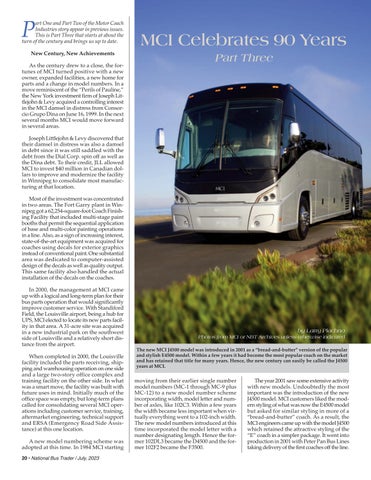
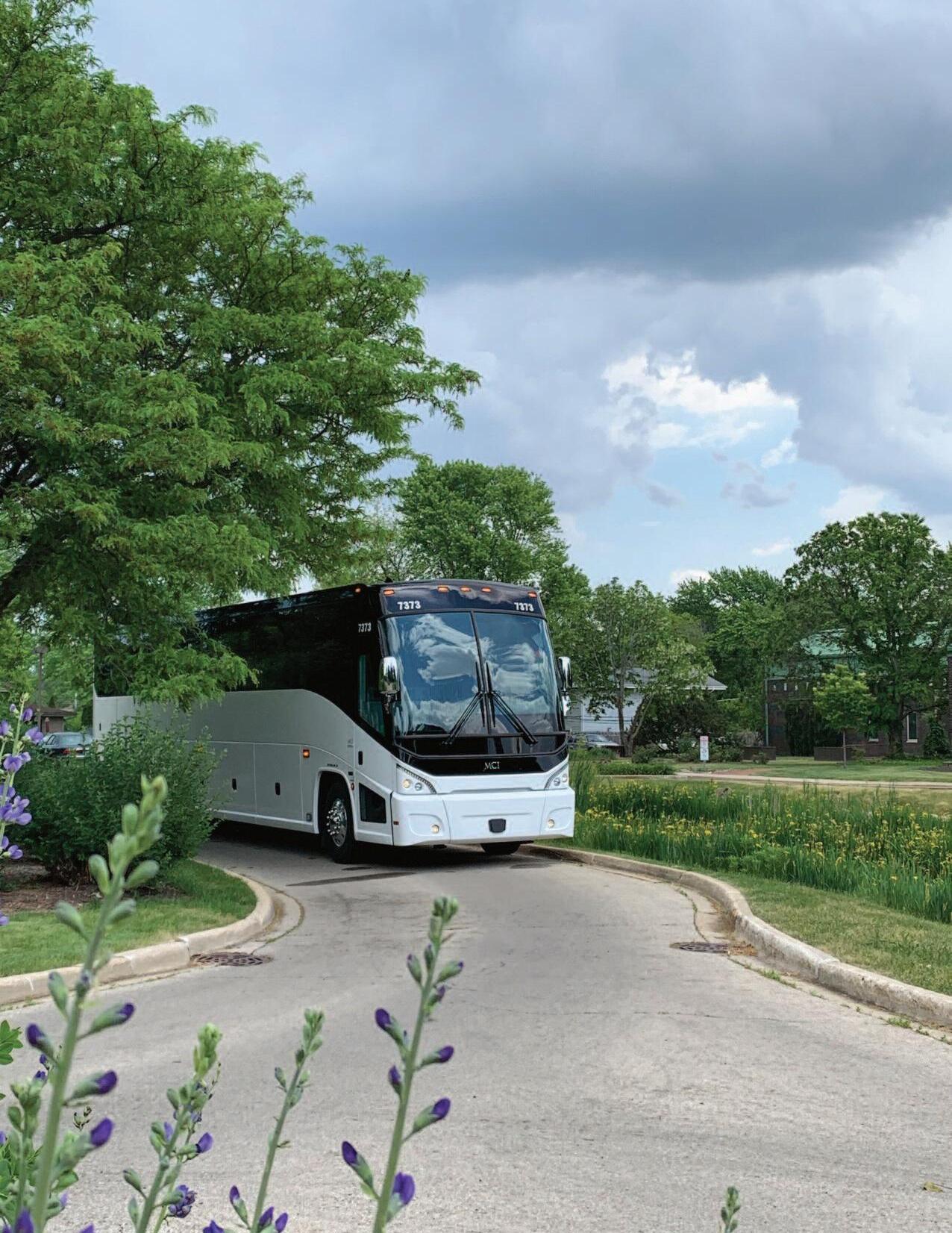
The years since 2001 have certainly been the “J4500 Years” at MCI with this model being introduced and then becoming the best selling coach on the market. However, a number of other things have also happened at MCI in these past two decades. Check out the article starting on page 20 for the interesting details. MCI

. . . . . . . .20
Concerns
Demographic
. . . . . . . . . . . . . . . . . . . . . . . . . . . . . . . . . . . . . . . . . .28
Increasing
About the
Crisis (by Larry Plachno)
. . . . . . . . . . . . . .34
N ATIONAL B US T
States,andthepricingguideto usedbusesaretrademarksof NationalBusTrader,Inc. STAFF Equipment News . . . . . . . . . . . . . . . . . . . . . . . . . . . . . . . .4 Bus Equipment People . . . . . . . . . . . . . . . . . . . . . . . . . . .18 Survival and Prosperity . . . . . . . . . . . . . . . . . . . . . . . . . .36 Curious Coachowner . . . . . . . . . . . . . . . . . . . . . . . . . . . .38 Photographs . . . . . . . . . . . . . . . . . . . . . . . . . . . . . . . . . . . .40 Back Issues . . . . . . . . . . . . . . . . . . . . . . . . . . . . . . . . . . . . .42 Classifieds . . . . . . . . . . . . . . . . . . . . . . . . . . . . . . . . . . . . .44 Safety and Liability Ned Einstein Dave Millhouser CONTRIBUTORS Departments Features National Bus Trader / July, 2023 • 3 Editor & Publisher Larry Plachno Business Manager Nancy Ann Plachno Typesetting/Page Layout Sherry Mekeel Production/Design/Web Jake Ron Plaras National Bus Trader 9698 W. Judson Road Polo, Illinois 61064-9015 Phone: (815) 946-2341 Web site: www.busmag.com Volume XLVI Number 8 July, 2023 Advertiser’s Index appears on page 44
Equipment News
Toronto Orders NFI Batter yElectric Buses
N F I G r o u p I n c ( N F I ) , a l e a d i n g i n d ependent bus and coach manufacturer and a l e a d e r i n e l e c t r i c m a s s m o b i l i t y s o l ut i o n s , o n J u n e 5 a n n o u n c e d t h a t t h e To r o n t o Tr a n s i t C o m m i s s i o n ( T T C ) h a s a w a rd e d i t s s u b s i d i a r y N e w F l y e r I n d u st r i e s C a n a d a U L C ( N e w F l y e r ) a n e w f i v ey e a r c o n t r a c t f o r 4 0 - f o o t , b a t t e r y - e l e c t r i c b u s e s T h e t o t a l c o n t r a c t i n c l u d e s a f i r m o r d e r f o r 1 8 6 X c e l s i o r C H A R G E N G ™ h e a v y - d u t y t r a n s i t b u s e s , a s w e l l a s t h e o p t i o n f o r T T C t o p u rc h a s e u p t o a n a d d it i o n a l 4 3 5 o f t h e s a m e b u s e s , f o r a t o t a l potential order of 621 buses over the durat i o n o f t h e c o n t r a c t
NFI added 261 buses to the company’s b a c k l o g i n t h e f i r s t q u a r t e r o f 2 0 2 3 b a s e d on TTC’s initial base fir m and option order I n t o t a l , T T C a w a rd e d N e w F l y e r 6 0 p e rcent of this initial procurement, the highest a w a rd t o a n y m a n u f a c t u re r T h e c o n t r a c t a l s o i n c l u d e s o p t i o n s f o r o t h e r a g e n c i e s i n O n t a r i o t o e n t e r i n t o t h e i r o w n a g r e em e n t s w i t h N e w F l y e r f o r u p t o 5 5 0 b u s e s o v e r f o u r y e a r s T h i s p ro v i d e s a d d i t i o n a l f u t u re o rd e r o p p o r t u n i t i e s f o r N e w F l y e r, a s t h e s e b u s e s m a y b e a d d e d t o N F I ’s b a c k l o g i f a n a g e n c y e x e c u t e s a c o n t r a c t u s i n g t h o s e o p t i o n s
These next-generation, batter y-electric buses will help TTC, which operates one of the largest fleets of batter y-electric buses in North America, meet its goal of converting its entire fleet to zero emissions by 2040, as outlined in the TTC Green Bus Technology
P l a n A s p a r t o f t h a t p l a n , T T C p re v i o u s l y p u rc h a s e d 2 5 N e w F l y e r b a t t e r y - e l e c t r i c buses that were used in a head-to-head pilot p ro j e c t c o m p a r i n g e l e c t r i c v e h i c l e s f ro m several manufacturers Following that trial, TTC published a report observing New Flyer o u t p e r f o r m e d c o m p e t i t o r s i n s e v e r a l k e y measurements including fleet availability, reliability and energy consumption
T h e o r d e r b u i l d s o n a 2 0 2 2 T T C fi r m a w a r d t o N F I f o r 1 3 4 X c e l s i o r ® 4 0 - f o o t , h y b r i d - e l e c t r i c , h e a v y - d u t y t r a n s i t b u s e s and 68 Xcelsior 60-foot hybrid-electric buses (136 equivalent units or EUs) for a total of 270 EUs That four-year contract includes options for up to an additional 263 40-foot hybrid-electric buses and 100 60-foot buses, respectively
“
B u i l d i n g o n o u r p a r t n e r s h i p w i t h T T C spanning over half a century, this new order supports the TTC’s efforts towards net zero goals for a healthier and more sustainable future,” said Chris Stoddart, president of North American Bus and Coach, NFI “We are proud
of the performance from the active in-service trial and are excited to add to the New Flyer fleet at TTC The ability for TTC to have fleet commonality across New Flyer Xcelsior bus platforms with different propulsion systems speaks to our design and supportability ”

Built on New Flyer’s proven Xcelsior® platform, the Xcelsior CHARGE NG bus incorporates three distinct technology advancements, including high-energy batteries, advanced protective battery packaging for easy install and simpler serviceability, and a new lightweight electric traction drive system with up to 90 percent energy recovery For more information, visit newflyer com/ng
NFI is a leader in zero-emission mobility, with electric vehicles operating (or on order) in more than 130 cities in six countries NFI offers the widest range of zero-emission batt e r y a n d f u e l c e l l - e l e c t r i c b u s e s a n d coaches, and its vehicles have completed more than 115 million EV service miles
Today, NFI supports growing North American cities with scalable, clean and sustainable mobility solutions through a four-pillar approach that includes buses and coaches, t e c h n o l o g y, i n f r a s t r u c t u re a n d w o r k f o rc e development NFI also operates the Vehicle Innovation Center (VIC), the first and only i n n o v a t i o n l a b o f i t s k i n d d e d i c a t e d t o advancing bus and coach technology and p ro v i d i n g w o r k f o rc e d e v e l o p m e n t S i n c e o p e n i n g i n l a t e 2 0 1 7 , t h e V I C h a s h o s t e d more than 350 interactive events, welcoming 7,000 industry professionals for EV and infrastructure training
Leveraging 450 years of combined experience, NFI is leading the electrification of mass mobility around the world With zeroemission buses and coaches, infrastructure a n d t e c h n o l o g y, N F I m e e t s t o d a y ’s u r b a n demands for scalable smar t mobility solutions Together, NFI is enabling more livable c i t i e s t h ro u g h c o n n e c t e d , c l e a n a n d s u stainable transpor tation
With 7,700 team members in 10 countries, NFI is a leading global bus manufacturer of m a s s m o b i l i t y s o l u t i o n s u n d e r t h e b r a n d s New Flyer® (heavy-duty transit buses) MCI® (motorcoaches), Alexander Dennis Limited ( s i n g l e - a n d d o u b l e - d e c k b u s e s ) , P l a x t o n (motorcoaches) ARBOC® (low-floor cutaway and medium-duty buses) and NFI Par ts™ NFI currently offers the widest range of sustainable drive systems available, including zero-emission electric (trolley, batter y and f u e l c e l l ) , n a t u r a l g a s , e l e c t r i c h y b r i d a n d
4 • National Bus Trader / July, 2023
The Toronto Transit Commission has awarded New Flyer a five-year contract for 186 Xcelsior CHARGE NG™ transit buses with an option to purchase an additional 435 of the same buses Hence, the potential total could be as many as 621 buses The contract also includes options for other agencies in Ontario to enter into their own agreements with New Flyer for up to 550 buses over four years
clean diesel In total, NFI supports its installed b a s e o f m o r e t h a n 1 0 0 , 0 0 0 b u s e s a n d coaches around the world
New Flyer is North America’s heavy-duty t r a n s i t b u s l e a d e r a n d o f f e r s t h e m o s t advanced product line under the Xcelsior® and Xcelsior CHARGE® brands It also offers i n f r a s t r u c t u r e d e v e l o p m e n t t h r o u g h N F I Infrastructure Solutions™, a service dedicated to providing safe, sustainable and reliable charging and mobility solutions New F l y e r a c t i v e l y s u p p o r t s m o re t h a n 3 5 , 0 0 0 heavy-duty transit buses (New Flyer, NABI a n d O r i o n ) c u r re n t l y i n s e r v i c e , o f w h i c h 8,600 are powered by electric motors and battery propulsion and 1,900 are zero-emiss i o n F u r t h e r i n f o r m a t i o n i s a v a i l a b l e a t www newflyer com
Prevost Factor y Training
Program Retur ns
T h i s s p r i n g , P r e v o s t r e s u m e d i t s s i gn a t u r e F a c t o r y Tr a i n i n g P r o g r a m a n d b r o u g h t 4 4 a t t e n d e e s f r o m t h e U n i t e d S t a t e s a n d C a n a d a t o i t s l o c a t i o n i n Q u eb e c C i t y
The in-depth, five-day training program featured a mix of demonstrations, hands-on activities, classroom sessions, factor y and a s s e m b l y l i n e t o u r s a n d Q u e s t i o n s - a n dAnswers The program kicked off with a spec i a l g ro u p t r i p t o t h e P re v o s t M u s e u m t o e x p e r i e n c e t h e c o m p a n y ’s c u l t u re , m e e t s o m e o f t h e P re v o s t f a m i l y m e m b e r s a n d learn more about the proud, 100-year history of Prevost
L a u r i e Tro u t f ro m G r a y L i n e Te n n e s s e e has been in the transpor tation industr y for 2 3 y e a r s a n d w o n a d r a w i n g a t t h e I M G M a i n t e n a n c e & S a f e t y F o r u m i n D e t ro i t t o a t t e n d t h e F a c t o r y Tr a i n i n g P ro g r a m
Equipment News
“My favorite par t was when we got to go to the Prevost Museum I thought that was incredible We got to talk to a couple of the family members The passion behind it and the history that came with it was fascinating to me,” says Trout “Even though I’m not a technician, I felt like it gave me a little more understanding of how the coaches work and now when I get a call from a driver and they have a problem, I know what technician to take it to ”
Since most of the attendees are technicians, the program is designed to help them improve their maintenance and repair skills D u r i n g t h e c o u r s e o f fi v e d a y s , t h e g ro u p takes a dive into Prevost, its manufacturing p ro c e s s a n d t h e d i a g n o s t i c , m e c h a n i c a l and technological components of the motorcoaches
“Today’s technicians are busy switching out par ts to get vehicles back on the road quickly,” says Robert Hitt, Prevost customer support manager for North America “During o u r t r a i n i n g , w e s l o w t h i n g s d o w n , t a k e a step back and cover how the systems are assembled and how they operate so technicians have a foundational understanding of the coach and its components ”
The training program covers ever ything from electrical, HVAC and pneumatic systems to the Volvo D13 engine and all-new H3-45
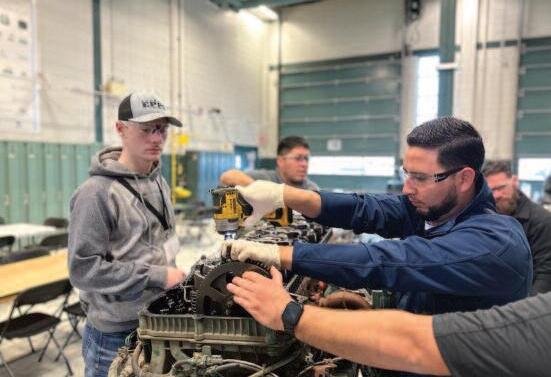
“We open up our coaches so the group can explore and touch every element,” says Hitt “During the hands-on sessions, their eyes light up when we pull the heads off an AC compressor or the valve cover off a Volvo engine You’ll see the light bulb go off when they star t to understand something like our
e l e c t r i c a l s y s t e m o r a n o t h e r e l e m e n t t h a t we’re breaking down for them ”
While there is plenty of hands-on learning that takes place during the Factory Training P ro g r a m , t h e re i s a l s o o n l i n e t r a i n i n g t h a t happens in advance of the in-person event
A t t e n d e e s m u s t c o m p l e t e a s e r i e s o f online courses through the Prevost Technical Institute prior to attending Factor y Training s o t h e y h a v e a b a s i c u n d e r s t a n d i n g o f a variety of technical systems on the coach, including the fundamentals of HVAC, electrical systems, pneumatic braking systems and the Volvo engine
The training program culminates with an awards night that recognizes the top three technicians The awards are based on the pre-work and results of tests that are conducted throughout the week

This year’s Top Tech winner was Matthew B e l y e a f r o m S k y w a y C o a c h , b a s e d i n Markham, Ontario “Matthew was focused on the content and hands-on from the first d a y H e a l s o c o m p l e t e d a l l t h e p r e - w o r k before coming to Quebec, which better prepared him to win Top Tech 2023,” says Hitt
For his part, Belyea says he learned tips and tricks to save time and be more efficient w i t h t r o u b l e s h o o t i n g a n d r e p a i r s I t ’s a n honor to be recognized as the Top Tech I’ve dedicated 15 years of hard work in the trade to get to this point,” says Belyea “The training will benefit me in offering insightful serv i c e a n d q u i c k t u r n a ro u n d f o r o u r fl e e t a t Skyway Coach Lines as well as for our retail customers Bus technology is changing and improving with every passing year Keeping up to date with factor y training is the best way to stay on top of ever ything ”
National Bus Trader / July, 2023
• 5
Prevent recently resumed its Factory Training Program and brought 44 attendees from the United States and Canada to its location in Quebec City The five-day program features a wide range of activities including demonstrations, hands-on activities, classroom sessions, factory and assembly line tours as well as questions and answers A wide range of subjects are covered from electrical, HVAC, pneumatic systems and the Volvo D13 engines as well as the new H3-45 model
As the Top Tech winner, Belyea received a VIP NASCAR experience for two Among other perks, the package includes a VIP tour and special access to active areas of the track, infield garages and pits
In addition to its annual Factor y Training Program, Prevost hosts regional events at its facilities throughout Nor th America The sessions are conducted by factor y-trained experts and range from high-level overview to in-depth system teardowns and component replacement Prevost Technical Institute is also available online
For more information about ongoing traini n g , v i s i t h t t p s : / / p re v o s t c a r c o m / c o n t a c t / training
UMA Applauds Reintroduction of CERTS Tax Exemption
T h e U n i t e d M o t o r c o a c h A s s o c i a t i o n applauds the reintroduction of the Coronavirus Economic Relief for Transportation Services (CERTS) Tax Exemption Act and extends its gratitude to Representatives Darin LaHood (R-Illinois) and Jimmy Panetta (D-California) for their longstanding leadership on this issue, as well as to Representatives John Rose (RTennessee), Mike Kelly (R-Pennsylvania), Jared Golden (D-Maine) and Earl Blumenauer (D-Oregon) for their support
T h i s l e g i s l a t i o n , w h e n p a s s e d , w o u l d a d d r e s s a k e y i n e q u i t y b e t w e e n C E R T S Grants and other Covid-19 relief programs and will help the motorcoach industr y continue its recovery This legislation had strong House support in the last Congress as memb e r s u n d e r s t a n d t h e i m p o r t a n t r o l e t h i s industr y brings to their communities UMA and affiliated state and local bus and motorc o a c h a s s o c i a t i o n s r a i s e d t h i s i s s u e w i t h more than 120 members of Congress during i t s a n n u a l F l y - I n i n A p r i l a n d i t s m e m b e r s look forward to helping secure strong suppor t for the bill again
The motorcoach industry was devastated b y t h e C o v i d - 1 9 p a n d e m i c F ro m 2 0 1 9 t o today, nearly one-half of the industr y is no l o n g e r i n b u s i n e s s , a c c o rd i n g t o U S D O T licensing data Congress created the Coronavirus Economic Relief for Transpor tation Services (CERTS) program in December of 2020, providing $2 billion of invaluable support to these struggling industries and their employees However, the relief was not dist r i b u t e d u n t i l A u g u s t o f 2 0 2 1 , w h e n m a n y motorcoach companies had already faltered
“ U n f o r t u n a t e l y, t h e C E RT S l e g i s l a t i o n omitted a provision giving CERTS relief the same tax treatment as other pandemic busin e s s a s s i s t a n c e p r o g r a m s , c o m m e n t e d
U M A P r e s i d e n t a n d C E O S c o t t M i c h a e l
“This bill would correct the inequity by making CERTS awards tax-exempt ”
Equipment News
The motorcoach industry provides essential transportation services to the public and it is in the communities’ best interest for the industry to be strong and thriving Employing t h o u s a n d s , m o t o rc o a c h e s m o v e m i l i t a r y troops, evacuate people out of harm’s way of natural disasters, provide commuter service, transport kids to field trips and sporting activities, and support travel and tourism across the country These businesses were some of the first to shut down in 2020 and were among the last to fully recover
T h e U n i t e d M o t o rc o a c h A s s o c i a t i o n i s the nation’s largest organization exclusively protecting and promoting the interests and welfare of privately-owned bus and motorcoach companies Members include motorcoach companies and industr y suppliers For more information about UMA, upcoming events, membership and important legislative infor mation, visit www uma org
Trans-Bridge Lines Expands Service
Trans-Bridge Lines, the Lehigh Valley’s p r e m i e r m o t o r c o a c h s e r v i c e , h a s announced that it is expanding service on a l l o f i t s s c h e d u l e s T h e c o m p a n y h a s b e e n a c t i v e l y re c r u i t i n g m o t o rc o a c h d r iv e r s a m i d s t a n a t i o n w i d e d r i v e r s h o r t a g e i n o rd e r t o p ro v i d e a d d i t i o n a l ro u t e s
“Our goal is to best serve our customers’ needs, offering vital transpor tation for the Lehigh Valley and the surrounding areas we serve, such as areas of Bucks County and northwestern New Jersey,” said Tom JeBran, Tr a n s - B r i d g e L i n e s p r e s i d e n t “ W e a r e h a p p y t o b e i n a p o s i t i o n w h e re w e h a v e n e w d r i v e r s t r a i n e d a n d r e a d y t o b e g i n routes, allowing us to make these new runs a v a i l a b l e T h i s i s s o m e t h i n g w e ’ v e b e e n w a n t i n g t o d o f o r s o m e t i m e n o w, a n d w e are excited that these changes are impacti n g a l l o f o u r s c h e d u l e s t o a c c o m m o d a t e the most passengers positively ”
Commuters and early mor ning travelers who utilize the Allentown/Clinton/New York schedules will enjoy two new east-bound runs, both beginning with pick-ups at 6 a m , as well as two westbound routes from New York There will also be changes in stop locat i o n s o n v a r i o u s r o u t e s t o a l l o w q u i c k e r a r r i v a l t i m e s t o d e s t i n a t i o n s A d d i t i o n a l l y, routes that were previously Friday service o n l y, a r e n o w t r a n s i t i o n i n g t o M o n d a y through Friday service
On the company’s Doylestown/Flemington schedules, weekend service will resume for the first time since October 2022, with one eastbound and one westbound run
“Our office has received many requests f o r t h e w e e k e n d s e r v i c e t o re t u r n , ” s t a t e d M a r k E r t e l , d i r e c t o r o f o p e r a t i o n s “ W e h a v e s e v e r a l N e w Yo r k p a s s e n g e r s w h o u s e t h e ro u t e s t o t r a v e l t o a re a s l i k e N e w Hope for leisure and recreation and weekend getaways They relied on this service i n t h e p a s t , a n d w e a re p ro u d t o re i n s t a t e i t i n t o o u r s c h e d u l e s a f t e r a s e v e n - m o n t h h i a t u s ”
O n i t s Wa l l S t r e e t s c h e d u l e s , Tr a n sB r i d g e L i n e s i s i n t r o d u c i n g t w o a d d e d r u n s g e a re d f o r c o m m u t e r s w h o re q u i re a s l i g h t l y l a t e r a r r i v a l t o L o w e r M a n h a t t a n a n d a l t e r n a t e l y, a s l i g h t l y l a t e r re t u r n T h e r u n s w i l l o p e r a t e M o n d a y t h r o u g h T h u r s d a y
O n t h e m o re a e s t h e t i c s i d e o f t h i n g s , s c h e d u l e s h a v e b e e n r e v a m p e d f o r a c l e a n e r, e a s i e r- t o - re a d l o o k a n d r u n n u mb e r s o f t h e A l l e n t o w n / C l i n t o n / N e w Yo r k schedules have been renumbered for cons i s t e n c y “ S o m e n u m b e r s w i l l re m a i n t h e same, and some will be the same but correspond to different routes We are aler ting passengers to be mindful of their new run number for the routes they use,” said Er tel
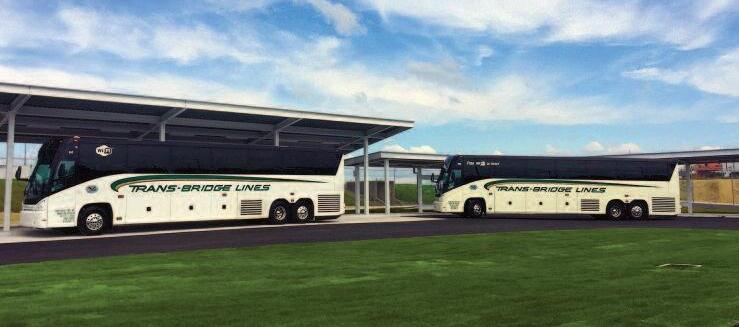
Trans-Bridge Liens in Bethlehem, Pennsylvania, recently announced that they have recruited additional drivers in order to expand service on several routes Included are increased commuter service to New York from Allentown and Clinton, more weekend service on Doylestown-Flemington schedules and later runs on the Wall Street schedules Shown are two Trans-Bridge coaches at Lehigh Valley
6 • National Bus Trader / July, 2023
Last, but not least, and one of the most applauded changes to happen is the return of pier transportation to Cape Liberty Cruise Por t in Bayonne, New Jersey ”
“This highly-anticipated service is returning for the first time since the COVID-19 pandemic,” said Jennifer Lechiski, communications manager “This is the service that h a s b e e n t h e m o s t r e q u e s t e d W e h a v e r e c e i v e d h u n d r e d s o f e - m a i l m e s s a g e s inquiring about its retur n over the past few years With the driver shortage we were challenged with post-pandemic, we had to focus on our commuter routes before we were able to consider reinstating this pier location ”
The Pier Transpor tation Service, which i s re s e r v a t i o n - b a s e d a n d a l s o s e r v e s t h e M a n h a t t a n C r u i s e Te r m i n a l , h a s b e e n greeted with open arms by cruise travelers The schedule is based on a fixed schedule and coincides with the cruise lines’ itinerary t i m e s t o c r u i s e p o r t s Tr a n s - B r i d g e L i n e s offers the service with depar tures from the L e h i g h Va l l e y I n t e r n a t i o n a l A i r p o r t ( A B E ) and the Clinton, New Jersey Park and Ride
“This latest round of schedule changes is our biggest since the pandemic and the r e s u l t o f p a s s e n g e r r e q u e s t s a n d t r a v e l trends,” JeBran said “Although our industry
has not recovered from the events of the last few years and will be forever changed by them, these positive modifications make our employees excited for the future and motiv a t e d f o r w h a t w e c a n a c c o m p l i s h i n t h e future for our customers We are thankful for the oppor tunity for growth ”
NYC Drivers Rally for Congestion
Pricing Exemption

O n J u n e 2 , f o r- h i re v e h i c l e d r i v e r s , l e d b y t h e I n d e p e n d e n t D r i v e r s G u i l d ( I D G ) , p ro t e s t e d a g a i n s t t h e p ro p o s e d c o n g e stion pricing tolling program outside of Gover nor Kathy Hochul’s New York City office
T h e d e m o n s t r a t o r s w e r e a s k i n g f o r a n e x e m p t i o n f ro m N Y C ’s i n c o m i n g C e n t r a l B u s i n e s s D i s t r i c t To l l i n g P r o g r a m A s o f n o w, t h e t o l l i n g p ro g r a m w i l l c h a r g e t a x i s a n d f o r- h i re v e h i c l e s n o m o re t h a n o n c e each day to enter Manhattan south of 60th S t re e t
The IDG states that more than 100,000 f o r- h i re v e h i c l e d r i v e r s s e r v i n g N e w Yo r k C i t y, a m a j o r i t y o f w h o m a r e l o w - i n c o m e i m m i g r a n t s , w i l l b e p u t a t r i s k b y e v e n a once-a-day charge According to the IDG, a p p l y i n g t h e t o l l i n g p r o g r a m m a y c o s t drivers around $7,000 each year The IDG says the congestion pricing plan would create a “double tax” on drivers because riders
are already paying a congestion surcharge on trips south of 96th Street The IDG has collected more than 10,000 signatures on their petition to stop congestion pricing
T h e p r o g r a m m a y a l s o p u t r i d e s h a r e costs out of reach for many low-income New Yorkers who rely on these services for transpor tation New Yorkers living in areas that are not adequately served by the city’s public transpor tation rely heavily on taxis and for hire vehicles to either connect to transit or reach their destinations If costs increase, those New Yorkers that consider taxis and for hire vehicles essential may be priced out of their services
A re p o r t a u t h o re d b y M a t t D a u s f o r t h e University Transpor tation Research Center a t T h e C i t y C o l l e g e o f N e w Yo r k ( U T R C ) a i m s t o a d d re s s t h e s e c o n c e r n s a ro u n d drivers and passengers The repor t, titled “ E q u i t y I m p a c t s o f N Y C C o n g e s t i o n P r i ci n g o n Ta x i a n d F o r- H i r e Ve h i c l e D r i v e r s and Passengers,” outlines the inequitable i m p a c t s a n d i n s u f fi c i e n t m i t i g a t i o n m e as u re s o f t h e c o n g e s t i o n p r i c i n g p ro g r a m o n l o w - i n c o m e d r i v e r s a n d l o w - i n c o m e passengers The repor t recommends that t h e p ro g r a m b e p a u s e d w h i l e a n e n v i ro nm e n t a l i m p a c t s t u d y b e c o n d u c t e d t o a d d re s s t h e s e n e g a t i v e i m p a c t s
National Bus Trader / July, 2023 • 7
Equipment News
K e l s i a n C o m p l e t e s A c q u i s i t i o n o f
All Aboard America Holdings
A u s t r a l i a - b a s e d K e l s i a n G r o u p h a s successfully completed the acquisition of A l l A b o a r d A m e r i c a ! H o l d i n g s , I n c
( A A A H I )
Equipment News
AAAHI joins Kelsian’s global footprint of operations in the transport and tourism sectors spanning Australia, Singapore, London a n d t h e C h a n n e l I s l a n d s D e l i v e r i n g u n m a t c h e d c h a r t e r a n d c o n t r a c t s e r v i c e from the West Coast to the Mississippi, the

AAAHI brands include All Aboard America!, Hotard Coaches, Sun Diego Char ter, Ace E x p re s s C o a c h e s , L u x B u s A m e r i c a a n d First Class Transpor tation
AAAHI CEO Bill Trimarco says combining the AAAHI talent, capabilities, products and people with those of Kelsian Group will p r o v i d e c u s t o m e r s w i t h m a r k e t - l e a d i n g services
“From our drivers and technicians to our o p e r a t i o n s t e a m a n d l o c a l l e a d e r s , o u r strength and our flexibility comes from our p e o p l e I a m p r o u d o f o u r t e a m s f o r t h e i n c re d i b l e b u s i n e s s e s t h e y h a v e c re a t e d over the past six years with the suppor t of AAAHI We are who we are because of our remarkable people, and we are excited to work with Kelsian to continue our growth in the U S ”
K e l s i a n G ro u p C h i e f E x e c u t i v e O f fi c e r C l i n t F e u e r h e rd t s a i d , “ I n re c e n t w e e k s , I h a v e m e t m o re o f t h e m a n a g e m e n t t e a m and continue to be very confident about the future of both businesses working together Like Kelsian, AAAHI is a customer-centric operator with an excellent reputation and track record of delivering safe, high-quality contract and char ter services These quali t i e s , t o g e t h e r w i t h K e l s i a n a n d A A A H I ’s operational exper tise and capabilities, will ensure a solid foundation for growth in the large and attractive USA market ”
Phoenix To Get NFI Lowand Zero-Emission Buses
New Flyer of America Inc (New Flyer), a subsidiary of NFI Group Inc (NFI), a leading independent bus and coach manufacturer and a leader in electric mass mobility solut i o n s , o n M a y 2 5 a n n o u n c e d t h a t i t s s u bsidiary New Flyer Industries (New Flyer) has r e c e i v e d n e w fi r m o r d e r s f o r s i x z e r oe m i s s i o n f u e l c e l l - e l e c t r i c a n d 2 0 l o wemission hybrid-electric transit buses from t h e P h o e n i x P u b l i c Tr a n s i t D e p a r t m e n t (PTD)
T h e t w o fi v e - y e a r c o n t r a c t s i n c l u d e o p t i o n s t o p u r c h a s e u p t o 1 6 0 f u e l c e l lelectric and 160 hybrid-electric transit buses in 40-foot lengths In total NFI added up to 3 4 6 l o w - a n d z e r o - e m i s s i o n b u s e s t o i t s backlog in the first quarter of 2023 from firm and option orders
PTD provides transpor tation services in t h e c i t y o f P h o e n i x , t h e fi f t h l a r g e s t c i t y i n the United States, and other cities across t h e Va l l e y M e t ro , d e l i v e r i n g m o re t h a n 2 0 million annual revenue service miles on 644 transit vehicles
This purchase of low- and zero-emission buses will deliver on PTD’s Transpor tation 2050 plan, focused on extending the bus
8 • National Bus Trader / July, 2023
The Kelsian Group from Australia has successfully completed the acquisition of All Board America! Holdings Inc. Included in the new operation are All Aboard America!, Hotard Coaches, Sun Diego Charter, Ace Express Coaches, Lux Bus America and First Class Transportation Most of the bus companies involved are in the Southern states extending from Mississippi to California
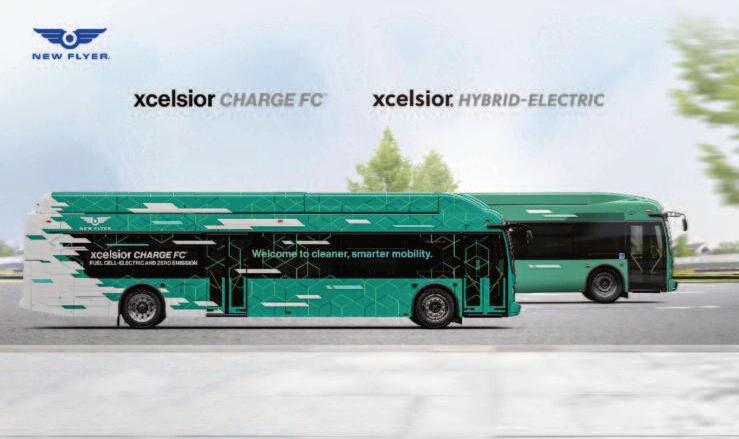
The Phoenix Public Transit Department has placed orders with New Flyer for six zero-emission fuel cell electric buses and 20 low-emission hybrid-electric buses Options to purchase up to 160 fuel cellelectric buses and 160 hybrid-electric buses are included in the two five-year contracts Phoenix Public Transit operates in Phoenix and the Valley metro area using 644 transit vehicles and providing more than 20 million annual service miles.
STAY. DINE. PLAY.






National Bus Trader / July, 2023 • 9 WILLKOMMEN BUS GROUPS! Book your stay at Frankenmuth Bavarian Inn Restaurant and Lodge for a unique travel experience! Featuring World Famous Frankenmuth Chicken Dinners or customized menus in our European themed atmosphere. Come explore Michigan’s Little Bavaria! Reserve your group and ask about our packages! 989.652.9941 888.775.6343 Visit us at Bavarianinn.com
BOOK TODAY!
s e r v i c e t o e n h a n c e t r a n s i t c o n n e c t i v i t y across Phoenix In addition, this purchase will spur the PTD’s Transpor tation Electrification Action Plan, which outlines the fleet electrification roadmap, ultimately delivering on the City of Phoenix Climate Action Plan to improve air quality through a more sustainable transpor tation system
“Today, PTD joins many other cities and t r a n s i t a g e n c i e s a c ro s s N o r t h A m e r i c a i n choosing advanced mobility solutions from NFI to enable its transition to a zero-emission fleet Having delivered nearly 1,000 vehicles to PTD since 1994, we are honored to support its goal of transitioning to a 100 percent electric fleet by 2040,” said Chris Stoddar t, president, North American Bus and Coach, NFI “With best-in-class features on board a n d o n e c o m m o n p l a t f o r m t o s t re a m l i n e t r a i n i n g a n d m a i n t e n a n c e , o u r h i g hper for mance fuel cell-electric and hybridelectric buses will suppor t a smooth transit i o n t o s u s t a i n a b l e m o b i l i t y t h ro u g h h i g h operational performance, maintenance savings and improved air quality ”
N e w F l y e r ’s X c e l s i o r C H A R G E F C , a hydrogen fuel cell-electric vehicle, incorpor a t e s f o u r d i s t i n c t t e c h n o l o g y a d v a n c ements, including a lighter, simpler and more efficient heavy-duty fuel cell power module that is easier to service; recyclable, highpower batteries; a redesigned waterproof b a t t e r y e n c l o s u r e p r o v i d i n g i m p r o v e d serviceability and a high-grade electric drive traction system For more infor mation, visit newflyer com/FC
New Flyer’s hybrid-electric buses bridge the transition between traditional combustion e n g i n e s a n d z e r o - e m i s s i o n p r o p u l s i o n , reducing NOx emissions by up to 50 percent and par ticulate matter levels up to 100 percent while also lowering fuel consumption and maintenance costs For more infor mation, visit newflyer com/hybrid
NFI is a leader in zero-emission mobility, with electric vehicles operating (or on order) in more than 130 cities in six countries NFI offers the widest range of zero-emission batt e r y a n d f u e l c e l l - e l e c t r i c b u s e s a n d coaches, and its vehicles have completed 115 million EV service miles
Today, NFI supports growing North American cities with scalable, clean and sustainable mobility solutions through a four-pillar approach that includes buses and coaches, t e c h n o l o g y, i n f r a s t r u c t u re a n d w o r k f o rc e development NFI also operates the Vehicle Innovation Center (VIC), the first and only i n n o v a t i o n l a b o f i t s k i n d d e d i c a t e d t o advancing bus and coach technology and p ro v i d i n g w o r k f o rc e d e v e l o p m e n t S i n c e o p e n i n g i n l a t e 2 0 1 7 , t h e V I C h a s h o s t e d more than 350 interactive events, welcoming
Equipment News
Equans recently helped the Williamsburg Area Transit Authority to modernize its bus technology Equans provided a single integrated system for both fixed-route and paratransit service that processes data in real time and provides information to riders WATA operates 12 fixed routes and seven paratransit vehicles
WATA Moder nizes Bus Technology With Equans
Created in 1977, WATA provides public transportation services to residents and visi t o r s o f J a m e s C i t y C o u n t y, t h e C i t y o f Williamsburg, York County and the City of Newpor t News With 12 fixed routes operating, its ambition is to become the transpor tation option of choice for people who live, work and visit the area In 2022, WATA p r o v i d e d s e r v i c e t o m o r e t h a n 6 7 0 , 0 0 0 tourists and local citizens
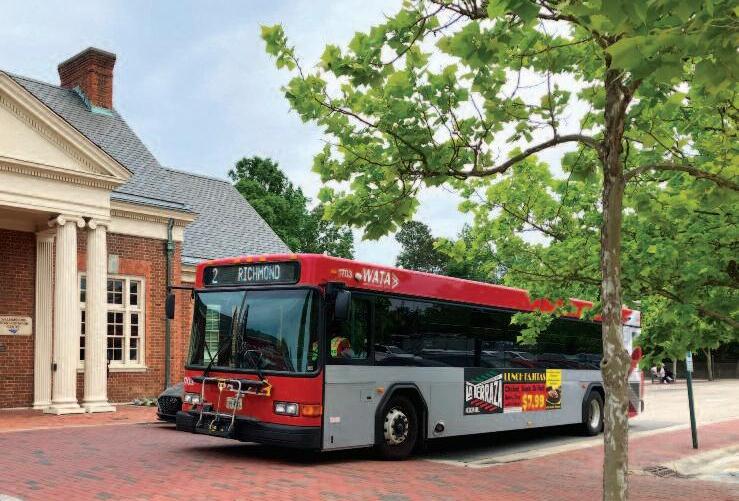
WATA b e n e f i t e d f ro m E q u a n s a s a s i ng l e s y s t e m i n t e g r a t o r, b o t h f o r i t s f i x e dr o u t e s a n d p a r a t r a n s i t v e h i c l e s B y c o ll e c t i n g , a n a l y z i n g a n d p ro c e s s i n g d a t a i n real-time, the Equans NAVINEO CAD/AVL s y s t e m w i l l e a s e WATA’s w o r k a s a t r a n s i t a g e n c y b y e n a b l i n g i t t o l o c a t e i n s t a n t an e o u s l y b o t h m o v i n g a n d s t a t i o n a r y v e h ic l e s o n i t s 1 2 f i x e d ro u t e s a n d i m p ro v e i t s r e a c t i v i t y a n d o p e r a t i o n a l p e r f o r m a n c e t h a n k s t o r e a l - t i m e s e r v i c e a d j u s t m e n t s f e a t u re s
“ T h e m a i n b e n e fi t i s w e c a n p r o v i d e real-time infor mation to our riders The new s y s t e m c a n a l s o q u i c k l y r e s p o n d t o a n y d i s r u p t i o n s i n o u r s e r v i c e F o r e x a m p l e , i f one of our routes has to make a detour due t o a n a c c i d e n t o r r o a d w o r k , w e c a n quickly provide riders with the live temporar y route Another great benefit is the system improves communication between dis-
patch and operators, as well as gives disp a t c h e r s t h e a b i l i t y t o l o c a t e o u r fl e e t a s t h e y ’ r e o u t o n t h e i r r o u t e s , ” s a i d K a r e n D a v i s , d i re c t o r o f o p e r a t i o n s f o r W i l l i a m sb u r g A re a Tr a n s i t A u t h o r i t y
As the vehicles move along their route, schedules, transfers and service aler ts are displayed on brand new on-board infotainm e n t s c re e n s b u t a re a l s o a c c e s s i b l e v i a the Transit app and Google Fur ther more, thanks to Msabi’s Mobile Fare Payment platform, starting July 1, passengers will be able to pay via their mobile phones
R e g a r d i n g WATA’s s e v e n p a r a t r a n s i t v e h i c l e s , p r i m a r i l y i n t e n d e d f o r p a s s e ng e r s w h o a r e u n a b l e t o r i d e t h e f i x e d routes, Equans has selected and installed a s y s t e m a d a p t e d t o t h e t r a n s p o r t a t i o n service’s specific challenges Flexible and adaptative, Via’s paratransit CAD/AVL was b u i l t t o s u p p o r t b o t h W ATA’s c u r r e n t d e m a n d re s p o n s e s e r v i c e ( A D A s e r v i c e ) a s w e l l a s p o t e n t i a l n e w o n - d e m a n d s e rv i c e s l a t e r d o w n t h e r o a d T h e a b i l i t y o f t h e n e w d i g i t a l e q u i p m e n t t o g e o l o c a t e a n d c o m m u n i c a t e w i t h e a c h v e h i c l e i n re a l - t i m e i s p a r t i c u l a r l y v a l u a b l e t o b e t t e r c o n s i d e r a n d a d a p t t h e s c h e d u l e a n d ro u t e o f e a c h p a r a t r a n s i t v e h i c l e a c c o rdi n g t o t h e r e q u e s t s r e c e i v e d d a i l y w h i l e k e e p i n g b e n e f i c i a r i e s i n f o r m e d
Equans’ technology also offers new automated functionality, both for operations team and for riders, saving the agency both time and money
7,000 industry professionals for EV and infrastructure training
10 • National Bus Trader / July, 2023
“During the early stages of this project, w e p l a c e d a h i g h v a l u e o n c u s t o m e r s e rv i c e F ro m s t a r t t o fi n i s h , o u r e x p e r i e n c e with Equans has been top notch We came i n t o t h i s p ro j e c t w i t h a l i t t l e b i t o f a u n i q u e but exciting approach From the early plann i n g s t a g e s t h r o u g h t e s t i n g a n d a c c e ptance, the Equans team has been respons i v e , o r g a n i z e d a n d d e t e r m i n e d t o m a k e s u r e t h i s p r o j e c t m a t c h e d o u r e x p e c t at i o n s , ” s a i d B e n G o o d i l l , d i re c t o r o f p l a nn i n g a n d a d m i n i s t r a t i o n f o r W i l l i a m s b u r g A re a Tr a n s i t A u t h o r i t y
“Equans is proud to suppor t WATA and to improve riders’ experience in public transportation via Intelligent technology For Ineo Systrans USA Inc , it is also a major premier as it is the first contract where we have been mandated to implement an Intelligent Transpor t System both for fixed-route and paratransit services We would like to express our special thanks to WATA for their trust as well as to our partners Masabi and Via,” said Stephan Goguet, COO of Ineo Systrans US, an Equans company
ABA Applauds Re-Introduction of CERTS Tax Fix
T h e A m e r i c a n B u s A s s o c i a t i o n ( A B A ) , the leading industry trade organization representing the leading motorcoach and group travel and tourism companies, on May 18 a p p l a u d e d t h e e f f o r t s o f R e p s D a r i n L a H o o d ( R - I l l ) ; J i m m y P a n e t t a ( D - C a l i f ) ; Mike Kelly (R-Pa ); Earl Blumenauer (D-Ore ); John Rose (R-Tenn ); and Jared Golden (RMaine) to reintroduce the Coronavirus Econ o m i c R e l i e f f o r Tr a n s p o r t a t i o n S e r v i c e s
(CERTS) Tax Exemption Act from last Congress
This legislation would eliminate the tax b u r d e n a s s o c i a t e d w i t h t h e $ 2 b i l l i o n C E R T S g r a n t m o n i e s p r o v i d e d t o t h e motorcoaches, school buses and passeng e r v e s s e l s i n d u s t r i e s
“ T h e C E RT S g r a n t re l i e f p ro g r a m p rovided a necessary lifeline to the U S motorcoach industry, in response to the economic devastation brought about by the pandemic Without this funding at such a critical time, n u m e ro u s s m a l l , m u l t i g e n e r a t i o n a l f a m i l y businesses faced extinction and thousands of rural and underserved communities would have lost access to their only form of intercity transpor tation,” said Peter Pantuso, president and CEO of the American Bus Associa t i o n “ H o w e v e r, j u s t w h e n t h e i n d u s t r y began to stabilize and recover, operators were penalized with an unexpected tax bill for accepting the relief, forcing them to pay a good portion of it back in taxes Like other pandemic relief programs, the CERTS grants should not be taxable, it’s a matter of fairness, equity and recognition of the key role motorcoach operations play in this country
Equipment News
We appreciate the hard work and the longs t a n d i n g s u p p o r t o f o u r i n d u s t r y a n d t h i s p r o g r a m b y r e p r e s e n t a t i v e s L a H o o d , P a n e t t a , K e l l y, B l u m e n a u e r, R o s e a n d Golden ”
Blue Bird Grand Opening of Electric Vehicle Center
Blue Bird Corporation, the leader in electric and low-emission school buses, celebrated the grand opening of its Electric Vehicle (EV) Build-Up Center on the grounds of t h e c o m p a n y ’s m a i n U S m a n u f a c t u r i n g plant in Fort Valley, Georgia Blue Bird transfor med a nearly 40,000-square-foot facility t o m e e t i n c r e a s i n g d e m a n d f o r e l e c t r i c school buses The opening marks an important milestone as the company continues to expand its electric school bus production capacity from four to 20 vehicles a day
U S and Canadian school districts are increasingly transitioning their bus fleets to electric, zero-emission vehicles to reduce harmful greenhouse gas emissions, improve student and community health and save on rising fuel costs School districts continue t o b e n e fi t f ro m s i g n i fi c a n t p u b l i c f u n d i n g sources to accelerate the adoption of electric school buses and the supporting charging infrastructure Presently, there are more than $10 billion in federal, state, provincial and local funding ear marked for zero- and low-emission school buses This includes the Biden Administration’s Bipar tisan Infrastructure Law (BIL), which provides a total of $5 billion over five years for clean school bus transpor tation
“Based on the historic Bipar tisan Infrastructure Law alone we anticipate thousands of additional electric school bus orders valu e d a t a n e s t i m a t e d $ 1 b i l l i o n o v e r fi v e years,” said Phil Horlock, president and CEO of Blue Bird Corporation “Our new EV BuildU P C e n t e r r e fl e c t s B l u e B i r d ’s s t e a d f a s t commitment to school districts across the U S a n d C a n a d a t o m e e t i n c r e a s i n g demand and deliver clean, safe and reliable student transpor tation when they need it ”
The U S Environmental Protection Agency (EPA) anticipates that 30 percent of all model year 2027 school buses will be electric-powered This figure is projected to increase to 45 percent for model year 2032 school buses, according to the EPA’s newly proposed greenhouse gas emissions standards for heavyduty vehicles Blue Bird’s EV Build-Up Center will enable the company to increase its longter m production capacity to 5,000 electric school buses a year
Blue Bird’s EV Build-Up Center is part of a m u l t i - m i l l i o n d o l l a r i n v e s t m e n t i n t h e upgrade of Blue Bird’s For t Valley, Georgia, manufacturing site The new facility will feature a dedicated assembly line for electric s c h o o l b u s e s H i g h l y - t r a i n e d t e c h n i c i a n s will install electric batteries and other components to tur n the vehicles into emissionfree electric school buses
Blue Bird remains the proven clean transpor tation leader with nearly 1,000 electricp o w e re d , z e ro - e m i s s i o n s c h o o l b u s e s i n operation today The company will assemble National Bus Trader / July, 2023 • 11
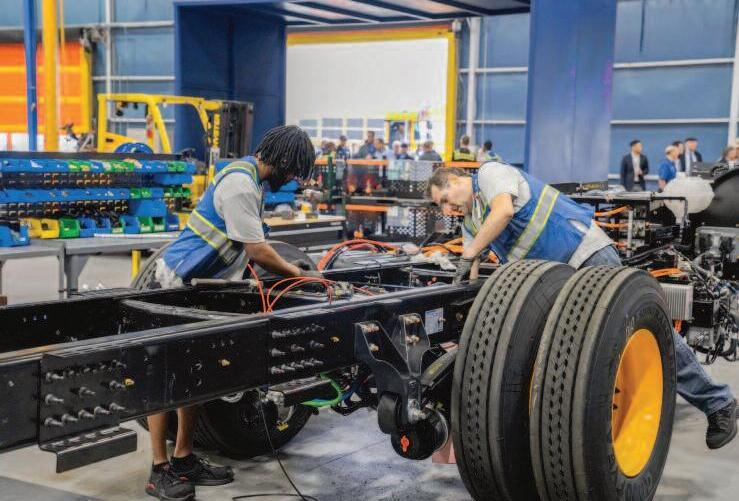 Blue Bird Corporation celebrated the grand opening of its new U S manufacturing plant Located at its home base in Fort Valley, Georgia, this new Electric Vehicle (EV) Build-Up Center will be able to produce as many as 20 vehicles a day Based on the Bipartisan Infrastructure Law and the push to electric buses, it is expected that the demand for electric school buses will increase in the coming years
Vision (https://www.blue-bird.com/buses/ electric-school-buses) and All American (https://www.blue-bird.com/images/ RE_Electric_Spec_Sheet_09_30-22.pdf) electric school buses at the EV Build-Up Center. These zero-emission vehicles can carry between 77 and 84 students for up to 120 miles on a single charge.
Blue Bird’s EV Build-Up Center includes InCharge Energy ICE-30 chargers and mobile carts to flexibly charge electric school buses prior to customer delivery. Based on the charging infrastructure, newlyassembled buses at the EV Build-Up Center will take four hours to fully charge.
Blue Bird is the only U.S.-owned and operated school bus manufacturer in the United States. The shift to clean student transportation helps Blue Bird sustain approximately 2,000 good-paying jobs.
SAS Offering Seats on First Electric Flight

On June 2, SAS opened seat reservations for its first-ever commercial electric flight in Sweden, Norway and Denmark. SAS invites travelers to join in writing this next chapter in aviation history with 30 seats available for reservation on each of the three inaugural flights –which are expected to take place during the course of 2028.
SAS’ goal is net-zero emissions by 2050. An important part of achieving this goal is to develop and use technological innovations such as electric aircraft on shorter trips.
“Since its inception in 1946, SAS has been one of the pioneers in the airline industry, being for instance the first commercial airline operator to fly over the North Pole to significantly shorten flight time between continents. A
groundbreaking activity for which SAS received the Columbia Prize. The fact that we can now invite our passengers to the next major milestone in the future of aviation is a natural continuation of that pioneering spirit and a significant step on our journey towards more sustainable aviation,” says Anko van der Werff, president and CEO of SAS.
The ticket price for the inaugural flight will be SEK/NOK/DKK 1946 –a tribute to the year when SAS first starting flying.A start-up that also marks the beginning of SAS’ innovative nature, with then-founder Wallenberg stating
While this is not a bus, it is interesting that other forms of transportation are moving to electric power. SAS is already selling seats on its first commercial electric flight in Sweden, Norway and Denmark. Those seats have gone on sale for an inaugural flight that is expected to take off in 2028.
that “moving from the old to the new is the only tradition worth preserving.”
Reservations can be made at flysas.com/electric.
Reserve a seat at flysas.com/electric maximum two seats per reservation and person. Reservations will be made available in Sweden, Norway and Denmark. The price is 1946 kr. including fees and taxes to be paid 30 days prior to the date of the flight once communicated (no fees for the reservation). Departure day and place of departure will be communicated to travelers by email when decided.
Being a driving force in a more sustainable aviation is the priority, and work is actively being done to lower CO2 emission and reduce climate impact. This includes supporting innovation and partnerships to find new solutions, making investments in new, more fuel-efficient aircraft, increasing production and use of more sustainable aviation fuels and many other enhancements to the inflight offerings and service.
Hong Kong Operator Marks 90 Years With Envirotech500EV
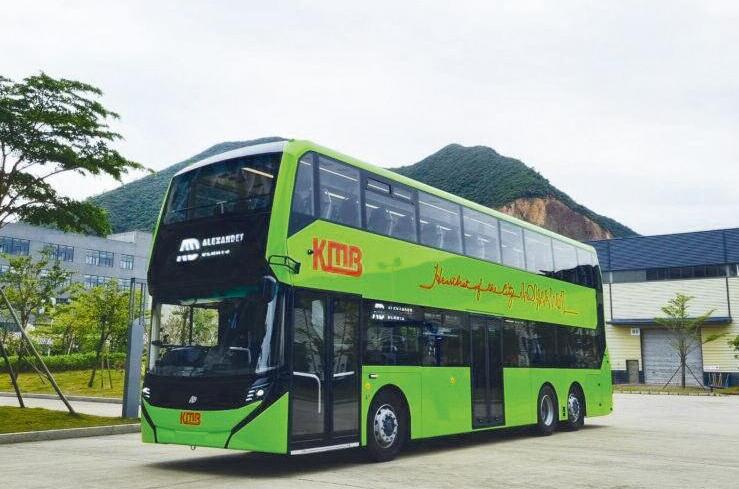
NFI Group (NFI), a leading independent bus and coach manufacturer and a leader in electric mass mobility solutions, subsidiary Alexander Dennis Limited (Alexander Dennis) on April 24 announced that it has delivered the first next-generation Enviro500EV zero-emission double-deck buses to The Kowloon Motor Bus Company (1933) Lim-
12 • National Bus Trader / July, 2023
Equipment News
Alexander Dennis recently delivered the first next-generation Enviro500EV zero-emission batteryelectric buses to The Kowloon Motor Bus Company (1933) Limited in Hong Kong. The new buses arrived in time to participate in the 90th anniversary celebration of the company. KMB is the city’s largest franchised bus operator and has more than 400 routes covering Hong Kong Island, Kowloon and the New Territories.

Sustainable technology at your service Irizar USA 7260 Dean Martin Drive, Suite 800 Las Vegas, NV 89118 (702) 431-0707 SALES Randy Wilcox 856-701-7679 rwilcox@irizarusa.com SERVICE Miguel Oliva (702) 756-1995 service@irizarusa.com @IrizarUSA www.irizarusa.com
ited (KMB) in time for the operator’s celebration of its 90th bir thday
KMB was founded in April 1933 as the Hong Kong Gover nment introduced a system of exclusive services for the city’s bus network that continues to this day, with KMB running on more than 400 routes covering Hong Kong Island, Kowloon and the New Te r r i t o r i e s a s t h e c i t y ’s l a r g e s t f r a n c h i s e d bus operator
A s i t c e l e b r a t e s i t s 9 0 t h b i r t h d a y, t h e operator is looking fir mly to the future with t h e u n v e i l i n g o f i t s fi r s t A l e x a n d e r D e n n i s Enviro500EV electric double-decker Par t o f t h e m a n u f a c t u re r ’s n e x t g e n e r a t i o n o f zero-emission buses, the three-axle vehicle has been designed in-house by Alexander Dennis and fully built in the company’s production network
T h e s t r i k i n g n e w d e s i g n l a n g u a g e o f Alexander Dennis’ next-generation buses is enhanced by the vivid green finish that KMB has adopted for these buses under a “Green is Good” slogan
“Happy birthday to KMB, who have been H o n g K o n g ’s H e a r t b e a t o f t h e c i t y f o r 9 0 years,” commented Paul Davies, president and managing director, Alexander Dennis “We are ver y proud to be a long-standing b u s i n e s s p a r t n e r o f K M B , a n d t h i s i s y e t another milestone in our relationship as our all-new Enviro500EV joins over 2,500 existing Alexander Dennis double-deckers in the KMB fleet, giving the operator an electric double-deck product that is superior to competitor products ”
Alexander Dennis and its predecessors have been supplying buses to Hong Kong since the 1920s and have been at the foref ro n t o f b u s d e v e l o p m e n t i n H o n g K o n g , bringing vehicle air conditioning to the market as well as low-floor access for three- and t w o - a x l e d o u b l e - d e c k b u s e s , b e f o re p i oneering hybrid and now electric drivelines
NFI is a leader in low- and zero-emission mobility, with vehicles operating in 13 countries, moving millions of people ever y day N F I o f f e r s t h e w i d e s t r a n g e o f v e h i c l e s including clean diesel, compressed natural g a s , d i e s e l e l e c t r i c h y b r i d s a n d z e r oemission battery- and fuel cell-electric buses and coaches
SAFRA Offers Hydrogen Retrofit Kit for Coaches
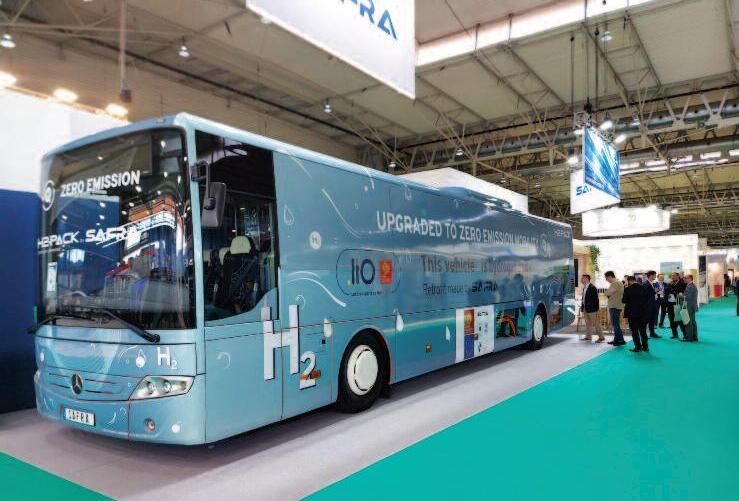
A s F r a n c e ’s l e a d i n g m a n u f a c t u r e r o f hydrogen-powered buses and a forerunner in the retrofit of hydrogen intercity coaches, SAFRA was present at the International Public Transpor t Summit (UITP) taking place at FIRA in Barcelona from June 4-7, 2023 This summit brought together public transpor t
professionals around a full program of conferences and an exhibition showcasing the very latest innovations This year’s event was the company’s first opportunity to present a hydrogen retrofitted coach, thanks to its H2PA C K ® k i t , a re t ro fi t k i t t h a t t r a n s f o r m s a combustion-powered intercity coach into a zero-emission vehicle
The H2-PACK retrofit kit presented at the UITP show is entirely designed and assembled by SAFRA The kit enables the vehicle’s d i e s e l e n g i n e t o b e c o n v e r t e d t o a z e roemission, hydrogen-electric powertrain The d i e s e l e n g i n e i s r e p l a c e d b y a 3 5 0 k W DANA electric motor, powered by a 100 kW ( 7 0 k w u s e f u l ) P l a s t i c O m n i u m f u e l c e l l Hydrogen is stored in six tanks, enabling 35 kg of hydrogen to be carried on board, for a range of up to 500 kilometers The tanks have been cleverly integrated into an area separated from the passengers by a watertight, ventilated and secure partition, in order to comply with vehicle size regulations
T h e v e h i c l e p r e s e n t e d o n t h e S A F R A b o o t h b e l o n g s t o O c c i t a n i e R e g i o n i n France, which has entrusted the company w i t h t h e r e t r o fi t t i n g o f 1 5 o f i t s i n t e r c i t y coaches This vehicle reveals a few aspects of the H2-PACK retrofit kit, thanks to a clever cut-out that enabled visitors to the summit to discover this innovation
Retrofitting is of major interest, as it accele r a t e s t h e d e c a r b o n i z a t i o n o f m o b i l i t y b y transforming the current fleet, at a time when the new vehicle offer is not yet sufficiently
developed Its cost is much lower than the purchase of a new hydrogen vehicle, and retrofitting is also part of a circular economy approach, since it extends the vehicle’s lifesp a n T h e s e v e h i c l e s a re o f t e n o n l y s e v e n years old, and their only drawback is that they comply with the Euro 5 standard The replacement of the vehicle is thus postponed by several years, and the same vehicle will finally be able to circulate in Low Emission Zones (LEZ) on which it could not previously circulate
To d a t e , t h e H 2 - PA C K h o m o l o g a t i o n phase is well underway Operational safety studies have already been carried out during t h e d e s i g n p h a s e T h e c o m p l e t i o n o f a l l s a f e t y t e s t s , i n c l u d i n g p a s s e n g e r s a f e t y tests, is SAFRA’s guarantee of quality and safety for its customers As soon as approval is granted, SAFRA will be able to carr y out the hydrogen retrofit of the first series of vehicles in industrial mode
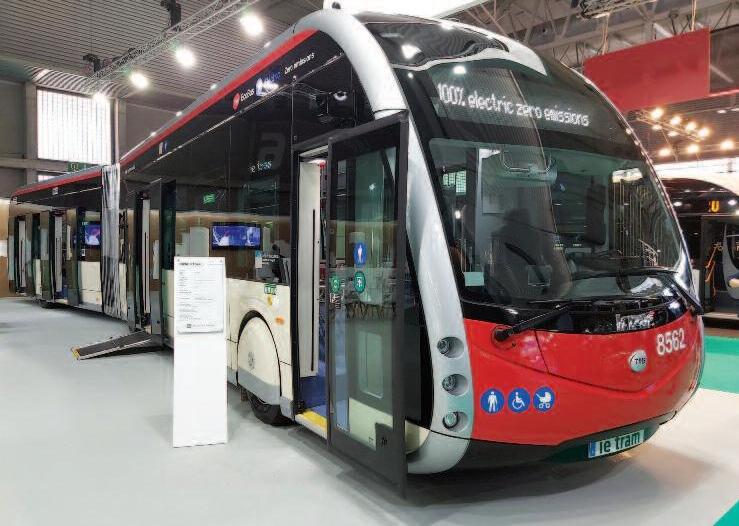
Irizar at the UITP Transport Summit Irizar e-mobility attended another edition of the UITP Global Public Transport Summit The event was held in Barcelona from June 5-7, 2023
They had a 400-square-meter stand where they showed two zero-emissions buses that are revolutionizing public transport in cities One of the buses is an 18-meter ie tram owned b y T M B ( Tr a n s p o r t s M e t r o p o l i t a n s d e Barcelona) and the other is a 12-meter ie tram that belongs to EMT Madrid (Empresa Municipal de Transportes de Madrid)
14 • National Bus Trader / July, 2023
Equipment News
With all the talk about moving to hydrogen fuel cell with coaches, it is interesting that SAFRA has developed a retrofit kit to convert a combustion-powered coach to hydrogen fuel cell power Called the H2-PACK®, the retrofit kit was designed and assembled by SAFRA and includes both an electric motor and a hydrogen fuel cell SAFRA is a French company that was founded in 1955
The design of the Irizar ie tram can be identified by its chrome perimeter arch that flows around the volume of the vehicle and frames the large glazed sur face on the sides The front expresses fluidity and elegance Its large glazed surface, an evocative throwback to a tram, alongside the full LED optics integrated into the perimeter rings confer a vanguard quality and impetus that is at once technological and rational on the whole
Twelve years ago, the Irizar Group decided to commit to electromobility and in 2016 Irizar e-mobility was bor n as an outcome of that d e c i s i o n A t t h e p re s s c o n f e re n c e a t t h e i r stand, the company from Gipuzkoa recapped t h e m a j o r m i l e s t o n e s o f t h e l a s t 1 2 y e a r s Among them were the first 100 percent electric buses delivered in Barcelona in 2014 as part of the ZeEUS project, the electromobility revolution in cities with the vanguard ie tram in 2017 or the presentation of the first electric truck, the ie truck, in 2018
They also talked about the evolution of the national and inter national market “Our production has increased 100 percent in a year and the growth prospects we have for the coming months are positive for both the national and inter national markets,” noted t h e m a n a g i n g d i re c t o r o f I r i z a r e - m o b i l i t y
Iñigo Etxeberria
Irizar e-mobility keeps consolidating as a leader in providing turn-key zero-emissions solutions, and they stay committed to a world that is sustainable, safe, accessible for everybody, connected and intelligent
Scottish Bus Challenge Fund at
Alexander Dennis
A l e x a n d e r D e n n i s , a s u b s i d i a r y o f N F I
Group Inc , one of the world’s leading independent global bus manufacturers, on May 16 announced that it hosted the launch of
At the recent UITP Transport Summit in Barcelona, Irizar displayed this 18-meter ie tram from Transports Metropolitans de Barcelona Also displayed was a 12-meter ie tram from Empresa Municipal de Transportes de Madrid It was noted that Irizar had delivered the first all-electric buses to Barcelona in 2014
the Scottish Zero Emission Bus Challenge Fund phase two (ScotZEB 2)
The Scottish Gover nment launched the second phase of the Scottish Zero Emission Bus Challenge Fund at the Alexander Dennis global headquar ters and factor y in Larbert, where it was announced that ScotZEB 2 will have up to £58 million available in grant funding
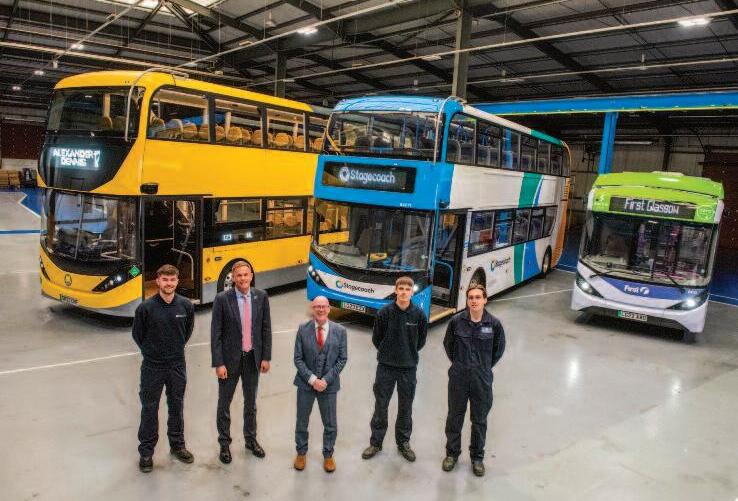
I n t r o d u c e d i n 2 0 2 1 , t h e a i m o f t h e S c o t Z E B c h a l l e n g e f u n d i s t o e n c o u r a g e significant change in the bus market in favor of zero-emission technologies, creating sustainable and inclusive growth By supporting the swift transition to zero-emission vehicles a n d i n f r a s t r u c t u re , S c o t Z E B a i m s t o h e l p achieve targets to reduce greenhouse gas emissions, contribute to the delivery of Low Emission Zones, encourage inward investment and growth in the supply chain of zero carbon vehicle and energy solutions in Scotl a n d , w i t h a s s o c i a t e d e m p l o y m e n t , e c onomic and social benefits
This second phase of the challenge fund e x p a n d s e l i g i b i l i t y t o i n c l u d e fi n a n c i e r s , manufacturers, community groups and others in the industr y to work together collaboratively on applications to accelerate the adoption of zero-emission buses
Paul Davies, Alexander Dennis president a n d m a n a g i n g d i r e c t o r, s a i d : “ W e a r e delighted to host the Scottish Government’s launch of ScotZEB 2 right here in our Larbert National Bus Trader / July, 2023
• 15
Equipment News
The Scottish Government recently launched the second phase of the Scottish Zero Emission Bus Challenge Fund at the Alexander Dennis global headquarters and factory in Larbert. Shown in this photo are Alexander Dennis President and Managing Director Paul Davies (second from left) and Minister for Transport Kevin Stewart (center) along with Alexander Dennis apprentices Matthew Calderwood, Ben Malcolm and Luke Przybylinski
facility, which we are currently upgrading to m a k e i t a m a n u f a c t u r i n g c e n t e r o f e x c e ll e n c e f o r o u r z e r o - e m i s s i o n b u s e s A s a proud member of the bus decarbonization taskforce, we have stepped up to the mark and delivered on the task to create a small electric bus with our Enviro100EV We are committed to suppor ting the just transition of decarbonizing transport and funding from ScotZEB will be a welcome suppor t for the jobs the industr y offers in our communities if it benefits us and other Scottish suppliers
“The Enviro100EV is a real all-rounder, offering an unbeatable 354kWh of batter y capacity delivering a range of up to 285 miles in a maneuverable vehicle that will be just as much at home in housing estate of bigger cities as it will be in the more rural par ts of Scotland Alongside this big small bus available for deliver y in 2024 we have our nextgeneration Enviro400EV double-decker, creating the perfect proposition for bus operators of all sizes looking to electrify their fleets ”
Minister for Transport Kevin Stewart said: “ T h e S c o t t i s h G o v e r n m e n t h a s a l r e a d y i n v e s t e d £ 1 1 3 m i l l i o n t o w a r d 5 4 8 z e r oemission buses and suppor ting infrastructure, and I’m really pleased to now be making a fur ther £58 million available
“ L a u n c h i n g t h e s e c o n d p h a s e o f t h e ScotZEB Challenge Fund honors this gove r n m e n t ’s p l e d g e t o d r i v e f o r w a rd a f u l l y decarbonized future for Scotland’s buses; suppor ting operators of all sizes, including community transport, school bus and coach
Equipment News
operators to transform their vehicles to zeroemissions and install infrastructure which can be shared with other fleets to help them make the switch too
“We all have a part to play in tackling the global climate emergency Bus is currently one of the most climate-friendly transpor t choices the public can make, and I want to keep it that way for communities across all of Scotland
“I will continue to challenge the bus and fi n a n c e s e c t o r s t o d e l i v e r e x c e l l e n c e f o r S c o t l a n d a n d b y l a u n c h i n g S c o t Z E B 2 , I hope to see truly transfor mational, collaborative change in the bus market towards a zero-emission future ”
Keolis Wins Bus Contract in Stockholm
Keolis has been awarded a new contract by the Stockholm regional transport authority, Trafikförvaltningen (SL), to operate and maintain a network or urban and suburban buses serving the municipalities of Bromma, Solna, Sundbyberg and Sollentuna, nor th and west of Stockholm
The 10-year contact, worth a total of more than $600 million euros, will begin in August 2024 The network is made up of 54 routes, f u l l y o p e r a t e d b y m o re t h a n 2 0 0 v e h i c l e s running on alter native energy (electric and hydrotreated vegetable oil)
The bus network serves 476,000 inhabitants ever y day, using standard and ar tic-
ulated vehicles, and consists of 54 routes that run solely on alter native energy Most of the vehicles run on electricity, with electric buses accounting for 80 percent of the kilometers covered, but the fleet also includes b u s e s t h a t u s e b i o d i e s e l ( H V O ) T h e n e twork’s depots will be adapted and equipped with charging and maintenance facilities in time for the star t of the contract
The entire fleet covers 11 5 million kilometers ever y year, connecting four municipalities in the Stockholm suburbs – Bromma, Solna, Sundbyberg and Sollentuna The netw o r k h a s n e a r l y 1 , 4 0 0 s t o p s a n d c a r r i e s approximately 28 5 million passengers per year
T h e K e o l i s G ro u p h a s b e e n p re s e n t i n S w e d e n s i n c e 2 0 0 3 a n d h a s m o r e t h a n 5,000 employees in the countr y, operating in six counties (Västra Götaland, Värmland, Dalar na, Stockholm, Uppsala and Skåne) Keolis has a strong foothold in Stockholm, where it already manages the operation and maintenance of the network that serves the city center and the island of Lidingö, comprising 41 routes and more than 330 vehicles (biogas, biodiesel and electric)
In June 2022, Keolis started two major contracts to operate and maintain the bus network i n t h e c o u n t y o f U p p s a l a ( b i o g a s a n d biodiesel), 70 kilometers north of Stockholm, and in Gothenburg (100 percent electric), Sweden’s second-largest city Additionally, in August 2023, Keolis’ Swedish subsidiary will begin its first multimodal contract in the country, operating and maintaining the all-electric tram and bus networks of Lund
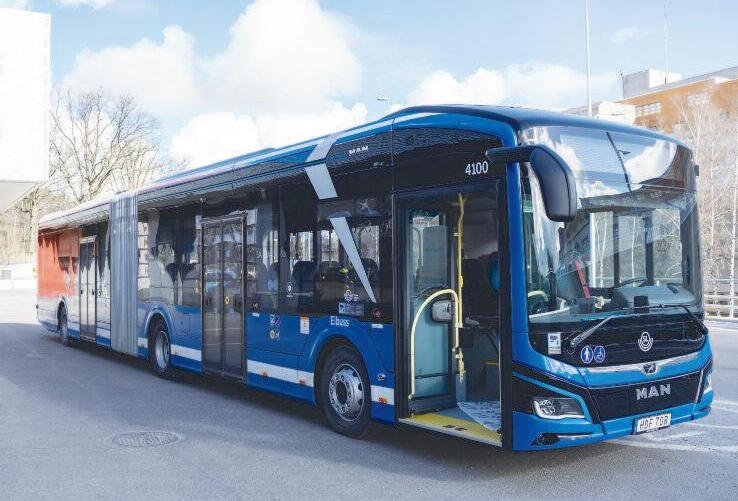
In 2022, the 1,600 buses operated by Keolis Sverige, all running on alternative energies (biodiesel), biogas, bioethanol, electric), covered more than 100 million kilometers
CIVA in Peru Gets Marcopolo Paradiso Buses
The CIVA Group, one of Peru’s leading passenger transpor t operators, has incorporated into its fleet five new Marcopolo Paradiso 1350 Generation 8 buses The vehic l e s , s o l d t h r o u g h t h e M e r c o b u s representative, will be used in road transport, on lines between the capital city of Lima and cities in the interior of the countr y
“CIVA is a traditional customer and has a fleet predominantly of Marcopolo models This new supply reinforces the close par tn e r s h i p b e t w e e n t h e c o m p a n i e s a n d t h e success that all Generation 8 models have achieved abroad,” says Guilherme Schimidt N e t o , c o m m e rc i a l o p e r a t i o n s c o n s u l t a n t responsible for the Peruvian market T h e fi v e P a r a d i s o 1 3 5 0 s h a v e S c a n i a K4450 chassis, a total length of 15 meters
16 • National Bus Trader / July, 2023
Keolis was recently given a contract by the Stockholm regional transport authority to operate and maintain city and suburban buses serving the municipalities of Bromma, Solna, Sundbyberg and Sollentuna, which are located north and west of Stockholm This network involves 54 routes and more than 200 vehicles running on electric power and hydrotreated vegetable oil
a n d c a p a c i t y f o r 5 2 p a s s e n g e r s i n s e m is l e e p e r s e a t s , a l l w i t h U S B s o c k e t s a n d three-point retractable seat belts The vehicles are equipped with air conditioning and audio and video systems with a DVD player and monitors They also have a total sepa-
Equipment News
ration wall, cur tains and electronic destination sign
i a n m a n u f a c t u r e r, a P a r a d i s o G 8 1 8 0 0 double-decker With a fleet of more than 300 buses, it operates throughout the Peruvian t e r r i t o r y a n d i s c o n s i d e re d a n i n n o v a t i v e c o m p a n y c o m m i t t e d t o p ro v i d i n g q u a l i t y, safe and comfor table service q
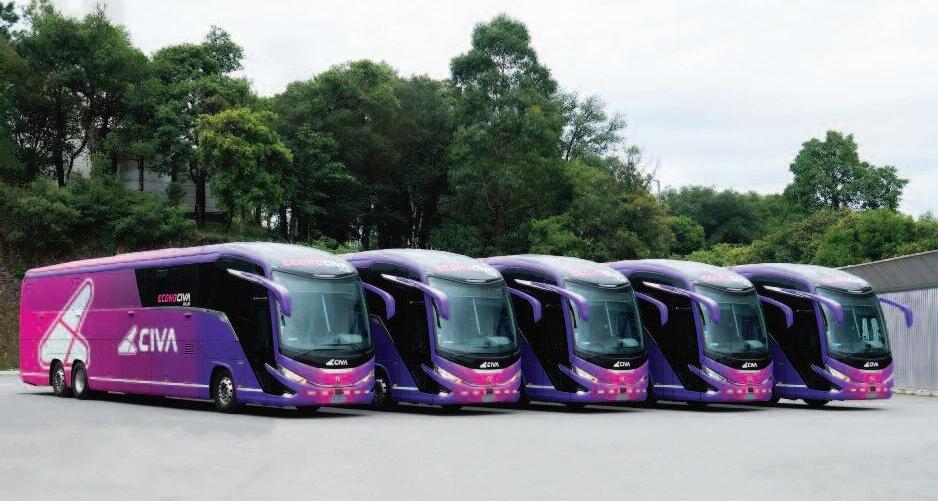

T h e C I VA G r o u p i n P e r u r e c e n t l y t o o k d e l i v e r y o f f i v e n e w M a r c o p o l o P a r a d i s o 1 3 5 0 G e n e r a t i o n 8 buses Built on a Scania K440 chassis, the b u s e s a r e 1 5 m e t e r s ( m o r e t h a n 4 5 f e e t ) l o n g a n d c a r r y 5 2 p a s s e n g e r s i n s e m isleeper seats Special e q u i p m e n t i n c l u d e s seat belts, USB socke t s , a u d i o a n d v i d e o s y s t e m s w i t h a D V D player and monitors

CIVA has been active for more than 50 years and has been a Marcopolo customer for more than 30 years In November 2021, it acquired the 450,000 bus from the BrazilNational Bus Trader / July, 2023 • 17
Bus Equipment People
Motor Coach Industries (MCI)
MCI is delighted to announce the addition of Anna M Ávalo to the team as the new pre-owned coach manager Bringing almost a decade of exper tise in fleet procurement a n d m a n a g e m e n t , Á v a l o ’s a p p o i n t m e n t promises to be a great addition to the MCI team

‘
Ávalo’s extensive background in service and maintenance, gained from her tenure at a prominent commuter shuttle program in nor ther n Californ i a w h e r e s h e w o r k e d c l o s e l y with MCI, positions h e r p e r f e c t l y t o s p e a r h e a d t h e expansion of MCI’s u s e d c o a c h p r og r a m H e r u n w av e r i n g c o m m i tm e n t t o c u s t o m e r s e r v i c e a n d h e r a b i l i t y t o c u l t i v a t e s t r o n g r e l a t i o ns h i p s a l i g n s e a ml e s s l y w i t h M C I ’s
value
As pre-owned coach manager, Ávalo will p r i o r i t i z e e n h a n c i n g t h e o v e r a l l c u s t o m e r experience for those purchasing pre-owned coaches She will collaborate closely with M C I ’s s a l e s t e a m t o e s t a b l i s h a c c u r a t e trade-in valuations, optimize strategies for coach preparation and implement effective marketing and selling approaches These e ff o r t s a i m t o s o l i d i f y M C I ’s p o s i t i o n a s a l e a d i n g p r o v i d e r o f p r e - o w n e d c o a c h e s within the industry Operators can expect to s e e a n e w a n d u s e r- f r i e n d l y, p r e - o w n e d coach webpage in the near future, fur ther improving their browsing experience
ABC Companies
ABC Companies, a leading provider of motorcoach, transit and specialty passenger transpor t equipment and industr y leader in e l e c t r i c m o b i l i t y s o l u t i o n s i n t h e U S a n d Canada, announced several promotions to e n h a n c e i t s s e n i o r m a n a g e m e n t t e a m t o include:
• R o m a n C o r n e l l t o A B C C o m p a n i e s Chief Executive Officer
• D a n e C o r n e l l t o A B C C o m p a n i e s Board of Directors Executive Chair man
• Chuck Carns, ABC Companies CFO, joins ABC Companies Board of Directors
• John Gillis to Executive Vice President, ABC Companies Par ts Sources




D a n e C o r n e l l h a s s e r v e d i n a variety of regional a n d c o r p o r a t e p o s i t i o n s f o r t h e past 31 years with t h e c o m p a n y R o m a n b r i n g s u n p r e c e d e n t e d k n o w l e d g e o f t h e o r g a n i z a t i o n a n d i n d u s t r y w i t h a n emphasis on cust o m e r r e l a t i o ns h i p s , s e n i o r t e a m l e a d e r s h i p , s a l e s , o p e r a t i o n s a n d a d m i n i s t r a t i o n t o his new CEO role Most recently servi n g a s p r e s i d e n t and chief commercial officer, Roman h a s b e e n t h e d r iving force as ABC h a s e x p a n d e d i t s product portfolio to d i v e r s i f y i n t o n e w markets, including z e r o e m i s s i o n s , w h i l e b u i l d i n g o n t h e c o r e m o t o rcoach industr y
Chuck Carns serves as the chief financial officer of ABC Companies This critical role a n d h i s c o n t r i b ut i o n s h a v e b e e n i n s t r u m e n t a l a s ABC has emerged from a challenging e c o n o m y w h i l e i n v e s t i n g i n a n d entering new mark e t s C a r n ’ s appointment to the A B C C o m p a n i e s Board of Directors brings a wealth of k n o w l e d g e a n d e x p e r i e n c e i n t h e industr y
John Gillis joined ABC Companies in 2000, holding numerous roles within the ABC Parts Source business division Under his leadership, ABC Parts Source now services more than 700 transit authorities and more than 2,500 private coach operators As executive vice president, Gillis oversees seven warehouse facilities in the U S and Canada along with all sales, inventory, procurement, logistics
and customer support activities
T h e s e r e c e n t promotions follow the company’s hist o r y o f l e v e r a g i n g i t s i n t e r n a l t a l e n t while injecting outs i d e e x p e r t i s e t o advance its market leadership position a n d e n h a n c e g ro w t h s t r a t e g i e s built on a customerf o c u s e d b u s i n e s s model and a familyfocused culture despite the challenges of recent economic cycles, ABC Companies continues to see positive trends in the industr y Guided by Cornell and Carns, the comp a n y s u c c e s s f u l l y n a v i g a t e d t h ro u g h t h e re c e n t v o l a t i l e m a r k e t s h i f t s b y l a u n c h i n g new product categories and technology initiatives within the private and public ground t r a n s p o r t a t i o n s e c t o r s A B C C o m p a n i e s P a r t s S o u rc e b u s i n e s s , l e d b y Gillis , a l s o experienced significant growth throughout t h e p e r i o d , c a p i t a l i z i n g o n s h i f t i n g a n d emerging market opportunities encompassing motorcoach, transit and new vehicles categories including batter y-electric vehicles Today, ABC offers one of the broadest and most diverse por tfolios in the industr y to help private and public operators grow as their businesses scale
“Roman has confidently moved toward h i s n e w ro l e , e v e n w h i l e w o r k i n g t h ro u g h an unprecedented business environment,” said Dane Cornell, ABC Companies board of directors executive chair man “He’s truly ear ned this new position, and it has been a long time coming His knowledge of the industry, unwavering passion, commitment a n d v i s i o n f o r m o v i n g o u r b u s i n e s s a n d c u s t o m e r s f o r w a r d i n t o t h e f u t u r e c a n already be seen in the ABC Companies of t o d a y W e a r e p r o u d t o s e e g r o w t h a n d c o m m i t m e n t i n a l l a re a s o f o u r e x e c u t i v e leadership and I look forward to supporting them as they transition into their new and e x p a n d e d ro l e s , ” Cornell’s C E O a p p o i n tment marks ABC Companies third generation of Cornell family business leadership R y h a n C o r n e l l a n d A s h l e y C o r n e l l , a l s o third generation Cornells, are growing leade r s i n t h e i r r o l e s a n d a r e n o w j o i n e d b y Isaac Cor nell, from the four th generation, all actively participating in the family-owned and managed business
18 • National Bus Trader / July, 2023
Anna M. Ávalo
Dane Cornell
Roman Cornell
John Gillis
Chuck Carns
Bus Equipment People
“I’m honored and humbled to build on the strong foundation built by my grandfather, father and uncle and look forward to continued g ro w t h a s w e d i v e r s i f y a c ro s s m a r k e t s t o ensure a strong future,” said Roman Cornell “Our customers’ needs will alway be our first priority and have been central to ABC’s rapid portfolio expansion and business diversification Providing best-in-class products and services to suppor t and drive the future of passenger ground transportation will always drive our core mission ” q
Absolutely the finest dump valve ever.

• Air powered version since 1985.
• All parts easily replaceable
DUPREE PRODUCTS
Phone: (888) 668-4288

Fax: (905) 374-3796
www.dupreeproducts.com

National Bus Trader / July, 2023 • 19
Part One and Part Two of the Motor Coach Industries story appear in previous issues This is Part Three that starts at about the turn of the century and brings us up to date
New Century, New Achievements
As the century drew to a close, the fort u n e s o f M C I t u r n e d p o s i t i v e w i t h a n e w owner, expanded facilities, a new home for parts and a change in model numbers. In a move reminiscent of the “Perils of Pauline,” the New York investment firm of Joseph Littlejohn & Levy acquired a controlling interest in the MCI damsel in distress from Consorcio Grupo Dina on June 16, 1999. In the next several months MCI would move forward in several areas
Joseph Littlejohn & Levy discovered that their damsel in distress was also a damsel i n d e b t s i n c e i t w a s s t i l l s a d d l e d w i t h t h e debt from the Dial Corp spin off as well as the Dina debt. To their credit, JLL allowed MCI to invest $40 million in Canadian dollars to improve and modernize the facility in Winnipeg to consolidate most manufacturing at that location
Most of the investment was concentrated in two areas The Fort Garry plant in Winnipeg got a 62,254-square-foot Coach Finishing Facility that included multi-stage paint booths that permit the sequential application of base and multi-color painting operations in a line Also, as a sign of increasing interest, state-of-the-art equipment was acquired for coaches using decals for exterior graphics instead of conventional paint One substantial a re a w a s d e d i c a t e d t o c o m p u t e r- a s s i s t e d design of the decals as well as quality output T h i s s a m e f a c i l i t y a l s o h a n d l e d t h e a c t u a l installation of the decals on the coaches.
I n 2 0 0 0 , t h e m a n a g e m e n t a t M C I c a m e up with a logical and long-term plan for their bus parts operation that would significantly improve customer service. With Standiford Field, the Louisville airport, being a hub for UPS, MCI elected to locate its new parts facility in that area. A 31-acre site was acquired in a new industrial park on the southwest side of Louisville and a relatively short distance from the airport.
When completed in 2000, the Louisville facility included the parts receiving, shipping and warehousing operation on one side a n d a l a rg e t w o - s t o r y o ff i c e c o m p l e x a n d training facility on the other side In what was a smart move, the facility was built with f u t u re u s e s i n m i n d . I n i t i a l l y m u c h o f t h e office space was empty, but long-term plans called for consolidating several MCI operations including customer service, training, aftermarket engineering, technical support a n d E R S A ( E m e r g e n c y R o a d S i d e A s s i stance) at this one location
A n e w m o d e l n u m b e r i n g s c h e m e w a s adopted at this time In 1984 MCI starting
MCI Celebrates 90 Years
Part Three
m o v i n g f ro m t h e i r e a r l i e r s i n g l e n u m b e r model numbers (MC-1 through MC-9 plus M C - 1 2 ) t o a n e w m o d e l n u m b e r s c h e m e incorporating width, model letter and number of axles, like 102C3. Within a few years the width became less important when virtually everything went to a 102-inch width The new model numbers introduced at this t i m e i n c o r p o r a t e d t h e m o d e l l e t t e r w i t h a number designating length Hence the former 102DL3 became the D4500 and the former 102F2 became the F3500
The year 2001 saw some extensive activity w i t h n e w m o d e l s U n d o u b t e d l y t h e m o s t important was the introduction of the new J4500 model MCI customers liked the modern styling of what was now the E4500 model b u t a s k e d f o r s i m i l a r s t y l i n g i n m o re o f a “bread-and-butter” coach As a result, the MCI engineers came up with the model J4500 which retained the attractive styling of the “E” coach in a simpler package It went into production in 2001 with Peter Pan Bus Lines taking delivery of the first coaches off the line

20 • National Bus Trader / July, 2023
The new MCI J4500 model was introduced in 2001 as a “bread-and-butter” version of the popular and stylish E4500 model. Within a few years it had become the most popular coach on the market and has retained that title for many years Hence, the new century can easily be called the J4500 years at MCI.
by Larry Plachno Photos from MCI or NBT Archives unless otherwise indicated
April 23 of 2003 saw the new delivery center open in Winnipeg. With the return of production from Mexico, Winnipeg was delivering more coaches including some going to U.S. operators. A similar delivery facility had been in operation at the Pembina location for years.
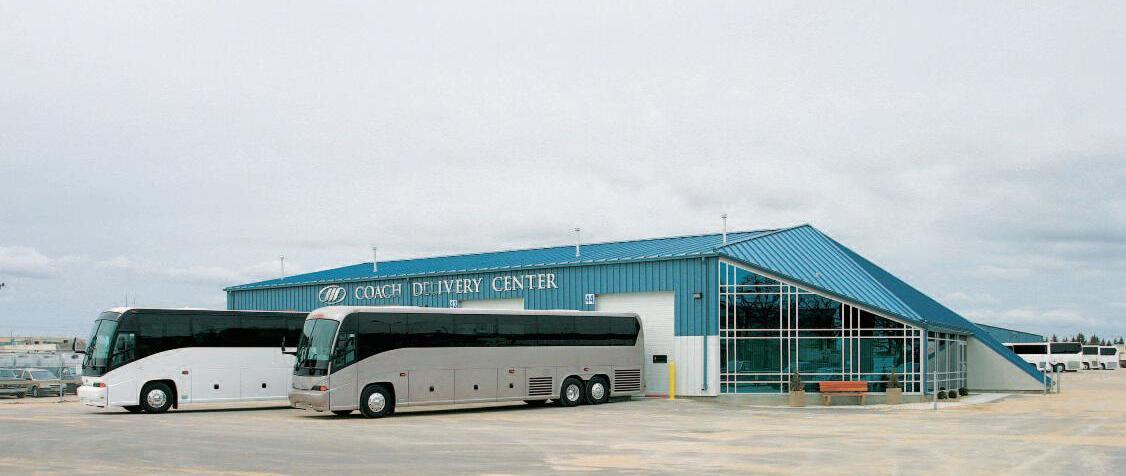
By 2004, the J4500 became the most popular coach in the United States and Canada It has retained that popularity ever since
For those who ask, there has been no “H” or “I” model. The “H” was skipped because it was being used by another manufacturer L i k e w i s e , t h e “ I ” w a s b y p a s s e d f o r f e a r i t would get confused with the number 1 or a m a j o r c o m p u t e r m a n u f a c t u re r A s o f t h i s writing, the “J” model is the newest letter model introduced by MCI Although both the “D” and “J” models would see several major improvements and variations in following years
Another model going into production in 2001 was the 35-foot, two-axle F3500 It was built in Mexico and achieved some popularity as a conversion shell with about a third o f p r o d u c t i o n g o i n g t o t h i s u s e H a v i n g decided to go with a length of 45 feet, Greyhound officially introduced their new G4500 coach in Dallas It replaced older coaches in the Greyhound fleet.
Production facilities in Mexico officially c l o s e d o n F e b r u a r y 1 7 , 2 0 0 3 w i t h a l l remaining production moving to Winnipeg and Pembina. At this time the E4500, J4500 and G4500 models were built at Winnipeg
In 2000, MCI’s new and huge parts facility was built in an industrial park near Louisville. Since the UPS hub is located at the nearby Louisville Airport, this offered great shipping alternatives including some overnight deliveries This shows the interior of the new facility with row upon row of bus parts.
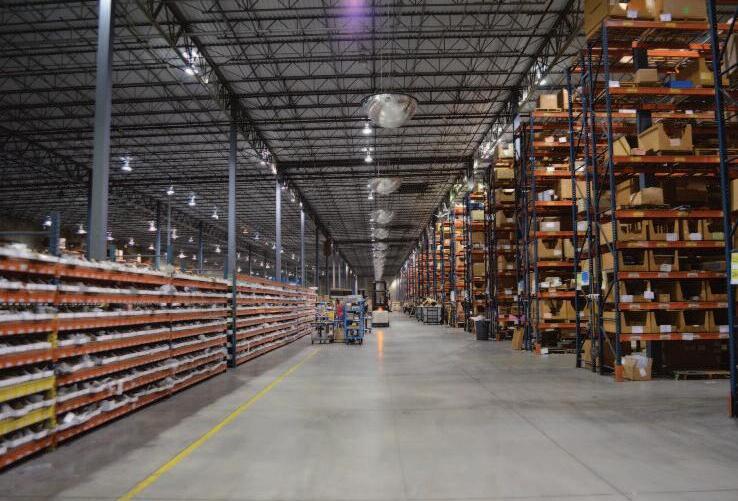
w h i l e t h e “ D ” m o d e l s w e re f r a m e d u p a t Winnipeg and trucked to Pembina for completion Other projects completed at about t h i s s a m e t i m e w e re a p re - d e l i v e r y c e n t e r and a brake dyno area With this addition, t h e F o r t G a r r y p l a n t h a d a t o t a l o f 8 3 6 , 5 5 3 s q u a re f e e t u n d e r ro o f
The new delivery center in Winnipeg officially opened on April 23, 2003 when four coaches were delivered to Indian Trails The 8,040-square foot facility was similar to the o n e a t P e m b i n a a n d h a d f o u r b a y s I t allowed MCI customers to pick up their new coaches at Winnipeg where they could get basic information and a walk-through prior to departing. The facility featured a customer lounge and private offices as well as computer Internet connections
In 2006, at the request of several schedu l e d s e r v i c e o p e r a t o r s , M C I g a v e t h e “ D ” m o d e l a f a c e l i f t w i t h a m o r e m o d e r n appearance This resulted in somewhat of a s p l i t w i t h t h e t r a d i t i o n a l m o d e l s i n c l u di n g t h e D 4 5 0 0 g e a r e d m o r e t o w a r d s t h e p u b l i c s e c t o r c o m m u t e r c o a c h m a r k e t H o w e v e r, t h e D 4 5 0 5 m o d e l o f f e r e d a n e w e r d e s i g n g e a re d t o w a rd t h e p r i v a t e s e c t o r a n d s c h e d u l e d s e r v i c e . T h e s a m e variation was offered on the 40-foot D4000 a n d D 4 0 0 5 m o d e l s
Much activity in the following years was centered around the outstanding debt that MCI had been carrying. In 2004 MCI went t h r o u g h a d e b t r e f i n a n c i n g t h a t s a w Franklin Mutual Advisors get involved and i n t e r e s t e d i n t h e c o m p a n y I t w a s a t t h i s time that MCI and their financial partners b e g a n l o o k i n g a t t h e o l d d e b t , m o s t o f w h i c h h a d b e e n p i l e d o n M C I d u r i n g t h e 1993-1999 period This required debt service that ranged from $54 million to as high as $ 8 0 m i l l i o n a n n u a l l y I n r e t r o s p e c t , M C I
National Bus Trader / July, 2023 • 21
deserves credit for being strong enough to survive these trials and tribulations while maintaining the leading market share in its i n d u s t r y C o m p a n i e s w i t h l e s s s t a y i n g power would have disappeared.
Much of the planning for the reorganiz a t i o n w a s c o m p l e t e d i n t h e f i r s t h a l f o f 2 0 0 8 E v e n y o u r N AT I O N A L B U S T R A D E R was involved in consulting and supplying information. The financial group decided that the best route to take was pre-negotia t e d C h a p t e r 11 f i l i n g E v e r y t h i n g c a m e together and the restructuring announcem e n t w a s m a d e o n S e p t e m b e r 1 5 , 2 0 0 8 F r a n k l i n M u t u a l A d v i s o r s w o u l d re p l a c e J o s e p h L i t t l e j o h n & L e v y a s t h e p r i m a r y source of funding for MCI
MCI emerged from Chapter 11 on Friday, April 17, 2009 after a reorganization period o f a b o u t s e v e n m o n t h s F r a n k l i n M u t u a l Advisors became the company’s majority shareholder through the conversion of third lean secured debt into common stock and the issuance of $200 million in new preferred s t o c k . T h e c o m p a n y a l s o o b t a i n e d e x i t financing from GE Capital
M C I P re s i d e n t a n d C E O To m S o r re l l s c o m m e n t e d : “ T h i s a c h i e v e m e n t a l s o re f l e c t s t h e d e d i c a t i o n o f a l l M C I e m p l o ye e s w h o c o n t i n u e d t h e i r f o c u s o n d e l i v e ri n g q u a l i t y c o a c h e s a n d c u s t o m e r s e r v i c e d u r i n g t h i s p e r i o d . We a re a l s o e x t re m e l y a p p re c i a t i v e o f t h e o u t s t a n d i n g s u p p o r t w e r e c e i v e d f r o m o u r l e n d e r s a n d l e g a l a n d f i n a n c i a l a d v i s o r s i n t h i s p ro c e s s ” I t w a s n o t e w o r t h y t h a t a s M C I e m e r g e d f r o m C h a p t e r 11 , t h e y p o s t e d a m a r k e t share of 60 2 percent, an increase showing a positive step for MCI, its staff, customers a n d v e n d o r s .
With production now centered at Winnipeg, the assembly line was busy turning out new coaches. November 7, 2011 saw the 6,000th unit roll off the E/J assembly line and get special exterior paint By this time the J4500 had effectively replaced the E4500 model.
In 2009 MCI made some improvements t o t h e J 4 5 0 0 m o d e l . N o t e w o r t h y w a s t h e m o v e t o w i d e r i d e s u s p e n s i o n t o g i v e t h e coach better riding qualities As the J4500 was improved, more E4500 operators began switching to the J4500 model

O n S e p t e m b e r 2 0 , 2 0 1 0 , K P S C a p i t a l Partners took over a controlling interest in Motor Coach Industries. KPS Capital Partners did not walk into MCI blind Much of t h e s p r i n g a n d s u m m e r o f 2 0 1 0 w a s s p e n t o b t a i n i n g e x t e n s i v e i n f o r m a t i o n o n M C I b e f o re K P S m a d e t h e f i n a l d e c i s i o n t o g e t involved. Added to this is the fact that KPS p re v i o u s l y p u rc h a s e d a n d t u r n e d a ro u n d New Flyer Industries, also located in Winn i p e g . N e w F l y e r w a s a c q u i re d b y K P S i n
Mid-2012 saw a new partnership between MCI and Daimler. MCI would take over sales, service, support and parts for Setra coaches in the United States This included both the TopClass S 417 model as well as the ComfortClass S 407 model. Shown is the S 417 model.
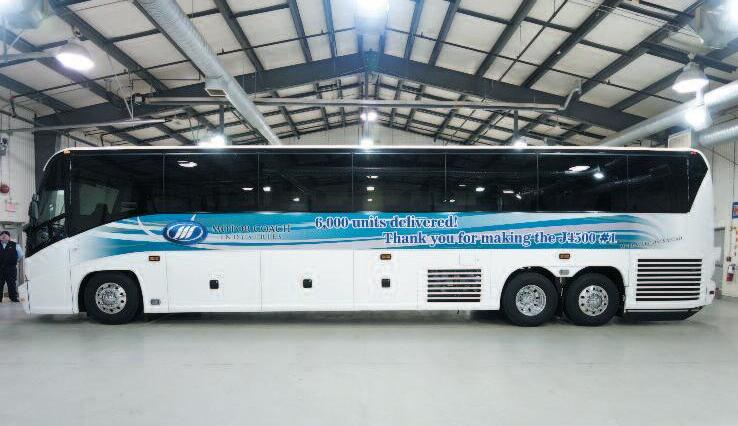
2 0 0 2 a n d s o l d t w o y e a r s l a t e r t o H a r v e s t partners. In addition to growth in revenue a n d p ro f i t a b i l i t y, N e w F l y e r i m p ro v e d i n q u a l i t y, d e l i v e r y a n d c u s t o m e r s e r v i c e H e n c e , K P S a l re a d y h a d s u b s t a n t i a l e x p er i e n c e i n b u s m a n u f a c t u r i n g
A m o n g t h e m o r e i m p o r t a n t c h a n g e s under KPS has been a $5 million cash infusion and eliminat ion of t he old MCI deb t . U n d e r K P S , t h a t d e b t i s f i n a l l y g o n e a n d MCI is in a much better cash position It was also under KPS that the final stages of the consolidation in Louisville were taking place with additional departments being moved there
M C I n o t e d t h a t t h e i r c u s t o m e r s w e r e i n c re a s i n g l y i n t e re s t e d i n p re - o w n e d a n d r e f u r b i s h e d c o a c h e s b e c a u s e o f t h e f l a t e c o n o m y A s a r e s u l t , t h e y d e v e l o p e d a p re - o w n e d c o a c h p ro g r a m i n J a n u a r y o f 2 0 11 t h a t p ro v i d e d t h re e d i ff e re n t l e v e l s o f q u a l i t y a n d e v e n o ff e re d a l i m i t e d w a rr a n t y o n s o m e c o a c h e s I n a d d i t i o n , M C I e m p h a s i z e d i t s o ff e r i n g s i n re f u r b i s h i n g a n d r e p o w e r i n g p r e - o w n e d c o a c h e s M C I ’ s L o u d o n v i l l e f a c i l i t y w a s d o i n g s o m e m a j o r w o r k i n t h i s a r e a f o r c u st o m e r s O n N o v e m b e r 7 , 2 0 11 t h e 6 , 0 0 0 u n i t ro l l e d o ff o f t h e E / J a s s e m b l y l i n e i n Winnipeg By this date the J4500 had effect i v e l y re p l a c e d t h e E 4 5 0 0 m o d e l
In mid-2012, KPS orchestrated a partnership between MCI and Daimler MCI would take over responsibility for the sale, support, s e r v i c e a n d p a r t s f o r S e t r a c o a c h e s i n t h e U n i t e d S t a t e s a n d C a n a d a . T h i s i n c l u d e d both the Setra TopClass S 417 model and the C o m f o r t C l a s s S 4 0 7 m o d e l D a i m l e r a l s o acquired a part ownership in MCI. Some of the Setra sales staff moved over to MCI to help with sales In addition, MCI would take over the Setra Orlando facility located near Winter Garden
22 • National Bus Trader / July, 2023
The Setra coach was originally developed by the Kässbohrer family of Ulm, Germany, t h e s a m e p e o p l e w h o b u i l t t h e o r i g i n a l Eagles In December of 1984 the Setra coach was introduced to the United States and sold by the staff that also sold the Kässbohrer Piston Bully snow grooming equipment Daiml e r l a t e r a c q u i re d t h e S e t r a p ro d u c t s a n d m e rg e d t h e m w i t h M e rc e d e s - B e n z b u s e s They continued to sell the Setra coaches in America with their own staff until this partnership with MCI
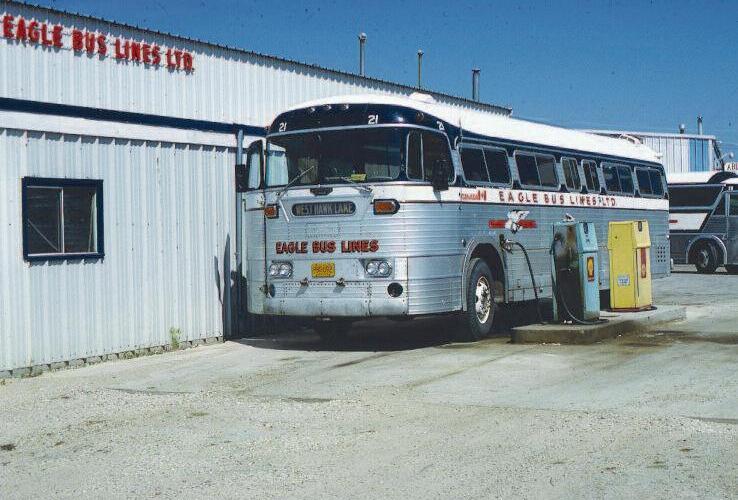
T h e re w a s a n o t h e r ro u n d o f i m p ro v ements on the J4500 in 2013 Included was a major facelift. The J4500 continued to be the most popular coach in the U S and Canada In 2014 MCI consolidated management and service facilities in the suburban area north of Chicago When MCI ran out of room for c o r p o r a t e o ff i c e s a t t h e f o r m e r H a u s m a n building at 10 East Golf Road in Des Plaines, they moved about six miles west to a modern high rise office building at 1700 E. Golf Road This was essentially across the street from the popular Woodfield Shopping Mall a n d s o m e w h a t r e m o v e d f r o m w h e r e t h e buses were located
With the recent consolidation and expans i o n a t t h e b i g p a r t s f a c i l i t y i n L o u i s v i l l e , some of the operations on Golf Road moved there Included was the Technical Call Center and Emergency Road Side Assistance group t h a t m o v e d t o L o u i s v i l l e . M o r e r e c e n t l y, some of the accounting and customer service o p e r a t i o n s a l s o m o v e d t o L o u i s v i l l e Th i s left a lot of open space at the Schaumburg office building and prompted a move to con-
solidate the Chicago executive and service facilities in one building
T h e n e w l o c a t i o n i s a t 2 0 0 E O a k t o n S t re e t i n D e s P l a i n e s T h i s i s j u s t n o r t h o f O ’ H a re I n t e r n a t i o n a l A i r p o r t a n d a l m o s t across the street from the former location of U n i v e r s a l C o a c h P a r t s a t 1 0 5 E O a k t o n Street It offered approximately 80,000 square feet under roof About 20,000 square feet at
For several years, operations in Chicago had been split between the former Hausman Bus Sales facility at 10 East Golf Road in Des Plaines and space in a high rise office building at 1700 East Golf Road across from the Woodfield Shopping Mall. Moving some of the operations to the new Louisville facility opened up enough space so that remaining operations were consolidated into this one location at 200 E Oakton Street in Des Plaines This new facility includes offices, service and parts under one roof.
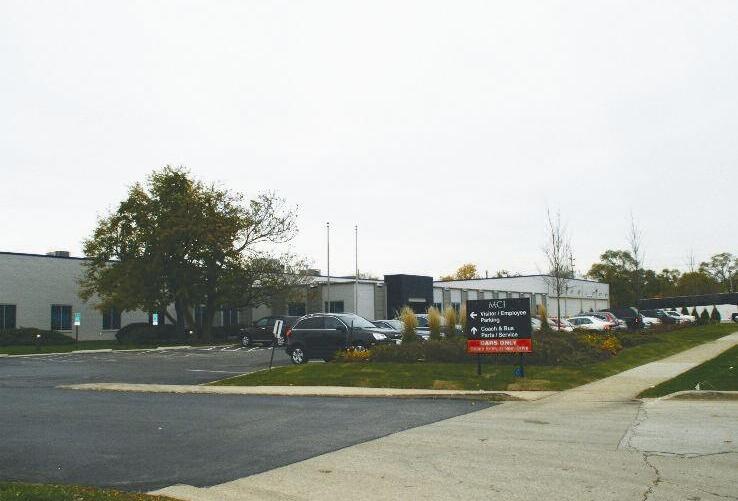
the front west and front center of the buildi n g i s o ff i c e s p a c e T h e re m a i n i n g a re a o f about 60,000 square feet is used for service operations and is basically in an “L” shape a t t h e f ro n t e a s t a n d re a r o f t h e b u i l d i n g B e h i n d t h e b u i l d i n g i s a l a rg e o u t d o o r l o t for bus parking
When you pick up parts you will find the parts entrance on the east side of the building adjacent to the railroad tracks. If you are bringing your coach for service, the service e n t r a n c e i s l o c a t e d a l o n g t h e f ro n t o f t h e building near its east end. Service facilities include two wash racks, two full-service pits for oil changes, a state-of-the art paint booth plus a well-appointed driver ’s area with television, WiFi and refreshments
New Flyer Acquires MCI
O n N o v e m b e r 1 0 , 2 0 1 5 N e w F l y e r announced that it had acquired Motor Coach I n d u s t r i e s I n t e r n a t i o n a l f o r $ 4 5 5 m i l l i o n This also eliminated the Daimler investment i n M C I T h e n e w s r e l e a s e i n d i c a t e d t h a t management at New Flyer had been thinking of doing something like this for ten years but the timing was not right Both companies were founded in Winnipeg within months of each other but New Flyer decided to concentrate on transit buses while MCI decided t o c o n c e n t r a t e o n m o t o r c o a c h e s . T h e a n n o u n c e m e n t i n d i c a t e d t h a t M C I h a d a t o t a l o f a b o u t 1 , 5 0 0 e m p l o y e e s o f w h i c h about 900 were in Winnipeg
At this point our history finds it necessary to fork in two directions We will start out by providing a brief overview of New Flyer and its additional acquisitions in the next few years Then, we will return back to MCI
National Bus Trader / July, 2023
• 23
Founded in 1930 in Winnipeg, Western Flyer originally built coaches Shown here is a Western Flyer P-41 model that was built in 1963 for Eagle Bus Lines and was sold in somewhat the same years as the PD4106 It was photographed in 1979 while fueling at the company garage in Winnipeg
to look at the years after 2015 when MCI was h e a v i l y i n v o l v e d i n i m p ro v e m e n t s t o i t s models as well as moving into new power trains
New Flyer Background and Acquisitions
The following is a condensed version. For t h o s e s e e k i n g m o re i n f o r m a t i o n o n N e w Flyer and its acquisitions, we recommend that article in the August, 2019 NATIONAL BUS TRADER
Western Auto & Truck Body Works was founded in 1930 in Winnipeg, Manitoba by J o h n C o v a l . H e h a d p r e v i o u s l y b e e n employed by the Standard Carriage Company where he learned to build bus bodies f o r f i t t i n g o n c h a s s i s t h a t w e r e c o m m e rcially available The company started with a staff of five who concentrated on building b u s b o d i e s t h a t w e re m o u n t e d o n c h a s s i s that were currently on the market In 1937, t h e c o m p a n y b e g a n b u i l d i n g c o m p l e t e b u s e s t h a t w e re p a r t i a l l y s t y l e d a f t e r t h e current Yellow Coach products with a flat f ro n t a n d f ro n t e n g i n e . T h i s c o n v e n t i o n a l design was popular in places with dusty or u n p a v e d ro a d s I n a d d i t i o n t o b u s e s , t h e company continued to build bus bodies and other vehicles
The Western Flyer name was first applied to a newly-designed, 28-passenger intercity c o a c h i n 1 9 4 1 a n d s o o n b e c a m e p o p u l a r. Expectedly, bus production ceased in 1942 and 1943 when the plant was used to build truck bodies for the war effort Coach production continued after the war with smaller Western Flyer coaches. Increasing popularity of those models prompted the company to
change its name to Western Flyer Coach, Ltd in 1948 Longer T-40 and T-36 models were introduced in 1949 and 1950.
As with other coachbuilders, the introd u c t i o n o f t h e G e n e r a l M o t o r s P D 4 1 0 4 i n 1953 and Greyhound’s Scenicruiser in 1954 presented tough competition In 1955 and 1956 Western Flyer did build four deck-anda - h a l f c o a c h e s i m i t a t i n g t h e S c e n i c r u i s e r design, but they had front mounted gasoline engines The new Canuk model with a rear
engine was introduced in 1955 and eventually replaced the older models
Founder John Coval remained in control u n t i l 1 9 6 3 w h e n a g r o u p h e a d e d b y A J Thiessen, who owned several bus lines, took over An improved Canuck model 500 was introduced in 1964 that looked much like a P D 4 1 0 4 o r M C - 5 A n i m p r o v e d C a n u c k m o d e l 6 0 0 w i t h a l e n g t h o f 3 8 f e e t w a s offered in 1967 and updated in 1968 as the m o d e l 6 0 0 A W h i l e t h e m o d e l 6 0 0 A w a s mechanically sound, it was difficult to sell because of the GM competition. One source i n d i c a t e s t h a t N e w F l y e r o n l y s o l d 6 9 3 coaches between 1945 and 1968
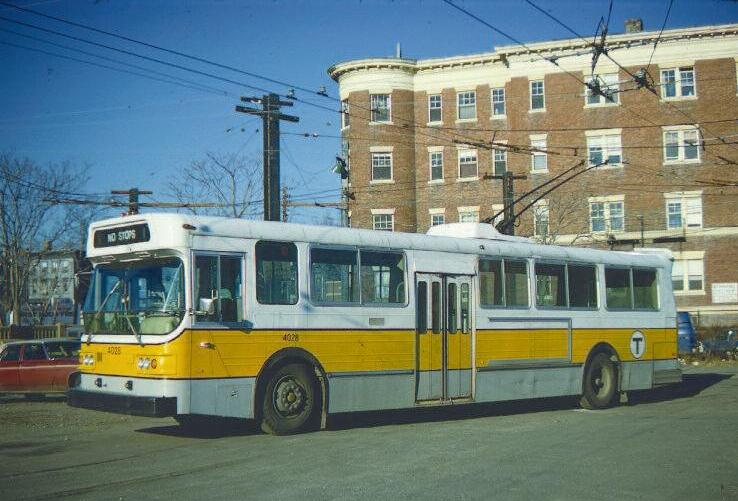
Faced with difficulties in selling coaches, t h e T h i e s s e n m a n a g e m e n t m a d e a v i r t u a l overnight transition to move from an intercity coachbuilder to a transit bus builder A demonstrator city transit bus was built in 1967 as the D700 that offered a multi-pane w i n d o w s i m i l a r t o t h e G M “ N e w L o o k ” design. A matching demonstrator trolley bus w a s b u i l t i n 1 9 6 8 a s t h e E 7 0 0 I n 1 9 7 0 t h e D 7 0 0 d e s i g n w a s l i c e n s e d t o A M G e n e r a l where it was modified and then put into production at Mishawaka, Indiana More than 5,000 units were built under the Metropolitan name
In 1971 the Manitoba Development Corp. acquired 74 percent equity in the company a n d c h a n g e d i t s n a m e t o F l y e r I n d u s t r i e s Limited The company did well by developing a meaningful market share in Canada as well as selling trolley buses in both Canada and the United States
D e n O u d s t e n B u s s e n f ro m t h e N e t h e rl a n d s t o o k o v e r i n J u l y o f 1 9 8 6 i n a n
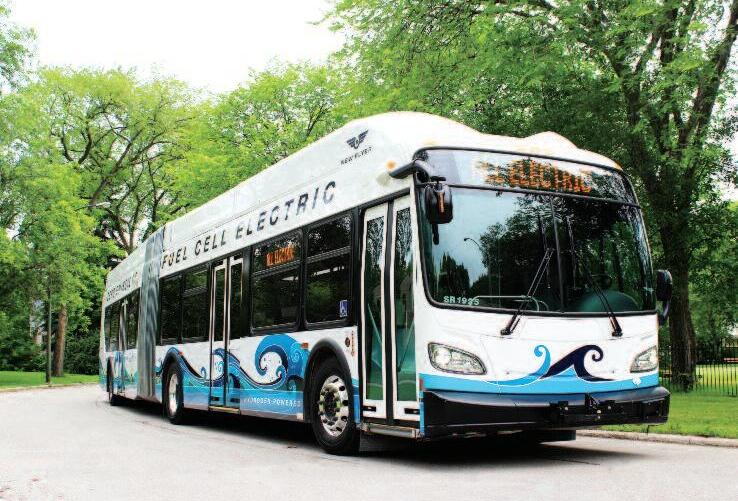
24 • National Bus Trader / July, 2023
New Flyer was a Canadian pioneer in zero-emission buses and built a large number of trolley buses. Shown here is one of 50 E800 trolley buses that went to Boston. That door on the left side permitted operation at a station platform
Today, New Flyer offers a wide range of transit buses including both conventional length as well as articulated units. In addition, New Flyer has become a leader in zero-emission buses including both battery-electric and hydrogen fuel cell power Shown here is an articulated model powered by a hydrogen fuel cell.
a r r a n g e m e n t w h e r e t h e y p u r c h a s e d t h e c o m p a n y f o r $ 1 m i l l i o n a n d a g r e e d t o i n v e s t m o re t h a n $ 2 m i l l i o n . A t t h i s t i m e t h e c o m p a n y n a m e w a s c h a n g e d t o N e w F l y e r I n d u s t r i e s . U n d e r D e n O u d s t e n t h e company exploded with new designs and t e c h n o l o g y a n d b e c a m e a l e a d e r i n t h e N o r t h A m e r i c a n Tr a n s i t i n d u s t r y.
I n 1 9 9 1 N e w F l y e r d e v e l o p e d N o r t h A m e r i c a ’ s f i r s t l o w - f l o o r t r a n s i t b u s . F o llowing that, New Flyer moved ahead with alternative fuels and new designs It develo p e d t h e f i r s t c o m p r e s s e d n a t u r a l g a s ( C N G ) b u s i n N o r t h A m e r i c a n a n d t h e world’s first hydrogen fuel cell bus in 1994. A l o w - f l o o r a r t i c u l a t e d m o d e l w a s a d d e d i n 1 9 9 5
KPS Special Situations Fund purchased a controlling interest in New Flyer in 2002 and provided funds to recapitalize the company After the upgrades, ownership passed to Harvest Partners and Lightyear Capital in late 2003 Less than two years later, New Flyer became a publically traded company on the Toronto Stock Exchange. Since then t h e N e w F l y e r p ro d u c t l i n e h a s b e e n s u bs t a n t i a l l y e x p a n d e d w i t h n e w p o w e r o p t i o n s , i n c l u d i n g z e ro e m i s s i o n b a t t e r yelectric and hydrogen fuel cell buses, new technology and expansion into new facilities in Anniston, Alabama as well as St Cloud and Crookston, Minnesota
ARBOC Specialty Vehicles

A n o t h e r a c q u i s i t i o n b y N e w F l y e r w a s
A R B O C S p e c i a l t y Ve h i c l e s M o s t s m a l l , c u t a w a y, a n d s h u t t l e b u s e s a r e b u i l t o n conventional chassis typically offering two
r a i l s a b o v e t w o a x l e s a n d a p o w e r t r a i n The most popular chassis builders including Ford, GM/Chevrolet, Freightliner and t h e n e w e r S p r i n t e r, F o r d Tr a n s i t a n d D o d g e R a m c h a s s i s B e c a u s e o f t h e i r h e i g h t o ff t h e g ro u n d , t h e y t y p i c a l l y o ff e r a w h e e l c h a i r l i f t t o m e e t A D A r e q u i r em e n t s A R B O C M o b i l i t y o r i g i n a l l y b e g a n p r o d u c i n g t h e s e b u s e s i n 2 0 0 8 w i t h t h e e x p r e s s i n t e n t i o n o f b u i l d i n g t h e m w i t h l o w f l o o r s i n o rd e r t o u s e r a m p s i n s t e a d o f l i f t s f o r m o b i l i t y d e v i c e s
Production at Alexander Dennis is so diverse that it would be impossible to find any one model that was typical. In addition to being the largest bus builder in the United Kingdom, Alexander Dennis is also the largest double-deck bus builder in the world Shown here is an electric doubledeck bus that Alexander Dennis is building in the United States.
T h e i r f i r s t b u s m o d e l w a s t h e S p i r i t o f M o b i l i t y L a t e r t h e p r o d u c t l i n e w a s expanded with the Spirit of Liberty, the Spirit of Legacy, the Spirit of Independence, the Spirit of Freedom and the Spirit of Equess While most have cutaway styling, ARBOC does offer a flat front bus that has more of a t r a n s i t a p p e a r a n c e A R B O C M o b i l i t y merged with All American Specialty Vehic l e s i n 2 0 11 re s u l t i n g i n a n a m e c h a n g e t o ARBOC Specialty Vehicles. New Flyer purchased ARBOC in late 2017
Alexander Dennis
O n M a y 2 8 , 2 0 1 9 , N F I G r o u p announced their acquisition of British bus b u i l d e r A l e x a n d e r D e n n i s T h i s b ro u g h t Alexander Dennis into the same family as New Flyer, Motor Coach Industries (MCI) and ARBOC, thus creating a market-leadi n g g l o b a l b u s a n d c o a c h m a n u f a c t u r e r. E a c h o f t h e c o m p a n i e s i s a l e a d e r i n i t s own area New Flyer is the leader in Canadian and U.S. transit bus production while M C I h o l d s t h a t s a m e t i t l e w i t h c o a c h e s ARBOC is the leader in U.S. and Canadian low-floor shuttle buses Alexander Dennis i s t h e l e a d i n g b u s b u i l d e r i n t h e U n i t e d K i n g d o m a n d a l s o t h e g l o b a l l e a d e r i n d o u b l e - d e c k b u s p ro d u c t i o n
Since it is impossible to present a thorough history of Alexander Dennis briefly, we will condense it considerably. Again, for more detail the reader is directed to the article in the August, 2019 issue of NATIONAL BUS TRADER. Alexander Dennis is a combin a t i o n o f s e v e r a l u n d e r l y i n g c o m p a n i e s Here is a very brief background on some of the major components.
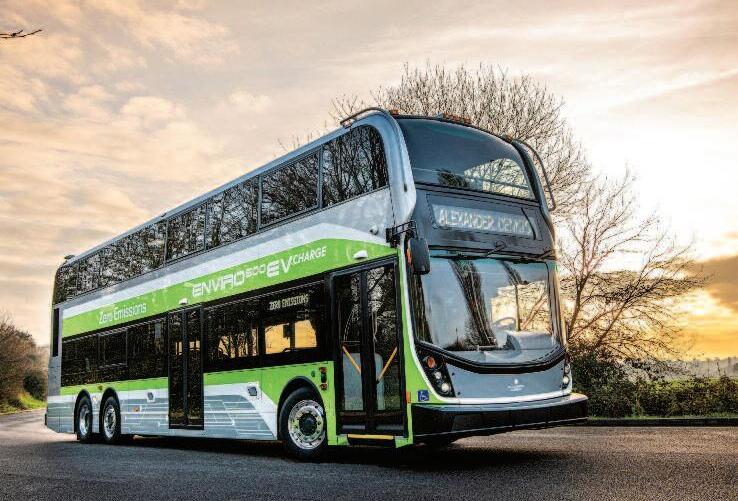
National Bus Trader / July, 2023 • 25
ARBOC Specialty Vehicles specializes in low-floor smaller buses that only require a ramp to handle mobility devices. They also offer flat front buses with more of a transit appearance. ARBOC has become a leader in smaller low-floor buses for the handicapped
Dennis Brothers is the oldest of the components It was founded in Guildford, England in 1895 by John and Raymond Dennis who started building motorcars in 1901 The c o m p a n y w e n t p u b l i c i n 1 9 1 3 a n d s t a r t e d building bus chassis following World War I They became a leader with double-deck b u s e s d u r i n g t h e D e p re s s i o n y e a r s o f t h e 1930s Following World War II the company c o n c e n t r a t e d o n c h a s s i s , b u s e s a n d f i r e engines but decided to quit building buses in 1965 Bus production resumed in 1977 and
t h e c o m p a n y e x p a n d e d b u s p r o d u c t i o n , a c q u i r e d o t h e r o p e r a t i o n s a n d b e c a m e a leader with double-deck buses.
Walter Alexander Coachbuilders traces its history back to 1913 to a bus route in Scotland Along with other companies, it became part of the Scottish Motor Traction Company in 1929 b ut was reestab lished as a private b o d y b u i l d e r i n 1 9 4 7 I t b e c a m e a w e l lk n o w n b u s b o d y b u i l d e r o f re g u l a r, l o wfloor and double-deck units Through a com-
MCI’s introduction of the new D45 CRT LE marked a revolutionary change in bus design. The addition of a lower-level center door makes it possible for mobility devices to enter and leave using a ramp. This eliminates the need for a lift on a coach, speeds up operations and simplifies things for the handicapped
p l e x a r r a n g e m e n t , A l e x a n d e r a s w e l l a s another body builder named Plaxton were joined with Dennis.
A l e x a n d e r D e n n i s a n d N e w F l y e r a n n o u n c e d a j o i n t v e n t u r e i n 2 0 1 2 f o r medium-duty, low-floor buses for the North American market. Alexander-Dennis later began building a new models at Nappanee, Indiana for sale on this side of the Atlantic
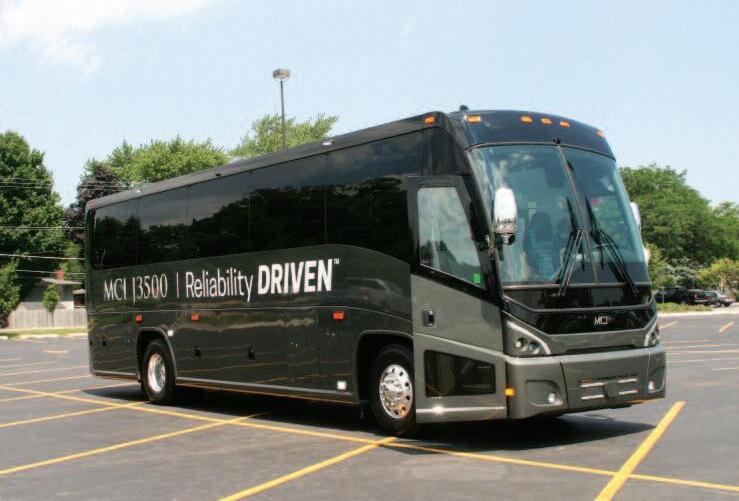
Recent MCI Achievements
S i n c e j o i n i n g t h e N F I G ro u p , M C I h a s been particularly busy with new technology in developing and improving models and power systems MCI introduced their new D 4 5 C RT L E m o d e l a t t h e A P TA E x p o i n 2017. This was important from an evolutionary standpoint since it had both a conventional front as well as a curb level center door and hence offered a coach that transported mobility devices without the need of a lift The second reason for its importance is that i t s t a r t e d t h e m o v e o f M C I ’ s “ D ” s e r i e s “Legacy Models” to the new technology and new design. We will provide more on this later
The new 35-foot J3500 model was introd u c e d i n 2 0 1 8 I t o f f e r e d t h e s a m e l o o k , w i d t h a n d h e i g h t o f t h e p o p u l a r 4 5 - f o o t J4500 model but had a length of only 35 feet w i t h t w o a x l e s I t h a s a l l o f t h e b i g c o a c h a m e n i t i e s a n d f e a t u r e s b u t i s g e a r e d f o r groups of up to 44 passengers In addition, t h e J 3 5 0 0 h a s n u m e ro u s p a r t s i n c o m m o n with the J4500 model to make maintenance and service easier
MCI introduced their new 35-foot J3500 model in 2018. It uses the same styling and many of the same parts as the popular 45-foot J4500 model With two axles and a smaller engine, it is an economical way to transport smaller groups with big coach amenities.
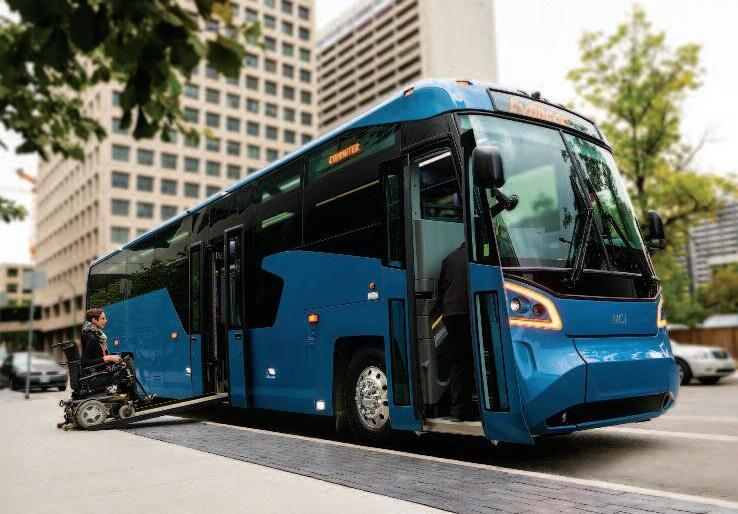
P a r t i c u l a r l y n o t e w o r t h y i s t h a t M C I developed a battery-electric coach originally known as the J4500e but later as the J4500 CHARGE™ A prototype was already testing in late 2018 (see the February, 2019 issue of NATIONAL BUS TRADER) This started MCI on developing battery-electric versions for popular models. On October 1, 2019 a battery-electric version of the new D45 CRT LE low-entry coach was introduced at the MCI Reliability Symposium at the Bay Area MCI S a l e s a n d S e r v i c e c e n t e r B a t t e r y - e l e c t r i c power trains will be offered on additional MCI models in the future.
Also in 2018, MCI discontinued sales and s e r v i c e o f t h e S e t r a c o a c h e s T h e y m o v e d b r i e f l y t o R E V G ro u p b e f o re t h e D a i m l e r p e o p l e o n c e a g a i n p u t t o g e t h e r t h e i r o w n sales and service group
I n t ro d u c e d i n 2 0 1 7 , t h e n e w D 4 5 C RT L E r e p r e s e n t e d a m a j o r t e c h n o l o g y a n d appearance improvement in the “D” produ c t l i n e T h e p r e v i o u s “ D ” m o d e l s d a t e b a c k t o 1 9 9 2 a n d h a v e c o m e t o b e c a l l e d t h e L e g a c y M o d e l s . T h e f i v e m o d e l s i n c l u d e d i n t h i s g r o u p a r e t h e D 4 0 0 0 , D 4 5 0 0 , D 4 0 0 5 , D 4 5 0 5 a n d D 4 0 0 0 I S T Vt h i s l a s t b e i n g M C I ’ s I n m a t e S e c u r i t y Transportation Vehicle used by police and
26 • National Bus Trader / July, 2023
government agencies to securely transport inmates These models are being upgraded t o t h e n e w g e n e r a t i o n a p p e a r a n c e a n d technology introduced by the D45 CRT LE
The five new models include the following The D4520, that started production in 2021, effectively replaces the D4505 and will be available with either clean diesel or battery-electric power It is geared for private c o a c h o p e r a t i o n s l i k e s c h e d u l e d r o u t e s where durability is important Next is the D4020 that becomes the replacement for the D4005 and is the 40-foot partner to the new D4520
In production in 2021 is the new D45 CRT, a 4 5 - f o o t h i g h - l e v e l c o a c h d e s i g n e d e s p ecially for commuter rapid transit applications It will replace the D4500 in the Legacy Model product line The D45 CRT will not have the lower level of the D45 CRT LE but will be available with clean diesel, batteryelectric and CNG power. A companion 40foot D40 CRT will be available for commuter rapid transit applications and will replace the D4000 in the product line. There will also b e a n e w I n m a t e S e c u r i t y Tr a n s p o r t a t i o n vehicle known as the D4020 ISTV It will be based on the new D4020 model, be offered with clean diesel power and will be available with several different security interiors for private or public operators
“ D ” m o d e l c o a c h e s w i l l f o l l o w t h e o l d tradition of being framed up in Winnipeg a n d t h e n w i l l b e t r u c k e d i n t o t h e U n i t e d States for completion and compliance with B u y A m e r i c a p ro v i s i o n s Wi t h t h e m o v ement away from the Legacy Models and to new technology, the new “D” series coaches will be completed at either of the two New Flyer facilities in Minnesota – Crookston or St Cloud – that are better equipped for this The MCI facility in Pembina was shut down at the end of 2022
T h e p a n d e m i c h i t s h o r t l y a f t e r M C I , ARBOC and Alexander Dennis joined the NFI Group Hence, in late July of 2020, NFI began an initiative called “NFI Forward” to integrate the new operations, respond to the pandemic and create savings by better use o f f a c i l i t i e s . T h e re w o u l d a l s o b e s a v i n g s from restructuring Alexander Dennis locations in the UK. All product lines were being i m p r o v e d a n d e x p a n d e d Wi t h M C I t h i s involved both the introduction of batteryelectric coaches as well as the transition of the Legacy “D” Models to the new design a n d t e c h n o l o g y T h e r e h a v e a l s o b e e n improvements in parts and service facilities to better serve customers
After opening its San Francisco Bay Service Center in 2017, MCI decided to better s e r v e i t s c u s t o m e r s o n t h e We s t C o a s t . Hence, MCI’s Southern California facility is moving to its new and more convenient location in Los Angeles, which was expected to o p e n i n M a rc h , 2 0 2 3 I n a d d i t i o n , M C I i s
planning to open a new service center facility in Seattle, Washington later in 2023
As MCI celebrates its 90th anniversary, several things are noteworthy MCI has now been the leading coachbuilder in the United S t a t e s a n d C a n a d a f o r d e c a d e s i n s p i t e o f n u m e r o u s o w n e r s h i p c h a n g e s o v e r t h e y e a r s I t i s o n e o f t h e f e w c o m p a n i e s t h a t
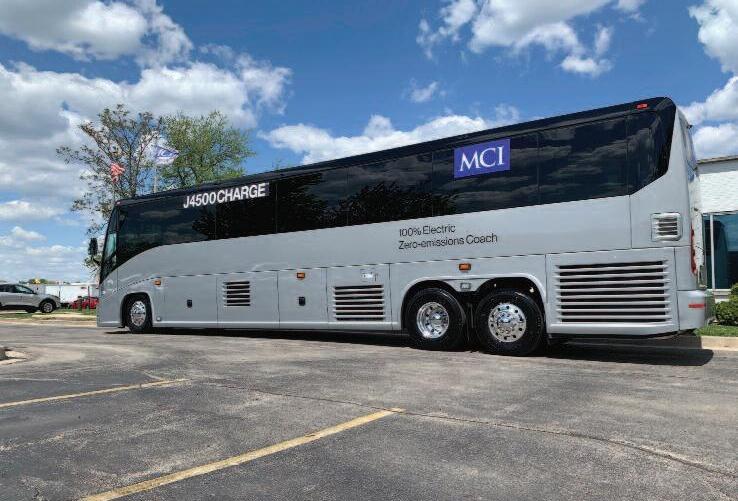
have built coaches in three countries NFI g r o u p c a n n o w c l a i m t o h a v e t h e l a r g e s t coach and transit bus manufacturing companies in the United States and Canada as well as largest bus builder in the UK and the l a r g e s t d o u b l e = d e c k b u s b u i l d e r i n t h e w o r l d We e n j o y e d p u t t i n g t h i s a r t i c l e together for our readers and hope that you enjoyed it q

National Bus Trader / July, 2023 • 27
MCI is a leader in moving to zero-emission battery-electric coaches Shown here is the new allelectric J4500 CHARGE model that is already in production. Eventually, most of the MCI coach product line will be available with zero-emission battery electric power
The entire MCI “D” model line is being improved and upgraded with the features developed for the new D45 CRT LE. Shown here is the new D4520 model that includes the new design and features. Other “D” model coaches will also be upgraded like this
Increasing Concerns About the Demographic Crisis

Re g u l a r r e a d e r s a r e a w a r e t h a t t h i s t o p i c o c c a s i o n a l l y s h o w s u p i n o u r p a g e s T h e t w o m o s t re c e n t a r t i c l e s included “The Bus Industry and the Coming Demographic Crisis” in our August, 2021 i s s u e a n d “ Wi l l t h e D e m o g r a p h i c C r i s i s Cause More Problems Than the Pandemic?” in the July, 2022 issue. There are three reasons we are revisiting this topic
The first of these is that there are countries that are now facing increasing major permanent problems because of the Demographic Crisis Unlike the pandemic, things do not go back to “normal” following the Demog r a p h i c C r i s i s . T h e s e c o n d r e a s o n i s t h e Demographic Crisis is causing increasing problems and concerns in the United States T h e t h i r d r e a s o n i s t h a t s o m e o f t h e researchers are pointing out that while some countries are taking action, the Demographic Crisis has the potential to do more to harm our society than Climate Change
As is typical with many of our articles, we will try to walk you through this while explaining developments and concerns. We will briefly explain the Demographic Crisis
and its negative impact on our society Then, we will review some of the developments i n A s i a , E u r o p e a s w e l l a s i n t h e U n i t e d States We can then look at some of the future i m p l i c a t i o n s f o r t h e b u s i n d u s t r y. F i n a l l y, look at a similar situation in Ancient Rome
The Demographic Crisis
In recent years, developed nations have been moving away from marriage, children and babies. This has shown up as reduced b i r t h r a t e s t o a g re a t e r o r l e s s e r d e g re e i n most countries with prosperous economies. T h e d e m o g r a p h e r s a n d r e s e a r c h e r s a r e pointing out three major areas of concern as birth rates decline.
1 R E D U C E D P O P U L AT I O N – T h e m o s t o b v i o u s c o n c e r n i s t h a t p o p u l a t i o n h a s s t a r t e d d e c l i n i n g a r o u n d t h e g l o b e i n d e v e l o p e d c o u n t r i e s . S o m e p l a c e s w i l l b e affected sooner or to a greater degree than o t h e r s I n s o m e c o u n t r i e s , t h e b i r t h r a t e h a s d e c l i n e d t o a p o i n t w h e re t h e c o u n t r y loses a significant percentage of their popu l a t i o n w i t h e a c h g e n e r a t i o n S o m e nations are losing more than 25 percent of t h e i r i n d i g e n o u s p o p u l a t i o n e v e r y g e n e r -
by Larr y Plachno
ation and could easily be called an endang e re d s p e c i e s
2 DEMOGRAPHIC IMBALANCE – This is of particular concern to the demographers s i n c e i t m e a n s w e w i l l h a v e f e w e r y o u n g people and workers but more older people and retirees. It is simple logic that as birth r a t e s g o d o w n , w e h a v e f e w e r b a b i e s a n d hence fewer workers and fewer people paying into Social Security while the number of seniors and retired people increases
In the past our demographics could be d i a g r a m m e d l i k e a p y r a m i d w i t h l o t s o f babies at the bottom, workers in the center and a small number of seniors and retired at the top With the reduction in birth rates b u t i n c r e a s i n g m e d i c a l t e c h n o l o g y a n d l o n g e v i t y, o u r d e m o g r a p h i c s a r e n o w s h a p e d m o r e l i k e a d i a m o n d o n p l a y i n g cards This shows few babies at the bottom, reduced workers moving up, but an increasing number of retired and seniors at the top.
This has created some undesirable situations. Because there are fewer babies, we have fewer workers An immediate concern is the
28 • National Bus Trader / July, 2023
The effect of the Demographic Crisis is increasingly obvious in many parts of Asia. It is now also changing things in Europe and the United States. As it continues to develop, we need to be concerned on how it will impact the bus industry PREVOST
lack of workers paying in to Social Security to support the older people and those retired There are also concerns that we may not have enough doctors, nurses and others to support the elderly in the years ahead.
3 RECESSION – There is increasing concern that the Demographic Crisis will lead t o a g l o b a l re c e s s i o n F e w e r w o r k e r s w i l l m e a n l e s s p r o d u c t i o n w h i l e m o r e o f o u r resources will have to used to take care of t h e e l d e r l y I t i s i n c re a s i n g l y o b v i o u s t h a t n u m e r o u s y o u n g w o r k e r s a r e a n a t i o n a l asset We are already seeing some economic
retrenchment in Asia as the number of workers declines drastically Right now, jobs are
impact more countries we may see reduced economic activity on a global scale
The Demographic Crisis in Asia
Researchers have noted that the Demographic Crisis has hit Asia the worst so far It may be because of their customs or lack of immigration China has been hit the hardest because of their past one-child policy, but Japan is struggling and other Asian countries
are taking steps to support marriage, families and babies
China’s leader Deng Xiaoping imposed his infamous one-child policy in 1979 to prevent overpopulation without realizing its implications Thirty-two years later, China’s labor force started falling by millions each y e a r T h e n u m b e r s a re m i n d - b o g g l i n g I n 2018, China’s labor force fell by 4 3 million in one year. That is a lot of workers and a lot of jobs Eliminating children only eliminated the young who grew up to be workers and were positive for the economy
Wo r s e y e t , C h i n a ’ s o n e - c h i l d p o l i c y prompted many couples to abort baby girls but keep a boy to better guarantee the financial support of a child in their old age. As a result, China today has 34 million more men than women and hence fewer opportunities f o r m a r r i a g e a n d f a m i l y, g i v i n g t h e m another demographic imbalance and complication. One of the obvious problems created by this is what the Chinese call 4-2-1 You may have one worker supporting two parents and four grandparents – an impossible situation
S i n c e C h i n a ’ s e c o n o m y d e p e n d s o n cheap labor, major reductions in their labor force are a serious problem. Realizing their one-child policy was creating a disaster with their economy, China went to a two-child policy in 2016 and then to a three-child policy in 2021 Now, China is encouraging couples to have more children to stop the serious decline in the size of their labor force Many of the researchers are saying that this may well be a case of too little, too late since some a r e c a l l i n g C h i n a ’ s p o p u l a t i o n d e c l i n e “unstoppable ” Since the global economy has relied on China and its inexpensive work force for growth, any reduction in workers will have a negative impact on other countries around the world
In 2022, more people died in China than t h o s e w h o w e r e b o r n T h i s d y n a m i c i s expected to hit the Chinese economy in more ways than just its pension system. A recent report indicates that China’s work force has declined by more than 41 million people in the past three years. Chinese President Xi Jinping recently called on top officials to step up efforts to maintain an appropriate birth r a t e a n d p o p u l a t i o n l e v e l C h i n a i s n o w launching projects in more than 20 cities to create a “new-era” marriage and childbearing culture to foster a friendly childbearing environment They now have a Family Planning Association, a national body that implements the government’s population and fertility measures.
Those watching the situation are suggesti n g t h a t C h i n a ’ s e c o n o m y i s c o n t r a c t i n g because of the decreasing number of workers The United Nations has suggested that India’s population has now exceeded that of China It appears that jobs and business
National Bus Trader / July, 2023
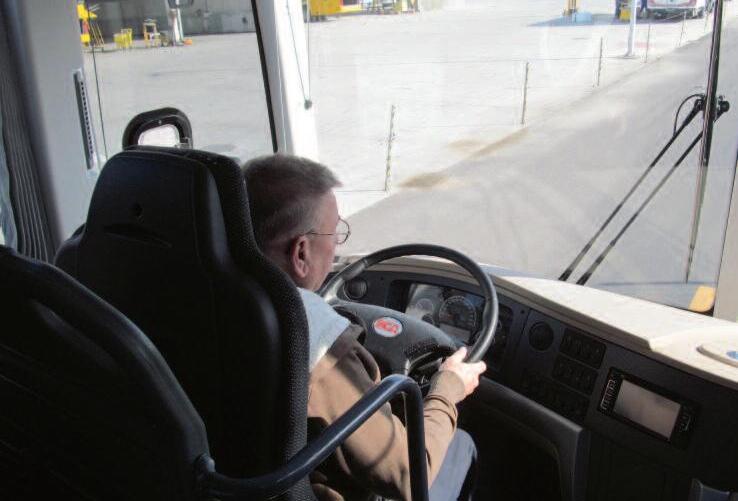

o v i n g t o o t h e r c o u n t r i e s w i t h y o u n g e r w o r k e r s H o w e v e r, a s t h i s c o n t i n u e s t o
m
29
•
One concern with the Demographic Crisis is the reduced number of workers and a decreasing work force This has been obvious in both Europe and the United States in a difficulty in finding and hiring bus drivers. A similar shortage of workers is also apparent in other industries. MCI
China has been hit hard with the Demographic Crisis because of their past one-child policy. Today, China is encouraging couples to have more children as their declining work force creates economic problems. Shown here is your editor test driving a new coach in China. NBT.
are moving from China to India where the number of younger workers has become a major national asset.
Japan may be in worse shape than China because researchers have said that Japan is a g i n g f a s t e r t h a n a n y c o u n t r y i n h i s t o r y Japan reached its population peak in 2008 a n d i t s p o p u l a c e h a s b e e n d e c l i n i n g e v e r since More adult diapers have been sold in Japan than baby diapers since 2011. By the year 2040, there will be one Japanese citizen above the age of 100 for every baby born In recent years, Japan has been closing an average of 450 schools each year because they are running out of children.
There is a prediction that in 2050, only 28 p e r c e n t o f J a p a n ’ s p o p u l a t i o n w i l l b e o f working age, a situation that may be imposs i b l e t o d e a l w i t h C o n s i d e r i n g t h a t s o m e p e o p l e o f w o r k i n g a g e w i l l t a k e c a r e o f elderly relatives or their own families, having fewer than one in four citizens able to w o r k w i l l s e r i o u s l y re s t r i c t b u s i n e s s a n d industry Japan’s industry is trying to move to robots to reduce the need for workers.
Other locations in Asia are encouraging families and children because of the lack of younger people and workers Taiwan’s population peaked in 2020 and its numbers are decreasing substantially with each generation South Korea has similar problems with a declining population and is now spending substantial money supporting families and children Singapore has modern buildings and impressive health care, but their birth rate has been dropping and the average age is going above 40. Officials have programs in place to support families and increase the birth rate
The Demographic Crisis in Europe Europe has had demographic problems for many years, including the lack of truck and bus drivers, but the problems are starting to increase Russia has ongoing problems because years of communist control encouraged smaller families They have tried immigration, but it has not worked well because m
o t h e R u s s i a n c u l t u r e A s a result, the government has offered a baby bonus
F r a n c e e x p e r i e n c e d t h e b i g g e s t b a b y boom in Europe following the second world war but is starting to age and suffer demographic problems A recent report showed that 26 percent of France’s population was above the age of 60. That number is expected to increase to one-third by 2040 Just recently, France raised the retirement age from 62 to 64 that was met with strong protests Spain i s f a c i n g a d e c l i n i n g p o p u l a t i o n a n d n o w has a pro-natal policy prompting births. Germany has survived better than most because of its strong economy However, they have had to close schools and its aging population will impact the economy

Demographers have issued strong warnings about Italy The birth rate in Italy is now down substantially as younger people put off marriage Venice is in trouble because it has more tourists than residents When its population declined below 60,000, Venice held a mock funeral for itself The number o f i n d i g e n o u s I t a l i a n s i s d e c l i n i n g b y a n alarming rate. A Eurostat forecast predicts that in a few decades, indigenous Italians will become a minority in Italy as people of A f r i c a n a n d A s i a n d e s c e n t w i l l m a k e u p more than 50 percent of Italy’s population
Ireland has done better in attracting new industry than most European countries simply because they have a young work force. Much of this is due to Ireland’s Catholic heritage that kept abortion illegal until recently. A young and vibrant work force has become a national asset
While many may think that the Demographic Crisis is limited to Asia, it is starting to hit England hard. More than 156 schools h a v e c l o s e d i n E n g l a n d a n d a n o t h e r 5 7 0

a n y o f t h e i m m i g r a n t s h a v e n o t a s s i m il a t e d w e l l
t
i n
30 • National Bus Trader / July, 2023
One of the negative aspects of the Demographic Crisis is a reduced number of children and students Japan has been closing 450 schools annually as they run out of children. This will obviously impact schools and school bus operations
Here we see a bus driving around the Arch de Triomphe in Paris. France experienced the biggest baby boom in Europe following World War II They recently increased their retirement age because of a declining work force. NBT.
have merged since the 2009-2010 school year
There are now an additional 90 English primary schools that will close or face closure because of a lack of students A recent study shows that 88 primary schools in England were more than two-thirds empty Moreover, the Department for Education is expecting the number of pupils at state-funded schools to decline by 944,000 over the next decade
O n e r e p o r t s u g g e s t s t h a t t h e n u m b e r o f reception-age children could be cut in half within the next five years
T h e D e m o g r a p h i c C r i s i s i n t h e U n i t e d States
W h i l e t h e U n i t e d S t a t e s i s f o l l o w i n g behind Asia and Europe with Demographic Crisis problems, these problems are becoming increasingly obvious. We have fewer workers b u t m o re s e n i o r s a n d re t i re d p e o p l e L i k e Europe, we have a shortage of truck and bus drivers as well as a shortage of people in other occupations including restaurant workers and post office staff. We have depended on doctors and nurses from other countries to meet our medical needs Our lack of workers also means that fewer people are paying into Social Security A recent study showed that seven out of 10 Americans age 50 or higher doubted they will receive full Social Security benefits as promised
It is also noteworthy that as people move away from marriage, it impacts our society in negative ways.
LONGEVITY – Longevity has been declining in the United States for nearly a decade It has nothing to do with Covid because our life expectancy was going up as recently as 2014 before it turned around and started to decline How much of this is due to our moving away from marriage? Married people are statistically healthier and live longer The one exception is major diseases like cancer where lifestyle has little impact There have even been studies that showed that reduced life expectancy in specific groups could be attributable to less marriage in those groups I t i s n o t e w o r t h y t h a t a r e a s b e c o m i n g a n increasing cause of death like drug overdose, suicide and liver disease are often associated with people who are alone

P O V E R T Y – W h y a r e t h e r i c h g e t t i n g richer and the poor getting poorer? Married people are statistically less likely to be homeless They are also less likely to need support from the government or elsewhere. At least a small part of the reason is the old saying that two can live as cheaply as one Although not technically true, one household costs less than two households In fact, people who a re c o n s c i o u s o f t h e e n v i ro n m e n t s h o u l d encourage marriage because by eliminating a household it reduces the energy and pollution that goes into construction, heating, cooling and providing energy to homes
C R I M E – W h y i s t h e re i n c re a s i n g c o ncern with crime? Married people are statis-
tically less likely to commit crimes or be the victim of crimes. The logic is inescapable. A f a t h e r a t h o m e c h a n g i n g t h e d i a p e r o f h i s baby daughter is much less likely to get into trouble than a guy in a bar looking for a onenight stand There are also statistics showing that children growing up without a father are more likely to get in trouble with the law If in doubt, look at statistics on who commits violent crimes. Married people with children are statistically much less likely to commit violent crimes which is another reason why marriage is good for society.
Unfortunately, a part of this problem is t h a t p e o p l e d o n o t t h i n k a b o u t t h e f u t u re
ramifications of their decisions and actions
I t i s n o t e w o r t h y t h a t w h a t c a u s e s t h e
D e m o g r a p h i c C r i s i s a l s o c a u s e s c r i m e
W h e n f a c e d w i t h d e c i s i o n s a n d a c t i o n s , instead of doing what is best for others and s o c i e t y, s o m e p e o p l e c l a i m “ c h o i c e ” f o r marriage, family and children This opens t h e d o o r f o r o t h e r s t o c l a i m “ c h o i c e ” f o r c r i m e a n d s h o o t i n g s
What to Expect for the Bus Industry
I guess that this falls under “The good, the Bad and the Ugly.” The good is that we will have an increasing number of seniors and retired people Since they are likely to take bus tours, we can expect that the tour

National Bus Trader / July, 2023 • 31
Demographers and researchers working in this area point out that marriage, families and children are statistically good for society. In addition to families being a training ground for society, marriage tends to reduce poverty and crime while increasing longevity Babies are needed to grow up to be bus drivers CHARLES MCARTHUR FROM PIXABAY
One of the big concerns surrounding the Demographic Crisis is the declining number of children and students. Places in Asia and Europe are closing schools as the number of students drops. This will obviously impact school bus operators.
part of the bus business should do well in t h e n e x t f e w y e a r s N o w i s t h e t i m e t o expand your tour offerings and increase this portion of your business
T h e b a d i s a n o n g o i n g d e c re a s e i n o u r s t u d e n t p o p u l a t i o n A s f e w e r b a b i e s a r e born, we will need fewer schools and fewer school buses Japan is already closing 450 schools each year because of a lack of stud e n t s a n d s o m e p l a c e s i n E u ro p e a re a l s o
closing schools This most likely will hit differently in various areas Presumably, places that support marriage and families will see t h e i r s t u d e n t p o p u l a t i o n s d e c l i n e s l o w e r than elsewhere.
Another bad item on the horizon will be a general decline in our population. This will mean fewer bus passengers and an ongoing lack of staff While immigration may help i n t h i s a re a , t h e re m a y b e c o n c e r n s a b o u t
finding qualified staff or dealing with language problems
Although not necessarily limited to the bus industry, we need to give some thought to the fact that Social Security is no longer working well with the decline in the number o f p e o p l e c o n t r i b u t i n g . Wi l l p e o p l e l o o k more to employers in the future for retirement programs?

T h e u g l y i s t h a t u n l e s s s o m e t h i n g c h a n g e s , w e a r e f a c e d w i t h a n o n g o i n g decline as we become an endangered species a n d o u r s o c i e t y s i m p l y s t a r t s t o d i e o u t T h e r e i s a p a s t e x a m p l e o f h o w A n c i e n t Rome was faced with this same problem
An Endangered Species
What things are important for a society to reach the next generation? Is it technology, education, commerce, wealth or something e l s e ? T h e D e m o g r a p h i c C r i s i s c u r r e n t l y causing major problems in developed countries is not the first time something like this has happened The historians will tell you that something similar happened to Ancient Rome that caused its downfall
An ci e n t R o me de v e l o p e d a n a dv a n ce d c i v i l i z a t i o n e v e n b e f o re t h e b i r t h o f J e s u s Christ. Aqueducts provided running water, public baths helped improve the standard o f l i v i n g a n d t r a d e w i t h o t h e r l o c a t i o n s brought in food and other goods. All of this apparently made the Romans forget about w h a t i s b e s t f o r s o c i e t y a n d t h e y b e g a n m o v i n g a w a y f ro m m a r r i a g e , f a m i l y a n d c h i l d re n
C a e s a r A u g u s t u s c a m e t o p o w e r i n R o m e a b o u t 2 7 y e a r s p r i o r t o t h e b i r t h o f Christ. He said that a strong state required strong families so he set about supporting m a r r i a g e a n d l a rg e r f a m i l i e s H e o ff e re d t a x b re a k s t h a t s u p p o r t e d l a rg e f a m i l i e s , p a r e n t s o f t h r e e o r m o r e c h i l d r e n w e r e g i v e n re w a rd s , p ro p e r t y a n d j o b p ro m ot i o n s w h i l e w i d o w s a n d w i d o w e r s w e re e n c o u r a g e d t o re m a r r y
Augustus imposed strict marriage laws and changed adultery from an act of indec e n c y t o a n a c t o f s e d i t i o n . H e p ro m o t e d marriage and childbearing Abortion itself became a crime in the Roman Empire in the third century However, the people failed to understand that marriage, family and children were good for society.
Many of the historians call the surviving group barbarians. They certainly had less education than the Romans With their aqueducts, w a g o n s a n d a rc h i t e c t u re t h e R o m a n s h a d more technology In addition, the Romans had both treasures and art What is it that the barbarians had that the Romans did not? The answer is that the barbarians knew the importance of decisions and

that
good for society including families and babies for the next generation q
32 • National Bus Trader / July, 2023
actions
were
One positive aspect of the Demographic Crisis is that we will see more retired people and seniors who are likely to ride bus tours. As the overall population declines, we will see fewer younger riders and workers There may be opportunities for private operators to contract with transit operators MCI
The current situation is not the first time that a society was faced with a decline in marriage and children. Ancient Rome had a similar experience and their leaders tried to take action in various w a y s To d a y, l e a d e r s i n s e v e r a l c o u n t r i e s a r e t a k i n g s t e p s t o e n c o u r a g e m a r r i a g e , f a m i l i e s a n d babies. NBT.



















National Bus Trader / July, 2023 • 33
Automation Pros and Cons
by Dave Millhouser
After 145,000 trouble-free miles, it was time to trade my beloved Miata in on a n e w c a r. T h e re d c o n v e r t i b l e h a d exceeded expectations in every way but one Touted as a “Chick Magnet,” my experience was that the only babes attracted were north of 70
So am I, but STILL
My personal credo is that “cowards live 40 percent longer ” In striving for FAR north
of 70, I sprang for a bunch of the new electronic safety stuff
One of the neatest features is a lane keeping assist thingy that actually steers the car, f o l l o w i n g l a n e m a r k e r s C o u p l e t h a t w i t h Adaptive Cruise Control, and the SUV now knows what Susan learned years ago – I serve no purpose
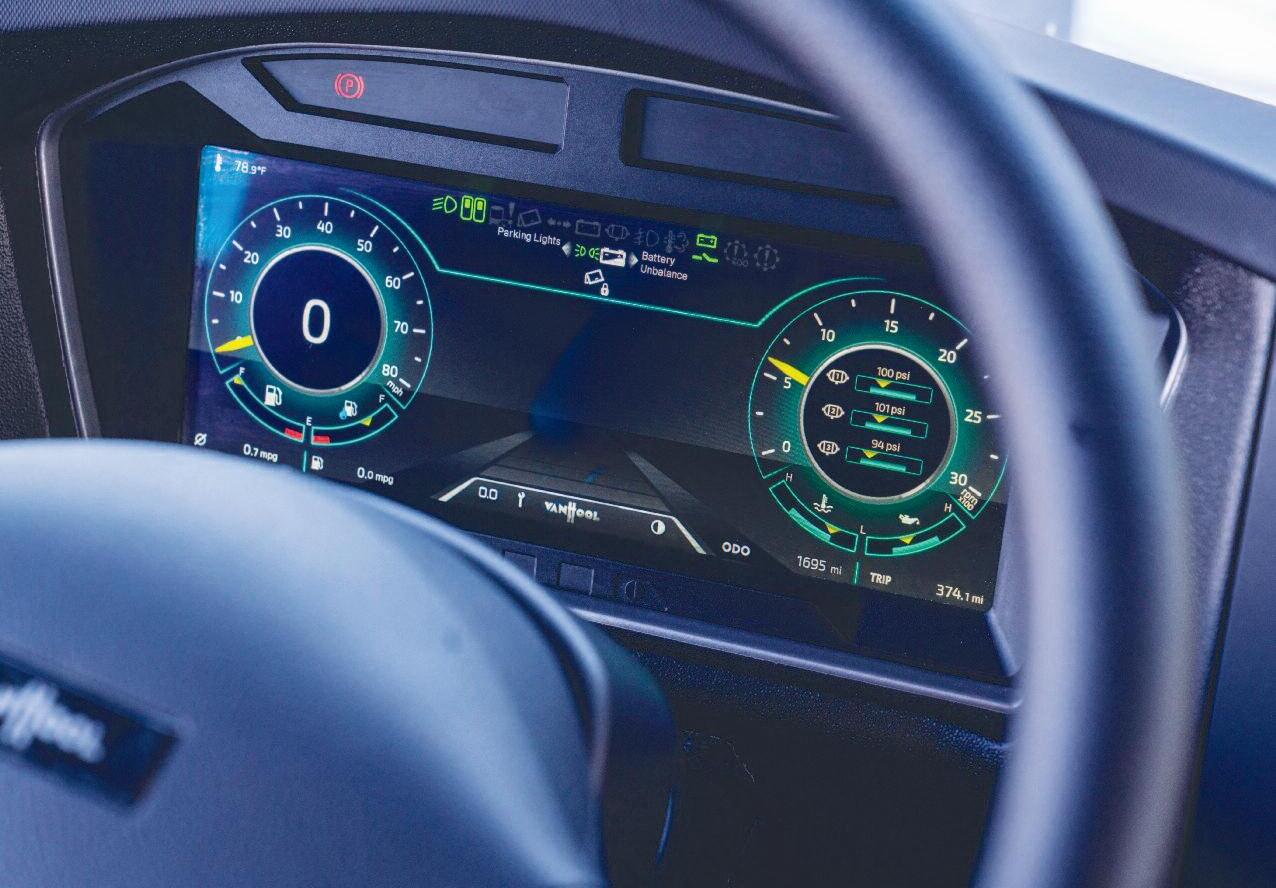
T h e r e i s a c a v e a t – r e m e m b e r E d w a r d Hines? He was driving behind a leaky milk
tanker in 1911 and cleverly figured out that a white line in the middle of the road created lanes that improved safety. What happens if the new SUV gets behind a milk truck? My hope is to end up at an ice cream place, rather than the more likely – dairy farm
By most accounts, the safety technology available on new coaches is working Some f o r m s o f a c c i d e n t s a r e d o w n , a n d f o l k s smarter than me feel it is in large part due to the plethora of electronic acronyms now in
34 • National Bus Trader / July, 2023
M o d e r n c o a c h e s i n c l u d e a w i d e r a n g e o f d r i v e r s a f e t y f e a t u r e s t h a t w e r e n o t a v a i l a b l e d e c a d e s o r e v e n y e a r s a g o . T h e s e n e w e l e c t r o n i c s y s t e m s ca n he l p m a ke t r a v e l i ng s a f e r f o r bo t h t he dr i v e r a nd pa s s e ng e r s Sho w n he r e i s a m o de r n e l e c t r o ni c da s hbo a r d o n a Va n H o o l e l e ct r i c co a ch ABC COMPANIES
H e r e , a n M C I J 4 5 0 0 shows off the Bendix Wi n g m a n A c t i v e C r u i s e B r a k i n g S y stem at Chicago Speedway in Joliet, Illinois d u r i n g a n M C I r a l l y Even newer and more sophisticated systems are available today to assist drivers. Drivers w h o u n d e r s t a n d a n d c a n w o r k w i t h t h e s e s y s t e m s f i n d t h a t d r i v i n g i s n o t o n l y easier but safer NBT

use Some of the stuff that is not standard equipment can be costly, but it does a couple of things. It can prevent, or mitigate, accidents, saving lives and money
It also answers questions before they are asked In the lawsuit following your bus being struck by a meteor, you can count on the plaintiff's attorney demanding to know why you had not bought Adaptive Cruise Control
I a m a b i t s c h i z o p h r e n i c o n t h i s I t i s i m p o r t a n t t h a t d r i v e r s a c q u i re a n d re t a i n safety skills for a variety of reasons. Coaches last a long time, so part of your fleet likely l a c k s s o m e o f t h e n e w e s t s a f e t y g o o d i e s G o l l y g e e , s o m e t i m e s t h e s e j e w e l s d o n o t work, either because they break or their sensors are covered with snow (you know, just when you need them most)
I n y e o l d e n d a y s o u r b o s s o f t e n a s s i g n e d t h e b e s t d r i v e r t o a g i m p y b u s , a s s u m i n g t h a t a n y o n e c o u l d d r i v e t h e good ones It takes a manly man to wrestle w i t h a b a d o n e T h e l i m p i n g c o a c h w a s a s t a t u s s y m b o l .
N o t o n l y s h o u l d d r i v e r s k n o w H O W t o drive, but they need a basic understanding o f h o w t h i s s t u f f w o r k s – s o t h e y d o n o t f i g h t i t . I f A B S i s w o r k i n g , y o u p l a n t y o u r f o o t o n t h e b r a k e s , i f i t i s n o t , a b i t o f p u m p i n g i s i n o rd e r E v e r y a c ro n y m h a s i t s o w n d ru t h e r s .
We had driven the Flxible 600 miles, and w e r e r e f u e l i n g i t w h e n t h e d i e s e l p u m p c l i c k e d o ff a t 3 5 g a l l o n s Wo w, g re a t f u e l mileage, and if you could not trust the automatic nozzle, who could you trust?
Four hundred miles later the bus coasted silently to a stop in front of a diner Apparently pump shutoff ’s lie, so “Trust but veri f y ” w h e n i t c o m e s t o a u t o m a t i o n W h o k n e w t h a t y o u c o u l d p r i m e a 6 - 7 1 D e t ro i t D i e s e l w i t h a k e t c h u p s q u e e z e b o t t l e ? D o not go to THAT diner
The next couple of years are going to be interesting as we sort out how to integrate automation with traditional skills. It might be wise to err on the side of tradition
A s k t h e l a d y w h o s e S m a r t C a r w a s robbed Bad guys stole the GPS She asked t h e p o l i c e o f f i c e r w h e r e s h e c o u l d b u y a new one – so she could find her way home H e r s k i l l s d i d n o t i n c l u d e m a p r e a d i n g S m a r t C a r ? ? Yo u c a n n o t m a k e t h i s s t u ff u p q
Years ago, some companies assigned their b e s t d r i v e r s t o t h e i r w o r s t b u s e s T h e a s s u m p t i o n w a s t h a t any driver could handle a good bus Today, all of the new coaches a r e e a s y a n d s a f e t o drive PREVOST
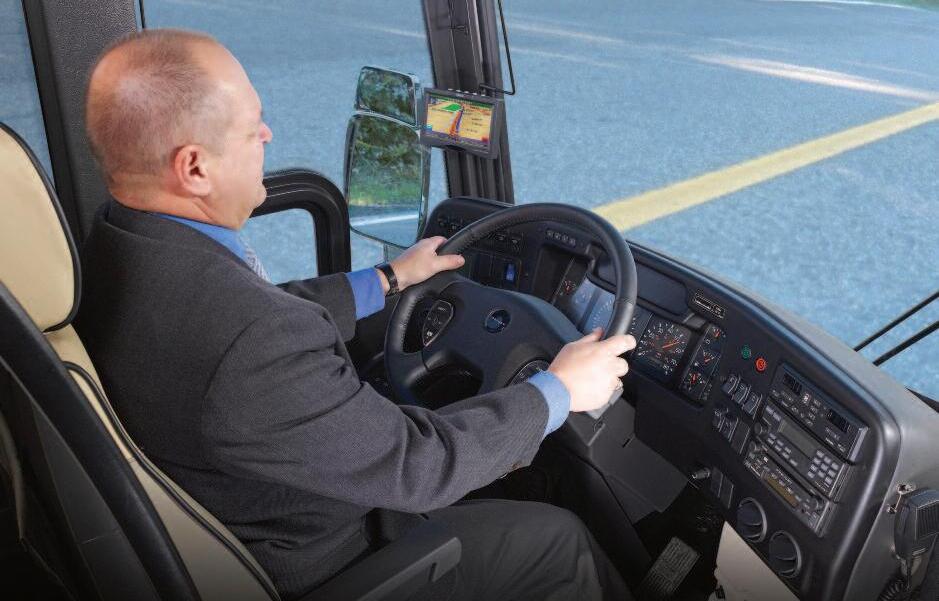
National Bus Trader / July, 2023 • 35
Sur vival and Pr osperity
 by Ned Einstein
Making Public Transportation Work Part 5 – Ridesharing
This article is the fifth component of this series describing critical “missing pieces” of a n o p e r a b l e p u b l i c t r a n s i t n e t w o r k ( s e e https://transalt com/article/making-public-transportation-work-part-1-alternativework-schedules/ https://transalt.com/article/making-public-transportation-work-par t - 2 - p a r k - a n d - r i d e - l o t s / ; h t t p s : / / t r a n s a l t com/article/making-public-transportationwork-part-3-feeder-service/, and https:// transalt com/article/ making-public-transportation-work-part-4-system-design-andn e t w o r k s / ) T h i s i n s t a l l m e n t o v e r v i e w s another essential component of public transportation that, like the other components, h a s g o n e l a r g e l y m i s s i n g f o r d e c a d e s –
Ridesharing
A s I re m i n d e d N AT I O N A L B U S T R A D E R re a d e r s o f t e n , a l l t h e s e e l e m e n t s w e re n o t just ideas kicked around in the 1970s Many were implemented, to a great degree, that d e c a d e – a n d t o l e s s e r a n d l e s s e r d e g re e s afterwards, as our cities swelled in population and workers, traffic levels exploded and air quality declined to a point where skylines around the horizon of some cities (Los Angeles most noticeably) literally turned orange Otherwise, the history of public transportation in America is largely the history of failure One can learn by watching promising i d e a s i g n o re d , d i s r u p t e d , c o r r u p t e d a n d
squandered
2025). Some scientists have predicted that, w i t h o u t n u c l e a r p o w e r, t h e re w i l l n o t b e enough electrons in California, by 2035, to power the state’s electric vehicles – when the production of non-electric automobiles ( a n d o t h e r v e h i c l e s ) w i l l b e c o m e i l l e g a l Since California’s mandate, numerous other states have considered copying it One wonders where all those electrons are going to come from That is today This article focuses on our squandering of solutions that began to emerge a half-century ago
Too Little and Much Too Late
To s u m m a r i z e t h e h i g h l i g h t s a n d l o wlights of each element written about previously:
• Alternatives work schedules – somet i m e s r e f e r r e d t o a s “ s t a g g e r e d h o u r s ” –began in earnest in the early 1970s, with two basic variations: (a) work hours (mostly for “white-collar” workers) shifted by perhaps an hour – mostly with 8 or 8:30 a m starts shifted to 9 or 9:30 a m starts, with (b) a few f o u r- d a y w o r k - w e e k s ( m o s t t y p i c a l l y 1 0 hours each) sprinkled in (Two years or so ago, Germany reduced its work-week to four days and 32 hours ) The “split shifts” that dominate certain forms of public transportation – and which would spread out crowded peak travel periods considerably – never caught on in other industry sectors, or even in most other transportation sectors.
debt for its first three unneeded rail lines in the early 1980s. Like other public transportation modes, passenger rail service did little to curtail traffic
The central goal of ridesharing and the other approaches noted was to decrease traffic levels. Back in the 1970s, air quality was a concern to scientists and a niche concern t o t r a n s p o r t a t i o n p l a n n e r s T h e n e e d t o change energy sources from fossil fuels to electric power was decades away – although a f e w n u c l e a r p l a n t s h a d b e e n o p e n e d ( Ma n y of t h e m cl ose d, n ot a b l y t h e In di a n Point plant in Westchester County, about a decade ago, and a huge one in northern California in 2022 California is poised to shut d o w n i t s l a s t p l a n t , i n D i a b l o C a n y o n , i n
• Park-and-ride lots became the rage in the early 1970s – particularly after the transit industry got a boost from capital funds in 1 9 6 4 ( c o v e r i n g 8 0 p e r c e n t o f t h e c o s t s o f buses and other capital expenditures) and o p e r a t i n g f u n d s i n 1 9 6 7 ( m a t c h i n g f u n d s covering various two-digit components of operating costs) By 1977 – a mere decade later – when farebox revenue had shrunk to cover only 50 percent of operating costs, park-and-ride lots were everywhere. I recall a network of lots within the cloverleaf of the Baltimore beltways’ intersection with Interstate 95 (or its precursor)
A smattering of park-and-ride lots still exist – but the explosion of needless light rail s e r v i c e s t h a t e m e r g e d d u r i n g t h a t s a m e period translated into a reduction of such l o t s f o r b u s s e r v i c e P re s i d e n t F o rd p u t a damper on the explosion of passenger rail s y s t e m s , i n 1 9 7 5 , w h e n h e i n t ro d u c e d t h e requirement for “alternatives analysis.” Of c o u r s e , t h i s re q u i re m e n t d i d n o t s t o p L o s
• F e e d e r s e r v i c e s a c t u a l l y e m e rg e d i n 1969 as a “demonstration project” within the former Urban Mass Transportation Administration (UMTA) Known as the “Haddonfield Experiment,” this “many-to-one” curbto-curb service transported commuters in South Jersey to and from the Lindenwold Rail Line, which connected them to Philadelphia. The “Haddonfield Dial-A-Ride,” as it was more commonly known, morphed into curb-to-curb and door-to-door service for both elderly and disabled individuals (nondisabled elderly passengers were eliminated with the introduction of the Americans with Disabilities Act (ADA) in 1991), and as general pub lic t ransit sy st ems in low-densit y parts of the country. Otherwise, feeder serv i c e s t o b o t h b u s a n d r a i l l i n e s e ff e c t i v e l y ground to a halt – only to re-emerge in 1983 ( o n l y f o r c o m m u t e r s t o a i r p o r t s ) w h e n SuperShuttle was launched in Los Angeles County (by a private sector entrepreneur, and which required no subsidies) With few park-and-ride lots, single motorist trips and carpools to fixed route bus and rail stops and stations diminished along with them Those taxis remaining, and TNCs (like Uber and Ly f t ) , a re t o o c o s t l y f o r m o s t b u s o r t r a i n commuters to use as feeder service.
• S y s t e m d e s i g n a s a b r o a d c o n c e p t e x p l o d e d i n a f e w s p o t s o f t h e c o u n t r y a s pre-ADA dial-a-ride systems emerged in the 1970s System design began and ended with a mattering of intelligible and efficient paratransit systems Other than a handful of new fixed route transit systems (e.g., the Carson C i r c u i t Tr a n s i t S y s t e m – s e e h t t p s : / / t r a n s a l t c o m / w pc o n t e n t / u p l o a d s / 2 0 1 8 / 0 8 / c a r s o n c i rc u i t m a p b i g . j p g a n d h t t p s : / / t r a n s a l t c o m / w pcontent/uploads/2018/08/route d and g thumbnail jpg), fixed route transit systems o p e r a t e d l a rg e l y u n c h a n g e d d e c a d e a f t e r decade In one LATimes exposé I recall readi n g l o n g a g o , o n e b u s l i n e t o a n d f r o m a
A n g e l e s C o u n t y f ro m g o i n g $ 7 b i l l i o n i n
36 • National Bus Trader / July, 2023
T h e c e n t r a l g o a l o
r i d e s h a r i n g
s t o
f
w a
decrease traffic levels.
Pasenger rail service did little to cur tain traffic
prison had been operating without a single p a s s e n g e r f o r n e a r l y a d e c a d e s i n c e t h e prison had closed Another line with which I recently became familiar (in South Jersey) t r a n s p o r t s f e w e r t h a n o n e p a s s e n g e r p e r vehicle service hour
The Quick Rise and Faster Fall of Ridesharing
Knowing and caring little about public transportation, ridesharing – often referred t o a s “ c a r p o o l i n g ” – s o o n b e c a m e t h e “rage” in the United States in the early 1970s. At least for a short time As noted, the other elements of a coherent public transportation system which made ridesharing meaningful d i d n o t l a s t v e r y l o n g . P a r t l y b e c a u s e i t depended on other elements (noted above) that would render a public transportation system workable, ridesharing collapsed into a n a l t e r n a t i v e t o p u b l i c t r a n s p o r t a t i o n instead of becoming a complementary component of one
Sur vival and Pr osperity
Ridesharing and HOV lanes were effectively “joined at the hip ” When one failed, t h e o t h e r f o l l o w e d A s n o t e d , t h e n o t i o n o f u s i n g r i d e s h a r i n g a s a c o m p o n e n t o f a h i e r a rc h y o f p u b l i c t r a n s p o r t a t i o n m o d e s – i n c l u d i n g r i d e s h a r i n g p l a y i n g a m a j o r ro l e a s a f e e d e r s e r v i c e t o b u s s t o p s , t r a i n s t a t i o n s o r, m o s t i m p o r t a n t l y, p a r k - a n dr i d e l o t s – n e v e r re a c h e d t h e a n t e n n a e o f anyone actually in charge of transportation in this country As with the other elements c i t e d a b o v e , a n d w r i t t e n p r e v i o u s l y i n N AT I O N A L B U S T R A D E R i n s t a l l m e n t s , r i d e s h a r i n g s h r u n k P a r t i c u l a r l y i n a n a t i o n w h e re o n l y 2 0 p e rc e n t o f m o t h e r s are “stay-at-home moms” (the percentage i s 8 0 i n C h i n a ) , o n e s u s p e c t s t h a t m o s t s h a re d r i d e s i n p e r s o n a l v e h i c l e s i n v o l v e e i t h e r b o t h s p o u s e s , o r o n e o r t w o o f t h e d r i v e r ’ s n e i g h b o r s
T h i s i s re a l l y a s h a m e i n t h e e r a o f t h e I n t e r n e t , m u c h l e s s s o c i a l m e d i a , w h e r e s e e k i n g o u t a r i d e - s h a r i n g p a r t n e r w o u l d n o t e v e n re q u i re t h e i n v o l v e m e n t o f a n y p u b l i c s e c t o r, t a x p a y e r- s u p p o r t e d e n t i t y – as the initial ridesharing programs were launched and maintained by Regrettably, by the time these media became commonp l a c e , t h e n o t i o n o f f o r m a l i z i n g r i d e s h a ring beyond something practically accident a l h a d l o n g d i s a p p e a r e d I a m n o t e v e n s p e a k i n g o f r i d e s h a r i n g t o r a i l s t a t i o n s o r b u s s t o p s
deserves what one gets And he or she gets what he deserves ” The rapid decline of publ i c t r a n s p o r t a t i o n i n A m e r i c a i s m e re l y a window into this dynamic What a shame: With all the pieces of success lying in plain sight, we could have been a contender
The opinions expressed in this article are that of the author and do not necessarily represent the opinions of National Bus Trader, Inc or its staff and management. q
Ned Einstein is the president of Transportation Alternatives (www transalt com [1]), a p u b l i c t r a n s p o r t a t i o n w i t n e s s fi r m . Einstein (einstein@transit com) specializes in catastrophic motorcoach accidents
As a part of a public transportation syst e m , r i d e s h a r i n g n e v e r h a d a c h a n c e To e n h a n c e t h e s u b s t i t u t i o n o f r i d e s h a r i n g f o r t h e u s e o f p u b l i c t r a n s p o r t a t i o n , w e b e g a n d e v e l o p i n g c a r p o o l l a n e s I n 1 9 7 7 , as a project director for Washington, D Cb a s e d P u b l i c Te c h n o l o g y, I n c . , I a c t u a l l y edited the first full-length summary of the g ro w t h o f t h i s n o w - d e c l i n i n g p h e n o m en o n P T I ’ s r e s e a r c h , a n d t h i s d o c u m e n t , c o n t a i n e d a v a l u a b l e l e s s o n a b o u t p u b l i c t r a n s p o r t a t i o n i n t h e l a n d o f v o t i n g

A t t h e o u t s e t , t h o s e c a r p o o l l a n e s t h a t s u r v i v e d p o l i t i c a l l y w e re t h o s e w h e re a n a d d i t i o n a l l a n e w a s a d d e d ( v i a n e w c o ns t r u c t i o n ) t o a n e x i s t i n g f re e w a y W h e re a n e x i s t i n g l a n e w a s s u d d e n l y d e d i c a t e d to “high occupancy vehicles” – a mandate h a r d e r a n d h a r d e r t o e n f o r c e a s l a w e n f o r c e m e n t l e v e l s d i m i n i s h e d – t h e p o l i t i c a l b a c k l a s h w a s s e v e r e T h e H O V lanes quickly returned to their former stat u s o f h o s t i n g b u m p e r- t o - b u m p e r t r a ff i c S i n g l e - o c c u p a n c y m o t o r i s t s d i d n o t e n j o y b e i n g s t u c k i n b u m p e r- t o - b u m p e r t r a ff i c while a handful of fellow-citizens actually c o n t r i b u t i n g t o t h e s o l u t i o n w h i z z e d b y t h e m T h i s d y n a m i c w a s , o f c o u r s e , c o mp o u n d e d b y t h e l a c k o f e n f o r c e m e n t , w h e re b y f e w o f t h e c h e a t e r s w h o b e g i n t o i n c r e a s i n g l y u s e t h e s e H O V l a n e s w e r e e v e r c a p t u re d a n d p e n a l i z e d
Gloom, Doom, Glum and Dumb
T h e n e x t e p i s o d e a b o u t M a k i n g P u b l i c Tr a n s p o r t a t i o n Wo r k w i l l a d d r e s s H i g h O c c u p a n c y Ve h i c l e l a n e s – y e t a n o t h e r piece of the traffic and transportation puzz l e t h a t e x p l o d e d i n t h e 1 9 7 0 s , y e t d i m i ni s h e d c o n s i d e r a b l y i n re c e n t d e c a d e s f o r p o l i t i c a l a n d e c o n o m i c r e a s o n s , a s s u mm a r i z e d a b o v e
I will summarize the consequences of all these failures in the final episode of this saga: Making Public Transportation Work, Part 7: The Cost of Failure. Squandering promising ideas has a cost So too does making money f ro m t h e i r f a i l u re S o t o o d o e s d i s ru p t i n g them – as is the principal goal of today’s new technologies and approaches, replacing techn o l o g y ’ s o u t d a t e d , l o n g - l o s t p r o m i s e o f “product improvement ”
As everyone should know, failure clearly h a s a c o s t O f c o u r s e , t h e s e c o s t s a r e n o t shared equally More and more, for a variety of reasons that most individuals have very different beliefs about, the most successful in our society increasingly continue to be the m o s t c o r r u p t T h e l e a s t s u c c e s s f u l a r e increasingly the most snookered
A s t h e s a y i n g i n Wa s h i n g t o n , D C h a s gone seeming forever, “In a democracy one
National Bus Trader / July, 2023 • 37
A s a p a r t o f a p u b l i c t r a n s p o r t a t i o n s y s t e m , r i d e s h a r i n g n e v e r h a d a chance
“
I n a d e m o c r a c y o n e deserves what one gets. And he or she gets what he deserves.”
The Curious Coachowner
Number 295 of a Series
“ T h e C u r i o u s C o a c h o w n e r ” i s a q u e s t i o n a n d a n s w e r c o l u m n t h a t p ro v i d e s s i m p l e a n s w e r s t o s i m p l e q u e s t i o n s t h a t a re t o o shor t to warrant a full ar ticle or inclusion in one of our regular columns We will accept re a s o n a b l y s i m p l e t e c h n i c a l o r h i s t o r i c a l questions on coaches, buses or even conver ted coach shells by letter, fax, e-mail or phone If our staff is unable to answer them, w e w i l l c a l l u p o n o u r p a n e l o f e x p e r t s Names and addresses should be submitted w i t h y o u r q u e s t i o n s , b u t w e w i l l w i t h h o l d n a m e s f r o m p u b l i c a t i o n o n r e q u e s t W e reserve the right to modify questions to make them more useful to our readers
Q Why did Mercedes-Benz pull out of the Australian market?
–– West Coast Operator
A B a c k i n F e b r u a r y o f 2 0 2 3 i t w a s announced that Mercedes-Benz would susp e n d b u s s a l e s i n A u s t r a l i a T h e r e a s o n given by Mercedes-Benz is that future produ c t s w o u l d n o t b e t h e b e s t fi t f o r t h e A u stralian market
M e rc e d e s - B e n z d i d s a y t h a t t h e y h a d a n ongoing presence in Australia They would s u p p o r t e x i s t i n g o w n e r s w i t h s p a re p a r t s and service in the future Daimler in Australia has also been selling and suppor ting Fuso b u s e s T h e y w i l l c o n t i n u e t o b e a v a i l a b l e without change
O n e o f o u r t r u s t e d s o u rc e s o f i n f o r m a t i o n has suggested that the reason for this move is that Mercedes-Benz was planning to limit right-hand drive production in the future
Q W h y i s C E R T S m o n e y b a c k i n t h e news again?
–– Several Readers
A The bus industry was one of the hardest hit by the pandemic and in fact is still a long way from returning to pre-Covid days Hence, t h e f e d s o ff e re d s o m e m u c h - a p p re c i a t e d financial aid in the for m of the Coronavirus Economic Relief for Transportation Services (CERTS) funding Something like two billion dollars was given to motorcoach, school bus and passenger vessel operators
W h i l e t h e g r a n t w a s m u c h - n e e d e d a n d a p p re c i a t e d , t h e f e d s f a i l e d t o m a k e t h e money tax exempt in the initial legislation As a result, the companies that received the
CERTS money had to pay taxes on it As you can appreciate, this substantially reduced the positive impact of the money
An attempt was made last year to rectify this with legislation that would retroactively make t h e C E RT S m o n e y t a x e x e m p t I t f a i l e d t o pass through Congress It has now been reintroduced by Representative Darin LaHood ( R - I L ) ; R e p re s e n t a t i v e J i m m y P a n e t t a ( DCA); Mike Kelly (R-PA); Earl Blumenauer (DOR); John Rose (R-TN); and Jared Golden (R-ME)
I f t h i s p a s s e s , i t w i l l e l i m i n a t e t h e t a x b u rd e n f o r m o t o rc o a c h , s c h o o l b u s a n d p a ssenger boat operators on the CERTS grant monies Both UMA and ABA are in suppor t o f p a s s a g e
Q. I know that this is not a bus thing, but I w a s t o l d t h a t d e c a d e s a n d c e n t u r i e s should start with years ending in “1” and end with years ending in “0.” Is this true?
–– Reader in Michigan
A Theoretically this is correct But getting most people to accept this might be an uphill battle There are two reasons for this that I know of
The first is that there was no year “0 ” The year 1 BC was followed by 1 AD Hence, the first decade ran from years 1 to 10 and the first centur y ran from years 1 to 100
T h e s e c o n d r e a s o n i s t h a t n o o n e s t a r t s c o u n t i n g w i t h “ 0 ” E v e r y o n e I k n o w s t a r t s counting with “1 ”
Hence, years ending in “0” technically end a decade or centur y but do not star t a new one
Q. I enjoyed reading your recent article o n t h e G r e y h o u n d H i s t o r i c a l F l e e t ( r e p r i n t e d f r o m t h e J a n u a r y, 2 0 2 3 NATIONAl BuS TRAdER). Well written and very informative Thank you for putting that information together in such a concise manner
–– Brian J. Santin Columbus , Ohio
A We are pleased that you enjoyed the article NATIONAL BUS TRADER has always been v e r y o p e n a b o u t s h a r i n g o u r a r t i c l e s w i t h other publications and companies We have long ago lost track of the publications and companies involved
P l e a s e f e e l f re e t o a s k i f y o u w o u l d l i k e t o u s e a n y m a t e r i a l f ro m i s s
Q. Will automatic emergency braking be mandated on buses?
–– Several Readers
A What information we have is that the feds are reviewing a new rule that would require emergency braking on all new heavy-duty trucks sold in the United States over 26,000 pounds Some groups are pushing for the r u l e t o i n c l u d e a l l v e h i c l e s o v e r 1 0 , 0 0 0 pounds and also include systems to detect pedestrians and cyclists
Advocates of the rule point out that a similar r u l e b e c a m e s t a n d a r d a c r o s s E u r o p e a decade ago Statistics from there indicate that this new technology reduced rear-end accidents by 41 percent for the larger vehicles weighing more than 26,000 pounds and reduced rear-end accidents as much as 56 p e r c e n t f o r v e h i c l e s w e i g h i n g 1 0 , 0 0 0 pounds or more
Apparently, all of this star ted with the 2021 I n f r a s t r u c t u r e I n v e s t m e n t a n d J o b s A c t w h e re C o n g re s s g a v e N H T S A a t w o - y e a r deadline to come up with rules for the largest rigs on the road but eliminated similar wording for applying the same rule to mediumduty trucks
T h e e l i m i n a t i o n o f t h e s m a l l e r t r u c k s f ro m c o n s i d e r a t i o n h a s c a u s e d s o m e c o n c e r n among advocates of this rule It was pointed out that medium-duty trucks can be rented and driven by people without special training or experience
S o m e p e o p l e w h o u n d e r s t a n d t h e t r u c k i n d u s t r y h a v e p o i n t e d o u t t h a t t h e re c e n t increase in truck accidents is a result of the ELD mandate Since the truckers were no longer able to take liberties with their paper logs, they ran at higher speeds to achieve the same thing
T h e r e s e e m s t o b e a q u e s t i o n a s t o w h e t h e r b u s e s a n d m o t o r h o m e s w o u l d be included in the new rule However, this a n d e v e n m o r e s o p h i s t i c a t e d s y s t e m s h a v e b e e n a v a i l a b l e o n b u s e s a n d coaches for years and adding them would n o t b e a s e r i o u s p ro b l e m
A n s w e r s n o t c r e d i t e d t o o t h e r i n d i v i d u a l s are provided by Larry Plachno q

s o f N AT I O N A L BUS TRADER
u e
38 • National Bus Trader / July, 2023
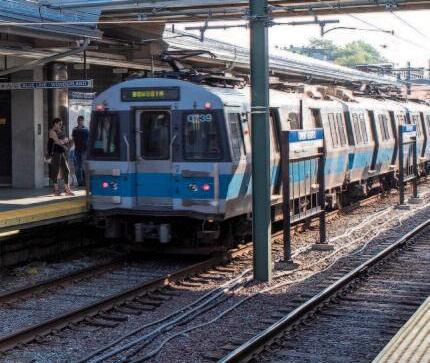










W i t h M C I c e l e b r a t i n g 9 0 y e a r s o f b u i l d i n g b u s e s , w e c a n t a k e a m i n u t e t o l o o k a t w h e r e t h e y a r e m o v i n g a h e a d t o d a y.
A t r igh t : M C I i s a l s o o ff e r i n g b a t t e r ye l e c t r i c p o w e r o n i t s p o p u l a r m o d e l s . Shown here is the electric version of the D45 CRT LE. Other “D” and “J” models are also now offered as zero-emission buses

B e l o w : M C I ’s “ D ” s e r i e s c o a c h e s a r e also being updated in both technology a n d s t y l i n g t o t h e n e w D 4 5 C RT L E look Shown here is the restyled D4520 t h a t e f f e c t i v e l y r e p l a c e s t h e D 4 5 0 0 model. Other members of the “D” family are getting similar improvements


40 • National Bus Trader / July, 2023 Photographs R e a d e r s a n d a d v e r t i s e r s a r e e n c o u r a g e d t o s e n d i n p h o t o g r a p h s o r s l i d e s o f b u s e s o r equipment that may be of special interest to our r eader s Please, include a list explaining what m a k e s t h e p i c t u r e d i t e m d i ff e r e n t , u n u s u a l o r interesting. P h o t o s s h o u l d b e s e n t t o N AT I O N A L B U S TRADER, 9698 West Judson Road, Polo, Illinois 6 1 0 6 4 . P l e a s e i n d i c a t e i f y o u w o u l d l i k e y o u r p i c t u r e r e t u r n e d P i c t u r e u s a g e i s d e p e n d e n t o n t h e q u a l i t y o f t h e p h o t o a n d s p a c e a v a i l a b l e .
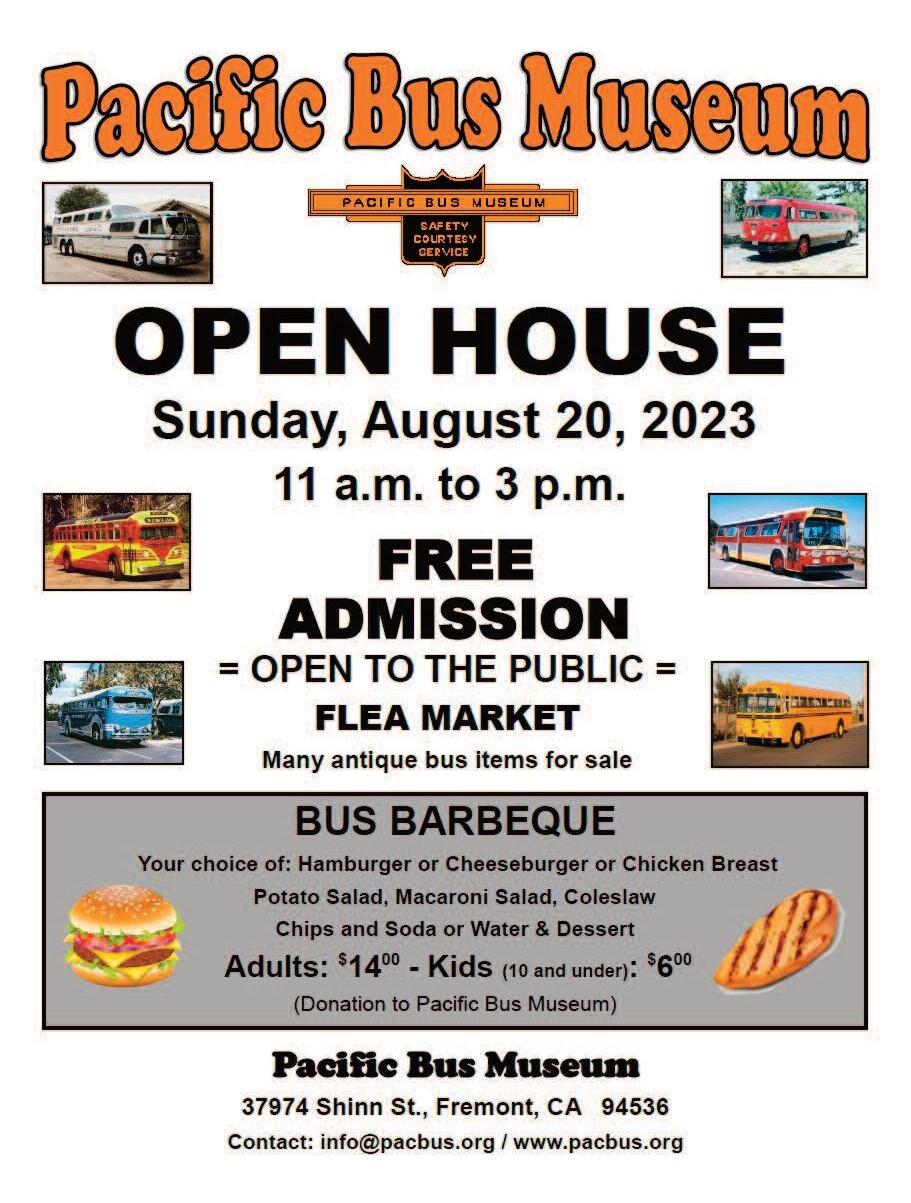

BACK ISSUES
EVERY ISSUE IS NEW UNTIL YOU HAVE READ IT!
NATIONAL BUS TRADER continues to receive requests on the availability of back issues so that readers can either locate desired information or obtain missing issues
While they last, the following back issues are available Issues beginning with June, 1979 thru c u r r e n t a r e $ 3 – U S , $ 4 5 0 – C a n a d a a n d $ 5 –International (US) each postpaid
Several issues are already “out of print,” hence we suggest that you indicate second choices We r e s e r v e t h e r i g h t t o r e f u n d m o n e y i f i s s u e s requested are no longer available
q Vol II, No 7 June, 1979
q Vol II, No 10 September, 1979
q Vol III, No 4 March, 1980
q Vol III, No 5 April, 1980
q Vol III, No 6 May, 1980
q Vol. III, No. 9 August, 1980
q Vol III, No 10 September, 1980
q Vol. III, No. 12 November, 1980
q Vol IV, No 5 April, 1981
q Vol. IV, No. 6 May, 1981
q Vol IV, No 7 June, 1981
q Vol. IV, No. 9 August, 1981
q Vol IV, No 10 September, 1981
q Vol. IV, No. 11 October, 1981
q Vol V, No 2 January, 1982
q Vol. V, No. 3 February, 1982
q Vol V, No 6 May, 1982
q Vol V, No 11 October, 1982
q Vol V, No 12 November, 1982
q Vol VI, No 2 January, 1983
q Vol VI, No 5 April, 1983
q Vol VI, No 7 June, 1983
q Vol. VI, No. 9 August, 1983
q Vol VI, No 10 September, 1983
q Vol. VI, No. 11 October, 1983
q Vol VI, No 12 November, 1983
q Vol. VII, No. 5 April, 1984
q Vol VII, No 9 August, 1984
q Vol. VII, No. 10 September, 1984
q Vol VII, No 11 October, 1984
q Vol. VII, No. 12 November, 1984
q Vol VIII, No 2 January, 1985
q Vol. VIII, No. 4 March, 1985
q Vol VIII, No 6 May, 1985
q Vol VIII, No 7 June, 1985
q Vol VIII, No 8 July, 1985
q Vol VIII, No 10 September, 1985
q Vol IX, No 5 April, 1986
q Vol IX, No 6 May, 1986
q Vol. IX, No. 8 July, 1986
q Vol IX, No 9 August, 1986
q Vol. IX, No. 10 September, 1986
q Vol IX, No 12 November, 1986
q Vol. X, No. 2 January, 1987
q Vol X, No 4 March, 1987
q Vol. X, No. 5 April, 1987
q Vol X, No 6 May, 1987
q Vol. X, No. 9 August, 1987
q Vol XI, No 2 January, 1988
q Vol XI, No 3 February, 1988
q Vol XI, No 4 March, 1988
q Vol XI, No 5 April, 1988
q Vol XI, No 6 May, 1988
q Vol XI, No 11 October, 1988
q Vol. XI, No. 12 November, 1988
q Vol XII, No 2 January, 1989
q Vol. XII, No. 3 February, 1989
q Vol XII, No 4 March, 1989
q Vol. XII, No. 5 April, 1989
q Vol XII, No 6 May, 1989
q Vol. XII, No. 7 June, 1989
q Vol XII, No 10 September, 1989
q Vol. XII, No. 11 October, 1989
q Vol XIII, No 2 January, 1990
q Vol. XIII, No. 4 March, 1990
q Vol XIII, No 6 May, 1990
q Vol XIII, No 5 April, 1990
q Vol XIII, No 7 June, 1990
q Vol XIII, No 8 July, 1990
q Vol XIV, No 2 January, 1991
q Vol XIV, No 4 March, 1991
q Vol. XIV, No. 7 June, 1991
q Vol XIV, No 10 September, 1991
q Vol. XIV, No. 11 October, 1991
q Vol XIV, No 12 November, 1991
q Vol XV, No 2 January, 1992
q Vol XV, No 3 February, 1992
q Vol XV, No 4 March, 1992
q Vol. XV, No. 6 May, 1992
q Vol XV, No 7 June, 1992
q Vol. XV, No. 8 July, 1992
q Vol XV, No 9 August, 1992
q Vol. XV, No. 10 September, 1992
q Vol XVI, No 7 June, 1993
q Vol. XVI, No. 11 October, 1993
q Vol XVI, No 12 November, 1993
q Vol. XVII, No. 2 January, 1994
q Vol XVII, No 3 February, 1994
q Vol. XVII, No. 4 March, 1994
q Vol XVII, No 6 May, 1994
q Vol XVII, No 7 June, 1994
q Vol XVII, No 10 September, 1994
q Vol XVII, No 11 October, 1994
q Vol XVII, No 12 November, 1994
q Vol XVIII, No 2 January, 1995
q Vol. XVIII, No. 3 February, 1995
q Vol XVIII, No 4 March, 1995
q Vol. XVIII, No. 6 May, 1995
q Vol XVIII, No 8 July, 1995
q Vol. XIX, No. 2 January, 1996
q Vol XIX, No 3 February, 1996
q Vol. XIX, No. 4 March, 1996
q Vol XIX, No 8 July, 1996
q Vol. XIX, No. 11 October, 1996
q Vol XIX, No 12 November, 1996
q Vol. XX, No. 6 May, 1997
q Vol XX, No 6 May, 1997
q Vol XX, No 7 June, 1997
q Vol XX, No 8 July, 1997
q Vol XX, No 9 August, 1997
q Vol XX, No 10 September, 1997
q Vol XX, No 12 November, 1997
q Vol. XXI, No. 2 January, 1998
q Vol XXI, No 3 February, 1998
q Vol. XXI, No. 5 April, 1998
q Vol XXI, No 7 June, 1998
q Vol. XXI, No. 8 July, 1998
q Vol XXI, No
q
q
q
q
q
q
q
q
q
q
q Vol XXVIII, No 6 May, 2005
q Vol. XXVIII, No. 7 June, 2005
q Vol. XXVIII, No. 9 August, 2005
q Vol XXVIII, No 10 September, 2005
q Vol XXVIII, No 11 October, 2005
q Vol XXVIII, No 12 November, 2005
q Vol XXVIV, No 2 January, 2006
q Vol. XXVIV, No. 3 February, 2006
q Vol. XXVIV, No. 4 March, 2006
q Vol XXVIV, No 5 April, 2006
q Vol XXVIV, No 6 May, 2006
q Vol XXVIV, No 7 June, 2006
q Vol XXVIV, No 8 July, 2006
q Vol XXVIV, No 9 August, 2006
q Vol. XXVIV, No. 10 September, 2006
q Vol. XXVIV, No. 11 October, 2006
q Vol XXVIV, No 12 November, 2006
q Vol XXX, No 1 December, 2006
q Vol XXX, No 2 January, 2007
q Vol XXX, No 3 February, 2007
q Vol. XXX, No. 4 March, 2007
q Vol. XXX, No. 5 April, 2007
q Vol XXX, No 6 May, 2007
q Vol XXX, No 7 June, 2007
q Vol XXX, No 8 July, 2007
q Vol XXX, No 9 August, 2007
q Vol. XXX, No. 10 September, 2007
q Vol. XXX No. 11 October, 2007
q Vol XXX, No 12 November, 2007
q Vol XXXI, No 1 December, 2007
q Vol XXXI, No 2 January, 2008
q Vol XXXI, No 3 February, 2008
q Vol. XXXI, No. 4 March, 2008
q Vol. XXXI, No. 5 April, 2008
q Vol XXXI, No 6 May, 2008
q Vol XXXI, No 7 June, 2008
q Vol XXXI, No 8 July, 2008
q Vol XXXI, No 9 August, 2008
q Vol. XXXI, No. 10 September, 2008
q Vol. XXXI, No. 11 October, 2008
q Vol XXXI, No 12 November, 2008
q Vol XXXII, No 1 December, 2008
q Vol XXXII, No 2 January, 2009
q Vol XXXII, No 3 February, 2009
q Vol. XXXII, No. 4 March, 2009
q Vol. XXXII, No. 5 April, 2009
q Vol. XXXII, No. 6 May, 2009
q Vol XXXII, No 7 June, 2009
q Vol XXXII, No 8 July, 2009
q Vol XXXII, No 9 August, 2009
q Vol XXXII, No 10 September, 2009
q Vol. XXXII, No. 11 October, 2009
q Vol. XXXII, No. 12 November, 2009
q Vol XXXIII, No 1 December, 2009
q Vol XXXIII, No 2 January, 2010
q Vol XXXIII, No 3 February, 2010
q Vol XXXIII, No 4 March, 2010
q Vol XXXIII, No 5 April, 2010
q Vol. XXXIII, No. 6 May, 2010
q Vol XXXIII, No 7 June, 2010
q Vol. XXXIII, No. 8 July, 2010
q Vol XXXIII, No 9 August, 2010
q Vol. XXXIII, No. 10 September, 2010
q Vol XXXIII, No 11 October, 2010
q Vol. XXXIII, No. 12 November, 2010
q Vol XXXIV, No 1 December, 2010
q Vol. XXXIV, No. 2 January, 2011
q Vol XXXIV, No 3 February, 2011
q Vol. XXXIV, No. 4 March, 2011
q Vol XXXIV, No 5 April, 2011
q Vol XXXIV, No 6 May, 2011
q Vol XXXIV, No 7 June, 2011
q Vol XXXIV, No 8 July, 2011
q Vol XXXIV, No 9 August, 2011
q Vol XXXIV, No 10 September, 2011
q Vol. XXXIV, No. 11 October, 2011
q Vol XXXIV, No 12 November, 2011
q Vol. XXXV, No. 1 December, 2011
q Vol XXXV, No 2 January, 2012
q Vol. XXXV, No. 3 February, 2012
q Vol XXXV, No 4 March, 2012
q Vol. XXXV, No. 5 April, 2012
q Vol XXXV, No 6 May, 2012
q Vol. XXXV, No. 7 June, 2012
q Vol XXXV, No 8 July, 2012
q Vol. XXXV, No. 9 August, 2012
q Vol XXXV, No 10 September, 2012
q Vol XXXV, No 11 October, 2012
q Vol XXXV, No 12 November, 2012
q Vol XXXVI, No 1 December, 2012
q Vol XXXVI, No 2 January, 2013
q Vol XXXVI, No 3 February, 2013
q Vol. XXXVI, No. 4 March, 2013
q Vol XXXVI, No 5 April, 2013
q Vol. XXXVI, No. 6 May, 2013
q Vol XXXVI, No 7 June, 2013
q Vol. XXXVI, No. 8 July, 2013
q Vol XXXVI, No 9 August, 2013
q Vol. XXXVI, No. 10 September, 2013
q Vol XXXVI, No 11 October, 2013
9 August, 1998
Vol. XXI, No. 10 September, 1998
Vol XXII, No 8 July, 1999
Vol. XXII, No. 9 August, 1999
Vol XXII, No 10 September, 1999
Vol XXII, No 11 October, 1999
Vol XXII, No 12 November, 1999
Vol XXIII, No 2 January, 2000
Vol XXIII, No 3 February, 2000
Vol XXIII, No 4 March, 2000
Vol. XXIII, No. 5 April, 2000
Vol XXIII, No 6 May, 2000
Vol. XXIII,
q
q
q
q
q
q
q
q
q
q
q
q
No.8 July, 2000
Vol XXIII, No 9 August, 2000
Vol. XXIII, No.10 September, 2000
Vol XXIII, No 11 October, 2000
Vol. XXIII, No.12 November, 2000
Vol XXIV, No 3 February, 2001
Vol. XXIV, No.4 March, 2001
q Vol XXIV, No 5 April, 2001
Vol. XXIV, No.6 May, 2001
q Vol XXIV, No 7 June, 2001
Vol XXIV, No 9 August, 2001
Vol XXIV, No 10 September, 2001
XXIV, No. 11 October, 2001
Vol. XXIV, No. 12 November, 2001
Vol XXV, No 2 January, 2002
Vol XXV, No 3 February, 2002
Vol XXV, No 4 March, 2002
Vol XXV, No 5 April, 2002 q Vol. XXV, No. 6 May, 2002 q Vol. XXV, No. 8 July, 2002
Vol XXV, No 9 August, 2002
Vol XXV, No 11 October, 2002
Vol XXVI, No 4 March, 2003
Vol XXVI, No 6 May, 2003
Vol XXVI, No 7 June, 2003
Vol. XXVI, No. 8 July, 2003
Vol. XXVI, No. 9 August, 2003
Vol XXVI, No 10 September, 2003
Vol XXVI, No 11 October, 2003
Vol XXVI, No 12 November, 2003
Vol XXVII, No 2 January, 2004
Vol. XXVII, No. 3 February, 2004
Vol. XXVII, No. 4 March, 2004
Vol XXVII, No 5 April, 2004
Vol XXVII, No 8 July, 2004
Vol XXVII, No 9 August, 2004 q Vol XXVII, No 10 September, 2004 q Vol. XXVII, No. 11 October, 2004 q Vol. XXVII, No. 12 November, 2004 q Vol XXVIII, No 2 January, 2005 q Vol XXVIII, No 3 February, 2005 q Vol XXVIII, No 4 March, 2005 q Vol XXVIII, No 5 April, 2005
Vol.
q
q
q
q
q
q
q
q
q
q
q
q
q
q
q
q
q
q
q
q
q
q Vol XXXVI, No 12 November, 2013
q Vol XXXVII, No 1 December, 2013
q Vol XXXVII, No 2 January, 2014
q Vol XXXVII, No 3 February, 2014
q Vol. XXXVII, No. 4 March, 2014
q Vol XXXVII, No 5 April, 2014
q Vol. XXXVII, No. 6 May, 2014
q Vol XXXVII, No 7 June, 2014
q Vol. XXXVII, No. 8 July, 2014
q Vol XXXVII, No 9 August, 2014
q Vol. XXXVII, No. 10 September, 2014
q Vol XXXVII, No 11 October, 2014
q Vol. XXXVII, No. 12 November, 2014
q Vol XXXVIII, No 1 December, 2014
q Vol. XXXVIII, No. 2 January, 2015
q Vol XXXVIII, No 3 February, 2015
q Vol XXXVIII, No 4 March, 2015
q Vol XXXVIII, No 5 April, 2015
q Vol XXXVIII, No 6 May, 2015
q Vol XXXVIII, No 7 June, 2015
q Vol XXXVIII, No 8 July, 2015
q Vol. XXXVIII, No. 9 August, 2015
q Vol XXXVIII, No 10 September, 2015
q Vol. XXXVIII, No. 11 October, 2015
q Vol XXXVIII, No 12 November, 2015
q Vol. XXXIX, No. 1 December, 2015
q Vol XXXIX, No 2 January, 2016
q Vol. XXXIX, No. 3 February, 2016
q Vol XXXIX, No 4 March, 2016
q Vol. XXXIX, No. 5 April, 2016
q Vol XXXIX, No 6 May, 2016
q Vol. XXXIX, No. 7 June, 2016
q Vol XXXIX, No 8 July, 2016
q Vol XXXIX, No 9 August, 2016
q Vol XXXIX, No 10 September, 2016
q Vol XXXIX, No 11 October, 2016
q Vol XXXIX, No 12 November, 2016
q Vol XL, No 1 December, 2016
q Vol. XL, No. 2 January, 2017
q Vol XL, No 3 February, 2017
q Vol. XL, No. 4 March, 2017
q Vol XXXX, No 5 April, 2017
q Vol. XXXX, No. 6 May, 2017
• UMA Motorcoach Expo in St Louis
• The Prize-Winning Aerocoach at the Museum of Bus Transportation
• Rochester City Lines Still Making, Preserving and Celebrating History
q Vol XXXX, No 7 June, 2017
• Industry History From UMA Shows – Installment I
• Extended Service Protection on Your Bus Fleet
• Bus History on a Wall
q Vol XXXX, No 8 July, 2017
• Vicinity – A Mid-Size Bus Success Story
• Prevost Conversion Shells for All Types of Coaches
• The Bus Accident in Red Lion, Delaware
q Vol XXXX, No 9 August, 2017
• “J” is for Jackpot with the 2018 J4500
• Industry History from UMA Shows – Installment II
• Book Review
q Vol XXXX, No 10 September, 2017
• Propane Continues to be Clean and Economical
• H&L Charter – The Best Comes in Small Packages
• Industry History from UMA Shows – Installment III
q Vol XXXX, No 11 October, 2017
• ABC & Van Hool Celebrate 30 Years
• Taking a Venture in Norfolk
•The Five “No’s” You Must Overcome to Sell Your Bus Business
q Vol. XXXX, No. 12 November, 2017
• MCI Reliability Rally 2017
• BusCon 2017 in Indianapolis
• Exit Planning Becoming More Complicated for Family-Owned Bus Businesses
q Vol XXXXI, No 1 December, 2017
• Complete Coach Works and the Carson Heritage
• The Busboys Vintage Bus Rally in Evansville, Indiana
• Virginia’s Commonwealth Coach and Trolley Museum Ravaged by Fire
• Re-Energizing the North American Diecast Model Bus Scene
q Vol XXXXI, No 2 January, 2018
• Prevost Again Moves Ahead in Support, Service and Parts
• New 2018 J4500 Highlights Busy Season for MCI
• Common Rail Technology and the GHG17 Volvo Engine
q Vol XXXXI, No 3 February, 2018
• Walking the Irizar Assembly Line in Ormaiztegi
• Busworld 2017 in Belgium
q Vol. XXXXI, No. 4 March, 2018
• UMA Motorcoach Expo 2018i
• Van Hool to Build Buses in Eastern Tennessee
• The New MCI D45 CRT LE
q Vol. XXXXI, No. 5 April, 2018
• Charging Ahead with Electric Buses
• Holiday Tours Puts Customers First
• How Chicago’s “Party Bus” Ordinance is Affecting Bus Tourism
q Vol. XXXXI, No. 6 May, 2018
• The CHTC HT45 amd HT35 Coaches
• The Pacific Bus Museum – From Hobby to Formal Museum
• Twenty Tips on Hiring Bus Drivers
• Van Hool Builds Bus Factoryin Morristown, Tennessee
q Vol XXXXI, No 7 June, 2018
• MCI Academy Wins Fans Across Industry
• Where are the Buses Built? #1
• The Campaign Bus for the President of the Philippines
• The Penn Highway Transit Company
q Vol XXXXI, No 8 July, 2018
• Farber Continues Custom Coach Traditions
• Prevost’s New Flat Floor Slide-Outs
• Liberty Coach Busch Bus
q Vol. XXXXI, No. 9 August, 2018
• ZF Components for Electric Buses
• Museum of Bus Transportation Spring Fling Open House Success
• “Friends” of the NJ Heritage Center Takes Eight Vintage Coaches to the 2018 MOBT Spring Fling
q Vol. XXXXI, No. 10 September, 2018
• Van Hool’s CX35 – Small in Size, Big in Quality
• Diecast Model Buses Impress in a Big Way
• Master ’s Transportation – Where to go to increase your fleet quickly or temporarily
q Vol XXXXI, No 11 October, 2018
• ZF Technology Day in Friedrichshafen
• MCI’s 2018 Reliability Rally
• How Will Autonomous Cars Impact the Bus Industry?
q Vol XXXXI, No 12 November, 2018
• Peter Pan Celebrates 85 Years on the Road
• Clean Up Your Fleet with a Bitimec Wash-Bot
q Vol. XXXXII, No. 1 December, 2018
• Prevost Unveils New Features and New Possibility on the Volvo 9700 at UMA Expo
• MCI’s New J3500 – Small in Size, Big in Features
• The e GO Mover – Filling a Gap in Transportation with ZF Technology
• Giving Buses a Second Life at Complete Coach Works
q Vol XXXXII, No 2 January, 2019
• BusCon 2018 in Indianapolis
• Panorama Tours Keeps Things in the Family
• How Will Demand or Congestion Toll Pricing Impact Bus Operations?
q Vol XXXXII, No 3 February, 2019
• Test Driving the New Electric MCI J4500e CHARGE
• Stagecoach Group Sells Coach USA and Coach Canada
• The Story of the Australian Scenicruiser
q Vol. XXXXII, No. 4 March, 2019
• UMA 2019 Motorcoach Expo in Fort Lauderdale
• Angel Tours Celebrates 20 Years
• The Saga of #5496, a 1937 Yellow Coach Model 733
q Vol. XXXXII, No. 5 April, 2019
• Buses at the 2019 ABA Marketplace in Louisville
• Are Pre-Owned Coach Sales Declining?
• The Six Levels of Autonomous Vehicles
q Vol XXXXII, No 6 May, 2019
• Temsa North America Inc – Temsa’s Increased Support for the American Market
• MCI Launches Motorcoach Technician Apprenticeship Program
• 2019 Spring Fling Announced
q Vol XXXXII, No 7 June, 2019
• Looking Beyond the Driver Shortage to Demography and the Global Economy
• Are the Reasons for Coach Seat Belts Changing?
• The Passengers Left Behind – Take the Accessible Information Test
q Vol XXXXII, No 8 July, 2019
• Prevost Motorhome Expo
• Featherlite Luxury Coaches
• Emerald Luxury Coaches Unveils First H3-45
Conversions
• Ten Things to Consider When Choosing a Luxury RV
q Vol XXXXII, No 9 August, 2019
• NFI Group Acquires Alexander Dennis
• Getting the Glow – Take a look inside the “New Look” of Liberty
• Book Review – Chicago Motor Coach
q Vol XXXXII, No 10 September, 2019
• The 2019 Spring Fling in Hershey
• Congestion Pricing May Affect Bus Operators
• In the Beginning – The Bus Industry Prior to Regulation in 1935
q Vol. XXXXII, No. 11 October, 2019
• Proterra Launches Proterra Powered™ Vehicle Electrification Solutions for Commercial Fleets
• Bendix Tech Tips: Avoiding the “Gotchas”
• The “Shorty” Flxibles of Pikes Peak
q Vol XXXXII, No 12 November, 2019
• 30 Years of Foxy Travel & FTI Coach
• Fleet Graphics is an Art at ABC Companies
• MCI debuts 2020 model line-up with a SNEAK PREVIEW of the battery-electric D45 CRTe LE CHARGE at Bay Area Reliability Symposium on October 1
q Vol. XXXXIII, No. 1 December, 2019
• Temsa’s Redesigned TS 30
• BusCon 2019 in Indianapolis
• Hammond Transportation
q Vol. XXXXIII, No. 2 January, 2020
• Anchor Transportation – 30 Years and Counting in a Growing Nashville
• David Thomas Tours and Their Short Temsa Coaches
• Museum of Bus Transportation to Merge with Antique Automobile Club of America Museum
q Vol XXXXIII, No 3 February, 2020
• Busworld 2019 in Brussels, Part I
• Heroes’ Honeymoon
• Philadelphia to New York Every Half Hour
q Vol XXXXIII, No 4 March, 2020
• Busworld 2019 in Brussels, Part II
• The Changing Bus Industry
q Vol. XXXXIII, No. 5 April, 2020
• ABA Marketplace 2020 in Omaha
• Procedure and Liability After a Collision with an Automated Vehicle
• Impaired Drivers
q Vol XXXXIII, No 6 May, 2020
• Bringing Back the Bus Industry
• Bus Industry Suggestions from Shriver Insurance
• What Can Bus Companies Do To Reduce Insurance Costs During COVID-19?
• UMA Motorcoach Expo 2020 in Nashville
• Bus Preservation After the Merger
q Vol XXXXIII, No 7 June, 2020
• Grants, Loans and Programs to Help Transportation Companies Survive COVID-19 Business Disruption
• Time to Think Tours
• Motorcoaches Rolling for Awareness
q Vol. XXXXIII, No. 8 July, 2020
• What the IATR and Transportation Regulators are Doing to Respond to the COVID-19 Pandemic
• A Tribute to Kirwan Elmers and Custom Coach Corporation
• RiverLandings Motorcoach Resort, Where True Luxury Reaches New Heights
q Vol XXXXIII, No 9 August, 2020
• The Evolving MCI Product Line
• The Impact of COVID-19 on the Transportation Ecosystem
• Marijuana and Drivers
q Vol XXXXIII, No 10 September, 2020
• New Coach Review
• Seven Simple Steps to Show Your Customers You Are Open for Business
• Can Bus Operators Change to Survive?
q Vol. XXXXIII, No. 11 October, 2020
• Getting People Back on the Buses
• 10 Easy Ways to Update Your Web Site During COVID-19
• Didn’t See That Coming
• The Eucharistic Congress in Chicago
q Vol XXXXIII, No 12 November, 2020
• How Temsa Developed Their Programmable Electric Bus
• Can Bus Companies Get to and Survive in the “New Normal?”
• Talk’s Cheap – Let’s Play
q Vol XXXXIV, No 1 December, 2020
• Keolis Moves People
• Are Mergers the Answer?
• A Lesson from the Sea – Time to Choose a Strategy
• Now is Not the Time to Skip on Bus Maintenance
• The Small Business Reorganization Act – A New Option in Bankruptcy
Classified
Classified ad rate is $30 per issue for first 25 words, 25 cents for each additional word. Rate includes Internet access. Name, address, zip and phone number are not included in word count The total number of words in a classified ad can not exceed 70 Rates apply on each ad individually – the rate for multiple insertions is the total of each ad figured individually. Free classified ads are acceptable ONLY when submitted on or with your free classified ad certificate. Display advertising rates on request.
1 – BUSES WANTED seeking 102d3 converted by Custom Coach Prefer motor home interior with side aisle or semi-side aisle Please provide details by e-mail to safety@busmag com or phone larry at (815) 946-2341
6 – MOTOR HOMES FOR SALE MCi MC5a ’67 (shell) 8V-71, 4-speed For sale to highest bidder Call (928) 358-6415 or (505) 713-9242 in aZ I
1991 Hawkins motorcoach 3208t Cat, 35 ft with all awnings alcoa wheels, landing/docking lights, heated m i r r o r s , d u c t e d h e a t , l e v e l e r s , t w o a i r c o n d i t i o n e r s , propane generator, exhaust brake always stored indoors asking $15,000 Contact dallas in Mi at (269) 591-2564 I
1956 Flxible coach – old conversion Phone (802) 9482886 in Vt for details I
Please mention National Bus Trader when answering adver tisers
10 – PARTS AND EQUIPMENT
6V-92t detroit diesel engine Fresh overhaul in storage spent $4,700 Make offer Phone (815) 262-0587 in il
14
Down The Road
Coming events of interest to readers of NATIONAL BUS TRADER Submissions for the department should be directed to the editor. Unless otherwise indicated, events are not open to the general public
September 16, 2023. 2023 NJ Historical Bus Festival – 8:30 a m -3:30 p m S t Ve ro n i c a ’ s C h u rc h , H o w e l l To w nship, NJ For more information, e-mail FNJTHCEvents@gmail com
O c t o b e r 7 - 1 2 , 2 0 2 3 B u s w o r l d Europe. Brussels, Belgium
O
x p o Orlando, Florida For more information view info@aptaexpo.com.

J
Raleigh, North Carolina For more information view motorcoachexpo.com.
coach
I
–
our 45+ vintage bus collection most saturday mornings at lakewood NJ Bus terminal Join: Friends NJ transport
($30 annually) see/learn:
friendsnjthc org I 44 • National Bus Trader / July, 2023
NOTICES Visit
Heritage Center
www
2
2 3 A
c t o b e r 9 - 11 ,
0
P TA E
a
a r y 1 3 - 1 6 , 2 0 2 4
A B A M a
k
F e b r u a r y 4 - 7 , 2 0 2 4 . U M A M o t o r -
4 Bears Casino and Lodge . . . . . . . . . . . . . . . . . . . . . . . . . . . . . . . . . . 9 APTA . . . . . . . . . . . . . . . . . . . . . . . . . . . 39 Bavarian Inn Restaurant & Lodge . . . . . . . . . . . . . . . . . . . . . . . . . . . . 9 Bus Conversions Magazine . . . . . . . . . . . . . . 17 Complete Coach Works . . . . . . . . . . . . . . . . . . . . . 17 Divine Dining . . . . . . . . . . . . . . . . . . . . . . . . . . . . . . . 19 Dupree . . . . . . . . . . . . . . . 19 FMCA . . . . . . . . . . . . . . . . . . . . . . . . . . . . . . . . . . . . . . . . 19 Irizar USA . . . . . . . . . . .13 Midwest Bus Corporation . . . . . . . . . . . . . . . . . . . . . . . . . . . . . . . . . 7 Motor Coach Industries . . . 46 Oil Creek and Titusville Railroad . . . . . . . . . . . . . . . . . . . . . . . . . . . . . . . . . 37 Pacific Bus Museum . . . . . 41 Prestonsburg Tourism . . . . . . . . . . . . . . . . . . . . . . . . . . . . . . . . . . . . 33 Prevost . . . . . . . . . . . . . . . . . . . . . . 45 Starved Rock Lodge & Conference Center . . . . . . . . . . . . . . . . . . . . . . . . . . . . 33 Temsa Global . . . . . . . . . . . . . . . . . . . . . . 2 Visit The Colony . . . . . . . . . . . . . . . . . . . . . . . . . 9 White Pines Lodge . . . . . . . . . . . . . . . . . . . . . . . . 44 Adver tiser’s Index NOTICE Please make sure we have your email address so you are able to a c c e s s y o u r d i g i t a l e d i t i o n o f N at i o N a l B u s t r a d e r . e m a i l readers@busmag.com or phone the office at (815) 946-2341
n u
.
r
e tplace Nashville, Tennessee
Expo 2024
The next. The future. It’s here, now. The All-New H3-45.

@PrevostCoach
ALL ROADS HAVE LED TO THIS

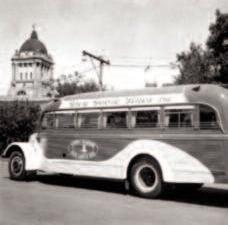
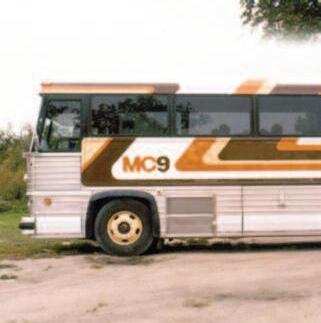
A million more miles down the road, we’ll be there for you. mcicoach.com