
Toyota’s $14 billion battery plant tops the state’s job-creating list, paving the way for a revitalized Carolina Core.




4 UP FRONT
8 POWER LIST INTERVIEW
Allen Gant Jr. explains why greed is bad, change is good and the importance of ‘emotional energy.’
10 NC TREND
Overseas flights help RDU take off; N.C. hospitals respond to a spike in assaults on healthcare workers; N.C. schools in the ACC face tough calls; Novant Health expands amid executive turnover.
96 IN MEMORIAM
Journalist Edward Martin wrote about North Carolina in rich detail for decades. He was the ‘heart and soul’ of Business North Carolina

24 ROUND TABLE: ARTIFICIAL INTELLIGENCE
Industry and academic experts explain how AI can benefit North Carolina and its workforce in amazing ways.
58 NC PORTRAITS: GOOD WORKS COMMUNITY INVOLVEMENT
Engagement beyond business duties pays dividends for relationships with clients, customers and employees.
62 RESEARCH NC
A spotlight on research programs, innovation and achievements in the Tar Heel state.
92 COMMUNITY CLOSE UP: CATAWBA COUNTY
The Piedmont county has grown into a manufacturing and education center with a ‘well-crafted’ lifestyle.














Our annual ranking of the state’s top job-creating projects over the past year reflects the growing importance of investment from
companies.
BY LAWRENCE BIVINS
























Raleigh’s Himanshu Shah outperforms the market by targeting undervalued stocks.
BY CHRIS ROUSH





















Why Blythe Development’s owners took the rare route of selling to an ESOP.
BY DAVID MILDENBERG




Economic development leaders from big cities and small towns are honored for helping arrange significant deals.
BY KEVIN ELLIS
Start your day with business news from across the state, direct to your inbox. SIGN UP AT








ou would not believe the size of that thing,” is a comment I’ve heard from several friends who have driven past Toyota’s massive electric battery manufacturing complex nearing completion in Randolph County.
Indeed, the state appears poised to get more than its money’s worth through the largest corporate investment in state history. e project promises to transform the eastern Triad area as other companies follow the Japanese automotive giant into central North Carolina.
at positive spin underlines our annual checkup on North Carolina economic development e orts. Starting on Page 42, contributor Lawrence Bivins describes the 25 major job-creating projects announced over the past year, bolstering the state’s reputation as a favored spot for investment. is year’s report shows the importance of foreign investment with Asian and European companies accounting for about half of the big deals. Top executives for German, Chinese and Indian companies clearly like North Carolina’s many attributes as a place to make products, many of them tied to the increasing electri cation of the economy.
One attribute about North Carolina we hear frequently is how the state’s deep political divide is erased when o cials chase relocating businesses. When Boom Supersonic celebrated completion of its Greensboro factory exterior in mid-June, Republican legislative leader Phil Berger and Democratic Gov. Roy Cooper appeared to be fast friends.
Skeptics argue it’s easy to be cordial when spending other peoples’ money, such as the large incentive o ers to attract Toyota, Boom and others. But until states are prohibited from competing for such expansions, there’s bipartisan support among Tar Heel leaders for aggressive e orts to win the deals.
My liberal friends question if that approach will continue should staunch

conservative Republican Mark Robinson become North Carolina’s next governor in his campaign versus Democratic Attorney General Josh Stein. e lieutenant governor has little experience dealing with corporate executives.
But my right-learning pals call it a nonissue because CEOs don’t make major capital investments based on short-term state politics. North Carolina also has a roster of top-notch economic development pros, including chief industry hunter Chris Chung, who play the game with great competence. Polls suggest it’s a toss-up election now.
To be sure, many projects on our annual job-creator lists never materialize or occur at a fraction of their expected scope. VinFast’s promise for an electric-vehicle plant in Chatham County has doubters these days, though company o cials urge patience.
In many cases, North Carolina’s dynamism overcomes some di cult situations. Insurer Centene spent several hundred million dollars building a great headquarters building in Charlotte, then decided it wasn’t needed. Some real estate pros predicted that the 800,000-square-foot building could be empty for years. But this spring, Vanguard Group scooped it up for $117 million. It expects to consolidate its 2,400-employee Charlotte sta at the site.
Our report includes the past year’s largest layo s and plant closings, which included a lot of sectors but particularly manufacturers. It’s a worrisome trend that underscores the need for North Carolina to be competitive in costs of energy, labor and real estate, some manufacturing industry experts say.
Still, the Toyota operation 20 miles south of Greensboro suggests bright days ahead. As the company’s old ad said, “Oh what a feeling.” ■

PUBLISHER Ben Kinney bkinney@businessnc.com
EDITOR David Mildenberg dmildenberg@businessnc.com
MANAGING EDITOR Kevin Ellis kellis@businessnc.com
EXECUTIVE EDITOR, DIGITAL Chris Roush croush@businessnc.com
ASSOCIATE EDITOR Cathy Martin cmartin@businessnc.com
SENIOR CONTRIBUTING EDITOR Edward Martin
CONTRIBUTING WRITER Lawrence Bivins
CREATIVE DIRECTOR Cathy Swaney cswaney@businessnc.com
GRAPHIC DESIGNER Pam Fernandez pfernandez@businessnc.com
MARKETING COORDINATOR Jennifer Ware jware@businessnc.com
ADVERTISING SALES
ACCOUNT DIRECTOR Melanie Weaver Lynch, eastern N.C. 919-855-9380 mweaver@businessnc.com
ACCOUNT MANAGER AND AUDIENCE DEVELOPMENT SPECIALIST Scott Leonard, western N.C. 704-996-6426 sleonard@businessnc.com
CIRCULATION: 818-286-3106
EDITORIAL: 704-523-6987
REPRINTS: circulation@businessnc.com
OWNERS Jack Andrews, Frank Daniels III, David Woronoff, in memoriam Frank Daniels Jr.
PUBLISHED BY Old North State Magazines LLC
PRESIDENT David Woronoff

Contact David Mildenberg at dmildenberg@businessnc.com.

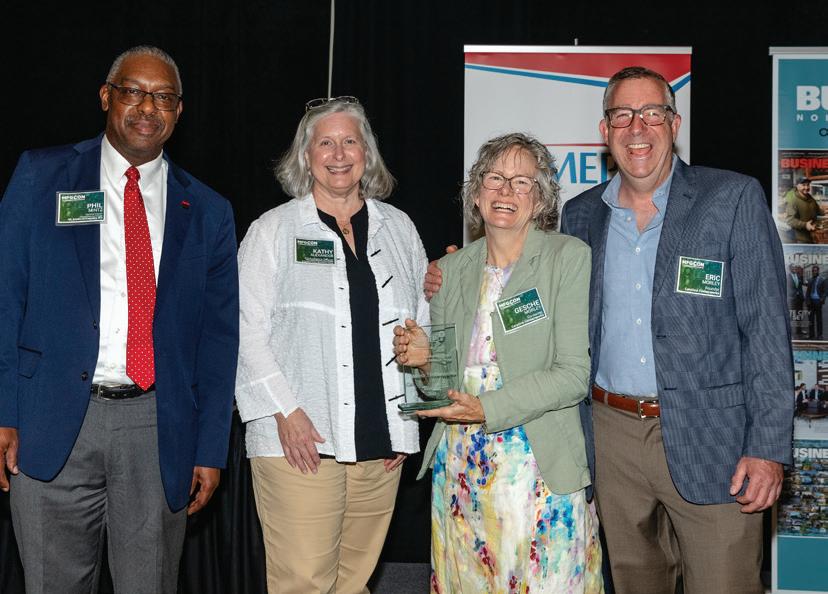
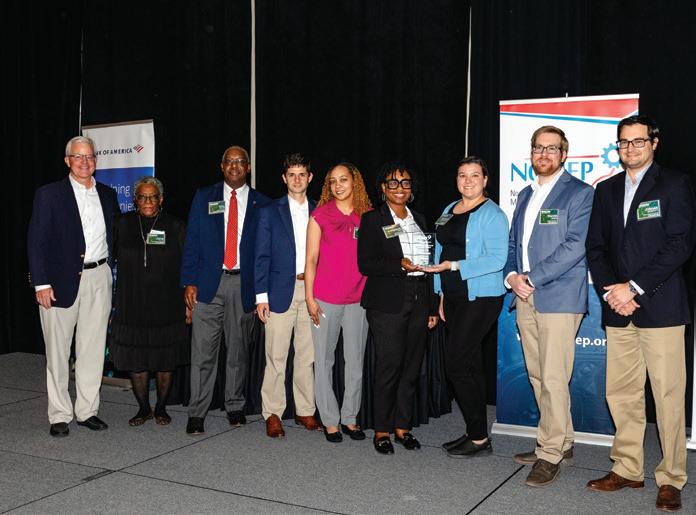
May 13 & 14, 2024
In its ninth year, North Carolina’s premier manufacturing conference powered by NCMEP + Business NC was held at the Durham Convention Center. During the conference, NCMEP presented the Manufacturing Leadership Awards, honoring outstanding manufacturers for their achievements..
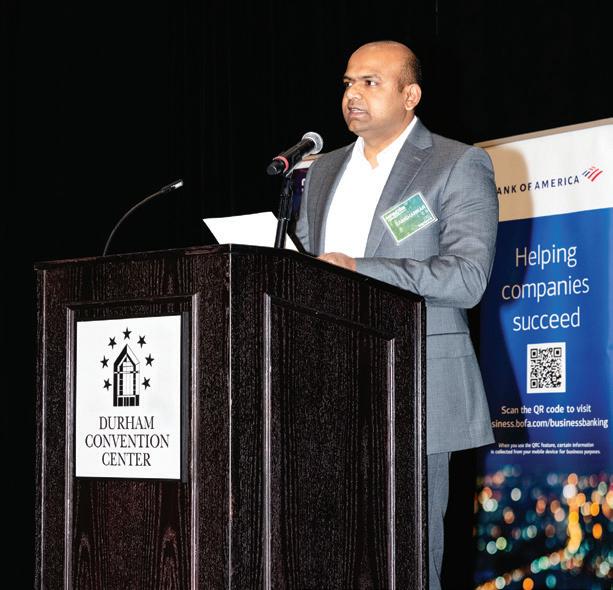
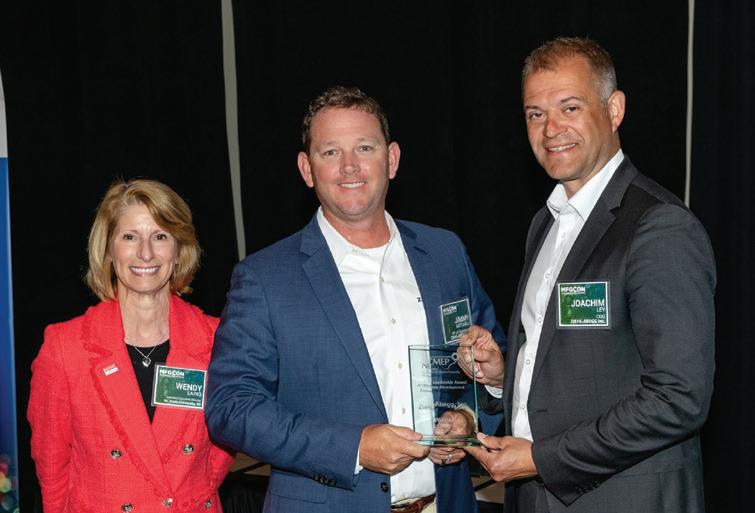
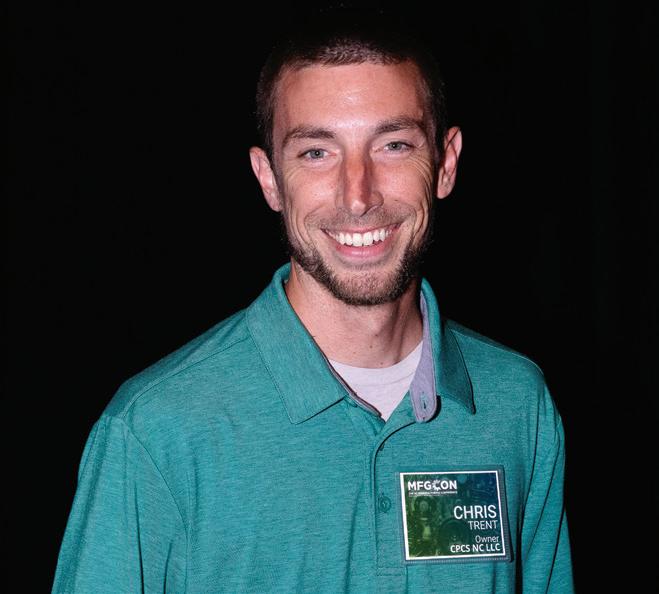
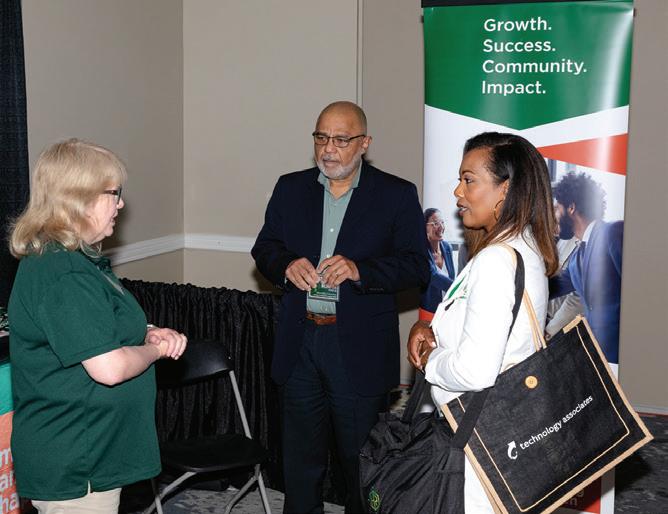

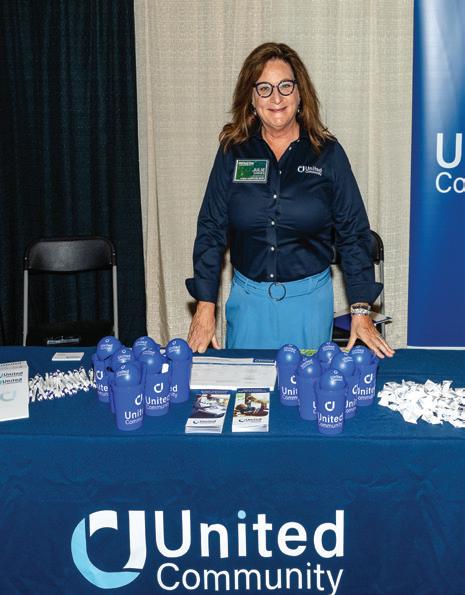
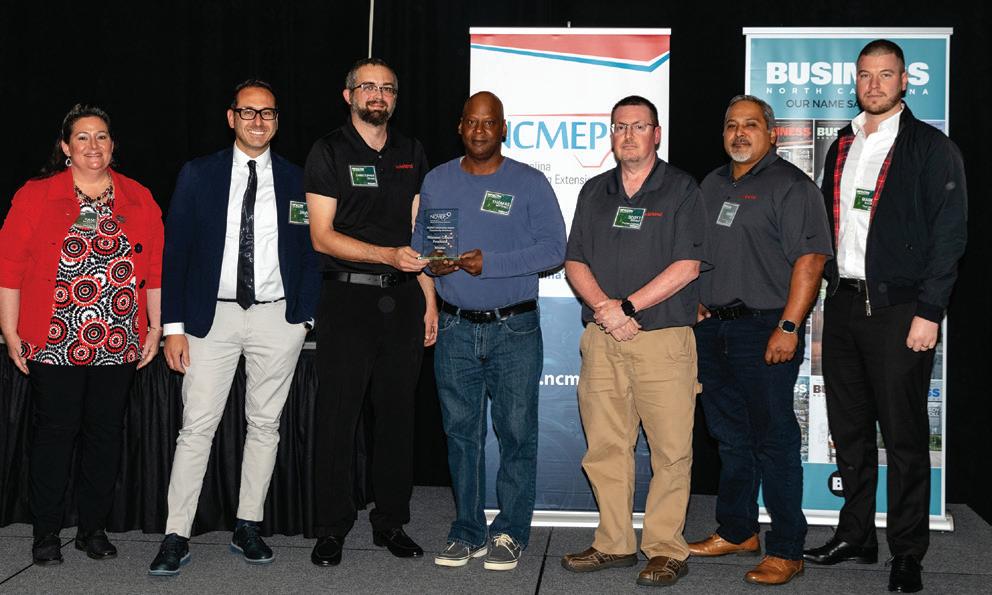
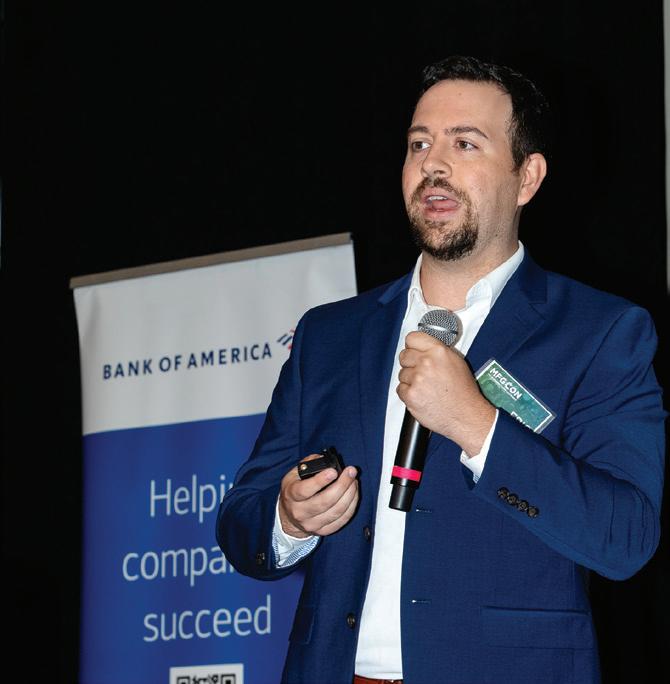

See more MFGCON 2024 photos at: businessnc.com/mfgcon-2024-photos | Photos by

The North Carolina Railroad Company is excited to announce its Build Ready Sites program will begin accepting applications in August 2024. Eligible communities can receive up to $750,000 toward the costs of getting an industrial site ready for a rail project, with additional funding available for brownfield sites via NCRR’s new Brownfields program. If your community is serious about rail, you need to apply.

BUILD READY SITES PROGRAM
OPENS EARLY AUGUST AND CLOSES END OF SEPTEMBER















Allen Gant Jr. joined High Point University President Nido Qubein in the Power List interview, a partnership for discussion with some of the state’s most influential leaders. Business North Carolina’s annual Power List publication spotlights the state’s powerbrokers.
Allen Gant Jr. is chair of Glen Raven, a family owned Alamance County fabrics manufacturer that is among North Carolina’s largest companies. His grandfather started a cotton mill in 1880, while the company produced the first pantyhose in 1958. Efforts to receive a patent failed, others entered the business and Glen Raven no longer makes the product. Its flagship brand, Sunbrella, was launched in 1961. A graduate of UNC Chapel Hill, Gant joined Glen Raven in 1971 and was CEO from 1996 to 2017. He’s a local and statewide civic leader, and also served on national trade policy and textile industry boards.
This story includes excerpts from Gant’s interview and was edited for clarity.
What makes you such a special, successful executive?
The company is in six continents today, has a vertical line of products, and you’ve survived a couple of recessions and COVID. What is it about Allen Gant that makes him tick?
It’s no di erent than any other successful operation. We’ve got a great team around us, and putting those people in the right place and giving them the authority and responsibility gives them a chance to win. And our team exempli es leadership. You’ve heard Kelly King mention that leadership is about three simple things: understanding where you are with reality, having the courage to understand where you have to go, and then having the courage to do it. And I just think so many companies just don’t understand where they are. ey really just do not honor what kind of condition they’re in and what needs to happen in order to survive.
What are the three things that make a good leader?
Greed is one of the things you do not want to be involved in. at is a real downfall for lots of companies and individuals that accelerate to a great degree, then all of a sudden, they’re no longer there. Greed makes you think very short-term. One of the characteristics of Glen Raven is we think very long-term. Yes, we’re concerned about next quarter, but we’re planning on what we’re going to do for the next 25 years. Long-term investment is one of the principles we stand by. e second is, you really have to give people the responsibility and then get out of their way. ey have to be able to make mistakes and at the same time learn from those mistakes. Sometimes leaders just put themselves in the predominant position and everything has to go through them. Well, you sti e innovation. You sti e leadership qualities that others have. You’ve got to understand where you are, where you’re going to go and how you’re going to get there. en you can let those people who have that knowledge make that decision.
You speak a lot about innovation. What do you mean by innovation?
You have to be able to think outside the box, but you have to do that in a way that becomes real in its ability to achieve. If you and I were shackled, then we’d spend the next hour or two trying to figure out how to remove those shackles. We wouldn’t spend a single moment on innovation. So you have to free your individuals up so they can innovate in a free vacuum. Now, you can’t be crazy about it, but you have to unshackle them, take away the burdens.
How many times have you heard, “Well that’s the way we’ve done it for 20 years?” So you remove the issue of failure and give the ability to innovate in a free and open way. And so, no idea is bad. At Glen Raven, we think you’ve got to reorganize your efforts about every five to seven years. If you’re not doing that, then you’re not keeping pace with what’s going on in the rest of the world.
Is that because your business is dependent on fashion?
We innovate not only because of our business, but the markets that we serve, as well as the people inside the markets. If you look at the talents that High Point needed 10 years ago, they’re different than they are today. The same people can’t bring those disciplines to the marketplace. So, you’ve got to re-tool. At Glen Raven, we love change. Change is part of our DNA. It’s part of success. It’s part of innovation. We know that we’re going to change again in five to seven years. Just go ahead and count on it, get ready, and bring it to the table.
What effect has AI had on your business?
AI is both a wonder and an evil. There are people that will take advantage of AI in a very evil way. But I do think that AI will be a competitive weapon that is absolutely spectacular. It’s hard for the human mind to gather, through this deluge of data, those relevant points that will make a difference. If I can use AI to determine the color that people are buying around the world in a way that’s quicker, faster than anybody else, then maybe I have a better chance of winning. If, through the search of data, we can determine that if you eat certain fruit three times a day you can cure prostate cancer, but that’s not written about in any journals, it just happens to be the coincidence of things happening around the world. If AI can bring that to the table, then, oh my goodness, what a difference that would make.
You speak about innovation a lot, but also about culture. What does a good culture look like, for Glen Raven or any company,
You have hit on one of the things that I believe is the most important element of having a successful company. The first word that goes in front of culture is care. If you don’t care, you do not have the ability to form a culture that will be productive. What is the most valuable asset that you have? It’s people. What’s between the ears? If you care for that, and you care for those brains, then you have a loyalty that is unique and also will extend the extra effort. If you can harvest the emotional energy out of the creative thinking that you have, then we have the advantage to win.
What does that mean? I’ve never heard that before — emotional energy out of the creativity of people. Buy in, commitment and loyalty. On your team, who you could text at midnight and you would get an answer at 12:15? Others wouldn’t answer until Monday morning. I would say to you the one who comes back at 12:15 is committed and cares deeply.
You are so involved in the Piedmont Triad Partnership and you are so connected in Raleigh. You care deeply about the future of this state. When these big companies coming to North Carolina say they’re going to grow from zero to 50,000 employees, I ask myself where are those employees coming from?
It’s a very interesting position that the state finds itself in. We’ve caught the bus, and I’m not sure we know the consequences of catching the bus, nor have we put in place the appropriate resources that will sustain growth that we’re looking at.
What resources? Community colleges? Education? Highways?
It’s back to the basics. Do we have enough nurses? Do we have enough firemen? Do we have enough doctors? A partnership between the public school system, the private school system, the community colleges and the universities needs to be coordinated to make sure we balance with the investment we’re making for the future.
Do we have the right infrastructure for roads? Water? Sewer? Do we have the right educational process? You know, there are 5000 people that retire every year from Fort Liberty. Most of them are in their mid40s to 50 years old, and they’re trained and they’re disciplined. Do we have a channel to keep them in North Carolina?
We are in the midst of a political campaign. What would be your advice to the next governor?
Making sure that our investment in the future matches up with those resources is going to be really important. For instance, we have wonderful medical care in North Carolina. We do not have a children’s hospital that is world-class. Why would we not have that here? We have agriculture that is second to none. If you lay a hoe down in Eastern North Carolina, it will sprout roots and grow. I mean, it’s unbelievable. So are we developing the right crops. We have water. Are we using it appropriately?
So you’re suggesting the governor have a task force that focuses on the most important needs?
Yes, and the first one they would do would be education. K-12 needs a complete rewrite in North Carolina. That is probably the No. 1 issue today. Quite frankly, it is not nearly as hard as we make it out to be.
What has kept us from doing that? Is it pay? Recruitment?
We went to a system of having elected school boards throughout the counties of North Carolina. These people run for election and you have no idea what qualifications they bring. Most of them are retired teachers that have an ax to grind. You don’t need a mad professor. You need somebody who really understands the marketplace.
So, Allen, you’ve had a celebrated life in many ways. I know your father and your grandfather would be so proud of you. What do you want to do with the rest of your life?
Our real passion is early childhood development. That’s probably where you can get the best bang for the buck and can make the needle move. We’re talking about birth through pre-kindergarten. A couple of years ago, I looked at the births in Alamance County and 47% were to ladies who did not have a high school diploma. That’s a pretty tough situation. Do those infants eat right? Do they get the right brain development? How do we help them and guide them towards getting a better education and having the opportunity to make the right decisions. We can’t make the decisions for them, but we can put them in a position where they can make better decisions because they’re educated. ■


RDU expects strong overseas growth.
By Chris Roush

Afor Merz erapeutics North America in Raleigh, Hadley Ili travels several times a year to Frankfurt, Germany, which is the company’s global headquarters. But until Lu hansa launched a direct ight from the German nancial center to Raleigh-Durham International Airport in June, the trip meant ying through other cities.
“ is direct ight will eliminate several hours of travel time on each end of the trip and remove the natural potential for delays whenever there is a connecting ight involved,” says Ili .
She’s not alone. e airport added three new international destinations this year, bringing the total to 10, a record for RDU and double the number in 2019, as airlines accommodate growing demand for international ights, including many business travelers.
e expansions come as RDU led the largest 50 U.S. airports in passenger growth last year, according to U.S. Department of Transportation statistics. Boardings gained 22% to a record 14.5 million.
at number is projected to grow 7% to 15.5 million this year.
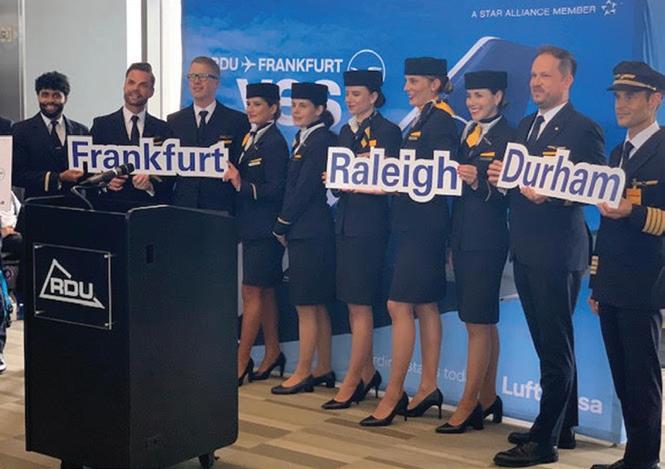
In addition to Frankfurt, where Lu hansa o ers ights ve days a week, RDU added service in June to Panama City, with four ights a week by Copa Airlines. Next up is Mexico City, with Aeromexico launching service in July. at follows Air France, which began ights from Paris in October, taking over the route from Delta Air Lines.
IcelandAir, which started ying four days a week from RDU in 2022, added year-round, daily ights to Reykjavik in May. “We’re the fastest community in 15 years that’s gone from less-than-daily service to daily service” for Icelandair, says Michael Landguth, CEO of the Raleigh-Durham Airport Authority.
ose new ights are in addition to Air Canada’s service to Montreal and Toronto and American’s London ights. Bahamasair also ies from RDU to Freeport, and Airlines’ London, while Delta and JetBlue y to Cancun, Mexico.
To be sure, RDU’s global o erings are less than Charlotte Douglas International Airport’s 37 international locations. Boardings in Charlotte increased 12% to a record 53.4 million last year, More than 90% used American Airlines’ second-largest hub.
Landguth says he’d like to attract more ights to Central America and South America due to the state’s large agriculture industry, and also India because of its rapidly growing middle class. “ ey have income. ey want to travel,” he says. “Guess what else they want to do? ey want to go to great universities. So we need to make sure we have a good pipeline.”
For now, though, the airport is taking a “momentary pause” and working to make sure the new service is successful, Landguth says.“ e worst thing you can do is try to recruit and over recruit and then you start getting failures from an international standpoint,” he says. “We need to get [the new ights] stabilized rst.” For example, Air France wants to y a larger plane into RDU, which likely means moving to a gate now occupied by American.
For his pitch to Lu hansa, Landguth looked at what St. Louis Lambert International Airport did to attract the German airline in mid-2022. While German conglomerate Bayer bases its U.S. crop science headquarters in St. Louis, the airport had no nonstop transatlantic ights. So Greater St. Louis Inc., which represents the region’s business community, and the local port authority agreed to pay Lu hansa as much as $5 million over a two-year period.


Fastest-growing airports (2023)
Largest U.S. airports (2023)
RDU’s authority put together a package of about $3 million in fee waivers and marketing support to Lufthansa. Merz and other companies pledged to buy a certain number of tickets, and state government chipped in $3 million in incentives. “This is what I call a pay-to-play game,” says Landguth. “If you don’t come with the incentives, then they look at the market and say, ‘Obviously you’re not very optimistic that it’s going to work.’”
Lufthansa is the world’s fourth-largest airline with revenue increasing 14.5% last year to $38.6 billion in 2023. Profit more than doubled to $1.85 billion. It flies to 26 U.S. cities, also launching service to Minneapolis-St. Paul in June.
Landguth emphasized to Lufthansa that at least 10 German companies had Trianglearea subsidies with at least 100 employees, including BASF, Hanson, Bosch and Mann & Hummel. “We’ve been talking to Lufthansa since 2014,” says Landguth. “It’s a long conversation to have because it’s a huge investment those carriers are going to wind up making.” It helped that the Raleigh-Durham market is the largest in the United States that did not have a direct flight to Germany.
Europe is also RDU’s largest international market. Of its 1.5 million international travelers each year, more than 600,000 have Europe as a destination. More than 200,000 fly to the Caribbean, followed by 160,000 heading to Asia.
Germany is the second-largest European destination for RDU travelers, behind the United Kingdom. Nearly 60% of the airport’s travelers to Europe do not use its London, Paris and Reykjavik non-stop flights. Landguth displays a map showing RDU travelers come from as far north as Lynchburg, Virginia, and south into South Carolina — an area with a population of 4.4 million.
Tim Gabel, the chief executive officer of RTI International, boarded the first Lufthansa flight to Frankfurt in June. The nonprofit research organization has staff based in Germany who are working with pharmaceutical and biotechnology companies there, along with offices in Barcelona, Spain, and Lyon, France. “Having another international flight is important for the region,” says Gabel. RTI views Europe as a growth market and “a great segue into Africa and Southeast Asia.”
The airport authority estimates that the Lufthansa flight would generate $3.3 billion in economic impact during the next 25 years, and about $125 million in state and local tax revenue.
Merz Therapeutics executive Iliff believes the Triangle’s substantial pharmaceutical industry will help lead to more international flights at RDU. “In turn, this can grow the potential local talent pool, enhance innovation and widen professional networks,” she says. “[RDU is] the canary in the coalmine,” Landguth says. “We’re a good indicator of what’s going on in the community. What we’ve got to do is go sell it.”


This is the thirty-second in a series of informative monthly articles for North Carolina businesses from PNC in collaboration with BUSINESS NORTH CAROLINA magazine.
Aa s the owner of a small business, Joan wears many hats – from innovator to publicist to accountant. To bring her vision to life, she regularly collaborates with a network of vendors, with email often serving as the primary channel for communications. So, when Joan received a call from a longtime vendor about a missed payment for a recent order – a sizable payment Joan was certain she had paid several weeks earlier – her heart sank.
After cross-checking her bank statement with email correspondence to confirm she had remitted payment, Joan and the vendor arrived at the awful realization that a fraudster, posing as the vendor, had stealthily intercepted previous email correspondence between the vendor and Joan before sending Joan an invoice with new wiring instructions, which she dutifully followed.
In this case, Joan’s story is fictional, but her situation is not. Instances of fraud – and business email compromise, specifically – are playing out with increasing frequency.
As businesses of all types continue to innovate for scale and efficiency, fraudsters are fast-tracking their own capabilities with elevated sophistication and impact. And while fraud has the potential to impact organizations of all sizes, small businesses – including North Carolina’s 1 million small businesses – remain particularly vulnerable to fraud due to the likelihood of having fewer fraud prevention restrictions, controls and processes in place than larger organizations.
The 5 E's: A checklist of best practices for preventing payments fraud
Establish policies and procedures for payment and vendor management. Require independent verification with the requestor and secondary approval for payment requests and instruction changes. Implement controls your financial institution offers.
Enforce the standards you’ve established. Make sure that your company executives support and agree to follow the above-referenced policies and procedures.
Educate your employees to recognize the warning signs. Ensure employees know the characteristics of business email compromise, account takeovers and phishing attempts, understand and follow cyber best practices and smart social media usage habits.
1
According to the recently released 2024 AFP Payments Fraud and Control Survey Report, a staggering 80% of organizations surveyed reported being the targets of actual or attempted fraud attacks in 2023 – up from 65% in 2022. And 63% of businesses reported experiencing some form of business email compromise in 2023. Additionally, fewer than 60% of organizations have developed the written policies and procedures necessary to limit exposure to business email compromise attacks and minimize the impact of fraud.

For Raleigh-based Mari Suzuki, who serves as PNC’s Southeast territory executive for Small Business Banking, these statistics – and real-world stories like Joan’s – bring urgency to her team’s work to help small businesses achieve their financial goals while protecting themselves from payments fraud through client education and a range of fraud mitigation strategies and solutions.
Empower your employees to raise red flags. Allow employees to question emails or payment requests, especially if they appear to come from company executives directly.
Evolve and enhance your risk controls to meet ever-changing threats. Stay informed, leverage your banking relationships and network with other professionals.
“Small businesses are the backbone of our economy, and their success is increasingly tied to their vigilance against fraud,” says Suzuki. “It is absolutely vital for business owners to evaluate the fraud risks inherent in today’s environment – and to use every tool and resource available to protect themselves.”
The scenario that befell Joan provides a teachable moment for any employee who plays a role in managing cash flow and payments on behalf of an organization. What could Joan have done differently to avoid falling prey to a fraudster who impersonated her vendor? “It’s important to never rely on email as the only communication method





















when transacting a payment,” says Suzuki. “The importance of picking up the phone and speaking with a known vendor to verify payment requests cannot be overstated.”
Business email compromise also can take the form of a fraudster posing as an executive who instructs a colleague to pay an invoice. In that case, says Suzuki, an action as simple as walking into a colleague’s office to confirm the legitimacy of an invoice can quell a potential fraud incident.
Reviewing emails with an eye for some of the common characteristics of business email compromise also can help flag fraudulent communications. Among the qualities of an email that should raise suspicion, says Suzuki, include messages that are urgent, emotionally charged or convey secrecy; requests for payments to be sent to new accounts or mailing addresses; and messages with overly generic subject lines (such as “Invoice” or “Resume”).
The latter convention is frequently employed in phishing emails, which may contain dangerous financial malware variants in attachments or links. Once the malware – which often is not detected by antivirus software – has been installed, it may redirect a user’s online banking sessions to a malicious site that harvests access credentials, among other intrusions. And as evidenced by a spate of recent headlines, ransomware attacks targeting healthcare organizations are on the rise, representing a growing area of concern for healthcare businesses and practices of all sizes.
While wires have long represented the most vulnerable payment method for business email compromise fraud, the 2024 AFP Payments
Weston Andress, Western Carolinas: (704) 643-5581
Jim Hansen, Eastern Carolinas: (919) 835-0135


Fraud and Control Survey Report found that ACH credit payments now hold that distinction, with 47% of respondents reporting ACH credits as the most targeted payment means. With ACH fraud schemes on the rise, Suzuki and her team urge clients to leverage the various tools that PNC’s business bankers deliver in collaboration with their dedicated treasury management colleagues.
And while business email compromise represents an increasingly prevalent threat, it is just one form of fraud that small businesses must be vigilant against, says Suzuki. “The good news is there are actionable and implementable steps small businesses can take to help protect themselves,” she says.
As a general best practice, for example, Suzuki and her team encourage small business clients not to share their account numbers with vendors – because if a vendor is hacked, the account number becomes compromised and fair game for fraudsters. “One option that small businesses can consider is using an encrypted account number, which prevents businesses from having to share their true account number. If the encrypted number is compromised, it is useless to fraudsters,” says Suzuki.
"At the end of the day, our entire team is committed to helping clients achieve success in every aspect of their business, and while the stakes for preventing and mitigating fraud have never been greater or more complex, we are committed to delivering the full scope of PNC’s insights and fraud mitigation solutions to help small businesses protect themselves from various forms of fraud."
2024 AFP Payments Fraud and Control Survey Report, Association for Financial Professionals, April 2024, https://www.afponline.org/training-resources/resources/survey-research-economic-data/Details/payments-fraud
These articles are for general information purposes only and are not intended to provide legal, tax, accounting or financial advice. PNC urges its customers to do independent research and to consult with financial and legal professionals before making any financial decisions. This site may provide reference to Internet sites as a convenience to our readers. While PNC endeavors to provide resources that are reputable and safe, we cannot be held responsible for the information, products or services obtained on such sites and will not be liable for any damages arising from your access to such sites. The content, accuracy, opinions expressed and links provided by these resources are not investigated, verified, monitored or endorsed by PNC.
“PNC” and “PNC Bank” are registered marks of The PNC Financial Services Group, Inc.
Bank deposit, treasury management and lending products and services, foreign exchange and derivative products (including commodity derivatives), bond accounting and safekeeping services, escrow services, and investment and wealth management and fiduciary services are provided by PNC Bank, National Association (“PNC Bank”), a wholly owned subsidiary of PNC and Member FDIC.
Lending, leasing and equity products and services, as well as certain other banking products and services, require credit approval. ©2024 The PNC Financial Services Group, Inc. All rights reserved. For more information, please contact your PNC Relationship



By Edward Martin



Too many N.C. healthcare workers encounter violent patients.

he Raleigh nurse becomes aware of the cool tile oor on her face, then realizes the red clouding her vision is from blood spreading under her broken nose. e clock reads 3 a.m. on a sultry July night. Gradually, she slips back into unconsciousness.
In a perfect world, the nurse involved in the 2022 incident at Duke Raleigh Hospital would have known that the man who smashed her face with his st had a violent record, including assaults on women. But it’s an increasing problem a ecting hospitals nationally.
Last year, assaults on healthcare workers reached a record level, according to a report from the National Institutes of Health. Reported assaults increased 5% in 2023 compared with the previous year, to an all-time high of 2.59 per 100 personnel. While healthcare workers make up 10% of the U.S. workforce, they experience nearly half of the non-fatal injuries tied to workplace violence, a Bureau of Labor Statistics report notes.
“Unfortunately, hospitals aren’t like airplanes,” says Lorie Rhine, UNC Rex Health’s chief nursing o cer and a national expert on helping healthcare workers work safely. “You can’t put patients on a no-treat list like a no- y list. ere’s always the potential you’ll have someone show right back up in the emergency room again.”
Adds Julie Kennedy Oehlert, chief experience o cer at ECU Health in Greenville, “It’s important even before you get to that point to create a safe environment all around, before you have to de-escalate.”
ECU Health and an increasing number of Tar Heel hospitals now drill healthcare workers on simple, quasipsychological techniques that signal when to try to de-escalate



potentially violent situations. e Greenville-based system’s 4,000 nurses have mandatory annual training modules on deescalation, though Oehlert says all healthcare workers face risk. “ at’s true whether you are working in the emergency room or the cafeteria,” she says.
In case de-escalation fails, ECU Health pioneered the use of panic buttons in patient rooms, similar to those used by bank tellers, to permit nurses to discreetly summon help.
e NIH report says incidents are concentrated in emergency rooms, psychiatric units, pediatric departments and perioperative units. A Durham mental-health nurse practitioner was killed two years ago when stabbed to death by a patient.
Earlier this year, the national Emergency Nurses Association’s survey of 500 members showed 56% of respondents had been physically or verbally assaulted or faced threats of violence in the prior 30 days.
“ is is happening every day, and unfortunately, many healthcare workers have determined this is part of their jobs,” adds Rhine. “We encourage them to report every case, but a lot still aren’t reported.”
Defusing tense situations can occur “through purposeful actions, verbal communications and body language to calm incidents,” says Tatyana Kelly, who heads a task force on worker safety at the N.C. Healthcare Association, which represents most of the state’s 120 hospitals. “Hospitals use a variety of methods to implement this training.”
What’s behind the rise in assaults on healthcare workers? Experts point to a number of factors, including that healthcare has become expensive, unwieldy and taxing for many patients and families. Societal trends also matter.
“We are less civil as a nation, and that is so true in smaller ecosystems like healthcare,” says ECU Health’s Oehlert. “And healthcare can be frustrating. We have a need for instant gratification, and healthcare can be so frustrating.”
While various Tar Heel hospitals use different systems, most focus on reducing some of that frustration.
Novant Health uses “management of aggressive behavior,” which stresses that workers identify warning signs of conflicts and summon help if necessary. At Cone Health and other places, workers are trained in safe, responsible ways to restrain patients.
A common approach is the Broset Violence Checklist, which coaxes healthcare workers to discreetly rate patients on a scale of six, in which upper numbers indicate greater danger. At the lower end, the patient might be disoriented, unaware of time or place. Going upward, a patient might be easily annoyed or “boisterous,” slamming doors and shouting.
Near the danger end, the patient might be physically threatening others, grabbing the healthcare workers’ clothing, or throwing objects or smashing windows.
The failure to de-escalate is costly, says ECU’s Oehlert. “Nurses who have been attacked — and that happens every day, we are just better than most in reporting it — tend to have lingering anxiety and even post-traumatic stress disorders,” she says.
N.C. hospitals have gained support in their efforts to prevent harm to healthcare staffers through the Hospital
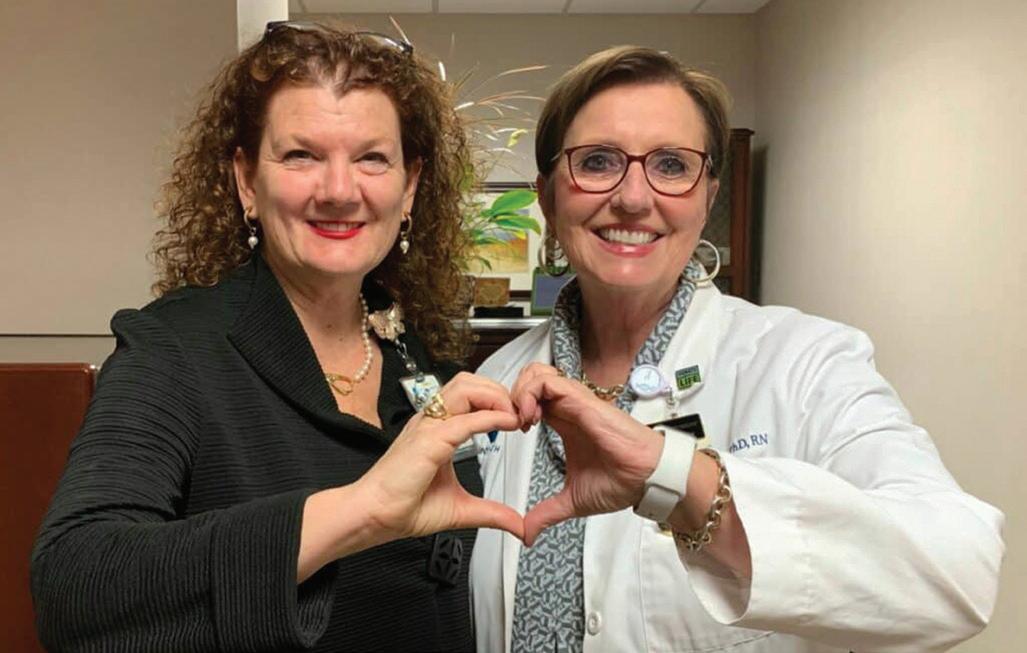
Violence Protection Act, passed by state lawmakers this year.
It requires hospitals with emergency rooms to make risk assessments and post a law-enforcement officer on duty unless the hospital and local law-enforcement organizations agree that it is not necessary. The bill introduced by N.C. Rep. Tim Reeder, an emergency room doctor in Greenville, also requires de-escalation training.
The law builds on a 2015 one that made it a felony to assault healthcare workers. That hasn’t had as sufficient impact due to a lack of enforcement, industry leaders say. There’s hope the new effort can turn the tide. ■

Tough decisions face the 4 N.C. schools that built the ACC.
By David Mildenberg
What’s ahead for North Carolina’s four Atlantic Coast Conference members is a favorite chatter topic for sports-obsessed alumni and leadership. Conventional wisdom is that the ACC is a likely loser in conference realignment because its three strongest football programs — Clemson, Florida State and UNC Chapel Hill — may bolt if they can maneuver through a legal thicket that has kept them in the fold so far.
Here’s a best-guess, status report on the four N.C. ACC members as conference realignment unfolds, based on media reports and interviews with about a dozen knowledgeable observers who agreed to talk provided they were not identified.
Right now, no one knows what will happen, because power is distributed widely among executives at TV powerhouses Disney, Fox and Comcast; university officials and boosters; coaches; and politicians. But fast, furious change is occurring in college sports, reflected in the May settlement that requires NCAA members to pay former athletes $2.8 billion in back damages and share as much as about $20 million a year per school directly with their athletes. ■

2023 Athletic Department budget: $121.4 million
Strong suits: Increasing prominence in engineering, technology education; passionate fans and strong game-day atmosphere; solid UNC System Board of Governor connections; thriving market.
Key decision makers: Chancellor Randy Woodson; AD Boo Corrigan: Football coach Dave Doeren; Board of Trustees Chair Ed Weisiger; boosters Wendell Murphy, Robin Perkins, Derek Close; Wolfpack Club Executive Director Ben Broussard.
Overriding question: Will the SEC and Big 10 show interest in the Wolfpack?
A dilemma: How does NC State boost its national appeal to close the gap with North Carolina?
Behind-the-scenes issue: Some N.C. lawmakers want to force NC State and North Carolina to remain in the same conference.
Likely outcome if ACC implodes: Big 12 membership
2023-24 Athletic Department budget: Estimated $100 million
Strong suits: $11.6 billion endowment; global academic brand; elite basketball program; wealthy, national alumni base.
Key decision makers: President Vincent Price; AD Nina King; trustees including the CEOs of Apple, GM and the NBA, along with some prominent Wall Street executives.
Overriding question: How can Duke remain a Top 5 brand in college basketball?
A dilemma: Can the UNC-Duke basketball rivalry thrive if the schools are in different conferences?
Behind-the-scenes issue: How much commitment should Duke make to its football program?
Likely outcome if ACC implodes: Big East membership


2023-24 Athletic Department budget: Estimated $100 million
Strong suits: Wealthy, passionate alumni; academic excellence; national brand; excellent facilities; ties to powerful Advocate Health, which owns Wake Forest Baptist health system.
Key decision makers: President Susan Wente; AD John Currie; Football coach Dave Clawson; boosters Mit Shah, Ben Sutton, David Couch, GE CEO Larry Culp.
Key decision: If Wake Forest is too small to interest the biggest conferences, how can it help hold the ACC together?
A dilemma: Can Wake Forest remain relevant in big-time college football?
Behind-the-scenes issue: Will Wake Forest expand undergraduate enrollment, now about 5,500 students, to gain heft and build a stronger brand?
Likely outcome if ACC implodes: Big 12 membership
2023-24 Athletic Department budget: $139.4 million
Strong suits: National brand; excellent academics; famous men’s basketball program; fast-growing, affluent market.
Key decision makers: Interim Chancellor Lee Roberts; AD Bubba Cunningham; Football coach Mack Brown; Board of Trustees Chair John Preyer; Rams Club Executive Director John Montgomery; Boosters Brian Golson, Don Williams and John Townsend.
Overriding question: Stay loyal to the ACC or seek Big 10 or SEC membership?
A dilemma: What happens to the rivalry with NC State and Duke if the schools are in different conferences?
Behind-the-scenes issue: Trustees who favor a move to a wealthier conference vs. ACC loyalists.
Likely outcome if ACC implodes: Big 10 membership

Novant Health expands rapidly with a refreshed team of executives.




By David Mildenberg
Fast-growing companies o en rely on senior executives with long histories of working together. en there’s Novant Health, which is expanding quickly even as it shu es executive leadership.
Six of the 10 highest-paid executives at Novant in 2021 no longer work there. Meanwhile, the state’s secondlargest hospital operator closed a $2.4 billion acquisition of hospitals in Hilton Head, Mount Pleasant and Hardeeville, South Carolina, in February, adding more than $1 billion in annual revenue.
Over the past year, it also worked on buying Lake Norman Regional Medical Center in Mooresville and Statesville’s Davis Regional Medical Center for $320 million. But in mid-June, it canceled the purchare from Community Health Systems, citing antitrust opposition from the Federal Trade Commission.
Novant’s major holdings are Winston-Salem’s Forsyth Medical Center, Charlotte’s Presbyterian Medical Center and the New Hanover Regional Medical Center. Pending completion of the Iredell County hospital purchases, annual revenue will approach $10 billion.
Hospital acquisitions are occurring because leaders want to “capitalize on economies of scale, [have] more weight in managed care negotiations and potentially [grow] the services and specialties o ered in certain geographic areas,” says Greg Page, a healthcare management professor at High Point University.
Veteran Novant o cials who have departed in the past 18 months include former Chief Operating O cer Je Lindsay, Chief Financial O cer Fred Hargett, Chief Transformation and Digital O cer Angela Yochem, Chief Medical and Scienti c O cer Dr. Eric Eskioglu and Chief Consumer O cer Jesse Cureton.
Lindsay is now COO at UNC Health in Chapel Hill, Hargett is CFO at Pittsburgh-based hospital system giant UPMC, and Yochem is global chief information o cer at Charlotte-based Krispy Kreme.
“Novant is pretty successful, so their leaders in most cases are marketable and seen as having solid experience in a successful organization, which others nd attractive,” Page says.
In May, Novant named John Gizdic chief operating o cer, with the presidents of the Charlotte, Winston-Salem and North Carolina Coastal regions reporting to him, along with its physician organization. He had been chief administrative o cer. Gizdic was the CEO of Wilmington-based New Hanover Regional Medical Center before its $5.3 billion sale to Novant in November 2021. Before joining New Hanover in 2005, Gizdic worked at hospital systems in Charlotte and Morganton.
Novant also promoted Kim Henderson to chief administrative o cer from her post as chief patient experience o cer and system chief of sta . Her duties include overseeing Novant’s people and culture team, patient experience and services and community engagement. She joined Novant as head of its foundation in 2015 a er working at the Charlotte Hornets Foundation.
Onyeka Nchege was named executive vice president and chief digital and information o cer. A veteran tech executive at several large companies, he joined Novant in 2020. Alice Pope, former CFO at Inova Health System in Virginia, joined Novant as CFO in May.
Novant’s top leader, CEO Carl Armato, has had his job since 2012 a er joining the system in 1998.
“ ese updates on our executive team display our capacity to build the expertise, rigor, creativity and capabilities required to deliver remarkable outcomes for our patients and the communities we serve,” Armato said in a release. ■



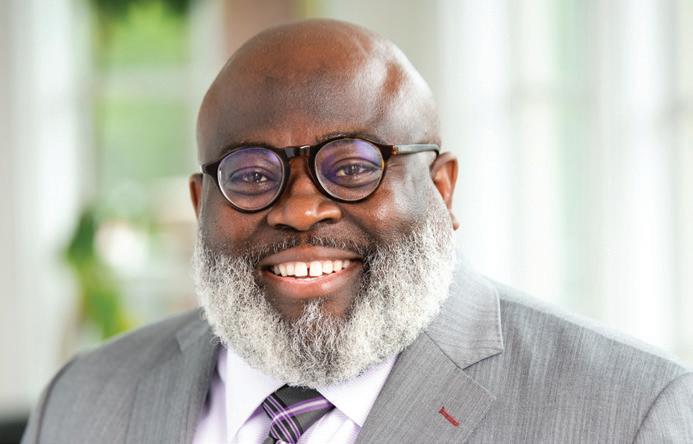
Onyeka Nchege, chief digital and information officer
Others on Novant Health’s executive team:
Frank Emory, chief legal officer
Sanjay Gupta, chief transformation officer
Denise Mihal, chief nursing and clinical operations officer
Pamela Oliver, chief medical officer
Alice Pope, chief financial officer
Dean Swindle, president of Novant Health Enterprises
sponsored




LS3P PROMOTES NEW WORKPLACE PRACTICE LEADER
Architecture, interiors, and planning firm, LS3P, has announced Deborah Lukan, AIA, LEED AP, NCARB, as the new firmwide Workplace Practice Leader, effective May 20, 2024. She will be based out of the Charlotte, NC office.
DEBORAH LUKAN | LS3P Associates, LTD Architecture | Design








The Sullenberger Aviation Museum reopened June 1 after a $34 million community fundraising effort. The former Carolinas Aviation Museum closed in 2019 after losing its hangar space at Charlotte Douglas International Airport. Also, the cityowned airport spent $8 million to reopen an overlook to watch jets depart land. The former site closed in 2022 to make room for a new taxiway and runway.

Nucor, the largest U.S. steelmaker, agreed to purchase a Jackson, Wisconsin-based maker of steel doors for $565 million. Rytec makes and sells high-speed, high-performance commercial doors and has about 300 employees at two manufacturing facilities.
Curtiss-Wright will acquire Ultra Nuclear Limited and Weed Instrument for $200 million in September pending United Kingdom regulatory approval. Ultra Energy, with 2023 sales of $65 million, makes reactor protection systems, neutron monitoring systems, radiation monitoring systems and temperature and pressure sensors for commercial nuclear power plants.
Community lenders, corporate partners and city government launched the Charlotte Small Business Growth Fund that aims to provide $40 million in loans to 2,000 or more underserved small businesses over the next four years. Lenders will relax credit score and cash flow requirements to cast a wider net. The fund is expected to target businesses owned by women and minorities.
LM Real Estate Partners acquired Premier Distribution Center, which includes nearly 1.4 million square feet of industrial space, for $97 million. The site formerly included a Continental Tire plant. The sellers were Somerset Properties.
The city’s water utility wants permission to transfer up to 30 million more gallons of water per day from the Catawba River basin to the Yadkin-Pee Dee River basin. That’s nearly double what the city now can transfer. Upstream users, including Burke and Catawba counties, and downstream in South Carolina are raising concerns. A decision is not expected for years.
Stanley Black & Decker will close its distribution center here next year, resulting in the loss of 224 jobs. The move is part of the changes the New Britain, Connecticut-based company started making in 2023. Layoffs will begin in August and continue through at least September 2025.
Iowa-based HNI Workplace Furnishings announced it will close its office furniture manufacturing facility here in April 2025, resulting in the loss of 221 jobs. Layoffs will begin Oct. 13. HNI acquired Hickory Business Furniture in 2008.
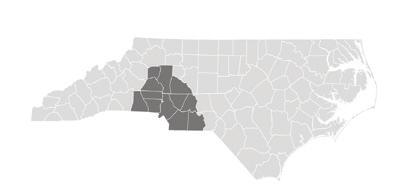
Ihe Catawba Nation began construction of a $700 million permanent casino resort after finalizing a settlement with Greenville, S.C.-based casino developer Wallace Cheves over the ground lease for its trust lands. The Catawbas finalized the settlement with Cheves’ Sky Boat Gaming in May.
Briolf USA, an automotive refinishing and industrial coatings company based in Spain, will open its first U.S. manufacturing center with a $30.5 million investment that will create 100 jobs. The family-run business will set up operations with its main subsidiary, the international coatings manufacturer Roberlo.
Two Gaston County businesses – Prestige Corporate Development, a land acquisition, development, and lot sales business, and Prestige Site Works, a land development general contracting business – were sold to Stanley Martin Holdings. Prestige controls more than 8,000 lots in the Greater Charlotte area and is developing 15 projects representing more than 2,500 lots throughout North Carolina and South Carolina.

Carolina Foods opened a 428,000-square-foot facility where it’s making Duchess Honey Buns, with plans to add doughnuts and pies in the next 18 months. The 90-year-old company outgrew its bakery near downtown Charlotte. Falfurrias Capital Partners bought a majority stake in the company in 2021.
J&L Machine and Fabrication will create 33 jobs with a $2.1 million investment in its facility, where it has operated for about 25 years. The family-owned company currently employs between 100 and 110 workers. A key customer is the Daimler Trucks-Freightliner factory in nearby Mount Holly.
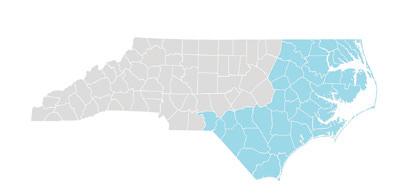

Amazon plans to hire more than 1,000 people at its 1.3 million-square-foot distribution facility. It will become one of the Cumberland County city’s five largest private employers. The development cost of the project is about $100 million.
Pennsylvania-based convenience store chain Wawa opened its first North Carolina store here. It plans to open seven others in eastern North Carolina in 2024, 15 in 2025 and 10 in 2026, with a total of about 80 in the next 10 years.
North Carolina Ports Authority is upgrading its general cargo terminal with a new terminal entrance and rail yard. The $50 million in upgrades will boost efficiency and handle growth.
Protocase, which makes box-like enclosures to protect electronic components for the aerospace industry and other sectors, and its subsidiary 45Drives, a data storage company, are opening a U.S. operation here. Based in Nova Scotia, the company plans to have about 30 employees here in the next year and estimates a payroll of about 400 workers within five years at a manufacturing site.
Charlie Mattox, Truist’s market president here for 22 years, left to become wholesale banking market president for Virginia-based Atlantic Union Bank. His task is to help Atlantic Union establish a market in New Hanover County.
Idaho-based Woodgrain plans a groundbreaking was held for a $76 million minor league ballpark here that will host the Carolina Mudcats, the Milwaukee Brewers Single-A affiliate. Raleigh-based Clancy & Theys is the contractor. It’s expected to be ready for Opening Day 2026. The Mudcats have played in Zebulon in Wake County for 32 years.
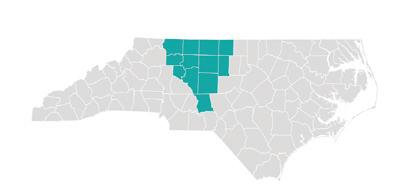
Missouri-based Leggett & Platt will close its bedspring manufacturing facility in High Point by the end of September, resulting in the loss of 158 jobs, according to paperwork filed with the state. A first round of layoffs will begin around July 25.
Blueharbor Bank, a state-chartered institution based in Mooresville, filed an application with the state banking commissioner to establish a branch on North Main Street here. Blueharbor reported total assets of $453.5 million and deposits of $396.5 million as of March 31.
Atlanta-based Graphic Packaging expects to close its facility here July 9, resulting in the loss of 65 jobs. The company provides paperboard and folding cartons for beverages and food. It closed a Charlotte operation in March, resulting in the loss of 112 jobs.
Ross Stores will build a 1.7-million-squarefoot warehouse and shipping hub here that will create at least 852 jobs over the next five years. The company is promising an investment of at least $450 million.

The U.S. Open, one of golf’s four major championships, flooded the area with more than 200,000 visitors. The men’s open was last held in Moore County in 2014 but will return in 2029, 2035, 2041 and 2047. Winner Bryson DeChambeau took home $4.3 million.
Pennsylvania-based Clearly Clean Products will invest $24.9 million and create at least 80 jobs here. The company makes 100% recyclable plastic food trays for the meat and produce industry.
UNC Greensboro’s Joseph M. Bryan School for Business and Economics is the first university in North Carolina to receive a $1 million grant and wraparound support from Google’s Cybersecurity Clinics Fund. The grant will establish the Spartan CyberGuardian Academy, a cybersecurity clinic at UNCG, with plans to train 870 students to assist 174 organizations over the next six years.
Drivers at 10 Roads Express voted overwhelmingly to join Teamsters Local 391. The group of 54 workers is seeking higher wages, better health care and retirement benefits, and improved working conditions.
John Deere will invest $70 million for a manufacturing plant for small excavators, expanding the company’s Kernersville campus and creating 150 full-time jobs over five years. Construction on the 380,000-square-foot
plant is projected to begin in late 2024. About $47 million would be spent on building renovations and upfits, and $23 million on business personal property.
Hanesbrands agreed to sell its global Champion business to Authentic Brands Group in a transaction valued at $1.2 billion. The deal has the potential to reach $1.5 billion through an additional cash contingent consideration of up to $300 million if performance thresholds are met
Bonita Brown is the new chancellor at Winston-Salem State University. She started her new job July 1, replacing retiring Elwood Robinson. Brown had been interim president at Northern Kentucky University after being a chief strategy officer at the school. Brown was born in Winston-Salem, and her parents are alumni of the university.
Truliant Federal Credit Union surpassed $4 billion in total assets and 300,000 members. Formed to serve Western Electric workers in 1953, it exceeded $1 billion in assets in 2005. It has expanded to Charlotte and Greenville, South Carolina.
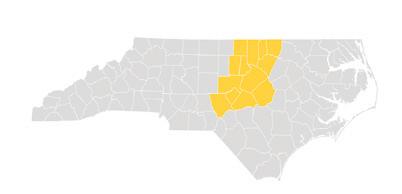
Soccer players from around the world descended on WakeMed Soccer Park for The Soccer Tournament. The teams competed for a $1 million top prize for women’s and men’s teams. The event was expected to generate $15 million in economic impact.
A company started by former PGA Tour caddies will provide caddies as special guest speakers for business gatherings, executive meetings and other occasions. Clients of the Tour Caddie Collective include SAS, First Citizens Bank and the North Carolina CEO Forum.
Kempower opened a $41 million facility that will manufacture electric vehicle chargers. The Finland-based company unveiled a megawatt charger, which officials said generates the power of two Walmart supercenters and can charge an electric truck in 30 minutes. It’s one of several products Kempower hopes will support more electric fleets.
IONNA, an EV battery charging company, plans an office here with more than 200 workers receiving annual salaries of $128,457. The company was founded by seven large automakers: BMW Group, General Motors, Honda, Hyundai, Kia, Mercedes-Benz and Stellantis with more than $10 million to be invested. Local and incentives of $4 million were awarded for the project.
Karrie Dixon is the new chancellor of North Carolina Central University. She succeeds Johnson O. Akinleye, who retired in June after eight years leading the university. Dixon had served as chancellor of Elizabeth City State University since 2018.

N.C. State University won a $30 million grant from the Bezos Earth Fund to create a research facility. The Center of Sustainable Protein will be a biomanufacturing hub for healthy and environmentally friendly protein, meaning meat that doesn’t come directly from animals. Forsyth Tech Community College and Duke University are partners in the center.
First Citizens BancShares joined the Fortune 500 list of largest U.S. companies by revenue. It was ranked No. 182 overall on the 2024 list, up 420 spots in the rankings and No. 24 on the list of fastest-growing companies. First Citizens’ inclusion follows rapid growth following the purchase of CIT Group and assets of failed Silicon Valley Bank.
Atlanta-based Southern burger brand Smalls Sliders will open nine North Carolina locations, including the Raleigh, Fayetteville and Greenville areas, starting in 2025. Smalls was founded in Louisiana and is now owned by Atlanta private equity firm 10 Point Capital and counts former Saints quarterback Drew Brees among its investors. Each Smalls is built in shipping containers.
The state’s agriculture industry grew by more than $8 billion in 2023 and now has an annual economic impact of $111.1 billion. N.C. State University economist Mike Walden calculates the economic impact using data from USDA and other multipliers. It’s the state’s biggest industry.
A group of players from N.C. State’s 1983 college basketball championship team is suing the NCAA for NIL earnings. The lawsuit claims the NCAA used images and videos of the “Cardiac Pack” to advertise the March Madness tournament, among other commercial uses.
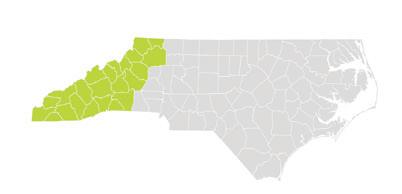
North Carolina Department of Transportation announced Archer-Wright Joint Venture was selected for the design-build contract for Section B of the I-26 Connector project, running from Haywood Road in West Asheville across the French Broad to connect to U.S. 19/23/70 and U.S. 240. The project is expected to cost more than $1 billion.
The North Carolina Industrial Commission ruled training officer Jeff Lyon’s November 2022 death from cancer a line of duty death. After serving with the fire department for 26 years, Lyons was diagnosed with neuroendocrine cancer in 2022 and died at 61.

Mast General Store acquired M-Prints, an apparel graphics printer and embroiderer, for an undisclosed price. Stuart Mangum, M-Prints’ founder and owner, put the business on the market “in preparation for the next chapter of his life.” M-Prints has been a retail chain vendor since the mid-1980s, including printing more than 300,000 T-shirts and sweatshirts.
Pactiv Evergreen inked a deal to sell the shuttered Canton paper mill to a buyer that would redevelop the site. Spirtas Worldwide has extensive experience taking over defunct industrial sites and repurposing them. N.C. Attorney General Josh Stein has sued Illinoisbased Pactiv, alleging it violated terms of a $12 million state economic incentives grant. ■
















































For example, computing giant Lenovo has partnered with N.C. State to develop geospatial AI, aiming to optimize agriculture applications. The university has a $20 million grant from the National Science Foundation to study AI’s impact on education.
Cerebras Systems, a Sunnyvale, California-based AI company, is working to develop one of the nation’s largest supercomputers in Asheville. Healthcare, finance and virtually every industry is seeking to integrate AI into their business. Duke and Microsoft recently announced a partnership aimed at using the tech giant’s Azure AI system to simplify and optimize every facet of the healthcare system.
In April, Cary-based SAS Institute introduced new AI capabilities to its customers and has said it’s spending $2 billion in the next few years on AI.
Business North Carolina recently gathered a group of industry leaders to discuss artificial intelligence. The conversation was moderated by Executive Editor Chris Roush. What follows is an edited transcript.



The discussion was sponsored by:
• Smith Anderson law firm
• SAS

OLSON: Like any new technology, one of the biggest challenges is the mismatch between the hype and reality. I think we’re in this interesting time where there’s going to be an imbalance between those two competing forces, and I think navigating through it in the next few
years are going to be very interesting, particularly at the pace of innovation we’re seeing with AI.
FRUTH: I work with AI in a number of ways, helping clients that are using AI in their business, offering services for oncology, imaging, even interviewing people to screen for jobs, which is crazy to me. And to me, the biggest issue, the one that is the most important, is who’s responsible when things go wrong.
GOLDSTEIN: Given the large number of people that I interact with on this topic, it’s probably no surprise that what I think is the biggest challenge in generative AI specifically is the people factor, the cultural changes
that require the level to which people have to reimagine their tasks. Some of them can’t deal with feelings of being threatened, concerns about being made obsolete. This cultural transformation is going to be very important.
MCCLURE: If I had to pinpoint one of the major challenges we have in front of us, particularly from an enterprise wide business perspective, it’s getting data governance and AI governance right and getting that right quickly. Now is the time to look at your governance strategies, to look across your business holistically, to partner with your legal team now more than ever, and in establishing those practices, those processes.
































BOYD: I see a number of issues that are of great concern and of great opportunity today with AI. No. 1 is just separating AI from machine learning, from generative AI, from chatbots, all these different components. There are some great, low-hanging fruit opportunities in business and education and healthcare where we can save lives and do great things. I’m interested in helping people do those things first, and then let’s push some of the more difficult things out a little bit further.



at this point in time. And because of the energy usage, we will have to decide between the level of progress in AI, and the carbon-neutral future that we have to achieve. I don’t think we can achieve both together.


machines much better by several orders of magnitude.









CUKIC: This is not necessarily a new technology, but it’s kind of astonishing how it has become the center of the universe in the last couple of years. There are several challenges that I see with the technology. On one side, we are witnessing the early phases of a complete revolution in the workplace and automation. On the other side, this is one of those technologies with a very, very high barrier for entry. Training of large models costs millions and millions of dollars, and it is really important not to get that kind of power in the hands of very few companies that can afford it



MCCLURE: My answer, with AI on whole, is that generally speaking, you shouldn’t feel that it is going to immediately replace you. The human element cannot be understated in all of this. I’m in marketing, right? So what are the skill sets that you bring to bear as a marketer? If I don’t know how to create derivative content based on the longform content that we create ourselves, and how to use AI to do those things, if someone else knows how to do that, they’re going to replace me. It’s less about the technology itself being the sole replacement, and about people that have better skills around AI.

GOLDSTEIN: My perspective is a little brighter because I’m more on Team Capital than Team Labor. If I’m putting together a business, I want to be able to do as many things as possible quickly. The key takeaway is that a number of roles are going to be transformed dramatically. When I was running my last startup, a lot of what we were struggling with in the marketing department was the time to launch a campaign would be months. I was quite happy with the email campaigns and the like that ChatGPT was able to generate, in combination with image generators. I do think there’s a human role, but that human role is less going to be about creating the end item than about evaluating what you’re getting and providing feedback. People are going to have to adjust and become students again and learn skills as if they were 18 or 20.





BOYD: This is really the age-old battle between capital and labor that we’re right in the midst of and it started with the Industrial Revolution. Two-hundred years ago, 91% of us were working in agriculture. And then 100 years later, like in 1900, it was 41%. Today it’s 2%. There are more app developers and software engineers than there are farmers in the U.S. We found something else for people to do. We made those adjustments. The difference is we had 200 years to make that adjustment. What’s happening now is it’s happening faster than most of our systems are designed to adjust to. I spent eight years on the board of trustees of Wake Tech, and I went to radiology saying, “Why are we still teaching this like this?” We already had
BOYD: The central problem of the century is figuring out what the right balance is between humans and automation to optimize the outcome. Anybody who gets it right is going to prosper. Anyone who doesn’t figure that out is going to have trouble.
OLSON: It’s hard for me to think of a practical way to overcome fear other than just continual exposure. The more we expose folks to it, the more they understand and appreciate and start adapting their own behaviors to how this can actually help them, not hurt them. I think that’s ultimately, fundamentally how it’s going to happen.
I don’t want to hire people out of college that have never used OpenAI or ChatGPT or any of these systems.












I want folks that downloaded opensource-models onto their laptops and played around with them and configured them for their own needs. I want people that are AI literate, and that eventually is going to come into the workforce. The second piece is long term. At the end of the day, all of our companies are getting measured on growth. Companies care about growth so they can save money in one area and plow it into more sales, maybe M&A, maybe R&D, that will continue to help them sustain their high growth.














The third piece is I’m a people person. I like being in the office. I like being around humans. I think this is going to give rise to a new set of jobs that are very service oriented. You’re going to see jobs that have yet to be invented, that are going to be service-oriented jobs because humans like being with other humans. Nothing’s going to automate relationships. I’m very pro human and optimistic.









CUKIC: They are getting exposed whether they want it or not, and whether we want them or not. What has to change is the way we educate them and put that into the context. There are professions that are going to be minimally impacted – manual labor,




























professions, construction, transportation, things like that. They have already gone through their automation cycles. But 90% of the workforce will need to have the user level, familiarity and literacy with the AI concepts. Everyone who finished not just college but even high school will need to be trained in and be literate in artificial intelligence. For most of us, we will have to adapt to the new demands and the new position descriptions.




AI agents might actually do a better job than lawyers, because they could have iterations, and they could really optimize each side in a way that after two or three times comes up with a compromise. Lawyers are expensive, and just imagine if you could have people not having to spend as much to get decent legal advice.








are going to look like. There needs to be that synthetic data layer to remove any confidential information. I would actually say there is a lot going on in health, but it’s mostly behind the covers. So your doctors aren’t transforming, but the companies that provide them things are starting to do things.
FRUTH: There’s some examples where it didn’t work out so well because sometimes large language models make things up. My firm Smith Anderson is using AI for specific things, and I’m actually in charge of the task force there to figure out how we need to use it more and how to use it responsibly, and to find the tasks where maybe you could write draft briefs.
But what’s really helpful for us is, if you have 100 examples of this contract you’ve negotiated. AI is really good at just sorting that out and figuring out where your customers tend to push things. It would be really interesting if you end up having AI negotiate things for you. And you can imagine each side having kind of a playbook, and you could see a situation where those two
BOYD: If you go into the doctor and they’re trying to diagnose you, why aren’t they looking at a big database of people that have my same sort of history of healthcare interventions, my family history, my genetic information. Therefore, based on this massive database, what are the recommended steps I should take next? Whether you’re coming out of college and you want to work with Pendo or you’re working in marketing, if you’re not augmenting yourself with understanding that at machine speed, you’re at a disadvantage, and it’s just not sufficient anymore.
MCCLURE: We’re seeing, there’s certain types of technologies from a healthcare perspective. You have to be able to run a test, and ultimately understand what the patient outcomes
In health, you have both Moderna and Oscar Health partnering with OpenAI, as well as programs run by both Google and Microsoft that they publish about all the time.
GOLDSTEIN: I think there’s an underestimation of what this is likely to mean for the physical things like construction. It is very clear that the application of large language models to embodied robots worked vastly better than any one.
The target range that gets tossed around is about $30,000 for a humanoid robot, and at that kind of number it becomes very competitive, especially in things like the modern oil rig. If the robot falls in the ocean, you’re out $30,000. That’s a lot better than if the employee falls into the ocean and the consequences both personally for the employee and their family and for the business. There’s a tendency to try and draw boxes and say, “This won’t impact here,” and I just don’t believe that’s true. It’s a general purpose technology that’s going to

















sweep over everything and already is making dramatic impacts day to day in my working life.





the actual savings of such a technology at the current time, when you cannot do anything else but drive the same way? I just want all of us to be a little bit hesitant,


CUKIC: I do have a little bit of a problem with the synthetic data, especially in medicine. IBM Watson failed primarily because it didn’t have enough data to train their models, and they used synthetic data. Let me give you another example. We are talking about how to make driving systems, and lots of hype and marketing about the status of those systems. The vast majority of those systems are at level two, which explicitly says you have to pay attention to the road and keep your hands on the steering wheel. What is






especially in the areas where we are impacting human lives, when we are impacting the critical situation.



GOLDSTEIN: I completely disagree. I would not go against this technology. Think of the data on the self-driving car. It knows when I grab the wheel and take control. That is the best data possible. Swiss Re published the death rates and the anticipated cost of insurance from autos, and it’s a factor of 100 better with self-driving cars. The records are very clear. The level two is largely an artifact of how people who are – Luddites would be a strong way to put it – deeply fearful of this kind of technology. The idea that technology is worse than people at dealing with unexpected situations is a massive overestimate of how people behave.

















BOYD: We’re going to look back at how we’re driving on Interstate 40 and just go, “That was ridiculous. I can’t believe we have a million accidents a year.” If you instrument the highway right to help the cars, and then the cars actually talk to each other, not just to themselves or to a system, you get a system that is way more safe than any human could possibly be.





HAVE DRIVEN WITH FRIENDS IN THEIR TESLAS, AND WHEN THEY TURN ON THE AUTOMATIC, IT SCARES ME. HOW DO WE OVERCOME THAT?
BOYD: It comes back to what is the right balance between humans and automation optimized outcomes? And the central idea there is that we humans haven’t had an upgrade, by my reckoning, since the Pleistocene whereas these machines are advancing at the rate of Moore’s Laws continuously. We are going to be turning over more of these activities to automated systems.

GOLDSTEIN: It’s an interesting question. Look, I have a Tesla, and when I turn on automated driving, I get that same feeling. I’m uncomfortable, but I understand. It’s not based on anything but my own sort of need for control, right? And I ask myself, OK, if I were in a plane with some pilot who I’ve never met, why would I not feel nervous in a plane? And why do I feel nervous in a car? What I have to do is sort of adjust my behavior. That’s the challenge. We are all creatures of our experience.
FRUTH: I think one interesting aspect of that is when you have customizable AI agents, I feel like it needs to know a little bit about me. And let’s imagine that they’re like, “OK, well, when you drive, I will drive like you.” The AI agents will observe the rules of the road. But I like to accelerate fast. I don’t like to be pokey. And then I think that gets really interesting about the user. Is it the algorithm, or is it the user?


CUKIC: We have to disagree in order to come to solutions and in order to come to natural conclusions. And there is nothing wrong with that. I also think we cannot extrapolate the rate of development and perfection of the technology based on the current rates. Eight years ago, we were all discussing the grim future of truck drivers who are going to be completely replaced by automated driving systems. And truck drivers are still very well employed and will be for quite some time. I think the last 5% of the performance is always the slowest, and it will take a little longer than we think. There is nothing wrong in hype, as long as the hype solves the real problems. But human humans will need to be working with the technology in order to assess how much they can trust it.

FRUTH: We may be overestimating the desire and the need for customization. If I’m on the road, I may not want you to drive like you because you may not be a very good driver, right? I certainly wouldn’t want cars generally to drive like me because I’m a mediocre driver.



CUKIC: I’m absolutely excited that the technology has reached a mediocre level of maturity. And there is a lot of development ahead of us that will make it so much better. And I’m really excited about the opportunities in the labor market and all the new opportunities for jobs that are going to emerge from this. I’m just cautiously optimistic because I think we cannot hype too much because that creates a backlash.


BOYD: This is the simulation century. All the stuff I did at Lockheed, stuff I did in gaming, making simulated models of the world, that’s where the next big breakthrough is going to come from. For example, you can bring AI and simulated









digital twin models of the world into the service of trying to predict the future. Let’s decide what kind of North Carolina we want? What kind of Raleigh do we want? And then have the AI actually help us design toward that.


And in this political climate we’re in right now, if you’re running for governor, bring your data and your models and your policies, and let’s run them in the simulation and show me 10 years from now how we’re better off. And then you would say, “Let me see my opponent’s simulation.” That’s what the argument should be about – your data and your model. It’s not about personalities or feelings or any of that stuff. That’s what I want to make happen. Let’s put AI in the service of better health, more economic mobility, all those things.



I see what’s coming down the pike is a transformation in the e-commerce experience – how you engage with the software systems that are all around us. I say, “Here’s a picture of this dress I like, right? Or can you find me shoes that go with it? And it works.” This stuff is already in demo at things like Google Cloud. You’re going to see these kinds of much more human-centric interfaces and tools that make human life fundamentally much much easier, much much better, much much cheaper.





MCCLURE: I think we are finally getting past the hype of it all. I’m excited to get past that hype and get into the reality of implementation. And I think the transparency aspect of this needs to be so critical, not just from a business perspective. When I’m on social media, when I am looking at an advertisement, is this something that has been AI generated? If we are not demanding that ourselves, then it’s going to be a slow roll in a lot of ways.
GOLDSTEIN: I’m much more excited about the transformation that’s happening today. Just today, the New England Journal of Medicine described how AI allowed us to predict 95 potential antibiotics, and 78 of them have turned out to be biologically active and effective. Producing new antibiotics has been at the level of like one a year or two traditionally. So that’s an enormous deal.
It’s pretty clear I’m the most enthusiastic on this panel about where we are, but I think it’s important to understand that I’m enthusiastic because I see the outcomes. I see the transformation in medicine. I see the possibility that we can cut our road deaths by multiple orders of magnitude. I see these things here today, not five or 10 years down the line.

FRUTH: I don’t know how we’re going to regulate all this stuff. I honestly don’t know what’s going to be effective. There’s the stuff they’re doing in the EU where that’s risk-based, and then there’s the stuff that we do in the U.S. and some of the states focusing a lot
on self-governance and voluntary standards. By the time you get done with the hearings, the technology has already changed, right? So it’s going to be a big challenge to figure out how to have regulations that don’t impede technology when no one wants to slow things down too much, but then also make sure that we meet these goals that we’ve all identified. I’m excited to try to be part of figuring all this out.

OLSON: I think one of the overall outcomes of AI is just generally growth in the economy, growth in jobs. I think this is going to be a growth opportunity for everyone. Every revolution we’ve had has resulted in growth. Every revolution started with fear, and they’ve all resulted in growth. It will be no different in this one. We’re going to basically take all the manual, tedious things out of our business that we have to do but none of us really love doing. We’re going to simplify, automate and redirect, reallocate all those dollars to innovation, to building new things, to hiring more people.
And if I put my societal hat on, I think one of the things that we haven’t talked about on this panel is AI levels the playing field. This tech levels the playing field for different backgrounds. Imagine if you’re not a great writer, but you want to write something and you want to sound polished and professional. You can now do this. Knowledge is the great equalizer in our economy, and this democratizes knowledge for a lot of people. That is super powerful. ■





















By S. McKinley Gray, III and Avery J. Locklear
On April 23, 2024, the U.S. Department of Labor ("DOL") announced a final rule that will increase the Fair Labor Standards Act's ("FLSA") minimum salary threshold for overtime exemptions (the "2024 Rule").
Starting July 1, 2024, employers should be prepared to either reclassify or give raises to certain employees.
The DOL published a proposed rule on September 8, 2023 (the "2023 Proposed Rule"). The 2023 Proposed Rule suggested an increase in the salary threshold before considering certain employees exempt from FLSA's overtime and minimum wage requirements. However, the 2024 Rule's new salary threshold is higher than what was initially proposed.
Soon, millions of additional workers will be eligible for overtime pay—which means monumental changes for employers.
The FLSA exempts bona fide executive, administrative, professional, and computer employees from minimum wage and overtime requirements. This exemption is commonly known as the "white-collar"; or executive, administrative, or professional exemption (the "EAP Exemption").
To qualify for the EAP Exemption, an employee must meet
certain tests regarding their job duties and be paid a salary not less than the minimum salary threshold amount. Currently, the salary threshold is $684 per week ($35,568 annually), but the 2024 Rule will practically double that number by 2025.
Beginning on July 1, 2024, the 2024 Rule will increase the EAP Exemption salary threshold to $844 per week ($43,888 annually).
Then, on January 1, 2025, the EAP Exemption threshold will increase to $1,128 per week ($58,656 annually).
The 2024 Rule's goal is to set effective earnings thresholds that help "define and delimit" the FLSA's EAP Exemption and to update salaries based on current wage standards. The "outside sales" exemption will not be impacted since there is no preliminary salary threshold.
In addition to the EAP Exemption, the FLSA contains a special rule for "highly compensated" employees ("Highly Compensated Exemption") making these individuals exempt from overtime and minimum wage requirements.
To qualify for the Highly Compensated Exemption, an employee must perform at least one of the duties of an exempt executive, administrative, or professional employee and be paid an annual salary not less than the minimum salary threshold amount.






and the costs associated with navigating a DOL investigation and/or wage and hour lawsuit.
While the 2024 Rule is set to take effect on July 1, 2024, various business groups filed a lawsuit in the federal court in the Eastern District of Texas in May to block these changes. In the past, some legal challenges to DOL new rules have stood. For instance, when the DOL proposed to raise the salary threshold to over $900 in 2016, various legal challenges were brought to derail the proposal. One attack stuck as a federal judge blocked the proposed increase merely days before it was set to take effect.



Despite looming legal challenges, employers cannot trust that such challenges will be successful this time around.
This means that employers will need to quickly decide whether to raise impacted employees' salaries or convert the employees to non-exempt status prior to July 1.



Beginning on July 1, 2024, the 2024 Rule will increase the Highly Compensated Exemption annual salary threshold from $107,432 per year to $132,964 per year.
Then, on January 1, 2025, the Highly Compensated Exemption threshold will increase to $151,164 per year.
While the 2024 Rule will impact employers beginning this year, the 2024 Rule is designed to have lasting effects.
Starting July 1, 2027, the salary threshold for the EAP Exemption and Highly Compensated Exemption will be automatically updated every three years.
The DOL anticipates that the automatic updates will prevent future erosions of overtime protections and provide greater predictability among employers.
However, such updates may be delayed if the DOL decides to engage in rule making to change its methodology or mechanism as it applies to the automatic increases.
The 2024 Rule is projected to impact at least four million workers by January 2025.
Employers should brace themselves for these changes and prepare to either provide employees with raises or reclassify the employees as non-exempt. Failure to adhere to this new rule can expose employer to significant liability, including unpaid overtime
To make this determination, employers should speak with experienced legal counsel. Various considerations, such as additional costs, methods of overtime calculation and timekeeping, and the impact of employee benefits, should be considered prior to any change taking place.
Regardless of what path an employer takes, all employers should be prepared to notify their workforce about the specific change to their compensation, benefits, and responsibilities. ■





Ken Gray
Labor and Employment Attorney
smg@wardandsmith.com
Avery Locklear
Labor and Employment Attorney
ajlocklear@wardandsmith.com

































By Chris Roush
imanshu Shah has been running Raleigh’s Shah Capital Management for nearly two decades, attributing his success to persistence — and he’s got the numbers to prove it.
Started in 2005, his hedge fund has averaged a 12% annual return, outperforming the 8.9% return of the S&P 500 index during the same period.
Shah, who manages about $600 million, is a rarity as an activist investor who buys significant stakes in companies that he deems undervalued, then prods management to make changes to push a stock higher.
He just ended his most public campaign with a huge victory: shares of COVID vaccine company Novavax more than tripled in May, when it announced a licensing deal with French drug giant Sanofi. The transaction allows Sanofi to sell Novavax vaccine in most countries, providing the Gaithersburg, Maryland-based company with $500 million and future royalty payments. It sparked a huge return for Shah, who owned 8.1 million shares of Novavax on March 31, more than anyone other than giants State Street, Vanguard Group and BlackRock.

Shah, 57, ended his battle, which he believes had more than a 70% chance of succeeding, because “Sanofi was the best partner that they could have. Sanofi dominates the vaccine space globally. They have the marketing and the regulatory infrastructure that Novavax lacks.”










More than two-thirds of Shah Capital’s portfolio is invested in these five companies: COMPANY BUSINESS VALUE (as of March 31)
Novavax * NVAX pharmaceuticals
Veon Ltd VEON communications
New Oriental Education EDU private education
Emeren Group SOL solar power
China Yuchai International CYD conglomerate
*Novavax share value as of June 6.
Source: Securities and Exchange Commission
Shah Capital bought 715,000 Novavax shares in late 2022 when it traded for an average price of $17.65, according to InsiderMonkey. com, which tracks hedge funds. The stock sold for more than $200 for much of 2021 during the COVID-19 pandemic, peaking around $300.
$164.3 million
$118.8 million
$43.3 million
$36 million
$35.8 million

Shah added 7 million shares in 2023 as the stock price dropped below $10. He says Novovax has “great science” but did not gain its share of the COVID vaccine market because it lacked the ability to market and distribute the drug. He nominated two independent board members in a proxy fight, calling the company mismanaged.
His shares were worth roughly $36.3 million before the Sanofi announcement, then soared to $164 million as of early June.
Shah has repeated the formula of finding undervalued companies and pushing for changes for nearly two decades. “The most successful activists combine a calm, thoughtful plan with a serious threat to displace company leadership,” says activist investor and financial adviser Michael Levin, who serves on two company boards. “They want companies to understand an activist is prepared to escalate but would rather

address concrete and material business improvements.”
Activist investors in North Carolina are rare. In the early 1980s, Charlotte auto dealer and NASCAR track owner Bruton Smith bought control of North Carolina Federal Savings & Loan and forced the resignation of its chair and president. The S&L was later seized by regulators in 1990.
In 1987, New York investor Asher Edelman made a failed but lucrative bid to buy Greensboro-based Burlington Industries, then the largest U.S. textile company. In 2012, Carl Ichan, perhaps history’s most famous activist investor, bought a $50 million stake and pushed for changes at mobile-phone company Motricity, then based in Durham.
Most recently, Durham-based Arjuna Capital, which also has an offi ce in Boston, tried to get oil giant Exxon Mobil to accelerate greenhouse-gas emissions cuts, but was sued by the company in January and ended up withdrawing its proposal. The fi rm, founded in 2013, has also battled Microsoft, Visa and Tesla on pay equity and environmental and sexual-harassment issues.
Earlier this year, activist investors gained board seats at Raleigh-based Advance Auto Parts and urged Durham-based Wolfspeed to consider “strategic alternatives.”
Activist investors, says Elon University finance professor Adam Aiken, “play an important role in monitoring and watching



Source:



Insider Monkey


Shah Capital made more than $50 million during four years investing in Antero Resource, a Denver-based natural gas exploration company. The company bought 10 million shares for less than $2 per share by early 2020, then sold the stake over the next four years at much higher prices, including more than $35 per share.
$100 million
$90 million
$80 million

$70 million
$60 million
$50 million
$40 million
$30 million
$20 million
$10 million

management of firms. If something is not going right, being able to step in as a shareholder and being able to suggest changes, [the company] can make operational changes that are beneficial.” Most activist investors try to work with management before taking their desires public, he says.
Shah became interested in investing as a teenager in India with some money provided by his father. He bought shares in what he calls the “Sherwin Williams of India” and tripled his money in a year. He graduated from Gujarat University in India with an accounting degree, then earned an MBA from the University of Akron in Ohio.
After working for UBS for a decade as a senior portfolio manager, he started Shah Capital in 2005 with $30 million from high net-worth investors and the Pennsylvania Public School Employees’ Retirement System. He had moved to North Carolina to be closer to family.
Shah is president and chief investment officer. His team includes Richard Callaghan, a UNC Chapel Hill MBA who has been a Shah staffer since August 2005, and research director Don Espey. Shah Capital hasn’t sought new capital for several years, and is now mostly working with high net worth families, including several of Indian descent. “We are a very focused investor, and that’s actually gotten more focused in the last five years or so,” he says.
The firm often examines a company for as long as three years before Shah decides to buy its stock. “We really try to understand these companies from a management point of view, from an economic cycle point of view, from a macro point of view, from what’s the key advantage point,” he says. “What is my upside potential and my downside risk? That’s how we make our decisions.”



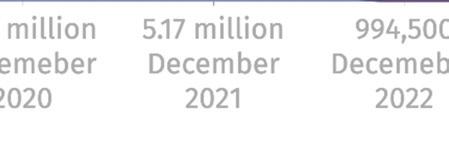

“Companies are like people, they are hard to change and difficult to convince.”
- Shah
His firm invests in a dozen or so companies at a time. Most would be deemed too speculative by many money management firms.
An example is China Yuchai International, a subsidiary of Singapore-based Hong Leong Asia that operates in China. In 2009, Shah collected a 6.2% stake and joined two other investors pushing the New York Stock Exchange-listed company to seek changes. Shah wrote directors that shares, then trading at $18, were worth more than $50.
Shah asked China Yuchai to buy the remaining 25% of its main subsidiary, a machinery company, and sell its 50% stake in its real estate company, as well as an 8% holding in a consumer electronics distribution business.
Now, the company still owns its manufacturing business and real estate operations, and the stock trades at about $8.40, near its lowest level in the past 15 years. Management has been “extremely indifferent” to his requests, Shah says.
China Yuchai meets “all of the criteria for a successful investment,” says Shah. “They have the technology. They have the distribution. They are operating in pretty much a three-player market, kind of an oligopoly. But the stock price has not gone up. We have not been able to convince them to do a lot of things we think they should be doing.”
As of March 31, Shah Capital owned China Yuchai shares worth about $35 million.
Shah had more success when he led an investor group that offered to buy Chinese telecommunications company UTStarcom Holdings in 2013 for $125 million. The company sells cable TV and telecommunications services. Shah eventually owned more than 26% of UT Starcom’s shares, but after much effort, withdrew its bid to take the company private. Shares have declined nearly
80% over the past five years, but Shah got out in time. “We did OK on the investment,” he says.
Levin says company reaction to activist investors “ranges from tepid curiosity to vivid anger, on average with resigned indifference. They often view investors as a nuisance rather than as the ultimate owners of the company.” He adds, “They prefer shareholders to merely trust them, whether or not they deserve that trust.” Shah describes his strategy as “dynamic and pragmatic. Easy words to use, but very difficult to follow. We haven’t been successful all the time.”

Shah scored with The Vitamin Shoppe, a New Jersey-based retail chain of nearly 800 stores selling nutritional supplements. It bought a 14.3% stake in 2017 and Shah joined the company’s board a year later after he agreed to vote for its director nominees. Vitamin Shoppe approved a turnaround plan and was sold in December 2019. “Retail business is tough,” says Shah. “We made good money, but it wasn’t a home run.”
Shah hit it out of the park with Antero Resources, a Denverbased natural gas producer that mainly operates in West Virginia and Ohio. Shah bought 1.9 million shares in late 2019 at an average price of $2.55 per share, then reached 10.2 million shares in mid-2020 at an average price of $3.17, or about $32 million, according to InsiderMonkey.com, which tracks hedge funds.
Antero shares soared to more than $20 a share in 2021, pushing Shah’s stake to nearly $100 million late that year. He sold incrementally as the stock peaked at more than $40 in 2022. He closed his position late last year with shares still trading for more than $25.
“I liked the management,” he says. “They were committed, and I want to underline the word committed. They had some shortterm issues because natural gas prices came down quite a bit, and there was too much supply. And they had some debt coming due in a few years. Most investors had given up on them.”
Before Novavax’s stock soared, Shah’s top holding was Netherlands-based Veon. At the end March, 2024, he owned 5% of the company, worth nearly $119 million. It provides telecommunications and internet services in Bangladesh, Kazakhstan, Kyrgyzstan, Pakistan, Ukraine and Uzbekistan. “They completely dominate these markets,” where population is increasing, he says.
Shah asked the company in 2023 to make changes, including cutting costs at the Amsterdam headquarters and reducing its board by one member. He also asked for a stock repurchase and divestment of some operations. (Veon sold a Kazakhstan unit in 2023.) The stock has gained 35% over the past year.
“That is a company that is coming through on a lot of the things that we told them to do more than a year ago,” says Shah. “Here you have a company that is very receptive to our strategic suggestions.” Veon didn’t respond to a request for comment.
Another large holding is Emeren Group, a solar panel company based in Stamford, Connecticut. Shah owns more than 18 million shares of the company, but its price has fallen nearly 50% in the past year and now trades below $2 a share. He blames high interest rates, noting that solar panel companies borrow lots of money to build farms. “We’re living in a world where solar is going to play a higher role in the energy mix,” says Shah. “Emeren has a very strong balance sheet, with only 10% debt to equity. It’s only a matter of time before it significantly starts outperforming.”
Shah also invested in Raleigh-based Marius Pharmaceuticals, where he is executive chair. In 2022, the private company received U.S. Food and Drug Administration approval for an oral drug to treat deficient male testosterone. The deficiency affects approximately 40% of men older than 45 years of age and as many as half of males who are obese or have Type 2 diabetes.
“Himanshu’s deep experience has helped shape Marius into a disruptive company not just in pharmaceuticals but as we approach health care holistically,” says his cousin Shalin Shah, Marius Pharma’s CEO . “He has enabled us to execute creative solutions to widespread issues which we see panning out particularly well.”
Shah calls Marius and Novavax “preventative healthcare” companies, which he considers a growing investment trend because they can reduce healthcare spending. Research shows a link between testosterone deficiency and higher death rates. “That is why we invested in Marius, and I think we are turning the page,” he says, suggesting an IPO could happen within three to five years.
Shah says his investing style often involves fighting a battle. “Companies are like people,” he says.“They are hard to change and difficult to convince. So you accept your fate, if you want to call it that, because they’re not listening to you, and you hold on to [the stock] because you see a lot of upside.
“Or you sell out and move on,” he adds. “There are a lot of other investment opportunities out there.”■
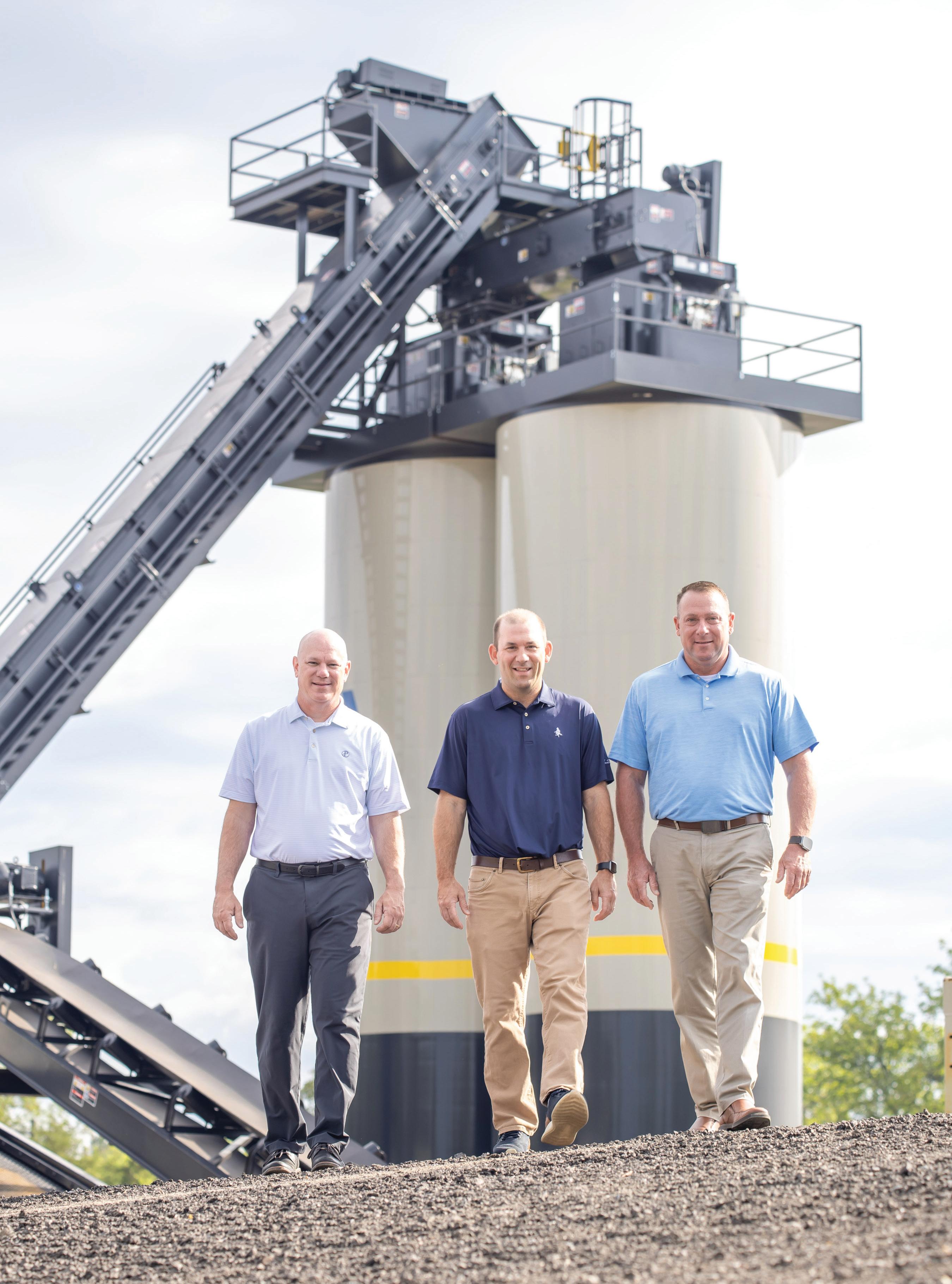


A legacy-minded Charlotte contracting family opts for broader employee ownership.
By David Mildenberg
In 1986, twins Jack and Frank Blythe sold their Charlotte family’s 65-year-old Blythe Brothers construction business to Britain’s Alfred McAlpine, which built Wembley Stadium and other famous projects across the pond.
The plan was for the Blythes to lead the Brits’ expansion in the U.S., where growth prospects were brighter than the United Kingdom. Like many acquisitions, the buyer-seller match wasn’t effective, so the brothers left after three years to start another company.
Over the next 35 years, Jack and Frank built their new business, Blythe Development, into a significant regional paver of roads and commercial projects such as the new River District in west Mecklenburg County. Annual revenue tops $230 million, while the payroll has been in the 800- to 1,100-employee range in recent years.
By 2022, the Blythes hit another inflection point because Jack and Frank, now in their early 70s, wanted to pull money out of the business. The typical path is to hire an investment banker and auction the company to the highest bidder, which is usually an industry peer or a private equity group. Earlier this year, for example, veteran Charlotte contractor Pat Rodgers sold her 61-year-old family business, Rodgers Builders, to Japan’s Kajima, a large global contractor.
This time, the Blythe brothers chose a more unusual route, selling the business to an Employee Stock Ownership Plan formed to keep family control while broadening the ownership of the company. The move puts equity in the hands of more than 800 people who work at least 1,000 hours a year at the business. Terms weren’t disclosed.
“The stars aligned, and we think this will be a huge benefit to everybody,” says President Luke Blythe, who is Jack’s son. “We didn’t want to lose the family business.”
ESOPs have been around for decades. The most prominent 100% employee-owned U.S. company is Publix, the Lakeland, Florida-based supermarket chain that is gaining market share in North Carolina. It operates 1,416 stores and had $57 billion in revenue last year.
ESOP-owned companies with significant North Carolina operations include Atlanta-based Choate Construction, Monroebased State Utility Contractors and Roanoke, Virginia-based Branch Group. Choate and Branch regularly are listed on Engineering News-Record’s annual ranking of the 400 largest contractors.
But creating an ESOP remains a rarity. The nonprofit N.C. Employer Ownership Center reports 137 ESOPs operate in the state, an “extreme minority” of 200,000-plus enterprises, says Doug Blizzard, who leads Catapult Employers Association’s product services group. Catapult advises thousands of N.C. businesses on human resources issues.
Two key issues prompted the Blythes’ unconventional choice. First, the brothers wanted Luke to continue leading the business because of their confidence in him and two key colleagues, Chief Financial Officer Joey Dodson and Stoney Bumgardner, vice president of operations. Luke Blythe has worked for the company
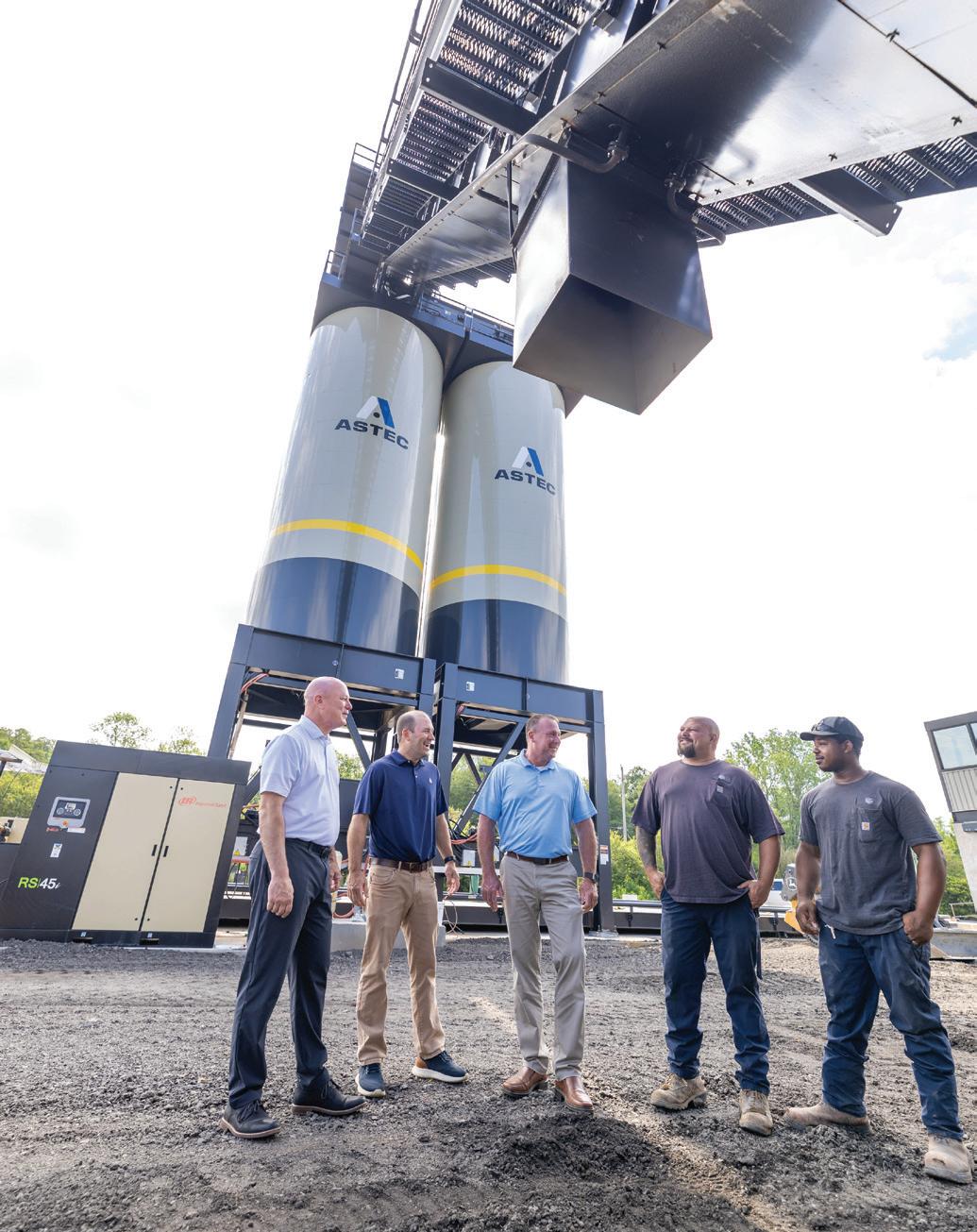
since graduating from UNC Chapel Hill in 2000. He became president in 2022. Dodson joined Blythe in 2002 after being CFO of Park Meridian Bank in Charlotte. Bumgardner was hired in 2007 as an estimator.
Second, the Blythes think the ESOP will give Blythe Development an edge in retaining and recruiting employees. A short supply of workers is a huge issue in many parts of the construction industry. Talented staffers can easily jump to other firms. Moreover, paving is hard, demanding, outdoor work.
“We’ve always been family run, but employees are the lifeblood of the company,” Luke Blythe says. While the family is proud of the company’s pay, benefits and culture, they concluded that an ESOP could set it apart from the pack.
“We’ve done a good job of motivating managers and foremen, and we have lots of longevity there,” Blythe says. “But there’s a lot of turnover among hourly employees, many of whom live paycheck to paycheck.” While the company offers a match for its staffers’ 401(k) plan, which will continue along with the ESOP, a large percentage of hourly workers don’t participate.
Motivation and talent matters in the heavy construction industry, in which hourly employees sometimes handle large earthmoving equipment valued at $500,000 or more, Dodson notes. “We need someone who is conscientious to be operating those machines,” he says.
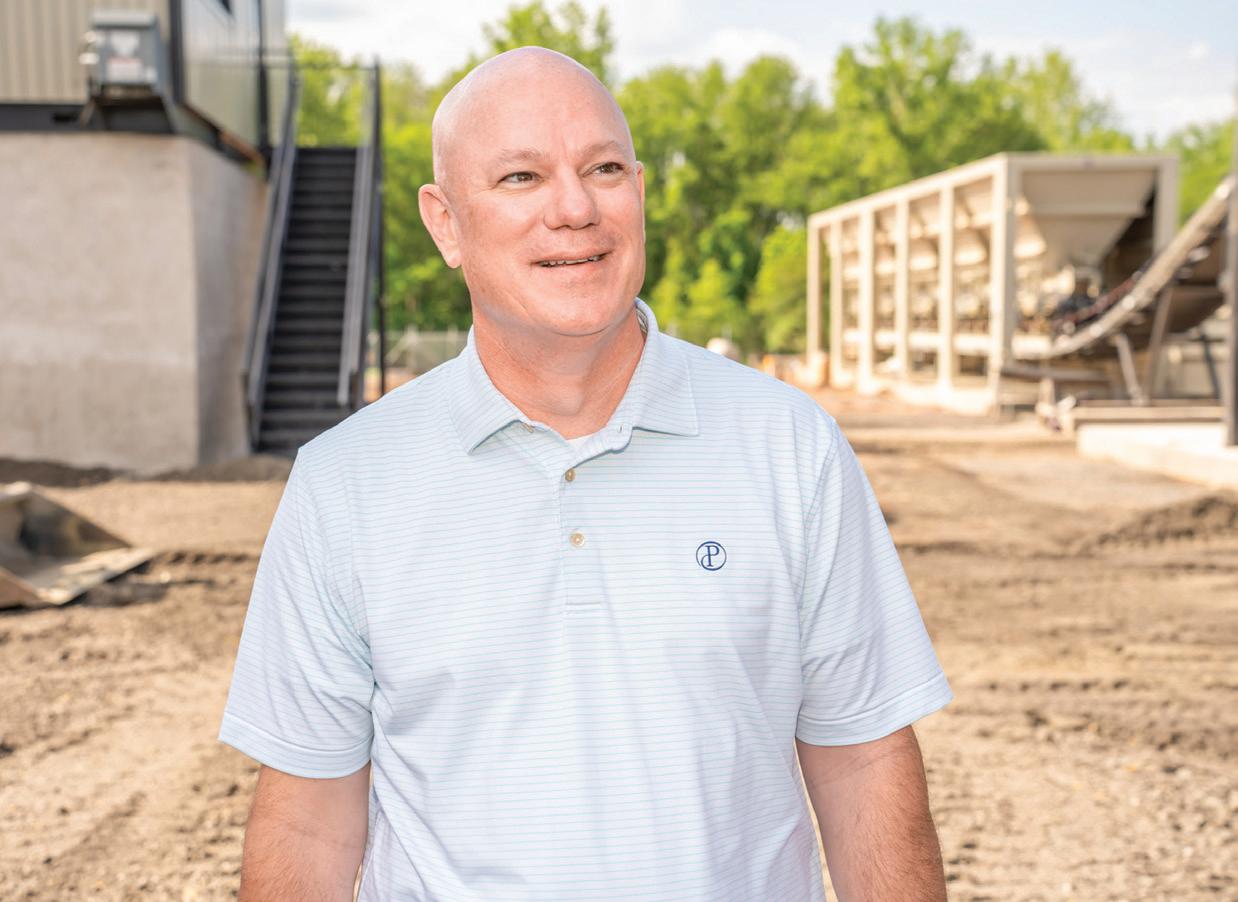
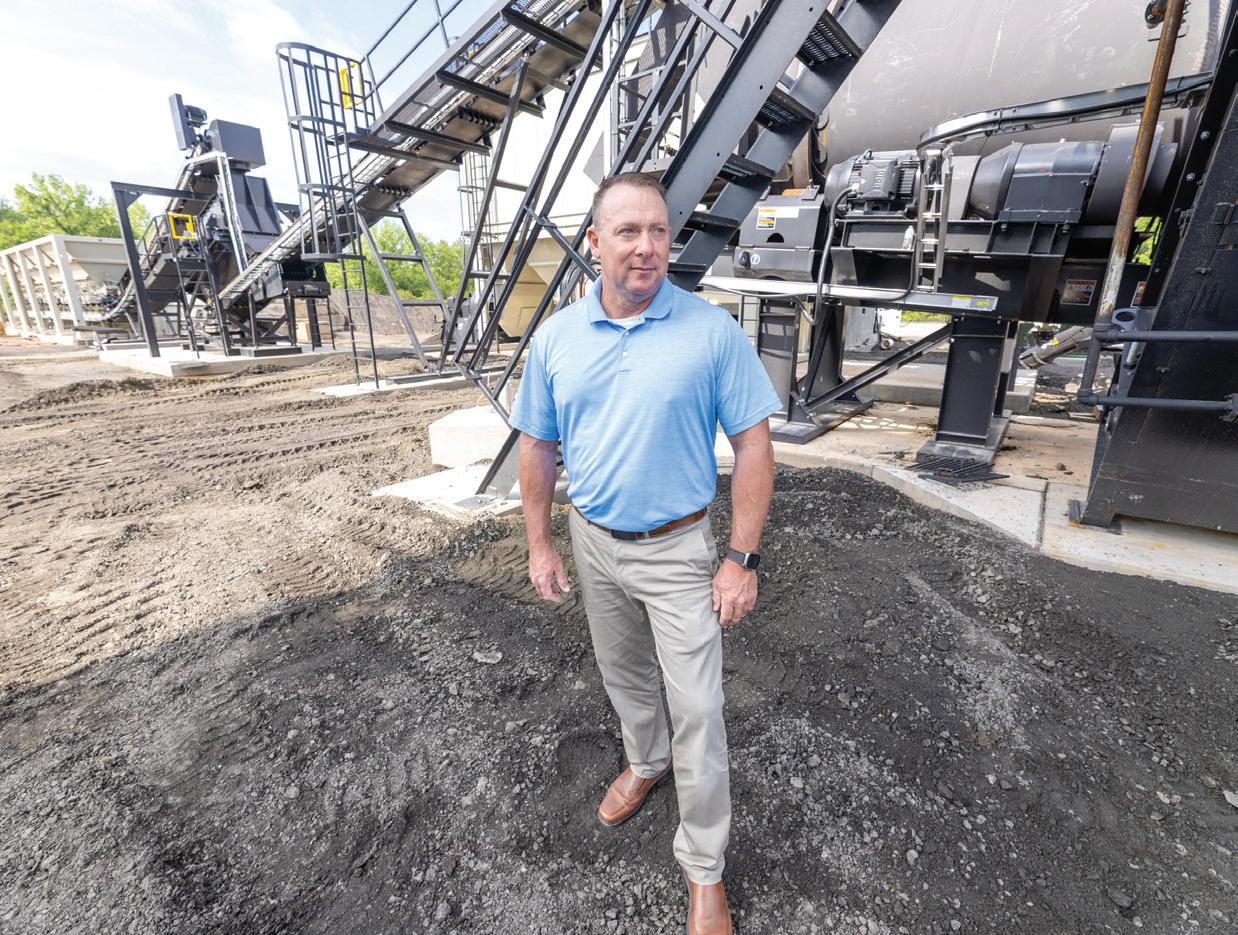
There are lots of reasons that ESOPs are rare, and Blythe officials acknowledge the extra risk involved. ESOPs rely “mostly on future company success, so in a sense you’re betting on the company,” Blizzard says. And many business owners don’t want to worry about their company after the sale, or “they don’t care for the idea of employees becoming vested owners in the business, in much the same way businesses in North Carolina resist unionization efforts by employees.”
But ESOPs can be a smart way to preserve excellent customer service that is a hallmark of many family businesses, he says. “There are entire industries now where private-equity ownership has stripped away service in favor of short-term profits.”
The Blythes showed business savvy and a commitment to their staff in opting for an ESOP, says Josh Goldblatt, the Charlotte managing director for Lazear Capital Partners. The Columbus, Ohio-based investment bank, which specializes in ESOPs, says that workers with equity have longer job tenures, greater household net worth and are less likely to be laid off in recessions.
The basic way that the plans work is that owners sell the company to a trust that appoints an independent person to represent employees. Among the trustee’s key tasks is working with a financial evaluation firm to determine a fair price to pay for the business. Fair value is typically comparable to non-ESOP transactions so owners don't feel they received less than in a thirdparty sale.
Many ESOP deals, though not all, involve a financial advantage because sellers don’t have to pay capital gains tax, which is typically in the 20% to 30% range, depending on the state. Going forward, ESOPs also don't pay corporate income tax, which can help pay back debt quicker and build equity value for participants. The tax benefits reflects the bipartisan popularity of the plans. Both Democratic and Republican officials view employee ownership as a way to lessen economy inequality and create retirement security.
The government eventually gets paid, of course. Employeeowners pay ordinary income tax when they withdraw money from the ESOP. The hope is that staff members will stick with their employer for years, building a valuable asset. Because the goal is to spread wealth more evenly, ESOPs have detailed rules that block a small group of senior managers from gaining advantages in compensation.
The ESOP has to pay back its transaction debt, typically over many years just like any other borrower. ESOPs often include seller-financing, which exposes sellers to some risk if there is an unexpected declined in business. Interest rates and loan maturities depend on the strength and quality of the business, but are typically similar to other types of mergers and acquisitions, Goldblatt says.
Mostly, the business needs to perform and avoid dramatic swings in revenue and profits. ESOPs need to have low debt and consistent profits, according to the N.C. Employee Ownership Center.
Blythe Development had a strong 2023 with an excellent backlog of projects over the next two years, giving its leadership
con dence that it will keep growing pro tably, Luke Blythe says. Federal and state budgets call for increased spending on infrastructure, giving Blythe Development con dence that it will grab its share of the business.
Beyond highways, the company has lengthy experience in bridges, aviation, transit and other projects in the Carolinas and Virginia. It also developed four Charlotte-area golf courses in the late 1980s, then sold them in 1999.
e company’s con dence is evident in the company’s new Rock Hill asphalt plant, an $8 million investment slated to open in July. It is the company’s fourth plant and will help expand its reach further into the Palmetto State. Customers have already secured contracts for more than 200,000 tons of asphalt from the new plant, which is the second of its type in fast-growing York County.
More owners don’t opt for ESOPs because they lack understanding and private equity has “engulfed” the M&A business, now accounting for more than 50% of middle-market company sales, Goldblatt says.
Lazear expects ESOPs to gain market share in coming years as more sellers realize the advantages and a changing labor market promotes broader ownership. e plans report “high levels of engagement, retention and productivity since the employees are more vested in the long-term results of the company,” Blizzard says.
ESOP advocates say the plans also can bene t local vendors, who o en lose their business ties when a middle-market company sells to a national PE rm, says Goldblatt. Before joining Lazear, he lent money to Blythe Development for several years as a SouthState Bank o cer. e Blythes’ lender, insurance company and bonding agency supported the transition to an ESOP and remain key partners with the company, Dodson says.
“Bankers are starting to get on board with ESOPs because if a company sells to a PE group, the bank will o en lose everything, like loans and deposits, to banks in New York or Chicago,” Goldblatt says.
But the key issue for ESOPs is the sellers’ motivation. “If you have someone who just wants a check, an ESOP isn’t the resolution,” Goldblatt adds. “You have to have a family that cares about rewarding their employees and wants their legacy to continue.”
Legacy matters to the Blythes. Luke Blythe’s great-grandfather, F.J “Jack” Blythe., and his uncle Joseph Blythe started their company in 1921 with the rst project involving the paving of Lawyers Road in east Charlotte. Notable projects included work on the U.S. Marine Corps’ Camp LeJeune base that opened in Onslow County in 1941, the original launching pads at Cape Kennedy in Florida, and the South Carolina dam that led to Duke Energy’s Oconee Nuclear Station.
e Blythes also diversi ed in other businesses, including the rst asphalt plant in Puerto Rico. e sale to McAlpine in 1986 occurred as the contracting industry was consolidating signi cantly. “My dad and brother intended to keep running the company, but it was a bad experience,” Luke Blythe says.
Surprisingly, the European owners have retained the Charlotte family’s name for nearly 40 years. Blythe Brothers became Blythe Construction, which is now owned by France’s Vinci Construction, which had revenue of nearly $74 billion in 2023. Blythe Construction is among North Carolina’s most prominent highway contractors and operates about a dozen asphalt plants.
Few people outside the construction industry know that the Blythe Construction and Blythe Development are distinct, Luke Blythe says.
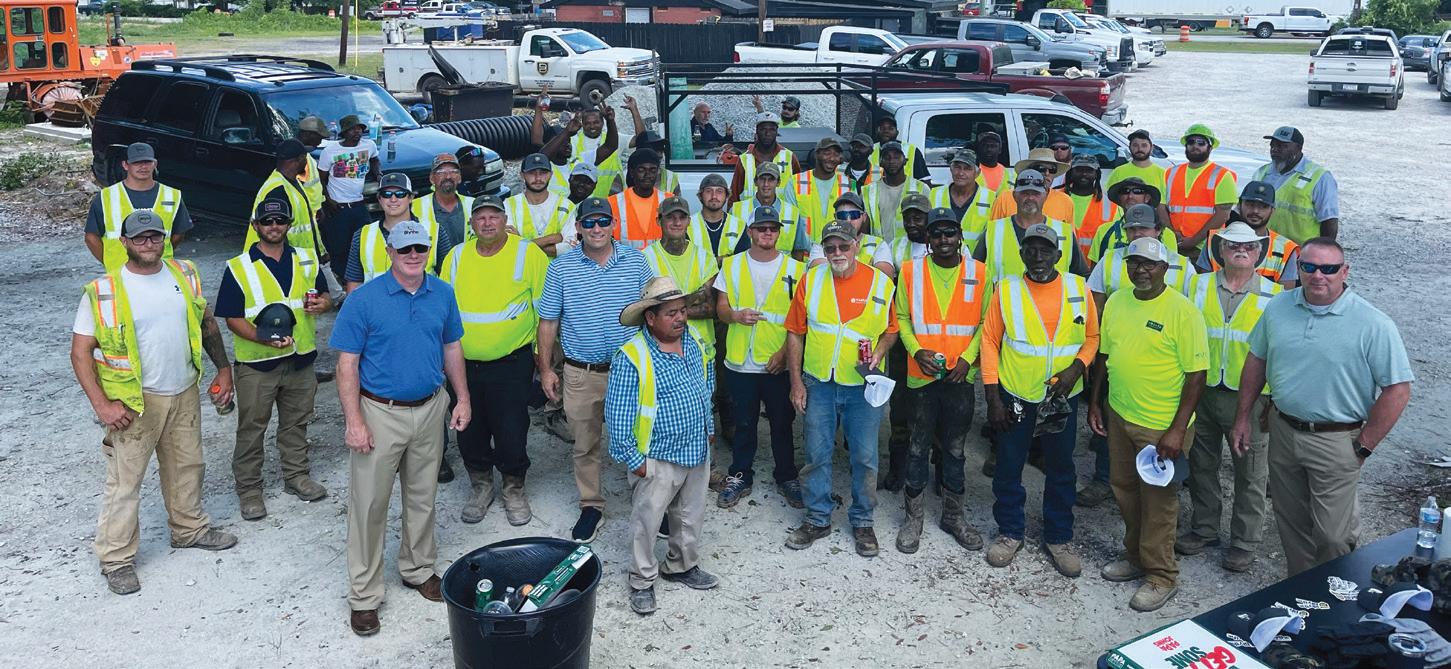
Jack and Frank Blythe remain board members and advisers, and still show up o en at the company’s o ce in south Charlotte, not far from the South Carolina state line. But Luke insists he and his colleagues are running the business with an intent to keep growing for decades.
Since completing the transaction, Blythe, Dodson and Bumgardner have spent a lot of time explaining the ESOP to sta ers. Some quickly provided ideas for cost savings, suggesting they are making the shi from worker to owner. But the management trio agrees that it may take a few years for some to embrace the somewhat arcane ESOP.
“Once they open their statements, hopefully they will have a better understanding of the impact,” Luke Blythe says.
By Lawrence Bivins
Foreign investment is ooding into North Carolina as Asian and European companies respond to state and federal policies promoting clean energy and domestic manufacturing, according to Business North Carolina’s annual report on the state’s largest job announcements.
e dominant player is Toyota, which disclosed plans for a large Randolph County plant in late 2021, then last year raised the ante to a projected $14 billion investment. It has hired more than 800 people in preparation for production starting next year of electric and hybrid batteries to be used across its lineup.
Eight of the 10 largest job announcements came from foreign enterprises, compared with ve in BNC’s 2022 report and four in 2021. More investment may be on the way a er the Biden administration in May quadrupled the tari on Chinese-produced electric vehicles to 100%. e rate for foreign-made semiconductors, solar cells and needles and syringes is also rising to 50% this year.
Ready talent was commonly cited as a top factor in companies’ interest in the state, with several CEOs trumpeting their partnerships with N.C. universities and community colleges.
North Carolina also bene ts from available land and buildings that have access to industrial-grade infrastructure. Many “megasites” have lled up as the state wins kudos as a top location for business. at is prompting leaders to seek developers for other sites with suitable land and buildings.
BNC’s annual list is based on job-creation projections for developments announced between June 1, 2023, and May 31. Details are gleaned from press releases, state reports and local media accounts. History shows many projects won’t meet their targets for jobs and investment, while some exceed their goals. State o cials verify the companies’ job creation and capital spending before providing incentives.

10,855 announced jobs (compares with 27,144 in 2022)
$4.89B announced capital investment* (compares with $15.6 billion in 2022)
*Re ects jobs and investments for projects involving the Economic Development Partnership of North Carolina in 2023. More jobs were created from projects overseen by local business groups.


source: Business North Carolina

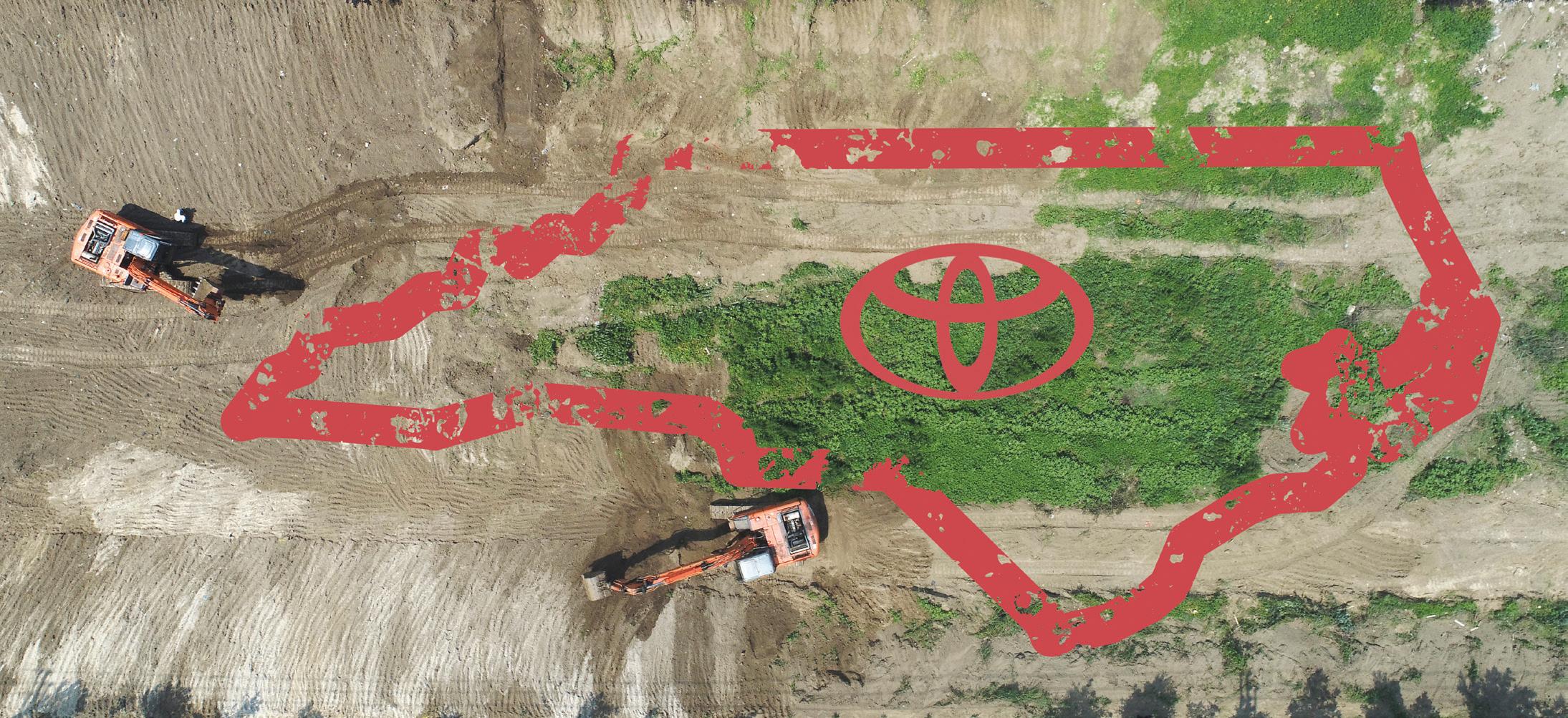
Tokyo, Japan
▪ NEW JOBS: 3,000
▪ COUNTY: Randolph
▪ PROJECTED INVESTMENT: $8 billion
▪ N.C. CASH INCENTIVES: $315 million over 39 years, plus $50 million more if certain job targets are hit
▪ LOCAL INCENTIVES: $167 million
Landing a $14 billion investment from Toyota cinches North Carolina’s place in global auto manufacturing, given the Japanese company’s status as the world’s top-selling vehicle producer for the past four years. It has sold more than 10 million vehicles annually for nine of the past 10 years, with hybrids and fully electric models gaining market share compared with its gas-only products.


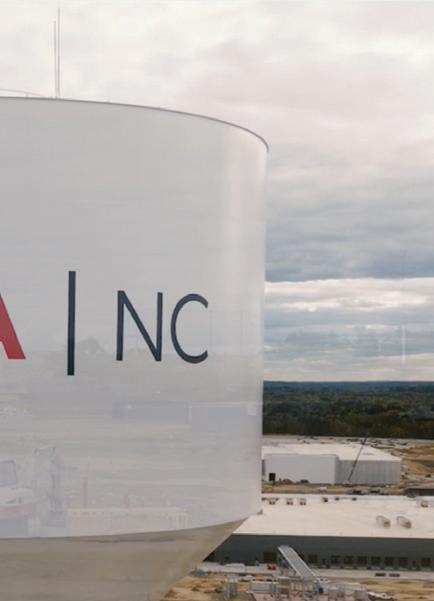

To meet demand, Toyota announced the second phase of its proposed 7-million-square-feet manufacturing center launched 20 miles south of Greensboro in 2021. e expansion will add eight manufacturing lines to the two that Toyota previously announced, including capacity for hybrid vehicle batteries. It expects to eventually employ about 5,100 people in Randolph County.
Toyota is bene ting from its emphasis on hybrid vehicles, rather than promoting all-electric vehicles auto analysts say. Its sales in the U.S. soared 23% in the rst three months of this year, aided by new hybrid versions of its Prius, Camry and Rav4 models. EV leader Tesla, which doesn’t o er hybrids, reported a nearly 9% decline in deliveries, its rst quarterly decrease since 2020. Hybrid, hydrogen-powered and battery-electric vehicles made up 36% of total Toyota sales in the rst quarter. e company says it takes the same amount of battery resources to make one EV as it does to produce 90 hybrids because materials are so scarce.
Still, Toyota says it plans to o er 30 all-electric vehicles by 2030.

Bac Giang City, Vietnam
▪ NEW JOBS: 908
▪ COUNTY: Pitt
▪ PROJECTED INVESTMENT: $294 million
▪ N.C. CASH INCENTIVES: $8.28 million over 12 years
▪ LOCAL INCENTIVES: $18 million
e company is part of China’s publicly traded Boway Alloy, a material manufacturer. Boviet will make solar panels and photovoltaic cells for commercial, residential and industrial markets in the U.S. Its Greenville operations will span 1 million square feet in a vacant facility and newly constructed space. Boviet considered 60 possible locations in nine states before picking nalists Greenville, Phoenix and Atlanta. e area’s modest cost of living, proximity to ports and highways, and skilled workforce helped Pitt County win its largest-ever economic development project.


San Bruno, California
▪ NEW JOBS: 852
▪ COUNTY: Randolph
▪ PROJECTED INVESTMENT: $450 million
▪ N.C. CASH INCENTIVES: $7.61 million over 12 years
▪ LOCAL INCENTIVES: $40 million
Not all of Randolph County’s recent wins involve batteries. In Randleman, near the junction of I-74 and U.S. 311, discount retailer Ross Stores plans 1.7 million square feet of distribution space. e company, founded in 1950, does business as Ross Dress for Less, operating 1,765 stores in the U.S. and Guam. Abundant available labor helped the community seal the deal. Last year, Klaussner Furniture shuttered its operations in the county, idling 884 workers.
Tokyo, Japan
▪ NEW JOBS: 680
▪ COUNTY: Wake
▪ PROJECTED INVESTMENT: $1.2 billion
▪ N.C. CASH INCENTIVES: $14.99 million over 12 years
▪ LOCAL INCENTIVES: $54.3 million
Just three years a er announcing its initial $2 billion investment in Holly Springs, Fuji lm unveiled expansion plans for its large-scale cell culture manufacturing site there. Based in Denmark but part of a Japanese conglomerate, the company credited the community’s diverse talent pool, infrastructure and sustainable energy resources. e new jobs, which expand on the site’s existing payroll of about 700, are expected to pay an average annual wage of nearly $110,000.


Munich, Germany
▪ NEW JOBS: 559
▪ COUNTIES: Mecklenburg/Wake
▪ PROJECTED INVESTMENT: $150 million
▪ N.C. CASH INCENTIVES: $6.98 million over 12 years
▪ LOCAL INCENTIVES: $5.4 million
Siemens Energy arrived in Charlotte in 1969 and employs about 1,200 at its turbine-manufacturing plant o Westinghouse Boulevard. e company’s expansion plans center on repurposing about 53,000 square feet of oor space to manufacture large power transformers. With long production lead times, the school bus-sized equipment is a key component of the nation’s electrical grid. e company’s engineering center in Raleigh expects to add 84 positions. Siemens had considered expanding a facility in Kansas for the project.

Shenzhen, China
▪ NEW JOBS: 545
▪ COUNTY: Lincoln
▪ PROJECTED INVESTMENT: $140 million
▪ N.C. CASH INCENTIVES: $3.64 million over 12 years
▪ LOCAL INCENTIVES: $2.5 million
Established in 2023, China’s Green New Energy Materials supplies lithium-ion battery components for electric vehicles, tools and industrial equipment. It maintains strategic partnerships with Tesla, Ford, LG and others. It is leasing a half million square feet at Lincoln Commèrce Center, its rst U.S. site, with production slated to start next year.


Flushing, New York
▪ NEW JOBS: 501
▪ COUNTY: Johnston
▪ PROJECTED INVESTMENT: $83.6 million
▪ N.C. CASH INCENTIVES: $14.4 million over 12 years
▪ LOCAL INCENTIVES: $3.7 million
A 43-acre site in Selma, 30 miles southeast of Raleigh, will house Crystal’s new plant. e company founded in 1990 supplies windows and doors to residential and commercial builders in 40 states. Local leaders credited recent investments in public infrastructure for landing Crystal, which plans to pay average annual wages of about $56,000. “Sound economic fundamentals are Selma’s secret sauce when it comes to job creation and prosperity,” Mayor Byron McAllister said.

Mumbai, India
▪ NEW JOBS: 500
▪ COUNTY: Brunswick
▪ PROJECTED INVESTMENT: $650 million
▪ N.C. CASH INCENTIVES: $3.44 million over 12 years
▪ LOCAL INCENTIVES: $13.75 million
Proximity to southern U.S. automotive supply chains, along with community college training support, helped convince Epsilon to build a 1.5-million-square-foot synthetic graphite production facility at Mid-Atlantic Industrial Rail Park, about 18 miles from the Port of Wilmington. e material is a component of clean-energy batteries, enabling a faster, longer-lasting charge than natural graphite. e expansion caps o Southeastern North Carolina’s “near-port” economic development vision, which regional leaders launched 15 years ago to promote large sites within easy reach of the port.
Gerlingen, Germany
▪ NEW JOBS: 400
▪ COUNTY: Lincoln
▪ PROJECTED INVESTMENT: $130 million
▪ N.C. CASH INCENTIVES: $12.73 million over 12 years
▪ LOCAL INCENTIVES: $4.4 million
Bosch has produced power tool accessories in Lincolnton since 1960. Its most recent expansion there, announced last June, will add more than 325,000 square feet of manufacturing, logistics and warehouse space. e project, which should be complete by next summer, represents Lincoln’s largest capital investment, according to the county’s economic development group. Germany’s Robert Bosch GmbH was founded in 1886 and employed about 429,000 globally as of Dec. 31.

Mainz, Germany
▪ NEW JOBS: 401
▪ COUNTY: Wilson
▪ PROJECTED INVESTMENT: $371 million
▪ N.C. CASH INCENTIVES: $4.94 million over 12 years
▪ LOCAL INCENTIVES: $16.1 million
Wilson’s 587-acre corporate campus will be home to the country’s only manufacturing facility for pre llable polymer syringes for mRNA medications. Schott Pharma USA is a unit of Germany’s Schott Group, a 140-year-old specialty glassworks maker. e facility will triple the company’s syringe production by 2030, insulating medical supply chains from shipping disruptions and price spikes that occurred during the pandemic. Highway access and proximity to Research Triangle Park, which is 50 miles west, aided Wilson, which competed with Upstate South Carolina for the investment.
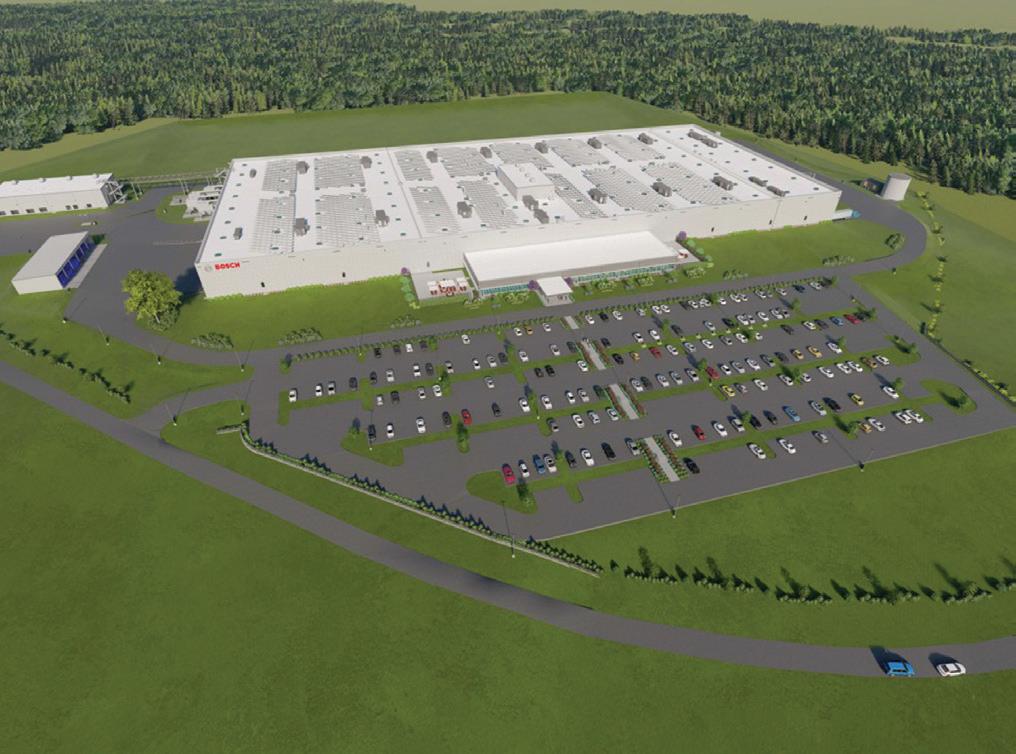
Minneapolis, Minnesota
▪ NEW JOBS: 400
▪ COUNTY: Mecklenburg
▪ PROJECTED INVESTMENT: N/A
▪ N.C. CASH INCENTIVES: N/A
▪ LOCAL INCENTIVES: N/A
Ameriprise Financial, which runs a national network of investment, insurance and wealth-management businesses, opened a corporate o ce last year on two oors of downtown Charlotte’s Barings Building. Joe Sweeney, a senior Ameriprise executive, called Charlotte “a vibrant and growing city with a strong, diverse and talented workforce.” e company had hired about 150 people as of May. Owned by American Express starting in 1984, Ameriprise went public in 2005. It has more than $1 trillion of assets under management and a market cap of about $42 billion.

Tokyo, Japan
▪ NEW JOBS: 352
▪ COUNTY: Davidson
▪ PROJECTED INVESTMENT: $233 million
▪ N.C. CASH INCENTIVES: $2.74 million over 12 years
▪ LOCAL INCENTIVES: $1.85 million
Dai Nippon Printing’s rst U.S. manufacturing facility will produce lithium-ion battery casings for use in electric vehicles, laptops, tablets and smartphones. e company was founded in 1876 and will be I-85 Corporate Center’s second industrial resident, joining Austria’s Egger Wood Products. It has more than 30,000 corporate clients, ranking among the world’s largest printers.


Winston-Salem
▪ NEW JOBS: 330
▪ COUNTY: Guilford
▪ PROJECTED INVESTMENT: $458 million
▪ N.C. CASH INCENTIVES: $5.4 million over 12 years
▪ LOCAL INCENTIVES: $28.5 million
Veteran pharma industry executive Tim Bertram founded ProKidney in 2018. Its pioneering renal autologous cell therapy has the potential to preserve kidney function for high-risk patients. Chronic kidney disease a ects about 75 million people in the United States and Europe and 400 million more in Asia. Last June, the company announced plans for a 210,000-square-foot site in Greensboro. e expansion was paused in November and Bertram was replaced as CEO by Dr. Bruce Cullerton, who joined the company several months earlier. ProKidney said it needs to address a quality management audit that identi ed some de ciencies.

Greensboro
▪ NEW JOBS: 280
▪ COUNTY: Guilford
▪ PROJECTED INVESTMENT: $55.7 million
▪ N.C. CASH INCENTIVES: $3.4 million over 12 years
▪ LOCAL INCENTIVES: $1.13 million
Last fall, the Japanese-owned company unveiled its newest light business jet, the seven-passenger HondaJet Echelon, which is expected to start ying in 2026 and be certi ed in 2028. Known previously as HondaJet 2600, the aircra is designed to be the world’s rst single-pilot light jet capable of nonstop transcontinental ight. e company’s expansion at PTI Airport will establish production lines for the Echelon, which is expected to cost about $10 million to $12 million, according to trade publications.


Maryville, Tennessee
▪ NEW JOBS: 263
▪ COUNTY: Stanly
▪ PROJECTED INVESTMENT: $46.6 million
▪ N.C. CASH INCENTIVES: $2.06 million over 12 years
▪ LOCAL INCENTIVES: $2.7 million
Owner Clayton Home Building Group is the nation’s largest builder of manufactured housing and modular homes. It is part of Warren Bu et’s Berkshire Hathaway conglomerate. e New London site is about 40 miles from Charlotte, and the company will pay average salaries of nearly $59,400, well above the county’s overall $41,612 average. Clayton also makes homes in Rowan and Granville counties.
Hickory
▪ NEW JOBS: 250
▪ COUNTY: Catawba
▪ PROJECTED INVESTMENT: $60.3 million
▪ N.C. CASH INCENTIVES: $1.9 million over 12 years
▪ LOCAL INCENTIVES: $1.5 million over six years
CommScope, which has been making cable in Hickory for 45 years, is investing in a four-year expansion of production capacity to meet the nation’s strong demand for rural broadband access. Frank Drendel and Jearld Leonhardt started the company in 1976 and a er several large acquisitions, it employs more than 20,000 people. Sales slumped to $5.8 billion last year, a 23% decline from 2022.


Denver, Colorado
▪ NEW JOBS: 204
▪ COUNTY: Wake
▪ PROJECTED INVESTMENT: $165 million
▪ N.C. CASH INCENTIVES: $1.53 million over 12 years
▪ LOCAL INCENTIVES: $3 million over five to eight years
Colorado-based Forge Nano applies atomic-scale coatings to boost the performance of materials used in batteries. Its Forge Battery unit is building a factory in Morrisville to produce lithium-ion battery cells for electric vehicle, military and aerospace buyers. e company traces its roots to engineering labs at the University of Colorado. It has raised $95 million in capital, according to a June 2023 release, with key backing from Korea’s Hanwha Corporate Venture Capital.

Winston-Salem
▪ NEW JOBS: 199
▪ COUNTY: Forsyth
▪ PROJECTED INVESTMENT: $50 million
▪ N.C. CASH INCENTIVES: zero
▪ LOCAL INCENTIVES: $1.4 million over five years
As sons of U.S. missionaries in Mexico, brothers Dan, Nat and Phil Calhoun grew up with an appreciation for Latin American culture and a uency in Spanish. e three formed a business in the mid1990s that made tortillas for Mexican restaurants around WinstonSalem. ey later added other products to what became a specialty food distribution business that serves a 10-state footprint. Last year, Purple Crow launched a consolidation of its four Triad locations into a single 854,000 square-foot facility in Winston-Salem.


Neumarkt, Germany
▪ NEW JOBS: 195
▪ COUNTY: Iredell
▪ PROJECTED INVESTMENT: $38.6 million
▪ N.C. CASH INCENTIVES: $1.17 million over 12 years
▪ LOCAL INCENTIVES: $1.84 million over seven years
e 114-year-old, family owned company makes surgeprotection equipment, lighting and safety gear designed to protect infrastructure. It holds 1,100 patents. Its new facility in Mooresville will serve as headquarters for its U.S. division. Proximity to Charlotte Douglas International Airport, strong regional highways and abundant internet infrastructure helped draw the company to Iredell County. Dehn considered 350 possible U.S. locations, with Auburn, Alabama, and Columbia, South Carolina, joining Mooresville as nalists.

Rochester, New York
▪ NEW JOBS: 173
▪ COUNTY: Granville
▪ PROJECTED INVESTMENT: $2.9 million
▪ N.C. CASH INCENTIVES: $2.1 million over 12 years
▪ LOCAL INCENTIVES: N/A
Auction Direct began in 2004 as a superstore for used vehicles. rough a new subsidiary known as a.i.m, the business is working through digital channels and a network of dealers to provide both wholesale and retail vehicles. e company’s Granville County operations, which will recondition cars and trucks, will be housed in a section of the former Santa Fe Natural Tobacco building in Oxford. e building had been vacant for a year prior to Auction Direct’s June 2023 announcement. A $500,000 Department of Commerce grant will support the reuse of the 122,085-square-foot building.

Jacksonville, Florida
▪ NEW JOBS: 157
▪ COUNTY: Chatham
▪ PROJECTED INVESTMENT: $39.8 million
▪ N.C. CASH INCENTIVES: $1.83 million over 12 years
▪ LOCAL INCENTIVES: $1.1 million over five years
Part of PulteGroup since 2020, Innovative Construction Group supplies builders of wood-frame single-family, multifamily and commercial projects. Its new facility in Siler City follows the purchase of about 46 acres at the 1,802-acre Chatham-Siler City Advanced Manufacturing Site, where Wolfspeed is building a $5 billion silicon carbide plant. ICG is planning a facility that may be as large as 200,000 square feet with operations expected to launch in 2027.




Charlotte
▪ NEW JOBS: 170
▪ COUNTY: Rowan
▪ PROJECTED INVESTMENT: $21 million
▪ N.C. CASH INCENTIVES: $1.62 million over 12 years
▪ LOCAL INCENTIVES: $269,248 over five years; Rowan County also sold Amrep approximately 20 acres for about $300,000 below tax value.
Amrep is a subsidiary of Charlotte-based Wastequip, a “one-stop shop” for waste hauling, collecting, storing and transportation. e company makes totes and other waste-handling equipment. Amrep’s new 80,000-square-foot building in Salisbury, adjacent to an existing company facility, will produce front-load and automated side-load trucks for curbside collection. It will have the capacity to produce 800 trucks annually.





Charlotte
▪ NEW JOBS: 150
▪ COUNTY: Mecklenburg
▪ PROJECTED INVESTMENT: $14.5 million
▪ N.C. CASH INCENTIVES: $1.83 million over 12 years
▪ LOCAL INCENTIVES: $555,000
Founded in the mid-1950s by the Pennsylvania Railroad, TTX has a eet of more than 175,000 railcars. It is owned by the large North American railroads, operating as a cooperative to provide exibility, e ciency and reduced capital expense. Chicago had been its corporate headquarters since 1971, but the company said in July 2023 that it was moving to Charlotte’s South End area. About 100 TTX employees are relocating to the Queen City.


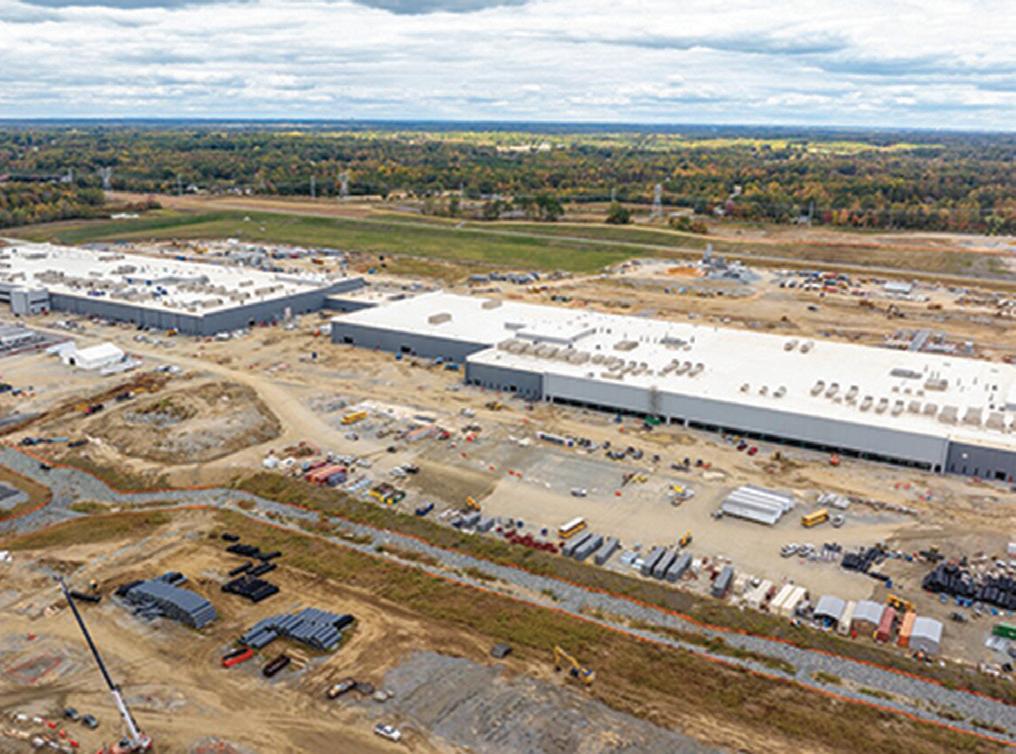
Liberty
▪ NEW JOBS: 133
▪ COUNTY: Randolph
▪ PROJECTED INVESTMENT: $60.4 million
▪ N.C. CASH INCENTIVES: N/A
▪ LOCAL INCENTIVES: N/A
Established in July 2023, FTBC is 60% owned by Fujihatsu Tech America and 40% by Toyota Tsusho America, a Toyota Motor subsidiary. e new venture will produce aluminum cell cases and cell covers for automotive batteries. Production is expected to start next year at an unoccupied spec building in Liberty. ere are no state incentives, but the town of Liberty is receiving a $325,000 grant from the Rural Infrastructure Authority to assist with renovations to the 23-year-old building.




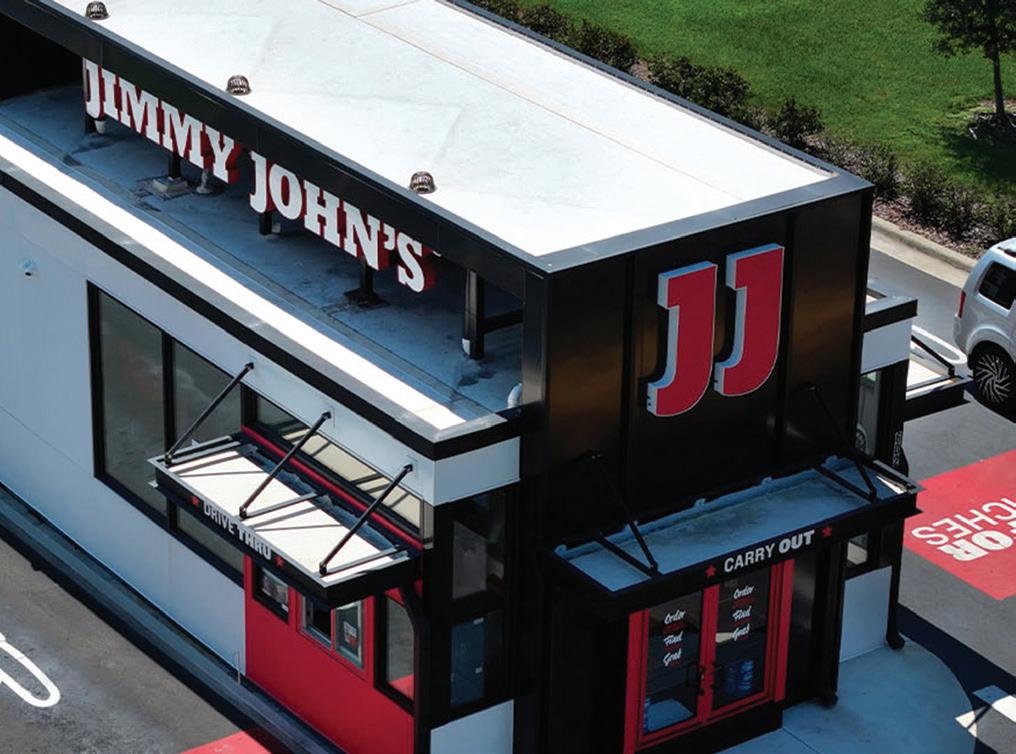
Mount Holly
▪ NEW JOBS: 116
▪ COUNTY: Gaston
▪ PROJECTED INVESTMENT: $2.95 million
▪ N.C. CASH INCENTIVES: N/A
▪ LOCAL INCENTIVES: $45,000
Since 2008, Boxman Studios has repurposed shipping containers into permanent and “pop-up” housing, quick-serve restaurants, retail outlets and other spaces. e conversions are as much as 60% faster than traditional construction, rm o cials say. But the resulting modular space makes for unmistakably memorable user experiences. Arby’s, Sonic and Wa e House are listed among Boxman’s clients. A state building reuse grant of $350,000 payable to Gaston County is supporting the renovation of a 290,298-square-foot building in Mount Holly occupied by the company.
By Kevin Ellis
The Association spotlighted its top achievers at its annual conference in Wilmington in June. e award winners, representing both big cities and small towns, helped arrange signi cant deals that prompted new jobs and investments in their communities.


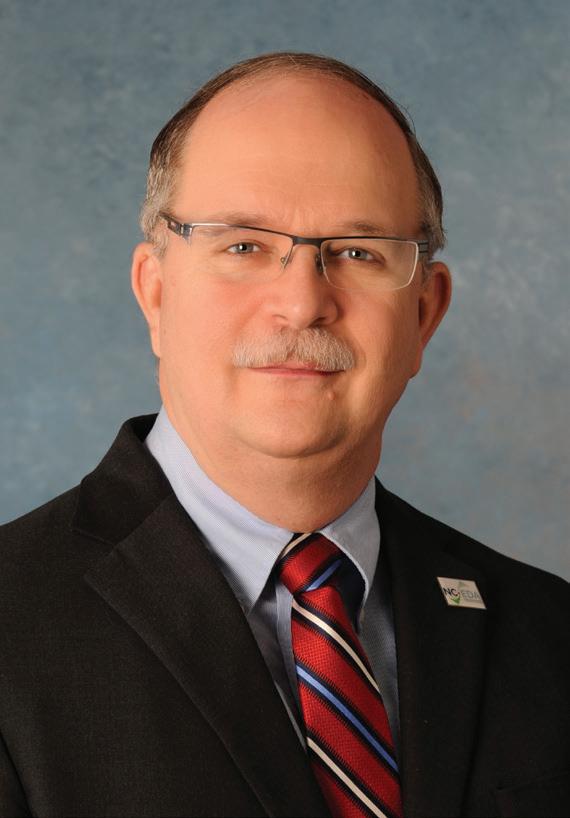
Gary Lanier director
Columbus County Economic Development Commission
Brewton, Alabama-based technology provider Provalus rst considered Whiteville for an expansion in 2019, but chose Manning, South Carolina.
When Provalus looked again at expansion last year, company o cials remembered how the eastern North Carolina town impressed them, including a well-attended job fair during the rst go-round. “ ey didn’t forget about us in that recruitment process,” says Gary Lanier, economic development director for Columbus County since 2010.
Provalus expects to have as many as 300 workers in downtown Whiteville within ve years. Locals call it the biggest jobs announcement for Columbus County in 40 years. It’s transformational for a county of about 50,000 people that has lost about 13% of its population since 2010, Lanier says.
“We’re constantly ghting to provide opportunities for our young people,” says Lanier.
Provalus began in 2017, providing full-service technology outsourcing services. Its six sites are in small towns in ve states.
Columbus County is the state’s third-largest county by area and 51st in population. e community’s small-town character attracted Provalus, says Lanier.


Lanier helped convince the city of Whiteville and Columbus County to buy a downtown building for $697,000, which Provalus will occupy, says Kelly Stuart, a broker with Sun Coast Partners Commercial, who represented the sellers. Lanier says the deal took cooperation beyond local governments.
“Economic development is a team e ort all day long,” he adds.
Marshall Aerospace said “yes” to Greensboro in April, promising to bring 240 jobs and a $50 million investment to establish a maintenance and engineering facility to support its contract work with military airplanes.
It had been 18 months since the company rst approached the Greensboro Chamber in October 2021. e project had been won, lost and won again.
Marshall Aerospace was unsure if North Carolina had the right aviation talent to t its needs. Other cities, including Birmingham, Alabama, and St. Louis also sought the project.
Recruitment leaders, Chamber Executive Vice President Marvin Price and Dylan Finch, senior business recruitment manager at the Economic Development Partnership of North Carolina, exchanged a st bump over lunch a er the announcement.
“Sometimes with projects you’ve just got to stay patient and keep yourself in the game,” says Finch.
To soothe Marshall’s doubts about talent availability, Price and Finch brought in experts from North Carolina A&T State University, Guilford Technical Community College and Guilford Works.
ey also introduced Marshall o cials to people from existing employers such as Honda Aircra and HAECO Americas.

Marshall o cials gained trust and came to feel that this deal was “only the start of a beautiful partnership,” says Calissa Holder, the Greensboro Chamber marketing manager.
Marshall o cials also talked with Piedmont Triad International Airport Executive Director Kevin Baker. Price calls Baker the “secret sauce…He speaks their language. He’s an engineer. He can talk about airplanes. He geeks them out.”
Price joined the Greensboro Chamber in November 2020 a er about four years with the Charlotte Regional Business Alliance. e Alabama native was the NCEDA Economic Developer of the Year in 2023. Finch grew up in Durham and is a 2015 graduate of N.C. State University. He joined the EDPNC in October 2020 a er working for almost four years in sta roles in the N.C. General Assembly.
Addition of UK-based Marshall builds upon Greensboro’s reputation as an aerospace hub of the South. In mid-June, Colorado-based Boom Supersonic celebrated completion of its $500 million Greensboro jet-assembly plant, which was announced in 2022.
“Maybe we’re not the aerospace capital of the South,” says Price. “Maybe we’re the transportation innovation capital of the South.”



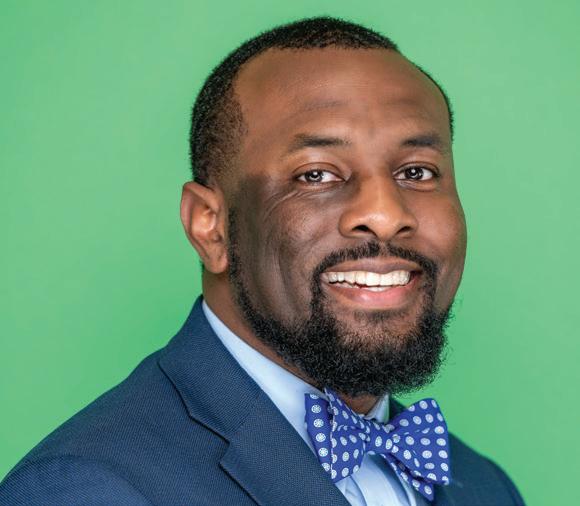

Despite a job leading economic development in one of the state’s hottest counties and serving for more than 28 years as associate pastor at Faith Baptist Church in Ramseur, Kevin Franklin says he lives in anonymity.
“People have no idea of who I am or what I do,” says Franklin. “But when I drive by a parking lot full of cars at a place where we have helped locate a business, it makes me happy.”
As president of Randolph County Economic Development, he helped recruit the largest economic development project in North Carolina history. In 2021, Toyota Battery Manufacturing North Carolina announced a $1.29 billion investment in Liberty, then expanded the project in 2022.
Last October, the Japanese automaker added $8 billion and 3,000 more jobs to the project, bringing the total investment to $13.9 billion and about 5,100 jobs.
“I still sometimes can’t believe the level of investment they are making,” says Franklin, who moved to Randolph County in 1992 to teach high school history at a private Christian school. “I sometimes have to remind the county and city leaders that we’re not going to have $8.5 billion investments every year.”
Times weren’t always so good. In 2012, CBS’ “60 Minutes” featured the county seat in a story titled “ e Death and Life of Asheboro” that painted a dismal view of economic recovery from the Great Recession. Around that time, Franklin recalls, a textile mill had closed in Ramseur where he served as town administrator, putting hundreds of people out of work.
Franklin had worked on economic development in Ramseur and gone through training o ered by the N.C. Rural Center. When Randolph County’s economic agency o ered him a job in 2013, he took it. He became the group’s president in June 2019.
“A lot of the success we’ve had comes because there was a great foundation laid before I ever stepped into this role,” says Franklin. ose who work with Franklin describe him as someone with a passion for the community, who listens attentively and is unafraid to take on challenges.
“He doesn’t seek fame, but rather works tirelessly for the betterment of the community he holds dear,” wrote Greensboro Chamber executive Marvin Price, who nominated Franklin.

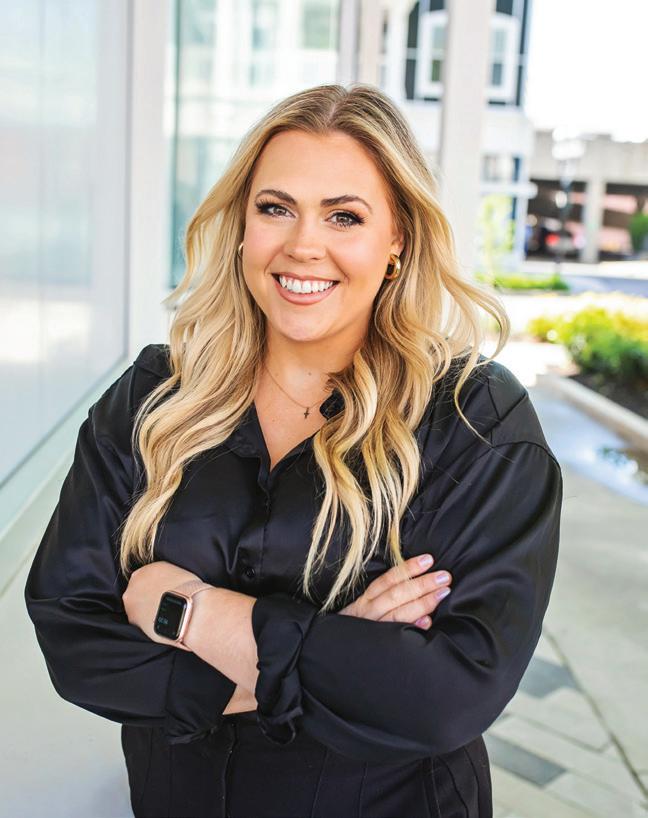
Elizabeth Underwood workforce development manager Lake Norman Economic Development
People may think Elizabeth Underwood always wanted to follow in her mother’s footsteps. Melanie O’Connell Underwood has worked in economic development for 30-plus years, including the past eight with EDPNC.
But the Mooresville native wanted to put her communications and public relations training from UNC Charlotte in 2020 to work abroad with a large rm. She didn’t plan on having a “COVID graduation,” which put international travel and opportunities overseas on hold.
A friend of her mom’s at EDPNC suggested that Elizabeth consider a job with Beaufort County Economic Development on the N.C. coast. She worked almost a year there with existing industry, then returned to her home county in June 2021 to join Lake Norman Economic Development.
“I feel most successful when I go past a building where we have helped locate a business and see the parking lot full of cars with people working at high paying jobs,” says Underwood. Her work with preparing high school students for jobs led to the NCEDA naming her its innovator of the year.
Last summer, she managed the PIVOT program, which provided paid summer internships to 19 high school students. is summer, 80 students applied for the available 21 spots. e program teaches students so skills and how to act on a job site, while introducing them to di erent industries.

“ e whole point is to take away the barriers to employment,” says Underwood.


Underwood also chairs the NCEDA Emerging Executives, which helps mentor newcomers in economic development. She and Trey Cash, the economic development director for Greene County, started a podcast last year titled “ e New Economic Developers on the Block” that has 2,000 downloads. e every-other-week podcast has interviews with economic developers from across the state. Underwood starts a new job as director of Stanly County Economic Development in July.

Page Castrodale executive director, Cabarrus Economic Development
Page Castrodale was looking to do something new when she joined the Cabarrus County Economic Development in October 2018 to help existing industries. In December 2020, she became executive director a er four months in an interim role. She credits her predecessor, Robert Carney, with including her in all facets of the group’s work.
Castrodale and her Cabarrus County team, including project manager Samantha Grass and business support manager Stephanie Burleson, have helped secure some of the state’s biggest economic wins.
In 2021, Red Bull and Rauch North America announced a $740 million investment that would bring more than 400 jobs to a “beverage campus” at the site of a former Philip Morris cigarette plant. It was the largest economic development announcement in Cabarrus County history at the time. Construction hasn’t started at the site.
In 2022, Eli Lilly announced it would make a $1 billion investment at the former Philip Morris site, which the Indianapolis-based company has since doubled to $2 billion. e company plans to hire more than 600 workers to produce weight-loss and diabetic drugs at the site. Lilly says it will begin production later this year.
Castrodale says her team is focused on making Cabarrus County a better place to live through better paying jobs for residents. “We see it as a service to our community,” she says.
Average wages in Cabarrus County have increased nearly 19% over the past four years, from $41,255 in 2021 to $49,058 now, re ecting new employers and competition for labor.
Castrodale grew up in Youngsville in Franklin County. She met her husband, Andrew, while both were students at UNC Chapel Hill in the mid 2000s. ey returned to his home county in 2017 a er he le military service.
e couple have three boys and a girl who range in age from 6 to 12. “I go home at the end of the day and start my second shi ,” she says.
One of Katherine omas’ skills can only be described as being a “great connector,” says Joanna Helms, the economic development director for the town of Apex.
“She has an uncanny way of knowing when two people that she knows, that do not know each other, need to meet and get to know one another,” says Helms, who credits omas with some of her best professional connections.
As president this year of the 900-member N.C. Economic Development Association, Helms picked omas as a recipient of the President’s Award.

omas worked in economic development roles for about 30 years with Raleigh-based Progress Energy, leaving in 2012 as director of community relations and economic development a few months a er the company’s merger with Duke Energy. She joined Alfred Williams & Co. in 2013, and a year later became vice president of business development and marketing of the interior design company for businesses and o ce spaces.


At Progress, omas she “convened a women in economic development” conference well before such events became common.
omas was born in Barnwell, South Carolina, but grew up in Gastonia and is a graduate of Ashbrook High School. She has a business degree from Meredith College. She says she knew she wanted to work in economic development early on.
“It was an opportunity to make a di erence statewide,” says omas. “When you think about it, the creation and retention of jobs is one of the best ways to help a community.”
While working for Progress, omas was on the NCEDA board for seven years and was president in 2009-10.

Economic developers take many paths toward their careers, but o en talk among themselves that only a few ever studied the profession in college, says Mary Lesa Pegg, a project manager for the Economic Development Partnership of North Carolina.
Last year, Pegg began considering how to introduce college students to potential economic development jobs. She leveraged her network to get more than two dozen professionals in construction, utilities, local government and other economic developers to lead discussions at a one-day seminar in Greensboro.
e North Carolina Economic Development Career Trek in February attracted about 60 college students, mostly from UNC Charlotte, UNC Greensboro and N.C. A&T State University. “I did not see a student on their phone all day,” says Pegg. Pegg grew up in Winston-Salem and has a bachelor’s degree from East Carolina University and two master’s degrees from UNC Greensboro. She worked for the Greensboro school for seven years before joining EDPNC in 2020. Helping put people to work in wellpaying jobs is “what gets me out of bed every morning,” she says.
Kelly Andrews was born in Pitt County, grew up about 15 miles north of Greenville in Bethel, and has worked 18 years to bring economic development to her community.
Economic developers don’t have to be from their hometowns, but Andrews says it adds motivation.
“For me, it’s home. And not only do I get the professional satisfaction, but also the personal satisfaction because this is my home,” she says. “I’m a small town girl from a town of 1,500 people that had one stoplight, that’s now a ashing light. I want to help all of the communities in Pitt County thrive.”
Andrews graduated from UNC Chapel Hill in 1994 with a business degree and earned an MBA from East Carolina University in 1998. She joined Pitt County Economic Development in 2006 and was named director in 2020.




In June, Pegg joined Norfolk Southern as an industrial development manager, where she will focus on economic development projects related to rail lines. She will be based in Raleigh and remain active with NCEDA. ■

In April, Vietnam-based Boviet Solar announced it would invest $294 million and create 908 jobs to make solar panels in Greenville. It’s the Chinese-owned company’s rst North America plant. e announcement represents only part of the story. “ ere’s so much work that goes on before the announcement, under the surface,” she says. at work includes nding space for the company and showing o cials the community college can help train its workers.
“We have a lot of partners here that are really behind championing the right kind of growth,” she says. “Businesses are starting to see the potential of Pitt County.”

Mary Lesa Pegg project manager
EDPNC
Largest layoffs in North Carolina over the past year.





By Chris Roush
Lots of companies are investing in new North Carolina operations, but dynamic capitalism means some are heading out, also.
irty-businesses have announced layo s impacting about 3,800 workers in the rst ve months of the year, according to the N.C. Commerce Department. In 2023, more than 7,000 workers involved in manufacturing, transportation and warehousing were involved in mass layo s. e state requires companies with plans to close a facility or conduct a mass layo to le notice with the state.
To put that in perspective, North Carolina had 5.08 million employed individuals as of April, virtually unchanged from a year earlier. e unemployment rate has remained less than 4% since
December 2021, ending April at 3.5%.
“What do you say to those 7,000 people that have lost jobs,” says Kevin Martin, executive director of the Carolina Utility Customers Association in Raleigh. “Some of them have gotten jobs, but it’s heartbreaking and doesn’t even count those that serve the entity that shut down.”
e following list shows the layo s of at least 100 workers since July 2023. It is topped by the bankruptcy of trucking giant Yellow and the collapse of longtime furniture manufacturers Klaussner Furniture in Asheboro and Taylorsville-based Mitchell Gold + Bob Williams. e closings re ect a wide range of industries, though North Carolina’s traditional textiles and furniture sectors appear to be the hardest hit. ■






By Alyssa Pressler

Organizations across North Carolina are going beyond their business duties by finding intentional ways to get involved with their communities. Leaders have found not only does giving back strengthen their business relationship with the local community and their clients or customers, but it also increases engagement with their employees, who feel proud to participate in a company which cares about more than the bottom line. Be it organized volunteer days or fundraising, we explore some of the ways Delta Dental of North Carolina, EmergeOrtho and Drucker + Falk are giving back to their communities.



Elaine Loyack has seen firsthand the difference access to quality dental care can make. As Delta Dental of North Carolina’s VP of Community Engagement and Government Relations, she’s had countless interactions with those most affected.
For example, she remembers visiting a dental clinic as a part of Delta Dental’s Smiles for Kids program, a mini grant program that awards grants of up to $5,000 to help fund dental education initiatives and programs designed to promote children’s oral health.
During her visit, a mother came up to Delta Dental of North Carolina’s CEO Curt Ladig and thanked him for the work they are doing. Overnight, the mother’s straight-A, school-loving daughter was struggling and no one understood why until they discovered she was having dental issues. The mother explained they couldn’t go to a private practice, but the Smiles for Kids program allowed her to affordably help her child.
“When children have tooth pain it’s hard to sleep and hard to focus in the classroom,” Loyack says. “Children with untreated tooth pain may not be smiling very much, they may have a hard time making friends, and then it starts to affect mental health.”
Since the program started in 2011, Delta Dental of North Carolina’s philanthropic arm, the Delta Dental Foundation (DDF), has awarded $910,000, which has served more than 500,000 children and their families through the Smiles for Kids program. Additionally, general grants have touched more than 100,000 lives and are close to reaching one million dollars.
That’s just one aspect of the not-for-profit dental insurance carrier. The organization’s mission is to improve the oral health and overall well-being of the communities they serve, and they do this both by providing the broadest access to affordable and quality dental care as well as giving back to the communities through the DDF. A portion of Delta Dental’s residuals each year go to nonprofits focused on oral health services or oral health education, particularly for people who are underserved in communities across North Carolina.
One of the company’s focus areas is oral hygiene education, including donating to dental schools throughout the state as well as providing scholarship opportunities for students. Like other areas of health care, Loyack says there’s a shortage of dental hygienists and dental assistants which could have dire consequences on community health as a whole.






Delta Dental also funds dental schools for programming that provides students with hands-on experience and gives back to the community. One example is the free care for veterans provided by East Carolina University’s School of Dental Medicine. With funding from the DDF, students and faculty provide dental services, including dentures, for a population that often goes without dental care for various reasons.
And, as of May, Delta Dental introduced the Special Health Care Needs Benefit, a program which offers enhanced benefits to members with physical, developmental, mental, sensory, behavioral, cognitive, or emotional impairments or limiting conditions. Those individuals have access to additional cleanings, additional visits and consultations and treatment delivery modifications at no additional cost.
“People may not always realize the importance of their dental health, yet it plays a crucial role in overall well-being and significantly contributes to many important health factors,” Loyack says. This is why she and the Delta Dental of North Carolina team will continue to improve access for care statewide.









As a family-owned and operated business, Drucker + Falk upholds the core values it was founded upon, one of which is giving back to the communities they serve.
Founded 86 years ago, Drucker + Falk is now in its third generation of family ownership. Specializing in property management for multi-family homes, commercial real estate, and brokerage services.
For over two decades, Drucker + Falk has been dedicated to making a meaningful impact in the cities and states where they operate. In 2001, they established the Friends in Deed program to facilitate donations to nonprofits selected by employees. Kellie Falk, Managing Director, and Principal of Drucker + Falk, highlights that they have supported organizations such as A Safe
Place, National Asian Pacific America Women’s Forum, and NC Hospitality Workers Relief Fund, among others.
“We’re fortunate enough to have jobs and financial stability, and we can share that fortune with others,” Falk emphasizes.
With operations spanning several cities and states, Drucker + Falk empowers employees to choose nonprofits they feel personally connected to. This localized approach allows employees in Raleigh to support different causes than those in Wilmington or Charlotte, fostering a deeper personal investment in their communities.
Drucker + Falk expanded its philanthropic efforts by encouraging employees to donate their time. They launched the Day of Giving program, which grants employees a paid
day off to volunteer with a charity of their choice. This initiative often sees departments and coworkers volunteering together, promoting team building and camaraderie.
Throughout the year, Drucker + Falk also spearheads company-wide initiatives, including letter-writing stations for active military members and participating in Wreaths Across America, a national nonprofit that places wreaths on veterans’ headstones.
“We were raised to give back to our communities by our parents and grandparents, and we wanted to share that fulfilling experience,” Falk explains. “Incorporating this mindset into our mission and values allows us to be a more integral part of the communities we work in.”

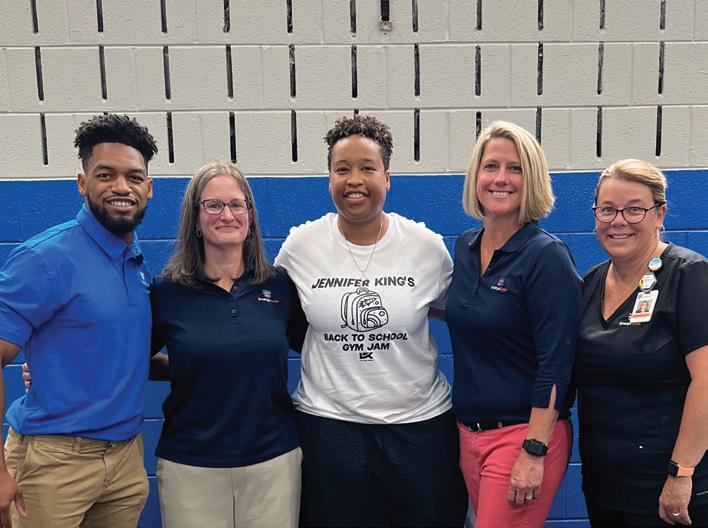

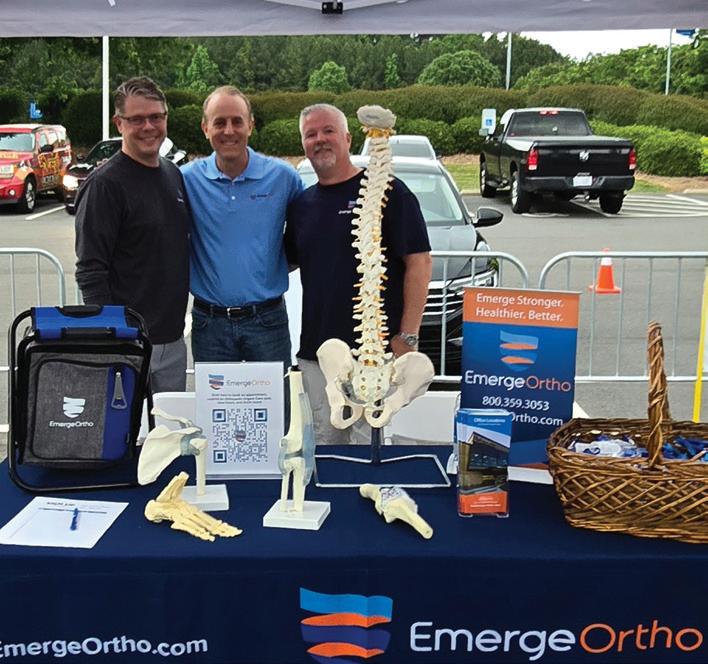


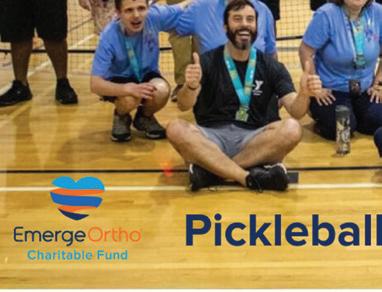
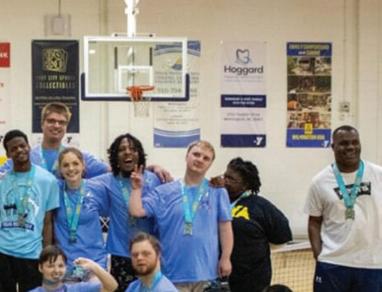

As one of the largest independent orthopedic practices in the country, EmergeOrtho is no stranger to the importance of providing for the communities they serve. With 62 locations and over 170 physicians in North Carolina, one of the company’s missions is to ensure patients have access to high quality orthopedic care no matter where they are.
“We have walk-in and same day appointments, we have mobile MRIs to reach rural communities,” says Allison Farmer, EmergeOrtho’s CEO. “Our infrastructure includes inpatient, outpatient and ambulatory surgery center options. We also offer a robust therapy program to enhance our patient outcomes. We are very passionate about patient access and meeting the patients of North Carolina where they are.”
Still, a few years ago leadership wanted to do more. The EmergeOrtho Charitable Fund was established with the goal of
supporting nonprofits which focus on healthy living in the communities EmergeOrtho serves. Since its start, over $300,000 has been donated to various organizations.
The Fund was established in partnership with the Foundation for the Carolinas and has supported organizations including American Foundation for Suicide Prevention, Eden Village of Wilmington, Crossnore Communities for Children, Out of the Garden Project in Greensboro, Girls on the Run, StepUp North Carolina, 3Wheel Therapy and others.
“I think that’s part of our corporate responsibility as an employer of our size to give back to our communities,” Farmer says. “Community is a core value at EmergeOrtho, and we’ve been very honored to experience continued growth over the years and we want to give that back to the community.”
Additionally, Farmer says she and other leaders and physicians were inspired when they noticed employees taking care of each
other in the event of crises through GoFundMe fundraisers or other support. Motivated by their generosity, EmergeOrtho started the EmergeStronger Employee Assistance Fund which the physicians and employees contribute to. This Fund can then be used to support employees facing unexpected hardships.
Farmer says while orthopedic surgeons specialize in orthopedic care, they understand the importance of giving back to the community in a more holistic way. Emerge decided to go beyond their scope of practice in each of these initiatives by adding to the work they’re already doing to ensure everyone has access to orthopedic care in North Carolina and beyond.
“We come in seven days a week and take care of patients,” she says.
“Why does that stop at only our patient relationships, we also wanted to demonstrate our group’s commitment to our employees and communities”









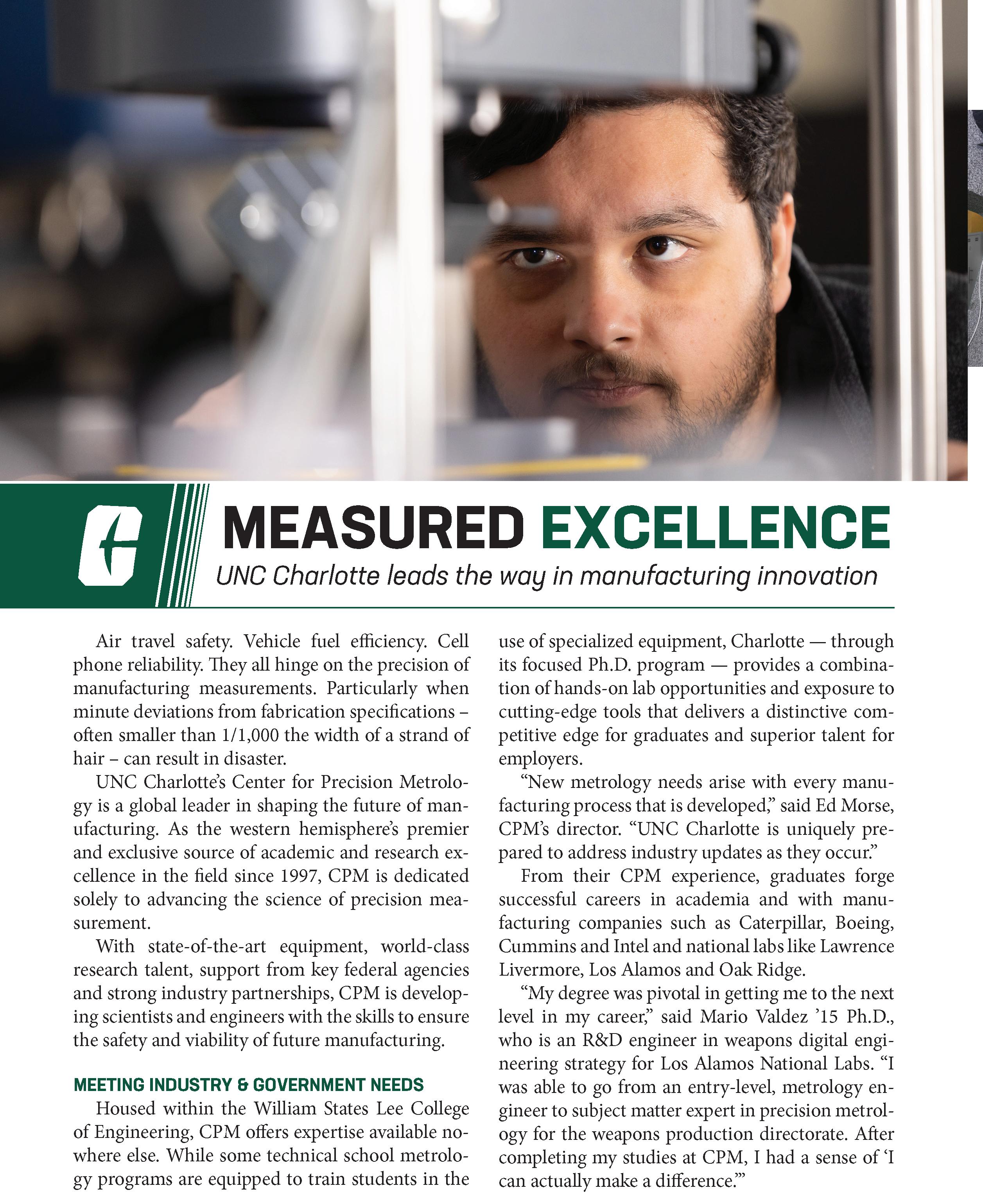
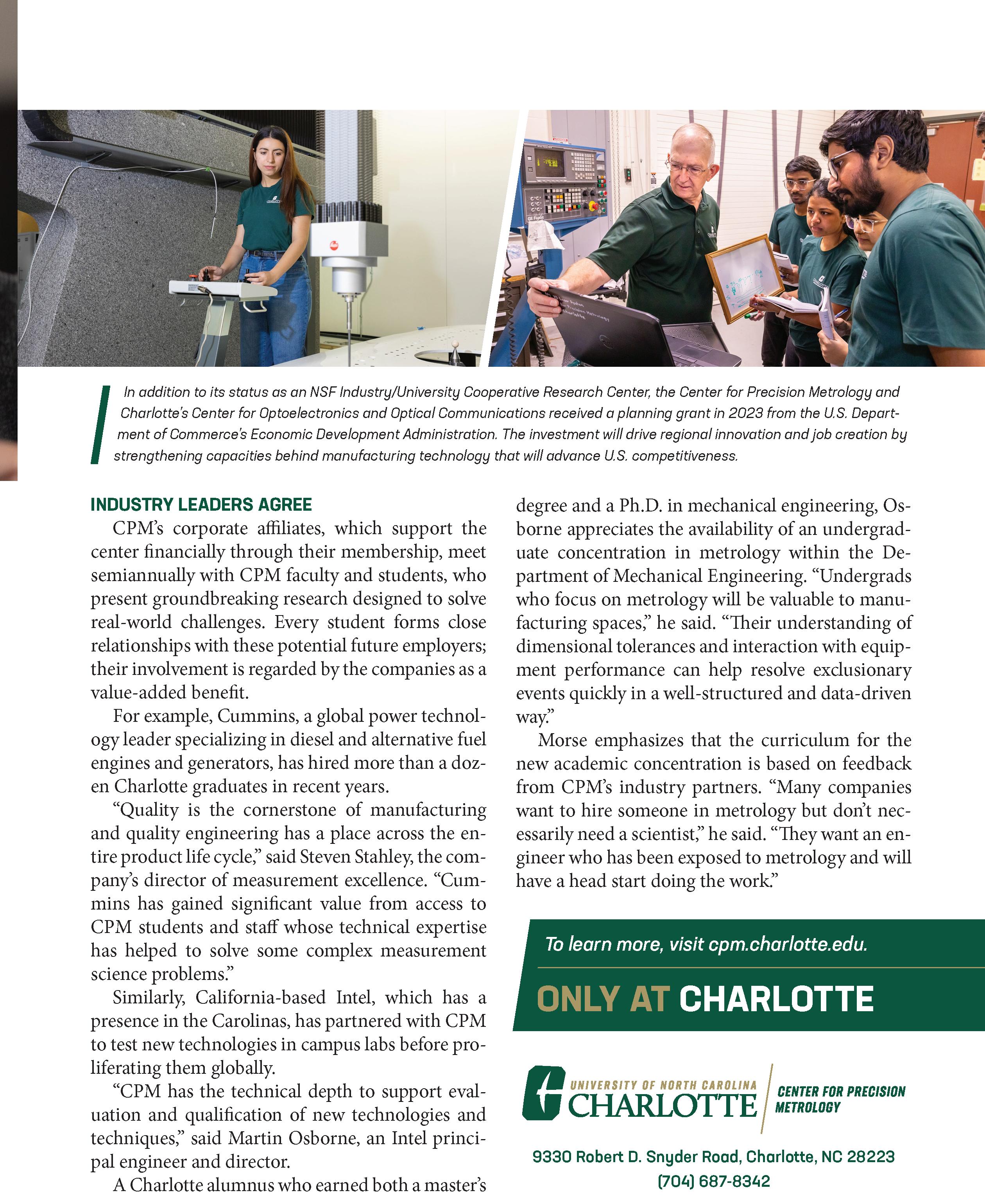

UNC Greensboro joined the collegiate esports movement two years ago with a $2.4 million state-of-the-art facility. But gamers aren’t the only ones who stepped into the arena. Researchers are integrating gaming into curricula, helping youth turn screentime into STEM inspiration, and developing a skilled workforce for a rapidly growing industry.
When an NC legislator took his son to an esports tournament in 2019, he was captivated by the impact and excitement of the event. “He started looking for university partners to bring esports to our state,” says UNCG’s Chief Innovation Officer Dr. David Wyrick. “And we stepped up to the plate.”
The gaming industry generated $184 billion globally in 2022: that’s 7 times the music or movie industries. In America, 62% of adults and 76% of kids game.
Fast forward five years, and UNCG is now a hub for innovation and fierce competition in the realm of esports and gaming. The program has rapidly evolved into a multifaceted initiative with an industry-facing approach.
Leveraging business and nonprofit partnerships, UNCG is engaging students of all ages to prepare them for high-demand fields and nurturing a skilled workforce in an emerging sector.
“We’re positioning our state as a hub for gaming innovation and impact,” says Wyrick.
UNCG athletes ranked top three nationally in Super Smash Brothers and Apex Legends.
Most know Epic Games as the company behind the massively popular Fortnite game. But the Cary-based company is also the developer of Unreal Engine, the 3D creation toolset behind everything from the latest games to background graphics in popular shows like The Mandalorian. Now, UNCG and Epic are collaborating to teach educators and students about the foundational technology,
The first Unreal Engine Accelerator Experience was hosted at UNCG in October, as part of an E2. “The Educational and Esports Weekends are one-half training, one-half tournament,”

“What’s really innovative is the integration of education and research,” Borchert says. Within UNCG, faculty from various disciplines are developing curricula connecting gaming to established fields, from sports broadcasting to digital animation.
Last year, the UNCG Videogaming and Esports Studies minor launched, with 20 courses from 10 departments. “These students will have a unique combination of critical thinking and applied skills,” says Borchert, “to engage in all aspects of gaming and new media industries from production and scholarship to event and recreation management.” The business school is also offering a concentration.
Faculty are integrating gaming into their research efforts. For example, Wyrick and his spinoff Prevention Studies, who partner with major players like the NCAA and NFL to develop athlete wellness interventions, are now studying and developing programs for gamers.
UNCG’s Dr. John Borchert says. Over 200 K-12 and university educators have come to campus for the experience.
UNCG’s esports arena is third in the nation in usage volume.
“Bringing these tools to educators is nurturing the next generation of creators,” says Epic’s Steve Isaacs.
Stan Winborne, a Granville County associate superintendent, says, “I’ve seen students play video games, but this is so much more. It’s a portal for students to create.”
Industry opportunities reach well beyond gaming. “So many people are using this,” Epic’s Cathy Cheo-Isaacs says, listing media creators, advertisers, and even car companies. The latest E2 included Unreal training for video production and broadcasting.
E2s also spread word about UNCG’s Scholastic Esports Alliance, which partners with Steigler EdTech to support a statewide esports STEM league for high school players.
UNCG’s Scholastic Esports Alliance supports over 3200 league players. Over 80 high schools competed in 2023’s regionals, with over 7100 viewers.
K-12 students then benefit through a partnership between UNCG and Spark NC, a non-profit working with 17 districts statewide to help students discover high-tech fields. Students explore Spark’s catalog of stackable, project-based learning modules at their own pace, building course credits and portfolios for college or job applications.
“We’ve bundled elements of our new curriculum into something like a tasting menu for SparkNC high school students,” says Borchert.
“I love the intellectual rigor each professor brought to the modules,” SparkNC Director Dana Brinson says. Content includes video game design and theory, and some less expected offerings. “Students are supported to build their analytical skills and use conceptional thinking. Guilford County Schools’ lab brought in a health class to explore UNCG’s ‘Health Hacks for Esports’ unit and study nutrition and mental health for competitive gamers.”
“From top industry internships for college students to a Dell partnership that mentors middle-school girls – these different pieces are coming together to create a thriving North Carolina gaming ecosystem,” says Wyrick. New knowledge is created through faculty inspiration and industry collaborations and spreads through classes and E2s, esports tournaments and leagues, summer camps, and Sparklabs. “And we’re just getting started.”
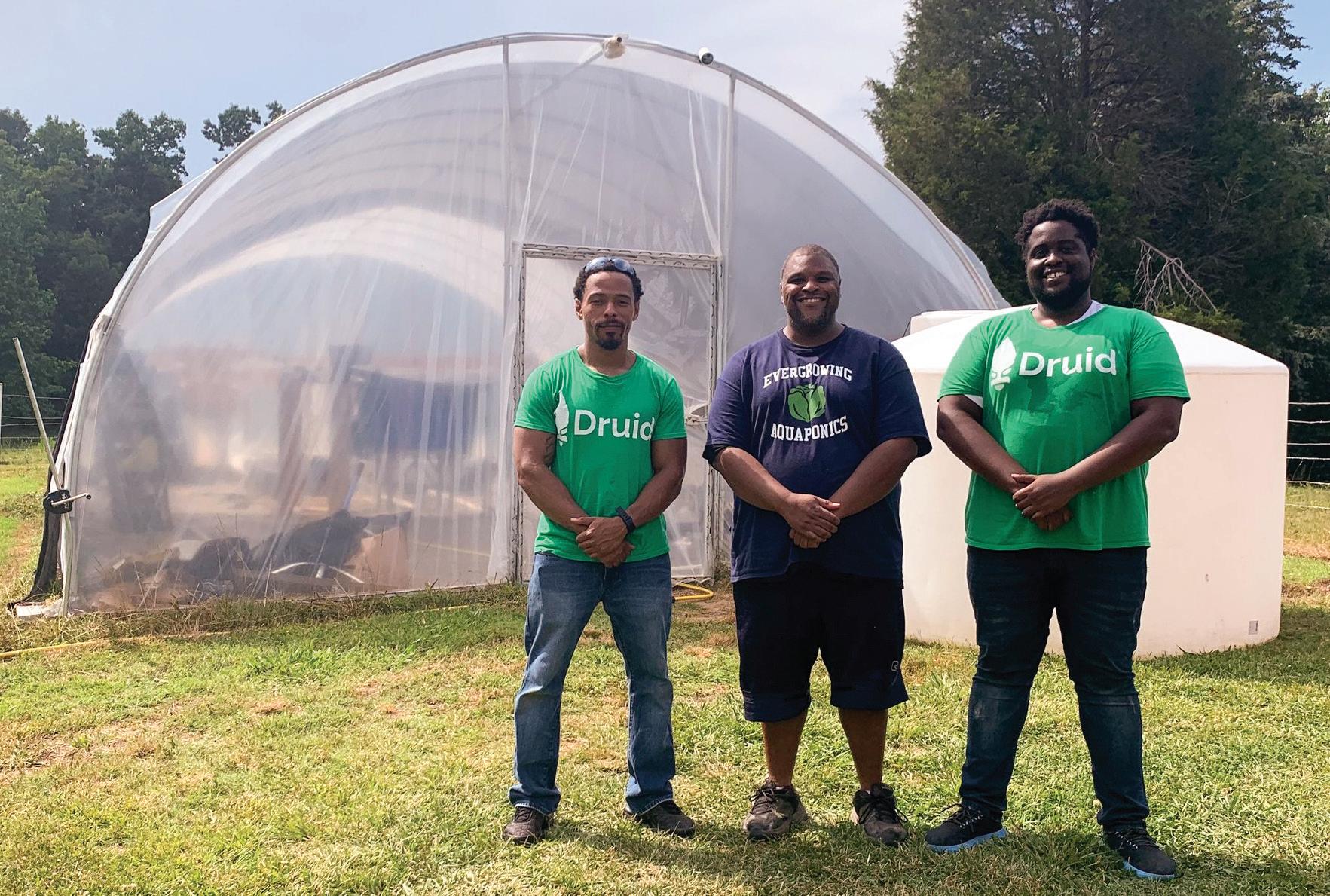
Julian Walker was alarmed. The marketing analyst had just learned a terrifying truth: If the world does not increase food production by 70% by 2050, millions—if not billions—of people will face food scarcity and even starvation. He decided to take matters into his own hands, spending the better part of the next decade developing an indoor farm in vertical grow towers. But with a full-time job, Walker was unable to adequately monitor his crops to prevent disease and to produce healthier plants. “I figured there must be a way to remotely monitor the farm’s activity and be notified of issues so farm management would be significantly easier,” he said. He began drafting plans for a simple and cost-effective camera system that runs on AI to monitor crops for issues. He called it Druid.
Soon, Walker and co-founder Desmond Irby had turned an idea into a viable product with the potential to solve a significant problem in the agriculture industry. “With artificial intelligence, data science and our revolutionary farm systems,
we can bring about the modern agricultural revolution the world needs,” Walker said. He just needed the time and funding to test, improve, and market their system. That’s where the Small Business and Technology Development Center (SBTDC) came in.
The SBTDC is a business and technology extension program of the UNC System. With 16 offices across the state, business counselors provide personalized management counseling that helps entrepreneurs make better business decisions, create and retain jobs, and improve the economy of North Carolina. The SBTDC offers specialized assistance in exporting, government contracting, and technology commercialization.
“The innovation economy of North Carolina remains one of the most productive in the US,” said Kevin Nicusanti, Equity Funding Specialist for the SBTDC. “The SBTDC has developed a one-on-one coaching curriculum and advisory
service approach to assist innovation-based companies to move from the R&D stage to become investable companies that can and do attract equity capital. We prepare our clients to be investor ready and then proceed to connect them with investors that will help meet their goals.”
After Walker and Irby’s company became Druid Ag, the pair worked with the SBTDC’s Technology Commercialization Team to gain valuable insights and warm introductions to research collaborators and funding partners. Through participation in programs, conferences, and one-on-one counseling, the pair have built a strong network and growth strategy around their agtech business.
But new entrepreneurs like Walker and Irby are often at a disadvantage when it comes time to work with investors: They may have misconceptions about the process, and they may not understand the concept of stage-appropriate capital or investor expectations. This knowledge gap is exacerbated by the current challenging equity funding environment caused by high interest rates, a slumping IPO market, a high number of recent speculative investment failures from the heights of 2022, and an upcoming national election.
The SBTDC’s Equity Funding Specialists, Kevin Nicusanti and Andrea Giska, lead the organization’s efforts in engaging with private equity investors and educating clients on the equity funding process. This year, the team, directed by John Ujvari, revitalized one of its flagship programs, Investor-Ready Entrepreneur (IRE), after a post-COVID hiatus. IRE levels the playing field, educating and preparing growth-oriented entrepreneurs like Walker and Irby to successfully engage private equity investors. The kick-off event in the Triad’s Innovation Quarter received rave reviews, and two more events are scheduled in Research Triangle Park and Greenville respectively. The SBTDC has delivered over fifty IRE events in the US and Canada since 2005, and one hundred percent of attendees recommend the program.
Recently, Druid Ag won a pitch event at the Gig East Summit and was an NC IDEA Seed Grant finalist for a $50,000 grant. They are now pursuing Phase I SBIR/STTR funding in addition to raising an active pre-seed round. The highly competitive Small Business Innovation Research (SBIR) program is a federal funding opportunity with over $2 billion
available to support research and development projects. The complementary Small Business Technology Transfer (STTR) program uses a similar approach to fund public/ private sector partnerships between small businesses and universities or research institutions. The SBTDC promotes the mission of the SBIR/STTR programs by providing support to researchers, innovators, and small businesses like Druid Ag looking to utilize SBIR/STTR funding.
The SBTDC’s support has been pivotal in helping Julian Walker and Desmond Irby navigate the complexities of startup growth and commercialization. Thanks to the SBTDC and the many other contributors to the North Carolina small business ecosystem, Druid Ag is on the fast track to success.
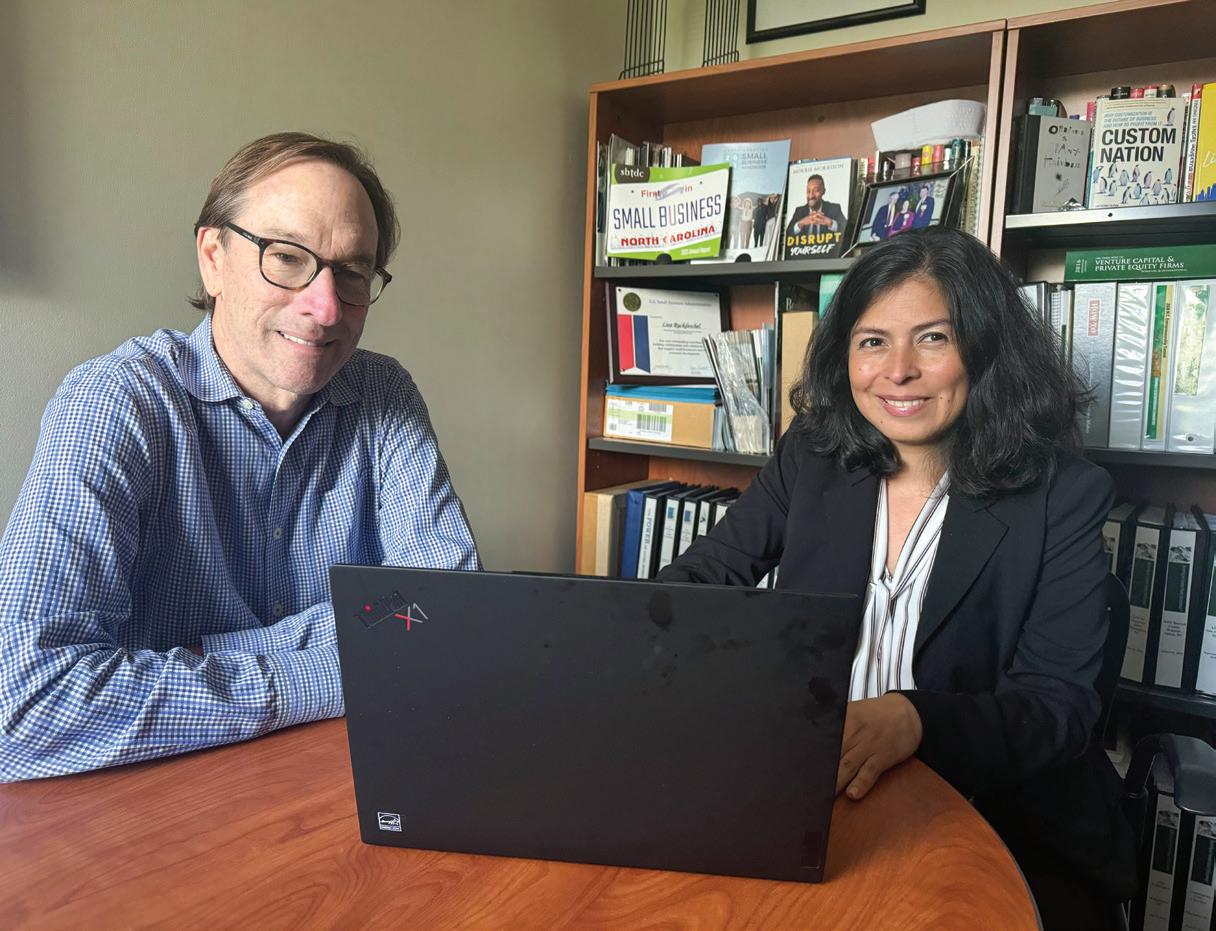
Kevin Nicusanti, Equity Funding Specialist at the SBTDC, former corporate executive for Fortune 500s, business owner and 4-year equity advisor for SBTDC.
Andrea Giska, Equity Funding Specialist at the SBTDC, former tech startup co-founder, consultant, and Early-Stage Opportunities Manager at Corning Inc.

5 West Hargett St., Raleigh, NC 29601-1348
919-715-7272
sbtdc.org

Barron Allison, a senior majoring in environmental, earth and geospatial sciences, goes to the west side of campus once a month to record images of the parking lot behind the BRITE building.
In past decades, such overhead images would require renting a helicopter or airplane or – even more expensive – booking satellite time. Today, it cost NCCU about $2,000 to buy an unmanned aerial vehicle, better known as a drone.
“

Drones are being used to conduct all types of research around the world that were formerly cost prohibitive. A professor at the University of CaliforniaDavis is using drones to detect wildfires in high-risk areas. A researcher at the University of Tokyo is using drones to determine the perfect day to pick a harvest of Brussel sprouts. Curtin University in Australia is using drones to locate meteors that have landed on earth.
At North Carolina Central University (NCCU), the Department of Environmental, Earth and Geospatial Sciences (DEEGS) has used drones to record images and capture elevation of a 20-acre portion of campus west of Fayetteville Street to help determine the impacts of runoff on this side of campus, said Professor Tim Mulrooney, Ph.D.


A few years ago, EEGS partnered with the Department of History to capture drone photos of the former homes of prominent residents in the College Heights neighborhood of Durham. In the spring semester, the DEEGS plans to team up with the Department of Criminal Justice to teach crime scene analysis using a drone.


We’re looking at how active it is during the year,” Allison said. “How the parking lot is being used, how it might be effected by weather, where runoff might be.”






NCCU offers a course aimed at preparing students for the Federal Aviation Administration licensing test for drones, called a Part 107 remote pilot exam.
Besides flying and capturing images, with the appropriate attachments and software, drones can also measure wavelengths that the eye cannot see such as ultraviolet, infrared and microwave. “Two plants might look green but the one that gives off more infrared is healthier than the other one,” said Professor Rakesh Malhotra, Ph.D.
Once Allison has taken images, they can be converted to 3D models that can show the topography. “It’s almost like you are walking through an area,” Allison said.

There are minor challenges. Battery life on the drone Allison is using is fairly short, requiring him to alternate four batteries. Lighting is occasionally an issue. “If it’s not sunny, the photos might not be clear enough to do anything with,” he said.
Overall, however, Allison finds it a fairly simple process. “Flying a drone is pretty easy,” Allison said. “It’s like a video game.”





Theo Noussi, Ph.D., an assistant professor at EEGS, said that drones are an effective and safer way to look for fallen power lines or view the consequences of an earthquake. “Drones are very good at dull jobs, dirty jobs or dangerous jobs,” Noussi said. Malhotra agrees.


“For a wildfire, it can give you the scope of what is really happening,” he said. Michael Berryann, a student of Malhotra’s who is scheduled to graduate in December, is using a drone to monitor the water at High Rock Lake in Randleman, North Carolina, for chlorophyll levels. The drone photographs are then processed to into a single image.
“It basically takes an image of 200 to 300 square feet of water,” Berryann said. The process is straightforward although Berryann says that he does have to watch for birds.
“Certain birds in the area are territorial and may try to attack the drone,” he said.









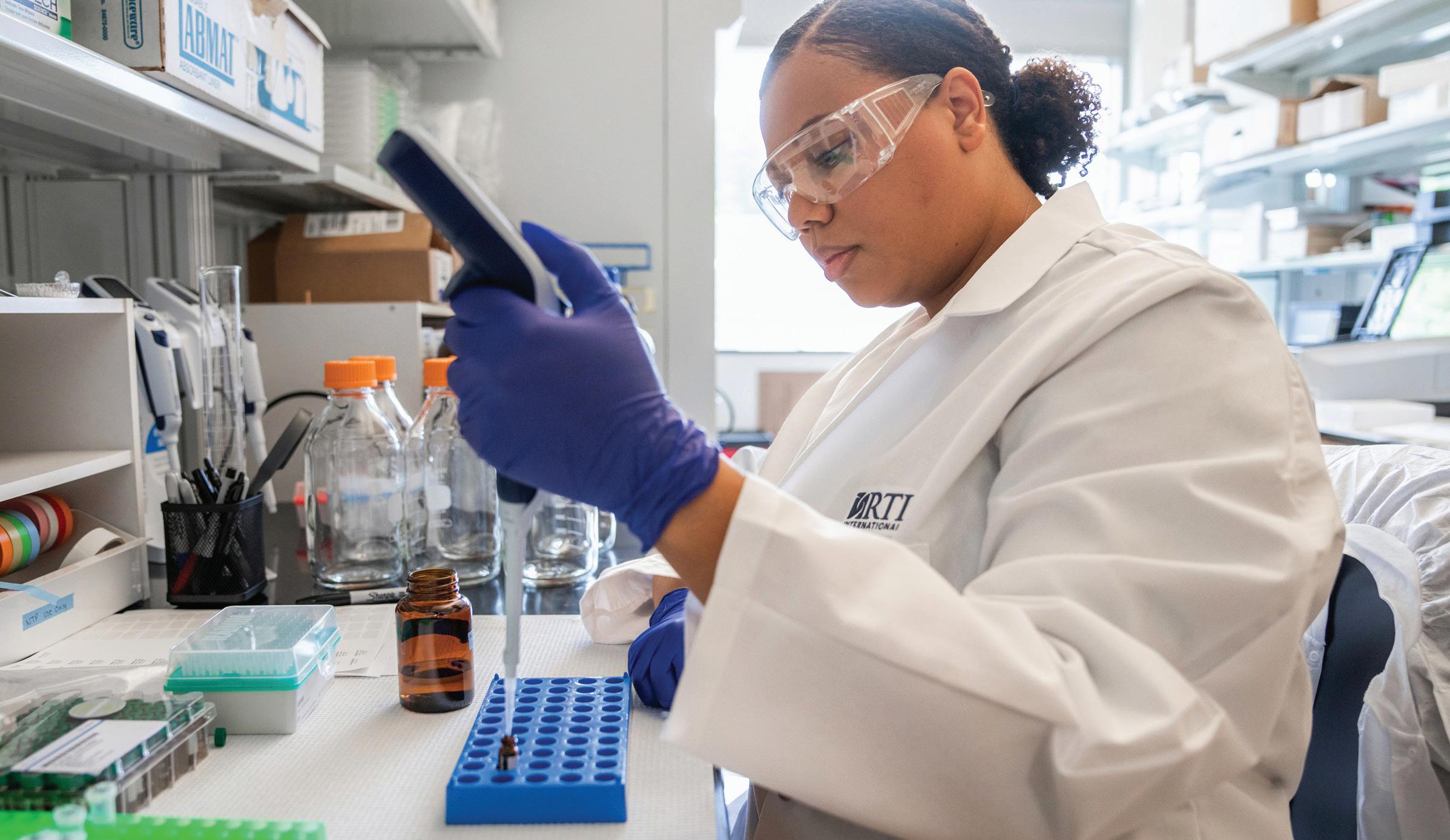
RTI INTERNATIONAL AND PARTNERS DELIVER GLOBAL GOOD.
Headquartered in the heart of Research Triangle Park and serving as its first tenant, RTI International is a nonprofit research institute dedicated to improving the human condition in North Carolina, throughout the U.S. and in more than 90 countries around the world. RTI’s mission is so expansive with expertise in 250 disciplines, it’s challenging to grasp the full global impact of its work on 3,800 projects each year. Let’s begin by looking at a few examples in climate, health and community partnerships.
The need for clean energy affects every industry. To drive real change, decisions must be grounded in science, informed by data and supported by the know-how to implement workable solutions. A prime example of how the institute is putting this into action is a new green jet fuel project. In a first-of-a-kind engineering demonstration on its campus, RTI researchers, in partnership with Syzygy Plasmonics, piloted a new technology that converts greenhouse gases into jet fuel using an all-electric process. At scale, this could significantly reduce the carbon intensity of the aviation industry and the heavy-duty transport sector including trucking.
In early 2024, RTI was selected by the U.S. Department of Energy to lead a commercial-scale carbon capture pilot project leveraging CO2 capture technology developed over 15 years in one of its RTP labs. This initiative, in collaboration with commercial companies International Paper, SLB and Amazon, aims to demonstrate effectiveness and scalability of carbon capture, sequestering 120,000 metric tons of CO2 annually. This project could have a similar effect as green jet fuel, but this time by reducing the carbon footprint of the paper industry and more.
In 2021, RTI announced the launch of Forethought, a regional research collaboration that invited bold proposals to address critical societal issues. The institute backed the initiative with $5 million in seed funding. A team led by UNC-Chapel Hill’s Rapidly Emerging Antiviral Drug Development Initiative (READDI) won the challenge and is focused on developing broad-spectrum antiviral drugs targeting coronaviruses. The aim is to prevent future pandemics by creating small-molecule drugs that inhibit viral replication by targeting host cell proteins.
The READDI Forethought team includes researchers from UNC-Chapel Hill, Duke University, North Carolina Central University, North Carolina State University and RTI. Together they are leveraging their diverse expertise across virology, artificial intelligence and computational biology, medicinal chemistry, biological screening and pharmaceuticals. And they’re making progress. After multiple rounds of testing, they found three promising antiviral drug targets. Next will be preclinical testing to aid in drug development. Through these collaborative efforts, the READDI team is paving the way for the development of groundbreaking antiviral treatments that will treat novel coronavirus infections before they reach pandemic levels.
This state serves as an economic hub, reaching a milestone in 2023 with $40 billion in exports. In May, the North Carolina Minority Business Development Association and CyberAlliance launched the North Carolina Export Initiative on RTI’s campus. The initiative highlights the importance of public-private partnerships and strives to equip small businesses with the essential information and tools they need to develop effective export strategies. To help illustrate options for international expansion, RTI’s Chief of Party in Rwanda shared a case study on how her team is successfully exporting high-value agricultural products, diversifying and facilitating investments to sustainably boost economic growth in-country. Bringing its global reach back home is one way RTI gives back.
A shining example of board governance and inclusive leadership in The Triangle, the late Robert “Bob” Ingram served on RTI’s board of governors for more than a dozen years.
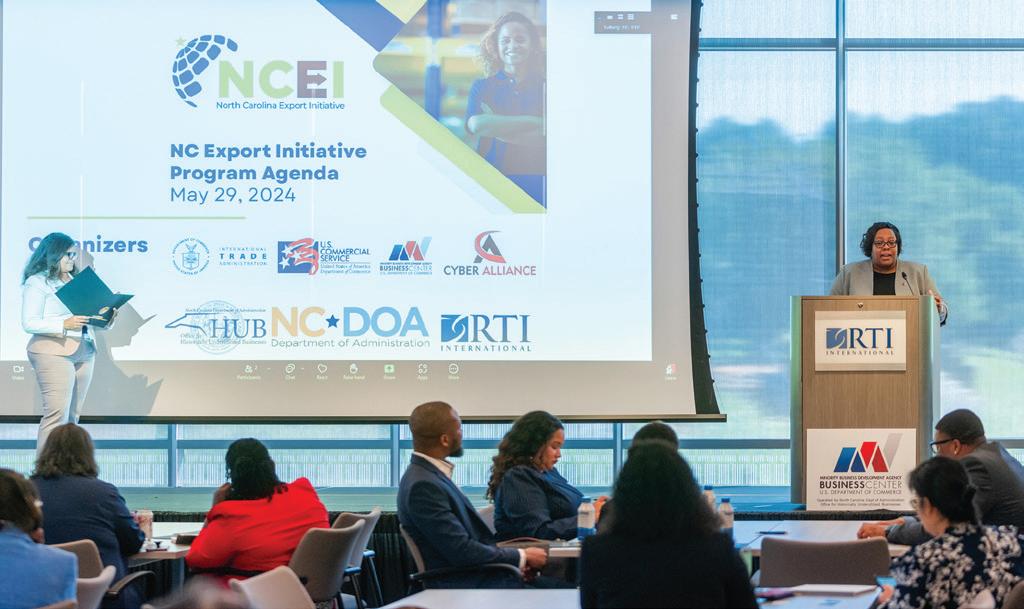
He mentored countless individuals in his professional roles at GlaxoWellcome, GSK and Hatteras Venture Partners. Ingram was also a longtime member of the National Association of Corporate Directors (NACD) Research Triangle Chapter, and this year RTI and NACD announced a fellowship program to continue his legacy by bolstering candidates who exhibit high potential for public or private company board service. RTI is proud to carry forward Bob’s legacy by supporting the next generation of leaders.
Supporting communities through corporate donations and sponsorships and staff-driven charitable giving is a fundamental part of RTI’s mission. Last year, the institute positively impacted 226 organizations around the world focused on climate, humanitarian assistance, economic development, education, equity, health and STEM. Locally, RTI is the largest corporate donor to the United Way of the Greater Triangle and was a sponsor of the 2023 Mighty Giveback concert, which raised more than $1 million for 20 nonprofits to address the need for affordable housing. With a focus on engaging future scientists, RTI served as the 2024 presenting sponsor of NC Science Festival, which celebrates the economic, educational and cultural impacts of science throughout the state. Established in 2010 by the UNC Morehead Planetarium and Science Center, the festival has reached more than 3.5 million participants.
In alignment with its mission, RTI has set an ambitious goal to positively impact the wellbeing of one billion people through science-based solutions in climate, education, health and equity by 2030. RTI’s global impact begins here in NC with science, innovation and partnerships that contribute to a healthier, more resilient and more equitable world.

3040 East Cornwallis Road
Research Triangle Park, NC 27709
919-541-6000 rti.org
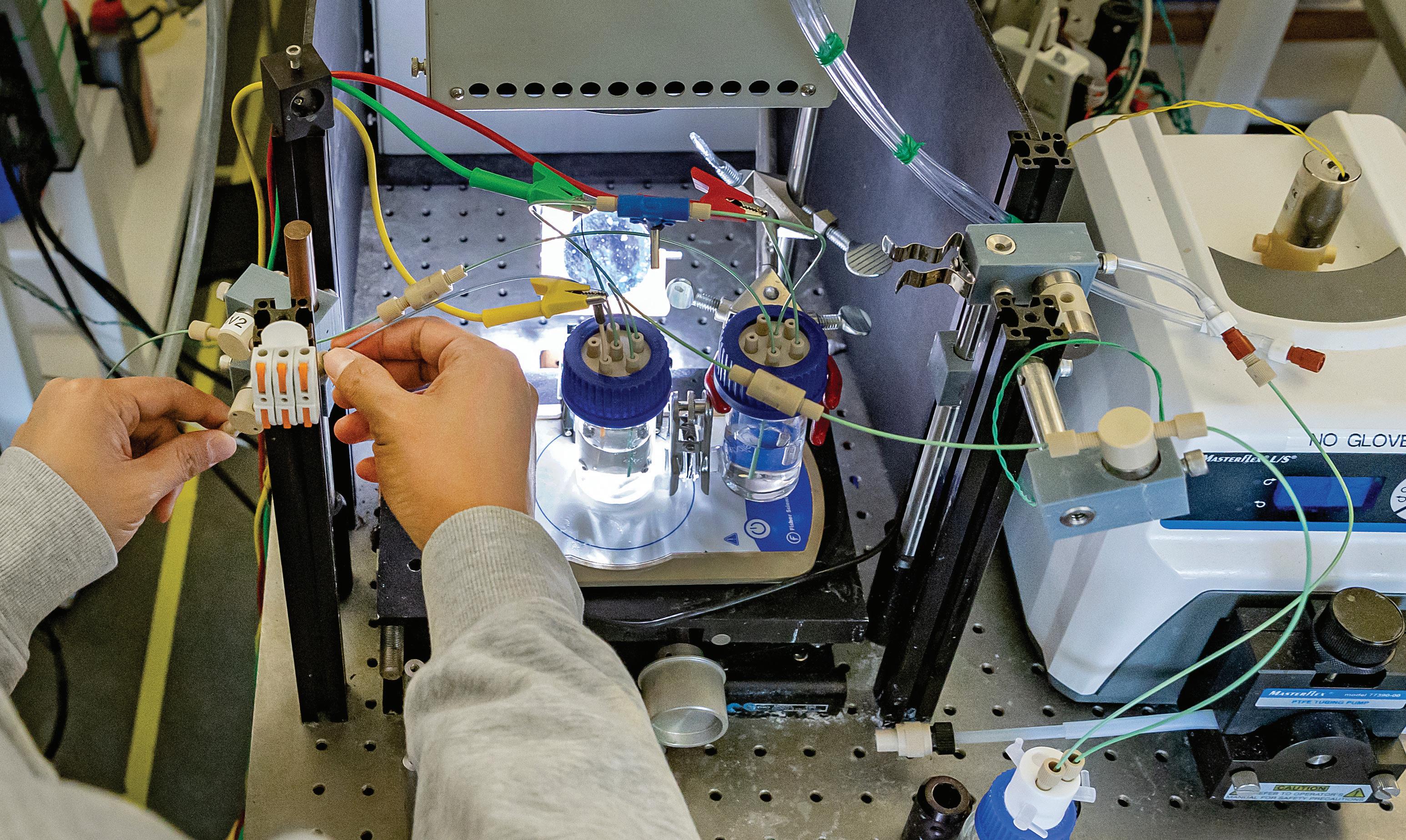
The University of North Carolina at Chapel Hill boasts a long and distinguished history of innovation and research excellence in service to our state. The power of Carolina’s applied sciences and impressive research portfolio is a driving force for positive change and economic opportunity.
From developing advanced materials for renewable energy to designing sophisticated sensors for autonomous vehicles, to developing more effective therapies to a range of health issues, researchers at Carolina are translating scientific breakthroughs into tangible solutions. This commitment to “research for the public good” ensures that discoveries have a lasting impact on the lives of citizens across our state and the globe.
Carolina recognizes the crucial link between research and its practical applications. The university actively works to close the existing innovation gap by partnering with state officials and lawmakers to attract new industries and translate research discoveries into marketable products.
Carolina’s collaborative approach is a key ingredient to its success. A vibrant team-based research environment combined with an entrepreneurial mindset fosters groundbreaking discoveries. This collaborative spirit extends beyond the university walls, with partnerships established across institutions, industries, and communities.
The U.S. Food and Drug Administration recently awarded $50 million over five years to Carolina and Duke University to establish the Research Triangle Center of Excellence in Regulatory Science and Innovation , known as Triangle
CERSI. The center will also involve collaborations with North Carolina State University and North Carolina Central University, a leading historically black university.
Leveraging the strengths of each institution, Triangle CERSI will work towards shortening the time for drug and device development to advance public health and to inform regulatory decision making. The center has made great progress on its first set of funded research projects, including efforts to reduce opioid misuse and how to account for data complexities in clinical trials.
Carolina abounds with researchers who exemplify the university’s commitment to solving real-world problems for North Carolina. The research of environmental engineer Orlando Coronell on membrane-based water purification holds the potential to provide cleaner drinking water for communities across the United States. Similarly, the discoveries of chemist Frank Leibfarth have led to a process for transforming plastic waste into valuable materials that offer a solution to the growing plastic pollution crisis.
Together, these researchers are pioneering a new technology to remove harmful PFAS chemicals from our state’s water sources. Supported by the North Carolina Collaboratory, the NC Pure Project leverages the strengths of both researcher’s disciplines. Leibfarth’s team has developed a unique membrane
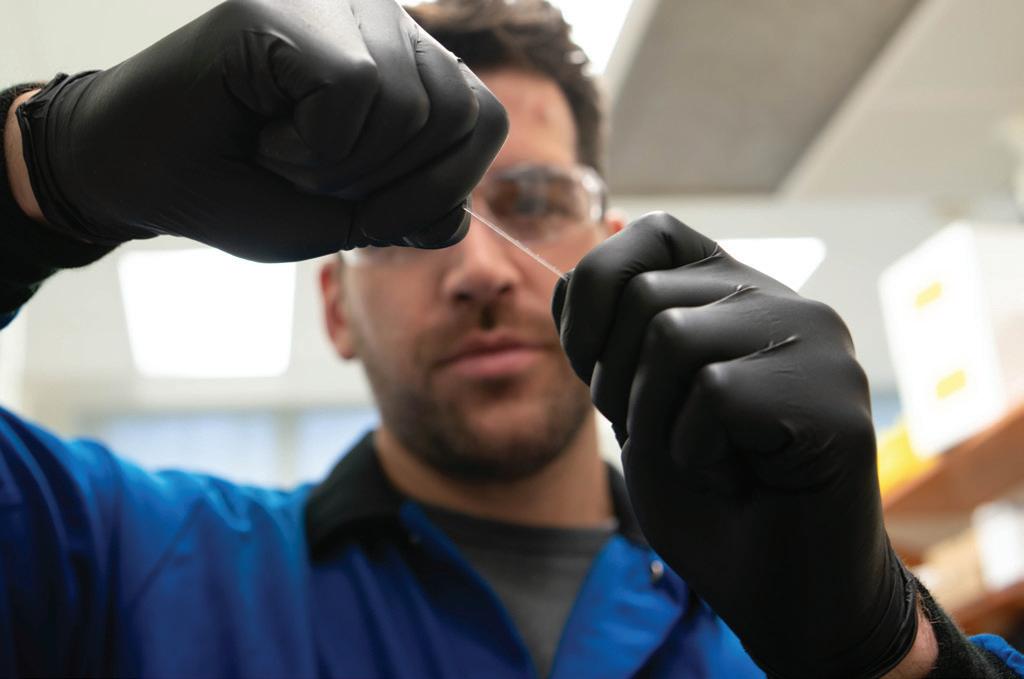
specifically designed to capture PFAS, while Coronell’s team rigorously tested the material for effectiveness. This collaborative effort has recently received a significant boost: a $10 million appropriation from the North Carolina General Assembly. This funding will allow for the deployment and evaluation of the technology at three sites across the state.
Carolina is also working at the leading edge of clean energy innovation. The Center for Hybrid Approaches in Solar Energy to Liquid Fuels (CHASE Solar Hub) stands as a national leader in solar energy research. Funded by a significant grant from the US Department of Energy, CHASE has already made significant progress, developing mechanisms for converting sunlight, water, and carbon dioxide into clean-burning liquid fuels. This breakthrough not only paves the way for a sustainable future but promises new job opportunities within the clean energy sector, strengthening North Carolina’s economy.
Understanding the importance of hands-on learning, Carolina actively integrates research experiences into its undergraduate curriculum. By requiring every undergraduate student to participate in research activity before they graduate, the university equips students with valuable practical skills and fosters a spirit of innovation.
This real-world experience prepares students for success in STEM careers, a sector known for high-paying jobs. A welltrained and highly skilled workforce further strengthens North Carolina’s attractiveness to leading technology companies, bringing additional revenue to the state.
Carolina plays a pivotal role in shaping a more sustainable and prosperous future. By fostering collaboration, translating research into practical applications, and empowering the next generation of innovators, North Carolina’s flagship public university is well-positioned to continue its legacy of leadership for many years to come.
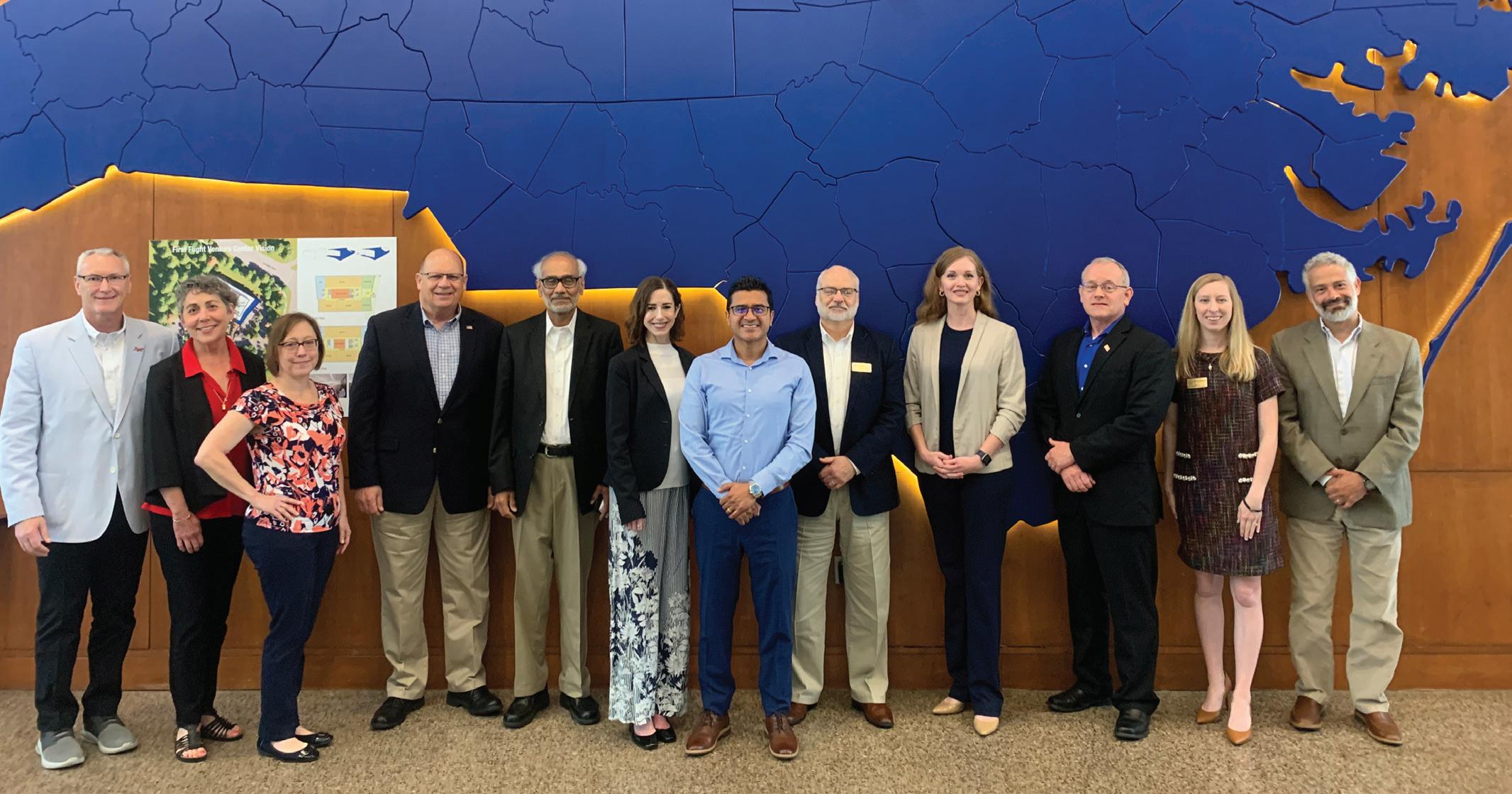
By the North Carolina Military Business Center
The North Carolina Defense Technology Transition Office (DEFTECH) is at the forefront of innovation, bridging the gap between emerging technologies and critical technology needs of the Departments of Defense and Homeland Security. In this article, the new Director of DEFTECH, Bob Burton, shares his vision for fostering technological advancement within North Carolina’s robust innovation ecosystem.
DEFTECH, a state-funded entity of the North Carolina Military Business Center (NCMBC), is dedicated to enabling elements of the North Carolina innovation ecosystem to address complex national security problems through technology transition. DEFTECH’s mission is to increase economic opportunities for businesses and to grow jobs in the state, while ensuring America’s warfighters, first responders and homeland defenders have access to the best possible technologies.
DEFTECH headquarters is located at the First Flight Venture Center in Research Triangle Park. DEFTECH support is available across the entire state of NC, with a program manager in the eastern part of the state and recruitment of another program manager opening soon. DEFTECH serves as a vital
link between the innovation community and the Departments of Defense (DoD) and Homeland Security and other federal agencies. DEFTECH scouts for breakthrough technologies, coaches industries on defense applications of their technologies, communicates federal technology needs, positions businesses to meet these requirements and represents North Carolina innovators to federal customers.
Bob joined the North Carolina Military Business Center on February 1, 2020 as the Senior Manager of Technology Transition. In January 2024, the NCMBC appointed him DEFTECH Interim Director, and on June 1 Bob started in his new role as Director. A deep commitment to national security and technological innovation has shaped Bob’s journey to this position.
Bob is a retired Special Forces Command Sergeant Major with over 30 years of special operations leadership experience. His career began with a 12-man Special Forces Operational Detachment Alpha (SFODA) and culminated in executive-level leadership roles, including serving as a trusted advisor to a 3-star general officer at the U.S. Army Special Operations Command (USASOC). His deployments across US Central, European and Pacific Command areas of responsibility have refined his combat leadership, force development expertise and strategic insight.

DEFTECH defines technology transition as the process by which significant innovations are transitioned from science and technology or commercial off-the-shelf (COTs) innovations into funded prototypes, tested by the DoD, and then added as modifications to existing programs of record. DEFTECH is committed to making North Carolina a national leader in defense technology innovation.
In alignment with its commitment to security, DEFTECH proactively addresses the DoD’s new due diligence requirements for its Small Business Innovation Research (SBIR) and Small Business Technology Transfer (STTR) programs. These requirements are designed to assess and mitigate security risks presented by small business concerns seeking DoD awards. DEFTECH fully supports compliance with rigorous standards by building awareness of DoD security requirements and assisting NC innovators to understand and adhere to these standards.
To ensure it meets these promises – and to execute any assigned responsibilities as a component of a future North Carolina Defense Innovation Network – DEFTECH will execute the following actions:
• Enhanced Scouting and Networking: DEFTECH will increase its efforts to scout for innovative technologies across the state, leveraging its extensive network of businesses, Community Colleges, Universities and public-private partnerships. By hosting and participating in technology forums and events, DEFTECH will keep a finger on the pulse of emerging technologies across the state.
• Proactive Industry Coaching: DEFTECH will provide targeted coaching and support to businesses, helping them understand and navigate the complexities of the defense and homeland security sectors. This includes workshops, webinars and one-on-one consultations to ensure they are well-prepared to meet federal requirements.
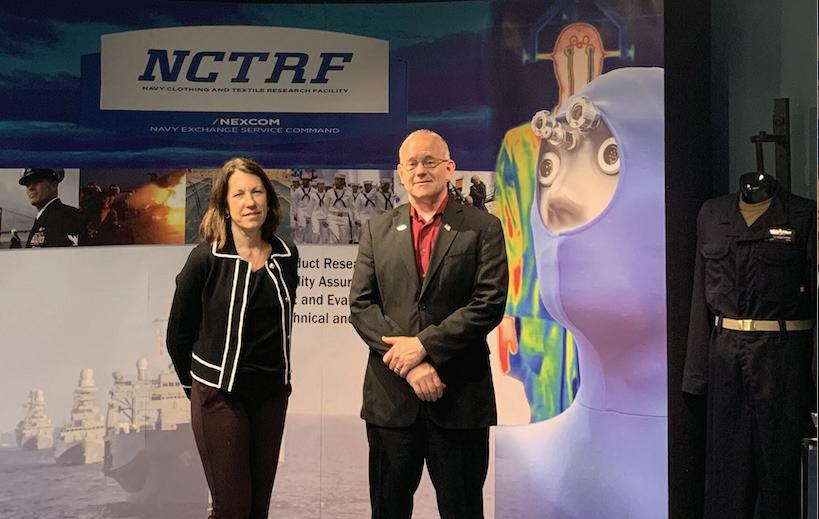
• Robust Communication Channels: DEFTECH will establish clear and effective communication channels to disseminate federal technology needs and opportunities. Community building and regular weekly DEFTECH Coffee Call updates will keep the innovation ecosystem informed and engaged.
• Strategic Positioning: DEFTECH will highlight NC businesses at the federal level, ensuring that our state’s capabilities are recognized and valued. DEFTECH will work closely with federal agencies to position NC businesses to secure defense contracts successfully.
• Comprehensive Due Diligence: DEFTECH will ensure that all participating businesses meet the highest security and compliance standards by building awareness of the new due diligence requirements. DEFTECH focuses on informing and guiding businesses to understand and adhere to these standards, protecting America’s national security interests.
As Bob takes on this leadership role at DEFTECH, he will focus on strengthening DEFTECH’s existing relationships and building new ones to expand its network and to support new business opportunities in North Carolina. Bob is committed to helping North Carolina maintain and improve its status as the best place to innovate, live, work, and prosper – and to making North Carolina the “Frontline of the Future” for defense innovation.
Together, all of us can drive technological advancements that enhance our national security and create significant economic opportunities for our state. Bob looks forward to working with businesses to achieve these goals and to ensure North Carolina remains a beacon of innovation and excellence.

As the leading research institution in North Carolina’s fastestgrowing region, UNCW faculty and students focus on discoveries that explore and enhance the human condition, in our state and around the world. From analyzing ancient advancements to studying modern opportunities, UNCW scholars and researchers are improving our understanding of ourselves.

A team led by Eman Ghoneim, earth and ocean sciences professor, has discovered the pyramids in Egypt were built along a now abandoned branch of the Nile River, highlighting the importance of the river as a cultural artery and showing how humans have historically been affected by environmental change.
“Many of us who are interested in ancient Egypt are aware that the Egyptians must have used a waterway to build their enormous monuments, like the pyramids and valley temples, but nobody was certain of the location, the shape, the size or proximity of this mega waterway to the actual pyramids site,” said Ghoneim. “Our research offers the first map of one of the main ancient branches of the Nile at such a large scale and links it with the largest pyramid fields of Egypt.”
This discovery could explain why the pyramids are concentrated in what is now a narrow, inhospitable strip of the Saharan Desert. The work was funded by a grant from the National Science Foundation awarded to Ghoneim and colleagues at the University of Memphis and Macquarie
University. Ghoneim and her colleagues studied satellite imagery, geophysical surveys and sediment samples to confirm the location of the former river branch, which they propose naming Ahramat, meaning pyramids in Arabic.
Like ancient Egypt, UNCW’s region, situated between the Cape Fear River and the Atlantic Ocean, is changing shape with time. “We can learn from ancient Egyptians,” she said, “who were able to create such architectural marvels, and study how shifts in their environment and surrounding landscape drove their activity and how they adapted to these types of changes.”
Associate Professor of Chemistry Ying Wang has been approved for grant funding from NCInnovation to continue his work in developing a groundbreaking vaccine platform that he hopes will result in a universal and longer-lasting flu vaccine. This funding is part of NCInnovation’s larger mission to unlock the innovative potential of North Carolina’s worldclass universities.
Right now, flu vaccines do not target every strain, and they must be given every flu season – a reality Wang hopes to change. He is also the winner of the inaugural NC Biotech Pre-Venture Challenge for this same work.
Wang’s innovative approach to vaccine research isn’t limited to the flu. He and two students, chemistry major Carson Jackson ’25 and graduate student Harrison Wooten ’24, founded DuraVax Inc., a research spinoff focused on making mRNA medicines, such as COVID-19 vaccines, available to everyone in the world. Their company recently received a National Science Foundation Phase One Small Business Technology Transfer grant.
Wang credits both campus and community support for empowering him and his students to succeed. “Our students burst with curiosity and creativity, laying the groundwork for a research community that’s as vibrant as it is innovative,” he said. “Across campus, fascinating ideas and collaborations emerge, fostered by a university policy and the Office of Innovation and Commercialization that sow the seeds of innovation at UNCW, nurturing the growth of new technologies. The UNCW Center for Innovation and Entrepreneurship, alongside Wilmington’s entrepreneurial community, provides fertile ground for emerging startups.”

Jackson, from Sanford, NC, joined Wang’s lab during his first year at UNCW. “Being able to begin working in a university research lab that early is not very common, and being able to work with a professor as passionate, intelligent and caring as Dr. Wang is extremely rare,” he said, adding that every member of the team “plays an integral role in the amazing culture that exists” in the lab.
Ghoneim and Wang represent just two of many UNCW faculty engaged in research and scholarship, often working side-by-side with students. With opportunities for first-year students through post-doctoral scholars, UNCW emphasizes research that crosses academic disciplines and translates into real-world knowledge and practical applications. Since being designated a Research University in 2018, the university has been awarded more than $111 million in sponsored program funding that fuels discovery and innovation, creates highquality learning opportunities for students and directly supports students, faculty and staff.
“UNCW’s history and future is conducting high-quality research and innovation with our students,” said Stuart Borrett, associate provost for research and innovation. “We are growing our research impact with work that is both regionally relevant and globally important, and these are two stand-out examples of the institution’s capabilities.”
UNCW Research & Innovation
601 South College Road
Wilmington, NC 28403-5900
910-962-3137



GTCC’s aviation programs are a cornerstone of its CTE offerings, consistently evolving to meet the ever-changing needs of industry giants like Haeco, HondaJet, Lockheed Martin, and Boeing.


The Triad is experiencing a remarkable transformation, positioning itself as a hub for advanced manufacturing in aviation and electric vehicle (EV) battery production. Guilford Technical Community College (GTCC) is at the heart of this economic surge, a vital player in equipping the local workforce with cutting-edge skills through its innovative career and technical education (CTE) programs.
GTCC’s aviation programs are a cornerstone of its CTE offerings, consistently evolving to meet the ever-changing needs of industry giants like Haeco, HondaJet, Lockheed Martin, and Boeing. These partnerships ensure that GTCC’s curriculum is aligned with the latest technological advancements and industry requirements, providing students with unparalleled opportunities for hands-on learning and immediate employment post-graduation.
“Our aviation programs are designed in close collaboration with our employer partners,” said GTCC President Anthony Clarke, Ph.D. “We are continually innovating our training modules to incorporate the latest industry practices, ensuring our graduates are job-ready and highly sought after.”
GTCC’s commitment to innovation in aviation education is evident in its comprehensive training programs. From aircraft maintenance and avionics to advanced manufacturing techniques, GTCC offers a broad spectrum of courses that cater to the specific needs of the aviation sector. This adaptability enhances the employability of GTCC graduates and supports the operational excellence of the Triad’s leading aerospace companies.
With the Triad region newly positioned as a leader in EV battery manufacturing, often referred to as the “battery belt,” GTCC quickly adapted its programming to meet the demands of this booming industry. The college is expanding its curriculum to include specialized training in battery technology, partnering with local manufacturers to develop a skilled workforce to support this new economic frontier.
A recent New York Times article highlights the Triad's transformation into an economic powerhouse driven by
Guilford Technical Community College is the fourth largest of 58 institutions in the North Carolina Community College System. Serving 28,000 students annually from five campuses and a Small Business Center, GTCC offers more than 80 programs of study, including flexible, low-cost options for earning associate degrees, diplomas, and certifications. GTCC is rooted in innovative education, training, and partnerships.
innovation in manufacturing and technology. GTCC's educational offerings evolve alongside industry trends and technological advancements.
GTCC’s impact on the Triad’s economy cannot be overstated. The college serves as a critical job training pipeline, producing skilled graduates ready to contribute to the region’s leading industries. The combination of innovative programs, strong industry partnerships, and a commitment to adapting to market needs makes GTCC an indispensable asset to the Triad’s economic landscape.
“Our goal is to provide our students with the skills and knowledge they need to succeed in high-paying, in-demand careers,” said Dr. Clarke. “By doing so, we support the growth and prosperity of our entire community.”
A proof point of GTCC’s impact was celebrated this Spring when its students secured 16 first-place and seven secondplace awards across 26 areas at the SkillsUSA North Carolina state competitions. With 39 top-five finishes, GTCC demonstrated excellence in various trade, technical, and leadership contests. SkillsUSA is a national organization supporting career preparation in trade, technical, and skilled service occupations. It hosts this annual competition featuring more than 2,100 participants in more than 120 contests, making it North Carolina's largest showcase of career and technical education.
Guilford Technical Community College is at the forefront of technological education and workforce development in the Triad region. Through its dynamic CTE programs, strong industry partnerships, and commitment to innovation, GTCC ensures that its graduates are job-ready and poised to lead in their respective fields. As the Triad continues to grow as a hub for advanced manufacturing and technology, GTCC remains a pivotal force driving this economic transformation.
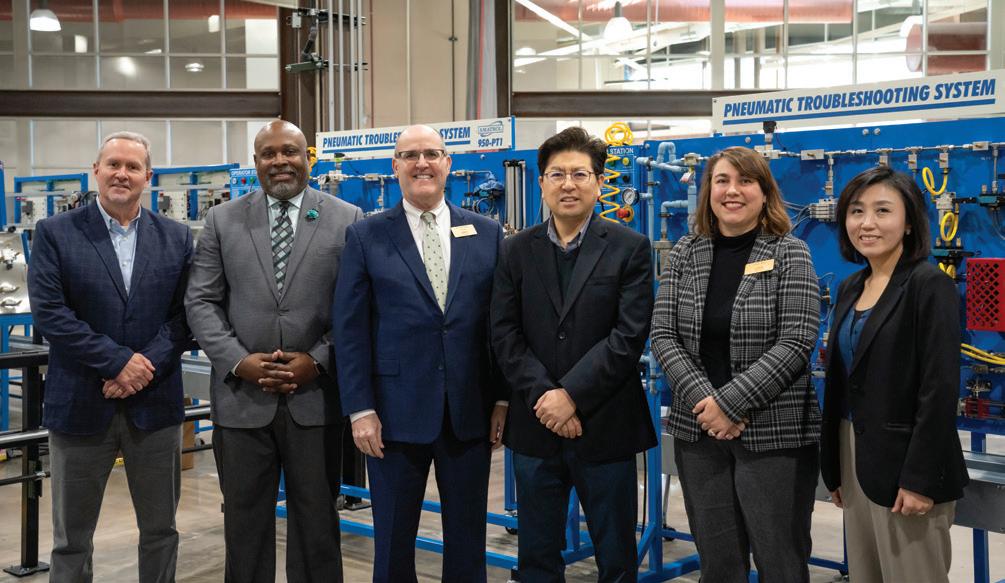
and Carolina Battery Institute signed an affiliation agreement this year to establish a workforce education program within the electric battery manufacturing industry to support business growth and new
path opportunities in the Triad. Left to right: Soelect CFO Tim Price; Vice President of Workforce & Continuing Education Manuel Dudley, Ph.D.; GTCC President Anthony Clarke, Ph.D.; Soelect CEO & Founder Sung-Jin (“Jin”) Cho, Ph.D.; Associate Vice President of Workforce & Continuing Education, Claire Ricci; Soelect Sr. Manager of Strategic HR & Business Development June Sunwoo.

GTCC student, Mary Medlin, 1st place, Heating, Ventilation, Air Conditioning, and Refrigeration (HVAC) at SkillsUSA North Carolina State Leadership and Skills Conference postsecondary awards ceremony at Koury Convention Center Wednesday, April 24, 2024.



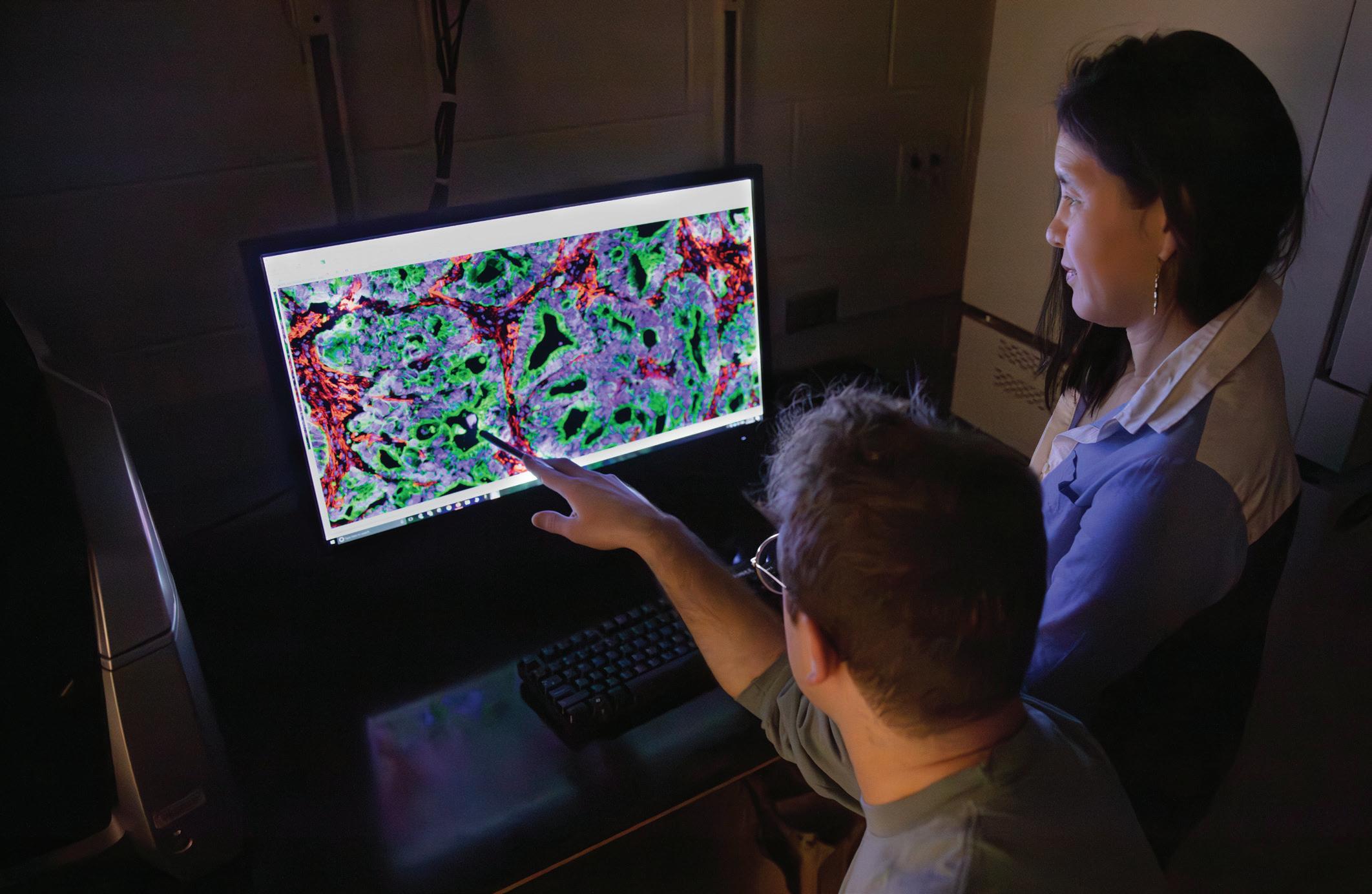
The prognosis for pancreatic cancer remains dim. Can energy-based drug delivery brighten the odds?
A startup with roots at UNC-Chapel Hill, Focal Medical, offers implantable technology to deliver drugs in higher concentrations to hard-to-reach tumor cells.
By Brock Pierce
When Tony Voiers walked into a conference room at the U.S. Food and Drug Administration in 2016 to discuss a new technology being developed by UNC-affiliated startup Focal Medical, he wasn’t sure what kind of reaction the agency would have. But he hoped the large contingent of officials was a signal of the FDA’s interest. Initial research indicated the technology could help shrink pancreatic cancer tumors at a scale never seen before.
“I was personally very interested in the data that Focal Medical had, but the technology was so new and innovative that I really didn’t know what the FDA would think of it—what clinical trials would look like for approval,” said Voiers, who had just begun consulting with the startup. Voiers’ intuition was right, recalling that the FDA “gave us very positive, tangible feedback on how we could move the technology forward.”
The technology is an implantable medical device that uses an electric field to precisely deliver drugs in higher concentrations to targeted, hard-to-reach cells than is possible by pill or injection.
It was developed via a collaboration between former UNCChapel Hill chemistry professor and serial entrepreneur Joseph DeSimone, PhD, and Jen Jen Yeh, MD, a distinguished cancer surgeon, who is a professor in the departments of surgery and pharmacology at the UNC School of Medicine.
Months before the FDA meeting, Yeh, who is co-founder of Focal Medical and works as the director of the Pancreatic Cancer Center of Excellence at the UNC Lineberger Comprehensive Cancer Center, told Voiers about the impressive research results her lab received using the technology to target human pancreatic tumors implanted in mice.
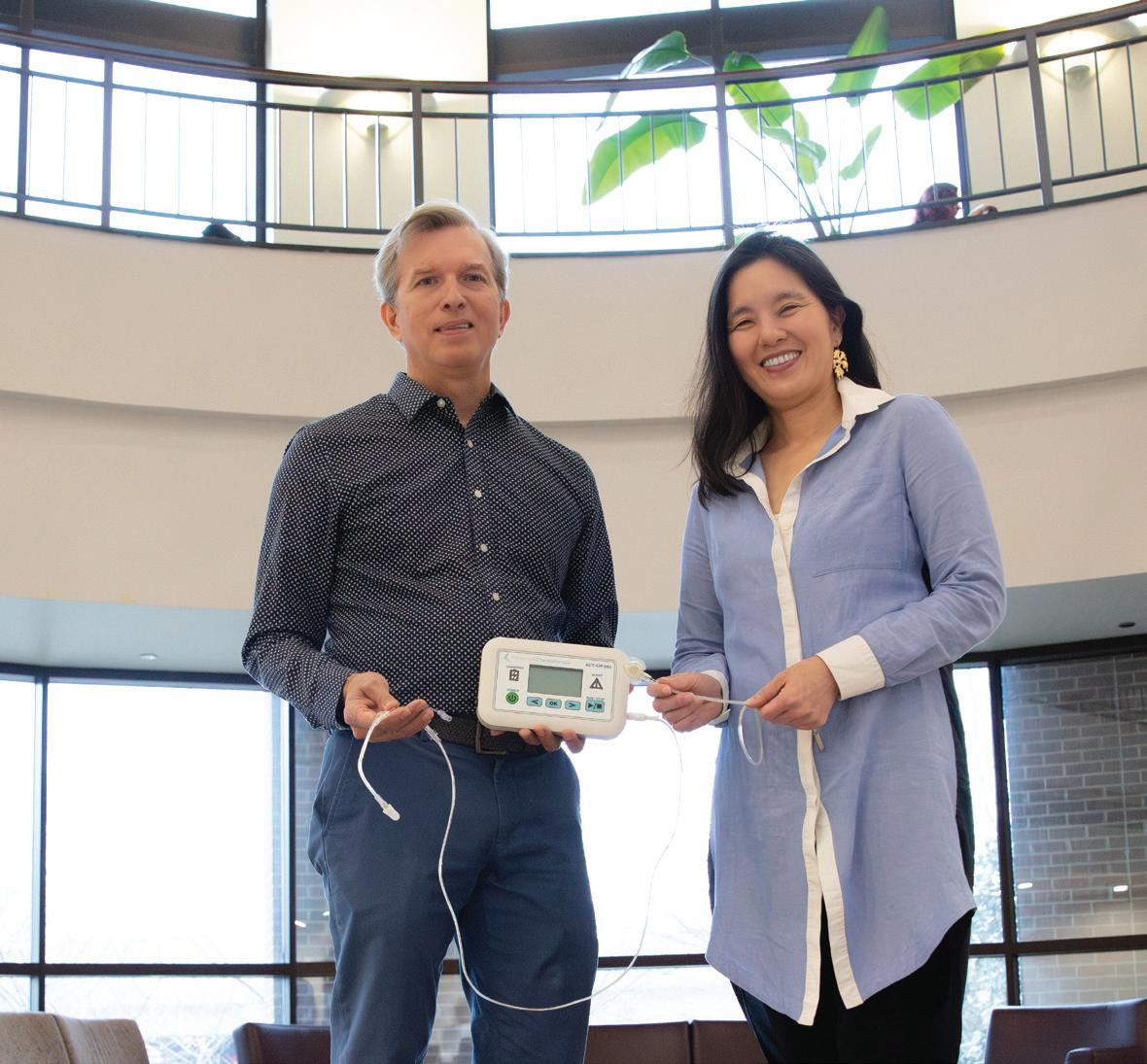
As researchers, Yeh and DeSimone recognized the need for a technology that could deliver drugs to hard-to-reach places in the body. For example, Yeh says that when people swallow a pill or receive an injection, some regions of the body have too few blood vessels to effectively deliver the drug. “For hard-to-treat diseases, you often can’t get your treatment of choice to the specific region because there are physical or other types of barriers,” said Yeh. “With pancreatic cancer, there is almost a fortress around the tumor cells, so the vision for this device was to essentially collapse the fortress so the drug can get to the tumor.”
The device was invented by Yeh, DeSimone and James Byrne, a former Carolina MD-PhD student whom Yeh and DeSimone comentored. Yeh said the technology, which is surgically implanted, uses an electrical field and works similarly to a magnet, in which the positive pole attracts the negative pole—a force of energy that is useful for directing drugs into tumors that are otherwise challenging to reach. “If we give the right drug the right charge, the device can essentially be used as a magnet to suck the drug into the right place,” said Yeh. Targeted treatment is crucial because, even though the survival rate for pancreatic cancer doubled over the past decade, the odds still stand at only 12 percent.
After seeing drugs produce little-to-no shrinkage in pancreatic tumors via traditional methods, the team devised another way. They implanted human tumors, donated to research by pancreatic cancer patients, into mice. Still, even when injected
into the mice, the drugs weren’t effective—not until the team used its new technology.
Yeh said the “shockingly good results” demonstrated about 150-percent shrinkage when using the device compared to no shrinkage with traditional injection. “None of us had ever consistently seen tumor shrinkage, much less to that extent in this model, and it was incredible,” she said.
To advance the company, Focal Medical turned to Innovate Carolina—UNC-Chapel Hill’s university-wide team for innovation, entrepreneurship and economic development—for various modes of support. The startup worked with Innovate Carolina’s commercialization office to help protect the intellectual property arising from the technology’s underlying research. It received early guidance from Innovate Carolina’s KickStart Venture Services team, while using the patent landscaping and market research service to assess the technical development path and marketplace. Focal Medical is finalizing plans with the FDA and, by summer 2024, expects to enroll patients in its first clinical trial for treating pancreatic cancer.
“We know for many cancers, including pancreatic cancer, that one shot on goal isn’t enough: surgery isn’t enough, and our current chemotherapy isn’t enough. You have to tackle the tumor from many different directions,” said Yeh. “This technology is huge for patients, because it gives us ways to help weaken the entire tumor system so that we can eventually cure the cancer.”
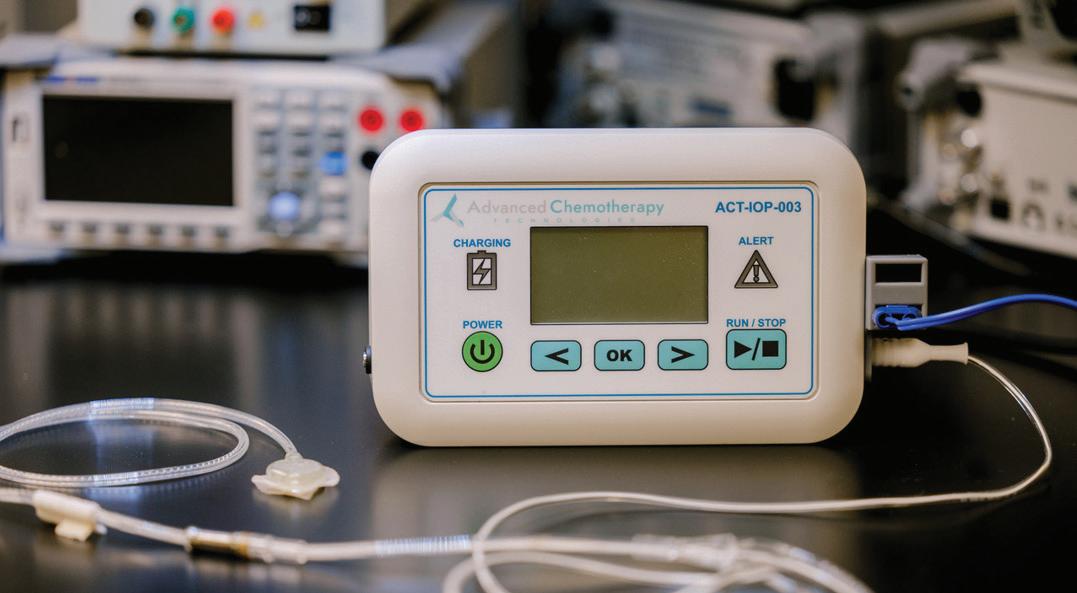


Catawba Valley Health System is proud to share with you why we feel Catawba County is a gem in this state and beyond. Catawba County and its municipalities consistently rank high in national lists and publications. Forbes.com ranks the Greater Hickory Metro as having the lowest business costs in the nation. Since 2006 the metro area has been ranked no lower than 6th. Travel & Leisure magazine ranks Hickory as the #1 Most Affordable and Beautiful Place to Live in the nation. U.S News & World Report has named the Hickory MSA as #1 in their list of Most Affordable Places to Live in the U.S.

Also, U.S. News & World Report named Hickory as 3rd for Best Places to Live in N.C., 31st for Best Places to Live in the U.S., 3rd for Best Places to Retire in the U.S., and one of the Top Ten Best Places to Live Near the Mountains in the U.S.
What makes this county such a strong and attractive option for living, working, investing, and even retiring?
Alongside strong Economic Development and Chamber leadership, among others, Catawba Valley Health System plays an important role. Staying innovative with new cardiology and emergency facilities, robotics technology that outpace our regional competitors, offering progressive care and treatment options, and being nationally recognized for safety and quality tell only part of our story. Recently we were named a Top 100 Hospital in the U.S. for patient experience, a testament that we can be high-touch as well as high-tech.
Catawba Valley Health System is honored to be a key component in a county that celebrates vibrant downtown scenes, myriad outdoor activities, amazing higher education opportunities, and a perfect location that places us close to everything you could want to enjoy life – personally and professionally.

Every year, businesses from a variety of industries choose Catawba County as the place to relocate, expand, and tap our skilled workforce. You’re invited to see all that Catawba County has to offer. Welcome!

Dennis Johnson President and CEO Catawba Valley Health System






From its roots in textiles, Catawba County has grown into manufacturing, higher ed and ‘well-crafted’ lifestyle.
Long ago, in a less-automated era, textile mills lined the Catawba River, their water wheels churning power to spin cotton yarn, grind grain and saw timber, a precursor to Catawba County’s immersion in manufacturing.
Today, 31.5% of Catawba County’s workforce, or about 25,000 people, work some facet of manufacturing jobs at more than 400 companies, mainly automotive components, fiber optic cable, food processing, textiles and handcrafted custom furniture.
Instead of riverside mills, a Manufacturing Solutions Center in Conover and 75,000-square-foot MSC II that opened in March 2023 house an all-encompassing fusion of training, testing, marketing, product development, engineering and business incubator with a mission of supporting U.S. manufacturers and product developers.
The region has become known as the Data Center Corridor because of the area’s data offices for Apple, Facebook, AT&T and others. It includes two employers, Corning Optical Communications and CommScope, with more than 1,000 on their payrolls.
Microsoft broke ground April 1 for its initial Boyd Farms data center in Maiden, where construction should be finished next spring. The company plans four such centers, marking a $1 billion investment.
“We found a niche in data centers years ago, and we are hoping to pair our marketing efforts, our sites, our workforce providers and our utilities toward the opportunity sectors that prove through the SSG analysis to be in good alignment,” says Scott Millar, president of the Catawba County Economic Development Corp., of its current Industry Growth
Analysis project. “This allows our marketing efforts to make good sense to companies and consultants.”
In March, Steel Warehouse announced a $27 million investment over four years and the eventual creation of 58 jobs when it constructs a processing center/supply chain link in Hickory.
“With Microsoft and Steel Warehouse, the huge tax base commitment assures that the cost of services to every man, woman and child are shared by a much larger pool. No one wants less police and fire protection, less education or dirtier water, but the costs of these go up just like groceries and gasoline,” says Millar. “Having companies share these costs allows the rates to stay lower, and certainly having these types of industries in town provides schoolchildren the benefit of new job opportunities in new sectors.”


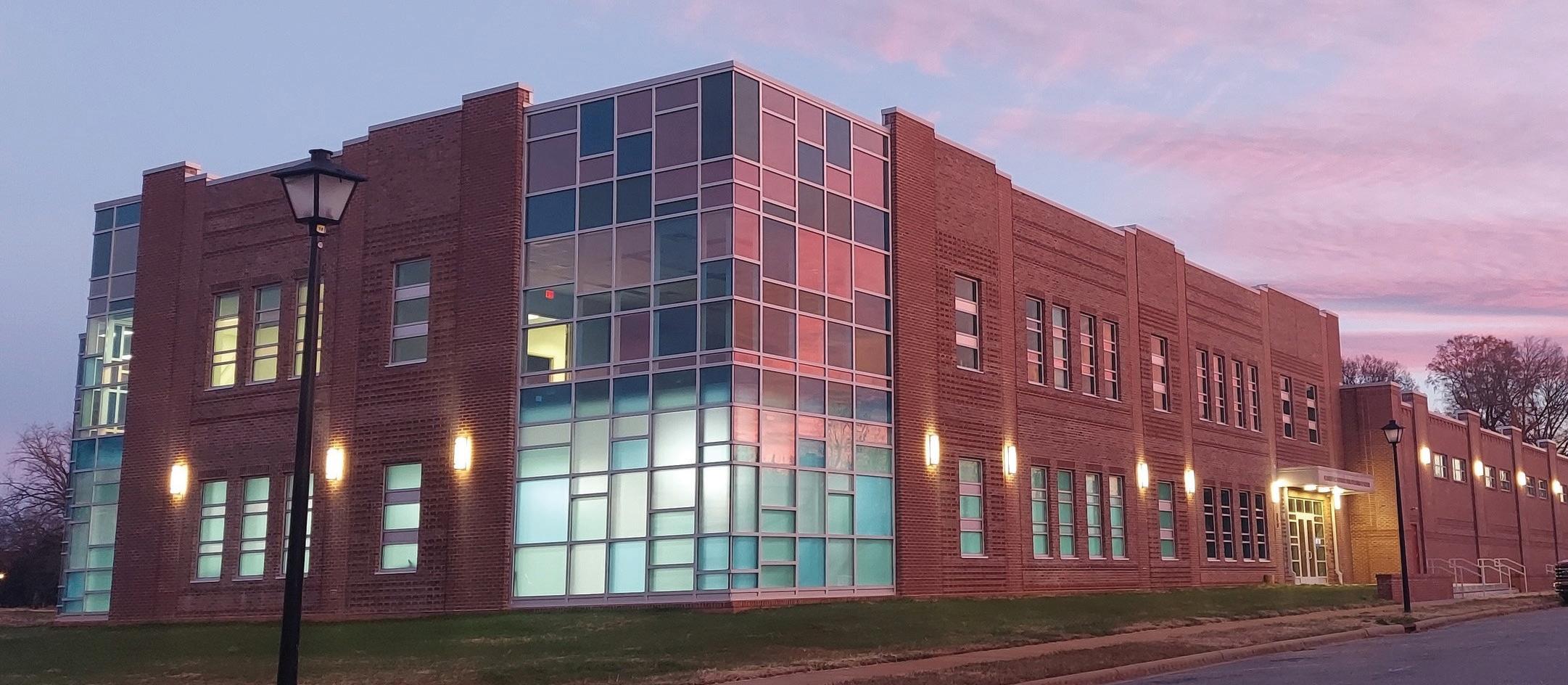
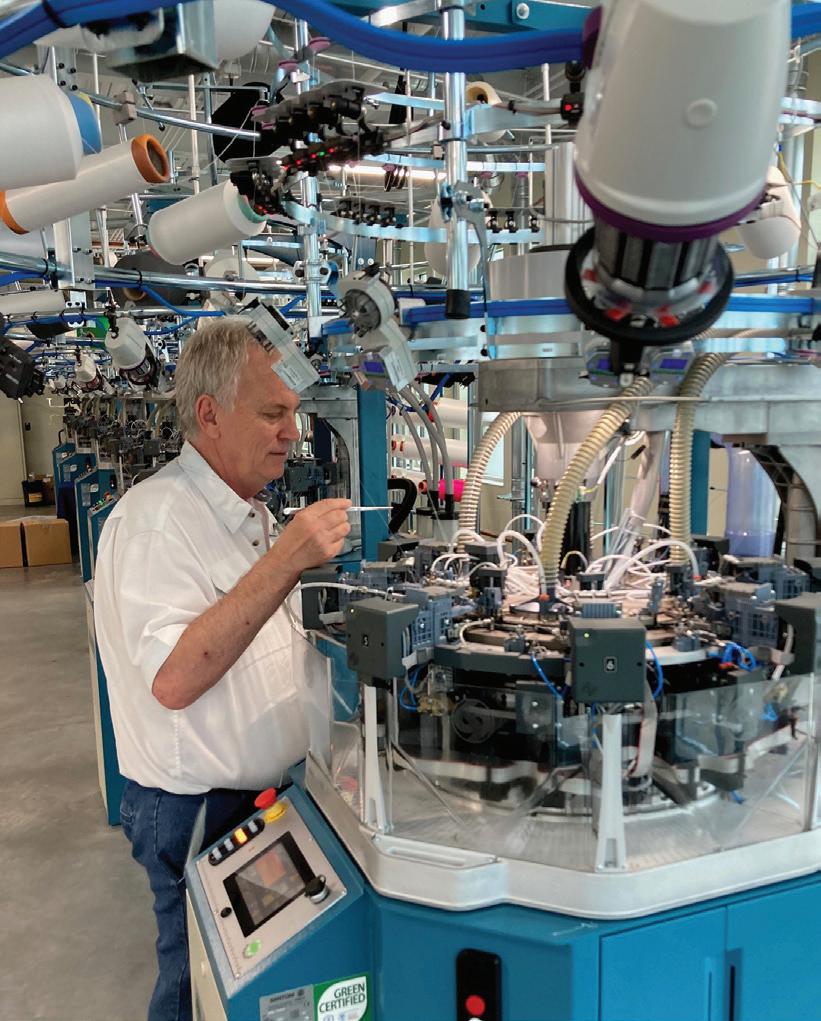
Three colleges, Catawba Valley Community College, Lenoir-Rhyne University in Hickory and Appalachian State University’s Hickory campus, help with career and workforce training. The latter campus opened last fall.
The Manufacturing Solutions Center and MSC II are connected with Catawba Valley CC as a way to support their economic impact on the community and region.
The MSC II, says Center Director Jeff Neuville, “serves as the operating locations for four private companies, which graduated from the MSC incubator program. The building is a 75,000-square-foot public/private project funded by the city of Conover
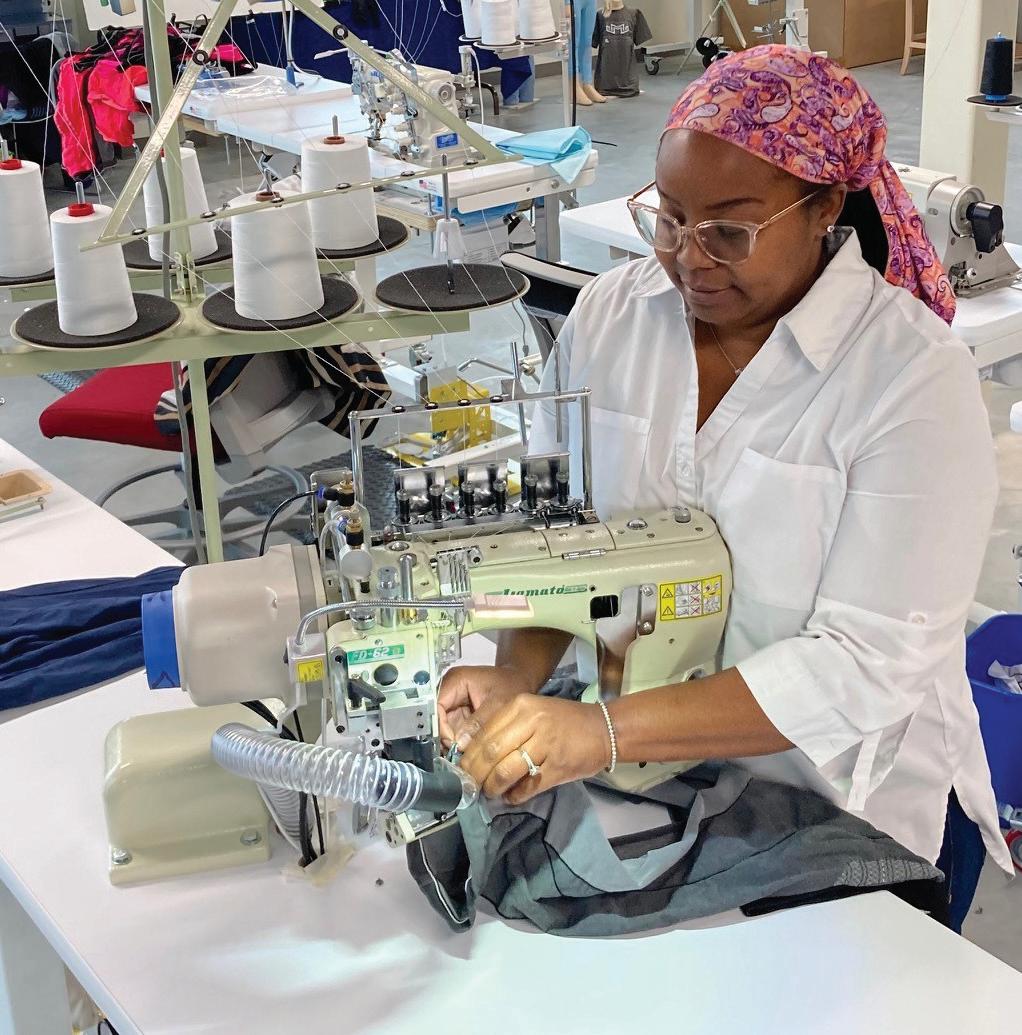
and private equity group Whiskbroom and managed by the MSC.”
Furniture also remains a big business with the Hickory Furniture Mart attracting 500,000 annual visitors. Creators and entrepreneurs can partner with the MSCs.
The MSC’s structural engineering lab, Neuville says, “focuses on standardized and custom testing for the furniture industry, featuring universal testing equipment that can test the weight and pressure of furniture frames and other products” and has increased its testing by more than 50% during the last year.
“The furniture mart grew out of a need to connect the region’s furniture manufacturing with retailers across the country,” says CEO Brad Lail, son of founder Leroy Lail. “Over time, it’s
COUNTY
evolved into an attraction open to the public and used by customers across the United States and internationally.”
“The non-textile prototyping center includes welding and woodworking equipment, as well as 3D printers to assist entrepreneurs with the product development process prior to going into full production,” he says.
“The fabric formation lab contains seven Santoni circular knitting machines capable of creating apparel, foundation wear and undergarments,” says Neuville. “The lab also features sewing equipment to finish developments created on knitting machines, allowing entrepreneurs and brands to develop product lines and finalize product specifications before garments go into production with domestic manufacturers.”
The lab began taking on development projects in fall 2023 and is working with 10 clients.
CVCC collaborates with local businesses, community partners, local school systems, county government, the EDC and the Chamber to pair students with career development through a process called K-64.
“Our workforce efforts have been greatly enhanced with the Academy approach (short-course, job-specific classes) developed by CVCC several years ago,” Millar says. “This approach, coupled with the K-64 effort and partnerships with related higher-ed participants such as ASU-Hickory, Lenoir-Rhyne University, Western Carolina (in Cullowhee, in Jackson County) and UNC Charlotte, are all working with us to make these arguments cohesive and compelling to support both existing industries and new industry decision-makers.”



Another education partnership is happening between the Hickory Regional Airport, the city and Catawba Valley CC. “Aviation and education are coming together,” says Hickory Mayor Hank Guess. “The new facility will house the Hickory Aviation Museum while simultaneously becoming the focal point for STEM education and workforce development in our region.”
Catawba County has 72 industrial and office building sites in its database. The Chamber of Catawba County has two initiatives that work with the EDC’s Industry Growth Analysis. They are a Talent Attraction, Retention and Development program and Leadership Catawba, a training course for local business representatives.
“Last fall, the Chamber of Catawba County and the Catawba County Chamber Foundation took a decisive step in understanding our workforce

dynamics by commissioning a comprehensive Workforce Scan,” says Lindsay Keisler, Chamber president and CEO. “This initiative enabled us to identify our strengths and areas for improvement, laying a solid foundation for informed decisionmaking. More recently, we engaged over 100 private sector leaders to pinpoint critical areas for talent attraction, retention and development.”
The MSC II building has hosted numerous economic development meetings and trade events, Neuville says.
“The MSC is also pleased to be part of the North Carolina Textile Innovation and Sustainability Engine, a group of textile and educational organizations that have been recognized by the U.S. National Science Foundation and selected as a Regional Innovation Engine in January,” he says.
Other partners include the Gaston College Textile Technology Center, N.C. State’s Wilson College of Textiles and Western Piedmont Community College. The leadership team also includes the state Department of Commerce
Office of Science Technology and Innovation, NC IDEA and RTI (Research Triangle Institute). RTI will lead the engine’s evaluation efforts.
Catawba’s EDC markets the area’s proximity to Mecklenburg County, with the southern corner of Catawba at Killian Crossroads only 30 miles up N.C. 16 from Charlotte. Interstate 40 and U.S. 70 run east-west, through Claremont, Conover and Fairgrove to just below Hickory. U.S. 321 and N.C.16 run north-south. The county sits in the foothills of the Blue Ridge Mountains, where the Catawba River migrates above Hickory before turning south toward Lake Norman.
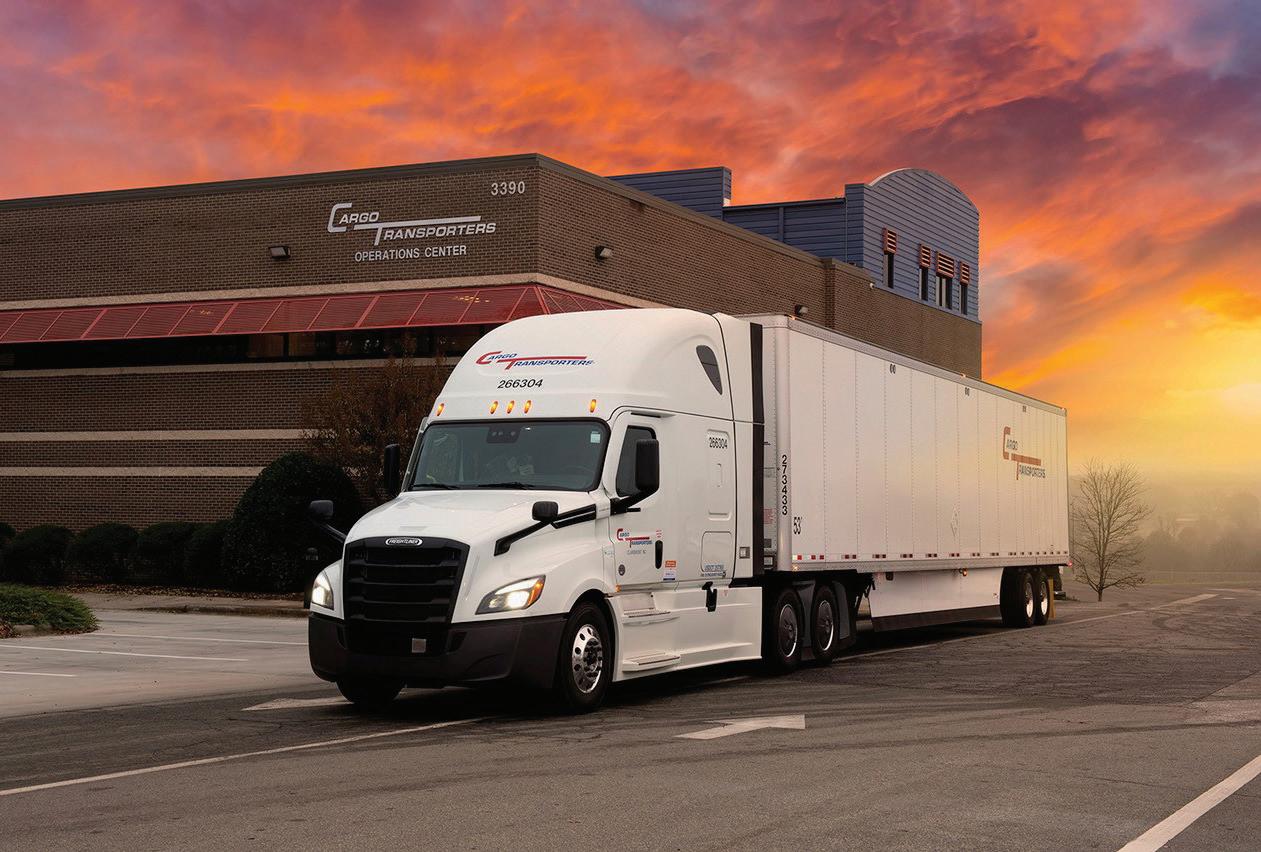
“The close proximity to I-40, U.S. 321 and N.C. 16 make Catawba County a perfect location for transportation and distribution,” says John Pope, board chair of Cargo Transporters in Claremont, which operates 525 trucks and almost 2,000 dry van trailers. Pope, third generation in the family-owned business, has been with
the company since 1985 and seen it grow, along with the county. Cargo Transporters has about 725 workers.
“We have been at the same Claremont site, a quarter-mile from I-40, since 1982 when Cargo Transporters was started,” he says. “This site has been expanded numerous times. The parent company was founded on this same site in 1966 and started as a truck rental and leasing company, Catawba Truck Rental. Our next largest location is Rocky Mount, followed by our Charlotte location and Anderson, South Carolina.”
“We have been long-time supporters of Lenoir-Rhyne and Catawba Valley Community College on various programs,” Pope says.
The company invests an average of $15 million to $20 million annually “with our constant replacement of trucks and trailers to keep a new, reliable, high-tech, safe fleet, most of which are for trucks built at the Daimler Truck plant in Cleveland, N.C.,” he says. “Catawba County has a very diverse industrial, manufacturing and distribution base, which makes it a great place for us to be located.”








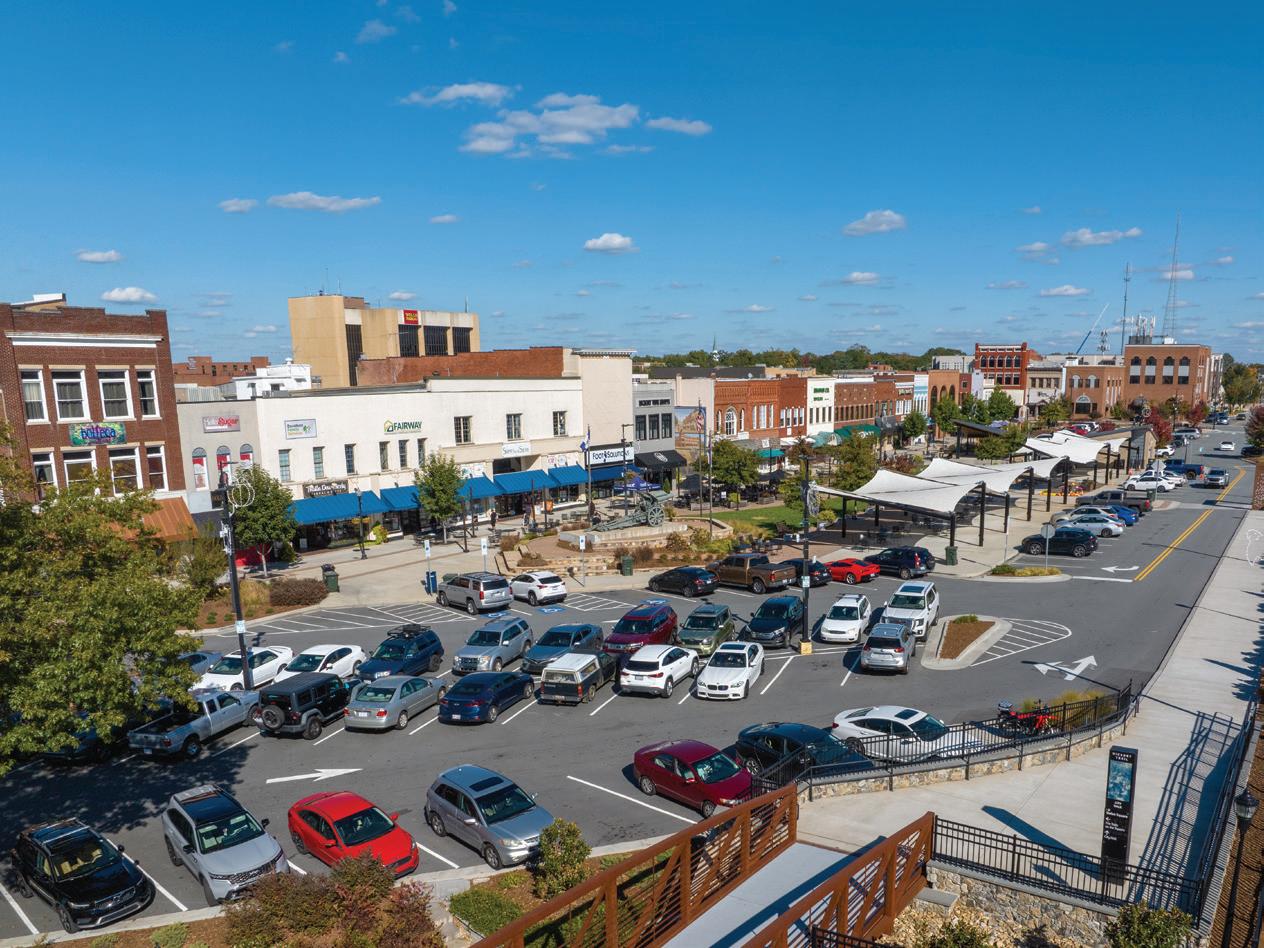






Hickory has excellent outdoor recreation options, including an extensive greenway system and mountain biking trails. Pickleball courts and other venues add to the mix.











Hickory’s restaurant scene is flourishing as seen from these eating places downtown and in the Lenoir-Rhyne University area.










Catawba has added 6,000 residents in four years, bringing its population to 164,645, according to 2023 census data. Part of its livability lies in its arts and culture scene, small-town boutique shopping, professional sports and a pedestrian-and-bike friendly Hickory Trail connecting popular destinations.
Since passing a $40 million bond referendum in 2014, Hickory has invested in its 10-mile multi-modal urban trail system and a 378-acre business park. “The bond money has been leveraged to gain an additional $75 million in grants for complementary projects,” Guess says. “This has allowed the city to invest more than $115 million into trailblazing projects that create a high quality of life, spur economic growth and attract residents and businesses.”
Growth along that Hickory Trail includes residential, retail and dining
establishments, including Center Crossing’s affordable housing and the One North Center mixed-use project. Two blocks east, One Eleven Main is a $20 million project that forecasts 107 apartments. An adjacent warehouse has been reworked into a brewery, distillery and barbecue restaurant.
“A drive through Hickory today reveals a revitalized city, abundant with opportunities for a well-crafted life,” says Guess, referring to the city’s motto of ‘Life. Well Crafted.’
The motto mirrors the Furniture Mart’s work. “This is quality furniture handmade by craftsmen who have been doing this for generations,” Lail says. “The less-expensive big box store stuff is generally not associated with Hickory. It used to be that 60% of furniture in the U.S. came from our region, and while that number may not be the same, there is very little furniture sold in the country in which Hickory hasn’t played

a role in manufacturing, marketing, technology, equipment or retail.”
Hickory recently was ranked No. 9 in USA Today’s ‘10 Best Readers’ Choice Awards in 2024 for ‘Best Main Street,’ Guess notes. The article stated Hickory “is a charming and vibrant destination for shopping, dining and entertainment. Visitors can enjoy a variety of retail shops and restaurants, as well as a park-like setting and outdoor dining.”
Leroy Lail, who died in February at age 85, initiated the concept for a convention center in the 1980s, funded by a hotel rooms occupancy tax. “He had the idea to build the convention center and let the Tourism Development Authority, which collects the tax, rent the facility with the option to buy,” Brad Lail says. “Now, it’s one of the most successful in the Southeast, the largest west of Charlotte and plays host to dozens of meetings and events each year.”


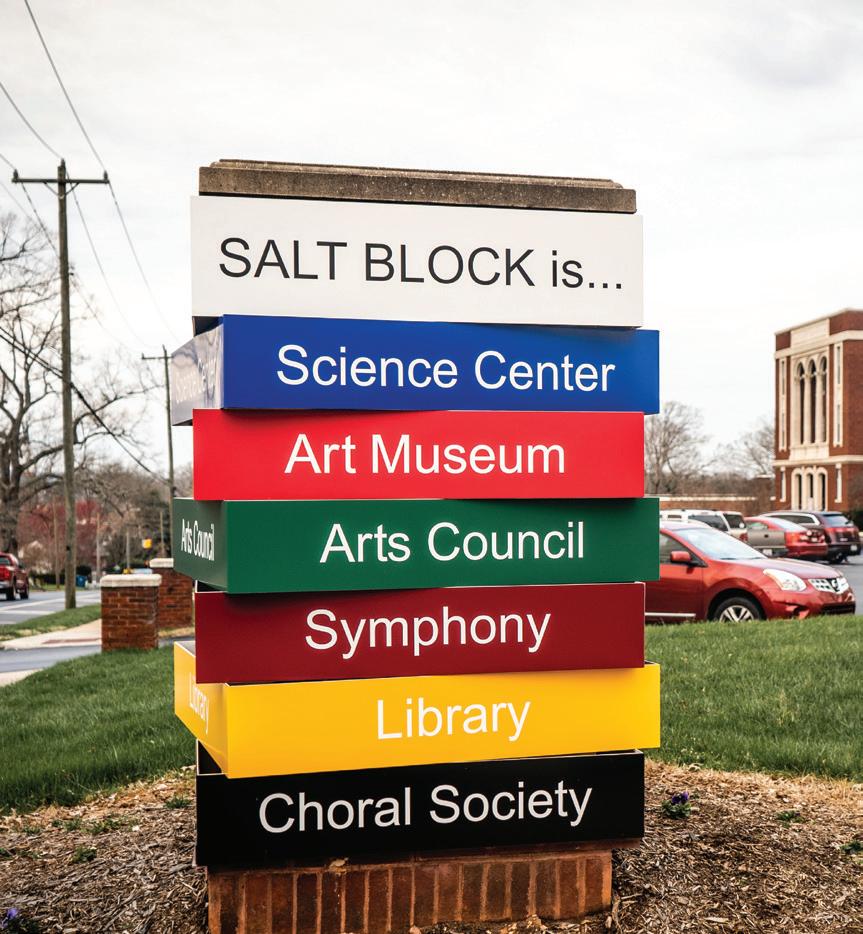
Mandy Pitts Hildebrand, CEO of the Hickory Metro Convention Center and Visitors Bureau, cites some top visitor attractions:
• The SALT (Science, Art, Literature, Together) Block, home of the Catawba Science Center and Hickory Museum of Art and offices of the Western Piedmont Symphony,
Hickory Choral Society, United Arts Council and public library.
• Hickory Motor Speedway’s season runs March through October, and Texas Rangers affiliate Hickory Crawdads play summer-long at LP Frans Stadium.
• Semi-pro soccer debuted in 2024 with the Hickory FC playing home games at LenoirRhyne’s Moretz Stadium.
• Hotels under construction in Hickory, with target openings of late 2025 or early 2026, include Home2Suites by Hilton (90 rooms) and TownePlace Suites by Marriott (100 rooms).
“There also are numerous walking and hiking trails, mountain bike trails and blueway trails along the Catawba River and throughout the county,” Hildebrand says. “Hickory’s trail system







Two years after announcing a $1 million purchase of the former Corning Optical building on 17th Street NW in Hickory, Appalachian State University opened its Catawba County campus in fall 2023, with 363 students enrolled.
App State previously offered distance education through Catawba Valley Community College. Now, a Hickory campus with 225,800-square-feet of floor space is expanding. The Beaver College of Health Sciences Interprofessional Clinic, offered through its Appalachian Institute for Health and Wellness, recently opened a location on the north side of campus.
“The clinic offers support groups for stroke and traumatic brain injury patients and caregivers as well as aging-well programs, with free screenings for people ages 60 and above focusing on cognition and fall risk assessment,” says Anna Oakes, director of news and media relations.
Phase two of renovations should be complete in the next two to three years. “The renovations include creating more classrooms and offices on the second floor, with some new classrooms to be ready by fall 2025,” Oakes says. “A new computer lab, cybersecurity lab and sciences lab are scheduled to be completed in summer 2024. The target completion date for the full secondfloor renovation, which will double the academic capacity of the building, is fall 2025.”
The campus offers academic support services, financial aid, career development, a library and testing center, and other amenities. The university has participated in events with Catawba’s Chamber, and worked with Hickory-area businesses including local vendors for event rentals, area restaurants and food trucks and is a sponsor of Hickory Crawdads baseball.
“There are many exciting things happening in the Hickory area,” Oakes says, “and we are excited to be a collaborative partner in the Hickory community.”



is almost complete, with 10 miles of new trails including the Riverwalk, which opened in April, along Lake Hickory.”
Domestic and international visitors spent $331.48 million in 2022, a 13.5% increase from 2021, according to VisitNC. “Visitor spending in 2022 was a record year, which confirms the importance of tourism and the value it adds to the community,” Hildebrand says. “Hickory, along with communities within the county, have flourished due to public and private investments that are not only beneficial to residents but also to visitors.”
One community is Newton, where a Streetscape Revitalization Project is underway to widen sidewalks, add landscaping and lighting, and include other ways to make downtown more enjoyable for shopping, restaurants and businesses.
Tourism in Catawba directly employs 2,400, with the industry generating a payroll of $85.2 million.
The Hickory Metro Convention Center’s $18 million renovation to be completed this summer adds meeting rooms, upgraded auto-visual capacity, outdoor terrace and a 35,000-squarefoot exhibit hall with 30-foot ceilings.
“The space will be able to house four basketball courts, eight volleyball courts or 12 pickleball courts and is ideal for cheerleading, gymnastics, wrestling and other indoor sports,” Hildebrand says.
Adds Millar: “If you haven’t visited us lately, I think you’d be very surprised. We welcome your exploration.” ■
— Kathy Blake is a writer from eastern North Carolina.



















BY DAVID MILDENBERG
the best magazines have a soul that undergirds the work, making them about more than beautiful design, photography and writing. For much of Business North Carolina’s history, journalist Edward Martin was our heart and soul, telling a phenomenal array of stories from the tiniest Tar Heels towns to the o ces with the greatest power.
Ed died May 29 at age 80, in a Bedford, Virginia, hospital, near the tobacco farm where he grew up. Our condolences go out to his wonderful wife, Natalie, who met Ed as a toddler in Bedford, a town of 3,200 famous for losing 19 soldiers in the Normandy landing in June 1944, a few months a er Ed’s birth.
During his three years of U.S. Army service in the early 1960s, Ed received military-sponsored journalism training at Columbia University in New York. A chance encounter with a Durham Herald reporter visiting Fort Liberty (formerly Fort Bragg) led Ed to nearly three decades in North Carolina newspapering, including the Charlotte Observer.
A er a stint as a freelance writer for national healthcare publications, he joined Business North Carolina magazine full time in 2001, then worked as a part-timer for the past dozen years or so. Working o his ideas or those suggested by longtime Editor David Kinney, Ed wrote more than 200 stories for BNC that invariably combined rich detail with business savvy, always focused on the Tar Heel state. Despite his complex medical issues, Ed completed a story for this edition and was hungry to write many more.
Ed’s excellence resulted in more than 30 prizes from the Alliance of Area Business Publications, a magazine industry group. He




received top honors in the annual “Best Body of Work” category more than a dozen times, a record that contest judges from the University of Missouri School of Journalism said would likely never be surpassed.
In 2010, a contest judge noted that, “Great detail gives wings to great writing. You can almost hear the stillness when Martin poses tough questions to race team owner Rick Hendrick [March 2009], or hear the hope and hopelessness of Hispanic workers [May 2009]; he even makes you feel the emptiness of a has-been shopping mall [October 2009]. Martin clearly elevates every story he touches, regardless of subject, and is one of the few writers who uses dialogue well.”
Beyond his skills honed during decades of journalism, Ed was among the kindest persons one could ever meet. Former BNC Managing Editor Frank Maley, who spent nearly 10 years working adjacent to Ed, recalls, “It was never a mystery to me why people told Ed such great stories because he was so good at making people feel instantly comfortable in his presence, and he was great at asking the right questions in the right way to draw out interesting facts.”
Maley recalls seeking Ed’s help frequently “because I knew when I walked in his o ce, he would turn toward me with a big smile, give me his full attention, know exactly when to listen and when to interject a joke or his own perspective, and help me process whatever was going on.”
ank you, Ed, for a life well lived. Our readers, and the entire state of North Carolina, will miss you. ■