





Find out why Newsweek named Deerwood Bank a 5-Star Regional Bank at deerwoodbank.com. We’re thankful for the women who lead, inspire, and make a difference—both in our bank and beyond.




The connection between work and well-being is reshaping the modern office— and it’s never been more relevant. Forward-thinking employers understand the value of cultivating a culture that blends the comforts of home with the energy of the workplace. It’s a new day, and architects and designers are reimagining what’s possible, crafting vibrant, sensory-sensitive environments that spark creativity, support mental health, and drive productivity. Discover how JLG is redefining the workplace experience, boosting business performance, and bringing teams back together. Explore the future of work at JLGarchitects.com.
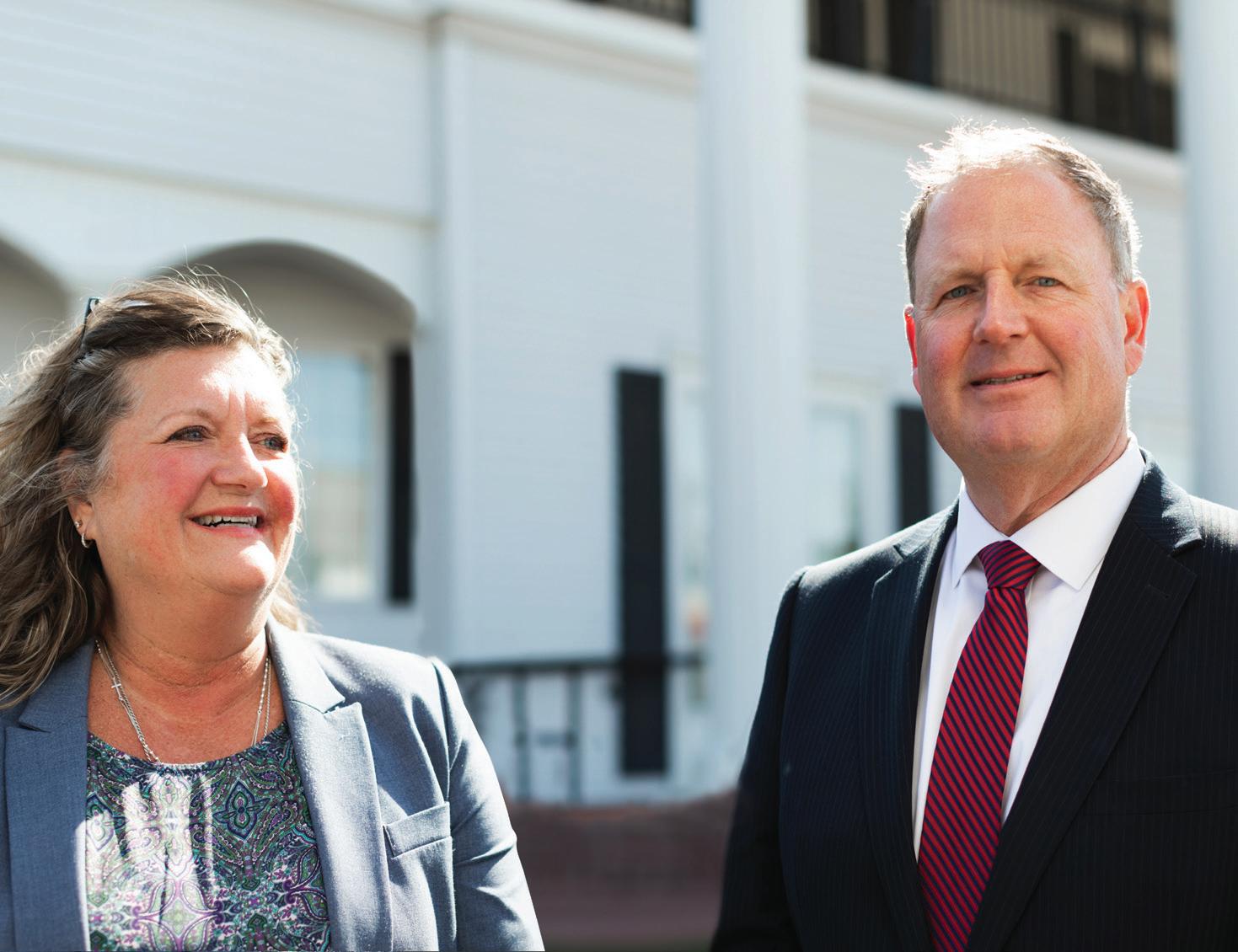

President: Julie Lunning, 320-656-3804
Director of Finance and Operations: Kristi O'Connor, 320-656-3806
Director of Programs & Events: Laura Wagner, 320-656-3831
Director of Marketing & Communications: Emily Bertram, 320-656-3809
Director of Membership: Bradley Hoelscher, 320-656-3824
Administrative Assistant/Network Administrator: Vicki Lenneman, 320-656-3822
Administrative Assistant: Shelly Imdieke, 320-656-3800
CONVENTION & VISITORS BUREAU STAFF
Executive Director: Rachel Thompson, 320-202-6728
Director of Sales: Nikki Fisher, 320-202-6712
Sales Manager: Olivia Way, 320-202-6713
Sports Director: Craig Besco, 320-202-6711
Marketing Manager: Lynn Hubbard, 320-202-6729
Marketing & Services Coordinator: Melissa Ludwig, 320-202-6770
Information Specialist: Maddy Lindholm, 320-251-4170
ST. CLOUD AREA CHAMBER OF COMMERCE 2024-25 BOARD MEMBERS
Nick Bischoff, Design Electric
Doug Cook, Headwaters Strategic Succession Consulting LLC
Tanja Goering, Celebrate MN, Past Board Chair
Joe Hellie, CentraCare, Board Chair
Ray Herrington, Pioneer Place on Fifth Hudda Ibrahim, OneCommunity Alliance
Dave Kleis, Central Minnesota Driving Academy
Matt Laubach, West Bank
Laurie Putnam, St. Cloud School District 742
Paul Radeke, Creative Planning, Board Vice Chair
Alex Schoephoester, Spencer Fane
Brenda Sickler, Theisen Dental
Amy Sip, ASip Consulting
Melinda Tamm, Ms. Melinda’s Dance Studio
Melody Vachal, Arise Cares
Donella Westphal, Jules’ Bistro
Dr. Jason Woods, St. Cloud State University

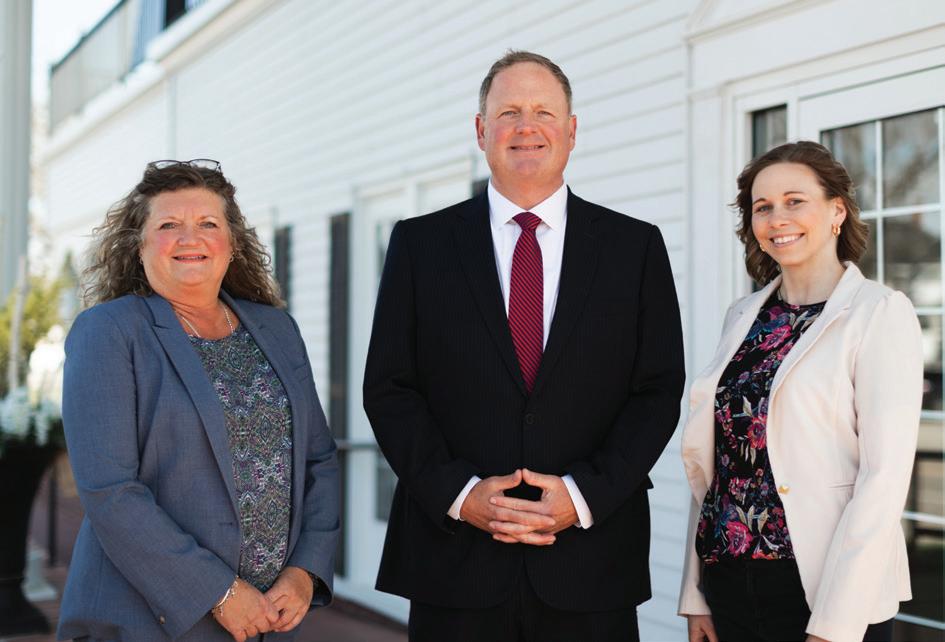
On July 4th, 2025, my mom’s side of the family, the Deans, are celebrating a huge reunion at our family’s place on Grand Lake. Eighty-plus relatives from all over Minnesota as well as Pennsylvania, New Mexico, Montana, Connecticut, Washington State, Massachusetts and more are flocking to Central Minnesota to spend two days together for one reason: we’re family.
In planning this big event, a committee of my aunt, my mom, my cousin, my sister-in-law, and me was assembled to iron out all the details. We each had different roles, from designing and sending invitations to planning meals and games, plus plenty of property prep. My mom was tasked with assembling our family’s genealogy into a book, and I aided as her editor and layout designer. As a result, I’ve gotten to know a large part of my family’s history.
My great-grandfather Perry’s family is from France and Ireland, eventually convening in the 1870s near Shakopee, Minn. My great-grandmother Blanche’s family hails from Switzerland and Germany, coming together in Ohio before moving to Minneapolis. Perry and Blanche met while attending the University of Minnesota. They later married, purchased a home in St. Paul, and had five children, including my grandpa Don Dean. These are the five siblings we’ll be celebrating at the reunion.
Our story doesn’t end there, though. After my grandpa Don married his wife Priscilla, they moved to St. Cloud and had three daughters. Don worked for his father-in-law
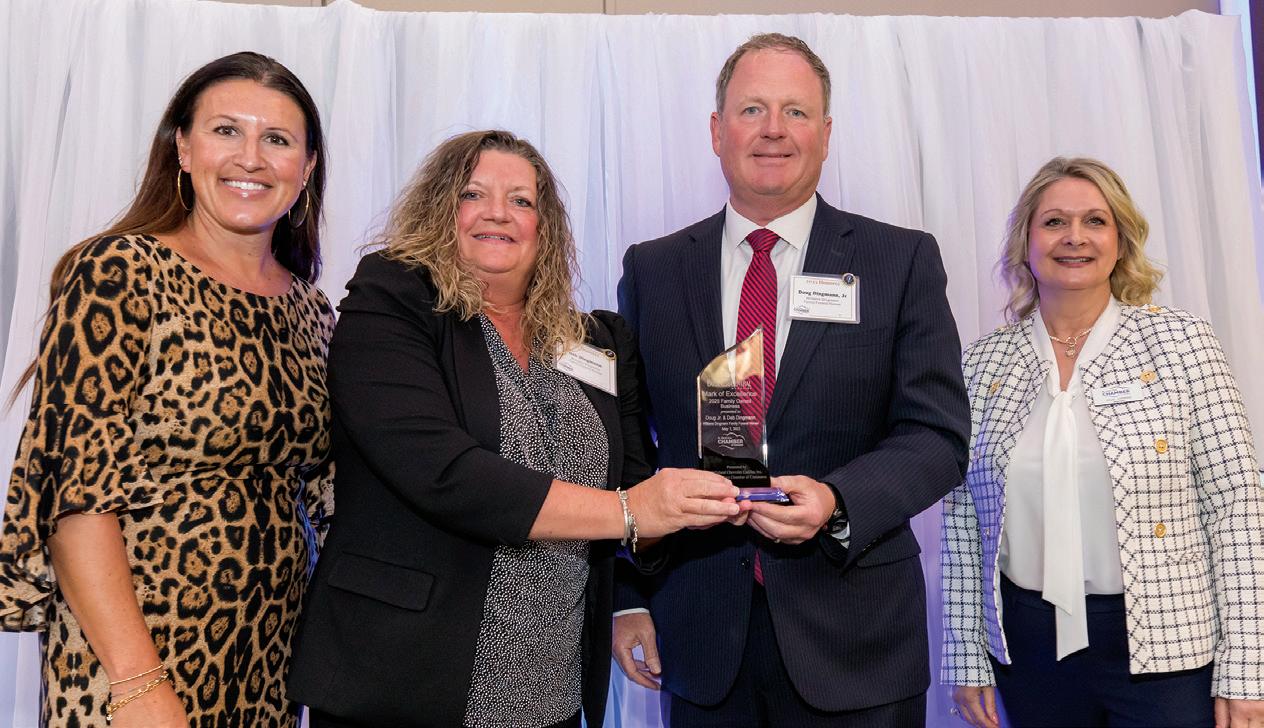
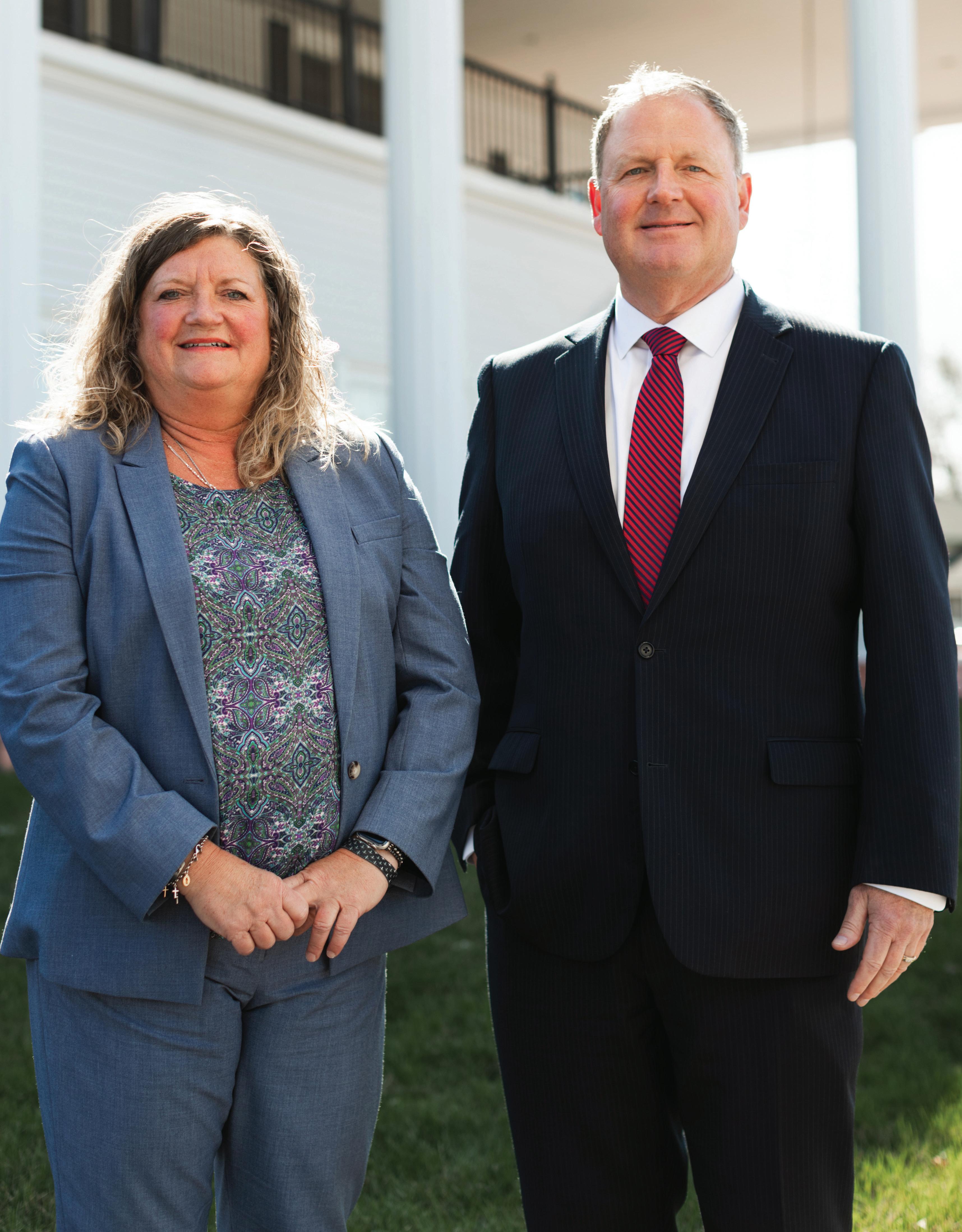
Business Central Editor Emily Bertram (right) with siblings Deb and Doug Dingmann Jr.
Bert Baston, owner of Baston Chevrolet, while Priscilla was a loving mother and active in many local organizations. Don eventually started his own automotive business, Royal Tire, which is where my parents met each other. The rest, as they say, is history.
Every family in the world has its own story, with interlacing tales of immigration, marriage, children, hardships, successes, and heartbreak. How two paths eventually cross is largely a question of fate, but they set the stage for generations to come with the foundation they lay. Doug Jr. and Deb Dingmann carry on their family legacy in running Williams Dingmann Family Funeral Homes as fourth-generation owners. They also take special care to honor the traditions and stories of every family they work with. You can read more about them on page 32.
By the time you read this, I will likely be in the midst of — or recovering from — my family reunion. Stresses of planning aside, I’m so grateful that my family is able to come together to celebrate our shared heritage. I’m sure Perry and Blanche are watching with pride, too. Until next time,
Emily Bertram, Editor
To celebrate the 25th anniversary of Business Central Magazine, we’re sharing a fun fact from the year 2000 in each issue.
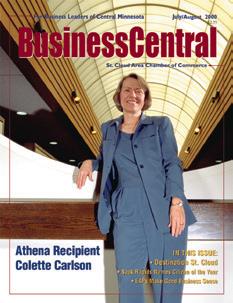
The ATHENA Award was originally introduced to Central Minn. by the St. Cloud Area Chamber of Commerce in 1988, and transitioned to the Central MN Community Foundation in 2008. As of 2025, 36 women have been honored by the program, including Colette Carlson in 2000. Carlson, who was on the cover of the July/August 2000 Business Central Magazine for her award, was the first female intern at Larson Allen accounting firm in 1982. She went on to become a partner in what is now known as CLA (CliftonLarsonAllen) and a leader in the firm’s tax department. A prominent figure in business, a role model in her industry, and an active community volunteer, Carlson paved the way for many other women in business during her career.
Publisher Julie Lunning // Editor Emily Bertram // Founding Editor Gail Ivers
Emily Bertram, St. Cloud Area Chamber of Commerce
Steve Greenfield, Greenfield Communications
Ari Kaufman, freelance writer
Randy Krebs, freelance writer
Jill Lenzmeier, United Way of Central Minnesota
Julie Lunning, St. Cloud Area Chamber of Commerce
Lynn MacDonald, St. Cloud State University
Tina Mrozek, Blacklight Adventures
Jeanine Nistler, freelance writer
Karen Pundsack, Great River Regional Library
Tim Salmon, Southern Methodist University
Michelle Skroch, Stearns History Museum
Aaron Traut, CLA
Associate Publisher/Sales
Melinda Vonderahe, Marketing Consultant
Ad Traffic & Circulation
Yola Hartmann, Hazel Tree Media
1411 West St. Germain Street, Suite 101, St. Cloud, MN 56301
Phone: (320) 251-2940
Fax: (320) 251-0081
BusinessCentralMagazine.com For advertising information contact Melinda Vonderahe (320) 656-3808




By Karen Pundsack
If you have not had the time to read a physical book in a while, this one is a great place to dive back in.
Robin Wall Kimmerer, bestselling author of Braiding Sweetgrass, returns with a short, easy-to-read tale in The Serviceberry: Abundance and Reciprocity in the Natural World. This essay originally appeared in Emergence Magazine before being published as a book. It is the perfect book to read while in the woods listening to the birds, or to give as a gift.
New York author Kimmerer is a 2022 MacArthur Fellow and member of the Citizen Potawatomi Nation. As an environmental biologist, she merges scientific thinking with indigenous wisdom. Her writing style is calm, peaceful, and almost lyrical.
What the book offers in brevity, it makes up for in substance. Kimmerer’s prose weaves a tale juxtaposing an economy based on scarcity and competition with a gift

“I
cherish the notion of the gift economy … a sense of belonging and relationship and purpose and beauty, which can never be commoditized." — THE SERVICEBERRY
economy based on abundance and reciprocal sharing.
The book has seven short chapters, each beginning with its own unique hand-drawn illustrations. John Burgoyne’s expressive pen-and-ink illustrations help shape the story. It’s the type of book that makes you want to read it a second time and share with someone when finished.
One of the main themes is the concept of the world’s abundance. Kimmerer uses the life cycle of the serviceberry to illustrate how the natural world provides a framework for a sharing economy. She outlines key principles and concepts, such as “Never take the first one, never take the last.” It is a tale filled with appreciation for the natural world.
Leaders can benefit from thinking about how these concepts can create a more
holistic workplace. Fostering balance within a work environment can add meaning and purpose to our businesses, as well as society as a whole. Being in tune with sustainable practices can create long-term benefits that extend beyond the workplace.
The author invites others to become part of the gift economy in her author’s notes. Kimmerer indicates that she has donated advance payments from the book, as a reciprocal gift, back to the land, for land protection and restoration.
JLG Architects promotes Mikelson JLG Architects’ Pete Mikelson was promoted to director of integrative design. Mikelson, a licensed architect in Minnesota, joined JLG Architects in May 2023 as a senior project designer, bringing over 23 years of experience.

James Kramer III recognized Kramer Financial Advisor James Kramer III, MBA, CEPA®, CFP was included in LPL Financial’s Masters Club for 2025. This distinction celebrates a select group of advisors who have achieved excellence in financial guidance.


Karen Pundsack is the executive director at Great River Regional Library.

The book and CD audiobook are available for checkout at the public library. Reserve your copy at griver.org.


Allen joins Quinlivan & Hughes, P.A. Attorney Brian Allen has joined Quinlivan & Hughes, P.A., bringing expertise in estate planning, business and real estate law to the firm. Allen, a University of Nebraska College of Law graduate, primarily serves the estate planning group.
PCI named at Top Workplace Preferred Credit Inc. (PCI) was named a USA Today Top Workplace for 2025. USA Today's Top Workplaces celebrates businesses with over 150 employees who have built outstanding cultures. The award is based on employee feedback.
OF VIEW

Business Central asked:
How do you typically get your local and national news, and how often do you check it?


Dave Blue, Batteries Plus
I usually get it online, and typically I check a few news sites after dinner every day.

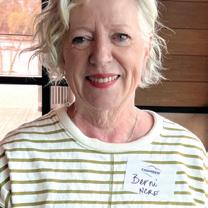
Bernie Halaas, New Century Real Estate
I stream most of my news online and through apps. Typically, I check it every morning.

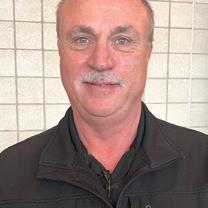
Brinkman, Forever Young Two Wellness and Skincare
I surf several different radio stations throughout the day, especially while in my car. I also like to read a physical paper when possible for local news.

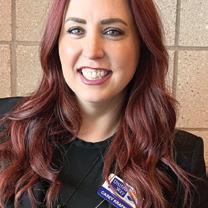
Casey Krafnick, United Way of Central MN
I get my news through online links shared on social media primarily, and I check it throughout the day.


Dakota Johnson, Blacklight Adventures
I don’t really watch the news these days, unless it’s sports news that I’m interested in.


Moilanen joins Apex Engineering
Ryan Moilanen was hired as graduate engineer in the water group at Apex Engineering Group after interning for the company during the summer of 2024. Moilanen will work with both drinking water and wastewater projects. His prior work experience includes an internship with Benton County Public Works Department.
Brenny Specialized recognized
Brenny Specialized was named a Truckload Carriers Association (TCA) Elite Fleet Certified Carrier. This recognition highlights North American for-hire truckload carriers that foster exceptional work environments, offer competitive compensation, and implement innovative practices to support their drivers.

Lemke earns CPA license
Cameron Lemke is now a CPA at Schlenner Wenner.
Lemke joined the St. Cloud office in 2022, graduating from Saint John’s University in 2023 before starting full time with the tax department where he works on clients’ bookkeeping, assists with personal and business tax returns, and prepares financial statements.
Kinder Coffee Lab opens second location
St. Cloud coffee shop Kinder Coffee Lab purchased the former Rock Creek Coffeehouse location in Sauk Rapids. The Sauk Rapids store is Kinder Coffee's second location, incorporating Kinder Coffee staples while keeping Rock Creek favorites on the menu.
Sartell was once home to one of the finest stock breeding farms in the nation.
By Michelle Skroch

Le Sauk Township in Stearns County hugs the Mississippi River just north of St. Cloud. Home to the city of Sartell, this township is one of the more developed in the county. A drive through it reveals sprawling residential developments and lush parks. Much of Sartell’s early growth is credited to the pioneer lumber and sawmill businesses. However, it was not these industrial businesses that brought national fame to this village north of St. Cloud. It was a stockyard.

general merchandising, the lumber business, and banking. Clarke later decided to pursue a passion to produce prized animals and create highly desirable stock bloodlines. While Clarke’s livestock consisted of Clydesdale and Hambleton horses, Shorthorn and Jersey cattle, Berkshire hogs, and Cotswold sheep, it was the Clydesdales and Shorthorns that were the most decorated and enduring to Clarke’s legacy.
This stockyard was actually a collection of three farms. Meadow Lawn (1,600 acres), Clyde's Main (1,900 acres), and Nether Hall (300 acres) covered a total of 3,800 acres, with large portions located within sections sixteen and seventeen of
Le Sauk Township. The proprietor of this impressive estate was Nehemiah Parker (N. P.) Clarke, an early settler, entrepreneur, and local political figure.
N. P. Clarke was born April 8, 1836, in Hubbardston, Mass. to Dr. Shepard Clark and Anna (Dickinson) Clark. As a young man he moved to Detroit, then Fond du Lac, Wisc. before pushing further west. Clarke arrived in St. Cloud on July 4, 1856, having walked from Fond du Lac. He was successful in several local industries, including
Among the most prized Clydesdales were Prince Patrick, Cardondal, and Earl of Bombie. Prince Patrick sired many of Meadow Lawn’s champion Clydesdales including Cardondal, a bay with four white legs. Earl of Bombie, an imported brown Clydesdale, had a white stripe on his face and white hind legs. Prince Patrick won the Clydesdale exhibition at the 1893 World’s Columbian Exposition, an award that put Meadow Lawn on the world stage of stock breeding. Earl of Bombie took first place at the 1900 International Livestock show in Chicago, followed by Cardondal in second place. Other prize-winning Clydesdales from the Meadow Lawn stockyards include

went on to win Junior Champion Shorthorn Bull of America in 1900. Cash premiums received for Justice totaled $1,480.
By 1909, three years before his death, Clarke began the process of selling off his vast stockyards. He sold
possession until 1940, when he sold it to John Bernard Coborn.
By this time, Sartell and the St. Cloud metro areas were growing steadily, and it was only a matter of time before any remnants of this once-great farm were transformed into city developments. Not all vestiges were lost, however.
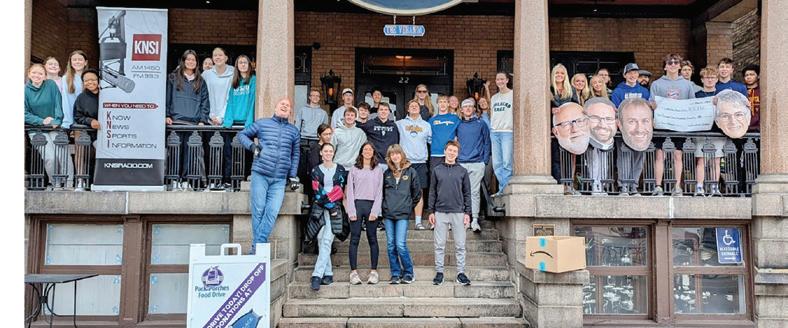
Food and fund drive raises over $20,000
The 15th annual Catholic Charities Pack the Porches food and fund drive, benefiting Catholic Charities Emergency Services Food Shelf, received 6,437 pounds of food and $21,291 in donated funds during the six-hour event in March. Coborn’s matched all food and fund donations up to $15,000.



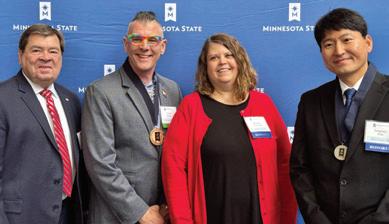
Three SCSU employees recognized
Three St. Cloud State University employees were honored at the Minnesota State 2025 Board of Trustees Awards for Excellence for excellence in teaching and service.
Associate Professor of Secondary Education Dr. J. Scott Baker was named a 2025 Educator of the Year.; Dr. Melanie Guentzel, director of graduate student services, was a 2025 Outstanding Service Faculty recipient.; Dr. Jungwon Ahn, associate professor of engineering and engineering technology, was named a 2025 Outstanding Educator.

Cooper joins Jacobs Financial Gabby Cooper joined Jacobs Financial as marketing coordinator. In her role, she will help to elevate the brand, connect with clients, and support the mission of financial empowerment. Cooper previously worked at Anderson Trucking Service and Sun Tan City.
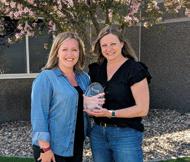
Stearns Electric earns award
The marketing team at Stearns Electric Association took home the Gold Award for Best Internal Engagement at the annual National Rural Electric Cooperative Association Excellence Awards Program. The award recognized the success of their 2024 game-show-themed employee appreciation week.
The St. Cloud Area Chamber of Commerce’s annual Washington, D.C., fly-in trip yielded effective conversations and stronger relationships.
By Julie Lunning
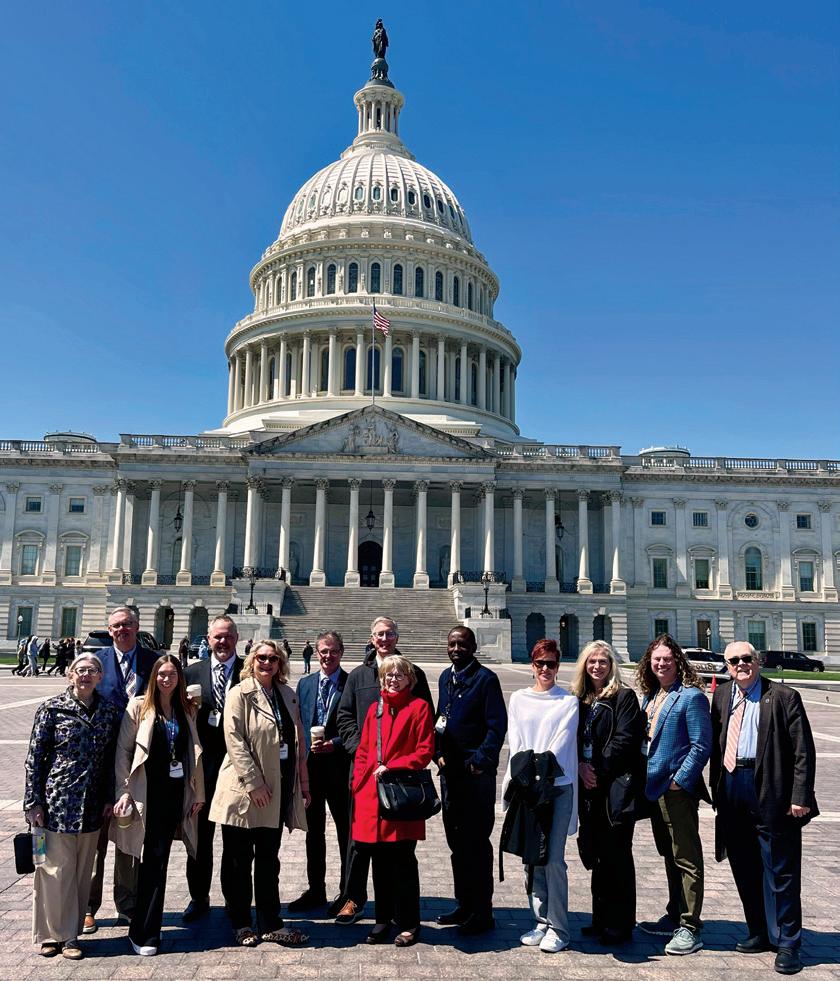
In April, 17 members of the St. Cloud Area Chamber of Commerce traveled to Washington, D.C., for our annual fly-in, an experience that blends purposeful advocacy with meaningful connections. This longstanding Chamber tradition puts business leaders from Central Minnesota face-toface with federal decisionmakers, ensuring that our region’s voice is heard where it matters most.
Over the course of three days, we met with Senators Amy Klobuchar and Tina Smith, and Congressmen Tom Emmer, Pete Stauber, and Brad Finstad. Our conversations focused on top issues affecting our
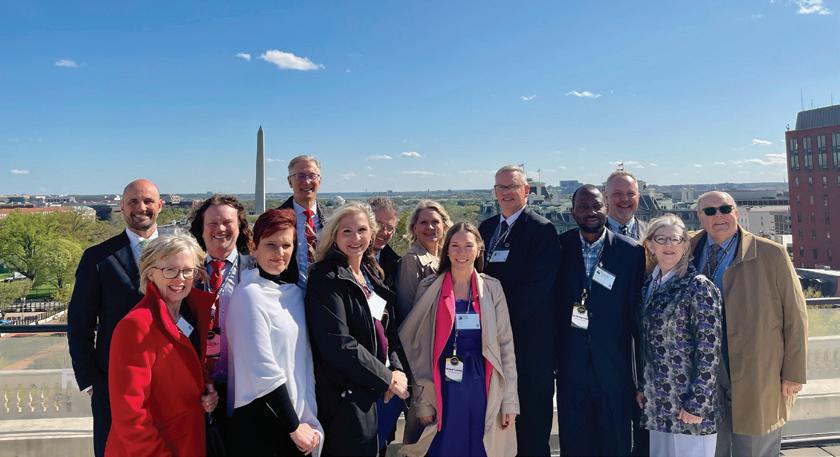
gave us the opportunity to build camaraderie and reflect on the value of our shared work.
business community, such as workforce shortages, housing needs, tax policy, and immigration reform. The discussions gave our members a chance to share how these national issues are playing out across industries in our region. We also received an insightful policy briefing from senior leaders at the U.S. Chamber of Commerce, engaged in a housingfocused session with Tobias Peter from the American Enterprise Institute, and toured the White House. While the agenda was full, we carved out time to enjoy the culture and history of our nation’s capital. Group dinners
Our fly-in is a powerful example of what can happen when business leaders show up, speak out, and engage. We’re proud of what was accomplished and grateful to the Chamber members who gave their time and insights while representing the St. Cloud area.
As we look ahead to our 2026 trip, we encourage you to join us. Whether you’re new to advocacy or a seasoned voice in public policy, this experience is an unparalleled opportunity to influence decisions that impact our region’s future, and to connect more deeply with fellow leaders who care just as much as you do.


Julie Lunning is president of the St. Cloud Area Chamber of Commerce.

Throughout the trip, several important themes arose.
1 Workforce challenges are top of mind. Ongoing labor shortages, combined with childcare gaps and immigration challenges, continue to limit business growth across Central Minnesota. While federal leaders know the problems, solutions are still in progress.
2 Housing is holding back economic expansion. Employers across industries shared how the lack of affordable and available housing makes attracting and retaining talent difficult. Business leaders and policymakers agree that housing must be part of any meaningful workforce solution.
3 Tax policy impacts business planning. The need for clear, long-term tax policy remains a priority. Business owners urged lawmakers to reduce uncertainty and support reforms that encourage investment, expansion, and entrepreneurship.
4 Business voices matter. Face-to-face conversations with elected officials are repeatedly told us that hearing directly from local business owners and leaders helps shape their understanding and approach to key votes and policies.
5 Relationships build results. Whether over dinner or in a congressional office, the connections made on this trip with Chamber members, legislators, and policy experts, made the fly-in powerful. Advocacy is built on relationships and this trip

MEGAN PFLIPSEN
Gate City Bank (320) 227-1348
Chair: Sauk Rapids Chamber
The Sauk Rapids Chamber promotes a healthy business environment in the community of Sauk Rapids. Programs include monthly meetings, the Sauk Rapids State of the City address, and the Rock the River Business Expo.
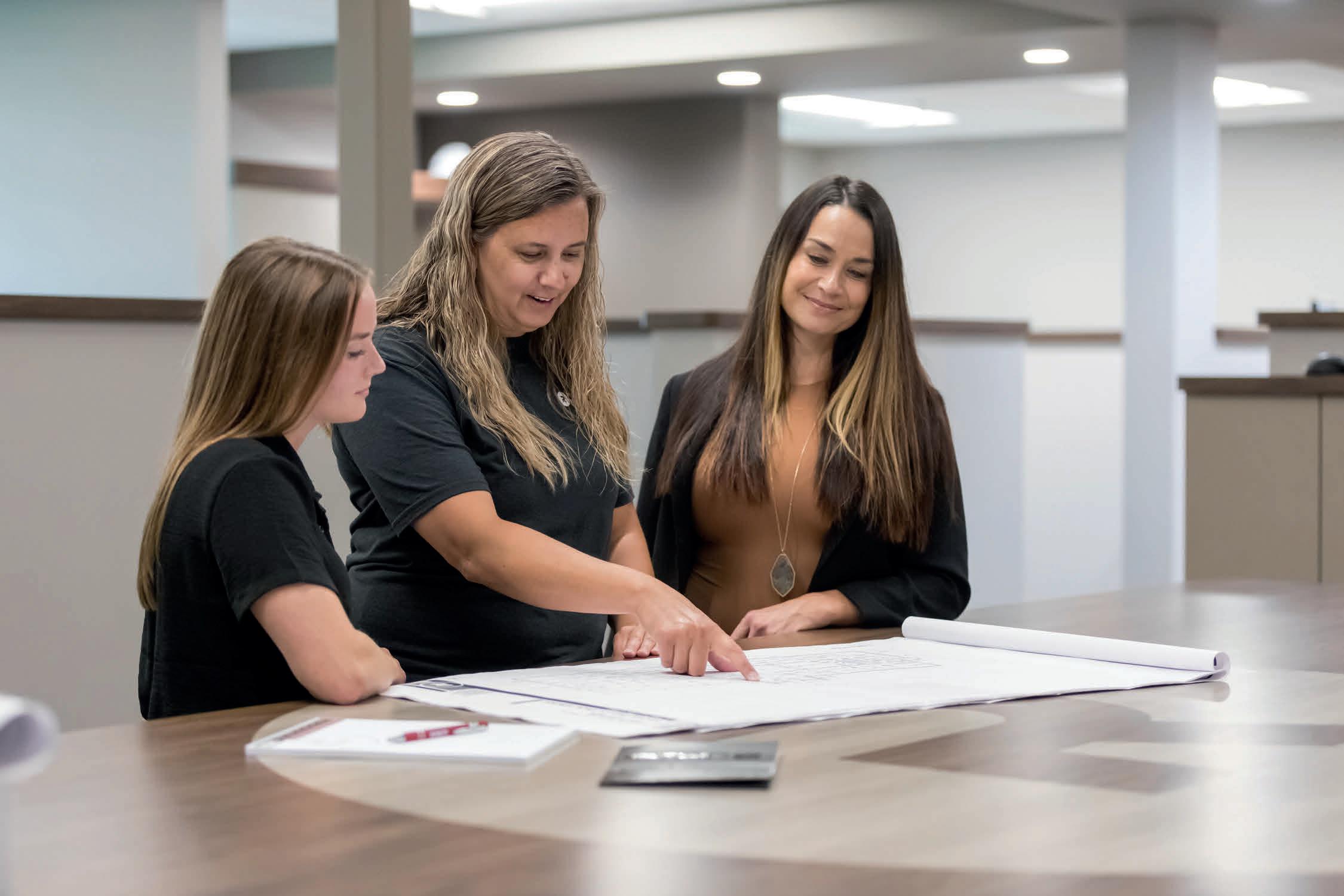
Women at Rice Companies are Interior Designers, Architects, Bim Technicians, Carpenters, Project Managers, Administrators, Directors, and Vice Presidents – All proudly contributing to building our communities.
Coborn’s acquires two new stores
Coborn’s Inc. signed a purchase agreement to acquire two grocery stores in Aberdeen and Miller, South Dakota. The stores were operated by the Kessler family under the Kessler’s Food and Grocery banner. The approximately 250 employees at these stores will be hired by Coborn’s.

receives service award
Lutgen Companies received the Master Elite President's Club Award from roofing manufacturer GAF. This award is given to GAF-certified roofing contractors who consistently demonstrate excellence in performance, reliability, and service.
BCI announces promotions
Several BCI employees have recently been promoted to new roles. Elliot Williams was promoted to site superintendent; Emma Anderson and Jonathon Rau were promoted to associate project managers; Emma Christianson and Ryan Pitman were promoted to project coordinators.
Larson recognized by Marquis
Chase Larson, executive vice president at St. Cloud Financial Credit Union, has been selected for inclusion in Marquis Who's Who. Factors such as position, noteworthy accomplishments, visibility, and prominence in a field are all taken into account during the selection process.
Companies can reduce stress at tax time by taking small steps all year.
By Aaron Traut

Tax time can be daunting for small business owners. With proactive planning and regular financial management, you can ease the burden and make the process smoother.
One of the most important things you can do is maintain accurate and up-todate financial records. This includes tracking all income, expenses, and receipts. Use accounting software like QuickBooks to automate

Contributor
this process. Regularly updating your records will save you time and effort when it comes to filing your taxes. There are numerous apps and software available that can help you track expenses, manage invoices, and pay bills. Using these tools can save you time and reduce the risk of errors.
It's crucial to keep your personal and business finances separate. Open a dedicated business bank account and use it exclusively for business transactions. This will make it easier to track your business expenses and income, and it will also simplify the process of claiming deductions. Choose credit cards with distinctly different colors for business and personal use. This simple visual cue can help you easily distinguish between business and personal expenses, making financial management more straightforward and reducing the risk of using the wrong card.
Aaron Traut is a principal at CLA, providing assurance, tax, and consulting services to closely held companies in manufacturing, distribution, technology, and retail.
Set aside time each month to review your financial statements and ensure everything is in order. This includes reconciling your bank statements, reviewing your profit and loss statements, and checking for any discrepancies. Additionally, conduct a more thorough review at the end of each quarter to assess your financial health and make any necessary adjustments.
Familiarize yourself with the tax deductions available
to small business owners. Common deductions include office supplies, travel expenses, and home office deductions. Keeping track of these expenses throughout the year will make it easier to claim them when you file your taxes.
Avoid the last-minute scramble to come up with the money to pay your taxes by setting aside a portion of your income each month. This will help ensure you have enough funds to cover your tax liability when it comes due. Consider working with a tax professional to determine the appropriate amount to set aside
based on your income and expenses.
Consider seeking proactive help from a tax professional or accountant. They can provide valuable advice to help you navigate complex tax laws, assist with proactive cash flow planning and profitability analysis, and ensure you're taking advantage of all available deductions. Investing in professional assistance can ultimately save you time, money, and stress. By implementing these tips and staying proactive throughout the year, you can make tax

time less stressful and more manageable. Regular financial management, staying informed about deductions, and seeking professional help when needed will go a long way in easing the burden of tax season for small business owners.
The information contained herein is general in nature and is not intended, and should not be construed, as legal, accounting, investment, or tax advice or opinion provided by CliftonLarsonAllen LLP (CLA) to the reader. For more information, visit CLAconnect.com.

CentraCare Foundation welcomes staff
Arlene Williams has joined the CentraCare Foundation as development officer. Williams has experience across multiple industries, previously working for the St. Cloud Country Club, Catholic Community Schools, St. Cloud Technical and Community College, and St. Cloud State University.

Administrative Assistant Season Groess recently joined the staff at CentraCare Foundation. Groess supports the major gifts and development teams.
Anderson joins DSC Communications Ryan Anderson joined DSC Communications as director of sales strategy. Anderson has over a decade of experience driving growth, leading high-performing teams, and implementing strategic initiatives. He is a graduate of University of Wisconsin – Stout and previously held roles at Verizon and Spectrum.

Bank transitions
Bremer Bank is now a division of Old National Bank As accounts and services transition in the coming months, all operations will be under the Old National name.
Got News?
Send news releases, announcements, or anything you think is newsworthy to Emily, ebertram@stcloudareachamber.com, and we will try to include it.
YOU DO WHAT?
Have you ever tried to explain your job to a neighbor, friend or family member? For some, it’s easier to grasp. I’m an accountant, a construction worker, a nurse. For others, it can be harder to explain. In this section, we take a look at some of the more “off the radar” jobs around Central Minnesota and learn about the opportunities in our community. So, what’s your job?
ROBIN CAUFMAN PLANNING
PROJECT MANAGER, BOLTON & MENK
What is your previous work experience?
Prior to joining the engineering firm Bolton & Menk Inc., I worked for the Metropolitan Council/Metro
Transit for 21 years. I started as a planner, working on comprehensive plans, environmental reviews, sewer extensions, transportation projects, and technical assistance. When I left in 2022, I was the director of administration, communication and outreach. In that role I really enjoyed working with communities to address their interests and concerns, update the customer service approach, and oversee administrative functions.
I have also served as an adjunct instructor at the University of Minnesota, teaching urban land use planning to graduate students and as a TIF analyst for Ehlers and Associates.
What drew you to your current position? In 2016, my husband and I bought a lake house on the Sauk River Chain of Lakes with plans to retire there eventually. However, when Bolton & Menk opened its St. Cloud office in 2022, it provided a great opportunity
to join a Minnesota-based consulting firm and provide community planning services to Central Minnesota. In November 2022, we moved to the area full time.
What does an average workday look like for you?
There is no such thing as an average workday. I spend a lot of time engaging the public, stakeholders, property owners and elected officials in a variety of formats such as open houses, virtual meetings, community events, surveys or focus groups. I review and update comprehensive plans, zoning codes, housing studies, and transportation plans. I attend many meetings with clients and coworkers as well as county boards, city councils, planning commissions and economic development authorities. Occasionally, I speak at conferences or guest lecture on planning-related topics, and I also enjoy volunteering with the St. Cloud Area Chamber of Commerce
and Greater St. Cloud Development Corporation.
What is something unexpected about your job? I have been surprised and encouraged by how engaged people are in their local communities. For the past two years, I've been working with cities and counties where their local elected officials and people appointed to committees actively participate and consistently show up for workshops and meetings. They may be difficult conversations, but the results are plans that address the issues they are facing and reflect their community values and goals.
What is your favorite part about your job?
My favorite part about my job is working with people. I love bringing people together around an issue, listening to everyone's stories and ideas, and then collectively developing a solution.
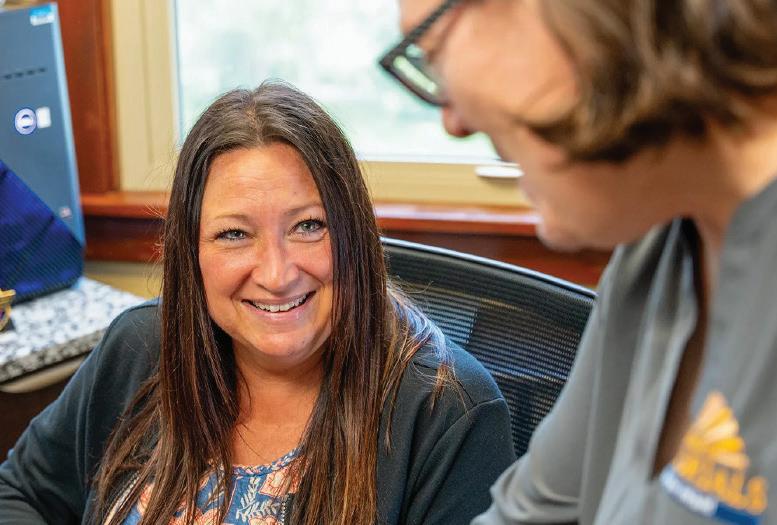
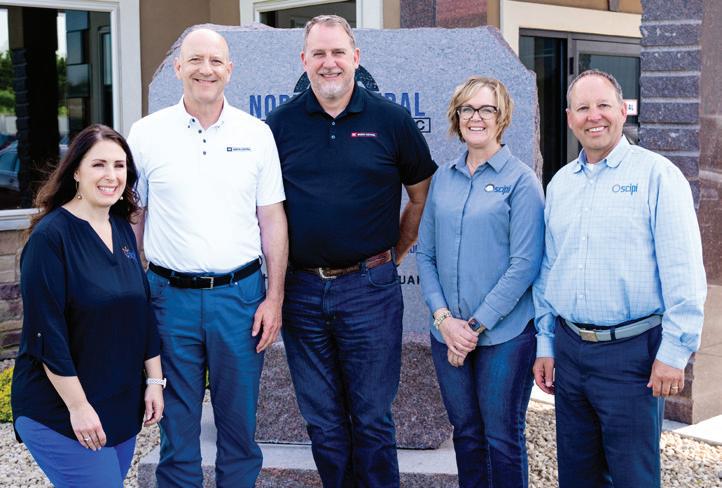
Central Minnesota has many hidden gems, but here’s one for the business community—Scipi Companies. Formerly known as St. Cloud Industrial Products, Inc., Scipi is an employee-owned group who optimizes other companies they hold. They have been 100% employee-owned for 50 years, an achievement not many ESOP companies have reached.
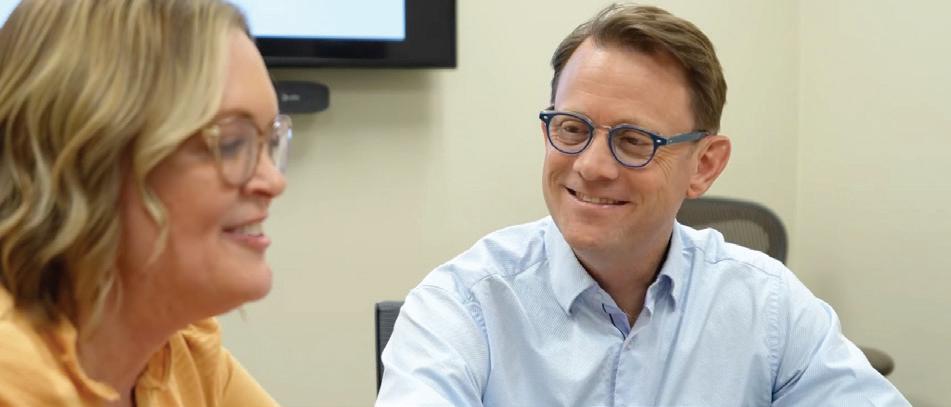
“We are one of the oldest employee-owned companies in the country,” said Matt Gaffy, President & CEO of Scipi Companies. “That means our people have worked hard in the right ways, and after being here myself for 32 years, I know firsthand that our culture is rooted deeply in values and upholding a bigger vision.”
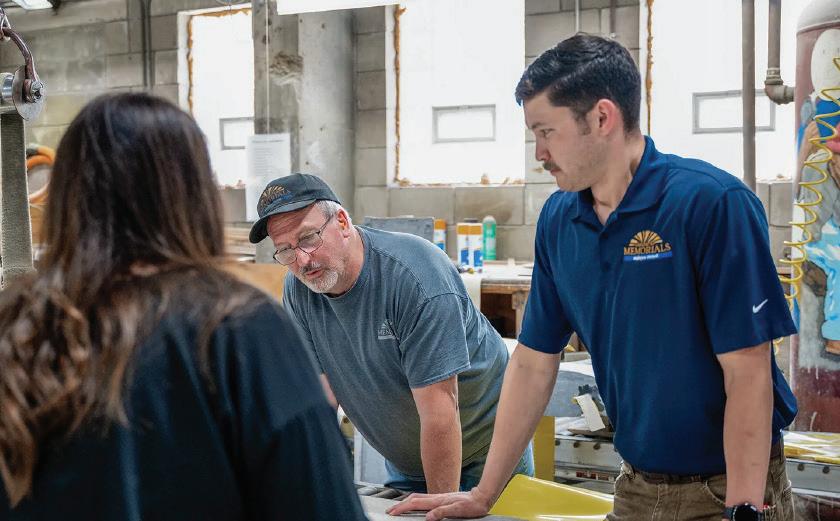
That vision is to create a place that people are excited to be part of—where they share in Scipi’s overall success as employee owners through each of their companies, which include North Central Bus and North Central Upfitting, Sunburst Memorials, Parts Midwest, and VPOC (Vehicle Personalization of Canada). And that list could grow in the near future.
“We are currently in a season of growth,” said Gaffy. “The right next acquisition for Scipi Companies would be a company that fits well with our culture and can assist Scipi in furthering our mission of creating wealth for our employee


owners and making a difference in the lives we touch.”
Scipi was founded in 1959, right here in St. Cloud. Their companies continue to primarily serve the Upper Midwest while reaching all of North America, with plans to expand service even further. They are also a proud multi-year recipient of the Minnesota Top Workplace award, an honor based entirely on feedback from its team members, showing that Scipi’s culture isn’t just an idea—it’s tangible and evident in how they work each and every day.
As a local organization, Scipi carries on a genuine legacy of giving back to the community in many ways, often sponsoring local leadership conferences, sporting events, fine arts series, and making donations to area charities on the regular.
“We are not good at talking about it,” said Gaffy. “But we are proud of the community investments we have made; it’s important to us to be able to do that and the feel-good is there, even without any recognition.”
To commemorate its 50th year of employee ownership, the company will now be known as Scipi Companies and has refreshed their brand identity with a mark that signifies coming together. The new tagline? “Powered by Employee Owners”—a phrase that pinpoints exactly what makes Scipi so unique.


A well-written, regularly updated job description can protect your business and help employees thrive.
By Tina Mrozek

Job descriptions can often feel like a huge checklist of vague responsibilities, leaving both the employer and employee with unreasonable expectations. Job descriptions have the unfortunate reputation of being outdated, and unnecessary paperwork that waste time and collect dust. However, if written and used well, job descriptions are the road map to clarity and success. They play a critical role in shaping the company’s culture,

Contributor
clarifying expectations, aligning talent with organizational needs, as well as creating structure and value within the organization.
Job descriptions are more than administrative documents — they are strategic tools that support virtually every aspect of HR management and organizational success.
Job descriptions can help prevent legal disputes related to job duties. They serve as a clear reference in case of misunderstandings or conflicts between the employer and
employee regarding what tasks are expected in the role. Job descriptions provide consistency across roles in the organization.
A well-written job description clearly outlines the responsibilities, expectations, and duties of the position. Employees know exactly what’s expected of them, minimizing confusion.
Job descriptions can be useful in properly classifying workers, which can affect their eligibility for benefits, overtime, and other legal protections.
Job descriptions serve as the blueprint for recruitment and hiring processes. A detailed job description streamlines the applicant screening process and ensures that candidates understand what the role entails, leading to better job fit and lower turnover rates.
A well-defined job description provides a benchmark for performance appraisals. Managers can assess how well an employee is meeting the
Tina Mrozek is the owner of HR Dynamics & co-owner of Blacklight Adventures.
There are several key elements that make up an effective job description:

Job Title
Date Updated
Employee FSLA Classification (exempt vs. non-exempt)
Supervisor: a title, not a specific name of an employee
Job Summary: a snapshot of the job's main responsibilities
Key Responsibilities: specific duties and tasks the employee will be expected to perform
Required Qualifications: technical, interpersonal, and soft skills needed for the role
Work Environment/ Conditions: work setting, including values, mission, etc.
Physical Requirements
Equal Employment Opportunity Statement
Employee’s Acknowledgement & Acceptance
responsibilities outlined in their description and offer constructive feedback. This also helps identify areas for professional development and training.
Safeguards
Having clear, documented job descriptions can provide protection against legal claims, making it easier to defend decisions related to promotions, terminations, or disputes. They also support compliance with labor laws and workplace safety regulations by clearly outlining physical, mental, and technical demands of a role.
Clear role definitions allow employees to better understand career paths within the organization. Job descriptions can illustrate the skills and experience needed for advancement, aiding in personal development and succession planning.
Job descriptions help identify skill gaps, redundancies, and opportunities for restructuring. As businesses grow or pivot, having a documented overview of each role helps leaders make informed strategic decisions.
HR and managers can benchmark the role against similar positions in the market to ensure competitive and fair compensation.
A well-communicated job description provides employees with clear expectations, less worry and less stress.
In a world where change is constant, regularly updating and refining job descriptions ensures that they continue to serve their purpose. At minimum, a job description needs to be reviewed by management annually. During an employee’s annual performance review, discuss the
job description and ask for their feedback on its relevance. Who knows the job better than the individual in the role daily? It’s valuable to have the employees’ feedback. Job descriptions do not need to be the sole responsibility of management. In fact, a collaborative effort is more empowering.
Does your organization have job descriptions updated within the last 12 months? If not, set a goal in 2025 to review, update and collaborate with each position in your organization. There are many resources available to help you achieve this goal — you don’t need to do this alone.
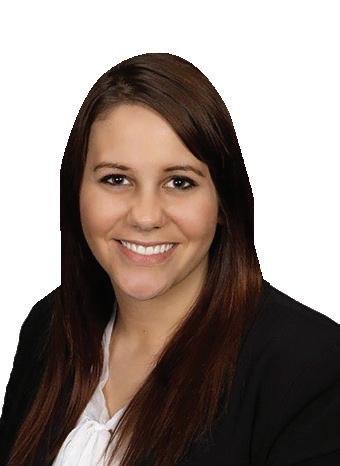
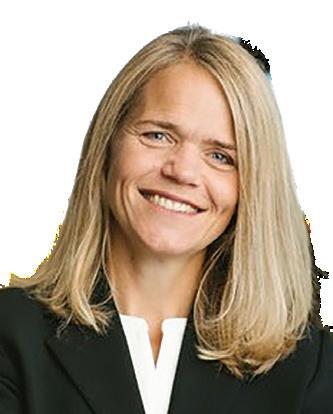
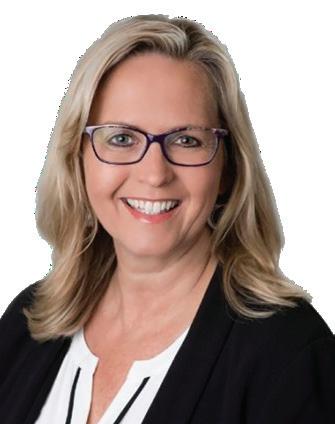
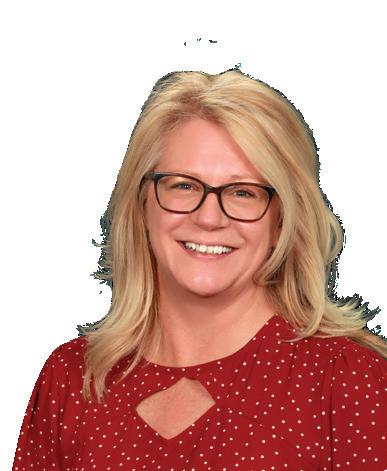
MB Consultants, PLLC proudly celebrates the women of their firm. Their expertise and dedication to provide exceptional services to our clients are the foundation of our achievements. Known for their unwavering commitment to clients, they bring more than numbers to the table — they bring solutions, empathy, and follow-through. From day one, you’ll notice the difference: proactive communication and thoughtful guidance which reflects the kind of service MB provides to their clients.




MORE ON EVENTS : For information on these or other business events, call 320-251-2940 or visit StCloudAreaChamber.com and click on “Calendar.”
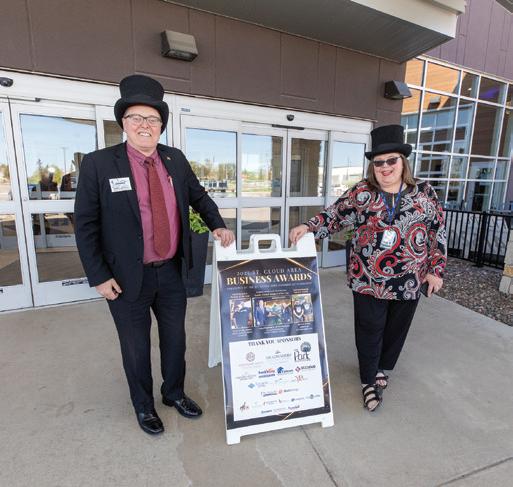
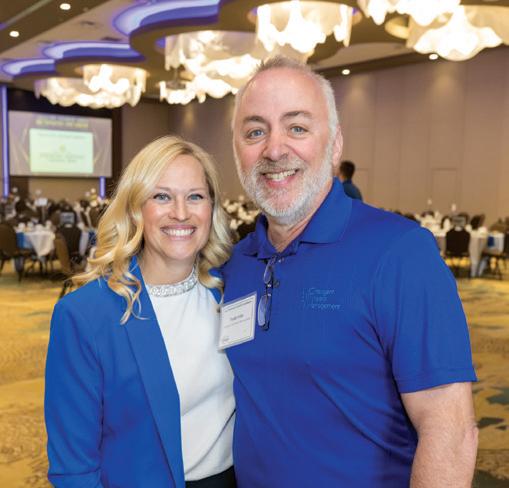
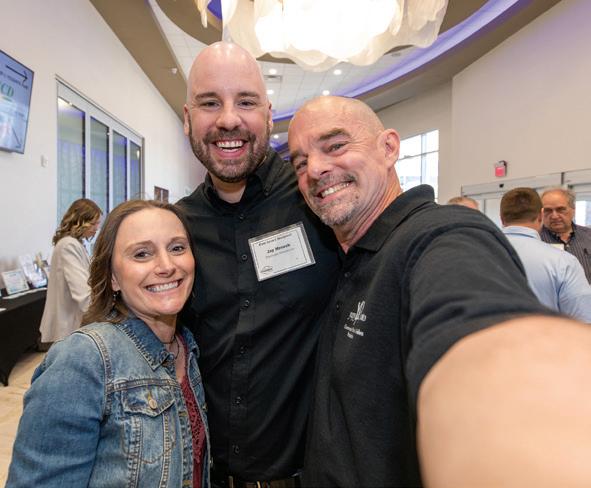
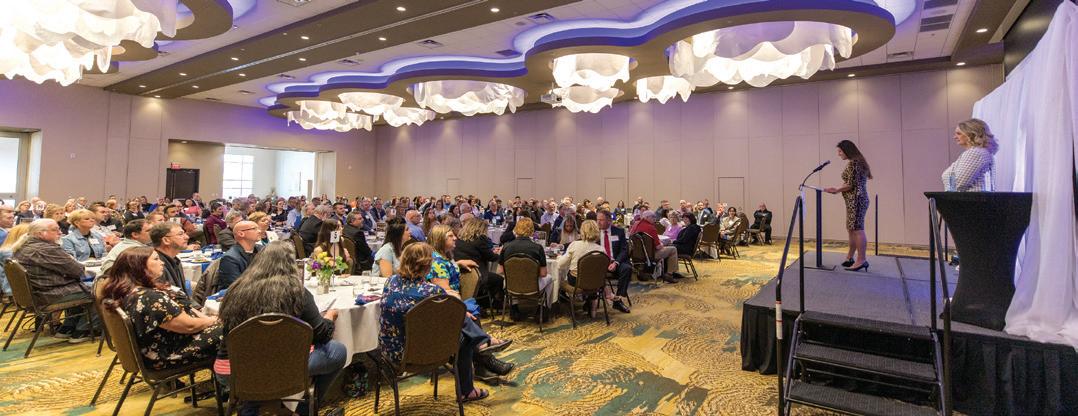
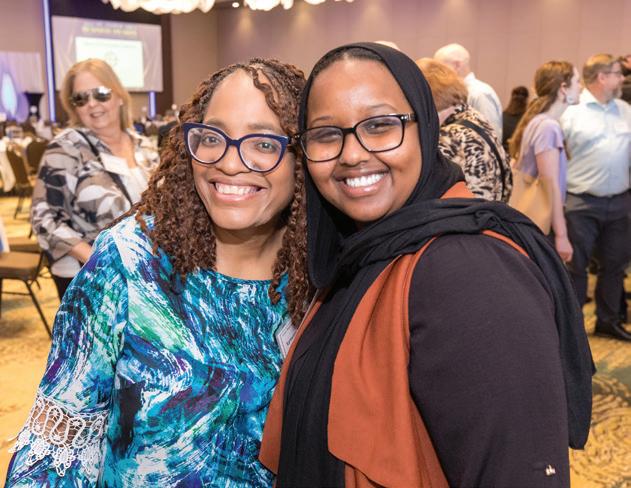
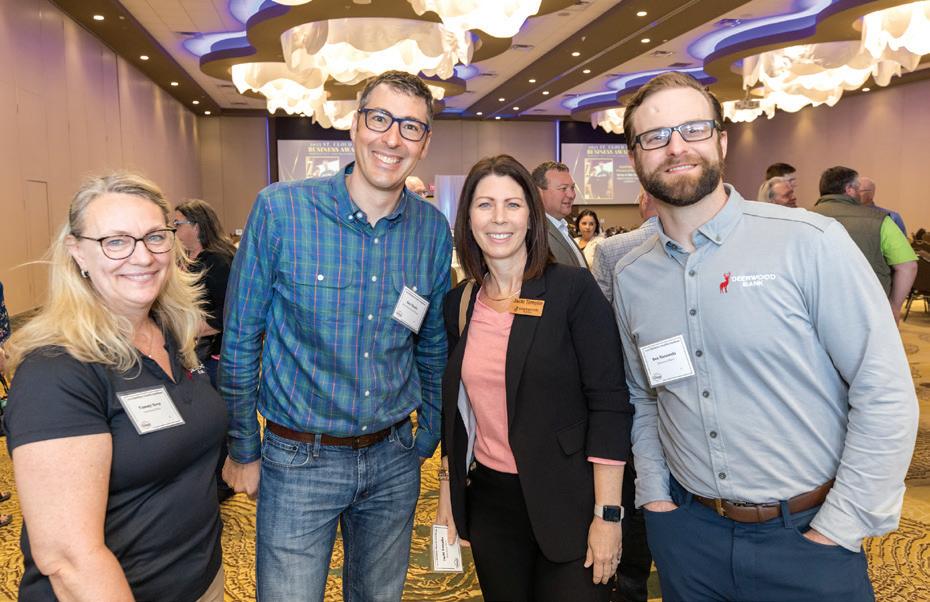
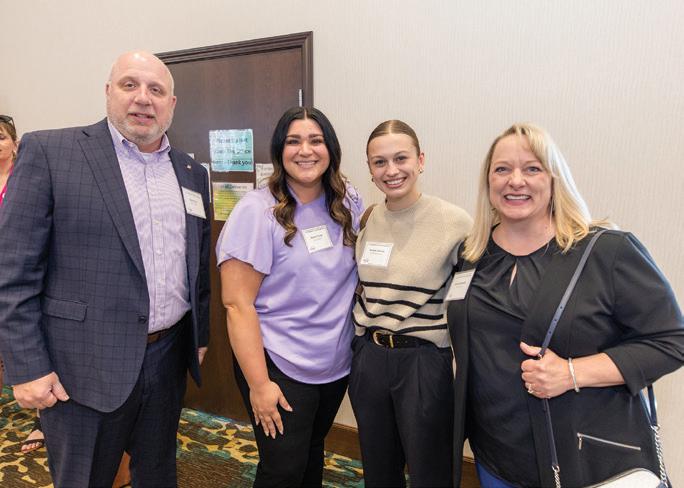
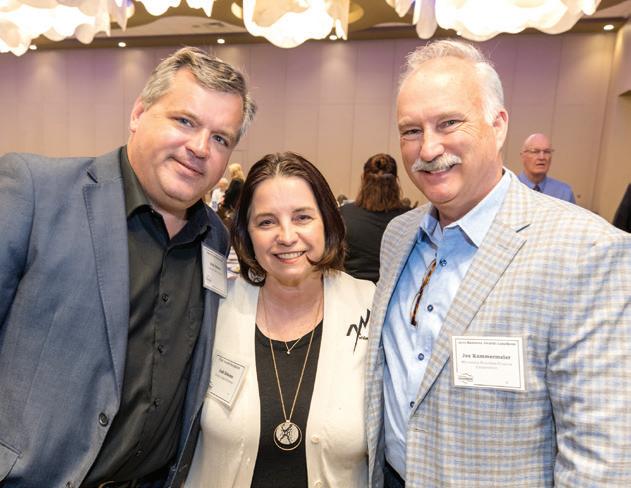
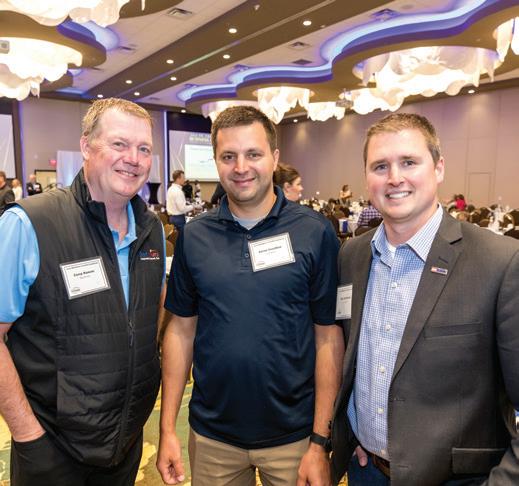
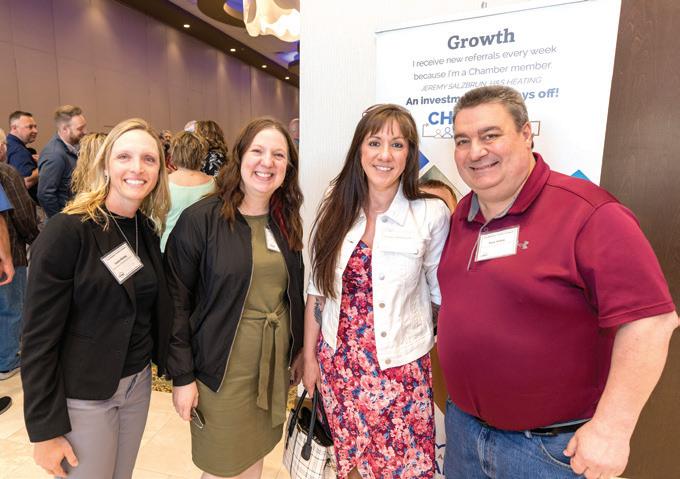
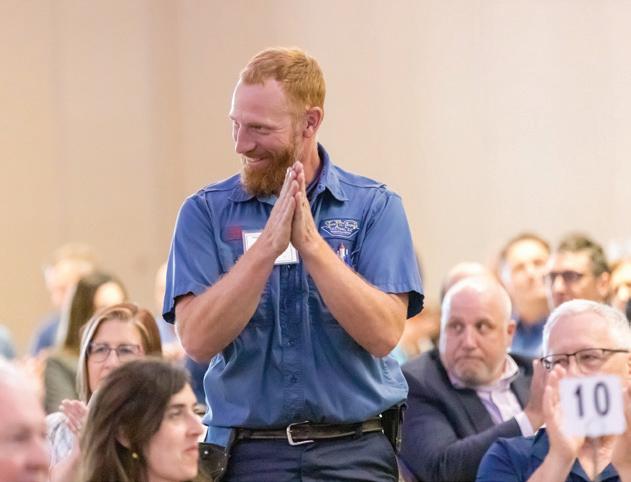
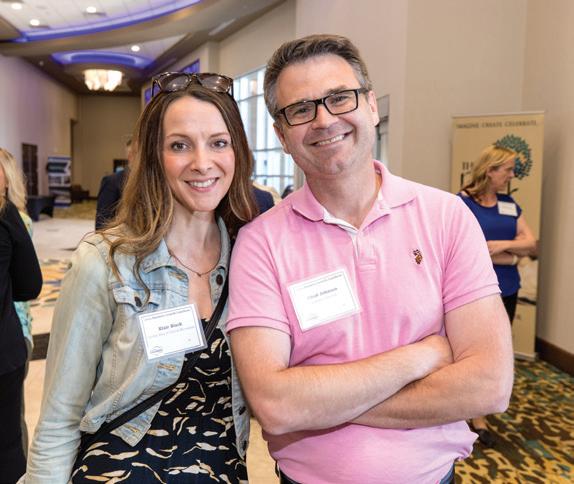
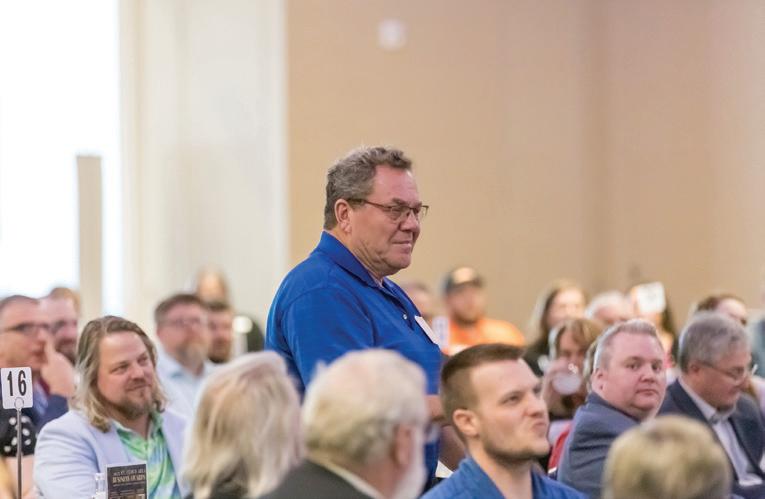
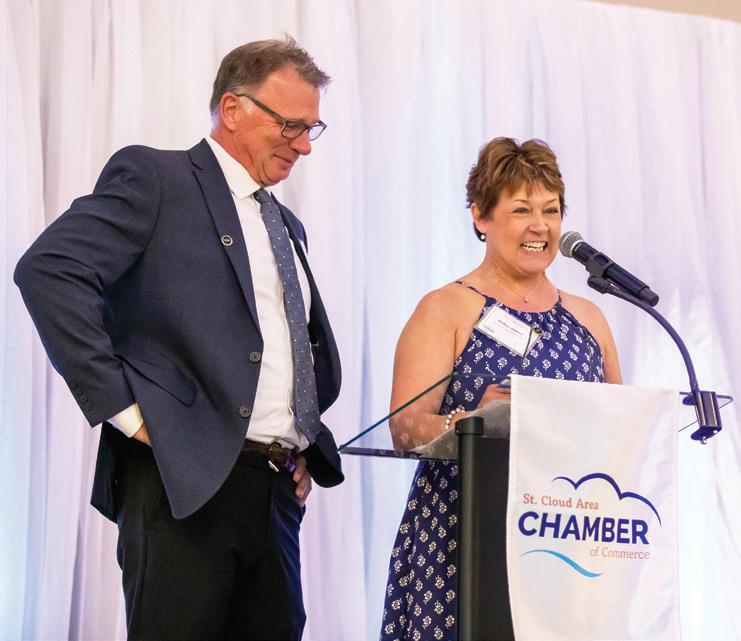
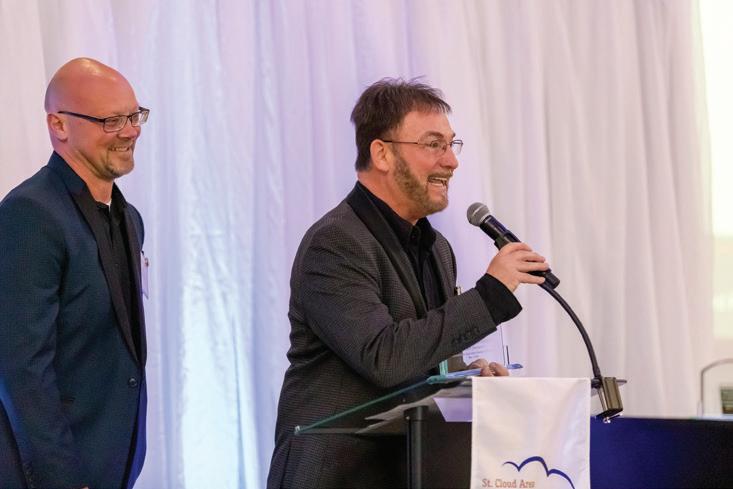
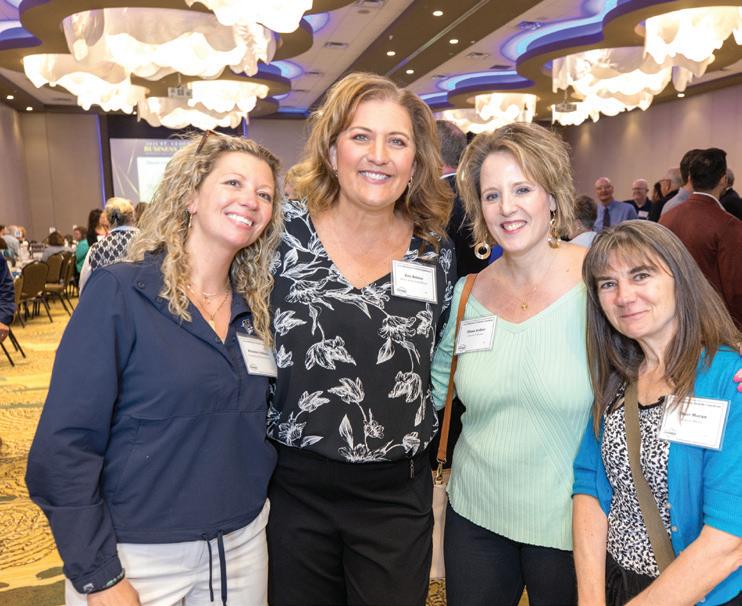
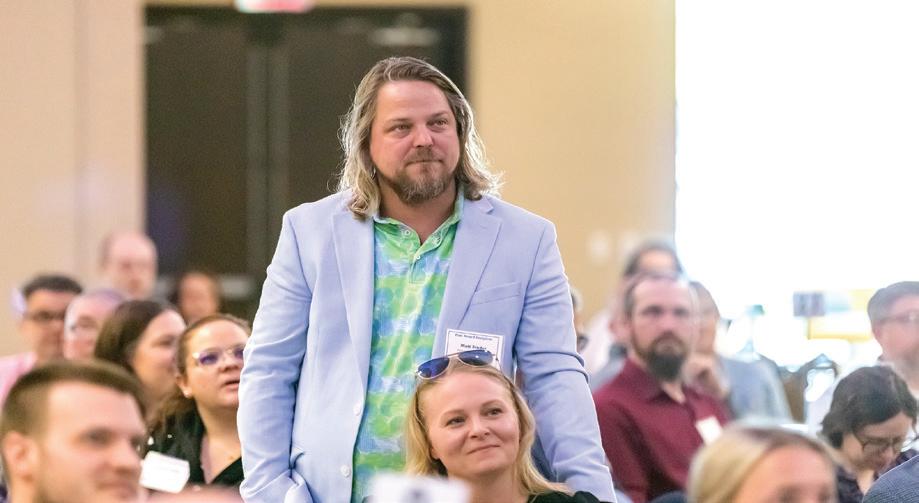
The 38th Annual Business Awards Luncheon recognized three local businesses — Great Harvest Bread Company, Modern Barnyard, and Williams Dingmann Family Funeral Homes — for their contributions to business growth and success in Central Minnesota. Photos by Jeff Yapuncich, YuppyPhoto
The most effective professional networking focuses on getting engaged and building relationships.
By A.J.Kaufman MANAGEMENT TOOLKIT


Professional networking. That phrase, albeit familiar, can also be vague. Surely, we could all compile a list of the “Top 20 reasons networking is important” based on our experiences, but does that help?
Networking is a process that can expand your knowledge by interacting with other professionals, often within your career field. It involves establishing, building and maintaining relationships, and is not easy to master, especially if you are just starting to build your network. More seasoned professionals have continuously
impromptu conversations and follow-up.”
Brower stresses that the real benefit comes the more you show up and engage over time — it doesn’t just happen right away.

“Networking isn’t about quick wins — it’s about demonstrating competence, offering support, and building trust over time,” Brower said. He recommends focusing on building long-term, genuine connections, both professionally and through community engagement. He always tries to be helpful, no matter what the situation is.
expanded their networking circles through new people they meet and conduct business with.
Networking also helps build influence and career growth.
“I’ve found that networking works best when you focus on contributing rather than just what you can get,” Michael Brower, an agent with American Family Insurance in St. Cloud, said. “Personally, I find the most value in building connections through my active participation in Chamber committees, regular attendance at events, and through
Jason Miller, a broker/owner who founded Trust Real Estate Company this year, agrees that networking is at the heart of growing a small business, but adds that strategy plays a critical role in its success. “My primary objective in networking has always been quality over quantity,” he said. “Too often, people attend networking events aiming to make as many connections as possible. I prefer to focus on a few meaningful connections and grow my professional network organically.”
Miller avoids thinking about how he can benefit, instead focusing on how he can help those he’s connecting with.
“Providing value to others is a powerful tool that fosters loyalty and strengthens both personal and professional networks.”
Miller also believes effective networking can happen anywhere. “By staying actively involved in my community and industry, people have come to know me as a person — who I am and that I’m not always just looking to ‘make a sale,’ ” he said, adding he participates in traditional networking opportunities, like the Saint Cloud Area Chamber of Commerce and a weekly business networking group. Miller also engages with various nonprofits, his children’s schools and coaching youth sports. He has found that simply by being an active and positive member of the community, others have come to know who he is and what he does.
Sarah Dean, director for Central Minnesota's Scouting America Exploring program, believes in talking to people and learning through experiences. What is her best tip? “Show up at things. You never meet anyone in your office. Never use the Zoom option if there is an in-person one,” Dean said.
Dean also recommends mentally preparing and psyching yourself up before going into a
networking experience. Set a goal for who or how many people you want to talk to, and just do it — even if you are nervous. “Have you ever sat next to someone and it feels awkward because neither of you say anything to each other but you’re both very aware of the fact that you are sitting by each other, and no one is talking? Just be the one to break the silence,” Dean said. “Some of my best connections and favorite people have come from being somewhere and happening to meet a new person.”



A former schoolteacher and historian, A.J. Kaufman is currently managing editor for the Business Journal of Tri-Cities and also a correspondent for the St. Cloud Times.
After running a pilot program in the UK, Google estimates that using AI for administrative tasks could save workers over 120 hours each year. The key is employers giving their employees the permission — and even the training — to use AI. Once that happened, workers felt more comfortable using AI, even reporting still using it months later. In fact, before training, only 17 percent of age 55+ women used AI weekly, and after receiving employer permission and training, 56 percent were using it weekly.
Source: CNN.com




ENTREPRENEURISM
Navigating the world of grant writing can be overwhelming. These tips can help.
By Jill Lenzmeier


Grants can be an important source of funding for organizations looking to expand current programs, pilot a new program, or support general operations. Between tight deadlines, strict requirements, and high competition for limited funds, navigating the grant world can feel overwhelming. Understanding the types of grants available, how the process works, and a few key strategies, can help your organization be well-positioned for success.
Not all grants are created equal,

and knowing where to focus your energy can save time and improve your chances of funding.
Government Grants:
Offered by federal, state, and local agencies, these often support large-scale or systemic work in areas like public health, education, and infrastructure. While they are highly competitive and often include rigorous reporting requirements, they can provide substantial funding. Check out Grants.gov for opportunities.
Private Foundations and Corporations: These frequently fund nonprofit work that aligns with the
organization’s mission or values. They can range from small local grants to national opportunities. Tools like the Foundation Directory Online or the websites of major corporations (Target, Walmart, Google, etc.) are great places to start.
Community Grants: These are usually offered by local banks, family foundations, and community foundations and are used to fund work that directly benefits the local community. These are often more accessible for newer or smaller organizations.
network. What connections do your staff and board members have to grantors in the community?
While each funder may have unique requirements, most grant processes follow a similar structure.
1 Identifying a Need: Before applying, organizations must define the problem they want to solve and how grant funding will help.
2 Finding the Right Grant Opportunity: To increase your chances for success, match your mission and project with a grant that supports it. Look for alignment between the mission, values and priorities of the funder and your organization.
3 Preparing the Application: This usually involves a narrative or proposal outlining measurable goals, budget, work plan, and evaluation plan.
4 Submission and Review: Grantors review applications based on specific criteria. and timelines.
5 Award and Reporting:
If selected, grantees sign an agreement, implement the project, and report outcomes and expenditures.
Contributor Jill
Lenzmeier
is the grants manager at the United Way of Central Minnesota.
Economic Development Grants: These types of grants support job training, small business development, or neighborhood revitalization. When looking for grant opportunities, tap into your
Tailor each application. Show alignment with the funder’s priorities. Be clear and concise. Focus on measurable outcomes, especially in the narrative.
Include both data and human stories. Funders want to understand the impact behind the numbers.
Build Relationships. If the funder allows it, ask questions before applying. A brief conversation can clarify expectations and help your proposal stand out.
Follow instructions exactly. Missing even a small detail can result in disqualification.
Grant applications can be time-consuming, and success rates are often low due to high competition. Funding is usually time-limited and designated for specific uses, making it essential to think about sustainability beyond the initial funding. Reporting and compliance requirements can place a strain on small teams.
Despite the challenges, seeking out grant opportunities and taking the time to apply can be worth it.
Grant funding can provide a path toward launching new initiatives, expanding programs, strengthening infrastructure and more. Even when an application isn’t successful, going through the process helps refine your message, build relationships with funders, and set you up for future opportunities. When the right grant comes through, it can be a turning point for your organization’s impact and growth.
At Magnifi Financial, we know that every project is unique. That’s why we combine innovative financial solutions with cutting-edge digital tools to support your vision.
Whether you’re securing financing, managing cash flow, or streamlining operations, our business banking technology helps you stay ahead.

Flexible terms, competitive rates, and a commitment to exceptional service. Your success is our priority.

Focus group research uncovers honest perceptions about your company you might otherwise not know.
By Steve Greenfield


Ask some friends how they like your company, and you’ll probably get one answer: “It’s great!” Ask some strangers the same question and you’ll get many answers — some that might be difficult to hear. While your friends are being kind, those strangers are paid to tell the truth during focus group sessions.
If hundreds of people were surveyed and 62 percent said

Contributor
they liked your company’s product, would you be satisfied? Or would you wonder why the other 38 percent weren’t fans and what you could do to win them over?
Focus groups — generally comprised of just eight to ten people — are a great way of finding such answers. That’s because the relaxed, small group setting allows participants to go into detail about their perceptions and react to other participants’
comments, giving valuable input you can’t get from wellmeaning friends or biased coworkers.
Focus groups are used for everything from identifying why something isn’t selling to testing consumer loyalty to a brand or cause. The sessions are often conducted during the development stage to maximize the success of a name change, ad campaign, new menu item, and so on.
Begin by thoroughly screening potential participants to create the optimal mix of opinions. It might require contacting 20 people for each one who matches the criteria. Those chosen are paid about $100 each at the end of the 60-90-minute focus group. The proceedings are usually recorded to ensure comments are accurately captured. (Participants are assured their images won’t be used anywhere else.)
A trained facilitator — not someone from the company that initiated the research — draws everyone into the conversation while tactfully keeping dominant personalities from taking over. The facilitator keeps the mood light and is prepared to quickly
Steve Greenfield, owner of Greenfield Public Relations (GreenfieldPR.com) in St. Cloud, has conducted focus group research for the Minnesota Chamber of Commerce, statewide transportation and forest products groups, a Minnesota utility and others.
switch gears to ask unplanned questions if the discussion takes an interesting turn.
The company seeking information typically isn’t identified, at least right away, to prevent focus group participants from saying what they think the company wants to hear. This anonymity allows the company to hear the unvarnished truth. It’s amazing how often a participant will casually say something you immediately recognize as the answer to your company’s challenge or the perfect headline for your next ad.
It’s tempting to save money by seeking friends’ input in return for a free happy hour, with you acting as the facilitator. Fight that temptation, because all you’ll gather is unreliable information.
For maximum effectiveness, you need to recruit and nicely compensate a precise demographic. You also need a facility to accommodate focus group and recording needs, a strategy for asking well-thought-out questions, an experienced facilitator and a final report with analysis and recommendations. All told, your focus group research could cost around $9,000.
It’s a serious investment. But it costs less than dismantling everything because you moved forward without first knowing what everyday people really think.



Zero-click search happens when someone uses a search engine like Google and gets the answer without clicking on any website. This often appears as a featured snippet, map, or business listing at the top of the search results. For business owners, this means people may be seeing your hours, address, or contact info without ever visiting your website. To stay visible, understand your keyword strategy and make sure your Google Business Profile is accurate and complete. Also, create content that answers common questions about your business, being mindful of readability. Even if users don’t click, showing up in zero-click searches can increase awareness and build trust with potential customers.
Source: SEMrush


Studies show that wellstructured onboarding programs can improve retention rates by up to 82 percent while significantly increasing employee performance. As expectations shift, though, the traditional onboarding process can be viewed as overwhelming. That’s where virtual reality comes in. VR can present new hires with immersive, real-world scenarios for training, custom learning paths based on job requirements, and bridge gaps between different locations. It’s been shown to increase information retention, save on overhead costs, and provide insights on employee progress. It’s already being used in healthcare, manufacturing, retail and more to improve new employee experience.
Source: RH Tech Series
Google is both a proper noun and a verb these days. Have a question? Just Google it! But as the state of search engines like Google progresses, their use has been increasingly questioned. The volume of ads, ubiquitous collecting of personal information, and now AI generated summaries have made the experience tiresome for many — enough that users are willing to pay a monthly fee for an alternative, such as Kagi. Kagi is a search engine that eliminates the frustrations of other search engines, instead charging a monthly fee — starting at $5 per month — to use it. In a world full of distractions, is it the future of search? Not sure. Maybe you could Google it.
Source: The Verge





Tariffs are a sales tax on imports and economists are united in opposition to their use.
By Lynn MacDonald and Tim Salmon

Classical economic theory tells us that trade should occur between two countries when one country can produce a good relatively cheaper than the other. When this occurs, it benefits both countries as the one buying the relatively cheaper good can focus its production elsewhere. This frees up resources to go to their highest valued use, yields more total production for both countries, and builds wealth and prosperity for both countries. Tariffs interfere with this process, depriving both trading partners of potential gains. This is why economists have a consensus view against the use of tariffs.


Tariffs can be targeted toward specific products or they can be applied across the board to all imports. Regardless of type, a main point of contention about tariffs concerns who bears the burden of the tax. Importers physically pay the tax, but this does not mean they bear the burden. In some cases, tariffs can force the exporting firm to lower their prices to remain competitive. If this happens, exporters will end up bearing the burden of some or all of the tariff. However, lower prices will only happen if consumers can avoid the tariff by purchasing alternative goods. If consumers do not have good substitutes, then this does not
Lynn
MacDonald, Ph.D. is an associate professor of economics at St. Cloud State University and director of the SCSU Center for Economic Education. Tim Salmon, Ph.D. is a professor of economics at Southern Methodist University in Texas.
happen and consumers bear more of the burden. Across the board tariffs ensure there are no lowertaxed options available and results in consumers bearing the burden. This dynamic is demonstrated by estimates showing U.S. consumers paid around 93 percent of the cost of the tariffs imposed in 2018, according to a 2023 study published by the Munich Society for the Promotion of Economic Research.
Tariffs are sometimes imposed with the goal of boosting both domestic production and manufacturing jobs. A targeted tariff (e.g., a tariff on cars) could allow domestic producers to use the resulting price advantage to boost production and sales. However, when inputs to their production are also subject to the tariffs (e.g., steel), their production costs rise, offsetting any price advantage. Targeted tariffs may improve domestic production in some industries. Across-theboard tariffs are unlikely to achieve this goal.
Even if domestic production rises, it is not clear that this will generate an increase in manufacturing jobs. The 2024 Annual Report on the U.S. Manufacturing Economy published by the National Institute of Standards and Technology revealed that production in the U.S. has grown steadily and the U.S. remains the second largest manufacturer in the world, behind China. This is true despite the fact that U.S. manufacturing jobs have been falling, according to the Federal Reserve Bank of St. Louis. These trends move in opposite directions
because U.S. production relies on capital-intensive technologies, allowing firms to produce more with fewer workers. U.S. manufacturing is highly productive already, and further expansions might not end up creating additional jobs.
While tariffs generally don’t lead to domestic employment gains, they are sometimes a useful negotiation tactic toward reducing trade barriers. Since the 1940s, the U.S. has led a worldwide decline in trade barriers with average worldwide tariffs approaching 2 percent prior to 2025, according to data from Macrotrends.net. Private negotiations using targeted tariff threats (as part of a larger strategy) have proven fruitful in this process. It is doubtful that publicly-made, across-the-board tariff threats will generate the same success. International trade flows are largely about consumer demand. Reducing our trade deficits with other countries requires U.S. firms to successfully market their goods to citizens of other countries. Publicly threatening other countries turns foreign consumers away from U.S. products. Policies that increase global demand for U.S. products have a better chance of diminishing trade deficits.
While there are situations in which a targeted tariff can achieve strategic goals, widespread tariffs are not conducive to economic growth. They harm both consumers and producers by way of higher prices. Such tariffs decrease the wealth and welfare of all countries involved and can actually worsen trade deficits.
Compiled by Shelly Imdieke, St. Cloud Area Chamber of Commerce
Totals represent data reported as of 6/1/2025
6
6
Research firm Gallup released its 2025 State of the Global Workplace report. It cited a sizeable drop in employee engagement worldwide — comparable only to the drop in employee engagement seen during the COVID-19 pandemic. In 2024, the global percentage of engaged employees fell from 23 percent to 21 percent. This drop in engagement cost the world economy an estimated $438 billion in lost productivity. The decrease came primarily at the managerial level, especially with female managers under 35 years old.
So, what’s the cure? There are three actions that provide some hope.
1 Management training should be a priority. According to the Gallup report, 44 percent of managers say they have received management training, and managers who receive training are half as likely to be disengaged than those who do not.
2 Managers should be taught effective coaching techniques. Engagement in managers that received coaching training was 22 percent higher than those without, plus their teams were 18 percent more engaged than others.
3 Manager development should be ongoing. Managers who received training as well as encouragement from someone at work to continue their development thrived 50 percent more than those who did not.























































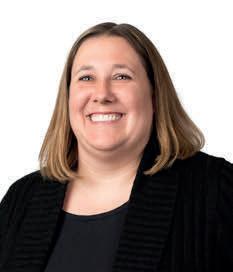




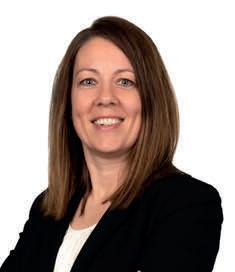



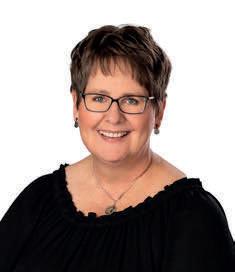


BY JEANINE NISTLER COVER PHOTOS BY SWITCHBOARD

Providing excellent customer service is, without a doubt, essential in every business.
But your customer service checklist may not include being compassionate with a capital C, doing exactly what customers request, and making sure an ample supply of Kleenex is always within arm’s reach.
Compassion is exceptionally important in siblings Deb and Doug Jr. Dingmann’s business, because their customers are the loved ones of the recently deceased. The Dingmanns are co-owners of Williams Dingmann Family Funeral Homes, with locations in nine Central Minnesota communities.
“I’ve cried with families. I’ve experienced that emotion with them,” Deb said. “We’re human. The worst is when a child dies,” she added. “And when

I started having my own children, it got worse, because you put yourself in that position, and there just are no words, there’s no explanation. It’s hard for everybody, certainly for the parents, the family, the clergy. Definitely the worst part of my job is having to bury infants.”
Doug agreed that some deaths are infinitely harder than others for families. “There are times when someone dies tragically in an accident and it’s just so stunning and shocking,” he said. Knowing that they have supported families in what is the most difficult time in their lives is, however, rewarding, the siblings said.
“Details are so important,” Doug said. He focuses on “getting people through this whole process the easiest way they can and with dignity and respect, and just making sure everything happens the way it’s supposed to happen, the


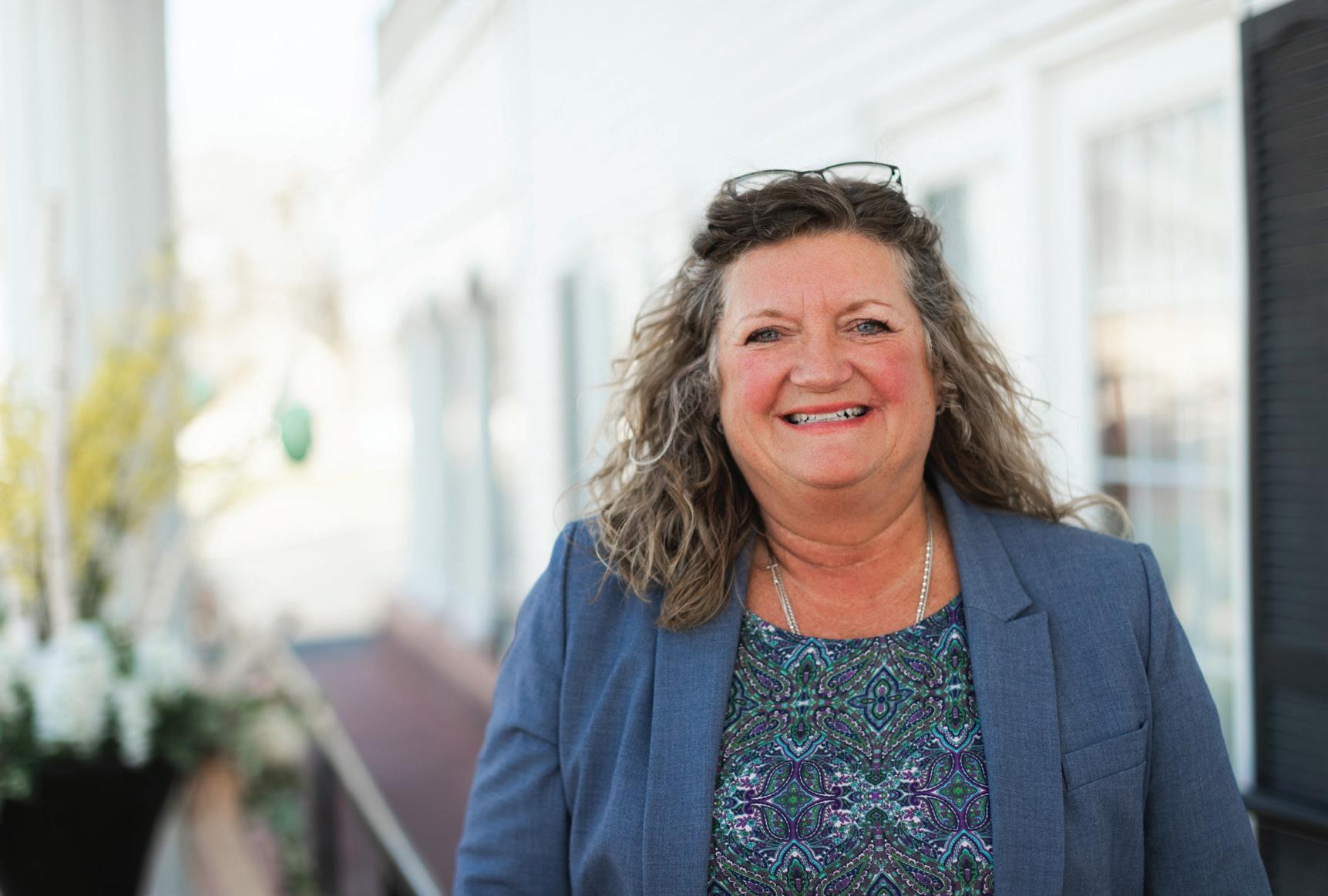
Deb Dingmann, 57 Owner/Funeral Director
Education
1986 Graduate of Cathedral High School; 1991 graduate of St. Scholastica College in Duluth with a Bachelor of Arts in Health Information Administration; 1995 graduate of University of Minnesota with a Bachelor of Science in Mortuary Science
Work History 1991-1992: Tri-County Hospital in Wadena 1992-1995: Abbott Northwestern Hospital in Minneapolis 1995-present: Williams Dingmann Family Funeral Home, Sauk Rapids
Family
Children: Blake, Brooke, Ben, and Brock
Hobbies being outdoors, golfing and watching my boys play baseball.
Best advice you’ve received and who gave it to you: “Work hard, do your best and let God do the rest.”
— Sister Mary Jo Sobieck
way they want it to happen. … There are different ways to do things, so we always strive to make sure we’re doing things the way the families want.”
“They’re trusting their loved one into our care,” Deb said. “It’s very rewarding for us to have people place that trust in us and know that we’re doing good in our communities.”
Deb and Doug also have laughed with families as they share funny memories of the deceased, and they have helped create
celebrations of those who lived a very, very long life. Some deaths are incredibly difficult for families and friends to handle. Others, Deb said, “are almost a relief. Sometimes they’ve watched Mom struggle in a nursing home with Alzheimer’s, not recognizing them, seeing parents in pain, and knowing that their quality of life is not what their loved one would have wanted.”
Doug agrees. “For people that are 99 years old and have lived a great life,
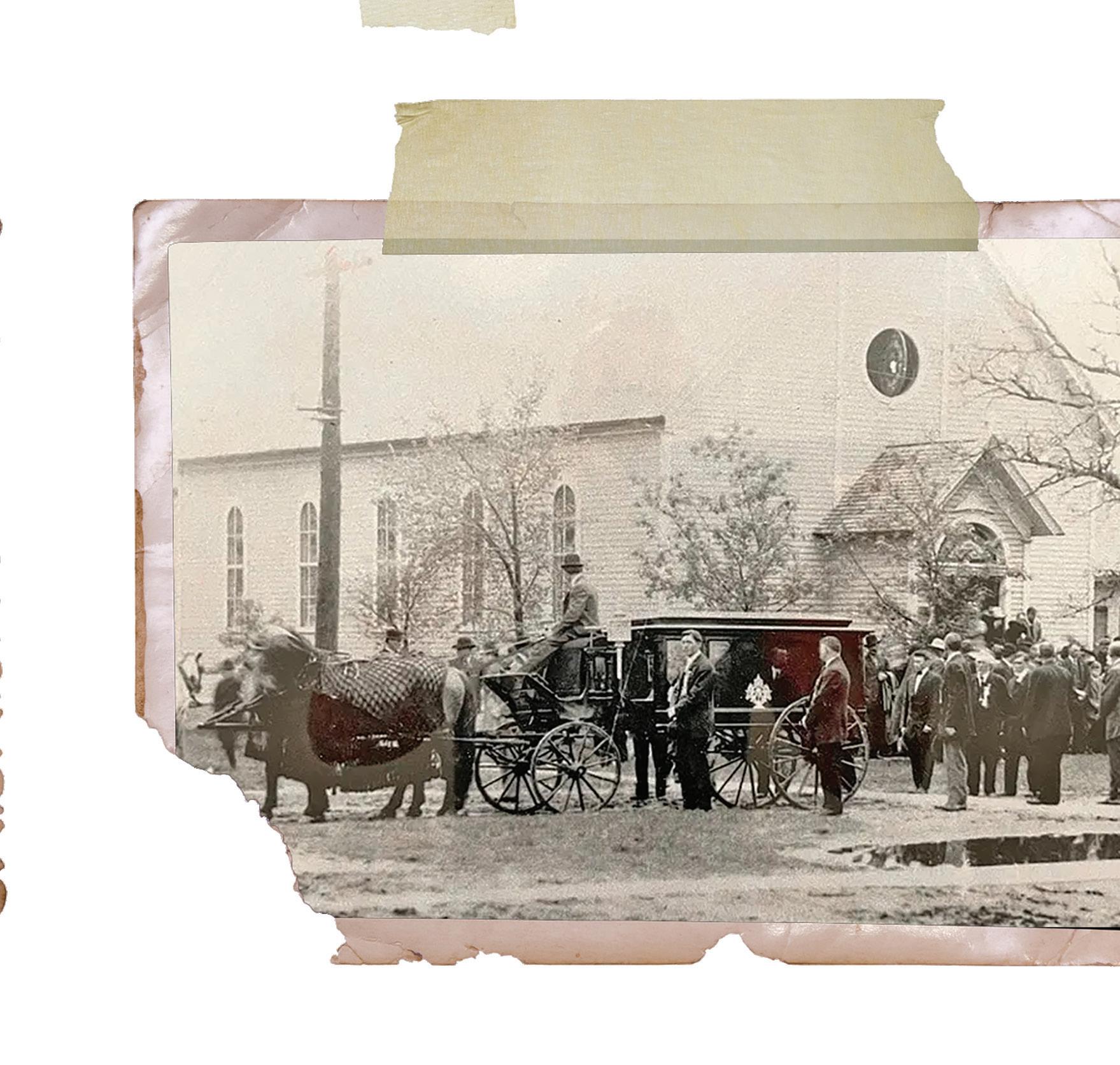
Aloys Tschumperlin opens Tschumperlin Furniture and Undertaking Company in St. Cloud.
1907
John Dingmann (left) starts Dingmann Hardware, Implement and Funeral Service in Clear Lake.
1948
Bernard Williams buys Tschumperlin Funeral Home in St. Cloud. Funeral home is renamed Tschumperlin-Williams Funeral Home.

1967
Tom Williams starts working with his dad as a funeral director.
there’s usually a celebration and people are together and they’re having a good time.”
Being a funeral director is not a 9-to-5 job. “It’s not the easiest profession because of being on call, working nights, evenings, weekends, holidays,” Deb said. “It is a calling — and it is something where you can really, truly impact your community in a positive way. I firmly believe it’s a wonderful career, but it doesn’t come without challenges.”
The Dingmanns say it is important for funeral directors to get away when they can. “We try to take time off and spend time with our families, and separate the work from our own lives,” Doug said.
They learned the basics of their trade from their parents, who learned from their elders. That’s right. Doug and Deb are fourth-generation funeral directors — and some of their children are fifth. Deb’s son Blake Brown works with her in Sauk Rapids. Her son Ben and Doug’s daughter Abby are both studying mortuary science at the University of Minnesota.
Deb’s children grew up in the living quarters attached to the Sauk Rapids funeral home, just as Deb and Doug did. It was convenient for their dad, Doug Sr., to walk just a few steps each morning to start his workday, and for Deb and Doug’s mom, Karen, to walk into the funeral home to style the hair of the deceased.
“My mom and dad were both working in the funeral home,” Deb said, “so I thought
it was an advantage to live there because I don’t think we would have been able to see dad as much as we did. You know, he’d come in and eat with us, and then come back out, and mom was doing all the hair and secretarial things, and so it worked.”
Living in quarters attached to their parents' workplace also gave the young Dingmanns the opportunity to learn a bit about the family business at an early age. Deb remembers washing cars. Doug recalls mowing the funeral home lawn and by the time he was in high school, helping his father with funerals. “He bought me a suit,” he said with pride.
Having their home attached to a mortuary did not faze the young Dingmanns. It was what they knew. But their childhood friends sometimes got scared. Deb recalls slumber party guests calling their parents when it would start to get dark outside, saying “Come and pick me up” because they were afraid to sleep in a funeral home.
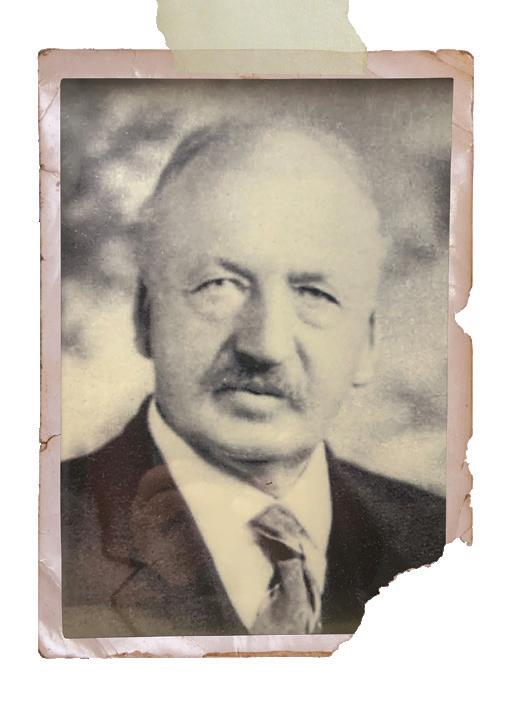
Second-generation owner Francis Dingmann, 1907-1976
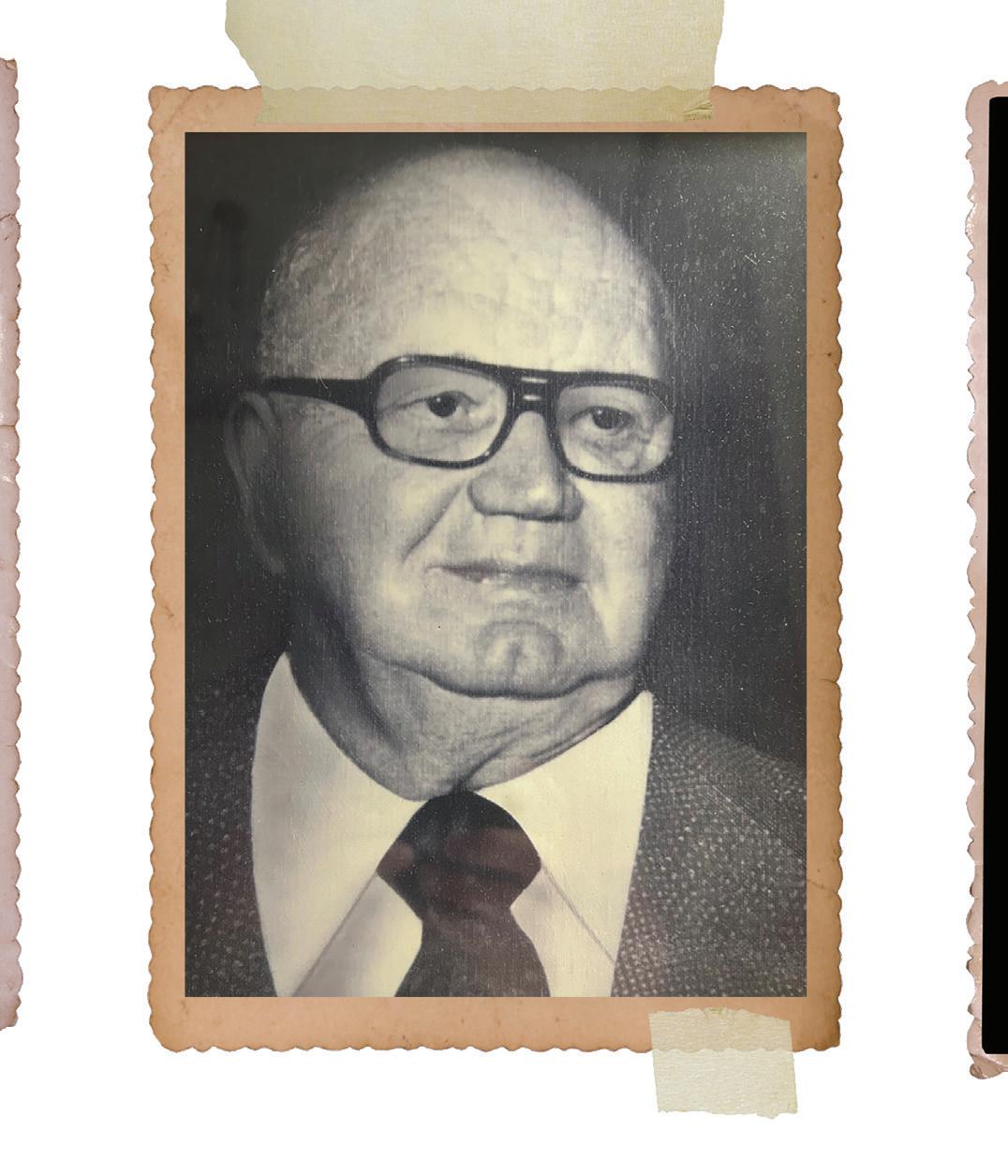
Growing up so close to the profession was helpful for all the family members who have pursued careers as funeral directors, but formal education is also required. Doug, Deb, and their funeral director children have all earned or currently are working toward a degree in mortuary science from the University of Minnesota. There, they learned both the hands-on aspects of preparing the deceased, as well as the skills necessary for working with the bereaved and the requirements of running a successful business.

“Funeral directors are health care professionals who serve others during a time of loss, pain and grief,” according to the University of Minnesota’s program’s website. The program’s mission is to “skillfully combine the study of behavioral, physical and applied sciences for the goal of preparing graduates for careers as knowledgeable, skilled and innovative funeral service professionals.”
Doug knew at a young age that he would follow his father, grandfather, and great-grandfather into the profession. Deb came to the life of a funeral director as a second career when her parents were approaching retirement and brother Dan left to own and operate funeral homes
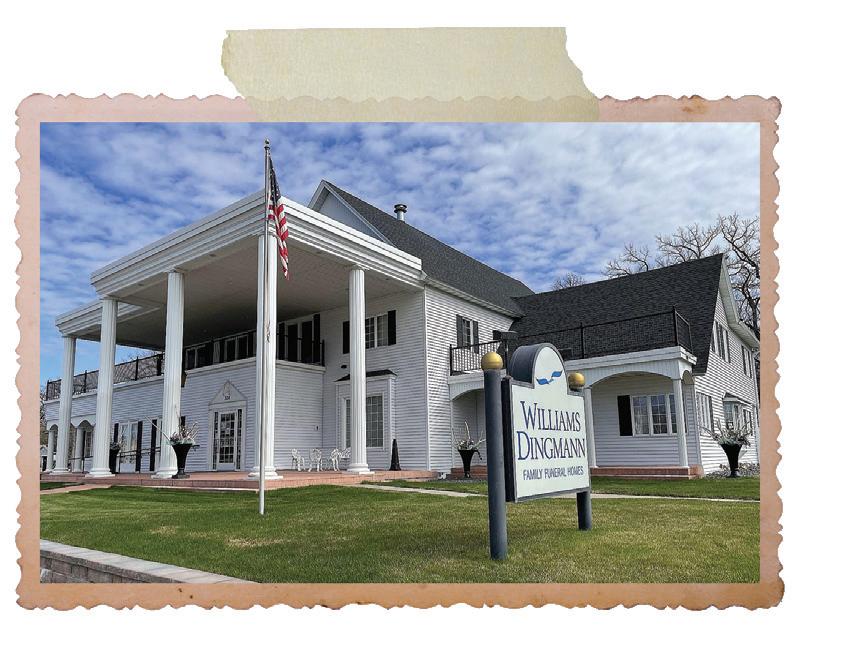
1974
Doug Dingmann Sr. purchases Ross Veeser Funeral Home in Sauk Rapids.
1974
The Williams family moves their funeral home to the north side of St. Cloud from its downtown location, building a new funeral home at 1900 Eighth St. N. (photo left)
1981
Doug Dingmann Sr. purchases the Schoenecker-Harp Funeral Home in Eden Valley.
1987
Tom Williams purchases the Hanson Funeral Home in Princeton.
1989
Tom Williams purchases the Thielman Funeral Home in Avon.
1994
Tom Williams purchases the Kaun Funeral Home in Princeton.
1999
Tom Williams builds a new funeral home in Princeton.

Doug Dingmann Jr., 54
President/Owner/ Funeral Director
Hometown
Sauk Rapids & St. Cloud Education University of Minnesota, 1994
Work History
1992-1994: Funeral home in Robbinsdale 1994: Dingmann Funeral Home
Family Wife, Lisa, and daughters Abigail, Emily, Sophia, and Izzy
Hobbies
Golfing and spending time on the lake with the family
Best advice you’ve received: “Always treat people like you would want to be treated, with dignity and respect.”


bearing the family name in the southwestern Minnesota communities of Worthington, Wilmont, Adrian, and Luverne.
The Dingmanns aren’t the only local funeral home that changed hands between generations. Tom Williams was a secondgeneration owner of Williams Funeral Homes in Central Minn., with roots that traced back to 1873 and the Tschumperlin Funeral Home. In need of a succession plan, Williams and the Dingmanns began conversations and in 2008, the two funeral homes merged to form Williams Dingmann Family Funeral Homes. In 2014, Tom Williams retired, leaving Doug Jr. and Deb the sole owners.

Dingmann family builds a new funeral home in Becker.
Dingmann family purchases Stephan Stein Funeral Home in Long Prairie.
While Doug and Deb share ownership, they office separately — Deb in Sauk Rapids, Doug in St. Cloud — and have their own responsibilities. They meet weekly, speak by phone multiple times a day, and rely heavily on a shared Google calendar.
The Williams Dingmann Family Funeral Homes in St. Cloud, Sauk Rapids, Princeton, and Long Prairie are staffed during business hours. The funeral homes in Avon, Becker, Big Lake, Clear Lake, and Eden Prairie are open as needed. When there is a death in one of those communities, a funeral director will go there to meet with family members and return to that site to manage the visitation and funeral.
Doug cited a recent example in Big Lake. “I drove down there and met with the family
2008
Siblings Doug and Deb Dingmann purchase the Dingmann Funeral Homes from their father, Doug Dingmann Sr. (photo left)
2012
The Sauk Rapids facility is completely remodeled.
2014
Tom Williams retires and sells his interest in the funeral homes to Doug Jr. and Deb Dingmann
2017
Doug Jr. and Deb Dingmann purchase Klein Bank property in Big Lake, complete a renovation

and made the arrangements. And then afterward, I locked the door and came back here. … We have our own crematory in Sauk Rapids, and we do a lot of the care work here.”
All of this requires a skilled team. Deb and Doug say they are grateful for the work of the licensed funeral directors they employ, their business manager, and the community members who help during visitations and funerals. “We have a lot of great part-time people who help us out, such as retired people in the community,” Deb said. “You need greeters and minglers, people who can recognize if somebody needs help, to step over and assist.”
Continuing the Dingmann tradition means a great deal to Doug and Deb. “My great-grandfather started the funeral home in Clear Lake in the early 1900s and we still operate that funeral home today,” Deb said. “My grandpa was the funeral director in Kimball. Then my dad and his brother became funeral directors. Three out of the four of us kids went into the funeral service. Two out of my four kids are in it. I mean, I do feel like it’s a calling.”
“We’re just so grateful to be a family business,” Doug said. “We’re proud of that, of multiple generations coming through and having the next generation coming into it.”
Williams Dingmann
Family Funeral Homes
324 Second Ave. S., Sauk Rapids, MN 56379 and 1900 Veterans Drive, St. Cloud, MN 56303, with additional funeral homes in Avon, Becker, Big Lake, Clear Lake, Eden Valley, Long Prairie, and Princeton.
williamsdingmann.com
Sauk Rapids
320-251-1454
St. Cloud
320-252-2522
President Doug Dingmann Jr. Vice President Deb Dingmann Ownership
Deb Dingmann and Doug Dingmann Jr.
Business Description

Fto start a new funeral home in Big Lake.
2019
St. Cloud facility is completely remodeled and renovated.
2020
Jeanine Nistler (jeaninenistler@outlook.com) is a St. Cloud-based freelance writer whose career has included daily newspaper reporting and editing, as well as communications work in health care, higher education and state government settings.
Williams Dingmann
Family Funeral Homes provides funeral service, cremation service and funeral pre-planning for Central Minnesota residents.
St. Cloud-based employees
4 full-time, 8 part-time
2022
Blake Brown, Deb Dingmann’s son, joins the company as the fifth generation.
Doug Jr. and Deb Dingmann tear down their building and build a new funeral home in Eden Valley.

Sauk Rapids-based employees
4 full-time, 9 part-time
or more than 150 years, Williams Dingmann Family Funeral Homes have served Central Minnesota families with compassion and integrity. What began as small-town services in the 1800s has grown into nine locations led by fourthgeneration siblings Doug Jr. and Deb Dingmann, with the fifth generation now stepping in. Evolving with the times, they’ve responded to shifting preferences by launching a sister company, Cremations A Simple Way, and remodeling their St. Cloud location for more gathering space. Yet their mission remains the same: to provide comfort and guidance during life’s most difficult moments. The Dingmanns are also deeply involved in the community and support families regardless of financial circumstances. They mentor mortuary science students and advocate for the industry’s future.
For their enduring commitment to service and innovation, Williams Dingmann Family Funeral Homes have been named the 2025 Business Central Mark of Excellence: Family-Owned Business of the Year, presented by the St. Cloud Area Chamber of Commerce.


DURING TIMES OF ECONOMIC TURMOIL, BUSINESSES SHOULD TAKE A PROACTIVE APPROACH TO PLANNING AND DEVELOPING RELATIONSHIPS.
By Randy Krebs
No business likes economic uncertainty, yet there is no denying that uncertainty is knocking on America’s front door. So, what should Central Minnesota business owners be doing — and not doing — to answer that knock?
This question was asked of four local professionals in economics, banking, business development and legal/regulatory affairs. They touched separately on similar overarching themes while highlighting potential actions in their areas of expertise.
The common themes from St. Cloud State University Economics Professor King Banaian, Quinlivan & Hughes attorney Jeff Clancy, Central Minnesota Small Business Development Center Director Michael Heen, and Falcon National Bank President and CEO John Herges are simple and succinct.
Be proactive by building your relationships with your trusted advisers.
Plan ahead and control what you can. Don’t panic, but realize you should not wait too long to seek help.
With those broad points in mind, here’s a brief look at what each professional is focusing on amid uncertain economic times.
Banaian, co-author of St. Cloud State’s Quarterly Business Report for 21 years, says two issues — what happens with the 2017 tax cuts, which expire Dec. 31, and trade issues stemming from massive tariffs — are causing understandable uncertainty.
“We don’t have a precedent for a change that looks like this,” Banaian said, specifically about the tariffs. “Even if the 90-day pause number (for tariffs) becomes

permanent, you still will have the largest tariff increase since World War II. Until we get settlement of what the White House does and whether there is a challenge to that based on presidential powers, there is going to be a drag on businesses and what they do.”
Banaian suggests businesses be proactive and focus on their supply chains, perhaps by dusting off plans developed during the COVID-19 pandemic. “You have to have multiple sources for your inputs,” he said. “Diversify the way you source your inputs. The problem is that’s expensive.” Banaian recommends that business owners evaluate where the cost gets picked up — by consumers, labor, automation or a reduced profit margin. “The answer is it probably will be all of those. The challenge is for the business to figure it out.”
In the more than 20 years since he started Falcon National Bank in

Foley, growing it to six locations managing about $1 billion in assets, John Herges has learned many lessons about dealing with economic uncertainty.
“Small- and medium-size businesses are definitely more susceptible to ups and downs in the economy, so it’s really important that you plan,” he said. “One of the most important things is to have a good relationship with your bank and you know who your banker is. Don’t wait to develop that relationship when you need it. Develop it ahead of time.” Herges believes that approach underpins so many aspects of navigating uncertainty. “Communication is really important. If uncertain times are having an impact on you as a small business person, make sure that you are communicating with the bank and you’re keeping them abreast of what you are doing and how the uncertainty is impacting you.”

“Remember, there are always opportunities in down cycles. You just have to be prepared to take advantage of them.” —JOHN HERGES, FALCON NATIONAL BANK
Communication with your bank’s adviser can help you survive and even thrive. Herges encourages the small business owners he counsels to have a line of credit established with their bank, whether they need it or not. “It’s always better to negotiate a credit line when you don’t need it, than when you are desperate.”
Herges said the best approach is not to get too high when things are good or too low when things are bad. The economy always goes in cycles. “Watch things
that are important to you and operate accordingly. Remember, there are always opportunities in down cycles. You just have to be prepared to take advantage of them.”
While recent unprecedented tariffs grab most of the attention, the flood of executive orders is adding another layer of complexity for some businesses when it comes to legal and regulatory affairs, according to

attorney Jeff Clancy, who is a corporate transactional attorney for Quinlivan & Hughes. “It’s a little bit different for every business,” Clancy said. “Overall, businesses should review their contracts and strengthen existing provisions so they can address situations like breaks in the supply chain or delays in payments or performance. Be proactive and get ahead of the situation.”
Clancy cited how the COVID-19 pandemic changed supply chains, which caused
prices to skyrocket, rendering contracts useless to all parties.
“The lesson is to include language to address that, so it’s fair and equitable for both parties,” he said.
On the regulatory landscape, businesses that have government-based reporting requirements need to be aware of executive orders, administrative events, or judicial precedent that are changing those requirements.
“Businesses should identify their industry’s regulatory body and keep up to date on it through
its website, emails and alerts,” Clancy said. “Especially with this intense scrutiny on government spending, businesses involved in that need to be aware and in compliance.” Clancy encourages business owners to be willing to work with outside advisers on these issues when needed, and to always make sure you have adequate insurance in case something happens.
Expert advice and adequate insurance are particularly important, Clancy said, as the roles of the nation’s three branches of government are more important than ever. That’s also why being proactive is vital.
“At a time like this, businesses should ask questions,” Clancy
said. “Get ahead of it and don’t wait until it’s too late. Engage your employees and your community. The resilience and perseverance of the business owners and employees is the key to survival. They always find a way to make it work.”
Michael Heen, regional director of the Small Business Development Center (SBDC), echoes the themes of preparation and seeking help in uncertain times. As center director with 16 years of experience in commercial lending, he leans hard into businesses having plans.
“In uncertain times, small businesses can still find
opportunities, but they need to have good discipline and sound business practices,” Heen said. “The best thing they can do is re-evaluate and update their business plan to identify their goals and develop strategic plans to achieve those goals.”
Heen urged business owners to be mindful of where they are and what they are doing. Having a good business plan is critical, and it should be updated regularly and adhered to stringently. “A good plan helps you grow in the good times and weather the bad times,” he said.
The SBDC is just one resource businesses and entrepreneurs can contact for help with everything from
accounting to marketing, according to Heen. “No business owner operates on an island. Positive relationships with your trusted partners are critical — accountants, attorneys, banks. Deepen those relationships or, if you need to, build them from scratch. Then rely on those advisers for guidance and go in clear-headed about what you’re doing.”
Remembering, of course, no business likes economic uncertainty.
Randy Krebs is a freelance writer and editor living in Sauk Rapids. He can be reached at randykrebs@charter.net.
SPECIAL FOCUS
By Emily Bertram
Some of the most successful people in history have achieved their status thanks in part to the guidance of their mentors.
For talk show host Oprah Winfrey, it was author and poet Maya Angelou. For former Facebook COO Sheryl Sandberg, it was her college professor Larry Summers. Even former president Barack Obama had an influential mentor who he met while working at a law firm. That mentor is now known as Michelle Obama.
Mentorship is an important part of many professional journeys. According to a CNBC study, 91 percent of workers with a mentor feel satisfied with their jobs, which is 20 percent higher than those without a mentor. It’s not just the mentees benefiting either. Mentors are six times more likely to receive promotions than those who aren’t, according to a study by Sun Microsystems.
Sarah Noble, operations manager and part owner at AIS Planning, is a vocal advocate for
the benefits of mentor relationships. “It’s been an incredibly rewarding experience to be mentored. It’s changed my life,” Noble said. She has relied on mentors over her career to help with leadership training, career advice, confidence building and more.
“I think women thrive at relationships, they thrive with connecting,” Noble said. “That’s why I think women really do appreciate mentorship. We are natural connectors and relationship builders, so that mentor/mentee relationship can be extremely rewarding.” According to Noble, it all starts with us being curious about another human being.
Mentoring comes in many shapes and sizes, from formal groups and arrangements to casual relationships. Dr. Julie Johnson, a physician at Simplicity Health, has experienced both. “I’ve had mentorship in different ways,” Johnson said. “Sometimes it’s been more formal through leadership coaching. In other ways, it’s been me
“OFTEN, WE’RE SCARED TO ASK FOR HELP. MY ADVICE IS, BE BOLD. BE CONFIDENT. IF THEY SAY NO, WHAT’S THE WORST THAT CAN HAPPEN?” —DR. JULIE JOHNSON, SIMPLICITY HEALTH
seeking it out. Both have been very helpful.”
Johnson previously worked as a regional medical director at Health Partners, overseeing many different areas, including physicians and providers. She explained that often physicians tend to rise up into leadership positions, frequently without any structured leadership training. “So, what I thought of as leadership wasn’t necessarily what the organization needed,” Johnson said.
Johnson personally sought out a mentor in a family physician at Health Partners with a similar career trajectory, starting as a physician and working his way up into various leadership roles.
“As a physician leader, I really felt like I needed somebody I could bounce stuff off of,” Johnson said.
“Yes, I’ve got tools, but how do I take those tools and use them in the realm of really working with providers.”
It all started with a simple ask. “Often, we’re scared to ask for
help,” Johnson said. “My advice is, be bold. Be confident. If they say no, what’s the worst that can happen?”
Noble echoes this advice.
“But if they say yes, this might be a whole other set of opportunities for me to grow,” Noble said. “I wouldn’t be a financial advisor today if I hadn’t sought out Cathy Julifs.” Julifs is the CEO at AIS Planning, where Noble recently became part owner.
Don’t feel discouraged if you don’t find a mentor instantly.
Noble recognizes that asking takes some courage on the mentee’s part, but it’s worth it. “Especially as women, we can put undue pressure on ourselves to naturally find a mentor. We think it always happens organically and if not, that there might be something wrong with us,” Noble said.
“I would say it’s okay and it’s not a bad thing if you don’t naturally or organically have a mentor in your life.”
As someone who has been on both ends of the mentoring relationship, Johnson stresses that being asked to be a mentor is not a bother — it’s a chance for her to pay it forward. “When I’ve
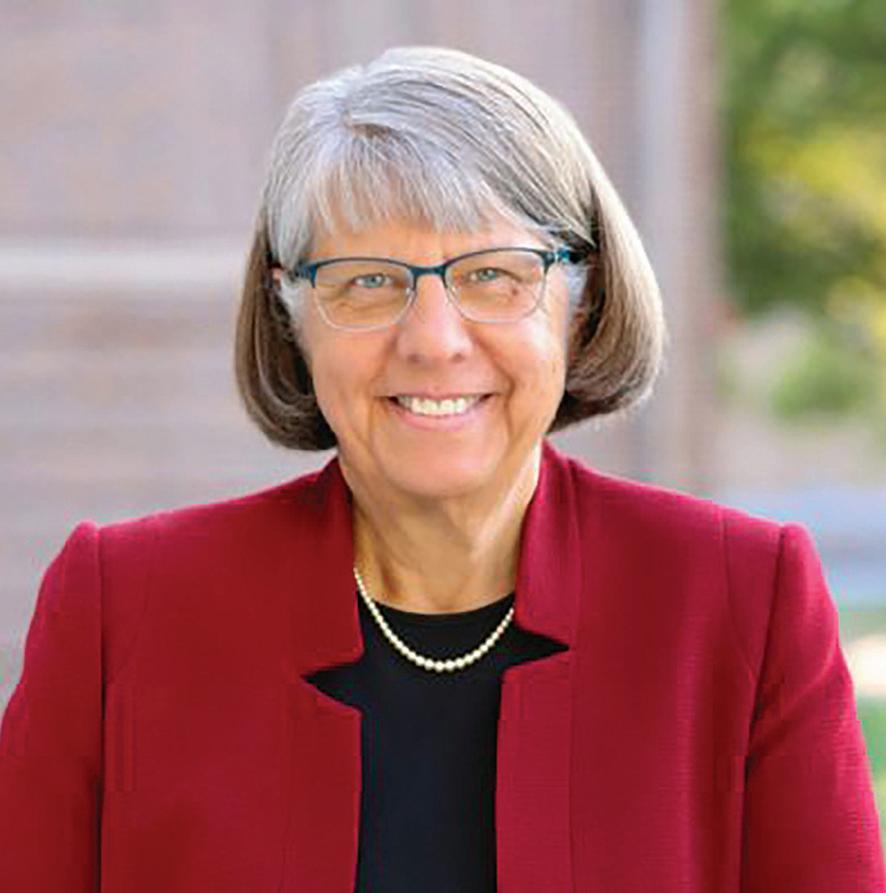

She’s a mentor, a strategic planner and an advocate for women and girls in her community, Joanne Kudrna is this year’s ATHENA Award recipient. Selected through a nomination process hosted by the Women’s Fund of the Central Minnesota Community Foundation, Joanne Kudrna has accepted the 2025 ATHENA Award.
The ATHENA Award is a lifetime achievement award recognizing exceptional women leaders. Joanne was chosen for the ATHENA Award because of her dedication to the strategic mentoring of women both personally and professionally.
Joanne Kudrna represents Granite Partners on the GEOTEK and All Flex Boards of Directors. In 20 years of prior work with Granite Partners she served as the Director of Strategy Services.
Joanne holds a bachelor’s degree in business from Carthage College and a master’s degree in business administration from Harvard Business School.
Aside from her professional achievements, she has volunteered her time and talents as a mentor with the Granite Mentoring Initiative and the BIG Partners program, this is a collaboration with Big Brothers Big Sisters of Central MN and the St. Cloud School District. Joanne also shares her expertise in strategic planning with various nonprofit organizations and has served on the Women’s Fund. •

“GO INTO IT WITH SOME BOUNDARIES, IF YOU ARE THE MENTOR, LET THE MENTEE KNOW WHEN YOU ARE AVAILABLE AND HOW OFTEN YOU ARE ABLE TO MEET WITH THEM.” —SARAH NOBLE, AIS PLANNING
been asked to be a mentor as well, it’s honoring,” Johnson said. “You know someone is looking to you to have that knowledge and that wisdom to share with them and help them grow.”
Noble recommends reaching out to someone you see as successful and authentic, even if they aren’t in your industry, and inviting them to coffee just to start. Don’t stress if it doesn’t work on the first try. “If the
person you speak to isn’t maybe the right fit for what you’re looking for, or they might just not have the time or availability, ask them who else they recommend talking to,” Noble said.
Finding a mentor can often be the hardest part of the process, but it’s still important to lay some ground rules after the fact. Noble suggests having clear expectations
for time commitments, as well as subject matters going into a mentor relationship. “Am I looking for connection, professional development, selfawareness growth — what do I want or need?” Noble said.
Once you have your goals narrowed down, determine the best structure for everyone’s needs. “Go into it with some boundaries,” Noble said. “If you are the mentor, let the mentee
know when you are available and how often you are able to meet with them.” She recommends setting a schedule for meeting — whether it’s monthly or quarterly — and discussing each other’s preferred method of communication to avoid any unspoken expectations.
Goals: check. Schedule: check. Now what? “What I found most beneficial was when I had specific situations I was struggling with,” Johnson said. “Going into it, I drove a lot of the conversation, from the standpoint of ‘Hey, here’s what I’m struggling with, help me work through this.’” Johnson

unburst Memorials enters a family’s life during some of its most sensitive moments. It takes a special kind of company — and a leader with a servant’s heart — to ensure that families’ needs are met with compassion, care, and exceptional craftsmanship.

With a proud 107-year heritage, Sunburst Memorials is a company deeply rooted in tradition, yet firmly focused on the future. On the verge of a major expansion into a new stateof-the-art facility and a bold entry into the digital era, the company is rapidly growing into new markets and geographies. Under the leadership of Jill Kampa, Sunburst Memorials is preparing for significant growth, with an ambitious goal of doubling store locations and territory by 2033.
In her first year as President, Jill has guided the organization through a transformational period — overseeing a strategic acquisition, leading the planning for a new headquarters, launching a modernized website, introducing Lean manufacturing and restructuring the organization to better position it for future success. Empowered by the strong support of her team and the parent company, St. Cloud Industrial Products Inc. (SCIPI) Jill is moving full speed ahead.
For Jill, the motivation is deeply personal. The pride of her daughters fuels her drive to lead Sunburst Memorials confidently into its next century, ensuring that the company’s legacy of compassion and craftsmanship continues to thrive for generations to come. •
recommends that you bring specific questions and situations to kick-start the conversation, then let it naturally flow.
Being a mentor can sometimes be seen as a risk. Having a mentee is a reflection of the mentor — because if the mentee is not successful, the mentor will look bad, but if they are really successful, the mentee could displace the mentor. “Sometimes companies prove that there is only so much room for women, especially at the top,” Noble said. That’s where she implements an “abundance mentality,” a term taught to her by
one of her first mentors, Michelle Pape. It’s essentially another way of saying that “a rising tide lifts all boats — when one woman wins, we all win.”
Mentorship is also a two-way street, in that it can benefit each party involved. In Johnson’s case, she learned that her mentor found just as much value in the relationship as she did. “He said, ‘I get as much out of this as you do. I have to stop and think about what I’m telling you. There’s a lot of things that I do almost reflexively, and when I have to explain to you why I would handle a situation the way I would or help you work through a problem, I have to be
able to explain it to you. So it makes me step back and say, how do I do that?’ ”
In shifting into a mentor role, Noble has realized that she doesn’t need to know it all — people just want her to show up authentically. “Take the pressure off being a mentor,” Noble said. “It isn’t about having all the answers, it about showing up for other people.”
Johnson also implores professionals at every level to remember that they don’t know it all. “I’ve seen very seasoned leaders have mentors because we are always continuously growing,” Johnson said. Everyone can learn, because we all come
from different perspectives and different viewpoints. Johnson also urges those seasoned professionals to be on the lookout for people who may need some guidance. Don’t be afraid to be the first one to offer mentorship, because they may be too intimidated or not sure how to ask. Johnson is speaking from experience. “I could not do what I did without that help in mentoring,” she said.


As sisters, business partners, and now second-generation owners of Trobec’s Bus Service, Bethany Bertram and Becca Atkinson are steering a proud Central Minnesota company into the future— while honoring a legacy more than eight decades strong.
Founded in 1938, Trobec’s Bus Service has grown from a single-school route into a dynamic transportation company serving schools, charter clients, and communities across the Midwest. After officially taking the reins from their father, Tim Schubert, in 2025, Bethany and Becca have committed themselves to maintaining the heart of the family business: safety, service, and people. Bethany brings strategic vision and a deep passion for leadership development, culture, and
Emily Bertram is the director of marketing and communications at the St. Cloud Area Chamber of Commerce and editor of Business Central Magazine.
community impact. Becca leads operations with a steady hand, ensuring every bus on the road lives up to Trobec’s long-standing reputation for excellence.
Together, they are championing innovation in recruitment, investing in team development, and advocating for the transportation industry both locally and nationally. Whether it’s mentoring other women in student transportation or modernizing the charter experience, these two women are proving that tradition and transformation can go hand in hand.
At Trobec’s, every journey starts with people—and under Bethany and Becca’s leadership, the future is in good hands. •
Trobec’s Bus Service Main 320-251-1202 • 618 21st Ave NE • St. Joseph, MN 56374 • trobecsbus.com
Since 1938, the Trobec family name has been synonymous with excellence in the transportation industry


Women are an undeniable force in today’s workplaces. According to the U.S. Bureau of Labor Statistics, women make up 47 percent of the total workforce and hold 29 percent of C-suite positions, compared to only 17 percent in 2015 (LeanIn.org).
However, there is still work to be done. Some of the greatest hurdles that women face in the workplace include work/life balance, parental duties, work schedule flexibility, and genderrelated hiring and pay gaps. The good news is that momentum is moving in the right direction.
More companies are recognizing the value of diverse perspectives and creating space for women to grow, lead, and thrive. This Women in Business directory highlights professionals who are contributing to that movement — leaders, experts, and changemakers who are helping redefine what success looks like across industries in Central Minnesota.
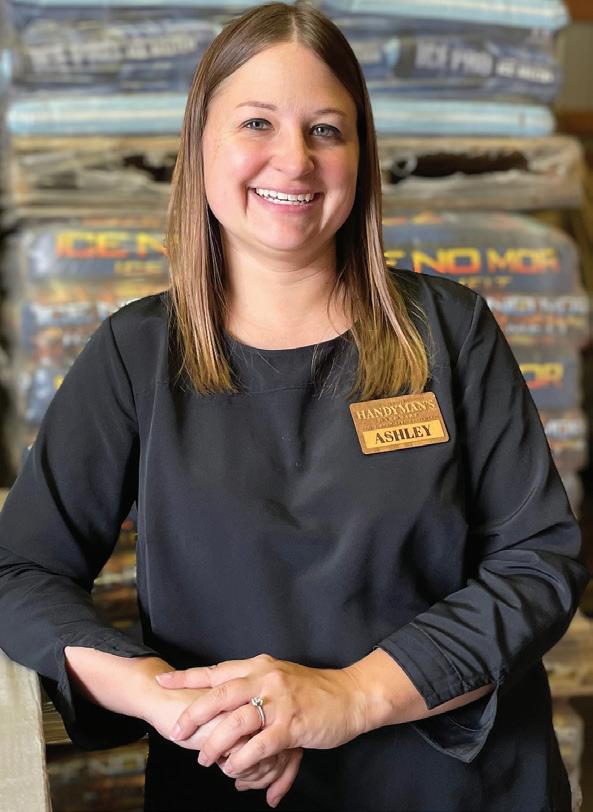
Ashley has spent over seven years learning hardware and commercial maintenace, gaining knowledge from mentors with more than 100 years of combined experience.
“She provides product knowledge to central MN and beyond as Handyman’s Sales and Marketing Manager”




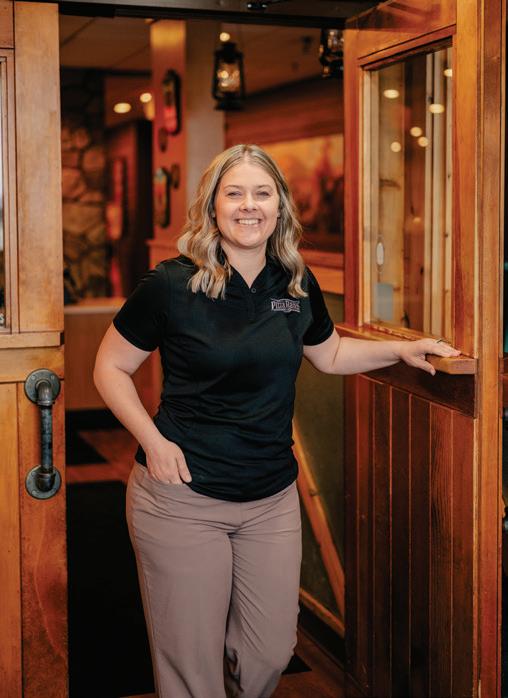

Jackie Horstmann, proudly Woman-Ownedand recently named 2024 Pizza Ranch Franchisee of the Year. From our crispy, hand-breaded chicken to our fresh, fully stocked salad bar, we’re more than just great pizza — we’re a place where families gather, neighbors connect, and every meal is made with pride.
From our kitchen to your table, every slice reflects a commitment to quality ingredients, legendary hospitality, and the power of strong local leadership — and we’re hiring more of it every day. Whether you’re feeding a family of five or a room full of little league champs, we cater to real life with flavor, care, and community at the center. Stop in to learn more and see how you could be part of the team!
Come taste what makes us different—because when women lead, the whole community rises.


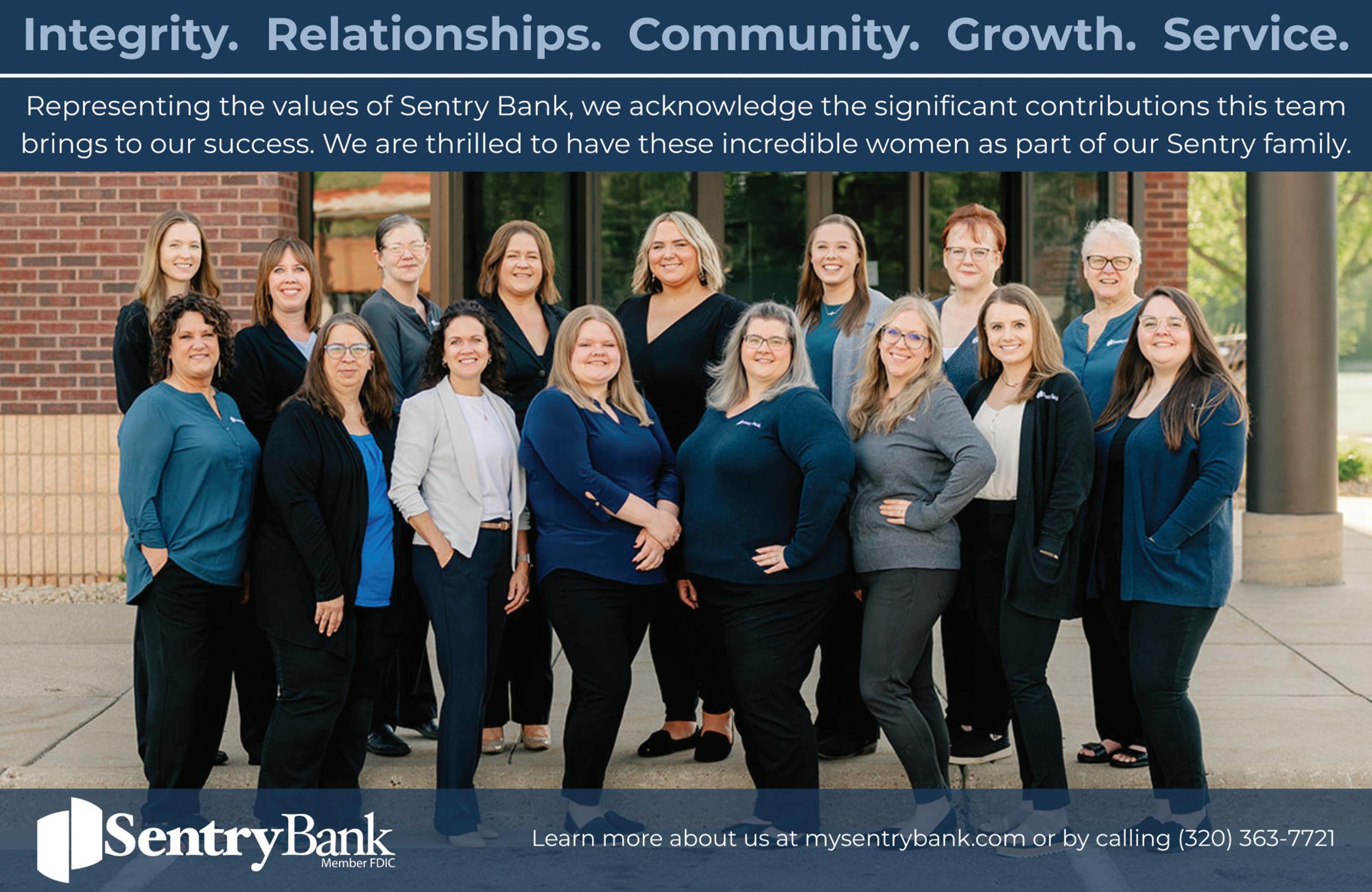



Granite Partners is a private investment and long-term holding company founded in 2002 in St. Cloud, Minnesota, with a mission to grow companies and create value for all stakeholders. We advance a culture of trust, innovation, and excellence as essential to 100-year sustainability, and we aspire to world-class wellbeing for everyone in the Granite community.







Christy Thorson has been named partner at Bradshaw & Bryant, PLLC. Christy has been an attorney with Bradshaw & Bryant since 2016 and has been practicing personal injury since 2011. In addition to handling personal injury cases, Christy serves on the Ameri can Arbitration Association (AAA) No-Fault Standing Committee and has helped train new arbitrators. She is a member of the Minnesota Association for Justice and the Stearns/Benton Bar Association. She participates in Women Trial Lawyers and has presented o n no-fault law at the annual conference. She also volunteers for Central Minnesota Legal Services and is a volunteer judge for mock trial competitions. She handles the contract with both Stearns and Benton counties to represent people being committed for mental illness and/or chemical dependency or people in guardianship situations. Christy grew up in Spicer, Minnesota, the oldest of three. She graduated from New London-Spicer High School in 1995 and then Gustavus Adolphus College in St. Peter in 1998. Christy received her law degree from Hamline University School of Law (now Mitchell Hamline) in 2008 and received her license from the State of Minnesota that same year. Christy lives with her husband and four fur babies and has a bonus daughter and granddaughter.
T.Joseph
Crumley, Christy L. Thorson & Michael A. Bryant

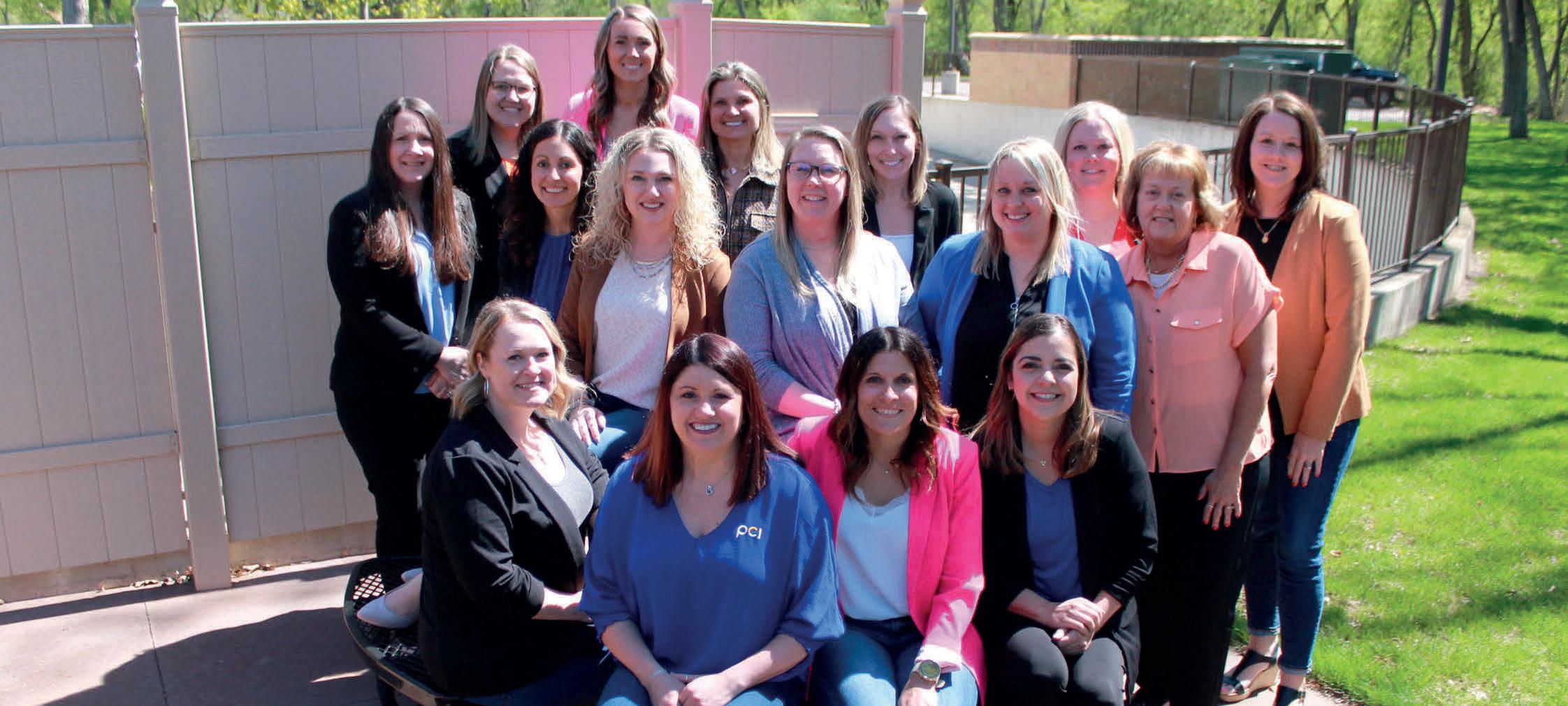











As a locally owned business, we take pride in offering our customers a personal touch, backed by individuals who are deeply invested in both our company and our community. Your support allows us to prioritize exceptional service and quality products while keeping your investment right here at home.
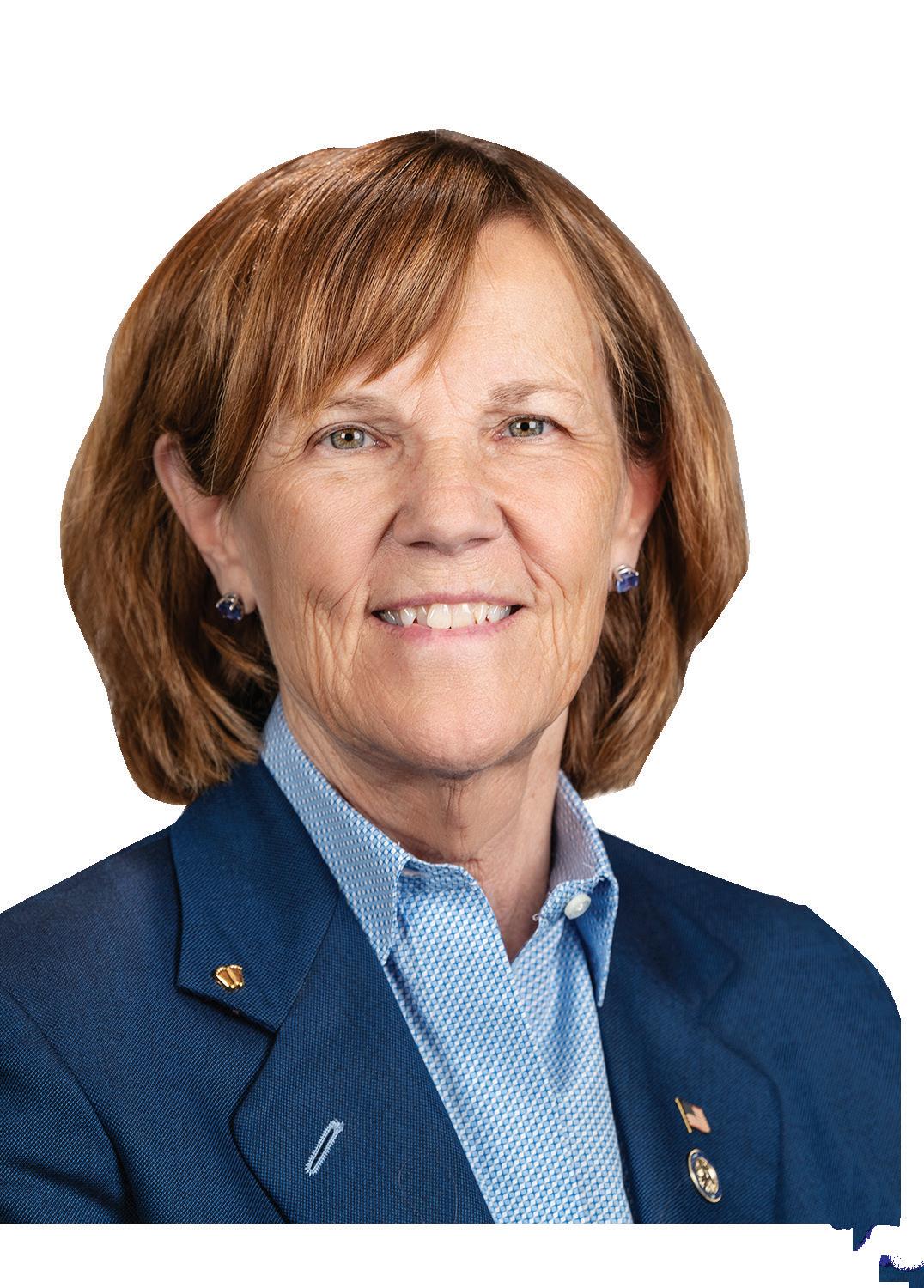

FOR CHOOSING TO SHOP LOCAL!



At Microbiologics, women aren’t just represented. They’re respected, recognized, and relied upon to lead science forward. As a growing STEM company rooted in central Minnesota, we’re proud to be building a future where every woman in science thrives.
Join our team, where women lead and science excels.


St. Cloud Financial Credit Union Chief Experience Officer (CXO) Meggan Schwirtz has been named to Women We Admire's Top 50 Women Chief Experience Officers list for the second straight year, recognizing her as one of the top women CXOs in the country.
Joanna Jungels, overdimensional permits manager at Anderson Trucking Service, was named chair of the Transportation Group of the Specialized Carriers & Rigging Association (SC&RA). Jungels has held various committee roles within SC&RA over 19 years, helping drive initiatives focused on safety education and training, regulatory advocacy, and industry advancement.

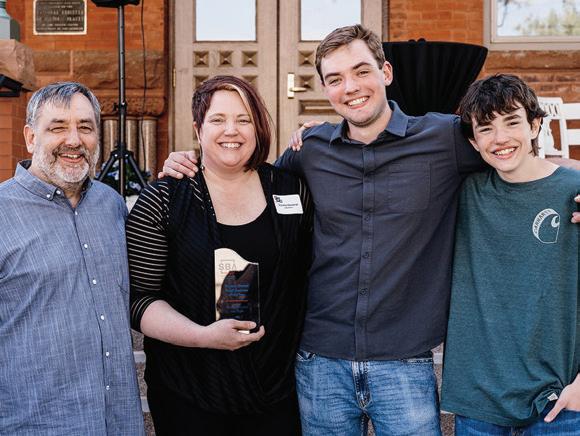
Paige Owens was promoted from executive administrator to director of operations at ConnectAbility of MN. Owens has been with the organization since October 2024 and has played an instrumental role in advancing its mission. In her role, Owens will work with the leadership team to continue the development and fortify the foundation of the organization.
Stearns Bank President and CEO Kelly Skalicky was appointed to the Federal Reserve Bank of Minneapolis Community Depository Institutions Advisory Council (CDIAC). The CDIAC plays a role in advising the Minneapolis Fed president from the perspective of Ninth District thrifts, credit unions, and banks with total assets of less than $10 billion.
Claudia Revermann, Revermann Law Office, and Betsey Lund Ross, Lund Ross, P.A., have merged to form Revermann Lund Ross (rlr). The merger, which was effective May 1, 2025, brings together two women-led practices with a shared passion for accessible, client-centered legal services.

INSELMAN PROMOTED AT RICE
Tonya Inselman was promoted to vice president of human resources at Rice Companies. Inselman joined the company four years ago and now leads an HR team for over 150 employees across seven locations.

Nikki Gustafson, received the 2025 Society of Government Meeting Professionals (SGMP) Sam Gilmer Supplier of the Year Award at the National Education Conference. Gustafson is director of sales at Visit Greater St. Cloud, a division of the St. Cloud Area Chamber of Commerce.
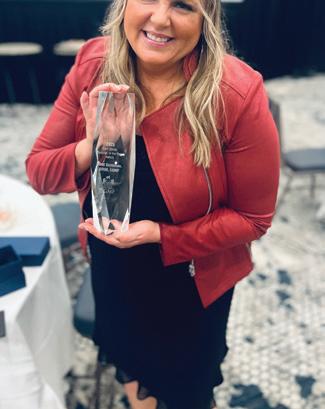
Jules' Bistro was recognized as the 2024 Minnesota Woman-Owned Small Business of the Year by the U.S. Small Business Administration (SBA). Owner Donella Westphal purchased the restaurant in 2017, and has since grown it from 15 to 36 employees, and annual revenue from $227,000 to over $1.76 million. She is a 2023 graduate of the SBA's THRIVE program.
Business Central Magazine is celebrating 25 years of delivering high-quality business news and stories to the Central Minnesota community. Join us in taking a look back at the companies that graced the cover those first few years.
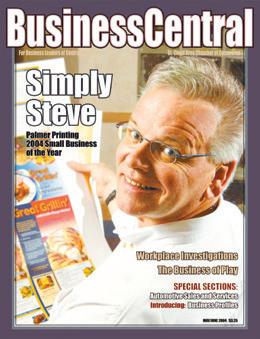
In May of 2004, Steve Palmer was featured on the cover of Business Central Magazine as the recipient of the Chamber’s 2004 Small Business of the Year award. A lot has changed at Palmer Printing in the last 21 years — but the core values remain the same.
What has been the most significant change in your business/industry in the past 25 years? What has your growth looked like?
One of the most significant changes in our business over the past 25 years was the retirement of our founder, Steve Palmer, and the acquisition of Palmer by POS Professional Office Services. This transition allowed us to retain the trusted Palmer brand and long-standing client relationships, while gaining access to expanded resources and capabilities. With POS’s support, we've broadened our services, entered new markets (particularly in healthcare) and grown from a regional provider to a national provider. As industry and client needs have evolved, so have we, with a strong focus on providing customized production solutions. One of the most significant areas of growth has been in direct mail, where we help clients target the right audiences and achieve measurable results.
not only with clients, but also with fellow business owners and organizations dedicated to mutual success. We take pride in the long-standing partnerships we’ve maintained with local
continue evolving alongside our clients for the next 50 years and beyond. Our goal is to keep providing the high level of quality and service our clients expect, while adapting
What we value most about being part of the St. Cloud business community is the people and the strong support of the local businesses in this area.
clients, built on trust and shared values. Being based here has allowed us to stay grounded in our identity, while also growing beyond our regional footprint.
What is something innovative you are doing in business today?
Correction: In the May/June 2025 issue of Business Central Magazine the number of branches listed in the Spee-Dee Delivery Business Spotlight was incorrect. The correct information is:
Total branches 2002: 26
Total branches today: 39
You’ve been in St. Cloud this whole time. What do you like best about the business community here? What we value most about being part of the St. Cloud business community is the people and the strong support of the local businesses in this area. Over the years, we’ve built meaningful relationships,
We've invested in cutting-edge digital color, which is beneficial for personalized mailings and drives more effective marketing. Since the acquisition, we’ve expanded our capabilities to include die cutting, folding, and gluing. Recently, we installed a high-speed inserting and inkjet system with camera verification, allowing us to handle personalized mailings with greater precision and efficiency. These innovations have significantly increased our production capabilities, helping us to better serve our clients.
What does the future look like for Palmer Printing?
The future of Palmer Printing is strong, and we’re excited to
to their ever-changing needs. Innovation will remain at the core of our strategy, as we stay on the cutting edge of both print and digital technologies. As we move forward, we’ll continue to grow alongside our clients, serving as both a trusted partner and a strategic ally in their success.
THEN & NOW
SQUARE FOOTAGE
2004: 28,000
2025: 49,000
PRODUCTION VOLUME
Increased 25 percent since 2004, particularly around 2020, following the acquisition by POS Professional Office Services.