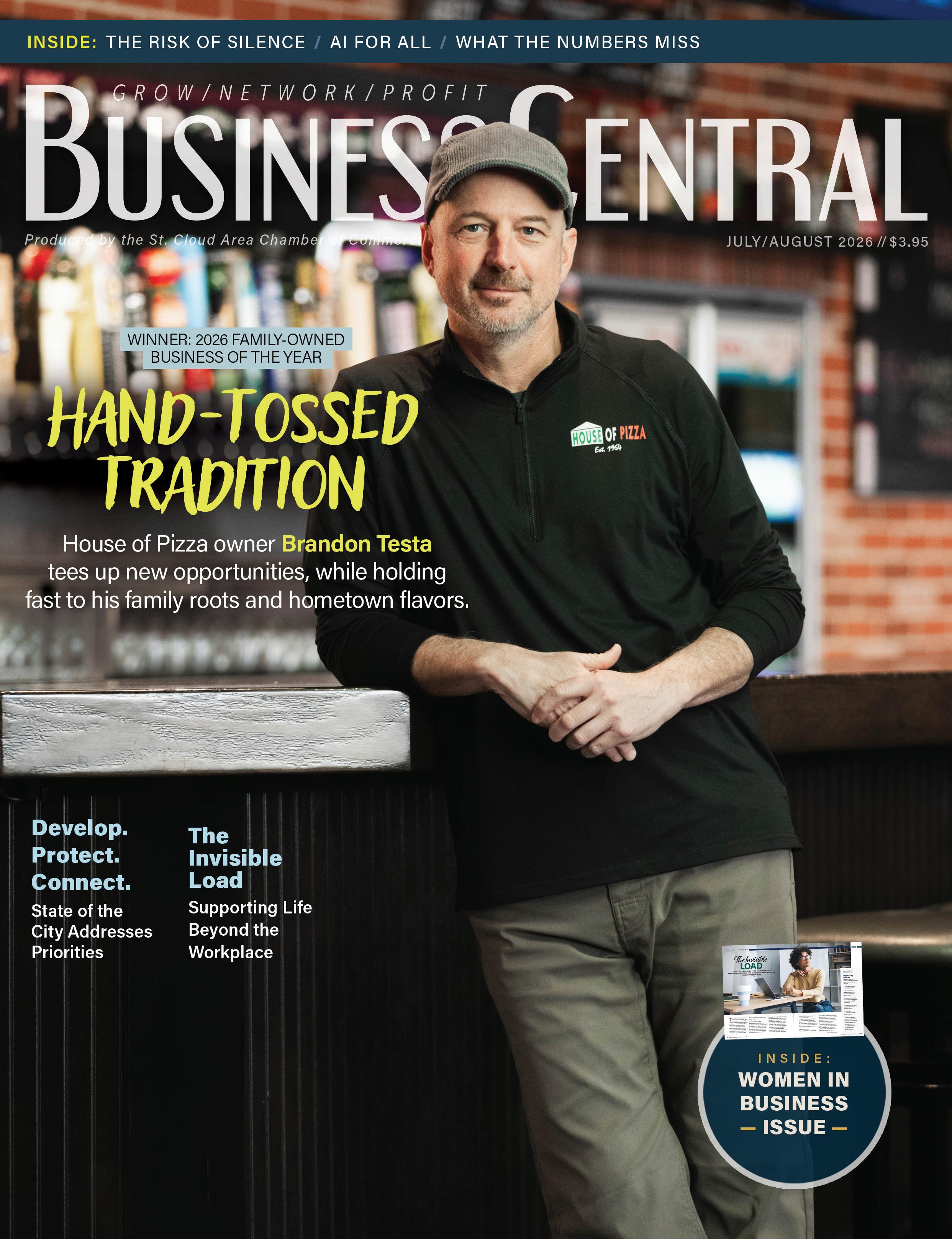
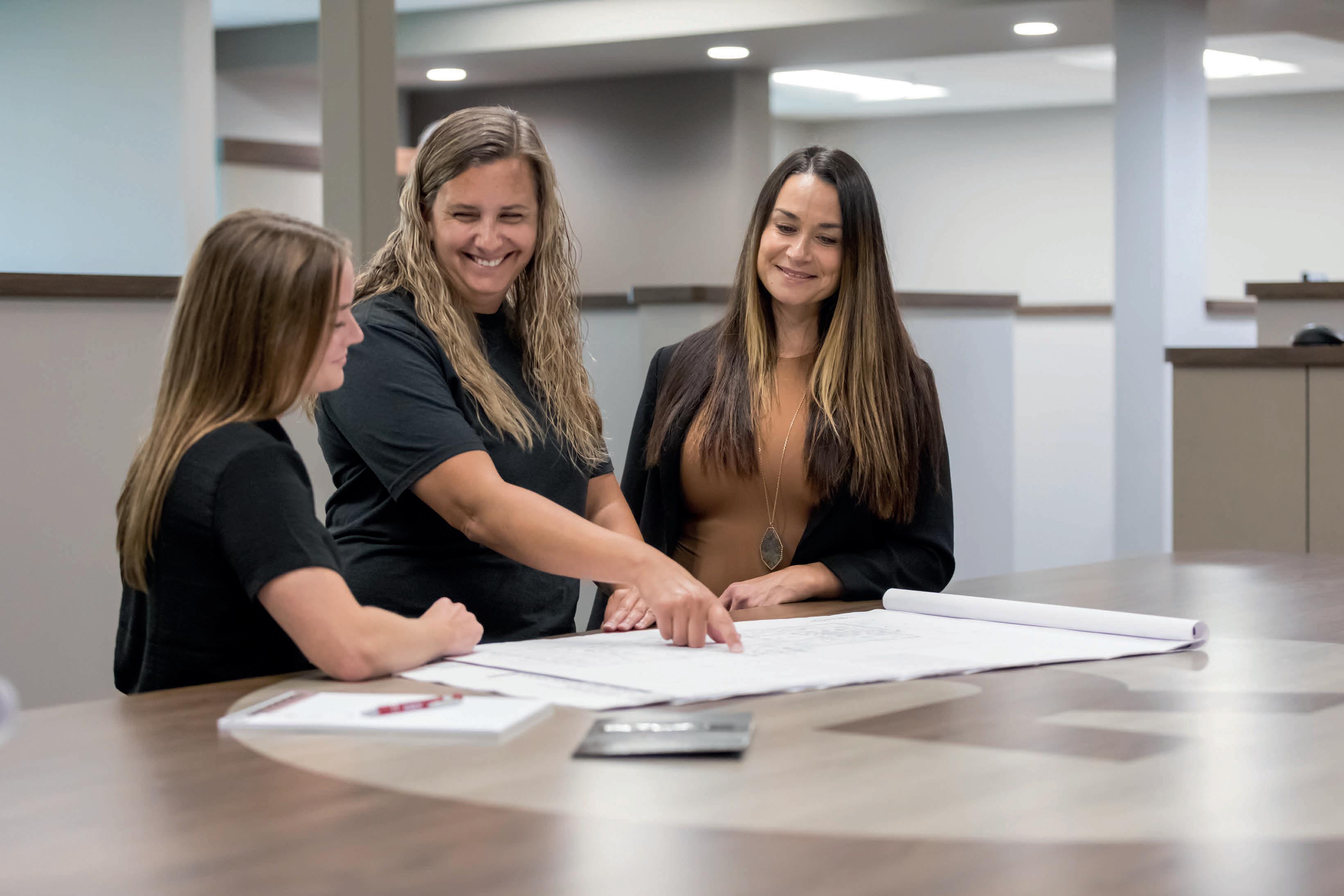



Women at Rice Companies are architects, designers, engineers, project managers and builders — each bringing valuable expertise to the work that shapes

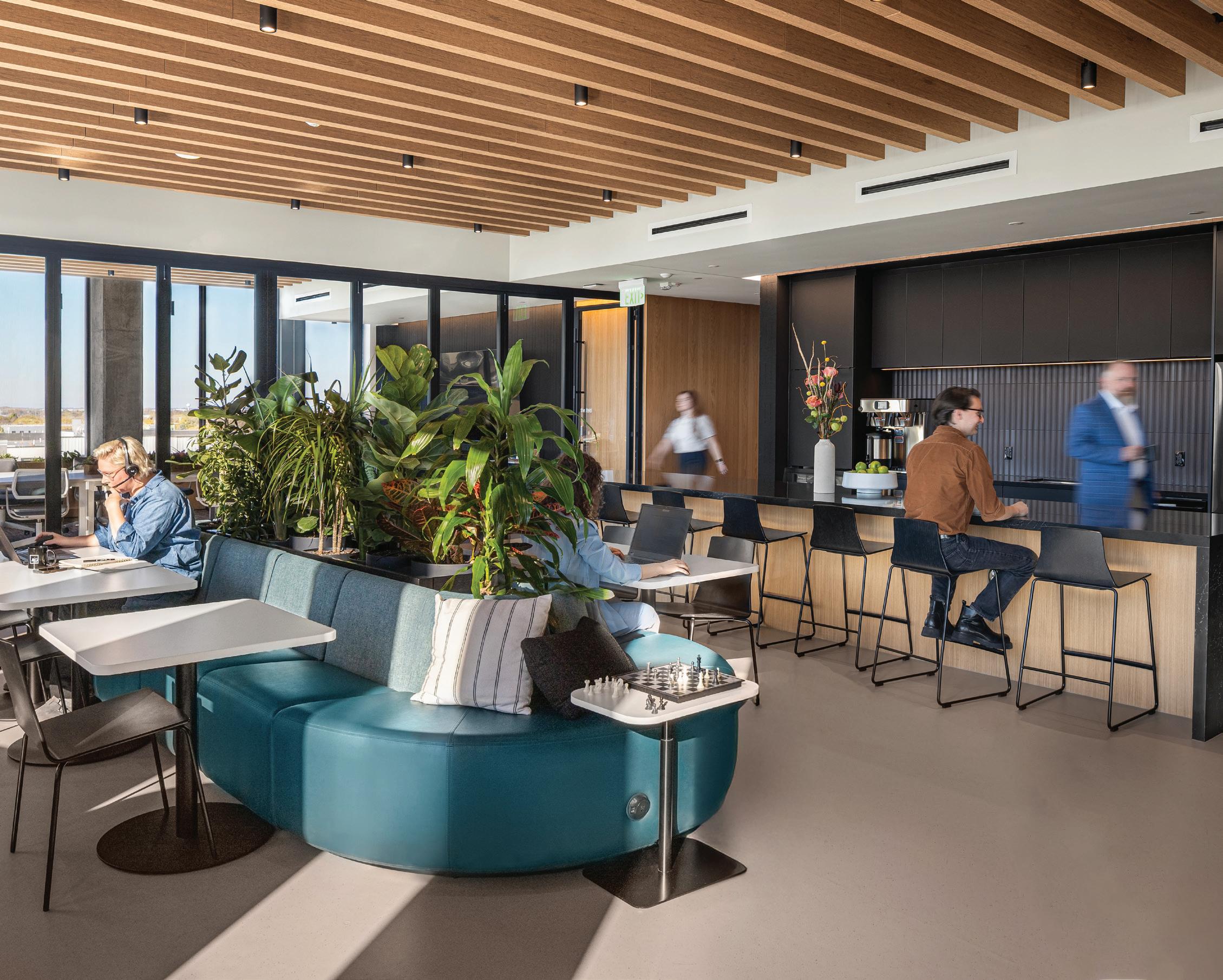
Thriving communities start with thriving workplaces.
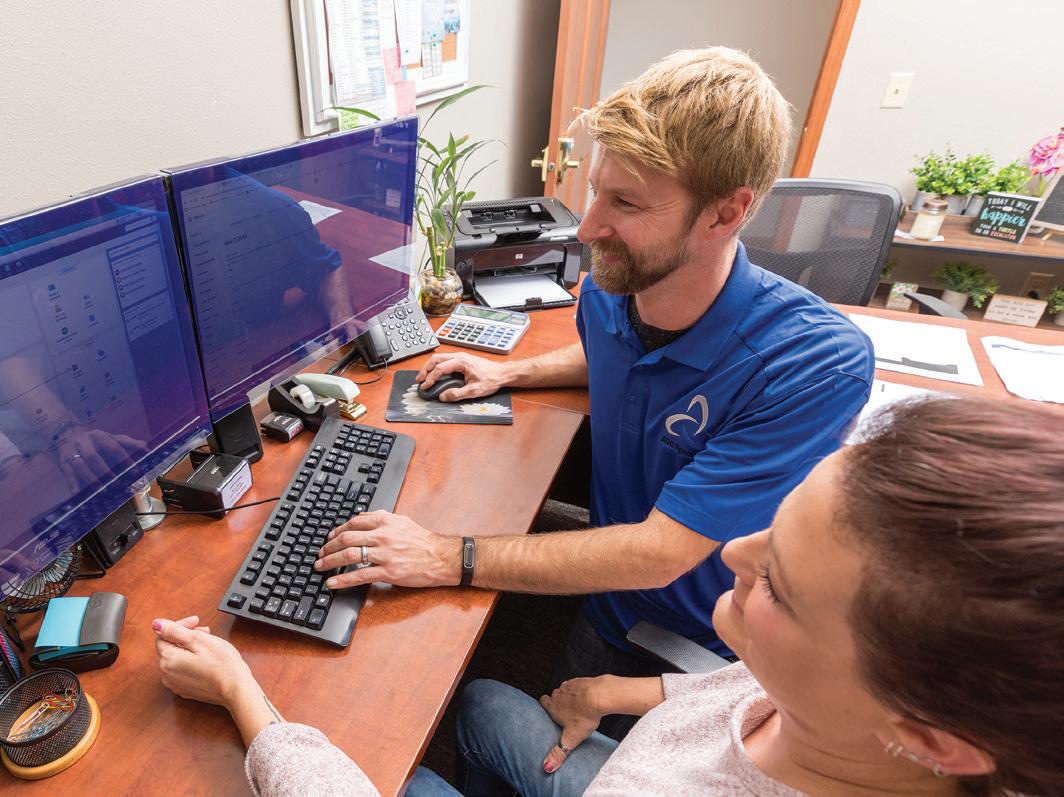
At JLG Architects, we believe good workplace design doesn’t just invite presence; it allows people to be fully present. Today’s leading organizations recognize that humans will always be human — doing their best work in comfortable spaces that feel physically, emotionally, and neurologically supportive. Design that fosters well-being means spaces free of stigma, rich in choice, and responsive to the full range of how people think, feel, and work. From the café-style lounge to private workspaces, we make the professional deeply personal.
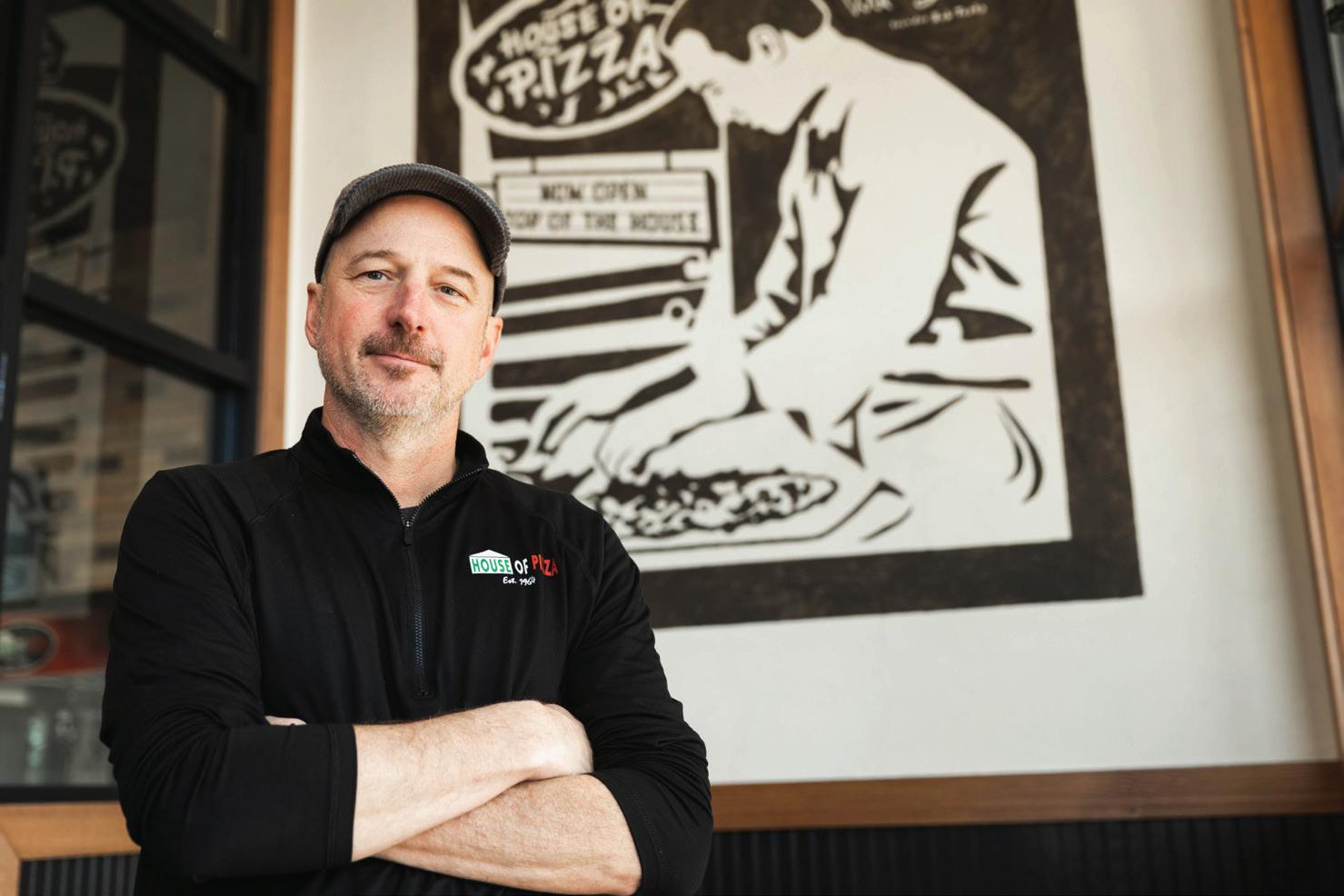
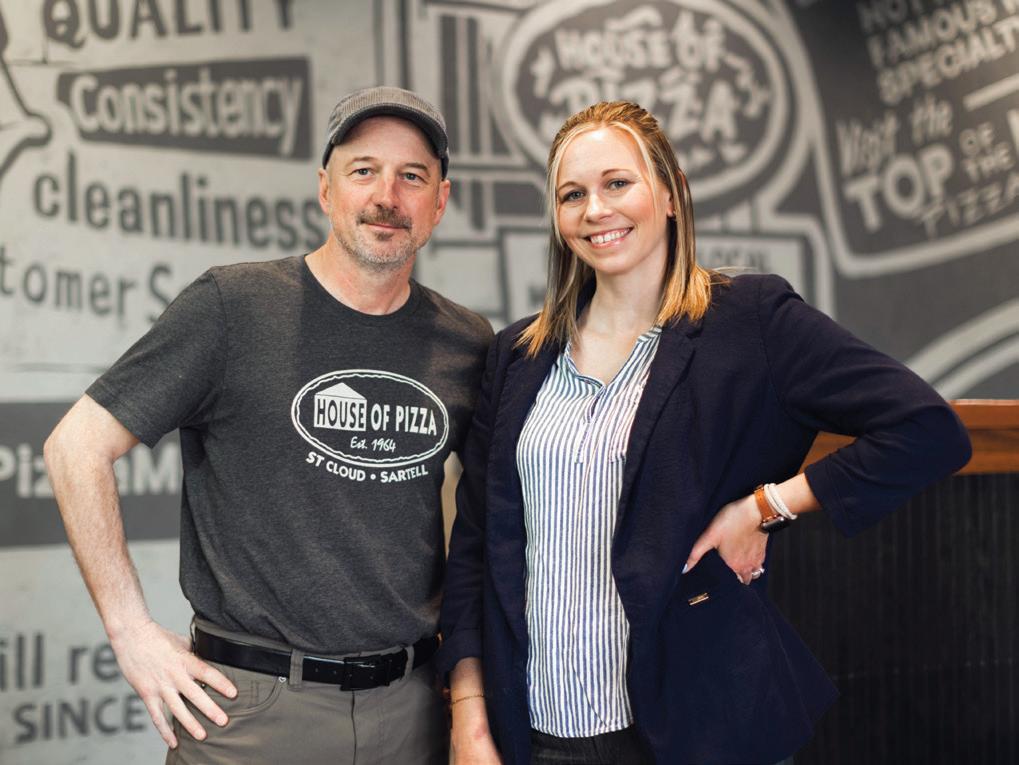
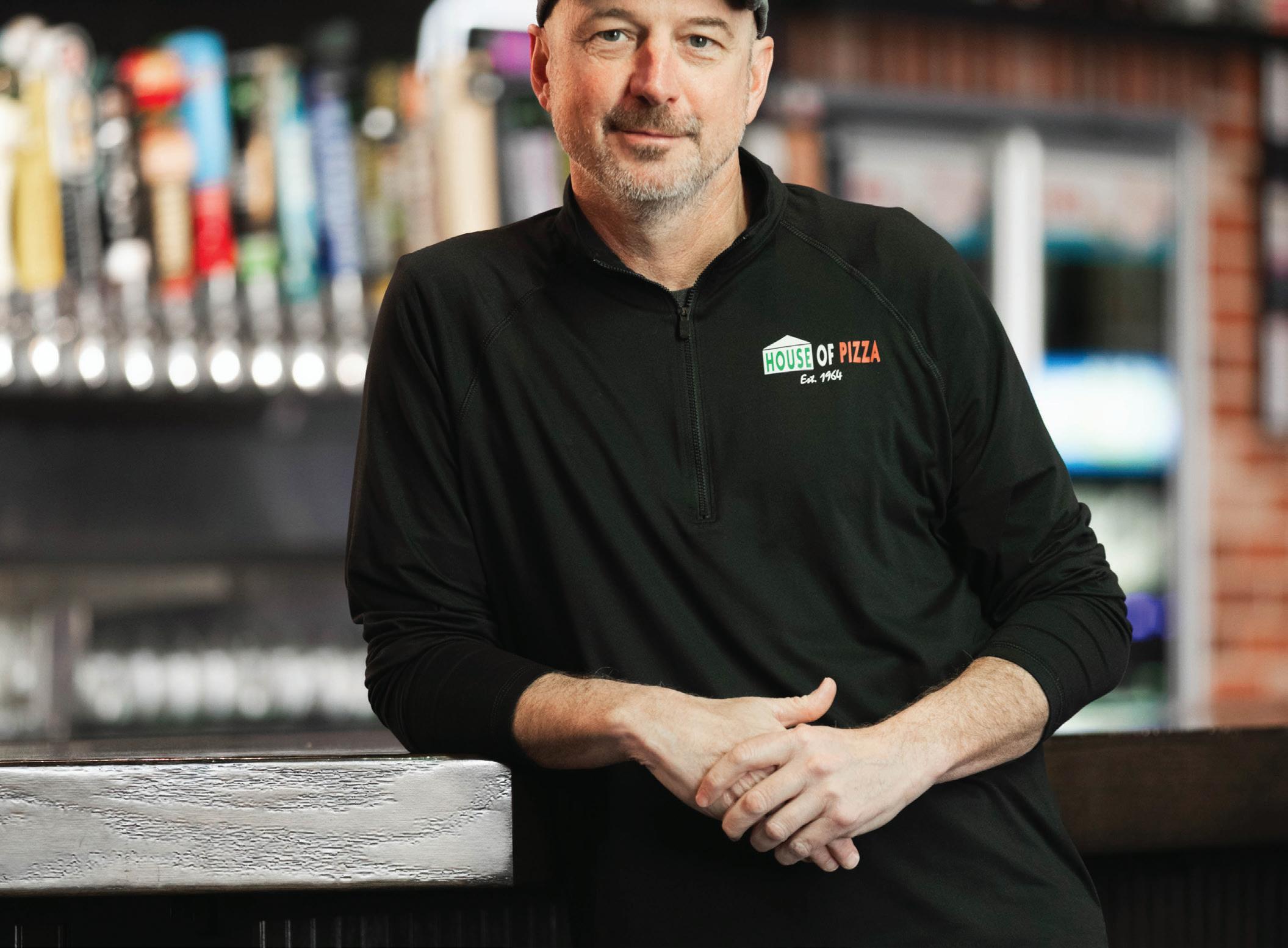
House of Pizza owner Brandon Testa tees up new opportunities, while holding fast to his family roots and hometown flavors.

THE INVISIBLE LOAD Employers can benefit from recognizing and supporting the unseen responsibilities many employees carry outside of work.
2026 WOMEN IN BUSINESS DIRECTORY
and Reva Van Vleet,
Phone: (320) 251-2940
Reservation Line: (320) 656-3826
President: Julie Lunning, (320) 656-3804
Director of Finance and Operations: Kristi O'Connor, (320) 656-3806
Director of Programs & Events: Laura Wagner, (320) 656-3831
Director of Marketing & Communications: Emily Bertram, (320) 656-3809
Director of Membership: Bradley Hoelscher, (320) 656-3824
Executive Assistant: Shelly Imdieke, (320) 656-3800
Member Services & Event Assistant: Sahvanna Valdez, (320) 656-3822
Executive Director: Rachel Thompson, (320) 202-6728
Director of Sales: Nikki Gustafson, (320) 202-6712
Sales Manager: Sabrina Koelsch, (320) 202-6713
Sports Director: Craig Besco, (320) 202-6711
Marketing Manager: Rachel Foos, (320) 202-6729
Marketing & Services Coordinator: Carlie Mertens, (320) 202-6770 Information Specialist: Maddy Lindholm, (320) 251-4170

My very first job was at Brudie’s Pizza in Avon when I was 15 years old. Attached to the Liquor Locker, it proudly served as Avon’s premier pizza delivery service. I didn’t even have my driver’s license yet, so after school I would ride the bus straight there and wait for my shift to start before my mom picked me up later that night. At the time, I felt incredibly grown up.
Of course, being 15 also meant there were plenty of things I wasn’t allowed to touch. I couldn’t use the ovens. The pizza cutters were a no-go. Even the industrial-sized plastic wrap dispenser, apparently considered a workplace hazard, was off-limits to me. While I could help spread dough and add toppings, my primary responsibility was answering the phones. That may not sound intimidating now, but at the time it was terrifying.
far greater than the offense itself. My boss, Bruce Meredith, remains one of the kindest people I know, and he handled it with patience and understanding rather than frustration. It was a small moment, but one that stayed with me.
First jobs are rarely just about earning money. They’re often our first introduction to responsibility, teamwork, customer service, accountability, and confidence. The people leading young employees during those early experiences can have a lasting impact — sometimes without realizing it.
The people leading young employees during those early experiences can have a lasting impact — sometimes without realizing it.
This was a few years before apps and online ordering made food delivery nearly automatic. Every order came through the phone, and every phone call felt like a test. I still remember nervously answering calls, trying to hear addresses correctly over the noise of the kitchen, and hoping I didn’t accidentally mess up someone’s Friday night pizza order. The crew was made up mostly of high school students who were a little older than me, and I quickly learned how fast-paced environments work.
Being new to the workforce, I did my best to be a grown-up, but I definitely wasn’t perfect. I distinctly remember losing one of my paper paychecks. I was convinced I was going to be fired when I told my boss I needed it reissued. Looking back, the panic was probably
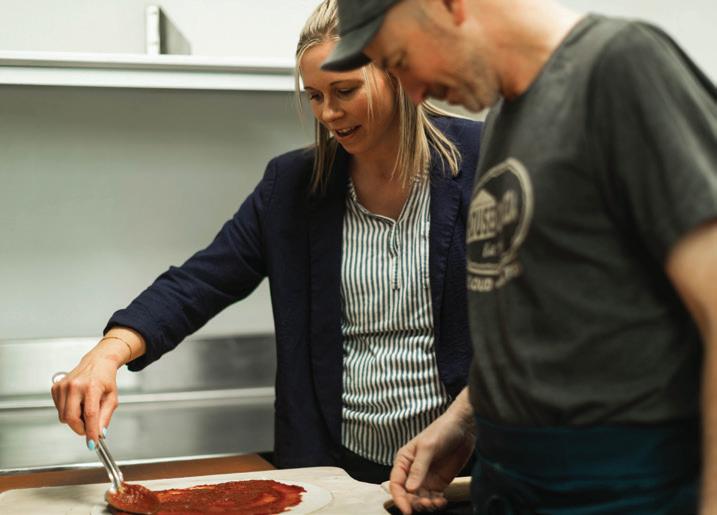
At House of Pizza, owner Brandon Testa understands the influence employers can have on young workers entering the workforce for the first time. He approaches that responsibility intentionally, making a point to recognize hard work, reward good behavior, and create a supportive environment for his team. It’s a philosophy he credits to lessons learned from his father. You can read more about it on page 28.
As for me, my pizza-making career is now long behind me. That said, I can still fold a cardboard pizza box faster than almost anyone I know. And thanks to Brudie’s Pizza, I still hesitate before using a plastic wrap cutting edge. Some lessons just stay with you.
Until next time,

Emily Bertram, Editor
Publisher Julie Lunning
Editor Emily Bertram
Founding Editor Gail Ivers
CONTRIBUTING WRITERS
Emily Bertram, St. Cloud Area Chamber of Commerce
Alli Bily, St. Cloud State University
Caitlin Carlson, Stearns History Museum
Jodi Kelly, CLA
Lynn MacDonald, St. Cloud State University
Jeanine Nistler, freelance writer
Betsey Lund Ross, Revermann Lund Ross
Aaron Traut, CLA
Jami Trenam, Great River Regional Library
1411 West St. Germain Street, Suite 101, St. Cloud, MN 56301 / Phone: (320) 251-2940 / Fax: (320) 251-0081 BusinessCentralMagazine.com
Associate Publisher/Sales
Melinda Vonderahe, Marketing Consultant
Ad Traffic & Circulation
Yola Hartmann, Hazel Tree Media
ART
Design & Production
Yola Hartmann, Hazel Tree Media
Cover Story Photography
Switchboard
Editorial suggestions can be made in writing to: Editor, Business Central, 1411 West St. Germain Street, Suite 101, St. Cloud, MN 56301 or emailed to ebertram@stcloudareachamber.com. Submission of materials does not guarantee publication.
For advertising information, contact Melinda Vonderahe (320) 656-3808
© Copyright 2026 Business Central LLC. Business Central is published six times a year by the St. Cloud Area Chamber of Commerce, 1411 West St. Germain Street, Suite 101, St. Cloud, MN 56301. Phone (320) 251-2940 / Subscription rate: $18 for 1 year.
ST. CLOUD AREA CHAMBER OF COMMERCE 2025-26 BOARD MEMBERS
Nick Bischoff, Design Electric
Doug Cook, Headwaters Strategic Succession Consulting LLC
Joe Hellie, CentraCare, Past Board Chair
Ray Herrington, Pioneer Place on Fifth Hudda Ibrahim, OneCommunity Alliance, Vice Chair of the Board
Dave Kleis, Central Minnesota Driving Academy
Matt Laubach, West Bank
Laurie Putnam, St. Cloud School District 742
Paul Radeke, Creative Planning, Board Chair
Alex Schoephoester, Spencer Fane
Brenda Sickler, Theisen Dental
Amy Sip, ASip Consulting
Melinda Tamm, Ms. Melinda’s Dance Studio
Dr. Gregory Tomso, St. Cloud State University
Melody Vachal, Arise Cares
Donella Westphal, Jules’ Bistro

Move away from unproductive meetings to more thoughtful collaboration that is focused, efficient and human-centered.
By Jami Trenam BOOK REVIEW
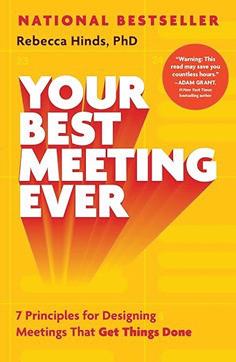
Many employees see meetings as a drain on time and energy, while managers struggle to make them productive. In her book
Your Best Meeting Ever: 7 Principles for Designing Meetings That Get Things Done, researcher Rebecca Hinds offers practical strategies to help organizations rethink meetings and reclaim valuable time.
The book is organized into seven concise, conversational sections, each centered on one principle for designing better meetings:
1 Meeting Volume: Cut Your Meeting Debt
2 Measurement: Choose the Right Metrics
3 Structure: Become a Meeting Minimalist
4 Flow: Apply Systems Thinking
5.Engagement: Prioritize User-Centric Design
6 Timing: Get Your Meetings in Rhythm
7 Technology: Innovate and Iterate
In the book, Hinds suggests holding a “meeting doomsday” during which every recurring meeting is audited, eliminated temporarily, and then only brought back if it truly adds value. This approach encourages teams to question long-standing habits and focus on outcomes instead of routine.
Hinds also promotes the idea of measuring a meeting’s “return on time invested.” She argues that effective meetings should move projects forward, remove obstacles, or support decision-making — not simply fill calendars.
Several chapters suggest creating leaner, more intentional meetings by reducing agenda items, limiting attendees, and relying more on digital collaboration platforms when possible. Hinds also explores how workplace behaviors such as lateness, excessive jargon, and disengagement can drain energy from meetings.
Using the concept of “rhythms,” Hinds divides meetings into strategic, tactical,
and operational categories, encouraging organizations to align meeting frequency and purpose with broader goals, rather than defaulting to repetitive weekly check-ins.
The final chapter examines the role of technology in modern meetings. Hinds encourages leaders to use technology thoughtfully, emphasizing tools that reduce busy work and support human connection rather than distract from it.
While Your Best Meeting Ever may not completely reinvent workplace communication, it offers practical, realistic ideas that most professionals can apply immediately.
PineCone Vision adds new service
PineCone Vision Center added the Valeda® Light Delivery System, an FDA-approved photobiomodulation device intended to improve visual acuity in select patients with dry age-related macular degeneration (dry AMD). PineCone is the first clinic in Minnesota to offer Valeda treatment.
Catholic Charities raises over $365,000
Over 550 people attended the 44th annual Mardi Gras in January. The event raised more than $365,000 for Catholic Charities Emergency Services — with programs like the food shelf, clothing program, and financial assistance program — and Catholic Charities Domus Transitional Housing, a facility for single women and their children.


Jami Trenam is the associate director of collection development at the Great River Regional Library.
Your Best Meeting Ever is available for free checkout from your public library. Reserve your copy at griver.org.

King joins Paramount Buddy King is the new community engagement manager at the Paramount Center for the Arts. King’s experience includes serving as chief operating officer of Higher Works Collaborative, unit director at the Boys & Girls Club of Central Minn., and strategic advisor for Youthset LLC, along with leadership roles on the Great River Children’s Museum Board and the Central Minnesota Arts Board.

Business
Central asked:

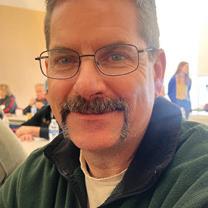
Clay White, Executive Director, Aslan Health
Accounting — working with numbers and financial management.


Meagan Simonson, Graphic Designer, Lamar Advertising
Communication and understanding what customers need and how to express that visually.

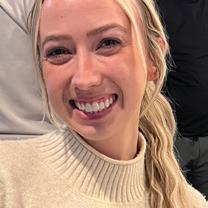
Clara Wieland, Marketing Coordinator, Crew Carwash
Curiosity. As a professional, curiosity has helped me learn more about marketing, coworkers, community and partners.

What skill, outside of your job title, matters most to your success?
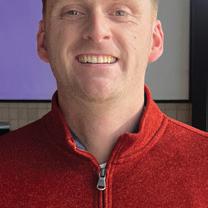
Emmitt Edwards, Development Officer, Catholic Charities
Networking and meeting new people.


Derrick Brasel, Water Treatment and Well Specialist, Traut Companies
Being personable and able to find common ground with the customer.

For three decades, BCI Construction has proudly built spaces that strengthen our communities, support local growth, and bring people together, because we’re better when we all do better.
Sunburst Memorials, part of Scipi Companies, acquired Marshfield Monument, a longstanding memorial provider based in Marshfield, Wisc. The acquisition strengthens Sunburst Memorials’ growing regional footprint, while preserving a business that has served families for more than a century.
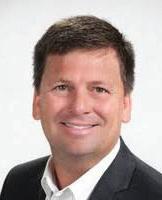
Falcon National Bank announces promotions
Falcon National Bank promoted Troy Cameron to chief lending officer/market president, where he will continue to lead the St. Cloud market, while providing strategic lending leadership across all markets.

Erik Sandell was promoted to director of retail, where he will lead the retail banking division across all branch locations.
AGC Agency receives national recognition
AGC Agency was named to CRN’s 2026 Managed Service Providers (MSP) 500 list, which serves as a comprehensive guide to the leading MSPs in North America.
AGC Agency was named in the Pioneer 250 category, recognizing MSPs focus on the small to midsize business market that is driving growth and innovation.
As of June 1, 2026, GATR Truck Center is part of M&K Truck Centers and will operate under the M&K Truck Centers name. This change offers an expanded network of 38 locations, enhanced parts availability and service capabilities, and a continued commitment to reliable service.
The Great Blue Heron restaurant in Cold Spring replaced the Cold Spring Ballroom after it burned down in the late 1960s.
By Caitlin Carlson

The mid-century supper club phenomenon left Minnesota and Wisconsin brimming with popular dining spots, many of which still stand today. The Great Blue Heron in Cold Spring has been in operation since 1971, when it opened simply as the Blue Heron.
A supper club is a tricky thing to define, because it’s more than just a restaurant. Technically (and perhaps obviously), a supper club only serves supper, usually opening their doors around 4 p.m. The spread is typically a bit more casual than in upscale city nightclubs, which were also popular during the mid-20th century. A supper club often features surf and turf, relish trays, and entertainment such as a polka band.
The supper club enjoyed its peak in popularity around the 1940s and into the 1950s, so 1971 is a bit late to begin operations in terms of that historical ebb and flow. Nonetheless, the Blue Heron opened its doors, and the residents of Cold Spring and greater Stearns County were happy to partake in its offerings.
Before the Blue Heron’s arrival in town, the Cold Spring Pavilion (later the Cold Spring Ballroom) stood on the site. Built in 1931, it brought people in who wanted to dance and socialize. It was a favorite local place for wedding dances, also luring in popular musical acts including Conway Twitty, Jerry Lee Lewis, and Buddy Knox. The dance hall burned down in 1969.
The Cold Spring Ballroom burned down in 1969. It was located where the Great Blue Heron is today.
The Blue Heron opened its doors in 1971 under the operation of Erv and Evie Becker. Evie died in May 1973, and in 1975, Jerry Dols, owner of Jerry’s Supper Club in Richmond, took over operations of the Blue Heron with his son Mike. Eventually, Mike and his wife Marlene became the sole owners of the establishment.
Together since eighth grade, Mike and Marlene were a great team. Mike worked in the kitchen, while Marlene served as hostess for many years, relishing the opportunity to catch up
with everyone in the Cold Spring community. Mike and Marlene were not afraid to make changes to the restaurant, including adding a wood-paneled room at the back of the restaurant to expand the dining area, building a separate room for the salad bar (which was a signature of Mike’s mother Charlene at Jerry’s Supper Club), and expanding banquet services.
In 1995, a 14-year old by the name of Nic Stang started working at the supper club as a dishwasher. Even as a teenager, he saw himself
running the restaurant someday and told his family as much. In 2004, Stang and his mother, Kathy, purchased the restaurant and became the owners of the newly christened “Great Blue Heron.” His wife, Chrissy, and brother, Nate, also worked at the restaurant, carrying on the family business tradition that Jerry, Mike, and Marlene put in place.
In addition to serving as an event center, hosting weddings and other celebrations, the Great Blue Heron established a
successful catering business that continues to serve the Stearns County area today. Menu staples like walleye, endless pasta Thursdays, and clam chowder are still available. That commitment to listening to the community and adhering to the supper club tradition has allowed this unique Central Minnesota restaurant to remain in operation for over 50 years.
Great River Children’s Museum honored


Caitlin Carlson is program director at the Stearns History Museum.
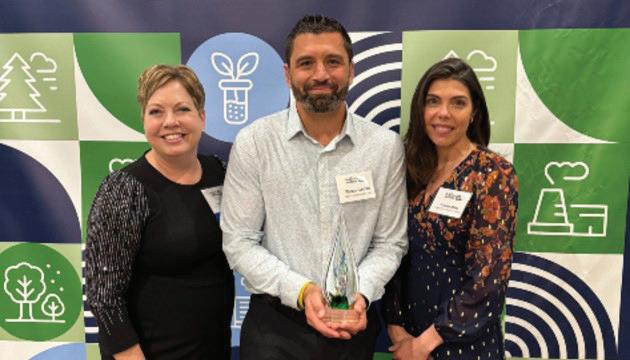
The Great River Children’s Museum received the Innovation Award at the 2026 ReScape Brownfield Redevelopment Awards, presented by Minnesota Brownfields. The honor recognizes the cleanup and redevelopment of contaminated and blighted properties across the state.

Catholic Charities receives donations
The 16th annual Pack the Porches food and fund drive, benefiting Catholic Charities Emergency Services Food Shelf, received 6,615 pounds of food and $24,665 in donated funds during the six-hour event on March 27th. Coborn’s matched all food donations up to $15,000.
Catholic Charities of the Diocese of St. Cloud received a donation of $57,800 from CentraCare Foundation, a contribution that will support the full spectrum of Catholic Charities Senior Nutrition programs, including Meals on Wheels, senior dining, and other nutrition services that help older adults reliably access healthy meals across Central Minnesota.
Kramer listed in 2026 Masters Club
James Kramer III, MBA, CFP®, CEPA®, of Kramer Financial, was recognized as a distinguished advisor by LPL Financial.
Kramer earned a place in the Masters Club Program for his 13th consecutive year, which recognizes advisors who set the standard for excellence in financial guidance.

TerSteeg named partner
Ryan TerSteeg was recently named partner at GLTArchitects based in St. Cloud. TerSteeg joined the firm in 2023 and has experience in the architecture field across several states, including North Dakota, Iowa, Nebraska, and Minnesota. He has worked on a variety of project types including government, private, commercial and education facilities.
The Chamber’s first visit to the Embassy of Mexico highlighted the growing importance of international partnerships in strengthening regional economies.

The St. Cloud Area Chamber of Commerce’s Annual Washington, D.C., Fly-In, April 20 – 23, provided valuable contacts. A delegation of nearly 20 Chamber members met with Senators Amy Klobuchar and Tina Smith, Representative Tom Emmer, the U.S. Chamber of Commerce and — for the first time — the Embassy of Mexico. The meeting with Embassy staff was engaging and informative — the start of a strong connection between our Chamber, our region and Mexico. The following is a recap of that meeting, provided by embassy staff.
The Embassy of Mexico in Washington, D.C., welcomed a delegation of 22 representatives from the St. Cloud Area Chamber of Commerce, led by its
President Julie Lunning. The visit formed part of ongoing efforts to strengthen regional economic ties across North America through the
exchange of information, data, and strategic perspectives.
During the meeting, embassy officials delivered a comprehensive overview of the U.S.–Mexico trade relationship, emphasizing the depth of bilateral integration and the central role of shared value chains across key industries. The discussion also addressed the main challenges and opportunities surrounding the upcoming review of the United States–Mexico–Canada Agreement (USMCA), underscoring the importance of regulatory certainty and continued cooperation to sustain regional competitiveness.
A key component of the session was the sharing of targeted economic data relevant to Minnesota’s business community.
Embassy representatives provided insights into trade trends, investment flows, and factors shaping Mexico’s business environment, offering participants a clear and current understanding of market conditions. This data-driven approach helped identify practical areas
of opportunity for companies interested in expanding into or strengthening ties with Mexico.
Members of the St. Cloud delegation expressed strong interest in deepening economic integration with Mexico, not only through trade and investment, but also via workforce development, talent exchange, and collaboration in strategic sectors. The conversation also extended to cultural and educational engagement, reflecting the broader, people-topeople dimension of the bilateral relationship.
In this context, the embassy highlighted the role of Mexico’s consular network in the United States as a direct link to local communities and economic stakeholders. Participants were
Meet the volunteers who welcome, connect, and support members through networking, mentorship, and Chamber engagement.

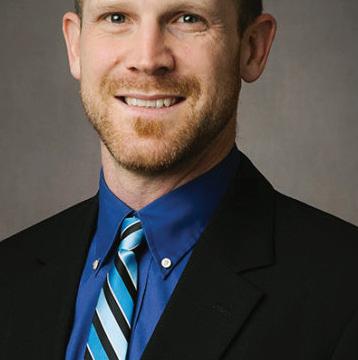
Clint Lentner
Northland Capital Phone: (320) 257-1371
Chair, Chair Development Committee
The Chair Development Committee helps mentor all of the other committee chairs. Attendees work on recruitment, marketing and leadership at six meetings throughout the year.


Nolan Lind
Jacobs Financial
Phone: (320) 248-2644
Chair, NEXT — Chamber’s Young Professionals
NEXT-Chamber’s Young Professionals provides networking and educational opportunities designed for the next generation of business leaders in Central Minnesota.
Check out more People to Know on page 17.




Good Shepherd volunteer receives statewide honor
The Good Shepherd Community volunteer Lora Knafla was named the State Volunteer of the Year by LeadingAge Minnesota as part of its “Stars Among Us” awards program. This statewide honor recognizes volunteers who demonstrate extraordinary commitment, compassion, and service to older adults across Minnesota. Knafla has volunteered at Good Shepherd for 11 years.
St. Cloud Hospital earns an ‘A’ St. Cloud Hospital has earned an “A” Hospital Safety Grade from The Leapfrog Group, a nonprofit organization dedicated to advancing quality, safety, and transparency in health care. The grade is based on performance across more than 30 evidencebased safety measures, including infection prevention, medication safety, surgical safety, and systems designed to prevent medical errors.
launches Sureway
ATS (Anderson Trucking Service) Logistics Services expanded its brokerage strategy with the launch of Sureway Transportation Company LLC, a new stand-alone subsidiary focused on its freight agent network. The move supports continued growth by expanding capacity, leveraging evolving technology, and enhancing service for agents, carriers, and shippers across North America.
Send news releases, announcements, or anything you think is newsworthy to Emily, ebertram@stcloudarea chamber.com and we will try to include it.

Before you put a pin in it, consider thinking outside the box.
percent (perhaps the current effort that employees are already giving) isn’t good enough. It can also come across as condescending — and that you expect employees to expend more than they have to give. Leaders are better served by using direct motivators such as “you can do this” and regularly recognizing the accomplishments of team members publicly.
Buzzwords or phrases can often be seen as impersonal, pretentious or confusing to your audience. However, they are still used often. According to a survey from the language education company Preply, 38 percent of respondents see buzzwords in emails, 29 percent hear them in person, and 24 percent see them in instant messages. While they still prove useful in some cases, there are other more effective ways of communicating what you mean or want.
Let’s circle back. This usually means let’s revisit this topic or this conversation later. The dismissive tone of this statement diminishes any sense of urgency, offering instead a vague future deadline. Rather than using this, consider giving concrete deadlines or action items
or at least communicate why this conversation can’t happen right now.
Move the needle. Used to describe noticeable changes or improvement, this term lacks specificity and clarity. It is more effective to be direct about what the goals are, such as, let’s increase sales by 15 percent this month or let’s gain 1,000 new Instagram followers this year.
The new normal. Most used in recent years to refer to life in the COVID-19 era, this overused phrase lacks any form of measurement or standard, as the word “normal” is relative. Acknowledging that we live in an ever-changing world, or simply saying nothing at all, is a better way to communicate this sentiment.
Give 110 percent. While encouraging at face-value, this term implies that 100
Low-hanging fruit. The meaning is obvious: the easiest, quickest tasks to perform reap the quickest rewards. However, consider what it doesn’t say: that the harder to reach and achieve goals often reap even sweeter rewards. Instead of using this phrase, leaders may be more successful long-term when they push their employees to strive for the highest fruit.
Pivot. Another term that is reminiscent of the pandemic, this means to shift directions fundamentally. Due to overuse, though, it’s a word that has lost its potency, often earning eyerolls in meeting rooms. Leaders should instead be more specific about what is shifting, such as changing a strategy, shifting a marketing message, or altering the financial goals.
Ultimately, we all end up using buzzwords
sometimes, and that’s okay. The key to acceptable use lies in moderation, knowing your audience, and providing context when possible.
When in doubt, just keep everyone in the loop to achieve true synergy and get your ducks in a row. —EB
Museum presents 2025 Zapp Historian Award
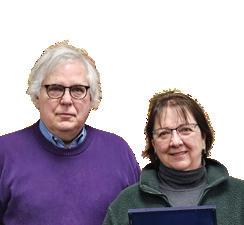
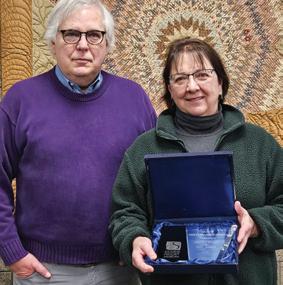
The Stearns History Museum named Marian Rengel and Mike Knaak as the 2025 recipients of the Zapp Historian Award, recognizing their contributions to preserving and promoting Stearns County history. Rengel, a longtime St. Cloud Times writer and Minnesota Digital Library founder, and Knaak, a former St. Cloud Times photo editor who documented the region for more than 40 years, both played key roles in archiving local history through volunteer work.
BCI earns award
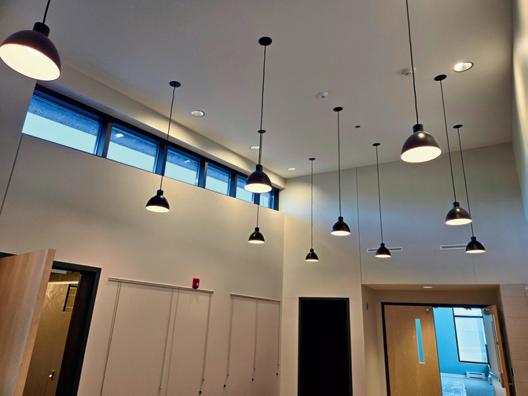
BCI Construction received the 2026 Heritage Preservation Award from the City of St. Cloud for its renovation of 706 West St. Germain Street, recognizing a commitment to preserving historic properties. The project included coordination with the State Historic Preservation Office, National Park Service, and St. Cloud Heritage Preservation Commission to designate the buildings as contributing projects within the St. Cloud Commercial Historic District.




WAITE PARK, MN

3709 Quail Road NE, Sauk Rapids, MN 56379 (320) 253-3524

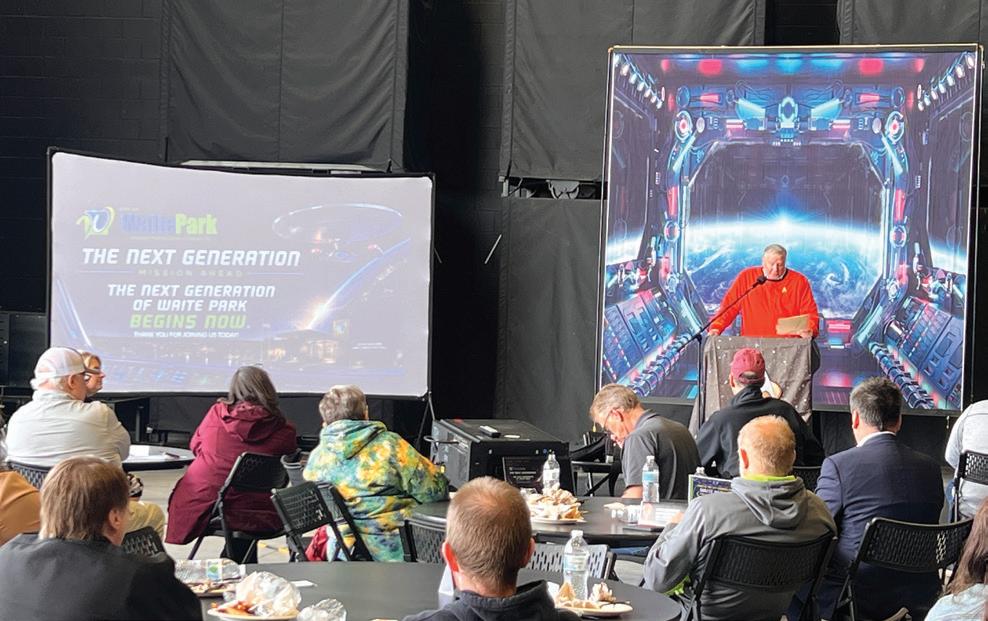
These priorities and more were outlined at regional State of the City addresses earlier this year.
By Emily Bertram
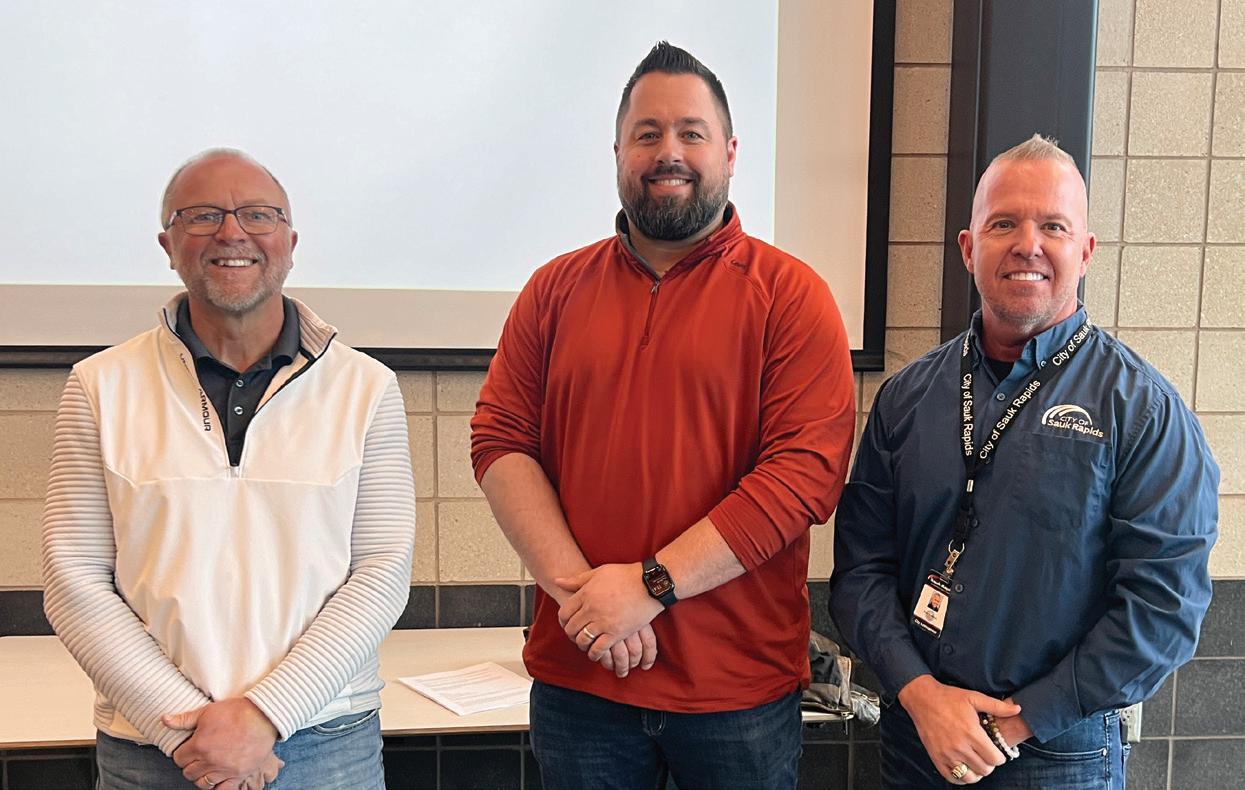
Mayors and city leaders from St. Cloud, Sauk Rapids and Waite Park reflected on 2025 and looked ahead for what’s next in their cities.
Public safety, infrastructure, quality of life and customer service are St. Cloud Mayor Jake Anderson’s vision for his city. “Our goal is to provide exceptional customer service,” Anderson said. “Not just being a shop that says no, but a shop that says, ‘No, but we could do this.’”

In 2025, completed projects included Lincoln Avenue reconstruction, Pantown neighborhood improvements, 10 miles of street resurfacing, new pickleball courts, and investments in parks such as Whitney Park and Centennial Park.
There were also several major community developments, including the opening of the University of Minnesota Medical School campus, the expansion of the CentraCare Plaza, the
continued success of the Great River Children's Museum and construction of Avivo Village. Downtown improvements were another focus, including simplified parking policies and the Downtown Alliance’s block-byblock ambassador program. “We can’t just keep talking about redevelopment,” Anderson said. “We definitely need to be making more progress.”
St. Cloud entered the 2026 budget cycle facing a $3.3 million deficit driven by inflation, rising labor and equipment costs, and the loss of some grant funding. City leaders ultimately approved a tax increase, which Anderson said was necessary to maintain operations, address deferred maintenance and replace aging equipment.
Looking ahead, Anderson said the city will continue prioritizing infrastructure improvements, public safety investments, neighborhood revitalization and customer service initiatives while
evaluating organizational efficiencies and long-term budgeting strategies. He encouraged residents to take an active role in improving the community. “I challenge all of you,” Anderson said. “What can you do to make a better community?”
“People, partnerships, progress and purpose” are the themes Sauk Rapids Mayor Jason Ellering believes are shaping Sauk Rapids.
Ellering, along with City Administrator Ross Olson and Community Development Director Todd Schultz emphasized Sauk Rapids’ strong financial position. The city has reduced debt from nearly $45 million to roughly $14 million over the past 10 to 15 years while continuing to invest in parks, facilities and infrastructure.
Investments in public safety, including the recent purchase of a new fire truck, will help the Sauk
Rapids Fire Department. The fully staffed department responded to more than 200 calls in 2025.
The police department is also fully staffed with 19 sworn officers and two administrative specialists. Police Chief Perry Beise will retire in January 2027 after more than 40 years in law enforcement.
A partnership between the city and Sauk Rapids-Rice School District continues to drive development at Mayhew Creek Park and the new athletic and recreation campus. Ellering described the project as a “campus-style” vision centered on education, recreation and community gathering spaces while preserving trails and natural areas. Since 2020, approximately $61.5 million has been invested in projects including:
Multi-purpose athletic fields
A regional baseball complex, which is expected to bring visitors and economic activity to the area
Expanded trail connections
A new early childhood and
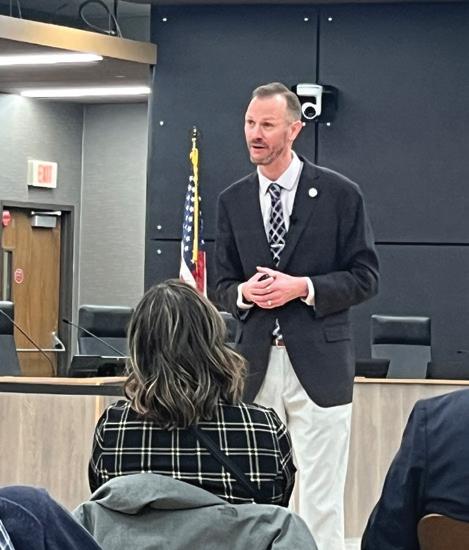
community recreation facility adjacent to the high school, that includes community classrooms, gymnasiums and flexible gathering spaces designed for residents of all ages. Administrator Olson highlighted the continued success of the city’s Rock the Riverside summer concert series, which has grown from about 500 attendees six years
ago to nearly 2,000 attendees weekly. “People come and just have a fantastic time,” he said.
Waite Park
The City of Waite Park is preparing the community for the “next generation” through investments in public safety, technology, infrastructure, workforce development and community engagement.
The city created a full-time fire chief position as fire service demands continue to grow.
“This position is not simply just about adding leadership for today,” City Administrator Shaunna Johnson said. “It’s about ensuring Waite Park is prepared for the next generation of fire service delivery.” The city also recently added a full-time IT network specialist, recognizing technology as essential infrastructure that
impacts everything from public safety and utilities to cybersecurity and resident services.
Police Chief Tony Reznicek outlined the department’s focus on modern policing technology, including new body cameras, AI-assisted translation capabilities, VR-based training systems and upgraded squad car technology. “The next generation of policing is about more than just equipment and facilities,” he said. “It’s about people.”
Johnson also highlighted several development and community initiatives, including new apartment projects, the future Metro Transit Center, expanded community communications and the launch of “Waite Park Living,” a new marketing initiative designed to promote local businesses,
restaurants, events and attractions. The Ledge Amphitheater remains a focal point for the city as the venue continues to have an estimated $5 million to $6 million in annual economic impact for the community.
Mayor Ken Schmidt stressed that Waite Park’s future success will continue to depend on collaboration between city staff, businesses, residents and community partners. “The success of Waite Park is a result of people working together with a shared vision for the future,” he said.
PEOPLE TO KNOW

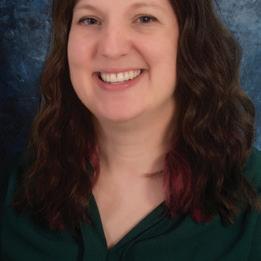
Sarah Dean
Scouting America
Phone: (320) 452-0016
Chair, Business Development Committee
The Business Development Committee provides training and education for Chamber members and their employees to help their businesses grow and thrive. Programs include Lunchtime Learning and a variety of seminars, workshops, and certificate programs.

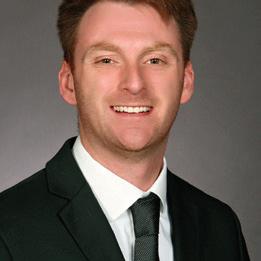
Emmitt Edwards
Catholic Charities
Phone: (320) 650-1550
Chair, Sauk Rapids Chamber
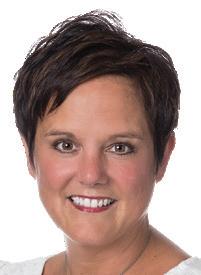
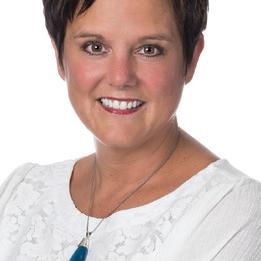
Ann Thelen
Falcon National Bank
Phone: (320) 223-6300
Chair, Waite Park Chamber
The Waite Park Chamber, a division of the St. Cloud Area Chamber of Commerce, is a place where business, education and government come together for the betterment of the community.
Emily Bertram is director of marketing and communications at St. Cloud Area Chamber of Commerce and editor of Business Central Magazine.
Meet the volunteers who welcome, connect, and support members through networking, mentorship, and Chamber engagement.


Mathew Odette
Stop Go Studio
Phone: (320) 828-7541
Chair, Marketing Committee
The Marketing Committee helps with the overall marketing efforts of the Chamber of Commerce, including communication materials, advertising, publications, the website, promotional programs, and organizational research.
The Sauk Rapids Chamber, a division of the St. Cloud Area Chamber of Commerce, promotes a healthy business environment in the community of Sauk Rapids. Volunteers and committee members work in cooperation with member businesses,
| NETWORK | PROFIT
MORE ON EVENTS: For information on these or other business events, call 320-251-2940 or visit StCloudAreaChamber.com and click on “Calendar.”
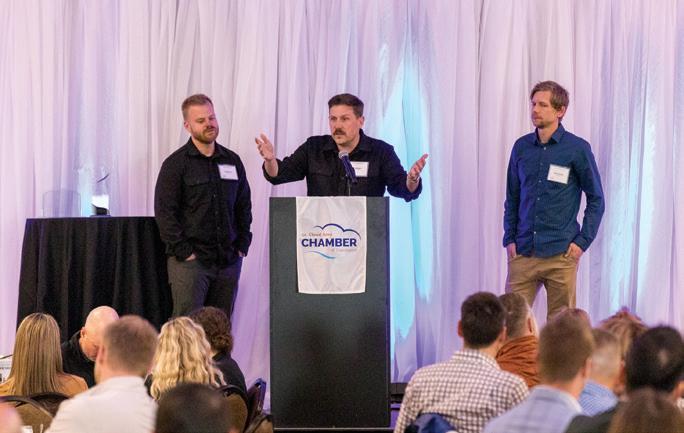
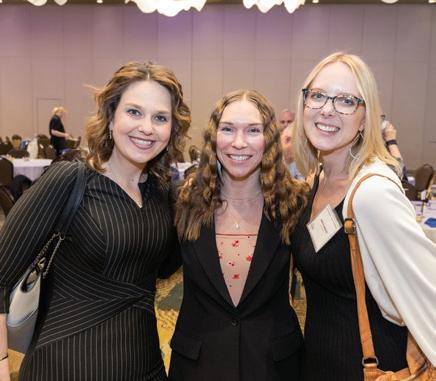
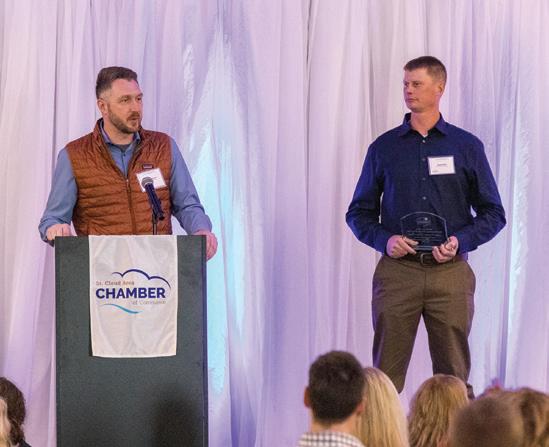
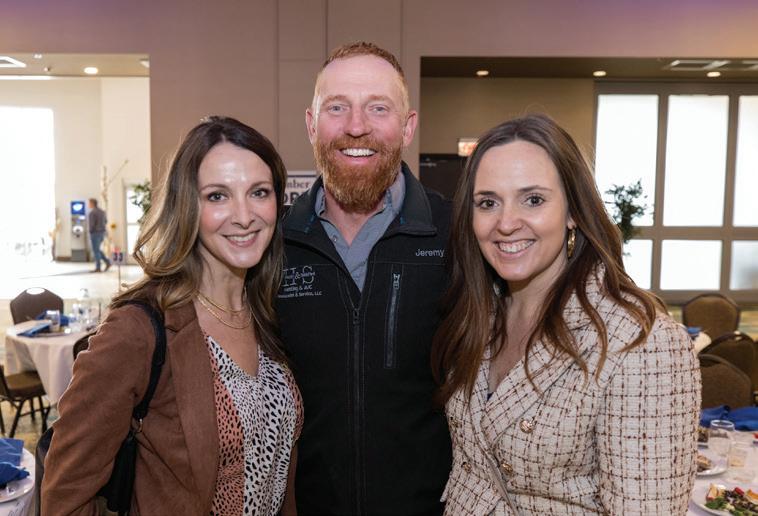
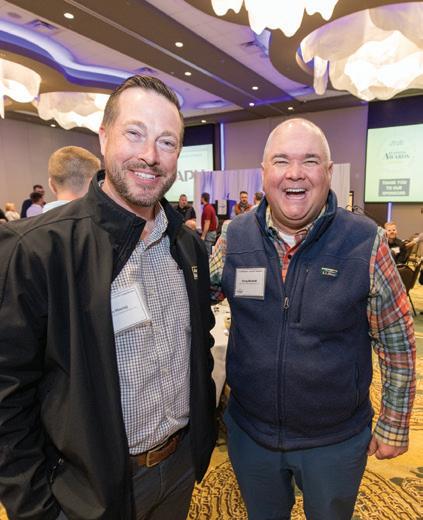
The 39th Annual Business Awards Luncheon recognized three local businesses — Motor Works Auto Repair, House of Pizza, and Switchboard — for their business growth and success in Central Minnesota.
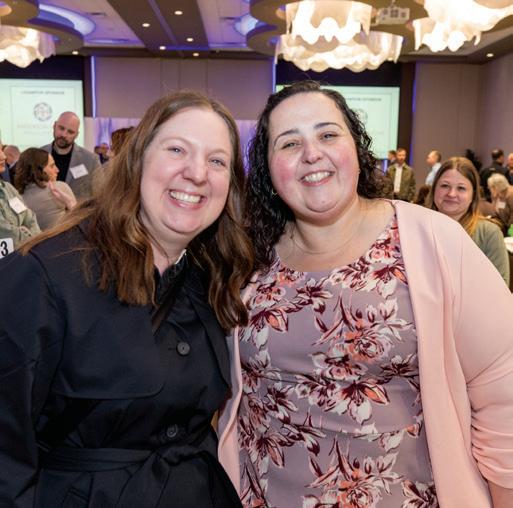
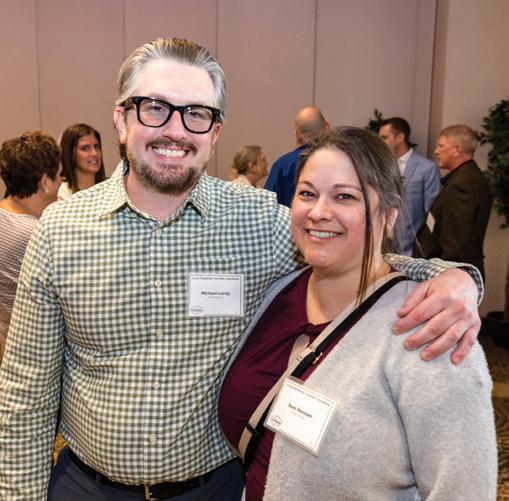
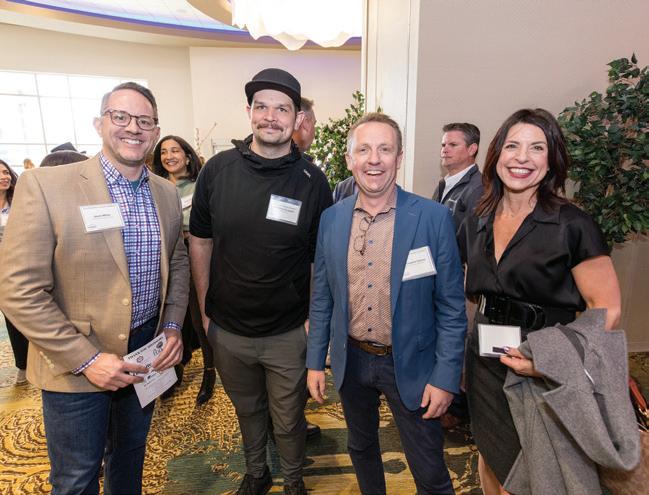
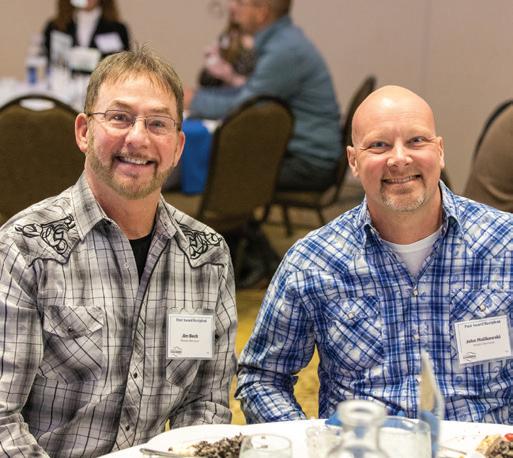
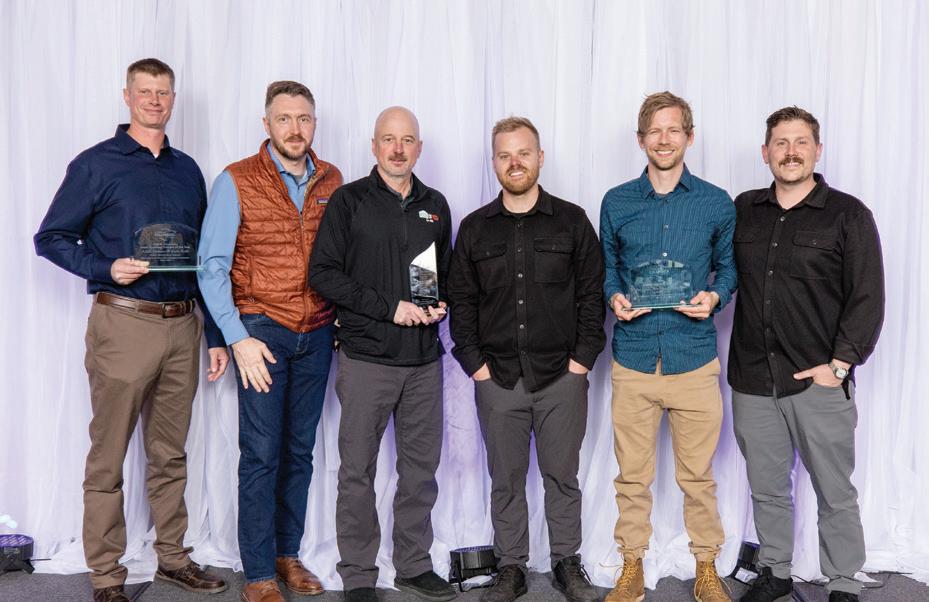
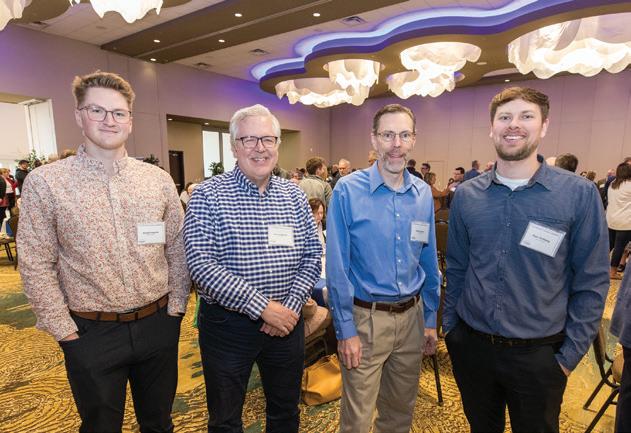
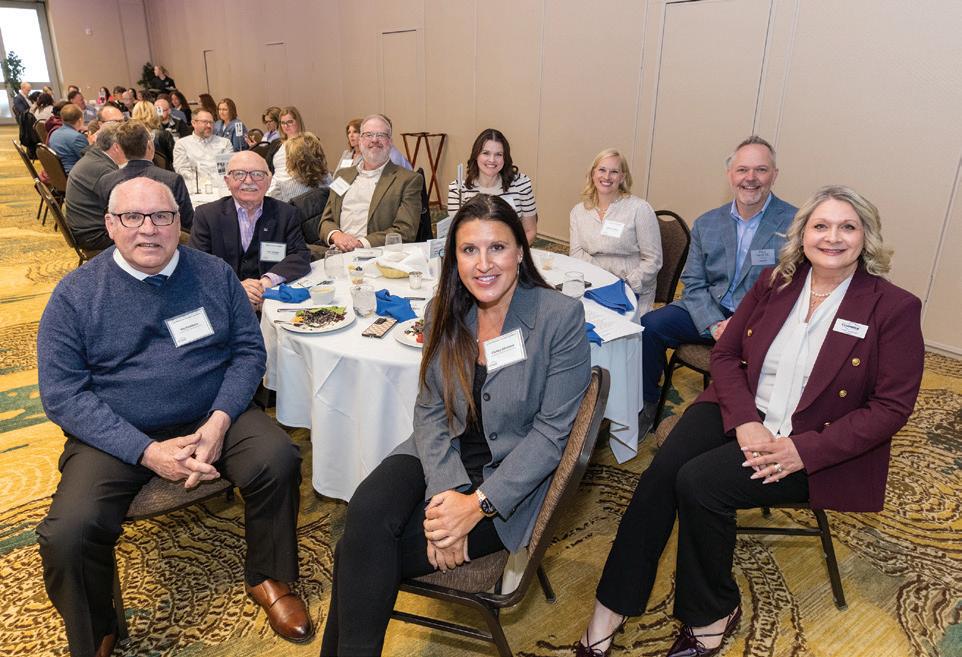





Counter-clockwise from left: Bill Knobloch and Christy Gilleland, Gilleland Chevrolet; Julie Lunning, St. Cloud Area Chamber of Commerce; Paul Radeke, Creative Planning; 2020 Woman in Business Champion Melinda Tamm and Holly Lee, Ms. Melinda’s Dance Studio; 2015 Small Business Owner of the Year Larry Logeman, Executive Express; 1996 Small Business














































































Clear communication and consistent documentation can protect your business from costly employment disputes.
By Betsey Lund Ross MANAGEMENT TOOLKIT


In today’s litigious environment, employers face increasing risk when routine workplace issues escalate into discrimination claims based on the employee’s age, disability, race, sex, pregnancy, religion, sexual orientation, nationality, or gender identity. In nearly every case, timing, documentation, and communication foreshadow
Contributors
whether a routine employment decision becomes a lawsuit.
Take for example a recent Minnesota Court of Appeals case where an accounts receivable analyst suffered from anxiety, depression, and insomnia that affected her attendance and performance. Although she communicated her struggles and repeatedly sought meetings with
Betsey Lund Ross is an attorney at Revermann Lund Ross, specializing in employment and business law and estate planning.
human resources to discuss these medical issues, her employer repeatedly delayed those conversations and ultimately terminated her after being late for work. The Minnesota Court of Appeals held that, based on emails, meeting requests, and the employer’s responses, it was reasonable for the employer to assume the employee’s mental health issues were affecting her attendance and job performance. Furthermore, the Court found the employee’s termination shortly before a scheduled HR meeting suggested her termination was the result of her mental health concerns, not her performance or repeated absences from work.
In another Minnesota case, a director of real estate faced heightened scrutiny by his supervisor after disclosing serious cardiovascular and pulmonary issues. The Court noted the employer made informal comments about the employee’s health, reduced the employee’s involvement in key job duties, and eliminated his position after alleging a “reduction in force.”
The jury ruled in favor of the employee and awarded him lost wages and over $1 million in attorney fees. On appeal, the court upheld the verdict, citing sufficient evidence that disability
discrimination was a motivator. Where did these employers go wrong? A common theme was insufficient documentation and inconsistent communication. These cases highlight critical moments when employers should proceed cautiously before demoting, transferring, disciplining, or terminating an employee. Risk increases when performance concerns arise soon after protected activity, when supervisors make offhand comments about protected characteristics, when complaints are poorly investigated, or when job changes occur without clear, contemporaneous documentation of legitimate business reasons.
These are red-flag moments — times when leadership should pause, involve HR, and evaluate legal risk before taking adverse action. These situations arise not only with medical disclosures, but also when an employee announces a pregnancy, requests a religious accommodation, shares information about their sexual orientation or gender identity, raises pay equity concerns, or reports racial or sexual harassment. Any adverse action taken soon afterward will be closely scrutinized for a discriminatory or retaliatory motive.
Common Missteps That Escalate Risk
Assuming managers understand legal obligations without proper training.
Inconsistent or vague documentation that shifts over time.
Delayed or poor investigations into complaints.
Actionable Steps to Reduce Liability
Train managers on discrimination, harassment, and retaliation laws.
Document performance issues in real time and apply policies consistently.


Establish clear reporting channels and respond promptly to concerns.
Review documentation, timing, and how other employee matters were handled to ensure legitimate, nondiscriminatory reasons support the action before making significant employment decisions.
High-profile litigation is rarely about a single decision; it is about patterns, timing, and credibility.
Employers who slow down at red-flag moments and communicate clearly are far less likely to face costly claims.







lorida researchers are testing robotic “bunnies” in the Everglades to lure invasive Burmese pythons out of hiding and help hunters capture them more effectively. The solar-powered decoys mimic real marsh rabbits through movement, scent, heat signatures, and AI-equipped cameras that alert wildlife officials when snakes approach. Scientists hope the unusual technology will help slow the spread of pythons, which have devastated native wildlife populations across South Florida.
Source: Popular Science
















From first-time founders to established business owners, women entrepreneurs are making a lasting impact. Whether you’re opening a new location, upgrading technology, or planning your next stage of growth, we’re committed to helping you succeed.
Our commercial lending solutions are built to support your vision every step of the way.

Artificial Intelligence can advance your business priorities, no matter the size of your company.
By Aaron Traut and Jodi Kelly


Artificial intelligence is transforming financial operations across industries, but for small- and midsized organizations, the opportunity isn’t about chasing technology — it’s about using AI strategically to advance business priorities.
As AI capabilities become increasingly accessible, leaders can leverage them to strengthen resilience, improve financial visibility, and unlock

capacity for higher value work. Meaningful impact doesn’t require a major overhaul: it starts with identifying a business critical process tied to the organization’s strategic goals.
Start with a strategyaligned, high impact process.
Organizations successfully adopting AI begin by focusing on a single, well-defined
Contributors
Aaron Traut (aaron.traut@CLAconnect.com) is market leader at CLA. Jodi Kelly (jodi.kelly@CLAconnect.com) is client accounting and advisory services chief financial officer at CLA.
problem directly affecting financial performance or operational capacity. Common entry points include:
Accounts payable automation
Expense management
Payment workflows
These are areas where even modest efficiency gains can translate into measurable benefits such as faster cycle times, reduced manual effort, and improved accuracy. These early wins build confidence and lay the groundwork for broader transformation. Success can accelerate when organizations start small and anchor decisions in strategy.
Strengthen core accounting with AI-enabled platforms. Many modern accounting platforms embed AI capabilities that can categorize transactions, reconcile accounts, flag anomalies, and predict cash flow gaps. These tools may enhance accuracy, shorten month-end close, and give leaders real-time insights into emerging trends.
When aligned with strategy, these capabilities can support broader goals such as audit readiness, margin protection, and a more resilient financial operating model.
Reduce risk through enhanced fraud detection and cybersecurity. Financial fraud and cyber threats continue to rise, particularly for organizations with limited security resources. AI-driven fraud detection monitors transactions in real time, identifies unusual patterns, and accelerates response
efforts — capabilities far exceeding manual review alone.
Many financial institutions and payment platforms now offer these AI-enhanced protections, making advanced security accessible without major investment. To fully realize the benefit, one can pair these tools with clear governance, defined risk management protocols, and accountable data quality practices.
Improve client experience with AI-enabled service tools. AI-powered assistants can streamline customer interactions by handling routine inquiries, managing appointment or billing updates, and improving response times. Small businesses can deploy lightweight versions of these tools to elevate client experience without expanding staff.
When woven into a broader service strategy, these tools can help expand quality, improve consistency, and protect team capacity — all without sacrificing the human relationships differentiating small- and midsized organizations.
Enhance forecasting and decision making.
AI-powered forecasting tools can help leaders model revenue, anticipate cash flow timing, and identify cost saving opportunities with greater precision. Even basic models can reveal overlooked patterns, enabling more confident decision making in volatile markets.
While AI tools are more user-friendly than ever, many
organizations benefit from guidance, so adoption aligns with business strategy, includes strong governance, and delivers measurable results. Work with your financial advisory partner to:
Assess readiness and define strategy-anchored opportunities
Strengthen data quality and
operational governance
Identify financial processes where automation will save time and deliver the greatest return
Implement AI tools designed to support — not replace — human knowledge
Reduce risk and improve cybersecurity

DISCLAIMER: The information contained herein is general in nature and is not intended, and should not be construed, as legal, accounting, investment, or tax advice or opinion provided by CliftonLarsonAllen LLP (CLA) to the reader. For more information, visit CLAconnect.com.
CLA exists to create opportunities for our clients, our people, and our communities through our industry-focused wealth advisory, digital, audit, tax, consulting, and outsourcing services. CLA (CliftonLarsonAllen LLP) is an independent network member of CLA Global. See CLAglobal.com/disclaimer. Investment advisory services are offered through CliftonLarsonAllen Wealth Advisors, LLC, an SECregistered investment advisor.
A new tool called “Eyes on AI,” created by youth advocacy organization Gen Z For Change, is designed to help people understand how AI-powered surveillance systems track their digital activity through apps, devices, purchases, and online behavior. The goal is to show users how much personal data can be collected without their knowledge. Privacy advocates behind the project argue that AI surveillance technology is expanding faster than regulations, making it increasingly important for consumers to review app permissions, limit location tracking, and better protect their digital privacy. Source: Mashable


Behind the measurable economic impacts of disruption are the less visible forces that shape communities and long-term outcomes.
By Alli Bily and Lynn MacDonald


When communities face sudden disruption, economic effects show up quickly and sometimes in unexpected ways. Recent estimates by the city of Minneapolis indicate that during Operation Metro Surge there were more than $203 million in losses in Minneapolis in a single month.
Early estimates from economists Aaron Rosenthal and Aaron Sojourner suggest that Department of Homeland Security (ICE) activity had a measurable impact on consumer spending across Minnesota.


In January 2026, spending in the state declined by 2.9 percent, representing a loss of approximately $626 million. The effects were more muted in Hennepin County, where spending fell by 1 percent that same month. The largest declines were seen in food and accommodation, with spending in those areas dropping by 3.8 percent statewide and 4.1 percent in Hennepin County.
While not yet definitive, these early estimates help capture the immediate economic impact — but they only tell part of the story. Economists point
Contributors
Allison Bily, M.S., is a 2019 St. Cloud State University graduate in economics and 2020 graduate of University of Illinois; Lynn MacDonald, Ph.D., is an associate professor of economics at SCSU and co-director of the SCSU Center for Economic Education.
to the idea of opportunity cost to explain what isn’t captured in these numbers. Opportunity costs are the losses tied to foregone spending, business activity, and economic participation that never fully materialize due to resources, time, or energy being directed elsewhere. Opportunity costs are hard to measure and vary by person, so these estimates likely undercount the true cost.
Focusing solely on what’s lost only tells part of the story. Disruption can also change how communities respond — often leading to greater reliance on relationships and local networks. Some economist suggest that the community bonds formed during this time are both incredibly important and economically valuable.
During periods of shared disruption, communities often collectively respond through mutual aid, stronger social ties, and increased support networks — patterns visible across Minnesota during this period. When people and communities go through something difficult together, there can be increased short-run cohesion. However, while people may come together in the short term, this sense of trust and cohesion can fade over time.
Just as social responses can reflect both increased cohesion and long-term strain, economic activity during disruption can be similarly mixed. Increased car break-ins can mean more business for auto repair shops. This kind of activity, however, doesn’t make a community better off — it shifts resources toward fixing damage instead of building
something new. Economists refer to this behavior as the broken window fallacy. The same logic applies more broadly during periods of disruption: visible activity can increase in some areas, even as the overall economy absorbs losses.
While the full economic costs of ICE activity are still unfolding, economists have a framework for understanding how community responses shape economic outcomes. The kinds of community responses described are not just social — they have measurable economic significance. Research on social capital by economist Edward Glaeser and team shows that greater community rootedness is associated with stronger social connections, which in turn are linked to stronger economic outcomes. This relationship develops through several pathways, including homeownership and high-density living. Homeownership can create stronger neighborhood ties and reduce the likelihood of moving, while closer proximity to neighbors — such as in multifamily housing — increases opportunities for regular social interaction.
Economists Raj Chetty and colleagues find that social connectedness — specifically friendships across income lines — is a major contributing factor to upward mobility. This research highlights an important but often overlooked reality: alongside the measurable economic losses, there are also forms of value that are more difficult to measure. Even so, these benefits arise under difficult circumstances and do not erase the underlying costs.
Compiled by Shelly Imdieke, St. Cloud Area Chamber of Commerce
Totals represent data reported as of 6/1/2026
Residential Building Permits
6
Commercial Building Permits
6
$439,882 TOTAL: $1,788,876
$231,405,464 TOTAL: $1,869,776
Source: St. Cloud Area Association of Realtors, http://stcloudrealtors.com/pages/statistics.
Source: Tax Collections — City of St. Cloud
Summer is a busy time for travel all over the world, and Minnesota is no exception. Explore Minnesota estimated that tourism in the state had a $24.7 billion total economic impact in 2025. Locally, the St. Cloud Area Convention and Visitors Bureau also reported huge summer travel numbers.
DID YOU KNOW?
The average visitor to Central Minnesota spent $40 at restaurants, $96 on retail, and $66 on entertainment/attractions daily. Accommodations, convention centers, transportation, arts and entertainment and spectator sports had the most visitors.
The following information relates to visitors to St. Cloud and Waite Park. The data is from over 880,000 unique users in St. Cloud and Waite Park, gathered through credit card and cell phone tracking from May 20th to September 1st, 2025 via the data platform Zartico. TOP VISITOR MARKET BY VOLUME
51% of all visitors to Central Minnesota were from out of state
49% of visitors to Central Minnesota last summer had children in the household, and the top spending by age was 35-54 year olds followed by those over 65.
1 Minneapolis- St. Paul, Minn. 2 Fargo-Valley City, N.D.
3 Duluth-Superior, Wisc.
4 Chicago, Ill.
5 Rochester – Mason City, Iowa
TOP VISITOR MARKET BY SPEND
1 Minneapolis- St. Paul, Minn. 2 Fargo-Valley City, N.D.
3 Duluth-Superior, Wisc.
4 Ft. Myers-Naples, Fla.*
5 Phoenix, Ariz.*
* The direct flights between St. Cloud and the states of Florida and Arizona, along with promotions encouraging those residents to visit Minnesota to escape the summer heat, most likely contributed to their high ranking.

















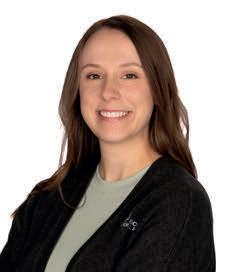


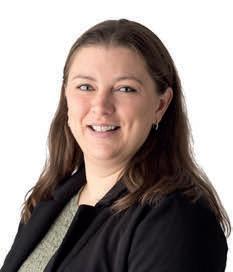


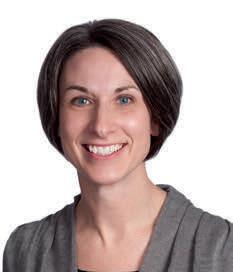
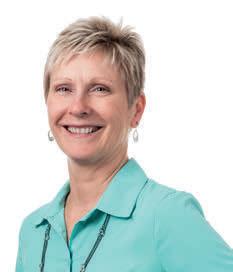






























House of Pizza owner Brandon Testa tees up new opportunities, while holding fast to his family roots and hometown flavors.
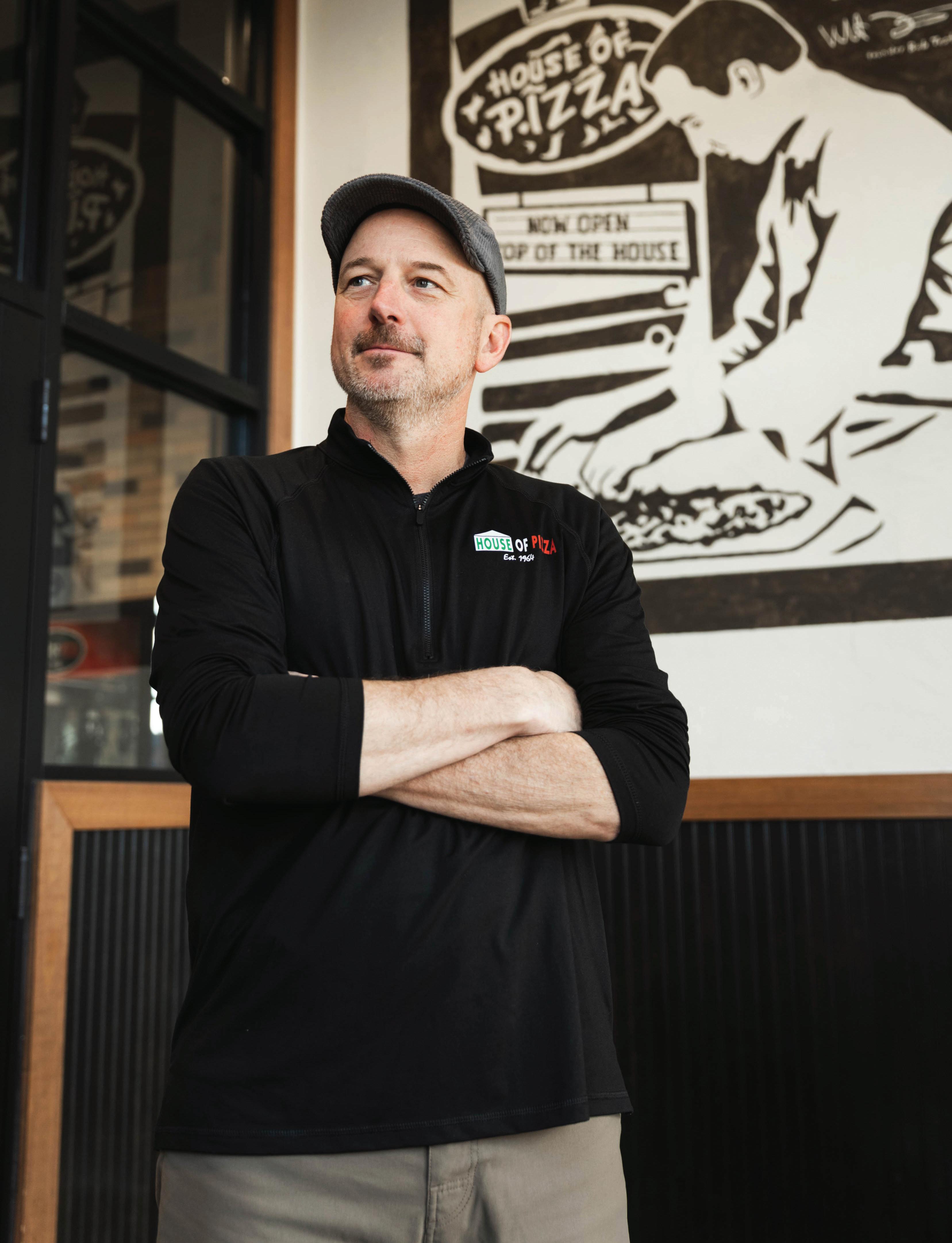
When Brandon Testa purchased House of Pizza, the restaurant already had a strong and loyal following in Central Minnesota. But it wasn’t just because of the food. “People would come in and say, ‘I know Bob,’ ” Testa said. Bob Testa was Brandon’s father, and the founder of the House of Pizza.
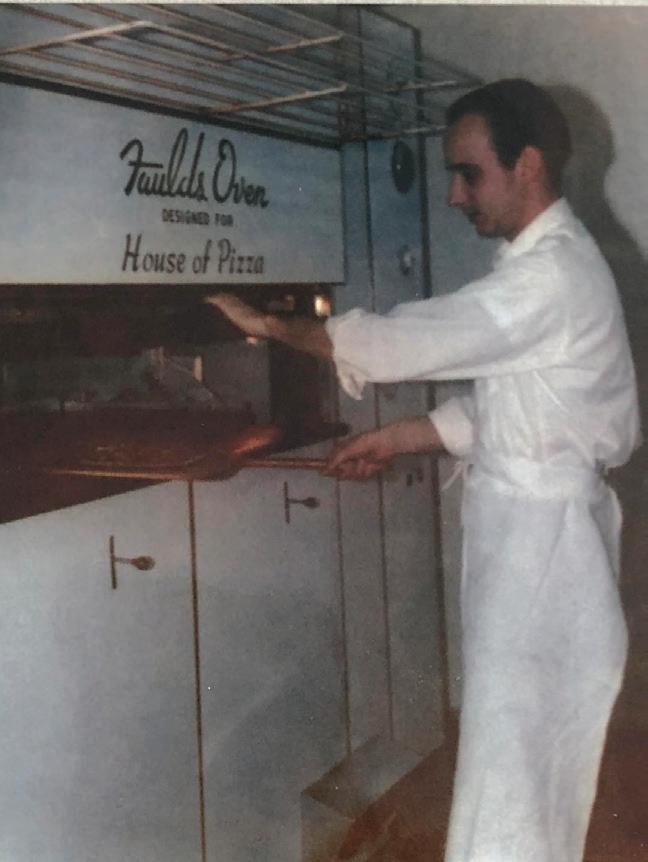
“He was married to the restaurant,” Testa said. “As a kid I always remember him in an apron, working the ovens.” Testa loves hearing stories from community members about his father — particularly tales of “the pizza guy.” From school events to soccer games to the Poor Clare Monastery, Testa remembers countless occasions when his dad showed up with pizzas in hand for people to enjoy, never expecting anything in return. If you heard, “The pizza guy is here again!” you knew that Bob was around. “You don’t really recognize things about your parents until you’re older and a parent yourself,” Testa said. “For me, I recognized things about him through other people.”

probably the reason I was able to be successful early on.”
It didn’t end when ownership changed, either. “He would come in every week and ask for an allocation of gift cards,” Testa recalls. At first, Testa objected, until he realized his father’s impact. “It’s part of his legacy — he was a walking billboard,” Testa said. “It was
Bob Testa grew up in a restaurant family, with brothers who owned establishments on the south side of Chicago. In 1963, on a trip to help a friend install an oven, he passed through St. Cloud and noticed there was a pizza place in town with a line out the door. Recognizing the demand, he moved to St. Cloud and opened House of Pizza in 1964. “He met the owner of the building and said, ‘Hey, I don’t have any money and I’ve got used equipment,’ and made a handshake deal,” Testa said. “Six months later, my dad paid back the rent and then bought the building two years later.”
Shortly after House of Pizza opened, Testa’s mom, Ruth Labat, began working for the restaurant, where she met his dad. “She ended up working for my dad for a long time,” Testa said. She played a significant role in the business, helping with remodels and the overall development of the restaurant. “Like any spouse, she played a pretty important role in his entrepreneurial journey.”
While Brandon Testa grew up with a father in the restaurant business, he didn’t directly work there — unless he was in trouble and given dishwashing duty. “He didn’t really want me or my
Story by Emily Bertram • Photos by Switchboard
HOUSE OF PIZZA
BUSINESS
DESCRIPTION
House of Pizza is known for its thin-crust gourmet pizzas baked in signature revolving ovens.
Established in 1964
Member of the Chamber since 2005 houseofpizzamn.com
ST. CLOUD
4040 2nd St. S., St. Cloud (320) 228-9300
SARTELL COBORN’S
1725 Pine Cone Rd S Suite 100, Sartell (320) 258-9300
801 Pine Cone Rd N Sartell, MN 56377 (320) 258-7200
BUSINESS
DESCRIPTION
Three Tees Golf & Social is a bar, restaurant and event space with a nine-hole golf course.
Established in 2025 & 2026
Member of the Chamber since 2026 threeteesgolfsocial.com
OWNER
Brandon Testa
TOTAL EMPLOYEES
House of Pizza and Three Tees Golf & Social: 126
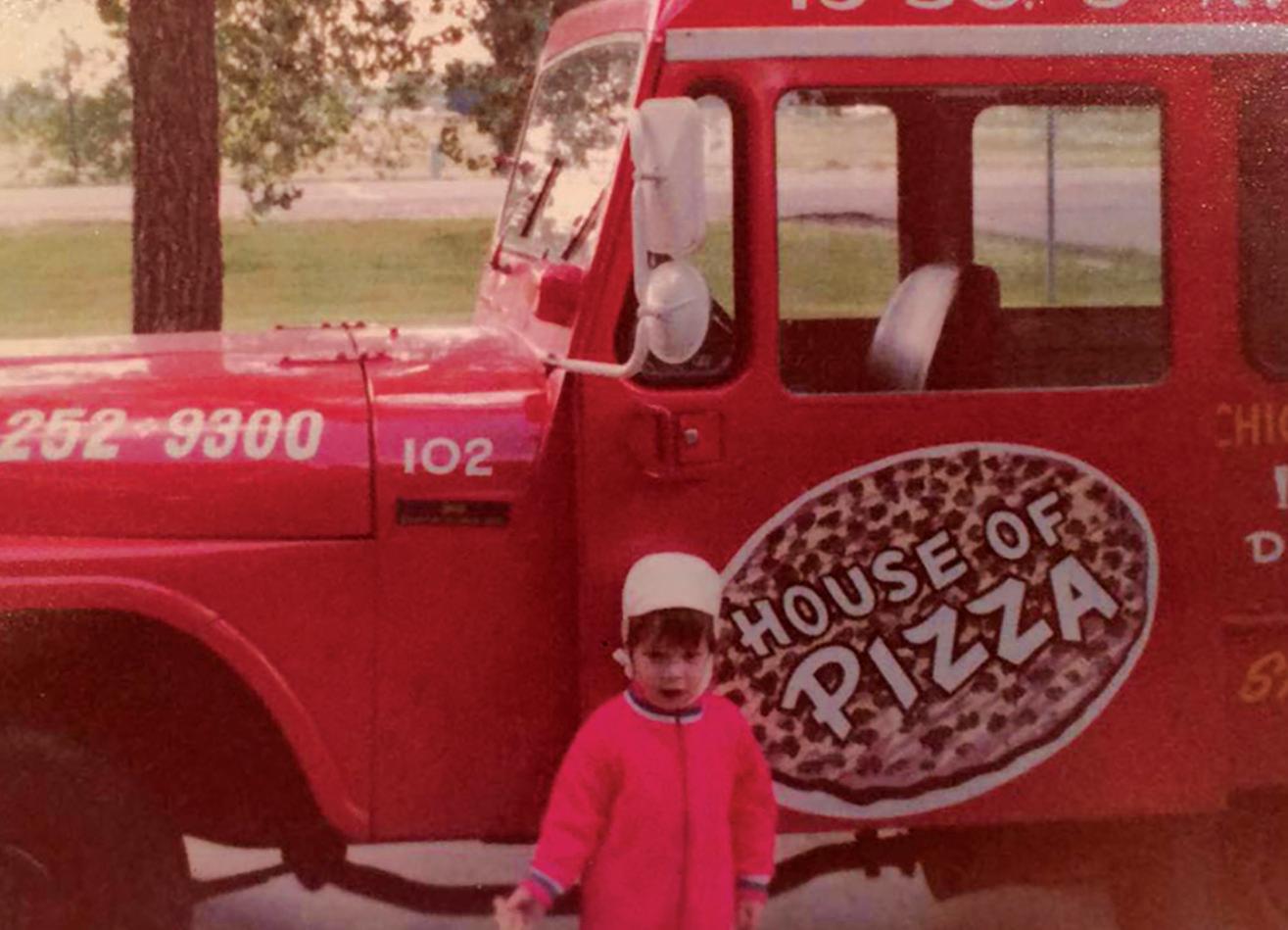

Young Brandon standing in front of the House of Pizza delivery vehicle.
siblings working in it,” Testa remembered. It wasn’t until Testa finished his freshman year of college that he asked his dad if he could start working at House of Pizza, taking on front-of-house duties like serving and bartending.
After about six months, Testa moved to Fort Collins, Colo. to attend Colorado State. He started as an art major, later switching to restaurant and resort management after about a year and a half. He soon began working for a local restaurant, where he benefitted from on-the-job training in addition to his education. “It was kind of a non-traditional college experience because I always had a full-time job,” he said.
Testa feels that the true benefit of his college experience was the social aspect — learning about himself, about others, and about working with people — which helped shape him as a restaurant manager.
In late 1999, Testa moved back to St. Cloud to help his father with the restaurant. What was supposed to be temporary turned into the pair working in the restaurant side-by-side. “I loved my dad, but we were kind of butting heads as far as working together,” Testa said. “He was 62 at the time and set in his ways, while I had a ‘let’s go’ kind of attitude.” Recognizing that they couldn’t manage the restaurant effectively together, Testa began looking for work elsewhere, eventually accepting a position as an area manager for Chipotle.
Bob Testa opens the original House of Pizza in downtown St. Cloud
Brandon Testa moves back to Minnesota from Colorado
Brandon purchases House of Pizza from his father
House of Pizza opens in Sartell
Pacific Wok opens in Sartell
Pacific Wok opens in Kenosha, Wisc.
About three months into his new role, Testa received a call from his father who was ready to step away from the business and wanted Testa to take over. He agreed to purchase House of Pizza — on three conditions. “One, you need to be out in six months or less. Two, you have to let this thing go and let me do my thing. And three, it’s not a handout — let’s have an agreement,” Testa said. “My dad worked really hard — he wasn’t going to just hand it over.”
Testa purchased House of Pizza from his father in 2001. A few years later, he was driving in Sartell when he noticed a sign that said, “Future Home of Coborn’s.” He called the number from the sign, and got in touch with the developer. “We talked about his vision for the mall and that he really wanted a local restaurant in it,” Testa said. Despite his short tenure in restaurant ownership and minimal capital, the two just clicked. “This guy was top-tier — a really kind human and I learned a lot from him,” Testa said. House of Pizza Sartell opened in 2004, expanding in 2011 and again in 2013.
With the original downtown location running business as usual, and the Sartell location reaching a newer audience, opening another location was not on Testa’s radar. However, when the opportunity arose to take over a former Old Chicago restaurant attached to a hotel, he took it. The St. Cloud West House of Pizza opened in September 2020, bringing the brand yet again to a whole new audience and customer base — especially with its proximity to Highway 15.
The timing of the opening (mid-COVID pandemic) was not ideal, but fortunately they were already set up for online ordering and delivery. “We had a littcle bit of a head start from some of the normal dining establishments,” Testa said. As delivery continued to grow as a service, Testa realized that it was time to consolidate operations. The St. Cloud West location was remodeled to accommodate deliveries, and the original downtown location closed in 2022.
If there’s one thing that remains constant in business, it’s change, and with a change of ownership to the Sartell building,
House of Pizza lost its location there in early 2024. “We didn’t see eye-to-eye,” Testa said, referring to his relationship with the new owner. “It was tough, but things happen for a reason, and it was what it was.”
Fortunately, that wasn’t the end of the House of Pizza story in Sartell. In 2025, Coborn’s approached Testa about the opportunity to open a restaurant inside its Pinecone Road store, in the space originally designed for its Coborn’s Delivers program. Eager to get back to serving the Sartell customers, Testa was onboard. After renovations to stay true to the House of Pizza brand, the new location opened in April 2026. House of Pizza operates as a tenant of Coborn’s, with Testa retaining full control of the restaurant — and its classic menu.
“We’re still following the same recipes that started House of Pizza,” Testa said, of both his locations. The dough is made the same as it always was, the raw sausage is still sourced from a local meat market, the pizza peel boards are still made by a local cabinet shop, and the signature revolving ovens are still in use — despite their inefficiency. “It’s an expensive piece — a showpiece — but we think it’s far superior to any other way to cook pizza,” he said.
Testa speaks highly of everything on the menu, from the hoagies to the pasta dishes. “But at the end of the day, I’m still a pizza guy,” he said. “There’s just something about a plain pepperoni pizza.”
While House of Pizza remains a longstanding legacy for Testa, it hasn’t been his only restaurant brand in the region. Around the time that Testa was first exploring the original Sartell location, he also had an idea for a Japanese quick service restaurant called Pacific Wok (PacWok). Serving up fresh and healthy Asian cuisine, PacWok was inspired by the restaurant that Testa managed while living in Colorado. He opened the Sartell PacWok in 2004, shortly after opening the Sartell House of Pizza.
In 2007, Testa opened another PacWok location in Kenosha, Wisc., that operated for about two years. “I was pulled in a lot of different directions — it was a challenge,” Testa said. Shortly
The Kenosha Pacific Wok closes 2009
Pacific Wok opens in Downtown St. Cloud
2011 AnD 2013
House of Pizza
Sartell expands
NoVemBEr 2018
The downtown St. Cloud Pacific Wok closes
SePtEmBeR 2020
House of Pizza West opens in St. Cloud
JuNe 2022
Sartell Pacific Wok closes
July 2022
The downtown House of Pizza closes 2024
The Sartell House of Pizza closes 2025
Three Tees golf course opens in Sartell
maRCH 2026
House of Pizza opens in Coborn’s Pine Cone Road location in Sartell ApRil 2026
Three Tees Golf & Social opens in Sartell



after closing that location, he opened another one in downtown St. Cloud. “That was a great experience, it was really fun,” Testa said. It operated for about ten years before Testa lost the lease agreement.
Now, Testa is in the middle of the biggest move he’s made so far. In fall 2022, the City of Sartell began a formal process to sell the Pine Ridge Golf Course and issued a request for proposals. This was prior to the Coborn’s location option, so Testa was intrigued, even though he wasn’t a golfer himself. “I started looking at it as an opportunity to buy a restaurant that just so happened to come with a golf course,” Testa said. After going through the city’s required process and navigating some opposition, Testa purchased the site in 2023 and began working on opening his brand-new concept, Three Tees Golf & Social. The golf course
began operation in 2025, with the restaurant opening in the spring of 2026.
“We are non-intimidating golf,” Testa said, joking that it’s fine to sport flip flops and tank tops on the nine-hole course. Testa wants it to be part of the community, from partnerships with the school district to host golf events and tournaments to weekly leagues that have largely sold out for 2026. The motto of Three Tees is, “There’s always time fore nine,” catering to the golfers who prefer not to spend a lot of time and money to enjoy the sport, as well as a fun activity for kids and families.
On the menu at Three Tee’s, Testa jokes that he’d be crazy not to include some kind of pizza — but with a twist. “We are introducing a new style of pizza called a pinsa crust pizza,” Testa said. “It’s a lot airier and lighter — really amazing.” Aside from a full menu, the restaurant also features a sprawling patio with
views of the driving range, a separate room for private parties, and even a live stream of hole eight that is broadcast to the bar area.
With all the growth and chaos that Testa has endured, one thing has remained consistent: the importance of his work family. The reward for Testa is in watching his employees grow and realize that the restaurant industry can be a career. “A lot of people view this as a job before they get their real job,” Testa said. “Watching the young minds realize that maybe there is a career in culinary or management with an emphasis on restaurants — those are rewarding moments.”
It helps that Testa seeks to build an environment that feels like a home away from home, and a part of that is honest communication. “If we’re doing something great, tell everyone,” Testa said. “If we’re not, tell us.” He urges people to seize the opportunities to applaud a job well done. “The first person that’s going to find out is that 16-year-old,” Testa said, and just a few kind words have a huge impact on a young and impressionable employee. In fact, Testa will often call his employee’s parents when he receives positive feedback on their performance, just to make sure they know how great their child is doing.
This comes back to the five main pillars written on the wall of House of Pizza that remind Testa and his staff of their mission: community, quality, consistency, cleanliness and customer service. These words, Testa says, are important and relevant to any restaurant. The key element is actually delivering on these pillars, and it takes a team to do it. “If anybody deserves recognition it’s the people behind the scenes — all of my team and my staff,” Testa
said. They help him deliver on these promises and give back to the community as much as he possibly can.
“Every business — small, big, medium-sized — needs a system in place,” Testa said. “We have policies, procedures and standards for the way we want things done, but at the end of the day, it’s just to take care of your people, take care of the community, get involved — and it will pay off.” Testa doesn’t often say no to community involvement, whether it’s donating food to volunteer groups, supporting youth athletics, or getting involved in local events. “I am really proud of the fact that when people say House of Pizza, shortly after that you hear ‘they are really involved and everywhere in the community,’ and that’s something that will stay for anything I am a part of,” Testa said.
As far as what comes next, Testa jokes that he’s living it now. A father of two, both of his sons currently live in Colorado. His oldest works in the restaurant business in Boulder and his youngest attends the University of Colorado, returning home in the summer to work at Three Tees on the turf team. Taking a stance like his father’s, he doesn’t hold any expectations that they’ll take over his businesses one day… but you never know.
Bob Testa passed away in 2020, but his legacy remains with House of Pizza. The pizza guy serves as a reminder that we’re all human — and that’s the most important advice of all. “Be a good human,” Testa said. “It’s super easy to be kind.”
For more than 60 years, House of Pizza has been a beloved part of the St. Cloud community and a shining example of a successful family-owned business. The restaurant’s story began in 1964 when Robert Testa came to St. Cloud from Chicago and noticed an opportunity to bring authentic pizza to the area. With used equipment, determination and a handshake agreement, he opened House of Pizza downtown and built a loyal following around the restaurant’s signature revolving deck oven pizza.
In 2001, Robert’s son, Brandon Testa, returned to St. Cloud from Colorado and
purchased the business from his father, continuing the family legacy into its second generation. Under Brandon’s leadership, House of Pizza expanded with an additional Sartell location, adapted through changing industry trends and successfully navigated challenges, including the COVID-19 pandemic. While the business has evolved over the years, it has remained committed to the traditions and quality that customers have come to expect.
Beyond its food, House of Pizza is known for its strong community involvement and long-standing commitment to the
Emily Bertram is director of marketing and communications at the St. Cloud Area Chamber of Commerce and editor of Business Central Magazine.
region. The business regularly supports local nonprofits, youth organizations and community events, while also serving as a workplace for many students and long-term employees.
In recognition of its enduring family legacy, entrepreneurial resilience, business excellence and dedication to the community, the St. Cloud Area Chamber of Commerce named House of Pizza Owner Brandon Testa the recipient of the 2026 Family-Owned Business of the Year Award.


The decades-old advertising slogan “You’ve come a long way, baby” applies in myriad ways to women in today’s workforce. Females are increasingly excelling in fields once dominated by men, and the earnings gap isn’t as wide as it once was.
All too often, though, women carry a heavier mental load than men. According to Gallup, 65 percent of women are primarily responsible for household management. The United Nations agency, UN Women, states
that women perform two times more unpaid domestic and care work than men.
Amanda Hackett, communications director for Saint Benedict’s Monastery, summarized her life this way: “One of my personal struggles, which is true for a lot of women, is carrying the weight of the invisible mental load — the things that nobody notices from the outside but certainly take a toll on the inside.” For
Hackett, this includes things like making and keeping track of the family’s appointments, signing permission slips that come home in the school folder, packing the kids’ suitcases for an overnight trip to Grandma’s house, stocking the diaper bag, packing lunches, washing the sports uniforms for tomorrow’s game, pulling the chicken out for dinner tomorrow night and making sure the ingredients needed for a special recipe are on hand, and more. “The simple act of having


to remember everything to keep our homes running is exhausting.”
Hackett is quick to say that her husband “is a wonderful husband and father and contributes a lot to our family.” It’s just that her job offers a great deal of flexibility and his does not, which is why “the bulk of child care and household responsibilities fall to me.”
MAXIMIZING HOURS
The word “flexibility” comes up repeatedly
as Hackett, Paula Capes, and Kristin Hannon share what keeps them sane. Capes is assistant vice president of treasury management at Falcon National Bank. She can work remotely, but also meets customers in person and attends many meetings at the bank.
She generally can drive her 13-year-old daughter to and from school, which means she gets to her desk a little later than colleagues and leaves for a bit at midafternoon. “I am a better worker because I know I have the
Flexibility, support, and understanding help working women succeed and stay engaged.
Be flexible by embracing remote and hybrid work.
Pay employees for participating in groups that encourage professional/ personal growth.
Create women’s resource groups within your organization to encourage growth and collaboration.
Give the same options and opportunities to male and female employees.
Understand and accommodate employees who are caregivers.
“A little bit of grace can go a long way, and in the end, it costs you nothing. A female employee who feels appreciated and understood will be loyal to your organization. ” —Kristin Hannon
“ AS WOMEN’S ROLES EVOLVE, BALANCING CAREERS, FAMILY COMMITMENTS, AND PERSONAL WELL-BEING HAS BECOME INCREASINGLY CHALLENGING. "
option to go get my daughter,” she said. “I do need that flexibility at this time in my life.”
Hannon is the advancement director for Big Brothers Big Sisters of Central Minnesota. “I am very lucky that my work is flexible. I can work from home when I need to, or I can work in the evenings. Fundraising never stops, so I can work different hours when I need to.”
Hannon and her husband have two children, both of whom are neurodivergent, which means the family juggles therapy with more school contact and more doctor appointments than most families. “We still have the typical household responsibilities that most people have when you own a home and
have kids,” Hannon said. “Bathrooms need to be cleaned, laundry needs to get done, dishes needed to be washed, etc.”
Hannon, Hackett, and Capes are also all active community volunteers, each involved with multiple organizations such as Forum of Executive Women, Zonta, churches, and Chamber of Commerce committees.
What these three — and many other women — experience is covered in depth in “WorkLife Balance and Mental Health: A Study on Working Women,” a research article published in the International Journal of Applied Social
Science. It states: “As women’s roles evolve, balancing careers, family commitments, and personal well-being has become increasingly challenging. Many women are now expected to juggle multiple responsibilities, which can lead to feelings of stress, burnout, and strain.”
WHAT ARE THE KEYS TO DEALING WITH ALL OF THAT?
Calendars. Capes has three.
A strong support network.
Boundaries. “I have learned over the last five years how to say ‘no’ and mean it,” Hannon said. Capes agrees: “Communicate
Lori Kloos Honored with 2026 ATHENA Award
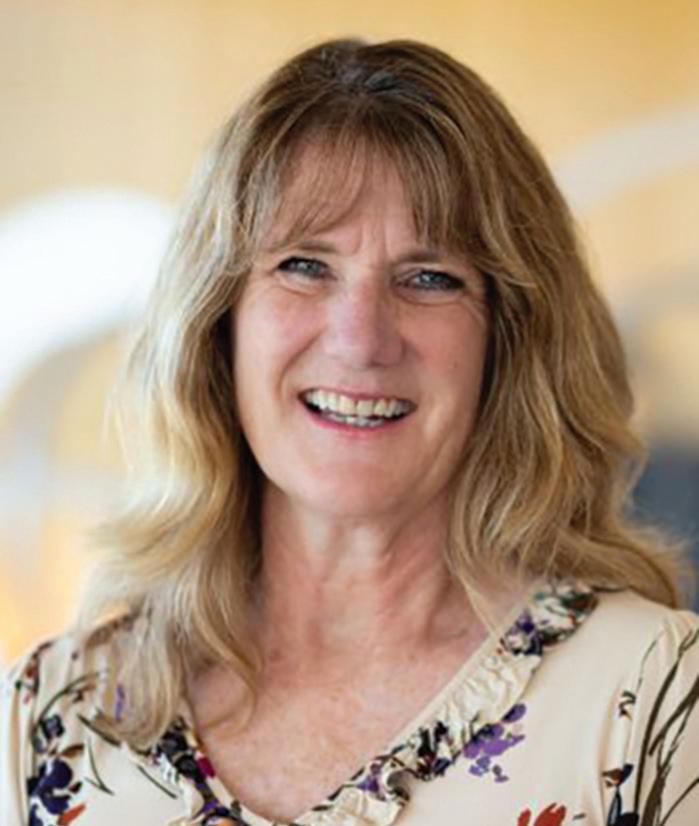

Lori Kloos, a dedicated advocate for student success and a champion for women’s leadership, has been named the 2026 ATHENA Award recipient by the Women’s Fund of the Central Minnesota Community Foundation. The prestigious ATHENA Award honors women who demonstrate excellence in their careers while uplifting others, particularly women, to achieve their full potential.
Kloos was selected for her longstanding commitment to empowering women both personally and professionally. As President of St. Cloud Technical & Community College, she has spent nearly 30 years in leadership roles, including Chief Financial Officer and Vice President of Administration, helping shape opportunities for students across Central Minnesota.
Nominated by Sangeeta Jha, Kloos was recognized for her ability to foster inclusive
environments and champion educational equity — an approach influenced by her experience as a first-generation college graduate.
Beyond her professional work, Kloos is an active community leader, serving on boards such as Greater St. Cloud, United Way, and the St. Cloud Downtown Rotary. Through her leadership, mentorship, and deep commitment to community, Kloos continues to inspire women and girls across Central Minnesota. •

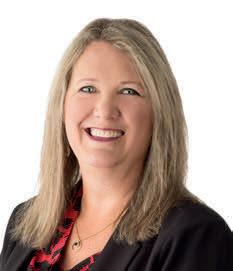
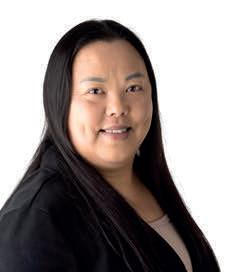
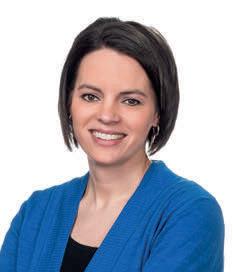
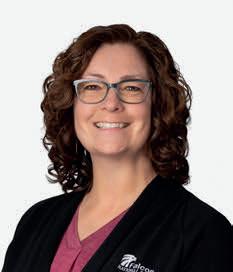
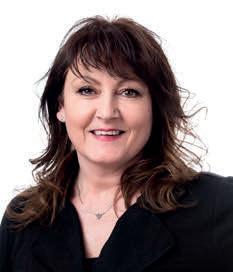
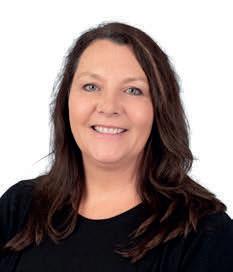
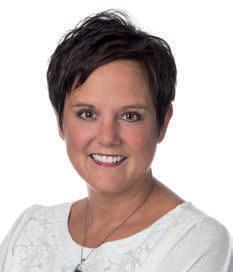
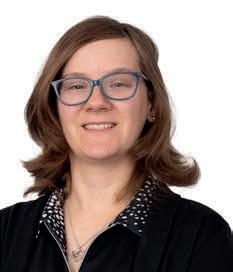
Featuring Cetera’s LeAnn Rummel, Nichole Kircher, and Kim Holweger
Some organizations measure success in numbers. The most enduring ones measure it in people. Cetera Financial Institutions — a community within Cetera that partners with banks and credit unions nationwide and one of the largest financial services employers in the St. Cloud region — has built its reputation on that belief, with a culture rooted in relationships, collaboration, and community.
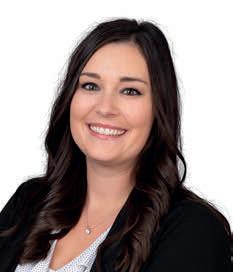
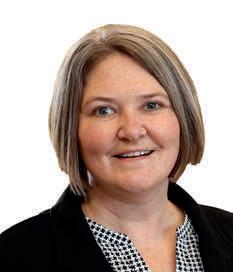
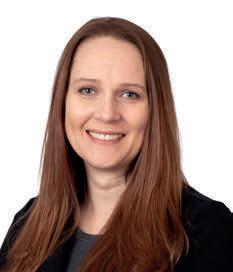
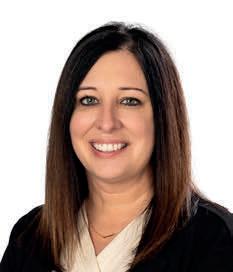
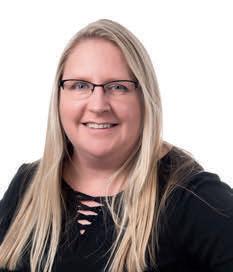
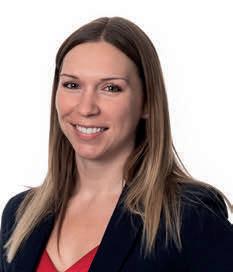
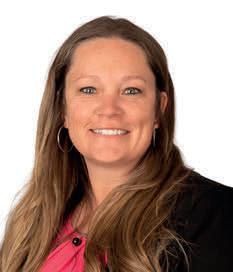
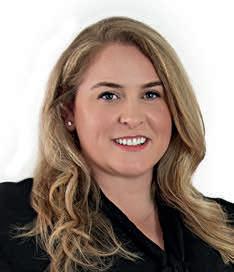
At its center are three leaders — LeAnn Rummel, Nichole Kircher, and Kim Holweger — who share a belief that when people feel supported and seen, organizations thrive.
Their impact extends beyond the workplace. Cetera Financial Institutions partners with United Way, St. Cloud State University, and the Coborn Cancer Center, and each month welcomes 25 to 40 financial professionals to St. Cloud for advisor orientation, supporting local businesses and the region’s growth.
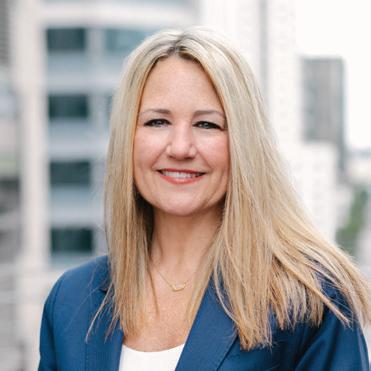
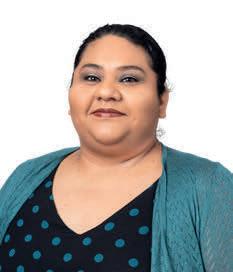
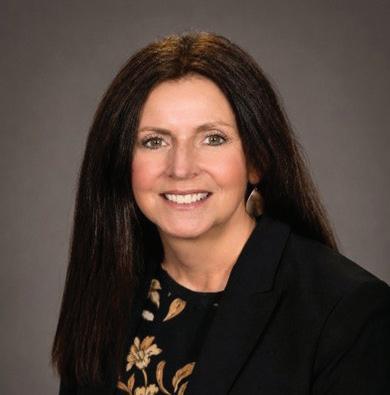
LeAnn Rummel President and CEO, Cetera Investment Services
Forty years in financial services — navigating regulatory complexity, evolving technology, and clients’ long-term financial needs — produces something rarer than wisdom: perspective. LeAnn Rummel has both, and her leadership prioritizes results and relationship-building.
As President and CEO of Cetera Investment Services, LeAnn leads the Cetera Financial Institutions Channel and aligns 500+ FIs’ strategic visions with Cetera’s capabilities. She serves on the Bank Insurance Securities Association (BISA) board and was inducted into its Circle of Excellence — a recognition reflecting her reputation among peers who know the work.
She holds FINRA Series 7, 24, and 63 registrations, insurance licenses, and a Business Administration degree from Iowa State University. Outside the office, she enjoys boating and paddleboarding with her family.
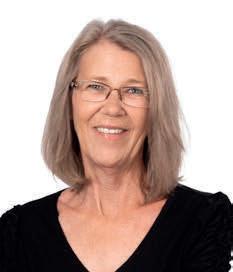
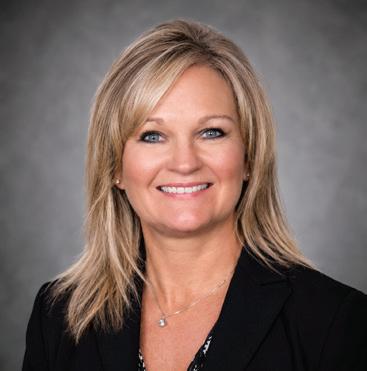
Nichole Kircher Head of Supervision, Cetera Investment Services
Supervision plays a central role in financial services — supporting regulatory compliance and client protection while enabling advisors to operate with confidence. As Head of Supervision for Cetera Investment Services, Nichole Kircher leads these efforts, working with financial professionals and internal teams to uphold the highest standards of integrity and compliant practice. Her approach emphasizes collaboration and clear communication across the organization.
Nichole holds FINRA Series 4, 7, 24, 53, and 66 registrations and completed the Securities Industry Institute program at the Wharton School, University of Pennsylvania. She finds balance at home in Central Minnesota with her husband Chris and their children, Tori and Brody.
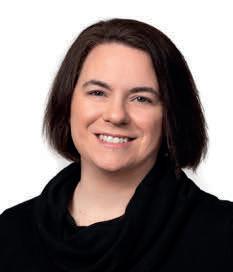
Kim Holweger
Senior Managing Director, Head of Operations, Cetera
With nearly forty years in financial services, Kim Holweger brings expertise in operational leadership and a clear perspective on aligning people and process.
As Senior Managing Director, Head of Operations, Kim oversees teams responsible for client support, advisor transitions, insurance, and broker-dealer operations, supporting advisors firmwide while upholding service delivery standards.
Kim holds multiple FINRA registrations, completed the Securities Industry Institute program at the Wharton School, University of Pennsylvania, and earned a management degree from St. Cloud Technical College. Outside the office, she is devoted to her husband James, their three adult children, Erin, Josh, and Tony; and their grandchildren. She enjoys reading, camping, golfing, and volunteering in her community.
Together, LeAnn, Nichole, and Kim are not just leading within Cetera — they are helping define what leadership in financial services can look like when it is built on collaboration, integrity, and genuine care for the people it serves.

1-800-245-0467
400 1st St S, Ste 300, St.Cloud, MN 56301 Cetera.com
boundaries and expectations with your manager and significant other.” Hackett agrees, too, saying that she is “giving myself grace, accepting that I can’t do everything at once, and reminding myself that not every waking moment needs to be productive.”
Stop feeling guilty. “We don’t need to be everything to everyone,” Capes said.
Recognizing caregiving demands helps create sustainable workplace support.
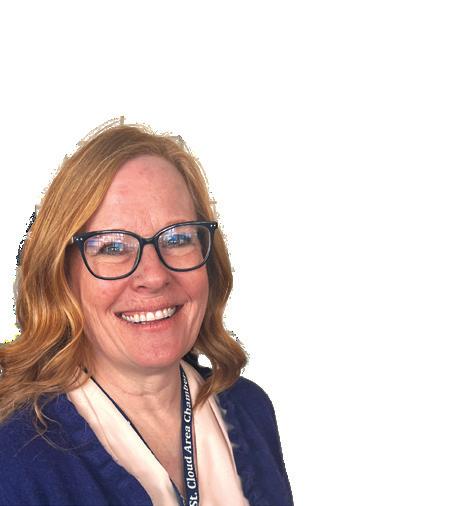
Caregiving is a widespread reality. Nearly 63 million Americans currently provide care, and women account for an estimated 61 to 66 percent of family caregivers, according to Melody Vachal, M.S., CCC-SLP, MCHWC, of RISE UP Care and Wellness in St. Cloud. Vachal, who is a speaker, author and caregiver advocate, and a family caregiver for 30 years, offers the following:
Jeanine Nistler (jeaninenistler@ outlook.com) is a St. Cloud-based freelance writer whose career has included daily newspaper reporting and editing, as well as communications work in health care, higher education, and state government settings.
ACKNOWLEDGE
INVISIBLE BURDENS.
The primary challenge isn't just time management, it is the mental and emotional load, according to Vachal. Women often manage both the visible responsibilities of home life and the invisible work of planning,
anticipating needs, and maintaining an emotional presence. Many define themselves by their relationships (as a parent, partner, or child) rather than the role of "caregiver." Recognizing this distinction is a vital step in identifying the true scope of the work being done and finding necessary support.
Dr. Julie Anderson and Dr. Kourtney Bradford are growing Simplicity Health around what patients need most: access, trust, and care that puts people before systems.
For many patients, healthcare has come to feel like something that happens to them rather than for them. Appointments are rushed. Bills are confusing. Specialists are months away. The system is fragmented, and navigating it takes energy most people don’t have to spare.
Dr. Julie Anderson and Dr. Kourtney Bradford are working to change that.
As women physicians, business owners, and community members, they have built Simplicity Health around a clear belief: healthcare should feel more personal, practical, and connected to real life.
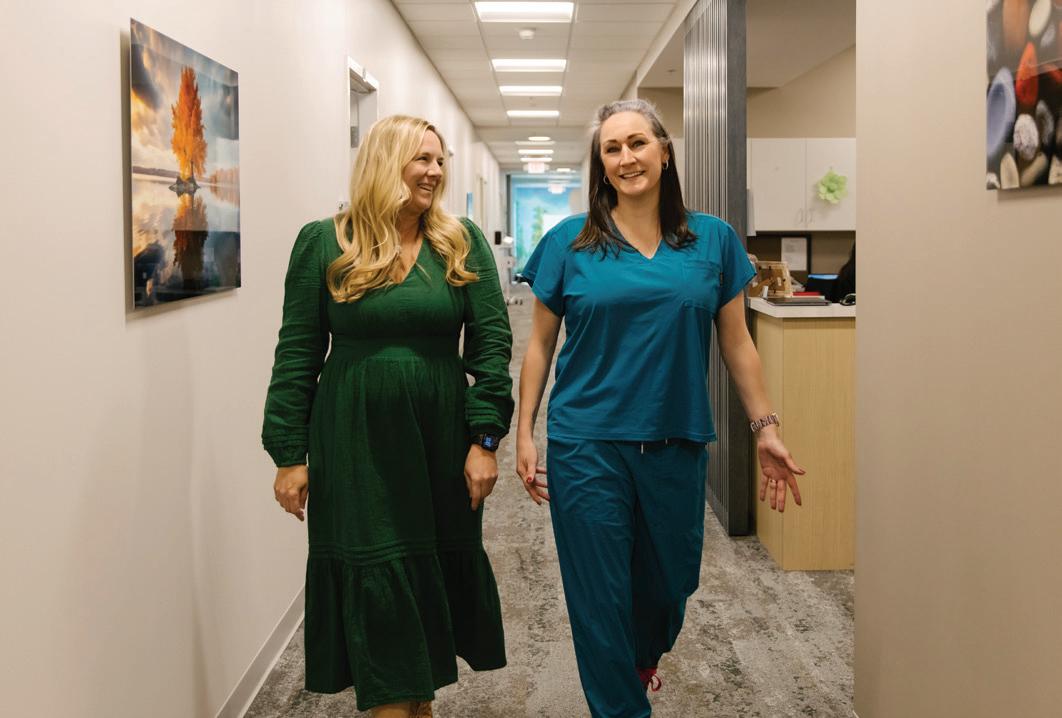
“Simplicity Health was built to give patients more choice, better access, and a true partner in their healthcare.”
For Anderson, that vision grew from a lifelong calling to medicine and a belief that communities benefit when patients have meaningful choices in care. After St. Cloud Medical Group closed its doors, Anderson founded Simplicity Health in 2018 to restore that choice through an independent, physician-led clinic built around transparent pricing, personal relationships, and patient-focused care.
“As physicians, we are trained to keep the needs of the patient at the forefront,” Anderson said. “I firmly believe that is achieved best when physicians are helping shape the way care is delivered.”
Bradford’s path was shaped by her own childhood as a patient. Diagnosed with Juvenile Rheumatoid Arthritis, she saw how small, personal gestures from nurses, phy-
— DR. JULIE ANDERSON
sicians, and staff could make intimidating medical experiences feel less frightening.
Together, Anderson and Bradford have created a practice rooted in relationship-based care, longer appointments, clear explanations, and trust. At Simplicity Health, care is intentionally personal and decidedly non-corporate. Patients are known as people with families, work schedules, budgets, and lives outside the exam room — not names on a file or numbers in a system.
That is the heart of Simplicity Health’s mission: personalized care delivered the way medicine should be — honest, understandable, and centered on the person. Anderson and Bradford see the clinic as a personal partner in each patient’s healthcare journey, and that same idea guides its growth: not simply to add more offerings,
Simplicity Health 3260 42nd Ave S., St Cloud, MN 56301 (320) 227-5000 simplicityhealthmn.com
Dr. Julie Anderson and Dr. Kourtney Bradford of Simplicity Health.
but to make care easier to access and more responsive to what patients, families, and employers actually need.
That starts with core medical care — family medicine, chronic care management, and ongoing patient relationships. When lab costs became a barrier, they brought testing in-house. When specialist wait times stretched to months, they recruited outreach partners and telehealth consultants. Today, Simplicity Health offers specialty services in pediatrics, cardiology, endocrinology, gynecology, and dietitian services, all under one roof.
New models continue that responsiveness. Renew provides medically managed weight loss, while Refine takes a functional wellness approach to nutrition, hormones, and metabolism. Priority Health offers subscription-based care, and Rapid Care provides a cash-pay quick-care option. Through WorkMed Midwest, Simplicity Health extends that approach to employers and their teams.
For Anderson and Bradford, growth is not about making healthcare bigger. It is about making it more personal, more useful, and more connected to the patients they serve.
“Our biggest priority is what is best for our patients,” Bradford said. “Always has been, always will be.” •
Simplicity Health provides relationship-based healthcare for individuals, families, and employers across Central Minnesota. Led by women physicians and rooted in local ownership, the practice offers family medicine, specialty access, diagnostics, wellness programs, occupational health, and cash-pay options built around personalized, patient-focused care.
When Jen Sell Matzke made the decision to step from higher education into private industry, she did so with clarity and intention. After more than 30 years in higher education leadership — including her most recent role as Dean of Students at St. Cloud State University — Matzke joined Scipi Companies as Director of Human Resources less than three years ago. Her impact was quickly recognized, and she was subsequently promoted to Chief Human Resources Officer — a title change that reflected both her strategic leadership and expanding influence across the organization. For her, the move wasn’t a leap so much as a natural evolution.
At SCSU, Matzke led a 300-person team of student and professional staff across housing, student life, crisis response, and essential support services, navigating six different unions and complex human dynamics. “I spent a lot of time working closely with HR without realizing I was getting a real education in it,” she says. More importantly, the experience reinforced a belief that now anchors her leadership philosophy: people are all “students of life,” deserving of support during both their best and most challenging moments.
That belief guided her search when she began reflecting on her next chapter as her children prepared to leave home. Value alignment was non-negotiable. She found it at Scipi, a Central Minnesota — based holding company built on a people-first philosophy. “You win with people,” Matzke says simply.
Scipi’s values — having fun at work, respectful relationships, doing the right thing, ownership, and family first — aren’t just words on a wall. “Everyone can cite them, and more importantly, they use them to make decisions,” she notes.
As an ESOP organization recognized as a Star Tribune Top Workplace, Scipi is committed to growth without sacrificing culture. HR is viewed as a strategic partner, not a compliance function, and culture is considered before any initiative is launched.

As one of four executives on the leadership team, Matzke is candid about the challenges women face at the executive level. “There’s a daily dance between being too direct and not direct enough,” she says. Her approach centers on staying grounded, holding accountability, and building respectful relationships — embracing what she jokingly calls being a “likeable badass.”
Her top priorities include strengthening awareness of the Scipi Companies culture beyond its individual businesses, creating clear career pathways across the organization, and developing leaders who lead through coaching and mentorship. “ESOPs only succeed through succession planning,” she notes.
Matzke is equally passionate about mentorship and sponsorship, crediting them as foundational to her own journey as a first-generation college student. Today, she is intentional about giving back, particularly to emerging leaders who may struggle to find their voice.
Her advice to women aspiring to senior leadership? Borrowed from Ruth Bader Ginsburg and saved on her phone: “Speak your mind, even if your voice shakes.”
In both leadership and life — celebrating her children’s graduations, nearly 30 years of marriage, and her family’s next season — Matzke remains guided by one principle: when organizations put people before policy, everyone thrives. •
In an industry often associated with numbers, financial plans, and market performance, Black Financial has built its reputation on something far more personal: relationships. For Margo Scepaniak and Michelle Herickhoff, the firm’s two owners, financial advising is not transactional — it is relational, generational, and deeply rooted in trust.
Margo’s journey began in her family’s business, founded in 1960 by her parents Donald and Darleen Black. She joined the company in 1991 and became president and primary owner. Early in her career, she realized that while many people understand how to invest, far fewer know what they truly need for retirement — or how to make those resources last. Bridging the gap is where relationships matter most.
“You go through all of life with your clients”, she says. “Retirement, losses, celebrations — you’re part advisor, part counselor.”
Michelle’s path to Black Financial began with a solid foundation in finance. With a degree in the field and a 15 year career in banking — working her way up from teller to CFO — she understood financial systems inside and out. What she missed was the personal connection. “When I was a CFO, my only client was the bank,” she explains. “I wanted to impact lives.” Inspired by the
At Black Financial, relationships extend beyond the individual client. Roughly 80 percent of clients have customized retirement plans built around personal goals rather than pre-packaged portfolios.
financial advisor who worked closely with her own family, Michelle made the leap into advising in 2014, a move that allowed her to blend technical expertise with meaningful client relationships.

At Black Financial, relationships extend beyond the individual client. Roughly 80 percent of clients have customized retirement plans built around personal goals rather than pre-packaged portfolios. Meetings often include lengthy personal conversations — about family, health, and life changes — before any discussion of accounts begins. The firm also prioritizes connecting with clients’ children and grandchildren, ensuring continuity and clarity across generations. Margo and Michelle are especially passionate about financial education for all their clients, young and old.
Growth at Black Financial has come almost exclusively through referrals, a point of pride for both women. “A referral is the greatest compliment,” Margo says. It’s a reflection of the firm’s core values: integrity, responsiveness, and care. Clients trust that their stories remain confidential and that their advisors are available — often well beyond the traditional workday.
For Margo and Michelle, success isn’t measured by assets alone. It’s measured in gratitude, in long standing relationships, and in seeing clients live well throughout retirement.
At Black Financial, relationships are everything, proving that trust is the strongest investment of all. •
Caregiving layers on top of existing roles rather than replacing them. Many women are so accustomed to being reliable that they rarely pause to consider if their pace is sustainable. What appears to be strength often leads to an accumulation of internal stress that can overwhelm.
For Vachal, the shift occurred when she created space to acknowledge her burden, ask for help, and prioritize what was truly important. “Balance is achievable only when we choose what matters most,” she said. “Women are not failing at balance; rather, the current system often assumes they will simply absorb the imbalance.”
Support becomes accessible when we are specific. Instead of saying “I need help” or saying nothing at all, individuals must practice making direct requests, such as, “Can you pick up my child from soccer?” or “I need someone to sit with my father so I can nap.” Like any skill, accessing help requires practice.
Vachal recommends writing out a list of all responsibilities. Making the invisible work visible helps women acknowledge the level at which they are operating and prevents the confusion of unexplained exhaustion.
Caregivers exist in every workplace, often managing dual roles privately. Employers have an opportunity to view caregiving as a shared reality rather than a personal issue. Teams are strengthened when support is normalized. Employers can support caregivers by:
Offering flexible schedules.
Providing Employee Assistance Programs (EAP) specific to caregiving needs.
Focusing on outcomes rather than hours worked.
Offering training to normalize caregiving conversations.
Ultimately, Vachal said, support does not reduce productivity. Support makes productivity sustainable, and that is the point where everyone wins.
Recognizing caregiving demands helps create sustainable workplace support.

Alot of progress has been made for women in the workplace over the last century. According to the Bureau of Labor Statistics, women now make up 57 percent of the labor force — a significant increase from just 20 percent in the 1920s. Yet despite that progress, the work is far from over.
The latest Women in the Workplace report from McKinsey and LeanIn.org shows that both workplace support for women and women’s ambition to pursue advancement are declining. Simply put, women are less likely than men to seek promotions — often not because of a lack of capability or drive, but because of a lack of support and opportunity in professional settings.
Women are still less likely than men to have mentors and advocates in the workplace, particularly at entry-level and senior leadership positions. And even when mentorship exists, women continue to be promoted at lower rates than their male counterparts. In 2025, only
93 women were promoted to manager positions for every 100 men. For the 11th consecutive year, women remain underrepresented at every level of the corporate pipeline, making up just 29 percent of C-Suite leadership roles. While many companies say they value inclusive workplace cultures, far fewer are actively prioritizing women’s advancement and leadership development.
Even highly motivated women can become discouraged when faced with limited support, competing demands on their time, or uncertainty about whether advancement is truly attainable.
Fortunately, many businesses here in Central Minnesota are helping move the conversation and the workplace in the right direction. Across industries, local employers are creating environments where women are encouraged to lead, supported in their professional growth, and recognized for the many ways they contribute to our businesses and communities.

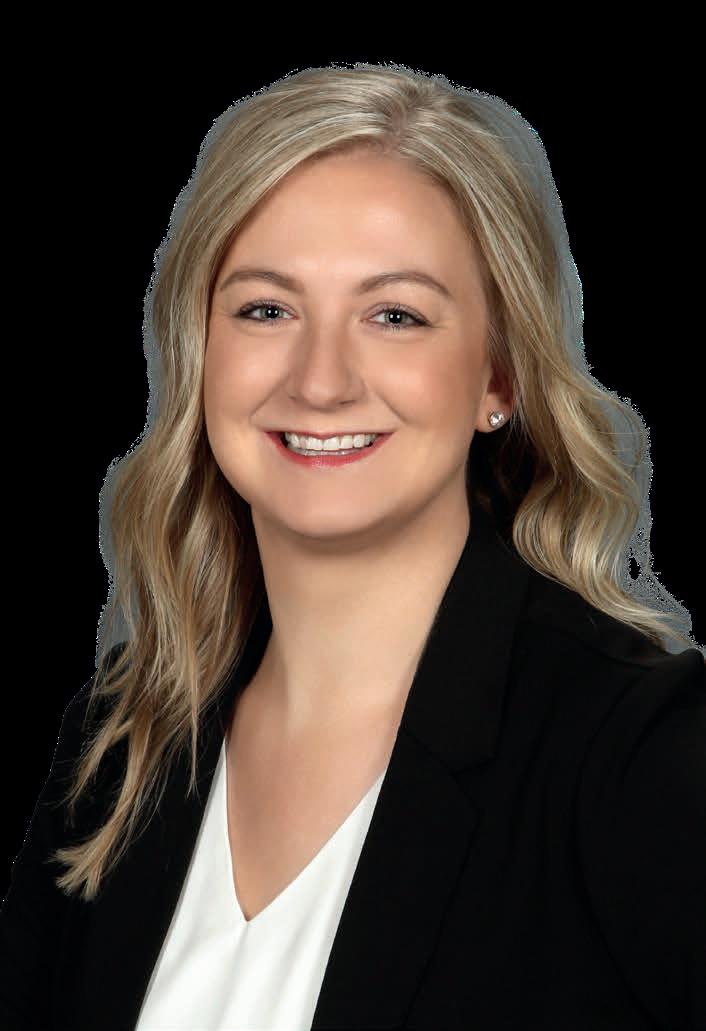

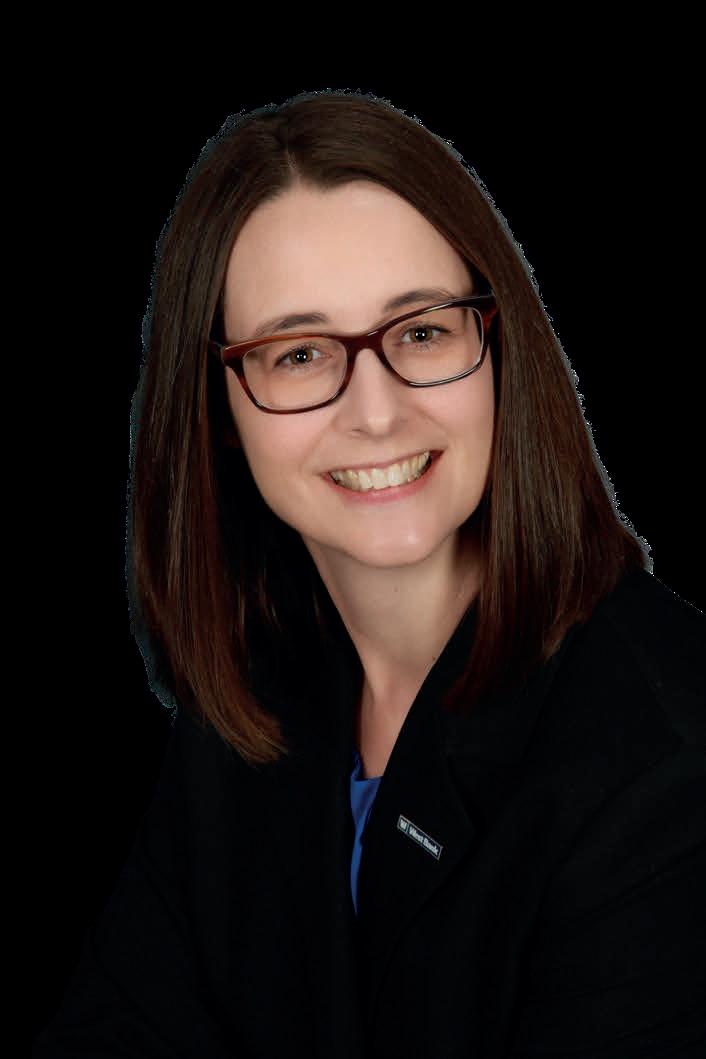


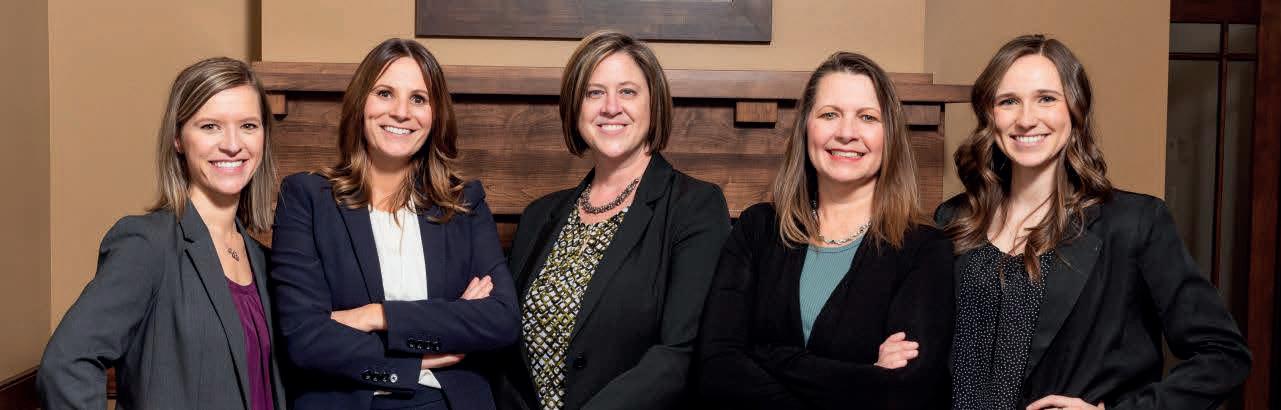






Granite Partners is a private investment and long-term holding company founded in 2002 in St. Cloud, Minnesota, with a mission to grow companies and create value for all stakeholders. We advance a culture of trust, innovation, and excellence as essential to 100-year sustainability, and we aspire to world-class wellbeing for everyone in the Granite community.

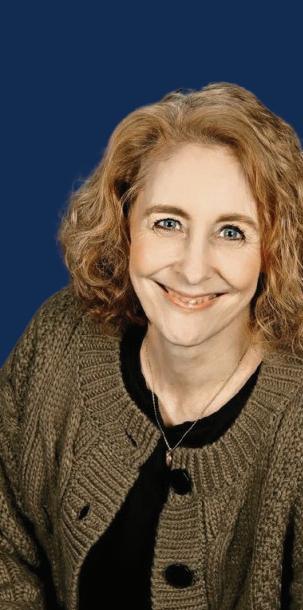






At Microbiologics, women aren’t just represented. They’re respected, recognized, and relied upon to lead science forward. As a growing STEM company rooted in central Minnesota, we’re proud to be building a future where every woman in science thrives.
Join our team, where women lead and science excels.
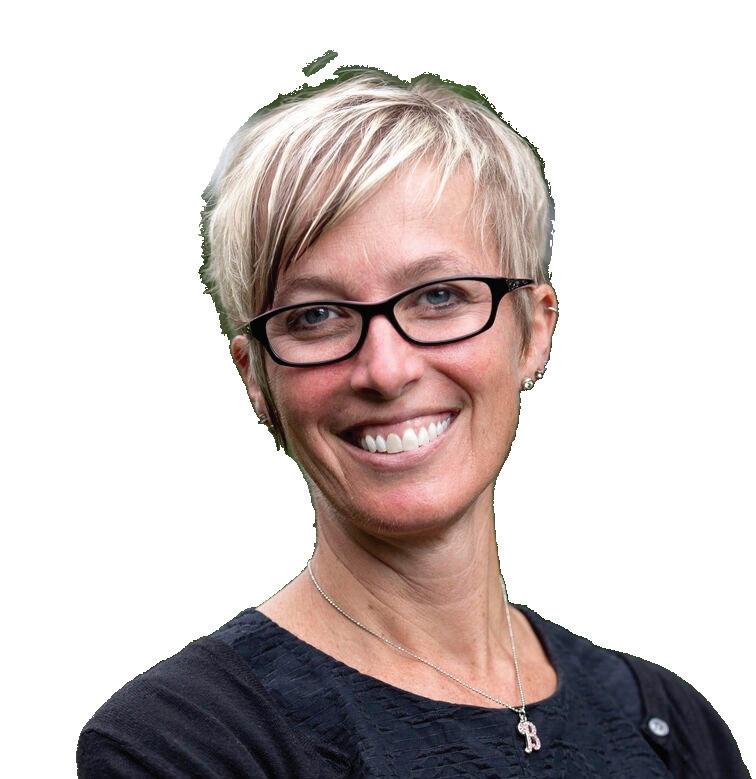
May named provost
The College of Saint Benedict and Saint John’s University named Barbara J. May as provost, the institutions’ senior academic officer responsible for the curricular and co-curricular experience across both campuses.
May served as an academic dean and a biology faculty member for the College of Saint Benedict and Saint John’s University from 2017 to 2022 and currently serves as provost and vice president for academic affairs at Pacific University in Oregon. She begins her new role on July 1, 2026.
Sahvanna Valdez joins the St. Cloud Area Chamber of Commerce as member services and event assistant. In her role, she will help manage the member database, address member needs and assist with coordination of Chamber events.

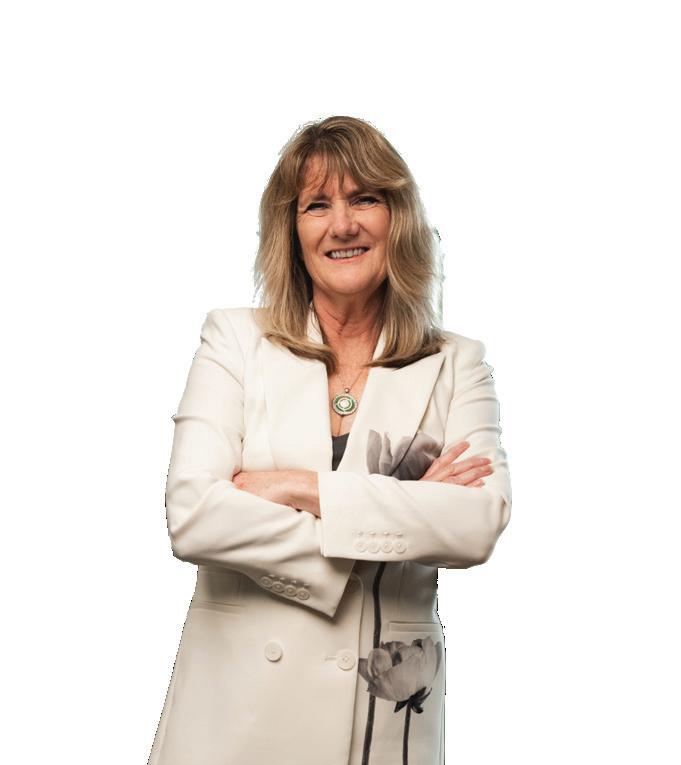
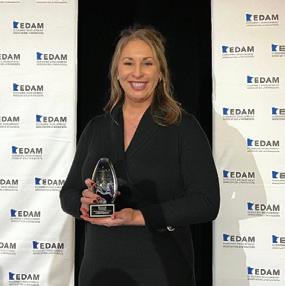
Leslie Dingmann, business development director at Greater St. Cloud, was named 2026 Economic Developer of the Year by the Economic Development Association of Minnesota. This award honors leaders in economic development who exemplify best practices, collaborative thinking, creativity and a spirit of innovation.
ConnectAbility of MN named Rebecca Trelfa as its executive director. Trelfa brings a deep commitment to ConnectAbility’s mission and values, with a collaborative approach that focuses on community impact and strengthening partnerships. She started with the organization in 2019 as a service coordinator.
Three new staff members joined the team at Visit Greater St. Cloud.
Rachel Foos is the new marketing manager. Carli Mertens joined the team as sales and services coordinator.
Sabrina Koelsch was hired as sales manager. These new additions will work with the rest of the staff to market Greater St. Cloud as a place to visit and host meetings and events.
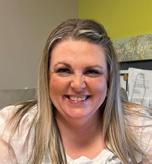
Nikki Gustafson,
Visit Greater St. Cloud director of sales, was recognized by Influential Women, a premier professional media and editorial platform dedicated to highlighting female leadership, resilience, and impact across the globe.
Gustafson’s dedication to the greater St. Cloud community and her leadership at Visit Greater St. Cloud embody the "Bold, Brilliant, and Unstoppable" spirit that this award celebrates.
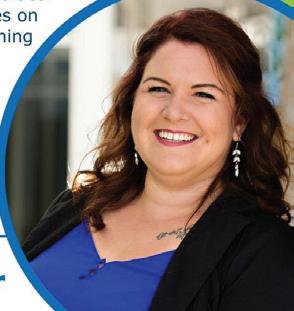

Shelly Doll joined Falcon National Bank as president. Doll has more than 30 years of experience in community banking and financial services and will provide leadership over daily operations while supporting the bank’s strategic growth alongside CEO John Herges. Doll is a central Minnesota native and a nationally recognized leader in banking.
Lori Kloos, president of St. Cloud Technical and Community College, was named the 2026 ATHENA Award recipient from the Central Minnesota Community Foundation. The ATHENA Award is a lifetime achievement honor recognizing exceptional women leaders who inspire others to achieve excellence in both their professional and personal lives.
Matt and Reva Van Vleet, owners of Rock City Insurance, take pride in the relationships they build with their customers.
By Emily Bertram
What is the history of the agency?
Matt Van Vleet: Rock City Insurance, formerly known as Hoffman Insurance, was started by John Hoffman in the 1978. My dad, Steve Van Vleet, joined the agency shortly after it began, remaining for 27 years until retiring in 2020. I joined the firm in 2018, Reva joined in 2023, and we bought the agency in 2024, when John Hoffman retired.
Why insurance?
Reva Van Vleet: It was a huge change for me career-wise, but I was hopeful that I could continue to be involved in the community in new ways.
Matt: I was ready to get out of retail. We were starting to have kids and grow our family, and the nights and weekends weren’t going to work for me.
What’s the story behind your name?
Reva: We knew we were going to change the name from Hoffman Insurance to establish our own brand and feel. To us, Rock City is a nod to our city, to our strong and steadfast commitment to our customers, and even to our love of agates.
Who do you serve?
Matt: We serve anybody looking for insurance. Some agencies shy away from riskier clients, but I can say that some of those have now become the best clients because they grow and continue to refer people. Reva: My goal is to continue to grow our commercial lines. I love connecting with small local businesses and seeing what their needs are.
Rock City Insurance
14 7th Ave N
St. Cloud, MN 56303
(320) 259-4003
What is it like working together?
Matt: We complement each other in our work styles. Reva communicates more like John did and I’m more like my dad, so we can handle different kinds of clients differently and we’re not in each other’s way.
What sets you apart?
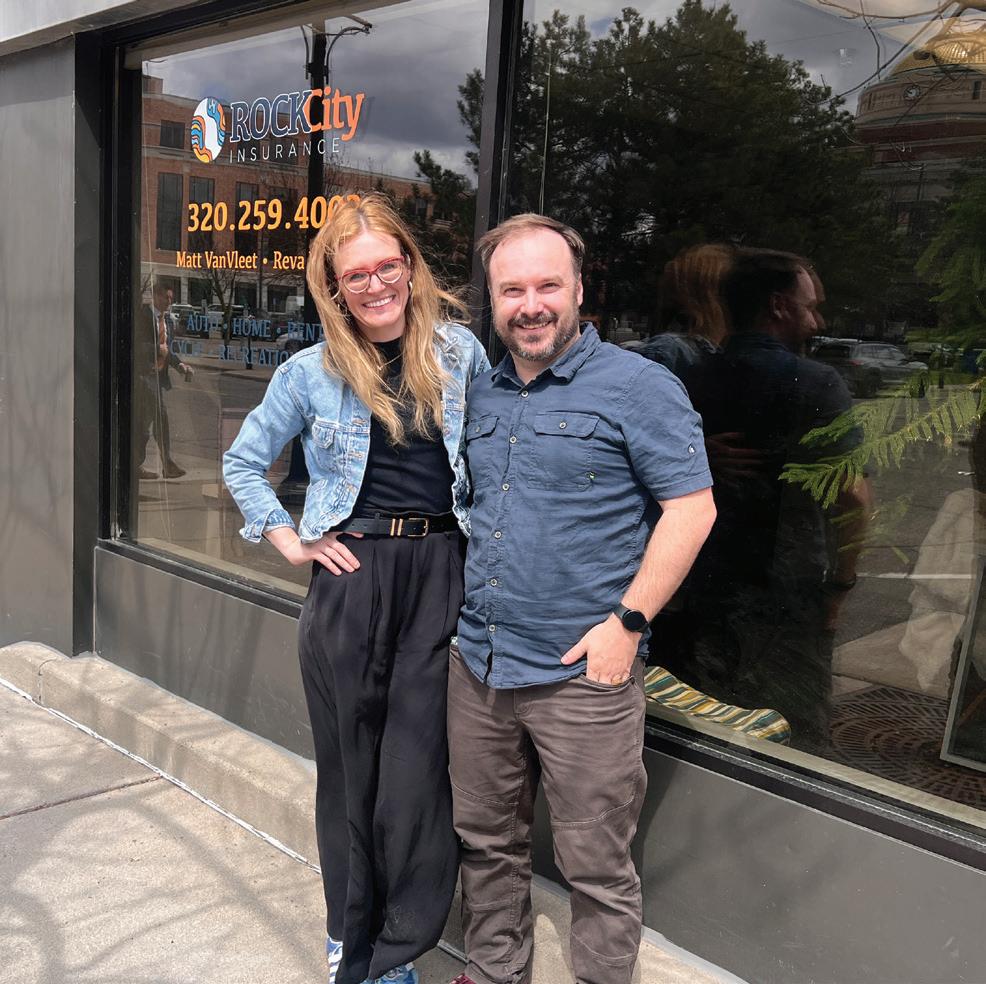
Hometown: St. Cloud
Reva: Changes in the insurance industry have made the work more complicated, but they have also created an opportunity to rethink how we interact with clients and the kind of value we provide. While we cannot control rates, we can control relationships, communication, work style and how we show up in the community.
Tell me about your location.
Matt: We love being downtown — we’ve been here since day one. There are restaurants, coffee shops and stores we can hop into all in one place. We have great relationships with lots of the businesses down here.
Reva: Being in the business center is great too. People will be coming to see a lender or a lawyer here and they’ll stop in for a business card.
What is the best part of owning your own business?
Matt: It’s been different going from working for someone to being the owner. I like the freedom of how and when we can do life.
Reva: It becomes an extension of yourself — it’s tied to you and you’re part of the brand, which is rewarding.
info@rockcityagency.com
Opened in 1978 as Hoffman Insurance Joined the Chamber in 2023 rockcityagency.com
Hobbies: Spending time outdoors and with family, community events like the Farmers Market
Education: St. Cloud State University Past Workplaces: United Way of Central MN, Resource Training, other economic development opportunities
Matt Van Vleet, 40
Hometown: St. Cloud Hobbies: Camping, fishing, hunting, youth sports Past Workplaces: Fitzharris
Family: Odin, Sully, Lilah, Maple
1978: Hoffman Insurance started by John Hoffman
1991: Steve Van Vleet starts a book of business alongside Hoffman Insurance
2018: Steve’s son Matt joins Steve and John with the agency
2020: Steve Van Vleet retires
2023: Reva Van Vleet joins the agency
2024: John Hoffman retires, Matt and Reva purchase Hoffman Insurance
October 2024: Hoffman Insurance rebrands as Rock City Insurance