A me rican Es s e nc e
American Essence FO R E V E RYO N E W H O LOV E S T H I S C O U N T RY
The Return of the Buffalo
JANUARY 2022
With great care and effort, the buffalo was reintroduced to the Great Plains decades after being wiped out
Classical Education Experts weigh in on what the study of the true, the good, and the noble can be for today’s students
Magical Encounters
VOLUME 2 | ISSUE 1
Award-winning wildlife photographer Colin Tyler Bogucki on discovering his special connection with animals
ISSU E 1 | JA N UARY 2 0 2 2
1
2
AMERI CAN ESSE NCE
“A day spent helping no one but yourself is a day wasted.” —A BRA HA M L INC OLN
The Snoqualmie Pass in Kittitas County, Washington.
ISSU E 1 | JA N UARY 2 0 2 2
1
Contents
Features 8 | Kevin Sorbo
While shooting Season 5 of “Hercules,” the actor had a near-death experience and discovered his unwavering faith in God.
106
10 | Under the Surface
Ocean photographer and animal lover Renee Capozzola takes up the camera to capture stunning, award-winning images of our planet’s alluring sea creatures.
16 | Casey DeSantis
Florida’s First Lady opens up about her battle with cancer, and her hopes for the state’s future.
20 | The Mark of History
Howard Zerwitz regularly handles letters from Napoleon, writings in Mark Twain’s hand, and documents signed by President Lincoln.
26 | From Ashes to Beauty
A tragic fire helped transform wildlife photographer Colin Tyler Bogucki’s relationship with nature.
36 | Raising a Forest by Hand
46 | Deep Sea Valkyries
Army veteran and Purple Heart recipient Josh Grzywa helps veterans heal through trauma-counseling retreats on the open water.
50 | For Whom the Bell Tolls
Benjamin Sunderlin’s obsession with the study of bells eventually inspired him to start his own bell foundry, bringing the age-old craft to the United States.
54 | O. Henry House Couture Furniture A North Carolina family preserves the tradition of handmade upholstery, creating enduring heirloom furniture pieces. 58 | Luxury, by Way of Italy
Botanist Charles Bessey saw the grassy hills of north central Nebraska and realized the potential for populating a forest there.
Ippolita Rostagno wanted to ensure Italian artisans could practice their trade for generations to come—so she brought Italian design brands to America.
40 | Preserving the Pollinators
62 | Got Neon?
Bees are our most important pollinators, helping to propagate crops and fuel the ecosystem. That’s why we need to protect our native bee population.
44 | Rescuing Donkeys
Donkeys are companion and working animals, and places like The Farmette keep them from a fate of slaughter. 2
Neon Williams is the last remaining company in New England still crafting neon signs, illuminating local businesses and movie sets alike.
66 | Why I Love America Terryn Boucher reflects on the importance of balancing faith and reason in the Declaration of Independence and the Constitution.
118 AMERI CAN ESSE NCE
102 History 68 | The Return of the Buffalo
Once known as the “Thunder of the Plains,” the buffalo was all but gone when President Theodore Roosevelt and others helped reintroduce it in the early 20th century.
72 | John Adams’s Productive Persistence With a zeal and sincerity that countered his well-known foibles, the future second president forged financial agreements with the Dutch at a crucial moment. 74 | The World Travels of Squanto
Squanto intended to return to his home after years away, but disease had struck the region and all had perished. Instead, he ended up helping the Pilgrims.
76 | Nathan Hale
In 1776, spies were not military heroes but the lowest of the low. Yet George Washington needed information he could not trust to such hired guns—he needed a volunteer.
78 | The Saving of Mount Vernon
If not for the efforts of some 19th-century ladies, George Washington’s home estate may have been reduced to a mere paragraph on a Virginia historical plaque.
82 | Trade Secrets
Along the bustling streets of colonial America, businesses were filled with working craftsmen who passed their trades down to select apprentices.
86 | Civil War Ironclads
The Battle of Hampton Roads, with the Monitor and the Merrimack, forever changed how wars would be fought on water. ISSU E 1 | JA N UARY 2 0 2 2
26 A Love of Learning 88 | A New Start for Our Family
When a student had trouble processing his emotions, one teacher’s kindness offered the care and support needed for a fresh start.
90 | Students as Decision-Makers An elementary class project showed how treating students as young adults can yield results beyond our expectations.
92 | What Is Classical Education?
Experts weigh in on the question of the year, explaining why a classical education helps students develop wisdom and virtue.
98 | Ownership of Education
Anyone who’s been with small children knows they are full of questions, and their questions are the launching pad for their ownership of education.
100 | Back in the Classroom
Teachers reflect on what it was like when schools finally reopened and they could see students in person again.
Arts & Letters 102 | Jeweled Birds of South
America Attacked by the “hummingbird craze,” artist Martin Johnson Heade was the first American to visit South America to personally observe and paint the subjects.
46 106 | Restoring a Living Landmark Celebrating its 250th anniversary, the Carmel Mission is considered one of the best-restored missions in California.
112 | The Bonds That Reunited
America The Robinson House stood through our nation’s bitterest domestic conflict and became a key element in its reconciliation.
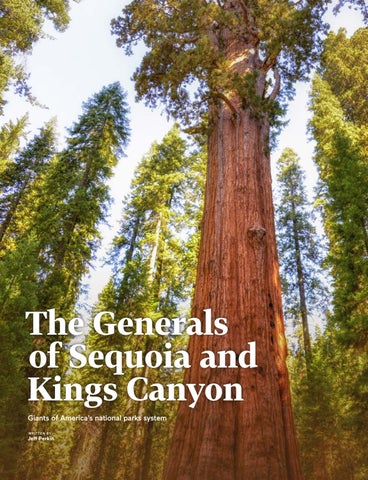
The Great Outdoors 118 | Sequoia and Kings Canyon
The world’s largest trees (by volume) have been preserved since 1890 through the U.S. National Park System.
124 | Plan Your First Backpacking
Trip Ready to explore America’s wilderness this winter? Equipped with these tips and guidelines, backpacking won’t be so daunting. 3
Editor’s Note Dear Readers,
I
n 1882, choirmaster Samuel A. Ward took a leisurely ferry ride from Coney Island into New York City, was struck with inspiration at the summer scene, and immediately composed a tune. A decade later, on an 1893 summer day in Colorado Springs, Colorado, Katharine Lee Bates gazed out from a window and saw a “sea-like expanse of fertile country spreading away so far under those ample skies,” that a hymn immediately sprang to mind. In 1910, the music and poetry came together under the title “America the Beautiful.” The work struck an enduring chord, resonating with so many Americans that numerous campaigns have sought to make it the national anthem. Our January issue in many ways pays homage to the beauty of America. From the wildlife captured through photographer Colin Tyler Bogucki’s lenses (page 26) to the ancient trees (page 118) that led to the creation of some of the nation’s biggest parks, such natural wonders often prove life-changing. It is also evident to us that conservation is a living, human craft. Charles Bessey (page 36), a botanist and the nation’s first textbook author on that subject, was a great proponent of the idea of national forests. With patience and persistence, he grew a forest where there had only been prairie dunes, and today his legacy includes a tree nursery that annually produces over 2.3 million seedlings for the Great Plains and Rocky Mountain states. Conservation is more than preservation and thoughtfully regarding the past. Benjamin Sunderlin (page 50), who operates the only traditional bell foundry in the United States, is on a mission to restore a dying craft. While studying old techniques abroad, he was “overcome with anxiety and shock to see a 17-year-old British boy destroy a bell made in 1729 by Thomas Lester,” the same who had cast America’s first liberty bell. Later, Sunderlin enlightened to an important fact: “You shouldn’t worry about preserving an object to preserve the craft. You may need to destroy the object in order to maintain the craft and hand it down to the next generation. This knowledge helps carry on the craft.” Editor-In-Chief Catherine Yang Catherine@AmericanEssence.net
4
AMERI CAN ESSE NCE
The Art of Rock Crystal
Phoenix Gallery 217 East 60th Street, New York, NY 10022 Tel: 212.759.1153 WWW.INCOLLECT.COM/PROFESSIONALS/DEALERS/PHOENIX-GALLERY WWW.1STDIBS.COM/DEALERS/PHOENIX-GALLERY ISSU E 1 | JA N UARY 2 0 2 2
5
JANUARY 2022 | VOLUME 2 | ISSUE 1
American Essence FO R E V E RYO N E W H O LOV E S T H I S C O U N T RY
PU B L I SH E R
Dana Cheng
E D I TO R I AL
Editor-In-Chief Managing Editor Arts Editors History & Literature Editor Education Editor Outdoors Editor Contributing Editor Editors-At-Large Staff Writer
Catherine Yang Annie Wu Sharon Kilarski Jennifer Schneider Robert Mackey Steve Gigliotti José Rivera Ben Zgodny Tynan Beatty Maria Han Skylar Parker
C R EAT I V E
Lead Designer Designers Illustrators
Photographers
Jasmina Zhang Dariya Akdeniz Michael Kurov Junhao Su Linda Zhao R.W. Tatsiana Moon Daniel Ulrich Jennifer Schneider
C ON T R I BU TO RS
Rachael Doukas, Laura Doukas, Savannah Howe, Nanette Holt, Christine Colbert, Ronald Ahrens, Kelly Frey, Juliette Fairley, Krista Thomas, Barbara J. Lloyd, Erin Tallman, Alice Giordano, Terryn Boucher, Debi DeSilver, David W. Swafford, W. Kesler Jackson, Rick Green, Bob Kirchman, Rachel Pfeiffer, John Quarstein, Charles Mickles, Janice Abernethy, Gina Prosch, Nicole Zappone, Jeff Perkin, Mark Lardas, Meghan Carney
229 W 28th St, 7th Floor, New York, NY 10001 General Inquiries: AmericanEssence.net/help Submissions: Editor@AmericanEssence.net
www.AmericanEssence.com
PUBL ISHED BY
BRIGHT Magazine Group
6
AMERI CAN ESSE NCE
We've been here for you, and we'll be here for them. Inflation protection, family legacy, financial privacy
Add precious metals to your IRA to make inflation work in your favor
Metals For Delivery
Proven Trading Strategies
For 50 years McAlvany ICA has helped thousands of families achieve their financial goals, all while building intergenerational wealth through proven precious metals strategies. Your personal advisor at McAlvany can help you build a strong, time-tested, legacy-focused retirement portfolio utilizing a precious metals IRA. Get started today.
America’s foremost precious metals advisors - helping every step of the way since 1972 -
McAlvany.com
(866) 211-8971
Features | Hope
Legendary Journey
The Kevin Sorbo Story
After 5 seasons of playing the strongest man in the world, the actor had a near-death experience that strengthened rather than diminished his faith—guiding a pivotal turn in his prolific career WRITTEN BY
Rachael Doukas & Laura Doukas
K
evin Sorbo, most recognized for his starring role in the critically acclaimed television series, “Hercules: The Legendary Journey,” is strong in more ways than one. While performing in the show that made him a household name, Sorbo trained in the gym every day for six hours, no matter how far into the night filming took him. Workout after workout, his physique became the embodiment of awesome physical strength. But his inner strength comes from a different place. Sorbo grew up in Mound, Minnesota, where his mother worked as a nurse, and his father taught junior high. At the time, Mound was a tight-knit community surrounded by bays, lakes, and sledding hills, and most notable as the birthplace of the Tonka Truck. Living in this Midwestern city was a very down-to-earth upbringing that Sorbo deeply appreciated; he credits it for his outstanding work ethic and strong moral character. Over the years, Sorbo developed a passion for the arts that grew so strong that the residuals he earned from print modeling and commercial gigs would cover his entire college tuition. He was able to persevere in an industry known for rejection by pushing ever restlessly forward, no matter how many times casting directors passed on him for roles. Finally, he landed the role of a lifetime as star of a prime-time television show. While shooting Season 5 of “Hercules: The Legendary Journey” in 1997, Sorbo discovered his unwavering faith in God. Fully committed to his role as the strongest man in the world, 38-year-old Sorbo unconventionally performed most of his own stunts. After all, he was a natural athlete skilled in football, basketball, and many other popular sports. Little by little, the actor started to feel a problem arising in his left arm, and what began as a tingle ended as a near death experience.
8
“I couldn’t figure out what was going on,” Sorbo recalls. “I went to see my chiropractor. I’m laying on the table and a voice starts yelling in my head, ‘Don’t let him crack your neck.’” The voice persisted, but he ignored it. The chiropractor proceeded to crack Sorbo’s neck. As a result, an aneurysm was triggered in the actor, resulting in hundreds of blood clots, three strokes, and a recovery period of three years. “I remember being dragged into the ER at Cedar Sinai in Los Angeles,” Sorbo recalls. “And I just looked up at the sky and said to myself, wow, I’m going to die today.” It would be the last time he would ever question his inner guidance. Sorbo describes his road to recovery as a “long, long journey” discovering how nearly dying actually saved his life. “I always had faith,” he says. “I never needed faith until this roadblock came into my life.” Despite the intense hardship this health crisis would bring, he never lost his faith and never blamed God. “I think so often people lose their faith when bad things happen, but it opened up a door for me.” After the incident, a process of self-reflection began, and the trajectory of Sorbo’s life completely changed. He discovered a deep desire to take on projects that were, as he describes, “God First,” or uplifting, meaningful, and inspiring.
“I always had faith. I never needed faith until this roadblock came into my life.” —KEVIN SO RBO
AMERI CAN ESSE NCE
Kevin Sorbo’s career has been busier than ever after he became determined to create films with a message of hope.
At first, finding roles that resonated with his newfound spirit proved difficult; it was becoming increasingly challenging for Sorbo to connect with characters who did not bring a positive message to the screen. He wanted his performances to change the lives of his audiences for the better, not discourage or disturb them. There were some networks and studios producing content in line with this criteria, but not enough content to fulfill his passion. Eventually, Sorbo realized there was only one way to amplify his vision of hope: develop his own projects. With the help of his beloved and equally talented wife, Sam, Sorbo formed his own production company, Sorbo Family Film Studios. The firm has quickly established itself as a leader in the development of content emphasizing the importance of faith and family. “I want people to wake up and get fighting for the good things in life, instead of all this anger we have out there,” ISSU E 1 | JA N UARY 2 0 2 2
says Sorbo. The power couple is making movies that provide a refutation of the, as they state, “reckless rejection of values that the media generally messages in film, TV, and elsewhere.” The decision to create uplifting content with an emphasis on forgiveness and redemption is certainly a road less traveled in Hollywood. “I’m a big fan of Robert Frost, and that poem really hits home for me,” says Sorbo. “I feel that Jesus took the road less traveled, and a lot of people now are beginning to take it.” The audacious end goal, in Sorbo’s own words: “I want to make the road less traveled into a super highway.” If numbers are any indication of success, Sorbo is well on his way to creating bumper-to-bumper traffic. One of his most successful projects of late, “God’s Not Dead,” impressively surpassed $140 million worldwide with a mere $2 million budget. It turns out, hope is a pretty lucrative subject. • 9
Under the Surface Inside the work of ocean photographer Renee Capozzola, who’s saving the turtles and defending the sharks one shutter click at a time WRITTEN BY
Savannah Howe
I
n the balmy waters of the South Pacific, marine conservationist, ocean photographer, and diver Renee Capozzola drifts gently through the blue. She’s waiting for something to cross her path, whether it be ambling sharks, sage sea turtles, or even a looming whale. Life in the ocean, after all, is always just around the corner—or rather, just around the coral fringe. In September, Capozzola was honored with the first ever Female Fifty Fathoms (FFF) Award, a distinction created by a recent partnership among Oceanographic Magazine, organizers of the Ocean Photography Awards, and Swiss luxury watch manufacturer Blancpain. Capozzola was chosen out of 100 nominees as the female photographer who best embodies hope and inspiration in marine conservation. The shutterbug wasn’t always capturing our finned neighbors, but the ocean holds a treasured place in Capozzola’s
10
heart. A So-Cal native, Capozzola was plenty used to sand between her toes when her parents started taking her to Hawaii on work trips. Capozzola fell in love with the archipelago’s luscious green ecosystems, but she didn’t officially don scuba gear until a 2004 trip to Maui. Despite her growing interest in diving, Capozzola still hadn’t picked up a camera. That came later, when the diver wanted to share what she was experiencing with others. A longtime artist, she knew plenty about color and composition, but she needed hours of research, reading, and picking experts’ brains to teach herself the technical aspects of photography. “It was more of a casual hobby at first, to take pictures and share them with my family and friends,” Capozzola said, recalling how she used to take images with the simplest of setups: a compact point-and-shoot, no fancy flashes or lenses. “[I wanted] to show them what I was seeing AMERI CAN ESSE NCE
Oceans | Features
underwater because everything was so amazing.” By 2016, Capozzola upgraded to professional-grade equipment and embraced her career trajectory change. Since then, she’s been featured in Ocean Geographic, National Wildlife Magazine, and Scuba Diving Magazine. Earlier this year, Capozzola was the first American and first woman named Underwater Photographer of the Year 2021 by the UK-based Underwater Photographer of the Year competition, and she was dubbed the USA Photographer of the Year by the 2019 World Shootout. A Love for Marine Life That Runs Ocean-Deep Lounging with sharks and sea turtles is not what Capozzola pictured for herself a decade ago. But as a self-proclaimed animal lover and seeker of adventure, she feels quite at home bobbing in the waters off the French Polynesian shore, waiting for one of the underwater beasts
The ocean is where Capozzola finds her peace.
ISSU E 1 | JA N UARY 2 0 2 2
to cross her path. The ocean is where Capozzola finds her peace. Maybe it’s the heavy underwater silence, or the in-no-hurry way that many sea creatures meander around, or how the waves and currents play with the sunlight. In any case, the ocean is where she goes to let her stresses dissolve away. Capozzola is fond of sea turtles, even-tempered creatures used to the presence of divers. She and the turtles have been up-close and personal, even once capturing a rare image of turtles in mating after a long wait for the creatures to surface. The shot was taken half underwater and half above, a tough frame to secure because the turtles could move in a split second. “I think that was one of my favorite encounters because, number one, I wasn’t expecting the behavior. It’s very rare to actually witness. And then, I decided to go with the tougher shot, and was able to pull it off.”
Capozzola’s ‘Sharky Sunset’ image won her the Female Fifty Fathoms Award— and is one of her personal favorites.
11
Features | Oceans
Sharks are also one of the photographer’s greatest muses. They’re more complex than a toothy, flint-eyed movie trope, are far less likely to attack boats than certain Hollywood story lines suggest, and are just as deserving of protection as their more widely-beloved counterparts. Many would argue that cozying up to an animal whose reputation largely consists of maulings and murders is risky, especially for a vulnerable human laden with diving gear and photography equipment. While she’s certainly not advocating for jumping into water infested with great whites, sharks are the least of Capozzola’s worries. In her first encounter with a shark, Capozzola attempted to take a picture of it resting in the sand. Afraid, the shark swam away. “Sharks, I think, are often misunderstood by the public. I think this is mainly due to the media and movies like ‘Jaws,’ where they’re portrayed as these really dangerous man-eaters. What I try to do with my pictures is to change that negative perception and show sharks to the public in a positive light.” In almost two decades of underwater photography, Capozzola has had more unpleasant experiences with human error than sharks; once, while diving in a remote area off the Indonesian coast, the dinghy scheduled to pick up Capazzola’s group never arrived, forcing them to swim for hours across open sea to the nearest uncivilized island, where they waited until a fishing boat passed by. “Getting left by a boat is more dangerous than worrying about a shark. That’s actually been the scariest thing that’s ever happened to me in all of the dives I’ve done in my life.” Capozzola’s image that captured the hearts of the FFF Award judges, “Sharky Sunset,” features a shark swimming just beneath the surface as an island sunset blazes in the background. “Sharky Sunset” was Capozzola’s first image to gain international recognition, and it embodies the main goal in her imagery: to connect something that people are familiar with—like a sunset—with something they may fear. The resulting photo is far less affronting than, say, the “Jaws” poster with its iconic open-mouthed, bloodthirsty killer. “Sharky Sunset” is in Capozzolatrademark split-shot style, where the camera is half-submerged to capture both the underwater action and the scene above the waves. This can be difficult as the shooter attempts to tread water, track the animal, catch the perfect timing 12
left to right
Capozzola with her photography and scuba equipment; her signature style captures both the underwater action and the scenery above; “Raja Reefscape,” taken near the Raja Ampat islands in Indonesia in 2018.
AMERI CAN ESSE NCE
Oceans | Features
“Sharks, I think, are often misunderstood by the public. ... What I try to do with my pictures is to change that negative perception.” —Renee Capozzola, photographer
ISSU E 1 | JA N UARY 2 0 2 2
13
Features | Oceans
of the waves, and maintain an interesting scene in the background. “[Split shots] capture two worlds simultaneously,” Capozzola said. “You can capture a beautiful island in the background with the palm trees, and then you can show the animal in that environment, underwater. It’s a very unique perspective, because the human eye cannot naturally see above and below the waterline.” By showing this perspective, Capozzola hopes her viewers see a sea creature’s environment as more of an ecosystem than just water. With her artistic background and fierce love for marine life, she stitches two worlds together to offer humans insight into the personalities of animals that are much more impacted by our everyday actions than we may think. At War With Pollution Whether watching schools of fish dart through coral reefs or wander through a kelp forest, Capozzola is awed by oceanic scenes time and time again. The impact of human behavior and debris hurts. After traveling to waters in all corners of the world, she has personally witnessed the consequences of overfishing, pollution, coral bleaching, and dynamite fishing on marine ecosystems far and wide. While visiting Indonesia, Capozzola saw fishermen put toxic cyanide powder in the water, instantly killing all nearby fish. As the fish would float to the surface, the fisher-
men scooped up their harvest. “It was obviously a very destructive practice,” she recalled. “We did the dive with all of these fish that were dying or dead, which was really sad.” Capozzola remembers searching fruitlessly for days off the coast of Thailand for a zebra or leopard shark to photograph, only to dock next to a boat heaped with sharks that had been hunted. Being a marine biologist, Capozzola has read about and seen the human impact on underwater life firsthand. She hopes her images instill the same desire to protect oceanic wildlife that she has. “[I] try to use my images to connect with the public, because I think by showing people beautiful images of the ocean and its inhabitants that I’ll inspire people to take better care of our oceans, be better stewards of our planet,” Capozzola said. “I hope that my images will raise awareness for the added protections that marine ecosystems need throughout the world, so our oceans remain healthy and fully functional for future generations.” After all, we need our oceans like we need air in our lungs—in fact, we need oceans so we can have air in our lungs. Earth’s oceans provide at least half of the planet’s oxygen and are major managers of carbon dioxide. The ocean is also a major source of food. Less than 10 percent of the planet’s ocean-cov-
left For Capozzola, photography is a hobby that turned into a passion. above It is rare to capture mating turtles in the wild.
14
AMERI CAN ESSE NCE
ered surface is considered MPA, or Marine Protected Area, by the International Union for the Conservation of Nature. The group hopes to increase that amount from the current level of roughly 7 percent to 30 percent by 2030, but there are many obstacles in the way, including enforcement. Going to the Deep South In 2023, Capozzola will join an expedition going far south: Antarctica. The expedition—seeking to bring government and public awareness to the importance of the Antarctic region and its warming climate—is led by legendary oceanographer Dr. Sylvia Earle of Ocean Geographic’s Mission Blue. Earle is a renowned marine biologist, author, and conservationist who was Time magazine’s first “Hero for the Planet” in 1998. She was ISSU E 1 | JA N UARY 2 0 2 2
the first female chief scientist of the U.S. National Oceanic and Atmospheric Administration. Earle’s expedition will include scientists, photographers, and other oceanic luminaries from across the globe. Capozzola is now preparing for diving in near-freezing waters. She will be photographing anything from icebergs to leopard seals and penguins. The trip is harmonious with Capozzola’s goal for the last nearly 20 years: awareness, hopefully that will inspire action. “I think that for all wildlife photographers, it is one of our jobs to raise awareness for the environments that the animals are found in, because as a photographer you fall in love with the animals that you’re photographing and therefore you want to protect their environments, because otherwise the animals would be gone,” she said. • 15
Features | Public Figures
Casey DeSantis’s Fight Florida’s First Lady opens up about her cancer diagnosis, her passions, and how she plans to ‘fight like hell’ for her health and Florida’s success WRITTEN BY
Nanette Holt
U
nder a mane of long, wavy, brown hair, Casey DeSantis’ blue eyes blaze with passion. Passion for her husband’s work as Florida’s 46th governor, a role that often has the polarizing Republican leader trading barbs with President Joe Biden and other top Democrats. Passion to raise their three young children to be good citizens, as they keep her dashing ahead of them to protect fragile gifts to the state on the shelves and walls of their home, the publicly owned Governor’s Mansion. Passion to further her own special projects aimed at helping Floridians, young and old, to thrive. And passion to “fight like hell” in her battle with breast cancer.
PHOTOGRAPHED BY
Alexander Simoes
For three weeks after her husband announced the diagnosis in a brief public statement, no further information was released. Floridians clamored for an update about their First Lady on social media. But no news was given. Then, suddenly, the intensely private First Lady had a realization: sharing her story publicly could possibly help others. So Casey DeSantis broke her silence, sitting down for an interview with an Epoch Times reporter under mossdraped branches of a grandfather oak on the grounds of W.C. Dover Farm in Tallahassee, just 14 miles from her home. With horses grazing in the background, she explained why she’d
abandoned her usual strict adherence to privacy. “If it helps to save lives,” she said, “it’s important.” Taking a deep breath, she began her story: “When you get some bad news, you have a choice in what you want to do in life. You can either put your head in the sand, or you can put your tail between your legs, or you can go out and live life to the fullest.” And at first, she did “stick her head in the sand,” she admitted. But then, a trip to a hospital to visit children battling cancer made a powerful truth well up inside her. The fight to reclaim her health had come with a blessing. It gave her a way to spur others to take on their own challenges with courage.
left Longtime equestrian Casey DeSantis gives an interview on horseback.
16
AMERI CAN ESSE NCE
Public Figures | Features
Opening Up About Cancer Her heart swelled as she looked at those children that day, some bald from treatment and hooked to lines dripping powerful anti-cancer drugs into their veins. “Hey, listen,” she told them in an upbeat voice. “I am the First Lady. I have cancer. And I can get out and do things and live life to the fullest. I’ve got good days, and I’ve got bad days. But I’ll tell you what, you guys: you take it a day at a time. … Try to do your best to take the good with the good, and the bad with the bad. And when ISSU E 1 | JA N UARY 2 0 2 2
you go to bed, wake up and it’s a whole new day, and fight like hell.” Armed with a new purpose, she felt driven to “try to be a little bit of an inspiration.” “That meant more to me than anything else,” she said. She also knew that sharing the story of how she’d discovered her cancer might prompt fellow Floridians to listen to their instincts about their health, and to not wait to seek medical evaluation if they suspected something might be wrong. Her own grim discovery started with a gut feeling. Something
in her body wasn’t right. She just knew it. Her doctor dismissed her concerns after an exam. But she couldn’t shake the nagging worry. So a few days later, she asked for a mammogram. The result of the diagnostic test was devastating. Cancer. Then came the agony of waiting for the details that would map her future. How advanced was the cancer? Was it treatable? Could she expect to keep fighting by her husband’s side as he faces reelection in 2022? Would she even see her children grow up? “There was a lot of uncertainty, and there still is some uncertainty,” she said. “But at least we have a plan. We’re getting treatment.” “And just like my better half,” she said, “I fight like hell. So I have a very optimistic look towards the future.” She declines to speak in specifics about the diagnosis, treatment plan, or prognosis. Instead, she pivots, pointing out highlights of her husband’s accomplishments as governor. Her eyes flash with excitement as she describes Florida’s massive job growth, even through a pandemic. She smiles, recalling the way people from locked-down states flocked to Florida, even if just for a dinner out and a taste of normalcy. Her husband’s pandemic policies— opening up Florida ahead of other states, fighting against vaccine mandates and mask mandates—have made him a target of criticism. He says he’s fighting to protect freedom. And under his leadership, the state has recovered ahead of others, statistics show. “So when people talk about being a fighter, I always look to him, because he’s always been my hero,” his wife of 12 years said with a beam. Her voice breaks, and her eyes briefly cloud with tears. “So now I have to be a fighter … because he is.” Looking down, she reaches for a collection of beaded bracelets around her wrist and jangles them gently. “Across the state and the nation, the outpouring of support has been just wonderful. These are just some of the bracelets that people have sent in with well wishes and prayers. And to know that people are praying for you. Gosh, it 17
Features | Public Figures
means the world. “My husband, who is a fighter, who’s got my back 110 percent—he’s been fighting for the country. Well, now it’s my turn to fight. And I don’t want to let him down.” Resilience and Hope Born Jill Casey Black, she’s no stranger to tough challenges and hard work. At 5, she started riding horses with her mother in Troy, Ohio, and in her teens, she collected regional and national championships riding ArabianSaddlebred crosses, a breed known as National Show Horses. She competed on a collegiate team, too, and was runner-up to the national champion in her junior year. That still stings a bit, she jokes, after gracefully swinging into the saddle of her borrowed mount, Copper. The interview continues on horseback. After graduating from the College of Charleston with a degree in economics, she landed jobs in TV, hosting golf programs and working as a reporter, then anchorwoman and talk-show host on local stations. She met her husband—he was, at the time, serving as a naval officer—at a driving range, where both were practicing golf swings. She kept glancing at a bucket of balls she wanted to use, to see if it remained unclaimed. Standing in the same direction, he thought she was casting glances at him. The awkward mistake led to friendly conversation, some dates, and then marriage in 2009. Four years later, he took a seat in Congress. And in 2019, he was elected Governor of Florida. Now, as part of his administration, she’s launched three big initiatives aimed at helping Floridians thrive. And focusing on those helps her maintain that fighting spirit. The first, Resiliency Florida, harnesses the power of personal stories of struggle and triumph, told by bigname athletes, to show kids with mental health issues that they’re not alone and to inspire them to persevere. As part of that program, the First Lady helped develop character education to be taught in Florida’s K–12 schools. 18
The curriculum illustrates the importance of resiliency, responsibility, and respect. It teaches problem-solving skills, critical thinking, and entrepreneurship. It rewards volunteerism and physical activity. These are the kinds of attributes that will make Florida’s young people stronger—mentally, emotionally, and physically, she believes. Over the staccato of horse hooves on pavement, she describes the mission of another favorite project, Hope Florida.
Now, as part of his administration, she’s launched three big initiatives aimed at helping Floridians thrive. That state program employs people chosen for their resourcefulness, who seek ways to use a mix of tools—government agencies, faith-based organizations, non-profits, and more—to simply meet needs, great and small. Her eyes light up again, and her voice quickens as she describes the help struggling Floridians might receive from the program. A needed set of bunk beds bought and delivered by a church group. A job offered from a partnering business willing to hire an unemployed single parent. A homecooked meal delivered by volunteers willing to reach out to a stranger in need. It’s about connecting needy people with resources to move them toward a more hopeful future. For now, the program helps people involved with the state’s Department of Children and Families—often single mothers or teens aging out of foster care. The First Lady wants to expand it to provide services to those in need who are involved with Veterans Affairs and the Department of Juvenile Justice, as well.
Her third big initiative involves a $5 million program to show middle schoolers and high schoolers “the why” behind the ubiquitous anti-drug message “Just Say No.” She officially announced the launch recently at a Seminole, Florida, high school, a rival of her husband’s alma mater in nearby Dunedin. And as the students applauded as she described the new program, their 4-year-old daughter, Madison, who had been quietly standing next to her mother, demurely covered her ears with her hands. Raising small children in the public eye isn’t easy, she laughs. Madison was a toddler when they moved into the Florida Governor’s Mansion. Mason, now 3, had just been born. And precocious Mamie, now almost 2, arrived about the same time the first pandemic-related lockdowns began. When she and her husband discussed starting a family, they agreed that his service in Congress, forcing him to split time between their Florida home and Washington, D.C., would make it tough to be an involved dad. Now, even though he criss-crosses the state most days, making public appearances and tackling the day-today tasks of governing, he makes it a priority to be home in time for dinner each night, and he puts the kids to bed. But life with toddlers in a luxurious home borrowed from the citizens of Florida and filled with priceless artifacts is a “bit of a challenge,” the First Lady says with a smile. Priceless She compares it to the theme of the long-running Mastercard commercials, which often used humor to describe three wonderful things, then capped the list with something “priceless,” something that couldn’t simply be purchased with the swipe of a credit card. “There’s a lot of Florida’s irreplaceable history” on display in the mansion, she says earnestly. And she lives with persistent trepidation that something might get broken by a curious toddler. “It’s like the Mastercard commercial— you break it, you buy it, you know? Or AMERI CAN ESSE NCE
it’s priceless and you get a bill at the end.” She and her husband have worked hard to relocate precious things. “We’ve done a good job of trying to get a lot of the things high enough on the shelves so that they won’t destroy it,” she grins. She tries to keep the children out of rooms with early-19th-century wallpaper, for example, out of fear they’ll doodle on it, and she’ll be left desperately trying to clean up after their frivolity with a Magic Eraser. But there was one dreaded day when little Madison wandered from the private part of the residence to the public part, which put artifacts at immediate risk. Her heart pounded as she watched her toddler pick up a decorative ball of shells. “I could only imagine the story behind it—someone gave it to the State of Florida and—” She nimbly tried to race toward her toddler without alarming her, in an attempt to rescue the delicate object. It seemed like part of a game to Madison. “She wings it across the floor, onto the bricks, and it shatters in front of everybody,” the First Lady recalled, grimacing. “I’m thinking, This is it! This is where it all begins. We’re going to start breaking everything, and I’m going to get this big tab, and it’s a Mastercard commercial again. It’s priceless.” Hastily, as horrified onlookers watched, the First Lady began scooping up shards of the damaged heirloom, her mind racing about how she could possibly replace, or ultimately pay for, the relic. “And I noticed … there’s a tag underneath. And it was red. And it said, ‘Home Goods. Sale. $5.99.’ “I thought, ‘Hallelujah! We’re gonna make it! They shop just like me.’” She laughs at the memory. And thinking of her children, her husband, her home, her face becomes serious again. “They’re the big reason I fight. … I fight for them. Every day.” • ISSU E 1 | JA N UARY 2 0 2 2
19
Features | Autographs
20
AMERI CAN ESSE NCE
Autographs | Features
far left Howard Zerwitz has been collecting autographs, letters, and other artifacts from around the world. left A document signed by U.S. President Abraham Lincoln, appointing a postal official in Wisconsin, signed on March 30, 1861 (close-up of signature below).
The Mark of History The niche business of collecting historical letters and documents WRITTEN BY
Christine Colbert
PHOTOGRAPHED BY
Tatsiana Moon
ISSU E 1 | JA N UARY 2 0 2 2
I
“
sold a Napoleon letter yesterday,” remarked Howard Zerwitz. This kind of thing isn’t unusual for him, since Zerwitz’s American Historical Guild (AHG) provides historic autographs, documents, letters, and other artifacts to collectors around the world—all reflecting historic events. Zerwitz has sold letters and documents from every American president, as well as letters from people like Thomas Edison, Albert Einstein, and Mark Twain. In his niche Long Island business, Zerwitz has been dealing with pieces of history for some 40 years. Yet he wasn’t particularly drawn to history during his school days. His love for history, and his desire to preserve it carefully and accurately, has grown gradually—alongside his collections. Zerwitz works with documents and artifacts that begin in the $500
to $1,000 range, and increase in value according to their rarity and historical significance. He reports that his clients include small-business owners, doctors, teachers, police officers, and Fortune 500 CEOs. “They all share a love of this nation’s history,” he explained. “In view of the modern range of communication,” he laments, “letters are a dying form of correspondence.” For this reason, he enjoys preserving historical letters for future generations.
21
Features | Autographs
Authentic Autographs AHG collections range from the Revolutionary War era through the present day. They contain material from American presidents, the Civil War and its generals, and other military members and eras. They include materials from science, aeronautics, literature, and the arts, as well as from icons of American history and beyond. Zerwitz majored in business at the University of Maryland. During those years, he said, “I bought a book for a dollar in a used bookstore about collecting autographs.” As a kid, he had collected sports autographs. But gradually, he found himself drawn to dealers and auctions with letters or autographs from historical figures. During the ‘80s, Zerwitz reports that, for seven years, he owned a red 1960 two-seater Mercedes convertible. Then in his early 30s, he planned to restore this car. He considered it to be his “sunny Sundays” car. But when he needed funds to start his business, he sold his beloved car to buy autograph material for his inventory. He recalled that he then distributed a catalog and put some ads in 22
a few national magazines about collecting historical autographs. “Through these efforts, I connected with a few customers who decided to build collections, and my business had begun,” he said. In the beginning, he pursued this interest part-time, but it gradually became his own full-time business. Zerwitz wasn’t an expert when he began collecting. He found other people who did what he wanted to do, and then he began going to auctions and shows, where he often talked with other dealers. Soon, people were asking him questions, he said. Now, he has clients across the country and around the world. The standard of authenticity is key to his business, Zerwitz explains, and this aspect requires an expert, as well as someone in whom clients have confidence. While forgery isn’t a major problem, Zerwitz noted that it does happen. He ensures that items haven’t been signed by a secretary or by autopen, a machine that replicates signatures. A layman wouldn’t recognize the difference, Zerwitz said, but he
above A letter signed by Founding Father John Hancock on Nov. 17, 1792.
AMERI CAN ESSE NCE
Autographs | Features
left & right A document signed by George Washington as president of Society of the Cincinnati, a fraternal organization, on July 4, 1786.
does. Correctly appraising items is also vital to his business. He doesn’t sell reproductions. His collections include, for example, signatures on a menu or in an autograph album. Building Collections Zerwitz’s unique business isn’t a legacy. His dad was a pharmacist who owned a drugstore. He grew up in Maryland, but he remembers traveling to the Forbes Museum in New York, which was free and open to the public. He remembers that Malcolm Forbes collected antiques, Fabergé eggs, letters, and documents. When Malcolm was a kid, his dad, B.C. Forbes, founded Forbes Magazine, and Malcolm began with letters that had come to his dad. He would clip autographs from letters he found in his dad’s office. Autographs were popular during the 1800s, according to Zerwitz. Signatures were often clipped from the items they were on, and then glued into albums. A common practice during that era, he recalled, was to clip signatures, and then throw away the documents on which they were found. Zerwitz’s sources are auctions, ISSU E 1 | JA N UARY 2 0 2 2
estate sales, and individual collectors who have items that have been passed down within their families. He sometimes meets people, in various settings, who have historic items in their personal collections. Zerwitz doesn’t deal in art, but he has had letters signed by famous painters and composers, and his collections include books autographed by famous authors. He’s handled wonderful letters over the years including a Ben Franklin letter introducing Thomas Paine, who had just written “Common Sense,” a pamphlet that motivated early colonists to revolt against Mother England; and a letter to Orville Wright, from a man who was suggesting a wing design. Wright wrote back, Zerwitz said, explaining why the suggestion wouldn’t work, but thanking the man for the letter. Also, there are Einstein letters containing math problems and physics discussions that Zerwitz indicates “sailed right over my head,” written to others who had mastered these subjects. Zerwitz recalled that he sold a George Washington letter, in which Washington was arranging to have a slave, who had shown up at Mount
Vernon, returned to South Carolina. Washington wrote the letter to his friend James McHenry, first Secretary of War and the namesake of Fort McHenry, where the “Star-Spangled Banner” still waved after a key War of 1812 battle. The slave had picked up mules at a Baltimore port and transported them to Mount Vernon. Washington was arranging for the slave to be taken by boat back to South Carolina. Zerwitz once bought a Thomas Jefferson letter from the early 1800s, which had belonged to a woman’s family since the time he had written it to her great-great-grandfather. He also reported that he has had a number of letters from Abraham Lincoln, releasing Confederate prisoners from Union prisons if they would take an amnesty oath, asserting their loyalty to the Union and pledging not to rejoin the Confederate army. Zerwitz cited the hardship that having the family bread winner in prison had caused many families at that time. Artifacts signed by Lincoln start at $8,000 to $10,000. The topic of a letter determines its value, Zerwitz, 23
Features | Autographs
left & above A note written by American composer George Gershwin, where he notates part of the music for “Rhapsody in Blue.”
explained. For example, a personal letter would not be priced as highly as one saying that Lincoln would sign the Emancipation Proclamation the next day. Appointment documents for military officers have been included in Zerwitz’s collections. He indicated that these letters are not personally signed by presidents now, but for example, Lincoln signed thousands of them during the Civil War. These have been included in both private and public collections. Zerwitz also recalls selling a Robert E. Lee letter, warning of an impending Union attack. He has also sold letters about Edison’s exploits in inventing incandescent bulbs and the phonograph. Creating a filament for the first incandescent bulb that was both reasonable in cost and effective, was a primary challenge for Edison. Zerwitz explained that Edison “worked to invent things that had practical value.” For example, people didn’t have electricity in their homes at that time, Zerwitz noted. Edison was a man of a thousand patents. He also invented electrical-generating systems that dis24
tributed electricity to homes around power companies. But “the phonograph was Edison’s favorite invention,” Zerwitz said. “People didn’t have music in their homes at that time unless they had live musicians performing,” he explained, regarding Edison’s work to invent the phonograph. In addition to buying items for his own inventory, Zerwitz also represents clients at auctions. He indicated that about half of his time is spent learning what his clients are interested in. He then pursues items that they would like to acquire. He reported that he had just purchased, on behalf of a client, a John F. Kennedy letter from the 1960s, written to prominent supporters of the Nuclear Test Ban Treaty. In that letter, JFK discussed his efforts toward obtaining agreement from Soviet Premier Nikita Khrushchev to work toward reducing the nuclear arsenal, with the goal of reducing nuclear proliferation and atmospheric testing. Zerwitz indicated that Khrushchev signed the agreement a month after the date on the letter. He recalled that he sold a letter
from the mother of alleged JFK assassin, Lee Harvey Oswald, written after Oswald had been killed by Jack Ruby. His mother’s letter reflected that she wanted the insurance company, with which she had a policy on her son, to pay the policy proceeds. However, “she had stopped paying premiums, and the policy had lapsed,” according to Zerwitz. Zerwitz reports that he’s an avid tennis player in his spare time. He plays indoors, September through May, twice a week. His wife, Meryl, plays tennis too, he said. She also teaches yoga classes, and during the pandemic, she taught “Zoom yoga” classes. He reports that doing yoga stretches has improved the comfort of his back, which had suffered some from 50 years of tennis. Now in his seventh decade, Zerwitz continues to build his collections, researching and acquiring new pieces. His decades of working to do his part toward accurately preserving this nation’s singular history reflect both a commitment and patriotism that have grown steadily over the years. • AMERI CAN ESSE NCE
Autographs | Features
Howard narrates a story about President John Monroe while pointing to his signature.
ISSU E 1 | JA N UARY 2 0 2 2
25
From Ashes to Beauty How a tragic fire helped transform one man’s relationship with nature WRITTEN BY
Skylar Parker
26
AMERI CAN ESSE NCE
Photography | Features
N
A bull moose crosses a creek in early summer at the Eagle River Nature Center in Chugach State Park, Alaska.
ature has always been at the forefront of photographer Colin Tyler Bogucki’s life. Growing up, he and his family lived in Outing—a small town in “Lake Country” in Northern Minnesota. Surrounded by woodland and lakes, he felt it was the perfect place to grow up. “I was outside all the time and always connected to nature,” he said. Swimming, fishing, and hunting were a few of his passions. In 1991, Tyler attended college, studying psychology. After completing his coursework in 1995, he traveled to Alaska for an internship at a counseling center, where he immediately fell in love with the untamed wilderness. Journey to Alaska Equipped with a Minolta point-andshoot film camera, he drove all the way to “the last frontier” in his little Toyota pickup truck. Tyler considers that trip as the greatest journey of his life. Struck by the natural beauty and scenery, he was hit with newfound inspiration. Words flew from his pen onto paper, taking the form of elaborate poems. “And I just had to keep pulling over and writing all these lines that were coming to me as I was driving,” he said. Tyler would go on to spend many days capturing the many wonders of wildlife through pictures and poems. “I didn’t want it to end. I didn’t want to arrive in Anchorage—I just wanted to keep journeying because it was so inspiring,” he said.
ISSU E 1 | JA N UARY 2 0 2 2
27
Features | Photography
left A juvenile great horned owl wakes from an afternoon nap at Chugach State Park. right A rare close encounter with a spotted leopard at the Bandhavgarh National Park in India.
Photographing wildlife helped Tyler experience a greater connection to nature than ever before.
28
AMERI CAN ESSE NCE
Features | Photography
After finishing his internship, Tyler decided to stay on as a substance abuse assessment counselor. However, he was far from happy. “It just wasn’t for me,” he said. Outside of work, he would take every opportunity to practice his photography skills. It was not until after a few grueling years that he decided to take the plunge and leave his job to work on his art. In 1996, after being gifted his first professional camera for Christmas—a Nikon SLR film camera—Tyler had one of his photos published in the Anchorage Daily News. Even when offered a lucrative career opportunity with the federal probation system in Alaska, Tyler instead chose to follow his heart. “I knew I was walking away from financial stability,” he admitted. “But I could not bring myself to do that work.” Struggles and Setbacks Tyler spent the next few years in Minnesota, juggling between bartending and manual labor jobs while honing his photography skills. Finally, in
2007, Tyler moved back to Alaska and found work in a small portrait studio where he learned portrait photography and studio lighting. “I ran that for about five or six years in the little town of Eagle River, which is where I live now,” he said. While Tyler enjoyed the skills and techniques he learned while working at the portrait studio, he primarily sees himself as “a nature and wildlife guy.” After leaving the studio in 2013, he was once again at a crossroads, battling for financial stability. He fought off many moments of regret for not going on to graduate school or seeking what he called a “professional career.” Despite many things seeming hopeless, Tyler was very grateful to be renting a small cabin on two acres of land in the woods of Alaska, located on the end of a road, with a creek running in the back of it. Tyler and his cat, Spike, lived a life that many would only dream of. In the summer, wildflowers and strawberries would grow all around the house. “There was also a deck out back where I could play my
guitar and listen to the creek,” he said. April 22, 2013—Earth Day—Tyler was awoken to smoke alarms screaming. The cabin was on fire. “And I did everything I could. I had a couple of fire extinguishers and I started in the front,” he told me. “I emptied the extinguishers, I threw snow at it from outside. I couldn’t control it.” At some point, Tyler ran out of the back door but then attempted to go back in for his cat, who had gotten into the basement; however, a blast of smoke and heat nearly knocked him over. This was the point when it dawned on him that he would probably not be able to rescue his beloved friend. “I stood there and yelled and yelled for him,” he said, his voice breaking. He spent the next few hours in his neighbor’s house, who had called the fire department after waking up early and witnessing the horrific event. Tyler explained that where he was living, there were no official firefighters—only volunteers. “So it was more than an hour before they were there spraying;
left A Male Canada lynx rests on a rock at Chugach State Park. right An Alaskan brown bear looks for salmon in autumn at Chugach State Park.
30
AMERI CAN ESSE NCE
then a tree came down, power lines came down and blocked their path so they couldn’t get near it because of the live power lines,” he said. As the fire got bigger and bigger, Tyler’s hopes became smaller. “I was at my neighbor’s, watching, thinking okay, they get here soon, maybe the house can be salvaged. Okay, maybe not. Maybe my cat can be saved, maybe not.” By the time the firefighters were done battling the fire and smoke, the cabin had been reduced to rubble. Spike had also passed away due to smoke inhalation. This event left him pondering the reasons for such a catastrophe during a time when he was already experiencing so many setbacks. Today, he realizes that he had to go through this to discover his life’s true purpose. Rising From the Ashes Tyler always expressed a deep desire to travel and explore the world. He was often approached by friends asking him to accompany them on their photography travels. He would always decline. In 2012—the year before the ISSU E 1 | JA N UARY 2 0 2 2
house fire—a good friend of his from Montana invited him to explore India with him for two months. “I said, man, I’d love to join you but I can’t. I have this house, I have a cat—I can’t leave for two months,” he explained. A year later, after the house fire, Tyler was reminded of his friend’s offer and realized there was no longer anything stopping him. He had kept important documents in a file cabinet, but most of the contents in it had been destroyed in the fire— except his passport. Firefighters found the document on top of the snow, completely intact. “I didn’t realize how significant of a sign that was until a few weeks later. I called my friend and said, well, you know, if the invite is still open, I want to join you. I want to go to Asia and India with you.” The pair traveled to Thailand and Cambodia before spending a whole month in India photographing tigers in various national parks. Tyler considers his trip to India as an inspiring, transformational journey that allowed him a means to express himself through
his photography like never before. In India, they visited four parks and only managed to spot a tiger in their third park. During this time, he found that many people on social media waited eagerly for new updates on his journey. “People were following my story with anticipation. They would learn on Facebook every day and see what happened next,” he said. The day they had their first encounter with a tiger, Tyler said that he could almost feel it nearby. “It was like I was hunting again, waiting for something. I just had this feeling in my gut that my cat was there with me and that today was the day.” When attempting to locate tigers, one should try to listen out for any warning calls from other animals. Sure enough, the call from a nearby deer confirmed his instincts. “We drove up the road, and there was this giant male Bengal tiger right in front of the jeep,” he said. The pair of friends were ecstatic by their discovery after all their effort. By the time Tyler sat back down in the jeep, he was trembling, and his eyes were 31
Features | Photography
watering. “We went all this way for this reason,” he said. Tyler had brought some of his cat’s ashes to India in a little container that he carried with him inside his camera bag. The day after spotting his first tiger, he returned and left his companion’s remains in a watering hole close to where he had spotted the tiger. That same day, either through fate or a stroke of luck, he had a rare encounter with another big cat, this time a leopard. Before the fire, Tyler admitted that he never would have thought about traveling around the world, but “life changes really quickly.” After his trip around Asia, he spent a brief amount of time back home in Minnesota before embarking on yet another extended trip to New Zealand. There, he took part in a program designed to connect willing workers with organic farms around the 32
country, in exchange for food and lodging. “Sometimes it’s just a home with very elaborate gardens and landscaping. Others are actual farms or wineries,” said Tyler. He noted that it was a great way to meet locals and other travelers and that none of this would have been possible if it hadn’t been for the fire. From Hunter to Photographer After a summer in Belize, Tyler decided to move to Eagle River Nature Center in Alaska—close to where he had been living before—in October 2014, as a resident volunteer. Before moving, he had assisted with presentations and offered photography classes. He has since been living there as a resident staff member and has acquired the position of Assistant Manager. His backyard now consists of the beautiful Chugach State Park with its abundance of wildlife.
clockwise from above
A male Bengal tiger on the trail of a tigress in Bandhavgarh National Park, India; a black bear feeds at low tide near Valdez, Alaska; a Bengal tiger at the Bandhavgarh National Park.
AMERI CAN ESSE NCE
Photography | Features
Living in Alaska and observing the wondrous wildlife caused Tyler to view animals through a different lens. Hunting with family used to be one of his favorite pastimes; however, through photographing animals, Tyler developed a new admiration for them, and a softer, more compassionate side of him was awoken. Having the opportunity to express himself through various creative outlets played a great role in this transformation. “I had an English composition writing instructor who really inspired me with poetry. And that was in high school. He had a profound influence on me,” he said. Years later, Tyler sent him copies of his poetry, and the pair stayed in touch for a brief period. After the fire, he was pleased to discover that his little book of poems, which he had worked on during his first drive up to Alaska, had remained intact. “I thought they were gone forever,” he said. “I was just so overwhelmed that I was in tears.” Some of his first wildlife photographs took place in the late ‘90s in the vast natural plains of Alaska, particularly in Denali National Park. He was just starting to learn about composition and lighting—which were all new to him. A significant turning point for Tyler was when he traveled to Katmai National Park and Preserve in 1999 to photograph bears. “I just had a wonderful time because there was beautiful scenery and just bears all around,” he said. He loved photographing those bears and felt very connected to them. “I just gained a great appreciation and respect for them.” To this day, Tyler considers this experience pivotal in helping him establish his passion for wildlife photography. Photographing wildlife helped Tyler experience a greater connection to nature than ever before. Through collecting pictures, rather than trophies, he began to appreciate nature for what it truly was. Through appreciating smaller aspects of the scenery, smaller animals, and even insects, he has developed a keen interest in animal behavior, and his relationship with wildlife has only increased. “I’ve learned to read their body language, and just developed such a different appreciation for the ISSU E 1 | JA N UARY 2 0 2 2
33
Features | Photography
A sleeping trumpeter swan at Chugach State Park.
natural world because it’s no longer just a target.” Now, he simply wishes to capture these brief magical encounters with wildlife through his photos, and share them with the rest of the world. What initially started as a hobby has blossomed into a full-time career, a passion, and a goal. “People appreciate what I do and what I share as it brings them joy, inspiration, and a sense of serenity,” he added. For this reason, exploring, creating, and sharing his photography with the world has become a central focus of Tyler’s life; it is in these moments when he truly feels he is accomplishing what he was born to do. Tyler’s work has often been recognized in National Geographic, where he won numerous photography competitions over the years. His image of a male Bengal tiger was selected as one of the winning images in National Geographic’s “My Shot” photo contest, out of a total of 12,000 entries. His Northern Lights photography also captured the attention of the United States Postal Service and was featured in one of their commemorative stamp sheets as part of a collaborative arctic climate research project. 34
Sharing the Magic of Wildlife With the successful sales of his photography prints, Tyler managed to travel again. He visited Australia for a few weeks, and then Cuba, where he provided photography tours to keen wildlife enthusiasts. This new endeavor brought Tyler newfound joy and inspiration. Traveling to different parts of the world and photographing wildlife had become his passion, so he and a photographer friend decided on creating Nat Expo Tours. According to their website, their mission is to share the amazing natural wonders of the planet while offering photo tips and techniques to touring participants. Future tours are planned to take place in three exotic locations: Iceland, Cuba, and Namibia. The tours allowed Tyler to look inward and share his knowledge and appreciation of photography with others. “Seeing them grasp the concepts and start to understand things is a great feeling,” he said. The greatest feeling of achievement for him is when people attend the tours and come away with something that they wouldn’t have otherwise captured. “It’s just wonderful.”
Tyler enjoys exploring different creative media to express his art, with videography being his newest venture. In late 2021, he released a mini-documentary featuring the active Fagradalsfjall Volcano near Reykjavik, Iceland, during one of his photo tours. Tyler looks forward to incorporating this new form of storytelling into his art. Constantly on the move, traveling from one location to the next and photographing stunning wildlife while meeting people from all cultures and backgrounds, Tyler has established lasting connections with the world around him. Pursuing a career in wildlife photography has led to each day being different from the last. Through loss and grief, he has discovered adventure. His travels have taught him more about himself and led him into discovering his true purpose in life, and while he often misses his furry companion, he believes that he was liberated from a life of fear and uncertainty to one full of excitement and creativity. “As long as I’m exploring, creating, and sharing, then I feel like I’m where I need to be,” he said. Today, he proudly displays a tattoo of Spike’s paw print on his right shoulder—a tribute to their everlasting friendship. • AMERI CAN ESSE NCE
A bull moose feeds on fireweed at Chugach State Park.
Raising a Forest by Hand Reaching Nebraska’s grassy Sandhills region in the 1880s, ranchers found themselves among haystacks—until botanist Charles Bessey stepped in and planted some pines WRITTEN BY
Ronald Ahrens
The pre-dawn fog rises above the Niobrara River, located in Valentine, Nebraska.
36
AMERI CAN ESSE NCE
Forests | Features
“
T
he hills bear all manner of fantastic shapes,” Charles Bessey observed, noting that they sometimes featured open pockets of bare sand in blowouts and were “provokingly steep and high.” Bessey was describing the Sandhills, the area of post-glacial dunes wrought by mighty winds in north-central and northwestern Nebraska. Aided by his botany students from the University of Nebraska (today’s University of Nebraska– Lincoln), he cataloged a treasure of plant species in 1892. Yet besides spurges and gooseberries, herbaceous plants such as smooth beardtongue, and grasses such as Eatonia obtusata, he found the potential for forestation. “He was convinced that the moist soil of the Sandhills would support forest growth,” the historian Thomas R. Walsh wrote. Nebraska had gained statehood in 1867 but still had enough untouched areas to be “a virgin natural laboratory,” as Walsh described it. And there were so few trees for wood, shelter, or shade. Bessey had been pushing the state legislature to reserve Sandhills tracts for tree planting. In 1891, urged by the top forestry official in Washington, D.C., he started a test plot at the eastern edge of the Sandhills, which encompassed an area about the size of New Jersey. Ponderosa pines were a big component of the experiment’s 13,500 conifers. With the initial indication that they would do fine, he started a campaign to convince people that forestation was practical. After all, as Walsh noted, “the area was once covered by a pine forest that was destroyed by prairie fires.” Bessey had come to the University of Nebraska in 1884, lured from Iowa Agricultural College (today, Iowa State University) by an offer of $2,500 per year. He was already the author of “Botany for High Schools and Colleges,” the nation’s first textbook on the subject. His motto of “Science with Practice” indicated a teaching philosophy that mixed laboratory and field work with classroom instruction. ISSU E 1 | JA N UARY 2 0 2 2
Charles Bessey at his lab at the University of Nebraska (today’s University of Nebraska–Lincoln).
above
He was one of a small group of professors at the prairie university, attended by just 373 students in the year he arrived, but he had an outsized and enduring influence through his popular botany seminar. A top student in the 1892 cataloging project was Roscoe Pound, who claimed the university’s first Ph.D. in botany, then distinguished himself as a legal scholar and served two decades as dean of Harvard University’s law school. Throughout the latter years of the Gilded Age, Bessey kept hammering away at the idea of national forests. To Gifford Pinchot, head of the national Division of Forestry, he wrote, “In the Sandhills, we have a region which has been shown to be adapted to the growth of coniferous forest trees, and here we can now secure large tracts which are not yet owned by private parties.” Pinchot had the ear of President Theodore Roosevelt, who in 1902 set aside 206,028 acres in two reserves in the Sandhills. “This was the first and only instance in which the federal government removed non-forested public domain from settlement to create a man-made forest reserve,” Walsh explained.
“The cutting away and total destruction of the forests is a crime against the community as a whole.” — C HA RLES BESSEY
37
Features | Forests
A calming waterfall at the Niobrara National Scenic River in Valentine, which is managed by the National Park Service.
The two reserves are 75 miles apart. The northern Samuel R. McKelvie National Forest is on the Niobrara River near the city of Valentine. The southern one, first called Dismal River Forest Reserve, is now the Nebraska National Forest at Halsey and is managed by the Bessey Ranger District. (Nebraskans refer to it as “Halsey Forest.”) Within it are the Bessey Recreation Area and the crucially important Charles E. Bessey Tree Nursery, which yearly produces 1.5 million bare-root seedlings and up to 850,000 container seedlings for distribution in the Great Plains and Rocky Mountain states. Additionally, the nursery acts as the seed bank for Rocky Mountain Region 2, storing about 14,000 pounds of conifer seeds in case of wildfire or insect infestation. Carson Vaughan, author of “Zoo Nebraska: The Dismantling of an American Dream,” grew up in Broken Bow, about 50 miles from Halsey Forest. It was only after he started writing articles about Bessey and the forest that he comprehended the magnitude of the original undertaking: 38
creating the largest man-made forest in the United States. “Nothing like this has ever happened anywhere else on the planet,” he said. “And it all started because this pioneering botanist, Charles Bessey, had this wild idea and the patience, the dogged persistence, to stick with it over a couple decades and see it come to fruition.” Vaughan remembered climbing Scott Lookout Tower, near Halsey, and feeling the impact upon viewing a forest amid treeless grasslands. “You get the rolling, billowing Sandhills right next to this very clear, dark, dense forest,” he said. The experience reinforced the concept that “it took human beings planting all of these trees to make this national forest grow out of this sandy, arid region.” After succeeding in the Sandhills, Bessey turned to other important challenges. In 1903, he was contacted about the effort to save the giant sequoias in certain groves in the Sierra Nevada Mountains of California. He tried to interest President Roosevelt in the cause, then introduced the matter into proceedings of scientific societ-
The sun rises over the Dismal River, which runs through the Nebraska Sandhills.
Throughout the latter years of the Gilded Age, Bessey kept hammering away at the idea of national forests.
AMERI CAN ESSE NCE
above Bessey was a prolific botanist at the University of Nebraska.
ISSU E 1 | JA N UARY 2 0 2 2
ies, sending their resolutions on the matter to congressional representatives. Although he helped to set the conservation process in motion, Bessey would pass away in 1915 without seeing his efforts bear fruit. 16 years later, the state of California acquired the Mammoth Tree Grove, which is a principal element of the eventual Calaveras Big Trees State Park. On the other side of the country, Bessey became involved in the effort to create a national forest reserve in the southern Appalachians. “The cutting away and total destruction of the forests is a crime against the community as a whole,” he wrote. In 1908, a bill to authorize the reserves came before the House of Representatives, but soon died. It particularly galled Bessey that one of his former students, Representative Ernest M. Pollard, was
on the agricultural committee, which had deferred action. “It does seem as though we had the most stupid and blinded lot of men in charge of our affairs that has ever cursed any country,” Bessey wrote to House Speaker Joseph G. Cannon. Bessey and others kept working, and ultimately, the Weeks Act of 1911 was passed, providing for acquisition and preservation of forested lands nationwide. Today, visitors to the University of Nebraska–Lincoln can see an image of Bessey in bas-relief on a bronze tablet at—where else?—Bessey Hall. There’s also a Bessey Hall at Iowa State. And at Michigan State University, Ernst Bessey Hall is named for Charles’s son, who became a professor of botany and dean at MSU’s graduate school from 1930 to 1944. The apple didn’t fall far from the tree. • 39
Preserving Our Pollinators Why protecting bees is critical to the health of our ecosystem and food supply WRITTEN BY
Kelly Frey
40
AMERI CAN ESSE NCE
Nature | Features
T
hey fly at speeds of up to 20 miles per hour, flapping their two sets of wings up to 15,000 times per minute. Covering a radius of 3 to 4 miles, and visiting up to 5,000 flowers per day, these tiny creatures are responsible for pollinating up to one third of the world’s fruits and vegetables. Many have a lifespan of about six weeks, but in that time, they might travel the equivalent of around the world and then some. They manufacture all their own building materials, and they live together in colonies of up to 50,000 or more, dividing up chores without argument. They all ultimately pay service to the queen, who mates only once in her lifetime but can lay approximately 2,000 eggs a day. If you haven’t guessed it yet, these amazing creatures are scientifically identified as Apis mellifera, more commonly known as honey bees, and their existence is vital to our world. To be altogether accurate, honey bees are not the only pollinators contributing to the wonders of nature and reproduction of plants. Many other insects also fill that role, as do some birds and mammals. The yellow-andblack bumblebee is known for pollinating fruit trees and small crops, as are the wasp, the hornet, and even some mosquito species. Surprisingly, the beetle contributes significantly to the task of pollination, while the lesser-known but certainly most beautiful pollinator is the butterfly. Moving outside the exoskeleton world, pollinators exist in birds like the hummingbird, or for parts of the country more dry and arid, the whitewinged dove, which specializes in pollinating cactus species. In mammals, the nocturnal bat contributes to the cause, as do some marsupials, and even a few rodent species. In tropical climates, the lizard plays a role. That being said, the largest group of pollinators is insects, and more specifically, those within the bee family—and it is a rather large family. Although human-managed honey bees are most popular, there are wild bees and many varieties of area-specific mason and orchard bees. Each species is differISSU E 1 | JA N UARY 2 0 2 2
ent and unique, and yet all have faced challenges with the emergence of urbanization and pesticide use. All, however, are equally important, and most crop owners will testify that a diversified pollination effort always yields the best harvest. Not All Bees Are Created Equal Even though honey bees get the most “buzz” when it comes to romanticizing the idea of preserving our environment and balancing the ecosystem, the favored pollinator isn’t always the most efficient. In many cases, species more native to a particular area can pollinate a small space faster and with fewer bees. Pollinating a family garden or small one-acre orchard, for instance, might actually be a job better-suited for regional area bees like the blue mason bee, according to Jeff Maddox, a professional beekeeper in the Midwest area. Similarly, pollination within a greenhouse is handled best by the bumblebee. These insects pollinate small areas quickly and then return back to their homes. But the sheer size of a honey bee hive, which can outnumber native bees and other insects a hundred-fold or more, makes the honey bee the pollinator of choice for big jobs, regardless of hive efficiency. They hold the overall advantage of long-range pollination, spreading out like a massive army over large-scale commercial orchards or expansive farm crops. The fact that
Honey bees contribute nearly $20 billion to U.S. crop production.
they can be maintained and cultivated in bee boxes allows for easy reproduction under the care of a good beekeeper, and it certainly makes transporting them ideal as well. “They are the most effective pollinators simply because there are more of them,” Maddox said. “We can move one or more hives of 30,000 honey bees to a crop field or fruit orchard, and they can get the job done better than other pollinators.” Perhaps more important than getting the job done is simply the importance of the job itself. Many of the fruits and vegetables we regularly shop for at our local farmer’s market or grocery store are dependent upon the honey bee. Blueberries, blackberries, cherries, apples, peaches, pears, and watermelon are highly dependent on bees carrying pollen from one flower to the next. Vegetables such as squash, avocados, pumpkins, peppers, and cucumbers also rely heavily on honey
41
Features | Nature
“Without bees, we would have a lower quantity of food, and lesser quality of food.” —J E F F M ADDOX
bee pollination, as do many of our nuts, such as the Brazil nut, macadamia nut, and almond. The pollination of these crops is so crucial that states with warm climates year-round rely on apiarists from cooler climate states to bring in their hives during the deep winter months. The trade-off is twofold: the warmer weather strengthens the out-of-state hives, and the extra bee-power helps pollinate the almond crops of San Joaquin Valley, California. But wait, there’s more. “In addition to pollinating food crops, don’t forget that our livestock and wildlife forage for food that is also pollinated by bees,” Maddox stated. That encapsulates the integral role played by pollinators across our entire ecosystem—and testifies to the miracle of nature that is packaged into one tiny insect. Although this type of pollination is often overlooked, conservationists and professional beekeepers like Maddox have largely been educating the general public about the critical role these 42
tiny creatures play. The effort began after studies in 2006 revealed huge declines in bee populations due to the varroa mite, a parasite that carries viruses and feeds on honey bees. After another sharp decline was detected in 2018—a staggering 40 percent of the population—education and preservation efforts ramped up even more. Greater awareness has helped bee populations recover. However, the pollinators continue to struggle. Like a workforce downsized from a company that continues to demand output, the worker bees continue the immense job of pollinating and producing. The Buzz on Beekeeping Joining forces with them are beekeepers, or apiarists, many of whom are hobbyists yet can help bees and their plight. A growing empathy for bees, along with the latest craze of harvesting wild honey as a hobby, is perhaps why the word is out that caring for a swarm of stinging insects in your backyard might actually be a sweet deal. Although backyard bees are defi-
above Beekeeper Jeff Maddox, who runs an educational website, 417Bees.com
AMERI CAN ESSE NCE
Nature | Features
nitely one of the latest buzz activities, handling bees requires much more than gathering some into a box, placing it in the far corner of your lot, and hoping it survives. Honey bees require attention just like any other animal or herd, and they will do better if tended to properly. When not in the field himself, Maddox spends a great majority of his time helping local apiarists, and training new beekeepers how to do just that: care for the bees and build healthy hives. Maddox passes on his expertise by teaching how to provide enough food storage for the winter, and teaching the art of splitting hives during the spring when bees reproduce. A veteran beekeeper himself and long-time president of his beekeeping organization, Maddox has been working to preserve bees for over 20 years. In the Midwest, where Maddox is based, winters can be challenging and rainfall sporadic. But he explained that every part of the country has its own challenges for beekeepers and their hives. Climate, elevation, soil, and rainISSU E 1 | JA N UARY 2 0 2 2
fall affect how best to maintain hive numbers. “Beekeeping is just like gardening because bees depend on the same ingredients that plants do,” Maddox stated, “and just like a garden, they need to be tended to and cared for.” What might the world look like without bees or beekeepers? Maddox explained that managed honey bees help fully pollinate a crop or orchard, as well as ensure that fruits like apples that require multiple pollinations are adequately covered, so “without bees, we would have a lower quantity of food, and lesser quality of food.” Statistics show this to be true. According to the American Beekeeping Federation, honey bees contribute nearly $20 billion to U.S. crop production through increasing yields and ensuring superior quality. This translates into the massive stocks of produce that show up in our grocery stores, end up in our carts, and are consumed in our restaurants and kitchens.
Be a Bee Advocate Sharing in the work of preserving our pollinators doesn’t require that everyone maintain a bee box in the yard. Maddox states that there are several practical things people can do that help not just bees, but other important insects, animals, and key contributors to our ecosystem. “Plant more plants,” he stated simply. “Foraging plants,” he clarified. With human activity such as landscaping, bees’ natural habitats are getting destroyed. Maddox recommended that homeowners plant flowering plants native to the area, and keep unfertilized lawns that contain dandelion, clover, and other sedges, rather than the traditional manicured lawn. “We need to change the image of what a pretty lawn looks like,” Maddox said in defense of the tiny pollinators. “Changing from the perfectly manicured, fertilized green lawn to an ecofriendly diversified landscape of natural grasses and flowers would go a long way for our environment.” Maddox also suggests planting an herb garden, even for those with minimal or no lawn space. Herbs can grow in a small space and can be housed on a back deck or patio, opening up the project to just about everyone. “Herbs are easy,” he stated. “Rosemary, oregano, basil, or any number of other herbs—they’re all good for the bees, and good for utilizing when it comes time to fixing a meal as well.” While Maddox was speaking about bees to a group of elementary aged students, he exhibited how a few simple mindset changes can go a long way. He told them that they can help “save the bees” by planting a few herbs in the window box and placing their colorfully-painted rocks in a watering pan. The herbs attract the bees, helping them forage and thus pollinate, while the colorful rocks provide a place for them to perch momentarily while sipping water. “They can watch a microcosm of nature at work right outside their window!” Maddox said. “Catching small glimpses of it through the work of a tiny stinging insect reminds us of creation’s interconnectedness.” • 43
Features | Animals
For the Love of Donkeys Donkeys are companion and working animals, and places like The Farmette keep them from a fate of slaughter WRITTEN BY
Juliette Fairley
PHOTOGRAPHED BY
Rob Cardillo
W
hen Jennifer Ewald embarked upon adopting her first two donkeys 15 years ago, she did not foresee that it would put her on a path to launch a rescue and sanctuary. Ewald was so smitten that she founded a 501(c) (3) in Bucks County, Pennsylvania, called The Farmette, where donkeys find safety from kill lots and slaughter houses overseas. “I was a college professor who was working on tenure at my institution,” said Ewald, who works at Saint Joseph’s University in Philadelphia. “I was busy with academic stuff and enjoying having my own animals. I never dreamed of doing anything like this.” At The Farmette, donkey lives matter. They receive health care, dental care, and, eventually, in some cases, are rehomed in pairs at foster farms. “Donkeys want to be with other donkeys, but they also love people,” Ewald said. “They’re much more gentle, intelligent creatures than people realize. They are great companions for people and certainly companions for other animals, too.” But millions of donkeys are slaughtered annually to make ejiao, a gelatin produced from their skin that’s used abroad for medicine, beauty, cosmetic, and other luxury products. “As I learned more about donkey slaughter, I realized that I love horses, but there’s just something really unique about donkeys that grab me,” Ewald said in an interview. “I find them a lot easier to work with than horses.” The top three importers of ejiao are China, Hong Kong, and the United States. Annually, the United States imports some $12 million worth of ejiao, according to data provided by U.S. Congressman Don Beyer’s office. “It’s a pretty gruesome industry,” said Dr. Joanna Grossman, senior policy advisor and equine program manager for the Animal Welfare Institute. “The problem with horse slaughter, which certainly holds true for donkeys as well, is oftentimes they are not bred as livestock or as animals that were raised to be food. They are companion animals. They are working animals. When put in these situations, they are panicked
44
above Jennifer Ewald is director of The Farmette, a horse and donkey rescue and sanctuary.
and often rendered unconscious prior to being slaughtered.” Like horses and mules, donkeys are considered equine, but donkeys are special enough to have their own legislation, which was introduced by Virginia Democrat Rep. Beyer in the 117th Congress. If approved, H.R. 5203 would create extra protections for donkeys by prohibiting the sale or transport of ejiao produced from donkey AMERI CAN ESSE NCE
skin in interstate or foreign commerce. “Donkeys may have been overlooked for some time, but certainly with trade and increasing scrutiny on donkey hides being used for Chinese traditional medicine purposes, there is increased awareness,” Grossman said. Donkeys would also be covered by the bipartisan Save America’s Forgotten Equines (SAFE) Act, if it is approved. The SAFE Act, sponsored by Senators Robert Menendez, Lindsey Graham, Sheldon Whitehouse, and Susan Collins, was reintroduced last fall. “Essentially what the SAFE Act would do is make possessing, shipping, transporting, or purchasing any equine for the purposes of slaughter or for human consumption illegal,” Grossman added. “It’s just a straight up ban, and that’s true of the House Bill as well. They accomplish the same thing.” The U.S. Bureau of Land Management (BLM) reports that there are some 14,000 wild donkeys roaming free nationwide and another 1,000 kept in corrals. But the state of Texas has more than its fair share, according to Mark S. Meyers, executive director of Peaceful Valley Donkey Rescue (PVDR) in San Angelo, Texas. “Donkeys have no value in Texas,” Meyers said. “People were dumping them on other people’s properties. They were dumping them in bar ditches. It was bad.” That’s why Meyer launched PVDR 20 years ago. PVDR provides a safe space for abused, neglected, and abandoned donkeys at 57 locations. “The biggest problem we face is that the Bureau of Land Management is overwhelmed right now,” he said. “What’s going to happen is they’re going to do something drastic, and that’s why we’re scrambling to help the wild donkeys. Their own advisory board keeps suggesting that they just euthanize all of them.” Regarding whether BLM is planning to euthanize donkeys, a BLM representative said that donkeys are federally protected along with horses. “The Bureau of Land Management does not have any kind of corral in Texas,” said Wild Horse and Burro Program Specialist Crystal Cowan. “The closest one is in Pauls Valley, Oklahoma. We’re in Texas six times a year. The adoptions that we do have, we monitor and check on them and they are successful.” To date, PVDR’s website states that 2,964 donkeys are being directly cared for by PVDR in 57 locations, and 16,000 have been rescued. “Our donkeys come from a lot of different backgrounds,” Meyers added. “We catch a lot of wild donkeys in Death Valley and all of our donkeys go to a training program. So, they’re friendly ISSU E 1 | JA N UARY 2 0 2 2
“They are great companions for people and certainly companions for other animals, too.” —J ENNIFER EWA LD
regardless of where they came from. Some have been abused or neglected, but they all go through training and not one donkey leaves here until they are ready to be a pet.” PVDR recently received a charitable contribution that Meyer plans to use to establish more adoption centers in New England and the Pacific Northwest. “We can’t store these animals like the government does,” he said. “We need to find them good, safe homes in states where donkeys are rare like Washington state, Oregon, Maine, Connecticut, and Maryland. They love them up there because they are uncommon.” • 45
Healing
Waters
Army veteran and Purple Heart recipient Josh Grzywa was able to readjust to civilian life after multiple deployments and surgeries—but too many of his brothers were not. Under the water, he found one solution WRITTEN BY
Christine Colbert
46
AMERI CAN ESSE NCE
Veterans | Features
DSV is open to vets of all eras, and it’s tailored specifically toward combating post-traumatic stress disorder.
I
n the spring of 2014, while returning from “a whirlwind RV road trip” to his sister’s wedding, Josh and Neysa Grzywa and their two children learned that two more of Josh’s military “brothers” had committed suicide. Both of these suicides happened within a week. Eight of his military friends had died this way. All eight died within a six-week span. As a result of these significant tragedies, Deep Sea Valkyries, or DSV, was born. Josh and Neysa began to consider why Josh, who had served 15 years in the Army and had been deployed multiple times in support of the global war on terror, had been able to readjust successfully after his back surgeries and his return from the military. In 2014, he was medically retired because of severe spinal injuries that he sustained in a mortar attack in Iraq. He received the Purple Heart. “I could no longer do skydiving or rock climbing,” Josh remembered, “so diving became essential to my recovery.” This awareness led to the couple’s founding Deep Sea Valkyries (DeepSeaValkyries.com), a veterans’ trauma-counseling retreat program. “We chose scuba diving as the primary activity because of its unique benefit left & above Tyson G. (L) and Dean Z. (R) during one of the veterans’ traumacounseling retreats hosted by Deep Sea Valkyries.
ISSU E 1 | JA N UARY 2 0 2 2
for people with physical trauma,” Josh explained. “Amputees, people with partial paralysis, and those with neurological conditions can all participate.” DSV is open to vets of all eras, and it’s tailored specifically toward combating post-traumatic stress disorder. DSV has served vets from the present time all the way back to those from the Vietnam War, according to Neysa, who is the director of business operations. “Diving was the activity that Josh took up as a new hobby, because regardless of one’s disability or injury, she or he is weightless in the water and can participate fully,” she said. DSV’s first retreat was held in July of 2016. Josh, who is president, emphasized the importance of meaningful counseling, in which the veteran can be fully invested. Vets often begin counseling with the Veterans Administration for an hour each week. But around that, Josh said, they are bombarded with all of the issues that we all deal with day to day, which can be overwhelming for them. DSV’s retreat program takes vets out of the home setting. They don’t have Wi-Fi or cell phones. Being separated, they are free of concern about what family members or friends might think of their counseling sessions, he explained. “They only need to focus on themselves and how to shift the trajectory of their lives.”
“Treating trauma effectively doesn’t happen in a week,” Josh observed. “There’s no quick fitting of a cast and prescribing medication for pain, as one would receive with a broken bone. Trauma counseling takes time.” “We tell people right up front, we’re not going to fix you in a week,” Josh continued. “They need to shift the trajectory of their lives. We try to arm them with tools so that after they return home, they will seek out treatment in long-term care programs, so that they’ll be in a better place with friends or whatever the case may be.” He said that when many of the vets return home, they don’t have large vet groups in their communities. “One of our members has participated with his daughter. After the vets’ initial retreat, they can include family members.” “People with soft-tissue injuries are freed by being under water,” Josh explained. “The only sound is the sound of their own breathing. Very tranquil. It’s well known that breathing exercises help to bring people who have suffered trauma back to the present moment and remove them from painful memories.” In February of 2022, DSV will hold a reunion event in the same place where the alums’ first retreat took place, Josh said. “They will be engaged in physical activities together, and they open up to share the beginning of the changed trajectory that flowed from the first retreat. This helps family members to connect in deeper, more meaningful ways.” 47
The essential goal of their week at sea is to shift the trajectory of their lives, according to Josh. “The vets who join us are not happy with the status quo of their lives. They’re looking for a change. Many have participated in VA programs in which they haven’t really had needs met,” he explained. He indicated that the objective is to get them on a path of greater hope and for them to have a brighter outlook. Josh and Neysa said they know firsthand that there are challenges that vets face with some of the organizations that serve them. “We try to be very careful not to over-promise or to guarantee that we can do something that we can’t,” Josh emphasized. Primary retreats are held each summer, and the window for applying to participate usually runs through the entire month of December. Each retreat departs out of Nassau, Bahamas, for a week. Participants will be at sea the entire time, according to Neysa. She reflected that each day begins and ends with a devotional, led by DSV’s military chaplain, who focuses on the moral injuries of war. DSV is open to vets from all religions and to those without religious affiliation, but it was founded on Christian principles. This is a prominent foundation of the program, she said. All participants are expected to participate in all aspects of counseling. There are morning and evening group-counseling sessions, facilitated by a licensed counselor who focuses 48
on combat PTSD. Travis, the current counselor, who served in the Marines, also works as a counselor for the VA. A former Navy fighter pilot and current counselor helped to create the DSV program, she said. Jeff Hensley still serves as DSV’s director of clinical services and oversees the content of the counseling materials. He retired from the Navy after 21 years and went through the VA counseling system himself. He experienced all of the shortfalls of that system, and this prompted him to go back to school to become licensed so that he could help other vets. According to Neysa, the program has added two additional counselors. Both are vets. Participants must be dive-certified before their first event, she explained. DSV works with local dive shops to arrange training for applicants who aren’t certified, so that they can become dive-certified and open-water scuba-certified prior to the retreat. DSV provides all gear needed by participants, so there is no cost to vets to participate. Patriots for Disabled Divers, an affiliate organization, provides dive training on a year-round basis, if the vet lives in an area with one of their affiliate shops. Vets need to apply separately for this service, she indicated. During retreats, participants typically dive three to four times, depending on the day. Opportunities for deepsea fishing and exploration of remote, uninhabited islands also are provided.
“A lot of vets who join us heard about DSV from word-of-mouth referrals from other vets. “These activities reinvigorate participants, allowing them to experience again, service-related camaraderie, while equipping them with tools for dealing with issues that many vets face when transitioning from service,” she explained. Former participants often return in various staff roles, as a way to pay it forward to other vets. The present primary counselor, Travis, was a participant in 2018, and he has returned for the last three retreats as a counselor. A current dive master, Matt, was a participant in 2017. He has returned in three subsequent years in staff roles, she said. A 2019 participant, Felipe, had never dived prior to applying to the program, and he has now worked his way up to the highest level of instructor, through the Professional Association of Diving Instructors, PADI, and is working in the dive shop that trained him, according to Neysa. He now trains other vets. He returned as a dive-master in the recent retreat, which had to be rescheduled because of the pandemic. Previous participants have gone on to either start school, return to school, or open their own businesses and give back in various volunteer roles to other nonprofits serving vets, as well as programs that serve communities. above & right Jason W. (L) and Rich M. (R) at one of DSV’s retreats.
AMERI CAN ESSE NCE
Veterans | Features
DSV provides all gear needed by participants, so there is no cost to vets to participate.
“It has been such an honor to be a part of their healing process, as they write their next chapter, post-service,” Neysa said. Up Armor, a new project that was created by Project Healing Heroes founder and CEO Lieutenant Colonel David Tharp, will partner with DSV in January 2022 to provide continuing care via Zoom counseling sessions, Josh and Neysa said. “He has graciously partnered with us to be an extension of our program.” Meetings will take place once or twice a week, led by a psychologist. Up Armor will focus on some of the same issues that the primary retreat dealt with. Up Armor will serve vets from around the world, Josh said. Those from Japan and Australia, for example, and from across this country, will meet in real time for these Zoom meetings. This will allow them to maintain their connection within the vet community, and it will encourage their continuation of care. Both of Neysa’s brothers served in the military. Aaron Fulsome served in the Marines, while Owen served in the Army and was stationed in Iraq, along with Josh. Owen was wounded in Samarra, Iraq. Neysa explained that when she traveled to visit Owen, she met Josh. Owen, like Josh, received the Purple Heart. Josh and Neysa’s two children are Sydney, 10, and Killian, 8. “Sydney just completed her junior open-water scuba certification through PADI and is a natural at diving,” Neysa reported. “Killian can’t wait to turn 10, so he can get certified as well.” • ISSU E 1 | JA N UARY 2 0 2 2
49
For Whom the Bell Tolls Benjamin Sunderlin preserves the art of bellmaking through operating the only traditional bell foundry in America WRITTEN BY
Krista Thomas
50
A
bell that tolls rings of timeless tradition. For centuries, peals demonstrated an immortal effort to give glory to God. Funerals, weddings, and church services employ bells, signalling to humanity an aural expression to contemplate all there is, seen and unseen. However, in Ruther Glen, Virginia, tangible sounds of bells ringing late into the night or early in the morning may not necessarily be directly associated with a church. As the solitary ringer, Benjamin Sunderlin maintains an age-old craft of pitch-perfect carillon and chimes at his foundry. But that’s not all he does.
Sunderlin, along with his wife Kate, operates the only traditional bell foundry in the United States. Since September 2015, their mission has been to rebuild a dying craft of making traditional bells using time-honored European techniques. Sunderlin’s obsession with campanology, or the study of bells, took shape when the fine arts major at the Herron School of Art in Indianapolis fell in love with sculpture. “I really liked the labor and the very involved process of taking a pattern, making a mold, casting the mold, and finishing the project,” Sunderlin said. “A professor encouraged me to seek research opportunities to study at bell foundries. I was AMERI CAN ESSE NCE
Craftsmanship | Features
As the solitary ringer, Benjamin Sunderlin maintains an age-old craft of pitch-perfect carillon and chimes at his foundry. At his Virginia foundry, Benjamin Sunderlin uses time-honored bellmaking techniques that were first developed in Europe.
fortunate enough to receive funding to travel abroad and learn the craft where I started to understand the art and science of campanology.” Benjamin continued his study at the University of Notre Dame and continued to research in the United Kingdom and France, studying through apprenticeships with foundries that served long-standing clients from a century before. Because they were seeking people to continue the craft, “they took pity on an American boy who wanted to learn how to do this properly.” Breaking up old bells weighing a ton or more with 20-pound sledge hammers and throwing them into the furnace, Sunderlin synthesized the skills needed to create new bells. The fact that these old bells were made in the 1700s didn’t fall lightly on the young apprentice. “I was overcome with anxiety and shock to see a 17-year-old British boy destroy a bell made in 1728 by Thomas Lester,” he admitted. It was Thomas Lester who, in 1752, cast America’s first liberty bell. “You shouldn’t worry about preserving an object to preserve the craft. You may need to destroy the
object in order to maintain the craft and hand it down to the next generation. This knowledge helps carry on the craft.” Using centuries-old methods, Sunderlin’s foundry specializes in cast bronze bells using swept loam techniques, an engineered loam made up of sand, clay, horse dung, hair, and reclaimed loam. A mold is made but is destroyed during the casting process. And the process of swept loam, he says, is unique today but was quite common in yesteryear’s foundry industry. Today, it’s primarily the bell founders that
right Bells are prepared for North Carolina State University’s memorial tower, which will feature 55 chiming bells.
ISSU E 1 | JA N UARY 2 0 2 2
51
Features | Craftsmanship
above To ensure high quality, Sunderin is involved in every aspect of the casting process.
52
preserve these original traditions. Sunderlin’s affinity for craft resonates with customers from churches, government, and educational institutions. If not casting bronze bells, his company is taking on contracts to manufacture, restore, and tune carillons and chimes. These instruments are struck by clappers at the hand of one person, a carillonneur or chimer. His most recent proud endeavor found him manufacturing a 55-bell traditional carillon for the memorial bell tower at North Carolina State University in Raleigh, North Carolina. “We are most proud of the newest instrument in North America, the crown jewel of NCSU,” he beamed. Sunderlin won the bid to create and install the carillon as part of the university’s $7 million restoration project on the original 1919 tower, a memorial dedicated to alumni who died in World War I. And yet Sunderlin’s expertise also extends to change ringing, or peals. Such is this community-minded instrument, which, Sunderlin says, is a popular British tradition. Compared to 40 installations here in the United States, the British Isles have over 7,000 installations. In fact, almost every church has one. Unlike the chime or carillon which requires only one person, change ringing requires at least six or eight people to handle a diatonic set of bells on a scale and pitched to any major scale. Each person pulls down on a rope that is connected to a bell in the tower. A clapper will slap the bell hard, when rung in sequence, and then together emanates a cascade of sound. The ringing is not the classic melodious tune. “What you hear sounds somewhat unmusical. It is a challenge for change ringers who are not allowed breaks or visual aids or sheet music to look at. This is a memorized and intuitive and difficult thing to master,” he added. When asked why bells crack, Sunderlin says on occasion it is actually the result of overzealous ringing. It is also true that bells are susceptible to cracking if produced with a high tin content. This is why an accurate configuration of bell metal, composed of AMERI CAN ESSE NCE
Craftsmanship | Features
Bells are installed at North Carolina State University’s bell tower.
80% copper and 20% tin, produces the right tonal character and resonance. Bell bronze is not used for any other object—it is an industry-specific recipe. “Foundry work, or the actual mold and casting, takes a lot of people. But I am the only tuner, which is its own craft. I can count on two hands the number of people who know how to tune carillons. And, with just a few foundries left, it is true that not all of them know how to tune that well.” Sunderlin says that bells are made to a certain tonal standard that works for their cultural method of bell making and ringing. The work his foundry does includes casting the bells and then tuning the bells. “Bell tuning is part of the process of making bells. Not all bells need tuning, but chimes or carillons need to be tuned precisely.” According to Sunderlin, the art of tuning carillon bells can be a long, laborious process. The normal practice is to cast a bell that is thicker and heavier than needed. Bells are then situated upside down in a vertical boring lathe. As the bell rotates on the machine, the tuner makes cuts along the interior of the bell. Depending on ISSU E 1 | JA N UARY 2 0 2 2
where the cut is made, it can affect one of five partial frequencies that make up the sound of the bell. Each bell needs to be tuned in relation to all the others. The challenge of carillon tuning is tuning to each other but locating the frequency in equal temperament in concert pitch. The couple decided to start a pilot program to learn the craft of foundry and tuning this past summer. Five interns stayed with the Sunderlin family. The program appears to have a promising future as other students have made inquiries based on growing interest in campanology. Admittedly, Sunderlin calls himself a workaholic. It is his identity and passion being a campanologist. “I am mindful and concerned about the future of the craft. So I came onto the scene at a time when a lot of people in the United States wondered about the future of campanology. It took a while to promote and convince people that what we are doing is genuine and special,” he stated. He credits his work ethic, passion, and commitment for the explosive success of Sunderlin Foundry’s business over the last five years. But just
as important is a thriving market where communities are embracing bell culture. “America is interesting primarily because it is a melting pot of many national identities. Our country does not have a native bell culture, so our interests are broad and admittedly underdeveloped or borrowed from Western Europe traditions,” Sunderlin said. In American churches, a single bell will call the community to worship or to pray the Angelus. “You can do a lot religiously with one bell. You can toll it for funerals, or ring it at celebrations, or during feast days or weddings. You can interact in bell culture with that one bell because it is more affordable. And, you can make a bell to fit in most towers. I would say that the single bell is an American phenomenon in that it seems that if they have the architecture like a tower, they will have at least one bell.” The voice of the church, he feels, resonates through architectural principles and themes. Bells are the projection of the voice of the Almighty out into the external world. Bells compete with white noise and traffic, and they serve to call the community together. If the purpose of the church is to locate and bring people into that space, now, more than ever, he appreciates that bells serve a greater purpose in a fractured society. “We need real face-to-face community time,” he added, “and it is a challenge in its own right. Bells are that signal or instrument to locate us back to a space or time, helping us participate in our human communities through worship.” Bells are not essential to life, Sunderlin concedes, “but we like them because they have those qualities that help locate us in a specific space. Whether sacred or secular, bells remind us of our time, our mortality.” The self-proclaimed professional bell geek recognizes the importance of what makes a great bell—no matter for whom it tolls. • 53
Features | Made in USA
O. Henry House
The ‘Haute-est’ in Couture Furniture A North Carolina family continues the tradition of hand-sewn, handmade upholstery WRITTEN BY
A
Barbara J. Lloyd
n upholstered piece of furniture is usually a large-ticket item that we hope will retain its beauty and functionality for many years. Enter O. Henry House, a North Carolina furniture manufacturer that creates upholstered pieces to last, not just years, but a lifetime. In fact, the bench-made quality of materials, combined with Old World manufacturing techniques, yields heirloom-quality pieces that can be enjoyed for generations. In today’s era of assembly line robotics and mass production, O. Henry House proudly eschews those methods, producing totally handmade pieces with meticulous attention to the smallest details. President Laura Pulliam Gregory notes that all frames are made in the company’s Archdale, North Carolina, factory from kiln-dried northern maple, which is the same high-quality wood typically used to make non-upholstered
54
furniture. Every frame also uses a type of joinery known as double-dowel, as well as eight-way, hand-tied seat springs, for strength and stability. In the Beginning As a certified accountant in 1988, Richard “Pete” Pulliam was providing his services for a small North Carolina furniture company that was struggling to keep its head above water. The owners were looking to sell the business, and their accountant turned out to be their white knight. Along with a partner, Pete purchased the business and redefined its brand and mission. No longer just a furniture store, the business shifted its focus to interior designers, as well as architects who design customized pieces for houses, such as dining banquettes. Pete knew the name needed to go from “Chablis to Champagne,” from the ordinary to the fabulous, so he rechristened it O. Henry House after the illustrious, homegrown, short-story writer William Sydney Porter, whose pen name was O. Henry.
AMERI CAN ESSE NCE
Made in USA | Features
“We take furniture very personally, and pay full attention to every piece that comes through the factory.” —L AURA PULLIA M GREGO RY
O. Henry House President Laura Pulliam Gregory. above
ISSU E 1 | JA N UARY 2 0 2 2
All in the Family Pete oversaw the business for a couple of years, then joined full-time. His wife, Frances Pulliam— artist, designer, antiques collector—soon brought her unerring design eye to O. Henry House. Fundamental tasks were divided, with Pete handling the financial and business side, and Frances taking on the artistic endeavors, while creating and nurturing relationships with designers. With their contrasting yet interrelated talents, Pete and Frances brought a complementary yin and yang to O. Henry House, and the business began to flourish. Their daughter Laura, with a background in advertising, joined the business in 2001, and moved to North Carolina in 2004, fully committing to the family enterprise. 55
Features | Made in USA
O. Henry House is represented by designer showrooms across the country that act as one-stop sources for designers.
It’s Personal O. Henry House’s main objective is to create beautifully constructed, very thoughtfully built, upholstered furniture in the Old-World way. Laura explained: “We take furniture very personally, and pay full attention to every piece that comes through the factory. We consider details that others might not even think of, as each piece goes through design and manufacture, and multiple stages of inspection along the way.” Another important feature that sets O. Henry House apart from similar businesses is its lines of communication with showrooms and designers. According to Laura: “Any specifications that may get in the way of creating a perfect piece are discussed with designers. Patterns need to be perfectly matched; fabrics need to be in sync with the design and purpose of the piece. We want the finished product to be a thrilling experience for the end-user.” 56
From Scratch While the company has 250 furniture designs to choose from, a client can also start from scratch and go the “bespoke” route. Bespoke is the platform on which the formidable reputation of O. Henry House rests. That British adjective is usually reserved for suits and shoes. It refers to something made by hand, for one person, individually produced and finished according to exact specifications, using the highest level of craftsmanship and the finest materials. That’s quite a good description of what comes out of the O. Henry House factory. However, a French term may be even more suitable to describe the company’s products. Haute couture refers to fashion items that are hand-sewn. At O. Henry House, absolutely everything is hand-sewn, down to the lined skirts in the skirted pieces. Even the legs are upholstered. The company’s custom pieces are certainly runway ready. According to Laura, O. Henry builds each piece using the customer’s chosen material, and every material is inspected and cut to match. “We love bringing the designer’s vision to life.”
both pages
Every piece of upholstered furniture is handsewn at O. Henry House’s factory.
AMERI CAN ESSE NCE
Made in USA | Features
The Sit Test We’ve all bought furniture with great eye appeal that didn’t pass the sit test. No matter how you fidgeted and changed sitting positions, your posterior could find no comfort. That’s why O. Henry House includes the sit test in its rigorous final inspection. Laura said: “We build each piece of furniture as if it is going into our own house, and we sit in every piece before it is boxed to make sure it sits exactly as it should. We make our cushions in-house and often make adjustments to the amount of down and feather fill or firmness of the foam core. Our goal is for the client to love the way the piece looks and, just as importantly, how it sits.”
Heirloom Quality in a Throwaway Society Laura added that O. Henry House is a truly American company. “Nothing is imported, everything is made in-house, and each piece is made to last. We’re proud to produce heirloom-quality pieces in a throwaway society.” While it recently introduced upholstered headboards and bedrails into its product line, the company plans to continue its growth by focusing on what it does best— making impeccably designed, upholstered chairs and sofas—while keeping in touch with designers and architects, and creating new relationships with up-and-coming designers. O. Henry House is represented by designer showrooms across the country that act as onestop sources for designers. Laura notes that there’s been a resurgence in the desire for handmade craftsmanship across the industry. “We’ve found our niche, and architects and designers look to us to satisfy their needs for customized furniture and upholstery. Now that my parents have retired, my mission is to continue, and protect, their legacy. And we intend to do just that, for many years to come.” • ISSU E 1 | JA N U R ARY 2 0 2 2
57
Features | Entrepreneurs
Luxury,
by Way of Italy Ippolita Rostagno fosters Italian craftsmanship through bringing exquisite home brands to America WRITTEN BY
Erin Tallman
T
hirty years ago, Italians began discouraging their children from entering the design and craft industry. Ippolita Rostagno, whose dual citizenship offered her the good fortune of growing up in Florence and later studying in the United States, has been traveling back and forth between the two countries for many years. As time advanced, she noticed more and more empty design shops in Florence. As a jeweler and founder of the jewelry brand Ippolita, she was concerned. “There’s been a generational gap here where the kids have been discouraged to go into the family business, so crafts are dying,” Ippolita Rostagno said during an interview for American Essence.
“This type of work is about experience and little to do with book learning. If there’s a 30-year gap, it’s hard to fill that, so I went into a panic about it. I couldn’t get Italians to be in the same panic as me, though. It was a perspective issue; they were too close to it.” The artisans didn’t see the urgency. The idea that everything was within reach prevented them from seeing what was happening. If they needed a window fixed, for example, they could go down the street and find a specialist to fix it. Their inability to see the wall the industry had hit convinced Rostagno that the tradition of craftsmanship in Italy was about to vanish. “As I tried to get attention to this problem, both pages Seeing that Italian artisans were dying out, Ippolita Rostagno knew she could salvage these brands by introducing them to American consumers. Above, furnishings by Salda, a fifth-generation furniture company from Brianza, Italy.
58
AMERI CAN ESSE NCE
talking to those in cultural institutions and economic and political appointments in strategic areas, I couldn’t garner consensus. Those who should care about this, in political positions, needed to be sensitized,” Rostagno said. So she decided to go to business school and create a curriculum about why crafts matter. Soon after this, she noticed the artisans’ declining numbers. It had become a real crisis. She switched gears and went the American way, which, to her, meant thinking about how to boost the Italian craftsmanship industry as a commercial enterprise first and ensure that it would be customer-oriented. “The industry will only survive if it evolves. I wasn’t interested in doing a vanity project, or putting together an exhibition on why craft matters. I wanted to help keep these people in business,” she said.
ISSU E 1 | JA N UARY 2 0 2 2
59
Features | Entrepreneurs
Saving Italian Craftsmanship In 2015, she co-founded the brand Artemest, an e-commerce platform promoting Italian crafts. She thought about what people wanted and how to give it to them. Being bi-cultural, she’d long understood that Americans have an ingrained deep appreciation for anything Italian, for the quality of life there that’s missing in the United States. “There is a ripe audience, I thought, and I live in the luxury world, commercially speaking. I understand the commercial dynamic of trying to make a product that’s relevant to them instead of something that’s just pretty or just expensive. The important key role has been helping these artisans evolve their product line.” Art and craft counter the speed of the internet in the dynamics of the economic system, Rostagno explained. She had to figure out how to bridge the gap between them. The artisans know how to do what they know how to do, period. She had to bring the rest to the table: product development, marketing, and storytelling. “The internet happened and isn’t going away, so we have to know how to utilize it. I didn’t understand why an e-commerce company didn’t already exist for luxury craftsmanship,” Rostagno said. She had to do something about the crisis. She quit her day job and returned to Italy. She wasn’t sure there were enough Italian artisans still in the business for her idea to be
viable. If the rest of Italy was like Florence, she thought, there wouldn’t be enough critical mass to fully develop the project. Thankfully, there were. However, they couldn’t understand what she was proposing at first. “They have this attitude that time and work are the same thing. If they’re talking to you, they’re not working, so they don’t want to talk to you because you’re wasting their time. I developed a script to build credibility in their eyes so they’d listen.” Challenges After she successfully explained her idea to the artisans, she had to tackle building the website, which was no simple feat. It took a year to make the website functional. One challenge was getting 45,000 categories of goods through Italian customs when there were 400 different codes for ceramics alone. “When you look into the logistics, you realize why it hadn’t been done before. I knew we needed to remove all of these complications and show the results to the artisans and see what happens when they have access to the customers,” Rostagno said. 60
AMERI CAN ESSE NCE
Entrepreneurs | Features
When Rostagno visited the artisans, she’d have conversations with them about how to modify their products to better suit the needs of the market.
Rostagno, wearing her brand’s jewelry, at a studio in New York City.
ISSU E 1 | JA N UARY 2 0 2 2
She had to ensure precise detail and attention to assortment, selecting only the products that could be marketable. An artisan could show her a collection of 50 objects, but she’d only find a few viable. Since artisans create objects for multiple purposes and reasons, they struggle to differentiate among them to find the marketable ones. When Rostagno visited the artisans, she’d have conversations with them about how to modify their products to better suit the needs of the market. Frames, for example, might be entirely the wrong sizes, and she’d have to guide them. “People don’t have photographs anymore. We have to do something that’s relevant to how people want to consume today. Make it 6 feet tall,” she said. “We’ll put it against a wall in a loft and it’ll have a completely different life.” The positive side of commerce motivated the artisans to create more and create differently. They began developing new things. She started to see an evolution in their product line after joining Artemest. The stimulating dynamic of a commercial venture ignited their creativity in a way they wouldn’t have discovered if Rostagno hadn’t launched the company. In fact, craftsmanship and artists have always struggled with the notion of a price tag. “One of the things that upset me terribly in the beginning of my career—in that exchange where people say, ‘How much is it?’ there has to be a real relationship between what the thing is and how much it costs. You can’t just say, ‘Well, I made it so it costs a million dollars,’ because that’s not realistic,” she said. Rostagno developed a backbone against getting her feelings hurt whenever someone would ask about the cost of a piece of jewelry she made. She began to realize that the people asking recognized the heart and soul she’d put into her work, or they wouldn’t have asked about the price. To respond to the gasp coming from people once she’d given the price—a rather high one, to be sure—she knew what to communicate so they could understand. “Let me tell you how it’s made.” By the end of the story, people would be more surprised that the price was so low. The story behind an object defines the value. By early 2019, the website featured more than 500 artisans selling products from furniture to flatware. Today, the company presents a 50,000-strong product catalog of luxury craftsmanship. Her efforts have proven so successful that last year, in 2020, Artemest opened its NYC Designer Lounge in Manhattan, in collaboration with David Mann, founder of MR Architecture + Décor. • 61
Features | Craftsmanship
Got Neon? Our nation’s darkest times have sparked a renaissance, with New England’s last remaining neon artisan making iconic beacons for everything from movie sets to local businesses WRITTEN BY
Alice Giordano
left Among Neon Williams’s clients is a retired airline pilot who wanted to restore a vintage American Airlines sign.
62
AMERI CAN ESSE NCE
Craftsmanship | Features
“It’s interesting: neon can be vintage, but it can also be very modern.” —DAVE WA LLER
left Neon Williams has been making neon signs by hand for 87 years.
W
atch the movie “Free Guy,” and you’ll see how Neon Williams helped garner glowing reviews for the big screen action flick. “Yeah, we made about 13 signs for the movie,” said Neon Williams co-owner Dave Waller, proudly. The company’s glass-bending works of art are carefully scattered throughout the Boston-based movie, including a penguin holding an ice cream, a fish, and Waller’s favorite—an eerie, flickering, 16-foot fictional Pleasure Hotel sign. The latter was made for a scene filmed in a gritty Chinatown alleyway. “It seemed to be a place where all the restaurants dump all their grease,” Waller playfully bemoaned. His company is already working on more signage for another major Hollywood movie in production. In 2019, Dave and his wife Lynn bought Neon Williams, a company that has been making neon signs for some 87 years. It’s located in an ungentrified industrial area of Somerville, Massachusetts—an ironic setting for the revival of a celebrated craft dimmed at the turn of the millennium. Neon lights, the long-celebrated iconic beacons of classic roadside diners and aged hole-in-the-wall bars, were replaced by the allure of cheaper, modern lighting. So went the 5 miles ISSU E 1 | JA N UARY 2 0 2 2
of gas-filled tubes that once lit up Boston’s fabled Citgo sign, which today is illuminated by 240,000 LED lights as it still stands over Fenway Park. The Wallers—Massachusetts natives who cringe at the controversial conversion of the giant Citgo sign—bought the neon company mostly for nostalgic reasons. After all, who could let the lights go out on a company responsible for Boston’s cherished signs, such as the neon-lit Paramount Theatre marquee and other legendary illuminations? The company also had its place on the big screen long before “Free Guy.” Its neon handiwork can be found
throughout the 1978 movie, “The Brink’s Job.” Of course, the Wallers also wanted to make a profit with their new venture. But soon, the light at the end of that tunnel got, well, a little, unexpectedly fuzzy. Not long after buying the business, the pandemic hit, causing an untold number of American businesses to go dark, including many around the Boston area, leaving Neon Williams wondering if it would be next. But as Dave Waller put it, the pandemic was, surprisingly enough, like lightning in a bottle for the company. 63
Features | Craftsmanship
“COVID gave people the time to put together a to-do list, and on that to-do list was to fix that old vintage sign out in the barn or up in the attic,” said Waller. “Once we got it lit up, people went absolutely berserk to see it running again.” A retired airline pilot hired Neon Wiliams to restore a vintage American Airlines sign featuring the company’s signature blue eagle and red “AA” initials. Cheapo Records in Central Square also hired Neon Williams to get its iconic neon, record-shaped sign back agleam, after years of being lightless. Colleen’s, a popular ice cream shop in Medford Square, had the company create an old-timey, pink neon sign to draw in patrons. The company, which has amassed and restored a myriad of vintage neon signs, also has found a niche in the rental market for neon signs, with weddings topping its rental clientele.
The rebirth of retro signage also inspired a contemporary evolution, with new-age companies drawn to its marketable, magical beauty. Neon Williams was also called upon to make from scratch a vibrant blue sign in the shape of a Ludwig Vistalite drum set, along with flashing hi-hats. The sign dons the window of a music school, Senchant’s Art of Teaching, in Canton, Massachusetts. “It’s interesting: neon can be vintage, but it can also be very modern,” said Waller. “It has such nice lines and so much more style potential than a plastic sign. You can put a lot of art deco lines in it to make it look like something from the 1940s, or you can put something metallic in it and make it look like something from 2021.” No matter how old neon signs become, the way they are made will always be a classic, unchangeable form of patient artistry. As they always have, glass benders,
No matter how old neon signs become, the way they are made will always be a classic, unchangeable form of patient artistry.
Inside Neon Williams’s factory in Somerville, Mass.
above
64
AMERI CAN ESSE NCE
Craftsmanship | Features
as neon craftsmen are called, spend days in workshops where daily temperatures average 100 degrees: heating, bending, and cooling each curve, in no bigger than 8-inch sections at a time. Then comes the mastery of creating neon colors. Neon, a noble gas, glows red when lit. Neon is mixed with other gases like helium and argon to produce various colors. Neon Williams, for example, combined neon with a Voltarc Turquoise tube to create the unique rose-like color of the sign they made for seafood and raw bar Ivory Pearl in Brookline, Massachusetts. The comeback of neon brings an even bigger twist of fate during trying economic times, with escalating inflation on the horizon. The cost of a neon sign far out-ranks the cost of a plastic business sign, with repairs also being pricey compared to just replacing a lightbulb. But there’s just something about neon. In New York, residents led a charge to save the neon sign belonging to the Palomba Academy of Music in the Bronx. The 64-year-old fabled music school with an array of famous graduates, including Grammy Awardwinning drummer Will Calhoun of the band Living Colour, was forced out of business by the pandemic shutdown in 2020. Nostalgic New Yorkers prevailed in their campaign, and the Palomba sign is now on display at the American Sign Museum in Cincinnati. The Neon Museum in Nevada is still fundraising to pay for the $350,000 repair costs to fix the local Hard Rock Cafe’s fabled 82-foot-tall neon guitar. Waller said that what it comes down to is, people recognize that neon’s worth far outweighs its cost and that it has a timeless appeal that outshines so-called progress. “Neon signs say the name of the business without saying the name of the business,” reflected Waller. “A barber pole is an example—it doesn’t say barbershop, but when you look at it, you say, ‘That’s a barbershop.’ … It resonates immediately, making neon almost like a universal language.” • ISSU E 1 | JA N UARY 2 0 2 2
This pink-tinted sign adorns the front of a seafood restaurant in Brookline, Mass.
65
All People Are Created by God to Be Equal in Dignity WRITTEN BY
Terryn Boucher
left A modern rendering of an oil painting by Jean Leon Gerome Ferris, showing Benjamin Franklin, John Adams, and Thomas Jefferson reviewing the Declaration of Independence.
66
AMERI CAN ESSE NCE
Why I Love America | Features
I
n 1776, “the course of human events” was such that the thirteen American colonies of Great Britain declared their independence. As Thomas Jefferson stated in the Declaration of Independence, the colonists believed that their natural rights were not being respected by the mother country. The time had come to sever the political ties that bound them. Over the course of the next several years, through war and the birth pains of a new country, our founders crafted a nation that was born of a particular notion of the human person. This notion was that all people were “endowed by their Creator with certain unalienable rights” that no government could justly take away. What I love about America is that its founding principles recognize our inherent dignity as children of God. We are called to live not just in freedom, but in a particular kind of freedom marked by virtue. Our three founding documents, the Declaration, the Constitution, and the Bill of Rights, create a virtuous framework that allows us to live in a system of ordered liberty that provides opportunities for individuals to prosper while supporting the common good.
The Declaration of Independence identifies “life, liberty, and the pursuit of happiness” as being among our natural rights. The Declaration of Independence identifies “life, liberty, and the pursuit of happiness” as being among our natural rights. Our founders conceived of liberty as being oriented toward a freedom for excellence, in which we would be free to do as we ought, not simply as we pleased. In so doing, a man’s liberty would make him a better person while contributing to the common good. There is an unspoken assumption of the virtue of faith underlying this. Through faith, we see that our lives have meaning and purpose, and so our liberty is oriented toward making us the best we can be. But our founders knew that tyrants can distort faith, and in so doing they would arbitrarily restrict our liberty. To counter this, they pointed out that our freedoms are “self-evident,” that they are based on a natural law, a law God gave to every man so he can know its truth through the natural ISSU E 1 | JA N UARY 2 0 2 2
light of reason. Thus, America is based on the idea that faith and reason work together to help us see the one truth of God. A people who try to live purely through reason are devoid of meaning and fall into a relativism where might makes right, as we saw in the Reign of Terror during the French Revolution. Conversely, a system based purely on unquestioning faith leads to tyrants who promote an irrational obedience leading to totalitarianism. The two must balance each other. Faith gives reason meaning by pointing to our ultimate end with a benevolent God. Reason keeps faith honest by showing that an unreasonable faith is false. Thus, the introduction to the Declaration succinctly lays the foundation for a people who will live by true faith and natural reason. The Founders also used the principles of subsidiarity and solidarity. Subsidiarity states that issues are handled best at the lowest level of government or community possible. Our Constitution is based on a federalist system. The federal government has certain specified powers, with the rest of the powers reserved to the states, who in turn push certain decisions down to cities and towns and also leave room for voluntary associations. This puts the decision-making closer to the people affected, where they are more likely to have influence. But subsidiarity is not enough, as localities can also have tyrants. Solidarity puts forward the universal rules that apply everywhere to protect our inalienable rights. And that is where the Bill of Rights fills an important need. The Bill of Rights limits the government by emphasizing the natural rights that are endowed to us by our Creator. No level of government can justly violate these. It is important to note that the Bill of Rights doesn’t give us these rights but rather recognizes that they are God-given so no government can take them away. America was not founded on the bloodlines of a particular people, but on the idea that all people are created by God to be equal in dignity. All are deserving of a virtuous liberty that contributes to their betterment and the common good. It recognizes that faith consistent with reason gives meaning and purpose to human life. People need to be free to pursue such a faith, and thus pursue happiness through the fruits of their labor and property, freely speak their minds to their leaders, and participate in choosing them. Americans have not always lived up to the promise of America, but the vision of the founders still moves us forward in the hope of a better tomorrow. • 67
The Return
of the Buffalo
With great care and effort, the buffalo was reintroduced to the Great Plains decades after being wiped out WRITTEN BY
Debi DeSilver
O
n a mild fall day in October 1907, a large buffalo bull by the name of Comanche arrived in Comanche County, Oklahoma, and was met at the train station by Quanah Parker, a Comanche Indian chief. Chief Quanah dressed in full war feathers, which wasn’t common since he had come off the war trail and settled into a grand, two-story house with multiple wives and children. Using his long legs, he climbed up into an Army ambulance from the late 1800s that looked like the old-type Western stagecoach. The wagon body was painted black and was pulled by four mules. Yellow curtains hung from the windows. It was 5 miles to the train depot in Cache from the chief’s ranch at the bottom of Mount Scott in the Wichita Mountains. He and his coachman
68
made the 20-minute drive through the bluestem grass to welcome the return of the large, brown, shaggy-headed mammal (technically bison, but popularly called “buffalo”) to the Great Plains that had been its home for centuries. The rumbling of the majestic herds as they traveled in thousands created the sound that earned them the name “Thunder of the Plains.” Oklahoma’s last buffalo herd had been wiped out in 1878. In addition to the bull, Comanche, 14 other buffalo (nine cows and five more bulls) were in crates coming in on the train from the New York Zoological Park. Decades before, the railroad had assisted in reducing the buffalo population by escorting hide hunters into the territory, and now, ironically, it assisted in helping to repopulate the region by escorting the buffalo back to where they were
AMERI CAN ESSE NCE
A buffalo bull in the Wichita Mountains of southwestern Oklahoma. This bull is likely a descendant of the herd that was restored there in 1907. “Buffalo” is the common word for the American bison.
ISSU E 1 | JA N UARY 2 0 2 2
Oklahoma’s last buffalo herd had been wiped out in 1878.
69
History | Conservation
slaughtered in great numbers. At about 3:30 in the afternoon, the advance train car arrived to a crowd of people and an air of excitement. Chief Quanah wasn’t the only Native American to greet the buffalo. Families from all the tribes in Indian Territory— soon to be the State of Oklahoma— gathered to witness the historic event. After all, their lives had been linked closely to the buffalo in the American West—physically and spiritually. In the almost 30 years the buffalo had been gone from the Plains, there were generations of children and young adults that were about to see one for the first time. Elders shared stories of their experiences with the wild animals. The large bull, Comanche, put on a show and kicked out one end of his crate while being loaded onto a wagon that would take him and the others a short distance north of Cache to the Wichita National Forest and Game Preserve. The land was previously part of the Kiowa-Comanche-Apache Reservation that had been established in 1867 through the Medicine Lodge Treaty. When the reservation was opened in 1901 by land lottery, Congress had already set aside about 60,000 acres to be held as a forest reserve. President Roosevelt As fate would have it, about two and a half years before the buffalo returned to Oklahoma, a network of important and powerful friendships developed that would make establishing the nation’s first big-game animal and wildlife preserve possible. Chief Quanah was invited, along with five other Indian chiefs, to Washington, D.C., in March 1905 to participate in President Theodore Roosevelt’s inauguration parade. A few days later, each chief was given a chance to speak with the president. The following month, President Roosevelt announced a hunting trip focused on gray wolves to Texas and Oklahoma and also announced his intention to spend time with his friend Chief Quanah. In addition to hunting 70
AMERI CAN ESSE NCE
Conservation | History
left President Theodore Roosevelt (1858–1919) sits atop a horse, circa 1903. below left The last great chief of the North American Comanche Indian tribe, Quanah Parker (circa 1840–1911) poses for a photograph with one of his eight wives, in Fort Sill, Okla., on June 22, 1875.
Along with the eagle, the buffalo is one of the greatest conservation success stories in the nation’s history.
wolves, the president also wanted to explore the Wichita Mountains and was made welcome at the Comanche chief’s home. A seed for reintroducing buffalo into the wild had already been planted in President Roosevelt’s mind before his Oklahoma visit. American naturalist Earnest H. Baynes had spent an evening with the president in September 1904 and presented a detailed plan. Earlier in the year, Baynes had been appointed conservator of the Corbin Park Buffalo Reserve located near the edge of the Blue Mountain Forest in New Hampshire. The proposal called for the president to acquire as many remaining American buffalo as possible from the private sector and then establish government-owned refuges throughout the Great Plains region. Oklahoma would be first because of the natural habitat that already existed. The plan was accepted, and, later in the year, the American Bison Society was established by President Roosevelt, Baynes, and William T. Hornaday, who was the Director of the New York Zoological Park. Hornaday was known as the founder of the American conservation movement. No time was lost in pulling pieces of ISSU E 1 | JA N UARY 2 0 2 2
the plan together. A buffalo herd was donated to the Bronx Zoo in New York by William Whitney of Massachusetts, who was financially well off and also interested in wildlife protection. Congress easily passed a game reserve bill. The first three months of 1905 were filled with making sure a solid foundation was in place to reintroduce the buffalo to the Great Plains. During the wolf hunt in April, and as a guest at Chief Quanah’s home, President Roosevelt explained Baynes and Hornaday’s plan for a buffalo refuge. Tears came to the hardened chief’s eyes. Handpicked and Hand-fed The 15 buffalo selected to be sent to the Wichita National Forest and Game Preserve were handpicked by Hornaday from several bloodlines to avoid inbreeding. He studied herd dynamics and genetic integrity. He even fed by hand the Bronx Zoo buffalo herds. From the time Hornaday discovered in 1889 that only 1,091 wild and captive buffalo existed in North America, he worked relentlessly to save the species. He even requested detailed reports on the grasses found in the Wichita Forest Reserve in Comanche County.
After two years of detailed planning, the 15 buffalo from the Bronx Zoo were loaded on train cars at Fordham Station in New York, headed for Oklahoma’s national preserve. Hornaday made sure that each one had a padded compartment in Arms Palace cars—the kind used for valuable show horses. He had hand-fed the herd and now spared no expense to pamper them. After seven days on the rolling boxcars, they arrived. Chief Quanah stood in silence, perhaps soaking in what he considered to be a holy moment. It was the fulfilling of a prophecy and a vision. Quietly, he began to help load the buffalo onto wagons for the last leg of their journey, just north of the chief’s home. The release stirred up a great dust cloud, and the Plains Indians celebrated the homecoming of the “Great Spirit’s cattle.” The extinction had been reversed, and the conservationists began to seek other prairie lands to duplicate their success. The buffalo was named America’s “National Mammal” in 2016 and, like the bald eagle, became an official symbol of the United States. Along with the eagle, the buffalo is one of the greatest conservation success stories in the nation’s history. • 71
History | Founding Fathers
The Productive Persistence of John Adams The Thirteen Colonies were verging on bankruptcy as the Revolutionary War dragged on, and John Adams— cantankerous and quick tempered as he was—tried and tried again to secure much needed financial ties in Europe WRITTEN BY
David W. Swafford
K
nown to be blunt, impatient, and cantankerous, John Adams, second president of the United States, is not generally thought of as having a diplomat’s character. He had a quick temper and, at times, could be explosive. In spite of those flaws, he nevertheless scored major success as a diplomat in Europe at a very crucial time for America. Credit that to his bedrock principle of putting the public good first, and to his unwavering belief (with all of his heart, soul, mind, and strength) in the founding ideals of this country. In September 1780, Congress designated Adams as minister plenipotentiary to the United Provinces of the Netherlands (The Dutch Republic) to negotiate a sizeable loan and a commercial trade treaty. At that crucial stage, the Thirteen Colonies were, for the most part, bankrupt. The Revolutionary War had been dragging on for years, but 72
America had no public money to fund the war. In addition to a quick loan, the Colonies desperately needed a foreign source of trade and commerce. The war had totally curtailed the traditional trade with Britain, and economies throughout the Colonies contracted sharply from 1776 onward. So why was Holland targeted? Back then, Amsterdam was the internationally recognized money center of all Europe as well as Northern Europe’s trade emporium. As William Henry Trescot mentions in his “Diplomacy of the Revolution: An Historical Study” (1852), “The large commerce, vast capital, and banking character of Holland, rendered an alliance with the Netherlands more important to the United States than any European connexion after that with France.” Immovable Objects Upon Adams’ arrival there, he decided to locate in Amsterdam, where he
could meet and speak with bankers. Nevertheless, it did not take him long to run into difficulties. He had in his possession letters of introduction from the President of Congress, Samuel Huntington, intended for the StatesGeneral (the representative body) and the Stadtholder (the chief magistrate). The letters were not accepted because the United States did not have diplomatic recognition from the Dutch Republic. America was still universally regarded technically as a group of disgruntled English colonies. In order to get a loan from the Dutch, much less a commercial treaty, the upstart nation first had to receive diplomatic recognition as an independent country. The chances of obtaining that were quite slim. First of all, the Stadtholder, William V, was a staunch Anglophile and a direct cousin of George III, king of England. Second, the States-General insisted upon neutrality in the ongoing war between AMERI CAN ESSE NCE
Founding Fathers | History
Britain and America, even though they were facing pressure from the English and the French to commit one way or the other. Third, as a people, the Dutch were painstakingly cautious and contemplative. None of this boded well for Adams. At one point he wrote, “They will deliberate and deliberate and deliberate!” As the future president was to learn, all interests in Dutch society at the time were “implacably opposed to each other,” as the late poet and academic J.W. Schulte Nordholt (1920–1995) wrote. Politically, the division was among three groups: the Stadtholder and his supporters (the army, the established Church, and the lower classes); the growing, emerging middle class; and the local Regents. The Regents were republic-minded merchants in control of town-councils, the states, and the legislative body of the states, the States-General. The more progressive Regents referred to themselves as Dutch Patriots. According to Nordholt in his essay “John Adams and the Dutch Republic,” they constituted a “bourgeois-aristocratic uppercrust that was a splendid example of oligarchy.” Adams learned that while the Regents dreamt of participating in flourishing trade with America, there was enough opposition in the States and States-General to curtail work on a trade treaty. Additionally, bank capital in Holland was inevitably tied to bank capital in Britain. Given the circumstances, a loan would not be forthcoming so long as America and the United Provinces were at war, albeit separately, with Britain (the fourth Anglo-Dutch war occurred from 1780 to 1784). A Shift in Strategy After this disappointment, Adams shifted his strategy and relocated to Leiden, a town outside of The Hague, where both the Stadtholder resided and the States-General convened. He remained there several weeks and in subsequent months made many trips between Amsterdam and The Hague. Employing a mixture of his hallmark ISSU E 1 | JA N UARY 2 0 2 2
He scored major success as a diplomat in Europe at a very crucial time for America. impatience, his American pluck, and a large amount of his self-sacrificing principles, Adams set out to educate the Dutch and persuade decision-makers to favor giving his fledgling country diplomatic recognition. In short, he initiated his own marketing campaign. The first step he took was to write lengthy memorials addressed to the Stadtholder and the States-General. In the memorial to the States-General, according to editors of the digitized John Adams Papers published by the Massachusetts Historical Society, “Adams argued that if the Netherlands delayed recognizing the United States, it risked exclusion from the American market. Moreover, the failure of the American Revolution through lack of support from the Dutch and other Europeans raised the specter of a stronger and more voracious British empire.” Nevertheless, he encountered the same brick walls. The official Dutch response was no response. Adams soon fell ill as a result. Being a heavy smoker and chewer of tobacco, and a moderate drinker, his body rebelled under prolonged stress. He was prone to depression, heartburn, and respiratory infections, and he possibly suffered from hyperthyroidism. He would later write of the period, “My Feet had well nigh Stumbled on the dark mountains.” Despite his ailments, he pushed himself onward. He met a newspaper publisher in Leiden named Jean Luzac, a French Huguenot refugee, who ran a famous French newspaper called the Gazette de Leyde. Another helpful person in Leiden was the French journalist A.M. Cerisier, who published another French newspaper called Le Politique Hollandais. As the editors of the digitized John Adams Papers boast, “With a missionary’s zeal Adams sought
to increase European understanding of the United States and the American Revolution through frequent contributions to … Le Politique Hollandais, the Gazette d’Amsterdam, and the Gazette de Leyde.” Surrender at Yorktown Turns the Tide
His press campaign for America no doubt had positive impact, but the tide changed very quickly after news arrived of the British surrender at Yorktown (October 18, 1781). Just as the 1777 surrender at Saratoga greatly influenced France, so the surrender at Yorktown greatly influenced the United Provinces. Dutch Patriots seized the moment to push diplomatic recognition for America through the separate States and in the StatesGeneral, too. In early 1782, Friesland was the first State to do so and was followed by the others. In April, the StatesGeneral officially gave national recognition by the Netherlands to the United States. It was just the second country to have done so (the first was France). With this new development, the loan and the commercial treaty for which Adams initially traveled to the Netherlands were forthcoming. In June, with the assistance of Joan van der Capellen tot den Pol, Adams negotiated a loan of 5 million guilders financed by Nicolaas and Jan van Staphorst, and Wilhelm and Jan Willink, among others. It was the first of several loans over the next dozen years. Then, in October, 12 months after the decisive Battle of Yorktown, the States-General signed the DutchAmerican Treaty of Amity and Commerce. The United States had a new trading partner, and John Adams went home a happy man. • 73
History | Native Guides
The World Travels of Tisquantum, or
Squanto
How a lost people’s lone—and lonely—survivor saved the Pilgrims WRITTEN BY
W. Kesler Jackson
I
n 1614, a Patuxet lad named Tisquantum was kidnapped by English explorer Thomas Hunt. The Patuxet lived in what would later be called coastal Massachusetts, one of many bands spread out over scores of villages and towns collectively organized as the Wampanoag Confederacy. Tisquantum was never seen by his people again. Not long after the kidnapping, a devastating disease swept through the region. Tens of thousands of American Indians—indeed, the vast majority of the area’s native inhabitants—perished. Now, entire villages lay completely empty. One of them was a seaside community that had previously been home to the Patuxet. An eerie quiet fell upon the place. Six years passed. When the Mayflower landed at a location its passengers—the Pilgrims— called New Plymouth, the ship was actually landing at the now-empty site of the forsaken Patuxet village, completely reclaimed by nature since the time of the plague. Pilgrim leader William Bradford described the area as “a hideous and desolate wilderness, full of wild beasts and wild men.” The relationship between those “wild men” and the newly arrived colonists was uncertain, to say the least. Bradford characterized his native neighbors as “savage barbarians … readier to fill [our] sides full of arrows than otherwise.” Far to the south, in Virginia, English colonists at Jamestown (founded a decade earlier) had experienced much turmoil in their interactions with the natives, who at various times had played the parts both of friend and blood enemy. 74
A depiction of Native American Squanto, of the Patuxet tribe, serving as guide and interpreter for the pilgrim colonists at the Plymouth Colony and Massasoit, circa 1621. above
AMERI CAN ESSE NCE
Native Guides | History
He was, he discovered, the last of his people, the Patuxet.
Allies for the Tribes Things worked out a little differently at Plymouth. One reason for this may be that the tribal confederacy of the area—the Wampanoag—was in sore need of allies against its long-time enemies, the Narragansett, centered to the west in present-day Rhode Island. The most powerful of the Wampanoag tribes was the Pokanoket, whom the explorer Giovanni da Verrazzano had encountered way back in 1524. “These people,” he reported at that time, “are the most beautiful and have the most civil customs we have found on this voyage.” Once, the Pokanoket had been powerful, but since the plague, they had been reduced to paying tribute to the despised Narragansett. Now, the Pokanoket, led by their chief, Ousamequin (also known as Massasoit), looked to the English at Plymouth as potentially useful allies against their tributary masters. Thus it happened that in the spring of 1621—after a devastating first winter, when so many of Plymouth’s recently arrived colonists had died frozen and starving—a native man approached the settlement. His name was Samoset. He asked for beer. Samoset was a native chief from farther north (present-day Maine), beyond Wampanoag territory, who had been in the area to visit Ousamequin. Having learned a little English through his interactions with European fishermen, Samoset spent the night with the Pilgrims and, later, tried to get them to trade with him for furs. (On this occasion, his hosts declined; it was the Sabbath, after all.) Samoset’s visit was momentous, ISSU E 1 | JA N UARY 2 0 2 2
however, because next he returned with another man: Tisquantum. Tisquantum’s English was much better than Samoset’s. Why? As it turned out, he’d spent years—in Europe! How could this be? Squanto’s Sojourns After being kidnapped seven years earlier by Thomas Hunt, Tisquantum was carried to Spain and subsequently sold as a slave on the Iberian Peninsula. Eventually purchased by a group of monks (who bought him for the purpose of freeing him), he was educated for a time in Spain before making his way to London, where he was able to secure passage back to his homeland by promising to be a guide. However, after arriving in America, he abandoned the exploring party who had hired him and made straight for his home village. He found it completely wiped out by the plague. Gone. No one left. Tisquantum had been in Europe during those terrible years of sickness and death. He was, he discovered, the last of his people, the Patuxet. Indeed, the abandoned Patuxet site on which Plymouth had been erected had once been the summer village of Tisquantum’s very band! Meanwhile, the mighty Pokanoket, he saw, had been reduced to lowly tributary status. Unsure where to go, Tisquantum decided to join himself to Ousamequin and his people. It was Tisquantum, apparently, who had helped to convince the Pokanoket leader that perhaps the English who had just arrived at Plymouth might be useful allies.
Samoset and Tisquantum helped the settlers of Plymouth avoid another disastrous season. • They taught the colonists how to grow corn. • They taught them where to trade. • They taught them how to forage. • They taught them how to gather and prepare herbal medicines. • They taught them how to build dams for fishing. • They taught them how to use fish as a fertilizer. In return, they hoped that the Pilgrims might be willing to sign a peace treaty with the Pokanoket. Ousamequin even offered to become a tribute-paying chief to the Plymouth group, offering a certain amount of corn on a regular basis. That autumn, the Pilgrims prepared a traditional English banquet to celebrate the harvest—and invited Ousamequin. The Wampanoag head showed up with almost 100 hungry compatriots—to say nothing of five freshly slaughtered deer. Three days of feasting followed. Perhaps the two groups would be able to live in harmony. Like so many of his people before him, Tisquantum died of fever in 1622, but by then, and thanks to him, an alliance had been forged and 40 years of peace secured. That peace would ensure the survival of this first Puritan enclave in America. Almost certainly, only the unique—and tragic—world travels of Tisquantum (more commonly known now by the diminutive “Squanto”) made this possible. • 75
History | American Revolution
Nathan Hale
A Patriot to Remember WRITTEN BY
I
t’s the fall of 1776 and New York City is under attack. The Declaration of Independence had birthed the United States of America barely two months earlier, and there was no turning back for the colonists. General George Washington had freed Boston in March and was slowly turning his army into a genuine fighting force. All eyes are now on New York City. The British first invaded Staten Island, then defeated the Americans on Long Island, forcing Washington’s retreat to Manhattan. The colonial General is now planning a counterattack to keep from losing all of New York City. As both sides dig in, Washington knows he will lose New York unless he can obtain good intelligence on the troop movements and fortifications of the British. There is only one way to get that information — General Washington needs a spy! But this is before the days of spies and agents holding a special lore in American culture. In 1776, there is no CIA, no MI6, no Mossad, certainly no loyal American intelligence network at all. In 1776, spies are the lowest of the low, not military heroes. They are hired guns, unsavory and untrustworthy. Spies are killed upon capture and are respected by none. Washington knows the information he needs cannot be trusted to that type of man. He needs one of his trusted officers for this particular task. But he could not, would not, demand such a dangerous and demeaning mission of just anyone — he wants someone to volunteer. Late at night, Colonel Tom Knowlton quietly gathers his officers in a tent at a secret location away from prying eyes and ears. But the men in this meeting are no ordinary group of 76
Rick Green
officers. These men are an elite special force group that Washington has recently formed — they are literally the very first American Rangers. In hushed tones, the Colonel asks for a volunteer to answer the General’s call. His request is met with dead silence. Finally, an older, gruff officer breaks the silence and says, “I am willing to be shot in battle, but I am not willing to be hanged like a dog.” In other words, there is no honor in this mission.
Knowlton tries further to persuade, but eventually gives up. As he is turning to leave and tell General Washington he has failed, a young man, standing in the doorway of the tent, steps forward, and simply says with a steady voice, “I will undertake the mission.” He has arrived at the meeting late, ill with a fever, but eager to serve. The courageous volunteer at the door is none other than Nathan Hale. Captain Hale is only 21 years of age, well-educated, and by all accounts of the ladies, a handsome fellow to boot. At the top of his Yale graduating class at the age of 18, Hale is a seriously devoted Christian, planning to become a minister of the gospel. Fresh out of college, Hale was serving as a teacher when the war broke
out. A well-accomplished speaker and debater in college, he argued that the higher education of women was being neglected. Therefore, in addition to serving as teacher for the Union Grammar School in New London, Connecticut, he has been teaching a group of ladies from 5 to 7 o’clock each morning. After a year of teaching, “the shot heard round the world” was fired at Lexington, Massachusetts, on April 19, 1775. Hale, still in his teens but enrolled in the local militia, attended the town meeting in New London and stood to speak. “Let us march immediately,” he said, “and never lay down our arms until we obtain independence!” The word “independence” had not yet been spoken of publicly in his town, but the courage of this young man shook the community from its slumber of colonial submission. He then shook the hand of each of his students, prayed with them, and left for war. Now Captain Hale finds himself volunteered for the most dangerous and most degrading mission he could imagine. Standing outside Colonel Knowlton’s tent, under cover of darkness, Hale’s good friend from college, Captain William Hull, tries to change his mind. Hull stresses the dangers of the mission, the likelihood of death, and the dishonorable legacy of being a spy. Nathan is unmoved and responds by pointing out that there is honor in a mission so necessary for the cause — his General and his nation need him, and he will do what duty demands! Hale makes his way behind enemy lines and, with his Yale diploma in hand, poses as a teacher looking for a new job. Over the course of several days, he is able to map out the British troop locations and fortifications. With this extremely valuable information hidden AMERI CAN ESSE NCE
American Revolution | History
above The bronze statue of Nathan Hale at Yale University.
ISSU E 1 | JA N UARY 2 0 2 2
“I only regret that I have but one life to give for my country.” —N ATHAN HA LE
in the sole of his shoe, he is captured before he can make his way back across enemy lines. The evidence is right there on his person. There is no denying what he was there to do. He is sentenced to hang the next morning. Unable to sleep, as he is contemplating his fate, he begins to come to grips with the fact that he has failed. He has failed his mission, his General, and the cause. Hale requests a member of the clergy but is refused. He requests a Bible and is refused. He is finally given paper and pen to write final words to his family. As he calmly pens this final letter, he purposes within his heart to do the only thing he could still do to help the cause for which he is willing to die. The next morning, as people gather to watch the hanging, he is given a chance for last words. Summoning his best oratory, and quoting heavily from Joseph Addison’s 1713 play “Cato,” Captain Nathan Hale gives a passionate defense of the American cause of freedom. British soldiers begin heckling and mocking him for dying for what they say is a worthless and hopeless cause, but Hale closes with these immortal and inspiring words, “I only regret that I have but one life to give for my country.” Hale’s composure, passion, determination, and oratory change his ignoble fate, and greatly influence the very concept of patriotism. As women in the crowd weep aloud, and even hardened enemy soldiers are moved by his words, the image of a disgraced traitor is transformed into an honorable patriot, sacrificing for a worthy cause. Nearly two-and-a-half centuries later, we can now see the tremendous success of what Nathan Hale believed was a failed mission. In voluntarily giving his life, he inspired hope for the cause, stirred conviction and belief in what the Americans were fighting for, and accomplished a far greater purpose than producing the recon maps for which he had left camp to serve General Washington. This article is adapted from Rick Green’s “Legends of Liberty, Timeless Stories of Courageous Champions.” • 77
78
AMERI CAN ESSE NCE
Estates | History
The Saving of Mount Vernon The birth of historic preservation in America WRITTEN BY
“
I
Bob Kirchman
was painfully distressed at the ruin and desolation of the home of Washington, and the thought passed through my mind: Why was it that the women of his country did not try to keep it in repair, if the men could not do it? It does seem such a blot on our country.” —Louisa Bird Cunningham
George Washington called the last and grandest addition to his mansion at Mount Vernon the “New Room.”
ISSU E 1 | JA N UARY 2 0 2 2
George Washington’s Mount Vernon Estate was a working farm where the man who would become our first president devoted himself to the science of agriculture. Believing that America should become “a granary to the world,” Washington devoted himself to improving methodology in farming. Employing crop rotation, fertilization, and the cultivation of new crops, he was not unlike other Founding Fathers, Thomas Jefferson and Charles Carroll of Carrollton, who saw their lands as a place to develop a new agriculture for a new world. He even sought to improve the processing of grain by developing an innovative, 16-sided threshing barn, which may be seen at the estate today. Washington was a farmer before he was a world leader; when he left public service, he returned to his beloved Mount Vernon and the life of a farmer. Many visitors came to the estate— so many that Washington compared his house to a well visited tavern! On Thursday, December 12, 1799, the patriot was out on horseback, supervising the activities of his farm, when a light snow began to fall. The snow turned to hail, then to freezing rain. Washington was soaked to the skin. The ever punctual master of Mount Vernon stayed in his wet clothes as it 79
History | Estates
was time for dinner. The next morning, he had a sore throat. He went out that day to select trees to be felled. By Friday evening, he was in great discomfort, and on December 14, 1799, the man who had miraculously cheated death on the field of battle so many times passed into eternity. Today’s visitors to Mount Vernon experience a rich portrayal of the estate as it would have been in 1799, the year of Washington’s death, but the estate would not likely have survived if it hadn’t been for the vision of some amazing women! In 1853, Louisa Bird Cunningham was traveling by boat up the Potomac River. Captains in that day would blow their ship’s whistle on passing the mansion as a way to honor the memory of our first president. But Mrs. Cunningham was shocked and saddened by what she saw—the grand house still stood overlooking the great river, with its grounds overrun by weeds. The house’s great portico sagged under rotting columns, supported in places by repurposed ships’ masts. It was a
dismaying sight. Louisa Cunningham wrote of her concerns to her daughter Ann Pamela Cunningham, and in the letter, she planted the seeds of a vision—“Why was it that the women of his country did not try to keep it in repair, if the men could not do it?” Thus the Mount Vernon Ladies’ Association came into being as Ann set out to raise $200,000 to buy the crumbling estate from John Augustine Washington III, a great-grandnephew of George Washington. It was the first national preservation organization in America, and it had but one mission—to preserve George Washington’s Mount Vernon. Even in the middle of the 19th century, there was pressure to develop the lands of the estate commercially. Without Ann Pamela Cunningham, the legacy of our first president might well have been reduced to a paragraph on a Virginia Historical Marker! Cunningham’s grassroots fundraising efforts were successful as she rose up groups of ladies in every state who were able to raise the money necessary
Centuries later, the mansion and grounds remain in the hands of the Mount Vernon Ladies’ Association.
left Washington’s study was the center of his personal and professional pursuits. right One of the most elaborate rooms in the house, the Front Parlor was where the Washingtons entertained their guests.
80
AMERI CAN ESSE NCE
Overline | Section
to buy the property. Although the mansion they acquired was stripped of its furnishings, and the house and outbuildings needed a massive investment for rehabilitation, the Mount Vernon Ladies’ Association opened the house to the public in 1860. The house would be furnished as best they could as they began to search out and procure actual furnishings owned by the Washington family and correct period pieces. For a while, an Empire style sofa was displayed in the decor, though the style would not come into vogue until later than the period depicted. The Association resisted the call of some to demolish the slave quarters and agricultural buildings. Instead, it sought to restore a full picture of the complex life of this 18th-century plantation. Due to the Association’s perseverance, it is possible to see the gardens and inventions of our first president in amazing context. Next was the matter of what color ISSU E 1 | JA N UARY 2 0 2 2
to paint inside the main house. In the 1860s, Ann Pamela Cunningham and the ladies of the association debated what colors should be or would have been used in the house. Sarah Tracy, Cunningham’s secretary, wrote: “It seems impossible to reach the color of the Room in Genl W’s [General Washington’s] day—& the question now is, whether the Assn [Association] desires to be bound by the coloring used by Judge [Bushrod] Washington— or—in absence of known shades of Gen. W.— consider itself at liberty to use the shades best calculated to set off the rooms to advantage—a pink shade to the Banquetting room would be far more beautiful than the most delicate lemon.” In the following century analysis of paint taken from the walls would reveal a fascinating discovery—the Washington family lived in a world of intense color!
The Mount Vernon Ladies’ Association conducted extensive research and discovered that the West Parlor was painted Prussian blue. The aforementioned dining room was actually painted a strong verdigris green. To their credit, the ladies of the association strove for an accurate representation of the interiors, even in the face of criticism from 20th-century colonial style designers who preferred a more pastel palate in their contemporary interpretations. Centuries later, the mansion and grounds remain in the hands of the Mount Vernon Ladies’ Association. The house and its preservation and interpretation remain solidly in the hands of Ann Pamela Cunningham’s private foundation. It is a trust well placed, as the Mount Vernon Ladies’ Association continues single-mindedly in its mission to accurately portray the world our first president lived in. • 81
History | Craftsmanship
Trade Secrets Along the bustling streets of colonial America, businesses were filled with working craftsmen who passed their trades down to select apprentices WRITTEN BY
Rachel Pfeiffer
82
ILLUSTRATED BY
Junhao Su
AMERI CAN ESSE NCE
Craftsmanship | History
T
he bustling streets of a prosperous town in colonial America featured a variety of homes, businesses, and shops. Many of these shops were run by craftsmen who performed every service from blowing glass to making furniture. In this colonial world, American craftsmen relied on an apprenticeship system. Boys served a master for around four or five years, during which they learned the trade. If all went well, at the end of their indenture the apprentices became journeymen and left to earn a living and save up enough to open their own shops as masters. Some of these shops, such as the bakery or the tailor shop, still exist to an extent in American cities today. However, other key colonial trades and services have all but disappeared from modern life.
Bookbinders In colonial America, customers often brought pages to a bookbinder to be bound, but print shops employed bookbinders, too. Much bookbinding in colonial America was poorly done; however, well-made books were produced as well. Before a book could be bound, the pages first had to be put in order. Different-sized books were produced by printing a different number of pages on the same-sized paper. Folio books were made by folding the paper to form 4 pages, while paper for quarto books was folded to form 8 pages, and paper for octavo books was folded to form 16 pages. Each folded sheet was called a signature. These signatures, gathered in order, formed the book ready to be bound. The bookbinder then sewed these signatures to a series of five cords that ran crosswise along what would become the book’s spine. Once he finished this process, the book was clamped, spine down, between two boards in a trimming press where the bookbinder cut the pages so they were even. Next, the bookbinder clamped the book spine up and hammered the spine to round it since flat spines cave in. Once the spine was curved, the bookbinder cut two pieces of pasteboard for the cover. He punched holes along each of these pieces and placed the book between them. Then he ran pieces of cord between the holes opposite each other and glued them into place. From here, leather and ornamentation were added to make the book beautiful. ISSU E 1 | JA N UARY 2 0 2 2
Today, hardcover books are still bound in a similar manner. While some people still bind books by hand, most books are bound by machines. Shoemakers Shoes were vital for most colonial people, which is why shoemakers probably first arrived in Jamestown around 1610. Colonial shoemakers made a combination of ready-made shoes, which people could purchase much like today, and requests for custom shoes. Children’s shoes were purchased a couple of sizes too large so that the expensive footwear wouldn’t have to be replaced immediately upon the next growth spurt. Oftentimes, these shoes would feature iron heels or hobnailed soles to make them last even longer. Shoemakers began the production process with wooden lasts. The lasts looked like a wooden model of a foot. Different sizes of lasts corresponded to different sized shoes. Using these lasts and other wooden patterns as guides, the shoes were created to the desired size. The upper portion of the shoe was made with two pieces of leather. One piece ran from the toe of the shoe back while the other ran up the heel and sides. Shoemakers punched holes for buckles but didn’t attach the buckles themselves. For the soles of the shoes, shoemakers typically used very thick leather. They soaked this leather in water and wrapped it in cloth so it would be pliable enough for them to use. The shoemaker then cut this piece of leather and hammered it until it had the shape of a sole. The shoemaker punched holes for each stitch and then sewed the upper portion of the shoe to the sole. Next, he used several small nails to attach a lift to the heel. Finally, the shoe was ready for the customer. With the increased need for shoes at the
The silver pieces, shoes, and books that remain from the colonial era serve as vivid reminders of the skill these craftsmen possessed.
83
History | Craftsmanship
beginning of the Civil War and the technological advancements to make this possible, the colonial shoemaking trade gave way to industrialization during the 19th century. Silversmiths Silversmiths represent a trade that played an interesting role in colonial life but is only practiced by a small group of artisans today. This trade was especially prosperous in the North, where wealthy citizens wanted the beautiful pieces the silversmiths crafted. Yet customers didn’t commission these expensive pitchers, teapots, and cutlery simply for use or status alone. In a time before banks, money could at best be locked away in a strongbox. This didn’t offer a level of security most were comfortable with since stolen money couldn’t be identified. However, a unique piece made by a silversmith could. With the identifying markings included on a piece, there was a better chance that a thief would be caught, and the piece identified and returned. 84
To commission these pieces, a customer brought the silversmith silver coins to melt down and create the piece. The silversmith melted the coins into a solid block, called an ingot. Then he flattened the ingot into a thick sheet. The silversmith cut the sheet and shaped the metal into a cylinder. He then hammered the piece against anvils and stakes until it reached its desired shape. Throughout this process, he heated the piece to keep it malleable enough to work with. Once the piece reached its desired shape, the silversmith used different hammers to make the silver smooth. Any handles or other little pieces were cast separately and joined onto the main piece with solder. Many pieces also featured engravings or chasing, adding to their beauty. Once a piece was completed, it was polished and ready for its owner. This complex trade required both strength for hammering and shaping the metal and artistic talent to create fine pieces. The most famous colonial silversmith, Paul Revere, created work that was valued in his own lifetime and even more so today. AMERI CAN ESSE NCE
Craftsmanship | History
Shoes were vital for most colonial people, which is why shoemakers probably first arrived in Jamestown around 1610.
ISSU E 1 | JA N UARY 2 0 2 2
As time went on, this trade gradually faded from the forefront of American life, replaced in use by mass-produced pieces and in security by banks. Not Forgotten Walking down a modern American street, one almost entirely will encounter shops selling machine-made goods. However, the early trades that offered the foundation for American industry are not completely forgotten. In some places, like historic Colonial Williamsburg, or even in the technology hub of San Francisco, a small, select number of artisans still practice these crafts, keeping the methods and history alive that have otherwise disappeared with technological advancements and industrialization. Regardless of how time has changed the production of most goods, the silver pieces, shoes, and books that remain from the colonial era serve as vivid reminders of the skill these craftsmen possessed. •
85
History | The Civil War
Civil War Ironclads Participating vessels in the historic 1862 battle have been given various names— so has the battle itself WRITTEN BY
John Quarstein An illustration of the USS Merrimack by Currier & Ives, 1857.
above
T
he battle that changed naval warfare forevermore, the Battle of Hampton Roads, is one of history’s 10 greatest ship-to-ship engagements. No longer would wooden warships rule the waves. Armored, turreted ships with heavy rifled guns would dominate the seas for the next 75 years. Despite all the battle’s acclaim, the names of the ships and of the engagement itself are numerous and various. The March 8–9, 1862 Battle of Hampton Roads, similar to many other Civil War battles, has many titles. Nevertheless, no matter what you might call it, the battle is always recognized as a change agent. Often it is called “Clash of Iron,” “Monitor vs. Merrimac,” or “Battle of the Ironclads.” Generally, this two-day naval conflict proved the power of iron over wood and changed the course of naval warfare. Accordingly, the engagement must always be called the Battle of Hampton Roads. This somewhat confusing choice of names raises another question: What is the proper name of the Confederate ironclad that sank two Union capital ships and fought USS Monitor to a standstill? Is it Merrimac, Merrimack, or Virginia? USS Monitor does not suffer from this type of identity crisis. The Union ironclad inventor, John Ericsson, was asked by Assistant Secretary of the Navy Gustavus Vasa Fox to give the new ironclad, referred to as “Ericsson 86
Battery” while under construction, a proper name. Since Ericsson believed that his innovative ironclad’s “impregnable nature and aggressive character … will admonish the leaders of the Southern Rebellion,” as well as prove to be a monitor to the British Navy’s ironclad production, he proposed to name the new battery “Monitor.” The ironclad was such a success that “Monitor” became the name of an entire class and type of warship. Merrimac, Merrimack, or Virginia? The Confederate ironclad’s name, however, is consistently inaccurate. The most common usage is “Merrimac.” This reference, used by Civil War participants and historians ever since, is incorrect. The steam and sail powered forty-gun frigate with a screw propeller built at Charlestown Navy Yard was named USS Merrimack by John Lenthall, Chief of the U.S. Bureau of Naval Construction, on September 25, 1854. Naval constructor E.H. Delano, who designed the frigate, noted the ship’s name as “Merrimack” in his plans. This warship was the first of a class of six frigates built during the 1850s. Each of the ships was named for an American river: Roanoke, Wabash, Colorado, Minnesota, and Niagara. President Franklin Pierce—who was a native of Concord, New Hampshire, the county seat of Merrimack County, located on the Merrimack River— approved the construction of this class. He signed the act approving the appro-
priation and the ship names on April 6, 1854. The frigate to be built at the Charlestown Navy Yard in Boston was spelled “Merrimack.” Even though this evidence clearly documents that the frigate’s name should always be spelled with a “k” as it was named in honor of the Merrimack River, confusion concerning the river’s spelling is commonplace. The first written reference dates to 1691 during the reign of William and Mary, noting the northern boundary of Massachusetts as 3 miles north of the Merrimack River. Other references to the Merrimack spelling include Governor Thomas Hutchinson’s 1764 “History of the Province of Massachusetts.” “Merrimack” is a Native American word said to mean “swift water.” By the mid-19th century, many writers, Henry David Thoreau excepted, had begun to drop the “k.” It appears that the spelling Merrimack with the “k” is more often used at places along the river above Haverhill, Massachusetts, a city located at the head of navigation. Merrimac without the “k” is the popular spelling below Haverhill. The river formed the Merrimack Valley, which is often referred to as Merrimac Valley. This region was a major textile manufacturing area. One town in the region is named Merrimac, Massachusetts, but was not established until 1876. This circumstance, and the fact that it is easier to spell Merrimack with just a “c” rather than a “k,” is perAMERI CAN ESSE NCE
The Civil War | History
haps why so many Civil War contemporaries used the term Merrimac when writing about the frigate. The Boston Evening Transcript on June 15, 1855, referred to the frigate as “Merrimac.”
clockwise from top
Union troops watch the battle between the Union naval vessel USS Monitor and the Confederate vessel CSS Virginia at Hampton Roads, Va., on March 8, 1862; “CSS Virginia in Dry Dock” by J.O. Davidson, circa 1880; “The Sinking of the USS Cumberland” by Currier & Ives, 1862; the USS Monitor in July 1862, after an indecisive battle with the CSS Virginia in March 1862.
ISSU E 1 | JA N UARY 2 0 2 2
Frigate Becomes an Ironclad Once the Confederates raised the burned hull of the frigate, it was configured into an ironclad christened on February 17, 1862, as CSS Virginia. Confederate Secretary of the Navy Stephen R. Mallory and Flag Officer Franklin Buchanan, whose flagship was Virginia, both referred to the ironclad in all of their correspondence after this date as Virginia. Consequently, from February 17, 1862, the ironclad should always be called Virginia. Unfortunately, few immediately recognized this technicality, as even both the ironclad’s executive officer, Lieutenant Catesby ap Roger Jones, and its chief engineer, H. Ashton Ramsay, called the vessel “Merrimac.” Both of these men served on the frigate prior to the war, which may have caused the continued usage of Merrimac as the ship’s name. The Southern publications usually referred to the vessel by its rechristened name CSS Virginia; however, Northern newspapers constantly used the name Merrimac without the “k.” Colonel William Norris, CS Signal Corps, perhaps expressed the best summation clarifying the ironclad’s name proper when he wrote: And Virginia was her name, not Merrimac, which has a nasal twang equally abhorrent to the sentiment and to melody, and meanly compares with the sonorous sweetness of Virginia. She fought under Confederate colors, and her fame belongs to all of us; but there was a peculiar fitness in the name we gave her. In Virginia, of Virginia iron and wood, and by Virginians she was built, and in Virginia’s waters, now made classic by her exploits, she made a record which shall live together. The Confederate ironclad CSS Virginia will forever be indiscriminately called Merrimac, Merrimack, and Virginia. Whatever name is used, CSS Virginia should always be remembered as the vessel that proved once and for all that iron ships would rule the waves. • 87
A Love of Learning | Teachers
A New Start for Our Family A teacher’s kindness inspires a student and his family to heal together WRITTEN BY
Charles Mickles
A
ll families have pain. We have no idea the battles that people are facing, but sometimes we get a glimpse and see a small part of another’s struggle. And it is in those moments that we have the opportunity to help, which is exactly what one very special teacher did for a family. It had been a rough transition for this family. After years spent in ministry, they were making a change and coming out of a situation that had been challenging to say the least. These young parents and children were stepping back into a world that to them felt alien. At this time in their marriage, they were hurting, frustrated, emotionally exhausted, and even angry at the turn of events life had taken. Their son was a very gifted young man, but he struggled in some areas, especially when it came to processing emotions and his reactions to situations. Often, they felt like failures as parents, and there were times they were at their wits’ end and had no idea what to do next. This mom shared with me: Many times, my child was looked at as different, and often I felt like others look down on me as a parent. Too often we spent our days frustrated as a parent, and in turn, our child was frustrated with us. Sometimes I felt like our family was just a bomb waiting to explode. We were hurting and angry and did not know how to help our son, let alone how to help ourselves. It was at this point that an angel stepped in. As they returned home, they decided that to help their son acclimate, it would be best to place him back in school after Christmas for the second half of the year. What they did not realize at the time was that this decision would be the amazing new start they needed and would help their entire family: We called the principal and explained what we needed, and she had the perfect solution. The solution came in the form of our son’s first grade teacher, Mrs. Linda Abernathy. She was perfect for
88
our son, but little did we know that she was perfect for our entire family. One of the first days after being in her class, our son came home and told us, “Today we had band in class and Mrs. Abernathy let me play the drums on my desk.” I remember sitting back and thinking, “Wow, something that drives me so crazy, this teacher celebrated.” There was also the time when my son came home and said, “Today I was telling Mrs. Abernathy a Bible story, and she let me go to the class and preach a Bible lesson.” Slowly over time, they saw the confidence this built in their son. Little by little, he was being celebrated for who he was. It was like a switch being flipped for their entire family. A new day and fresh start were occurring for them. Daily, their son was celebrated for his uniqueness and for the way that he had been created special. As this happened, it helped these parents do the same. This teacher was helping this family not only heal and find a new beginning, but celebrate their son’s uniqueness in the process. Daily, through the stories this son told his parents, this family was given little rays of hope that, in spite of the past, showed a new start was possible. A new start, not just for their son, but for their family. Even something as simple as celebrating his dad’s birthday was made special by this teacher, when she had the class make cards to send home. While it may not have seemed significant at the time, it made an impact. In many everyday ways, this teacher took the time to see what was special about their son and, in the process, impacted the family in ways she never imagined. As I sat with this teacher and parent, this mom simply said, “Through your investment in my son, you invested in our family, during a time when we needed love more than anything else. That is what you showed us, and you saved our family. You loved our son in a way that helped us as a family feel very loved.” This teacher bowed her head, humbled by the kind words. If you know Mrs. Abernathy, you AMERI CAN ESSE NCE
Teachers | A Love of Learning
There are no cookie-cutter approaches to raising children. Our approach to each child must be as unique as he or she is. know this experience is not unique. This is how she loves the children in her class. Each child is unique, and that is celebrated. She loves each in a special way and, in turn, shows these families love. Sometimes, we as teachers and parents forget that it is never too late for a fresh start. Each day, each year, is a new beginning, and we must remember: • Our children are unique, special, and should be celebrated. No matter how small, it is special. • We all need a chance to shine and show something in which we have a gift or talent. • It is often not the big things but the simple, little, everyday events that show this to our children. • There are no cookie-cutter approaches to raising children. Our approach to each child must be as unique as he or she is. • We never know what another is walking through, which is why our everyday actions are ISSU E 1 | JA N UARY 2 0 2 2
so important—because they may be a lifeline the child or family needs. • Every child in your life needs to be seen and loved for who he or she is. • As parents, we all sometimes doubt our abilities, but like so many things, the journey is what we make of it and how we love those little ones. • Each day and each moment is new—and we all need a chance at a fresh start. As we finished the discussion, Mrs. Abernathy looked at this mom and just simply said, “Thank you for trusting me with your child.” That is why this teacher is so special. She sees each child as something to be thankful for, and looks at each opportunity as a privilege, not a burden. Now, years later, this young man is in the gifted program at school and has a confidence that was born in that small classroom, with a teacher who saw his significance and uniqueness and celebrated him. She loved him in a way that every child deserves to be loved, and through simple, everyday events, she showed me and so many others how to be a better teacher and parent. She gave this family, this child, a fresh start, and a new perspective and path, that set this family on a new trajectory during that new year, that changed the course of their family for a lifetime. May each of us try to live what Mrs. Abernathy so lovingly showed us. Thank you, Mrs. Abernathy, for impacting so many families along the way. You have blessed more than you will ever know. • 89
A Love of Learning | Participation
Students as Decision-Makers Treating students as young adults leads to greater participation in learning WRITTEN BY
Janice Abernethy
F
or 21 years, I was lucky enough to teach fifth grade. When people asked me what that was like, I always said, 10- and 11-year-olds are capable of learning anything an adult can learn, without the interference of hormones or bills to pay. They are still motivated to learn if the learning is relevant and if you treat them like the young adults they are. In other words, I loved teaching fifth graders! One summer day, I received a call from the local Walmart asking me to come pick up a check for $500. I had applied for a grant and received it. There were stipulations that the money be spent on a project that involved students and senior citizens. I delivered the check to my school principal, who immediately began throwing out ideas about how we could spend the money. I sat quietly and listened as he said we could use it for our Grandparent’s Day program, or we could use it for the Christmas caroling program that we did each year at the local nursing home. When he was done, I politely declined all of his offers and said I would prefer letting my students decide how we would spend the money. He looked at me funny, but luckily he trusted me enough to allow me to do just that. Soon, school started. Each morning we had a short class meeting, and on Friday afternoons we had a longer meeting during Social Studies where we discussed civics. You see, this is what I mean by treating fifth graders like adults. We discussed problems in the classroom, problems in the school, problems in the community, or problems in the world. We discussed solutions to the problems, and we discussed whether there were ways we could solve these problems. It was at one such meeting that I brought up the $500. I explained to them that we needed to spend it as a community service project honoring senior citizens. Then, I took a back seat and let the magic take over. The kids brainstormed, and as all good brainstorming sessions go, no idea was a bad idea. All
90
ideas were considered. The class, who had by this time named themselves Mrs. Abernethy’s Happenin’ Habitat, eventually consolidated their ideas and put together an event that would later become the talk of the town! The students named their event “Senior Citizens Extravaganza.” They invited senior citizens from the community, but not just any senior citizens. They invited senior citizens who performed community service by volunteering at the library or the hospital or the historical society or even the school. The kids decided that for their own community service, they would honor senior citizens who do community service. Next, they decided they would dazzle their guests by putting on a talent show. Of course, not everyone wanted to perform, but there were plenty of other roles to play. They wanted to have people serving little bits of food on trays that you held on one hand wearing fancy clothes. I explained this food was called hors d’oeuvres. They said they wanted to make the food themselves. One of the girls volunteered that her father was the manager at a hall in town, and if we did it during the day on a weekday, we might be able to do it there. I took their ideas to my principal, and he was shocked. I laughed, and he said, “I guess you were right. The kids came up with a way better idea than I had. The question now is how will you pull it off?” I told him not to worry. I had 23 minds at work on that. The next few weeks, the kids were hard at work during our Friday meetings. Occasionally, some even asked to stay after school to work on our project. The students made invitations by hand. They called the hospital, the library, the museum, and other places in town to get the names of their volunteers. They used phone books (still had those back then) to look up addresses. They addressed envelopes. There was a list of dos and don’ts for using the hall they had to go over, and they had to write AMERI CAN ESSE NCE
Participation | A Love of Learning
One teacher can never teach as much as 23 students and one teacher can learn together. letters to the school board, the principal, and the superintendent to get permission to leave school during the day and walk downtown to host the event. They made programs for the talent show, practiced their acts, and perfected their timing. Everyone had a job. Everyone was busy. If they weren’t, they went to the class president and asked where they could help. My job was to walk around and listen. If someone had a question, I would steer them toward an answer. Mostly, I just walked around starry eyed in amazement. This was pretty early in my career, and I was taking mental notes, the first being, the more responsibility you give fifth graders (as long as it is an authentic task), the more they will step up to the plate. ISSU E 1 | JA N UARY 2 0 2 2
As we got closer to the date of the event, things were really coming together. Students had a spreadsheet filled with RSVPs. Other kids had recipes and a list of ingredients they would need for the hors d’oeuvres. Everything seemed great until the budget crew came up to tell me there was a problem. We had too much money left over from the $500! Quickly, we had a meeting, and of course the gang had the perfect solution! We needed to create favors for our guests. We bought small clay pots, dirt, and plants. The kids painted the pots with cheerful pictures and potted the plants. We spent the rest of the money on balloons and decorations. When the day finally came, it really was an extravaganza! Over 100 senior citizens attended with the biggest smiles you have ever seen. They thanked me over and over, and I tried to explain that I had done nothing. They didn’t believe me, but it was true. In this experience, I was more student than teacher. I learned the secret to good teaching is to give your students the power. One teacher can never teach as much as 23 students and one teacher can learn together. • 91
A Love of Learning | Classical Education
What Exactly Is Classical Education? Experts weigh in on the question of the year, explaining why a classical education helps all students to cultivate virtue WRITTEN BY
Krista Thomas
Dr. Daniel Scoggin Dr. Allyson Barnes
92
Martin Cothran
Jeremy Tate
AMERI CAN ESSE NCE
Classical Education | A Love of Learning
“Our founders were immersed in Aristotle, enlightenment philosophy, political philosophy.” —J EREMY TAT E
W
isdom and virtue are traits strived for in a classical education, a study of the true, good, and noble. The following experts—those who promote the transmission of classical education— define what classical education is and can be for today’s students. And, more importantly, why doaes it matter today?
Dr. Allyson Barnes Barnes serves as Senior Faculty and Director of Credential Program at The Institute for Catholic Liberal Education. American Essence: How did you become involved or interested in classical education? Barnes: Like so many, I had a run-of-the-mill K–12 public education. It really wasn’t until graduate school at the University of Dallas, which has long been committed to Liberal Arts and the Western tradition, that I began piecing together my own “classical education” through the study of literature, rhetoric, philosophy, and Latin. It was late in the game, and I felt like I was just waking up; I wanted to keep learning. I did that through teaching! I started in a classical school in the inner city of Dallas, and I’ve continued to work in classical education ever since. I was able to research and write on classical education for my dissertation, and, from my work as a high school teacher, I’ve written a couple of books for the classroom: “Rhetoric Alive: Practicing Persuasion” and “Rhetoric Alive: Senior Thesis Student Workbook.” I’ve recently left the classroom to join the Institute for Catholic Liberal Education in their beautiful work of renewing this kind of learning in Catholic schools. It’s an honor to be a part of its revival.” AE: What is the best definition you give when someone asks, “What is a classical education?” How is classical education different from today’s education? ISSU E 1 | JA N UARY 2 0 2 2
Barnes: There are a lot of different answers you might hear to this question. Some people think that a tell-tale sign of a classical education is the study of Latin; for others, it’s a “Great Books” education. Still others, influenced by Dorothy Sayers’ “The Lost Tools of Learning,” understand classical education to be a kind of developmental model that takes grammar, logic, and rhetoric as particular stages of a child’s development. However, the best distinction between classical education and the typical, post-Dewey classroom is really in terms of the goal. Modern education is utilitarian: the goal is to get a job, to learn information to later employ in that job. It’s a power model. Classical education, on the other hand, seeks to educate the child as a “human qua human.” And what is the true telos of the human? Wisdom and virtue! More accurately, wisdom and virtue are understood as a discovery and an embracing of reality. To paraphrase C.S. Lewis, modern education wants to conform reality to the will, while classical education wants to conform the will to reality. A quick look at human history shows that it’s the classical model that points students toward human flourishing—putting them on the path, as it were. Once the purpose of education has been established, then you can go back and look at what materials best suit it or what format it should best use. I do believe you end up with the Great Books—in the upper grades, at least—and attention to a child’s natural development. But those are after, not before, determining education’s purpose. AE: Best book you would recommend on what a classical education is... Barnes: It depends on what you’re looking for. For teachers and homeschool parents designing their own curriculum, I’d reach for “The WellTrained Mind” by Susan Wise Bauer; it’s an excellent, practical resource. “An Introduction to Classical Education” by Chris Perrin is an easyto-read, 45-page bird’s-eye view of how classical education is understood, particularly in reli93
A Love of Learning | Classical Education
gious schools. For Catholics, “Renewing Catholic Schools” makes a strong case for returning to the Church’s heritage of liberal education. For a more in-depth and scholarly perspective, H.I. Marrou’s “History of Education in Antiquity” is just wonderful. Marrou traces the beginnings of education in the Greek world and the transition from a military education to what we’d now identify as a “classical education”—what would become an education in the traditional seven liberal arts. AE: What do you believe are the reasons for interest in the classical education movement? Barnes: We’re at a kind of crossroads. To overstate it, but not by much, modern progressive education is inhumane. That is, it has a deficient or incomplete picture of the human person. Because of that, it denies important aspects of the human experience: It leaves out wisdom—the ordering of goods according to the highest purpose—and virtue, which demands an articulation of a human’s true telos, or end. Classical education is bringing humanity back into education; in fact, it starts with that. Who is human? What does a full development of his capacities look like? What is our responsibility to each other? Who is God? How are we to live? What is essential for human flourishing? These are the most important questions we can ask, and—though they are largely ignored today—they are answered
Classical education purports to pass on knowledge and wisdom from one generation to the next instead of progressivism.
de facto by each person’s life. The typical school today doesn’t dare address them. But classical education puts these questions front and center. Everything that follows—whether it is a history lesson or a science experiment or physical education—can be framed in light of those important questions. AE: How can parents and teachers best help children be prepared for the world ahead even if they did not receive a classical education? Barnes: What will our world ahead be like? It will be teeming with technology, which is another way of saying that we will have greater means to accomplish our desires. What matters, then, is the character of those desires. C.S. Lewis says it best: “Education without values, as useful as it is, seems rather to make man a more clever devil.” Einstein saw this, too: “What hopes and fears does the scientific method imply for mankind? I do not think that is the right way to put the question. Whatever this tool in the hands of man will produce depends entirely on the nature of the goals alive in this mankind. Once these goals exist, the scientific method furnishes means to realize them. Yet it cannot furnish the very goals. … Perfection of means and confusion of goals seem—in my opinion—to characterize our age.” In other words, now more than ever, students need wisdom and virtue. As for us teachers and parents—we are almost all being “retrofitted” ourselves as classical educators. And we are never really “done,” are we? Learning is a lifelong affair, and the best advice I can give to parents and teachers is to journey with your students and model a love of learning. Classical education will seem daunting at first, but the texts and the ideas and the questions have survived, in part, because they are so accessible, and because they continue to bear fruit in the lives of those who are willing to engage with them. And take heart! The great boon for those of us who didn’t receive this kind of education ourselves is that we make up for lost time with zeal.
Martin Cothran Cothran, an author and educator at the forefront of the movement, is provost of Memoria College, the editor of Memoria Press’s Classical Teacher Magazine, and the director of the Classical Latin School Association. AE: How did you become involved or interested in classical education? Cothran: When I was working in public policy at the state level in Kentucky, I was heavily involved 94
AMERI CAN ESSE NCE
Classical Education | A Love of Learning
in education issues and educational philosophy. It was then that I met Cheryl Lowe, founder of a classical education school and publishing company. I came on board in 1998, helping Memoria Press grow to be one of the largest providers of classical educational materials in the country. AE: What is the best definition you give when someone asks, “What is a classical education?” How is classical education different from today’s education? Cothran: I would say that the contrast is with progressive education. Classical is a basic academic focus on arts and sciences. And even though all schools do have this, a classical education offers a liberal linguistic and mathematical skills approach that you need to know. For example, sciences in the classical sense present organized bodies of knowledge including the theological, dogmatics, and natural sciences, as well as the moral sciences—or the humanities—including history, literature, and philosophies. Intellectual studies and skills are developed as the purpose for the individual is to inculcate wisdom and virtue on the true, good, and beautiful. Now, on the cultural level, the purpose is to pass on culture of the Christian West. Classical education existed in the United States until the 1920s, when this type of education was replaced. The focus changed to adapting children to a vocation or job through progressive political efforts to influence the culture. Classical education purports to pass on knowledge and wisdom from one generation to the next instead of progressivism. AE: Best book you would recommend on what a classical education is... Cothran: “A Defence of Classical Education” written by R.W. Livingstone in 1916 is what I recommend. At that time, there was a big debate in the United States that challenged classical education. The progressives were taking over the institutions of learning, so Livingstone’s book was written on the cusp of this debate. He was a classical educator and public intellectual and was a repository of the best knowledge of classical teaching and articulated why classical education is what education should be.
lectic, and rhetoric logic. Now, these stages are accurate. However, in retrospect, the movement helped people realize that while these tools are a helpful learning paradigm, classical education isn’t just that. Sayers is not talking about classical education as that which is defined as learning the Great Books and Latin. Going beyond the stages of learning to a fuller definition of classical education is the result of Sayers and Douglas’ efforts. Cheryl Lowe, who founded Memoria Press, and others interested in classical education helped to modernize classical education. AE: How can parents and teachers best help children be prepared for the world ahead even if they did not receive a classical education? Cothran: It just involves investigation. Parents, look to see what entities are available. Classical Teacher Magazine, for example, continues to articulate what classical education is. And, there is a list of Great Books to read, but it is impossible to just expect someone to do anything with it. Curriculum has been developed from phonics and arithmetic to Latin and literature guides. There is an abundance of materials available for parents to use to introduce a classical education to their children.
Dr. Daniel Scoggin Scoggin is co-founder of Great Hearts, a network of state-chartered public schools in Arizona and Texas offering a liberal arts curriculum. He is also president of the Great Hearts Foundation. AE: How did you become involved or interested in classical education? Scoggin: I earned a PhD in English and originally planned to be a college professor. But I had an opportunity to teach in Tempe [Arizona] at a classical charter school. It was a much deeper experience than working in a college setting. As a teacher and coach, and then headmaster, we started the Great Hearts model. We have grown to almost a million students receiving this kind of education!
AE: What do you believe are the reasons for interest in the classical education movement? Cothran: A book came out in 1991 by Douglas Wilson, “The Rediscovery of the Lost Tools of Learning,” which essentially republished an essay from Dorothy Sayers who articulated at Oxford the three stages of learning. People stopped memorizing, … stopped studying grammar, diaISSU E 1 | JA N UARY 2 0 2 2
95
A Love of Learning | Classical Education
AE: What is the best definition you give when someone asks, “What is a classical education?” How is classical education different from today’s education? Scoggin: A classical education unifies the pursuits of moral excellence and intellectual excellence. It joins the heart and mind in the pursuit of virtue. As C.S. Lewis writes in “The Abolition of Man,” teach children what to learn, to love beauty and a taste for truth through good moral stories, and to sharpen their intellectual capacities. Educating the whole person, the soul, is a beautiful pursuit. And conserving and transmitting the heritage of what it means to be an excellent human being takes place through the Great Books, mathematics, the sciences, and the arts. Modern or progressive education is utilitarian; it is an education that will give a student “this” to help you to do “this” based on a skill set. But a classical education is not utilitarian; it is the first premise of forming the soul. In a sense, it cannot 96
be measured. Can you weigh character, and can you give it a test? Yes, that’s life. And a classical education is deeper than an education based on a utilitarian approach. AE: Best book you would recommend on what a classical education is... Scoggin: I think people should read Mortimer Adler’s “Paideia Proposal.” It explains why all students, especially in public education, should be exposed to the Great Books, the arts, humanities, sciences, and mathematics. All students should have access to this humanizing form of education. AE: What do you believe are the reasons for interest in the classical education movement? Scoggin: Families feel like most education has been hollowed out from the purpose of serving a full human being, especially in its capacity to cultivate virtue. 100 years ago, … most universities and prep schools were studying Latin and reading AMERI CAN ESSE NCE
Classical Education | A Love of Learning
Cicero, but that’s all been washed out by a progressive education. Parents want something deeper—a true and more durable form of education. AE: How can parents and teachers best help children be prepared for the world ahead even if they did not receive a classical education? Scoggin: I think parents can still have their children read the junior Great Books. They can still talk about history and expose them to art and museums. Yet it’s not just exposing them to the great beauty of the Western tradition but to talk about it. Discussions are meant to be Socratic in nature. You can do this by shaping the family dinner conversations or starting a family read-aloud for 20 minutes and then slowing down and drawing out these conversations about high-minded things.
Jeremy Tate Tate, founder of the CLT Exam (Classic Learning Test), is the man behind the mission to restore meaning to standardized testing through the study of great works and applied mathematical skills. AE: How did you become involved or interested in classical education? Tate: Starting out in my career as a second-generation teacher, I was really surprised with what I found when looking into SAT and ACT prep. Generally, the test was, at best, meaningless and often hyper-political. Testing isn’t just an evaluation tool. It’s a pedagogical tool. When I dug deeper, I noticed the biggest education companies were censoring the intellectual tradition which ultimately gave birth to diversity and to the founding of America. Our founders were immersed in Aristotle, enlightenment philosophers, political philosophy; yet in the early 20th century, a movement pushed away the classical education standard. Looking into today’s educational pedagogies, it is practically about career and college readiness. In my opinion, modern education doesn’t really do that, either. I’m not exactly clear what it [modern education] does.
classical education is. The differential is the cultivation of virtue instead of career preparation. For example, we have to ask why mainstream education dismissed logic. Today’s students and teachers never had a class in the study of logic, which assumes a world can be known—that a right and wrong exist already. C.S. Lewis’ “The Abolition of Man,” written in the 1940s, describes this well. AE: Best book you would recommend on what a classical education is... Tate: One really important book I would recommend is “The Liberal Arts Tradition” by Dr. Kevin Clark. This defining work helps to comprehend why classical education is different from mainstream K–12 education. AE: What do you believe are the reasons for interest in the classical education movement? Tate: Andrew Kern, Chris Perrin, and Martin Cothran helped make this movement a movement! It’s a pretty powerful movement, which has been growing since the 1970s. Today, you find wait lists at every classical education school. The pandemic, especially, allowed parents to start asking questions about the principles of education. Asking why gives you a sense of how things are really different today. When parents are presented with this kind of education, they naturally want their kids to love learning and come back to scholarship to build virtue and character. AE: How can parents and teachers best help children be prepared for the world ahead even if they did not receive a classical education? Tate: It is never too late to start. The paradox is that if you only study your own time period, you miss being a time traveler studying through the lens of a classical education. Get immersed in timeless stories. A great formation can start with beloved books like “Aesop’s Fables.” Read them all with your kids over and over. Read “Grimms’ Fairy Tales” and Homer’s “The Iliad” and “The Odyssey”—stories that are the center of this literary inheritance. •
AE: What is the best definition you give when someone asks, “What is a classical education?” How is classical education different from today’s education? Tate: It is hard to define. But a classical education is born out of wonder. It starts with a natural curiosity of what man thinks about the world. To fundamentally pass down the treasure trove of the great works to the next generation is what a ISSU E 1 | JA N UARY 2 0 2 2
97
A Love of Learning | Education
Ownership of Education The gift that lasts a lifetime WRITTEN BY
Gina Prosch
T
alk of education brings to mind images of school days gone by. Riding the bus to school, memorizing multiplication tables, standing in cafeteria lines. Be quiet. Don’t stare out the window. Read this book. Take this test. Dash from one room to another. School days become a series of go here, now stand there. Do this, not that. And lest you forget—if you mess up, it all goes on your permanent record. It’s no wonder school gets a bad rap. What if there were a better way? What if children had an active role in their education? What if they learned about things that sparked their imaginations? What if, even from a very young age, kids owned their own education? Too often, we have a knee-jerk reaction to suggestions that children should have a voice in what they learn. Perhaps we fear our children will opt to learn nothing, or they won’t learn the “right” things, the things they’ll need to know later on in life. Anyone who’s spent more than 10 minutes in the company of small children knows they are full of questions, and their questions are the launching pad for their ownership of education. As educator and homeschool advocate John Holt says, the best way for children to learn is “not by deciding what we think they should learn and thinking of ingenious ways to teach it to them, but by … answering their questions … and helping them explore the things they are most interested in.” Holt points to the deep and abiding purpose of education: to encourage learning, to cultivate curiosity, and to increase a child’s understanding of the world around him or her. Learning isn’t something that happens in school apart from life, but rather, learning is life itself. When children experience ownership of education, they become self-directed and develop a sense of autonomy. Because their learning reflects their interests and values, children retain their sense of curiosity. Children are motivated because they have a buy-in on what they’re learning about. 98
ILLUSTRATED BY
R.W.
More than any toy or trip to the zoo, giving your children ownership in their education is a gift that will last their whole lives through. Because, as Holt points out, “true learning—learning that is permanent and useful, that leads to intelligent action and further learning—can arise only out of the experience, interest, and concerns of the learner.” Facilitating Ownership of Education Whether you’re a teacher in a traditional classroom, a homeschool parent, or someone in a teaching role through church, 4-H, scouting, or another civic organization, giving kids ownership of their education isn’t complicated—simply follow their interests. 1) Ask Questions Discover what a child finds interesting by asking open-ended questions. Open-ended questions begin with the words “why,” “how,” “what,” “describe,” “tell me about,” or “explain.” “What sorts of things would you like to learn about?” “Tell me about your favorite pastime…” “Describe your ideal day at school…” These are open-ended questions that encourage children to reveal something of themselves. 2) Listen Actively Ask a question—get an answer. So the next step is to listen, really listen carefully, to their answers. Then, act on those answers with integrity. Asking questions and ignoring the answers is the educational equivalent of a bait and switch. Don’t ask, “What would you like for supper?” if you’ve already got meatloaf in the oven or pizza on delivery. Don’t ask, “What would you like to study for science this year?” if you have already purchased the physics curriculum. 3) Integrate Input Ask your 8-year-old what she wants to learn about. Her answer? Ancient Egypt. Feed that curiosity. Read books about the Nile, draw pictures of the Sphinx or color in King Tutankhamun’s mask. AMERI CAN ESSE NCE
Education | A Love of Learning
Dive into hieroglyphics and the Rosetta Stone, learn about the geometry of the pyramids, and study the geography of Egypt and the impact of the river delta. Benefits of an Ownership of Education Model And whether you’re a classroom teacher or a homeschool parent, there are many benefits to an ownership of education model for learning. Less Rebellion Whether we’re talking teenagers or toddlers, one of the best reasons to embrace ownership of education is the way it deflates the need for rebellion. As toddlers, they may have chosen to hear “Goodnight Moon” for the 87th time, and as sophomores in high school, they may have chosen to study astronomy. The point is that the ownership of education gives kids a sense of their own agency, so what is there to rebel against? Greater Autonomy The message at the core of ownership of education is one of autonomy: Child, you can teach yourself or find a way to learn anything you really want to know about. Kids who own their education remember how, when they were 6, they taught themselves to identify scores of dinosaurs; and when they were 12, they taught themselves calligraphy and origami watching YouTube videos. Why should anyone be surprised they took an online real estate course when they were 17? By owning their education, they become primary actors in their own life’s story, not someone standing around the stage waiting for direction.
When children experience ownership of education, they become self-directed and develop a sense of autonomy.
ISSU E 1 | JA N UARY 2 0 2 2
Engaged and Self-Directed The older students get, and the closer they move to adult life, the more important ownership of education becomes. Students who owned their own education are engaged and self-directed because they’ve opted to study things that matter to them. They understand their transcript will look different depending on whether they want to attend a four-year college, a two-year technical college, or simply graduate and get a job. Kids who follow an ownership of education model know that their decisions, and the responsibility for those decisions, rests on them. But because they’ve made decisions for themselves throughout their lives, they are well equipped to move into the adult world. When W.B. Yeats said, “Education is not the filling of a pail, but the lighting of a fire,” he might well have had ownership of education in mind. • 99
A Love of Learning | Teachers
Teachers and Students Back in the Classroom Educators share their back-to-school experiences WRITTEN BY
Nicole Zappone
N
ow a few months into the return to the school season, teachers have time to reflect on the long-awaited opening, how things are and were, and what can be. On the first day of school, across the country, parking lots filled with buses and cars could be seen as students, parents, and teachers re-entered school buildings that had been empty for months due to the pandemic. Parents anxiously waited in line to drop off their students for the first week of school, and while some were nervous, others were very excited for some sort of normalcy. Staff members could also be seen rushing into their classrooms for the start of the 2021– 2022 school year. For substitute teachers like me, one could not know what to expect. How would the students react to being back in school—would they be happy, nervous, or simply not sure how to feel? I remember walking into the building not knowing what to expect. To my surprise, it was business as usual—“Mrs. Zappone,” I could hear down the hallways as I wheeled my backpack into their classroom. With the ongoing pandemic, it would be hard to know what the new school year would be like. It was bittersweet returning with all the kids back in the building, with the “new norm”—masks. I miss the days of seeing the faces of the students throughout the school and all the high-fives given out, but due to the pandemic, these things have been put on hold. I am optimistic that one day, things will get back. For me, it was a relief to have the students back because it was almost a feeling of returning to normal, but not 100
ILLUSTRATED BY
Linda Zhao
100 percent. Masks can make interactions difficult at times. There are new protocols in place: designated walking areas, plexiglass in the offices, and sanitizing stations around every corner. When I go to school, I love to see the kids and their wonderful smiles when they see me in the hallways. Sometimes, it’s hard to tell if they are smiling or just grinning and bearing it. The obstacles aside, for myself and my colleagues it is a pleasure to be back in person with the students—to see them running in the halls and not just as a 2D image on a computer screen. Excited To Be Back For Mysti Keller, an English teacher, there is excitement that the new school year is here. Keller, a graduate from Southern Connecticut University and now a teacher for eight years, was very excited for the students to return this year in-person. “Teaching has been so much better this year than last year, but that’s no surprise,” said Keller. “I also feel as though I have an advantage because I’ve been anticipating the challenges our students will be dealing with after a year and a half of distance learning,” Keller added. Keller says that she has some students who are a little rusty with their social skills and need a bit of guidance on how they assimilate back to school, as well as a handful of students who struggled to learn virtually and have more foundational skills to catch up on. One silver lining was the push to districts to catch up technologically. “For all of the struggles and headaches that teaching during the pandemic has brought, it really pushed my district to
launch the one-to-one technology initiative that they’d been trying to get off the ground for years,” said Keller. In her district, the struggle for technology can be a real challenge for some. However, during the pandemic, there were several grants given to the district that provided every single student a Chromebook to get them through last year. Local businesses also stepped in, like Comcast, which gave out vouchers to families who had financial difficulties to help get families connected to the internet at little to no cost. “I’ve always been a major proponent in technological inclusion and innovation in the classroom,” said Keller. Keller said that with all her students having Chromebooks, she is seeing a difference in their typing, navigation, and other computing skills, which are steadily improving. With the students returned, Keller can tell that they are happy to be back. She has overheard them saying that they (students) didn’t realize how much they missed being in school. “What blows my mind is that some of my students had literally never been in the building until seventh grade, so this is a big new building for them, and there’s plenty to see and do,” said Keller. Keller finds one of the funniest things that keeps happening to her is that students will come up and say hello to her by name. Due to the requirement of masks in the school and previously being virtual, she must ask who they are because she never got to see their faces. Hands-On Science For science teacher Chelsea Slade, the biggest challenge for her during the AMERI CAN ESSE NCE
There are new protocols in place: designated walking areas, plexiglass in the offices, and sanitizing stations around every corner.
ISSU E 1 | JA N UARY 2 0 2 2
pandemic was having to learn technology that she never had to use before. In the 11 years of her teaching, she never had to use Google Classroom. During the last school year, most of the students went completely virtual. Teachers were forced to learn Google Classroom and go on a live Google Meet every period. “For the beginning of the year and the end of the year, we did have students in person, which I thought was the hardest because we had to teach students in our room and those on the computer screen simultaneously,” said Slade. It was from November 2020 to March 2021 that all students were home, and teachers were live on their computer screens, which Slade describes as a different way of teaching with no in-person interaction. This challenge was especially difficult for a science teacher where hands-on activities are often a focal point of lesson plans. “Teaching so far this year with all the students back in the building feels much more normal,” said Slade.
Slade can do most of the things that she always did, except now students have access to every period on their Chromebooks. All the work is still posted to their Google Classrooms, which makes for a much smoother transition for completing and grading. “I think making this upgrade for the students was great to bring our students closer to what other schools have been doing for years, while also cutting down on the copying for teachers, and reduces shared materials between individuals,” said Slade. The only real additions to the classroom, since the beginning of the pandemic, were making sure students wear masks and socially distance, and cleaning surfaces and materials frequently. “I think it’s great to be able to do labs and group work with the kids again,” said Slade. Although not what we have been used to for years, no one can argue that it has been great to be able to have students and teachers reconnect not in 2D but in the classroom that we have all missed so much. • 101
The Jeweled Birds of South America Artist Martin Johnson Heade took hummingbirds as his muses WRITTEN BY
Jeff Perkin
“Two Hummingbirds With Their Young” by Martin Johnson Heade, circa 1865. Oil on canvas. Gift of Jerald Dillon Fessenden, B.A. 1960. Yale University Art Gallery.
102
AMERI CAN ESSE NCE
American Artist | Arts & Letters
“I always loved those little creatures, always feeling blessed when they appeared nearby. There’s a magical quality to them.” —AMERI CA N MUSIC IA N LEO NA RD C O HEN
H
ummingbirds are a source of endless fascination for human beings throughout the Americas. With their gracefully rapid movements and shining spectrum of colors, hummingbirds are one of life’s intrinsic pleasures to behold. Like fairies of the ornithological world, they embody a certain innocence or ethereal essence in their small, fragile forms as they flit from flower to flower, on imperceptible wings, repeatedly plunging their very long, thin beaks into the nectars of life. These unique and appealing features of their being have long made them the subject of artistic adoration and commerce, transcending borders and uniting enthusiasts of art and garden decoration alike.
“Black-Eared Fairy” by Martin Johnson Heade, circa 1863–1864. Oil on canvas. Crystal Bridges Museum of American Art.
above
“Hooded Visorbeare” by Martin Johnson Heade, circa 1863–1864. Oil on canvas. Crystal Bridges Museum of American Art.
above
ISSU E 1 | JA N UARY 2 0 2 2
Nineteenth-century American artist Martin Johnson Heade was a proud hummingbird adorer of the highest degree. In his own words, Heade admitted, “From early boyhood, I have been almost a monomaniac on hummingbirds. … A few years after my appearance in this breathing world, I was attacked by the all-absorbing hummingbird craze and it has never left me since.” This obsession stayed with him until the end of his life and led him from the eastern United States all the way to the jungles of Brazil in pursuit of these tiny subjects. While not the first to depict hummingbirds in paintings, he was the first American artist to make this pilgrimage to study and paint the hummingbirds of South America from observation. 103
Arts & Letters | American Artist
Born in Lumberville, Pennsylvania, in 1819, Heade was trained by painter Edward Hicks and made his professional debut at the age of 22 when his painting, “Portrait of a Little Girl,” was exhibited at the Pennsylvania Academy of the Fine Arts. The painting’s current location is unknown, and, before long, portraits in general were lost upon his interest. Landscape painting became a suitable match to Heade’s proclivity for moving and changing scenery. In this new artistic chapter, he began to specialize in paintings of salt marshes and seascapes. His works were recognized particularly in their mastery of atmosphere, light, and changing weather conditions. In 1863, Heade set out to fulfill the passions of his inner child by focusing his landscape abilities on South America and, particularly, on paradisal paintings of hummingbirds. Heade was pointed toward Brazil by American Reverend James Fletcher, missionary and author of a Brazilian guidebook, who assured him, “Everywhere throughout Brazil this little winged gem, in many varieties, abounds, while in North America, from Mexico to the fifty-seventh degree of latitude, it is said that there is but one species of hummingbird.” Fletcher was incorrect about this last fact (there are over a dozen), but was correct in his general sentiment since, by comparison, there are over 350 species of hummingbirds that live in Central and South America. The daring decision to journey abroad paid off immensely for Heade’s level of inspiration and productivity. On the first of three trips he made to Brazil, Heade produced an incredible 45 paintings, including a series known as “The Gems of Brazil.” He used vibrant colors to showcase the birds’ “jewel-like” feathers, about which French writer J. Hector St. John de Crevecoeur hyperbolically remarked, “The richest pallet of the most luxuriant painter could never invent anything to be compared to the variegated tints with which this insect-bird is arrayed.” The exotically abundant jungles of South America understandably captured the imagination of the Western world, to the extent that theories began to be popularized that Eden existed somewhere in the kaleidoscopic rain forests of the south. Heade aspired to be a bold adventurer, braving the wild of the rain forest to study these birds and to be regarded amongst their foremost experts. Art historian Robert G. McIntyre honored him greatly when he reported, “As a painter of hummingbirds, Heade received the high praise of Agassiz; and now in our day he has been pronounced by Mr. Ludlow Griscom, of the Museum of Comparative Zoology at Harvard University, better, in some respects, than the great Audubon. 104
This comparison is significant, for, if the hummingbirds of Heade are to be classed with the accomplishments of Audubon, they alone entitle him to an eminent place in the history of American art, even had he painted nothing else.” To be compared with Audubon was a pinnacle of success since Audubon’s greatest work, “The Birds of America,” was an artistic achievement pivotal to ornithology. In subsequent years, Heade began incorporating another exotic and popular group of subjects into his paintings—orchids. Without failing to please, AMERI CAN ESSE NCE
Overline | Section
“From early boyhood, I have been almost a monomaniac on hummingbirds.” —MARTI N JOHNSON HEADE
above “Cattleya Orchid and Three Hummingbirds” by Martin Johnson Heade, circa 1871. Oil on wood. Gift of The Morris and Gwendolyn Cafritz Foundation. National Gallery of Art.
his paintings continued to specialize in beautifully depicting hummingbirds alongside orchids, set against lush backdrops. Toward the end of his life, he lived in Saint Augustine, Florida, and began to paint landscapes of the marsh and swampland. It was there that he died on September 4, 1904. Though his works had fallen out of popular attention at the time of his death, his dedication to carefully documenting the details and peculiarities of hummingbirds has earned him a respected place in art history forever. Art historian Robert G.
ISSU E 1 | JA N UARY 2 0 2 2
McIntyre further espoused this sentiment when he wrote: Heade stands aloof from his fellows, an isolated phenomenon in the ebb and flow of his time, sharing with none but nature his deepest thoughts. He dedicated his whole being to nature: she was his thesis, in the writing of which, though he sometimes faltered, he never ceased to persevere. She was also his swan song, for he painted almost as he died. • 105
The Restored Ruins of a Living Landmark The resurrection of the Carmel Spanish Mission in California WRITTEN & PHOTOGRAPHED BY
Jeff Perkin
106
AMERI CAN ESSE NCE
M
ission San Carlos Borroméo de Carmelo, or the Carmel Mission, was second in the chain of Spanish missions in California. Considered to be one of the most well-restored of the chain, Carmel Mission just celebrated its 250th anniversary after being founded in 1771. Named for Saint Charles of Borroméo, a 16th-century Italian cardinal, the mission’s beautiful condition today makes it difficult to imagine the extreme disrepair it had fallen into less than a century after its founding. As California’s complex history of ownership unfolded, the church and surrounding structures experienced chapters of ruinous dilapidation and abandonment before nearly a century of restoration efforts took place. Presently, Carmel Mission is a national historic landmark, a group of museums, and an active Roman Catholic church. California’s Second Mission The Spanish Empire sought to colonize Alta California in the late 1700s in order to establish a Pacific port for its world trading route. After the
location for the first mission was established in San Diego, an expedition sailed north and settled in the area of Monterey. One year later, Father Junípero Serra (now recognized as a saint), who founded 9 of the 21 California missions, chose the nearby Carmel River as the location for his second mission and headquarters. The northern coast combined beauty with practicality and made Carmel a natural fit to be an imports/ exports hub for the mission system and the Spanish empire. An extensive plain beside the Carmel River allowed for bountiful crops, hills became pastures for domesticated animals, a river and nearby lake provided necessary water for extensive agriculture, and local woods were the source of abundant timber and firewood. Native peoples in the Carmel area were hunter-gatherers who had been living off the land, largely undisturbed, for thousands of years. The Spanish came in on ships they had never seen and rode on horses to which they were also unaccustomed. It must have been a bewildering series of sights and culture shock that for some grew into religious conversion. Natives who were converted to the Catholic faith took up residence at the mission and provided their labor under the guidance of the Fathers. The extensive work of
A view from the quadrangle courtyard at the Carmel Mission. The design—long buildings with inner porches surrounding a large courtyard—is common to Spanish mission-style homes in California.
ISSU E 1 | JA N UARY 2 0 2 2
107
108
AMERI CAN ESSE NCE
Architecture | Arts & Letters
Presently, Carmel Mission is a national historic landmark, a group of museums, and an active Roman Catholic church.
left The Basilica Church as seen from the entrance of the Carmel Mission. above The Moorishstyle bell tower on the Basilica Church, which houses nine bells.
native people formed the backbone of the mission system and made these “large-scale agricultural enterprises” possible by the early 19th century. Men, women, and children all had their jobs, and their days were regimented by bells that called them to scheduled meals and work. As a result, the California mission system established many agricultural firsts in California that still flourish today. The modern-day wine industry owes a debt of gratitude to the thousands of grapevines that were originally planted in the 18th century. Olive, peach, pear, apple, orange, fig, and pomegranate orchards were developed at the missions, which later expanded into California’s large fruit industry. Fields of strawberries, now an iconic feature of California agriculture, were originally native to Spain. Surrounding these crops grazed thousands of cattle, sheep, horses, mules, goats, and pigs at various missions includ-
ISSU E 1 | JA N UARY 2 0 2 2
ing Carmel. According to signage in the mission’s museum, “by 1811 the missions sustained the entire military and civil government in California.” California became part of Mexico when the nation gained independence from Spain in 1821. The missions continued to grow until 1834, when they were closed and secularized by the Mexican government. Mission lands were sold to government officials and their wealthy friends, leaving the native people, who had long lived and worked there, with little or nothing. Without a work force to maintain the missions, the church and other buildings quickly fell into disrepair and essentially became ruins over the following years and decades. After the Mexican-American War, California became property of the United States in 1850. Nine years later, the U.S. government gave full title of mission lands that had been used for religious purposes back to the Catholic church. A long process of restoration began in the late 19th century and continued into the 20th century. Restoring the Architecture The Carmel Mission was built in a combination of Spanish and Moorish influences. The large Basilica has two distinct bell towers, the larger of which is shaped like a Moorish-style dome and holds nine (mostly authentic) bells. Perhaps the most iconic feature to new visitors is the unique, star-shaped window on the front of the church. It is a Moorish Mudejar star of the style that can be found in Spain. Only 2 of the 21 California missions feature this intriguing star with its combination of sharp and rounded points. Like other missions, Carmel has long buildings with inner porches that surround a large courtyard called a quadrangle. The aesthetically pleasing inner courtyard and the Basilica Forecourt in front also have fountains and colorful landscaping. 109
Arts & Letters | Architecture
Carmel Mission’s humble architectural beginnings largely did not stand the test of time. The first buildings, constructed in the 1770s, were built of wood and/or adobe. Sandstone was later quarried by native laborers and was used to build the stone church, which was completed in 1797. The stone church was an impressive structure that could hold up to 600 people. Carmel is the only mission where stone arches were prominently used, many of which did not survive when the original roof collapsed in the mid-19th century. In 1874, on a visit to the mission, American historian H.H. Bancroft wrote: “The church is strong and well-built of irregularly hewn stone with a timbered roof on which had been laid brush or stick and covered with tiles. The building was in a state of ruins, part of the roof was off but most of the walls were standing. … Six stone arches, two feet wide, thrown overhead forming part of the ceiling still remained standing, though apparently ready to fall without much warning, threads of tottering stonework.” A black-andwhite picture from six years later shows the church with trees growing adjacent to its thick interior walls. The church remained roofless for a quarter of a century. Funds were raised to build a new roof in 1884, in tribute to the centennial anniversary of Father Serra’s death. A pitched shingle roof was added, which was much taller than the original. This replacement roof lasted until it was rebuilt once again in 1936 to authentically follow the original arched roofline. Sufficient funding from the Catholic church and other donors made large-scale renovations possible that were led by Sir Harry Downie for five decades from the early 1930s until his death in 1980. Harry Downie, later given knighthood by Pope Pius and King Juan Carlos of Spain, was Chief Restoration Expert for Carmel Mission beginning in 1931. For nearly 50 years, Downie committed himself to the task of authentically restoring and rebuilding the mission. The project was so extensive that the old foundation needed to be excavated in order to uncover the mission’s original layout. Downie’s dedication led him beyond the mission’s walls, and all over California, in pursuit of original artifacts and furniture. Incredibly,
left, top to bottom A postcard depicts the Carmel Mission circa 1901–1902, by the Detroit Publishing Company; the covered porches lining the courtyard have a patina, with old wooden beams and chipped paint; in 1880, the walls of the church stood strong, but the ceiling had long since collapsed; a look back in time to 1860, when the church ruins stood amid the beautiful landscape of Carmel.
110
AMERI CAN ESSE NCE
Architecture | Arts & Letters
above The Basilica Church features unique concrete archways. above right
“Our Lady of Bethlehem,” a statue that traveled with Father Serra to the founding of the first mission in San Diego, and later to Carmel.
ISSU E 1 | JA N UARY 2 0 2 2
Throughout the church and museums are original artifacts, paintings, and sculptures of historical significance.
Downie personally carved the reredos (large altarpiece placed behind the altar) and pulpit of the now immaculate church. Sir Downie is buried in the church cemetery, and a small museum was named in his honor in the Basilica Forecourt. In recent years, Carmel Mission has been used as an active Roman Catholic church, Junípero Serra Elementary School, and a collection of museums. Throughout the church and museums are original artifacts, paintings, and sculptures of historical significance. One of the highlighted items of these collections is “Our Lady of Bethlehem,” a statue which traveled with Father Serra to the founding of the first mission in San Diego and later to Carmel. This statue of the Virgin Mary is located in the mortuary chapel not far from where Saint Junípero Serra is buried, beneath the floor, in the sanctuary of the church. The church, courtyards, and museums are all regularly open to the public for a small entrance donation. • 111
Celebrating Bonds
That Reunited America The history behind the Robinson House WRITTEN & PHOTOGRAPHED BY
Bob Kirchman
A view from the E. Claiborne and Lora Robins Sculpture Garden featuring “Neptune Virginia Beach Maquette” by Paul DiPasquale, which sits across from the Robinson House.
112
AMERI CAN ESSE NCE
Architecture | Arts & Letters
T
o-day gladdens the hearts of all true Americans, the spectacle of a re-united country, knit together in real brotherhood of its citizens and in the bonds of an honorable, cordial and lasting pacification—and not least, the spectacle of veterans of the Army of the Potomac joining hands with veterans of [the] Army of Northern Virginia, to establish, as we here to-day establish, this “Lee Camp Soldiers’ Home.” —Colonel Archer Anderson, Address on the opening of Lee Camp Soldiers’ Home, May 20, 1885
Richmond’s Robinson House, like many venerable Virginia homes, has stood as a witness to much history. This is the story of a house that from its humble beginnings in 1828 grew to become the three-story edifice it is today. It stood through our nation’s most bitter domestic conflict and became a key element in a beautiful story of reconciliation—a home for indigent and disabled veterans of that fierce conflict. The house’s namesake, Anthony Robinson Jr., originally constructed a simple summerhouse for his family amid a beautiful stand of oak trees known as The Grove. Robinson, an officer of the Bank of Virginia, was married to Rebecca Webb Couch, who grew up in Goochland County, Virginia. Couch’s parents were members of the Society of Friends (Quakers) who had moved to Goochland from Philadelphia and had freed their slaves. When she married Anthony, Rebecca became the mistress of slaves. The enslaved workers were most likely some of the craftsmen and laborers who helped build and advance the house. The property eventually developed into a 160-acre farm, and the Robinsons also grew to be a family of 11 children. The simple cottage was enlarged and rebuilt in the Italianate style in the 1850s. Around 1860, the Robinsons sold their city house and made The Grove their full-time residence. ISSU E 1 | JA N UARY 2 0 2 2
Richmond’s Robinson House, like many venerable Virginia homes, has stood as a witness to much history. Anthony Robinson died on June 28, 1861, as the Civil War was beginning. He left Rebecca 48 acres and divided the rest of the farm among his children. His sons Samuel, Starkey, and Edward served in the Confederate Army. Another son, Channing, was unable to serve because of a disability and became a clerk for the War Department. He would become his mother’s primary caregiver since the war had devastated the family financially. During the final weeks of the Civil War, Union troops occupied the house and grounds at the invitation of Mrs. Robinson in exchange for protection from looting.
Mrs. Robinson’s granddaughter, Elizabeth Overton Robinson, wrote of the time: After the evacuation of Richmond … an encampment was established on the grounds by a division of the Union Army. The servants’ quarters and the home were freely invaded by the soldiers and the situation was dangerous. … Our grandmother dispatch[ed] a manservant to the commanding general with a request that he establish his personal quarters in the home. …Years afterward my sister met the nephew of this general [who] heard his uncle’s stories … of the charming lady who’s stately courtesy was unfailing to her wartime guest. 113
Arts & Letters | Architecture
Like many families caught up in the war, the Robinsons had children living in both the Union and the Confederacy. Two daughters, married to Northerners, lived in the Philadelphia area. No doubt, Rebecca still felt ties to the Society of Friends there as well. The Union forces, led by Major General Godfrey Weitzel, occupied Richmond and were saddened to see the city burning and the distress of the people. Looting was probably the last thing on the occupying soldiers’ minds. Weitzel, a German immigrant, led the first Union forces into the city. One of the first things they did was to organize citizens to put out the fires, which had spread as the retreating Confederates torched warehouses full of munitions and stores. Weitzel’s troops joined in the firefighting efforts. President Lincoln and his young son, Tad, personally visited the city two days after its capture in a gesture of peace. When Rebecca Robinson died on July 4, 1879, she left Channing The Grove, which he sold to the R.E. Lee Camp, No. 1, Confederate Veterans organization in 1885. As the veterans of the conflict grew older, many were concerned about the fate of their fellow soldiers who were destitute and disabled. Wishing
In 2013, the house was named to the National Register of Historic Places.
above
A rendering of the original Robinson House, formerly known as “The Grove,” by Bob Kirchman. above right
Architect Robert I. Fleming designed the third floor in 1886 with a tall belvedere, capped with a steep pyramidal roof and corbelled chimneys.
114
AMERI CAN ESSE NCE
Architecture | Arts & Letters
them to be spared the fate of ending up homeless or in the Richmond Almshouse, they organized the R. E. Lee Camp to raise funds for proper care. The veterans found an unexpected yet steadfast ally in Phil Kearney, Post 10 of the Grand Army of the Republic (an association of Union veterans living in Richmond). Kearney proposed an appeal to the Grand Army of the Republic units across the country; a letter was sent to these chapters nationwide. Officers of Confederate and Union veterans’ organizations toured the Northern states together— the response, being “swift and generous,” was astounding. General U.S. Grant is reported to have chipped in $500. A fundraising event in New York brought together veterans of both sides at Cooper Union as well as a benefit performance of the Metropolitan Opera. By November 1884, the funds had been raised for the purchase of the Robinson property. Lee Camp purchased The Grove from Channing and Judith Robinson for $14,000. The home was opened for its first 16 residents on January 16, 1885. Donations continued to pour in— some from prominent donors such as Lewis Ginter of Richmond, William W. Corcoran of Washington, D.C., and William H. Appleton of New York. ISSU E 1 | JA N UARY 2 0 2 2
This generous funding allowed for the construction of additional cottages as demand increased. Prominent Richmond Architect Marion J. Dimmock, a Confederate veteran, designed 35 cottages that swept from the original house in a graceful arc. A chapel and a mess hall were also constructed. The complex and its grounds became a focal point for remembering and honoring the soldiers and hosted many gatherings of “Blue and Gray.” These events were popular and well attended—ending only as the veterans’ numbers decreased. The former Robinson home was given its third floor addition in 1886. Richmond Architect Robert I. Fleming, a former Confederate officer, designed the decidedly Victorian addition with its tall belvedere, capped with a steep pyramidal roof and corbelled chimneys. Fleming carried the Italianate detailing into the third floor window design. The building was named Fleming Hall after its designer and housed offices for the camp, a residents’ library, and a museum that included Thomas Jackson’s horse Little Sorrel (stuffed). The upper floors served as quarters for residents and medical wards as needed. It was, according to resident Benjamin J. Rogers, “an ideal spot for an old ‘Confed’ to spend his declining years
at.” Over its 56-year span of operation, the camp served over 3,000 veterans from 33 states, although the maximum capacity at any given time was around 300. The last resident, John “Jack” Blizzard, died on January 29, 1941. In 1934, the state of Virginia designated the property as Confederate Memorial Park. The Virginia Museum of Fine Arts was given permission to erect its neo-Georgian main building on the campus in 1936. Though there were no more residents, Fleming hall remained open as the R.E. Lee Camp Museum until 1949, when its collections were given to the United Daughters of the Confederacy. Little Sorrel was moved to the Virginia Military Institute Museum. The building was home to the Virginia Institute for Scientific Research from 1949 to 1963, and it later served as offices, galleries, and studios for the Virginia Museum of Fine Arts. The Robinson House is all that remains of the Lee Camp buildings. Today, the expanded Virginia Museum of Fine Arts and its parking structure surround it. The grove of trees is no more. In 2013, the house was named to the National Register of Historic Places, being one of the oldest buildings in the Boulevard Historic District of Richmond. The museum hired Glavé & Holmes Architects of Richmond to plan the recently completed renovation of the house into personnel offices, a city tourist information center, and a display of the history of the house. The architects added a ramped entrance from the parking deck, an elevator, and 3,200 square feet of additional office space. The modern addition is softened by Bermuda shutters, complementing the historic house. The exhibit “Across Time: Robinson House, Its Land and People” is a permanent display celebrating the history of this unique place, where old enemies came together and healing returned after the fierce wounds of war. It is a place where many old soldiers, blue and gray, found peace, comfort, and reconciliation. Those who built and sustained it through this time of service, as the Lee Camp Soldiers’ Home, were Americans at their best! • 115
Arts & Letters | Book Recommender
‘Blue Man’ In this fusion of genres set in Montana and Washington, D.C., a president’s dream becomes a focal point of intrigue WRITTEN BY
Mark Lardas
“Blue Man” by John L. Moore (BookLocker.com, 2021).
E
zra Riley is a Montana rancher, a lay Christian minister with the ability to interpret dreams. When the president of the United States has a set of recurring nightmares, he secretly sends for Riley to discover their meaning. Riley does not like the president. He goes, out of respect for the office. His meeting with the president is one-on-one: no witnesses and no recordings. Only Riley and the president know what was said.
Thus opens “Blue Man” by John L. Moore, the fifth novel in the Ezra Riley series. When Riley returns to Montana, he thinks the episode is over. In reality, it is just beginning. William Anderson Hall wants to know what the dream was and Riley’s interpretation of its meaning. Hall is used to getting his way. Hall, a Korean War veteran long associated with the CIA, is used to pulling levers of power in D.C. He was a pioneer in psychic warfare, a master of the use of hallucinogens for interrogation. Although retired, he kept his hand in the game. His retirement project of 30 years’ duration is the creation of Blue Man, the ultimate psychic warrior. The eponymous Blue Man of the title is a cruel experiment, raised from birth by Hall as a tool and isolated from human contact. He is literally blue due to colloidal silver fed to him—a tactic by Hall to isolate him. He has the ability to launch psychic attacks. Hall unleashed Blue Man and other resources he controls against Riley in an effort to learn what the president’s dream was and Riley’s interpretation of it. “Blue Man” feels as if Moore has taken several genres and put them in a blender. It mixes Western, modern Christian fiction, the Cold War thriller, and 1950s science fiction. The result is fascinating. Imagine dining at a fusion restaurant featuring Chinese, Mexican, and Scandinavian cooking blended into one menu—one that works. Moore’s novel is a literary equivalent. The Western and Christian elements form Riley’s core. Hall introduces the 1950s SF feel (which then frequently emphasized psionics and psychic abilities—out of style in today’s SF) and the Cold War thriller elements. Hall is a Cold Warrior whose formative years were the 1950s. Everything fits, and the story hangs together. The result is original, as if Zane Grey, Tom Clancy, and Cordwainer Smith collaborated on a novel. It offers an interesting read. •
It mixes Western, modern Christian fiction, the Cold War thriller, and 1950s science fiction. 116
AMERI CAN ESSE NCE
Book Recommender | Arts & Letters
‘A Brief History of Timekeeping’ A new book details humanity’s attempts to track time, from Stonehenge to quartz crystal timepieces WRITTEN BY
Mark Lardas
“A Brief History of Timekeeping: The Science of Marking Time, from Stonehenge to Atomic Clocks” by Chad Orzel (Ben Bella Books, January 2022).
T
ime flies. However badly we want to keep time, it slips through our fingers. The word “timekeeping” is paradoxical. We cannot physically possess time. Rather, timekeeping means measuring time, a commodity we cannot hang on to. “A Brief History of Timekeeping: The Science of Marking Time, from Stonehenge to Atomic Clocks,” by Chad Orzel, measures our effort to
Orzel breaks things down in language an everyday reader can grasp. ISSU E 1 | JA N UARY 2 0 2 2
keep time. The book spans both time and space in its coverage of timekeeping—literally as well as figuratively. Orzel starts at the beginning of timekeeping with an opening chapter on prehistoric calendar-clocks. Stonehenge is the best known of these, a Neolithic calendar. Orzel opens examining a lesser-known example: a man-made barrow at Newgrange near Ireland’s River Boyne. Built an estimated 5,200 years ago, it is aligned so the buried chamber is illuminated once a year at the winter solstice by the rising sun. It may be the world’s oldest surviving timepiece. He ends with a chapter on today’s latest, greatest clocks. He describes aluminum-ion clocks to be so accurate that if started today and kept running, they would be accurate to within a second or two at the heat-death of the universe without resetting them. In between, he touches on virtually every aspect of timekeeping: calendars, water clocks, mechanical clocks, the quartz crystal timepiece that democratized accurate timekeeping, and cesium atomic clocks used as the official time standard today. He also shows how astronomy, physics, mechanics, geography, and chemistry intersect with timekeeping. Orzel breaks things down in language an everyday reader can grasp. You come away from the book understanding how devices as simple as a water clock or as complex as a cesium atomic clock work. He explains the strengths and limitations of each type of timepiece. He also shows how inaccuracies built into different types of clocks led to a better understanding of how the universe works. Differences between pendulum clocks in Europe and near the Equator led to discoveries about gravity and the Earth’s shape. It is a human story, too, presenting a colorful array of individuals who advanced the art of timekeeping. “A Brief History of Timekeeping” is one of those rare books that is as informative as it is entertaining. Orzel, a physics professor at Union College in Schenectady, New York, is an academic who has mastered the art of making science approachable. The result is a book that breaks down a complex topic in an approachable and fascinating tale. • 117
The Generals of Sequoia and Kings Canyon Giants of America’s national parks system WRITTEN BY
Jeff Perkin
118
AMERI CAN ESSE NCE
National Parks | The Great Outdoors
above A partially reassembled section of the Mark Twain Tree, for exhibit at the American Museum of Natural History in New York City.
Giant sequoias have survived as long as they have because they have learned to live through, and grow from, adversity.
T
he big tree (Sequoia gigantea) is nature’s forest masterpiece, and, so far as I know, the greatest of living things. —J O HN MUIR
Giant Sequoias, the world’s largest trees by volume, are found only on the western slopes of the Sierra Nevada mountains in California. These majestic trees were the impetus behind the creation of the United States’s second and third national parks: Sequoia National Park and General Grant National Park (later expanded and renamed Kings Canyon National Park). Sequoias can grow to be upwards ISSU E 1 | JA N UARY 2 0 2 2
of a 26-story building in height and over 3,000 years old. They were named Sequoiadendron giganteum, or Sequoia for short, after the Native American man, Sequoyah, who created the Cherokee’s system of writing. In the mid 1800s, Western settlers came across these trees and were bewildered by their grandeur. Understandably, the largest sequoias were given names of monumental American figures of that time including Lincoln, General Sherman, and General Grant, as well as a sequoia known only as the “President.” One of the largest tree stumps in the world is known as the Mark Twain Tree. Embodying the American spirit 119
The Great Outdoors | National Parks
of adventure and storytelling, the Mark Twain Tree was cut down and sent off in cross sections to be displayed in museums in New York and London. Although the parks were created to stop logging, the Mark Twain Tree was cut down, right or wrong, to showcase these wonders of the world and educate the public. Standing before a cross section and looking at its many rings, we are offered a different perspective on the age and incredible scale of these ancient specimens. Along with photographs from the American West, displays like these added considerably to the national identity. The Largest Tree in the World Sequoia National Park is home to the largest tree in the world, which stands 275 feet high with a volume of 52,508 cubic feet. Though far from being the world’s tallest tree, this sequoia’s mass is unrivaled across the planet. Named after American Civil War General William Tecumseh Sherman, the General Sherman Tree is a highly visited feature of the National Park System. Recently, fires in the area of the Giant Forest sequoia grove made it necessary to take additional steps to protect General Sherman and other giant sequoias. General Sherman’s incredible 36-foot-diameter base, and nearly 103-foot circumference, was wrapped in foil up to 10–15 feet high to help shield its already thick bark from potential flames. Luckily, a recent program of prescribed fires kept this massive sequoia and its neighbors protected, though, unfortunately, other groves in the surrounding Sequoia National Forest did not fare so well. This increased threat to the world’s largest tree was brought to national attention, and it was used as an opportunity to highlight controversy over its name. One periodical called for the tree to be “saved and then renamed.” It is true that General Sherman’s tactics during, and after, the Civil War were nothing short of brutal. His command oversaw the mass killing of Native Americans and the near extinction of buffalo. Critics justifiably highlight the paradox inherent in sequoias being 120
Sequoias can grow to be upwards of a 26-story building in height and over 3,000 years old.
A cross-section of the famous Mark Twain Tree. The General Grant Tree, the world’s second largest tree, stands at 268 feet tall.
above right
AMERI CAN ESSE NCE
National Parks | The Great Outdoors
named after a Cherokee man, while the pinnacle exemplar of the species is ironically given the name of a general who oversaw the mass slaughter, and displacement, of Native Americans. It is hard to know what the right course of action is in a situation like this. Is the answer to America’s difficult past to revise, hide, or rename everything that is challenging, or can we continue to rationally face these difficult aspects of our history without needing to destroy or rename national landmarks? Instead of canceling history, it is important to have the past inform the present to avoid making similar mistakes. It is the trees themselves that are great, regardless of any given name or historical figure with whom they are associated. The giant sequoias were here long before American colonization, and, God willing, they will remain for millennia to come. In Shakespeare’s famous words, “That which we call a rose, by any other name would smell as sweet.” Protecting the Trees On September 25, 1890, Sequoia National Park was created by President Harrison to protect sequoias from private industry. General Grant National Park was created one week later to protect additional groves in the area. Expanded and renamed Kings Canyon National Park in 1940, the park is home to the second largest tree in the world, the General Grant Tree. Named after President of the United States, and General, Ulysses S. Grant, the tree stands 268 feet tall with a volume of 46,608 cubic feet. President Grant established the National Park Service. This act alone makes it fitting that a giant sequoia is named in his honor. Grant famously oversaw the end of the Civil War at Appomattox, where, on April 9, 1865, a peace agreement was signed with General Lee and no prisoners of war were taken. In 1868, Grant was elected president of a nation still deeply wounded by domestic bloodshed. President Eisenhower made the General Grant Tree a national shrine in 1956 to honor all those who have lost ISSU E 1 | JA N UARY 2 0 2 2
121
The Great Outdoors | National Parks
their lives serving our country. It is the only living shrine in the United States. The General Grant Tree was also designated as the Nation’s Christmas Tree on April 28, 1926, by President Calvin Coolidge. Annual gatherings were held around the tree. Colonel John White, Park Superintendent at the time, beautifully described the feeling inspired by the great sequoia when he said: We are gathered here around a tree that is worthy of representing the spirit of America on Christmas Day. That spirit is best expressed in the plain things of life, the love of the family circle and the simple life of the outdoors. The tree is a pillar that is a testimony that things of the spirit transcend those of the flesh. Nature’s Mightiest Survivors Everyone who stands at the base of a mighty sequoia for the first time is changed by the experience. These gigantic trees, thousands of years in the making, command a feeling of great reverence. Their presence is felt in the stillness and peace of their groves. While recent fires have threatened and taken the lives of many sequoias, others have survived through many flames long since extinguished. Sequoias are some of nature’s best survivors. They have a very thick skin, so to speak, with bark that can be up to 1.5 feet thick, shielding the living tissue underneath. Fire plays an essential role in the growth of sequoias and the health of the forest. Through fire comes renewal and the opportunity for new sequoias to plant and have the sunlight to grow. Fire clears out natural buildup on the forest floor, making way for new life. Fire severity increases in potential when small fires are prevented from doing this necessary work. Native Americans managed the forest with fire, and the National Park Service has learned to do the same with controlled, “prescribed” burns. Sequoia seeds successfully grow into seedlings thanks to the mineral soil cleared, and enriched, by fire. We can strive to protect these beautiful trees out of genuine love, or 122
AMERI CAN ESSE NCE
National Parks | The Great Outdoors
attachment, but we don’t own nature, and whether we like it or not, we aren’t in control of its cycles. 2014 marked the most severe drought in 122 years, but that does not mean it is wholly unnatural, or “man-made.” Humanity negatively impacts nature in a myriad of ways, but it is part of the deception of our time to assume that we are to blame for most of the frightening occurrences, or extreme events, that happen in nature. The evidence is written in the rings of trees that were here long before us. Giant sequoias have survived as long as they have because they have learned to live through, and grow from, adversity. They are known as a “pioneer species” because they are among the first to take root after a fire occurs. There is a humbling and regenerative wisdom amongst these trees that seems to calmly, yet powerfully, whisper, “This too shall pass.” Edwin Markham, American poet of the 19th and 20th centuries, wrote: The sequoias belong to the silences of the millenniums. Many of them have seen a hundred human generations rise, give off their little clamors and perish. They seem indeed to be forms of immortality standing here among the transitory shapes of time. •
A drawing by Albert Attwell compares the size of the Sherman Tree with that of the Statue of Liberty. above
ISSU E 1 | JA N UARY 2 0 2 2
123
The Great Outdoors | Backpacking
How to Plan Your First Backpacking Trip Being properly equipped can make your trip all the more fun WRITTEN BY
Meghan Carney
A
nytime a first-time backpacker asks for a tip, I always say, “prepare and plan, and then prepare for your trip to not go according to plan.” There are a lot of questions that you’ll have when going from day hikes to an overnight trip or a week or more in the back-country. And that’s great! More than likely, you’re asking all the right questions. You just need some guidance to dig up the right answers. Before you jump into the nitty-gritty of the planning process, you need to decide a few things: Pre-Planning the Trip • Are you going alone? If not, who are you going with? • How long do you want the trip to be? • Where would you like to hike, and on what kind of terrain?
Once you answer these questions, pick the dates of your backpacking trip. Keep in mind that if this is your first trip, it can be helpful to try and plan things close to home or in a destination that you are somewhat familiar with and can access with ease. By doing this, you remove some of the logistical aspects like checking bags of gear on a flight or renting equipment when you arrive at the destination. Choosing when and where you want to hike will be a very personal decision, and be sure to include everyone planning to go with you on the trip. As a first-time backpacker, make sure that the trail you pick is within your scope of ability. Is the terrain so challenging that you cannot complete the hike? To decide these things, you can go on day hikes with a pack in similar environments to see if you’re comfortable hiking in those conditions and on that terrain.
left When out camping, make sure to drink clean water. Boiling is a common way to sanitize nature-sourced water.
124
AMERI CAN ESSE NCE
Make sure you only bring what you need. Your pack should not weigh more than 20 percent of your body weight.
Logistics Once you’ve decided on a location and the date, you need to take care of a few things:
• Acquire a permit for the location. Some hikes (i.e., Grand Canyon Rim to Rim) require a lottery permit entry 4-5 months in advance, and you are not guaranteed a spot, so have a backup plan, but not all hikes require a permit. Also, check and see if parking permits are required. • Research area restrictions, requirements, or recommendations. These could be things like whether dogs are allowed, fire bans, if bear canisters are required, or if the season you’re going in recommends any specific safety equipment. ISSU E 1 | JA N UARY 2 0 2 2
• Decide how you’re getting to and from the trailhead. If you are backpacking close to home, this shouldn’t be an issue as you can likely drive yourself. However, have a transportation plan in place if you need to fly, take a shuttle, have someone drop you off/pick you up, etc. The type of hike may determine this as some hikes are loops, out and backs, or point to point. • Learn the Leave No Trace Principles. These include important backcountry safety and preservation rules that everyone should follow, including how to dispose of waste, where to set up a tent, and more. • Get a map! Yes, a hard copy map of the area is what I am recommending. It can be tempting to rely on your smartphone or even 125
The Great Outdoors | Backpacking
buy a GPS device, but map reading is a skill worth learning, and they do not require a battery life to give you directions. I would also recommend getting a compass, to help you with the map, as many times they go hand in hand when navigating terrain, or in densely wooded areas where using the sun to determine direction might be difficult. When planning your first backpacking trip, picking the dates, getting the permits, and getting the map should be a top priority. Next would be to get a weather forecast for the duration of your hike, as this can help you make gear and clothing decisions based on weather you might encounter during your hike. Then, once you have those logistical items out of the way, you can start planning the rest: gear, food, and water. Gearing Up What do I need for backpacking? First, start with what you have. If all you have is hiking boots, that’s fine! Just make sure you have time to acquire all of the gear you need. Before you start rooting around to get gear, though, what do you need to bring? Gear essentials for backpacking:
• Camping equipment – backpack, pack rain cover, shelter (tent, bivvy, hammock), sleeping pad, sleeping bag, headlamp • Camp kitchen – stove, fuel, mess kit, water container, water purifier, biodegradable soap, towel, food, bear bag/canister (if needed) • Clothing – underwear, socks, baselayer, long sleeve shirt, jacket(s) for climate, shorts/pants, sun protection, appropriate shoes for the terrain • Hygiene – toothbrush, toothpaste, hand sanitizer, TP/wipes with a bag to carry out, trowel or wag bag, lip balm, mensural items (if needed), and any prescription medication • First Aid/Other – sunscreen, bug repellant, navigation (map, GPS, compass), whistle, first aid kit, multitool, knife, gear repair kit, waterproof matches/fire starter • Miscellaneous – trekking poles, stuff sacks, camera, battery pack/cords, smartphone, a backpacking chair Now, it is safe to say that you may not have all of the things on the list above if you are a firsttime backpacker. If this is your situation, I recommend finding friends that are willing to share and borrow out their gear. If that’s not an option, the next best thing is to rent it. Gear outfitters not only can rent you the gear 126
Remember, the time of year in some areas may mean that not all water sources are available, so research and plan accordingly.
Having the right tools and gear for your trip leaves you available to enjoy your adventure and make lasting memories.
for the time frame you need, but they can also give you helpful tips, route information, and can show you how to use the gear. If you’d rather invest in your own gear, purchase it far enough in advance to ensure you can test it out before you go. That way, you can make sure you know how to use it properly, and you’ll have time to return and replace it if it doesn’t work or you just don’t like it. Food and Water Considerations You don’t want to run out of food while you’re backpacking, but you also don’t want to weigh yourself down with too much excess food. As you hike and backpack more, you’ll start to understand your body’s needs while hiking and how much food to pack. To start, plan to pack breakfast, lunch, dinner, and 2-3 snacks for each day. For longer, more complicated excursions, it is also good to pack an additional “emergency” day’s worth of food if you feel your route could potentially take longer than expected. Do some research on backcountry food and trail snacks to help you narrow down some choices. AMERI CAN ESSE NCE
You can invest time in making your backpacking meals, but for your first trip, you may opt for prepared meals as well. Remember that there will not be any refrigeration while you are out there, so fresh foods will not last long at all. Dried foods which you can rehydrate in soups and stews, canned foods, and shelf stable foods will be the best choices for you in the beginning. Water is going to be a necessity when you are backpacking. Plan to have at least 2-3 liters of water per day, and maybe more, depending on the season, your personal body needs, and what you cook. Once you have a map, you’ll have a better idea of where your water sources are along the trail. Then, you can make a loose plan based on those sources. Remember, the time of year in some areas may mean that not all water sources are available, so research and plan accordingly. If possible, camp near a water source to save you from having to carry unnecessary water weight. This won’t be possible in all areas, like the desert, so if that’s the case, invest in a water bladder large enough to carry the water you need. No matter the location, you always need to treat ISSU E 1 | JA N UARY 2 0 2 2
water before drinking it. You can do this with a water filter or chemical treatments. Whatever you choose, make sure you know how it works and if there is a waiting period before it is safe to drink. Last but Not Least As the trip approaches, a few final things need to be done. First, you’ll need to pack and make sure you have everything. Do this a day or two before, so you have time to get last-minute items. To ensure you don’t forget anything, lay everything out on the floor before putting it into your pack. This lets you go over your list and helps you organize your bag. If you choose to bring a Satellite tracking or (SPOT) device, make sure the subscription is up to date and your messages and contacts are planned. When doing this you can also check to be sure any electronics are fully charged and have batteries. Share a detailed itinerary with someone and make a copy to keep in your car at the trailhead. This is just in case something happens on the trail, and you do not return as expected. That way, a search team can find you quicker and get you the help you need. Lastly, have fun! • 127
Get 2 Free Issues and 63% Off. Subscribe Now. Yes, I’d like to subscribe!
BEST DEAL
ONLINE: AmericanEssence.com HOTLINE: (888) 805-0203 BY MAIL: American Essence Attn: Accounting Department 5 PENN PLAZA, Fl. 8 New York, NY 10001
1 Yearly (12 Issues) + 2 Free Issues* $95.40 Save 63%**
6 Months (6 Issues) $59.70 Save 33%**
($7.95/issue for the 1st year) ($8.95/issue from the 2nd year)
($9.95/issue for the 1st year) ($10.95/issue from the 2nd year)
* No free issue(s) upon renewal. ** Based on a monthly rate of $14.95
PLEASE PRINT LEGIBLY (INCLUDE APT., STE., OR UNIT NO.) FIRST NAME
LAST NAME
ADDRESS
APT. #
CITY
STATE
ZIP
PHONE
❒ PAY BY CHECK (PAYABLE TO American Essence) ❒ USE MY CREDIT CARD / DEBIT CARD CARD # EXPIRATION
CARD CVV# M
M
Y
ZIP
Y
NAME ON CARD
SIGNATURE
BY SIGNING THIS SUBSCRIPTION FORM, I AFFIRM THAT I HAVE READ, UNDERSTOOD AND AGREED TO THE TERMS AND CONDITIONS at AmericanEssence.net/Terms I also affirm all info above is complete and accurate.
Get 2 Free Issues and 63% Off. Subscribe Now. Yes, I’d like to subscribe!
BEST DEAL
ONLINE: AmericanEssence.com HOTLINE: (888) 805-0203 BY MAIL: American Essence Attn: Accounting Department 5 PENN PLAZA, Fl. 8 New York, NY 10001
1 Yearly (12 Issues) + 2 Free Issues* $95.40 Save 63%**
6 Months (6 Issues) $59.70 Save 33%**
($7.95/issue for the 1st year) ($8.95/issue from the 2nd year)
($9.95/issue for the 1st year) ($10.95/issue from the 2nd year)
* No free issue(s) upon renewal. ** Based on a monthly rate of $14.95
PLEASE PRINT LEGIBLY (INCLUDE APT., STE., OR UNIT NO.) FIRST NAME
LAST NAME
ADDRESS
APT. #
CITY
STATE
ZIP PHONE
❒ PAY BY CHECK (PAYABLE TO American Essence) ❒ USE MY CREDIT CARD / DEBIT CARD CARD # EXPIRATION
CARD CVV# M
NAME ON CARD 128
M
Y
ZIP
Y
SIGNATURE
AMERI CAN TO ESSE NCE BY SIGNING THIS SUBSCRIPTION FORM, I AFFIRM THAT I HAVE READ, UNDERSTOOD AND AGREED THE TERMS AND CONDITIONS at AmericanEssence.net/Terms I also affirm all info above is complete and accurate.
Photo Credits
On the Cover Bull caribou framed by Denali, the tallest peak in North America, at the Denali National Park, Alaska. Photographed by Colin Tyler Bogucki 1 Mint Images-Michael Hanson/ Mint Images RF/Getty Images 4 Botanical illustration: rustemgurler/DigitalVision Vectors/ Getty Images Portrait illustration: Michelle Xu 9 Todd Korol 10 Jennifer Schneider for American Essence 11 Renee Capozzola 12–13 Left, top to bottom: Jennifer Scheider for American Essence Others: Renee Capozzola 14–15 Left: Jennifer Schneider for American Essence Right: Renee Capozzola 26–35 Courtesy of Colin Tyler Bogucki 36 Pocket Macro/Shutterstock 37 Courtesy of the Charles E. Bessey, Botany Papers, Archives & Special Collections, University of Nebraska–Lincoln Libraries 38–39 Left: Jeffrey Hamilton/Unsplash Top right: marekuliasz/ Shutterstock Bottom: Courtesy of the Charles E. Bessey, Botany Papers, Archives & Special Collections, University of Nebraska–Lincoln Libraries 40 lightofchairat/Shutterstock 41 Aleksandr Rybalko/Shutterstock
ISSU E 1 | JA N UARY 2 0 2 2
42 Top: nata-lunata/Shutterstock Bottom: @OzarksWild/Instagram 46–49 Courtesy of Neysa Grzywa 50 Courtesy of North Carolina State University 51 Top: Courtesy of North Carolina State University Others: Courtesy of B.A. Sunderlin Foundry 52–53 Courtesy of North Carolina State University 54–57 Courtesy of O. Henry House 58–60 Courtesy of Artemest 61 Top: Courtesy of Artemest Bottom: Luxe Aeterna Photography for American Essence 62–65 Courtesy of Neon Williams 66 John Parrot/Stocktrek Images/ Getty Images 68 GracedByTheLight/iStock/Getty Images Plus 70 Top: Hulton Archive/Stringer/ Archive Photos/Getty Images Bottom: Authenticated News/ Staff/Archive Photos/Getty Images 71 Andrii-Oliinyk/iStock/Getty Images Plus 72 Everett Collection/Shutterstock 74 Kean Collection/Staff/Archive Photos/Getty Images 76 Junhao Su for American Essence 77 Helioscribe/Shutterstock
78–81 Courtesy of Mount Vernon Ladies’ Association 86 Courtesy of John Moran Quarstein 87 Top & middle left: MPI/Getty Images Middle right & bottom: Courtesy of John Moran Quarstein 89 Alena Gridushko/Shutterstock 91 hisa nishiya/iStock/Getty Images Plus 92 Top illustration: Smt_art/ Shutterstock Bottom left two illustrations: R.W. for American Essence Bottom right two illustrations: Junhao Su for American Essence 94–95 Daria Ustiugova/Shutterstock 96 Maria Sokolova S/Shutterstock 97 Daria Ustiugova/Shutterstock 102–105 Public domain
110 Top: Public domain Bottom two: Courtesy of Carmel Mission Foundation 116 Courtesy of John L. Moore 117 Pete Garceau 118 Chiara Salvadori/Moment/Getty Images 119–120 Public domain 121 Galyna Andrushko/Shutterstock 122 Jordan Siemens/DigitalVision/ Getty Images 123 Illustration: Public domain 124–125 Left: Raland/Shutterstock Right: Lilkin/iStock/Getty Images Plus 126–127 Left: Smit/Shutterstock Right: Caleb Fisher/Unsplash 129 Kristi Blokhin/Shutterstock
3
American Essence FO R E V E RYO N E W H O LOV E S T H I S C O U N T RY
Celebrating America’s contribution to humanity. American Essence magazine focuses on traditional American values and great American stories. www.AmericanEssence.com PUBLISHED BY
BRIGHT Magazine Group