Chamber to lead city’s anniversary celebration; postpones Luminary
In partnership with the city of Sanibel and other Sanibel organizations, the SanCap Chamber has taken the lead in planning a 13-month-long celebration of the city's 50th anniversary In anticipation of two super Holiday Luminaries upcoming in that time frame, the chamber has postponed the 2023 Luminary
“I think I speak for most island businesses when I say we all wanted desperately to bring Luminary back to the islands this year, but the confidence and resources just aren't falling into place in time,” President and Chief Executive Officer John Lai said.
See CHAMBER, page 17
Cit y co unc il cap s ta x r at e fo r nex t ye ar
By TIFFANY REPECKI trepecki@breezenewspapers com
The Sanibel City Council reviewed the city's draft budget for fiscal year 2023-24 and approved a tentative operating millage rate of 2 9598 mills higher than the current rate at its recent meeting

On July 18, the council voted 5-0 on a resolution to advise the Lee County property appraiser of the proposed millage rate, along with a rolled-back rate of 1 7333 mills and a proposed aggregate millage rate of 3 1527 mills It included millages levied of 0.0624 mills for the sewer voted debt service and 0 1305 mills for the recreation center voted debt service Exclusive of the voted debt service levies, the proposed aggregate taxes levied are approximately $11,858,195



The operating millage rate can be lowered but not raised during the budget process
Prior to council's discussion and the vote, Deputy City Manager and Finance
page 17
The SanCap Chamber reported that Holiday Luminary will return to Sanibel and Captiva bigger than ever in 2024.

City council hears of causeway, county grant and more
 By TIFFANY REPECKI trepecki@breezenewspapers com
The Sanibel City Council heard about the Sanibel Causeway project and Lee County's Community Development Block Grant Disaster Recovery during its recent meeting, as well as received a hurricane recovery update and more
On July 18, Florida Department of
reported that 80% of the sheet pile installation is finished Current work activities include installing the buried island sheet
See CITY COUNCIL, page 17
At its July
DTSRP DTS SU EGATSOP DIAP tF ,SREYM LF timreP 3375# seR laitned remotsuC SSWRCE
a n s p o r t a t i o n ' s S a n i b e l C a u s e w a y C o m m u n i t y L i a i s o n J e n n i f e r D o r n i n g
T r
E d i t o r i a l 4 Web Poll.........................................4 Captiva Current..........................6-7 B u s i n e s s . . . . . . . . . . . . . . . . . . . . . . . . . . . . . . . . . . . . . . 8 Preserving Paradise.....................10 Island Living................................12 S p o r t s . . . . . . . . . . . . . . . . . . . . . . . . . . . . . . . . . . . . . . . . . 1 6 Classifieds 27 alsOInsIdetOday Isl anderInsIde
TAX
See
RATE,
WEEK OF JULY 26, 2023 VOL UM E 6 1, NUMBER 36
ISLANDS, BEACHES AND NEIGHBORHOODS
CITY OF SANIBEL
18 meeting, the Sanibel City Council recognized the Sanibel Police Department's Dispatch Team for being selected by the Florida Association of Public Safety Communications Officials as one of the 2023 Teams of the Year.
DOH-Lee issues blue-green algae bloom alert
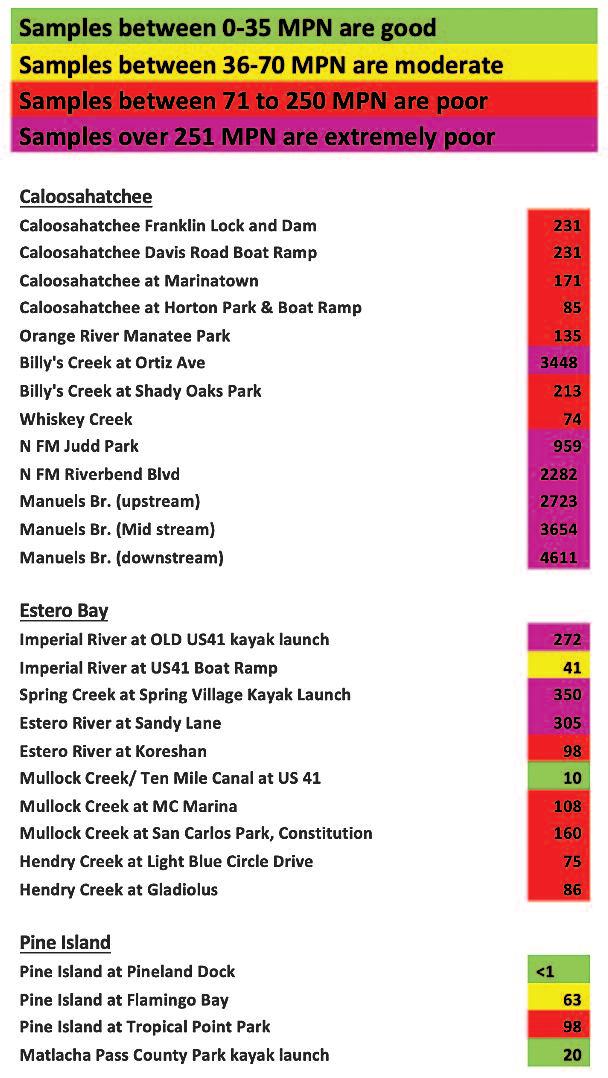
On July 11, the Florida Department of Health in Lee County issued a health alert for the presence of harmful blue-green algal toxins in the Caloosahatchee RiverHorton Park and McGregor Colonial Park It was in response to water samples taken on July 13 The public should exercise caution in and around the identified areas It advised the public to take the following precautions:
∫ Do not drink, swim, wade, use personal watercraft, water ski or boat in waters where there is a visible bloom
∫ Wash your skin and clothing with soap and water if you have contact with algae or discolored or smelly water
∫ Avoid getting affected water in your eyes, nose or mouth.
∫ Keep pets away from the area Waters where there are algae blooms are not safe for animals Pets and livestock should have a different source of water when algae blooms are present
∫ Do not cook or clean dishes with water contaminated by algae blooms Boiling the water will not eliminate the toxins
∫ Eating fillets from healthy fish caught in freshwater lakes experiencing blooms is safe Rinse fish fillets with tap or bottled water, throw out the guts and cook fish well
∫ Do not eat shellfish in waters with algae blooms. Also, the DOH-Lee lifted the health alerts issued
between June 23-29 for the presence of harmful bluegreen algal toxins in the Caloosahatchee River-Fort Myers Shores, Caloosahatchee River-end of Coon Road, Hancock Creek-Moody Ramp and Caloosahatchee-north of Loftons Island Follow-up water samples taken by the Department of Environmental Protection did not detect algal toxins, indicating the public may resume waterrelated activities
What is blue-green algae?
Blue-green algae are a type of bacteria that is common in Florida’s freshwater environments A bloom occurs when rapid growth of algae leads to an accumulation of individual cells that discolor water and often produce floating mats that emit unpleasant odors
Some environmental factors that contribute to bluegreen algae blooms are sunny days, warm water temperatures, still water conditions and excess nutrients Blooms can appear year-round but are more frequent in summer and fall. Many types of blue-green algae can produce toxins
Is it har mful?
Blue-green algae blooms can impact human health and ecosystems, including fish and other aquatic animals For additional information on potential health effects of algal blooms, visit floridahealth gov/environmental-
health/aquatic-toxins
Find current information about Florida’s water quality status and public health notifications for harmful algal b
Together is the state’s joint effort to provide statewide water quality information to prioritize environmental transparency and commitment to action
What do I do if I see an algal bloom?
The Florida Department of Environmental Protection collects and analyzes algal bloom samples To report a bloom to the DEP, call the toll-free hotline at 855-3053903 or report online at http://www surveygizmo com /s3/3444948/Algal-Bloom-Reporting-Form
To report fish kills, contact the Florida Fish and Wildlife Research Institute at 800-636-0511
Report symptoms from exposure to a harmful algal bloom or any aquatic toxin to the Florida Poison Information Center; call 800-222-1222 to speak to a poison specialist immediately
Contact your veterinarian if you believe your pet has become ill after consuming or having contact with bluegreen algae contaminated water
If you have other health questions or concerns about blue-green algae blooms, call the DOH-Lee at 239-6902100
Back to School Sales Tax Holiday starts
The state of Florida reported that consumers can purchase qualifying back-toschool supplies exempt from tax during the 2023 Back to School Sales Tax Holiday, which will run now through Aug 6
Items exempt from sales tax include:
∫ Learning aids and jigsaw puzzles
selling for $30 or less
∫ Most school supplies selling for $50 or less
∫ Clothing, footwear and accessories selling for $100 or less
∫ Computers and related accessories selling for $1,500 or less (when purchased for non-commercial and personal
use)
The holiday does not apply to the rental or repair of any of the qualifying items Additionally, it does not apply to sales in a theme park, entertainment com-
plex, public lodging establishment or airport

F o r m o r e i n f o r m a t i o n , v i s i t https://floridarevenue com/backtoschool
Lee Health unveils hospital’s weapon detection system
By CHUCK BALLARO news@breezenewspapers com
An unknown man walked into the emergency room on July 11 at Lee Memorial Hospital, when he realized he had something that could be a weapon
He immediately took it out and brought the object back to his car before returning
Had he tried to go through, the hospital’s new weapon detection system installed on July 10 would have let him know about it
On July 11, Lee Health held a media event outside the emergency room to announce the installation of the Evolv Weapons Detection System, which will increase security and keep the community safe
Gloria Graham, system manager for emergency departments, said they chose the hospital because of logistics and because Lee Memorial is the smallest of all emergency rooms
“The system is the most minimally intrusive to our patients and visitors. They required the least amount of slowing down, which is important in an emergency room,” she said “They’re entering a healing environment, so they can get the help and treatment they need ”
The system, which was decided upon after a year of planning, will use artificial intelligence-based weapons detection security to detect weapons, with Lee Health being the first hospital system in Southwest Florida to use it and Lee Memorial Hospital the first at Lee Health to install it.
This means that the hospital does not have to do what TSA does and go through your belongings if they find something unusual
Ultimately, the goal is to make sure
everyone who is healing there, visiting there or working there to be as safe as possible
“Emergency departments are dynamic places. We have paid attention to the trends and realized this was an added layer of security to invest in The leadership of Lee Health was very supportive,” Graham said, adding that she does not recall anybody bringing in a weapon with the intent to do harm
She also said that nobody entered the healing environment with a weapon However, there were two who walked up to the door with something that could be construed as one, saw the sign, and went back to their vehicle and secured the weapon there
The system can screen up to 3,600 people in an hour with its AI built into the system, while the hospital takes in about 100 patients per day
The AI alerts the officer about the item, so the officer can see if it is a laptop The system learns what may or may not be a danger The system highlights where the alert was, as opposed to just signaling an alert
The system detected a couple items on its first day of use, including a pocketknife, which was put back in the vehicle
Katie Egan, media relations specialist at Lee Health, also demonstrated the system by holding a fake gun in her hand as she went through security The alarm did not go crazy, but it quietly alerted the officer of a potential issue on the computer screen
The systems will soon be installed in all the Lee Health emergency rooms With Gulf Coast Hospital being next and Cape Coral Hospital after that. Cape’s system should be installed early in the fall
I s l a n d R e p o r t e r c a p t i v a s a n i b e l . c o m W e e k o f W e d n e s d a y , J u l y 2 6 , 2 0 2 3 n P a g e 2
l o o m s a n d b e a c h c o n d i t i o n s b y v i s i t i n g P r o t e c t i n g F l o r i d a T o g e t h e r g o v P r o t e c t i n g F l o r i d a

P a g e 3 n W e e k o f W e d n e s d a y , J u l y 2 6 , 2 0 2 3 c a p t i v a s a n i b e l . c o m I s l a n d R e p o r t e r
Web Poll
Previous Web Poll Question
Sales tax holiday much welcomed this year
head back to Lee County schools next month and parents are gearing up for a first step to get them there: Back-to-school shopping
The National Retail Federation is projecting a pretty big number this year as parents break out the wallets to buy clothes, supplies and often, electronics to equip their kids from kindergarten through college for the classroom
According to a release recently issued by the NRF with data collected by Prosper Insights & Analytics, another record spending year is projected with spending “expected to reach an unparalleled $41 5 billion, up from $36 9 billion last year and the previous high of $37 1 billion in 2021 Back-to-college spending is expected to hit $94 billion, about $20 billion more than last year’s record ”
How does that break down per kid?
“Families with children in elementary through high school plan to spend an average of $890.07 on back-to-school items this year, approximately $25 more than last year’s record of $864 35 and a new high,” the NRF reports
For parents with children in college, the number is higher
“College students and their families are expected to spend an average of $1,366 95
per person, up from $1,199 43 last year, and a new record from the previous record of $1,200.32 in 2021,” according to the NRF which adds, that since 2019, back-to-college spending has nearly doubled
Budgeting for back to school is seldom easy for most of us and this year, with many still in recovery mode from Hurricane Ian, it’s even harder
But there are at least three things coming up that can provide a bit of a break the state’s back-to-school sales tax holiday began on Monday, F I S H of Sanibel-Captiva will distribute school supplies and more next week to qualifying households and the annual Big Backpack Event providing supplies for children in need has a record number of backpacks available for distribution
The 2023 tax holiday runs from now through Aug 6 and applies to many back-tos
g , footwear, backpacks, school supplies and electronics, including personal computers and accessories, tablets and book readers T
are
limited to $50 or less per item; learning aids $30 or less; and qualifying electronics must cost $1,500 or less and must be for noncommercial home or personal use
In addition, F I S H will hand out essential items, like paper, glue sticks, notebooks and more, for grades K-12 plus socks, underwear and gift cards from July 31 to Aug 2 The program is open to families living and working on the islands For more information, contact F I S H at 239-4724775
Meanwhile, the much-anticipated 24th annual BIG Backpack Event is set July 30 from 11 a.m. to 2 p.m. at the Fort Myers Skatium Thanks to event sponsors, including the Lee County Sheriff’s Office which donated 500 packs, organizers plan to distribute 2,500 free supply-stuffed backpacks to students ages 5 to 12 at the drive-thru giveaway
As an added bonus this year, the Midwest Food Bank and Community Cooperative will provide food for those who take part

Even in the good years, every little bit helps
Business visionaries invest in county’s workforce and future

J u s t d r i v e t h r o u g h L e e County and it's evident by the b u s t l i n g c o n s t r u c t i o n , n e w b u i l d i n g s o p e n i n g a n d increased traffic that the area i s b o o m i n g , a n d s t a t i s t i c s overwhelmingly support that conclusion
A c c o r d i n g t o t h e U S
C e n s u s B u r e a u a n d U S Bureau of Labor Statistics, the county's population has grown by 3 3% annually and is currently estimated at 802,178
On average, there are 90 new r e s i d e n t s m o v i n g t o L e e County every day. Business growth continues as well, with approximately 43,000 businesses now operating in the county Job growth is up 5% over last year and Lee County has enjoyed explosive growth in every business sector, including health care, life sciences, logistics, manufacturing and technology In fact, the county is the fifth-most economically diverse c o u n t y i n F l o r i d a , a c c o r d i n g t o F l o r i d a Atlantic University
To continue this successful track, a thriving Lee County business climate is dependent upon support from community partners, as well as the private sector As members of the
H o r i z o n F o u n d a t i o n , l o c a l business “visionaries” commit f i n a n c i a l l y t o L e e C o u n t y ' s economic future The nonprofit foundation privately funds the Horizon Council, a publicprivate board that advises Lee
C o u n t y ' s B o a r d o f C o u n t y
C o m m i s s i o n e r s a n d L e e
C o u n t y E c o n o m i c Development Office on econ o m i c d e v e l o p m e n t i s s u e s .
T h e g r o u p s ' m i s s i o n i s t o improve the business environment by retaining and encouraging the growth of existing business while also attracting n e w , d i v e r s i f i e d e m p l o y e r s
Known as the “voice of business” in the county, this trifecta partnership of the Horizon

C o u n c i l , H o r i z o n F o u n d a t i o n a n d L e e County Economic Development Office has created a business-friendly environment that continues to attract top talent, new companies and entrepreneurs from around the globe
Given the growth we're experiencing, one of the greatest areas of focus for businesses in Lee County has been workforce development Since 2010, the county averaged 10,000 to 15,000 new jobs a year In 2020, though, there were 20,000 new jobs added to
the local economy The momentum continued after Hurricane Ian, too, with Lee County adding 18,800 jobs in the six months following the storm Currently, the county has approximately 20,000 job openings, but only 8,000 job hunters We are encouraged by several new initiatives, including micro-credentialing, which is aimed at helping students and employees learn or advance their skills for employment and growth opportunities
A f t e r t h e L e e C o u n t y E c o n o m i c Development Office gave a $1 million grant to cover the cost of micro-credential courses for Lee County residents, funding that was provided by the American Rescue Plan Act, s e v e r a l H o r i z o n F o u n d a t i o n i n v e s t o r s , i n c l u d i n g S c o t l y n n , s t e p p e d u p t o o f f e r micro-credentialing or digital badge courses and guarantee interviews upon completion These programs are offered through the area's h i g h e r e d u c a t i o n i n s t i t u t i o n s , i n c l u d i n g F l o r i d a G u l f C o a s t U n i v e r s i t y , F l o r i d a SouthWestern State College and Hodges University, at no cost to students. Micro-credentialing is helping close the gap between skilled workers and employment opportunities in our region
This is just one example of Horizon Foundation members collaborating and demonstrating their support for Lee County's business community As the county continues
See WORKFORCE, page 5
I s l a n d R e p o r t e r c a p t i v a s a n i b e l . c o m W e e k o f W e d n e s d a y , J u l y 2 6 , 2 0 2 3 n P a g e 4 Report your news to CAPTIVASANIBEL COM OPINIONS The views expressed on the Opinions Pages are just that opinions These pages are intended to convey a range of viewpoints; opinions printed on these pages do not necessarily reflect the views of The Island Reporter Opposing views are welcome All letters must be signed and must contain a phone number for verification purposes Letters considered for publication must relate to subjects of public interest Letters to the Editor may be e-mailed to Tiffany Repecki at trepecki@breezenewspapers com; posted to the virtual newsroom at captivasanibel com; or mailed to 2340 Periwinkle Way, Sanibel, FL 33957. Letters are due no later than noon Thursday. The Island Reporter reserves the right to edit or reject any submission. We want your opinion
did you celebrate this year's Fourth of July? ∫ Attended city event, 33% ∫ Took part in road rally, 17% ∫ Did something else, 50%
Web Poll Question
you attend the Lee County meeting on July 13 on Captiva? ∫ Yes, in person ∫ Yes, via Zoom ∫ No, will watch it later ∫ No Share your opinion at captivasanibel com
How
Current
Did
A p p r o x i m a t e l y 1 0 0 , 0 0 0 s t u d e n t s w i l l
c h o o l n e c e s s i t i e s i n c l u d i n g c l o t h i n
h e r e a r e s o m e c o n d i t i o n s : C l o t h i n g ,
footwear and qualifying accessories need to be $100 or less per item; school supplies
Island Reporter editorial Editorial
Holly D Smith Guest Commentary
Interactive guide to open island businesses
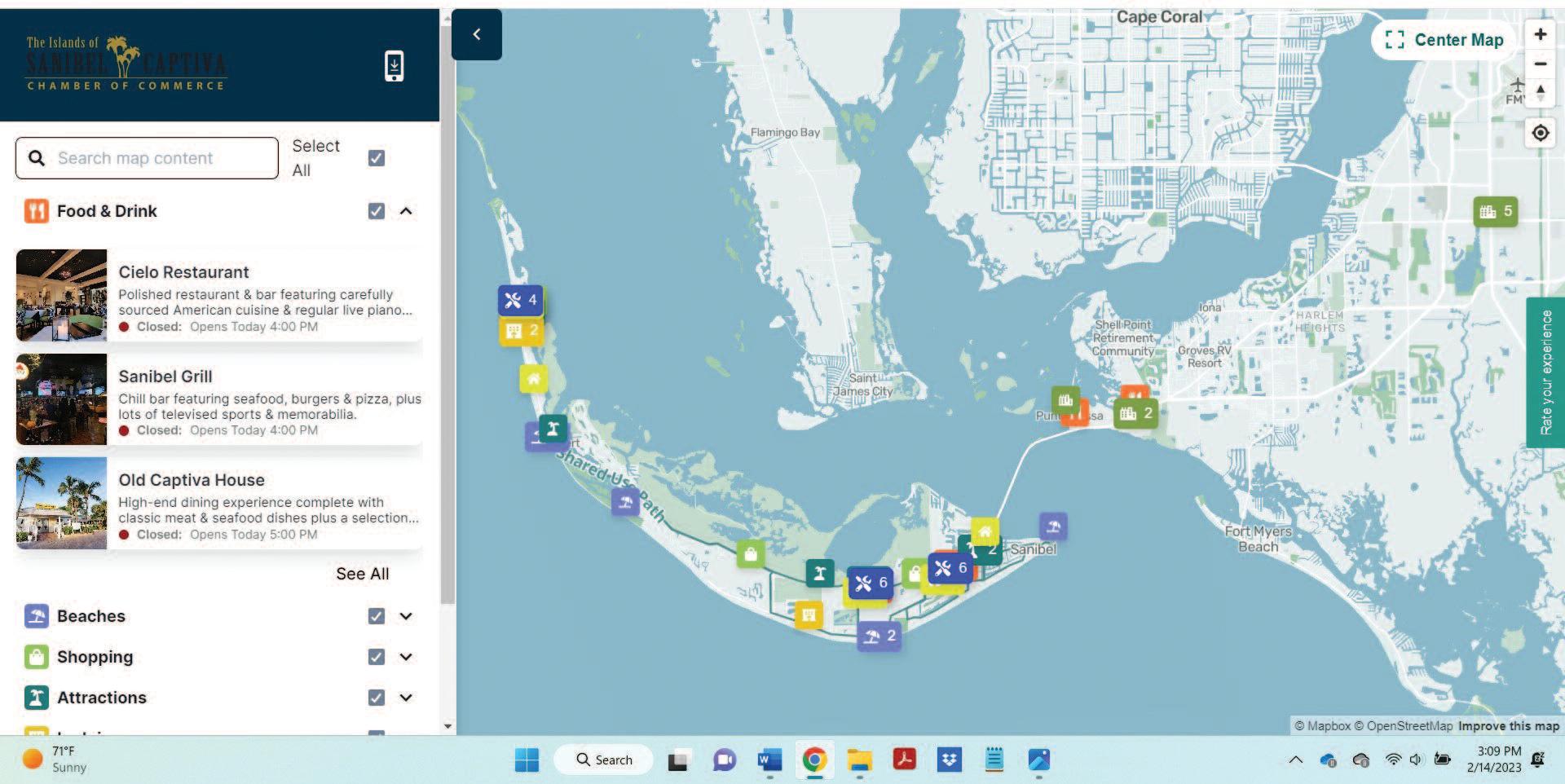
The SanCap Chamber has a l i s t a v a i l a b l e o f b u s i n e s s e s b a c k i n o p e r a t i o n a f t e r H u r r i c a n e I a n o n W a n d e r : Maps & Navigation The GPSenabled interactive map also pinpoints beach accesses that h a v e o p e n e d , b i k e p a r k i n g areas and the user's relative location Points of interest can be filtered by seven categories Users can download the app from the Apple App Store and Google Play They can also a c c e s s t h e m a p o n l i n e a t t i n y u r l c o m / s a n c a p w a ndermap
SANCAP CHAMBER
Workforce
From page 4
to grow, so must the investment in our economic development Annually, more than 100 business leaders invest through the Horizon Foundation to fund Lee County's proprietary employment database, a real estate website, site selection and relocation


marketing to attract new business, and multiple marketing and business technologies aimed at supporting existing businesses while attracting new ones to the market In turn, investors receive access to these tools as well as multiple marketing and network-
ing opportunities More importantly, they have a voice and a role in the economic prosperity of Lee County
By investing today, business leaders are guaranteeing the success of what's on the horizon To learn more about becoming a
Horizon Foundation investor, visit HorizonCouncilFoundation com/Investors
Holly D Smith is president of the Horizon Foundation, a Sanibel city councilmember and former mayor of Sanibel

P a g e 5 n W e e k o f W e d n e s d a y , J u l y 2 6 , 2 0 2 3 c a p t i v a s a n i b e l . c o m I s l a n d R e p o r t e r
CCP receives update on county meeting, more
By TIFFANY REPECKI trepecki@breezenewspapers com
The Captiva Community Panel was updated on Lee County's recent meeting on proposed amendments to the Land Development Code and Lee Plan, as well as related legal representation and a legal fund

During a special meeting on July 18, Vice President and Government Affairs Committee Chair David Mintz reviewed
what took place at the first stakeholders discussion on July 13 at the Captiva Civic Center It was the first event in a series of meetings that are scheduled to r e v i e w a n d c o l l e c t f e e d b a c k o n t h e changes proposed by county staff regarding building heights and density on the island
At its June 20 meeting, the county commission voted unanimously 5-0 to continue its consideration of revisions to
Captiva resort opens second-level dining experience
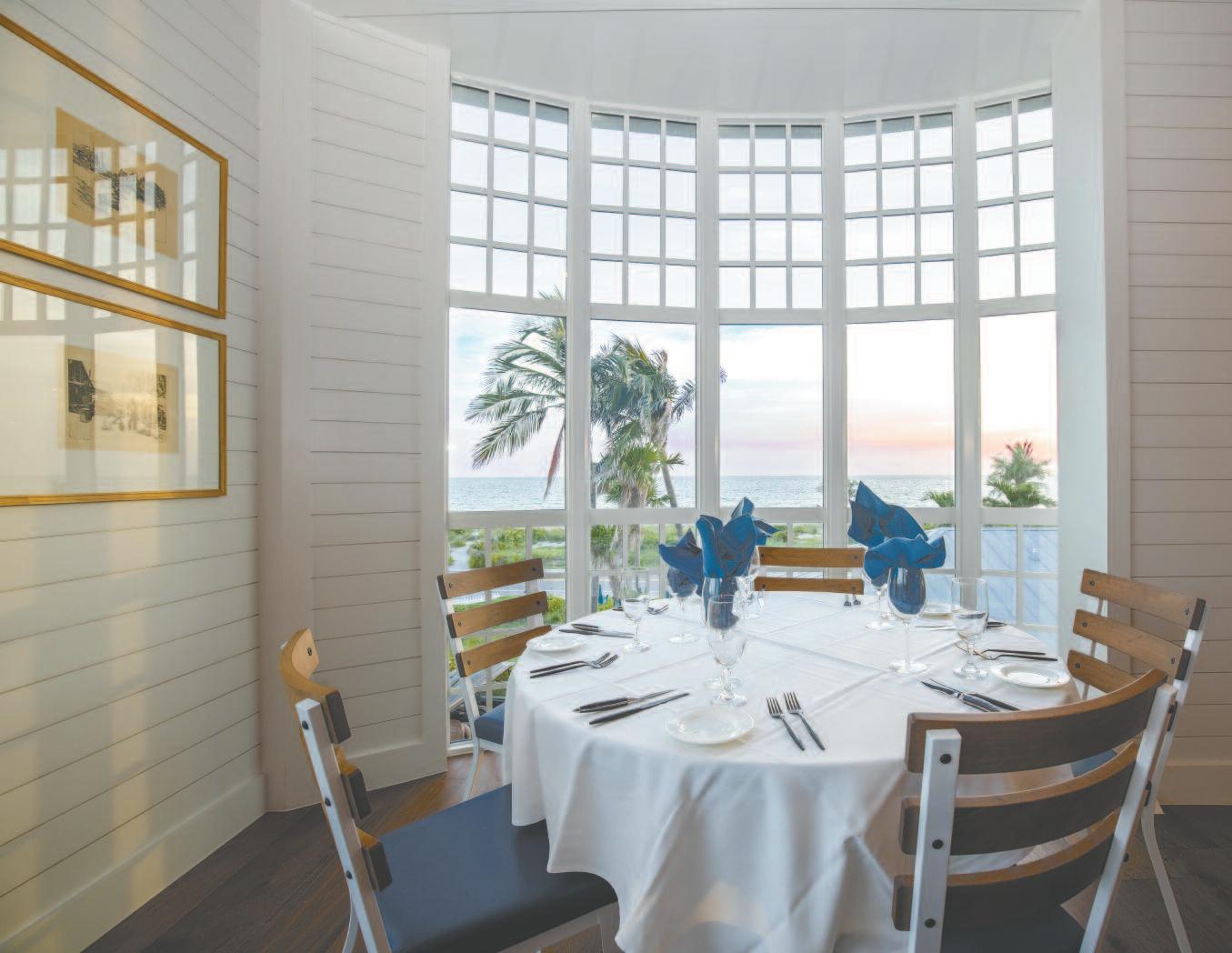
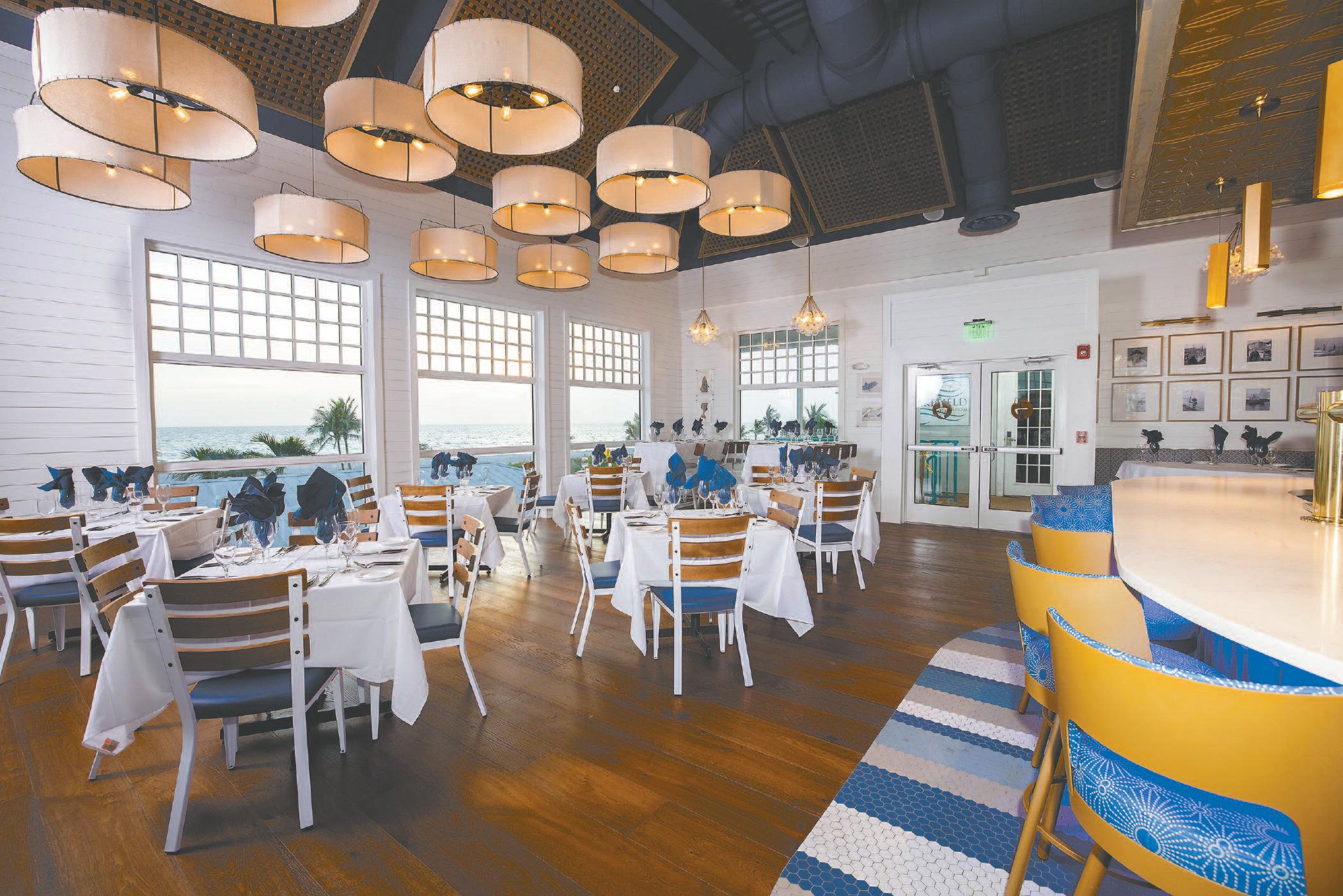
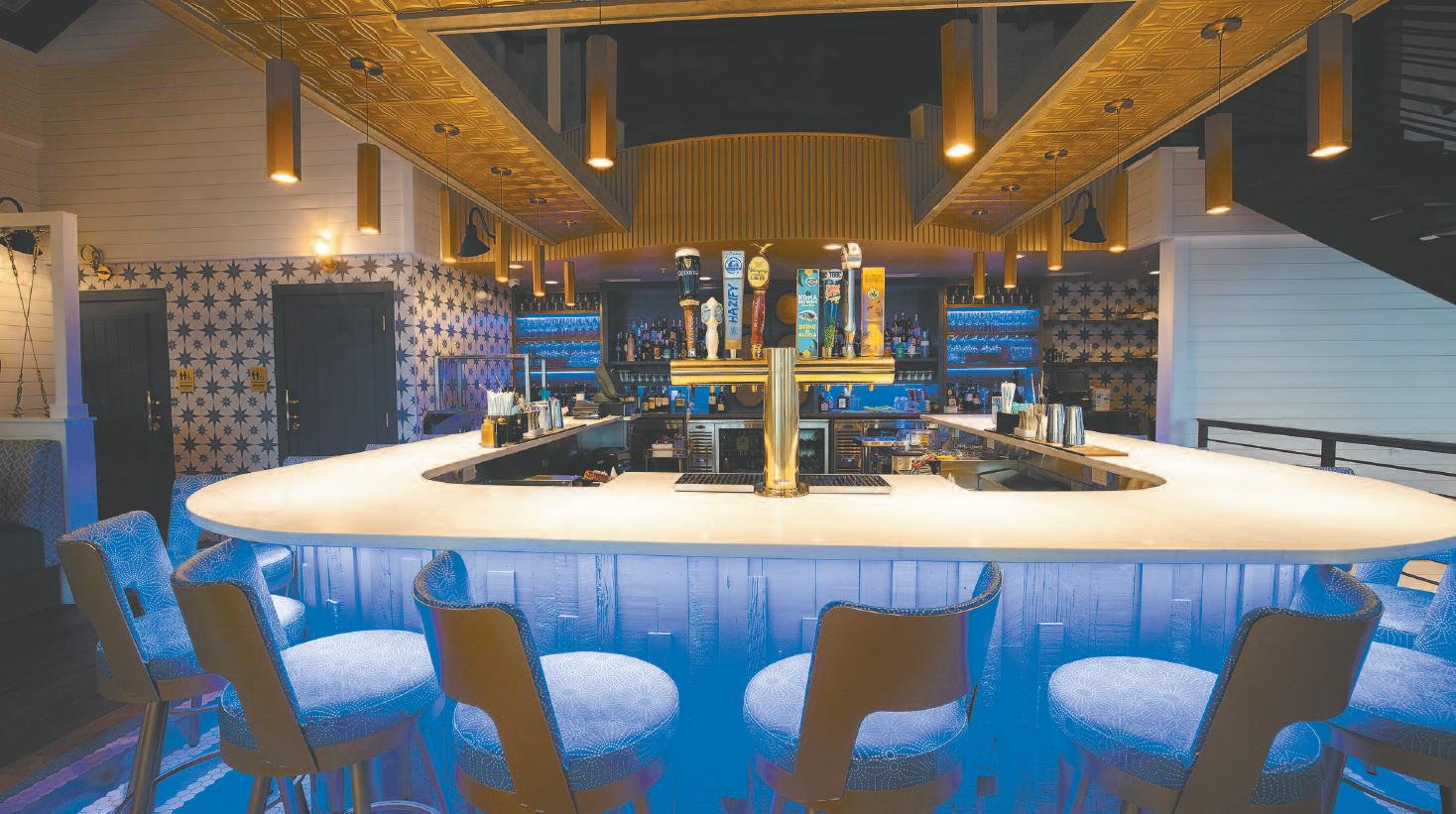
The Crow's Nest Steakhouse opened on July 6 at the 'Tween Waters Island Resort & Spa
Standing atop also recently opened The Shipyard restaurant, it is the only secondlevel beachfront dining destination on the is lan d s , acco r d in g to S a n ib e l C a p tiv a Beach Resorts
“Crow's Nest Steakhouse is unlike any dining experience on the islands, and may b e S o u th w es t F lo r id a, ” F o o d an d Beverage Director Kimmy McGonnell said “With the culinary creations of our superior executive chefs, in-house aged s t e a k s , d a i l y G u l f - f r e s h s e a f o o d s , t h e largest portfolio of whiskeys with more than 50 brands from the U S and across the world, plus magnificent views and exemplary service we promise to deliver a dining experience like you've never experienced, but will want to repeat again and again ”
Seating about 60 guests at its luxury tables and stylish bar, the restaurant brings
the Captiva Code within the LDC to its m e e t i n g o n S e p t 5 A s p a r t o f t h e motion, it also continued its considerat i o n o f c h a n g e s t o t h e C a p t i v a Community Plan within the Lee Plan that w a s p l a n n e d f o r t h e Z o n i n g a n d C o m p r e h e n s i v e P l a n A m e n d m e n t o n June 21 to the hearing set for Sept 6 Mintz reported that the stakeholders discussion was originally formatted as a
See CCP, page 7
Call to artists, artisans for CCA holiday bazaar
By STAFF REPORT trepecki@breezenewspapers com
T h e C a p t i v a C i v i c A s s o c i a t i o n i s accepting applications for its 1st Annual Holiday Bazaar
It is seeking local artists and artisans to take part in the event, which is set for Dec 4 from 2 to 7 p m and Dec 5 from 10 a m to 4 p m at the Captiva Civic Center, at 11550 Chapin Lane, Captiva

The CCA shared the following:
∫ Exhibitors must staff their own booth and have their own method for accepting payment.
∫ Exhibitors much showcase original works (not third-party retail)
∫ Exhibitors must commit to the entire event (both days and for all open hours)
The registration fee is $25; the fee is only due if selected to exhibit
One hundred percent of the sales go to the exhibitor
The deadline to apply is Aug 1
For more information about the event o r t o a p p l y a s a n e x h i b i t o r , c o n t a c t Executive Director Emily Hess Ankerson a t 2 3 9 - 4 7 2 - 2 1 1 1 o r e m i l y a n k e r s o n @ccacaptiva org
Offshore
The Offshore Sailing School, which has a location at the 'Tween Waters Island Resort & Spa, announced the introduction of its first-ever combination catamaran and monohull cruising course
“Often new students aren't sure which yacht type they would like to learn on,” President and Chief Executive Officer Doris Colgate said “So, they will get 'the best of both worlds' in our new Ultimate M o n o h u l l a n d C a t a m a r a n C r u i s i n g Course ”
On certain weeks, the school will modify its Fast Track to Cruising course, so students learn to sail aboard a Colgate 26, followed by training on both a 44-foot monohull yacht and a 40-foot catamaran
Applicable to the new course, the
See NEW CLASS, page 7 See RESORT, page 7 WEEK OF JULY 26, 2023
combo
SANIBEL CAPTIVA BEACH RESORTS
Sailing School announces new
class
public hearing, but moderator and Lee C o u n t y C o m m i s s i o n e r K e v i n R u a n e worked with staff to change the format to a panel discussion The panel participants included county staffers and stakeholder representatives
He continued that he was given an opportunity to present the panel's position and the set of principles it recently d r a f t e d i n r e s p o n s e t o t h e p r o p o s e d a m e n d m e n t s , a s w e l l a s t h e r e a s o n s behind its objections
M i n t z r e p o r t e d t h a t p a n e l i s t a n d T i m b e r s C o m p a n y C h i e f E x e c u t i v e O f f i c e r G r e g S p e n c e r , o n e o f t h e c oo w n e r s o f t h e S o u t h S e a s I s l a n d R e s o r t , g a v e a p r e s e n t a t i o n a n d a r g u e d w h y t h e y a r e u n a b l e t o b u i l d - b a c k r e s i l i e n t u n d e r t h e c u r r e n t C o d e . S o m e o f t h e p r o p o s e d c h a n g e s d i r e c t l y a d d r e s s t h e r e s o r t
He noted that there seemed to be confusion between the build-back provisions and new construction There was consensus on the panel that clarity is needed that allows for rebuilding to pre-hurricane R u a n e r e q u e s t e d t h a t c o u n t y s t a f f review the provisions prior to the next meeting on Aug 2
“And make sure that any nonconforming building or any building on Captiva could build back what they had, incorporating the new base flood (elevation),” Mintz said
He reported that there was no real conversation on new construction or dens i t y a t t h e s t a k e h o l d e r s d i s c u s s i o n However, Mintz asked Spencer if South Seas has any intentions to increase density
“Frankly, there was an avoidance of dealing with the density issue,” he said.
Mintz still described the meeting as being productive
“Because it hopefully takes the issue that South Seas was articulating, more than any other issue, was build-back and b a s i c a l l y a d v i s i n g t h e i r h o m e o w n e r s associations that they couldn't build-back unless we change the building heights and density requirements for Captiva,” he said
“I think what came out of that meeting is that the build-back provisions are a separate discreet issue, and that it's going
Resort
From page 6 an intimate, almost speakeasy vibe to dest i n a t i o n d i n i n g S C B R r e p o r t e d t h a t patrons are seated upon availability, with no “standing room only” due to a desire for comfort and table-side preparations that guests can expect “ T h e e v o l u t i o n o f ' T w e e n W a t e r s Island Resort & Spa in 2023 has been the most satisfying year of my professional l i f e , ” P r e s i d e n t a n d C h i e f E x e c u t i v e Officer Doug Babcock said “In the face of such adversity and dramatic loss on a corporate level of three of our legendary beach resorts 'Tween Waters Captiva has shined ”
“From embarking on significant lodging enhancements including the exterior re-imagination of two of our facilities, to expanded parking and an elevated tennis court, to a weather-friendly retractable roof on our Old Captiva House Garden Terrace al fresco seating, to the overwhelming success of our new Shipyard r e s t a u r a n t , t o t h e n e w C r o w ' s N e s t Steakhouse, our goal is simply stated:
to be addressed by the county,” Mintz added “So I think that's positive ”
H e e n c o u r a g e d t h e p u b l i c t o s t a y engaged and to attend the next one on Aug 2
“Hopefully, we'll be able to address the two issues that are most concerning to people on Captiva, which are density and building heights for new construction, not build-back,” Mintz said
L e g a l re p re s e n t a t i o n
Mintz also provided the panel with an update on retaining the law firm Hollard & Knight
He reiterated that the panel is governed by the state's public meetings law and Sunshine Law, as well as is authorized by the county to make recommendations on proposed changes to the Code and Plan Because of this, there were concerns raised during the consultation with the firm about what would be open to the public and whether the panel can even get involved with litigation involving the county “
T h e C C A ( C a p t i v a C i v i c Association) has stepped up under this circumstance and has agreed and offered to be officially the client with respect to retaining the law firm,” Mintz said
He continued that the CCA already has an existing Land Use Committee A representative from the panel, along with o n e f r o m t h e P r e s i d e n t s C o u n c i l o f Associations which represents the coalition of 12 homeowner and condo a s s o c i a t i o n s w i t h i n S o u t h S e a s S a n i b e l - C a p t i v a C o n s e r v a t i o n Foundation and “Ding” Darling Wildlife Society-Friends of the Refuge will serve as members on the committee
“These five organizations are going to be working together,” Mintz said “They will make collective decisions and will direct the law firm as a body ”
“Each representative will share with their organization matters that can be shared that do not interfere with attorney-client privilege,” he added “So we basically have a coalition of all the key stakeholders ”
Mintz outlined the committee's deliverables for the firm as follows:
∫ Analyze the impact of the proposed changes on development on Captiva
∫ Analyze the compliance of the proposed changes with existing regulations, including the Growth Management Act
∫ Review and draft potential amendments to the Code and Plan in line with the set of principles adopted by the panel.
∫ Communicate the position of the committee to representatives, including elected officials when appropriate
∫ Participate in the county's Code and Plan amendment process if needed
∫ Represent the committee at public h e a r i n g s a n d w o r k s h o p s t o d i s c u s s potential changes
∫ I n i t i a t e o r j o i n l i t i g a t i o n , i f required, should the county approve the proposed changes on Sept 5
“To protect the existing height and density regulations that now exist on Captiva,” he said
L e g a l f u n d
M i n t z a l s o s h a r e d w i t h t h e p a n e l t h a t t h e C C A h a s v o l u n t e e r e d , w i t h r e p r es e n t a t i v e s f r o m t h e o t h e r i n v o l v e d o r g a n i z a t i o n s , t o e s t a b l i s h a f u n d r a i s i n g e f f o r t t o c o v e r a n y n e e d e d l e g a l r e p r es e n t a t i o n
He reported that the fund would be set up over the next couple of days and then the public alerted In addition, the CCA is working out a process for returning excess funds received that are not needed
Mintz noted that the SCCF and panel each donated $10,000 and the CCA just voted on the same
“Before we even put the word out we have $30,000 in the legal fund for this legal work,” he said
“Hopefully, this gets resolved before Sept 5,” Mintz added “But we don't know ”
I n o t h e r n e w s
∫ Panel Member Bob Walter, who is employed as owners representative for South Seas, requested that the panel post on its website information that the county posted on its website about the amendments
“I think there's one thing we can all agree on, there's a lot of questions that need answered,” he said, adding that the county information outlines the history,
facts and questions, and the reasons why
“I think it's prudent that we do the right thing and we put that position, and allow people to make their own decision,” Walter said
“This is the county saying what the county's Code is and explaining what it is and how it is, and it seems to me some people on this call, on this panel, don't agree with it so therefore it's erroneous,” he added “For the panel not to post this, I think, is wrong ”
Mintz responded to the request by highlighting for the panel more than a d o z e n i n s t a n c e s w i t h i n t h e c o u n t y ' s information of inaccuracies, including examples as simple as past and future dates, to one of the advisory committees f o r t h e c o u n t y b o a r d r e v i e w i n g a n d adopting the changes when it never did
“Whoever drafted this, when it was drafted, just got a lot of it wrong,” he said
“ I g e n e r a l l y h a v e n o o b j e c t i o n t o r e f e r r i n g p e o p l e t o w h a t t h e c o u n t y p u t s o u t , ” M i n t z a d d e d “ B u t i n m y v i e w , t h i s i s f i l l e d w i t h i n a c c u r a c i e s a n d I f e e l i t w o u l d i r r e s p o n s i b l e a c t u a l l y f o r t h e p a n e l t o b e p o s t i n g t h i s a t t h i s p o i n t ”
He also reported that he has reached out to county officials and requested that they review what is posted on their website, specifically in terms of the inaccuracies, and they said that they would
A motion to not post the county's information on the panel's website was approved
Walter was the sole dissenting vote
∫ Mintz reported that the panel has been asking island entities to endorse its set of principles
“We've heard no objections,” he said
The hope is density and new construction are on the agenda for the next stakeholders discussion
“We need people to be prepared to come to the Aug 2 meeting We want people to weigh in on that,” Mintz said “Obviously, they've been doing that We have a very strong and unified voice ”
If the subjects are not addressed then, n o r b e f o r e S e p t 5 , a c t i o n m a y b e required
“We're going to have to develop a strategy to make sure those issues are addressed directly,” he said
New class
From page 6
Offshore Sailing School is promoting ChristMAST in July with $1,000 savings when two students enroll together for courses in Florida or the British Virgin Islands during the month of July and take their course between October and December of this year Students will receive textbooks to study in advance, instruction aboard and resort accommodations.
In addition, graduates receive an exclusive discount of up to 15% off of their first charter with the school's charter partner in the British Virgin Islands, The Moorings
Sanibel and Captiva Islands will rise better than ever and, in doing so, embrace more tourism to expand our local and regional economy,” he added
The restaurant is open Tuesday through Saturday from 5 to 10 p m by reservation only.
Reservations for parties up to six can be
made at https://crowsnest-captiva com/ or
o n O p e n T a b l e a t
h t t p s : / / w w w o p e n t a b l e c o m / L a r g e r groups are asked to contact 239-4725161 (Touch 423)
The 'Tween Waters Island Resort & Spa is at 15951 Captiva Drive, Captiva.
To check course availability, cont a c t 2 3 9 - 4 5 4 - 1 7 0 0 o r 8 0 0 - 2 2 14326 or Info@OffshoreSailing com
F o r m o r e i n f o r m a t i o n , v i s i t https://www offshoresailing com/ The 'Tween Waters Island Resort & Spa is at 15951 Captiva Drive, Captiva
P a g e 7 n W e e k o f W e d n e s d a y , J u l y 2 6 , 2 0 2 3 c a p t i v a s a n i b e l . c o m C a p t i v a C u r r e n t
CCP From page 6
SANIBEL CAPTIVA BEACH RESORTS
Business Notes
Greggs joins CHR Board of Directors
Community Housing
a n d R e s o u r c e s w e lcomed Shelley Greggs as a new board member.
S h e i s a l o n g - t i m e S a n i b e l h o m e o w n e r , who became a full-time resident in 2008 with her family. Greggs has a b a c k g r o u n d i n s c h o o l psychology and education, having worked in the public school system in Cincinnati, Ohio, and a s a n a d j u n c t f a c u l t y m e m b e r a t F l o r i d a Southwestern State College She is also a certified yoga instructor and teaches at the Sanibel Recreation Center
Greggs started volunteering at a women's shelter in Newark, New Jersey, when she was in high school and has continued to be involved in various volunteer organizations throughout her life On Sanibel, she has volunteered for CHR fundraising, Sanibel-Captiva Conservation Foundation's Education and Events Committee, Sanibel Sea School, F I S H of SanibelCaptiva and Big Brothers tutor Greggs also served as a SCCF Board Member from 2016-20.
Matthews promoted at Offshore Sailing School
O f f s h o r e S a i l i n g School announced that C o n t r o l l e r D a n a Matthews assumed the role and responsibilities of executive vice president and chief financial officer on July 17
She joined the company in 2022 and holds 30 years of experience i n f i n a n c i a l m a n a g ement, business leadership and corporate strategy and growth
Prior to joining the Offshore Sailing School, Matthews worked in finance roles at various property management companies. She spent over 11 years at the Internet Society in leadership positions, culminating in the director of financial reporting and accounting, and she served as chief financial officer and chief operating officer for the American Bird Conservancy
M a t t h e w s h o l d s a B a c h e l o r o f B u s i n e s s Administration and Accounting from George Mason University
San Cap Community Bank hires Petitte

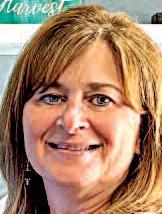

Jennifer Petitte has joined Sanibel Captiva Community Bank as a d e p o s i t o p e r a t i o n s assistant in its operat i o n s c e n t e r a t t h e Bridge Branch in Fort Myers
S h e i s r e s p o n s i b l e for incoming and outgoing domestic and international wire transfers, daily non-posted items, See BUSINESS
NOTES, page 9
TCH gives update on post-stor m recover y

The Community House on Sanibel recently provided an update on the progress of its post-hurricane rebuilding phases On July 10, it reported that the cabinets, paint, woodwork and signage are all coming together In addition, TCH is aiming to complete Phase II by Aug 31 and hopes to reopen the Great Hall auditorium, Community Room and kitchen facilities. It is planning to return to full
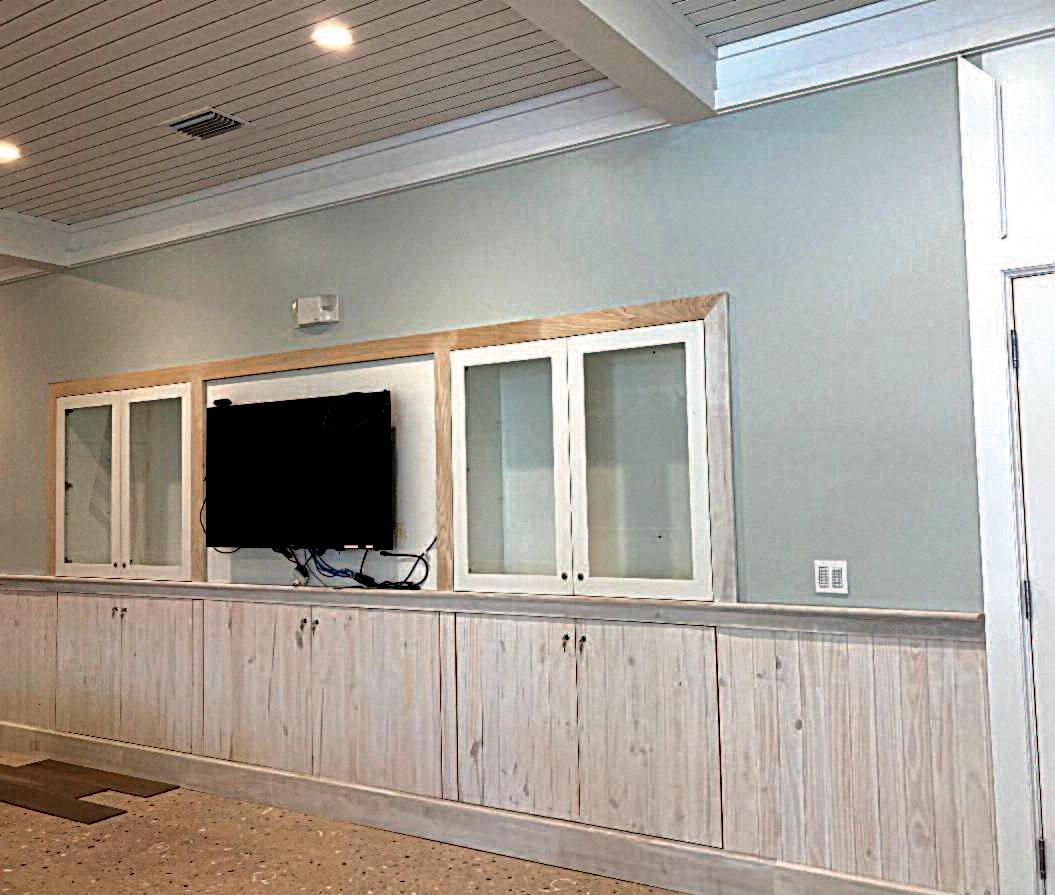

operation in September, in time for the fall-spring season Also, the final phase Phase III will come on stream by Oct 1 It is working this summer to complete the Founders Room, which was part of the original historic structure dating from 1927 The Community House is at 2173 Periwinkle Way, Sanibel
THE COMMUNITY HOUSE
Rotar y announces new president
The Sanibel-Captiva Rotary Club welcomes Don McDonald a s i t s 2 0 2 3 - 2 4 p r e s i d e n t Immediate Past President Annie Campbell and President-elect Rachel Tritaik passed the gavel to him on July 1 for the new year The club meets on Fridays from 7:30 to 9 a m at The C o m m u n i t y H o u s e , a t 2 1 7 3 Periwinkle Way, Sanibel For more information, visit sanibelr o t a r y o r g o r w w w f a c e b o o k com/sancaprotary

SANIBEL-CAPTIVA ROTARY CLUB
Kiwanis holds monthly social
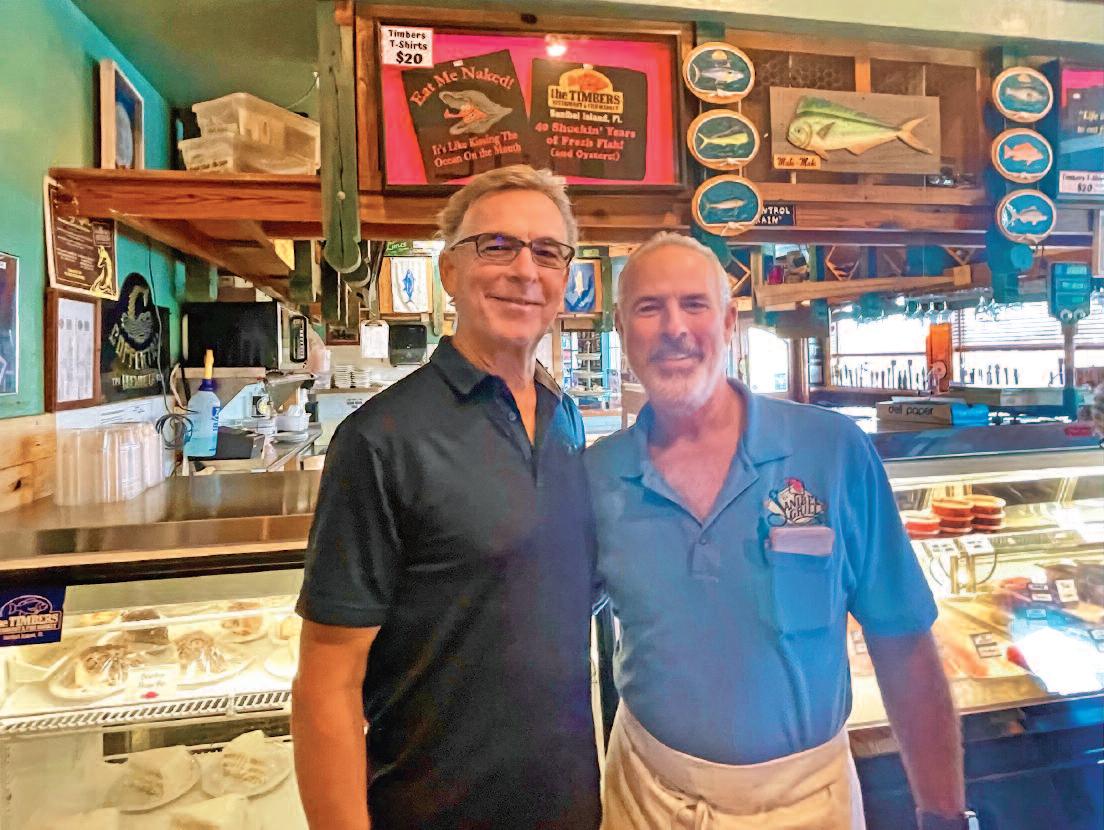
The Sanibel-Captiva Kiwanis Club held its monthly social on June 28 at the Timbers Restaurant & Fish Market on Sanibel The event was attended by about 25 members and guests who enjoyed great food, wonderful service and lots of fun The club meets on Tuesdays at 8 a m at The Community House, at 2173 Periwinkle W a y , S a n i b e l . F o r m o r e i n f o r m a t i o n , v i s i t www sanibelkiwanis org or call 239-472-2111
Sanibel-Captiva Kiwanis Club Presidentelect Jeff Blackman and Mark Blust, vice president of marketing and operations for The Prawnbroker Group.
SANIBEL-CAPTIVA KIWANIS CLUB
I s l a n d R e p o r t e r c a p t i v a s a n i b e l . c o m W e e k o f W e d n e s d a y , J u l y 2 6 , 2 0 2 3 n P a g e 8 Report your news to CAPTIVASANIBEL COM BUSINESS
Shelley Greggs
Dana Matthews
Jennifer Petitte
Bailey’s trucks sur vive hurricane
O w n e r - o p e r a t o r M e a d J o h n s o n poses recently with the Bailey's General Store 1930 Model AA Ford. The family reported that both vintage trucks

went underwater in Hurricane Ian, but are still here
BAILEY'S GENERAL STORE
Business Notes
From page 8
overdrafts, disputes and lending support for all bank locations
Petitte is a seasoned banking professional with more than 35 years of experi-

ence working at various financial institutions in Connecticut and Tennessee She is a graduate of Southern Connecticut State University, with a Bachelor of Arts in business administration

P a g e 9 n W e e k o f W e d n e s d a y , J u l y 2 6 , 2 0 2 3 c a p t i v a s a n i b e l . c o m I s l a n d R e p o r t e r
PRESERVING PARADISE
SanCap coalitions gets underway with working groups
A coalition of citizens and over a dozen community organizations, the SanCap Citizens for a Resilient Future is launching three, topical working groups to provide resources to residents and businesses
They will include Resilient Buildings, Natural E n v i r o n m e n t / L a n d s c a p i n g a n d C o m m u n i c a t i o n s Each group will be led by volunteers and one or more liaisons from the coalition's steering committee
R e s i l i e n t B u i l d i n g s w i l l b e c o - l e d b y K i p Buntrock, a 50-year-plus Sanibel resident with a background in condominium management, and Brian Wilson, a new resident with a background in construction who moved to Sanibel just after Hurricane Ian to help the community rebuild The steering committee liaisons will include retired, environmental health professor Dr Tom Bierma and Community Housing and Resources Board Member Erika Steiner
“Given Sanibel and Captiva's history and focus on sustainability, I think this community has a unique opportunity to lead on resilience and show other communities what it means to be a resilient coastal community much as it has led on clean water and other issues,” Bierma said Natural Environment/Landscapes will be led by Walter Cheatham, a Sanibel resident with a background in environmental education The steering c o m m i t t e e l i a i s o n s w i l l i n c l u d e S a n i b e l - C a p t i v a Conservation Foundation Coastal Resilience Manager Dr Carrie Schuman and Sanibel resident and master gardener Mariana Pardo
“I'm excited to see how this new working group can complement efforts already underway and build on the successes of our member organizations,” Pardo said C o m m u n i c a t i o n s w i l l b e l e d b y M a u r e e n McGauran, owner of Beachwalker Marketing and Communications The steering committee liaisons will include “Ding” Darling Wildlife Society-Friends of the Refuge Board Member Mark Heiman
“Our goal is to continue to achieve a high level of community involvement with this project We want to both hear from people to understand their needs and involve people to be part of the solution,” Heiman said, adding that the group is in the process of building a website and will launch a Facebook group later this year
In addition to the three groups, the coalition will serve as the team to address energy resilience. Cofounder and Co-chair Bob Moore reported that it will include evaluating how energy infrastructure can be enhanced to perform more effectively in the face of future storms, especially for emergency services, and long-term planning to reduce energy demand and reduce, or ultimately eliminate, reliance on fossil fuels to power homes, businesses and transportation
“Today, clean energy like wind and solar are the cheapest forms of new energy generation in most of the world Renewable energy makes good economic and good environmental sense,” he said “We are lucky to have LCEC as our local utility to help us explore new and better solutions to our energy needs ”
“These new working groups will provide support to community members who are in the process of restoring or rebuilding their homes and businesses with a focus on resiliency,” Schuman added “That could include identifying best practices for hardening a building against future storms or flooding, technology to reduce energy usage, costs and carbon footprint, or strategies to make landscapes more resilient ”
See SANCAP COALITIONS, page 11
Restoration progressing at Puschel Preserve
The Sanibel-Captiva Conservation Foundation reported that restoration efforts are quickly progressing at the Puschel Preserve on Sanibel As of July 11, the last of the exotic trees such as Australian pine, javaplum and seaside mahoe had been removed or left in place for cavitynesting birds

“Contractors have cleaned up any construction and demolition debris from the hurricane on the site and have removed a good percentage of organic debris from the parcel to allow replanting, while leaving enough for wildlife to shelter,” Wildlife and Habitat Management Director Chris Lechowicz said
A shipment of large cabbage palms was delivered and planted to begin the process of revegetating the preserve Contractors placed them around water features and the planned trail system, as well as other areas More plants will arrive soon to begin the fill in other areas, but not make it too dense
Restoration of critical habitats
The SCCF reported that there are several wetlands on the north side that will be planted with cordgrass, as well as other wetland plants, to re-establish a slice of the iconic open grassland habitat that once dominated Sanibel

“This open landscape will attract many forms of wildlife from invertebrates, amphibians, reptiles, birds and mammals,” he said, adding that the real task will be to keep the
native buttonwood from overtaking the open areas over the years
Upon approaching the Sanibel River, the south part of the preserve gets lower in elevation and should be dominated by buttonwoods, as it was the natural habitat for the water-loving species
A circular public trail off the city's Shared Use Path will only traverse the northern section of the property, where there will be a pollinator garden and scenic overlook onto wetland and sculpture gardens Plantings will o c c u r throughout the wet months to maximize water from rainfall.
The preserve is expected to open to the public by the end of the year
DDWS reports on refuge programming and more
T h e “ D i n g ” D a r l i n g W i l d l i f e Society-Friends of the Refuge provided the following updates for the J N “ D i n g ” D a r l i n g N a t i o n a l Wildlife Refuge on Sanibel:
∫ A f r e e m i n i - e x h i b i t i o n o f Artist-in-Residence Jacqui Roch's refuge-inspired work is on display t h r o u g h J u l y i n t h e V i s i t o r & Education Center Auditorium
∫ Free Summer Programs will run from now through Aug 5 For m o r e i n f o r m a t i o n , v i s i t https://www dingdarlingsociety org/ articles/free-refuge-programs
∫ Art in the Wild Day will take place on Oct 21-22 at the refuge F o r m o r e i n f o r m a t i o n , v i s i t https://www dingdarlingsociety org/
articles/art-in-the-wild
∫ A Holiday Shopping Night is scheduled for Nov 29
∫ An inaugural Ice Cream Social is planned for December
∫ Photo-artist Niki Butcher will mount an exhibition of her work in January and February in the refuge's Visitor & Education Center
∫ The “Ding” Darling Lecture Series will return to the refuge from Jan 18 through March For more information, visit https://www dingd a r l i n g s o c i e t y o r g / a r t i c l e s / l e c t u r eseries
∫ Wild Days of Wellness will take place at the refuge and beyond on Jan 18-21
∫ A free Estate Planning Seminar
will be held on Jan 30 at the refuge
∫ The next Go Wild for “Ding” fundraiser is slated for Feb 7
∫ The refuge will host a unique Solar Eclipse Viewing event on April 8
∫ T h e “ D i n g ” D a r l i n g D a y Conservation Carnival will be held on April 20 at Lakes Park in Fort Myers For more information, visit https://www.dingdarlingsociety.org/ articles/ding-darling-days
∫ T h e 1 2 t h a n n u a l “ D i n g ” D a r l i n g & D o c F o r d ' s T a r p o n Tournament will take place on May 1 0 F o r m o r e i n f o r m a t i o n , v i s i t h t t p s : / / d i n g d a r l i n g s o c i e t y o r g / a r t icles/tarpon-tournament-1
I s l a n d R e p o r t e r c a p t i v a s a n i b e l . c o m W e e k o f W e d n e s d a y , J u l y 2 6 , 2 0 2 3 n P a g e 1 0
SANIBEL-CAPTIVA CONSERVATION FOUNDATION
CROW holds volunteer event
On July 15, the Clinic for the Rehabilitation of Wildlife on Sanibel hosted a volunteer event to clean out the Animal Ambassador Enclosures at its Visitor Education Center and to paint inside its student housing CROW thanked the group for all of its hard work


It also extended a thank you to Volunteer Coordinator
Pam Stoike and Facilities and Grounds Manager
Randy Rainbolt for making the events possible CLINIC FOR THE REHABILITATION OF WILDLIFE
SanCap coalitions

The coalition was formed on the heels of the hurricane, with leadership from S a n i b e l C i t y C o u n c i l m e m b e r J o h n Henshaw and participation from other local organizations
“Hurricane Ian was a wake-up call for the Sanibel and Captiva communities While we all hope a storm of that magnitude will be a
From page 10
once-in-a-lifetime event, we know the impacts of climate change represent a significant issue we must address,” Moore said “It’s great to see the community come together to confront the ways we must adapt and also to pursue the ways we can help mitigate future effects through transitioning to clean energy technologies ”
The coalition currently includes the
A m e r i c a ' s B o a t i n g C l u b o f S a n i b e l -
C a p t i v a , C a p t i v a C o m m u n i t y P a n e l ,
C a p t i v a E r o s i o n P r e v e n t i o n D i s t r i c t ,
C h i l d r e n ' s E d u c a t i o n C e n t e r o f t h e
Islands, city of Sanibel, Clinic for the Rehabilitation of Wildlife, Committee of the Islands, CHR, DDWS, F I S H of
S a n i b e l - C a p t i v a , L e e C o u n t y C l i m a t e Reality Project, Sanibel Strong, SCCF, S a n C a p C h a m b e r , S a n i b e l - C a p t i v a Renewable Energy Working Group and UF/IFAS Lee County Extension
Those interested in joining a group can f i l l o u t a f o r m a t https://forms gle/Vz7NdHbvsNwrJqU77

P a g e 1 1 n W e e k o f W e d n e s d a y , J u l y 2 6 , 2 0 2 3 c a p t i v a s a n i b e l . c o m I s l a n d R e p o r t e r
Isl and lIvIng
SPD releases weekly blotter
As Sanibel continues to recover from Hurricane Ian, the Sanibel Police Department is committed to keeping the community safe and secure To support that effort, a weekly police blotter will be issued on Tuesday that will include real time information about law enforcement response to criminal activity
Arrests
∫ Diego Miguel Andres, 30, of 906 Immokalee Drive, Immokalee, was charged on July 14 with drive while license suspended revoked or revocation equivalent status
∫ Michael Paul Ebersole, 68, of 4555 W Tonto Road, Eloy, Arizona, was charged on July 16 with one count each of possess stolen property motor vehicle title registration bill of sale and attach registration license plate not assigned
Other enforcement actions
∫ On July 14, a traffic stop was initiated on a vehicle for excessive speed The driver was subsequently issued a notice to appear for unlawful speed (70 mph in a 35 MPH mph)
∫ On July 15, a traffic stop was initiated on a vehicle for excessive speed The driver was subsequently issued a notice to appear for never having a driver's license issued and the vehicle was towed for not being registered.
∫ On July 16, a traffic stop was initiated on a vehicle for running a stop sign The driver was subsequently issued a notice to appear for driving with a suspended license and a citation for running the stop sign
Enforcement operations statistics
From July 11-17:
∫ Alarm calls (business and residential): 12
∫ 911 non-emergency calls: 48
∫ Traffic crashes: 0
∫ Radar details: 55
∫ Traffic stops: 34 Citations issued: 18
Written warnings issued: 1
∫ Field interviews: 2
∫ Residential area checks: 617
∫ Business area checks: 199
∫ Total area checks: 1,310
∫ Reported burglaries: 2
∫ Reported thefts: 0
∫ Total CAD calls: 1,565
From July 2023 to date:
∫ Alarm calls (business and residential): 21
∫ Non-emergency calls: 121
∫ Traffic crashes: 0
∫ Radar details: 151
∫ Traffic stops: 58 Citations issued: 26
Written warnings issued: 1
∫ Field interviews: 2

∫ Residential area checks: 1,527
∫ Business area checks: 523
∫ Total area checks: 3,270
∫ Reported burglaries: 3
∫ Reported thefts: 0
∫ Total CAD calls: 3,901
Impor tant reminders
The city of Sanibel's 2021 and 2022 Hurricane Re-entry Passes are still valid. If you have one, you do
See BLOTTER, page 13
Sanibel library offers mix of programs
The Sanibel Public Library provides a variety of programming for adults and children
Staffer Matt Gindling will host “Plants of the Coastal Shell Ridge” today, July 26, at 10 a m Part of the library's Summer School for Adults, the class will cover the most common plants one might see while strolling the beaches of Sanibel. Participants will also learn why they are so important to the island
Also today, July 26, Family Storytime for ages 5 and under will be held at 10:30 a m with Megan Willis Literacy is a family bonding experience with stories read aloud, followed by early literacy centers of play to flex minds, develop motor skills and increase creativity Programs will include an art/craft center Parents and caregivers should plan to be engaged with their child An additional Family Storytime will take place on July 28 at 3 p m with a teacher from the Children's Education Center of the Islands
Staffer and tech expert Andrew Dyen-Shapiro will host “Exploring Your Family's History: Ancestry com For Libraries” on July 27 at 10 a m Participants will learn how to use the website Following the class, they will have the chance to try it using their own family information
Also on July 27, the Teen End Of Summer Party will take place from 3:30 to 4:30 p m Youths will celebrate the end of the library's annual Summer Reading Program with some prizes and snacks
S t a f f e r a n d a r t i s t F l o r i n d a P a t t e r s o n w i l l h o s t “Coloring & Coffee for Adults” on July 28 at 10 a m Participants can enjoy a relaxing morning of coloring, drinking coffee and socializing Coffee, colored pencils and coloring sheets will be provided
On July 29, the library will hold its “SRP 2023: End of Summer Celebration” from 10:30 to 11:30 a m Attendees can get together to celebrate the end of summer and end of the Summer Reading Program
A Voter Registration Drive will take place on July 31 from 9:15 a m to 3 p m Stop by the library for voter registration forms and other voter information The Lee County Supervisor of Elections will offer forms in both English and Spanish Obtener registro Solicitud de inscripción de votante en Español.
Also on July 31, stop by for Movie Monday starting at 1 p m for a family-friendly film
SANIBEL PUBLIC LIBRARY
The Sanibel Public Library offers tools, home repair books and magazines, disaster prep books and more for patrons to borrow

Youth programs are designed for children and accompanying adults
For the most up-to-date information, visit the calendar at www.sanlib.org.
Locals and visitors ages baby to teen can sign up for the annual Summer Reading Program Stop by or register with Beanstack at www sanlib org/children Participants can pick up their registration gift
The program will run from now through July 29
Summer Book Bingo is a self-directed reading challenge for adults, with opportunities for prizes. Pick up your card at the library's service desks or download it from the “News Blog” at www sanlib org Turn in the card by Aug 31
The library offers tools, home repair books and magazines, disaster prep books and more to borrow.
Library cards are available to residents of Sanibel and Lee County at no charge
Visitor library cards are available for a $10 annual fee
The Sanibel Public Library is open Monday through Friday from 9 a m to 5 p m and Saturday from 9 a m to 1 p m
For more information, call 239-472-2483 or visit www sanlib org
The Sanibel Public Library is at 770 Dunlop Road, Sanibel
F.I.S.H. offering services at The Gathering Place
As part of its long-term recovery program, F I S H of Sanibel-Captiva is offering services in partnership with Saint Michael and All Angels Episcopal Church, SalusCare, Project H O P E and others at the newly renovated space called The Gathering Place @ St Michael's at the church Services are offered on Mondays, Wednesdays and Fridays from 10 a m to 4 p m
On Mondays, F I S H Social Services Director Nitza Lopez will be available to discuss disaster relief, including disaster financial assistance, youth scholarships, emergency financial assistance and more On Wednesdays, Senior Services Director Erika Boyles will be on-site to discuss senior needs and host mental health services with SalusCare
Also on Wednesdays, F I S H will provide group therapy focusing on hur-
ricane-related topics, including PTSD, trauma and loss, beginning on Aug 2
Laura Guarino will lead the group from 11 a m to 12:30 p m and will remain on-site until 2 p m for those interested in mini one-on-one sessions In addition, Project H O P E will be available from 1 to 3 p m to offer craft therapy and open discussions on post-storm trauma, including mental exhaustion, decision-making, financial fears and more
“It's an honor to be a part of The Gathering Place and offer services to our community in a 'resiliency hub' type collaboration,” Executive Director Maria Espinoza said “Having a designated space on the islands to meet faceto-face with community members will allow us to provide help when and where it's needed most ”
F I S H extended a special thank you to church Director of Digital
Communications and Christian Formation Sue Van Oss, who was instrumental in getting the space ready for service providers
In addition to its long-term recovery program, F I S H continues to offer programs representing its major pillars: Food, Island Based Education, Social and Senior Services, and Helping Hands
For more information about F I S H and its programs and services, including hurricane recovery, visit www fishofsancap org or contact Espinoza at 239-472-4775 or manuela@fishofsancap org
To access The Gathering Place, enter off of Dunlop Road and park in the back fenced-in area
Saint Michael and All Angels Episcopal Church, at 2304 Periwinkle Way, Sanibel
Sanibel Public Meetings
meetings/hearings are scheduled:
I s l a n d R e p o r t e r c a p t i v a s a n i b e l . c o m W e e k o f W e d n e s d a y , J u l y 2 6 , 2 0 2 3 n P a g e 1 2 Report your news to CAPTIVASANIBEL COM
T h e f o l l o w i n g p u b l i c
∫ Aug 2: Lee County stakeholders meeting from 6 to 8 p m at BIG A R T S , a t 9 0 0 D u n l o p R o a d , Sanibel
City taking applications for advisory committee
The Sanibel City Council is accepting applications to fill seven seats on the n e w l y c r e a t e d P a r k s a n d R e c r e a t i o n Advisory Committee
Three one-year terms will begin on Aug. 15 and expire on Aug. 19, 2024. Two two-year terms will begin on Aug 15 and expire on Aug 18, 2025 Two three-year terms will begin on Aug 15 and expire on Aug 17, 2026 All subsequent terms will be three-year terms
Responsibilities include:
∫ A t t e n d m e e t i n g s o n t h e t h i r d Thursday of each month at 9 a m in the
Blotter
Christensen Performance Hall at BIG ARTS, at 900 Dunlop Road, Sanibel
∫ Make recommendations to the city council and city manager regarding the items listed in Sections 2-168, Functions and duties.
To review the authority and responsib i l i t i e s o f t h e c o m m i t t e e , v i s i t https://r20 rs6 net/tn jsp?f=0012qWHr3c foCprEk41t3u4bbIGSckrkWpVuzOXyU
From page 12
not need to re-apply for a new pass
Updated information on the Sanibel Boat Ramp:
∫ The boat ramp is open to permit holders on weekdays, weekends and holidays
∫ The boat ramp is open to the public (non-permit holders) on weekdays that are not holidays for a $40 daily fee
∫ There is no beach access at the Sanibel Boat Ramp at this time
∫ Commercial use of the boat ramp is prohibited
∫ Fines for violations at the boat ramp are $250 Roadside parking on Sanibel is not allowed except in the case of special events requiring a permit It is enforced and can result in a $150 fine Dewatering of a pool or spa directly into a waterbody, into the city’s stormwater system or onto any third-party’s prop-
erty without the third party’s consent is expressly prohibited
Solicitation is not allowed on Sanibel Please share any photos of solicitation hang tags to police@mysanibel.com or use Tip411
Repor ting suspicious activity
Anonymous tips regarding crimes or suspicious activity can be submitted via Tip411:
∫ Text the keyword SANIBEL then your tip to 847411

∫ W e b t i p s c a n b e s u b m i t t e d a t https://www tip411 com/tips/new?alert g roup id=22450
∫ Use the free “Sanibel PD” app for your Android or iOS device
The SPD's non-emergency line is 239472-3111
F i n d t h e S P D o n F a c e b o o k a t https://www facebook com/SanibelPolice
Du7dFHBmCHnYzgjlPYN9ePhsZhm8J Tdg6bcYWecFqEZlvYxo4EIWqJFIMI=
complete the online application At the end of the application process, click the green “Submit” button, which will allow submission of your application to the City Clerk
The deadline for all submissions is July 31 at noon
The city council will make the appointments at its Aug 15 meeting
Any resident wishing to serve may v i s i t h t t p s : / / m y s a n i b e l g r a n i c u s c o m /boards/w/8462bb7f13e817f6/boards/48

112 After opening the hyperlink, click the green “Apply” button and continue to
For more information, contact the City Clerk's Office at 239-472-3700
5 L Z T P s v o k k M z K z h B 8 h N 3 sJ X o g r s 6 D j s t K H O n T P T Y x J 4 a H h4 P f M A p P - v U l B U t l N - q - 5 1 Te h o a p 1 T t 8 m e B8wVoqPv2N0xpnT9Hpt998FbLCDkHB z v Q E 9 - K L b m R - s 2 f r T d n t f 2 G L 7
& c = a I c G c Z I j 8 S Z u - Q k B f K G C U39v6A6kNY7lZ8se7o13JflChBCo2Z M g Q = = & c h = y w T Y n - Q h A F C TZ F W Q K l 2 I J d x n w g U L M L D b LqWqsZIxJIwDq0hwrTe8Q==
P a g e 1 3 n W e e k o f W e d n e s d a y , J u l y 2 6 , 2 0 2 3 c a p t i v a s a n i b e l . c o m I s l a n d R e p o r t e r
W e e k o f W e d n e s d a y ,
u

P a g e 1 5 n W e e k o f W e d
l y 2 6 , 2 0 2 3 c a p
n e s d a y , J u J
t i v a s a n i b e l . c o m I s l a n d R e p o r t e r I s l a n d R e p o r t e r l y 2 6 , 2 0 2 3 n P a g e 1 4
c a p t i v a s a n i b e l c o m
W e e k o f W e d n e s d a y ,
u
P a g e 1 5 n W e e k o f W e d
l y 2 6 , 2 0 2 3 c a p
n e s d a y , J u J
t i v a s a n i b e l . c o m I s l a n d R e p o r t e r I s l a n d R e p o r t e r l y 2 6 , 2 0 2 3 n P a g e 1 4
c a p t i v a s a n i b e l c o m
FOROS presents awards to rally winners
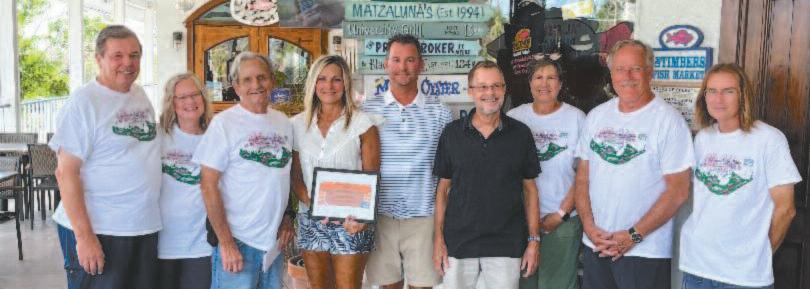
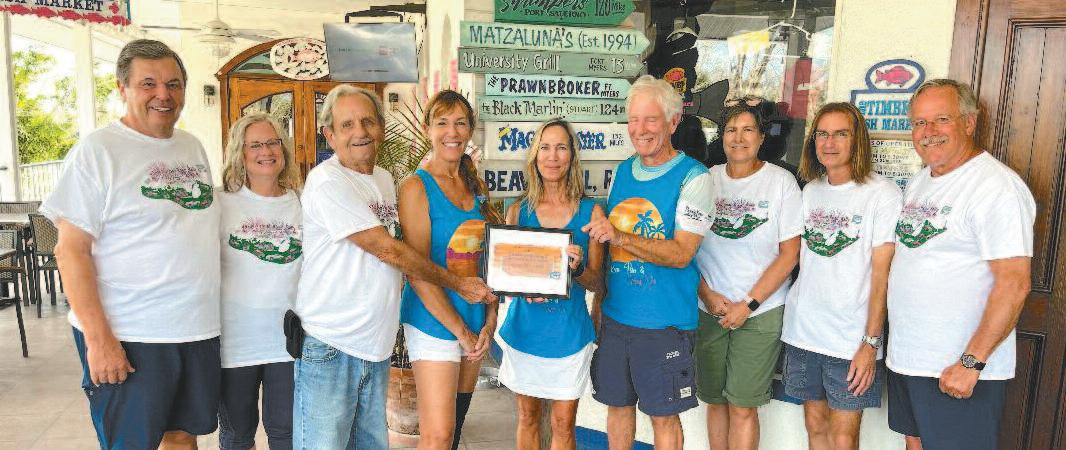

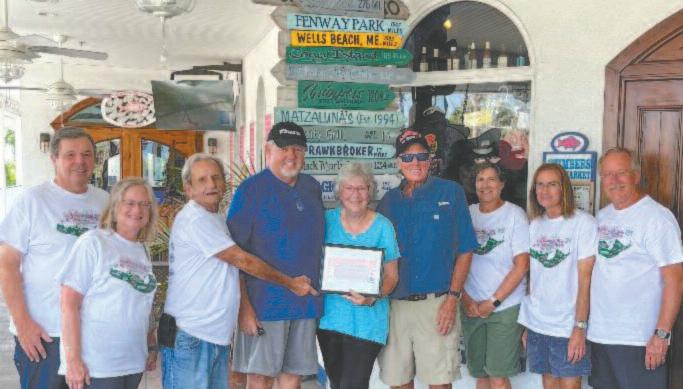
On July 14, the Friends of Randy of Sanibel awarded the winners of the 43rd annual 4th of July Sanibel Island Road Rally at the Timbers Restaurant & Fish Market and The Sanibel Grill on Sanibel. The teams were Wineaux in first place, Keep Palm & Carry On in second place and Caddy 5 & Still Alive in third place Last place team The Tippy Topper Duo was unable to attend, but it won the “Last But Not Forgotten” prize of a free entry into next year's event In addition, team Mermaid Mafia won Best Decorated Vehicle
County to celebrate National Park and Recreation Month
Lee County Parks and Recreation reported that it will offer free pool admission and free parking on July 29-30 in recognition of National Park and Recreation Month
The sites offering free swimming or parking will include:
∫ Parks: Lakes Park, Manatee Park, Hickey Creek Mitigation Park, Caloosahatchee Regional Park, Six Mile Cypress Slough Preserve and Caloosahatchee Creeks Preserve
∫ Beach sites: Bowman's Beach on Sanibel and Turner Beach on Captiva (north side of Blind Pass)
∫ Boat ramps: Alva, Matlacha, Davis, Lavender's Landing and Imperial River
∫ Pools: Lehigh Community Pool, North Fort Myers Community Pool, Pine Island Community Pool and San Carlos Community Pool
The county reported that Bonita Beach Accesses N o 1 an d 1 0 , Bo n ita B each P ar k , Ly n n H all Memorial Park and San Carlos Bay-Bunche Beach Preserve currently offer free parking until further notice The sites were severely impacted by Hurricane Ian and reopened in March with limited amenities The public is encouraged to always wear beach shoes when visiting beach parks Debris continues to wash onshore and quickly may be obscured by sand.
Other recreational sites within Lee County that are owned or maintained by other government entities are not included in the free swim/parking weekend They include: Barefoot Beach, beach access points managed by the town of Fort Myers Beach and city of Sanibel sites, including the south side of Blind Pass
The county noted that the free pool/parking weekend happens annually On June 20, the Lee County Commission voted to approve a resolution designating July as National Park and Recreation Month
For more information, visit www leeparks org or contact 239-533-7275 or leeparks@leegov.com.
Rec center provides update on upcoming closures
The Sanibel Recreation Center reported on the following for the upcoming weeks
The gymnasium will be closed starting on July 27 for relining and resealing
The center will undergo a full closure on July 29 through Aug 6 in order to complete numerous repair and maintenance projects, including repaving of the parking lot, the installation of new weight equipment, acid washing of the pools and more The facility will reopen on Aug 7 All of the major projects have been scheduled during this time in an effort to minimize the inconvenience to patrons as many of the projects are odiferous and disruptive
During the facility closure, the Youth Summer Camp program will not be offered during the week of July 31 Youth programming will resume with Fun Days on Aug 79 for children in kindergarten through eighth grade The program will operate from 8 a.m. to 5:30 p.m.
From July 31 through Aug 4, Beach Parking Permits will be available for purchase at the Sanibel Building and Planning Departments, at 2475 Library Way, Sanibel, from 9 a m to 4 p m When applying for a permit, remember to bring a valid vehicle registration for each vehicle and a valid state issued identification or driver's license Payment may be made via check, MasterCard or Visa
The center is open on Mondays, Wednesdays, Fridays and Saturdays from 8 a m to 5 p m and on Tuesdays and Thursdays from 7 a m to 5 p m
Daily, weekly, semi-annual and annual memberships are available
For more information, call 239-472-0302 or visit www mysanibel com
The Sanibel Recreation Center is at 3880 SanibelCaptiva Road, Sanibel
Monthly water sample results
I s l a n d R e p o r t e r c a p t i v a s a n i b e l . c o m W e e k o f W e d n e s d a y , J u l y 2 6 , 2 0 2 3 n P a g e 1 6 Report your news to CAPTIVASANIBEL COM SPORTS
FRIENDS OF RANDY OF SANIBEL
First place team Wineaux
Second place team Keep Palm & Carry On.
Third place team Caddy 5 & Still Alive.
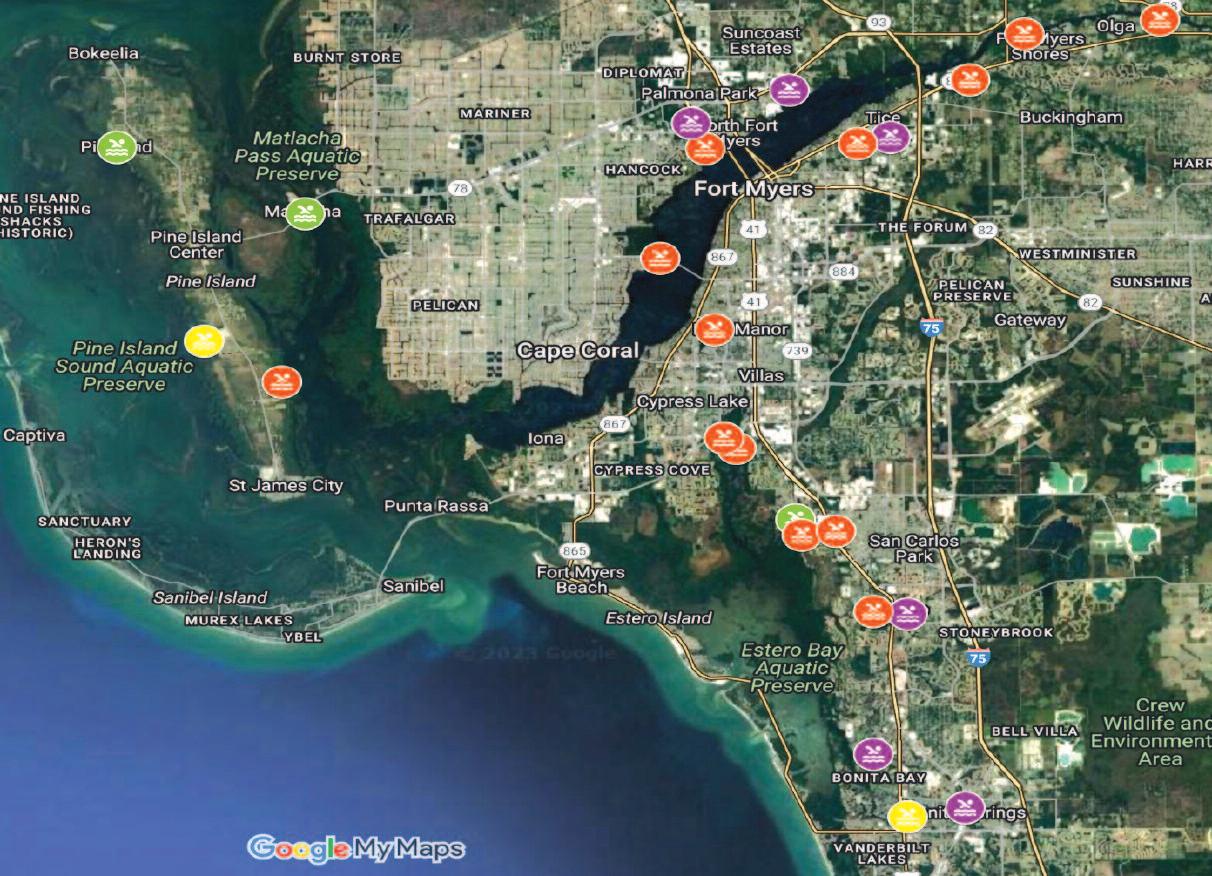
The Calusa Waterkeeper recently released it and the Florida Department of Health's water sample results for fecal indicator bacteria for the month of July. For more information and an interactive map, visit https://calusawaterkeeper org/issues/bacteria-monitoring/ CALUSA WATERKEEPER
Director Steve Chaipel presented an initial, draft budget framework using the 2 9598 rate up from the current 1 9750
He reported that the preliminary valuat i o n f r o m t h e
C o u n t y P r o p e r t y
A p p r a i s e r ' s O f f i c e o n J u l y 1 w a s
$4,217,281,792 for taxable property values, compared to $6,357,621,055 for July of 2022 It represents a 33 7% decrease in values
$2,140,339,263 which is primary related to Hurricane Ian damage. The valuation represents a drop in tax revenue of about $4,100,355, based on the 1 9750
Chaipel noted that when property owners get their tax bill, only 15 5% goes to t h e c i t y I n c o m p a r i s o n , t h e S c h o o l District of Lee County gets 40 1%, the county gets 27 9% and special districts get 16 5%
He reported that per Florida statutes, the rolled-back rate would provide the same tax revenue that was generated the prior fiscal year. Normally, as taxable property values rise, the rolled-back rate drops
“The adjustment is typically a positive number,” Chaipel said
He explained that the city's taxable property value for 2022 was about $6 3 billion This year, its taxable value was about $7 2 billion, but was reduced by about $3 billion to the $4 22 billion
“The way that the adjustment is working this year is because of the storm damage,” Chaipel said, adding that the form and calculations are prescribed by the Florida Department of Revenue based on statutes and he does not expect it to change “Our adjustment to our property values is negative ”
Moving on to the operating millage rate, he reported that it provides most of the funding for general government operations The current 1 9750 rate generated $ 1 1 , 9 2 8 , 4 8 7 i n t a x r e v e n u e T h e D e p a r t m e n t o f R e v e n u e ' s c a l c u l a t e d rolled-back rate of 1.7333 would genera t e $ 6 , 9 4 4 , 3 2 4 a y e a r - o v e r - y e a r decrease of $4,984,163 To reach a similar amount of revenue to the current year, an actual rolled-back rate of 2 9598 w o u l d b e r e q u i r e d g e n e r a t i n g
City council
$11,858,195 so it was utilized for the initial draft
T o p r o v i d e s o m e p e r s p e c t i v e , h e showed a breakdown of millages rates pre- and post-Hurricane Charley The rate was increased right after the storm from 1 7291 to 2 5000 It was lowered to 2.4000 in 2006 and raised back to 2.500 in 2007 However, property values continued to rise on Sanibel
“We wiped out over $2 billion in property values in one year,” Chaipel said of Ian.
He also provided the council with an outline of the effects on the property taxes paid by an average taxpayer using the proposed 2 9598, as well as 2 5064, the current 1 9750 and calculated 1 7333

Chaipel noted that it would take a majority vote of at least three to set a rate of up to 2 5064, a two-thirds vote of at least four to set 2 5065 to 2 7570, or an unanimous vote for anything higher than that
He reviewed the debt service millage rates and operating expenditures, noting t h a t $ 8 2 5 , 0 0 0 i n a n t i c i p a t e d h e a l t h increases were included in the initial budget for health/medical, property/general liability and workers' compensation Chaipel outlined the current and working
From page 1 pile, removing the traffic railing, the delivery and preparation of materials, beginning the temporary road construction, and waiting on permits for the in-water work
The roadway work is anticipated to be completed by the end of the year
Dorning noted that Hurricane Ian is considered a 300-year storm by the DOT's engineers
As for what is next for the project on land, she reported that they will continue installing the sheet pile along the roadway, raise the roadway approximately 2 feet, protect the sides with “mattresses” (buried baskets filled with rock), bury the toe protection for the upland walls, install a new roadway drainage system, rebuild the drainage ponds and rebuild the approach slabs, which will require lane closures and traffic shifts
As for what is next in the water, they will continue the deep steel sheet pile walls, raise the seawall elevation to 8 feet, reinforce the toe
of the seawall, install additional rip rap protection, install larger and heavier protection at exposed areas b e t w e e n t h e s e a w a l l a n d b r i d g e abutments, replace the MSE wall with a deep foundation wall, backfill the stone, and form and pour the seawall caps
Dorning explained that beyond the roadway or grey infrastructure green infrastructure will e n t a i l i n s t a l l i n g n a t i v e / r e s i l i e n t planting, like mangroves, for a natural hardening and coordinating with the county on its Causeway Park facilities
She reported that the total project is estimated at about $285 million Funding will come from the state, t h e F e d e r a l H i g h w a y Administration which is scheduled to reimburse about $239 million, but that can take up to four years and $46 1 million from Lee County The county's portion does not include the $5 6 million for the planned recreational amenities.
“This is something that fluctuates
totals for the city's operating expenditures, such as the general fund, transportation, beach parking fund and more
As for reserves, he reported that he set the Disaster Reserves at $5,900,000,
$500,000, as previously directed by the council Chaipel added that all of them can be adjusted during the budget process
He spoke to the approved $13 million Florida Local Government Emergency Bridge Loan, which staff is negotiating the terms for, and proposed application for some of the funding if the loan is executed
Chaipel added that he expects to have updated revenues and expenditures in August.
Following the presentation, the council discussed the decision at hand
“That 1 7333 is a very unrealistic n u m b e r W e h a v e t o r u n a c i t y , ”
Councilmember Holly Smith said, noting that it is only a starting not-to-exceed number and can be lowered later during the process
Councilmember John Henshaw agreed, calling the calculated 1 7333 a “bogus” rate
a lot,” Dorning said “It's a high-dollar project ”
She noted that the FHWA is anticipated to pay for 80% of the cost of the permanent repairs, which leaves 20% for the state or county to pay
Lee County grant
A t t h e m e e t i n g , L e e C o u n t y
A s s i s t a n t C o u n t y M a n a g e r G l e n Salyer gave a presentation on the C o m m u n i t y D e v e l o p m e n t B l o c k Grant Disaster Recovery and action plan development
H e r e p o r t e d t h a t i t i s U S Department of Housing and Urban Development funding, which means it is applicable to housing, urban development, and low- and modera t e - i n c o m e h o u s e h o l d s . E l i g i b l e activities include housing, public facilities and infrastructure, economic revitalization, public services, planning and administration
Salyer continued that in an unmet needs analysis, HUD estimated the See CITY COUNCIL, page 18
“We're going to have to buckle up for an interesting ride for the next couple of years,” he said “We know what happened in Charley, and Ian is much different than Charley ”
Councilmember Dr Scott Crater also voiced agreement
“I think the 2.9598 is the real rolledback rate,” he said “These things will rebound ”
Vice Mayor Mike Miller shared the sentiment of the rest of the dais
“I also am in favor of an initial levy today of 2 9598,” he said
Mayor Richard Johnson echoed what was said and added his support
“With the situation we're in, I think we do go to the 2 9598 rate,” he said, noting that the council and staff will have to find a way to explain it to the public and d e m o n s t r a t e t h e y h a v e d o n e a l l t h e y could
“I fully recognize and appreciate that we're going to have a communications challenge,” Johnson added. “This is going to be a tough pill to swallow ”
The city council has a budget workshop scheduled for Aug 22
The first budget hearing is set for Sept 11, with the second and final hearing on Sept 27
From page 1
“The Luminary mission promotes the message to 'shop small,' but hurricane recovery efforts still are causing a lack of critical mass in the island retail arena The inability to nail down commitments for shopping center reopenings has made it impossible to move into the planning stages, where we should be right now to pull that off,” he added “We vow, however, to make up for it in a big way next December.”
The 50th anniversary of the city's incorporation in 1974 falls on Nov 5, 2024, and that will kick off a continuous celebration ending with Holiday Luminary 2025
“We are literally going to blow it out with 'Super Luminaries' in 2024 and 2025,” Lai said “In the meantime, we're forming an anniversary committee and reaching out to all island nonprofit organizations, resident groups, homeowner associations and faith-based institutions to participate ”
The chamber would like to see all island festivals and events between Nov 5, 2024, and Dec 6, 2025, co-branded with the 50th anniversary celebration. Lai requests representatives from all targeted groups to contact him for information about sitting on the anniversary committee to plan the year's calendar
Interested parties can reach him at 239-472-2348 or
Recreation Department Director Andrea Miller at andrea miller@mysanibel com or 239-472-0345
P a g e 1 7 n W e e k o f W e d n e s d a y , J u l y 2 6 , 2 0 2 3 c a p t i v a s a n i b e l . c o m I s l a n d R e p o r t e r
o h n @ s a n i b e l - c a p t i v a o r g o r c o n t a c t S a n i b e l
J
Chamber
L e e
O p e r a t i o n a l S u p p o r t R e s e r v e s a t $ 1 , 0 4 5 , 0 0 0 a n d R e s e r v e f o r U n d e r Collection of
at
Tax Revenue
Tax rate From page 1
CITY OF SANIBEL
CITY OF SANIBEL
The Sanibel City Council recognized July as Parks & Recreation Month and July 21 as Parks and Recreation Professionals Day through proclamation during its meeting on July 18.
City council
From page 17
following for the county: $711,384,551 for housing, $73,053,766 for infrastructure, $178,937,032 for economic revitalization and $144,506,000 for mitigation for total of $1,107,881,000. In comparison, the county's analysis estimated: $4,598,352,446 for housi n g , $ 3 , 0 4 0 , 6 2 5 , 6 1 0 f o r i n f r a s t r u c t u r e a n d $440,320,907 for economic revitalization for total of less than $8 billion
He outlined the county's draft action plan allocations as follows:
∫ $660,000,000 for housing: Owner and renter occupied housing rehabilitation, reconstruction and elevation, multifamily and single-family affordable housing development, homebuyer purchasing assistance and voluntary residential buyouts
∫ $352,486,950 for public facilities and infrastructure: Hazard Mitigation Grant Program matching program, and critical public facilities and infrastructure
∫ $15,000,000 for public services: Long-term recovery group unmet needs individual/family case management, and behavioral health services and system of care
∫ $25,000,000 for planning: Resiliency/recovery focused planning studies, behavioral health system of care plan, Lee County Recovery Task Force long-term recovery plan and CDBG-DR action plan
∫ $55,394,050: Program administration
For program design and eligibility criteria, Salyer listed the following:
∫ New housing development: Municipalities, housing authorities, nonprofit developers and for-profit developers
∫ Critical facilities/infrastructure: Municipalities
∫ Planning: Municipalities, special districts and the School District of Lee County
Asked by the council about how much of the funding would be deployed to the barrier islands, including Sanibel-Captiva and Fort Myers Beach, he acknowledged that Sanibel does not really have any low- to moderate-income areas. However, there are different ways that the city can qualify
“Housing is one possible opportunity,” Salyer said
He added that clientele can qualify for programs on an individual level
“Individuals and households can qualify at that level and that's the easiest qualification,” Salyer said
He also explained that once the county has exhausted all of the eligible areas where it can apply the funds, it can request a waiver from the state to allow for flexibility for any remaining funding
To view the full presentation, visit this article for free at www.captivasanibel.com.
Hurricane recover y
Also at the meeting, City Manager Dana Souza updated the council on storm recovery efforts
He reported that all of the city's beach park facilities were open as of June 30. In terms of the city's restricted beach accesses, only Access 4 on West Gulf Drive
remained closed as of the meeting
At its July 18 meeting, the Sanibel City Council presented the city's Judith Ann Zimomra Scholarship Awards to Kaylee Kwek, Kaia Miller and Kylie Sutton Miller was the only recipie n t a b l e t o a t t e n d S h e i s t h e d a u g h t e r o f R e c r e a t i o n Department Director Andrea Miller, who is also pictured
“Our causeway counts continue to be sluggish when compared to 2022,” Souza said
However, the Sunday counts are seeing consistent numbers, which means people are coming
He added that the SanCap Chamber will request from the county commission a forgiveness on the causeway tolls for a period of time, likely about one month, on behalf of the islands' restaurants
“I think it would potentially help our businesses here on the island,” Souza said
He reminded the public that debris collection is over
“You cannot place any debris on the rights-of-way,” Souza said
“Our Code Enforcement team is out there,” he added “We do not want to issue citations.”
For contractors and property owners who are having issues with permitting, Souza advised them to contact Sanibel Building Official Craig Mole and his Building Department He explained that staff can provide assistance and even training Those who require it can also stop by the department for help
In addition, Souza shared that the recovery updates would no longer be part of the agenda
“This will be the last monthly Hurricane Ian update at city council meetings,” he said In other news
∫ The council voted 5-0 on the annual assessment to fund the collection and disposal of solid waste, recyclables and horticultural waste for 2023-24, as well as set a public hearing to consider its adoption The initial assessment approved includes a 7 87% rate increase, as requested by Waste Management.
∫ The council voted 5-0 on a solid waste rate structure for 2023-24, established solid waste, recyclables and horticulture waste rates for residential, commercial and multi-family properties, and approved a solid waste franchise fee and solid waste disposal surcharge
∫ The council voted 5-0 to accept the Auditor Selection Committee's following recommended ranking of the audit firms that applied CliftonLarsonAllen as first, Cherry Bekaert as second, and Marcum as third and to begin negotiations with the top firm on a threeyear agreement, with extension options
∫ The council voted 5-0 to endorse the Captiva Community Panel's set of principles that it drafted in response to amendments being proposed to Lee County's Land Development Code and Lee Plan It also voted to authorize staff to work on manners related to the amendments, including attending meetings
∫ The council voted 5-0 to approve an ordinance that a m e n d s t h e S a n i b e l C o d e t o c r e a t e a P a r k s a n d Recreation Advisory Committee to advise the council on the areas of parks, open space and recreation
∫ The council voted 5-0 to approve an ordinance that amends the Land Development Code related to assumed ceiling heights for the build back of substantially damaged or destroyed nonconforming structures
∫ The council voted 5-0 to approve an ordinance that amends the Land Development Code related to the temporary placement of recreational vehicles and park trailers to ensure compliance the National Flood Insurance Program
∫ The council voted 4-1 to approve an ordinance that amends the Land Development Code related to temporary use permits, to include recreational vehicles and park trailers, to ensure compliance with the National Flood Insurance Program and reformatting it to provide clear requirements by type of use
∫ The council voted 5-0 to approve an ordinance that amends the Land Development Code standards related to architectural design, applicable to commercial districts, to revolve omissions in previous ordinances
∫ The council held the first reading for an ordinance that amends the Sanibel Code to update recreation user fees for the Sanibel Recreation Center The second reading will be held on Aug 15


∫ The council held the first reading for an ordinance that amends the Land Development Code to allow for the use of a short-form application, processed administratively, for elevated swimming pools higher than 7 feet above predevelopment grade The second reading will be held on Aug 15
∫ The council held the first reading for an ordinance that amends the Land Development Cod standards related to driveway standards for commercial districts. The second reading will be held on Aug 15
∫ The council held the first reading for an ordinance that amends the Land Development Cod standards related to site planning for generally commercial and institutional uses and required setbacks for commercial districts The second reading will be held on Aug 15
∫ T h e c o u n c i l r e c o g n i z e d t h e S a n i b e l P o l i c e Department's Dispatch Team for being selected by the Florida Association of Public Safety Communications Officials as one of the 2023 Teams of the Year
Police Chief William Dalton noted that only two teams were awarded from about 100 statewide.
“We're very proud of them earning this award,” he said
The team is made up of Lead Dispatcher Christine H o d g e s a n d S e n i o r D i s p a t c h e r s M o r g a n n a A n h o l t , Virjinia Centeno, Courtney McCarthy and Scott Robbins
∫ The council presented the city's Judith Ann Zimomra Scholarship Awards to three recipients Kaylee Kwek, the daughter of Public Works Department lead tradesworker Christopher Kwek, is pursuing a marine biology degree at the University of South Florida Kaia Miller, the daughter of Recreation Department Director Andrea Miller, is pursuing a degree in elementary education at Florida Gulf Coast University Kylie Sutton, the daughter of SPD Sgt Kenneth Sutton, is pursuing a nursing degree at the Galen College of Nursing
∫ The council recognized July as Parks & Recreation Month and July 21 as Parks and Recreation Professionals Day through proclamation
I s l a n d R e p o r t e r c a p t i v a s a n i b e l . c o m W e e k o f W e d n e s d a y , J u l y 2 6 , 2 0 2 3 n P a g e 1 8


WEEK OF JULY 26, 2023 Shell Shocked . . . . . . . . . . . . . . . . . . . 20 In the Garden . . . . . . . . . . . . . . . . . . . . 22 Faces on Faith . . . . . . . . . . . . . . . . 23 Island Worship . . . . . . .. . . . . . . . . . . . 23 Recipe of the Week . . . . . . . . . . . . . . 23 CROW Calendar . . . . . . . . . . . . . . . . . . 24 Island Beat . . . . . . . . . . . . . . . . . . . . 24 Poetic License . . . . . . . . . . . . . . . . . . . 24 The Community House Calendar . . . . 26 aLSOinSidetOday aLSOinSidetOday aLSOinSidetOday aLSOinSidetOday CROW again offering programs for all ages CLINIC FOR THE REHABILITATION OF WILDLIFE Page 20
Mother Nature takes charge
Mother Nature didn’t mince words She had convened what was left of Hurricane Ian to get a postmortem on his mission Ian struggled in All that was left of his previous fury was a wisp of wind, barel y e n o u g h t o b l o w a feather off the massive conference room table
Mother Nature: Take a seat, if you can manage to get to it, you ungrateful wimp How dare you countermand my orders? I told you to leave a light rain and puffy wind on Sanibel, not destroy it
Ian: I took matters into my own hand, Mother Nature I knew the price I would pay but we hurricanes got tired of your conservative approach to mass destruction We hurricanes were born to destroy, not to deliver puffs of nothingness You have tested our masculinity far too long.
Stevens

CROW resumes tours, launches program
 By TIFFANY REPECKI trepecki@breezenewspapers com
MN: How dare you ignore the instructions you got from me I’m Mother Nature and I determine what is best for mankind My goal was to shake humans up before they fully destroy the planet I’ve preserved for thousands of years You forget that it is I who created you and all the other hurricanes Your assignment was to gently remind mankind that if it didn’t respect the centuries old climate I helped to create on planet earth, then it had only itself to blame for destroying the planet Who gave you the right to defy my methods?
Ian: Mother Nature, you must realize by now that there is a mutiny on your hands We who are your very own creations cannot ignore how kind and gentle you have been to mankind since you taught your first ape to make fire by rubbing two stones together So what did mankind do with that breakthrough? They created cigarettes on their own and tried killing themselves Then they invented smokestacks, discovered oil and coal, and soon the clean atmosphere above them was reeking with poison As a result, the glaciers in the North and South Poles began to melt, the oceans got warmer, and we hurricanes benefited from that. We allowed ourselves to get stronger to shake those doubting humans up
MN: All of those things are true, but I chose a different course I chose not to intervene and allow mankind to set its own near destruction Once it realized how close they would come to annihilation I would alter the course of history and return Planet Earth to the pristine garden of Eden it once was You and your fellow hurricanes have no right or authority to interfere with that plan
Ian: Yes, but I took the law of nature into my own hands because you weren’t doing your job I focused on Sanibel, a wealthy community which has supported the tender loving care of the environment just to teach a lesson If Sanibel could go down, then mankind would learn a lesson and cease and desist Don’t you think mankind has learned its lesson by now?
MN: All you have really done is erode Sanibel tourism for a brief time They will rebuild, tourists will order their blackened fish again and she will sell seashells by the seashore as always The people who live on Sanibel are strong willed They are not to be tampered with All you did is destroy some buildings and homes but not their resolve.
Ian: You may punish me, Mother Nature, take away my healthcare plan, turn me into a wisp of my former self but others will follow in my wind stream You will see Our fury will endure unless mankind stops messing with you There’s no other way I will bear my punishment
See MOTHER NATURE, page 21
S t i l l c o n t i n u i n g t o r e c o v e r n e a r l y a y e a r a f t e r Hurricane Ian, the Clinic for the Rehabilitation of Wildlife on Sanibel is open and again offering programming to educate and engage visitors

A teaching hospital dedicated to saving sick, injured and orphaned native and migratory wildlife in Southwest Florida and beyond, it resumed its CROW Campus Tours earlier this month, which provide participants with an insider's look into the care and rehabilitation that staff provide to their patients
In addition, CROW recently launched a new story and snack time program for youths that aims to foster a love for literature and animals, while also sharing its mission Additionally, three days a week, CROW hosts a Program of the Week covering a range of topics related to wildlife and patient care
CROW Campus Tour
Taking place on Wednesdays through Fridays at about noon after the Program of the Week, the CROW Campus Tour gives participants an in-depth look into what patients experience from intake to release, including the inner workings of the hospital and treatment process Added post-storm, visitors will also get a look into CROW's rebuilding efforts
“ O u r t o u r s , e v e n p r eHurricane Ian, gave people an insight into the hospital a n d h o w i t w o r k s , ” Executive Director Alison Charney Hussey said “How our patient care is accomplished, how animals are rehabilitated once they are strong enough to be out of the hospital but prior to their release ”
N o w , t h e t o u r s a l s o i n c o r p o r a t e h o w C R O W p r e p a r e d a n d r e c o v e r e d from the storm.
“ A n d w h a t o u r f u t u r e plans are for rebuilding,” she said
On the guided tour, participants are taken to the hospital
“They get to walk through the lower level of the hospital,” Hussey said “As well as get a peek into the upper level of the hospital as far as treatments and intakes, if they're happening at that time, even a potential surgery if it's happening at the time of the tour ”
Next, participants are taken over to CROW's Animal Ambassador Enclosures, where they will meet Mina a great horned owl and Talon a red-tailed hawk up close and hear about their stories
The tour lasts for about 45 minutes to one hour
“The majority of the tour is outside, so we encourage our participants to be hydrated, to bring water bottles, especially in the summer heat in Florida,” she said
Each tour is limited to 12 people and participants must be age 10 or older
“What we do is sometimes very emotional, for even our staff,” Hussey said “Taking care of wildlife injuries, there can be the potential to see patients that have substantial injuries So we just want to make sure it's age appropriate ”
She noted that photographs are not permitted
“Our permits do not allow us to have the general public take photographs of the patients in care,” Hussey said.
The tour costs $25 per person, and advanced registration and payment is required
To register, contact 239-472-3644, ext 229 or reservations@crowclinic org
Stor y Time
A free program focused on conservation education and community engagement, Story Time is scheduled for Tuesdays at 2 p m at the Visitor Education Center from now until Aug 8 The interactive five-week program is aimed at educating and engaging children on the region's native wildlife


“Children are the future caregivers of our wildlife, so it's important to foster their love of animals and learning at an early age,” Hussey said, adding that staff is excited to welcome back visiting youths
“Their happy faces and interesting questions lift our hearts and love of learning,” she said.
During the program, a staff member narrates a conservation story for attendees Covering a variety of topics, each week will feature a different story showcasing a local author The remaining ones are:
The Clinic for the Rehabilitation of Wildlife recently launched Story Time on Tuesdays See CROW, page 21
S a n i b e lC a p t i v a I s l a n d e r c a p t i v a s a n i b e l . c o m W e e k o f W e d n e s d a y , J u l y 2 6 , 2 0 2 3 n P a g e 2 0
Art
Shell Shocked
FOR THE REHABILITATION OF WILDLIFE
CROW Campus Tour is offered on Wednesdays through Fridays on the Sanibel campus.
CLINIC
The
Alison Charney Hussey
Winner Sarah Jacobson accepts her duck stamp prize from David Lowden, of Bank of the Islands

New duck stamps available for sale
The “Ding” Darling Wildlife Society-Friends of the Refuge reported that the 2023-24 Federal Duck Stamps are available for purchase at the Refuge Nature Store It f e a t u r e s t
i n n e r J o e Hautman, who will be a featured artist at the J N “Ding” Darling National Wildlife Refuge's Art in the Wild on Oct 21-22 Hautman will be joined by his legendary contest-winning brothers, Bob who took third place in
CROW
From page 20
∫ Aug 1: “Loggerhead Life,” the tale of a loggerhead turtle and a pelican
∫ Aug 8: “Jenny’s First Catch,” an adventure with nature's wading birds
I n a d d i t i o n , C R O W ' s A n i m a l Ambassadors will be on hand for attendees to meet The special animals will aid staff in engaging and teaching attendees about the subject highlighted in the featured story
H u s s e y n o t e d t h a t t h e p r o g r a m i s designed for children and accompanying adults
“Adults are asked to enjoy Story Time with their child for a fun and interactive experience,” she said
Program of the Week
Held on Wednesdays, Thursdays and
Mother Nature
MN: You are hereby confined to provide air inside a balloon for eternity It is now my duty to pick up the pieces I will try to bang some sense into mankind if it wishes to maintain a livable planet I’m thinking about bringing dinosaurs back to Sanibel
Shell Find
this year's contest and Jim, who have both won numerous times Attendees are invited to bring their stamp for Hautman to sign The DDWS also thanked partner Bank of the Islands, which has brought attention to the stamp program's mission to purchase and preserve wetlands like the Sanibel refuge with its Celebrate Our Islands program The bank is awarding this year's stamp to winners each week for one month
Fridays at 11 a m , the Program of the Week covers a range of topics related to wildlife and patient care at CROW It is also free and takes place at the center
“Come out, visit the Visitor Education Center,” Hussey said “See what CROW has been doing since the storm ”
The center also houses CROW's gift shop
“We're got some great merchandise,” she said “It's a great store for all ages ”
One hundred percent of the proceeds g o t o w a r d s u p p o r t i n g a n d c a r in g f o r wildlife
The Visitor Education Center and gift shop are open Monday through Friday from 10 a.m. to 4 p.m.
Residents and visitors are encouraged to sign up for a tour, enjoy a program or simply stop by

From page 20
Art Stevens is a long-time columnist for the Sanibel-Captiva Islander His tonguein-cheek humor is always offered with a smile
PHOTO PROVIDED
Junonia found on Captiva
Jessica Zierten, of Oceanside, California, found a junonia on July 6 at about 1 p m just offshore near the Captiva Chapel by the Sea on Captiva She was wading in 4 feet of water when she dug her toes in the sand and felt them brush something hard and smooth Zierten reported that her heart skipped a beat as she reached down and pulled out a shell a junonia, with its exquisite patterns and delicate shades of brown and white She was visiting Captiva with her husband and children, Bode and Charlotte, for her family's annual beach reunion It has been a tradition ever since she was a child, but in all of the years of visiting Zierten had never found a junonia. She added that she will cherish the memory of the day she discovered the rarest shell and she is grateful for the memories that she has made through the years To report a shell find, contact 239-472-1587 or trepecki@breezenewspapers com

“Sanibel is open, CROW is open Enjoy the island,” Hussey said “Remember how wonderful CROW is and what we do for our wildlife,” she added.
F o r m o r e i n f o r m a t i o n , v i s i t http://www crowclinic org/ or call 239-
472-3644 People can also stay updated o n C R O W v i a i t s s o c i a l m e d i a o n Facebook, Twitter, Instagram, YouTube and TikTok
The Clinic for the Rehabilitation of Wildlife is at 3883 Sanibel-Captiva Road, Sanibel
P a g e 2 1 n W e e k o f W e d n e s d a y , J u l y 2 6 , 2 0 2 3 c a p t i v a s a n i b e l . c o m S a n i b e lC a p t i v a I s l a n d e r
e w o r k o f s i x - t i m e c o n t e s t w
h
REFUGE/DDWS
ISL AND HOME islander
F.I.S.H. hosting annual drive for school supplies
F I S H of Sanibel-Captiva is h o l d i n g i t s B a c k - t o - S c h o o l Supplies Drive for the 2023-24 year

The new school year for Lee County begins on Aug 10 and many families cannot afford essential items F I S H helps families in need with school supplies and some clothing to begin their new school year
“Many are reporting they lost school supplies during (Hurricane) Ian and had to replace and replenish to finish out the 2023 year,” Executive Director Maria Espinoza said “Now households need to purchase supplies again, some for the third time this year, and are struggling to afford essential items ”
From now through July 31, the community can drop off supplies between 10 a.m. and 2 p.m. at the Walk-In Center or at the Sanibel Public Library, at 770 Dunlop Road, Sanibel, during operating hours
Items like paper, glue sticks, pens, pencils, rulers and notebooks for grades K-12 are requested
Many uses for fruit from a papaya tree
Spring is the time for the luscious fruit of the papaya tree (Carica papaya) It is an exotic fruiting specimen that grows best in USDA Zones 9 and 10 N a t i v e t o C e n t r a l A m e r i c a , t h e t r o p i c a l plant thrives in the subt r o p i c a l a r e a s o f t h e Caribbean and throughout South Florida The p l a n t b e l o n g s t o t h e C a r i c a c a e f a m i l y t h a t i n c l u d e s 2 7 t o 3 0 species The papaya can reach up to 30 feet in height and is characterized by palmate leaves that are deeply lobed
In the 16th and 17th centuries, papaya became very popular with Spanish and Portuguese explorers and they quickly began transporting seeds throughout the Caribbean and Pacific Islands, and all the way to Southeast Asia in the 16th century The ability of the papaya seed to remain viable for many years after drying even allowed the plant to reach the lands of Malacca and India
The plant can be monoecious, which means having both male and female flowers Some plants during certain seasons may change sex during high temperatures like the hot Southwest Florida summers Once pollinated, the fruit the papaya bears is characterized by its melon-like shape that is elongated and clubshaped and can weigh up to 20 pounds when ripe.
The uses for the fruit are plentiful The fruit of the papaya becomes aromatic and inside can range from yellow and orange to various shades of red The flavor can be described as sweet and similar in flavor to cantaloupe The fruit is often cubed or shaped into balls and served in fruit salads and fruit cups It can also be made into sauce for shortcake and ice creams,
See PAPAYA TREE, page 26

In addition, F I S H will have socks, underwear and gift cards available for participating households, and it is accepting monetary donations to ensure enough supplies are available during distribution
Studies show that having the right supplies can help
students feel more prepared and l e s s a n x i o u s a s t h e y r e t u r n t o school According to F I S H , students who arrive equipped for the school day feel more confident in their ability to function in the classroom.
The 2022 drive assisted 312 students, and F I S H expects an i n c r e a s e i n r e q u e s t s t h i s y e a r F I S H reported most of those seeking assistance cited reduced work hours or loss of employment due to Ian, as well as the financial hardships caused by the storm, as the top reasons for their financial struggle
“With inflation and hurricane recovery expenses, our neighbors are struggling to make ends meet,” Espinoza said
Distribution to qualifying households will take place from July 31 to Aug 2
Additional financial assistance for specialized equipment, scientific calculators, SAT prep books, instruments, clothing and school uniforms may be available to those showing a financial need
For more information, contact F I S H at 239-4724775
The F I S H Walk-In Center is at 2430-B Periwinkle Way, Sanibel
Class on property assessments, collections and disputes
L e e C o u n t y C l e r k a n d Comptroller Kevin Karnes, Property Appraiser Matt Caldwell and Tax Collector Noelle Branning will host a comprehensive presentation on the property assessment, collection and dispute process on Aug 2 from 2 to 3 p m a t t h e E s t e r o R e c r e a t i o n Center in Estero
They will thoroughly explain their portion of the process The property appraiser will discuss how property
value is assessed; the tax collector will review the tax collection process for the property; and the county clerk will explain how property owners can contest their assessments, as well as help safeguard their property with a free fraud alert service
There will be a question-andanswer session It will be an opportunity for attendees to ask the presenters questions they may have about the assessment, collection and dis-
pute process
The class is free, but registration is required at www leeclerk org/seminar Legal advice will not be provided at the seminar The clerk cannot address any specific case or VABrelated decision or outcome For legal inquiries, property owners may speak with an attorney
The Estero Recreation Center is at 9 2 0 0 C o r k s c r e w P a l m s B l v d , Estero
HGTV star to speak at Edison, Ford estates
The Edison and Ford Winter Estates reported that architectural designer, TV host and author John Gidding will give a presentation on his book, “At Home with Nature, a Guide to Sustainable, Natural Landscaping” on July 30 at noon at the S o u t h F l o r i d a W a t e r M a n a g e m e n t District, at 2301 McGregor Blvd , Fort Myers Books will be sold at the event and he will be available for signing starting at 10 a m near the Banyan Cafe at t h e e s t a t e s I n p a r t n e r s h i p w i t h

FastGrowingTrees, Gidding is facilitating a donation of trees to be planted in the gardens to assist with hurricane recovery; several trees will also be given away to attendees The event is free and open, but registration is required at EdisonFord org The Edison and Ford Winter Estates is at 2350 McGregor Blvd , Fort Myers

S a n i b e lC a p t i v a I s l a n d e r c a p t i v a s a n i b e l . c o m W e e k o f W e d n e s d a y , J u l y 2 6 , 2 0 2 3 n P a g e 2 2
Report your news to CAPTIVASANIBEL COM
Sanibel Captiva
PHOTO PROVIDED
Papaya tree
EDISON AND FORD WINTER ESTATES John Gidding
Recipe of the Week: Chocolate Espresso Cake
By CHEF LORETTA PAGANINI
For special occasions, nothing can beat a chocolate cake This version produces a moist cake with a strong chocolate taste A favorite dessert among family and friends, it is the perfect cake for any get-together This cake recipe can be served with frosting or with a scoop of gelato and caramel sauce for a great summer dessert Serves eight to 10 (Chef tip: To enhance the chocolate flavor, add coffee or cinnamon )
12 tablespoons unsalted butter, cut into one-inch pieces, extra for pan
3/4 cup unsweetened cocoa powder, extra teaspoon for dusting pan
1/2 cups brewed strong espresso coffee
1/2 cup buttermilk
1 cup granulated sugar
1 cup light brown sugar
2 cups all-purpose flour
1 teaspoon baking soda
1/8 teaspoon salt
1/8 teaspoon ground cinnamon
4 large eggs
1 teaspoon vanilla paste
8 ounces semi-sweet chocolate, chopped
Adjust oven rack to middle position and heat oven to 350°F Butter bottom and sides of a 10-by-3-inch deep pan Dust with cocoa powder Reserve
In a medium saucepan over low heat, warm espresso coffee, 12 tablespoons butter
Be willing to let God, others help with baggage
My wife, Cindy, and my wedding anniversary is now j u s t a h a n d f u l o f w e e k s away And for most of our 38 years of marriage, we have had a particular tradition in connection with celebrating that occasion Each year, we take turns planning a trip to some place different, with the other person having no idea where we’re going until we get there
Over the years, and as m o r e a n d m o r e f r i e n d s , f a m i l y m e m b e r s a n d acquaintances have learned of that tradition, we have had a number of destinations recommended to us for future consideration, the most frequent of which in recent years has been … Iceland.
Rev Dr Mark Boyea
Faces on Faith
We have consistently been told how warm the people are and how many remarkable natural sites there are to see there All good But apparently, those sites have nothing on the ones in Iceland's airports
It seems that a couple of years ago, a m a n t r y i n g t o f l y f r o m K e f l a v i k I n t e r n a t i o n a l A i r p o r t i n I c e l a n d t o England was denied a seat because, in an attempt to avoid paying baggage fees, he simply wore everything he wanted to bring with him layer upon layer of clothing He attempted to wear his baggage because he didn't want to pay for it
If only that option was available in terms of our emotional and spiritual baggage the mistakes, shortcomings, regrets and resentments we so often insist on holding tight to; the stuff we can't let go
of wearing layer after layer when it comes to our self-image and our relationships with others
But it's not In fact, the opposite is true The more we insist on wearing that kind of baggage, the more we end up paying for it too Paying for it with the belief of never being enough or at least good enough Paying for it with a feeling of hopelessness about tomorrow or the possibility of reconciling a broken relationship Paying for it with an increasing sense of despair something that psychologists and social scientists claim has been on a significant rise in our society for some time now
Instead, we must be willing to let others other people and God help us with our baggage Be willing to open up and let others and God see and lend us a hand with our struggles, fears and disappointments Allow others and God to serve as our emotional and spiritual “baggage handlers ”
Yes, there is a cost to that the cost of making ourselves vulnerable in a society that still far too often considers that to be a sign of weakness But it will end up being a much smaller “baggage fee” to pay than the alternative
Because God promises that if we do, God will help carry those bags Or send us someone who will
The Rev Dr Mark Boyea is senior minister at the Sanibel Congregational United Church of Christ
and semi-sweet chocolate, whisking occasionally, until chocolate is melted Remove from heat and cool completely
In a bowl, whisk together flour, baking soda, cocoa powder, salt and cinnamon In another bowl, whisk together eggs, granulated and brown sugars, buttermilk and vanilla paste Slowly whisk egg mixture into cool chocolate mixture Add dry ingredients and whisk to combine
Pour batter into prepared pan Transfer to oven and bake until firm in the center when lightly pressed and toothpick inserted in the center comes out clean, about 45-55 minutes. Let the cake cool on a wire rack until room temperature, about one hour. Dust with powdered sugar before serving or ice with chocolate frosting
Creamy chocolate fudge frosting: (makes 4 1/2 cups)
12 ounces milk chocolate, chopped
1/4 cup unsweetened baking cocoa
1/2 cup confectioners' sugar
1 teaspoon espresso powder
1/2 cup heavy cream
1 teaspoon vanilla extract
8 tablespoons unsalted butter, cut into small pieces
1/8 teaspoon salt
2 cups confectioners' sugar, sifted
Sift or sieve the cocoa, 1/2 cup confectioners' sugar, salt and espresso powder into a small bowl Bring the cream to a simmer on the stove, add milk chocolate Let it sit for a few minutes and stir with a spatula until completely melted; whisk into the cocoa mixture and vanilla extract
Place chocolate mixture into a stand-up electric mixer and beat with the wire whisk; slowly add the butter one piece at the time Beat until the mixture is smooth and fluffy Beat in the vanilla
With the mixer running on low speed, add the confectioners’ sugar a spoonful at a time until it is all incorporated. Scrape the bowl, then beat at medium speed for one minute more Use to frost cake as needed
Island Worship
∫ Bat Yam Temple of the Islands
2050 Periwinkle Way, Sanibel (Sanibel Congregational United Church of Christ), https://www batyam org/, https://www facebook com/batyamsanibel/
Rabbi Sunny Schnitzer
Sabbath service on Friday at 7 p m at the Jewish Federation of Lee & Charlotte Counties, at 9701 Commerce Center Court, Fort Myers, and via Zoom For Zoom links, email batyamsanibel@gmail com
∫ Captiva Chapel by the Sea
11580 Chapin Lane, Captiva, 239-472-1646, https://www captivachapel com/, www.facebook.com/Captiva-Chapel-By-The-Sea
Rev Dr Doug Dortch
Services will return for season in November Videos of services from the past season can be found on the chapel's website and Facebook page
∫ Chavurat Shalom of Southwest Florida

www chavuratshalomofsouthwestflorida org
Classes and discussion on Thursday at 11 a m via Zoom Torah Talk on the third Thursday of each month at 11 a m via Zoom Friday Shabbat service at 7:30 p m via Zoom Len Minsky Current Events discussion on Saturday at 11 a m via Zoom
An informal “schmooze” session on the second and fourth Tuesday of each month at 7:30 p m via Zoom For Zoom links, email ChavuratShalom@gmail com
∫ Sanibel Community Church
1740 Periwinkle Way, Sanibel, 239-472-2684, https://sanibelchurch.com/, https://www facebook com/sanibelchurch/
Pastor Jeramie Rinne

Sunday service at 10 a m in the SCC Sanctuary Sunday service at 4 p m at the Fort Myers Community Church, at 8440 Cypress Lake Drive, Fort Myers Services will be recorded and posted on the SCC's YouTube channel on Monday
∫ Sanibel Congregational United Church of Christ
2050 Periwinkle Way, Sanibel, 239-472-0497, https://www sanibelucc org/, https://www facebook com/sanibelucc/
Senior Minister Rev Dr Mark Boyea
Sunday service at 10 a m at The Refuge Church, at 1901 Brantley Road, Fort Myers
∫ St. Isabel Catholic Church
3559 Sanibel-Captiva Road, Sanibel, 239-472-2763, https://www saintisabel org/, https://www facebook com/stisabelcatholicchurch/
Father Edward Martin
Friday Mass at 9 a m Weekend Masses on Saturday at 4 p m and Sunday at 10 a m
∫ St. Michael and All Angels Episcopal Church
2304 Periwinkle Way, Sanibel, 239-472-2173, https://www saintmichaelssanibel org/, https://www facebook com/saintmichaelssanibel/
Rev William “Bill” Van Oss
Saturday service at 5 p m with a social to follow Sunday service at 9:30 a m with a coffee hour to follow Services take place at The Gathering Place @ St Michael's at the church; enter off of Dunlop Road.
P a g e 2 3 n W e e k o f W e d n e s d a y , J u l y 2 6 , 2 0 2 3 c a p t i v a s a n i b e l . c o m S a n i b e lC a p t i v a I s l a n d e r
Keep Sanibel beautiful... Please recycle!
Loretta Paganini
islandBEAT islander
Music and Coffee Night planned
St Michael and All Angels Episcopal Church will host a Music and Coffee Night today, July 26, from 6:30 to 8 p.m. at The Gathering Place @ St Michael's, at 2304 Periwinkle Way, Sanibel There will be live m u s i c b y l o c a l m u s i c i a n s , c o f f e e a n d snacks, along with a place to relax and converse with friends and family The event is free and open to all ages Enter off of Dunlop Road For more information, visit https://www saintmichaels-sanibel org/


‘Nonagenarian Happy Birthday Blues’
(For My 93rd Birthday)
I

I’m up to my three and ninety, It’s no longer easy chill, Harder to puff up life’s mountain, Too steep to coast downhill
Still as I wake each morning
Ar t exhibit on display at Alliance
“Joan Sonnenberg: A Retrospective” will be on display now through July 29 at the Alliance for the Arts, at 10091 McGregor Blvd , Fort M y e r s I n t e r e s t e d i n g e o m e t r i c p a t t e r n s achieved through multiple reverse etching processes, she superimposes and stacks up to 10 images on top of each other, creating a complex montage of lines, shapes and patterns
S o n n e n b e r g s t r i v e s t o a l t e r a n d c o m b i n e abstraction with realism. She also portrays street people, each imbued with stories to tell Gallery admission is free, but a suggested $5 donation keeps programming affordable and a c c e s s i b l e F o r m o r e i n f o r m a t i o n , v i s i t https://www artinlee org/

CROW Calendar
The Clinic for the Rehabilitation of Wildlife's Visitor Education Center, at 3883 SanibelCaptiva Road, Sanibel, will present the following:
∫ Today, July 26
Program of the Week at 11 a m
The program will cover a variety of topics related to wildlife and patient care at CROW
∫ Thursday, July 27
Program of the Week at 11 a m
The program will cover a variety of topics related to wildlife and patient care at CROW
∫ Friday, July 28
Program of the Week at 11 a m
The program will cover a variety of topics related to wildlife and patient care at CROW.
∫ Tuesday, Aug. 1
Story Time at CROW at 2 p m
Admission to the center is currently free Admittance includes the above daily presentations, and no reservations are required to attend
In addition, CROW offers a Wildlife Walk Hospital Tour on Wednesdays through Fridays after the daily presentation until 12:30 p m Limited to 12 people; participants must be age 10 or older The cost is $25 per person; advanced registration and payment is required To register, contact 239-472-3644 ext 229 or reservations@crowclinic.org.
For more information, visit http://www crowclinic org/ or call 239-472-3644
One thought runs through my mind, To play out my fourth quarter
One extra day at a time.
II
Got me more love than ever, Old Devil Lust gone away, More joy in being together, New memories born each day, Happy to wake each morning
Next to my love sublime, Playing out that fourth quarter
One extra day at a time
III
I smile when I watch the sun set And say, “Hasta mañana, baby, I’ll be here when you’re rising, No ifs, ands, buts, or maybes
In the early light of evening
I watch that full moon climb Playing out my fourth quarter
One extra day at a time ”
IV
My whole world’s still positive, No Pandemic doom and gloom
The Iceman’s still a-coming But it won’t be someday soon
So I’ll wake each morning And watch the new day shine, Playing out my fourth quarter
One extra day at a time
Joe Pacheco Poetic License

S a n i b e lC a p t i v a I s l a n d e r c a p t i v a s a n i b e l . c o m W e e k o f W e d n e s d a y , J u l y 2 6 , 2 0 2 3 n P a g e 2 4
Sanibel Captiva WEDNESDAY THURSDAY FRIDAY SATURDAY SUNDAY MONDAY TUESDAY Traders,
5:30
DANNY
DANNY
5:30
PETER
5:30
8:30 p.m. JOHN
5:30
8:30 p m DANNY
5:30
8:30 p m
SCOTT
SCOTT
SCOTT
Tutti
BUCKEYE
5:30
8:30 p m JENNY
6:30
1551 Periwinkle Way, Sanibel PETER REDPATH
to 8:30 p m
MORGAN AND JOHN McLANE DUO
5:30 to 8:30 p m
MORGAN
to 8:30 p m
REDPATH
to
McLANE
to
MORGAN
to
Cielo,
1244 Periwinkle Way, Sanibel SCOTT McDONALD
5
to 8:30 p m
SCOTT
McDONALD 5 to 8:30 p m
McDONALD 5 to 8:30 p m
McDONALD 5 to 8:30 p.m.
McDONALD 5 to 8:30 p m
Pazzi Italian Kitchen, 1200 Periwinkle Way, Sanibel
KEN
to
VE
to 9:30 p.m.
JOSH ROWLAND AND DANI LIGHTNER 6:30 p m KARAOKE 8 to 10 p m
MICHAEL DAVID 5:30 to 8:30 p m TRIVIA 7 to 9 p m
S t a f f w i l l r e a d a c o n s e r v a t i o n k i d ' s s t o r y O n e o f C R O W ' s A n i m a l A m b a s s a d o r s w i l l b e p r e s e n t .
JOAN SONNENBERG
Report your news to THE ISLANDER: captivasanibel.com
ISL AND FACES
Community celebrates holiday at city event
The city of Sanibel's Recreation Department hosted the 4th Family Fun Community Cookout on July 4 at the Sanibel Recreation Center on Sanibel Free and open to the public, the event featured games, a magician, pool party, an


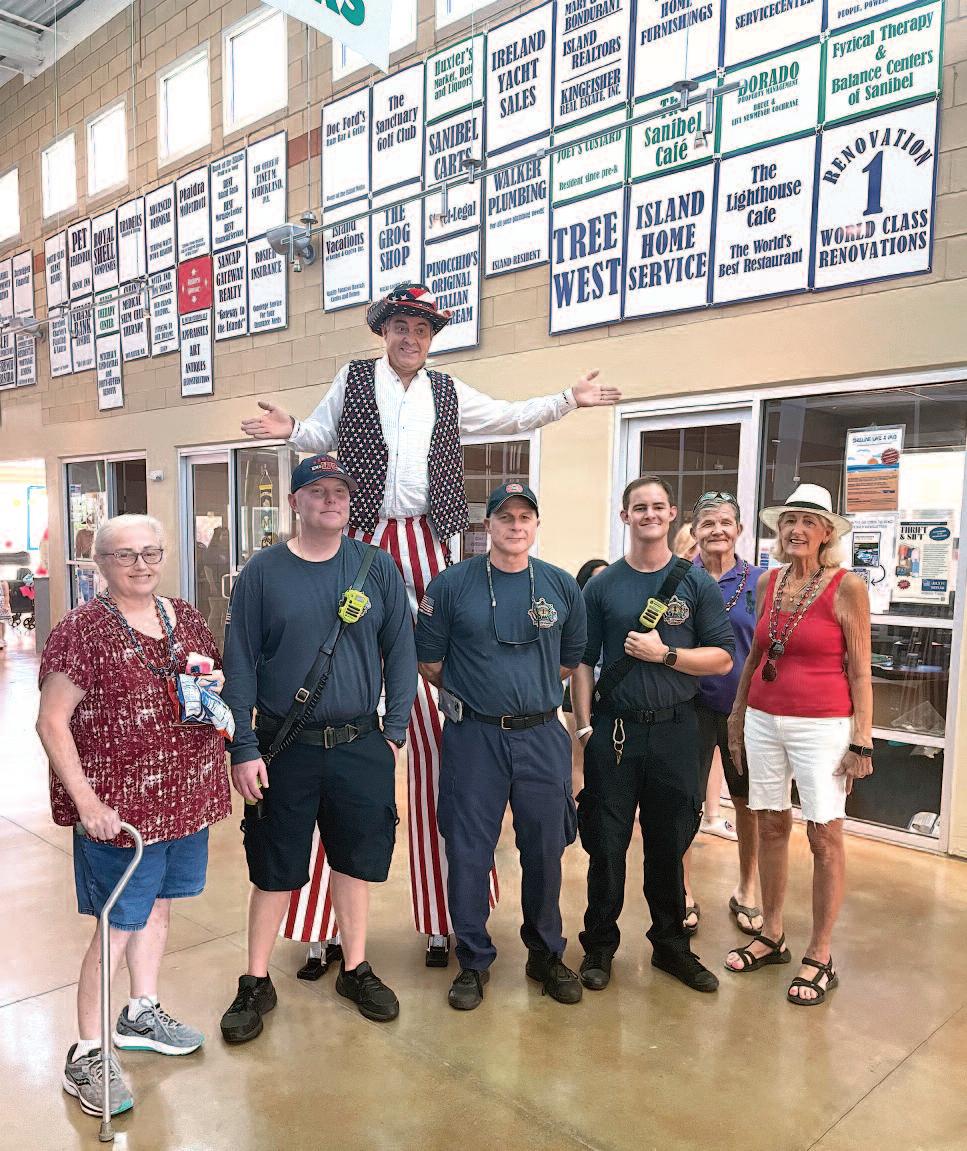
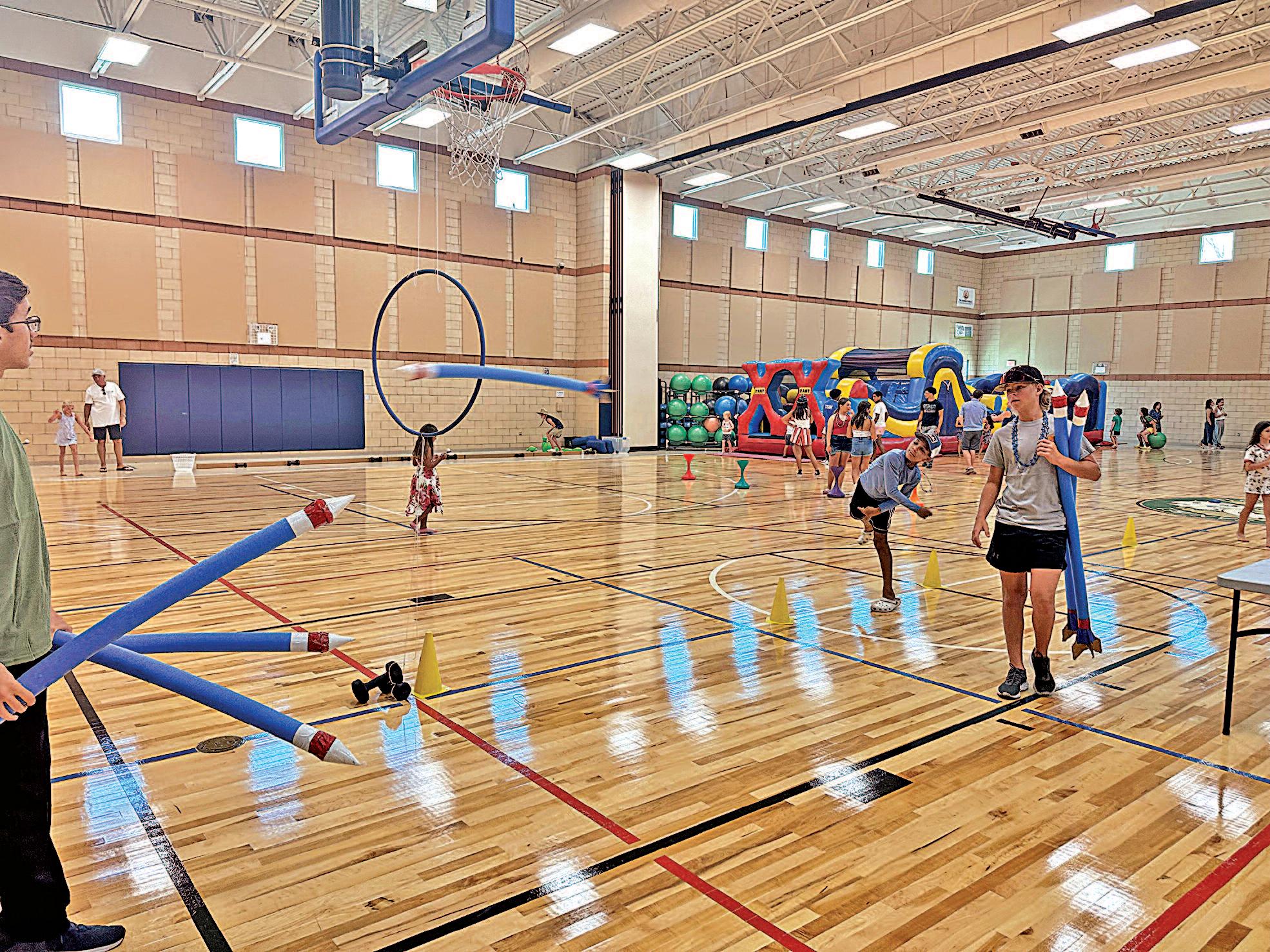
inflatable obstacle course, face painting, live music and more Over 600 people attended, and city staff reported that they received positive feedback from the entire community PHOTOS PROVIDED BY CITY OF SANIBEL

P a g e 2 5 n W e e k o f W e d n e s d a y , J u l y 2 6 , 2 0 2 3 c a p t i v a s a n i b e l . c o m S a n i b e lC a p t i v a I s l a n d e r
COASTAL WATCH
Mangroves donated for restoration
Coastal Watch reported t h a t t h e C o a s t a l Conservation Association Florida and Duke Energy Mariculture Center recently donated 200 black mangroves and 50 white mang r o v e s t o t h e S a n i b e lC a p t i v a C o n s e r v a t i o n Foundation They will be p l a n t e d a t t h e S C C F ' s McGregor Boulevard preserve in the fall to provide s h o r e l i n e s t a b i l i z a t i o n , m a r i n e h a b i t a t a n d increased storm protection. Part of the SCCF family, Coastal Watch thanked the L e e C o u n t y N a t u r a l Resources Department for facilitating the donation
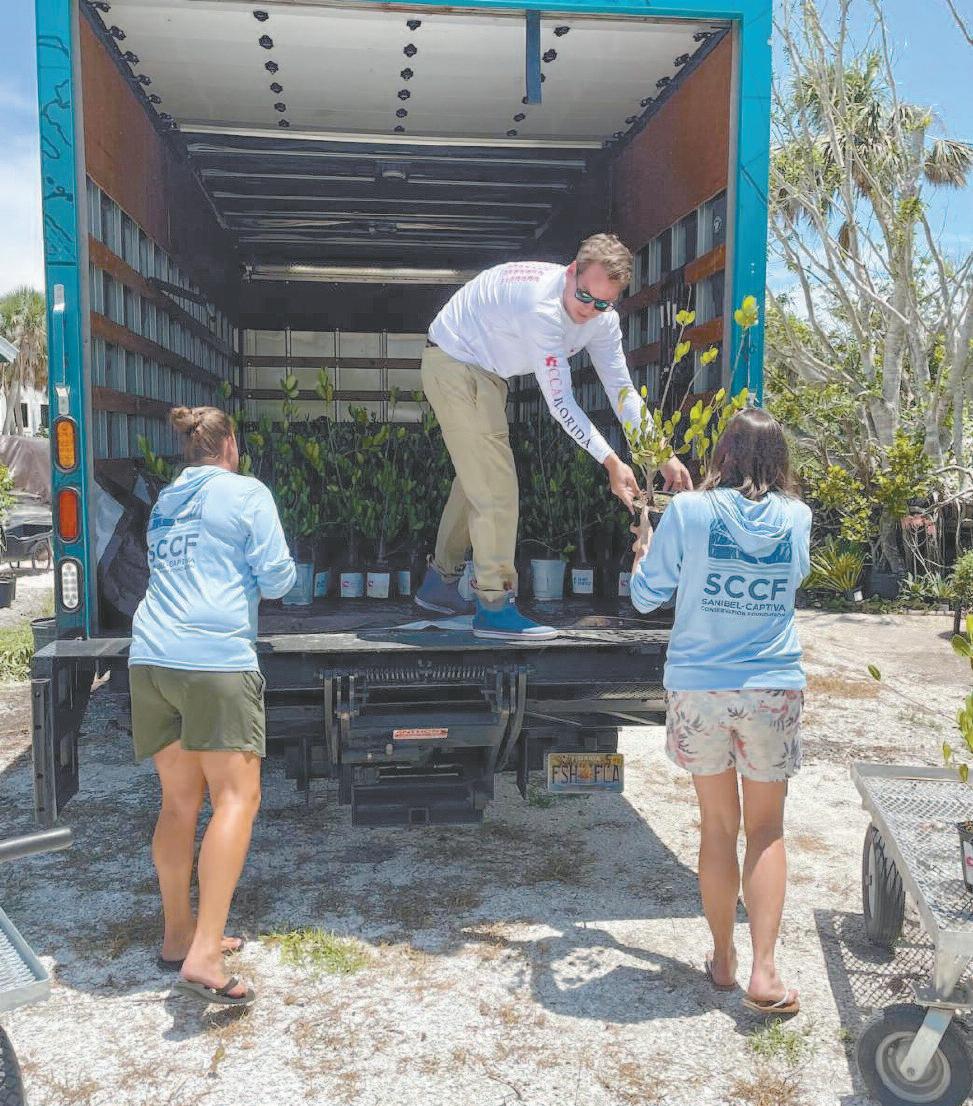
Animal Services to offer Pet Safety Program
Lee County Domestic Animal Services will hold a Pet Safety Program for children of all ages on July 28 from 10 to 11 a m in the conference room at 5600 Banner Drive, Fort Myers

It will be an opportunity for parents to learn along with their children how to safely interact with a dog and read its body language. The program will include discussion of socialization, responsible pet ownership and avoiding risky situations It will be interactive for the entire family, so parents are asked to stay with their child There will be games that will allow for fun learning
Seating will be limited to 35 people on a first-come basis
Shellcrafters
The Shellcrafters will meet on July 31
Papaya tree
as well as being cooked in pies, pickled or preserved as jam.
Papaya juice is another very popular method of consuming the fruit In the East
The Community House Calendar
from 10 a.m. to 1 p.m. in the lobby. A shell crafting class will take place at 10 a m ; it is free and supplies range from $510 Items will be available for sale All s a l e s b e n e f i t t h e o p e r a
From page 22
Indies, the young leaves are boiled and eaten for their high nutritional value. Overall, papaya is a fair source of iron and calcium It is also a good source of vita-
t www LeeLostPets com or call 239-5337387 (LEE-PETS)
TCH is accepting art vendors for the 87th Sanibel Historical Annual Shell Festival on March 7-9 Reservations are available for 8-foot tables for $150 and include all three days
TCH office hours are Monday through
mins A, B and G and an excellent source of vitamin C.
In The Garden is a joint effort by all at
v
Friday from 9 a.m. to 1 p.m.
For more information, visit www sanibelcommunityhouse net or contact 239472-2155 or office@sanibelcommunityhouse net
the local garden center, at 3889 SanibelCaptiva Road, Sanibel. For more information, contact 239-395-5859 or visit www facebook com/rswalshinthegarden

S a n i b e lC a p t i v a I s l a n d e r c a p t i v a s a n i b e l . c o m W e e k o f W e d n e s d a y , J u l y 2 6 , 2 0 2 3 n P a g e 2 6
T h e C o m m u n i t y H o u s e , a t 2 1 7 3
Way, Sanibel, will
the
Periwinkle
present
following:
t i o n s o f T h e Community House
e i n f o r m a t i o n
F o r m o r
,
i s i
ONEMANPAINTINGCO.







P a g e 2 7 n W e e k o f W e d n e s d a y , J u l y 2 6 , 2 0 2 3 c a p t i v a s a n i b e l . c o m S a n i b e lC a p t i v a I s l a n d e r Office/Clerical Contractors Painting Screening Tree Service âNo Bull - Just Quality Work YouCanTrustã Residential¯Commercial NewConstruction Remodels¯Repairs RoomAdditions FreeEstimates 239-707-0654 Bonded-LicCBC058576-Insured BulldogBuildersInc.com Residential/Commercia l FullServiceGeneralContractor *Additions *Remodels *Renovations 30YearsExperience VeteranOwned 239-560-5448 bestorcontracting.com Licensed&Insured License#CGC1532266
Residential Interior&Exterior DetailOriented, TidyandPersonal Nojobtoosmallorlarge utilizingathreepersoncrew. Andalways,freeestimates andreferencesfurnished. Givemeacalltodiscussallof yourpaintingneeds.
ThankYouInAdvance Steve (239) 339-7361

S a n i b e lC a p t i v a I s l a n d e r c a p t i v a s a n i b e l . c o m W e e k o f W e d n e s d a y , J u l y 2 6 , 2 0 2 3 n P a g e 2 8
