






Black Buzzard


BY SHAY CASTLE
Welcome to Vol. 2 of our Survival Guide for Concerned Citizens! If you missed Vol. 1, find it here: bit.ly/SurvivorGuideVol1
Even though these are meaty issues, we definitely didn’t capture all that it takes to build a strong, resilient local community. The work continues. Send us your best ideas, opinions and expert takes: letters@ boulderweekly.com.
This week, I want to talk about something we’re the experts on: local news. Specifically, I want to talk about how to not stress yourself out with the news. Obviously, we want you to read the news. It makes you a better, more informed and engaged citizen. (And we wouldn’t have jobs without you.)
But what we don’t want is for the news to consume your life, to stress you out, to become a thing you feel compelled to read even though it’s bad for your. Or, worse still, a thing you check out from because you know it’s bad for you.
People are often surprised to hear that I don’t consume news outside of my job. I pick up what I need to know during my work hours and from my more-connected friends and family. But I maintain strict boundaries around my news consumption. Journalism is my job. I don’t make it my life.
Unless you are a fellow journalist, you don’t share my privilege of having the news be your job. So how do you fit it in without letting it consume your life (especially these days, when every hour brings another dire headline)?
There are thankfully dozens of guides on how to thoughtfully consume news. Whether you’re a news junkie or an anxious avoidant who wants to be more informed, here are my tips for how to healthfully tune in.
Limit your consumption. Be honest about how much news you can read/
APRIL 17, 2025
Volume 32, Number 35
PUBLISHER: Stewart Sallo
EDITORIAL
EDITOR-IN-CHIEF: Shay Castle
ARTS EDITOR: Jezy J. Gray
REPORTERS: Kaylee Harter, Tyler Hickman
CONTRIBUTING WRITERS: Jack Armstrong, Allen Best, Rob Brezsny, Michael J. Casey, Giselle Cesin Noll, Justin Criado, John Lehndorff, Dan Savage, Andrea Steffes-Tuttle
COVER: Chris Sawyer
SALES AND MARKETING
DIRECTOR OF ADVERTISING: Kellie Robinson
SENIOR ACCOUNT EXECUTIVE: Matthew Fischer
ACCOUNT EXECUTIVES: Chris Allred, Austen Lopp
SPECIAL PROJECTS MANAGER: Carter Ferryman
MRS. BOULDER WEEKLY: Mari Nevar
PRODUCTION
CREATIVE DIRECTOR: Erik Wogen
GRAPHIC DESIGNER: Chris Sawyer
CIRCULATION
CIRCULATION MANAGER: Cal Winn
CIRCULATION TEAM: Sue Butcher, Ken Rott, Chris Bauer
BUSINESS OFFICE
BOOKKEEPER: Austen Lopp
FOUNDER / CEO: Stewart Sallo
As Boulder County’s only independently owned newspaper, Boulder Weekly is dedicated to illuminating truth, advancing justice and protecting the First Amendment through ethical, no-holds-barred journalism and thought-provoking opinion writing. Free every Thursday since 1993, the Weekly also offers the county’s most comprehensive arts and entertainment coverage. Read the print version, or visit boulderweekly.com. Boulder Weekly does not accept unsolicited editorial submissions. If you’re interested in writing for the paper, please send queries to: editorial@ boulderweekly.com. Any materials sent to Boulder Weekly become the property of the newspaper.
1495 Canyon Boulevard, Suite CO 1, Boulder, CO 80302
Phone: 303.494.5511, FAX: 303.494.2585 editorial@boulderweekly.com www.boulderweekly.com
Boulder Weekly is published every Thursday. No portion may be reproduced in any form without written permission from the publisher. ©2025 Boulder Weekly, Inc., all rights reserved.
Boulder Weekly welcomes your correspondence via email (letters@boulderweekly.com). Preference will be given to short letters (under 300 words) that deal with recent stories or local issues, and letters may be edited for style, length and libel. Letters should include your name, address and telephone number for verification. We do not publish anonymous letters or those signed with pseudonyms. Letters become the property of Boulder Weekly and will be published on our website.
watch/listen to without going crazy. An hour a week? 10 minutes a day?
However much it is, put it on the schedule like you would a meeting or gym time. Then stick to it: When the time’s up, move on with your day.
Plan for good after care. Treat news like a traumatic experience you need to intentionally recover from (which, let’s be real, it often is). Actively plan to read the news and then follow that up with exercise, a homemade meal or a little treat from your favorite spot — whatever gets you out of your head, back into your body and reminds you that, for now, you’re safe. You can make it a ritual: Sunday morning news reading followed by a walk, hike or tea with friends.
Research when you need to; rest when you can. Other journalists might consider this sacrosanct, but I think it’s OK to skim just the headlines and only go in depth on the stories that are interesting, relevant and/or might require your input in the near future.
I don’t read every single article every single day, or even every week. The headlines let me know roughly what’s going on and when. If I know there’s something coming up — like an election or a public meeting — that needs my attention, I’ll set aside more time to research before engaging.
Throw us some cash if you’ve got it so we can keep news free and accessible to all. boulder weekly.com/ support or scan the QR code
Treat the news like you would studying for a test. The test being: Do you know what you need to know to make an informed decision? Set aside time to learn what you need to, when you need to. Find a form of news that works for you. News is kind of like drinking from a firehose. It’s coming at you all the time, and it doesn’t always step back and offer a high-level look at what’s going on.
If you need a break from the madness, seek out outlets that provide context over quick-hit pieces or that sum things up on a slower timeline: once a week or once a month.
I love Vox for national and global issues. We’re biased, but Boulder Weekly also tries to sum up recent news stories in our weekly Gov’t Watch and BoCo, Briefly offerings. And practically every outlet offers a newsletter that rounds up the latest headlines (their own and those from other outlets) — digestible, quick reads to be perused at your leisure.
Advocate for the news you want to see. This doesn’t only mean what topics you want covered, but how you want the information delivered. Explainers? Listicles? Bullet points? A summary at the top?
I can’t speak for other outlets, but if Boulder Weekly hears from enough of you, we’ll change what we’re doing. Send us an email: editorial@boulderweekly.com
Support local news. Although it doesn’t compare to the halcyon days of journalism, Boulder County is blessed with a rich media ecosystem. But we’ll only have that as long as readers support us.
Although money is what we need most, you can also help by contributing opinion pieces or letters to the editor, story ideas and/or by sharing and interacting with our news stories, wherever you see them.
It’s OK to step away. Being informed is important, but so is your mental health. Knowing everything but being capable of doing nothing about it does not make you a better citizen. After all, you can’t pour from an empty cup.
If you need a timeout from the news, take it. If the world starts falling apart (even more than it currently is) trust me, you’ll hear about it. You can tune in when you need to.
That’s what we’re here for: To sit in the government meetings, watch the budgets and generally keep an eye on things. We’re not going anywhere (for now) so we promise to be here when you get centered and come back.

• KGNU (community radio station covering Boulder County; free)
• The Mountain-Ear (in print and online with a paywall, covering Nederland and the mountain communities)
• Left Hand Valley Courier (online weekly with a paywall and in print monthly; covering Niwot and Gunbarrel)
• Boulder Reporting Lab (free; online; primarily covering City of Boulder)
• Yellow Scene (free; online and in print monthly; covering primarily Erie and East County)
• Longmont Herald (Substack newsletter covering Longmont; starting at $5/month; website pending)
• Lyons Recorder (online weekly; free; covering Lyons)
• Colorado Sun (online; free; plus multiple specialized newsletters)
• Colorado Newsline (online; free)
• CPR (online and radio; free)
• 5280 (online for free; in print monthly for $6.99)
• Westword (online and in print weekly; free)
With all the good stuff in this week’s paper, we’re short on space. These op-eds are worth your time. Here’s a sneak preview; find the full pieces online.
Attacks on VenezuelanAmericans are based on dangerous stereotypes
BY GISELLE CESIN NOLL
As a Venezuelan who came to the United States on a student visa and was fortunate enough to become a U.S. citizen eventually, I understand how different each immigration journey can be. Not everyone has the same opportunities. But what nearly all Venezuelans have in common is the desire to live in peace, contribute to society and build a better life — not just for themselves, but for their
families and the communities they join.
That’s why Judge Edward Chen’s recent court order blocking Secretary Kristi Noem’s attempt to end Temporary Protected Status (TPS) for Venezuelans is so significant. In his decision, Judge Chen made it clear: The move was “arbitrary and capricious,” lacking evidence and rooted in discriminatory intent. He acknowledged what many of us already know — the attacks on the Venezuelan community are based on tired, false and dangerous stereotypes.
Only a fraction of Venezuelans in the U.S. are linked to any criminal organization. That’s not a public safety issue: That’s scapegoating.
Learn what they are and how to express them: aclu.org/know-yourrights/immigrants-rights
Giselle Cesin Noll is a former broadcast and print journalist from Venezuela who now freelances and works as a communications specialist. She lives in Boulder with her husband and two daughters.
Read the rest: bit.ly/VenezuelaBW
BY ANDREA STEFFES-TUTTLE
The policies the Trump administration is pursuing — illegal layoffs of federal workers, mass deportations, constant threats and retractions of broad-based tariffs, Medicaid spending cuts — are creating unprecedented levels of economic uncertainty.
According to CU Boulder researchers, “Business confidence [in Colorado] took the second-steepest dive ahead of Q2 2025, resting at the
third-lowest level in the 23-year history of the Leeds Business Confidence Index,” mostly on account of “uncertainty surrounding new federal policies.”
We have to shore up our local economy to sustain ourselves through the next four years of Trump’s reign. For every $100 spent at a locally owned business, roughly $68 to $73 stays in the community, according to Amy Hartzler, director of communications at the Business Alliance for Local Living Economies. Alternatively, only about $43 remains local when spending at a national chain because a large portion of the revenue from chain stores goes to corporate HQ and shareholders.
Andrea Steffes-Tuttle is a cultural anthropologist, writer and the founder and lead researcher at the Worker Equity Lab, where she studies shared ownership and its economic impact.
Read the rest: bit.ly/ LocalEconomyBW

BY JACK ARMSTRONG
“Solidarity, not charity.” At its most basic level, that’s how proponents describe mutual aid. Though historically associated with leftist causes, mutual aid is, at its core, about people helping one another — a concept that transcends politics, religion and culture.
“Everything that’s happening is about neighbors helping neighbors,” said Silas Atkins, a South Boulder resident and community building. Unlike traditional nonprofits, “there’s no cost of doing business, no rent to pay. The ideal mutual aid is you are creating a community with others. You really don’t need money to do that.”
The term mutual aid was originally coined in 1902 by anarchist philosopher Peter Kropotkin, who used it to counter the prevailing Darwinist theory of survival of the fittest. Kropotkin noted countless examples of cooperation and reciprocity among humans and other animals.
Mutual aid is predicated on the idea that sharing excess and collaborating with others will strengthen communities. Groups generally organize their group horizontally, meaning there is no member with authority over another.
Solidarity and providing without judgement are basic tenets. There is no need for something to be “reciprocated” or “transacted” when you show up to a distribution (often referred to as distros). Rather than relying on large donors or government grants, mutual aid groups use shared resources to redistribute essential goods, food and education.
Practical uses of mutual aid had great success through civil rights movements and natural disasters. The Black Panther Party started the nation’s first free breakfast program for school children. Mutual aid groups provided counseling and pro bono legal ser-
vices to targets of legal persecution after the Stonewall Riots of 1969. For poor families who lacked resources when Hurricane Katrina hit New Orleans in 2005, emergency response was provided for them via other residents.
A global crisis brought mutual aid out of leftist circles and into the mainstream.
During the COVID-19 pandemic, Americans helped their neighbors by providing nonperishable food, medicine and protective equipment to those who needed it, free of charge and without qualifications.
Throughout COVID, Boulder mutual aid groups like SAFE, Food Not Bombs and Boulder Food Rescue distributed medical supplies alongside food and other essentials. More community members joined these groups to show solidarity and learn
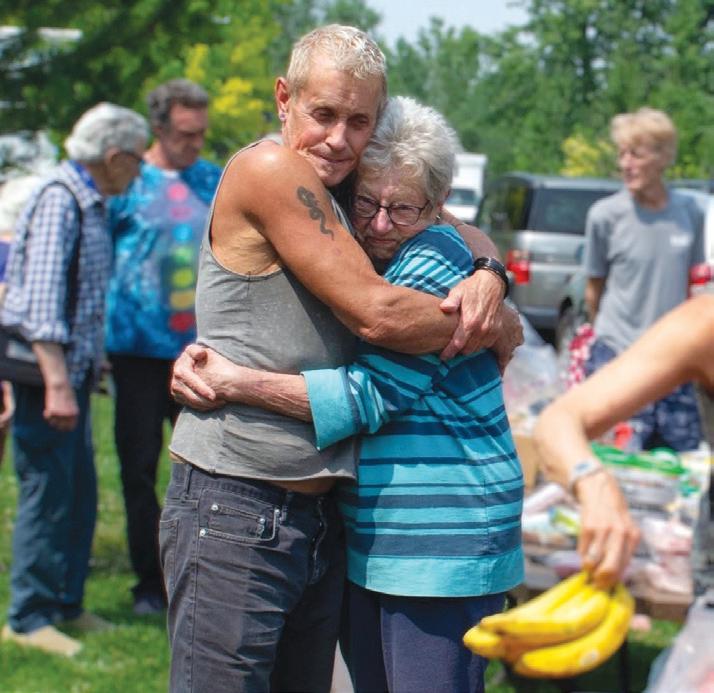
new skills during the idle lockdown time.
The Trump administration resulted in a huge spike of interest in Food Not Bombs, said member Justin Schwartz. That’s so far been true for Trump 2.0 as well.
“People are really scared right now,” added Hayden Dansky, co-founder of Boulder Food Rescue, which provides inneed communities in Boulder with fresh produce and food, free of charge. “It just reminds me why this work is so important.”
Food Not Bombs, SAFE and Boulder Food Rescue have also seen an uptick in their community participants, members said.
“I feel like I’ve been beating the drum that fascism is on our doorstep for a really long time, and now that it’s very out in the open, people can see it,” Schwartz said. “People
are looking for a place to feel like they have some semblance of political control, and community organizing and activism feels like a place where you can take that back.”
Mutual aid’s expansion includes new programs that challenge Trump administration actions of targeting marginalized persons in our communities. Colorado Immigrants Rights Coalition, or CIRC, offers a volunteer program that follows U.S. Immigrations and Customs Enforcement (ICE) activity via community tracking and reporting.
“The goal is to give people a one-stop shop where they can confirm whether or not there is actually ICE activity,” said Raquel Lane-Arellano, communications manager at CIRC. “The biggest goal is to share information, not to spread fear.”
Locally, groups distribute food, medical supplies and other life-sustaining necessities to those in need. That often means people experiencing homelessness.
SAFE Boulder has handed out dozens of sleeping bags, tarps and tents each year since they began their work in 2018. Tents and sleeping bags are illegal under Boulder’s anti-camping law, and distributing those supplies has been criticized by city officials. SAFE completely opposes the camping ban, saying anti-camping laws unfairly target unhoused Boulder residents.
“Especially in the winter months,” said Chilly, a member of SAFE Boulder who preferred to use a pseudonym, “what we provide is essential for survival.”
Those who frequent mutual aid groups are prone to having extreme and pointed views on authority, and disagreements between mutual aid organizations and local government entities are common.
All are welcome at Food Not Bombs, which tries to put the tangible impact of what the group does above political disagreements.
“There can be a culture shock when people come in and they’re like, ‘I’m a radical leftist, and I do this and this and that,’” Dani said. “And that’s great, but we’re making banana bread. When folks end up relying on you and you become a resource, you have to put the objective of the day as the priority.”
“Wherever you’re living in the world,” added Schwartz, “there’s a mutual aid group that would love to have your volunteership.”
Boulder Food Not Bombs Free meal at the Boulder Bandshell (1212 Canyon Blvd.); Saturdays at 3 p.m. @boulderfoodnotbombs
Boulder Food Rescue
No-cost grocery program connecting in-need communities boulderfoodrescue.org
Climatique
Boulder-based climate action magazine representing Boulder locals climatique.earth/ @climatiqueNOW
Check out their fantastic resource, A Beginner’s Guide to Changing the World
SAFE Boulder County
Distributes hot meals, survival and medical supplies at 1056 Boulder Canyon Dr. Tuesday 6-7:30 p.m., Wednesday 5:30-7:30 p.m., Thursday 5:30-6:30 p.m. @safeboulder
The Wagon People Free food at the King Soopers (2255 Main St.) in Longmont Saturday at 2 p.m. @thewagonpeople.co
Two Guides Mutual Aid
Redistributing hot food, donated food and hygiene products @twoguidesma
Transcontinental Pipeline
Helping transgender, queer and LGBT individuals move from unsafe/unaccepting environments within the U.S. to Colorado tcpipeline.org
BY TYLER HICKMAN
Ariver of people spilled onto the sidewalks in Longmont on Saturday, April 5, to have their voices heard. An orchestra of “Hands off!” chants, beating drums and supportive car horns stretched for five blocks, lining both sides of Main Street from 4th to 9th Avenue.
“I’ve done a lot of organizing, but I’ve never seen something like this in Longmont,” local resident Marissa Hallo said from the throng of protesters.
The crowd, which by some unofficial estimates reached anywhere between 4,000 and 5,000 people, joined in with 1,400 other events across the country in a mass organization called “Hands Off!” to show opposition to President Donald Trump and Elon Musk.
While the staggering turnout brought together residents from across Boulder County and beyond, for a few dozen Longmonters, this Saturday was no different than any other.
A small group of local political dissenters began gathering — rain, snow or shine — every weekend on the corner of 6th and Main in Longmont for more than two decades. What started as a targeted local mobilization against the Iraq War, the Longmont Leads with Love Vigil has evolved into a dependable support space for community members, and a means to put urgent political issues front of mind for the people of Longmont.
While the term ‘vigil’ may invoke images of a somber, candlelit gathering, the group is not silent, says organizer Kathy Partridge. “Vigil suggests a long-term kind of caring presence,” she says, similar to how communities come together when someone has died.

“The core of the Longmont Leads with Love Vigil is, it continues.”
The vigil dates back to the Bush administration, when Longmonters first began organizing in the aftermath of 9/11.
“We had an ad-hoc meeting saying that we had to do something,” says Jim Kenworthy, who helped start the vigil group along with two other Longmont residents, “because Bush is going to take advantage of this.”
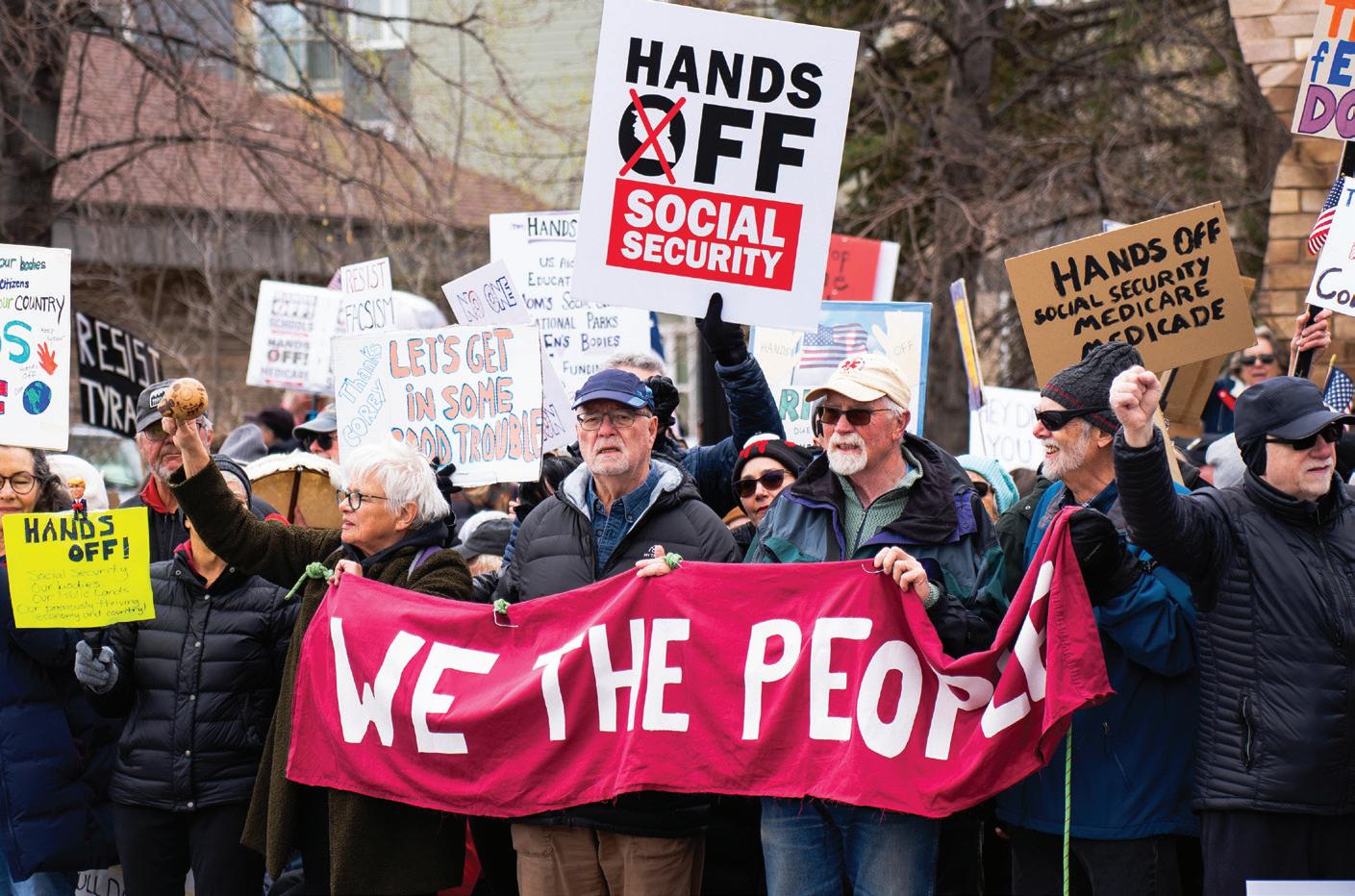
The group put out a call to action, and small crowds started to appear on Main Street every Saturday to protest what soon became the Iraq War. In the early days, Kenworthy says, there was a lot more opposition to their grassroots movement.
“We had as many right wingers as leftists,” says Kenworthy, a Longmont resident since 1983. The counter protesters would often threaten violence — though it never came to that point, he adds.
Despite the threats, the group persisted. “Some of us felt we had to be out there no matter what,” Kenworthy says. Community involvement began to dwindle when the Obama era promised change, according to Kenworthy and Partridge. For a few years, the group was less active. Then involvement exploded in 2016.
Says Partridge, “It picked up again as soon as Trump was elected for the first round, and it has been non-stop ever since.”
In retrospect, Partridge says, keeping the vigil going would have reminded people “the President is not … the only power in the world, and that we should have continued to be expressing the need for social change.”
After the vigil’s reignition, one of the first steps was to give it a name.
“We wanted to counter the hate we were feeling from Trump supporters with a nonviolent message and offer a positive vision,” Partridge says.
The new-look vigil takes a more organic approach — the early iteration had a conventional structure with regular meetings and titles — relying more on community networks and social groups to spread the word. Before the pandemic, the organizers would host post-vigil potlucks, which they hope to revive soon with community picnics and coffee-house meetups.
The group as it exists today doesn’t have a specific platform. It simply creates a space where people can come to exchange ideas, share information and support each other.
“People bring their own issues. Some people have the same sign every week,” Partridge says. “If you have a single message, [what] you get from the Longmont Leads with Love Vigil is solidarity.”
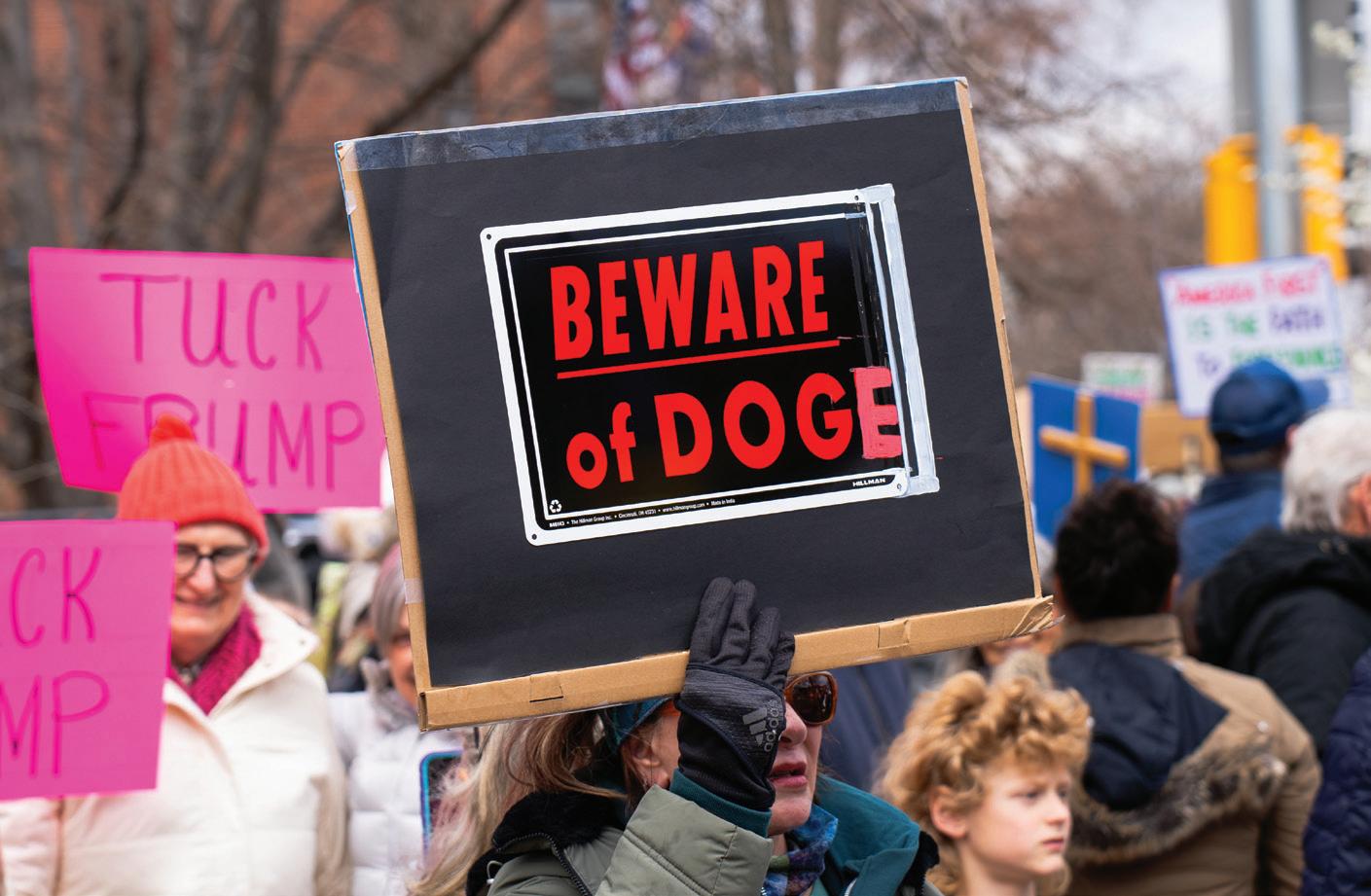
Reproductive rights, Black Lives Matter, the Free Palestine movement, immigration issues, LGBTQ+ rights — cardboard painted with pithy phrases supports each of these causes every Saturday afternoon. While there’s no one agenda, Partridge says the point is to present “a view of a world where all can thrive and there’s peace.”
“We want the feel to be that the issues are connected,” Partridge says.
While there’s less conflict than in years past, there is still a faction of conservative opposition in Longmont. Until congressional redistricting in 2021 placed Longmont into Colorado’s 2nd Congressional District, represented by Dem. Joe Neguse, the city was in the 4th Congressional District, which elected Rep. Lauren Boebert in November last year.
Partridge sees this diversity in viewpoints as an advantage.
“Even in Longmont, [a] regular, little old American city, people are showing up,” she says. “We’re not just taking this. We’re not letting this be normalized.”
Change won’t come directly from going to the curb, Partridge says — it’s about what you do in between. Outside of the vigil, she works with Together Colorado, a faith-driven organization that
advocates for progressive policy changes at the state and local level.
While the weekly vigil may not be the immediate harbinger of radical social change, it’s the visibility that drives Partridge, Kenworthy and other participants to the street every Saturday.
“It really feels like it makes a difference here,” Partridge says. “You’re standing on Main Street and the cars are going by and people are walking by because you’re right by downtown, and it’s very visible.
“So if some kid in the backseat of their … Trump-voter parent’s car driving down the street, sees a sign that says, ‘We support trans kids,’ maybe that kid feels seen.”
The Longmont Leads with Love Vigil meets weekly on Saturdays from 1-2 p.m. You can sign up for their newsletter by emailing longmontvigil@gmail.com. On Saturday, April 19 at 1 p.m., there is a call to action organized by 50501, a grass-
roots activist organization, called the “No Kings, We Won’t Go Back Rally” to honor 250 years since the American Revolution. Details here: bit.ly/LongmontVigilBW
There are political activism groups working to protect democracy across Boulder County. If you’re interested in
Grassroots activist organization that mobilizes protesters and shares resources to take action on local, state and fed-
eral legislation. Meets the first Wednesday of every month via zoom. longmontdems.org
Local advocacy organization for Longmont’s Latino population that offers low-cost to no-cost legal services, path to citizenship aid, educational resources and more to support the Hispanic community. elcomitedelongmont.org
Citizen-led organization focused on influencing local, state and federal policymaking and organizing peaceful rallies. indivisiblefrr.org
A county-wide collaborative that connects climate justice organizations to inform and coordinate action in the community. Their events calendar compiles workshops, community initiatives and calls to action from groups around Boulder County into one place. boulder.earth
















































advocates recommend policies worth pushing for
BY SHAY CASTLE
Michael Le Desma got tired of hearing one word, over and over again, repeated at city council meetings: No. Whether it was transportation projects meant to slow cars down or an apartment building aimed at alleviating Boulder’s crushing housing crunch, the neighborhood groups that showed up to speak to elected officials opposed it.
“They’re kind of constitutionally averse to change,” Le Desma said.
Oppositional attitudes to development — referred to since the late ’70s/early ’80s as NIMBYism (Not In My Backyard) — are so widespread that they’ve spurred studies of their role in the U.S. home shortage and even spawned a counter movement: YIMBYism (Yes In My Backyard). Boulder hosted the first big YIMBY conference in 2016.
Le Desma sums up the new approach this way: “Instead of just, ‘Hell, no,’ it’s, ‘Yes, but.’”
The NIMBY/YIMBY wars have continued locally, with YIMBYs gaining ever more political ground. In every corner of the county, groups have popped up to fight for housing and against the various ills caused by the acute shortage and affordability crisis: transportation-fueled climate change, rising homelessness, etc.
It’s not glamorous work. Advocates spend hours reading government documents and attending long, tedious meetings, occasionally delivering 2-3 minute speeches to elected and appointed officials while trying to convince their fellow residents to do the same.
But their plea is a passionate one: Our cities will not survive if they become increasingly unaffordable, divided by income and dominated by cars.
“Resilience is the ability to adapt to change,” said Shakeel Dahl, a Longmontbased housing advocate. “Change will happen no matter what. If we want to be resilient, we should look at these things that are going to change and say, ‘How can we use this thing that is changing in order to further our goals?’ Are we going
to react to external factors and act like victims, or are we going to harness change to improve people’s lives?
“I’m open to the idea that every single policy idea I articulated is wrong,” Dahl concluded, “but I’m not open to the idea that we can be resilient if we are not willing to change.”
What follows are the policies and initiatives Dahl, Le Desma and other pro-housing community advocates say residents should advocate for if they want strong, resilient communities.
This is by no means an exhaustive list. If you want to know everything these folks are up to, contact them! They’re all open to new members and ideas.
What they do: LAUNCH advocates for more housing and walkable neighborhoods Learn more: launchlongmonthousing.org
Legalize attached housing. “It should be legal to build a townhome, duplex or fourplex in any residential neighborhood in any city.”
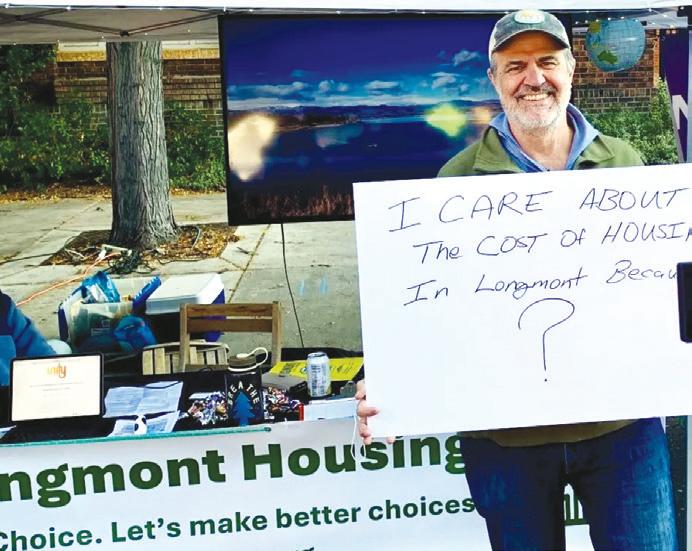
Allow complimentary businesses in residential neighborhoods — pediatricians, gerontologists, coffee shops, sandwich shops, corner grocery stores.
“Every neighborhood should have access to nutritious, delicious food and other critical services necessary for human life without having to get into a car.”
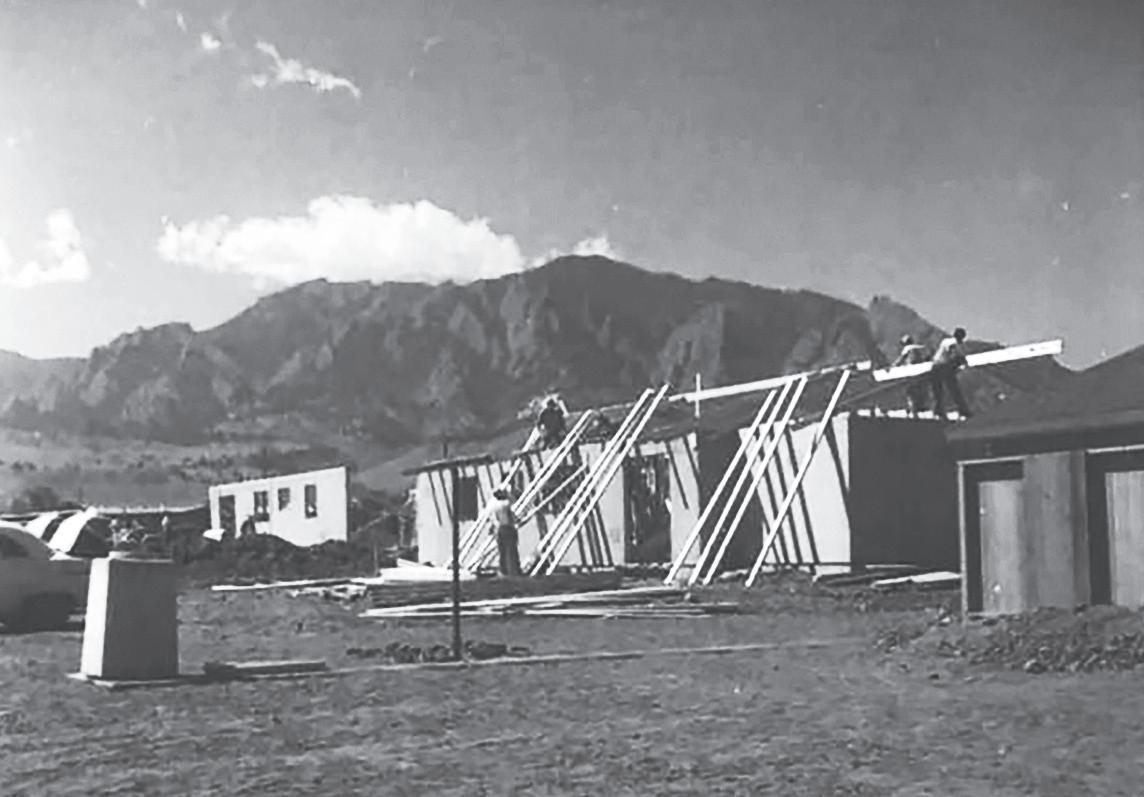
Build more pedestrian and bike infrastructure. “It should be safe for a child to walk or bike to their friend’s house, or after school activities, or school without needing to be driven by their parents. Car centric infrastructure is a tax on parents’ time and limits the imagination of children about what their community is like.”
What they do: This neighborhood group pursues community building projects and advocates for transportation safety and housing. It’s also a local chapter of Strong Towns, a nonprofit advocacy organization More info: nusobo.org. Contact nusobo@gmail.com to get connected
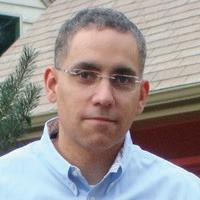
Gentle infill.
“While the members of our group broadly support more density, we don’t want it to be unconstrained. You can have increases in density where you have public transportation, where you manage parking and use money from developers to help address some of the issues that are expected to flow from the increase in population.”
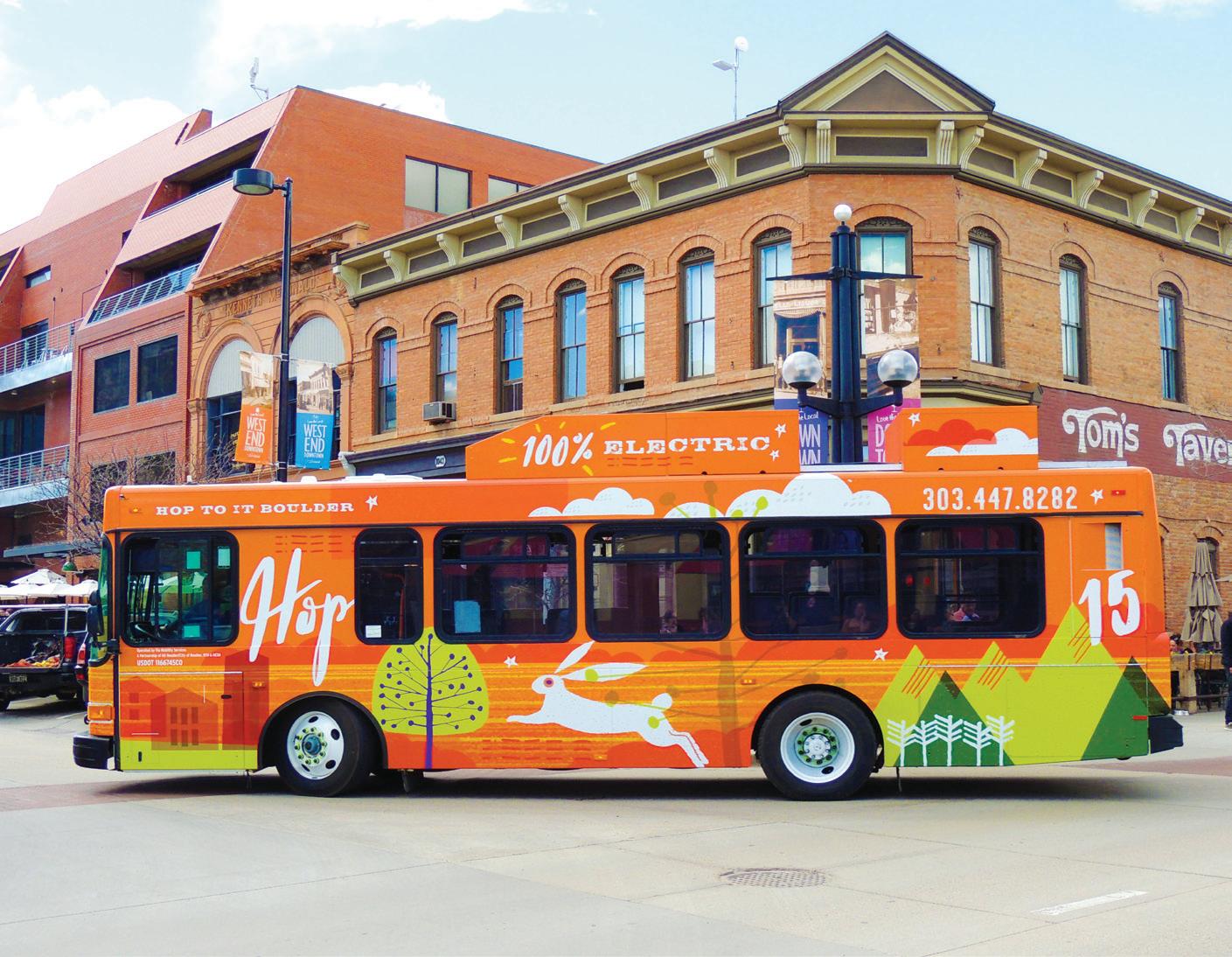
Transportation. Ending parking minimums (the local rules requiring a certain number of parking spots per home and business), traffic calming on local streets (to slow cars down) and more and better bus service.
“Join community groups that advocate for these changes. There are many such groups, but among the most established and most effective is Community Cycles.” (communitycycles.org)
“When it comes to climate change, time is of the essence. It is at the state and local level that change can happen most quickly, particularly in the realm of transportation and land use policy, where state and local authority is at its most potent.”
(formerly of East County Housing Opportunity, or ECHO. The group became part of Together Colorado in July 2024)
What they do: This coalition of faith leaders advocates for justice and equity in housing, healthcare, climate, the criminal justice system, the economy, immigration and education. Learn more: togethercolorado.org
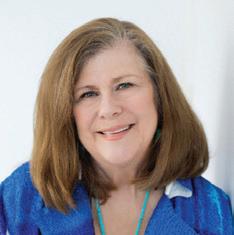
More housing, especially in East County “Erie, Superior and Longmont still have edges they can grow on the outskirts; infill is not their only option.”
An inclusionary housing ordinance in Lafayette, which would require builders to include a certain amount of affordable housing in big projects or pay into an affordable housing fund. Most local communities have them, and they require anywhere from 12-25% of units to be designated affordable, or the cash equivalent.
“All [Lafayette has] is a $1 per-squarefoot building fee that goes into their affordable housing. That’s really low.”
Higher local minimum wages. “What we’re looking to do is to get the rest of the region to do at least what Boulder did: [an] 8% [increase] a year for the next three years. But amid a concentrated push by business owners to abandon or even rescind higher local wages, “we’re not getting very far.”
“Historically, every labor protection we’ve ever gotten — including child labor, health insurance, ending slavery — the business community has always said, ‘This will kill us. Even if businesses are hurting, the question is, ‘Should the lowest-wage workers be the ones paying the price?’
“If we want to get people out of their cars and create this sense of community, the workers who work here need to be able to afford to live here — wherever here is.”
Ending the state ban on local rent control. “It doesn’t immediately say everybody is going to do rent control” — cities’
ability to set their own minimum wage is proof of that. “It just gives local governments the ability to be flexible” in times of distress, such as after the Marshall Fire, when an effort to curb rents went nowhere.
What they do: Track development locally and alert residents to get involved in the approval process for various projects
Learn more: boulderhousing.net
Ending requirements for first-floor retail space in mixed-use developments. “This requirement for vertical mixed use does not make sense in a context where the commercial [space] is in the next block or two blocks away. Looking around town right now, you see a lot of empty first-floor spaces. The demand is not there.”
Get involved in the Boulder Valley Comprehensive Plan update. This exhaustive document — which guides development, city services, land preservation, transportation and other high-level policies for a decade or more — can be a difficult entry point for ordinary residents. But because it controls so much, it’s incredibly important to the future of our region.
“Probably the most important place for people to have an impact is in an update to the BVCP,” happening now.
Upcoming engagement: May 21-22 county and city elected officials will meet with their respective planning bodies to discuss progress and next steps. Learn more: bit.ly/BVCPupdateBW
Sign up for notification from your community’s planning department. “There are planning email lists that will tell you everything that is in the pipeline,
BOULDER CITY COUNCIL
Meets 6 p.m. Thursdays
Contact: bouldercolorado.gov/ contact-city-council-and-staff
More info: bouldercolorado.gov/ government/city-council
BOULDER COUNTY COMMISSIONERS
Public hearing and votes are generally held Tuesday mornings
Contact: commissioners@boulder county.gov
More info: bouldercounty.gov/ departments/commissioners
LONGMONT CITY COUNCIL
Meets 7 p.m. Tuesdays
Contact: bit.ly/ContactLongmontCC
More info: longmontcolorado.gov/ government/city-council-meetings/
LOUISVILLE CITY COUNCIL
Meets 6 p.m. Tuesdays
Contact: bit.ly/LouisvillleCC
LAFAYETTE CITY COUNCIL
Meets 5:30 p.m. first and third Tuesdays
Contact: lafayetteco.gov/247/CityCouncil
meetings coming up and all that.” Show up and support projects that further housing, transportation and climate goals=. Middle-income housing at Iris and Broadway. The county plans its land, but “this is the place where our county and city should come together and figure out how we can build middle housing, because the land cost is already embedded in a public body.”
Pay attention to government budgets. This one is straight from Strong Towns, but we couldn’t agree more. Learn how your city/town is spending your money — and Boulder County, while you’re at it. We’ll do our part by writing about them in as much depth and detail as we can.
ERIE TOWN COUNCIL
Meets 6:30 p.m. second and fourth Tuesdays
Contact: erieco.gov/318/Town-Council
SUPERIOR TOWN COUNCIL
Meets 6 p.m. second and fourth Mondays
Contact and more info: superior colorado.gov/Government/ Town-Council
NEDERLAND BOARD OF TRUSTEES
Meets 7 p.m. first and third Tuesdays; optional work sessions on second Tuesdays
Contact: townofnederland. colorado.gov/contact-a-boardor-commission
LYONS BOARD OF TRUSTEES
Meets 7 p.m. first and third Mondays
Contact: TOL_BOT@townoflyons.com
Looking for another way to stay up-to-date on local government action?
Read Boulder Weekly’s Gov’t Watch column online or in print (almost) every week. boulderweekly.com/ tag/govt-watch
Colorado’s vast resources can help you reduce fossil fuel use at home
BY ALLEN BEST
Fred and Wilma (not their real names) take climate change very seriously. For the last several years, they have been members of Citizens’ Climate Lobby, an organization that advocates for a tax on greenhouse gas emissions.
Yet like most of us, they were burning natural gas to heat the space and water in their 2,800-square-foot house near Niwot. Last year, they decided to live their values. They set out to go nearly all electric.
You, too, can be like Fred and Wilma. Here’s how.
Energy audits provide great value in guiding investment choices. They can be had for $190 after rebates.
Even more valuable are blow-door tests. Most effective in cold weather, they provide visual images of heat escaping a house. Many Boulder residents can expect to pay $60 to $150 for a conventional blow-door test. In other jurisdictions, these advanced tests typically run $200 to $450.
For Boulder County residents, EnergySmart is an excellent place to start on this journey. It’s a partnership of Boulder County, Boulder and Longmont with Xcel Energy and Platte River Power Authority. Advisors can address everything from building insulation to solar panels to the needs of electric vehicles.
Power)
An Efficiency Works assessment will cost Longmont residents $60. While funds last, assessments are free of charge for rental properties in 2025.
The state’s largest utility provider currently offers two options for audits:
• Home Energy Squad Plus Visit. The current cost is $100 (limited-time discounted rate; the cost without the discount is $150)
• Xcel Energy Audit scheduled with Xcel registered auditor. Costs will vary based on audit type; on average, around $400, but $200 rebates are available.
For their deep dive into electrification, Fred and Wilma reached out to the nonprofit Go Electric Colorado. The organization provides home electrification consultations via volunteer counselors who can give insights into almost everything you need to know.
Go Electric Colorado coalesced in 2023 after Stuart Cummings, Julia Moravcsik and Nick Stevens met and realized how many people were interested in electric cars but remained fearful about ranges and reliability. They suspected the same was true about suppressing emissions in buildings.
Abundant information about home electrification can be found on the internet. But, as Moravcsik points out, “people kind of don’t know what they don’t know.”
“Even in Boulder, where people know a lot about this kind of stuff, most people knew nothing or next to nothing about home electrification,” she says.
Go Electric Colorado’s volunteer counselors have now provided nearly 400 con-
sultations, about half in Boulder County, with others ranging from the eastern plains to the desert valleys of the Western Slope.
Insulation: Fred, who recently retired after several decades as a home remodeler, knew insulation was the most important thing in reducing energy use, no matter the fuel source. He and Wilma hired Net Zero Insulation to boost the attic insulation to R-60, the gold standard. (The R-value is the capacity of an insulating material to resist heat flow. The higher the R-value, the greater the insulating power.)
It cost $3,200, and the impact was immediate. The house stayed warmer in winter, cooler in summer — and lowered their utility bills.
Windows and doors: Many older houses have single-pane windows, which have an R-value of 1. Replacing them with double-pane windows can cost $10,000 to $20,000 depending upon the house size and number of windows. Some newer homes have triple-pane windows. Windows produced by Alpen High Performance at its Louisville factory can get up to R-11. They are also far more pricey.
The federal Energy Star program allows you to claim 30% of product cost up to a maximum of $600.
In the basement of their 1967 home, Fred installed six small double-paned windows at a cost of $2,000. Upgrading a single-paned patio door cost $3,200.


Go Electric Colorado’s Paul Bousquet counsels caution before upgrading from double to triple-pane windows. He instead advises having an energy auditor use an infrared camera to find imperfections in seals around windows.
Heat pumps: Heat pumps can replace gas-burning furnaces. Using electricity, they milk the heat from outdoor air then feed it into the building’s interior. During summer, the reverse process can replace air conditioners and swamp coolers. Heat pumps can also use the same process to produce hot water in lieu of natural gas.
Metro Denver-Boulder has several companies that specialize in heat pump installation. Xcel Energy has a list of contractors registered with the company. So does Energy Smart. Go Electric Colorado endorses a handful of contractors; Bousquet advises getting at least three bids.
Fred and Wilma used Elephant Energy for the air-source heat pump to warm and cool their house and heat their 50-gallon water heater. The $22,000 cost (after

rebates) included an electrical upgrade. The Flintstone house stayed comfortable in January even when the temperature dipped to 9 below. Fred strongly advises finding a company that knows all the rebates.
(For example, Superior has a host of rebates for projects that serve up to four residential units, everything from insulation to electric induction cookstoves).
Kitchen stoves: Going electric also means replacing the kitchen gas-burning stove with an electric model. Plus, studies have shown that gas fumes while cooking the tamales can be unhealthy to cooks and others.
Boulder County offers an induction cook-top lending program for people who are curious about switching to an electric range: rebuildingbetter.org/ induction-resources
Solar: Going all-electric in your house may not get you 100% clean of fossil fuels. You might achieve that by investing in solar and battery storage, a path that Go Electric Colorado can also help with.

Locally, Boulder-based Namaste Solar — an employee-owned co-op — offers free quotes. Federal tax incentives can cover up to 30% of the cost of solar panels and battery storage.
Fred and Wilma, however, decided against going with rooftop solar. Solar farms can generate electricity at scale, and roof-top solar is a long-term investment.
That has also been the advice of Go Electric Colorado. Nice, they say, but it’s not the first, second or even third priority.
Getting electricity from the utilities will include some fossil fuel. But that should diminish to near zero during the next 15 to 25 years.
Fred says that upgrading their house was a reflection of their resolve to be a part, if a small one, of the climate solution. “You can tell how much people care by what they do,” he says.
Long-time Colorado journalist Allen Best tracks Colorado’s energy transition at BigPivots.com




BY JEZY J. GRAY
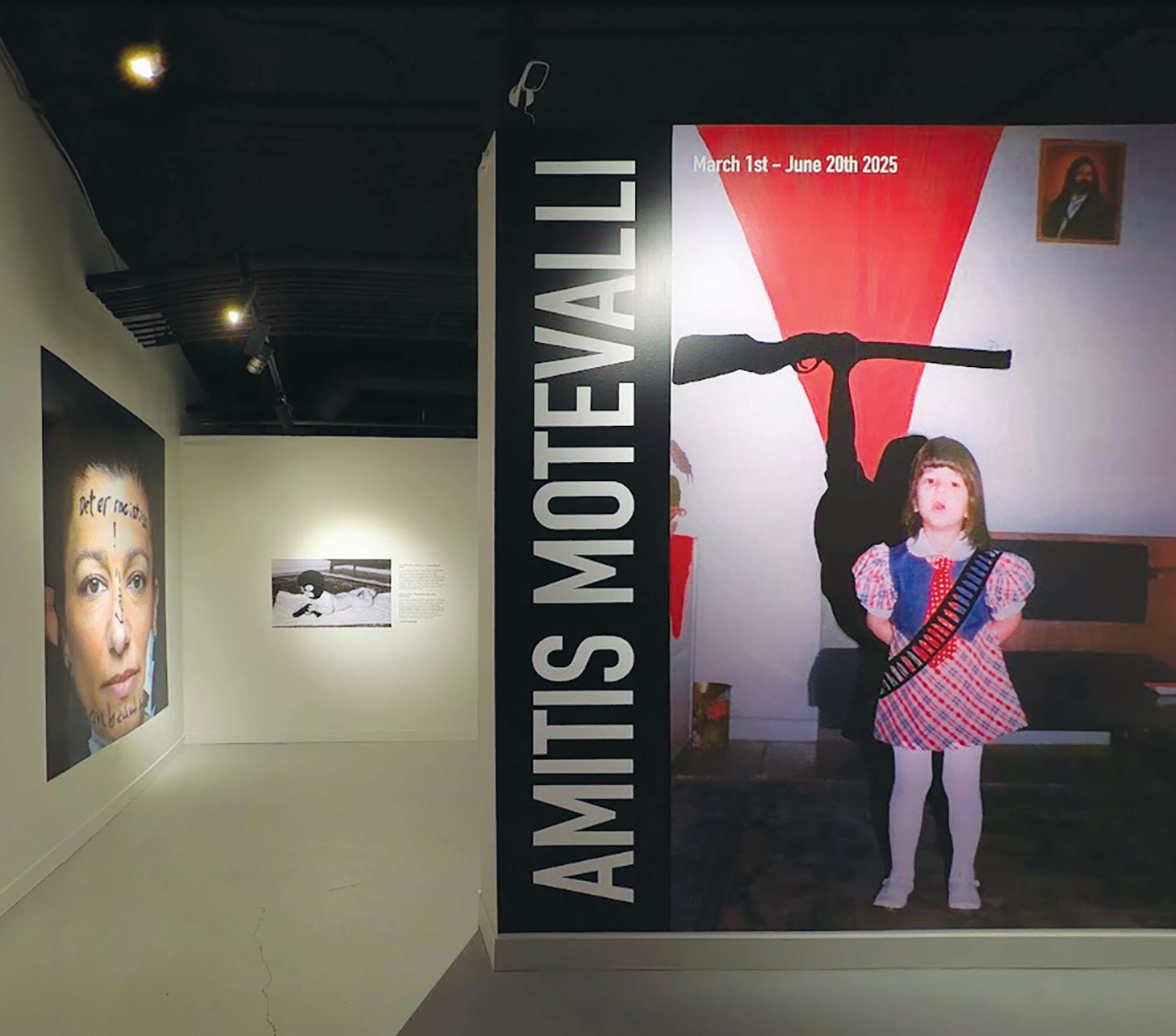
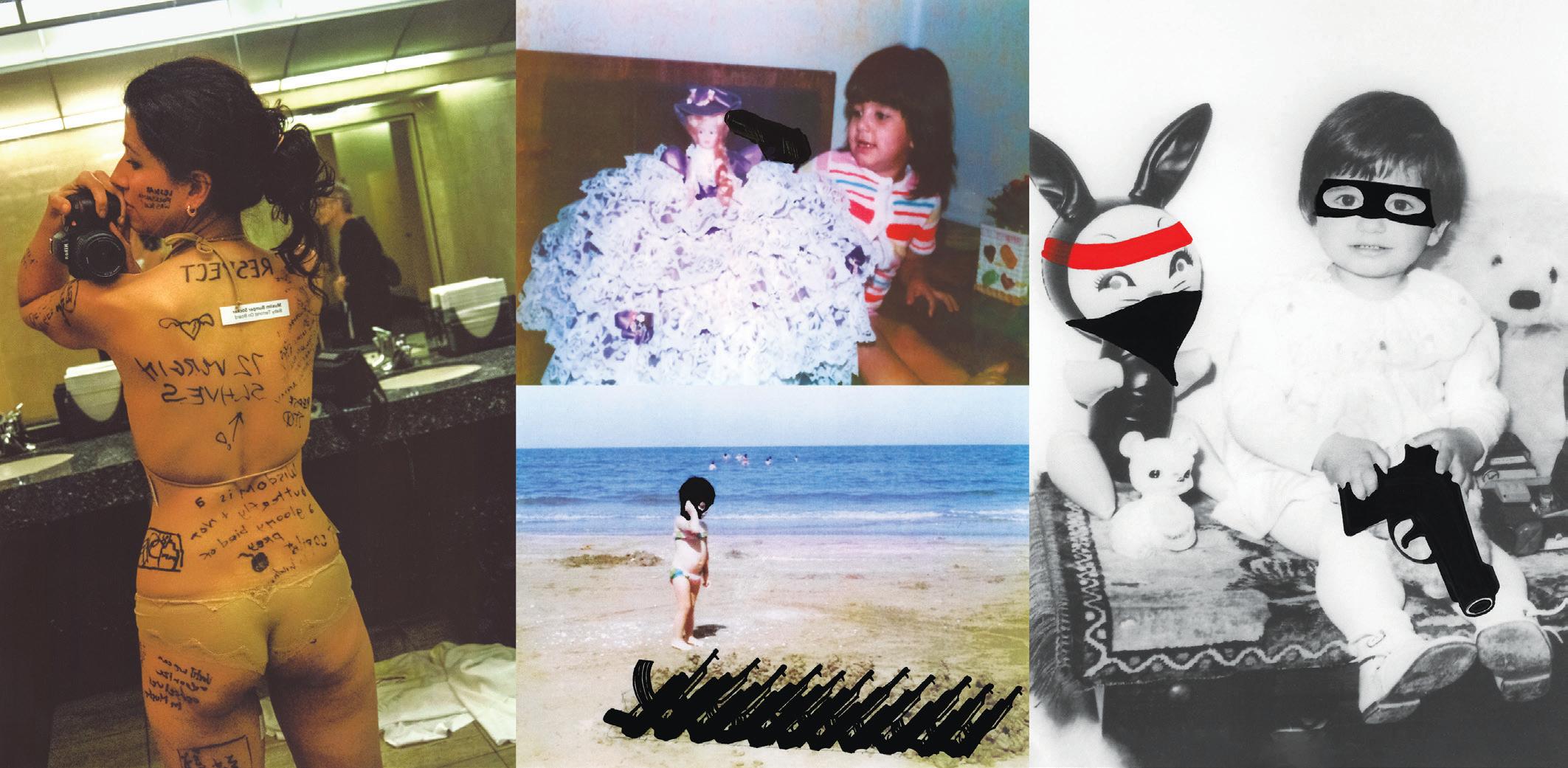
Walking through the doors of East Window’s cozy digs on North Broadway in Boulder, a collision of innocence and violence greets visitors on the gallery’s west-facing wall.
The site of this confrontation is a largescale wheatpasted photograph of a fouryear-old girl, her brown eyes shining beneath a mop of bangs as she poses for the camera with hands clasped behind her back. A strap of ammo is sketched in Sharpie over the shoulder of her plaid cottagecore dress — her shadow, rendered in the same inky black scrawl, becomes the silhouette of an armed revolutionary with a rifle raised in victory.
That little girl is Amitis Motevalli, now 55, whose family migrated from Tehran to New York City one year before the Iranian Revolution in 1978. Like the nearly dozen other family photos populating her ongoing exhibit at the NoBo Arts District gallery space through June 20, the image spins a snapshot of her childhood into a fantasy of the violent stereotypes imprinted on Muslim people in the United States.
“It confronts people with what they’ve got going inside themselves,” Motevalli tells Boulder Weekly on a recent video call. “I think it’s really important to have that confrontation, to sit with the underlying bigotry we might have. What do you do when you’re actually confronted with your ideologies that are not serving everybody, that are probably not serving you?”
In each manipulated glimpse from her past, Motevalli’s childhood memories take on startling new life. With the stroke of a marker, she becomes a masked toddler vacantly beholding a cache of weapons spread out on the beach during a family trip to the Caspian Sea; a kid on horseback with a 40-watt smile and an assault rifle slung over her shoulder; a
bare-butt baby in a balaclava, toying curiously with a pistol.
“In the spirit of revolution, I wanted to go beyond the stereotypes and put that power in the hands of a little girl. It’s a bit absurd, but I wanted to put a seed in their heads: The agency can be ours,” she says. “We are seen as the threat, but why don’t we become the threat to all the things that shouldn’t exist in the world, of the things that are causing oppression in our lives, that are even making some of the people who are doing the oppressing miserable? Why don’t we be the agents of change?”
The origins of this fever dream family photo album (titled A Portrait of the Artist as a Young Rebel) trace back to the post9/11 fervor of 2003, shortly after the invasions of Iraq and Afghanistan, when antiIslam sentiment was at a fever pitch in the U.S. With hate crimes against Muslims spiking 500% in the fallout of the New York City terrorist attack, Motevalli says it was a scary time to interrogate her Iranian-American identity through art.
“It was frightening, because basically everyone was told to snitch on Muslims based on their activities. Those activities could be saying simple Arabic phrases, like Alhamdulillah, ‘God is great’ — basically just being ourselves,” she says.
“People who were in hijab, or in what may seem like hijab, were getting confronted. Sikhs were being confronted, as were Black women wearing headscarves who may not have been Muslim. People were being detained. People were being disap-

peared. So it was not unlike the environment happening right now.”
Amid this surging anti-Islam reaction, Motevalli says she was shocked by a display at the Museum of Tolerance in her home base of Los Angeles. With a stated mission of “challenging visitors to understand the Holocaust in both historic and contemporary contexts,” the cultural education center’s Jerusalum outpost would later make headlines for building on an ancient Muslim burial ground. Walking into the California location with a group of students, she says she was confronted by an image that would catalyze her photography project.
“As we’re entering, there was a poster of a Palestinian child with flames behind them, and it said: The future of terrorism,” she recalls. “I was like, ‘The future of what? This child has the ability to be nothing else but a terrorist?”
From that moment of indignation, Motevalli turned to her past to understand the present. Flipping through family photos, she began to toy with the idea of marrying her tender childhood memories with the racist fantasies rattling in the minds of jingoistic Americans. Hoping to reproduce the manipulated images in
8x10, 5x7 and wallet size, like “corny family portraits you would get at Sears back in the day,” the wheels began to turn on A Portrait of the Artist as a Young Rebel. There was just one problem.
“Nobody would show it,” she says of the work that would eventually exhibit in international galleries in Iran and Italy. “I had studio visits with two curators who said I was making terrorist propaganda. I’m like, ‘Wow, nobody sees the comedy in this. Nobody sees the irony at all.’”
One person who got the joke, and the pain behind it, was East Window gallery owner and curator Todd Herman.
Twenty years after the artist’s early struggles finding exhibition space, he got the idea to pair her childhood photo series with documentation of a performance piece called Jokes on Me / Stupid Muslim Joke, in which Motevalli invited strangers to write sincere responses to racist jokes on her body. Herman says the hybrid exhibit is a way to spark cross-cultural conversation when we need it most.
“Humor can be an access point for difficult issues,” he says. “That’s why I wanted to present [Motevalli’s work], because there’s a lot in here that people can feel indicted by. I don’t want to water that down, but I do want to create access for dialogue, versus alienating people.”
According to data from UNICEF, more than 15,000 children have been killed in Israel’s war on Gaza since a Hamas-led attack in October 2023, with an additional 34,000 kids injured and almost 1 million displaced. This grim milestone represents a new chapter in the ongoing military campaign that has resulted in an overall Palestinian death toll of more than 50,000 — approaching the combined populations of Lafayette and Louisville — but the plight of the embattled region’s most vulnerable residents has been on Motevalli’s heart since the earliest moments of A Portrait of the Artist as a Young Rebel
“I was thinking about what the children of Palestine are going through, and also about children in other spaces: The wars on Iraq and Afghanistan had already started. I was thinking about how children are
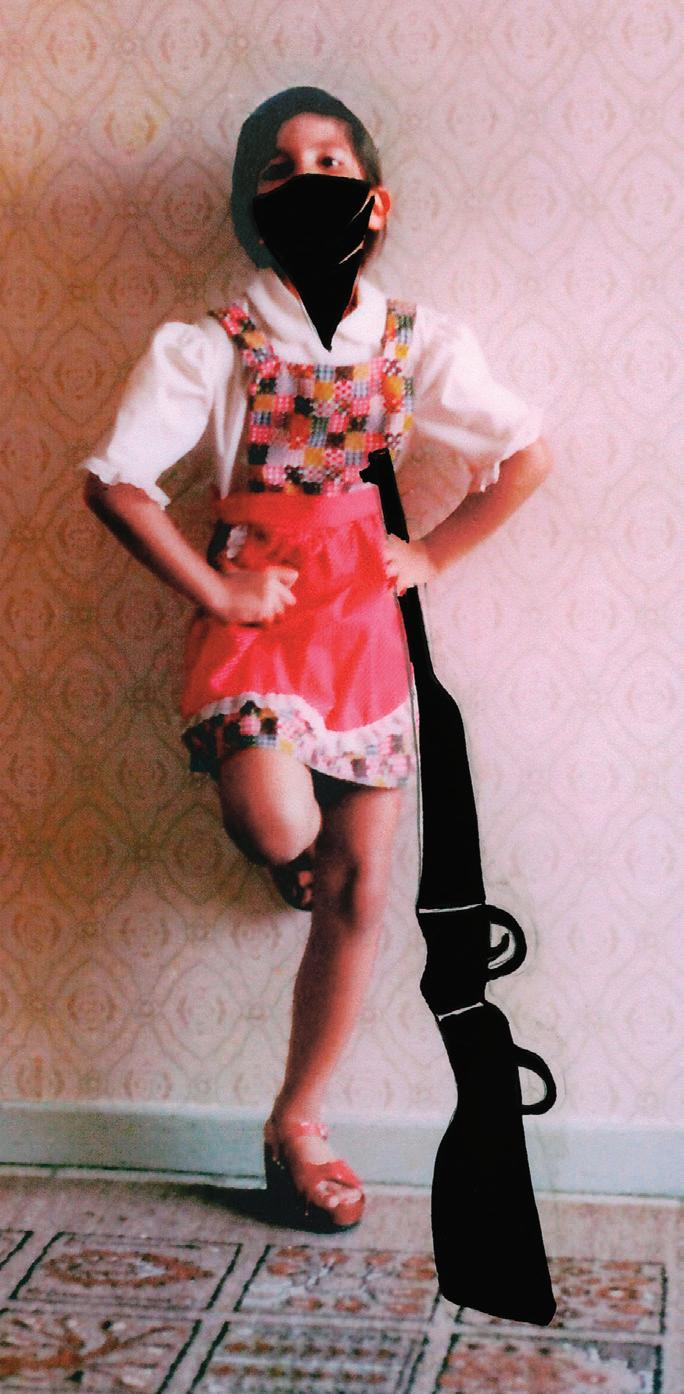
“This photo was taken just before my brother left for the United States, and we knew we were not too far behind him,” Motevalli recalls. “I was wanting to do a photo shoot. I was like, ‘I’m going to be a model when I get there.’ I had gotten my first pair of high
heels, and I remember how special they were to me.”
seen as radicals because they are the future, and seeing myself,” she says. “We can even extend that out to other children here: the children of immigrants separated from their families, put in cages. I think it extends beyond the territory of the Middle East or West Asia or the Levant. It’s about the ideology of the child that is a potential threat to upholding structures of white supremacy and capitalism.”
While the stained innocence of childhood is a major source of energy for the artist’s family portrait series, the accompanying works from Joke’s on Me / Stupid Muslim Joke imprint the plight of Muslim people (quite literally) onto the artist’s adult body. For the interactive public performance, Motevalli covered herself in stickers emblazoned with online jokes about “Stupid Muslims,” inviting the public to respond in writing on her body.
“I was drained,” she says. “It really took a toll on me as a human. I couldn’t even read some of the most derogatory things written on me.”
Back in his North Boulder gallery, Herman says bringing this nuanced confrontation to our relatively comfortable foothills hamlet is intentional. Whether grappling with the dehumanizing stereotypes ascribed to children or the everyday racism faced by vulnerable commu-
nities writ large, he says the goal is to dwell with discomfort in the name of advancing empathy.
“Struggles always seem to be somewhere over there. The threads around this world, I try to keep them real close to me,” Herman says. “It’s important to keep these narratives alive in environments where there’s a lot of comfort, affluence and potentially complacency. There’s things that I never in my life thought we would forget, and here we are again.”
Motevalli finds a similar urgency in the idea of bringing people face to face with the plight of those who once, perhaps by design, seemed far away. Maybe with a little less distance between us, her work suggests, we can see each other more clearly.
“We want to have an idea of who those people are,” she says. “Well, those people are right here. They’re right in front of you. I am those people.”
ON VIEW: A Portrait of the Artist as a Young Rebel + Joke’s on Me / Stupid Muslim Joke by Amitis Motevalli. Through June 20, East Window, 4550 Broadway, Suite C-3B2, Boulder. Free
BY JUSTIN CRIADO
After 17 years, it’s safe to say the Fort Collins Music Experiment is an experiment no more. The weekend festival better known as FoCoMX, slated for April 18-19, features more than 400 (that’s not a typo) Colorado acts across 35-plus venues in Choice City.
The best part? Wristbands are $60 in advance or $75 on the weekend of the festival.
That’s a lot of bang for your buck, so we thought we’d help you fill out your dance card with a rundown of some of the artists we’re looking forward to most.
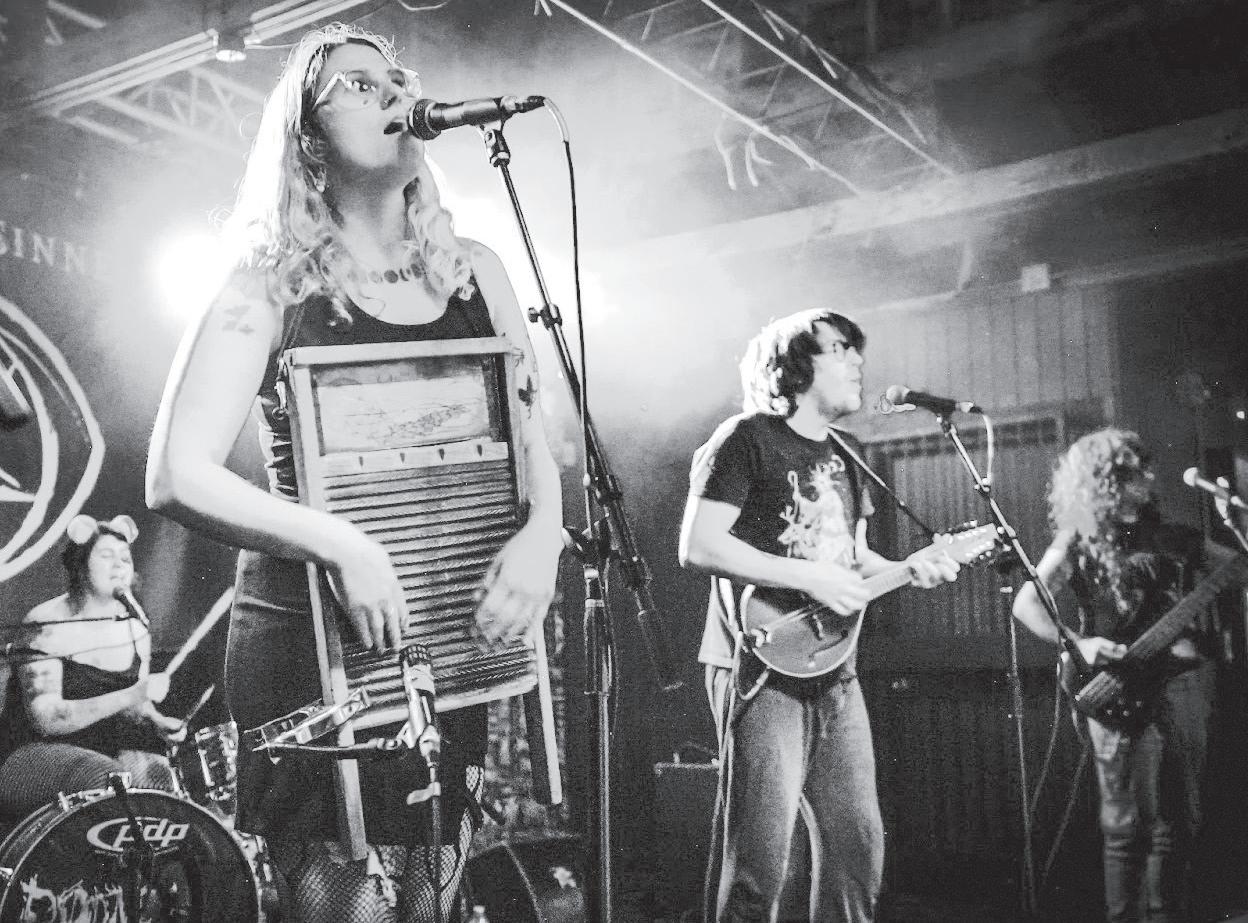
Elliot Lozier didn’t plan to start a new band when he branched out from his previous group, We the Heathens, to focus on solo music five years ago. But he had a cool name in his back pocket just in case: Doom Scroll.
“I had never heard it before,” he says of the first time his bandmate and partner Taylor Dittman, who plays the washboard, mentioned the now-common term. “But I kept it in my brain, and it started popping up everywhere.”
Looking back, it feels like fate. Lozier and Dittman, both veterans of the Front Range folk-punk scene, recruited fellow pickers Marissa Sendejas (percussion), Micah Butler (bass) and Jon Pizarro (guitar) to round out the Loveland acoustic five-piece known as Doom Scroll.
The music embodies the band name, according to Lozier.
“All of our songs are pretty depressing, but I try to make it seem like there’s a light at the end of the tunnel,” he says. “It’s not all sadness.”
The lack of electricity is made up for by the vigor of the five Colorado musicians.
“I really like weird time signatures, weird rhythms and tying that into the tempo of the music and the energy with how fast we’re going,” explains Lozier, who handles both mandolin and guitar.
That’s why Doom Scroll, signed to NOFX frontman Fat Mike’s label Bottles to the Ground, is a must-see act this year.
ON THE BILL: Doom Scroll.
8 p.m. Saturday, April 19, Aggie Theatre, 204 South College Ave., Fort Collins.
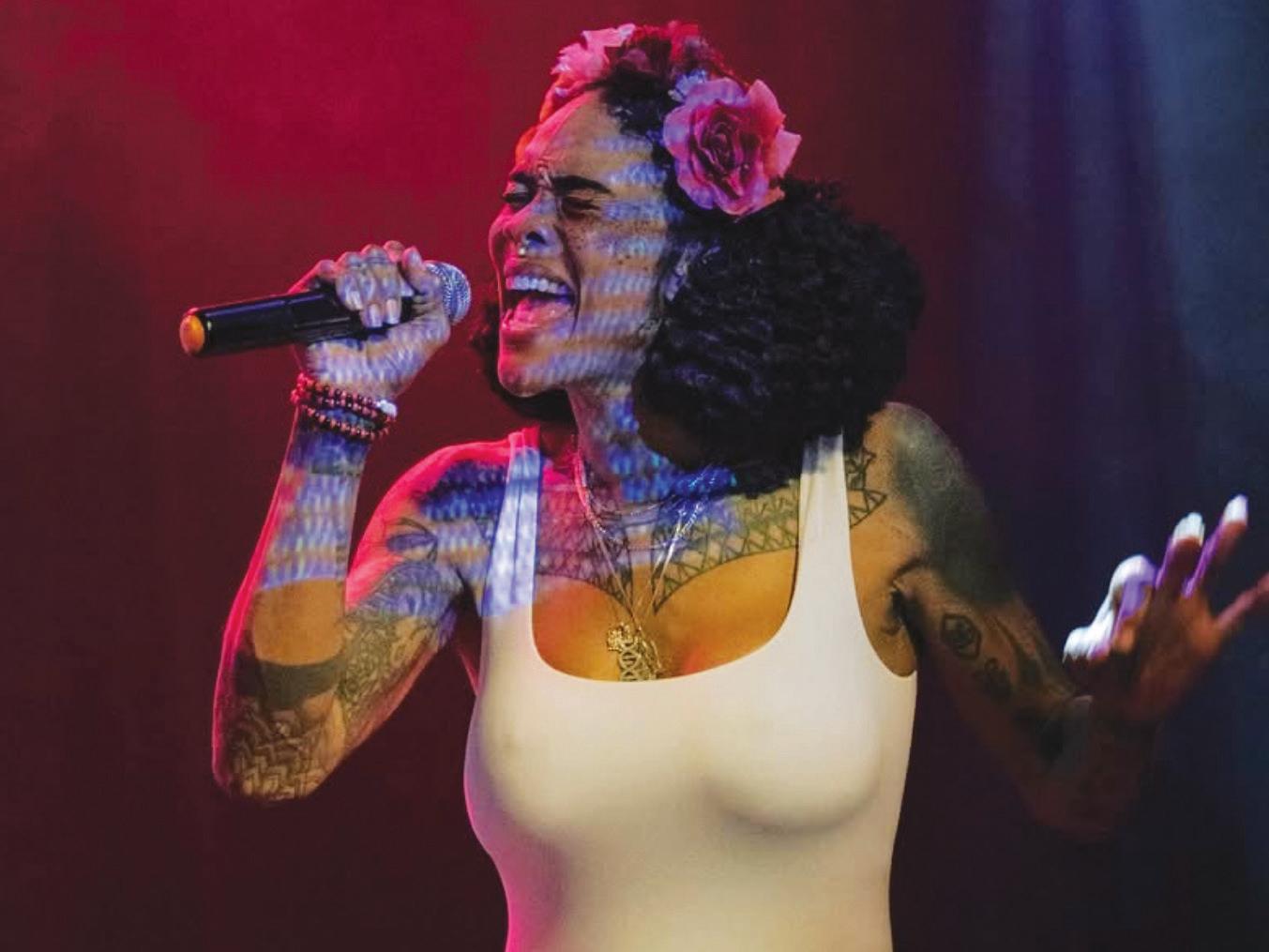
Denver artist Dominque Christina does it all. As a writer and actress, she worked on the HBO series High Maintenance. As a poet, she’s published four books, including Anarcha Speaks: A History in Poems, which won the National Poetry Series in 2017.
Most recently, Christina showcased her music chops on her 2024 debut LAWLESS: A Love Story — a collaboration with her partner, veteran Denver hiphop artist DNA Picasso, who is also performing at FoCoMX this year.
Christina’s whispery, spoken-word delivery on such tracks as “Luv U Always” and “4L” is seductive yet comforting, influenced by years of sharing her written works live.
She says FoCoMX attendees can expect “some sort of raspy contralto soul, alternative, and funk-inspired set that remembers the past from the future.”
They can also expect a duet with DNA Picasso, who plays Magic Rat Saturday night.
“I’m looking forward to seeing DNA Picasso and performing a couple songs with him, of course,” Christina says, adding she’s just grateful to be amongst so many talented local artists. “I’m excited about the whole festival really and feel very honored to be a part of it.”
Christina. 9:45 p.m. Friday, April 18, Wolverine Farm Publick House, 316 Willow St.

If rowdy rock ’n’ roll is your thing, you don’t want to miss Bitchflower. The name kind of implies it, but the Fort Collins fivepiece isn’t afraid to get in your face and turn shows into a “Full Moon Fight Night” if the mood is right. (Don’t worry, there won’t be a full moon during FoCoMX).
“We cannot be more hyped to be playing the Aggie,” vocalist Brooke Van Buiten shares. “This festival means a lot to us. It’s one of our favorite weekends of the year.” Armed with debut album Please Don’t Be Evil to Me, released May 2024, Van Buiten, guitarists Steven Davis and Zack Hill, bassist Nick Perich and drummer Miles Mercer are all scene vets and friends who decided to team up a year ago and kick out the jams.
Bitchflower possesses raw punk power amplified by Van Buiten’s antagonistic stage presence and impressive vocal range, not to mention an affinity for loudand-proud classic and psych rock punctuated by the dual-guitar attack of Davis and Hill.
Listen to songs “Error in the System,” “Bury the Hatchet” and “Die for a Grapefruit” to get a grasp on what Bitchflower is bringing to the Front Range scene before you catch their set at this year’s fest.
ON THE BILL: Bitchflower.
9 p.m. Saturday, April 19, Aggie Theatre, 204 South College Ave.
The Cody Sisters are quintessential Colorado musicians.
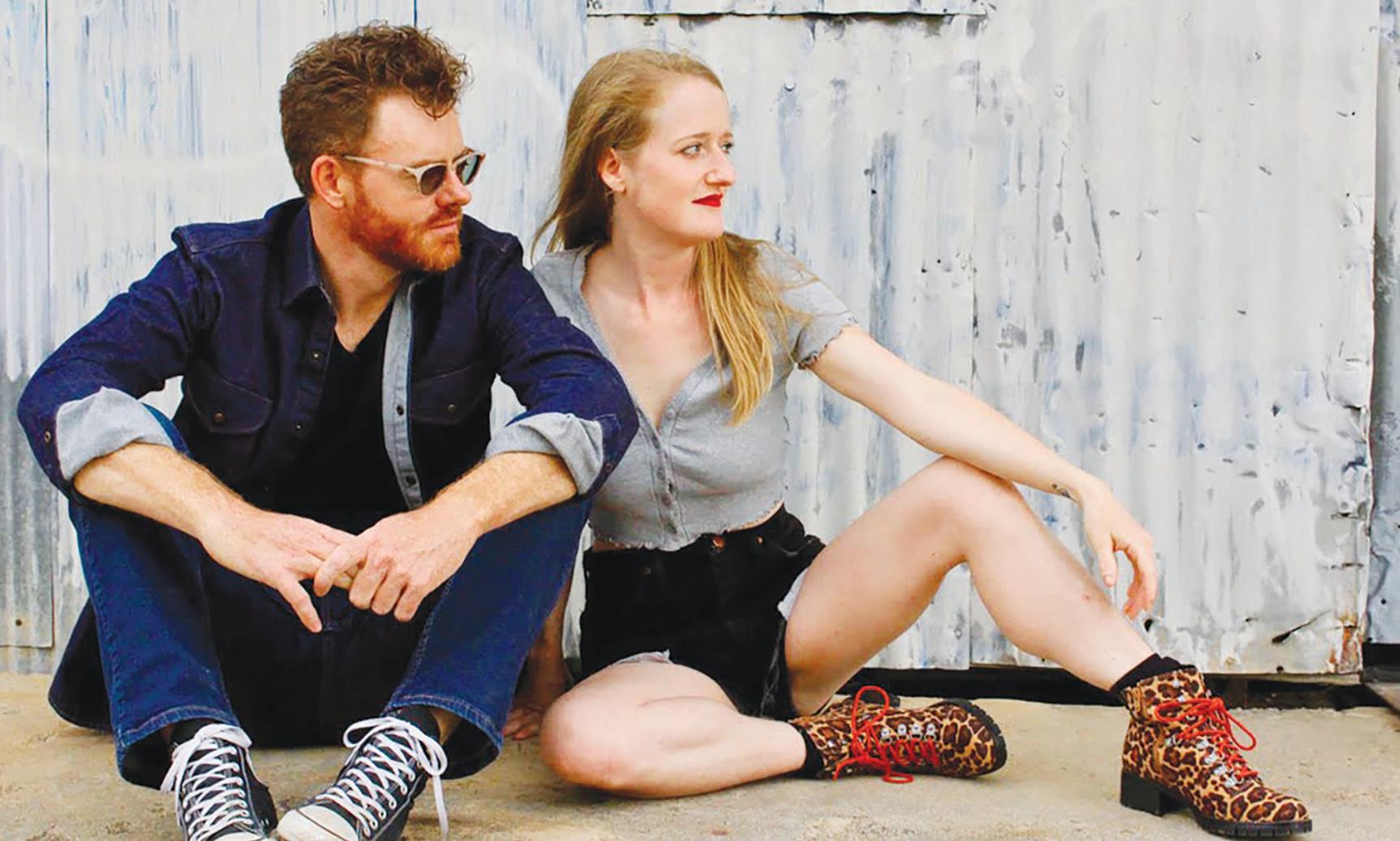
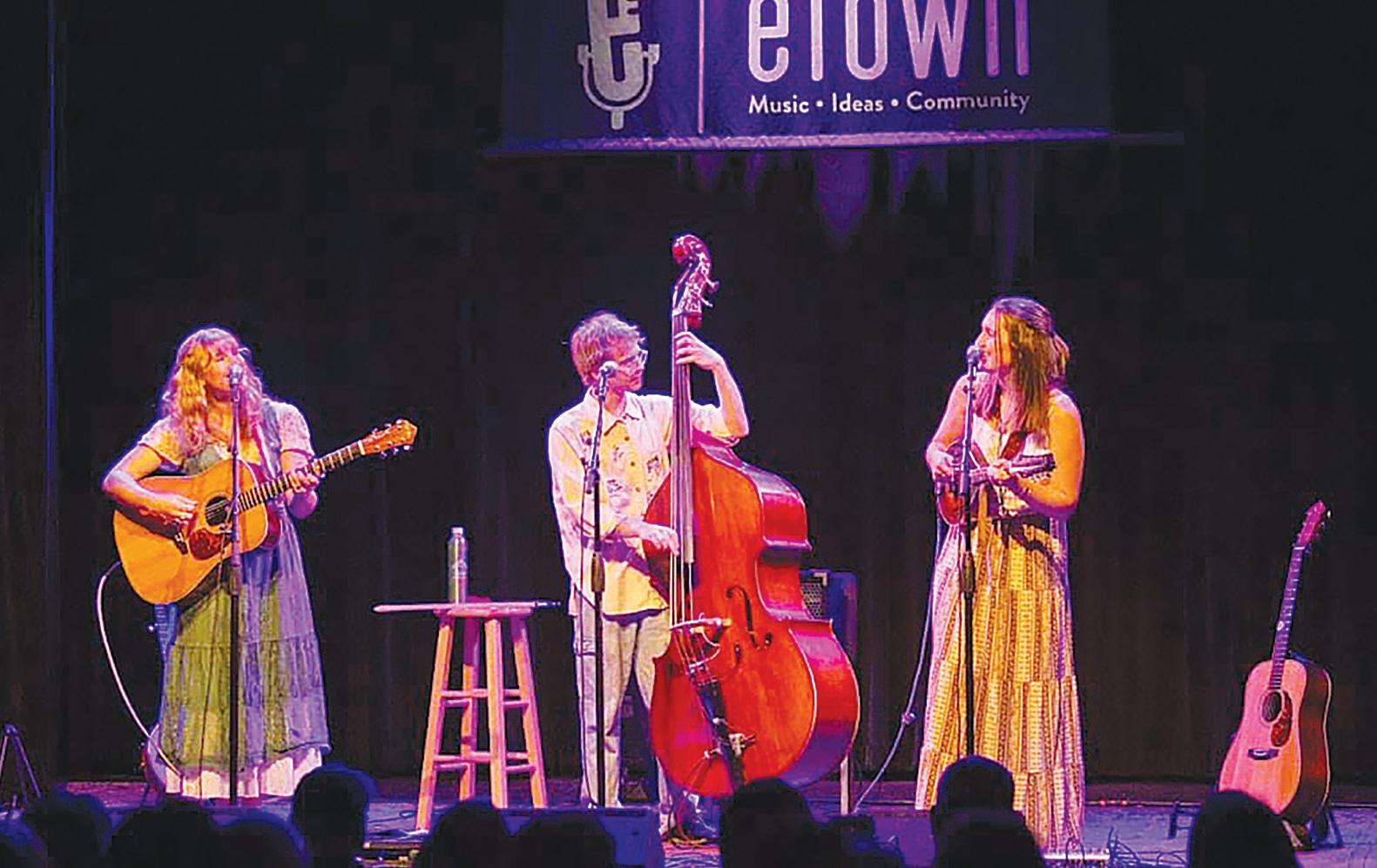
Picking up their instruments in elementary school, Maddie and Megan Cody grew up in the fertile bluegrass scene surrounding Boulder — including yearly pilgrimages to the annual RockyGrass Festival just up the road in Lyons. After graduating from the Denver School of the Arts, the sibling duo started playing the local circuit more seriously. They began putting out music under the moniker The Cody Sisters with their 2017 debut Strings, featuring their father, Steve Cody, on upright bass.
But the trio, which has included bassist Will Pavilonis since 2020, really came into their own on sophomore album All The Quiet People, released this February.
Maddie calls it a “coming of age story” told through the tenor and twang of old-time string music.
Inspired by the group’s first foray on the road, a mini-Midwest tour, the latest record is a snapshot of small-town America and the people at the heart of it. They saw themselves as “Collectors on the Run,” as the song explains.
“We want our listeners to
understand that their stories should be heard no matter who they are,” Maddie says. “We’re all collectively just interested in making a small difference with our music — to add a little bit of joy to this chaotic world.”
ON THE BILL: The Cody Sisters. 7:30 p.m. Friday, April 18, Equinox Brewing Outdoor Patio, 133 Remington St.
Music has been a linchpin of Longmont couple Bonnie and Taylor Sims’ relationship ever since they met at South Plains College in Texas for the first time. Both won end-of-semester awards for best vocalist and were assigned to perform a duet together. The rest, as they say, is history.
“I’m from West Texas, and Bonnie is from North Dallas,” Taylor told Boulder Weekly in a 2021 interview. “We had classes together. We had ensembles together. I lived in a house with three
other guys who were also musicians, and we’d end up hanging out there and picking most of the time. In West Texas, there are a lot of dry counties, and that happened to be one of them. She started coming over because she played mandolin.”
The duo eventually settled in Colorado and have been making music for nearly two decades.
Originally known as Bonnie & The Clydes, the husband-wife tandem has amassed quite the resume together, including sweeping the Telluride Bluegrass and RockyGrass festivals‘ band competitions in 2007. No artist or band had ever done that before, or since.
Side project Everybody Loves an Outlaw also produced the viral hit “I See Red” after it was featured on Netflix film 365 Days in 2020. Bonnie also plays mando and guitar for bluegrass supergroup Big Richard, while Taylor previously picked in the popular folk outfit Spring Creek. So the two certainly know how to cook up some catchy country tunes.
Rebranding as Bonnie & Taylor Sims in 2020, the group, which includes bassist Bradley Morse and drummer Kevin Matthews, put out a self-titled record in 2023, the first under the current moniker, and have kept busy by performing it as much as possible since.
Taylor will take the stage solo during this year’s FoCoMX performance, as Bonnie wraps up a U.S. tour with Big Richard in support of their debut album, Girl Dinner
But don’t expect half a show from this Front Range mainstay. With support from Liz Barnez, Darryl Purpose and Rhonda Merrick, it’s sure to be a full-throated expression of Front Range folk.
ON THE BILL: Taylor Sims with Liz Barnez, Darryl Purpose and Rhonda Merrick. 4 p.m. Friday, April 18, The Neighbor, 144 South Mason St., Fort Collins.

BY MICHAEL J. CASEY
“Concerned about what?”
That was the question an attendee at the Conference on World Affairs posed after hearing the theme of the ongoing Boulder Weekly special issue series: A Survival Guide for Concerned Citizens
“Concerned about the planet?” he added. “About the country? About other countries?”
I gave it a thought. I could rattle off the topics covered, the subjects interviewed, the organizations profiled, but even then, the list felt insubstantial.
“Just concerned,” I told him. “Full stop.”
“Full stop?”
I nodded. He smiled.
“I like that,” he said, and went on his merry way.
From the tone in his voice, it was obvious. He, too, was concerned. What about, I did not ask.
I do not need to.
The reasons are many and they share no political allegiance. As I write this, I can see my neighbor’s Trump 2024 “Take America Back” flag from my window. Looking at this flag, day in and day out, does not comfort me. The funny thing is, I don’t think it comforts my neighbor, either. Our paths occasionally cross while we are out shoveling snow or checking the mail, and we both put in the effort to ask neighborly questions. These conversations are cordial, but the weariness in his voice is undeniable. I don’t think he’s sleeping any better than I, and his candidate won.
“Everyone has their own picture of what a strong, connected and resilient community looks like,” BW editor Shay Castle wrote in the previous issue’s introduction.
I thought of my neighbor the second I read that line. I know his idea of “a resilient community” is different from mine, and I know some see that as the problem — another example of the continued fracturing of our society. But sometimes I wonder: Is that difference also the solution?
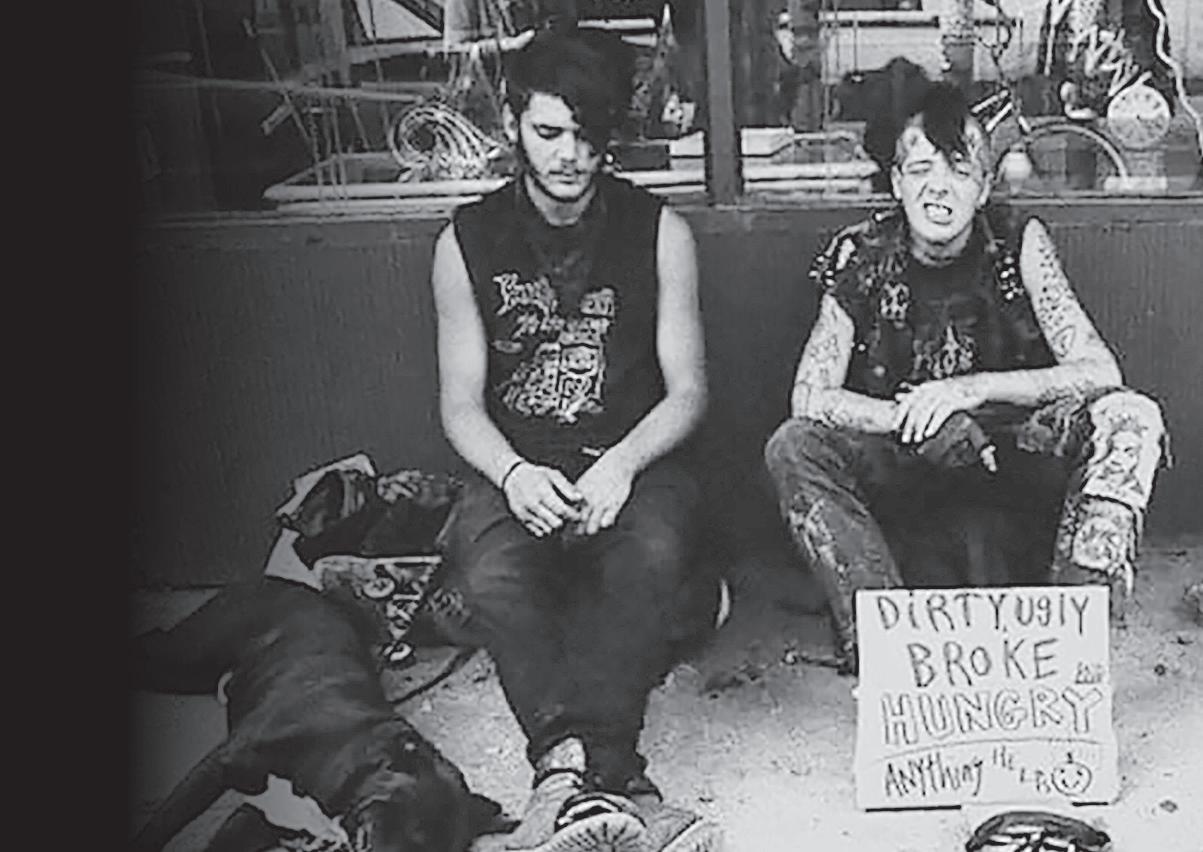
Gutter punks ask for handouts on the streets of Los Angeles in The Decline of Western Civilization Part III Courtesy: Shout!
There are a lot of solutions out there, but some folks will never buy them. Can hatred coexist with acceptance? Oppressive systems with oppressed individuals? Predators and prey? They might as well; they’re not going anywhere. Maybe that’s our way forward.
The Decline of Western Civilization (1981)
The Decline of Western Civilization Part II: The Metal Years (1988)
The Decline of Western Civilization Part III (1998)
For rent and streaming on multiple platforms.
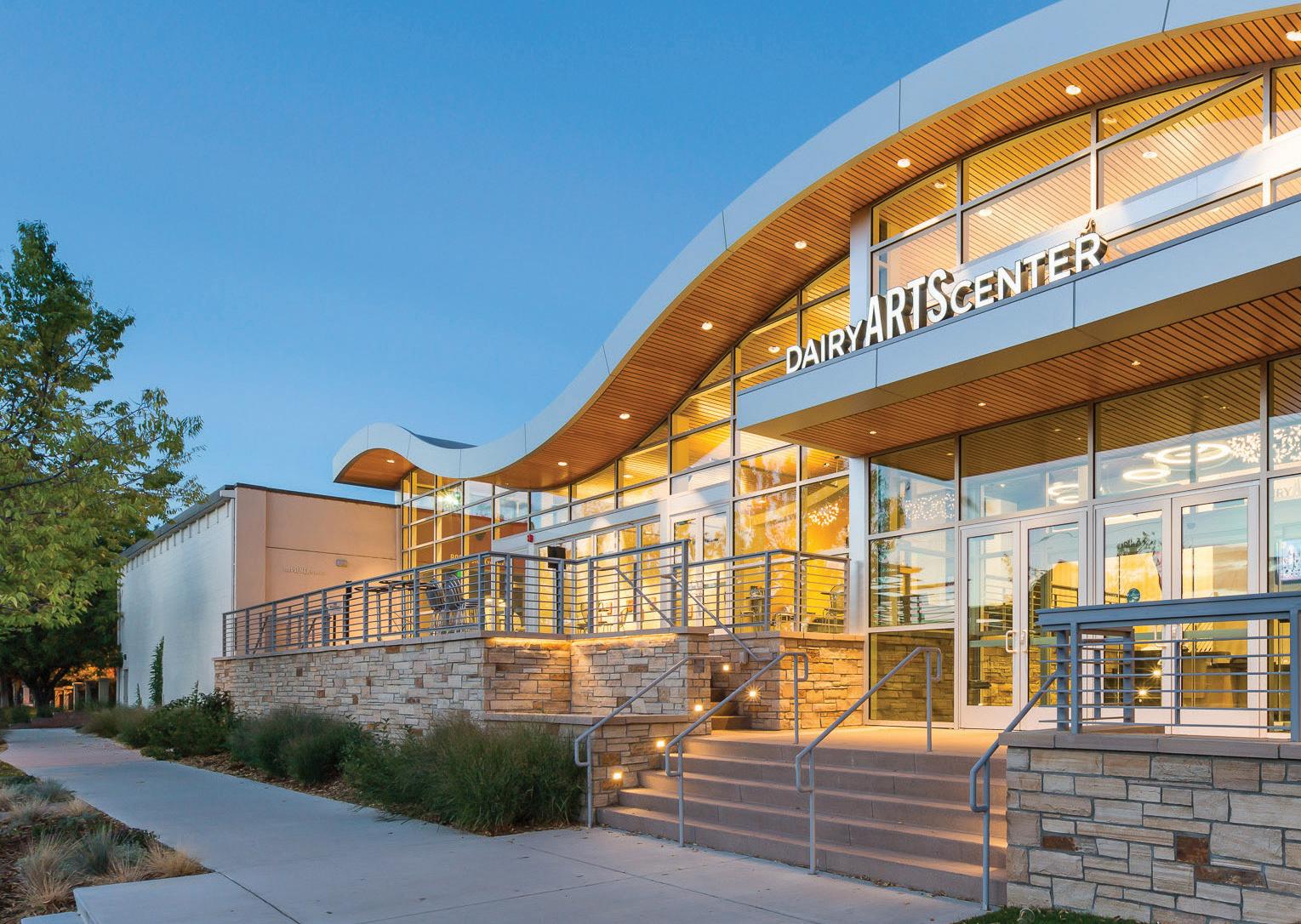
The 1981 Decline of Western Civilization will play the Dairy Arts Center’s Friday Night Weird, 8 p.m. on April 25. If I had to recommend just one, Part III is where it’s at, but you really need the first two installments to get there.
Director Penelope Spheeris — who would go on to helm Wayne’s World — masterfully captures three rock ’n’ roll movements in Los Angeles, first in the 1970s as punk, then a decade later as
heavy metal and then back again to punk in the ’90s. The first Decline captures the early hardcore punk scene’s abrasive approach to hatred, homophobia, sexism and substance use, all of which mask the brokenness that follows marginalization. In the Metal Years, that faux-masculine swagger is amplified with hypersexuality, gender fluidity and sweep arpeggios. Then comes Part III, which wraps back around to gutter punks who absorb the aggression of punk and the extravagance of metal. Only this time, Spheeris turns the camera around from the peacocks on stage to those in the audience and strikes gold. But what comes through loudest — and all three should be played loud — is how broken and distressed individuals can come together to emote communally. It’s not always positive, and it’s certainly far from healthy in these movies, but still, it is like oxygen to these suffocating souls.
Titicut Follies (1967) Ex Libris — The New York Public Library (2017) City Hall (2020) and more Streaming on Kanopy.
It’s safe to say no filmmaker has done more to document the American system at work than 95-year-old Frederick
Wiseman. His breakthrough, 1967’s Titicut Follies, is a harrowing observation of Massachusetts’ Bridgewater State Hospital for the criminally insane. Watch it today, and you’ll be a different person tomorrow.
Wiseman followed Follies with more than 40 docs, the vast majority of which focus on institutions (High School, Hospital, Ex Libris), governmental bodies (City Hall, In Jackson Heights, State Legislature), places (At Berkeley, Central Park, Monrovia, Indiana), and on and on.
In each, Wiseman’s camera quietly observes without interjection or correction. The movies are long, but they are engaging and will tell you more about how this country functions — or doesn’t — than a whole semester in a classroom.
‘THE ONLY WAY OUT IS THROUGH, TOGETHER.’
The Biggest Little Farm (2019) For rent and streaming on multiple platforms. Heroin(e) (2017) Streaming on Netflix.
For John and Molly Chester, the answer to their imbalanced life was a 200-acre farm north of Los Angeles. Their goal was harmony — pigs and chickens and veggies, all those picture book trappings — but what they got was the Biggest Little Farm and a lesson in nature. That’s not an easy lesson for those who think they can work their way through anything. Coexistence requires patience.
It also requires action. That’s what the three leads in the short documentary Heroin(e) have in spades. Directed by Elaine McMillion Sheldon and set in Huntington, West Virginia, the film follows three women (a fire chief, a judge and a woman of faith) as they try to meet the opioid crisis where it lives. Their work is far from easy, and it would be a strain to call this an uplifting watch, but Heroin(e), maybe better than most of the docs on this list, exemplifies another line from Castle’s intro: “The only way out is through, together.”
Easier said than done, but it must be done.
Oops! All libraries This week’s calendar features free events happening at public libraries across Boulder County. Scan the QR code for a BW ode to “the palace of the people.”
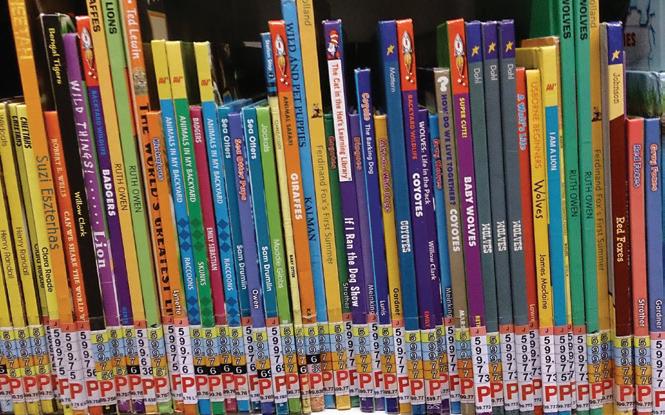
9 a.m. Thursday April 17-Monday April 21, Boulder Public Library - Main Branch, 1001 Arapahoe Ave. Free
“Take a look, it’s in a book!” Boulder Public Library’s Paper & Spine Used Book Store — a volunteer program dedicated to diverting physical media from landfills — presents this annual children’s book sale at the Main Branch. Expect a wide range of fiction and nonfiction books (plus CDs and DVDs) for early, intermediate and teen readers. The best part? Everything’s $1.
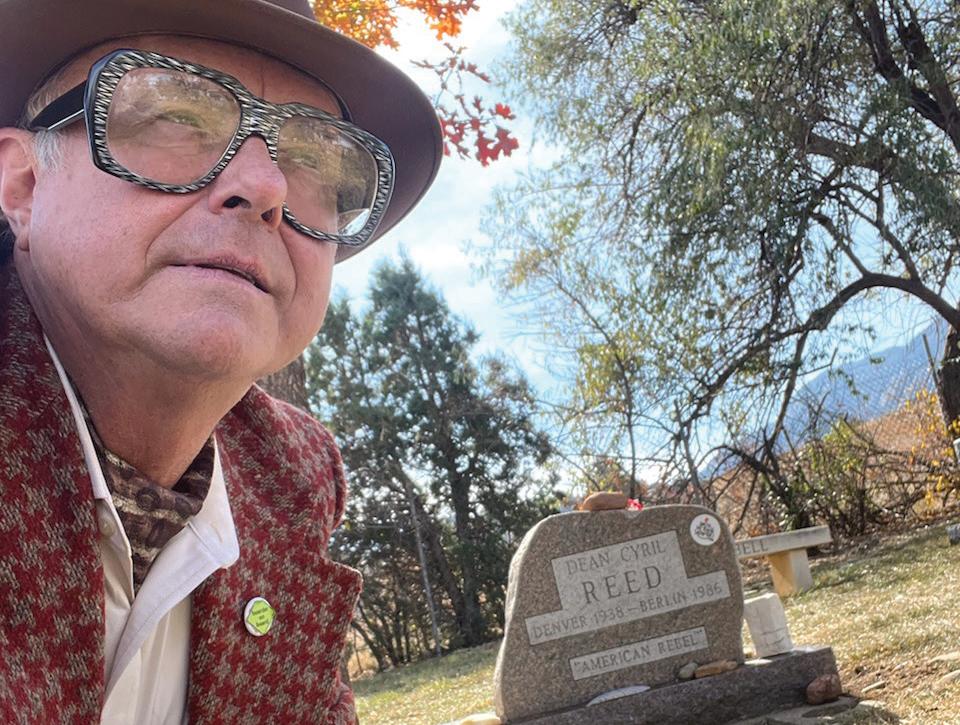
SOUTH BOULDER WALKABOUT WITH JOEL HAERTLING
1-2:30 p.m. Saturday, April 19, George F. Reynolds Library, 3595 Table Mesa Drive, Boulder. Free
For all the tidbits you won’t find in history books, take a stroll around South Boulder with local personality and garage sale legend Joel Haertling. See the house where Stephen King wrote The Shining. Learn about Red Elvis and his final resting place in Boulder. Bone up on Haertling himself with a BW feature before you go: bit.ly/HaertlingBW.
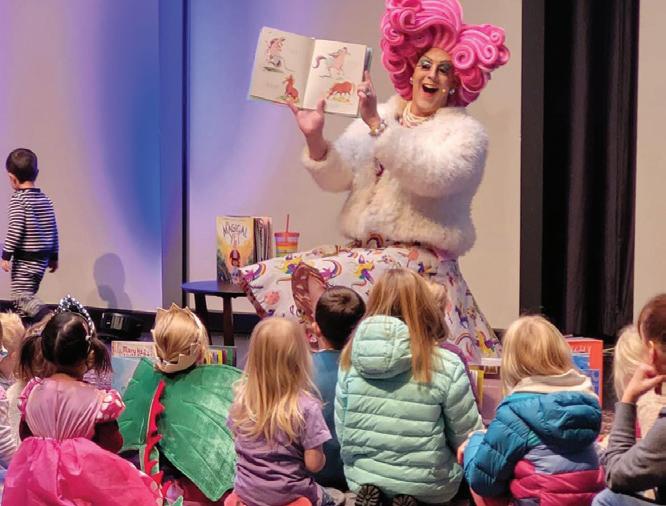
10:15-11 a.m. Saturday, April 19, Boulder Public Library - Main Branch, Canyon Theater, 1001 Arapahoe Ave. Free
Gather round, kiddos! The one and only Miss Shirley is back for a “fun and fabulous storytime for all ages.” Grab your little ones and head to the Canyon Theater at the Boulder Public Library branch for this regular series happening on the third Saturday of each month.
10:30-11:30 a.m. Saturday, April 19, Longmont Public Library, 409 4th Ave. Free
Know someone who needs help brushing up on their English, or could you use a few pointers yourself? Practice conversation with others during an “informal, conversational setting” during this meetup at the Longmont Public Library. Everyone is welcome, but staff recommends participants have some previous English experience.

5:30-7 p.m. Monday, April 21, Nederland Community Library, 200 Hwy 72 N. Free
If, like so many of us, you’re craving a deep breath and some GD peace, head to the library in Ned for a meditation focused on “recognizing our own basic wholeness, wisdom and compassion.” The session, open to all ages 16 and up, will end with conversation and short readings.

6-7 p.m. Monday, April 21, Lyons Regional Library, 451 4th Ave. Free
It’s 2025, and you’ve evolved past the pre-packaged plastic satchels of tea assembled for you by The Man. You make your own destiny, and your own tea blends! All supplies provided. Follow a recipe or your own whims as you mix florals, citrus and spices into the perfect bevvy. Register: bit.ly/TeaBlendBW

6-7:30 p.m. Monday, April 21, Longmont Public Library, 409 4th Ave. Free
Find your voice and connect with your fellow community writers at this weekly roundtable discussion for wordsmiths. Whether you’re crafting a steamy romance, compiling your life into memoirs or just looking to talk shop, this supportive group will sharpen your skills when you put pen to paper.

4-6 p.m. Monday, April 21, NoBo Library, 4500 13th Street, Boulder. Free
Glow up your tote bag and bring the party with you on your next trip to the Boulder Farmers Market. STUDIO 24 is hosting a workshop to make custom glowing canvas totes using Electroluminescent (EL) panels. You’ll create your own unique glowing design using materials provided, with no previous electronics experience required. Register: bit.ly/Studio24BW
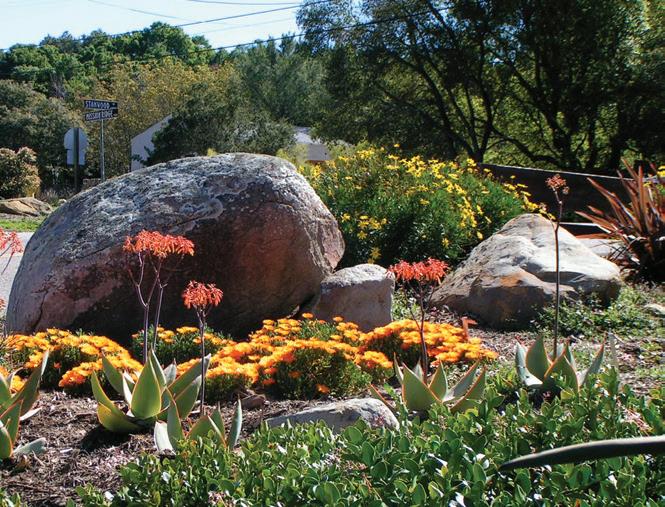
5:30-7 p.m. Tuesday, April 22, Lafayette Library meeting room, 775 W. Baseline Road, Free.
Grass lawns are out and native plants are in! Join this ages 18+ session to learn about how you can protect your home from fires and simultaneously make local pollinators happy by using low flammability, native plants in your landscaping.

8-10 p.m. Tuesday, April 22, Lyons Regional Library - Community Room, 451 4th Ave. Free.
Catch a glimpse of the Lyrids meteor shower on the library patio, peaking April 21-22 in the Northern Hemisphere. Pieces of the Thatcher comet will be visible through the provided telescope, alongside other star clusters and planets. Register: bit.ly/ LibraryStargazingBW
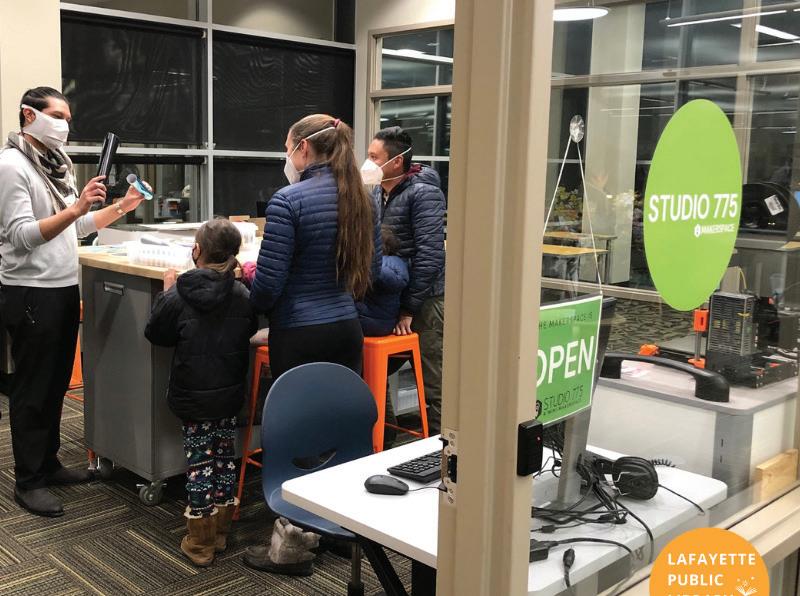
1-5 p.m. Wednesday, April 23, Lafayette Public Library, 775 Baseline Road. Free
Thinking of quitting your job to finally pursue your dream of selling handmade, definitely one-of-a-kind trinkets at the makers market? Your local library has the starter pack. Drop by the Lafayette makerspace for a tour of the equipment — from 3D printers to sewing machines to free Adobe software — and all the programs and classes the library offers with them.
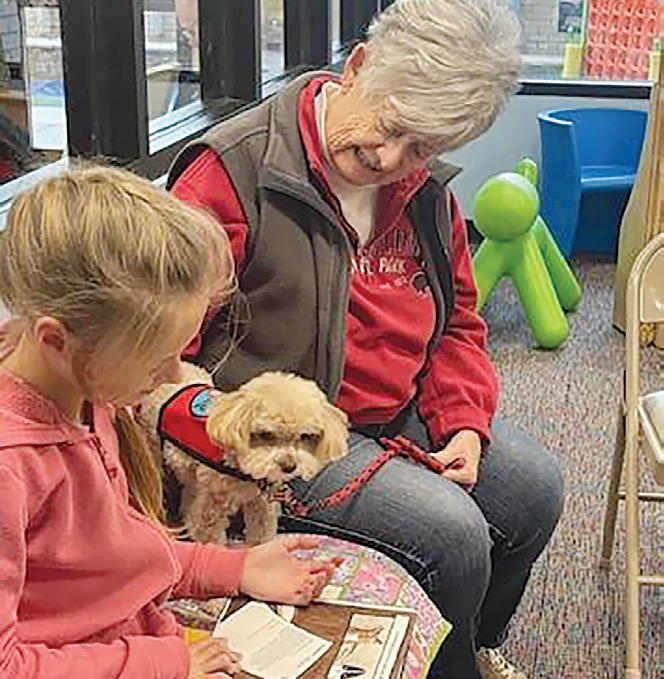
3:45-5 p.m.Thursday, April 24, Broomfield Public Library, 3 Community Park Road. Free
Students grades K-5 are invited to come build their confidence and reading fluency skulls during this paw-sitively adorable storytime session with trained therapy dogs. Bring your own book, or choose one from the library. Pups will be on hand to listen “without correcting or judging.”



THURSDAY, APRIL 17
JT AND DAN 6 p.m. Bricks on Main, 471 Main St., Longmont. Free
QUEMANDO. 7:30 p.m. Nissi’s, 1455 Coal Creek Drive, Unit T, Lafayette. $10
GANGSTEAD 8 p.m. Velvet Elk Lounge, 2037 13th St., Boulder. Free
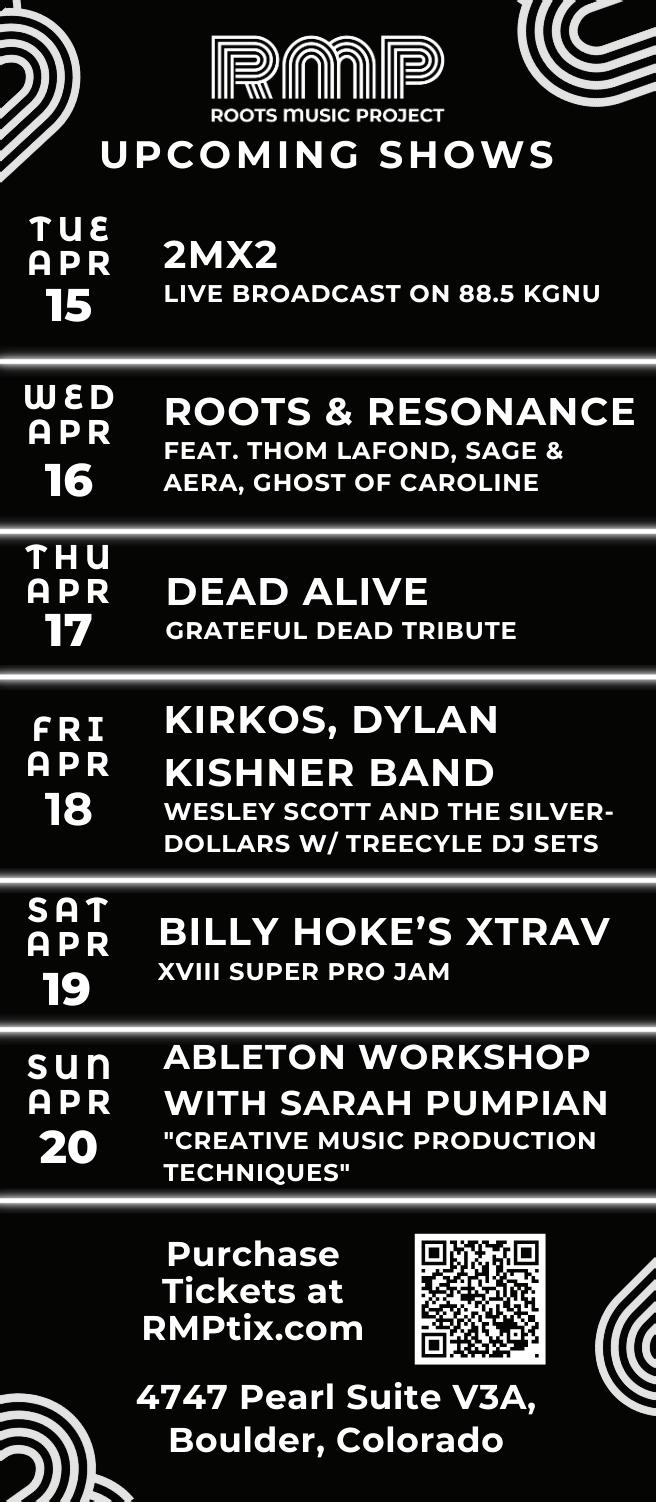
DEAD ALIVE. 8 p.m. Roots Music Project, 4747 Pearl St., Suite V3A, Boulder. $20
FRIDAY, APRIL 18
BRETT HENDRIX. 5 p.m. The Stillery, 10633 Westminster Blvd., Unit 900, Westminster. Free
TONY CRANK AND THE MOUNTAIN REVERB BAND 6 p.m. Bootstrap Brewing Company, 142 Pratt St., Longmont. Free
DAVE DARDINE PROJECT.
6 p.m. Bricks on Main, 471 Main St., Longmont. Free
REBECCA ABRAXAS 6:30 p.m. Unity of Boulder Spiritual Center, 2855 Folsom St. $20
TYLER GRANT. 7 p.m. eTown Hall, 1535 Spruce St., Boulder. $25
KIRKOS WITH DYLAN KISHNER BAND, THE DIRTY TURKEYS AND TREECYCLE DJ 7 p.m. Roots Music Project, 4747 Pearl St., Suite V3A, Boulder. $21
HUCK N’ PRAY WITH BLURRED RADIO AND EXPERIMENTAL BRUNCH 8 p.m. Fox Theatre, 1135 13th St., Boulder. $15
BLUEBIRD MUSIC FESTIVAL.
April 18-20, Macky Auditorium, 1595 Pleasant St., Boulder. $50+ BW PICK OF THE WEEK
SATURDAY, APRIL 19
FLOONDOG. 6 p.m. Bricks on Main, 471 Main St., Longmont. Free
DANK GRASS FEST 2025 Noon. The Tasty Weasel, 1800 Pike Road, Longmont. Free
SPACED OUT MUSIC & ARTS FESTIVAL. 3 p.m. Central Park, 1212 Canyon Blvd., Boulder. Free
PAPAMO AND THE VIPERS
5 p.m. Left Hand Brewing, 1265 Boston Ave., Longmont. Free
EDIE CAREY WITH THE WEEPING WILLOWS 6 p.m. Stone Cottage Studios, 1928 Pearl St., Boulder. $45
JAY MARTIN. 6 p.m. Freedom Street Social, 15177 Candelas Parkway, Arvada. Free
CHROMATIC CONSOLATION
6 p.m. Trident Cafe, 940 Pearl St., Boulder. Free
BOULDER CONCERT BAND.
7 p.m. Mountain View Methodist Church, 355 Ponca Place, Boulder. $10
BILLY HOKE XTRAV XVIII SUPER PRO JAM 7 p.m. Roots Music Project, 4747 Pearl St., Suite V3A, Boulder. $17
YESTERDAY’S DEAD. 8 p.m. The Louisville Underground, 640 Main St. $18
DESERT FURS DUO 8 p.m. Longs Peak Pub, 600 Longs Peak Ave., Longmont. Free
AFTER MIDNIGHT (CHAPPELLINSPIRED DANCE PARTY) 8 p.m. Fox Theatre, 1135 13th St., Boulder. $15
DIRTY TURKEYS. 9 p.m. Mountain Sun, 1535 Pearl St., Boulder. Free
SUNDAY,
JESSIE BURNS 3 p.m. Spirit Hound, 4196 Ute Hwy., Lyons. Free
JAMMY PAC WITH J. CARMONE AND PINETREE JANITORIAL SERVICE. 5 p.m. Globe Hall, 4483 Logan St., Denver. $19




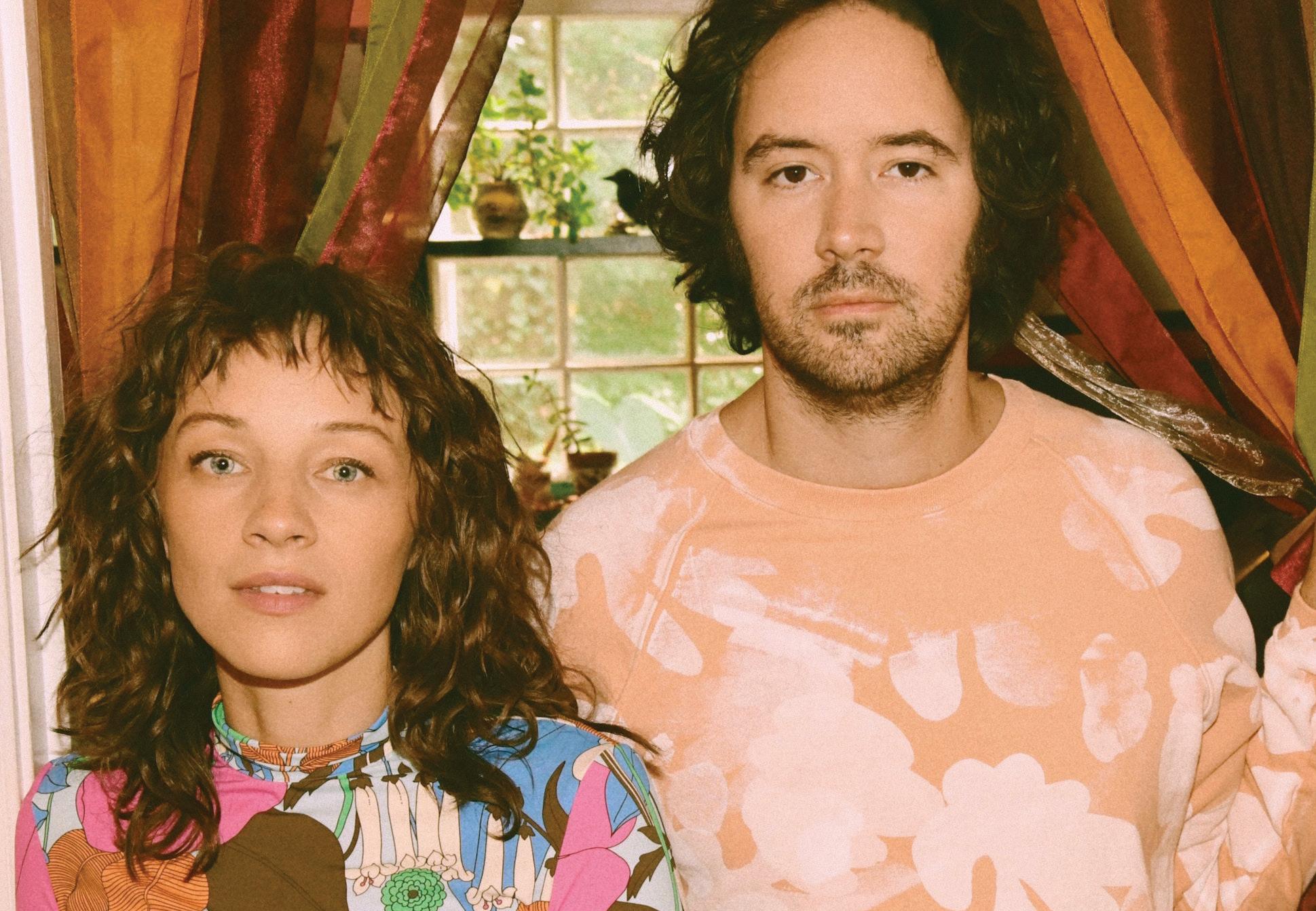
Boulder’s premier indie-folk extravaganza Bluebird Music Festival returns to the Macky Auditorium with headliners Watchhouse, Bruce Hornsby and The Tallest Man on Earth. Additional performers include Hiss Golden Messenger, Daniel Rodriguez, Isaac Slade (formerly of The Fray) and more. As always, the event will feature an intimate Strings & Stories session with stripped-down acoustic performances on Sunday afternoon. Scan the QR code for a BW interview with Bluebird Music Festival founder Travis Albright before you go. See listing for details
WIZ KHALIFA WITH LARRY JUNE, AB-SOUL, CHEVY WOODS AND DJ BONICS. 5 p.m. Red Rocks Amphitheater, 18300 W. Alameda Pkwy., Morrison. $99
THE BACKSEAT LOVERS WITH JONNY’S DAY OUT (NIGHT 1) 8 p.m. Fox Theatre, 1135 13th St., Boulder. $50
MOGWAI WITH PAPA M 8 p.m. Ogden Theatre, 935 E. Colfax Ave., Denver. $46
MONDAY, APRIL 21
FEDERALE WITH MUNLY & THE LUPERCALIANS 7 p.m. Hi-Dive, 7 S. Broadway, Denver. $19
THE BACKSEAT LOVERS WITH JONNY’S DAY OUT (NIGHT 2). 8 p.m. Fox Theatre, 1135 13th St., Boulder. $50
TUESDAY, APRIL 22
BRASS & BREWS WITH BOULDER PHIL’S BRASS QUINTET. 7 p.m. Wild Provisions Beer Project, 2209 Central Ave., Boulder. $35

TREVOR HALL WITH MAX GOMEZ 7 p.m. eTown Hall, 1535 Spruce St., Boulder. $48
SNOOPER WITH THE NERVOUS, THE CLUE AND PINK LADY MONSTER 7 p.m. Hi-Dive, 7 S. Broadway, Denver. $20
FONTAINES D.C. WITH JADU HEART. 8 p.m. Mission Ballroom, 4242 Wynkoop St., Denver. $70
WEDNESDAY, APRIL 23
OPEN BLUEGRASS PICK. 6 p.m. The Garden at Left Hand, 1245 Boston Ave., Longmont. Free
RYAN HUTCHENS 6 p.m. Rosalee’s Pizzeria, 461 Main St., Longmont. Free
Want more Boulder County events? Check out the complete listings online by scanning this QR code.





BY ROB BREZSNY
ARIES (MARCH 21-APRIL 19): I am always surprised when there appears yet another authoritative article or book that implies there is one specific right approach to meditation. The truth is, however, that there are many ways. Here’s teacher Christopher Bamford: “Meditation is naturally individual, uniquely our own. There are no rules. Just as every potter will elaborate their own way of making pots, so everyone who meditates will shape their own meditation.” This is excellent counsel for you right now, Aries. The planetary alignments tell me you have extra power to define and develop your unique style of meditation. Key point: Have fun as you go deeper and deeper!
TAURUS (APRIL 20-MAY 20): From 1501 to 1504, the artist Michelangelo worked to create a 17-foot-tall marble sculpture of the Biblical king known as David. Today it stands in Florence’s Galleria dell’Accademia and is one of the most famous statues in the world. But the block of marble from which it was carved had a troubled beginning. Two other artists worked on it but ultimately abandoned their efforts, regarding the raw material as flawed. Michelangelo saw potential where they didn’t. He coaxed a masterpiece from what they rejected. Be like him in the coming weeks, dear Taurus. Look for treasure in situations that others deem unremarkable. Find the beauty hidden from the rest of the world.
GEMINI (MAY 21-JUNE 20): The Judean date palm was considered extinct for over 800 years. Then scientists germinated a 2,000-year-old seed discovered in the ancient fortress of Masada. That was 20 years ago. Today, the tree, named Methuselah, is still thriving. Let’s regard this as your metaphor of power, Gemini. You, too, are now capable of reviving a long-dormant possibility. An old dream or relationship might show unexpected signs of life. Like that old seed, something you thought was lost could flourish if you give it your love and attention.
CANCER (JUNE 21-JULY 22): In more than a few ancient cultures, dolphins were regarded as playful allies that would guide lost ships and assist sailors in stress. In ancient Greek myth, dolphins were sacred companions and agents of the sea god. In Maori culture, dolphins were thought to deliver important messages that were unavailable any other way. Many modern Westerners downplay stories like these. But according to my philosophy, spirit allies like dolphins are still very much available for those who are open to them. Are you, Cancerian? I’m pleased to tell you that magical helpers and divine intermediaries will offer you mysterious and useful counsel in the coming weeks — if you are receptive to the possibility.
LEO (JULY 23-AUG. 22): Do you know about the Leo liberator Simón Bolívar (1783–1830)? This Venezuelan statesman and military officer accomplished a cornucopia of good works. Through his leadership, Venezuela, Colombia, Peru, Panama, Bolivia and Ecuador gained independence from the Spanish Empire. He was one of history’s greatest crusaders for liberal democracy. I propose we make him one of your inspiring symbols for the next 12 months. May he inspire you, too, to be a courageous emancipator who helps create a better world.
VIRGO (AUG. 23-SEPT. 22): Virgo conductor Leonard Bernstein was a global superstar because of his stellar musicianship, activism, philanthropy and teaching. He transformed classical music by dissolving barriers between “high” and “low” culture, bringing elegant symphonies to popular audiences while promoting respect for jazz and pop. He wanted all kinds of music to be accessible to all kinds of listeners. I think you are currently capable of Bernstein-like synergies, Virgo. You can bridge different worlds not only for your own benefit, but also others’. You have extra power to accomplish unlikely combinations and enriching mergers. Be a unifier!
LIBRA (SEPT. 23-OCT. 22): A rainbow is gorgeous, with its spectacular multi-hued arc sweeping across the sky. Here’s another element of its poetic appeal: It happens when sunlight and rain collaborate. In a sense, it’s a symbol of the sublimity that may emerge from a synergy of brightness and darkness. Let’s make the rainbow your symbol of power in the coming weeks, Libra. May it inspire you to find harmony by dealing with contrasts and paradoxes. May it encourage you to balance logic and emotion, work and rest, light and shadow, independence and partnership. I hope you will trust your ability to mediate and inspire cooperation.
SCORPIO (OCT. 23-NOV. 21): You now have more power than usual to transform ordinary things into extraordinary things. Your imagination will work at peak levels as you meditate on how to repurpose existing resources in creative ways. What other people might regard as irrelevant or inconsequential could be useful tools in your hands. I invite you to give special attention to overlooked assets. They may have hidden potentials waiting for you to unlock them.
SAGITTARIUS (NOV. 22-DEC. 21): If you google the term “the religion of work,” many critical references come up. They condemn the ways humans place an inordinate importance on the jobs they do, thereby sacrificing their health and soulfulness. The derogatory English term “workaholic” is a descriptor for those who are manically devoted to “the religion of work.” But now let’s shift gears. The artist Maruja Mallo (1902–1995) conjured a different version of “the religion of work.” Her paintings celebrated, even expressed reverence for, the agricultural laborers of rural Spain. She felt their positive attitudes toward their tasks enhanced their health and soulfulness. In the coming weeks, Sagittarius, I invite you to explore Mallo’s version of the religion of work.
CAPRICORN (DEC. 22-JAN. 19): Astrologer Aliza Kelly likes Capricorns for their “fearless ambition, limitless resilience and ability to keep pushing forward, even in the face of challenging adversity.” But she also praises their “secret wild side.” She writes, “Inside every earnest Capricorn is a mischievous troublemaker” who “loves to party.” I agree with her assessments and am happy to announce that the rowdier sides of your nature are due for full expression in the coming weeks. I don’t know if that will involve you “dancing on tables,” an activity Kelly ascribes to you. But I bet it will at least include interludes we can describe as “untamed.”
AQUARIUS (JAN. 20-FEB. 18): In 1922, Aquarian author James Joyce published Ulysses, a novel recognized as one of the masterworks of 20th-century world literature. Seventeen years later, he produced Finnegans Wake, an uproarious experimental novel that was universally reviled when it first emerged because of its wild wordplay, unusual plot and frantic energy. In the ensuing years, though, it has also come to be regarded as a monument of brilliant creativity. It’s one of my favorite books, and I’m glad Joyce never wavered in his commitment to producing such an epic work of genius. Anyway, Aquarius, I’m guessing you have been toiling away at your own equivalent of Finnegans Wake I beg you to maintain your faith! Keep going!
PISCES (FEB. 19-MARCH 20): Years ago, in the early days of my infatuation with a new lover, she put a blindfold on me and ushered me around the city of Columbia, South Carolina. The goal was to enhance my non-visual senses. The experiment worked. I heard, smelled and felt things I would never have noticed unless my dominating eyesight had been muffled. Ever since, my non-visual senses have operated with more alacrity. This fun project also improved the way I use my eyes. The coming days would be an excellent time for you to try a similar adventure, Pisces. If my idea isn’t exactly engaging to you, come up with your own. You will benefit profoundly from enhancing your perceptual apparatus.
Q: What is the one way that sex has changed over the last 20 years that has surprised you?
A: I’m surprised by how much less sex people have these days. We’re entering the second decade of a sex recession that shows no sign of abating, and I don’t think the efforts of “pronatalist” Republicans to renormalize sexual assault, ban abortion, restrict birth control and make abusive marriages harder to escape are going to turn things around.
I’m also surprised by the growing number of hyper-online queer incels way more outraged by sex scenes in movies, age-gap relationships and kink at pride than they are by attacks on LGBT civil rights.
Q: How did you become a sexpert?
A: By accident. I started to write an advice column 30 years ago as a joke — because wouldn’t it be hilarious if a gay man gave sex advice to straight people? — and immediately started getting real questions that required me to come up with real answers.
Here’s one of the dirty little secrets about advice columnists: Even if we had to look something up and/or consult an expert before answering a question, we like to pretend we knew the answer all along. By looking things up and consulting actual experts over the years, I learned a few things along the way…. like where to find the clitoris. But I wouldn’t describe myself as a “sexpert,” as I hate that word almost as much as I hate the word “nipple.”
Q: What brings you the purest joy?
A: It’s a tie between going snowboarding with my husband and my son, doing shrooms with my husband’s boy-
BY DAN SAVAGE

friend and watching a terrible movie together (Cats, Madame Web) and playing cards with my boyfriend in our favorite restaurant while we wait for our Krustenschweinbraten to come.
Q: If you could be any animal for their sexual behavior, which animal would you be?
A: I love being a human animal because we’re the freakiest. But if I was gonna come back as some other kind of animal in my next life, I would wanna be a giraffe or a ram… because giraffes and rams are the gayest animals and coming back as one or the other would up my chances of getting to be gay again.
Q: Do you think the definition of “tRumpMusk” should be: “(slang, colloquial, vulgar) The scent of the human male asshole when aroused or unwashed.” (It’s a variation of the 9th definition of musk from the Wiktionary entry for “musk.”)
A: I’m a big fan of aroused human males — their assholes and their other bits — and I don’t want to have to think about Donald Trump and Elon Musk every time I look at one. So, I’m sorry, but we’re not going to be doing this.

Email your question for the column to mailbox@savage. love or record your question for the Savage Lovecast at savage.love/askdan. Podcasts, columns, merch and more at Savage.Love!



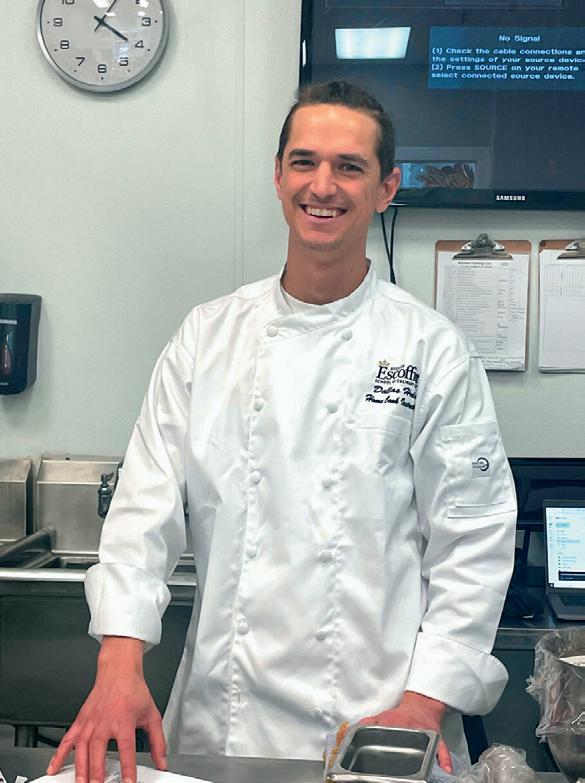




Reclaim food independence and grow veggies and herbs on your patio
BY JOHN LEHNDORFF
Home gardening in Boulder County is often depicted with perfect people tending selfwatering raised beds set up in spacious sunny backyards. In reality, most residents live in apartments, condos and multi-family housing units that offer limited, if any, sunny garden space.
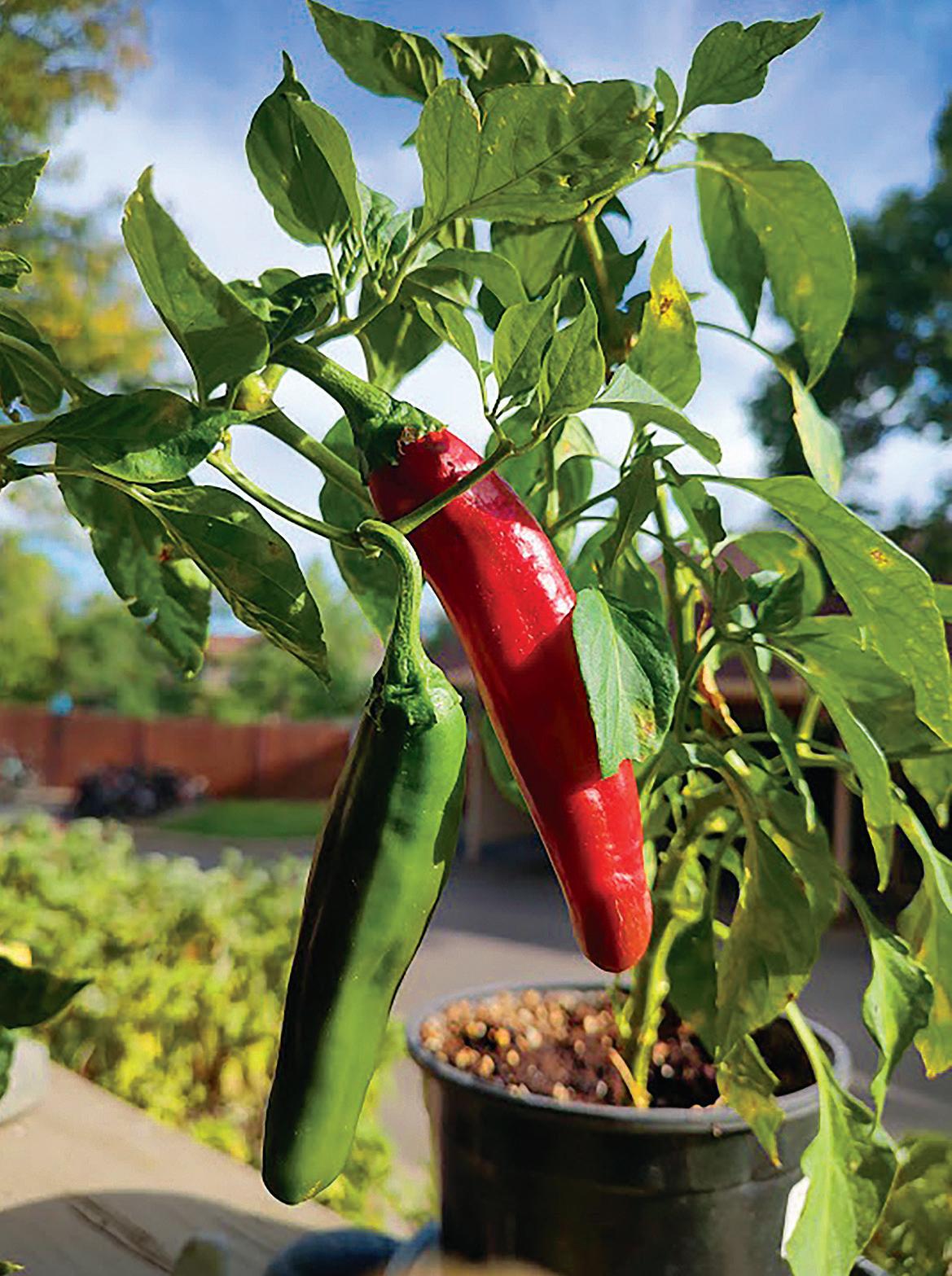
That hasn’t discouraged locals with green thumbs and an urge to feed themselves. They are growing vegetables, berries, herbs and flowers in pots, containers and window boxes on patios, balconies, porches, decks and roofs.
“Container gardening really is a growing movement here because so many people around Boulder can’t afford to live in a single-family house with gardening space,” says Eve Reshetnik Brawner.
The veteran gardener has co-owned North Boulder’s Harlequin’s Garden with her husband, Mikl Brawner, for more than 30 years. Harlequin’s Garden is a sustainability focused nursery and garden center offering seeds, trees, cacti, gardening classes and plant starts.
“You don’t need a big backyard,” Reshetnik Brawner says. “Using containers and pots, you can grow big crops of a lot of vegetables, herbs and flowers.”
The first step for gardeners is to gauge the solar and shade exposure for their patio or deck. The growing season may
be a little shorter here, but there’s no shortage of sunny days.
“Our sun is much stronger at this altitude than it is in most other places where people garden,” Reshetnik Brawner says. “Generally speaking, a half day of sun here is worth a day of sun in Maryland.”
“Tomatoes, peppers and eggplants do best with a lot of sun. So do Mediterranean herbs like thyme, lavender and rosemary.”
Colorado’s solar upside comes with a danger, according to Reshetnik Brawner.
“It’s so arid here that plants dry out quickly, evaporating water out of their foliage,” she says. “Your container needs to be big enough to hold enough soil to keep it hydrated.”
Most local garden soils need to be amended with compost because they tend to be compacted. Pots need to drain well so roots don’t get soggy: A saucer under the pot can hold drained water that the plant can absorb on long, hot days.
Avoid metal containers because they heat up too rapidly. Ceramic pots are fine, but uncoated terra cotta tends to dry out quickly.
“You can use other containers, bins or old wooden crates,” she says. “There are also new fabric smart pots or grow bags with strap handles that are light and easy to move.”
Recycled containers are often available at garage sales and by searching the Craigslist Farm + Garden section.
Certain crops like tomatoes, chilies, cucumbers, beans, peas, squash, strawberries, herbs and greens do very well in Boulder, according to Reshetnik Brawner. However, other vegetables need to be out in a garden where they have enough space.
“I don’t recommend broccoli, cauliflower or most root vegetables like potatoes in containers,” she says. “The same with melons and pumpkins. There are some dwarf carrot varieties that do well.”
By far the easiest crops to grow in a container are greens, according to Reshetnik Brawner.
“Leafy greens like lettuce, Swiss chard, kale, arugula, spinach — those are all really doable in pots grown from seed, and also many herbs like cilantro and parsley,” she says. “I only grow my basil in pots because you can plant a lot close to each other and get a big harvest.”
According to Reshetnik Brawner, the question isn’t whether you can buy cheaper tomatoes on sale at a supermarket than you can grow at your townhome.
“It’s so worth it, because you have a relationship with these plants. You harvest
it fresh before dinner from your patio,” she says. “The greens are so much more tender. They weren’t bred to withstand being shipped on a truck for a few days. It’s like having your own farmers market without the crowds.
“Gardening can be a small investment, but the tools and pots are going to last years and years. It gets cheaper over time.”
While vegetable seeds are not the major gardening expense, free seeds are also available through some Boulder County public libraries. Library users can check out or exchange seeds.
Boulder Public Library: library.org/ seed-to-table
Lafayette Public Library: lafayetteco. gov/2462/Seed-Library
Longmont Public Library: longmont colorado.gov/library
Reshetnik Brawner suggests ignoring the seed displays at big box stores and growing acclimatized, non-GMO seeds that have been propagated locally. Harlequin’s Garden offers seeds from Boulder’s MASA Seed Foundation (masaseedfoundation.org) and BBB Seeds (bbbseed.com), Broomfield’s Botanical Interests (botanicalinterests.com) and an Iowa seedbank, Seed Savers Exchange (seedsavers.org).
9 a.m. to 5 p.m. April 22 Resource Central, 6400 Arapahoe Road, Boulder
22% off yard and garden essentials, including recycled and reclaimed landscaping rocks, planters, pots, yard tools and accessories.
10 a.m. to noon May 31
The Herbiculture Hub Farm, 9722 Empire Road, Louisville Tickets: $25-$35, bit.ly/ FriendsFarmForage
Sunday, April 20th


Classes on vegetable gardening and gardening advice is available in Boulder at:
• Harlequin’s Garden: harlequinsgardens.com
• Growing Gardens: growinggardens. org
• Free local gardening information is available through:
• Denver Urban Gardens: dug.org/vegetable-planting-guide
• Colorado State University Extension Service: extension.colostate.edu/garden. CSU’s volunteer gardening experts answer questions at 303678-6388, or email mggpa@bouldercounty.gov.
Boulder resident and Gov. Jared Polis recently signed a bill naming the Agaricus Julius, or Emperor Mushroom, as Colorado’s official state mushroom. It is an edible mushroom that grows at high altitude.
The hills and fields may be full of edible and medicinal plants, fruits and fungi, but novice foragers in Boulder County are strongly advised to take a class before they gather anything. Veteran foragers lead forays where
groups learn where — and how — to identify and gather.
For more Colorado foraging information at facebook.com/foragecolorado.
The Boulder Weekly offers a recent overview of local foraging resources: boulderweekly.com/food/nibbles/forageboulder-county-dos-donts
With the bird flu and the skyrocketing price of eggs, people are more interested than ever in starting their own flock. But it might not be worth it, cost-wise, according to two local chicken experts. Read more of what they have to say, plus tips on how to start your own coop: bit.ly/BackyardChickensBW
“The single greatest lesson the garden teaches is that our relationship to the planet need not be zero-sum. As long as the sun still shines and people still can plan and plant, think and do, we can, if we bother to try, find ways to provide for ourselves without diminishing the world.” — Michael Pollan
John Lehndorff is a veteran patio and window gardener in Louisville. Comments nibbles@boulderweekly.com




Where to get OD-reversing naloxone, and how to use it
BY SHAY CASTLE
For every 70 prescriptions a doctor writes for powerful, pain-killing opioids, they prescribe just one dose of life-saving naloxone, most commonly known by the brand name Narcan. This despite the overdose crisis that has devastated America, claiming more than 1 million lives in the past two decades, and the fact that 93% of people who receive a dose of the medication survive their overdose.
The U.S. Centers for Disease Control (CDC) advises doctors to prescribe it to high-risk patients. Police departments, libraries and even high schools keep it on hand.
“In an ideal world,” says Madeline Evanoff, a harm reduction specialist with Boulder County Public Health (BCPH), “everybody would carry naloxone.”
The agency hands out free Narcan to registered drug users, plus their friends and loved ones. The county also provides free training to anyone who wants to learn how to administer it: Email mevanoff@ bouldercounty.gov or call 720-864-6515 to schedule.
Naloxone is also available over the counter to members of the general public.
Find it in Boulder County (bit.ly/ BoCoNarcanMap) or the Denver metro (stoptheclockcolorado.org/map).
Here’s what you need to know about getting it, using it and spotting an overdose.
Roughly $45
An opioid overdose happens when the brain’s receptors that control breathing and other automatic functions become blocked by drugs. Naloxone replaces those opioids.
It lasts about 30-90 minutes, so it is imperative to call 911 or get the person to a hospital immediately.
Naloxone only works on opioid overdoses: It won’t hurt someone who has taken too much of another substance, such as stimulants (cocaine, ecstasy, speed), but neither will it reverse the overdose.
Signs of a stimulant overdose include nausea and vomiting, chest pain, racing pulse, teeth grinding, foaming at the mouth, sweating, extreme paranoia and seizures.
Signs of an opioid overdose include:
• Unresponsiveness to shouting or shaking or pain
• Slowed or stopped breathing and heartbeat
• Choking, snoring or gurgling sounds
• Slow or stopped heartbeat

gray, like the color drops out of them.”
Formal training is recommended. However, in the absence of that, here are some tips from The DOPE Project / National Harm Reduction Coalition.
First, try to stimulate them awake with noise and a verbal warning: “If you don’t wake up, I’m going to Narcan you.”
Respect them if they are responsive and tell you no.
Rub their sternum with your knuckles. If that doesn’t work, administer naloxone.
• For nasal spray, insert it into the nostril — all the way up into the sinuses, like a COVID test swab
• For injectables, aim for a thigh or upper arm. It has to go into a muscle Don’t do more than one dose. The meds will take 2-3 minutes to start working. An app named OpiRescue — developed with a grant from the state of Colorado — can walk you through how to administer naloxone, plus provide information on recognizing and responding to overdoses. Download it on iPhone or Android. Learn more: opirescue.com
• Lips and fingers changing color: From the National Harm Reduction Coalition: “Lighter folks go blue and gray; darker folks darker or ashen



calling 911. After administering a single dose and calling emergency responders, do rescue breathing.
• Put them flat on their back. Plug the person’s nose and give one breath into their mouth every 5-7 seconds. Continue breathing for them until they become responsive or until emergency responders arrive.
Give them space. When they come to, they will be scared.
Per Boulder County Public Health, do NOT
• Leave the person alone
• Inject them with speed, milk, salt water, etc.
• Put them in ice or cold water
• Do anything that prolongs the amount of time they’re not getting oxygen, as that would put them at risk for brain damage or death
For stimulant overdoses:
• Help the person stay calm
• Get them into a lying position
• Clear their airway
• Protect their head
If you are using substances or around people who are, you should absolutely carry naloxone, Evanoff says, since synthetic opioids like fentanyl can be in any drug.
Administer Narcan / naloxone before
Even if you don’t have drugs in your daily life, Evanoff says it’s still worth it to have Narcan readily available. “You don’t know when you might encounter somebody overdosing.”