BEMF CHAMBER OPERA SERIES PAUL O’DETTE & STEPHEN STUBBS, Musical Directors GILBERT BLIN, Stage Director ROBERT MEALY, Concertmaster MELINDA SULLIVAN, Choreographer SATURDAY, NOVEMBER 26, 2022 SUNDAY, NOVEMBER 27, 2022 NEW ENGLAND CONSERVATORY’S JORDAN HALL BEMF.ORG InternatIonal Baroque opera • CeleBrated ConCerts • World-Famous exhIBItIon
“
he omplete orks
in addition, i should like to have all the works of Carl Philipp Emanuel Bach, all of which, of course, have been published by you . . . .”
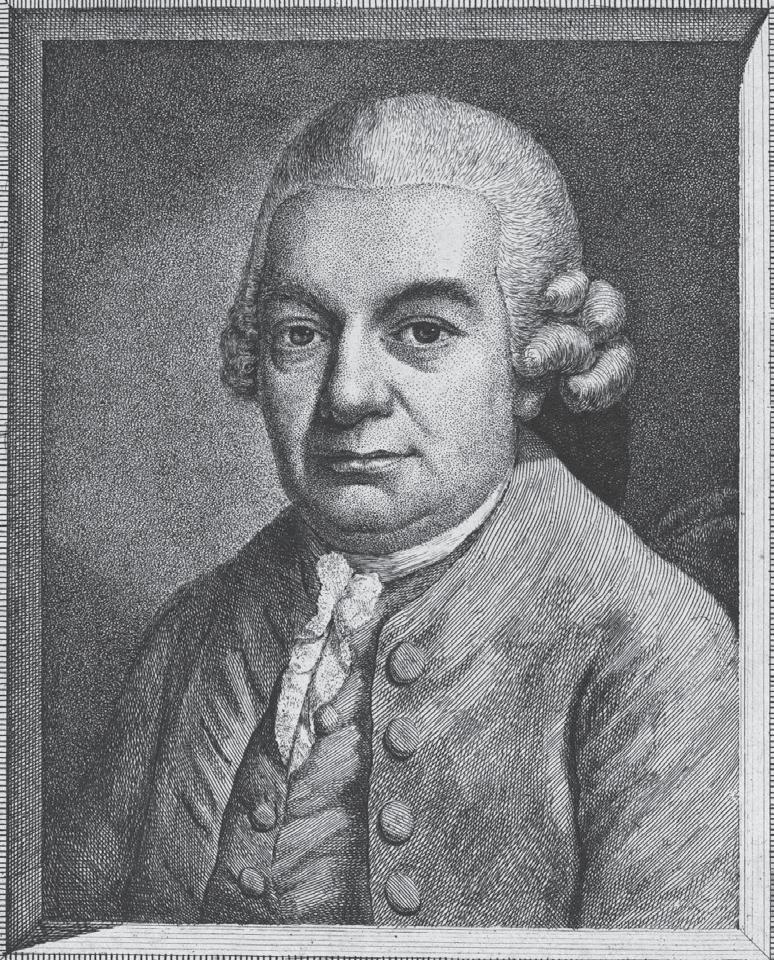
—Ludwig van Beethoven
Letter to Breitkopf & Härtel, October 15, 1810
Published by The Packard Humanities Institute cpebach.org
Carl Phili PP Emanu E l Ba C h
Boson Early Music Fesival

Winter Weekend Workshop
January 2023, Hybrid or Online
Spring Break Workshop
April 22 23, 2023, Arlington, VA
Memorial Day Weekend Workshop
May 26 29, 2023, Litchfield, CT
July 2-9 and 9-16, 2023
Two weeks of classes on the campus of Muhlenberg College in Allentown, PA
Baroque
Workshops n Festival n Classes n Concerts n Music Publications
AMHERST EARLY MUSIC FESTIVAL
ONLINE New classes each
AEM publishes four player friendly, modern editions: Ottaviano Pettruci's Odhecaton, Canti B, Music for the Duke of Lerma, and Music
the
1579
for the latest details on
of AEM's programs! We hope you'll join us!
Guillaume
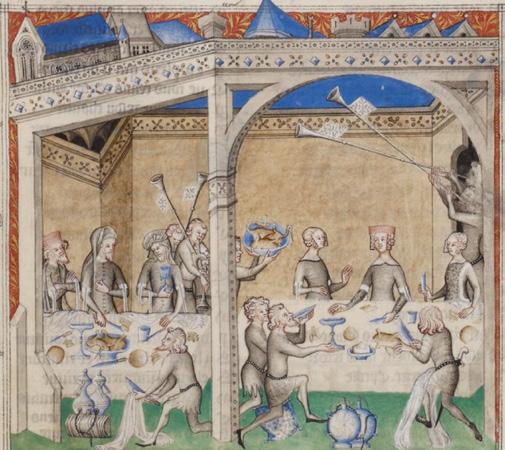
Remede de Fortune amherstearlymusic.org FRIDAY,
2022 8PM | St. Paul Church, Cambridge THE
Opera, Choral Workshop, Ensemble Singing Intensive, and more! AEM
month! Publications
from
Regensburg Partbooks
See website
all
Detail from
Machaut's
DECEMBER 9,
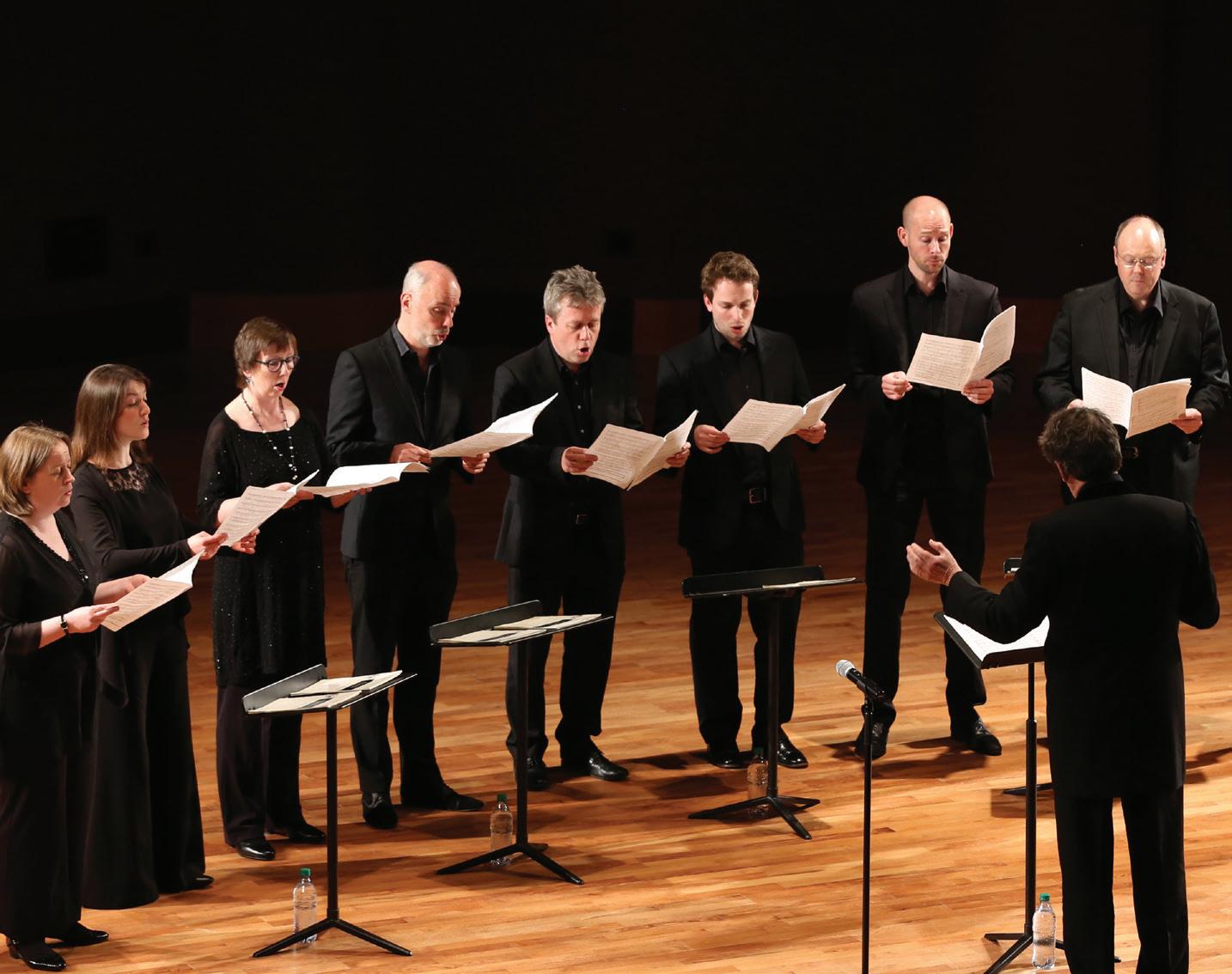
TALLIS SCHOLARS Peter Phillips, director
Paul O’Dette & Stephen Stubbs, Artistic Directors
Bo

NOVEMBER
JOHN FREDERICK LAMPE
25 & 26, 2023 NEW ENGLAND CONSERVATORY’S JORDAN HALL, BOSTON
son Early Music Fesival CHAMBER OPERA SERIES presents
PAUL O’DETTE STEPHEN STUBBS Musical Directors
GILBERT BLIN Stage Director
ROBERT MEALY Concertmaster
A fire-breathing
is terrorizing the Yorkshire
and only the
can save the day. If
he
to put down his beer.
Tickets
MELINDA SULLIVAN Choreographer
dragon
countryside,
local squire, Moore of Moore Hall
only
can be bothered
The Dragon of Wantley, the most popular operatic production of the entire 18th century in England, enjoyed a 45-year run. Lampe deftly lampoons the excesses of Handelian opera in this hilarious farce. PART OF OUR 2023–2024 SEASON!
go on sale this spring.
Dear Friends,
What a delight to welcome you to what is now firmly established as a beloved Thanksgiving weekend tradition in Boston! Since 2008, BEMF’s annual operatic productions, presented in the intimate setting of NEC’s Jordan Hall, have taken the acclaimed musical and artistic values that are the hallmark of our fully staged Festival operas and focused them on small-scale staged works, breathing new life into rarely heard gems and beloved masterpieces alike.
For our all-new 2022 Chamber Opera Series presentation this weekend, we have selected a vivacious pairing of two French pastorales—Lully’s Idylle sur la Paix and Charpentier’s La Fête de Reuil—commissioned in 1685 as festive tributes to King Louis XIV. Musical Directors Paul O’Dette and Stephen Stubbs, Stage Director Gilbert Blin, and Choreographer Melinda Sullivan lead a sparkling roster of eight singers, four dancers, and members of the all-star BEMF Chamber Ensemble with Concertmaster Robert Mealy, in this idyllic and engaging double bill celebrating a universal desire for peace.
We hope you enjoy this weekend’s performances—in person or in a later virtual viewing—and we hope to see you on Friday evening December 9, at St. Paul Church in Cambridge, when we welcome Peter Phillips and the magnificent Tallis Scholars for their 34th consecutive annual appearance with BEMF. Their program, Hymns to the Virgin, features works by Renaissance masters Josquin, Isaac, Lassus, and Guererro, and will also be made available for online viewing later in December.
Thank you for making BEMF opera a part of your holiday weekend, and our heartfelt thanks for your continued dedication to the Boston Early Music Festival.

 Kathleen Fay Executive Director
2022–2023 SEASON 1 WELCOME Concert Program 9 Synopses 14 Program Essays 15 Artist Profiles 25 Texts & Translations 42 About BEMF 55 Friends of BEMF 59 TABLE OF CONTENTS
2 BOSTON EARLY MUSIC FESTIVAL
MANAGEMENT
Kathleen Fay, Executive Director
Carla Chrisfield, General Manager
Maria van Kalken, Assistant to the Executive Director Brian Stuart, Director of Marketing and Publicity
Elizabeth Hardy, Marketing and Development Associate & Exhibition Manager
Perry Emerson, Operations Manager
Corey King, Box Office and Patron Services Manager Andrew Sigel, Publications Editor
Nina Stern, Director of Community Engagement
ARTISTIC LEADERSHIP

Paul O’Dette and Stephen Stubbs, Artistic Directors Gilbert Blin, Opera Director Robert Mealy, Orchestra Director Melinda Sullivan, Lucy Graham Dance Director
BOARD OF DIRECTORS
Bernice K. Chen, Chairman | David Halstead, President Brit d’Arbeloff, Vice President | Lois A. Lampson, Vice President Susan L. Robinson, Vice President Adrian C. Touw, Treasurer | Peter L. Faber, Clerk Michael Ellmann | George L. Hardman | Ellen T. Harris | Glenn A. KnicKrehm Miles Morgan | Bettina A. Norton | Lee S. Ridgway | Ganesh Sundaram
BOARD OF OVERSEERS
2022–2023 SEASON 3
BOARD OF TRUSTEES
Diane Britton | Gregory E. Bulger | Robert E. Kulp, Jr. | James S. Nicolson Amanda Pond | Robert Strassler | Donald E. Vaughan
BOSTON EARLY MUSIC FESTIVAL, INC. 43
Street,
Marty Gottron & John Felton, Co-Chairs Mary Briggs | Deborah Ferro Burke | Mary Deissler | James A. Glazier Edward B. Kellogg | John Krzywicki | Douglas M. Robbe | Jacob Skowronek
Thorndike
Suite 302, Cambridge, MA 02141-1764 Telephone: 617-661-1812 | Email: bemf@bemf.org | BEMF.org
Boson Early Music Fesival

4 BOSTON EARLY MUSIC FESTIVAL
MEMBERS OF THE BEMF CORPORATION
Jon Aaron
Debra K.S. Anderson
Kathryn Bertelli
Mary Briggs
Diane Britton
Douglas M. Brooks
Gregory E. Bulger
Julian G. Bullitt
Deborah Ferro Burke
John A. Carey
Anne P. Chalmers
Bernice K. Chen
Joel I. Cohen Brit d’Arbeloff
Vivian Day Mary Deissler
Peter L. DeWolf
JoAnne W. Dickinson Richard J. Dix
Alan Durfee
Michael Ellmann Peter L. Faber
Emily C. Farnsworth
Dorothy R. Fay† Kathleen Fay John Felton Frances C. Fitch
Claire Fontijn
Randolph J. Fuller
James A. Glazier
Marty Gottron
Carol A. Haber David Halstead
George L. Hardman
Ellen T. Harris
Richard Hester
Jessica Honigberg
Jennifer Ritvo Hughes
Edward B. Kellogg Thomas F. Kelly Glenn A. KnicKrehm
Christine Kodis John Krzywicki
Kathryn Kucharski
Robert E. Kulp, Jr. Ellen Kushner
Christopher Laconi Lois A. Lampson Thomas G. MacCracken William Magretta Bill McJohn Miles Morgan
Nancy Netzer Amy H. Nicholls James S. Nicolson Bettina A. Norton Scott Offen Lorna E. Oleck Henry P.M. Paap James M. Perrin Bici Pettit-Barron Amanda Pond Melvyn Pond Paul Rabin
Christa Rakich Lee S. Ridgway
Michael Rigsby
Douglas M. Robbe
Michael Robbins
Susan L. Robinson
Patsy Rogers
Wendy Rolfe-Dunham
Loretto Roney
Thomas Roney Ellen Rosand
Valerie Sarles David W. Scudder
Andrew Sigel Jacob Skowronek
Arlene Snyder
Jon Solins
Robert Strassler Ganesh Sundaram Adrian C. Touw
Peggy Ueda Donald E. Vaughan
Ingeborg von Huene Nikolaus von Huene Howard J. Wagner Benjamin D. Weiss Ruth S. Westheimer Allan Winkler
Hal Winslow
Christoph Wolff Arnold B. Zetcher Ellen Zetcher † deceased
2022–2023 SEASON 5


6 BOSTON EARLY MUSIC FESTIVAL

2022–2023 SEASON 7 FRIDAY, DECEMBER 9, 2022 8PM | St. Paul Church, Cambridge VIRTUAL AVAILABILITY: DECEMBER 16–30 THE TALLIS SCHOLARS Peter Phillips, director HYMNS TO THE VIRGIN Boson Early Music Fesival
&
Stubbs,
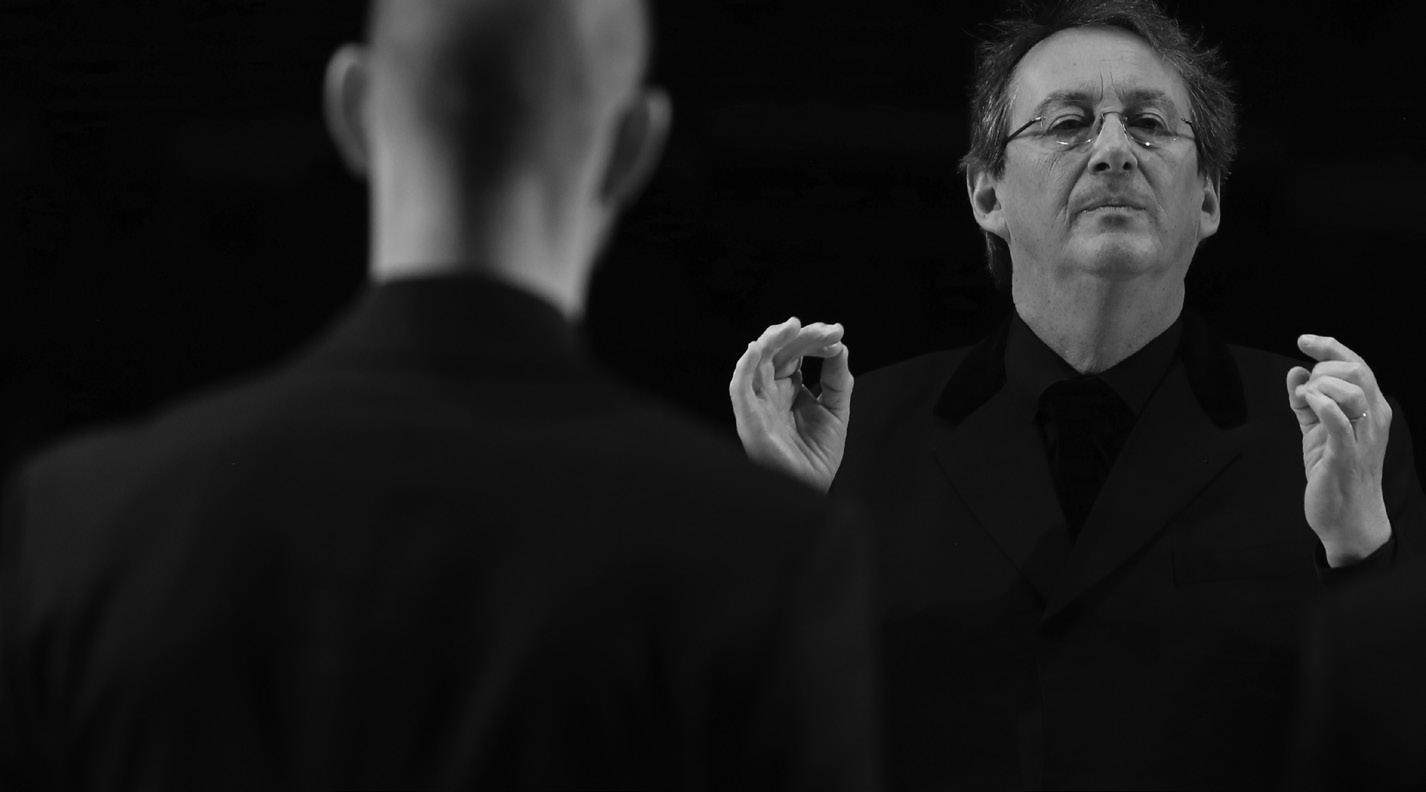
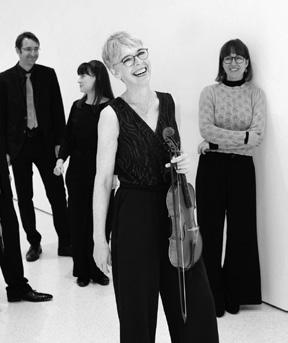
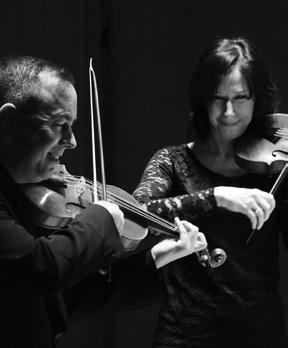
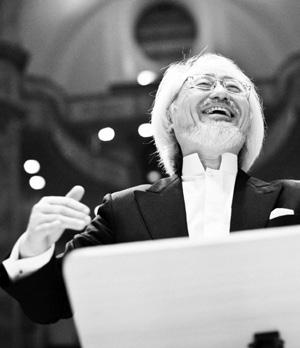
n VIRTUAL CONCERT AVAILABLE NOW! WATCH UNTIL DECEMBER 2 VOX LUMINIS Lionel Meunier, director n FRIDAY, FEBRUARY 10, 2023 | 8PM VIRTUAL PREMIERE: FEBRUARY 24 BACH COLLEGIUM JAPAN RODERICK WILLIAMS, baritone Masaaki Suzuki, director & harpsichord n FRIDAY, MARCH 10, 2023 | 8PM VIRTUAL PREMIERE: MARCH 24 QUICKSILVER Robert Mealy & Julie Andrijeski, directors n FRIDAY, MARCH 25, 2023 | 8PM VIRTUAL PREMIERE: APRIL 8 CHIAROSCURO QUARTET n SATURDAY, APRIL 22, 2023 | 8PM VIRTUAL PREMIERE: MAY 6 ENSEMBLE CASTOR MIREILLE LEBEL, mezzo-soprano Rodolfo Richter, leader n FRIDAY, APRIL 28, 2023 | 8PM VIRTUAL PREMIERE: MAY 12 STILE ANTICO LEARN MORE AT BEMF.org
Paul O’Dette
Stephen
Artistic Directors
Boson Early Music Fesival
2022 CHAMBER OPERA SERIES NAMED GIFT SPONSORSHIPS
Boston Early Music Festival extends sincere thanks to the following individuals and organizations for their leadership support of the November 2022 BEMF Chamber Opera Series performances of Lully’s Idylle sur la Paix and Charpentier’s La Fête de Rueil:
o
Constellation Charitable Foundation
Sponsor of the Production
Joan Margot Smith
Sponsor of Melinda Sullivan, Choreographer Sponsor of Phoebe Carrai, violoncello, and Laura Jeppesen, viola, BEMF Chamber Ensemble
Andrew Sigel
Sponsor of Mireille Lebel, mezzo-soprano, Jason McStoots, tenor, and John Taylor Ward, bass-baritone, BEMF Vocal Ensemble
David Halstead and Jay Santos
Sponsors of Teresa Wakim, soprano, and Aaron Sheehan, tenor, BEMF Vocal Ensemble
Lorna E. Oleck
Sponsor of Robert Mealy, Concertmaster Sponsor of Danielle Reutter-Harrah, soprano, BEMF Vocal Ensemble
Bernice K. Chen
Sponsor of Gilbert Blin, Stage Director
8 BOSTON EARLY MUSIC FESTIVAL
Boson Early Music Fesival
CHAMBER OPERA SERIES PRESENTS

Saturday, November 26, 2022 at 8pm Sunday, November 27, 2022 at 3pm New England Conservatory’s Jordan Hall, 30 Gainsborough Street, Boston
Monday, December 12, 2022 at 8pm (ET) Virtual Premiere, BEMF.org
Paul O’Dette & Stephen Stubbs, Musical Directors
Gilbert Blin, Stage Director
Robert Mealy, Concertmaster Melinda Sullivan, Choreographer Gwen van den Eijnde, Costume Designer Kelly Martin, Lighting Designer Kathleen Fay, Executive Producer
ORDER OF PRESENTATION
Idylle sur la Paix
Music composed by Jean-Baptiste Lully (1632–1687) Text by Jean Racine (1639–1699)
Chaconne pour Madame la Princesse de Conti Music composed by Jean-Baptiste Lully m INTERMISSION n
La Fête de Rueil
Music composed by Marc-Antoine Charpentier (1643–1704) Text by “Une Personne de Qualité”
2022–2023 SEASON 9
BOSTON EARLY MUSIC FESTIVAL VOCAL ENSEMBLE
Danielle Reutter-Harrah, soprano – Iris, Shepherdess Teresa Wakim, soprano – The Princess Mireille Lebel, mezzo-soprano – An Egyptian Jason McStoots, tenor – The Duke James Reese, tenor – The Marquis Aaron Sheehan, tenor – Tircis, Shepherd John Taylor Ward, bass-baritone – Pan, god of shepherds Jonathan Woody, bass-baritone – A Swain
BOSTON EARLY MUSIC FESTIVAL DANCE COMPANY
Caitlin Klinger – Goddess of Peace & A Shepherdess Sonam Tshedzom Tingkhye – A Shepherdess & An Egyptian Julian Donahue – Bellona, goddess of War & A Shepherd Shaun Ferren – A Swain & A Satyr
BOSTON EARLY MUSIC FESTIVAL CHAMBER ENSEMBLE
Robert Mealy & Cynthia Roberts, violin Sarah Darling & Laura Jeppesen, viola Phoebe Carrai, violoncello Emi Ferguson & Andrea LeBlanc, traverso Gonzalo X. Ruiz & Kathryn Montoya, oboe & recorder Dominic Teresi, bassoon David Morris, viola da gamba Michael Sponseller, harpsichord Paul O’Dette, theorbo Stephen Stubbs, theorbo & Baroque guitar





Double-manual French harpsichord by Allan Winkler, Medford, Massachusetts, 1991, after Donzelague, property of the Boston Early Music Festival

10 BOSTON EARLY MUSIC FESTIVAL
TECHNICAL CREW AND SUPPORT STAFF
Mercedes Roman-Manson, Production Manager
Maxx Finn, Lighting Director
Elizabeth Hardy, Company Manager
Perry Emerson, Operations Manager
Maria van Kalken, Assistant to the Executive Producer
Gordon Manson, Technical Director
Carmen Catherine Alfaro, Production Stage Manager
Martha Keslar, Assistant Stage Manager
Seth Bodie, Wigs, Hair & Make-up Supervisor
Jennifer Gregory, Wigs, Hair & Make-up Artist
Elizabeth Cole Sheehan, Wardrobe Supervisor
Dan McGaha, Supertitles Supervisor and Operator
Jackie Olivia, Dresser and Stitcher
Luisa Earle, Stitcher
Hannah Willets, Stitcher
Andrea Zax, Stitcher
Chloe Moore, Stitcher
Shelby Marsh, Electrician
Jamie Schmidt, Intern Assistant to Gilbert Blin
Ball Square Films & Kathy Wittman, Video Production & Photography
Antonio Oliart Ros, Recording Engineer
2022–2023 SEASON 11
The Boston Early Music Festival wishes to thank the following organizations and individuals for assistance with this production:
The Centre de musique baroque de Versailles, for permission to use their edition of Idylle sur la Paix by Jean-Baptiste Lully
Robert Mealy, BEMF Orchestra Director, for his edition of La Fête de Rueil by Marc-Antoine Charpentier
Julie Barry, Senior Planner, Arts & Culture, City of Salem, Department of Planning & Community Development, for her assistance with our rehearsal venue
Chelsea Titchenell, Planning Assistant, Arts & Culture, City of Salem, Department of Planning & Community Development, for her assistance with our rehearsal venue
Hawthorne Hotel in Salem, MA, and Boston Peabody Marriott in Peabody, MA, for their gracious hospitality
First Universalist Society of Salem, MA, for providing rehearsal space as well as Michael Kraft, Director of Music, and Catherine Bertrand, Congregational Administrator, for their assistance
Christine Thomson and Timothy Kendall, for their gracious hospitality
BEMF staff members Carla Chrisfield, Perry Emerson, Elizabeth Hardy, and Maria van Kalken, for their meticulous caretaking of our Idylle sur la Paix and La Fête de Rueil Company
BEMF staff members Brian Stuart and Corey King, for their fastidious work in connection with marketing and box office management for these productions
Andrew Sigel, for his careful attention to detail as editor of our publications including the material contained in this program book
The Staff at New England Conservatory of Music, especially Peter Charig, Director of Business Relations and Event Management, and Bob Winters, Director of Performance Production Services for their support and technical assistance
Hal Winslow, Member of the BEMF Corporation, for his technical and administrative assistance
12 BOSTON EARLY MUSIC FESTIVAL
Boson Early Music Fesival
2022–2023 NAMED GIFT SPONSORSHIPS
Boston Early Music Festival extends sincere thanks to the following individuals for their leadership support of our 2022–2023 Season: o
David Halstead and Jay Santos
Sponsors of the October 2022 performance by Philippe Jaroussky, countertenor, and Ensemble Artaserse
Joan Margot Smith
Sponsor of the November 2022 performance by Vox Luminis and Lionel Meunier, Artistic Director
Two Local Fans
Sponsors of the February 2022 performance by Bach Collegium Japan with Masaaki Suzuki, director, and Roderick Williams, baritone
Lorna E. Oleck
Sponsor of the March 2023 performance by Quicksilver
Partial Sponsor of BEMF’s Community Engagement Program and the June 2023 début of the BEMF Youth Ensemble
Peter L. and Joan S. Faber
Partial Sponsors of BEMF’s Community Engagement Program and the June 2023 début of the BEMF Youth Ensemble
David M. Kozak and Anne Pistell
Sponsors of the December 2022 performance by The Tallis Scholars and Peter Phillips, director in memory of their parents
Diane and John Paul Britton
Sponsors of Robert Mealy, violin and director, for his March 2023 performance with Quicksilver
Donald E. Vaughan and Lee S. Ridgway
Sponsors of Philippe Jaroussky, countertenor, for his October 2022 performance
Joanne Zervas Sattley
Partial Sponsor of the March 2023 performance by Chiaroscuro Quartet
Amanda and Melvyn Pond
Partial Sponsors of BEMF’s Community Engagement Program and the June 2023 début of the BEMF Youth Ensemble
o
You can help make this list grow. For more information about investing in BEMF performances with a Named Gift, please email Kathleen Fay at kathy@bemf.org, or call the BEMF office at 617-661-1812. Your support makes a difference. Thank you.
2022–2023 SEASON 13
SYNOPSES
Idylle sur la Paix
The people of Europe are invited by the French nobility to celebrate the peace and the happiness it brings. Shepherds and shepherdesses pay homage to the goddess Peace: she protects families and makes it possible for nature to feed them through regular harvests. They also honor Peace by cultivating graceful gardens.
Those present ask to whom they owe this happiness: who sent Bellona, the goddess of war, back down to hell? A victorious Louis XIV has given them this respite; he has again defeated France’s many enemies. From north to south, his might is feared.
They all agree that the king should be the true subject of the celebration. They then praise the charm of the gardens of Sceaux, where flowers, trees, and water combine in abundance. The king’s visit makes nature itself more brilliant.
A prayer for the king unites them: they wish him a long life, evoking the longest rivers of France, the Seine and the Loire. All predict eternal glory for Louis XIV.
La Fête de Rueil
In the gardens of Rueil, near Paris, the shepherdess Iris celebrates the morning appearance of the sun, the emblem of Louis XIV. She is amazed by the sun’s brilliance, and as the king’s fame is universal, how much love the supreme orb inspires in everyone. Her reverie is interrupted by a group of swains and country girls, who have come in the hope of glimpsing their sovereign. In his rural patois, a swain declares that the victorious King Louis is a great man.
The fête starts and they are joined by some Egyptian girls. One of these newcomers praises the simplicity of the shepherds’ life, far from the confusions of the court. Indeed, with Peace revived, they have nothing to fear but Cupid. Iris disagrees that love is fated, but the Egyptian girl examines Iris’s hand and predicts that she
will someday succumb. Iris is appalled by the idea and declares that the world is more likely to be turned upside down than she is to marry.
Iris and the Egyptian girls see the satyrs coming, and the whole party flees from the boisterous forest gods. When Iris emerges from her hiding place, she discovers her unwanted suitor, Tircis. Iris is displeased by his moodiness; she wants to be left alone. Tircis is agitated, despite the calm and gentle reign of Louis, because of Iris’s rejection of him and her refusal to feel love despite inspiring so much of it. Iris defends herself by saying that far from not loving anything, she loves the French countryside, and even more these gardens of Rueil where she loves to sing and dance with the other shepherdesses.
Pan interrupts the argument and joins the festivities. The god of shepherds addresses his devotees, sharing his memories of previous reigns: he has seen many great French kings, but Louis surpasses them all. He also mentions Armand, Cardinal de Richelieu, the creator of the beautiful gardens of Rueil, saying that the Cardinal’s shade regrets not being alive to revel in Louis’s glory. Shepherds and shepherdesses agree that Louis is the greatest of kings, in peace and in war. Pan paints a vivid depiction of the success of the king’s reign: science and the arts flourishing, the beauties of his majestic palaces, and the technical marvel of the “Canal des Deux Mers,” joining the Atlantic to the Mediterranean. Pan also gives an account of Louis’s success over the other European powers including the Ottoman and Austrian empires, the defeat of the Dutch Republic and Belgium, and the destruction of Luxembourg’s defenses. The crowning achievement of so many military triumphs is peace, which Louis has bestowed upon the universe; his glory is beyond compare.
La France au Roi France praises the perfection of the heroic King who has nothing to fear from his enemies or from himself. n
—Gilbert Blin
14 BOSTON EARLY MUSIC FESTIVAL
PROGRAM ESSAYS
THE TRUCE OF A ROYAL PEACE
Jean-Baptiste Lully’s Idylle sur la Paix and Marc-Antoine Charpentier’s La Fête de Reuil were created in the wake of the Truce of Ratisbon, also known as the Truce of Regensburg, which ended the war that Louis XIV had fought against the Holy Roman emperor Leopold I and the king of Spain, Charles II. Although officially dating from August 15, 1684, the truce was made public in October and preparations for its celebration took place during the icy winter that followed. In January 1685, Roland was performed at Versailles for the first time. This new creation by Lully and his faithful librettist Quinault drew particular attention because it initiated a reduction in opera performances: from three times a week, there was now only a single weekly performance. “It is not because this one was less beautiful than the others; but the King declared that these kinds of spectacles bored him when he saw them represented so often.” The taste of Louis XIV had been changing since his secret marriage to the pious Madame de Maintenon. The summer of 1685 reflected this change and the activities of his court. It was nearly a year since the Regensburg truce had been signed suspending the war between Spain, the Holy Roman Empire, and France. The truce officially remained in force, and Le Dauphin, the crown prince, took over the direction of the Court entertainments intended to extol the peace. He commissioned Lully and Quinault to prepare a new opera for the fall. Le Temple de la Paix, Lully’s primary contribution to the peace celebrations, was to be performed in the Royal castle of Fontainebleau in October 1685.
But the truce was already being celebrated with large parties in France during the summer of 1685. The festivities were opened in Versailles on the fourth and fifth of June by a large tournament under the supervision of the Dauphin. Splendidly costumed by Jean
Bérain, the royal designer, hundreds of young gentlemen showed their address on horseback “to the fanfares of the trumpets” composed by Philidor the elder. After the military campaigns, which kept them busy, this ceremonial display of wealth and young vitality in the Carrousel des Galans Maures was a lavish introduction to the parade of leisure and artistic ingenuity prompted by the peace. As month followed month, courtiers built on this extravagant opening, vying to impress the king: the Idylle sur la Paix by Jean Racine and Lully was first performed at the fête given by the Marquis de Seignelay at his castle of Sceaux, near Paris. The Duc de Richelieu, in turn, commissioned Charpentier to compose La Fête de Rueil to commemorate the king’s truce in his domain of Rueil.
The rivalry between officials who sought the favor of the monarch was intense. Two ministers, the Marquis de Seignelay and the Marquis de Louvois, paved the way by competing through their entertainments being offered to the King: “The credit of M. de Seignelay with the King seemed to be more and more established and to balance that of M. de Louvois. It also seemed that Madame de Maintenon did not miss any opportunity to strengthen his position which was demonstrated through the magnificent party M. de Seignelay gave to the King and the whole court in his beautiful country house at Sceaux, near Versailles.” It took the Marquis de Seignelay several months to bring to fruition his ambitious plans for the “Fête de Sceaux.” Supported by Madame de Maintenon, he commissioned famous artists, all with official positions at court, to prepare new content and rare splendor in order to eclipse Louvois. The latter wanted to parry the blow; he took the initiative and was the first to receive the king and the royal court at his castle: “On the second of July, the King, with the whole court,
2022–2023 SEASON 15
went to Meudon, where M. de Louvois gave him a magnificent collation, during which all the violins and oboes of the [Paris] Opéra played airs composed by Lulli. […] But M. de Louvois was chagrined to see that it rained all the time the King was at his home.” So “the bad weather,” reported another guest, “spoiled the Meudon party a little; and that the one of Sceaux, in the agreement of all the courtiers, is the finest celebration ever given to the King.” The advantage therefore remained with Seignelay. Nor was the weather the only superior feature: he also had Racine’s verses, specially written for the circumstances, new music by Lully, and Bérain’s inventive designs, all of which cast a lasting brilliance on the summer evening celebration of July 16, 1685.
made to be sung in the Orangery of Sceaux, the day that the King did the honor to the Marquis de Seignelay to come and take a walk in this pleasant Domain. It was in 1685, shortly after the conclusion of the Truce.” Unsurprisingly, Racine had chosen Peace as the subject of his verses, and the timing was propitious. Celebrating this truce as a definitive peace was a way of expressing the wishes of all those who hoped that the time had come for Louis XIV to rest on his laurels. Before the first performance, several contemporaries referred to the piece as an “opera.” The courtier Dangeau noted: “Tuesday, June 29, 1685, at Versailles. We learned that at the party being prepared at Sceaux for the King, there would be a little opera on the peace, for which Racine is writing the verses, and Lulli as usual will make the music.” We find the Idylle designated in the same way in a letter which Madame de Coligny wrote on July 3, 1685, to the Comte de Bussy, her father: “M. de Seignelay is preparing for a big party at Sceaux the coming week. There will be an opera, for which Racine wrote the lyrics.” Regarding the day itself, we have some details in the Mémoires secrets et inédits de la cour de France sur la fin du règne de Louis XIV, by the Marquis de Sourches: “On the 16th of July, the King with all his court went to Sceaux to M. de Seignelay. On arrival, he walked around and saw the whole garden, which is one of the most beautiful in Europe, and so large that it was after eight o’clock in the evening when he finished looking at it. On entering the house, His Majesty went straight to the Orangery, in which a theater had been erected to sing an idyll in praise of the King, whose verses were composed by Racine, and the music by Lulli.”
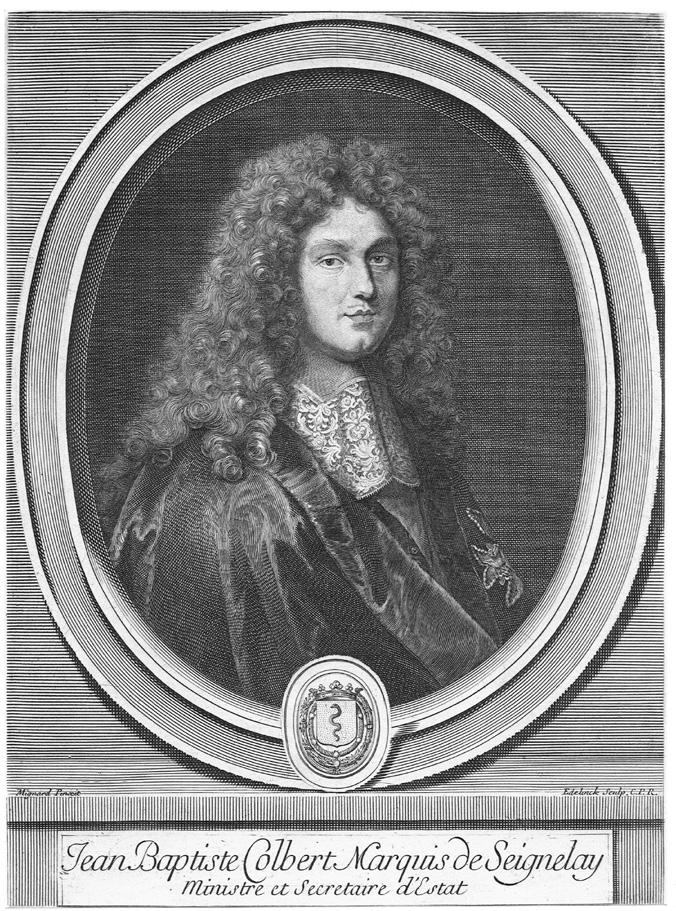
Engraving by Gérard Edelinck (1640–1707) after Pierre Mignard (1612–1695) from Des hommes illustres qui ont paru en France pendant ce siècle, avec leurs portraits au naturel. Tome 2, par M. Perrault… Paris, A. Dezallier, 1696. Collection of Gilbert Blin.
In the first edition of Racine’s collected Works, the Idylle sur la Paix is preceded by this short notice, which gives us the primary historical context of its creation: these verses “were
After having printed Racine’s poem in its entirety—in fact an idyll, not a libretto—the Mercure Galant, in its July issue, resumed its positive account of the musical composition: “These verses had been set to music by M. de Lulli. He has never succeeded better than on this occasion. The grand airs were so well mingled with the country tunes that everyone found in them something to satisfy his taste.” By
16 BOSTON EARLY MUSIC FESTIVAL
“Jean-Baptiste Colbert, Marquis de Seignelay Ministre et Secretaire d’Estat”
introducing a form of dialogue, Lully engages in a theatricalization of Racine’s initial Idylle. The composer respects the structure, however, of the stanzas distinguished in the layout of the original edition of the poem (printed before the first performance) corresponding to as many musical sections. But Lully reinforces the dialogical potential of Racine’s poem: although no character’s names appear in the score, the composer assigns certain lines to certain voices, which makes it possible, on hearing, to distinguish a true dialogue. The skillful designation of these lines, sometimes to a solo voice, sometimes to a choir, infuses the whole with an extraordinary energy, due to the interweaving of the different voices. By the addition of dance forms such as Menuet and Gavotte, which clearly place the idyll—in fact a formal homage to the pacifying king— in a pastoral universe, Lully brings Racine’s Idylle to a form close to the one the composer developed for the prologues of his operas with Quinault.
Of the many accounts that have been written on the feast of Sceaux, the most complete is the one of the Mercure Galant: “The King arrived at Sceaux around half past six in the evening.” After narrating the walk in the illuminated park, designed by Le Notre, the periodical continues: “The King [went] to the Orangery, where a concert was prepared. He entered by the opposite end to the place where the performers for this concert were. Thus, this prince first saw them all facing him. The seats […] were separated on this end of the Orangery by great marble pilasters, which supported an arch to which five chandeliers were attached. The same order followed to the other end, where two kinds of stairs appeared on each side, which clambered along the slope of an amphitheater which was at the bottom, and which appeared to lead to a gallery, which was also at the back above the amphitheater. All this background was lighted by many small chandeliers, and all the faces of the pilasters were adorned with a number of sconces bearing several candles. All the rest of the Orangery was adorned with a very beautiful tapestry set, representing all the hunts of the twelve months of the year, and of two rows of chandeliers which reigned from one end to the other.” As with the illuminations in the park, Bérain was responsible for this ephemeral setting. On this summer evening the “280 orange trees, 150 laurel trees, 150 jasmine shrubs” were being displayed in the park, and the emptied orangery was a perfect architectural frame for erecting a concert stage. By displaying the family tapestries “enhanced with gold”— made for the Marquis’s late father, a devoted minister of the French king known as “Le Grand Colbert”—shimmering under the many sources of light, the designer was echoing the libretto: “The brilliance and the charms of these grounds / Are the fruits of [the King’s] blessings.”
After the concert, a meal which was extravagant “in the abundance, delicacy, and rarity of exquisite meats or liqueurs, of new or out-ofseason fruits, and most of all that care had been taken to bring these at great expense, and by express couriers, from the most distant parts of France” was served. This variety was a political
2022–2023 SEASON 17
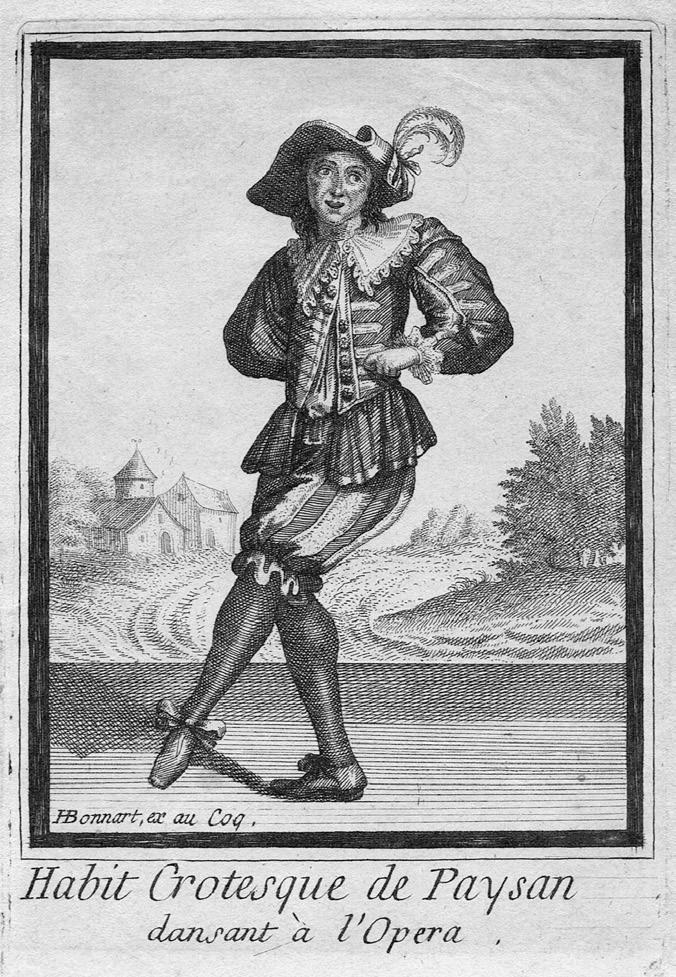
“Habit Grotesque de Paysan dansant à l’Opera” Engraving by Henri Bonnart (1642–1711) after Jean Bérain (1640–1711). Collection of Gilbert Blin.
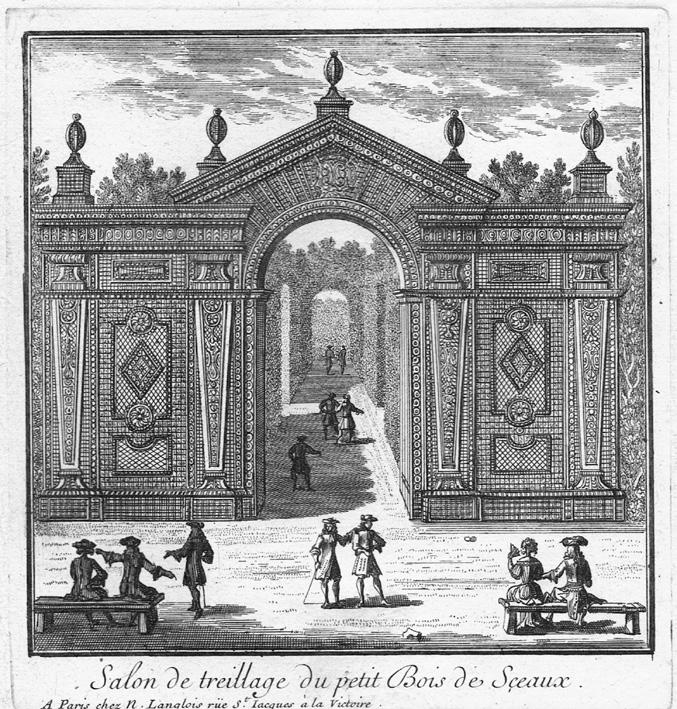
allegory of the extended territories that the peace had integrated into the kingdom and also of the administrative abilities of the Marquis. For this banquet (“80 potages, 120 entrées, 4 services”!) Bérain had directed that two large tables be set up under cradles of trellises, around a pool in the park, near the Orangery. These tables, intended for the king and the Dauphin, and their lady guests, faced each other and were on raised platforms that were reached by a few steps “all covered by flowers of the season,” thereby echoing the libretto’s “You, flowers, spring up wherever he sets his foot.” The tables were connected to each other by sideboards garnished with pieces of gold smithery and with “machines of light,” judged by the Mercure Galant to be of a “new invention,” and capable of carrying up to twenty-five candles each. Creating them in the shapes of crowns, fleur-de-lys, but also lyres, Apollo’s instrument, the designer had taken care to give these lighting constructs “a relationship to the king.” This ingenious layout offered the sun king and his court the magical spectacle of a multitude of light sources reflecting in the water. “We can say that M. de Seignelay has forgotten nothing to entertain such a great Monarch, and that M. Berrin [Bérain] has answered perfectly well to the purpose of this Marquis.”
This luxurious magnificence was also the talk of the court and of the foreign diplomats; Madame de Sévigné relates in one of her famous letters to her daughter: “Madame de la Fayette sent me an account of the Fête de Sceaux, which greatly entertained us. How pretty it was! What wit and invention there is in this century! How new, gallant, diverse everything is! I don’t think we can go any further.” A few years later, a German envoy, still in awe because of the sophistication of the Sceaux party, was more pragmatic when remembering how “in all these things, the invention, supported by the expense, could contribute to the beauty, and to the singularity, and to the variety all together of the entertainment of one day, and which cost, we can be sure, more than a hundred thousand livres to M. de Seignelay.” It is revelatory that the word “invention” can be found in so many diverse sources.
The Idylle sur la Paix remained a testimony of enlightened patronage, political ambition, and a unique artistic achievement by itself. It has been written that Racine was at the time less appreciated than Lully, but we are sure that Louis XIV valued the piece and “the King found [Lully’s] music so agreeable that he had a good part of it repeated.” The first performance was a concert, even though “this idyll was sung by the most beautiful voices of the [Paris] Opéra”; the Idylle would revived many times, both for concerts and the stage. It was performed a week later in the gardens of Versailles for the wedding of the Duke of Bourbon to Mademoiselle de Nantes, a daughter of the king. For this occasion, Lully composed an additional dance to be performed by another royal daughter. The Chaconne pour Madame la Princesse de Conti was praised: “The prevailing sentiment is that nothing Lully gave us before is more worthy of him then this. It prevents Armide’s passacaille from being a unique beauty in this kind of instrumental music.” The following week, the Idylle was given in concert in the appartements of the Dauphin, and one more time in September. A year later, his wife the Dauphine asked for it to be performed again. Because of its similarity in
18 BOSTON EARLY MUSIC FESTIVAL
“Salon de treillage du petit Bois de Sceaux”
Engraving by Adam Pérelle (1640–1695) edited by Nicolas Langlois (1640–1703). From Veues des belles Maisons des environs de Paris, published 1690.
Collection of Gilbert Blin.
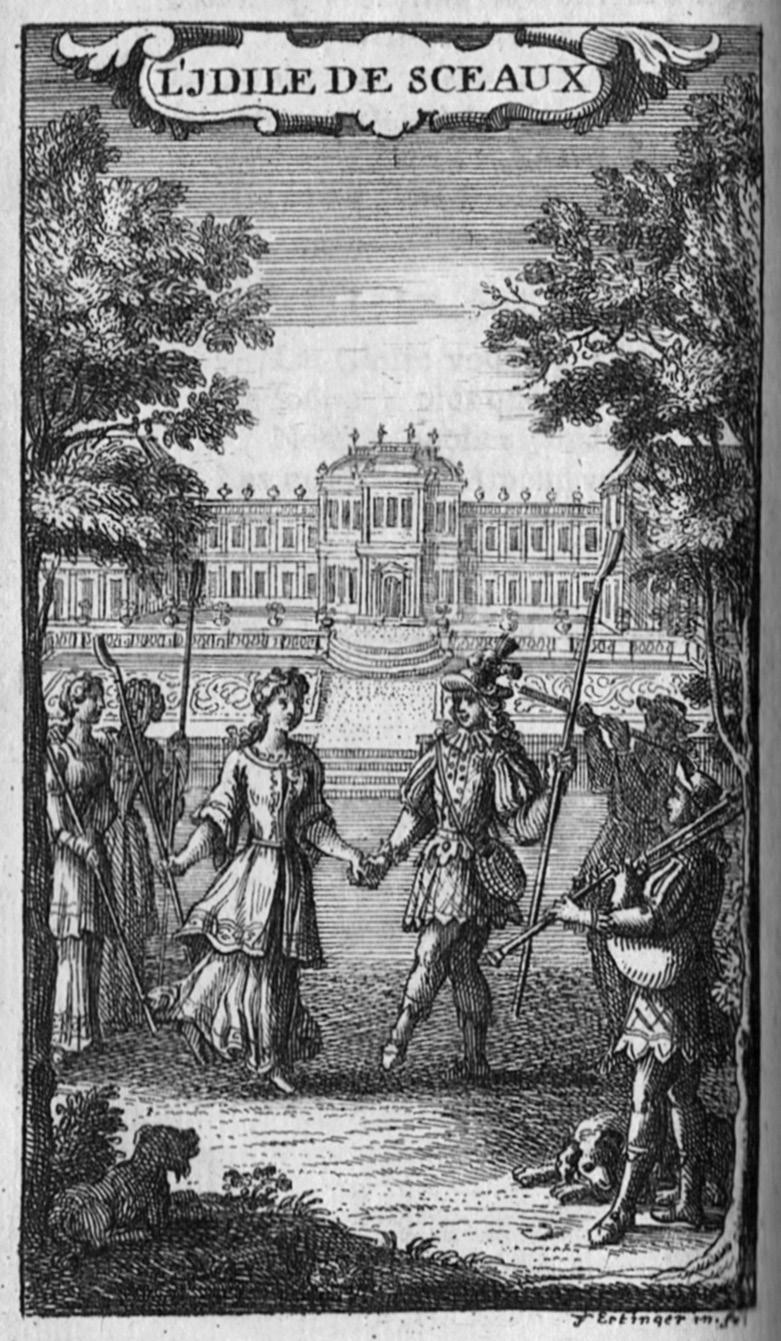
form to a prologue, although originally written for a particular event, the work was gradually being associated with other pieces in the repertoire of the Paris Opéra. It was performed in 1689 under the title Idylle, before Les Fêtes de l’Amour et de Bacchus. In 1703, when l’Académie Royale de Musique published its collection of librettos, the frontispiece shows shepherds and shepherdesses dancing in front of an imposing building, resembling the castle of the Marquis de Seignelay. The title given, “l’Idile de Sceaux,” indicates how much that estate was still associated with Lully’s work.
Gazettes historiques et anecdotiques recounts the preparation of yet another celebration: “Since Mess. De Louvois and de Seignelay regaled the King and the entire Royal House of France, the whole court has been entertained every week. Everyone wants to have the honor. […] It is said that M. le Duc de Richelieu must also give a superb feast at Ruel…” The Duc de Richelieu was indeed planning a unique reception in honor of the king at his castle of Rueil. The Gazettes historiques et anecdotiques announced: “The Duc de Richelieu will also host a celebration in Ruel; but he does not claim to challenge M. de Seignelay in terms of magnificence.” During the summer of 1685, Armand-Jean de Vignerot du Plessis, Duc de Richelieu and Fronsac (1629–1715), wanted to celebrate both the first anniversary of the Truce of Ratisbon and the centenary of the birth of his great uncle, the Cardinal de Richelieu (1585–1642), the famous prime minister of Louis XIV’s father. The indication “Feste de Ruel” which appears at the top of Charpentier’s manuscript refers to this enterprise: although giving no indication about the subject of the plot, it describes the circumstances of the planned first performance of the score. Originally designed to be presented at a reception organized by the Duc of Richelieu in his domain to entertain the king, La Fête de Rueil is a circumstantial piece which seems to reflect the boisterous personality of its patron if not his magnificence.
Charpentier’s La Fête de Rueil was also created in the climate of one-upmanship fostered by those great lords and ministers who intended to pay homage to Louis XIV by receiving him in their homes to celebrate the Peace he offered through the Truce of Ratisbon. The
After becoming a French naval officer at the early age of 13, the young duke was sent in 1647, five years later, to relieve Naples, which was besieged by the Spaniards. His swift action pushed the Spanish sailors to set fire to their vessels to prevent them from falling into French hands. The chronicler Renaudot highlighted the Duke’s success in his Gazette: “I also have no need to expand on the hope that this young Duke gives us by the courage he showed on this occasion: the Richelieu name that he carries is sufficient to make everyone recognize what we should expect.” A large portrait, painted years later, built on this reputation: a young Duc de Richelieu is shown as an antique hero
2022–2023 SEASON 19
Frontispiece of L’Idile de Sceaux French etching by François Ertinger (1640–1710) from Recueil general des Opera representez par l’Académie Royale de Musique, depuis son établissement, Paris, Ballard, 1703. Collection of Gilbert Blin.
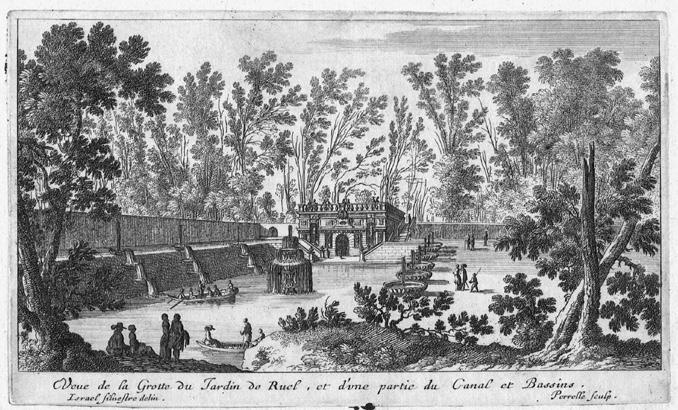
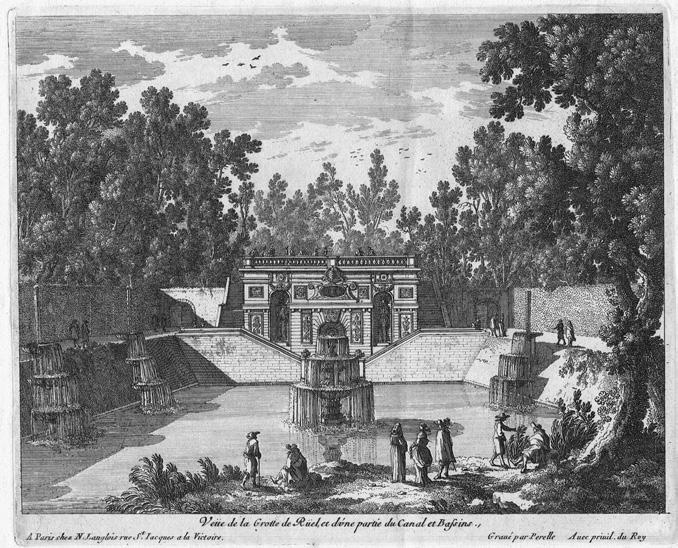
on his prancing horse on a battlefield, guided by a winged Victory and accompanied by the Genius of War carrying the hero’s helm. This portrait by Charles de La Fosse (1636–1716), an artist who was working at Versailles at the time, shows the level of the artists the duke was commissioning. Heir to a considerable fortune, he had also inherited the art collection of the Cardinal de Richelieu and the Rueil domain. Its gardens were inspired by the fantasy of Italian late Renaissance gardens: fountains, fake grottos, and architecture were mixed with trees and statues. This fanciful world full of drama, ordained by the Cardinal since 1633, was described by an English visitor in 1644 as “so magnificent, that I doubt whether Italy has any exceeding it for all rarities of pleasure.”
“Veue
Engraving by Adam Pérelle (1640–1695) after Israël Silvestre (1621–1691).
Collection of Gilbert Blin.
But the duke gambled, flaunted mistresses, and spent everything. He soon found himself crippled with debts and was forced to sell his naval appointment as general of the galleys and his title of governor of Le Havre. In 1665, because of a bet during a palm (tennis) match against Louis XIV, he lost twenty-five paintings from his collection to the monarch, including thirteen paintings by Poussin. In 1679 he became, while still a protégé of the king, knight of honor to Madame la Dauphine. But in 1684, still in need of money, he resigned from this position in exchange for 300,000 livres. In 1685, he had to sell his barony of Pont, and was desperately flattering the king in order to benefit once more from the monarch’s largesse.
The Duc de Richelieu needed a “coup d’éclat” and planned a multifaceted celebration of the King. Inspired by the memory of his uncle the Cardinal who had commissioned a statue of Louis XIII in 1639, the duc wanted to sponsor a life-size sculpture of Louis XIV. The circumstances were propitious as, in the wake of the recent peace, a surge of popular enthusiasm swept over France, and its citizens appeared more delighted than ever with their ruler in his role of peacemaker. Starting in 1685, there had been a move to honor Louis XIV by erecting his statue in the principal squares of the larger French cities: Le Havre, Caen, and Poitiers went for standing figures of the King. Marseille, Rennes, Aix-en-Provence, Toulouse, Lyon, and Dijon were more ambitious, and erected equestrian statues; the duc wanted to be the first individual to compete at this level. Indeed, it was mostly an enterprise of monarchical propaganda where the nobility was playing a major role in the proliferation of statues. The Marshal de la Feuillade had a statue of the king, initially planned for his garden, installed on “Place des Victoires” in Paris. The project by Louvois for another royal square, first called “Place des Conquêtes” then “Place Louis-leGrand,” was to be completed by an equestrian bronze representation of the king. The Duke of Richelieu was, in fact, one of the first noblemen to do so, and he commissioned the sculptor
Engraving by Adam Pérelle (1640–1695) edited by Nicolas Langlois (1640–1703). From Veues des belles Maisons des environs de Paris, published 1690.
Collection of Gilbert Blin.
20 BOSTON EARLY MUSIC FESTIVAL
de la Grotte du Jardin de Ruel et d’une partie du Canal et Bassins”
“Veue de la Grotte de Rüel et d’une partie du Canal et Bassins”
Thomas Gobert (1640?–1708) to design a model for an equestrian statue of Louis XIV, intended to be cast in bronze.
To interest the king in his project, the duke invited him to a visit to Rueil where the lifesize model would be revealed in the gardens, on the top of the terraced roof of the grotto, as the highlight of the “Fête.” For this special occasion Charpentier composed a Pastorale, which he titled La Fête de Rueil, well suited for an outdoor entertainment and clearly destined for a stage performance. It seems that Charpentier did not have a more comprehensive brief, or the benefit of a text written by a major literary figure. The libretto he used, which remains anonymous, was less forthright than Racine’s poem for Lully. However, like Racine’s evocation of the park of Sceaux in his Idylle, the Fête de Rueil is set in the gardens of Rueil and presents a disjointed plot built around the loves of Iris and Tircis, shepherds from the domain. Through the construction of the libretto and the score, similar to that of a Ballet de Cour, with successive entrées of country folk, Egyptians, and Satyrs, the subject matter emerges little by little: in times of peace, rustics should only think of love. Pan, god of Shepherds, brings together in his final scene the memory of the Cardinal de Richelieu, the beauties of Rueil, and the Peace, the latest of the uncountable glorious labors of Louis XIV.
Difficulties in the transport and the preparation of the model of the statue seem to have delayed the project, and according to a report from Paris on July 28, 1685, “The feast to be given by the Duke of Richelieu is postponed to the 6th day of August.” But all of the duke’s efforts were for naught: after a second postponement, the King, now aware that the duke’s readiness could not be counted on, decided to leave for his distant hunting grounds at Chambord, before moving on to Fontainebleau. Without the royal presence, the party had no purpose for the duke, and Charpentier’s La Fête de Rueil was not performed. The Mercure Galant announced, in its October volume, “He [the Duke of Richelieu] expected to have the honor of receiving the King at Rueil; but as the most
delectable entertainment of this Feast was to be the representation of this great Prince, and as it required time to transport and put in good state a Figure of the most extraordinary character that has ever been, the departure of His Majesty for Chambord undid all the plans of this Duke.”
Although the king did not attend this last summer reception, the duke, according to the Mercure Galant, still hosted “a few persons of quality for dinner in Rueil” to admire this “representation.” The Marquis de Dangeau, one of the happy few, wrote on Sunday August 26: “We went that day to lunch at Rueil, where M. Le Duc De Richelieu showed us the model of an equestrian statue of the king which he is going to have cast in bronze; it was Gobert who made it, and who wants to take the hazards of the matter upon himself; he makes [financial] advances, so confident is he of success.” For this gathering of a happy few, the replica of the statue was in place, a reduced “fête” was designed, and Charpentier composed the little air titled “La France au Roi.” Indeed, at the bottom of the last pages of the final chorus of the score of his pastorale, Charpentier added the air whose lyrics were published in the Mercure Galant at the end of the October report of the little reception at Rueil. The authorship of the short poem expressing the admiration of France for its pious king is simply attributed to “a Person of quality, who has all the delicacy of spirit that one can have.” It is revealing to note the proximity in the manuscript of the two works, and one understand why the first composition would have been replaced by the second for this intimate inauguration: as the king had canceled his visit, the duke was trying to maintain his own momentum but on a smaller scale.
The Swedish architect Tessin, visiting France in 1687, noted: “In Rueil, which belongs to the Duke of Richelieu, the chateau is old and of little consequence; there is an adjoining tennis court; on the right side, arriving towards the garden, there is at the top of the grotto a model of an equestrian statue of the King, in bronzed plaster; the attitude is galloping; there is no support at the bottom, and the tail is free and the whole balances fairly well”. The plaster
2022–2023 SEASON 21
statue was still in the garden of Rueil but the large bronze was never executed. A small replica of this statue from 1685, by Gobert, was obtained by Louis XIV for the palace of Versailles. During his visit to Versailles in 1687, Tessin had the opportunity to again admire this edition of the Rueil project. The smaller version of the equestrian statue from Rueil shows the king dressed in a contemporary costume. Insofar as the horse is supported only on the two hind legs, the work represents a technical tour de force, which perhaps explains why the large bronze was never executed. Gobert’s small bronze stands on hind limbs that are aligned on the same plane: close to the “courbette,” the bowing, a dressage figure fully mastered by the rider, the horse has the same position as on the painting showing the young Duc de Richelieu. After 1695, Gobert offered Louis XIV a variant of his creation, where the king was now lionized in the same antique style and in the exact position of the painting showing the victorious young duke on his horse. Inspired by the same triumphant composition, various portraits of the king popularized this image of mastery and serenity.
The Idylle sur la Paix and La Fête de Rueil are two pieces dictated by similar conditions: destined to be performed during lavish parties offered by ambitious courtiers to entertain Louis XIV and designed to celebrate the truce and the peace it was supposed to ensure. These works of Lully and Charpentier knew very different fates: supported by Racine’s and by Lully’s official positions at court, the Idylle sur la Paix was given several performances, while La Fête de Reuil was never performed during Charpentier’s lifetime. Undeniably quintessential of the contrasted styles of the two composers, the works both remain today as testimonies of the taste of their patrons as much as expressions of the royal propaganda that was spreading all over France at the time. Functioning like portraits of the king and the kingdom, the two works were meant to support the monarch in his divine right to rule. Louis XIV does not exist anywhere else in a better light than with these representations, as
“Louis le Grand”
Etching by Claude Duflos (1665–1727) and Pierre Giffart (1643–1723) after a painting by Jean-Baptiste Martin dit des Batailles (1659–1735) from the 1685–1695 doctoral thesis of Abbé Van der Meulen. Collection of Gilbert Blin.
Although expressions of the hope that the royal peace would long endure, the Idylle sur la Paix and La Fête de Rueil cannot hide some darker facts. In the years leading up to 1685, religious tensions in Europe rose to extreme levels. Louis XIV issued the edict of Fontainebleau in October 1685, putting an end to the tolerance towards protestants that his grandfather had established. The beginning of the persecution of the protestants in France, notably by the destruction of their temples and forced conversions, led to an exodus of Huguenots to the north of Europe, and the war was soon looming again, inside and outside the kingdom. Echoes of these politics can be found in works related to the pieces of Lully and Charpentier which were meant to celebrate the peace in 1685. Racine’s verses from Idylle sur la Paix, stripped of their auspicious title, were used in 1686 in a “pastorelle” performed in Beauvais and labeled L’Hérésie exterminée, which celebrated the new

22 BOSTON EARLY MUSIC FESTIVAL
they have no concern other than the peaceful and benevolent king.
religious laws. Racine may not have been aware of this appropriation, but his following plays, Esther and Athalie, commissioned by Madame de Maintenon, seem to indicate that his sympathies were with the catholic monarch. We do not know for sure if Lully’s music was used in Beauvais’s L’Hérésie exterminée, but it is possible, as Ballard, the royal music publisher, issued the score of the Idylle in 1685. In 1686, Charpentier halted his long collaboration with the worldly ComédieFrançaise and also abandoned the genre of the “court divertissement” that had inspired him to create Actéon, La Couronne de Fleurs, Les Plaisirs de Versailles, Les Arts Florissants,
Haeresis extincta. “L’hérésie éteinte par le fameux Edit du 22 Octobre 1685, qui révoque l’Edit de Nantes.”
Etching of a 1685 French medal from Recueil des Portraits des Hommes illustres, dont il est fait mention dans l’Histoire de France, commence par MM. Velly & Villaret, & continue par M. L’Abbé Garnier. Tome VI, Contenant la suite du Regne de Louis IX & un supplement pour differens Regnes. Paris: Nyon, 1786, p. 50.

Collection of Gilbert Blin.
and… La Fête de Rueil. The composer increased his association with the Jesuit order, composing music for their religious services and educational activities. With two full “tragédies en musique,” Celse martyr and David et Jonathas, written for the pupils of the college Louis-le-Grand, Charpentier explored the edifying power of staged “Christian operas.” The Duc de Richelieu, eager to gain the favor of Madame de Maintenon to please the king, became as devout as he had been a libertine and may have again inspired Gobert when the sculptor conceived a standing figure of Louis XIV “trampling heresy.” n
—Gilbert Blin
DANCES IN SPACE
Dances for this production were all created anew with consideration of the space, the character portrayed by each performer, and the historical context of theatrical dance in the late seventeenth century. As there is no written choreography for Idylle sur la Paix or La Fête de Rueil, a choreographer’s imagination can be inspired by research of period dance manuals and notations, and development of character through movement. I also am inspired by early sculpture and painting. The hands-on aspect of discovering and rehearsing is my favorite part of the process.
A spatial feature of our chamber operas is the placement of the orchestra in the middle of the space. This means that the historical norm of the dance space running from front to back in
the center of the stage must be reshaped. By altering the spatial rule, we were able to start dances, not from upstage center, but from corners of the stage using diagonals and curved paths. I tried to maintain the ideas of symmetry and mirror imaging within the dances as much as possible.
The character of each dance is defined by the surrounding text, the rhythms and color of the music, and costume. We follow the Lullian structure of choruses as mixed singers and dancers; one group expresses through song while the other restates with dance. The ensemble of equal players each shining in a solo role is a hallmark of our chamber opera series. n
—Melinda Sullivan
2022–2023 SEASON 23
NOTES ON THE COSTUMES
In the Baroque period, and especially for the performances designed by Les Menus-Plaisirs du Roi in Versailles, it seems that it was common practice to reuse existing costumes and to adapt them to clothe characters of a new play. Not all costumes were fabricated from scratch. Following a similar process, costume elements from previous BEMF productions have been “recycled” and combined with a few new designs that were fabricated to fit the particular narratives of the sumptuous fêtes of Idylle sur la Paix and La Fête de Rueil.
References to times before the year 1685 have been incorporated, quoting for example the style of Court Ballet during the reign of Louis XIII. The painter Daniel Rabel designed highly imaginative and sometimes grotesque costumes for these courtly mascarades. Much later, when an interest in recreating Baroque dance arose in early twentieth-century Germany, the innate experimental nature of these costumes inspired Oskar Schlemmer as well for his famous Triadic Ballet. This illustrates a transhistorical interest for the Baroque that moves beyond the confines of the Baroque timeline (seventeenth and eighteenth centuries).
The costume design for this piece is steeped in deep research about fashions of the Baroque period. The design references numerous paintings, fashion plates, and engravings, as well as existing designs that were studied closely in the costume collections of the RISD Museum (during an Andrew W. Mellon faculty fellowship) and the Metropolitan Museum of Art in New York. Three costumes in particular were conceived after viewing pieces from the Met’s Costume Institute, and portray different social roles and archetypes, such as an aristocratic lady, an allegorical character representing Peace (La Paix), and a shepherd dwelling in an ideal Arcadian landscape.
The costume for the Princesse de Conti was made after studying a rare specimen of a mantua dress that was cut in bizarre silk.
While, due to budget constraints, the fabric chosen for this contemporary reinterpretation is of a much more modest nature than the original one, the cut is historically “accurate” and is fitted on the bust by means of pleats, which suggests that such a garment originated after the “customization” of an Asian robe at the French Court. The dress is accessorized with a stomacher, whose pattern comes from the book of embroidery designs Nuovissimo Exemplare di Ricami, published in Venice in 1694, and is here juxtaposed with lilies in a reference to the traditional emblem of the kingdom of France.
The cape of the allegorical character performing Peace (La Paix) is modeled after a seventeenthcentury cape from the Met’s collection, a garment originally made for a child or to clothe a Catholic statue. The dimensions of the cape, including its intricate ornamental design, were scaled to fit the measurements of the performer. As in the original cape, the foliage motifs were painstakingly cut out of fabric with scissors, layered as appliqué on top of the foundation fabric, and enhanced with embroidered details that mimic early lace-making techniques from Italy or Spain, creating visual results that are both raw and sophisticated.
Finally, the waistcoat that represents a shepherd, or a gardener, was modeled on a third piece from the Costume Institute: a men’s hunting casaque cut from deerskin that was exquisitely embroidered with flower motifs. In this costume the floral ornamentation turns three-dimensional and grows on top of elements that recall architectural lattice designs used in formal French gardens. Such designs are presented in André Jacques Roubo’s 1775 book L’art du treillageur, ou menuiseries des jardins, and give an idea of how the space for La Fête de Rueil was conceived for the performance to take place in the open air as a “total artwork.” n
Gwen van den Eijnde
24 BOSTON EARLY MUSIC FESTIVAL
ARTIST PROFILES
ABOUT THE DIRECTORS
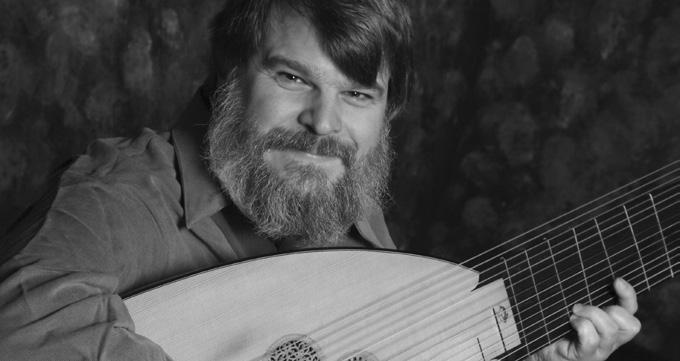
Paul O’Dette has been described as “the clearest case of genius ever to touch his instrument” (Toronto Globe and Mail). He appears regularly at major festivals throughout the world performing lute recitals and in chamber music programs with leading early music colleagues. Mr. O’Dette has made more than 150 recordings, winning two Grammy Awards and receiving eight Grammy nominations and numerous international record awards. The Complete Lute Music of John Dowland (a 5-CD set for harmonia mundi usa) was awarded the prestigious Diapason d’Or de l’Année, and was named “Best Solo Lute Recording of Dowland” by BBC Radio 3. The Bachelar’s Delight: Lute Music of Daniel Bacheler was nominated for a Grammy as Best Solo Instrumental Recording in 2006. While best known for his recitals and recordings of virtuoso solo lute music, Paul O’Dette is also active as a conductor of Baroque opera. Together with Stephen Stubbs he won a Grammy as conductor in 2015 for Best Opera Recording, as well as an Echo Klassik Award, for their recording of Charpentier’s La Descente d’Orphée aux Enfers with the Boston Early Music Festival Chamber Ensemble. Their CDs of Conradi’s Ariadne, Lully’s Thésée, and Lully’s Psyché, with the Boston Early Music Festival Orchestra on the CPO label, were nominated for Grammys in 2005, 2007, and 2008; their 2015 BEMF CD of Steffani’s Niobe, Regina di Tebe on the Erato/Warner Classics label was also nominated for a Grammy, and received both an Echo Klassik and the coveted Jahrespreis der deutschen Schallplattenkritik. Their recording of Charpentier’s Les Arts Florissants was nominated for Grammy in 2019. In addition to his activities as a performer, Paul O’Dette is an avid researcher, having worked extensively on the performance of seventeenth-century Italian and English solo song, continuo practices, and lute repertoire. He has published numerous articles on issues of historical performance practice, and co-authored the John Dowland entry in the New Grove Dictionary of Music and Musicians. Paul O’Dette is Professor of Lute and Director of Early Music at the Eastman School of Music and Artistic Co-Director of the Boston Early Music Festival.
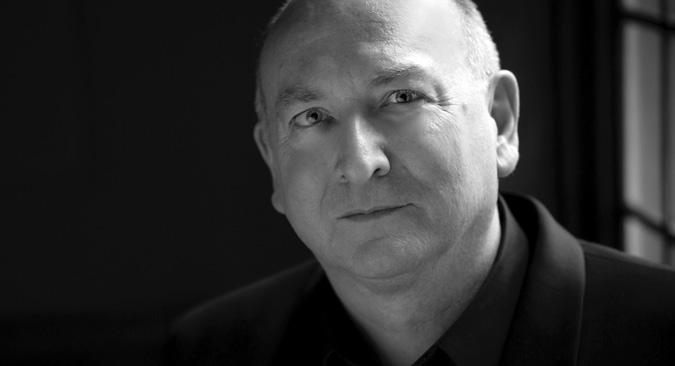
Stephen Stubbs, who won the Grammy Award as conductor for Best Opera Recording in 2015, spent a thirty-year career in Europe. He returned to his native Seattle in 2006 as one of the world’s most respected lutenists, conductors, and Baroque opera specialists. He now lives with his family in Santa Clarita, California. In 2007, Stephen established his new production company, Pacific MusicWorks (PMW), based in Seattle, reflecting his lifelong interest in both early music and contemporary performance. The company’s inaugural presentation was a production of South African artist William Kentridge’s acclaimed multimedia staging of Claudio Monteverdi’s opera The Return of Ulysses in a co-production with the San Francisco Museum of Modern Art. PMW’s performances of the Monteverdi Vespers were described in the press as “utterly thrilling” and “of a quality you are unlikely to encounter anywhere else in the world.” Stephen Stubbs is also the Boston Early Music Festival’s Artistic Co-Director along with his long-time colleague Paul O’Dette. Stephen and Paul are also the musical directors of all BEMF operas, recordings of which were nominated
2022–2023 SEASON 25
26 BOSTON EARLY MUSIC FESTIVAL
for six Grammy awards, including one Grammy win in 2015. Also in 2015, BEMF recordings won two Echo Klassik awards and the Diapason d’Or de l’Année. In 2017, they received the Preis der deutschen Schallplattenkritik. In addition to his ongoing commitments to PMW and BEMF, other recent appearances have included Handel’s Giulio Cesare and Gluck’s Orfeo ed Euridice in Bilbao, Mozart’s Die Zauberflöte and Così fan tutte for the Hawaii Performing Arts Festival, Handel’s Agrippina and Semele for Opera Omaha, Cavalli’s La Calisto and Rameau’s Hippolyte et Aricie for Juilliard, Mozart’s Il re pastore for the Merola program, and seven productions for Opera UCLA including Cavalli’s Giasone, Monteverdi’s Poppea, and Handel’s Amadigi. In recent years he has conducted Handel’s Messiah with the Seattle, Edmonton, Birmingham, Houston, and Nova Scotia Symphony orchestras. His extensive discography as conductor and solo lutenist includes well over 100 CDs, many of which have received international acclaim and awards.

Gilbert Blin graduated from the Paris Sorbonne with a Master’s degree focusing on Rameau’s operas, an interest that he has broadened to encompass French opera and its relation to Baroque theater, his fields of research as historian, stage director, and set and costume designer. He was awarded a Doctorate from Leiden University for a thesis dedicated to his approach to Historically Informed Staging. His début productions include Massenet’s Werther and Delibes’s Lakmé for Paris Opéra-Comique, and Meyerbeer’s Robert le Diable for Prague State Opera. Since his production of Gluck’s Orfeo ed Euridice for the Drottningholm Theatre in Sweden in 1998, Dr. Blin has established himself as a sought-after opera director for the early repertoire: he directed Vivaldi’s Orlando furioso for the Prague State Opera, designed and staged Vivaldi’s Rosmira fedele, Handel’s Teseo and Alessandro Scarlatti’s Il Tigrane for Opéra de Nice, and directed Lully’s Thésée and Lully’s Psyché for the Boston Early Music Festival. As Stage Director in Residence at BEMF beginning in 2008, Gilbert Blin staged a trilogy of English operas: Blow’s Venus and Adonis, Purcell’s Dido and Aeneas, and Handel’s Acis and Galatea. In 2011, after the staging of Steffani’s Niobe, Regina di Tebe, he presented Charpentier’s La Descente d’Orphée aux Enfers and La Couronne de Fleurs. In 2013, with his production of Handel’s Almira, Gilbert Blin was appointed Opera Director of the Boston Early Music Festival. Following his acclaimed staging and set designs of Monteverdi’s L’incoronazione di Poppea for the 2009 Boston Festival, Dr. Blin staged Monteverdi’s Orfeo for the BEMF Chamber Opera Series in 2012 and the composer’s Il ritorno d’Ulisse in patria in 2015. In 2016, Gilbert Blin created Versailles: Portrait of a Royal Domain, a spectacle comprising pieces by Charpentier, Lully, and Lalande, and in 2021, he staged Telemann’s Pimpinone and Ino. His recent productions include Gluck’s Orphée et Eurydice for Seattle, Campra’s Le Carnaval de Venise and Steffani’s Orlando generoso for Boston, and Caccini’s Alcina for New York.
One of America’s most prominent Baroque violinists, Robert Mealy has been praised for his “imagination, taste, subtlety, and daring” by the Boston Globe. The New Yorker has called him “New York’s world-class early music violinist.” Mr. Mealy began exploring early music in high school. While still an undergraduate at Harvard College, he was asked to join the Canadian Baroque orchestra Tafelmusik. Since then, he has recorded and toured with a wide range of distinguished early music ensembles in the U.S. and Europe, from Sequentia to Les Arts Florissants. He has led orchestras for Masaaki Suzuki, Nicholas

2022–2023 SEASON 27
28 BOSTON EARLY MUSIC FESTIVAL
McGegan, William Christie, Andrew Parrott, Paul Agnew, and Helmuth Rilling, among many others. Mr. Mealy is Orchestra Director of the Boston Early Music Festival. Since 2005 he has led the BEMF Orchestra in their festival performances and award-winning recordings. In New York, he is principal concertmaster at Trinity Wall Street for their concerts of the complete Bach cantatas. He is also co-director of the acclaimed seventeenth-century ensemble Quicksilver. In summers he teaches at the American Baroque Soloists Academy in San Francisco and is often a featured artist at William Christie’s summer festival in Thiré. In 2018, Mr. Mealy made his recital début at Carnegie Hall. A devoted teacher as well as a performer, Mr. Mealy has directed the graduate Historical Performance Program at The Juilliard School since 2012. He has led his Juilliard students in acclaimed performances at Alice Tully Hall and in many international tours, including performances as conservatory-in-residence at the Utrecht Festival and concerts in distant lands like India and New Zealand. From 2003 to 2015, he was on the faculty of Yale; prior to that, he taught at Harvard for over a decade. In 2004, he received EMA’s Binkley Award for outstanding teaching and scholarship. He has recorded over 80 CDs on most major labels. He still likes to practice.
Melinda Sullivan is the Lucy Graham Director of Dance at Boston Early Music Festival. She is a well-known movement and dance coach for singers. Her recently produced A Retrospective: The Story of the BEMF Dance Company is available on BEMF’s YouTube page. Ms. Sullivan danced in her first BEMF production—Henry Purcell’s King Arthur—in 1995. She returned to dance and assist the late choreographer Lucy Graham in all subsequent BEMF opera productions over the next twelve years. In 2008, Ms. Sullivan assumed the role of BEMF Ballet Mistress, training dancers and singers in Baroque and Renaissance style and technique. Her first choreography for BEMF was Dido and Aeneas in 2010, following a featured role as the Silent Mover in the 2009 production of Handel’s Acis and Galatea. Since then she has choreographed extensively for BEMF, including productions and revivals of Charpentier’s La Couronne de Fleurs and La Descente d’Orphée aux Enfers, Monteverdi’s Orfeo, Pergolesi’s La serva padrona and Livietta e Tracollo, and Caccini’s Alcina. A graduate of Boston Conservatory, Ms. Sullivan quickly established herself as a dynamic performer in Boston’s modern dance scene. Her studies in Renaissance dance with distinguished historian and teacher of dance, Dr. Ingrid Brainard, led to performances with the Ken Pierce Baroque Dance Company. She created a unique movement and dance program for singers, and taught for thirty years, primarily at New England Conservatory and Boston University Opera Institute. Since 2008 Sullivan has also been Resident Choreographer at Central City Opera.
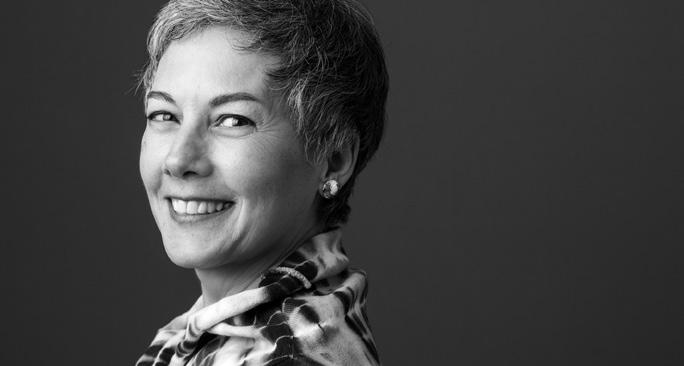
Gwen van den Eijnde has an international presence in fashion, performance art, and costume design. His expressive designs create enthralling characters that expand our imagination. He received special recognition during his studies at the Ecole Supérieure des Arts Appliqués et du Textile/ESAAT Roubaix and at the Ecole Supérieure des Arts Décoratifs/ESAD Strasbourg. He has since worked with the artist Edith Dekyndt, the costume designer Olivier Bériot, the choreographer Robyn Orlin, the photographer Charles Fréger, and has been engaged at the Hermès atelier Petit h. He was a guest at Robert Wilson’s International Summer Program for Performance Art at the Watermill Center in New York, an Artist in Residence at the Akademie Schloss Solitude in Stuttgart and at the Ujazdowski Castle Centre for Contemporary Art in Warsaw, and has received

2022–2023 SEASON 29

30 BOSTON EARLY MUSIC FESTIVAL
an Andrew W. Mellon Foundation research grant in the Costume and Textiles Department at the RISD Museum in Providence, Rhode Island. Van den Eijnde’s extensive knowledge of fashion history and theory informs the multi-layered approach he pursues as a professor at the Rhode Island School of Design (RISD). His work is a commentary on the idiosyncrasies of life and he frequently uncovers subversive humor and fantastical moments in mundane reality. Before joining the faculty at RISD, he was a visiting professor at the Fashion Department of the Academy of Fine Arts in Warsaw and Head of Textile Design at the Haute École des Arts du Rhin in Mulhouse. The awards he has received include the 2016 Culture Prize awarded by the Alexander Clavel Foundation in Riehen/Basel and the 2010 Audience Award for Best Costume Design at the Lucerne Theatre. He has travelled widely to develop and expand his practice, studying traditional kimono design and embroidery in Kyoto and Fukuyama, Baroque dance in Cambridge, and stage wigs and make-up in Paris and Strasbourg.
Kelly Martin is a lighting designer and associate based in New York. Mr. Martin’s designs for Boston Early Music Festival include Steffani’s Orlando generoso, Caccini’s Alcina, Pergolesi’s La serva padrona and Livietta e Tracollo, and Versailles: Portrait of a Royal Domain. Mr. Martin has lit numerous productions in Boston with the Isabella Stewart Gardner Museum, MIT Theatre Arts, Suffolk University Theatre Arts, and the BU Opera Institute. His other collaborations in New England include Extraordinary Women and Scalia/Ginsburg at Opera North, We at Hopkins Center for the Arts, Ain Gordon’s Radicals in Miniature, and 217 Boxes of Dr. Henry Anonymous. He received his BFA from Boston University.

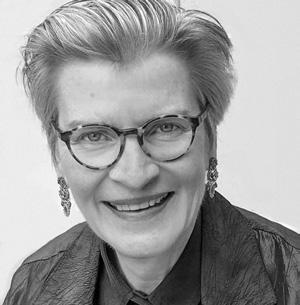
For more than three decades, Kathleen Fay has served as Executive Director of the Boston Early Music Festival. She is responsible for all administrative, development, financial, and artistic departments of the organization, as well as the management of biennial Festivals, the annual concert seasons in Boston and in New York City at the Morgan Library & Museum, the annual Chamber Opera Series, and the Festival’s Baroque Opera Recording Project. The project features a total of fourteen CDs to date on the CPO and Erato labels, six of which have been nominated for Grammy Awards for Best Opera Recording, and one awarded the Grammy. Ms. Fay is a founding Trustee of the Catalogue for Philanthropy and serves on the boards of the Cambridge Society for Early Music and Constellation Center. She is also a member of the Advisory Board of Harvard University’s Early Music Society. In November 2001, Ms. Fay was named Chevalier de l’Ordre des Arts et des Lettres by the French Minister of Culture as a result of her significant contribution to furthering the arts in France and throughout the world. In June 2003, she received the distinguished Arion Award from the Cambridge Society of Early Music for her “outstanding contributions to musical culture.” And, in June 2011, the Board of Directors of Early Music America named the Boston Early Music Festival, Kathleen Fay, Executive Director, as the 2011 recipient of the Howard Mayer Brown Award, for lifetime achievement in the field of early music. The BEMF Board of Directors established the permanent Kathleen Fay Leadership Fund in February 2017, in recognition of her thirty-year anniversary leading BEMF. Ms. Fay is a widely respected impresario and promoter of early music in North America and Europe. She holds graduate degrees in Piano Performance and Music Teaching from the Oberlin College Conservatory of Music.
2022–2023 SEASON 31


32 BOSTON EARLY MUSIC FESTIVAL
ABOUT THE BEMF VOCAL ENSEMBLE
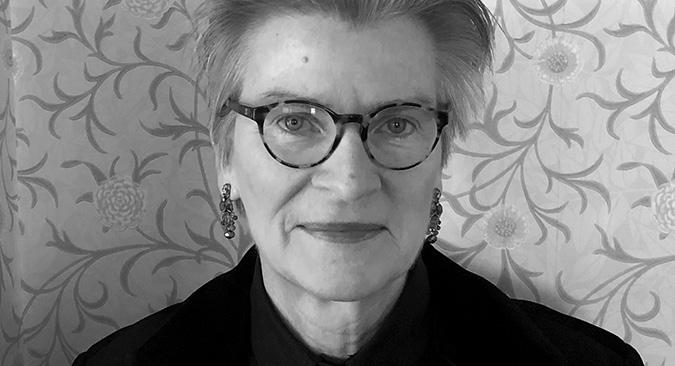
Canadian mezzo-soprano Mireille Lebel sings leading lyric mezzo roles in opera and concert internationally. Now based in Berlin, she began her career as a young artist at the Atelier Lyrique de l’Opéra de Montreal and from there moved to Germany to join the ensemble at Theater Erfurt. After finishing her contract, she became a freelance artist singing with theaters including Deutsche Oper, Opera Atelier, Prague State Opera, Tafelmusik, Theater Basel, Opéra-Théâtre de Metz, Opéra de Nice, Vancouver Opera, Aix-en-Provence Festival, Les Violons du Roy, Fondazione Pergolesi Spontini, Staatstheater Nürnberg, Theater Dessau, and Collegium 1704. She has recorded seven opera discs with the Boston Early Music Festival on the CPO label, including Grammy winner La Descente d’Orphée aux Enfers, as well as Schoenberg’s String Quartet No. 2 with the Richter Ensemble. In 2020, she co-founded with Rachel Fenlon the artistic collective Crown The Muse, and was awarded a Canada Council Grant for their first collaboration, a staged two-woman opera directed by Bruno Ravella.
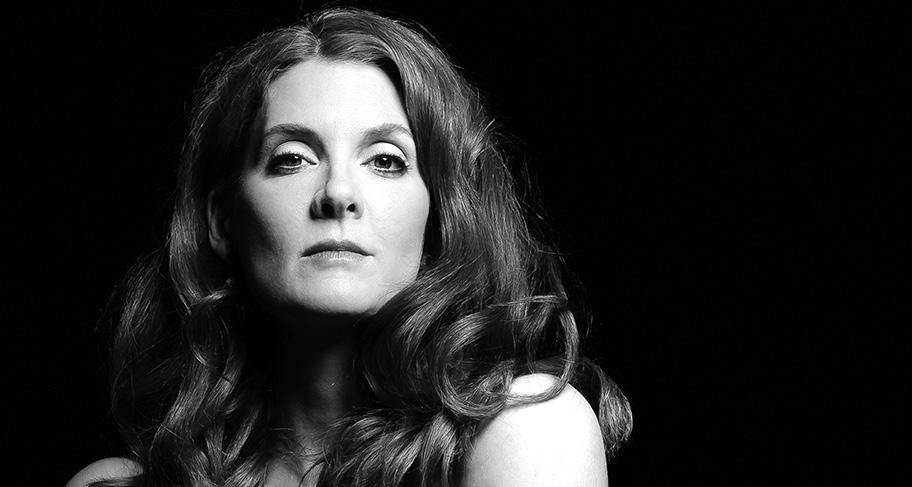
Reviewers describe Jason McStoots as having an “alluring tenor voice” (Arts Fuse) and as “the consummate artist, wielding not just a sweet tone but also incredible technique and impeccable pronunciation” (Cleveland Plain Dealer). A respected interpreter of early music, his appearances include Le Jeu in Charpentier’s Les Plaisirs de Versailles (BEMF), King Belshazzar in The Play of Daniel (Boston Camerata), Evangelist in Bach’s St. Mark Passion (Emmanuel Music), soloist for Purcell’s King Arthur (Bach Collegium San Diego), and soloist for Monteverdi’s 1610 Vespers (TENET). He is a core member of Blue Heron and can be heard on all their recordings. In addition, he is an experienced stage director and dedicated educator. He has directed operas with the Connecticut Early Music Festival, Amherst Early Music Festival, and Brandeis University. Since 2017, he has been the Associate Director of the Boston Early Music Festival Young Artist Training Program, where he is a stage director, coach, and mentor to young performers.

James Reese is a frequently sought tenor soloist with leading orchestras and ensembles throughout North America and Europe. A noted interpreter of Baroque music, James gives performances that are both “splendid” (San Francisco Chronicle) and “captivating” (Broad Street Review). In the 2022–2023 season, James will make his début with the Boston Early Music Festival in three operas throughout the Festival’s yearlong season. In addition, he will début with the Madison Bach Musicians and the American Bach Society, and make return appearances with Philharmonia Baroque Orchestra, American Bach Soloists, Gamut Bach Ensemble, and TENET Vocal Artists. He is an active recitalist, frequently collaborating with pianist Daniel Overly in song recitals throughout the United States. James is a graduate of Northwestern University’s Bienen School of Music, and holds a Master’s degree from Yale University’s School of Music. He lives in Philadelphia.

2022–2023 SEASON 33
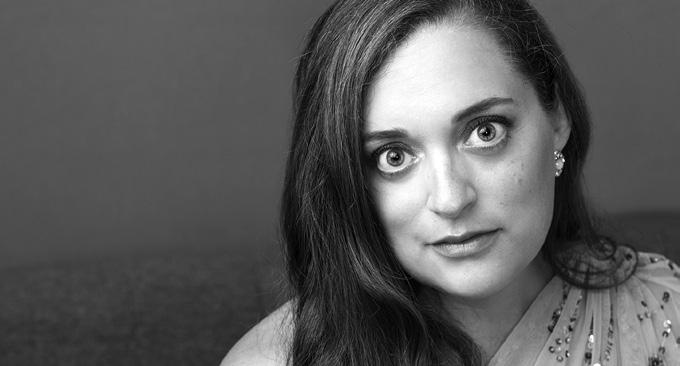
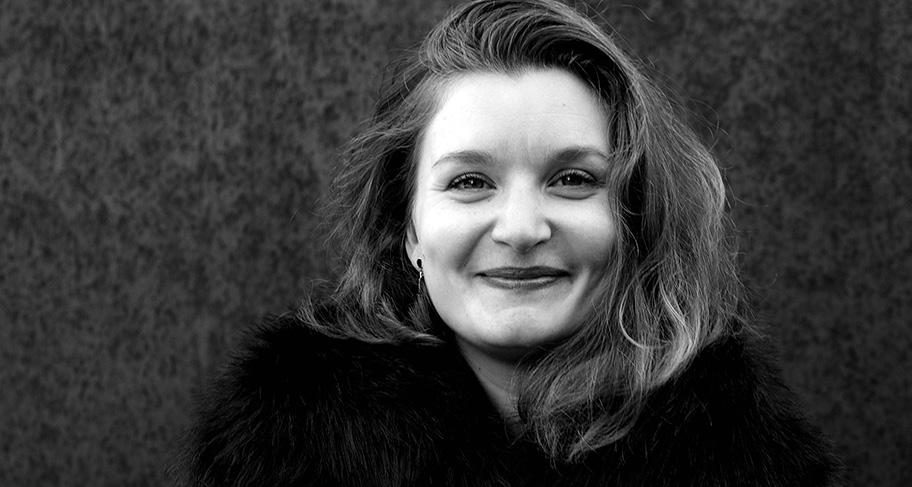
Danielle Reutter-Harrah returns to the Boston Early Music Festival after performing as Vespetta last fall in Telemann’s comic opera Pimpinone. In addition to joining BEMF’s chamber opera series, Danielle’s season includes works by Heinrich Schütz and his contemporaries with Early Music Vancouver, a Christmas concert with Pacific MusicWorks, English songs with the Pacific Baroque Festival, and Barbara Strozzi monodies with Wyoming Baroque. In April, Danielle will reprise her role as La Musica in the Pacific MusicWorks production of Monteverdi’s Orfeo. She will return to Boston in the spring to perform in Circé and Alcina with BEMF. Danielle performs frequently with local Seattle ensembles including Pacific MusicWorks, Whidbey Island Music Festival, and the Byrd Ensemble. Danielle received her BM from the University of Denver’s Lamont School of Music and her MM from the San Francisco Conservatory of Music, and teaches voice and piano privately. She lives in Seattle with her family.
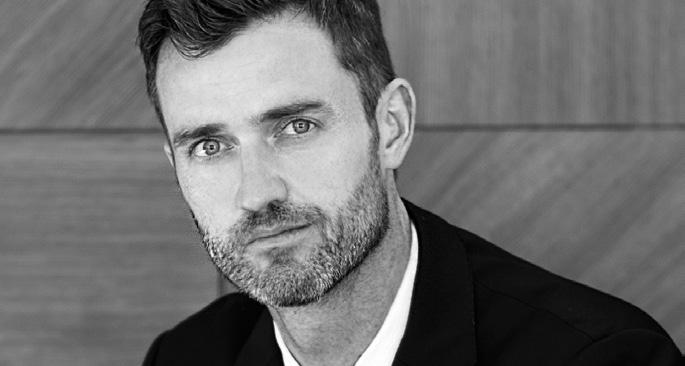
Tenor Aaron Sheehan enjoys a reputation as a first-rate interpreter of the works of Bach, Handel, and Mozart, and sang the title role in Boston Early Music Festival’s Grammy Award–winning recording of Charpentier’s opera La Descente d’Orphée aux Enfers. He has performed concerts at Tanglewood, Lincoln Center, the Metropolitan Museum of Art, Washington National Cathedral, the Early Music Festivals of Boston (BEMF), San Francisco, Vancouver, Washington D.C., Carmel, Regensburg, and the Halle Handel Festival, and with American Bach Soloists, Boston Baroque, Handel and Haydn Society, Orpheus Chamber Orchestra, Pacific MusicWorks, Philharmonia Baroque Orchestra, and Tafelmusik. His roles with BEMF include L’Amour and Apollon in Lully’s Psyché, the title roles in Charpentier’s Actéon, Monteverdi’s Orfeo, Steffani’s Orlando generoso, and Handel’s Acis and Galatea, Demetrius in Graupner’s Antiochus und Stratonica, Apollon in Versailles: Portrait of a Royal Domain, Orfeo in Campra’s Le Carnaval de Venise, Eurimaco in Il ritorno d’Ulisse in patria, and Liberto/Soldato in L’incoronazione di Poppea. Forthcoming engagements include performances as Ulysse in Desmarest’s Circé for BEMF.
With a voice of “extraordinary suppleness and beauty” (New York Times), Grammy-nominated soprano Teresa Wakim won First Prize at the International Soloist Competition for Early Music in Brunnenthal, Austria, and has performed under the batons of Roger Norrington, Harry Christophers, Martin Haselböck, Ton Koopman, and Nicholas McGegan. Solo engagements include Bach’s Mass in B Minor, St. John Passion, and Magnificat with the Amsterdam Baroque Orchestra, Bach’s Wedding Cantata with the Cleveland Orchestra, Bach’s Missa Brevis with the San Francisco Symphony, Bach’s Magnificat and St. Matthew Passion with Wiener Akademie Orchester, Mozart’s Exsultate, jubilate with the Handel and Haydn Society and New World Symphony, and Handel’s Messiah with the Charlotte, San Antonio, Tucson, Alabama, and Houston Symphonies. In addition, she performs with Apollo’s Fire, Pacific MusicWorks, Boston Baroque, Musica Angelica, Blue Heron, and the Boston Early Music Festival, with whom she has recorded ten albums, including the Grammy-winning La Descente d’Orphée aux Enfers by Marc-Antoine Charpentier.
34 BOSTON EARLY MUSIC FESTIVAL
John Taylor Ward performs with “stylish abandon” (The New Yorker),“intense clarity and color” (New York Times), and a “finely calibrated precision and heartrending expressivity” (Washington Post). A native of Boone, North Carolina, Taylor grew up in a musical family, spending his early years living a double life as musical theater actor and Anglican boy treble. After completing studies at the Eastman and Yale schools of music, Taylor’s “lithe, louche, and admirably game” approach to the repertoire (Opera News) has yielded him frequent collaborations with the world’s finest Baroque musicians and ensembles, including Christina Pluhar and L’Arpeggiata, Masaaki Suzuki and Bach Collegium Japan, William Christie and Les Arts Florissants, and Sir John Eliot Gardiner and the English Baroque Soloists. Taylor is the co-founder and artistic director of Minnesota’s Lakes Area Music Festival, a core member of Cantata Profana, a member of Roomful of Teeth, and an associate artist of Heartbeat Opera. He is also the co-creator of Holy Manna, a project with Ruckus that explores the intersection of historical performance, American history, and communal singing.
Bass-baritone Jonathan Woody is a sought-after performer of early and new music across North America, noted for “clarity and fire” by the New York Times. He is regularly featured with leading historically informed orchestras, including Portland Baroque Orchestra, Opera Lafayette, and Apollo’s Fire, and with chamber ensembles including the Choir of Trinity Wall Street, Les Délices, TENET Vocal Artists, and the Washington Bach Consort. Established in the world of new music as both performer and composer, Jonathan has had works commissioned and performed by the Handel and Haydn Society, Chanticleer, and the Cathedral Choral Society, and has premiered Pulitzer Prize–winning works including Du Yun’s Angel’s Bone and Ellen Reid’s p r i s m. He appears regularly at the Carmel Bach Festival and Staunton Music Festival, and recording credits include the Choir of Trinity Wall Street’s Grammy-nominated Israel in Egypt (Musica Omnia), ACRONYM’s Cantica Obsoleta (Olde Focus Recordings), and Boston Early Music Festival’s St. Matthew Passion of Johann Sebastiani (CPO). Currently based in Brooklyn, New York, Jonathan holds degrees from McGill University and the University of Maryland, College Park.
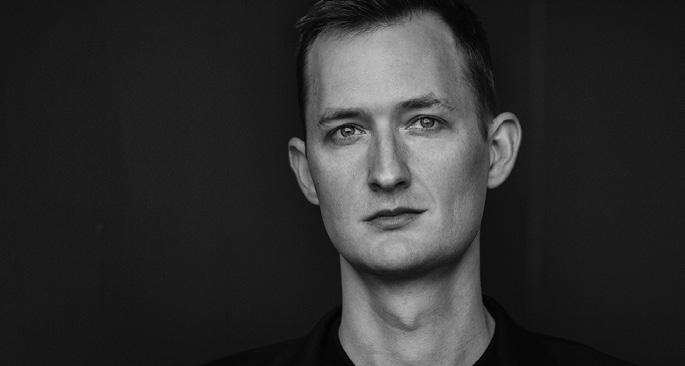
The Boston Early Music Festival Vocal Ensemble débuted in November of 2008 in Boston with John Blow’s Venus and Adonis and Marc-Antoine Charpentier’s Actéon. The ensemble is a collection of fine young singers dedicated to presenting choice operatic and other treasures as both soloists and members of the chorus, under the leadership of BEMF Artistic Directors Paul O’Dette and Stephen Stubbs. The BEMF Vocal and Chamber Ensemble’s début recording of Charpentier’s Actéon, on the CPO label, was released in November 2010. Subsequent CPO releases include Blow’s Venus and Adonis in June 2011, the Charpentier opera double bill of La Descente d’Orphée aux Enfers and La Couronne de Fleurs in February 2014, which won the Grammy Award in 2015 for Best Opera Recording and the 2015 Echo Klassik Opera Recording of the Year (17th/18th Century Opera), Handel’s Acis and Galatea in November 2015, Charpentier’s Les Plaisirs de Versailles and Les Arts Florissants, which was nominated for a Grammy in 2019, and Lalande’s Les Fontaines de Versailles and Le Concert d’Esculape in September 2020. The BEMF Vocal Ensemble has mounted successful tours of its chamber opera productions, including a four-city North American Tour of Acis and Galatea in early 2011 that included the American Handel Festival in Seattle, and a North American Tour of the Charpentier double bill in 2014.
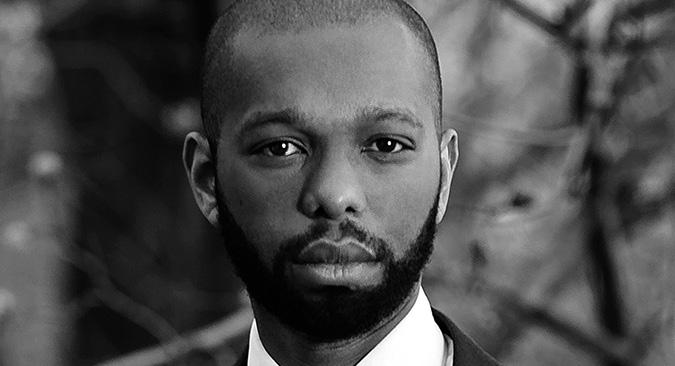
2022–2023 SEASON 35
ABOUT THE BEMF CHAMBER ENSEMBLE
Phoebe Carrai pursued post-graduate studies in early music with Nikolaus Harnoncourt in Salzburg, Austria, after finishing at New England Conservatory in Boston. She became a member of Musica Antiqua Köln in 1982, making 40 discs for Deutsche Gramophone and teaching at the Hillversum Conservatory in Holland. Ms. Carrai taught at the Universität der Künste Berlin in Germany for sixteen years and is now on the faculties of The Juilliard School and the Longy School of Music of Bard College. She is director of the Harvard Baroque Chamber Orchestra and codirected The International Baroque Institute at Longy for twenty-five years. In addition to chamber music and solo appearances, Ms. Carrai performs regularly with Juilliard Baroque, Philharmonia Baroque Orchestra, the Boston Early Music Festival Orchestra and Chamber Ensemble, Göttingen Händel Festival Orchestra and Ensemble, The Arcadian Academy, and Pro Musica Rara in Baltimore. Ms. Carrai has made three solo and duo recordings with Avie Records; the latest is Out of Italy. She plays on a restored Italian violoncello attributed to Carlo Tononi from circa 1705.
Described as “a tireless force of musical curiosity, skill, and enthusiasm” and “the one to up the ante” (Boston Musical Intelligencer), Sarah Darling enjoys a varied musical career as a performer, educator, and musical co-conspirator on viola and Baroque violin. She is a member of the Grammy-nominated self-conducted orchestra A Far Cry, as well as Boston Baroque, Musicians of the Old Post
Ballet Orchestra, Les Bostonades, Newton Baroque, the
Festival, and the Carmel Bach Festival. Sarah studied at Harvard, Juilliard, Amsterdam, Freiburg, and New England Conservatory, working with James Dunham, Karen Tuttle, Wolfram Christ, Nobuko Imai, and Kim Kashkashian. She has recorded old and new music for Linn, Paladino, Azica, MSR, Centaur, and Crier Records, plus a solo album on Naxos. Sarah is active as a teacher and coach, relishing the opportunity to “translate” between musical worlds while serving on the faculty of the Longy School of Music and co-directing the Harvard Baroque Chamber Orchestra.
Emi Ferguson can be heard live in concerts and festivals with groups including the Boston Early Music Festival, Handel and Haydn Society, AMOC*, the New York New Music Ensemble, and the Manhattan Chamber Players. Emi’s recordings for Arezzo Music, Fly the Coop: Bach Sonatas and Preludes with Ruckus (2019) and Amour Cruel (2017) were among the top 10 albums on the Classical and World Music Billboard Charts and showcase Emi’s fascination with reinvigorating music and instruments of the past for the present. Emi has spoken and performed at several TEDx events and has been featured on media outlets including the Discovery Channel, Amazon Prime, and Vox talking about how music relates to our world today. Born in Japan and raised in London and Boston, she now resides in New York City. For more information please visit emiferguson.com
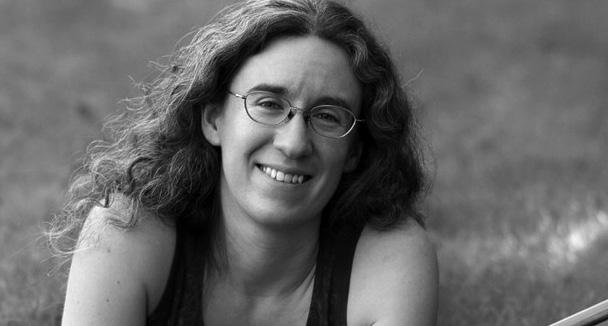
36 BOSTON EARLY MUSIC FESTIVAL
Road, Emmanuel Music, the Boston
Boston Camerata, the Boston Early Music
Laura Jeppesen studied at the Hamburg Hochschule and the Brussels Conservatory and received a Master’s degree from Yale University. She has been a Woodrow Wilson Designate, a Fulbright Scholar, and a fellow of the Bunting Institute at Harvard. A prominent member of Boston’s early music community, she has long associations with The Boston Museum Trio, Boston Baroque, the Handel and Haydn Society, the Boston Early Music Festival, and Aston Magna. She has performed as soloist with conductors Christopher Hogwood, Edo de Waart, Seiji Ozawa, Craig Smith, Martin Pearlman, Harry Christophers, Grant Llewellyn, and Bernard Haitink. She has an extensive discography, including the gamba sonatas of J. S. Bach and music of Marin Marais, Buxtehude, Rameau, Telemann, and Clérambault. She has won awards of special distinction in teaching at Harvard in 2015 and 2019 and she is a 2017 recipient of a Mellon grant for innovative teaching at Wellesley College.
Flutist Andrea LeBlanc is devoted to furthering the artistry and expression of the flute by performing on instruments from the Baroque, Classical, and Romantic eras. She has been praised by Early Music America for her “sensitive and beautiful playing, with crystalline tone and execution [that] made you wonder why it was necessary to invent the Boehm system for flute.”
Andrea appears regularly with the Handel and Haydn Society, Boston Baroque, the Boston Early Music Festival, Arcadia Players, Aston Magna, The Sebastians, the Connecticut Early Music Festival, Blue Hill Bach Festival, and the Big Moose Bach Festival, as well as Mercury Houston. Andrea is the co-founder of Arpeggione, a chamber ensemble that brings innovative performances of Classical and Romantic music to venues around her home on Boston’s North Shore.

Kathryn Montoya appears with a variety of orchestral and chamber ensembles including the Boston Early Music Festival Orchestra, Tafelmusik, and Apollo’s Fire, among others. She received her degrees at Oberlin Conservatory and Indiana University School of Music, Bloomington. While at IU she was the recipient of the prestigious Performer’s Certificate and was awarded a Fulbright Scholarship to study in Germany. Currently teaching historical oboes and recorder at Oberlin Conservatory, the Longy School of Music of Bard College, and the University of North Texas, Kathryn has been faculty of Longy’s International Baroque Institute, the Baroque Performance Institute at Oberlin, SFEMS Baroque, and other workshops, and has given masterclasses in the U.S. and China. When she is not enjoying the various thrills of concerts and recording, she can often be found in Hereford, England, converting an 18th-century barn into a home with her husband, James.
David Morris has performed across the U.S., Canada, and Europe on Baroque violoncello, viola da gamba, lirone, and bass violin. He has been a continuo player for the Boston Early Music Festival’s opera productions since 2013 and is a member of Quicksilver, the Galax Quartet, and the Bertamo Trio. He is a frequent guest performer on the New York State Early Music Association and Pegasus
2022–2023 SEASON 37
Early Music series and has performed with Tafelmusik, the Boston Symphony Orchestra, Seattle’s Pacific MusicWorks, and the Mark Morris Dance Group. He has produced operas for the Berkeley Early Music Festival and the SF Early Music Society series and has been a guest instructor in early music performance-practice at Cornell University, Amherst College, Oberlin College, the University of Colorado at Boulder, UC Berkeley, and the SF Conservatory of Music. He has recorded for Harmonia Mundi, New Albion, Dorian, Drag City Records, CBC/Radio-Canada, and New Line Cinema.
Cynthia Roberts is one of America’s leading Baroque violinists, appearing as soloist, concertmaster, and recitalist throughout the U.S., Europe, and Asia. She is a faculty member of The Juilliard School and also teaches at the Curtis Institute, University of North Texas, and the Oberlin Baroque Performance Institute. She has given master classes at the University of Music and Performing Arts Vienna, Indiana University, Eastman, the Cleveland Institute, Cornell, Rutgers, Minsk Conservatory, Leopold-Mozart-Zentrum Augsburg, Shanghai Conservatory, Vietnam National Academy of Music, and for the Jeune Orchestre Atlantique in France. She performs regularly with the Trinity Baroque Orchestra, Smithsonian Chamber Players, Tafelmusik, and the Boston Early Music Festival. She has performed as concertmaster of Les Arts Florissants and appeared with Bach Collegium Japan, Orchester Wiener Akademie, the London Classical Players, and the Taverner Players. She was featured as soloist and concertmaster on the soundtrack of the Touchtone Pictures film Casanova. Her recording credits include Sony, CPO, and Deutsche Harmonia Mundi.
Gonzalo X. Ruiz is one of America’s most soughtafter historical woodwind soloists. In recent seasons he has appeared as principal oboist and soloist with leading groups in the U.S. and Europe. He is featured on dozens of recordings and has received both a Gramophone Award and a Grammy nomination. Critics have called him “one of only a handful of truly superb baroque oboists in the world” (Alte Musik Aktuell) and “a master of expansive phrasing, lush sonorities, and deft passagework” (San Francisco Chronicle). Mr. Ruiz is on the faculty of The Juilliard School and his former students now fill the ranks of most top groups across the country. He is an acknowledged expert in historical reed techniques, and examples of his work are on permanent display at the Metropolitan Museum of Art.

Michael Sponseller is recognized as one of the outstanding American harpsichordists of his generation. A highly diversified career brings him to festivals and concert venues all around the world in recital, concerto soloist, and active continuo performer on harpsichord, organ, and fortepiano. After studies at the Oberlin Conservatory of Music with Lisa Goode Crawford and Royal Conservatoire The Hague, he garnered prizes at the International Harpsichord Competitions of Montréal and Bruges, including First Prizes at both American Bach Soloists and Jurow International Harpsichord
38 BOSTON EARLY MUSIC FESTIVAL
Competitions, all before the age of 25. Since then, Mr. Sponseller appears regularly as harpsichordist and continuo organist with such Baroque ensembles as Aston Magna, Washington Bach Consort, Boston Early Music Festival Orchestra, Atalante, Tragicomedia, and Pacific MusicWorks, and with the Los Angeles Philharmonic. He is a regular presence at Boston’s Emmanuel Music Bach Cantata Series. In 2014, he became Associate Director of Bach Collegium San Diego. Mr. Sponseller can be heard on over 20 recordings from CPO, Avie, Delos, Centaur, Eclectra, and Naxos.
Dominic Teresi is principal bassoon of Tafelmusik, Boston Early Music Festival, and Carmel Bach Festival, and is a member of Quicksilver. He has enjoyed engagements with numerous other ensembles. Mr. Teresi has appeared as a concerto soloist throughout Europe, Australia, and North America, and is a featured soloist on Tafelmusik’s recordings Vivaldi con amore, House of Dreams, and Concerti Virtuosi. His playing has been praised as “stellar” (New York Times) and “dazzling” (Toronto Star), “reminding us of the expressive powers of the bassoon” (The Globe and Mail). Mr. Teresi teaches historical bassoons and chamber music at The Juilliard School and also teaches at the Tafelmusik Institutes and American Bach Soloists Academy. He has presented research on the dulcian at the Musikinstrumentenbau-Symposium in Saxony-Anhalt.
The Boston Early Music Festival Chamber Ensemble was established in October of 2008, and delighted the public a month later at the inauguration of the Boston Early Music Festival Chamber Opera Series, which débuted in Boston with a production of John Blow’s Venus and Adonis and Marc-Antoine Charpentier’s Actéon. The BEMF Chamber Ensemble is an intimate subset of the BEMF Orchestra. Depending upon the size and scale of a project, the BEMF Chamber Ensemble is led by one or both of BEMF’s Artistic Directors, Paul O’Dette and Stephen Stubbs, or by BEMF’s Orchestra Director Robert Mealy, and features the best Baroque instrumentalists from around the world. The BEMF Chamber Ensemble’s third CD on the CPO label, the Charpentier opera double bill of La Descente d’Orphée aux Enfers and La Couronne de Fleurs, won the Grammy Award in 2015 for Best Opera Recording. Their fifth CD, Steffani’s Duets of Love and Passion, featuring sopranos Amanda Forsythe and Emőke Baráth, tenor Colin Balzer, and baritone Christian Immler, was released in September 2017 in conjunction with a six-city tour of North America, and received a Diapason d’Or. Their sixth CD—of Johann Sebastiani’s 1663 Matthäus Passion—was recorded immediately prior to their presenting a concert of the work at the prestigious Musikfest Bremen, and was released in February 2018. The seventh CD, a return to Charpentier featuring Les Plaisirs de Versailles and Les Arts Florissants, was nominated for a Grammy in 2019, and the eighth, Lalande’s Les Fontaines de Versailles and Le Concert d’Esculape, was released in September 2020.
ABOUT THE BEMF DANCE COMPANY
Julian Donahue is a principal dancer at New York Theatre Ballet where he has danced works by Merce Cunningham, Antony Tudor, Jerome Robbins, José Limón, Agnes DeMille, Richard Alston, Pam Tanowitz, James Whiteside, and others. Julian also dances for the New York Baroque Dance Company and Boston Early Music Festival performing historical and folk-dance forms.

2022–2023 SEASON 39
In 2021, Julian founded Julian Donahue Dance to create and showcase dances that express transformational political ideas, tell stories, and expand the public imagination. Julian has presented choreography at New York Theatre Ballet and at dance festivals across the Northeast. Julian graduated in 2019 from Hofstra (BA in dance and political science) and, in 2013, received the David Hallberg scholarship at the Jacqueline Kennedy Onassis School at American Ballet Theatre. Julian joined the BEMF Dance Company as a Young Artist for the 2017 production of Le Carnival de Venise and returned as a member of the company in 2019 for Orlando generoso.
Shaun Ferren is an emerging artist from Burlington, Massachusetts. They are currently in their final year studying Contemporary Dance Performance at The Boston Conservatory at Berklee College of Music. Shaun trains at the conservatory in Ballet, Modern, Composition, and Improvisation, among many other courses. In school, Shaun has performed works by Murray Louis, Maleek Washington, Ruka Hatua-Saar White, Gabrielle Lamb, and Levi Marsman. Shaun has taken part in various student works and even had the privilege to have his own work shown in a Main Stage production. This past June, Shaun trained in Montréal and performed works by Kyle Abraham and Ethan Colangelo. They also collaborated with Hybridmotion Dance Theatre and Cinematographer Terrence Hayes in a film for the Boston Center for the Arts. He studied in Lucca, Italy, under the direction of Stefanie Nelson, learning repertoire from renowned choreographers across the globe. Shaun is excited to pursue dance professionally and all that the career entails.
Caitlin Klinger is a Boston-area dancer, teacher, and choreographer whose movement repertoire ranges from Baroque to contemporary. After significant early ballet training under Edra Toth, she attended Mount Holyoke College where she received her B.A. in Dance and Geography. In addition to BEMF, Caitlin has collaborated with many independent choreographers and companies across multiple genres including Dance Prism, Weber Dance, the Carabetta Crabtree Collective, Deadfall Dance, Annie Kloppenberg, BALAM Dance Theater, American Virtuosi, Cambridge Concentus, Clarion Music Society, the Vermont Opera Project, and Early Music Princeton. With BEMF she has had the privilege of performing in productions from Purcell’s Dido and Aeneas (2010) to Steffani’s Orlando generoso (2019), as well as acting as an assistant to the choreographers for Steffani’s Niobe, Regina di Tebe. An experienced teacher of many movement styles, Caitlin is the director of New England Ballet in Wayland. Caitlin also brings her experience in a variety of administration and production-based settings to her role as Space Rental and Artist Services Manager at The Dance Complex in Cambridge. Her website is at www.caitlinklinger.com.
Sonam Tshedzom Tingkhye is a Tibetan-Scottish dancer from Seattle, Washington. She was introduced to opera at a young age and has been fortunate to work with organizations including Early Music Seattle, Seattle Early Dance, Pacific MusicWorks, and Boston Early Music Festival. Tshedzom recently graduated from The Boston Conservatory at Berklee where she was a recipient
40 BOSTON EARLY MUSIC FESTIVAL
of the Julie Thompson Memorial Scholarship and was awarded second highest in academic achievement. At the conservatory, she worked with notable artists including Juel D. Lane, Robert Moses’ Kin, Edisa Weeks, and Urban Bush Women. Along with performing, Tshedzom is a choreographer and filmmaker whose practice is always evolving while maintaining roots in her musical upbringing and Tibetan culture. Her work has been presented at the Henry Purcell Society of Boston, Kaleidoscope Dance Company, TibetFest, Tibet Film Festival, and the Boston Conservatory at Berklee. Tshedzom continues to grow a body of repertoire while actively performing across coasts.
The Boston Early Music Festival Dance Company (previously known as the BEMF Dance Ensemble) was originally founded in 2010 as an integral part of BEMF’s Chamber Opera Series production of Purcell’s Dido and Aeneas. The troupe is made up of American dancers and invited international guests, and is under the artistic supervision of Melinda Sullivan, Lucy Graham Dance Director. As director of the company, she recruits and trains dancers, organizes the practice of technique and style, and supports the work of guest choreographers. The members of the Company perform both noble and character dances in Festival centerpiece operas, annual chamber opera performances and tours, and orchestra concerts. A unique component of the BEMF Dance Company is that it extends invitations to Baroque dance specialists from around the world. This enriches the experience of all the performers by offering opportunities for dance specialists to share their research with the audience while rehearsing and performing at the Festival, and contributes significantly to a deeper knowledge and appreciation of Baroque dance.

2022–2023 SEASON 41
TEXTS AND TRANSLATIONS
Idylle sur la Paix
Music composed by Jean-Baptiste Lully (1632–1687)
Text by Jean Racine (1639–1699)
Edition by Gilbert Blin English Translation by Stephen Stubbs
La Fête de Rueil La France au Roi
Music composed by Marc-Antoine Charpentier (1643–1704)
Texts by “Une Personne de Qualité” Editions by Gilbert Blin English Translations by Stephen Stubbs
Idylle. Sur la Paix.
Ouverture Solo
Un plein repos favorise vos vœux : Peuples, chantez la Paix, qui vous rend tous heureux.
Chœur
Un plein repos favorise nos vœux : Chantons, chantons la Paix, qui nous rend tous heureux.
Solo
Charmante Paix, délices de la terre, Fille du ciel, et mère des plaisirs, Tu reviens combler nos désirs, Tu bannis la terreur et les tristes soupirs, Malheureux enfants de la Guerre.
Chœur
Un plein repos favorise nos vœux : Chantons, chantons la Paix, qui nous rend tous heureux.
Idyll. On the Peace.
Ouverture Solo
Complete repose shall fulfill your wishes, People, sing of peace, which creates your happiness. Chorus
Complete repose shall fulfill our wishes, Let us sing, sing of peace, which creates our happiness.
Solo
Charming Peace, delight of the earth, Daughter of heaven, and mother of pleasures, You return to fulfill our desires, You banish terror and somber sighs, Those unhappy children of War.
Chorus
Complete repose shall fulfill our wishes, Let us sing, sing of peace, which creates our happiness.
42 BOSTON EARLY MUSIC FESTIVAL
Solo
Tu rends le fils à sa tremblante mère. Par toi la jeune épouse espère D’être longtemps unie à son époux aimé ; De ton retour le laboureur charmé Ne craint plus désormais qu’une main étrangère Moissonne, avant le temps, le champ qu’il a semé.
Duo
Tu pares nos jardins d’une grâce nouvelle ; Tu rends le jour plus pur, et la terre plus belle.
Chœur
Un plein repos favorise nos vœux : Chantons, chantons la Paix, qui nous rend tous heureux.
Menuet
Solo
Mais quelle main puissante et secourable A rappelé du Ciel cette Paix adorable ?
Solo
Quel Dieu, sensible aux vœux de l’univers, A replongé la Discorde aux enfers ?
Prélude Solo
Déjà grondaient les horribles tonnerres Par qui sont brisés les remparts. Déjà marchait devant les étendards
Bellone, les cheveux épars, Et se flattait d’éterniser les guerres Que sa fureur soufflait de toutes parts.
Ritournelle
Solo
Divine Paix, apprends-nous par quels charmes Un calme si profond succède à tant d’alarmes.
Solo
Un Héros, des mortels l’amour et le plaisir, Un Roi victorieux vous a fait ce loisir.
Solo
You return the son to his trembling mother. Thanks to you the bride hopes To be joined together with her beloved husband for good; Because of your return the delighted ploughman No longer fears that a foreign hand Shall reap, before its time, the field which he has sown.
Duo
You adorn our gardens with a new grace; You make the day brighter, and the earth more beautiful.
Chorus
Complete repose shall fulfill our wishes, Let us sing, sing of peace, which creates our happiness.
Menuet
Solo
But whose strong and helping hand Has brought this beloved peace down from Heaven?
Solo
What God, feeling the wishes of the universe, Has sent Discord back to hell?
Prelude Solo
Horrible thunder is already roaring, By which the ramparts are broken. In front of the banners, she is already marching: Bellona, with disheveled hair, Boasting to make the wars eternal Which her fury fans from all sides.
Ritournelle
Solo
Divine Peace, tell us by what charms Such profound calm follows so many terrors.
Solo
A Hero, the love and pleasure of mortals, A victorious King has given you this respite.
2022–2023 SEASON 43
Chœur
Un Héros, des mortels l’amour et le plaisir, Un Roi victorieux nous a fait ce loisir.
Solo
Ses ennemis offensés de sa gloire, Vaincus cent fois, et cent fois suppliants, En leur fureur de nouveau s’oubliant, Ont osé, dans ses bras, irriter la Victoire.
Qu’ont-ils gagné, ces esprits orgueilleux, Qui menaçaient d’armer la terre entière ? Ils ont vu de nouveau resserrer leur frontière : Ils ont vu ce roc sourcilleux, De leur orgueil l’espérance dernière, De nos champs fortunés devenir la barrière.
Menuet
Chœur
Un Héros, des mortels l’amour et le plaisir, Un Roi victorieux nous a fait ce loisir.
Solo
Son bras est craint du couchant à l’aurore. La foudre, quand il veut, tombe aux climats gelés, Et sur les bords par le soleil brûlés. De son courroux vengeur sur le rivage more La terre fume encore.
Solo
Malheureux les Ennemis De ce prince redoutable ! Heureux les Peuples soumis A son empire équitable !
Gavote
Solo
Chantons, Bergers, et nous réjouissons : Qu’il soit le sujet de nos fêtes. Le calme dont nous jouissons N’est plus sujet aux tempêtes. Chantons, Bergers, et nous réjouissons : Qu’il soit le sujet de nos fêtes. Le bonheur dont nous jouissons Le flatte autant que toutes ses conquêtes.
Chorus
A Hero, the love and pleasure of mortals, A victorious King has given us this respite.
Solo
His enemies, offended by his glory, A hundred times defeated and a hundred times made to beg, In their fury, once again forgetting themselves, Have dared, in her arms, to irritate (the Goddess) Victory.
What have they gained, these arrogant souls, Who threatened to arm the whole earth? They have seen their border recede again: They saw that haughty mountain, The last hope in their pride, Become the barrier for our fortunate fields.
Menuet
Chorus
A Hero, the love and pleasure of mortals, A victorious King has given us this respite.
Solo
His arms are feared from sunset to dawn. Lightning, whenever it likes, falls on frozen climes, And on sun-scorched shores. From his vengeful wrath on the Moorish coast The earth is still smoking.
Solo
Miserable are the Enemies Of that fearsome prince! Fortunate the populations subjected To his equitable empire!
Gavote
Solo
Let us sing, Shepherds, and rejoice: May he be the subject of our celebrations. The calm we enjoy Is no longer prone to storms. Let us sing, Shepherds, and rejoice: May he be the subject of our celebrations. The happiness we enjoy Honors him as much as all his conquests.
44 BOSTON EARLY MUSIC FESTIVAL
Chœur
Chantons, Bergers, et nous réjouissons : Qu’il soit le sujet de nos fêtes. Le bonheur dont nous jouissons Le flatte autant que toutes ses conquêtes.
Loure Solo
De ces lieux l’éclat et les attraits, Ces fleurs odorantes, Ces eaux bondissantes, Ces ombrages frais, Sont des dons de ses mains bienfaisantes. De ces lieux l’éclat et les attraits Sont des fruits de ses bienfaits.
Solo, Chœur
Il veut bien quelquefois visiter nos bocages ; Nos jardins ne lui déplaisent pas. Arbres épais, redoublez vos ombrages ; Fleurs, naissez sous ses pas.
Menuet, Rondeau
Prélude
Solo, Trio, Chœur Ô Ciel, ô saintes destinées, Qui prenez soin de ses jours florissants, Retranchez de nos ans Pour ajouter à ses années.
Prélude
Chœur
Qu’il règne ce héros, qu’il triomphe toujours ; Qu’avec lui soit toujours la Paix ou la Victoire ; Que le cours de ses ans dure autant que le cours De la Seine et de la Loire ! Qu’il règne ce héros, qu’il triomphe toujours ; Qu’il vive autant que sa gloire !
Chaconne pour Madame la Princesse de Conti
Chorus
Let us sing, Shepherds, and rejoice: May he be the subject of our celebrations. The happiness we enjoy Honors him as much as all his conquests.
Loure Solo
The brilliance and the charms of this place, These fragrant flowers, These surging waters, These cool shades, Are gifts from his beneficent hands. The brilliance and the charms of this place, Are the fruits of his blessings.
Solo, Chorus
He likes, sometimes, to visit our groves. Our gardens do not displease him. You thick forests, redouble your shade. You flowers, thrive wherever he sets his foot.
Menuet, Rondeau
Prelude
Solo, Trio, Chorus
O Heaven, O holy destiny, Who care for his flourishing days, Subtract from our years
To add to his.
Prelude Chorus
May this hero reign, and always triumph. May Peace or Victory always be with him. May the course of his years be as long as the course Of the Seine and the Loire! May this hero reign, may he always triumph. May he live as long as his glory!
Chaconne for the Princess of Conti
2022–2023 SEASON 45
m INTERMISSION n
La Fête de Rueil
Personnages :
Iris, Bergère
Quatre Pâtres et quatre Paysannes
Un Pâtre
Les Egyptiennes L’Egyptienne Les Satyres Tircis, Berger Bergers et Bergères, chantant et dansant Pan, Dieu des Bergers
Scène Première
Iris, bergère Que je sens de plaisirs : Jamais la belle Aurore Ne nous promit un si beau jour. Mais je vois le Soleil éclore Toute la Nature l’adore, Qu’il est brillant, qu’il inspire d’amour !
Du souverain des Dieux il est la vive image, Tout l’univers lui fait la cour N’entends-je pas les oiseaux d’alentour Le saluer par leur ramage ? Tout lui rit, tout lui rend hommage. Qu’il est brillant, qu’il inspire d’amour !
Mais, vois-je pas de leurs coteaux descendre Et dans ces lieux se rendre, Nos pâtres réjouis Par la présence de Louis ?
Scène Seconde
Marche des quatre Pâtres et quatre Paysannes
Un Pâtre
Notre Roi Louis
A soumis Nos ennemis, Parguienne c’est un grand homme ! J’en sommes tous ébahis Par tout pays on le renomme, Parguienne c’est un grand homme !
Air des Pâtres et des Paysannes
The Festivities at Rueil
Characters:
Iris, Shepherdess
Four Swains and four Country girls
A Swain
The Egyptian girls
The Egyptian girl
The Satyrs Tircis, Shepherd Shepherds and Shepherdesses, singing and dancing Pan, God of Shepherds
First Scene
Iris, shepherdess
What pleasures I feel: Never has lovely Aurora Promised us a more beautiful day. But now I see the Sun appear, All of Nature adores him, How luminous he is, how much love he inspires!
He is the living image of the King of the gods
The whole universe pays him court, Do I not hear the birds all around Greeting him with their warbling? Everything smiles on him and pays him tribute. How luminous he is, how much love he inspires!
But now, do I not see descending from their hillsides To be in this place, All our swains rejoicing In the presence of Louis?
Second Scene
March of four Swains and four Country girls
A Swain Our King Louis Has subjugated Our enemies, By all the Gods, he is a great man!
I stand amazed He is renowned throughout the world, By all the Gods, he is a great man!
Dance of the Swains and the Country Girls
46 BOSTON EARLY MUSIC FESTIVAL
Un Pâtre
Gaudissons, Chantons, Et dansons, Chers compagnons Ça rendons-lui nos louanges ! J’aurons de belles moissons Et je ferons en paix vendanges –Ça rendons-lui nos louanges !
Air des Pâtres et des Paysannes (Ici les Egyptiennes entrent en cadence par le milieu du Théâtre)
(Pâtres et les Paysannes rentrent [en coulisses] et les Egyptiennes entrent en cadence.)
Scène Troisième
Sarabande pour les Egyptiennes
L’Egyptienne
Heureux bergers, qui coulez votre vie Loin des assauts, loin des traits de l’envie, Sans ressentir les troubles de la cour ; Que vous devez chérir votre fortune, Heureux bergers, rien ne vous importune Et vous n’avez à craindre que l’Amour.
Sarabande pour les Egyptiennes
L’Egyptienne
Vous jouissez de cette paix profonde Que par ses soins le plus grand Roi du monde Dans son empire affermit chaque jour. Que vous devez chérir votre fortune, Heureux bergers, rien ne vous importune Et vous n’avez à craindre que l’Amour.
Iris Que ton art est trompeur, que ta science est vaine, Notre cœur n’est pas fait pour lui, Il donne trop d’ennui.
L’Egyptienne
Il faut tôt ou tard qu’on y vienne, Donnez-moi votre main, donnez-moi votre main Je vous dirai votre destin.
A Swain
Let us rejoice, And sing, And dance, Dear companions Let us praise him! We will have a beautiful harvest, And I will harvest my grapes in peace— Let us praise him!
Air of the Swains and the Country Girls (Here the Egyptian girls enter in rhythm through the middle of the theater)
(Swains and the Country girls return [backstage] and the Egyptian girls enter in rhythm.)
Third Scene
Sarabande for the Egyptian girls
The Egyptian girl
Happy shepherd-folk, who spend your lives Far from the slings and arrows of envy, Nor feeling the confusions of the court; How you must cherish your fate!
Happy shepherd-folk, nothing troubles you, And you have nothing to fear but Love.
Sarabande for the Egyptian girls
The Egyptian girl
You enjoy the profound peace Which the greatest King in the world Works to strengthen every day in his empire. How you must cherish your fate!
Happy shepherd-folk, nothing troubles you, And you have nothing to fear but Love.
Iris How deceptive is your art, how empty your science, My heart is not made for him [Love], He gives us too much grief.
The Egyptian girl
Sooner or later, one must go there, Give me your hand, give me your hand I will tell you your fate.
2022–2023 SEASON 47
(L’Egyptienne regarde la main d’Iris)
L’Egyptienne
Iris vous inspirez l’amour Dans le cœur le moins tendre. Cependant vous n’en pouvez prendre. Mais tout doit céder à son tour, Vous avez beau vous en défendre, Iris, Iris, vous aimerez un jour.
Iris
On verra le soleil s’arrêter en sa course
Et nos ruisseaux remonter à leur source, Nos brebis mangeront les loups Quand de l’Amour je ressente les coups ; Pour moi l’Hymen est un supplice, C’est en vain qu’on me dit que le joug en est doux, Avant que j’assujettisse Mon sort au caprice D’un fâcheux époux. On verra le soleil s’arrêter en sa course
Et nos ruisseaux remonter à leur source, Nos brebis mangeront les loups.
Iris et l’Egyptienne Mais je vois venir le satyre, Fuyons, fuyons, je me retire. [Iris et l’Egyptienne se cachent]
Scène Quatrième
Les Satyres
(Les Satyres s’en vont)
Scène Cinquième Iris et Tircis (Iris sort de l’endroit où elle s’était cachée et regarde partout)
Iris
Ils se sont retirez, ah ! Je suis hors d’haleine !
Tircis
Quoi ! Vous me fuyez, inhumaine !
(The Egyptian girl looks at Iris’s hand)
The Egyptian girl Iris you inspire love Even in the least tender heart. Yet cannot feel it yourself. But everything must yield in its turn, No matter how you defend yourself against it, Iris, Iris, you will love one day.
Iris
We shall see the sun stopped in its course And our streams flowing backward to their source, And our sheep will eat the wolves When I will feel the blows of Love. For me marriage is a torture, It is vain to tell me that its yoke is sweet. Before I subject My fate to the whims Of an annoying husband We shall see the sun stopped in its course And our streams flowing backward to their source, And our sheep will eat the wolves.
Iris and the Egyptian girl But I see the satyrs coming, Let’s flee, let’s flee, I’ll go hide.
[Iris and the Egyptian girl hide themselves]
Fourth Scene
The Satyrs (The Satyrs leave)
Fifth Scene Iris and Tircis
(Iris comes out of where she was hiding and looks everywhere)
Iris
They’re gone, ah! I’m out of breath!
Tircis What! You fly from me? Inhuman!
48 BOSTON EARLY MUSIC FESTIVAL
Iris
Laissez-moi, Tircis, en repos ; Si vous venez troubler ma solitude Par votre inquiétude, Vous y venez mal à propos.
Tircis
Quand le plus grand des Rois Rend nos hameaux si calmes Et règne avec tant de douceur, Quand nous dormons à l’ombre de ses palmes, Faut-il que par votre rigueur, Cruelle, vous portiez le trouble dans mon cœur ? Ne voulez-vous jamais m’entendre ? Et donnant tant d’amour Refusez-vous, refusez-vous d’en prendre ?
Iris
Vous dites que je n’aime rien, Ah ! Tircis, vous vous trompez bien ! J’aime l’émail de nos prairies, J’aime le doux chant des oiseaux, J’aime nos campagnes fleuries, J’aime le murmure des eaux, J’aime de ces jardins l’éternelle verdure, Et la charmante nuit de ces boccages frais Que le flambeau de la nature Ne saurait percer de ses traits. J’aime l’orgueil de ces fontaines Qui s’élancent vers les cieux Et retombant après, Serpentent dans nos plaines, D’un cours délicieux.
Tircis
Hé ! quoi ! ne pouvez-vous aimer Que des beautés inanimées, Tandis que de vos yeux nos âmes sont charmées Et de vos seuls appas se laissent enflammer ?
(Ici les Bergers et les Bergères dansantes paraissent.)
Scène Sixième
Iris
J’aime ces aimables bergères Avec elles je chante à l’ombre des ormeaux ; J’aime les voir danser sur nos vertes fougères Au son des chalumeaux.
Iris
Leave me in peace, Tircis. If you come here to disturb my solitude, In your agitation, You have come at the wrong time.
Tircis
When the greatest of Kings Brings calm to our villages And reigns with such gentleness, When we sleep in the shade of his palms, Must your severity, Cruel one, cause such agitation in my heart? Will you never wish to hear me? And though you create such love in my heart You refuse to feel it yourself?
Iris
You say that I don’t love anything, Ah! Tircis, you are quite wrong! I love the varied colors of our meadows, I love the sweet song of the birds, I love our flourishing countryside, I love the murmur of the waves, I love the eternal greenery of these gardens, And the charming twilight of these cool groves Which the torch of nature Cannot pierce with his rays. I love the proud surge of these fountains Which launch themselves into the sky, And falling thereafter Make their serpentine way through our plains, In a delicious meander.
Tircis
What are you saying? Can you love Only inanimate beauties, While your eyes charm our souls Which are inflamed by your beauty?
(Here Shepherds and dancing Shepherdesses appear.)
Sixth Scene
Iris
I love these charming shepherdesses, I sing with them in the shade of the elms. I love to see them dance amongst our green ferns To the sound of the chalumeaux.
2022–2023 SEASON 49
Entrée de Bergers et de Bergères
Scène Septième Pan, Satyres, Bergers et Bergères chantant et Dansant, Iris et Tircis
Iris
Mais le dieu des bergers s’avance Silence, Silence !
(Icy les bergers et tous ceux qui sont sur la scène se mettent en posture d’écouter le dieu Pan)
Pan
J’ay vu plus de cinquante Rois, Grand Monarque, et de leurs exploits Je garde la mémoire, Mais je n’en vis jamais qui fût autant que toi, Maître de la victoire, Ni plus amoureux de la Paix. Tes Exploits sont si glorieux Qu’Armand aurait peine à les croire. Son Ombre se plaint en ces lieux Que la mort ait fermé ses yeux Sans qu’il ait joui de ta gloire. Lui qui pour cet empire, employa tant de veilles.
Si maintenant il pouvait voir Jusques où ta valeur a porté ton pouvoir ? Ah qu’il serait effrayé des merveilles Qu’il n’aurait osé concevoir !
Chœur des Bergers et Bergères
On entend par toute la terre Chanter d’une commune voix : Louis est le plus grand des Rois C’est le dieu de la paix, C’est le dieu de la guerre.
Air des Bergers et Bergères
Les Satyres
Entrée of Shepherds and Shepherdesses
Seventh Scene Pan, Satyrs, Shepherds and Shepherdesses singing and dancing, Iris and Tircis
Iris
But the god of the shepherds comes near Be quiet, quiet!
(Here the shepherds and all who are on stage put themselves in position to listen to the god Pan)
Pan
I have seen more than fifty Kings, Great Monarch, and I treasure the memory Of their great deeds, But never have I seen anyone so much The master of Victory as you, Nor so much in love with Peace. Your Deeds are so glorious That even Armand (Richelieu) would find them hard to believe. His Shade can be found here lamenting That death had closed his eyes Without being able to revel in your glory. He who spent so many sleepless nights for the sake of this empire.
If he could see now How far your valor has carried your power, Ah, how stunned would he be by the wonders He would hardly have dared to imagine!
Chorus of Shepherds and Shepherdesses
We hear the whole world Singing with one voice: Louis is the greatest of Kings. He is the god of peace, He is the god of war.
Air of Shepherds and Shepherdesses
The Satyrs
50 BOSTON EARLY MUSIC FESTIVAL
Première Bergère, Deuxième Bergère (ensemble)
Qu’il est grand, qu’il est rempli de charmes, Ce héros qui met fin à nos larmes !
Qu’il est doux de jouir du succès de ses armes Qu’il est doux d’en jouir malgré tant de jaloux. Les bienfaits dont il comble la France De nos cœurs ont passé l’espérance, Qu’il est doux de gouter le repos, l’abondance, Qu’il est doux d’en jouir malgré tant de jaloux.
Les Satyres
Première Bergère, Deuxième Bergère, Tircis (ensemble)
Qu’il est grand, qu’il est rempli de charmes, Ce héros qui met fin à nos larmes ! Qu’il est doux de jouir du succès de ses armes Qu’il est doux d’en jouir malgré tant de jaloux. Les bienfaits dont il comble la France De nos cœurs ont passé l’espérance, Qu’il est doux de gouter le repos, l’abondance, Qu’il est doux d’en jouir malgré tant de jaloux.
Pan
Qu’Armand serait charmé de voir de toute parts Fleurir la Science et les Arts : De tes palais pompeux les beautés infinies, Les deux mers réunies, La fierté du croissant soumise à ta vertu, L’aigle rampant, le Batave abattu, Le Belgique lion terrassé par ta foudre, Leurs fiers remparts réduits en poudre, Et pour couronnement de tant d’exploits divers La paix, la paix donnée à l’univers.
First Shepherdess, Second Shepherdess (together)
How great he is, and how full of charms, This hero who puts an end to our tears! How sweet it is to enjoy the fruits of his success at arms. How sweet to enjoy them, despite so many envious people. The good deeds which he showers upon France Have surpassed the hope in our hearts, How sweet it is to enjoy the repose, the abundance, How sweet to enjoy them, despite so many envious people.
The Satyrs
First Shepherdess, Second Shepherdess, Tircis (together)
How great he is, and how full of charms, This hero who puts an end to our tears! How sweet it is to enjoy the fruits of his success at arms. How sweet to enjoy them, despite so many envious people. The good deeds which he showers upon France Have surpassed the hope in our hearts, How sweet it is to enjoy the repose, the abundance, How sweet to enjoy them, despite so many envious people.
Pan
How Richelieu would be delighted to see Science and the Arts flourishing everywhere: The infinite beauties of your grand palaces, The two seas reunited, The proud crescent (the Ottoman Empire) subjugated by your power, The eagle groveling, the Batavian beaten, The Belgian lion struck down by your lightning, Their proud ramparts reduced to dust, And as the crowning achievement of so many glorious deeds: Peace, peace bestowed upon the universe.
2022–2023 SEASON 51
Pan et le Chœur des Bergers et des Bergères O gloire incomparable de Louis Les siècles seront éblouis À l’éclat admirable de ses faits inouïs O gloire incomparable de Louis.
Pan et Deux Bergers Le souvenir fameux de nom si vanté Doit être aussi durable Que l’immortalité.
Chœur des Bergers et des Bergères O gloire incomparable.
Iris, deux Bergères, Un Berger Son histoire incroyable A la postérité Passera pour la fable D’une divinité.
Chœur des Bergers et des Bergères O gloire incomparable de Louis. Les siècles seront éblouis À l’éclat admirable de ses faits inouïs O gloire incomparable de Louis.
La France au Roi
À ta haute Valeur quel Héros peut atteindre ? Ta Piété fait voir de grandes actions. Monarque tout parfait, tu n’as plus rien à craindre, Ni de tes Ennemis, ni de tes passions.
Pan and the Chorus of Shepherds and Shepherdesses
O the incomparable glory of Louis, The centuries to come will be dazzled By the brilliant radiance of his unprecedented deeds; O the incomparable glory of Louis.
Pan and two Shepherds The famous memory of a name so praised Must be as durable As immortality.
Chorus of Shepherds and Shepherdesses O the incomparable glory.
Iris, two Shepherdesses, a Shepherd His unbelievable story Will seem to posterity Like a fable Of some deity.
Chorus of Shepherds and Shepherdesses O the incomparable glory of Louis, The centuries to come will be dazzled By the brilliant radiance of his unprecedented deeds; O the incomparable glory of Louis.
France to the King
What Hero can attain your towering valor? Your Piety reveals great deeds. All-perfect Monarch, you have nothing left to fear, Neither from your enemies, nor from your passions.
52 BOSTON EARLY MUSIC FESTIVAL
2022–2023 SEASON 53
Make a Difference
Boson Early Music Fesival
PLANNED GIVING
Play a vital and permanent role in BEMF’s future with a planned gift. Your generous support will create unforgettable musical experiences for years to come, and may provide you and your loved ones with considerable tax benefits.
Join the BEMF ORPHEUS SOCIETY by investing in the future of the Boston Early Music Festival through a charitable annuity, bequest, or other planned gift. With many ways to give and to direct your gift, our staff will work together with you and your advisors to create a legacy that is personally meaningful to you.
To learn more, please call us at 617-661-1812, email us at kathy@bemf.org, or visit us online at BEMF.org/plannedgiving.
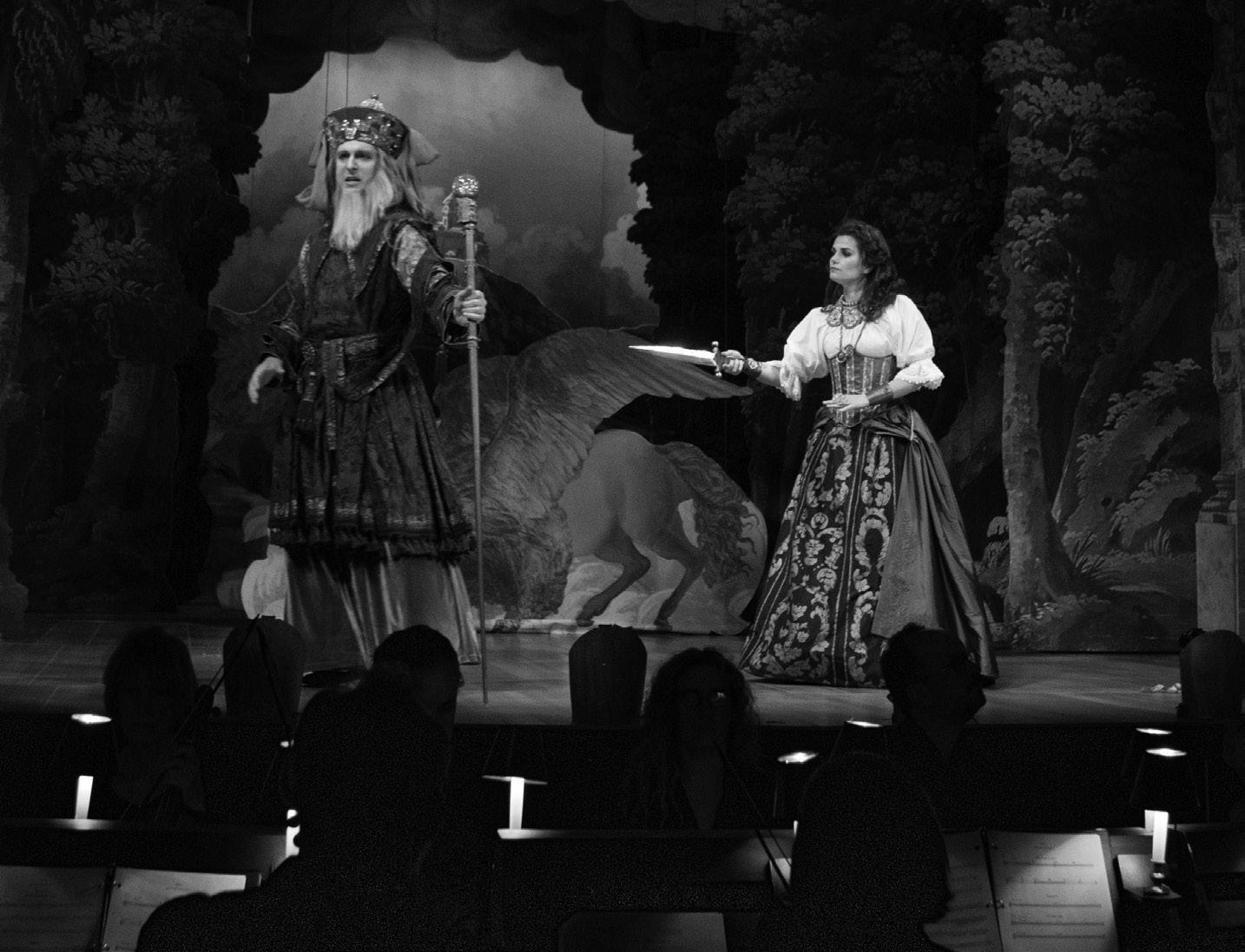
54 BOSTON EARLY MUSIC FESTIVAL 2019 | Orlando generoso
KATHY WITTMAN
Boson Early Music Fesival
The Boston Early Music Festival (BEMF) is universally recognized as a leader in the field of early music. Since its founding in 1980 by leading practitioners of historical performance in the United States and abroad, BEMF has promoted early music through a variety of diverse programs and activities, including an annual concert series that brings early music’s brightest stars to the Boston and New York concert stages, and the biennial weeklong Festival and Exhibition, recognized as “the world’s leading festival of early music” (The Times, London).
Through its programs BEMF has earned its place as North America’s premier presenting organization for music of the Medieval, Renaissance, and Baroque periods and has secured Boston’s reputation as “America’s early music capital” (Boston Globe).

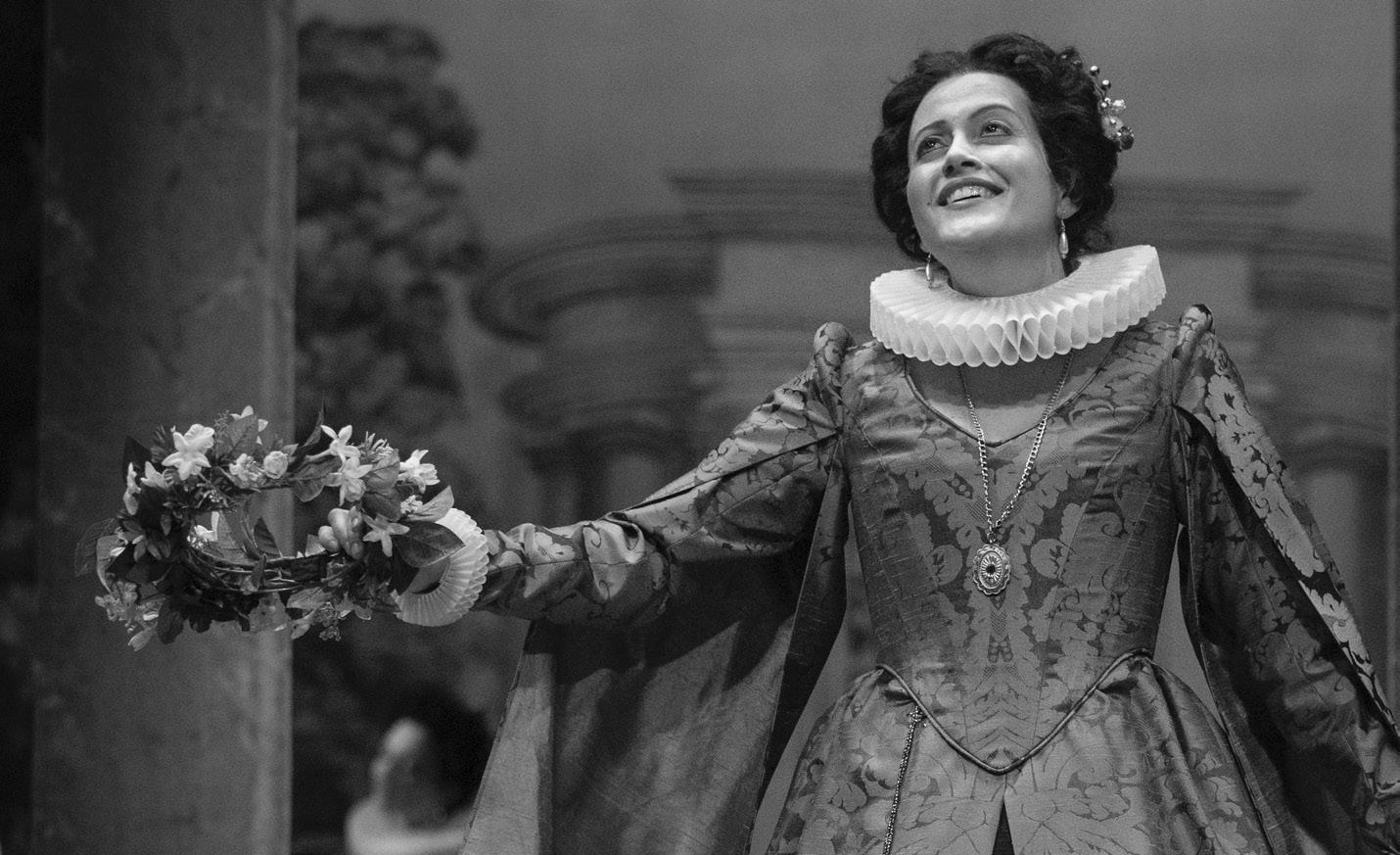
INTERNATIONAL BAROQUE OPERA
One of BEMF’s main goals is to unearth and present lesser-known Baroque operas performed by the world’s leading musicians armed with the latest information on period singing, orchestral performance, scenic design, costuming, dance, and staging. BEMF operas reproduce the Baroque’s stunning palette of sound by bringing together today’s leading operatic superstars and a wealth of instrumental talent from across the globe to one stage for historic presentations, all zestfully led from the pit by the BEMF Artistic Directors Paul O’Dette and Stephen Stubbs, and creatively reimagined for the stage by BEMF Opera Director Gilbert Blin.
The twenty-first biennial Boston Early Music Festival in June 2021 took place virtually, and featured a video presentation of André Campra’s extraordinary Le Carnaval de Venise from the June 2017 Festival. The twenty-second Festival, in June 2023, will have as its centerpiece Henry Desmarest’s 1694 opera Circé from a libretto by Louise-Geneviève Gillot de Saintonge, which will feature the Boston Early Music Festival Dance Company, a troupe of dancers under the guidance of BEMF Dance Director Melinda Sullivan.
BEMF introduced its Chamber Opera Series during its annual concert season in
2022–2023 SEASON 55
InternatIonal Baroque opera • CeleBrated ConCerts • World-Famous exhIBItIon
AMANDA FORSYTHE IN BEMF’S 2013 PRODUCTION OF HANDEL’S ALMIRA
PHOTO:
November 2008, with a performance of John Blow’s Venus and Adonis and MarcAntoine Charpentier’s Actéon. The series focuses on the wealth of chamber operas composed during the Baroque period, while providing an increasing number of local opera aficionados the opportunity to attend one of BEMF’s superb offerings. Subsequent annual productions include George Frideric Handel’s Acis and Galatea, Henry Purcell’s Dido and Aeneas, combined performances of Charpentier’s La Descente d’Orphée aux Enfers and La Couronne de Fleurs, Monteverdi’s Orfeo, a double bill of Pergolesi’s La serva padrona and Livietta e Tracollo, a production titled “Versailles” featuring Les Plaisirs de Versailles by Charpentier, Les Fontaines de Versailles by Michel-Richard de Lalande, and divertissements from Atys by Lully, Francesca Caccini’s Alcina, the first opera written by a woman, and most recently a combination of Telemann’s Pimpinone and Ino. Acis and Galatea was revived and presented on a four-city North American Tour in early 2011, which included a performance at the American Handel Festival in Seattle, and in 2014, BEMF’s second North American Tour featured the Charpentier double bill from 2011.
BEMF has a well-established and highly successful project to record some of its groundbreaking work in the field of Baroque opera. The first three recordings in this series were all nominated for the Grammy Award for Best Opera Recording, in 2005, 2007, and 2008: the 2003 Festival centerpiece Ariadne, by Johann Georg Conradi; Jean-Baptiste Lully’s Thésée; and the 2007 Festival opera, Lully’s Psyché, which was hailed by BBC Music Magazine as “superbly realized…magnificent.” In addition, the BEMF recordings of Lully’s Thésée and Psyché received Gramophone Award Nominations in the Baroque Vocal category in 2008 and 2009, respectively. BEMF’s next three recordings on the German CPO label were drawn from its Chamber Opera Series: Charpentier’s Actéon, Blow’s Venus and Adonis, and a release of Charpentier’s La Descente d’Orphée aux Enfers and La Couronne de Fleurs, which won the 2015 Grammy Award for Best Opera Recording and the 2015 Echo Klassik Opera Recording of the Year (17th/18th Century Opera). Agostino Steffani’s Niobe, Regina di Tebe, featuring Philippe Jaroussky and Karina Gauvin, which was released in January 2015 on the Erato/Warner Classics label in conjunction with a seven-city, four-country European concert tour of the opera, has been nominated for a Grammy Award, was named Gramophone’s Recording of the Month for March 2015, is the 2015 Echo Klassik World Premiere Recording of the Year, and has received a 2015 Diapason d’Or de l’Année and a 2015 Preis der Deutschen Schallplattenkritik. Handel’s Acis and Galatea was released in November 2015. In 2017, while maintaining the focus on Baroque opera, BEMF expanded the recording project to include other select Baroque vocal works: a new Steffani disc, Duets of Love and Passion, was released in
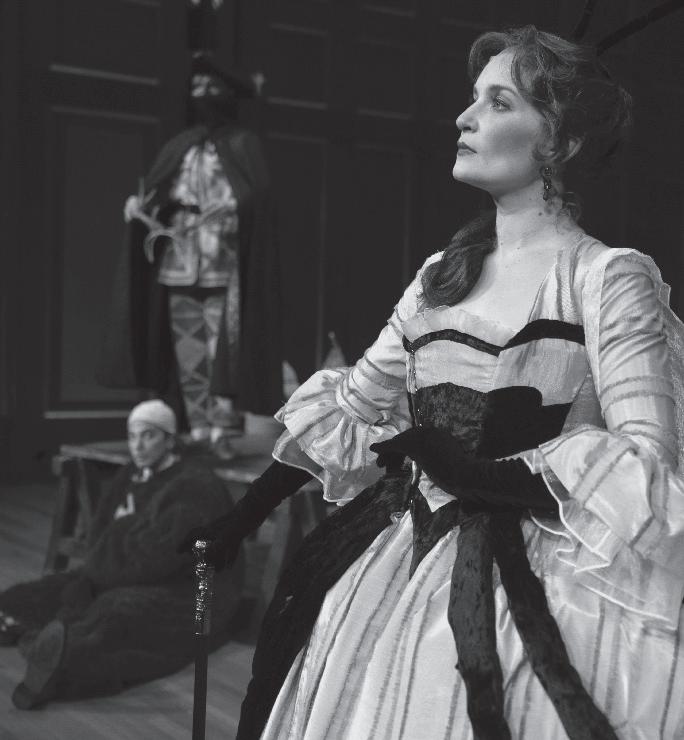
56 BOSTON EARLY MUSIC FESTIVAL
DANIELLE REUTTER-HARRAH IN BEMF’S 2021 PRODUCTION OF TELEMANN’S PIMPINONE
PHOTO: KATHY WITTMAN
September 2017 in conjunction with a sixcity North American tour, and a recording of Johann Sebastiani’s St. Matthew Passion was released in March 2018. Four Baroque opera releases followed in 2019 and 2020: a disc of Charpentier’s chamber operas Les Plaisirs de Versailles and Les Arts Florissants was released at the June 2019 Festival, and has been nominated for a Grammy Award; the 2013 Festival opera, Handel’s Almira, was released in late 2019, and received a Diapason d’Or. Lalande’s chamber opera Les Fontaines de Versailles was featured on a September 2020 release of the composer’s works; Christoph Graupner’s opera Antiochus und Stratonica was released in December 2020.
CELEBRATED CONCERTS
Some of the most thrilling musical moments at the biennial Festival occur during one of the dozen or more concerts presented around the clock, which always include the acclaimed Boston Early Music Festival Orchestra led by Orchestra Director Robert Mealy, and which often feature unique, once-in-a-lifetime collaborations and programs by the spectacular array of talent assembled for the Festival week’s events. In 1989, BEMF established an annual concert series bringing early music’s leading soloists and ensembles to the Boston concert stage to meet the growing demand for regular world-class performances of
early music’s beloved classics and newly discovered works. BEMF then expanded its concert series in 2006, when it extended its performances to New York City’s Gilder Lehrman Hall at the Morgan Library & Museum, providing “a shot in the arm for New York’s relatively modest early-music scene” (New York Times).
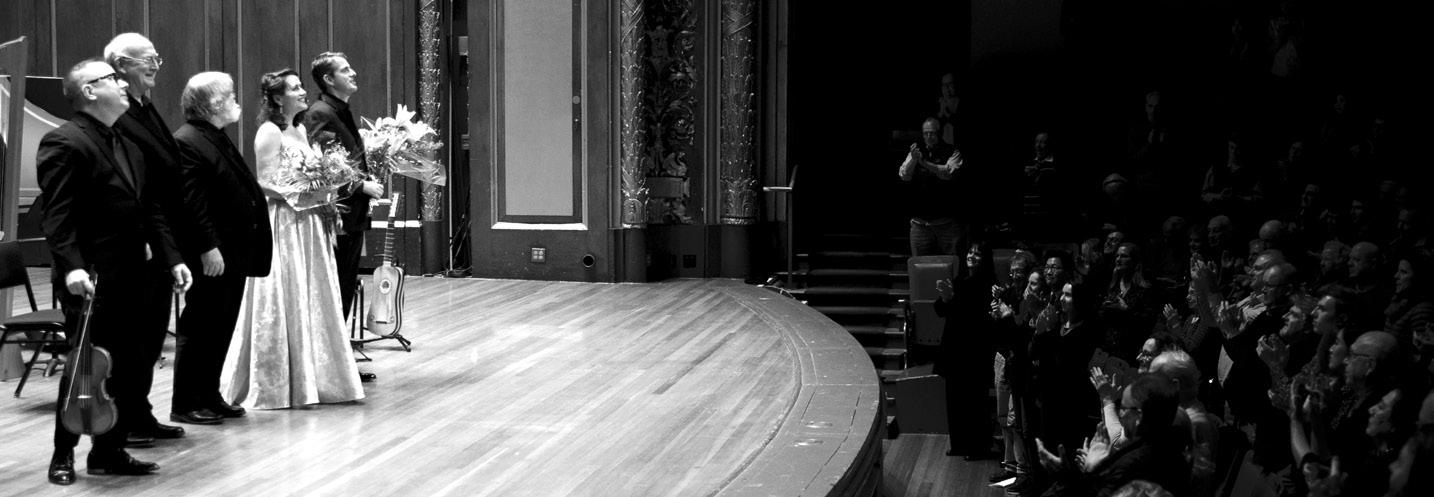
WORLD-FAMOUS EXHIBITION
The nerve center of the biennial Festival, the Exhibition is the largest event of its kind in the United States, showcasing nearly one hundred early instrument makers, music publishers, service organizations, schools and universities, and associated colleagues. In 2013, Mozart’s own violin and viola were displayed at the Exhibition, in their first-ever visit to the United States. Every other June, hundreds of professional musicians, students, and enthusiasts come from around the world to purchase instruments, restock their libraries, learn about recent musicological developments, and renew old friendships. For four days, they visit the Exhibition booths to browse, discover, and purchase, and attend the dozens of symposia, masterclasses, and demonstration recitals, all of which encourage a deeper appreciation of early music, and strengthen relationships between musicians, participants, and audiences. n
2022–2023 SEASON 57
A STANDING OVATION FOR LA STORIA DI ORFEO IN NOVEMBER 2019
PHOTO: KATHY WITTMAN
58 BOSTON EARLY MUSIC FESTIVAL Revenue from ticket sales, even from a sold-out performance, accounts for less than half of the total cost of producing BEMF’s operas and concerts; the remainder is derived almost entirely from generous friends like you. With your help, we will be able to build upon the triumphs of the past, and continue to bring you thrilling performances by today’s finest Early Music artists. Our membership organization, the FRIENDS OF THE BOSTON EARLY MUSIC FESTIVAL, includes donors from around the world. These individuals recognize the Festival’s need for further financial support in order to fulfill its aim of serving as a showcase for the finest talent in the field. PLEASE JOIN THE FRIENDS OF THE BOSTON EARLY MUSIC FESTIVAL BY DONATING AT ONE OF SEVERAL LEVELS: • Friend $45 • Partner $100 • Associate $250 • Patron $500 • Guarantor $1,000 • Benefactor $2,500 • Leadership Circle $5,000 • Artistic Director’s Circle $10,000 • Festival Angel $25,000 THREE WAYS TO GIVE: • Visit BEMF.org and click on “Give Now”. • Call BEMF at 617-661-1812 to donate by telephone using your credit card • Mail your credit card information or a check (payable to BEMF) to Boston Early Music Festival, 43 Thorndike Street, Suite 302, Cambridge, MA 02141-1764 OTHER WAYS TO SHOW YOUR SUPPORT: • Increase your philanthropic impact with a Matching Gift from your employer. • Make a gift of appreciated stocks or bonds to BEMF. • Planned Giving allows you to support BEMF in perpetuity while achieving your financial goals. • Direct your gift to a particular area that interests you with a Named Gift. QUESTIONS? Please e-mail Kathleen Fay at kathy@bemf.org, or call the BEMF office at 617-661-1812. Thank you for your support!
FRIENDS OF THE Boson Early Music Fesival
This list reflects donations received from July 1, 2021 to November 1, 2022
FESTIVAL ANGELS
($25,000 or more)
Anonymous (3)
Bernice K. & Ted† Chen
Brit d’Arbeloff
David R. Elliott†
Peter L. & Joan S. Faber
David Halstead & Jay Santos
George L. Hardman
Glenn A. KnicKrehm
David M. Kozak & Anne Pistell, in memory of their parents
Miles Morgan
Susan L. Robinson
Andrew Sigel, in memory of Richard Sigel & Carol Davis
Joan Margot Smith Piroska Soos†
ARTISTIC DIRECTORS’ CIRCLE
($10,000 or more)
Anonymous (2)
Anonymous, in memory of Ted Chen Katie & Paul Buttenwieser
Susan Denison
Susan Donaldson
Tony Elitcher & Andrea Taras
Donald Goldstein in memory of Constance Kellert Goldstein
Ellen T. & John T. Harris
Barbara & Amos Hostetter
Ruth McKay & Don Campbell
Lorna E. Oleck
Nina & Timothy Rose
Karen Tenney & Thomas Loring
Donald E. Vaughan & Lee S. Ridgway
LEADERSHIP CIRCLE
($5,000 or more)
Anonymous (2) Annemarie Altman
Mary Briggs & John Krzywicki
Diane & John Paul Britton
Douglas M. & Aviva A. Brooks
Marie-Pierre & Michael Ellmann
Lori Fay & Christopher Cherry
James A. Glazier
Mr. & Mrs. Thomas G. MacCracken
Heather Mac Donald & Erich Eichman Victor & Ruth McElheny
Bill McJohn
Kenneth C. Ritchie & Paul T. Schmidt
David Scudder, in memory of Marie Louise Scudder Will & Alexandra Watkins Christoph & Barbara† Wolff
BENEFACTORS

($2,500 or more)
Anonymous
Alan Brener
Beth Brown, in memory of Walter R.J. Brown Joan & Frank Conlon
Linzee Coolidge
Jean Fuller Farrington
Kathleen Fay John Felton & Marty Gottron
Katherine Goodman
Maarten Janssen & Rosan Kuhn-Daalmeijer
Robert E. Kulp, Jr.
Stephen Moody
Keith S. Tóth & John B. Herrington III Maria van Kalken & Hal Winslow
GUARANTORS
($1,000 or more)
Anonymous (6)
Dee Dee & John Brinkema, in memory of Bobby Brinkema Pamela & Lee Bromberg
Amy Brown & Brian Carr
James Burr
Shannon Canavin & Kevin Goodrich
John A. Carey
Carla Chrisfield & Benjamin D. Weiss
J. R. Colofiore
Mary Cowden
Richard & Constance Culley
The Cusack Family, in memory of J. Howland Auchincloss Belden & Pamela Daniels
Peter & Katie DeWolf
Dorothy Ryan Fay†
Michael E. Fay
Peter B. & Harriette Griffin
Phillip Hanvy
Rebecca & Ronald Harris-Warrick
H. Jan & Ruth H. Heespelink
Michael Herz & Jean Roiphe
Jane Hoover
Alan M. King
Fran & Tom Knight
Amelia J. LeClair & Garrow Throop
John Leen & Eileen Koven
Drs. Peter Libby & Beryl Benacerraf†
Catherine Liddell
Harriet Lindblom, in memory of Daniel Lindblom Mark & Mary Lunsford
William & Joan Magretta
John S. Major & Valerie Steele
David McCarthy
Marilyn Miller
John M. & Bettina A. Norton
Keith Ohmart & Helen Chen
Clara M. & John S. O’Shea
Susan Pundt
Alice Robbins & Walter Denny, in honor of Kathy Fay
Michael Robbins
Jose M. Rodriguez & Richard A. Duffy
Michael & Karen Rotenberg
Kevin Ryan & Ozerk Gogus
Irwin Sarason, in memory of Suzanne Sarason
2022–2023 SEASON 59
Joanne Zervas Sattley
Lynne & Ralph Schatz
Arah Schuur
Laila Awar Shouhayib
Cynthia Siebert
Raymond A. & Marilyn Smith
Elizabeth Snow
Kerala Snyder
Murray & Hazel Somerville, in honor of Robert Mealy
Catherine & Keith Stevenson
David & Jean Stout
Lisa Teot
Adrian & Michelle Touw
Kathy H. Udall
Patrick Wallace & Laurie McNeil
Peter J. Wender
Allan & Joann Winkler
PATRONS
($500 or more)
Anonymous (5)
Morton Abromson & Joan Nissman
Eric Hall Anderson
Barry & Sarita Ashar
Louise Basbas
Michael & Sheila Berke
John Birks
Tracey Blueman & Brandon L. Bigelow
Elizabeth A.R. & Ralph S. Brown, Jr., in honor of Kathleen Fay
Julie Brown & Zachary Morowitz
Carolyn Bryant-Sarles
Robert Burton & Karen Peterson
Elizabeth Canick
Robert & Elizabeth Carroll
David J. Chavolla
Sherryl & Gerard Cohen
Dr. & Mrs. Franklyn W. Commisso
Geoffrey Craddock
Eric & Margaret Darling
Jeffrey Del Papa
Carl E. Dettman
JoAnne Walter Dickinson
Diane L. Droste
Ross Duffin & Beverly Simmons, in honor of Kathleen Fay
Alan Durfee
Charles & Elizabeth Emerson
Thomas G. Evans
Martin & Kathleen Fogle
Claire Fontijn, in memory of Dr. Arthur Fontijn
Elizabeth French
Frederick & Barbara Gable
Bruce A. Garetz
Sarah M. Gates
David & Harriet Griesinger
Elizabeth B. Hardy, in memory of Renate Wolter-Seevers
Dr. Robert L. Harris
Sally Hodges
Linda Hodgkinson
Thomas & Sonja Ellingson Hout
George Humphrey
Robert & MaryEllen James
Laura Jeppesen & Daniel Stepner
Paul & Alice Johnson
Judith L. Johnston & Bruce L. Bush, in memory of Daniel Lindblom
Ronald Karr
Barry Kernfeld & Sally McMurry
Jason Knutson
Kathryn Mary Kucharski
Robert & Mary La Porte
Frederick V. Lawrence, in memory of Rosemarie Lawrence
Sarah Leaf-Herrmann
Joanne & Carl Leaman
Rob & Mary Joan Leith
Lawrence & Susan Liden Marcia Lieberman Roger & Susan Lipsey James Liu & Alexandra Bowers Dr. Gary Ljungquist
Kenneth S. Loveday MAFAA
Jeffrey & Barbara Mandula
June Matthews
Amy & Brian McCreath
Alan & Kathy Muirhead
Robert Neer & Ann Eldridge
Louise Oremland
Richard & Lois Pace, in honor of Peter Faber
William J. Pananos
Henry Paulus
Kitty Pell
Gene & Margaret Pokorny
Amanda & Melvyn Pond
Tracy Powers
Harold I. Pratt
Paul Rabin & Arlene Snyder
Martha J. Radford
Arthur & Elaine Robins
Patsy Rogers
Carlton & Lorna Russell
Phil & Catherine Saines
Suzanne Sarason†
Sharon Scaramozza
Len & Louise Schaper
Wendy Shattuck & Sam Plimpton
Bettina Siewert, M.D. & Douglas L. Teich, M.D., in memory of David Elliott
Campbell Steward
Theresa & Charles Stone
Carl Swanson
Lonice Thomas
Peter Tremain
Reed & Peggy Ueda
Michael Wise & Susan Pettee
Kathleen Wittman & Melanie Andrade
Louisa Woodville
ASSOCIATES
($250 or more)
Anonymous (8)
Joseph Aieta III
Nicholas Altenbernd
Debra K.S. Anderson
Margaret Angelini & John McLeod
Neil R. Ayer, Jr. & Linda Ayer
Mary Baughman
William & Ann Bein
Peter Bronk & Susan Axe-Bronk
Caroline Bruzelius Carlo Buonomo
Robert Burger
Frederick Byron Anne Chalmers & Holly Gunner
Mary Chamberlain
JoAnne Chernow
Floyd & Aleeta Christian
John K. Clark & Judith M. Stoughton
Derek Cottier & Lauren Tilly
Donna Cubit-Swoyer
Warren R. Cutler
Elizabeth C. Davis
Carl & May Daw
Leigh Deacon
Ellen R. Delany
Katharine B. Desai
Michael DiSabatino, in honor of Nancy Olson
60 BOSTON EARLY MUSIC FESTIVAL
Ellen Dokton & Stephen Schmidt
Charles & Sheila Donahue
Ms. Helen A. Edwards
David Emery & Olimpia Velez
David & Noel English
Susan Fairchild & Jeff Buxbaum
Austin & Eileen Farrar
Lori Fay & Christopher Cherry, in memory of Gerry Weber
Gregg, Abby & Max Feigelson
Charles Fisk & Louis Risoli
Kent Flummerfelt, in memory of Jane Flummerfelt
Jonathan Friedes & Qian Huang
Sandy Gadsby & Nancy Brown
The Goldsmith Family
The Graver Family
Laury Gutierrez & Elsa Gelin
Eric & Dee Hansen
G. Neil & Anne Harper
Joan E. Hartman
Jasjit & Donald L. Heckathorn
Diane Hellens
Mary Hepburn, in honor of Laura Jeppesen
James & Ina Heup
Jennifer L. Hochschild & C. Anthony Broh
Roderick J. Holland
Jessica Honigberg
Alex Humez
Charles Bowditch Hunter
Jean Jackson, in memory of Louis Kampf
Patrick G. Jordan
Dian Kahn
Elizabeth Kaplan
Thomas F. Kelly & Peggy Badenhausen
Louis & Susan Kern
Robert L. Kleinberg
Scott-Martin Kosofsky & Betsy Sarles
Jasper Lawson
Susan Lewinnek
Joan Lippincott
Robert & Janice Locke
Rodolfo Machado & Jorge Silvetti
Professor Bruce C. MacIntyre
Quinn MacKenzie
Marietta Marchitelli
Carol Marsh
Anne H. Matthews
Anne & William McCants
William McLaughlin
David Montanari & Sara Rubin
Dr. & Mrs. Arthur Ness
Kevin Oye & June Hsiao
John R. Palys
Eugene Papa
Robert Parker
David & Beth Pendery
Joseph L. Pennacchio Hon. W. Glen Pierson & Hon. Charles P. Reed
Anne & François Poulet
Rodney J. Regier
Marge Roberts
Sherry & William Rogers
Ellen Rosand
Alison & Jeff Rosenberg, in honor of Martha Gottron & John Felton Nancy & Ronald Rucker
Rusty Russell
Paul Rutz, in memory of Sandra Henry Charles & Mary Ann Schultz
Alison M. Scott
David Sears
Harvey A. Silverglate, in memory of Elsa Dorfman Louisa C. Spottswood
Paola Stone, in memory of Edmondo Malanotte Monica Strauss & Mark Vangel Ralph & Jeanine Swick
Richard Tarrant
Kenneth P. Taylor Mark S. Thurber & Susan M. Galli
Edward P. Todd Nancy M. Tooney John & Dorothy Truman Peter & Kathleen Van Demark Delores & Robert Viarengo Thomas & LeRose Weikert
Marina & Robert Whitman
John Wolff & Helen Berger
Susan Wyatt Ellen L. Ziskind
The Zucker Family
PARTNERS
($100 or more)
Anonymous (12) Greg Abbe
Maria Adams
Martha Ahrens
Druid Errant D.T. Allan-Gorey
Tom & Judy Anderson Allen, in honor of Kathy & Maria
William Ames
Julie Andrijeski & J. Tracy Mortimore
Renee Ashley
Peter Bals
Lois Banta
Dr. David Barnert & Julie A. Raskin Rev. Joseph & Nancy Bassett
Alan H. Bates & Michele Mandrioli
Trevor & Dax Bayard-Murray, in memory of Roger Lakins
Elaine Beilin
Lawrence Bell
Alan Benenfeld
Helen Benham
Judith Bergson
Larry & Sara Mae Berman
Ann & Richard Bingham, in honor of Kathy Udall
Barbara R. Bishop
Thomas N. Bisson, in memory of Carroll Bisson
Sarah Bixler & Christopher Tonkin
Wes Bockley & Amy Markus
Deborah Boldin & Gabriel Rice
Richard Borts
Sally & Charlie Boynton
David Breitman & Kathryn Stuart
Joel Bresler
Andrew Brethauer
Laura Brewer & Neil Gershenfeld
Derick & Jennifer Brinkerhoff
Catherine & Hillel Shahan Bromberg
David C. Brown
Robert Brown
Susan Bryant
Andrew J. Buckler
Russell & Dee Burgett
Jean C. Burke
John H. Burkhalter III
Judi Burten, in honor of Phoebe Larkey
Joseph Cantey
Pamela Carley & Lawrence Zukof
Eleanor Anne Carlson
Richard & Lois Case
Robert B. Christian Daniel Church & Roger Cuevas
2022–2023 SEASON 61
Edward Clark & Joan Pritchard
John Clark
Joel I. Cohen, in honor of Anne Azéma
Dr. Martin Cohen & Dr. Rae Jacobs Cohen
Saul B. & Naomi R. Cohen
Carol & Alex Collier
Lois Evelyn Conley
Joseph & Françoise Connors
Mary C. Coward & John Empey
Robert B. Crane
Dan & Sidnie Crawford
Martina Crocker, in memory of William T. Crocker
Matthew & Ellen Cron
Gray F. Crouse
Christopher Curdo
James Cyphers
Ruta Daugela
Mr. & Mrs. Patrick J. Day
Kate Delaney
Richard DesRosiers
Mr. & Mrs. Dennis Dewitt
Deborah & Forrest Dillon
Kathryn Disney
Tamar & Jeremy Kaim Doniger
Priscilla Drucker
Laura Duffy
John W. Ehrlich
Karen M. El-Chaar, Esq.
Mark Elenko
Anne Engelhart & Douglas Durant
Charles Epstein
Jane Epstein
Paula Erikson
Jake Esher
Richard Fabian
Lila M. Farrar
Marilyn Farwell
Nicole Faulkner
Grace A. Feldman, in honor of Bernice Chen
Kevin Feltz
Annette Fern
Janet G. Fink
Carol L. Fishman
Dr. Jonathan Florman
Patrick Joseph Fox, in honor of Dr. Nancy Olson
Gary Freeman
Peter Frick
Friends
Ronald & Gisela Geiger
Stephen L. Gencarello
Monica & David Gerber
Hans Gesell
Rebecca Gifford
Barbara Godard
Michael Goldberg
Diane Goldsmith
Jeffrey Goldsmith
Lisa Goldstein Nancy L. Graham
Kim T. Grant
Lorraine & William Graves
Winifred Gray
Mary Greer
Thomas H. & Lori B. Griswold
John Gruver & Lynn Tilley
Peter F. Gustafson
Suzanne & Easley Hamner
Barbara & Markos Hankin
David J. Harris, MD
Elizabeth Harris
Barbara & Samuel L. Hayes III
Donatus Hayes
Elwood Headley
Karin Hemmingsen
Catherine & John Henn
Katherine A. Hesse
Peter & Peg Hewitt
Raymond Hirschkop
John & Olivann Hobbie
Sterling & Margaret Hopkins
Valerie Horst & Benjamin Peck
Beth F. Houston
David Howlett
Wayne & Laurell Huber
Judith & Alan Hudson
Keith & Catherine Hughes
Joe Hunter & Esther Schlorholtz
Francesco Iachello
Deborah L. Jameson
Donna Jeker
Gayle Johnson
Robert & Mary Johnson
Robert & Selina Johnson
Robin Johnson
David K. Jordan
Marietta B. Joseph June Kagdis
Lorraine Kaimal, in memory of Jagadish C. Kaimal
David Keating
Seamus & Marjorie Kelly
Roger & Mary Jane Kelsey
Joseph J. Kesselman, Jr.
David P. Kiaunis
John N. Kirk
Rebecca Klein
Pat Kline
Kathryn Kling
George Kocur
Crystal Komm & Christopher Potter
Ellen Kranzer
Benjamin Krepp & Virginia Webb
Lisa Kugelman
Bob Kunzendorf & Liz Ritvo
Peter A. Lans
Tom Law
David A. Leach & Laurie J. LaChapelle
William Lebow
Alison Leslie
Ricardo & Marla Lewitus
Rebecca Lightcap
Laura Loehr
Mary Maarbjerg
Dr. Arnold Matlin & Dr. Margaret Matlin, Ph.D. Sally Mayer
Lee McClelland
George McKee
Mr. Daniel P. Melish, in memory of William Paul Melish Gerald & Susan Metz
Amy Meyer Margo Miller
Nathaniel & Judith Mishkin
Richard Molitor
Jennifer Moxley & Steve Evans
Rodney & Barbara Myrvaagnes
Myrna Nachman
Debra Nagy, in honor of Robert Mealy
Paul & Rebecca Nemser
Nancy Nicholson
Jeffrey Nicolich
Caroline Niemira
Lyle & Patricia Nordstrom
Nancy Nuzzo
Karen Oakley & John Merrick
Nancy Olson
David & Claire Oxtoby
Cosmo & Jane Papa
Faith Parker
62 BOSTON EARLY MUSIC FESTIVAL
Susan Patrick, in memory of Don Partridge
Pauline & Mark Peters
Phillip Petree
John Petrowsky
Bici Pettit-Barron
Elizabeth V. Phillips
Susan Porter
David Posson
Stephen Poteet & Anne Kao
Christa Rakich & Janis Milroy
Sandra Ray
Susan Reutter-Harrah
Julia & Stephen Roberts
Liz & David Robertson
Randy Robinson
Sue Robinson
Sue Robinson
Dennis & Anne Rogers
Philip W. Rosenkranz
Lois Rosow
Peter & Linda Rubenstein, in memory Malcolm Cole
Gregory Salzman
R.F. Scholz & M.B. Kempers
Richard Schroeder & Jane Burns
Lynn & Mary Schultz
Joyce Schwartz
Melbert Schwartz
Jean Seiler
Miriam N. Seltzer
Terry Shea & Seigo Nakao
Aaron Sheehan & Adam Pearl
Chuck Sheehan
Michael Sherer
Alexander & Kathy Silbiger
Mark Slotkin
Elizabeth Wade Smith
Elliott Smith & Wendy Gilmore
Jennifer Farley Smith & Samuel Rubin
David Snead & Kate Prescott
Jon Solins
Joseph Spector & Dale Mayer
Scott Sprinzen
Kathryn Steely
Elliott & Barbara Strizhak
Imogene A. Stulken & Bruce Brolsma
Richard Stultz
Richard Stumpf
Elizabeth C. Sulak
Nancy Rutledge Swan
Jonathan Swartz
Lois Swirnoff
Elizabeth Sylvester
Jeffrey & Boryana Tacconi, in memory of Nikolay Tonev
Pierre Trepagnier & Louise Mundinger
Dr. Tyler J. Vanderweele
Judy von Loewe
Richard & Virginia von Rueden Lee Vorderer & Robert Bass
Robert & Therese Wagenknecht
John Wand
Hilary & John Ward
Prof. Eldon L. Wegner
Cheryl S. Weinstein
Esther Weinstein
Mary E. Wheat
Barbara K. Wheaton
The Rev. Roger B. White, in memory of Joseph P. Hough Susan & Charles Wilkes
Robert Williams, in honor of Annette Fern
David L. Williamson
Phyllis S. Wilner
Charlotte Winslow
Mr. & Mrs. Dwayne Wrightsman
† deceased
FOUNDATIONS & CORPORATE SPONSORS
Anonymous (2)
Aequa Foundation
American Endowment Foundation
Applied Technology Investors
BNY Mellon Charitable Gift Fund Bank of America Charitable Gift Fund
The Barrington Foundation, Inc.
The Bel-Ami Foundation
The Boston Foundation
Boston Private Bank & Trust Company
Lynde and Harry Bradley Foundation, Inc.
Gregory E. Bulger Foundation
Burns & Levinson LLP
The Catherine and Paul Buttenwieser Foundation
Cabot Family Charitable Trust
Cambridge Community Foundation
Cambridge Trust Company
Cedar Tree Foundation
Cembaloworks of Washington
City of Cambridge
The Columbus Foundation
Combined Jewish Philanthropies
Community Foundation of Western MA
Connecticut Community Foundation
Constellation Charitable Foundation
The Fannie Cox Foundation
The Crawford Foundation
CRB Classical 99.5, a GBH station
The Dusky Fund at Essex County Community Foundation
Eastern Bank Charitable Foundation
Fidelity Charitable
Fiduciary Trust Charitable
French Cultural Center / Alliance Française of Boston
Ann and Gordon Getty Foundation
GlaxoSmithKline Foundation
Goethe-Institut Boston
The Goldman Sachs Philanthropy Fund
The Florence Gould Foundation
GTC Law Group
Haber Family Charitable Foundation
Hausman Family Charitable Trust
The High Meadow Foundation
Houghton Mifflin Harcourt
The Isaacson-Draper Foundation
The Richard and Natalie Jacoff Foundation, Inc.
Jewish Communal Fund
Key Biscayne Community Foundation
Konstantin Family Foundation
Maine Community Foundation
Makromed, Inc.
Massachusetts Cultural Council
Mastwood Foundation
Morgan Stanley
National Endowment for the Arts
Newstead Foundation
Barbro Osher Pro Suecia Foundation
The Packard Humanities Institute
Plimpton-Shattuck Fund at The Boston Foundation
The Mattina R. Proctor Foundation
REALOGY Corporation
Renaissance Charitable
The Saffeir Family Fund of the Maine Community Foundation
Scofield Auctions, Inc.
Schwab Charitable
2022–2023 SEASON 63
The Seattle Foundation
Shalon Fund
TIAA Charitable Giving Fund Program
The Trust for Mutual Understanding
The Tzedekah Fund at Combined Jewish Philanthropies
The Upland Farm Fund
U.S. Small Business Administration
U.S. Trust/Bank of America Private Wealth Management
Vanguard Charitable Walker Family Trust at Fidelity Charitable Archie D. & Bertha H. Walker Foundation
Marian M. Warden Fund of The Foundation for Enhancing Communities
The Windover Foundation
MATCHING CORPORATIONS
21st Century Fox Allegro MicroSystems
Amazon Smile AmFam
Analog Devices
Aspect Global Automatic Data Processing, Inc. Biogen Carrier Global Dell, Inc. Exelon Foundation
FleetBoston Financial Corporation Genentech, Inc. Google Grantham, Mayo, van Otterloo & Co. LLC
John Hancock Financial Services, Inc. Community Gifts Through Harvard University Houghton Mifflin Harcourt
IBM Corporation Intel Foundation
Investment Technology Group, Inc. (ITG)
Microsoft Corporation
MLE Foundation, Inc. Natixis Global Asset Management Novartis US Foundation
NVIDIA Pfizer Pitney Bowes Salesforce.org
Silicon Valley Community Foundation Takeda Tetra Tech United Technologies Corporation Verizon Foundation Xerox Foundation
64 BOSTON EARLY MUSIC FESTIVAL

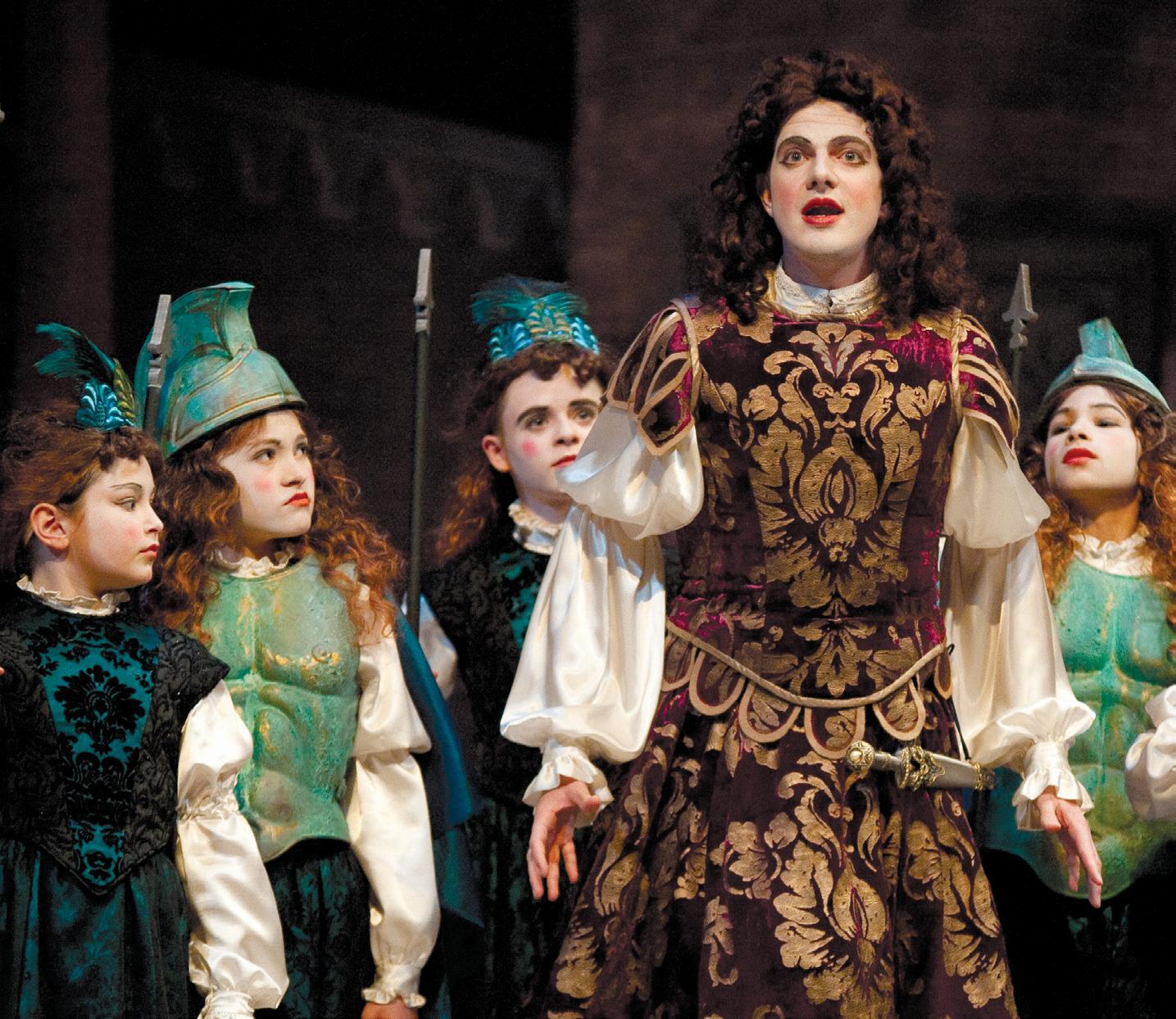
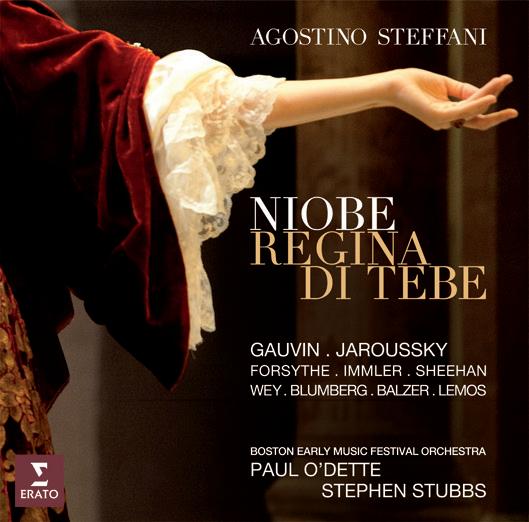
ALSO AVAILABLE Boson Early Music Fesival
Stubbs,
INTERNATIONALLY AWARD-WINNING Opera CDs ORDER TODAY AT BEMF.ORG AGOSTINO STEFFANI NIOBE REGINA DI TEBE “Masterful.” —GRAMOPHONE
Paul O’Dette & Stephen
Musical Directors
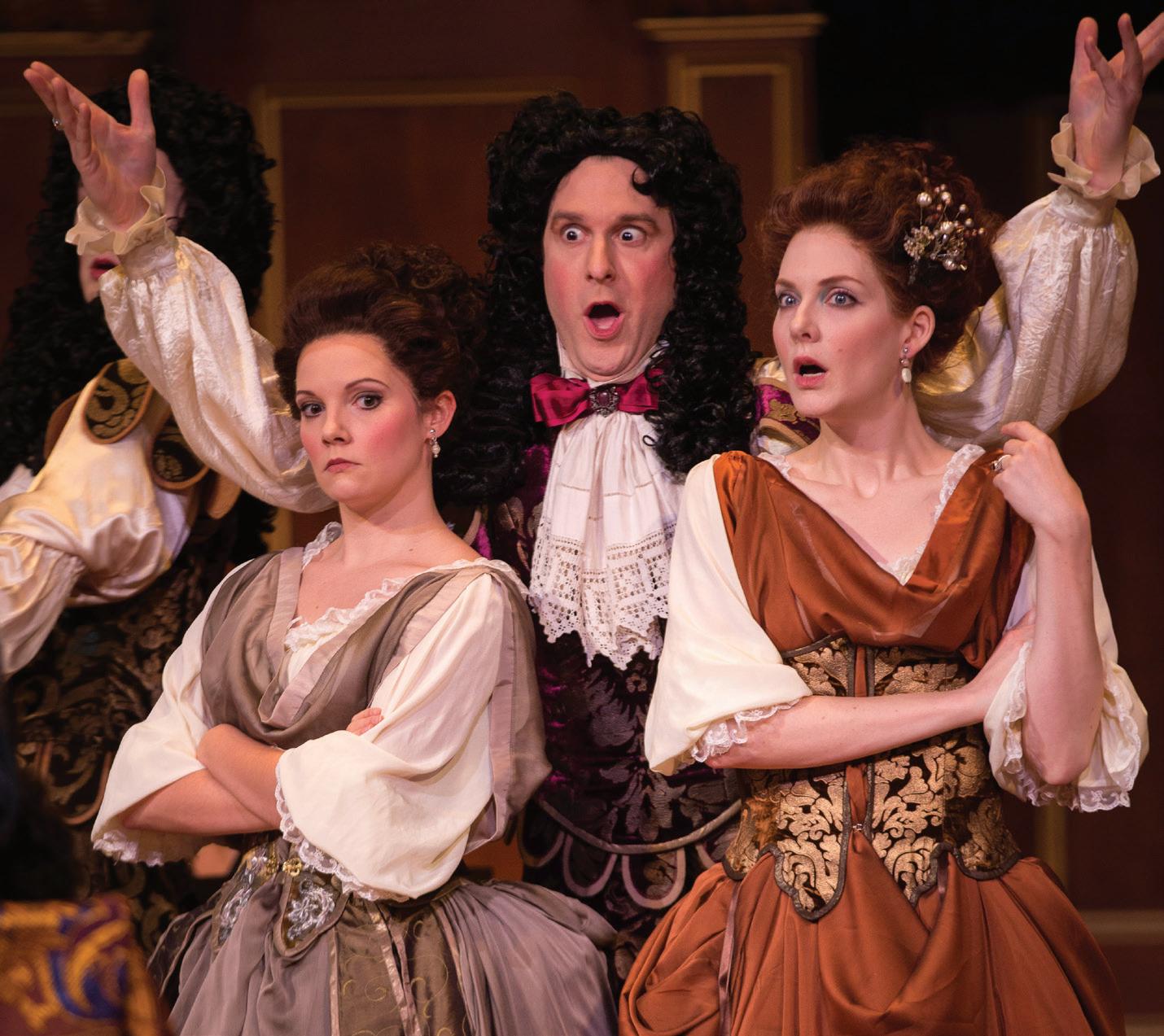


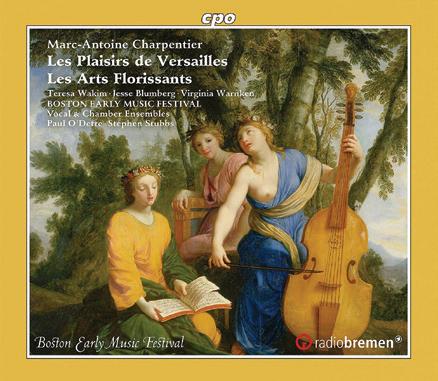
2019 GRAMMY NOMINEE! ALSO AVAILABLE Boson Early Music Fesival Paul O’Dette & Stephen Stubbs, Musical Directors INTERNATIONALLY AWARD-WINNING Opera CDs ORDER TODAY AT BEMF.ORG MARC-ANTOINE CHARPENTIER Les Plaisirs de Versailles Les Arts Florissants
That Feeling You Get
















classical.org | on-air • online • in the app




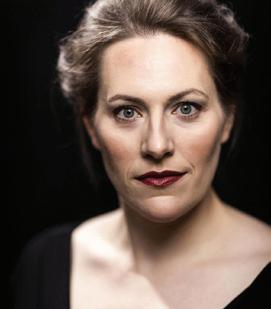
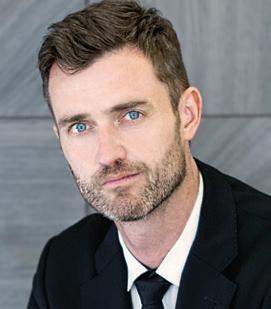
CHAMBER OPERA n JUNE 10, 2023 | Boston, MA n JUNE 23 & 24, 2023 | The Berkshires, MA CENTERPIECE OPERA n JUNE 4, 7, 9 & 11, 2023 | Boston, MA Boson Early Music Fesival OPERA • CONCERTS • EXHIBITION A weeklong celebration of Early Music with Opera, Concerts, the world-famous Exhibition, and so much more. Opera Tickets are NOW ON SALE at BEMF.org! A Celebration of Women Join us in Boston for our 22nd biennial extravaganza | JUNE 4 –11, 2023 HENRY DESMAREST’S After the divine sorceress Circé welcomes Ulisse and his weary companions to her island home, the forces of love, magic, and fate clash and threaten to ensare them all.