

Aligning Cost, Care and Collaboration
Inside UC Health’s successful model for engaging clinicians early to balance financial stewardship with clinical quality.

Connect Every Beat
Empower Every Decision
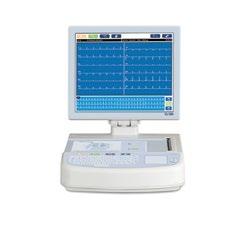
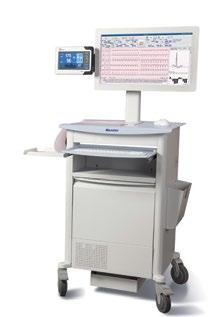
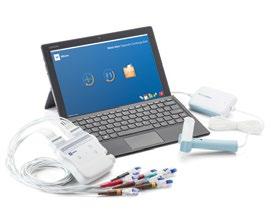
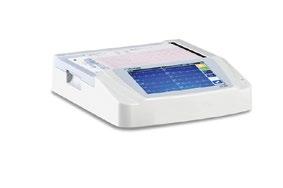
By delivering trusted, high-quality cardiac data through advanced ECG devices and data management solutions, Baxter’s Cardiac Care Solutions help clinicians drive clarity, build confidence, and make informed decisions on every step of a patient’s cardiac journey.






























The Journal of Healthcare Contracting is published bi-monthly by Share Moving Media
350 Town Center Ave, Ste 201 Suwanee, GA 30024 -6914
Phone: 770/263-5262
FAX: 770/236-8023
e-mail: info@jhconline.com www.jhconline.com
Editorial Staff
Editor
Graham Garrison ggarrison@sharemovingmedia.com
Senior Writer and Columnist
R. Dana Barlow rickdanabarlow@wingfootmedia.biz
Editor-in-Chief, Dail-eNews
Jenna Hughes jhughes@sharemovingmedia.com
Content Creator Pete Mercer pmercer@sharemovingmedia.com
Art Director Brent Cashman bcashman@sharemovingmedia.com
Publisher John Pritchard jpritchard@sharemovingmedia.com
Circulation Laura Gantert lgantert@sharemovingmedia.com
The Journal of Healthcare Contracting (ISSN 1548-4165) is published monthly by Share Moving Media, 350 Town Center Ave, Ste 201, Suwanee, GA 30024-6914. Copyright 2026 by Share Moving Media. All rights reserved. If you would like to subscribe or notify us of address changes, please contact us at the above numbers or address.
POSTMASTER: Send address changes to Share Moving Media, 350 Town Center Ave, Ste 201, Suwanee, GA 30024-6914. Please note: The acceptance of advertising or products mentioned by contributing authors does not constitute endorsement by the publisher. Publisher cannot accept responsibility for the correctness of an opinion expressed by contributing authors.

2 Publisher’s Letter: Strengthening the Chain: Inside Healthcare’s Push for Resilience, Collaboration and Innovation
4 Central to Care
How Saint Francis Health System leverages enterprise-wide coordination and data-driven insights to improve purchasing, streamline operations, and free hospital space for clinical care.
6 The Next Generation Supply Chain
Premier’s Bruce Radcliff and David Reitzel on why AI and partnership models are transforming healthcare.
10 Closing Montana’s Healthcare Supply Gap
New Intermountain Health facility aims to strengthen healthcare supply resilience, centralize distribution and support hospitals statewide with faster access to critical medical supplies.
Inside UC Health’s successful model for engaging clinicians early to balance financial stewardship with clinical quality.
pg18
26 What Can AI Do to Help Value Analysis?
Practical AI applications that will enhance value analysis work.
32 The Quiet Force Behind Patient Care
Often unseen and underappreciated, healthcare supply chain is emerging as a critical driver of quality and consistency. Experts say its real value lies in ensuring clinicians never have to pause care to find what they need.
44 Supply Chain … in Spaaaaaaaaaace!
ASA’s lunar program signals more than exploration – it hints at a future where logistics extends beyond Earth, redefining how and where supply chains operate.
46 Leadership Behaviors Powering Better Outcomes
From agile decision-making to transparent communication, leaders outline the habits that keep patient care at the center of every supply chain choice.
48 Industry News
Strengthening the Chain: Inside Healthcare’s Push for Resilience, Collaboration and Innovation

As we move deeper into 2026, one theme continues to emerge across healthcare supply chains nationwide: resilience is no longer optional. It is foundational to patient care.
In this issue of The Journal of Healthcare Contracting, we spotlight healthcare organizations that are redefining what modern supply chain leadership looks like — not simply by reducing costs, but by strengthening clinical partnerships, improving operational resilience and keeping patient care at the center of every decision.
Our cover story examines how UC Health successfully aligned clinicians, supply chain and executive leadership to generate $30 million in savings over two years without compromising quality. Their approach demonstrates the growing importance of clinician engagement, data transparency and disciplined value analysis in navigating today’s volatile supply environment. In an era of inflation, shortages and service instability, their story reinforces a critical point: the most effective supply chains are collaborative ones.
We also take readers to Montana, where Intermountain Health is building the state’s first large-scale medical supply warehouse. What began as a resiliency initiative has evolved into a broader vision for regional “micro fulfillment” strategies that bring supplies closer to care sites while supporting local economies
and improving emergency preparedness. The project highlights how logistics infrastructure is increasingly becoming a strategic extension of patient care delivery.
Beyond these feature stories, this issue explores a larger industry shift in our article, The Quiet Force Behind Patient Care. Supply chain leaders from organizations including AdventHealth, Cleveland Clinic, Premier Inc. and Vizient discuss how supply chain has evolved from a behind-thescenes operational function into a strategic driver of quality, consistency and clinical performance. Increasingly, supply chain decisions influence not only cost management, but also patient safety, clinician workflows and the overall care experience. Taken together, these stories reinforce a powerful reality: healthcare supply chain may often be invisible to patients, but its impact is felt in every procedure, every bedside interaction and every moment clinicians can focus fully on care instead of searching for supplies.
As always, thank you for reading The Journal of Healthcare Contracting. We hope this issue sparks new ideas, meaningful conversations and continued innovation across the healthcare supply chain community.

John Pritchard

See what’s possible

Distributors and self-distributing health systems now have complete transparency of their Dukal products’ from purchase order to delivery.
Product Assigned at the Factory Level
Product Tracking at the Item Level
Compatible Excel Reporting
Automated Communication
Worldwide Tracking

Scan

> Learn more at dukal.info/insight

Central to Care
How Saint Francis Health System leverages enterprise-wide coordination and data-driven insights to improve purchasing, streamline operations, and free hospital space for clinical care.
Centralized contracting is gaining traction across health systems as organizations look to better manage costs, standardize purchasing and align decisions across increasingly complex networks. At one Oklahoma-based IDN, leaders say the shift has been both deliberate and transformative over the past three years.
Phillip Smith, Executive Director of Supply Chain at Saint Francis Health System, said decentralized contracting often leads departments to make decisions in isolation, without considering enterprise-wide impact. That approach can limit negotiating power and obscure opportunities tied to scale.

“When departments contract independently, they often don’t consider the health system as a whole,” Smith said. As systems expand through mergers and acquisitions, like Saint Francis’ network that includes multiple hospitals across the Tulsa region, coordinating purchasing becomes even more critical.
Smith noted that individual departments typically lack access to sophisticated benchmarking tools or deep contract analysis capabilities. As a result, negotiations may rely on historical pricing rather than current market conditions. Centralized contracting teams, by contrast, can aggregate data across the enterprise and benchmark against national standards to secure more favorable terms.
Tools and data sources, such as those offered by GPOs, can further strengthen this approach by providing visibility into pricing trends and performance benchmarks. Smith emphasized that without reliable data, organizations risk negotiating without a clear understanding of achievable rates.
Balancing centralization with local flexibility remains a key consideration. Smith said successful models pair contracting expertise with clinical insight by embedding supply chain professionals alongside physicians and departmental leaders. This collaboration ensures that decisions reflect both financial goals and clinical realities.
“Contracting staff must participate in physician meetings and surgical strategy sessions to understand the key players,” he said, adding that aligning physicians across multiple sites can be one of the most difficult aspects of centralized contracting. Sole-source agreements often yield the best pricing, but achieving consensus among physicians on standardized products can be challenging.
Phillip Smith
Value analysis has also evolved into a more strategic function under centralized models.
Rather than focusing solely on individual contracts, teams are engaging physicians in broader discussions about utilization, product standardization and cost-saving opportunities. Smith cited examples where introducing alternatives –such as disposable scopes in certain procedures – can influence vendor pricing and drive more favorable agreements.
Physician engagement, he added, is generally positive when approached collaboratively. Employed physicians, in particular, tend to be receptive when presented with data-driven strategies that demonstrate both cost savings and alignment with clinical outcomes.
Overall, centralized contracting is enabling health systems like Saint Francis to move beyond transactional purchasing toward a more coordinated, data-informed strategy that supports both financial performance and clinical priorities.
Reclaiming space for clinical use
Alongside centralized contracting, Saint Francis Health System has also rethought how it manages inventory and distribution, culminating in the development of an off-site distribution center designed to improve efficiency, resilience, and space utilization.
Smith said the decision was driven by limitations within the system’s original infrastructure. “When I joined Saint Francis, we had limited on-site storage – a few days’ supply in a 10,000-square-foot basement warehouse for a 1,000-bed hospital,” he said. In his view, that constraint made it difficult to maintain adequate inventory, particularly as expectations for supply resilience increased following the pandemic.
“Hospitals don’t have the luxury of excess space,” Smith added. “That space is better used for patient care.” By moving distribution offsite, the organization was able to expand its storage capacity while freeing up valuable hospital real estate for clinical functions such as dialysis services and simulation labs.
The transition required investment in logistics, including transportation and staffing, but Smith emphasized that the long-term benefits outweighed the costs. “The value of reclaiming hospital space far outweighed the cost of running the warehouse,” he said. The off-site model also supports better inventory continuity and positioning across the health system’s facilities.
From a supplier standpoint, Smith said the shift did not create friction. “Supplier relationships didn’t change at all,” he noted. “Off-site distribution actually consolidated receiving and improved efficiency.” He added that the broader industry has largely moved in this direction, with many vendors already equipped to support outsourced warehousing models.
Many distributors provide off-site distribution services, sometimes operating facilities more cost-effectively than hospitals can internally.
Looking ahead, Smith said the next step is to determine which other Saint Francis facilities can be supplied from that warehouse. Eliminating the on-site storeroom in other smaller hospitals will continue to add efficiency to the system. “We can carry more product, reduce touches and save on freight by storing product in bulk as much as possible,” he said.
At a broader level, Smith pointed to ongoing challenges shaping supply chain priorities across the industry, including cybersecurity threats, vendor backorders, and supply disruptions. “Maintaining strong vendor relationships is critical,” he said. “You have to ensure surgeries – the hospital’s revenue engine – aren’t interrupted.”
He also noted that workforce stability remains a key concern. Retaining skilled supply chain professionals requires a combination of competitive compensation, flexibility, and opportunities for professional growth. Meanwhile, emerging technologies, including artificial intelligence, are beginning to play a larger role in contract intelligence and operational optimization.
“Across everything we’re doing – centralized contracting, off-site warehousing, and vendor consolidation – the goal is the same,” Smith said. “Be proactive, stay efficient, and support the clinical mission without interruption.”

The Next Generation Supply Chain
Premier’s Bruce Radcliff and David Reitzel on why AI and partnership models are transforming healthcare.
As healthcare organizations face mounting pressure to improve resilience, reduce costs and navigate ongoing disruption, Premier, Inc. is making a bold bet on the future of the supply chain. The company recently unveiled a sweeping, multi-year technology investment aimed at building an AI-powered platform designed to unify data, deliver real-time insights and ultimately reshape how health systems make decisions.
For Bruce Radcliff, President of Supply Chain Services, the timing is no coincidence. Rapid advances in artificial intelligence over the past 12 to 18 months have converged with intensifying financial pressures, workforce strain and long-standing gaps in data integration.
“The call to action has never been greater,” he said, pointing to an industry at a critical inflection point.
In interviews with Radcliff and David Reitzel, Chief Solutions Officer, a clear picture emerges: the traditional healthcare supply chain model – built on siloed systems, retrospective analytics and fragmented decision-making – is
no longer sufficient for the complexity of today’s environment.
A model built for a different era
Historically, health systems have relied on point solutions tailored to specific functions, such as procurement, quality or finance.
“The traditional model was well intended,” Radcliff said. “We needed to be in that model to get to the next one.”
But those systems were inherently linear, while real-world decision-making is anything but. Health system leaders must weigh cost, quality, outcomes, resiliency and operational realities simultaneously. In the legacy model, those considerations were handled in isolation, often producing conflicting signals.
“You’d have one vertical telling you to go left, another to go right and another to stay straight,” Radcliff said. “The real answer is somewhere in the middle.”
That fragmentation has become increasingly problematic as pressures mount. Rising expenses, declining reimbursement and growing operational complexity have exposed the limitations of siloed thinking.
The data dilemma
For Reitzel, the core issue is not a lack of data, but the inability to use it effectively.
“What’s broken is all the siloed data and the inability for people to consume it,” he said. “We can’t continue to run our businesses in Excel.”
Many health systems have invested heavily in analytics dashboards, but those tools were never designed to drive decisions. “Dashboards were designed to identify what happened,” Reitzel said. “That’s not a decisionmaking platform.”
Radcliff echoed that sentiment, comparing current analytics environments to trying to bake without having ingredients prepared in advance. Data exists across multiple systems –ERP platforms, electronic health records and procurement tools – but remains scattered and difficult to unify.
“The scorecards are built on ingredients that are sitting in different places,” he said. “It’s too hard to bring them together into a unified product.”
The result is a persistent gap between insight and execution.
Bridging insight and action
Both leaders point to workflow integration as the missing link. Traditional analytics are often static and lagging, limiting their usefulness in real-time decision-making.
“You have something that’s historical and dated,” Radcliff said. “That’s not a great platform for execution.”
Instead, the goal is to embed intelligence directly into workflows, influencing decisions before they are made rather than analyzing them after the fact. Radcliff likens the approach to online retail recommendations.
“If you’re about to make a decision, you should have information that helps guide you in that moment,” he said. “That’s what’s missing today.”
Reitzel added that empowering frontline teams is critical. While executives may have access to insights, the real opportunity lies in equipping staff and mid-level leaders with actionable data at the point of work.
“That’s the golden process,” he said. “Connecting data to the point of transaction and making it usable in real time.”


David Reitzel
Bruce Radcliff
The rise of the intelligence layer
At the center of Premier’s strategy is what both leaders describe as an “intelligence layer” – a unified platform that integrates disparate data sources and applies advanced analytics to uncover patterns and guide decisions.
For Radcliff, the value lies in reducing bias and expanding perspective.
“If you’re a finance person, you think in financial terms. If you’re a clinician, you think clinically,” he said. “The platform helps uncover what you might be missing.”
This approach challenges long-held assumptions, including the idea that any single data source – such as invoices – can serve as the ultimate source of truth.
The future replaces that manual effort with automated, dynamic platforms that continuously integrate and analyze data.
“Knowing what you spend is very different than knowing how you spend it and what outcomes you get,” Radcliff said.
Reitzel emphasized that the intelligence layer extends beyond technology. It requires organizational change, new workflows and a shift in how decisions are made.
“It’s not just about more data,” he said. “It’s about how data, people and processes come together to create better decisions.”
Why partnership matters
As some health systems explore building their own AI capabilities, both executives argue that scale and collaboration are essential.

Reitzel noted that providers are already stretched thin, focused on delivering care and managing daily operations. Strategic partners can bring specialized expertise, scalable technology and a focus on measurable outcomes.
“It’s not about selling products anymore,” he said. “It’s about delivering outcomes.”
Radcliff pointed to the importance of data scale in training effective AI models. Individual organizations, he said, may lack the breadth of data needed to generate meaningful insights.
“The more information you can feed the system, the more value you can create,” he said. “Scale matters.”
From whiteboards to platforms
Today, many health systems still rely on manual processes to connect insights across systems – what Radcliff describes as a “CSI-style” approach of piecing together data points on a metaphorical whiteboard.
The future, he said, replaces that manual effort with automated, dynamic platforms that continuously integrate and analyze data. “The platform becomes that whiteboard,” he said. “But it’s doing the work for you.”
This shift has the potential to significantly reduce the time required to move from data to decision, freeing up leaders to focus on strategy and execution rather than data gathering.
A widening divide
Looking ahead, both leaders expect a growing gap between organizations that successfully adopt these capabilities and those that do not.
Health systems that embrace integrated platforms and data-driven decision-making will be better equipped to navigate uncertainty, from financial pressures to unforeseen disruptions.
“They’ll have the framework and the vocabulary to handle whatever comes next,” Radcliff said.
Reitzel believes speed will be the defining factor. “Success will come down to who can make better decisions faster,” he said.
In an environment defined by constant change, organizations that fail to evolve risk being overtaken by external pressures – whether economic, regulatory or operational.
Instead, he encourages health systems to take proactive steps, even if the path forward is not perfect.
“You can learn and pivot,” he said. “But doing nothing means the industry will decide for you.”
From vendors to value partners
As healthcare supply chains evolve, so too must the role of suppliers. According to Radcliff, suppliers are increasingly being asked to move beyond price-driven conversations and demonstrate broader value across the care continuum.
“It isn’t just about economics anymore,” he said. “Value is cost, quality, outcomes, resiliency, transparency and how something is operationalized.”
That shift reflects a growing alignment between providers and suppliers around a shared goal: improving patient care while maintaining sustainable business models. Suppliers are now looking for ways to better articulate their impact – not just in terms of cost savings, but in how their products and services contribute to overall system performance.
Reitzel added that deeper collaboration and data sharing will be essential. By working within integrated platforms and validating data more consistently, suppliers and health systems can create a more transparent and efficient ecosystem.
The result, he said, could be a fundamental shift in relationships. “It’s moving from vendors to true partners,” Reitzel said – where success is defined not by transactions, but by shared outcomes.
Closing Montana’s Healthcare Supply Gap
New Intermountain Health facility aims to strengthen healthcare supply resilience, centralize distribution and support hospitals statewide with faster access to critical medical supplies.

Coming from an auto parts distribution background, Scott Dana was struck by the lack of in-state healthcare logistics for Montana when he entered the industry more than a decade ago. In a state where most industries rely on local distribution hubs, hospitals and clinics have long depended on shipments from hundreds of miles away.
“I just thought it was amazing that it’s easier for me to get a spark plug for my car than a lifesaving device,” said Scott Dana, Director of Supply Chain Operations in Montana for Intermountain Health.
An ambitious initiative from Intermountain Health aims to bridge that gap. The health system will complete construction this September on Montana’s first large-scale medical supply warehouse, a centralized hub designed to improve reliability and speed of deliveries across the state.
The facility, the Intermountain Consolidated Services Center, will store and distribute medical supplies and support a network of hospitals, clinics and other care sites statewide. It will also provide services such as laundry and transportation.
Health system leaders said the project is especially critical in Montana, where the nearest major distribution centers are hundreds of miles away in cities such as Salt Lake City and Denver. Harsh winter weather and mountainous terrain can further complicate deliveries, sometimes delaying essential supplies.
Once operational, the center is expected to handle more than 500,000 medical supply items each year and support a courier network making about 25,000 stops annually.
Added layer of supply chain security
Leaders at Intermountain Health say a new centralized supply warehouse in Montana is expected to streamline operations, reduce costs and improve hospitals’ ability to respond to disruptions.
A key efficiency comes from shifting storage out of hospitals and into a dedicated distribution facility. Traditionally, hospitals maintain large onsite inventories in central supply areas – space that could otherwise be used for patient care.
“Hospital square footage is very expensive compared to warehouse square footage,” said Dana. By relocating inventory to the new CSC, facilities can repurpose clinical space for revenue-generating and patient-focused activities.
The new model also changes how supplies move. Instead of delivering bulk shipments to a central storage area and redistributing them internally, the warehouse will send smaller, more precise orders directly to supply closets on nursing floors and clinical units. That approach reduces the need to hold large inventories while improving efficiency and access for care teams.
Additional savings come from consolidating deliveries. The facility will house both medical supply distribution and a laundry operation, allowing a single truck to deliver linens and
supplies together, rather than requiring separate shipments from different vendors.
Beyond day-to-day efficiencies, the warehouse is expected to strengthen supply chain visibility and resilience. Under the current model, hospitals rely on third-party distributors, limiting insight into upstream inventory levels. With a centralized system, leaders say they will be able to identify shortages earlier and respond more quickly to disruptions.
Those improvements are especially important in Montana, where geographic isolation presents unique risks. Unlike urban markets such as Denver or Salt Lake City – where multiple distributors allow for same-day or even samehour deliveries – many Montana facilities are at least a day away from critical supplies.
“That extra distance means you have to be prepared,” Dana said, noting that back orders and inventory gaps can have more immediate consequences. “If we don’t have it, we’re not going to be able to get it the same day.”
By bringing inventory closer to care sites, the new warehouse is expected to provide an added layer of security for clinicians, particularly in high-stakes settings such as operating rooms, where delays in obtaining supplies can directly impact patient care.
Local jobs, new technology expected to shape economic impact
For Intermountain Health officials, the project was initially driven by supply chain resiliency concerns in a geographically isolated state. But they say its broader impact on the local economy is becoming equally significant.
“That was really our primary factor, looking at that market and saying supply resiliency is a concern up there,” said Gordon Slade,
Senior System Director of Distribution Services at Intermountain Health. “But the second thing that I think it really addresses too is local economic stimulus.”
Slade said the facility – which will combine distribution, transportation and laundry operations, with potential future pharmacy functions – is expected to generate a range of local jobs that previously would have been handled out of state. That includes positions in warehouse operations, logistics coordination and transportation services, as well as linen/laundry jobs.
He noted that keeping those roles in Montana means more healthcare-related infrastructure dollars remain in the state rather than flowing to regional hubs elsewhere.
Construction of the facility is also expected to deliver a near-term boost. While a national contractor is overseeing the project, Slade said roughly 95% of the work is being completed by local construction firms, with materials and labor sourced within the region. That, he said, helps inject money directly into the local economy during the build phase.
While a national contractor is overseeing the project, Slade said roughly 95% of the work is being completed by local construction firms, with materials and labor sourced within the region.

Once operational, the warehouse is expected to create permanent jobs tied to ongoing supply distribution, transportation coordination and laundry processing – roles that Intermountain Health leaders describe as foundational to the facility’s long-term economic footprint.
Slade emphasized that workforce development is closely tied to the organization’s broader mission. “We feel that is a significant part of our mission at Intermountain Health, to be supportive of local communities,” he said.
In addition to economic and resiliency benefits, the project is also positioned as a testing ground for new logistics technologies that could influence future facilities across the health system.
Slade said the Montana facility will likely begin operations without full automation, allowing teams to establish stable workflows first.
Slade said Intermountain Health is exploring “micro fulfillment” strategies that use smaller, regional distribution centers to complement a larger hub in Salt Lake City. Similar satellite-style facilities are also planned or under consideration in markets such as Las Vegas and Denver.
Because the Montana site is smaller than a traditional mega-warehouse, Slade said it will rely on flexible automation rather than large-scale fixed infrastructure. One key innovation under review involves autonomous mobile robots that move supplies through the facility.
Instead of fixed conveyor systems, the robots would transport carts of supplies to workers who complete picking and packing

2026 ADA Standards Are Here!

In 2024, the DOJ and HHS adopted new Medical Diagnostic Equipment (MDE) standards issued by the US Access Board. As a result, exam tables at facilities receiving federal or state funding must now meet minimum height requirements to ensure accessibility for all patients. The deadline for compliance is coming soon.
By shortening those supply lines, the organization can reduce transportation costs and reinvest savings back into clinical services.
tasks at assigned stations. The system allows human workers and machines to collaborate, improving efficiency without requiring extensive structural automation.
Slade said the Montana facility will likely begin operations without full automation, allowing teams to establish stable workflows first. Once processes are refined, automation tools are expected to be introduced within six months to a year.
Regional “micro fulfillment” model ties supply chain to hospital design
Intermountain Health leaders say Montana’s new supply warehouse is part of a broader regional strategy that balances centralized efficiency with local responsiveness across multiple states.
At the top of that system is a large anchor facility in Salt Lake City, which serves as the system’s primary distribution hub for bulk storage and large-scale operations, including value-added services such as surgical kit assembly.
From there, smaller regional sites – including planned facilities in Montana, Las Vegas and Denver – function as “micro fulfillment” centers designed to serve nearby hospitals and clinics with faster, more direct deliveries.
“Our larger facilities are what we’ll develop as centers of excellence,” said Slade. “The regional facilities are really geared towards servicing the marketplace. They’re not designed for huge amounts of bulk storage.”
Instead, those satellite locations are intended to keep essential supplies close to care sites while relying on the larger hub for specialized or highvolume production.
Slade said the approach allows Intermountain Health to centralize complex work, such as assembling surgical kits, while ensuring smaller
facilities maintain full capability to support daily clinical needs.
The strategy is also influencing hospital construction itself in Montana.
According to supply chain leaders, the design of a new hospital in Billings was coordinated alongside the consolidated services center project. That planning reduced the need for large on-site storage areas, freeing up space that can be used for clinical care instead of inventory storage.
“We don’t need the square footage down in central supply like we do in some of these other hospitals,” said Dana.
Instead, the new hospital will feature redesigned supply rooms that combine medical supplies and clean linens in shared locations, allowing deliveries from the warehouse to flow directly into patient care areas more efficiently.
“Everything we do is an investment in patient care”
Ultimately, the new Montana supply warehouse is not just a logistics project – it is a long-term strategy tied directly to patient care, cost control and system resilience.
“The intent there is to mitigate against risk and resiliency challenges, as well as ensuring we’re providing care to the patients who need it most,” said Jeromie Atkinson, Chief Supply Chain Officer, Intermountain Health. “Everything that we do here is an investment in patient care at the end of the day.”
Atkinson said success over the next several years will be measured by how effectively the system can expand supply operations closer to where patients are served, particularly in regions far from major distribution hubs in Salt Lake City and Denver. By shortening those supply lines, he said, the organization can reduce

transportation costs and reinvest savings back into clinical services.
“Ultimately, when we save money, that’s money that goes directly to the bottom line that can be reinvested in patient care,” Atkinson said.
Leaders also pointed to resilience as a core benchmark for the facility. The consolidated services center is designed to function as a buffer during emergencies, including natural disasters and large-scale disruptions that could otherwise strain supply chains dependent on out-of-state vendors.
“That’s what happens if we have a natural disaster in the marketplace?” said Slade. “If you don’t have a CSC, you’re very reliant on others.”
Slade said lessons from the COVID-19 pandemic underscored the importance of controlling supply chains locally, rather than relying entirely on external distributors. Having inventory and distribution capacity within the state, he said, provides greater stability when national supply networks are strained.
Having inventory and distribution capacity within the state provides greater stability when national supply networks are strained.
He also emphasized that resilience extends beyond high-tech equipment or pharmaceuticals. Basic hospital needs – including linens and everyday consumables – are critical to keeping facilities operational.
“There’s a lot to be said about linen as well,” Slade said. “At the end of the day, the basic staples matter.”
As Montana’s first large-scale facility of its kind, the warehouse is also expected to serve as a model for future expansion across Intermountain Health’s regional network. Leaders said it will help define how smaller, localized distribution centers connect to larger “center of excellence” hubs while maintaining flexibility during emergencies.
For clinicians and supply chain teams alike, the goal is straightforward: fewer delays, fewer shortages and a more reliable flow of supplies to the bedside.
As Atkinson put it, “We won’t eliminate every variable of risk, but we’ll be able to buffer against most of them.”
2025 Cardinal Health™ Lab
Briefings
2025 Cardinal Health™ Lab Briefings
A year in review
A year in review
Total attendees
Total attendees
10,688
10,688
Hottest topics
Hottest topics
In 2025, Cardinal Health’s PACE-accredited Lab Briefings webinar series continued to lead the way in providing trusted monthly education designed for laboratory professionals. Each session connected the lab community with leading experts to address critical challenges and deliver actionable knowledge to help lab professionals thrive in a rapidly evolving healthcare landscape.
In 2025, Cardinal Health’s PACE-accredited Lab Briefings webinar series continued to lead the way in providing trusted monthly education designed for laboratory professionals. Each session connected the lab community with leading experts to address critical challenges and deliver actionable knowledge to help lab professionals thrive in a rapidly evolving healthcare landscape.
Total credit hours earned
Total credit hours earned
117,568
117,568
CAP accreditation checklist updates Chemical safety in the workplace
CAP accreditation checklist updates
January
January
Topic:
Topic:
Lab payment and policy outlook for 2025
Lab payment and policy outlook for 2025
The art of urine culture stewardship
Chemical safety in the workplace The art of urine culture stewardship
Febuary
Febuary
Topic:
Topic: 2024 CAP accreditation checklist updates
2024 CAP accreditation checklist updates
Top attendees Laboratory Manager Laboratory Director
Top attendees Laboratory Manager Laboratory Director
Medical Laboratory Scientist
Medical Laboratory Scientist
March
March
Topic: Chemical safety in the workplace
Topic: Chemical safety in the workplace
Speaker:
Speaker: Dennis Weissman, M.S.
Dennis Weissman, M.S.
April
April
Topic:
Topic: The clinical lab’s role in promoting better patient outcomes
The clinical lab’s role in promoting better patient outcomes
Speaker: James Crawford, MD, Ph.D.
Speaker: James Crawford, MD, Ph.D.
Speaker:
Stephen Sarewitz, MD, FCAP
Speaker: Stephen Sarewitz, MD, FCAP Gregory Gagnon, MD, FCAP
Gregory Gagnon, MD, FCAP
May
May
Topic:
Topic: Beyond the label: novel applications of cardiac biomarkers
Beyond the label: novel applications of cardiac biomarkers
Speaker: Christopher W. Farnsworth, Ph.D., DABCC
Speaker: Christopher W. Farnsworth, Ph.D., DABCC
Speaker:
Speaker: Margaret Blaetz, CLC, MLT(AMT), Mcm, MLT(ASCP), CCCP(AAPOL)
Margaret Blaetz, CLC, MLT(AMT), Mcm, MLT(ASCP), CCCP(AAPOL)
June
June
Topic: From hidden to found: Giving a voice to medical lab science
Topic: From hidden to found: Giving a voice to medical lab science
Speaker: Austin Korczak, MLS (ASCP)CM
Speaker: Austin Korczak, MLS (ASCP)CM
“Very informational webinar! I learned a lot and the speaker was incredibly knowledgeable on the subject.” – Webinar series attendee
“Very informational webinar! I learned a lot and the speaker was incredibly knowledgeable on the subject.” – Webinar series attendee

“One of the most valuable CE presentations I have attended. Clear, concise and easy to understand.” – Webinar series attendee
“One of the most valuable CE presentations I have attended. Clear, concise and easy to understand.” – Webinar series attendee
August
August
Topic:
Topic:
Evaluating urine fentanyl tests for clinical implementation
Evaluating urine fentanyl tests for clinical implementation
Speaker: Rongrong Huang, Ph.D.
Speaker: Rongrong Huang, Ph.D.
September
September
Topic:
Topic: Data-driven optimization of diagnostic thresholds
Data-driven optimization of diagnostic thresholds
Speaker: Jieli Shirley Li, MD, Ph.D., DABCC, FCACB
Speaker: Jieli Shirley Li, MD, Ph.D., DABCC, FCACB
October
October
Topic:
Topic: Lab compliance and test utilization: Prepare for 2026 and beyond
Lab compliance and test utilization: Prepare for 2026 and beyond
Speaker:
Speaker: Andrew Fletcher, MD, MBA, CPE, CHCQM, FCAP
Andrew Fletcher, MD, MBA, CPE, CHCQM, FCAP
Danielle Tangorre, JD, MS
Danielle Tangorre, JD, MS
November
November
Topic:
Topic:
The intricacies and complexities of pharyngitis diagnostics
The intricacies and complexities of pharyngitis diagnostics
Speaker: Susan Butler-Wu, Ph.D., D(ABMM), FIDSA
Speaker: Susan Butler-Wu, Ph.D., D(ABMM), FIDSA
Explore our full archive of webinars.
Explore our full archive of webinars. Earn CE credits for up to six months after the live event.
Earn CE credits for up to six months after the live event.

Aligning Cost, Care and Collaboration
Inside UC Health’s successful model for engaging clinicians early to balance financial stewardship with clinical quality.
At Ohio-based UC Health, LLC, supply chain is a strategic partner in delivering high-quality patient care even as the healthcare supply market has become increasingly volatile due to inflation, shortages, supplier exits and service-level instability. Against this backdrop, UC Health’s supply chain team partnered closely with clinicians and system leadership to generate $30 million in savings over a two-year period to improve market benchmark and strengthen resilience – without compromising patient quality.
According to Derrick Billups, MSHA, CMRP, FACHE, Vice President of Supply Chain and Support Services, that success started with intentionally building the right team and culture.
“Key team member qualities include leadership, adaptability, analytical thinking, strong communication skills, and the ability to work effectively across both clinical and operational functions,” Billups said. “In today’s healthcare environment, supply chain professionals must thrive in a fast-paced environment and with cross functional teams – partnering with clinicians, operations and finance to align priorities and deliver results.”
Those capabilities became even more critical as UC Health pursued aggressive savings targets in parallel with a widespread supply market instability. Achieving $30 million in savings over a two-year period required a high number of product conversions across multiple categories.
Billups emphasized that accurate data and communication were non-negotiable. “Team members must have access to accurate data and interpret data to make informed decisions to build trust with clinicians and executives,” he said. “That trust is what allows supply decisions to happen at scale without disrupting care.”
Maintaining alignment during cost pressure or disruption requires a strong sense of purpose. “We emphasize transparency and purpose as the foundation of our team culture,” Billups said. “Behind every supply decision or pallet delivery is a patient.”
That perspective helps guide priorities. “That’s why we align every action with supporting providers and improving care,” he said. “To maintain momentum, we celebrate incremental wins and share progress toward long-term
goals, ensuring the bigger picture remains clear – even during periods of cost pressure or supply disruption.”
Firm foundations
“Vendors who demonstrate consistent availability and dependable delivery bring far more total value than those focused on price alone.”
UC Health’s collaborative culture has driven measurable results. A great example is the organization’s recent approach to supply optimization and standardization, Billups said. “We built a culture of collaboration where clinicians are engaged throughout the process, ensuring decisions reflect both clinical priorities and operational goals.”
A key component is the organization’s Clinical Review Committees (CRC), composed of physicians who serve as primary users in each category (example: Cardiology – drug eluting stents). “We start with data and walk them through supply recommendations starting with clinical quality, then opportunities related to supplier mix and standardization that would improve cost efficiency without affecting patient care,” said Kristen Crawford, Director of Strategic Sourcing.
She added that the CRC process is designed for speed and engagement. “We designed the CRC structure to wrap up in four to six weeks from start to finish, which helped us move quickly while still keeping clinicians closely involved,” Crawford said. Increased physician involvement has strengthened buyin and decision-making.
During this period, UC Health also reduced its Vizient Price Competitive Index by 10 points, reaching best-in-class performance. “We focused on four strategic levers,” Billups said, including clinician partnerships, contract optimization, benchmarking, and external partnerships with Vizient and Captis. Standardization of

high-dollar supplies played a central role. “By narrowing product and supplier options, we could offer suppliers more committed volume,” Crawford said. “In return, we earned better pricing and higher tier positions.” That commitment also helped UC Health maintain supply continuity during periods of market disruption, when suppliers prioritized consistent, consolidated partners.

Value beyond price
At UC Health, cost reduction only works if quality is protected.
“Clinical quality and patient safety are absolutely non-negotiable,” Billups said. “Every decision begins with that commitment.”
The organization applies a disciplined value analysis framework, evaluating every product request across three dimensions: clinical evidence, patient safety and financial impact. The structure ensures that cost savings never come at the expense of care delivery.
Collaboration with clinicians is essential.
“This begins with partnering and listening,” Billups said. “We engage clinicians early in the decision-making process to understand their clinical priorities and challenges.”
For UC Health, vendor evaluation goes beyond cost. “Price is certainly important, but supply reliability matters just as much,” said Crawford. “Great pricing doesn’t help if the product is unavailable from the manufacturer or distributor. Vendors who demonstrate consistent availability and dependable delivery bring far more total value than those focused on price alone.”
This broader definition of value has guided collaboration with clinical teams. Early partnerships with service lines such as orthopedics and
cardiology helped align sourcing strategy with clinical needs while improving costs.
Leading through uncertainty
Recent years have tested hospitals all across the country, not just at UC Health, with supply chain market disruptions and resilience. “Supply disruptions and tariffs have been two of the most significant challenges we have faced,” Billups said. UC Health is evolving how it measures resilience. The organization identified supply “showstoppers” – critical supplies that could halt operations – and ensures clinically validated alternatives are in place. In addition, UC Health responded by strengthening distributor relationships, implementing formal resilience plans and dedicating a full-time role to manage supply disruptions – a decision that proved critical as activity increased with product allocations and clinically approved product substitutes.
Coordination across departments is critical. “Keeping everything stable during major supply disruptions comes down to coordination and clear communication,” said Zack Gapinski, Director of Clinical Integration. For UC Health, that meant creating clear escalation paths, aligning nursing leadership with supply chain strategy, and ensuring clinical teams had advanced visibility into substitutions or allocations. “When disruption hits, speed and clarity matter,” Gapinski added. “Everyone needs to understand not just what is changing, but why it’s changing and how it affects patient care.”
That coordination relied heavily on accurate, reliable data – particularly at the foundational level of supply systems. Accurate data systems also play a key role. “If the item master isn’t accurate, nothing downstream runs the way it should,” said Deanna Inabnitt,
Derrick Billups
Kristen Crawford
First-of-its-kind program
Guaranteed 45 days of inventory on hand at key distributor warehouse locations
No cost and no contracts required for customers

HOSPITALS

POST-ACUTE FACILITIES NON-ACUTE LOCATIONS






Director of Purchasing. “Keeping the item master clean and up to date is one important contribution we made.”
Inabnitt emphasized that item master integrity became even more important during periods of high disruption, when substitute products, emergency sourcing or rapid conversions were required. “When we had to pivot quickly, we needed confidence that item attributes, units of measure, clinical approvals and supplier information were correct,” she said. “That accuracy is what allowed clinical teams to trust the products arriving at the bedside and operational teams to execute without delays.” Resilience is now
embedded in strategy. “We have embedded supply resilience as a core component of our strategy,” Billups said, including supplier partnerships and data-driven forecasting. When it comes to building a resilient supply chain team, Gapinski emphasized mindset and adaptability as critical differentiators. “The people who excel are naturally curious and comfortable challenging old assumptions in a constructive way,” he said. In an environment defined by constant change, those traits enable teams to question the status quo, respond quickly to disruptions and collaborate effectively. Clear communication and strong problem-solving skills,
Deanna Inabnitt
Luigi Oliverio
Zack Gapinski

he added, are essential for navigating uncertainty and maintaining stability across the organization. Maintaining alignment requires consistent communication and recognition of progress.
“Shining a light on successful conversions, savings, or operational improvements reminds everyone that their work truly matters,” he said.
For Luigi Oliverio, Director of Materials Management, the success of UC Health’s savings and conversion efforts ultimately hinged on execution discipline at the front line – where strategy meets day-to-day operations. While sourcing strategies and clinical approvals guide decision-making, Oliverio emphasized that materials management
ensures those decisions are carried out reliably across care settings.
He noted that large-scale product conversions or supply disruptions must not result in disruption at the bedside. “Our responsibility was to make sure product substitutions or conversions are seamless – right product, right location, right timing,” Oliverio said. “This requires tight coordination with supply chain strategy, purchasing, nursing leadership, and clinical teams.”
Through this coordination, materials management helped translate system-level initiatives into consistent, uninterrupted care delivery.
Anticipating 2026 trends
As healthcare organizations move further into 2026, supply chain leaders are keeping a close eye on rising costs and economic pressures that could impact patient care. Derrick emphasized that while reimbursements remain largely flat, expenses across the healthcare system continue to climb.
“Costs are going up – technology, care delivery, human resources, and product pricing,” Billups said. “For supply chain, that means we need to mitigate those increases wherever possible to ensure our providers and patients still have what they need to meet outcomes.”
Healthcare supply chains are also navigating inflationary pressures layered on top of broader economic and geopolitical challenges. Tariffs, market disruptions, and potential price escalations all add complexity to procurement and inventory planning. “It’s about making sure we have the right product in the right place at the right time, while also managing market disruptions and inflation,” Billups explained.
The stakes are high: hospitals must balance rising supply costs against a healthcare system that has limited appetite – or ability –to absorb additional expenses. “Controlling inflationary increases in supplies and technology is critical in today’s environment of flat or declining reimbursements,” Billups said.
We see it.
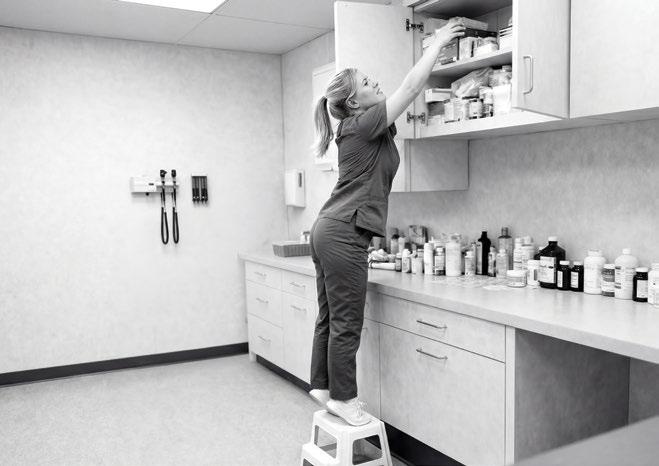
Strained Reaching
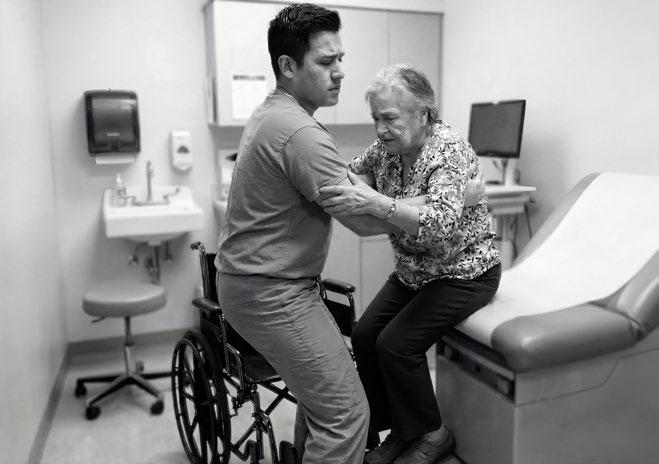

Incorrect Positioning
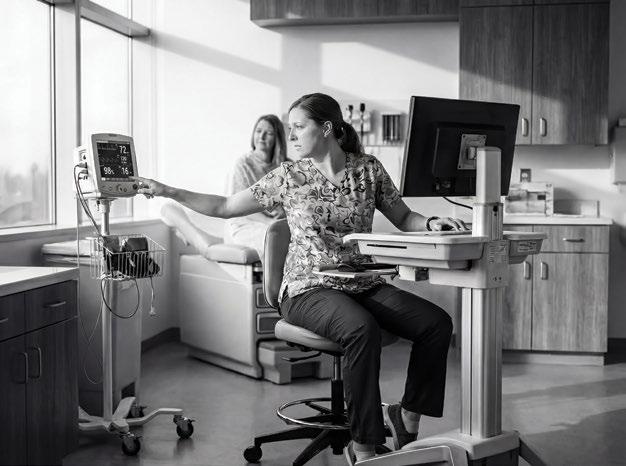
Inaccessible Equipment Manual Entry
The job is already hard. The environment shouldn’t make it harder.
2026 Midmark Corporation, Versailles, Ohio USA
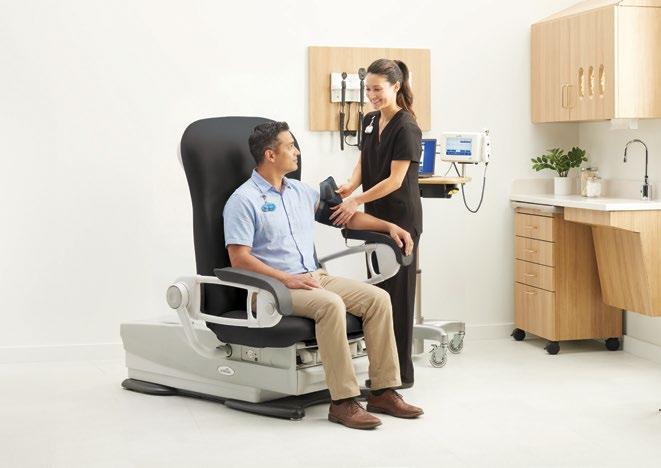
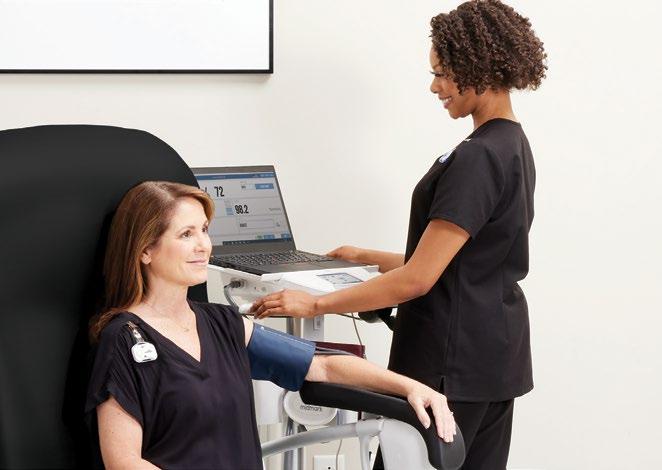
At Midmark, we start from that truth. And our mission is simple and serious: design every detail to remove friction where it shouldn’t exist. To give time, focus and energy back to the people doing the work.
Better care begins with every detail.
Scan to Learn More.
What Can AI Do to Help Value Analysis?
Practical AI applications that will enhance value analysis work.
BY JAMES RUSSELL, RN-BC, MBA, CVAHP, FAHVAP, DIRECTOR, VALUE ANALYSIS DEPARTMENT AT MD ANDERSON

Repetition reduction
There are key questions we want answered at the beginning of most projects. We typically divide our work into two categories: procedural and patient care. While there are similarities between them, procedural projects tend to extend further into areas such as margins, billing, coding, and reimbursement.
For this discussion, we’ll use patient care as the example.
Patient care projects include items that are not directly billed for – meaning there are no associated procedure codes. Examples include commodities such as needles, underpads, isolation gowns, and, my personal favorite, exam gloves. This category also includes items used during procedures that are not billed as individual line items, such as a Huber needle used to access a portacath, procedure-specific drapes and gowns, and convection warming devices used to prevent shivering in the post-anesthesia care unit (PACU).
Ultimately, if an item does not have its own Current Procedural Terminology (CPT) code, it is typically categorized as patient care.
Value analysis professionals are increasingly being asked, “How are you using artificial intelligence (AI), and how can we help?” This question comes from both internal stakeholders – such as Patient Safety, Performance Improvement teams, and executive leadership – as well as external partners, including vendors, manufacturers, and group purchasing organizations (GPOs).
Everyone wants to help. At least half of value analysis is math – numbers, calculations, and formulas. The other half involves relationships, team building, change management, and more. It’s the analytical side where AI can offer the most support.
In exploring this further, we quickly found that simply asking Microsoft Copilot or Google Gemini to wordsmith an email isn’t really leveraging AI in a meaningful way. What follows is a more in-depth look at this question –and, in short, how you and AI can work together to support this function.
Let’s imagine a clinician is exposed to a new product at a professional conference (something that never happens!). To make it fun, we’ll say it’s an exam glove that’s new to the market. When this happens, value analysis professionals typically want three questions answered by the requester:
1. What’s the problem you’re trying to solve?
2. How will this product help you solve it?
3. What data will you measure to evaluate its success?
If a clinician can’t answer these questions or can’t spare the time to do so, then they don’t really want
the product. One of my department’s goals is not to waste time or effort when the requestor is not invested. The requester has responsibilities throughout the new product process, and they must be willing to perform them. In our example, the requestor is excited, and their answers to our initial questions are as follows:
1. Our glove boxes are turned sideways and placed in a holder on the wall. Often, when I pull one glove out of a box, a dozen fall to the floor.
2. This new product has clear plastic covering the hole in the box where the gloves come out, with a slit that allows you to remove one glove at a time, eliminating the waste described above.
3. We will monitor the utilization of gloves per patient day for a three-month trial in our 28-bed Surgical Intensive Care Unit (SICU). Our hypothesis is that the number of gloves used, normalized by the per patient day metric, will decrease.
The question that really tells the story is number three. It shows the requester’s investment in the process and the outcome. Also, this request is really about the box, not the glove. Of course, we’ll go through the normal “glove vs. glove” comparisons, making sure the specifications meet our minimums, but let’s keep this simple.
There are several next steps in our process. Key to this is a description (with product numbers) of what the requester is using now. With that information, and where AI may be of service, is baseline data (what are we doing now?), and a comparison to what might happen if the project is successful. This step creates the source of truth, where we can make decisions, based upon objective data, not emotion. It also
provides comparison data to evaluate and track our impact if we convert to the requested product (cost savings, cost avoidance, utilization changes, etc.), which we track and report on routinely. Here is an abbreviated list of what this step entails.
Historical data:
Our spend, monthly, on exam gloves for the last 12 to 24 months.
Our utilization (by the “each”) monthly as well. Don’t give us how many boxes, cases or pallets we’ve bought!
Our “each” price per glove. This will help us compare to the requested item. It may come with a different quantity of gloves per box. Won’t matter, if we’re comparing “eaches.”
Also, most glove manufacturers charge more money for extra-large size gloves (more material is required to make them) and there often are fewer of them per box than the smaller sizes. Again, normalizing the data by size and reducing it to the “each” matters.
The departments that use the most gloves. We might want to involve the highest users in a trial, if necessary.
Forecasted data:
If the gloves have the same “each” price, and the requester’s hypothesis holds true, what will our numbers look like with a reduction in glove usage of 1%, 2% or 5%? How much cost savings might this equate to?
Does the requester’s glove cost more by the “each,” but the expected decrease in utilization is expected to offset that increase? What’s the benefit of a decrease in waste, both financially and environmentally?
How do the quantities per UOM compare? If the current product comes as 250 gloves per box and the requested product comes as 150 gloves per box, we will be going through, and throwing in the trash, more boxes to use the same number of gloves. Even a decrease in utilization might result in an increase to the medical waste stream and our carbon footprint.
I’ll stop here, but this highlights the complexity and adaptability involved in nearly every patient care product request. Procedural projects require even more data, including margins, case costs, and provider outcomes. A truly valuable AI tool would automatically pull historical and forecasted data when a request is submitted, creating credible, forwardlooking analyses instead of just static reports.

Precision diagnosis: The power of anatomic pathology
Anatomic pathology is essential to guiding diagnoses that inform treatment decisions across nearly every medical specialty. Histotechnologists and pathologists process tissue samples to obtain meaningful clinical data used in cancer diagnosis, transplant assessment and complex disease evaluation that can often lead to life-saving care.
Biopsies – procedures that remove samples of tissue for microscopic examination – are among the most impactful diagnostic procedures in healthcare. In the
United States alone, millions of biopsies are performed annually to confirm or exclude malignancy and characterize disease processes. An estimated 1.6 million breast biopsies are performed each year, with most yielding benign findings but still playing a vital role in ruling out cancer.1 Because the utility of a biopsy hinges on








Supporting you with analyzers, reagents, quality controls and beyond



Supporting you with analyzers, reagents, quality controls and beyond
At Cardinal Health, we’re proud to offer end-to-end capital equipment products and services designed to streamline your processes.
At Cardinal Health, we’re proud to offer end-to-end capital equipment products and services designed to streamline your processes.
At Cardinal Health, we’re proud to offer end-to-end capital equipment products and services designed to streamline your processes.
At Cardinal Health, we’re proud to offer end-to-end capital equipment products and services designed to streamline your processes.
Choice
Choice
Access analyzers from your preferred manufacturers across portfolios, including histology, blood bank, clinical chemistry, hematology and microbiology.
Choice
Choice
Access analyzers from your preferred manufacturers across portfolios, including histology, blood bank, clinical chemistry, hematology and microbiology.
Access analyzers from your preferred manufacturers across portfolios, including histology, blood bank, clinical chemistry, hematology and microbiology.
Financing
Access analyzers from your preferred manufacturers across portfolios, including histology, blood bank, clinical chemistry, hematology and microbiology.
Financing
Financing
Financing
Maximize your investment with flexible financing options like leasing services, GPO rebate opportunities and the ability to purchase multiple instruments on a single PO.
Maximize your investment with flexible financing options like leasing services, GPO rebate opportunities and the ability to purchase multiple instruments on a single PO.
Maximize your investment with flexible financing options like leasing services, GPO rebate opportunities and the ability to purchase multiple instruments on a single PO.
Maximize your investment with flexible financing options like leasing services, GPO rebate opportunities and the ability to purchase multiple instruments on a single PO.
Service
Service
Service
Service





Supporting you with analyzers, reagents, quality controls and


Supporting you with analyzers, reagents, quality controls and beyond




Experience expert consultation and ongoing support from diagnostic specialists and our sequestered lot and Quality Assurance Program (QAP) teams.
Experience expert consultation and ongoing support from diagnostic specialists and our sequestered lot and Quality Assurance Program (QAP) teams.
Specialized handling
Experience expert consultation and ongoing support from diagnostic specialists and our sequestered lot and Quality Assurance Program (QAP) teams.
Experience expert consultation and ongoing support from diagnostic specialists and our sequestered lot and Quality Assurance Program (QAP) teams.
Specialized handling
Depend on temperature-controlled distribution for your reagents and quality controls.
Specialized handling
Specialized handling
Depend on temperature-controlled distribution for your reagents and quality controls.
Depend on temperature-controlled distribution for your reagents and quality controls.
Depend on temperature-controlled distribution for your reagents and quality controls.
You’re one call away from expert consultation, focused solutions and cost savings. Whether you're expanding, upgrading or optimizing your lab, Cardinal Health delivers the products, expertise and support to help you make confident, cost-effective decisions.
You’re one call away from expert consultation, focused solutions and cost savings. Whether you're expanding, upgrading or optimizing your lab, Cardinal Health delivers the products, expertise and support to help you make confident, cost-effective decisions.
You’re one call away from expert consultation, focused solutions and cost savings. Whether you're expanding, upgrading or optimizing your lab, Cardinal Health delivers the products, expertise and support to help you make confident, cost-effective decisions.
Transparency without the hidden costs or fees; one point of contact; deep supplier relationships; always-on service: that's the Cardinal Health way.
Transparency without the hidden costs or fees; one point of contact; deep supplier relationships; always-on service: that's the Cardinal Health way.
Transparency without the hidden costs or fees; one point of contact; deep supplier relationships; always-on service: that's the Cardinal Health way.
We are your lab advisor. Expertise. Choice. Efficiency. Savings.
We are your lab advisor. Expertise. Choice. Efficiency. Savings.
For more information or to connect with a diagnostic specialist, scan the QR code or visit cardinalhealth.com/labcapitalequipment
For more information or to connect with a diagnostic specialist, scan the QR code or visit cardinalhealth.com/labcapitalequipment
For more information or to connect with a diagnostic specialist, scan the QR code or visit cardinalhealth.com/labcapitalequipment
For more information or to connect with a diagnostic specialist, scan the QR code or visit cardinalhealth.com/labcapitalequipment
its ability to accurately reflect the underlying disease, even small margins of error can have significant implications for patients.
Diagnostic errors remain a challenge, even as technology advances, standardization improves and professionals become more highly trained. Errors can occur during specimen collection, data entry, interpretation or reporting. One prospective study involving over 25,000 specimens documented an overall diagnostic error rate of approximately 0.7%, with most errors occurring in the preanalytical phase, such as incorrect biopsy site labeling or data entry mistakes.2
preparation. Variations in quality among products including histology reagents, fixatives, embedding media, microtome blades, staining kits and slides can potentially compromise tissue integrity and distort detail, leading to reduced diagnostic yield.
In addition to high-quality products, organizations also need dependable distribution and inventory management. Supply chain disruptions like shortages, handling issues or logistic delays can stall diagnostic workflows and delay treatment decisions. For large health systems processing thousands of specimens
Variations in quality among products including histology reagents, fixatives, embedding media, microtome blades, staining kits and slides can potentially compromise tissue integrity and distort detail, leading to reduced diagnostic yield.
While many pathology errors fortunately do not affect patient outcomes because of checks like multidisciplinary review and second opinions, when an error does impact diagnosis or staging, it can directly influence treatment plans and prognosis. Misinterpretation or sampling inadequacies may delay appropriate therapy or, while rare, potentially lead to overtreatment.
Anatomic pathology workflows rely on quality supplies across every step in tissue processing, from collection and fixation to processing, staining and slide
References:
monthly, even brief interruptions in supply can lead to backlogs that cascade through surgical suites, oncology clinics and diagnostic services.
Additionally, because many reagents and consumables have unique storage, handling and regulatory requirements, ensuring that cold chain reagents, calibrated instruments and lot-traceable supplies arrive intact and on time is crucial.
Histotechnologists, pathology assistants, pathologists and supply chain professionals collaborate to maintain quality, safety and efficiency. With ongoing
workforce shortages and rising demand for diagnostic services, it’s more important than ever to streamline workflows through robust supplies, allowing these professionals to focus on interpretation and quality assurance rather than managing supply and quality issues. Additionally, automated capital equipment solutions can help drive efficiency and free up valuable time for other tasks.
Automation and digital pathology tools like AI–assisted image analysis hold promise for increasing diagnostic consistency, but these innovations rely on consistent upstream processes, including high-quality tissue preparation, staining and slide handling. Therefore, reliable products and workflows are critical to realize the promise of advanced diagnostics.
Supporting anatomic pathology laboratories with dependable products, services and distribution is foundational to delivering high-quality patient care. Cardinal Health facilitates collaboration between clinical experts, supply chain and suppliers to get customers the products they want, all through our resilient distribution network tailored to the specialized needs of pathology and histology labs. From tissue processing to embedding and sectioning, our portfolio of histology instruments and consumables offers high-quality products that provide precision at a savings. Our expanding Cardinal Health™ Brand portfolio of anatomic pathology products helps labs maintain continuity of care, reduce variability and support diagnostic excellence, oftentimes at a savings to your facility.*
1. Elmore JG, Longton GM, Carney PA, et al. Diagnostic Concordance Among Pathologists Interpreting Breast Biopsy Specimens. JAMA. 2015;313(11):1122-1132. doi: https://doi.org/10.1001/jama.2015.1405
2. Huang S, Patel V, Lee JB. Errors encountered in the diagnostic pathway: A prospective single-institution study. Journal of Cutaneous Pathology. 2023;50(9):828-834. doi: https://doi.org/10.1111/cup.14474
*Contract savings recognized through GPO contracts based on historical data to date. Savings are not guaranteed.




— Mark Welch, Senior Vice President, Novant Health
The Quiet Force Behind Patient Care
Often unseen and underappreciated, healthcare supply chain is emerging as a critical driver of quality and consistency. Experts say its real value lies in ensuring clinicians never have to pause care to find what they need.
BY R. DANA BARLOW
One of the supply chain advantages arguably enjoyed by retail is that customer service and touch can be immediately visible. If something the customer wants is available on the shelf, the customer then buys it with satisfaction. If something the customer wants is not on the shelf, the customer may first complain about it before finding a clerk to search the storeroom or warehouse to locate additional stock. If the product is available, the customer is satisfied but still complains about the inconvenience in having to wait. If the product is not available, then the customer either travels to another retail outlet or buys it online. Some will complain about it on social media.
Supply chain (the department performing the function) within healthcare provider organizations likely don’t enjoy such experiences in the same way, which they might view as more of a luxury.

Within healthcare provider organizations, clinicians – as well as front-office administrators (e.g., admissions, discharge, accounts payable, etc.) – directly interact with patients (customers) and their families in various ways. But the socalled “back-office” operations – all those functions and tasks that happen behind the curtain to make a healthcare organization run, such as supply chain, rarely receive any visibility, notoriety or appreciation … unless something goes wrong and the clinicians can’t find something.
Certainly, touching the patient can be a mindset/motivating factor for supply chain –even indirectly.
Marisa Farabaugh, Senior Vice President and Chief Supply Chain Officer, AdventHealth, thinks of this more as a philosophy.
“Our team members know that their work is patient care. Period,” she told The Journal of Healthcare Contracting. “They may not always touch or see a patient, but our work is patient care. The supporting philosophy and culture is that we work with a sense of urgency and with the patient in mind as we solve problems. We focus on solving problems that ultimately improve our patient experience, and our work is prioritized as such.”
Caryn Staib, Vice President, Medical/Surgical, Clinically Preferred and Laboratory, Vizient, encapsulates this philosophy rather cleverly.
“Supply chain is the invisible clinical enabler – when it works well, patients never notice; when it fails, it directly impacts care, safety and experience,” she observed. “The opportunity now is to move from invisible to indispensable.”
Indirect contact, touch
While indirect contact and touchpoints with patients may be common for supply chain, the
arm’s length connection still exists and is no less important. And some of the direct links involve functions within the overall department.
“Traditional supply chains in healthcare don’t directly interface with patients, but we do keep the patient front and center in how we think and approach our work,” indicated Eric Tritch, Senior Vice President, Supply Chain & Support Services, UChicago Medicine. “If it doesn’t add value for our patients and their families, then we look at it as non-value and try to find ways to optimize and minimize waste. At UCM, supply chain has the privilege to oversee a number of operations that do interact directly with patients, including environmental services, patient transportation, public safety and parking, and so we get to focus directly on how our operations support our patients in their care.”
Farabaugh insists that supply chain touches the patient in nearly every moment of care, often without being seen.
“When a clinician walks into a room, everything they need to care for a patient should be ready and available,” she noted. “The supplies, equipment and medications are the result of upstream decisions across sourcing, logistics and operations teams. We often say our role is to ensure the right product is in the right place at the right time. When that happens consistently, care can be delivered seamlessly. While supply chain may not be at the bedside, it is directly connected to it. Every partnership, contract and inventory decision enables our clinicians to deliver care.”
While some focus on clinical devices, equipment and product that reside within the deeper confines of a healthcare facility, supply chain’s reach and influence extends well beyond the inner realm and impacts first
impressions, according to Joe Loya, Director, Purchasing & Distribution, St. Joseph’s/Candler Health System.
Loya points to supply chain’s involvement in purchasing and participating in furniture, flooring and wall-covering standards. “Aesthetics of all onsite and off-site facilities give patients the very first impressions of the organization,” he said. “Comfort and the visual settings of waiting rooms and patient procedural area makes a very significant impact to patient perceptions related to care and quality.”
“When supply chain functions well, clinicians can focus fully on patients instead of tracking down supplies, managing substitutions or navigating shortages.”
Others acknowledge and, in some cases, trumpet the visibility issue as both a positive and negative trait where “behind-the-scenes” activities can be expected but missed or overlooked.
“Supply chain plays a vital yet often unseen role in patient care, shaping every patient experience,” noted Steve Downey, Chief Supply Chain and Patient Services Officer, Cleveland Clinic. “Behind the scenes, teams make sure medications, sterile instruments, implants and essential supplies are in the right place at the right time. Working closely with clinical leadership, they help vet products to ensure high standards of quality and safety, while monitoring use to support consistent, evidence-based care.
“Supply chain teams are stewards of the organization’s resources, driving cost efficiency through strategic contract negotiations, utilization management and strong governance practices,” he continued. “Their work helps maintain financial sustainability while upholding the highest quality standards. Supply chain also plays a critical role in managing third-party risk, ensuring that all vendors meet provider standards, protecting patients not only during hands-on care but also in secure handling of health information.
“When decisions are grounded in clinical evidence and aligned with clinician input, variation is reduced, utilization is optimized and unnecessary waste is minimized.”
“Even beyond clinical settings, supply chain supports the patient experience by ensuring consistent availability of food and supplies, making high-quality meal service possible,” Downey added.
“Supply chain touches nearly every aspect of the patient experience, even if patients never see it directly,” said Bruce Radcliff, President, Supply Chain Services, Premier Inc. “From ensuring clinicians have the right supplies at the right time to managing product quality, standardization and cost efficiency, supply chain plays a foundational role in care delivery. When supply chain functions well, clinicians can focus fully on patients instead of tracking down supplies, managing substitutions or navigating shortages.”
If anything, supply chain plays an organic role in an organization’s success and ability to provide patient care, according to Radcliff.
“At Premier, we often describe supply chain as the connective tissue between clinical, operational and financial performance,” he said. “Decisions about product selection, contract alignment and inventory management directly influence care consistency, safety and outcomes. For example, standardizing products across departments can reduce variation in care, improve clinician familiarity and ultimately enhance patient safety. Similarly, proactive sourcing and demand forecasting help prevent disruptions that could delay procedures or impact care timelines. While patients may not see these activities, they experience the benefits through smoother care, fewer delays and more consistent outcomes.”
Brad Forth, Chief Supply Chain Officer, SSM Health, concurs that supply chain touches every patient interaction – just rarely in a visible way.
“Through clinical preparedness, patient safety, clinical consistency and affordability, supply chain collaborates with care givers and operators to support the delivery of safe, reliable and compassionate care to the communities we are blessed to serve,” he noted. “Clinicians rarely think about supplies when they are available and reliable. Effective supply chains ensure the right product, from the right supplier, is in the right place, at the right time – supporting patient care, outcomes and experience.”
From a clinical point of view, Stephanie Duggan, M.D., FACEP, FAAPL, CPE, Chief Clinical Officer, SSM Health, echoes Forth’s depiction, specifically because the clinical teams play such an active role in decision making.
“Having consistent conversations with caregivers as new equipment comes up with actual input being sought and listened to is an indirect touch,” she noted. “The clinical programs and subgroups provide this support and accelerate the change curve in a positive direction.”
Shaping interactions
But what if supply chain and clinicians look at the issue from a different perspective – not one of indirect or direct touch as an either/or choice but something in between?
Supply chain does not just indirectly touch the patient – it shapes every clinical interaction,” argued Chad Mitchell, Vice President, Medical/ Surgical, Core Essentials, Vizient. “Long before a clinician enters the room, supply chain decisions have already determined what products, capital equipment and diagnostic tools are available, what options exist and whether care can proceed as expected within established clinical workflows. Lack of product availability or the
use of unfamiliar items can drive delays and disrupt continuity of care, while contracting decisions determine the tools available to clinicians.”
Operational views may fall short of the actual spectrum, according to Mitchell.
“Reliability in sourcing, inventory management and distribution is not simply operational – it is foundational to consistent, safe care delivery,” he insisted. “These same decisions also influence the cost of care, ensuring that health systems can deliver high-quality care in a financially sustainable way. When disruptions occur – backorders, recalls, substitutions or logistics delays – they introduce variability that inevitably reaches the bedside. These upstream decisions directly impact patient care.”
Staib urges supply chain executives, leaders, managers and professionals to move beyond touchpoint thinking and embrace the interaction and integration of clinical and operational strategies and tactics.
“More directly, these decisions determine what products, capital equipment and diagnostic tools are utilized by clinicians at the point of care,” Staib said. “They directly influence how clinicians assess, diagnose, treat and monitor patients. When products and technologies are aligned with clinician training, experience and evidence-based practice, they support more precise decision-making, improve efficiency and reinforce confidence at the bedside. If those tools vary, so can care. In practice, supply chain decisions are clinical decisions – they define the tools clinicians use to deliver care.
“Product selection, alignment and utilization therefore shape clinical practice and patient outcomes in very real ways,” she continued. “When decisions are grounded in clinical evidence and aligned with clinician input, variation is reduced,

utilization is optimized and unnecessary waste is minimized. This consistency allows clinicians to build familiarity and proficiency with the tools they use, strengthening individual expertise, reinforcing standard practice and contributing to safer, more predictable outcomes. In many cases, improved outcomes, reduced waste and the use of high-quality, aligned products and technologies also contribute to overall cost savings for the organization. Ultimately, if supply chain decisions define the tools used in care, they also help define the consistency, quality and outcomes patients experience.”
Direct contact, touch
To most, it’s evident that supply chain indirectly touches patients; but to some, supply chain maintains a direct connection as well, depending on how you frame it.
“Can supply chain really touch the patient? The answer is yes,” Cleveland Clinic’s Downey asserted. “It’s not about being front and center; it’s about shaping what the patient experiences, receives and ultimately, feels. Sometimes the connection is more visible. Even something as routine as meal service becomes an opportunity to make a difference. When done with consistency and compassion, it turns an everyday interaction into a moment that supports healing and builds trust.
“Much of the impact still happens out of sight in the careful checking of expiration dates, the vigilance around product recalls and constant coordination with supplier partners to ensure the right products are available,” he continued. “It’s also in the ongoing dialogue with physicians and
clinicians, making sure their insights shape decisions. So yes, supply chain touches the patient – not always directly but in ways that shape the patient experience.”
AdventHealth’s Farabaugh emphasizes the clinician-supply chain connection as directly influencing patient care.
“We view our clinicians and care teams as the front line, with direct patient touchpoints,” she said. “Our role is to ensure they are equipped to deliver care to every patient throughout the entire care journey. Clinician alignment is essential, whether sourcing the right products, enabling new technology or implementing strategies to stay ahead of disruption. When we are aligned with our caregivers and market teams, the output of supply chain’s work is reflected in patient outcomes and experiences.”
Traditional supply chains concentrate on how the products and services sourced and stocked impact patient care, but there’s more to the equation, according to UChicago Medicine’s Tritch.
“It is important to round and be present in the care spaces to understand how our patients experience the end of the supply chain and factor that into our decision making,” he recommended. “As supply chains in healthcare evolve there are opportunities where supply chain touches the patient directly in the home care or hospital-at-home setting.”
St. Joseph’s/Candler’s Loya looks to supply chain’s relationship with the operating room/surgical services as an indicator of patient connections.
“OR purchasing staff directly meet with the OR clinical staff in a huddle [Monday through Friday] to assure that medical devices and related products are obtained for specific patient surgeries,” he noted. “Timing and acquisition are key
to the patient experience and outcomes. Surgical delays or cancellations/rescheduling can occur if supply chain does not do their part while directly affecting patient care.”
Clinical connections reinforce patient connections, according to SSM’s Forth.
“Whether supply chain directly interacts with patients depends on the organization, but the mindset matters regardless.”
“Supply chain, in collaboration with clinicians, directly influences the patient-facing items and product quality that patients see and feel,” Forth said. “While direct interaction is not required, intentional influence over patientfacing supply choices impacts the patient experience and outcomes. As providers, we exist in an ecosystem focused on improving the health of our communities. Supply chain is an integral part of that ecosystem.”
But SSM’s Duggan insists that clinician-supply chain ties make direct patient connections happen.
“Supply chain touches patients directly every day,” she emphasized. “Medications, bed alarms, wound care, etc. If the staff doesn’t have the supplies, the care is not optimized. Clinicians are very creative, but the goal is consistent care 24/7, 365 days a year. Care providers can’t do this without supply chain support.”
Premier’s Radcliff sees supply chain pressing direct patient connections based on more of what the department does.
“Supply chain is increasingly finding opportunities to directly influence patient care, particularly as the function becomes more clinically integrated,” he said. “This can include collaboration with clinicians on product evaluation, patient safety initiatives and value analysis efforts that ensure the best possible products are used in care delivery. In these cases, supply chain teams are not only supporting operations but also helping shape decisions that directly affect patient outcomes.”
Efforts and achievements vary by organization.
“Whether supply chain directly interacts with patients depends on the organization, but the mindset matters regardless,” Radcliff continued. “When supply chain teams understand how their work affects patient care, it helps reinforce purpose and engagement. At Premier, we see organizations increasingly encouraging supply chain teams to participate in clinical committees or cross-functional initiatives that bring them closer to the patient impact of their decisions. This shift helps move supply chain from a transactional function to a strategic partner in patient care.”
Vizient’s Staib traces connection supply chain has with patients to the decision-making process in which it participates.
“Supply chain directly touches the patient through the decisions that determine what products, capital equipment and diagnostic technologies are used in care – and how those decisions influence both clinical outcomes and the cost of care,” she said. “Through value analysis, these decisions are evaluated against safety, effectiveness, total cost of care and total cost of ownership. When clinicians are actively engaged, product selection becomes a clinical decision first to ensure quality, safety and outcomes are established before cost and purchasing considerations are applied. That alignment ensures the tools used at the point of care reflect both evidence and how care is actually delivered.
“These decisions directly impact how clinicians deliver care,” she continued. “When clinicians are part of the process – trained and familiar with the products and technologies in use – variability decreases, efficiency improves and the likelihood of error is reduced, strengthening
both patient and caregiver safety. Appropriate utilization, combined with clinically aligned product selection, reduces unnecessary variation and waste, ensuring that care is delivered as intended and as anticipated. The result is more consistent, efficient and high-quality care.”
Cost connection
Vizient’s Mitchell suggests both supply chain and clinicians to keep an eye on costs because that directly touches the patient. In fact, economics can hinge on the patient experience.
“Supply chain also directly influences the cost of care,” he said. “By aligning product selection, utilization and contracting strategies, supply chain reduces unnecessary supply cost, variation, and waste – lowering the total cost of delivering care. This is not just a financial outcome for providers; it has direct implications for patients, as affordability, access and financial burden are increasingly tied to the overall cost of care. Access and affordability cannot optimally improve without fully leveraging supply chain as a strategic lever.
Supply chain can sometimes get lost in the cracks from a strategic perspective, according to Mitchell.
“Few functions in healthcare simultaneously influence outcomes, clinician performance and cost,” he observed. “Supply chain is one of them, yet it is rarely managed with that level of strategic intent. Despite its impact in care and cost efficiencies, supply chain is still often treated as a transactional or operational function, even though it is one of the largest expense categories in healthcare, second only to labor. That approach is no longer sufficient. If supply chain directly influences outcomes, safety and cost, it must be consistently embedded in enterprise strategy at the highest levels.
What’s needed is a shift to proactive from reactive thinking, decisionmaking and actions, Mitchell recommends.
“Leading organizations are aligning caregivers with supply chain strategy – ensuring product decisions, utilization practices and clinical workflows are coordinated and intentional. When that alignment exists, supply chain moves beyond support and becomes a driver of quality, efficiency and long-term sustainability. Execution brings that strategy to life. Ensuring products, capital equipment, and diagnostic tools are consistently available at the point of care – whether in the OR, ICU, cath lab or discharge and home-based settings – eliminates delays, substitutions and inefficiencies. The result is more predictable, coordinated care delivery that supports both clinical excellence and cost discipline.”
Should Patients See the Supply Chain?
From seamless care delivery to behind-the-scenes resilience, industry executives weigh in on whether supply chain should remain unnoticed or play a more visible role in building patient trust.
Patients and visitors to healthcare provider organizations such as hospitals and other non-acute care facilities may not fully recognize and appreciate supply chain’s contributions to their overall experience – and likely won’t complain to supply chain if something were to go wrong.
But should they? Healthcare supply chain executive leaders remain mixed. To some, there’s nothing wrong with an “invisible” supply chain as invisibility shouldn’t matter or detract from supply chain carrying out and fulfilling its mission.
“I don’t think this is something patients should think about or be aware of. They need to able to focus on their care journey and a well-oiled supply chain should be invisible to the patient and just make things happen. A patient may appreciate the convenience of supplies or drugs shipped to their home when needed, so that may delight them, but they shouldn’t have to think about it.”
Eric Tritch, Senior Vice President, Supply Chain & Support Services, UChicago Medicine
“Supply chain’s impact is most meaningful to patients when it is experienced, not explained. What matters most is that patients receive safe, reliable care delivered through a thoughtful and seamless experience. It matters because we want patients to trust the care they receive when they come to our facilities. Trust is built when patients have access to the care they need, when treatments and medications are available, and when the care environment is intentionally designed to support their health.”
Marisa Farabaugh, Senior Vice President and Chief Supply Chain Officer, AdventHealth
“Supply chain is part of a larger, connected system working to deliver safe and reliable care. Most of its work happens behind the scenes, but there are simple ways to make its role more visible. Recognition
and industry involvement can help build awareness and credibility, both inside and outside the organization. It reinforces that these functions play an important role in the overall care experience.
“At the same time, patients don’t need to understand how supply chain works. What they should notice is that things run smoothly – that the right products are available, the environment is consistent and the care feels coordinated. There are a few areas where patients may see it more directly. Food service, for example, is part of the care experience. A well-prepared, timely meal and a positive interaction can make a difference in how a patient feels during their stay.
“It’s less about explaining supply chain and more about building trust. When care feels organized, consistent and dependable, that’s where its value comes through.”
Steve Downey, Chief Supply Chain and Patient Services Officer, Cleveland Clinic
“Patients do not necessarily need to understand the details of supply chain operations, but transparency around how healthcare organizations ensure quality, safety and reliability can build trust. When patients know that hospitals are proactively managing product quality, reducing variability and preparing for potential shortages, it reinforces confidence in the care they receive.
“From a Premier perspective, the goal is not to make supply chain visible for recognition alone, but to
demonstrate that healthcare organizations are investing in resilient operations that support patient care. This could include sharing information about quality initiatives, product standardization efforts or sustainability programs that contribute to a better patient experience. In many cases, patients may not think about supply chain directly, but they value consistency, safety and reliability, all of which are driven by strong supply chain performance.”
Bruce Radcliff, President, Supply Chain Services, Premier Inc.
“In supply chain, we have an intentional focus on our behind-the-scenes service excellence manifesting in visible, felt moments of reliability, confidence and trust. I see this manifesting in two primary buckets –how it impacts those delivering care and how those on the receiving end perceive it. Supply chain should function like a utility for the clinician – they know that they are supported through thoughtful product selection, clinical consistency, quality and safety that allows them to feel confident that the right supplies are going to be available where and when they need them. This allows clinicians to deliver care with confidence and focus that the patient can feel –it builds trust.”
Brad Forth, Chief Supply Chain Officer, SSM Health
“Patients should concentrate on getting well and not be worried about their supplies! It is those of us in the business, when we become patients, that have extra anxiety from what we know can go wrong with care delivery.”
Stephanie Duggan, M.D., FACEP, FAAPL, CPE, Chief Clinical Officer, SSM Health
“Supply chain is the unsung hero of patient care. While we provide the acquisition and logistics required to have clinically and non-clinically related
supplies to care for patients, patients never know of all the efforts made to provide care. Supply chain people understand their objectives and do not require the patient’s knowledge of those efforts. Satisfaction comes from doing a good job.”
Joe Loya, Director, Purchasing & Distribution, St. Joseph’s/Candler Health System
“Patients may never see or think of supply chain, but they experience it every time care is delivered without disruption. Reliability, coordination, and consistency are the visible outcomes of an invisible function. The question is not whether patients should understand supply chain – it is whether they can trust the system behind their care. That trust is built through performance. In an environment where supply disruptions have become more visible, it matters that healthcare organizations can demonstrate resilience, continuity of supply, and responsible cost management. Patients may not see the decisions being made, but they experience the outcomes when care is delayed, substituted, or inconsistent.”
Chad Mitchell, Vice President, Medical/Surgical, Core Essentials, Vizient
“Equally important is the confidence clinicians bring into the room. When clinicians trust the products they are using – because they have been rigorously evaluated, aligned to clinical practice, and are familiar with their use – that confidence carries through to the patient experience. Clinically vetted, high-quality products – combined with appropriate utilization and reduced waste – enable more efficient, focused care. Ultimately, patient trust is not just built on the clinician – it is built on the system that supports them.”
Caryn Staib, Vice President, Medical/Surgical, Clinically Preferred and Laboratory, Vizient
How Might Supply Chain Demonstrate its Contributions to Patient Care?
Support vs. shape vs. influence may be separate but equal measures.
Within a healthcare provider organization, products and services are available – both to the clinicians and caregivers who deliver as well as to the patients who receive, reinforcing the connections and integration of components within a system responsible for up to a quarter of the national economy.
Patients come to healthcare facilities – acute and non-acute – seeking service. Clinicians deliver the service to patients. Supply chain equips and fortifies the clinicians to provide service. In that three-pronged equation, the first two elements are known, the third, not so much, if at all.
Whether the third should be evident remains under discussion as well as what supply chain could or should do about demonstrating its contributions.
“Rounding is critical, but we need to be coordinated in a health system how we interact and communicate with patients. We don’t want to have additional folks directly involved or communicated where it may overcomplicate or confuse, but everyone should be able to step in and support and help a patient in the care space regardless of their role and needs to keep their eyes and ears open for our patients’ needs at all times.”
Eric Tritch, Senior Vice President, Supply Chain & Support Services, UChicago Medicine
“Engaging directly with clinicians to listen and understand real care experiences helps connect operational decisions to patient outcomes. Operational preparedness, resilience and sustainability planning are also critical. These efforts help protect continuity of care and support healthier communities. This is a discipline our team practices year-round across our system, including through our Consolidated Service Center operations and strategic partnerships.
“Additionally, large-scale initiatives, such as the implementation of our new supply chain management platform, create opportunities for teams to share lessons learned across regions, strengthening consistency and performance across the system.”
Marisa Farabaugh, Senior Vice President and Chief Supply Chain Officer, AdventHealth
“One of the best ways to show impact is just being present. Regular rounding in clinical areas helps teams stay connected to what caregivers and patients need. Participation in hospital events or even occasional behind-the-scenes tours can also help bring visibility to the work. Small visual cues can go a long way, as well. Simple signage or digital displays can connect everyday supply chain activities to patient care, helping people understand that there’s a system working in the background to support what they’re experiencing. Even things like artwork or photography, showing employees in warehouses, kitchens or distribution roles can help make that connection more tangible.
“Storytelling is another approach – sharing a ‘day in the life’ perspective or following the journey of a product from sourcing to patient use can make the work more relatable. Highlighting employee stories, especially through social media, helps put a human face to roles that are often unseen. Some of the most effective examples are also the most direct. Meal service is a clear touchpoint where consistency, communication and quality are easy to see and feel.”
Steve Downey, Chief Supply Chain and Patient Services Officer, Cleveland Clinic
“There are many ways supply chain teams can demonstrate their impact while strengthening collaboration
across the organization. One approach is participating in value analysis committees where supply chain professionals work alongside clinicians to evaluate products based on quality, safety and cost considerations. This collaborative process ensures decisions are grounded in both clinical and operational insights.
“Organizations are also leveraging data and analytics to demonstrate improvements in areas such as reduced delays, improved supply availability and enhanced cost management. Sharing these outcomes internally helps reinforce supply chain’s role in supporting patient care. Additionally, some organizations are exploring ways to highlight sustainability initiatives, product quality standards or innovation efforts that contribute to a better patient and visitor experience.”
Bruce Radcliff, President, Supply Chain Services, Premier Inc.
“Purposeful rounding with clinical leaders, explaining the clinically integrated process for how supply decisions are made, how evidence-based practice influences those decisions, transparency during recalls or shortages and internal storytelling that equips clinicians to confidently explain care decisions to patients are a few examples of how supply chain can demonstrate their contributions.”
Brad Forth, Chief Supply Chain Officer, SSM Health
“Supply chain’s interaction with all levels of clinical staff through value analysis assures that not only supply costs are addressed, but quality is as well. Supply chain is just as concerned with patient outcomes as anyone else in the healthcare setting.”
Joe Loya, Director, Purchasing & Distribution, St. Joseph’s/Candler Health System
“If supply chain is to be viewed as a strategic contributor, it must demonstrate value in measurable ways. The most meaningful example is the ability to directly link
product decisions to clinical outcomes. Through structured value analysis and a clinically integrated supply chain, organizations can connect product utilization to improvements such as reduced infection rates, fewer complications, decreased pressure injuries, and increased efficiency. This is where supply chain moves beyond supporting care and begins actively shaping it.
“That impact requires alignment. Engaging clinicians as active partners – guiding peer-to-peer conversations, sharing data, driving adoption and reinforcing appropriate utilization – ensures increased efficiency. This is where supply chain moves beyond supporting care and begins actively influencing it. Standardization, combined with clinician education and familiarity, reduces waste and variation while improving consistency in care delivery. Understanding whether clinicians are using the products as intended, can help organizations evaluate the value of their purchasing decisions.”
Caryn Staib, Vice President, Medical/Surgical, Clinically Preferred and Laboratory, Vizient
“Operational discipline must reinforce clinical intent. Maintaining continuity of supply, mitigating disruptions, and building resilience through diversified sourcing and inventory strategies are foundational. Leading organizations are also planning for disruption – not reacting to it. Clinically aligned contingency pathways – identifying appropriate alternative products and defining clear next steps when preferred items are unavailable – ensure that care does not degrade under constraint.
“Supply chain also demonstrates value through financial impact. Leveraging scale, contracting strategies and utilization alignment delivers measurable cost savings. Increasingly, organizations are connecting these efforts to both financial and clinical outcomes – reinforcing supply chain’s role as a strategic driver of care delivery.”
Chad Mitchell, Vice President, Medical/Surgical, Core Essentials, Vizient
Lab and supply chain collaboration supports healthcare
Clinical labs are central to a complex diagnostic ecosystem built to deliver life-saving results, advance scientific data and help evolve patient care. Collaboration between lab and supply chain is crucial, and it’s important that healthcare stakeholders understand how to support and supply the lab.
Hospitals and care settings
Supply chain professionals
Providers
Patients and families
Manufacturers and vendors
Clinical laboratory professionals Industry thought
Diagnostic ecosystem
How the diagnostic ecosystem works together
These stakeholders rely on lab and supply chain alignment for various reasons. Patients, providers and care settings depend on timely, accurate test results to help guide treatment and streamline workflows. Lab professionals require consistent access to reagents, instruments and quality resources to maintain regulatory standards.
Supply chain teams, distributors and manufacturers work together to ensure reliable product availability, efficient
Distributors
logistics and innovative technology. Even industry thought leaders depend on this collaboration to advance best practices and strengthen the resilience of diagnostic systems.

To discover each stakeholder’s role and needs from collaboration between lab and supply chain, visit cardinalhealth.com/diagnosticecosystem

Why community matters
As a leading laboratory distributor, Cardinal Health can help ensure that the broader healthcare community is aligned with the same goals. To do this successfully, we:
• Supply organizations with the products they need, with Cardinal Health™ Brand options for savings opportunities, as well as a comprehensive National Brand portfolio
• Facilitate collaboration between supply chain and diagnostic leaders to help supply continuity, standardization and product preferences
• Help ensure specimen integrity through cold chain and specialized handling capabilities

• Collaborate with manufacturers to help organizations receive solutions that drive testing accuracy, speed and clinical relevance
• Support patient-centered care across diverse care settings
• Help sustain resilient operations through transparency and supply chain resiliency
• Offer continuing education webinars to highlight thought leaders’ expertise
Every stakeholder, from phlebotomists to supply chain professionals to clinicians, can affect the quality and reliability of lab data. Cardinal Health helps facilitate strong collaboration between lab and supply chain to help deliver fast turnaround times, reduce disruptions and drive testing quality.

Supply Chain … in Spaaaaaaaaaace!
NASA’s lunar program signals more than exploration — it hints at a future where logistics extends beyond Earth, redefining how and where supply chains operate.
BY R. DANA BARLOW
At deadline, NASA’s Artemis Il mission had just become the first voyage to take humans to the farthest reaches of the solar system (even the galaxy) as it disappeared briefly behind the dark, far side of the moon that humans don’t see. (Due to its synchronous rotation, the Moon always shows the same side facing the Earth.)
Contextually, Artemis represents one half of NASA’s overarching lunar exploration program with the other half being Apollo during the 1960s and 1970s. At least that’s how the federal space agency is retconning all of this into some intentional long-term storyboard, conveniently filing away all the progress achieved with the Space Shuttle program in between these exploratory “twins.”
In Greek mythology, Apollo represents the sun, among other things; his twin Artemis represents the moon, among other things. Together, they represent Earth’s day and night, its culture and continuity.
At some point, NASA’s goal is to use subsequent rockets, Artemis II and Artemis III, to establish a human-inhabited moonbase as a precursor to replicating all this eventually on Mars.
Of course, even as Apollo and Artemis may be our vehicles to the stars, those vehicles and their crews, along with those relocating “off planet” as they say to occupy bases, will need a wagon train to the stars (with a feeble nod to Star Trek creator Gene Roddenberry), like we here on Earth need cargo ships, jets, trains and semitrucks.
Space as a new logistics domain?
In keeping with the Greek mythology theme, they’re going to need Demeter who represents the harvest in terms of farming and provision. Think supply chain in spaaaaaaaaaace, to borrow from the vocal theme of The Muppet Show’s “Pigs in Space” episodes from 1977-1981.
This makes complete logical and logistical sense (more twinning) because Earth needs supply chain to keep the global, national, regional, state and local cultures, economies and lifestyles running. To build and subsequently maintain and operate the equivalent infrastructure in space – whether on an orbiting space station, Moonbase or Mars base – these facilities will need supply chain.
Think of it as a form of job security.
At least one company isn’t waiting for moonshots and beyond to transpire.
Last fall, Space.com reported on a private company, Inversion, that’s looking to deliver
cargo from orbit to anywhere on Earth in less than an hour. Its spacecraft is called “Arc,” but don’t think of it as a mythological twin to Amazon, even with its own “Prime” directive.
Space.com posted that Arc is “designed to serve as an orbital storehouse and superfast delivery system for mission-critical gear” as part of a “logistics network that provides transformative reach, resilience and deterrence for the United States and its allies.” In fact, Inversion’s website states that they want to use “space as a new logistics domain offering unprecedented speed and global access.”
For healthcare (and beyond) supply chain executives, leaders, managers and professionals here on Earth, this announcement and intention should serve as the equivalent to American attitudes during the “space race” of the 1960s before, during and after Apollo 11 took man to the moon. Some in the industry recall those halcyon years with fondness and wonder because it finally achieved what was only depicted in science fiction at the time.
It was a revolutionary development in our evolutionary growth as a productive society.
Supply chain in space, however, represents an evolutionary development with revolutionary implications.
Think about it. If Inversion’s Arc can successfully accomplish what it intends, then it gives supply chain stakeholders here on Earth a more intriguing “endgame” to pursue. In essence, they’re moving the goalposts farther away. Current imagination suggests that no longer is it enough to produce or source, ship, store, transport and distribute the right products from place to place at the right time, in the right quantity – and of the right quality. Now we must do more of it faster and with complete accuracy,
stopping just short of being able to use fictional 23rd century “replicators” to create product instantly from reusable energy. Yes, we’ll need supply data standards implemented and used to speed things along.
Perhaps most telling is that during this part of the Information Age in the early 21st century as artificial intelligence (A.I.) feeds what German-born American psychiatrist Frederic Wertham likely might have titled, “Seduction of the Indolent,” these efforts emerge from human ingenuity (just like A.I. but who wants to nitpick?)
So as pundits and policymakers, traditional and social media and corporate and academic zeitgeist obsess over computers and machines taking the place of humans, coupled with the mindset of goods and services moving from place to place as if by magic instead of supply chain operations, we see through these technological advancements that humans still matter –as does supply chain.
Like milk does to a body, supply chain does a society good.
R. Dana Barlow serves as a senior writer and columnist for The Journal of Healthcare Contracting Barlow has nearly four decades of journalistic experience and has covered healthcare supply chain issues for more than 30 years. He can be reached at rickdanabarlow@ wingfootmedia.biz

Leadership Behaviors Powering Better Outcomes
From agile decision-making to transparent communication, leaders outline the habits that keep patient care at the center of every supply chain choice.
Across today’s supply chain landscape, the leaders who stand out are the ones who move with agility, put patient impact first, act decisively and communicate transparently.
Leaders in healthcare distribution recently shared with HIDA some of the lessons they have applied to their careers.
What is the most important factor to build supply chain resiliency?
Peter Bennett, Senior Vice President, Global Supply Chain, Cardinal Health: The single most important factor to make a supply chain resilient is agility. You have to be able to make decisions on the spot, pivot when needed, and respond to unexpected events at a moment’s notice. We practice our decision-making through advanced scenario planning. Exercising that type of muscle within your organization is what leads to better outcomes, and better outcomes means better service.
How do you prioritize competing demands?
Manoj Varughese, Vice President, Distributor Sales & Operations, Medtronic: Because we are in healthcare, we prioritize looking at the impact on the patient. If it impacts patient care, it always moves to the front of the line and the top of the list.
The second thing is looking at the time sensitivity. How much time are we working with each of the competing priorities, and can we sequence them in a way that allows them to fit within the timeline?
The third consideration is the impact from a relational, financial and operational component. If it has a huge financial impact, obviously it always is going to get some attention. If it is operational, is it going to disrupt how we work together?
And then relational. Ultimately, we are all still in a relationship business, and how much is this going to impact positively or negatively the relationship in terms of how quickly we’re able to respond to those requests?
How do you communicate your decision-making process?
Joe Grispo, Chief Sales Officer, B. Braun: I don’t like analysis paralysis. At some point you have to make a decision, put a stake in the ground and move. As a leader, my job is to figure out which course we should take. After a decision is made, I provide transparency to all stakeholders as to the things we’re going to do and why. If people understand the why, they may not be happy, but they’ll understand why we’re going in a certain direction. And then they’ll get on board, and we’re all going in the same direction. Transparency at the end of the day is really important.
Taken together, these lessons point to a clear leadership mandate for healthcare supply chains: stay agile enough to pivot in real time, keep patient impact at the center when tradeoffs arise, and make timely decisions that you can explain to stakeholders. These steps build organizations that earn trust, sustain performance, and ultimately deliver better outcomes for the patients and providers who depend on them.


Industry News
Scripps’ new $263 million Lusardi Tower now welcoming patients
Patients are now being welcomed into the new Lusardi Tower at Scripps Health’s Scripps Memorial Hospital Encinitas, marking a major expansion of healthcare capacity in North San Diego County.
The new three-story tower adds advanced technology, expanded surgical and critical care services, and dozens of private patient rooms designed to improve both care delivery and patient comfort. The facility includes a 16-bed intensive care unit, 36 private medical/surgical beds, a postpartum unit connected to the birth pavilion, and a perioperative unit for pre- and post-surgical care.
The Lusardi Tower is part of Scripps’ broader “Here for Good” capital campaign and ongoing master plan to expand healthcare access across the region. Hospital leaders said the investment reflects growing demand for advanced medical services in North County communities.
Intermountain Health launches new Behavioral Health Center
Mental health care in the Salt Lake Valley is getting a major boost thanks to an investment by Intermountain Health in a new state-of-the-art Behavior Health Center in Sandy that will significantly increase access to mental health care and specialized services for patients throughout Salt Lake County. The new 56-bed Behavioral Health Center at Intermountain Alta View Hospital, 9660 South 1300 East in Sandy, opens for patient care in June and doubles the number of patient beds for behavioral health care offered by Intermountain Health.
The new center includes a walk-in behavioral health access center for those in crisis, a specialized medical withdrawal management program, and a unique Maternal Mental Health Unit for new moms needing mental healthcare – the first of its kind in Utah.
Proposed partnership could transform North Carolina healthcare
A proposed strategic combination between Atrium Health and WakeMed Health & Hospitals could significantly reshape healthcare
access across North Carolina. The organizations announced plans to join forces in a move they say would expand specialty care, behavioral health services and virtual care offerings while bringing a projected $2 billion investment into the region.
According to the announcement, the partnership would create more than 3,300 healthcare jobs over the next five years and support the development of new hospitals and outpatient facilities. Leaders from both systems said the combination is designed to help meet rising patient demand while strengthening clinical research, workforce development and access to advanced care closer to home.
The proposal would also establish what the organizations describe as North Carolina’s largest nonprofit behavioral health network, an area of growing concern for healthcare providers nationwide. Atrium Health, part of the larger Advocate Health system, has previously expanded through similar strategic combinations across the Southeast, including partnerships with Wake Forest Baptist Health and Atrium Health Floyd in Georgia.
Wellstar launches rural maternal health network
Wellstar Health System announced recently it is expanding access to maternal healthcare in rural Georgia through a new Rural Community Consortium serving nine counties identified as maternity care deserts. Backed by a $1.2 million grant from the U.S. Health Resources and Services Administration, the initiative connects healthcare providers, public health agencies and community organizations to coordinate care and support for expectant and new mothers.
Midmark is the first and only manufacturer in the market to have both a procedure chair and an examination chair that comply with the US Access Board Standards.
Getting to know the standards
01 Seat Height: 17" or lower and 25" or higher
02 Transfer Surface: 21" wide and 17" deep
03 Base Clearance: 26" wide or less
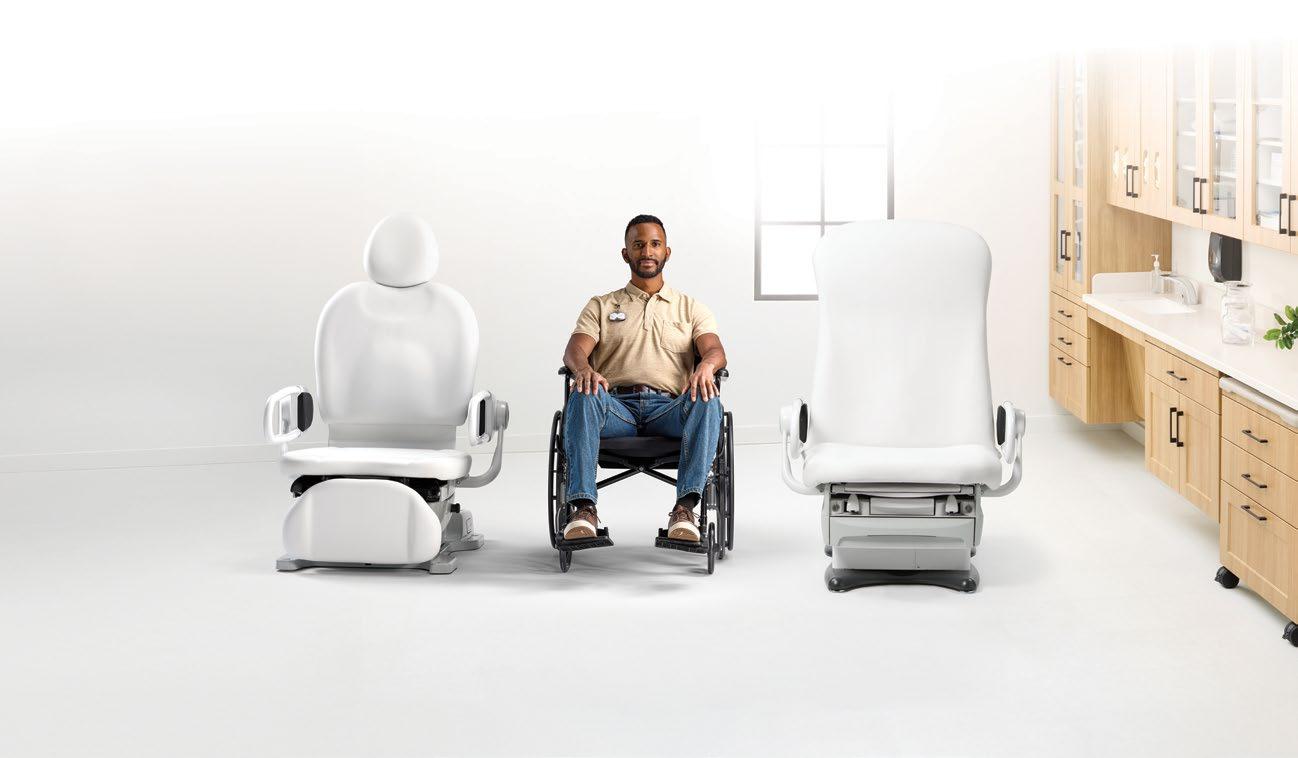
04 Transfer Supports: Compliant to the US Access Board Standards
05 Leg Supports: Support the patient’s thigh, knee and calf

More Than Automation — Itʼs Intelligence with Purpose
Healthcare supply chains donʼt need more platforms.
They need intelligence at the point of execution — where decisions are made, risks emerge and outcomes take shape.
When data, technology, and artificial intelligence (AI) work together in the flow of operations, healthcare organizations can move faster, reduce uncertainty and make decisions with greater confidence — at scale.
This is how insight becomes action. And action transforms into results.
Learn More
Explore how Premier helps organizations drive impact across supply chain, technology, AI, performance improvement and innovation.