The Journal of Healthcare Contracting is published bi-monthly by Share Moving Media
350 Town Center Ave, Ste 201 Suwanee, GA 30024 -6914
Phone: 770/263-5262
FAX: 770/236-8023
e-mail: info@jhconline.com www.jhconline.com
Editorial Staff
Editor
Graham Garrison ggarrison@sharemovingmedia.com
Senior Writer and Columnist
R. Dana Barlow rickdanabarlow@wingfootmedia.biz
Editor-in-Chief, Dail-eNews
Jenna Hughes jhughes@sharemovingmedia.com
Content Creator Pete Mercer pmercer@sharemovingmedia.com
Art Director Brent Cashman bcashman@sharemovingmedia.com
Publisher John Pritchard jpritchard@sharemovingmedia.com
Circulation Laura Gantert lgantert@sharemovingmedia.com
The Journal of Healthcare Contracting (ISSN 1548-4165) is published monthly by Share Moving Media, 350 Town Center Ave, Ste 201, Suwanee, GA 30024-6914. Copyright 2026 by Share Moving Media. All rights reserved. If you would like to subscribe or notify us of address changes, please contact us at the above numbers or address.
POSTMASTER: Send address changes to Share Moving Media, 350 Town Center Ave, Ste 201, Suwanee, GA 30024-6914. Please note: The acceptance of advertising or products mentioned by contributing authors does not constitute endorsement by the publisher. Publisher cannot accept responsibility for the correctness of an opinion expressed by contributing authors.
WISH Council Aims to Advance Women in Health System Sourcing Roles
I would like to introduce our latest initiative: Women in Sourcing for Health Systems, or the WISH Council (www.wishcouncil.org). I have been publishing this magazine for more than 20 years, and each year we feature a section called Women Leaders in Supply Chain. Year after year, our online analytics show it is one of our most-read features.
While it has always been gratifying to see such strong engagement, it also led me to ask: are we doing enough? Is there an opportunity to do more to support women in sourcing roles within health systems? To explore that question, I reached out to several Chief Supply Chain Officers at some of the largest and most prestigious IDNs in the country with a simple question: What percentage of your team is women?
The responses were quite interesting. Most estimated between 35% and 40%. One leader initially said 40% and followed up the next morning via email to correct himself – he had reviewed the data and realized the actual figure was 41%. By all accounts, sourcing departments are composed of a significant proportion of women.
As we have shared the WISH Council initiative with women working in sourcing across health
systems, the reaction has been overwhelmingly positive. Many have expressed a sentiment along the lines of, “Why hasn’t someone already done this?”
During a Zoom call, Jane Pleasants, President of Strategic Marketplace Initiatives, shared research showing that 65% of middle management roles in IDN procurement are held by women, yet only 11% of Chief Supply Chain Officers are women. Closing this gap is the goal of The WISH Council. On a personal note, I am especially excited about this initiative because my daughter, Mary, is leading it. It may very well become the defining mark of her professional career.
In my next Publisher’s Letter, I will share more of our vision for what lies ahead for the WISH Council. For now, I want to answer one important question – for both men and women:
How do you get involved?
It’s simple. Visit www.wishcouncil.org, read the blog content, explore upcoming webinars (which are free), and most importantly, sign up for the free newsletter to stay informed about WISH.
Thank you for reading this issue of The Journal of Healthcare Contracting
John Pritchard
See what’s possible
Distributors and self-distributing health systems now have complete transparency of their Dukal products’ from purchase order to delivery.
Product Assigned at the Factory Level
Product Tracking at the Item Level
Compatible Excel Reporting
Automated Communication
Worldwide Tracking
Scan
> Learn more at dukal.info/insight
Rising Leaders in Supply Chain
How these emerging supply chain leaders are helping reshape the U.S. healthcare industry.
Healthcare supply chain is undergoing rapid transformation – driven by disruption, innovation and an increasing recognition of its strategic role in patient care. At the center of this evolution is a new generation of leaders stepping forward earlier in their careers, bringing fresh perspectives, digital fluency, and a willingness to challenge long-standing assumptions.
The Rising Leaders feature in The Journal of Healthcare Contracting shines a spotlight on these emerging voices. These are professionals who may be early in their leadership journeys, but who are already influencing decision-making, strengthening partnerships with clinicians, and driving measurable results within their organizations. They represent a shift in how supply chain talent is developed – less linear, more collaborative, and deeply connected to the broader mission of healthcare delivery.
Sarah Azon Executive Director of Supply Chain and Business Services, AdventHealth
Nearly 11 years after joining AdventHealth as an administrative intern, Sarah Azon has gained experience across multiple operational and strategic roles. That journey, she said, has given her a unique perspective on how culture influences supply chain decision-making at every level of the organization.
“I’ve gotten to see AdventHealth from different leadership perspectives,” she said, noting roles spanning clinic operations, physician engagement, strategy, and now enterprise supply chain leadership. “The same culture that’s at the front line of loving our patients and putting them first is absolutely top of mind in the work we do on the corporate supply chain side.”
Today, Azon serves in a role that extends far beyond traditional supply chain operations. As Executive Director of Supply Chain and Business Services, she leads enterprise support strategy, process engineering, leadership development and intern/residency programs, and communications functions that intersect with supply chain, pharmacy, ancillary services, facility support services, and environmental sustainability teams. The position requires both collaboration and systems-level thinking, she explained, balancing crossfunctional alignment with process improvement across a large and complex health system.
As a Lean Six Sigma Black Belt, Sarah applies a systems thinking approach to multidisciplinary strategic support and has played an instrumental role in developing a culture of continuous process improvement and change management across AdventHealth Supply Chain and Business Services teams.
Her role has intentionally evolved over the years. What began as a more traditional chief-of-staff-style position focused on strategy and operational support has shifted toward proactive system design, leadership development, and enterprise coordination.
“Historically, the role was more reactive,” Azon said. “Now it’s about taking a thoughtful, proactive approach to continuous improvement and developing a model that works both at the enterprise level and within individual markets.”
Supporting organizational growth
Azon sees growth not simply as an organizational milestone, but as an opportunity to strengthen supply chain strategy across the enterprise.
Azon plays a central role in supporting mergers and acquisitions – an area she describes as one of the most energizing parts of her work today. With AdventHealth
maintaining a steady pace of growth in recent years, her team has developed a structured integration playbook designed to streamline how newly acquired organizations transition into the system’s supply chain operations.
“We’ve built milestones and timelines around how we execute more efficiently – from the data we need from entities to how we prioritize integration,” Azon said. The process includes a coordinated 120-day engagement period with suppliers to ensure communication, continuity, and alignment during transitions.
Beyond operational efficiency, she views acquisitions as an opportunity to extend AdventHealth’s mission and introduce new partners to a collaborative supply chain culture. “It’s really fun to grow and invite new people into our culture and what we do, while also helping them understand the role supply chain plays,” she said.
At the same time, Azon and her team are focused on long-term strategic priorities, including supply chain resiliency, artificial intelligence adoption and programs that differentiate patient care. Initiatives range from supporting innovative clinical offerings such as remote-scanning MRI programs to improving contract prioritization processes across AdventHealth’s 56 hospitals.
“We want to be on the forefront,” Azon said. “But you also want to do it right. That’s where our team helps bring structure and sustainability as we chart new territory.”
Helping leaders win
For supply chain leaders, today’s challenges extend far beyond sourcing products or managing contracts. According to Azon,
By cultivating early talent, she ensures that future leaders enter the field equipped with the analytical, relational and missionoriented skills the evolving healthcare landscape demands.
the role increasingly requires global awareness, cross-functional leadership development, and a steady focus on mission amid constant change.
As 2026 unfolds, Azon said volatility remains one of the biggest pressures facing healthcare supply chains. While disruptions that began during COVID-19 reshaped the industry, new complexities continue to emerge – from shifting tariffs and geopolitical dynamics to rapid technological advancement.
“The world is rapidly evolving, and the pressures on supply chain continue to fluctuate,” she said. “There’s a responsibility for leaders to understand where all the inputs are coming from and make the best decisions possible with that information.”
Despite uncertainty, alignment across clinical and operational stakeholders provides stability. “As long as we’re bringing our clinicians along the journey, we’ll get to the right outcome,” she said.
In her role, Azon works closely with teams spanning finance, pharmacy, construction, sustainability and clinical operations –areas that often intersect with supply chain in initially unexpected ways. AdventHealth’s co-operating model further strengthens collaboration by combining enterprise expertise with marketlevel insights, ensuring local needs inform systemwide decisions. Success, she said, comes from helping stakeholders view challenges through multiple perspectives and growing the future leaders that will make impacts in these spaces.
A significant part of developing those future leaders includes building robust pipeline programs. Azon sponsors and guides internship and residency pathways focused on supply chain and operations, giving emerging professionals hands-on experience, structured mentorship and exposure to strategic decision-making. By cultivating early talent, she ensures that future leaders enter the field equipped with the analytical, relational and missionoriented skills the evolving healthcare landscape demands.
“What’s been most rewarding is seeing different disciplines truly collaborate,” she said. It allows for both the expertise and agility that health systems need”.
Ultimately, Azon is motivated less by visibility and more by impact. She finds fulfillment in enabling leaders and teams to succeed, knowing supply chain decisions directly influence patient care – even from behind the scenes.
“I find purpose in helping leaders win,” she said. “At the end of the day, the supplies arriving at a hospital enables patient care that supports our mission. Even when you’re not directly seeing patients every day, you still feel that connection.”
2025 Cardinal Health™ Lab Briefings A
year in review
Total attendees
10,688
In 2025, Cardinal Health’s PACE-accredited Lab Briefings webinar series continued to lead the way in providing trusted monthly education designed for laboratory professionals. Each session connected the lab community with leading experts to address critical challenges and deliver actionable knowledge to help lab professionals thrive in a rapidly evolving healthcare landscape.
Total credit hours earned
117,568
The art of urine culture stewardship Hottest topics
CAP accreditation checklist updates Chemical safety in the workplace
January
Topic:
Lab payment and policy outlook for 2025
Speaker: Dennis Weissman, M.S.
Febuary
Topic:
2024 CAP accreditation checklist updates
Speaker: Stephen Sarewitz, MD, FCAP Gregory Gagnon, MD, FCAP
Top attendees Laboratory Manager Laboratory Director
Medical Laboratory Scientist
March
Topic: Chemical safety in the workplace
Speaker: Margaret Blaetz, CLC, MLT(AMT), Mcm, MLT(ASCP), CCCP(AAPOL)
April
Topic: The clinical lab’s role in promoting better patient outcomes
Speaker: James Crawford, MD, Ph.D.
May
Topic: Beyond the label: novel applications of cardiac biomarkers
Speaker: Christopher W. Farnsworth, Ph.D., DABCC
June
Topic: From hidden to found: Giving a voice to medical lab science
Speaker: Austin Korczak, MLS (ASCP)CM
“Very informational webinar! I learned a lot and the speaker was incredibly knowledgeable on the subject.” – Webinar series attendee
“One
of the most valuable CE presentations I have attended. Clear, concise and easy to understand.”
– Webinar series attendee
August
Topic:
Evaluating urine fentanyl tests for clinical implementation
Speaker: Rongrong Huang, Ph.D.
November
Topic:
The intricacies and complexities of pharyngitis diagnostics
Topic: Lab compliance and test utilization: Prepare for 2026 and beyond
Speaker: Andrew Fletcher, MD, MBA, CPE, CHCQM, FCAP Danielle Tangorre, JD, MS
Explore our full archive of webinars. Earn CE credits for up to six months after the live event.
Sean Bubernak
Director Master Data & Contract Administration, AdventHealth
At AdventHealth, making complex processes feel simple is a passion of Sean Bubernak, Director of Master Data and Contract Administration. Bubernak thrives on bridging the gap between technical experts and those less versed in the intricacies of sourcing, operations, finance, and clinical work.
“I love taking things that can be extremely technical and extremely hard to understand and simplifying them,” he said, describing his passion for creating systems that everyone can navigate with confidence. For Bubernak, success happens when the work he does allows colleagues to gain clarity, make faster decisions and feel empowered in their work supporting caregivers and patients.
Bubernak began his AdventHealth journey in 2011 as a market research analyst and has steadily risen through the ranks of the Supply Chain Data and Analytics team, now serving as Director of Master Data and Contract Administration. Throughout his tenure, he has played a pivotal role in transforming the Master Data Management (MDM) team from a transactional resource into a strategic supply chain partner, strengthening alignment across operations, strategic sourcing, and finance.
Under Bubernak’s leadership, his team developed a centralized Contract Dashboard in Power BI that integrates contract, ERP, and item master data into a single source of truth.
Previously, teams had to search across several systems to find critical information, often leading to confusion and inconsistent insights. By establishing one shared “source of truth,” Bubernak helped streamline decision-making and improve data transparency across the organization. The dashboard provides real-time visibility into contract performance and pricing, supports timely operational decision-making, and ensures compliance systemwide. Leveraging this tool, Bubernak implemented a proactive validation process that drives rapid corrections and strengthens supplier alignment.
Attaining accurate data
One of the projects that has Bubernak most excited is a two-year initiative to dramatically improve pricing accuracy within AdventHealth’s systems. “The more accurate our data is, the less people have to touch it,” he explains. Bubernak notes that when orders go through EDI with correct purchase orders and invoices, the process becomes almost fully automated – no manual intervention required. Errors, on
the other hand, create extra work, slow operations, and increase soft costs.
Over the past two years, Bubernak and his team have focused on refining and validating pricing data, boosting systemwide price accuracy from 70% to an impressive 96%. “Last month we hit our highest accuracy yet, just 0.8 points from GHX’s best-in-class perfect order rate,” he says. That milestone reflects both the team’s dedication and their strategic approach to data management.
With AdventHealth’s recent transition to one ERP system in January, Bubernak is now focused on maintaining that momentum while ensuring a smooth migration. “Changing ERP systems can throw your work into chaos if things don’t transfer correctly,” he notes. So far, the process has gone smoothly, making this period a particularly rewarding chapter in a journey defined by precision, innovation, and operational excellence.
Solving
today’s – and tomorrow’s – supply chain problems
Balancing long-term strategy with the relentless pace of day-to-day supply chain demands is a constant challenge, according to Bubernak – but one he approaches with intentional discipline. In healthcare supply chain, urgency is expected.
Contract renewals, price book adjustments, product disruptions, and system issues surface daily, each requiring immediate attention to avoid disruptions in patient care. Rather than waiting for the perfect window to tackle strategic initiatives, Sean focuses on incremental progress.
“Those short-term priorities are always going to be there,” he said. “So, I try to carve out small blocks of time to move long-term goals forward.” By advancing initiatives step by step, he ensures meaningful progress accumulates over time, even amid operational pressures.
A current example is his effort to establish a governance committee for AdventHealth’s item master. Following acquisitions and major system transitions, the organization’s item master has grown increasingly complex. Bubernak’s vision is to create a structured, operationalized review process that maintains data integrity and standardization. While immediate priorities – such as the transition to Workday – demand attention, he continues laying the groundwork month by month, confident that small actions ultimately lead to lasting change.
Looking ahead to the rest of 2026, Bubernak sees complexity itself as one of the biggest challenges facing supply chain leaders. Healthcare supply chains
today bear little resemblance to those of a decade ago. Easy efficiency gains have largely disappeared, forcing organizations to become more creative in how contracts are structured and negotiated. That creativity, however, often introduces new complications. Pricing models tied to purchasing volumes or layered contract terms can make automation and system configuration significantly more difficult.
Staying ahead of those complexities requires close collaboration and constant communication. Bubernak works closely with sourcing teams to anticipate what contracts are coming down the pipeline and how systems must be prepared to support them. At the same time, ongoing acquisitions add another layer of pressure, as newly integrated facilities must transition seamlessly into existing platforms without disrupting patient care.
For Bubernak, success comes down to foresight and preparation – understanding where the industry is headed and aligning resources accordingly. By balancing immediate operational needs with steady, strategic progress, he aims to ensure the supply chain remains responsive today and resilient for the future.
“Especially in the healthcare world, you always have to put the patient first whenever you’re making these decisions in collaboration,” he said.
From Reactive to Predictive: How Health Systems Are Reframing Demand Planning
Editor’s note: The participation of those in the following article does not constitute an endorsement of the sponsor’s products or services.
Demand planning has evolved from a behind-the-scenes operational task into a strategic pillar for hospital and health system supply chains. Persistent supply disruptions, cost pressures, and increasingly complex clinical environments are forcing organizations to rethink how they forecast and manage demand across large, multi-site networks.
In interviews with The Journal of Healthcare Contracting, Jared C. Featherstone, Director of Supply and Demand Planning at Mayo Clinic Supply Chain Management, Paul Ophaug, AVP of Supply Chain Technology and Decision Support at HonorHealth, and John Geurin, SVP of Staples Business, Healthcare, described how demand management is becoming more predictive, collaborative, and technology enabled.
At Mayo Clinic, demand management has traditionally relied on historical supply usage to estimate future needs, Featherstone said. “While this approach has been adequate, it becomes less effective as the organization grows.”
Changes in physicians, new procedures, and shifts in patient populations
can quickly distort forecasts, often before inventory managers see warning signs. To address these gaps, Mayo is transitioning to a predictive, data-driven model that incorporates patient population data and advanced analytics. “By analyzing patient populations and applying advanced algorithms, we can better understand
“Organizations can’t wait for shortages to happen. By combining product standardization with analytics from our digital platforms, supply chain teams can anticipate demand, forecast inventory needs, and act proactively to prevent disruptions, helping healthcare providers operate more predictably and efficiently.”
– John Geurin, SVP of Staples Business, Healthcare
the factors that influence demand fluctuations,” Featherstone said.
That shift has become more urgent as supply disruptions persist well beyond the pandemic. Featherstone noted that constraints remain common across healthcare supply chains, requiring conservation strategies or substitutions that complicate planning and increase risk.
“Traditional purchase history alone cannot reliably inform future demand,” he said, adding that demand-shaping techniques “substantially improve forecasting accuracy.”
At HonorHealth, demand planning has also taken on a more strategic role. Ophaug said controlling cost while ensuring product availability requires close coordination across clinical, operational, and supply chain teams.
HonorHealth’s approach incorporates case mix variability, patient volumes, and seasonal trends to forecast supply needs, allowing the organization to anticipate fluctuations rather than react to shortages.
For HonorHealth, availability and lead time remain major concerns, influenced by factors such as country of origin, transportation challenges, and natural disasters.
“There are many external pressures to consider as we demand plan,” Ophaug said. He emphasized the importance of working closely with distribution partners and proactively adjusting procurement and distribution strategies as conditions change.
At Mayo Clinic, Featherstone said the pandemic fundamentally altered expectations around supply chain performance. Health systems are now scrutinizing how effectively their supply chains mitigate risk, with demand planning playing a central role in building resiliency.
“Providers expect stronger supply chain resiliency,” Featherstone said, noting that improved demand planning has become “a core strategy for strengthening resiliency.”
John Geurin emphasized the role of proactive planning in building that resiliency. “Organizations can’t wait for shortages to happen,” Geurin said. “By combining product standardization with analytics from our digital platforms, supply chain teams can anticipate demand, forecast inventory needs, and act proactively to prevent disruptions, helping healthcare providers operate more predictably and efficiently.”
Cost pressures are also accelerating change. Inefficient stocking and replenishment practices create unnecessary manual work, higher transactional costs, and added expense when substitute products must be sourced. Featherstone said a well-structured demand management function helps streamline processes, eliminate waste, and support more reliable operations.
While the size of the operation is significant, Featherstone said the greater challenge lies in accommodating diverse specialty requirements.
“These exceptions — manageable individually — accumulate quickly,” he
said, turning otherwise simple standard operating procedures into complex workflows filled with variations.
HonorHealth faces similar challenges across its multi-site system. Ophaug pointed to fragmented systems and inconsistent reporting as barriers to real-time demand visibility. Variations in clinical practice can further obscure true demand signals, increasing the risk of excess inventory or shortages.
Geurin added that standardization and supply chain partnerships support predictable operations. “By helping organizations standardize products and leveraging our industry-leading supply chain and strong partnerships with top manufacturers, we ensure they have the products they need, when they need them, reducing risk, optimizing operations, and creating measurable value for providers,” he said.
“Traditional purchase history alone cannot reliably inform future demand,” he said, adding that demand-shaping techniques “substantially improve forecasting accuracy.”
– Jared Featherstone, Director of Supply Chain and Demand Planning, Mayo Clinic
When demand data is incomplete or delayed, the consequences can be significant. “Incomplete or delayed demand data can result in increased financial costs associated with patient care,” Ophaug said, noting that it can also introduce clinical risks when substitutions are required.
Featherstone emphasized that blind spots in inventory visibility leave teams unprepared for unexpected changes, driving reactive decision-making and avoidable expense. At Mayo, he said the greatest concern remains the potential impact on patient care, which has driven investments in data, forecasting, and decision support.
The benefits of standardization
Standardization emerged as a critical enabler of effective demand planning — when applied thoughtfully. At Mayo Clinic, standardization is pursued where patient outcomes are unaffected.
“Standardization enhances resiliency, forecasting, and planning,” Featherstone said, allowing aggregated usage, streamlined transactions, and fewer manual interventions.
HonorHealth has seen similar benefits. Ophaug said standardization reduces inventory carrying costs, supplier management time, and freight expense, while also supporting positive clinical outcomes through reduced variability and improved patient experience.
Looking ahead, both leaders see data integration and advanced technology as the next frontier. Ophaug believes machine learning and artificial intelligence will enable teams to act sooner by creating greater visibility across the supply chain.
Together, their perspectives underscore a broader shift across healthcare supply chains: demand planning is no longer about reacting to yesterday’s usage, but about building scalable, data-driven systems that anticipate change, manage risk, and protect patient care.
Learn more about building a more resilient, data‑driven healthcare supply chain at Staples Business.
Spencer Smith Category Manager for Supply Chain Sourcing, Corewell Health
Spencer Smith, Category Manager for Supply Chain Sourcing at Corewell Health, traces his path into healthcare to both family influence and early curiosity. “Growing up, most of my family worked in health systems, so I was always surrounded by nurses and immersed in that kind of language,” Smith recalled. Originally a pre-nursing student at Michigan State University, he quickly realized his interests leaned more toward the business side of healthcare. By his second semester, he had switched to a Supply Chain Management major, drawn by the field’s breadth and versatility.
After graduating, Smith gained experience across industries, from pharmaceuticals to retail. While the fast-paced environment in retail was exciting, he found himself seeking a deeper connection to a company’s mission. That search ultimately led him to Corewell Health. “The mission of the organization reverberates out through the culture,” he said. “You feel proud about the work you do because of the purpose the company is working for. Being part of a not-for-profit is extremely rewarding.”
Smith’s journey into leadership evolved organically over his seven years in healthcare supply chain. Early mentors and strong leadership experiences helped shape his development. By his third year in healthcare sourcing, he began tackling process improvement projects beyond his own desk. “I really found enjoyment in that,” he said, noting the satisfaction of making processes more efficient and repeatable.
Transitioning into people leadership brought new challenges. “I came in with a lot of energy and opinions about things I wanted to change,” Smith admitted. “I quickly realized leadership is a balance – a dance of recognizing what you want to impact and getting buyin from peers and other leaders to push initiatives forward.” Today, he continues to learn from colleagues while focusing on improving systems and supporting his team.
A seamless day-to-day
Smith is embracing innovation and efficiency in his current projects, with a keen interest in artificial intelligence. “Our organization has really invested in AI-related tools and is asking us to think differently,” he said. Facing the financial headwinds common in healthcare, his team is exploring ways to use AI to streamline repeatable tasks, freeing up time for higher-value work.
One initiative under development involves creating an AI “agent” that mimics the expertise of an in-house legal specialist. The agent would analyze contracts, accounting
for risk domains, before they reach the legal team, helping ensure agreements are in better shape before review. “It’s one small idea, but it challenges the team to leverage these tools to focus on more complicated, strategic tasks,” Smith said. He emphasized the balance required: AI has enormous potential but, if not applied thoughtfully, can become a time sink rather than a time saver.
Balancing day-to-day operational demands with long-term strategy is another key aspect of Smith’s role. He attributed his ability to focus on strategy to a capable, empowered team. “My focus is to make sure their day-to-day is as quiet and non-noisy as possible,” he explained. By clearing roadblocks and promoting autonomy, team members can execute their work efficiently while keeping organizational strategy in mind. This, in turn, allows Smith to dedicate energy to high-level planning and innovation, then cascade insights back to the team.
Smith’s approach reflects a broader trend in healthcare supply chain leadership: combining operational excellence with forward-thinking tools like AI to increase efficiency and drive impact. For Smith, the goal is simple but powerful: ensure his team can work effectively today while positioning the organization for smarter, more strategic outcomes tomorrow.
While he may not be at the bedside, the services his team procures –from human resources to essential operational support –enable clinicians to care for patients effectively.
Thoughtful time management
Looking ahead to 2026, Spencer Smith identifies the biggest stress points in healthcare supply chain as financial pressures and increasing demands for efficiency. “It’s imperative we continue to find ways to do more with less, implementing innovative and creative solutions to produce even higher results for the organization,” he said. Smith emphasized the importance of prioritization, helping his team focus on initiatives that truly move the organization forward while automating tactical, repetitive tasks wherever possible. “Our time is our most limited resource,” he said. “Being thoughtful about how we deploy it is critical.”
Smith also highlighted the evolution of his department, noting that maturity, resources and technology have strengthened their role in organizational decision-making. “We have a seat at the table with other divisions, and they recognize that our partnership can help them achieve their business objectives,” he said, acknowledging that while challenges remain, the team’s ability to influence strategic outcomes has never been stronger.
Collaboration is another core focus. On the indirect side of supply chain – supporting finance, HR, marketing, and operations rather than clinicians directly – Smith stressed relationshipbuilding as essential. “Providing white-glove service, earning trust through quick wins, and maintaining consistent touchpoints allows us to become trusted advisors,” he said. Strong relationships ultimately give his team the influence to help shape decisions in the organization’s best interest.
At the heart of his work, Smith is motivated by the impact on people. “I like to help people,” he said. While he may not be at the bedside, the services his team procures – from human resources to essential operational support – enable clinicians to care for patients effectively. “It’s important to remind ourselves that, even on the indirect side, our work impacts the patient at the end of the day,” he said.
Looking Beyond the Sticker Price
The true life cycle cost of a healthcare scale.
When evaluating scales, the conversation for healthcare supply chain teams often starts — and ends —with purchase price. This is especially true in large RFPs, where high volumes and tight budgets can push decisions toward the lowest upfront cost. But focusing only on the sticker price overlooks a much bigger financial picture. Like most capital equipment, scales carry a full life cycle cost, and many of the most impactful expenses don’t appear until after the scale is in use.
For supply chain leaders, understanding total cost of ownership helps shift the mindset from price to value — and helps avoid unexpected costs.
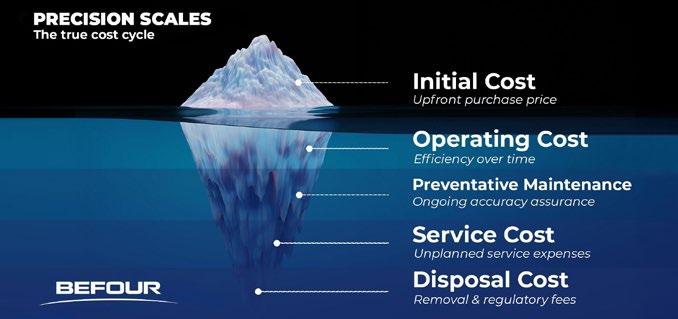
Initial Cost:
More Than the Sticker Price
The initial cost of a scale goes beyond the number on the quote. Assembly time, add-on features, and replacement parts can quickly add to the total. Befour scales arrive fully assembled or require minimal setup, saving staff time immediately. Key features such as active handrails, MotionLock® technology, and LB/KG lockout are included — not optional upgrades. Built with durable, USAmade materials, Befour scales are engineered
for a life expectancy of up to 20 years, positioning them as a long-term investment rather than a disposable purchase.
Operating Cost: Designed for Efficiency
Operating costs often show up as lost time. Complicated interfaces, inconsistent displays, and slow readings can disrupt workflows. Befour uses the same simple, seven-button display console across its scale portfolio, reducing training time and eliminating retraining as staff move between departments. Faster, more accurate readings — especially for unsteady patients — mean clinicians spend less time reweighing and more time on patient care.
Preventive Maintenance Cost: Fewer Headaches
Some scales require regular recalibration or frequent adjustments, adding ongoing maintenance costs. Befour scales arrive fully calibrated and are designed to maintain accuracy without routine recalibration. Their robust construction supports demanding healthcare environments, helping minimize maintenance over the life of the scale.
Service Cost: Planning Ahead
Service and repair costs are another oftenoverlooked factor. Befour scales include a three-year warranty and complimentary troubleshooting support for the life of the product. Their future-proof design allows customers to add wireless connectivity or lock into kilograms later — without purchasing a new scale. Battery life also matters: Befour scales use a single set of non-hazardous alkaline batteries that can last more than 100,000 weight readings — approximately two years — reducing battery changes and biomed involvement.
Disposal Cost: The Final Consideration
Disposal costs can add up, particularly for equipment with short life spans. Befour scales are made with more than 90% recyclable materials and designed to last significantly longer than typical replacement cycles. A local supply chain and longer battery life further reduce environmental impact.
Looking Below the Surface
At Befour, the message is simple: purchase price is just the tip of the iceberg. Beneath it are operating, maintenance, service, and disposal costs that shape the true cost of ownership. For healthcare providers alike, evaluating the full life cycle cost of a scale leads to smarter decisions and greater long-term value.
MEASUREMENT
STATION FEATURING:
CLINICIAN & BIOMEDICAL APPROVED SCALES
From weighing neonates to wheelchair-bound individuals, Befour’s line of medical scales were designed, engineered, and manufactured with your staff in mind:
BETTER FEATURES
BETTER ACCURACY
BETTER CONSTRUCTION
BETTER WARRANTY
BETTER VALUE!
Using all-metal, durable construction, Befour scales are USA-Made and built to last decades, offering repeatable accuracy, industry leading 3-year warranty and a uniform keypad used across all models.
For a more complete picture of the Befour Advantage, scan the QR code below, visit befour.com/fastfacts, or give us a call. We will provide a feature-by-feature comparison to any competitive scale model.
Katie Friese’s path into healthcare began long before she held a leadership role – she practically grew up in the industry. Both her mother and stepfather worked at a community hospital within the Froedtert & the Medical College of Wisconsin health network, and Friese fondly remembers accompanying her mom to team meetings as a child.
“I was fascinated by how supplies moved through the hospital, especially the pneumatic tube system,” she said. “Pressing the buttons was probably my first introduction to supply chain in healthcare.” By age 16, she was working part-time at the same hospital, and nearly two decades later, she has built a career dedicated to optimizing supply chain operations to support clinicians and patients alike.
Today, Friese serves as purchasing manager for Froedtert ThedaCare, overseeing a team of 17 across three functional roles responsible for acquiring supplies, equipment and services for the organization’s South Region.
One of the most challenging – and formative – moments in her role came in October 2024, when a natural disaster disrupted one of the organization’s primary IV solution suppliers. “It created an immediate supply chain crisis that lasted nearly a year,” Friese recalled. Coordinating across integrated services center, contracting, clinical analytics and site operations, she helped keep communication clear and priorities focused on patient care. “Through close collaboration and planning, we managed the disruption without impacting patients,” she said.
The experience reinforced key principles for Friese: transparency, cross-functional relationships and resilience planning. “It really highlighted how critical collaboration is in healthcare supply chain,” she noted. For Friese, every decision in purchasing is ultimately about supporting clinicians and ensuring patients receive the care they need – a philosophy that has guided her nearly 20 years in the field.
Building momentum while improving systems
Friese describes one of her most meaningful career successes as stepping into her first leadership role – a defining moment that shifted her focus from individual performance to enabling the success of others. “It was both exciting and humbling,” she said, reflecting on nearly a decade in leadership. Over the years, her approach has evolved to emphasize developing talent, setting clear direction and creating alignment so her teams can excel. A full-circle moment for Friese has been leading team members who once
trained her early in her career, an experience she says has shaped her leadership style around respect, collaboration and continuous growth.
Currently, Friese is focused on strategic initiatives that strengthen both efficiency and customer experience. One key goal is developing a centralized customer service model with a single point of entry for inquiries, streamlining a process that previously involved numerous supply chain teams and multiple group emails. Another priority is supporting cost savings through a thirdparty freight contract merger initiative. Balancing these long-term objectives with the daily demands of supply chain operations requires intentional planning. “I try to ensure that my daily work connects directly with one of our strategic objectives,” Friese said. “Short-term wins build momentum, while the long-term vision ensures we’re improving systems rather than just reacting to immediate needs.” This philosophy reflects her commitment to continuous improvement, operational excellence and supporting the clinicians and patients her team serves.
Right supplies, right time
For Friese, one of the biggest challenges in supply chain is managing vulnerability and anticipating disruptions before
“Reliable access to the right supplies at the right time has a direct impact on outcomes and experiences for our patients.”
they impact patient care. “We currently have a fill rate of more than 99.5%, which is phenomenal,” she noted, “but broader disruptions across supply chain are an ongoing risk we have to maneuver.” To address this, Friese leads recurring back-order and conversion calls, bringing at-risk items to the table and aligning mitigation plans across teams. The supply chain leadership team is also exploring ways to have approved substitute items identified and documented for all inventory items and strengthen resiliency planning. “The ultimate goal is to move more away from reactivity to anticipating and preparing for challenges,” she said.
Collaboration is central to Friese’s approach. She points to a multi-year med-surg and ICU bed replacement initiative as an example of cross-functional teamwork. “We worked closely with clinical teams, finance, IT, environmental services and operations,” she explained. By aligning stakeholders, conducting structured evaluations, and jointly assessing value drivers, the team approved a $14 million, three-year replacement plan. “Successful supply chain leadership is bringing together diverse perspectives and making joint decisions that improve operational efficiency as well as patient experience,” Friese said.
Ultimately, what motivates Friese is knowing her work directly supports patient care in her community. “Reliable access to the right supplies at the right time has a direct impact on outcomes and experiences for our patients,” she said. For her, working behind the scenes of healthcare supply chain is not just about logistics – it’s about enabling excellence in care and advancing the health of the community she calls home.
“Supply chain often works behind the scenes, but reliable access to the right supplies at the right time has a direct impact on outcomes and experiences,” she said. “I feel privileged to work in an organization focused on advancing the health of our communities through excellence and discovery, and that purpose continues to drive my work every day.”
Strengthening supply chain resiliency by reducing vulnerabilities
Even with many organizations placing heightened focus on resiliency, supply chains across industries remain exposed. In its 2024 Global Supply Chain Leader Survey, McKinsey reported that 90% of respondents experienced disruptions this year, with only a quarter maintaining consistent board-level attention to supply chain risk. The survey found that only 10% of companies have fully deployed advanced planning and scheduling systems, leaving significant blind spots, especially deeper in the supply base. 1
Healthcare needs distributors that are more than just box movers
When you choose Cardinal Health, you’re joining a community committed to diagnostic quality and supply chain resiliency. With a dedicated, clinical lab pointof-contact, on-hand capital equipment experts and supportive suppliers (including exclusive relationships), our teams of professionals are all invested in championing your success.
Your priorities are our priorities. That's why we offer competitively priced, quality products that are locally stocked for your convenience. And we’re constantly expanding our portfolio, with over 1,000 product launches across 29 suppliers this year.
We support all testing disciplines, including:
• Anatomic pathology/ histology
• Blood bank
• Capital equipment
• Clinical chemistry
• Coagulation
• Hematology
• Laboratory equipment
• Laboratory essentials
• Microbiology
• Molecular diagnostics
• Point of care & infectious disease
• Research essentials
• Specimen collection
• Specimen collection kits
• Urinalysis
• Virology
We're a preferred laboratory distributor and product advisor to top healthcare providers, and we have been for decades.1 Count on us for financial savings, operational efficiencies and supply continuity through our rich history of distribution excellence, industry-leading lab expertise delivered by a strategic, responsive team of 200 lab professionals and clinically equivalent Cardinal Health™ Brand products.
Transparency without the hidden costs or fees. One point of contact. Deep supplier relationships. Always-on service. That’s the Cardinal Health way.
We are your lab advisor. Expertise. Choice. Efficiency. Savings.
Like many sectors across healthcare, clinical labs feel these vulnerabilities acutely. As healthcare continues to decentralize and product portfolios expand, many lab supply chains have become increasingly fragmented. These pressures stack on top of ongoing challenges that include labor constraints, unpredictable shifts in demand and the operational strain of maintaining specimen integrity and test accuracy.
withstand disruption, but to respond rapidly and transparently when it occurs.
This resiliency directly benefits customers in both the laboratory and supply chain, where interruptions can jeopardize sample quality, turnaround times and patient outcomes. Cardinal Health’s distribution approach emphasizes proactive inventory management, cold chain and special-handling capabilities, managed
When disruptions occur, organizations need time to plan and execute recovery, which can interrupt the operational speed healthcare requires.
With its role as distributor operating one of the largest dedicated laboratory distribution networks in the U.S., Cardinal Health has a unique vantage point into the structural weaknesses that create stockouts, delays, inconsistencies and rising operational costs, issues McKinsey cites as common symptoms of fragmented supply chains. Cardinal Health currently serves more than 6,300 hospital laboratories, hospital-owned clinics and reference labs.
Cardinal Health has received recognition from the Healthcare Industry Resilience Collaborative (HIRC), earning the 2025 Resiliency Partner Badge at the Diamond level, HIRC’s highest designation.2 The assessment evaluates eight critical domains, from demand planning and logistics to visibility, supplier management and operational health. This designation signals a system designed not to just
seasonal demand and programs such as reserved inventory and sequestered lots for critical materials. Additional distribution services including specimen collection kitting, gaps-in-care program, quality assurance programs and logical unit of measure (LUM) ordering help labs streamline workflows and reduce the operational challenges that lead to fragmentation.
As alternative care sites expand and health systems distribute testing across networks, coordination between clinical and operational teams is more important than ever. Many inefficiencies stem from duplicated efforts, misaligned processes or limited visibility into real-time testing volumes and inventory levels. When disruptions occur, organizations need time to plan and execute recovery, which can interrupt the operational speed healthcare requires. Cardinal Health helps reduce inefficiencies
through stakeholder alignment, improved data sharing and tools that make inventory and supply dynamics more predictable.
Ongoing investments reflect this strategy. Cardinal Health continues to invest in warehousing and technology modernization, including robotics-enabled facilities and an innovation lab built to test emerging solutions. Enhanced cold chain infrastructure and specialized handling capabilities further protect product integrity, helping ensure reagents, assays and temperaturesensitive materials arrive as expected.
Another critical component to supply chain resiliency is breadth of product access. Through a supplier community built on deep, long-term relationships, Cardinal Health offers more than 52,000 SKUs, over 2,300 Cardinal Health™ Brand options and exclusive supplier agreements to help deliver supply availability paired with competitive pricing. Additionally, the organization has capital equipment solutions from leading manufacturers, a team of diagnostic specialists providing expert instrumentation recommendations and flexible financing solutions to help customers get the capital equipment they need, regardless of budget.
Cardinal Health distribution combines transparency, stability, and operational resiliency to help customers operate more efficiently, plan costs and savings for multiple years and mitigate supply disruption risk. Labs depend on reliable, high-quality products and an uninterrupted supply chain to deliver accurate results, reduce operational risk, effectively plan costs and savings across multiple years, and maintain the continuity of care that patients and clinicians rely on every day.
References:
1 Alicke K, Foster T. Supply chains: Still Vulnerable. McKinsey & Company. Published 2024. www.mckinsey.com/capabilities/operations/our insights/supply chain risk survey
2 Cardinal Health - HIRC. HIRC. Published November 7, 2025. Accessed November 21, 2025. hircstrong.com/organization/cardinal health/
— Mark Welch, Senior Vice President, Novant Health
Katie Sauber, JD, FACHE, CMRP
System Director of Contracts and Strategic Sourcing and Corporate Counsel, Myriadd Supply Network, MultiCare
Looking back over her tenure at MultiCare, Katie Sauber admits the evolution of her role and responsibilities wasn’t something she could have predicted. “Absolutely not, because I didn’t know that I was setting myself up for the opportunities that I’ve had,” said Sauber, System Director of Contracts and Strategic Sourcing and Corporate Counsel at Myriadd Supply Network, MultiCare. When she joined MultiCare more than 11 years ago, the system only had five hospitals. It has since grown to 14.
From the beginning, Sauber focused on doing her job well, building relationships, and earning trust among stakeholders and colleagues. That foundation, she said, prepared her for the unexpected challenges that would come as the organization expanded.
Sauber attributes her readiness for leadership to a combination of legal and operational experience. Before law school, she had managed operational teams, and later she managed operations at law firms, giving her insight into organization, prioritization, and team management. “It naturally progressed that I was able to use those skills to manage the team and the processes within contracts and sourcing,” she explained.
Tangible impact
Sauber leads contracts and strategic sourcing at MultiCare, a role she has elevated into over her 11 years of service. She began negotiating teams and within two years was promoted into a leadership role. She works closely with Jerry Quinn on capital services and value analysis, combining these efforts with contracting and strategic sourcing. In addition, Sauber serves as corporate counsel for Myriadd, MultiCare’s aggregate supply network run through Vizient. Myriadd partners with hospitals, ambulatory surgery centers, and smaller clinics to reduce supply costs and lower the overall cost of care for patients. Myriadd Supply Network is a joint venture with Kootenai Health in Idaho. Sauber has helped expand the network’s reach and impact, making this aspect of her work especially rewarding.
For Sauber, success in supply chain isn’t just about completing tasks – it’s measured in tangible impact. “We typically track our success by how much savings we’re able to generate, because contracting and sourcing is really the root of our success,” she explained.
In 2025, her team delivered $22 million in savings, a milestone made even more significant amid ongoing challenges such as tariffs, rising supply costs and declining reimbursements. “To be able to manage savings while also integrating a hospital into our IDN, navigating price increases beyond our control, and still providing cost-effective care – that’s a big accomplishment,” Sauber said.
Yet she acknowledges that financial pressures remain. “That amount of savings is great, but it’s never enough,” she said. MultiCare is still in a period of financial recovery, requiring creative approaches to generating revenue and delivering care efficiently. Sauber highlighted the strategic shift toward non-acute care spaces, including ambulatory surgery centers, outpatient diagnostic centers and community clinics, as part of a broader effort to expand the network and improve cost-effectiveness.
Equally meaningful, Sauber said, is the growth of her team. When she started, the department had five members: today, it’s over 30 team members strong. “Our capacity to generate savings and create contract and sourcing strategy has really been a win,” she said. For Sauber, the success of her team and their ability to deliver strategic impact across MultiCare is as important as any financial milestone, reflecting both leadership and long-term vision in healthcare supply chain management.
Managing the tension between longterm strategy and daily supply chain duties is one of the biggest challenges of leadership. “When you grow within the same organization, you often step into a leadership role without someone backfilling your previous responsibilities,” she explained. “So, I was managing day-to-day work while also trying to think strategically.”
Sauber approaches this challenge by aligning her division with the broader organizational strategy. She works closely with supportive leaders, using MultiCare’s systemwide goals to shape the supply chain strategy, and then translates that into priorities for contracting and sourcing. “It’s about understanding how my division can meet organizational priorities while staying true to our supply chain framework,” she said.
With numerous contracts, projects, and initiatives coming in daily, she emphasized the importance of delegation and building a strong, trusted team. “Having a great group of people I can rely on allows me to focus on long-term goals without getting lost in the minutiae,” Sauber explained.
Tariffs and rising prices have also tested the supply chain, prompting Sauber’s team to diversify sourcing, including tapping manufacturers outside the U.S.
Matters of influence
As healthcare systems expand, supply chain leaders face a delicate balancing act. Sauber said integration is one of the biggest challenges on her mind.
“Every new facility brings unique systems, processes and needs,” Sauber explained. “It takes careful planning to ensure our team is fully supported and that we’re adding value to our new partners, not just benefiting ourselves.”
Sauber emphasized collaboration and efficiency. By leveraging existing team members to handle system-wide strategies rather than only local hospital operations, the network can expand bandwidth and improve outcomes for staff and patients alike. Listening to each new partner’s pain points and tailoring solutions accordingly has become a central part of her approach.
At the same time, some challenges are outside her control. Fluctuating reimbursement rates, administrative shifts, and political forces impact organizational finances and require careful navigation. “You learn to focus on what you can influence and find creative pathways around what you can’t,” she said.
Tariffs and rising prices have also tested the supply chain, prompting Sauber’s team to diversify sourcing, including tapping manufacturers outside the U.S. These strategies help maintain stability and mitigate risk in a complex, fast-changing healthcare environment.
For Sauber, the focus remains on people as much as processes. Supporting staff, maintaining efficiency and ensuring smooth integration of new facilities are daily priorities. “It’s not just about the numbers – it’s about making sure our team thrives, even as the organization grows,” she said.
Sophia Andreotti Supply Chain Manager, Supply Chain Distribution and Logistics Admin, Northwestern Memorial Hospital
In the summer of 2021, Northwestern Memorial Hospital’s Sophia Andreotti and colleague Sarah Peters were unexpectedly given a new assignment – find supply chain related work for a single intern. Rather than treat it as a one-time task, the pair saw an opportunity to create something lasting. Starting with that first intern, they gathered feedback, tested ideas and worked closely with supply chain team members to shape a more structured, meaningful experience.
Five summers later, the program has grown into a system-wide initiative that will host 25 interns this year. The expansion has not only strengthened the organization’s talent pipeline but also boosted Andreotti’s confidence as a young professional trusted to build and scale a program from scratch. Having started her own journey as a healthcare supply chain intern, she views the effort as a full-circle moment and a chance to invest in future leaders.
“Their curiosity and energy are contagious, and seeing former interns grow into confident professionals has affirmed that investing in people early can have a powerful effect across our organization,” said Andreotti, Supply Chain Manager, Supply Chain Distribution and Logistics Admin at Northwestern.
The program’s impact extends beyond recruitment. Interns’ summer projects have delivered real value across departments, earning praise from frontline staff and leadership alike. While the team is always sad to see each cohort leave, there’s equal excitement for the next group to arrive – proof that a small opportunity can grow into a lasting, organization-wide success.
A personal approach to supply chain
Andreotti’s motivation to work in healthcare supply chain is rooted in the understanding that every decision supports patients at their most vulnerable moments. While she has always felt drawn to healthcare, that purpose became more personal when her grandmother was diagnosed with leukemia and received treatment at the same hospital where Andreotti worked. Seeing a loved one cared for by clinicians in a building she helped support operationally reinforced the real-world impact of her role.
Being able to visit her grandmother and witness the care firsthand sharpened Andreotti’s awareness of how behind-the-scenes supply chain decisions affect patient
outcomes. When clinicians asked about her role, she explained that the gauze, tape and supplies in the room were part of what her team helps deliver. That moment, she said, brought her work full circle and deepened her commitment to thoughtful, patient-centered leadership.
“The responsibility behind what we do really hit home,” Andreotti said. “Our customers are patients – someone’s family member, someone’s loved one – and knowing my grandma was in good hands reinforced why this work matters.”
The experience continues to shape how she approaches projects and partnerships with clinical teams. By ensuring caregivers have what they need, when they need it, Andreotti sees supply chain as essential to enabling life-changing and even life-saving care.
A little bit of everything
As a performance team supply chain manager at Northwestern, Andreotti describes her role as a form of internal consulting for the organization’s supply chain system. Her team supports roughly 500 supply chain employees across operations, strategy, sourcing, engagement and analytics, giving them a unique vantage point to influence both day-to-day execution and
long-term improvement. “We truly do a little bit of everything,” Andreotti said, noting that the performance team’s work ranges from solving operational challenges to shaping systemwide initiatives and building more efficient processes.
One of her primary strategic priorities is strengthening and scaling the performance team itself. Because the group is still relatively young, Andreotti focuses heavily on relationship building, teaching foundational supply chain tools and helping team members develop strong problem-solving skills. The goal is to create a team that can execute efficiently while also thinking critically about how to improve systems over time. She sees leadership as an opportunity to make a lasting impact not only within the department but across the broader organization and community.
Balancing long-term strategy with daily demands is an ongoing challenge in healthcare supply chain, where urgent issues frequently arise. Andreotti relies on structured goal setting, prioritization and delegation to stay focused. She describes her approach as “choosing my hard,” acknowledging that competing demands on her time are inevitable. Instead of opting for the easy path, she intentionally prioritizes difficult tasks today, knowing they will set her up for a stronger future.
Andreotti is also watching broader trends that continue to shape healthcare supply chain. Disruptions such as the COVID-19 pandemic, natural disasters and other unexpected events have underscored how reactive the environment can be. In response, she is working with her team to shift toward a more proactive mindset by building strong frameworks, standard work and decision-making tools. The aim is to ensure that when high-pressure situations arise, teams are prepared to respond thoughtfully and confidently.
Mentorship remains a central theme in Andreotti’s career and a driving force behind her leadership approach. Having benefited from strong guidance early on, she is committed to paying that support forward by helping young professionals navigate their own paths in healthcare supply chain. Through internship programs, professional groups and graduate school connections, she aims to share the practical knowledge and lessons she’s gained so others don’t have to start from scratch. Andreotti hopes that by building and passing along this “playbook,” she can help the next generation grow with confidence. Even if that guidance helps just a few people, she believes it can make a lasting difference.
David Long Vice President of Supply Chain Implementation and Performance Measurement, SSM Health
At a time when supply chain discussions are often dominated by cost containment, analytics, and operational efficiency, David Long keeps his focus on a more enduring priority: people. As Vice President of Supply Chain Implementation and Performance Measurement at SSM Health, Long sees his role as an extension of the organization’s broader mission to care for patients when they are most vulnerable.
“At the end of the day, we’re in healthcare to take care of people when they’re vulnerable,” he said. SSM Health’s faith-based legacy and mission makes it easy to come to work each day knowing the goal is “to care for all people and to ultimately heal them both from a spiritual as well as a physical well-being,” Long said.
Pivotal steps
Coming out of college, Long was focused on analytics and storytelling through data. After a chance meeting with Ascension Health at a college career fair, he jumped right into healthcare supply chain immediately. “I wasn’t specifically looking for healthcare, but I certainly wasn’t against it,” he says, “and I was motivated by that larger mission.”
That first role with Ascension’s supply chain resource group in Florida proved formative. Embedded in hospitals, Long gained a firsthand understanding of how analytics translate into real-world impact. While he continued to work on cost and contracting data, he also saw the operational realities behind the numbers. Being in the hospital every day, he said, brought a deeper appreciation for what supplies mean to caregivers and patients alike.
After two years in Florida, Long moved into Ascension’s corporate supply chain team, where he began building broader system-level expertise and connections, including with future SSM Health colleague Brad Forth. Soon after, he joined Ascension’s internal consulting group, a pivotal step that accelerated his professional growth. Traveling to support hospitals across the country, Long tackled short-term, high-impact engagements ranging from physician cost-per-case initiatives to data integrity projects. “I was able to pack just a ton of experiences into a short amount of time,” he said, noting that the exposure would have taken years to accumulate in a static role.
Seeking another perspective, Long later joined Premier on the group purchasing organization side, supporting SSM Health as an analyst. The move offered insight into how GPOs support health systems – a contrast to Ascension’s largely self-contained
contracting model. That experience helped Long understand the balance between internal contracting strategies and external partnerships, a viewpoint that would later influence his work at SSM Health.
Scaling an analytics team
When he joined SSM Health full-time, Long was tasked with building a supply chain analytics function nearly from scratch. Starting with a single analyst, he scaled the team to 12, supporting expanded contracting categories and a shift in how the system leveraged GPOs. Over the next seven years, Long progressed from manager to director, then senior director of performance measurement, focusing on KPIs and ensuring data was actionable across all levels of the organization.
While many organizations assume that scaling analytics simply means hiring more people to crunch numbers, rapid growth forced a deeper level of intention. “There’s always an idea of, ‘Well, we just need more analytics. We need more analysts to do the number crunching,’” he said, but the real question became, “What is it that we’re really trying to solve and where do we need to actually apply the resources?”
That mindset shaped how the team was built. Rather than hiring indiscriminately, Long and his colleagues focused on aligning skills to real operational needs. “We were able to say, ‘OK, if we deploy a resource … what are the data skills we need?’” he explained, whether that meant technical modeling expertise or people who understood hospital workflows and could translate “what the data on the page actually means.”
As the team grew, so did Long’s understanding of healthcare’s inherent complexity. “So much of the role within analytics … is more than just being able to technically do the work,” he said. Understanding the processes that generate data – and the human realities behind them – became essential, particularly in environments where documentation may take a back seat during emergencies. Those lessons continue to influence how SSM Health approaches analytics today, including the use of automated tools and checks to ensure the data tells a complete story.
A nuanced approach
Now, as Vice President of Supply Chain Implementation and Performance Measurement, that same perspective carries into Long’s strategic goals for 2026. While automation and AI are a growing focus,
he said SSM Health is “very intentional” about how those tools are applied. Healthcare, he emphasized, “is nuanced,” requiring the right balance between technology and human judgment. Equally important is simplifying data so it can drive action at the front lines – delivering the right information, at the right time, to help clinicians manage costs, inventory, and care more effectively.
Even as SSM Health continues to innovate, Long acknowledges that the complexity of modern healthcare supply chains brings constant challenges. “Certainly, cost is the key one,” he said, citing pressures from tariffs, freight, and resiliency products that all influence what is sustainable in healthcare. Beyond cost, Long worries about the reliability of data and metrics. “How do we really know that the data we’re leveraging is accurate and is it kind of pushing us in the right direction?” he asked. With multiple systems feeding into each other – from EMRs to ERPs to automation tools – validating data at every step is critical.
For Long, the future of supply chain depends not only on smart technology and efficient processes, but also on maintaining a human understanding of the data behind every decision, ensuring that innovation translates into real value for patients and providers alike.
Max Washko, Vice President of Supplier Relationship Management, Trinity Health
In the high-stakes world of healthcare, the bridge between a manufacturer’s plant and a patient’s bedside is often invisible – until it breaks. For Max Washko, Vice President of Supplier Relationship Management at Trinity Health, ensuring that bridge remains sturdy is more than a logistical challenge; it is a clinical necessity.
In a recent Q&A with The Journal of Healthcare Contracting, Washko shared insights into his career trajectory, his philosophy on leadership, and the “blocking and tackling” required to manage one of the nation’s largest healthcare supply chains in 2026.
From logistics to saving lives
Washko’s path to Trinity Health was not a straight line, but rather a series of “chapters” that spanned logistics, manufacturing, and consumer packaged goods (CPG). This diverse background has given him a unique vantage point on the global supply chain, having spent time everywhere from manufacturing plants to distribution centers.
“I’ve talked and worked with raw material suppliers and also worked with some of the larger retail companies out there,” Washko noted. “It’s given me a broad perspective that ultimately I brought over into Trinity and healthcare supply chain.”
The shift from retail to healthcare brought a profound change in perspective regarding the stakes of the job. While he expressed pride in his past work, Washko emphasized that healthcare hits “a little different” because of its direct impact on human vulnerability.
“The work we do every day, it can affect – and it likely will affect – someone’s life during some of their most meaningful and vulnerable moments,” Washko said. “Knowing that me, my team, we contribute in a very minuscule way to that ... it provides a sense of pride and responsibility, purpose.”
The “back to basics” strategy for 2026
Operating in 25 states with a massive clinical and financial footprint, Trinity Health faces a constant tug-of-war between long-term innovation and immediate operational pressures. For 2026, Washko’s strategic focus is surprisingly grounded: he calls it a “beginner mindset.”
“There’s been a renewed desire and need for us to go back to basics, make sure we’re doing supply chain fundamentals as well as we can,” Washko explained. This involves prioritizing “blocking and tackling” – the essential, everyday tasks that ensure stability
for the finance and clinical teams across the system’s regions.
However, “back to basics” does not mean standing still. Washko is simultaneously overseeing a digital transformation aimed at building a more resilient, data-driven supply chain. Key initiatives include:
Automation and AI: Expanding the use of “bots” and exploring Large Language Models (LLMs).
Data Governance: Strengthening models to provide end-users with actionable, real-time insights.
Digital Supplier Integration: Enhancing how the system interacts with tech-forward vendors to support the core mission.
Leading through collaboration
For Washko, the supply chain is the connective tissue of the hospital system. His leadership philosophy centers on the idea that supply chain cannot exist in a vacuum; it must be in “lockstep” with clinical, operational, and financial stakeholders.
“We’re working with clinical teams to understand their needs at point of care,” he said. “We’re working with finance to understand their budgets ... and really meet them at their actionable points.”
This collaborative spirit extends to his own leadership development. Washko is
The shift from retail to healthcare brought a profound change in perspective regarding the stakes of the job.
quick to credit his team for keeping him grounded. “I’m always learning, and I rely on my team for candid feedback,” he admitted. He views his team as a “leverage point” for honest conversations about shortcomings and growth.
The next decade
As he looks toward the next five to ten years, Washko is keeping a close eye on market-driven insights and emerging technologies like robotics. Yet, despite the allure of high-tech solutions, his focus remains steadfastly on the “endpoint”: the patient.
“Ultimately, it impacts our ability to provide care and impact our communities,” Washko concluded. By blending the best practices of his CPG past with the mission-driven urgency of his healthcare present, Washko is helping Trinity Health navigate a volatile future – one fundamental “win” at a time.
Trinity Health’s Supply Chain 2026 Priorities
Max Washko’s strategy for Trinity Health centers on three pillars designed to stabilize and modernize the clinical supply chain:
Back to Basics: Prioritizing “blocking and tackling” – refocusing on fundamental supply chain disciplines – to ensure stability for local finance and clinical operators across 25 states.
Digital transformation: Scaling “bot” usage, strengthening data governance, and exploring automation and advanced analytics to move toward a more predictive digital supply chain.
Proactive resiliency: Moving beyond crisis response by building intentional risk mitigation plans with key suppliers and gaining better macro-clarity on inbound commodity and pharmaceutical trends.
The effects of chronic disease in America
Currently, 6 in 10 Americans live with at least one chronic condition and 4 in 10 manage two or more. These diseases account for 8 in 10 of the leading causes of death nationwide. Contributing risk factors include physical inactivity, poor nutrition, tobacco use and excessive alcohol consumption.1,2
If a patient receives a chronic disease diagnosis, ongoing monitoring and treatment require continued lab testing throughout the rest of the patient’s life. These conditions present a growing strain on our health system and providers are looking for efficiencies in every area of their process.
Chronic disease costs the American medical system over $1 trillion annually — and is estimated to cost $47 trillion globally by 2030. 2
Every diagnosis begins with a lab test
Cardinal Health provides our distribution customers with robust capital equipment support to help increase lab capacity and diminish the strain of chronic disease. With Cardinal Health, you receive end-to-end support with single-source access to top manufacturers, expert consultation in equipment choice and assay menu expansion, extensive leasing options and access to a team of specialists that helps optimize your quality assurance program (QAP).
Cardinal Health™ Lab Capital Equipment Portfolio
No matter which equipment you choose, you’ll be connected to a community of over 200 Cardinal Health Lab experts who are here to serve you.
To connect with an expert and discuss available instruments and financing options, scan the QR code or visit cardinalhealth.com/labcapitalequipment
References: 1. CDC. About chronic diseases. Centers for Disease Control and Prevention. Published October 4, 2024. Accessed March 13, 2025. https://www.cdc.gov/chronic-disease/about/index.html 2. Hacker K. The burden of chronic disease. Mayo Clin Proc Innov Qual Outcomes. 2024;8(1):112-119. doi: https://doi.org/10.1016/j.mayocpiqo.2023.08.005
2025 Cardinal Health. All Rights Reserved. CARDINAL HEALTH and the Cardinal Health LOGO are trademarks of Cardinal Health and may be registered in the US and/or in other countries. All other trademarks are the property of their respective owners. Patent cardinalhealth.com/patents. Lit. No. 2LAB25-3607981-01 (09/2025)
Mike Lively Purchasing Supervisor, UChicago Medicine
Mike Lively started his healthcare career at the ground level, working at a small local hospital on their supply chain team. There, he experienced firsthand the behind-the-scenes operations that keep a hospital running: delivering packages, receiving shipments and filling orders for various departments. “Seeing how all the pieces fit together behind the scenes really opened my eyes to how critical supply chain is to patient care,” said Lively, now Purchasing Supervisor at UChicago Medicine. It was this exposure to the essential work of healthcare supply chain that sparked his passion and set the trajectory for his career.
Over the years, Lively has focused on harnessing data to improve operational decision-making, transforming the way his teams work. A major milestone came in 2022 when he played a key role in implementing a new ERP system across supply chain, finance, and HR. “That project gave us a real opportunity to make the data work for us, instead of us working for the data,” he noted. The initiative strengthened efficiency and provided insight into leveraging systems to support smarter, faster decisions.
From delivering supplies on the hospital floor to shaping systemwide strategy, Lively’s career reflects a commitment to understanding healthcare from the ground up –and using that perspective to drive meaningful, data-informed change.
High-value work
Lively approaches his work with a dual focus: leveraging technology and partnerships to drive efficiency while ensuring the day-to-day operations run seamlessly. One of his key strategic goals is harnessing existing systems to reduce repetitive tasks and free up team capacity. “How can we use the tools we have to take the routine off our plates and focus on high-value work?” Lively explained. With UChicago Medicine’s health system expanding – including a new cancer pavilion set to open next year – building operational capacity without burning out staff has become an urgent priority. By automating reporting and streamlining workflows, his team can devote more attention to initiatives that directly impact patient care and organizational results.
Another priority Lively emphasizes is deepening collaboration with suppliers to optimize the procure-to-pay process. His team has started engaging key suppliers, establishing metrics and creating open lines of communication to align expectations and identify opportunities for mutual improvement. “We’re trying to see what we’re each seeing, and figure out how we can improve the way we interact,” he said. This approach not only strengthens external partnerships but also reinforces internal consistency and efficiency.
Balancing long-term strategy with urgent daily demands is a challenge Lively meets with a strong, trustworthy team. “It’s very difficult to focus on long-term goals without confidence that the short-term work is being done,” he noted. By relying on a dependable team to execute core operations, he can focus on building future capabilities while ensuring immediate needs – like processing orders and meeting clinician requirements – are consistently met.
Looking ahead, Lively is keeping a close eye on supply disruptions, inflation and external pressures such as tariffs or weather events. His team’s priority is minimizing their impact so clinicians and patients never feel the effects. “We want to make sure urgent or rush orders get turned around, and that clinicians and patients aren’t impacted,” he said. By balancing proactive planning, strong partnerships and operational excellence, Lively works to ensure the supply chain not only keeps pace but strengthens patient care in the process.
Meaningful work
For Lively, supply chain management involves building relationships across the organization and creating systems that enable clinicians to focus on what matters most: patient care. Early in his career, working on the front lines of hospital supply chain, Lively quickly realized just how many areas the function touches,
“Knowing our work helps clinicians provide the highest quality care makes the work meaningful and keeps me engaged every day.”
from finance to operations to clinical teams. “It’s so important to make sure you have partnerships with finance and clinical staff and are providing good value to the people you support,” he said.
In practice, that means being available and proactive. In purchasing, his team helps clinicians navigate the ERP system, troubleshoot issues and answer questions, ensuring that care teams can focus on patients rather than administrative hurdles. Daily office hours and real-time support are part of their commitment to accessibility. On the financial side, the supply chain team works closely with accounts payable, meeting daily to resolve invoicing exceptions and streamline procure-to-pay processes. “At a high level, supply chain isn’t a silo. You’re partnering with a lot of people inside and outside the health system,” Lively explained.
What keeps him motivated is the impact of that work on real people. “At the end of everything we do, there’s a real patient needing care,” Lively said. “Knowing our work helps clinicians provide the highest quality care makes the work meaningful and keeps me engaged every day.”
Currently, Lively is leading an initiative to strengthen collaboration with suppliers through a metrics-driven procure-to-pay process. Inspired by the health system’s strategic sourcing team, he and his colleagues have developed a matrix to track interactions and performance with key suppliers. “Putting together those metrics and collecting data has sparked great conversations and strengthened relationships with our suppliers,” he noted. The project, which launched in the latter part of last year, is still in its early stages but has already fostered valuable dialogue and insight, laying the groundwork for broader improvements in efficiency and partnership.
For Lively, healthcare supply chain is much more than moving materials – it’s about creating seamless systems, building strong relationships, and ensuring that every clinician and patient benefits from reliable, responsive support. By connecting technology, process, and people, he continues to advance operations that directly impact patient care while shaping a culture of collaboration and trust throughout the organization.
Romancing the Deal in Product-Service Partnerships
Provider-supplier relationships should be valued, bring value.
BY R. DANA BARLOW
Some contend with earnestness that supply chain makes all business run –particularly healthcare – but what ignites that momentum requires a handshake, a signed contract and the anticipated start of a fresh, mutually beneficial relationship.
Providers and suppliers working together should be so traditional – at least from a textbook perspective.
Reality, however, can be a bit more … complicated.
Some still view the provider-supplier relationship as majorly adversarial, if not incrementally contentious. After all, providers want to buy what they think they need at the lowest possible prices to control expenses, while suppliers want to sell as much as possible at the highest possible prices to generate the most revenue and profit.
Many bob and weave in the wide gray area between the characteristics defining savory business practices (partnership fueled by communication, cooperation and flexibility) versus unsavory business practices (pressure-cooker powder-keg of demands, finger-pointing and puffery).
While healthcare provider-based supply chain executives can point to relevant and useful signs that indicate a healthy relationship as well as an unhealthy one with tips on repairing cracks in the partnership, they remain somewhat mixed on the timing.
Getting along
With any relationship – human or organizational – the emotional and mental aims call for starting out strong, connecting securely and then enduring for the duration. But might starting out be more challenging than lasting long? That’s where perspectives can wiggle a bit with a notable lean toward longevity.
The matrimonial allegory comes to mind for some.
“There is probably a correlation here with the divorce rate in marriages,” said Corey Schmidt, Assistant Director, Central Link Services (CLS) Operations & Spend Management Integration, The University of Kansas Health System. “When starting something out, you’re in that ‘honeymoon phase;’ it’s fresh, it’s new, it’s exciting. Then over time, if the relationship becomes stale, you haven’t given it the attention it needs, maybe you start looking for that fresh, new, exciting feeling again. Making something work longer term is going to take work from both sides; it’s not a transactional relationship, but one that needs intentional attention to continue to evolve so while it’s not new,
it still feels fresh and exciting because there are new things being introduced to further enhance the relationship.”
Making something work can be more challenging than starting something out, according to Marisa Farabaugh, Senior Vice President and Chief Supply Chain Officer, AdventHealth. “I am a fan of bringing highlight to this that we are no longer in the olden days when we beat up our supplier partners. Conversations need to be rational, founded on data and reality, explained and understood by both parties with respect for one another,” she told The Journal of Healthcare Contracting. “A lot depends on the strength and purpose of the relationship,” Farabaugh continued. “In cases where an existing relationship is strained, creating a new partnership can be an opportunity to establish fresh expectations and a new culture with the right team members from the outset (who are not encumbered by past challenges). That said, starting something new requires discipline, overcommunication and ongoing alignment. Without sustained effort by both parties, even strong beginnings can lose momentum over time.”
Mandy Gornall, Director, Vendor Management, Cleveland Clinic, agrees that sustaining a partnership over the long term is more challenging than getting one started. “Launching a relationship can be relatively straightforward, but maintaining its success over time requires ongoing dedication. Long-term partnerships depend on discipline, resilience and continuous alignment between both parties,” she asserted.
“Good intentions at the outset are not enough,” Gornall indicated. “Over time, turnover in key roles, natural expansion of the relationship, and increasing complexity
all place additional strain on the partnership. At the same time, both sides must continually balance delivering value for the supplier while also meeting the needs of the provider. Maintaining that balance over time is what ultimately makes longterm success the greater challenge.”
For Mark Welch, Senior Vice President, Supply Chain, Novant Health, much depends on the complexity of the situation. “Starting something new is often exciting because you can clearly see the potential value your efforts may create. While launching something can be challenging, the immediate momentum and sense of purpose typically make the early stages energizing and rewarding,” he noted. “Sustaining a relationship or initiative over the long term, however, is a different kind of challenge. Long-term relationships can be deeply rewarding because trust strengthens over time –but they require continuous attention, communication and effort. Competing priorities can easily distract from the ongoing work needed to maintain and grow these relationships.
“For supply chains, investing early in the relationship between the health system and the supply partner is critical. Strong local relationships – built on shared goals and aligned values – are what ultimately stand the test of time. When two likeminded organizations commit to mutual success, longterm partnerships become far easier to sustain,” Welch emphasized.
Sustaining a partnership is far more demanding, according to Régine Honoré Villain, Healthcare Supply Chain Executive and Human-Centered Leadership Advisor with extensive experience across large, complex health systems, including her most recent position as Chief Supply
Chain Officer with a large integrated delivery network (IDN) in the Gulf South region. “Initial alignment is relatively easy; maintaining relevance over time requires adaptability, continuous communication and leadership attention,” she continued. “As conditions change, partnerships either evolve or slowly lose value. The difference lies in whether leaders actively nurture the relationship or assume it will self-correct.”
Bruce Radcliff, President, Supply Chain Services, Premier Inc., concurs.
“Making a partnership work over the long term is more challenging than starting one,” he said. “Anyone can agree on terms at the beginning, when incentives are aligned and expectations are optimistic. The real test comes over time when costs fluctuate, demand patterns shift, disruptions occur or priorities evolve.”
Much depends on the attitudes, processes, technologies and tools used.
“Healthcare supply chains are under growing pressure, and many relationships struggle because they are supported by tools designed for yesterday’s world,” Radcliff noted. “Long-term success depends on investing in intelligence, interoperability and execution so partnerships can remain efficient, resilient and predictable over time. Without that foundation, even well-intentioned relationships become harder to maintain as conditions change.”
Eric Tritch, Senior Vice President, Supply Chain & Support Services and Chief Supply Chain Officer, UChicago Medicine, questions whether to lean one way or another, “but I’ve seen in my career far too often that people want the new shiny object or grass is greener on the other side syndrome,” he quipped. “People often don’t want to dig in and understand the problems to be sure that
they can’t be solved together better versus hoping it will be fixed by a change in partnership. Really digging in together to understand the issues and working to solve them often takes commitment from both sides, especially when it comes to difficult areas of business.”
Still, Ryan Burke, Vice President, Strategic Sourcing, Pandion Optimization Alliance, offers a different viewpoint on starting something new – stressing more on the decision to change than the actual change itself.
Working well
If a common theme were threaded through a successful partnership, healthcare supply chain executives point to a pair of separate but equally important concepts: Open communication and mutual trust seasoned with a healthy sprinkling of transparency.
“A healthy partnership is built on transparency, collaboration and trust,” insisted Cleveland Clinic’s Gornall. “Transparency is evident when a supplier openly shares roadmaps, proactively communi-
“When we can rely on our suppliers to follow through, it builds a solid foundation for a successful and long-lasting partnership.”
“Starting something out is harder,” he said. “It’s natural to fear change, and this anxiety can often make it difficult to take that first step towards getting something started. Overcoming this initial hurdle and getting people out of their comfort zone is necessary to get a new project started.”
From that point, the hard work begins, according to Joe Colonna, Chief Supply Chain & Project Management Officer, Piedmont Health.
“When starting a new relationship, you have the opportunity establish the basis for a mutually successful ‘partnership,’” he said. “You can set not just legal terms but the expectations around communication, performance and problem resolution. As this transitions to a longer-term relationship, the trick is to revisit and revise the terms of the relationship as things change, especially when various team members transition into and out of the relationship and organizational needs change.”
cates potential impacts, provides visibility into inventory levels and offers critical data to support long-term resiliency.”
But the relationship extends well beyond that, she continues. “Strong partnerships are also defined by collaboration, where both sides are willing to roll up their sleeves to solve problems together. This includes working jointly on cost reduction, product support and the advancement of key strategic initiatives.”
Gornall quotes her colleague Steve Downey, Chief Supply Chain Officer, explaining that it is “incumbent on partners to help one another improve by sharing best practices, providing feedback, aligning on common measures, and outlining creative ‘what-if’ approaches. For example, longer-term committed arrangements can uncover savings opportunities for both parties while enabling community development, technology platform leverage, clinical engineering efficiencies and cost savings for all.
“Ultimately, trust sits at the center of a successful relationship. It is earned through consistent performance and proven teamwork, allowing past experiences to reinforce confidence in the partnership,” she added.
Pandion’s Burke appreciates how deep a professional relationship can and should go.
“Two key signs of a healthy supply side relationship are communication and trust,” he noted. “As users of the products and/or services provided by our suppliers, it is critical that we maintain open lines of communication. I prefer it when suppliers overcommunicate, sharing both the good and the bad outside of formal business reviews or scheduled meetings. This proactive approach not only keeps us informed but also helps us address any potential issues before they escalate. The second key element is trust, which is a no-brainer. It is essential that our suppliers do what they say they are going to do. This means keeping their word and delivering on promises made during the sourcing phase. When we can rely on our suppliers to follow through, it builds a solid foundation for a successful and long-lasting partnership.”
Premier’s Radcliff defines a healthy partnership as being marked by clarity, trust and consistency. “Both sides understand what success looks like, how decisions are made and how issues will be addressed when they arise. From Premier’s perspective, healthy partnerships are built on shared intelligence. When supply chain data is unified and predictive insight is embedded directly into operational workflows, suppliers benefit from fewer exceptions and disruptions, better demand forecasting and earlier visibility into potential shortages. That shared foundation enables improved
planning, stronger collaboration and greater alignment around utilization, performance and contract intent. Those are clear signals that the partnership is working as intended.”
Clear evidence of trust is an important indicator of a healthy partner relationship, according to AdventHealth’s Farabaugh. “There is mutual understanding of priorities and constraints, and a willingness to find solutions that balance needs rather than simply protect interests,” she said.
“A deeper mutual understanding can occur when relationships extend across multiple levels of both organizations –when operators, front-line leaders and C-suite leaders know one another. This also invites more frequent and consistent touchpoints. When both parties connect intentionally, beyond transactional needs, it demonstrates a commitment to long-term alignment and shared success,” she continued.
“Partners should be able to address challenging topics directly. Difficult conversations are handled transparently and respectfully and stay grounded in facts and mutual understanding.
Both sides should also be willing to give a little. Flexibility, when appropriate, signals a long-term mindset and commitment to the broader relationship over a single negotiation point,” she added.
“A healthy partnership is one that is mutually beneficial, open and transparent, respectful and proactive,” observed The University of Kansas’ Schmidt. “No one is perfect, but how one responds to an issue can be very telling. The goals should be a long-term relationship, not a quick sale. The relationship also becomes much deeper than price; it is more focused on efficiencies for both
organizations, and through that commitment, price comes naturally.”
UChicago’s Tritch looks for regular communication and a “foundation of trust where you can share openly and be candid. Both sides are feeling the value, and there isn’t a focus on only one particular transaction or only based on one experience.”
At Piedmont, Colonna starts with active listening and adds four additional elements marking a genuine partnership. They include a willingness to share bad
descriptors of what constitutes a successful partnership.
“Healthy partnerships show up in the quality of decision-making, not just performance outcomes,” she clarified. “Leaders see it when suppliers proactively raise issues, challenge assumptions respectfully and stay engaged beyond their contractual scope. A healthy relationship also reflects shared prioritization where both parties understand what truly matters to the organization and align their efforts accordingly.”
“A healthy partnership is one that is mutually beneficial, open and transparent, respectful and proactive. No one is perfect, but how one responds to an issue can be very telling. The goals should be a longterm relationship, not a quick sale.”
news in person, not via email, text or some other media rather than avoiding difficult conversations; not insisting that the customer is always right or making the vendor accept blame because they want to keep the business; respecting boundaries where vendors are not working around supply chain; and mutual transparency without fear of information being used against either party. “For example, the vendor is willing to share that there may be product shortages without fear that the customer will immediately jump to the competition,” he explained. “The customer shares that an initiative means that the vendor will be losing some product line and the vendor works to optimize the remaining product line and look for ways to work with the customer to meet the changing needs.”
Villain encourages supply chain executives to look beyond the standard
One strategy that always stands out to Novant Health’s Welch is when a supply chain partner proactively brings opportunities to reduce costs by changing product utilization within the contract or makes his team aware of any waste that might be occurring.
“This kind of initiative speaks volumes about trust and transparency and opens up the door for deeper conversations and further engagement,” Welch said and recalled a specific example that mattered. “A linen provider came to me, and it was during a time when cotton prices were skyrocketing. They did not ask for a price increase but showed us that if they could shorten one of the towels it would help them on the manufacturing side and quality would not change,” he added. “We moved forward and when cotton prices dropped, we moved back to original products. Win-win.”
Spotting Red Flags
What to watch for so provider-supplier partnerships don’t head south.
BY R. DANA BARLOW
Like what happens with personal relationships that begin to fade, falter or slide, professional relationships begin to exhibit certain attributes that should alert healthcare supply chain executives when the partnership may be heading south.
Fading accountability
“An unhealthy partnership often becomes apparent when accountability starts to fade. Instead of owning issues and working toward solutions, the focus shifts to assigning blame when problems arise,” said Mandy Gornall, Director, Vendor Management, Cleveland Clinic.
“Breakdowns in communication are another key warning sign,” she continued. “Information is shared inconsistently, and there is reluctance to be transparent about risks, challenges or potential impacts. Over time, this lack of alignment shows up in performance. Inventory availability no longer meets expectations, service levels decline and projections begin to trend downward. Scorecards that once reflected strong performance start to turn into a sea of red rather than green.
“When these patterns emerge, it is a clear indication that the relationship is no longer progressing,” Gornall warned. “The partnership becomes driven by individual priorities instead of a shared commitment to mutual success.”
Bypassing supply chain altogether
“One clear warning sign is when a supply partner intentionally bypasses supply chain and attempts to upsell clinicians directly,” alerted Mark Welch, Senior Vice President, Supply Chain, Novant Health. “This behavior undermines established governance and signals misalignment with our operating principles. Another red flag is any noticeable increase in offcontract spend. This often indicates upselling, efforts to meet a vendor’s internal sales goals or a disregard for contracted agreements. Sudden or repeated deviations from contract compliance should prompt closer evaluation of the partner’s practices and motivations.”
Different pages, different books
“A few red flags that signal unhealth partnerships include misaligned goals, finger pointing and unprofessionalism,” noted Ryan Burke, Vice President, Strategic Sourcing, Pandion Optimization Alliance. “When partners have different objectives, it can lead to confusion,
frustration and ultimately, a lack of progress. It’s crucial that everyone is on the same page and working towards the same end goal. In a healthy partnership, team members should work collaboratively and take collective responsibility for any issues that arise. When the blame game starts, it creates a toxic atmosphere and hinders problem-solving. Unprofessionalism can seriously damage a partnership. This includes behaviors such as missed deadlines, poor communication, and a lack of respect for one another’s time and efforts. Professionalism is the foundation of trust and mutual respect, and without it, the partnership is bound to suffer.”
Corey Schmidt, Assistant Director, Central Link Services (CLS) Operations & Spend Management Integration, The University of Kansas Health System, posits the resemblance to personal relationships.
“There are many ways this can show up, but ultimately it comes down to trust,” he said. “Whether someone is bending the rules, looking for a quick payout or simply not being responsive, the result is the same. Just like in our personal relationships, if trust and integrity aren’t at the foundation, we’re not interested in moving forward together.”
Too many unwelcome surprises
“Unhealthy partnerships often show up through operational friction and late-stage surprises,” indicated Bruce Radcliff, President, Supply Chain Services, Premier Inc. “When issues consistently emerge late, it’s a sign that visibility and alignment are lacking. In many cases, the root cause is fragmented systems and delayed insight, which makes it difficult for partners to anticipate problems or improve execution.
“A lack of shared, trusted data is another red flag,” he continued. “When suppliers and vendors don’t agree on basic information like utilization, contract intent or performance metrics trust erodes quickly. Over time, the relationship shifts toward explaining problems after they occur instead of collaborating to prevent them, which makes it harder to adapt as market conditions change.”
Communications, conversational tones falter
“A clear indicator of an unhealthy partner relationship is when conversations are consistently tense and lack mutual respect or understanding,” noted Marisa Farabaugh, Senior Vice President and Chief Supply Chain Officer, AdventHealth. “When dialogue becomes adversarial instead of solution-oriented, trust erodes quickly. Misalignment of goals is another indicator. If there has not been sufficient time invested up front to ensure clarity and alignment, friction can occur. Communication breaks down when each party continues down its own path without alignment, transparency or explanation. In those moments, assumptions replace collaboration, which can be counterproductive.”
Régine Honoré Villain, Healthcare Supply Chain Executive and Human-Centered Leadership Advisor with deep experience across large, complex health systems, including her most recent position as
Chief Supply Chain Officer with a large integrated delivery network (IDN) in the Gulf South region, agrees.
“One of the earliest warning signs is when conversations narrow instead of deepen,” she indicated. “If dialogue becomes transactional, overly procedural, or reactive, it often signals disengagement. Another indicator is when innovation stalls, when suppliers stop bringing ideas forward because the relationship no longer feels receptive or safe for candid exchange.”
Communication quagmire
Joe Colonna, Chief Supply Chain & Project Management Officer, Piedmont Health, highlights five elements that echo earlier concerns.
1. “Hearing what you want to hear, not what is actually being said.
2. “Unwelcome surprises from the vendor and the customer. This could include price changes from the vendors or a sudden change in order volume by the customer.
3. “Poor communication as in, ‘Well, I sent you and email …’
4. “A disconnection between what is being messaged at a corporate level and what is being messaged at a local level.
This can be seen when contracts are negotiated between senior leaders but not communicated well to the reps or local hospital leaders.
5. “Unrealistic expectations by either party – reflecting that neither has really taken the time to understand what the other party can accomplish over a one-sided timeline.”
Repairing the damage
At their core, unhealthy partnerships and relationships can be fixed, according to healthcare supply chain executives, but some wonder whether they should be or something else should take place.
“Unhealthy partnerships can be repaired, but only if both sides are genuinely committed to doing so,” insisted Cleveland Clinic’s Gornall. “When there is a shared willingness to move beyond past issues and shift the relationship toward a more strategic footing, meaningful progress is possible.
“Repairing a strained partnership requires clear intention and strong alignment at the leadership level,” she continued. “Executive sponsors on both sides must be engaged and willing to lean in. When leadership is aligned, they can drive difficult but necessary conversations, reset expectations, and establish a clear path forward. Without this level of commitment, repairing the relationship becomes extremely difficult. In those cases, efforts tend to focus on managing ongoing issues rather than achieving true resolution and forward momentum.”
Spotting and acknowledging a declining relationship should not be the endgame, according to Novant Health’s Welch. “Once an unhealthy relationship is identified, it’s important not to ignore it or hope it resolves on its own. Instead, take a purposeful approach: Assess how the relationship became strained, determine whether it is worth repairing, and if so, act quickly,” he urged. “In most cases,
“It takes time to build trust; it can’t happen overnight. Acknowledging issues and making commitments and delivering goes a long way. It’s hard to have a partnership between firms where there’s a really narrow piece of business only.”
the partnership is valuable enough to merit repair. Bring the parties together promptly to discuss the root issues, clarify expectations, and agree on what each side needs to do to restore trust and move forward productively.”
Pandion’s Burke sees it as a shared responsibility rather than something initiated or owned by either organization.
“Each party must take responsibility and be willing to work towards rebuilding the relationship,” he said. “This isn’t easy! It takes open and honest communication and is often uncomfortable. I found that it can be helpful to involve a third party to act as a mediator to jump-start the partnership. I have seen completely broken supply chain relationships be successfully repaired and even thrive. But both parties must commit to making it work.”
UChicago’s Tritch emphasizes the need for patience. “It takes time to build trust; it can’t happen overnight,” he indicated. “Acknowledging issues and making commitments and delivering goes a long way. It’s hard to have a partnership between firms where there’s a really narrow piece of business only. It usually is richer when there are multiple product lines or services, and the need for ongoing management of success.”
The University of Kansas’ Schmidt concurs: “The old saying ‘time heals all wounds’ probably applies here. When the moment is right, it starts with top leaders coming together, acknowledging the differences, and deciding whether a path forward exists. If it doesn’t, it may simply mean more time is needed.”
Villain remains optimistic. “Repair is possible when both parties are willing to reset expectations and recommit at the leadership level,” she noted. “This often requires stepping back from day-today friction to revisit purpose, alignment and mutual value. If those conversations can’t happen openly or if accountability remains onesided, leaders should thoughtfully consider whether the partnership still serves the organization’s long-term interests.”
A
1. Watch accountability fade
Piedmont’s Colonna likens any solution to the philosophy of a self-help group. “First, acknowledge the problems and challenges of the past with each taking ownership of past issues. Develop mutually accountable metrics and key performance indicators (KPIs). This can start with something as simple as honoring payment terms and associated discounts. Ensure that the characteristics of the sales team match the characteristics of the organization. Some people want five minutes of chit-chat before talking business, other people want to only talk business,” he noted.
Premier’s Radcliff questions whether the parties should repair versus reset to pursue improvement.
“Not every partnership should be repaired, but many can be improved if both parties are willing to reset expectations,” he advised. “The first step is often reestablishing clarity around goals and roles like what each side is responsible for and how success is measured. Data plays a critical role here. At Premier, we are investing in a multi-year initiative to unify supply chain data at scale and embed predictive intelligence directly into operations. This approach reduces transaction friction through automation, improves transparency and supports more consistent execution for suppliers. When partners have earlier visibility and fewer surprises, relationships become easier to repair because conversations shift from problem-solving to planning.”
AdventHealth’s Farabaugh also favors the reset philosophy. “Start with open, transparent communication grounded in data and clear terms. A relationship reset requires clarity around facts, expectations, and outcomes,” she recommended. “Each party should document concerns and the reasoning behind them. Then, dedicate time for a structured, respectful conversation focused on resolving issues rather than assigning blame. Discussions should be fact-based, not emotion driven. When partners commit to listening and responding with objectivity, they can find common ground.”
sampling of warning signs
When blame replaces ownership and communication breaks down, trust erodes. Performance declines and scorecards turn red, signaling the relationship is no longer progressing.
2. Bypass and misalignment are warnings Suppliers going around supply chain, pushing direct sales, or ignoring contracts indicate misalignment. Differing goals and unprofessional behavior create frustration and hinder progress.
3. Repair takes commitment
Fixing a strained partnership requires leadership alignment, open communication, clear expectations, and patience. Not every relationship can be saved, but thoughtful resets and shared responsibility can restore trust.
Beyond the Contract
Why the most powerful supplier partnerships begin earlier than we think.
BY RÉGINE HONORÉ VILLAIN
Most supplier partnerships in healthcare begin too late.
By the time a supplier becomes a “partner,” the problem has already been defined, the solution has already been scoped and the boundaries of engagement have already been drawn.
Healthcare organizations often engage suppliers once solutions are selected, rather than when challenges are first understood. What’s lost in that sequence is not simply innovation. It is shared understanding.
In an industry defined by complexity, constraint and constant change, the depth and durability of a supplier relationship is often determined long before pricing discussions ever occur. Yet many organizations continue to treat supplier partnerships as something that happens after selection, rather than something that is intentionally shaped before commitment.
If healthcare supply chains want relationships that endure disruption, deliver sustained value, and evolve over time, we must rethink not just how we manage supplier partnerships, but when they truly begin.
When partnership begins before procurement
The most transformative supplier relationships are not transactional by design; they are exploratory by intent.
In more mature models, supply chain leaders engage select suppliers earlier, when needs are still being articulated, assumptions are still being pressure-tested and solutions
are still taking shape. This early engagement is not about relinquishing control or outsourcing strategy. It is about creating space for shared problem definition.
When suppliers are invited into these formative conversations, responsibly and intentionally, both sides gain clarity. Providers benefit from external perspective, feasibility insights and alternative ways of thinking.
Suppliers gain context, constraints and a deeper understanding of the environment in which solutions must operate.
This early dialogue does not guarantee partnership, nor should it. But it creates a more informed foundation; one where collaboration is grounded in understanding rather than expectation.
Importantly, this level of engagement requires discipline. Clear governance, ethical boundaries, and thoughtful selection matter. Not every supplier is suited
for this depth of interaction. But when done well, early engagement fundamentally changes the nature of the relationship from vendor management to shared accountability for outcomes.
What healthy supplier partnerships reveal over time Healthy supplier-provider relationships rarely announce themselves loudly. They reveal themselves through behavior, especially when conditions are less than ideal.
them. They understand that longevity depends not on rigid adherence to legacy terms, but on trust, flexibility, and alignment with the organization’s broader mission.
Early
warning signs leaders should see
Unhealthy partnerships rarely fail abruptly. They erode quietly.
Defensive communication is often the first signal. When conversations shift from intent to interpretation, from
Repair does not begin with renegotiation. It begins with reassessment. Leaders must be willing to ask whether the relationship still aligns with the organization’s strategy, operating model and values.
One of the most telling indicators is how partners show up under pressure. In strong partnerships, transparency does not disappear when challenges arise. Issues are surfaced early. Trade-offs are discussed openly. Both sides remain focused on solving problems rather than protecting position.
Another sign of health is mutual accountability. Data is not weaponized; it is shared. Performance metrics are used to drive improvement, not assign blame. Success is defined jointly, and responsibility for outcomes is distributed, not deflected.
Finally, healthy partnerships demonstrate an ability to evolve. As healthcare organizations grow, transform, or face new constraints, enduring partners adapt alongside
collaboration to contract language, trust has already begun to fray.
Another warning sign is imbalanced risk ownership, when one party consistently absorbs operational disruption, cost pressure or performance challenges while the other remains insulated. Over time, imbalance undermines even wellintentioned relationships.
Perhaps the most dangerous indicator is avoidance. When leaders recognize friction but hesitate to address it because the relationship feels too embedded, too complex, or too difficult to unwind, inertia can masquerade as stability. Unresolved tensions can quietly, but decisively, compound risks already inherent to such relationships.
Can unhealthy partnerships be repaired?
Sometimes, but only with honesty and intent. Repair does not begin with renegotiation. It begins with reassessment. Leaders must be willing to ask whether the relationship still aligns with the organization’s strategy, operating model and values. That requires separating relationships from results and intent from impact.
When repair is possible, it often hinges on resetting governance, not pricing. Clear decision rights, shared performance expectations, consistent executive engagement and renewed transparency can re-anchor a relationship that has drifted.
But leadership also requires discernment. Not every partnership should be preserved. Knowing when to evolve, or exit, a relationship is not a failure of collaboration; it is an act of stewardship.
Why sustaining partnerships is harder than starting them
Starting a partnership benefits from optimism. Sustaining one requires discipline.
Over time, leadership changes, priorities shift and external pressures mount. What once felt aligned must now operate under stress. In these moments, culture, governance and trust matter more than contractual language.
Enduring partnerships demand ongoing investment, regular recalibration, honest feedback loops, and the courage to address tension before it hardens. This is why making something work over the long term is inherently more challenging and more meaningful than starting something new.
Régine Villain is a healthcare supply chain executive and human-centered leadership advisor with extensive experience across large, complex health systems, including her most recent position as Chief Supply Chain Officer with a large integrated delivery network (IDN) in the Gulf South region.
Resilience, Reimagined
What providers need from distributor partnerships.
Resiliency is a hallmark of healthcare supply chain management. But what does that buzzword mean in day-to-day operations? For providers, resilience shows up as fewer surprises, fewer backorders that threaten care delivery, and faster pathways to safe alternatives when disruptions hit. The best way for distributors to serve providers is to listen closely to their needs. That is why HIDA’s recent MedSupplyChain Conference featured supply chain executives from health systems across the nation. These logistics leaders from Parkland Health, Akron’s Children Hospital, Stanford Medicine and University of Florida Health shared what they need from distribution partners to keep care moving.
Providers seek strategic partners, not just fulfillment engines
Health systems need support that goes beyond order fulfillment. When supplies are constrained or demand shifts quickly, providers need earlier visibility into what is running low, what is delayed, and what is at risk – before the disruption reaches the bedside. Meeting that need depends on shared, network-level insight (demand signals, usage patterns, and inventory trends) that helps providers reduce bullwhip effects, avoid reactive hoarding, and maintain continuity of care.
Providers need partners who can help them anticipate disruptions
Providers repeatedly emphasized the need to identify critical items in advance, maintain preapproved substitution pathways, and avoid last-minute scrambling when shortages occur. Conversations about ABC classifications, “most-critical” item lists, and tiered backup strategies reinforced a simple point: resilience comes from intentional planning and shared expectations. In that way, providers can protect procedures, staffing and patient care when disruptions inevitably arise.
Transparent communication beats perfect answers
Providers were clear: speed of notification matters
By Wyeth Ruthven, Director of Congressional and Public Relations
more than perfect answers. Whether a disruption originates with a manufacturer or a distributor, health systems need to know as soon as risk emerges. Early warnings give providers time to assess inventory, review upcoming procedures, align clinicians on acceptable alternatives and communicate internally. Consistent, proactive updates reduce churn and help teams make confident, timely decisions; gaps in communication force workarounds and erode trust.
Tariffs as a resiliency case study
Over the past year, tariffs have introduced sudden volatility at a time when many health systems are under pressure to hold the line on costs. Providers shared examples of what they need most in these moments: earlier notice of potential exposure, clearer options for clinically appropriate substitutes, and enough lead time to adjust sourcing without disrupting patient care. Flagging tariff risk before final pricing is known helps providers plan and avoid rushed purchasing. Translating policy changes into practical choices –availability, cost, and clinical impact – helps teams evaluate trade-offs, revisit contracts, and manage change in a controlled way.
Partnership is essential to resilience
Across every topic, the message from providers was consistent: resilience is co-created. Manufacturers, GPOs, distributors, and providers each hold part of the solution, but the goal is the same: protect patient care while managing cost and operational strain. Health systems value partners who escalate issues early, bring options (not just status updates), and help align clinical and operational stakeholders.
Cybersecurity Efforts May Require Us to Party Like It’s 1999
Supply chain may strive for more than just a princely move.
BY R. DANA BARLOW
Three decades ago, as the 1996 film “Independence Day” caromed toward its dramatic climax, actor Will Smith flew one of the commandeered alien scout ships into the alien mother ship, so actor Jeff Goldblum could upload a lethal virus into the computer system to cause the ship to explode and stop the invasion.
The animated skull and crossbones icon showed up laughing on the alien’s computer screen, signifying a successful delivery of something that would be their undoing.
In mid-March, Stryker Corp. staff, contractors and healthcare organization customers likely didn’t see an animated laughing skull and crossbones show up on
their viewscreens during login. Instead, they may have seen the static logo of Handala, a hacktivist group linked to Iran, appear on login pages, according to a report in The Wall Street Journal
That’s because a calculated cyberattack infected and disrupted its global network – technically its Microsoft programs, according to news reports.
A company spokesperson told Reuters that Stryker was “experiencing a global network disruption to our Microsoft environment as a result of a cyberattack. We have no indication of ransomware or malware and believe the incident is contained.” Within 24 hours of the cyberattack, the company confirmed the observation and result, issuing the statement, “Our investigation into the nature and scope of this incident remains ongoing and in its early stages. We are collaborating with law enforcement and our government agency partners to share meaningful
intelligence about this incident as we learn more.”
Reuters reported that “the company’s staff found that remote devices running Microsoft’s Windows operating system, such as cellphones, laptops and others configured to connect to Stryker’s technology systems, had been wiped.” Stryker confirmed in subsequent news reports that the incident affected its “internal Microsoft environment,” but also indicated that its order processing, manufacturing and shipping protocols had experienced disruptions.
Days after the Stryker incident, Intuitive Surgical experienced a cybersecurity breach of its systems in an apparent unrelated phishing attack by an unidentified third party that involved compromised information including “names, titles and specialties of healthcare providers and administrators, plus emails, phone numbers and hospital facility addresses,” according to MassDevice and Medical Device and Diagnostic Industry.
When disruption becomes risk Thankfully, neither of the company’s clinical, diagnostic and surgical devices was affected, according to news reports.
Imagine the possibilities if such an attack somehow maneuvered into connected clinical devices and systems. Insulin and intravenous pumps giving erroneous dosage instructions, patient-implanted defibrillators stopping or surging, surgical suite schedules mixed up, diagnostic imaging equipment malfunctioning during patient scans, physicians, nurses and patients receiving erroneous data, surgical endoscopy robotic devices either cease or steer the wrong way during a procedure. Because Intuitive Surgical’s technology operates
on a segmented network infrastructure, the company’s da Vinci, Ion and digital platforms were not affected and continue operating safely, according to a report in Medical Device and Diagnostic Industry
First, resist the blatant finger-pointing. Don’t blame Stryker or Intuitive Surgical. It’s easy to do that, of course, particularly if an organization failed to “adequately” shield itself. But an organization can never be fully and totally prepared to handle this, despite lofty advertising and marketing campaigns by cybersecurity consultants and software developers.
Give Stryker and Intuitive credit for responding quickly when their defenses were breached and keeping
organizations have experienced at least one cyberattack targeting medical devices, while ransomware attacks on the healthcare sector surged by 30% in 2025, with 293 attacks recorded against hospitals and direct care providers.”
Companies trying to stay ahead of motivated cybercriminals, digital terrorists, hacktivists and thrill-seeking hackers are a bit like actor Donald Sutherland outrunning the zombies in the 1978 remake of “Invasion of the Body Snatchers.” We already know what happened to him. Of course, another way to look at that scene is to envision the zombies as companies grasping for the ultimate protection against cybercriminals, digital terrorists, hacktivists
“As of early 2026, 22% of healthcare organizations have experienced at least one cyberattack targeting medical devices, while ransomware attacks on the healthcare sector surged by 30% in 2025, with 293 attacks recorded against hospitals and direct care providers.”
everyone as updated as possible about what’s happening. Obviously, company officials shouldn’t be expected to reveal everything to the public, but at least they shared enough details to show their efforts at rooting out current problems and how they are working to prevent future cyberattacks. Resistance is not futile, but utile.
Medical Device and Diagnostic Industry then detonated this sobering contextual thought: “Despite the attacks being seemingly unrelated, two major attacks in such close proximity to one another could signal a scary new trend in medtech. As of early 2026, 22% of healthcare
and thrill-seeking hackers only to learn the pursuit remains a work in progress –likely never-ending as these misanthropes “evolve,” become more sophisticated and evade elimination akin to multidrug-resistant bacteria and viruses.
At this point we must extend our questioning:
Why did they target a global company instead of an American government agency?
Why did they target a global manufacturer of medical devices?
Why did they target Stryker and Intuitive Surgical of all medical device manufacturers?
Once the aftershocks subside and the aftermath sets in, who is responsible? Microsoft?
Will the responsible end users ever win against the irresponsible predators?
This can happen to any company, any corporation or any individual that uses Microsoft products. And who doesn’t? Apple fans? Who can forget what happened during the Crowdstrike outage last year?
those expectations were a lot like 1950sera science fiction envisioning flying cars and humanoid robots by now. Quaint then, rather perilous now.
Let’s acknowledge the digital elephant in the room … cue Henry Mancini’s “Baby Elephant Walk.” You’re never going to be completely protected unless you or who/ what you represent is of no value at all (in which case hacktivists wouldn’t be interested in leveraging your anonymity anyway). The
You’re never going to be completely protected unless you or who/what you represent is of no value at all (in which case hacktivists wouldn’t be interested in leveraging your anonymity anyway).
The newsletter “Healthicity” reported in mid-March that the Senate HELP Committee voted to advance the Health Care Cybersecurity and Resiliency Act, “a bipartisan bill that would establish new federal cybersecurity expectations for HIPAA-regulated entities and provide support for under-resourced providers. The bill would introduce requirements, such as multifactor authentication, encryption, penetration testing, security audits and updated breach reporting, while also directing HHS to strengthen coordination, response planning and guidance for rural healthcare organizations.” Give them an A for effort but remember that even the legendary “Hero of Haarlem” only had enough fingers to plug 10 holes in the levee.
Remember when the implementation of automation and computer technology was supposed to streamline processes and make things more efficient? Apparently,
most you can do is control the damage as much as possible, minimizing potential harm to identity, physicality and privacy.
In today’s ubiquitous always-on digital world, we’re all connected – 24/7/365 – an inherent problem. If we’re always on, we’re always vulnerable. Electricity/power suppliers tell us that to prevent “phantom energy” drains and save money we merely need to unplug all devices that we don’t need running all the time to stop the charges. This could be the mantra for internet users as well – particularly those organizations deemed essential that are relatively easy targets for nefarious activities and salacious skullduggery.
A radical idea
What if, instead of being “always on,” healthcare organizations detach themselves from the internet on a daily basis and merely run individual intranets? Think
of it as a “hybrid online operation.” For example, a hybrid car uses an electric motor with a gas motor as a backup.
A hybrid online operation would use an intranet with the internet as a backup, so to speak, not unlike dialup in the late 1990s. As a user, you’re offline until you dial up your ISP and download/upload data (e.g., email, etc.) as part of a scheduled communication or data-sharing/transmission plan. This could give facilities time to fortify against anticipated cyberattacks because they could prep for any potential incursions before online activity would place them at potential risk.
Anyone wanting to use the internet for nonbusiness-related activities (e.g., communicating with friends, shopping, watching silly videos, etc.) would have to use their personal mobile devices that are not plugged into the healthcare provider’s intranet. Geopolitical hackers wouldn’t care about that because they wouldn’t be able to leverage influence or cause considerable damage to an organization or to its patients.
Meanwhile, healthcare organizations could maintain their intranet operations, allowing them to communicate efficiently between their own facilities without having to access the internet all the time. If a group purchasing organization comprises a multitude of hospitals and other healthcare facilities, then why couldn’t the hybrid online model consist of a multitude of independent and separate healthcare intranets communicating when necessary and as prepared as possible?
Then again, maybe it’s time we embrace the relative calmness of analog and bring Dragnet’s Sgt. Joe Friday into 21st century communications with, “just the fax, ma’am.”
R. Dana Barlow serves as a senior writer and columnist for The Journal of Healthcare Contracting. Barlow has nearly four decades of journalistic experience and has covered healthcare supply chain issues for more than 30 years. He can be reached at rickdanabarlow@wingfootmedia.biz.
Midmark is the first and only manufacturer in the market to have both a procedure chair and an examination chair that comply with the US Access Board Standards.
Getting to know the standards
01 Seat Height: 17" or lower and 25" or higher
02 Transfer Surface: 21" wide and 17" deep
03 Base Clearance: 26" wide or less
04 Transfer Supports: Compliant to the US Access Board Standards
05 Leg Supports: Support the patient’s thigh, knee and calf
The Supply Chain Reset
Healthcare doesnʼt have a savings problem. It has a proof problem.
The next era of supply chain is built on verified savings, executive governance and artificial intelligence (AI)-powered execution — not assumptions.
At University Hospitals Health System (UH), supply chain was redesigned to operate like a financial control center.
Partnering with Premier, UH embedded governance, aligned clinicians with analytics, and hardwired zero-waste execution.
Delivered measurable cost improvement across supplies, pharmacy and clinical utilization.
Case in Point
By embedding cost intelligence directly into clinical workflow, a $100-plus item review threshold was introduced, ensuring higher-cost supplies were opened only when clinically necessary, resulting in $8 million in sustained annual savings.
Premier is more than a GPO. Weʼre the strategic partner helping health systems prove performance — and sustain it. Watch Webinar On-Demand The Supply Chain Reset: How Health Systems Deliver Savings with AI, Governance and Zero Waste