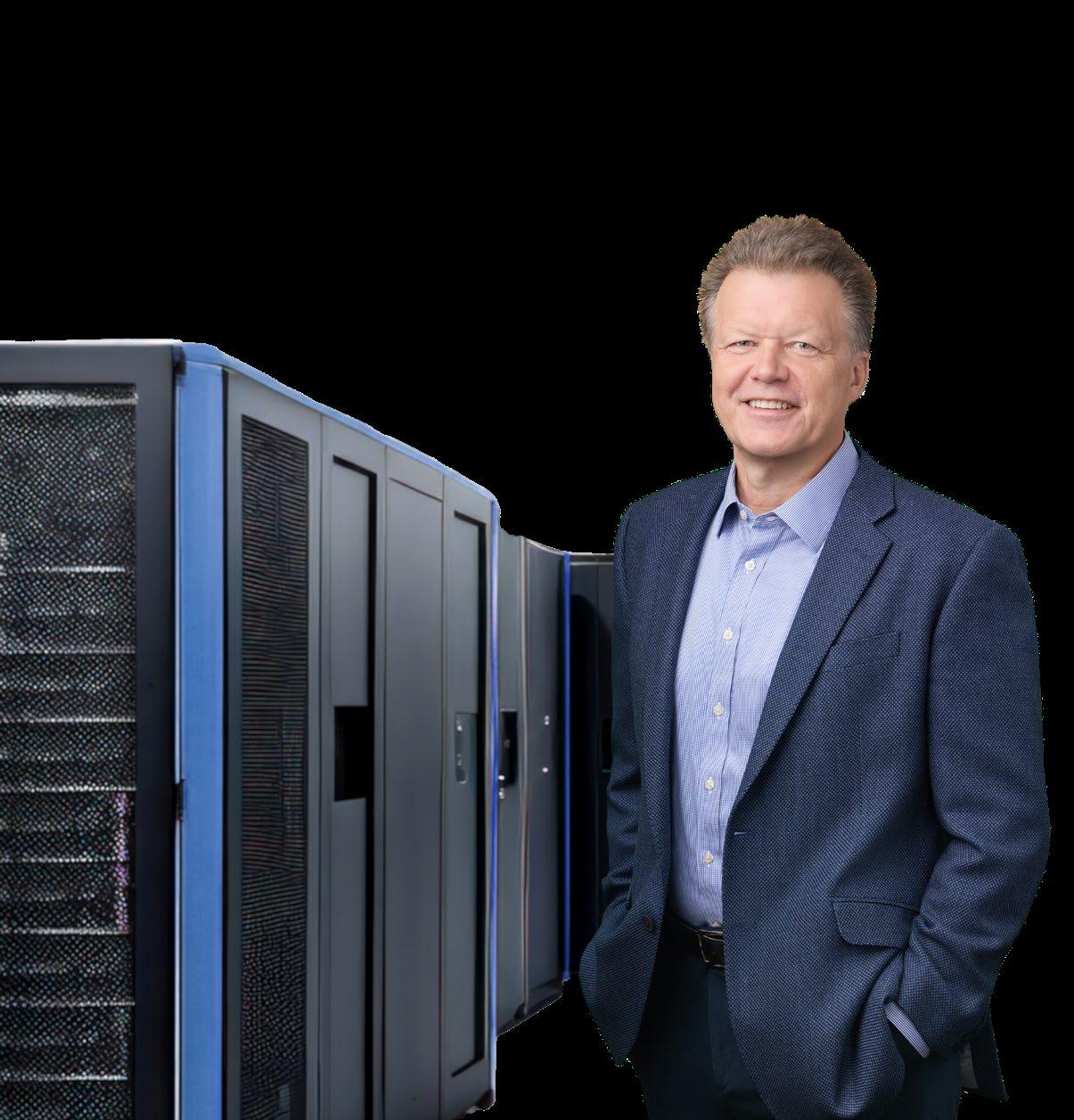
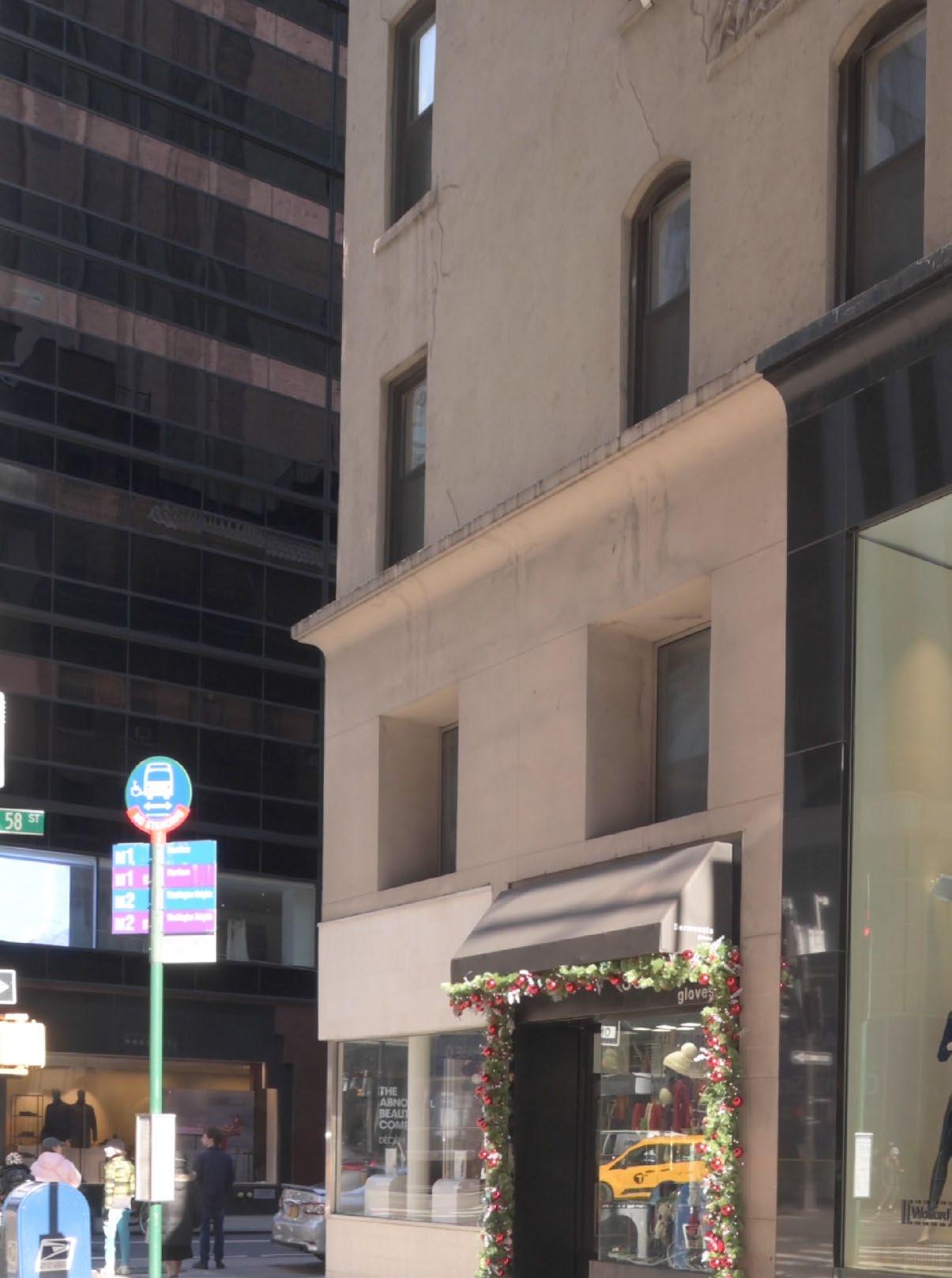
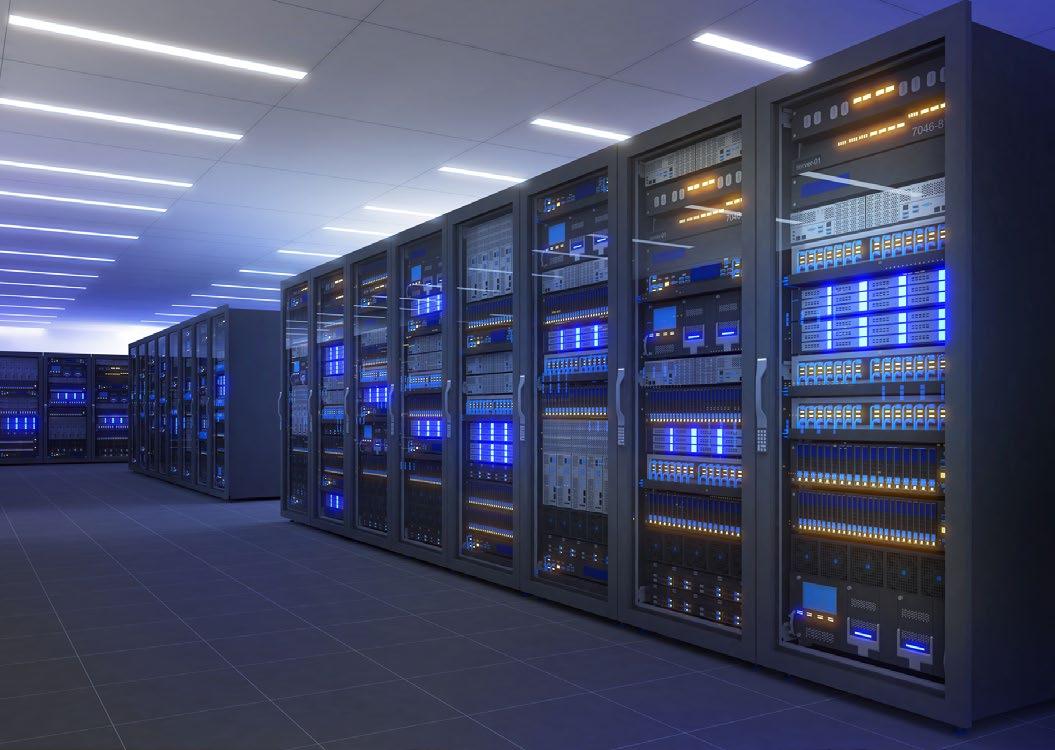
44 Powering the Future Duane Morris’ Jeff Hamera on navigating the data center boom.
The Value Before the Build Understanding the hidden ROI in preconstruction
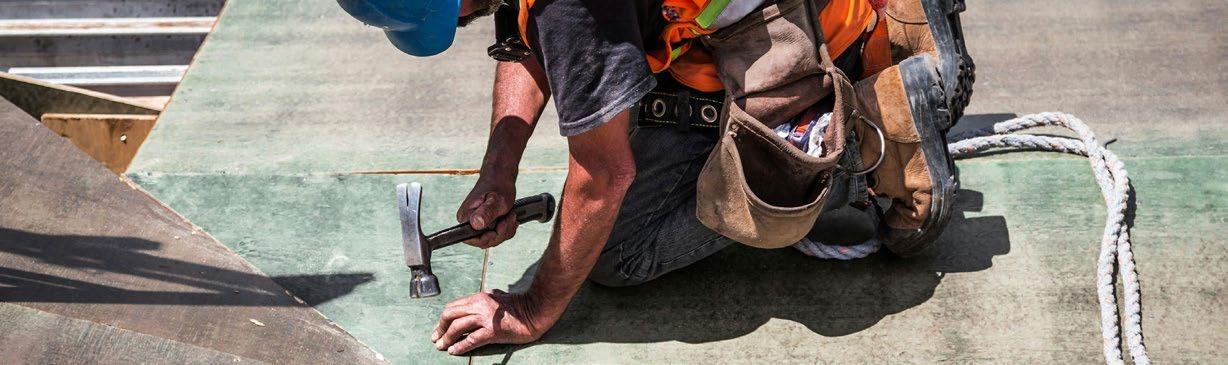
The Missing Path Why experienced tradespeople are getting shut out of construction leadership.
GENERAL CONTRACTING
DESIGN-BUILD
PROGRAM MANAGEMENT
Starbucks Strikes a New Chord in Nashville
More locations. More markets. More customers. For years now, restaurant expansion conversations centered around storefronts. But if you look close enough you will see that the real growth story is happening behind the scenes in areas like operations, technology, logistics and talent infrastructure.
That shines a new light on Starbucks’ decision to invest $100 million into a new support center in Nashville, Tennessee. On the surface, it's a corporate office announcement. But if you dig a little deeper, you see the ominous signs of how restaurant brands are rethinking geog-
raphy, workforce strategy and long-term operational growth.
The new center—expected to create 2,000 jobs over the next five years—will support Starbucks’ continued expansion throughout the Southeast while complementing its longtime Seattle headquarters.
But this is not simply about adding office space. It's about positioning. Access to talent. Operational agility. Cost structure. Regional connectivity. All the things increasingly driving major corporate real estate decisions today.
Nashville continues to emerge as one of the country’s most attractive destinations for companies looking to scale intelligently. The city offers a growing tech workforce, strong infrastructure, business-friendly momentum and proximity to some of the country’s fastest-growing population corridors. And restaurant brands are paying attention.
There's also shift happening worth noting. Starbucks plans to transition some contract work into in-house roles while relocating select technology teams from Seattle. That reflects a broader industry movement toward tighter operational integration as brands seek greater control over data, digital platforms and customer experience ecosystems.
So, strap yourself in folks, this may be the new look of today's modern restaurant expansion. Not just more stores. Smarter systems behind them.
We have always said, if we do a good job the phones will ring.
Established in 1993, Lakeview Construction, LLC is a national commercial project solution provider specializing in all phases of construction.
From concept to completion, our professional teams deliver quality construction and outstanding service, ensuring on-time schedules and cost-effective project management.
Headquartered in Pleasant Prairie, Wisconsin, we operate across all 50 states
CCR EDITORIAL BOARD
ACADEMIA
DR. MARK LEE LEVINE
Professor Burns School/ Daniels College University of Denver
ADA
BRAD GASKINS Principal The McIntosh Group
ARCHITECTS/ENGINEERS
MICHAEL MAGEE
Studio Leader Retail, Store Design Senior Associate Little
FRED MARGULIES Director of Retail Architecture Onyx Creative
STEVEN MCKAY
Managing Principal, Global Design Leader DLR Group
STEVEN R. OLSON, AIA President CESO, Inc.
CONSULTANT
GINA MARIE ROMEO Chief Heart Officer & Principal Consultant, Allied RDI
MICHELLE M COLLINS President & CXO A\N/A A Non-Agency
GENERAL CONTRACTOR
DAVID THOMPSON Vice President TCB Construction Group LLC.
MATT SCHIMENTI President Schimenti Construction
JOHN STALLMAN Marketing Manager Lakeview Construction
JEFFREY D. MAHLER RCA Advisory Board Member
HEALTHCARE
CLINTON “BROOKS” HERMAN
Principal Facilities Project Manager, MD Anderson Cancer Center
HOSPITALITY
SAMUEL
D. BUCKINGHAM, RS AMS CMCA President of Construction Devco Development
GARY RALL Vice President of Design and Development Holiday Inn Club Vacations
ROBERT RAUCH Chairman Brick Hospitality
JOE THOMAS
Joseph K Thomas Sr. Consulting Senior Consultant Hospitality Engineering
LU SACHARSKI Vice President of Operations and Project Management Interserv Hospitality
ANDY BRIGGS, CHA Managing Principal A14 Capital Management
INFORMATION TECHNOLOGY
CRAIG WEBER Director of Business
Prime Retail Services, US
Prime 3 Retail Canada, Inc.
MEGAN HAGGERTY Founder Legacy Capital Investment
MARIE ANTONETTE G. WAITE
Founder and CEO Finest Women in Real Estate
RESTAURANTS
DAVID SHOTWELL Director of Construction & Facilities, BOJ of WNC, LLC
DAVID D. DILLON
Principal Design Lead, Templates & Standards Chick-fil-A Corporate Support Center
RETAILERS
AARON ANCELLO Facilities Asset Management Public Storage
DEDRICK KIRKEM Facilities Manager Alice + Olivia
LAURA GROSS Retail Facilities Manager American Signature Furniture
KELLY RADFORD Vice President Facility Services CubeSmart
PERMITTING
VAUN PODLOGAR Partner, The Boom Letter
PAM GOODWIN Goodwin Advisors, LLC Goodwin Commercial The Pam Goodwin Show
JENNIFER SUSSMAN Director National Accounts & Business Development Powerhouse
REAL ESTATE
ROB ADKINS, LEED AP CDP
Senior Project Manager Cushman & Wakefield
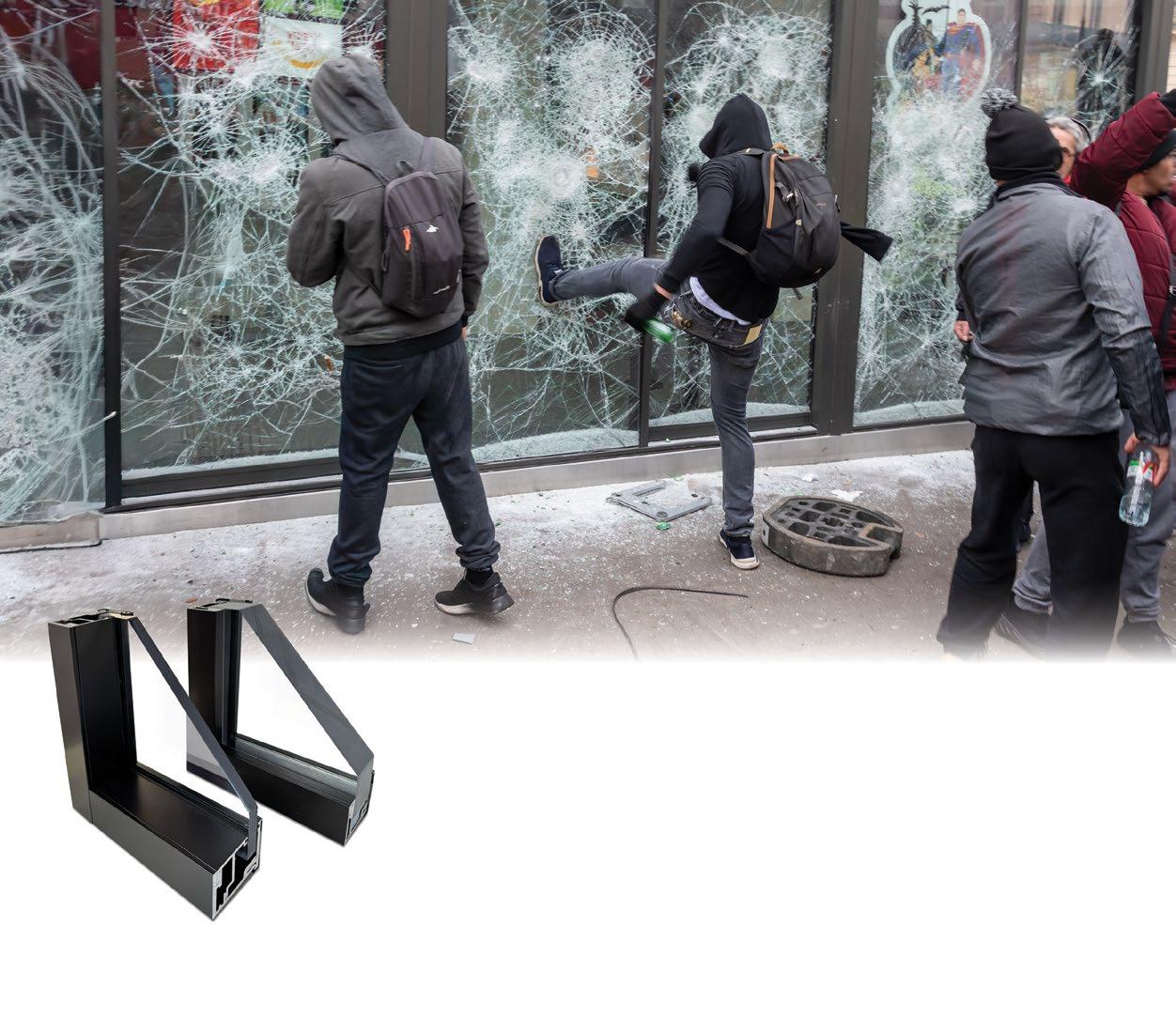
DESIGN EXISTING GLASS TO RESIST FORCED ENTRY
DefenseLite®Pro retrofit security glazing
Harden the building envelope without compromising budget or timelines.
DefenseLite® Pro delivers a high-performance retrofit solution for glass security in commercial environments.
This polycarbonate security glazing system mounts directly over existing glass to help delay forced entry and resist smash-and-grab, riot, and impact events. Designed for real-world threats, DefenseLite® Pro strengthens the building envelope without demolition, downtime, or disruption to occupants.
With heavy-duty anchoring, passive protection, and clear sightlines, it allows architects to specify security that performs while preserving transparency and daylight.
• DefenseLite® Pro mounts over existing glass
• Delays forced entry and impact events
• Heavy-duty anchoring for real-world conditions
• Maintains transparency and natural daylight
• Installs without demolition or operational downtime
• Passive protection with no power required
• ASTM 3561 Level 8 performance
• Ideal for retail, offices, schools, and government
Visit www.defenselite.com or call 888-689-5502.
AroundtheIndustry
RETAIL
Urban Outfitters
Urban Outfitters will open a Reclectic store in North Texas that will sell overstocks and retired items from brands like Anthropologie, Free People and Nuuly. The location will be one of several Reclectic stores in the US that offer a mix of new, returned, and pre-owned pieces, catering to the growing trend of alternative and sustainable retail solutions.
BJ’s Wholesale Club
BJ’s Wholesale Club plans to open a 500,000-square-foot distribution center in Commercial Point, Ohio, by early 2027 to support its expanding store network. The facility will feature automated pallet storage and case-handling equipment through a partnership with Swisslog.
PGA Tour Superstore
PGA Tour Superstore has debuted 33 new stores since 2020 and will add eight more this year, bringing the total to 82, with a focus on experiential retail that includes indoor putting greens and custom fitting services. The retailer’s growth strategy includes entering new markets and strengthening its presence in existing ones, with recent openings in cities, including Nashville, Tennessee, Kansas City; and Richmond, Virginia.
Veronica Beard
U.S.-based lifestyle brand Veronica Beard, founded 15 years ago by sisters-in-law Veronica Swanson Beard and Veronica Miele Beard, plans to open eight new stores this year and is intensifying its international expansion efforts, having recently opened its second store in London and planning further growth in Canada and South Korea.
Walmart Canada
Walmart Canada plans to invest about $4.51 billion to build new stores and expand its supply chain, marking its biggest ever investment since opening its first store nearly 30 years ago. The retailer plans to expand its footprint, adding it would be building dozens of new stores starting with five new supercenters in Ontario and Alberta by 2027.
Santoni’s
Italy-based footwear firm Santoni’s new retail concept, designed by Patricia Urquiola, is highlighted in its revamped Milan and New York locations. The stores feature unique design elements that reflect local culture and history, such as terrazzo flooring in Milan and Art Deco patterns in New York. These spaces also include interactive features like a laboratory area and bespoke services to connect customers with Santoni’s craftsmanship.
Tractor Supply
Tractor Supply will open an 865,000-square-foot Idaho distribution center by 2027 that will serve about 200 stores in the Pacific Northwest. The retailer, which previously announced plans to open 90 namesake stores and 10 Petsense by Tractor Supply locations this year, has also raised its long-term store count plan—the retailer now expects to grow to 3,200 locations, up from a previous target of 3,000.
Cole Haan
Cole Haan will open a 1,622-square-foot store on the corner of Fifth Avenue and 19th Street in New York City. The unit, which sports the company’s new lifestyle-centric design, is the third in New York City. The retailer operates more than 500 stores in nearly 100 countries.
The North Face
The North Face has opened an innovative flagship in London, designed to immerse customers in an outdoor experience through sensory elements like visuals, sound and scent. The store features a Dome Tent with AI-generated content, a custom fragrance and a digital footwear finder to enhance the shopping journey. It also includes a sustainability zone promoting product longevity and the company’s Renewed program for second-life products.
Abercrombie & Fitch
Abercrombie & Fitch opened two new stores in London’s prominent shopping districts, Oxford Street and Covent Garden. These stores will offer a blend of digital and physical shopping experiences, including a private lounge at the Oxford Street location.
Boucheron
Luxury jeweler Boucheron has opened a boutique at the Fontainebleau Las Vegas resort, marking its first location in the city and second in the U.S. The 1,560-square-foot store is part of the French retailer’s U.S. expansion strategy and features a design inspired by its historic Parisian boutique.
RESTAURANTS
Starbucks
Starbucks is rolling out a warmer, more residential-style store design as part of a broader effort to create more inviting spaces that encourage customers to stay longer. The redesigned Chicago-area locations feature softer seating, rugs, locally inspired artwork and relaxed layouts, with the coffee chain planning to renovate 1,000 North American stores this year.
Chick-fil-A
Chick-fil-A plans to build a $50 million distribution and warehouse facility in Lubbock, Texas, as the restaurant chain continues expanding its logistics network to support growing operations. Located near Lubbock Preston Smith International Airport, the project is expected to create 80 full-time jobs, with construction started in May.
Buffalo Wild Wings Go
Buffalo Wild Wings Go expanded its footprint by 60% last year, reaching 219 locations as the takeout- and delivery-focused concept continues gaining momentum nationwide. Driven largely by franchise growth in states including Illinois, New York and Texas, the smaller-format brand plans to open another 75 franchised restaurants this year.
Smoothie King
Smoothie King is continuing its rapid expansion with plans to open 90 new locations this year while rolling out a refreshed store design focused on warmth, energy and customer experience. The updated concept features new lighting, branded artwork and redesigned menu boards as the chain also expands its food offerings with flatbreads and new kitchen equipment aimed at driving additional sales growth.
Marco’s Pizza
Marco’s Pizza is accelerating its California expansion through a major development agreement with franchisee Baljit Gill, who recently increased his commitment from four to 12 Southern California locations. The expanded deal reflects growing confidence in the brand’s franchise support system and long-term growth potential in the competitive West Coast market.
Freddy’s Frozen Custard & Steakburgers
Freddy’s Frozen Custard & Steakburgers has opened its first location on a U.S. military base with a new restaurant at Fort Lee in Virginia. Designed with a smaller footprint and streamlined kitchen, the location required an extended approval process and operational adjustments to meet military standards while supporting faster construction and efficient service.
Mo’ Bettahs
Mo’ Bettahs is taking a measured approach to national expansion as the Hawaiian fast-casual chain enters new markets in Phoenix, Indianapolis and Minneapolis this year. The company plans to use customer feedback and performance data from the initial locations to help guide future growth decisions in each region.
Layne’s Chicken Fingers
Layne’s Chicken Fingers has expanded from 10 to 41 locations across nine states in recent years as the premium fast-casual brand continues accelerating its national growth strategy. The company secured agreements for 68 additional restaurants last year and is projecting another year of 100% unit growth in 2026.
Slim Chickens
Slim Chickens is entering a new phase of national and international growth. With more than 300 locations open and another 1,000 in de-
velopment, the fast-casual brand is investing in technology, training and operational systems designed to support franchisee performance and long-term expansion.
Thompson Restaurants
Thompson Restaurants is expanding into franchising with its Wiseguy Pizza concept as the multi-brand operator looks to accelerate growth beyond its roughly 70 restaurant locations. Known for its simplified menu and value-focused pizza-by-the-slice model, Wiseguy Pizza is being positioned as an operationally efficient franchise opportunity, while exploring franchise expansion for its Milk & Honey Southern-food brand.
HOSPITALITY
Hilton
Hilton has entered an exclusive agreement with Yotel, making the tech-focused hospitality brand the first member of its new Select by Hilton category. The partnership allows Yotel to maintain independent operations while leveraging Hilton’s distribution technology and Hilton Honors platform as the brand targets significant global expansion in the years ahead.
Ascend Collection
Choice Hotels International’s Ascend Collection has surpassed 500 properties with the additions of The Gould Hotel in Seneca Falls, New York, and The Harrison Hotel in Hollywood, Florida. The milestone comes as the soft-brand collection continues expanding globally, with 70 more hotels in development across markets including Poland, Africa, Canada and Latin America.
Wolseley Hotels
Minor Hotels plans to bring its new Wolseley Hotels brand to New York City in 2027 with a luxury property near Bryant Park. The Wolseley Hotel New York will occupy a landmark building and feature 76 guest rooms and suites, along with multiple food-and-beverage concepts and a wellness-focused guest experience.
Kimpton Era Midtown New York
The Kimpton Era Midtown New York has officially opened near Rockefeller Center, becoming the first hotel managed directly by Extell Development Company. The new property brings Kimpton’s signature blend of boutique hospitality and urban energy to Midtown Manhattan as Extell expands its presence in the luxury hospitality market.
Club Med
Club Med is moving forward with a $124.3 million resort development in KwaZulu-Natal, South Africa, that aims to position the region as the “New Riviera.” The project will combine beachfront hospitality with safari experiences through its integration with the Mpilo Private Game Reserve, creating Club Med’s first “Beach and Safari” destination concept. (Continued on next page)
AroundtheIndustry
1 Hotel & Homes Hudson Valley
Starwood Hotels and Hudson River Valley Resorts are advancing plans for 1 Hotel & Homes Hudson Valley, a long-awaited eco-focused resort and residential development at Williams Lake in Rosendale, New York. The project will feature a 100-room resort along with private homes for sale and rent, with residential offerings expected this fall and the hotel targeted to open by 2028.
Moana Surfrider
The Moana Surfrider, a Westin Resort & Spa in Waikiki, is celebrating its 125th anniversary with the completion of a multimillion-dollar renovation that refreshed all 791 guest rooms while preserving the hotel’s historic Victorian character. The milestone celebration also includes wellness events, live performances and ceremonial activities honoring the iconic beachfront property’s long-standing role in Hawaiian hospitality.
Charlestowne Hotels
Charlestowne Hotels has revealed an eight-project development pipeline spanning the Mountain West, Midwest and Southeast
regions. The upcoming portfolio includes adaptive reuse projects, a staffless hotel concept in Florida and two new Marriott Tribute Portfolio properties as the hospitality company continues expanding its lifestyle and experiential offerings.
Garner Hotels
IHG Hotels & Resorts’ Garner Hotels brand has surpassed 100 properties globally less than two years after launching in 2023. The fast-growing midscale conversion brand now has nearly 80 more hotels in development across 12 countries, fueled by continued expansion throughout the Americas and EMEA regions.
Tamarack Resort
Tamarack Resort in Idaho is undergoing a $200 million transformation aimed at positioning the property as a year-round luxury destination for outdoor recreation. Backed by the Navarro family, the resort’s expansion plans include new ski terrain, marina development on Lake Cascade and continued investment in amenities designed to strengthen its appeal beyond the winter season.
Music City Move
Starbucks is making a major investment in the Southeast with plans to establish a new corporate support center in Nashville, Tennessee. The coffee giant will invest $100 million into the project, which is expected to open next year and create 2,000 jobs over the next five years as the company continues expanding its national footprint.
The new office will complement Starbucks’ longtime headquarters in Seattle while strengthening operational support across the Southeast. In addition to creating new positions, the company plans to transition some contract work into in-house roles and relocate select technology teams from Washington state to Tennessee. The move reflects a broader trend of restaurant and hospitality brands expanding into high-growth Southern markets offering access to talent, lower operating costs and strategic regional positioning.
For Nashville, the project represents another major corporate win in a city increasingly attracting national brands, technology investment and workforce growth. For Starbucks, it signals a continued evolution of how large restaurant companies are structuring operations to support long-term expansion, innovation and workforce flexibility across multiple regions of the country.
Starbucks pours $100 million into new Nashville support center
Building for the Next Chapter
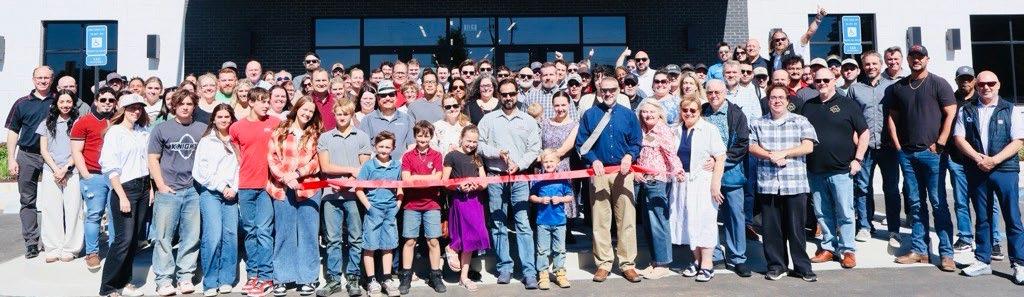
Place Services celebrates new headquarters in Woodstock
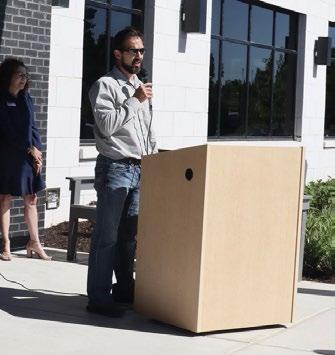
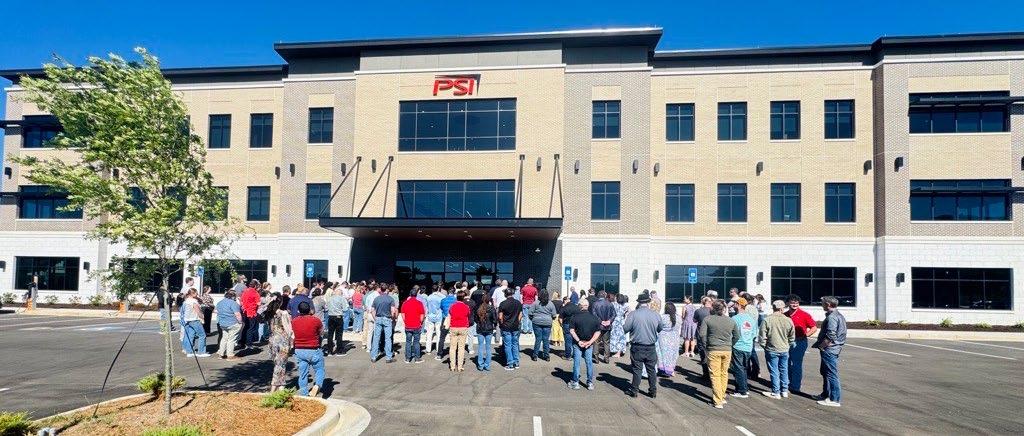
As Place Services Inc. nears its 20th anniversary, the company is putting down an even larger footprint in its hometown. The Woodstock, Georgia-based contractor recently celebrated the ribbon cutting of its new headquarters, a nearly 59,000-square-foot facility designed to support the company's continued growth across the country.
The three-story headquarters will serve as a hub for collaboration, leadership development, training and day-to-day operations. The milestone comes as PSI continues expanding its national presence and capabilities. "As we approach our 20th year, this headquarters reflects both the progress PSI has made and the future we continue building toward," CEO Troy Place says. "We're
grateful to our employees, clients, trade partners and community members who have helped make this milestone possible."
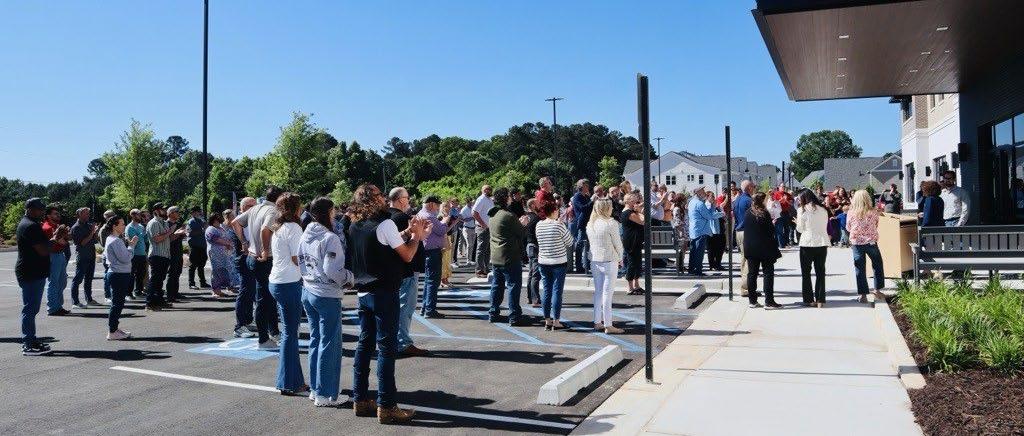
The ribbon-cutting event brought together employees, clients, trade partners, local officials, and community members to celebrate the achievement and PSI's ongoing investment in Cherokee County. Headquartered in Woodstock, Place Services is a
full-service general contractor licensed in all 50 states and Puerto Rico, with additional offices in South Carolina, Ohio and Colorado. Through its five contracting divisions and 12 specialty trade disciplines, the company continues to grow its national reach while staying focused on what it calls its core mission: being the greatest source of help for its customers.
Blending the Stay
Hybrid hospitality gains momentum across Southeast Asia
Hotels across Southeast Asia are beginning to rethink what a hospitality property can be. A growing number of operators are embracing hybrid hospitality models that combine traditional hotel stays with residential, co-working and mixed-use elements designed to create more flexible, community-driven environments for travelers and locals alike.
The approach reflects shifting consumer expectations around work, travel and lifestyle. Rather than focusing solely on short-term guests, many properties now design spaces that support longer stays, remote work and social interaction. Technology also plays a major role, helping operators manage flexible booking models, shared amenities and evolving guest experiences more efficiently. The result is a hospitality model built to adapt quickly as market conditions and traveler habits continue to shift.
For developers and owners, the trend opens the door to diversified revenue streams and stronger long-term asset flexibility. Across Southeast Asia, hybrid hospitality increasingly is viewed not simply as a niche concept, but as a strategic response to changing patterns in tourism, work and urban living.
They said it...
“Success can become an enemy. When leaders are afraid to fail, they try to do it all themselves. But growth forced us to trust our teams and build systems instead of relying on individual effort.”
— Randall McNeil, Director of Operations, Bojangles, on why communications is vital in an organization’s mission to not only grow, but build it culture daily.
“We need to make sure we market ourselves in an intelligent way in what is a more competitive world.”
— Hilton CEO Chris Nassetta on why hotel brands must embark on longterm marketing strategies to attract international visitors today
“The buyer pool for these type[s] of assets is, I think, a lot deeper than people realize. There are a lot of sovereigns out there who are very interested in luxury hotels.”
— Host Hotels & Resorts President and CEO James Risoleo on why hotel executives are optimistic about the hotel deals market in 2026
W E A R E J O N E S .
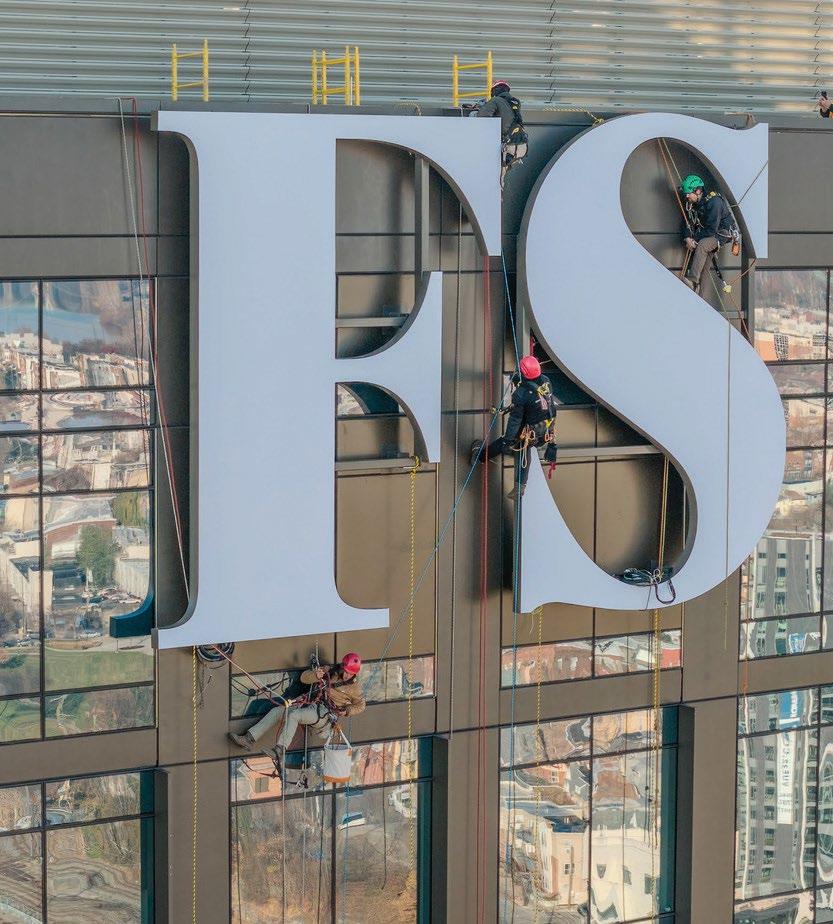
Full‐ser vice signage.
Custom architectural features.
116 years of experience behind ever y build.
The Numbers Game
The projected global financial impact, in billions, of those same inefficiencies as infrastructure assets move through development, construction, insurance, ownership and operations, according to the “The Economic Impact of Persistent Infrastructure Identity: A Financial Model for Lifecycle Efficiency in the Built Environment” report.
The percentage of construction finance teams using AI in reporting and analytics, helping improve visibility into costs and project performance, according to Yooz’s “2026 AI in Finance Report: Construction Industry Spotlight.”
The estimated annual cost, in billions, of lifecycle inefficiencies in the U.S. tied to fragmented infrastructure documentation, according to the “The Economic Impact of Persistent Infrastructure Identity: A Financial Model for Lifecycle Efficiency in the Built Environment” report.
Building Hospitality’s Future
Boston University launches hospitality real estate master’s program
Boston University is expanding its hospitality education offerings with the launch of a new Master of Science program focused on hospitality real estate. The program, introduced through the university’s School of Hospitality Administration, is believed to be the first hospitality real estate graduate degree offered by a hospitality school in the U.S.
Led by Kaushik Vardharajan, the program is designed to prepare students for the increasingly complex intersection of hospitality, development and investment. Coursework will focus on areas including financial management, asset management and real estate development, giving students a deeper understanding of how hospitality projects are financed, built and operated in today’s evolving market.
The move comes as hospitality and mixed-use development continue converging across major markets, creating growing demand for professionals who understand both guest experience and real estate strategy. For Boston University, the program represents an effort to align hospitality education more closely with the business realities shaping hotels, resorts and experiential developments around the world.
Becomes
CORNER
From Static Spaces to Living Systems
How Generative Art, AI and experiential design are redefining real estate value
From Static Spaces to Living Systems
How Generative Art, AI and experiential design are redefining real estate value
By Michelle M. Collins
For decades, the built environment has been defined by permanence— steel, glass and concrete shaped into fixed expressions of design intent. Value has traditionally been driven by location, architecture and tenant mix.
Today, a new layer is emerging—one that is less tangible, but increasingly influential: adaptive, intelligent experience.
Across cultural institutions, technology platforms, and early-stage real estate applications, a shift is underway. Buildings are no longer conceived solely as static assets. They are beginning to function as responsive systems—capable of sensing, adapting and evolving over time.
From Installation to Infrastructure
The roots of this shift can be traced to the art world. Artists such as Refik Anadol have transformed how audiences understand the role of digital media in physical space.
His large-scale, data-driven works—presented at institutions like the Museum of Modern Art and the Los Angeles County Museum of Art—use machine learning to create continuously evolving visual environments.
These works do not “repeat.” They behave more like systems than objects.
A similar philosophy is emerging among a new generation of generative artists working at the intersection of data, environment, and human interaction. Rather than producing singular outputs, they design frameworks that continuously generate variation—systems that respond to presence, input and context.
“I design systems rather than fixed images.”
— Ronen Tanchum
As Ronen Tanchum describes his own practice:
“I design systems rather than fixed images. The artwork evolves through algorithms that continuously generate new visual states. AI enables us to turn human presence into a dynamic system. The algorithm continuously responds to movement and behavior, generating environments that evolve in real time. Over time, this creates a recognizable imprint. The space begins to reflect the people within it, shifting the experience from passive viewing to a sense of ownership, value and belonging.”
This distinction is subtle, but profound. Art, in this context, is no longer something placed within a space— it is something that behaves within it.
The Emergence of Experiential Systems
As these practices move beyond museums and into the built environment, a new interdisciplinary field is taking shape—one that blends:
> Generative art
> Artificial intelligence (AI)
> Spatial design
> Experiential strategy
Creative technologists and experiential designers are translating these artistic systems into functional applications within real estate—where environments can respond dynamically to data, occupancy and human interaction.
This evolution marks a shift from designed space to designed behavior.
In recent large-scale installations, generative systems have demonstrated how environments can respond to real-time inputs—transforming data such as weather, movement, or sound into immersive spatial experiences.
In one such example, human movement directly influences a digital atmosphere, where “each gesture” alters the surrounding environment, effectively turning space into a responsive ecosystem.
Why This Matters for Owners and Developers
While the cultural implications are compelling, the commercial implications are becoming increasingly relevant.
1 Differentiation That Evolves Over Time
Adaptive environments introduce variability—spaces that change continuously rather than remaining fixed. This creates a sustained sense of novelty that traditional design alone cannot achieve.
2 Measurable Impact on Engagement
Immersive and responsive environments have been shown across retail and hospitality sectors to increase dwell time and interaction—key drivers of commercial performance. Generative systems extend this by ensuring that environments remain continuously engaging, rather than becoming familiar.
3 Programmability and Lifecycle Efficiency
Unlike physical renovations, generative systems can evolve through software. Visual environments, interaction models, and experiential layers can be updated without reconstruction. This introduces a new form of long-term adaptability—spaces that remain current without being rebuilt. This has significant impact and relevance for commercial tenants, brand storytelling, personalization and engagement.
Applications Across Asset Classes
The integration of generative systems is beginning to emerge across sectors:
> Cultural Institutions: Museums continue to lead, using generative environments to create immersive exhibitions that encourage repeat visitation and deeper engagement.
> Hospitality: Hotels are experimenting with adaptive environments that shift in tone throughout the day—aligning with guest behavior and circadian rhythms.
> Retail and Mixed-Use: Developments are exploring responsive environments that adapt to audience patterns, enhancing both engagement and commercial activity.
> Residential: In high-end residential settings, digital environments are introducing new forms of personalization—allowing occupants to influence the atmosphere of their surroundings in real time.
A Convergence of Disciplines
Delivering these systems requires collaboration across fields that have historically operated independently:
> Artists and creative technologists
> Architects and designers
> Software engineers and data specialists
> Developers and asset managers
This convergence reflects a broader shift in how environments are conceived— not simply as physical structures, but as integrated systems of design, technology and human experience.
Implementation: From Concept to Asset Strategy
For developers and investors, the path forward is becoming clearer:
> Integration with Data Systems: The most effective generative environments are connected to real-time inputs—occupancy, environmental conditions and behavioral data.
> Content as an Ongoing Layer: These systems require continuous evolution rather than one-time installation, introducing a new operational model centered on iteration and refinement.
Evolving Cost Structures
While initial implementation may require specialized investment, long-term efficiencies emerge through reduced need for physical redesign and extended asset relevance.
Emerging Revenue Opportunities
Dynamic environments create opportunities for:
> Branded experiences
> Programmable activations
> New forms of digital-physical engagement
Over time, this suggests a shift where experience becomes not only an amenity— but a potential value driver.
Imagine a space programmed through art, color, lighting and nature-based elements aligned with each resident or tenant. Digital wallpapers, generative artscapes and uniquely branded responsive environments redefine how people interact with space.
A New Definition of Value
> The integration of generative art, AI, and experiential design does not replace traditional real estate fundamentals—it expands them.
> Buildings will always be defined by their physical form. But increasingly, they will also be defined by their capacity to evolve.
> Generative systems create a unified framework that can personalize, customize, and deliver multiplicity—redefined by the people and experiences they serve. In doing so, they reshape how value is perceived within the built environment.
What began in museums and experimental installations is now informing how we think about space at scale. As generative technologies mature, the distinction between digital and physical environments will continue to blur.
The most compelling spaces will not be those that are fixed in time, but those that remain responsive, adaptive and alive. In this emerging model, buildings are no longer static assets—they are living systems, capable of evolving alongside the people who inhabit them. CCR
Michelle Collins is founder and CEO of A Non-Agency®, a consumer experience marketing design consultancy based in New York.
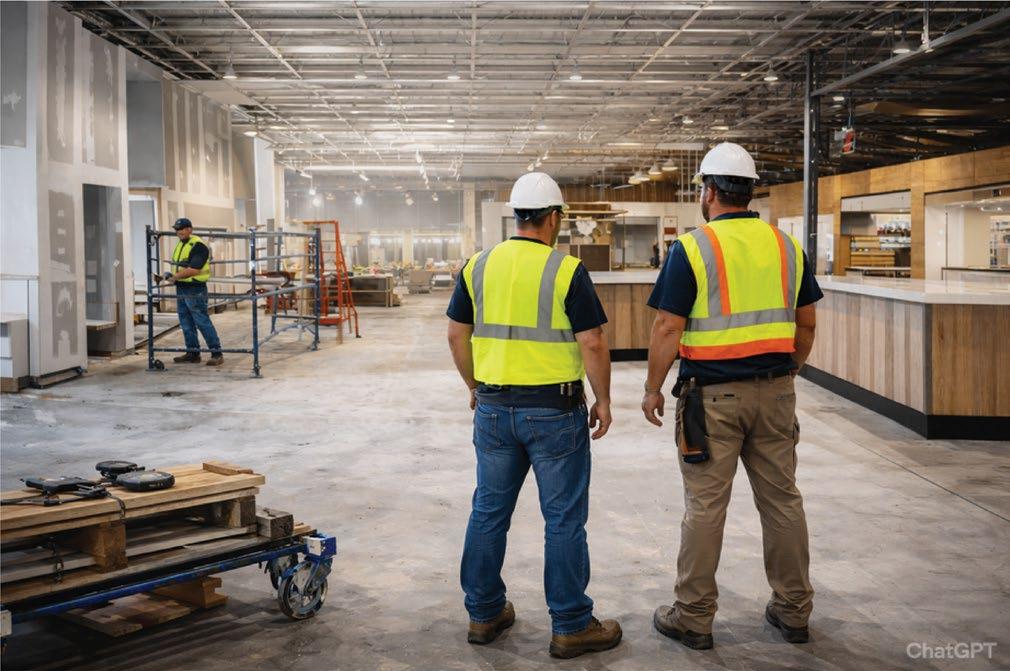
B uilding E xceptional Retail S paces N ationw ide
S ince 1989, StoreCrafters has spec ialized in retail co nstruc tio n, delivering build- o uts, remo dels, and pro perty develo pment so lutio ns natio nw ide. Pro jec ts are managed end- to - end to ensure prec isio n, quality, and o n- time co mpletio n.
We co llabo rate w ith retailers, landlo rds, develo pers, and vendo rs to c reate hig h- impac t retail enviro nments that enhance c usto me r experience and suppo rt business go als.
Margins Under Fire
How contractors are navigating tariffs, pricing pressure and project risk
You submitted that bid 8 months ago. Steel was running where it had been for two years. You priced it accordingly, built in a reasonable contingency and won the job. Fixed price. Good client. Workable timeline.
By Jane Gentry
This week your supplier sent a revised quote. Steel mill products are up 20.7% year-over-year. Aluminum is up 33%. Copper and brass are up 15.7%. Framing lumber is at $872 per thousand board feet, up roughly 13% from where you budgeted. That’s before the tariff layer—50% on steel, aluminum and copper; 10% on softwood lumber.
The job you won is the job you’re losing money on.
You’re not alone. An AGC-NCCER survey found that 43% of general contractors have cancelled, postponed, or scaled back at least 1 project in the past six months, with material costs cited as the direct cause. Nonresidential construction input costs ran at a 12.6% annualized rate in January and February of 2026—the fastest pace since the supply-chain peak of early 2022, per Engineering News-Record’s Q1 2026 Cost Report.
Every owner in your market is reading the same numbers. Most are doing the same thing with them: measuring the damage, calculating the exposure and waiting to see what happens next.
That’s understandable. It’s also the wrong response—not because you’re uninformed, but because measuring what’s happening and managing through it are two entirely different things.
The Thermometer and the Thermostat
Here’s a framework I use with clients when markets turn volatile.
A thermometer tells you what the temperature is. Accurate, useful, completely passive. When the environment shifts, it shifts with it. That’s all it does.
A thermostat holds a temperature. It’s set to a target, and when conditions drift from that target, it activates. It doesn’t report the environment—it responds to it, until things return to where you decided they need to be.
Most construction businesses run like thermometers. They watch the material market, track last quarter’s margins, adjust pricing after the fact. In a stable environment, that’s fine.
It stops working when input costs move 12.6% in 2 months.
The 3 Things Your Thermostat Needs
A thermostat isn’t a mindset. It’s a system. And it only works when all three parts are in place.
Lines in the sand. These are the numbers your business needs to stay profitable. Not goals—floors. The point at which something has to change. Right now, for a construction business, those lines might look like:
> Gross margin by contract type: fixed-price work must stay above 18%
> Material cost ceiling by input: the steel price at which my contingency on active bids is gone
> Backlog coverage: below 14 weeks of signed work, business development activates immediately
> Bid variance: if a supplier quote comes in more than 12% above my estimate assumption, that bid doesn’t go out at the original number
These aren’t targets you’re hoping to hit. They’re the lines you’ve decided to defend.
Signals. A signal tells you a line has been crossed. The critical thing is that you define the signal before the market moves—so you’re not deciding in the moment whether things are serious enough to act. You already decided that. The signal fires and a response happens.
If you’re reading this and recognizing the gap—lines you’ve never drawn, signals you’ve never defined, responses that exist only in your head—that’s a three-hour problem, not a year-end problem.
Signals for a construction business right now:
> A supplier quote that exceeds your material assumption by more than your defined threshold
> A contract’s gross margin dropping below your floor during execution
> Backlog coverage falling below your minimum
> A tariff change that touches a material category sitting in your active bids or submitted estimates
A predefined response.
This is where most businesses stop short—and it’s the whole point of the system. When a signal fires, you shouldn’t be deciding what to do. You should be executing what you already decided when you were thinking clearly, before the pressure was on.
Here’s what that looks like right now:
> Steel exceeds your threshold: Every new bid includes an escalation clause. Existing fixed-price contracts with steel exposure get a renegotiation call initiated within five business days. Not when it feels right—within five business days.
> A contract’s gross margin drops below your floor: Owner reviews it within one week. A client conversation happens. It does not get quietly absorbed while you hope the next job makes up for it.
> Backlog drops below your minimum: Stop waiting for inbound work. Start calling your relationship list. Today.
> A supplier quote comes in more than 12% above your estimate: That bid doesn’t go out at the original price. It gets repriced, rebid with a different material spec or includes a written contingency the client has to acknowledge before you proceed.
The predefined response is what separates a thermostat from good intentions. The lines in the sand and the signals are preparation. The predefined response is the actual protection.
Let Me Show You What This Looks Like
I worked with a mechanical contractor earlier this year who had drawn exactly
➜
& KITTING ➜ INVENTORY MANAGEMENT & TRACKING ➜ FINAL MILE & WHITE GLOVE
From warehousing and inventory to last-mile installation, logistics are managed with precision and transparency. With decades of cross-industry experience, TTG supports projects of any scale, providing real-time tracking, reporting, and proof of delivery so you stay informed at every step.
these lines. When the tariff announcements hit in early 2026, he didn’t call a meeting to figure out how bad it was. He pulled up the response he’d written six months earlier and started making calls.
Within 10 days, he’d initiated renegotiation conversations on three fixed-price contracts, added escalation clauses to two of them and adjusted his bidding assumptions going forward. His clients heard from him before they had time to wonder what was happening.
That’s not luck. That’s a system.
The contractor in the next county— same market, same material exposure— spent those same 10 days in reactive conversations he wasn’t prepared for. One of those clients is now in dispute. The relationship may not survive it.
product suppliers serving commercial construction will feel project delays in their installation volume on a three- to six-month lag. The pipeline thinning doesn’t show up in your backlog today. It shows up in your schedule four months from now, when there’s far less room to respond.
Do This Now
You don’t need new software to start. You need a working document and three hours.
Step 1: Draw your lines in the sand. Write down the floor for each variable your margins depend on. At minimum:
> Gross margin floor by contract type
> Material cost ceiling for your top three input categories
> Backlog coverage minimum in weeks
Which client conversations get initiated— and who makes the call?
Same tariff environment. Different outcomes. The difference was the work that got done before the signal fired.
What Most Contractors Are Doing Right Now
Scrambling. The revised quote hits the estimator. The estimator goes to the project manager. The project manager goes to ownership. Everyone calculates how bad it is. Someone calls the client. The client pushes back. An uncomfortable conversation happens under pressure, with no framework for how it should go, at a moment when the relationship is already strained.
Meanwhile, the pipeline of bids from the past six to 12 months sits unreviewed. Nobody has gone through contract by contract to figure out which ones are underwater and by how much. That review feels like it can wait—until it can’t.
And the second-order effects catch them off guard. Flooring contractors and
> Maximum variance between your estimate assumption and an incoming supplier quote before a bid gets repriced
Step 2: Define your signals.
For each line, write the specific, observable event that tells you it’s been crossed. “Steel prices are high” is not a signal.
“My supplier’s steel quote exceeds $X/ton” is a signal. Be precise enough that there’s no debate about whether it fired.
Step 3: Write the response before you need it.
For each signal, define exactly what happens:
> Who gets notified, and within what time frame?
> Which client conversations get initiated— and who makes the call?
> What changes on bids going out this week?
> What gets escalated to ownership versus handled at the project level?
Post it where your team can see it. Review it quarterly. Update the lines when your cost structure changes.
Your Suppliers Are Feeling This Too
If you supply into commercial construction—flooring, specialty products, anything tied to project timelines—run the same diagnostic on your manufacturing clients right now. 32% of manufacturing leaders say they’ll pass 100% of tariff increases directly to customers.
Another 42% are splitting it—some passed on, some absorbed. That repricing is hitting their customers now, which means the volume assumptions they built their 2026 plans around may already be wrong— and yours, downstream of them, may be too. What’s your line in the sand on their order volume? What’s the signal? What’s the response when it fires?
The Question Worth 3 Hours
Tariffs may ease. Some of the postponed projects will restart. Conditions will shift in directions nobody is calling accurately right now.
The thermometer business will adjust when they do. The problem isn’t whether it adjusts—it’s what the adjustment costs when it happens after the fact, under pressure, without a framework for the conversation.
The thermostat business already answered the harder question: What does this company need to stay profitable—and what happens, specifically and immediately, when the environment moves away from that?
Most owners can answer the first question. Fewer have a working answer to the second.
If you’re reading this and recognizing the gap—lines you’ve never drawn, signals you’ve never defined, responses that exist only in your head—that’s a three-hour problem, not a year-end problem. I work with mid-market construction and supply businesses on exactly this kind of work. CCR
Jane Gentry founded JaneGentry & Company after 25-plus years consulting for and running businesses struggling through the same market volatility she writes about. She works with mid-market CEOs across manufacturing, construction, logistics, and professional services—as someone who has carried the P&L through a volatile market, not just advised on it. Reach her at jane@janegentry.com.
Retail Construction in Real Time
RCA members get a firsthand look at DIRTT’s adaptable building systems
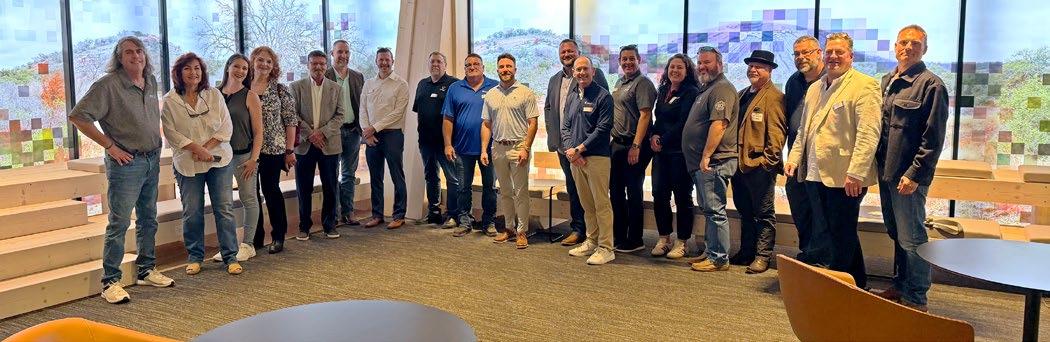
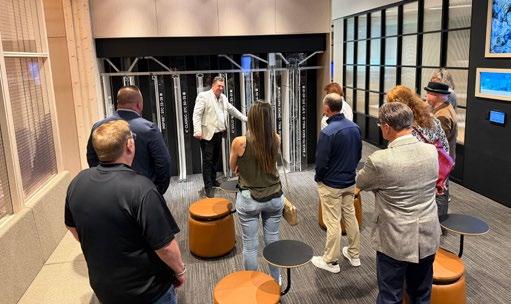
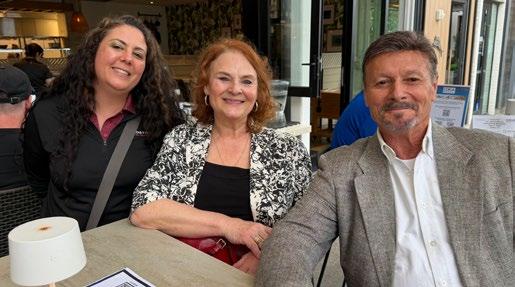
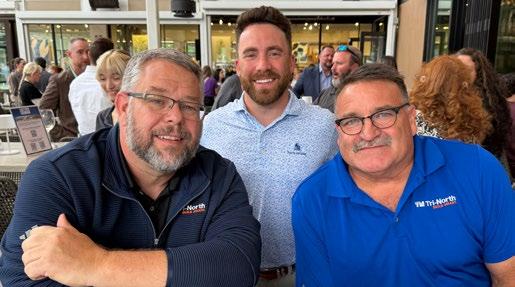
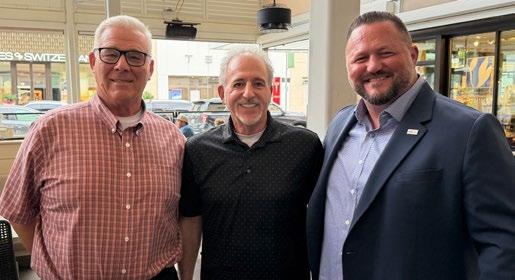
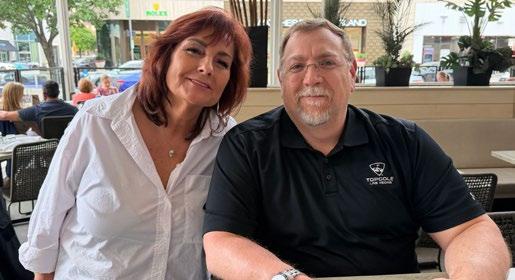
Innovation, flexibility and faster delivery took center stage as Retail Contractors Association (RCA) members, and construction, design and workplace professionals gathered at the DIRTT Experience Center in Plano, Texas, for an immersive look at the future of interior construction.
Hosted by GL Seaman & Company, the event combined a hands-on facility tour with conversations around adaptable construction systems and evolving workplace environments across multiple market sectors.
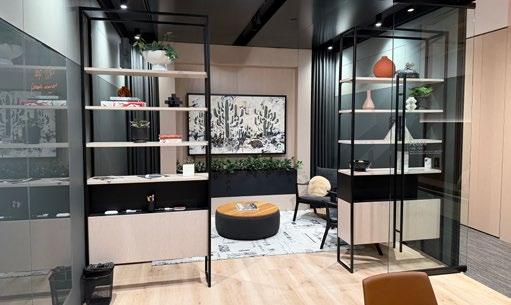
Attendees explored how DIRTT’s prefabricated interior systems can help reduce construction timelines while creating spaces designed to evolve alongside tenant and operational needs. The experience center tour showcased integrated wall systems, modular solutions and technology-driven construction approaches aimed at improving efficiency without sacrificing design intent.
Following the presentation and tour, guests continued the discussion during a networking reception at Tommy Bahama Restaurant & Bar.
Sponsored by:
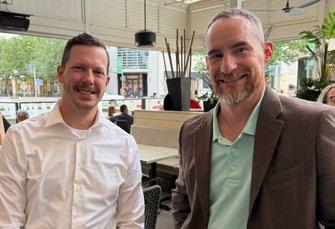
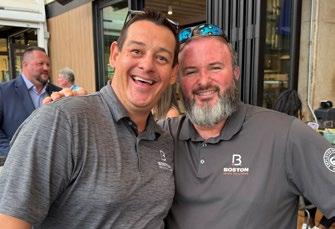
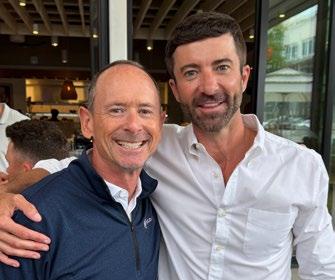
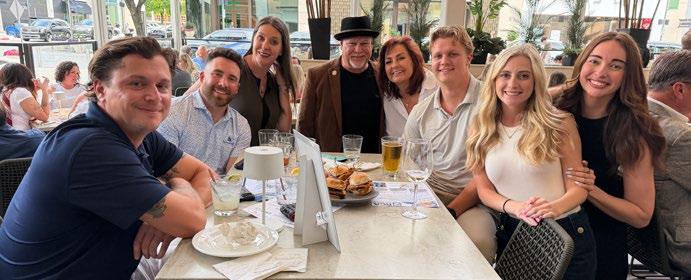
1. Hadley Meeks, DW1; Niclole Walters, TresC Management Group
2. Boon Bowling, GPRS; Stuart Allison, Onyx Creative
3. Mike Roberts, George Dibenedeto, Boston Retail Services
4. Chris Varney, BuildRite; Chadwick Spencer, Bureau Veritas
5. Alex Cornell, Colton Cox, Downstream, Nicole Walters, TresC Management Group; Matthew Baulier; Trueform Millwork & Furnishing; Dana Meehan; Sam Rolley, Downstream; Hadley Meeks, Jennifer Durst; DW1
6. Sara McCallion, Boston Retail Services; Lisa Peterson, MarCommCentrale; Shorty Rodgers, American Engineered Products
7. Matthew Smith, Tri North Builders; Colton Cox, Downstream; Branden Thomas; Tri North Builders
8. Mark Boillotat, Scouting America; David Corson, CCR Magazine; Jason Hanlin, AG I CM
9. Dana Meehan; Don Alexander, Onyx Creative
Workforce Under Pressure
6 reasons construction labor challenges will drive more disputes in 2026 By James Gallagher
In 2026, the U.S. commercial construction industry is expected to grow at a rate of only about 2%, continuing 2025’s lackluster industry performance. Although commercial construction growth will be marginal, the number of construction disputes and litigation is expected to rise in 2026.
Where Your Vision Meets Our Expertise
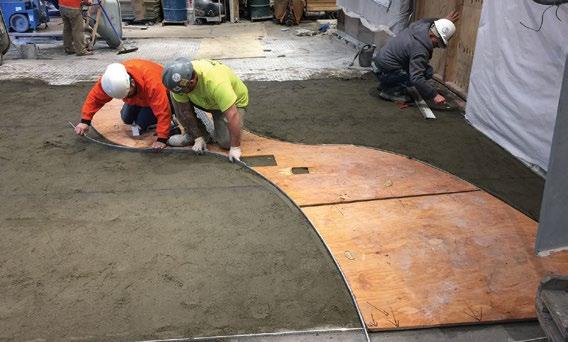
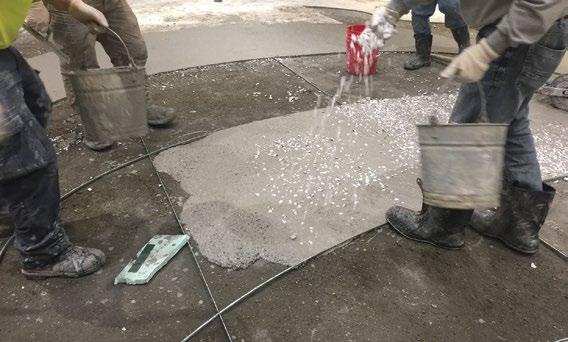
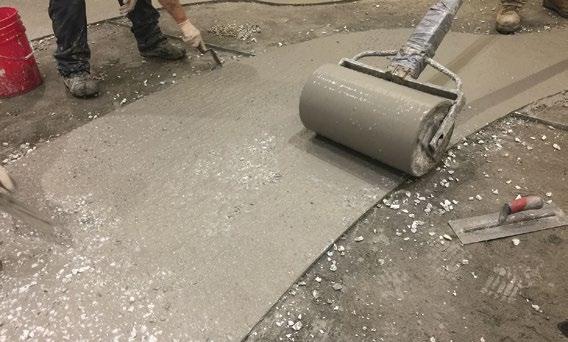
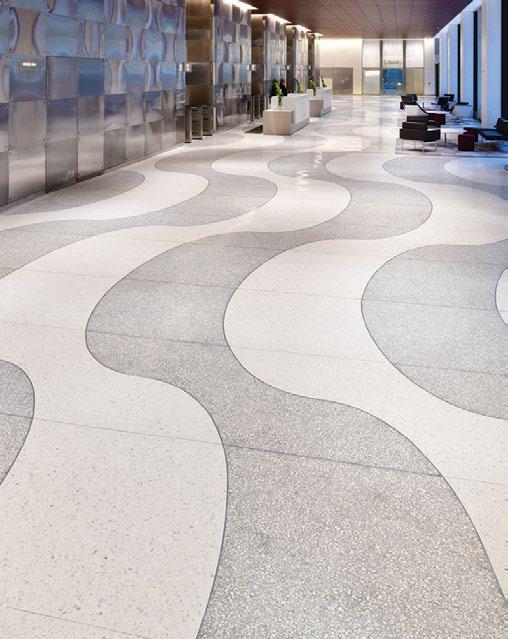
Terrazzo is a handcra ed building material; its primary components are assembled on the construction site. For 100-years, the contractor members of the National Terrazzo and Mosaic Association have brought integrity and skill to countless installations. The NTMA has the expertise your project needs. Find specifications, information, color samples, contractor and supplier members at www.ntma.com or call 800-323-9736.
Laudadio
Over the last few years, fundamental changes in the U.S. construction labor market have occurred affecting costs, availability and capabilities. These changes are having a significant impact on construction companies achieving contract compliance, triggering a higher incidence of disputes and litigation.
These changes aren’t completely new, however due to the relative slowness in volume, over the last few years, the full effects of labor’s influence haven’t fully affected the industry. Both new projects and the completion of existing projects will start to feel labor’s effects this year, with the potential to trigger a higher number of disputes in 2026 than in the past.
Here are 6 factors causing labor’s elevated influence on construction disputes and litigation:
2 Due to the law of supply and demand, labor prices likely will rise.
As the construction labor force continues to shrink while demand is growing, the effect will be that overall labor costs will rise. Rising costs will cause construction contractors to miss contracted time and budget targets, triggering disputes and litigation.
As the construction labor force continues to shrink while demand is growing, the effect will be that overall labor costs will rise. Rising costs will cause construction contractors to miss contracted time and budget targets, triggering disputes and litigation.
1 The Federal government’s focus on illegal immigration enforcement. Let’s face it—the construction industry employs and has employed a number of illegal immigrants. Whatever you think about that phenomenon; over the last year, the U.S. Government has changed its priority to focus on immigration enforcement, resulting in the construction industry losing some of its labor force. As the labor force shrinks, it will take longer to complete projects, causing timing and quality disputes.
3 Cutting back on apprenticeship programs has limited the number of skilled young people entering the construction industry. The number of apprenticeship programs available have been reduced 2%-5% each year over the last few years. These cutbacks will result in fewer skilled workers in the industry affecting contract fulfillment and quality.
4 Reduced quality due to lowered labor skill/ qualification standards. In order to include more people in the construction labor force, standards have been reduced in a number of areas, including depth of training, experience and qualification. The reduction in standards is causing a reduction in quality in many areas, leading to an increase in disputes.
5 The construction workforce is aging (and retiring).
At the other end of the spectrum, the aging and retiring of older construction workers will be shrinking the available workforce causing slowdowns and quality limitations in completing projects as contracted, leading to more disputes.
6 Limited training for new, labor-saving technologies will mean slower implementation.
There is a serious lack of training programs available to construction workers, especially those that train advanced, labor-saving technologies, such as drones, BIM, AI, data analytics, and more. The limited availability of proper training reduces their introduction and widespread use ultimately keeping costs higher than expected, potentially leading to disputes.
One positive note: The cost of litigation has risen significantly in recent years, more disputes will be settled outside of the courtroom in 2026 where they will be settled more quickly and less expensively.
For the long-term health of the construction industry, labor issues must become a top priority, in order to be able to deliver the quality and consistency expected and ultimately, to reduce the number of disputes. CCR
James Gallagher, P.E., F.ASCE, is a construction dispute resolution thought leader and Principal at Resolution Management Consultants (RMC). The nationally recognized consulting Marlton, New Jersey firm was founded in 1993 by veterans in the construction, contracting and engineering professions. RMC has assisted numerous private owners, public agencies and contractors in either achieving project goals or resolving cost and time disputes between the contracting parties.
Presented by
Student Insider
Dear Skills Trade Student
While construction and technical skills are your primary focus, ConstructEDU Student Insider (CEDU) is designed to supplement your education by providing content that dives into the business of the commercial construction and renovation industry. The bi-monthly newsletter covers areas such as emerging technologies, regulatory issues and other factors shaping the diverse industry’s future. CEDU also features insights and profiles from industry thought leaders on the trends and challenges affecting the marketplace.
Delivered at no charge, we not only encourage you to make CEDU a part of your educational consumption, but also to share it with your peers.
Phillies and NEST Spotlight Skilled Trades Careers at Citizens Bank Park
Most fans walking through the gates at the Philadelphia Phillies rarely think about what it takes to keep a ballpark running—and that is exactly what NEST wants students to see. Fans notice the lights. The perfectly cut grass. The scoreboards. The massive crowds. The energy. What they do not always see are the electricians, HVAC specialists, carpenters, plumbers, mechanics and facilities teams working behind the scenes long before first pitch ever happens.
BlackRock Invests $30 Million to Power Texas’ Electrical Workforce Pipeline
Everything in Texas seems to be getting bigger right now— population growth, energy demand, commercial construction and the need for skilled labor to support it all. BlackRock is stepping into that conversation in a major way with its BlackRock Future Builders initiative, designed to strengthen workforce pipelines and expand access to electrical trades training across the state.
To Subscribe CLICK HERE!
Read More HERE
Read More HERE
Demand Surges for Skilled Trades Workers
A growing labor shortage is reshaping the future of the construction and facilities industries as demand for skilled trades workers accelerates across the United States. According to a new report from JLL, job postings for electricians, HVAC technicians, plumbers and construction workers have doubled over the last decade as companies race to replace retiring workers and support increasingly advanced building systems.
Read More HERE
Skilled Trades Are Rewriting the Career Playbook
The traditional belief that a four-year college degree guarantees financial success is rapidly changing as skilled trades careers continue to gain momentum worldwide. According to new data from global staffing firm Randstad, wages for skilled trade positions in the U.S. have climbed 30% since 2022, reflecting surging demand tied to infrastructure expansion, construction growth and the rise of AI-powered industries.
Read More HERE
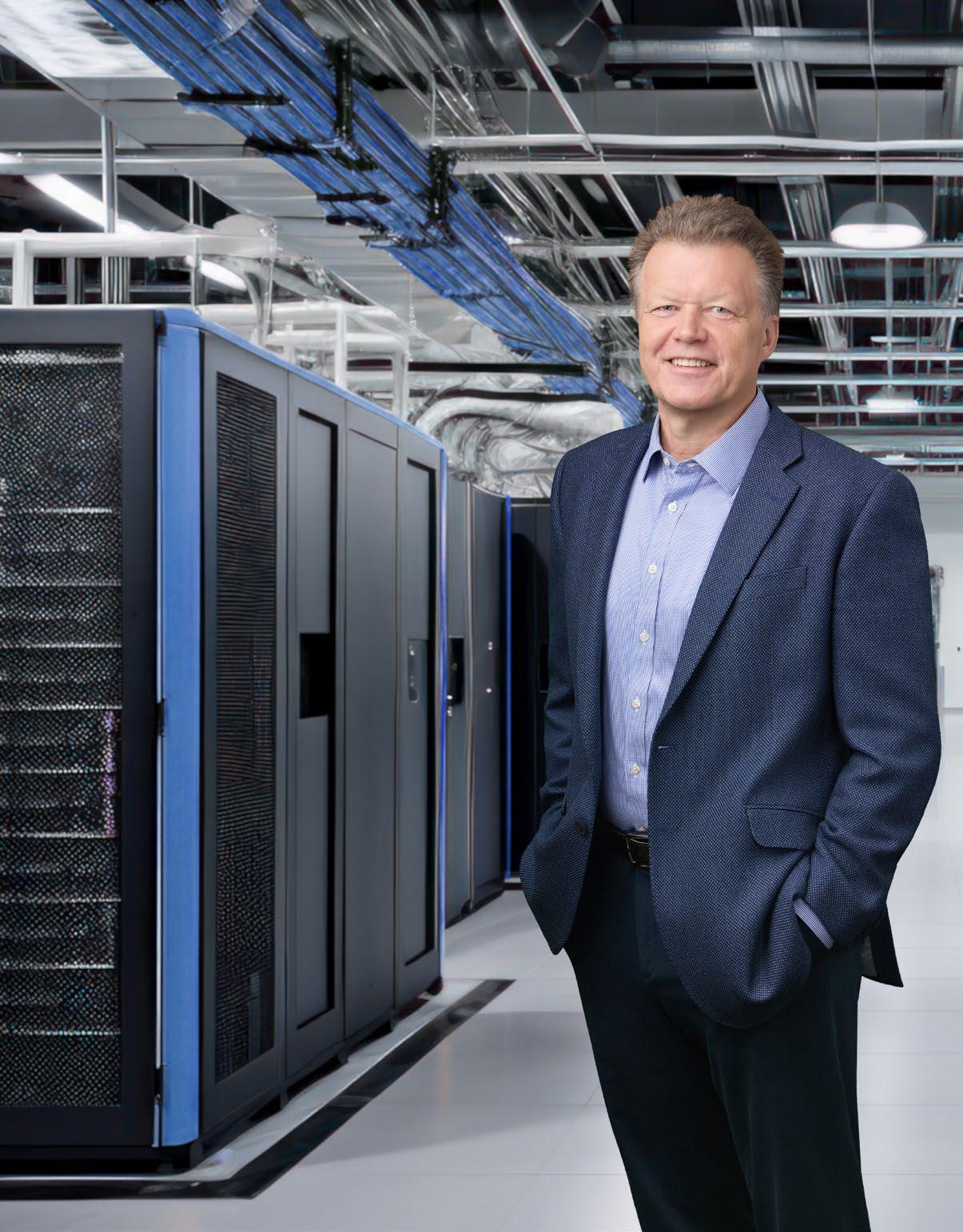
Powering the Future
Duane Morris’ Jeff Hamera on navigating the data center boom
Interview by Michael J. Pallerino
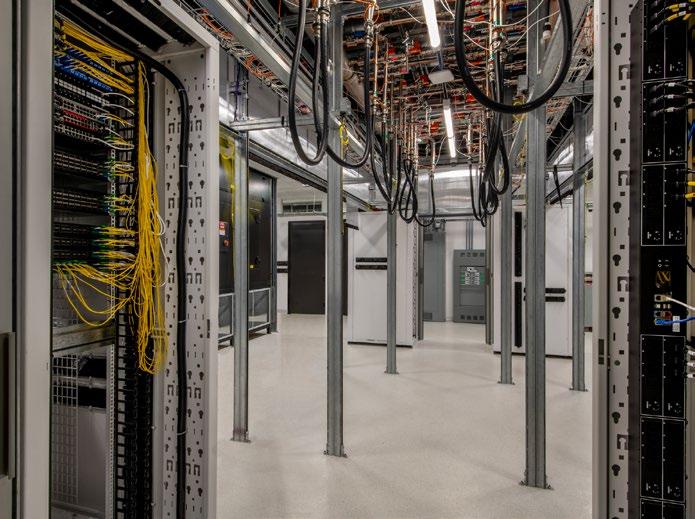
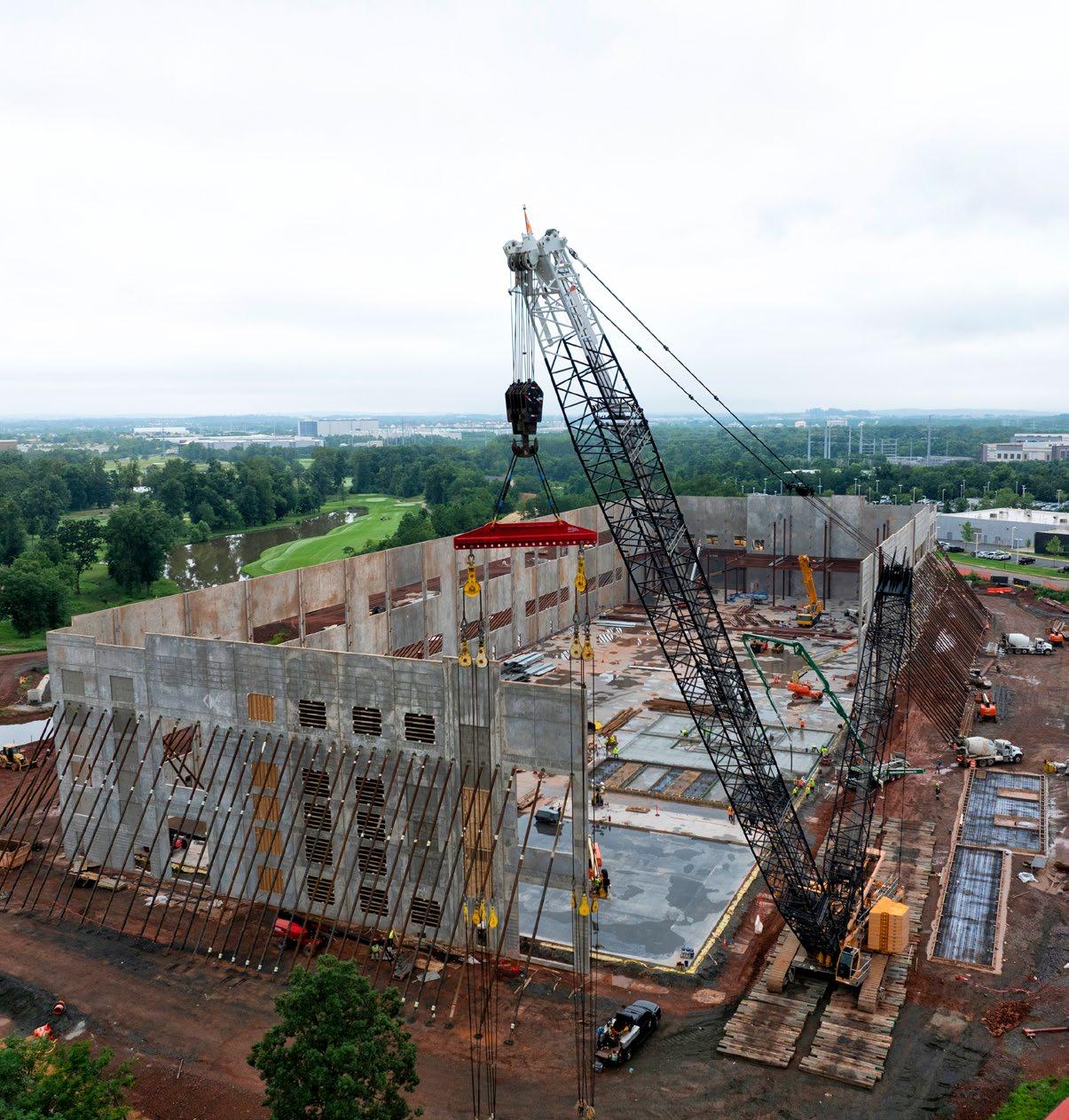
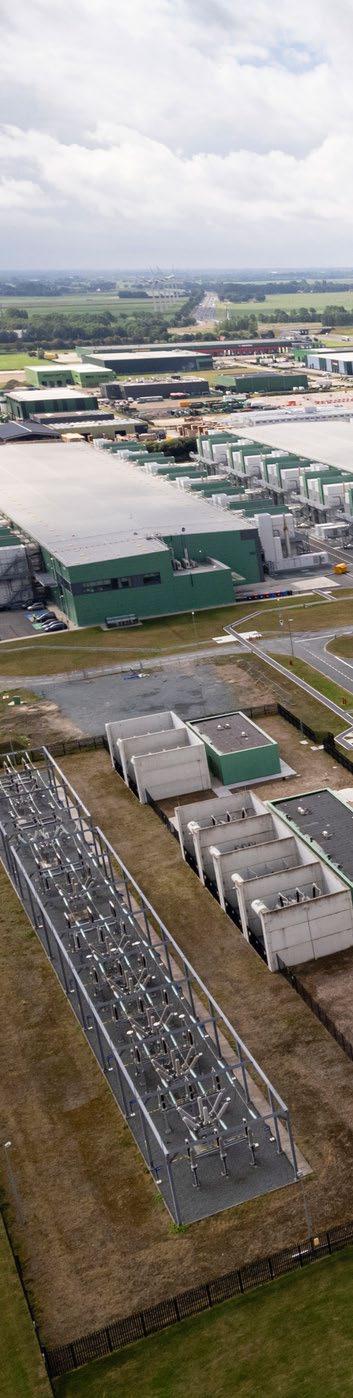
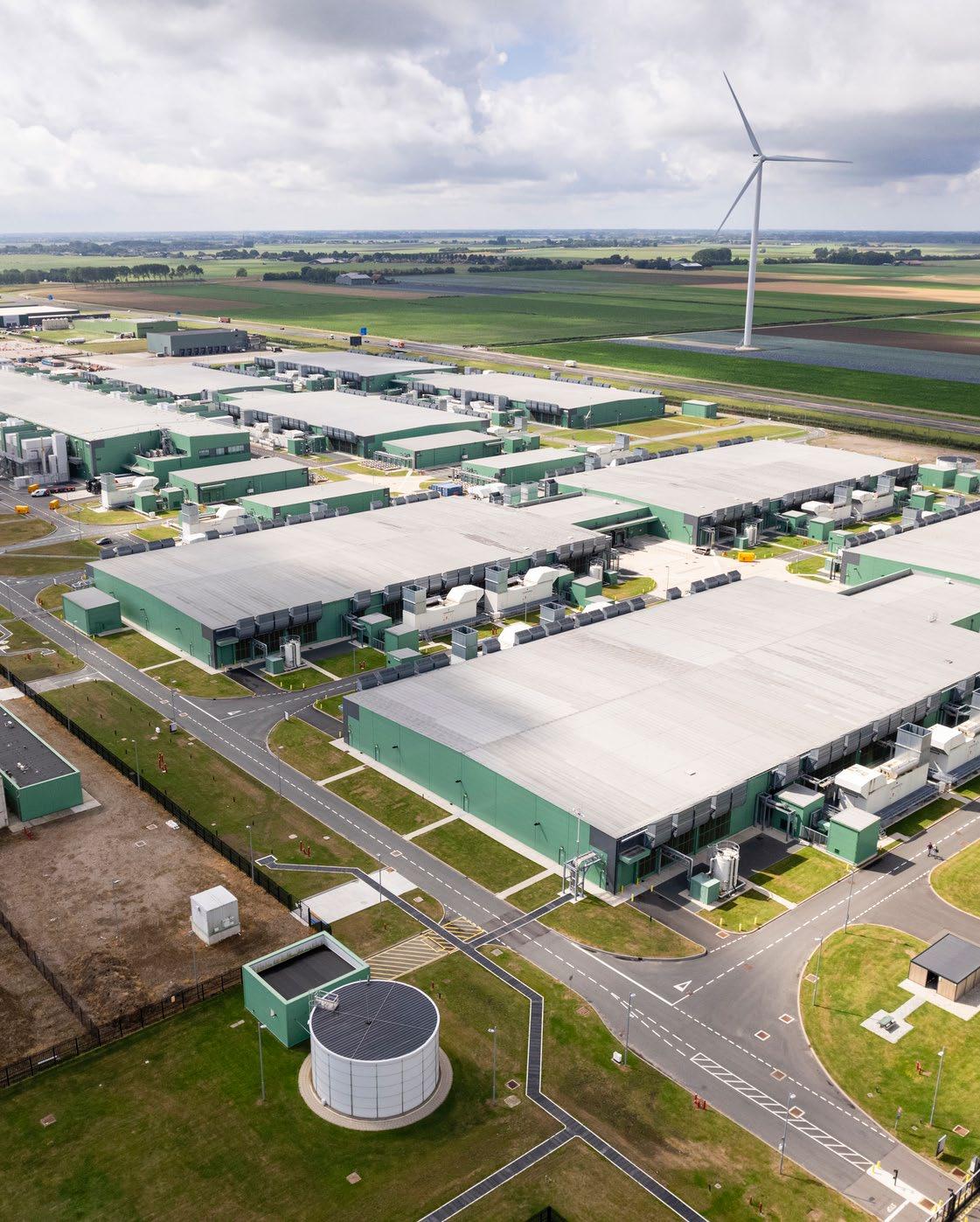
Few sectors are reshaping the built environment as rapidly as data centers. Fueled by artificial intelligence (AI), cloud computing and an ever-growing demand for digital infrastructure, developers, contractors and communities are racing to keep pace with unprecedented growth.
Yet behind every new facility lies a complex web of contracts, regulations, risk management strategies and construction challenges.
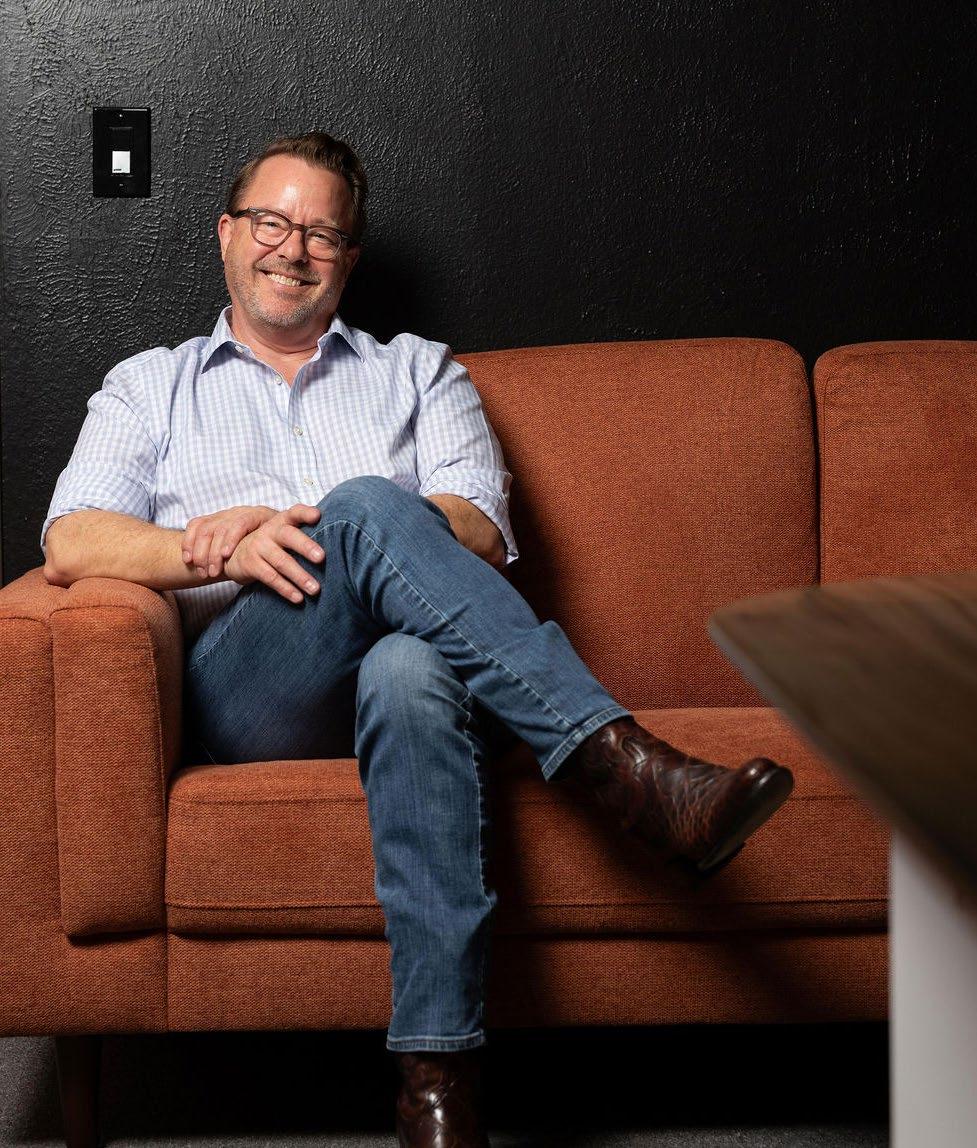
Jeff Hamera brings a unique perspective to that conversation. A construction Partner at Duane Morris and former professional engineer, Hamera advises owners, contractors, designers and developers on some of the industry’s most complex projects, including data centers across the country. His dual background in engineering and law provides a practical understanding of how projects move from concept to completion.
We sat down with Hamera to discuss the opportunities, challenges and future of America’s data center boom.
Give us a snapshot of your company and its role within the data center sector.
Duane Morris is a full service, international law firm with more than 900 attorneys in 29 offices across the U.S., in London and Southeast Asia. Our attorneys practice every area of law impacting data centers, including Energy, Engineering and Construction, Real Estate, Environmental, Intellectual Property, Employment, and others.
Duane Morris has developed a cross-disciplinary Data Center and Digital Infrastructure group that provides legal services to clients in the data center space throughout the project lifecycle—providing guidance and support on power agreements, regulatory compliance, site development,
It’s critical to secure early procurement of long lead time items. Rapid growth also has intensified the importance of long-term relationships among project participants.
financing and incentives, engineering and construction agreements, litigation and dispute resolution, and more.
What types of clients and projects are you primarily targeting in today’s marketplace?
Our attorneys’ breadth of capabilities and depth of experience allow us to support a wide variety of engineering and construction projects—particularly in the data center sector, which is an increasingly important focus for clients.
Broadly speaking, we represent project owners, operators, designers, construction managers, contractors, and lenders in projects spanning energy, industrial, commercial, public works, transportation, mixed use and multifamily residential projects.
Within the data center sector specifically, we represent owners and operators of large data center developments and campuses, as well as large contractors and construction managers with a national presence building large data centers.
How
are evolving technologies such as AI, cloud computing and hyperscale demand influencing the way facilities are being designed and constructed?
These demands are accelerating both the pace and scale of development. Data centers now require flexible project delivery methods that allow the developer, designer and contractor to adapt to shifting scope, procurement constraints, labor supply and utility availability in an evolving regulatory environment.
The growing scale and volume of data center projects has increased competition for sites with a combination of access to energy, water and space, along with connectivity to end users. Design priorities continue to balance demand for more computing power, and improved energy efficiency, cooling systems and scalability.
To move faster, parties are increasingly using Master Services Agreements for construction work to streamline contracting and accelerate project delivery timelines. Surging demand has strained equipment and material procurement and labor resources, creating a clear advantage for contractors that have established relationships and can reliably manage procurement and workforce challenges.
How
has the rapid growth of data center development changed the way you approach project management, scheduling and execution?
It’s critical to secure early procurement of long lead time items. Rapid growth also has intensified the importance of long-term relationships among project participants— owners, developers, operators, designers, contractors and subcontractors—along with building in flexibility to resolve disputes quickly so parties can continue building the next project, rather than fighting about a prior project.
Rising energy demand is also pushing developers to pursue behind-the-meter generation when utility and supply grid fails to keep pace. The ability to secure orders for mechanical equipment for cooling systems and electrical equipment, such
as switchgear quickly, often in advance of having a completed contract, is often key to timely delivery.
Contractors with established relationships with subcontractors in key regions have a competitive advantage in delivering the skilled electricians, mechanical contractors, ironworkers, and other tradespeople in sufficient quantities to meet aggressive schedules.
center project lifecycle. We support that effort through our existing legal departments – Trial, Corporate, Real Estate, etc.; our Big I Industry Groups – Engineering & Construction, Energy, Technology, et al; and our interdisciplinary Data Center and Digital Infrastructure Group, which is led by Robert Montejo.
Together, those approaches marshal the legal experience that our attorneys have developed over the years while also allowing
Operators of data centers look for consistency and long-term relationships with developers and contractors who can manage the hurdles to bringing data centers online and manage the high volume of work, time constraints and multiple projects.
What factors are most important when selecting a site for a new data center project?
Electricity, water and space remain the primary. Proximity to end users and internet connectivity can also be significant, depending on the use case.
These factors make both greenfield sites and repurposed industrial, office park and commercial space attractive. At the same time, growing community resistance to data center construction complicates the siting of new projects—pushback ranges from grassroots NIMBY movements to municipal government zoning denials to state law restrictions—often requiring coordinated government relations strategies, which Duane Morris can also support.
What’s your company’s short-term strategy?
Long-term vision?
Our long-term vision is focused on understanding our clients’ evolving needs and aligning our platform—across practices, industry groups, and interdisciplinary teams— to deliver responsive, cutting-edge services that support our clients’ business goals.
Our immediate strategy is to execute on that vision in the near term by providing end-to-end legal services across the data
us to add data center-specific expertise as the need and opportunity arises.
What’s the best piece of advice you can offer owners, developers and contractors navigating today’s fast-moving data center landscape?
Success in today’s environment comes down to strong teams, fair risk allocation and disciplined execution. The industry is in a growth stage, so participants can maximize opportunities—and ensure repeated success—by maintaining partnerships of experienced, capable parties and focusing on fair, mutually beneficial relationships. That means using contracts with reasonable risk and reward allocation, and administering projects to minimize (and quickly resolve) disputes. It’s critical to avoid parties who are unable to keep up rigorous demands on schedule, procurement, quality and finances. Learn as you go, incorporating those lessons into the next opportunity.
What makes a successful modern data center build from both a construction and operational standpoint?
The defining goal is speed—getting facilities built and operational quickly—while
BUILDING YOUR BRAND
Our master builders travel wherever our customers want to grow. Decades of cross-country construction allow us to build a Wesco in the northern Michigan snow and ensure that a Real Seafood in Florida adheres to hurricane building codes.
maintaining quality and cost discipline. The challenge that separates data center construction from the rest of the field is your ability to quickly and successfully quickly securing resources such as energy, water, sites, equipment, component construction management and skilled labor.
That requires flexibility, whether it’s implementing new technologies, adjusting to regulatory changes, adapting procurement methods for long lead-time items, or preserving relationships with qualified contractors and subcontractors.
Walk us through your construction and design strategy. How do you balance speed-to-market, reliability, scalability and efficiency?
Our approach centers on clear, consistent allocation of responsibilities across design, procurement, and construction. We start by defining design roles—design-build, design-assist, or constructability requirements—and ensuring alignment across all project agreements.
Procurement roles also need to be defined. Some owners have the internal capability to procure equipment in advance and in volume, while others rely on contractors who have or must develop that capability and yet other projects turn to specialized procurement assistance.
Given the use of proprietary systems, it’s essential to have a clear division of responsibility for procurement and installation of the various components of a data center. Timely decision making and reliable funding also supports coordination across all levels of the project, from individual craft workers to subcontractors, general contractors and owners, to help keep timely delivery on track.
Give us a rundown of the typical layout and infrastructure considerations involved in today’s data center developments. Access to energy and water are two of the biggest infrastructure considerations. The availability of sufficient acreage to support the scale of current data centers, and the need to be near urban areas or internet connections, also create tension.
These challenges are analogous to those that faced industrial facilities in the last center—which makes some former industrial and commercial sites ripe for data center development.
What are the biggest challenges currently impacting the construction side of the data center industry?
The biggest challenge is securing limited resources—long-lead equipment and skilled labor—quickly enough to meet surging demand as competition for both increased during to increased data center demand. Experienced contractors have developed procurement strategies for such items to address this challenge.
Some developers have taken on responsibility for procurement of long lead time equipment as well. The other resource for which the demand is surpassing supply is competent craft workers. Successful contractors develop and maintain relationships with subcontractors who they can use repeatedly.
Another strategy is to use joint ventures or “super-sub” relationships to leverage a partner’s subcontractor relationships, which can be particularly helpful when entering a new geographic market.
Talk about sustainability and energy efficiency. What initiatives, technologies or practices are you implementing?
Sustainability and energy efficiency programs still have an impact on some projects and can offer financing, grant and tax credits. Those are pursued most often by developers through power purchase arrangements and decision to develop renewable generating resources.
The economics and practical reality of limitations on energy and water availability are also driving innovation in sustainability and efficiency efforts industry-wide.
How important are resiliency and redundancy in today’s projects, and how are those priorities impacting design and construction decisions?
Resiliency and the need for redundancy are consistently important, to varying degrees, depending on the specific use case. The overriding concerns are energy grid limitations and technology-related vulnerabilities. The former is pushing developers of some data centers to generate their own power, so they can maintain more control over the reliability of the supply.
Design That Works Harder
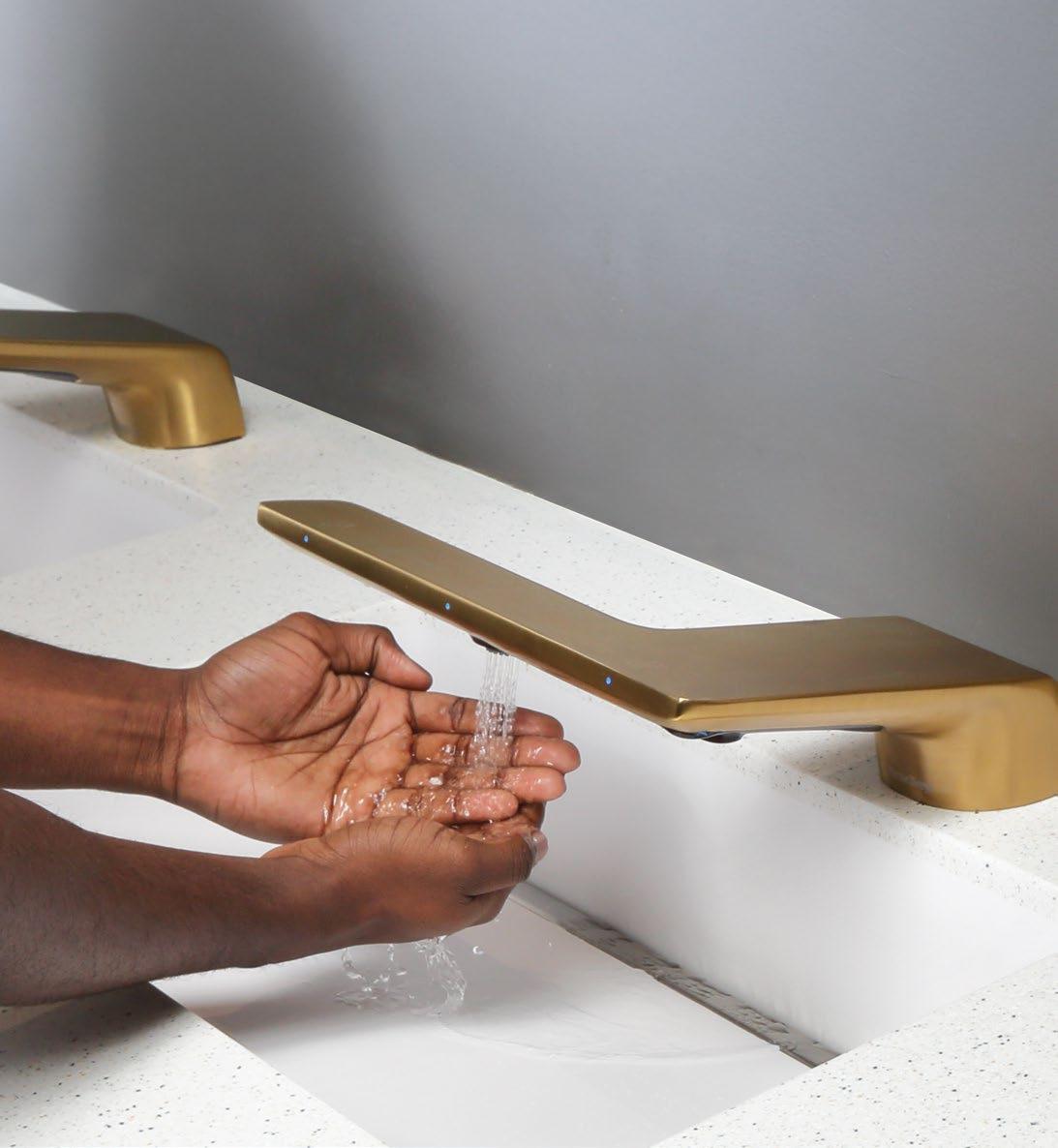
Bradley’s touchless WashBar® platform unifies soap, water, and hand drying in one streamlined fixture, reducing visual clutter and elevating the commercial washroom space. The innovative bar-shape design creates an inviting and enhanced handwashing experience. A thoughtful solution for your next washroom design. Commercial Washrooms. Brought to Life.
Additionally, cybersecurity and the potential for bad actors intentionally affecting operations is a growing concern, with implications for confidentiality and sourcing restrictions.
What opportunities do you see ahead for the data center sector over the next several years?
The outlook remains strong, with continued growth anticipated for the next several years. Opportunities exist for companies that can solve the problems of energy supply, water resources, site locations, noise abatement in residential areas, and for those who can prevail in the battle to source equipment and skilled labor.
Adding generating capacity behind the meter, even with nuclear generating options, and minimizing the energy and water usage for cooling can also confer an edge.
What trends are you currently seeing or expecting related to cooling systems, modular construction, prefabrication, AI integration or power demands?
Cooling requirements are both a primary concern for data centers and a driver of innovation. Operators are focused on the integration of cooling systems into server racks and reducing water and energy consumption. Portions of data centers, such as the server rack systems, lend themselves to modular construction and prefabrication.
Greenfield sites and large campus may be amendable to modular construction and prefabrication. But modular construction and prefabrication is not unique to data centers and has never quite fulfilled the theoretical efficiencies that people have envisioned in other industries.
Additionally, the need to abate the noise emitted from cooling systems is a significant concern for centers near residential areas and an important part of addressing community resistance to new data centers.
How are labor availability and supply chain issues affecting project timelines and execution?
Labor availability is placing increasing pressure on the cost and timelines for new
projects, making reliable subcontractor relationships all the more important. What’s more, supply chains continue to be impacted by both unexpected and predictable factors. Force Majeure clauses have long had a place in addressing unexpected and unmanageable events, such as wars, cataclysmic weather, pandemics, and government actions, to one extent or another.
The negotiation about Force Majeure clauses, as well as delay claim procedures and liquidated damages clauses, have taken on a heightened importance in data center contracts due to the financial stakes involved and the volatile regulatory and international risk environments.
Supply constraints and demand predictions are also impacting supply chains but lend themselves to preparation and early execution to limit impacts on project.
What’s today’s data center client ultimately looking for in a construction and development partner?
Operators of data centers look for consistency and long-term relationships with developers and contractors who can manage the hurdles to bringing data centers online and manage the high volume of work, time constraints and multiple
projects. Clients also value a long-term, team-oriented approach—versus a oneoff, transactional mindset.
Tell us what makes your company unique within the highly competitive data center construction market?
Duane Morris offers a distinctive ability to advise across the full lifecycle of data center projects and relevant stakeholders. Our multidisciplinary team supports everything from planning, financing, and development through contracting, operations and dispute resolution.
Our attorneys are also skilled at advising clients about dispute resolution and avoidance, and counsel data center parties including owners, lenders and other financiers, developers, designers, contractors, construction managers and insurers. We also advise on issues such as intellectual property, employment, and government relations that often arise with data centers.
Our geographic reach also sets us apart—we couple attorneys with subject matter experience and those with experience and an established presence in specific locations. We are organized to understand, respond to and facilitate the business of our clients. CCR
We
Our specialized project management teams are highly effective in maintaining affordable budgets, meeting tight deadlines, and delivering quality construction turnovers on time, every time. From coast to coast, Alaska to Puerto Rico, Hunter Building Corporation has you completely covered on your next construction project!
We offer a multitude of services nationwide ranging from tenant improvements, build-outs, remodels, ground-up construction, and project management. Hunter Building Corporation takes pride in the fact that many of our clients have been repeat customers for many years.
IT’S THAT SIMPLE
We’re a company with a fresh approach. We are highly skilled and passionate design and construction experts brought together and bonded by mutual trust and respect.
Every member of the PMC team stands ready to deliver, regardless of location, complexity or challenge. We will bring your projects to market with a focus on quality, performance and speed.
Professional Design and Project Management Services for the Retail, Restaurant, Hospitality, Entertainment and the Commercial Markets.
Better. Faster. Smarter
Architectural Building Products Survey Highlights Materials Driving Construction
Fr om h igh-performance facades and flooring systems to wall panels, glazing and exterior finishes, our Architectural Building Products Survey spotlights the manufacturers and suppliers helping shape today’s built environment. These companies are bringing together innovation, durability and design flexibility to support projects across retail, hospitality, healthcare, education and mixed-use development. If you want to be listed in a future issue, contact Publisher David Corson at davidc@ccr-mag.com .
3MG, PSC
Manuel Ray, Principal 1649 Ponce de Leon Ave. Repto. De Diego San Juan, PR 00926 (787) 979-9982
(787) 375-5770
mray@3mg-pr.com info@3mg-pr.com
Architectural Building Product(s): N/A
Markets Served: Commercial: Piers, Terminals; Waterfront & Coastal related projects
Acclaim Lighting
Patrick Nadjarians, Marketing Director 6122 S Eastern Ave. Commerce, CA 90040 patrick@acclaimlighting.com www.acclaimlighting.com
Architectural Building Product(s): Exterior & Interior LED lighting and control products.
Architectural Building Product(s): Metal roofing and building products: CERAM-A-STAR® Select portfolio (Expressions, Frost, 1050), Architectural extrusion products: CERAM-A-STAR® E, TRINAR ULTRA, ACRA-BOND ULTRA Markets Served: Commercial, Residential
American Standard Water Heaters
Michael Carter, Commercial Business Development Manager 225 Dyer Street, First floor Providence, RI 02903 (800) 323-9651 (484) 401-8120 michael.carter@ariston.com www.americanstandardwaterheaters.com
Architectural Building Product(s): Gas and electric water waters Markets Served: Commercial, Residential
Matthew Aebischer, Director of Growth & InnovationDownstream Development 1150 Sanctuary Pkwy, Suite 100 Alpharetta, GA 30009 (833) 361-2678 (678) 986-5999
Architectural Building Product(s): Innovative interior and exterior architectural applications including ceilings, specialty walls, and exterior metal solutions; products and capabilities enable architects, designers, and contractors to transform building design and construction with elevated aesthetics, acoustics, and sustainable attributes
370 James Street, Suite 201 New Haven, CT 06513 (203) 672-8657 (203) 988-5835
steve.weyel@quanex.com www.bilco.com
Architectural Building Product(s): Specialty access products Markets Served: Commercial, Industrial
BINPAK Compactors
Edie Monden, Sales Manager 31 Tamara Place, Unit 4 Brantford, ON N3P 1M8 (855) 953-5333 (519) 535-7960
edie@binpak.com www.binpak.com
Architectural Building Product(s): BINPAK Compactor - 6 -yard front load waste and recycling compactor. Markets Served: Commercial, Industrial
Bird Control Group
Craig Duhr, Director of Sales and Support - Americas 5515 Highway 1 South, Suite B Jonesboro, AR 72404 c.duhr@birdcontrolgroup.com www.birdcontrolgroup.com
Heddie Chu, Co-Founder 990 Fifth Avenue San Rafael, CA 94901 (415) 749-6500 info@bokmodern.com www.bokmodern.com
Architectural Building Product(s): Structurally integrated metal systems Markets Served: Commercial
Bradley Company
Abby Heppe, Senior CRM Marketing Specialist W142 N9101 Fountain Blvd. Menomonee Falls, WI 53051 (800) 272-3539
abigail.heppe@bradleycorp.com www.bradleycorp.com
Architectural Building Product(s): Commercial Washroom Fixtures and Accessories Markets Served: Commercial
Brick Industry Association
Megan Pace, Meetings and Marketing Coordinator
12007 Sunrise Valley Drive, 430 Reston, VA 20191 (703) 674-1542
mpace@bia.org
www.gobrick.com
Architectural Building Product(s): Clay Brick Products, Face Brick (standard building brick used in facades), Thin Brick (lightweight alternative for interior/exterior cladding), Paving Brick (for walkways, plazas, and driveways), Structural Brick (used for load-bearing applications), Specialty Brick Shapes (custom architectural detailing), Glazed Brick (color-coated bricks for decorative and durable surfaces) Markets Served: Commercial, Residential
Architectural Building Product(s): Manufacturer of the HyperWall building enclosure system, providing prefabricated structural composite panels that enhance design flexibility while helping project teams accelerate construction times, simplify installation, reduce risk and build more sustainably.
Gary Hartman, Vice President of Sales and Marketing 565 Cedar Way Oakmont, PA 15139 (800) 424-3573 ext. 225 ghartman@cbpmail.com www.everlastsiding.com
Clopay National Accounts
Dan Broda, Director - National Accounts 140 Maffet Street, Suite 200 Wilkes Barre, PA 18705 (800) 882-6773
Architectural Building Product(s): Overhead, Sectional and Side Acting Closures (Wind Rated, Fire Rated, Insulated) Markets Served: Commercial
Construction Specialties
Anthony Peachey, Marketing Director
3 Werner Way, Suite 100 Lebanon, PA 08833 (570) 546-4525 (570) 419-4757
apeachey@c-sgroup.com www.c-sgroup.com
Architectural Building Product(s): Composite siding and trim: Standard 7"" Lap Siding, Narrow 4 ¬Ω"" Lap Siding, Vertical Board & Batten Siding, Color-Matched Trim and Accessories. Markets Served: Commercial,Residential, Multifamily
Chicago Faucets
Perrie Hayes Marketing Manager 2100 Clearwater Des Plaines, IL 60018 (847) 803-7755
Jen Clough, Vice President of Strategic Growth 6300 E Hampden Ave., Unit C #378 Denver, CO 80222 (732) 870-7114
jen@fsusurveyor.com www.fsusurveyor.com
Architectural Building Product(s): Field Services Unlimited (FSU) is a nationwide architectural site survey and data capture company that utilizes the most advanced 3-D laser scanners and point cloud technology to ensure projects are meticulously captured for multisite retailers, restaurants, financial institutions, gas convenience, healthcare, commercial properties, and architects nationwide. The FSU team is known for their commitment to quality, integrity, excellence, and customer satisfaction. FSU is a MasonMade Ventures company. Markets Served: Commercial
FLEX
Katie White, FLEX Brand Manager 1203 East Warrenville Road Naperville, IL 60563 kwhite@na.chervongroup.com www.flexpowertools.com
Architectural Building Product(s): Professional-grade cordless power tools, accessories and jobsite solutions for restoration and renovation. Markets Served: Commercial
Garnica Plywood
Brian Wrike, VP of Sales, North America
4509 Creedmoor Road, Suite 201 Raleigh, NC 27612 (919) 892-4865
brian.wrike@garnica.one www.garnica.one/en-us
Architectural Building Product(s): Garnica is a global leader in premium sustainable plywood manufacturing designed for construction and design applications. Innovative, high-quality plywood designed fire resistance, durability and strength. Made with responsibly sourced wood and eco-friendly processes, reflecting Garnica’s commitment to sustainability. Markets Served: Commercial
Genesis Global Imports LLC & All-American Importing LLC
Terry Lee Eggert, CEO 86 Gaston Westbrook Ave, Suite 747 Cartersville, GA 30120-6982 (770) 335-6498 (770) 335-6498
teggert@genesisglobalinc.us
Architectural Building Product(s): Import from the Pacific Rimm Markets Served: Commercial
GF Building Flow Solutions
Kim Bliss, Technical and Marketing Content Manager 5925 148th Street West Apple Valley, MN 55124 (800) 321-4739
Fax: (952) 891-2008
kim.bliss@uponor.com www.uponor.com
Architectural Building Product(s): Domestic water piping, heating hot-water piping, chilled-water piping, water service piping, hydronic distribution piping, radiant heating and cooling, turf conditioning, snow and ice melting, Uponor AquaPEX Pipe, Wirsbo hePEX Pipe, Radiant Rollout Mats, ProPEX F1960 Fittings, ChlorFIT Schedule 80 Corzan CPVC
Stephen Balik, Vice President & Principal 101 Venture Way Secaucus, NJ 07094 (800) 431-2042
sbalik@generalglass.com www.generalglass.com
Architectural Building Product(s): architectural glass, decorative glass, fire rated glass, all glass entrance systems, glass railings Markets Served: Commercial, Residential, & Public Works
Architectural Building Product(s): Metal Mesh, Acoustic Mesh, MediaMesh Markets Served: Commercial
HTP – Ariston
Michael Carter, Commercial Business Development Manager 225 Dyer Street, First floor Providence, RI 02903 (800) 323-9651 (484) 401-8120
michael.carter@ariston.com www.htproducts.com
Architectural Building Product(s): Energy efficient, stainless steel gas and electric water heaters, boilers and indirect tanks for commercial and residential applications Markets Served: Commercial
Impact Security, LLC.
Mark Mineer, President 400 Glover St SE Marietta, GA 30060 (888) 689-5502
mark@defenselite.com www.defenselite.com
Architectural Building Product(s): retrofit security glazing systems, forced entry protection systems, transaction windows, interior polycarbonate display cases, security door and window systems Markets Served: Commercial & Religious Facilities
Interface, Inc.
Erin Jende, Director, Regional Marketing Activation - Americas 1280 W Peachtree St NW Atlanta, GA 30309 (800) 336-0225
Architectural Building Product(s): thermal and acoustical fiberglass insulation for residential, commercial, industrial, and metal building applications
Markets Served: Commercial, Residential, Industrial & Metal Building
Kynar 500® PVDF by Arkema
Paul Lavallee, Global Market Manager 900 First Avenue King of Prussia, PA 19406 (484) 716-8295
paul.lavallee@arkema.com www.Kynar500.com
Architectural Building Product(s): Use Kynar 500® PVDF resin for ultra-long lasting exterior coatings
Markets Served: Commercial, Residential
LSI Flooring
Larry Lane, President 2700 W. Cypress Creek Road, D134 Fort Lauderdale, FL 33309 (800) 731-3483 ext. 701 (516) 449-3083
Architectural Building Product(s): Japanese wood siding and paneling, with a speciality in yakisugi, or shou sugi ban, charred wood. Markets Served: Commercial, Residential
NanaWall
Matt Thomas, Director of Marketing 100 Meadowcreek Dr., #250 Corte Madera, CA 94925 (800) 873-5673
info@nanawall.com www.nanawall.com
Architectural Building Product(s): Windows & Doors, Operable Glass Walls: Folding Glass Doors, Sliding Glass Doors, Stacking Glass Doors, Frameless Glass Doors. Windows: tilt turn, folding, sliding, and fixed options
Markets Served: Commercial, Residential
Newforma
Malcolm Tinkler, Chief Revenue Officer 1750 Elm St Manchester, NH 31014 mtinkler@newforma.com www.newforma.com
Niagara Jenni Steele, Vice President of Marketing 300 Old Gerault Road Flower Mound, TX 75028 (888) 733-0197
tricia@johannessykora.com www.pro.niagaracorp.com
Architectural Building Product(s): High performance, watersaving toilet product lines for builders, remodelers and plumbers
Markets Served: Commercial, Residential
Nichiha USA
Anthony Pucci, Director of Channel Sales 6465 E Johns Crossing, Suite 250 Johns Creek, GA 30097 (866) 424-4421
apucci@nichiha.com www.nichiha.com
Architectural Building Product(s): Nichiha elevates commercial and residential projects with Architectural Wall Panels engineered for resilience, sustainability, and design versatility. Markets Served: Commercial, Residential
Noritz America Corporation
Andrew Tran, Marketing Manager 11160 Grace Avenue
Fountain Valley, CA 92708 (714) 433-2905
atran@noritz.com
www.noritz.com
Architectural Building Product(s): Tankless Water Heaters Markets Served: Commercial, Residential
NTI Boilers
Nathan Arendt, Vice President of Sales 30 Stonegate Drive
Saint John, New Brunswick E2H 0A4 (506) 657-6600
nathan.arendt@ariston.com www.ntiboilers.com
Architectural Building Product(s): Condensing gas boilers, water heaters and combi boilers, storage and indirect tanks for commercial and residential applications.
Markets Served: Commercial, Residential
Oatey Co.
Peter McMillan, Senior Vice President of Wholesale 20600 Emerald Pkwy Cleveland, OH 44135 (800) 321-9532
pmcmillan@oatey.com www.oatey.com
Architectural Building Product(s): Reliable, High-Quality Products, for the Residential and Commercial Plumbing industries. Markets Served: Commercial, Residential
Okibo
Nadav Shuruk, Co-Founder 111 Cedar Lane Englewood, NJ 07631 (201) 466-5938
info@okibo.com www.okibo.com
Architectural Building Product(s): AI-driven Construction Robotics Workforce
Markets Served: Commercial, Residential
PAC-CLAD, Petersen
Mike Weis, Vice president, Sales 102 Northpoint Parkway Acworth, GA 30102
Architectural Building Product(s): Architectural Tile and Finishes Tile, Resilient Flooring, Solid Surface Markets Served: Commercial, Residential
ProCoat Products, Inc.
Lisa Schwartz, Senior Vice President of Customer Engagement 260 Centre St., Unit D Holbrook, MA 02343 (781) 767-2270
lisa.schwartz@procoat.com www.procoat.com
Architectural Building Product(s): ProCoat’s Premium Acoustical Ceiling Resurfacing allows clients to obtain a new looking ceiling for 1/2 the cost of replacement and in 1/3 of the time without the negative effects of paint. NEVER REFUSE TO REUSE! Markets Served: Commercial
PWT
Sales 1850 Park Lane Burlington, WA 98233 (888) 707-2285
sales@pacificwoodtech.com www.pwtewp.com
Architectural Building Product(s): PWT is a manufacturer of premium engineered wood products (EWP) in North America. Markets Served: Commercial
REGUPOL
Bill Neifert, Sales Director, Commercial Division North America 11 Ritter Way Lebanon, PA 17042 (800) 537-8737 x 102 (570) 856-1657
Architectural Building Product(s): Rooftop Attachments for solar arrays, snow guards, utility mounting and more Markets Served: Commercial, Residential
Sabin
Kirsten Magrini, Sales Vice President 4447 W Cortland St Chicago, IL 60639 (707) 758-6162
info@sabin.design www.sabin.design
Architectural Building Product(s): PET Acoustics and Lighting Markets Served: Commercial
SCANGRIP
Sabine Mueller, Marketing SpecialistGlobal Brands HGNA 6333 W. Donges Bay Road Mequon, WI 53092 (484) 753-3200
Architectural Building Product(s): Outdoor Furniture & Marine, Indoor Solar Protection, Outdoor Solar Protection, Tensile Architecture, Modular Structure Markets Served: Commercial
SFA Saniflo
Jose Pachas, US Technical Manager 105 Newfield Ave, Suite A Edison, NJ 08837 (800) 571-8191 jpachas@saniflo.com www.sfasaniflo.com
Architectural Building Product(s): Saniflo offers various macerating and grinding pump systems as well as drain and condensate pumps, and lift stations for commercial applications. With Saniflo above-floor plumbing technology, system designers and installers can create new bathroom, kitchen, or laundry room facilities anywhere without needing downhill drainage or proximity to the main waste pipe. The product range includes Toilet Macerators and Grinders, Small Toilet Macerators, Drain Pumps, HVAC Condensate Pumps, Lift Stations, Sewage Ejector Pumps, and Accessories. Markets Served: Commercial, Residential, Federal
Solatube International
Iris Hoag,
Senior Global Marketing Manager 2210 Oak Ridge Way Vista, CA 92081 (888) 765-2882
ihoag@solatube.com www.solatube.com
Architectural Building Product(s): Tubular daylighting devices, unit skylights, solar attic fans, whole house fans, garage fans
Markets Served: Commercial, Residential
Sterling Structural
David Catta, General Manager 501 E. 151st Street Phoenix, IL 60426 (708) 388-2223
Architectural Building Product(s): Air Handlers, Blower Coils, Chilled Beams, Critical Environment Controls, Diffusers, Displacement Ventilation, Fan Coils, Grilles, Terminal Units, Underfloor Air Distribution Markets Served: Commercial, Federal
TYPAR
Jake Phillips, Sales Director 70 Old Hickory Blvd. Old Hickory, TN 37138 (615) 847-7090
jakephillips@magnera.com www.TYPAR.com
Architectural Building Product(s): Building wrap, construction tape, flashing, WRBs, sealant, High-performance residential and commercial building wraps, construction tape, flashing and accessories Markets Served: Commercial, Residential
VALTO Engineered Materials
Kate Brown, Marketing Lead & Project Manager
23525 W Eames St Channahon, IL 60410 (815) 467-8637
kbrown@valtoem.com www.valtoem.com
Architectural Building Product(s): FRP Panels Markets Served: Commercial
W.steps
Sabine Mueller, Marketing SpecialistGlobal Brands HGNA 6333 W. Donges Bay Road Mequon, WI 53092 (484) 753-3200 sabine.mueller@hultaforsgroup.com www.wsteps.us
Architectural Building Product(s): PRIME 13.5 FT (72241-785)Telescopic Extension Ladder (Leaning) Markets Served: Commercial
WarmlyYours
Radiant Heating
Cameron Witbeck, Marketing Communications Manager 590 Telser Rd, Suite B Lake Zurich, IL 60047 (800) 875-5285
Architectural Building Product(s): Radiant Heating Products like floor heating, snow melting, and towel warmers, Electric Floor Heating, Electric Snow Melting Systems, Electric Towel Warmers Markets Served: Commercial, Residential
Westlake Royal Building Products
Kelly Nguyen, PR & Social Media Director 1414 Key Highway, Suite 100 Baltimore, MD 21230 (609) 385-6701
Architectural Building Product(s): Exterior and interior building products, including Siding and Accessories, Trim and Mouldings, Roofing, Stone, Windows and Outdoor Living Markets Served: Residential
Window Film Depot
Krissy Mosby, President 400 Glover St SE Marietta, GA 30060 (866) 933-3456
Architectural Building Product(s): window film, solar control film, architectural surface solutions, privacy film, decorative film, security window film, retrofit security glazing systems
Markets Served: Commercial, Residential
Wooster Products, Inc.
Tim Brennan, Sales Manager 1000 Spruce Street Wooster, OH 44691 (800) 321-4936
tim@wooster-products.com www.wooster-products.com
Architectural Building Product(s): Anti slip safety stair nosings and treads. Markets Served: Commercial
YKK AP America Inc.
Steve Schohan, Marketing and Communications Manager 101 Marietta Street, Suite 2100 Atlanta, GA 30303 (678) 838-6000 steveschohan@ykkap.com www.ykkap.com
Architectural Building Product(s): YKK AP America Inc., the North American arm of the global YKK AP Inc., is an innovationdriven manufacturer of commercial facade systems and residential windows and doors. Markets Served: Commercial, Residential
ZIPWALL, LLC
Merav Bodick, Vice President of Marketing 37 BROADWAY, Suite 2 Arlington, MA 02474-5552 (800) 718-2255 (317) 496-6092
merav@zipwall.com www.zipwall.com
Architectural Building Products(s): ZIPWALL - Dust Barrier System
The Changing Priorities of Commercial Restroom Design
Commercial restroom design is being shaped by a growing list of pressures - from hygiene concerns and water management to staffing shortages, maintenance demands, and rising occupant expectations. In healthcare, education, hospitality, and public facilities, plumbing fixtures are no longer evaluated solely on durability and code compliance. Increasingly, they are being specified based on their contributions to operational efficiency, user comfort, and the overall experience of a space.
This shift is especially evident in healthcare and clinical environments, where reducing touchpoints, simplifying cleaning procedures, and helping manage waterrelated risks have become increasingly important. For facility operators already balancing limited maintenance resources, heightened performance expectations, and fixture specification can directly impact long-term operations.
Manufacturers are responding accordingly. Delta® Commercial’s expanding portfolio reflects a broader industry movement toward plumbing solutions that combine advanced technology, ease of service, and more design-conscious aesthetics—all while addressing the realities of high-use commercial environments.
“Commercial facilities are under growing pressure to balance hygiene, maintenance efficiency, water usage, and user expectations all at once,” says Marnee Colman, Senior Director, Heavy Commercial, Delta® Commercial. “The industry is moving toward plumbing solutions that not only perform reliably but also help simplify operations and support a better overall experience for both facility teams and occupants.”
Safety and Temperature Control
One area receiving increased attention is point-of-use temperature management. Delta® Commercial’s 22TH Series Thermostatic Lavatory Faucets feature an integrated ASSE 1070-certified scald-risk-reduction cartridge designed to help maintain con-
Designing for Hygiene and Easier Maintenance
Attention is also shifting toward fixture designs that support cleaning efficiency and hygiene-focused environments. Delta® Commercial recently expanded smooth-end laminar flow options across select TECK® Manual Faucet Series, like the popular 23C Series, to help address concerns around biofilm buildup and hard-to-clean aerator areas. Smooth-end outlets reduce crevices where debris and contaminants can accumulate, while higher 1.5 gpm flow rates improve rinsing efficiency in healthcare settings.
For maintenance teams and environmental services staff, these design considerations can help simplify cleaning protocols and reduce time spent servicing fixtures—an increasingly valuable advantage as facilities continue to navigate labour and operational pressures.
Designing for Lower-Contact Environments
sistent water temperature while simplifying installation requirements. By integrating thermostatic functionality directly into the faucet body, the system can eliminate the need for a separate mixing valve in many applications, helping reduce installation complexity, labour time, and associated costs.
In healthcare and educational facilities, where vulnerable populations and high-frequency usage are common, consistent temperature control can help support both safety and risk management initiatives. The 22TH Series also incorporates vandal-resistant components and durable cast brass construction designed for long-term commercial use.
Touchless technologies remain another key area of focus. Electronic faucets and flush valves equipped with sensing technologies help support cleaner, lower-contact restroom environments while contributing to operational consistency in high-traffic spaces. Reduced touchpoints can help minimize wear, improve hygiene, and create a more intuitive experience for users.
At the same time, aesthetics is becoming a larger part of the conversation. Delta® Commercial’s Architectural™ Design Series reflects the growing demand for commercial fixtures that combine durability with contemporary styling and elevated finish options suited to modern interiors.
As commercial environments continue to evolve, restroom fixture specification is becoming less about meeting minimum requirements and more about supporting long-term operational performance and user experience.
For more information, visit www.deltafaucet.com/commercial.
Delta® Commercial’s 22TH Series Thermostatic Lavatory Faucets.
Delta® Commercial’s TECK® Manual Faucet Series.
ENGINEERED FOR RELIABILITY
DESIGNED FOR EVERY APPLICATION
Delta® Commercial Flush Valves are built for reliability, durability, and efficiency. For over 100 years, we’ve refined our innovations to deliver high quality products to fit your project needs.
EZ Adjust® Technology – On adjustable models, you can easily fine‑tune flush volumes on both manual and electronic flush valves with a quick turn of the external adjustment screw. No shut off needed, no replacement of parts.
Learn More
The Missing Path
Why experienced tradespeople are getting shut out of construction leadership
By Carl Murawaski
For experienced tradespeople, finding a role in construction leadership can be a monumental challenge. At a time when solid construction leadership is most needed, companies that default to hiring and promoting people with degrees over field experience create a noticeable wedge between the field and the office.
Those of us in the industry are seeing excellent builders burn out, internal ladders dismantled, and a space where strong leadership once thrived irreparably changed.
Here, we confront the current realities of the construction space and how experienced tradespeople are finding it increasingly difficult to rise to the top.
The Rising Friction Between Workers in the Field and Office
For decades, construction workers entered the field believing that if they proved their mettle, worth and ability, they would eventually rise to the top of the industry.
But today, many firms treat construction management degrees as the only path to leadership and keep a sharp divide between leaders and production teams. This mindset has created a status rift that has inflamed already smoldering tensions between office higher-ups and tradespeople.
When a degree is seen as the “golden ticket” into a leadership role, people responsible for outcomes may not fully understand the realities of “boots on the ground,” such as sequencing, crew constraints, and how even small decisions affect overall productivity.
Meanwhile, those in the field who have proven their worth are told their experience
Problems can arise when hires who have only experienced construction through internships or coursework are expected to lead teams with real-world, hands-on construction experience.
does not merit consideration for leadership roles. This disparity can breed resentment and disagreements about what is possible on construction jobs, even if everyone wants the project to ultimately succeed.
The construction world has changed, and with it, the work itself. The office side of the construction site has become a complex web of RFIs, submittals, schedule updates, codes, software systems, claims, documentation, and regulations. Firms understandably want to place people in these roles who can handle the complexities and rely on higher education and formal programs that promise graduates who can navigate these modern systems.
Problems can arise when hires who have only experienced construction through internships or coursework are expected to lead teams with real-world, hands-on construction experience. While these professionals may be fluent in paperwork and procedures, they lack the lived experience that tells them how site conditions, crews, and subs interact.
In contrast, experienced field workers can see the issues with decisions that may look good on paper, but are sure to fall apart when half the crew is unavailable, a delivery is late, and weather or inspection hiccups disrupt the best-laid plans. These construction professionals understand how to sequence a job so tradespeople can stay productive day in and day out.
Mistrust can seep even further into teams in the office and in the field when concerns raised by experienced tradespeople are dismissed as “negativity” and not taken as the expert opinions of those who have learned through experience.
Disengagement and Turnover
The construction industry is experiencing a record labor shortage, with 92% of contractors reporting that they are struggling to fill open positions. From craft workers to field leadership to project managers, every sector is feeling the labor shortage pinch top to bottom.
While one might think this would inspire the industry to train and attempt to retain its top field talent at all levels, many are still clinging to the “degree necessary”
mentality. This line of thinking causes talented tradespeople to stop seeing their company as a place to build a lasting career, and companies miss out on top talent as a result.
Field leaders are the backbone of construction firms, yet they are often overlooked for training and development, even as field work becomes more complex and requires more experienced hands and minds to navigate it.
What firms have created is a revolving door, where rising complexity, combined with stagnant investment in field talent, is pushing out the best workers firms have (i.e., those with the most potential for advancement).
Skilled tradespeople are becoming disillusioned, often disengaging on the job or leaving altogether.
The cost to company culture must be weighed as well. When field leaders see fresh management graduates ushered into leadership roles, they may feel that a clear message is being sent about who is valued and who is not. Over time, this message can chip away at morale, even as field workers continue to prove that their skills and experience underpin every successfully finished project.
In a labor market where people in the trades have options for their career trajectory, sowing the seeds of disengagement can be a death knell for a company.
The Cost of Disconnected Leadership
The construction industry regularly operates on thin margins and tight schedules, making rework one of the most costly forms of project waste. When leadership is put into place that is disconnected from production realities, the risk of rework increases.
A leader who may understand contracts and software but not the actual conditions of a work site can unintentionally set a project up for costly do-overs.
One can read about methods and productivity, but miss the small nuances that can slow a crew to a glacial pace. Field experience can help companies avoid these slowdowns and re-dos, saving them money and precious time on projects.
Disconnected leadership can also fail to ask the right questions, leading to costly mistakes. Leaders who view feedback from those in the field as an obstacle may skip critical conversations and then act surprised when “unforeseen issues” keep popping up.
The Erosion of the Construction Promotion Ladder
There was a time when workers could count on climbing the internal promotion ladder, moving from being apprentices to superintendents and beyond. The story of the site supervisor who started with a “shovel in their hand and a dream” gave hope to other young tradespeople.
But today’s leadership positions are increasingly held by external degree-holders,
making those “bootstrapping” stories of the past less common.
The erosion of the construction promotion ladder is subtle because it often comes packaged as standardization, innovation and progress. Industry education leaders position their accreditation programs as aligned with what employers need and demand.
The problem with this shift in mindset in the construction space arises when credentials are treated as the only path to leadership, rather than just one option among several, including support from field talent.
When companies treat degreed professionals as “leaders” and field workers as simply “labor,” they miss out on the potential that experienced tradespeople can bring to their organization. Until firms commit to deliberately reconnecting the field and the office and reinvesting in internal promotion ladders, they risk sidelining the very talent they depend on, and the quality of their projects is likely to suffer. CCR
Carl Murawaski is a licensed electrician and construction coordinator with more than 20 years of experience working across residential, commercial and industrial job sites. He shares practical insights on skilled trades, tools, workwear and the realities of blue-collar careers through his YouTube channel, followed by more than 200,000 viewers. His writing and videos draw on firsthand experience in the field, focusing on real-world problem-solving, career mobility, and how changing economic conditions are reshaping work, education, and opportunity in the U.S.
The Value Before the Build
Understanding the hidden ROI in preconstruction
By Eric Schmitz
Across major U.S. metros, tenant improvement projects are moving again. Office repositioning, renewals and selective expansions are back on the calendar. According to recent market reporting from JLL, U.S. office leasing activity hit a post-pandemic high in the fourth quarter of 2025, with annual leasing growing about 5.2% year-over-year and large-scale transactions increasing roughly 15% compared with the prior year.
These are indicators that companies are committing to office space again. But delivery expectations haven’t eased. Schedules are tight, budgets are scrutinized and tolerance for disruption is minimal.
What’s changed is not just what gets built, but how early teams are forced to make decisions.
Many projects still treat preconstruction as a procedural phase rather than a strategic one. This results in missed opportunities that don’t show up on a pro forma, but subtly erode schedule certainty, cost control and occupancy timing.
The real return on investment in preconstruction is often hidden until it’s gone. Let’s talk about it.
Why Preconstruction Timing Matters More Than Ever
Since February 2020, construction input prices have risen more than 40%, according to Associated Builders and Contractors. That statistic gets attention, but material pricing alone rarely causes the biggest disruptions. More often, delays stem from when the general contractor enters the process.
In today’s market, late contractor involvement can trigger a cascade of unintended consequences:
> Redesigns to reconcile budget gaps
> Material substitutions that extend lead times
> Schedule resets after drawings are already complete
These issues surface after commitments have been made (to tenants, lenders and internal stakeholders) and they rarely come with clean solutions.
The Cost of Late Involvement (That No One Budgets For)
When a contractor is brought in after design development, teams often discover that the project is technically sound but operationally misaligned.
Common outcomes include:
> Re-drawing scopes to accommodate constructability issues
> Second pricing cycles when initial budgets no longer hold
Engaging construction expertise earlier than traditional workflows can be the difference between a controlled process and one defined by course corrections.
> Compressed construction windows to recover lost time
> Occupancy risk when delivery dates shift beyond lease requirements
These costs often surface as lost time, strained relationships, and difficult trade-offs late in the process. By the time the problem is visible, the opportunity to prevent it has already passed.
Where the Hidden ROI Actually Comes From
Preconstruction delivers its value upstream. When construction expertise informs design and planning early, teams gain control over schedule, cost and scope before those variables harden into commitments.
1 Schedule Compression Before Construction Begins
When construction expertise is applied during design, sequencing conflicts and long-lead items are identified early. This often results in weeks (not days) saved on the overall schedule.
In tight TI timelines, that difference can determine whether a tenant moves in on time or negotiates costly extensions.
2 Fewer Change Orders Through Design Alignment
Many change orders are the result of discovering constructability or cost issues too late. Preconstruction collaboration allows teams to adjust details while drawings still are flexible, dramatically reducing future revisions.
3 Budget Certainty Without Repricing
Projects that align scope, materials, and phasing during preconstruction avoid the common trap of pricing a project twice. Budget confidence earlier in the process allows owners and brokers to make commitments without hedging.
That clarity carries value well beyond the construction phase.
What Early Alignment Looks Like in Practice
Effective preconstruction focuses on adding
the right voices at the right time. Successful teams typically:
> Involve a general contractor during schematic or early design development
> Use real-time pricing feedback to guide design decisions
> Evaluate lead times and logistics alongside aesthetics and function
> Coordinate phasing strategies that protect occupied spaces
This approach shifts preconstruction from a checkpoint to a decision-making engine.
Preconstruction collaboration allows teams to adjust details while drawings are still flexible, dramatically reducing future revisions.
Why This Matters for 2026 Planning Cycles
As workplace needs continue to evolve, tenant improvement projects are becoming more complex. Hybrid work, flexible layouts, and higher expectations for speed are colliding with constrained labor and supply chains.
In that environment, risk typically isn’t eliminated through better contracts. Instead, it’s reduced through better alignment.
Owners, brokers and architects planning for 2026 should be asking:
> When does construction expertise enter the conversation?
> Are budgets informed by real-time market conditions or assumptions?
> Is schedule certainty being designed or simply hoped for?
The answers to those questions often determine whether a project feels controlled or reactive by the time construction begins.
Why Preconstruction Determines Project Outcomes
In summary, preconstruction sets the conditions for how smoothly a project moves from concept to occupancy. When planning is aligned early, teams experience faster approvals, fewer redesigns, more dependable delivery dates and less friction at the moments when pressure is highest.
In a market defined by compressed timelines and narrow margins, the advantage comes from foresight. Engaging construction expertise earlier than traditional workflows can be the difference between a controlled process and one defined by course corrections.
Once drawings are finalized, the most consequential decisions have already been locked in, and the opportunity to influence outcomes has largely passed. CCR
With 16 years of industry experience, Eric Schmitz is able to identify potential issues and offer up innovative solutions that maximize efficiency and drive results. His ability to communicate clearly with stakeholders at all levels ensures that project goals are aligned and that everyone remains on the same page. His proactive approach to problem-solving allows him to anticipate challenges before they arise, enabling his team to stay ahead of potential setbacks. His strategic mindset and commitment to excellence make him a valuable asset in navigating the complexities of large-scale projects and delivering successful outcomes. To learn more, visit https://turelk.com.
SUR FACES
Scan to View Brochure
MAX™ Glassboards expand the vision and purpose of your interior spaces. Named to celebrate GGI founder, Max Balik, these made-to-order glass marker boards expand vertical and horizontal surfaces into dynamic surfaces for inspiration, collaboration, and organization. You can count on GGI for contemporary ideas, an inspired approach, and the integrity, reliability, and personal service that come from a family business. When we say we know glass from the ground up, we mean it. We see what glass can do.
info@generalglass.com | www.generalglass.com
GENERAL CONTRACTOR PROFILES
Big Impressions
How SpeedPro Addison is helping brands think larger
Matt Polster Owner SpeedPro Addison
Big Impressions
How SpeedPro Addison is helping brands think larger
In today’s crowded visual landscape, standing out takes more than just a logo or banner—it takes scale, precision and execution. That’s where SpeedPro Addison has carved out its niche. Serving businesses across the Dallas-Fort Worth region, the company has spent more than a decade helping brands turn walls, windows, vehicles and event spaces into bold marketing experiences.
From fleet wraps and environmental graphics to trade show displays and custom signage, SpeedPro Addison blends creative problem-solving with fast turnarounds and production expertise.
We sat down with SpeedPro Addison owner Matt Polster to discuss evolving customer expectations, large-format trends and what it takes to deliver graphics that truly get noticed.
Can
you give us a quick snapshot of your brand and the work you do?
SpeedPro Addison is a large-format graphics studio specializing in immersive visual branding. We produce and install everything from wall murals and window graphics to dimensional signage, event environments and experiential displays.
While we’re not a construction firm, our work often intersects with the construction process. We collaborate with architects, contractors, hotels, agencies, and event planners to transform physical spaces into branded experiences. Our role is to ensure that when a space is complete structurally, it’s also complete visually and emotionally. We don’t just produce the graphics. We help clients bring their brand to life in three dimensions.
What types of clients and markets are your primary focus?
We work with a very diverse client group across hospitality, corporate environments, healthcare, education, retail, live events, and more.
In particular, we seek clients who we can foster long-term relationships with:
> Hotels and venues that host branded events
> Franchises that open new locations with consistent, professional branded environments
> Marketing and branding agencies wanting to bring brands to scale
> Architects seeking a brand partner in the build design process
Many of our clients return to us again and again because they see us as an extension of their team, not a transactional vendor.
How does your approach to building serve the needs of today’s end-users?
Today’s end-users expect more than just functionality out of a space. They are looking for an experience. Our approach centers on how people feel inside a space. Wayfinding must be intuitive. Brand messaging must be cohesive. Environments must feel intentional. We ensure the visual identity aligns with the purpose of the building and the people there. Whether it’s a hotel lobby at an event, a healthcare facility patient room or a corporate headquarters, we help create spaces that communicate a clear brand or mission and leave a lasting impression.
To do this, it’s imperative that we form a much deeper partnership with our clients
than a traditional graphics printer/installer. We become a true extension of their brand.
What drives your construction strategy—efficiency, innovation, client collaboration or a mix of all?
For us, it’s collaboration first. We want every interaction clients have with us to feel like a partnership and we pride ourselves on creating long-lasting relationships.
Of course, efficiency and precision are critical. If we didn’t deliver on those, we’d never be able to build trust with our clients. Both construction and event
schedules are very tight. Our team is trained to operate seamlessly within that environment.
What are some of the biggest challenges you face in delivering or renovating projects today?
Working in compressed timelines and coordinating across multiple trades can be challenging, but that’s the type of work we do. Last year, we focused on scaling with national franchises and developed partners we trust in new markets to install our products with the same quality we would expect from our local team.
We don’t approach projects as one-off jobs; we ask strategic questions about goals, audience and long-term brand vision.
Scaling to national reach has been the most exciting challenge we have undertaken recently.
How are you incorporating sustainability and resilience into your work?
We prioritize durable materials that perform well long-term, reducing the need for frequent replacement. When working with event venues, we ensure our products don’t damage the walls or floors when they’re removed.
We also guide clients toward environmentally responsible products when appropriate.
Beyond materials, sustainability for us means longevity. When we become a long-term brand partner, we help clients design graphics that are meant to last rather than be replaced.
What do you see as the most pressing challenges for the industry?
In our industry, like many others, the costs of materials and labor keep rising. Meanwhile, our clients want high impact, faster turnarounds and greater flexibility. The challenge will be maintaining craftsmanship and quality while meeting those demands.
We believe strong partnerships will be the differentiator. Businesses that collaborate well and communicate clearly will build the longstanding relationships
needed to withstand industry challenges or trends.
Where is your business headed in the next few years?
Last year was not only our 20th year in business, but it was also our biggest growth year to date. We laid the groundwork for even more growth by making some intentional changes to our business and the way we lead it.
First, we focused on relationships rather than sales. Instead of trying to close every possible sale, we put more
effort into attracting the right clients and the right projects. We did this with better alignment in our marketing and a clearer focus on the types of projects we wanted to pursue.
We also made major investments in technology, printers specifically, to streamline our production process behind the scenes. We focused on tracking and measuring our operations internally to become more efficient and effective in every way.
Most importantly, though, is the fact that we’ve built an incredibly competent team. We have the people in place to
continue to offer our clients true partnership throughout every step of the branding, production and installation process–and beyond.
What makes your brand stand out in a crowded market?
Two things: partnership and culture. We don’t approach projects as one-off jobs; we ask strategic questions about goals, audience and long-term brand vision. And behind that is a team that genuinely cares. Our studio culture emphasizes craftsmanship, accountability and positivity. Clients feel that difference. It shows up in responsiveness, attention to detail and the way we handle challenges.
How are you using technology and innovation to improve efficiency, safety and client outcomes?
We have recently invested heavily in operations. We have the most state-of-theart printers and production equipment. We have improved processes and are constantly refining how we communicate internally. We also developed a KPI and financial dashboard using Microsoft Power BI that pulls data from multiple systems and gives us information we can actually use.
Our leadership team has learned to look for places to invest that generate a return instead of viewing everything as “just another cost.”
Describe a typical day.
No two days are identical. That’s actually
a trait of our work that our team members come to love. One day might involve collaborating with a marketing agency on a concept for a branded mural.
Another might be a pre-install site walk to take measurements. In the studio, our production team is managing print runs, quality checks and finishing work.
There is constant coordination between creative, production and installation. It’s a mix of strategic thinking and hands-on craftsmanship.
What was the best advice you ever received?
As a leader, the biggest lesson Matt learned last year was to let go. In his words, “You don’t have to row the boat every second. Sometimes the most effective thing you can do is learn how to sail.”
What’s the best thing a client ever said to you? What was the job and why?
The biggest compliment a client can pay us is to work with us again and again. That’s something that continues to happen on a larger scale as we hone in on the right projects and the right clients for us.
Last year, we worked with a national veterinary franchise to open multiple new practice locations throughout the country. Their branding team had previously partnered with three other vendors and had problems with the installation of the murals, the color and multiple steps in the process.
Our team was able to come in and run a seamless process, earn their trust and make their life easier, which was “a huge win,” according to the client.
Ready to take your customer loyalty game to the next level?
Look no further than MarketNet – the industry leader in running effective spiff programs!
What exactly is a spiff program?
It’s an incentive program designed to reward and motivate your sales team and/or customers.
Whether you’re looking to boost sales, increase customer engagement, or drive brand loyalty, MarketNet’s spiff programs have got you covered. Here’s why ours stand out from the rest:
1. Tailored Solutions. You’re unique. So our spiff programs are fully customizable to meet your specific goals and objectives, whether you’re a small startup or a large enterprise.
2. Cash. It’s the Irresistible Incentive: With MarketNet, we’ve found cash talks, and everything else walks.
3. Cutting-Edge Technology. MarketNet leverages the latest technology and automation tools to streamline the entire process. Our “plug and play” website interface works WITH your brand, not against it.
4. Proven Results. Our clients have seen proven year-over-year improvements in sales, customer satisfaction, and brand loyalty thanks to MarketNet’s spiff programs. Let
The BIM Advantage
Why early coordination is essential for data center success
The BIM Advantage
Why early coordination is essential for data center success
By Brad Vassau
When Building Information Modeling
(BIM) is discussed, the conversation often centers on efficiency and visualization. However, in the world of data center design, BIM is not a value-add, but the backbone that makes the project viable in the first place. Having worked on both commercial buildings and largescale data centers, the difference in coordination requirements is significant.
Traditional buildings certainly require discipline coordination, but in many cases, unresolved conflicts can be discovered and addressed during construction without catastrophic cost or schedule impacts. That margin for error simply does not exist in data centers.
At their core, data centers are performance-driven facilities. While architecture, structure and envelope remain critical, the design is fundamentally shaped by the mechanical, electrical, and plumbing (MEP) systems that power and cool the operation.
Driven by MEP
Data centers exist to house servers, and servers generate a tremendous amount of heat. Cooling, redundancy, power distribution, backup generation, and uninterrupted operation drive nearly every design decision.
As a result, the density of mechanical, electrical, and plumbing far exceeds what you see in any other type of construction.
Early coordination and frequent communication make that machine run smoothly. In data center design, success is not about any single discipline getting everything right in isolation.
From a structural standpoint, this reality reshapes everything. Framing depths, column layouts, lateral system locations, foundation sizes, and even member selection are often dictated by MEP routing and equipment requirements.
Framing that might otherwise be the most efficient structural solution may need to be reconfigured to a shallower, heavier section to accommodate a louver location or a large duct run. Multiply that condition across an entire building and coordination quickly becomes the governing design constraint.
This is where BIM becomes indispensable. Without a shared, highly
coordinated model, these conflicts do not gradually reveal themselves, but rather, they compound.
Templates
Data center projects begin with a template. This is typically a proven layout with established routing zones and typical equipment locations. These templates are extremely valuable, but they are not static.
Regional power requirements change. Utility tie-in locations shift. Equipment selections evolve. As the MEP design develops, the template will morph, and structural design must constantly react to
those changes.
That evolution demands a structured coordination process. On most data center projects, this means meetings that include the global design team. It also means discipline-specific breakout calls, and recurring BIM coordination sessions. These BIM meetings are where real progress is made. Clashes between structure, MEP, and architecture are identified early and resolved intentionally, rather than discovered late and patched.
It is critical to solve problems during design, not during construction.
Rooftop and Specialty Equipment
One of the most challenging aspects of data center coordination is designing structural support for major mechanical equipment before the equipment itself is fully defined.
Rooftop units, air handling units, generators, and specialized cooling systems often do not have finalized weights/dimensions or attachment requirements during early design phases.
Unlike typical floor loading, these are not conditions that can be addressed with uniform loads and assumptions alone. Structural engineers need real informa-
Data center projects begin with a template. This is typically a proven layout with established routing zones and typical equipment locations.
tion. If it’s unavailable, we are forced to make conservative assumptions that must later be revisited.
Once the general contractor is on board and equipment procurement begins, those assumptions must be checked against actual selections. That often means revisiting member sizing and connection detailing. This is manageable only if the design team has remained closely aligned through BIM coordination from the start.
Underground Coordination
Data centers require substantial foundations to support heavy equipment, dense server racks, and robust lateral systems. Spread footings, grade beams, and mat foundations are often significantly larger than those used in conventional buildings. At the same time, the underground space beneath a data center is densely populated with plumbing and electrical lines crisscrossing the site.
Without early and accurate coordination, conflicts between foundations and underground utilities are inevitable. Addressing these conflicts during construction can be extremely costly.
From experience, meaningful underground coordination is most effective after the structural foundations are largely finalized, typically soon after the Design Development milestone. At that point, foundation sizes and locations are stable and can be coordinated accurately.
When done properly, BIM allows the structural and MEP teams to see the full underground condition clearly and resolve conflicts long before they reach the field.
Routing Changes
MEP routing changes frequently in data center projects. Tie-in locations outside the
building shift. Redundancy requirements evolve. System capacities increase or decrease. These changes are not mistakes. Rather, they are a natural consequence of designing highly customized infrastructure within real-world constraints.
The challenge arises when those changes occur in isolation. When one discipline is not fully aware of the latest structural design, coordination gaps emerge. In fast-paced projects, it is easy for teams to focus inward, optimizing their own systems without fully accounting for the impact on others.
This is not a criticism of any one discipline. Structural engineers are just as capable of falling into the same trap. Data centers simply demand a higher level of continuous awareness and communication than most building types.
Beyond the Growing Pains
The industry has evolved significantly over time. Earlier data center projects helped shape today’s best practices, particularly in the area of coordination. The experience gained during those early projects laid the groundwork for the more collaborative and efficient approaches we see today.
Today, those lessons have largely been absorbed. With the right players involved, data center design has become a remarkably well-oiled machine. BIM is no longer just a modeling tool. It is the shared language that allows architects, engineers and builders to work toward the same outcome in real time.
Early coordination and frequent communication make that machine run smoothly. In data center design, success is not about any single discipline getting everything right in isolation. It is about the entire team getting everything right together early.
Brad Vassau, P.E., S.E., is a Structural Associate at S. A. Miro Inc., a consulting engineering firm providing civil and structural engineering to public and private sector clients. The firm has designed more than 100 data centers in the past seven years and offers responsive, personalized service by combining depth of engineering experience, top-flight technical skills, and a proven record of interaction and response.
IS YOUR SUPERINTENDENT CERTIFIED?
Ask your GC if they have a Superintendent on your projec t.
Being a retail superintendent requires a market segments. While all construc tion superintendents have responsibilities for schedule, produc tivity, safety, and quality on the projec t site, the challenges and constraints of the retail environment mean that a special training focus is needed. Superintendents must learn how to think like a retailer and a contrac tor throughout these projec ts
RCA’s Retail Superintendent Training Program addresses this need.
• At least three years of experience in retail construc tion
• Completed OSHA 30-hour
• Completed RCA's two - day workshop, which includes in- depth training on retail-focused customer ser vice
Superintendent exam
2026 MMOC E RCIALCONSTRUCTION&RENO
NOITA HISTORY IN THE MAKING
The Hall of Fame recognizes individuals whose careers have meaningfully shaped the commercial construction and renovation industry through sustained excellence, leadership and lasting impact. This honor is not awarded for a single project or moment, but for decades of building trust, developing talent, delivering consistent results and advancing the industry as a whole.
Beyond recognition, the Hall of Fame serves a broader purpose: preserving the industry’s legacy while inspiring its future.
To that end, CCR has announced plans to develop a permanent, brick-and-mortar Hall of Fame and industry experience center in Cartersville, Georgia’s Museum City. This facility will function as a living archive, bringing the story of commercial construction and renovation to life through curated photography, artifacts and storytelling that connect the past, present and future.
In addition, CCR plans to launch an annual Hall of Fame Reception honoring each new class of inductees, creating a dedicated opportunity for industry leaders, partners and peers to gather, celebrate achievements and recognize the individuals who continue to shape the built environment. Additional details regarding the inaugural reception will be announced in the coming months.
Inductees represent the highest standard of professional achievement in the commercial construction and renovation industry. With a minimum of 20 years of experience, they have demonstrated sustained performance and influence across multiple brands, project types and commercial sectors.
Selection is grounded in proven leadership, accountability, and consistent execution, supported by a verifiable record of successfully delivered commercial projects. Beyond results, honorees are distinguished by their innovation, adaptability and unwavering commitment to doing the work the right way—setting a standard that strengthens the industry and inspires the next generation of leaders.
The Commercial Construction & Renovation Hall of Fame represents more than recognition—it represents legacy.
CCR Hall of Fame Founder’s Board in Planning Stages. For more information: ccr-mag.com/ccr-2026-hall-of-fame
For architects, developers, and contactors
Mechanical Engineering
Plumbing Engineering
Electrical Engineering
Structural Engineering
bluestreak-consulting.com
Built to Resist
Why Corewell Health moved away from traditional metal cooling towers
Built to Resist
Why Corewell Health moved away from traditional metal cooling towers
By Greg Rankin
Persistent leaks and structural deterioration led Corewell Health Service Center in Michigan to replace its galvanized cooling tower with an engineered plastic, HDPE alternative
At the Corewell Health Service Center in Southfield, Michigan, just outside Detroit, the organization’s mission revolves around healing and restoring health. But one critical piece of building infrastructure had developed a chronic condition of its own.
The cooling tower serving the facility’s air-conditioning system was deteriorating from corrosion and leaks, forcing the facility team to rethink the traditional approach to cooling tower replacement.
Rather than simply installing another metal-clad tower similar to the one that was now failing, the team began evaluating alternative cooling towers designed to eliminate the corrosion and maintenance challenges that had become increasingly difficult to manage.
Old tower removal.
One of the most important design differences between the new tower and the previous unit is the construction of the outer shell.
The galvanized metal tower supporting the facility’s chiller system had operated for nearly a decade, helping keep the five-story, 680,000-square-foot complex cool and comfortable.
Eventually, corrosion began spreading through key structural areas and leaks started appearing throughout the tower. Maintenance crews spent several years trying to keep the unit operating through a series of patchwork repairs, but the problems kept returning.
“The entire bottom of the unit had been pretty well rotted out,” says Brian
Mortz, Jr., owner of Mechanical Services LLC, the contractor that handled the replacement. “Over the years, they tried numerous times to cover the holes with different sealants, but once you address one section of the tower, another area would start rusting out.”
Persistent leaks created more than a maintenance headache. Water loss increased makeup demand, while expensive treatment chemicals meant to protect the condenser loop were leaking out onto the building’s roof.
Replacing Metal with Engineered Plastic
Eventually, the patchwork repairs stopped buying time. By 2023, the facility team recognized the cycle could not continue. After evaluating several replacement options, the team selected a cooling tower constructed from engineered plastic, high-density polyethylene (HDPE).
The new tower replaced a similarly sized dual-cell unit that had previously served one wing of the building’s cooling system.
Unlike traditional galvanized steel towers, HDPE does not corrode when exposed
Rooftop tower.
Engineered plastic.
to mineral-rich water, treatment chemicals, or harsh seasonal conditions. That material difference was one of the primary reasons the facility chose the alternative design.
During the evaluation process, the project team collaborated with Access Michigan. The regional HVAC equipment representative reviewed system requirements with the facility team and developed the engineering drawings for the replacement tower.
Alex Collins, a sales engineer with Access Michigan who supported the project, says the conditions that affect cooling towers in the Midwest often accelerate
deterioration in traditional metal designs. “Michigan does not have the best water quality when it comes to minerals. Every time you drain and refill a system, you’re introducing new minerals back into the tower. Over time, that can start to eat away at metal components.”
Seasonal temperature swings can further accelerate that deterioration.
Cooling towers used primarily for comfort cooling are often drained during winter months and restarted each spring. Repeated exposure to mineral-heavy water combined with freeze-thaw cycles can
gradually shorten the lifespan of galvanized metal structures.
For facilities operating in climates like Michigan, Collins says engineered plastic towers offer an alternative approach designed to eliminate those corrosion risks.
Water and Chemical Savings
Ultimately, the facility selected a 300-ton TM Series cooling tower manufactured by Delta Cooling Towers, the company that pioneered HDPE cooling tower technology in the 1970s.
Since installing the replacement tower, the facility has seen immediate operational improvements. Eliminating the persistent leaks significantly reduced the amount of makeup water required to keep the system operating while also stabilizing the building’s chemical treatment program.
Instead of losing treatment chemicals through the tower structure, the system
can now maintain proper water chemistry inside the condenser loop where it belongs. For facility teams managing large HVAC systems, maintaining that balance is critical to protecting pumps, heat exchangers, and other downstream equipment.
One of the most important design differences between the new tower and the
Due in part to the engineered plastic tower replacement arriving largely preassembled, the installation crew was able to complete the placement and final connections in just one day.
previous unit is the construction of the outer shell. Traditional metal cooling towers typically are assembled using multiple panels that must be welded or sealed together.
Over time, those seams can become vulnerable to corrosion and leaks. The HDPE tower installed at the Corewell facility uses a one-piece molded shell, eliminating many of the joints where leaks commonly occur.
For facility operators accustomed to chasing corrosion and patching seams, the difference is significant.
Reducing Maintenance
The replacement tower also eliminated another common maintenance issue: belt-driven fan systems. Many traditional cooling towers rely on belt and gearbox assemblies to drive the fan. These systems require regular inspection and adjustment, and worn belts or bearings often become a source of service calls.
“Everybody knows belt-driven components require more maintenance,” Collins says. “Loose belts, worn bearings, and other mechanical issues can quickly turn into service calls.”
The tower selected for this project uses a direct-drive fan system, removing belts and gearboxes from the design. With fewer moving parts, the system reduces routine maintenance requirements and minimizes potential failure points.
The HDPE construction also reduced the overall tower weight compared to traditional metal structures, simplifying rooftop handling during installation.
Quiet Operation
Noise reduction was another benefit the facility hoped to achieve and one that was quickly noticed after installation.
Cooling towers located near office spaces can produce noticeable mechanical noise, especially when large belt-driven fan systems are involved.
After the new tower was installed, staff inside the building initially questioned
Delta cooling tower.
whether it was operating. “They asked if the tower was even running,” Mortz says. “When they went outside to check, everything was working perfectly.”
Faster Replacement
Once the replacement decision was made, the installation moved quickly. The deteriorated tower was lifted out and the new unit installed during a single crane operation. The crane had to reach over a parapet wall roughly 40 feet from the roof edge to remove the aging tower before lowering the new unit into position.
“Any time you’re working inside a parapet wall with limited crane access, planning becomes critical,” Mortz says. “Once the old tower was removed, the new unit went into place smoothly. Everything lined up the way it was supposed to.”
Due in part to the engineered plastic tower replacement arriving largely preassembled, the installation crew was able to complete the placement and final connections in just one day.
A Different Approach to Cooling Tower Longevity
By eliminating many of the failure points associated with traditional metal construction, materials like HDPE can reduce maintenance demands while improving long-term reliability.
For the Corewell Health facility team, the replacement ultimately delivered what the previous tower could not: reliable operation without the ongoing cycle of corrosion and repair.
For facility engineers facing similar challenges, the project demonstrates how alternative materials can fundamentally change the long-term maintenance equation for cooling towers.
Greg Rankin, a Houston-based freelance writer with more than 20 years of expertise writing about mechanical engineering, HVAC, and the process cooling industries.
Old leaking tower.
Size
Material
Type of Material
Layer 1 0.5 Wear layer Use layer with PU protection
Inside GFP Real Estate’s people-first approach to development, design and long-term value
Few companies understand the connection between New York City’s real estate and buildings and the people better than GFP Real Estate. The family-owned organization has spent nearly seven decades helping shape the city’s commercial landscape while maintaining a steadfast commitment to relationships, service and community impact.
Founded by Aaron Gural and now led by the third generation of family leadership, GFP Real Estate has built its reputation on a simple philosophy: treat tenants like family. That approach has helped the company navigate changing markets, evolving workplace demands and the unique challenges of operating in one of the world’s most competitive real estate environments.
Today, GFP continues to focus on creating high-quality spaces that support businesses of all sizes while strengthening the communities they serve.
Helping bring that vision to life is Gregory Ericson, Project Executive and Design Manager for GFP Development. With a front-row seat to the planning, design and execution of projects across the portfolio, Ericson understands what it takes to balance innovation, functionality and long-term value in today’s market.
We sat down with him to get his insights on development trends, project delivery, the future of commercial real estate and how GFP continues to build on a legacy nearly 70 years in the making.
Photos courtesy of Hayes Davidson
Tell us a little about yourself. What is your industry story?
I’ve always been interested in design, primarily architecture. My grandfather was a homebuilder turned finished carpenter, and my parents took on house projects the way others take up golf. I channeled that energy into drawing, and on weekends at my grandparents’ house I’d lose myself in the real estate section of the New York Times Magazine, sketching houses, plans, elevations, even a whole development carved into rocky cliffs out west.
That passion led me to architecture school at UVA, where what I took away most wasn’t just design knowledge but the discipline to think critically about project briefs and solve problems creatively. That way of working is ingrained in me to this day.
Coming out of school, I moved to New York, and while I was still drawn to design, I realized one aspect of a project wasn’t enough. I wanted a career in real estate
We’re building luxury rental product in New York with real budget constraints, and my job is to deliver something that feels elevated.
more broadly. I started in real estate finance, then landed in a consulting role focused on building code, zoning, and permitting in Manhattan, where I became fascinated by how understanding code could unlock design solutions and real value.
I eventually moved into owner’s representation, first in-house at a large commercial bank, then directly to the owner’s side. At my prior employer, I met a colleague I credit as a true mentor, and I later followed him to GFP when our CEO was launching a development arm of the existing family business. I’ve been here eight years.
In my current role, I direct all aspects of design across our development projects and support our project management teams onsite during construction, assisting with material sourcing, trade buyouts and construction administration as it relates to design intent.
Describe the signature style or characteristics that define your residential projects.
At GFP, our projects don’t have a signature style. Every project aims to create an aspirational lifestyle experience tailored to its specific location, and our
focus is on delivering a consistently quality product to market.
What types of residential projects do you specialize in? What market segment do you primarily serve?
Our focus is multi-family residential, predominantly office-to-residential conversions, though we also have ground-up work in the pipeline. Building sizes range from 400 to more than 3,000 units. We work primarily in New York City, though we consider deals in the outer boroughs and across the river in New Jersey.
What has been your most challenging project to date?
Every project has its challenges, especially in the renovation/repositioning world. The most complex by far was SoMA at 25 Water Street, the largest office-to-residential conversion in the country, with 1,320 units. It involved gut renovating a brutalist, 1.1 million square foot commercial building spanning an entire city block with very few windows.
Because of the floor plate’s depth, we cut two large courtyards into the building to bring light and air to additional apartments.
At GFP, our projects don’t have a signature style. Every project aims to create an aspirational lifestyle experience tailored to its specific location.
Without them, it simply wouldn’t have worked as a residential building. We removed elevator banks, constructed an entirely new high-rise core with modernized elevators and staircases in a more central location, demolished two corner stair towers to create new apartments, and de-skinned the facade from the 15th floor down to install a new window wall for residential use.
The success of 25 Water underscores the importance of teambuilding. These projects keep teams together for two to three years, so finding your footing early and moving toward a collective goal is critical. We had an exceptional team with our design partners at CetraRuddy and our construction manager, Pavarini McGovern.
GFP maintains an onsite team throughout construction, which is essential in conversions where field conditions emerge constantly and answers need to be delivered in real time to keep the job moving.
Capture the world in quartz
Vadara captures the magic of nature’s most captivating corners, and sets it in one of the world’s most hard-wearing minerals to create a surface from which visions can be realized, and memories made.
SCAN & DISCOVER
Desert Blush V817
Can you share details about your favorite completed project?
We’re currently turning over the first phase of our conversion of Wrey, located at 222 Broadway in Lower Manhattan, which will comprise 800 units when complete. While not as technically complex as 25 Water, it was more logistically demanding.
Commercial tenants remained in occupancy until January of this year, requiring us to work around live MEP services and phase construction accordingly. Demolishing and relocating egress stairs within an occupied structure under the city’s mandated safety protocols was particularly challenging.
222 Broadway is a special project for me personally. It feels like a homecoming since I used to live in the neighborhood. Positioned at the top of the Financial District on the border of City Hall and Tribeca, it has extraordinary light, air and views of some of New York’s most iconic landmarks.
Photos
courtesy of Streetsense-Ivane Katamashvili
In New York, sustainability is essentially built into the building code. Our baseline is already akin to LEED certification.
It’s also the first project where I’ve guided the full creative vision, and seeing the spaces delivered in real life after years of renderings and drawings is genuinely incredible. We hope the first residents love it as much as we do.
How do you integrate sustainable building practices into your construction process?
In New York, sustainability is essentially built into the building code. Our baseline is already akin to LEED certification. Where we can, we’re actively shifting to electrical infrastructure, which aligns with the city’s push toward strict energy code compliance. This primarily affects our selection of systems for heating, cooling and hot water generation.
What sets your company apart from other residential developers in your market?
GFP Development is a very hands-on owner. From the first day of construction, we have a team of professionals sitting alongside the construction manager on the jobsite. That level of oversight can be an adjustment for some contractors, but we’re there as a resource, another set of eyes and a helping hand, not a hindrance.
Schedules are paramount to our deals, and we want our construction partners to know they’re supported. The flow of information is everything on these jobs, and we want our partners to be comfortable coming to us with issues so we can solve them together.
How do you balance client design preferences with structural integrity and building code requirements?
This is especially critical in conversion work. Early in design, we engage the architect and structural engineer to establish ground rules around the structure. We’re introducing thousands of new slab penetrations to deliver services for kitchens, bathrooms and in-unit laundry where a commercial building had none.
Photos courtesy of Hayes Davidson
We undertake third-party load testing to determine the true capacity of our slabs, which supplements the structural engineer’s calculations and lets us establish maximum opening sizes without additional reinforcement, a significant cost driver for repetitive elements. The architect then applies that logic to inform layouts, which streamlines coordination considerably.
As for code, my background leads me to treat it as a helpful set of guidelines rather than an obstacle. Knowing our limitations cuts out the guesswork.
What emerging trends in residential construction are you most excited about?
On the design side, I’m consistently excited by advancements in material technology. We’re building luxury rental product in New York with real budget constraints, and my job is to deliver something that feels elevated. Tile, LVT, and cabinetry are the standout elements in an apartment and what I’m seeing in these categories with realistic textures, veining and micro bevels
has genuinely challenged what “budget material” means.
For amenity spaces, I take a lot of inspiration from hospitality and restaurant projects, which are often more experimental and free to use unconventional materials in ways that feel a bit decadent. What drives me creatively is figuring out how to translate those moments into our spaces in ways that feel fresh and unexpected, but still universally approachable.
I push our designers toward a creative solution, then work backward to make it buildable through strategic partnerships, manufacturing, and sourcing.
What trends are you seeing in the residential construction market today?
It’s not unique to residential, but the global supply chain is now front and center on every project. The origin of materials and fabrication has moved from background noise to a top priority and the best design means nothing if you can’t get material to the jobsite.
Tariffs and shipping disruptions hit the bottom line and underscore the importance of strategic vendor relationships.
We’re focused on developing partnerships with vertically integrated providers who control their own production. From tile to millwork to fixtures, getting to the source gives us more control and often greater options for customization that help each project feel unique.
One-on-One with... GFP’s Gregory Ericson
Describe a typical day
My days are structured around meetings across multiple projects.
I’m rarely in our main office. I sit onsite in one of our project field offices with the project management team and may move between two field offices and an architect’s office on a given day.
Three days a week I’m onsite by 7:30 a.m. or 8 a.m. for walk-throughs or development team meetings; otherwise I’m at my desk by 8:30.
I try to respond to emails in real time throughout the day so teams always have what they need to move forward. My goal is inbox zero by end of day, though that gets harder every year.
Being onsite means the construction and project management teams can pull me in on design questions related to field conditions, which I can physically walk and assess before marking up drawings or coordinating next steps with the architect.
I’m usually out between 6 and 7 p.m., always doing a walkthrough of areas under construction on my way out.
Biggest item on your to-do list.
Onboarding the design team for a ground-up development.
Most rewarding part of your job.
Giving these buildings new life and being able to walk around the city and see the physical manifestation of your work.
Best advice you ever received.
That no issue is insurmountable. There is always a solution and a path forward.
Best thing a client ever said to you.
One of our CMs recently told me I was only the second client he’d encountered in his entire career who knew the drawings the way I do. That means a lot. I absorb these projects at a granular level because I want them executed at the highest level and to be a genuine resource for my colleagues and partners.
Photos courtesy of Hayes Davidson
Large-Scale Delivery
How one builder earned trust and repeat work on a showcase Lake Geneva home
Lake Geneva, Wisconsin is known for its scenic lake views and custom waterfront homes. The idyllic Midwest town boasts an abundance of recreation and entertainment choices and has attracted builders hoping to capture a piece of the luxury homebuilding market.
Among them is Lonergan Builders Inc., a residential builder based in Antioch, Illinois, that has specialized in custom home building and remodeling for over 25 years. As they continue to expand beyond northern Illinois and into southeast Wisconsin, building trust in and forging relationships with existing players is a priority.
On the shores of Lake Geneva, Wisconsin, Lonergan Builders Inc. is building a massive custom residence spanning nearly 7,900 square feet, including a primary home, a pool and a pool house. With the project’s large footprint and tight timelines, the team faced challenges common to highend builds in the region.
“If the quality isn’t there on a showcase project like this, you’re not going to get more work,” Lonergan says. “On these large projects, we need every tool and fastener to work reliably and efficiently to get the job right the first time to keep our customers happy.”
Lonergan says that on a property and home that size, speed, structural integrity and efficiency required a fastening solution that was strong, reliable and easy to work with—and that would keep the job moving.
Lonergan and Steve Albert, a veteran carpenter, both recognized early on that traditional lag screws could slow down the project and introduce variability that they just couldn’t afford on a project of this scale.
Framing a large custom home of this scale demands structural fastening solutions like SPAX® PowerLags® that can withstand heavy loads, maintain tight tolerances and handle multi-ply LVL (laminated veneer lumber) and microlam (engineered wood) beams.
Supply Chain and Site Constraints
Coordinating the building schedule and material deliveries for a large custom home is inherently complex, but this project was
Coordinating the building schedule and material deliveries for a large custom home is inherently complex, but this project was heightened by supply chain disruptions.
heightened by supply chain disruptions. The delivery of second-floor trusses was delayed by more than six weeks, interrupting what is typically a smooth progression from one phase of framing to the next.
A relatively tight lot added more logistical pressure since the staging space was limited and required a careful sequencing of work. Overall, the flow of the project wasn’t smooth for reasons that were out of the builder’s control.
Still, they had a timeline to meet. Lonergan says becaause the work still has to
get done, you adjust. He focuses on aspects of the project that he could control, such as execution speed and minimizing rework, to make up time once the materials arrived.
Recovering Time
A key area where the team made up time is fastening. Homes of this scale rely heavily on a mix of standard building products and engineered lumber. While engineered products provide strength and predictability, they are not immune to basic construction challenges. Beams are not
always perfectly straight and assemblies must be drawn tight to maintain alignment and load transfer.
Albert says that quality begins with the tools and materials. “Lumber isn’t perfect; every piece is different, so having the best hardware and tools we can get makes a big difference in how we work with it. Quality is
number one and if you start a project right, it’s going to end right.”
Lonergan Builders treated structural fastening as part of the framing system rather than as an afterthought. On this home, the SPAX® PowerLags® made a big difference for beam connections, wall tie-ins, and ledger attachments. Designed to
On the shores of Lake Geneva, Wisconsin, Lonergan Builders Inc. is building a massive custom residence spanning nearly 7,900 square feet, including a primary home, a pool and a pool house.
boost performance, they feature a large-diameter T-STAR® Washer Head that delivers strong clamping force while sitting flush against the lumber.
The patented thread serrations eliminate the need for pre-drilling, saving labor, time and providing a clean finish. For added durability, PowerLags are plated with an HCR® (High Corrosion Resistance) double-barrier coating to support long-term performance in demanding structural applications.
“They pull things tighter than other screws,” Lonergan says. “Anytime we’re putting multiple plies of LVL together, they’re not always straight. A few SPAX screws will literally suck them in tight. They start and drive fast, with very little effort.”
Because they require no pre-drilling and drive faster and easier than conventional lags and other structural lag screws, it was a choice that meant one less failure or delay to worry about.
Albert says emphasizing PowerLags’ performance in challenging uses. “It’s a thicker, stronger screw. The PowerLags pull them tight and true and I haven’t had one break.” Performance on the jobsite ultimately determines whether a product becomes a standard.
Local code requirements in southeastern Wisconsin mandate either six-inch truss screws or hurricane clips at rafters. Lonergan Builders consistently opts for truss screws for performance and labor efficiency. “I can have one person install truss screws exponentially faster than using traditional clips.”
On a project where the schedule has already been disrupted, that time adds up. Premium fastening solutions allowed the crew to move quickly through the framing phase while upholding the level of craftsmanship and quality that they’re known for.
“This is now our go-to for framing, especially when you have these massive lake homes,” Lonergan says. “You need quick, strong premium lags that don’t strip out. PowerLags are the best structural screws we’ve used for pulling together microlams, LVLs, 2x12s and anything we need to tighten up.”
Winning Repeat Work
Lonergan Builders treats every project as if it were their own home, making premium
fasteners an essential part of their process. “We use SPAX lags and screws almost daily, depending on the scope of work and I’d never go against what they do for us,” Lonergan says. “Quality is our goal and we just can’t have breakage and difficult drives slowing us down.”
The custom Lake Geneva project achieved an outcome bigger than the expansive home: it validated Lonergan Builders’ approach with a new general contractor.
The builder now is working with the same general contractor on another project. “Things ended up going well,”
Lonergan says. Despite challenges and fierce competition, the team delivered another mark of quality on the Lake Geneva market.”
Built With Intention
How intention forged the Women of STEEL
Women make up just 11.2% of the construction industry’s workforce. Yet more women than ever are entering the trades, project management, and leadership roles. For generations, women have also served in critical project support positions that keep construction offices running. Whether they wear a hard hat or not, women are essential to every project built and every service delivered.
As we celebrate Women in Construction Week, it’s the perfect time to reflect on the powerful origin story of Women of STEEL—the first women’s membership group within the Associated General Contractors of America (AGC). Born from collaboration and determination, this Missouri-based initiative has blazed a trail
that’s inspiring women nationwide to pursue and thrive in construction careers.
Being a woman in a historically male-populated industry can be isolating, but the opportunities are vast—and rewarding. “When I first accepted a position as a marketing assistant at S. M. Wilson, I knew nothing about the built environment. I quickly
fell in love with this amazing industry that beautifies spaces, creates community, and transforms lives,” wrote Amanda Bohnert in her chapter of “Intention: Deconstructing G.R.I.T.,” part of the Deconstructing GRIT anthology series by Jennifer Bardot. “Through grit and the help of great mentors, I created my own career ladder.”
S. M. Wilson Senior Project Manager, Emily Klackner
Photos courtesy of S. M. Wilson
Bohnert went on to become Chief Marketing Officer at S. M. Wilson—one of just six executives at the firm—and a co-founder of Women of STEEL.
The foundation for the group began through a series of conversations among AGCMO President Len Toenjes, Past AGCMO Board Chairman Ed Twehous, and VP of Advocacy Denise Hasty, who recognized the need to support and connect women in construction.
Soon, Katelyn Twehous-LaVanchy and Amanda Bohnert joined the discussions, followed by AGCMO staff member Charlyce Ruth, and later Amanda Rodgers. “Within months, Denise, Charlyce, Katelyn and I were at a conference table planning our new group,” Bohnert says.
As the women shared stories of adversity, success, motherhood, and balance, a clear intention emerged—to create a supportive community for women in the industry. That conversation became the foundation of Women of STEEL—Seeking to Engage, Elevate & Lead. “Our mission is clear,” Bohnert says. “Women of STEEL provides engagement opportunities for women working within AGCMO member firms and fosters leadership development, personal growth and civic outreach.”
Katelyn Twehous-LaVanchy, Director of Marketing and Technology for Twehous Excavating, says it’s not just about professional development. “It’s about fostering a sense of community and belonging in an industry where women have historically been underrepresented.”
Launching Women of STEEL
Officially launched in 2022, Women of STEEL opened membership to all women within AGCMO, regardless of title or role. The response was extraordinary—more than 500 women connected within the first year.
In February 2023, the inaugural Women of STEEL Conference received glowing feedback: “incredible,” “a fantastic bonding experience,” “a weekend of personal development.” “It was clear the new group had tapped into something important,” Bohnert says. “We acted with intention to create change and Women of STEEL is making a difference—empowering, elevating and leading women in construction.”
The program’s success has since inspired other AGC chapters across the country to launch similar initiatives, expanding its reach and impact. “As the number of women in construction continues to grow, organizations like Women of STEEL are more essential than ever,” says Charlyce Ruth, AGCMO’s Southwest Missouri Manager for Workforce Development. “Women in this industry still face unique challenges—from mentorship and leadership opportunities to representation at the top—and this group helps close those gaps.”
Inspiring the Next Generation
The success of Women of STEEL has also helped inspire new programs for young women considering careers in construction and related fields.
Shannon Grus of State Technical College of Missouri approached AGCMO’s Women of STEEL, along with local NAWIC Chapters and Women in Asphalt, to create an event designed to connect female students with mentors in the industry.
The inaugural Build HER Future event, held in September 2025, brought together 75 students and 30 industry professionals for an evening of mentorship,
open discussion, and networking. The event was supported by organizations including AGCMO, Women of STEEL, Women of Asphalt, Emery Sapp & Sons, Sellenriek Construction, Capital Teams, Martin Equipment, HTS Coatings, Hitachi, Scholastic, and the NAWIC Southwest Missouri Chapter #366.
“Our goal was to encourage young women to see themselves in non-traditional careers and connect them with mentors who can help them get there,” Ruth says. “When young women see others thriving in this industry, it changes their perspective — it shows them they belong here.”
The enthusiasm was immediate. “The event was AWESOME,” says Sharon, a 38-year HVAC professional. “I’d love to mentor a student and share what a rewarding career this can be.”
“It was eye-opening and inspiring,” says Emily, a student attendee. “It gave me a better perspective as a woman entering the trades — and I’d love to connect with a mentor.”
By creating space for connection, growth and leadership, Women of STEEL is helping shape a stronger, more inclusive construction industry. CCR
Amanda Bohnert, Co-Founder of Women of STEEL
Commercial Construction Data
SUBSCRIPTION SERVICES
New Subscription Application
I wish to receive a FREE subscription to Commercial Construction & Renovation*
YES NO
First Name*
Last Name*
Job Title
Company Name*
Address*
Suite/Number/Dept/Floor City*
State/Province*
Zip/Postal Code*
Country Country (Outside US and Canada)
Phone (enter #’s only ex. 0123456789 - No Characters)
Email Address*
Company Web Address
To receive FREE product information from the individual companies featured in this issue, circle the number below that corresponds to the product number. Valid through July 30, 2026.
Please indicate your organization’s primary business:*
Please indicate your primary job function:*
In the performance of my job, I buy, specify and/or influence renovation or construction projects:*
YES NO
Please indicate the number of new site construction related projects that your company will be involved in over the next 24 months:*
Please indicate the number of remodeled/renovated site construction related projects that your company will be involved in over the next 24 months:*
Signature:
Check here if you do not want to receive industry related information from carefully screened third party vendors.
Would you like information on Commercial Construction & Renovation People? Yes No
Please check here if you would like to receive the Commercial Construction & Renovation email newsletter. Yes No
Brewery/Distributor (N) Hospitality (Hotel, Motel, Resort, Cruise Line etc., and Hospitality Management Company) (C) Restaurant
Architecture Firm (G) Design Firm (P) Engineering Firm (H) Contractor/Builder/ Construction (I) Developer (Q) Management Company (K) Financial/Purchasing Firm
Shopping Center Owner (S) Healthcare Facility (T) Government (L) Manufacturer/Supplier (Z) Other (please specify)
What Will Your Legacy Be?
Over the past few weeks, I have found myself thinking about a simple but powerful question: What will your legacy be?
That question hit home for me recently as I traveled back to New Jersey for my 45th class reunion at The Peddie School. It was a chance to reconnect with old friends, share stories and reflect on the journey we've all taken since graduating in 1981.
One of the most meaningful moments of the weekend was visiting the newly dedicated Gratitude Garden, created in memory of classmates who are no longer with us, including a close friend whose photo accompanies this column. Standing there, surrounded by memories and friendships spanning nearly five decades, I couldn't help but think about the impact we leave behind and how we are remembered.
Rarely do those conversations focus on how much money someone made, what title they held or how many awards sat on a shelf.
At
the end of the day, legacy
is not measured solely
by
what we accomplish. It is measured by what remains after we are gone.
Instead, people talk about character. They talk about leadership, integrity, generosity and the difference someone made in the lives of others. They remember those who took the time to help, mentor, encourage and inspire.
In many ways, the commercial construction and renovation industry offers one of the most visible examples of legacy in action.
Every day, professionals across our industry design, build, renovate and maintain the places where people live, work, shop, learn, heal and gather. Long after the final punch list is completed and the ribbon-cutting ceremony is over, those buildings remain. They become part of
communities. They create jobs. They serve future generations.
Think about some of the structures in your own city. The schools educating tomorrow's leaders. The hospitals caring for families. The restaurants where celebrations take place. The retail centers that serve neighborhoods. The office buildings that house businesses and innovation.
Behind every one of them is a team of people whose names may never appear on a plaque or building directory. Architects. Engineers. Contractors. Tradespeople. Project managers. Manufacturers. Suppliers. Facility professionals.
Yet their work endures.
That is legacy.
A building may undergo renovations over the years. Ownership may change. Tenants may come and go. Technologies will evolve. But the foundation laid by those who helped create and maintain those spaces continues to serve a purpose long after they have moved on.
The same can be said for the relationships we build throughout our careers. The people we mentor. The knowledge we share. The opportunities we create for others. Those investments often outlive any single project or business achievement.
That belief is one of the driving forces behind the CCR Hall of Fame, which is now beginning to come to life. What started as an idea has evolved into a vision for a permanent destination dedicated to honoring the individuals, companies and projects that have helped shape the commercial construction and renovation industry.
Long after today's projects are completed, the CCR Hall of Fame will stand as a place where future generations can learn about the people who built the schools, hospitals, retail centers, restaurants, hotels and commercial spaces that define our communities. It will preserve stories, celebrate careers and remind visitors that great industries are built by great people.
In many ways, the CCR Hall of Fame itself will become a legacy project for an industry built on creating legacies. At the end of the day, legacy is not measured solely by what we accomplish. It is measured by what remains after we are gone.
For those of us fortunate enough to work in this industry, that legacy is often visible in steel, concrete, glass and brick. It stands in our communities, serves our neighbors and improves lives every day.
The question is simple: Years from now, when someone tells your story, what will your legacy be?
As we head into the second half of 2026, here's to prosperity, good health, safe travels and making every moment count.
And as always, Keep the Faith. CCR
PRIVACY AT THE FLIP OF A SWITCH
Switchable Smart Film for Dynamic Workspaces
In today’s dynamic workspaces, flexibility is everything. With Window Film Depot’s switchable Smart Window Films, you can instantly transform glass office partitions from clear to translucent privacy—all at the flip of a switch.
On-Demand Privacy – Switch between transparent and translucent in seconds
Sleek & Modern – No bulky blinds or curtains, just seamless design
Energy Efficient – Enhances privacy without restricting daylighting, blocks UV rays and reduces glare
Upgrade your office with versatile privacy solutions that adapt to the way you work—seamlessly, efficiently, and beautifully.