
Also inside: WHY YOU MUST TAKE A HOLISTIC APPROACH IN TODAY’S TIGHT LABOR MARKET Official magazine of Photography by Natasha Harris Exclusive Inside: Big Apple Strong Inside SOCOTEC’s LEED CI v4 Platinum Certified US headquarters OOR’s Leah Almog Arazi on Building Partnerships Meet BDB’s Construction Enterprise’s Tallal Bhutta Our Annual Fixture Firms Survey Montroy DeMarco Architecture Project Manager Sarah A. Bigos; SOCOTEC Senior Principal John Amatruda, RA, LEED Fellow, BREEAM International Assessor; and Montroy DeMarco Architecture Job Captain Thomas Yeh, Associate AIA and Principal Daniel Montroy, RA, AIA Issue 2, 2024 • www.ccr-mag.com


CIRCLE NO. 1


Vol. 23, Issue 2, 2024 36 Big Apple Strong Inside SOCOTEC’s LEED CI v4 Platinum Certified US headquarters FEATURES
labor market 2 COMMERCIAL CONSTRUCTION & RENOVATION — ISSUE 2, 2024
60 Where are all the work boots? Why you must take a holistic approach in tight

CIRCLE NO. 2


IT Corner 19 Knowledge gives you power Watt you need to know about AI and your electric service Commercial Facilities 69 Welcoming aesthetics How Broad River Electric Cooperative’s new HQ balances optimal efficiency with innovative design Commercial Kitchens 77 The big brew IMC Architecture designs new Le Café Coffee at One Dag in Manhattan General Contractor Spotlight 91 Meet BDB Construction Enterprise’s Tallal Bhutta Hospitality 101 The ‘Heming’ Inside DC’s modern building marvel Multi-Housing 109 Collaboration and Connection How Sage West Loop is creating something extraordinary on Chicago’s westside Federal Construction 121 Into the Triangle Creating a modern and sustainable emergency operation center Vol. 23, Issue 2, 2024 48 Fixture Firms 101 109 121 SPECIAL SECTIONS INDUSTRY SEGMENTS 4 Editor’s Note 12 Industry News 128 Women in Construction 132 CCR Data 134 Ad Index 136 Publisher’s Note DEPARTMENTS 77 69 91 4 COMMERCIAL CONSTRUCTION & RENOVATION — ISSUE 2, 2024
Think Small
for your next big high efficiency commercial heating application
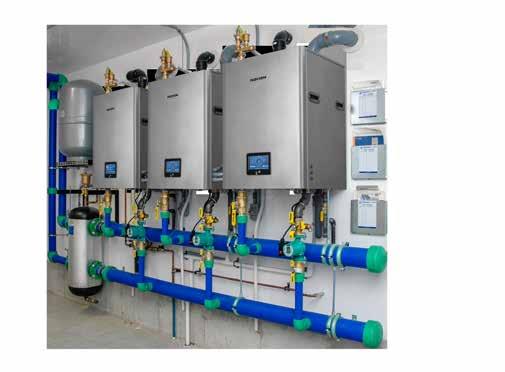
Navien NFB-C compact commercial fire tube boilers
Cascade up to 32 units and common vent up to 4 units for a wide range of heating outputs.

Patented Navien designed and built ASME-Certified “H” stamped stainless steel fire tube heat exchanger.
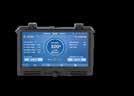
Intuitive 7" touch screen control for easy set up and diagnostics.
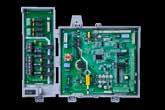
Built-in hardware for boiler pump, 3 heating zones or indirect tank control.
To learn more about all the big things happening at Navien, visit Navieninc.com.

THE LEADER IN CONDENSING TECHNOLOGY
CIRCLE NO. 3
Michael J. Pallerino
AI anyone? Anyone?
What’s a conversation these days without AI (artificial intelligence for those of you who, I don’t know, don’t get out much). AI is the game-changing, earth-shaking, industry-transforming, time-saving, efficiency-increasing, cost-reducing consistency-improving data-rich technology platform the industry (world) has craved.
And if you are afraid of it, shame on you. Too strong? Well, let’s roll out the facts here. As the commercial construction industry enters the next generation (one, I might add, is severely lacking skilled laborers to fill the holes), who doesn’t need a little help?
Bet you didn’t know that AI isn’t even a new concept. Okay, who Googled? The history of AI can be traced back to the 1950s when computer gamer and burgeoning AI aficionado Arthur Samuel
proclaimed it was “the field of study that gives computers the ability to learn without explicitly being programmed.”
Translation: The concept of AI is one that involves computers and systems that learn from experience, i.e., make machines do things the rest of us are doing, but better and faster.
Today, as the world finally starts to catch up to the vision that pioneers like Samuels had, the sky’s the limit—and then some. Our industry is filled with the power
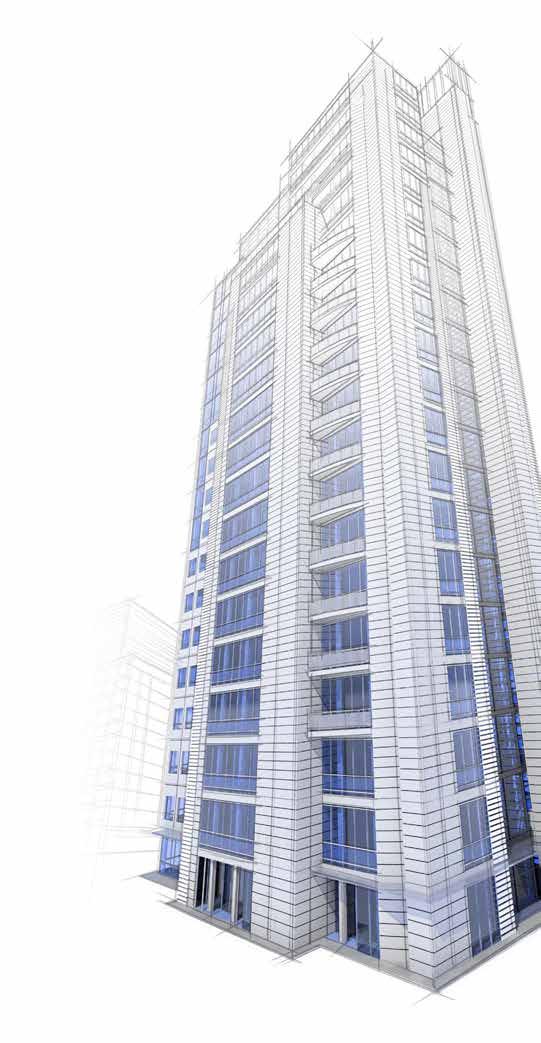
and promise of what AI can do, including pre-design (conceptual design, initial project planning, project development, etc.); design development (detailed design documents for architectural, electrical mechanical, electrical plans, etc.); construction documents (building product specifications, schedules, etc.); bidding and negotiation (help streamline processes, automate repetitive tasks, etc.); and permitting and approvals (help validate building code compliance and manage the building permit process, etc.).
Did you notice all of the etc.s there? That goes back to the “sky’s the limit” factor. You know, in areas like predictive maintenance, site safety, robotics, project management, quality control and building performance.
Now, close your eyes and imagine where AI can take us next. How it can play an even more prominent role in every aspect of the construction process. As we push forward, we will continue to provide stories about the many projects the readers of our magazine are involved with—the ones that are helping change the face of today’s building landscape.
In the midst of these stories will continue to be stories about how to get the job done bigger, better and faster.
That includes you—and AI.
Michael J. Pallerino is the editor of Commercial Construction & Renovation. You can reach him at 678.513.2397 or via email at mikep@ccr-mag.com.
We want to hear from you
At Commercial Construction & Renovation, we’re always looking to showcase the best of what our industry is doing. If you have a project profile or a fresh perspective on how to keep our industry positively moving forward, shoot me an email at mikep@ccr-mag.com. We’d love to take a look.
EDITOR’S NOTE by
6 COMMERCIAL CONSTRUCTION & RENOVATION — ISSUE 2, 2024
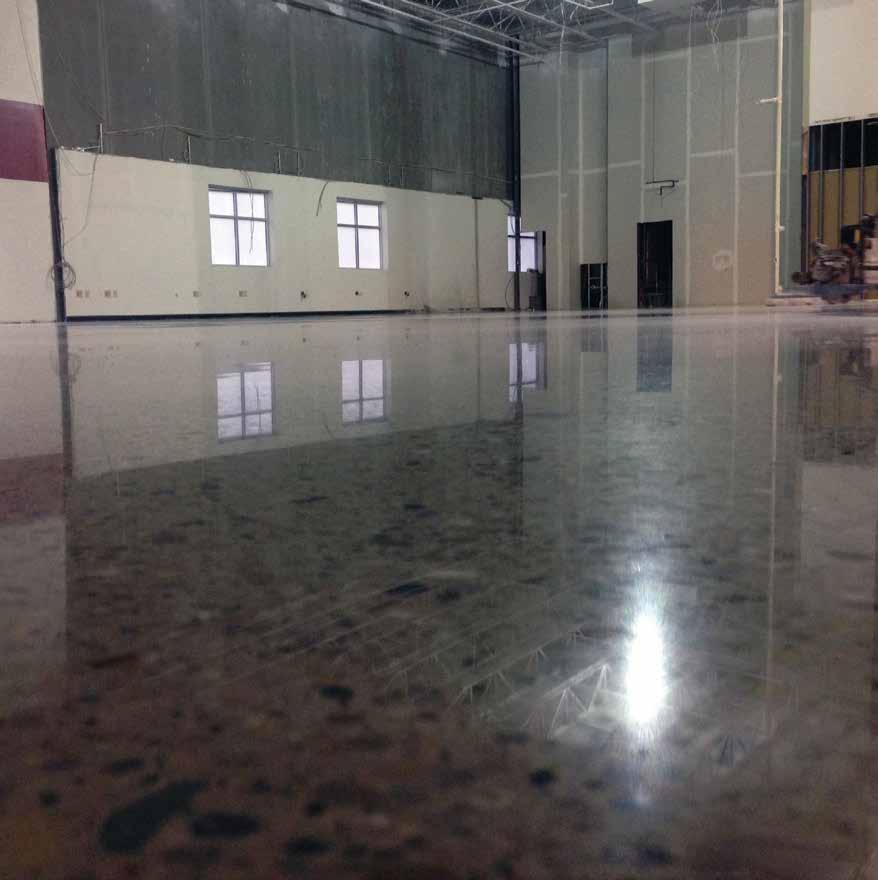

PO LISHE D CO NC R E T E FLO O RI N G ALL INQUIRIES PLEASE CALL: 1-888-935-4950 | Rockerzinc.com CONTACT: Dominika Smith Director of Business Development Phone: 724.553.4023 dsmith@rockerzinc.com GRIN D & P OLIS H COATI N G S COLORI ZATI ON CE M E NTITI OU S OVE R LAYS HEADQUARTERS: Rockerz, Inc. 100 Commonwealth Drive Warrendale, PA 15086 SOUTH: Rockerz, Inc. 8314 SE 58th Ave. Ocala, FLA 34480 WEST COAST: Rockerz, Inc. 12662 N 47th Ave. Glendale, AZ 85304 CIRCLE NO. 4



F&J PUBLICATIONS, LLC
P.O. Box 3908
Suwanee, GA 30024
678.940.6433
EDITORIAL
EDITOR: Michael J. Pallerino
678.513.2397 • mikep@ccr-mag.com
SENIOR ART DIRECTOR/AD PRODUCTION MANAGER: Brent Cashman
404.402.0125 • bocdesign@me.com
ADVERTISING
PUBLISHER/EDITOR
David Corson • davidc@ccr-mag.com
678.940.6433
SUMMIT DIRECTOR
David Corson • davidc@ccr-mag.com
678.940.6433
CCRP MEMBERSHIP DIRECTOR: David Corson • marketing@ccr-mag.com
678.940.6433
LIST RENTAL: Brian Clotworthy • bclotworthy@inforefinery.com
800.529.9020
SUBSCRIPTION SERVICES 678.940.6433 corpcirc@ccr-mag.com








F&J PUBLICATIONS, LLC CIRCLE NO. 6 Commercial Construction & Renovation is published monthly by F&J Publications, LLC. The opinions expressed by authors and contributors to Commercial Construction & Renovation are not necessarily those of the editors or publisher. Commercial Construction & Renovation is not responsible for unsolicited manuscripts, photographs or artwork. Articles/content appearing in Commercial Construction & Renovation cannot be reproduced in any way without the specific permission of the publisher or editor. From Midtown to Manhattan Beach. We’ve expanded to the West Coast Bringing decades of experience building high profile retail and office environments for the world’s largest brands. We’re ready to build for you. Tom Fenton, Business Development Manager (914) 244-9100 x 322 tfenton@schimenti.com 8 COMMERCIAL CONSTRUCTION & RENOVATION — ISSUE 2, 2024
CIRCLE NO. 7
ACADEMIA

DR. MARK LEE LEVINE
Professor Burns School/ Daniels College University of Denver
ADA

BRAD GASKINS Principal
The McIntosh Group
ARCHITECTS/ENGINEERS

MICHAEL MAGEE
Studio Leader Retail, Store Design Senior Associate Little


FRED MARGULIES Director of Retail Architecture Onyx Creative
STEVEN MCKAY
Managing Principal, Global Design Leader DLR Group
STEVEN R. OLSON, AIA President CESO, Inc.
CONSULTANT

GINA MARIE ROMEO
Chief Heart Officer & Principal Consultant, Allied RDI
DEVELOPMENT/PROJECT MANAGEMENT


KAY BARRETT
NCIDQ, CDP
Senior Vice President Cushman & Wakefield


JIM SHEUCHENKO
President Property Management Advisors LLC
CHRIS VARNEY
Principal, Executive Vice President Bureau Veritas
STEPHEN HEKMAN
Executive VP Kingsmen Retail Services US
KEN DEMSKE
Vice President Jones Lang LaSalle
GENERAL CONTRACTOR


DAVID THOMPSON
Vice President TCB Construction Group LLC.
MATT SCHIMENTI President Schimenti Construction
JOHN STALLMAN Marketing Manager Lakeview Construction
JEFFREY D. MAHLER RCA Advisory Board Member
HEALTHCARE

CLINTON “BROOKS”
HERMAN, PMP
Principal Facilities
Project Manager, MD Anderson Cancer Center HOSPITALITY

JOHN COOPER


GARY RALL
Vice President of Design and Development
Holiday Inn Club Vacations
ROBERT RAUCH Chairman Brick Hospitality
JOE THOMAS Vice President Engineering
Loews Hotels
LU SACHARSKI Vice President of Operations and Project Management Interserv Hospitality
ANDY BRIGGS, CHA Managing Principal A14 Capital Management
INFORMATION TECHNOLOGY

CRAIG WEBER
Director of Business
Prime Retail Services, US
Prime 3 Retail Canada, Inc.
REAL ESTATE


ROB ADKINS, LEED AP CDP
Senior Tenant Coordinator, Retail Peterson Companies
MEGAN HAGGERTY Founder Legacy Capital Investment
MARIE ANTONETTE
G. WAITE
Founder and CEO
RESTAURANTS


RON BIDINOST Vice President of Construction
Bubbakoo’s Burritos
DAVID SHOTWELL
The Wills Group Sr. Construction Manager
RON VOLSKE
Development Director Focus Brands
BOB WITKEN
Senior Project Manager
Fox Restaurant Concepts
RETAILERS


AARON ANCELLO
Facilities Asset Management
Public Storage
DEDRICK KIRKEM
Facilities Manager
Alice + Olivia
BOB MEZA Senior Construction Project Manager Target
DAVID D. DILLON
Director, Facility Standards
Store Planning & Design Development Walgreens Company
LAURA GROSS Retail Facilities Manager
American Signature Furniture
PAM GOODWIN Goodwin Advisors, LLC
Goodwin Commercial
The Pam Goodwin Show

Principal Executive Vice President Stormont Hospitality Group LLC
SAMUEL D. BUCKINGHAM, RS AMS CMCA
President of Construction Devco Development
Finest Women in Real Estate

KELLY RADFORD
VP Retail Construction and Development
Ascend Wellness Holdings
PERMITTING

VAUN PODLOGAR
CEO, Owner, Founder State Permits, Inc.
CCR
EDITORIAL BOARD
10 COMMERCIAL CONSTRUCTION & RENOVATION — ISSUE 2, 2024
Stop Smash and Grab
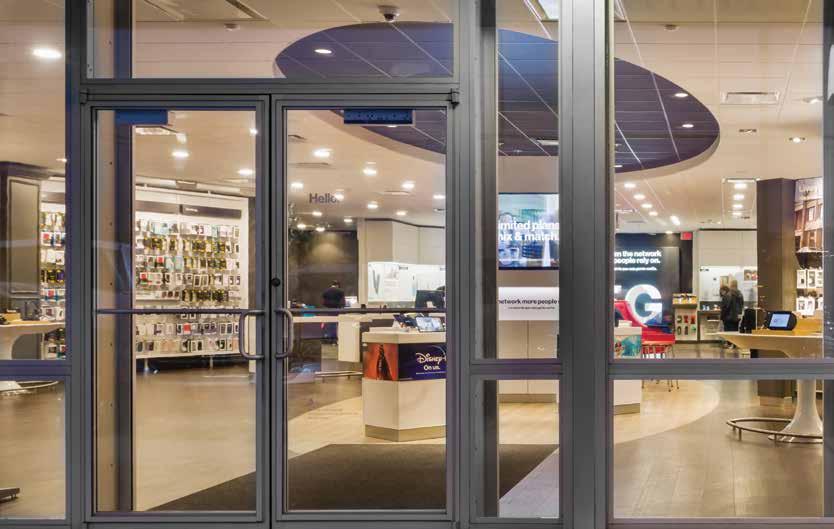
Retrofit Security Glazing
DefenseLite® is a clear security shield that integrates forced entry protection seamlessly with existing doors, windows, and storefronts, providing an invisible layer designed to protect retail businesses from impending harm, vandalism, and theft.
• Unbreakable polycarbonate overglaze 250 times stronger than glass
• Proprietary high-optic, UV-coated surface protection
• Framing available in a variety of standard and custom finishes
• Anti-graffiti protection available
• A cost-effective, easy-to-install solution
PROTECTION FROM SMASH AND GRAB
• Protect your property
• Protect your employees
• Prevent looting
• Prevent vandalism
DefenseLite® is a patented, retrofit glazing system designed for advanced forced entry protection. Manufactured by Impact Security, this proven technology provides a cost-effective solution, installed by authorized dealers located throughout North America. To learn more, visit www.defenselite.com
• Protect your inventory PROTECTION FROM VANDALISM
NO
us for a threat level assessment www.defenselite.com
info@defenselite.com
888.689.5502
• Preserve brand integrity
ENTRY NO HARM Contact
•
•
CIRCLE NO. 8
AroundtheIndustry
RETAIL
Nike
Nike has opened its first Rise store in the US at Miami’s Aventura Mall, after debuting the new format in London and Seoul, South Korea. The retailer expects to roll out in more US markets, which will feature a digital storytelling platform called Sport Pulse, a dedicated space for consumers to design their own products and a variety of online-to-offline services.
Rothy’s
Footwear retailer Rothy’s plans to open 10 or more brick-and-mortar stores next year in Florida, Texas and the Northeast, after having opened four locations this year, and has begun shipping to 16 countries. The retailer plans to enter the Asian and Latin American markets soon and will be tapping into wholesale partnerships to diversify its offerings.
Walmart
Walmart has invested more than $500 million in 117 store remodels across 30 states as part of a two-year, $9 billion makeover initiative covering 1,400 stores. The upgraded locations feature more space for online pickup and delivery orders, more shopping carts and checkout lanes, expanded pharmacies, a Mother’s Room for nursing, Dollar Shop sections showcasing seasonal products, a wider graband-go assortment and interactive displays.
GNC
GNC has opened an apothecary style flagship near its headquarters in Pittsburgh with an open floor plan, center islands and moveable shelves, changes that are part of a new design the supplement and wellness retailer plans to replicate in other big cities. A revamped point-of-sale system will allow sales associates to sell outside the store at local community events.
Valentino
Milan-based designer brand Valentino is opening a three-story, 12,333-square-foot boutique on New York City’s Madison Avenue, combining the brand’s new global retail concept with the flavor of Manhattan. The store is partnering with the Magazzino Italian Art museum in New York to display works by Italian artists, starting with five large paintings by Mario Schifano.
Express
WHP Global has inked licensing agreements with multiple partners to bring Express to markets in Indonesia, Paraguay, Mexico and Central America. WHP plans to open flagships and ecommerce channels next year in those markets, as well as shop-in-shop offerings in Mexico and Indonesia.
Maiden Home
Online furniture store Maiden Home is looking to expand design services and brand awareness through its first physical location, a 4,100-square-foot flagship in New York City’s Meatpacking District. A brick-and-mortar presence will position the high-end direct-toconsumer brand for long-term growth.
H&M
H&M is reportedly evaluating plans to open small-format stores in the UK and Ireland. Downsizing new spaces from more than 20,000 square feet to about 8,000 square feet could mean a return of the brand to communities and towns it exited when the pandemic began.
Macy’s
Macy’s plans to open as many as 30 small-format off-mall stores in 2024 and 2025 after almost four years of testing, bringing the total to more than 40 locations. Toys, beauty products and career fashions sell well in the stores, which are about a fifth the size of traditional Macy’s stores.
Dr. Martens
UK footwear brand Dr. Martens will open a store on London’s Oxford Street next month, joining about 320 company-owned and franchise locations worldwide. The iconic brand expressed confidence that the shopping district is on the upswing after hitting hard times due to the pandemic.
HOSPITALITY
Hyatt Hotels Corp.
Hyatt Hotels Corp. has introduced the Wellbeing Collective, a group of more than 30 hotels around the world that support guests’ personal wellness journeys. Examples include the Legend of the Lasso experience at Texas’ Hyatt Regency Lost Pines Resort and Spa, where guests learn lasso skills from professional ropers, fire-building activities at Miraval Berkshires Resort and Spa in Massachusetts and the outrigger canoe experience at Hawaii’s Andaz Maui at Wailea Resort.
INDUSTRY NEWS NEWS, NOTES & TRENDS...
12 COMMERCIAL CONSTRUCTION & RENOVATION — ISSUE 2, 2024
Your project, our work.
We’re proud to be trusted by the world’s biggest brands again and again.
Trusted by the biggest names in North America.
We’ve built across a diverse set of industries, from commercial retail to resorts to big box projects, and every single project gives us more ideas to take to the next site.


40+ years of successful projects


13,000+ pre-vetted subcontractors and vendors


1 million+ square feet constructed annually
Wherever you are, we can build it. constructionone.com


3,775+ total projects

CIRCLE NO. 9
AroundtheIndustry
Tommy Bahama
A 215-room property in Indian Wells, Calif., has partnered with apparel company Tommy Bahama to open the Tommy Bahama Miramonte Resort & Spa, with the brand considering future resorts in locations such as Wailea, Hawaii; Scottsdale, Arizona; and Boca Raton or Fort Lauderdale, Florida.
Avenue Hotel & Residences
Construction is poised to begin on the eight-story Avenue Hotel & Residences in Coral Gables, Florida, with the project from Roger Development Group slated for completion in the first quarter of 2025. The developer secured a $25 million construction loan from Inmocap 2 LLC for the new venue, which will include a hotel, 48 residential condos, a family dining area and a pool deck.
Preferred Hotels & Resorts
Preferred Hotels & Resorts has added 15 hotels in countries such as Italy, India, Brazil, Mexico and the US. Six of the properties are brand-new openings, including the 142-room Artyzen Singapore and the 141-room Global Ambassador in Phoenix.
Mauna Kea Beach Hotel, Autograph Collection
Mauna Kea Beach Hotel, Autograph Collection in Hawaii plans to undergo a $180 million revamp that includes construction of a new spa and fitness center, as well as remodeling of restaurants and 252 guestrooms and suites. The project is set to start in the second quarter of 2024 and will be finished in early 2025.
Trility Guesthouse
Trility Guesthouse, a $75 million hotel in Fayetteville, Georgia, debuted with a movie theme inspired by nearby Trilith Studios. Part of Marriott International’s Tribute Portfolio brand, the full-service property has 193 guestrooms, including 36 extended-stay suites and four private apartments, and has meeting spaces with names such as “Stage Left,” “Stage Right” and “Center Stage.”
Hotel San Carlos
An $80 million renovation will begin at the Hotel San Carlos in Phoenix, with planned upgrades to include the addition of 13 guestrooms, the reopening of the palm room and tea court, 5,000 square feet of new meeting space and a new lobby bar, restaurant and speakeasy. The work is expected to be completed by early 2025.
Raffles
Raffles Boston, a mixed-use development with 147 hotel rooms and 145 residential units, has made its debut, featuring amenities such as an indoor pool, Guerlain Spa, two restaurants, a lounge and a fitness center. The property is the first North American location for the Raffles Hotels & Resorts brand.
Rosewood Hotels and Resorts
Rosewood Hotels and Resorts has launched 14 Rosewood Residences in or near a hotel or resort since launching a residential component in 2008, with 11 residences currently under development. The company also is developing standalone branded residences in markets that might not be the right fit for a hotel, particularly honing in on areas in Asia, North America and South America that have a need for luxury accommodations.
Courtyard by Marriott
Plans are progressing for a Courtyard by Marriott hotel near Norfolk International Airport in Virginia that would include 168 guestrooms and a rooftop bar. Negotiations will soon be underway with ORF Hospitality Partners to develop, manage and operate the hotel, which may be under construction by next summer.
RESTAURANTS
Fogo de Chao
Brazilian steakhouse chain Fogo de Chao is revving up growth efforts with plans to grow from its current 77 global locations to 100 units with $1 billion in annual revenue by 2028.
Wagamama
Japanese-inspired restaurant chain Wagamama will expand into its fourth US market with the opening next month of its first unit in Tampa, Fla. The chain, which began in London, has six US units in Atlanta, Boston and New York City.
Chick-fil-A
Chick-fil-A plans to open five restaurants in two years in the UK, with five international markets open by 2030. The brand is targeting five stores in the market in the first two years and plans to invest over $100 million to expand there within the next 10 years.
INDUSTRY NEWS NEWS, NOTES & TRENDS... 14 COMMERCIAL CONSTRUCTION & RENOVATION — ISSUE 2, 2024
Portillo’s
The Atlanta, Denver and Las Vegas markets are next in line as Illinois-based hot dog and Italian beef chain Portillo’s works toward its goal of growing from about 80 US units to 920. The chain plans to reduce buildout costs by making future locations more compact and simplify the drive-thru and delivery driver pickup processes.
Chipotle Mexican Grill
Chipotle Mexican Grill has teamed with tech provider Hyphen to start testing an automated production line that the company says can assemble as many as 180 bowls an hour. The Makeline from Hyphen, which last year received an investment from Chipotle’s venture fund, is designed to help the chain improve both speed and accuracy of digital orders.
Starbucks
Starbucks has certified 3,508 units under its Greener Stores sustainability program and set a goal of expanding the certification to 10,000 locations by 2025. The coffee giant partnered with the World Wildlife Fund to create the certification program, which focuses on areas including energy efficiency, waste reduction and water conservation.
Pepper Lunch
Asia-based fast-casual hot plate concept Pepper Lunch is in growth mode in the US and Canada after forming franchise
They said it...
“It’s really important to make people feel appreciated, recognized, heard and empowered. All of these things create a really powerful culture and environment that cultivates positivity and really brings out the best in everyone individually and collectively.”
— Harris Teeter President Tammy DeBoer on what makes a great work culture
company Hot Palette America. Pepper Lunch sees the potential to grow from its current five US units to about 600 nationwide, with a menu that’s accessible, customizable and easy for Americans to understand and embrace.
KAO Bar & Grill
Multi-brand operator KAO Group plans to open a new eatery called KAO Bar & Grill that will be made from repurposed shipping containers. The 5,000-square-foot restaurant in Hallandale Beach, Florida is slated to open in the coming weeks and will include an outdoor patio with a 14-seat bar.
Krystal
Krystal will open a new prototype in Center Point, Alabama, which does not include a dining room. At 1,700 square feet, the companyowned restaurant also features a smaller kitchen that uses 20% less space, a double-lane drive-thru, a walk-up window and a pickup area for online guests and third-party delivery drivers.
Taco Bell’s Cantina
Taco Bell took over a former Hollywood Golden Age bookstore to create the first Los Angeles location for its Taco Bell Cantina concept. The location eschews menu boards in favor of ordering kiosks and movie screens, speakers and alcohol sales set the spot up to host live events.
“Whole Foods Market is dedicated to growing with a purpose, from responsible sourcing and apprenticeship programs to community services and charitable donations, said. “The decisions we make as a business—even the smallest ones— in how food is raised and grown today can have a profound and lasting impact on nourishing people and the planet for future generations to come.”
— Whole Foods Market CEO Jason Buechel on on the retailer’s sustainable mission
“We have our acquisitions team on a number of properties out there where we are in discussions. Our phone is starting to ring with opportunities we have never seen before and we are anxious to pursue them.”
—
Tanger Outlets President and CEO Stephen Yalof on the opportunities for growth ahead for mall operators in 2024 and beyond
15 ISSUE 2, 2024 — COMMERCIAL CONSTRUCTION & RENOVATION
Have Americans will travel
Don’t look now, but Americans are on the move. According to a survey conducted by Morning Consult on behalf of the American Hotel & Lodging Association, nearly 72% say that they will either maintain or increase their number of hotel stays this year. The survey also says that 53% plan to do so via overnight travel (32% for business) for the first four months of 2024. Of those travelers, hotels remain the most popular lodging choice, with 71% of business travelers and 50% of leisure travelers saying they will likely choose them over other accommodations.

The numbers game
60,000
The number of branded lifestyle and softbranded boutique hotels that have been proposed for openings in the US by 2027, according to STR data. The numbers translate to an annual pipeline growth averaging 29%.

To AI or not to AI...
It’s no secret that artificial intelligence (AI) is transforming every part of the commercial construction industry. Now, the Associated Builders and Contractors (ABC) is offering an AI guide for professionals wanting to better understand its prominence. The ABC guide features definitions of common AI terminology, example uses and some instructional guidelines for builders to apply in their own work. For more information, CLICK HERE.
2,000
The number of locations Papa Johns’ plans to open as its store counts return to pre-pandemic levels. The goal is to ultimately become the third-biggest pizza chain in the US.
11.9
The percentage of executive leadership positions are occupied by people of color, according to Bisnow’s DEI Data Series.
INDUSTRY NEWS NEWS, NOTES & TRENDS...
16 COMMERCIAL CONSTRUCTION & RENOVATION — ISSUE 2, 2024
CIRCLE NO. 10
Would
you like to be a guest or sponsor?
An interview podcast that talks to guests that will have business titles in design, construction, facilities, real estate, procurement, development, etc. in retail, restaurants, hospitality, healthcare, federal, multi-family, shopping center owners, developers, cannabis, mixed-use along with the A/E/C sectors plus vendor service suppliers & mfcs who’s products and services are specified, recommend and purchased by enduser brands to build and maintain their facilities in the Commercial Construction Building industry.
To be a guest or sponsor, reach out to David Corson your host at davidc@ccr-mag.com.
Brought to you by:

Subscribe here to listen to all episodes: www.youtube.com/channel/ UCR5SFfOHCJaO51uSgBM8pyQ
CIRCLE NO. 11



CORNER SPONSORED BY PRIME-NET.NET givesKnowledge you power
you need to know about AI and your electric service
“Watt”
Knowledge gives you power
“Watt” you need to know about AI and your electric service
By Jon Armour

It’s Friday night, you’ve just sat down to your favorite television show with a Swanson’s Salisbury steak TV dinner and a cold drink. The lights go out. Now, the first thing you do is yell at your wife in the kitchen, “Did you pay the electricity bill?”
After she packs your bag and hands you the car keys you realize what a terrible mistake you’ve made. It dawns on you that the greedy power company is probably doing rolling blackouts and you blame the power grid and your utility for interrupting your life and causing a divorce.
Not uncommon these days; the divorce or the power outage. But what if I were to tell you that you shouldn’t blame the greedy overcharging utility and blame more, the increase in demand for our prized lifestyle of everything electric.
The system was fine before the advent of electric cars and talking refrigerators. Demand for electricity has overtaken power grid capability across the country. Is that a problem? No, it just means the construction and expansion of generating assets will also increase.
IT CORNER
20 COMMERCIAL CONSTRUCTION & RENOVATION — ISSUE 2, 2024

But what does that do to the rates the utilities charge? These infrastructure costs are passed on to the customers. What can utilities be doing to hedge against the rising costs of electricity to your home or business? That’s what we’ll discuss in this article. Knowledge gives you power. Knowing what utilities are up to with your rate dollars can help ease your thoughts about, “Why am I paying so much? It’s just electricity.”
Let’s start there. It is not just electricity. The power coming out of your outlets, running your motors, and lighting businesses and
homes across the country is a bit more complicated than assuming it should always work. Most people drive by plants and substations without a care or wondering what they do or how critical they are to keeping the lights on.
Within the fences and gates lie expensive and complex transformers, circuit breakers, disconnect switches, lightning arrestors and a host of other equipment that turn high voltage current into usable voltage for homes and businesses.
These various appurtenances sometimes fail due to improper maintenance, age, they are vandalized or overloaded. The same occurrences are present across the entire transmission grid to include the generating plants, gas and other fuel distribution services, and also digital electronics.
All these things must be accounted for in the rate that is charged to the customer. You cannot just pay for electricity, but you pay for maintenance of equipment, power lines, pole structures, and research and development of new technologies as well.
Some of the means by which utilities are leveraging AI are, “heat rate and yield optimization.” Think of your car running hotter than it was designed to operate.
Okay, that helps toward understanding the costs of services but behind every electric bill there is likely an angry customer. There will always be people who cannot grasp the enormity of work that goes on behind the scenes at an electric utility.
To ease their anger and frustration and aid in rate stability, utilities are embarking on the use of AI, digital and analytics to operate more efficiently, reduce carbon footprints, and repurpose the saved funds toward research and development of advanced AI for plants and supporting facilities. Does that mean your utility will lower your rates? Not necessarily, but they can work to stabilize your costs and help create a more predictable bottom line for your energy budget.
Some of the means by which utilities are leveraging AI are, “heat rate and yield optimization.” Think of your car running hotter than it was designed to operate. It will use more fuel and lose the efficiency of lower operating temperatures. Staying cool, uses less fuel. But there is a range at which the car will operate at its best efficiency.
Finding that range usually is left up to a computer that controls water flow and fuel injection and other factors. Real time optimization of a power generator and its operational set points, say every thirty-minutes using machine learning algorithms, can accelerate fuel savings and reduce carbon intensity.
It is reported that the savings can be 1% to 3% percent for coal plants and .5-2% for a gas turbine generator. Given the reduction
21 ISSUE 2, 2024 — COMMERCIAL CONSTRUCTION & RENOVATION
in the “burn rate” at the scale of an aircraft jet engine, that is a tremendous savings.
“CAP,” not the one on your head, is another area of management at utilities that may prove to reduce labor hours by twenty percent and reduce regulatory costs as much as two percent. “CAP” is an acronym for “Corrective Action Program.” These are programs designed to identify steps that should be taken to understand the most cost-effective actions that can be employed to correct error causes. The premise is to reduce manual administrative efforts and implement AI analytics to project more precise corrective actions.
Analytics, algorithms, and digital data massing can automate decision making processes and leverage industry or fleet historical data to determine outcomes of events. Again, the savings are compounded across utility generation fleets, and they amount to millions of dollars that can be repurposed to further emerging technologies.
procurement of parts and equipment, and the speed at which repairs can be made.
The same AI analytics measure and compare data across generation fleets for unit efficiency to create standards for fuel use, heat reduction and other factors that increase unit availability. These tactics reduce planned outages and make generation more flexible to the grid during peak use.
One example of where the energy generation industry is headed is a large independent power producer in Texas. But this company is embracing the technology, leveraging AI, digital and analytics at an aggressive pace. They have meticulously road-mapped $200 million of impact through digital and analytics focusing on AI to improve performance and efficiency of generation units.
The utility boasts more than sixty-million dollars of impact already realized by deploying four-hundred use case models across
Knowledge gives you power. Knowing what utilities are up to with your rate dollars can help ease your thoughts about, “Why am I paying so much? It’s just electricity.”
If this all plays out to save the utility money, maybe you’ll get a rebate on your electric bill. I couldn’t hold my breath waiting for that. But I take solace in the fact that I know most utilities are working hard to harden the grid and generating infrastructure, to everyone’s benefit and to stabilize service delivery and costs.
Amping up analytics
Back to those substations that we all drive by and hardly notice. We talked about failures and aging equipment, which is a “norm” across the country’s infrastructure. Advanced Analytics are being deployed to detect fail points in transformer and distribution equipment.
What does that mean for the customer? AI analysis of equipment performance can make recommendations as to the replacement of equipment before it fails, instead of waiting until it breaks or a storm event stresses infrastructure. Industry reports state that there could be a sixty to eighty percent increase in the detection of “trip” events.
Trips are triggered by anomalies in a circuit, weather events or malfunctioning equipment. The identification of these potential failures before they happen can assist in maintenance decision making,
their fleet to sixty-five units in the first 24 four months of implementation. That’s just plain electrifying. So, no matter how much you hate the electric company, be assured that the industry is tapping new AI technologies and employing digital and analytic solutions across generation fleets to help you, the end customer.
Generating electricity is more than Homer Simpson falling asleep on the “shutdown” button at the helm of the local nuclear power plant. It encompasses complicated mechanics, electronics and forward-thinking AI solutions to tackle complex production problems, leverage administrative costs and generate safe, clean and affordable power for your home and business.
When the “lights go out in Georgia,” it is not for lack of maintenance or a “failing grid,” of which I hear so often. It is not some kind of conspiracy with the electric company to control your life, it’s probably because a tree fell across the wires or some other weather anomaly.
These things we have no control over. It is just like everything else in this world, things break, wear out, get damaged, and are overworked. These things are built by humans and are subject to failure, but AI can certainly move us forward and close the gap between human thinking and machine learning.
Contributing author Jon Armour has 35 years of combined experience across the construction, real estate, and IT Infrastructure industry. He is a Certified Project Management Professional (PMP), Certified Construction Manager, IT Infrastructure Program Manager, and a published author of a popular Western genre book. He resides in Magnolia, Texas
IT CORNER KNOWLEDGE GIVES YOU POWER
22 COMMERCIAL CONSTRUCTION & RENOVATION — ISSUE 2, 2024
CIRCLE NO. 12

SARA partners with GreenHome Institute

in the news
SARA partners in for fight on child labor
SARA is one of the partners for design
FREEDOM by Grace Farms’ “3rd Annual Design for Freedom Summit.” Billed as a momentous day of action and awareness, the event features some of the country’s leading experts across various sectors who are working to eradicate forced and child labor from the built environment.
The Society of Registered American Architects (SARA) is partnering with the GreenHome Institute (GHI) in a collaboration that will empower architects with the knowledge to create healthier, more environmentally friendly living spaces through a series of educational initiatives.
Central to this partnership is the introduction of a weekly “Wednesday Webinar Continuing Education Unit (CEU)” presentation, exclusively available to all SARA members. The program is designed to bridge the gap between traditional architectural practices and the urgent need for sustainability in the design and construction of living environments.
The GreenHome Institute brings to the table its vast experience and expertise in sustainable housing, offering insights into innovative practices that can significantly reduce the environmental footprint of new and renovated homes. By integrating GHI’s knowledge base with SARA’s commitment to professional development, this partnership promises to equip architects with the tools they need to lead the charge in sustainable design.
The webinars will cover a wide range of topics, from energy efficiency and renewable energy sources to sustainable materials and green building certifications. This initiative not only aims to enhance the skill set of architects, but also inspire them to incorporate sustainable practices into their projects, thereby contributing to healthier communities and a more sustainable planet.
For more information, visit sara-national.org.
Since holding the first annual summit in 2021, Grace Farms has hosted more than 800 attendees representing industry professionals and university students united in the fight against forced labor in the building materials supply chain.
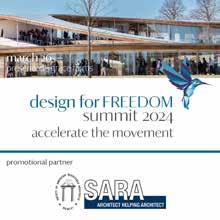
For more information, visit designforfreedom.org/2024-design-for-freedom-summit.
Clemson architecture student takes SARAS leadership role
Cierra Davies’ passion for advocacy and support continues to take her down new and exciting roads. The Clemson Master of Architecture student recently was named National Chair of the Society for American Registered Architects Students (SARAS). While serving as a graduate assistant, she was a co-designer for a project that won an award in the Society of American Registered Architects New York (SARA NY) chapter’s Design Awards.

Today, as a founding member and National Chair of SARAS, Davies will spearhead efforts to advocate for student members and professional development within the architectural community and facilitate the establishment of student-led SARAS organizations in schools across the country.
Davies says the creation of SARAS has kickstarted support from various SARA state councils, with each agreeing to have a portion of funds go to an initiative she proposed that supports students coming from nontraditional paths into architecture.
Additionally, the 2024 SARA National Board showed significant support for SARAS with personal financial contributions. The contributions underscore the collective belief in the importance of nurturing the next generation of architects.
To read the whole story, visit news.clemson.edu/clemson-architecture-student-takesnational-leadership-role-with-the-society-for-american-registered-architects.
INDUSTRY NEWS EVENTS
24 COMMERCIAL CONSTRUCTION & RENOVATION — ISSUE 2, 2024
Cierra Davies
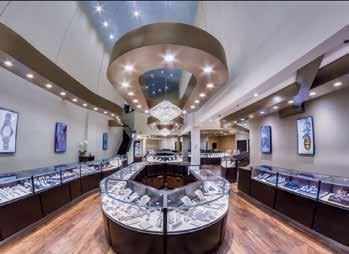


CIRCLE NO. 13 “Fisher Architecture is a collective of creative pr ofessionals who strive to produce purposeful and relative designs f or our clients. Let us make your vision come to life.” - Keith Fisher, Principal (410) 742-0238 fisherarchitecture.com 542 Riverside Dr. Salisbury, MD 21801
Presented by
Dear Skills Trade Student
While construction and technical skills are your primary focus, ConstructEDU Student Insider (CEDU) is designed to supplement your education by providing content that dives into the business of the commercial construction and renovation industry. The bi-monthly newsletter covers areas such as emerging technologies, regulatory issues and other factors shaping the diverse industry’s future. CEDU also features insights and profiles from industry thought leaders on the trends and challenges affecting the marketplace.
Delivered at no charge, we not only encourage you to make CEDU a part of your educational consumption, but also to share it with your peers.

EDUCATION
Architecture among highest-paying industries for graduates
In today’s ever unpredictable job market, you never know where the best jobs are—until you do. According to QR code generator QRFY, one of the highest-paying sectors for graduates is architecture, which clocked in at No. 9 on the Top 10. Architecture graduates can earn a median salary of $70,000, which is above the average percentage of employees with an advanced degree.
84 Lumber donates $50K to Germanna Community College scholarship program
84 Lumber is investing in the future of college students by donating $50,000 to Germanna Community College’s Germanna Guarantee Scholarship Program. Since at least 1999, 84 Lumber has made contributions to Germanna Community College’s “Germanna Guarantee Scholarship Program” and other initiatives that benefit the program.

INDUSTRY NEWS EDUCATION
division of Commercial Construction & Renovation
division of Commercial Construction & Renovation
Student Insider A
Student Insider A
To Subscribe CLICK HERE! Read More HERE
Read More HERE 26 COMMERCIAL CONSTRUCTION & RENOVATION — ISSUE 2, 2024

MANUFACTURING
Manufacturing major part of ‘Bring Back the Trades’ movement
D&M Electrical Contracting Inc.’s Doug Winston explains that while most people tend to associate the “Bring Back the Trades Inc.” movement with construction jobs, one of the most overlooked sectors is manufacturing. See what that should be music to the industry’s ears.
Read More HERE


TECHNOLOGY
Samco Machinery sponsors successful high school robotics team
Samco Machinery played a role in the success of a high school team competing in the first Robotics Competition. The Pink Titans robotics team of David & Mary Thomson Collegiate Institute in Scarborough, Ontario, earned the “Autonomous Award Event” at the Ontario District Humber College event and advanced to the playoff rounds.
Read More HERE

27 ISSUE 2, 2024 — COMMERCIAL CONSTRUCTION & RENOVATION
The year that was
A look at the state of construction in 2023
The start of a new year often brings both uncertainty and excitement for business leaders. And, after the ups and downs businesses in the Construction sector have seen over the past few years, many leaders are uncertain about what’s to come.
Looking at past trends can reveal insights and help business owners understand how their 2023 performance fits into the larger picture.
The Paychex Small Business Employment Watch has been tracking wage and employment growth by industry over the past decade, using the company’s broad client base to get a pulse on the labor market. The company’s Small Business Jobs Index and Small Business Wage Data can shed light on where we’ve been—and where we might be headed.
Construction’s Job Growth
At first glance, it may appear that construction had a lackluster year, with its index dropping throughout 2023 but staying above 100 (indicating slight growth). However, a closer look at the sector’s long-term performance has a much more interesting story to tell.
After its long run as the top-ranked industry for employment growth, construction’s steady moderation led the industry to rank fourth or fifth out of eight during the entirety of last year. At the regional level, we saw a similar shift, with construction’s relative performance dropping off between 2020 and 2021.
However, the industry began a recovery relative to other industries at the end of 2023, moving to 4th place in December of last year. This underscores that the change in construction’s relative strength in 2023 was not indicative of a decline. Despite the slowing rate of growth overall, the construction sector and the nation in general have not seen a single month of job losses since 2021.
Drilling down into regions and states reveals some interesting trends within the industry. In the Midwest, the region in which construction had the strongest year overall, construction employment outpaced the all-industry average by more than a full point. This indicates the key role played in the region’s overall strength.
By Frank Fiorille
Meanwhile, in the South—the best overall performer in 2023—construction’s annual average was 0.70 points lower than the industry index overall (the largest shortfall of any region).
At the end of the year, the industry was seeing a wide range in performance between states tracked. The best December ‘23 index was in Arizona (104.8; -1.14 Y-O-Y), despite its overall index ranking 4th among states that month. Illinois, which ranked 1st overall among states, had the second-highest index for construction in the last month of 2023 (103.55; +1.01 Y-O-Y)—while California (101.32; +1.84) showed the highest Y-O-Y growth.
Construction’s Wage and Hours Growth
Job growth wasn’t the only thing that stabilized in 2023. Wage growth—which spent time at record highs amid 2022’s ongoing inflation—also began to wane last year, and its stabilization both nationally and within construction continued through December.
While hourly wages in general were higher in December 2023 than 12 months prior and growth slightly outpaced inflation, the rates of growth nationally and within construction were significantly lower than in the previous year.
INDUSTRY NEWS PERSPECTIVE
Region Average Construction Ranking 2014-2020 2021-2023 National 1 5 Northeast 2 5 Midwest 2 5 South 2 6 West 1 6 Year National Construction 2021 104.50 103.12 2022 103.80 102.28 2023 101.44 101.23 2022 103.80 102.28 2023 101.44 101.23 Drilling down into regions and states reveals some interes)ng trends within the industry. In the Midwest, the region in which Construc)on had the strongest year overall, Construc)on employment outpaced the 100.20 100.40 100.60 100.80 101.00 101.20 101.40 July August September October November December Jobs Index, June-Dec. 2023 National Construction 28 COMMERCIAL CONSTRUCTION & RENOVATION — ISSUE 2, 2024


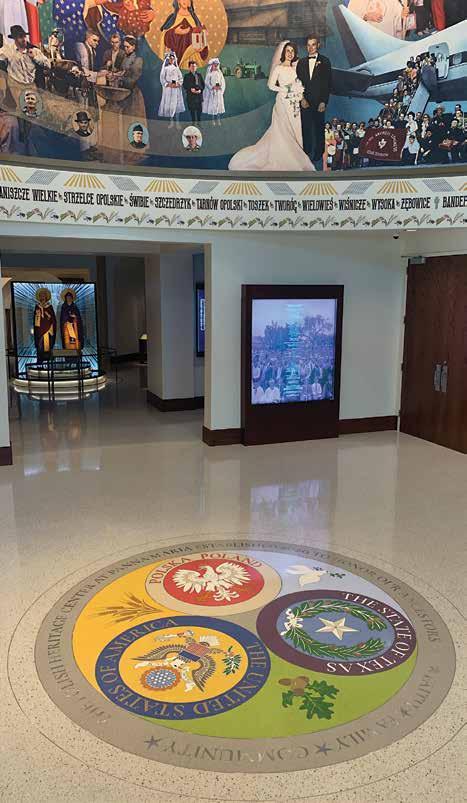


Terrazzo is a handcrafted building material; its primary components are assembled on the construction site. For 100-years, the contractor members of the National Terrazzo and Mosaic Association have brought integrity and skill to countless installations. The NTMA has the expertise your project needs. Find specifications, information, color samples, contractor and supplier members at www.ntma.com or call 800-323-9736.

Polish Heritage Center at Panna Maria Architect Morkovsky Associates, Inc. San Antonio, TX Designer Steve Harding Design, Inc. Houston, TX General Contractor Keller Martin Construction San Antonio, TX Photographer – Anna Migeon
CIRCLE NO. 14
Where Your Vision Meets Our Expertise
Construction’s slightly higher growth rate could speak to the heightened competition for skilled labor within the field compared to the general market. It appears the skills gap is continuing to affect businesses in the new year, as December 2023 marked the third consecutive month in which construction led sectors in both hourly earnings (3.94%) and weekly hours worked (0.17%) growth.
Of note, while construction is the only industry that has seen a steady increase in weekly hours worked over the past 10 years, almost all other industries peaked between 2019 and 2020. Furthermore, construction and manufacturing employees worked more hours than those in any other sector in 2023 and have done so consistently over the past decade.
Construction has seen the largest increase in full-time employment percentage among sectors during the past decade and was one of just two sectors to increase their percentage of full-time employees since 2014.
Regionally, hourly earnings growth in construction outpaced overall industry performance across regions at the end of last year, with all 20 of the states considered in the report showing similar results. Construction’s hourly earnings growth rate was in the top half among industries in 17 of the 20 states considered, and three states showed growth under three percent in December 2023.
The Year to Come
With the wage and job growth stabilization that marked 2023 holding steady in January, the outlook for small businesses in the new year is promising. It is likely to be a year of opportunity for construction businesses, as funding from the Biden Administration’s bipartisan infrastructure law is expected to continue ramping up and lead to new projects across the nation.
In the new year, the majority of construction leaders say they expect to increase their total headcounts, with nearly a quarter (22%) hoping to increase staff by more than 10%.
This might be a challenging task, despite labor market stabilization, as the industry is still facing a significant skills gap that’s likely to grow as emerging tech changes roles and responsibilities within the industry. They also
anticipate contending with ongoing materials shortages and supply chain uncertainties.
Investments in technology may present a compelling solution to both issues, as emerging tech both to streamline hiring and supply chain management—will be top of mind as construction businesses contend with these pressures.
For people managers, accounting, recruiting, HR and payroll solutions will be critical to longevity as they can help
leaders trim budgets and retain the skilled workers they already have. Meanwhile, intelligent logistics suites, end-to-end supply chain management platforms, and other data-driven systems will help businesses improve outcomes.
If the data is any indication, leaders who learn from the past and take this time of relative stability in the labor market to address other concerns will be well-positioned for whatever comes next.
INDUSTRY NEWS PERSPECTIVE
Region Rank All-Industry Construction Difference South 1 101.75 101.05 (0.70) Midwest 2 101.55 102.65 1.10 Northeast 3 100.85 100.68 (0.17) West 4 100.79 100.99 (0.20)
Frank Fiorille is the VP of Risk, Compliance and Data Analytics for Paychex.
Hourly Earnings YOY Increase YOY Growth Rate Hourly Earnings YOY Growth YOY Growth Rate 12-‘22 $31.08 $1.46 4.93% $32.63 $1.61 5.18% 12-‘23 $33.16 $1.08 3.48% $33.91 $1.28 3.94% State Hourly Earnings YOY Change YOY Change Rate Rank Among Industries in State Washington $36.78 $1.82 5.20% 3 Wisconsin $29.21 $1.25 4.47% 7 Arizona $30.97 $1.32 4.44% 3 Texas $31.20 $1.15 3.83% 2 Maryland $34.47 $1.25 3.76% 4 Massachusetts $37.08 $1.34 3.76% 3 California $34.94 $1.25 3.72% 2 Virginia $34.22 $1.20 3.64% 1 Florida $30.18 $1.05 3.60% 4 Missouri $30.21 $1.02 3.51% 5 Ohio $27.84 $0.93 3.45% 1 Illinois $34.23 $1.13 3.40% 8 New Jersey $32.51 $1.05 3.32% 3 New York $32.58 $1.00 3.17% 1 Pennsylvania $31.00 $0.95 3.15% 1 Michigan $29.86 $0.88 3.03% 7 Georgia $30.39 $0.89 3.01% 4 North Carolina $28.72 $0.83 2.98% 4 Tennessee $28.51 $0.82 2.96% 2 Indiana $27.97 $0.63 2.31% 3 30 COMMERCIAL CONSTRUCTION & RENOVATION — ISSUE 2, 2024
Month National Construction
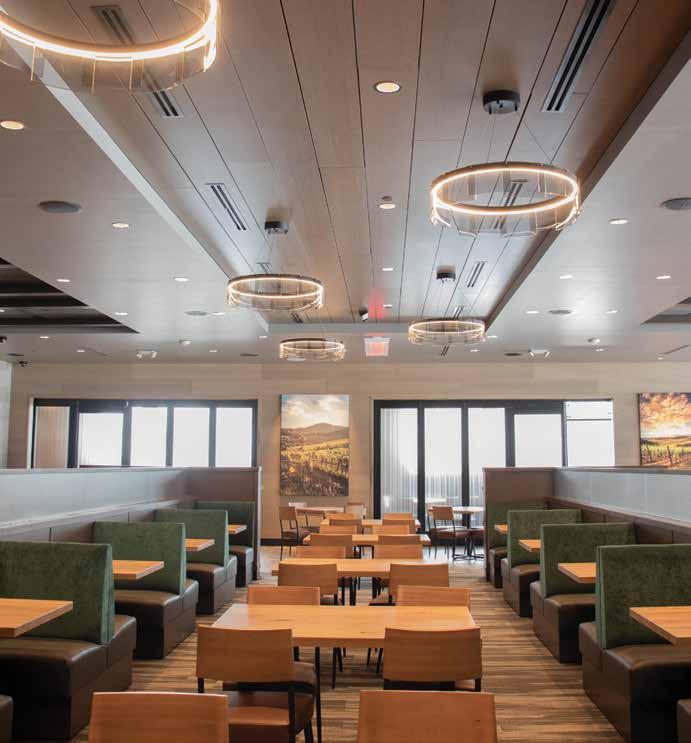




HELPING BUILD NATIONAL BRANDS GENERAL CONTRACTOR · CONSTRUCTION MANAGEMENT · DESIGN BUILD 616-949-3360 · WOLVGROUP.COM COOPER’S HAWK TROY, MI CIRCLE NO. 15
Going modular
Choosing the right system for affordable housing
By Tom Jaleski
Access to adequate and affordable housing is one of the biggest problems facing communities around the world today. With the current housing shortage and new construction not keeping pace with the projected population growth in many communities, more permanent, affordable housing solutions are needed.
The increasing frequency of emergency situations caused by storms, flooding and migration also has created a growing need to quickly provide temporary, transitional housing for displaced and homeless residents.
Modular construction is one way of addressing these challenges in a manner that can quickly adapt to changing conditions and demands. Modular building systems can provide housing at a lower
cost and reach far more locations than site-built housing. Two main approaches can be used to provide affordable modular housing, with transportation costs being the primary factor in determining the type of modular system employed.
A localized, market-rate approach allows for a wider diversity of unit sizes but requires a local fabrication facility to reduce transportation costs. A global approach uses standard shipping sizes as its base.
Ultimately, the further away the site is from a fabrication facility, the more the unit needs to fit typical shipping size and strength standards.
Why Build Using Modular Systems?
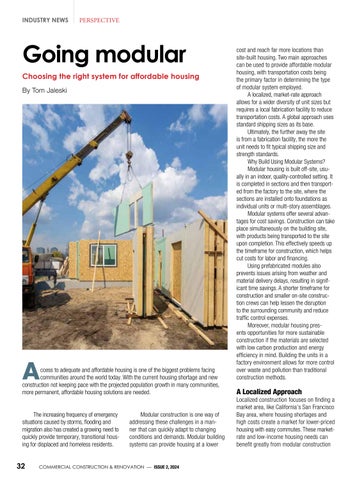
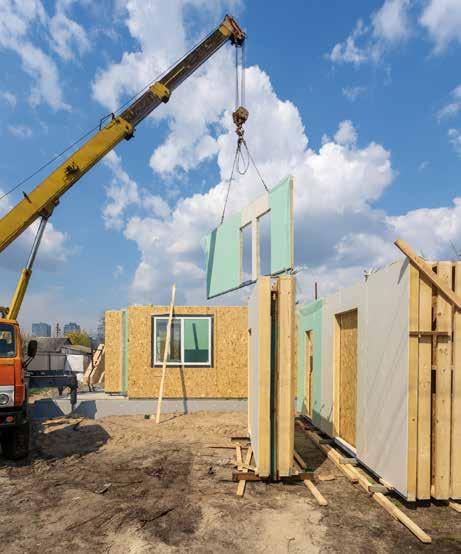
Modular housing is built off-site, usually in an indoor, quality-controlled setting. It is completed in sections and then transported from the factory to the site, where the sections are installed onto foundations as individual units or multi-story assemblages.
Modular systems offer several advantages for cost savings. Construction can take place simultaneously on the building site, with products being transported to the site upon completion. This effectively speeds up the timeframe for construction, which helps cut costs for labor and financing.
Using prefabricated modules also prevents issues arising from weather and material delivery delays, resulting in significant time savings. A shorter timeframe for construction and smaller on-site construction crews can help lessen the disruption to the surrounding community and reduce traffic control expenses.
Moreover, modular housing presents opportunities for more sustainable construction if the materials are selected with low carbon production and energy efficiency in mind. Building the units in a factory environment allows for more control over waste and pollution than traditional construction methods.
A Localized Approach
Localized construction focuses on finding a market area, like California’s San Francisco Bay area, where housing shortages and high costs create a market for lower-priced housing with easy commutes. These marketrate and low-income housing needs can benefit greatly from modular construction
INDUSTRY NEWS PERSPECTIVE
32 COMMERCIAL CONSTRUCTION & RENOVATION — ISSUE 2, 2024
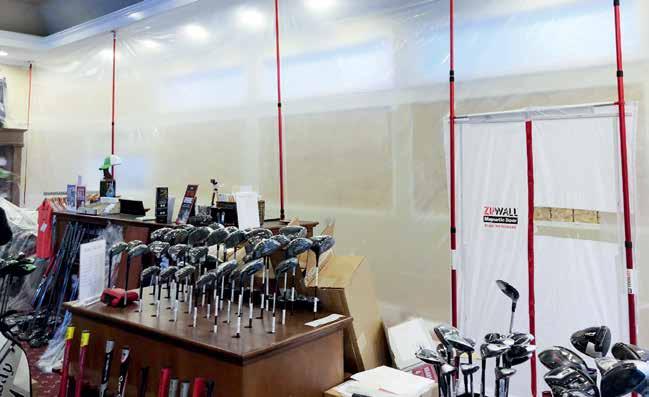
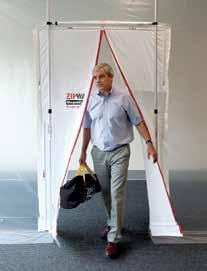
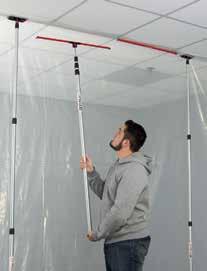
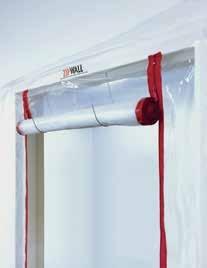
zipwall.com info@zipwall.com 800-718-2255 DUST BARRIER SYSTEM Stay Open for Business During a Renovation! Set up a ZipWall ® dust barrier up to 20' high in minutes. No ladders, no tape, no damage! Magnetic Door Create hands-free, self-closing access to your worksite. Magnetic Strips Keep your barrier tight against a drop-ceiling. Commercial Door Kit Seal a doorway in a minute. Built-in zippers for easy entry/exit. CIRCLE NO. 16
methods, which allow flexibility and lower construction costs.
High land costs in desirable locations make it more cost-effective to build highrise buildings, which would require stacking of modular units and integrated structural systems. Modular systems are the most feasible solution when building affordable housing in this context, as the per-unit cost savings can be rapidly multiplied.
The stacking emphasizes the materials used (non-combustible in high-rise buildings), the structural frame, and access to connections in the infrastructure systems. Code requirements for tall buildings over five stories generally require steel framing with columns integrated into the frame. Infrastructure typically is accessed through a vertical shaft system, where connections can be made from an easily accessible central point in each module, such as the corridor.
to create three- and four-sided modules that eliminate duplicate wall and floor/ceiling material costs. On average, factory-built modules save about 30% on labor costs, but building duplicates, walls, floors and ceilings eats into those savings.
Constructing three- and four-sided modules allows for additional flexibility in unit size and configuration as well as greater customization in room sizes for use in multi-bedroom units and amenity spaces.
A Globalized Approach
Globalized construction focuses on providing units that are easily shipped using standard transportation modes and have a variety of built-in infrastructure connection stubs. This is particularly useful when affordable housing must be provided quickly and delivered to areas with limited access to resources, such as underserved and
Modular systems offer several advantages for cost savings. Construction can take place simultaneously on the building site, with products being transported to the site upon completion.
Transportation costs are a significant differentiator for modular construction.
Localized construction addresses transportation costs by finding an in-demand market and reducing transportation costs for flexibly sized, stacked modules to serve wider market demands.
Having a production facility near the building sites is key in keeping transport costs low for the variety of widths needed for different housing and amenity-space unit types. It reduces the distance for modules to travel, decreasing the cost of oversized, load-sized modules.
Localized construction can also take advantage of the short transport distances
developing communities. This approach also can quickly address migrations of people into new areas.
Globalized construction techniques start with a strong structural frame already designed for shipping by truck, rail, and ship based on ISO 6346 requirements, like a used shipping container. The strength of these materials allows them to withstand transportation loads that buildings are unable to handle.
While some cut-outs in the siding can be made prior to shipment, they must be created carefully for ship transport. Other starting points for structure can be used, particularly for truck and rail transit, and
connections can be made through strapping, if not the standard locking connection found in shipping containers.
Ultimately, flexibility within the structure is key to addressing different locations and cultural conditions.
Globalized construction has the most size restrictions for truck, rail, and ship transport, as it is based on standard shipping sizes. Because globalized construction works within these restrictions to reduce transportation costs, the location of the assembly facility is much less relevant, even though every mile still incurs costs.
Therefore, fabrication in low labor cost areas will save significantly more than the extra transport costs.
Developing a Modular Housing Strategy
Understanding the market you want to serve is the first step in developing an approach for modular construction. Market-rate housing requires a localized approach, which allows for more flexibility in unit sizes and larger amenity spaces in multi-story buildings.
The location of the fabrication facility is key to reducing transportation costs in this context. Below-market-rate housing also is typically multi-story and depends on low transportation costs to be profitable.
The single-family, emergency, and developing-area housing market requires conformance to standard transportation sizes to keep transportation costs as low as possible. This globalized approach allows the fabrication facility into areas with low labor and material costs.
Modularization can provide significant cost savings, no matter which approach you use. Keep in mind the prime cost drivers, materials, transportation, and labor. Knowing the market you want to serve will help you develop a strategy that supports the community and contributes to the success and growth of your company.
Tom Jaleski is Director of Jensen Hughes. With more than three decades of project experience with regulatory agencies across the US, he has authored code appeals, alternates and variances to resolve complex issues, resulting in savings to clients while ensuring the primary goal of safety for the occupants. He also is an expert in accessibility and code regulations for high-rise, healthcare, residential, assembly, commercial, public and aviation facilities.
INDUSTRY NEWS PERSPECTIVE
34 COMMERCIAL CONSTRUCTION & RENOVATION — ISSUE 2, 2024

CIRCLE NO. 17
36 COMMERCIAL CONSTRUCTION & RENOVATION — ISSUE 2, 2024
Big Apple Strong
Inside SOCOTEC’s LEED CI v4
Platinum Certified US headquarters
Headquartered in Saint-Quentinen-Yvelines, France, SOCOTEC is a leading global provider of sustainability and high-performance consulting and design services in the construction, real estate, and infrastructure sectors.
The SOCOTEC Group has built its reputation over 70 years as an independent trusted partner assisting companies in the areas of quality, health and safety, and the environment. Its mission is to ensure the integrity and performance of building and infrastructure assets and people’s safety. Through its inspection and measurement, assistance and consultancy, and training and certification services, SOCOTEC helps to optimize the performance of companies in every sector by managing the risks inherent in their activities. Drawing on its expertise and positioning itself as a long-term partner, SOCOTEC supports its clients throughout their project’s lifecycle.
Photography by Ola Wilk
37 ISSUE 2, 2024 — COMMERCIAL CONSTRUCTION & RENOVATION
In the US, SOCOTEC is a leading provider of specialty consulting services within the Testing, Inspection & Certification (TIC) industry, focusing on high-performance buildings and specialty structures. With an integrated, holistic approach, SOCOTEC experts provide solutions through 6 service lines: Building Envelope, Energy & Sustainability, Code & Planning, Dispute Resolution, Project Advisory, and Specialty Engineering. In the United States, SOCOTEC employs 400 professionals in 25 offices.
That’s why it recently acquired a New York City-based building envelope and sustainability consultant Vidaris and then consolidated its US operations at a new office at the One Five One tower, The Durst Organization-owned commercial building. The space is located at 151 West 42nd Street at the convergence of Broadway with Manhattan’s Times Square.
“Our firm’s leadership determined that a hybrid work environment—where the majority of the staff would divide their time between field work, home and office—would be most suitable for the firm’s operations.”
– John Amatruda, SOCOTEC
Montroy DeMarco Architecture (MDA) designed the new workspace in a close collaboration with SOCOTEC’s internal sustainability consulting team to meet the tenant’s high energy efficiency, sustainability and wellness requirements.
The newly completed, 11,000-square foot office received LEED Platinum certification from the US Green Building Council. LEED Platinum is the highest level of
certification, indicating an ultimate degree of sustainability through energy efficient design and building systems, recycled and environmentally responsible materials, and sustainable operations and practices. At the time of its certification, SOCOTEC’s headquarters was one of only six LEED CI v4 Platinum certified projects in New York State.
“When our previous lease at 360 Park Avenue in Manhattan expired, we looked
BIG APPLE STRONG SOCOTEC
38 COMMERCIAL CONSTRUCTION & RENOVATION — ISSUE 2, 2024
We don’t strive to be bigger. We strive to deliver the best quality and service in the industry.
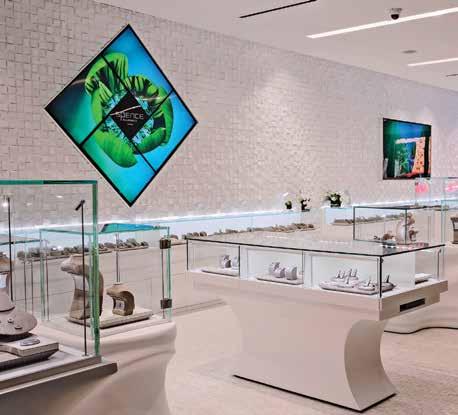
Our specialized project management teams are highly effective in maintaining affordable budgets, meeting tight deadlines, and delivering quality construction turnovers on time, every time. From coast to coast, Alaska to Puerto Rico, Hunter Building Corporation has you completely covered on your next construction project!
We offer a multitude of services nationwide ranging from tenant improvements, buildouts, remodels, ground-up construction, and project management. Hunter Building Corporation takes pride in the fact that many of our clients have been repeat customers for many years.

14609 Kimberley Lane • Houston, TX, 77079 281-377-6550 • Fax: 281-752-8600 info@hunterbuilding.com
Retail Construction • Restaurants • Hospitality • Office Spaces • Medical CIRCLE NO. 18
upon it as an opportunity to rethink our office environment and associated work practices,” says SOCOTEC Senior Principal John Amatruda, RA, LEED Fellow, BREEAM International Assessor. Amatruda launched the new office design effort while still at Vidaris. At that time, the firm also maintained several smaller satellite offices throughout New York City, all of which had been impacted by workplace changes during the pandemic.
“Our firm’s leadership determined that a hybrid work environment—where the majority of the staff would divide their time between field work, home and office—would be most suitable for the firm’s operations, and called upon Montroy DeMarco Architecture to design it,” Amatruda says. “The new office has enabled us to both consolidate space as well as to create a highly collaborative, energetic and sustainable workplace that is well suited for a hybrid working model.”
MDA Partner Daniel Montroy, AIA, says that through the use of a flexible seating concept and numerous collaborative and social spaces, the new office accommodates all of the programmatic needs in a footprint that is nearly 20% smaller than Vidaris’ previous office space. The project’s total cost was approximately $4 million.
Following its acquisition of Vidaris, SOCOTEC supported the design of the new U.S. headquarters office. European executives and colleagues now use the new space when visiting New York.
One Five One was constructed in 1999 and is regarded as the first green skyscraper in the United States. The building, also known as 4 Times Square, has since been LEED Gold certified. Vidaris has worked extensively with the landlord, The Organization, on both One Five One when it was originally designed and many other projects. “We were thrilled to work with Durst, our long-standing client, on the development of our new office space,” Amatruda says. “As a landlord, Durst has been very supportive of our sustainability initiatives and design efforts, and has assisted us in optimizing and testing the base building MEP systems.”
The Durst Organization also served as Construction Manager. The contractor was Cross Management Corporation and ME Engineers served as the MEP designer.
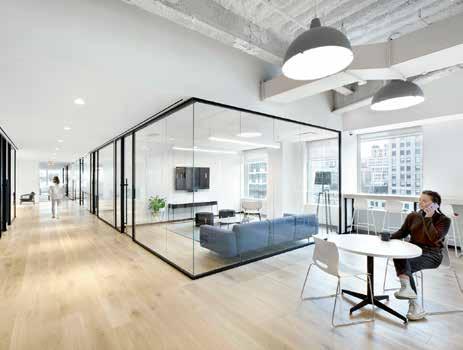
“The office can accommodate up to 120 people. Approximately 40% of the employees are transient workers who do extensive field work and come to the office sporadically.”
— Glen Walker, Chief Administrative Officer, SOCOTEC
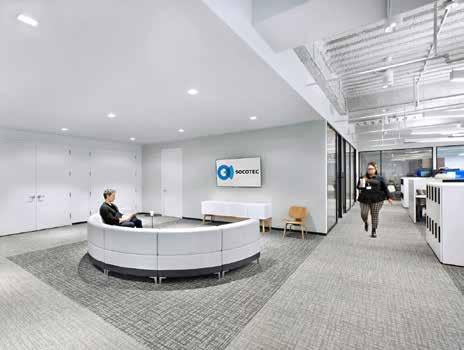
BIG APPLE STRONG SOCOTEC
40 COMMERCIAL CONSTRUCTION & RENOVATION — ISSUE 2, 2024



N E V E R F A D E C O A T I N G S . c o m W A T E R B A S E D C U S T O M C O L O R S M U L T I P L E A P P L I C A T I O N M E T H O D S L O W V O C CIRCLE NO. 19
Office Layout and Finishes
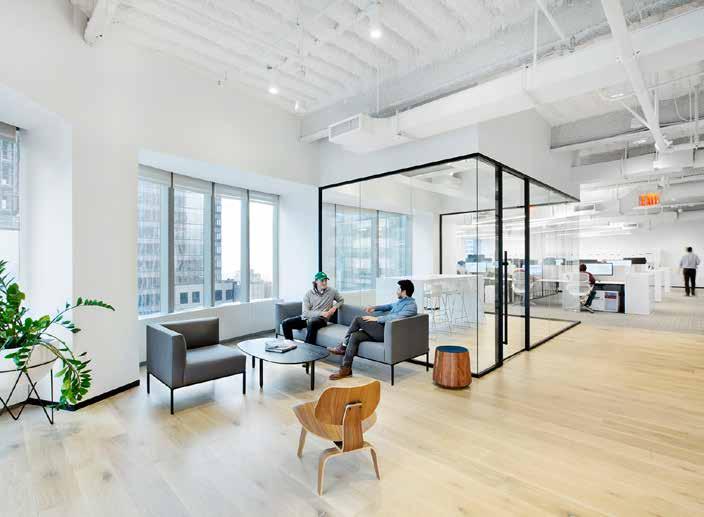
MDA Project Manager Sarah Bigos says the office occupies the south half of the building floor and is wrapped on the east, south and west sides with large windows that flood the space with natural light and enhance employee well-being. The layout is planned around several functional areas.
The reception area faces a 16-seat 490-square foot boardroom that is flanked by two executive offices, two smaller meeting rooms, each of 230 square feet, and several additional offices. Each of these rooms has glass partition walls facing the central corridor so that light and views can be appreciated by the other staff.”
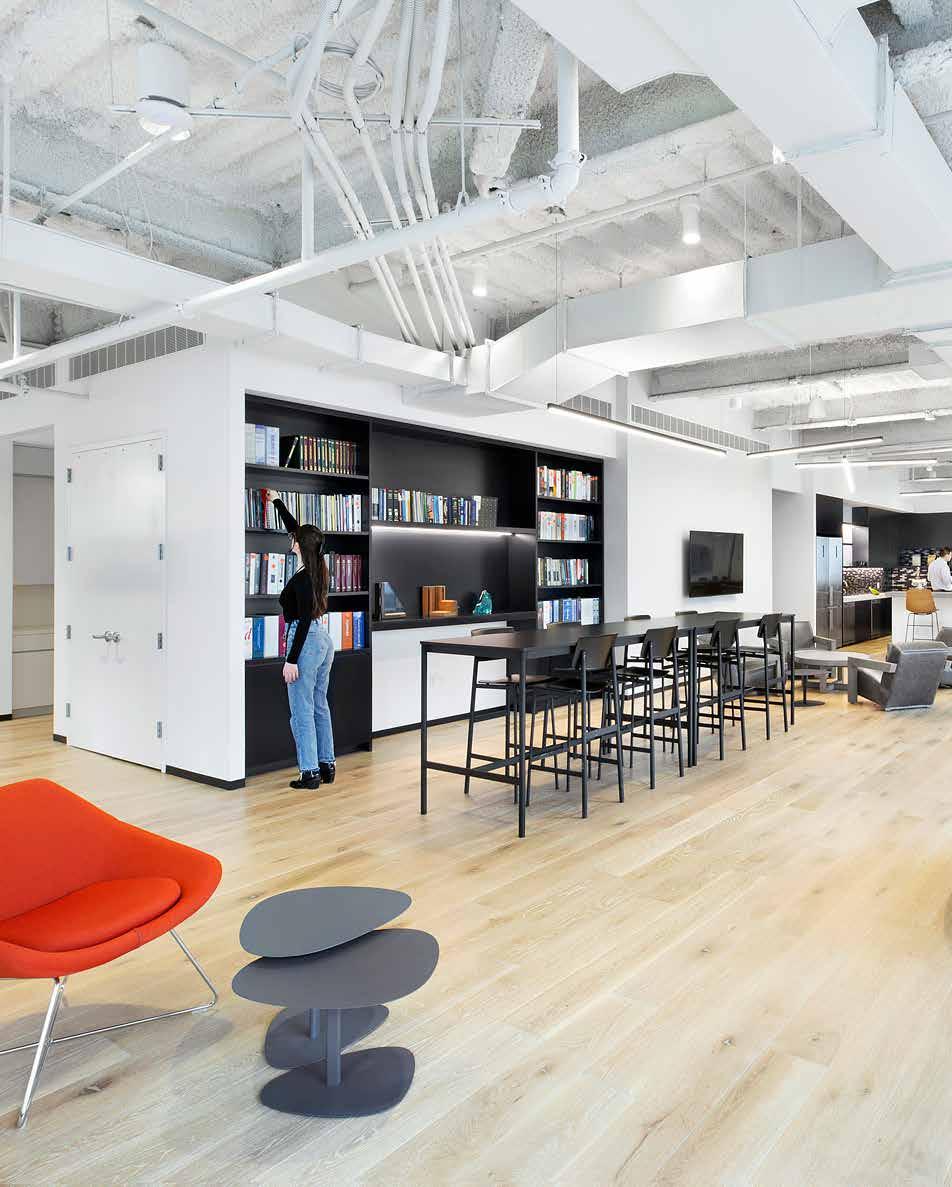
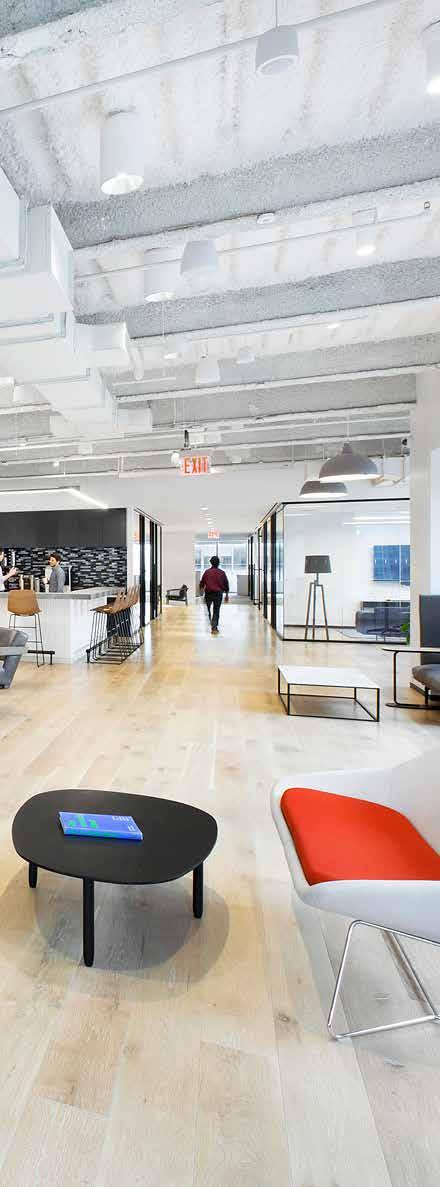
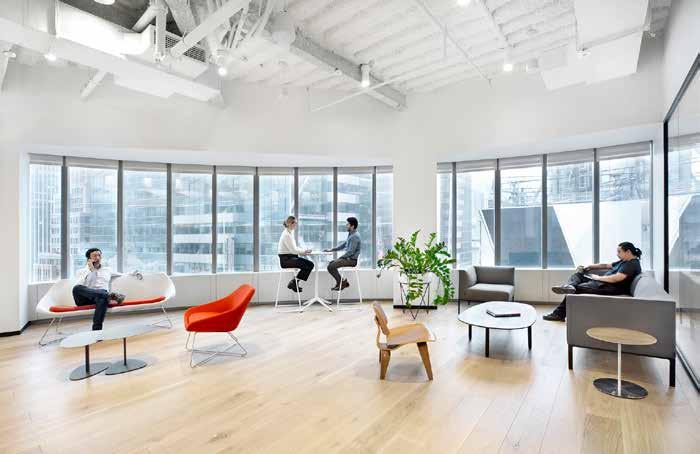
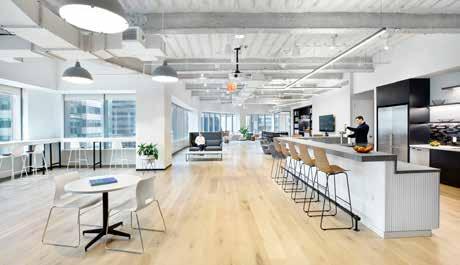
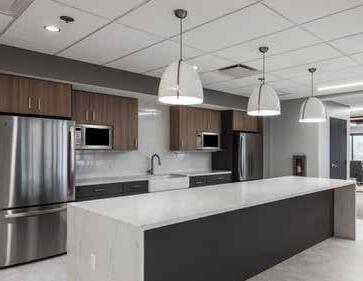
“The highlight of the suite is a centrally located, 2,000-square foot open space, located adjacent to the executive office section and facing the curved exterior building wall. It serves as a co-working area, technical library, pantry, and event and presentation space,” says Tom Yeh, MDA Job Captain. The pantry features an L-shaped counter along the interior wall
and an L-shaped bar height island with traditional kitchen appliances, as well as taps for both coffee and beer. It is finished with black millwork, a black, white, and gray tile backsplash, gray Caesarstone countertops in a concrete finish, and a white island base.
The black finishes contrast sharply with the adjacent co-working space that features a multi-seat work counter along a section of the window wall, several small meeting tables and a combination of soft and hard seating in white, neutral, and orange colors. The space was designed to be flexible, informal, and comfortable. Furniture can be easily moved to accommodate different seating needs. A large retractable projection screen is located at one end of the space, so that it can be converted into a presentation area when needed.
Two separate workplace wings are located to the east and west of the central co-working/pantry and executive areas. Technical departments, including Envelope Consulting, Architectural Testing Certification and Inspection, Engineering Testing
Inspection and Certification, and the Code Advisory Department, are located in an area of shared workstations bordered by glass faced interior offices and a meeting room.
The Accounting and Administrative departments have a more traditional layout with assigned workstations and additional private offices. Standing desks are used throughout the office to give employees the option of sitting or standing as they work.
“The office can accommodate up to 120 people,” says Glen Walker, SOCOTEC’s Chief Administrative Officer. “Approximately 40% of the employees are transient workers who do extensive field work and come to the office sporadically. “The feedback we have received from our employees regarding the new office space is very positive. They enjoy the flexible seating, open space and windows, and the upscale, hip environment.”
MDA worked closely with SOCOTEC’s Energy and Sustainability team and the firm’s leadership to develop a collaborative aesthetic for the space, and all materials were selected specifically to be highly sustainable. The
BIG APPLE STRONG SOCOTEC 42 COMMERCIAL CONSTRUCTION & RENOVATION — ISSUE 2, 2024
CIRCLE NO. 20
palette throughout the suite is a combination of light and neutral tones.
An FSC-certified engineered wood flooring in a white oak finish extends through reception, the boardroom area, and the pantry. Carpet tile by Patcraft is used in the offices and open workstation areas and is inset below the table in the boardroom. The muted grey patterned carpet is typically manufactured as a broadloom, but Vidaris worked with Patcraft to modify the product into carpet squares so that a LEED compliant backing could be used.
Glass partitions with sliding doors by Tagwall separate the offices from the central spaces. In the boardroom, the wall telescopes so that the room and the reception area can be merged into one contiguous space. One wall in the reception area is faced with a custom decorative fluted wood panel in a white painted finish by Textures-3D to add visual interest to the space.
Suspended gypsum board ceilings extend through the reception area and corridors, and acoustic tile ceilings are used in offices. The boardroom ceiling features a gypsum board border with an inset of fourfoot square acoustic tiles. In contrast, the
open areas feature K13 acoustical cellulose insulation sprayed on the underside of the deck and painted white to maximize the ceiling height while providing sound attenuation.
The designers incorporated several innovative concepts into the lighting and power systems. Duplex electrical receptacles at workstations and offices have been designed so that power for each upper outlet, utilized for task lights and auxiliary
Inside the SOCOTEC HQ LEED certification highlights
` Energy use reduction: 14.2% as compared to LEED’s ASHRAE 90.1 baseline
` Water use reductions: 35.1% as compared to code
` Sustainable materials: 31.7% of materials by cost used recycled content or FSC certified wood
` Embodied carbon: architectural materials were selected to achieve in excess of 20% reduction in embodied carbon as compared to standard products
` Construction waste recycling: 78.2% diversion rate from five waste streams
` Daylighting: 41.6% of the regularly occupied floor area meets LEED criteria
` Quality views: 75.1% of the regularly occupied floor area meets LEED criteria
` Carbon dioxide monitoring: monitors are provided in all high occupancy spaces to ensure appropriate outside air delivery
` IAQ sensors: monitors are used to track TVOCs, temperature, RH, CO2, and other air quality metrics
` Green Power purchases: offsets were purchased representing 66.4% of the office’s annual energy use for 10 years
items, shuts down at 8:00 p.m. to conserve energy, while each lower outlet that supplies power to computers and essential equipment is active 24/7. Occupancy and vacancy sensors are also used to control lighting, and a Lutron programmable control system adjusts light usage based on daylighting conditions and the season. Lighting fixtures are by National Lighting.
Sustainability and changing workplace dynamics drove design
As a specialist in the field of sustainability, SOCOTEC imposed a clear philosophy that drove the project design. “We feel strongly that every company needs to be a responsible corporate citizen. Sustainability must be incorporated into all activities as part of accountable business practice to minimize the corporate environmental footprint,” said Amatruda.
MDA consulted closely with SOCOTEC’s leadership and employees to understand their use of the space before final design began. As Bigos explained, “The model of the space was shared with employees to obtain their input regarding functionality and sustainability issues.”
The final design successfully addressed a shift in the corporate paradigm. Perhaps the most important lesson learned from this project is that architects and their corporate clients need to work collaboratively to accommodate employee expectations, changing technology, and shifts in workplace culture. CCR
BIG APPLE STRONG SOCOTEC 44 COMMERCIAL CONSTRUCTION & RENOVATION — ISSUE 2, 2024
ADAM HUTTON adamh@TrueNorthGC.com 314-964-5974 TrueNorthGC.com CIRCLE NO. 21
IT’S THAT SIMPLE
We’re a company with a fresh approach. We are highly skilled and passionate design and construction experts brought together and bonded by mutual trust and respect.
Every member of the PMC team stands ready to deliver, regardless of location, complexity or challenge. We will bring your projects to market with a focus on quality, performance and speed.
Professional Design and Project Management Services for the Retail, Restaurant, Hospitality, Entertainment and the Commercial Markets.

Better. Faster. Smarter
WWW.PMCONSORTIUM.COM
Like any good winning team, a successful effort takes strong teamwork, coordination and clear responsibilities. A combination of artistic, technical, management skills all come into play.
We have taken great care to assemble a team of experts who are perfectly suited to deliver these projects for you. We’re thrilled to go on this journey with you and promise to give your brand undivided attention and focus. What Can PMC build for you? CHRIS.LOVE@PMCONSORTIUM.COM 347.392.1188 TOM.DOUGHERTY@PMCONSORTIUM.COM 914.646.1437


WWW.PMCONSORTIUM.COM WE’RE HERE FOR YOU
CIRCLE NO. 22
Fixture firms take the spotlight in annual survey
Fix tures. Fixtures. Fixtures. If you’re looking for the leading manufacturers serving the retail, restaurant, hospitality, healthcare (and other) sectors, we have you covered. Check out some of the industry’s leading vendors in our monthly survey. If you didn’t make the list, contact
Publisher David Corson at davidc@ccr-mag.com.
Acrylic Design Associates
Paul Richardson, VP, Marketing
6050 Nathan Ln N Minneapolis, MN 55442 (763) 559-8395
info@acrylicdesign.com
www.acrylicdesign.com

Fixture Products/Materials: Acrylic, Display Cases, Endcaps, Kiosks, POP, Veneers, Wallcoverings, Wood
Markets Served: Retail, Hospitality, Healthcare, Restaurants, Corporate, Education, Shopping Malls, Federal, Multi-Family, Cannabis, Mixed-Use, Craft Brew, Industrial, Other: Banking/Financial
Artaic
Caroline Dobrowski, Vice President of Sales
465 Medford Street, Suite 101 Boston, MA 02129 (617) 418-1928
sales@artaic.com
www.artaic.com

Fixture Products/Materials: Wallcoverings
Markets Served: Retail, Hospitality, Healthcare, Restaurants, Corporate, Education, Shopping Malls, Federal, Multi-Famil, , Cannabis, Mixed-Use, Craft Brew, Industrial
Bella Innovative Modern Cabinetry
Courtney Hogue, CEO/Director of Sales and Marketing
2410 Main Street
Huntertown, IN 46748 (260) 338-2577
courtney@bellaimc.com
www.bellaimc.com

Fixture Products/Materials: Cabinets
Markets Served: Hospitality, Restaurants, Education, Multi-Family
Bradley Company
Abigail Heppe, Senior CRM Marketing Specialist
W142 N9101 Fountain Blvd.
Menomonee Falls, WI 53051
1-800-BRADLEY
Fax: (262) 251-5817
abigail.heppe@bradleycorp.com
www.bradleycorp.com
Fixture Products/Materials: Bathroom Fixtures
Markets Served: Retail, Hospitality, Healthcare, Restaurants, Corporate, Education, Shopping Malls, Federal, Mixed-Use, Craft Brew, Industrial, Other: Airports, Travel
Ceiling Outfitters
Thomas Stanley, President
2445 Midway Rd., 103
Carrollton, TX 75006 (972) 588-1555
Cell: (214) 325-8203
Fax: (866) 525-0687

tstanley@ceilingoutfitters.com
www.ceilingoutfitters.com
Fixture Products/Materials: Cable & Rod System, POP, Other: Sign Hanging Systems and Hardware
Markets Served: Retail, Hospitality, Healthcare, Restaurants, Corporate, Education, Shopping Malls, Federal
Cirrus LED
Taylor Argens, Head of Sales
200 West Rd.
Portsmouth, NH 03801 (877) 636-2331
targens@cirrusled.com
www.cirrusled.com

Fixture Products/Materials: Digial LED Displays
Markets Served: Retail, Hospitality, Healthcare, Restaurants, Education, Shopping Malls, Federal, Craft Brew, Other: Entertainment, Places of Worship
48 COMMERCIAL CONSTRUCTION & RENOVATION — ISSUE 2, 2024 SPECIAL REPORT FIXTURE FIRMS
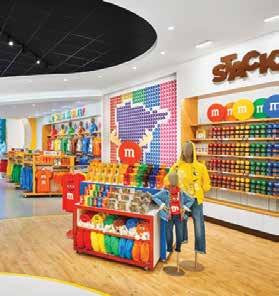
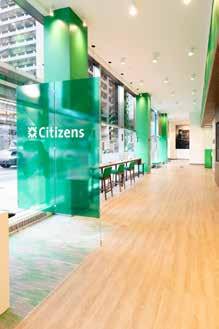

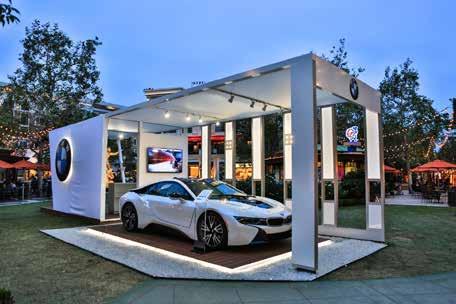

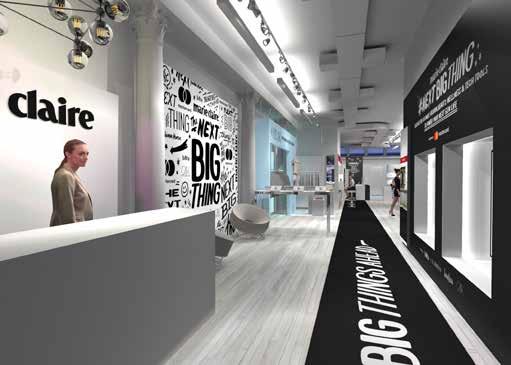



CIRCLE NO. 23
Daich Coatings
Kathleen Ziprik, PR Representative
511 Fox Hollow Lane
Mills RIver, NC 28759 (828) 890-8065
ziprikpr@gmail.com
www.daichcoatings.com

Fixture Products/Materials: Fixtures Surface Coatings
Markets Served: Retail, Hospitality, Healthcare, Restaurants, Corporate, Education, Shopping Malls, Federal, Multi-Family, Cannabis, Mixed-Use, Craft Brew, Industrial
Displayit Inc.
Tricia Mayer, Sr. Director of Client Services
16680 Armstrong Ave. Irvine, CA 92606 (951) 757-0017
www.displayitinc.com
tmayer@displayitinc.com

Fixture Materials: Acrylic, Backroom Storage, Cabinets, Cashwraps/Checkout Counters, Display Cases, End Caps, Garment Racks, Gondolas, Rid racks/Grid Systems, Islands/Back Islands, Kiosks, Metal, Architectural Millwork, Perimeter, POP, Shelving, Furniture/Upholstery, Veneers, Wood
Markets Served: Retail, Hospitality, Healthcare, Restaurants, Corporate, Education, Multi-Housing, Cannabis, Craft Brew/Distillery, Office
DuPont
Corian Design, Contact Center
200 Powder Mill Road
Wilmington, DE 19803
1-800-426-7426
www.coriandesign.com
na-info@dupont.com

Fixture Products/Materials: Acrylic, Islands/Back Islands, Wallcoverings, Other: Solid Surface, Quartz, High-Performance Porcelain Markets Served: Retail, Hospitality, Healthcare, Restaurants, Corporate, Education, Shopping Malls, Multi-Family, Mixed-Use, Other: Residential, Transportation Terminals
East To West
Dean Nichol, President
514 Larkfield Rd., Suite 3A
East Northpoint, NY 11731
(631) 368-2269
Fax: (631) 368-2267
www.easttowestsales.com
dean@easttowestsales.com

EcoDomo
Eric Rosenthal, Sales Director
630 East Diamond Avenue, Suite M Gaithersburg, MD 20877 (301) 424-7717
eric@ecodomo.com
www.ecodomo.com

Fixture Products/Materials: Cabinets, Architectural Millwork, Shelving, Veneers, Wallcoverings, Leather Markets Served: Retail, Hospitality, Restaurants, Corporate, Shopping Malls
Flexecution
Nick Harbaugh
VP The Americas
16601 Blanco Road, 200 San Antonio, TX 78232 (888) 611-3539

Cell: (858) 752-1168 • Fax: (210) 481-3798
nickh@flexecutioninc.com
Fixture Products/Materials: Acrylic, Backroom Storage, Cabinets, Cable & Rod System, Cashwraps/Checkout Counters, Display Cases, End Caps, Garment Racks, Gondolas, Rid racks/Grid Systems, Islands/Back Islands, Kiosks, Metal, Architectural Millwork, Pallets & Pallet Racking, Perimeter, POP, Shelving, Slatwall, Furniture/ Upholstery, Veneers, Wallcoverings, Wire, Wood Markets Served: Retail, Hospitality, Healthcare, Restaurants, Corporate, Education, Shopping Malls, Federal, Multi-Family, Cannabis, Mixed-Use, Craft Brew, Industrial
Futuristic Store
Fixtures Pte Ltd
Rachel Cheong, Business Development Director
12 Woodlands Square, Woods Square Tower 1 #05-68/69
Singapore, Others 737715 (65) 6365-2822
Fax: (65) 6365-2855
rachelcheong@futuristicgroup.com
www.futuristicgroup.com
Fixture Products/Materials: Cabinets, Cashwraps/Checkout Counters, Display Cases, Endcaps, Garment Racks, Gondolas, Rid Racks/Grid Systems, Islands/Back Islands, Kiosks, Metal, Architectural Millwork, Perimeter, POP, Shelving, Slatwall, Furniture Upholstery, Veneers, Wood Markets Served: Retail, Healthcare, Restaurants, Shopping Malls
Georgia-Pacific
GPXpress
133 Peachtree Street NE
Atlanta, GA 30303 (866) 435-5647
gpxpress@gapac.com
www.gppro.com

Fixture Materials: Kiosks, Veneers, Wallcoverings, Wood, PPE, All Flooring Markets Served: Retail, Healthcare, Corporate, Education, Shopping Malls, Craft Brew/Distillery, Office, All
Fixture Products/Materials: Paper Towel Dispensers, Toilet Paper Dispensers, Soap Dispensers, Sanitizer Dispensers, Air Care Dispensers
Markets Served: Retai, Hospitali, Healthcare, Restaurant, Corporat, Educatio, Shopping Mall, Industria, Other: High Traffic
50 COMMERCIAL CONSTRUCTION & RENOVATION — ISSUE 2, 2024 SPECIAL REPORT FIXTURE FIRMS
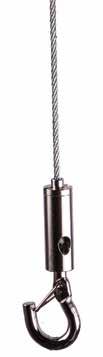

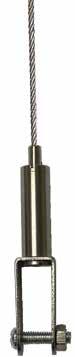
Solutions For Crimpless Installations with Push-Button Accuracy Just Got Even Better
Our UrbanTrapeze cable grippers work with steel cable to create adjustable connections. Make installations quick and easy without crimps or traditional aircraft cable fittings. Simple solution promotes efficient and safe installations for displays, aisle markers, signs, ceiling grids, acoustic baffles, and lighting systems.
• Easy to use, self locking cable adjusters
• Reduce dependence on swaging tools and crimps
• Sleek, modern design and finish
• Press and hold clutch button to unlock and make adjustments or remove for reuse

CIRCLE NO. 24 UrbanTrapeze In-Line Panel Holder UrbanTrapeze In-Line Gated Hook UrbanTrapeze In-Line Loop
UrbanTrapeze Model Item Number Static Holding Power (Approximate) Cable Type In-Line Loop 3.0* 63-10030 300 lbs each UT 1/8-inch uncoated 7x7 In-Line Loop 1.5* 63-10015 80 lbs each UT 1/16-inch uncoated 7x7 In-Line Gated Hook 63-10001 35 lbs each UT 1/16-inch uncoated 7x7 In-Line Panel Holder 63-10002 35 lbs each UT 1/16-inch uncoated 7x7 In-Line Ceiling Connector 63-10005 30 lbs each UT 1/16-inch uncoated 7x7 Watch: “How to Make a Connecting Loop in Steel Cable” UrbanTrapeze In-Line Ceiling Connector
Kingsmen Projects US
Stephen Hekman, Executive Vice President
7157 Colleyville Blvd, Suite 101 Colleyville, TX 76034 (619) 719-8950
www.kingsmenprojects-us.com
stephen@kingsmen-usa.com

Fixture Materials: Acrylic, Backroom Storage, Cabinets, Cashwraps/ Checkout Counters, Display Cases, Garment Racks, Gondolas, Islands/ Back Islands, Kiosks, Architectural Millwork, POP, Shelving, Slatwall
Markets Served: Retail, Hospitality, Healthcare, Restaurants, Corporate, Shopping Malls, E-Entertainment
Laminators
Incorporated

Stephanie Burke, Marketing Communications Specialist
3255 Penn St Hatfield, PA 19440 (215) 703-5124
stephanie.burke@laminatorsinc.com
Fixture Products/Materials: Kiosks, Metal, POP, Wallcoverings
Markets Served: Retail, Hospitality, Healthcare, Restaurants, Corporate, Education, Shopping Malls, Federal, Multi-Family, Cannabis, Mixed-Use, Craft Brew, Industrial
Luxxbox USA
Bill Keimig, Vice President of Sales
1328 Scott Street Petaluma, CA 94954 (415)-871-0448
usa@luxxbox.com
www.luxxbox.com
Fixture Products/Materials: Wallcoverings, Acoustic Lighting and Acoustic Wall Panels

Markets Served: Retail, Hospitality, Healthcare, Restaurants, Corporate, Education, Shopping Malls, Federal, Multi-Family, Cannabis, Mixed-Use, Craft Brew, Industrial
Niagara
Jenni Steele, VP of Marketing

300 Old Gerault Road
Flower Mound, TX 75077 (888) 733-0197
Fax: (682) 200-6962
www.pro.Niagaracorp.com
jsteele@niagaracorp.com
Fixture Products/Materials: Other: Toilets
Markets Served: Retail, Hospitality, Healthcare, Corporate, Education, Federal, Multi-Family
Porcelanosa
Carlos Monsonis, National Sales Director
600 NJ-17 N Ramsey, NJ 07446
Cell: (551) 264-3420
cmonsonis@porcelanosa-usa.com
www.porcelanosa.com/us
Fixture Products/Materials: Cabinets, Cashwraps/Checkout Counters, Kiosks, Architectural Millwork, Veneer, PORCELAIN SLAB
Markets Served: Retail, Hospitality, Healthcare, Restaurants, Corporate, Education, Shopping Malls, Federal, Multi-Family, Industrial, Other: Hygiene Critical High Touch Surfaces
Prime Retail Services Inc.
Donald Bloom, President & CEO
3617 Southland Dr.
Flowery Branch, GA 30542
(866) 504-3511
Fax: (866) 584-3605
www.primeretailservices.com
dbloom@primeretailservices.com

Fixture Materials: Fixture Installation for Backroom Storage, Cabinets, Cashwraps/Checkout Counters, Display Cases, End Caps, Garment Racks, Gondolas, Kiosks, Metal, Architectural Millwork, Pallets & Pallet
Racking, Perimeter, POP, Shelving, Slatwall, Wood
Markets Served: Retail, Hospitality, Healthcare, Restaurants, Corporate, Education, Shopping Malls, Federal, Multi-Housing
PurOptima
Kevin Mayer, U.S. Country Manager
400 East Pratt Street, 8th Floor Baltimore, MD 21202
Cell: (443) 813-1084
kevin.mayer@puroptima.com
www.puroptima.com

Fixture Products/Materials: Other: Glass Wall Partitions and Door Systems
Markets Served: Retail, Hospitality, Healthcare, Restaurants, Corporate, Education, Shopping Malls, Federal, Multi-Family, Mixed-Use, Industrial
RedBird LED, Inc
Jonathan Eppstein, President
1202 Gail Dr NE
Brookhaven, GA 30319 (770) 310-8888
j.eppstein@redbirdled.com
www.redbirdled.com

Fixture Products/Materials: Display Cases, Lighting
Markets Served: Retail, Hospitality, Healthcare, Restaurants, Corporate, Education, Shopping Malls, Federal, Industrial, Other: Warehouse
52 COMMERCIAL CONSTRUCTION & RENOVATION — ISSUE 2, 2024 SPECIAL REPORT FIXTURE FIRMS
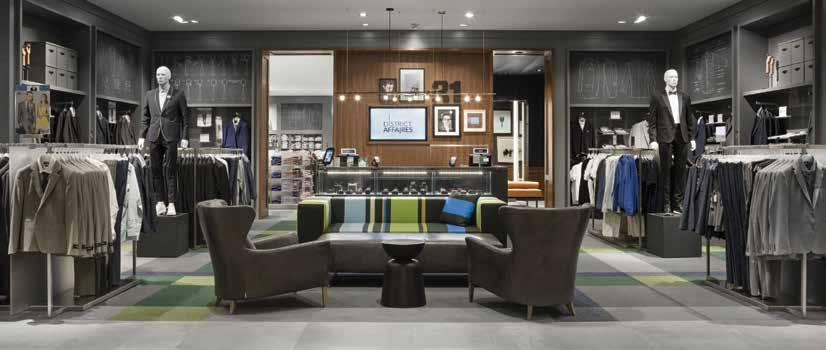
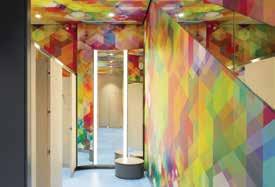
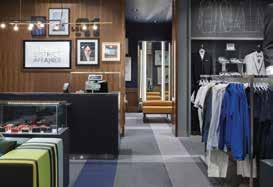
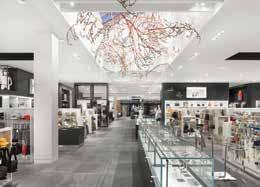
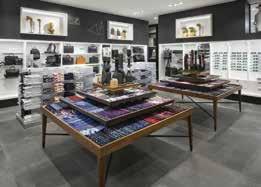
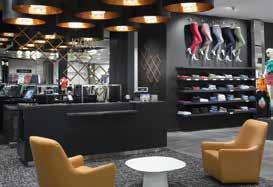
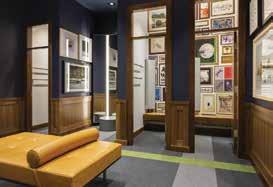
US & Canada Based Service Team • Design & Project Management • Retail & Restaurant Rollouts • Popups and Brand Activations • Outsourcing & Fulfillment • Custom Fixture Manufacturing • Installation & Logistics Services Kingsmen Projects • US • CANADA • ASIA Exceeding Expectations communication design & production group Kingsmen Projects US, Inc. 7157 Colleyville Blvd, Suite 101 Colleyville, TX 76034 (949)642-2555 • www.kingsmen-usa.com Stephen Hekman • (619) 719-8950 • stephen@kingsmen-usa.com
© P ho t os : S t ep h a n e G r o le a u CIRCLE NO. 25
Simons Galeries de la Capitale, Québec, QC, Canada
Retail Elements LLC
RJ Dadd, Managing Director & Partner

1720 Cumberland Point Drive SE
Suite 7
Marietta, GA 30067
Cell: (301) 908-8124
rjdadd@retailelementsworldwide.com
www.retailelementsworldwide.com
Fixture Products/Materials: Acrylic, Backroom Storage, Cabinets, Cable & Rod System, Cashwraps/Checkout Counters, Display Cases, Endcaps, Garment Racks, Gondolas, Rid Racks/Grid Systems, Islands/Back Islands, Kiosks, Metal, Architectural Millwork, Perimeter, POP, Shelving, Slatwall, Veneers, Wallcoverings, Wire, Wood
Markets Served: Retail, Hospitality, Restaurants, Cannabis, Mixed-Use, Craft Brew
Rockerz Inc
Dominika Smith, Director of Business Development
100 Commonwealth Dr.
Warrendale, PA 15086 (724) 553-4023
www.rockerzinc.com
dsmith@rockerzinc.com
Fixture Materials: Polished Concrete, Tile Removal
Markets Served: Retail, Hospitality, Healthcare, Restaurants, Corporate, Education, Shopping Malls, Federal, Cannabis, Craft Brew/ Distillery, Office, Industrial
SAJO Inc.
Rocco Raco
Director of Marketing & Business Devlopment
1320 Graham Boulevard
Montreal, QC H3P 3C8 (514) 385-0333
Cell: (514) 927-7398
sajo.com
rocco@sajo.com
Fixture Products/Materials: Acrylic, Cabinets, Cashwraps/Checkout
Counters, Display Cases, Gondolas, Kiosks, Metal, Architectural Millwork, Perimeter, Shelving, Slatwall, Veneers, Wire, Wood
Markets Served: Retail, Hospitality, Restaurants, Corporate, Shopping Malls, Cannabis
ShadeFLA, Inc.
Margueritte Ramos, CEO
561 NE 79th Street, Suite 330
Miami, FL 33138 (305) 759-7423
Cell: (305) 389-7444
marg@shadefla.com
www.shadefla.com

Fixture Products/Materials: Shade Systems
Markets Served: Retail, Hospitality, Healthcare, Restaurants, Corporate, Multi-Family
Sloan
Alison Heitman, Director, Global Marketing Communications

10500 Seymour Ave
Franklin Park, IL 60131 (847) 994-3214
alison.heitman@sloan.com
www.sloan.com
Fixture Products/Materials: Commercial Restroom Products
Markets Served: Retail, Hospitality, Healthcare, Restaurants, Corporate, Education, Shopping Malls, Federal, Multi-Family, Industrial
Sparks Marketing LLC
Angel Carra, President, Retail 2828 Charter Rd Philadelphia, PA 19154 (215) 671-8827
acarra@wearesparks.com
www.wearesparks.com
Fixture Products/Materials: Acrylic, Cabinets, Cashwraps/ Checkout Counters, Display Cases, Endcaps, Garment Racks, Kiosks, Metal, Architectural Millwork, Perimeter, Wood Markets Served: Retail, Corporate, Shopping Malls, Cannabis
T&S Brass and Bronze Works, Inc.
Ken Gallagher, VP Global Sales
2 Saddleback Cove Travelers Rest, SC 29690
kgallagher@tsbrass.com
www.tsbrass.com

Fixture Products/Materials: Faucets, Fittings, Specialty Products, Accessories for the Foodservice, Industrial, Commercial Plumbing and Laboratory Markets
Markets Served: Hospitality, Healthcare, Restaurants, Corporate, Education
54 COMMERCIAL CONSTRUCTION & RENOVATION — ISSUE 2, 2024 SPECIAL REPORT FIXTURE FIRMS






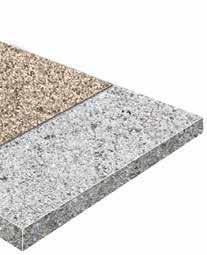









CIRCLE NO. 26 REAL STONE COATINGS Easily upgrade common concrete and masonry surfaces with the elegance of stone. Get DAICH Surface Coatings at... Visit us online for personal service at: Or call us: 1-866-463-2424 www.daichcoatings.com Resurfaces the existing concrete slab Covers and hides hairline cracks and minor flaws Flexible, water-tight, easy to clean Key Features • Excellent all-season durability • Tough impact and abrasion resistance • Excellent freeze/thaw resistance • Excellent resistance to water, salt, UV rays, hot tires, and snow shoveling • Slip-resistant • Pre-mixed, ready to use • Roller, trowel & texture spray LASTING PERFORMANCE, BEAUTY AND PROTECTION FOR: Porches • Steps • Patios • Pool Decks • Garage Floors • Balconies Walkways • Basement Floors • Lobbies • Entrances • Walls Stone Coatings, Sealers, Anti-Slip Coatings, Epoxy Floor Coatings ... and much more!
T.C. MillworkTRICON
Construction
Leo Couchara, Vice President Sales
3433 Marshall Lane
Bensalem, PA 19020 (215) 245-4210
Cell: (609) 847-0196
www.TCMillwork.com
L.Couchara@TCMillwork.com

Fixture Products/Materials: Acrylic, Cabinets, Cashwraps/ Checkout Counters, Display Cases, End Caps, Garment Racks, Gondolas, Rid racks/Grid Systems, Islands/Back Islands, Kiosks, Metal, Perimeter, POP, Shelving, Veneers, Wire
Markets Served: Retail, Hospitality, Healthcare, Restaurants, Cannabis
Taylor Bros.
Construction Co., Inc.
Jeff Chandler, Vice President
4555 Middle Road
Columbus, IN 47203 (812) 379-9547
Fax: (812) 372-4759
www.tbcci.com
tonya.paradise@tbcci.com

Fixture Products/Materials: Backroom Storage, Cabinets, Cashwraps/Checkout Counters, Display Cases, End Caps, Garment Racks, Gondolas, Architectural Millwork, Pallets & Pallet Racking, Perimeter, POP, Shelving, Slatwall, Furniture/Upholstery, Other: Fixture Installations
Markets Served: Retail, Hospitality, Healthcare, Restaurants, Education, Industrial
Trial Design Inc.
John French, Director of accounts and business development
570 boul des Erables
Valleyfield, Quebec J6T 6G4
(450) 370-1377
jfrench@trial-design.com
www.trial-design.com/en

Fixture Products/Materials: Acrylic, Cabinets, Cashwraps/
Checkout Counters, Display Cases, Metal, Architectural Millwork, Perimeter, Furniture Upholstery, Veneers, Wood
Markets Served: Retail, Hospitality, Restaurants, Cannabis
Visual Citi
Arif Devji, Vice President
305 Henry St
Lindenhurts, NY 11757
Cell: (516) 476-1741
arif@visualciti.com
www.visualciti.com
Fixture Products/Materials: Acrylic, Metal, Wallcoverings, Wire, Wood
Markets Served: Retail, Restaurants, Corporate, Education, Shopping Malls, Industrial
Wayne Dalton
Alexandria Ligorotis, Brand Manager
2501 S. TX-121 Bus
Lewisville, TX 75067
(469) 549-7100
info@wayne-Dalton.com
www.wayne-dalton.com

Fixture Products/Materials: Metal, Garage Doors, Access Systems
Markets Served: Retail, Hospitality, Healthcare, Restaurants, Corporate, Education, Shopping Malls, Federal, Multi-Family, Mixed-Use, Craft Brew, Industrial
Window Film Depot
Krissy Mosby, President
4939 Lower Roswell Rd.
Suite 100
Marietta, GA 30068
(866) 933-3456
Fax: (770) 973-3986
www.windowfilmdepot.com
krissy@windowfilmdepot.com
Fixture Materials: Window Film

Markets Served: Retail, Restaurants, Corporate, Education, Shopping Malls, Federal, Multi-Housing, Any Commercial Properties
56 COMMERCIAL CONSTRUCTION & RENOVATION — ISSUE 2, 2024 SPECIAL REPORT FIXTURE FIRMS

CIRCLE NO. 27
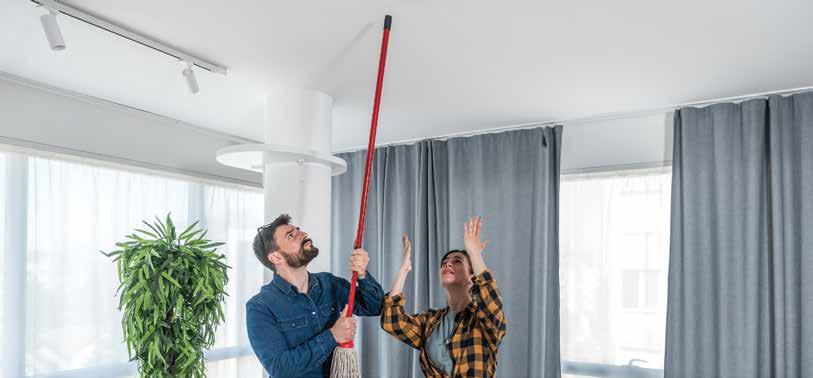





Size Material Type of Material Layer 1 0.5 Wear layer Use layer with PU protection Layer 2 0.1 Vinyl decorative film Layer 3 0.7 Elastic PVC Intermediate comfort layer Layer 4 3.2 SPC SPC composite body Layer 5 1 IXPE IXPE motherboard
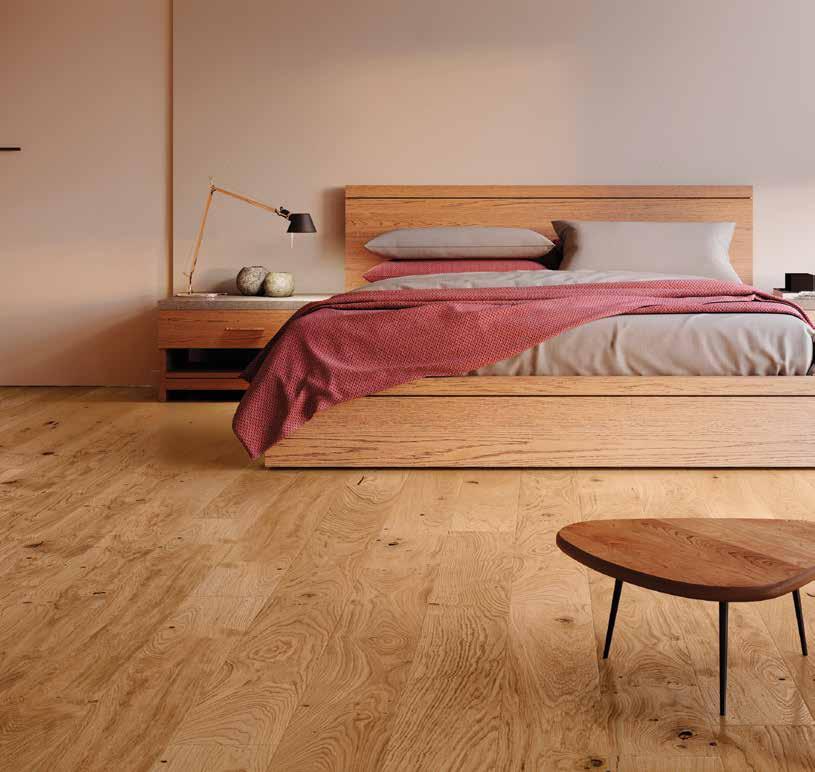
CIRCLE NO. 28

60 COMMERCIAL CONSTRUCTION & RENOVATION — ISSUE 2, 2024

Where are all the work boots?
Why you must take a holistic approach in tight labor market
By Anne Lackey
You need boots on the ground to get the job done, but “Where are the feet to fill them?” That refrain sounds like the mournful chorus of a blues tune for today’s labor outlook, and it’s not going to get better, at least not without a truly holistic hiring strategy.
61 ISSUE 2, 2024 — COMMERCIAL CONSTRUCTION & RENOVATION
WHERE ARE ALL THE WORK BOOTS? TRENDS
The big picture isn’t pretty. Projections from the US Bureau of Labor reveal ongoing demographic shifts are affecting the job market, with Baby Boomers retiring and the number of Gen Z workers entering the labor force smaller than previous generations.
The US labor force participation rate—the proportion of the working-age population either working or actively seeking employment—dwindled from 67.3%
in 2000 to 63.3% before COVID, 62.2% in 2022, and is expected to dip to 60.4% in 2032.
Those percentages represent millions of workers no longer available to fill the roles businesses need.
“The projections released by the BLS (Bureau of Labor Statistics) confirm what economists and business owners are both seeing: what many believed to be a temporary, Covid-induced lack of workers is, in
fact, a ‘forever’ labor shortage,” said Tom Bowen, a Gusto Inc. economist, as quoted by The Business Journals.
There’s a “double whammy” behind those numbers. As a significant portion of the U.S. ages out of the workforce, more young people will be needed in health-related fields to serve that population, diminishing labor pools for other industries seeking new employees as dollars and talent flow to the health sector.

62 COMMERCIAL CONSTRUCTION & RENOVATION — ISSUE 2, 2024
The Holistic Approach
As always, companies that hire and retain quality staff pull ahead of others. But with the demographic sea change underway, that old truth is now chiseled in granite, an epitaph for some, a sturdy foundation for others.
The sparse labor reality means construction firms can expect an increasingly fierce bidding war for quality workers, who will chase the highest pay. Those firms must gear up to navigate rough labor waters for years to come.
Companies tend to focus on hiring only when a need arises. But in a narrowing labor market, it is increasingly important to broaden your hiring outlook beyond the immediate gratification mindset of hiring in reactionary mode.

So, what’s in your tool belt? It’s time for an inventory. You wouldn’t send any crew out on a job without the equipment to handle the task. Don’t do that to yourself either as you contemplate labor structure in the coming decade.
Commit to a holistic hiring and personnel outlook, which means addressing every angle: “future self” gardening, your automation power tools, breaking geographic labor boundaries, and your retention strategy.
Be a ‘Future Self’ Gardener
Companies tend to focus on hiring only when a need arises. But in a narrowing labor market, it is increasingly important to broaden your hiring outlook beyond the immediate gratification mindset of hiring in reactionary mode. Think of the baseball “farm” system, which identifies and nurtures talent before it’s needed. What can you do to mimic that?
Identify inspirational and charismatic members of your team. Get them in front of young people and have them help teens imagine their “future self” as a co-worker in that company. Have sessions with tools in their hands. Develop more internship opportunities. Find the teachers in your community who have the “it” factor when serving youth.
Ask them to point out inquisitive teens exhibiting a great attitude and work ethic. Contact those teens directly and discuss your company and why it is unique. “What will I do with my life?” looms large with teens. The more you present a quality answer to that question, the more talent and loyalty you’ll find from the younger generation over the years.
63 ISSUE 2, 2024 — COMMERCIAL CONSTRUCTION & RENOVATION

Your Automation Power Tools
Of course, everyone everywhere is feeling the explosive wind on their face as we race on the tracks of the AI hype train. Every third headline on almost any news site includes those two letters. No doubt, AI needs to be on your belt. It’s the newest power tool with so many applications. You’re surely working to find those functions.
But pay attention to the most pressing AI matter: seek employees who exhibit intellectual curiosity about AI’s potential uses. We are in the early stages of the new technology, and the best way to harness this power is to identify and hire people eager to engage in the ongoing pursuit of functionality. The human imagination remains your top power tool. Employees who embrace AI and envision new uses are your keepers.
Break Your Geographic Labor Boundaries
The web eliminates geographic constraints in so many ways. Labor, too. AI gets all the attention as a labor market game-changer, but outsourcing office duties to less-expensive
markets provides companies with massive savings without a reduction in the quality of work if the hiring process is right. That reduction in office costs can be transferred to increased pay for “boots-on-the-ground” employees in high demand.
Here’s a simple exercise requiring just a sheet of paper and a pen: Put “On-site” as the header on the left and “Off-site” on the right. Think of every duty in your company. If it must go in the left “On-site” column, put it there. But what tasks can be handled anywhere? What can go in the right column?
It is essential to recognize that your key on-site employees’ off-site workload is a company inefficiency you can actively address through a holistic approach. Do off-site duties need to be handled within a local labor pool?
If not, would you limit your search to the US? Are you tied to “on-shore,” or would you consider “off-shore” employees from a more affordable labor market? Many businesses leverage this new virtual reality to offset other pressures while gaining an advantage over competitors.
Your Retention Strategy
Even if you’ve secured quality staff, continue recruiting your employees, who always have the stay/go option. Why not focus on retaining the stars on your team with incentive-based rewards? Set key performance indicators (KPIs) for what’s expected, then develop a secondary metric for bonuses and perks.
Those who excel will be rewarded appropriately and won’t fall into motivation-killer “no-good-deed-goes-unpunished” cynical mindsets, destroying morale in many companies.
When you plan, consider budgeting for the job well done, and if you don’t have the money for it, be creative in getting the message across in other ways. Failure to be mindful of your employees’ sense of selfworth on the job is a leak in your boat. Make sure that ship is tight.
As you hear, “The boots on the ground—where are the feet to fill them?”
recognize that the tight labor market doesn’t have to be the blues for you. You can write an uplifting tune with a holistic approach. CCR
WHERE ARE ALL THE WORK BOOTS? TRENDS
Anne Lackey is the co-founder of HireSmart Virtual Employees, a full-service HR firm helping others recruit, hire & train top global talent.
64 COMMERCIAL CONSTRUCTION & RENOVATION — ISSUE 2, 2024
Your Partner for Projects of Any Scale
From envisioning your dream project to rolling out a nationwide program, Core States Group offers exceptional depth of expertise, a uniquely integrated service model, and smarter, more seamless solutions. With more than two decades of expertise, we have a reputation for quality results our clients depend on.
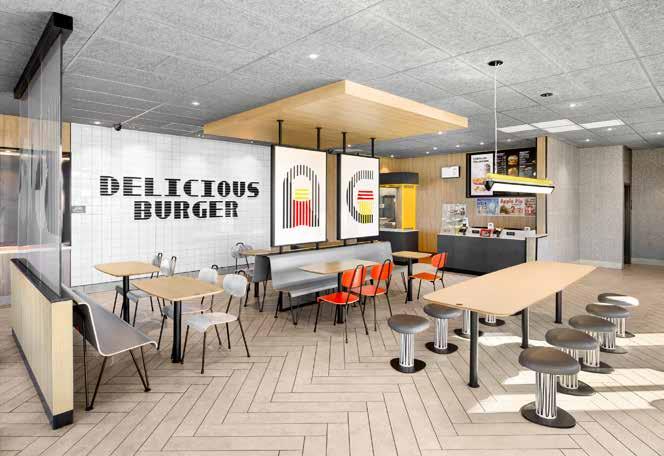
CIRCLE NO. 29


CIRCLE NO. 30

Digital Buyers Guide Directory Get listed in our app that will connect you with our community. Listing will consist of: Company name Contact Email Product Category To get listed contact: Mike Pallerino mpallerino@gmail.com https://ccrmag.formstack.com/forms/ccr2022buyersguide CIRCLE NO. 31
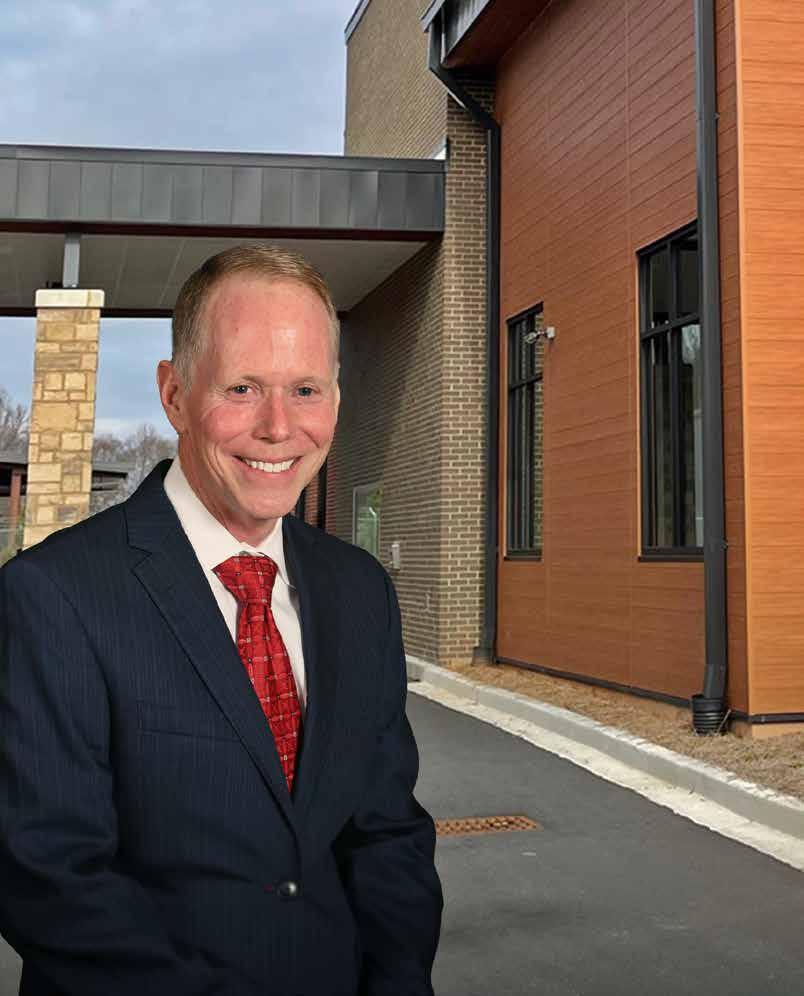
Welcoming aesthetics
How Broad River Electric Cooperative’s new HQ balances optimal efficiency with innovative design
Terry Mallard, CEO Broad River Electric Cooperative
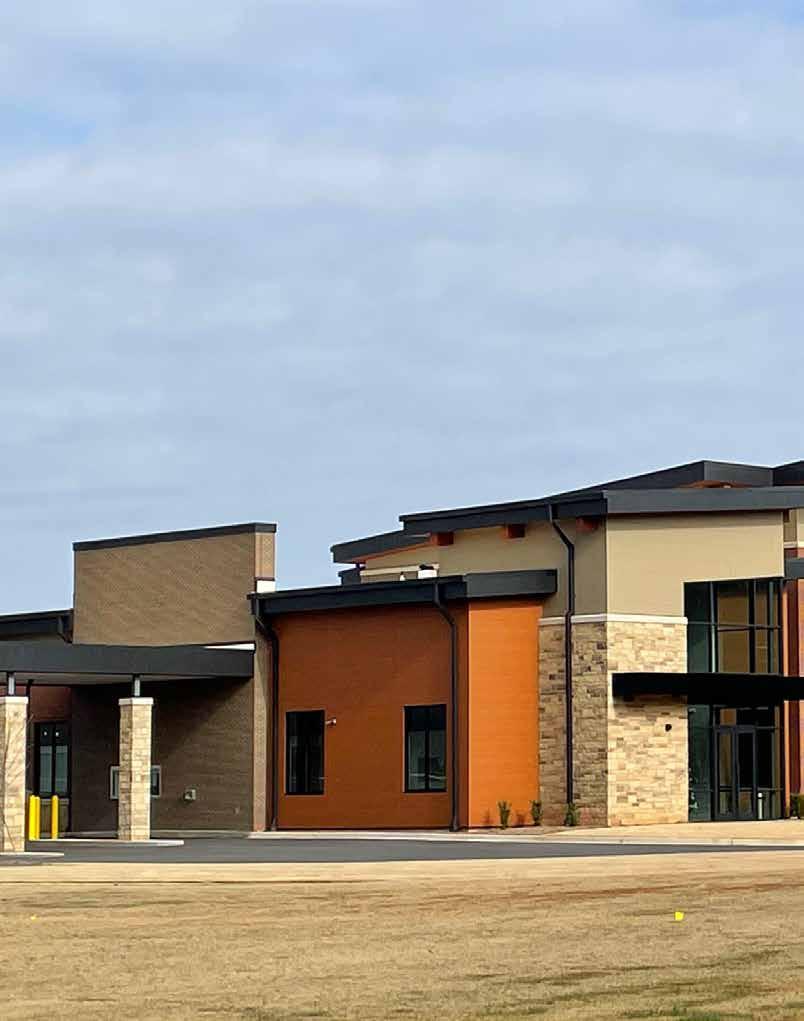
Welcoming aesthetics
How Broad River Electric Cooperative's new HQ balances optimal efficiency with innovative design
By Dave Jackson
From busy suburbs to remote rural communities, America’s electric cooperatives provide reliable energy to thousands of homes while serving as engines for economic growth.
According to the National Rural Electric Cooperative Association (NRECA), these vital enterprises play a key role in transforming communities by powering 56% of the nation’s landmass and investing in the future of those localities.
70 COMMERCIAL CONSTRUCTION & RENOVATION — ISSUE 2, 2024
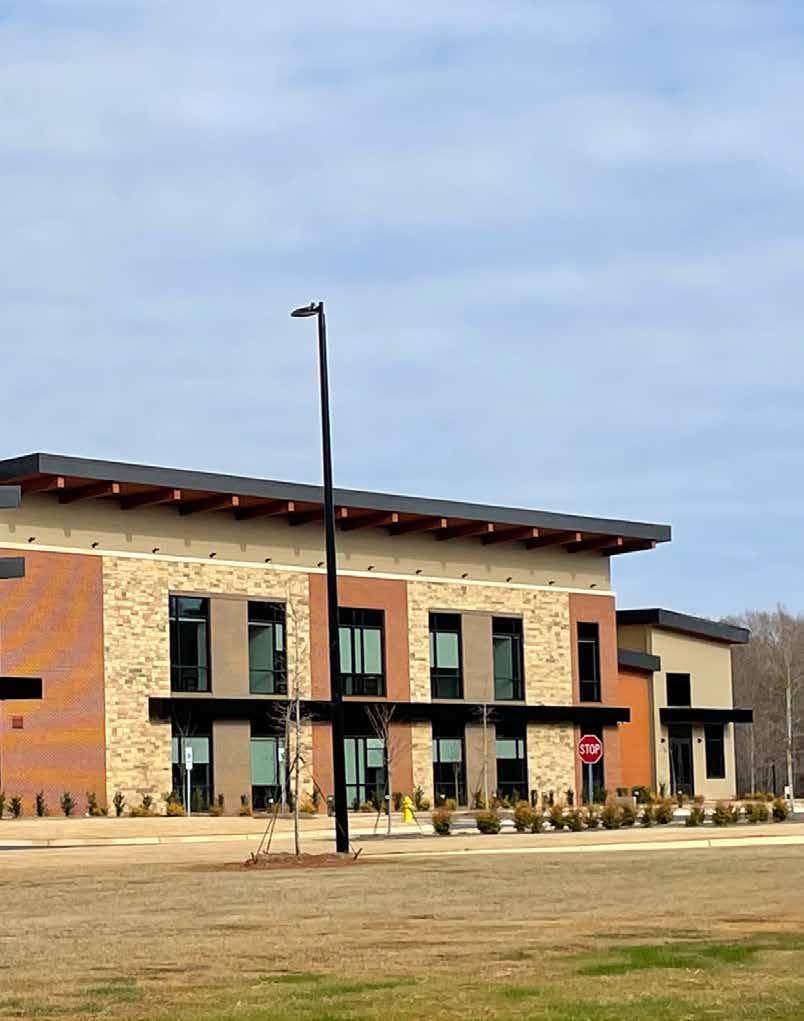
71 ISSUE 2, 2024 — COMMERCIAL CONSTRUCTION & RENOVATION
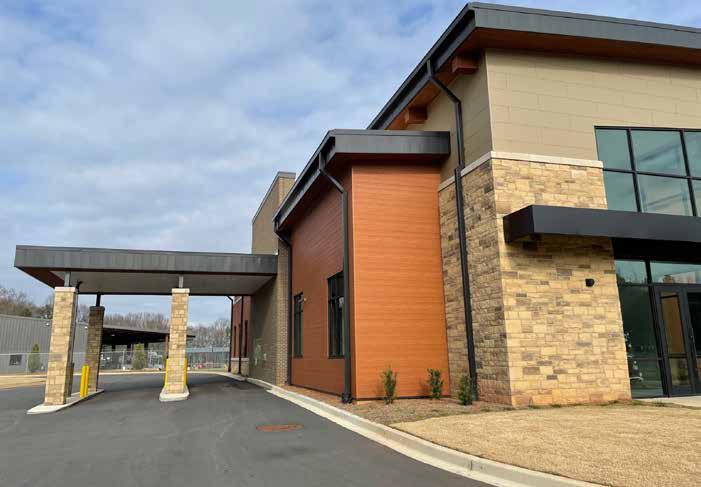
South Carolina’s Broad River Electric Cooperative (BREC) has been a leader in innovative technologies and client service since its founding in 1940.
The Broad River team recently completed the daunting task of relocating its headquarters from Gaffney to Cowpens with the goal of fine-tuning efficiencies and workflow. In addition to situating the complex in a more centralized location, key objectives for the new build included facilitating department interactions, streamlining work crew logistics and enhancing customer service. “If we can get closer to where our members live, we are able to improve our response time for restoring services,” says CEO Terry Mallard. “That is the type of reliability that our members have come to expect, so we’ve got to make sure that everything we do is to the best of our ability.”
Chris Nordmeyer is an expert in this niche area of design. As the Managing Director for the Greenville office of SGA|NW,
“This building is a marked departure from typical electric cooperatives, which tend to have a more common look.”
– Mike Metz, President, MBM Consulting
a GF Design Company, he was the lead architect on the BREC project, drawing on his extensive experience working on electric cooperatives to deliver a successful outcome. His background gave him a clear understanding of the project goals—seamlessly integrating high functionality with a welcoming atmosphere.
Top-quality, sustainable materials were a key consideration for all aspects of this meticulously planned build. Once the interior layout was finalized, Nordmeyer was able to address design goals for the exterior of the highly visible headquarters building. Along with traditional brick, he chose Waterford
Stone, an Echelon Masonry product and Nichiha, a composite wood element to create the desired effect.
The architect said, “We have been big fans of Echelon Masonry and have used it on other electric cooperative projects including Edisto, Barnwell and Georgetown. The full-bed units made the installation go smoothly, and the aesthetic was a great complement to the other materials.”
Along with its adaptable design features and easy installation, Waterford Stone was engineered to hold up to the toughest conditions. The water-repellant composite stone resists mold and fading
WELCOMING AESTHETICS (BREC)
72 COMMERCIAL CONSTRUCTION & RENOVATION — ISSUE 2, 2024
Seamless All-In-One Solutions
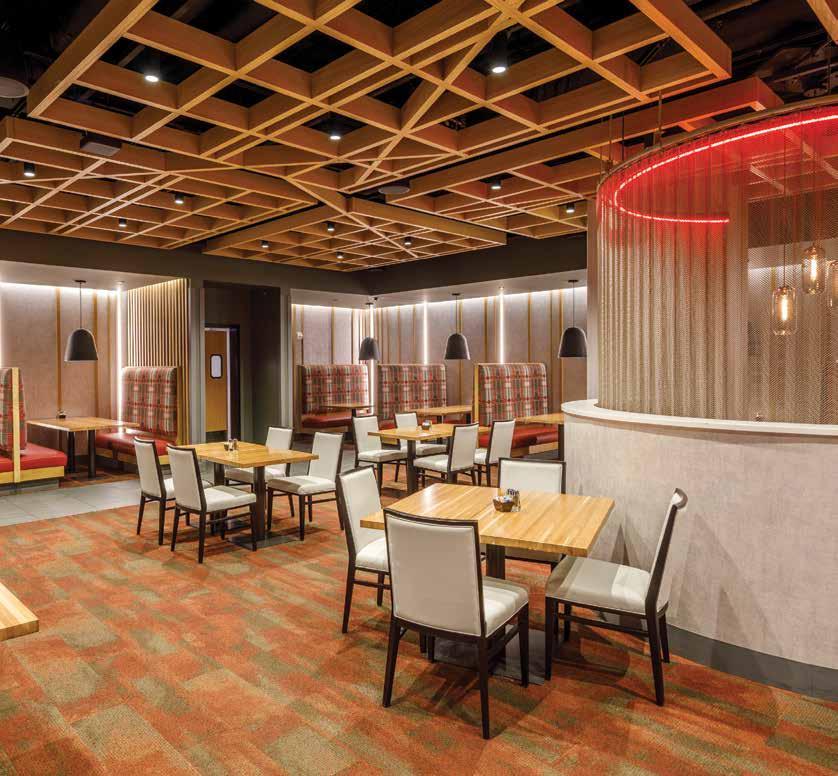
A holistic design approach to creating memorable guest experiences and increasing brand loyalty.
fishbeck.com info@fishbeck.com CIRCLE NO. 32
for a maintenance-free exterior, a desirable feature for the humid Southeastern climate.
Throughout the planning process, Nordmeyer partnered with Mike Metz, President of MBM Consulting, a family-owned business that specializes in configuring electrical cooperative layouts to achieve peak efficiency for internal workings. “As the owner’s representative, we manage the process from beginning to end—from purchasing property to hanging pictures before we leave,” Metz says. “We provide a very specialized service for the cooperatives. The process is designed around the flow of business from the inside out.”
Nordmeyer says he and Metz have a history of collaborating on projects like this. “He assesses and interprets the needs of the client and conveys that to me; the design is then driven by those functionality goals.”
Within the rectangular two-story headquarters building, Nordmeyer carried out Metz’s efficiency directives by factoring in the specific needs of each department. The less hands-on administrative offices would occupy the second floor, whereas the ground floor was designed to facilitate daily operations.
Departments with frequent interactions were placed close together at one end of the building, and customer service was situated at the opposite end and made more publicly accessible. The layout was guided by the most efficient use of time and space to best serve clientele—those entering through the service lobby and those utilizing drive-up lanes.
For continuity, Waterford Stone was used to form the base of the Broad River logo sign located at the public entranceway. The same modular units were used on the columns of the drive-through lanes. The element of flexible convenience, a dedicated staff of Customer Service Representatives and a warmer design concept for the headquarters façade added a welcoming feel to the in-person experience, and the centralized location provided a wider range of regional accessibility.
Crystal Petty, Member Service Representative, says the co-op members come first. “Without them, we wouldn’t be here. Every phone call is important, because if a
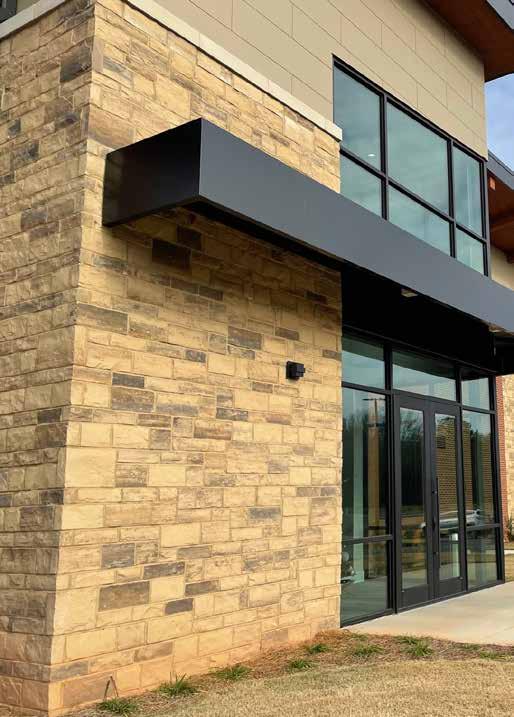
member has an issue, we want to help them as quickly and efficiently as possible.”
In the rear of the complex, the industrial components of the building included a 22,700 square foot warehouse and a 15,000 square foot truck shed and crew quarters. Metz’s calculations assured that crew members could move through the facility in a streamlined manner.
COO Cary Johnson says that with our new building and the way our warehouse is set up, the company is more productive because everything is getting in and out quicker.
While the inner workings of the Broad River complex prioritized efficiencies, Nordmeyer managed to create a lodge-type aesthetic for the public face of the head-
WELCOMING AESTHETICS (BREC)
74 COMMERCIAL CONSTRUCTION & RENOVATION — ISSUE 2, 2024
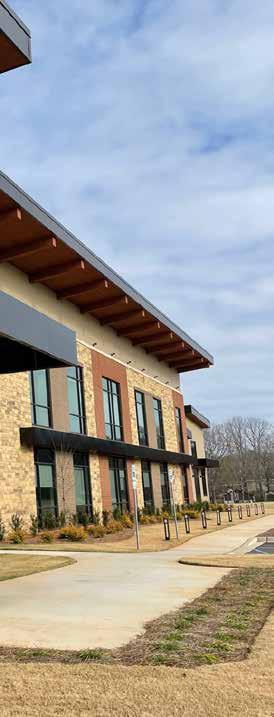
quarters by including side pitched roofing on each end of the building and blending earth tone mixed materials—Waterford stone in Avondale color, traditional brick and composite board in pleasing configurations. The modern window design is enhanced with alternating brick arch-shaped brackets, which were scaled down by horizontal wood composite canopies.

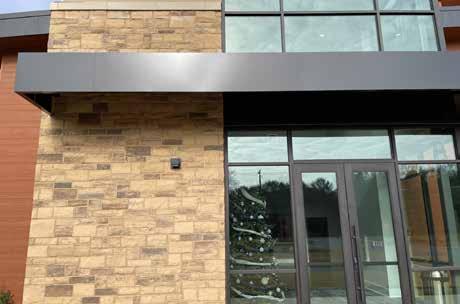
“This building is a marked departure from typical electric cooperatives, which tend to have a more common look,” Metz says. “The high-level design is not only functional but makes an attractive architectural statement—Chris gets all the credit for that.”
The new Broad River headquarters has generated a great deal of attention across the region for its innovative design and build. Staff members have been hosting regular tours of the complex since its debut in 2021. “The one principle that is so important to us as we serve our membership is concern for the community,” Mallard says. “We’re here for the long term, and we’re here to
serve those members with reliable service at reasonable rates. That’s a key reason we built this facility.”
Dave Jackson is Senior Brand Manager, Echelon Masonry, Oldcastle APG, (a CRH Company). Coming from an ad agency background with a specialization in building products, he melds creativity and industry intelligence to help the masonry team remain the premier provider of modern masonry solutions to construction pros, architects and builders across North America.
75 ISSUE 2, 2024 — COMMERCIAL CONSTRUCTION & RENOVATION





Goodwin Commercial has proven itself to be a five-star, full-service commercial real estate company specializing in land, retail and restaurants throughout Texas. OUR EXPERTISE SERVICES INCLUDE: > Investment Property Sales > Tenant Representation > Acquisitions > Leasing > Land Acquisition for Development > 1031 Exchanges > Speaker/Coach/Mentor What a recent client has said: “Pam was one of the most efficient and professional brokers I’ve ever worked with. If you want facts, honesty and integrity then Pam is your person.” – Captain Sandy Yawn (Below Deck Mediterranean TV Show) Contact Us Today! info@pamgoodwin.com www.pamgoodwin.com • 214-929-9013 CIRCLE NO. 33
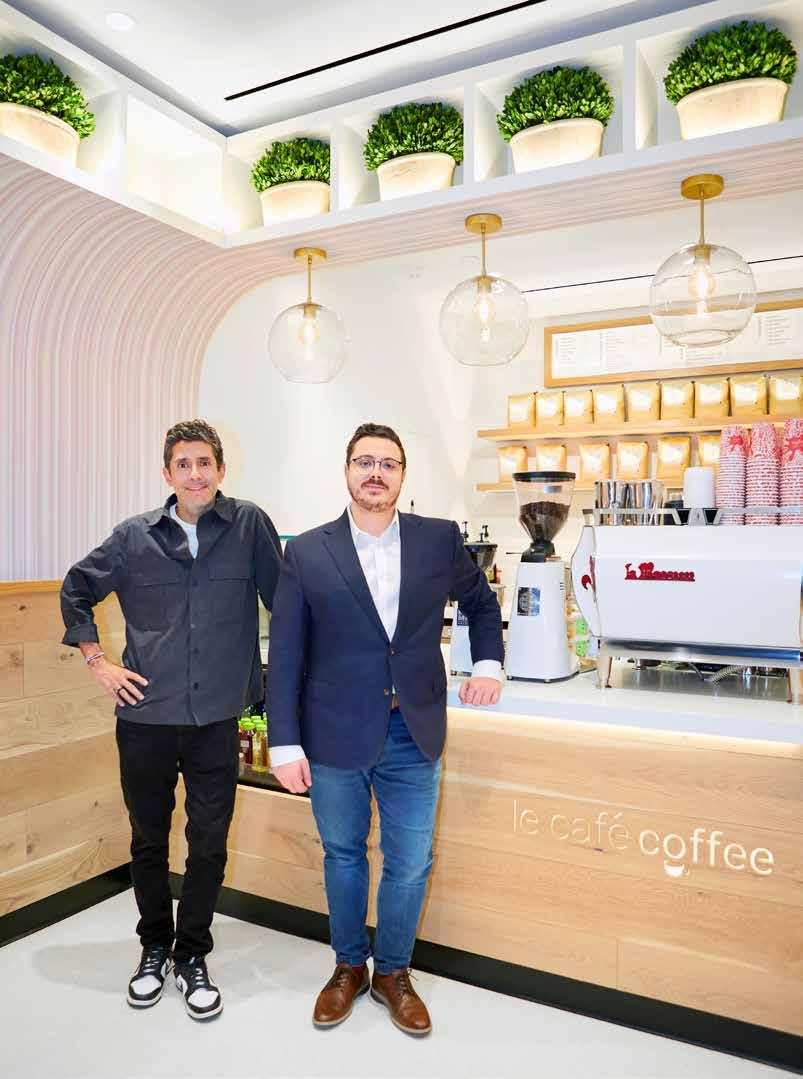
IMC Architecture designs new Le Café Coffee at One Dag in Manhattan
www.ccr-mag.com A special supplement to:
The big brew
Photography by Ola Wilk Photography
IMC Architecture’s associate Roberto De Los Rio (left) and principal Dominick Casale, AIA, NCARB (right) at the new Le Café Coffee at One Dag in Manhattan.
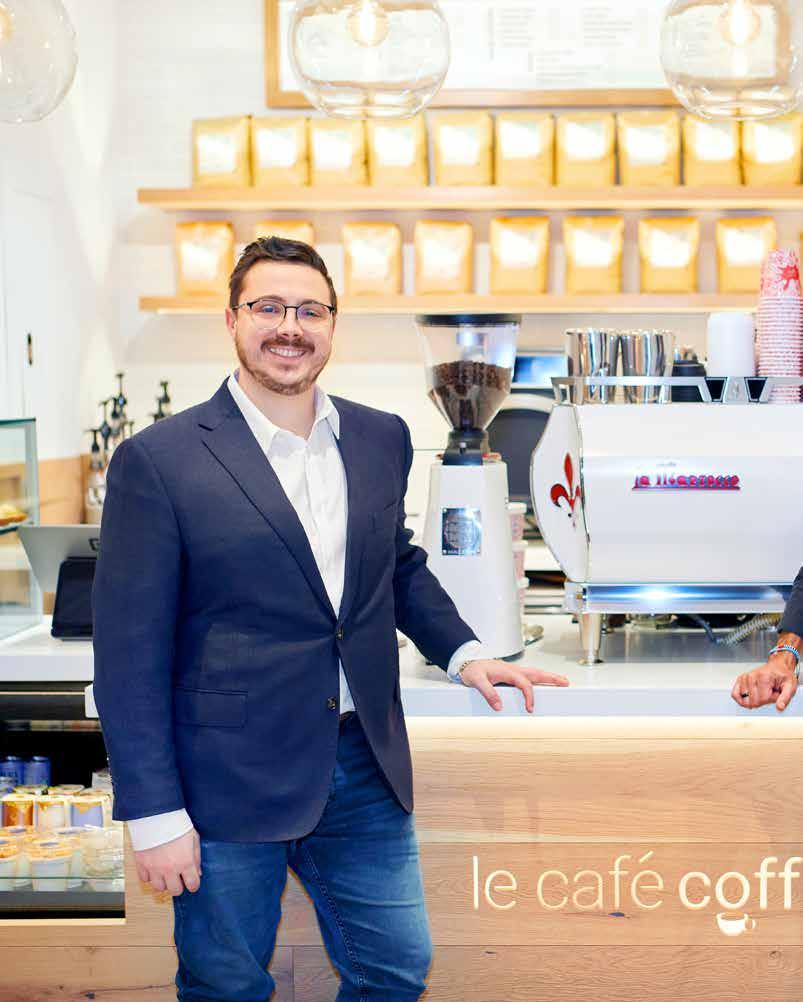
78 COMMERCIAL CONSTRUCTION & RENOVATION — ISSUE 2, 2024
IMC Architecture’s principal Dominick Casale, AIA, NCARB (left) and associate Roberto De Los Rios (right) led their firm’s design team for the new Le Café Coffee location and other alterations and upgrades at One Dag in Manhattan.
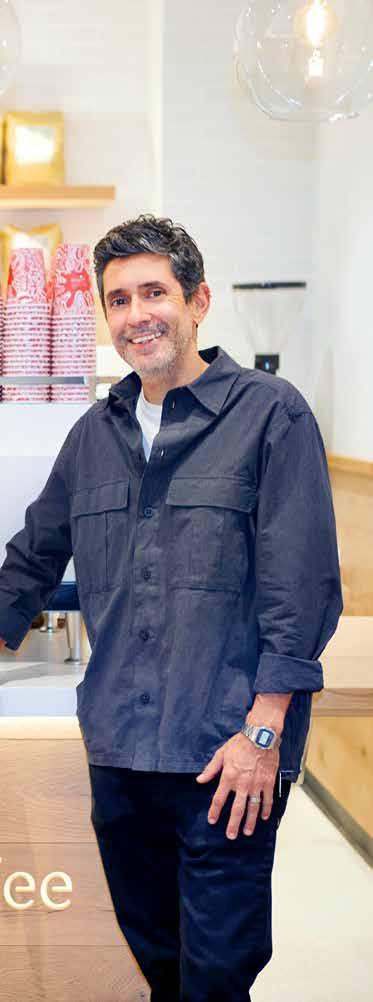
The big brew
IMC Architecture designs new Le Café Coffee at One Dag in Manhattan
By Roberto De Los Rios
Le Café Coffee is a regional coffee shop chain and coffee supplier focused on operating retail outlets at iconic locations and inside prominent commercial buildings in New York City. It began in 1952 with the opening of the brand’s first coffee factory. The chain’s first coffee shop opened in 2013 in Manhattan’s Union Square. Since then, Le Café has grown to 12 locations.
79 ISSUE 2, 2024 — COMMERCIAL CONSTRUCTION & RENOVATION
Photography by Ola Wilk Photography
Le Café recently signed a lease at another prominent property: the One Dag. Located at 885 Second Avenue, between Grand Central Terminal and the United Nations headquarters complex in Manhattan, the 49-story, 870,000-square foot One Dag was designed by Emery Roth & Sons. The building’s name is derived from its alternative address of One Dag Hammarskjöld Plaza. The skyscraper houses commercial office tenants as well as numerous national missions to the UN.
The One Dag property management team retained Brooklyn, New York-based IMC Architecture to design the new café as well as several other upgrades within the building, all of which are part of a multi-million-dollar capital improvement program.
Overall work designed by IMC included not only the new café, which was constructed to mainly serve the building’s tenants,
“Our firm’s leadership determined that a hybrid work environment—where the majority of the staff would divide their time between field work, home and office—would be most suitable for the firm’s operations.”
– Dominick Casale, Principal, IMC Architecture
but also a new bike room and new package room, as well as upgrades to select hallways and a new bathroom.
The building’s lobby extends from 47th Street to 48th Street and Second Avenue. The 300-square-foot coffee shop is located closer to 48th Street and the One Dag Hammarskjöld Plaza, which is part of the building. The coffee shop’s main entrance
is located in the lobby. It has a secondary street entrance, facing one of the property’s promenades, which doubles as an after-hours entrance to the building.
“IMC Architecture’s interior design studio focuses on commercial, institutional and hospitality projects, including those that need to appeal to international clients, such as the new Le Café Coffee
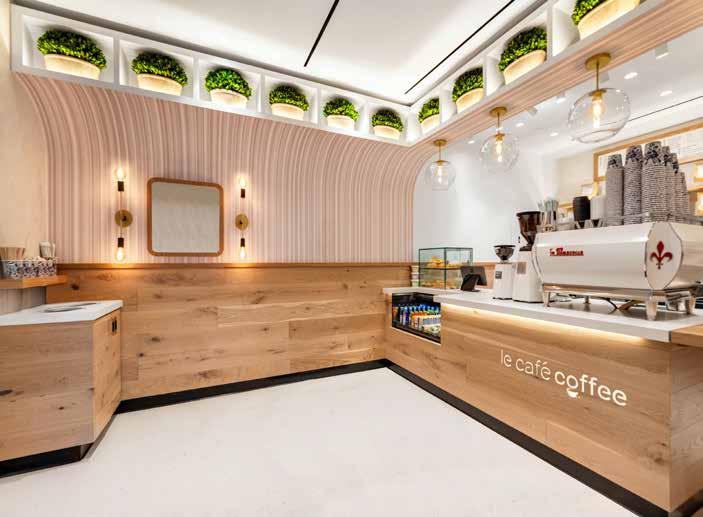
COMMERCIAL KITCHENS THE BIG BREW
IMC Architecture’s interior design studio completed a new Le Café Coffee location and other alterations and upgrades at One Dag in Manhattan.
80 COMMERCIAL CONSTRUCTION & RENOVATION — ISSUE 2, 2024
Photography by IMC Architecture
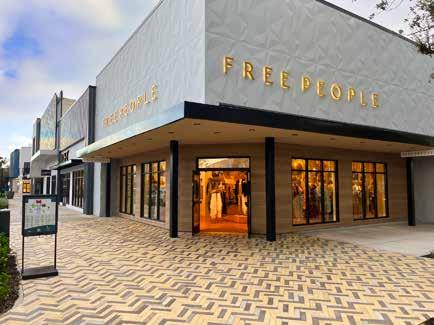
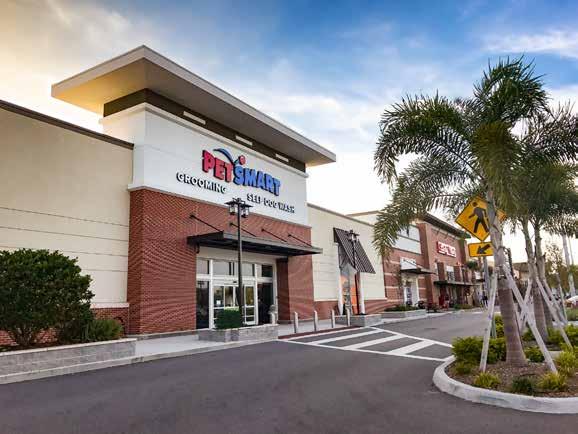
A MULTI-DISCIPLINED FIRM
MECHANICAL/ELECTRICAL • CIVIL ENGINEERING
ENVIRONMENTAL • ARCHITECTURE • LAND PLANNING
SURVEY & MAPPING • LANDSCAPE ARCHITECTURE
TRANSPORTATION
• STRUCTURAL • INTERIOR ARCHITECTURE
ARCHITECTURE FIRMS
ARCHITECTURAL RECORD MAGAZINE
TOP 300 TOP 500
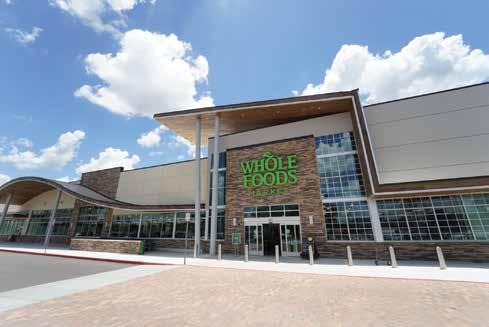
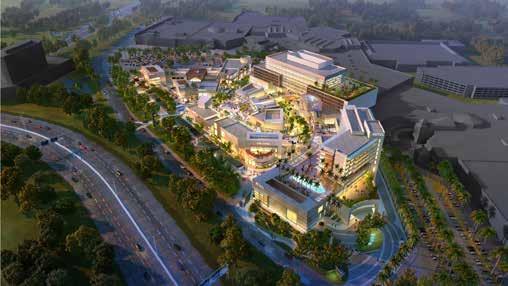
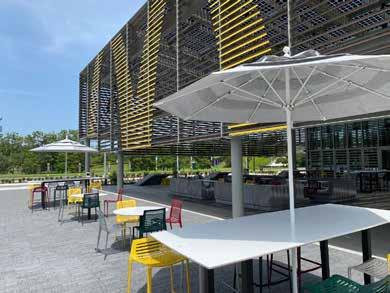
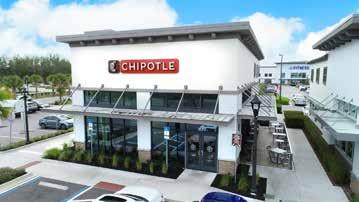
BUILDING STRONGER COMMUNITIES TOGETHER
CPHCORP.COM | 1.866.609.0688
CIRCLE NO. 34
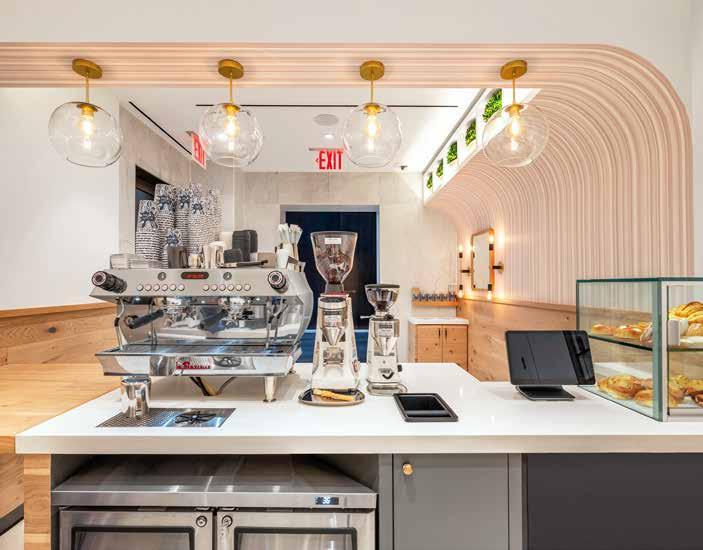
and other upgrades at One Dag,” says Dominick Casale, AIA, NCARB, principal at IMC Architecture.
As the coffee shop’s operator, Le Café provided functional requirements, look and branding directions, and spec and equipment requirements. In the early phase of the design process, IMC’s designers collaborated with Le Café’s team in reviewing branding elements and materials, which included visits and meetings at the chain’s other locations.
The building’s property management provided input and support throughout the process, as it was important to ensure comfortable, well-designed and functional amenities for the tenants.
WB Engineers+Consultants was the MEP engineer and the general contractor was Unity Construction Group.
The café’s branding elements include vinyl wallpaper with vertical green and red stripes in different shades. The wallpaper has a film finish for ease of cleaning.
Design and Construction
“Our team encountered several design challenges during the project,” says Casale. “The coffee shop concept had to be redesigned for a much smaller square footage than a typical Le Café location. To accommodate all required functions in the smaller space, the operator and design team decided to specify a smaller line of appliances as well as a more compact, but functional and visually attractive serving counter.”
In addition, Casale says that since the ceiling in the café contains mechanical systems that needed to remain accessible for maintenance, the layout had to be designed in a way that access to the ceiling wasn’t blocked by furnishings.
The completed café features top-of-theline appliances and a Caesarstone counter. Some of the walls feature engineered wood in the European oak look and there are white faux brick tiles behind the counter.


COMMERCIAL KITCHENS THE BIG BREW
The adjacent lobby’s marble wall tile was extended into the café entrance to provide visual continuity for customers when they enter the café from the lobby.
82 COMMERCIAL CONSTRUCTION & RENOVATION — ISSUE 2, 2024
Photography by IMC Architecture
CIRCLE NO. 35
There is continuous wood-paneled wainscoting on the walls as well as shelving to display coffee-related merchandise and ornamental plants. The existing terrazzo flooring was repaired and provides a visual contrast with the darker wood present throughout the space.
The adjacent lobby’s marble wall tile was extended to bleed into the café entrance to provide visual continuity for customers when they enter the café from the lobby.
The café’s branding elements include vinyl wallpaper with vertical green and red stripes in different shades. The wallpaper
has a film finish for ease of cleaning. Lighting elements include light sconces on the walls, track lighting in the back of the house section, and recessed lighting in the ceiling.
Bookshelves hanging from the ceiling near the counter feature indirect LED lighting that is used for ambiance. The gypsum board ceiling is painted white and features sleek, linear air diffusers, which the designers chose for a more harmonious look with fewer visual distractions.
The new 500-square-foot bike room features bike hangers for 40 bicycles. There is new 2-foot x 2-foot recessed lighting
installed in a new acoustical ceiling, for ease of maintenance. The original package room in the lobby was demolished and reconfigured to house the new café. A new 500-square-foot package room was constructed in the sub-cellar. It features a new window counter with a security roll-down gate for package pick-up.
The package room houses a stateof-the-art X-ray scanner for parcels and allocated space for additional future safety equipment. The package room also has 2-foot x 2-foot lighting fixtures in an acoustical ceiling.
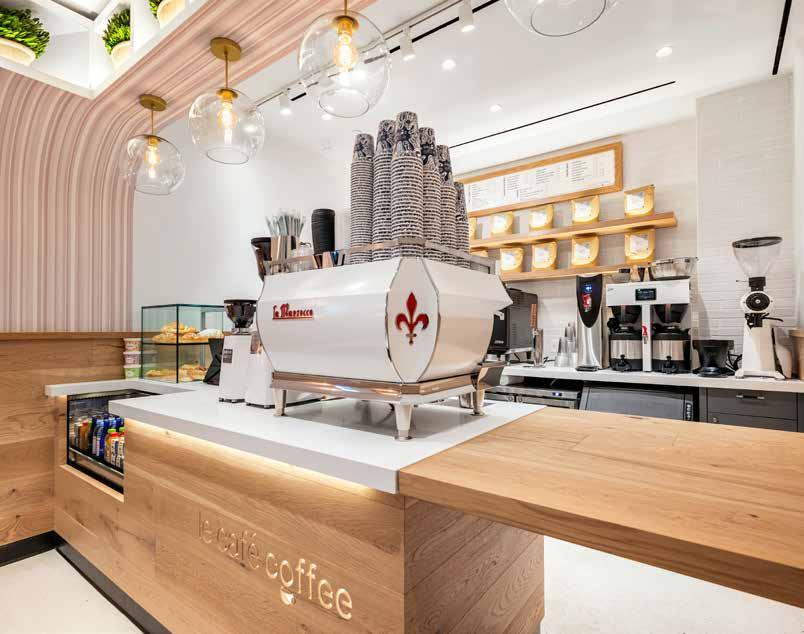
COMMERCIAL KITCHENS THE BIG BREW
The IMC Architecture-designed café features top-of-the-line appliances, a Caesarstone counter, engineered wood and wallpaper wall finishes, white birch-colored wall tiles behind the counter, merchandise display shelving, diamond plate wainscoting and terrazzo flooring. The lighting system includes sconces, track fixtures and recessed lighting in the ceiling.
84 COMMERCIAL CONSTRUCTION & RENOVATION — ISSUE 2, 2024
Photography by IMC Architecture
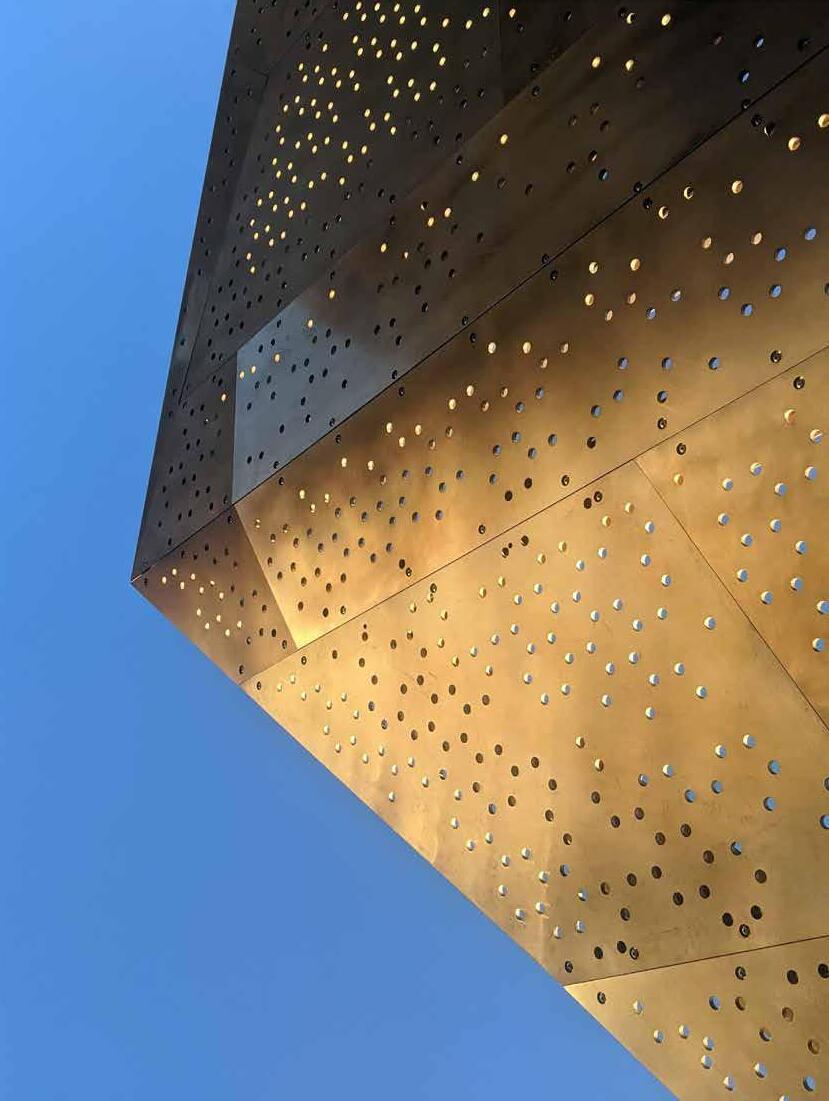
onyxcreative.com ARCHITECTURE | ENGINEERING | INTERIOR DESIGN CIRCLE NO. 36
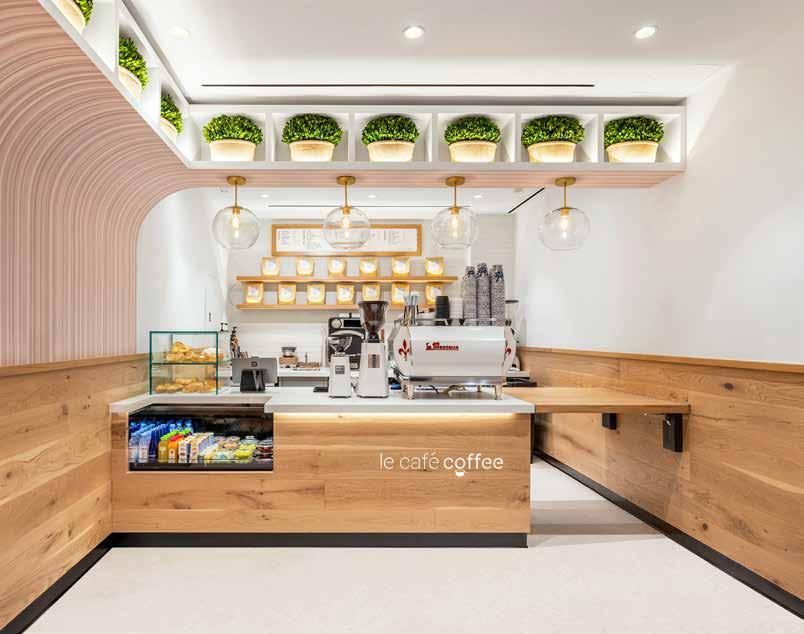
The teamwork factor
Three principals established Brooklyn, NY-based IMC in 2015: Eugene Mekhtiyev, AIA, LEED GA; Jonathan Imani, AIA, NCARB; and Dominick Casale, AIA, NCARB. Working mainly in the highly regulated urban environments of New York City and the greater New York area, the
founders believe compliance and creativity aren’t mutually exclusive.
In addition to architectural work, the firm offers interior design services as well as zoning and permitting consulting through its affiliate, CORE Consultants.
The firm works predominantly in the commercial, workplace, multi-family, education,
retail, hospitality and worship markets and is one of the pioneers of the modular design and construction technology in New York’s multi-family industry. The studio’s portfolio features in excess of ten million square feet of architectural design and consulting projects, totaling more than $2 billion in construction value. CK

Roberto De Los Rios, an associate at Brooklyn, New York-based IMC Architecture, is an architect and designer focused on commercial, residential, and institutional markets. He has 20 years of architectural experience and holds a Bachelor’s degree from the Architecture and Design Faculty at the Pontifical Bolivarian University in Medellin, Colombia, and a Master’s degree from the University of Maryland in College Park, MD.
COMMERCIAL KITCHENS THE BIG BREW
86 COMMERCIAL CONSTRUCTION & RENOVATION — ISSUE 2, 2024
Photography by IMC Architecture









Energy













for


happier building owners and more profitable builders





Learn more at propane.com/for-my-business




From commercial tankless water heaters and high-efficiency furnaces to kitchens, fire features, and standby generators, propane provides more profitable options for your next project. It provides reliable heating for bath and kitchen appliances with an energy that’s environmentally friendly and more affordable than electricity or fuel oil. Builders, architects, and remodelers across America count on propane to deliver best-in-class performance.






CIRCLE NO. 37
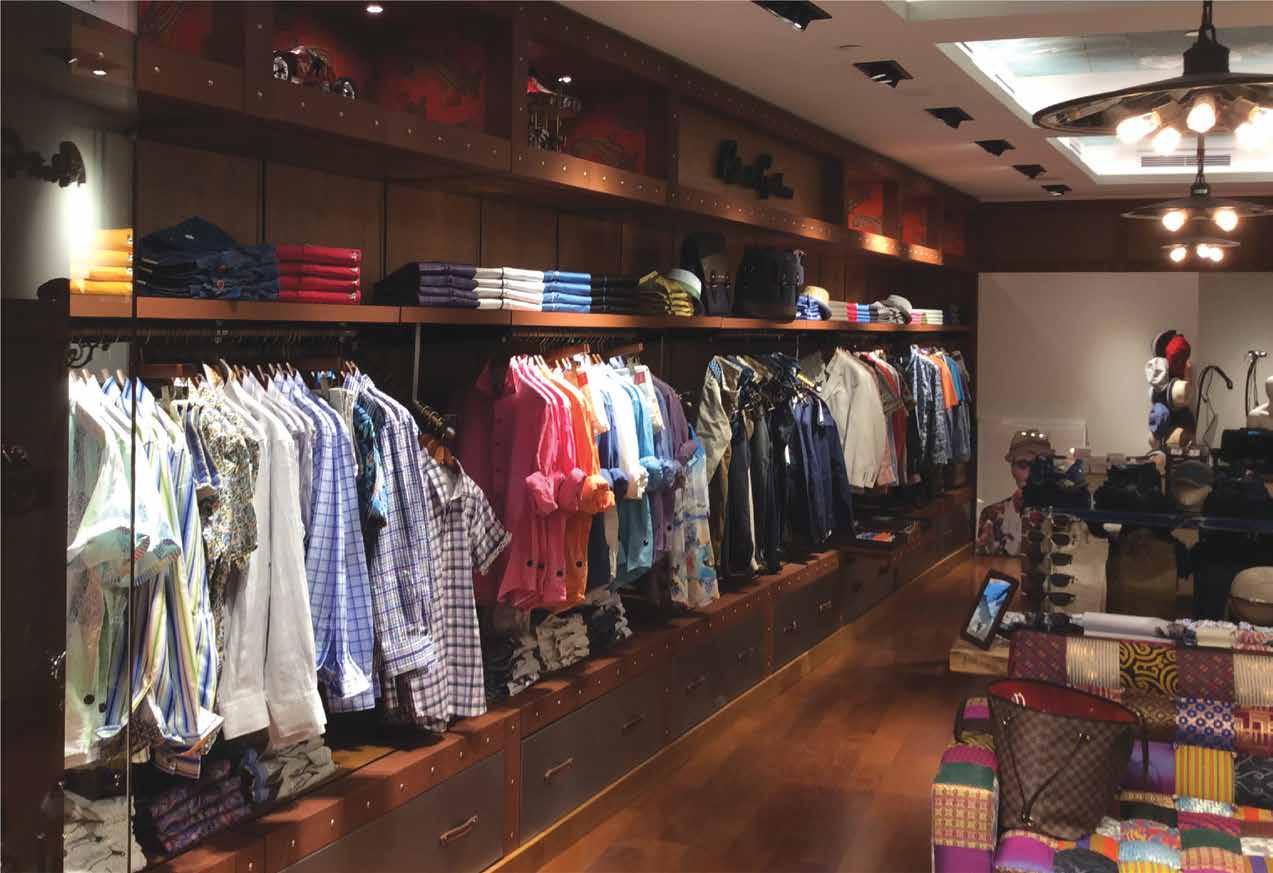

ES T 2 01 0
CIRCLE NO. 38
GREAT LOOKING. GREAT OPTIONS. GREAT VALUE.
GREAT LOOKING. GREAT OPTIONS. GREAT VALUE.

BRADLEY LAVATORY SYSTEMS offer a variety of touch free and worry-free options for handwashing in public spaces. Design your ideal solution with multiple materials, basin shapes and faucet choices. Trust Bradley for your next project, the leader in commercial handwashing. Visit bradleycorp.com for more information. Commercial Washrooms. Brought to Life.
BRADLEY LAVATORY SYSTEMS offer a variety of touch free and worry-free options for handwashing in public spaces. Design your ideal solution with multiple materials, basin shapes and faucet choices. Trust Bradley for your next project, the leader in commercial handwashing. Visit bradleycorp.com for more information. Commercial Washrooms. Brought to Life.
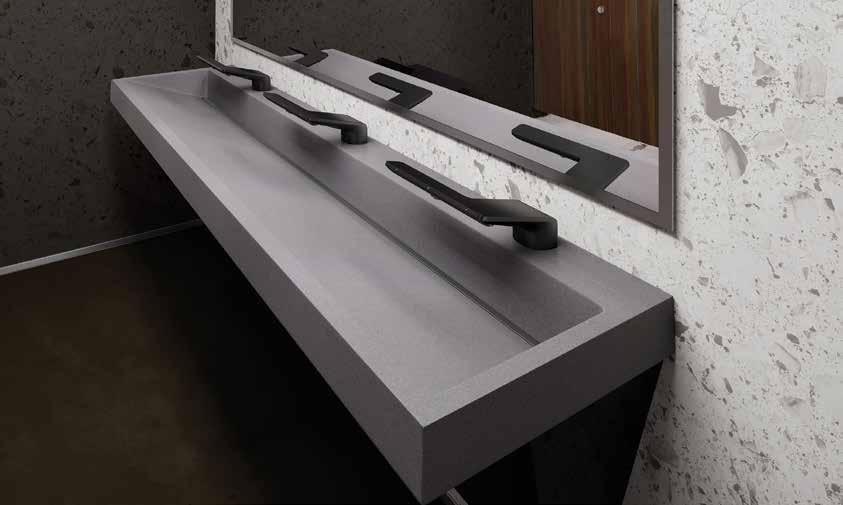
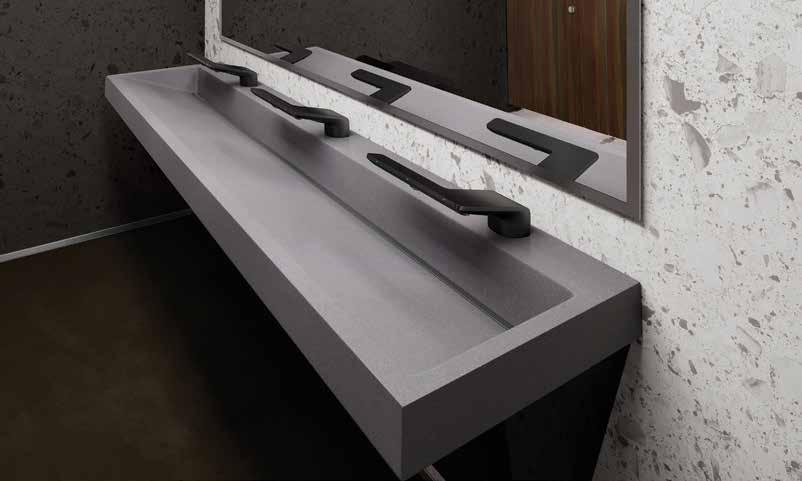
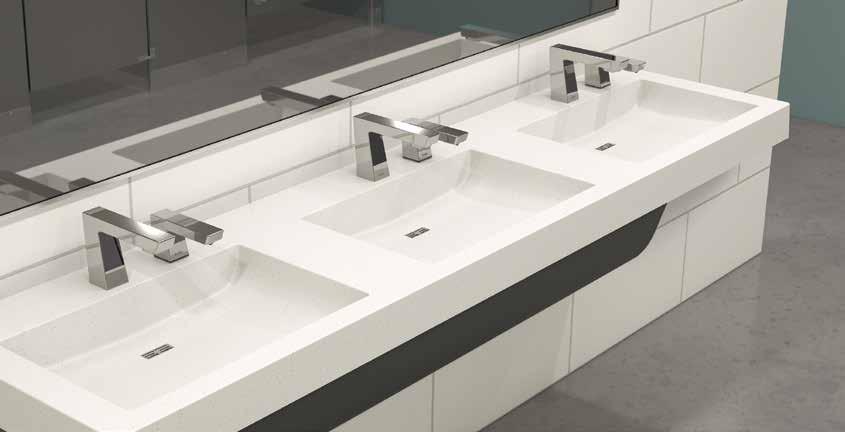
 CAST-FORMED SOLID SURFACE
bradleycorp.com/lavatory-systems
CIRCLE NO. 39
CAST-FORMED NATURAL QUARTZ
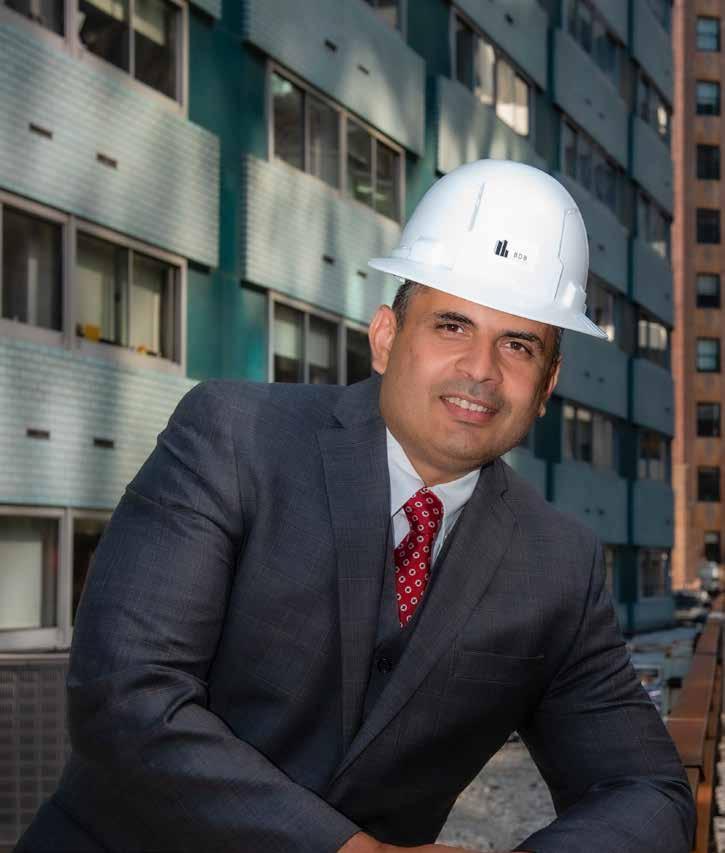 BDB Construction Enterprise’s Tallal Bhutta
GENERAL CONTRACTOR PROFILES
Meet BDB Construction Enterprise’s
Tallal Bhutta
Tallal Bhutta is a construction engineer and founder of BDB Construction Enterprise in New York City. An expert on a variety of construction and development topics,
Bhutta is increasingly in demand for his leading expertise in quick-to-market conversion initiatives.
Give us a snapshot of your brand.
BDB Construction Enterprise is an innovative building construction, conversion and renovation company located and growing in the northeastern United States. We’re known for repeatedly exceeding our clients’ expectations related to budget and schedule by possessing a very integrated approach to project delivery, which ensures high quality results in a faster and tightly controlled process.
We typically get involved in the earliest project phases, from predevelopment to schematics, and work as our client’s partner from conception to completion.
What type of clients and markets are you targeting?
We’ve got a vibrant business serving owners interested in converting or renovating their buildings, from the 1,355-bed adaptive reuse of a historic high-rise hotel to the 24,000-square-foot reimagining of a three-story warehouse to become a new mixed-use complex centered on a church.
There is much more of this work in the market now, including to create more multifamily residential offerings and to revamp underperforming office buildings. BDB Construction Enterprise also is very active in conversions and renovations.
In addition, we have grown our business with residential projects including apartment buildings and condominiums. While the bulk of our activity is in New York, we have requests coming in from other states.

92 COMMERCIAL CONSTRUCTION & RENOVATION — ISSUE 2, 2024
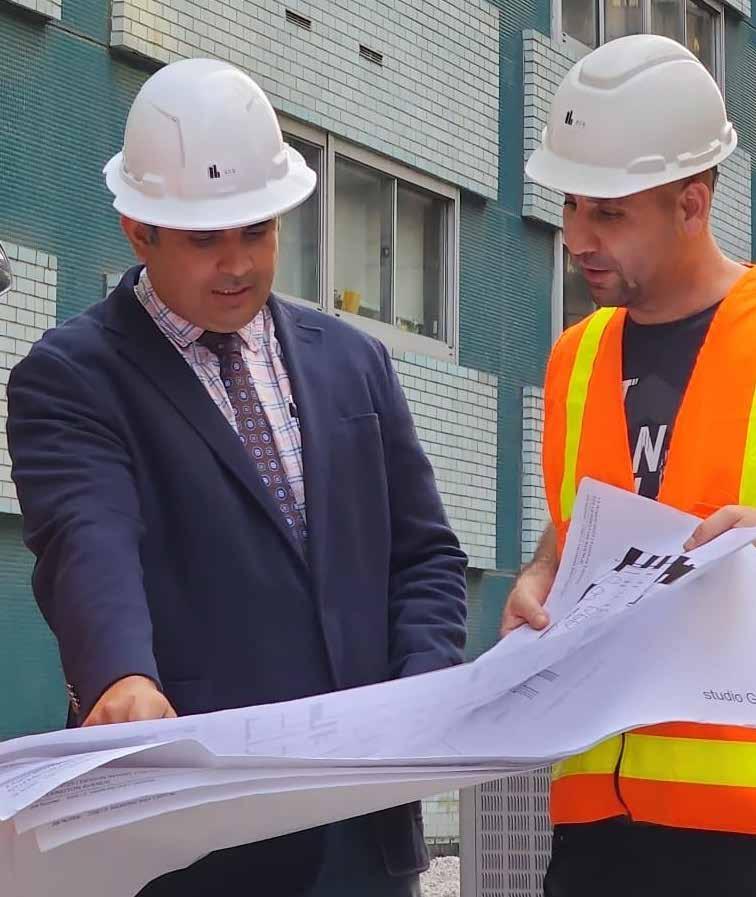
93 ISSUE 2, 2024 — COMMERCIAL CONSTRUCTION & RENOVATION
How does your work cater to today’s end-users?
In today’s construction market, every other project is behind schedule or over budget due to poor planning and execution. Your magazine does its readers a service by helping to reverse this trend, sharing trade secrets and new processes and technologies to speed construction and control costs.
Our work is focused on this: delivering projects on time and within budget. We’ve instituted best practices in project management and coordination, along with recommending a consultative role where the general contractor helps review design decisions for timetable impacts, constructability issues and possible cost reductions.
How is your construction strategy based?
BDB has pioneered novel methods of predicting challenges, effective ways of dealing with unforeseen conditions, approaches for addressing changes in work scope, and improvements in owner-contractor coordination. Other areas of expertise include breakthroughs in design coordination as well as the use of widely preferred construction approaches such as design-build and integrated project delivery (IPD), even in markets where they are rarely used.
IPD is a way to streamline the various project players, make early decisions to speed the first phases of work, and understand the best possible outcomes as early in the project cycle as possible. We also have a library of materials that are available within a tight timeframe, so we know what can be delivered during our projects’ timeframes, from flooring to boilers and beyond. We are also known for a very hands-on approach.
What are some of today’s biggest challenges?
Uncertainty is a big challenge. Conventional design-bid-build processes consistently fail to deliver projects on time. We need to come up with strategies to avoid that from happening. and educate owners to make that happen. Also, the dynamic between architects and owners is often very poorly managed and sets up the construction process for delays and cost overruns.
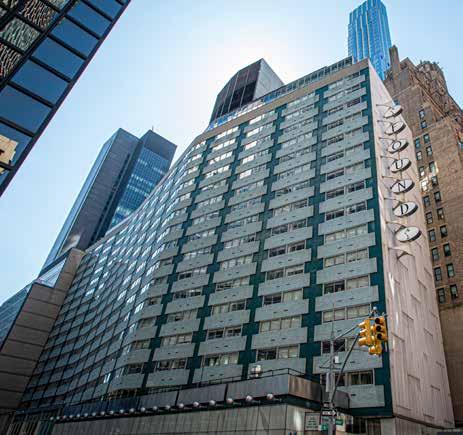
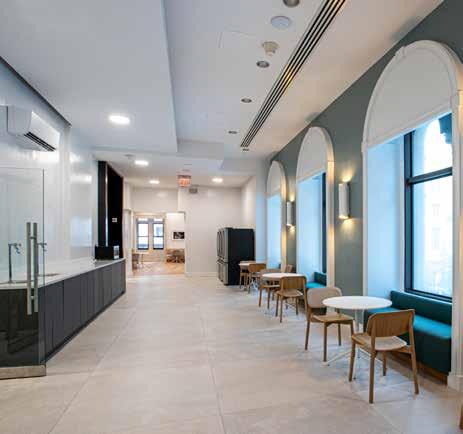
TALLAL BHUTTA BDB CONSTRUCTION ENTERPRISE
94 COMMERCIAL CONSTRUCTION & RENOVATION — ISSUE 2, 2024
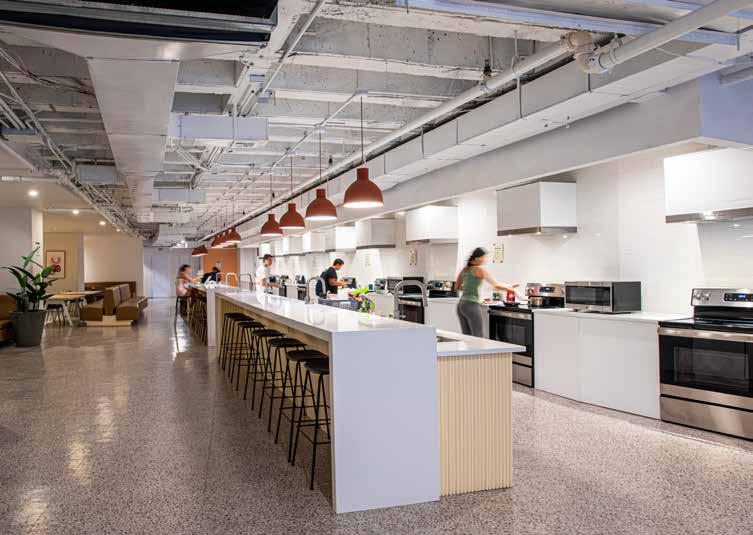
It is often marked by conflict and flawed communications—not the basis for a successful building experience! BDB’s mission is to cut through the red tape and the traditions in project delivery that simply don’t help. Another issue today is time to market: Business cycles are shrinking and consumer tastes can evolve rapidly. Time is money in the real estate world, and everything we do is focused on saving time.
What are the biggest challenges in construction or renovating a building?
Hidden conditions and uncertainty, unforeseen circumstances of varied kinds—since all of these occur in every construction undertaking, why don’t we work to uncover and address those ahead of time? So that’s a major focus, working to predict as much as we can in the earliest phases. That helps us with our greater mission: Finishing on time and within budget. That’s what we are good at.
Another issue is the revising of plans and architectural drawings. It takes a long
time, so we have created processes that let construction planning, sequencing and procurement proceed while the design team is completing their documentation.
How are you working to promote sustainability?
To be candid, while our building conversions and renovations reduce carbon emissions dramatically as compared to demolition and constructing new buildings, I have never been promoting sustainability. If it’s a key goal for our clientele, we show them how to build healthy, energy-efficient and durable projects.
That’s sustainable. Beyond that, too much of the hype around sustainability is design nonsense, and I avoid that. It’s often greenwashing, and I don’t want to have anything to do with it.
Sustainability may sometimes be essential to our clients such as FOUND Study, a developer and operator of buildings converted for new uses as student housing. These projects save substantial energy and reduce carbon emissions by thousands of
tons. Universities no longer need to build new dorms.
So I applaud FOUND Study for saving thousands of tons of carbon emissions by essentially repurposing existing buildings— defunct hotels, half-empty office buildings, and the like.
For construction, we use only healthy finishes and energy-efficient systems such as heat recovery for HVAC. We always recycle any materials that can be used by others downstream, and we encourage best practices in green building design.
What do you see as some of the biggest challenges in construction, moving ahead?
The big challenge remains helping owners through the process. In every project, establishing trust and being a true partner—those are the keys to success, and we all know they’re not ubiquitous qualities in our industry. But when you achieve them, when you have mutual trust and are seen as a partner, we can work even faster and meet budgets every time. Trust is a big challenge.
95 ISSUE 2, 2024 — COMMERCIAL CONSTRUCTION & RENOVATION
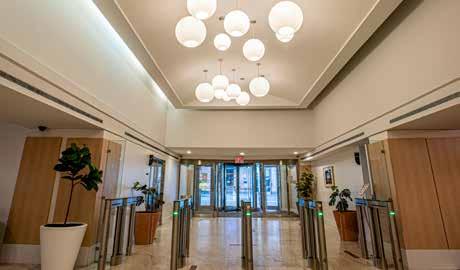
Are you optimistic about what you see in your building and construction sectors?
Yes, absolutely. Conversions are the wave of the future. BDB Construction Enterprise both renovates hotel properties but we also convert buildings away from hospitality used to become university dormitories, which in most markets is in the same building class.
We also see a national conversation about converting office structures and other commercial buildings to residential uses. We need more housing, and more affordable, attainable housing, and converting hotels and offices to residential, for example, is a way to achieve that goal.
What trends are you seeing?
Speed is a key trend. Our clients aren’t offering us more time to get our projects done. They are focused on the time value of money, their investors’ interests, and the need to get projects online and on the market fast, to get revenue streams started. It wasn’t like this years ago, but today, it’s the first question we hear: “When can you finish this?”!
Another trend among our clients is a rejection of the old process of working with change orders. We hear about projects by others where there is a complete work stoppage, practically on a weekly basis, due to a dispute about a change order. We don’t need this, and there are better processes than lurching from one dispute to another.
Again, it comes back to trust. Trust and flexibility in the building team are essential.
BDB is always on the owner’s side, working as partners rather than as typical vendors.
Where is your business headed?
We’re finding more and more organizations and real estate companies that are seeking construction companies that meet budgets and exceed scheduling expectations. We’re headed toward more of those clients.
Yet the projects, while most are renovations or conversions, are quite varied. With the classic Marriott Midtown hotel, which we converted to student housing, we had a gorgeous building with excellent bones and marble finishes. It is very well built.
On the other hand, we have projects like the Elizabeth building, which had broken window sills and heads, making it inefficient to operate and uncomfortable for tenants. Yet, like the old Marriott, it is a landmark, in fact a national historic landmark listed by the National Parks Service. So we had to work very carefully and within the federal and state standards for a landmark façade.
Tell us what makes your brand unique?
First, we work with the owners as a partner. It’s not the typical owner-vendor relationship—it is about establishing trust and the basis for an effective partnership. BDB is seen as an innovator but not a pie-in-thesky dreamer. We are realists, and our breakthroughs are focused on solving challenges faced by our clients in the real world, and on meeting the needs of their customers, too.
One-on-One with Tallal Bhutta

Describe a typical day.
I’m up early and off to visit our project sites. After a latté, I’ll meet with the project managers on the sites, and work through any new issues or surprise conditions that have arisen. Usually, we have meetings with clients to update them on the work, and sometimes we have permit filings or inspections to discuss.
Lunch is typically a brown-bag affair, with a client or project team. I visit with construction crews to share best practices or work out solutions on some afternoons, and handle paperwork either remotely or back at our headquarters in Staten Island, New York. When I get home, dinner with family and friends is the big reward for another long work day!
What was the best advice you ever received?
I credit my uncle, who taught me to focus on the big picture. He was also my mentor, and his comment about the bigger picture is always with me whenever I’m in the middle of a project. So that’s where my focus stays. Projects have surprises and changes that arise suddenly, but we need to see the big picture and keep the work moving forward.
My uncle was a waterproofing contractor, and he tried not to worry about smaller issues. He also encouraged my move into studying engineering, which brought lots of new opportunities.
What’s the best thing a client ever said to you?
The client for one of our largest new conversions of a high-rise hotel to student housing said to me recently, “I wish I could clone you and take you to all our projects in every state." That was a nice compliment—and I hope to grow with that client also.
TALLAL BHUTTA BDB CONSTRUCTION ENTERPRISE
96 COMMERCIAL CONSTRUCTION & RENOVATION — ISSUE 2, 2024

Custom Solutions that are flexible and scalable for retail brands across the country
For more than 35 years, across markets and disciplines, our team has provided seamlessly integrated services from start to finish. We empower our people to impact communities by achieving our clients’ visions.
CIRCLE NO. 40
Land Planning | Survey | Civil Engineering | Inspection | Landscape Architecture | Environmental | Architecture | Interiors cesoinc.com 300+ Teammates 12 Locations One Vision

O U R SER V I C ES
F ounded in 1986, TCI deliv ers a wide rang e of IT solutions to make your business g o:
B reak/fix serv ices
IT staffing
B ackup serv ices
N etworking and network support
Voice and data cabling
L ow-v oltag e cameras and CCTV
P rofessional serv ices
Access control / P hysical security
P roject and prog ram manag ement
Video security
Cyber security
VO IP communications
Storag e
D ocument manag ement
O U R M I SSI O N
Thomas Consultants, Inc. is a leading national prov ider of turnkey information technolog y and communication solutions. W e prov ide serv ice and solutions for business, institutions and g ov ernment ag encies. To maintain our competitiv e edg e, we prov ide the hig hest quality products and serv ices, while maintaining moderate pricing for our clients. B y focusing on the serv ice after the sale, we maintain win - win relationships with our customers and v endors worldwide.
T H O M AS C O N SU L T AN T O N L AN W W W . G O T C I . C O M

334 210 - Telecommunications networking equipment manufacturing .
334 111 - Computer serv ers manufacturing . 334 112 - Storag e dev ices, computer, manufacturing , . 335228 - P rinters, computers, manufacturing . 33554 19 - Computer cable sets (e.g ., monitor, printer) manufacturing .
4 234 30 - Computer and packag ed software wholesaling . 811212 - Electronic computer repair.
O v er 95%of customer retention Credentialed staff
O v er 200 fiv e-star rev iews

D eployed physical security camera solutions, which hav e a prov en resolution track record of ov er 4 00 + crimes to date MB E - Minority B usiness Enterprise L SB - L ocal Small B usiness U


C ER TI F I C ATI O N S
N AI C S C O D ES
D I F F ER EN TI ATO R S
EI
T4 HN JJB Y4 D K7 CAG E Code 0VT96 SAM IN F O C O M P AN Y D ATA T S I N C . . E-Rate SP IN Thomas Consultants is a leading national provider of turnkey information technology and communicationsolutions for businesses, institutions, and government agencies. T U S HEL P L E YO U G R O W (901) 398 - 84 26 tcisales@ g otci.com 4 14 0 E. Raines Rd Memphis, TN 38118 CIRCLE NO. 41
:


For more information contact: Gina Marie Romeo • Gina@connectscg.com • 609-661-9636 www.connectscg.com Let’s CONNECT Today!!! Your Trusted Partner in Business Specializing in management consulting services & outsourced business development Reach the next level in your business Connections Opportunities Networking Negotiations Energy Collaboration Teamwork CIRCLE NO. 42
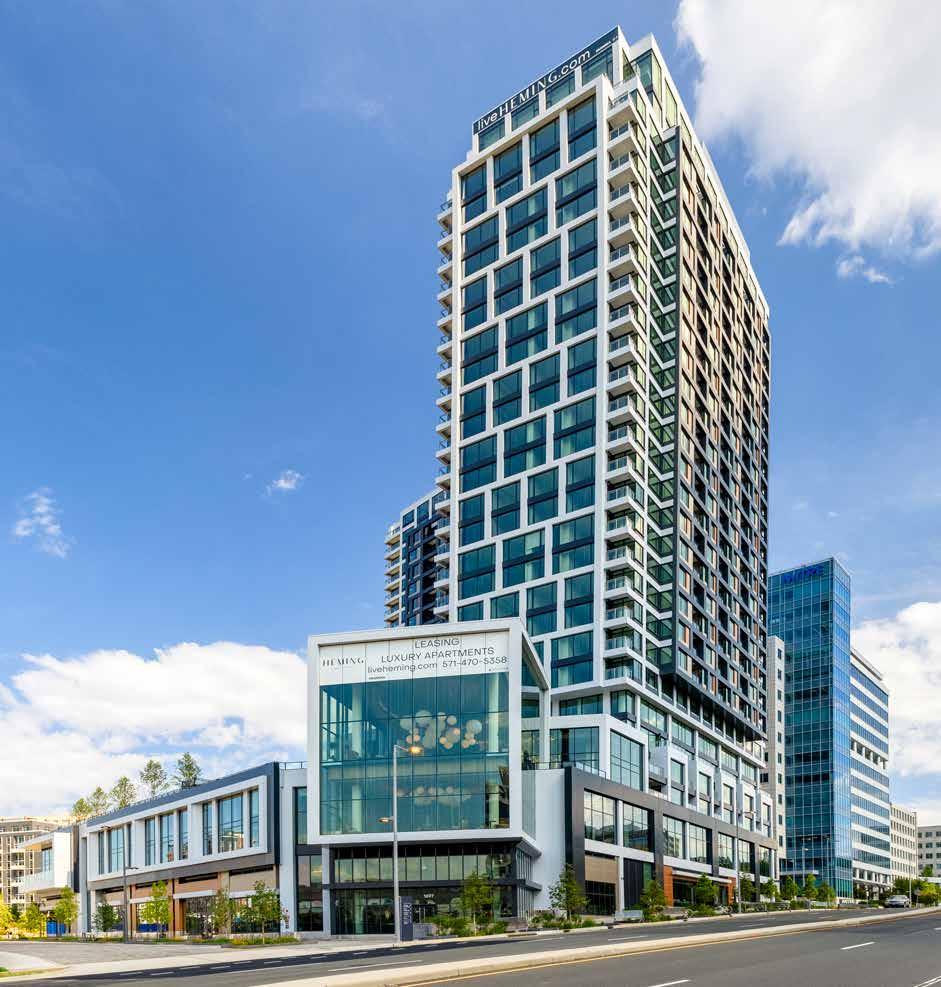
The ‘Heming’
Inside DC’s modern building marvel
Hospitality in Commercial Construction Heming
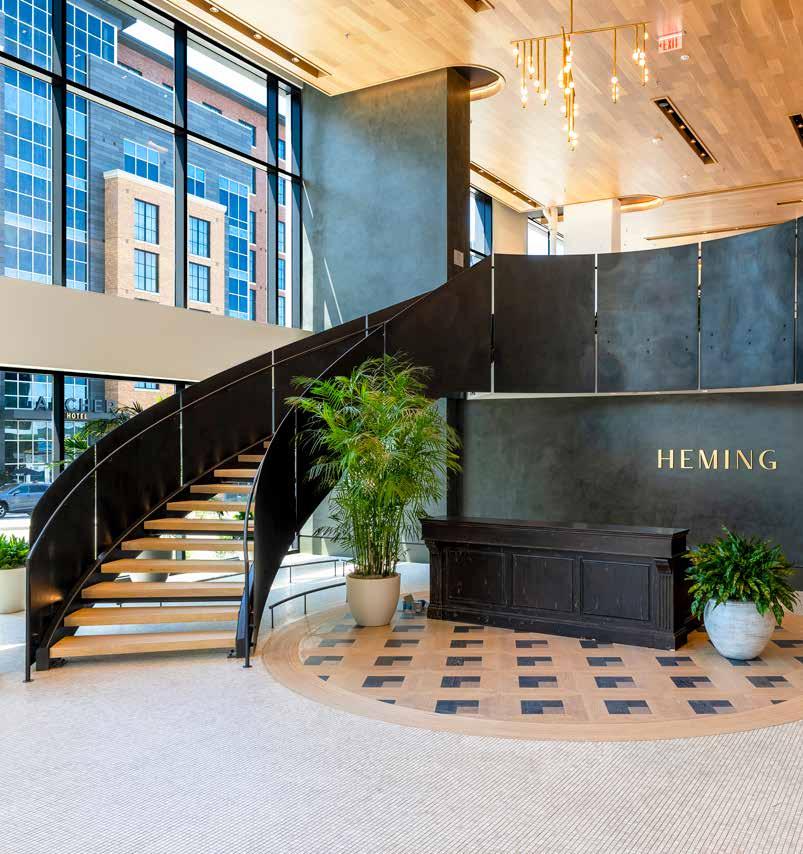
102 COMMERCIAL CONSTRUCTION & RENOVATION — ISSUE 2, 2024
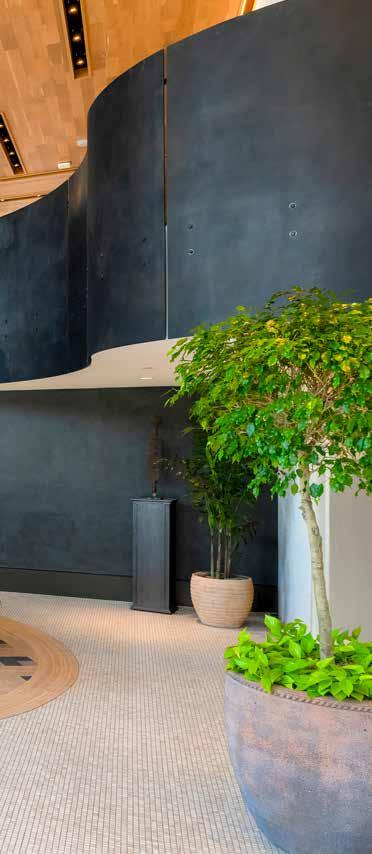
The ‘Heming’
Inside DC’s modern building marvel
By Juan Torres, Project Executive, Skanska
The completion of Heming, a luxury mixed-use development in McLean, Virginia, marks another milestone for Skanska, a leading global development and construction firm. Located at 1800 Chain Bridge Road, this 28-story architectural marvel is a testament to the construction expertise and commitment to quality that has become synonymous with Skanska’s projects.
Heming is part of one of the largest developments approved in Fairfax County, situated in the Scott’s Run neighborhood, a rapidly growing area. Heming’s central location also ensures its accessibility to the broader Washington, DC region.
103 ISSUE 2, 2024 — COMMERCIAL CONSTRUCTION & RENOVATION
Hospitality in Commercial Construction Heming
A Glimpse of Heming
Heming’s 28 stories hold a total of 410 residential units, but it doesn’t stop there. The development also features 38,000 square feet dedicated to food, beverage and lifestyle-oriented retail spaces, making it a vibrant hub for residents and visitors.
One highlight of Heming is the 360-degree views that offer a panoramic vista of the 6.5 million square feet Scott’s Run development as well as landmarks in neighboring Washington, DC.
A remarkable feature of Heming is the 27,000 square foot private outdoor terrace, which serves as a bridge between the public accessed areas and modern urban living. This space features a large pool deck with cabanas, community garden
Heming's design caters to various needs with studios, one-bedroom, two-bedroom and even two-story three-bedroom units with private patios, a rare offering in the multi-family housing market.
and grill stations, providing residents with a place to unwind and soak in the serenity of nature.
To ensure convenience for its residents, Heming offers a 24-hour concierge service focused on hospitality.
In the vicinity of Heming, you’ll find Platform Avenue, a private street designed to enhance connectivity within
the community. Additionally, a public, terraced plaza known as The Levels, is flanked by retail spaces, destined to become a vibrant focal point for neighborhood gatherings and special events.
As a contractor, Skanska was brought in to assist with the execution of due diligence prior to finalizing the land acquisition. Additionally, the ownership project team
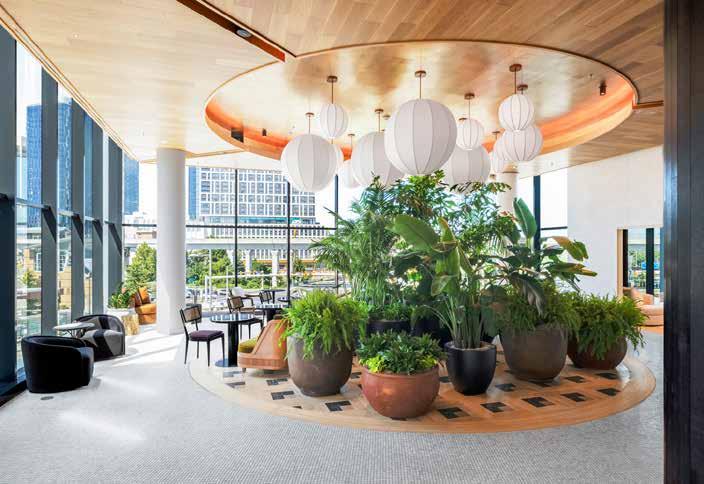
104 COMMERCIAL CONSTRUCTION & RENOVATION — ISSUE 2, 2024
CIRCLE NO. 43
organized a visioning session that included architects, marketing firm, research and management teams and the contractor.
This was an opportune time to understand the developer’s overall vision and the target market. Early team collaboration, prior to the design stage, helped mitigate a number of potential issues that could have impaired the project’s overall vision.
security systems, and connectivity ensure residents enjoy the latest technology for a seamless living experience.
Overcoming Challenges with Innovation
Constructing a project of Heming’s scale is not without its challenges. The exterior facade for instance is made of aluminum
Heming’s design caters to various needs with studios, one-bedroom, two-bedroom and even two-story three-bedroom units with private patios, a rare offering in the multi-family housing market.
Sustainability at the Core
Sustainability is a core value for Skanska. The company has set an ambitious target to achieve carbon neutrality by 2045 within its operations and across its value chain and that commitment is evident in the design and construction of Heming, which is pursuing Fitwel certification and is LEED Gold certified. It also is the first residential building in Northern Virginia to achieve WiredScore Platinum certification, setting a standard for other residential buildings and new developments.
To further promote sustainability, Heming offers EV charging stations and dedicated parking for low-emission vehicles. The building incorporates biophilic design principles, integrating plants and greenery throughout all amenities, including a community garden. The floor-toceiling windows maximize natural lighting, while integrated smart access control,

composite panels that use 70 percent less aluminum than conventional plates, all while being stronger and lighter than steel.
The construction includes a 24-story residential tower, with post-tensioned concrete construction. This tower sits atop a four-story, mild reinforced concrete podium and two and a half levels of underground parking.
To maximize the spans between the columns, the structural engineering team used thin, seven-inch post-tensioned slabs for the residential floors. This approach not only saved costs but also reduced the amount of embodied carbon in the building.
The unique design of Heming’s glass box space, which houses two dedicated resident club rooms, presented another challenge for the structural engineering team. To make the space work seamlessly with the glazing, structural engineers coordinated with curtain wall and cold form steel
manufacturers, ensuring a perfect fit for the architect’s vision.
Heming’s construction journey began in September 2020, in the midst of supply chain disruptions caused by the pandemic. Skanska’s internal Strategic Supply Chain group played a crucial role in overcoming market uncertainty with strategic procurement. A notable example was the procurement and storage of mineral wool insulation six weeks prior to installation.
By planning ahead and collaborating with supply chain partners, Skanska managed to mitigate delays and costs related to material and equipment supply chain disruptions.
A Commitment to Inclusivity and Community
Heming’s design caters to various needs with studios, one-bedroom, two-bedroom and even two-story three-bedroom units with private patios, a rare offering in the multi-family housing market.
It also takes pride in its commitment to diversity and community. The development includes 53 units as part of Fairfax County’s Workforce Dwelling Unit Rental Program, promoting inclusivity and ensuring accessibility to the area. Skanska’s focus on blending Heming seamlessly into the Tysons and McLean neighborhoods reflects their commitment to enhancing the community.
Heming is more than just a residential development; it’s a gateway to modern urban living. With a commitment to sustainability and innovative design, Heming is set to have a transformative impact on the McLean and Tysons communities.
As the Washington, DC, region continues to grow, projects like Heming are essential in creating a vibrant, interconnected and sustainable future.
in Commercial
Hospitality
Construction Heming
Juan Torres is a Project Executive for multinational construction and development company Skanska. He is a former Lieutenant in the Civil Engineering Corps and SeaBees of the US Navy.
106 COMMERCIAL CONSTRUCTION & RENOVATION — ISSUE 2, 2024
CIRCLE NO. 44
How do interior designers and architects get information about YOUR products?
Two new free reports answer these important questions.
You can find answers to these and other important questions to help you market your products in construction and renovation from one of the leading B2B research firms in the country. Just spend some time at www.a-i-m.com. Then call 847-358-8558 for a confidential conversation with Jim Nowakowski, President.
AIM is a full-service B2B marketing research, information company with 30+ years experience.
Companies who want to innovate use AIM’s custom-designed research and analytical data services to get needed answers quickly, neatly and efficiently.
Why Not Have a Conversation Now?
The market doesn’t wait for anyone. Our studies have helped major manufacturers gain brand share, specification share, and position themselves in very competitive markets.
Call 847-358-8558 for that confidential conversation with Jim Nowakowski, President. Or email him at jnowak@a-i-m.com.
Let AIM help shed some light on what you’re doing.
Thank you.
Always Trusted Information
Accountability Information Management, Inc.
553 N. North Court, Suite 160
Palatine, Illinois 60067
847-358-8558
www.a-i-m.com

Manufacturer


Manufacturer Brief: How
Powerful information on the design, construction and facilities operations in major commercial construction for your strategy development
Changing the Way Interior Designers Get Product Information
Brief: How COVID-19 is
Changed the Way Architects Get Product Information CIRCLE NO. 45
COVID-19

Collaboration and Connection
Demetrios Stavrianos, Executive Director of Architecture
How Sage West Loop is creating something extraordinary on Chicago’s westside
Collaboration and Connection
How Sage West Loop is creating something extraordinary on Chicago’s westside
By Demetrios Stavrianos
Chicago is characterized by its ability to evolve, and there’s no better proof than the West Loop’s ongoing transformation from meatpacking district to culinary mecca. Now home to top companies like Google, Twitter, LinkedIn, Uber, Pepsi and Cisco, the neighborhood serves high-demand jobs alongside gastronomic experiences.
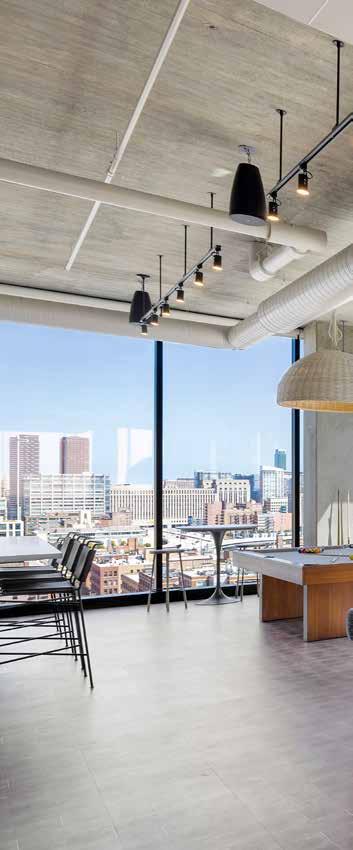
110 COMMERCIAL CONSTRUCTION & RENOVATION — ISSUE 2, 2024
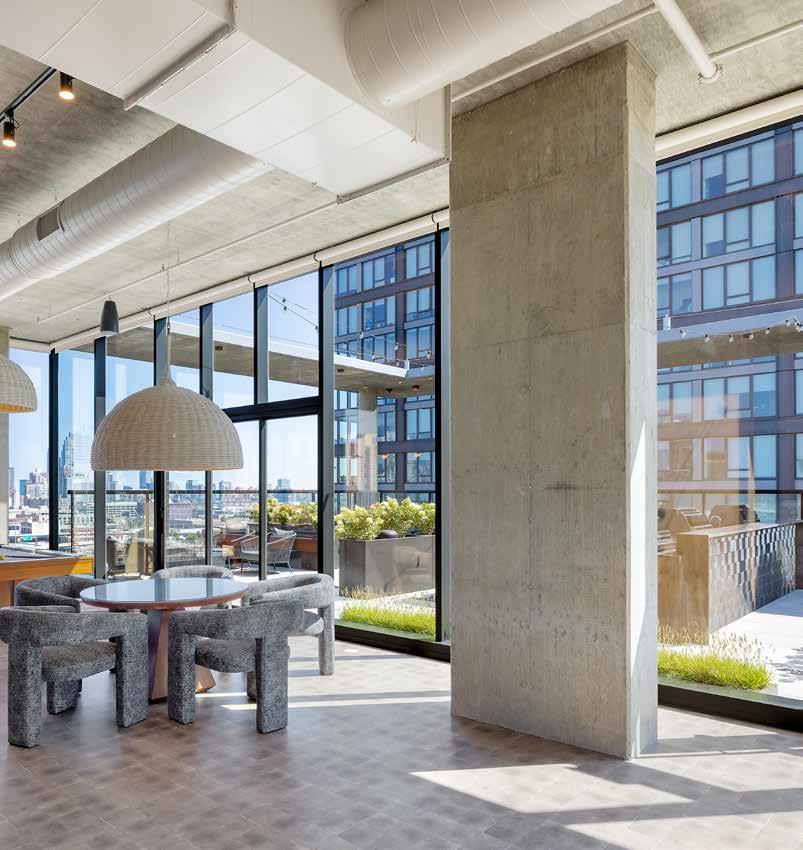
111 ISSUE 2, 2024 — COMMERCIAL CONSTRUCTION & RENOVATION
Renowned educational institutions including Kellogg School of Business, Booth School of Business, Feinberg School of Medicine, Pritzker School of Medicine, and Pritzker School of Law, round out the district and make it an ideal gathering place for students, professionals and epicureans.
Neighborhood transformations happen in part by design and part organically, and even in the West Loop, there are still gaps. The partners at Tandem, themselves Chicago natives, wanted to fill that gap by helping to transform the West Loop into a 24-hour destination.
They purchased and entitled two properties along the west Van Buren Street corridor, just west of Greektown and north of the University of Illinois, Chicago campus. Fronting on the Eisenhower Expressway at 1125 W Van Buren, Avra West Loop was the team’s first residential addition to the neighborhood.
Completed in early 2021, Avra was the culmination of a successful collaboration between Tandem, design consultant KTGY, and Antunovich and Associates, which acted as the architect of record (AOR).
Building off the fruitful relationship started with Avra West Loop, when the time came to start on the second phase of the development at 1044 W Van Buren, Tandem hired KTGY to provide the architectural design services, and collaborated with Antunovich and Associates serving again as the AOR on the project now known as Sage West Loop.
One of the team’s most important goals was to connect the new building with its bustling urban environment. We did this through thoughtful programming, and aesthetics informed by the rich neighborhood context. A three-story, brick clad podium base warms the portion of the building pedestrians interact with the most. The brick also texturally connects the new tower with the historic buildings in the neighborhood.
Stepping back and rising another 15 stories, the upper residential floors
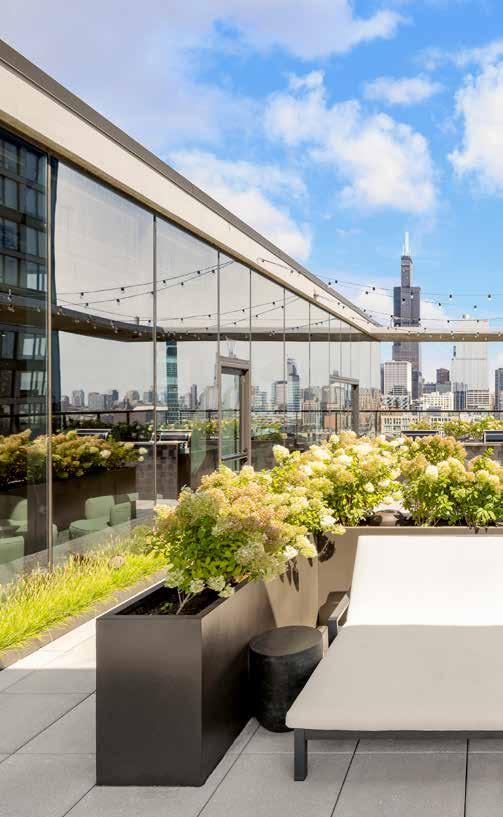
112 COMMERCIAL CONSTRUCTION & RENOVATION — ISSUE 2, 2024


are clad in an aluminum exterior glazing system with architectural metal panel “ribbons” applied vertically to the facade. The corten-colored panel is inspired by the historic industrial past of the West Loop, complementing the brick-color tones at the building’s base.
The juxtaposition of materials in the façade three-dimensionally captures the movement and activity seen on the street below. Crowning the top of the building is a delicate concrete perimeter canopy, helping define the outdoor rooftop terrace and architecturally punctuating the vertical flow of the tower.
After establishing a strong design connection with the neighborhood, the team then turned to programming to help complete the picture. Amenities are strategically placed
113 ISSUE 2, 2024 — COMMERCIAL CONSTRUCTION & RENOVATION
within the building. Retail space, residential lobby and a leasing office are sited on the first floor, blurring the line between public and private by providing a transition from tranquil retreats into the din of the neighborhood. More private functions such as a dog run, pet grooming station and building services are located on the remainder of the first floor.
All parking is located on the second and third floor of the podium. The top of the garage podium incorporates lush landscaping and private residential terraces. These spaces are semi-permeable and allow residents to catch the wafting smell of fresh-ground coffee from a comfortable and shaded seating area.
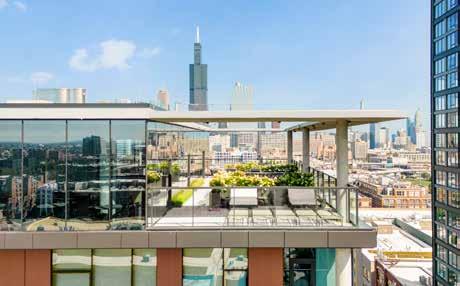
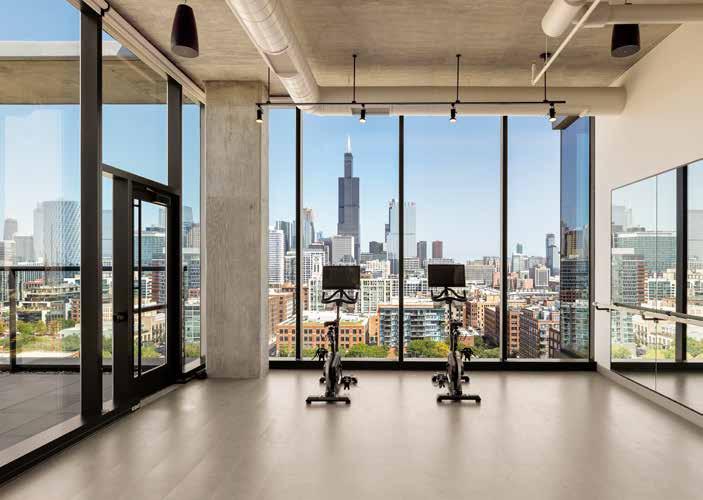
114 COMMERCIAL CONSTRUCTION & RENOVATION — ISSUE 2, 2024
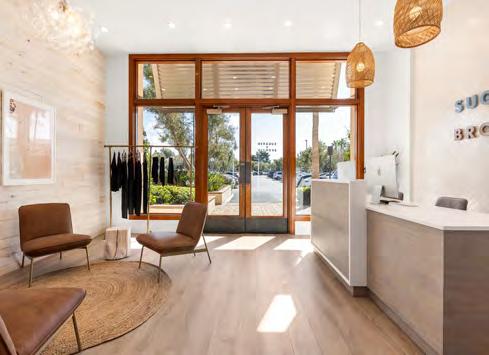
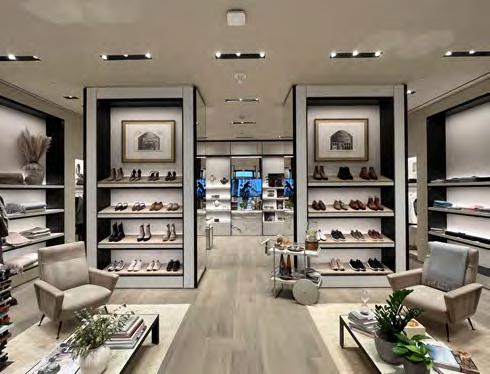
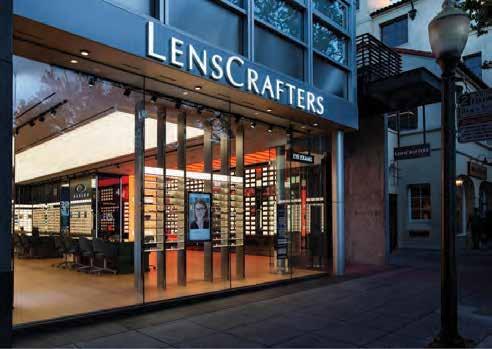
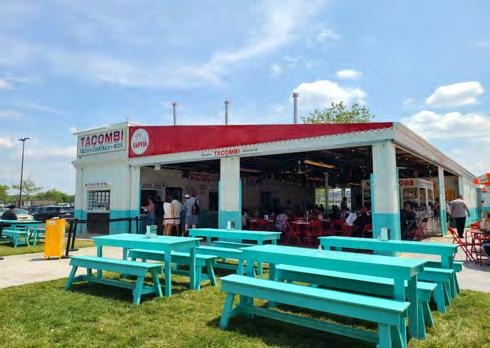
CIRCLE NO. 46 502 VALLEY ROAD / WAYNE, NJ 07470 / P 973-692-0222 / INFO@TRICARICO.COM / TRICARICO.COM OUR GREATEST DESIGN... IS OUR REPUTATION
Completed
in April of 2023,
Sage West Loop offers an extraordinary living experience in a dynamic neighborhood brimming with culture, culinary delights and career prospects.
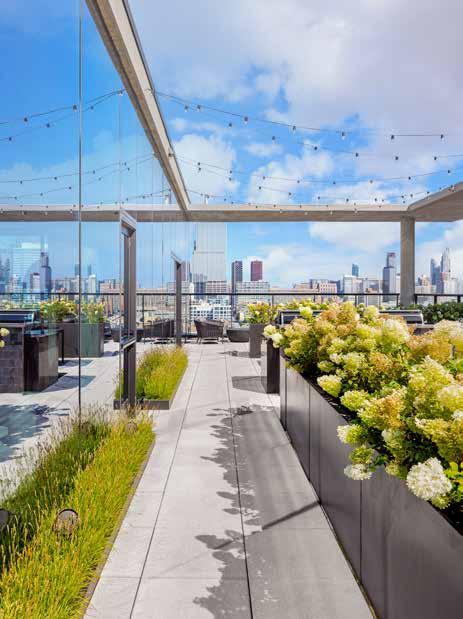
The top floor provides the greatest visual permeability offering large expanses of glass to provide panoramic views of the city skyline. A sky lounge, game room and demonstration kitchen as well as two outdoor terraces give residents the opportunity to interact with each other while also providing more intimate spaces to unwind.
A full-service fitness center and yoga studio are located on the top level with unobstructed views. In addition, responding to the way many people now live and work, residents can more formally work from home in coworking space with private rooms available for their use.
Finally, the team knew that it was imperative that the new development encourage residents to explore the West Loop’s abundant green spaces. With a neighborhood Walk Score of 94 and a Bike Score of 93, we wanted to discover neighborhood parks, such as Union Park on Randolph Street, Skinner Park on W. Adams, Mary Bartelme Park on S. Sangamon St., and Heritage Green Park on W. Adams a breeze.
Completed in April of 2023, Sage West Loop offers an extraordinary living experience in a dynamic neighborhood brimming with culture, culinary delights and career prospects. A development like this cannot be judged by pure economic success. What I do is about making special places. I want to set a tone and create an environment that leads people to make new friends and dear memories. It’s about contributing something back to the city that we love and believe in.
As Executive Director of Architecture, Demetrios Stavrianos brings more than three decades of experience to KTGY’s growing multifamily, residential, and mixed-use portfolio. Mr. Stavrianos is an accomplished leader with architectural design capabilities, drawing from his previous experience as lead designer and residential studio director to build collaborative teams.
116 COMMERCIAL CONSTRUCTION & RENOVATION — ISSUE 2, 2024




A Customer Experience You Can Trust BV DRIVES PROGRAMS FORWARD CONSISTENTLY: FOR MORE INFORMATION BUREAU VERITAS | BVNA.COM BLAKE BROSA, EXECUTIVE VICE PRESIDENT | BLAKE.BROSA@BUREAUVERITAS.COM | 800.733.0660 EXT. 4132 RENOVATIONS CONSTRUCTION MANAGEMENT PROGRAM ROLLOUTS TURNKEY PROJECTS PAVING EVALUATIONS CONDITION & ASSET SURVEYS ADA PROGRAMS BRANDING / REBRANDING BOPIS PROGRAMS PERMITTING 3DVR & AS-BUILTS ALTA/SITE PLANS SITE INVESTIGATION REPORTS EV CHARGING BUREAU VERITAS OFFERS SINGLE SOURCE SOLUTIONS FOR REMODELS & PROGRAM ROLLOUTS AUTO | BANKING | C-STORE | EV CHARGING | GROCERY | HEALTHCARE | LOGISTICS | RESTAURANT | RETAIL CIRCLE NO. 47


CIRCLE NO. 48

CIRCLE NO. 49
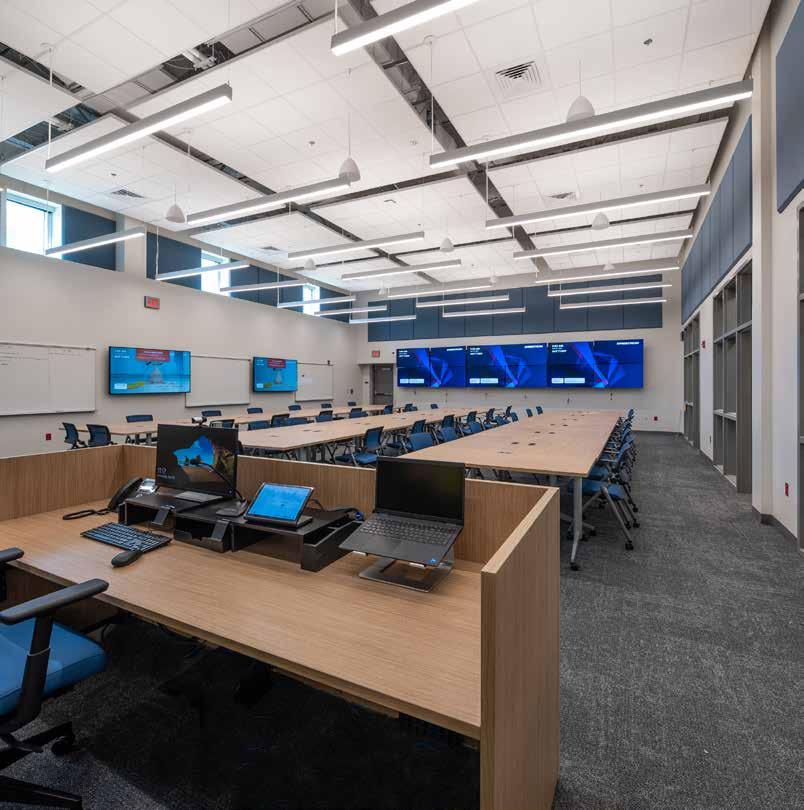
Into the Triangle
Creating a modern and sustainable emergency operation center ALSO COVERING LOCAL, STATE & REGIONAL PROJECTS AND FACILITIES
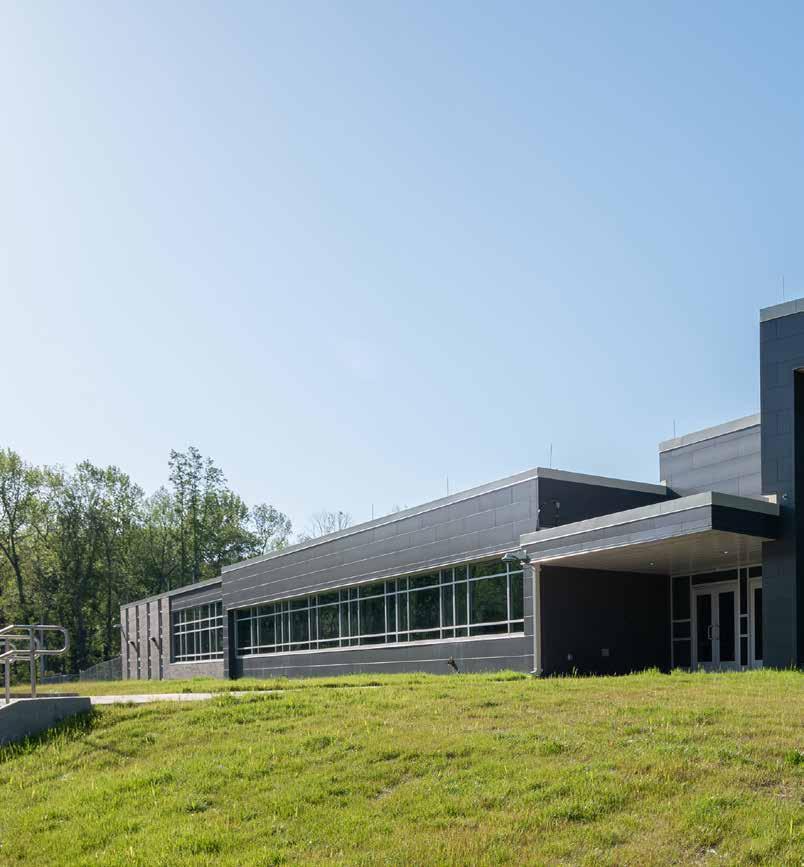
Into the Triangle
Creating a modern and sustainable emergency operation center
By Stephen Devon
Chatham County, North Carolina has quickly become one of the fastestgrowing regions in the state, tracking steady population increases every year for the last 12. Seated at the heart of the Research Triangle, Chatham County long served as a quiet suburb, but its proximity to outdoor recreation and urban amenities has created a consistent draw for transplants particularly in the last few years.
122 COMMERCIAL CONSTRUCTION & RENOVATION — ISSUE 2, 2024
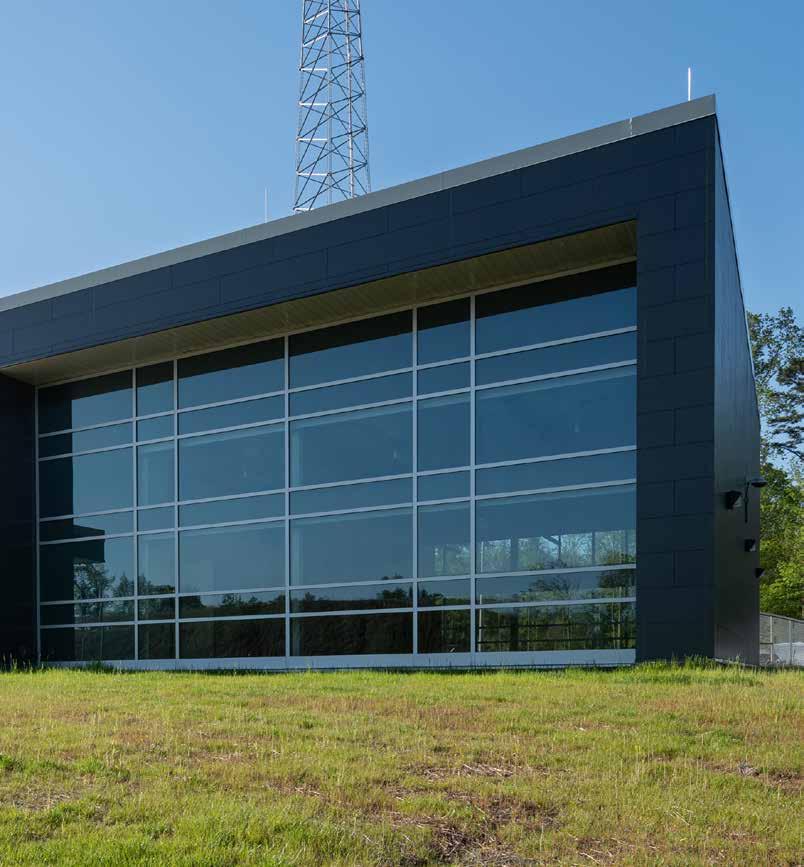
123 ISSUE 2, 2024 — COMMERCIAL CONSTRUCTION & RENOVATION
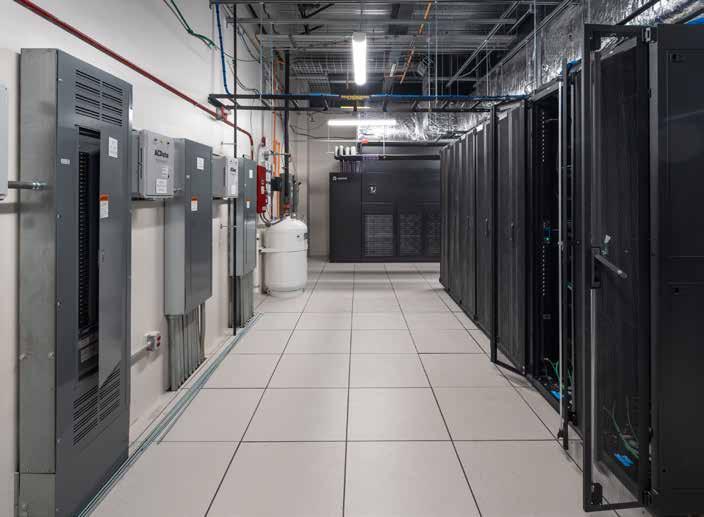
From 2019 to 2020, alone, the population grew by 3% and county officials estimate those numbers to double from 76,285 to 152,570 residents by the year 2035.
This rapid and substantial jump in population has prompted immediate and strategic responses from local authorities, who have been quick to recognize the urgent need to fortify essential infrastructure such as roads, schools, and hospitals to accommodate and prepare for the influx of new residents. This proactive approach aims to ensure that the county's development aligns seamlessly with its new population.
As part of these essential improvements, RMF Engineering, in collaboration
with SCHRADERGROUP, was responsible for Chatham County's new Emergency Operations Center (EOC), a state-of-theart, new-construction facility designed to centralize emergency services and enhance the county's response reach in a crisis.
RMF provided comprehensive mechanical, electrical, and plumbing solutions for the new center, bringing expertise in energy management, HVAC, lighting, security, fire protection, and access control engineering. Leveraging its experience in complex utility generation, storage, and distribution projects, RMF also designed an extensive duct bank system to support the new EOC's IT demands, working with local utility provider,
The Design
Located on a purpose-bought site intended to consolidate Chatham County's municipal buildings, the cutting-edge, new facility integrates the operations of the county’s Emergency Management and Emergency Communications Agencies, providing dedicated spaces for briefings, call center operations, training, and essential amenities.
SCHRADERGROUP's modern and sleek architectural design focused equally on the important job of the center to serve Chatham County in times of crisis and on
Duke Energy, for electrical power provision and communications cabling to the site.
124 COMMERCIAL CONSTRUCTION & RENOVATION — ISSUE 2, 2024
CIRCLE NO. 50
the wellbeing of its staff. Recognizing the considerable amount of time EOC personnel spend indoors, often seated at computer screens for the majority of their workdays, SCHRADERGROUP's design incorporated expansive aluminum windows positioned around the building to capture as much natural light as possible.
The layout prioritized well-lit hallways, inviting break rooms and quiet spaces, enhancing the aesthetic appeal of the facility while underscoring the critical importance of its staff being as well cared for as the community.
The program was organized such that the ancillary building and a portion of the office spaces are rated for winds up to 200 miles per hour, while the heart of the EOC––the IT room and Operations Center––is hardened to withstand even greater wind speeds to protect its most critical infrastructure. Consequently, the design ensures that no matter the emergency, Chatham County's new EOC will remain online and fully functional in service to its residents.
Flexible Redundancy
RMF's design for the building's MEP systems not only accounted for day-to-day
The layout prioritized well-lit hallways, inviting break rooms and quiet spaces, enhancing the aesthetic appeal of the facility while underscoring the critical importance of its staff being as well cared for as the community.
RMF and SCHRADERGROUP worked together to ensure the resilience of the center––which must withstand the rigors of extreme weather conditions and natural disasters, tornadoes, floods, hurricanes, lightning strikes, and snow and ice storms. The team worked through multiple layers of redundancies for its utilities, as well as its technology and data infrastructure, to appropriately plan and size the architecture for the equipment that would be required to support both its primary and backup mechanical, electrical and distribution systems.
The resulting site included both a main building and an ancillary structure, designed to house emergency supplies, vehicles, and equipment.

maintenance and emergency operations, but also for Chatham County's future growth needs. To ensure the facility remains operational in the face of the most severe weather events, RMF worked with Duke Energy to bring multiple feeders to the site, allowing the building to be served from a back-up if one experiences an outage.
Backup power is supported by a standby diesel generator and docking station, guaranteeing uninterrupted functionality. From there, the distribution system was divided and tied to a manual bypass transfer switch to allow the operations and IT areas to run independently from support spaces.
RMF's design for the uninterruptible power supply (UPS) system for the IT room and Operations Center required close coordination with IT consultants to “right-size” the battery back-up based on the power and raceway demands. RMF also incorporated battery powered lighting, which activates instantaneously during an outage.
Generators and other large backup systems can take up to 10 seconds to restore lighting, which can feel like a long time to occupants if a space goes completely dark. These battery fail-safes give the building a critical edge in responding to an emergency situation.
Each system is tied back to a grounding system that is also connected to a lightning protection system to shield the building from the effect of a strike and diminish any damage should one occur.
Providing further flexibility for the future, RMF and SCHRADERGROUP collaborated closely during the initial planning phases to allow for just enough space within the architecture to house the necessary mechanical equipment and accommodate projected growth expectations. This strategy ensures that the center is able to evolve alongside changing demographics, code updates, the introduction of new technologies, and the like.
Through these collaborative efforts, RMF Engineering and SCHRADERGROUP delivered a groundbreaking new Emergency Operations Center for Chatham County. The innovative design––which equally considers resilience, agility, wellbeing, and future expansion––stands as a testament to their collective dedication and forward-thinking approach to serving the community's needs into the future, setting a new standard in the realm of emergency response initiatives. FC
Steve Devon is a Senior Project Manager and Electrical Engineer in RMF’s Baltimore Buildings Division. He has extensive experience in electrical design for both new construction and building renovations/additions. With more than 40 years of consulting engineering experience, he has developed a diverse background in a variety of projects from conceptual design through construction phase services.
126 COMMERCIAL CONSTRUCTION & RENOVATION — ISSUE 2, 2024
Digital Marketing for Retail Contractors
Last fall, RCA we hosted a Digital Marketing roundtable, a knowledge-sharing event that featured speakers from member companies and a architecture and engineering firm that are leveraging technology and digital marketing strategies to position their companies in the retail construction market.
Our presenters were Lisa Macneir, Director of Business Development, Scheiner Commercial Group, Inc., Brie Gunderson, Marketing Director, Elder Jones, Inc., and Jessica Werkowitz, Director of Marketing & Communications, CESO, Inc. They each had a different perspective on and experience with the use of digital marketing to meet the specific needs of their company.
Macneir discussed her approach to selecting an outside consultant to boost Scheiner Commercial Group’s online name recognition and reputation. She shared her process for evaluating the type of digital marketing that would best meet the company’s needs. After considering search engine optimization (SEO), social media marketing, content marketing, email marketing, and mobile marketing, she decided to focus on social media Scheiner does not have in-house marketing; finding a partner that would extend the company’s mission was key.. In selecting a marketing company, she considered whether the company had the time to focus on Scheiner’s needs, how much time she had to dedicate to the effort, and the return on investment. Macneir selected a marketing company to work with on a 90-day trial basis. After that time, Scheiner realized a 237% increase in LinkedIn page visits, 200% increase in impressions, 40% increased in engagement, and 560 additional followers.
Macneir recommended finding a company that will provide detailed analytics, is focused on our industry and has indicated they have time to dedicate to your needs.
Gunderson explained that Elder Jones manages all of their digital marketing in-house. Her team focuses on the company’s website, social media, and email outreach. About five years ago, Gunderson oversaw a complete overhaul of the company’s website, ensuring that it made the right first impression and reflected the quality of work that Elder-Jones is dedicated to. The site is thoroughly reviewed on a quarterly basis to make sure it remains current and relevant.

Elder-Jones’ outreach plan includes a bi-weekly project feature posted to the website and social media, and social media posts about events attended, community give-backs, staff outings, holiday greetings, the company newsletter, and everyone’s favorite honorary office dog, Jax. The in-house team manages a LinkedIn page and X (Twitter) account. The company has realized a 600% increase in social media followers since 2018. Gunderson noted, “Our greatest success is on LinkedIn. That’s where businesses are going to connect.” She also noted that posts that feature clients are good for relationship building.
Gunderson shared some best practices, including connecting your website with your social media and showing social fields on your website; including hashtags to boost exposure; tagging clients; sharing client posts; and sharing the links with staff so they can like/comment/ share to amplify the messages. Gunderson works closely with project managers to stay up to date on project status and keeps in touch with the office staff to learn about company milestones and accomplishments.
Werkowitz talked about working through the “noise” of digital marketing to determine what will work best for you; one size does not fill all. Werkowitz’s advice is a think audience first approach to shape the framework of your strategy. CESO focused on 12 markets and when developing strategy they define the target audience, develop an understanding of their needs, outline solutions for challenges, and then position the company as a trusted source of information.
“One of the key initiatives for any successful digital strategy is your website,” said Werkowitz.
RCA’s mission is to promote professionalism and integrity in retail construction through industry leadership in education, information exchange, and jobsite safety.
INSIDE THIS ISSUE: WINTER EDITION • 2024
President’s Message pg 3 Member Directory pg 4-5 New Advisory Board Members pg 6 RCA 2024 Regional Events pg 7


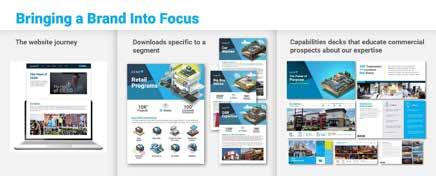
She shared CESO’s structure, which includes a focus on thought leadership and project examples to demonstrate expertise. CESO’s team ensures the company’s visual and verbal messaging are consistent and that all materials share the same brand aesthetic.
LinkedIn is the only social media platform that CESO uses. The marketing team has a welldefined content calendar that allows them to be intentional with their posts, be highly organized,
and to avoid redundancies. Analytics allow them to see detailed information about the people who are interacting on LinkedIn and visiting the website. Werkowitz said CESO has started to focus on video as an integral part of their digital strategy, which can draw more attention than written information.
A recording of this session is available to members in the members only section of the RCA website.
• Funding at your fingertips: Instantly add or remove funds from cards, whenever you need to.
• Instant card issuance: Equip your team quickly and securely, no matter where they are.


WINTER EDITION • 2024 NEWSLETTER 2
to ever y thing on site at any hour, even at 3am. cmi-usa.com 800-915-9002 Commitment to adjust to the demands of your jobs. Not the other way around. Proactive support, consistenc y, and trademark transparenc y.
Access
0000 0000 0000 0000 0000 0000 0000 00/00 00/00 JOHN Q CUSTOMER JOHN COMPANYCUSTOMER NAME COMPANY NAME
• Streamline per diem: No more cash handling or reimbursement hassle.
Learn
Maximize per diem efficiency with the CommercePayments® Prepaid Expense Card program. CommercePayments® solutions are provided by Commerce Bank. WF1855150 Retail Contractors Assoc PEC ad 3.375x4.875.indd 1 1/19/2024 12:40:05 PM
more at commercebank.com/expensecard

President’s Message
Eric Handley, COO., William A. Randolph, Inc. (RANDOLPH)

Eric Handley
Starting a new year is always an exciting time, as we have an opportunity to reflect on the past year while making new plans and setting goals for the year to come. Getting focused and motivated to head into the new year can be a challenge, especially after the holidays, but it is such an important part of making the personal and professional change that is necessary.
ADVISORY BOARD
Randy DanielsonOpus Development Company, LLC
Jon Hostasa - CASEY’S
Jason Kraus - Kohl’s
Jeffrey D. Mahler, AIAOnyx Creative
Stahler McKinney - FMI
COMMITTEE CHAIRS
CONSTRUCTION TRAINING
David Brown
LEGISLATIVE/REGULATORY
Jay Dorsey
MEMBERSHIP RECRUITMENT & RETENTION
Denise Doczy-Delong
Jason Miller - JCPenney Company
John Polzer - Duane Morris LLP
Steven R. Olson, AIA - CESO, Inc.
Paul Robinson - ConstructReach
Brad Sanders - bartaco
PROFESSIONAL DEVELOPMENT
Tim Aubel
SPONSORSHIP AND MEMBER BENEFITS
Anthony Graves
WORKFORCE DEVELOPMENT
Eric Berg
Hunter Weekes
Our Workforce Development and Construction Training Committees are working on very impactful events and training that will be made available to member companies.
Our individual companies all face significant challenges in recruiting talent, training and retaining our existing teams, and developing future generations of skilled trades and construction professionals. The RCA is taking on these challenges and intends to leverage the strength and broad representation of our organization to make a difference and promote the industry. Our Workforce Development and Construction Training Committees are working on very impactful events and training that will be made available to member companies and we look forward to providing more information about these initiatives at the annual conference.
Speaking of the conference, this year’s agenda and speakers are once again top notch. Last year we had record attendance and positive feedback on the content and format. This year, we have taken the suggestions that were made and have done our very best to make this event even better. I strongly encourage you to attend and to bring a broad cross section of your company as there is something for everyone to take away from this meeting.
It’s an exciting time to be a part of the RCA. We have newly elected board members, new advisory board members, new committee members, and new member companies that will all be working together to put in motion the ambitious plans and goals that the RCA has set to accomplish this year.
You know the saying, “If it doesn’t challenge you, it won’t change you”. I look forward to a year full of taking on our industry challenges and working together to make the necessary changes for our companies and the RCA to thrive in 2024.

OFFICERS
President
Eric Handley
William A. Randolph, Inc.
Vice President
Justin Elder
Elder-Jones, Inc.
BOARD OF DIRECTORS
2025 Timothy Aubel Rectenwald Brothers Construction, Inc
Secretary/Treasurer
Timothy Aubel Rectenwald Brothers Construction, Inc.
Immediate Past President
Ray Catlin Threecore LLC
PAST PRESIDENTS
David Weekes 1990-1992
W. L. Winkel 1993
Robert D. Benda 1994
John S. Elder 1995
Ronald M. Martinez 1996
Jack E. Sims 1997
Michael H. Ratner 1998
Barry Shames 1999
Win Johnson 2000
Dean Olivieri 2001
Thomas Eckinger 2002
James Healy 2003
Robert D. Benda 2004-2006
K. Eugene Colley 2006-2008
Matthew Schimenti 2008-2012
Art Rectenwald 2012-2014
Mike Wolff 2014-2016
Robert Moore 2016-2017
Brad Bogart 2017-2018
Rick Winkel 2018-2019
Steve Bachman 2019-2021
Ray Catlin 2021-2023
WINTER EDITION • 2024 3
Inc. 2025 Eric Berg Gray 2026 Andy Bohon Westwood Contractors 2024 David Brown Tri-North Builders 2025 Ray Catlin Threecore LLC 2025 Denise
Singleton Construction, LLC 2024 Jay Dorsey Triad Retail Construction 2026 Justin Elder Elder-Jones, Inc. 2026 Anthony Graves Graves Construction 2025 Eric Handley William A. Randolph, Inc. 2024 David Martin H.J. Martin & Son, Inc. 2024 Mike Sullivan Sullivan Construction Company
Weekes
Inc. 2026
Inc.
2026 Steve Bachman Retail Construction Services,
Doczy-Delong
2024 Hunter Weekes
Construction,
Rick Winkel Winkel Construction,
NEWSLETTER
RCA members must meet and maintain a series of qualifications and are approved by the Board of Directors for membership. They have been in the retail construction business as general contractors for at least five years; agree to comply with the Association’s Code of Ethics and Bylaws; are properly insured and bonded; are licensed in the states in which they do business; and have submitted letters of recommendation.
WINTER EDITION • 2024
4
COMPANY CONTACT PHONE STATE EMAIL MEMBER SINCE Acme Enterprises, Inc. Jeff Lomber 810-499-7127 MI jlomber@acme-enterprises.com 2009 Atlas Building Group Brian Boettler 636-368-5234 MO bboettler@abgbuilds.com 2017 Bogart Construction, Inc. Brad Bogart 949-453-1400 CA brad@bogartconstruction.com 2008 Buildrite Construction Corp. Bryan Alexander 770-971-0787 GA bryan@buildriteconstruction.com 2013 Buch Construction Greg Kozero 301-369-3500 MD gkozero@buch.us.com 2022 Commercial Contractors, Inc. Kenneth Sharkey 616-842-4540 MI ken.t.sharkey@teamcci.net 1990 Commonwealth Building, Inc. Chris Fontaine 617-770-0050 MA cfontaine@combuild.com 1992 Connor Construction, LLC Benjamin Connor 856-599-1765 NJ bconnor@connorconstructionllc.com 2021 Construction One, Inc. Bill Moberger 614-235-0057 OH wmoberger@constructionone.com 2015 David A. Nice Builders Brandon Nice 757-566-3032 VA bnice@davidnicebuilders.com 2011 De Jager Construction, Inc. Dan De Jager 616-530-0060 MI dandj@dejagerconstruction.com 1990 Desco Professional Builders, Inc. Bob Anderson 860-870-7070 CT banderson@descopro.com 1995 Diamond Contractors Lori Perry 816-650-9200 MO loriperry@diamondcontractors.org 2015 Division 9 Commercial Inc. Cheryl Montour 770-919-9941 GA cmontour@division9inc.com 2021 DLP Construction Company, Inc. Dennis Pigg, Jr. 770-887-3573 GA dpigg@dlpconstruction.com 2008 E.C. Provini, Co., Inc. Joseph Lembo 732-739-8884 NJ jlembo@ecprovini.com 1992 Eckinger Construction Company Philip Eckinger 330-453-2566 OH phil@eckinger.com 1994 EDC Christopher Johnson 804-897-0900 VA cjohnson@edcweb.com 1998 Elder-Jones, Inc. Justin Elder 952-345-6069 MN justin@elderjones.com 1990 Encore Construction, Inc. Joe McCafferty 410-573-5050 MD joe@encoreconstruction.net 2018 Engineered Structures, Inc. Mike Magill 208-362-3040 ID mikemagill@esiconstruction.com 2016 FMGI Inc. Darin Ross 678-903-2200 GA darin.ross@fmgi-inc.com 2022 Fortney & Weygandt, Inc. Mitch Lapin 440-716-4000 OH mlapin@fortneyweygandt.com 2013 Fred Olivieri Construction Company Dean Olivieri 330-494-1007 OH dean@fredolivieri.com 1992 Frontier Building Corp. Andrew Goggin 305-692-9992 FL agoggin@fdllc.com 2018 Fulcrum Construction, LLC Willy Rosner 770-612-8005 GA wrosner@fulcrumconstruction.com 2014 Go Green Construction, Inc. John Castellano 412-389-2577 PA john@ggc-pgh.com 2017 Graves Construction Anthony Graves 949-467-1799 CA anthony@gravesconstruction.com 2022 Gray Robert Moore 714-491-1317 CA ramoore@gray.com 2005 Groom Construction Co., Inc. Dwight Groom 781-592-3135 MA dwgroom@groomco.com 2023 H.J. Martin & Son, Inc. David Martin 920-494-3461 WI david@hjmartin.com 2016 Hardesty & Associates Scott Hardesty 949-723-2230 CA scott@hardestyassociates.com 2020 Harmon Construction, Inc. William Harmon 812-346-2048 IN bill.harmon@harmonconstruction.com 2017 Healy Construction Services, Inc. James Healy 708-396-0440 IL jhealy@healyconstructionservices.com 1996 Immel Construction Pete Smits 920-468-8208 WI psmits@immel-builds.com 2018 International Contractors, Inc. Bruce Bronge 630-834-8043 IL bbronge@icibuilds.com 1995 JAG Building Group Matt Allen 239-540-2700 FL matta@jagbuilding.com 2019 James Agresta Carpentry Inc. James Agresta 201-498-1477 NJ jim.agresta@jacarpentryinc.com 2013 Jirsa Construction Jennifer Jirsa 847-836-1321 IL jjirsa@jirsaconstruction.com 2022 Kerricook Construction, Inc. Ann Smith 440-647-4200 OH ann@kerricook.com 2012 Lakeview Construction, Inc. Kent Moon 262-857-3336 WI kent@lvconstruction.com 1998 M. Cary, Inc. Bill Tucker 631-501-0024 NY btucker@mcaryinc.com 2014 Management Resources Systems, Inc. Doug Marion 336-861-1960 NC dmarion@mrs1977.com 1992 Marco Contractors, Inc. Martin Smith 724-741-0300 PA marty@marcocontractors.com 1994 Market Contractors Kerry Lobbestael 503-255-0977 OR kerryl@marketcontractors.com 2019 National Contractors, Inc. Michael Dudley 952-881-6123 MN mdudley@ncigc.com 2018 Pinnacle Commercial Development, Inc. Dennis Rome 732-528-0080 NJ dennis@pinnaclecommercial.us 2012 Prime Retail Services, Inc. Donald Bloom 866-504-3511 GA dbloom@primeretailservices.com 2014 R.E. Crawford Construction LLC Jeffrey T. Smith 941-907-0010 FL jeffs@recrawford.com 2011 RAYWEST DESIGNBUILD Greg West 910-824-0503 NC greg.west@raywestdesignbuild.com 2021 Rectenwald Brothers Construction, Inc. Art Rectenwald 724-772-8282 PA art@rectenwald.com 1996 Retail Construction Services, Inc. Stephen Bachman 651-704-9000 MN sbachman@retailconstruction.com 1998 Retail Contractors of Puerto Rico Sean Pfent 586-725-4400 MI spfent@rcofusa.com 1996 Right Choice Development & Construction Danielle Wright 832-567-9648 TX danielle@rightchoicedev.com 2023 Russco, Inc. Matthew Pichette 508-674-5280 MA mattp@russcoinc.com 1995 Sachse Construction and Development Corp. Jeff Katkowsky 248-647-4200 MI jkatkowsky@sachseconstruction.com 2009 Scheiner Commercial Group, Inc. Joe Scheiner 719-487-1600 CO joe@scheinercg.com 2012 Schimenti Construction Company, Inc. Matthew Schimenti 914-244-9100 NY mschimenti@schimenti.com 1994 RCA Membership (Continued on page 5)

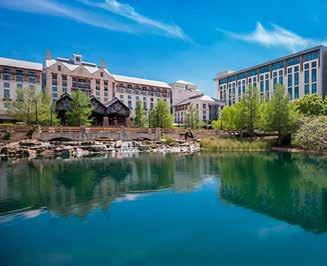

WINTER EDITION • 2024 5 Visit retailcontractors.org to view the profile of each RCA member company. Click on “Find a Contractor” on the home page to search the member list. Please notify the RCA Office (800-847-5085 or info@retailcontractors.org) of any changes to your contact information. Shames Construction Co., Ltd. Carolyn Shames 925-606-3000 CA cshames@shames.com 1994 Singleton Construction, LLC Denise Doczy-Delong 740-756-7331 OH denisedelong@singletoncontruction.net 2012 Solex Contracting Gerald Allen 951-308-1706 CA jerry@solexcontracting.com 2015 Sullivan Construction Company Amanda Sullivan 954-484-3200 FL amanda@buildwithsullivan.com 2012 Taylor Brothers Construction Company, Inc. Jeff Chandler 812-379-9547 IN Jeff.Chandler@TBCCI.com 2014 TDS Construction, Inc. Robert Baker 941-795-6100 FL inbox@tdsconstruction.com 1994 Thomas-Grace Construction, Inc. Don Harvieux 651-342-1298 MN don.harvieux@thomas-grace.com 2012 Threecore, LLC Ray Catlin 972-800-2910 OH ray.catlin@threecorellc.com 2021 Tilton Pacific Construction Robert Schroeder 916-630-7200 CA rschroeder@tiltonpacific.com 2023 Tom Rectenwald Construction, Inc. Aaron Rectenwald 724-452-8801 PA arectenwald@trcgc.net 2010 Trainor Commercial Construction, Inc. Brian Trainor 415-259-0200 CA brian.trainor@trainorconstruction.com 2012 Tri-North Builders, Inc. David Brown 608-204-7227 WI dbrown@tri-north.com 2015 Triad Retail Construction Jay Dorsey 281-485-4700 TX j.dorsey@triadrc.com 2013 Vision General Contractors of GA, LLC Tony Durand 770-769-4674 SC tonyd@viscongc.com 2021 Warwick Construction, Inc. Walt Watzinger 832-448-7000 TX walt@warwickconstruction.com 2008 Weekes Construction, Inc. Hunter Weekes 864-233-0061 SC hweekes@weekesconstruction.com 1990 Westwood Contractors, Inc. Mike McBride 817-302-2050 TX mikem@westwoodcontractors.com 1990 William A. Randolph, Inc. Tony Riccardi 847-856-0123 IL tony.riccardi@warandolph.com 2011 Winkel Construction, Inc. Rick Winkel 352-860-0500 FL rickw@winkel-construction.com 1990 Wolverine Building Group Michael Houseman 616-949-3360 MI mhouseman@wolvgroup.com 2012 Woods Construction, Inc. John Bodary 586-939-9991 MI jbodary@woodsconstruction.com 1996 RCA members receive up to 35% off the standard GC conference rate!
New Advisory Board Members
RCA’s Advisory Board is comprised of representatives that work in retail markets including specialty, big box, restaurants and department stores; attorneys; developers; and architects/engineers. Advisory Board members are appointed by the President and serve three-year terms. During that time, they actively assist the RCA Board of Directors in identifying key industry issues and formulating policies and programs designed to positively impact those issues. A list of our current Advisory Board and the companies represented by the Advisory Board over the years can be found at retailcontractors.org/advisory-board Meet RCA’s newest Advisory Board members.
Stahler McKinney
Stahler McKinney is a senior consultant in FMI’s strategy practice. He advises a broad range of clients throughout the built environment, including contractors, architects, engineers, technology suppliers and construction materials producers.
His focus is primarily on strategic thinking and go-to market approach, helping clients make informed strategic choices and develop plans for implementation. This is accomplished primarily through a combination of market research and business analytics, including market sizing and forecasting, stakeholder interviews, financial performance evaluation and trends analysis. Stahler also works closely with a number of industry associations.
Prior to joining FMI, Stahler was a financial advisor with UBS in Charlotte, NC.

That’s why Commercial Construction & Renovation is looking for your team. Our seventh annual “CCR Project Profile Awards ” will recognize the best-of-the-best construction projects from the top down with awards for New Construction Project and Renovation Project.
Paul Robinson
Paul Robinson is founder and CEO of ConstructReach, a national workforce development consultancy that addressed the underrepresentation of minorities within the construction and design industry. ConstructReach partners with educational institutions, construction and manufacturing companies, and brands across the country to support diversity and organization health initiatives, build new talent pipelines, and create career opportunities for a young and diverse demographic.

After graduating with a degree in Construction Management from Kansas State University, Paul quickly ascended the ladder at Target Corporation to the position of Construction Project Manager. In 2012, he, his wife, and growing family, decided to move home to lead ministry and be tangible examples in their St. Louis, MO community. Shortly afterwards, construction leadership at Target reached out to Paul to assist in addressing its construction workforce development needs, and ConstructReach was founded.

WINTER EDITION • 2024 NEWSLETTER 6
the best takes a team effort.
to ccr-mag.com/category/advertising-elementor
your
David
publisher,
how do you
your
nominated?
Submit all images for award entries to: https://spaces.hightail.com/uplink/BOC Deadline to submit form: March 15, 2024
your project have what it takes?
Being
Go
Send
nominations forms to
Corson,
at davidc@ccr-mag.com. So,
get
project
>
Does
RCA 2024 Regional Events
These regional networking events bring together RCA members, sponsors, benefit providers, and other supporters. There is no fee to attend these events, but we ask that you register to confirm your spot.

April 11 | Charlotte
Hosted by RCA & Little Diversified Architectural Consulting
NASCAR Hall of Fame Tour & Networking Reception
May 9 | Chicago
Hosted by RCA
AIA Boat Tour & Networking Reception
June TBD | Los Angeles
Hosted by RCA
Peterson Automotive Museum Tour & Networking Reception
July 25 | Grand Rapids
Hosted by Wolverine Construction Group Knowledge Share & Networking Reception
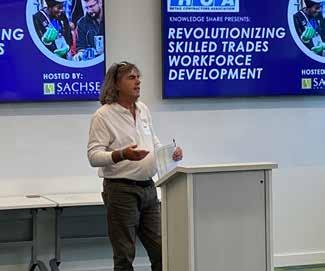
August 26 | Orlando
Hosted by RCA
Networking Reception at ICSC FL Conference
September TBD | Philadelphia
Hosted by Connor Construction Knowledge Share & Networking Reception
October TBD | Houston
Hosted by Triad Retail Construction & Warwick Construction Knowledge Share & Networking Reception
December 3 | Phoenix
Hosted by RCA & CCR Magazine
Networking Reception at ISCSC Centerbuild Conference
Dates subject to change based on venue/presenter availability. Visit the retailcontractors.org for more information and to register.
WINTER EDITION • 2024 7

















WINTER EDITION • 2024 NEWSLETTER 8 RCA Sustaining Sponsors PLATINUM 2800 Eisenhower Avenue, Suite 210, Alexandria, VA 22314 800.847.5085 • www.retailcontractors.org
SILVER
GOLD
CIRCLE NO. 51
The Art of Building Partnerships
Collaborative excellence in renovation and investment
By Leah Almog Arazi

In high-end renovation, the magic lies in the seamless collaboration of a team of dedicated professionals. Each project is a testament to the synergy between architects, designers, contractors and clients—a harmonious convergence of expertise, creativity and vision.
128 COMMERCIAL CONSTRUCTION & RENOVATION — ISSUE 2, 2024 INDUSTRY WOMEN IN CONSTRUCTION
My journey in this vibrant sector has been a narrative of such collaborations, where the amalgamation of diverse talents and perspectives creates extraordinary spaces. These endeavors are not mere construction projects but about crafting stories and dreams into tangible reality to build an IDEAL HOME that creates a better future.
Synergy of Expertise and Vision
Our projects blend our client’s aspirations, the investors’ strategic understanding, and our design and construction expertise. This synergy transcends conventional business dynamics, evolving into partnerships built on mutual respect, experience, and a passion for excellence.
We aim to create spaces that are not just functional and aesthetically pleasing but also reflections of the unique stories and aspirations of those who inhabit them, making each project profoundly personal and meaningful.
Bespoke Strategies in Boutique Investments
Our boutique investment strategy is marked by its bespoke nature. We work closely with investors, ensuring every project is financially viable and a personal expression. An example is the transformation of a historic building into a modern space, balancing the preservation of its legacy with the introduction of contemporary functionality.
This project exemplifies the power of collaboration, merging investor insights with our creative vision to create a space that honors its history while stepping boldly into the future.
Navigating Challenges with Collective Wisdom
Challenges are an integral part of our journey, each serving as a catalyst for growth and innovation. The strength to overcome these challenges lies in our partnership network’s robust trust and collaborative problem-solving. Unexpected structural issues during renovations often become opportunities for showcasing our resilience and ingenuity, thanks to our partners’ collective wisdom and support.

Celebrating Shared Success
The completion of each project is a moment of shared triumph. Seeing their vision realized, the satisfaction and joy of our clients and investors are incredibly fulfilling. These moments reaffirm our belief in the transformative power of bringing together diverse skills and visions to create something truly exceptional.
Cultivating Lasting Relationships
Beyond the completion of projects, we focus on nurturing relationships that
endure. These connections lay the foundation for future collaborations, creating buildings and communities of individuals united by shared values of excellence and innovation.
Embracing New Technologies and Continuous Learning
In an ever-evolving field, we continuously seek to expand our horizons, embracing new technologies and ideas. Leveraging cutting-edge tools and techniques enhances our collaborative efforts, ensuring our projects are innovative and impactful.
129 ISSUE 2, 2024 — COMMERCIAL CONSTRUCTION & RENOVATION

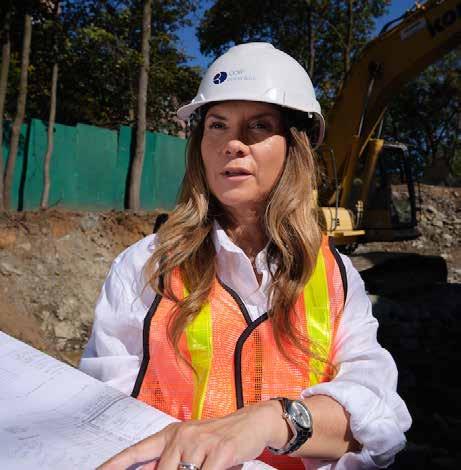
Building Spaces that Tell Stories
Each space we create is a narrative, a reflection of the dreams and stories of those who will live within its walls. We take pride in our ability to listen, interpret, and bring to life our clients’ visions, making each project a unique piece of art.
The Joy of Inclusivity and Collaboration
The joy and wonder in the eyes of every family member, especially the youngest, as they explore their new space are the highlights of our work. In these moments, we truly understand the impact of our work— not just in building structures but in creating homes that resonate with the hearts of those who dwell in them.
Inclusive Family Collaboration: A Cornerstone of Our Approach
A cornerstone of our approach is the inclusive collaboration with our clients' families. We firmly believe that every family member, including children as young as four, has a unique perspective. Their imagination and insights often inspire design elements that infuse our projects with joy and wonder.
Witnessing their excitement, like a child eagerly showing off their new room long after we have completed the project, speaks volumes more than any conventional testimonial. Their genuine delight and appreciation are the most trustworthy indicators of our success.
Crafting a Legacy through Collaboration
The art of building partnerships in renovation and investment is about uniting diverse talents and visions to craft spaces that go beyond their physical dimensions. It is a journey of collaboration, innovation and shared success—a journey towards creating a legacy of excellence that stands the test of time. CCR
Leah Almog Arazi, is founder and CEO of OOR, a general contractor in New York City specializing in high-end DESIGN BUILD renovations, building ideal Homes, boutique investments and innovating modern architecture. An entrepreneur and speaker, Arazi has 24 years of experience in the real estate industry, including acquisition, evaluation, marketing, finance, design and construction—both in the US and abroad. She holds a master’s degree in construction management from Columbia University and a bachelor’s degree in economics from the College of Management.
130 COMMERCIAL CONSTRUCTION & RENOVATION — ISSUE 2, 2024 INDUSTRY WOMEN IN CONSTRUCTION
ISA International Sign Expo® 2024 has everything you need to be successful in the sign, graphics and visual communications industry. Innovations. Creative ideas. Network opportunities. Inks and substrates. Interior, exterior, and digital signage. Wide-format printing. Wrap and vinyl. The list goes on and on!
See, demo, and buy products and services that will solve your toughest challenges. Learn from industry thought leaders and sharpen your skills. Network with old friends and colleagues and make new connections. All of this and more at ISA Sign Expo 2024! Register for FREE today using code
NO LIMITS SIGNEXPO.ORG WED.-FRI., APRIL 10-12, 2024 ORLANDO, FL
REGISTER TODAY WILL YOU BE THERE?
CIRCLE NO. 52
COMMERCIAL.
Register now!
Commercial Construction Data
The following is a brief report on new commercial construction projects.
The information is presented as a service of ConstructConnect . For more information, visit projects.constructconnect.com .
PROJECT NAME CITY PROJECT VALUE SQ. FT. CONSTRUCTION TYPE START DATE RETAIL/RESTAURANTS/QUICK SERVE: McDonald's - Glennwood Commons / Delaware Delaware, OH $1,000,000.00 3,694 New Construction Q2 2024 Popeye's / Promenade at Granite Run / Pad Site G Kennett Square, PA $773,785.00 2,537 New Construction Q2 2024 Sow to Go / Gravity Columbus, OH $500,000.00 1,200 New Construction Q2 2024 Sow to Go / GreenHouse-Short North Columbus, OH $400,000.00 700 New Construction Q2 2024 RETAIL/STORES/MALLS: The Shoppes at Wedgewood Powell, OH $20,000,000.00 43,000 New Construction Q3 2024 Wawa / Bartonsville Pocono Township, PA $2,000,000.00 6,000 New Construction Q3 2024 Walmart Supercenter #2613.249 Remodel / Bucyrus Bucyrus, OH $500,000.00 7,052 Renovation Q2 2024 AutoZone #9356 / Cinnaminson Cinnaminson, NJ $300,000.00 7,000 Renovation Q4 2024 RESIDENTIAL/MIXED USE: The Pacific Park Complex New York, NY $75,000,000.00 587,200 New Construction Q4 2024 First Avenue L-Shaped Apartment Building Columbus, OH $66,000,000.00 161,048 New Construction Q3 2024 Hillside Avenue Mixed-Use New York, NY $4,200,000.00 16,671 New Construction Q4 2024 43rd Street Multi Residential Philadelphia, PA $315,000.00 3,980 New Construction Q2 2024 HOSPITALITY: Ferncliffe Hotel Melville, NY $75,000,000.00 442,183 New Construction Q3 2024 Canopy by Hilton / State College Towne Centre State College, PA $60,000,000.00 242,370 New Construction Q2 2024 Woodspring Suites Dublin, OH $30,000,000.00 48,860 New Construction Q2 2024 Kyma Luxury Resort Hotel Ocean City, MD $14,000,000.00 45,742 New Construction Q4 2024 EDUCATION: Meinig Fieldhouse-Indoor Sports and Recreational Center (ISRC) Ithaca, NY $41,000,000.00 90,000 New Construction Q4 2024 Jackson Cheder School Jackson, NJ $10,000,000.00 55,000 New Construction Q3 2024 Brighton 14th Street Community Facility / Brooklyn New York, NY $4,800,000.00 18,605 New Construction Q2 2024 New Foundations Charter SchoolBuilding Addition and Renovations Philadelphia, PA $625,000.00 103,137 Renovation Q4 2024 MEDICAL: Johns Hopkins Medical Office and Surgery Center at Belward Phase 1 Rockville, MD $73,300,000.00 126,200 New Construction Q3 2024 Kent Avenue Mixed-Use Development New York, NY $30,000,000.00 101,000 New Construction Q3 2024 910 E Willow Grove Avenue Mixed Use Glenside, PA $5,800,000.00 18,600 New Construction Q3 2024 W Montauk Highway Medical Office Buildings Hampton Bays, NY $3,896,000.00 16,868 New Construction Q2 2024 Essex Dental Care Office Narberth, PA $230,000.00 1,149 Addition, Renovation Q2 2024 PROJECTS CCD 132 COMMERCIAL CONSTRUCTION & RENOVATION — ISSUE 2, 2024
constructconnect.com. ccsales@constructconnect.com
constructconnect.com. ccsales@constructconnect.com CIRCLE NO. 53
projects.
projects.
Advertiser Page Reader Service No. Advertiser Page Reader Service No. 3mg PSC 107 44 aim 108 45 ArcVision 105 43 Authorized 118-119 48 AVP Coating 41 19 Bradley 90 39 Bureau Veritas 117 47 Capacity Builders 125 50 CEI 35 17 Ceiling Outfitters 51 24 CESO 97 40 Commercial Construction Coffee Talk Podcast 18 11 Commercial Construction & Renovation Buyers Guide Directory 68 31 Connect Source Consulting Group 100 42 Construct Connect 133 53 Construction One 13 9 Core States Group 65 29 CPH Corp 81 34 Daich Coatings 55 26 DVM Inc. 66 30 East To West 83 35 EquipmentShare 120 49 Fishbeck 73 32 Fisher Architecture Interior Design 25 13 Gensis Lighting Solutions 3 2 Goodwin Commercial 76 33 Hunter Building Corp 39 18 Impact Security 11 8 ISA International Sign Expo 2024 131 52 Jones Architectural Creations 43 20 Kingsmen 53 25 Lakeview Construction, Inc 9 7 Mike Levin 8, 137 5, 51 National Terrazzo & Mosaic Assocation 29 14 Navien 5 3 Onyx Creative 85 36 Propane Education & Research Council 87 37 Permit.com 17 10 Poma Retail Development, Inc 88-89 38 Porcelanosa 58-59 28 Project Management Consortium (PMC) 46-47 22 Prime-net 23 12 Rockerz, Inc. 7 4 ShadeFLA 57 27 Schimenti 8, CVR4 6, 55 SignWave Elite CVR 2-1 1 Sparks 49 23 Thomas Consultants Inc. 98-99 41 Tricarico Architecture and Design PC 115 46 TrueNorth Construction 45 21 Window Film Depot CV3 54 Wolverine Building Group 31 15 ZipWall 33 16 ADVERTISER INDEX SERVICE TO OUR READERS 134 COMMERCIAL CONSTRUCTION & RENOVATION — ISSUE 2, 2024
SUBSCRIPTION SERVICES
Call 678.765.6550: Call anytime. If no one answers, leave a detailed message and be sure to include your name, phone number and/or email address so we can contact you if we have any questions.
Or write: Commercial Construction & Renovation P.O. Box 3908 Suwanee, GA 30024
Moving?: Please let us know eight weeks in advance to make sure you do not have interruption in service. Remember to include both your old and new contact information.
Duplicate Issues?: If you are receiving multiple copies of Commercial Construction & Renovation, please let us know. And please include information from both mailing labels.
A subscription to Commercial Construction & Renovation is your subscription to better-design, better-built and better-maintained facilities.
To receive FREE product information from the individual companies featured in this issue, circle the number below that corresponds to the product number. Valid through April 30, 2024. 1 2 3 4 5 6 7 8 9 10 11 12 13 14 15 16 17 18 19 20 21 22 23 24 25 26 27 28 29 30 31 32 33 34 35 36 37 38 39 40 41 42 43 44 45 46 47 48 49 50 51 52 53 54 55 56 57 58 59 60 61 62 63 64 65 66 67 68 69 70 71 72 73 74 75 76 77 78 79 80 81 All information must be provided. The publisher reserves the right to determine qualification for a free subscription. 2. Please indicate your primary job function: (choose one only) (01) Corporate Management (Owners, Partners, President, Chairman, Principal, CEO, CFO, COO, etc.) (02) Senior Management (Executive, Vice President, Director, etc.) (03) Management (04) Facilities (05) Maintenance (06) Construction (07) Architect (08) Engineer (09) Design (10) Project Management (11) Estimator (12) Operations (13) Security (14) Purchasing (15) Environmental (16) Real Estate (99) Other (please specify): P.O. Box 3908, Suwanee, GA 30024 678.765.6550 • 678.765.6551 corpcirc@ccr-mag.com INQUIRY and SUBSCRIPTION CARD • FAX to 678.765.0886 Signature Date Name (please print) Title Company Address City State Zip Phone ( ) Fax ( ) Web site E-mail Please check here if you do not wish to receive third party information on the latest products and services. Issue 2, 2024 • ccr-mag.com YES I wish to receive a FREE subscription to NO Commercial Construction & Renovation. 1. Please indicate your organization’s primary business: (choose one only) (A) Retailer (U) Craft Brewery/Distributor (N) Hospitality (Hotel, Motel, Resort, Cruise Line etc., and Hospitality Management Company) (C) Restaurant (O) Architecture Firm (G) Design Firm (P) Engineering Firm (H) Contractor/Builder/ Construction (I) Developer (Q) Management Company (K) Financial/Purchasing Firm (R) Shopping Center Owner (S) Healthcare Facility (T) Government (L) Manufacturer/Supplier (Z) Other (please specify) Would you like information on Commercial Construction & Renovation People? Yes No
check here if you would like to receive the Commercial Construction & Renovation email newsletter. Yes No Please contact us for all your subscription needs. We’re here to help! How To Reach Us Regarding Your Subscription Visit us online: 24 hours a day at www.ccr-mag.com. All the information you need to take care of your subscription account is right here. Subscription Questions?: Please email corpcirc@ccr-mag.com.
Please
135 ISSUE 2, 2024 — COMMERCIAL CONSTRUCTION & RENOVATION
Making a run for it
Since the beginning of 2024, I have been hitting the pavement every day—rain, sun, thunderstorms, freezing temps—doing the running thing. I started New Year's and two months in I haven’t missed a day.
These 60 year old legs have seen plenty of athletic fields, frozen sheets of ice, black diamond mogul runs or waist deep powder. Now, I have had both ACLs replaced, including using a hamstring in one and patella rubber band in the other, broken noses & bones and plenty of bruises. But, as they say, no pain, no gain. You must feel some pain to improve with anything you do in life.
My plan was to start slow and build up my legs with repetition to get ready for 365 days of hitting the pavement one day at a time. The beginning of February, I decided to record my thoughts while cooling off from my daily runs.

I offer my five-minute take on my day, what’s on my mind, and a positive thought to take what you want from as they are truthful and from the heart. When put into action, believing makes for positive results.
Two months into my running, I am averaging about five miles a day with a nice pace, trying to shave off some time each day and switch up my routes from flat to hills. The goal is to run five miles a day, which is 35 miles a week, 140 miles a month, or 1,680 miles for the year.
That’s walking from Atlanta to Denver, give or take. You could fly there in three hours, but you wouldn’t get to see all the sights on the way.
Two months into my running, I am averaging about five miles a day with a nice pace, trying to shave off some time each day and switch up my routes from flat to hills.
It’s actually very rewarding, as well as soothing, to push myself. It has become a great way to break up the morning, mid-day, late afternoon or evening. It also has been a strategic time to reflect, clear my mind and think about what there is to accomplish. Did I do my best? Was there a better way? Then, I can take what I learned, better or worse, and place it in my knowledge vault for the future.
Sure, there have been days I wanted to blow it off. The day you have that feeling is the day you really need to get it done. Now I am on my mission to plan each day to get this daily activity completed as my body craves that adrenaline rush of breathing hard, sweating, followed by a nice cool down. I will need to come up with a catchy title when I merge these videos into one long movie on disc for the history books.
So, as we finish off Q1 and begin Q2, do your best and forget the rest. Live in the moment, as there is only so much time in a day. Make every second count because you cannot get time back.
Here’s to a terrific rest of the year to all, good health and prosperity and, as always, Keep the Faith, “Cheers.”
Click on pic or here to view video: Inhale Confidence. Exhale Doubt. https://youtu.be/lPXgC7EgS50
136 COMMERCIAL CONSTRUCTION & RENOVATION — ISSUE 2, 2024 PUBLISHER’S PAGE by David Corson
Enhanced Glass and Window Performance
One Nationwide Source
Window Film Depot makes it easy to upgrade the performance and function of your building’s existing glass. Explore our extensive range of 3M™ window film with solutions to fit every need, including enhanced energy efficiency, safety, security, privacy, glass protection, and more. You can also create vivid graphics, wall murals, or even building wraps with our in-house custom design team and printing capabilities. Unlock your design and function possibilities with Window Film Depot, your nationwide window film and graphics source.
www.windowfilmdepot.com info@windowfilmdepot.com 866.933.3456 ANTI-GRAFFITI | DECORATIVE | ANTIMICROBIAL | SAFETY & SECURITY | SOLAR CONTROL | TRANSITIONAL CIRCLE NO. 54
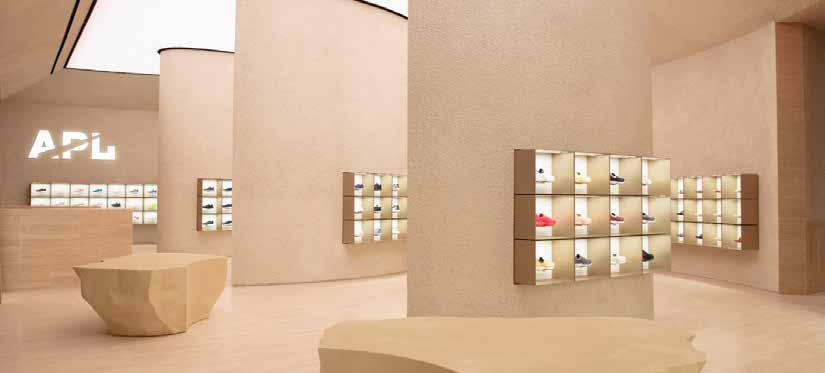
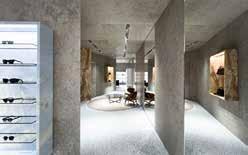
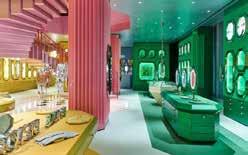
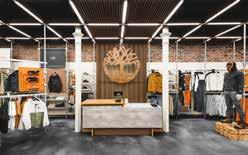

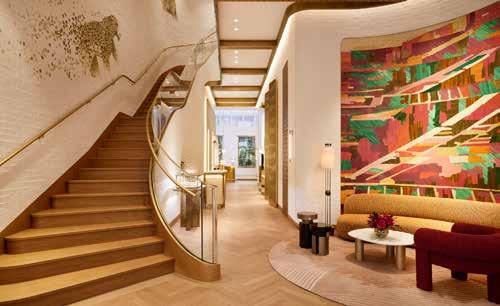
Building Iconic Brands Athletic Propulsion Labs
Swarovski Dior
SAINT LAURENT Schimenti is the preferred builder for the world’s largest retailers, Fortune 500 firms, and commercial developers. With 150+ projects annually, we take pride in our relationshipdriven approach, delivering in over 16 states.
schimenti.com America’s #1 Retail Builder. CIRCLE NO. 55
Timberland
Cartier