68 Extreme Heat and the Built Environment Inside the foundational change for public health protection and building resilience
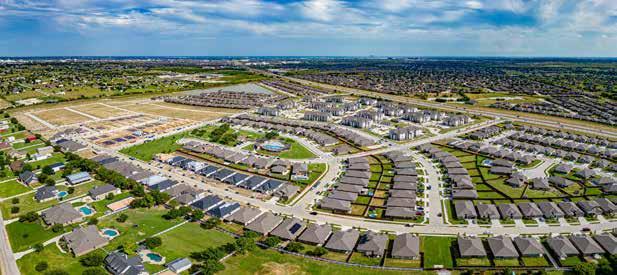
42 Building the Missing Middle Redefining affordable for-sale housing in one of Chicago’s priciest neighborhoods
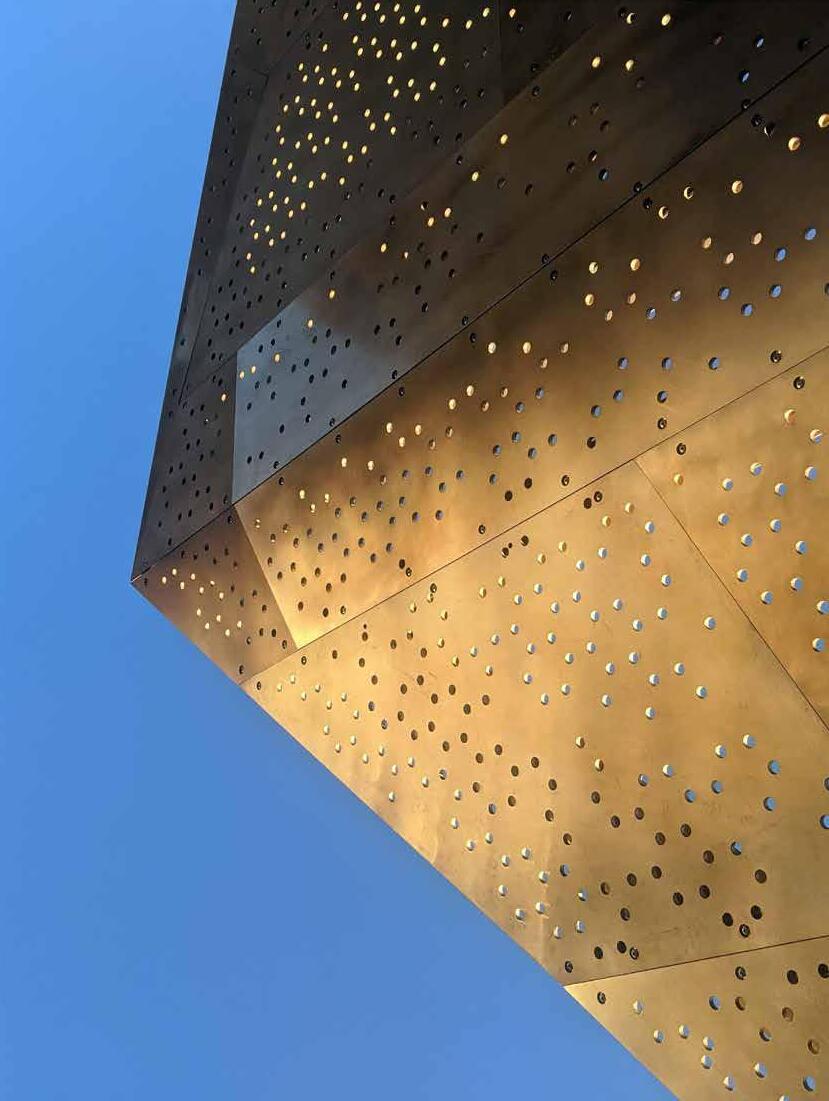
72 Sustainability takes flight New Kansas City Airport improves passenger experience while meeting energy demands
Commercial
NPE-2 condensing tankless water heaters
• Navien cascade system continuously matches operation to demand
• Meets temperature demands up to 185°F
• Redundancy allows servicing one unit, while others handle demand without interruption
• Cascade up to 32 units and common vent up to 12 units
• Navien EZNav™ multi-line intuitive control for easy set up and diagnostics
• Same day easy to install Navien Ready-Link® manifold system for wall or rack mounting
To learn more, visit Navieninc.com.
Help Wanted: Wait, what, who sent you?
Shhhhhh. Don’t tell anyone, but there is a solution being batted around about the industry’s workforce crisis. Yes, some are using the word crisis. According to a recent McKinsey & Company report, in skilled trades roles like construction, when it comes to workers like laborers, welders and electricians, for every successful new hire in the industry, there will be an additional 20 job openings to fill.
Shhhhhh. Maybe nobody will notice, right. And then, you know, there won’t be so much of “What in the #$%$# are we going to do now?” a crisis is happening.
Okay, how about this? Did you know that because of this incredible demand for workers, the average wages in manufacturing and construction have increased by more than 20% since the first quarter of 2020?
Still nothing. Yes, we still have a labor shortage. We are still trying to fill voids on jobsites. We are still working feverishly (and there are scores of good efforts out there) to recruit the next generation of workers.
But, as the industry continues to do its part, there is another solution. I know, shhhhhh. Okay, it’s technology, but as a complement.
According to a McKinsey & Company article, “Tradespeople Wanted: The Need for Critical Trade Skills in the US,” authors Ezra Greenberg, Erik Schaefer and Brooke Weddle cited several examples where manufacturing and construction companies addressed job friction while boosting productivity.
Take a heavy-equipment manufacturer that uses cobots alongside human workers to automate repetitive tasks and free up employees for more complex and analytical
work. The company reports that cobots have enhanced productivity by 40% and improved resource utilization by 50%.
Or how about an electronics manufacturer that used digital twins and remote control technologies to enable technicians to operate and debug factory equipment from anywhere in the world. The resulting increased flexibility has reduced vacancies by 25% and nearly doubled productivity.
Where we are and where we’re going as an industry when it comes to technology depends on each of us. It really does. Instead of bemoaning the fact that technology is coming for all of us, try to see how it can help.
If leveraged smartly and efficiently, technology can be a transformative resource for today’s commercial construction industry. By integrating advanced tools like Building Information Modeling (BIM), drones and project management software, we already have started the process. Innovations can be our friend, not our foe.
Let us know what you are doing and we’ll share your project profile.
Or, shhhhh...
CCR EDITORIAL BOARD
ACADEMIA
DR. MARK LEE LEVINE
Professor Burns School/ Daniels College University of Denver
ADA
BRAD GASKINS Principal The McIntosh Group
ARCHITECTS/ENGINEERS
MICHAEL MAGEE
Studio Leader Retail, Store Design Senior Associate Little
FRED MARGULIES Director of Retail Architecture Onyx Creative
STEVEN MCKAY
Managing Principal, Global Design Leader DLR Group
STEVEN R. OLSON, AIA President CESO, Inc.
CONSULTANT
GINA MARIE ROMEO Chief Heart Officer & Principal Consultant, Allied RDI
DEVELOPMENT/PROJECT MANAGEMENT
KAY BARRETT
NCIDQ, CDP Senior Vice President Cushman & Wakefield
JIM SHEUCHENKO President Property Management Advisors LLC
CHRIS VARNEY Principal, Executive Vice President Bureau Veritas
STEPHEN HEKMAN Executive VP Kingsmen Retail Services US
KEN DEMSKE Vice President Jones Lang LaSalle
GENERAL CONTRACTOR
DAVID THOMPSON Vice President TCB Construction Group LLC.
MATT SCHIMENTI President Schimenti Construction
JOHN STALLMAN Marketing Manager Lakeview Construction
JEFFREY D. MAHLER RCA Advisory Board Member
HEALTHCARE
CLINTON “BROOKS” HERMAN, PMP Principal Facilities Project Manager, MD Anderson Cancer Center
HOSPITALITY
PAM GOODWIN Goodwin Advisors, LLC Goodwin Commercial The Pam Goodwin Show
GARY RALL Vice President of Design and Development Holiday Inn Club Vacations
ROBERT RAUCH Chairman Brick Hospitality
JOE THOMAS Vice President Engineering Loews Hotels
LU SACHARSKI Vice President of Operations and Project Management Interserv Hospitality
ANDY BRIGGS, CHA Managing Principal A14 Capital Management
INFORMATION TECHNOLOGY
CRAIG WEBER Director of Business Prime Retail Services, US Prime 3 Retail Canada, Inc.
REAL ESTATE
ROB ADKINS, LEED AP CDP Senior Tenant Coordinator, Retail Peterson Companies
MEGAN HAGGERTY Founder Legacy Capital Investment
RESTAURANTS
RON BIDINOST Vice President of Construction Bubbakoo’s Burritos
DAVID SHOTWELL The Wills Group Sr. Construction Manager
RON VOLSKE Development Director Focus Brands
BOB WITKEN Senior Project Manager Fox Restaurant Concepts
RETAILERS
AARON ANCELLO Facilities Asset Management Public Storage
DEDRICK KIRKEM Facilities Manager Alice + Olivia
BOB MEZA Senior Construction Project Manager Target
DAVID D. DILLON Director, Facility Standards Store Planning & Design Development Walgreens Company
JOHN COOPER Principal Executive Vice President Stormont Hospitality Group LLC
SAMUEL D. BUCKINGHAM, RS AMS CMCA President of Construction Devco Development
MARIE ANTONETTE G. WAITE Founder and CEO Finest Women in Real Estate
LAURA GROSS Retail Facilities Manager American Signature Furniture
KELLY RADFORD VP Retail Construction and Development Ascend Wellness Holdings
VAUN PODLOGAR
CEO, Owner, Founder State Permits, Inc.
NO ENTRY NO HARM
Stop Smash and Grab
Retrofit Security Glazing
DefenseLite® is a clear security shield that integrates forced entry protection seamlessly with existing doors, windows, and storefronts, providing an invisible layer designed to protect retail businesses from impending harm, vandalism, and theft.
• Unbreakable polycarbonate overglaze 250 times stronger than glass
• Framing available in a variety of standard and custom finishes
• Anti-graffiti protection available
• A cost-effective, easy-to-install solution
PROTECTION FROM SMASH AND GRAB
• Protect your property
• Protect your employees
• Protect your inventory
PROTECTION FROM VANDALISM
• Prevent looting
• Prevent vandalism
• Preserve brand integrity
DefenseLite® is a patented, retrofit glazing system designed for advanced forced entry protection. Manufactured by Impact Security, this proven technology provides a cost-effective solution, installed by authorized dealers located throughout North America. To learn more, visit www.defenselite.com
Contact
AroundtheIndustry
HOSPITALITY
Marriott International
Marriott International will open three new hotels in Mexico, including the 216-room Sheraton Guadalajara Expo, which will feature a spa, a club lounge and business centers. The other properties are the 154-room Delta Hotels Puebla Mexico, including over 5,000 square feet of event space, a restaurant and a bar, and the Aloft Guadalajara Country Club, a 142-key hotel catering to business travelers and groups.
Four Seasons
Construction is set to start this year on a Four Seasons hotel and condo resort in Telluride, Colorado, developed by Merrimac Ventures and Fort Partners. The $1 billion venue, slated to open in about two to three years, will include 52 guestrooms with an average rate of over $1,000 per night and 68 residences that will each be sold for more than $2 million.
Sonesta ES Suites
Sonesta International Hotels has chosen Port Charlotte, Fla., as the location of the first newbuild property in its upscale Sonesta ES Suites brand. The 117-room extended-stay hotel is expected to debut in spring 2025 and will offer an outdoor pool, a market pantry, a fitness center, breakfast and dining services and a guest laundry.
Marriott Vacation Clubs
The Marriott Vacation Clubs has introduced a City Collection of urban timeshares in New York, Boston, Bangkok, San Diego, San Francisco, Washington, DC, and South Beach, Florida. The portfolio will expand with properties in Savannah, Georgia; Waikiki, Hawaii; and Charleston, South Carolina.
Moxy Hotels
The new 151-room Moxy Madison Downtown in Madison, Wisconsin, offers an event room, second-story lounge, bar, fitness center and Rockstar Suite, along with a restaurant set to open this summer. The property, part of NCG Hospitality’s portfolio, is the state’s first Moxy hotel.
B&B Hotels
B&B Hotels, a European midscale brand with properties in 17 countries, is debuting its first US property, a 218-room hotel set to open near Universal Studios in Orlando, Florida through a partnership with Batipart. B&B, which owns 770-plus properties, plans to expand its portfolio to 3,000 hotels in the next 10 years.
Radisson Hotel Group
Radisson Hotel Group has become the fastest-growing hotel company in Africa over the past three years and is continuing its expansion with
five new properties this year. Among them are the 138-room Radisson Safari Hotel Hoedspruit in South Africa, the company’s first safari hotel, the Radisson Hotel Casablanca Gauthier in Morocco and the Radisson Collection Resort Marsa Alam Port Phoenice in Egypt.
Resorts World
Malaysia-based Genting Group unveiled a $5 billion plan to expand its Resorts World casino complex in the New York City borough of Queens. The plan, which depends on securing one of three upcoming casino licenses, includes a hotel, an entertainment venue and community space, as well as the expansion of the existing casino.
Marriott International
The new 200-room JW Marriott St. Maarten Beach Resort & Spa, located on St. Maarten’s Dawn Beach, features four restaurants, a fitness center, 30,000 square feet of event space and the Hibiscus Spa. The property is Marriott International’s first luxury hotel to open on the Dutch Caribbean island.
First Everhome Suites
A 115-room Everhome Suites from Choice Hotels International has come to Newnan, Georgia on a dual-branded property with WoodSpring Suites, with both hotels owned by Turnstone Group. The new hotel is the first East Coast location for the midscale extendedstay brand, which was introduced in January 2022.
Oberoi Group
Oberoi Group plans to launch a luxury brand featuring small boutique hotels in scenic locales. The concept will be part of the company’s goal to open 50 new hotels by 2030, doubling its overall room count.
RESTAURANTS
Tim Hortons
Canadian chain Tim Hortons, which turns 60 this year and marks 40 years since its first U.S. location opened, is on a mission to raise its profile in America and become the “best national beverage company.” The chain is in franchise growth mode with two new formats launched in 2021 that are smaller, more efficient and lessexpensive to get up and running.
Bloomin’ Brands
Bloomin’ Brands will open up to 45 new restaurants this year and close 41 underperforming locations, and will also continue a remodeling program that resulted in more than 100 makeovers last year. The company has about 1,500 restaurants around the world under banners including Outback Steakhouse and its fast-casual spinoff Aussie Grill, as well as Fleming’s Prime, Carrabba’s Italian Grill and Bonefish Grill.
Starbucks
Starbucks debuted a new store design at Union Market in Washington, D.C., that is designed to make the cafe easier for people with disabilities to access and navigate, with an open floor plan, lower counters and other features that will be replicated in new locations going forward.
Restaurant Brands International
Restaurant Brands International, the parent of Burger King, Popeyes, Tim Hortons and Firehouse Subs, is forecasting a 40% jump in global sales between 2023 and 2028, to $60 billion. The company aims to grow to 40,000 units around the world by 2028.
Shake Shack
Shake Shack reported a 20% jump in fourth-quarter revenue as efforts including expanding to the suburbs, adding more drive-thrus and installing self-serve kiosks paid off. The chain aims to grow by 80 new units this year, with a combination of licensed agreements and company-owned restaurants.
Chick-fil-A
Chick-fil-A will expand its Canadian presence beyond Ontario this year when it opens three of 20 planned units in the province of Alberta. The chain has grown to 13 units in Ontario since opening the first in 2019 and, two years ago, it outlined plans to add seven to 10 new Canadian restaurants annually.
Yum Brands
Yum Brands could reach the 60,000-unit mark this year in its global restaurant footprint, including 30,000 KFC locations and 20,000 Pizza Hut locations.
Wendy’s
Wendy’s will invest $100 million over the next two years to grow its breakfast business and upgrade mobile apps and digital menu boards. The chain expects digital sales to hit $2 billion this year, and plans for 2025 include new digital promotions, dynamic pricing and tests of AI tools for updating menus and upselling.
Texas Roadhouse
Texas Roadhouse expects to add about 44 new company-owned and franchised units this year, and about 200 kitchens at existing restaurants will be converted to the new digital kitchen format this year.
Focus Brands
Focus Brands—the Atlanta-based parent of seven franchise brands including Cinnabon, Jamba and Auntie Anne’s—has changed its name to GoTo Foods, as part of a rebranding process that positions the company as a “platform business. The company signed 1,150 new franchise agreements last year and the rebranding will position the company to acquire additional brands and continue building existing banners in the U.S. and abroad.
RETAIL
Brooks Running
Seattle-based footwear brand Brooks Running will open its first store in China later this year, a market CEO Dan Sheridan said is “a top-10 market for running participation.” The company, which generates 85% of its revenue in the US, has long-term plans for growth in both China and Europe.
Kohl’s
Kohl’s will add in-store Babies R Us shops at 200 of its US department stores starting in August. The shops will feature a curated selection of baby gear, furniture and accessories merchandised alongside Kohl’s existing baby and children’s apparel.
Wayfair
Online furniture and home goods retailer Wayfair’s first permanent brick-and-mortar store in Illinois will feature a 90-seat restaurant called The Porch. Other examples of retailers that offer in-store eateries to drive traffic include Macy’s, Restoration Hardware and IKEA, which reports that foodservice generates around $2.5 billion in the home goods retailer’s annual sales.
Macy’s
Macy’s has opened a small-format store at Centerton Square in Mount Laurel, New Jersey, the first of two planned for this year in the state and among as many as 30 such stores it plans to open in the U.S. by next year. The 30,200-square-foot store is one-fifth the size of a full-line Macy’s store and offers immersive shopping features, as well as a selection of Macy’s private-label and market brands.
Kizik
Hands-free footwear brand Kizik plans to open three stores this summer in Minnesota, Pennsylvania and Massachusetts, with two more in the works, to bring the total store count to six by year’s end. Kizik, which expects to have 15 stores open by the end of next year, also is launching its most extensive marketing campaign through online and connected TV ads and a New York City pop-up shop.
PatBo
PatBo, a Brazilian fashion brand known for its embroidered dresses and summer styles, is courting fans in the US with a new store in Miami as part of its push to grow its direct-to-consumer sales. Florida is home to about one-third of Brazilians living in the U.S.
Boot Barn
Boot Barn’s new Vallejo, California store is its 400th location, part of the footwear retailer’s plan to open 900 U.S. stores by the end of the decade, most of which are in new or under-penetrated markets. New stores are seeing higher first-year sales volumes than the historical average.
AroundtheIndustry
Fast Retailing
Uniqlo-parent Fast Retailing plans to open its first US flagship for GU, a banner with a lower price point that’s designed to appeal to Generation Z, in New York City’s SoHo neighborhood. GU has had a presence in the city with a pop-up that opened in late 2022 to introduce consumers to the brand and test the market, and it’s also making its online store available to US shoppers.
Birkenstock
Birkenstock will expand to seven branded US stores when it opens locations in Austin, Texas and Nashville, Tennessee, this year as part of the Germany-based footwear brand’s retail expansion. Birkenstock, which went public last year, is also testing a self-service hybrid retail model that allows shoppers to independently find their own style and size with assistance from staff as needed, and the brand is also building out its digital business and wholesale partnerships.
TJX
TJX expects to expand its off-price retail banners, T.J. Maxx, Marshalls, HomeGoods, HomeSense and Sierra, by opening as many as 1,300 new stores in the US, Canada, Australia and Europe over time. The company’s wide demographic reach allows it to offer a variety of offprice merchandise across income and age groups, and it is focusing on attracting younger shoppers to align with long-term growth plans.
GROCERS
Aldi
Shoppers at an Aurora, Illinois Aldi store can now check out with ALDIgo—the retailer’s new cashier-free technology that uses
The numbers game
92
The percent of construction professionals worldwide who believe sustainable construction will make up all or part of their business within the next 5 years, according to Saint-Gobain’s Sustainable Construction Barometer study.
computer vision to allow shoppers to pay at their cart via debit or credit card or via a Grabango app or pay station and walk out without the need to scan items or wait in a checkout line. The location still offers the option of traditional checkout with a cashier.
Hy-Vee
Hy-Vee is purchasing Strack & Van Til Food Markets, a chain based in Northwest Indiana with 22 stores and 2,800 employees. Strack & Van Til will function as a subsidiary of Hy-Vee and retain its own branding, and the purchase will give Hy-Vee positioning in the eastern suburbs of Chicago.
Grocery Outlet
Grocery Outlet is launching a private-label line that will include 100 SKUs in the beverage, grocery, dairy, household and baking categories by the end of the year. The grocer will use the line to provide a unique point of differentiation that will “create another reason for customers to shop our stores beyond just the value that they provide.”
Kroger headquarters in the Cincinnati area and it is also planning to build a Marketplace location in Hamilton Township, Ohio. In addition to enhanced produce, deli, meat, seafood and sushi departments, the new store will include an apparel section, a Murray’s Cheese shop and a Starbucks.
Walmart
Walmart is both expanding its Neighborhood Market store format with a new location recently opened in Florida and one set to open today in Atlanta. The retailer is also increasing the overall size of the format’s square footage and showcasing a new layout that emphasizes its fresh options.
928
The amount, in billions, that forecasters say global business travel will hit by 2030, according to data from Research and Markets. The report also says that spending on lodging and food is expected to rise 5% annually and reach $509.8 billion by 2030.
83.4
The number, in billions, that U.S. hotels are expected to generate in federal, state and local tax revenue in 2024, an all-time high, according to the American Hotel & Lodging Association. California, New York and Nevada are expected to receive the largest share. Amid an ongoing staffing shortage, hotels are also expected to pay record salaries of $123.4 billion, compared to $118 billion last year.
Trusted by the biggest names in North America.
We’ve built across a diverse set of industries, from commercial retail to resorts to big box projects, and every single project gives us more ideas to take to the next site. Your project, our work.
We’re proud to be trusted by the world’s biggest brands again and again.
40+ years of successful projects
13,000+ pre-vetted subcontractors and vendors
1 million+ square feet constructed annually
3,775+ total projects
They said it...
“Shake Shack is famous for looking at analytics to look at things like traffic counts and median household incomes and building their cases for sites around that And then there are all these other brands that just follow them.”
— Talia Berman, Chief of Staff at Friend of Chef, on why Shake Shack has become a brand other restaurants want to follow
“We believe it’s a compelling time to invest in commercial real estate. You need to do that before the all-clear sign. People tend to wait until all the bad news works its way through the system and often that may be too late.”
— Blackstone President and COO
Jon Gray on why the state of commercial real estate means you should invest now
All about Mickey
Orlando named No. 1 summer destination for US travelers
Mickey Mouse knows. According to Allianz Partners' "Top 10 Summer Travel Destinations" survey, Orlando, Florida is expected to be the most popular domestic vacation spot for American travelers this summer, followed by Boston, Honolulu, New York and Seattle. Rounding out the top 10 for 2024 are Las Vegas, Los Angeles, Anchorage, Kahului (Maui) and Denver.
The study found that while international travel will spike 15% this summer over last year, domestic trips still make up 68% of summer itinerary bookings.
The top international destinations are Cancun, Mexico, San Jose del Cabo, Mexico and Orangestad, Aruba. And don't forget Paris, which will see a spike in traffic as it gets ready to host the Olympics this summer.
“The drive-thru model is just very appealing because that drive-thru behavior is a part of the American experience as a consumer, especially as a foodservice consumer.”
— Robert Byrne, Senior Director of Consumer Research for Technomic, on why the drive-thru coffee segment is so hot right now
Give me
a charge
IHG, EnviroSpark partner on EV charging stations
IHG Hotels & Resorts is joining forces with electric vehicle charging company EnviroSpark, which will assist in the installation of EV chargers at IHG-branded properties throughout the US and Canada.
As part of the partnership, IHG has updated its IHG One Rewards mobile app with an EV-charger search filter and mapping features. The partnership comes as more and more people are utilizing electric vehicles. Citing Goldman Sachs Research, IHG notes that EVs will make up about half of new car sales worldwide by 2035.
What’s your secret?
From speakeasies to computer access, the ‘password’ still is the big secret
What’s your secret?
From speakeasies to computer access, the ‘password’ still is the big secret
By Jon Armour
“Knock, knock.”
“Watcha want?”
“Swordfish.”
“Okay, come on in, but speak softly and don’t make a ruckus.”
Okay, we’re not in the “roaring twenties” anymore, but that dialog might be something you would hear trying to access an illegal secret bar or nightclub back in the 1920s. That same “password” was originally used by the famous Groucho Marx, well, his character Professor Wagstaff, in the movie “Horse feathers,” to gain access to a speakeasy.
Remarkedly it also was repeated and used in numerous other movies and cartoons throughout the years. Not that anyone these days is able to pick up on its origin from the Marx movie, but it’s mentioned in subsequent films and literary pieces more for posterity’s sake in
passing the cultural meaning on through generations. Like I just did here.
Other famous passwords were “Chuck Norris,” “buddy,” “tiger,” “000000,” “12345,” and so on. A modern-day hacker would eat those for breakfast. But the simplicity of those passwords back in the old days was a struggle for even the most astute problem solver.
I’d be willing to bet that someone out there in our current cyber environment is still using “swordfish” as a password for something. A home alarm, Netflix or a mail account. Fortunately, password creation protocols have evolved such that the requirements will not allow you to create such a simple structure.
In most cases. Your spouse’s birthday, an anniversary date or your
lucky numbers; throw them out. They are not allowed in the formatting of modern password creation.
Down through history, we have used passwords and passphrases to gain access to events, guard secrets, and keep people who are not “in the know” out of restricted areas and from sensitive and even illegal areas, such as a speakeasy. In ancient times a seal, badge or special token, possibly with a king, ruler or a legal entity’s insignia, gave access to these places and materials. Most often it was what you knew that got you in.
For example, a specific piece of knowledge that only a person deserving of access would know. So, it was a verbally transmitted password or phrase, not written or recorded
and often changing by command of the source. Perhaps it was something simple but only specific people would be privy to or understand what it meant.
Standing at the front door of a speakeasy guessing one password after another will likely get you thrown to the curb, but today’s hackers can hide behind their computers and type away or use algorithmic expressions to scroll thousands of password possibilities to get into your stuff. They are likely using clues that you gave them in an email, social environment or text message.
Like any criminal, they are likely going for the easy ones first. Because there are lots of people out there that still don’t understand that passwords
need to be complex to avert disaster. Most people don’t want or can’t remember complex password structures without writing them down.
Therein lies the problem. Coupled with basic human interface and with email and internet browsing, humans tend to give up information without even knowing it. And you can be sure someone is waiting and watching.
Your password or your...
As passwords become more complex and authentication moves more toward MFA and biometric measures, it is important to team with available and trusting password management resources to alleviate the struggle of multiple password management.
I’ve reached out to “LastPass,” a pioneer in cloud security technology providing award-winning password and identity management solutions, taking you back to the simple days of convenient, effortless, and easy to manage access to your secure and sensitive information.
It’s as easy as “Swordfish,” but with the necessary complexity behind the scenes to assure your privacy and security.
Michael Kosak, Senior Threat Intelligence Analyst with LastPass, says, that according to the “LastPass 2022 Psychology of Passwords” report, 89% of respondents acknowledged that using the same password or variation is a risk, but only 12% use different passwords for different accounts, and 62% always or mostly use the same password or a variation.
On that note, a separate 2023 LastPass research report found that organizations looking for budget friendly, low complexity solutions that deliver robust security for the hybrid work environment are leveraging Enterprise Password Management. With 45% of companies saying more complex identity solutions such as SSO and MFA are nice to have, they share that they do not currently have the budget or resources for these types of solutions.
There you go, No budget. Eventually, no company.
As I have reiterated time and time again, most cyberattacks are the use of legitimate credentials by threat actors. Human error, almost every time. Kosak further states these credentials are acquired through infostealer malware, third-party data breaches
means of fooling you into thinking they are a legitimate entity.
The Chinese Threat
Nation-state actors are ballooning out of control. Small and medium businesses can’t sweep budgeting for cyber security under the rug anymore. China and other nation-state threats are increasingly targeting these companies. Again, it is all about the money.
For the SMB, the affordability of adequate cyber-security measures doesn’t add into their bottom line. These companies can often be a gateway to larger corporations that they serve.
Taking one extra step in verifying the legitimacy of a caller, email or social engineering solicitation can mean the difference in keeping data secure or giving up the bank.
I have talked with several companies that have been presented with cybersecurity services as a part of an overall strategy to prevent attacks. The main response was “we’ll look at it.” And then weeks later come back and tell me “It’s just not in our budget, but we’d like a couple of cameras over the front door.” Really? The cyber criminal isn’t coming in the front door of your building, he’s coming in through the front door of your network.
Wow, the fields are ripe for cyber criminals. Their harvest of lazy and unorganized password creators will soar!
Kosak goes on to offer that nearly twothirds (65%) of respondents share that they have some type of cybersecurity education, only 31% stopped reusing passwords and only 33% create strong passwords for their work accounts. Seems to me we have a long way to go to educate users.
My take on this is that company budgeting is restricted to things that make and not spend money or secure assets. They’re not seeing the downside to that lack of financial commitment to securing their cyber environment.
(particularly when passwords are re-used across multiple accounts), and social engineering (phishing, phone calls impersonating the IT desk, or other methods).
People. Get with the program. Trust but verify.
Taking one extra step in verifying the legitimacy of a caller, email or social engineering solicitation can mean the difference in keeping data secure or giving up the bank. Literally, I’ve written previous articles about companies that have been duped out of hundreds of thousands of dollars.
Why? Because they didn’t verify the request for information, or request for changes of electronic delivery or other
Common sense evades most people making budgets where IT or cyber security are involved. The attitude is still, “do it on the cheap,” we have that executive party next month and the boss wants the best champagne.” If they keep going in that direction, they’ll be drinking Mad Dog 20/20 soon.
Last piece of advice. In an ever-increasing threat environment, where the criminals and the good guys are constantly hand-over-hand trying to “re-up” the technology, your security is actually in your hands. It is a human responsibility to create an environment of data security and to uphold policies and procedures that are in keeping with the times.
This is a tough and tedious task, don’t go it alone, invest in the software and resources to properly secure your world. And speakeasy about your cyber security, lest anyone hear your password.
Jon Armour, a contributing author to the line of design and construction publications, has 35 years of combined experience across the construction, real estate and IT infrastructure industry. He is a certified Project Management Professional (PMP), certified Construction Manager, Program Manager and a published author of a popular western genre fiction novel. He resides in Magnolia, Texas.
Student Insider
Presented by
Student Insider
Dear Skills Trade Student
While construction and technical skills are your primary focus, ConstructEDU Student Insider (CEDU) is designed to supplement your education by providing content that dives into the business of the commercial construction and renovation industry. The bi-monthly newsletter covers areas such as emerging technologies, regulatory issues and other factors shaping the diverse industry’s future. CEDU also features insights and profiles from industry thought leaders on the trends and challenges affecting the marketplace.
Delivered at no charge, we not only encourage you to make CEDU a part of your educational consumption, but also to share it with your peers.
CONSTRUCTION
Nearly 90% of skilled tradespeople satisfied with their careers
While concerns about AI replacing jobs are prevalent across industries, skilled trades professionals report feeling secure. According to Angi’s “Skilled Trades in America Report,” a staggering 90% of tradespeople are satisfied with their careers, a number that has grown since the pandemic. This high level of satisfaction stands out when compared to other industries.
EDUCATION
Suffolk teaching future construction workers tools of the trade
In May, premier construction management company Suffolk welcomed students from the ACE Mentor Program to their New York office to meet the robot dog Spot, the newest member of the company’s team. ACE is a free after-school program that connects high school students with experts from the design and construction industry.
PERSONAL DEVELOPMENT
University of Missouri-KC first in state to offer BA in Architecture
The University of Missouri-Kansas City will launch a Bachelor of Architecture program this fall. The UMKC Bachelor of Architecture program will be a five-year undergraduate degree program housed in the School of Science and Engineering. It will include courses, studio work and internships with various architectural firms in Kansas City.
Read More HERE
Howard Community College donations to support skilled
trades
Howard Community College has landed two major gifts totaling $1.2 million to support construction and programming of its Workforce Development and Skilled Trades Center (WDTC), a historic project that will break ground this fall. A Columbia-based family donated $1 million and Apple Ford Lincoln of Columbia committed $200,000 to the WDTC.
Read More HERE
in the news
Eye on the future
SARA offers zero-cost memberships for architecture students
It’s all about the next generation. The Society of American Registered Architects (SARA) understands this. That’s why it is introducing zero-cost student memberships, an initiative that aligns its long-standing mission of “Architect Helping Architect.” initiative, announced by
The establishment of the Society of American Registered Architects Student Organization (SARAS) marks a significant milestone in architectural education and community. Embracing SARA’s core value of “Architect Helping Architect,” the initiative expands its scope to include “Architect Helping Architectural Student” and “Student Helping Student.”
This will help foster a culture of support, advocacy, and mutual respect among aspiring and seasoned architects. “By offering zero-cost memberships, we aim to remove financial barriers and encourage more students to join and benefit from our community,” says SARA National President Ronnette Riley FARA. “It is the first of its kind in the industry and demonstrates our commitment to nurturing the future of architecture.”
Interested students are encouraged to contact SARA for guidance and resources. SARA promises to provide comprehensive support to ensure the successful establishment and growth of student chapters across the nation.
With this innovative approach, SARA continues to uphold its mission and pave the way for a stronger, more connected architectural community.
For more information, visit www.sara-national.org/membership.
Submissions for SARA’s National Design Awards are open
Celebrating excellence in architecture and design is all a part of the mission of the Society of American Registered Architects (SARA). To help recognize some of the country’s most prestigious designs, the annual “SARA National Design Awards Program” again will attract entries from across the country and around the world.
Awards will be given to individuals, firms, and students of architecture and allied disciplines for a wide range of categories and project types. All entrants are invited to be a part of the ceremony, which will be held at the TWA Hotel in New York City, Oct. 26, 2024.
Deadline for submissions will be Aug. 8, 2024. with award notifications sent out in September. Entry is $300 for SARA members, $400 for non members and $50 for students.
The event will be held at the TWA Hotel in New York City on October 26th.
For a complete list of categories and to submit an nomination, visit sara.awardsplatform.com.
2024 SARA California Design Awards event in Palm Springs Ready. Set. Nominate.
Cruising the Windy City
RCA riverboat tour showcases Chicago’s architectural beauty
50 buildings. 90 minutes. For more than 25 years, the Chicago Architecture Center River Cruise has showcased the sights, the sounds and the majesty that is Chicago. In May, the annual Commercial Construction & Renovation/RCA Chicago Reception took attendees on what some call the ultimate Chicago experience.
Sponsored by Retail Design Institute/ Great Lakes and The Home Depot Pro, attendees were treated to an historical take on how Chicago grew from a small settlement into one of the world's largest cities in less than 100 years. The event was followed by a reception at the Chicago Brewhouse Riverwalk.
For more information, visit www.retailcontractors.org.
View the video from the Chicago event Click here!
Sponsors:
11.
12.
1. Jeff Sabaj, TriLeaf; Jeff Mahler, Onyx Creative
2. Jeremy Vencott, Anuradha P., VIATechnik
3. Jeff Lombard, Acme Enterprises; Rob Horton, Red Cedar Partners
4. Deanna Harris, Jesus Torres, Eric Handley, W.A. Randolph
5. Jared Stabiner, NEXT/NOW; Matthew Senica, Kevin Sullivan, Healy Construction Services Inc.
6. Carole Sanderson, Onyx Creative; Matt Frank, Fortney & Weygandt
7. Justin Elder, Elder Jones; Hunter Weekes, Weekes Construction
8. Dirk Wagner, Lakeview Construction; Jerry DeLiberato, Richard L. Bowen + Associates; Jack Schueneman, Lakeview Construction
9. Jennifer Acevedo, Nelson; Linda Hearns, Mohawk Group
10. Olivia Risser, Core States Group, David Corson, CCR; Jill Ventura, Core States Group
Amanda Smith, Nelson/RDI; Blake Ross, Jackson Hewitt
Dave Brown, Tri-North Builders; Jason Storey, The Home Depot
Conceive. Design. Construct.
How AI is transforming engineering and architecture
IBy Eda Erol
n the rapidly evolving landscape of engineering and architecture, Artificial Intelligence (AI) has emerged as a transformative force, reshaping the way we conceive, design and construct our built environment.
The rise of AI is not confined to a singular industry; its influence spans across various sectors, revolutionizing processes and unlocking unprecedented possibilities from aerospace to agriculture industries. Built environment is the only way known to humanity to inhabit this planet; therefore, easing the processes within architecture and engineering using AI plays a pivotal role, specifically saving invaluable time.
Every aspect of our lives is affected by the built environment. It includes the buildings we live in, the distribution of water and electricity we rely on, and the transport systems we use to get around. It can be defined as the human-made environment that provides places for people to live, work and play.
environmental aspects like energy efficiency and NetZero goals becomes a burden.
Time is a precious commodity in the fast-paced realms of engineering and architecture. AI's prowess lies in automating mundane and time-consuming tasks,
AI's prowess lies in automating mundane and time-consuming tasks, liberating professionals to concentrate on more critical aspects like increasing livability, usage optimization, accessibility, energy efficiency and carbon offsetting.
Common practice on planning the future of the built environment tends to be deductive. Large-scale urban planning or policy making leads the change; however, as we are on the merging of climate change that directly affects the built environment, inductive methods must be incorporated. To change the status quo, we must require fundamental change right from the design process.
The “design process” is a multidimensional process including several actors like contractors, architects, civil and mechanical engineers, and advisors—all which have limited time to solve the functionality and design of each part of a structure. Within the limited timeframe, incorporating
liberating professionals to concentrate on more critical aspects like increasing livability, usage optimization, accessibility, energy efficiency and carbon offsetting.
However, with great innovation comes the responsibility to address challenges and ethical considerations. One crucial ethical consideration is ensuring the authenticity of AI-generated content and safeguarding personal information. Architectural and engineering designs are subject to copyright regulations, regardless of whether AI is used. Therefore, we take measures to safely store them.
In order to address emerging ethical concerns, the evolving nature of AI requires an agile and adaptive regulatory framework.
Achieving this delicate balance is critical to fostering innovation while minimizing potential harm. To foster an environment that incentivizes and effectively regulates responsible AI development, ongoing dialogue between regulators, industry experts and other stakeholders is essential.
The future of engineering and architecture is poised for transformative advancements as the exploration of emerging AI technologies takes center stage. In the coming years, we anticipate witnessing remarkable progress in the integration of artificial intelligence within these fields. The potential developments on the horizon could revolutionize design processes, streamline project management, and enhance overall efficiency.
As AI becomes more prevalent, professionals in engineering and architecture may find their roles evolving, with an increased focus on collaboration with intelligent systems. This shift is likely to empower individuals in these industries to leverage AI tools for complex problem-solving, data analysis, and innovative design solutions. The symbiotic relationship between human expertise and AI capabilities holds the promise of reshaping the landscape of engineering and architecture, ushering in a new era of creativity and efficiency.
In conclusion, the integration of AI into engineering and architecture signifies a transformative shift in the built environment. AI's versatile influence extends across industries, unlocking efficiency improvements and innovative possibilities. But this innovation comes with ethical considerations, such as safeguarding personal information and ensuring AI-generated content authenticity.
As we move forward, an adaptive regulatory framework is crucial for responsible AI development. The ongoing integration of AI is not just a trend but a transformative force that holds the potential to redefine these industries, blending human ingenuity with technological advancements. CCR
Eda Erol is founder and CEO of Poliark, which navigates the intersection of urban design, architecture and technology with a keen eye for industry inefficiencies. Poliark's transformative approach is not just about creating intelligent software, but about fostering a greener, more sustainable future for the architecture and construction industries.
Streamlining success
The crucial role of hotel finance system integration
ABy Jill Wilder
s the travel market continues to evolve, with occupancy levels exhibiting extraordinary growth in most major markets around the world, today’s hoteliers are facing an array of challenges in managing their operations efficiently. From guest experience enhancement to the digitization of financial and operational management, ensuring the seamless integration of disparate property systems has become paramount for success.
Particularly within a hotel organization’s finance and accounting departments, the importance of system integration cannot be overstated. Ensuring that all elements of the tech stack complement each other’s capabilities not only streamlines critical property processes, but also enhances accuracy, transparency, and overall productivity.
When asking hotel customers to identify their top concerns this year, as well as any pain points that they are experiencing that inhibit both operational efficiency and profitability, the answer is typically “integration.” Sharing data from one back-office system to another can be tricky, and it has a tendency to get even more difficult when one of the integration partners has a reputation for not playing nicely with others.
But just as hoteliers have options in the financial management software they use, software solution providers can decide which partners they choose to integrate with. The success of any software company is based on demand, so those that are not integration friendly will be labeled as such and may lose considerable market share if they do collaborate effectively with other critical systems.
One of the biggest challenges surrounding a hotel organization’s back-office software connectivity is the element of time. Most hoteliers today are working with reduced staff and budgets, so they typically do not have time to wait for complex integrations to be developed and deployed. Corporate teams are trying to streamline their internal processes to get better ROI and maximize the bottom line, and finance teams are being required to wear multiple hats.
Many are either not qualified to oversee technical integration processes or they are already overloaded with managing an ever-growing number of daily financial transactions. Without effective system integration,
however, managing these transactions can quickly become a logistical nightmare.
Automating Routine Tasks
One of the primary benefits of efficient system integration in the finance and accounting department is the automation of routine tasks. By connecting disparate systems, hotels can automate invoice generation, payment processing, payroll, inventory management, financial reporting and more.
This not only reduces the risk of human error, but it also frees up valuable time for staff to focus on more strategic initiatives, such as developing actionable business intelligence or strategizing over budgeting and forecasting.
Moreover, seamless system integration enhances data accuracy and consistency across different departments within the organization. When systems are siloed and staff is required to manually transfer information between them, there is a much higher likelihood of discrepancies and inconsistencies in the resulting data.
By integrating financial systems with other data-producing operational systems, data flows seamlessly, ensuring that property leadership decision-makers are working with the most up-to-date and accurate information for planning purposes.
In determining the importance of financial system integration, the following factors should be considered:
> Invoice Automation
Integration between a hotel’s accounting system and AP Automation or invoicing will enable accounting teams to eliminate manual data entry error and save considerable time processing invoices.
Staff can upload paper and electronic invoices in bulk and eliminate 90% of vendor invoice processing. Through this type of integration, finance teams can capture and process a much larger volume of invoices, reducing manual data entry and errors; gain real-time visibility into expenses to make
informed financial decisions; customize approval workflows to fit unique business processes; and better manage vendor relationships and negotiate better terms.
> Bank Reconciliation
Effective integration between the property or group accounting system and a data network platform will enable hotel finance teams to achieve seamless and secure access to thousands of financial accounts for simplified, automated bank reconciliation.
This type of integration leverages a hotel’s financial security measures and minimizes the security risks associated with handling sensitive financial information.
in real time, enabling faster and more accurate decision-making and more proactive management of financial resources.
Additionally, integrated systems provide a centralized repository for financial data, making it easier to track and audit transactions, comply with regulatory requirements and prepare financial statements.
From a strategic standpoint, system integration also fosters innovation and agility within the hotel’s finance department. By leveraging integrated systems, hotels can easily adopt new technologies and adapt to changing market trends. Whether it’s implementing mobile payment solutions or incorporating data analytics tools, integrated
One of the primary benefits of efficient system integration in the finance and accounting department is the automation of routine tasks.
> Purchasing & Inventory Control
Integration between the hotel accounting system software and secondary purchasing solutions delivers better control over purchase orders, invoicing, budgeting, order delivery, flexible payment options and invoice imaging.
Connecting these two systems through software integration also helps eliminate redundancy and saves time, as well as avoiding input errors and mishaps with missing statements. It also ensures that vendors are paid on time and that the property never runs out of the merchandise and amenities most in demand by guests.
Hotel financial system integration also facilitates better visibility and transparency. With integrated systems, property management and finance teams share real-time access to key financial metrics and performance indicators. This allows them to monitor revenue, expenses and profitability
property systems provide the flexibility and scalability needed to stay competitive in rapidly evolving market conditions.
By automating routine tasks, enhancing data accuracy and transparency and improving financial visibility, integrated systems are enabling today’s hoteliers to operate more efficiently, make more informed decisions, and ultimately drive a higher level of business success. As the hospitality industry continues to evolve, hotels that embrace financial system integration will undoubtedly gain a competitive edge in the market.
With that in mind, it’s more important than ever before to make sure the financial software solution provider you choose “plays well with others” and is open to sharing data with other technology solutions and internal systems. Doing due diligence on this before determining the right partner for your hotel or group is the key to ensuring success in 2024 and beyond. CCR
Jill Wilder is President of Aptech Computer Systems Inc., one of the only providers of a fully integrated enterprise accounting, business intelligence and planning ecosystem to the hospitality industry. Aptech’s Business Intelligence, Enterprise Accounting, and Budgeting & Forecasting solutions help hoteliers at the corporate and property levels understand their financial and operational data for faster goal achievement.
Where Your Vision Meets Our Expertise
Terrazzo is a handcrafted building material; its primary components are assembled on the construction site. For 100-years, the contractor members of the National Terrazzo and Mosaic Association have brought integrity and skill to countless installations. The NTMA has the expertise your project needs. Find specifications, information, color samples, contractor and supplier members at www.ntma.com or call 800-323-9736.
Going all robotic
How Re-Up is changing the face of convenience stores as we know it
Interview by Michael J. Pallerino
First they made it so you could not only drive up for gas, but also grab some other items of need. Ice. Cigarettes. Gum. The convenience store, or c-store as it is commonly known, was launched in 1927 when the Southland Ice Company opened its first store in Dallas (it eventually became a 7-Eleven).
Nearly 100 years later, convenience stores are a welcome and necessary part of American culture, providing quick access to essential items for consumers on the go.
But that doesn’t mean they aren’t evolving. Meet Re-Up. Touted as the convenience store of the future, Re-Up utilizes cutting-edge artificial intelligence (AI) technology to elevate things like its food service offerings. With a focus on superior customer service, modern merchandising and sleek store designs, Re-Up aims to revolutionize consumers’ perception of the convenience store experience.
With locations in Florida, Re-Up is planning to continue its expansion to include some 100 stores within the next five years.
We sat down with CEO Michael Salafia to see how the brand is setting itself up for a future run in the convenience store sector.
Give us a snapshot of your brand?
Re-Up is the convenience store of the future. It is a gas station and convenience store retail operator, focused on elevating customer experience through the integration of AI-powered technology and design.
Re-Up is elevating the way people re-fuel, re-charge, re-fill, re-up, answering a pent up demand for a modern, clean and healthy convenience retail experience. Re-Up is led by a dynamic team, contributing unique expertise in the sectors of retail operations, technology and real estate.
Our focus on AI robotics, superior products, and an elevated customer experience positions us at the forefront of industry evolution, presenting exciting opportunities for growth and innovation moving forward.
What type of consumer are you targeting?
We are targeting today’s modern consumer, specifically those who use iPhones and tap to pay, appreciate technology that enhances safety and convenience, and also are frequent customers at establishments like Starbucks, CVS, Whole Foods, Target, and others.
How does the design of your convenience store cater to what today’s consumers are looking for?
Our convenience store’s design caters to the preferences of today’s consumers by offering a clean and modern atmosphere with well-labeled products, minimal brand advertisements, and prominent displays of actual products. Our service approach is elevated, resembling hospitality more than traditional retail, with each customer treated as a valued guest.
For added convenience and enjoyment, we offer complimentary bowls of fresh fruit in the morning and bags of ice with the purchase of 12-packs of beer in the evenings, fostering a sense of community.
Our specialized project management teams are highly effective in maintaining affordable budgets, meeting tight deadlines, and delivering quality construction turnovers on time, every time. From coast to coast, Alaska to Puerto Rico, Hunter Building Corporation has you completely covered on your next construction project!
We offer a multitude of services nationwide ranging from tenant improvements, buildouts, remodels, ground-up construction, and project management. Hunter Building Corporation takes pride in the fact that many of our clients have been repeat customers for many years.
Walk us through how and why it is designed the way it is?
Our design philosophy revolves around a customer-driven approach, customized to suit the distinct customer base and community of each store. We immerse ourselves in the customer experience by spending days onsite, engaging with customers, and gathering their feedback. By empathizing with their needs and preferences, we tailor every aspect of the store’s layout and offerings accordingly.
For example, envisioning ourselves as commuters frequenting a gas station on the way to work, we design the space to meet their needs and desires, ensuring a seamless and satisfying experience.
What are some of the trends happening on the architecture side of the design business (for convenience stores)?
Some of the emerging trends in convenience store architecture include the use of
To create a “must-visit” convenience store today, focus on offering excellent products, preferably with a standout signature item.
aluminum panels on facades for a sleek and modern aesthetic, incorporating large glass windows to provide visibility into the store from the outside, integrating covered outdoor seating areas with direct access from quick-service restaurants (QSRs), implementing solar panels atop gas canopies to generate electricity, with on-site storage for cycling energy back to electric vehicle (EV) chargers, and the installation of dedicated EV charging stations.
Additionally, there’s a notable shift toward larger emphasis on QSR kitchens within convenience store layouts to meet the growing demand for fresh and customizable food options.
What are some of the more prominent features being added today?
Today, prominent features in convenience stores include AI robotics in food programs, transforming gas stations into restaurant-like establishments, and the growing income potential of QSR kitchens within convenience store layouts.
What’s the biggest issue today related to the construction side of the business?
The most significant issue in the construction side of the convenience store business today often is the permitting process with
local municipalities, which can be lengthy and complex.
Additionally, sourcing high-quality materials and reliable fabricators poses another challenge for construction projects in this industry.
Talk about sustainability. What are you doing?
In our sustainability efforts, we’re installing EV charging stations, solar panels, and
energy-efficient HVAC systems. We’re also offering healthier food options and partnering with Fairtrade Colombian coffee importers to ensure ethical sourcing practices.
In today’s complicated landscape, what type of opportunities do you see moving ahead?
In today’s complex landscape, we foresee significant opportunities ahead, particularly
Today, prominent features in convenience stores include AI robotics in food programs, transforming gas stations into restaurant-like establishments, and the growing income potential of QSR kitchens within convenience store layouts.
with our AI robotic food program poised to disrupt the industry. This innovative approach allows us to offer restaurant-quality food within the convenience store setting, marking a significant departure from traditional offerings.
By leveraging AI robotics, we’re not only revolutionizing the quality of products but also elevating the entire customer experience. Re-Up embodies a fusion of excellence akin to what might result from a collaboration between Starbucks and Tesla, aimed at redefining the standards of convenience retail.
Our focus on AI robotics, superior products, and an elevated customer experience positions us at the forefront of industry evolution, presenting exciting opportunities for growth and innovation moving forward.
Are you optimistic about what you are seeing out there?
I’m extremely optimistic about what we’re witnessing. The enthusiasm for the Re-Up
One-on-One with…
Re-Up’s Michael Salafia
Describe a typical day.
A typical day for me involves managing a high volume of communication, including 100 calls, 100 emails, and 100 texts, alongside handling 10 spreadsheets. In the mornings, I start with reports from VPs and district managers, followed by executive review meetings where we discuss strategy and priorities.
I delegate tasks and manage projects to keep everything running smoothly. During the afternoons, I’m either in the field overseeing store transitions, ensuring operations are running smoothly, or in the office working on financial models and attending meetings to address various business matters.
What’s the biggest item on your to-do list right now?
Signing an agreement for a $20 million investment round.
What was the best advice you ever received?
To be successful in the gas station business you have to learn to count in pennies.
What’s the best thing a customer ever said to you?
“Re-Up, that’s the best name for a convenience store I have ever heard of. I can’t believe I didn’t think of that.”
brand is palpable, evident in the demand for our merchandise and the growing waiting list for T-shirts. We’re continually presented with new opportunities to expand and acquire additional stores, though we remain discerning in our criteria for selecting them. With this momentum, I foresee Re-Up expanding to over 100 stores within the next five years.
Our business model is exceptionally scalable, and with each new store, we’re not just growing in numbers but also in the strength of our brand and the satisfaction of our customers.
What trends are you seeing?
We’re noticing a surge in automated checkout systems and the advancement of coffee programs. Automated checkouts streamline transactions while elevating customer convenience, while the focus on enhancing coffee offerings caters to evolving consumer preferences. These trends align with our commitment to innovation and improving the customer experience.
What is the secret to creating a “must visit” convenience store environment in today’s competitive landscape?
To create a “must-visit” convenience store today, focus on offering excellent products, preferably with a standout signature item. Quality and uniqueness are key to attracting and retaining customers in a competitive landscape.
What is today’s consumer looking for in your facility?
Today’s consumers are seeking a modern selection of bottled beverages, with a focus on constantly testing new SKUs to keep offerings fresh and exciting.
Additionally, there’s a demand for higher quality prepared and cooked foods, providing customers with convenient graband-go options that leave them feeling satisfied and nourished.
Tell
us what makes your brand so unique?
Our brand stands out due to its distinctive logo, which captures attention and leaves a lasting impression. CCR
W A T E R
B A S E D
C U S T O M
C O L O R S
L O W
V O C
M U L T I P L E
A P P L I C A T I O N
M E T H O D S
N E V E R F A D E C O A T I N G S . c o m
IT’S THAT SIMPLE
We’re a company with a fresh approach. We are highly skilled and passionate design and construction experts brought together and bonded by mutual trust and respect.
Every member of the PMC team stands ready to deliver, regardless of location, complexity or challenge. We will bring your projects to market with a focus on quality, performance and speed.
Professional Design and Project Management Services for the Retail, Restaurant, Hospitality, Entertainment and the Commercial Markets.
Better. Faster. Smarter
Architectural Building Products on display in annual survey
In a time when innovation meets design excellence, having the right resources at your disposal is critical. Our Architectural Building Products listing explores a listing of the diverse range of companies offering cutting-edge materials and solutions serving the retail, restaurant, hospitality, healthcare (and other) sectors. If you didn’t make the list, contact Publisher David Corson at davidc@ccr-mag.com.
3A Composites
Julia Skyba, Marketing Manager 721 Jetton St, Suite 325 Davidson, NC 28036
Sara Bojar, PR & Social Media Manager 11270 W. Park Place, Suite 170 Milwaukee, WI 53224
scbojar@aosmith.com www.hotwater.com
Architectural Building Products(s): Cyclone XL condensing gas water heater, Cyclone Mxi condensing gas water heater, Commerical Integrated Heat Pump (CHP-120), Commercial tankless water heaters, commercial tankless rack systems, along with other commercial gas and electric water heating solutions.
Architectural Building Products(s): Acclaim Lighting offers an impressive portfolio of innovative advanced solid-state lighting technology for dynamic architectural and commercial lighting products including: linear, floods, downlights, direct view, tapes, tubes, control solutions
Architectural Building Products(s): American Lighting Inc. develops, manufactures, and distributes high-quality:, luminaires, , lighting controls, , power supplies, l, lighting components for multiple markets including DIY and home lighting, , specification grade lighting, , seasonal and decorative lighting
Natalie Feinberg, PR repo 632 North 2nd Street PMB 981 Philadelphia, PA 19123 (801) 680-3444
natalie@feinpr.com www.aquafire.com
Architectural Building Products(s): Aquafire - natural Orange Flame, Aquafire Pro - 30+ Color Changing Flame20in Smart Home Capable, and More|Aquafire Lite - One length (16in), NaturalOorange flame, Aquafire Gatsby - Standalone Device, Retrofit Preexisting Hearth, 20-Hour Burn Time or Unlimited When Direct Plumbed. Markets Served: Retail, Hospitality, Restaurants, Multi-Family
ASSA ABLOY
Opening Solutions US
Chris Hobbs, Director, National Accounts 110 Sargent Drive New Haven, CT 6511 (443) 340-2176
chris.hobbs@assaabloy.com
Architectural Building Products(s): Hollow metal doors and frames, door hardware (locksets, exit devices, door closers, etc.), specialty doors and frames (sound, RF shielded, blast/bullet/forced entry rated), and access control devices.
Kristin Nugent, Senior Account Supervisor One Washington Mall Boston, MA 02108 merritt.hall@mgr1.com www.ballyribbon.com
Architectural Building Products(s): Since 1923, Bally Ribbon Mills (BRM) has been involved in the design, development, and manufacture of highly specialized engineered woven webbing, tapes, and specialty fabrics. These products are designed for aerospace, defense, medical, safety, automotive, commercial, and industrial applications. Markets Served: Federal/Government
Bendheim
Steven Jayson
Co-Owner and Executive Vice President 82 Totowa Road Wayne, NJ 074070 (973) 471-1733
trenner@mercurymc.us www.bendheim.com
Architectural Building Products(s): Architectural Glass, Glass Systems and Specialty Glass.
Seth Whitney, Sr. Director of Brand 18500 Lake Rd, A Rocky River, OH 44116 (216) 340-8002 (440) 596-7757
swhitney@gocanvus.com
www.gocanvus.com
Architectural Building Products(s):
Benches, Picnic Tables, and Planters made from upcycled wind turbine blades. Canvus products unite blades, benches, and other recycled materials, making sustainable and eye-catching furniture to last 25+ years in any climate.
Markets Served:
Retail, Hospitality, Restaurants, Healthcare, Shopping Malls, Federal/ Government, Municipality, Education, Public Works
Carnegie Acoustic Solutions
Lilly Tedrick, Assistant Account Executive 276 5th Ave, 8th Floor New York, NY 10001
Carnegie Acoustic Solutions’ Xorel Artform is crafted utilizing the legendary performance of Xorel textiles, the safest, most environmentally responsible textile on the market ca;;ed Xorel.
Greg Koch, Vice President of Sales and Marketing 351 N. Garver Road Monroe, OH 45050 (513) 539-4444
dna.onfo@deceuninck.com www. DeceuninckNA.com
Architectural Building Products(s): PVC Window and Door Profiles/Extrusions. Standard and Custom Window and Door Systems. Fiberglass Pultrusion (Innergy AP).
Jennifer Ferenz, Marketing Director 755 E Ellis Rd
Norton Shores, MI 49441 (231) 332-1188
jenniferf@earthtronics.com www.earthtronics.com
Architectural Building Products(s): EarthTronics offers: highperformance EarthBulb LED light bulbs, Area lighting, Wall packs, Troffers, High Bay LED Panels, UFO LED Fixtures, T8 and T5 linear LEDs, Controls Markets Served: Retail, Hospitality, Restaurants, Healthcare, Shopping Malls, Federal/Government, Multi-Family
East To West
Dean Nichol, President 514 Larkfield Road, Suite 3A East Northport, NY 11731 (631) 368-2269 Fax: (631) 368-2267
Mike Carter, Commercial Business Development Manager 225 Dyer Street First Floor Providence, RI 02903 (800) 323-9651 (484) 401-8120
trenner@mercurymc.us www.htproducts.com
Architectural Building Products(s): Energy efficient stainless steel, gas and electric water heaters and boilers and indirect tanks for commercial and residential applications.
Liana Domena, Product Manager - Facility Explorer Johnson Controls 5757 N Green Bay Avenue P.O. Box 591 Milwaukee, WI 53201 liana.m.domena@jci.com www.johnsoncontrols.com
Architectural Building Products(s): The Facility Explorer FX90 Supervisory Controller is packed with unique, advanced features to make building automation easier, smarter and more cost efficient. Markets Served: Retail, Hospitality, Healthcare, Shopping Malls, Multi-Family
Jones Architectural
Laura Myers, Director of Marketing 1711 Scheuring Rd. De Pere, WI 54115 (920) 425-9795
Architectural Building Products(s): Other: Translucent wall and roof assemblies, canopies, walkways, commercial unit skylights, metal framed skylights and smoke vents.
Anne Kulinski, Director of Marketing 8330 Arjons Dr. San Diego, CA 92126 (619) 236-9924
akulinski@kireiusa.com www.kireiusa.com
Architectural Building Products(s): Sustainable acoustic solutions for walls and ceilings made from 60% post-consumer recycled PET. Panels, tiles, baffles, and clouds for all commercial interiors.
Legrand Jan Brown, Assistant Account Executive 60 Woodlawn Street West Hartford, CT 06110 (860) 233-6251 ews@sharpthink.com www.legrand.us/professionals
Architectural Building Products(s): Legrand Level 2 EV Commercial Charger:, Legrand’s Level 2 EV Commercial Charger provides facility managers and owners with an all-in-one solution suitable for offices, parking garages, multi-unit dwellings, fleets, retail outlets, and more. Because it comes preconfigured with the AmpUp Charging Solution, customers can access advanced charging management software right out of the box - a unique feature not found in any competitor chargers. This integration offers a significant advantage, allowing for faster commissioning and setup, and providing greater insights and control for facility managers. ,
Ken Blackburn, Regional Vice PresidentEastern Region
300 Maddox Simpson Pkwy Lebanon, TN 37090
kblackburn@lochinvar.com www.lochinvar.com
Architectural Building Products(s): Manufacturer of highefficiency boilers, water heaters, pool heaters, packaged water heating systems and storage tanks. Markets Served: Retail, Hospitality, Restaurants, Healthcare, Shopping Malls, Federal/Government, Multi-Family
LSI Flooring
Larry Lane, President 240 East 27th St. Suite 2G
New York, NY 10016 (800) 731-3483 (516) 449-3083
llane@lsiflooring.com www.lsiflooring.com
Architectural Building Product(s): High Density Polyurethane Carpet & Rug Padding Markets Served: Retail, Hospitality, Restaurants, Healthcare, Shopping Malls, Federal/Government, Multi-Family
LP Building Solutions
Peyton McCarroll, Earned Media Analyst 1610 West End Ave., 200 Nashville, TN 37203 (518) 937-4535 (518) 937-4535
peyton.mccarroll@lpcorp.com www.lpcorp.com
Architectural Building Products(s):
All six of our LP Structural Solutions products are architectural building products. These six products include LP FlameBlock Fire Rated Sheathing, LP WeatherLogic Air and Water Barrier, LP NovaCore Thermal Insulated Sheathing, LP Legacy Premium SubFlooring, LP TopNotch350 Durable Sub-Flooring, and LP TechShield Thermal Insulated Sheathing. Markets Served: Retail, Multi-Family
Architectural Building Products(s): Sustainable and Reclaimed Wood Flooring, Paneling, Siding, and Decking. Available in both solid and engineered. Markets Served: Retail, Hospitality, Restaurants, Healthcare, Shopping Malls, Federal/ Government, Multi-Family, Cannabis, Craft Brewery, Residential
Porcelanosa USA
Andy Pennington, National Sales & Marketing Director 600 Route 17 North Ramsey, NJ 07446 (301) 503-1348
Architectural Building Products(s): Acoustical Ceiling Restoration, Stop throwing away ACT REUSE for 1/2 the cost of replacement. Markets Served: Retail, Restaurants, Healthcare, Shopping Malls
PurOptima
Kevin Mayer, Commercial Director
400 East Pratt Street, 8th Floor Baltimore, MD 21202
cb@chrysanthemumpartners.com www.puroptima.com
Architectural Building Products(s): PurOptima is a U.S.headquartered global leading manufacturer of sustainable interior glass wall partition systems and doors. PurOptima is one of the world’s most respected, experienced, and sustainable global commercial glass wall partitioning experts. PurOptima delivers glass wall solutions through a national network.
Duane Smith, VP of Marketing and Business Development 1850 Park Lane Burlington, WA 98233 (336) 337-3291
duane.smith@pacificwoodtech.com www.pwtewp.com
Architectural Building Products(s): PWT is a top producer of engineered wood products. Our extensive portfolio of EWP-from I-Joists, untreated LVL Beams and Headers, and untreated LVL columns to Treated LVL Joists and Beams-meets the needs of home builders and decking professionals across North America with innovative solutions and an unrelenting focus on quality. Markets Served: Residential
Remee Wire & Cable
Steve Bork, Marketing Manager 863 Cambridge Dr. Batavia, IL 60510 (847) 778-6468
steve@novab2bmarketing.com www.remee.com
Architectural Building Products(s):
Electronic and electrical wire and cable for security/alarm, control, video/CCTV, LANs and premise networking cable, broadcast A/V cable, PoE and Extended Distance data and power cable, Renewable energy cable (solar & wind), automation cable, cable for wet locations. Markets Served: Retail, Hospitality, Healthcare, Shopping Malls, Federal/Government, Commercial Offices, Industrial
Rigidized Metals
Corporation
Beth Neel, Marketing Manager 658 Ohio Street Buffalo, NY 14203 neelbeth@gmail.com www.rigidized.com
Architectural Building Products(s):
Exterior Wall Panels, Roofing Panels, Interior Metal Wall Panel Systems, Acoustical Metal Wall Panel Systems, Wall Cladding, Elevator Door & Cab Interior Materials, Column Cover Materials, Handrails, Backsplash and Countertops, Restroom Partition Materials, Parking Ramp & Security Screens
Snow guards and fence-style snow retention systems designed to protect people and property. Steel, Aluminum and Copper available, along with powder-coated colors. Free architectural specification services and layouts.
Dan Belling, Sales & Marketing 12730 Black Forest RD Colorado Springs, CO 80908 (949) 922-0503 (949) 922-0503
dbelling@s-5.com
www.s-5.com
Architectural Building Products(s):
Metal Roofing attachment methods - Solar panels Attachments, SnowGard and Snow guards for snow slide protection, Life safety fall protection connection points, wind clamps for metal roofing. Markets Served: Retail, Hospitality, Healthcare, Federal/ Government, Multi-Family, Craft Brewery
Schneider Electric
Carol LaRosa, Global Marketing Manager 800 Federal Street Andover, MA 1810 (508) 523-1258
Architectural Building Products(s): Product: EcoStruxure‚ Building Operation, Category/Type: Building Management System, Create more sustainable, energy- and operationally-efficiency, healthy and comfortable buildings with EcoStruxure‚ Building Operation. This open, flexible, data-centric solution provides actionable insights in a single control center to monitor, manage and optimize all types of buildings, from a single site to global enterprises. Get simple integration and visibility across all building systems inside, such as HVAC, power, lighting, security and fire, as well as outside, including renewable energy, EV charging, and more, to create buildings of the future.
Jose C. Pachas, US Technical Manager 105 Newfield Avenue, Suite A Edison, NJ 08837 (800) 571 - 8191 emma@greenhousedigitalpr.com www.saniflo.com/us/#
Architectural Building Products(s):
Saniflo offers various macerating and grinding pump systems as well as drain and condensate pumps, and lift stations for commercial applications. The product range includes Toilet|Macerators and Grinders, Small Toilet Macerators, Drain Pumps, HVAC Condensate Pumps, Lift Stations, Sewage Ejector Pumps, and Accessories. Markets Served: Retail, Hospitality, Restaurants, Healthcare, Shopping Malls, Federal/Government, Multi-Family, Cannabis, Craft Brewery
Michael Barnett, VP of Sales 702 Prairie Hawk Drive Castle Rock, CO 80109 (303) 791-1233
MBarnett@sunsetstone.net sunsetstone.co
Architectural Building Products(s):
Manufactured Stone and Brick Veneer, Stone Veneer Accessories Markets Served: Retail, Hospitality, Restaurants, Healthcare, Shopping Malls, Multi-Family
T&S Brass and Bronze Works, Inc.
Ken Gallagher, Global VP of Sales and Marketing 2 Saddleback Cove Travelers Rest, SC 29690 kgallagher@tsbrass.com www.tsbrass.com
Architectural Building Products(s): Faucets, fittings and specialty products and accessories for the foodservice, industrial, commercial plumbing and laboratory markets. Markets Served: Retail, Hospitality, Restaurants, Healthcare, Education
Technoform provides high-performance solutions that improve the thermal performance of facade, fenestration and cladding systems. Incorporating Technoform’s plastic hybrid stainless steel warm edge spacer and high-precision polyamide-based insulation profiles in fenestration improves thermal performance and condensation resistance without sacrificing durability or design.
Inside the foundational change for public health protection and building resilience
By Talia Sager
Editor’s Note: This is the first in a series of content from the Chemical Insights Research Institute (CIRI). Located in Marietta, Georgia, CIRI provides actionable data and resources that help manufacturers, educators, healthcare providers, and consumers alike. For more information, Visit chemicalInsights.org.
The changing climate and greenhouse effect often elicit thoughts of the outdoor environment, but what’s happening inside our buildings?
Research reveals common building materials release higher amounts of potentially harmful chemical emissions when exposed to elevated heat for extended periods of time. Poor indoor air quality is a leading health issue that affects everyone. The construction industry is in a unique position to respond to this public health challenge with innovative solutions.
Construction practices have evolved in recent years to highlight an increased priority on providing more energy-efficient buildings, including tightening the building envelope.
Tighter buildings may improve insulation, but they can also trap indoor air pollutants due to lack of necessary ventilation. Creating a healthier environment, both
internally and externally, requires a balanced project plan and a proper assessment of material use.
Air Apparent
We breathe more than 15,000 liters (530 ft3) of air every day, meaning we consume four times more air than food and liquid combined. The average person spends approximately 90% of their time indoors, making the quality of that air crucial to wellbeing.
Indoor air is generally two to five times higher in pollutant concentration than outdoor air with new buildings having concentrations up to 100 times higher. Pollutants found inside are a complex
mixture of volatile organic compounds (VOCs) like formaldehyde, semi volatile organic compounds (SVOCs) like PFAS and pesticides, respirable fine particles, ozone and inorganic gases, allergens, mold, and infectious viruses.
Exposure can lead to eye, nose and throat irritation, headaches, skin rashes, dizziness, fatigue, and, in extreme cases, respiratory illness and cancer. Some populations are more vulnerable to air quality issues, such as children, pregnant women, and the elderly.
Materials used to construct and furnish buildings are sources for indoor chemicals, including insulation, drywall, manufactured wood, paint, and adhesives. Using these
kinds of materials is unavoidable but opting for resilient alternatives will cultivate a healthier indoor landscape.
For a material to be considered resilient, it must maintain its function through temperature intensification and humidity fluctuation, while not releasing elevated levels of chemicals into the air.
Hazards of Heat
Chemical Insights Research Institute conducted a study testing common building materials at two temperatures, an average room temperature of 73.4°F (23°C) and an elevated temperature of 95°F (35°C). The higher temperature could simulate a home exposed to a heatwave, equipped with a poorly functioning HVAC system or lack of an HVAC system to condition the air.
Basic indoor materials included in this study were ceiling tiles, wall coverings and flooring popular in modern home construction. The emitted chemicals of focus for this study were VOCs and aldehydes, including formaldehyde, a known carcinogen.
controlled will help to combat the consequences of more intensive and frequent occurrences of heatwaves.
Beat the Heat for Health
There are many effective ways to cool a building and counteract the negative effects of extreme heat while minimizing health risks:
Roofing – Cool roofing options reflect sunlight and absorb less heat, helping the building interior maintain a cooler temperature without relying on the HVAC system.
Insulation – Proper insulation reduces heat transfer and helps to regulate indoor temperatures. There are also options for high-temperature insulation specifically designed to manage extreme temperatures.
Windows – Installing energy-efficient windows with low-emitting coatings reduces heat gain while still letting in natural light. Although a more costly option, dynamic windows are an innovative solution that self-adjust tint to adapt to the external environment.
Proactively considering environmental variables, such as extreme heat, is an important step in project planning and risk management.
Studies were conducted in an exposure chamber, allowing scientists to control real-life climate scenarios to accurately assess and measure pollutant production. Prolonged exposure at the higher temperature was found to increase overall chemical emissions from the building materials, especially the flooring.
Choosing resilient materials and pivoting to practices that emphasize keeping environmental conditions
Passive Systems – Implementing passive cooling systems in building design allows natural processes to regulate temperature without using mechanical systems. Some common passive methods include shading devices, thermal mass and roof space, windcatchers, cross ventilation, and integrating landscaping with tree canopies.
Material Selection – There are many opportunities to include heat-resistant and
low-emitting resilient materials throughout the construction process to protect the building and its occupants.
Crafting buildings with these proven practices will help with the longevity of buildings and foster a healthier indoor environment. Almost every strategy provided can also be utilized in projects for upgrading existing structures. Retrofitting with resilience in mind will allow older buildings to face a brighter and hotter future for longer.
Client Satisfaction
Making the shift to resilient building materials may sound costly, but indoor air pollution and lack of ventilation might be the real wallet drainers. Annual economic impacts are estimated to be in the hundreds of billions of dollars due to loss of productivity, absenteeism, and healthcare costs stemming from poor indoor air quality.
Meanwhile, a study in the International Journal of Environmental Research and Public Health concluded that improved ventilation and air quality increased employee performance equivalent to $6500 annually.
Striking Balance in a Changing World
Proactively considering environmental variables, such as extreme heat, is an important step in project planning and risk management. Buildings constructed in the past did not have to endure the same intensity and frequency of extreme weather events as our modern built environment. Temperature intensification and harmful weather events are expected to continue, but current standards do not reflect the needs of the present or predicted climate experience. This dilemma may feel daunting but with a holistic approach, the construction industry can enact tangible change and protect public health. CCR
Talia Sager is a Content Specialist at Chemical Insights Research Institute. She leverages her experience in healthcare and digital marketing to translate research findings into impactful messages.
Discover the beauty of unity, only from Bradley.
Sustainability takes flight
New Kansas City Airport improves passenger experience while meeting energy demands
By Thomas Renner
As the universal drive for sustainability takes hold, architects face the daunting task of clearing a much higher bar. Every detail is under scrutiny, not only for its aesthetics and functionality, but also for its commitment to green.
Nowhere was that more evident than in Kansas City, where in 2017 voters approved a $1.5 billion project to renovate Kansas City International Airport. The laundry list of must-haves for the design team—including critical sustainability objectives—reached new heights.
The overarching objective for lead architects Skidmore, Owings & Merrill focused on modernizing the airport. The existing structure, built in 1972, faced a number of challenges, particularly regarding accessibility and security. “The airport has done a very good job for 45 years, but it is past its useful life," Jolie Justus, a city council member and head of the airport committee, told WBUR. org in 2017. “We have significant infrastructure issues that need to be addressed, but the bottom line is that the configuration is not meeting modern air travel.”
v4 GOLD BD+C: NC terminal/concourse project in the Midwest. It runs entirely on electricity, and a solar farm to be built in the next few years will convert all operations to renewable energy.
Architects even found a sustainable solution for the airport’s parking garage. BNIM, in partnership with JE Dunn Construction, worked with Bendheim and Längle Glas from the project’s early stages to build a structure covering more than 2 million square feet that meets and exceeds the sustainability objectives.
Innovative Façade
The façade for the parking structure required more than 50,000 square feet of tempered and laminated glass. The largescale glass panels (mostly 6 foot x 14 foot) are attached in a shingled array.
SOM designed, planned and engineered the new airport along with design-builder Clark | Weitz | Clarkson and delivered a state-of-the-art travel hub. The 1.1 million square foot building expanded the number of gates from 39 to 50, and significantly increased passenger capacity. It “reimagines the passenger experience, embodying the rich culture and elevating the airport into a place that is inclusive and accessible to all,’’ SOM says in detailing the project on its website.
The building also achieved high marks for sustainability. KCI is the first LEED
The shingled construction ventilates the parking facility, a critical step supporting sustainable design. Thermal differences cause air to slide between the panels, creating a natural flow in and out of the structure. With no need for a mechanical ventilation system, future energy costs are kept low.
With panels scaled to the size of the building, each piece of glass weighs 800plus pounds. Bendheim VP of Sales and Innovation Said Elieh designed a custom system of vertical compression clips and armatures to fasten the glass to the building. The custom clips eliminated the need for a
costly steel substructure that would normally support the façade.
Securely Held Glass
Each 14-inch-long clip holds the glass at the base of the vertical joint, reducing the unsupported span of glass by 28 inches over the height of each panel. Going beyond basic safety requirements, this system securely holds the glass thereby controlling visible deflection, a sight that travelers might find disturbing.
“Even if the engineering’s sound, you don’t want to be standing next to a piece of glass that’s vibrating or moving,” Elieh says. “There’s always comfort we have to look at, not just safety.”
The clips themselves are set into the precast concrete structure with embeds, designed to allow three inches of tolerance in all directions. The design’s expansion joints allow for building movement. “Having someone on the Bendheim side that understands the design vision we’re trying to achieve, but then can bring
that technical capacity on the manufacturer side to help realize that conceptual vision is important,” says Joshua Harrold, Associate Principal at BNIM.
Advance consultation between Bendheim and AGP Glass, Inc. of Grandview, Missouri, also helped optimize the outcome. Paul Fischer, Project Manager and Field Foreman for AGP, says his team had been able to contribute to the attachment system design ahead of time. “The glazing went as planned from day one. The installation of the system was a breeze—we wish we had three more projects lined up."
Bendheim’s ventilated glass façade system has gained a lot of traction within
the architectural community over the past couple of years. Projects in Chicago, Austin, and Houston, have installed ventilated glass façades from Bendheim. The system offers superior aesthetics, air circulation and daylight.
The flexible design also allows variation in the panel spacing controlling the amount of air flow. The system can be further customized to meet the design intent as it handles the natural ventilation.
Focus on Sustainability
The natural ventilation of the parking façade minimizes or eliminates the need for mechanical equipment and is one example
The natural ventilation of the parking façade minimizes or eliminates the need for mechanical equipment and is one example of the energy saving features throughout the airport.
of the energy saving features throughout the airport.
The airport terminal design included LED lighting and controls, high-efficiency HVAC equipment, smart building controls, extensive use of natural light, and a high-performance building envelope.
The parking structure’s design also includes other sustainable features. A 168W photovoltaic array on the structure’s south façade helps KCI run entirely on renewable energy. Solar power charges the fleet of electric buses that serve KCI, as well as charging stations for cars in the garage.
The design allows for just over 6,200 parking spaces, reduced from once projected needs of 8,500, and a “smart” parking system from TKH Security clearly identifies open spaces using an overhead system of green and red lights that cuts idling time and emissions. Architects smartly designed every nook and cranny of the spacious terminal to create a sustainable structure.
“We should be very much looking at this as a model that we want other airport terminals here and around the globe to follow," U.S. Green Building Council CEO Peter Templeton told the Kansas City star upon the airport’s opening in 2023.
As most other air travel passengers will testify, accessibility strains even the most experienced jetsetter. The logjam in and around airports with vehicles and long lines at gates and security stations often proves aggravating and physically draining.
Welcome Mat for All
As most other air travel passengers will testify, accessibility strains even the most experienced jetsetter. The logjam in and around airports with vehicles and long lines at gates and security stations often proves aggravating and physically draining.
The vision at KCI focused on establishing a welcoming, accessible airport as passengers moved into the terminal. The airport design goes far beyond the requirements of the Americans with Disabilities Act in anticipating traveler needs.
KCI sets every gate desk, check-in position, and information desk to wheelchair-accessible height. Skidmore, Owings & Merrill also designed the terminal to include more service animal relief areas, more (and wider) curb cuts for wheelchair van access, and larger fonts on signage.
Designers also conducted a careful analysis of the flight schedule to ensure that the terminal would also be “right-sized,” limiting the distances that passengers must walk. Recognizing how difficult level changes can be for anyone with reduced
America’s RETAIL BUILDER
20% of Hudson Yards is #SchimentiBuilt
mobility (or families with small children), the architects kept the airport’s two concourses on the same level, eliminating the need for escalators. Instead, a glass-walled passage in between provides dramatic views of the airfield.
Comfortable access to the restroom was also deemed essential. At KCI, stalls are larger than required, and open outward to let passengers bring luggage inside. Each set of restrooms includes dedicated space for nursing mothers and a room for travelers who need to change clothes. Motorized changing tables are available for the care of disabled adults. To provide flexibility, privacy, and dignity for all, two large restrooms were designed for all-gender use, with floor-to-ceiling stall partitions and benches for parents supervising children.
Architects specified Bendheim glass for other areas throughout the airport. Vibrant back-painted glass helps color the restrooms throughout the terminal, with blue for the men’s rooms and yellow for the women’s rooms. The glass is installed with Bendheim’s Z-KISS concealed glass attachment system, a fully engineered alternative to traditional Z-clip systems. Elegant, reflective glass class the elevators, also with the Z-KISS system. Bendheim’s DesignAssist team facilitated the ease of installation, reducing install times and costs while delivering the project on time.
Overall, the KCI Airport establishes a new template for sustainability, accessibility and architectural appeal. “From the moment you pull up to the curb, the new Kansas City terminal is a night-and-day improvement compared to the existing facilities,’’ according to an article published by thepointsguy.com
Residents have noticed. The airline announced 11.5 million passengers flew from the airport in 2023, an 18 percent increase over 2022. The airport saw the most traffic in March of 2023, with more than 944,000 passengers, a 21% increase. The community’s wish list may have been long, but architects delivered the airport they wanted, and it is a jewel that will long be treasured. CCR
KC International at a Glance
` WHAT: The new Kansas City Airport is a $1.5 billion project that was approved by voters in 2017 and opened in 2023. It covers 10,000 acres and the building's gross area covers 1.1 million square feet.
` WHY? The previous airport, built in 1972, became overcrowded and outdated. The new airport significantly increases passenger capacity and creates an easier journey for all travelers.
` GOING GREEN: KCI is the first LEED v4 GOLD BD+C: NC terminal/ concourse project in the Midwest. It runs entirely on electricity, and includes LED lighting and controls, high-efficiency HVAC equipment, smart building controls, extensive use of natural light and a high-performance building envelope.
` GLASS FAÇADE:
One of the features is a parking structure that covers 50,000 square feet of tem-
pered and laminated glass. The shingled construction ventilates the parking facility, a critical first step toward sustainable design.
` DID YOU KNOW? A 732-foot-long kinetic sculpture made of Missouri limestone serves as the backdrop in the check-in hall. It is made of thousands of colorful wind spinners to convey the wonder of travel and is one of 27 works of art spread throughout the terminal.
Thomas Renner writes on building, construction and other trade industry topics for publications throughout the United States.
Jodi Boyce, CMO and Mike McDermott, Director of Design and Construction Teriyaki Madness
A touch of Japan
How Teriyaki Madness is adapting to today’ restaurant industry changes
Thanks to its restaurant design and strategic initiatives, Teriyaki Madness is pulling out all of the stops to give its customers the convenience they want without sacrificing a warm and inviting atmosphere.
The fast casual restaurant concept, which serves craveable, customizable teriyaki bowls, has ambitious plans for meeting the rapidly changing demands of consumers and overcoming construction and design challenges in the restaurant industry.
We sat down with CMO Jodi Boyce and Director of Design and Construction Mike McDermott to hear more about Teriyaki Madness and the brand’s plans for the future.
CCR: Give us a snapshot of the restaurant brand.
Boyce: We are a fast casual restaurant concept that offers delicious food that happens to be healthy. We serve huge, heaping teriyaki bowls that are customizable and
made to order, with your choice of chicken, beef, tofu or salmon on top of whatever base you choose and served with a variety of fresh veggies.
Currently, we have over 150 open locations and a huge pipeline of locations that are opening soon. TMAD has developed a cult-like following, and there really is no other similar concept in the market, which is something our franchisees love. Our locations are almost 100% franchised.
CCR: What type of consumer are you targeting?
Boyce: Our sweet spot when it comes to consumers tends to be 25 to 54 year olds
“ First and foremost, the food has to be delicious and craveable. The second most important aspect is the accuracy: the restaurant needs to get it right.”
– Jodi Boyce, CMO
and, more specifically, active working adults. Our food is on the healthier side, so active millennials are drawn to it for that reason and for its convenience. But as a fast casual concept, our food is for anyone who likes to eat!
CCR: How does the design of restaurants cater to what today’s consumers are looking for?
Boyce: Our restaurants are designed to be comfortable but quick. About 80% of our food goes out the door, so for that reason, our dining rooms are a little smaller. Today’s consumer is all about convenience, so we cater to that desire. Our Mad Dash program, for example, allows consumers to place their order ahead of time, pull up to the curb and stay in their car. With our GPS tracking technology integrated in our app, we are waiting on the curb to hand them their food as they pull up.
McDermott: For our dine-in customers, the atmosphere is warm and inviting. For those seeking convenience and comfort, our food can be enjoyed inside our restaurants,
HIGH TEMP DRAIN PUMP DUPLEX SERIES
Designed to pump up to 32 feet vertically. (Shut-off head: 53 Ft).
Capable of handling up to 194° F gray water from multiple fixtures. Equipped with external wired control panel w/motor override buttons and power/alarm LED indicators.
2-HP alternating motors discharge gray water from commercial kitchens, washing machines, etc. Easy access to all major components while installed to ease service if needed.
Able to handle liquids with highly acidic properties as system activates with a fail-proof air pressure switch system with triple redundancy.
Sanicom® 1 simplex drain pump also available for residential and commercial applications.
Sanicom ® 2
as takeout or through delivery. Whether customers want to order ahead or order in-store, the ordering process is streamlined and efficient.
CCR: Walk us through how and why the restaurants are designed the way they are.
McDermott: Our shops are designed for a maximum throughput. We want our consumers to be comfortable when dining in and met with convenience when taking their food to go. Our food travels very nicely for take-out and catering options, both of which are large parts of our commerce. Whether consumers are in our shops for an hour, a few moments or simply pulling up to the curb, we want them to have the best experience possible.
CCR: What are some of the trends happening on the architecture side of the design business for restaurants?
McDermott: I’ve seen a lot more online ordering through the app and increased ordering via kiosks. Both pickup and delivery are increasingly popular options, as well.
Architecture and design trends in the restaurant industry need to support these efficient ordering programs. For example, if you have a kiosk inside a restaurant, the design needs to take into account how many square feet are needed for the kiosk to be easily accessible and to easily coincide with your customers who are queuing.
The hardware and the software requirements are driving design trends too, of course, because restaurants need to consider wiring needs and the power
requirements of any type of technology that needs to be integrated into the restaurant. It’s not as simple as just plugging a unit in; a lot of forethought goes into implementing new technology into a restaurant’s layout.
CCR: Give us a rundown of your market’s layout.
Boyce: Teriyaki Madness thrives in small- to medium-sized markets. The locations can go anywhere, but tend to more often be located in a combination of residential and business areas. We look for smaller footprints in the range of 1,300 to 1,800 square feet. We also prefer in-line real estate, within shopping centers with easy ingress and egress; our customers need to be able to pull up right in front or have an easily accessible
Your one stop shop for building/renovation products
Shorter Lead Times From a Complexed Supply Chain
Sufficient Cost Savings and Exceptional Profit Margins
> HVAC
SPECIALIZED PRODUCTS INCLUDE:
> Insulation
> Indoor Air Quality
> Building Materials
> Wires & Cable
> Fire Protection
> IOT
> Kitchen Equipment
We are your trusted supply chain business partner around the world
Seeking distribution partners and installers for our indoor air quality improvement and management IOT products along with building supply products.
spot for pickup from their car, especially with our Mad Dash program.
CCR: What’s the biggest issue today related to the construction side of the business?
McDermott: Lead times and product availability are currently the biggest challenges in construction. We have set up national pricing and availability with suppliers to combat these issues to reduce lead time and make products, goods and services more readily available.
CCR: Talk about sustainability. What are you doing?
Boyce: On the consumer side, we are moving from plastic bags to paper bags. There are quite a few ordinances that already require this change, but we are being proactive in our approach even though paper is more expensive.
CCR: In today’s complicated landscape, what type of opportunities do you see moving ahead?
Boyce: Convenience has increased in demand throughout the pandemic, and that hasn’t gone away. We were already set up with our app and online ordering systems, along with other integrated technology with our delivery partners before COVID; we have always prioritized staying ahead of the technology curve.
Now, we are looking at what’s next so we can continue to stay ahead. We’re constantly looking at ways to not only get the food in peoples’ hands faster, but to make it easier to order and to provide better customer service.
McDermott: On the flip side, a lot of people are wanting more human interaction and a more personable experience. In terms of design, we have made our restaurants warm and inviting to give people that in-person
“Our shops are designed for a maximum throughput. We want our consumers to be comfortable when dining in and met with convenience when taking their food to go.”
– Mike McDermott, Director of Design and Construction
The packaging for our food needs to hold heat really well, so it requires a tight lid. In the name of sustainability, our bowls are reusable, or as we like to call them, “re-usea-bowls.” They’re dishwasher safe, so a lot of people like to keep them and create their own tupperware collection. I have even done this for myself.
McDermott: In terms of construction, we lean on our suppliers to provide materials made with sustainability in mind. Our furnishings must be Greenguard certified and we use FSC certified lumber. Some of our suppliers, such as our Millwork provider, for example, source their materials locally to cut out unnecessary travel and the negative impact it can have on the environment.
experience and sense of connection that they are craving.
CCR: Are you optimistic about what you are seeing out there?
Boyce: Our franchisees are really excited about putting a focus on good customer experience. Because of COVID, a lot of our shops opened without a dining room. Now, people are excited about getting back to that in-person experience, and they’re also really looking forward to the Mad Dash program, along with all the new technology that we are using to improve everything from customer experience to operations.
McDermott: Interest rates and inflation are estimated to start dropping by the end of this year. This will hopefully allow
franchisees to expand their units and strive toward continued growth.
CCR: What trends are you seeing?
McDermott: There is a lot of buzz and excitement about AI and robotics in restaurants. This is very cutting-edge technology. It’s cool. It’s Innovative. I’m anxious to see if the ROI works out or if the prices of this technology need to come down before it can work in this industry more effectively.
Boyce: There needs to be a balance between AI or technology and customer service. One of the trends we are seeing is that with inflation and with prices going up, consumers are demanding a better experience. It’s not all about the price of the bowl; it’s about what you get for that price.
The whole value equation has changed and people are prioritizing a great experience. They’re asking themselves: Was it worth spending my extra dollars at this restaurant? Did I enjoy myself and feel good about spending it?
CCR: What’s the secret to creating a “must visit” restaurant environment in today’s competitive landscape?
Boyce: First and foremost, the food has to be delicious and craveable. The second most important aspect is the accuracy: the restaurant needs to get it right. The third most important piece is convenience.
CCR: What’s today’s consumer looking for in a restaurant?
Boyce: The consumer is looking for delicious food, accurate orders and convenience—with a great customer experience. These are always our priorities at Teriyaki Madness.
CCR: Tell us what makes your brand so unique.
Boyce: Teriyaki Madness has delicious food that’s healthy. It is not healthy food that’s delicious. Flavor comes first, but the health aspect is a benefit for consumers. The food itself is unique because we don’t have a major national competitor in this niche of fast casual teriyaki or Asian food. And, while it’s really good food and it’s made to order with high quality ingredients, it’s still quick and convenient. CK
Restaurant Equipment survey showcased in annual spotlight
If y ou’re looking for a comprehensive selection of products designed to meet the diverse needs of today’s restaurants, cafes and food service establishments, our Restaurant Equipment listing has you covered. See which companies are serving the retail, restaurant, hospitality, healthcare (and other) sectors. If you didn’t make the list, contact Publisher David Corson at davidc@ccr-mag.com.
A. O. Smith
Paul Pohl, Product Manager Commercial New Product Development 106 Adkisson Street Ashland City, TN 37015 papohl@hotwater.com www.hotwater.com
Restaurant Equipment/Product(s): Cyclone® Commercial Gas Water Heaters, CHP-120 Fully Integrated Heat Pump
Mike Carter, Commercial Business Development Manager 225 Dyer Street First Floor Providence, RI 02903 (800) 323-9651 (484) 401-8120 michael.carter@ariston.com www.americanstandardwaterheaters.com
Restaurant Equipment/Product(s): Gas and electric water heaters. Markets Served: Retail, Hospitality, Healthcare, Restaurants, Corporate, Education, Shopping Malls, Federal, Multi-Family, Cannabis, Mixed-Use, Craft Brew, Industrial
American Ultraviolet
Meredith Stines, President 212 South Mt.Zion Way Lebaon, IN 46052 (317) 501-3700 Fax: (765) 483-9525 mstines@auvco.com www.americanultraviolet.com
Restaurant Equipment/Product(s): Kitchen exhaust systems with UVC lights that produce 185nm wavelength to eliminate grease and other build up in exhaust ducts. Sizes from 18 to 60 inches for various duct widths and heights.
Restaurant Equipment/Product(s): Cup & Lid Dispensers, Cup, Condiment and Lid Organizers, Silverware Organizers, Napkin Dispensers, Ice Cream Cone Dispensers
Restaurant Equipment/Product(s): Wood and Gas Brick Pizza Ovens.
Markets Served: Hospitality, Restaurants
FoodService Sustainability Solutions (FSS)
Mr. Kim D. Eger
Senior Vice President
2106 Moon Station Dr. Kennesaw, GA 30144 (800) 351-8875 • Cell: (770) 639-5222
Fax: (678) 805-4710
keger@fs-sustainability.com
www.FS-Sustainability.com
Restaurant Equipment/Product(s): Commercial Grade Food Waste Dehydrators: Compost AcceleratorTM - reduce organic waste by 80%-90% on-site, - capacity to process from 50 lbs to 2200 lbs of organic material per cycle, - Corrections Packages available, QSR sizes custom-built for 30”x30” in-store footprint, Thermal foam densifiers: StyroGenieTM thermal foam densifier for #6 Recyclables (polystyrene), - offer turn-key solutions for reducing “waste” of soiled foam trays and clamshells by 95% on-site; in K12 settings this can lower waste disposal costs by 50% or more!, - 100% Recycling of soiled foam waste in Turn-Key program
Mike Carter, Commercial Business Development Manager 225 Dyer Street First Floor
Providence, RI 02903 (800) 323-9651 (484) 401-8120
michael.carter@ariston.com www.htproducts.com
Restaurant Equipment/Product(s): Energy efficient stainless steel, gas and electric water heaters and boilers and indirect tanks for commercial and residential applications.
Nathan Arndt, Vice President of Sales 30 Stonegate Drive
Saint John, New Brunswick NB E2h 0A4 (505) 657-6600 (630) 450-4392
nathan.arendt@ariston.com www.ntiboilers.com
Restaurant Equipment/Product(s): Condensing gas boilers, water heaters and combi boilers, storage and indirect tanks for commercial and residential applications.
Bryan Huntly, President PO Box 859 Sandusky, OH 44870 (419) 625-4514
office@peerlessovens www.peerlessovens.com
Restaurant Equipment/Product(s): Deck Ovens, Pizza, Bakery,Bake & Roast, Mexican and Mobile Food
Markets Served: Retail, Hospitality, Restaurants, Healthcare, Shopping Malls, Federal/Government, Multi-Family, Craft Brewery, Other: Food Trucks, Family Fun Centers
SFA Saniflo
Jose Pachas, US Technical Manager
105 Newfield Avenue, Suite A
Edison, NJ 08837
(800) 571-8191
jpachas@saniflo.com
www.saniflo.com/us
Restaurant Equipment/Product(s): Drain pumps for commercial ovens, dishwashers, and laundry rooms. Adaptable external macerator and grinder pumps for full and half bathroom installations. Self-contained macerator models for small spaces, gray water drain pumps for adding kitchens and laundry rooms, boiler, AC, and HVAC condensate removal solutions.
Restaurant Equipment/Product(s): Star Holdings Group consists of (8) commercial food service equipment brands that are all proudly manufactured in Smithville, TN. :
Robert Davis, Global Sales and Marketing Manager 10730 Bell Ct. Rancho Cucamonga, CA 91730 (909) 355-4149 (909) 455-2243 rodavis@sunkistgrowers.com www.sunkistequipment.com
Restaurant Equipment/Product(s): Sunkist Growers Inc. is not just oranges. We offer Foodservice juicers, sectionizers, and accessories are known for reliability and durability that are the best in the industry. We have a Commercial Series of juicers and sectionizers along with our Pro Series Juicers and sectionizers and even High Performance central kitchen food prep Sectionizers.Commercial Series J-1Citrus Juicer, Commercial Series Sectionizer, Pro Series Citrus Juicer, Pro Series Sectionizer, High Performance Auto 30 Sectionizer (cuts up to 30 pieces of fruit per minute), High Performance Auto 90 Sectionizer (cuts up to 90 pieces of fruit per minute)
Markets Served: Hospitality, Restaurants, Corporate, Education, Shopping Malls, Federal
Your Brand Evolution Partner
Ready to take your customer loyalty game to the next level?
Look no further than MarketNet – the industry leader in running effective spiff programs!
What exactly is a spiff program?
It’s an incentive program designed to reward and motivate your sales team and/or customers.
Whether you’re looking to boost sales, increase customer engagement, or drive brand loyalty, MarketNet’s spiff programs have got you covered. Here’s why ours stand out from the rest:
1. Tailored Solutions. You’re unique. So our spiff programs are fully customizable to meet your specific goals and objectives, whether you’re a small startup or a large enterprise.
2. Cash. It’s the Irresistible Incentive: With MarketNet, we’ve found cash talks, and everything else walks.
3. Cutting-Edge Technology. MarketNet leverages the latest technology and automation tools to streamline the entire process. Our “plug and play” website interface works WITH your brand, not against it.
4. Proven Results. Our clients have seen proven year-over-year improvements in sales, customer satisfaction, and brand loyalty thanks to MarketNet’s spiff programs. Let
Another walk on the beach
Coastal restoration project gives threatened coastal plant another chance
Dag Madara holding the once endangered Bald Eagle in the early 2000’s. While working with the NJDEP – between two stints with the Army Corps - he helped to save the Bald Eagle that was on the endangered species list. Credit: Dag Madara.
Another walk on the beach
Coastal restoration project gives threatened coastal plant another chance
By JoAnne Castagna, Ed.D.
Back in 2000, Dag Madara, a geographer with the U.S. Army Corps of Engineers, New York District, was walking on Monmouth Beach, New Jersey, the location of the agency’s Atlantic Coast of New Jersey Sandy Hook to Barnegat Inlet Beach Erosion Control Project. He was monitoring the federally threatened bird—the Piping Plover (Charadrius melodus), one of several environmental conservation measures performed by the agency on all coastal restoration projects to ensure wildlife is not harmed.
Loggerhead Sea Turtle. Credit: Marco Giuliano, Fondazione Cetacea.
While doing this he spotted what looked like spinach sprouting out of the sand by his foot. “My colleagues taught me how to search for and identify various endangered wildlife in the area, but I wasn’t expecting to find this,” Madara says.
Madara discovered the federally threatened coastal plant—the Seabeach Amaranth (Amaranthus pumilus) - that hadn’t been seen in the region for almost a century. Since his discovery, the plant’s population has grown tremendously in the region, and it is attributed to the success of this project and the environmental conservation measures performed on it that helps to protect endangered wildlife that play a vital role in coastal resiliency and ecosystem health.
The Seabeach Amaranth does its part. Its branches grow low along the ground,
holding the sand in place, which strengthens beaches from erosion caused by coastal storms that have become stronger and more frequent due to sea level rise.
This annual flowering plant has red stems and thick, waxy, greenish-red leaves that are somewhat reminiscent of spinach. The plant is native to the beaches along the Atlantic coast of the U.S.—from South Carolina north to Massachusetts.
But over the years, the species has vanished in most of these states, including the State of New Jersey. In 2000 when Madara spotted the plant, the last time it was seen in the area was in 1913.
Its population decline has been attributed to several factors including coastal development, beach driving and foot traffic, competition with other plant species, beach
stabilization projects without best management practices, sea-level rise, and natural disasters such as tropical storms and nor’easters that can inundate or wash away plants from beaches before, they can set seeds.
The plant’s return in this region of New Jersey is being attributed to the successful Atlantic Coast of New Jersey Sandy Hook to Barnegat Inlet Beach Erosion Control Project that began in 1994.
The project increased the size of the habitat for the plant, as well as performed environmental conservation measures to protect it. It encompasses 21-miles of the Monmouth County, New Jersey shoreline that extends from the Township of Sea Bright down the shore to the Manasquan Inlet.
The highly populated stretch of coast has experienced extensive erosion or sand
Project Map of the Atlantic Coast of New Jersey Sandy Hook to Barnegat Inlet Beach Erosion Control Project. Credit: USACE.
loss, due to old hard structures, including a seawall, and frequent storms including most recently Superstorm Sandy in 2012.
An eroded coast puts the shoreline community at risk for flooding from storms, so the Army Corps has been replenishing the eroded sand and increasing the size of the beach to help protect the community.
The Army Corps is working on this project in cooperation with its non-federal sponsor, the New Jersey Department of Environmental Protection and with the U.S. Fish and Wildlife Service since the plant is protected under the Federal Endangered Species Act.
To replenish the lost sand and increase the height and width of the beach berm, sand was dredged from the ocean and pumped onto the shore and distributed around. A berm is the flat area of the beach between the landward shore and the ocean where beach goers typically sunbathe.
An enlarged beach acts as a buffer, protecting the structures and infrastructure behind the beach from the storm surges and flood damages.
In 2012, 18 miles of the 21-mile project was completed. It was at this time that Superstorm Sandy devastated the region, removing 5 million cubic yards of sand from the shore, enough sand to fill New Jersey’s MetLife Stadium.
The following year, the Army Corps received funding from the Hurricane Sandy Disaster Relief Appropriation Act of 2013, or what’s referred to as the “Sandy Bill” to not only replenish the sand this project lost during Sandy, but to restore it to its original design profile.
With this funding, the Army Corps replenished 8 million cubic yards of sand to 18 miles of the project and completed the remaining 3-miles.
Since then, the agency has been performing periodic sand replenishment to
ensure that the beach provides continued protection from storms and hurricanes. “This continued renourishment will help protect local communities, prevent damages from hurricanes and nor’easters, and benefit the economy,” says Jason Shea, project manager, New York District, U.S. Army Corps of Engineers, who is referring to the world’s biggest beach-fill project in terms of sand volume.
The project also included the notching of several existing groins. These are structures that extend out perpendicular from the shore into the water and interrupts water flow and limits the movement of sand, to prevent beach erosion. Notching the groins helps to facilitate the movement of the sand and water.
In addition, 10 existing storm water outfall pipe extensions were lengthened. These pipes carry storm water from the land to the ocean. Recently, the Army Corps started a study to re-assess the project and to see if additional measures can
Sand being dredged and pumped onto the Atlantic Coast of New Jersey Sandy Hook to Barnegat Inlet Beach Erosion Control Project. Credit: NJ Spotlight.
be done to make the project even stronger and more resilient.
On this project, as well as with all Army Corps coastal restoration projects, the agency performs environmental conservation measures to protect and minimize impacts to rare, threatened, and endangered species that play an important role in coastal resiliency and ecosystem health.
Measures on this project, are helping to protect not just the Seabeach Amaranth, but also migratory birds including the Piping Plover, the State endangered Least Tern (Sterna antillarum), and the State Special Concern Species the American oystercatcher ((Haematopus palliatus).
Offshore measures are being used to help protect marine species that include the Loggerhead Sea Turtle (Caretta caretta), the Kemp’s Ridley Sea Turtle (Lepidochelys kempii),
the Green Sea Turtle (Chelonia mydas), the Leatherback Sea Turtle (Dermochelys coriacea), the Atlantic Sturgeon (Acipenser oxyrinchus oxyrinchus), the North Atlantic Right Whale (Eubalaena glacialis) and the Fin Whale (Balaenoptera physalus).
Environmental conservation measures used to help protect these species include monitoring, public education, following environmental windows, and constructing symbolic (post and string) beach fencing.
Monitoring
If Madara wasn’t monitoring the beach in 2000, the Seabeach Amaranth wouldn’t have been discovered.
Surveying a beach to identify rare, threatened, and endangered wildlife is one of several tasks’ monitors perform. In the beginning of a project, they create a monitoring
plan in cooperation with the project team and during the project they monitor and document wildlife behavior, movement, and potential threats on and near the project site.
Besides this plant, monitors on this project have also observed the return of the American Oystercatcher.
Monitoring also occurs offshore. This project has a successful sea turtle monitoring program where trained, certified monitors accompany the project team on hopper dredges to make sure endangered sea turtles, as well as whales, dolphins, and seals, are not harmed during the offshore sand dredging and placement process. This is done with the help of turtle excluder devices that are placed at the drag head of the dredge to prevent turtles and other wildlife from being entrained in the hopper dredges.
The commercial, residential, industrial, and institutional real estate markets value CEC as a trusted advisor for every stage of the project lifecycle: from acquisition and development through construction and maintenance. Our design, construction, LEED® -accredited, and green infrastructure-certified professionals deliver buildable and permittable solutions that promote sustainable, healthy, safe, and functional environments
Public Education
Using beach signs to educate the public on ways that can avoid and minimize potential impacts to wildlife and ecological communities on the project site is good for the plants and animals.
It’s also good for the project. For example, an educated beach visitor may be more tolerant of any inconveniences, such as temporary beach closings, that are associated with protected beach areas. A tolerant on-site crew is also desirable, which can also be done through education. Several years ago, when the project was experiencing the successful return of the American Oystercatcher, a monitor at the time associated this in part to an educated crew.
Educating the crew, sparked their interest in the bird, which helped to contribute to the bird’s return to the area. The crew purchased binoculars and bird books and made notes about their bird observations that they provided to the monitors.
Follow Environmental Windows
Environmental windows are months out of the year where construction on a project is halted to protect endangered species. For example, on this project, sand is not placed on the shore between March 15th and August 15th because this is the time of the year that the Piping Plover nests on the shore. During this time, sand placement may still occur only in portions of the project where Piping Plovers were determined not to be nesting.
Symbolic (post & string) Beach Fencing
Placing symbolic (post & string) beach fencing on a beach delineates areas used by wildlife and alerts the public to the presence of a protected area.
Katherine Pijanowski, biologist, New York District, U.S. Army Corps of Engineers, says, in the case with plants, placing fencing around protected species also prevents the project crew from inadvertently running over or burying it. “If the project is unable to avoid impacting the species, the Army
American Oystercatcher chick. Credit: Amy S. Greene Env. Consult.
Piping Plover. Credit: USFWS.
Corps works with the USFWS to either move the plant, stockpile the seedbank, or other recommended action.”
Fencing can provide multiple benefits. “For example, Peter Weppler, Chief of the Environmental Analysis Branch, Planning Division, New York District, U.S. Army Corps of Engineers, says that when you fence off an area for breeding migratory birds. This also provides a protected habitat for Seabeach Amaranth and
other rare coastal plants they co-habitat with. “It’s a win-win for multiple species.”
According to the USFWS, fencing can create successful results. For example, fencing installed on a beach in Long Beach Township, New Jersey resulted in a 300% increase in the Seabeach Amaranth plant.
Besides these environmental conservation measures, the successful work performed on this coastal restoration project
If it wasn’t for Madara monitoring the beach in 2000, the threatened Seabeach Amaranth would not have been discovered, showing the important role environmental conservation measures play on coastal restoration projects.
has also contributed to the return of the Seabeach Amaranth and other species. Prior to building up the beach, there was barely a habitat for plants and other wildlife to thrive.
Pijanowski says building the beaches back has provided ample space and opportunities for plants to grow, and for birds to rest, forage and nest. A larger beach also draws more people to the shore. To balance the needs of the public, tourism, local communities, and imperiled species, the Army Corps funded the development of Beach Management Plans.
Protecting coastal wildlife also helps increase the protective resiliency of the shore. For example, the Seabeach Amaranth has branches that provide natural binding properties that make the coast more erosion resistant to storms.
The Seabeach Amaranth discovered by Dag Madara, geographer with the New York District, U.S. Army Corps of Engineers on July 31, 2000, on Monmouth Beach, New Jersey. Credit: Mark Burlas, USACE.
You’ve seen it firsthand. Security threats are evolving and becoming more complex. Elevate your knowledge and technical capabilities at GSX to rise up against this shifting landscape. Access expert-led education covering critical physical and cybersecurity topics. Discover state-of-the-art innovations, products, and trends transforming security. Find inspiration in keynotes from next-level thought leaders and world-class speakers. Go where the entire global security community converges to connect, collaborate, and meet tomorrow’s challenges head on.
Get $75 o an all-access or a free expo pass using code 24Partner04
This shows how people and wildlife that make the coast their home, truly do rely on each other for survival.
So that other coastal restoration projects can experience the same success as this project, Pijanowski suggests that biologists and engineers work together to integrate their expertise in vegetation, wildlife, geomorphology, and coastal engineering to design a project that restores coastal processes and provides habitats for listed species.
She also said that before construction work begins, a baseline survey should be carried out to note the species present and she suggests that dredging pipes and equipment be placed in minimally invasive locations.
Last she said that as work continues, monitor the beach for new plant and wildlife growth throughout the duration of the project, and provide a weekly presence or absence assessment of the species.
If it wasn’t for Madara monitoring the beach in 2000, the threatened Seabeach Amaranth would not have been discovered, showing the important role environmental conservation measures play on coastal restoration projects.
Continued use of these measures and a successful coastal restoration project helped the plant to flourish again so that it can perform its natural abilities that contribute to coastal resiliency and ecosystem health. If Madara took a walk on the
beach today, he would be sure to find the plant again by his feet, its branches firmly gripping the sand, strengthening the coast from today’s stronger and more frequent storms caused by sea level rise. FC
For more information about the Seabeach Amaranth, visit the U.S. Fish and Wildlife Service website at: www.fws. gov/species/seabeach-amaranth-amaranthus-pumilus
Dr. JoAnne Castagna is a public affairs specialist and writer for the U.S. Army Corps of Engineers, New York District. She can be reached at joanne.castagna@usace.army.mil.
Kemps Ridley Sea Turtle. Credit: EPA.
Filtering in the light
How the Supima HQ’s flexible design aspects brings out the beauty of Tempe
Filtering in the light
How the Supima HQ’s flexible design aspects brings out the beauty of Tempe
By John Cicciarelli
Supima Cotton is an Arizona-based nonprofit trade association that has represented cotton farms and monitored distribution of the high-quality, extra-long staple cotton since 1954. The organization recently built its new headquarters in Tempe, Arizona.
The site is situated on the outskirts of South Mountain Park Preserve allowing for sweeping views of the diverse desert landscape and surrounding mountain vistas, while maintaining easy access to Arizona State University and Phoenix’s Sky Harbor Airport.
Mike Duffy, Associate Principal for RSP Architects, was lead designer on the build. During the planning stages, he and his team worked closely with Mark Lewkowitz,
President and CEO of Supima, and other key decision makers to develop a design concept that would reflect the clients’ needs.
“From the beginning, we felt like Mike shared our ethos and vision. We wanted to convey a sense of authenticity by telling a broader story. This was an incorporation of community, agriculture, the cotton world and Arizona in general.”
While existing zoning and site constraints influenced the volume and footprint
parameters, every aspect of the 1.5-acre campus layout was intended to celebrate the heritage of the Supima brand. The space was broken down into dual two-story buildings to create a courtyard in between connected by a second-story bridge. This provided ample room for headquarters functions as well as surplus office space for leasing and expansion.
Duffy explained some of the key concepts incorporated into the collaborative
notion of utilitarian elegance. He also considered lifecycle and sustainability, marrying natural elements in the building with the concept of natural cotton materials.
“Supima has elevated a humble cotton fiber to the highest level of luxury,” Duffy noted, “so the exterior of the headquarters building elevated a simple, natural material to the highest level of design and detailing. The premise involved using a simple block, with no ground face, as the primary building material to create a pattern that filtered in natural light. We chose Echelon Masonry because of its superior reputation, and Trendstone in Huntington Gray was the perfect choice.”
By using the Trendstone™ CMUs, which is in Echelon’s Trenwyth family of products, as the dominant exterior building material, Duffy was able to weave Supima’s heritage into the exterior design—literally creating a woven pattern. He developed a language of folding,
“The ability to commune with nature because of all the natural light makes us feel alert and awake. This impacts how we work, feel and engage throughout our day.”
– Marc Lewkowitz, CEO, Supima
pulling apart, and removal to address different objectives, effectively representing, through a gradation of openings, cotton fiber fabric.
“Once we established the footprint,” Duffy says. “The volumes were rotated, canted, and chamfered to respond to views, site constraints and harmonic connection to the courtyard. Our plan incorporated nature with optimal vistas of nearby Phoenix mountains like Papago and Camelback, as well as the more distant views of the San Tan peaks.”
Duffy elaborated on the interplay of the Trendstone units and filtered light as building materials. “The CMUs pulled apart to create wing walls that extend out past and in front of full height glazing. The pattern felt very natural, and these walls of ‘woven block’ created vertically cantilevered scrims to filter light, frame views, and spill dappled light into the interior.”
Echelon Masonry offers a comprehensive masonry selection engineered to combine the strength of concrete with design flexibility. Their low maintenance,
durable collection includes both veneer and structural units in an industry-leading array of shapes, sizes, colors and finishes to match any design intent.
“The product has served our needs here in the valley like no other,” Duffy says. “It’s a very economical material, and the Stone Cold Masonry installation crew was awesome to work with. In the desert, it takes so little to get an impact on shade and shadow. We were able to angle the masonry to deflect the sun on 5- and 10-degree angles. And Trendstone offered a grout color two shades darker than the block to create a desired shadow effect.”
Stone Cold Masonry has had extensive experience with concrete masonry on numerous jobs, according to Lance Little, founder and owner of the Phoenix-based firm. “We’ve laid more than 1 million Echelon CMUs this past year, mostly medium weight gray blocks, and it was great to see 15—20,000 of them used in such a creative, intentional way. Once our crew got the pattern down, installation was a breeze.” Little says once underway, the job was completed in about 90 days with the speed and precision largely due to very
The space was broken down into dual two-story buildings to create a courtyard in between connected by a second-story bridge. This provided ample room for headquarters functions as well as surplus office space for leasing and expansion.
Use
LEARN
Expansive
CURRENT REALITIES & FUTURE FRONTIERS
CONSTRUCTION
• Innovative construction use cases
• The ROI of drone programs
• Focus on safety and compliance
•
CONNECT
Facilitated
CO-LOCATED EVENTS:
clear architectural drawings. “We wish all of our plans were this clear, it really facilitated the job.”
Little says the layout of how the block was staggered to filter light and create the illusion of fabric was a very unique vision by Duffy and team, to reflect Supima Cotton’s legacy.
In addition to Trendstone CMUs, the building’s exterior materials included other natural elements like steel for overhangs and copper siding panels, a tribute to Arizona’s copper mining industry. “For the courtyard, we wanted a transparent and elegant
feel,” Duffy says. “The design incorporated copper as a contrasting element, which is shiny now but will change over time. There will be an interesting flip of contrast as it weathers and becomes more dark grayish brown over time. It has a beautiful patina, inherently authentic.”
While Supima’s exterior design paid tribute to its agricultural and historical legacy, the contrasting interior showcased elegant but restrained details such as polished concrete floors, exposed Mechanical, Electrical and Plumbing (MEP) systems and structural systems and floor-to-ceiling glass
walls. The result is an elegant blend of past and present with an industrial twist.
CEO Marc Lewkowitz says the company wanted to build a home for its brand and people. “The ability to commune with nature because of all the natural light makes us feel alert and awake. This impacts how we work, feel and engage throughout our day. Mike Duffy hit a home run by incorporating our ideals, principles and hearts into the design.”
“In the end, Duffy says they came up with a biophilic design—something that could not have been achieved without a collaborative vision.” CF
John Cicciarelli serves as Director of Masonry at Oldcastle APG where he supports the sales and marketing efforts for Echelon Masonry and all of the Oldcastle APG companies.
The art of curiosity
Our conversation with T&T Construction Management Group’s Rebecca Thomas
Among the many moves T&T Construction Management Group made in 2023 to fortify its path forward, one of the most strategic was naming Rebecca Thomas as its CEO. The move coincided with the woman-owned premier concrete specialty contractor's earning of a national certification as a Women's Business Enterprise by WBEC, a regional certifying partner of the Women's Business Enterprise National Council (WBENC).
For those in the know, the WBENC Certification is the gold standard for women-owned business certification in the U.S.
The job of driving the restructured and rebranded specialty contractor falls into the purview of Rebecca, whose diverse work experience includes leadership roles in various companies. Apart from her role at T&T Construction Management Group, where her husband, Jason, serves as COO, Rebecca served on the Board of Directors at CHL Systems.
Along with her executive education at Wharton Executive Education, she holds a number of certifications, including Certified General Contractor from the Florida Department of Business and Professional Regulation and General Contractor Qualifying Agent from the South Carolina Department of Labor, Licensing and Regulation, Virginia Department of Professional and Occupational Regulation, North Carolina Licensing Board for General Contractors and Georgia Secretary of State.
We sat down with Rebecca to get her thoughts on what it takes to succeed in today's ever-competitive commercial construction landscape.
Tell us about the state of the construction industry and why women leaders must have a seat at the table.
Construction, one of the largest sources of employment in the country with 7.2 workers, has typically been a male-dominated industry. Women leaders must have a seat at the table because it allows for diversity of thought and ideas. There is power when diversity of thought aligns with a shared vision—possibilities become endless.
Rebecca Thomas
Energy for happier building owners and more profitable
builders
Learn more at propane.com/for-my-business
From commercial tankless water heaters and high-efficiency furnaces to kitchens, fire features, and standby generators, propane provides more profitable options for your next project. It provides reliable heating for bath and kitchen appliances with an energy that’s environmentally friendly and more affordable than electricity or fuel oil. Builders, architects, and remodelers across America count on propane to deliver best-in-class performance.
Why was it necessary to certify your business as a Women's Business Enterprise by WBENC, and what are the benefits?
The WBENC is the gold standard for women-owned certification. To receive this national recognition is a huge honor as the process is rigorous to assure your business is, in fact, owned by a woman. The WBENC offers support, opportunities, and tools to help women succeed.
There are unique business opportunities for women-owned organizations as well. All these reasons led us to pursue and achieve the WBEC.
How do you support future generations of women leaders in the AEC industry?
At T&T Construction Management Group, one of our core values is that we provide opportunities for individuals to pursue success personally, collectively and within our communities.
We are excited to have our first women-led project management team on one of our Southeastern projects. We desire to be an employer of choice for women to have a successful career and, in turn, pay it forward to those wanting to break into the industry.
What's
a project you are particularly proud of that you worked on in 2023?
During 2023, we embarked upon a major rebranding and restructuring to better reflect our organization's growth and the volume of markets we serve throughout the entire Eastern seaboard.
Our expansion, rebranding and becoming a woman-owned business demonstrates our commitment to a changing industry that we continue to contribute to and advance. We pride ourselves on our long-standing reputation for quality and reliability—this is the foundation that will feed our future success as we move into the next phase of growth and evolution.
As we look into 2024, what initiatives will you focus on?
Board development, career path opportunities, and organizational development are key strategic areas for T&T Construction Management Group. We will continue our program of specialized training and coaching for our leaders. It's important to set our team up for success and yield demonstrated growth in their leadership skills.
Share a quote or philosophy that has inspired you.
I embrace a philosophy: “suspend judgment and remain curious.” We can get in the way of our success as leaders when we don’t endeavor to develop our interpersonal skills, emotional intelligence and emotional quotients. If you want to be innovative, which drives growth and opportunities, suspend judgment and remain curious. If you want to become the leader who fosters a successful team, suspend judgment and remain curious. CCR
Commercial Construction Data
SUBSCRIPTION SERVICES
Call 678.765.6550: Call anytime. If no one answers, leave a detailed message and be sure to include your name, phone number and/or email address so we can contact you if we have any questions.
Or write: Commercial Construction & Renovation P.O. Box 3908 Suwanee, GA 30024
Moving?: Please let us know eight weeks in advance to make sure you do not have interruption in service. Remember to include both your old and new contact information.
Duplicate Issues?: If you are receiving multiple copies of Commercial Construction & Renovation, please let us know. And please include information from both mailing labels. A subscription to Commercial Construction & Renovation is your subscription to
Reach Us Regarding Your Subscription
Visit us online: 24 hours a day at www.ccr-mag.com. All the information you need to take care of your subscription account is right here. Subscription Questions?: Please email corpcirc@ccr-mag.com.
Please check here if you would like to receive the Commercial Construction & Renovation email newsletter. Yes No Please contact us for all your subscription needs. We’re here to help! How To
(please specify) Would you like information on Commercial Construction & Renovation People? Yes No
Keep your eye on the prize
May is a transition month. Many of us use it as a halfway year assessment to see how the first half went. It is the transition month from spring to summer. Schools out. Many high school and college teams are participating in championships.
It is the month where dreams come to reality, champions are crowned and the real work begins.
The reason I like watching sports in May is because it is the culmination of what it took to get there. The off season and regular season workouts. The practice. Keeping your body healthy and mindset positive. Watching lots of videos. Keeping your grades up. Getting rest.
All of these are steps to raising your level of play on game day. While the list is endless, the intensity and level that athletes can keep themselves ready to play is mind boggling.
Most likely, these teams have played the teams at some point during the season and revenge or payback for sure increases the intensity of play. Mistakes are not tolerated, penalties are a “no-no” and scoring more than the other team a must.
To be a champion, you must think like a champion or winner. Being able to handle pressure and being flexible to adapt is crucial to success. And must have the winning drive deep down inside of you to block out all the bumps and bruises from the season for the ultimate experience of being a champion.
Watching playoff sports is a learning experience that can be applied to your business activities. You get to see in real time what happens when things go wrong—and the steps it takes to ride the rough seas out. It’s not that you cannot do it; it is how you are going to do it.
Sports can teach you how to battle and beat better teams. We know that hard work beats talent when talent doesn’t work hard. What happened during the season is history, so when the playoffs arrive, it’s a clean slate.
I always like watching the last 10 minutes of a close game. This is where you get to see the chess match coaches participate in. Who is more prepared? Who wants it more? Playoff sports are the real deal.
To be a champion, you must think like a champion or winner. Being able to handle pressure and being flexible to adapt is crucial to success.
So, as we close out Q2, do your six-month assessment and tweak what you need to do. It’s playoff time. To finish off the second half of the year strong, you need momentum. Remember, only you can control your future. Don’t look back. The only thing in back of you is the regular season scoreboard you cannot change.
Stay positive, stay healthy and leave it all out there on the field. Only then can you look in the mirror and see a champion or winner.
Sports is a game, but life isn’t. It’s real, and you never know when your time is up.
Here’s to prosperity, safe travels and good health. Stay cool, as it sure will be a hot and humid summer. And as always, “Keep the Faith.”
Enhanced Glass and Window Performance
One Nationwide Source
Window Film Depot makes it easy to upgrade the performance and function of your building’s existing glass. Explore our extensive range of 3M™ window film with solutions to fit every need, including enhanced energy efficiency, safety, security, privacy, glass protection, and more. You can also create vivid graphics, wall murals, or even building wraps with our in-house custom design team and printing capabilities. Unlock your design and function possibilities with Window Film Depot, your nationwide window film and graphics source.