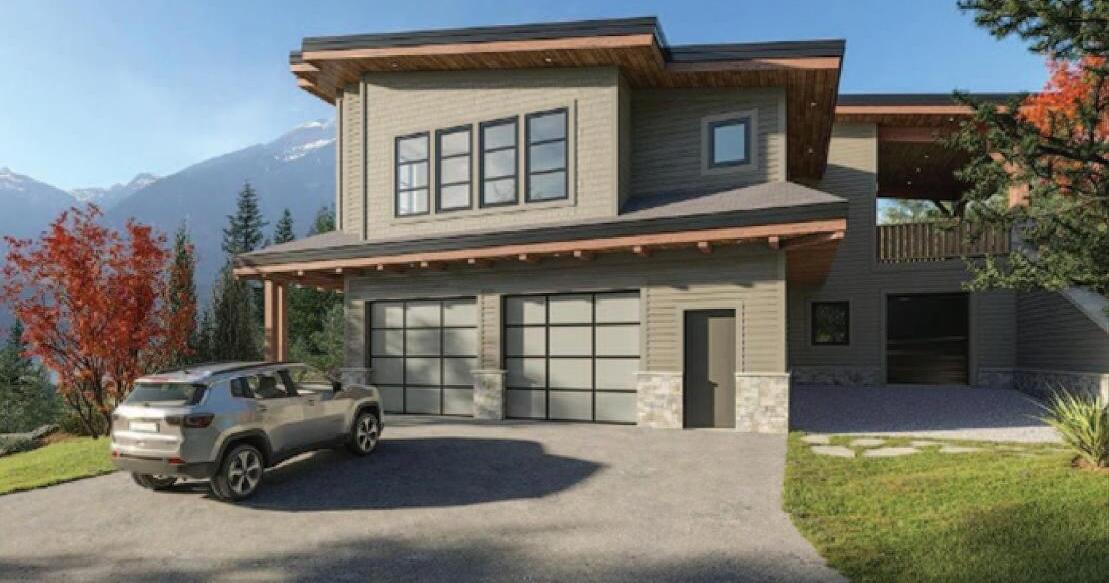
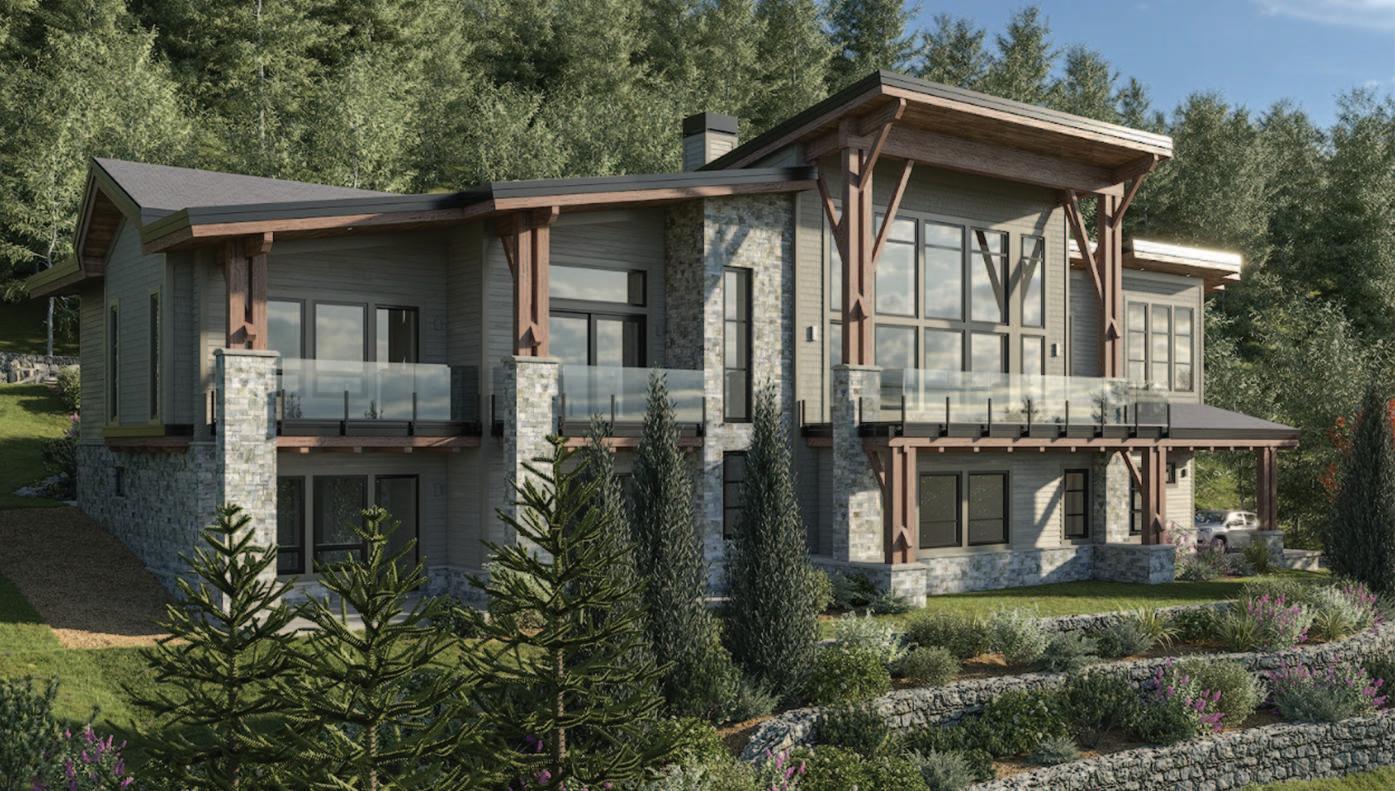
www.absolutecontracting.ca AbsoluteContractingisRevelstoke’slargestlocallybasedprojectmanagementandgeneralcontractingcompany, specializinginthedesignandbuildofdistinctmountainhomes,builtspecificallyforyourmountainlifestyle. ServingRevelstokeandareasince2007. Suite204–103FirstStreetEast,Revelstoke,BC | 2508378899 MonasheeEstate HomeNow UnderConstruction www.absolutecontracting.ca
Salutingthe peoplewhobring theLUNAverse tolife!


Revelstokeisaplacewherepeopledream bigandworktogethertodeliverimpressive results.EventslikeLUNAFestarehuge economicdriversforRevelstoke.These shoulderseasoneventshelptodefine Revelstokeasatrueyear-roundtourism destination.LUNAFestisareflectionof Revelstoke.Vision,growth,andcommunity spiritareallkeystothisevent’ssuccess, yearafteryear.Itbringspeopletogetherin anaccessibleandinclusivesetting. ThisistheethosofRevelstoke.
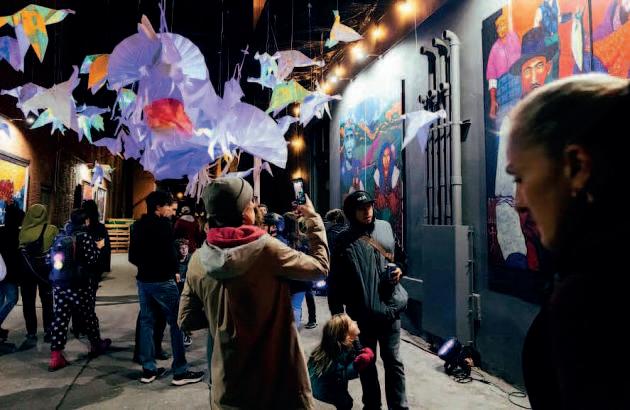
WelcometoLUNAFest,our three-daynocturnalarts festivalinRevelstoke’sdowntown corefromFriday,September22to Sunday,September24.Thisannual eventbringstogetherartistsofall genresincludingmusic,performance artandartinstallations.Thefestival willkickoffonFridayeveningwith LUNASound,anadultoriented eventwhichincludesaneclectic arrayofmusiciansperforming withinwalkingdistanceofeach otherthroughouttheevening.
CongratulationstotheteamresponsibleforLUNA Fest’ssuccess;thenon-profits,volunteers,the hard-workingstaff,theCityofRevelstokeandof coursetheartiststhemselves.TheArtsinspire andmoveusinwaysthatenrichourlives. Iencourageeveryonetosupportyourarts communitybytakingpart,volunteering,and sharingwithournextgeneration.It’sagreatway toteachdiscipline,commitment,andhealthy expression.StaycreativeRevelstoke,andmay youbeinspiredbythe2023LUNAverseandthe peoplebehindthisgreatevent!


LUNAArts,afamilyfriendlyevent, runsfrom6pmto11pmon Saturdayeveningthroughoutthe downtown,andLUNARail,another familyfriendlyevent,willbeheld onSunday,attheRevelstokeRail Museumfrom10amuntil5pm. Whateveryourtasteinthearts, pleasecomeoutandjoininthese events;you’llbeimpressedby thetalentandcreativityofthose involved.Beyondthebeautyofour naturalsurroundings,Revelstoke hasavibrantartssceneandIhope youenjoythemanymindopening possibilitiesofLUNAFest.

revelstokereview.com REVELSTOKE TIMES | 3
NoelineMostert Photoby @aleximostertphotography AlexiMostert DougClovechok,MLA ColumbiaRiver-Revelstoke www.DougClovechok.ca 107FirstStreetEastRevelstoke(250)805-0323
Photoby@nolifoto
Again,welcometoLUNA andENJOY!

Truth
byPaulFenn
I’dforgottenhow inthe mountains– serious mountains like the Kootenays–a small mistake willhappily escalate fromscaryto brutal to deadlyaseasilyas a drunkfallingoff a log. This notion re-established itselfinmewith fearsome immensity last Julyas Icoaxed a Husqvarna 501 dirtbike up a trail not muchwider thanthe bike itself.Realizingthat if I ricochetedoffthe wrongrock,letfocus wane orallowedanything more than a healthy baseline fearto checkmytendencytoward stupidity,a thousand-foot cliffdrop wassureto be my denouement. Having watched Peterascend the last shrapnel-strewnsection oftrail to MountTillicum’s peak,I idled the motor, squintedupthe 45-degree slope ahead, sweat dribbling down my cheekbones.Thoughtsranged from, “C’mon,you’ve riddenup steeper gradesthanthis at home,”to “Mummy!Mummy!Mummy!” ExceptI had neverhadtocontend with a drop-off like thisone, and mummywascremated yearsago. Plus, there wasnoturning around
In my mosteven-toned voice,I talked myselfupit: “Okay… slowstart. That’s it.Very nice. Donot spinthe backwheel. Steadyonthe throttle. Relaxhandgrip.Loosencore. Aim whereyou wantto go, notat what’s trying to kill you Easy aroundthe bigrock.No, no, no – don’t grind the front knobby onthe insidetrailwall orit’ll bounceyourightover the edge.That’s it, hold straight. Steer with yourfeet,just twentymore metres, and… a final, desperate HailMarythroughthe shrapnel and… I’ve madeit! Nottoo terribly either,except theforgettingto breathe part.
And then, the trillion-dollar mountaintopview that beggaredbelief
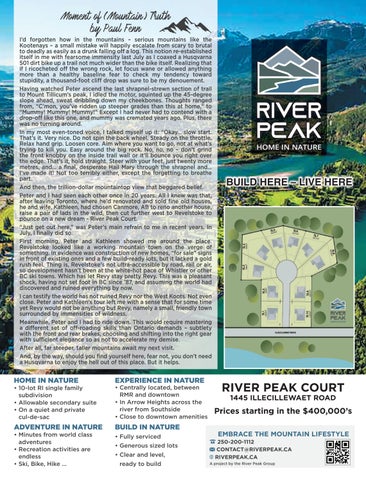
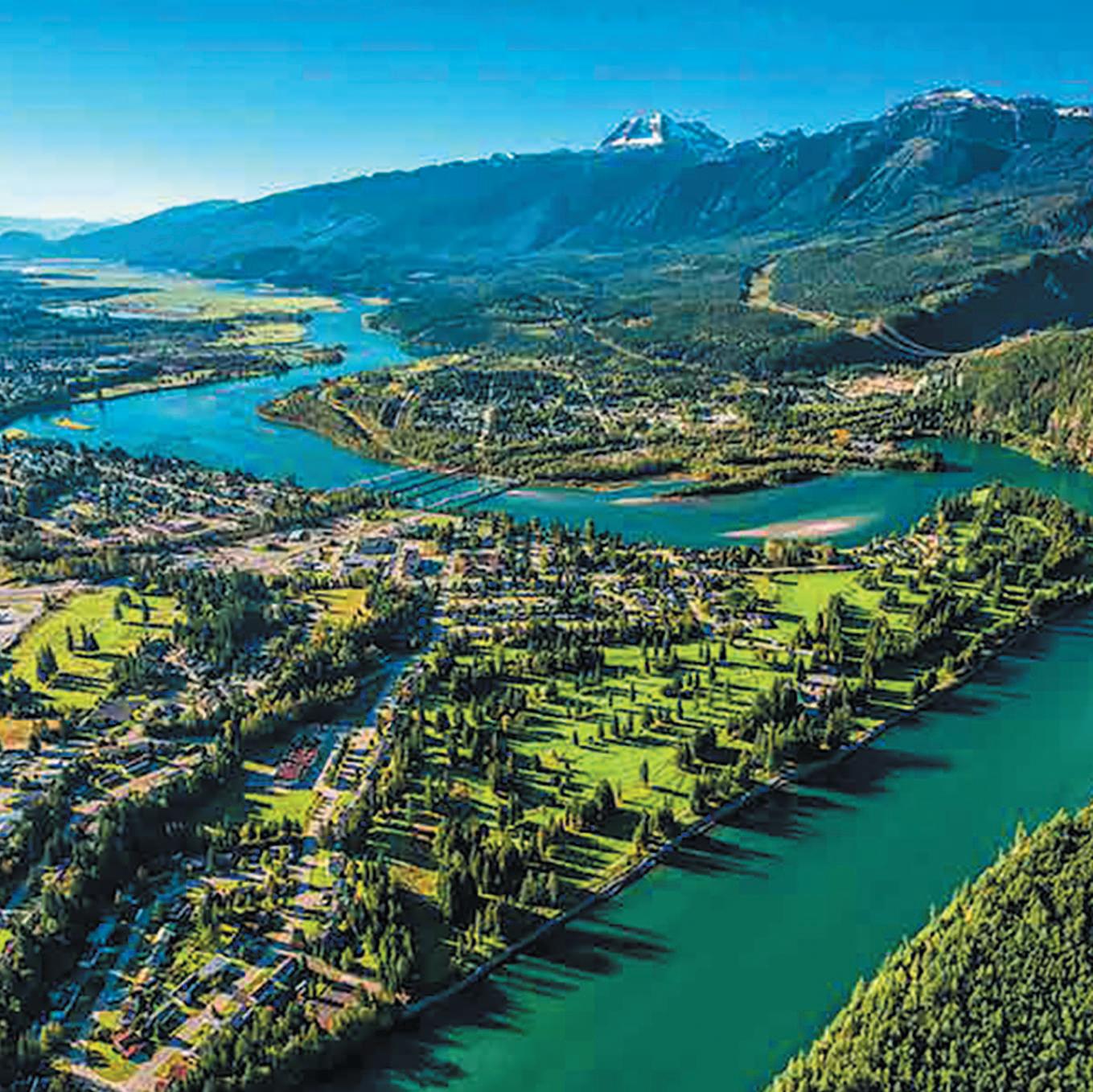
PeterandI had seeneachother once in20 years. AllI knewwasthat, afterleaving Toronto, where he’drenovatedand soldfine old houses, heand wife,Kathleen, had chosenCanmore, AB toreno another house, raise a pairofladsinthe wild, thencut furtherwesttoRevelstoketo pounce on a new dream- River PeakCourt
“Just get out here,”was Peter’s main refrainto mein recentyears. In July,I finallydid so.
First morning, PeterandKathleenshowedmearoundthe place. Revelstoke lookedlikeaworkingmountain townonthevergeof something.In evidencewas constructionofnew homes,“forsale” signs infront of existingonesandafew build-readylots, but itlacked a gold rush feel. Thingis,Revelstoke’s not ultra-accessiblebyroad, rail orair, sodevelopmenthasn’tbeen at the white-hot pace of Whistlerorother BCskitowns. Whichhas letRevystay pretty Revy.Thiswas a pleasant shock,havingnot setfoot inBCsince ’87, and assumingtheworldhad discoveredand ruined everything by now.

I cantestifytheworldhas not ruined Revy nor theWestKoots. Noteven close.PeterandKathleen’stour leftmewith a sense thatforsometime yet Revywouldnot beanythingbutRevy, namely a small,friendly town surrounded by immensities ofwildness.


Meanwhile,PeterandI hadto ridedown.Thiswould require mastering a different set ofoff-roadingskillsthanOntario demands– subtlety withthe front andrear brakes, choosingand shiftinginto the right gear withsufficientelegance soasnotto acceleratemy demise.
HOMEINNATURE
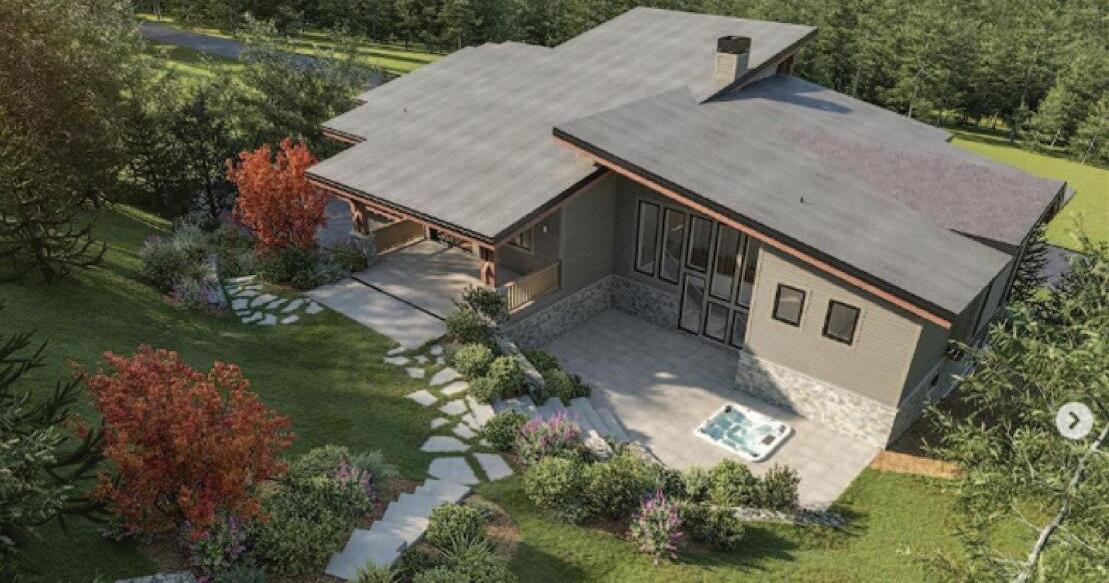
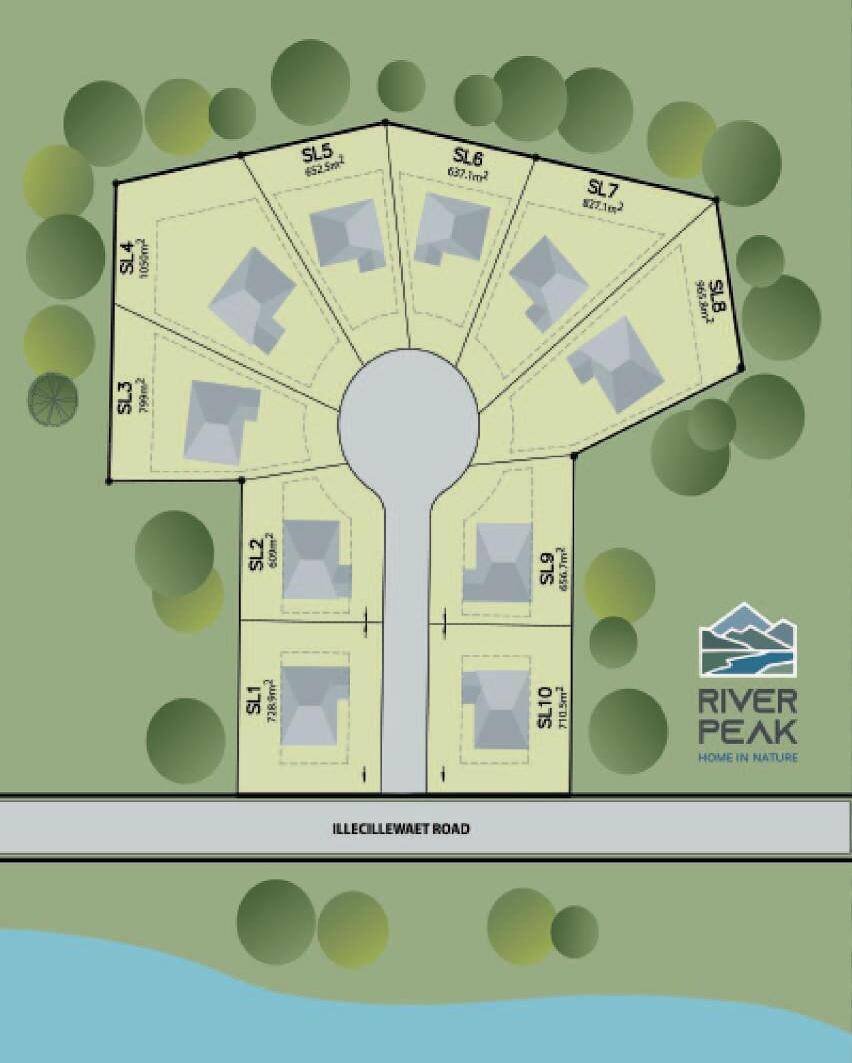
• 10-lotRIsingle family subdivision
• Allowablesecondarysuite
• On a quiet and private cul-de-sac
ADVENTURE INNATURE
• Minutesfrom worldclass adventures
•Recreationactivitiesare endless
• Ski,Bike, Hike…
BUILDHERE–LIVEHERE
EXPERIENCEINNATURE
•Centrallylocated, between RMR and downtown
• InArrow Heights across the riverfromSouthside
• Closeto downtownamenities
BUILD INNATURE
• Fully serviced
• Generous sizedlots
Pricesstartinginthe$400,000’s
EMBRACETHE
250-200-1112
CONTACT@RIVERPEAK.CA
https://riverpeak.ca/
RIVERPEAK.CA
MOUNTAIN LIFESTYLE A projectby the River Peak Group
• Clear and level, ready to build RIVERPEAKCOURT 1445ILLECILLEWAETROAD
Momentof(Mountain)Truth
Afterall, far steeper, tallermountainsawaitmy nextvisit. And, by theway, should youfindyourself here,fear not, youdon’t need a Husqvarna to enjoy the hellout ofthisplace. But ithelps.




















DL#10347 www.salmonarmgm.com 3901-11thAveNESalmonArm•250832-60661-888-970-9781
STEVEROBERTSON SALESMANAGER
KAITIEGRAY INTERNETMANAGER
HARRYFISHER PRODUCTSPECIALIST
GARICKGRAY SALESMANAGER
KARENLORD BUSINESSMANAGER DARRENHICKSON PRODUCTSPECIALIST
IANGRAY OWNER COURTNEYWEATHERBIE PRODUCTSPECIALIST
RODTHIESSEN PRODUCTSPECIALIST CHANDLERGENNRICH SERVICEMANAGER SPENCERKEATING SERVICEADVISOR MICHELLESHANNIK SERVICEADVISOR

quartrermaster@elevenexperience.com

Copyright © 2023 6th Edition 2023. Revelstoke TIMES Magazine Group Publisher - Karen Hill Publisher - Myles Williamson Editor - Josh Piercey Reporter - Zachary Delaney Layout - Tammy Robinson Photographers - Ryan Creary, Laura Szanto, Daniel Stewart, Maxime Vidricaire All rights Reserved. No Part of this Publication may be reproduced, stored in an electronic database or transmitted in any form by any means, electronic, photocopying, recording or otherwise, without the prior permission of the copyright holder. 103 First Street East, Arlington Plaza, Revelstoke, B.C. V0E 2S0 revelstokereview.com 10 ACROSSTHELUNAVERSE 26 LASTOFTHEIRONHORSES 36 PHOTOGALLERY 42 LIFEINWATERCOLOUR 48 BLINDINGLIGHTS 52 SMOKESIGNALS 56 DARKHORSE 60 HIGHANDDRY
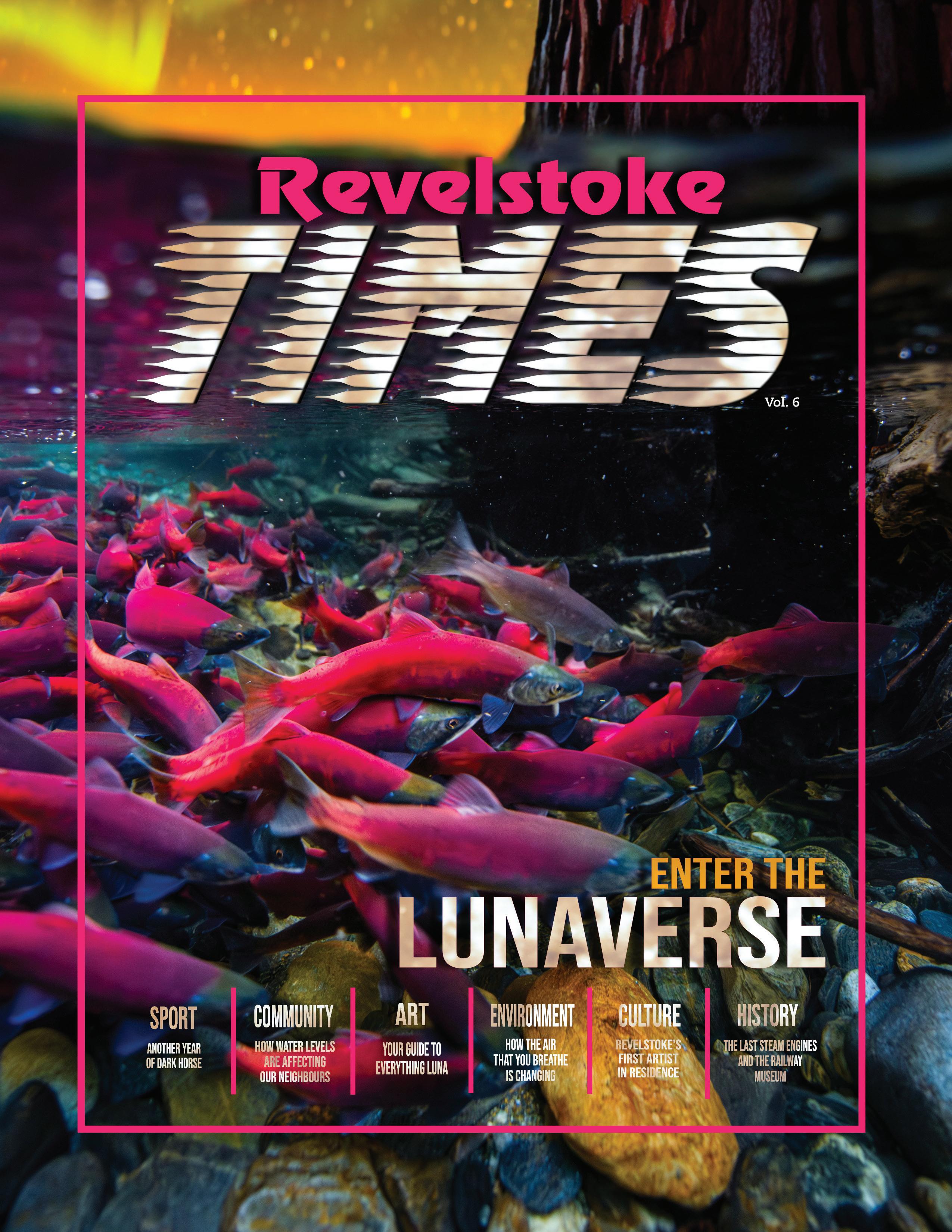
COVER/POSTER
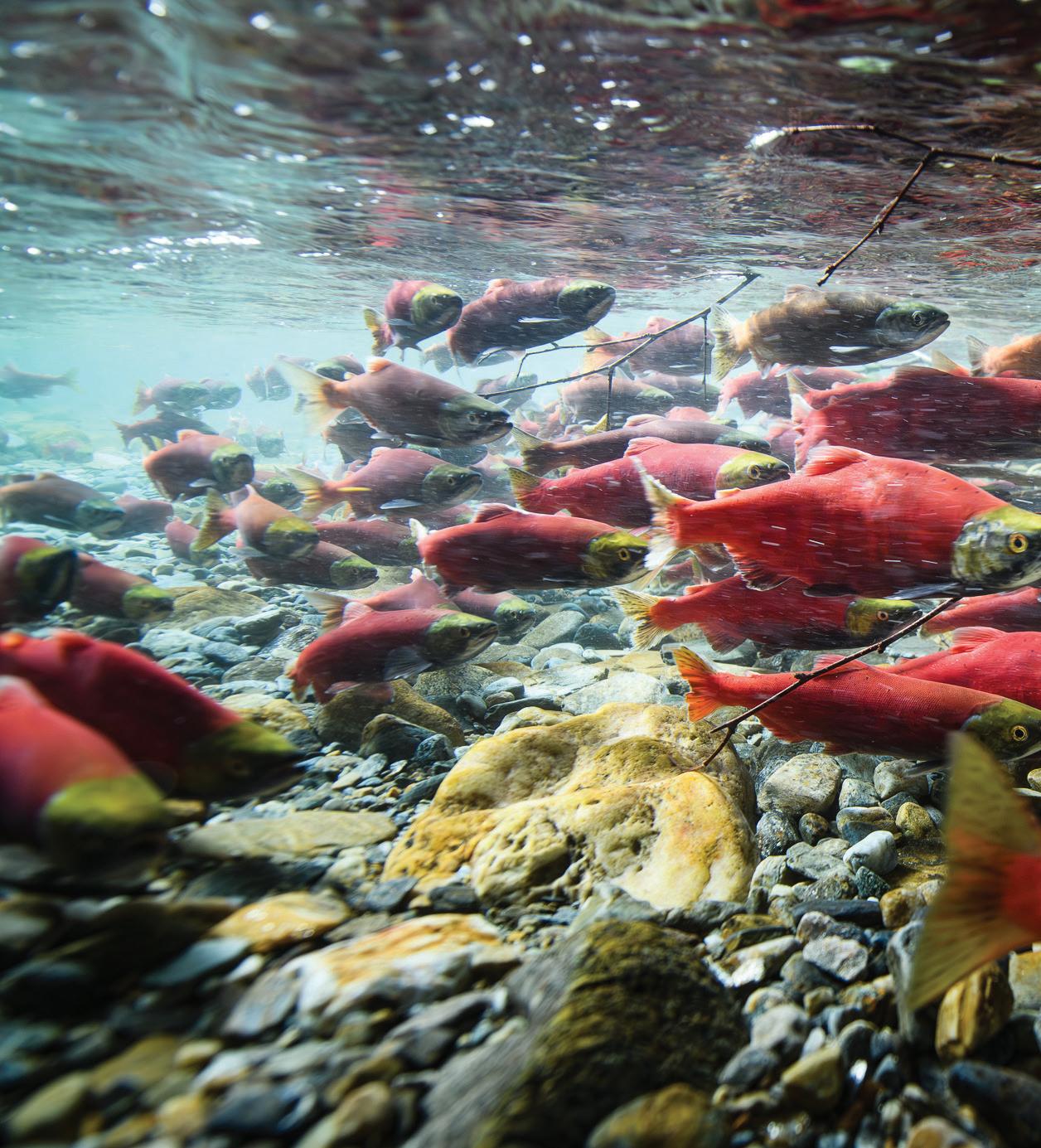
This was a poster design I made for Luna Fest Revelstoke. The photo of the running salmon is real, and I took it last fall. They were all converging/ dancing around the base of a massive cedar tree, and I made the connection that they were laying and protecting their eggs near a Mother Tree, which fit with the theme of "Growth" that the team at Luna gave for their poster contest. I did create embellishments though, using Photoshops AI Generate to change the upper scene to be at night with the moon and aurora dancing above. I also changed the base of the tree to make it look like more of a tree than in the original image. All in all - I thought it was a good use of current technology blended with a real, natural scene from the area.
By Daniel Stewart
the PUBLISHER’S points



You're travelling through another dimension -- a dimension not only of sight and sound but of mind. A journey into a wondrous land whose boundaries are that of imagination. There's a signpost up ahead - your next stop, the LUNAVERSE!
welcome to our
LUNAVERSE EDITION of the REVELSTOKE TIMES magazine
Through the use of artist profiles and pictures of their work, the LUNAVERSE issue can be a tool for locals and tourists as they travel through the event this September. Whether it's at LUNA, LUNA Sound, or LUNA Rail, rifling through the magazine will help one fully understand each installation, artist & musician. We also hope to give a longer lifespan to the event by allowing readers to relive it in our pages, and then decide to come back next year.
This issue also is different from past issues as the co-founder Josh Piercey is moving on to greener pastures in Ontario. With a heavy heart, this will be the last issue you will see Josh’s hard work within, he is not only my co-worker, but a friend. I really don't know how we will do it without him as he breathes life into the Review in every aspect of
his role here. I will miss him greatly, so if you run into Josh before he leaves reach out to him and tell him what you liked of his work or a favourite story, as he was the lifeblood of what we do and the journalism world now more than ever needs people like Josh.
to the READERS
Thank you to everyone who has been following along, flipping through, reading or finishing your breakfast to the TIMES Magazine. Without you, we wouldn't be here creating a magazine. Please share with us your feedback, good or bad, or if you have something that you think we should write about, drop me a line at myles.williamson@ revelstokereview.com. Please pass on a copy of this magazine to a friend after you’re done reading.
Myles Williamson, Publisher
We acknowledge and honour the four nations on whose traditional land we live and learn: the Sinixt, the Ktunaxa, the Secwepemc, and the Sylix.
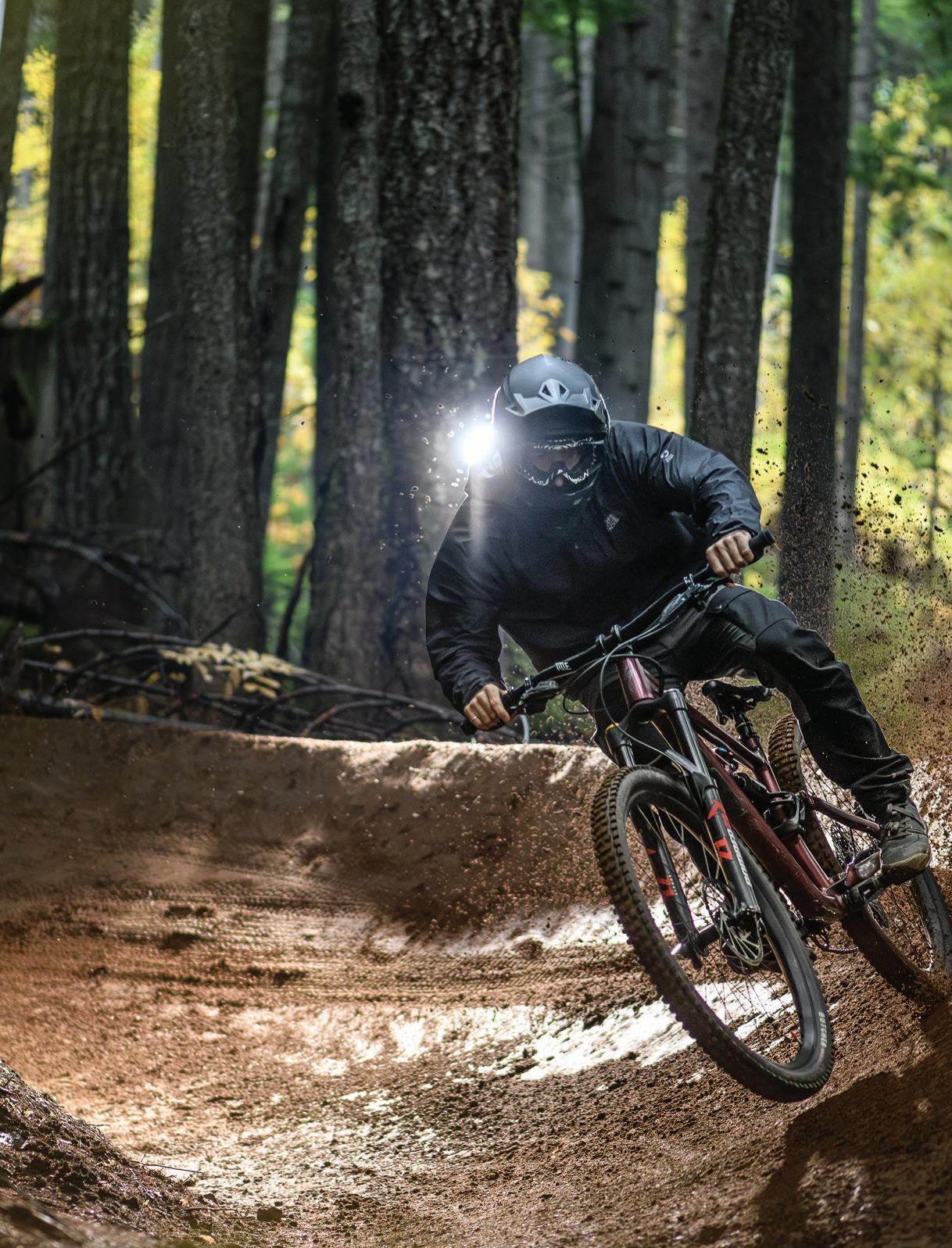
MOUNTAIN BIKE PHOTO
Katlyn Davies is a trail builder/mountain biker who lives in Revelstoke. A couple falls ago I was able to catch up with him and his Bike Revelstoke trail crew on Boulder Mountain while they were working on cleaning up a section of Logging Leftovers. They had just finished putting the final touches on the berms on the trail and they were ready to give them a test. I set up my flash behind the berm and Katlyn just absolutely roosted it! Needless to say it probably wasn't the best for the fresh dirt, but it was great for the photo, as we did have to go in and fix the new trenches afterwards!
By Daniel Stewart
PAPER BOYS
revelstokereview.com REVELSTOKE TIMES | 9
Zachary
Myles
Josh
TAKE OUR HAND, TURN THE PAGE, AND COME ALONG WITH US ON THIS JOURNEY.

Across the
verse

HOW LUNA BECAME ONE OF REVELSTOKE’S MOST VIBRANT AND UNIQUE ATTRACTIONS
 BY JOSH PIERCEY
10 | REVELSTOKE TIMES Fall 2023
It’s been said that LUNA redefined a city known for outdoor adventure into a cultural destination. A celebration of art and energy, of unique and imaginative creators and visionaries, of the thoughtful and fantastical, of magic and natural beauty; LUNA has come a long way since it was established as a festival nearly seven years ago.
“We’re bringing a new festival to downtown that will merge art with energy, innovation and imagination for an unforgettable experience for our city,” said Miriam Manley, theatre manager and board member of the Revelstoke Arts Council at the time of LUNA’s inception, in an interview with the Revelstoke Review in 2017.
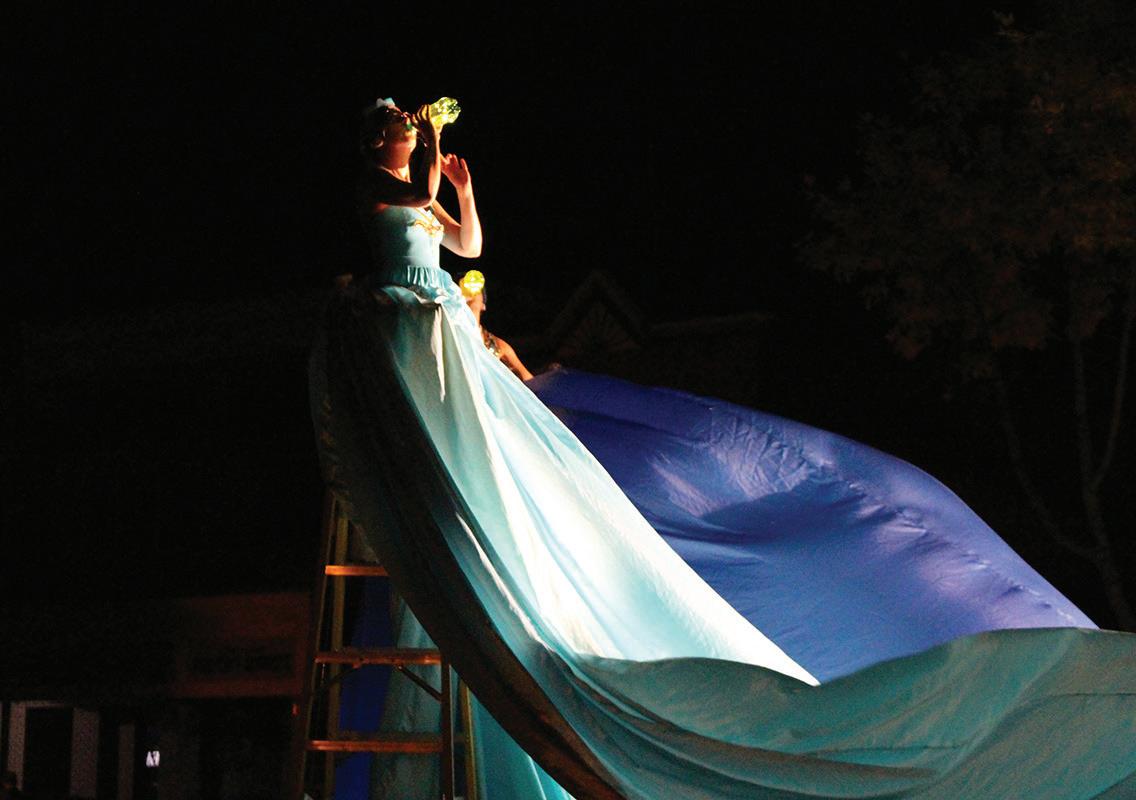
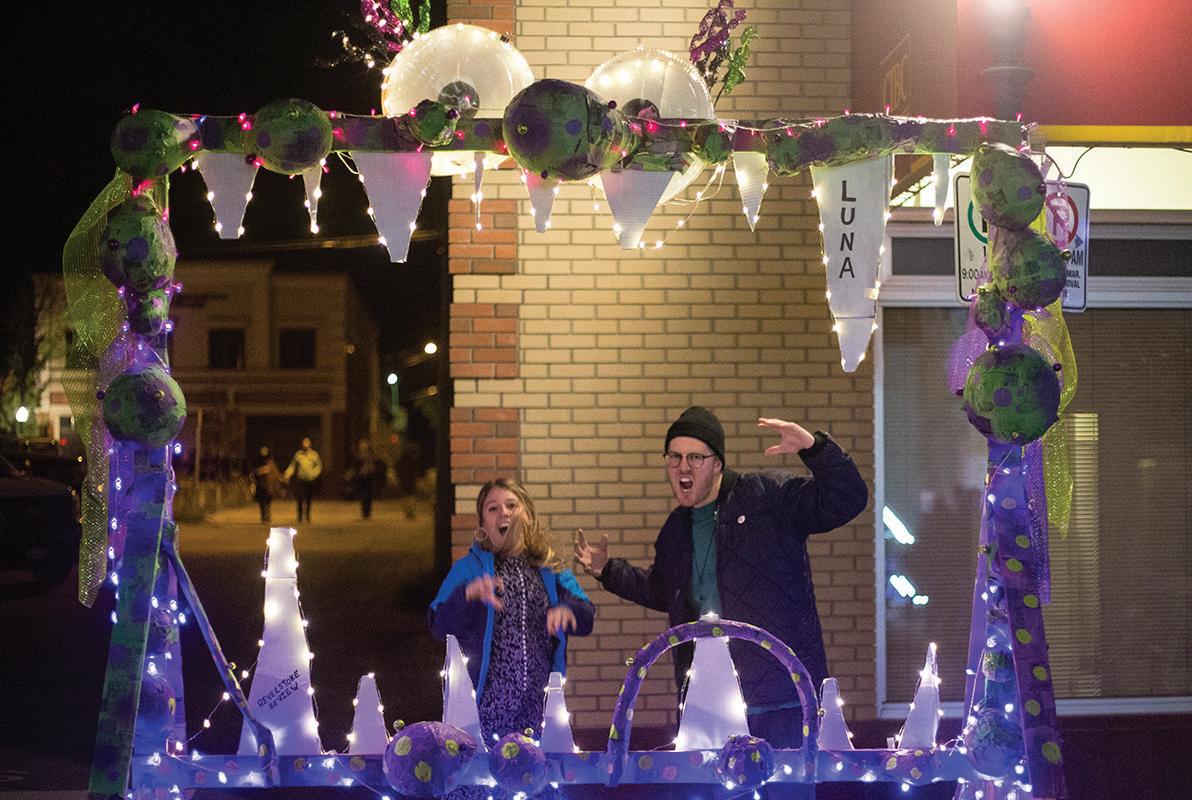
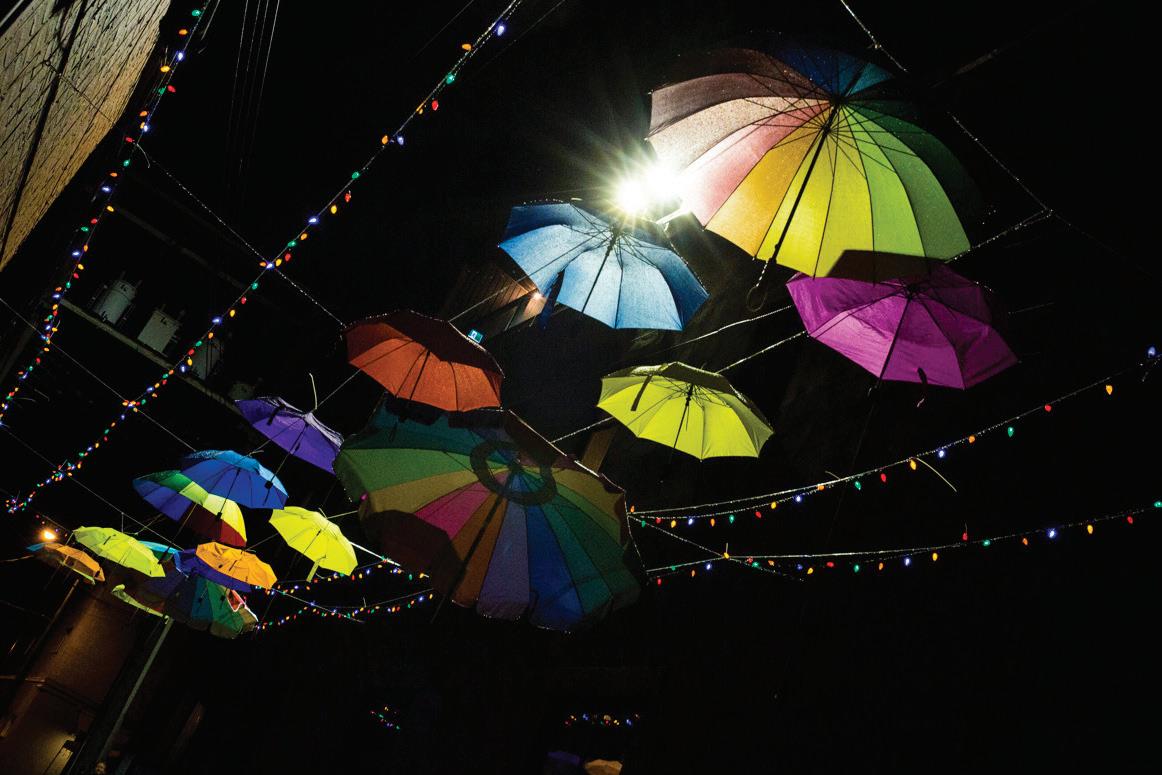
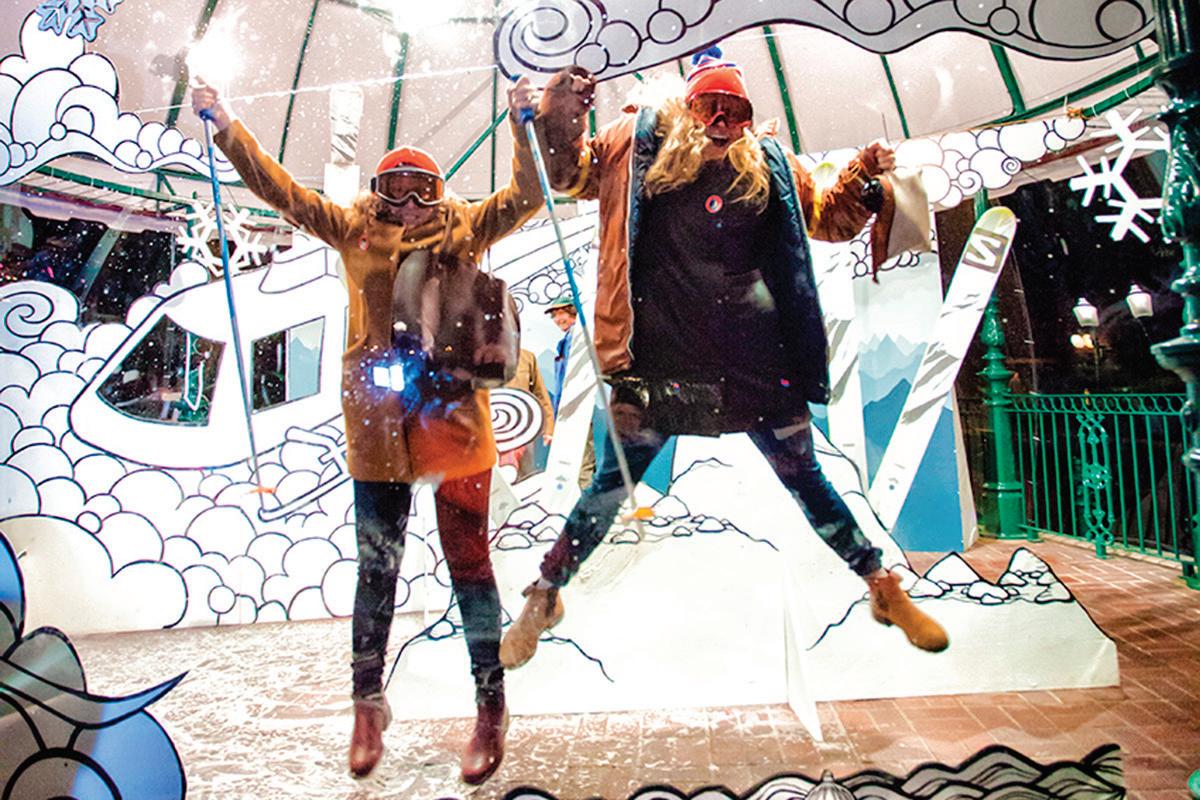
In its first year, LUNA featured 25 installations in shop windows, empty spaces, alleyways and a host of other unexpected places, transforming the ‘familiar’ into ‘fantastic’.
“Revelstoke has changed. It’s always been a great place but there’s a new, dynamic energy to the city with people arriving here from all over the world with young, exciting ideas,” said Jana Thompson, one of the event’s organizers when it first began, in an interview with the Review in 2017.
Since then, the festival has grown immensely, displayed by the nearly 40 installations and full music lineup scheduled for this year’s festivities.
The LUNA experience is felt through all your senses as you wander through your favourite downtown destinations. Some exhibits are built into the infrastructure, some are projected on to previously-barren walls, some are best experienced with your eyes closed as you listen intently for it’s artist to convey the message into your ears.
LUNA experienced great feedback in it’s first year, followed by another two festivals which really gained momentum, but it was all halted in 2020 due to the COVID-19 pandemic, and the festival’s creators had to get creative(er).
In Sept. 2020, LUNA RE-IMAGINED brought an in-person and a virtual experience to Revelstokians at a time when they needed it most - after half a year of pandemic restrictions.
Last year, the RE-IMAGINED moniker was dropped and the festival returned in earnest, but the lessons learned from the ingenuity used to make the festival happen when it was most difficult helped propel it into the stratosphere.
In the pages that follow, we will help guide you through the festival, learning about the artists behind each installation along the way. After the artists and sounds, we will teach you about the history of the majestic steam engine at the Revelstoke Railway Museum - the centre of LUNA Rail.
revelstokereview.com REVELSTOKE TIMES | 11



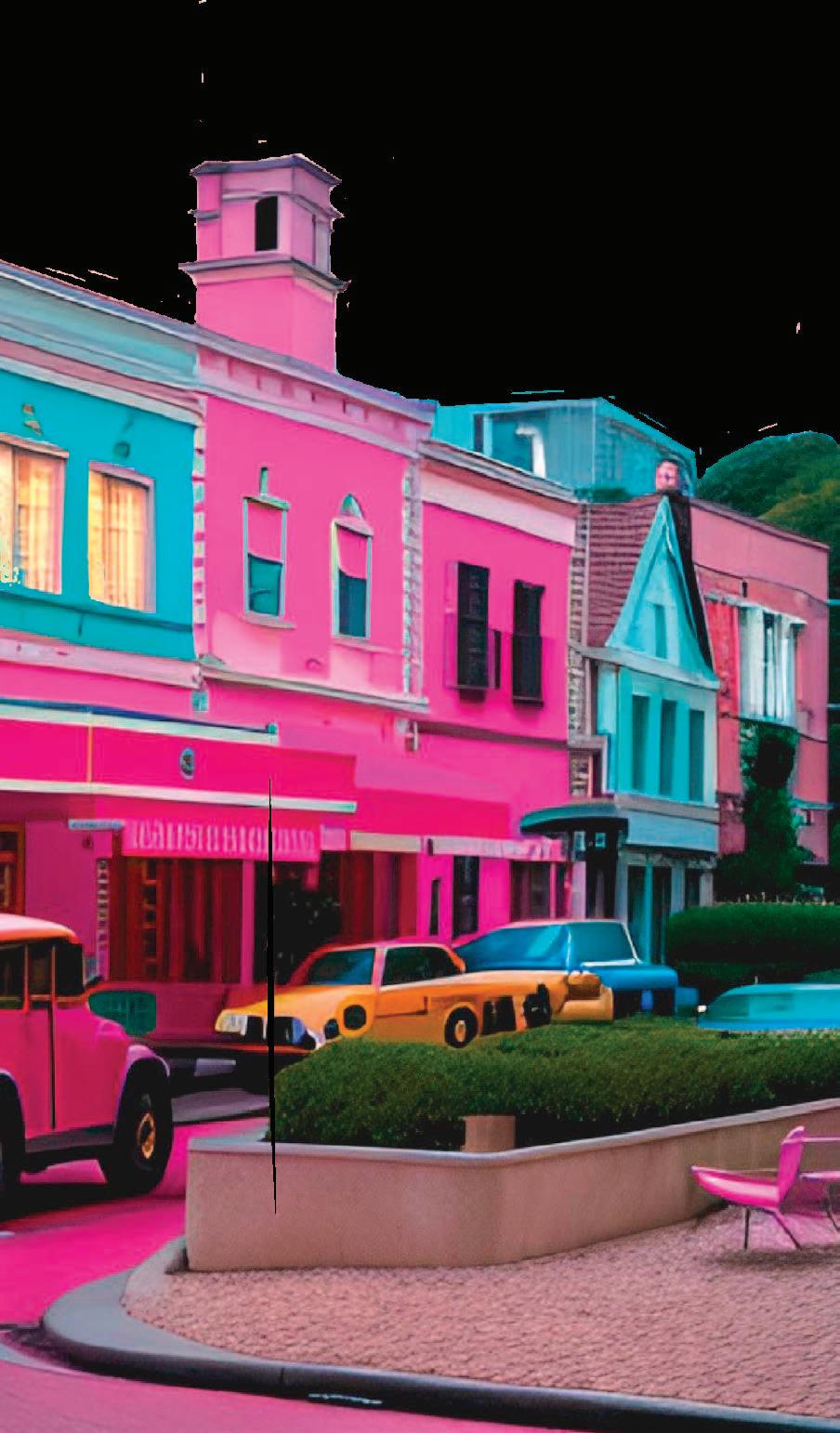






Fall 2023 3D Map Here!
Art Alleries



Safety Tent
Washrooms
Bear Statues
revelstokereview.com
Alex Rouleau is an innovative digital artist who deftly navigates the realms of 3D Animation, Motion Design, Video Mapping, and Videography, among other disciplines.
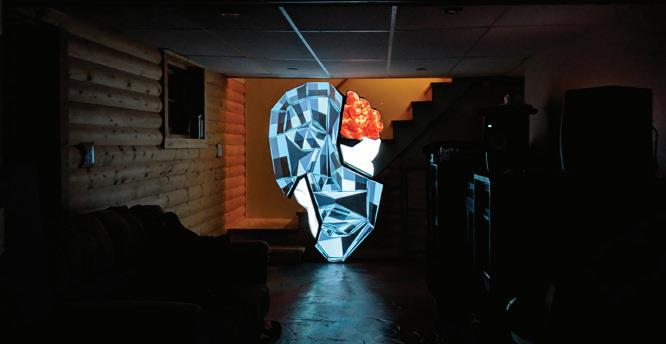
Adrift/Axis embarks on a transformative artistic venture. With utmost care and attention to detail, he embarks on video mapping each intricate element of City Hall’s facade, setting the stage for an immersive experience.
By projecting specially crafted animations onto this architectural canvas, spectators are invited on a journey through time and dimensions. As the City Hall comes alive with newfound vitality, witness its metamorphosis unfold, revealing a vibrant tapestry of imagination and wonder.
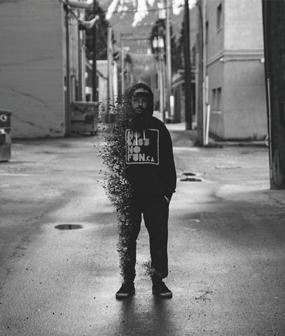
How long have you been creating your art?
For the last 6 years seriously - it has been an ever-evolving process
What’s the most satisfying part of your artistic process?
Pressing the camera shutter button - knowing that you have the perfect composition and everything you want in the photo. Also seeing the final product after all the editing and set up - it is very satisfying.
What is your artistic inspiration?
People and Places - both are so interesting. Personality, routines, habits, climates/weather changes - there is so much to pull from.
Who is your artistic inspiration?
What first attracted you to your art style?
The combination of strength and artistry I saw in my first aerial experiences hooked me instantly. It wasn't until many years later that I developed my own sense of story-telling, of creating a feeling, transporting a total stranger to another world that I've created through dynamic movement, costume, music and gesture.
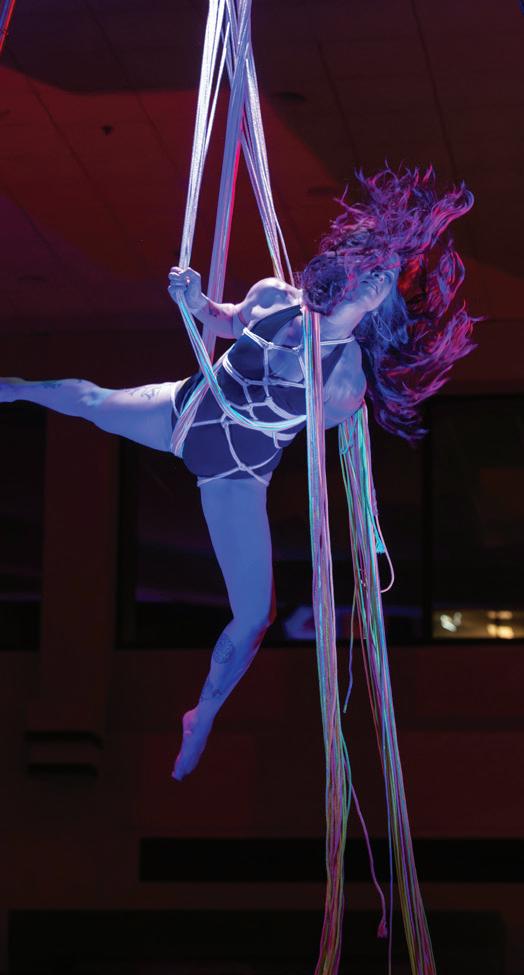
What’s the most satisfying part of your artistic process?
When the preparation is over and I'm finally about to go on stage, I say to myself, "This is my favourite thing in the whole wide world!"
What (if any) is the strangest part of your artistic process? The crying. There's a lot of crying.
What is your artistic inspiration?
Aliens, the extraterrestrials, BigFoot, science fiction stories, the ocean, ocean creatures, and the fantastical music of George Clinton, David Bowie, and Lady Gaga.



Who is your artistic inspiration?
My Seattle community uplifts and inspires me in so many ways: At the moment, I'm fangirling over Seattle artist Emily Counts (@ emilyraecounts), my friends Heatwarmer (@heatwarmer) and Kaleb Dameron (@litepollution).
Movies, taking inspiration from the stories that other people tell to create my own work. Also my photo friends - I know and have met so many amazing photographers that I am always being pushed to create more and better work.
What’s your connection to Revelstoke?
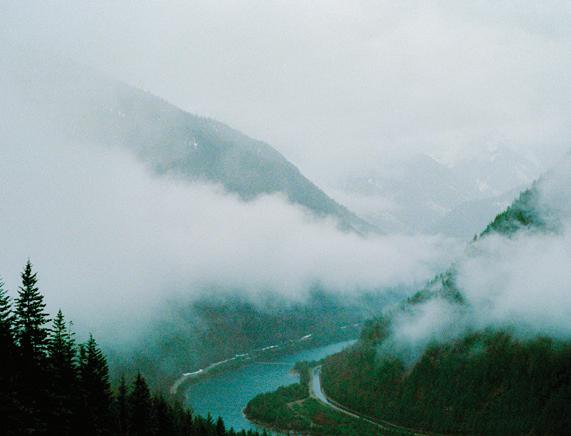
I was born and raised in Revelstoke and spent most of my life living there, I only moved to Calgary in 2018. Revelstoke is still home to me.
Ansel is a visionary creator from the Kootenays whose artwork seamlessly fuses the essence of the natural world with vibrant and semi-abstract surrealism.
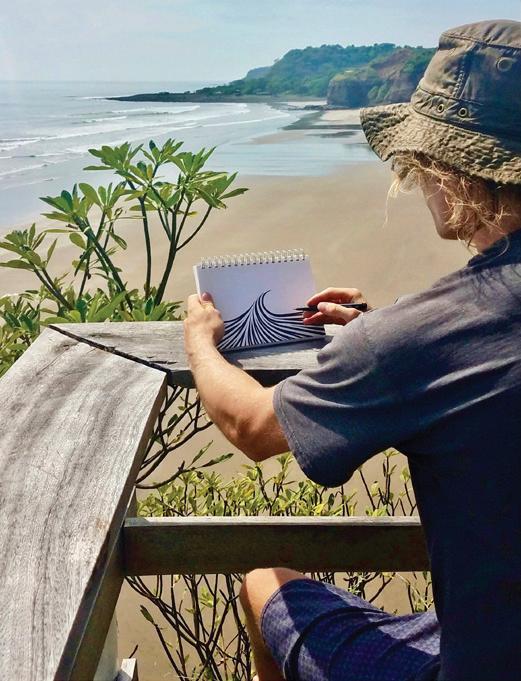
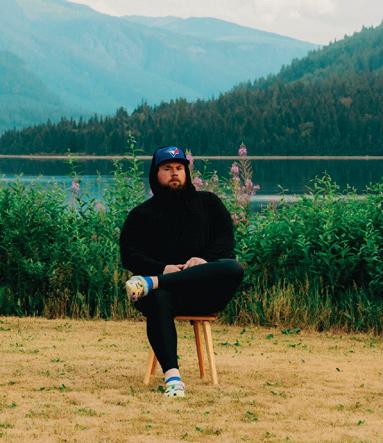
Since an early age, art, imagination, nature, and creative expression have been prominent themes in Ansel’s life. Exploring Nature, asking expansive questions, and inquiring about the nature of reality and human potential are ongoing passions, and visual art, writing, movement, and music provide perfect ways to express this.
A colourful collection of vibrant, semi-abstract nature-scapes inspired the mountains, forests, and oceans of Earth.
Ansel’s art seamlessly weaves together patterns of the natural world, with an eye-catching combination of bright colours and contrast. The use of mosaic-inspired patterns, bold shapes, and blank space, creates a unique harmony that bridges opposites and polarities.
14 | REVELSTOKE TIMES Fall 2023
ALEX ROULEAUANDY KERMACK
7
19
ANSEL ANDERSON AMY FUNBUTTONS
6 25
Ariel Kesike Hill (AKH Studios) is an Indigenous artist hailing from the Six Nations and Wiikwemkoong First Nations. Hill holds a jewelry certificate from the Kootenay School of the Arts and a Bachelor of Fine Arts degree from the Alberta University of the Arts with a major in Glass. Hill is represented by Art First Gallery (Revelstoke, BC), Project A (Canmore, AB), Guildworks (Bloomfield, ON), Banff Trading Post (Banff, AB) and Coal Town Goods (Fernie, BC).
AUDREYGAUSSIRAN 31

THEPERFORMANCESERIES



REVELSTOKEPERFORMINGARTSCENTRE STARTINGOCTOBER6,2023





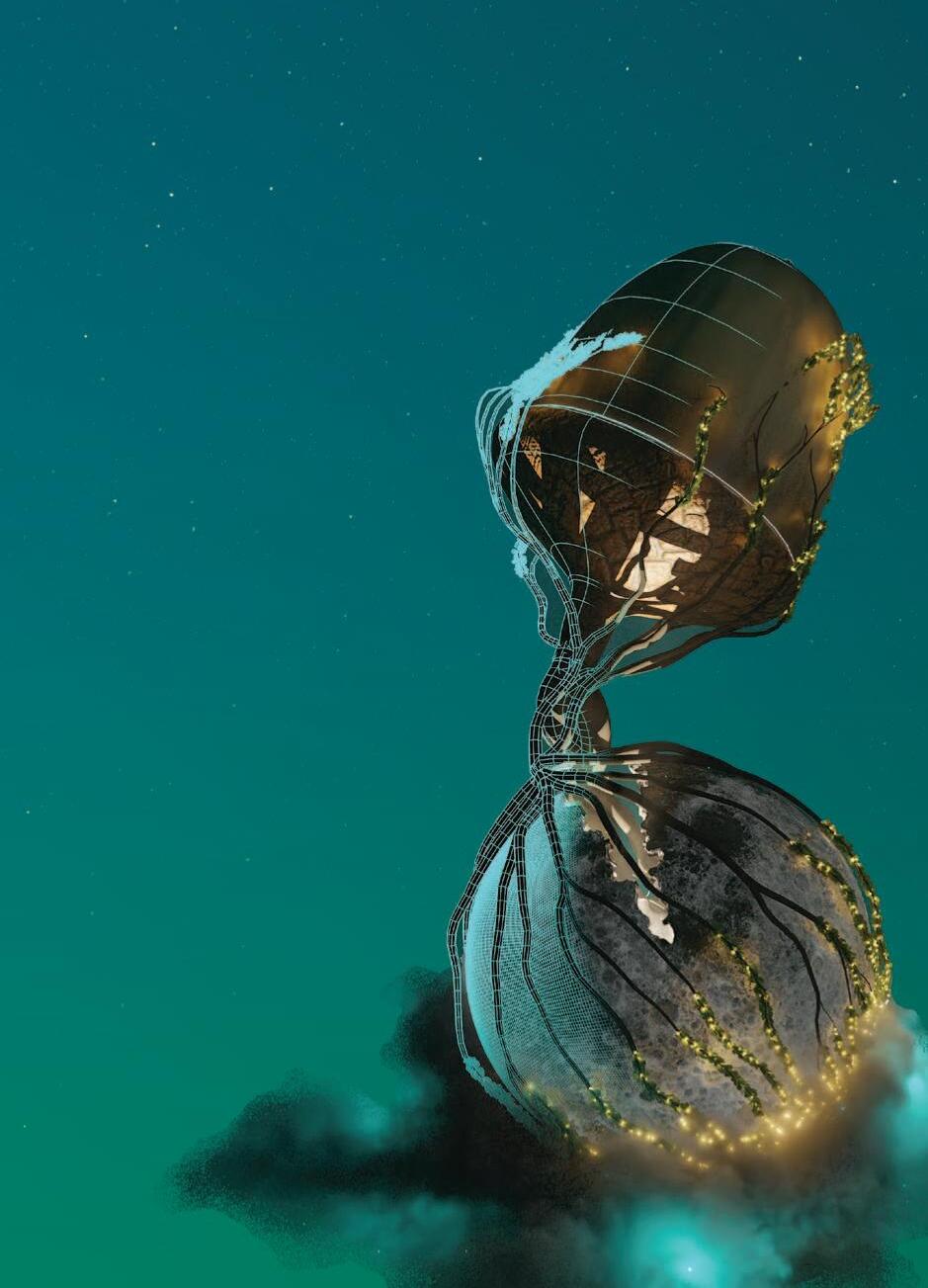
“ArtsRevelstokeproudly presentsaprofessional anddiverselineupof talentattheRevelstoke PerformingArtsCentre. JoinusthisfallforThe PerformanceSeries—an enrichingjourneythrough theatre,music,films, discussions,andfamily eventsfromOctoberto December.Celebrate creativity,cultural experiencesand connectionatthe RevelstokePerforming ArtsCentre.”
Audrey Gaussiran is a choreographer and performer. Fascinated by a plurality of dance forms, she trained from a young age with masters in Brazil, Cuba, New York and Spain. In 2007 she completed her studies at the Conservatoire de Danse de Montréal (2007), integrating classical ballet into her eclectic training. Her career as a performer, often intertwined with choreographic collaborations, leads Audrey to devote herself more and more to her own creative impulses. Her current works are rooted in the democriztion of dance through digital technology, as well as exploring the multiplicity in the construction of our identities.
revelstokereview.com sre ls
ARIELKESIKEHILL(AKHSTUDIOS)
35
Baberaid is a self-taught multidisciplinary artist, delves into the uncharted territories of the human experience. With a preference for the exploration of the darker, often taboo subjects, they fearlessly confront the shadows that reside within us all.
In the last several years baberaid has been creating installation art, typically made of found objects and the interaction of projected light and ambient sound.
Through their art, baberaid seeks to illuminate the hidden corners of our shared humanity, sparking conversations that often remain unspoken.
What’s your connection to Revelstoke?
I have lived in Revelstoke for 11 years now. I came here to harvest stone directly from the land to sculpt, and because I fell in love with a local.
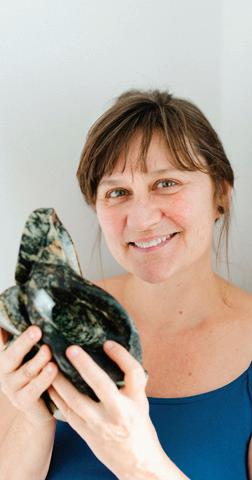
What first attracted you to your art style?
I am a conceptual artist working in multi-media and multi-genre, so the attraction is in telling a story and finding the process to do it. With my sculptures, in particular, there is always an element of interaction or interplay offered, that will take the audience into deeper meanings. With my paintings, symbolic meanings are used for the same purpose.
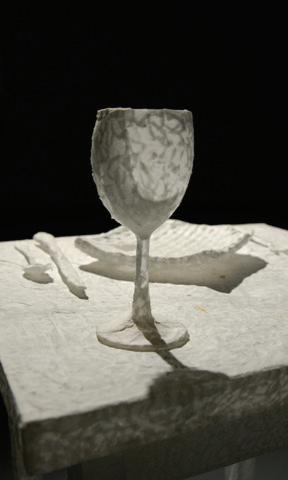
How long have you been creating your art?
I began as a painter 27 years ago but was drawn into sculpture during university in the early 2000s. Today I continue to play with 2D and 3D forms of expression.
What (if any) is the strangest part of your artistic process?
I believe my process is a co-creation with the materials, be it natural like a tree or stone, or commodified like paper from a tree. I feel the material has a type of will in what it wants to express and I try to connect to and work with that.
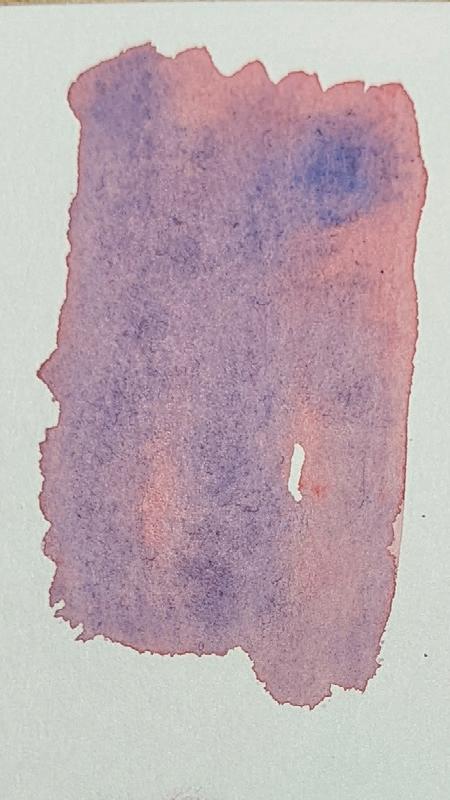
What is your artistic inspiration?
My inspiration comes from the land we live on, and the living elements of it. My journey has been to create art with the goal of reminding others of our interconnection with Mother Earth.


Who is your artistic inspiration?
Contemporary: Chaka Chikodzi and Andy Goldsworthy. Historically: Barbara Hepworth and Henry Moore
What first attracted you to your art style?
Glassblowing feels like an extreme sport in the art world. Working with the medium requires good timing, dexterity, teamwork, and a little bit of bravery to handle such a hot medium. Everything about working with glass is challenging. You are making something on the end of a 5-foot pole that you cannot touch with your hands, and you cannot let it drop below 700 degrees or the work will crack or explode. The piece will change forms between a liquid and a solid as you work. It is a rare and ancient practice that hasn’t changed that much since the Romans invented it. Each of us chose it because of the challenge, and the beauty of the process, as well as the accessibility of having the shop in our community thanks to Leah’s hard work.
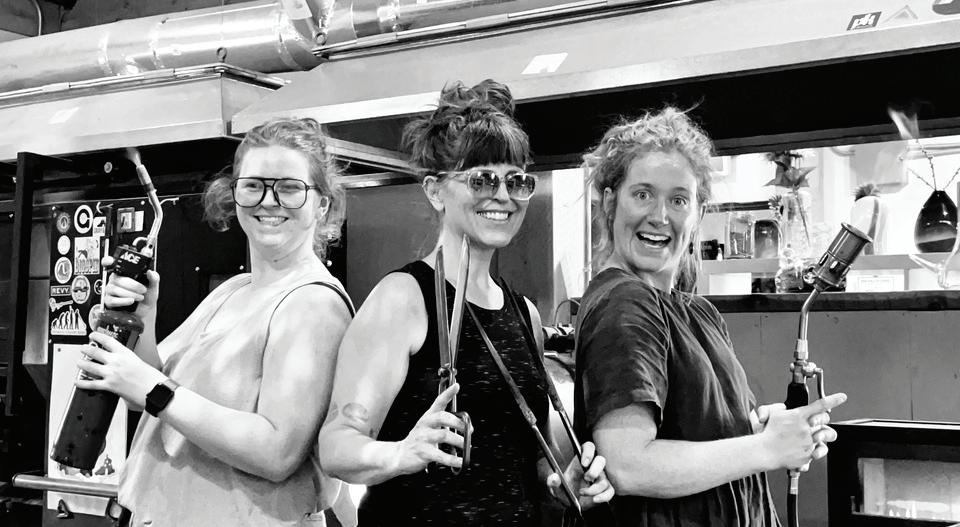
What’s the most satisfying part of your artistic process?
The most satisfying part of the process is turning a molten liquid into something beautiful and functional. Watching the medium solidify and become an object that can be filled, held, and enjoyed by anyone.

What is your favourite memory of LUNA?
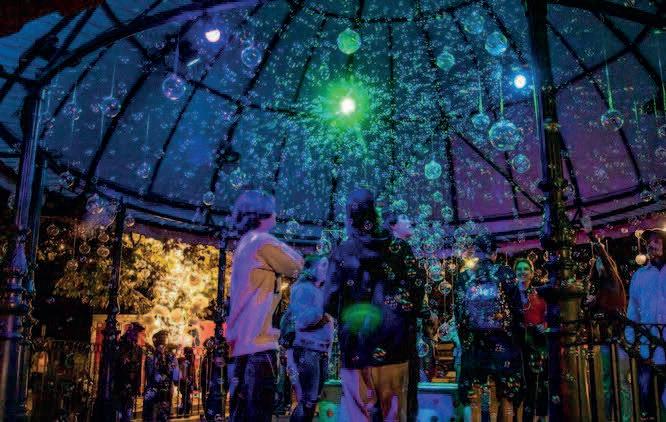
Our favourite memory of LUNA would have to be at the start of the Saturday evening in 2022, as it got dark and our BUBBLEworks installation was shining under the lights of the gazebo. The piece was a huge team effort and it turned out so magical and whimsical, it was so wonderful seeing the crowd’s awe and to feel the sense of accomplishment.
What is your favourite thing about LUNA?
Making large art installations accessible to the public, and accessible for our remote community. As well as the sheer size of the crowd on the nights of LUNA. It is so rewarding to watch the crowd interact with these large pieces.
16 | REVELSTOKE TIMES
BABERAID BIGEDDYGLASSWORKS BARBARAMAYE 32 30 3








www.1300.ca https://www.alchemymassage.ca/ https://www.mountainsidephysio.com/
The Powder Slug Express has been a staple of LUNA Festival since its inception. It was created by Trent Kappler, Jana Thompson, and Rob Buchanan as a tribute to Revelstoke’s iconic Powder Slug chairlift from the old ski hill on Mt. Mackenzie.
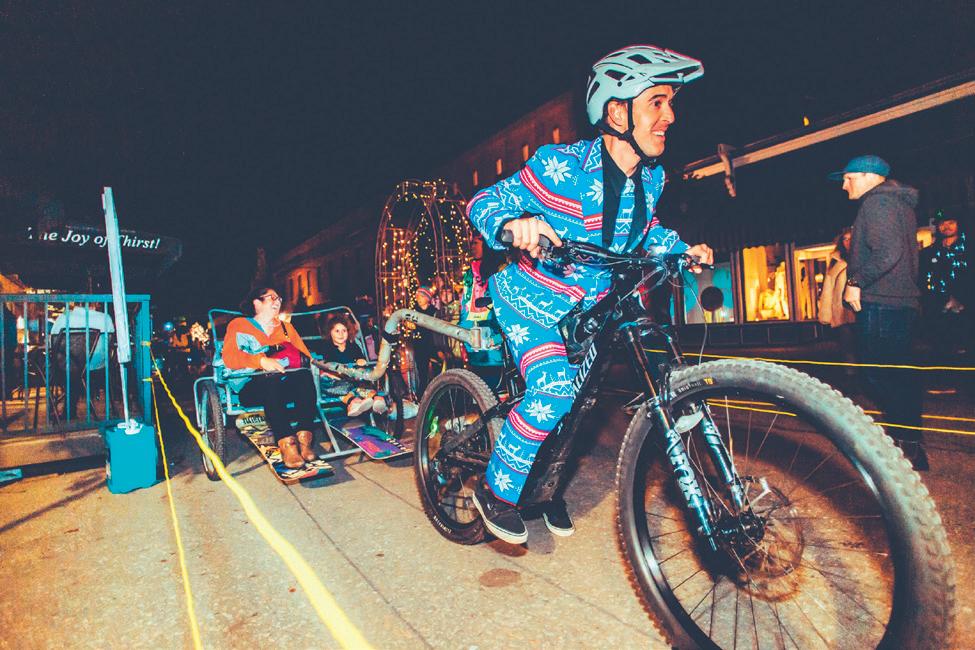
Take a ride on one of the three ski lift chairs converted into chariots being whipped around the downtown core pulled by bicycles.
Cymatic Grounds is a Revelstoke-based collective focused on immersive audiovisual experiences.
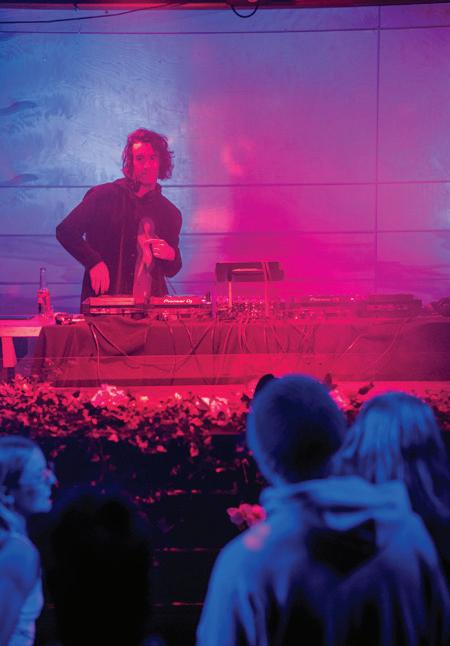
Dream Laserbeam is a hazy journey into the wobblier side of ambient Techno. Inspired by the past, present and future; Dream Laserbeam is an escape into the sights and sounds of underground music culture.
Demmi Dupri is a professional balloon twister and entertainer based in Edmonton, Alberta, who specializes in creating unique and unforgettable balloon creations that add colour, joy, and entertainment to events of all kinds.
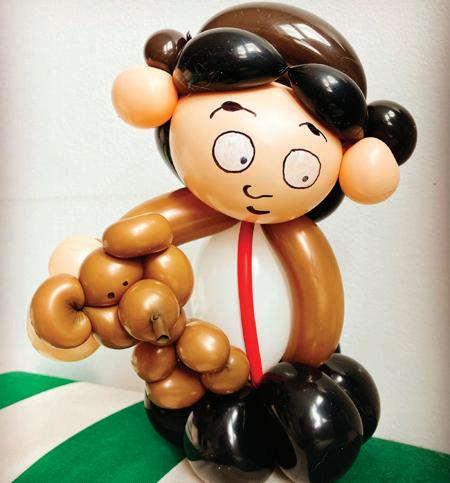
Go on a magical adventure with Demmi Dupri as she takes you on a journey of extraordinary balloon magic and fun!
Entertaining for all ages and fun for the whole family. With her unique skills, Demmi brings smiles to the faces of both children and adults alike, creating a memorable experience for all who witness her creations.
What first attracted you to your art style?
My artwork has gone through many shifts and changes since I started producing artwork many years ago. My style has always dabbled in a dark and weird aesthetic, so these walk cycle works to carry on that style in a new way.
What’s the most satisfying part of your artistic process?
When I get into a good creative groove I'm able to focus for hours on end.
What (if any) is the strangest part of your artistic process?
Within the digital realm, experimentation and trying new things can produce some very strange results.

What is your artistic inspiration?
For the walk cycle works I am inspired by Indigenous arts and crafts materials in addition to offerings and Indigenous spirituality.
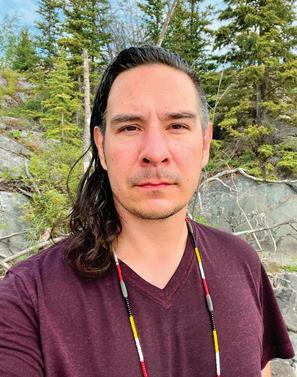
What’s your connection to Revelstoke?
I once visited Revelstoke Mountain Resort for a snowboard trip with my cousin many years ago and had an amazing time.
The École des Glaciers art club was formed to bring students together to create, socialize and have fun by experiencing different artistic mediums. This year, the art club involving our students from grade 4 to grade 7 exclusively worked on this project.

Last year, we studied the butterfly’s metamorphosis by observing caterpillars transform into butterflies. Since the École des Glaciers’s art club encourages young artists to explore different artistic mediums, this piece representing the butterfly life cycle is made of different materials such as plaster, acrylic paint and paper.

Every student from our school also participated in this project by creating a little paper butterfly. All of those butterflies are unique just like every child.

18 | REVELSTOKE TIMES Fall 2023
The Powder Slug Express team consists of Brent Strand, Tina Witt, Dean Prunkle, Dana Cloghesy, Trent Kappler, Barb McGregor, and Dave Pearson.
BRENTSTRANDCYMATICGROUNDS DEMMIDUPRI ÉCOLEDESGLACIERS CASEYKOYCZAN 16 11 17 14 27
Gretchen is a project-based multi-medium artist focusing on themes of archetypal relationships, intimacy, and the constructs of time.
Diving Upwards is a sculptural exploration of the ways in which growth and evolution often require shifts in perspective, allowance for paradox, and optimistic space for surprise and the unknown.
What first attracted you to your art style?
Our art is a reflection of our identities as a Child of a Deaf Adult and third culture Canadian-born half-Chinese boy.
How long have you been creating your art?
Living and working in Nuwhaha, Coast Salish territories, Heather Dawn Sparks conjures the wilds of nature into expressive visual narratives.
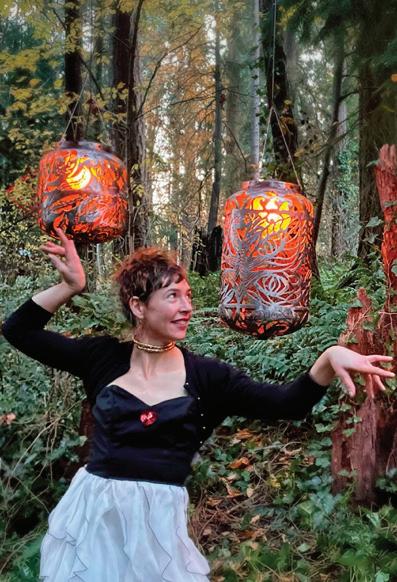
Intricate cut designs are layered with colour-changing film, prisms, mirrors and light to create ephemeral works of shadow and light art. Nature-oriented themes are further reflected in action. Sparks has created installations in over 6 countries, 30 cities and 40+ global art events.
With this project; 3 years. We have been making art and music independently and with other groups for 20 years.
What’s the most satisfying part of your artistic process?
Seeing the works improve over time. The songs change and evolve as we practice and perform them.
What (if any) is the strangest part of your artistic process?
Sometimes it is strange trying to translate the English words into sign language. There are multiple meanings to the lyrics but to represent them visually we need to choose one.
What first attracted you to your art style?
I have been obsessed with music and seeing concerts/ DJs since I was a teenager. Event production is about vibe curation and is interactive and dynamic. When it is done well, it can be a transformative experience.
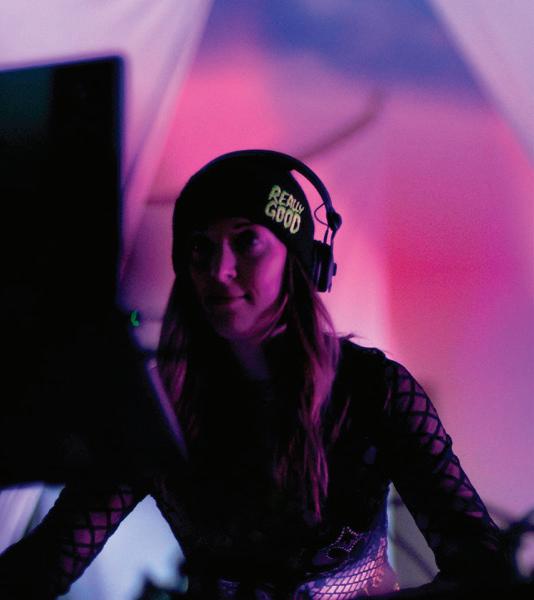
How long have you been creating your art?
I started hosting a radio show in 2016, DJing in 2018/19 and throwing events in 2019.

What’s the most satisfying part of your artistic process?
Entering flow state while performing and seeing people's reactions to an event that you are involved in creating.
What is your favourite memory of Luna?
My favourite LUNA memory is Snotty Nose Rez Kids performing in the parking lots of the Regent/Cheers. They absolutely killed it and their performance was so engaging and interactive, seeing people have so much fun! Also, Jess and Rob's birch forest in the weird little alley space behind the Mica Heli office was incredible.
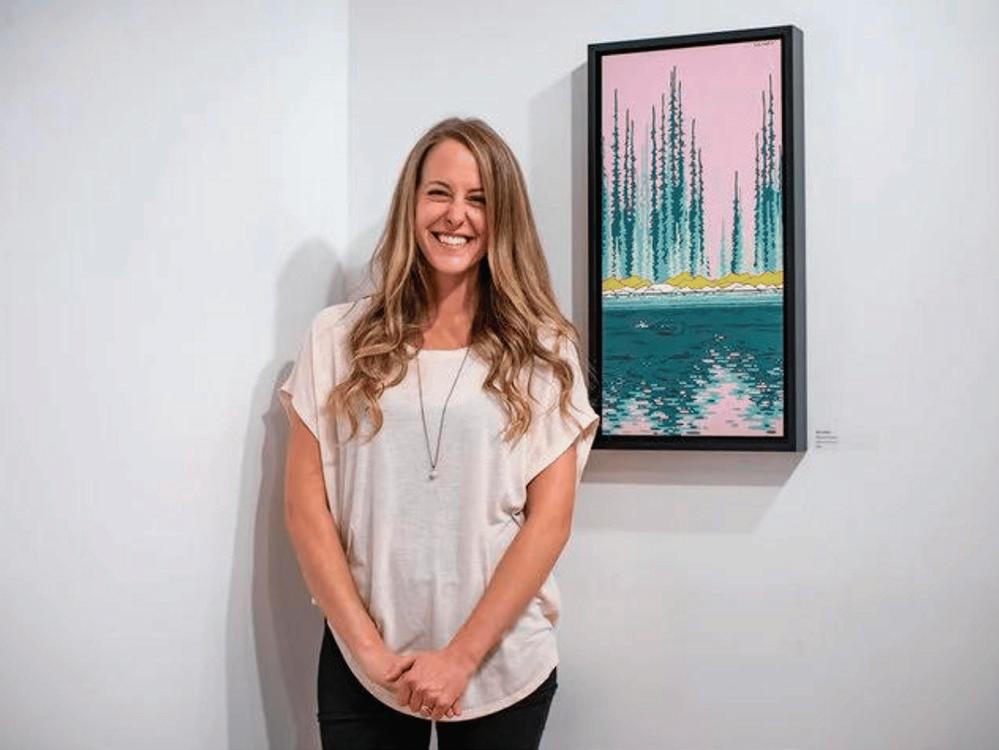
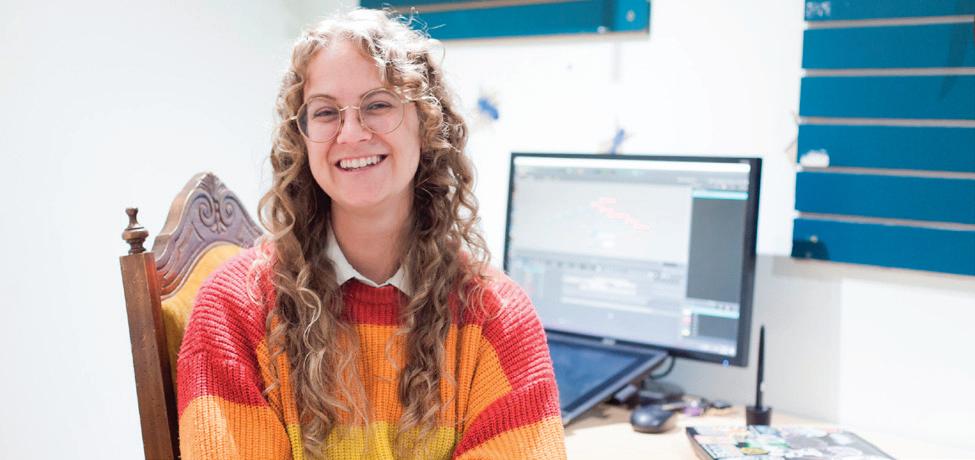
Jessica Leahey is a self-taught artist and freelance illustrator. Her working mediums have included painting, illustration, mixed media, and installation.
Her LUNA installation, A Spacebear Odyssey, is a digital collage made completely from AI-generated imagery. There are 13 images layered on top of each other to create this unique perspective.
“Much of my inspiration comes from the intersection of contemporary culture and the natural world – and my lifestyle is pivotal to accurately studying and portraying that paradigm.”
revelstokereview.com REVELSTOKE TIMES | 19
GRETCHENHICKMOTT JESSICALEAHEY IANGRIFFITHSANDAMYBRAUN HILARYZEEUWEN HEATHERDAWNSPARKS 12 26 22 36 9
KATETUPPER
How long have you been creating your art?
I’ve been showing sculpture in galleries since 2006. I enjoyed years of metals shop in high school in the 90’s and fabricated many creative projects there. As a child, growing up at the beach and in the forest surrounded by materials and inspiration, I sculpted a lot in nature, creating games and elements that blended in.

What’s the strangest part of your artistic process?
Research and development gets kind of weird sometimes.
What is your artistic inspiration?
I consider myself a third generation ecologist. My grandmother was a scientist who loved the earth, my mother a teacher who encour aged us to see and explore our surrounds and wonder at them. I’m a sculptor who seeks to learn from and emulate the magic of our environments.

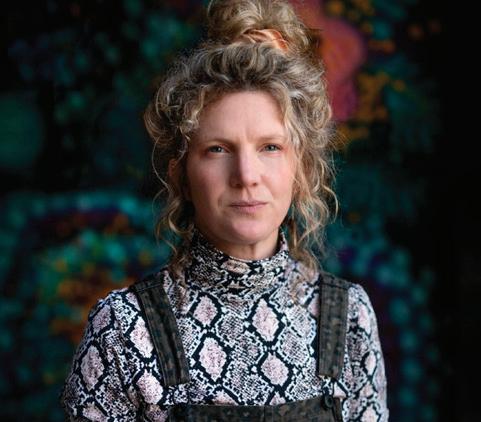
What first attracted you to your art style?
I’m a welder by trade, so I was interested to see how much detail I could build with weld on the surfaces of my sculptures. I was attracted to the sheet metal element of my style because most of the projects I’ve worked on in industry have me handling heavier materials, and sheet metal seemed delicate and malleable.
What’s your connection to Revelstoke?
Throughout my creative career, Revelstoke has been a stop for many of my sculptures because we are neighbours. You’ve hosted me many ways over the years with solo and group shows at your local Revelstoke Visual Arts Centre, at Luna festival, and as public art through a Sculpturewalk lease of my piece, ‘Carbon Key’, downtown for a year. I always feel welcome in Revelstoke and look forward to visiting.
LARADAVISANDLUCIEBERGERON
Anyone can be an artist! We invite you to collaborate with us and reveal the hidden messages by throwing water balloons filled with paint at our project wall of paper.


Your contribution will help grow the art piece to its final stage. There is no right or wrong way to create this project.
Just Throw It! is a community art project constructed by children from the Revelstoke Library Summer Reading group.
How long have you been creating your art?
My first "big role", where I truly felt the power of theatre, was as Lady Macbeth when I was 10 years old. I've been performing and creating theatre ever since.
What’s the most satisfying part of your artistic process? Audience connection, reaction, and participation - seeing magic light up people's eyes, hearing responses of delight and curiosity. Having a vision come to life and be made larger than itself by the people who are appreciating it.
What (if any) is the strangest part of your artistic process?
The strangest part of my artistic process is probably trying to think like other beings - putting myself in the body/headspace of someone (or something) other than myself, and embodying that. And then coming up with ways to represent that visually, that are often weird (a giant crown/headpiece made of old tomato cages and fab ric, etcetera...), and wandering around in the forest taking pictures in that garb. It's getting into child-state, imagination-state, and being open to silliness.
What first attracted you to your art style?
I've just always loved stories, performance, co-creating magic with a combination of art and imagination. Theatre is about suspension of disbelief, shared story-spinning, and being present together in the stories we tell. I've loved watching and making performance art since I was a tiny kid!
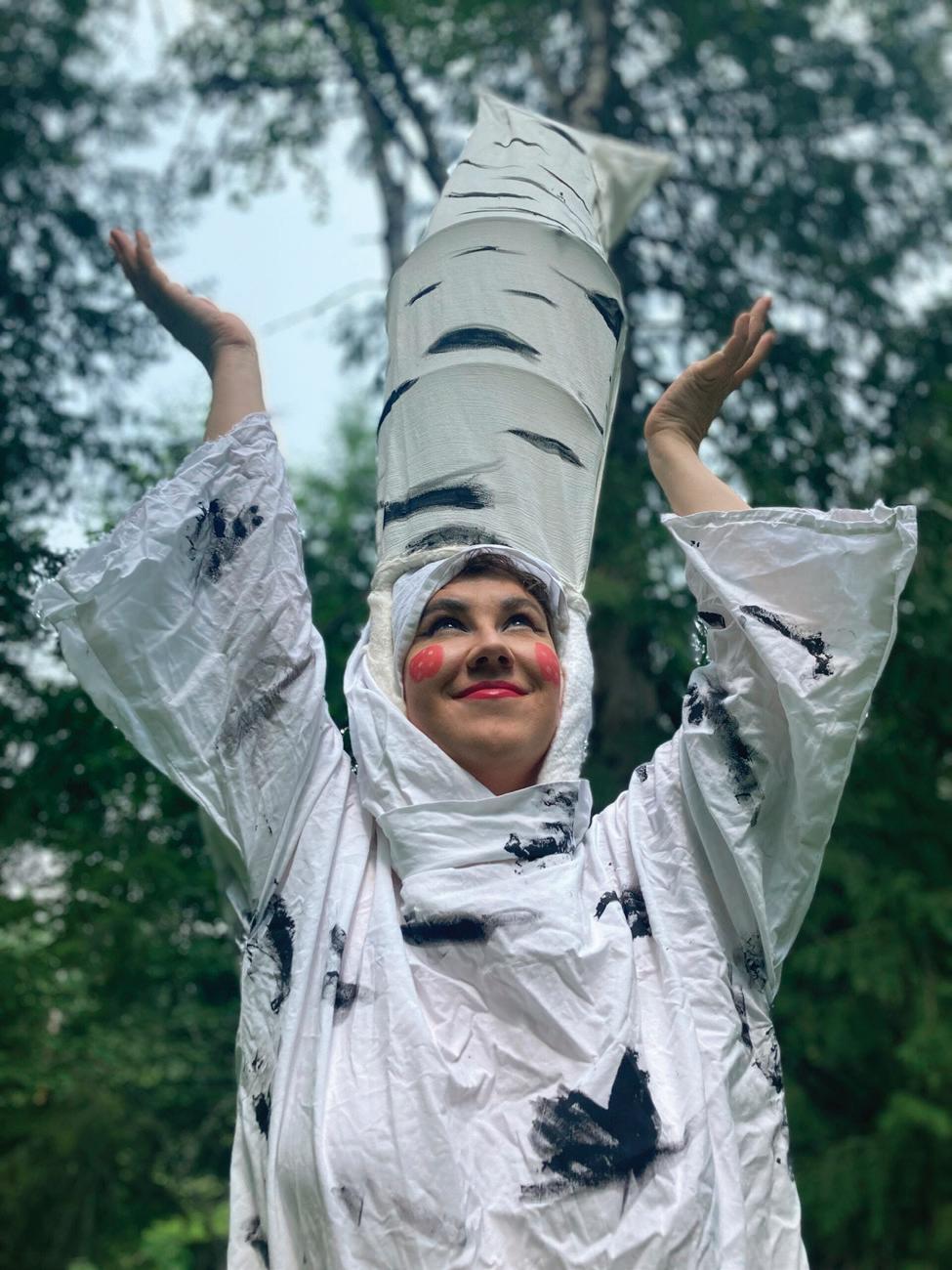
What is your artistic inspiration?
Ages-old, cross-cultural clown and storytelling traditions that have kept people entertained through dark nights since the dawn of time.
20 | REVELSTOKE TIMES Fall 2023
MARYAFOLINSBEE 24 28 18
In her sculptural works, Meagan explores a history of interterritorial relationships between Mi’kmaq and Beothuk nations on Ktaqmkuk territory as a way to enact Indigenous survivance. This piece is a short film created from a land-based action by Meagan Musseau in her home region of Elmastukwek, Ktaqmkuk territory (Bay of Islands, western NL), September 2019.
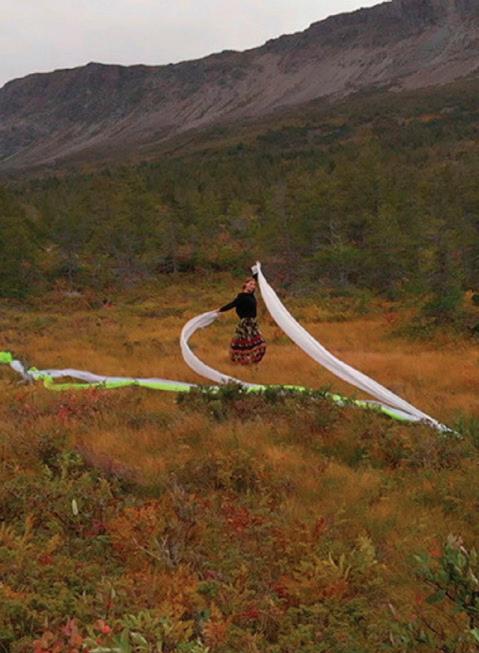
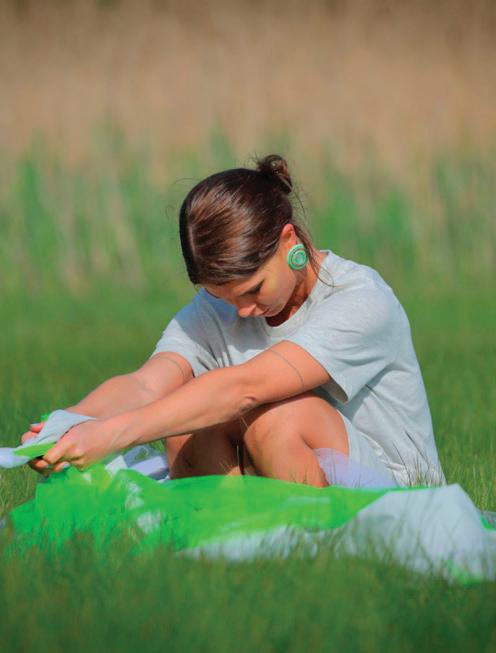
Musseau patiently braids long strands of grey fabric and neon green tulle. The strands are tied to rocks and buried in the ground. She activates the strands within the landscape—braiding the past and present while moving towards a future. This is an embodied practice. Interweaving movement and endurance within the environment to generate an ephemeral expression. Imagining the deeper relationship that our presence on the land has with the cosmos.
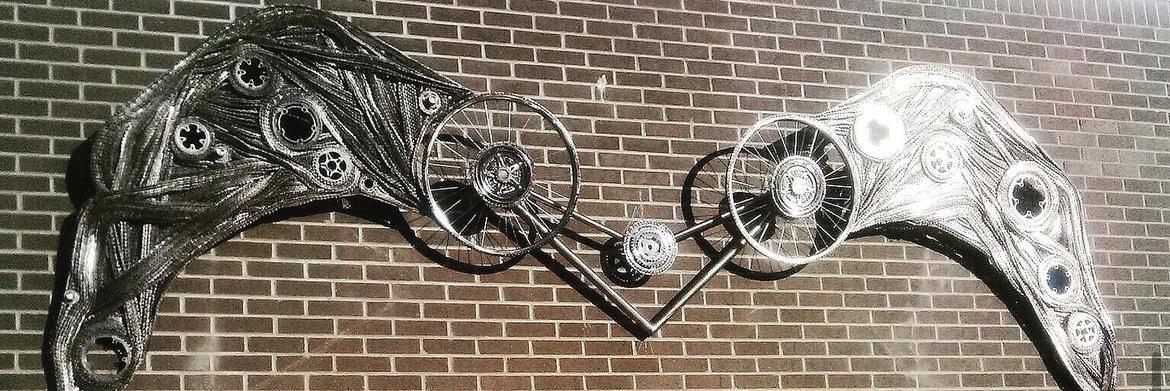
Kyle Thornley is an Artist Blacksmith from Revelstoke, BC. For the last 17 years, Kyle has been creating art with metals through commissioned pieces, architectural metalwork, exhibitions, and public art.

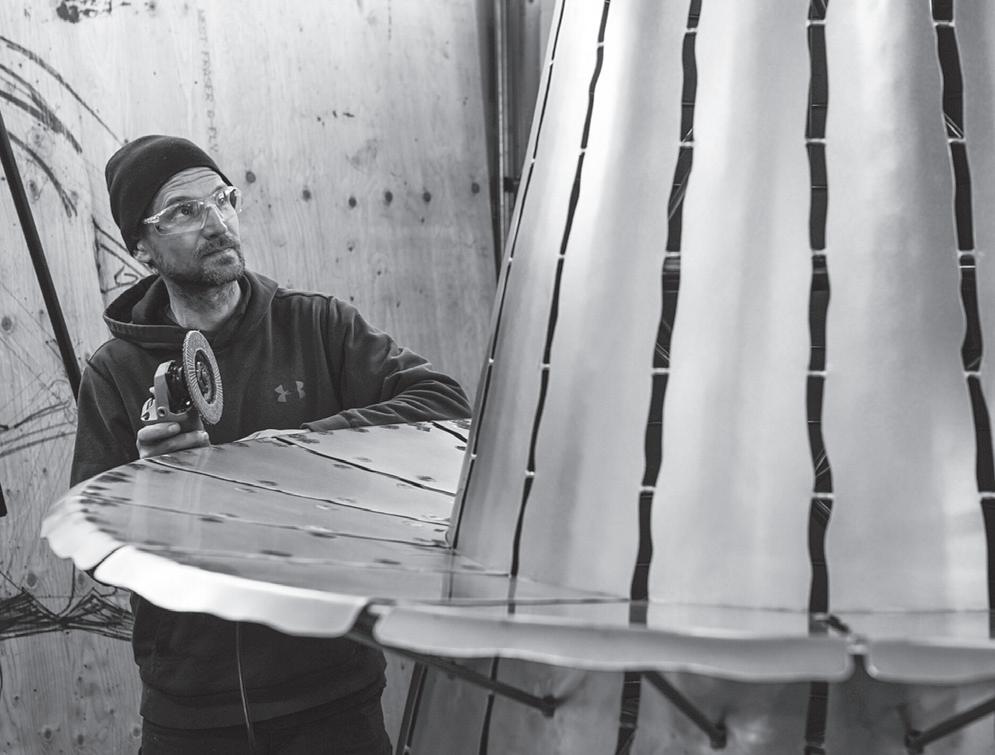
Haven is a tall stainless steel tree trunk covered in colourful, roosting stainless butterflies created by the team at Metal Mind Forge lead by Kyle Thornley. A driving belief is the potential of art to make us more present and engaged in our world. Art in public places can be the bridge that connects all segments of the community – to validate particular histories and traditions, to establish a collective identity, and to give expression to diverse experiences and aspirations.
REVELSTOKE TIMES | 21
MEAGANMUSSEAUMETALMINDFORGE 4 10
MIKEFUNERGYORLOSKYSTUDIO
What first attracted you to your art style?
There's something magical about puppets. Human interaction has limits - certain things we say can be perceived as unusual, weird, or, in certain cases, over the top and might be interpreted as a lie. But a puppet can say and be anything it wants, and people accept it and play along with it. They have a freedom that humans don't. They can look however they want, claim to be a professional in any job, have any hobby they desire... It's limitless, and people never question it. If a puppet says it won first place at the World Cup of underwater basket weaving, who are we to deny it? That limitless imagination and the willingness to play along is what attracted me to puppetry.
How long have you been creating your art?
About 10 years. I first built a giant puppet for the Shambhala music festival, it was a giant caterpillar that moved like a Chinese dragon with multiple people holding sticks. It had lights running through it, a fun top hat, and colourful socks attached with stretchy fabric that people could pull on and watch like a cat as they bounced around. As crowded as that dance floor was, everyone parted to make space for us and we ended up in the DJ booth when nobody else was allowed. Then I started making sock puppets and bringing them to public places. Strange things happen when you walk through places like Vancouver Airport or the Toronto Eaton Centre by yourself with a sock puppet.
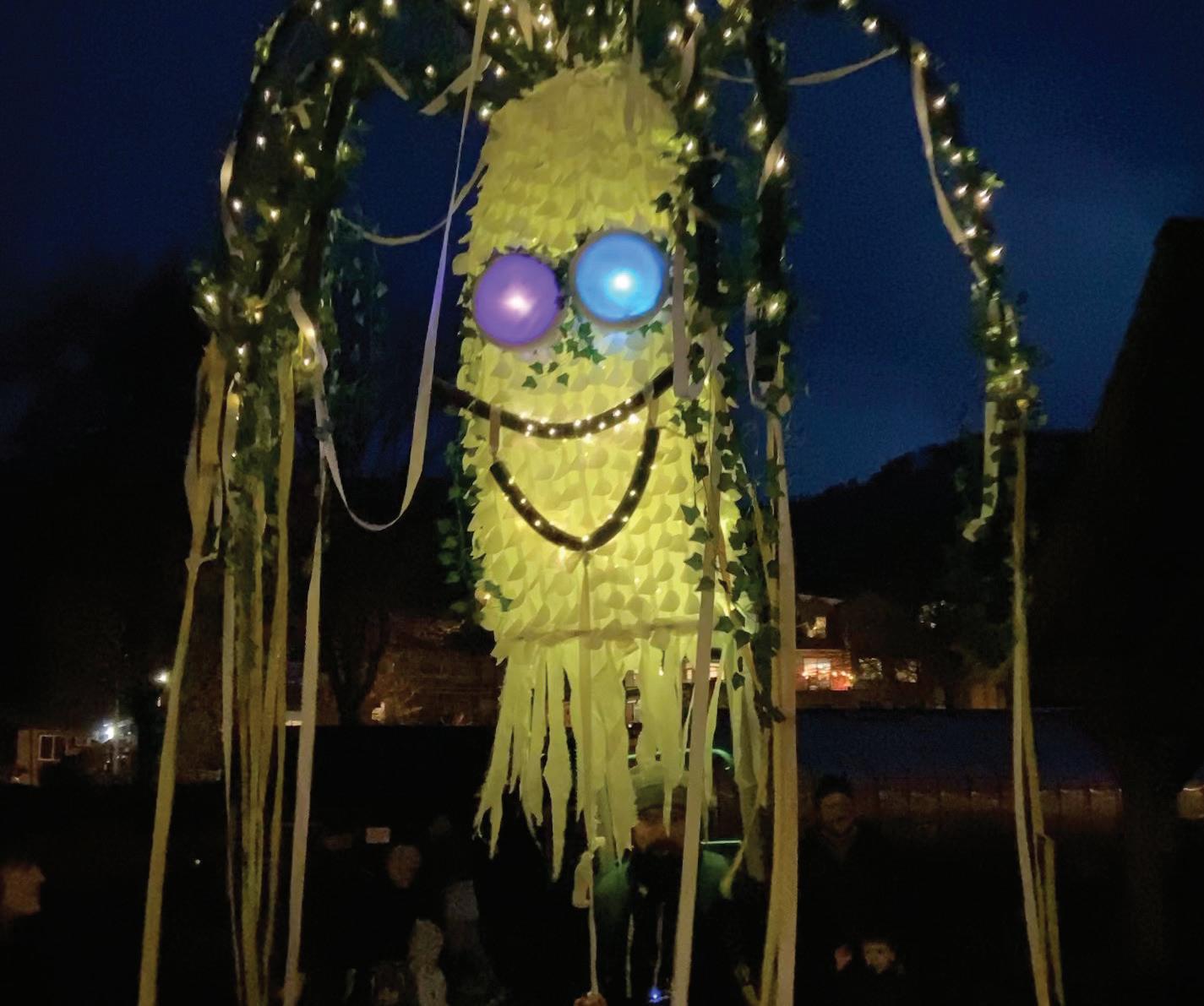
What (if any) is the strangest part of your artistic process?
A lot of the materials I use are upcycled. Essentially, trash. I find trash and bring it to life. I've spent a lot of time going up and down alleyways looking for random objects, and it's extremely satisfying when I find the perfect part. A dumpster at a construction site can be a gold mine, and I've sometimes wondered what people walking down the street think when they see a man pop out of a dumpster with a large piece of old dusty ducting and a huge grin on his face.
Who is your artistic inspiration?
It's hard not to think of Jim Henson when making puppets. He brought so many creatures to life, many of whom are widely known and loved. That's hard to do - to take cloth and foam and eyes and create a character that's known by multiple generations all over the world. He was a master.
Andrea and Kevin Orlosky (Orlosky Studio), both graduated with high honors from the Savannah College of Art and Design (SCAD) in 2004. In 2007, they co-founded Art on Wheels. Over the next 13 years, Art on Wheels grew into a successful therapeutic arts non-profit with dozens of program locations and numerous public art events each year, reaching thousands of people annually.
SARAHNAYANAFIELKOV
Nayana Fielkov is a critically acclaimed performing artist dedicated to the work of play. She is based on the unceded territories of the Coast Salish peoples–Sḵwx̱wú7mesh (Squamish), Stó:lō and Səlílwətaʔ/Selilwitulh (Tsleil-Waututh) and xʷməθkʷəyəm (Musqueam) Nations. Beginning with scripted plays and musicals over two decades ago, she evolved through the creation and wear ing of masks, into the worlds of clown and devised theatre.
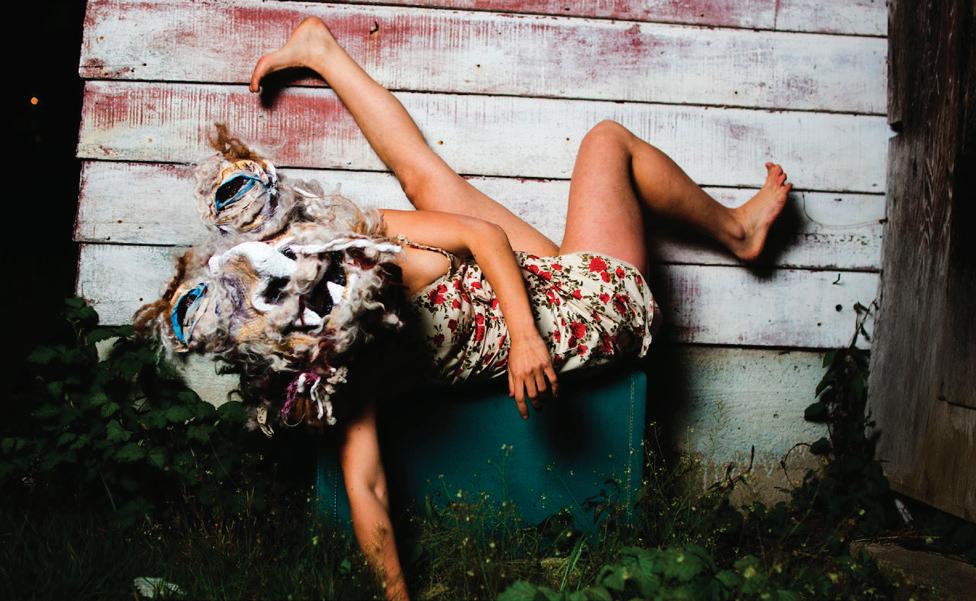
Underbelly is a one-woman surrealist physical comedy featuring: monsters, dismemberment, shower opera, inconceivable truths, and a hot date.


Join this multi-award-winning physical comedian in her bathroom to untangle the age-old question of perception and reality in love and life. With physical comedy, clowns, puppetry, magic, and live video.
22 | REVELSTOKE TIMES Fall 2023
23 1 21
SPANDYANDY TAYLORSANDELL
Spandy Andy’s high-energy performances are guaranteed to have you grinning ear to ear. His message: “Appreciate the fact that you are alive & use your energy to spread positivity. AKA Keep it TIGHT & BRIGHT!!”

Carrying around a stereo blasting dance music, Spandy Andy is sure to get any party started.
WARNING: This boy’s smile is infectious!
SURIJAMESSTEWARDSON

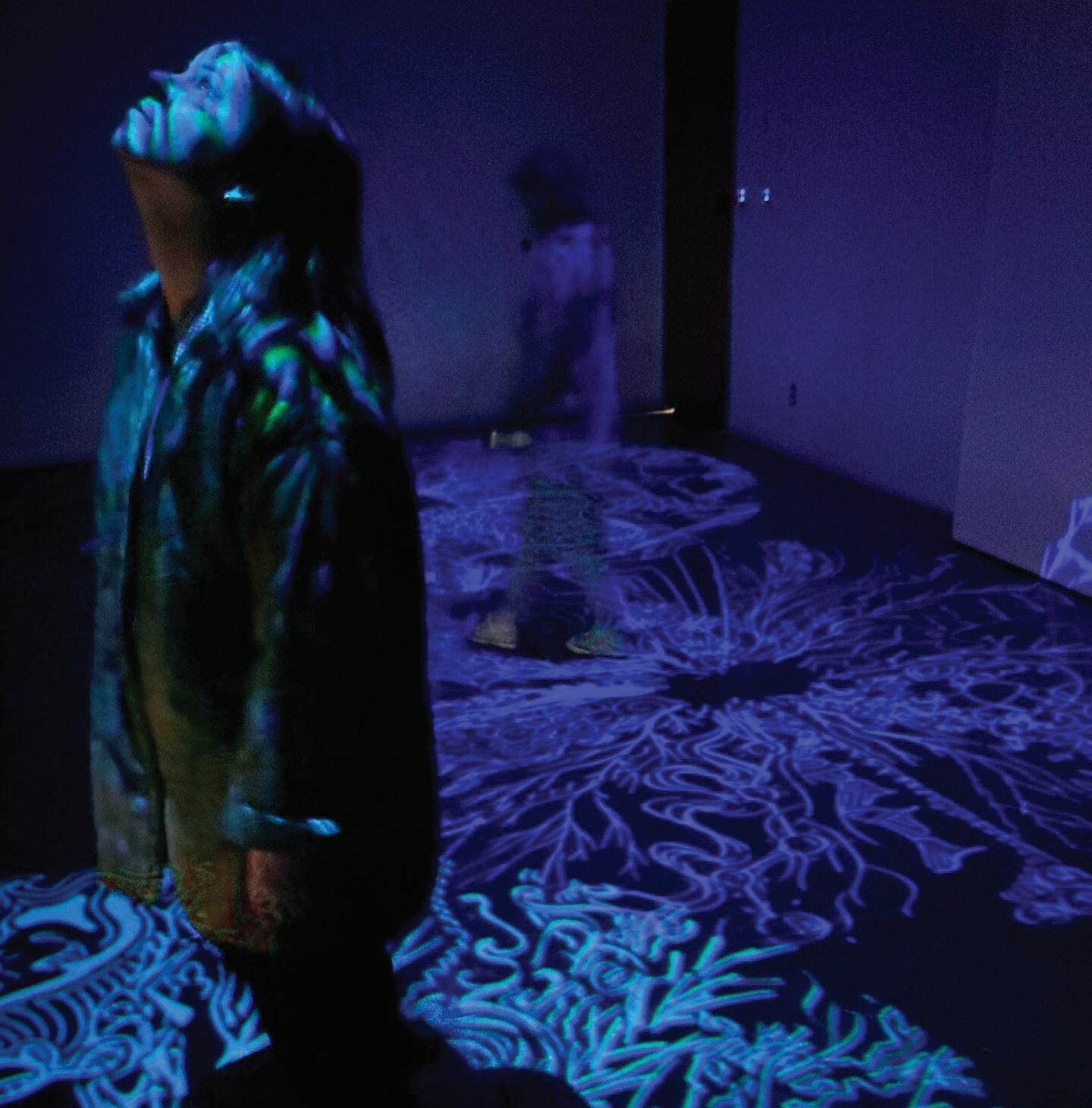
Taylor Sandell is a multimedia artist who finds joy in exploring new mediums. Her portfolio includes projection mapping, animation, linocutting, illustration, and more.

This recently discovered species is known to grow at an extraordinary rate. This is the biggest, fastest, and silliest form of mitosis ever recorded in human (or plant) history.
Following Taylor’s incredible projection work at LUNA Arts 2021 and 2022 we are excited to see her exploration into the microbial world.
THEBIRCHES
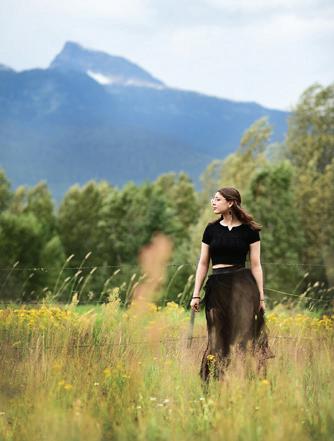
Suri is an Indigenous Youth and is a proud member of Bingwi Neyaashi Anishinaabek.
She grew up in Revelstoke and has a strong connection to nature and the land and tries to incorporate this into her art in some way.

“There are many stories of Gitchi Manitou – The Great Spirit – the Giver of all things. The Creator. However, they come from the same place, protect Mother Earth. Protect the land.
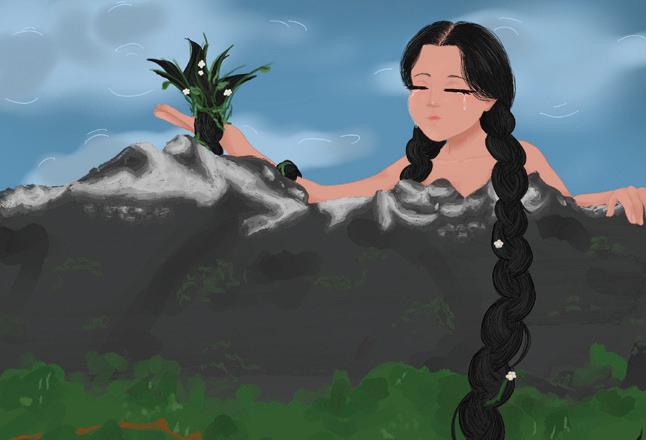
Gitchi Manitou gave our Earth the power of growth and healing, gave our water the power of purity and renewal, our sun the power to heat and light our earth and gave the wind the power of breath of life itself. I am excited to showcase, alongside Jess Leahy, Gitchi Manitou in a 3D format."
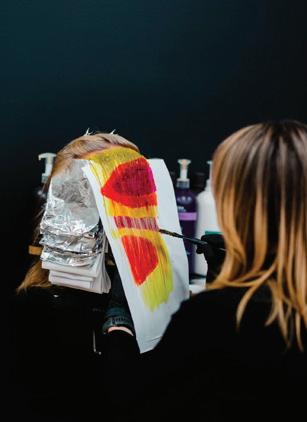
Birch & Lace Hair Company is a collective of industry artists intertwining environmental responsibility with the beauty industry.
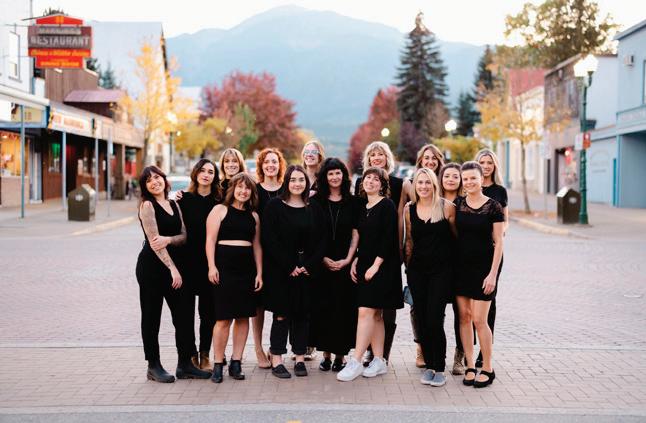
The beauty industry attracts creatives and as a busy salon and spa we don’t always get a chance to play outside of work. Luna is offering our team a chance to step outside the box using hair as a medium for crafting & creating. It’s also been a fun chance for us to get together to craft and connect.
Our natural surroundings and Luna past is lending influence to us in our creation this year, we are thrilled to be involved.
revelstokereview.com REVELSTOKE TIMES | 23
15 34 2 33 5









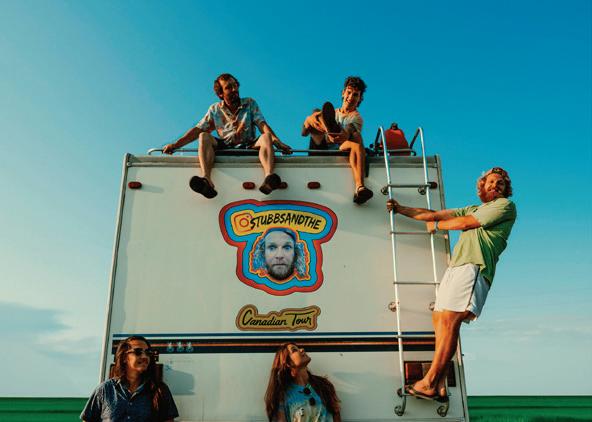
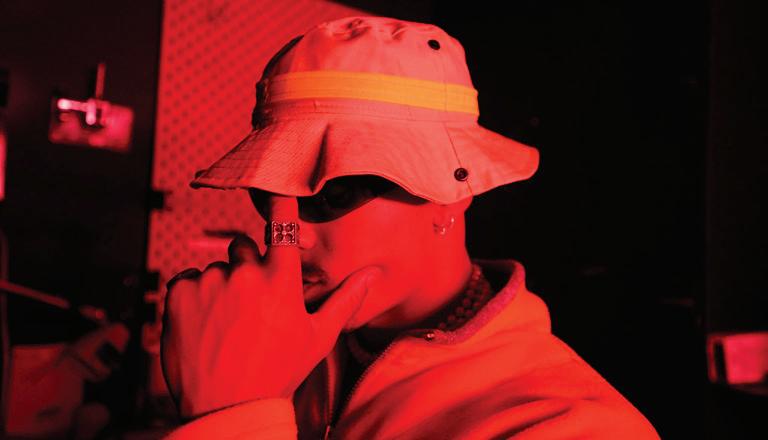
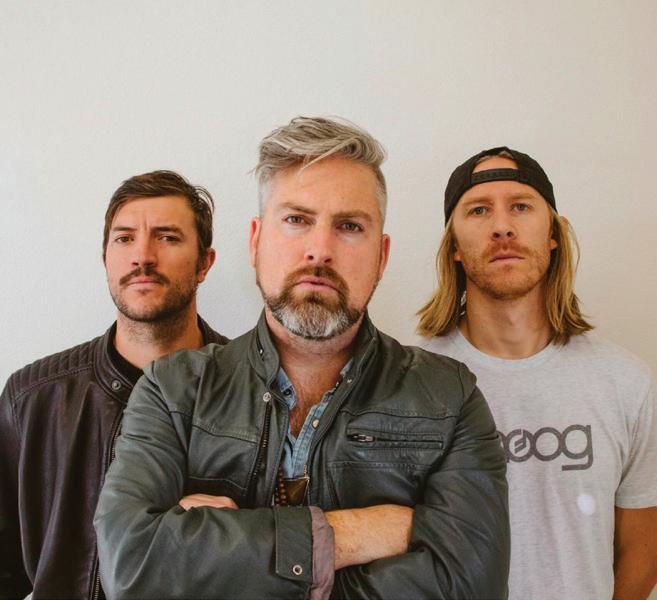
REGGAE, SYNTH-POP, HIP-HOP, JAZZ, AND ROCK Across downtown Revelstoke at LUNA Sound on Sept. 22
RomeroRicky Diamonds HOSTED BY 10 4 BANDS STAGES AT THE ROXY THEATRE ON Jazz | Lounge Music
Gisela
MC Smookki Sumac
REGENT
AT THE UNITED CHURCHAT THE CATHOLIC CHURCH
FRESH OFF OF HOSTING MORE THAN 50 STRAIGHT NIGHTS OF LIVE MUSIC AT GRIZZLY PLAZA
THANKS TO REVY LIVE OUTSIDE FROM ARTS REVELSTOKE, THE COMMUNITY WILL BE TREATED TO ANOTHER BLAST OF UNIQUE CANADIAN ARTISTS AT LUNA SOUND.





 Lum
Scarred Soul Empire
Leather Apron Revival
stubbs-and-the
Blonde Diamond
VISSIA
Lum
Scarred Soul Empire
Leather Apron Revival
stubbs-and-the
Blonde Diamond
VISSIA
Leno TKGold Mynd AT THE SELKIRK ROOM IN THE
|
|
|
Hip-Hop
Reggae
Rap Rock | MetalPop
Alternative
THE LAST OF THE
Ir N HoRsEs
THE STORY OF STEAM ENGINE 5468
AND THE ESTABLISHMENT OF THE REVELSTOKE RAILWAY MUSEUM
BY JOSH PIERCEY
In September of 1948, a spectacular locomotive blasted a puff of steam as it rolled out into the crisp Autumn air in Quebec, ready to be guided onto whatever runs of wood and steel required its services.
Blocks of brass were forged and welded with fire and steel to create great iron horses, and four numbers were forged into the engine to distinguish one from another. On this September day, on this particular engine, the numbers five, four, six and eight were placed just above the headlamp.
5468 (fifty-four, sixty-eight) was to be stationed at one of North America's most challenging runs of track.
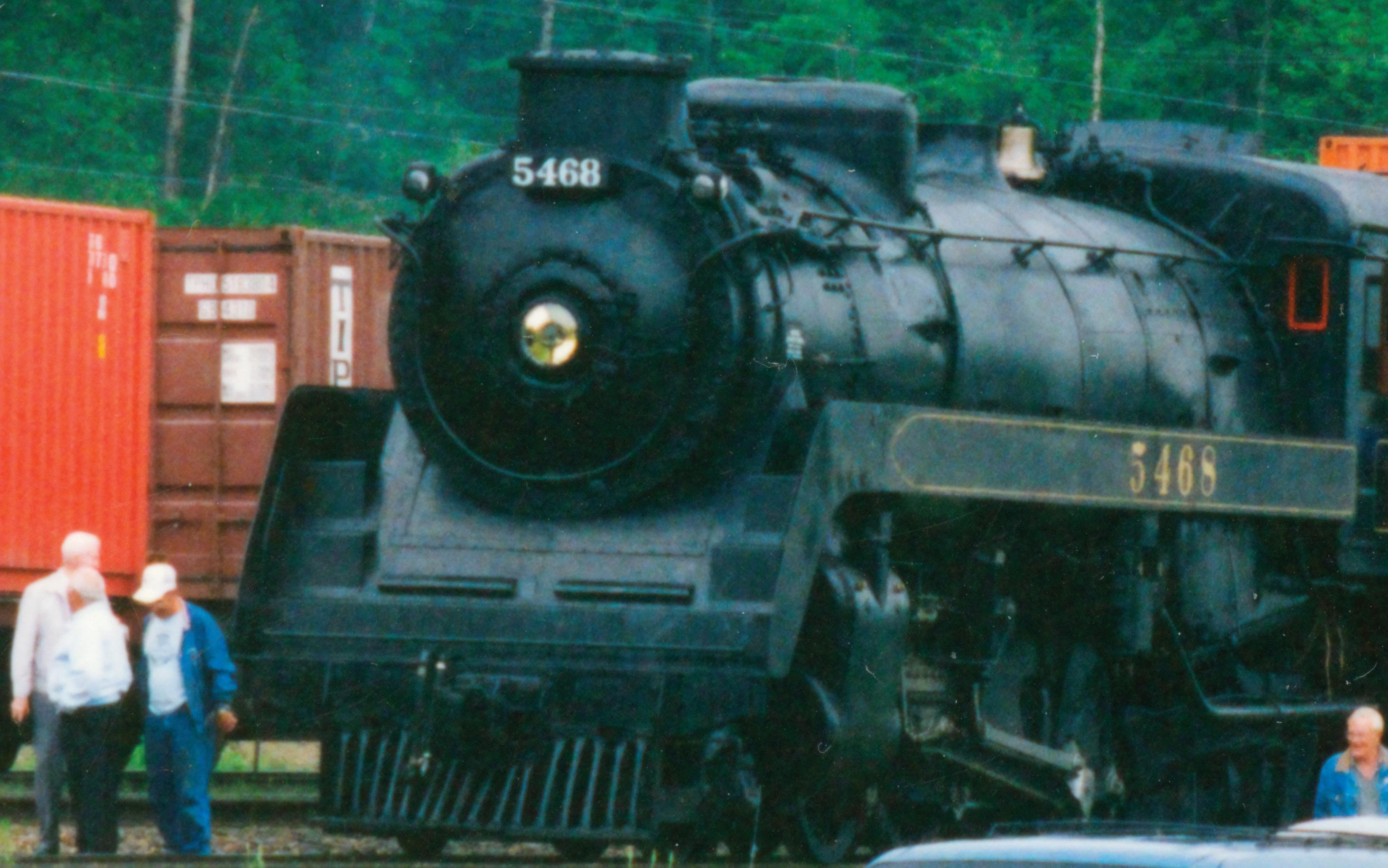
5468 was heading to Revelstoke.
END OF AN ERA FOR STEAM
5468 was part of a series of locomotives called ‘The Selkirks’, the biggest locomotives in the commonwealth at the time. It took 10 men to operate them, and they were purpose-built for moving big, heavy cargo through the mountains.
As fate would have it, 5468 was one of the last steam locomotives ever built in Canada. The Canadian Pacific Railway cut off all production of steam engines in 1949, marking an end to the ‘big steam era’.
At the end of their lifetimes in 1956, many steam engines were transferred out of B.C. and onto the safer pastures of the prairies.
26 | REVELSTOKE TIMES Fall 2023




revelstokereview.com REVELSTOKE TIMES | 27 YouronestopShopforfurniture,mattresses, appliancesandaccessories. SupportingthecommunityofRevelstoke 11WestVictoriaRoad, (250)837-3373 cityfurniturerevelstoke@gmail.com
Dimpy
But, even there, they would eventually run out of use. Technology had advanced past the use of coal and steam. Diesel engines ushered in a new era of locomotives, trains that could be operated easier and with less manpower. By the 1960s most of the Canadian steam engines had been retired and sent for scrap.
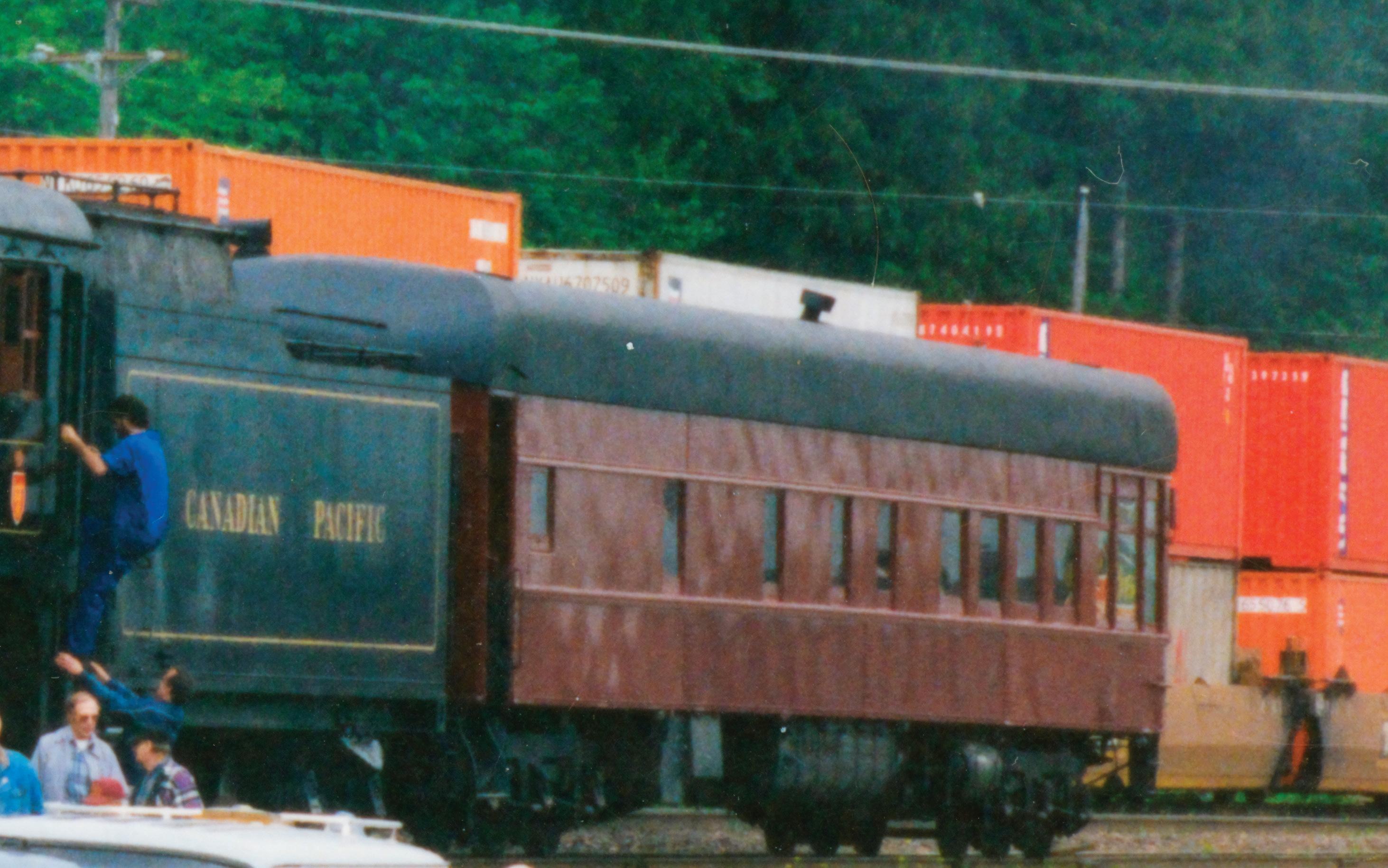
As you may have guessed by now, 5468 escaped the scrapyard. The Revelstoke engine was selected for a collection of Canadian steam locomotives being assembled by the Canadian Railroad Historical Association (CRHA) for display in Montreal, Quebec.
The iron horse was repainted and put on display in Windsor, Ont. before being stricken from the company’s roster in March of 1963 and transferred to the Canadian Railway Museum. It sat there for the next 30 years.
A conductor and crew
Even the men who helped him move the powerful beast across the country agree, that Ernie Ottewell was the steam that propelled the engine that got the idea of the Railway Museum rolling.
“He lived and breathed steam,” said Revelstoke’s Dean Handley about his old friend. He was a tenacious man with a love for steam engines who ‘kept things humming along’ according to those who knew him.
The year is 1986. Ottewell is nearing the end of his 46-year
career on the tracks, which included driving the first full train through the infamous MacDonald Tunnel in Rogers Pass. The legendary engineer was attending a historical steam engine exhibition in Vancouver. He learned of the CRHA’s request to protect six different classes of steam engines. Among those engines: 5468.
The CRHA, alongside Ottewell, decided to turn their eyes towards Revelstoke, a significant location in the history of the Canadian railway because of its proximity to ‘the Last Spike’ amongst other things.
A simple conversation in Vancouver was returned to Revelstoke with Ottewell, and the idea quickly spread like wildfire into the ears of a rail-loving community.
5468 was set to be the centrepiece of the would-be Revelstoke Railway Museum, but it would first have to make the cross-country journey from Montreal to Revelstoke, a seemingly impossible task for some. Not for Ottewell.
Fred Olsson was one of those with a passion for locomotives in his heart. Olsson’s father was a blacksmith for the Canadian Pacific Railway. Although his father urged Fred to stay away from a life on the tracks, this didn’t sway him from a love of model trains.
One night, Ottewell called Olssen up and told him about his idea to get a steam engine to Revelstoke. He was on board.
Before the Canadian Pacific Railway would even think of offering Revelstoke this valuable, unique steam engine, the
28 | REVELSTOKE TIMES Fall 2023
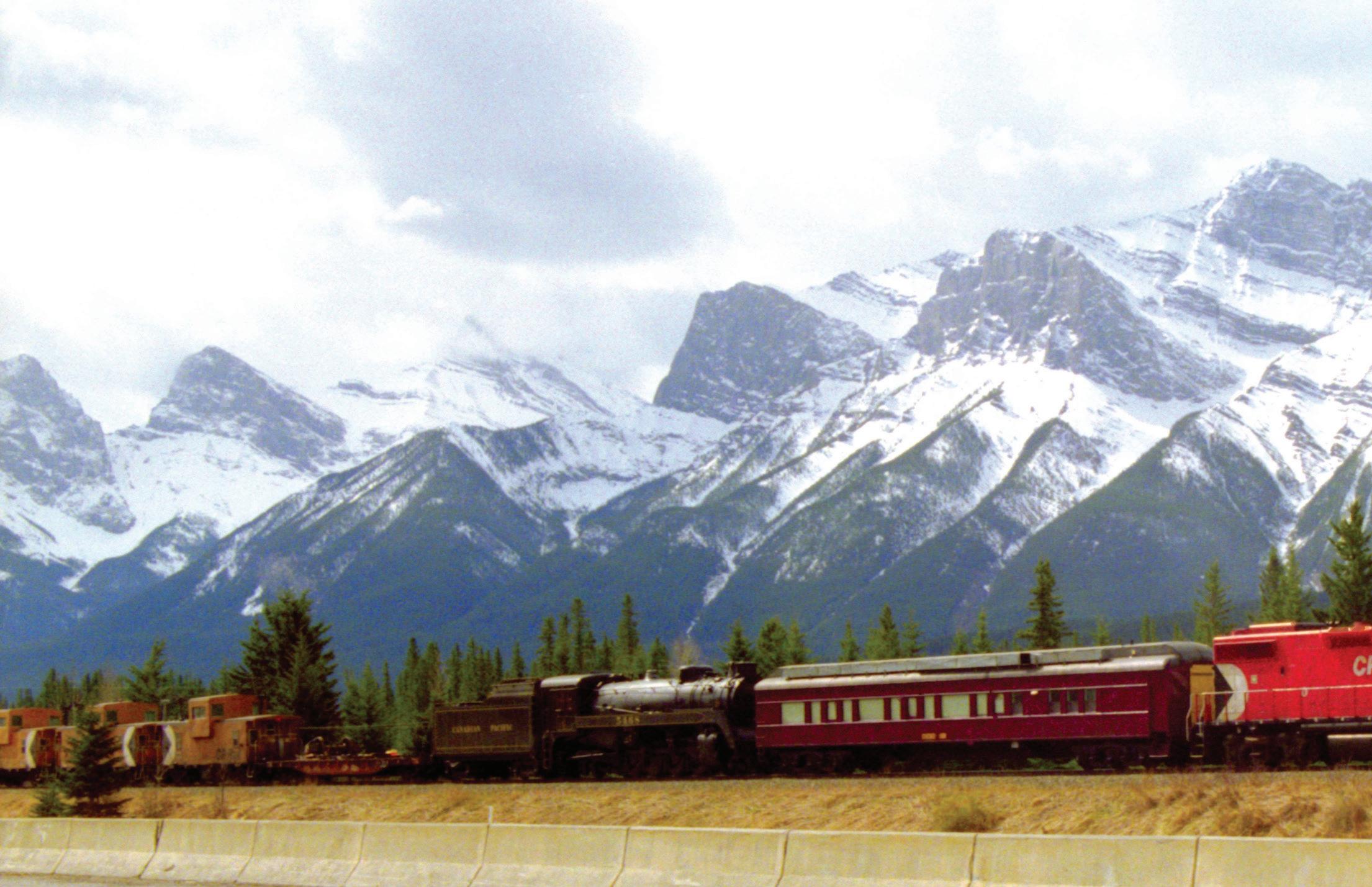
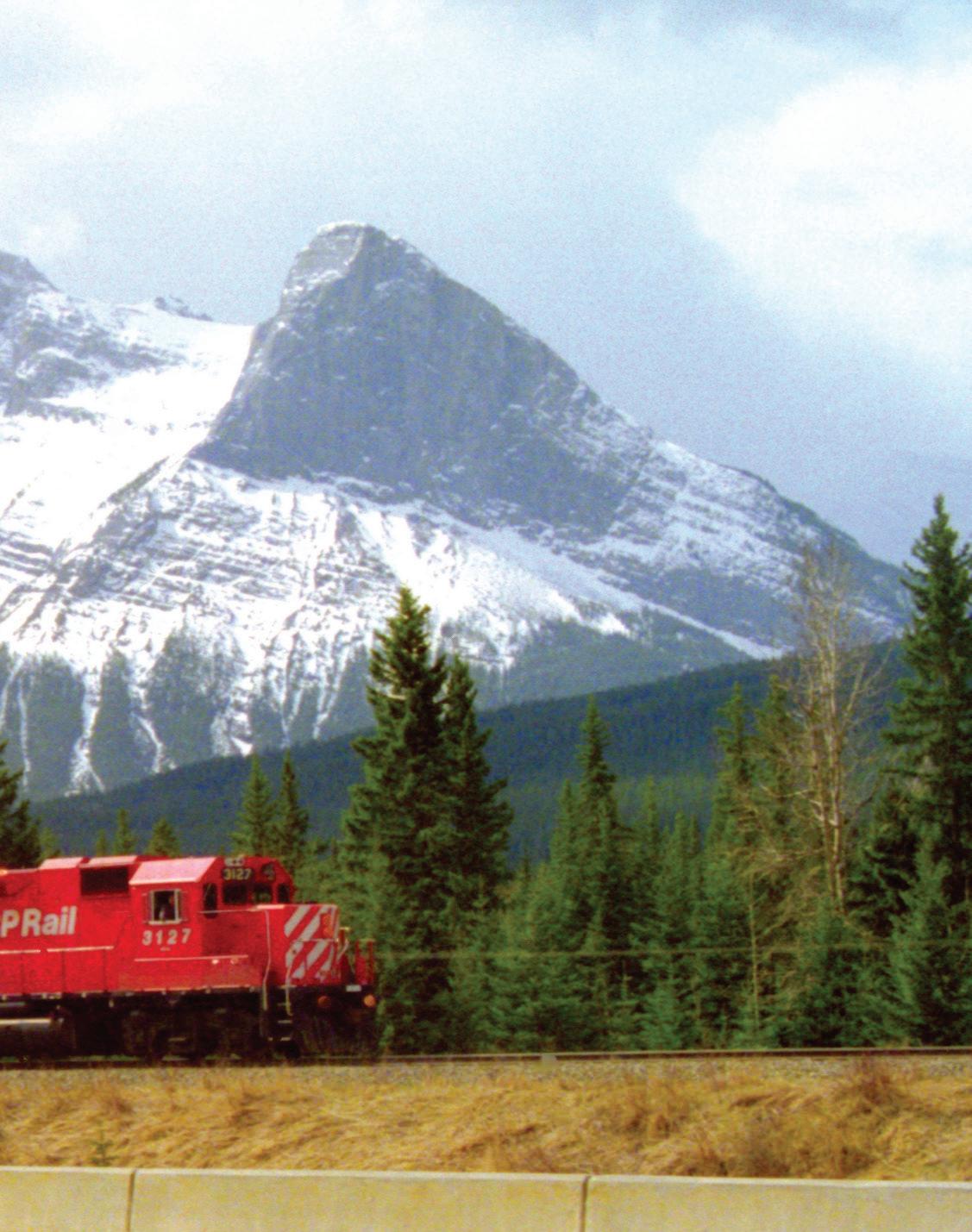
The special train with 5468 passes Canmore, Alberta en route to Revelstoke. (Revelstoke Railway Museum Collection)
community had to come together and form a group: the Revelstoke Railway Historical Society. A couple of dozen community members came together, and CP agreed to let them move forward with their crazy would-be plan.

They picked a spot for the museum to be built, hired an architect to design it, and broke ground so that 5468 would have a home to return to when its journey was finished.

Olsson, Handley, Ottewell, Don Hawker and a group of retired railroaders banded together, raised funds, and devised a plan. The biggest hoop to jump through early on in the process was the fact that the steam engine had been sitting dormant for 30 years, and the grease, oil, and lubricant in the engine had long since dried up.
“You couldn’t go to Shell Canada and get a tube of grease,” laughed Olsson.
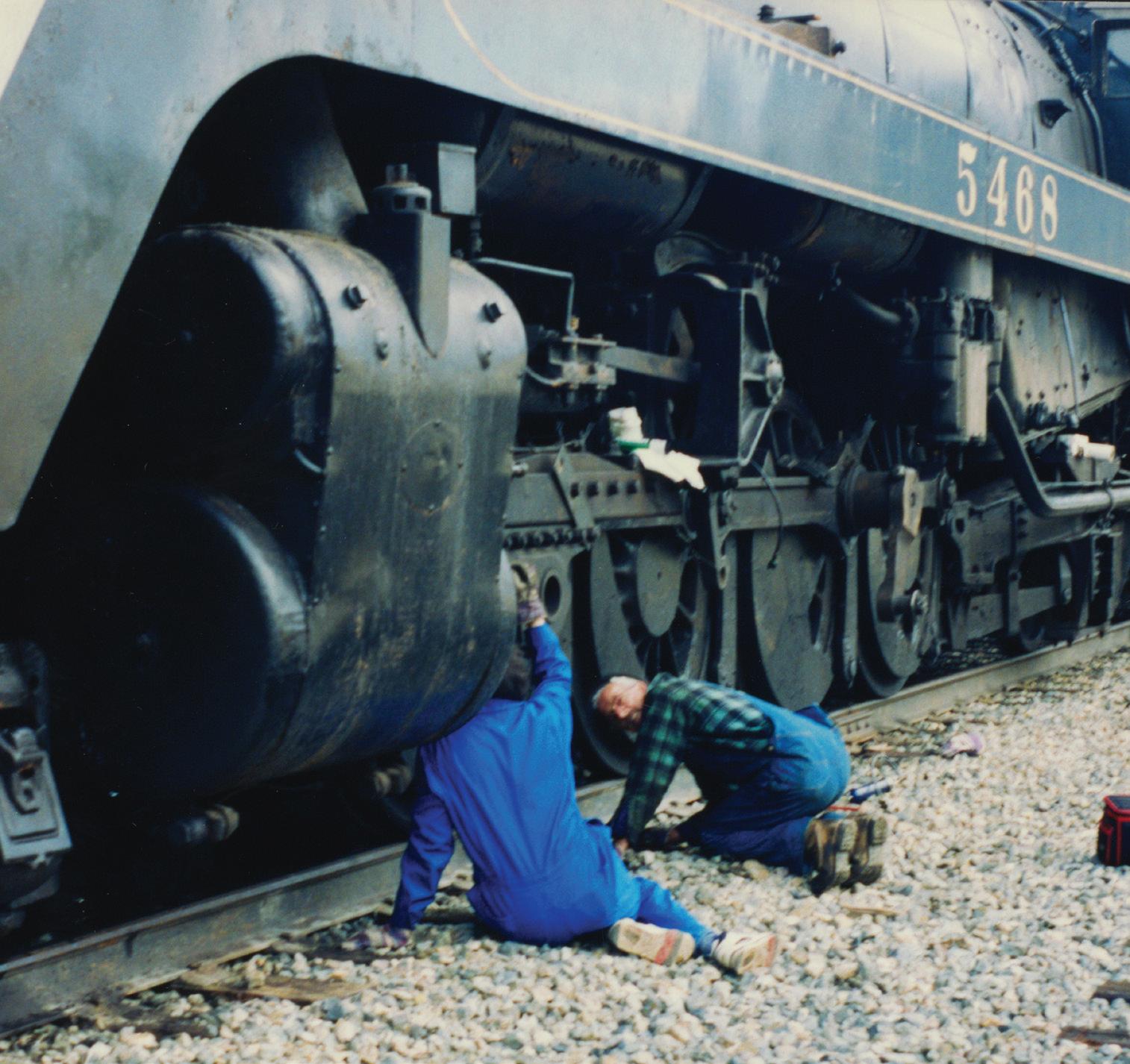
In August of 1992, Ottewell and Olsson arrived in Montreal with a supply of grease borrowed from Scranton, PA, to work on 5468 in an old roundhouse. Olsson said the French Canadians watched on as the two Revelstoke men worked eight hours a day getting this old engine ready. At the end of every day, the pair were covered in grease and grime.
They made their preparations, and the railway set them up to lug 5468 back to Revelstoke on a ‘hospital train’, a locomotive made up of derelict train parts headed to the scrapyard. The train could only travel at a maximum speed of 15 m/ph, making it a true sight to behold for those who saw it passing by and a thorn in the side of fellow engineers.
revelstokereview.com REVELSTOKE TIMES | 29 6011stStWest.Revelstoke,B.C. V0E2S0Canada Callus-12508372181 Email-innkeeper@revelstokelodge.com Bookdirectforbestratesat: www.revelstokelodge.com DOWNTOWN LOCATION, CLEANAND COMFORTABLE PhotobyRyanCreary
End of the line
As it turned out, steam engines were incredibly difficult to move, especially after they were saved from the scrap heap. They headed west in late September on their epic journey before trouble occurred.
On Sept. 19, 5468 stopped dead in its tracks in White River, Ontario, a small town nestled on Lake Superior between Thunder Bay and Sault St. Marie. Luckily, White River was home to one of only two drop pits between Vancouver and Montreal, a feature which made it an ideal place to break down if a steam engine was inclined to do so.
Ollson remembers how concerned he was for Ottewell when the engine broke down. The retired engineer put a lot on the line with the ‘big-wigs’ of the Canadian railroad to get this project together, and as he put it: “There’s nothing deader than a dead steam engine”.
Olsson and Ottewell took all the valuables from the train and abandoned 5468 in White River before the start of the winter. “We knew it had to be repaired, but we had no idea how,” said Olsson.
During the winter, CP put 5468 on a flatbed and shipped it to Winnipeg and retrofitted the old engine with the axel from a then-modern diesel engine so that it could get back on the tracks. Olsson said that this turn of events reinforced to him that CP was dedicated to the project.
Back on tracks
IIn April 1993, Ottewell, Handley, Hawker, and Harry Home returned to White River by train. DON remembers waking up to the snow blowing horizontally off of Lake Superior. They checked out the modifications, performed some test runs, and continued where Ottewell and Olsson left off.
This time, the crew discovered that if they moved just 5 m/ph faster, the grease could get a better coating over the entire axle and it would keep the steam engine from smoking and failing.
When they arrived in Winnipeg, Hawker and Handley remember getting off the train to make a stop at the local Legion to mend their weary spirits. The people there treated them like gods when they heard of the tremendous journey they were on. They fed them, gave them drinks, and all watched the Winnipeg Jets take on the Vancouver Canucks on the TV.
“We just gotta get to 13th crossing,” said Ottewell when the trip neared its end, referring to a crossing on the Illicilewaet River, a location so close to Revelstoke that they could drag it into town if need be.
Finally, they arrived in Revelstoke to a celebration at the platform of the station. Their families welcomed them back with open arms. “Most guys run away to join the circus. We ran away to join the railroad,” laughed Handley.
The old-timers inspected the vehicle before it headed off for the shops. The engine was moved into the newly built museum on a makeshift track made by CP, and the locomotive still sits in that same position today.
30 | REVELSTOKE TIMES Fall 2023
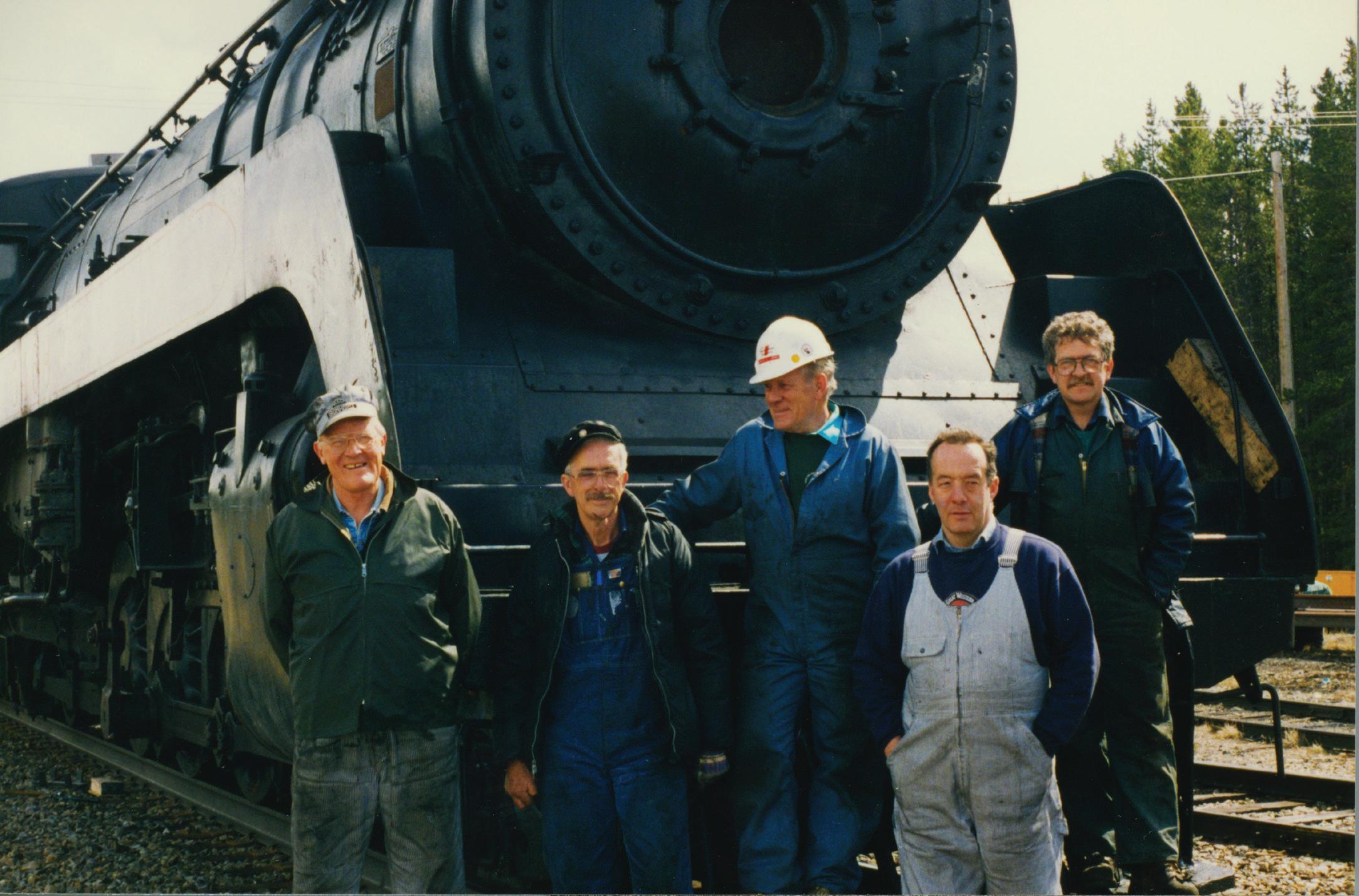
The 5468’s crew pose for a photograph. Left to right: Harry Home, Ernie Ottewell, Gordon Jess, Don Hawker, Dean Handley. (Revelstoke Railway Museum Collection)
30 years of the Revelstoke Railway Museum


Ernie Ottewell passed away peacefully in Revelstoke in 2016. He didn’t want a funeral service and asked for donations to be made to the museum instead of flowers. The passion that Ottewell had for locomotives and the railway is lived on through passionate people like Olsson, Handley, and Hawker, and the stories of the 5468 and so much more are preserved in their landmark museum.
“It’s something to be really proud of,” said Handley about the museum.
















The Museum is now a mature institution which is widely recognized as one of the best small railway museums in Canada and the predominant railway museum in the Columbia Mountain region.
The museum has shared this rich rail history with over 500,000 visitors since 5468 rolled into Revelstoke and will continue to remind an ever-changing town of its unique history of life on the railroad.
revelstokereview.com REVELSTOKE TIMES | 31
sho el
Don Hawker and Ernie Ottewell inspect and grease No. 5468 during a stop. Left to right: Don Hawker, Ernie Ottewell. (Revelstoke Railway Museum Collection)

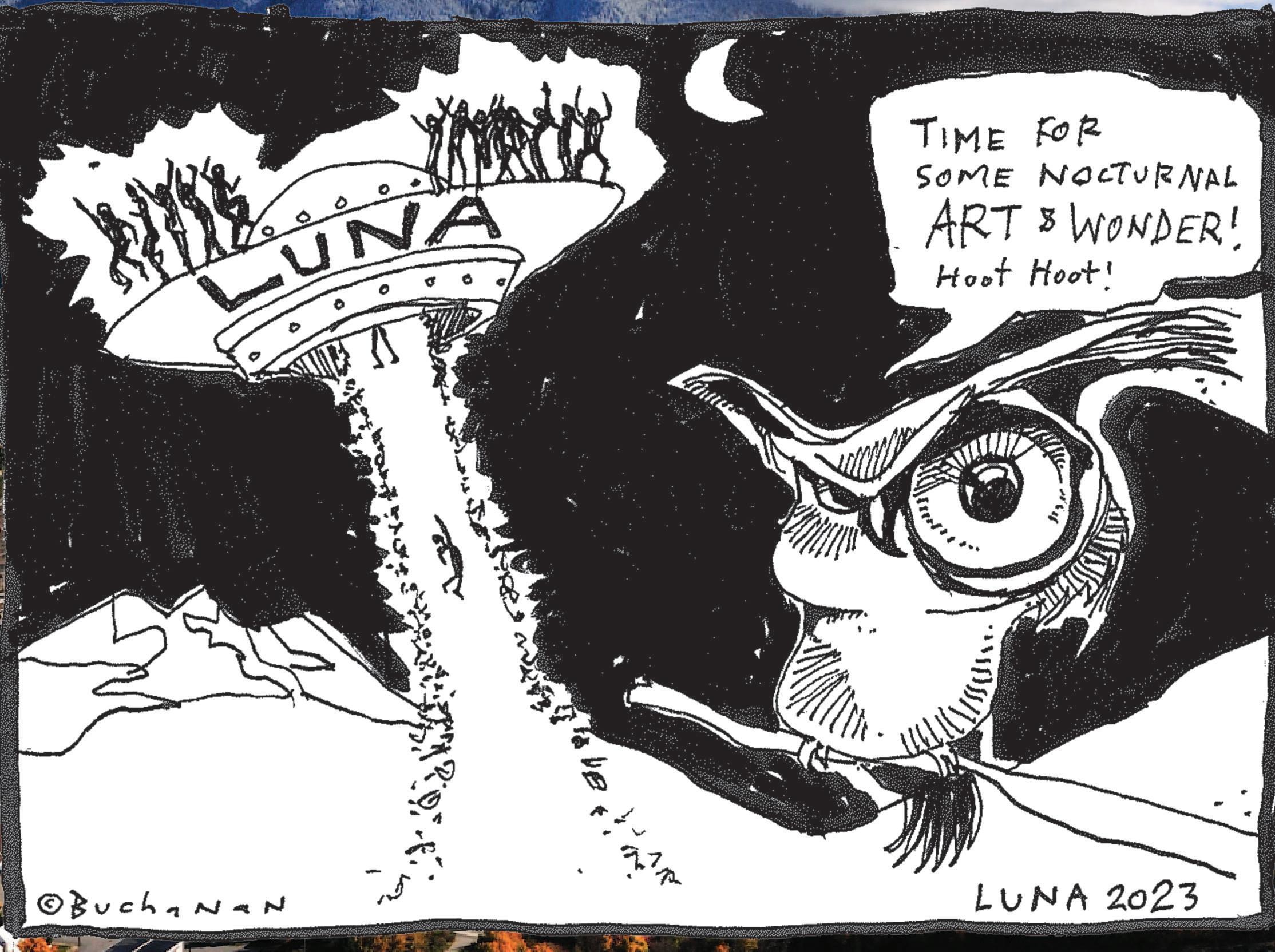

http://communityfuturesrevelstoke.com CartoonProudlySponsoredby CommunityFuturesRevelstoke (250)837-5345communityfuturesrevelstoke.com






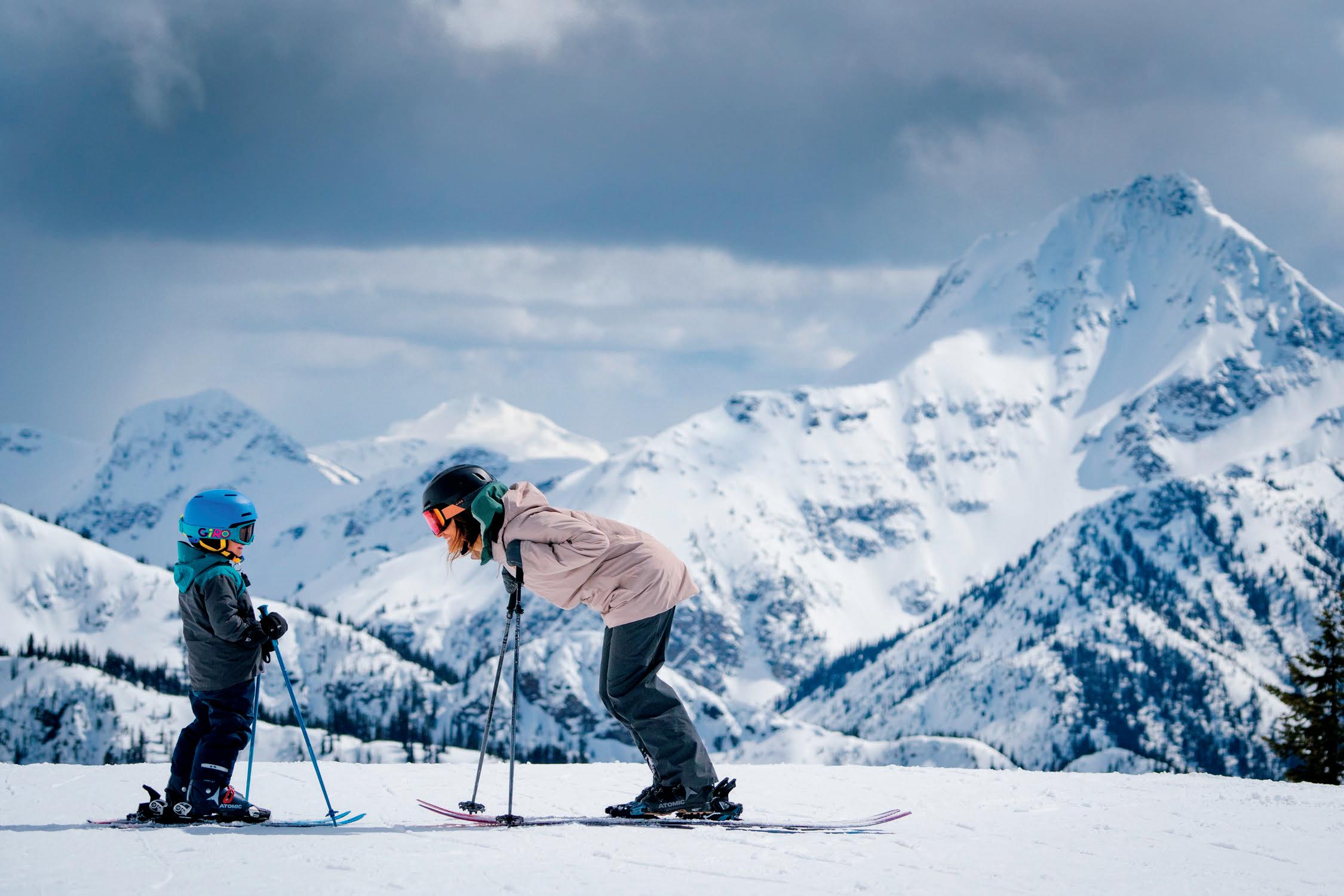
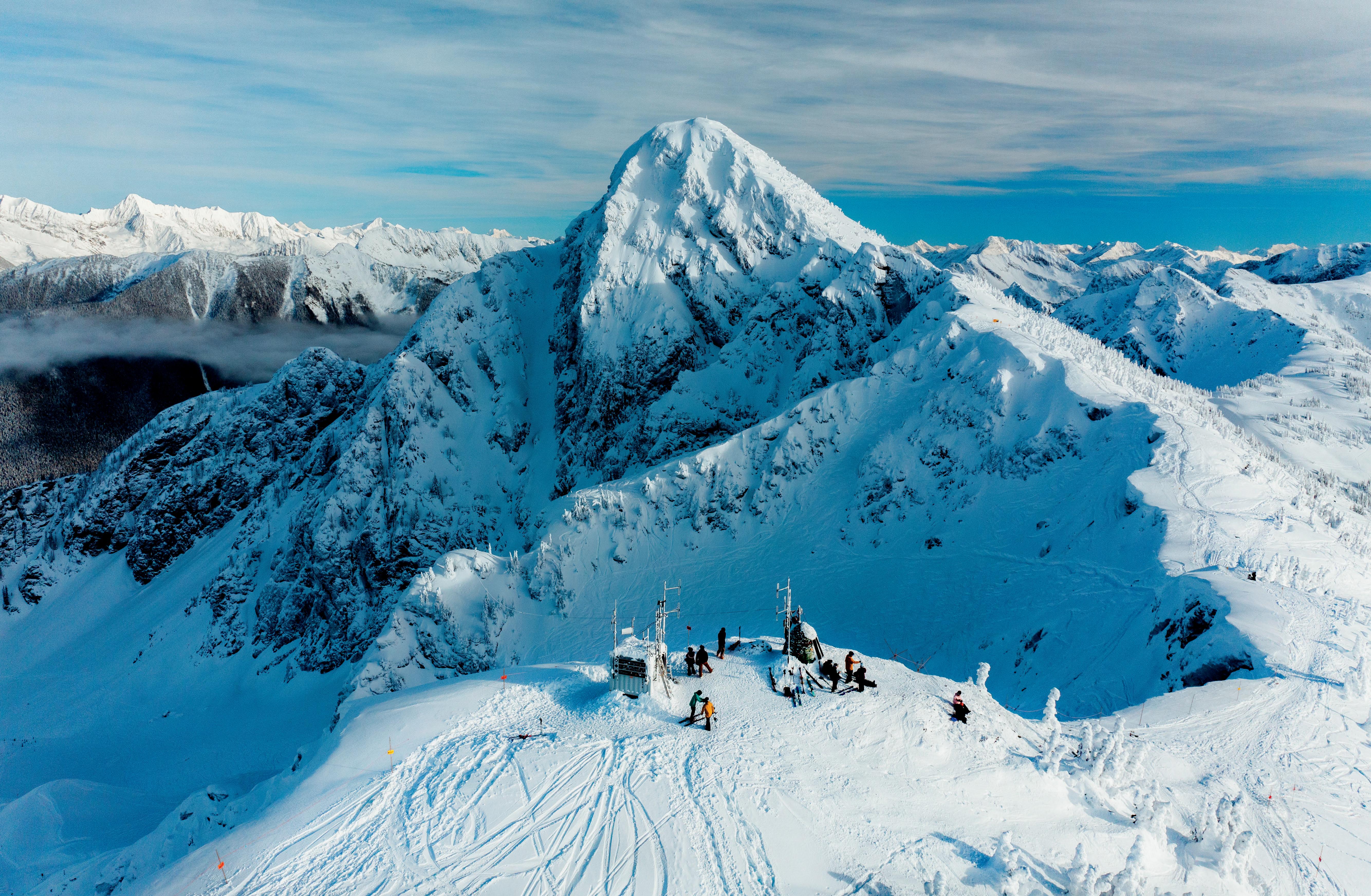







PASSHOLDERS SAVE PASSHOLDERS SAVE
50% OFF MOUNTAIN COLLECTIVE RESORTS
Including Lake Louise, Sunshine Village, Marmot Basin, Panorama, and Sun Peaks.
20% OFF SKI & SNOWBOARD RENTALS

Switch it up, or demo the latest gear.
15% OFF FULL TUNES AT THE REPAIR SHOP
Make sure your skis and boards are dialed in for Opening Day.
10% OFF AT R GEAR
Check out the latest outerwear, apparel, helmets, goggles and more.
10% OFF AT CRITICAL PARTS
Save on skis, boards, bootfitting, and backcountry gear.
10% OFF WITH MOUNTAIN SPORTS SCHOOL


Save on select ski/board lessons, clinics, and programs.
10% OFF FIRST TRACKS & BREAKFAST CLUB
Book early to secure your dates.
10% OFF FOOD & BEVERAGE
10% Off regular priced food and nonalcoholic drinks. From breakfast to après, we've got you covered.
*Note: Some restrictions may apply. All offers are subject to change without notice. The 10% Food and Beverage offer does not apply to alcoholic beverages.
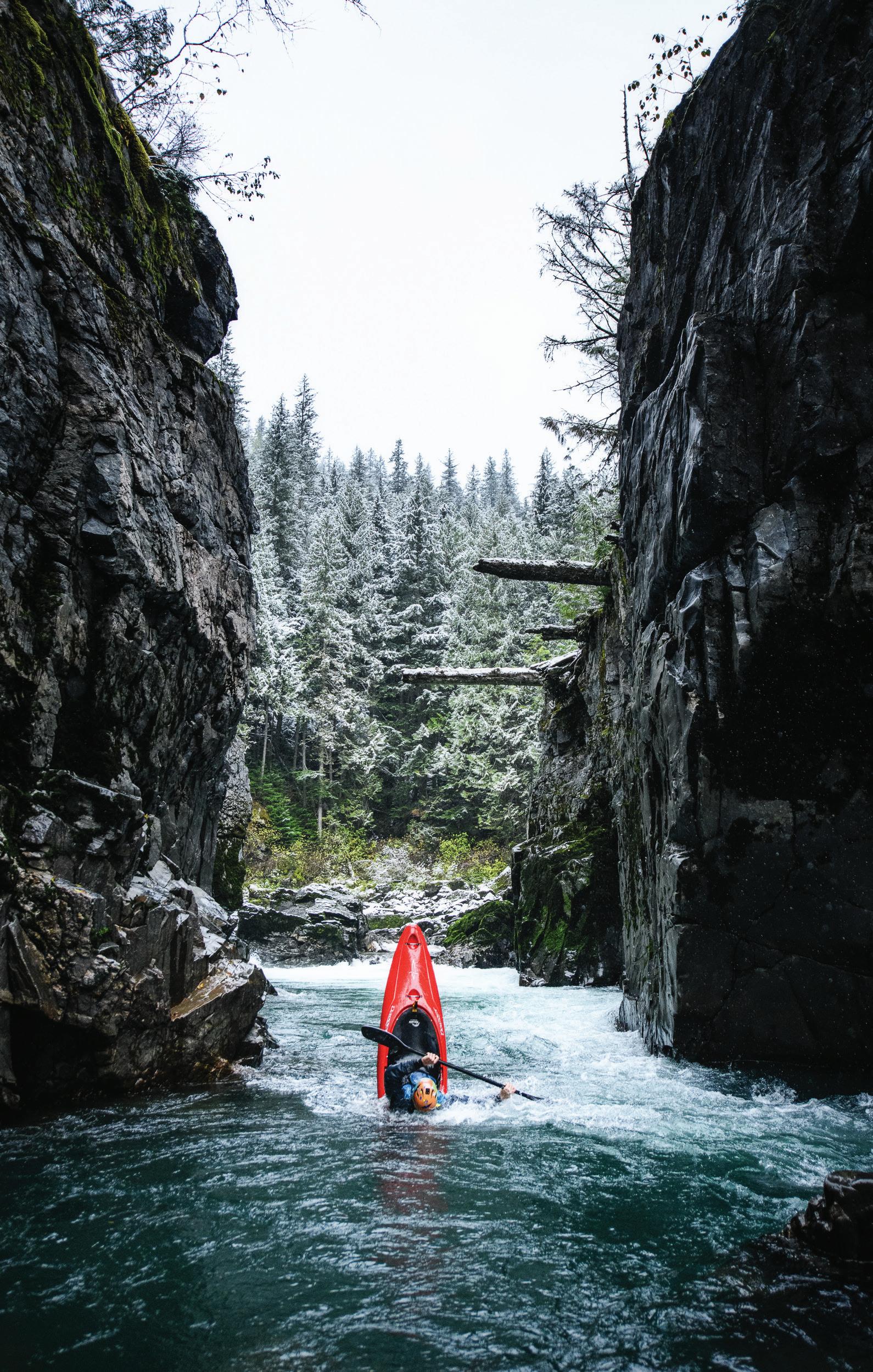
 KAYAKING LEFT & RIGHT: Koby Trinker on the Box Canyon section of the Illecillewaet River, taken a couple years ago on an October day right after the first snowfall of the year. In both shots he is performing a maneuver called a stern squirt where he is deliberately digging the back of his kayak into the current and is able to spin around vertically.
Photo by Daniel Stewart
KAYAKING LEFT & RIGHT: Koby Trinker on the Box Canyon section of the Illecillewaet River, taken a couple years ago on an October day right after the first snowfall of the year. In both shots he is performing a maneuver called a stern squirt where he is deliberately digging the back of his kayak into the current and is able to spin around vertically.
Photo by Daniel Stewart
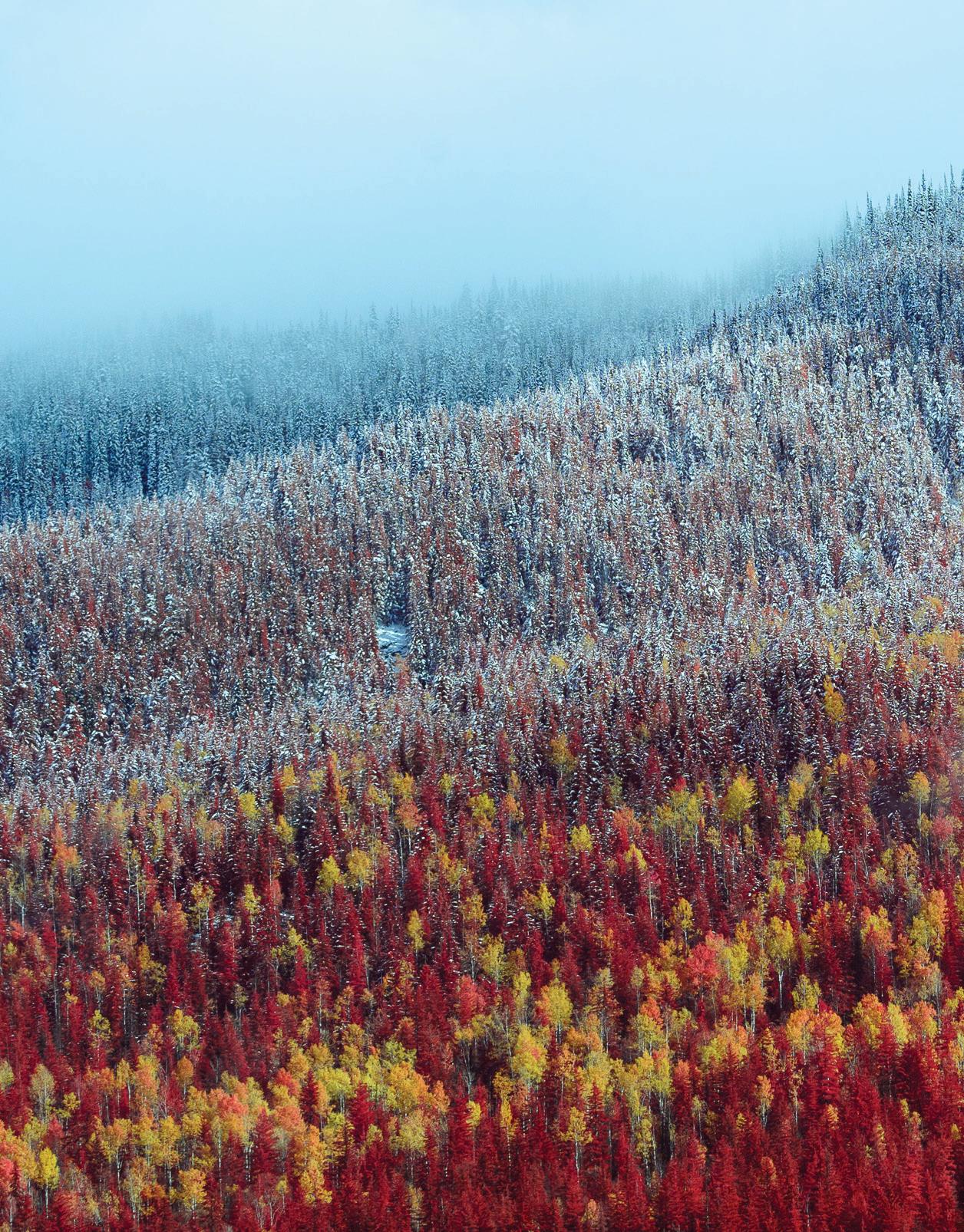
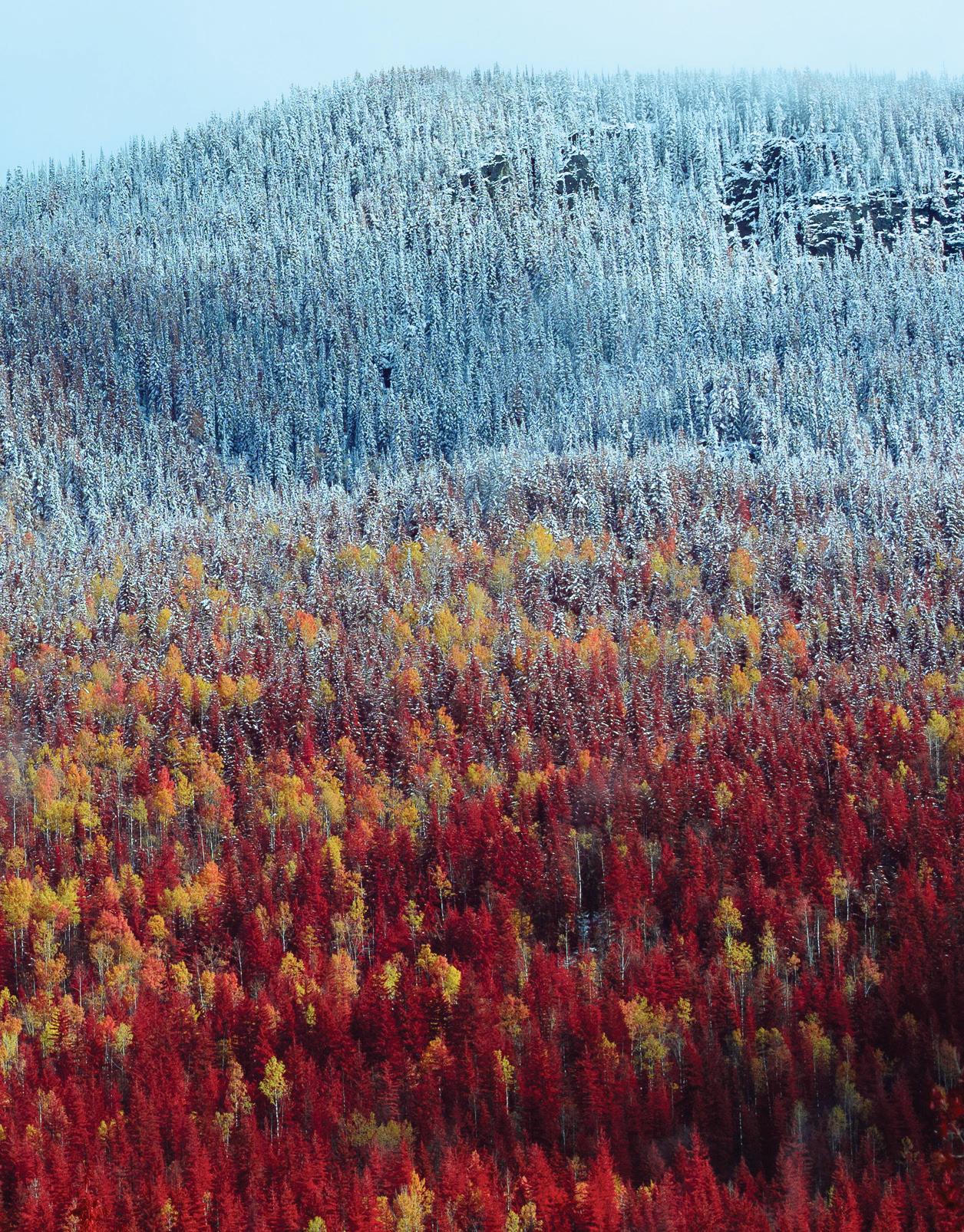
MIDDLE TOP: This is a shot of Mt. Mackenzie from town using my infrared camera - giving the trees a red hue when generally they're seen as green. The snow line is slowly creeping down along with the peppering of deciduous trees changing colors with the season.
MIDDLE BOTTOM: Ever since I moved to Revelstoke in 2008, I've been enamored with trying to get the perfect shot of salmon during their run. This shot of freshwater Kokanee was taken not too far from town using an underwater housing for my camera. It's taken a lot of trial and error to get shots of them without them running away from the camera, and I think I've finally figured out a technique that works.
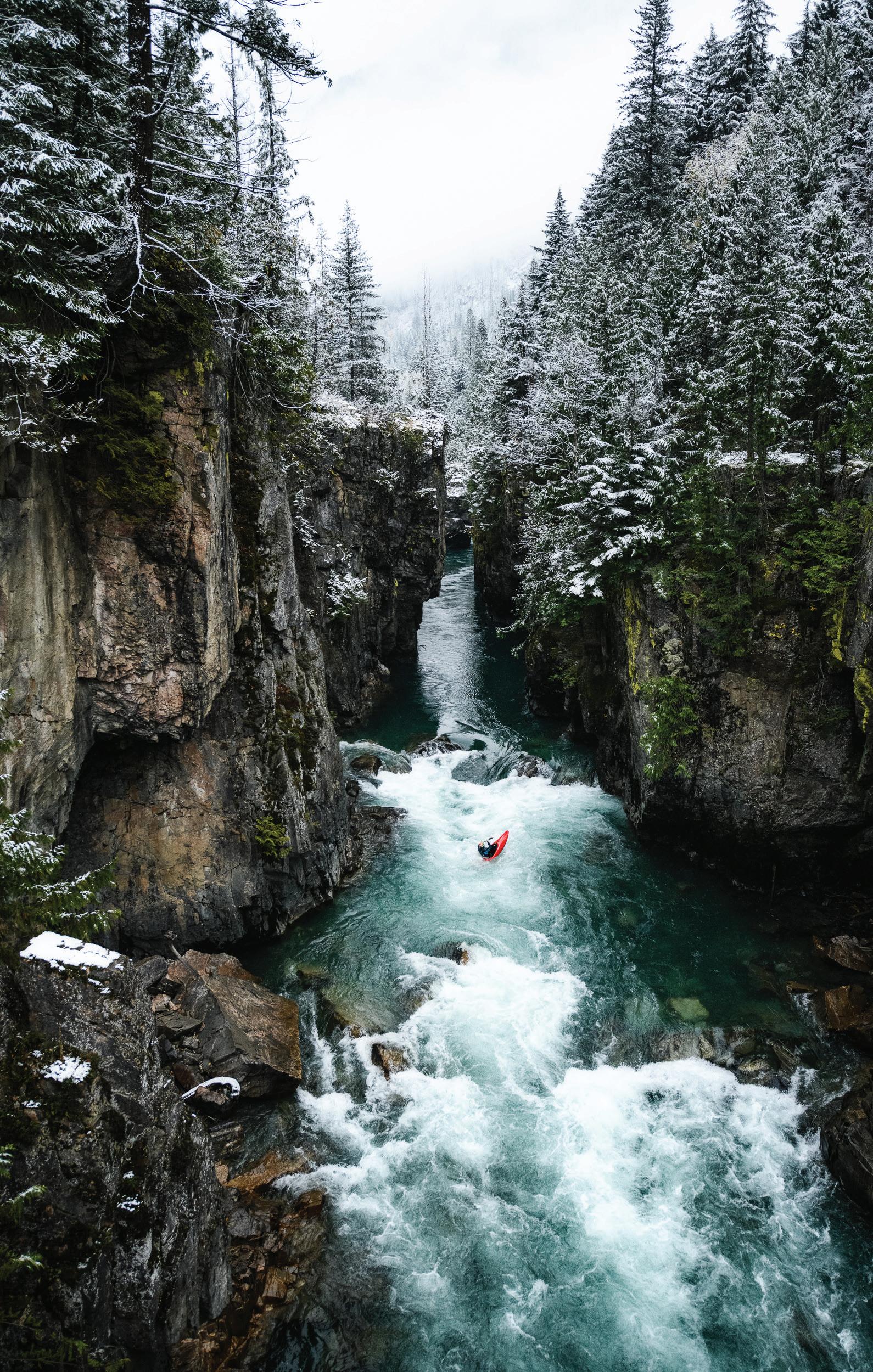
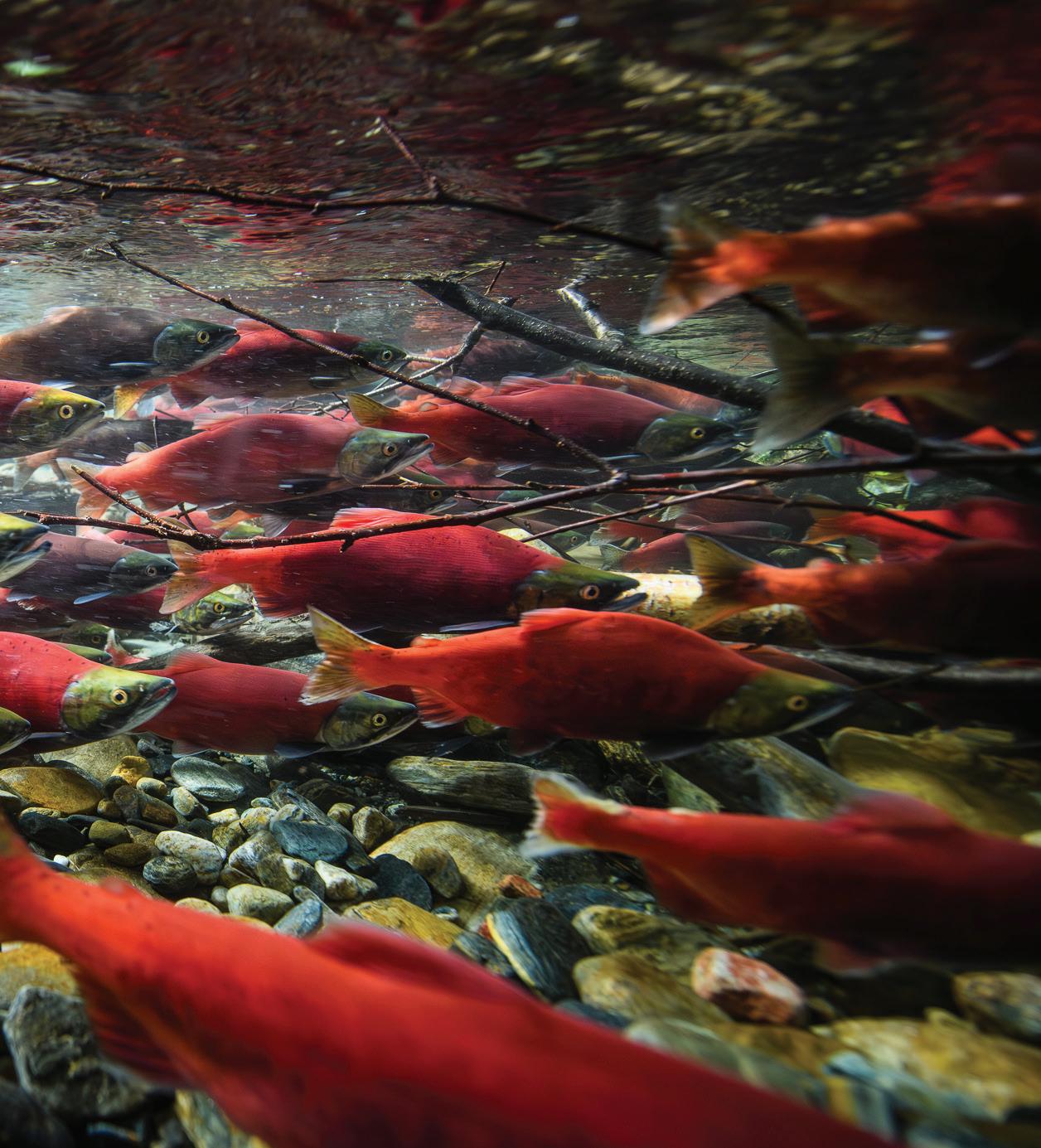 Photo by Daniel Stewart
Photo by Daniel Stewart
Photo by Daniel Stewart
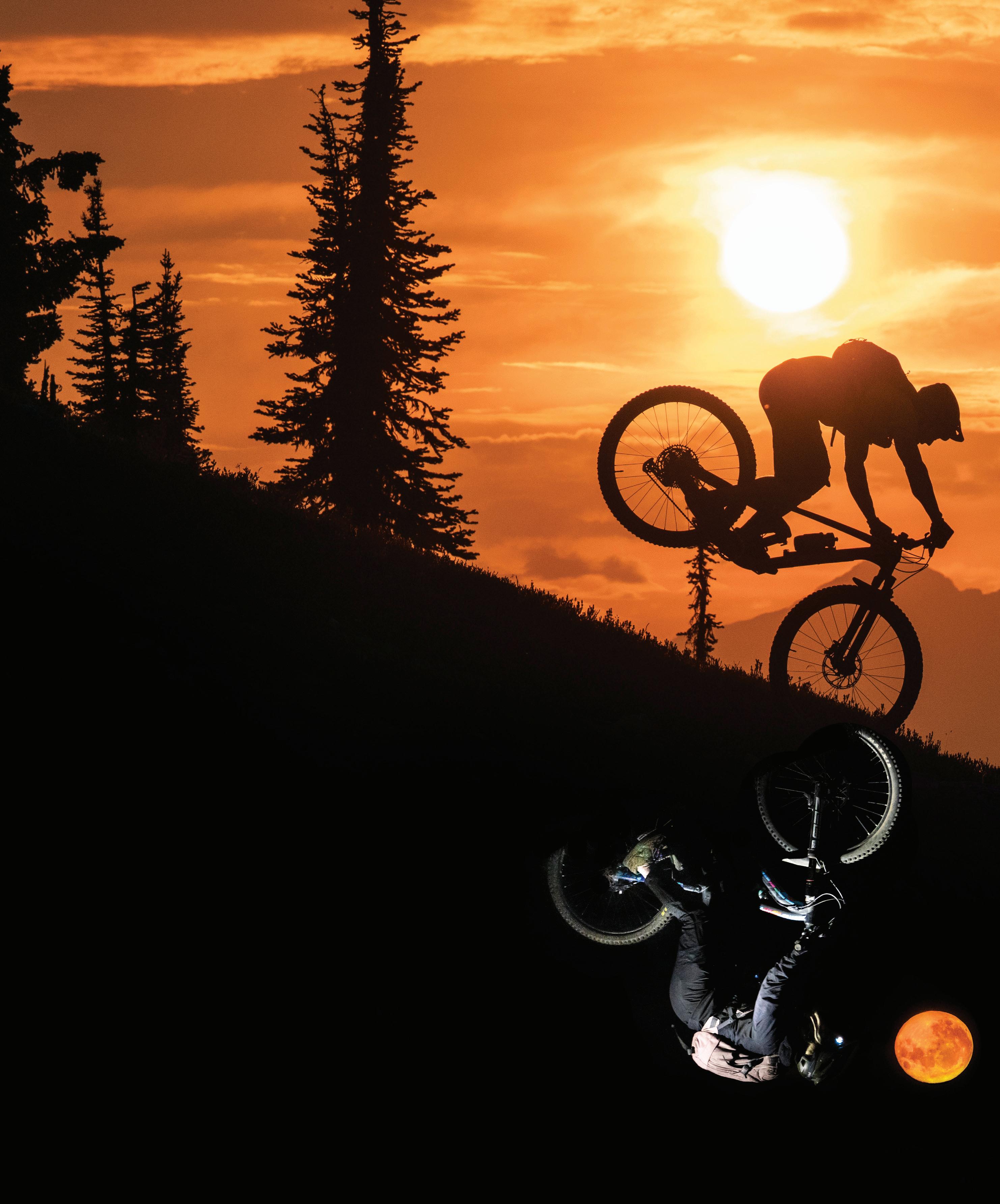 Day/Night: Shota Ida & Kyra Sklar
Photos by Laura Szanto
Day/Night: Shota Ida & Kyra Sklar
Photos by Laura Szanto
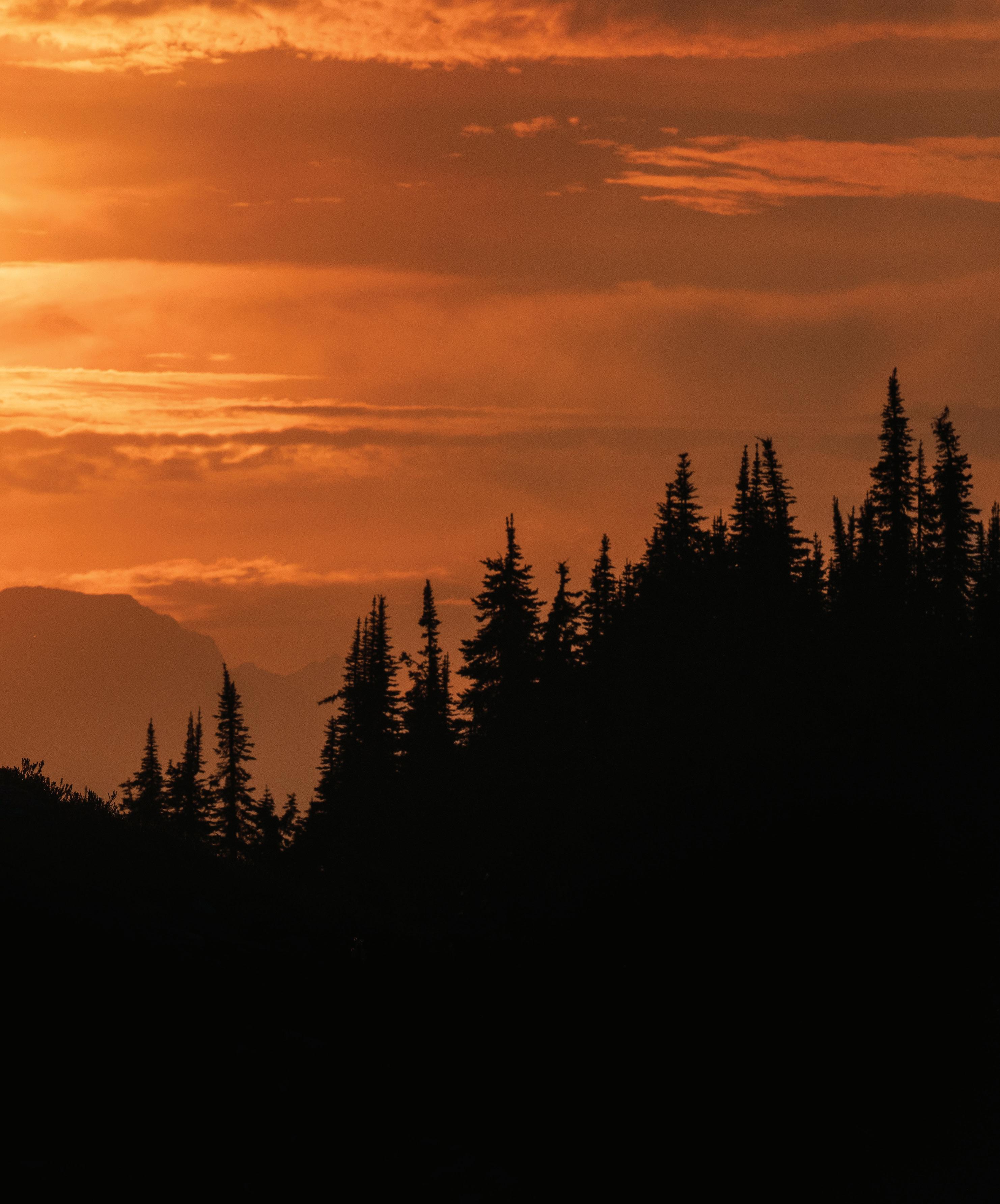
Although smoke in general is alarming and a fair warning of our climate crisis, it can also be used to our creative advantage. Smoke adds layers, depth and colours to enhance the look of our images. ~ Laura Szanto
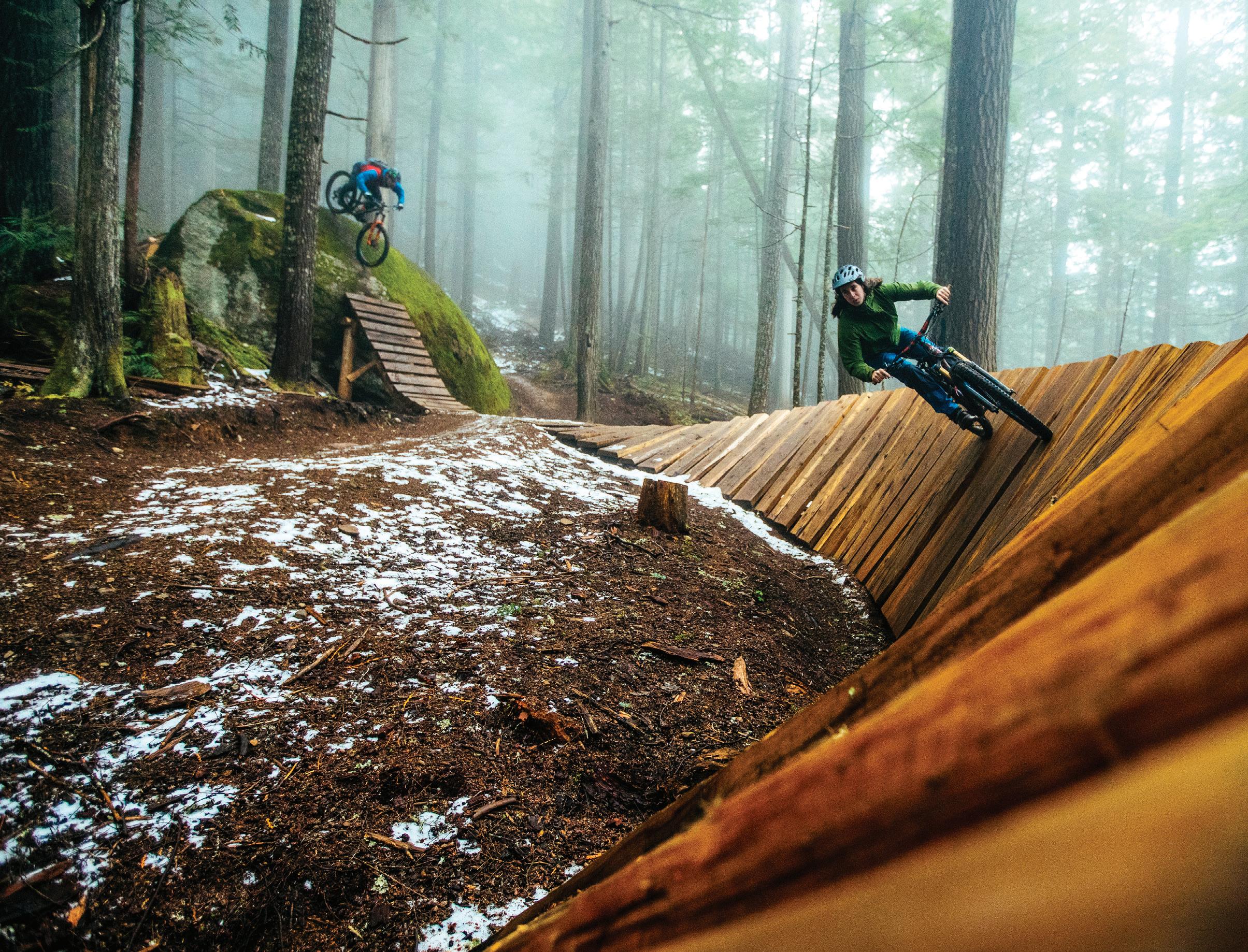

 Dominic Unterberger & Brian Langlois, Boulder Mtn, Revelstoke, BC / Texture Locations: Sunnyside, Boulder Mtn, MacPherson, RMR
Photos by Ryan Creary
Dominic Unterberger & Brian Langlois, Boulder Mtn, Revelstoke, BC / Texture Locations: Sunnyside, Boulder Mtn, MacPherson, RMR
Photos by Ryan Creary
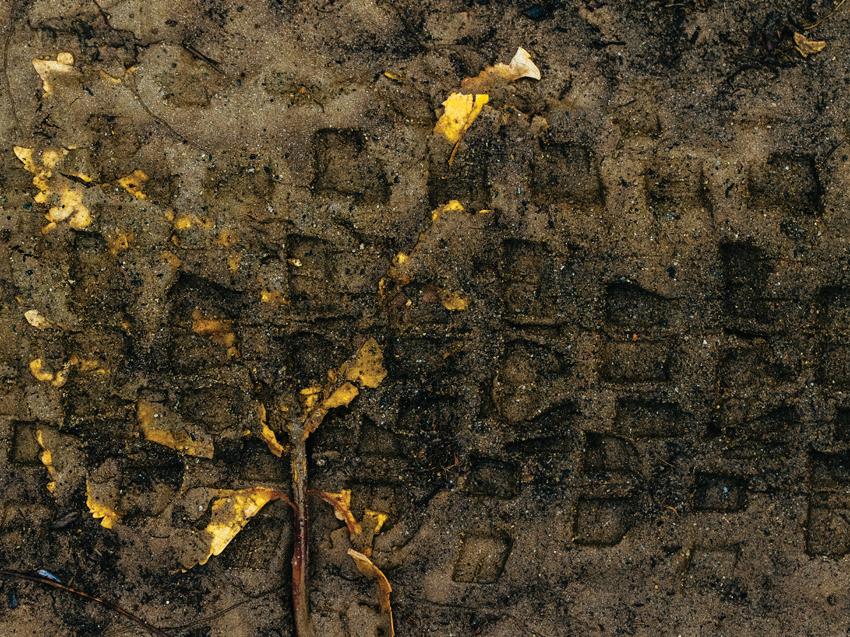
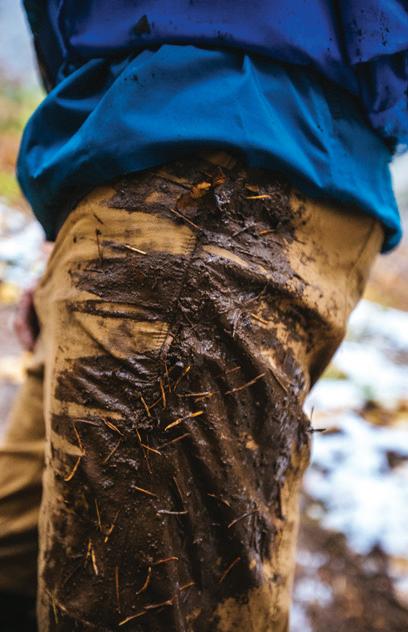
As the seasons change, so does the texture of the dirt we ride here in Revelstoke. After an extremely dry, dusty summer on the trails, the velcro like fall riding conditions can’t arrive soon enough. Usually my most favourite time of the year to ride.Tacky dirt and greasy roots.. usually some mud and a bit of snow depending on how late you stretch the season.. how late will you ride this year? ~ Ryan Creary




 BY CATHY ENGLISH Curator, Revelstoke Museum and Archives
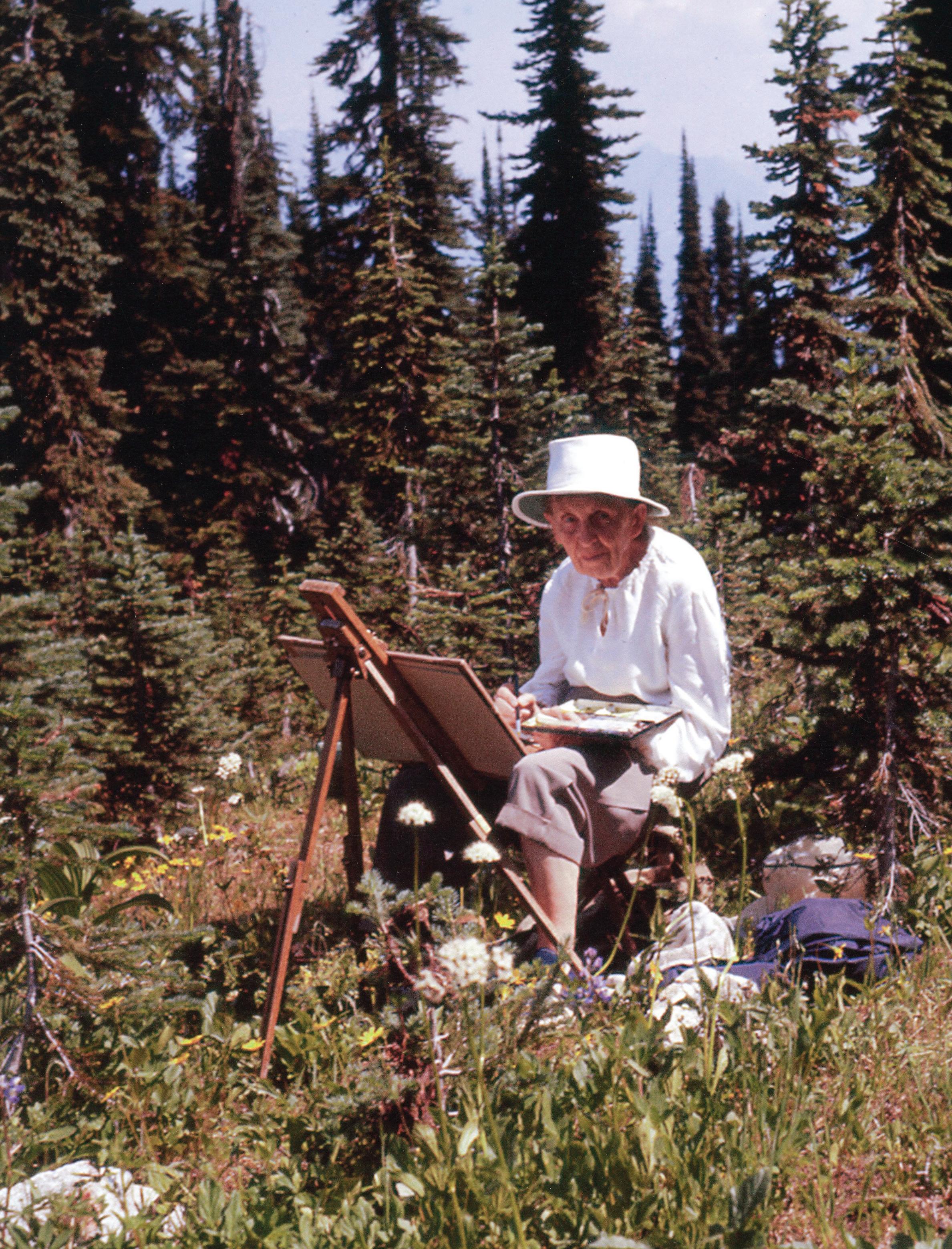
Revelstoke has seen many talented artists over the years, and Sophie Atkinson stands out among them for her contribution to fine arts in Revelstoke, and her formation of the Revelstoke Art Group.

Atkinson was born in Newcastle, UK in 1876 and began sketching at the age of nine. She received formal art training at the Newcastle School of Art for two years and studied for a further two years under Sir Hubert Von Herkomer, professor of fine art at Oxford. She travelled throughout Europe, India, and spent a year on the Greek island of Corfu, publishing a book, “An Artist in Corfu” in 1911, which was enthusiastically received by the London critics and established her reputation as a professional artist.
In 1925, she was sponsored to come to Canada by the Canadian Pacific Railway, and spent the next few years painting a wide variety of Canadian scenes. One of her paintings of Indigenous people at the Calgary Stampede, painted during that period, was recently acquired by Revelstoke Museum and Archives. Lawren Harris, dean of Canadian artists, and a member of the Group of Seven, described her water colours as among the best he had seen.
In 1929, Atkinson was the first woman artist to hold a solo show at the art gallery in Newcastle, UK. The Prince of Wales opened the exhibit which included a series of landscapes from his Alberta ranch. She presented the Prince with one of her pictures.
REVELSTOKE TIMES | 43
Sophie Atkinson on Mount Revelstoke. (Revelstoke Museum and Archives)
Two of Atkinson’s paintings were acquired by the National Archives of Canada in 1938. Lady Byng, wife of Lord Byng, former Governor General of Canada, purchased four of Atkinson’s paintings for her home in England.
During her fourth trip to Canada in 1948, she spent considerable time in Revelstoke, and in 1949 decided to settle here. She rented a room in the apartment of Mrs. Agnes Quinlan, who lived in the top floor of the boarding house that was then known as Birch Lodge, at 815 Mackenzie Avenue.
Sophie Atkinson was 73 years of age when she moved to





44 | REVELSTOKE TIMES Fall 2023 Tanning·LicencedEstheticianMobileService·Mani&PediParties ArlingtonPlaza103-1051stSt.East•250.837.4999 Roberta’sTanningSalon&Esthetics’ BeBeachReadyEveniftheweatherinRevelstokeisgettingchilly Wechanged ourlook! Samegreatservice 310ConnaughtAvenue Revelstoke,B.C.V0E2S0 revelstokeoptometry@telus.net www.revelstokeoptometry.ca Ph(250)837-5244 great
Revelstoke. Mil Crittenden, writing in the Vancouver Sun Magazine Supplement on August 11, 1951, described her. “The artist is a tiny woman with darting, birdlike mannerisms. Spry and bright as a spring robin, she has a habit of cocking her head intently, while her keen, cobalt-blue eyes fairly sparkle with animation.”
In September of 1949, the local branch of the Parent-Teacher Association sponsored an exhibition of her work at the King Edward Hotel. The show included more than 30 pictures painted on Mount Revelstoke, as well as numerous scenes from across Canada and from England and Scotland. Some of her paintings
of London showed buildings damaged by bombing during the war. The Revelstoke Review described the show as “an intellectual and aesthetic feast which should inspire local artists and art lovers to continue in their efforts to foster self-expression and the appreciation of the unsurpassed beauty of our mountains, rivers, and lakes.”
R.H. Mann, Superintendent of Mount Revelstoke and Glacier National Park was instrumental in arranging for Atkinson to stay in Revelstoke and apply for permanent resident status. Mann was one of the founders of the Revelstoke Parent-Teachers As-
revelstokereview.com REVELSTOKE TIMES | 45
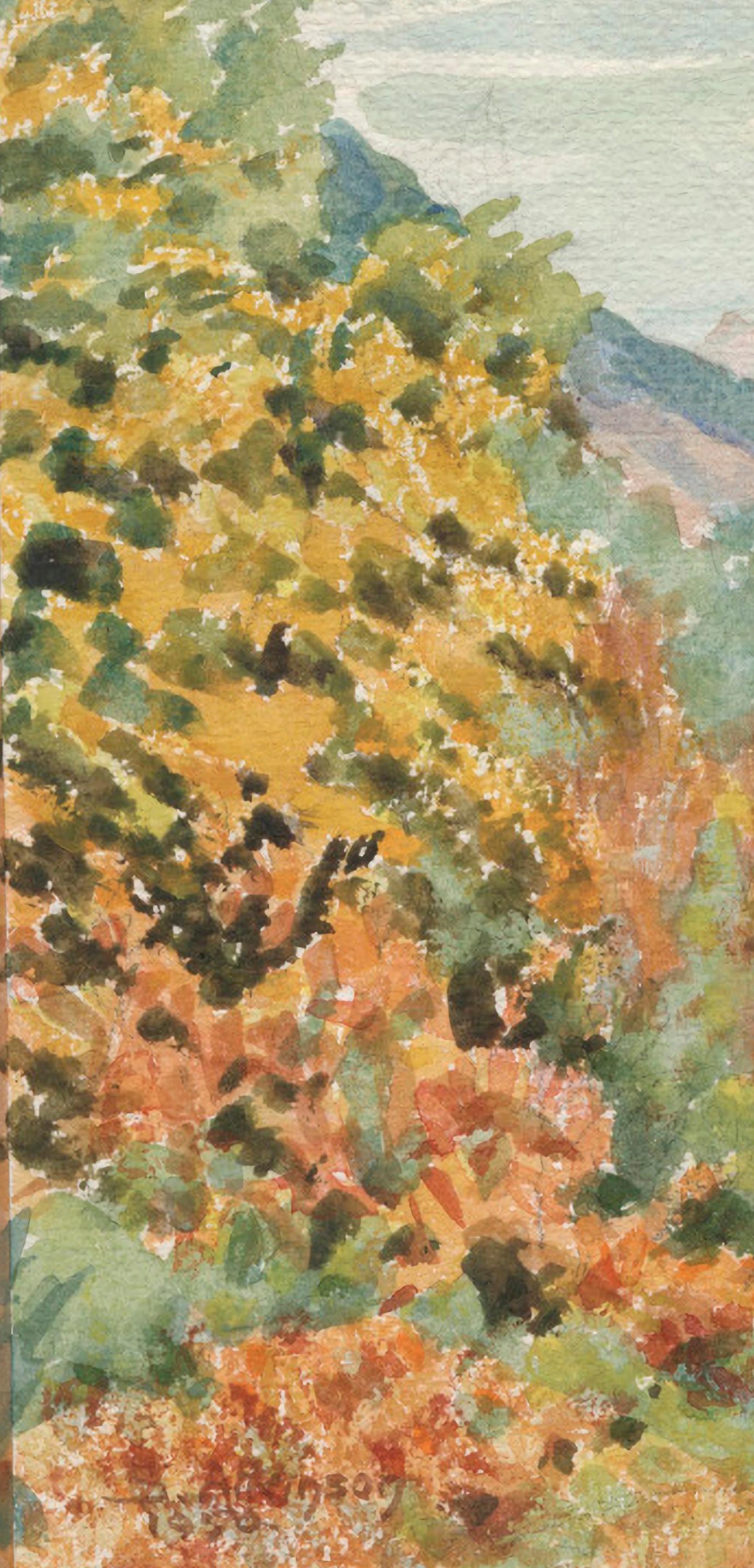
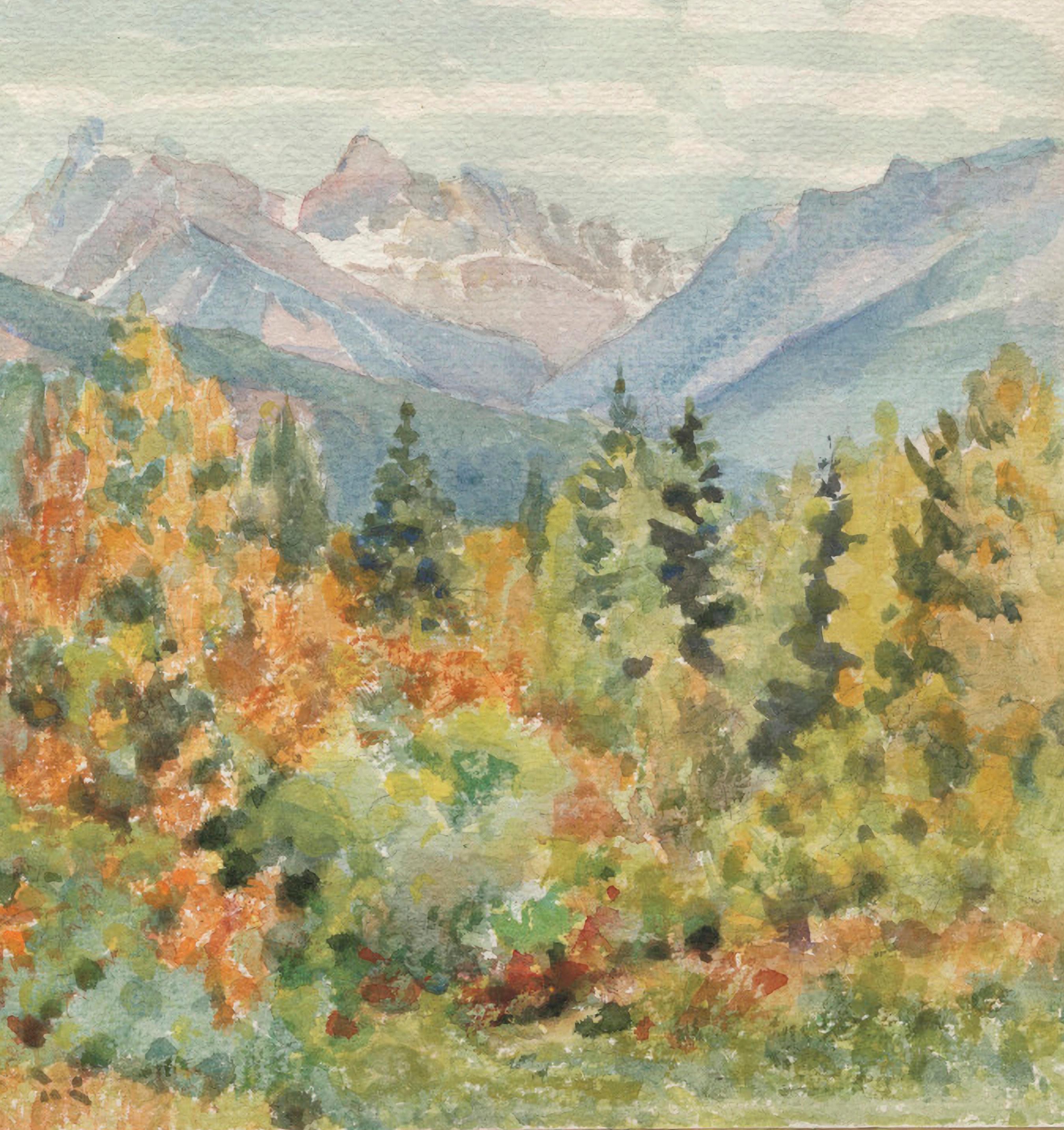
Albert Peaks by Sophie Atikinson, 1950. (Revelstoke Museum and Archives)
sociation (PTA). Mann invited Atkinson to teach art at the Adult Evening Classes arranged for by the PTA. Seventeen students joined the weekly class in October of 1949, and before long, they were meeting twice weekly.
Revelstoke’s first annual Hobby Show was held on April 22, 1950 in Knights of Pythias Hall. More than 200 exhibitors displayed hundreds of handicrafts, and more than 500 adults visited the show. Among the work shown were more than 100 paintings by the students of Sophie Atkinson.
On May 12, 1950, several of Sophie Atkinson’s night-school students met to discuss plans for outdoor landscape painting classes under her direction. The students decided to form the Revelstoke Art Group as a movement for the promotion and appreciation of art in the community. Sophie Atkinson was named Honorary President, with R.H. Mann as President. Among the early members of the Revelstoke Art Group were Estelle Harvey, Mary Wells, Paula Overhill, Flossie Middleton, Muriel Parker, Doris Morgan, and Mrs. McKay. Works of many of these artists are now in the collection of Revelstoke Museum and Archives.
Sophie Atkinson continued to hold exhibitions throughout Canada and the UK. In 1953, she travelled to England for exhibitions at British Columbia House in Regent Street, London, and at the gallery of the School of Art in Newcastle, where she was born and received her early training.
In 1963, she was invited to mount an exhibition of her paintings at the Calgary Stampede, and she had regular exhibitions throughout the Okanagan.
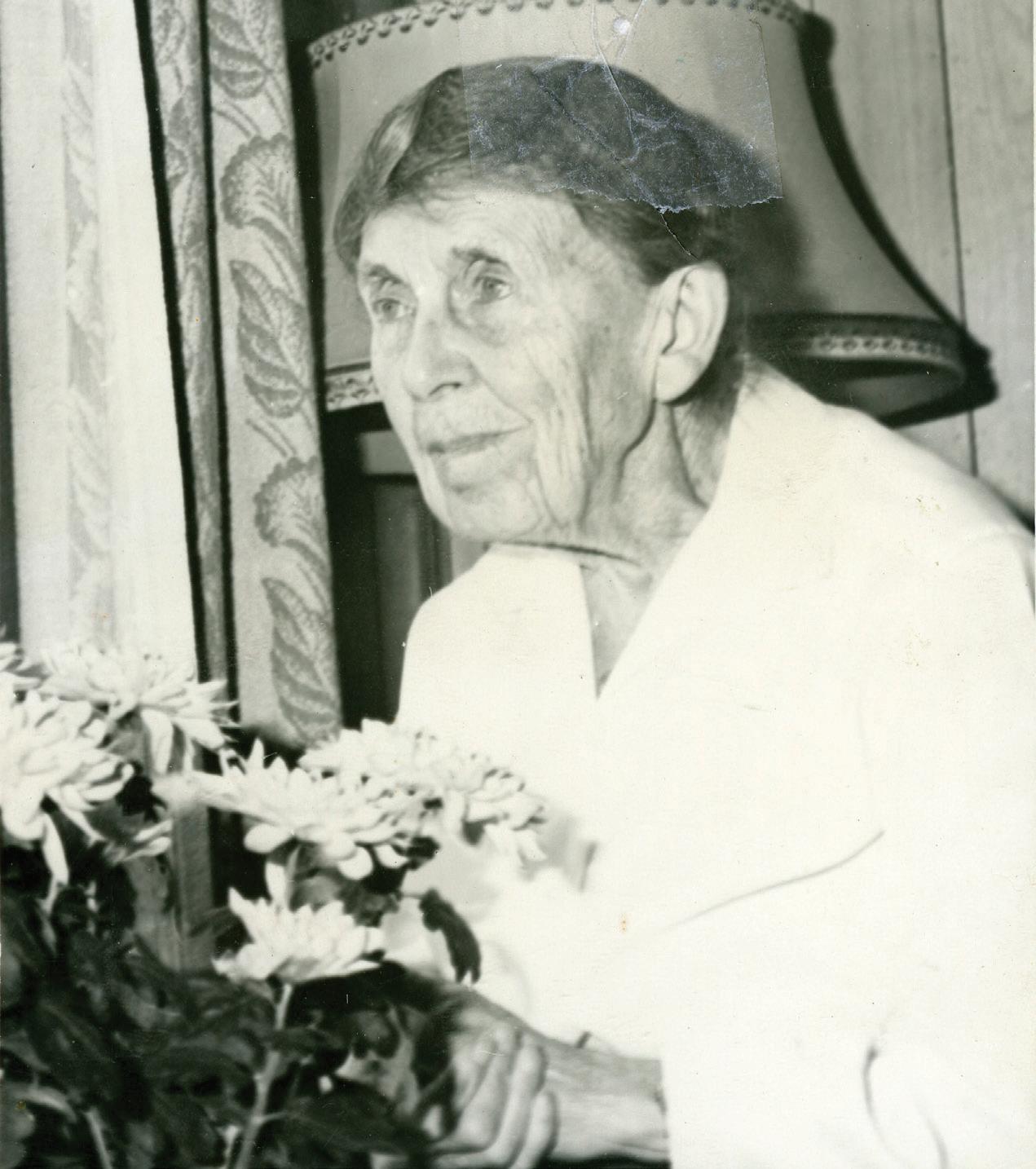
Sophie Atkinson returned to the UK in 1967, and died in Edinburgh, Scotland on May 5, 1972, at the age of 95. She left a strong and enduring legacy in Revelstoke. Revelstoke Museum and Archives currently holds more than 30 paintings by Atkinson, 13 of which were recently featured in an exhibition by Kelowna Art Gallery, entitled “Geography Lessons.” The museum also holds a copy of her book “An Artist in Corfu,” and some of her painting supplies and her portable stool.
The Revelstoke Art Group continued to be active in the community for decades. When Revelstoke Museum and Archives moved into the former Post Office building at 315 First Street West in 1974, the Revelstoke Art Group occupied the second floor and ran an Art Gallery in the space. They moved out in 1999, and worked with the Revelstoke Visual Arts Society to create the current gallery space at 320 Wilson Street in 2002. The Revelstoke Art Group was dissolved in 2012, but their legacy lives on. Their local art collection and their archival records are now housed at Revelstoke Museum and Archives.
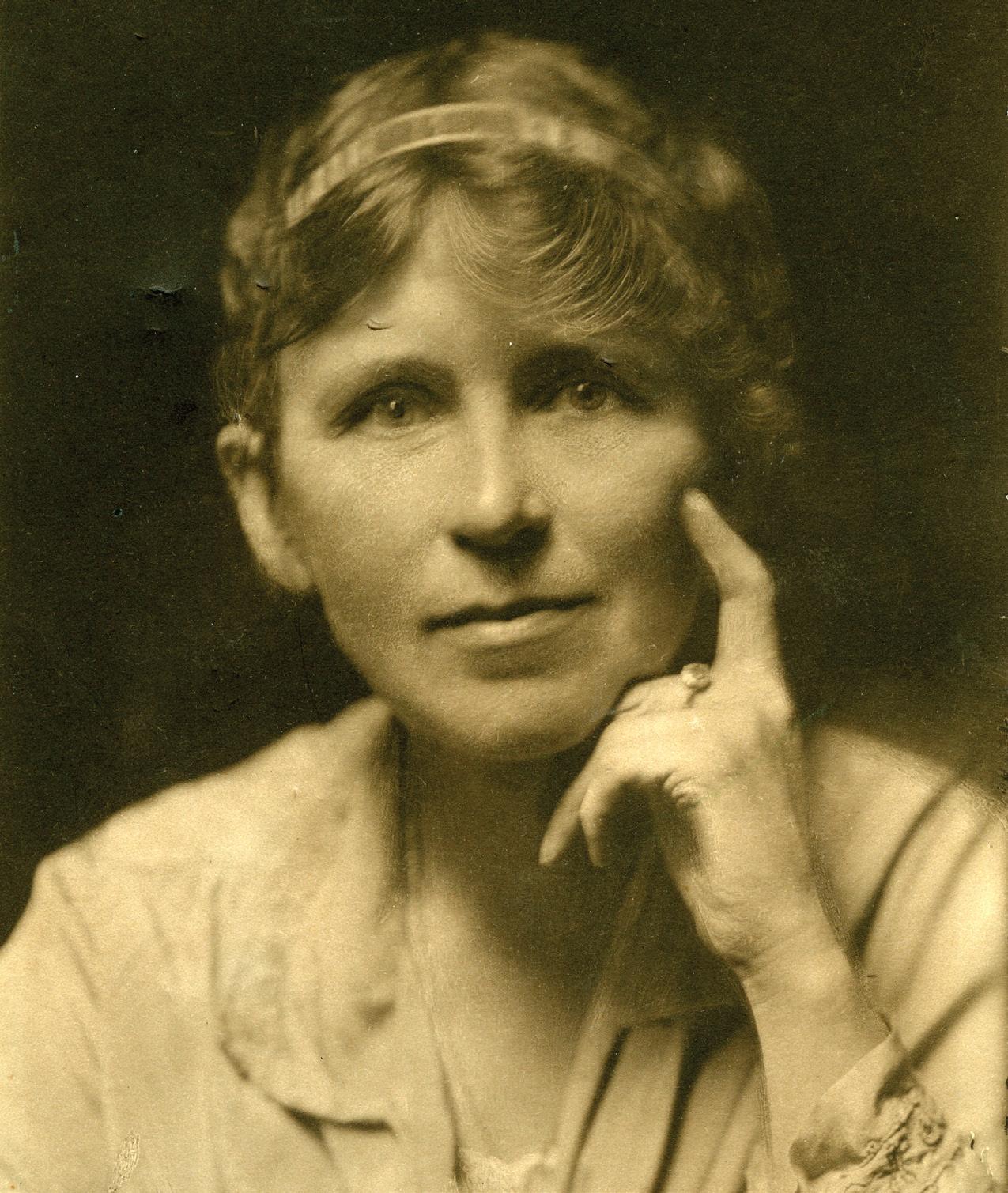
46 | REVELSTOKE TIMES Fall 2023
A young Sophie Atkinson. (Revelstoke Museum and Archives)
Sophie Atkinson on her 90th Birthday. (Revelstoke Museum and Archives)
REVYOUTDOORSOUTFITTERS EXPERIENCEBASEDADVICE RevyOutdoors.201MackenzieAve.,Revelstoke.250.814.2575.open7daysaweek Photoby:VincentSchnabl OurShopLocalProgramSavesyoulots! Alpine,Backcountry&CrossCountrySkiing ProvenPerformanceClothing Packs,SafetyGear,Accessories&More! FriendlyService GuaranteedSki&BootHappiness
Blinding LIGHTS
FRIENDS IN FILM WITH REVELSTOKE
PHOTOGRAPHER MAX VIDRICAIRE
IN A DARKROOM BY
ZACHARY DELANEY
48 | REVELSTOKE TIMES Fall 2023
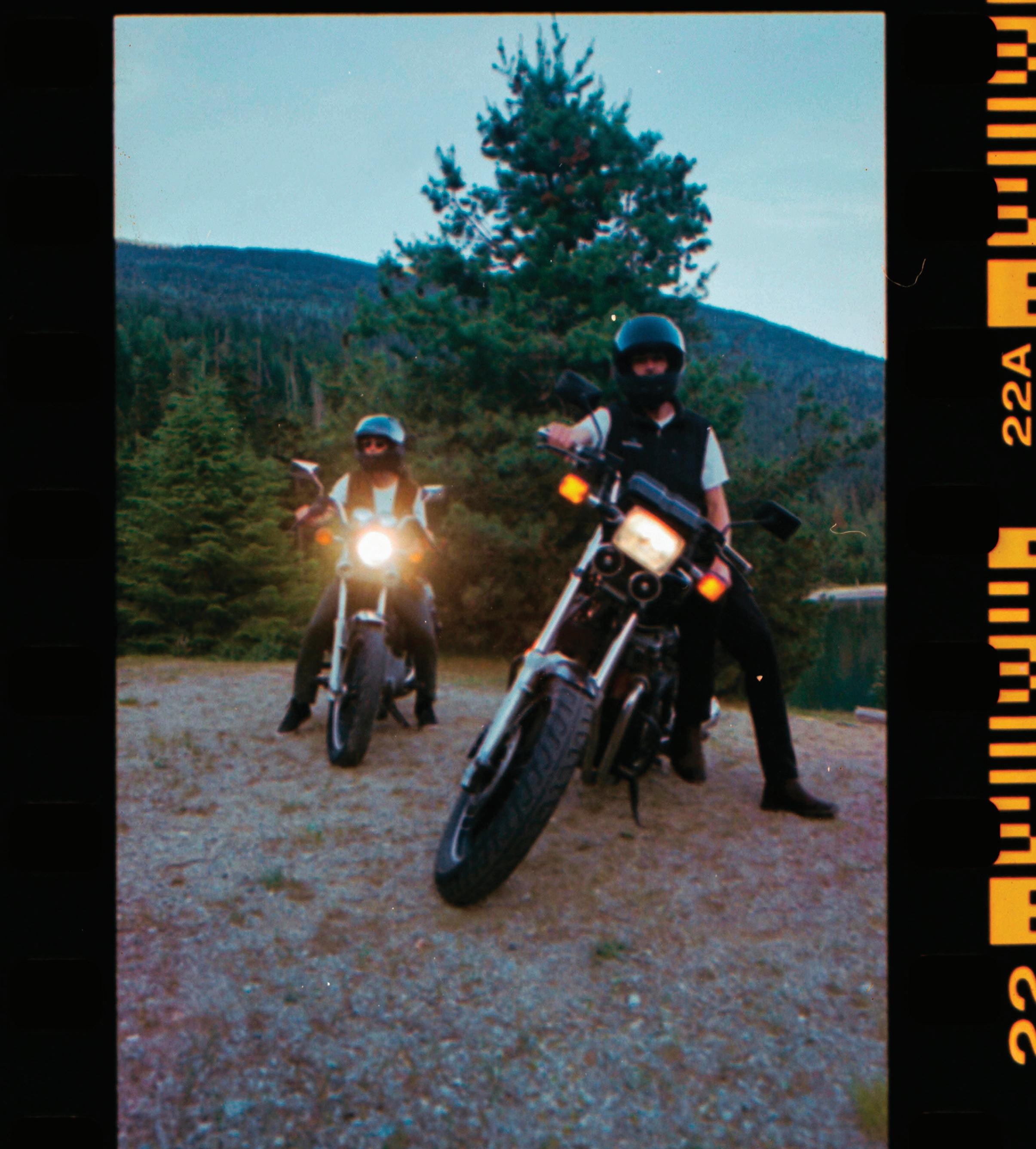
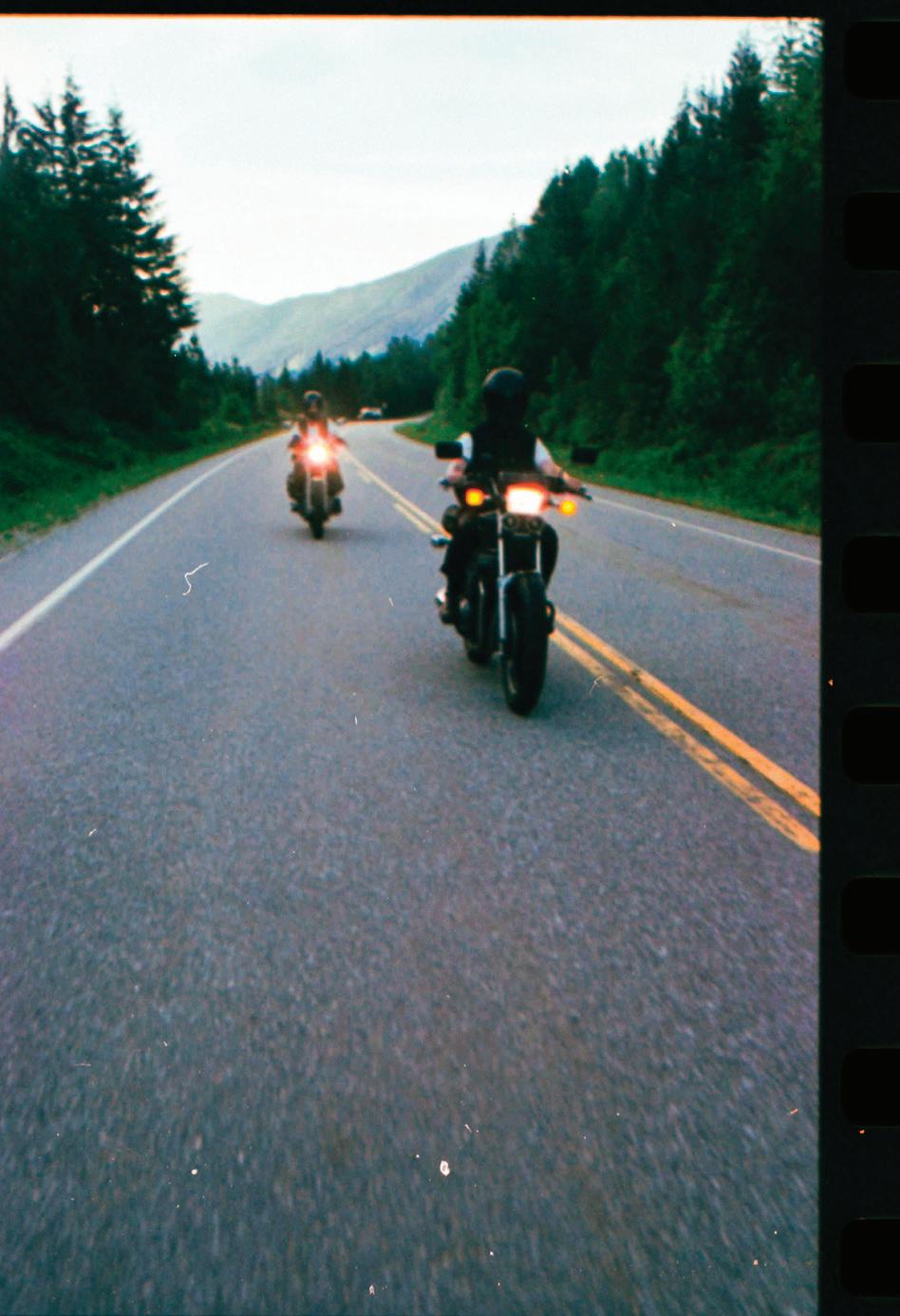
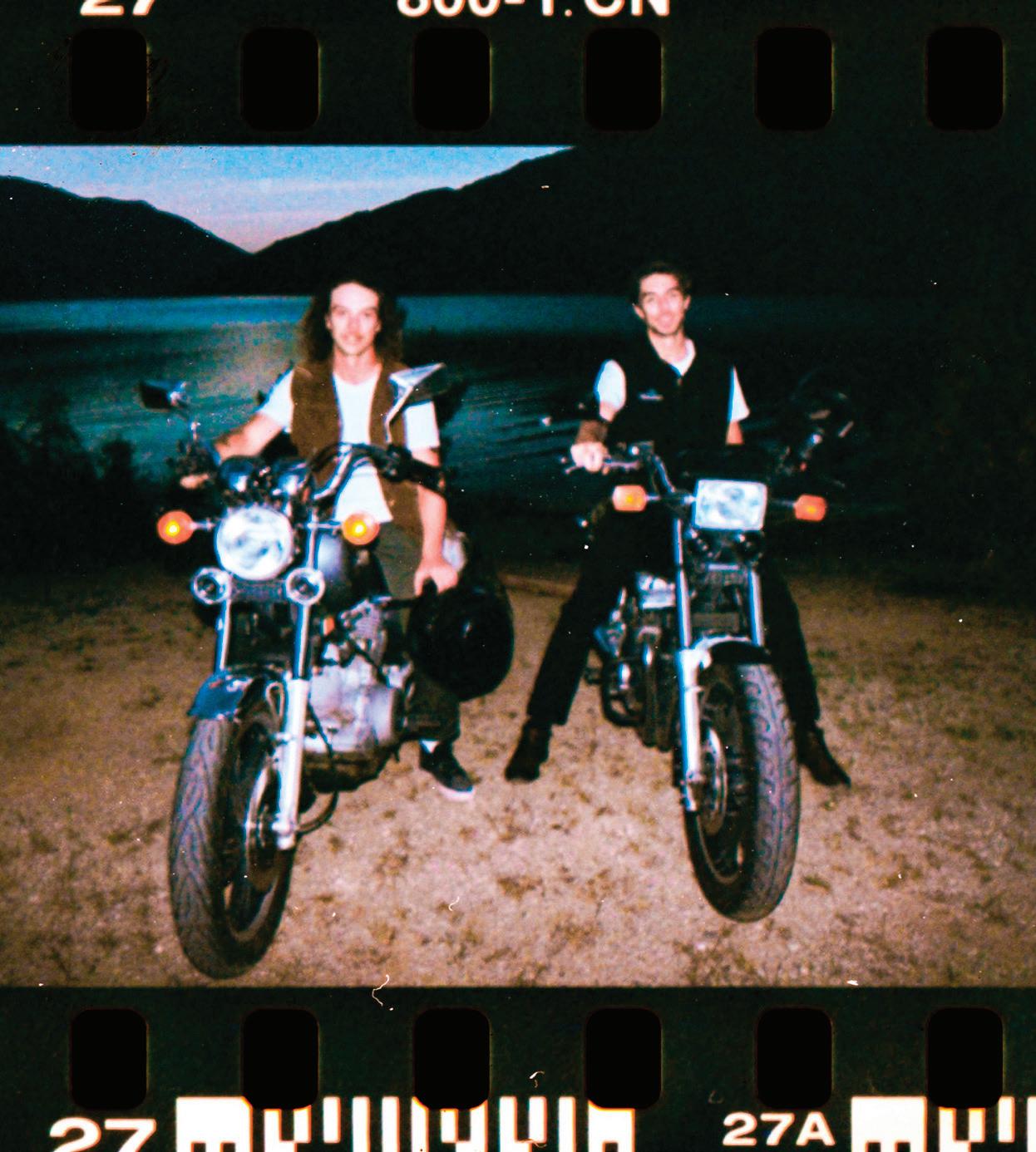
Jaeden Schneider-Clark and Dalton Waite on their motorcycles above the Revelstoke Dam. (Photo by Jack Ryan)
It was a warm summer night in June when the days were still long, and the sunsets held on forever—the sun itself refusing to dip behind the tall mountains that beckoned it to the west. Max Vidricaire and five of his close friends ventured north, beyond the Revelstoke Dam, to find a winding stretch of road where the light hit the asphalt just right—like he’d imagined it when he put it on his to-do list a year before.
“It all comes full circle is when you just support your friends and support everyone creatively,” said Vidricaire.
Max Vidricaire has become a familiar face in Revelstoke since his arrival in 2021. The photographer has a unique eye for detail that is heightened by his chosen medium: film photography. Vidricaire’s work has taken many forms, whether it’s a postcard-worthy snap of a vintage truck, a pastel-packed brand shoot, or a micro homemade music video for a pop song. Vidricaire explained how the latter came to be, and why its place in his accomplished Instagram profile is as important as any of the work he’s been paid to do.
“First and foremost, it's important for people to take on projects for fun with friends,” said Vidricaire.












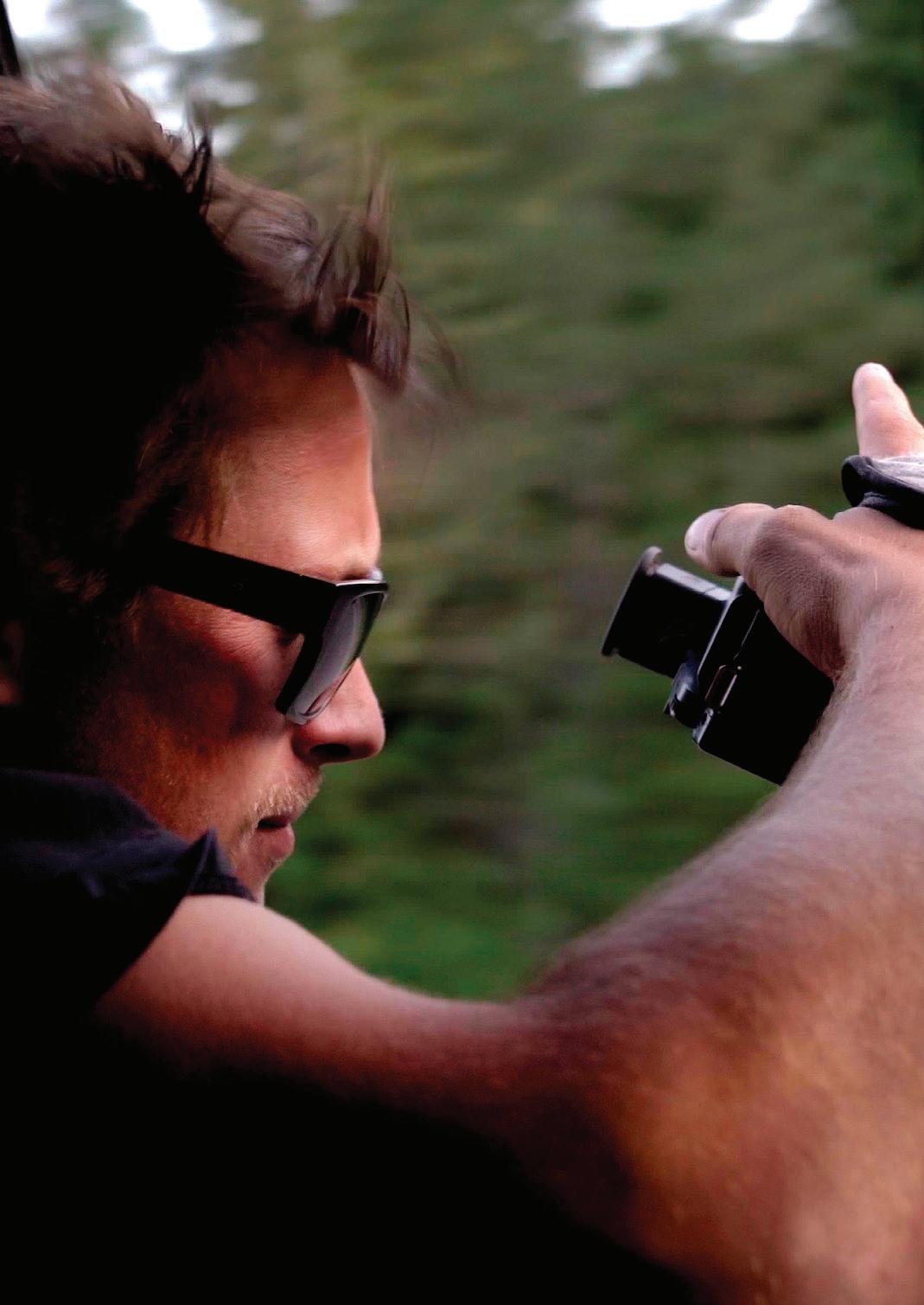
Without his friends, Vidricaire’s ‘Blinding Lights’ shoot –as the project was titled when he released it on Instagram–would never have happened. It started with two of Vidricaire’s friends, Jaeden Schneider-Clark and Dalton Waite, buying motorcycles in the summer of 2022.
Vidricaire recalled he and his friends formulating a loose plan to one day shoot some film photography of the bikes. Maybe throw in a small video for good measure.
revelstokereview.com REVELSTOKE TIMES | 49
DL#10347 www.salmonarmgm.com 3901-11thAveNESalmonArm•250832-60661-888-970-9781 STEVEROBERTSON SALESMANAGER KAITIEGRAY INTERNETMANAGER HARRYFISHER PRODUCTSPECIALIST GARICKGRAY SALESMANAGER KARENLORD BUSINESSMANAGER DARRENHICKSON PRODUCTSPECIALIST IANGRAY OWNER COURTNEYWEATHERBIE PRODUCTSPECIALIST RODTHIESSEN PRODUCTSPECIALIST CHANDLERGENNERICH SERVICEMANAGER MICHELLESHANNIK SERVICEADVISOR SPENCERKEATING SERVICEADVISOR SAFETYFIRST SAVINGS SECOND! OURBACKTOSCHOOL INSPECTIONCOVERS: Suspension Brakes Exhaust Filters Fluids Tires AndMore! ONLY $49.95 BOOK TODAY!
Cameron Keith shoots b-roll from the window of the pilot vehicle to capture the motorcycles. (Photo by Shota Ida)
MAX VIDRICAIRE
After that early brainstorming, the project was filed away in Vidricaire’s ‘to do list’. With a checklist divided into deliverable commercial work and passion projects, the motorcycle shoot fell under the latter, where it sat for a year.

This past June, the shoot finally came together when Vidricaire assembled Cameron Keith, Shota Ida, Jack Ryan, Schneider-Clark and Waite to do it.
“Whoever could fit basically in the 98’ Chevy Blazer was who came out,” said Vidricaire.
The group headed north on Highway 23 above the dam, where they filmed and shot the segment before the sun disappeared.
Ordinarily, Vidricaire would find himself exclusively behind the camera taking film photos. On the ‘Blinding Lights’ shoot, however, he took on the role of director, producer, and photographer.
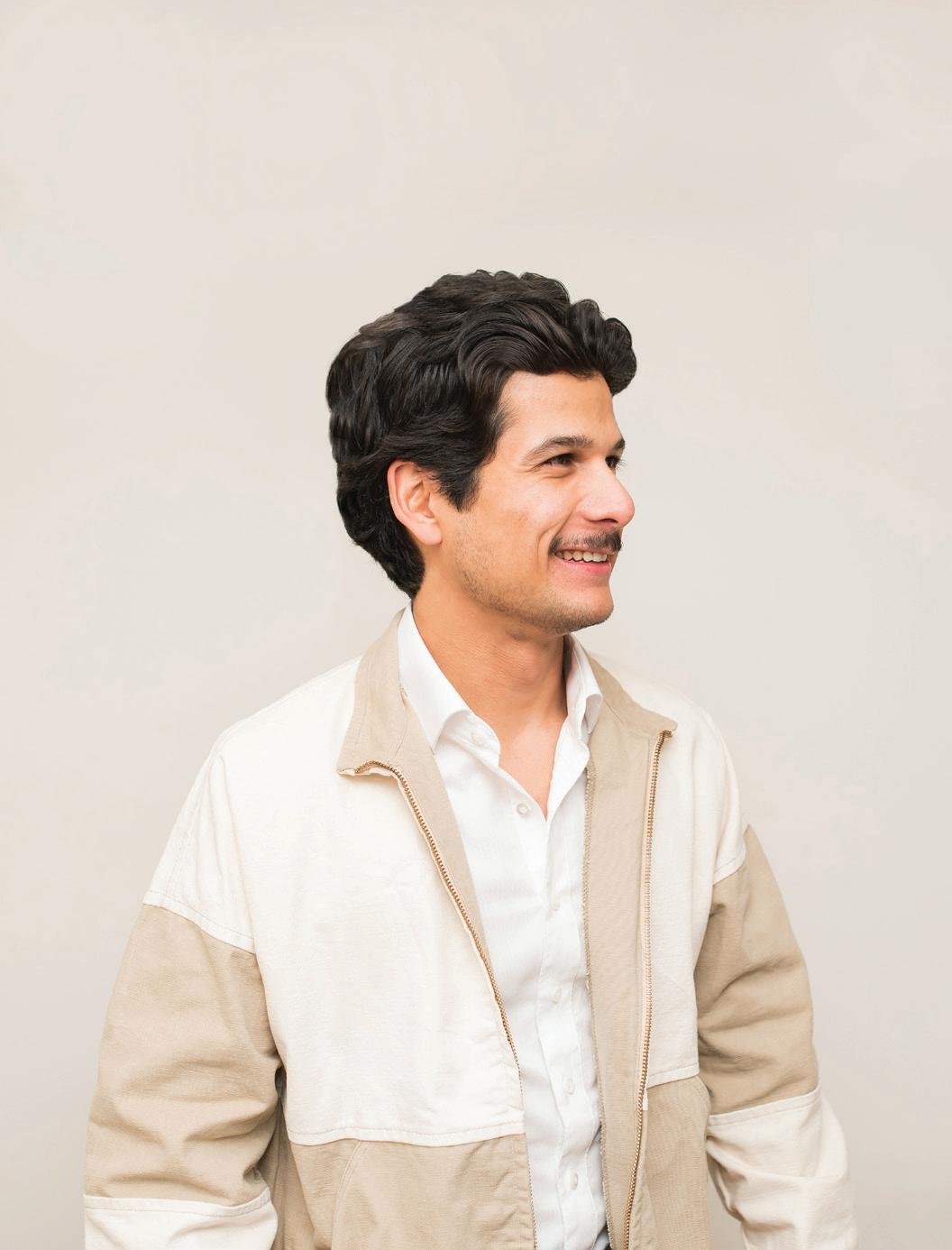
Vidricaire first picked up a film camera in 2020 after finding one of his dad’s old ones. His dad offered it to him, and Vidricaire started working with the camera—trying to get better at shooting with it. Vidricaire had already been photographing with a digital camera for years before starting with film, but he said it was film photography that opened doors for him.
“More recently, doubling down on film photography– that's unlocked the doors to working with some of the brands that I look up to the most,” said Vidricaire.
Having worked with the likes of Rossignol, Arc’teryx, and Patagonia, Vidricaire was able to turn his passion for film photography into a viable new venture within his career. He still

50 | REVELSTOKE TIMES Fall 2023
also shoots digital, but reserves it for specific work, like weddings. Vidricaire said that learning to shoot film photography has helped him become a better photographer. While taking the photos can be just as quick, the new platform made him pay closer attention to things like framing and composition.
Vidricaire also develops his own film, which he explained added to the adventure of learning how to do film photography.
“I ordered a film development kit and started just doing it out of my kitchen and out of my basement,” he said.
The early stages of learning to develop his film were tough.
“At first everything just felt pretty wild. Like it was brand new to me,” he said.
Vidricaire explained the difference between developing your own film instead of bringing it into a lab. He said that with the lab, you trust their process, so if the film doesn’t turn out the way you expected, you assume that the problem was with the photo. When you take the reins of developing the photos yourself, Vidricaire said that suddenly, if the roll doesn’t turn out the way you hoped, the issue could have arisen at any point in the many steps it took to develop the film.
The whole process is metaphorically summed up in one of the development steps: getting the film into the developing tank in the dark.
In a dark room, the developer must feel around in the pitch black to load the roll into the tank. Just like Vidricaire’s experience with film photography, the process felt foreign the first time he attempted it but has gotten easier over time. Despite
the years of practice, he said the darkroom still proves difficult.
Vidricaire said he owes part of his commercial film photography success to his friend, Cameron Keith.
“I do have to give major kudos to Cam for bringing me out on one of his shoots,” said Vidricaire.
Vidricaire’s presence on one of Keith’s shoots was primarily behind-the-scenes but got some attention from a production company. He documented what was happening between the takes, which allowed him to carve out what would become his niche.
When the idea for the ‘Blinding Lights’ shoot came up, it was an opportunity for Vidricaire to take a small break from his commercial work. It was a chance to hang out with his friends and try something new with them.
Once the sunlight dipped behind the mountains, the shoot was over.
With a few rounds at the River City Pub in the Regent Hotel, Vidricaire thanked his friends for helping make his vision come true.
“The same reason why I picked up a camera...I picked it up to shoot skiing and have fun with my friends. So, while this isn't the same, I did it to shoot some of my friends on their motorcycles and have fun with my friends that are creating as well,” said Vidricaire.
No matter how busy he gets, Vidricaire emphasized the importance of spending time with friends, and supporting the people that support you.
revelstokereview.com REVELSTOKE TIMES | 51
(Photo by Jack Ryan)
(Photo by Jack Ryan)
S S moke ignals
CHANGE IN THE AIR OF A COMMUNITY
BY ZACHARY DELANEY
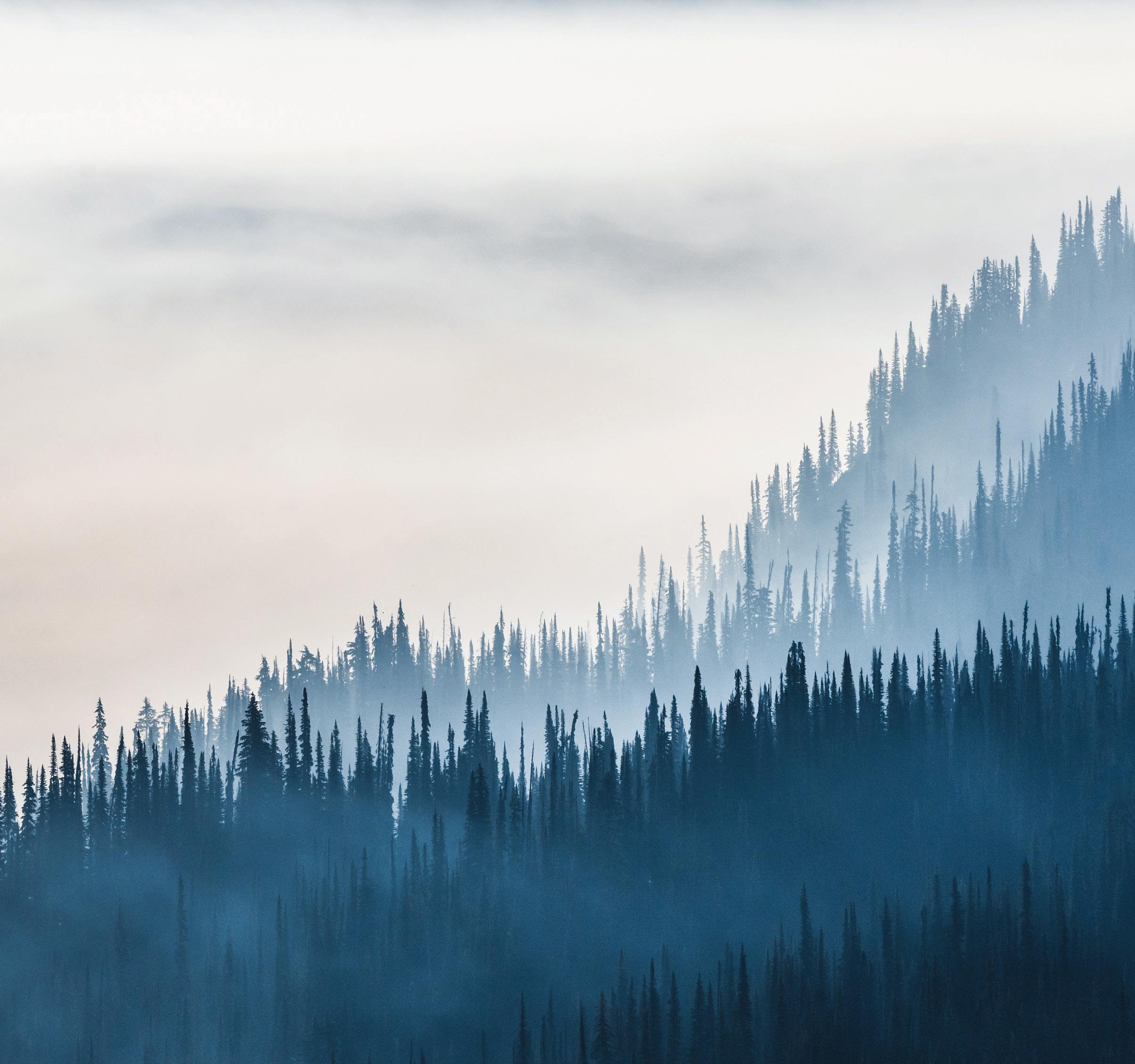
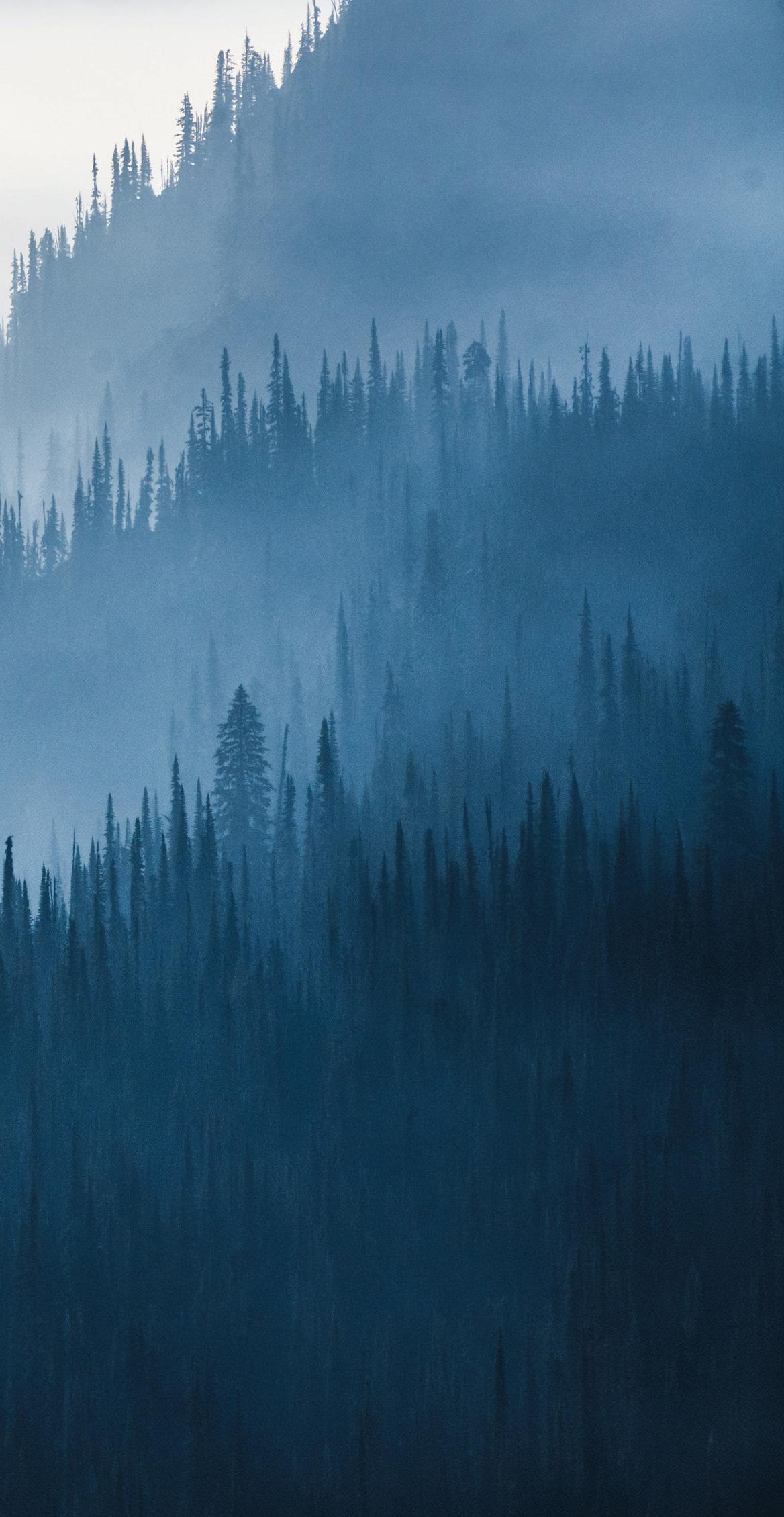
On a warm summer morning in mid-August, Revelstoke residents woke up to smoke unlike anything they’d seen for about six years. The haze that settled upon the town overnight worsened throughout the day as the smoky skies turned darker, finally showering vehicles and properties around the community in a light dusting of ash. At that time, air quality plummeted in the region, forcing some to reconsider their daily physical activities and perhaps consider how the air around them affects them.
The saying ‘you never know what you have until it’s gone’ is a simple and effective way to understand Revelstoke’s relationship with air quality.
Air quality in Revelstoke is generally not an issue. The large
forests around the municipality and the limited vehicle traffic in the region (compared to big cities) can sometimes give locals some of the cleanest measurable air on the planet. But when the sky darkens from the smoke, and properties are covered in ash, it’s hard to remember the clean air days.
It was one of the smoky days that spurred a Revelstoke local to put in the effort that it took to crowdfund Revelstoke’s first air quality monitoring system. Ian Houghton, the resident responsible for establishing the first local air quality monitoring system, described what led him to do so.
“2017, I think, was the first really bad smoke year that I can recall,” said Houghton.
Houghton moved to Revelstoke in 2010. Houghton would
52 | REVELSTOKE TIMES Fall 2023
be the first to admit that he’s not an air quality specialist — he works in an entirely different realm with Parks Canada. Despite his lack of air quality expertise, Houghton had seen his fair share of fire seasons in the seven years between his sourcing of the air quality system and when he moved.
2017 was a curious year for the BC Wildfire Service. Compared to other years, the season had fewer total fires at more than 1,300 wildfires than previous years which had more than 1,800. The difference with 2017 was in how destructive the fires that burned were.
For example, in 2015, the total number of wildfires for the year was 1,858 with more than 280,000 hectares burned. In contrast, 2017 burned more than 1.2 million hectares, resulting in just
short of $650 million in damages. This year, BC broke its own record by cresting 2 million hectares burned.
At the time of the fires in 2017, Houghton had recently become a father, causing him to consider the impact that the smoke from the fires would have on someone other than himself. He explained what was going through his head when he began to think about air quality differently.
“There's not much we can realistically do about this. But it would be nice to know what it's doing to us,” he said.
Houghton decided to investigate whether the City of Revelstoke had a local air quality monitoring system and found that there wasn’t one. Spurred by the smoke irritating his lungs and permeating throughout the town, Houghton did what so many in Revelstoke have done — he went to the Facebook Community Page with his problem.
“I reached out on the community Facebook page to start a fundraiser [and] put some money in myself,” said Houghton, adding that it was a “really positive response.”
In just a few days, Houghton had fundraised enough money to purchase the system. He bought a PurpleAir sensor, which is a company dedicated to making products that monitor air. The company has sensors that monitor both indoor and outdoor air.
After purchasing the sensor, Houghton still had some money left over from the fundraising he’d done. With the extra money, he built a website for the monitoring system, so that locals could easily go to one place to learn about the air quality in town.
With the speed of the fundraising effort and the positive feedback that he’d received from the Facebook group, Houghton was heartened to see the community interest in air quality that mirrored his own.
“It's just so nice to know that everyone was on the same page about the conditions outside,” said Houghton.
Once he installed the system, Houghton noticed other PurpleAIr sensors were being installed by different people around the community. On its website, PurpleAir shows all its sensors on a map, displaying the various data that each of the sensors track. Since Houghton installed his several years ago, the community’s air monitoring has improved, with more than a dozen spread out across the town.
Reflecting on how the community responded to his initial request, Houghton hoped that it would help the community consider the future of air quality in the region in addition to monitoring the daily conditions.
“I hope that people are not only concerned about the shortterm health impacts, but also what this says about where we're going long-term,” said Houghton.
His concerns with the long-term effects of poor air quality, as it turned out, were not unfounded.
Dr. Stéphane Trépanier, a medical health officer for the Thompson Cariboo region of Interior Health, explained what the concerns are for municipalities in interior BC, including Revelstoke, of poor air quality.
“In the long term, it increases the person’s risk for some disease, including stroke, heart disease, chronic obstructive pulmonary disease,” said Trépanier initially, adding that in especially bad circumstances it can lead to cancer.
revelstokereview.com REVELSTOKE TIMES | 53
Photo by Laura Szanto
Revelstoke’s air quality, as mentioned previously, is clear for the majority of the year. In the fall, winter, spring, and most of the summer, Revelstoke’s air quality, measured on the Air Quality Health Index (AQHI) scale, fluctuates between one and three, which is a healthy range.
The issue, unsurprisingly, arises in the summertime when the wildfires pick up. Dr. Trépanier said that wildfire smoke is the major issue across the province for air quality. With the wildfires comes the smoke, and with the smoke comes particulate matter in the air, which is the biggest contributor to poor air quality in Revelstoke.
The Air Quality Index (AQI) is used in the United States and other countries to provide a metric for air quality.
Particulate matter is part of the calculation for AQI around the world. The rest of the equation includes measurements of the ground level ozone, carbon monoxide, nitrogen dioxide, and sulfur dioxide’s presence in the air.
An AQI between 0 and 100 is moderate or good, but an AQI from 150–500 ranges from simply unhealthy to outright hazardous.
Over the past several years, Canada developed its own air quality scale, known as the AQHI. AQHI differs from AQI in that the ratings run from 1–10+ and are meant to indicate the level of risk for Canadians’ health. Measuring AQHI also differs in that it only examines particulate matter, nitrogen dioxide, and ground-level ozone in the air. The Canadian system prioritizes health risks based on the level of pollutants in the air as opposed to the AQI, which simply provides a level.
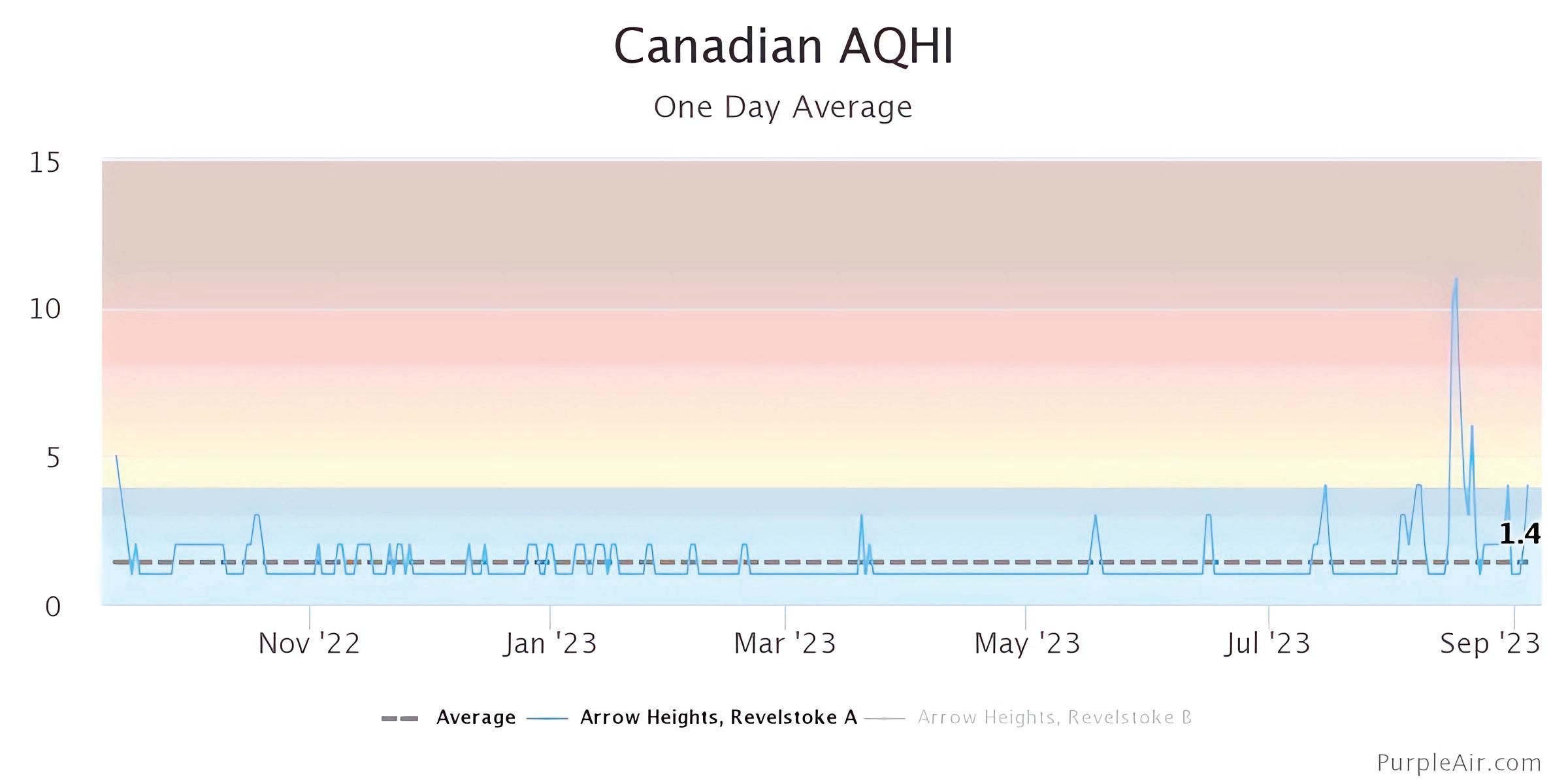
On Aug. 17, Revelstoke’s AQHI was 11 and its AQI was nearly 260. Based on either of the ratings, the air quality was unhealthy for residents.
The ratings were a warning to the community to ensure
they took the steps to mitigate the negative health impacts of the poor air quality induced by the smoke. The information is even more valuable to Revelstoke residents –and tourists who travelled here– because of the level of physical activity in the community.
In an article published in the 1967 Atmospheric Environment journal examining the effect of air pollution on athletes, the review found that the negative effects of poor air quality are exacerbated for athletes. The aggravation comes from the increased stress on the pulmonary system when the rate of breathing increases.
With Revelstoke’s reputation for hiking, mountain biking, swimming, and other outdoor activities that increase someone’s breathing, the community must be even more cautious when the air quality gets bad.
As climate change continues, wildfire seasons like that of 2023 will likely continue, creating more smoke events like Revelstoke had in August. Dr. Trépanier spoke about how resident’s reactions to smoke events may have to shift.
“There is, I think, two ways to react to climate change, or at least to more wildfire and more smoke in the years to come,” started Dr. Trépanier.
He said that the first option is to change nothing about daily habits and assume the risk of the cumulative long-term effects of the inhalation. The second option is one that humans have had to do for our entire collective existence: adapt.
“The adaptation can be to just stay at home but take care of ourselves during that time,” said Dr. Trépanier.
He gave examples of taking more time to clean, to cook, and to exercise at home. Houghton’s concern was for the people who don’t get a choice.
54 | REVELSTOKE TIMES Fall 2023
PurpleAir assembles the data collected by sensors and produces a graph to easily understand the data. (PurpleAir.com)
“For other people who don't have a choice in that matter, it's much more of an elevated risk,” he said.
For those who work outside — the people who don’t have the option of working from home or reducing their activity, the effects of smoke during the wildfire season –and the poor air quality it brings– are unavoidable.
For the people who work outside and must contend with the smoke, Dr. Trépanier said that places of work will have to become more flexible for their workers. As the climate crisis worsens and the fires continue, Dr. Trépanier said that air quality will have to be considered when deciding whether working outside is necessary.
In 2016, Health Canada estimated that more than 15,000 premature deaths in Canada were attributed to air pollution, which is why Canada –along with many other countries in the world– recognizes air pollution as a ‘leading factor’ in premature mortality.
Most residents likely don't consider air quality before they leave their homes the way many do with the weather, but Dr. Trépanier said that time may be coming.
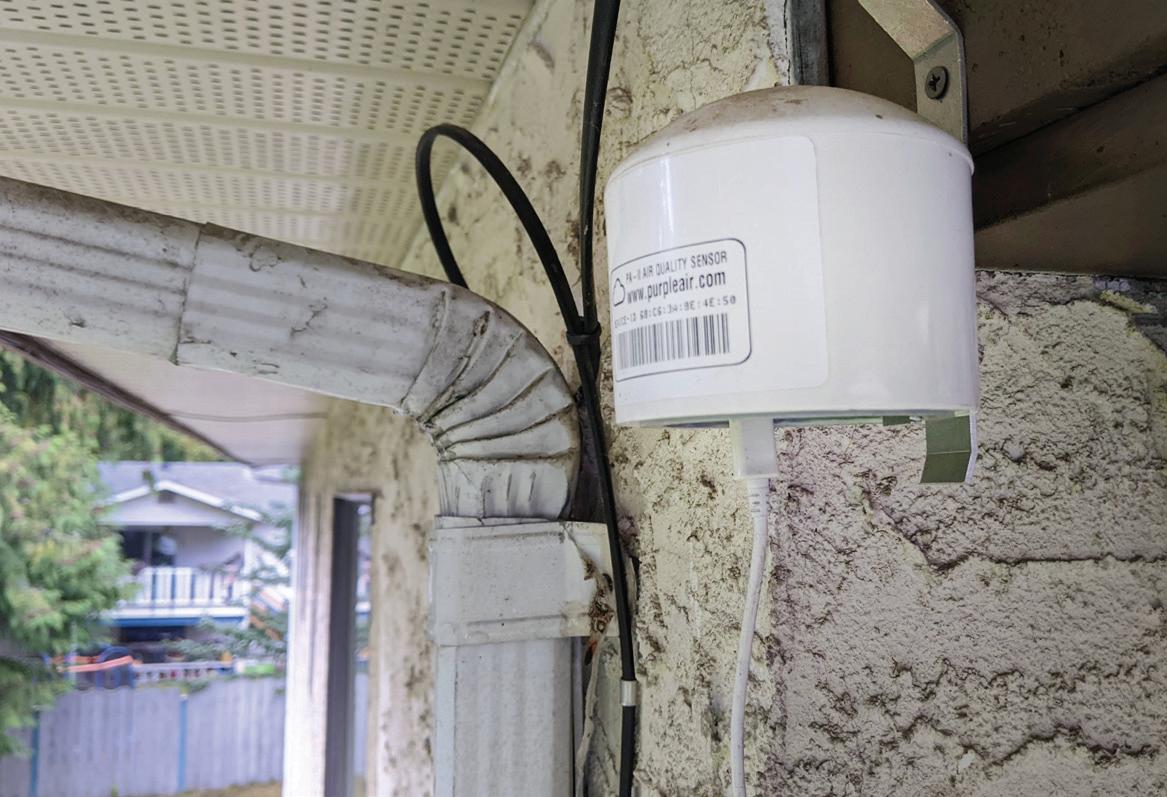
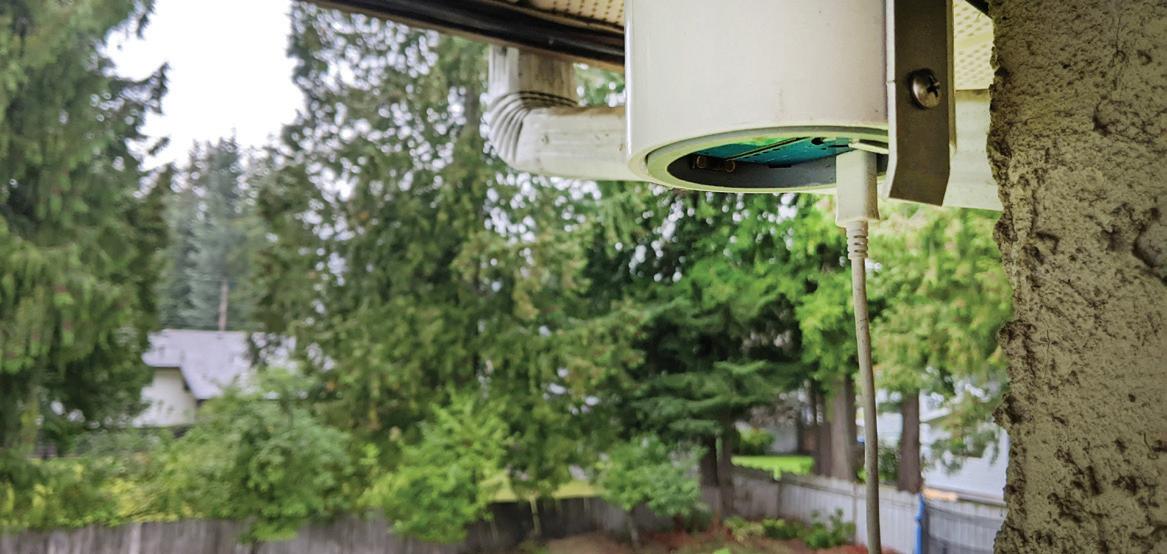
Next wildfire season, when the smoke hits, Houghton suggested having a quick look outside to gauge the amount of smoke. If you can see the tops of the mountains, he said the air is usually fine. If you find your view of the spectacular mountains that surround Revelstoke obstructed, think twice about your level of activity that day.
revelstokereview.com REVELSTOKE TIMES | 55
Photos by Ian Houghton
Dark Horse
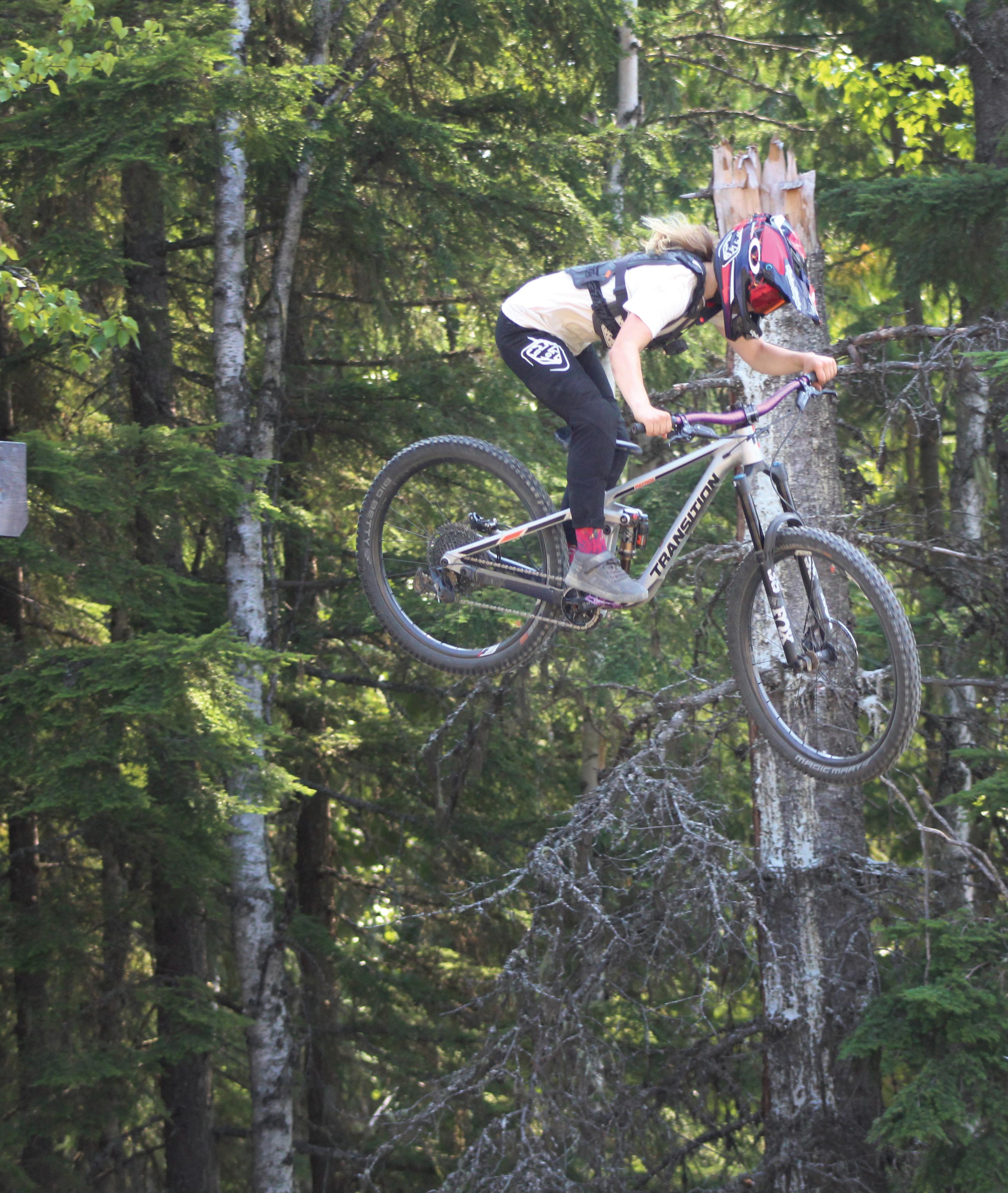
56 | REVELSTOKE TIMES Fall 2023
STORY AND PHOTOS BY ZACHARY DELANEY
Under the hot bright sun on the afternoon of Aug. 26, the Dark Horse Big Air session got underway at Revelstoke Mountain Resort to wrap up a week of Dark Horse events.
Having been held for its third year in a row, the Dark Horse Invitational, hosted by local professional Casey Brown, has become a staple in the late summer schedule for some of the best women’s mountain bikers in the world.
After a week of events for the athletes, the big air session is the major spectacle that the community gets to witness, as the riders take on the impressive Revelstoke Mountain Resort (RMR) jump line.
After a few days of rain early in the week, the smoke in Revelstoke lifted in time to make a stunning backdrop for the riders as they took on the RMR jump line.
More than 20 riders dropped into the course for the event when things got underway last Saturday.
Unlike other mountain bike events, the Dark Horse Invitational is all about progression. Brown, talked about some of the advancements that she saw as she waited for her turn to drop in.
“Heaps of girls have done stuff that they’ve never tried before, because we have the airbag and the mulch set up. So, it’s just been a really cool opportunity for all these girls to come and grow their skill set,” said Brown.
Before the big air session got underway, Brown and the other riders had a morning session where she got the chance to push her own limits, too.
“I did some backflips to the mulch jump, which was a goal of mine. So, I’m super stoked on that,” said Brown.
In her red shirt and matching red tartan pants, Emma Olofsson was one of the busiest riders of the day, always dropping in just moments after she got back up to the top. She stopped for a moment to discuss how this year was different for her from her first Dark Horse event last year.
“I feel way more confident on the course this year,” began Olofsson. “Last year, I was scared to hit this, and this year I wasn’t scared and definitely trying new things.”
revelstokereview.com REVELSTOKE TIMES | 57
"WE’RE JUST IMPROVING EVERY YEAR" THE DARK HORSE INVITATIONAL WAS HOSTED IN REVELSTOKE FOR ITS THIRD YEAR IN A ROW
Getting to the event wasn’t easy for Olofsson with the wildfires burning in the Okanagan. Having to change her flight from Kelowna to Vancouver, the rider had to miss the first day of the event while struggling to find a way to Revelstoke.
With the fires burning in the Okanagan, it’s a testament to the event that more than 20 riders were still able to make it out.
Brown explained that in the first year, there were a dozen riders and the number of participants continues to grow.
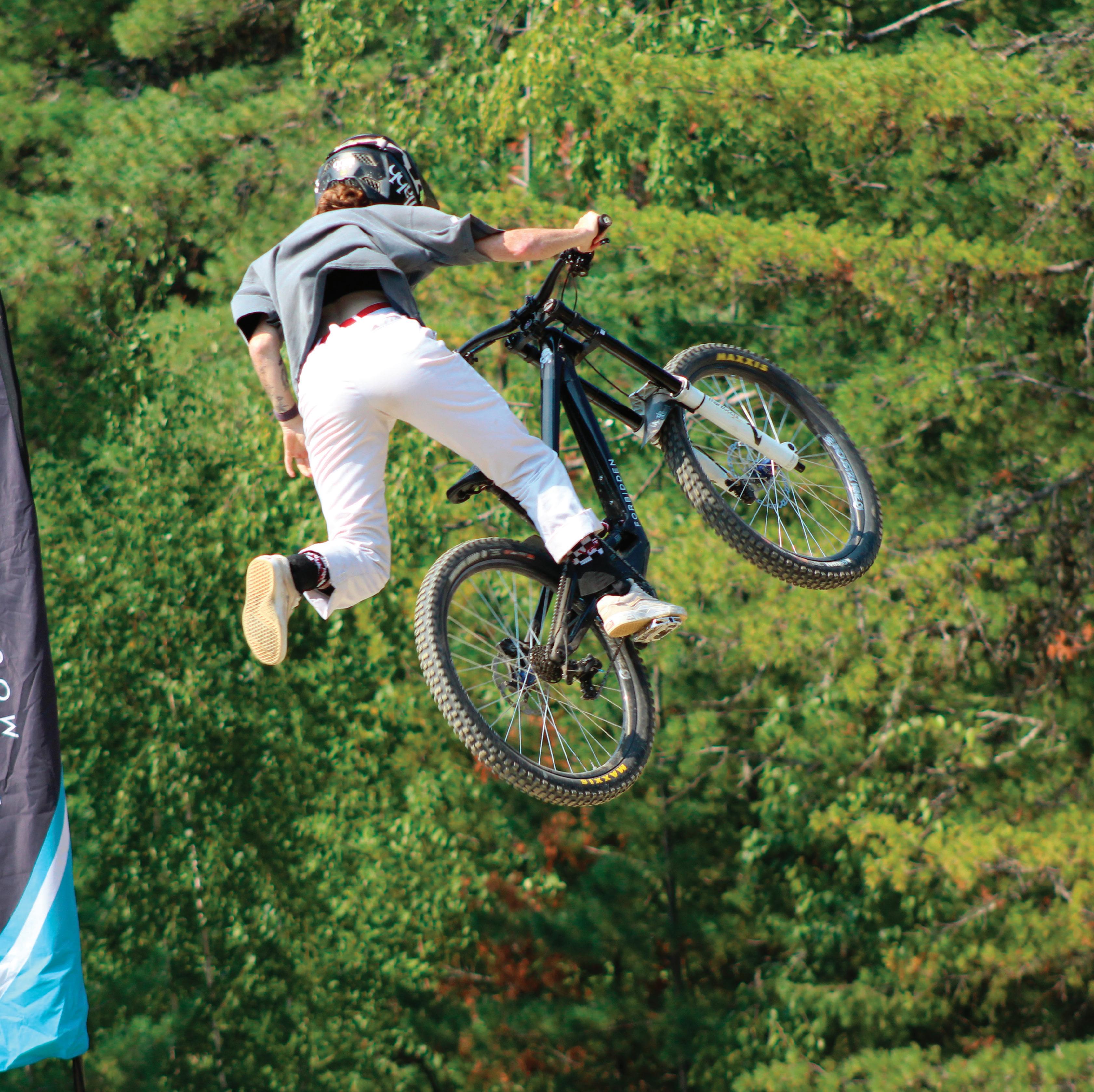
“We’re just improving every year and growing every year,” said Brown.
Whether it’s the growth of the participants or the rider’s growth in their skill set, the Dark Horse achieved its goal of progression once again for the third year in a row.
Natasha Bradley took home the ‘True Blue’ award for keeping high spirits throughout the week at the events.
The ‘Let Er’ Buck’ award went to Mia Moore for her willingness to go big, no matter the slam.
58 | REVELSTOKE TIMES Spring 2023
The ‘Wild Jane’ award recognizes the rider with the best whip, which Vinny Armstrong took home.
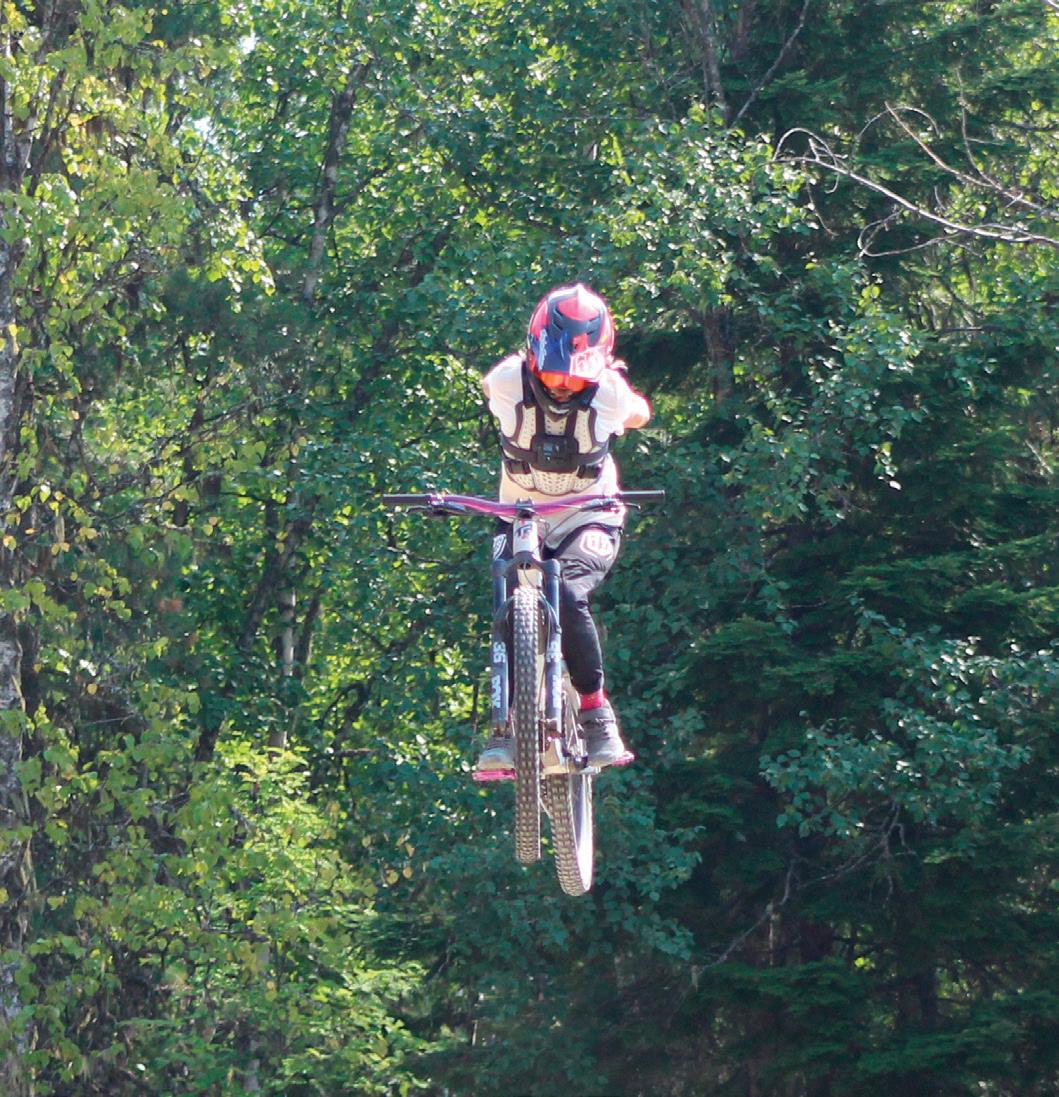
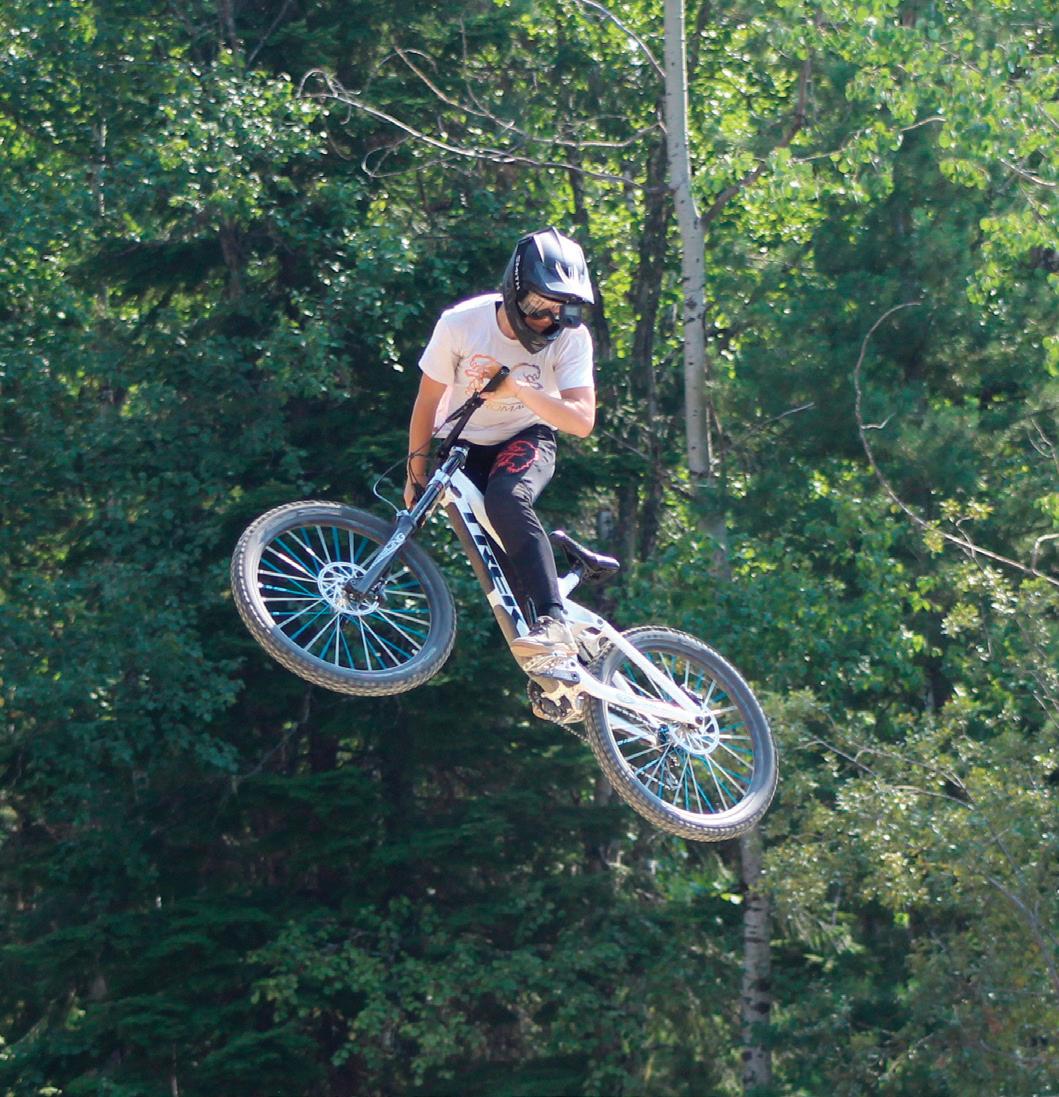
The ‘Stay Gold’ award is reserved for the rider who shows strong mentorship throughout the week of events to their fellow riders, which Georgia Astle claimed this year.
Finally, the recipient of the ‘Dark Horse’ award was Morgan Antone.
The Dark Horse is expected to return next year, encouraging riders to go even bigger, continuing the progression of the past three years.
https://nicospizzeria.ca/

revelstokereview.com REVELSTOKE TIMES | 59
High&
Dry
HOW COMMUNITIES ON THE COLUMBIA RIVER ARE REELING FROM LOW WATER LEVELS
On January 17, 1961, Canadian Prime Minister John Diefenbaker and United States President Dwight Eisenhower signed the Columbia River Treaty - a groundbreaking coming together of the two nations that looked to mutually benefit from their bountiful natural resources. In Canada, the hydroelectric dams are stewarded by BC Hydro.
At its core, the treaty is an agreement on the development and operation of four hydroelectric dams - three in Canada and one in the U.S. On the surface, these dams have benefitted British Columbia financially.
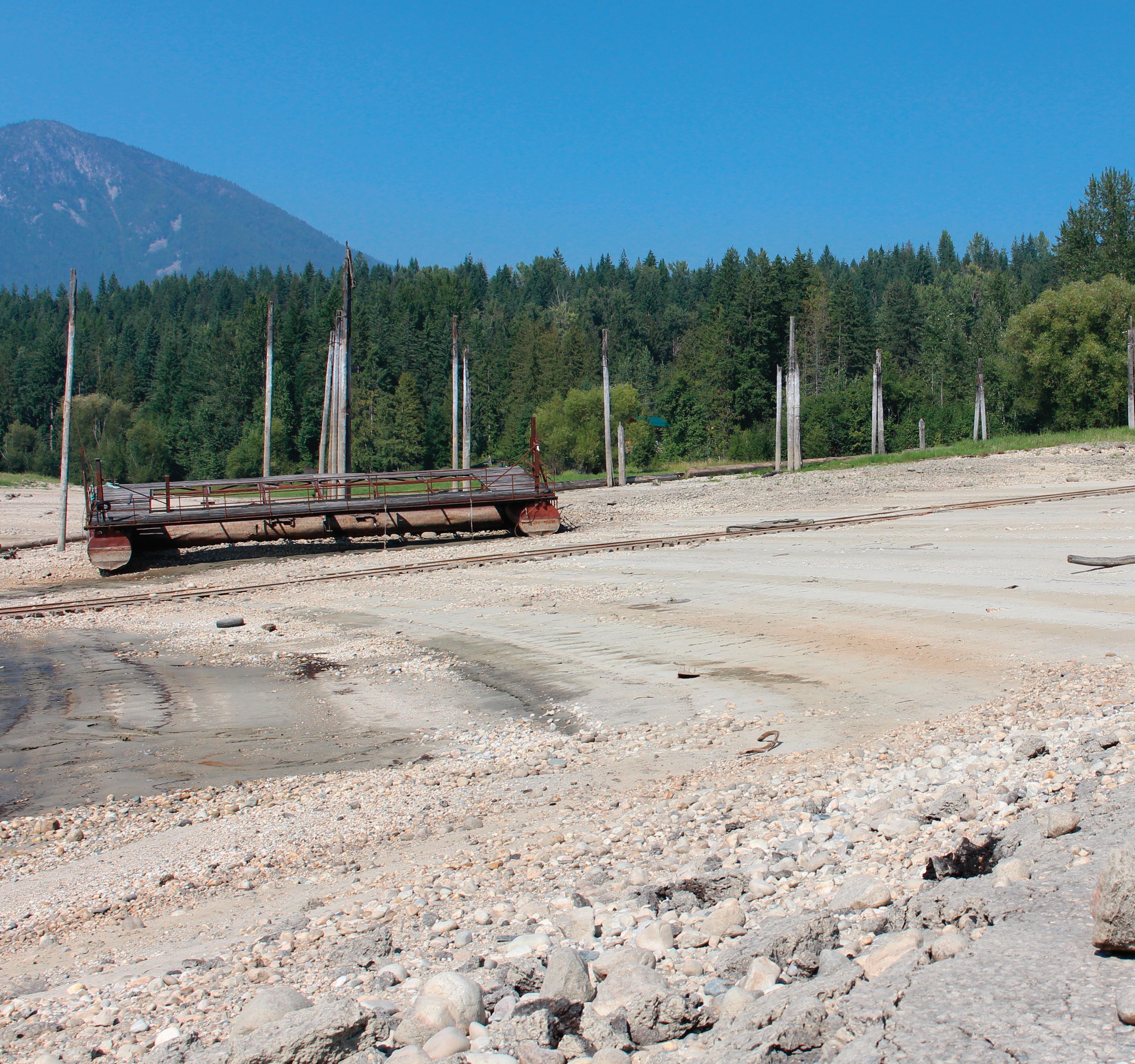
But, what happens when we take a closer look at how residents who live on the Arrow Lakes are being affected by the dams today?
As a disclaimer, it would be irresponsible to dive into this topic without mentioning how the damming of the Columbia River affected First Nations people, and near Revelstoke specifically, the Sinixt people. The Sinixt lived along the Columbia River for thousands of years before any pen was put to paper by politicians in the region before an imaginary line was drawn on the
60 | REVELSTOKE TIMES Fall 2023
STORY AND PHOTOS BY JOSH PIERCEY
land to signify which side is Canada and which are our neighbours. The Sinixt were labelled extinct by the Canadian government in 1956, in the midst of a boom in the development of infrastructure throughout the province thanks to then B.C. premier W.A.C. Bennett. The Sinixt, who weren’t extinct at all, lost a lot in the damming of the Columbia River, and while we won’t be discussing the impacts they still feel in this article, we believe acknowledging their plight is important.



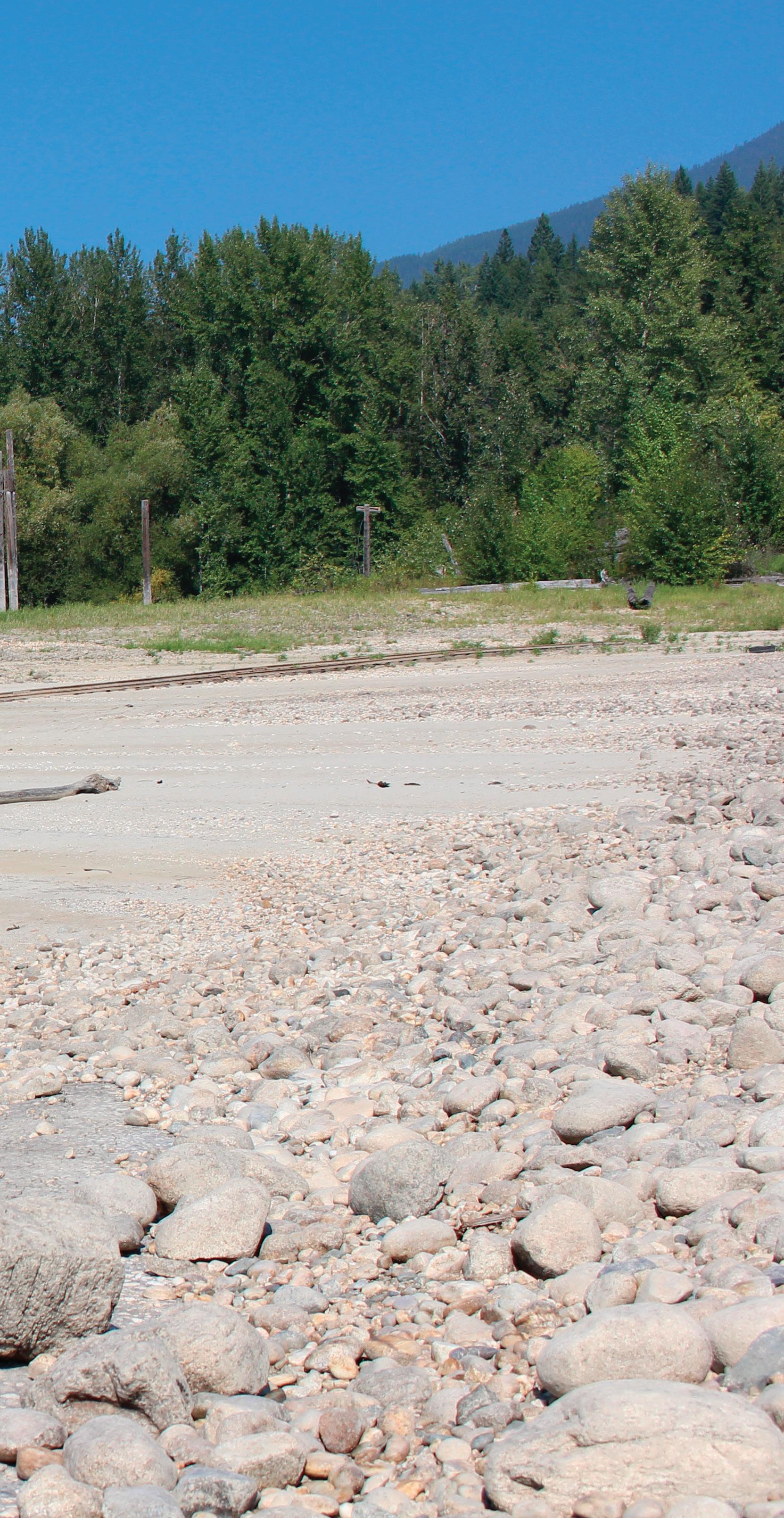
revelstokereview.com REVELSTOKE TIMES | 61 Unit#104at103FirstStreetEast 250-805-4026
Low water levels reveal a rusted old dock and leave the shoreline looking rugged and barren.
After pen was put to paper
The Government of B.C. admits that, by today’s standards, there was a lack of consultation with the Columbia River basin residents and First Nations when the Columbia River Treaty was negotiated, and many British Columbians had doubts about the location of the dams and the treaty itself.
Homes and businesses in the Arrow Lakes Valley were put to the torch by the B.C. government to make way for the floodwaters that would form behind the dams.
Low-lying communities like Beaton, Old Beaton, Arrow Park, Arrowhead, Comaplix, and Renata were physically moved to higher ground, or in some cases burned down, to make way for the flooding. Residents of Nakusp say that homes in Arrow Park were burned to the ground or buried, but that the water has never reached those heights, leading them to question why people were forced off their land in the first place.
When the water is low, residents are left to look on at the bones of long-lost communities, and beaches are made dangerous by the sharp, rusted remains of old sawmills, tractors, and homes.
Ieneke Van Houten has lived in the Arrow Lakes area since 1970, just after the flooding of the valley happened, and knew a number of people who were displaced or lost property due to the flooding.
“Some of them never got over it,” said Van Houten.
Today
The Revelstoke Review took a trip south, over the ferry, to Nakusp in August to hear from the people of Nakusp after they reached out to us to help have their voices heard.
A gathering was held at the gazebo near the waterfront on Aug. 28, and more than 30 residents of the Arrow Lakes were in attendance to voice their concerns.
At first glance, it’s not difficult to figure out why they’re upset. Ragged beaches stretch out for much longer than they should during the summer, unearthing debris, destitute buildings, and most alarmingly, dead fish. The people in the Arrow Lakes region are used to low water levels, but not this low during the summer. According to residents, they’re used to seeing these kinds of water levels in February, not August when their boats are still in the water.
According to BC Hydro, water levels in the Arrow Lakes Reservoir will continue to drop through September. They blame drought as a major factor for the water levels, adding that most of the Columbia River valley and Kootenay region are at maximum drought levels.
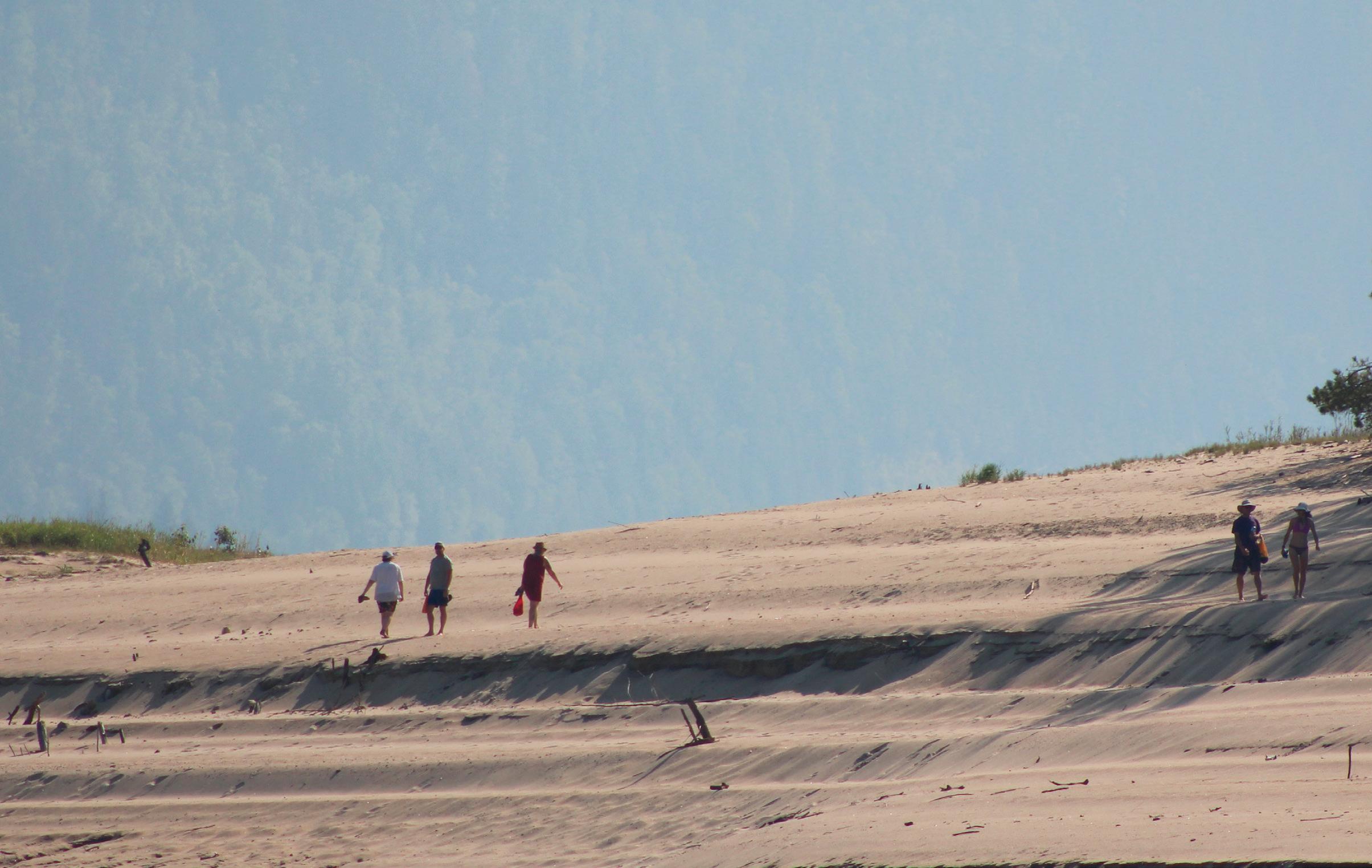
As of Sept. 7, Arrow Lakes Reservoir levels were 426.7 metres and may go as low as 422.1 metres by the end of September. The minimum level allowed is 420 metres.
Hydroelectric dams and the Columbia River Treaty are complicated issues, too complicated to be explained in one article.
62 | REVELSTOKE TIMES Fall 2023
The beach at McDonald Creek Provincial Park has eroded due to fast-changing water levels.
But, people on the Arrow Lakes are concerned, their livelihoods are being impacted, and they’re worried about what the future may hold.
“As the water level dropped, so did my heart,” said Nakusp resident Victoria Youmans.
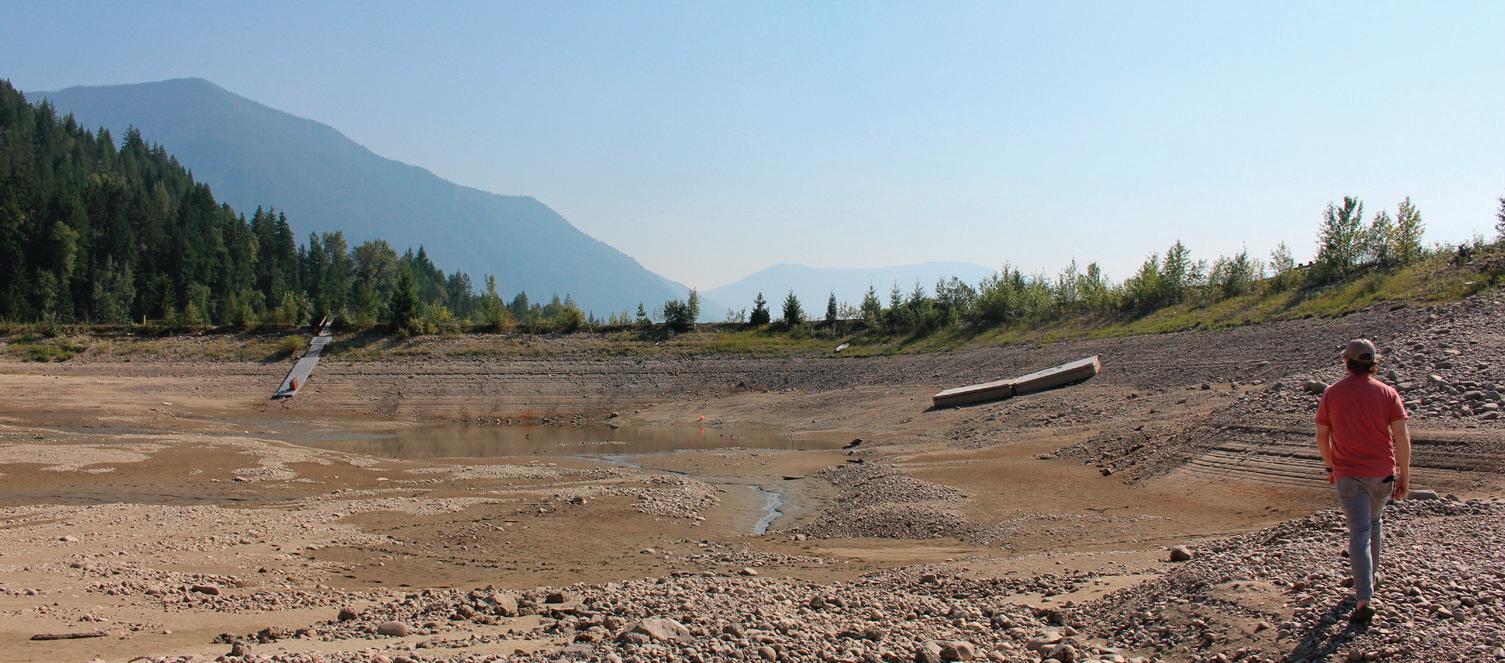
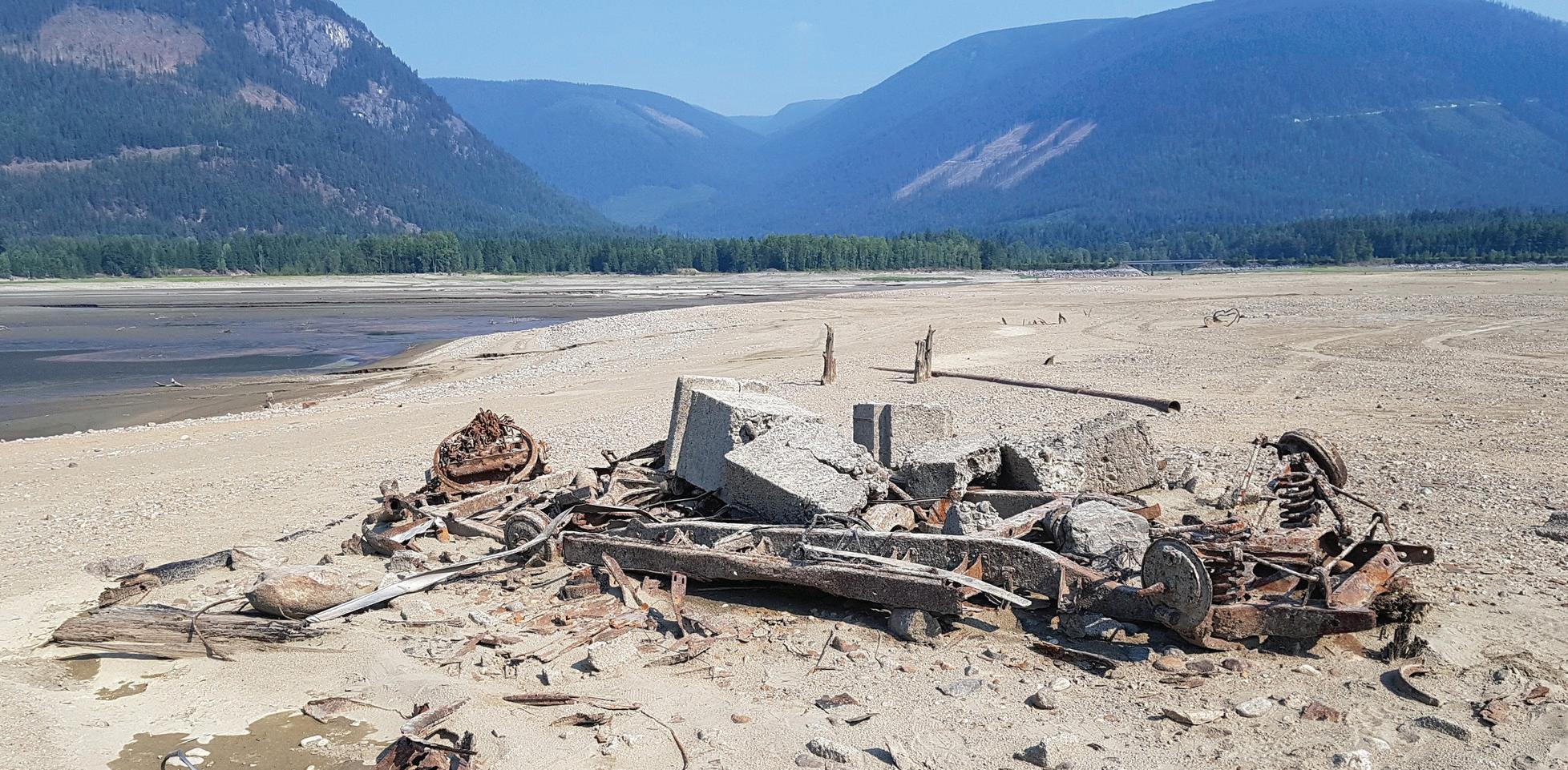
Here are some of their voices.
Environmental impacts
Stan Chorey is a resident of the Arrow Lakes and owns property just north of Shelter Bay.
“Environmentally, I’m very concerned about the situation BC Hydro has created,” said Chorey.
Ecosystems along the Columbia River, like many ecosystems in a number of diverse habitats across the country, are interconnected - meaning that the impacts on one specific species could and are being felt across a number of other species. The impacts of the water levels on fish are then felt by lake birds, and changes in the growing habits of vegetation affect the habits of mammals along the river.
Residents in Nakusp have documented a number of pools where they have found dead fish, beached by a sudden and drastic shift in the water level. Near Burton, RACHEL photographed a number of white sturgeon that had perished in a small pool of water.
Chorey says that on a recent visit to Cartier Marsh, a wetland near Revelstoke which is usually full of life, he was shocked
to find that the reptiles and turtles which filled the marsh had all died and that the marsh had become no more than a ‘big sandpile’.
“The impact of that lasts many years. It perpetuates,” said Chorey of the state in which he found Cartier Marsh.
Residents say that the water levels were at levels normally seen in the dead of winter as early as July, which has had a severely negative impact on fish populations. They’re concerned about the migrating habits of salmon, and that the hard work being done at spawning pools in the region is going to waste.
In spite of these concerns, BC Hydro says that fish stranding is ‘not uncommon’ and can happen ‘in any year’.
Economy and tourism
Bob Ruttenberg, a resident of Nakusp, said that he used to work retail in the community and reacted to the effect that the low water levels are having on the tourism economy. “People aren’t gathering, they’re not coming, they don’t go to restaurants, they don’t go shopping, they don’t go to the stores, and there’s a wide impact,” said Ruttenberg.
Beyond the environmental impacts, the low water levels cause the shoreline to look like a serious eyesore, not only because of the eroding beaches but because of what the low water levels unearth.
By the second week of July, Ruttenberg says that not only did the beaches lose their natural beauty, but they became dangerous. You sink in the mud, you cut your feet on unearthed metal.
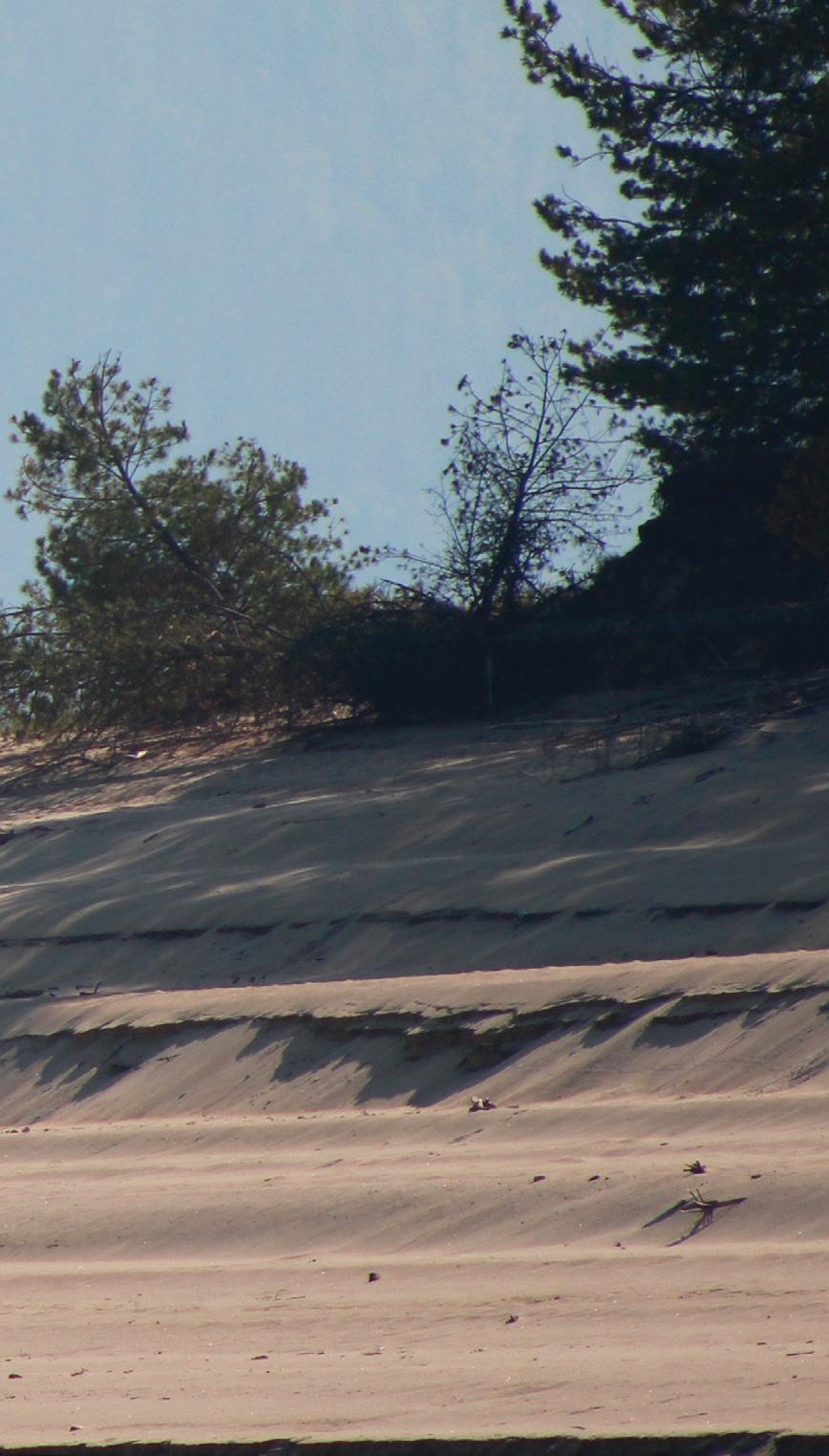
revelstokereview.com REVELSTOKE TIMES | 63
Above: Debris, which once sat under water, has been unveiled by low water levels. Below: What was once an inlet, fully equipped with a dock, is now a pit of mud and debris.
Ruttenberg says that most of his neighbours moved to Nakusp because of the access to the beach, “This is killing us, from my point of view,” added Ruttenberg.
Rachel Elliot owns a campground near Burton. She says that campers are showing up to her campground with long-term reservations, their boats in tow, and turning around leaving after just one night. The land they expected to see is completely different than what they’re arriving to find.
Elliot added that camping is one of the main economic draws for the Burton area - they rely on it.
Ruttenberg says that his neighbours have told him that they plan on leaving the region if things don’t change.
Property damage
Travis Hebb is the owner of Arrow Lakes Adventures in Nakusp, taking tourists around on tours of the usually beautiful Arrow Lakes on his boat: the Wildflower.
Over the course of this summer, Hebb has watched on while the beaches on the Arrow Lakes have eroded past the point of being beautiful.
Residents in Nakusp say that some days, the water drops so quickly, that it causes major erosion to the shoreline, evident when viewed from a boat.
Many docks in Nakusp have gone completely dry, leaving people’s boats beached and damaged. Hebb himself has put thousands of dollars into repairs to the Wildflower after running into unexpected debris at spots in the lake where the water level is the lowest.
On top of the obvious damage to property, the character of properties on the shoreline has also drastically changed. In some places, people who used to have lakefront property now have to walk more than a kilometre to touch the water - a far cry from the lake access they expected when they purchased their property.
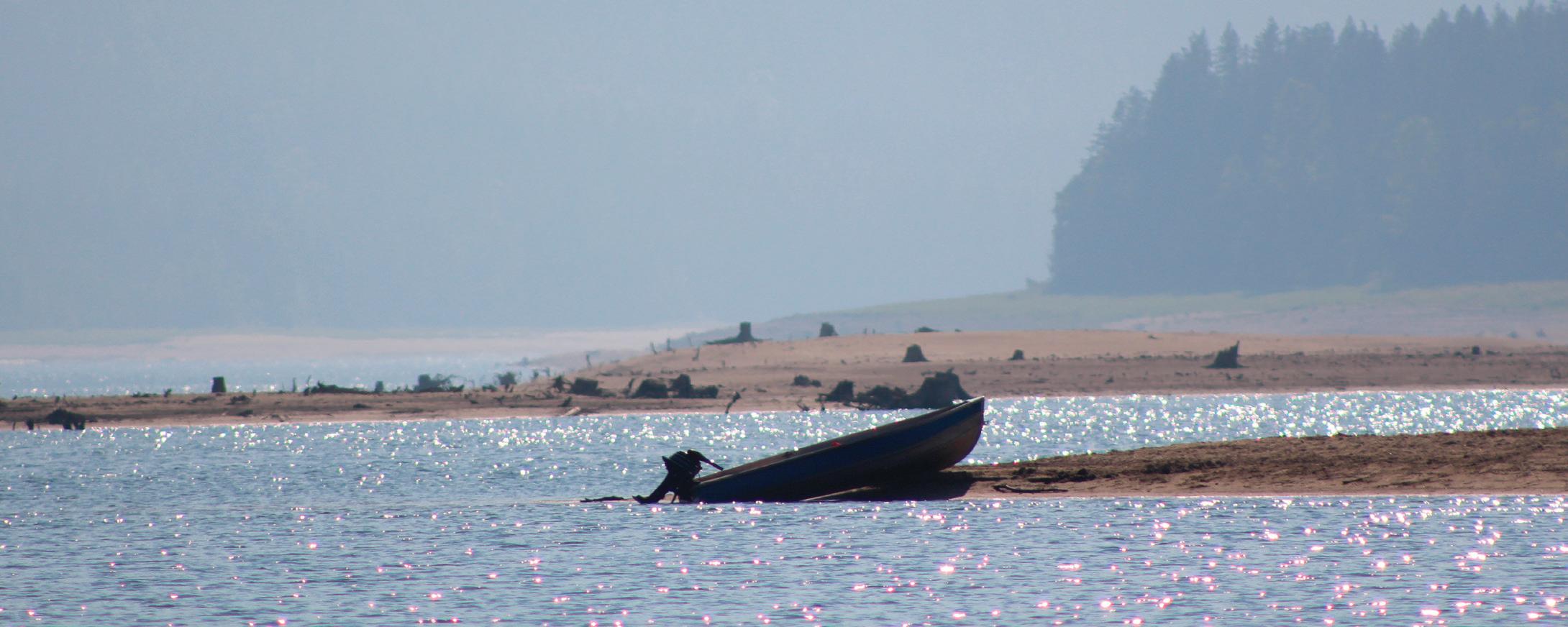
What comes next
“Honesty and transparency,” said Rachel Elliot when asked what she wants from BC Hydro going forward.
Nakusp Mayor Tom Zeleznik is pushing for BC Hydro to open a dialogue with the residents of the Arrow Lakes so that their
voices and experiences can be heard.
“Our community can live and survive without a Nakusp public beach, but we cannot continue to live with the ecological, and environmental damage that is happening daily to our [Arrow Lakes Reservoir],” said Mayor Zeleznik in a letter to BC Hydro.
Mayor Zeleznik added that if the levels are going to reach a ‘new normal’, residents of the region should be given an opportunity to use the exposed land, re-taking some of what was lost back in the 1960s.
While BC Hydro has done some consultation with residents of the region, they don’t feel like their concerns are being addressed, or even that their questions are being answered.
“I really want them to be accountable and be transparent with what they’re doing, and give the people of this valley a clear and truthful answer about what’s going on,” said Stan Chorey.
Jesse Edwards, a resident of Nakusp, started the Facebook group Slow the Flow of Arrow Lakes. The group, which was only started in mid-August of this year, has more than 2,600 members, some of whom post daily, sharing photos of their devastated properties, discussing the inequity they feel, and continuing the conversation so that, hopefully, their voices can be heard.
“I think, for a long time, the people in this valley have been ignored,” said Edwards.
The latest round of Columbia River Treaty talks between Canada and the United States concluded in August as both sides continued efforts to modernize the decades-old agreement.
“In your negotiations, listen to the people,” said resident Colleen Lakevold in a letter to BC Hydro. “Compensate property owners for their land falling and crumbling into the Arrow [Lakes], for the loss of waterfront enjoyment, for the money spent to stabilize their properties. Compensate the property owners pre-flood. Listen to the towns and villages affected by the loss of tourism and enjoyment. Provide a safety net for our fisheries. Come and see our valley, talk to us, learn the history, do some research, watch some videos, and read some books about the damage done. And then maybe, just maybe, you can look at this treaty with your eyes wide open.”
“I know it’s going to be a tough battle, but anything worth fighting for is going to be a tough fight,” concluded Edwards.
64 | REVELSTOKE TIMES Fall 2023
Stumps speckle the shoreline on the Arrow Lakes.
























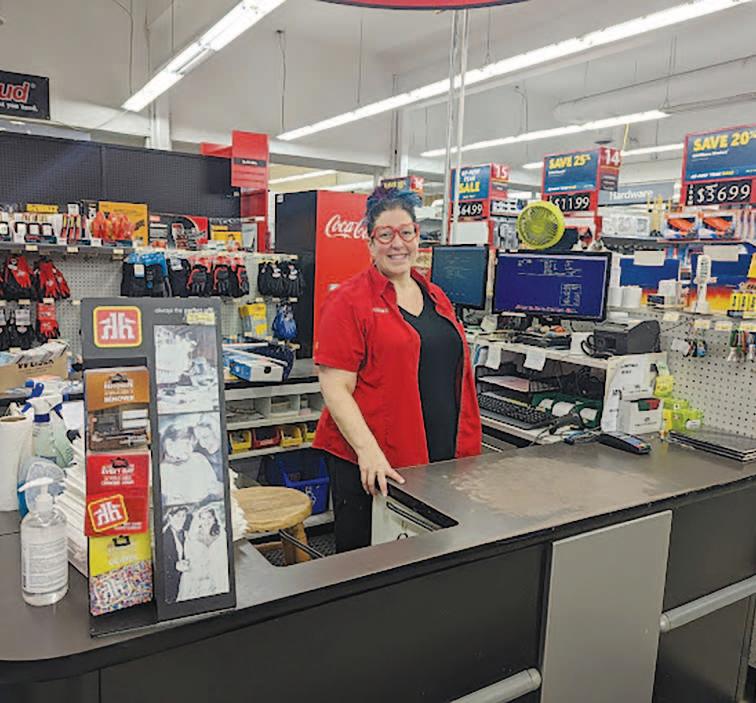
SchaneTammy
Don Les Lisa Elysia Sarah Dave Euan
Jimmy PeteDenise
Diana Fred SeanB. Doug JustinByron
Chris
SeanN. Nick DawnNaomiJessicaChrisB
YourprojectEssentials Cometotheplace where everyone knowsyourname
ElizabethMary Eric Megan
TOGETHERWEAREBUILDINGATHRIVINGCOMMUNITY
THANKYOUTOOURTRADES&PARTNERS
COMINGSOON COMMERCIAL THESELKIRKS PHASEFOUR
ThePlazawillsoonbe hometoavarietyof retail&foodand beveragebusinesses thatwillfurtherenhance thestrongfabricofour community.

AlconElectric,ArmadaSteel,ArtisanDrywall, BattersbyPlumbing,Bearstone,BigEddyGlass Works,Bordt,Chandos,CanyonIndustrial Electrical,Chapman,CityFurniture,Cityof Revelstoke,Cruzbrothers,DalesQuality Woodwork,DiscoveryGlass,DTXPaint,Epic Roofing,FintryContracting,GutterDone,H&J, HopkinsDesign,Jake&Jay,JRSEngineering,The PolishGuy,Kelly'sBobcat,KONE,Lawson Engineering,LBSInc,MircomInc,MXConstruction, NarastokeManagement,NugentContracting, ParamountGlass,PrecisionAluminum,Ramco, RevelstokeAlarm,RevelstokePools&Spa,Score Construction,Shek,SignsInk,StarkArchitecture, StraightUpConstruction,SW10Limited,Terracom, WarnerRentals,WasteManagement,Wayside Signs,ZenLiving. Interestedinbecoming anowner?Wearenow sellingavarietyof1-4 bedroomcondos, townhomesand penthousesuites.
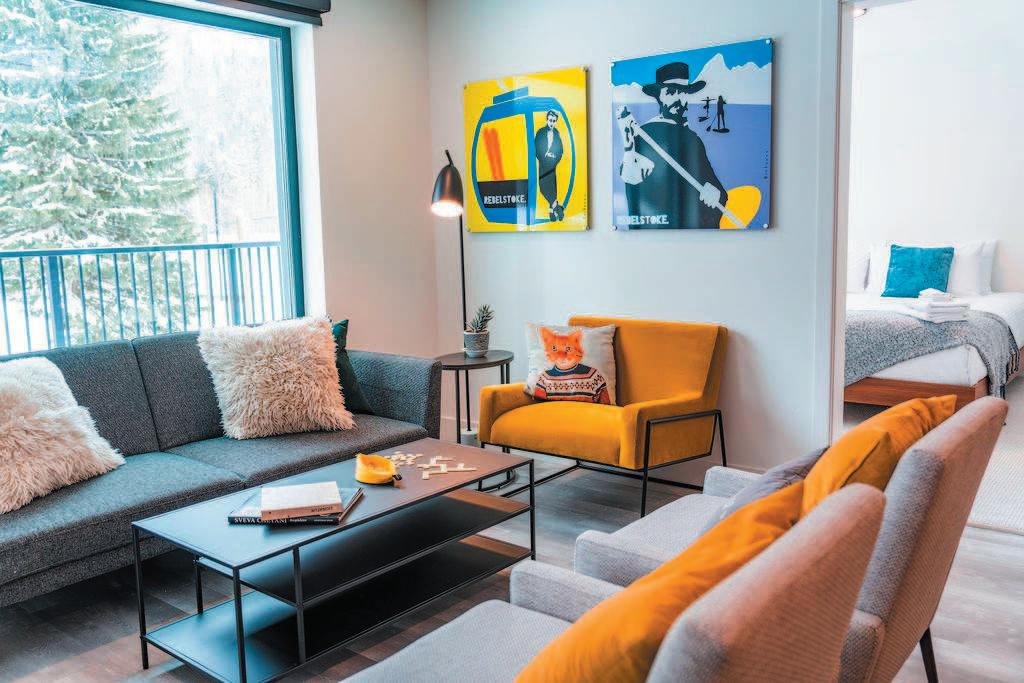
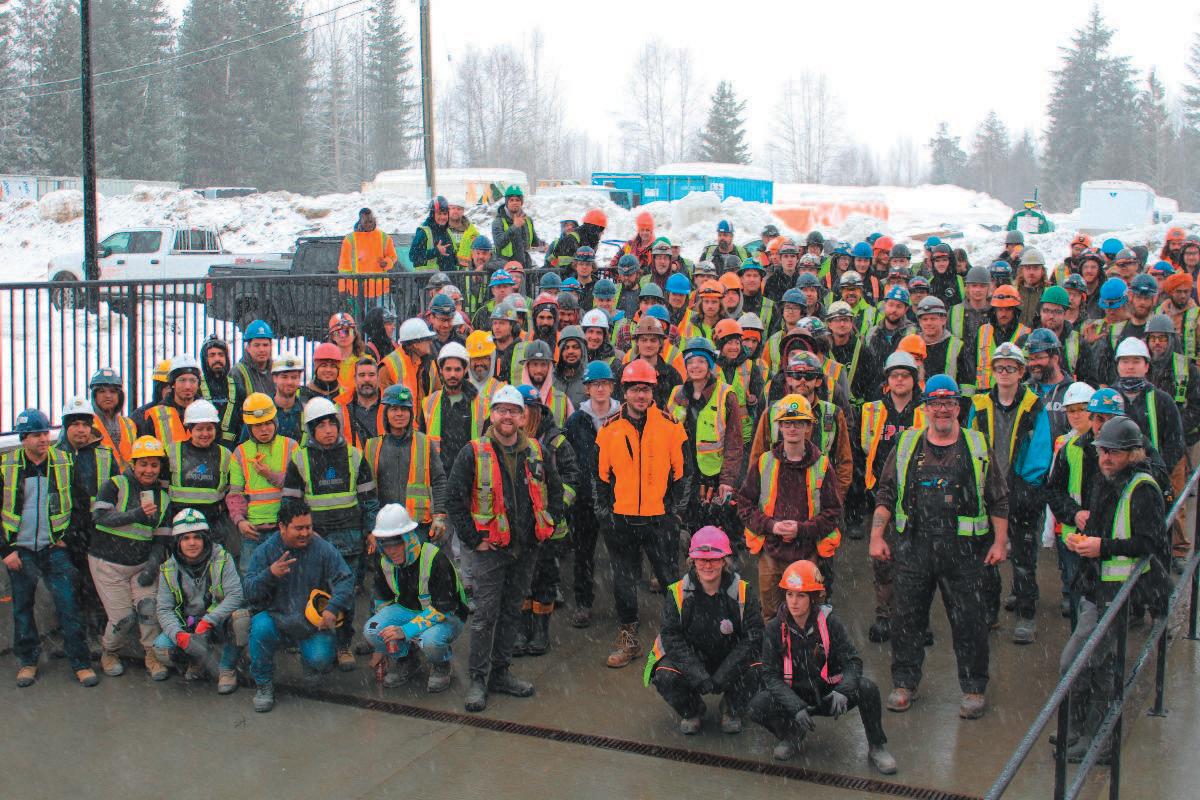
THANKYOU
Toalloftheincredibleteamswho builtMackenziePlaza,
www.mackenzievillage.ca







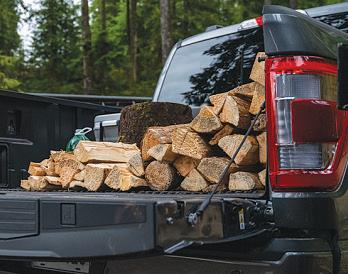

REVELSTOKE |250.837.5284|1321VICTORIARD,REVELSTOKE,BC D5172 BEFALLCAMPING
REVYJOBSON AvailableProTrailer BackupAssist† AvailableSmartHitch withOnboardScales AvailableProPower Onboard™†† Available3.5LPowerBoost™Full-Hybrid V6Powertrain
READYWITHYOUR NEW2023F-150
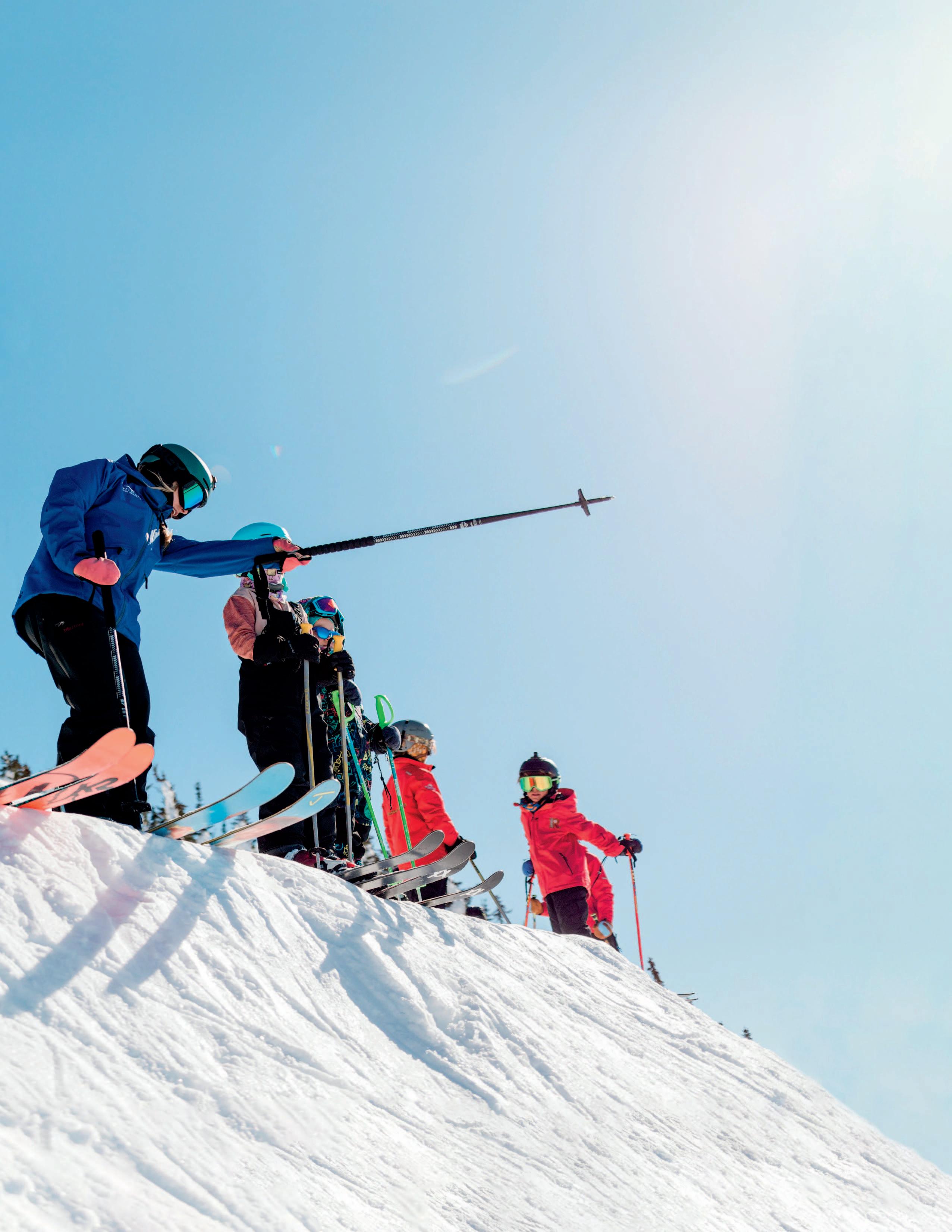
WEEKENDPROGRAMS SATURDAYORSUNDAY 10WEEKS,FROMJAN6/7TOMARCH9/10,2024 BOOKBYOCT31STANDSAVE15% TOTSLESSONS–3YEARSOLD REVYRIPPERSPLUS JUNIORFREESTYLESNOWBOARD ADULTPERFORMANCECAMPS NEWTHISYEAR •KidsCamps•AdultPrograms•GroupLessons•PrivateLessons Visitourwebsiteatrevelstokemtn.com/lessons FORMOREINFOON