BrisBane Holi 2023 drew large crowds, thousands of people from all parts of the city with its day-long colourful festivities, cultural events, and electrifying atmosphere of solidarity.

The 7th edition of our Brisbane Holi Festival, celebrated on 25th February 2023, was a huge success. This year’s turnout was the highest ever we’ve seen since the inception of this event in

the year 2017.
We are thrilled with the kind of love, support, and enthusiasm from the Indians and the broader communities. We want to thank everyone who attended the event. And we’d also like to extend our heartfelt gratitude towards our hardworking team, our sponsors, pour partners, and several media outlets across all platforms, without whom achieving success of this

scale would not have been possible for us.

Featured events and activities



This edition of Brisbane Holi featured exciting cultural activities, including Live Music, Bollywood and International Dance Battles, Indian and Multicultural Food booths, and other fun activities designed for kids and families. cOntd. On PG 10

THE BRISBANE INDIAN TIMES, March, 2023 — 1 www.indiantimes.com.au Call: (07) 3192 5188
19, Number 7 Saturday, March 11th, 2023 Telephone: (07) 3192 5188 Mobile: 0430 193 715 E-mail: sales@indiantimes.com.au
Volume
Religions
As God is One, we respect all
A Division of Qld Multicultural Times Print Post Approved PP : 424022 1724 | ISSN 2652-6182
2023
CoMMUniTY
JoY AIR PAK Freight Ser vices Wor ldwide DEPARTMENT OF TRANSPORT AUSTRALIA APPROVED REGULATED AGENT Excess Bagga ge Ser vices EMAIL air pakops@power up.com.au 07 3268 6188 Commer cial Fr eight Impor t & Expor t Customs Facilitation Fiji Fr eight Specialist (Sea & Air) BRISBANE 33 Cur tin Ave. West Eagle Far m QLD 4009 Free Home Loan Consultation Australian Credit Licence 385325 Choose from 25 top home loan lenders. Our Service: • home loans and investment loans • car loans and personal loans • business loans and insurance Call Gagan deep Tandon 0425 158 280 gtandon@smartline.com.au smartline.com.au/gtandon FLY INDIA FROM NO RT-PCR TEST C M Y CM MY CY CMY K ai167710977319_Holi_251mmx46mm.pdf 7 23/02/2023 10:49:38 AM
BrisBane Holi
BrinGs
ToGeTHer For
advertisinG: 0430 193 715 sales@indiantimes.com.au




JOurnaList/ cOrresPOndents
• Thakur Ranjit Singh (NZ)
• Thilliar Varnakulasingham (NZ)
• Shalendra Prasad (Fiji)
• Rama Gaind (Canberra)
• Ml. Nawaaz Ashrafi
• Imam Muhammad Aslam
• Pastor Joseph Dass
• Haji Abdul Rahman Deen
• Jitendra Deo
• Nimisha Modi
• Ranjita Pillai (Immigration Matters)
• Awadhesh Sharma
• Peter Lane Rai
• Shailendra Singh
• Ravi Vastrad
• Amod Datar
• Ashok Attri
From the Publisher
Welcome to March, when we celebrate the colourful festival of Holi; our lead story is Brisbane Holi which was a big success congratulations to the organisers; now let us all embrace the true essence of Holi, which is to leave aside any differences and extend the hand of friendship, to start a new chapter and to move forward. The last month has been full of activities, and it has been good to witness everyone getting together in big numbers once again. Maha Shivratri was observed with full Fervour in Brisbane and many locations. Congratulations to Joe Kelly MP for hosting a multicultural get-together at the Ukrainian Club; such a thoughtful gesture was made even more special with the gracious presence of Minister Leanne Linnard MP. Congratulations are also to Kannada Sangha for successfully launching their language school and badminton tournament, a progressive organisation driven by women’s power.
Anu Sharma and Australian Indian Theatre staged another episode of

Salam E Ishaq, a colourful and witty musical presentation; the scripting was superb roles were well chosen to suit the actors’ personalities; I enjoyed the exhibition together with our team from Brisbane Indian Times and Australian Indian Radio. This was a busy night in Brisbane, as it was on this night that Gulam Ali Shaeb’s show was on, another resounding success and Valentine’s dinner function supported by Sangeet Premi Club. All events were well attended, but my take is that the attendance would have been better if these were spread over the three days of the weekend. Touring international artists have time limitation, but local productions can be more accommodative.
Attending Somlata’s live concert was another pleasing experience; a typical three-piece rock band set up featuring talented artists demonstrated that when you are true to your genre, your performance is from the heart, and it shows.
One event I want to talk about is
Matra Pitra Diwas, a day dedicated to showing respect to parents instead of Valentine’s Day; now, this has come about because of misconceptions amongst the youth, especially in India, about what Valentine’s Day means. We were blown away by the concept, which is now growing in popularity and rightfully so; please refer to the article by Ashok Attri ji. As we have the reaffirmation ceremony at citizenship ceremonies, this is similar to reaffirming the love and respect for parents and children.
Congratulations to Shivaani on her Angetram, a masterpiece presentation delivered with military precision. This family have contributed significantly to our traditional classical art form. Expressed via dance, please refer to the main article.
We were happy and proud to have supported Sunil Gover’s comedy show; in a challenging world and under stressful conditions, one needs a break and attending a comedy show, laughing to your heart’s content can be revitalising, though Sunil has been here before. Few people have previously witnessed his acts; the show is always humorous and entertaining and includes some fantastic local talents.
• Gagan deep Tandon
• Brian Sullivan (Photography)

• Rajesh Chand
Brisbane Indian Times is a monthly newspaper published in English. No material, including advertisements designed by Brisbane Indian Times, may be reproduced in part or who without the written consent of the manager. Opinions carried in Brisbane Indian Times are those of the writers and not necessarily endorsed by Brisbane Indian Times. Brisbane Indian Times will not be held liable for any advertising / editorial content - Advertisers supply / approve content therefore should any content be deemed inappropriate it is the advertisers / correspondents responsibility. While every effort has been made to capture the true likeness to colour printing is an art and therefore we cannot guarantee an exact matching of product to image. Refund / Credit is not given as a result of the previous mentioned.
All corresondence should be addressed to: Brisbane indian times, PO Box 197, taigum Qld 4018. Ph: (07) 3192 5188 Fax: 3865 5864 / prod@indiantimes.com.au
From the Editor:
If you would like us to publish your letters, feedback, comments on any of our stories or suggest ideas columns or features, please send your submissions to:

Brisbane indian times
Suite 5, 2281 Sandgate Road Boondall Qld 4034 or E-mail: prod@indiantimes.com.au
Now there have been concerns within our community, which need to be handled responsibly and in a united manner; unfortunately, that is one of our weak points where we seem to operate in isolation for selfglorification. The media does not need the invitation to attend any event; with freedom of the press and the right to information, we can observe and report on any occasion; yes, if it is not factual, it can be challenged; there are due processes. However, a weak and divided approach compromises the community’s best interest.
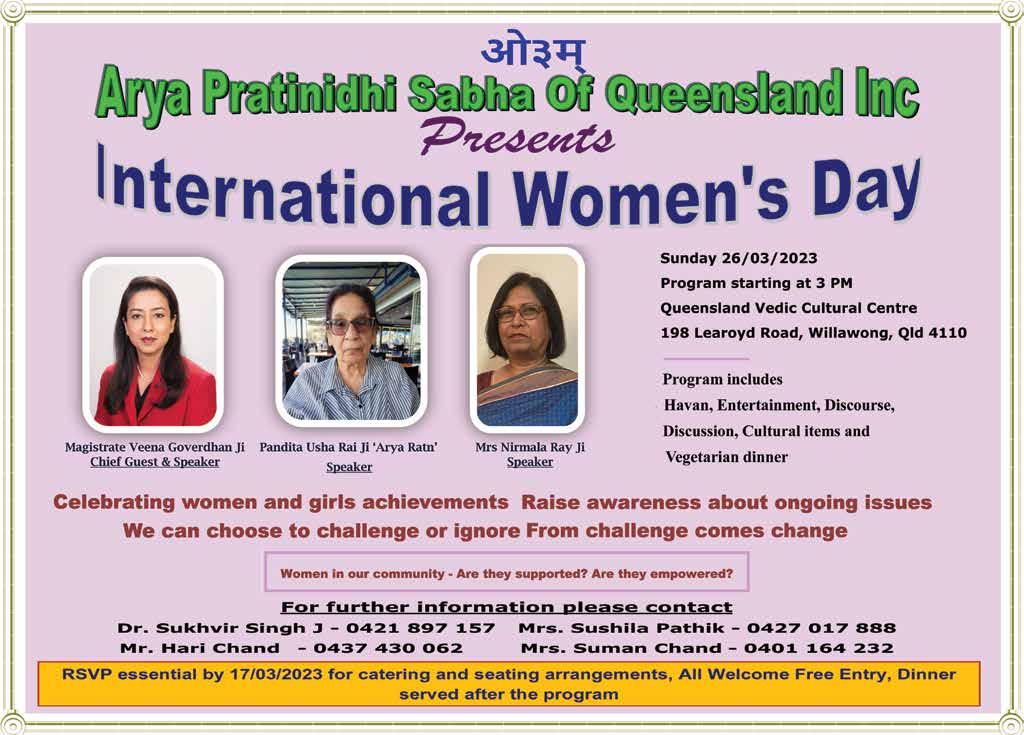
Let me finish with International Women’s Day; what a fantastic theme this year #embraceequity. The IWD 2023 #EmbraceEquity campaign theme aims to get the world talking about Why equal opportunities aren't enough. People start from different places, so true inclusion and belonging require equitable action. Forging gender equity isn't limited to women solely fighting the good fight. Allies are incredibly important for women's social, economic, cultural, and political advancement.
On that note, it is time to say goodbye, look after yourself, and #EmbraceEquity until next Month’s Happy Reading.
umesh chandra OaM Publisher
2 — THE BRISBANE INDIAN TIMES, March, 2023
Local news ..................................4-37
real estate ................................12-15
wwww ...................................... 26-27
india news ..................................... 38 • Fiji news ......................................... 40 • entertainment .............................. 42 • Health & Well Being .................... 44 • Business directory/classified ... 47 • sports news ................................... 48
•
•
•
•
BIT APRIL 2023 DEADLINES ADVERT BOOKING 28th March 2023 Call : 0430 193 715 or email: sales@indiantimes.com.au
Partner Visa’s
tHe Department of Home Affairs allows Australian Citizens, permanent residents or eligible New Zealand citizens to sponsor their married or de facto partners on the basis of their genuine and ongoing relationship.
Partner visas are generally processed in two stages in Australia. Sponsored applicants must hold a provisional visa, a Partner (Temporary) visa, in order to be granted a permanent visa, a Partner (Residence) visa. The grant of the provisional visa enables them to travel to and remain in Australia on a temporary basis. Following the grant of a temporary visa, a permanent visa may be granted where the decisionmaker is satisfied the relationship has been ongoing for at least 2 years and is genuine and continuing. In some circumstances, the Department of Immigration and Border Protection may grant a waiver for the 2 year waiting period, or grant permanency even where the relationship has broken down before the end of the 2 year period.
Generally a provisional partner visa takes up to 12 months to be processed. Depending on the circumstances, visa applicants may be able to lodge their partner visa in Australia (subclass 820/801), and be granted a bridging visa, which will allow them to stay in Australia whilst the visa is being processed. Alternatively, a partner visa may be lodged and granted offshore (subclass 309/100).
Applicants will be required to show that together with their partner, they have a genuine commitment to a shared life together. This may be evidenced through financial interdependence, social context, nature of the household, nature of commitment to each other, and history of relationship. The department may take into account the cultural
background of the applicant, including cultural and legal marriage ceremonies.
Migration Guru has assisted a vast number of clients, in various and complex circumstances, including arranged marriages and de facto applicants. Migration Guru has more than 80 years of collective experience in the industry and a team of Migration Agents / Solicitors. With our vast experience and skills, we are able to provide accurate migration or legal advice based on our clients’ personal circumstances. If you would like more information regarding your visa eligibility, applicable visa subclass, or next steps, Migration Guru can assist you in navigating this process.
Our team may be contacted by via email on info at migrationguru. om.au or by calling 07 3036 3800. readers are encouraged to follow us on Facebook for all the updates to Migration Law - https://www. facebook.com/migrationguru/
Migration Guru Pty Ltd, Level 18, 127 creek street, Brisbane, QLd Phone: 07 3036 3800
Migration Guru Pty Ltd, 31002, 27 Garden street, southport QLd Phone: 07 5606 6160
Migration Guru Pty Ltd, Level 1, 162 Macquarie street, Hobart tas Phone: 03 6281 8008
Migration Guru Pty Ltd, Level 5, 490 northbourne avenue, dickson, act. Phone: 02 6109 9110
Migration Guru Pty Ltd, suite 323, Level 3, 1 Queens road, Melbourne, vic. Phone 03 6240 1930
Disclaimer: - The above article constitutes only generic information on migration issues, and does not constitute specific migration advice to any entity or individual.
ACS Professional Year
• Accredited by Australian Computer Society
• Learn in Corporate Training Rooms
• Great Student Amenities
• High Quality Digital Learning Resources
• Professional High Quality Experienced Trainers
• Industry Standard Internship Placement
• Monthly Intake
• Easy payment plan
• CBD Location – Close to Central Station
• May be eligible for migration points towards permanent residence in Australia
Program structure
- 45 weeks duration
- Orientation
- Communication & Performance in Australian Workplace
- Entry & Advancement in Australian Workplace
- Professional Australian IT internship for 12 weeks
- ACS Professional Environment

- Graduation
Eligibility Criteria
To qualify for the ACS Professional Year Program, you must have:

- Completed an undergraduate or postgraduate award in Australia in ICT
- Hold or applied for a 485 visa
(either stream)
- IELTS Score of 6 overall and no band less than 5
Provider number 40811
THE BRISBANE INDIAN TIMES, March, 2023 — 3 www.indiantimes.com.au Call: (07) 3192 5188 Indus Institute
22, 127 Creek Street, Brisbane, Queensland 4000 Phone +61 7 3218 2740 Fax +61 7 3102 1249
info@indusinstitute.com.au Web www indusinstute.com.au
Level
Email
By Rama Gaind
iF you are looking to tick off some destinations on your bucket list, then here are some travel options – for domestic and overseas - with some top deals that are on offer.
First, there’s The Whitsundays – then Vietnam.
Sail through the 74-island wonders and take a tour to the world-famous Whitehaven Beach and Hill Inlet, kayak to secluded beaches or take it up a notch and zoom around on a jet ski or snorkel the Great Barrier Reef and rub fins with the local marine life. Why not? You have the choice to do so.
There are some amazing deals on tours and accommodation on sale until 31 March. Everything is covered from palmfringed island resorts, luxury
Top Destination Deals
dear reader, it is with much joy we bring to you the word of God. Today I want to talk to you about never losing your passion. We were never meant to
five-star hotels, quiet selfcontained holiday homes and apartments, exclusive resorts, action-packed holiday parks and unique backpacker accommodation.
Affectionately known as The Heart of the Great Barrier Reef, The Whitsundays offer a broad array of experiences and lodging. If that’s not your style there is even accommodation floating on the water with bareboating and overnight crewed sailing experiences.
Some of these deals include; breakfast rate special for three nights at Hamilton Island - Reef View Hotel. Stay longer and save at the InterContinental Hayman Island Resort. Alternatively,

go with the troppo deal where you get to stay for three nights and pay for two at the BIG4 Adventure Whitsunday Resort.
Opt for a Cruise Whitsundays Ultimate experience that has the Great Barrier Reef Adventure and Whitsunday Islands and Whitehaven Beach Half Day. If you go for Ocean Rafting Fly & Raft package, choose either the Northern Exposure or Southern Lights
day (if not sold out) Qantas
Tours package. This includes a visit Ho Chi Minh City, Hoi An, Halong Bay and Hanoi from 30 May-7 November 2023.
Delicious food, friendly locals, dramatic landscapes and rich culture: Vietnam has it all. Discover this incredible country for yourself in style with this 11-day small group five-star package.

tour to pair with a scenic flight.
The Red Cat Adventures – Purrrfect 3 Day Trip –includes Falls to Paradise, Tongarra and Thundercat tours. SeaLink Whitsundays has the book-now-and-save
option for the Big Island Day Tour.
vietnaM HiGHLiGHts
If an overseas destination is your preference, then experience the best of Vietnam in style with an 11-

Be PassionaTe
go through life without enthusiasm, just dragging ourselves. David says (Psalms 39v3), “I felt a fire burning inside, and the more I thought, the more it burned ….”
Passion is like fire; unless you feed it and stoke it, it will die.
The scriptures say about King Amaziah, “He did what was right in the sight of the Lord, but not wholeheartedly.” And like this king, some people have lost their enthusiasm. One time they were excited about their work, excited about their marriage, and excited about their future, but then they had some
disappointments. They didn’t get the promotion; their health was down. Now they are just going through the motions. Waking up, going to work, coming home, going to work. They have lost their excitement and their passion for life.
To lose passion is like that boat whose sail is down. No matter how much the wind blows, the boat is not going anywhere.
In the book of Nehemiah (Nehemiah 6), we read about Nehemiah, who was passionate about rebuilding Jerusalem’s walls. So, when his enemies tried to sidetrack and discourage him, he replied by sending this
message to them, “I am engaged in a great work, so I can’t come. Why should I stop working to come and meet with you?”
Here are 3 tHinGs
We can Learn FrOM
neHeMiaH
1- When you retire from full-time work, don’t retire from life. Wake up in the morning excited about the day. Keep your mind active, growing, learning, and helping others. Stay productive. Studies tell us that enthusiastic people get better breaks and are promoted more often. And that’s not a coincidence. People who are full of
Land in the economic and cultural capital of Ho Chi Minh City and uncover its distinguished history, vibrant energy and blend of ancient temples and modern skyscrapers. Head outside the metropolis to learn about
the country's wartime history at the Cu Chi Tunnels on a half-day tour before heading to the ancient trading port of Hoi An, which you'll have time to explore at leisure.
It's then onto the Frenchcolonial capital city Hanoi, an intriguing blend of east and west. Marvel at its beautiful Old Quarter on a walking tour before driving through emerald rice paddy fields to the coast for an overnight cruise of breathtaking UNESCO World Heritage-listed Halong Bay and then return to Hanoi to relax or take up an optional tour.
There’s so much to see and do.
passion have favour with God. Nehemiah was excited about his work. He had his sails up. His passion was leading him towards his destiny and victory.
2- Your passion is the starting point of all achievement. David says that with God’s power, “I can run, and I can leap.” But it won’t happen if we fold our arms and sit back. Sometimes we wait for the next big thing to come along then we will get excited. But you have to know that if you don’t get happy where you are, then you won’t get to where you want to be. You have to sow a seed. You must keep your
sails up.
3- Passion gives you an advantage over others. One person with passion is more significant than ninetynine people who only have an interest. Passion will keep you running your race instead of trying to compare and be in competition with other people. Passion will keep you happy about what you have instead of what you are missing. When you are passionate about life, your work, and your family, you will feel a new strength inside you, a new force taking you forward. This is the favour of God in your life. God bless you.
4 — THE BRISBANE INDIAN TIMES, March, 2023
Pastor Suresh Dass Joseph josephdass@optusnet.com.au
BIG4 Adventure Whitsunday Resort.
Halong Bay, Vietnam.
Hanoi, Vietnam.
2023 LORD MAYOR’S Multicultural Business Scholarship Program

Apply for a business scholarship to expand your business skills and capabilities.
To apply, you must be an Australian citizen or have permanent residency status.
For more information on course eligibility criteria and application forms: brisbane.qld.gov.au/multicultural 3403 8888 multiculturalunit@brisbane.qld.gov.au CIT


Applications are now open and close 31 March 2023.
OF BRISBANE
THE BRISBANE INDIAN TIMES, March, 2023 — 5 www.indiantimes.com.au Call: (07) 3192 5188
Y
CA22-1509126-07-6236 © 2023 Brisbane City Council
Come alive: Changing the Way You experience life

Q: sadhguru, a while ago, i used to feel an overwhelming connection with Mother earth, and i was extremely grateful for that. then, maybe because of lots of work and gaps in my sadhana, somewhere this intensity died down. could you please explain what happened?
Sadhguru: No matter what comes into your life, even if it is the highest level of Grace, if you take it for granted, it will not just weaken but vanish after some time, in your experience. This is happening to people all the time, right from their birth. Look at yourself or anyone else around you – are they experiencing the bounty of what life is offering all the time? How many people are experiencing all that is beautiful around them? The air that they breathe, the water that they drink, the food that they eat –how many of them are truly enjoying it? They think there is some greater purpose other than life. They have a mission of their own.
Those who think they


have a mission other than life are the kind of people who take up “God’s work” and fight with the rest of the world, because other things have become more important than life to
them. They can do terrible things because of what they believe in or what they think is more important than life itself. Terrorist attacks are dastardly expressions of that, but in
some way, every human being is doing it. They may not be doing it to other lives, but they are doing terrible things to their own life. They do not really experience life in any way.
For a whole lot of people, life is not just burdensome – it could be miserable or torturous. This is not because someone is physically torturing them but because they think
they have something else to do on this planet, other than living. I am not talking about being alive just in a medical sense but being truly alive and in tune with everything. Being alive to everything in existence is your only business. If you stay really alive to everything, you will know the bounty of the planet, you will know the beauty of the sky, you will know what is beyond – everything will be within your perception.
If you think you have something more important to do than being alive, death will come. You may not be dead in a medical sense but dead to everything around you. If you have moved from life to death, it is time to get back to life. Death will come anyway – don’t hurry it up.
Ranked amongst the fifty most influential people in India, Sadhguru is a yogi, mystic, visionary and bestselling author. Sadhguru has been conferred the "Padma Vibhushan", India’s highest annual civilian award, by the Government of India in 2017, for exceptional and distinguished service.

6 — THE BRISBANE INDIAN TIMES, March, 2023 BRISBANE OFFICE Level 18, 127 Creek Street, Brisbane, QLD 4000 AUS | Phone: 07 3036 3828 | Fax: 07 3102 0750 CANBERRA OFFICE Suite 12, Level 5, 490 Northbourne Ave, Dickson, ACT 2602 AUS | Phone: 02 6109 9118 | 0407 110 417 | Fax: 07 3102 0750 GOLD COAST OFFICE Suite 31002, Level 10, Southport Central Tower 3, 9 Lawson Street, Southport, QLD 4215 AUS | Phone: 07 5657 7918 | Fax: 07 3102 0750 Email: info@gurulegal.com.au | Web: www.gurulegal.com.au PROMO CODE: DISCOUNT OF $50 FOR PROPERTY PURCHASE DISCOUNT OF $150 FOR PROPERTY PURCHASE DISCOUNT OF $50 FOR PROPERTY SALE CONTACT US TODAY

THE BRISBANE INDIAN TIMES, March, 2023 — 7 www.indiantimes.com.au Call: (07) 3192 5188
Hindu Society of Qld invites all devotees to celebrate…
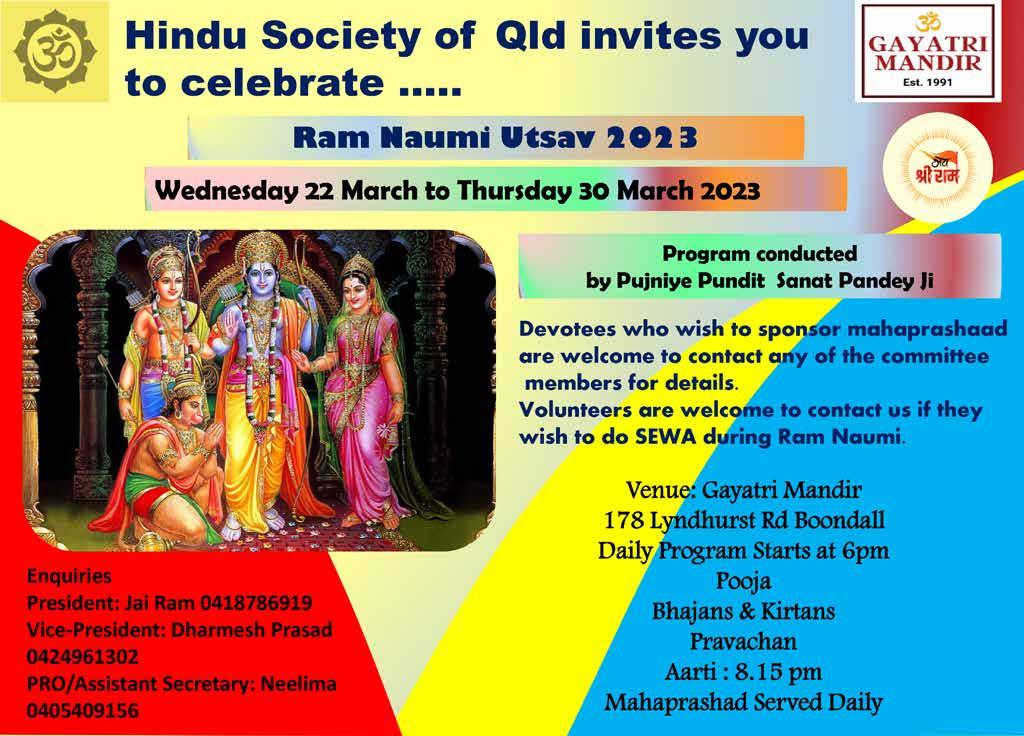

Venue
Gayatri Mandir

178 Lyndhurst Road
Boondall
Date: T hur sday 6 April
2023
Mor ning Prog ram
Starts: 10.00 am
Roth Katha

Evening Prog ram
Starts: 6pm
Pooja
Jhanda Bandhan
Bhajans/ Kirtans
Pravachan
Aarti at 8.15 pm
Maha Prashaad will be served
Enquiies
President: Jai Ram 0418786919

Vice-President: Dharmesh Prasad 0424961302
PRO/Assistant Secretary: Neelima 0405409156
Enquiries President: Jai Ram 0418786919
Vice-President: Dharmesh
Prasad 0424961302
PRO/Assistant Secretary: Neelima 0405409156
8 — THE BRISBANE INDIAN TIMES, March, 2023
Program conducted by Pujniye Pundit Sanat Pandey Ji



THE BRISBANE INDIAN TIMES, March, 2023 — 9 www.indiantimes.com.au Call: (07) 3192 5188 CHAT TO US ABOUT YOUR HOME LOAN Conditions, credit criteria, fees and charges apply. Credit provided by Westpac Banking Corporation ABN 33 007 457 141 AFSL and Australian credit licence 233714. WBC 0068-1022 0457 517 732 npuri@westpac.com.au Westpac, 1374 Gympie Road Aspley QLD 4034 Nitin, your local Mobile Home Finance manager can help: 0401 750 958 parimal.kumar@westpac.com.au Westpac Queen Street Mall, 74-76 Queen Street, Brisbane QLD 4000 Parimal, your local Mobile Home Finance manager can help: COM 0068 WBC LAM HFM Press Ad copy.indd 1 27/10/2022 3:52 pm
Maha shivratri at shree Vishnu Maya Mandir
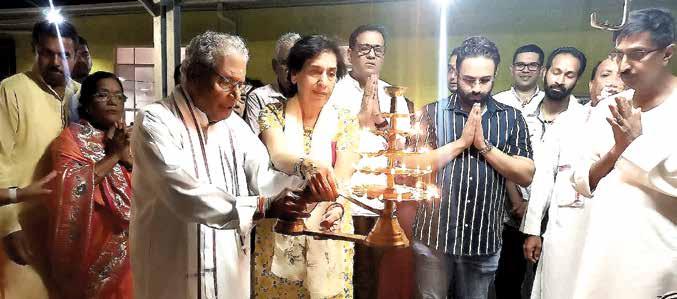
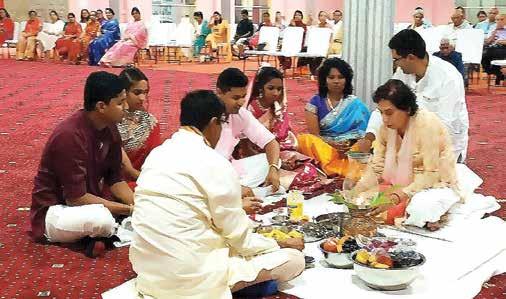

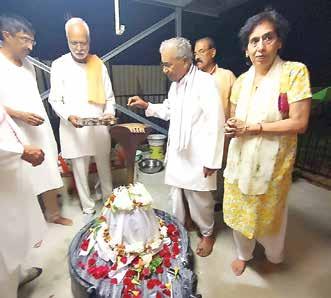
NORTH McLEAN Shree Vishnu Maya had a Grand celebration during Maha Shivratri by Dharma Guru Acharya PT Ram Harsh Tripathi Ji and Guru Maa. Satya Narayana Katha by Dharma Guru Acharya PT Ram Harsh Tripathi Ji at Shree Vishnu Maya Mandir on Sunday, 26/02/2023. The temple also had Wedding Reception for two Brothers, Sonal Singh & Shanal Singh. It was a Grand celebration with Roth, Katha and Reception. Guru Maa Asha Jee Blessed the newly wedded with Mata Ki Chunari and Prasaad. Program Concluded with Bhog Aarti & Maha Prasad.
BrisBane Holi 2023 BroUGHT CoMMUniTies...
cOntd. FrOM PG 1
We also had a great line-up of multicultural performers who entertained the crowd throughout the day.
The audience was especially enthralled by the Dance Battles, managed and MCed by Andrea Lam, the owner of the Dance Masala Bollywood Dance School. Another crowd favourite was the scintillating performance by the Tapori Squad.
WOrds OF encOuraGeMent By tHis
year’s ParticiPants
Several participants and dignitaries shared their amazing experiences during the event via social media platforms. Here are some of those sharing’s -
Lord Mayor Adrian Schrinner - “The Holi Festival is quite literally Brisbane’s most colourful multicultural event. Each year, thousands of people come together to celebrate and share good wishes for the future through colour, dance and music.
Congratulations to the Indian Cultural & Sports Club for
coordinating this exceptional event.”
Jess Pugh MP for Mount Ommaney - “Happy holi! The Holi festival celebrates the triumph of good over evil, and the annual celebration hosted in Rocks Riverside Park was definitely the biggest yet! A huge, congratulations to the Brisbane Indian Cultural and Sports Club for pulling off an absolutely epic event again! with Indian Cultural & Sports Club Inc. - Brisbane, Milton Dick MP, Charis Mullen MP”
Queensland Cricket Community and Pathway -
“Everything is better with a bit of colour Queensland Cricket got amongst Brisbane's biggest Holi Festival of Colour event over the weekend down at Seventeen Mile Rocks and what a day it was!”

Gaye Edwards - “For me, it was all about the happy, happy people and all the fabulous colour at yesterday's Holi Festival, Rocks Riverside, Brisbane. You made us feel so welcome and always leave with the biggest smile on your face! Thank You to those who posed and those who were blissfully unaware.”
Milton Dick MP - “With 2 of the best @jesspughmp& @charismullenmp at @ brisbaneholi Festival of Colours 2023. Thousands of beautiful locals celebrating colour and light. ”
Charis Mullen MP“Happy Holi! Always so much fun, the Brisbane Holi - Festival of Colours 2023 did not disappoint. With record crowds this year at Rocks Riverside Parklands, the event is colourful, joyful and a wonderful celebration of Hindu traditions. The #QldGov is a proud sponsor of the Festival - congratulations to
Indian Cultural & Sports Club Inc. - Brisbane, all the amazing volunteers and performers for an incredible day.”
Charles Strunk - “I had a fantastic time celebrating “Holi” or Festival of Colours with friends, community leaders and residents at the annual Brisbane Holi - Festival of Colours at Rocks Riverside on the weekend. Special thank you to the Indian Cultural & Sports Club Inc. - Brisbane President Jagdeep Singh Bhinder, team and volunteers on hosting this important celebration and sharing it with the wider community.”
Lord Mayor Adrian Schinner also announced on the day that Brisbane Holi is the city's most colourful and inclusive event. This makes us feel so proud of what we’ve achieved through this event since, at the heart of it, Brisbane Holi is all about cultivating a spirit of joyousness and inclusivity.
tHe HistOricaL siGniFicance OF HOLi
For those who aren’t familiar, here is a quick exposition of what Holi is and why it’s celebrated in India with such fervour and enthusiasm -
Holi is among the oldest, most widely celebrated festivals in the Indian subcontinent. It signifies the arrival of the spring season, the end of winter and is celebrated as a symbol of the triumph of good over evil.
Its roots are embedded in Indian mythology. Some parts of the country associate Holi with the legend of Hiranyakashipu and his sister Holika while some celebrate this festival to commemorate the eternal bond of love
between Indian deities Radha and Krishna.
Irrespective of which belief system one goes by, the enthusiasm with which Holi is celebrated, not just in India but in all parts of the world, is extraordinary and exemplary. On this day, people colour each other’s faces in the most playful ways as a symbol of equality and unanimity.
can’t Wait FOr next year’s event Dance, music, good food, arts, and the spirit of playfulness are always the central themes around which the festival of Holi is celebrated. And that’s precisely what Brisbane Holi has always been about. We’ve been celebrating this festival for the last 7 years to unite different communities and foster a sense of brotherhood and solidarity.
We are already looking forward to next year’s festival and hope to see an even bigger turnout.
Thank you again for your love and support.
Paviter Kumar ceO ecutas Media
10 — THE BRISBANE INDIAN TIMES, March, 2023

THE BRISBANE INDIAN TIMES, March, 2023 — 11 www.indiantimes.com.au Call: (07) 3192 5188
Why does property ownership matter?

dWeLLinG ownership is a key factor in both wealth accumulation and secure tenure across Australia and New Zealand.
As of September 2022, RBA figures point to 57% of household wealth being held in housing, even as national dwelling values had fallen -4.8% from a recent peak in April 2022 to September.
At the end of 2021, Stats NZ reported owner-occupied dwellings and other real estate not owned through businesses accounting for 43% of household wealth, up from 38% at the end of 2018. Stats NZ also noted the increase in household net worth between 2018 and 2021 was largely driven by real estate ownership.
Growth in property values has largely outstripped wages growth over time. In Australia, national growth in dwelling values over the past 20 years was around 140%, or the equivalent nominal gain of $406,000 at the median dwelling value level. In contrast, the national wage price index has increased 81.5% in the same period. An extended period of low interest rates between 2008 and 2022 have seen substantial gains in asset values over wages and savings. As a result, housing has been utilised1 as a source of equity for funding costs later in life, which the Australian government has noted can play an increasingly important role in funding aged care2. However, this also means that housing can entrench inequality, where rapidly rising asset values have led to a decline in home ownership overtime, particularly among the young and the poor.
Security of tenure and satisfaction with housing has also been shown to increase
with home ownership3. Although renting offers greater mobility and generally lower housing costs than owning with a mortgage, there is evidence that renting becomes less satisfying for tenants the longer they are in the private rental market4. Additionally, older Australians who retire as renters generally face greater levels of housing stress, and are at greater risk of poverty when taking housing costs into account5.
For these reasons, it is important to track rates of home ownership across different intersections of society. The scope of this particular report aims to understand the difference across male and female home ownership. There are several factors that may have historically hindered home ownership among females relative to
16%. The gender wage gap is based on average full-time ordinary earnings of men and women in Australia. Labour market conditions have tightened through the pandemic, and full time ordinary earnings rose slightly faster for women than men between May 2020 and November 2022 (up 6.1%), compared to male earnings (5.2%). This has contributed to a narrower gender wage gap.
In New Zealand, the gender wage gap is smaller, coming in at 9.1% in 2021 (down from 9.5% in 2020). The measurement of the gender pay gap in New Zealand is slightly different to Australia, with Stats NZ comparing median hourly earnings as opposed to average weekly earnings.
Figure 1 presents a savings accumulation scenario for a 20% home deposit for men
women accounted for 68.1% of Australians in part time employment, and 38.7% of those in full-time employment. This further contributes to the overall pay disparity between men and women, which may have implications for access to home ownership.
savings rate of 1.0% p.a. on saving deposits. Incomes are based on the full-time, ordinary hours, average weekly earnings for men and women, and adjusted by historic average growth in the wage price index. Assumes a 20% deposit on a static median dwelling value
While full-time earnings are used for the official measure of the gender pay gap in Australia, women are overrepresented in part-time employment, which tends to attract lower pay. Based on labour force figures as of December 2022, women accounted
for 68.1% of Australians in part time employment, and 38.7% of those in full-time employment. This further contributes to the overall pay disparity between men and women, which may have implications for access to home ownership.
Over the past few years, various institutions have introduced initiatives to increase the likelihood of women attaining home ownership. As an example, the Family Home Guarantee allows single parent households (where women are overly represented) to access home loans with a deposit as low as 2%. The
government guarantees the loan up to the rest of a 20% deposit, to help the purchaser avoid LMI. The recent NSW government’s Shared Equity Home Buyer Helper is also targeted at single parent households, and several key worker segments where women are over-represented, such as nursing, teaching and midwifery. As interest rates move through the steepest rate-hiking cycle on record, shared equity schemes will be particularly important for relieving the debt burden on lower-income households, and helping to make home ownership more realistic.
investments still driving gender gap in home ownership
Women in Australia continue to trail men in the home ownership stakes amid crippling interest rate rises and falling home values.
CoreLogic’s 2023 Women & Property report released ahead of International Women’s Day, found men were associated with ownership of 3.1% more of the housing stock analysed than women. Female-only ownership of dwellings was 26.8%, while maleinferred ownership was 29.9%. Property owned jointly between males and females was 43.4%.
CoreLogic Head of Australian Research and report author Eliza Owen said while it’s difficult to pinpoint exactly why the disparity in dwelling ownership prevails, there were some interesting differences between genders across property and ownership types and regions.
Ms Owen said investment property remains at the centre of gender disparity, with Aussie men owning seven percentage points more of the investment properties analysed than women.
“Most of the discrepancy
Over the past few years, various institutions have introduced initiatives to increase the likelihood of women attaining home ownership. As an example, the Family Home Guarantee allows single parent households (where women are overly represented) to access home loans with a deposit as low as 2%. The government guarantees the loan up to the rest of a 20% deposit, to help the purchaser avoid LMI. The recent NSW government’s Shared Equity Home Buyer Helper is also targeted at single parent households, and several key worker segments where women are over-represented, such as nursing, teaching and midwifery. As interest rates move through the steepest rate-hiking cycle on record, shared equity schemes will be particularly important for relieving the debt burden on lower-income households, and helping to make home ownership more realistic.
(36.1%), and Ryde (34.7%), and Melbourne’s Inner region (34.0%).
Ms Owen said income could be an important factor, with some of the wealthiest, inner-city regions of Sydney seeing a higher portion of property owned by women.
4 | Women and Property 2023 | #womenandproperty2023
more of the investment stock analysed than men. These were generally the areas that women had high ownership of dwellings overall, including the North Sydney and Hornsby SA4 region, where women had ownership of almost 39% of investment properties analysed.”
What W omen o W n, and
W here they o W n it
Men were found to own 4.3% more house stock in Australia, while women trumped men in the medium to high density sector by 1.1%.
“Stand-alone homes have achieved an annual growth rate of 5.1% per year over 10 years to January 2023, compared to 3.4% in the unit market. However, women also tended to own more properties in markets that have a relatively high price point, so those women who are able to access the property market may have done well in terms of long-term capital growth.”
The top five regions for femaleonly inferred ownership were Sydney’s Eastern Suburbs (37.3%), North Sydney and Hornsby region (36.6%), City and Inner South
“An important factor playing into whether women own a home or not, is income. Research suggests that women are more inclined to invest in real estate than their male counterparts where they have the resources to do so,” she said.
i ncome and the property
o W nership gap
Ms Owen said there are several factors that may have historically hindered home ownership among females relative to males.
“In past reports, we have noted the role of the gender wage gap potentially contributing to women falling behind on asset accumulation, particularly where it may take women longer on average, to accumulate a deposit for a home,” said Ms Owen.
The gender wage gap in
Australia as of November 2022 was 13.3%, down from 14.1% in May of 2022, and the decade average of around 16%.
Ms Owen said this narrowing of the gender pay gap was driven by tightening labour market conditions through the pandemic, where full-time ordinary earnings rose slightly faster for women than men.
“Analysis of full-time earnings of males and females suggest it would take men around 8.3 years to save up a 20% deposit for the median value in Australia for men, compared to 9.4 years for women – and that’s based on full-time wages.
“While full-time earnings are used for the official measure of the gender pay gap in Australia, women are overrepresented in part-time employment, which tends to attract lower pay. Based on labour force figures as of December 2022, women accounted for 68.1% of Australians in part time employment, and 38.7% of those in full-time employment. This further contributes to the
overall pay disparity between men and women, which may have implications for access to home ownership,” said Ms Owen. a ddressing the gender gap
Ms Owen said empowering women through greater financial literacy and education about property investment may help to erode this disparity in ownership over time.

At the same time, policies like shared equity schemes could help more women attain home ownership, by addressing the relatively low wages of women.
“Shared equity schemes are about targeting home ownership among relatively low-income households, and providing assistance to those who might not otherwise have owned a home. That’s important not just for women, but any group who is over-represented in low income households.”
Download the 2023 CoreLogic Women & Property Report at corelogic.com.au.

12 — THE BRISBANE INDIAN TIMES, March, 2023
In New Zealand, the gender wage gap is smaller, coming in at 9.1% in 2021 (down from 9.5% in 2020). The measurement of the gender pay gap in New Zealand is slightly different to Australia, with Stats NZ comparing median hourly earnings as opposed to average weekly earnings. Figure 1 presents a savings accumulation scenario for a 20% home deposit for men and women in Australia. Based on the latest average weekly earnings data and the median Australian dwelling value at January 2023, CoreLogic estimates it would require around 100 months of savings for men to accumulate a 20% deposit, compared to 113 months for women. Figure 1.0. Months taken to save a 20% deposit based on latest average weekly earnings data for men and women While full-time earnings are used for the official measure of the gender pay gap in Australia, women are overrepresented in part-time employment, which tends to attract lower pay. Based on labour force figures as of December 2022,
Savings based on male average weekly earnings Savings based on female average weekly earnings 20% deposit for median dwelling value in Australia Source: CoreLogic, ABS. Assumes a flat savings rate of 15% of gross annual income and a standard savings rate of 1.0% p.a. on saving deposits. Incomes are based on the full-time, ordinary hours, average weekly earnings for men and women, and adjusted by historic average growth in the wage price index. Assumes a 20% deposit on a static median dwelling value of $702,725. $$20,000 $40,000 $60,000 $80,000 $100,000 $120,000 $140,000 $160,000 $180,000 $200,000 10 20 25 30 35 40 50 60 65 70 80 85 90 95 100 105 110 Savings based on male average weekly earnings Savings based on female average weekly earnings 20% deposit for median dwelling value in Australia Source: CoreLogic, ABS. Assumes a flat savings rate of 15% of gross annual income and a standard savings rate of 1.0% p.a on saving deposits. Incomes are based on the full time, ordinary hours, average weekly earnings for men and women, and adjusted by histori average growth in the wage price index. Assumes a 20% deposit on a static median dwelling value of $702,725




THE BRISBANE INDIAN TIMES, March, 2023 — 13 www.indiantimes.com.au Call: (07) 3192 5188 Call now to book your personal tour of Brookwater Dress Circle. BROOKWATERRESIDENTIAL.COM.AU CALL US: 07 3814 5177 3 Birchwood Crescent, Brookwater Open daily 9am – 5pm VISIT THE SALES CENTRE THE ONLY INTERGRATED GOLF COMMUNITY CLOSE TO BRISBANE Our respected architect, Marco Calvino has been carefully selected to reflect Brookwater’s design-led values, and to translate your unique tastes and aspirations into your forever home. ELEVATED REGISTERED HOMESITES FROM $599,000 ABSOLUTE GOLF COURSE FRONTAGE HOMESITES ALONG THE 4TH FAIRWAY FROM $895,000 Your design journey lead by our architect is a complimentary service to our clients.












14 — THE BRISBANE INDIAN TIMES, March, 2023


















THE BRISBANE INDIAN TIMES, March, 2023 — 15 www.indiantimes.com.au Call: (07) 3192 5188















16 — THE BRISBANE INDIAN TIMES, March, 2023


THE BRISBANE INDIAN TIMES, March, 2023 — 17 www.indiantimes.com.au Call: (07) 3192 5188
notice of annual General Meeting 2023
Notice is hereby given that the Annual General Meeting of the Indian Senior Citizen Association will be held on Sunday 19 March 2023 at 10:00am at Sunnybank Hills Library, Sunnybank Hills Shopping Centre, and Sunnybank Hills. All executive positions will be declared vacant and nominations are invited for the following

Positions:
• One President
• Two Vice Presidents
• One Secretary
• One Treasurer
• One Publicity Officer
• One Assistant Secretary
• One Assistant Treasurer
• Three Committee members
Nomination forms are available from the Secretary, Rohani Prasad
Ph: 0429 007 240 or
Email: Prasadrohani@gmail,com
All nominations should reach the Secretary 14 days before the Annual General Meeting. You will need to be a paid financial member to stand for an official position.
Secretary
Rohani Prasad
THE BRISBANE INDIAN TIMES, March, 2023 — 19 www.indiantimes.com.au Call: (07) 3192 5188
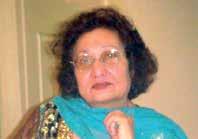
Kavita ji
sal UTaT ions To P ro F essor B ri J lal WH o G aV e Voi C e To Voi C eless G ir M i T i Yas
for Girmit Day Public Holiday and Professor’s ashes and family be allowed back into Fiji.
The new Prime Minister, Sitiveni Rabuka, being an honourable and compassionate leader, lived up to both the promises.
as the plane carrying the ashes of Professor Brij Lal, accompanied by his widow, Dr Padma Lal landed on an overcast sky at Nadi Airport in February 2023, it heralded banishment, exorcism and dispossession of another curse of Fiji First dictators from Fiji. That curse was forced exile of professor while alive, and stopping his ashes when he passed away.


It was Bainimarama and Khaiyum who had exiled in an extremely undignified way, the most famous Girmitiya son of Fiji who both of them, even collectively could not match in stature.
It was indeed an honour for the new Government of Fiji to have allowed the ashes of the greatest Girmitiya son to return home to be amongst his Tabia.
FIJI GIRMIT FOUNDATION
NZ was blessed with the presence of Professor and his good wife Dr Padma Lal in 2014, when they were our Chief Guest in Auckland. Many of us have fond memories and memorable photos. And he said many profound things and enlightened us. He was the one who blessed us and helped put up ‘GIRMITIYA” as a legitimate historical vocabulary.
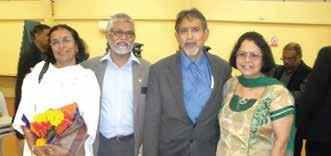
It was because of his immense contribution to Girmitiyas that when Rabuka visited Auckland before the Fiji election in 2022, the Foundation held a meeting with him, and among others requested the repeat request
Apart from being the Chief Gust in 2014, during the 140TH GIRMIT Anniversary in Auckland in 2019, Professor Lal was awarded FIJI GIRMIT LEGACY AWARD in Literature. We had intended to hand it over to him as the Chief Guest again on Fiji Girmit Foundation’s 10th anniversary in May, 2022, but this did not eventuate. Time goes, you say. Ah no, alas, time stays, we go. Professor was snatched from us untimely in the biggest loss our Girmit Diaspora has suffered.
Professor Lal passed away on Christmas Day in 2021 in Brisbane. He is survived by his wife, Padma, two children – Niraj and Yogi – and five grandchildren.

Unlike many Girmitiya descendants who are rich and have done well in the community, there was one thing the late Professor Brij Lal took great pride in - it was his humble beginnings in the little sugarcane settlement of Tabia outside Labasa Town on Vanua Levu Island of Fiji. Thankfully, that is where he found his salvation now.
Professor Lal was born on August 21, 1952, in Tabia, Labasa, the grandson of a Girmitiya or indentured labourer who arrived in Fiji in 1908. who was among the 60,000 labourers to make the crossing from India to Fiji under the most wretched conditions between 1879 and 1916.

Aja, as he called his paternal grandfather, had him at his feet, he was told of the stories of the backbreaking work in the plantations, starting at the first light of day and the extreme violence – often at the hands of cruel overseers
desperate to command the favour of their European masters.
In his highly recommended ‘Mr. Tulsi’s Store: A Fijian Journey’, in the first chapter titled ‘Tabia’ Brij proudly introduces his Girmit background and the community he was brought up in.
As stated, Aucklanders were blessed by the noble feet and presence of the Professor, thanks to FIJI GIRMIT FOUNDATION NZ.
While many have written about him, few wrote what he said, and I was fortunate to transcribe what he said during his visit to Auckland in 2014. Some philosophical and reflective things he said need to be repeated here:
“One of my life’s ambitions has been to remember what others have forgotten or chosen to forget – to give our people a voice and a modicum of humanity, to give them a place at the table of history. We need to remind the new generation about our history: history doesn't only belong to the victors but to the vanquished as well.
One thing I have done in life before I go is to give
amazing Grace…
Jesus said “arise and shine…”
Key Scripture: 1 Corithians 15:8-10: the Glory of Zion
A paraphrase from St. Paul in the Bible, which states, "Last of all, as to one born abnormally, he appeared to me. For I am the least of the apostles, not fit to be called an apostle, because i persecuted the church of God. But by the grace of God i am what i am…”.
dO you know power of the Amazing Grace of God?
As Word of teaches us, you shall know the truth and truth shall set you free.
It is the relationship that you build with the Truth has the power and capacity to set
us free from sin and eternal death.
To understand the truth, we must understand Grace of God.
Grace as defined in Christian theology, is the spontaneous, unmerited gift of the divine favour in the
salvation of sinners; and the divine influence operating in individuals for their regeneration (of spirit) and sanctification (of life).
This is the true story of John Newtown. In 1748, this English slave trader, during his return voyage to England aboard the ship Greyhound; John Newton had a powerful spiritual encounter with Jesus Christ.
He awoke to find the ship caught in a severe storm off the coast of Donegal, Ireland and about to sink. In his desperation, Newton began praying for God's mercy, after which the storm began to die down. After a month in the sea, his ship safely reached Ireland. This experience marked the beginning of his born again experience to Christianity.
He began to read the Holy Bible and other Christian
these voiceless people a voice - a sense of place, a sense of purpose. People will remember this aspect by history. I do not celebrate struggles and sacrifices and sufferings of our people. What I marvel at is: HOW ORDINARY PEOPLE DID EXTRAORDINARY THINGS IN EXTRAORDINARY CIRCUMSTANCES.
We, their descendants, have inherited those traits and legacy of our forebears. And that is that even in difficult circumstances, we never give up and we never compromise. There is a kind of dignity within us, where did it come from? It comes from people who travelled thousands of miles in difficult circumstances, but never gave up. This is the legacy of Girmit that I think we are celebrating, not those horrible things we read in books many years ago. We reminiscence and have nostalgic memories of those profound lessons imparted to us by the greatest Girmit Historian who left an everlasting legacy for the coming generations.
Perhaps after Mahatma Gandhi, a feeble person who
literature. By the time he reached Britain, he had accepted the Jesus as His Lord and Saviour. The date was 10 March 1748, an anniversary he marked for the rest of his life.
From that point on, he avoided profanity, gambling and drinking. Although he continued to work in the slave trade for some time. But later John Newton influenced William Wilberforce to abolish slave trading.
John Newtown deep convictions were beautifully written out in His Hymn song of praise to Jesus. This song has comforted, strengthened and healed many broken hearts. More than two centuries later, this song can strike deep chords into listeners heart. Listen to the following lyrics of former slave trader who encountered Jesus as his Amazing Grace.
Amazing grace how sweet the sound That saved a wretch
evoked great fear among the might of British Empire, Professor Brij Lal was such a comparison in Fiji.

A person, barely 5 feet and 60kg, with failing eyesight and greying hair, armed merely with a pen and a brilliant mind, evoked fear among the leadership in Fiji, with thousands in its Military with deadly weapons. The fear for the Fiji First government was so great that he, together with his wife, were banned from Fiji.
The fear was so immense, that even, as per his last wishes, his ashes were denied entry to Fiji. For a small person whose ashes aroused such fears in the Fiji regime, itself speaks volumes for his huge stature.
Thankfully, as we prayed,
like me. I once was lost, but now I'm found Was blind, but now I see 'Twas grace that taught my heart to fear And grace my fears relieved How precious did that grace appear The hour
I first believed
The Lord has promised good to me His word my hope secures He will my shield and portion be As long as life endures
When we’ve been there ten thousand years Bright shining as the sun
We’ve no less days to sing God’s praiseThan when we first begun
Here is what we want our readers take into heart. We all have sinned like John Newton. We all were blind and hopeless wretch. But when we open our hearts to the amazing grace of God, we too can experience Christ’s forgiveness and reconciliation. We can experience a true and meaningful relationship with
Fiji is now blessed with new visionary leaders after the general elections, who allowed his last wishes for his ashes to be brought to his beloved Tabia.
So long Professor. We, hope God does not stop incarnating future proud sons like you.
[about the author: thakur ranjit singh is a founding trustee of Fiji Girmit Foundation nZ which had hosted Professor Lal in auckland in 2014 Girmit day. thakur is a media commentator, a journalist and publisher of blog FiJi Pundit, based in auckland. e-mail: thakurjifj@gmail.com]
[Because of his ashes coming home, parts of May, 2022 article has been republished]
our Creator and King.
Therefore, we invite you to enter into a life giving relationship with Amazing Grace Giver Jesus.
We invite you to pray this simple prayer with a sincere heart.
Dear Father God, Today, I thank you for your word that has touched my heart. Thank you for your amazing grace. I sincerely repent of my wrongs and I confess with my mouth ‘Jesus is Lord’. And I believe in my heart that Jesus died for my sins, God raised Jesus from the dead for my Mukti (Salvation). Help me to know Jesus more and more so that I can grow in the knowledge of your grace and mercy. Teach me your ways so that I can be person who will learn to honour you and learn to love each other.
Amen.
Our email: navig8grace@ gmail.com
20 — THE BRISBANE INDIAN TIMES, March, 2023
Thakur Ranjit Singh, FIJI PUNDIT


THE BRISBANE INDIAN TIMES, March, 2023 — 21 www.indiantimes.com.au Call: (07) 3192 5188
Mahatma Gandhi – salt satyagrah

MaHatMa GandHi agreed to take goat milk on advice of his doctor in order to recover from his ailments. Soon after he started taking goat milk, he was operated for fissures. As he was recuperating, he read in the papers the Rowlatt Committee’s report. The report’s recommendations were designed to suppress Indians’ expectations of relief from wartime restrictions and progress towards dominion status. Gandhi, along with his supporters decided to protest against the report.
rowlatt act - At Gandhi’s initiative, a Satyagrah Sabha was established to lead the protest campaign. He was appointed its president. As the agitation against the report gathered momentum, the government introduced the bill in the legislative chamber. Gandhi attended the debate. Indian members of the council warned against the bill. Gandhi himself wrote letters to the Viceroy against the bill. Despite oppositions from Indian leaders, the bill passed and became the Act.
Gandhi was in Chennai as a guest of Rajagopalachari when he learnt about the passing of the bill. He thought over how to oppose the Rowlatt Act and finally came up with an idea of Hartal, strike as a means of Satyagrah. He envisioned it to be a process of self-purification. Businesses would be suspended and people would observe the day as one of fasting and prayer all over the country. He told his idea to Rajagopalachari who readily accepted. The date of the strike was fixed on 30th March 1919, which was subsequently changed to 6th April 1919.
The program of the strike was communicated throughout the nation. The idea of strike united multitude of people in a common action. The government chose to suppress the strike. The police opened fire on demonstrators in Delhi causing causalities. Similar incidents occurred elsewhere.
The situation in the Punjab province deteriorated significantly. Gandhi was invited to visit the Punjab. While travelling on the train to Amritsar, authorities stopped him on the way. They escorted him to Mumbai and released him. After a few days in Mumbai, Gandhi went to his Ashram at Sabarmati.
He toured regions of Gujarat and discovered that some violence from protesters’ side had occurred during the strike, which was inconsistent with his principle of Satyagrah. He called off the movement on 18 April 1919.
On 13th April 1919, the colonial government committed the Jallianwala Bagh massacre in Amritsar. The official Hunter committee enquiry into the incident reported over 1,500 people dead and wounded. Local leaders were in jail during the enquiry. Congress boycotted the Hunter committee and instituted its own enquiry headed by Pandit Madan Mohan Malaviya.
The Congress report exposed to what extent the British government was capable of perpetrating inhumanities and barbarities to maintain its control over India. Gandhi was allowed to visit the Punjab only in late October 1919. He visited the Punjab and met the enquiry committee members. During this meeting he established a close personal contact with Motilal Nehru who was also on the Congress enquiry committee.
Gandhi was invited to attend
the Khilafat conference in November 1919 in Delhi. It was in support of the Khalifa of Turkey, after it was defeated in the First World War. Gandhi attended the conference and stressed on Hindu Muslim unity and urged for noncooperation with the government. Later, the Khalifa issue became redundant after president Mustafa Kemal Pasa took control of Turkey and abolished the old system.
Montagu-Chelmsford reform - In the last week of December 1919, a day before the annual Congress session met in Amritsar, Britain announced the MontaguChelmsford reform, which became ‘The Government of India Act of 1919’. Gandhi declared it not wholly satisfactory even to him, and unsatisfactory to everyone else. Despite, he favoured its acceptance. Other senior leaders were opposed to it. However, a compromise was reached at the Congress session.
Over half a million Indian soldiers had fought for England in the First World War. India expected to be rewarded for their sacrifice by the award of dominion status, which did not eventuate. In April 1920, Gandhi joined the All India Home Rule League and was elected its president. He decided to start Satyagrah to attain home rule. Fasting and prayers would precede it.
Congress unanimously approved the non-cooperation movement at its Nagpur session in December 1920. Gandhi proposed a resolution for attaining Swaraj or self-rule within the British Empire if possible or outside it, if necessary. He promised that if non-cooperation operated nonviolently, self-rule would come within a year. He returned to the Viceroy his two South African war medals and his Kaisar-i-Hind gold medal.
The marchers responded to the provocation and burnt the police station. Many policemen were burnt alive.
Gandhi learnt about the incident a few days later. He suspended his planned civil disobedience at Bardoli and cancelled any defiance of the government anywhere in India.
Gandhi’s arrest - The government arrested Gandhi soon after the incident and charged him on sedition for three articles that he had written in his publication Young India. He was tried for sedition. During the trial he made a statement, which highly impressed the Judge. He was sentenced to six years' imprisonment. He began his sentence on 18 March 1922.
Gandhi was released in February 1924 for an appendicitis operation, having served only two years. He found the Congress party divided. His concluded that India was not fully ready for Satyagrah. He turned his attention to constructive works. His program was to prepare Indians for future political opportunities. The program included works for Hindu Muslim unity, the removal of untouchability and spreading the use of Khadi, homespun cloth.
He was persuaded to take the presidency of Congress in 1925. He travelled throughout India during this period. By now, many Indians had started deifying him. They claimed to have been cured of diseases by chanting his name or by wearing a talisman with writing or inscription of his name.
Gandhi objected to such credulous practices.
December 1928 demanded results from their movement. Congress leaders such as Jawaharlal Nehru and Subhas Chandra Bose stipulated a declaration of Independence. Gandhi suggested giving warning for a period of one year to the British. If India had not achieved Dominion Status by 31 December 1929, he would declare its independence.
In the annual Congress session under the presidency of Jawaharlal Nehru at Lahore in December 1929, Congress announced Purna Swaraj, complete independence from Britain. It endorsed civil disobedience including the nonpayment of taxes. Gandhi was to decide the next course of action.
salt satyagrah - Gandhi decided to launch a fresh Satyagraha against the salt tax. The British government had passed the Indian Salt Act of 1882. This created a government monopoly on the manufacture and sale of salt. Salt could be manufactured and handled only at an official government salt depot.
On his call, many Indians renounced their British titles. Lawyers left their lucrative law practices. Student left their schools and colleges. Foreign goods were boycotted. Gandhi took to spinning yarn half an hour a day and encouraged everyone to do the same. For seven month he travelled throughout the nation, spreading his message among the populace.
In September 1921, he discarded his usual clothing and adopted his new attire of loincloth as his main dress, and held a homespun bag, the rosary and a few necessities. Congress boycotted the Prince of Wales’ visit to India in 1921. Demonstrations against the visit turned violent in Mumbai. Gandhi undertook a fast until the disruption ended.
The government arrested political leaders and their followers. The annual Congress session held in Ahmedabad in December 1921 elected Gandhi as the sole executive authority of the Congress. By that time, over twenty thousand Indians had been jailed for involvement in the noncooperation movement. More were jailed subsequently. The peasants started a no-tax movement. The government responded with increased brutality.
The year 1921 passed without Swaraj. Gandhi planned his next move. Congress agreed to start the non-violent civil disobedience but consented to Gandhi that they would not move without his assent. He preferred to try his movement in one area, and selected Bardoli in Gujarat for his action. He informed the Viceroy of his plan. However, an incident happened in Chauri Chaura in the Uttar Pradesh before he could start his movement in Bardoli. The police had provoked a legal protest march by shooting at some of the demonstrators.
In December 1925, after relinquishing the position of Congress president, he took the vow of observing political silence at least for a year and remained mostly at Sabarmati. In December 1926 he attended the Guwahati Congress session in Assam. He stressed on the need for social reform. He toured the country and spoke to congregations. In his speeches, he continued to emphasise on issues such as equality for untouchables, equality for women, non-violence, spinning and no consumption of intoxicants.
simon commission - In November 1927, Gandhi along with other leaders was informed of the arrival of Simon commission led by John Simon. The commission would determine the fate of India, but it had not have a single Indian member. Indian leaders considered it to be trickery to delay home-rule and decided to boycott the commission at every level, all over India.
The Simon commission arrived in Mumbai and was greeted with black flags and shouts of ‘Go back Simon’. Similar treatments were offered elsewhere. In Punjab, during the anti Simon demonstration, the police seriously injured Lala Lajpat Rai, who died after a few days of the incident. Indian revolutionaries avenged Lala’s death.
Gandhi decided to start the Satyagrah that he had abandoned at Bardoli six years ago. In Bardoli, at Gandhi’s suggestion, Ballabhbhai Patel led the movement. Villagers refused to pay the increase in taxes. Government confiscated their belongings and arrested activists. Perseverance of villagers resulted in their success. The government agreed to cancel the rise in taxes, return all confiscated belongings and release all arrested activists.
The Kolkata Congress session in
On 12 March 1930, Gandhi, followed by the members of his ashram began his march to the sea beach at Dandi to break the Salt Act. Walking from village to village, he along with his disciples travelled 388 kilometres in 24 days. On the way, peasants sprinkled the road with water and strewed leaves on them for making their walk bearable. Festoons and decorations were hung along their path at as a mark of welcome. Thousands gathered on the roadside and knelt before the marchers. Many joined them and followed up to the seashores. Gandhi addressed the congregations that gathered to welcome him.
Gandhi reached the sea at Dandi on 5 April. His small initial group had grown to several thousand. In the night, disciples prayed, and early in the morning followed Gandhi to the sea. He dipped into the water, returned to the beach and picked up some salt. The British salt law was broken. The followers shouted ‘Glory to Mahatma Gandhi’.
Gandhi’s action galvanized the nation with new energy. It appealed to illiterates as well as to sophisticated politicians. His critics also admired his action. Villagers, city dwellers, politicians and ordinary people started making salt and selling it all over India as a symbol of law breaking. The British responded by imprisoning the Satyagrahis.
Gandhi was arrested on 5 May 1930 under Regulation of 1827 and imprisoned in Yervada Central Jail. Just before his arrest, Gandhi had drafted a letter to the Viceroy announcing his intention to raid Dharasana Salt Works.
Mrs Sarojini Naidu with 2,500 volunteers led a peaceful raid at Dharasana on 21 May. She had cautioned volunteers not to retaliate to police actions. Despite police brutality, the protesters persisted on their march. The police struck them. Two protesters died and many were injured. Webb Miller, a United Press correspondent who witnessed the action at Dharasana reported the scene in detail, and recognised that with such determination, India had won the battle. The salt Satyagrah was one of the most successful campaigns at upsetting the British hold on India.
awadhesh sharma
www.hinduguru.com.au
22 — THE BRISBANE INDIAN TIMES, March, 2023


THE BRISBANE INDIAN TIMES, March, 2023 — 23 www.indiantimes.com.au Call: (07) 3192 5188
610 million parents were worshipped during Parents’ Worship Day celebrations in Feb 2023


The event was organised in nearly 3000 schools and 500 parks or societies daily. Matridevo


tHe content of this article is taken from the satsang (spiritual discourse) of H.H. Sant Shri Asharam ji Bapu. Swami Vivekananda addressed the Parliament of the World’s Religions in Chicago in September 1893. A hundred years after him, Pujya Bapu Ji addressed the same Parliament in September 1993 and the whole parliament reverberated with the chanting of Hari Om. Both of these world-renowned spiritual leaders addressed the audience for much longer period than the given time and the audience were absorbed in listening to them.
To save the youth who are being ruined due to the lustful festivals like valentine’s day, in 2007 Pujya Bapu ji-initiated celebrations of Matri-Pitri Pujan Diwas (Parents worship day) on 14th February. Pujya Bapu
ji felt that, due to the blind imitation of Western culture there has been a steep rise in the incidences of alcoholism, suicide, and other immoral activities, especially among the youth during the last week of December. To rescue the youth from this debauchery and denigration, Pujya Bapu ji came up with the idea of worshipping a sacred Tulsi plant (holy basil). So, with a view to awaken the cultural pride of the India and to save the countrymen from mental slavery, in 2014, he initiated celebration of Tulsi poojan on 25th December.
Pujya Bapu Ji has always emphasized the necessity to follow rich Indian culture and always said that it is only the Indian culture and Sanatana dharma which can give the world happiness & peace.
Dear readers, nearly 610 million ( 61 crore) parents were worshipped during Parents’ Worship Day 2023. On this day, children from all religions worship their parents and seek their blessings by offering them tilak, garland and worship them like a god. This festival makes a real bond between children and parents and to imbibe good values like respect, obedience and humility in children. In
several states in India like Maharashtra, Haryana, Odisha, Chhattisgarh, Madhya Pradesh, 14th February, the Valentine's Day has been officially renamed as Matri-Pitri Pujan Diwas and is celebrated in schools, parks and temples where children seek the blessings from their parents.
In Australia, this event was organized by Shri Yoga Vedanta Seva Samiti Australia & New Zealand Inc. in Adelaide, Brisbane, Melbourne, and Sydney on different dates. Each child in the event was given a school bag. In Brisbane, the event was celebrated in Northgate Hall Northgate on 12th February. Mrs Usha Chandra and her Husband Mr.Umesh Chandra OAM were the chief guests of the event. The kids performed cultural activities and worshipped parents in a Vedic way. Both the parents and the kids were seen emotional after this event with their eyes filled with tears of emotions. All the attendees were very impressed with this Vedic celebration of unconditional love.
Pujya Bapu Ji always said that love is innocent. Love unites us with God. Love is the name of the Supreme Being. You may call Him Allah, God or Bhagwan. Passion and lust give a bad name to love. There is a big difference between love and lust. Lust is centered in the lower Chakras. It gives rise to sexual excitement, and thoughtless gratification of desires.
To listen Vedic/knowldge stories or to listen 24X7 live divine Satsang, please search “Mangalmay live” on google, visit http://www.ashram. org/live or search “THE SBM STUDIO” on you tube. By the Divine Inspiration of Bapu Ji, the weekly sessions of Bal Sanskar and yoga are held in Brisbane and in Sydney. These sessions are aimed for the character, mental, intellectual and spiritual development of the kids. Please read more about our Vedic culture in the next issue of “The Brisbane Indian Times.”
To know more about His
Divine Holiness Bapu Ji, please watch this video.
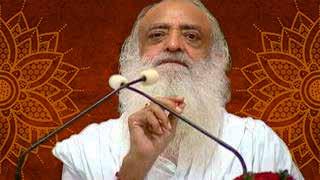
https://bit.ly/2uZvJuN
For more info about Bal Sanskar and yoga sessions, to get a free copy of monthly spiritual magazine RishiPrasad in your mail box in
24 — THE BRISBANE INDIAN TIMES, March, 2023
Australia or to get free online subscription of Rishi -Prasad, please contact by email at bskamd@gmail.com or by WhatsApp/phone to Ashok Attri and Anu Attri at +61 426 834 434 & +61 405 277 802
Bhava; Pitridevo Bhava’ – Regard
your mother as a god; regard your father as a god.
one anD all HarMonY DaY FesTiVal 2023

swami atmeshananda, Vedanta Centre Springfield Lakes
Swami Vivekananda
HarMOny is the basis of ‘Unity in Diversity’. Just as all the five fingers in our hand are not the same, yet they together provide strength to the hand, diversity is an essential part of humankind, nay, the whole of the universe. It would be boring to have similarity everywhere, but understanding that the universe is the sum total of all parts and that everything and everyone has a part to play in this world is an ennobling thought.
The 19th century mystic saint, Sri Ramakrishna (1836-1886) echoed this sentiment clearly through his personal life. He practiced different aspects of religions and came to the conclusion that ‘Reality is One; expressions of Reality can vary’.
Harmony week recognizes our diversity and brings together us from all diverse backgrounds. It instils in us the sense of inclusiveness, respecting everyone and feel a sense of belonging. The motto of Harmony Day is ‘Everyone Belongs’ and so we have called our event ‘One and All’ meaning it’s a day for everyone to come together.
This message of Harmony Day is not new. All ancient civilizations had come to understand that our survival depends on the welfare of all beings. The Indian saying “Vasudhaiva Kutumbakam" meaning ‘the entire world is a family’ is evident of this fact. Indeed the great lesson is, that unity is behind all.
The One and All Harmony Day Festival at Vedanta Centre


Springfield Lakes will be held on Saturday 18th March. There is something for all at this free event – outdoor live music stage, petting zoo, market stalls, cooking demonstrations and workshops. Timing 10am to 2pm. Food, coffee.
Free Live Music By: Mundy-Turner, Pauline Maudy and Paddy McHugh,Tsoof Baras Sargam Music Academy
Free WOrKsHOPs By: Brisbane Lions AFL skills, Sandhya Parappukkaran children’s author, Tsoof Baras Drumming & Craig Smith Yoga.
inquiries: info@ vedantabrisbane.org
Follow the event: http://bit.ly/3xvcjkw
THE BRISBANE INDIAN TIMES, March, 2023 — 25 www.indiantimes.com.au Call: (07) 3192 5188
“Unity in variety is the plan of the universe.”
Who, What, Where, When...








26 — THE BRISBANE INDIAN TIMES, March, 2023
Speaker of Queensland Parliament Curtis Pitt, Umesh Chandra OAM Daniel Wong and Benny Bol OAM at QCJ conference 2023
A traditional welcome to the country by tribal experiences at Lord Mayors refugees’ welcome ceremony
BMT CEO Bradley Beer discusses what property depreciation is all about and welcomes everyone to their networking evening
Australian Indian Radio intern Musavir Ali, a talented artist, will soon feature on Music Junction.
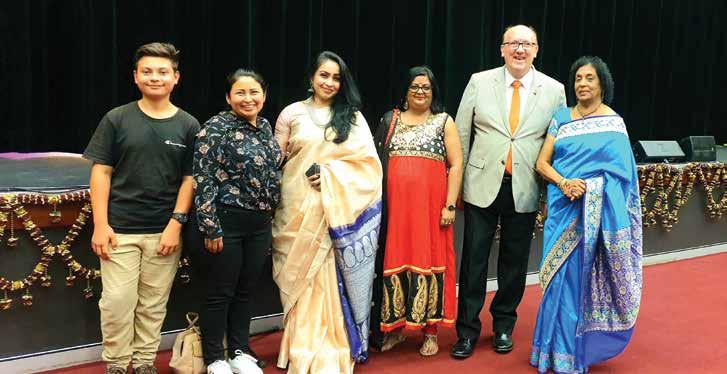
Xavier Hernandez, Nayda Hernandez, Sudha Manian, Pravinita Singh Pillay, Councillor Charles Strunck, and Usha Chandra at Shivani’s Arangetram
BMT official networking with Greg Hinkler, Usha Chandra and Umesh Chandra OAM at BMT Networking function
Sebastian Toro, Elijah Buol OAM and Umesh Chandra OAM as special guest at the refugee’s welcome ceremony
Curtis Pitt, Mp Representing the premier of Queensland, delivers his speech at QCF Conference.
Ms Vicky Yu welcomes everyone to the QCF conference 2023
Who, What, Where, When...





THE BRISBANE INDIAN TIMES, March, 2023 — 27 www.indiantimes.com.au Call: (07) 3192 5188
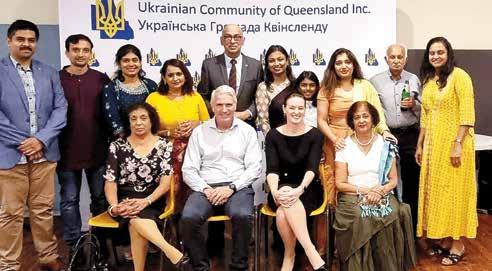
Joe Kelly MP with Minister Leanne Linnard hosted a multicultural get-together at Ukrainian Club
Chandan Das , Yousuf Alikhan and Umesh Chandra OAM at Valentine’s Dinner function, the successful event raised over $5000-00 for charity Robin Jaggessar trying the moves with the belly dancer
The audience enjoyed the rhythmic moves of the belly dancer as she encouraged everyone to join her on the floor
Salame Ishaq team in action on stage at their second episode of Salam E Ishaq
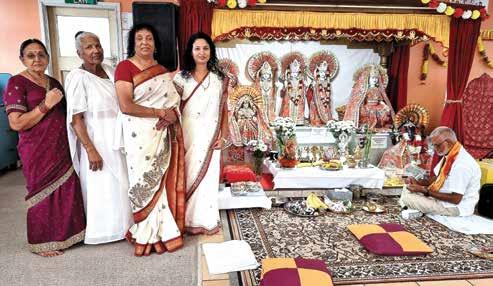
Mahashivtratri pooja is about to commence at Gayatri Mandir Boondall
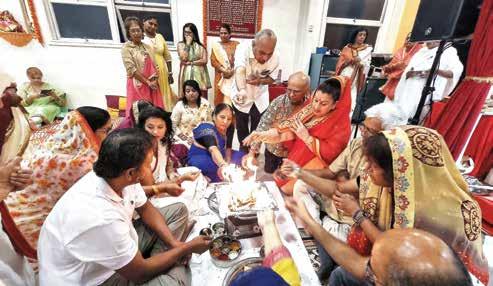
Havan ceremony at Mahashivratri held at Gayatri Mandir Boondall , the event was attended by a large number of devotees
The traditional Ukrainian welcome, breaking of the bread and sharing a pinch of salt
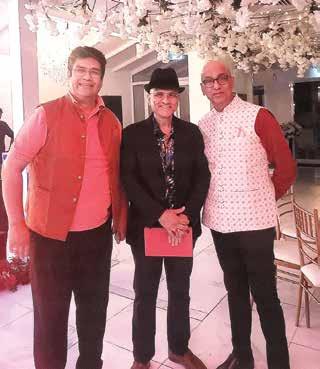
Imran Khan, Umesh Chandra and Manmohan Singh promoting the Jai Ho concert at Salam E Ishaq concert
Badshah Akhbar ( Nav) poses with the audience – he was superb in is role
THe eXalTeD MonTH oF raMaDan in islaM
By Ml. M .Nawaaz Ashrafi
raMadan is the ninth and most precious month in Muslims lunar calendar. It is obligatory for Muslims to fast during this holy month. There are around 1.7 billion Muslims around the world who observe this ritual, which is the fourth pillar of Islam among five. Fasting is not just abstaining from drinking and eating; it also includes abstaining from immoral acts and anger. Other acts of worship such as prayer, reading the Quran and charity are also encouraged during the month of Ramadan. In the Quran, God talks about the importance of Ramadan in the following verse: “O you who believe! Fasting is prescribed to you as it was prescribed to those before you, that you may learn piety and righteousness” (Quran, 2:183)
During Ramadan, Muslims wake up early to eat a pre-dawn meal called suhoor, and they break their fast with a meal referred to as iftar. One important thing of this Holy month is Quran was revealed in Ramadan. It is traditional for Muslims to read the entire Quran in the month of Ramadan. “Ramadan is the (month) in which the Quran was sent down, as a guide to mankind, also Clear (Signs) for guidance and the differentiation (between right and wrong)” (Quran, 2:185). Muslims gather every night in mosques after they have broken their fasts, to pray the special prayer known as taraweeh.
Muslims are used to fasting during the day with performing their usual tasks. Different cultures have different traditions during Ramadan, whether it is a special food they cook, or eating iftar with the extended family, neighbourhood and friends. Although may be slightly influenced by one’s culture, sharing food and inviting guests over for iftar are all practices inspired by the Islamic faith.
When the month of Ramadan starts, Muslims believe that the gates of heaven are opened and the gates of hell are closed as Prophet Muhammad (pbuh) said in one of his hadiths: “When the month of Ramadan starts, the gates of the heaven are opened and the gates of Hell are closed and the devils are chained” (Bukhari). When someone fasts in the month of Ramadan with sincere faith, Muslims believe that he or she will be forgiven by Allah Almighty as Prophet Muhammad (PBUH) said in hadith: “Whoever fasts during Ramadan out of sincere faith and hoping to attain Allah’s rewards, and then all his past sins will be forgiven.” (Bukhari)
There are some other
significances of this Holy month such as The Night of Decree (Laylat al- Qadr). This night is known to be better than a thousand months and Muslims are encouraged to pray and give more on this holy night. It is also recommended to give Zakat in the month of Ramadan.

Ramadan allows worshippers to concentrate their minds on devotion to their faith through prayers, expressing gratitude, seeking forgiveness and helping the needy. Fasting is important for Muslims due to many reasons: it brings the unity among the “ummah” because they go to offer Tarawih prayer after iftar at the Mosque together. Ramadan allows Muslims to appreciate food, thank God for what they have and makes them closer to each other and the people around them. Sawm is a Jihadic struggle because of Muslims struggle against hunger during fasting.
Fasting in Ramadan also makes Muslims stronger against fighting sin and more charitable to others.
tHe inner secrets OF FastinG
Know that in the fast is a special quality that is not found in anything else. And that is its close connection to Allāh, such that He says: “The fast (Sawm) is for Me and I will reward it.”1This connection is enough to show the high status of fasting. Similarly, the Ka bah is highly dignified due to its close connection to Him, as occurs in His statement, “And sanctify My House”.
Indeed, the fast is only virtuous due to two significant concepts. Firstly, it is a secret and hidden action thus, no
one from the creation is able to see it. Therefore showing off cannot enter into it. Secondly, it is a means of subjugating the enemies of Allāh. This is because the road that the enemies (of Allah) embark upon (in order to misguide the Son of Ādam) is that of desires. And eating and drinking strengthens the desires. There are many reports that indicate the merits of fasting, and they are all well known.
tHe recOMMended acts OF FastinG
The pre-dawn meal (Suḥur) and delaying in taking it are preferable, as well as hastening to break the fast and doing so with dates. Generosity in giving is also recommended during Ramaḍān, as well as doing good deeds and increasing in charity. This is in accordance with the way of the Messenger of Allāh (sall Allāhu alayhi wa sallam).
It is also recommended to study the Qur’ān and perform I’tikāf during Ramaḍān, especially in the last ten days, as well as increasing upon the exertion (towards doing good deeds) in it.
In the two Sahihs, ʿĀ’ishah RA said, “When the (last) ten days (of Ramaḍhaan) would come, the Prophet would tighten his waist-wrapper, spend the night in worship, and wake his family up (for prayer).” The scholars have mentioned two views concerning the meaning of “tighten his waist-wrapper”:
tHe First: it Means tHe turninG aWay FrOM WOMen.
The second: It is an expression denoting his eagerness and diligence in doing good deeds. They
also say that the reason for his (peace be upon him) exertion in the last ten days of Ramaḍāan was due to his (Sall Allāhu alayhi wa sallam) seeking of the Night of Power (Laylah al-Qadr).
an exPLanatiOn OF tHe inner secrets OF FastinG and its cHaracteristics
There are three levels of fasting: The general fast, the specific fast, and the further specific fast. As for the general fast, then it is the refraining of the stomach and the private parts from fulfilling their desires. The specific fast is the refraining of one’s gaze, tongue, hands, feet, hearing and eyes, as well as the rest of his body parts from committing sinful acts. As for the more specific fast, then it is the heart’s abstention from its yearning after the worldly affairs and the thoughts which distance one away from Allāh, as well as its (the heart’s) abstention from all the things that Allāh has placed on the same level. From the characteristics of the specific fast is that one lowers his gaze and safeguards his tongue from the repulsive speech that is forbidden, disliked, or which has no benefit, as well as controlling the rest of his body parts.
In a Hadith reported by al-Bukhārī: “Whosoever does not abandon false speech and the acting upon it, Allāh is not in need of him leaving off his food and drink.”3
Another characteristic of the specific fast is that one does not overfill himself with food during the night. Instead, he eats in due measure, for indeed, the son of Ādam does not fill a vessel more evil than
his stomach. If he were to eat his fill during the first part of the night, he would not make good use of himself for the remainder of the night. In the same way, if he eats to his fill for suhur, he does not make good use of himself until the afternoon. This is because excessive eating breeds laziness and lethargy. Therefore, the objective of fasting disappears due to one’s excessiveness in eating, for what is intended by the fast is that one savours the taste of hunger and becomes one who abandons desires.
recOMMended Fasts
As for the recommended fasts, then know that preference for fasting is established in certain virtuous days. Some of these virtuous days occur every year, such as fasting the first six days of the month of Shawwāl after Ramaḍān, fasting the day of Arafah, the day of Ashura, and the ten days of Dhul-Hijjah and Muharram. Some of them occur every month, such as the first part of the month, the middle part of it, and the last part of it. So whoever fasts the first part of the month, the middle part of it, and the last part of it, then he has done well. Some fasts occur every week, and they are every Monday and Thursday.
The most virtuous of the recommended fasts is the fast of Dāwūd ( alayhi alSalām). He would fast one day and break his fast the next day. This achieves the following three objectives: The soul is given its share on the day the fast is broken. And on the day of fasting, it completes its worship in full. The day of eating is the
day of giving thanks and the day of fasting is the day of having patience. And Faith is divided into two halves – that of thankfulness and that of patience. It is the most difficult struggle for the soul. This is because every time the soul gets accustomed to a certain condition, it transfers itself to that.
As for fasting every day, then it has been reported by Muslim, from the ḥadith of Abu Qatadah, that Umar (raḍiy Allāhu anhu) asked the Prophet (sall Allāhu alayhi wa sallam): ‘What is the case if one were to fast every day?’
So he (sall Allāhu alayhi wa sallam) said: “He did not fast nor did he break his fast – or – he did not fast and he did not break his fast.”4 This is concerning the one who fasts continuously, even during the days in which fasting is forbidden.
cHaracteristics OF
tHe MOst sPeciFic Fast
Know that the one who has been given intellect, knows the objective behind fasting. Therefore, he burdens himself to the extent that he will not be unable to do that which is more beneficial than it. Ibn Masʿūd would fast very little and it is reported that he used to say:
“When I fast, I grow weak in my prayer. And I prefer the prayer over the (optional) fast. Some of them (the Saḥabah) would weaken in their recitation of the Qur’ān whilst fasting. Thus, they would exceed in breaking their fast (i.e. by observing less optional fasts), until they were able to balance their recitation. Every individual is knowledgeable of his condition and of what will rectify it.
28 — THE BRISBANE INDIAN TIMES, March, 2023
The night of Glory (laylatul Qadr)
it is a brilliant night that is described in the Qur’an in the following way:
In the name of God, the Lord of Mercy, the Giver of Mercy
We sent [the Qur’an] down on the Night of Glory.
What will explain to you what that Night of Glory is?
The Night of Glory is better than a thousand months.
On that night the angels and the Spirit descend again and again with their Lord’s permission on every affair.
Peace it is until the rising of the dawn.
(Chapter 97)
The Night of Glory is the night in which the Prophet Muhammad began receiving revelation from God through the archangel Gabriel while he was meditating in the Cave of Hira on top of the Mountain of Light near the outskirts of Mecca, according to Muslim belief. It is that night in history when Muhammad went from being a simple man among his people to becoming the messenger of God. Not only did that night transform Muhammad the man into Muhammad the Prophet, but it also marked the beginning of the transformation of many parts of the world – beginning with the Arabian Peninsula and stretching as far as China within less than a century – as the new civilization of faith spread from coast to coast and continent to continent.
The first words that the Prophet received from God on that night, now some 1,448 years ago, are words that continue to inspire and guide more than 1.6 billion people worldwide.
Chapter 96 of the Qur’an contains these verses: “Read! In the name of your Lord who created: He created the human being from a clinging form. Read! Your Lord is the Most Bountiful One who taught by the pen, who taught the human being what he did not know” (96:1—5).
Receiving these divine words shook the Prophet to his core as he experienced the unexpected power of the glorious night and the command of an outer force. Afraid and befuddled, the Prophet ran home to the warm embrace of his beloved wife, Khadijah, who covered his trembling body with a blanket and reassured his anxious soul. Khadija suggested visiting her cousin, Waraqa ibn Nawfal, who was a Christian sage and scholar, to interpret the experience. Waraqa listened carefully to the Prophet’s experience and declared: “This was the same one [archangel Gabriel] who keeps the secrets, whom God had sent to Moses. I wish I were young and could
live [to see the day] when your people will drive you out.” The Prophet, startled and surprised, asked, “Will they [really] drive me out?” Waraqa nodded affirmatively and said, “Anyone who came with something similar to what you have brought was treated with hostility; and if I should remain alive till the day when you will be driven out then I will support you.”
So, the Night of Glory commemorates the advent of the Prophet, the beginning of the revelation of the Qur’an to Muhammad, and the centrality of God and knowledge in Islam. But, as Chapter 97 of the Qur’an indicates, the Night of Glory continues to visit every year with great spiritual gifts. In this night, it is believed, the doors of forgiveness are opened to all who ask, the decree of God is reconsidered and determined for every human soul, and salvation is brought closer for anyone who seeks it. As such, it is a night full of praying, seeking and acting goodly.
One of the great mysteries is that no one knows for certain which night in the blessed nights of Ramadan the Night of Glory falls on. It is anticipated during the last 10 nights. And, some say that it falls on one of the odd nights of the last 10 nights. God knows best –our task is to seek it; God’s grace is to grant it!
As the Prophet ﷺ said, "Let whosoever believes in Allah and in the Last Day either speak good or be silent." The agitation of our external tongue is intertwined with the internal agitation of our lower self. Bringing about quietude to our speech and environment goes a long way in calming our souls, while also promoting the atmosphere of fikr(contemplation) necessary to purify our hearts. Minimize the idle talk and chatting as
much as possible and give the phone and social media a break, not just during the nights but during the workday. In those opportune moments where you find yourself alone at your desk or at home when the children are asleep (finally), contemplate deeply on the Creator and engage in spiritual reflection. Remind yourself of your shortcomings and of Allah's mercy and plead for Him to rectify your condition, with the supplication our Messenger (peace and blessings be upon him and his family) encouraged us to say in these last ten nights:
"O Allah, You are alAfuww (The Eraser of Sins and Pardoner) and you love to pardon, so pardon me."
The beauty of this supplication is that we invoke the Divine characteristic of AlAfuww, which is greater than forgiveness, for it completely obliterates and erases the sin off our permanent records, whereas in His Forgiveness, Allah conceals those sins on our record.
We ask Allah for both, and as we do so, let us also strive in these last ten nights to be forgiving with others. All too often, as we engage in our deeply personal worship in these ten nights, repenting to Allah and seeking His forgiveness, we forget that one of the essentials of repentance is that we resolve any violations we have committed towards others. Ramadan is a time where we see more of the Muslims than at other times of the year, at communal iftaars, taraweeh and other activities. We will see those who we have wronged or those who have wronged us. Just as the process of fasting, taraweeh and 'itikaf naturally facilitate the disciplining of the soul in
Ramadan, the social light of this month, bringing the Muslims together, gives each of us an opportunity to heal past rifts and move forward. The last ten nights are a chance to bury old grudges and forgive one another, so that we can together invoke Allah on the Night of Power to forgive all of us for our violations towards Him.
The best example for us in these nights is our Messenger (peace and blessings be upon him and family), who, on the 20th of Ramadan, when entering Makkah in victory, forgave all those who had harmed him and his followers. It was an act that was the epitome of the Prophet's grace.
May Allah grant eternal success to the ummah of Muhammad (peace and blessings be upon him and his family) and may we learn to emulate the Prophet's grace, both in Ramadan, and outside of it.
"O Allah, You are the Eraser of Sins, and you love to pardon, so pardon all of us."
Things You Might Not Know About Eid Al-Fitr
1. it's HeLd tO ceLeBrate tHe end OF FastinG.
During the month of Ramadan, Muslims fast from sun up to sundown to honor the month that the Quran was revealed to the Prophet Mohammed. Eid al-Fitr celebrates the end of the month—and the end of the fasting. The prolonged fasting isn't just about food—it also includes abstaining from taking medications, drinking any liquids (including water), smoking, and having intimacy.
2. tHe naMe OF tHe HOLiday is a LiteraL transLatiOn
"Eid al-Fitr" is a pretty literal translation of the event that's being celebrated: "Festival of the Breaking of the Fast," or "the Feast of Fast-
cleanse their bodies in a ritual called "ghusl." Then, similar to getting new clothes for Easter Sunday, Muslims often don something new or grab their finest threads and decorate their hands with elaborate henna patterns. Some people wear traditional dress, while others opt for contemporary clothing.
7. tHere are eid GreetinGs
"Eid Mubarak," which means "Have a blessed Eid!," is pretty common.
8. tHen tHere are Prayers
Breaking."
3. eid aL-Fitr BeGins WHen tHe neW MOOn is First siGHted Eid al-Fitr doesn't begin until the new moon appears in the sky (although traditionally, and still today for many Muslims, it doesn't begin until the barest sliver of a waxing crescent moon is seen). Technically, that means that across the world, Eid al-Fitr starts at different times and even different days, depending on location. To make it more uniform, some Muslims celebrate Eid when the new moon appears over Mecca instead of their own locations.
4. raMadan and eid aL-Fitr are HeLd On diFFerent GreGOrian dates every year

The Islamic calendar is based on lunar cycles, as opposed to the Gregorian calendar, which is based on the solar cycle. New months start and end with each new moon. The average new moon appears every 29.53 days, so the lunar months are a bit shorter compared to the Gregorian months, which usually last 30 or 31 days. Thus, every year, Ramadan is held about 10 days earlier than it was the previous year—at least, that is, in relation to the Gregorian calendar.
5. eid aL-Fitr tyPicaLLy Lasts FOr tHree days
The festival traditionally lasts for three days, but depending on how it falls on the calendar, the parties and festivities could last much longer. For example, if the three days fall midweek, Muslims will likely still be celebrating over the weekend.
6. On eid MOrninG, MusLiMs cLeanse tHeir BOdies and dOn neW cLOtHes
Before leaving to perform morning prayers, Muslims wake up to
After getting dressed and ready for the day, Muslims gather for prayers in mosques or outdoor locations. Afterward, they may visit the graves of loved ones to pray and clean the gravesites.
9. tHere are GiFts invOLved
After a month of sacrifice, Eid al-Fitr is a time of abundance—and not just abundant food. Gifts are often given, especially to children. These gifts of money, accessories, home goods, or flower are called "Eidi."
10. it's aLsO KnOWn as "tHe Lesser eid."
Eid al-Fitr is one of two important Eid celebrations in the Muslim faith. The other is Eid al-Adha, the Feast of the Sacrifice or "Greater Eid." Eid al-Adha celebrates the sacrifice Ibrahim (Abraham) was willing to make to Allah. Like Eid al-Fitr, Eid al-Adha is held at a different time on the Gregorian calendar every year.
taKBir OF eid-uL-Fitr
ALLAAHU AKBAR
ALLAAHU AKBAR
ALLAAHU AKBAR
LAA ILAAHA
ILLALLAAHU WALLAAHU
AKBAR
ALLAAHU AKBAR
WALILLAAHILHAMD
ALLAAHU
AKBAR KABEERAA
WALHAMDULILLAAHI
KATHEERAA WA SUBHAANALLAAHI
BUKRATOW- WA
ASEELAA
LAA ILAAHA
ILLALLAAHU WA LAA
NA’BUD
ILLAA IYAAHU
MUKHLISEENA
LAHUDDEENA WA LOW
KARIHAL KAAFIROON
LAA ILAAHA
ILLALLAAHU SADAQA
WA’DAHU WA NASARA
ABDA, WA AZZA
JUNDAHU ADHAABA
WAHDA
LAA ILAAHA
ILLALLAAHU WALLAAHU
AKBAR
ALLAAHU AKBAR
WALILLAAHILHAMD
ON BEHALF OF THE ISLAMIC SOCIETY OF ALGESTER, WE WISH ALL MUSLIMS A WONDERFUL RAMADHAAN AND HAPPY EID UL FITR.
THE BRISBANE INDIAN TIMES, March, 2023 — 29 www.indiantimes.com.au Call: (07) 3192 5188
Grand Mahashivratri Celebration by DJJs Qld inc

culture.
this
music. To the joy of the attendees, the evening it constituted some enthralling and energetic dance performances by young kids, which was even more pleasing to the eyes.
The auspicious evening was marked by a really good number of attendees from the community. Here we would like to mention our very important guests and sponsors, who are known by all in the community and have been long associates of DJJS.
Mr and Mrs Umesh Chandra OAM, Mr and Mrs Parveen Gupta, Mr. Deven Pathik, ex-president of Gayatri Temple, Boondall. Our proud sponsors are Education Embassy, CAABA Accountant, ADJ Jewellers, SPAR Edens Landing, Australian Accounting and Tax Officers, OZ Labour Force, AusIndia Travel, Makho International PVT. LTD. and Media partners Australian Indian Radio and Brisbane India times. We can’t thank them enough for being there and supporting us in our effort.
And how can we forget the delicious and healthy Indian Food at the event, which was prepared and sponsored by Khatta Metha, AJ’S Punjabi taste and Sankalap Indian restaurant. A big thank you to them for making this evening even more fulfilling.
To conclude, I would pay my humble salutations in the Lotus feet of my revered master, His Holiness Ashutosh Maharaj Ji, the Head and Founder of Divya Jyoti Jagrati Sansthan (DJJS), without whom none of this would have been possible. He is the source of strength and the guiding light for every volunteer there.
aBOut dJJs;
Divya Jyoti Jagrati Sansthan, or DJJS as we call it, is a registered sociospiritual, not-for-profit organisation. DJJS’s Vision is from ‘From Self Awakening to Global Peace
Our Vision is “To usher into a world wherein every individual becomes an embodiment of truth, fraternity, and justice through the eternal science of self-realisation called Brahm Gyan, uprooting all social evils and threats in its wake. 'Brahm Gyan’ is an eternal technique through which we can practically experience and realise God.
And these are not mere words DJJS has been steadfast on its mission for 31 years, with millions of volunteers in India and around the Globe.
DJJS is doing and has done several social and spiritual events with the Government of India and other state governments in India. in austraLia:

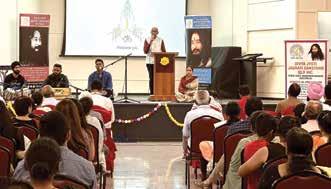

DJJS has been actively working in the community for over eight years. It has been organising and participating in various social, cultural, and spiritual events like Shiv Aaradhna, Mata Ki Chowki, Bhajan Sandhya, Sai Sandhya, Indian New Year, Krishan Janamasthmi across different cities like Sydney, Melbourne, Perth, Adelaide and here in Brisbane. Furthermore, we have been organising the International Day of Yoga for the last six years now, and our event pictures of 2019 were even shared by the Prime Minister of India, Shri Narendra Modi, from his Twitter account.
Thank you very much to everyone who took the time to be there on the auspicious evening.
30 — THE BRISBANE INDIAN TIMES, March, 2023
nOrtHGate Divya Jyoti Jagrati Sansthan Qld Inc (DJJS) celebrated MAHASHIVRATRI on the
18th Feb 2023 at Northgate Hall, Northgate. It is one of the most significant days in the Indian calendar and
The event brought to light what this day teaches us in great depth about Life, Practical spirituality, and
treasure of God called the Human garb, through exciting anecdotes and reverberating devotional

THE BRISBANE INDIAN TIMES, March, 2023 — 31 www.indiantimes.com.au Call: (07) 3192 5188
australian indian Theatre's, salaam-e-ishq successful comedy show


cOOrParOO It was a pleasure to see the fourth wall breaking between us as an audience and the highly talented performers. The writer, director, and producer, Anu Sharma, made us part of the play smartly. One such hilarious moment was when her fake moustache wouldn't stick, and she casually told us, “Take notes; this is why the moustache was important". She has a way of bringing a show together and keeps entertaining us with her writing and acting; she was fantastic as Anarkali. Another character that stood out was Akbar, played by Navjyot, his stage presence was remarkable, and he was very well suited to the role of
the king, who is playful but also stuck in his ways.
The play is loosely based on Mughal-e-Azam, where king Akbar (Navjyot Mahendru) is against the love affair between the court dancer Anarkali (Anu Sharma) and his son Saleem (Siddharth Nagpurkar). Yet, he is crazy about Umraao Jaan (Panchali K Gohain) and is scared of his wife, Jodha (Mili Mishra). So, when one of his reports Chugal Kishore (Zain Chams), tells him about the growing friendship between the two lovers, his minister Birbal (Rony Bal) gives him the idea of going to a witch Mohtarma Jackson (Neelima Kaushal) to get spells to stop the love between Saleem and


Anarkali from kindling.
On the other hand, Saleem's friend, dude-uddin (Shivam Sachdeva), advises him to approach Anarkali and profess his love to her. Every little moment in the play is captivating and makes you giggle. The choices of songs were on point as this is the first time, we’ve seen some of those numbers being performed in a very long time, making it unique amongst all the other events. We were also amazed by the costumes, which Anu says she spends time creating and ensuring that every character looks at their part. Overall a brilliant show which perfectly matched the theme of love during valentine's season.
THE BRISBANE INDIAN TIMES, March, 2023 — 33 www.indiantimes.com.au Call: (07) 3192 5188
soMlaTa aCHarYYa CHoWDHUrY liVe PerForManCe in BrisBane
BrisBane, 25th February 2023 Brisbane audience experienced the magic of Somlata Live with the Aces Band. The Typical threepiece Rock band set-up was just fantastic, made up of Lead Guitar, Bass Guitar and an acoustic drum kit, a perfect set-up. All three musicians were very talented; it was a pleasure to experience them live.
Somlata is a Bengali playback singer. She rose to fame with the release of ‘Tumi Asbe Bole’ & Jagarane Jay Bibhabaree’ from the Bengali film “Ranjana Ami Ar Ashbona” in 2011. She has been a prominent singer in the Bengali film industry since 2007.
Somlata has won several awards like ETV Dada na Didi, Gaaner Big FightBest Discovery Award, Star Jalsha Entertainment Awards - Agami Diner Star (2010), Anandalok Special Jury Award and Tele Cine Best Female Singer.

Bondita Chakraborty and Tapas Kumar Mandal as cohosts, did an excellent job; Sargam Music Academy, Presenting Partners were Picture Hub production,


Sargam Music Academy, and More Than Home Loans. Brisbane Indian Times and Australian Indian Radio were proud to be Media supporters of the event. Tapas Kumar Mandal presents the popular Bengali show (Surer Jhornadharay) on Australian Indian Radio. The show goes to AIR every Thursday night at seven pm Brisbane time.
Somlata i S a Bengali play B ack S inger. She ro S e to fame with the relea S e of ‘ t umi aSB e Bole’ & Jagarane Jay Bi B ha B aree’ from the Bengali film “r an J ana a mi a r aS h B ona” in 2011. She ha S B een a prominent S inger in the Bengali film indu S try S ince 2007.
Grants deliver $11 million boost to support Queensland community groups
attOrney-General and Minister for Justice, Minister for Women and Minister for the Prevention of Domestic and Family Violence
tHe HOnOuraBLe
sHannOn FentiMan
• 470 community organisations will share in more than $11 million under the latest round of the Gambling Community Benefit Funding.
• Funding will assist domestic violence support services, the upgrade of community centres, sporting facilities, wildlife protection projects and more.
Almost 500 Queensland
community and not-forprofit groups will receive a share in over $11 million in funding thanks to the latest round of the Gambling Community Benefit Fund.
Attorney-General and Minister for Justice Shannon Fentiman congratulated all of the successful organisations who received a grant for a variety of projects.
Grants will be used to purchase items such as a boxing ring for the Sunstate Amateur Boxing in Townsville, whitegoods and furniture for Childhood Cancer Support and a ventilator for the
Royal Flying Doctors in Rockhampton.
Other successful organisations to receive grant funding include:
• Currumbin Surf Life Saving Club, Gold Coast$35,000 to construct change room facilities to cater for people with a disability
• The Indigenous Marathon Foundation, Cairns - $24,010 to purchase first aid kits and defibrillators for their Running and Walking (RAW) program
• A Brave Life, Moreton Bay - $12,575 for refurbishments and items such as an oven and furniture for their facility
which provides a safe space for vulnerable young mothers
In 2023, four funding rounds will be available through the GCBF program, including Round 117, which will open for submissions in April.
For more information on how to apply for a GCBF grant, and to view recipients from Round 115, visit http:// justice.qld.gov.au/grants
QuOtes attriButaBLe tO tHe attOrneyGeneraL sHannOn FentiMan:
“It’s fantastic to see these grants are going to a diverse
range of organisations across every corner of our State, where they can provide a real benefit to their local communities.”
“This includes organisations in Cooktown in the far north, in Mount Isa out west, Barcaldine in the heart of the state, right down to the southern Gold Coast.”
“Grants will support a variety of helpful initiatives, from providing a safe space and resources for young mothers who are facing domestic violence and homelessness in Murrumba Downs, to upgrading facilities in Cairns that host community run workshops
and programs helping First Nations youth, families and seniors.”
“This Government recognises just how important community organisations are in Queensland and will continue to support their tireless work - with an incredible 66,000-plus organisations receiving over $1.1 billion in grants since the establishment of the GCBF.”
“I encourage all not-forprofit community groups to keep an eye out for upcoming GCBF rounds to assist with their work.”
34 — THE BRISBANE INDIAN TIMES, March, 2023
shivani arangetram – a visual delight
FOrest LAKE Feb 18, 2023
on the auspicious occasion of Mahashivratri marked the debut arangetram of Lalitha Kalalaya school of Bharatanatyam’s founder, Guru Padmalakshmi Sriram’s daughter Shivani at St. John’s Anglican College, Forest Lake. In her maiden rendezvous, the dancing gazelle Shivani effectively portrayed her learnings of over 15 years in Bharatanatyam, taking the audience on a journey of visual delight. The state-ofthe-art auditorium had over 600 invitees for the special evening. It was graced by Father Royal Anthony (education director of the Catholic Diocese of Bareilly, India) as its Chief Guest and Honorary consulate of the Indian embassy in Brisbane, Mrs Archana Singh, who has supported the academy for over six years now.
With three spectacular costume changes Shivani transported the audience to an era that is traditional and mystical, timeless and divine, owning her stage presence confidently.

Varnam was the standout piece at this event, which proved her mettle and announced her arrival with fanfare and she received a standing ovation by the end of her arangetram!
The stellar musician cast created a visual spectacle that synced with Shivani’s performance. The melodious and resonating vocals by Sangeet ratna
Shri Sudev Warrier and the genius of mridangam
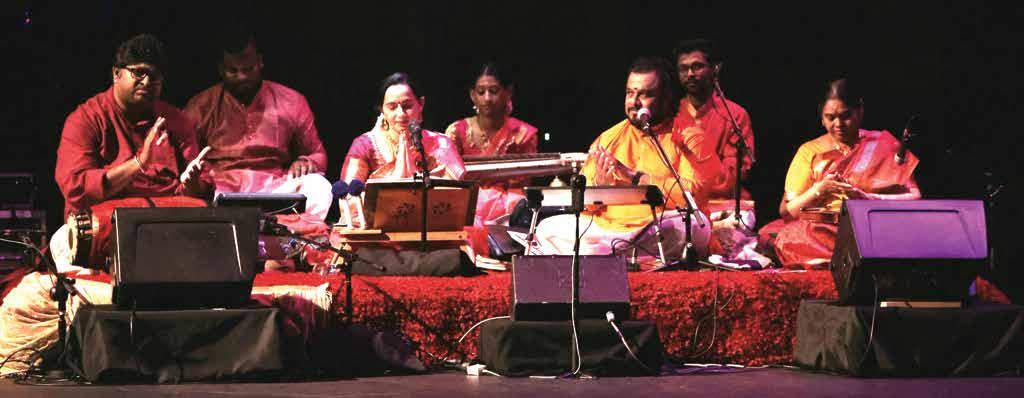
master Shri Mayavaram
T Vishwanathan’s perfect rhythmic timing and Guru Padmalakshmi’s impeccable natuvangam flair, the mesmerising violinist Smt
Narmatha Ravichandira, Shri Venkatesh Sridharan on the flute and Kasturi Sahadevan on the Veena added depth, dimension and life to this recital. They were a perfect congruence of wills and talents.
The evening started with high-energy performances on Mahalakshmi kauthuvam followed by Ganesh alarippu and ended with a vivacious Thillana in praise
of Lord Shiva followed by Thirupuzhal and Mangalam and presentation of certificate of achievement.
There were numerous highlights throughout the performance. The audience genuinely connected with Shivani’s abhinaya as Goddess Abhirami and Maa Durga in a truly demanding piece in the Varnam that lasted more than 35 minutes.
The graceful and energetic alternations between abhinaya and so many jathis, Shivani maintained the intensity of the nritta throughout the piece, and the part where the anger of Mahishasuramardini transcends into the divine bliss of Devi- the Divine Mother, was intense to watch. Post Dinner, many in the
audience witnessed Shuddh nrittam for the first time in a format where Shivani danced on an earthen pot, at times dancing off and on it suggesting her crisp understanding of the nritta counting pattern. A pure symphony that was set to intensive footwork, skilfully executed to thunderous applause.



The portrayal of the 18 symbolic steps in “Hari Varasanam Ayyappa Alolikam” and the enthralling vocals were beautifully emoted. It transported the rasikas to the sacred sanctum of Sabrimalai.
In the Tulsidas Bhajan “Thumaka
Ramchandra” Shivani’s abhinaya embraced maternal love portraying the ‘Vatsalya Bhava’ that simultaneously portrayed the instinctive knowledge of being in the presence of the Divine; it was brilliant choreography that truly stole the hearts of the audience.

This arangetram validated the faith of proficient dancer and founder of lalitha kalalaya dance academy Guru Padmalakshmi who excels in passing on the nuances of Bharatanatyam to her students.


The entire event was flawless in its execution
and was live streamed for loved ones worldwide. Dance vibes were felt right from the artful kolam at the entrance and the detailed table layout of Bharatanatyam costumes and accessories. An Instagram wall that read ‘arangetram’ and a specially created guest book for comments; as one entered the auditorium, the stage was festooned with garlands and a temple-like set-up. The extended team of volunteers and emcees behind the performance excelled in their parts to truly deliver a memorable evening like no other!
THE BRISBANE INDIAN TIMES, March, 2023 — 35 www.indiantimes.com.au Call: (07) 3192 5188
chalata
By s hrii s hrii a nandamurti 30 December 1966 DMC, Jamalpur
today’s subject of discourse is “Bhágavata Dharma”. The word “bhágavata” means “pertaining to divinity” and dharma means “inherent characteristic”, so Bhágavata dharma means “the way of life which leads to ensconcement in the supreme stance”. Dharma is a natural propensity, an inherent characteristic. It refers to a particular spiritual way of life. Each and every object in this universe has its own innate characteristic, or svabháva (Sva means “own” and bháva means “propensity”). The innate characteristic of fire is to burn whatever it meets. The innate characteristic of human beings is to practise spirituality. To make a clear distinction between spiritual practice and the other natural tendencies of mind in the mundane sense, such as eating and sleeping, the term “Bhágavata dharma” is used to describe the higher tendencies. Bhágavata dharma refers to the innate tendency which leads human beings towards the Supreme Entity, which arouses in them a spontaneous love and attraction for the Supreme Entity. In fact, in each and every human being there is love and attraction for the Supreme Entity. The human being who does not feel this attraction hardly deserves to be called a human being. Such a being is no better than a subhuman, although in human form. It is bhágavata dharma that clearly distinguishes human beings from animals. Even a thief who feels love for the Supreme Entity in the core of his heart, merits being called a human being. But a so-called virtuous person or a man of knowledge who feels no love for the Supreme Entity should not be considered a human being, because in such a person human dharma is wanting. Human beings are characterized by their bhágavata dharma. They have a spontaneous attraction for the Supreme, which nonhumans do not possess. Hence, human beings have a glorious existence; animals do not.
Ahára nidrá bhaya maethunaiṋca sámányametad pashubhiirnaránám;
Dharmo hi teśamadhiko visheśo dharmena hiináh pashubhih sámánáh.
This shloka clearly illustrates that human beings devoid of bhágavata dharma are just like animals. I have already said that if human beings lack bhágavata dharma they are actually worse than animals. Animals do not have a developed intellect or consciousness; human beings do. If human beings fail to utilize their developed intellect and consciousness, choosing to avoid the pursuit of bhágavata dharma, they are the enemies of humanity and a slur on the human race. Their actions, having no relation to bhágavata dharma, should be considered contrary to humanity and their innate characteristic. Their
Bhágavata Dharma
future is bound to be doomed, like that of a huge tree struck by lightning. The downtrodden masses who long to better themselves should embrace the path of bhágavata dharma. The easiest and most natural way for human civilization and humanity to grow is through bhágavata dharma. There is no other way. Hence, those who sincerely seek the welfare of humanity must uphold bhágavata dharma.
Bhágavata dharma is dependent on three factors: vistara (expansion), rasa (flow) and sevá (service). The literal meaning of the word vistára is expansion, that is, to direct the mind toward the vast Cosmic Entity. This psychic movement towards the vast Cosmic Entity is not dependent on external factors. To move towards that Supreme Entity one must first overcome and transcend all sorts of meanness and pettiness. Hence, a follower of Bhágavata dharma must wage a relentless fight against these limiting tendencies within his or her own mind, as well as in the society at large.
When the mind is confined within the narrow limits of pettiness a polluted atmosphere of sin spreads all around. But when the human mind expands, the effulgence of virtue becomes increasingly manifest and humanity is exalted to the heights of divininity.
Vistárah sarvabhútasya Viśńorvishvamidaḿ jagat; Draśtavyamátmavattasmá dabhedena vicakśańaeh.
Viśńupuráńa –Trans.
[This universe is nothing but the expansion of all the fundamental factors of Viśńu. Hence, wise people identify this whole universe with their own self.]
Only human beings can expand their minds because only they have the opportunity to follow bhágavata dharma. Now the question is, how can human beings follow bhágavata dharma, and when should they begin?
Human beings should practise bhágavata dharma from their childhood, from the age of five. Human life is more valuable than the lives of other creatures. Hence every creature unconsciously yearns to attain a human frame because only with a human frame is it possible to practise spirituality and perform noble deeds. The scriptures state that the practice of bhágavata dharma should commence at childhood. Those who embrace bhagavata dharma look upon this entire creation as a manifestation of Viśńu (Parama Puruśa). A small effigy of Viśńu is not the real image of Viśńu for them. They love the manifest form of Viśńu because they are in an inextricable relationship of love with Parama Puruśa.
Anayamamatá viśńoramatá premasaḿgatá.
The exclusive love for Viśńu can be called prema or divine love because one is in love with the Supreme Entity in whose mind resides the entire universe. By creating the quinquelemental world He bas made Himself accessible
to His created objects. Even a small blade of grass is His creation. Hence the followers of bhágavata dharma who expand the mind, will certainly see every object of this universe as an expression of their dear Lord. They will therefore show equal respect for each and every entity.
A religion or cult which does not encourage spiritual elevation but keeps the human mind confined to narrow limits, and depicts God in various imaginary forms, is far removed from bhágavata dharma. In bhágavata dharma there is no scope for differentiations and distinctions. The religion or philosophy which causes the human mind to become so analytical that it distances itself from the one integral Entity is contrary to bhágavata dharma. Those following bhágavata dharma strive to create unity and synthesis in the midst of disunity and analysis.
The second factor is rasa, or flow. Whatever is happening in this universe, whether natural or supernatural, is due to Cosmic Will. Everything depends on His grace. Whatever human beings think, say or do is only possible due to Cosmic grace. This entire universe is a Macropsychic conation – everything originates from the thought waves of the Macrocosm. Thus He witnesses everything at the same time.
The major difference between the unit mind and the Cosmic mind is that whatever the unit mind imagines is only transformed into action on certain occasions. The external projection of the unit mind is only possible when it is fully concentrated. But for the Cosmic mind nothing is external – this entire universe is within His mind. The Cosmic thought-waves appear to be something external for us. The Macropsychic thought waves are his Svarasa (flow). Likewise, for externalization various waves emanate from the unit mind. In the first case the psychic waves are the svarasa of Parama Puruśa. But mental waves, created by various thoughts, are the svarasa of microcosms.
Microcosms differ from one another due to the differences in their individual flows. All microcosms want to move according to their own individual flows. They endeavour to direct their internal thoughts and actions according to their individual flows. That is why the thoughts, actions and lifestyles of microcosms are so diverse. When you walk along a road a cobbler looks at your feet, a washerman looks at your clothes, and a barber looks at your head. The difference in their outlooks is due to the difference in their individual flows.
All microcosms create their own individual flows, in adjustment with the Macrocosmic flow. Hence the individual flow of every microcosm is directly controlled by Parama Puruśa.
I have often said that Parama Puruśa is not guided by your intellect or desires, but moves
according to His own wishes. You will never have any opportunity to question Him. You will have to move around Him, whether you like it or not. If your individual flow does not maintain an adjustment with the Macrocosmic flow your longings will never be fulfilled. Everyone longs to attain so much but only attains a fraction of what is desired. If one's longings are not in perfect adjustment with the Cosmic waves one can never attain success.
Kii habe iccháy iccháte kii hai
Krśńa icchá viná phal phalená [Does individual desire have any value? Without the approval of the Supreme Entity nothing can succeed.]
You wish to attain something, but if your desire is not approved by the Supreme Entity, then you will not attain success in your mission. This is the second factor – rasa tattva of bhágavata dharma. What is rasa tattva? When human beings are in deep love with Parama Puruśa they begin to know His nature and follow His will accordingly. Such individuals become invincible and victorious in the world. Most people are overwhelmed by His greatness, but sádhakas know the secret of becoming great. Thus the basic spirit of rasa sádhaná is to direct one's individual desires and longings towards Parama Puruśa. Only in this way can a sádhaka achieve fulfilment (rddhi) and success (siddhi).
In the scriptures this has been called rásaliilá. Created beings, will have to move according to the Cosmic will; there is no other way. Learning, intellect and personal status become meaninngless unless they are directed towards Parama Puruśa. After realizing the Supreme truth intelligent people start moving according to Parama Puruśa's desire, saying, “Oh Parama Puruśa. I have nothing to ask of you. Let thy will be fulfilled. I want nothing else.”
The third characteristic of bhágavata dharma is selfless service (sevá). When you offer something to a person and expect to receive something in return, it is a sort of commercial transaction. But when you have no desire to receive anything in return for services rendered it is called true service, and here lies the basic difference between true service and commercial transactions. You might have seen newspaper advertisements in which a certain company says it has been rendering service to the people over a long period of time. But the question is, can any commercial institution truly “serve” the people? Are they not merely involved in a commercial transaction of one form or other?
Service can be of two types: internal and external. This entire universe is the expression of the greatness of Parama Puruśa, and therefore, whatever a person does for a particular living being is as good as rendering service to Parama Puruśa. Wherever you are, and whatever you may
be, whether you are leading a family life or the life of a recluse, you need to serve all created beings for they are the veritable expression of the Supreme Entity. While serving living beings one should never allow a feeling of vanity to develop. One should always remember that one is serving Parama Puruśa and none other. Had Parama Puruśa not come in your contact in the from of living beings, you would not have an opportunity to serve Him. He comes to you as a sick person or as a beggar to solicit your assistance. Naturally you are more grateful than the person you serve because Parama Puruśa has given you the opportunity to serve Him. Thus everyone should render external service.
Japakriyá and dhyána should also be practised with the ideation that one is serving Parama Puruśa. This is internal service. If this is done one will achieve intense psychic concentration. Of course one must serve without expecting any reward in return. If this spirit of service is fully awakened during japakriyá one will attain eveything. A serviceminded sádhaka can attain liberation merely by repeating naina mantra, but a Yoga who performs higher spiritual practices will attain nothing in the spiritual sphere if he or she shuns service.
If internal service is not rendered properly, true external service becomes impossible. Hence it has been said, Atmamokśárthaḿ jagaddhitáya ca.
Individual salvation is also a service to humanity. Internal service (átmamokśártham) leads to fulfilment or immortality; external service (jagaddhitáya ca) leads to universal welfare. Thus both internal and external service have equal importance. External service purifies the mind, and with a pure mind one is more capable of rendering service to one's iśta. Every sádhaka should render both types of service.
The mind thinks; it creates micropsychic waves. The merger of micropsychic waves into Macropsychic waves is a natural process. This merger is possible for every human being in the rendering of external and internal service. Thus bhágavata dharma is a social dharma, a human dharma that easily can be followed by all. Whether people are aware of it or not, all are moving towards the nucleus of bhágavata dharma. Everyone's individual journey ultimately terminates in Parama Puruśa. Just as the earth is moving around the sun, and the moon around the earth, similarly every individual human being is moving around Parama Puruśa. Your sádhaná is nothing but an attempt to reduce the distance between yourself and Parama Puruśa.
One's nerve cells, glands, and sub-glands are created according to one's individual flow. In fact, various structures are created based on this individual flow. The various thoughtwaves of the mind are all identified with the individual
flows. All microcosms, knowingly or unknowingly, are rotating around the nucleus of the Cosmic Cycle. No one is separated from the Supreme Entity. Living beings attain different physical bodies according to their respective psychic waves. And with their individual minds and bodies they move around the Cosmic Cycle. This movement continues as long as they feel that they are separated from Parama Puruśa. But as soon as the tiny drop finds the vast ocean it automatically merges in that ocean. The distance between the two is removed and there remains no separate existence for either. The two become one. But until that final union is achieved unit beings will have to move like bullocks trudging around the oil mill.
When sádhakas establish themselves in bhágavata dharma, by virtue of vistára, rasa and sevá, their journey comes to an end. They become one with the Nucleus, one with Parama Puruśa. At that stage they realize the secret of the divine sport of Parama Puruśa. This is the true dharma of human beings – bhágavata dharma.
In the Giitá Lord Krśńa said that to pursue one's own dharma is the best and safest path, whereas the pursuit of other's dharma is extremely dangerous. The endeavour to satisfy physical needs is common to both humans and animals, but this endeavour alone does not lead to supreme welfare. Rather, if people become totally engrossed in gratifying their crude desires, they will most probably become extremely crude. Hence, although bhágavata dharma is human dharma, and is a somewhat difficult path, people should follow this path, and not the path of animal dharma. If they do follow animal dharma their rapid degeneration is inevitable.
One should remember that here dharma does not refer to any particular religion. These religions have nothing to do with one's svadharma, with the pursuit of one's innate characteristics. Unfortunately, this is how the Giitá bas been misinterpreted by a section of the people. The dharma of all human beings is one and indivisible, and that dharma is bhágavata dharma. Establish yourself in that dharma and your victory is assured.
30 December 1966 DMC, Jamalpur
Published in:
Ananda Marga Ideology and Way of Life in a Nutshell Part 10 [a compilation]
Subháśita Saḿgraha Part 8 [unpublished in English]
Supreme Expression Volume 1 [a compilation]
The Great Universe: Discourses on Society [a compilation]
Shrii Shrii A'nandamu'rti founded many spiritual and social service organisations, including Ananda Marga. Acarya Krsnapremananda Avadhuta is a representative living in Brisbane. He can be contacted on the following number: 0422823341
36 — THE BRISBANE INDIAN TIMES, March, 2023
Tying a shoe lace for Fiji
PeOPLe raise and receive money for needy causes, like the financial hardship caused by Covid 19, sometimes in interesting unusual ways.


Read what happened to our BIT correspondent, 76 year old Peter Lane Rai who returns to Fiji again in early March to do more voluntary work with young people.
On his last trip, after an exercise session with a Church Youth Group , he gave each teenager a running shirt, donated from his Brisbane “Intraining running club”.
Pete was on a one hour run that took him along the Brisbane River under the “Go Between Bridge” when a tall slim man, in his 30’s with, long dark hair, beard, dressed in a suit and tie, approached him.
“Could you please tie up my shoe lace?” then also mumbled something incoherently about coffee and a $20 note ,which he asked Pete to hold.
As Pete has also done “seva kar karm “in the Golden Temple in Amritsar he was more than happy to help the man.
p ete wa S on a one hour run that took him along the Bri SB ane r iver under the “g o Between Bridge” when a tall S lim man, in hi S 30’S with, long dark hair, B eard, dre SS ed in a S uit and tie, approached him.
“could you plea S e tie up my S hoe lace?” then al S o mum B led S omething incoherently a B out coffee and a $20 note ,which he a S ked p ete to hold.
Quickly bending down to tie up the shoe lace as he wanted to complete his run and keeping the $20.00 in his hand he tied up the shoe lace.
Even quicker, the man, stood up, then raced off like a 100 metre sprinter, only glancing behind when he was 40 metres away. while Pete just stood there $20
in hand too dumbfounded to chase him. Pete then realized that the man had actually wanted to give him the $20.00 so didn’t bother chasing him to
return the money.
Pete clutching the $20 in his hand completed his run with another donation for families who have lost their livelihood in Covid
ravaged Fiji. The moral of the story: tie up peoples shoe laces and you might get money which you can donate to a charity!
THE BRISBANE INDIAN TIMES, March, 2023 — 37 www.indiantimes.com.au Call: (07) 3192 5188
india likely to achieve record $750 bn exports in FY23: Piyush Goyal

“Last year was, of course, a record. We crossed $650 billion (of exports) in goods and services. This year, we aim for an even bigger record,” commerce minister Piyush Goyal said on Saturday while speaking at the Raisina Dialogue 2023. India’s exports in 2021-22 was $676 billion.
New Delhi: Despite global headwinds, India’s goods and services exports may touch $750 billion in the year to March 31, surpassing record exports in 2021-22, commerce minister Piyush Goyal said, emphasising the government’s focus on promoting overseas trade through Indian diplomatic missions.
“Last year was, of course, a record. We crossed $650 billion (of exports) in goods and services. This year, we aim for an even bigger record,” the minister said on Saturday while speaking at the Raisina Dialogue 2023. India’s exports in 2021-22 was $676 billion.
Expressing confidence in India’s robust export performance in 2022-23 despite global headwinds, Goyal said: “First of all, figures available up to 28th of February give me that confidence. We, of course, crossed last year’s figure already… and we are well on track… We will be hopefully crossing $750 billion,” he said.
The target of $750 billion in exports was possible with proper planning, the trade minister said. “It was an effort to a plan. It was not that it happened on its own. Again, very deep dive
analysis was done on our strength areas -- the markets where we could look at for expanding our exports, the products. Huge efforts to involve states and people and businesses at the district
level,” he said.
“This whole exercise started under Prime Minister’s guidance about three years ago and a lot of painstaking work went behind setting targets, getting all our 180-odd missions on board,” he said. “So, today our missions, finally, after years and years of demand by Indian industry, our missions abroad are engaged with trade, with technology and tourism.”
“When I was in the private sector, we used to be so jealous of the other foreign businesspersons, whose ambassadors and missions were merrily and happily supporting their industry through their trials and tribulations of problems, whereas Indian missions thought that it was not their job. (They were) scared to even hold the hand or help anybody. We changed that. We now
got the missions involved in this entire exercise. And I must complement Prime Minister for his vision on this respect,” he said, also lauding foreign minister S Jaishankar’s leadership.
Exports worth $750 billion in 2022-23 would be a major achievement as India’s outbound goods shipments contracted for the second consecutive month in January. It fell by 6.6% on an annualised basis to $32.91 billion. Services exports, however, jumped by about 49% to $32.24 billion.
India’s overall exports between April last year and January is estimated to show a positive growth of 17.33% over the same period in the preceding financial year, according to a commerce ministry’s statement released on February 15. In April 2022-January 2023, total goods and services exports crossed $641 billion, official data show.
stalin rejects rumours of targeted violence against migrant workers
New DeLhi/cheNNAi: Tamil
Nadu chief minister MK Stalin on Saturday rejected allegations of targeted violence on migrant workers in the state, warning of swift action against rumourmongers spreading panic, and reassured his Bihar counterpart Nitish Kumar that no harm would befall workers.

POintinG to the fact that how technology is moulding the way of going forward, Foreign Secretary Vinay Mohan Kwatra said that the question emerges whether the society is based on economic model or it is open to embracing technology openly.
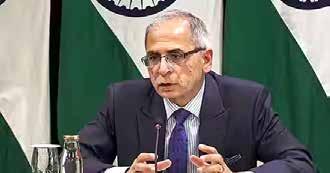
Foreign Secretary Vinay Mohan Kwatra on Saturday said that the Chinese applications were banned in India to stop the spread of misinformation, the spread of disinformation, and fake information.
"To answer your question on what's the interface that government has, to balance the availability of information, availability of misinformation, the spread of disinformation and fake information, that is a balance which each government has to continue address within a given societal matrix," Kwatra said while speaking at the Panel Discussion On 'Showstopper: Currencies Of Power And Persuasion: Reflections On The Future' under the eighth edition of Raisina Dialogue.
He underlined that the balance is the constant thing which the government has to continue to address within a given societal matrix.
"So what you saw, vis-avis the banning of various Chinese apps, is no different in that sense," he added.
Pointing to the fact that how technology is moulding the way of going forward,
he said that the question emerges whether the society is based on economic model or it is open to embracing technology openly.
"In Indian context, fundamentally when we look at technology, we essentially have 2 sets of binary foundations and the entire template of digital transformation in India is pegged on them. First, open vs close. We've very consciously gone for openness in the use of technology," he added.
"If my economic model is purely based on manufacturing and suddenly manufacturing is open to a burst of automation, then obviously I'll have a massive disruption within my system. But if I have a service economy, it'll probably boom," he added.
"Binary no.2 which forms the foundation is - public good vs private gain. Because of our value system and ethos, we have gone for public good," he said.
In a major crackdown, the Central government of India banned and blocked 138 betting apps and 94 loan lending apps with Chinese links on an 'urgent' and 'emergency' basis in early February this year.
The move was taken after confirming that these apps attract Section 69 of the IT Act as they contain material which is prejudicial to the sovereignty and integrity of India.
“All workers are our workers who help Tamil Nadu’s growth and nothing will happen to impact them, I have assured him,” Stalin, who spoke to Nitish Kumar over phone, said in a statement.
He further said that workers from northern states need not have any kind of apprehensions over working in Tamil Nadu. In the unlikely event of somebody intimidating them, Stalin added, they may inform police, who would take immediate action.
Stalin’s reassurance to Nitish Kumar, whom he addressed as his “revered brother”, came in the backdrop of false allegations on social media that migrant workers, especially from Bihari, were attacked in Tamil Nadu for speaking in Hindi. The issue rocked the Bihar assembly on Friday, with leaders of the opposition Bharatiya Janata Party (BJP) stalling the proceedings claiming Bihari workers were being targeted for speaking Hindi in Tamil Nadu.
In Bihar, images of workers returning from southern states for Holi were being circulated with misleading messages of a mass exodus. In the past few
The action behind the move is based on several complaints of extortion and harassment of common people who had availed small amounts of loans through the mobile apps being run by those entities and persons.
It is learnt that these apps are the brainchild of Chinese nationals who hired Indians and made them directors in operation. Desperate individuals are lured into
days, the purported videos of workers being beaten circulated on social media were found to be fake and from other states.
Stalin said some incidents that happened outside of Tamil Nadu were spread by falsely claiming to have taken place in the southern state. The chief minister also asserted that “stern legal action” would be taken against those spreading panic through rumours. “Those spreading rumours that workers from other states are being attacked in Tamil Nadu are against the Indian nation, they infringe the national integrity,” he said in the statement. “Some doing cheap politics over a nonissue is condemnable.”
On March 2, Bihar CM Nitish Kumar and his Jharkhand counterpart Hemant Soren asked officials to look into alleged reports of attacks on migrant workers in Tamil Nadu.
Every claim of the attack will
taking on a loan and then jacked up the interest by up to 3,000 per cent annually.
When the debtors were unable to repay the interest, let alone the entire loan, individuals representing these apps started harassing those in debt.
They sent them lewd messages, threatening to release their morphed photos and shaming them with messages to their contacts.
be verified, Kumar told reporters on Saturday. “We have sent our officers to Tamil Nadu to verify. I have spoken to the chief minister (Stalin),” he said.
Meanwhile, the Tamil Nadu police on Saturday booked a BJP spokesperson from Uttar Pradesh, Prashant Umrao, for promoting enmity between different groups on grounds of religion and language under Section 153A of the Indian Penal Code (IPC). “A team has been sent (to Uttar Pradesh) to arrest Umrao,” said a senior Tamil Nadu police officer, requesting anonymity.
Umrao on Friday shared a photo of Bihar deputy chief minister Tejashwi Prasad Yadav and Stalin in a tweet, that claimed: “…12 migrants from Bihar were hung to death in Tamil Nadu for speaking in Hindi.”
He later deleted his tweet. Yadav was in Chennai last
The matter came into the spotlight after a spate of suicides, particularly in Andhra Pradesh and Telangana, by those who opted for such loans or lost money to betting apps.
States like Telangana, Odisha and Uttar Pradesh as well as central intelligence agencies had then asked the Union Home Ministry to take action against these apps, sources said.
week to celebrate Stalin’s 70th birthday.
Police have also booked the editor of a local new portal for spreading enmity, officers said. The online portal had filed a story sharing purported videos, claiming them to be of Bihar workers being targeted in Tamil Nadu. However, a fact-checking team said the videos were old and not from Tamil Nadu.
District collectors in Tamil Nadu have issued appeals in Hindi, asking migrant workers to not be scared.
Tamil Nadu director general of police (DGP) Sylendra Babu confirmed that first information reports (FIRs) have been registered against five people so far.
“We will arrest individuals and in the case of institutions such as a newspaper we will issue summons to the editor...,” said Babu, who had earlier refuted allegations of attacks on Bihari migrants and dubbed two videos purportedly showing attacks on workers as “false and malicious”.
He added: “We have also reached out to large scale employers of migrant workers such as construction companies and Tirupur cluster, and have convinced them that this is fake news. We have given our numbers in their WhatsApp groups to help them reach out to us. A lot of them are on their way home for Holi so we have made arrangements for them in the railway stations.”
The Ministry of Information and Broadcasting (MIB) issued an advisory, stating that since betting and gambling are illegal in most parts of the country, advertisements of these betting platforms, as well as their surrogates, are also illegal under the provisions of the Consumer Protection Act 2019, Cable TV Network Regulation Act 1995 and the IT Rules, 2021.
38 — THE BRISBANE INDIAN TIMES, March, 2023
Chinese apps were banned because…: Foreign secretary explains
Developing critical skills courses in india
tHe University of Adelaide will play a leading role in strengthening India’s agriculture sector as part of a ground-breaking project which has received $1.8 million in funding from the Federal Government.
The project will identify critical and emerging jobs that require advanced practices that will meet India’s emerging agricultural skills needs.
The University of Adelaide will lead a consortium of highly experienced partners from the vocational training and agriculture sectors in both countries, including Skills Impact, Central Queensland University, the National Skills Foundation of India and the Agricultural Skills Council of India.
Dr Tamara Jackson, a Senior Research Fellow with the University of Adelaide’s School of Agriculture, Food and Wine, is the lead researcher on the project, and said it was a great opportunity to help build the capability of India’s agriculture workforce and make valuable connections between the sectors in the two countries.
“This project will research, design and
deliver pilot training products, in partnership with stakeholders from the Australian international education sector and Australian and Indian agriculture sectors,” Dr
Jackson said.
“This training will help meet India’s emerging agricultural skills needs and provide connections for Australian education providers while
strengthening the bilateral relationship by developing skills for a critical industry.
“We will explore partnerships between industry and education providers of both
countries through the co-development of occupational standards for critical and emerging job roles across India’s key agriculture sub-sectors.
“Specific areas of focus
will be determined based on a comprehensive scoping study across agricultural production and other related sectors.
“The project will run from 2023 to 2024 and is an opportunity to build connections between India and Australia’s agriculture and education sectors, through training based on Australia’s quality, regulated skills qualifications.”
Ultimately, benefits will flow to farmers and other parts of the agricultural value chain.
For example, Farmer Producer Organisation Saubij Mitra in West Bengal, is using new agricultural techniques and marketing arrangements to empower local communities.

Twenty women’s self-help groups which belong to Saubij Mitra are growing mushrooms as an additional source of income.
The University of Adelaide’s School of Agriculture, Food and Wine is based at the University’s Waite campus.
It is home to the largest concentration of agriculture and wine research and teaching expertise in the Southern Hemisphere.
new discovery to bulk up gluten-free fibre supplement
scientists have for the first time constructed the reference genome for the source of the popular fibre supplement, psyllium husk, which could boost supplies of the versatile plantderived product.
University of Adelaide experts conducted research on psyllium, also known as Plantago ovata.
“We extracted and sequenced the deoxyribonucleic acid (DNA) from leaf tissue to construct the chromosomelevel reference genome for Plantago ovata and used ribonucleic acid (RNA) from other parts of the plant to predict the function of its genes,” said the University of Adelaide’s Professor Rachel Burton, a researcher from the School of Agriculture, Food and Wine.
“This is a significant development because it will pave the way for improvements to the quality and quantity of psyllium crops.”
DNA is the molecule that contains genetic information needed for the development and functioning of an organism while RNA acts as a messenger, carrying instructions from DNA to build proteins.
This finding has been published in the journal Scientific Reports and is the result of a decade-long
investigation by University of Adelaide researchers into the genetic makeup of the plant.
Psyllium has been used for food and medicinal purposes for thousands of years.
The seeds of the plant are milled to produce a soluble fibre used in pharmaceuticals and
supplements to improve gut health and control blood cholesterol.
Psyllium is also a common ingredient in gluten-free food. The seeds and their husks are naturally gluten-free and when mixed with water, produce a sticky substance that replicates some of the functions of gluten in bread.
This quality makes psyllium an essential ingredient in gluten-free bread and it can be used in a whole range of other baked goods. With the market size of gluten-free foods expected to reach USD$8.3 billion in 2025, demand for psyllium is predicted to increase.

The plant is highly
susceptible to changes in environmental conditions and diseases which not only affects the yield, but also the price and quality of this valuable commodity.
“To date, efforts to improve the quality and quantity of psyllium husk have been hampered by the lack of a reference genome,” said the University of
Adelaide’s Dr James Cowley, who is also from the School of Agriculture, Food and Wine and co-authored this study.
“The development of a high-quality Plantago ovata reference genome will not only help to boost breeding programs but will also support labbased experiments to better understand how carbohydrates in plants are constructed so we can tailor them for food and pharmaceutical uses.”
First author Dr Lina Herliana conducted this research while pursuing her PhD at the University of Adelaide’s Waite Campus.
“We predict the availability of this reference genome will lead to the development of new cultivars with higher yields that are more adaptable to environmental conditions. This will stabilise the production of psyllium products and seed or husk prices,” said Dr Herliana.
The long-term project to understand the fundamental biology of psyllium was supported by an Australian Research Council Centre of Excellence and Linkage Project.
It is expected that this discovery will accelerate further research into genetic improvement and breeding of psyllium.
THE BRISBANE INDIAN TIMES, March, 2023 — 39 www.indiantimes.com.au Call: (07) 3192 5188
FOCUS ON FIJI
international drug bust nets $677 million
of cocaine bound
sydney (Reuters) – A joint U.S. and Australian law enforcement operation busted an international drug ring after intercepting 2.4 tonnes of cocaine aboard a vessel off the coast of South America that had been bound for Australia.

The cocaine, linked to a Mexican drug cartel, had a street value of around A$1 billion ($677 million), and was equivalent to half of Australia’s estimated annual consumption, making the seizure one of the biggest that Australian police have been involved in.
Twelve suspects have been arrested and charged in the case, Western Australian state police said in a statement on Saturday,
for australia
allegedly making three trips out through rough seas to collect the packages.
A further nine arrests were made through Jan. 13, including a traffic stop on the Great Eastern Highway, roughly 600 kilometres (373 miles) east of state capital Perth, where officers found more than A$2 million in cash.
releasing details for the first time of an operation that began last November when the U.S. Drug Enforcement Administration (DEA) intercepted the vessel.
Western Australian police substituted the cargo with identically packed
fake cocaine and dropped it roughly 40 nautical miles west of state capital Perth on Dec. 28.
Three suspected members of the “Australian arm of a drug syndicate” with 1.2 tonnes of fake cocaine were arrested on Dec. 30, after
Vunivalu
set to play
Hailing the success of “Operation Beech” Western Australia police commissioner Col Blanch in a statement: “The operation sends a message to international drug traffickers – your deadly drugs are not welcome here.”
A 39-year-old male U.S. citizen was among the 12 charged, police said.
Fiji Coalition Government to look at ambassadors’ situation
tHe Coalition Government will consider the personal circumstances of ambassadors and high commissioners in Fijian missions overseas before they are recalled.
Office of the Prime Minister permanent secretary Pita Wise said this during an interview with The Fiji Times in Panama yesterday.
He said because he was in Panama with Prime Minister Sitiveni Rabuka for the Our Oceans Conference, he would begin work on the logistics of how the ambassadors and high commissioners would be repatriated when he arrived back in the country next week.

“We have to be mindful that some of them have children, they are going to school, especially the ones in the Northern Hemisphere
because their school term is different from ours so we have to give them time to
prepare so that their children are not affected,” Mr Wise said.
“So that’s the process we are going to take, while others can come very quickly – all the positions will be advertised and they can reapply.”
He also said they would relook at the closure of embassies in the United States, Malaysia and Papua New Guinea by the previous government.
“So we have to re-look at that, those are very strategic to us, like the US, we need to reestablish that one, Malaysia and Papua New Guinea.”
Mr Wise said it was reassuring to note the positive and fruitful talks with PNG to reestablish an embassy there.
He reiterated that all ambassadors who were recalled were free to reapply for positions once they were advertised.
suLiasi Vunivalu is looking to live up to new Wallabies coach Eddie Jones’ expectations after putting an increased focus on speed behind him.
The Queensland Reds winger will play his first game of the Super Rugby Pacific season in Melbourne on Sunday against the Western Force.
It will be just his 15th cap since the two-time NRL champion switched from the Melbourne Storm after the 2020 season, an ankle complaint keeping Vunivalu out of last week’s round one loss to the Hurricanes.

That came after constant hamstring injuries ruled him out of more than half of the Reds’ fixtures over the past two years.
Finally fit again last year, he spent the entire home Test season in Wallabies camp but played just three minutes in his sole appearance.
Former Australian coach Rennie had demanded Vunivalu go “balls out” in training to prove he was ready.
But Vunivalu was eventually dropped for the Wallabies’ tour of Europe and then not included in a 44-men squad that gathered the week before Rennie was replaced in January.
Vunivalu, who signed a one-year deal keeping him on Rugby Australia’s books until after September’s World Cup, detailed how that obsession with his pace had spooked him.
“Every interview (with Rennie) was just based on speed, speed, speed,” he told AAP on Friday.
The 27-year-old was honest when asked if he’d fallen out of love with the sport since the move to Ballymore.
“I was feeling like that in (Wallabies) camp. All I could see was that next week I would be holding pads again (and not playing) and I know some of the other Reds boys felt the same,” he said.
“We felt if we weren’t playing we’d rather come back and play club footy.
“I was being pushed down the line; it gave me head noise and I started thinking, “Am I supposed to be here?”.
Vunivalu enjoyed the Reds’ off-season tour of Japan and is aware of Jones’ praise, the coach telling AAP last week the winger’s “got it” and could jump the selection queue under his watch.
Jones also acknowledged Vunivalu’s concerns about over-training during the week, saying each player’s preparation should be different.
“It’s good to hear him say that and has the same thinking,” Vunivalu said.
“He’s had a history, likes his league players. But I’m not going to stick by that thinking it’ll be spoon fed to me,” Vunivalu said of Jones, who had NRL trio Mat Rogers, Wendell Sailor and Lote Tuqiri in his 2003 World Cup squad.
“I have to put in work to get him to pick me.”
editorial comment – Watch those careless drivers
it isn’t easy to shrug aside the topic of road safety.
It is part of our daily lives and basically draws a lot of our time.
On Friday afternoon, a young family got the shock of their lives when a speeding vehicle hit their car near a busy junction in Nasinu.
That accident was careless and a firm reminder for those who witnessed it about the real dangers of careless driving.
Their lives were affected by the fact that they now do not have their vehicle which will have to undergo repairs for a few weeks.
That means making major adjustments to their daily lives, which ropes in school, and other daily chores.
It is an inconvenience and will be a costly affair over the
next few weeks! And all that should have happened to avert that was adherence to the rule of law, road courtesy and road safety. We now call on the powers that be to be vigilant about road safety.
That should mean maybe reviewing the process of driver education, defensive
driving and perhaps revisiting the accreditation of driving schools, the processes in place and systems to ensure we have good and capable drivers on our roads.
Getting a licence should be much more than just paying a fee to a driving school, undergoing a few weeks of classes, and getting
a provisional licence.
Ultimately, we have a challenge to embrace road safety.
Then there is the issue of common sense.
Every driver who gets behind the wheel must accept responsibility for the lives of those in their vehicle, and be considerate of other road users.
They must appreciate that life is special, and that others will also use our roads.
These road users also have families, plans, and hopes and aspirations.
They also have their own little challenges, and daily schedules to meet.
It becomes a huge responsibility for every driver when they drive a vehicle on our roads, to be extremely careful.
Be patient!
Don’t try to beat the queue.
Be considerate!
Remember every other driver is also trying to get to their destination like you, and the traffic congestion is also frustrating them.
It is always sad when deaths happen in a road accident or when an accident leaves a family frustrated and angry because their lives were at risk.
We know that road accidents happen because we allow them.
The challenge is always to be proactive and sensitive to the demands expected of us when we travel on our roads.
That means planning journeys, and planning to arrive safely at our destinations.
It means adhering to road laws, and safety advice.
That means understanding
and appreciating defensive driving.
It should also mean appreciating proper vehicle maintenance and the little things like resting well before a long journey, pulling over and resting if you are tired along the way.
The powers that be also have a duty to ensure our roads are well maintained and safe to use.
Then there is the need for pedestrians to be mindful of simple road rules.
Again, we raise the issue of common sense, and expect this to be part of road safety advice.
Road safety matters.
It must be drilled into the heads of drivers who still shirk their responsibility and put other lives at risk! We call on the powers that be to sit up and take notice!
40 — THE BRISBANE INDIAN TIMES, March, 2023



THE BRISBANE INDIAN TIMES, March, 2023 — 41 www.indiantimes.com.au Call: (07) 3192 5188
BOLLyWOOd actors Saif Ali Khan and Kareena Kapoor Khan are calling the invasion of privacy. Recently, the couple was arriving from a late dinner party when paparazzi had entered their building compound and Saif commented, “Come to our bedroom also.” Following that, reports stated that the couple took a legal route against the paparazzi for invading their privacy. It was reported that they had sacked the building security person. Saif Ali Khan has now released a statement on Saturday stating that his building’s security guard has not been sacked and neither has he nor Kareena Kapoor Khan taken any legal action against the paparazzi.
In an official statement by Saif Ali Khan, he clarifies, “The building security guard is not being sacked, it is not his fault and neither is anybody taking legal action against the paps because that is not how we want to do things.”

He added, “However, the fact is that they did barge inside the private property through the gate, past the security guard and completely invaded our space and put 20 cameras and lights on us as if it's their right to do that, and this is wrong behaviour
Gaslight, starring sara ali Khan, Vikrant Massey, set to directly release on Disney+ Hotstar on March 31, 2023

sara Ali Khan and Vikrant Massey starrer Gaslight is taking the direct-to-digital route. Bollywood Hungama had informed that the said film, which is being bankrolled by Ramesh Taurani under his banner TIPS Films, would feature Sara and Vikrant in lead roles and that it was titled Gaslight. Now, the streaming platform has announced that the film will arrive on March 31, 2023. During the promotions of Gulmohar, while talking to her grandmother, veteran actor Sharmila Tagore on Disney+
that Gaslight will
Helmed by Pawan Kripalani, the film also stars Chitrangda Singh. It is a psychological thriller. This will mark Sara Ali Khan’s second movie releasing on OTT after Atrangi Re.
Pawan Kripalani’s last directorial venture was the horror-comedy Bhoot Police, which starred Saif Ali Khan, Arjun Kapoor and Jacqueline Fernandez. His last thriller was the Radhika Apte-starrer Phobia. The film tackled an out-of-the-box subject of the psychological condition agoraphobia.

and everyone needs to be in limits. We cooperate with the paparazzi all the time and we understand but outside the house, outside the gate, otherwise, where does one draw the line? That is why I made the comment about the bedroom because they had already crossed one line, so how many lines does one have to cross before it's utterly ridiculous. The paps shooting the children, while they are doing extracurricular classes or any class, all this is not required, paparazzi cannot come inside the school, there are lines drawn. And that's all we are saying and the rest of the noise and chatter is because no one knows what the truth is and everyone wants to sell something but this is the truth. And that's all I have to say.”
On the work front, Saif Ali Khan was last recently seen in Vikram Vedha with Hrithik Roshan. He will essay the role of Lankesh in Adipurush. The film, helmed by Om Raut, will star Prabhas, Kriti Sanon and Sunny Singh in pivotal roles. The teaser was unveiled on October 2, 2022, in Ayodhya in presence of fans. The film was supposed to release in January 2023 but now it has been postponed.
Tu Jhoothi Main Makkaar runtime reVealeD! ranbir Kapoor-shraddha Kapoor starrer gets Ua certificate; advance booking to start from March 5
ranBir Kapoor and Shraddha Kapoor starrer
Tu Jhoothi Main Makkaar is all set to release on the big screen on March 8, 2023. The film has been cleared by the Central Board of Film Certification (CBFC) with a U/A certificate. The romcom is clocked at 159.59 minutes (2 hours, 39 min, 59 sec). While the first half will be one-hour-nine-minutesthirty-nine-seconds long, the second half is one-hourthirty-minute-and-twentyseconds long. On the other hand, the makers will open advance booking for the forthcoming film in India on March 5, which is three days before the release.
Earlier, it was reported that the makers of the Ranbir Kapoor-Shraddha Kapoor starrer were contemplating releasing the film on Tuesday, March 7, instead of Wednesday, March 8. However, later, a source close

to the development clarified to us that the prepone plans have been dropped. “There is no change in the plan.
Tu Jhoothi Main Makkaar will release on March 8, as originally scheduled,” told the source.

The source further added, “A lot of last-minute prep is going on with the film and the makers feared that releasing a day earlier might add a lot of stress to the already overworked team. Moreover, even internationally, the plan was locked for March 8. Hence, a decision was taken to release Tu Jhoothi Main Makkaar on March 8.”
Speaking of the ensemble star cast of the film, besides Shraddha and Ranbir, it also features Dimple Kapadia. Meanwhile, Anubhav Singh Bassi and producer Boney Kapoor will make their fullfledged acting debut with this Luv Ranjan directorial.
Benny Dayal suffers multiple bruises as he gets struck by a drone during live concert in Chennai

On March 3, Benny Dayal took to his social media handle and addressed the drone accident, which happened during his recent concert in Chennai.
a few days back, the Nagpur Police Control received an anonymous call from a person who threatened to blow up the house of Bollywood actors Amitabh Bachchan and Dharmendra. A day after that, it was reported that Taarak Mehta Ka Ooltah Chashmah actor Dilip Joshi is also in danger as 25 armed men have surrounded his Mumbai home. Reacting to the same, Dilip Joshi recently dismissed the news.

While talking to Hindustan Times about the matter, Dilip Joshi asserted, “This news is fake. Aisa kuch nahi hua. I don’t know where it started from and how. This news has been in circulation for two days and I was astonished to hear it.”
He further added, “Bhala ho uska jisne yeh galat khabar falai. Mujhe itne logon ke phone aaye mera haal chaal puchne ke liye. So many old friends and extended family called. It was good catching up with them (laughs). (Due to this) I found out how much people love me. So many people were worried about me and my family, it was heartening.”
He signed off by adding, “Hamne agar kuch kiya ho
toh aisi koi baat nikle, bina sar pair wali khabar hai yeh (If we have done something, then such a thing should come out, this is news is pointless).”
For the unversed, as per a report by India Today, a call was sent to Nagpur Control Room notifying the police that 25 individuals were outside the actor's home
brandishing weapons and firearms. Reportedly, the man who made the call introduced himself as Katke and said the 25 people were waiting outside Dilip's house. According to the

report, the caller also stated that he overheard some individuals discussing that these 25 persons had arrived in Mumbai to carry out the actions.
Release Date Movie Name Audience Score
Expected in March Aazam - Rise Of A New Don 67 08 March 2023 Tu Jhoothi Main Makkaar 66 17 March 2023
17 March 2023 Kabzaa 0
17 March 2023 Chhipkali 60
17
24
07
42 — THE BRISBANE INDIAN TIMES, March, 2023
Taarak Mehta Ka ooltah Chashmah
star Dilip Joshi debunks ‘fake news’ on life threat
Saif Ali Khan clarifies no legal action has been taken against paparazzi, security guard not sacked; calls out constant invasion of privacy of his kids
Hotstar, Sara said
premiere on Disney+ Hotstar in March itself.
Mrs. Chatterjee Vs Norway 59
March 2023 Zwigato 72
March 2023 Chor Nikal Ke Bhaga 75
March 2023 Bheed 30
March 2023 Bholaa 80
March 2023 Gaslight 0
24
30
30
April 2023 Gumraah 50

THE BRISBANE INDIAN TIMES, March, 2023 — 43 www.indiantimes.com.au Call: (07) 3192 5188
Have you ever been told you have hepatitis B or that you are a hepatitis B carrier?
Hepatitis B is a chronic condition that needs regular monitoring. The term ‘hepatitis B carrier’ is sometimes still used but is actually incorrect.
Any person with hepatitis B should ensure they have the following tests. It is important to make sure we all understand what testing is required, why we need the tests and when they are due. You can ask your doctor for the tests when something is due, especially if you move doctors or do not see the same doctor regularly.
aLL PeOPLe WitH
HePatitis B need tHese tests:
• A blood test to check for liver health liver function tests (LFTS) - every 6 months.
• A blood tests to check how much hepatitis B virus is in your blood – (HBV DNA) every 12 months

• Assessment of fibrosis (damage to the liver) –Fibroscan (or similar) every 12 months (if not taking
medication for hepatitis B)
Other tests needed may be based on age, where you were born, family history, or other concerns your doctor may have including:
• Liver ultrasound (to check for cancer) and AFP (a blood test to also assess cancer risk) every 6 months if:
o You are Asian born, a Pacific Islander or Maori male over 40 years of age
o You are Asian born, a Pacific Islander or Maori female over 50 years of age
o You are an African born male or female over 20 years of age
o You are an Aboriginal or Torres Strait Islander person
Remember it is important to:
• Know when you are due for what tests and why
• Ask your doctor for the test if you know you are due
• Understand and be proactive in your healthcare
• Do all tests as requested by your doctor – missing tests can lead to damage to your liver, liver failure and cancer – if not problems are not identified early – and you may not feel ill until it is too late
• Ensure your family members have also been tested for Hepatitis B and vaccinated if needed, and

over 50 years of age
o Have ever been diagnosed with cirrhosis (very damaged liver)
o Have also been diagnosed with hepatitis D (co-infection)
o Have a close family history of liver cancer
o Born in other countries that may put you at risk.
if they have hepatitis B are having the same regular checks with their doctor
• Make time to see your doctor and get the tests done – it may save your life.
For more information about hepatitis B please go to our webpage: www.eccq.com. au/bbv
Phone: 07-3844 9166
If you live in Cairns, you can also contact:
Rhondda Lewis
Viral Hepatitis Health Coordinator
Phone: 07-4226 4769
Email: Rhondda.Lewis@ health.qld.gov.au
Hepatitis, Hiv/aids and sexual Health Program ethnic communities council of Queensland (eccQ)

Skin care straight from your garden

feels tight and dry.
To cleanse dry skin, try the following: find rosewater or brew some rose petal tea (1tsp of herb per 6oz of water).
Hey GirLs, as Summer is approaching fast there are many garden remedies right in your garden that can be used to make yourself look more beautiful.
Hide MessaGe HistOry
1. Rose Petals / Gulab
Most of us are probably familiar with how often roses are used in personal care products as rose water, rose scented lotions and, of course, perfume. Indeed, rose petals are a wonderful tonic for the skin. A cooled infusion (tea) of rose petals can be used as an eye or mouthwash, due to the antiseptic characteristics of the rose. Add in the antiinflammatory qualities and you’ve got a wonderful toner for skin troubled by rashes, irritation, or acne. Just spritz it on the skin after cleansing. For acneprone skin, mix a toner of one part rose infusion and one part aloe juice. Use this after cleansing in the morning and evening.
Rose is also a wonderful tonic for mature and aging skin, due to its vitamin C content and ability to rehydrate and soothe the skin. You can add a few drops of rose essential oil to the moisturizers you already use, or blend an ounce of jojoba oil with 8 drops of rose essential oil. Smooth this on your face at night, or anytime the skin
Combine two tablespoons of rosewater or rose tea with two tablespoons of raw honey and 1/2 cup of almond oil. Massage a small amount into skin. Rinse well and pat dry. This cleanser can be stored in your medicine cabinet, no need for refrigeration. If your skin still feels dry after cleansing, massage in a little more almond oil.
The antiseptic nature of rose also makes it a wonderful treatment for wounds, bruises, rashes, and incisions. To use, take a clean washcloth, dip into the warm or chilled tea (1tbs per cup of water, steeped 10 minutes), depending on the nature of the injury, and place on the wound. For sore muscles, try rubbing the area with a rose-infused oil. Try two parts oil to one part herb. Grind the dry petals and infuse them in the oil. Let this sit at least two weeks in a dark spot, strain, and use, warming the oil as you wish.
2. cHaMOMiLe/BaBuna
The health of our liver is reflected in the health of our skin. Chamomile is an herb you can use internally to help tone the digestive system, liver, and kidneys. When these organs are working and healthy, wastes will be processed the way they were meant to be—through elimination—
and not through the skin.
Chamomile is also a wonderful external addition to your skincare regime, especially if your skin is sensitive, mature, or irritated and chapped by the elements. Apply cool chamomile tea as a toner to the skin. Search out a chamomile hydrosol and spritz this on the skin. For helping the skin heal from sun or windburn, try adding a few drops of chamomile essential oil to an ounce of jojoba oil. Apply sparingly as needed. This herb’s ability to ease inflammation as well as its ability to soothe the senses will calm the body and the
mind.
To cleanse combination skin), try brewing a strong cup of chamomile tea. Blend this with one half cup of ground, whole grain oatmeal powder and one tablespoon of raw honey (honey is a demulcent, which means it pulls moisture to the skin; it also fights acne and protects against damaging rays from the sun and regenerates skin, protecting against free radicals). Place a small amount of this in your palms and massage into skin. Rinse with warm water. Store the rest in the fridge–without preservatives, this cleanser
won’t last long on the shelf. If parts of your skin feel tight after washing, try a little almond or jojoba oil massaged into dry areas.
Finally, you can also apply chamomile externally as a paste to help heal burns, skin ulcers, eczema. To use, grind dried flowers with a mortar and pestle, add some water and a bit of whole grain oatmeal until you’ve reached a desirable consistency. Keep the paste moist by covering the area with a warm, damp towel. Allow the affected area to rest for fifteen minutes or so, then bathe in cool water until the paste is dissolved. Repeat as often
as necessary—until comfort is achieved and the area has healed. Start using these natural skincare from plants. However your body ridding itself of natural toxins. When you start using this you might get some breakout but Allow a few weeks for the skin to adjust and it will settle down. In the meantime, relish in the idea that you are feeding your skin the food it needs. Go outside enjoy gardening. Feel the wind, sun and rain on your chemical-free, toxin-released, beautiful, fresh face. nimisha of Hetvi Hair & Beauty (0412350013)
44 — THE BRISBANE INDIAN TIMES, March, 2023
Nimisha Modi Hetvi Hair & Beauty 0412350013
Mind Medicine australia announces international Course Director and Dates for its Certificate in Psychedelicassisted Therapies following the TGa’s rescheduling announcement
Mind Medicine Australia
(MMA) is thrilled to announce the details of its Certificate in PsychedelicAssisted Therapies (CPAT) for 2023. With the TGA’s recent decision to reschedule psilocybin and MDMA from July 1 on a limited basis, there is a huge need for mental health professionals to undergo training and learn how to administer psychedelic-assisted therapies.
MMA’s CPAT program is the only course of its kind in Australia and the first in the Asia Pacific. Professor David Nutt, the Head of Neuropsychopharmacology at Imperial College London recently commented on ABC Radio National that the course is the best of its kind in the world. Many graduates have described the course as life-changing and the most outstanding professional development program they have completed.
In 2023 the program will be taken to a whole new level, with the engagement of an International Course Director Dr Gita Vaid MD. Dr Vaid is a board certified psychiatrist and psychoanalyst a cofounder of the Center for Natural Intelligence, a multidisciplinary laboratory dedicated to psychedelic psychotherapy innovation
and clinical practice. A lead instructor at The Ketamine Training Center and member of the Mount Sinai Psychedelic Psychotherapy Research and Trauma Center, she is a Multidisciplinary Association for Psychedelic (MAPS) – trained psychedelic psychotherapist practicing ketamine assisted psychotherapy in New York City. Dr Vaid completed her psychiatry residency training at NYU Medical Center and psychoanalytic training at the Psychoanalytic Association of New York. She trained as a Fellow in clinical psychopharmacology and neurophysiology at New York Medical College and completed a research fellowship at NYU Medical Center. Dr Vaid serves as the Director of Psychedelic Awareness at The Chopra Foundation.
MMA’s Executive Director Tania de Jong AM commented: “We are delighted to welcome Dr Vaid to lead our outstanding International Faculty. She brings directly relevant clinical experience in psychedelic-assisted therapy to support and educate clinicians in Australia and the Asia-Pacific region.”
Dr Vaid will be joined by Melbourne-based psychiatrist Dr Eli Kotler, who takes on the role of
mma’S cpat program i S the only cour S e of it S kind in au S tralia and the fir S t in the aS ia pacific. p rofe SS or david n utt, the h ead of n europ S ychopharmacology at i mperial college london recently commented on a B c r adio n ational that the cour S e i S the B e S t of it S kind in the world. m any graduate S have de S cri B ed the cour S e a S life-changing and the mo S t out S tanding profe SS ional development program they have completed.
Australian Course Director. Dr Kotler is a consultant psychiatrist, holds an academic position at Monash University through the Alfred Psychiatry Research Centre, and is the medical director of Malvern Private Hospital, the first addiction hospital in Australia. He also sits on MMA’s Board of Directors.
MMA’s Chairman Peter Hunt AM commented: “We’ve been working with Dr Kotler for two years now and I couldn’t speak more highly of his professionalism, expertise and character. He’s the ideal person to be directing the education of clinicians in this exciting new space.”
These course directors will be joined by MMA’s faculty of leading educators from around Australia and the world, including Professor David Nutt, the Head of Neuropsychopharmacology at Imperial College London (UK), Dr Ben Sessa, Psychiatrist and Chief Medical Officer at AWAKN Life Sciences (UK), Dr Gabor Mate, Dr Rick Doblin (MAPS), Dr William Richards from the Center for Psychedelic and Consciousness Research at the Johns Hopkins School of Medicine (USA), Professor Arthur Christopoulos, the Dean of the Faculty of Pharmaceutical Sciences at Monash University and many more.

Dr Lauren Macdonald will also join the International Faculty. She is currently working as a psychedelic study doctor and therapist at The Centre for Psychedelic Research at Imperial College London and has significant experience supporting patients through these treatments. More teachers will be announced soon.
The full faculty can be seen on MMA’s CPAT site here: https://cpat. mindmedicineaustralia.org/
The course runs for 16 weeks, starting July 16 and includes a weekly online class and a 6-day intensive in October, assessments, self-study, group work and more. The course welcomes psychiatrists, psychologists, GPs, physicians, psychotherapists, counsellors, addiction specialists, palliative care specialists, social workers, mental health nurses, occupational therapists from around Australia, New Zealand and the Asia-Pacific region.
There are a strictly limited number of places, which are filling fast since the TGA’s announcement. The course is also recognised by graduates’ professional colleges and associations through Continuing Professional Development (CPD) credits. Dr Kotler, who
is a Graduate of the CPAT program, commented: “This is a very exciting time to be involved in overseeing the training of psychedelic prescribers and psychedelicassisted therapists. Australia is now a pioneer in psychedelic-assisted therapies, and we need world-class training. The CPAT is a course which will meet those requirements. My expectation is that it helps create an ecosystem in Australia and the wider region where safe, equitable, respectful and effective psychedelic-assisted therapies are practiced. My hope is that it helps create a mental health system that aims at healing rather than symptom management, and treats people rather diagnoses.”
Applications are now open for intakes commencing in July and filling fast.
Please visit: https://cpat. mindmedicineaustralia.org/
For further information please contact:
• Peter Hunt, Chair, Mind Medicine Australia 0419 271 483
• Tania de Jong AM, Executive Director, Mind Medicine Australia 0411 459 999
• Dr Vaid & Dr Kotler are also available for interviews on request.
THE BRISBANE INDIAN TIMES, March, 2023 — 45 www.indiantimes.com.au Call: (07) 3192 5188
Monthly Predictions March-2023
a rie S ( 21S t m arch to 20th a pril )

This month sets you up for some good and unique idea. Be mindful of your thoughts and surroundings since the Sun and the Mercury will be favouring you with creativity. Some of you might get an opportunity to travel abroad. Venus and Rahu are likely to push a sudden growth in your career. You are hence advised to have a direct and healthy conversation to avoid any miscommunication. Sun and Mercury will faciliatate a warm interaction with your partner through a trip. You can thus look forward to spending some quality time with your significant other. With the blessings of the Jupiter, some of you might get lucky and successful in marriage this month. If you are a student, positive outlook while working hard can save you from distractions. Saturn and Rahu can shift your attention towards negativity and depression. The movement of Sun and Mercury in March can csuse some health issues. That month is also likey to see some disagreement with your father. Try not to skip your healthy diet to enjoy good health. Good health will shield you from any kind of stress. Avoid living in the past. Mistakes made then can interfere with your current mental state, especially at your workplace. Just brush up your skils. Determination and hard work and not pondering over past mistakes will give you success in the months to follow. Chances of increment and and as a result a higher standard og living can be expected. Business people can also anticipate some.Some changes in the design, branding etc are likely. Sudden expenditure on children’s education may come up.There can be religious learnings, but the expenditure on it and spiritual work with the transit of Sun and Jupiter is also predicted.
c ancer ( 22nd June to 22nd July )

You are advised to avoid any pointless conflict by Ketu and Mars activity. Making your partner responsible for prior errors can strain your relationship. Some of you might get a great chance to take a family vacation. A small celebration with family and friends is planned. This month, there are excellent opportunities for promotion, pay raise, and a good incentive. Due to the location of Rahu and Venus, you can anticipate financial gain if you are in the creative art or fashion industries. This month, there may be unexpected trip expenses. Some of you can incur financial costs when purchasing a new apartment and home abroad. You may incur financial costs because of learning new skills and being admitted to a higher level of study. Avoid having any ego conflicts or arguments with senior authority, according to the Sun's movement. Your ability to write combined with a publishing or digital marketing business can bring in the desired income. You can also receive a solid return on your investment in a business and financial gain. Some of you might get accepted into reputable coaching programmes. Success is possible in a career involving the law. Some of you may experience exam stress, as Saturn and Rahu suggest. Because of negative thinking, confusion or unneeded tension may result. In order for things to proceed according to your plan, Jupiter and Venus recommended you avoid harbouring remorse for the mistakes you've made in the past and to start over with your exam preparation.
l i B ra ( 23rd Septem B er to 22nd o cto B er )

During this month your relationship matters start getting better. Benevolent Jupiter will help you now. This may happen in a slow and gradual manner. Gradually you will see an exchange of plenty of love between you and your beloved. The transiting Mars can bring some disruption around the middle of this month. The transiting Saturn may cause some delays in matters related to finance and you find that there is some shortcoming to this plan. But gradually, you will get better earning opportunities. From middle of this month, the transiting Mercury indicates that you will be successful in monetary planning. Due to impact of Venus, you will spend on pleasure-filled and joy full activities. The month seems better for your career but the transiting Saturn may demand patience this time around. If you are in business, despite your hard work, there will not be expected results due to which you may feel frustrated and nervous. As the month advances, Jupiter may bring some favorable results for your career and business in which you will accomplish your undertakings successfully and on required time. This will be a much better month for your education. You are likely to learn complicated subjects well enough and also able to perform effectively. This can be a good time to appear in competitive exams as well. The impact of Nodes will make you feel a little uncomfortable with your health. However, in the period progresses, the planetary situations will turn in your favor and you will start enjoying good health and fitness. But, Saturn would demand you to follow a disciplined lifestyle.
c apricorn ( 22nd d ecem B er to 20th January )

Venus and Mercury will energise your social life this month. Singles will be able to discover ardent, enchanting love. You'll be able to deal with some difficult situations at home with ease. However, you'll encounter problems in your love life by the midpoint of this month. Married couples may have a variety of problems. Even if there may be some teething problems close to you, things should start to get better by the end of the month. Jupiter says you'll have a prosperous future financially. Your earlier investments will yield a benefit for you. A strong financial plan will be developed at this point and implemented gradually. It's likely to have some advantageous effects for you. Your professional development will advance with the support of your family and more senior co-workers. Together, Venus, Mercury, and Jupiter offer prospects for growth that come with substantial financial rewards. A businessperson will discover a favourable chance to seal a large contract. There will be a noticeable difference by the end of the month. Whatever you decide to study this time, the Saturn foretells that you will have to put in extra effort to reach your educational objectives. The stars, however, indicate that you will succeed greatly in your academic endeavours as the month progresses. Throughout this time, you will feel tremendously energised and in excellent physical shape because the majority of the planets are in favourable aspects. Jupiter and Mercury will have a favourable effect on your health sector. But you run the risk of putting on a few extra pounds if you eat too many sweets or fat. By choosing light meals and practising discipline, you can stop torturing yourself.
tauru S ( 21S t a pril to 21S t m ay )

This month sees a rise in your list of friends and work acquaintances. The planetary position of the Sun will connect you with new people at work and in family. Venus movement will help you succeed creatively. This is also a favourable time to travel long distance or abroad on work. Rahu and Venus suggest you should not ignore your health. Being mindful about your diet and daily fitness regime will help you look after your health. Initially, the Sun in the first phase might cause some delay to get favourable results from your boss and seniors. But things will start improving from the last phase of March. In terms of learning new skills and education this year, there’s a high probability of your dream coming true. Admission to a foreign university is on the horizon. You will incur expenditure through religious activity because of the transit of the Jupiter and Rahu. The third phase of March can bring about a sudden change in your job. If you are freelancer, it’s time for some success. For those in the wholesale business will also get an expected return on their investment. It is advisable to avoid any form of negativity in the third phase of this month. Technical subjects can be beneficial to you. Students of engineering or from any science discipline are likely to get multiple opportunities. This month will pave way for employment or successful project completion. Your hard work and determination are going to give good news to you.

g emini ( 22nd m ay to 21S t June )

This month cautions you against any kind of aggression and argument in order to maintain a peaceful and harmonious relationship at personal and professional fronts. Rahu and Venus movement will encourage you to have a healthy and direct conversation with important people. Utmost care should be taken while verifying or analysing any kind of paperwork as per the movement of Mercury. You should refrain from any having any argument or disagreement on a call or chat. In terms of relationship, don’t be hasty to take a decision. Think through properly about a new relationship proposal. You can face love relationship problems because of miscommunication and argument. Involvement of a third person should be completely avoided in your marital or relationship issue. In terms of money and finance, Rahu and Jupiter advise you to not to make any major investments. Mars can cause some unplanned expenses on vehicle breakdown and repairs or on renovation of home and office. Investment in the share market is not very favourable during this month. You are likely to incur expenses related to property because of Sauna and Saturn. Be careful about any major business investments as Mercury movement is not very favourable. Work mail and calls can solicit full attention. This is not an ideal time to make any major changes in your career. Some of you might face hurdle or a delay to get expected success in the interview. There is a possibility of a delay in procuring a government job. Communication or interaction with a senior can present stress and challenges. Student needs to hone their skills. A wrong friend circle can be detrimental. Parents can be demanding this month.
l eo ( 23rd July to 22nd augu S t )

Marriages can succeed with the blessings of Saturn and Jupiter, but Rahu might cause delays or obstacles due to misunderstandings. Therefore, it is essential that you have an honest and constructive discussion to ensure the success of your marriage. Marriage can result from a romantic connection. A small celebration held at home incurs some expense. The Sun and Mercury's movements this month may cause expenditures for family and health. The Moon's motion may result in some cash advantage from relatives. Mercury movement may result in unanticipated costs for your wholesale firm. Some of you might have unforeseen expenses for remodelling and medical care. There may be opportunities to enrol in new courses or learn new skills that will cost you money. Mercury in motion advises avoiding a pointless dispute with a co-worker. Mercury and the Moon, both encouraged you to pay close attention to calls and letters relating to your job and business this month. Some of you can experience an unexpected argument with your business partner. Some of you might experience abrupt changes at work. Not a good month to make your idea public before seeing the desired outcome. Your father's guidance, your own study, and self-study will all help you succeed in your studies. In your research, the practical approach will be effective. While having a group conversation, try to avoid getting into an argument. Change of address due to studying for an exam and learning a new subject.
Scorpio ( 23rd o cto B er to 22nd n ovem B er )



Family issues may cause some turbulence at the start of the month and demand your attention. However, love will be in full force even though things can progressively become better. You will be able to charm your lover with your communication abilities thanks to Venus's blessings. People who are single will have favourable planetary effects, making it simple for them to form romantic relationships. Couples will have a great month to the end since there will be a lot of attraction and understanding between them. It portends a successful month for you. Your social and family networks will also contribute to your increased financial stability. However, Saturn's influence suggests some changes to the financial trend. The latter half of this month will be the ideal moment for you to carry out a long-planned strategy to improve your financial chances. Stars will have a very positive effect on job chances. In your workplace, you'll get along well with both your seniors and juniors. You will solidify your position at work and achieve your objectives with the assistance of the transiting Jupiter. A businessperson who transacts with international corporations may have the chance to form a partnership with a foreign entity. Stars near the beginning of this month signify favourable periods for scholarly endeavours. The favour of Jupiter may also cause your mentors to commend your performance. This month's astrological influences do not portend any severe health issues. However, the effects of North Node near the end of the month will not be at all positive for health. You might need to exercise particular caution now if you have been dealing with any unresolved medical conditions.
aquariu S ( 21S t January to 18th f e B ruary )

Your relationship will be on your mind as the month gets started since you are juggling both personal and professional concerns. Venus predicts that this will be a good phase for socialising with friends over a dinner or some music. If you are single, the combined influence of Venus and Mars suggests that you are about to start something new, which will offer you a lot of enjoyment in the second part of this month. Finding a realistic grasp of your financial situation and long-term objectives during this month might be beneficial. Jupiter will lay the groundwork for your future advancement and success, even though the path may be a little challenging. You can feel a little uneasy about your financial planning under the influence of Saturn because you might be bothered by some unforeseen charges. Saturn suggests that you can find yourself involved in some difficult situations or making important decisions towards the beginning of this month. Spend time with your previous clientele and long-term contacts if you are in business. Make it a point to communicate. Mercury suggests that you might do particularly well in some current discussions and presentations. For primary school children, this month may yield exceptional outcomes. According to Saturn, higher education students may not initially see the intended benefits. The sooner you return to studying, the better the results will be. Despite some challenging circumstances, your talent might enable you to handle your education. This month's first week could be quite beneficial for your health. Jupiter suggests that if you have any health problems, these would be resolved and you would feel healthy and wonderful. You should see progress in areas pertaining to your fitness in the second part of the month.
v irgo ( 23rd augu S t to 22nd Septem B er )
Distance learning or any online learning course can help you a lot. Learning mantra and scriptures will give positive aspects in your life. The competitive examination will give you success with your hard work. The government-related job will get success in the examination. You will get emotionally detached in terms of relationship which can be the cause of relationship problem. Some clashes in thoughts with a love partner and with children try to be broad and accept the change this will give you different vision with the Jupiter influence. If you are single then chances are there you may get a good amount of option to choose your partner for relationship. You must exercise caution in the next days with regard to finances and money. Your savings will not be as anticipated; thus you won't have any. Unexpected financial outlays for religious and family obligations are possible. You will incur costs by studying religious texts or occult science. It may cost you money to travel abroad or to attend a religious event. You may find employment doing backend-related jobs. This month, a sudden job offer from the prior employer may come up. Avoid arguing with seniors this month as it may lead to difficult circumstances. Miscommunications can lead to increased workload and stress.
Sagittariu S ( 23rd n ovem B er to 21S t d ecem B er )


This month, Venus and Mercury will stimulate your social life. Singles will be able to find passionate, romantic love. You'll be able to handle some challenging circumstances at home with ease. However, at this month's halfway point, you'll experience issues in your romantic life. Numerous issues may arise for married couples. Despite some teething issues surrounding you, things will start to improve around the end of the month. Jupiter predicts that you will have a great financial future. The previous investments you made will provide a profit for you. This is the stage where a sound financial plan will be created and implemented in stages. You'll probably get some positive outcomes from it. With the aid of your family and co-workers who are more senior to you, your professional development will advance. Venus, Mercury, and Jupiter working together provide opportunities for advancement with significant financial rewards. A businessperson will find a positive opportunity to close a significant contract. The end of the month will see a significant improvement. Whatever course you choose this time, the Saturn predicts that you will need to work extra hard to achieve your educational goal. However, as the month goes on, the stars predict that you will achieve great success in your academic endeavours. Because most of the planets are in a good aspect, you will feel incredibly energised and in great physical shape throughout this time. Your health sector will be positively impacted by Jupiter and Mercury. But if you consume too much sugar or fat, you run the risk of gaining a few additional pounds. Avoid tormenting yourself by choosing light meals and practising eating restraint.
p i S ce S ( 19th f e B ruary to 20th m arch )
Your love life and relationship may benefit from this month. If you are in a serious relationship, Saturn can make you figure out the math behind it. Due to Venus's blessing around the middle of this month, singles may have the opportunity to express their actual feelings. For married couples, the later half of the month may still be beneficial. You can have some pressure on your financial situation at the start of this month as a result of any unforeseen expenses. Jupiter's blessings will increase your income and assist you in resolving some outstanding concerns involving your property or other assets. Saturn, however, would call for cautious actions with reference to money. You only need to move forward at this point with a clear plan. It's likely that the combined effects of Mars and Jupiter will present you with fantastic opportunity to advance professionally. People conducting business may also enjoy themselves. Mercury suggests that in order to prevent problems in the future, it will be important to respond calmly and carefully analyse the situation. People in business can also need to examine their strategy in order to grow their company. This month, Jupiter is likely to have a favourable effect on your chances for academic success. Although there may be some difficult hurdles to overcome, the support network will be stronger than before, and the guidance of friends or mentors will be invaluable. It's time to reflect on your work habits and make any necessary revisions. This month could be beneficial for your fitness and overall health. Jupiter will favour you, causing you to feel energised, full of vitality, and inclined to maintain a positive outlook. If you have a health problem, it might be resolved, and you would feel healthy and energetic.

46 — THE BRISBANE INDIAN TIMES, March, 2023









THE BRISBANE INDIAN TIMES, March, 2023 — 47 www.indiantimes.com.au Call: (07) 3192 5188 Call 07 3865 6533 www.indiantimes.com THE BRISBANE INDIAN TIMES, January, 2020 — 51 Sale or Purchase of Business Wills & Estates Family Law & Divorce Building Disputes Office 10, 1644 Logan Rd, Mt Gravatt, Brisbane, Qld 4122 (at Mt Gravatt Showgrounds) Principal: Rajesh Gopal P (07) 3161 6307 M 0422 344 046 F (07) 3112 0866 E gopallawyers@gmail.com CIVIL MARRIAGE CELEBRANT Gandhi’s Carpentry Service SPECIALISING IN SMALL JOBS •Alterations and extensions •Decks & Patios •Bathroom Renovations •Repairs & Maintenance •Home Improvements Vinay Gandhi: 0426 971 606 QBCC Licence #1247710 carindale@smith-sons.com.au West End Renovations (Qld) Pty Ltd LEGAL SERVICES RELIGIOUS SERVICES TABLA LESSONS C lassifieds.... FRANCHISE OPPORTUNITIES CIVIL MARRIAGE CELEBRANT Slots available in Forest Lake, Chermside West, Ashmore ethnosuperlounge.com/learntabla Ashu Babu Memorial Tabla School ~ devoted to Indian classical tradition ~ 42 — THE BRISBANE INDIAN TIMES, December, 2017 Lekh Ram Sukh Civil Marriage Celebrant, JP (Qual) Ph/Fax: (07) 5547 0081 - Mob: 0421 351 061 E: lekhramsukh@gmail.com Advertise on AIR ENTERTAINMENT RELIGIOUS For Hawans, niversaries, 0403 reception@globenetrealty.com.au www.globenetrealty.com.au 07 3865 4466 or 0419 775 416
australia captain Pat Cummins rules himself out of fourth Test in india
austraLia captain Pat Cummins will remain in Sydney to support his seriously ill mother, ruling himself out of the fourth and final Test against India in Ahmedabad.
Cummins returned home after Australia's second-Test defeat in Delhi to be close to his family, with his mother Maria having been placed into palliative care.
Steve Smith stepped in as skipper for the third time since Cummins became Test captain in November 2021 for Australia's famous ninewicket win in Indore last week.
The team checked in with Cummins after the memorable victory at Holkar Stadium on Friday, as Australia celebrated just
its second Test win on Indian soil in 19 years.
India has already retained the Border-Gavaskar Trophy after winning the Delhi Test.
Meanwhile, Todd Murphy received a special mention from Smith after the win in Indore, despite fellow spinners Nathan Lyon and Matt Kuhnemann taking all the wickets.
Lyon put in a legendary performance to take 1199 for the match in Indore, while Kuhnemann grabbed his first five-wicket haul in just his second Test.
Murphy, who had a slight side injury after the second Test loss in Delhi, finished across India's two innings with figures of 1-41.
While Murphy's figures were unremarkable, it was
the 22-year-old's ability to keep bowling tight when wickets were not coming that was impressive. Australia assistant coach
novak Djokovic pulls out of indian Wells Masters amid Us visa row

Daniel Vettori, arguably New Zealand's greatest spinner, said Murphy's performance in just his third Test had not gone unnoticed.
"Steve Smith singled him out around his performances in the last Test," Vettori said on Monday.

"His spell allowed everyone around him to take those wickets.
"The fact that (Virat) Kohli had never been stumped before that Test match in Delhi when Murphy got him out.
"I think Todd has that skill that he can be a defensive bowler and he can be an attacking bowler and work around pretty much whatever is required from him in the game.
"For such a young spinner, and inexperienced spinners as well, he hasn't played that much first-class cricket, to be able to come here and handle these tough
situations and perform the role that's required has been impressive."
Australia will leave Indore on Monday for Ahmedabad ahead of the fourth Test, starting on Thursday at the 132,000seat capacity Narendra Modi Stadium.
Ahead of the ODI series in India, Australia has been dealt an injury blow.
Fast bowler Jhye Richardson will miss the three-match series because of a hamstring injury.
Tasmanian Nathan Ellis has been named as Richardson's replacement. The first match will be played in Mumbai on March 17, before the series moves to Vizag (March 19) and Chennai (March 22).
nOvaK Djokovic has formally withdrawn from the Indian Wells Masters, in an indication the world number one's application for a COVID-19 vaccine waiver to enter the United States might have failed.
Djokovic — who is one of the highest-profile athletes unvaccinated against the virus — applied to the US government last month for special permission to play at ATP Masters events at Indian Wells and Miami.
The US currently bars unvaccinated foreigners from entry into the country, a policy that is expected to be lifted when the government ends its COVID-19 emergency declarations on May 11.
Indian Wells tournament organisers confirmed on Monday that Djokovic had withdrawn, with Nikoloz Basilashvili taking his place in the men's draw.
Djokovic has not competed at the back-to-back ATP Masters events in Indian Wells and Miami — two of the biggest tournaments on the ATP calendar and known as the "Sunshine Double" — since 2019.
No-one from Djokovic's team was immediately available to comment on the withdrawal.
Last week, Florida senators Rick Scott and Marco Rubio wrote a letter to US President Joe Biden urging him to grant the waiver request.
Indian Wells tournament director Tommy Haas, the United States Tennis Association and the US Open were among those also hoping the 22-time major singles champion would be allowed to enter.
He would have been a heavy favourite to win his sixth Indian Wells title when the tournament kicked off in California on Thursday.
Djokovic was forced to miss last year's Australian Open due to his vaccination status.
He was not allowed into the US for last year's US Open.
The Serbian won his record-equalling 22nd major championship at the Australian Open in January.
BetH Mooney, fresh from her World Cup-winning heroics, has been brought rudely down to earth, suffering injury during a calamitous 143-run defeat for her Gujarat Giants side in the opening match of India's new Women's Premier League.

The Australian opener, in her first major captaincy role, reckoned she had been looking forward to the challenge of launching the lucrative new, potentially game-changing league in Mumbai's DY Patil Stadium on Saturday.
But it all went wrong for the batting champion, player of the match in last Sunday's T20 World Cup final, and her expensively-assembled team, as Mooney asked Mumbai Indians to bat and watched them rattle up a huge total of 5-207. Leading the massive chase, the left-hander then faced just four balls before she had to retire hurt without scoring, having seemingly injured her left knee as she
turned while running.
It proved only the start of a disastrous innings for the Giants as they capitulated for 64 off just 15.1 overs.
There's now a big question mark over whether Mooney will be fit to play in Sunday's second match against a UP Warriorz team captained by her Australian opening partner Alyssa Healy.
The Giants have invested heavily in Australian power, taking on Rachael Haynes as the coach, Mooney snapped up for $350,000 as captain and star batter, and all-rounder Ash Gardner as the joint-most expensive overseas recruit for $558,000.
Georgia Wareham, who like Mooney and Gardner had played in Australia's winning team in last weekend's T20 World Cup final win over South Africa in Cape Town, and Annabel Sutherland made up the Giants' powerful Aussie quartet.
But the three bowlers all
got carted around, conceding 100 runs off 10 overs between them, with Gardner taking 1-38 off four, Wareham 1-30 off three and Sutherland 0-32 off three.
Big-hitting Gardner also failed with the bat, caught at slip for a golden duck.
But, fittingly, after all the Bollywood glitz that preceded the launch of the women's game's richest league, it was hometown hero, Mumbai captain Harmanpreet Kaur, who did most to get the tournament off to a rip-roaring start in front of an enthusiastic crowd, cracking 65 off 30 balls.
"It was a brilliant start, it feels like a dream come true," said Harmanpreet, who has predicted the league will be a "game-changer" for women's cricket.
"We kept things simple and clear. Told players to play natural. Obviously it's a big day for women's cricket — but it was all about backing yourself."
48 — THE BRISBANE INDIAN TIMES, March, 2023
Women's Premier league gets under way as Mumbai indians beat Gujarat Giants by 143 runs, with Beth Mooney injured
Kannada sangha Queensland inc. hosted Badminton Tournament 2023

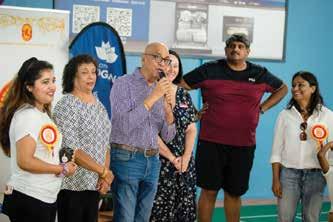

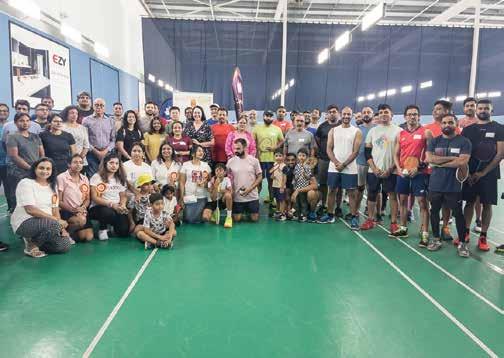
Ganga Prasad still Winning at Masters Games
Winners: Shilpa Shetty and Asha Shivalingaiah
Runners Up: Dhanya
Venkatesh and Priyanka
Mixed dOuBLes
Winners: Akansha Mishra and Sandy Gawankar
Runners: Dharamteja Mansingh & Mithali Chhotray

Any event of this magnitude is not a one man show, it definitely needs a whole tribe working towards it. There were some t amazing people backing us up and KSQ extended its heartfelt gratitude.
A special mention for the below volunteers who went above and beyond to make sure the event was a successful one.
Kannada Sangha
Queensland Inc. recently took pride in hosting its first ever Badminton Tournament 2023 on March 11 at Sky Badminton - Logan.

Any sporting event in a multicultural society like ours brings communities together, contributes positively to community identity and sense of place, promotes social interaction and inclusion, and plays an important role in providing opportunities for physical activity and improved health outcomes.
As always multicultural activities are highly supported and appreciated by our local Councils. KSQ is highly indebted to Logan city council and Cr. Teresa Lane
for the valuable support and encouragement.
KSQ was truly overwhelmed with all the support, enthusiasm and the sportsmanship attitude that it received on the day!
It was one of those hot, sticky summer weekends but that didn't stop the participants from sweating all the fun and team spirit out on the courts.
The day witnessed a massive 72 teams and 142 matches spread over 10 courts from 8:30 am to 5:30pm.
There were some amazing matches in all five categories and KSQ congratulated all the winners, runners and all the participants for putting on some wonderful matches
for the spectators.
Men's dOuBLes G2 cateGOry
Winners: Jibu Anthony and Arun Anthony runners up: Vijay Jayanna Kodlipet & Sridhar
Sid
Men's dOuBLes G1 cateGOry
Winners: Ishnoor Oberoi & Ajay runners up: Shashank Shastry and Harsha Jadhav
seniOrs Men's dOuBLes
Winners: Krishnan Menon & Gairik Majumdar runners: Vinay Gaind and Bijay Agarwal
WOMen's dOuBLes
Anupama Nanjappa, Asha Shivalingaiah, Aswath Kumar, Deepak, Dharanendra, Mahantesh Charantimath, Nagesh Madhan, Nithyashree Gowda, Raghu, Rajesh Gunuganti, Shilpa Shetty and Tejas Mahadevaiah.
Chetan, Malavika and Vijay were the major minds behind the success. Planning, execution and management were all flawless!!
KSQ is truly blessed to have its Sponsors backing up by sponsoring the Prize money. It had Doctors from the Kannada community coming forward to support the first health/fitness event. Thank you is an understatement.
• Dr. Harish Gowda - GP
GanGa Prasad of Redbank, Brisbane has been competing in Masters Games on numerous occasions locally and internationally. Recently he competed in Queensland State Masters Athletics Championships for 2023 in Brisbane and won 2 Gold, 4 silver and 4 Bronze in his age category.

Track and Field events are his speciality 100m,
- Ochre Medical Centre
Wyalla
• Dr. Mahesh Jayanna
- GastroenterologistNorthside Endoscopy Services
• Dr. Madhu Lakshmaiah
- GP - Smart clinics
Chermside/Mango Hill
• Dr. Niranjan Somashekar
- GP - Brewer Street Medical Centre
• Dr. Soman Elangovan
- Psychiatrist - Belmont Private Hospital
200m, 1500m, Shot Put, Javelin, Hammer Throw, Long Jump, Triple Jump, High Jump, Discus and Outdoor Pentathlon.
Ganga has won uncountable number of medals in his sporting career and still competing. All the best in his future championships.
Brisbane Indian Times Congratulates in all his achievements
• Dr. Vishnu SannarangappaEndocrinologist - Northside Endocrinology.
Food partners – Thank you for those delicious serves.
• Swaad Foods Gourmet.
• Balti Biryani - Holland Park
• Kalavara Indian Cuisine
It was definitely a day well spent for all the participants, organisers and spectators.
THE BRISBANE INDIAN TIMES, March, 2023 — 49 www.indiantimes.com.au Call: (07) 3192 5188
nominations now open for the 2023 Queensland Volunteering awards


durinG National Volunteer Week 15-21
May 2023, volunteers from all over Queensland will be recognised at the Queensland Volunteering Awards at Brisbane City Hall. In a year that continues to see so much uncertainty with the continued disruption of COVID-19, devastating natural disasters and rising costs of living, the one thing Queenslanders have been able to count on is the selfless generosity, hard work and commitment of our extraordinary volunteers who have worked tirelessly to support their communities.
Queensland’s volunteers have always been the life force of their communities, extending helping hands and fostering vital human connections that give hope and meaning to the lives of others. Despite the fall in volunteering in formal settings, informal volunteering continues to thrive, often hiding in the shadows of sporting clubs, schools and charities.
The Queensland Volunteering Awards acknowledge and honour the astonishing contribution and spirit of service of all Queensland volunteers and volunteer involving organisations. The Awards are presented across six categories:
• Queensland Volunteer of the Year Award
• Queensland Youth Volunteer of the Year Award
• Queensland Lifetime Contribution to Volunteering Award
• Queensland Excellence in Volunteer Management Award
• Queensland
Volunteering Impact Award
• Queensland Corporate Volunteering Award
Volunteering Queensland is privileged to present the Awards and we want to recognise the contributions from each and every region of Queensland. We also recognise that one of Queensland's strengths is its diversity and the collective contribution of all its citizens. We therefore welcome and encourage nominations from all members and sectors of the community.
Volunteering Queensland
CEO Mara Basanovic said, “The power and spirit of volunteering is alive and well across Queensland and evidenced every day. Queenslanders are generous, compassionate, and supportive of one another and their local and wider communities.”
To nominate, visit the Volunteering Queensland website.
aBOut vOLunteerinG
QueensLand
We are the state peak body we are solely
dedicated to advancing and promoting volunteering for the economic, social, cultural and environmental wellbeing of Queensland.
Our work is vital to ensuring volunteer involving organisations can engage, manage and retain the strong, effective volunteer workforce necessary to advance their mission and cause. We support volunteer participation that is inclusive, transformative, flexible and meaningful. We inform policy, good practice, research and
o ur work i S vital to en S uring volunteer involving organi S ation S can engage, manage and retain the S trong, effective volunteer workforce nece SS ary to advance their mi SS ion and cau S e. w e S upport volunteer participation that i S inclu S ive, tran S formative, flexi B le and meaningful. w e inform policy, good practice, re S earch and development, regulation and deci S ion-making that S upportS the S u S taina B ility and advancement of volunteering.
development, regulation and decision-making that supports the sustainability and advancement of
volunteering.
We actively campaign that investing in volunteering is fundamental to the continued prosperity of Queensland. The volunteering industry is a vital force that fuels the economy, connects and enriches the lives of Queenslanders, builds social and cultural value, and protects the environment. Find out more at volunteeringqld.org.au.
Thinking about getting involved?
Volunteering has immense benefits for volunteers and the individuals, families, and communities they serve. Not sure how you can help, or what you would like to do? Volunteering Queensland can help. We have a multitude of diverse volunteering opportunities on our website. Visit Volunteering Opportunities – Volunteering Queensland (volunteeringqld.org.au)
new employer guide set to open doors for migrant engineers
• The engineering sector is experiencing nationwide skills and workforce shortages.
• People from migrant backgrounds with engineering qualifications are often not fully utilising their skills.
• The Queensland Government, in partnership with Engineers Australia and Consult Australia, developed Attracting and Retaining Engineers from Migrant Backgrounds: A Guide for Employers to help meet industry workforce shortages.
• The guide supports the Queensland Government’s approach to strengthening Queensland’s workforce through Good people. Good jobs: Queensland Workforce Strategy 2022-2032.
Queensland is on the hunt for skilled engineers to help fill available jobs and build a strong, diverse workforce.
Minister for Multicultural Affairs Leanne Linard today launched a new guide for employers to help address critical skill shortages in the state’s engineering sector, driven by significant investment in infrastructure and changing workforce demographics.
Attracting and Retaining Engineers from Migrant Backgrounds: A Guide for Employers was developed in partnership by the Queensland Government, Engineers Australia and Consult Australia.
Queensland is already experiencing one of its tightest labour markets, with the situation set to persist due to predicted economic growth and demand for skilled employees.
Quotes attributable to Minister for Multicultural Affairs Leanne Linard: “Engineering, like many professions, continues to
face significant nationwide labour and skills shortages,” Ms Linard said.
“We know there are many highly skilled Queenslanders from culturally and diverse backgrounds who, for a range of reasons, are not currently working in their field.
“This guide is focused on supporting employers to attract, and importantly retain and support engineers from migrant backgrounds living in Queensland or those who are willing to move interstate to help fill these gaps.
“We want to break down barriers by providing practical tips, advice and information for employers so they can better access the incredible pool of skills and knowledge available right here in Queensland.”
Quotes attributable to Minister for Employment and Small Business and
Minister for Training and Skills Development Di Farmer:
“Our Good people. Good jobs: Queensland Workforce Strategy 2022-2032 aims to connect Queenslanders with the work they want, and support employers to grow a more diverse workforce that can meet current and future workforce demands,” Minister Farmer said.
“Queenslanders from migrant and refugee backgrounds with engineering qualifications and skills can make significant contributions to businesses and can be part of the solution to workforce shortages currently being faced across the sector.
“It is critical we access all talent pools to meet industry workforce needs, and I’m excited that through this partnership we will see people with the right skills in the right job which is at the heart of any thriving Queensland industry.
“We know that jobs change lives and this partnership is not only supporting the state’s workforce and economy – it’s supporting our migrant communities to find meaningful work and a bright future here in Queensland.”
Quotes attributable to Engineers Australia General Manager Stacey Rawlings:
“The next decade is expected to bring significant investment in infrastructure projects and an ever-changing workforce demographic in Queensland,” Ms Rawlings said.
“We are proud to have partnered in the development of this guide which will support Queensland’s engineering sector to access local and global skills to meet the demands of today and long into the future,” she said.
Quotes attributable
to Consult Australia Queensland Manager Kristine Banks:
“This guide will help employers bridge the knowledge gap with practical strategies that will open doors to more skilled migrants who are not currently working in the occupation they are skilled in’,” Ms Banks said.
“We know there are increasing demands on our labour market – this tool will help us fill those gaps while proactively breaking barriers for our migrant communities.”
Further information:
Attracting and Retaining Engineers from Migrant Backgrounds: A Guide for Employers can be found online at www. cyjma.qld.gov.au/dcsyw/ multicultural-affairs/ programs-initiatives/ attracting-retainingengineers-migrantbackgrounds-guideemployers.
50 — THE BRISBANE INDIAN TIMES, March, 2023
PreMier's sPeeCH - Un international Women's Day lunch
PreMier and Minister for the Olympic and Paralympic Games
The Honourable Annastacia Palaszczuk
This week marks two years since Australian women showed the world what we’re made of.
A decade of escalating sexism brought women - and men - onto the streets in a way I will never forget.

Brittany Higgins.
Grace Tame.
You’ll recall the thenPrime Minister said we should be grateful no-one was shot.
A tin ear in a lead balloon.
All that frustration and anger carried through to the subsequent federal election that changed the electoral landscape, perhaps forever.
But I am here to tell you friends, in the words of another former Prime Minister and possibly one of this nation’s greatest leaders: maintain your rage.
Throughout history, the benefits gained by the marginalised have not come because of the generosity of their oppressors.
They have been hardfought for and won.
Internationally: at great risk and cost.
aFGHanistan
In Afghanistan, 35 women and girls were killed when their school was bombed last September.
This is 10 years after Taliban gunmen shot Malala Yousafzai for the crime of speaking up about the right of girls to be educated.
In 2021, the Afghan Women’s Affairs Ministry was replaced with the Ministry of the Propagation of Virtue.
It instantly:
• ordered women to cover their faces in public
• Halted the issuing
Discussion paper open on Queensland’s CTP insurance scheme
Treasurer and Minister for Trade and Investment
The Honourable Cameron Dick
• Discussion paper out on Queensland’s CTP scheme
• Focused on sustainability of Queensland insurers with no impact on drivers
• Supports Queensland’s status as home to the most affordable CTP scheme in mainland Australia
of drivers’ licences to women and ruled they could only use public transport if accompanied by a man and if they sit behind a curtainedoff section of the bus
• Banned women from public parks
• Instructed women employed in the Finance Ministry to send male relatives to replace them
For their own safety, their protests, including the basic human right of allowing girls to go to school, can only be seen using the anonymity of social media.
iran
In Iran, decades of resentment and repression exploded last September after the arrest and death of 22 year old Mahsa Amini.
Mahsa was killed for displaying a few strands of hair outside her hijab.
Despite living under one of the most repressive regimes on the planet, thousands of women burned their hijabs.
The chant of ‘Women Life Freedom’ continues to defy authorities there and, is now being echoed in Afghanistan.
Although life here is nowhere near the same, it is
a cause we too should take up because wherever women are denied basic human rights ALL women should join the fight.
I am supposed to use these brief minutes addressing today’s theme: Cracking the Code.
In it I could tell you of:
• The free TAFE programs we offer women and unpaid carers to get back into the workforce
• The $20,000 we give employers to employ disadvantaged workers or
• The 34,000 women who received government assistance to get back into the workforce or
• The women who make up more than 50% of government boards and senior roles including the Director General of my own Department of Premier and Cabinet
I could even highlight to you that, in Queensland, the highest offices of Governor, Premier, Chief Justice and Police Commissioner are, for the first time ever, all women.
But I imagine none of that matters much to a single mother trying to raise her children on the wrong side of
advantage.
Or to those in Afghanistan and Iran.
No. Cracking the Code to Equality means demanding it.
There can be no equality until ALL women are equal and free.
Governments, especially one lead by a woman, do what we can but we must summon and continue to summon the activism that drew us to the streets two years ago.
As Maya Angelou says: first gain the strength to stand up for yourself, then use it to stand up for others.
For First Nations Peoples.
For victims of domestic and family violence.
For the underpaid and overworked.
For people with disabilities.
For Carers.
For the Aged.
For a Voice.
For Afghanistan.
For Iran.
Zan. Zen-de-gee. Azadee.
Women.
Life.
Freedom. Maintain Your Rage.
Queensland’s Motor Accident Insurance Commission has released an industry discussion paper on the state’s compulsory third party insurance scheme to ensure it continues to deliver ongoing affordability and fairness.
The review is focused on identifying opportunities to improve the scheme’s sustainability and will not consider any changes to the CTP scheme’s premium setting process or compensation benefits for people who are injured.
Queensland’s CTP insurance scheme is the most affordable in mainland Australia and delivers fair and timely compensation and rehabilitation support to people injured in road crashes through no fault of their own.
This is the first review of the CTP insurance scheme since 2016.
Quotes attributable to the Treasurer and Minister for Trade and Investment Cameron Dick:
“Queensland has the most affordable CTP
scheme in Australia, and it’s important the government keeps it that way, by undertaking periodic reviews.
“CTP is clearly delivering for Queensland drivers but for its longterm health we need to make sure it is sustainable for insurers as well.
“We’re looking to here from any industry participants or other stakeholder with ideas about how things can be done better.
“The Palaszczuk Government is committed to ensuring insurance premiums remain affordable for Queensland motor vehicle owners.
“Queenslanders can be assured that the setting of premiums and compensation benefits will be untouched by this review process.”
The discussion paper on the 2023 Review of Queensland’s Compulsory Third Party insurance scheme is available on the MAIC website, with submissions closing at 5pm on Friday 21st April 2023.
BacKGrOund:
Queensland’s Motor Accident Insurance Commission (MAIC) has regulatory oversight of the Queensland compulsory third party insurance scheme.
The Scheme delivers compensation benefits for people who are injured in motor vehicle accidents through no fault of their own, while also offering unlimited legal liability protection to 4.68 million registered vehicle owners in Queensland.
logan Hospital hosts inaugural Careers Fair to showcase job opportunities

Minister for Health and ambulance services
the Honourable yvette d'ath
• 1500 jobs on offer over the next two years at Logan Hospital
• Palaszczuk Government invests over $1 billion into Logan Hospital Expansion projects
• Expansion to deliver 318 additional beds and treatment spaces by 2026
• Inaugural Logan Hospital Careers Fair on 4 March to help recruit staff to new roles
The first stage of a $1 billion Palaszczuk Government investment into Logan Hospital will create 1500 clinical and nonclinical jobs over the next two years as 206 new beds and treatment spaces come online.
An inaugural Logan Hospital Careers Fair held today gave hundreds of Logan residents the chance to speak with current staff about the roles on offer and
how to register their interest.
Logan Hospital serves one of Queensland’s largest growth corridors meaning demand for health services continues to rise.
The $460 million Stage 1 Expansion project will deliver 206 additional beds and treatment spaces at Logan Hospital, and an additional 112 beds will be delivered by 2026 as part of the $530 million Stage 2 Expansion. This is in addition to the refurbishment and expansion of maternity services which is continuing.
More information about job opportunities can be found at LoganHospitalCareers.com.
au Quotes attributable to Minister for Health and Ambulance Services, Yvette D’Ath

“With the growth of the hospital over the coming years, this is a fantastic opportunity for anyone wanting a job in healthcare.”
“These 1500 new jobs, a 30 per cent increase on the current number of healthcare workers, are
a result of this record $1 billion-plus investment into Logan Hospital by the Palaszczuk Government.”
“You can’t invest in capital expansion projects in health and not invest in staff, so I commend the Metro South HHS for taking this innovative approach to entice locals to look at careers with their local health service.”
“One of the key strategies to deal with the global shortage of healthcare workers is to grow our own. That’s why days like today go along way in encouraging people to consider a career in health.”
“Logan Hospital is already home to Queensland’s third busiest emergency department that provided care to more than 110,000 patients last year as well as over 89,000 inpatient admissions.”
Quotes attributable to Metro South Health Board Chair, Janine Walker AM
“This is a chance for
people to become part of Logan Hospital at the most exciting time in its 33-year history.”
“The hospital is an integral part of the Logan community and holds a special place in my heart.”
“The spirit and commitment of Logan Hospital staff is second to none, and I hope we can welcome even more passionate people to the team to care for the local community.”
“I hope anyone looking for a career in healthcare makes the most of this wonderful opportunity.”
Quotes attributable to Member for Waterford, Shannon Fentiman
“Logan is a wonderful place to live and work, and one of the fastest growing communities in Queensland.”
“We need doctors, nurses, allied health professionals, cleaners, wardies, food services people – we need them all.”
“Logan Hospital is currently one of our region’s biggest employers, and I’m so excited by this announcement to recruit 1,500 more.”
“Logan Hospital is also a world-class teaching and research hospital, providing opportunities in specialist services like acute medicine, surgery, rehabilitation, cardiology, orthopaedics, renal medicine and maternity.”
Quotes attributable to Member for Logan, Linus Power
“This is really an opportunity of a lifetime to join a world-class team of health and support professionals.”
“It is important that anyone interested in one of these roles at Logan Hospital keep their eye on Smart Jobs or visit the Logan Hospital Careers website at LoganHospitalCareers.com. au where you can register for job updates.”
THE BRISBANE INDIAN TIMES, March, 2023 — 51 www.indiantimes.com.au Call: (07) 3192 5188
Wishing you a colourful and joyousHoli















52 — THE BRISBANE INDIAN TIMES, March, 2023 07 3344 2622 graham.perrett.mp@aph.gov.au Suite 106 Sunnybank Times Square 250 McCullough St, Sunnybank GrahamPerrettMp graham.perrett.mp
