
Canada’s voice for biotechnology / Le porte-parole canadien de la biotechnologie 43136012PM 2019BioVectra Inc. announces a $144.6 million expansion project / BioVectra Inc. annonce un projet d’expansion de 144,6 M$ » page 24 A Progressive View on Developing Canada’s Leadership Expertise / Une vision moderne de la mise en place d’une expertise en gestion au Canada » page 72 Spring Printemps/ biotech.ca BIONATION: CAPITALIZING ON CANADIAN INGENUITY BIONATION : MISER SUR LE SAVOIR-FAIRE CANADIEN Canada’s voice for biotechnology / Le porte-parole canadien de la biotechnologie 043136PM12 Fall Automne/ biotech.ca Ecosystem: OmniaBio brings biomanufacturing muscle to Ontario Ecosystème : OmniaBio donne un coup d’accélérateur à la bioproduction en Ontario page 36 BIONATION: The potential of health data and artificial intelligence to strengthen our healthcare system BIONATION : Les données sur la santé et l’intelligence artificielle à la rescousse de notre système de santé page 30


To find out more about Takeda and our commitment to Canadians, visit www.takeda.com/en-ca.
Better Health , B righter Future
will always be unwavering in our commitment to bring better health and a brighter future to Canadians through leading innovations in gastroenterology, oncology, neuroscience, and rare diseases.
Driven by passion to realize this goal, Takeda has been providing patients with innovative life-changing medicines since our founding in Takeda1781.
There is more that we can do to help improve people's lives.


CHECKPOINT INHIBITORS SUCH AS ANTI-PD1 ANTIBODIES HAVE TRIGGERED A REVOLUTION IN CANCER THERAPY BUT BENEFIT ONLY A MINORITY OF PATIENTS. The goal of cancer immunotherapy is to activate a patient’s immune system to eliminate cancer cells, mainly by activating T cells, which are major players in both their recognition and killing. But how do T cells recognize cancer cells while sparing normal cells? To move beyond non-specific checkpoint inhibitors, which can activate T cell responses against normal tissues as well as cancer cells, understanding the best cancer-specific targets is essential for progress towards the dream of effective yet safe and well-tolerated immunotherapies. The current reigning paradigm is that T cells target antigens originating from mutations in the DNA of cancer cells. While some tumours have recurrent shared “driver” mutations, the great majority of cancer mutations are considered random “passengers”, which differ radically between patients. This heterogeneity underlies the current focus on developing personalised therapeutic vaccines, which brings significant logistical and cost challenges and where success is entirely dependent on making the right prediction as to which algorithm-selected antigens are presented to the immune system by cancer cells.
Epitopea’s innovative Cryptigen™ TSA discovery platform uses immunopetidomics, mass spectrometry, genomics, and bioinformatics to find shared, non-mutated, aberrantlyexpressed TSAs, hidden in cancer’s “junk” DNA. The platform was developed by Professors Claude Perreault and Pierre Thibault at the Institute for Research in Immunology and Cancer (IRIC) at Université de Montréal (UdeM). Epitopea has licensed the platform and an extensive library of Cryptigen™ TSAs from UdeM, which form the foundation of the company’s efforts to develop transformational off the shelf cancer immunotherapies.
Epitopea believes an untapped source of cancer specific antigens may enable off-the-shelf therapeutic vaccines: non-mutated peptides derived from so-called “junk” DNA. Recent work by our scientific founders has revealed that introns, intergenic regions, and endogenous retroviral elements can be specifically transcribed and translated in cancers and encode antigens recognised by the T cell system as non-self. For some malignancies, the load of these junk-DNA-derived tumour-specific antigens (TSAs), which we term Cryptigen™ TSAs, influences disease
Epitopea: Turning “junk” DNA into valuable cancer therapies
evolution: patients whose tumours have high levels of Cryptigen™ TSAs have significantly better prognosis than patients whose tumours have low levels. Cryptigen™ TSAs thus have considerable promise as targets for the next generation of cancer immunotherapy.

4 Fall | Automne 2022 BIOTECanada
According to Jon Moore, Epitopea’s CEO, “Epitopea aims to be a world-leading cancer immunotherapeutics company that changes the paradigm of the field of immunotherapy. Empirical evidence indicates that Cryptigen™ TSAs represent the dominant opportunity for specific recognition of cancers by T cells. With the right targets in hand, we expect to get the right results in the
Launched in December 2021 with a seed round of $17M from a syndicate of world-class investors including Advent Life Sciences, CTI Life Sciences, Cambridge Innovation Capital, and the Fonds de solidarité FTQ, Epitopea is a trans-Atlantic company with operations in Montreal and in Cambridge (UK) that is building a pipeline of off-theshelf immunotherapies, including cancer vaccines, to fully exploit these Cryptigen™ TSAs.
clinic.”www.epitopea.com

30 TheBIONATIONpotential of health data and artificial intelligence to strengthen our healthcare system
Le réseau foodtech et agtech du canada recherche de nouveaux commanditaires de l’innovation durable by/par Lilian Schaer


26 VACCINE NEWS/ DU NOUVEAU, CÔTÉ VACCINS

22 CanadianNOUVELLESNEWS/Biotech Industry Shines on International Stage in San Diego during BIO International Convention

Interview with Brigitte Nolet, President & CEO, Roche Canada Pharma/entrevue avec Brigitte Nolet, présidentedirectrice générale, Roche Canada Pharma
38 REGIONAL SPOTLIGHT/ RÉGION EN VEDETTE
9 MESSAGE FROM THE PRESIDENT AND CEO by Andrew Casey, BIOTECanada
L’industrie canadienne de la biotechnologie brille sur la scène internationale à San Diego, à l’occasion du congrès international BIO
Les données sur la santé et l’intelligence artificielle à la rescousse de notre système de santé
11 MESSAGE DU PRÉSIDENT ET CHEF DE LA DIRECTION par Andrew Casey,
OmniaBio donne un coup d’accélérateur à la bioproduction en Ontario by/par Nadine Lunt, BIOTECanada
Les provinces de l’Atlantique s’associent pour créer le Réseau d’essais cliniques de l’Atlantique
CONTENTS / TABLE DES MATIÈRES
muscle to Ontario
biotech.ca 5
2212 3026
12SECTIONSDEPARTMENTSBIOTECanada/AGRICULTUREBioenterpriseCanadasupportssustainableinnovationtoadvanceclimateaction/
ATLANTIC PROVINCES PARTNER TO CREATE ATLANTIC CLINICAL TRIALS NETWORK
Renforcer la capacité de fabrication du Canada en matière de vaccins pour protéger la santé humaine et animale!
36 biomanufacturingOmniaBioECOSYSTEMSbrings
Strengthening Canada’s vaccine manufacturing capacity to protect human and animal health
© 2022 BIOTECanada insights. Any errors, omissions or opinions found in this magazine should not be attributed to the publisher. The authors, the publisher and the collabo rating organizations will not assume any responsibility for commercial loss due to business decisions made based on the information contained in this magazine. No part of this publication may be reproduced, reprinted, stored in a re trieval system or transmitted in part or whole, in any form or by any means, electronic, mechanical, photocopying, re cording or otherwise, without the prior written consent of the publisher.
48SECTIONSTALENTWhydiverse,

fall / automne 2022 Published for/Publié pour :
1, rue Nicholas St., Suite/bureau 600 Ottawa, ON K1N 7B7 Tel: 613-230-5585 Fax: 613-563-8850 www.biotech.ca
© 2022 BIOTECanada insights. Aucune erreur ou omission décelée dans ce magazine ou aucune opinion qui y est ex primée ne doit être imputée à l’éditeur. Les auteurs, l’éditeur et les organismes qui ont collaboré à la publication rejettent toute responsabilité à l’égard des éventuelles pertes com merciales pouvant découler de décisions d’affaires prises à la lumière des renseignements contenus dans ce magazine. Il est interdit de reproduire, de réimprimer, d’emmagasiner dans un système de recherche documentaire ou de trans mettre cette publication en tout ou en partie, sous quelque forme ou par quelque moyen que ce soit (électronique, mé canique, photocopie, enregistrement ou autre), sans avoir obtenu au préalable le consentement écrit de l’éditeur.
Insights is grateful to the COVID-19 Emergency Support Fund for Cultural, Heritage and Sports administered through the Canada Periodical Fund, Special Measures for Journa lism, Department of Canadian Heritage/Insights remercie le Fonds de soutien d’urgence COVID-19 pour la culture, le pa trimoine et le sport, administré par le Fonds des périodiques canadiens, Mesures spéciales pour le journalisme, ministère du Patrimoine canadien.
TRANSLATION/TRADUCTION : Sophie PublishedCampbellby/Publié par : 55 Murray Street / Suite 108 Ottawa, Ontario K1N 5M3 www.gordongroup.com613-234-8468
Printed in Canada/Imprimé au Canada.
EDITOR IN CHIEF/RÉDACTRICE EN CHEF : Nadine Lunt
Inclusive companies are the right idea
Pleins feux sur la prochaine génération de scientifiques et d’entrepreneurs de talent

BIOTECanada’s BIONATION initiative was launched in the Spring of 2020 and has continued through the pandemic with virtual programming designed to showcase the various components of the ecosystem and their connectivity. Over that period, the COVID-19 pandemic offered an up-close learning opportunity of the Canadian biotech industry which has led to an increased awareness publicly and amongst policymakers regarding the value of the biotechnology industry and the important social and economic benefit of a robust domestic biotech ecosystem. In this context, BIONATION presents an important and timely opportunity to recognize the sectors’ importance as Canada rebuilds economically following the pandemic and looks to prepare for future health-related challenges.
by/par Beverley Moore, Jennifer Raoul, Chantal Saunders, Jennifer Ponton, and Zosia Zielinski.
BIONATION: CAPITALIZING ON CANADIAN INGENUITY BIONATION MISER SUR LE SAVOIR-FAIRE CANADIEN Fall bio ech Ecosystem: OmniaBio brings biomanufacturing muscle page 36 The potential of health data and artificial page 30
CREATIVE DIRECTEURDIRECTOR/DECRÉATION : Louise Casavant
6048
6 Fall | Automne 2022 BIOTECanada DEPARTMENTS /


Please recycle where facilities exist/ Veuillez recycler là où ce service existe.
L’initiative BIONATION de BIOTECanada a été lancée au printemps 2020 et s’est poursuivie tout au long de la pandémie avec une programmation virtuelle conçue pour présenter les diverses composantes de l’écosystème et leur connectivité. Au cours de cette période, la pandémie de COVID-19 a offert une occasion d’apprendre de près l’industrie canadienne de la biotechnologie, ce qui a conduit à une prise de conscience accrue du public et des décideurs concernant la valeur de l’industrie de la biotechnologie et l’important avantage social et économique d’une économie nationale robuste écosystème biotechnologique. Dans ce contexte, BIONATION présente une occasion importante et opportune de reconnaître l’importance des secteurs alors que le Canada se économiquementreconstruitaprès la pandémie et cherche à se préparer aux futurs défis liés à la santé.
Les organisations diversifiées et inclusives sont idéales by/par Rob Henderson, President and CEO/président et chef de la direction, BioTalent Canada
Return undeliverable Canadian addresses to: Retourner les numéros non distribuables à une adresse canadienne à : 55 Murray Street / Suite 108 Ottawa, Ontario K1N 5M3
Publication Mail Agreement #/ Numéro de convention de Poste-publication : #43136012
ON THE COVER / EN COUVERTURE
Aperçu des systèmes de réglementation des médicaments au Canada

DIRECTOR OF ADVERTISING SALES/ DIRECTEUR, VENTES PUBLICITAIRES : Stephan Pigeon
PROJECT DIRECTRICEMANAGER/DEPROJET : Danielle Valois
60 AnLEGALOverview of Available Regulatory Systems For a Drug in Canada
52 NextTALENTGeneration Canadian Scientific and Entrepreneurial Talent
Based on this platform, we will now be moving product candidates into the clinic that correct somatic mutations that accumulate through our lives and are responsible for many conditions including autoimmune diseases, cancer, and addiction.

Brad Thompson, Ph.D. Chairman, CEO and CTO
WYVERN PHARMACEUTICALS INC. (WYVERN) WAS FOUNDED FIVE YEARS AGO TO ANSWER A SINGLE QUESTION: can we capture most of the entire existing pharmaceutical market using gene therapy?

We just received our definitive proof of concept data that gives us the confidence to say we can replace, by using a viral vector based gene therapy platform, almost any small molecule or biologic based product that acts as an agonist or antagonist to a specific target. These products represent > USD 1T/y in worldwide sales. This is a clear example of a “big picture” investment. Until now, most of us did not believe we could do this with a single technology, so this is pretty daunting! Our institutional investor risk profile has dropped substantially as a result.
gains, interest earned on loans, and dividends). Most investors we deal with would rather keep more of the upside from their successful investments, and forgo the “rewards” for investing in failures. As a result, they seek jurisdictions where they can do so. Often now, our biotech industry follows them. If we wish to change this, the solution is straight forward. Drop all the loss carry forwards on failed investments, and the non-dilutive grants to industry, and, in return, levy a low constant tax on all forms of investment derived income.
Our financing route has been atypical for a Canadian company, particularly in light of this question we posed ourselves. For many years now, many of us have been raising capital to support various Canadian biotechnology companies. The majority of these funds are from nonCanadian sources, but much of the early stage, highest at-risk capital has come from Canadians in Canada. However, since 2014, this source has largely dried up. Oddly enough, there is plenty of Canadian money that has left the country being deployed to “big picture” ventures like Wyvern whose activities will be largely outside of Canada.Justthink about that fact for a minute. Canadian investors would rather move their capital offshore and invest it in ventures outside of Canada. Why? Part of the reason lies with increased geopolitical risk in Canada, which manifests itself as an anti-investor tax system. In Canada we reward investors for investing in high-risk companies that fail (loss carry forwards, “non-dilutive” funding from governments), and penalize them for investing in high-risk companies that succeed (excessive taxes on capital
biotech.ca 7
The Global Climate Crisis is a Health Crisis –Yet Engineering Biology Offers Solutions
An Interview with Bettina Hamelin, President and CEO, Ontario Genomics

Now, I am not a climate expert. Rather, I have made impacting and improving public health my life’s work over the past 30 years. Through this I have come to understand that only by tackling the broader determinants of health iii, like climate change, can we really ensure our health system doesn’t succumb to total crisis in the coming years.
What is on the line here are our basic human needs, safe homes, safe drinking water, sufficient food and clean air.
According to the World Health Organization, a quarter of million people are expected to die every year due to climate change between 2030 and 2050.
At the end of the day the economic benefits are ancillary to the urgent response Canada needs to take to address the climate crisis and what will soon be a global health crisis. By taking risks in new transformational domains and by innovating technologies that decrease or capture GHG emissions and reduce water and land use, we can nurture Canada’s innovation economy to create the jobs while ensuring Canadians and people all over the world can lead healthy lives.
At this point we have undeniable proof that the earth is heating up at an unprecedented rate. NASA’s climate scientists tracking the overall impact of climate change have documented nineteen of the world’s hottest years since 2000.i With global temperatures and sea levels rising, ice sheets melting and carbon dioxide levels increasing, these issues have exceeded simply being a concern of the environment to affecting the survival of people: increased mortality due to extreme weather events, morbidity from heat waves, malnutrition and disease susceptibility.ii
Investors around the world see massive opportunity here. By making products we need in transformative and sustainable ways, engineering biology has the power to offset some of the $2-4 billion/per year cost of global climate change as predicted by 2030. At the same time, we could be creating an industry in Canada akin to American successes like Gingko BioSciences, Perfect Day and Impossible Burger.
Engineering or synthetic biology is an innovation engine that uses biomass rather than petroleum-based inputs to create products that we need everyday. Examples include vaccines and medicines to prevent and treat diseases like COVID-19, foods like animal-free dairy and gelatin, and biodegradable plastics, fabrics and dyes. Consumer adoption of these products could reduce GHG emissions by as much as 85-97%.iv Urgent action is needed as there is currently a huge gap between trends and necessary carbon dioxide reduction to limit global warming to below 2°C by 2030.
8 Fall | Automne 2022 BIOTECanada
Today, Dr. Hamelin leads Ontario Genomics, an Ontariobased not-for-profit organization that catalyzes and supports the development of genomics-based technologies across multiple economic sectors for a genomics and engineering biology-driven bioeconomy. In her free time, Dr. Hamelin enjoys exploring nature and considers herself to be an outdoor enthusiast with a passion for environmental sustainability and innovation.
HOW CAN ENGINEERING BIOLOGY HELP?
Thoughtful partnerships, investment and transparent regulatory pathways are needed to convert our budding and growing engineering biology start-ups into successful growth companies that commercialize made in Canada IP right here at home.
i. https://climate.nasa.gov/ ii. https://www.ipcc.ch/report/ar6/wg2/ iii. perfect-day-protein/iv.laria%2C%20diarrhoea%20and%20heat%20stressclimate-change-and-health#:~:text=Key%20facts,mahttps://www.who.int/news-room/fact-sheets/detail/https://perfectday.com/blog/life-cycle-assessment-of-
BETTINA HAMELIN, PHARMD, EMBA HAS OVER 30 YEARS OF EXPERIENCE IN ACADEMIA, INDUSTRY, AND NOT-FOR PROFIT ORGANIZATIONS. She has held positions in biotech and pharmaceutical industries, including leadership positions at BioChem Pharma and Pfizer. Dr. Hamelin also has 10 years of academic research expertise as a tenured professor at Université Laval. Prior to her current role, she served as VP of NSERC’s Research Partnerships Directorate.
Canada’s pandemic-driven investment into the life sciences and bio-manufacturing sector and the bourgeoning genomics strategy are great gateways; however, engineering biology requires its own strategy and its own investment plan.
WHAT DOES CANADA NEED TO DO TO GET IN AND STAY IN THE GAME?
WHAT IS THE CONNECTION BETWEEN CLIMATE CHANGE AND HUMAN HEALTH?
MESSAGE FROM THE PRESIDENT AND CEO
by Andrew Casey, BIOTECanada
Combined, the Canadian biotech ecosystem presents a phenomenal foundation upon which to build. The upcoming BIONATION policy forum (September 28 and 29 in Ottawa) will recognize and celebrate the unique value of the Canadian biotech ecosystem. The in-person event will bring biotech industry leaders together with policymakers to showcase the biotech sector, the people, the potential, and its importance to the Canadian economy and society. The program will focus on areas of investment attraction, talent, and next-generation technology, looking at the innovations of today and how they are leading the solutions of tomorrow. Together, building on ecosystem success, BIONATION seeks to continue the dialogue and discover what is next for the partnerships between government and industry.
IT HAS BEEN TEN YEARS SINCE I JOINED THE CANADIAN BIOTECH SECTOR AS PRESIDENT & CEO OF BIOTECANADA. Before moving to BIOTECanada, as I contemplated my next career step, I identified two priorities for the industry in which I would next work, namely: the industry needed to be impactful, and present complex policy and advocacy challenges. The biotech sector has more than delivered on both priorities over the past ten years.

biotech.ca 9
At its core, biotechnology is the science of using living organisms and molecular biology develop technologiesto and products that help improve our lives and the health of our planet. While this has been done for thousands of years, the past several decades served to highlight how far the science has advanced and how vital the solutions of biotechnology are globally. As the world moves quickly to nine billion people, it is the innovative solutions the biotech sector delivers that will allow society to reduce its impact on the planet and provide humans with new ways to grow, manufacture, fuel, and heal. The solutions being developed by the innovators and companies of Canada’s biotech sector are truly game-changers for Canadians and the world more Pre-COVID,broadly.while the industry was understood and appreciated, it was not a major policy priority for government. While I wish we never had to experience the pandemic and certainly hope we never have to go through another, the two most recent years of the pandemic have served to amplify how incredible this sector is and how important it will be in the
event of a future pandemic or pandemic-like event. The highly effective COVID-19 vaccines and therapeutics the industry was able to develop relatively quickly have been instrumental in saving millions of lives and allowing society and the economy to return to a somewhat normal state. Importantly, as countries take steps to prepare for future pandemic-like challenges, there is now a significantly greater appreciation for the sector’s strategic importance. And while most of the attention has been on addressing COVID-19, the environmental challenges resulting from a changing and changed climate continue to grow unabated. Again, biotech innovation will be central to delivering solutions and providing game-changing solutions for the planet. Accordingly, the industry has moved on the policy priority scale from ‘nice to have’ to ‘mustThehave’.remarkable curiosity, imagination, and science of Canada’s biotech sector never cease to amaze and inspire. Moreover, the young minds now moving through our universities and colleges are a phenomenal strength and offer great optimism for what is to come. Canada is home to companies using shrews, asparagus, mosquitos, and apples as the genesis for life-saving drugs or new solutions to lessen our impact on the planet. And while the technologies themselves are fascinating, it is often the backgrounds and motivations of the individual scientists doing the research and making the discoveries, and the leaders driving the innovations forward, that are the most interesting and inspiring.
Contact us to help you enable sales growth and enhance the customer experience. 1-800-680-3839 • info@cpdn.ca • www.cpdn.ca CPDN provides consolidated,simple,direct and economical pharmaceutical distribution • Manufacturer-led versus Wholesale • Transparent Inventory Control • Nationwide next-day Delivery • Accurate Daily Sales Reporting • First Choice by Hospitals • Flexible service tailored to your needs IT’S TIME YOU TOOK BACK CONTROL OF YOUR SUPPLY CHAIN


D’ailleurs, alors que les pays agissent pour se préparer aux défis sanitaires de l’avenir, on mesure beaucoup mieux toute l’importance stratégique de notre secteur. De plus, alors que l’attention était tournée vers l’intervention face à la COVID-19, les défis d’un climat qui change et continuera de changer sont demeurés bien présents, et les innovations biotechnologiques seront donc également au cœur des solutions qui changeront la donne pour la planète. Ainsi, sur l’échelle des priorités, notre industrie est devenue un must.
médicaments salvateurs ou de solutions d’atténuation de notre empreinte environnementale. Toutefois, au-delà du caractère impressionnant des technologies, les éléments qui ont le plus grand intérêt et nous inspirent sont l’expérience et la motivation des scientifiques à l’origine de la recherchedéveloppement et des meneurs qui font progresser les innovations. Ensemble, les différents éléments de l’écosystème des biotechs constituent un fondement sur lequel bâtir.
Le forum stratégique BIONATION, qui aura lieu les 28 et 29 septembre à Ottawa, mettra en valeur et célébrera la valeur unique de l’écosystème canadien des biotechs. Les dirigeants de l’industrie et les décideurs se rassembleront en personne à cette occasion, qui servira de vitrine au secteur des biotechs et aux personnes qui la constituent. Son potentiel et son importance pour l’économie et la société canadiennes seront à l’honneur. Le programme sera axé sur les domaines porteurs en matière d’investissements, ainsi que sur les talents et les technologies de nouvelle génération; il permettra d’examiner les innovations récentes et ce qu’elles recèlent de promesses pour l’avenir. Ensemble, sur la base des réussites de l’écosystème, les membres de la BIONATION souhaitent poursuivre le dialogue et découvrir de quoi auront l’air les partenariats qui uniront demain les gouvernements et l’industrie.
La biotechnologie est une science selon laquelle on s’appuie sur le vivant et sur la biologie moléculaire pour mettre au point des technologies et produits qui améliorent la vie, ainsi que la santé de notre planète. Bien que l’on cherche à améliorer la vie depuis des millénaires, les dernières décennies ont été l’occasion pour le milieu scientifique de faire des pas de géants et pour le monde de constater le caractère essentiel des solutions qu’offre la biotechnologie à l’échelle mondiale. Au moment où la population mondiale approche des neuf milliards, ce sont les solutions novatrices du secteur des biotechs qui permettront à la société de réduire son empreinte environnementale et offriront aux humains de nouvelles façons de croître, de fabriquer les objets, de s’alimenter en ressources énergétiques et de guérir. Les solutions que mettent au point les innovateurs et les entreprises du secteur canadien des biotechs transforment la vie des Canadiens et, plus largement, du monde.Avant la pandémie de COVID-19, le gouvernement comprenait bien notre
par Andrew Casey, BIOTECanada
industrie et était sensible aux bienfaits qu’elle apportait, mais celle-ci ne représentait pas à ses yeux une grande priorité stratégique. J’aurais bien sûr préféré que cette pandémie ne survienne jamais et j’espère évidemment ne pas avoir à en vivre une autre, mais force est de constater que les deux dernières années ont révélé au monde la nature incroyable de notre secteur et l’importance qu’il aura advenant une nouvelle situation de type pandémique. C’est grâce aux vaccins et aux traitements hautement efficaces contre la COVID-19 mis au point par l’industrie dans un délai somme toute court que des millions de vies ont été épargnées et que la société et l’économie ont pu retrouver une certaine normalité.
MESSAGE DU PRÉSIDENT ET CHEF DE LA DIRECTION
La curiosité, l’imagination et le travail scientifique remarquables du secteur canadien des biotechs ne cessent de m’émerveiller et de m’inspirer. On peut de plus compter sur la force phénoménale que constituent les jeunes cerveaux actuellement sur les bancs de nos collèges et universités, et cela est une source d’optimisme. Le Canada compte des entreprises qui utilisent la musaraigne, l’asperge, le moustique (maringouin) ou la pomme comme matrice du développement de
Cela fait maintenant dix ans que j’ai rejoint le secteur des biotechs à titre de président et chef de la direction de BIOTECanada. Avant de passer à l’association, alors que je réfléchissais aux étapes suivantes de ma carrière, j’ai défini deux priorités concernant l’industrie pour laquelle j’allais œuvrer : d’une part, elle se devait de révéler tous les bienfaits qu’elle pouvait apporter et, d’autre part, elle présentait des défis complexes à relever sur le plan stratégique et de la représentation. Tant en ce qui concerne les bienfaits qu’en ce qui concerne les défis à relever, on peut dire que le secteur des biotechs a dépassé les attentes au cours de la dernière décennie.
biotech.ca 11
LE RÉSEAU FOODTECH ET AGTECH DU CANADA RECHERCHE DE NOUVEAUX COMMANDITAIRES DE L’INNOVATION DURABLE
WITH CLIMATE CHANGE BECOMING AN INCREASING PRIORITY FOR COUNTRIES AROUND THE WORLD, BIOENTERPRISE, Canada’s Food & Agri-Tech Engine, recently launched its sustainability initiative and new sustainable innovation sponsorship program.

« L’innovation influence tous les aspects de notre secteur, de la santé des sols au bien-être animal en passant par les bioproduits et les stratégies de réduction du gaspillage. Pour soutenir et faire progresser l’innovation durable sous toutes ses formes, nous avons besoin de partenaires diversifiés – des dirigeants d’entreprise, des innovateurs et des entreprises naissantes qui ont une
Seul accélérateur national axé sur le secteur agricole au Canada, Bioenterprise compte presque 20 ans d’expérience au service de l’industrie. Son réseau national et international d’établissements de recherche, d’universitaires, de mentors et d’experts, d’intervenants du gouvernement et d’acteurs de l’industrie aide les petites et moyennes entreprises du secteur, partout au pays, à connecter, à innover et à grandir.
12 Fall | Automne 2022 BIOTECanada agricultureagriculture
As Canada’s only national agri-focused accelerator, the organization has almost 20 years of industry experience and a national and international network of research institutions, academia, mentors and experts, government, and industry to help small and medium-sized businesses in the sector nationwide Connect, Innovate, and Grow.
Aramark, Bayer, BASF, AVAC Group, MNP, and the Grand River Agricultural Society are Bioenterprise Canada’s initial cohort of sustainable innovation partners.
Bioenterprise Canada supports sustainable innovation to advance climate action CANADA’S FOOD & AGRI-TECH ENGINE OPENS SUSTAINABILITY SPONSORSHIP OPPORTUNITIES
by/par Lilian Schaer
Aramark, Bayer, BASF, AVAC Group, MNP et la Grand River Agricultural Society forment la première cohorte de partenaires de l’innovation durable de Bioenterprise Canada. Ensemble, ces organisations aident à diriger les efforts du réseau en matière d’innovation durable afin de soutenir la volonté du Canada d’être un chef de file de la durabilité et de la sécurité alimentaires. Bioenterprise Canada recherche activement d’autres entreprises et organisations proactives et tournées vers l’avenir qui souhaitent mettre la main à la pâte.
À L’HEURE OÙ LE CHANGEMENT CLIMATIQUE EST UNE PRIORITÉ GRANDISSANTE POUR LES PAYS DU MONDE ENTIER, BIOENTERPRISE, le réseau foodtech et agtech du Canada, a lancé récemment son initiative de durabilité et un nouveau programme de commandite de l’innovation durable.
Bioenterprise Canada soutient l’innovation durable pour faire progresser les mesures de lutte contre les changements climatiques
Souvent, les entreprises naissantes ou de petite taille, comme bon nombre des innovateurs avec lesquels travaille Bioenterprise Canada, ne sont pas encore prêtes à fournir les
agricultureagriculture
is a global food service and facilities management company with a strong interest in sustainability, both in its internal operations and across
“Innovation is influencing all aspects of our sector from soil health and animal welfare to bio-based products and waste reduction strategies. To support and advance sustainable innovation of all kinds, we need partners of all kinds – from corporate leaders to innovators and start-ups who have a vision of the kind of future we want for our planet,” says Bioenterprise Canada CEO Dave Smardon. “We all want a better, more sustainable future and during this time of pivotal global change, we have a real opportunity to shape how we want to live, work and eat through sustainable innovation.”
They’ll also play key roles in helping to bring new innovative products to market and become connected to the Engine’s national network of businesses, advisors, and researchers to advance their own corporate sustainability initiatives.Aramark
vision du genre de futur que nous souhaitons pour notre planète », déclare le d’autresmettrontl’innovationcommanditairesBioenterprisel’initiativedurable.nourrirvivre,façonoccasionavonsl’échellechangementset,avenirNousCanada,généralprésident-directeurdeBioenterpriseDaveSmardon.«aspironstousàunmeilleuretdurableencettepériodederadicauxàplanétaire,nousunevéritabled’influencerladontnousvoulonstravailleretnousgrâceàl’innovation»DanslecadredededurabilitédeCanada,lesdeduréseauencommunavecentreprises
biotech.ca 13
foodtech et agtech des connaissances et de l’information au sujet des pratiques durables, participeront à des projets et à des programmes destinés à promouvoir les efforts mondiaux du Canada en matière de durabilité et de salubrité alimentaires, et s’attacheront à avoir des impacts positifs sur les enjeux sociaux.

Ils joueront aussi des rôles essentiels dans la commercialisation de nouveaux produits innovateurs et tisseront des liens avec le réseau national d’entreprises, de conseillers et de chercheurs de Bioenterprise pour faire avancer leurs propres initiatives d’entreprise en matière de durabilité.Aramark est une entreprise mondiale de services alimentaires et de gestion des installations qui attache une grande importance à la durabilité, tant dans ses activités internes que dans l’ensemble de sa chaîne d’approvisionnement. L’innovation aidera grandement l’entreprise à élargir ses objectifs et ses ambitions en matière de durabilité, et c’est ce qui a incité Aramark à devenir un commanditaire de l’innovation durable de Bioenterprise Canada.«Nous cherchions à déterminer comment Aramark peut soutenir les collectivités en amont grâce à son pouvoir d’achat, notamment au moyen de programmes alimentaires locaux », indique Michael Yarymowich, directeur du développement durable d’Aramark. « Au lieu d’attendre que les distributeurs nous disent ce qu’ils ont à offrir, nous voulons tisser des liens avec des étoiles montantes de l’innovation et cerner des technologies prometteuses. »
Collectively, they’re helping to drive the Engine’s sustainable innovation efforts in support of Canada’s drive to be a leader in food sustainability and food security. And Bioenterprise Canada is actively seeking additional proactive and forward-thinking businesses and organizations to sign on.
As part of Bioenterprise Canada’s sustainability initiative, the Engine’s innovation sponsors will be sharing and providing input with other food and agri-tech businesses on sustainable practices, participating in projects and programs to promote Canada’s global efforts in food sustainability and security, and actively engaging in positive impacts on social issues.
yourcompetitivelongerpractices,qualitywellalthoughstringentandmarketsexportsMuchprovidesservices(ESG)socialaroundmarketwhereconsultancy.accountingpartnerSustainableprovide.innovationMNPisanationalandbusinessHowandtomeetchangingexpectationsenvironmental,andgovernancecriteriaispartofthethecompanytoitsclients.ofCanada’sagri-foodaresoldintowhoseconsumersgovernmentsaremorearoundESG,sothecountryisknowntodayfortheofitsproductsandthatmaynobeenoughtobeinthefuture.“Ifyoudon’tknowwhatpracticesare,youneed
to evaluate them and figure out where to make change and how that change can make an impact,” says Edward Olson, Leader, Environment,
its entire supply chain. Innovation will play a key role in helping the company expand its sustainability goals and ambitions, which is what led them to becoming a Bioenterprise Canada sustainable innovation sponsor.

14 Fall | Automne 2022 BIOTECanada agricultureagriculture
Bioenterprise Canada mène des activités de développement durable de portée nationale. Notamment, elle fournit des services de commercialisation personnalisés aux entreprise foodtech et agtech innovantes, elle offre des programmes qui
“We’ve been trying to figure out how Aramark can proactively support communities through our purchasing power, like local food programs,” says Michael Yarymowich, Director of Sustainability at Aramark. “So instead of waiting for distributors to tell us what they have available, we want to be able to identify and connect with up-andcoming innovators and technologies that are coming into theOften,marketplace.”smallor emerging companies, like many of the innovators Bioenterprise Canada works with, aren’t yet ready to serve the big volumes that Aramark needs for its institutional clients and could use a helping hand from someone in the business, he adds. That could mean making an introduction to a food service distributor, helping with health and safety standard compliance, or offering advice on distribution channels – which Aramark is well positioned to
volumes élevés dont a besoin Aramark pour servir ses clients institutionnels et bénéficieraient d’une aide d’un acteur de l’industrie, ajoute-t-il. Il pourrait s’agir de la mise en relation avec un distributeur de services alimentaires, d’une aide au respect des normes de santé et de salubrité ou de conseils sur les canaux de distribution, aide qu’Aramark est bien placée pourLeoffrir.partenaire de l’innovation durable MNP est un cabinet national de comptabilité et de services-conseils aux entreprises. Entre autres, il aide ses clients à déterminer où et comment s’adapter aux attentes changeantes du marché en ce qui a trait aux critères environnementaux, sociaux et de gouvernance (ESG). Une grande partie des exportations agroalimentaires du Canada sont expédiées vers des marchés où les consommateurs et les gouvernements ont des exigences plutôt strictes en matière d’ESG. Ainsi, même si notre pays jouit aujourd’hui d’une bonne réputation pour la qualité de ses produits et de ses pratiques, cela ne suffira peut-être pas pour demeurer concurrentiel à l’avenir.«Sivous ne connaissez pas vos pratiques, vous devez les évaluer et déterminer dans quels domaines et de quelle manière ces changements peuvent avoir un impact », explique Edward Olson, gestionnaire, decultiverfairelestechnologiestechnologiesl’investissementconversationpouvoirfermevotrel’empreinteilchezsocialesenvironnementales,PratiquesetdegouvernanceMNP.«Pourcefaire,fautsavoirquelleestcarbonedeentreprise,delaàl’assiette,afindeavoiruneéclairéesurdanslespropresetlesvertes,etsurnouvellesfaçonsdedesaffaires,delaterreetd’éleveranimaux.»Commeorganisation,
In addition to its sustainability initiative, Bioenterprise Canada also supports a variety of Engine members across Canada with sustainable innovations with everything from mentorship and networking support to funding programs.
“In Canada, we’ve made already made great progress in reducing the carbon footprint of our food and agriculture production, and innovation gives us the opportunity to do even more to help reach the federal government’s goal of net-zero emissions by 2050,” adds Smardon. “We’re really excited about the potential that the start-ups and entrepreneurs we work with have to make impactful, positive change in our sector, our country, and in some cases even globally.”
Dans une optique à plus long terme, Bioenterprise Canada est en train de mettre sur pied un consortium de l’innovation durable (S10) composé de partisans qui, espère-t-on, combleront un vide connu dans l’écosystème agroalimentaire en mettant en contact de grandes sociétés et des entreprises en démarrage et en croissance qui ont développé des innovations durables. L’objectif est d’établir une base encore plus solide pour la durabilité environnementale dans les secteurs foodtech et agtech.
Ground Up Eco-Ventures, based in Okotoks, Alberta, is one example. The start-up upcycles used coffee grinds and spent grains from cafés and breweries super flours, healthy baking mixes, and sustainable essential oils and fatty acids. The company just recently beat out more than 40 other applicants to win a gold award at the 14th annual international SIAL Innovation competition for its unique circular economy approach to reusing waste.
To learn more about the Engine’s sustainable innovation commitment and examples of novel, sustainable innovations its programs support, or to become a Bioenterprise sustainable innovation sponsor, visit https://bioenterprise.ca/sustainability/ or contact Carla Berquó, carla.berquo@bioenterprise.ca or 519.821.2960 ext. 205 / 1.866.464.4524.
Social and Governance at MNP. “That means knowing what that carbon footprint is from field to plate in your business so you can have an educated conversation around investing in clean tech and green tech, and new approaches to how we do business, grow crops and raise livestock.”Asanorganization, Bioenterprise Canada’s sustainability activities take a national focus. This includes individualized commercialization services for innovative food and agri-tech companies, programming that supports sustainable products and cleantech solutions, encouraging collaboration between industry experts, accelerators, and research institutions, and taking an active role in educational events and public discussions around climate action.
En plus de son initiative en matière de durabilité, Bioenterprise Canada aide un éventail de membres partout au pays à perfectionner leurs innovations durables en fournissant du mentorat, de l’aide au réseautage et des programmes de financement.
agricultureagriculture
Ground Up Eco-Ventures, à Okotoks, en Alberta, en est un exemple. Cette jeune entreprise suprarecycle le marc de café et les résidus de grains provenant de cafés et de brasseries en superfarines, en mélanges pour pâtisseries saines ainsi qu’en huiles essentielles et en acides gras durables. L’entreprise vient de devancer plus de 40 autres candidats et de remporter l’or au quatorzième concours annuel international SIAL Innovation pour son approche unique fondée sur l’économie circulaire en matière de réutilisation desPourdéchets.enapprendre davantage au sujet de l’engagement de Bioenterprise envers l’innovation durable et pour obtenir des exemples d’innovations durables soutenues par les programmes du réseau, ou pour devenir commanditaire de l’innovation durable de Bioenterprise, veuillez consulter le site Web https://bioenterprise.ca/fr/innovation-durable/. Vous pouvez aussi communiquer avec Carla Berquó en envoyant un courriel à l’adresse carla.berquo@bioenterprise. ca ou en composant le 519-821-2960 (poste 205) ou le 1 866 464-4524.
soutiennent l’élaboration de produits durables et de solutions technologiques propres, elle encourage la collaboration entre les experts de l’industrie, les accélérateurs et les établissements de recherche, et elle joue un rôle actif lors d’événements pédagogiques et de discussions publiques entourant les mesures de lutte contre les changements climatiques.«AuCanada, nous avons déjà accompli des progrès considérables dans la réduction de l’empreinte carbone de notre production alimentaire et agricole, et l’innovation nous donne l’occasion d’en faire encore plus pour contribuer à l’atteinte de l’objectif de carboneutralité du gouvernement fédéral d’ici 2050, ajoute M. Smardon. Nous sommes très enthousiastes à propos de la capacité des jeunes entreprises et des entrepreneurs avec lesquels nous travaillons d’apporter un changement percutant et positif dans notre secteur, notre pays et, dans certains cas, à l’échelle mondiale. »
Longer term, Bioenterprise Canada is building a Sustainable Innovation Consortium (S10) of supporters that the organization hopes will fill a known gap in the agri-food innovation ecosystem by connecting large corporations with start-ups and scale-ups who have sustainable innovation developments. The goal is to create a stronger foundation for environmental sustainability in the food and agri-tech sectors.
LE 15 JUIN 2022, LE MINISTRE DE L’INNOVATION, DES SCIENCES ET DE L’INDUSTRIE, FRANÇOIS-PHILIPPE CHAMPAGNE, a déposé le projet de loi C-27 : la Loi sur la mise en œuvre de la Charte du numérique. Le projet de loi C-27 vise à moderniser le cadre juridique de la protection de la vie privée et des données au Canada et fait suite au projet de loi 64 du Québec qui a été promulgué en septembre 2021.
16 Fall | Automne 2022 BIOTECanada
Has Canada found the right balance with the new federal Bill C-27: Digital Charter Implementation Act?

Si nous regardons l’Europe, une forte protection des données a été développée dans l’UE grâce au cadre juridique du règlement général de protection des données (RGPD), commun à ses 27 pays membres. Le RGPD a ouvert la voie à la création de l’Espace européen des données de santé (EHDS). Selon la Commission européenne, « L’EHDS permettra à l’Union de métamorphoser la manière dont les soins de santé sont dispensés aux citoyens de toute l’Europe. Il donnera aux citoyens le pouvoir de contrôler et d’utiliser leurs données de santé, tant dans leur pays d’origine que dans
ON JUNE 15, 2022, THE MINISTER OF INNOVATION, SCIENCE AND INDUSTRY, FRANÇOIS-PHILIPPE CHAMPAGNE , introduced Bill C-27: the Digital Charter Implementation Act. Bill C-27 seeks to modernize the privacy and data protection legal framework in Canada and it follows Quebec’s Bill 64 which was enacted in September 2021.Healthcare-related research is increasingly driven by analyses that draw from real-world evidence to reveal the effectiveness of treatments beyond the clinical trial phase. The success of that approach is predicated not only on the availability of the necessary data from various sources within the relevant healthcare system, but on the ability to analyse data across different healthcare systems. If Canada is to participate meaningfully in this new frontier of healthcare research, it will be vital that our privacy and data protection regimes not only continue to prioritize responsible data access, but also take into account the multi-jurisdictional nature of healthcare research. It is important that Canada maintain a regime that is conducive to data flows and cooperation with stakeholders in the United States, Europe, and around the world.
Le Canada a-t-il trouvé le bon équilibre avec le nouveau projet de loi fédéral C-27 : Loi sur la mise en œuvre de la Charte du numérique ?
La recherche liée aux soins de santé est de plus en plus guidée par des analyses qui s’appuient sur des preuves du monde réel pour révéler l’efficacité des traitements au-delà de la phase d’essai clinique. Le succès de cette approche repose non seulement sur la disponibilité des données nécessaires provenant de diverses sources au sein du système de santé concerné, mais sur la capacité d’analyser les données entre différents systèmes de santé. Si le Canada veut participer de manière significative à cette nouvelle frontière de la recherche en santé, il sera essentiel que nos régimes de protection de la vie privée et des données continuent non seulement de prioriser l’accès responsable aux données, mais tiennent également compte de la nature multi-juridictionnelle de la recherche en santé. Il est important que le Canada maintienne un régime propice aux flux de données et à la coopération avec les intervenants aux États-Unis, en Europe et dans le monde.
by Francois Laflamme, Sr. Director, Government Relations & Public Affairs, IQVIA Canada par François Laflamme, Directeur principal, Affaires gouvernementales et relations publiques, IQVIA Canada
If we look at Europe, strong data privacy has been developed in the EU through the General Data Protection Regulation (GDPR) legal framework, common to its 27 country members
Francois Laflamme
a démontré qu’il est essentiel que le Canada demeure un acteur actif et compétitif dans le domaine des sciences de la vie. Cela comprend l’élaboration d’un régime de confidentialité qui n’étouffe ni la recherche et l’innovation locales, ni un obstacle à l’harmonisation de la recherche en soins de santé au Canada avec les efforts d’autres juridictions. Pour réussir à atteindre ses objectifs, le régime de protection des données du Canada devrait viser à refléter ce sens de l’équilibre, de ses principes fondamentaux sous-jacents à sa portée et, en fin de compte, à son application. La recherche médicale ne peut pas progresser efficacement sans un accès à une quantité et une granularité suffisantes de données à partir desquelles tirer des enseignements, et il existe des preuves solides suggérant que l’accès à de telles données pour la recherche médicale s’inscrit confortablement dans les « objectifs qu’une personne raisonnable considérerait comme appropriés.»1 En tant que tel, nous suggérons qu’il n’est pas intrinsèquement difficile d’identifier les domaines dans lesquels la Loi sur la mise en œuvre de la Charte du numérique peut être améliorée afin de bénéficier davantage aux intérêts des individus et des organisations commerciales sans compromettre la sécurité ou la confidentialité des données.
If Canada is to participate meaningfully in this new frontier of healthcare research, it will be vital that our privacy and data protection regimes not only continue to prioritize responsible data access, but also take into account the multi-jurisdictional nature of healthcare research.
d’autres États membres. Il favorisera un véritable marché unique des produits et services de santé numérique, et il apportera un cadre cohérent, fiable et efficace pour l’utilisation des données de santé à des fins de recherche, d’innovation, d’élaboration des politiques et de réglementation, tout en garantissant le plein respect des normes élevées de l’UE en matière de protection des données. »
Si le Canada veut participer de manière significative à cette nouvelle frontière de la recherche en santé, il sera essentiel que nos régimes de protection de la vie privée et des données continuent non seulement de prioriser l’accès responsable aux données, mais tiennent également compte de la nature multi-juridictionnelle de la recherche enLasanté.COVID-19
remain an active and competitive player in life sciences. This includes the elaboration of a privacy regime that is neither stifling to local research and innovation, nor an obstacle to the harmonization of healthcare research in Canada with efforts in other jurisdictions. To successfully achieve its goals, Canada’s data protection regime should aim to reflect that sense of balance, from its underlying core principles to its scope, and ultimately, to its application. Medical research cannot advance effectively without access to a sufficient quantity and granularity of data from which to draw insights, and there is strong evidence to suggest that access to such data for medical research fits comfortably within the “purposes that a reasonable person would consider appropriate”.1 As such, we suggest that it is not inherently difficult to identify areas in which the Digital Charter Implementation Act can be improved in order to further benefit the interest of both individuals and commercial organizations without compromising data security or privacy.
1. Près de 80 % des répondants à un sondage Léger ont déclaré qu’ils seraient prêts à permettre aux chercheurs d’accéder à leurs données de santé, tant qu’ils ne les identifieraient pas : Marie-Claude Malboeuf, « Les Québécois prêts à partager leurs données de santé », La Presse, le 5 décembre 2021.
If we look at Europe, strong data privacy has been developed in the EU through the General Data Protection Regulation (GDPR) legal framework, common to its 27 country members. The GPDR paved the way for the creation of the European Health Data Space (EHDS). According to the European Commission, “The EHDS will help the EU to achieve a quantum leap forward in the way healthcare is provided to people across Europe. It will empower people to control and utilise their health data in their home country or in other Member States. It fosters a genuine single market for digital health services and products. And it offers a consistent, trustworthy and efficient framework to use health data for research, innovation, policy-making and regulatory activities, while ensuring full compliance with the EU’s high data protectionCOVID-19standards.”demonstrated that it is vital that Canada
1. Nearly 80 percent of respondents to a Léger survey said they would be willing to allow researchers to access their health data, as long as it did not identify them: Marie-Claude Malboeuf, « Les Québécois prêts à partager leurs données de santé », La Presse, December 5, 2021.
biotech.ca 17
« Seagen est déterminée à découvrir, développer et commercialiser des médicaments anticancéreux transformateurs qui améliorent considérablement la vie des Canadiens », déclare Sandra Heller, directrice générale de Seagen Canada. « Nous avons été les premiers à proposer des thérapies à base de conjugués anticorps-médicaments (CAM) pour le cancer, une technologie nouvelle génération qui exploite le pouvoir de ciblage des anticorps pour délivrer des médicaments directement à la tumeur. »
Aujourd’hui, la technologie CAM est utilisée pour traiter plusieurs types de tumeurs et reste à la pointe des développements cliniques en oncologie. En parallèle, Seagen est passée du statut de société ne proposant qu’un seul produit à celui de leader proposant plusieurs thérapies ciblées pour divers cancers.
“Seagen has an unwavering commitment to discover, develop and commercialize transformative cancer medicines that make a meaningful difference to the lives of Canadians,” says Sandra Heller, Seagen Canada’s General Manager. “We pioneered the first in a new generation of antibody-drug conjugate (ADC) therapies for cancer, a technology that harnesses the targeting power of antibodies to deliver drugs directly to the tumour.”
SEAGEN EST RELATIVEMENT NOUVELLE DANS L’INDUSTRIE CANADIENNE DE LA BIOTECHNOLOGIE , mais depuis plus de 20 ans, la société se concentre sur la mise au point de thérapies innovantes et ciblées pour traiter certaines des formes de cancer les plus difficiles à traiter et les plus avancées.
ADDRESSING A GROWING UNMET NEED

Si les progrès en matière de prévention, de diagnostic et de traitement ont permis d’améliorer l’issue de nombreux cancers, Sandra Heller estime que de nombreux besoins restent à satisfaire pour les patients atteints de cancers avancés ou métastatiques dans plusieurs types de tumeurs.Parexemple, le cancer du sein a un taux de survie global à cinq ans de 90 %, i mais lorsqu’il est diagnostiqué à un stade avancé ou métastatique, ce taux chute à seulement 29 %. ii « Nous constatons une chute brutale similaire des taux de survie pour la plupart des cancers avancés ou métastatiques, et nous devons faire davantage pour ces patients », souligne Sandra Heller.
Seagen Canada : combler les lacunes en matière de traitement des cancers métastatiques
18 Fall | Automne 2022 BIOTECanada
While advances in prevention, diagnosis and treatment have improved the outcomes for many cancers, Heller says there remains a significant unmet need for those with advanced or metastatic cancers across multiple tumour types.

Today, ADC technology is used in several tumour types and remains at the forefront of clinical developments in oncology. At the same time, Seagen has grown from a single-product company to a leader with multiple targeted therapies for various cancers.
For instance, breast cancer has an overall five-year survival rate of 90 per cent,i but when diagnosed at the advanced or metastatic stage, this drops to only 29 per cent ii We see a similar sharp drop in survival rates across most advanced or metastatic
Sandra Heller, General Manager/ Directrice Générale, Seagen Canada

RÉPONDRE À UN BESOIN CROISSANT NON SATISFAIT
Seagen Canada: Addressing a Treatment Gap in Metastatic Cancers
SEAGEN IS A RELATIVE NEWCOMER TO THE CANADIAN BIOTECH INDUSTRY, BUT FOR OVER 20 YEARS the company has been singularly focused on pioneering innovative, targeted, therapies that address some of the most difficult-to-treat and advanced forms of cancer.
i. Société canadienne du cancer. Taux de survie pour les cancers du sein. Accessible au : gkin-lymphoma/prognosis-and-survival/survival-statistics.Hodgkin.iii.27www.cancer.net/cancer-types/breast-cancer-metastatic/statistics.ii.cer-diagnosis/breast-cancer-survival-rates.html.https://www.cancer.org/cancer/breast-cancer/understanding-a-breast-canConsultéle:26août2022.Cancer.net.Cancerdusein–Métastatique:statistiques.Accessibleau:https://Consultéle:juillet2022.Sociétécanadienneducancer.StatistiquesdesurviepourlelymphomedeAccessibleau:https://cancer.ca/en/cancer-information/cancer-types/hodConsultéle:5août2022.
« Proposer des thérapies innovantes et personnalisées aux Canadiens nécessite une collaboration solide. Nous nous engageons non seulement à développer les meilleurs médicaments de leur catégorie dans des domaines où les besoins ne sont pas satisfaits, indique Sandra Heller, mais aussi à travailler avec les parties prenantes et les décideurs gouvernementaux afin de garantir que les patients aient accès à des options de traitement qui changeront leur vie. »
biotech.ca 19

As medical innovation continues to shift toward the development of precision medicines, optimizing access to therapies that deliver a significant benefit to a smaller number of patients, such as those with metastatic cancers, cannot be “Bringingdismissed.innovative and personalized therapies to Canadians requires strong collaboration. We are committed not only to developing best-in-class medicines in areas of high unmet need,” says Heller, “but to working with stakeholders and government decision-makers to ensure patients have access to life-changing treatment options.”
OPTIMIZING ACCESS TO INNOVATION
Il est encourageant de constater que les progrès scientifiques ont permis d’améliorer les taux de survie pour de nombreux cancers, comme le lymphome de Hodgkin, pour lequel le taux de survie combiné à cinq ans est désormais de 86 %.
Commandité par Seagen Canada
Alors que l’innovation médicale continue de privilégier le développement de médicaments de précision, l’optimisation de l’accès aux thérapies qui apportent un bénéfice significatif à un plus petit nombre de patients, comme ceux atteints de cancers métastatiques, ne peut être négligée.
Encouragingly, scientific advances have led to improved survival rates for many cancers, such as Hodgkin’s Lymphoma, where the combined five-year survival rate is now 86 per However,cent.iiidelays in screening and diagnosis over the past two years, largely a result of the COVID-19 pandemic, have led to an increase in advanced cancer identification, further widening the gap in care for advanced cancer patients.

« Seagen a bien identifié cette tendance et s’efforce continuellement de développer et d’apporter des thérapies innovantes pour traiter les cancers métastatiques, en particulier ceux pour lesquels il y a traditionnellement peu d’options de traitement disponibles », explique Sandra Heller. « À cet égard, nous pensons que nous pouvons avoir un impact transformateur pour les patients canadiens. »
Cependant,iii
Sponsored by Seagen Canada
OPTIMISER L’ACCÈS À L’INNOVATION
les retards dans le dépistage et le diagnostic au cours des deux dernières années, en grande partie dus à la pandémie de la COVID-19, ont entraîné une augmentation de l’identification des cancers avancés, ce qui a encore creusé le fossé dans la prise en charge des patients atteints de cancers avancés.
i. American Cancer Society. Survival Rates for Breast Cancer. Available nosis-and-survival/survival-statistics.at:iii.net/cancer-types/breast-cancer-metastatic/statistics.ii.cer-diagnosis/breast-cancer-survival-rates.html.https://www.cancer.org/cancer/breast-cancer/understanding-a-breast-canat:Accessedon:August26,2022.Cancer.net.BreastCancer–Metastatic:Statistics.Availableat:https://www.cancer.Accessedon:July27,2022.CanadianCancerSociety.SurvivalStatisticsforHodgkin’sLymphoma.Availablehttps://cancer.ca/en/cancer-information/cancer-types/hodgkin-lymphoma/progAccessedon:August5,2022.
cancers, and we need to do more for these patients,” says Heller.“Seagen recognizes this trend and is continually working to develop and bring innovative therapies to treat metastatic cancers, particularly in types where there have traditionally been few treatment options available,” explains Heller. “This is where we believe we can have a transformative impact for Canadian patients.”
Gaining approval could be a game-changer for the company, as Medicure received orphan drug and rare pediatric disease designations from the U.S. Food and Drug Administration for MC-1 for the treatment of PNPO deficiency. Approval makes Medicure eligible to be awarded a priority review voucher, which typically sell for USD $100-200 million.
Medicure Inc. Targets First Treatment of a Devastating Disease in Children
Medicure has two branded cardiovascular medications approved for the U.S. market: a hospital product called AGGRASTAT® (tirofiban hydrochloride) injection, which the company took from 2% to 65% market share and ZYPITAMAG® (pitavastatin) tablets, a statin to control cholesterol with benefits over other statins, for which the company has generated double digit growth since acquiring the product in 2019.
FEW PARENTS NEED TO WORRY AS MUCH AS THOSE WITH CHILDREN DIAGNOSED WITH A RARE PEDIATRIC disease called PNPO deficiency that causes uncontrollable seizures and is ultimately fatal.

Medicure is seeking approval of MC-1 to be the first approved treatment of PNPO in the United States and Australia, which requires meeting the primary
20 Fall | Automne 2022 BIOTECanada
“A goal I set for our development team was to find targets for MC-1 outside the cardio space, and they came back with a pediatric disease I had never heard of – it has turned into a deeply meaningful project due to the impact this disease has on families and we think we can help be the first to provide an approved treatment” said Dr. Albert D. Friesen, CEO and Founder of Medicure.
PNPO deficiency is an exceptionally rare metabolic disease in which children do not produce a cofactor for normal brain function. Only 87 cases have been reported in the literature, and the specific gene responsible for the disease was only identified in 2005.
Enter Medicure Inc., a Canadian specialty pharmaceutical company that has repurposed a lead compound called MC-1, which they have extensively researched in the cardiovascular space, for treatment of this disease.
endpoint of its Phase 3 study MEND-PNPO scheduled to begin at the end of 2022.
“It’s exciting to see all of the hours of development work lead to the kick-off of the MEND-PNPO study, we have some of the top clinicians in the world involved in this study, and while a rare disease, they have told us how important having an approved treatment will be for affected children and their parents” said Dr. Neil Owens, President and Chief Operating Officer of Medicure.





LE SECTEUR CANADIEN DES BIOTECHNOLOGIES CONSTITUE UNE ILLUSTRATION EXEMPLAIRE DE LA façon dont la recherche, l’innovation et l’entrepreneuriat au sein d’un écosystème équilibré arrivent à produire des innovations et des entreprises tout à fait remarquables, pouvant fort probablement transformer en profondeur des vies et des économies. D’ailleurs, de nombreuses entreprises en phase de démarrage du secteur canadien de la biotechnologie prévoient une croissance importante.
L’industrie canadienne de la biotechnologie brille sur la scène internationale à San Diego, à l’occasion du congrès international BIO
22 Fall | Automne 2022 BIOTECanada nouvellesnews
With over 550 Canadians from across the country attending BIO, Canada maintains an impressive footprint at the industry convention. Importantly, through the BIOTECanada cost saving initiative, more than 100 small
Plus de 550 Canadiens de partout au pays étaient présents à BIO et ont permis au Canada de continuer à assurer une présence impressionnante au congrès de l’industrie. Il est à
THE CANADIAN BIOTECHNOLOGY SECTOR IS A GREAT EXAMPLE OF HOW RESEARCH, INNOVATION AND entrepreneurship within a healthy ecosystem can produce some truly remarkable innovations and companies with enormous potential to fundamentally change lives and economies. Canada’s biotechnology sector is composed of many early-stage companies that are expecting significant growth in the future.
Canadian Biotech Industry Shines on International Stage in San Diego during BIO International Convention

noter que, grâce à l’initiative de BIOTECanada, plus de 100 petites et moyennes entreprises membres de BIOTECanada ont pu réaliser d’importantes économies sur l’inscription à BIO et sur les laissez-passer pour le forum de partenariat commercial.Àlatêtede la délégation canadienne, BIOTECanada a géré l’installation du pavillon canadien grâce à des partenaires de partout au Canada. BIOTECanada, de concert avec les membres provinciaux de l’Accord, le gouvernement fédéral et le gouvernement du Québec, a offert une série d’événements canadiens au pavillon. Le programme d’activités s’appuyait sur les mesures stratégiques prises par le Canada pour mettre en valeur la capacité d’innovation et de recherche, mesures qui sont à l’origine de récentes avancées significatives sur le plan économique.
UN REGROUPEMENT DE PARTENAIRES AU PAVILLON DU CANADA
• Darryl Patterson, Director General, Life Sciences and Biomanufacturing Branch, Innovation, Science and Economic Development Canada
BIOTECanada Panel | Canada Has a World of Talent Building the Next Generation of Success
ÉVÉNEMENTS MARQUANTS
• Oliver Technow, PDG, BIOVECTRA
• Abi Coman-Walker, directrice de l’exploitation, Acuitas Therapeutics.
La délégation canadienne à BIO continue de croître en taille et en diversité, même après une interruption de deux ans. Chaque année, notre secteur tire parti de la possibilité que lui offre le pavillon du Canada de mettre en valeur l’importance des partenariats entre l’industrie et le gouvernement pour l’évolution des biotechnologies canadiennes.
Parmi les panélistes figuraient :
• Oliver Technow, CEO, BIOVECTRA
• Cynthia Lavoie, President and Chief Investment Officer, CCRM Enterprises Inc.
Panel BIOTECanada | Renforcement des capacités de biofabrication au Canada
biotech.ca 23 nouvellesnews
BIOTECanada led the Canadian delegation and managed the installation of the Canadian Pavilion with partners from across Canada. BIOTECanada along with the provincial Accord members, the Government of Canada and the Quebec provincial government offered Canadian programming in the Pavilion. The agenda of activities was built on the policy initiatives Canada has established to showcase the innovation and research capacity driving new economic success.
BIOTECanada est reconnaissant aux partenaires organisationnels suivants : Canada Atlantique, BioTalent Canada, BioAlberta, Clinical Trials Ontario, Life Sciences Ontario, Organisation de l’innovation en biosciences de l’Ontario, Service des délégués commerciaux, Génome Canada, Bioscience Association Manitoba, Investir au Canada.
BIOTECanada appreciates the following organizational partners: Atlantic Canada, BioTalent Canada, BioAlberta, Clinical Trials Ontario, Life Sciences Ontario, Ontario Bioscience Innovation Organization, Trade Commissioner Service, Genome Canada, Bioscience Association Manitoba, Invest in Canada.
The week kicked off with the official opening of the Canadian Pavilion where the gathered audience of delegates heard from various elected official including provincial Ministers and Mayors who highlighted how together with international partners the biotech industry is bringing solutions to the global marketplace.
The Canadian delegation at BIO continues to grow in size and diversity even after a 2-year hiatus. Each year the industry uses the Canada Pavilion as an opportunity to showcase how important it is for industry and government to work in partnership to advance the Canadian biotech sector.
La semaine a débuté par l’inauguration officielle du pavillon canadien, où les délégués ont pu entendre divers représentants élus, notamment des ministres provinciaux et des maires, qui ont souligné comment, grâce à des partenaires internationaux, l’industrie biotechnologique apporte des solutions à l’échelle du marché mondial.
PAVILION PARTNERS
Showcase of federal funding and policy development to support biomanufacturing excellence in Canada. The panel discussed recent federal investments of over $2 billion to grow life sciences and bio-manufacturing, clinical trials, bio-medical research, and research infrastructure. Panelists included:
On y a présenté la nature du financement fédéral et la façon dont sont élaborées les politiques visant à encourager l’excellence en matière de biofabrication au Canada. Le panel a discuté des récents investissements fédéraux de plus de 2 milliards de dollars destinés à stimuler les sciences de la vie et la biofabrication, les essais cliniques, la recherche biomédicale et l’infrastructure de recherche.
and medium sized BIOTECanada member companies were able to take advantage of significant savings on BIO registration and passes to the business partnering forum.
HIGHLIGHTED EVENTS
BIOTECanada Panel | Bio-manufacturing Capacity Building in Canada
• Abi Coman-Walker, COO, Acuitas Therapeutics
Every country is competing for talent. How can Canada attract and retain the unique skills of research and
• Cynthia Lavoie, présidente et directrice des investissements, CCRM Enterprises Inc.
Introductory remarks: Rob Henderson, President and CEO BioTalent Canada Panelists included:
• Penny Walsh-McGuire, directrice générale, Alliance canadienne pour les compétences et la formation en sciences de la vie.
• Mounia Azzi, Vice President, Program Development and Partnerships, adMare BioInnovations
du gouvernement et de l’industrie dans la création de la diversité de talents spécialisés nécessaires à la biotechnologie au Canada.
24 Fall | Automne 2022 BIOTECanada nouvellesnews
Panel BIOTECanada | Un bassin de talents au Canada, une nouvelle génération en route vers le succès Tous les pays se font concurrence pour attirer les talents. Comment le Canada peut-il attirer et retenir les personnes ayant des compétences uniques en matière de recherche et de gestion dont le domaine de la biotechnologie a besoin? Ce panel explorait le rôle


Introduction : Rob Henderson, président et chef de la direction de BioTalent Canada.
• Mounia Azzi, BioInnovations.etDéveloppementvice-présidente,desprogrammespartenariats,adMare
PHOTO DU PANEL
• Darryl Patterson, directeur général, Direction générale des sciences de la vie et de la biofabrication, Innovation, sciences et développement économique Canada.
• Penny Walsh-McGuire, Executive Director, Canadian Alliance for Skills and Training in Life Sciences
management required in the biotech space? The panel will explore the role of both government and industry in creating the diversity of expert talent needed for biotech in Canada.
Parmi les panélistes figuraient :
Mis en œuvre par le cabinet Wilson Sonsini Goodrich & Rosati (WSGR), le concours de présentations mettait en vedette 5 entreprises des quatre coins du pays : Mesintel Therapeutics (BC), Nanostics (AB), Virica Biotech (ON), Aifred Health (QC) et Nucliq Biologics (NL). Chacune d’entre elles a fait une présentation rapide au public et à un panel de juges (nos « Dragons ») qui ont ensuite choisi le gagnant. Le gagnant, Mesintel Therapeutics, a été invité à faire une présentation à l’occasion du sommet des investisseurs de BIOTECanada qui aura lieu en mars 2023. Merci au jury d’experts représentant WSGR, Lumira Capital, CCRM Enterprises Inc, Toronto Innovation Acceleration Partners, adMare BioInnovations et le Fonds de solidarité FTQ.

Concours de présentations d’un océan à l’autre
biotech.ca 25 nouvellesnews

Coast-to-Coast Pitch Event
Powered by WSGR, the Coast-to-Coast competition featured 5 companies - Mesintel Therapeutics (BC), Nanostics (AB), Virica Biotech (ON), Aifred Health (QC) and Nucliq Biologics (NL) from across Canada who give a quick pitch, to the audience and panel of judges (our ‘Dragons’) who will then select a winner. The winner, Mesintel Therapeutics was invited to present at BIOTECanada’s Investor Summit in March 2023. Thank you to the expert panel of judges representing WSGR, Lumira Capital, CCRM Enterprises Inc., Toronto Innovation Acceleration Partners, adMare BioInnovations, and Fonds de solidaridé FTQ.
IN 2018 DR. TRINA RACINE CAME TO THE VACCINE AND INFECTIOUS DISEASE ORGANIZATION (VIDO) as a visiting scientist to conduct work on Middle East respiratory syndrome coronavirus in their containment level 3 Whenfacility.sheheard
EN 2018, TRINA RACINE, PH. D., A ÉTÉ INVITÉE À LA VACCINE AND INFECTIOUS DISEASE ORGANIZATION (VIDO) pour mener des travaux sur le coronavirus du syndrome respiratoire du Moyen-Orient dans les installations de confinement de niveau 3 de cette dernière.
The COVID-19 pandemic highlighted the importance of
Dr. Racine is now responsible for VIDO’s Vaccine Development foraddedinfrastructureCentre—newthatbringsmanufacturingcapacitymade-in-Canadavaccines.
VIDO was recruiting a new position to oversee their vaccine manufacturing facility, she was one of the first applicants. “I had worked in VIDO’s facilities and was inspired by their vision to become Canada’s Centre for Pandemic Research. I wanted to be a part of it,” said Racine who moved from Winnipeg to Saskatoon to be VIDO’s Director of Vaccine Development.
Trina Racine est maintenant responsable du Centre de développement des vaccins de la VIDO, un nouvel établissement qui augmente la capacité de fabrication de vaccins « faits au Canada ».
Lorsqu’elle a appris que la VIDO cherchait quelqu’un pour occuper un nouveau poste et superviser son usine de fabrication de vaccins, elle a été l’une des premières candidates. « J’avais déjà travaillé dans les installations de la VIDO, et la volonté de l’organisation de devenir le principal centre de recherche sur les pandémies du Canada m’avait plu. Je voulais en faire partie », explique Mme Racine. De Winnipeg, elle s’est installée à Saskatoon afin de devenir la directrice du développement des vaccins de la VIDO.
BUILDING ON INFRASTRUCTURE:WORLD-CLASSVIDO’S
The Right Honourable Prime Minister Justin Trudeau was the first to tour VIDO’s Vaccine Development Centre.

Le très honorable Premier ministre Justin Trudeau a été le premier à visiter le Centre de développement des vaccins de la VIDO.
26 Fall | Automne 2022 BIOTECanada
vaccine news du nouveau, côté vaccins
Strengthening Canada’s vaccine manufacturing capacity to protect human and animal health Renforcer la capacité de fabrication du Canada en matière de vaccins pour protéger la santé humaine et animale

biotech.ca 27
La pandémie de COVID-19 a fait ressortir l’importance de se préparer à faire face aux maladies infectieuses, notamment en matière de recherche, de développement et de fabrication de vaccins au niveau national.
To conduct this research VIDO has some of the most advanced containment infrastructure in the world, which now includes the new Vaccine Development Centre (VDC)—a containment level three capable good manufacturing practice (GMP) facility. The VDC was funded by the Governments of Canada and Saskatchewan and private and corporate donors. Construction completion was celebrated in June 2022.
S’APPUYER SUR L’INFRASTRUCTURE DE POINTE DE LA VIDO
The VDC is integrated into Canada’s largest containment level three facility and will be able to make vaccines under level 3 conditions. This rare capacity helps secure Canada’s position on the global stage as there are less than 1o similar facilities globally.
Le nouvel établissement de fabrication de vaccins de la VIDO contribuera à faire progresser le processus de développement de nouveaux vaccins et à renforcer la capacité du Canada à faire face à d’éventuelles maladies infectieuses. nouveau, côté vaccins
Cette capacité de production supplémentaire permet à la VIDO de prendre en charge l’ensemble du continuum de développement des vaccins, depuis la recherche sur les maladies infectieuses jusqu’au développement et à la fabrication des vaccins, et ainsi de contribuer au
To replicate VIDO’s infrastructure today would cost approximately $400 million.
Pour mieux se préparer aux futures épidémies et pandémies, on a créé la stratégie canadienne en matière de biofabrication et de sciences de la vie en 2021. La VIDO, qui est précisément nommée dans la stratégie, jouera un rôle clé dans la réalisation de ses objectifs, et ce, pour plusieurs des cinq piliers de la stratégie.
infectious disease preparedness including research, vaccine development, and manufacturing at a national level.
Pour mener à bien ces recherches, la VIDO dispose d’une infrastructure de confinement parmi les plus avancées au monde, qui comprend désormais le nouveau centre de développement des vaccins (VDC), constitué d’installations adaptées aux bonnes pratiques de fabrication (BPF) permettant un confinement de niveau 3. Le VDC a été financé par les gouvernements du Canada et de la Saskatchewan ainsi que par des donateurs privés et des entreprises. Les travaux se sont achevés en juin 2022.
To better prepare for future epidemics and pandemics, Canada’s Biomanufacturing and Life Sciences Strategy was launched in 2021. VIDO was specifically named in the strategy and will play a key role in meeting its objectives across several of the five pillars.

FAVORISER LA CRÉATION DE NOUVEAUX PRODUITS
VIDO, established in 1975, is a national infectious disease research and vaccine development facility located at the University of Saskatchewan in Saskatoon, Canada. The organization has a long history serving the livestock industries which has developed into leadership in “One Health”—the interface between human and animal health. This is an important area of expertise as most emerging pathogens have links to animals.
La VIDO, créée en 1975, est un centre national de recherche sur les maladies infectieuses et d’élaboration de vaccins situé à l’Université de Saskatchewan à Saskatoon, au Canada. L’organisation, forte d’un long parcours au service des industries de l’élevage, en est venue à jouer un rôle de premier plan dans le projet « One Health » (Une seule santé), qui est une approche intégrée de la santé humaine et animale. Il s’agit d’un domaine d’expertise important, car la plupart des nouveaux agents pathogènes ont des liens avec les animaux.
Le VDC est intégré aux plus grandes installations de confinement de niveau 3 du Canada et sera en mesure de fabriquer des vaccins dans des conditions propres à un tel niveau de sécurité. Ce type d’établissement est rare, ce qui contribue à assurer la place du Canada sur la scène mondiale, puisqu’il existe moins d’une dizaine d’installations similaires dans le monde.Créer
aujourd’hui une infrastructure semblable à celle de la VIDO coûterait environ 400 millions de dollars.
VIDO’s new vaccine manufacturing facility will help advance the development of new vaccines and strengthen Canada’s readiness for emerging infectious diseases.
vaccine news du
VIDO is recognized for its facilities, scientific expertise, and historic role in vaccine development—factors that helped it play a key role in Canada’s response to the COVID-19 pandemic.
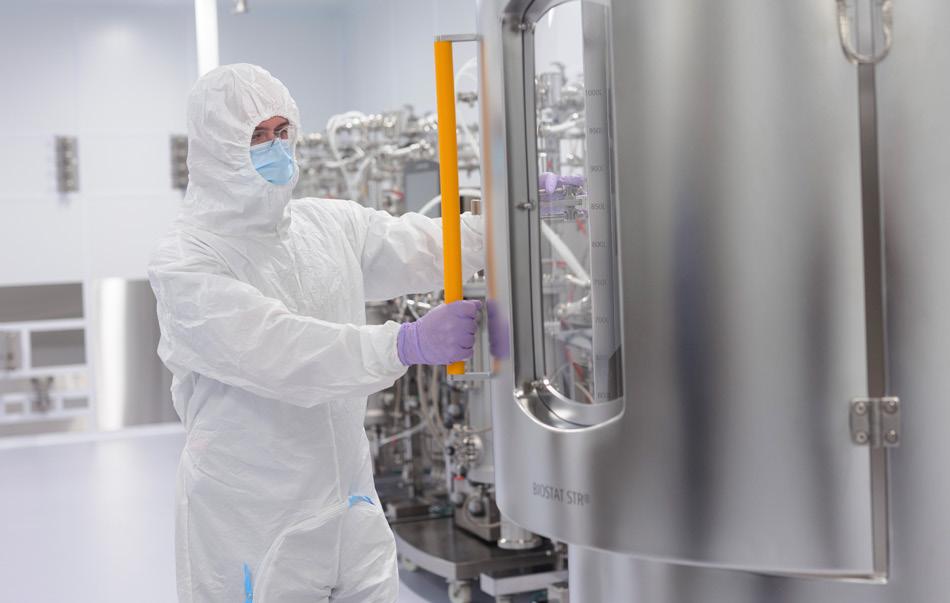
« Le VDC jouera un rôle important dans le paysage de la biofabrication au Canada, car il permet, grâce à des processus de développement, de combler le fossé menant à de nouvelles découvertes, puis à la commercialisation », affirme Mme Racine. « L’objectif est de faire en sorte que les technologies innovantes ne meurent pas au banc d’essais et qu’elles trouvent une place sur le marché. »
Non seulement la VIDO a été l’un des premiers organismes de recherche au monde à isoler le SRAS-CoV-2 et à mettre au point un vaccin (actuellement en phase II des essais cliniques), mais elle a collaboré avec plus de 200 organisations du monde entier et réalisé plus de 100 expériences qui ont fait progresser le développement de nouveaux vaccins, d’antiviraux et de traitement contre la COVID-19.
The added manufacturing capacity allows VIDO to support the full continuum of vaccine development from infectious disease research to vaccine development and manufacturing helping drive product development. This capacity—all in the same facility—will advance products more quickly. New products can be tested for efficacy in VIDO’s containment level 2 and 3 agriculture facilities while simultaneously undergoing process development and manufacturing. As a national facility (supported by CFI-MSI), Canadian scientists have preferential access to this“Thesupport.VDC will play an important role in Canada’s biomanufacturing landscape by bridging the gap, through process development, to help bring new discoveries towards commercialization,” stated Dr. Racine. “The goal is to help ensure innovative technologies don’t die on the bench and will have a place in the commercial market.”
The flexible design of the centre enables it to produce inactivated, live-attenuated, viral vectored, subunit, and DNA/RNA-based vaccines for human clinical trials and commercial-scale veterinary vaccines. It could also support Canada’s emergency response for future pandemics.
Cette situation a permis de démontrer l’importance du rôle que jouent les organismes de recherche dans les stratégies de préparation. Pour être prêts, nous devons disposer à la fois de l’infrastructure et de l’expertise nécessaires pour réagir rapidement en cas d’apparition de nouvelles maladies infectieuses. C’est avec cela en tête que la VIDO s’est attelée à devenir le principal centre canadien de recherche sur les pandémies. Cette vision, qui consiste à étendre les actions de la VIDO
développement des produits. Ces capacités, concentrées au sein des mêmes installations, permettront en effet d’accélérer la mise au point des produits. L’efficacité des nouveaux produits peut être testée dans les installations agricoles de niveau de confinement 2 et 3 de la VIDO, alors même qu’on les soumet à des processus de développement et de fabrication. Les installations étant nationales (car soutenues par la FCIFonds des initiatives scientifiques majeures), les scientifiques canadiens peuvent en bénéficier de façon prioritaire.
Not only was VIDO one of the first research organizations in the world to isolate SARS-CoV-2 and develop a vaccine (currently in Phase II clinical trials),
LA FABRICATION N’EST QU’UNE PARTIE DE LA SOLUTION
vaccine news du nouveau, côté vaccins
The VDC has a 1000 L and a 50 L bioreactor capable of producing veterinary vaccines and human clinical trial vaccines.
La conception souple du centre permet de produire des vaccins inactivés, vivants atténués, à vecteur viral, à virus fractionné et à ADN ou à ARN à des fins d’essais cliniques sur l’homme, ainsi que des vaccins vétérinaires en vue de la commercialisation. Le centre pourrait aussi appuyer le Canada pour ce qui est de l’intervention d’urgence en cas de nouvelle pandémie.
Le VDC dispose d’un bioréacteur de 1000 L et d’un autre de 50 L capables de produire des vaccins vétérinaires et des vaccins destinés aux essais cliniques sur l’homme.
28 Fall | Automne 2022 BIOTECanada
MANUFACTURING IS ONLY PART OF THE SOLUTION:
SUPPORTING NEW PRODUCT DEVELOPMENT:
La VIDO est reconnue pour ses installations, son expertise scientifique et son rôle historique dans le développement de vaccins, autant de facteurs qui lui ont permis de jouer un rôle clé dans l’intervention du Canada face à la COVID-19.
CANADA HAS AN IMPORTANT ROLE TO PLAY:
they have engaged with over 200 organizations from around the world and completed over 100 experiments that advanced the development of novel vaccines, antivirals, and therapeutics against COVID-19.
Finally, the organization will continue to grow its scientific team and offer unique training opportunities that develop the next generation of scientists and technicians. This includes partnering with the Canadian Association for Biological Safety to host the International High Containment Operations and Maintenance workshop to address increasing needs of facility operators, maintenance, and operations staff at biocontainment facilities.
Cette capacité de fabrication était la pièce manquante grâce à laquelle les vaccins – une fois faite la preuve de leur efficacité – peuvent désormais franchir une étape cruciale : celle de la mise sur le marché.
Vaccines are one of the most cost-effective ways to prevent infectious diseases and have been described as the greatest public health intervention in history. Canada has been a historic leader in vaccine development. The recent investments in the Canadian biomanufacturing landscape will help ensure our country regains this status and has the capacity to ensure our scientific innovations become medicines to protect human and animal health.
This has demonstrated the important role that research organizations play in a preparedness strategy. To be ready we need both the infrastructure and expertise to rapidly respond to new infectious diseases. It was this impetus that VIDO used to become Canada’s Centre for Pandemic Research. This vision, to expand VIDO’s actions as a national facility supporting Canada’s future response to human and animal infectious diseases, has received substantial investments from all levels of government and private donors.
biotech.ca 29
vaccine news du nouveau, côté vaccins
For example, areas of VIDO’s level three facility will be upgraded to containment level four—the highest level of containment. This will enable Canadian scientists to study and develop protective strategies for all high-risk pathogens. It will also significantly increase Canada’s containment level 4 research space, building on the capacity at the Canadian Science Centre for Human and Animal Health in Winnipeg. VIDO is also constructing a new containment level 2 animal facility capable of housing a wider range of animals including bats and insects— species that are often the source of new outbreaks.
Enfin, l’organisation continuera de renforcer son équipe scientifique et d’offrir des possibilités uniques qui permettront de former la prochaine génération de scientifiques et de techniciens. Il s’agira notamment d’établir un partenariat avec l’Association canadienne pour la sécurité biologique afin d’accueillir l’atelier international sur l’exploitation et l’entretien des installations de confinement biologique. Grâce à ce dernier, on répondra aux besoins croissants des exploitants, du personnel d’entretien et du personnel d’exploitation de ces installations en matière de formation.
“The Vaccine Development Centre is an asset for Canadians that will advance the development of Canadian innovations to help ensure we are better prepared for the next emerging infectious disease,” said Volker Gerdts, VIDO Director and CEO.
Les vaccins sont l’un des moyens les plus efficaces de prévenir les maladies infectieuses. Ils sont même vus comme la plus grande intervention de santé publique de l’histoire. Le Canada a été l’un des pionniers de la mise au point des vaccins. Les récents investissements dans le secteur canadien de la bioproduction permettront à notre pays de retrouver ce statut et d’avoir la capacité de veiller à ce que les innovations scientifiques deviennent des médicaments, en vue de protéger la santé humaine et animale.
The completion of the VDC was the first key step. Now VIDO will continue to expand over the next three years to best support the Canadian and international infectious disease research community.
Par exemple, on mettra à niveau certaines parties des installations de niveau 3 de la VIDO afin d’en faire des installations de confinement de niveau 4, le niveau le plus élevé. Cela permettra aux scientifiques canadiens d’étudier et d’élaborer des stratégies de protection contre tous les agents pathogènes représentant un risque élevé. Cela permettra également d’accroître considérablement l’espace de recherche de confinement de niveau 4 du Canada, notamment grâce aux capacités du Canadian Science Centre for Human and Animal Health de Winnipeg. À la VIDO, sont également en cours de construction de nouvelles installations de confinement de niveau 2 pouvant héberger un plus grand nombre d’espèces animales, notamment des chauves-souris et des insectes, soit des espèces qui sont souvent à l’origine de nouvelles épidémies.
« Le Centre de développement des vaccins est un atout pour les Canadiens. Il fera évoluer les innovations canadiennes afin que nous soyons mieux préparés à la prochaine maladie infectieuse qui surgira », estime le président-directeur général de la VIDO, Volker Gerdts.
This manufacturing capacity has been a missing piece in taking vaccines over a critical hump—from proving they work to getting them into the market.
en tant qu’établissement national de soutien à l’intervention future du Canada face aux maladies infectieuses humaines et animales, lui a valu des investissements substantiels de tous les niveaux de gouvernement et de donateurs privés.
La concrétisation du VDC a été la première étape clé. La VIDO continuera maintenant à se déployer au cours des trois prochaines années afin de répondre au mieux aux besoins de la communauté canadienne et internationale de la recherche sur les maladies infectieuses.
LE CANADA A UN RÔLE IMPORTANT À JOUER
Without a doubt, it is the evolution of health data and the role artificial intelligence, or AI, plays in clinical care,research and development (Rx&D), and patient access to new science. Data and real-world evidence – this is the future of healthcare, not only for patients and their health outcomes, but also for the viability of our healthcare systems.
Que c’est bon d’être de retour au Canada! Dans ma carrière, j’ai occupé divers postes de direction à l’échelle mondiale et nationale dans les secteurs publics et privés, mais aussi pour des organismes à but non lucratif. Plus récemment, j’étais directrice générale de Roche Belgique et Luxembourg. Quel que soit le poste, ce qui me passionne, c’est de me rapprocher des gens pour trouver des solutions inédites aux problèmes complexes du milieu de la santé.
Interview with Brigitte Nolet, President & CEO, Roche Canada Pharma Entrevue avec Brigitte Nolet, présidente-directrice générale, Roche Canada Pharma
Je pense que le Canada possède tous les bons ingrédients pour assurer la solidité et la durabilité de son système de santé de demain. Le Canada a tout pour lui : l’intelligence, la diversité de sa population, un taux élevé de scolarisation, un sens aigu de l’innovation, une culture propice à la collaboration, des soins de santé de qualité. Il reste à réaffirmer notre ambition à l’égard des soins de santé et à travailler avec tous les intervenants pour réaliser cette ambition.
I believe that Canada has all of the right ingredients to ensure strong and sustainable healthcare into the future. The external environment in Canada has so much going for itself – smart people; diversity in our population; high education levels; strong innovation mindset; open culture of collaboration; good healthcare. Now, it is a matter of being clear on its ambition for healthcare and working with all stakeholders to help make it a reality.
BASED ON YOUR GLOBAL EXPERIENCES, AND WHAT YOU’VE OBSERVED IN YOUR TIME BACK IN CANADA SO FAR, WHAT DO YOU BELIEVE COULD GREATLY IMPACT THE CANADIAN HEALTHCARE ECOSYSTEM?

The potential of health data and artificial intelligence to strengthen our healthcare Lessystemdonnées sur la santé et l’intelligence artificielle à la rescousse de notre système de santé
Sans aucun doute, l’évolution des données sanitaires et le rôle que joue l’intelligence artificielle (IA) dans les soins cliniques, la recherche et le développement, ainsi que l’accès des patients aux découvertes scientifiques. L’avenir des soins de santé réside dans les données et dans l’information recueillie en contexte réel; c’est vrai non seulement en ce qui concerne les patients et leur état de santé, mais aussi pour la viabilité de nos systèmes de santé.
BON RETOUR AU CANADA! POUVEZ-VOUS NOUS PARLER DE VOTRE PARCOURS PROFESSIONNEL DES DERNIÈRES ANNÉES?
In Canada, health data and AI need to be better leveraged to strengthen our healthcare systems. We have the potential, as our environment is strong in its individual pieces – such as strong academic research institutions, biotechnology communities, government commitments to health data and AI strategies – but all these pieces need to
À LA LUMIÈRE DE VOS EXPÉRIENCES À L’INTERNATIONAL, ET DE CE QUE VOUS AVEZ OBSERVÉ JUSQU’ICI DEPUIS VOTRE RETOUR AU CANADA, QU’EST-CE QUI POURRAIT CHANGER LA DONNE DANS L’ÉCOSYSTÈME CANADIEN DES SOINS DE SANTÉ?
30 Fall | Automne 2022 BIOTECanada
It’s great to be back in Canada. Over the course of my career, I have held various global and Canadian leadership roles in the not for profit, public and private sectors. Most recently, I was General Manager for Roche Belgium & Luxembourg. Regardless of the role, I am passionate about connecting with people to advance solutions to complex healthcare challenges.
WELCOME BACK TO CANADA! WHAT HAS YOUR JOURNEY OVER THE LAST FEW YEARS BEEN LIKE?
bionation
Au Canada, il faut s’appuyer davantage sur les données sanitaires et l’IA pour renforcer nos systèmes de santé. Nous avons tout ce qu’il faut, toutes les pièces du casse-tête – des centres de recherches universitaires de haut calibre, des communautés biotechnologiques, la volonté politique d’établir des stratégies axées sur les données sanitaires et l’IA – il nous faut maintenant réunir toutes ces pièces pour avoir le maximum d’impact sur les écosystèmes de soins de santé.
L’IA permet d’effectuer plus rapidement des analyses exhaustives et détaillées de la masse de données à notre disposition. Les pays qui seront les plus rapides pour bonifier leurs systèmes et penser cette évolution seront ceux qui feront les bonds les plus importants en matière d’investissement en sciences de la vie et où l’on verra les changements les plus remarquables sur le plan de l’efficacité
WHAT COULD DATA, REAL-WORLD EVIDENCE AND INSIGHTS DO FOR CANADIAN HEALTHCARE?
Nous avons besoin de ces données et de l’analyse de ces données pour nous assurer d’investir là où il le faut. L’information que nous apportent les données sur la santé nous aide de bien des façons, que ce soit pour améliorer les soins cliniques, comme les soins de santé personnalisés, pour orienter les travaux plus costauds de recherche et de développement ou pour veiller à ce que les investissements gouvernementaux atteignent les bonnes cibles et mènent à l’efficacité recherchée.
Data and the insights that come from data, is what is needed to ensure we are investing in the right areas in healthcare. Health data and these insights will help us in many ways - from ensuring better clinical care like personalised healthcare; to guiding stronger research and development efforts; to ensuring that government investments are going to the right places and we are seeing the efficiencies needed.
come together to achieve the highest impact for the healthcare ecosystems.
biotech.ca 31
C’est là que l’intelligence artificielle peut jouer un rôle déterminant dans les soins de santé.
WHAT ROLE DOES AI HAVE IN THE VISION OF A MORE PERSONALIZED HEALTHCARE EXPERIENCE FOR PATIENTS AND A STRONGER, MORE RESILIENT HEALTHCARE SYSTEM?

This is where AI will play a pivotal enabling role within healthcare.AIenables
bionation
EN QUOI LES DONNÉES, L’INFORMATION RECUEILLIE EN CONTEXTE RÉEL ET LES OBSERVATIONS PEUVENTELLES AMÉLIORER LES SOINS DE SANTÉ AU CANADA?
So, being able to gather and make sense of all the health data we have in a fraction of the time and cost needed today, will be critical to the evolution of our healthcare systems.
Essentially, AI gives rise to insights from data that is greater than any one human can process at any one time.
better, faster, more detailed/in-depth analysis of all of the data that’s available. The countries who understand how to upscale their systems the fastest and thoughtfully harness this evolution will be the ones where we see large advancements in life sciences investments and where we will see the most impactful change in healthcare efficiency - meaning better outcomes for our patients.
Réussir à recueillir et à analyser la multitude de données que nous possédons en une fraction du temps et du coût requis à l’heure actuelle sera crucial pour l’évolution de nos systèmes de soins de santé.
En 2020, Roche Canada a lancé AIR, un centre d’excellence dont la mission essentielle est d’offrir à la population du Canada et d’ailleurs de meilleurs résultats en matière de santé par la découverte et l’application de recherches en IA étayées par un échange ouvert et collaboratif soutenu de façon inédite par l’expertise de Roche.
QUELLE PART L’INTELLIGENCE ARTIFICIELLE OCCUPET-ELLE DANS LA QUÊTE D’UNE EXPÉRIENCE SANTÉ PLUS PERSONNALISÉE POUR LES PATIENTS ET D’UN SYSTÈME DE SANTÉ PLUS SOLIDE ET PLUS RÉSILIENT?
— ce qui se traduira par de meilleurs résultats pour les patients.
WHAT DO YOU BELIEVE SHOULD HAPPEN NEXT?
The recent pandemic showed us the significant gaps in data policies and technology infrastructure, limiting our ability to uncover and use the data that was desperately needed. We recognize that there needs to be better legal, regulatory and policy frameworks for digital and datadriven healthcare decisions. Given the importance of regulation, privacy protection and risk management in the healthcare sector, we must set gold standards today for the
Roche est une entreprise internationale à l’avant-garde de la recherche et du développement de produits pharmaceutiques et diagnostiques, vouée à l’amélioration de la vie des gens. Comme les patients et la science sont au cœur de tout ce que nous entreprenons, nous considérons que l’IA transformera le monde de la santé en menant plus rapidement à de meilleurs résultats en santé et en haussant le degré de viabilité de la prestation des soins.
In 2020, Roche Canada launched what is known today as AIR (AI with Roche), a center of excellence with the core purpose to deliver to people in Canada and beyond better health outcomes through the discovery and application of artificial intelligence research underpinned by an open and collaborative exchange uniquely supported by Roche expertise.Theprogram is bringing together Canada’s national AI institutes - Amii, Mila, and the Vector Institute - combining Roche’s notable history of leadership in health and life sciences, and the AI Institutes’ established track record of excellence in AI research and enabling industry application.Together, we can help Canada be a world leader and we should act quickly to hone this space. If we don’t do so, other countries are well-positioned to become the leaders.
bionation Healthcare AI will enable patients, providers, and systems to make better, faster, more informed decisions for accelerated and equitable access to health.
Roche is a global pioneer in pharmaceuticals and diagnostics focused on advancing science to improve people’s lives. With patients and science at the heart of everything we do, we believe AI will play a transformative role in both accelerating better health outcomes and enabling the sustainability of healthcare delivery.
Sur la ligne de front, l’IA peut contribuer à automatiser les processus laborieux et permettre aux soignants à bout de souffle de consacrer plus de temps à leur véritable mission, soigner les patients.
In personalized healthcare, AI can be leveraged to generate next generation therapies that better fit individual patient needs. During the recent pandemic, the world also saw the potential of AI in helping to build a stronger healthcare system – when AI contributed to COVID-19 vaccine modeling and timely medical imaging diagnosis (such as chest and lung imaging). We need to keep this momentum going and explore AI’s full potential in the deployment of healthcare solutions.
Pour la personnalisation des soins, l’intelligence artificielle offre la possibilité de créer des thérapies de prochaine génération, répondant mieux aux attentes individuelles des patients. Durant la récente pandémie, le monde entier a su reconnaître le potentiel de l’IA à renforcer les systèmes de santé. Il n’y a qu’à penser à son rôle dans la modélisation de vaccins anti-COVID-19 et à l’accélération des processus d’imagerie médicale diagnostique (notamment l’imagerie thoracique et pulmonaire). Nous devons poursuivre sur cette lancée et explorer tout le potentiel de l’IA pour trouver des solutions de soins de santé.
POURQUOI ROCHE CANADA S’INTÉRESSE-T-ELLE À L’IA? QUEL EST LE RÔLE DE ROCHE DANS TOUT CELA?
Et nous pavons la voie à ce changement en privilégiant des collaborations et des partenariats pour accélérer le développement de l’IA dans le milieu de la santé.
32 Fall | Automne 2022 BIOTECanada
En regroupant les instituts d’IA nationaux du CanadaAmii, Mila et l’Institut Vector – le programme combine le leadership de Roche en santé et en sciences de la vie avec la réputation d’excellence de ces établissements dans la recherche sur l’IA et sa mise en pratique dans l’industrie.
Essentiellement, l’IA permet de dégager des tendances à partir des données qu’un seul humain ne pourrait traiter à la fois. L’IA en santé permet aux patients, aux soignants et aux systèmes de prendre plus rapidement des décisions plus rationnelles et plus éclairées qui favorisent l’accès accéléré et équitable à la santé.
And we are leading this change by fostering collaborations and partnerships to accelerate development of AI for healthcare.
WHY IS ROCHE CANADA INTERESTED IN AI? WHAT ROLE DOES ROCHE HAVE?
On the front lines of healthcare, AI can help automate time-consuming processes and allow burnt out healthcare staff to spend more time doing the work they signed up for – like caring for patients.
Ensemble, nous pouvons permettre au Canada d’être un chef de file mondial, et nous devons agir rapidement pour nous tailler une place dans ce secteur, sans quoi d’autres pays pourraient nous damer le pion.
To this end, Roche Canada is working in partnership with stakeholders across the health sector. We have several platforms for change, such as the Pan-Canadian Health Data Strategy Consultations and the Pan Canadian AI Strategy. Going forward, the impact of data-driven healthcare will depend on the broader community’s commitment to best practices around data, methodologies, and applications. Data standards will play a key role to ensure that AI innovations can effectively and responsibly power a new kind of Canadian health ecosystem.
responsible design of AI and its use, along with ensuring health data sharing is approached in a trusted, fair and transparent way.
La récente pandémie a fait ressortir des lacunes importantes dans les politiques sur la gestion des données et de l’infrastructure technologique qui nous ont empêchés de dévoiler et d’utiliser les données dont nous avions impérativement besoin. Nous reconnaissons qu’un cadre légal et réglementaire mieux structuré s’impose pour faciliter la prise de décisions en matière de technologie numérique et de soins de santé fondés sur les données. Compte tenu de l’importance de la réglementation, de la protection des renseignements personnels et de la gestion des risques dans le secteur de la santé, nous devons instaurer des règles d’or aujourd’hui pour planifier de façon responsable l’utilisation de l’IA, tout en veillant à aborder le partage de données sur la santé de façon fiable, équitable et
transparente.Pouryparvenir, Roche Canada collabore en partenariat avec les intervenants de tout le secteur de la santé. Nous avons diverses plateformes adaptées aux changements, comme les consultations dans le cadre de la Stratégie pancanadienne de données sur la santé et de la Stratégie pancanadienne en matière d’intelligence artificielle. Par la suite, l’impact des soins de santé fondés sur les données dépendra de l’engagement de l’ensemble de la communauté envers l’amélioration des pratiques entourant les données, les méthodologies et les applications. Les normes de gestion des données joueront un rôle crucial pour veiller à ce que les innovations en matière d’IA puissent renforcer efficacement et de manière responsable un nouveau système canadien de soins de santé.
QUE VOYEZ-VOUS POUR L’AVENIR?
Nous ne pouvons pas amorcer ce changement seuls. Il est essentiel de collaborer avec nos partenaires d’un bout à l’autre du Canada pour offrir des solutions aux systèmes de soins de santé du Canada.
Brigitte Nolet, President & CEO, Roche Canada Pharma
Brigitte Nolet, présidente-directrice générale, Roche Canada Pharma

biotech.ca 33 bionation
We cannot drive this change alone. It is essential to collaborate and build solutions in Canadian healthcare with our partners from coast to coast to coast.
adMare accroît sa présence en Ontario pour poursuivre le développement de l’écosystème des sciences de la vie au Canada
adMare provides life science and business expertise, R&D infrastructure, and investment capital to help turn life science research into companies. Their Montreal and Vancouver Innovation Centres host more than 35 life science companies, contract research organizations, and support services for commercializing scientific discoveries.
ADMARE BIOINNOVATIONS S’EST RÉCEMMENT ÉTABLI À TORONTO AVEC UNE SOLIDE ÉQUIPE SPÉCIALISÉE en développement des écosystèmes, en établissement de partenariats et en élaboration de programmes, ainsi qu’une nouvelle directrice du bureau du président.
“We already spend significant resources in Ontario, have great portfolio companies like Zucara and Forus, and terrific partnership with key players in the ecosystem. Adding a team on the ground is an important development in our evolution to build companies, ecosystems, and talent across the country.”
ADMARE BIOINNOVATIONS RECENTLY ESTABLISHED ITS PRESENCE IN TORONTO WITH A STRONG TEAM in ecosystem development, partnerships and program development, and a new Chief of Staff.
adMare continues to grow Canada’s life science ecosystem with expanded Ontario presence
34 Fall | Automne 2022 BIOTECanada
“Toronto is obviously a key biotech hub,” said Gordon McCauley, President & CEO.
« L’Ontario est déjà une province où nous consacrons une quantité importante de ressources, où nous avons d’excellentes sociétés de portefeuille comme Zucara et Forus, et où nous entretenons des partenariats formidables avec des acteurs clés de l’écosystème. L’ajout d’une équipe sur le terrain fait progresser de façon significative notre mission qui consiste à créer des entreprises, bâtir des écosystèmes et développer des talents à l’échelle du pays. »
To-date, adMare has invested in six Ontario-based companies: Encycle Therapeutics (merged with Zealand Pharmaceuticals), Bright Angel Therapeutics, Flosonics

« Toronto est de toute évidence une plaque tournante de la biotechnologie », affirme Gordon McCauley, président et chef de la direction.
écosystèmeecosystem
adMare offre une expertise dans les domaines des sciences de la vie et des affaires, propose une infrastructure de recherche et développement, et fournit des capitaux d’investissement afin que la recherche en sciences de la vie se transforme en entreprises. Ses centres d’innovation de Montréal et de Vancouver abritent plus de 35 entreprises du secteur des sciences de la vie, des sociétés de recherche contractuelle, ainsi que des services de soutien pour la commercialisation des découvertes scientifiques.
À ce jour, adMare a investi dans six entreprises ontariennes : Encycle Therapeutics (fusionnée avec Zealand Pharmaceuticals), Bright Angel Therapeutics, Flosonics Medical, Forus Therapeutics, Zucara Therapeutics et SpecificL’AcadémieBiologics.adMare, qui offre des programmes destinés précisément au secteur des sciences de la vie, a également joué un rôle clé dans la réalisation du potentiel de l’économie de l’innovation au Canada. L’Académie propose des cours pour toutes les étapes du développement professionnel, notamment pour les étudiants de premier cycle, les boursiers postdoctoraux et les cadres supérieurs. Environ un tiers des participants proviennent de l’Ontario.
Dans le cadre de son rôle qui consiste à bâtir des écosystèmes, adMare a également mis sur pied un réseau virtuel pour l’industrie des sciences de la vie : la Communauté adMare. Dans un monde de plus en plus virtuel, la Communauté adMare offre un espace unique qui permet aux chercheurs, aux professionnels de l’industrie, aux employeurs et aux chercheurs d’emploi du secteur des sciences de la vie d’accéder à un réseau croissant de plus de 1 500 Canadiens et Canadiennes œuvrant dans ce domaine. La Communauté fournit une liste qui regroupe plus de 250 possibilités d’emploi, événements et occasions permettant de tisser des liens avec des professionnels réputés de l’industrie. adMare a créé cette communauté afin de progresser vers son objectif, soit de rassembler et de renforcer l’industrie des sciences de la vie à l’échelle du Canada. L’adhésion est gratuite et tous les stagiaires, chercheurs et professionnels du domaine des sciences de la vie sont invités à s’y joindre à l’adresse suivante : admarebiocommunity.com
biotech.ca 35 écosystèmeecosystem
The adMare Academy, with programming specific to the business of life science has also played a key role realizing the potential of Canada’s innovation economy. The Academy provides courses for all stages of career development, including undergraduates, post-doctoral fellows and C-suite executives, with about one third of participants from Ontario.

As part of their role in ecosystem building, adMare also hosts a virtual network for the life science industry called the adMare Community. In our increasingly virtual world, the adMare Community offers a unique hub for researchers, industry professionals, employers and life sciences job seekers to access a growing network of over 1,500 Canadians in this field. The Community provides a curated list of over 250 job opportunities, events and opportunities to connect with leading industry professionals. adMare built this Community to advance its goal to connect and strengthen the life science industry across Canada. It’s free to become a member and all life science trainees, researchers and professionals are encouraged to join at admarebiocommunity.com
Medical, Forus Therapeutics, Zucara Therapeutics and Specific Biologics.
La province de l’Ontario, quant à elle, ne cherche pas uniquement à être concurrentielle : elle a choisi de prendre la tête du travail de mise au point des infrastructures d’une industrie émergente qui représente l’avenir de la médecine. Le 31 mars dernier, le gouvernement de l’Ontario a annoncé qu’il finançait OmniaBio Inc, une nouvelle filiale du CCMR qui sera le plus grand établissement au Canada consacré à la production de cellules modifiées génétiquement et de vecteurs viraux.
Ontario is doing more than making sure it can compete; it’s taking a leading position in building the infrastructure for an emerging industry that represents the future of medicine. On March 31 this year, the Government of Ontario announced that it was funding OmniaBio Inc., a new CCRM subsidiary that will be the largest facility in Canada dedicated to gene-modified cell and viral vector production.
« OmniaBio Inc. changera la donne pour l’Ontario et le Canada », explique Michael May, président-directeur général du CCMR et président du conseil d’OmniaBio Inc. « Elle fournira l’infrastructure attendue qui permettra aux entreprises ontariennes et canadiennes spécialisées en traitements cellulaires et en thérapies géniques de demeurer au pays, tout en attirant des entreprises étrangères. » La création d’une infrastructure pour la fabrication de traitements cellulaires et de thérapies géniques est l’occasion pour le Canada de devenir un chef de file mondial dans le domaine des sciences de la vie.
OmniaBio brings biomanufacturing muscle to OmniaBioOntario donne un coup d’accélérateur à la bioproduction en Ontario
by/par Nadine Lunt, BIOTECanada
Les entreprises qui font progresser les technologies relatives aux traitements cellulaires et aux thérapies géniques sont principalement composées de petites équipes agiles de scientifiques de pointe, investies dans l’une des industries les plus récentes de la médecine. La majorité de ces équipes ne disposent pas des ressources de fabrication et de commercialisation nécessaires à l’interne, selon une analyse des données du marché à laquelle le CCMR a eu accès. L’analyse a également révélé que les fabricants de traitements cellulaires et de thérapies géniques externalisent 50 % ou plus de leur fabrication, par rapport aux fabricants d’autres produits biologiques, qui n’externalisent qu’environ 20 % du processus de fabrication.
WHEN THE PANDEMIC HIT, IT EXPOSED GAPS IN CANADA’S BIOMANUFACTURING CAPACITY. THE nation didn’t have the facilities required, at the scale needed, to quickly manufacture its own advanced therapies, such as the mRNA vaccines that have helped the world to address COVID-19. This, combined with an increasing number of advanced therapies approaching clinical trial finish lines, has some countries racing to bolster their domestic advanced manufacturing capacity.
Companies advancing cell and gene therapy technologies are predominantly small and agile teams of scientists working at the cutting edge of one of medicine’s newest industries. The majority of these teams lack the resources to manufacture and commercialize in-house, according to an analysis of market data seen by CCRM. The analysis also found that cell and gene therapy developers utilize 50 per cent or more outsourced manufacturing, compared to other biologics where approximately 20 per cent of the manufacturing process is outsourced.
L’ARRIVÉE DE LA PANDÉMIE A MIS EN ÉVIDENCE LES LACUNES DU CANADA SUR LE PLAN DE LA CAPACITÉ de biofabrication. Le pays ne disposait pas des installations nécessaires, à l’échelle requise, pour fabriquer rapidement ses propres traitements avancés, tels que les vaccins à ARNm qui ont permis de lutter contre la COVID-19 à l’échelle du globe. La situation, ainsi que le fait qu’un nombre croissant de traitements avancés se rapprochent du fil d’arrivée des essais cliniques, a incité certains pays à renforcer rapidement leur propre capacité de fabrication de pointe.
The current wait time to initiate a cell or gene therapy manufacturing project with a CDMO may take up to between 18 and 24 months. Industry estimates place advanced manufacturing demand outstripping supply by at least five times. This gap is expected to widen to fifty times as newly approved technologies graduate from clinical trial and regulatory-approval pipelines, bringing the need for commercial-scale manufacturing with them.
“OmniaBio Inc. will be a game-changer for Ontario and Canada,” explains Dr. Michael May, CCRM President and CEO, and Chair of Omniabio Inc. “It will provide missing infrastructure to allow Ontario and Canadian cell and gene therapy companies to remain here, while also attracting foreign companies. Cell and gene therapy manufacturing is Canada’s opportunity to be a global leader in life sciences.
It takes a village to rise to the complex manufacturing challenge this growing demand creates, and OmniaBio has chosen Hamilton, Ontario, to scale its manufacturing. Completing Ontario’s premier life sciences corridor by
Il faut compter entre 18 et 24 mois pour lancer un projet de fabrication de traitements cellulaires ou de thérapies géniques si l’on fait appel à un CDMO. Selon les estimations du secteur, la demande en matière de fabrication industrielle de pointe est au
36 Fall | Automne 2022 BIOTECanada écosystèmeecosystem
« Le CCMR a mis beaucoup de temps à trouver le bon partenaire d’investissement pour OmniaBio, et nous sommes très heureux d’avoir conclu une entente avec Medipost », affirme Mitchel Sivilotti, président et chef de la direction d’OmniaBio Inc. « Medipost sera un point d’ancrage initial et un client générateur de revenus pour OmniaBio; cette société nous aidera également à obtenir une clientèle étrangère en Asie. Nous démarrons en force grâce à des conditions stables et avons déjà commencé la construction des installations au McMaster Innovation Park à Hamilton. »
When phase one is complete, the new OmniaBio facility will add a fourfold increase to CCRM’s biomanufacturing capacity. It will set in place everything that a new technology could conceivably need to go from the bench to patient bedsides, bringing Phase III and commercial-scale manufacturing to CCRM’s capabilities.

The future of medicine is full of unknowns. What we do know is that OmniaBio leaves Canada in a much better position to respond to the biotherapeutic manufacturing needs of the future. Find out more about OmniaBio at omniabio.com.
biotech.ca 37 écosystèmeecosystem
OmniaBio sera suffisamment flexible pour répondre aux exigences en cas d’urgence de santé publique qu’une technologie avancée en matière de traitements, comme un vaccin à ARNm, pourrait aider à résoudre. Il est logique que le projet ait obtenu du financement de la part du gouvernement de l’Ontario. Ce dernier a tenu à soutenir le pôle des sciences de la vie de l’Ontario par le biais de son nouveau fonds Investissements Ontario. OmniaBio a bénéficié d’un prêt de 40 millions de dollars de la part du fonds, ce qui a mis le projet sur les rails. Un investissement privé de 60 millions de dollars a également été obtenu de Medipost, un acteur mondial dans le secteur des traitements cellulaires.
Il faut bien un village pour relever le défi posé par les besoins en fabrication complexes engendrés par cette demande croissante, et OmniaBio a choisi d’installer ses quartiers à Hamilton, en Ontario. Il semble d’ailleurs tout à fait logique de compléter le plus important corridor en sciences de la vie de l’Ontario en donnant un coup d’accélérateur au secteur manufacturier. Hamilton remplit toutes les conditions qu’on peut attendre d’un village, au sens du proverbe. La ville est fière de son histoire manufacturière, de sa main-d’œuvre qualifiée et de son aéroport international, le plus important du Canada pour le fret aérien, ce qui constitue un réel avantage pour l’expédition de produits médicaux fragiles. Hamilton est également située à une heure de route, d’un côté, du quartier Discovery District de Toronto, où opère le CCMR, et de l’autre, de la frontière américaine. La situation géographique de ce projet de référence permet une ouverture vers les marchés internationaux à un moment où la demande mondiale en composant pour les traitements cellulaires et les thérapies géniques explose.
Lorsque la première phase sera terminée, les nouvelles installations d’OmniaBio multiplieront par quatre la capacité de bioproduction du CCMR. Ainsi, les essais de phase III ainsi que la fabrication en vue de la commercialisation seront possibles au CCMR, et les conditions seront réunies pour que toute nouvelle technologie puisse passer du stade de la recherche au chevet des patients.
L’avenir de la médecine est plein de surprises. Ce que nous savons, c’est qu’OmniaBio permet au Canada d’être dans une bien meilleure position pour répondre dorénavant aux besoins en matière de fabrication de produits biothérapeutiques. Pour en savoir plus sur OmniaBio, consultez le site omniabio.com
establishing manufacturing muscle here makes perfect sense. Hamilton ticks all the boxes of the proverbial village. The city has a proud manufacturing history, a skilled workforce and an international airport that is Canada’s largest for air cargo – an advantage when shipping fragile medical products. Hamilton is also located a one-hour drive from Toronto’s discovery district, where CCRM operates, and the U.S border, giving this capstone project ease of access to international markets at a time when global demand for the products that make up cell and gene therapies is exploding.
OmniaBio will be flexible enough to respond to the demands of any future public health emergency that an advanced therapeutic technology, like an mRNA vaccine, could help to address. It makes sense that the project attracted financing from the Government of Ontario, which has been keen to bolster the Ontario life sciences cluster via support through its new Invest Ontario Fund. OmniaBio has benefitted from a $40M loan from this fund, which helped the project to launch. Private investment of $60M has also been secured from Medipost, a global player in cell therapy.“CCRM has spent a great deal of time looking for the right investment partner for OmniaBio, and we are very pleased to have Medipost Co. on board,” says Mitchel Sivilotti, President and CEO of OmniaBio Inc. “Medipost will be an initial anchor and revenue-generating customer of OmniaBio and will also help us develop an international customer base in Asia. We are launching from a strong and stable position and have already begun construction at McMaster Innovation Park in Hamilton.”
moins cinq fois supérieure à l’offre. On s’attend à ce que cet écart soit multiplié par cinquante à mesure que les technologies nouvellement approuvées passeront du stade des essais cliniques à celui de l’approbation réglementaire et entraîneront la nécessité de passer à la fabrication à l’échelle commerciale.
honorable Denny King, premier ministre de l’Île-du-Prince-Édouard, honorable Dorothy Shephard, ministre des Communautés saines et inclusives, Nouveau-Brunswick,
from L-R Honourable Andrew Furey, Premier of Newfoundland and Labrador, Honourable Denny King, Premier Prince Edward Island, Honourable Dorothy Shephard, Minister of Healthy and Inclusive Communities, New Brunswick, Honourable Michelle Thompson, Minister of Health and Wellness, Nova Scotia / de gauche à droite Honorable Andrew Furey, premier ministre de Terre-Neuve-et-Labrador,
38 Fall | Automne 2022 BIOTECanada
Grâce à son agilité et à sa capacité à réunir les bons partenaires au bon moment, l’ACTN crée un point d’entrée unique pour les chercheurs, les partenaires et les patients. Créé par le ministère de la Santé de la Nouvelle-Écosse et codirigé par le IWK Health Centre, Eastern Health, le Réseau de santé Vitalité, le Réseau de santé Horizon et Santé Î.-P.-É., le réseau vise à stimuler la recherche et l’innovation, à offrir de nouvelles possibilités de soins de santé aux habitants de la région et à positionner la région parmi les chefs de file mondiaux en matière d’essais cliniques.
Driven by agility and the ability to get the right partners to the table at the right time, ACTN is creating a single point of entry for researchers, partners, and patients. Initiated by Nova Scotia Health and co-led with IWK Health, Eastern Health, Vitalité Health Network, Horizon Health Network, and Health PEI, the network is focused on boosting research and innovation, bringing new healthcare opportunities to those living in the region, and positioning the region as a world-leader in clinical trials.
“We are pleased to partner with our Atlantic colleagues to further important research that will benefit Atlantic Canadians and people around the world,” said Minister Thompson. “Innovation drives research and better outcomes for patients. This partnership will support the best talent, create new opportunities for clinicians and
Les provinces de l’Atlantique s’associent pour créer le Réseau d’essais cliniques de l’Atlantique
Michelle Thompson, ministre de la Santé et du Mieux-être de la Nouvelle-Écosse, Andrew Furey, Premier ministre de Terre-Neuve-et-Labrador, Dennis King, Premier ministre de l’Île-du-Prince-Édouard, et Dorothy Shepard, ministre de la Santé du Nouveau-Brunswick, étaient présents au congrès pour souligner la valeur de ce partenariat régional en vue d’attirer des investissements dans les essais cliniques au Canada atlantique.
Atlantic Provinces Partner to Create Atlantic Clinical Trials Network
LE 14 JUIN 2022, LES HAUTS DIRIGEANTS DES QUATRE PROVINCES DE L’ATLANTIQUE ONT ANNONCÉ
ON JUNE 14, 2022, SENIOR LEADERS FROM THE FOUR ATLANTIC PROVINCES JOINTLY ANNOUNCED THE Atlantic Clinical Trials Network (ACTN) at the BIO International Convention in San Diego, the world’s largest event focused on biotechnology.

L’approche régionale de l’ACTN offrira l’accès à une population de 2,5 millions de personnes réparties dans quatre provinces, ce qui permettra de tirer parti de certaines données démographiques uniques. La région présente les niveaux de maladies chroniques les plus élevés au Canada, maladies dans certains cas associées à des comorbidités complexes; elle compte l’une des populations les plus âgées du pays; elle comprend de multiples nations fondatrices, qui offrent des données génétiques uniques et présentent une
Michelle Thompson, Minister of Health and Wellness for Nova Scotia, Dr. Andrew Furey, Premier of Newfoundland and Labrador, Dennis King, Premier of Prince Edward Island, and Dorothy Shepard, Minister of Health for New Brunswick were on hand at the convention to speak about the value of this regional partnership in attracting clinical trials investment in Atlantic Canada.
« Nous sommes heureux de nous associer à nos collègues de l’Atlantique pour faire avancer des recherches importantes qui profiteront aux Canadiens de l’Atlantique et aux personnes du monde entier », a déclaré le ministre Thompson. « L’innovation est le moteur de la recherche et permet d’offrir de meilleurs résultats aux patients. Ce partenariat permettra de faire appel aux meilleurs talents, de créer de nouvelles perspectives pour les cliniciens et de proposer des options de traitement de pointe qui pourront potentiellement façonner la pratique clinique nationale, voire mondiale. »
conjointement la création du Réseau d’essais cliniques de l’Atlantique (ACTN) lors du congrès international BIO à San Diego, le plus grand événement mondial en biotechnologie.
honorable Michelle Thompson, ministre de la Santé et du Mieux-être, Nouvelle-Écosse.
regional spotlight région en vedette
The initiative also represents an important investment by multinational pharmaceutical companies to enhance the environment of discovery and drug development. Ultimately, in addition to the economic value, this investment will support the development of high-value, next generation solutions for patients in Canada and around the world.”
regional spotlight région en vedette
biotech.ca 39
« L’écosystème biotechnologique national du Canada s’étend d’un océan à l’autre et repose sur un réseau de pôles biotechnologiques dynamiques qui parcourt l’ensemble des provinces », explique Andrew Casey, président et chef de la direction de BIOTECanada. « Le pôle des provinces de l’Atlantique est particulièrement fort grâce à son mélange diversifié d’universités de classe mondiale, d’instituts de recherche, d’entreprises en démarrage, de petites et moyennes entreprises et de grandes sociétés multinationales, tous reliés et faisant appel à une main-d’œuvre hautement qualifiée. La création du Réseau atlantique d’essais cliniques est une autre pièce majeure qui renforcera l’écosystème biotechnologique dans la région.
The regional approach of ACTN will increase access to a patient population of 2.5 million across four provinces, which will allow for the leveraging of some unique demographics. The region has the highest levels of chronic disease in Canada with complex comorbidities; is home to one of the oldest populations in the country; includes multiple founder populations, which provide unique genetic insights with a high prevalence of rare disease; and has some of the highest rates of autoimmune diseases in Canada.
prévalence élevée de maladies rares; enfin, les taux de maladies auto-immunes y sont parmi les plus élevés au Canada.«Nous sommes ravis de collaborer avec nos collègues du Nouveau-Brunswick, de Terre-Neuve-et-Labrador et de l’Île-du-Prince-Édouard dans le cadre de cet important projet », a déclaré Gail Tomblin Murphy, vice-présidente de la recherche, de l’innovation et de la découverte et infirmière en chef de Santé Nouvelle-Écosse. « Nous pensons que la recherche est en soi une forme de soin, et les soins apportés à nos patients constituent notre principal moteur. Une occasion importante nous est offerte d’améliorer la santé des habitants de notre région et les soins qui leur sont donnés. »
Les soins aux patients sont la priorité numéro un de l’ACTN, mais les membres du réseau ont conscience du fait que la participation des patients tout au long du cycle de vie des essais cliniques est essentielle. C’est pourquoi les partenaires clés comprennent plus de 50 groupes consultatifs de patients. En effet, la voix des patients est de la plus haute importance lors de l’élaboration de stratégies visant à optimiser les services d’aide aux patients, l’éducation des patients, les communications et la conception des essais cliniques en vue de garantir et d’améliorer de manière proactive la qualité des soins.
The network has already demonstrated impact through early-stage partnerships with industry and a shared focus on increasing capacity and access to clinical trials while bolstering the economic health investment in the Atlantic region for the benefit of patients. Members are looking forward to working elbow-to-elbow with partners to co-create a research ecosystem that works for all parties involved.
“We are thrilled to be working with our colleagues in New Brunswick, Newfoundland and Labrador, and Prince Edward Island on this important initiative,” said Dr. Gail Tomblin Murphy, Vice President Research, Innovation and Discovery and Chief Nurse Executive at Nova Scotia Health. “We believe that research is care and caring for our patients is our primary driver. This is a significant opportunity to improve health and health care for those in our region.”
With patient care as the number one priority for ACTN, members of the network recognize that patient engagement throughout the clinical trial lifecycle is essential. That’s why key partners include over 50 patient advisory groups, and patient’s voices are of utmost importance in the design of strategies to optimize patient support services, patient education, communications, and clinical trial design to proactively ensure and improve quality of care.
“Canada’s national biotech ecosystem stretches from coast-to-coast and is built upon a network of vibrant biotech clusters located in every province,” said Andrew Casey, President and CEO of BIOTECanada. “The Atlantic Canada cluster is notably strong with its diverse mix of world-class universities, research institutes, start-ups, small and medium enterprises, and large multinational corporations all connected and supporting a highly skilled workforce. The creation of the Atlantic Clinical Trials Network is another important foundational piece which will further strengthen the region’s biotech ecosystem.
Le réseau a déjà démontré son efficacité grâce à des partenariats avec l’industrie aux premières étapes de développement et à l’établissement d’un objectif commun : accroître la capacité et l’accès aux essais cliniques tout en renforçant l’investissement dans la santé économique de la région de l’Atlantique au profit des patients. Les membres sont ravis de travailler main dans la main avec les partenaires afin de créer avec eux un écosystème de recherche opérationnel pour toutes les parties concernées.
cutting-edge treatment options that can potentially shape national or global clinical practice.”
Le projet représente également un investissement important de la part des multinationales pharmaceutiques pour améliorer l’environnement de la recherchedéveloppement en matière de médicaments. En fin de compte, en plus de la valeur économique, cet investissement favorisera le développement de solutions de nouvelle génération de grande valeur pour les patients du Canada et du monde entier. »
“Our overall aim is to deliver people up to specific job role competencies within approximately six weeks of training. It can be any variation of single courses, for example, the Planning for Cell Therapy Clinical Trial Applications course that we’ve recently launched,” explains Hasilo.
“CATTI’s evolution happened as a response to a pull from the sector,” says Chief Scientific Officer Craig Hasilo, who is based in Montreal. “The number of positions that need to be filled within the various biomanufacturing roles in Canada is substantial - in the order of thousands within even the next five years.”
“The programs that we have can be considered best in class. They have been carefully reviewed by a committee of cell and gene therapy experts who work in this field,” says Andre Mumme, CATTI’s Montreal-based Director of Business Development and Partnerships.
40 Fall | Automne 2022 BIOTECanada
CATTI provides fit-for-purpose training programs amongst a qualified course list.
“Participants can expect to learn best practices in CGT (Cell and Gene Therapy) manufacturing from expert instructors that have been on the front line, that have helped initialize new facilities, trained their staff forces and have worked directly on production. We have outstanding trainers,” notes Hasilo, who adds that subject
Training Institute Advancing Growth of Burgeoning Canadian Biomanufacturing Industry
THE CANADIAN ADVANCED THERAPIES TRAINING INSTITUTE (CATTI) IS CONTRIBUTING TO THE FAST GROWING biomanufacturing industry in Canada by offering e-learning and onsite programs to help new and existing employees meet exacting skills requirements.

The company’s education committee consists of 18 subject matter experts, who are responsible for complying with cGMP requirements and training their staff forces. They help review the curriculum, iron out any wrinkles, and determine if there are any gaps in training opportunities that need to be further developed.
CATTI provides the excellence required to fill that need for qualified talent and continue growing a Canadian industry that is gaining international recognition for its talents and accomplishments.
“We offer hands-on practicum to deliver not just the theory, but the practical skill sets that people will require to be able to excel in this work environment, and to be as
“The CATTI courses provide candidates with a safe space to practice, develop and hone their skill sets under a lens of industry best practices so that when they get to the workforce they are the most qualified that they could possibly be,” Hasilo adds.
prepared as possible for what they may encounter when they reach the job site,” he elaborates.
CATTI, which was officially incorporated in 2021, has offices in Montreal and Toronto, as well as a practical, CL2 lab-based, training centre for specialized hands-on training at the University of Guelph, about an hour’s drive west of Toronto. This enables CATTI the capacity to focus on providing participants skills development in both GMP and CGT-specific skills in manufacturing stem cells, T-cells, MSCs and viral vector production. Participants will undergo skills verifications through program assessments and online examination to ensure competency requirements have been met.
Its curriculum has been organized into five themes, covering everything from current Good Manufacturing Practices (cGMP) Foundations, Aseptic Cleanroom Systems, Manufacturing (upstream, downstream and fill-finish), to Quality and Regulatory. Participants can take courses in all five themes if they wish, select predefined learning paths, stack in the individual courses necessary to fulfill their particular career and company needs, or participate in individual courses for career progression and retraining as per GMP requirements.
With a renewed focus on both rare diseases and diseases that more broadly affect more of the population, such as cardiac disease and diabetes, there is a tremendous need for greater talent development to help produce these therapeutics. As new therapeutics are introduced, especially those that are life-saving or lifealtering, patients are able to access them faster, says Hasilo.Forexample, the COVID-19 pandemic brought forth a whole new focus on nucleic acid manufacturing for mRNA vaccine potential, and it is expected there will be a host of other types of therapies impacted by that same type of technology.“We’reseeing a bubbling of the ecosystem. We’re seeing companies pop up in support of many of these manufacturing sites. So it’s a very exciting time for our niche,” Hasilo emphasizes. catti.ca
BENEFITS TO TRAINEES: Work ready qualifications, GMP cleanroom workflow exposure, gain experience on new technologies, gain an understanding of man ufacturing and quality requirements for CGT produc tion, and industry recognized certification of practical skills in high demand.

“It’s an opportunity to learn from experience. Our combined network of CellCAN and CCRM is in the hundreds of global experts. We have a very niche specific set of experts to tap into,” Hasilo stresses.
BENEFITS TO EMPLOYERS: Fast track training with no risk to production environments, decrease time to generate productive and autonomous HQP, reduce the strain on staff resources for training, expose HQP to new technologies prior to adopting them into pro cess workflows, and standardize the base skillset of your labour force
CATTI is led by a consortium of two highly successful Networks of Centers of Excellence in Canada – the Center for the Commercialization of Regenerative Medicine [CCRM] and CellCAN Regenerative Medicine and Cell Therapy Network, which is a knowledge mobilization company. This provides a unique opportunity for CATTI to leverage the strengths and synergies of both organizations to contribute substantially to growing the cell and gene therapy sector in Canada.
matter experts know exactly what it takes to produce the therapeutics, and to deliver safe products to patients.
they’ve been internationally recognized. Now they’re becoming more and more impactful and appropriate for the sector under the umbrella of CATTI,” he adds.
CATTI is also working with universities and bio-hubs across Canada to meet customer needs. At universities, for example, graduate and postgraduate students will be exposed to the CATTI training curriculum. This knowledge will be required to work in this field and will enable future employees to be job ready for the biomanufacturing marketplace, Mumme explains.
“Within Canada, there are some pockets of fantastic expertise, whether it be cancer immunotherapies or gene therapy, that are working on tools that help to edit and correct the problems that might exist in peoples’ genomes to alleviate the burden of disease from medications,” says Hasilo.
“CATTI is new but as CellCAN and CCRM we’ve trained hundreds of people for the better part of at least half a decade now. The programs have been successful and
biotech.ca 41
Manitoba –A Centre for Ag Biotech
Transformation:Expertise.History.
Conviron is a global leader in precision reach-in plant growth chambers, walk-in rooms and custom controlled environments for plant research, cannabis production and plant-derived pharmaceutical applications. Founded in 1964, they are the only manufacturer singularly focused on the technology and science of plant growth in controlled environments. Conviron has developed specialized expertise and understanding in plant responses to controlled environmental factors. They are the most highly cited plant growth chamber and room manufacturer in thousands of peer reviewed academic publications around the world.
Based in Winnipeg, XiteBio is an agriculture company engaged in crop inputs and agriculture supplements for Canadian, American, European, and South American markets. XiteBio Technologies is creating innovative, cost-competitive, eco-friendly liquid inoculant product lines that improve crop health of their crops leading to better yields.
XITEBIO
MSPREBIOTIC AND SOLNUL
MSP Starch Products Inc. (MSP) offers Solnul, a proprietary prebiotic resistant starch produced through the upcycling of aqueous raw material from potato manufacturing. It is the first Canadian company to receive certification for Solnul from UpcycledFood.org, an NGO focused on reducing food waste. Dietary supplement and food companies that incorporate ca. 10% of Solnul can use a front of pack logo “Upcycled Certified” to inform consumers of their efforts in environmental sustainability and is a great example of the circular economy at work in Manitoba!
42 Fall | Automne 2022 BIOTECanada
MANITOBA IS NOT ONLY THE CENTRE OF CANADIAN CROP PRODUCTION BUT IS THE CENTRE FOR AGRICULTURAL BIOTECHNOLOGY (ag biotech) innovation. Researchers and industry are contributing to the advancement of crop productivity production enhancement and improving food security at global level.
The Manitoba ag biotech sector revenues were 5.36 billion in 2021 with over 360 companies currently here. Agritech or Ag biotech is the fastest growing industry in Manitoba and it is projected to have over 700 new jobs in the next 3 years and currently employs 8500 people, researchers and scientists.

CONVIRON
PRAIRIE FAVA
Manitoba - Innovation Hub for Ag Biotech Value-added Industry
As an industry association, the Bioscience Association Manitoba (BAM) is an ardent advocate for ag biotech. Since it’s inception, BAM has been a trusted resource and connector focusing on enabling the success of our members in the areas of plant genomics, precision agriculture, health treatments for animals, and health food and ingredients. These sectors offer new business opportunities that enable our entrepreneurs to think about creating disruptive businesses and new innovative technologies.
Prairie Fava (PF) was established in 2014 in Glenboro Manitoba, as a manufacturer focused only on fava as a whole food ingredient supplying whole bean, dehulled splits, raw and precooked flour, flakes and grits. PF is integrated and specialized in the commercial production, selling, and marketing of fava bean food ingredients offering complete traceability and control from seed to end product, In 2020, PF partnered with Roquette LLC in a large Protein Industries Canada funded project focused on technology development and commercialization of high-quality plant protein ingredients and consumer products from fava.
Traditionally known as the gateway to the West, Manitoba is quickly becoming the Gateway to the World.
With over thirty years of expertise, the Food Development Centre (FDC) excels in food research combining product commercialization with technical and research assistance for agri-food businesses, with a service focus on plant and animal protein products and ingredients. FDC offers laboratory trials to commercial readiness of food product prototypes and food ingredients.
PRAIRIE RESEARCH KITCHEN, RED RIVER COLLEGE POLYTECH
biotech.ca 43
Manitoba - Innovation Hub for AgBiotech Value-added Research

As part of the University of Manitoba, the RCFTR is an important research partner in the ag biotech cluster. The Centre is available to the agri-food, natural health product, and pharmaceutical industries to determine structure, function, efficacy, and safety through controlled animal and human studies. A unique Pilot Plant supports the manufacturing process from prototype through to commercial scale-up including capabilities for the extraction of bio-actives from plant material or food products.
KGS GROUP
The commercialization of agri-food depends not only on supply of raw materials which are in abundance in Manitoba, but on taste and appearance of the final consumer ready product. The Prairie Research Kitchen (PRK) is the leading Culinary Research & Innovation program in Western Canada devoted to combining food science with culinary arts to develop incredible products. Located at Red River College’s School of Hospitality and Culinary Arts, PRK has access to five modern kitchens and bake labs, two restaurants, and a mixology lab.
WHY MANITOBA?
Manitoba’s bioscience industry, while gaining strength and momentum, will continue to drive the bioeconomy to the next level through collaborations and partnerships across the country and around the world.
THE FOOD DEVELOPMENT CENTRE
The effects of climate change, coupled with the rising costs of land, machinery, fuel, pesticides and fertilizers, have agricultural producers looking for alternative, innovative solutions to increase yields. Bio-inoculants, natural micro-organisms applied to soil or plants to improve soil health, may be one such solution. KGS Group in collaboration with University of Manitoba researchers have developed two bio-inoculant strains, KGS-2 and KGS-3, to help farmers tackle the many challenges they face today in an environmentally friendly way.
Manitoba has a long history of enabling the ag biotech industry to fully realize value-added applications for their crops and livestock. The development of consumer ready products especially in food and health, can bring significant economic returns and improved incomes for primary producers. Manitoba is home to 24 world class agrifood research and development center that work in parallel to support farm to fork innovations.
RICHARDSON CENTRE FOR FOOD TECHNOLOGY AND RESEARCH
After successfully managing through some challenging years, the company is now in an enviable position. In a market where investment in biotech is slowing, Ceapro is thriving. While many are unfortunately sitting at historical lows, Ceapro’s stock hit a fifty-two - week high this month, after seeing its growth rate triple over the last 18 months, and with aGilles Gagnon, CEAPRO CEO

44 Fall | Automne 2022 BIOTECanada
Whileresources.youmay not have heard the name Ceapro, there is a high likelihood that you use brands containing the Company’s active ingredients; Aveeno, Neutrogena, Dove, Lubriderm, The Body Shop, Burt’s Bees, Nexcare, Philosophie,
IN AN AGE OF SOARING APPETITES FOR NATURALLY SOURCED, ORGANIC, AND VEGAN PRODUCTS, “FUNCTIONAL” FOODS AND BEVERAGES , and green/carbonneutral technologies, Edmonton – based biotech Ceapro Inc. is well positioned to deliver. Ceapro (which stands for CEreal Advanced PROcessing) develops proprietary extraction and processing technologies, and applies these technologies to produce potent, naturally sourced bio-actives and unique complexes from renewable plant

Steady as a strategic marathon runner, Ceapro is winning the race.
As they Celebrate 25 years, Edmonton-based Ceapro Inc. is a rapidly ascending star in biotech, outperforming the market with its disruptive technologies and naturally sourced bio-actives for cosmeceuticals, nutraceuticals, and pharmaceuticals.
Jergens, and Roc to name a few. Founded in 1997, Ceapro’s thriving base business selling their active ingredients into the personal care and cosmeceutical markets has generated steady growth, fuelled by their top two value drivers: oat beta glucan and avenanthramides (powerful anti-inflammatories and antioxidants extracted from oats using the company’s proprietary extraction technologies.)
biotech.ca 45

These applications are supported by development programs and results from multiple studies in collaboration with institutions including the University of Alberta, the Montreal Heart Institute, the University of Minnesota, and Boston - based Angiogenesis Foundation. “As we celebrate our 25th anniversary, we haven’t even scratched the surface yet, with an abundance of opportunity on the horizon. Because of our very strong financial position we are ready to leverage our multiple assets in development and transform our business model from a manufacturer of bio-active ingredients in cosmeceuticals to a global life sciences company.” says Gagnon.
After demonstrating the efficacy of their avenanthramides formulation in reducing inflammatory markers in exercise-induced inflammation through a research collaboration with the University of Minnesota, the company expects a response for clearance from Health Canada to initiate a Phase 1 study with a Phase 2 extension in collaboration with the Montreal Heart Institute to establish the safety, tolerability, and efficacy of a 30 mg and 240 mg dose of purified avenanthramides to
The market for oat beta glucan and avenanthramides is growing rapidly and remains largely untapped. Based on their powerful antioxidant and anti-inflammatory properties and very favorable safety profiles, both have a staggering number of clinical and nutritional applications across multiple therapeutic areas, most notably cardiovascular and respiratory medicine, a myriad of inflammatory diseases, oncology, and dermatology (everything from anti-aging to wound healing).
steady flow of positive news regarding research partnerships, positive study results, and plans to expand into new markets. Profit margins also jumped by an impressive 50% over the last year, largely due to efficiencies achieved in production, and a growing appetite for Ceapro’s flagship value driver; avenanthramides. With zero debt, one of the healthiest balance sheets in the industry, and multiple assets in development with a staggering number of potential therapeutic applications, Ceapro is poised for an explosion in potential growth fueled by out-licensing of their proprietary technologies and the plethora of innovative products they have enabled.
“After seeing strong consistent growth of our thriving base cosmeceutical business over the last 10 years, 2021 was our best year on record, and based on the first half results for 2022 and our strong pipeline, this trend is likely to continue to accelerate.” Gilles Gagnon
When seasoned pharma executive Gilles Gagnon became CEO in 2012, he focused the company on marketing two key value drivers, exclusively to the cosmetic and personal care product industries, while setting in motion a ten-year plan to develop their broader potential applications in healthcare. Ten years later, a profitable base business has successfully fueled a steady stream of re-investment into research and development of these same active ingredients for nutraceutical and pharmaceutical applications, as well as the application of their disruptive proprietary Pressurized Gas Expanded Technology (PGX) toward the development of new therapeutic candidates.
One of the most exciting aspects of PGX is that it could make new delivery systems possible for many drugs or bio-actives that would otherwise need to be delivered as pills or capsules swallowed with water, or delivered intravenously, enabling delivery through inhalation, nasal delivery, or delivery via small alginate thin strips that either instantly dissolve on the tongue or can be applied topically. For example, alginate thin strips can be impregnated with multiple drugs or bio-actives, requiring only a small amount of drug to produce the therapeutic effect. Additionally, the strips are tunable for rapid action or slow release of drug. “This is a significant advantage in terms of compliance. Picture a future where, instead of having to dispense and swallow multiple pills, a senior or
Sigrun Watson, Chief Revenue officer
“Over the last 10 years we have methodically executed the strategy of using proceeds from our base business to fuel our eventual expansion into new markets. At the end of the day we not only succeeded, but also discovered a technology along the way that may represent the biggest commercial opportunity for us.” (Gilles Gagnon)
While the opportunity to grow the company’s core value drivers is substantial, Ceapro’s biggest growth potential may lie in the application of its patented disruptive technology, PGX.
Invented by Dr. Feral Temelli from the Department of Agricultural, Food & Nutritional Science of the University of Alberta, along with Dr. Bernhard Seifried, now Senior Director of Research and Technology at Ceapro, PGX simultaneously addresses multiple issues that have
treat mild inflammation observed in conditions like metabolic syndrome. The Company also entered a research collaboration in 2021 with the Angiogenesis Foundation to characterize the in vivo bioactivity of Ceapro’s oat beta glucan and avenanthramides on angiogenesis, blood vessel repair, wound healing, and tissue regeneration.
46 Fall | Automne 2022 BIOTECanada

PGX is a process that instantly dries naturally sourced polymers (like beta-glucans, starches or polysaccharides) into ultralight, highly porous fine powders, granules, or microfibrils that can be uniformly “impregnated” with one or more bio-actives. The process reduces particle size to previously unachievable levels while simultaneously dramatically increasing the available surface area by up to 100 times, potentially increasing bioavailability where far less active drug could be used to produce the same (or greater) therapeutic effect.
PGX is a disruptive new “green” technology that promises to be a game-changer in drug and bioactive processing and delivery. Addressing a myriad of unmet needs and issues that nutraceutical and pharmaceutical manufacturers grapple with, PGX may make much of what was previously impossible with conventional processing and drying methods possible. “PGX processing will be of interest to manufacturers looking to increase bioavailability and efficacy, reduce processing steps and carbon footprint, eliminate unwanted ingredients or additives from their formulations, increase stability and shelf life, and/or offer new and innovative delivery systems beyond pills and capsules.” says Gagnon.
historically presented significant challenges for drug and nutraceutical manufacturers. “The large specific surface area and unique fibrous morphology make PGX-processed polymers ideal carriers for bioactive compounds or to improve dispersion of hydrophobic materials in an aqueous system. PGX-processed compounds are instantly dissolved and remain evenly dispersed and stable in water, while being essentially free of unwanted odors, colors, flavours or impurities. PGX Technology eliminates the need for toxic solvents or high-heat processing that would otherwise destroy or denature heat-sensitive actives and reduces or eliminates the need for additional processing steps or added ingredients like emulsifiers, stabilizers, preservatives, or bleaching agents. In the same single step, the PGX process also purifies and extends shelf life, and the ability to make even hydrophobic ingredients instantly dispersible in water means transport costs can often be cut significantly for manufacturers as well” says Seifried.
biotech.ca 47
COVID-19-induced lung fibrosis. This builds on a larger research collaboration initiated in 2019 aimed at developing innovative drug delivery systems using the PGX technology to optimize drug formulations for areas of high unmet medical needs such as idiopathic lung fibrosis and antibiotic-resistant infections. Due to the tiny particle size PGX can generate, the natural polymers also act as carriers that can deliver active drug deep into tissues that were previously unreachable, like fibrotic tissues deep in the lung. To date, PGX technology has demonstrated the ability to purify and dry yeast beta glucan (YBG) into uniform inhalable particles that can modulate the immune system through a specific mechanism of action. Findings are under peer review and expected to lead to a Phase 1 trial of YBG as an inhaled therapeutic.
distinguished board of directors; newly appointed Board Chair Mr. Ronnie Miller who served as CEO of Roche Canada from 2000 to 2022, and Ms. Genevieve Foster, a corporate lawyer with extensive experience in the healthcare sector. Other Board Members include Dr. William Li ( world-renowned physician, scientist, and speaker, New York Times best-selling author, and President, and Co-founder of the Boston-based Angiogenesis Foundation), Dr. Ulrich Kosciessa PH.D. (CEO of Germany-based Photonamic GmbH & Co. KG, and COO of Tokyo – based SBI Pharma), and Mr. Glenn Rourke (former Vice President World Corporate banking at BMO). The Executive Team is also being expanded, with the addition of Sigrun Watson as Chief Revenue officer who will lead the growth strategy, and the expansion into nutraceutical and pharmaceutical markets.
To support their impending expansion into new markets, Ceapro recently added two seasoned executivespharmatotheir


to expand into a high-end Life Science company,” commented Gagnon. “While avenanthramides is the asset that drew me to the company years ago, PGX is a game changer. It is a revolutionary platform that could result in the launch of many transformative products that otherwise would not have been possible. Ten years ago, we made the decision to invest in developing this technology, and it has proved to be a pivotal decision. We took a methodical, cautious, stepwise approach in scaling up the technology to avoid common mistakes made when trying to skip steps in a process. We are now ready to out-license applications coming from the use of the technology, and multiple companies have already expressed interest. We took our time to ensure we did not shortchange the process, and now it is ready to pay off.”
child could be given a single dissolvable strip that instantly dissolves on the tongue or skin. Strips with different bio-actives or drugs can also be layered into one easydissolve strip, and no water for swallowing is required”.
One of the first PGX-powered products to reach the market may be functional beverage formulations for nutraceutical applications, including energy and immuneboosting drinks. PGX’s nutraceutical applications are the result of a three-year collaborative project with the University of Alberta aimed at investigating the potential of PGX-processed polymers like yeast beta-glucan and alginate to act as delivery systems to increase the bioavailability of bio-actives like natural energy booster Coenzyme Q10. This research collaboration has generated a wealth of publications and presentations at international scientific conferences. Findings from these studies illustrate the untold potential of the PGX Technology in generating the next generation of products enabling Ceapro
For more information on Ceapro, please visit the Company’s website at www.ceapro.com. (Ceapro trades under the TSX Venture Exchange under “CZO” and on the OTCQX Best Market under “CRPOF”).
Ceapro has exclusive worldwide rights to market and license PGX processed products across all industrial applications. Presented at multiple conferences worldwide, including the recent 2022 Supercritical Fluids Conference in Montreal, PGX has generated interest across multiple industries. Since licensing from the University of Alberta, the company has leveraged the discovery of PGX toward the development of several developMcMastercollaborationisreviewedpublishedseveralinstitutions,multiplecollaborationandtherapeuticinnovativecandidatesproducts,inwithacademicgeneratingscientificarticlesinpeer-journals.OnesuchpartnershipanongoingresearchwithUniversitytoaninhalableimmuno-therapeutic/-prophylactic for
IF THERE WAS ONE TOPIC ON EVERYBODY’S MIND AT THE 2022 BIO INTERNATIONAL CONVENTION THIS PAST JUNE, IT WAS TALENT: where to find it, how to attract it, and how to meet the bio-economy’s growing need for it. In Canada, bio-economy labour demand could exceed supply as soon as 2024 — with 65,000 additional workers required by 2029. While there’s no single magic solution to solving the shortage, increasing inclusion, diversity, equity and accessibility — IDEA — is critical.
LES
There’s a lot of ground to make up. Today, recent immigrants account for only 9% of bio-economy workers in Canada according to BioTalent Canada’s 2021 labour market intelligence (LMI) research. Internationally educated professionals make up 17% of the current

by Rob Henderson, President and CEO, BioTalent Canada par Robert Henderson, président et chef de la direction de BioTalent Canada
48 Fall | Automne 2022 BIOTECanada talent
WHY DIVERSE, INCLUSIVE COMPANIES ARE THE RIGHT IDEA ORGANISATIONS DIVERSIFIÉES ET INCLUSIVES SONT IDÉALES
S’IL Y AVAIT UN SUJET DANS L’ESPRIT DE TOUS À LA CONVENTION INTERNATIONALE BIO DE 2022, EN JUIN DERNIER, C’ÉTAIT BIEN LE TALENT : où le trouver, comment l’attirer et comment répondre au besoin croissant de personnes qualifiées dans la bioéconomie. Au Canada, la demande de main-d’œuvre dans ce secteur pourrait dépasser l’offre dès 2024 – on aura besoin de 65 000 travailleurs de plus d’ici 2029. Bien qu’il n’y ait pas de solution magique pour combler cette pénurie, il est essentiel d’accroître l’inclusion, la diversité, l’équité et l’accessibilité (IDÉA) dans les pratiques de Ilgestion.yabeaucoup
de rattrapage à faire. D’après les résultats de l’Étude nationale d’information sur le marché du travail 2021 de BioTalent Canada, les immigrants récents ne
biotech.ca 49
The value of inclusion, diversity, equity and accessibility is already well understood by some of Canada’s bio-economy organizations. Biogen recently
talent
who reach out to these untapped demographics will find the candidates are out there. Women, for example, are highly enrolled in postsecondary education, including college-level Science, Technology, Engineering and Mathematics (STEM) and health programs. And while COVID-19 put a damper on immigration, Canada can expect to see newcomers with degrees increase again and reach 111,500 by 2029 — about 35% of them with credentials relevant to the bio-economy.
AN IDEA WHOSE TIME HAS COME
représentent que 9 % des travailleurs de la bioéconomie au pays. Les professionnels formés à l’étranger comptent pour 17 %, tandis que les Autochtones et les personnes en situation de handicap sont à 1 % chacun.
workforce, and Indigenous workers and workers with disabilities total about 1% each.Employers


Les employeurs qui se tournent vers ces ressources inexploitées découvrent un vaste bassin de candidats. Les femmes, par exemple, sont inscrites en grand nombre dans des programmes d’études postsecondaires, notamment en sciences, en technologie, en ingénierie et en mathématiques (STIM), de même qu’en santé. Bien que la pandémie de COVID-19 ait freiné l’immigration, le Canada peut s’attendre à voir le nombre de nouveaux arrivants diplômés augmenter et atteindre 111 .500 d’ici 2029, dont environ 35 % détiendront un titre de compétence pertinent en bioéconomie.
Maybe most importantly, diversifying the bio-economy workforce will do more than meet labour needs. It will also help companies in the sector become more creative and successful. Research shows that diverse companies with inclusive leaders are better able to attract and retain top talent, making them more innovative and more profitable.
Plus important encore, la diversification des talents fera plus que répondre aux besoins du secteur. Elle aidera les entreprises à devenir plus créatives et prospères. Les recherches démontrent que les entreprises diversifiées menées par des dirigeants inclusifs réussissent davantage à attirer les meilleurs talents et à les mobiliser, ce qui les rend plus novatrices et rentables.
LE TEMPS EST VENU D’ÊTRE IDÉA
La valeur de l’inclusion, de la diversité, de l’équité et de l’accessibilité est déjà bien comprise
Pour adopter des pratiques de recrutement et de RH plus inclusives, les employeurs pourraient avoir besoin de soutiens externes, comme des subventions salariales qui compensent le coût de l’intégration et de la formation. BioTalent Canada a conçu des solutions capables de répondre à ces besoins : le Programme de stages pour les nouveaux arrivants qualifiés couvre 75 % du salaire pour l’embauche de professionnels formés à l’étranger, sous réserve d’un maximum de 20 000 $; et le programme Carrière débutante rembourse 50 % du salaire pour des stages de trois à neuf mois s’adressant à des jeunes, toujours sous réserve d’un maximum de 20 000 $.
To adopt more inclusive recruitment and HR practices, employers may need external supports such as wage subsidies that offset onboarding and training costs. BioTalent Canada has developed initiatives in line with this need: the Skilled Newcomer Internship program covers 75% of salary costs up to $20,000 for the hiring of internationally educated professionals, and the Career Starter program covers 50% of wage costs up to $20,000 for three- to nine-month youth job placements.

While individual companies can — and should — take steps to embed IDEA into their hiring approaches, diversifying the workforce and making opportunities more inclusive, equitable and accessible also requires some larger-scale culture shifts. Unconscious bias isn’t just individual: it is also often systemic. By sharing best practices and the successes they’ve had with IDEA-driven recruitment, companies can become champions of industry-wide change. Doing so will be a beacon to prospective workers that the bio-economy as a whole is a sector ready to welcome them and provide real pathways to putting their talents to use.
Establishing clear pathways to jobs for international students and internationally educated professionals is also key, as are supportive public policies. Between 2010 and 2014, government policy changes led to a 40% increase in immigrants to Canada with post-secondary education and previous study and work experience here.
A COLLECTIVE EFFORT
talent published its inaugural Diversity, Inclusion and Equity report, describing how its efforts to promote diversity are helping cultivate a more creative and sustainable workforce. And it’s not only big multinationals like Biogen that can benefit from committing to IDEA. Smaller companies also have much to gain and will be better positioned to satisfy growing investor expectations of diversity.Toaccess
a broader talent pool, companies may need to take a hard look at their traditional hiring practices. Last year’s LMI study found that 74% of bio-economy employers relied on personal contacts and employee referrals to attract workers, which likely limits diversity.
par certaines organisations de la bioéconomie canadienne. Récemment, Biogen a publié son premier rapport sur la diversité, l’inclusion et l’équité (Diversity, Inclusion and Equity*), lequel décrit comment les efforts pour promouvoir la diversité aident à favoriser la créativité de la main-d’œuvre et sa mobilisation. Il n’y a pas que les multinationales comme Biogen qui peuvent bénéficier d’un engagement envers le concept IDÉA. Les petites et moyennes entreprises ont également beaucoup à gagner et seront mieux positionnées pour répondre aux attentes croissantes des investisseurs en matière de Cependant,diversité.certaines entreprises pourraient devoir sérieusement revoir leurs pratiques d’embauche pour accéder à un plus vaste bassin de talents. Toujours d’après notre étude de l’an dernier, 74 % des employeurs de la bioéconomie comptaient sur leurs contacts personnels et les recommandations de leurs employés pour recruter des travailleurs, ce qui ne favorise probablement pas la diversité.
Il est également essentiel de faciliter l’accès à l’emploi pour les étudiants internationaux et les professionnels formés à l’étranger, tout comme il est important d’adopter des politiques publiques en soutien. À titre d’exemple, entre 2010 et 2014, des changements aux politiques gouvernementales ont permis une hausse de 40 % du nombre d’immigrants ayant effectué des études postsecondaires, ici et ailleurs, et ayant déjà occupé un emploi au pays.
UN EFFORT COLLECTIF
50 Fall | Automne 2022 BIOTECanada
Chaque entreprise peut et doit prendre des mesures pour intégrer le concept IDÉA dans ses pratiques d’embauche. Cependant, diversifier la main-d’œuvre et rendre les offres d’emploi plus inclusives, équitables et accessibles peut nécessiter un changement de culture à plus grande échelle. Les préjugés inconscients ne sont pas seulement individuels : souvent, ils sont systémiques. En faisant connaître leurs meilleures pratiques et les succès obtenus avec des méthodes IDÉA, les employeurs favoriseront l’adoption de ces changements à l’échelle du secteur. De plus, cela montrera aux futurs travailleurs que la bioéconomie est prête à les accueillir et à leur offrir de véritables carrières pour mettre leurs talents à profit.
A major breakthrough in painkiller technology
USED WISELY, OPIOIDS OFFER WELCOME PAIN RELIEF TO MILLIONS OF CANADIANS. SADLY, FOR MANY, THAT RELIEF COMES AT A COST. While, in some cases, opioids can be extremely effective in treating pain, opioid medications possess psychoactive properties that often cause euphoria in some patients in addition to a number of other side effects. And that euphoria, or ‘high’, can lead to abuse and, eventually, addiction.
agree – because of the negative side effects and abuse associated with current therapies, an urgent and unmet need exists for new non-opioid agents to substitute for opioid-based pain therapies.
Even those who escape this euphoria can become addicted to opioids. As a patient’s tolerance to the painkiller increases, they may use opioids more compulsively, despite the risk of negative consequences such as Healthaddiction.professionals
Early results indicate that Halneuron® may become that medication the medical community has been hoping for. In clinical trials, many of those who received Halneuron® (it is administered by subcutaneous injection) twice a day for four days reported meaningful pain relief lasting 30, 60 and even 90 days.
For those patients, says Walter, and for all who or are seeking an alternative to the current analgesics, Halneuron® holds the promise of effective pain relief without the risk of debilitating side effects.
WEX Pharmaceuticals believes Halneuron® will have widespread benefits in various pain conditions, clinical trials now under way have focused on chemotherapy-induced neuropathic pain. Walter says the WEX team is primarily concerned with the challenge of this pain condition as no specific treatment has yet been approved by government.
“The side effects associated with chemotherapy – like hair loss, nausea, fatigue and loss of appetite – are as terrible as they are well-known. But much less is known about the pain that often accompanies chemotherapy. And at the moment, no medications exist that specifically target that pain.” In spite of the lack of effect using opioids for this condition, they are often prescribed as a last resort.

biotech.ca 51
WEX Pharmaceuticals Inc., a small but dynamic Vancouver-based biopharmaceutical company, has taken a major step to fulfilling that need. In a major breakthrough in painkiller technology, WEX Pharmaceuticals is developing a late-stage non-opioid analgesic. Halneuron®, says Chief Operating Officer Walter Korz, has clinical evidence of efficacy and safety, without the addiction, withdrawal symptoms, mental impairment and euphoria associated with opioid painkillers. In clinical trials, patients responding to Halneuron® with measurable pain reduction may also report a long duration of pain relief with minimal side effects. Halneuron®, a highly selective sodium channel blocker, can be given repeatedly without evidence of tolerance over time.
“Halneuron’s active pharmaceutical ingredient is Tetrodotoxin (TTX),” says Walter, “a small molecule known to block voltage-gated sodium channels on neurons known to be directly involved with the sensation of pain.” Specifically, TTX acts as a painkiller by blocking the sodium channel Nav1.7, thereby reducing the conduction of pain signals from the peripheral nervous system to the brain.While
Marissa’s project focusses on enhancing mealworms’ ability to consume StyrofoamNow 16 years old, Marissa has been participating in science fairs for the past 5 years. She enjoys the challenge of developing a new research project every year, or in this case, building upon her research from previous years. It is exciting for her to compete every year because she enjoys sharing the results of her project to various groups, mentors and judges and finding new innovative discoveries. Her research has been in the areas of environmental science and climate change. Marissa’s project this year is titled “Behavioral modification of Tenebrio molitor by toxic compounds to maximize the biodegradation of polystyrene”. This project is the 4th phase of her multiple-year research utilizing
52 Fall | Automne 2022 BIOTECanada talent
LA PARTICIPATION AU CONCOURS BIOGENIUS CANADA DE SANOFI A EU UNE GRANDE INFLUENCE SUR LES PROJETS de carrière de nombreux étudiants, les mettant même, dans certains cas, en relation avec des mentors qui auront contribué à façonner leur pensée et leur auront ainsi ouvert la voie vers des établissements de l’Ivy League et permis d’accéder à de passionnants stages au sein de l’industrie des biotechs. Au cours des ans, les projets des participants ont porté sur des sujets allant du cancer à la maladie d’Alzheimer et au vieillissement, en passant par l’agriculture et la protection de l’environnement. Certaines idées ont mené à des brevets et à la commercialisation de produits, attirant l’attention des médias internationaux et alimentant au Canada une profonde culture de l’innovation.Cetteannée, la société Sanofi Canada s’est associée à Sciences jeunesse Canada à l’occasion de la 30e édition annuelle du concours Biogenius Canada de Sanofi, qui s’est déroulée pendant la 60e édition de l’Expo-sciences pancanadienne (ESPC). Plus de 50 rassemblements axés sur les STIM ont participé au concours Biogenius à travers le Canada, et les lauréats régionaux ont pu se rendre ensuite au concours national, à l’ESPC. Au total, 98 projets répartis
HAVE PROVEN VASTLY INFLUENTIAL IN MAPPING OUT future careers – in some cases paving the way for studies at Ivy League research schools and exciting internships in the biotech industry. In past years, participants’ elite research projects range in topic, from cancer and Alzheimer’s disease to agriculture and the environment. Many have since been patented and commercialized, garnering international media attention and igniting a true culture of innovation in Canada.
Next Generation Canadian Scientific and Entrepreneurial Talent Pleins feux sur la prochaine génération de scientifiques et d’entrepreneurs de talent

FOR MANY PARTICIPANTS, THESE OPPORTUNITIES

« Nous sommes ravis de collaborer une fois de plus avec Sanofi à l’occasion du concours Biogenius Canada, en particulier en cette année doublement anniversaire. Ensemble, nous permettons aux étudiants d’avoir de
biotech.ca 53 talent
« Ramener le concours canadien Biogenius de Sanofi à ses racines grâce au renouvellement du partenariat avec Sciences jeunesse Canada était enthousiasmant. L’engagement de l’organisation à stimuler les projets de recherche et d’innovation scientifique chez les jeunes Canadiens est pour nous une source d’inspiration. Par les investissements que nous faisons ensemble dans l’apprentissage et l’enseignement des STIM, nous encourageons les chercheurs de demain à explorer des questions scientifiques et à mettre au point les solutions novatrices qui donneront forme à l’avenir des STIM. » Stephanie Veyrun-Manetti responsable nationale et directrice générale des soins spécialisés, Sanofi Canada


dans trois catégories — junior, intermédiaire et senior — rivalisaient pour l’obtention des prix spéciaux Biogenius Canada de Sanofi. L’une des lauréates, Marissa Magsino, a été choisie pour se rendre au congrès international BIO de San Diego, en Californie, et ainsi représenter le Canada au concours international BioGENEius.
“We are delighted to once again partner with Sanofi for the Sanofi Biogenius Canada Competition, particularly as we celebrate joint anniversaries. Together, we are empowering students to dream big, pursue meaningful careers in STEM and solve some of the world’s most complex challenges.”
Executive Director, Youth Science Canada
mealworms (Tenebrio molitor ) to naturally consume styrofoam. With the exponential use of polystyrene in our consumer-based society and its detrimental impact on climate change, she is researching innovative ways to harness the power of nature to find practical, sustainable and biological solutions for our planet. Marissa made time to speak with insights magazine about her recent experience.
Reni Barlow
54 Fall | Automne 2022 BIOTECanada
WHAT WILL YOU TAKE AWAY FROM THIS EXPERIENCE?
WE UNDERSTAND YOU COULDN’T PRESENT IN FRONT OF YOUR MOTHER, ANY WAY YOU COULD SHED SOME LIGHT ON THIS?
grands rêves, d’envisager des carrières utiles dans les STIM et de relever certains des défis hautement complexes auxquels notre monde fait face. » Reni Barlow Directeur général, Sciences jeunesse Canada
talent TELL US WHAT YOU LIKED ABOUT COMPETING AT THE BIO INTERNATIONAL CONVENTION?
Le projet de Marissa visait à améliorer la capacité des ténébrions meuniers (vers de farine) à consommer la mousse de polystyrène. Actuellement âgée de 16 ans, Marissa participe depuis cinq ans à des foires scientifiques. Elle prend plaisir à relever chaque année un nouveau défi scientifique. Son projet de cette année s’appuyait sur ses recherches antérieures. Elle trouve le concours passionnant, car il lui donne l’occasion chaque année de faire des découvertes et de communiquer les résultats d’un projet à divers groupes, à des mentors et à des juges. Jusqu’à présent, ses travaux ont porté sur la science de l’environnement et le changement climatique. Cette année, le projet de Marissa était intitulé [traduction] « Modification du comportement du ténébrion meunier au moyen de composés toxiques, en vue de maximiser la biodégradation du polystyrène ». Il constituait la quatrième étape d’un projet de recherche effectué sur plusieurs années autour de l’utilisation des vers de farine (Tenebrio molitor) pour la consommation naturelle de la mousse de polystyrène. L’usage que l’on fait de cette mousse au sein de la société de consommation étant exponentiel, et les effets qui en découlent sur le plan du changement climatique étant néfastes, elle cherche de nouvelles façons de mettre à profit toute la puissance de la nature pour concevoir, dans une visée écologique, des solutions concrètes, durables et biologiques.
Marissa a échangé avec l’équipe d’Insights, à qui elle a fait part de sa récente expérience.
One thing I will take away from this experience are the newfound lifelong friendships and connections made with many talented and enthusiastic young scientists who attended the event. This experience opened up my understanding about the vast and growing area of biotechnology, and how it makes a difference in our everyday lives. I met so many wonderful and supportive biotechnology executives and industry leaders, who helped make it clear to me that there are many so many exciting and varied opportunities in the field of biotechnology. I also gained insight and direction on the possible next steps in which I can expand my own project in the future.
Q. RACONTE-NOUS CE QUI T’A PLU DANS LE CONCOURS INTERNATIONAL AU CONGRÈS BIO.
Comme je le mentionnais, je crois que de nouvelles amitiés durables sont nées et que j’ai noué des liens avec de nombreux jeunes scientifiques talentueux et enthousiastes. L’expérience m’a permis de prendre conscience de l’ampleur
Q. QUE RETIENDRAS-TU, JUSTEMENT, DE CETTE EXPÉRIENCE?
At the BIO International Convention, I met with numerous biotechnology executives who offered research and career advice. It was a pleasant surprise to be part of such an immense and prestigious biotechnology conference, which made me realize that I was participating in the very important and vast area of applied research and technology. I enjoyed sharing my research project during the time slots dedicated to public exhibitions. The many networking opportunities at the International BioGENEius Challenge gave me the chance to spend time with like-minded young scientists who help to make this event an experience that I will never forget.
During my opening speech at the Canadian Pavilion, I had the opportunity to speak in front of lots of people. Every time I present with my mom watching, we subconsciously make each other laugh! I don’t want to look over at her during the middle of my speech and see her smiling because it will make me want to smile, or I may get distracted. My mom is my biggest supporter, but before every speech or presentation she wishes me well and then we part ways, to make sure I able to be laser-focused on my speech.
Au congrès international BIO, j’ai rencontré de nombreux cadres du milieu des biotechs, qui m’ont donné des conseils, tant sur le plan de la recherche que du parcours professionnel. J’ai été agréablement surprise par l’ampleur de ce prestigieux congrès et j’ai pris conscience du fait que mes travaux entraient dans le cadre du vaste et important domaine de la recherche appliquée et des technologies. J’ai pris plaisir à exposer mon projet de recherche à l’occasion des présentations publiques. Les nombreuses occasions de réseautage qu’offrait le défi international BioGENEius m’ont permis de passer du temps avec de jeunes scientifiques partageant mes intérêts; ils ont contribué à rendre cette expérience inoubliable.
talent
55
du domaine des biotechs et de la manière dont elles améliorent la vie au quotidien. J’ai aussi rencontré de nombreux cadres et dirigeants du secteur, qui se sont avérés être des personnes magnifiquement encourageantes; ils m’ont aidée à voir tout l’éventail de passionnantes possibilités qu’offre la biotechnologie. J’ai aussi bénéficié de conseils et d’orientations quant à la façon de porter mon projet à un niveau supérieur.
La biodégradation de la mousse de polystyrène par les ténébrions meuniers n’est pas encore une solution couramment employée pour régler le problème environnemental de l’enfouissement des déchets. J’ai donc mis en place un poste de recyclage par les vers de farine dans mon établissement scolaire l’an dernier de sorte qu’il serve à des fins éducatives. Je souhaite continuer à informer les gens de ma collectivité à propos de cette formidable solution biologique. Dans mes projets, je pense continuer à chercher des composés chimiques qui pourraient stimuler le travail des ténébrions, puis, je l’espère, réussir à faire mettre en place une station permanente de recyclage dans ma collectivité. Un système permanent de biodégradation par les vers de farine permettrait de sensibiliser les gens très directement et, peut-être, de susciter chez eux un enthousiasme pour cette pratique qui soit égal à celui que je ressens à l’idée de les motiver à mettre en place un poste de recyclage par les ténébrions chez eux.
Q. NOUS AVONS ENTENDU DIRE QU’IL T’ÉTAIT DIFFICILE DE PRÉSENTER TON PROJET LORSQUE TA MÈRE ÉTAIT DANS LA SALLE. PEUX-TU NOUS EN DIRE PLUS À CE SUJET?
biotech.ca
WHAT ARE YOUR SHORT-TERM PLANS FOR YOUR RESEARCH PROJECT, OR FUTURE PROJECTS?
The biodegradation of mealworms eating styrofoam is not yet a mainstream solution to our environmental and landfill problems, so that is why last year I implemented the mealworms recycling station at my school as an educational opportunity. I want to keep on educating people in my community about this amazing biological solution. In my research, I want to continue to search for different chemical compounds that are potential stimulants for mealworms, and hopefully implement a permanent recycling station in my community. A permanent mealworm biodegradation system will lead to more first-hand awareness and, hopefully, get people just as excited and passionate about this as I am in order to eventually inspire them to integrate a mealworm recycling station in their homes.
À l’heure actuelle, je cherche, au Manitoba, mais à l’extérieur de ma communauté scolaire, un espace de laboratoire où je pourrais travailler à de nouvelles recherches, par exemple sur les façons d’isoler certains composés chimiques de différentes huiles ou différents extraits en vue de créer les composés hybrides qui pourraient le plus efficacement stimuler la capacité naturelle des vers de farine à consommer cette matière synthétique qu’est le polystyrène.
Currently, I am searching for lab space in Manitoba outside of my school community so that I can work towards future research in this field, such as researching how I can isolate the chemical compounds of different oils or extracts to create hybrid compounds that can truly be the most efficient and effective solution to maximize mealworms’ natural ability to consume this man-made material.
Le discours d’ouverture au pavillon canadien m’a donné l’occasion de m’exprimer devant une foule importante. Mais chaque fois que je fais une présentation et que ma mère est là, il se passe un truc inconscient : nous nous faisons rire mutuellement! J’évite donc de la regarder en plein discours, car si je la vois sourire, je me mettrai à sourire aussi, et cela me distraira de mon propos. Ma mère est mon plus grand soutien, mais avant chaque communication, elle me souhaite bonne chance, puis nous nous séparons, afin que je puisse me concentrer exclusivement sur ce que je dois dire.
Q. QU’ENTREVOIS-TU À COURT TERME PAR RAPPORT À TON PROJET DE RECHERCHE ACTUEL OU À DE NOUVEAUX PROJETS?
“We are excited to bring the Sanofi Biogenius Canada Competition back to its roots by again partnering with Youth Science Canada. We are inspired by their commitment to supporting young Canadians in scientific discovery and innovation. Through our shared investment in fostering STEM learning and education, we are encouraging the researchers of tomorrow to investigate scientific questions and develop innovative solutions to help shape the future of STEM.”
Stephanie VeyrunManetti Canada Country Lead and General Manager, Specialty Care, Sanofi Canada
Zucara’s Ground Breaking Drug Targets Prevention Hypoglycemiaof
Zucara’s other academic founders were Drs. Michael Riddell, chair of Zucara’s clinical advisory board based at York University in Toronto, who in turn worked in Dr. Vranic’s lab, along with Richard Liggins, who led the R&D at adMare and is now the company’s Chief Scientific Officer, and David Coy, a professor of medicine of Tulane University in New Orleans.
“This proof of concept clinical data in people with Type 1 diabetes shows for the first time that ZT-01 can turn the glucagon switch back on which is required to raise blood sugar when someone’s going low, and therefore could prevent hypoglycemia from occurring,” says Michael Midmer, Zucara’s Toronto-based Chief Executive Officer.
Drs. Vranic, Riddell, Liggins, and Coy discovered, using novel peptides that block somatostatin receptors, compelling evidence that people who suffer from Type 1 diabetes suffer from an impairment in their pancreatic cells necessary to help regulate hypoglycemia through glucagon production. This was instrumental in developing the technology behind the ZT-01 drug designed to restore the normal glucagon response and prevent insulin treatment induced hypoglycemia.
has an interesting historical connection to the discovery of insulin at the University of Toronto in 1921 by Drs. Charles Best and Frederick Banting to treat diabetes. Before insulin, the death rate for sufferers was extraordinarily high.
Zucara was created in 2014 as a spin-out company by TIAP (Toronto Innovation Acceleration Partners) and adMare BioInnovations, which both provided management and research & development support.
People who have diabetes cannot recover from hypoglycemia without treatment. Interventions such as glucose or glucagon can be used to rescue someone, but no preventative treatments are available to prevent these disruptive events from occurring. It is a dysregulation in the pancreas and because of that those people can’t release glucagon, which is a hormone that acts in the opposite way of insulin, explains Midmer.
“Both of these groups helped to fund and create Zucara with business and scientific leadership which were critical in the formative stages of the company. TIAP helped to licence in the IP from the University of Toronto and guided the company through an Entrepreneur-in-Residence role. adMare was our ‘R&D engine’ led through a Chief Scientific Officer role and helped to create more targeted compounds, and that’s where ZT-01, our lead drug, came out of,” says Midmer.Zucara
Nearly 90 per cent of Type 1 diabetics participating in a proof of concept trial of Zucara’s lead drug candidate, ZT-01, showed a meaningful increase in glucagon release in hypoglycemia following treatment with the drug, which is delivered subcutaneously, compared to participants who were given a placebo.
One of Zucara’s academic founders was Dr. Mladen Vranic from the Banting and Best Diabetes Centre at the University of Toronto. Dr. Vranic, who passed away in 2019 at the age of 89, did post-doctoral work in Dr. Best’s laboratory early in his career.
“Insulin allows you to use and store the sugar you eat. Glucagon, when you go low, kicks in to bring that sugar back up. It signals to the liver to release the stored sugar into the blood stream. When this mechanism doesn’t work in people with diabetes, hypoglycemia can occur which can be very disruptive to the patient and their family members,” he adds.
EARLY RESULTS FROM ZUCARA THERAPEUTICS INC.’S GROUND BREAKING WORK TO DEVELOP THE FIRST therapeutic to prevent insulin-induced hypoglycemia that can cause dangerously low blood glucose levels, offers promise to people who are suffering from diabetes.
56 Fall | Automne 2022 BIOTECanada

Zucara anticipates a bright future ahead for its ground breaking drug development.
biotech.ca 57
In March 2020, Zucara secured U.S. $21 million in Series A financing led by the Perceptive Xontogeny Venture Fund. That allowed the company to move forward into Phase 1 clinical trials and will fund the future Phase 2
The company’s single ascending dose (SAD) and multiple ascending dose (MAD) studies began in September 2020,
with data from announced in May 2021. The first subject in the proof-of-concept phase 1b trial was dosed in July 2021, for which the proof of concept top-line results were announced in June 2022.
can be highly dangerous. People may experience hypoglycemia for two to four hours per day and can develop symptoms including headaches, shaking, sweating, confusion and losing consciousness that may require help from someone else.
Zucara, which currently has five full-time employeestwo in Toronto and three in Vancouver, received U.S. $2 million in seed funding through several sources, including adMare, TIAP, Accel-Rx, NRC-IRAP, GlycoNet, Mitacs, the Canadian Institutes of Health Research (CIHR), and Genome British Columbia. “Those groups allowed us to move forward to find our lead drug candidate, and then to receive more than U.S. $5 million in our foundations round financing through the Juvenile Diabetes Research Foundation (JDRF) and the Leona M. and Harry B. Helmsley Charitable Trust,” says Midmer.
Zucara’s Phase 1 studies were conducted at Centricity Research in Toronto, involving both Type 1 diabetics and healthy volunteers.
“We want to get ahead of those disruptions and take hypoglycemia out of every-day life,” Midmer explains. “The more times that occurs it can set you up for a severe hypoglycemic event which can ruin your day, or result in being rushed to the hospital in an ambulance, or it can be fatal. Over three quarters of people with Type 1 diabetes are in fear of hypoglycemia. You can imagine parents of children with Type 1 diabetes are in constant fear, particularly overnight where there’s nothing you can really do to rescue yourself from a hypoglycemic event.”
No trials have begun yet for Type 2 diabetes, although pre-clinical work has been carried out, and the firm has published results at the American Diabetes Association annual meetings to illustrate how ZT-01 can employ a similar mechanism of being able to restore glucagon in people with insulin-dependent Type 2 diabetes, as it does with Type 1 diabetes sufferers.
In May 2022, Zucara announced it had received second grants from GlycoNet and Mitacs to expand the development of ZT-01 into Type 2 diabetes research. Hypoglycemia contributes to both adverse vascular outcomes as well as dementia in Type 2 diabetes patients.
The next step for Zucara will be the firm’s Phase 2 study which will involve participants that take ZT-01 for one month every night before bed. Their hypoglycemia events will be monitored with glucose sensors to determine whether low blood sugar can be avoided overnight.

“That more than doubles the market opportunity as well as the number of patients that we can reach with our therapeutic,” says Midmer.
“I think we are a really nice case study for a made-inCanada story that came out of academia and was supported by institutions that the government has set up to accelerate innovation in Canada. This enabled significant further funding from highly regarded diabetes organizations and a top-tier venture capital fund, so those early government initiatives were very important to us,” stresses Midmer.
Hypoglycemiatrial.
CASTL’s new training will help companies get their employees up to speed quickly. The boot camp condenses four months of training into one week, accelerating successful integration into the biopharma manufacturing workplace. Doing so greatly reduces risk for companies and for patients, while providing useful training documentation for regulators.
PRACTICAL TRAINING FOR THE EMPLOYEESBIOMANUFACTURINGGENERATIONNEXTOF
As well as providing comprehensive training for industry employees, the courses also support students enrolled in post-secondary institutions.
“Our Canadian universities and CEGEPs have excellent bioscience programs,” says Etter, who studied at Université du Quebec à Montréal.
“Through programming partnerships, CASTL endeavours to augment the existing academic offerings with biopharma manufacturing-specific content to give Canadian students advantages as they start their careers.”
ALMOST 200,000 PEOPLE By 2029, we’ll need 65,000 additional employees, with the largest hiring requirement in biomanufacturing. This is a critical time to build a well-trained labour pool—both current employees as well as incoming talent.
• Biopharmaceutical manufacturing onboarding boot camp fast tracks new employees’ skill-building, covering good manufacturing practices, good documentation practices, gowning, aseptic techniques and how to operate equipment in the biopharma environment.
58 Fall | Automne 2022 BIOTECanada
Paul-Xavier Etter, Director of Technical Training at CASTL
CASTL’s Director of Technical Training, Paul-Xavier Etter, is a 20-year veteran of Canada’s biotechnology and pharmaceutical industries. He’s passionate about helping individuals enhance their performance and deliver safe medicine to patients.

SUPPORTING TODAY’S LABOUR FORCE & BUILDING TOMORROW’S TALENT POOL
To learn more about CASTL’s new training courses, visit castlcanada.ca/ short-courses.
FOUR EXCITING NEW COURSES FOR CANADIANS
An initiative of the Prince Edward Island BioAlliance, CASTL is the exclusive provider of the National Institute for Bioprocessing Research and Training (NIBRT) licensed training programs in Canada. Based in Ireland, NIBRT develops and delivers state-of-the-art training and education programs for the world’s leading biopharmaceutical manufacturing companies and partner academic institutions. CASTL is supported by National Lead Partner adMare Bioinnovations and its adMare Academy.
This fall, the Canadian Alliance for Skills and Training in Life Sciences (CASTL) is pleased to offer its first hands-on training courses in biopharmaceutical manufacturing at its training facility in Charlottetown, PEI. These industry-informed courses will provide learners with hands-on experience using pilot-scale biopharmaceutical manufacturing equipment.
Etter and his team analyzed the gaps and curriculum needs for the Canadian biopharma industry and this fall will deliver four exciting new courses to meet our burgeoning industry where it is.
“We are thrilled to deliver these training courses to members of Canadian industry. It is our goal at CASTL to deliver on the industry demand for individuals who are work-ready to enter, thrive and meet the needs of the fast-growing Canadian biomanufacturing sector,” says Etter.
• Introduction to bioprocessing explores the biopharmaceutical industry and its associated processing principles and techniques.
• Introduction to upstream processing includes hands-on training and theory covering cell vial thaw, aseptic techniques, cell counting, metabolic analysis, scale up, and bioreactor operation.
CASTL’s new training offerings include:
• Introduction to downstream processing provides both practical and theoretical training on topics including clarification, ultrafiltration/diafiltration, viral clearance and chromatography.
CASTL’s Biomanufacturing Training Facility in Charlottetown, PEI opening October 2022.
CANADA’S BIO-ECONOMY INDUSTRY EMPLOYS
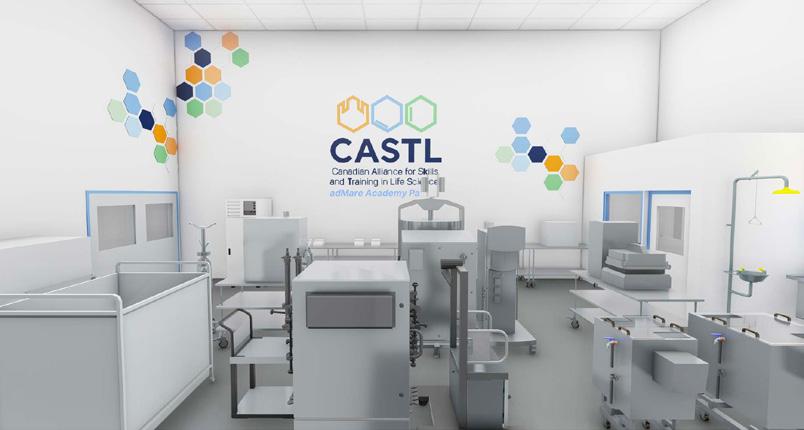
biotech.ca LEAD NATIONAL Fast-track your team’s growth by registering them for one of our new short training courses, delivered on-site at the CASTL Biomanufacturing Training Facility in Charlottetown, PEI. An upskilled workforce will address your organization’s future needs, enhancing attraction, job satisfaction, retention, and productivity. Introduction to Bioprocessing Introduction to Upstream Processing Introduction to Downstream Processing Biopharmaceutical Manufacturing Onboarding Boot Camp SHORT COURSES STARTING OCTOBER 2022 Register for a CASTL training program today castlcanada.ca • info@castlcanada.ca @CastlCanada CASTL TAKEN ON-SITE AT NIBRT Discover TrainingBiomanufacturingatHands-OnNEWTrainingCASTL’sFacility


AVANT DE METTRE UN MÉDICAMENT BIOLOGIQUE OU À PETITES MOLÉCULES SUR LE MARCHÉ CANADIEN, LES FABRICANTS doivent tenir compte de plusieurs systèmes réglementaires en plus du processus de réglementation des médicaments lui-même. Le présent article offre un résumé de ces systèmes et souligne l’importance d’une bonne communication lorsqu’il est question de mettre en œuvre la meilleure stratégie possible au sein d’une entreprise.
WHEN BRINGING A DRUG TO MARKET IN CANADA, WHETHER A BIOLOGIC OR A SMALL MOLECULE, THERE ARE A NUMBER OF regulatory systems to consider in addition to the drug regulatory process itself. We summarize these regulatory systems to highlight the importance of strong internal communication at a company to effect the best strategy.
60 Fall | Automne 2022 BIOTECanada
by/par Beverley Moore, Jennifer Raoul, Chantal Saunders, Jennifer Ponton, and Zosia Zielinski.
PROTECTION DES DONNÉES
An Overview of Available Regulatory Systems For a Drug in Canada Aperçu des systèmes de réglementation des médicaments au Canada
legal questionsmattersde droit
An “innovative drug” contains “a medicinal ingredient not previously approved in a drug by the Minister and that is not a variation of a previously approved medicinal ingredient such as a salt, ester, enantiomer, solvate or
Le Règlement sur les aliments et drogues du Canada prévoit une période de protection des données de huit ans pour les drogues innovantes, qu’elles soient biologiques ou chimiques. Comme elle existe indépendamment du système des brevets, la protection des données constitue un avantage considérable.Onentend par « drogue innovante » toute drogue qui « contient un ingrédient médicinal non déjà approuvé dans
DATA PROTECTION
Canada’s Food and Drug Regulations provide an 8-year data protection period for marketed innovative biological and chemical drugs. Data protection exists independently of the patent system, and is thus a powerful benefit.


une drogue par le ministre et qui ne constitue pas une variante d’un ingrédient médicinal déjà approuvé tel un changement de sel, d’ester, d’énantiomère, de solvate ou de polymorphe ». Puisque d’autres situations peuvent répondre à la définition, l’applicabilité doit être examinée dès le début.
Un fabricant ne peut pas demander l’approbation d’un médicament générique ou biosimilaire pendant six ans après la date du premier avis de conformité (AC) ou de l’approbation réglementaire de la drogue innovante. Une fois la présentation déposée, elle ne peut pas être approuvée avant deux ans. Une prolongation supplémentaire de six mois est possible si les résultats d’essais cliniques pédiatriques sont transmis à Santé Canada dans les cinq années suivant le premier AC.
A submission for approval of a generic or biosimilar drug cannot be filed for six years after the issuance of the first Notice of Compliance (NOC) or regulatory approval for the innovative drug. It cannot be approved for a further two-year period after filing. Six additional months is available if the results of pediatric clinical trials are submitted to Health Canada within five years of the first NOC.
Ce lien entre l’approbation réglementaire des médicaments génériques ou biosimilaires et le brevet protège la part de marché du produit en question jusqu’à ce que la décision soit rendue. Si l’action de l’inventeur aboutit, une injonction permanente sera accordée et protégera la part de marché de ce dernier jusqu’à l’expiration du brevet. Toutefois, si l’action n’aboutit pas, des dommages-intérêts pourraient être réclamés en raison du report de la mise en marché du médicament générique ou biosimilaire. Il convient donc de se demander si ce recours est avantageux. Afin de tirer le meilleur parti de cet avantage, un service des brevets
RÈGLEMENTS DE LIAISON
biotech.ca 61 legal matters questions de droit
Health Canada will not approve a generic or biosimilar drug that makes direct or indirect comparison to a drug with a listed patent until the patent(s) have been addressed through the Regulations. The generic or biosimilar filer can await patent expiry, or can make non-infringement and/or invalidity allegations. Such allegations can either be accepted by the innovator, or become the subject of litigation. If the innovator chooses to start an action, an NOC cannot issue to the generic or biosimilar filer until either the action is dismissed or two years have passed,

Canada has regulations linking generic and biosimilar regulatory approval to the clearance of patent hurdles. Under the Patented Medicines (Notice of Compliance) Regulations (Regulations), patents containing at least one claim to the medicinal ingredient, a formulation containing the medicinal ingredient, the use of the medicinal ingredient, or the dosage form of the medicine, matching the commercial product, can be listed on the Patent Register. Strict timing requirements apply.

Le Canada dispose de règlements qui établissent un lien entre l’approbation réglementaire des médicaments génériques et biologiques et l’élimination des obstacles à l’obtention d’un brevet. En vertu du Règlement sur les médicaments brevetés (avis de conformité) (le « Règlement »), les brevets contenant au moins une revendication de l’ingrédient médicinal, une revendication de la formulation qui contient l’ingrédient médicinal, une revendication pour la forme pharmaceutique ou une revendication pour l’utilisation de l’ingrédient médicinal, qui correspond au produit à usage commercial, peuvent être ajoutés au Registre des brevets. Des exigences strictes en matière de délais s’appliquent.
polymorph.” Other situations can meet the definition so applicability of this scheme should be considered early.
LINKAGE REGULATIONS
Santé Canada n’approuvera pas un médicament générique ou biosimilaire qui établit une comparaison directe ou indirecte avec un médicament breveté tant que le ou les brevets n’auront pas été examinés conformément au Règlement. L’entité déposante peut attendre l’expiration du brevet ou encore invoquer l’absence de contrefaçon ou l’invalidité. De telles allégations peuvent être acceptées par l’inventeur ou faire l’objet d’un litige. Si l’inventeur choisit d’intenter une action, un AC ne pourra être délivré au fabricant du médicament générique ou biosimilaire avant que l’action soit rejetée ou que deux ans se soient écoulés, selon la première éventualité. De plus, si l’inventeur obtient gain de cause, le médicament générique ou biosimilaire ne pourra être approuvé avant l’expiration du brevet.
PROLONGATION DE LA DURÉE DES BREVETS
La période de prolongation de la durée des brevets vise à compenser le temps perdu en raison de retards avant l’approbation des médicaments par Santé Canada. Une période additionnelle de deux ans peut être accordée à un brevet au moyen d’un certificat de protection supplémentaire (CPS). Un CPS peut être délivré par médicament; l’entreprise choisit le brevet auquel le CPS s’applique.
Si le Canada n’est pas le premier pays dans lequel une autorisation de mise en marché a été demandée, la demande canadienne doit avoir été déposée dans les 12 mois suivant la première demande. Cela s’applique à certains pays seulement.Leséquipes internes doivent communiquer entre elles pour s’assurer que le brevet contient les revendications nécessaires et, si elles souhaitent obtenir un CPS, que les exigences relatives au moment du dépôt réglementaire au Canada sont respectées.
Il est important de souligner que les obligations de déclaration englobent beaucoup plus que les brevets admissibles à un CPS ou au Registre des brevets. En outre, le CEPMB exige une déclaration, que l’invention contenue dans le brevet soit utilisée ou non en relation avec le produit commercial.
PATENT TERM RESTORATION
CONTRÔLE DES PRIX
The patent term restoration period is intended to restore time lost due to delays in drug approval at Health Canada. Up to two years of time can be “restored” to a patent through the issuance of a Certificate of Supplementary Protection (CSP). One CSP can be issued per drug and the company chooses the patent to which the CSP is applied.
Communication between internal teams is critical to ensure the patent contains the necessary claims, and so that if a CSP is desired, the timing of the regulatory filing in Canada complies.
Dans la plupart des systèmes réglementaires, un CPS aura essentiellement le même effet que le brevet initial, mais sa portée sera limitée au médicament en question. Les CPS peuvent être ajoutés au Registre des brevets et doivent être déclarés au Conseil d’examen du prix des médicaments brevetés (CEPMB), que nous aborderons ci-dessous.
The eligibility requirements for a CSP are strict. The patent must pertain to a medicinal ingredient or combination of medicinal ingredients in a drug for which the NOC was issued, and contain a claim for: the medicinal ingredient or combination; the medicinal ingredient or combination as obtained by a specified process; or the use of the medicinal ingredient or combination.
questionsmattersde
whichever is sooner. Furthermore, if the innovator is successful, the generic or biosimilar cannot be approved until the patent expires.
The PMPRB oversees a regime designed to ensure patented medicines are not sold at an excessive price in Canada. The PMPRB determines the maximum price at which a patented medicine can be sold. Patentees are obligated to report relevant patents to the PMRPB under the Patent Act. The PMPRB only takes jurisdiction once a relevant patent issues. But, once issued, the jurisdiction goes back to the publication date.
62 Fall | Automne 2022 BIOTECanada
PRICE CONTROLS
If Canada is not the first country in which an application for marketing approval has been submitted, the Canadian application must have been filed within 12 months of the earliest foreign application for marketing approval in certain countries.
Les critères d’admissibilité liés aux CPS sont stricts. Le brevet doit porter sur un ingrédient médicinal ou une combinaison d’ingrédients médicinaux dans un médicament pour lequel l’AC a été délivré et contenir une revendication de l’ingrédient médicinal ou de la combinaison, de l’ingrédient médicinal ou de la combinaison tels qu’ils sont obtenus au moyen d’un procédé déterminé, ou de l’utilisation de l’ingrédient médicinal ou de la combinaison.
In the context of most regulatory systems, the CSP will have essentially the same effect as the patent for the original term of the patent, albeit its scope is limited to the medicine in question. CSPs can be listed on the Patent Register, and must be reported to the Patented Medicines Prices Review Board (PMPRB), discussed more fully below.
legal droit
This linkage of generic or biosimilar regulatory approval to the listed patent protects market share until the decision issues. If the innovator is successful, a permanent injunction will issue, protecting market share until patent expiry. If unsuccessful, damages can flow from keeping the generic/biosimilar filer off the market. Thus, consider whether triggering this scheme is beneficial. In order to maximize the benefit, the patent division should communicate with the regulatory team to ensure eligible subject matter in the claims, and critical timing and relevance to the commercial product restrictions are met.
Le CEPMB a conçu un régime visant à empêcher la vente de médicaments brevetés à un prix excessif au Canada. Il fixe en effet le prix maximum auquel un médicament breveté peut être vendu. Les titulaires de brevet sont tenus de déclarer les brevets pertinents au CEPMB en vertu de la Loi sur les brevets. Celui-ci n’a compétence qu’à compter de la délivrance du brevet. Toutefois, une fois le brevet délivré, cette compétence s’applique à partir de la date de publication de la demande.
doit collaborer avec son équipe de réglementation pour s’assurer que les revendications sont admissibles, que les délais sont respectés et que les restrictions liées au produit à usage commercial sont prises en compte.
Business decisions relating to patent coverage should be made with respect to all ongoing innovation. A perceptive innovator should weigh the additional protection of a patent versus negative impacts of price control.
Avant la mise en marché, Santé Canada effectue un examen réglementaire du nom des médicaments et évalue notamment si les noms de marque approuvés et les noms des versions génériques portent à confusion. L’objectif est de déterminer si des erreurs d’administration de médicaments ou des préjudices sont susceptibles de survenir. L’organisme a justement publié des lignes directrices à propos des « produits de santé à présentation et à consonance semblables » (PSPCS) et des facteurs qui seront pris en compte lors de l’examen préalable à la mise en marché. Selon la plus récente version, lors de l’évaluation de noms de marque de PSPCS, tout nom figurant dans les bases de données des produits pharmaceutiques ou naturels ayant un résultat supérieur ou égal à 50 % en matière de similitudes orthographiques et phonétiques combinées doit être examiné.Desdossiers peuvent être portés devant l’Office de la propriété intellectuelle du Canada ou devant les tribunaux malgré une autorisation de Santé Canada. Dans de tels cas, l’accent semble mis sur la ressemblance entre les marques en matière d’apparence, de consonance et d’idée suggérée et sur un éventuel chevauchement des populations de patients. Une importance moindre pourrait être accordée à la nature des produits pharmaceutiques, y compris en ce qui a trait à la commercialisation (médicament sur ordonnance ou en vente libre, forme pharmaceutique, mode d’administration, etc.), à moins qu’il en soit mention dans les descriptions des produits pharmaceutiques contenues dans la demande de marque de commerce en question ou dans la demande de marque de commerce ou l’enregistrement antérieur d’un tiers. La comparaison entre les marques de commerce consiste à déterminer si un médecin, un pharmacien ou un patient ayant un souvenir partiel de la marque d’un produit pharmaceutique et tombant sur un produit portant le nom proposé, sans prendre le temps de l’étudier de près, supposerait que les deux produits sont les mêmes.
Trademark issues can arise in the Trademark Office and in the Courts despite a clearance from Health Canada. In such cases, there tends to be a focus on the resemblance between trademarks in appearance, sound and idea suggested and any possible overlap in patient populations. Less weight may be given to distinctions in the nature of pharmaceutical products, including their marketing status, e.g., prescription vs. over-the-counter, their dose form and routes of administration, etc., unless such details are referenced in the descriptions of the pharmaceuticals contained in the trademark application at issue and the prior third party trademark application or registration. The test for trademark confusion is whether a doctor/pharmacist/patient with a partial recollection of a pharmaceutical product trademark, upon encountering a product branded with the proposed pharmaceutical name (but not taking the time to study them closely), would assume that the two products come from the same source.
CONCLUSIONS
biotech.ca 63
It is critical that internal groups at pharmaceutical and biotechnology companies communicate and co-ordinate in order to allow the implementation of the best strategy for the regulatory systems above. Also, consider including your external team early. They have invaluable expertise in developing strategies to negotiate these regulatory systems, including the timelines.
CONCLUSION
Il est essentiel que les équipes internes des sociétés pharmaceutiques et biotechnologiques communiquent entre elles et coordonnent leurs efforts afin de mettre en œuvre la meilleure stratégie possible quant aux systèmes réglementaires susmentionnés. Pensez également à inclure vos conseillers externes tôt dans le processus; ils possèdent une expertise inestimable dans l’élaboration de stratégies de négociation, notamment en ce qui touche les délais.
Health Canada conducts premarket regulatory drug name review, which includes a confusion assessment with both approved brand names and generic names. Health Canada focuses on whether medication errors are likely to result, and the potential for harm. Published guidance documents address “look-alike sound-alike” (LASA) names and the factors that will be considered during the premarket review. The most recent guidance document indicates that when testing a proposed brand name for LASA attributes, any names in the drug and natural health product databases having a POCA score of 50% or greater will need to be identified and considered.
legal matters questions de droit
NAMING A MEDICINE
Les décisions commerciales relatives à la couverture d’un brevet doivent être prises en fonction des inventions en cours. Les inventeurs perspicaces sauront peser les avantages qu’offre la protection supplémentaire d’un brevet par rapport aux répercussions du contrôle des prix.
NOM D’UN MÉDICAMENT
Importantly, the reporting obligations encompass a much broader range of patents than those that are eligible for a CSP or for listing on the Patent Register. Furthermore, the PMRPB requires reporting whether or not the invention in the patent is used in relation to the commercial product.
• All intellectual property rights are retained by the partner
Partner with Seneca’s Centre for Innovation in Life Sciences
We acknowledge the support of the Natural Sciences and Engineering Research Council of Canada (NSERC).
• A ordable research and development costs made possible by dedicated, ready to deploy federal funding
• Fully equipped cosmetic science laboratory to support product formulation, quality control and stability studies and e cacy testing
Life science-based companies can solve key business and technical challenges by partnering with Seneca’s Centre for Innovation in Life Sciences (SCILS) to gain access to expert faculty, talented students and cutting-edge instrumentation.

Natural Sciences and Engineering Research Council of Canada
Conseil de recherches en sciences naturelles et en génie du Canada
To find out how we can help with your business challenge, contact: Namrata.Barai@senecacollege.ca Director of Applied Research, Seneca Innovation senecacollege.ca/SCILS
Highlights
• Experienced faculty in molecular biology, chemistry, microbiology, materials sciences and pharmacology who can work as principal investigators on projects
• Life science diagnostics product development capabilities including cell-based, molecular and antibody-based assay development, testing and validation for clinical and industrial diagnostics applications
Work with us
biogen.ca
At Biogen, our mission is clear: we are pioneers in neuroscience. At Biogen, we care deeply and work fearlessly to make a meaningful difference and truly change the lives of people suffering from devastating neurological and neurodegenerative conditions. Not because we can, but because we must.


At Path unexpectedTherapeutics,targets open new drug discovery
For Path Therapeutics, a small molecule biotech company focused on neuroscience therapeutics, the drug discovery platform can be a game-changer, both for the company and for patients. But it turned out that Path Therapeutics’ platform did not fit into big pharma’s way of thinking. “While the pharmaceutical industry regards actual drugs as assets, it does not view new drug targets the same way,” says Dr. Kurrasch, who initially had hoped to sell the new pathways they discovered to pharma.
She cites epilepsy as one example. Although relatively common – it afflicts approximately one in every 100 Canadians – effective treatment for epilepsy remains
Most of the interest focuses on MitoREAD, their novel neurometabolic phenotypic drug discovery platform that identifies new protein targets against which de novo drug discovery can be conducted. After decades of discounting, neurometabolism is now having its day in the sun. It is now appreciated that neurometabolism plays a central role across most brain diseases, making Path Therapeutics’ first-of-its kind platform technology well positioned.
THREE YEARS AFTER CREATING A GROUND-BREAKING
Path Therapeutics responded not with disappointment but with determination. The company immediately took steps to develop its own discovery program using their new drug targets for brain diseases that they will advance into the clinic. Now, with emerging backing from strategic investors and a growing interest in pharmaceutical partnering, those efforts are achieving real results. “We’ve been reaching out where and when we can,” says Dr. Kurrasch. “As a result, an ever-increasing number of investors are showing real interest in our approach.”
It appears that Path Therapeutics, as it did when designing MitoREAD years ago, has once again identified the most promising path to success.

elusive for over a third of patients. Given that some 90 per cent of antiseizure drugs now on the market target a handful of channels and receptors localized to the synapse, drugs with new mechanisms of action are needed. Similar needs exist for the treatment of diseases like Alzheimer’s, depression, or even Autism Spectrum Disorders, where a paucity of new drug targets has stalled progress.
DRUG DISCOVERY PROGRAM, CALGARY-BASED PATH THERAPEUTICS is having a moment. “Over the past nine months or so, interest in the platform and in the company has risen dramatically,” says Path Therapeutics co-founder and CEO Dr. Deborah Kurrasch. “We’ve increased our discussions with investors, and the response has been overwhelmingly positive.”
Historically, says Dr. Kurrasch, drug discovery starts by targeting a particular protein that research has shown is associated with disease. However, sometimes that protein turns out to be a poor drug target, leading to failures in clinical trials. This has been seen in Alzheimer’s Disease and the targeting of ß-amyloid. Path Therapeutics’ approach, she says, is to ignore the research hypotheses of a particular disease and instead let the neuron’s neurometabolic profile inform when a protein target improves disease burden, thereby uncovering novel druggable pathways.
66 Fall | Automne 2022 BIOTECanada
BIOTECanada MEMBER BENEFITS BIOTECanada is the national industry association with over 200 members located nation wide, reflecting the diverse nature of Canada's health, industrial and agricultural biotechnology sectors. By joining BIOTECanada, your company becomes part of an effective advocacy and regulatory voice representing the collective interests of the Canadian biotechnology industry. BIOTECanada has the tools to help your business reach its full potential through government relations, communications, marketing and membership services. Lab supplies with Avantor, delivered by VWR Director & Officers Insurance, Home & Auto Insurance with InsurePlus by Guthrie Insurance Multimedia releases and more with Business Wire Shipping discount with FedEx ( 8-33% off) Discounts on advertising in insights Magazine 30% off new BioCentury subscribers 20% off ShareVault ( Secure Document Sharing & Virtual Data Room) 25% off National Compensation Guides from BioTalent Canad Corporatea rate with GoodLife Fitness 10% off PSC Biotech® specializes in life science consultancy professional services COST SAVINGS PROGRAM Our members are able to save money by taking part in our cost savings program. Dependent on your level of participation, you can save up to $10, 000 annually. Some benefits include discounts on: DBUSINESSEVELOPMENT & NETWORKING BIOTECanada coordinates the Canadian presence at the BIO International Convention. As a member, delegates can save on registration, attend networking events as well as make use of the membersonly reserved meeting space within the pavilion. Also, BIOTECanada , and select partners, host networking events at all the major industry events. ADVOCACY & REGULATORY VOICE BIOTECanada acts through a series of policy development committees to shape regulatory, product access, intellectual property, financing, and industrial development issues that impact Canada’s biotech industry. biotech.ca For more information on the benefits of membership, please contact: Shaely Williams Senior Manager, Membership and Events shaely williams@biotech ca 613 230 5585 ext 222


Domain Therapeutics NA Inc.
Edesa Biotech Qu WexVasomuneTetraBiologicsBio-PharmaTherapeuticsPharmaceuticalsInc.
Alexion Pharma Canada
TALLC Inc.
Appili AuriniaTherapeuticsPharmaceuticals Inc.
Incyte Biosciences Canada
NovoInc. Nordisk Canada Inc.
Alpha Cognition Inc. GoodCap Pharmaceuticals Inc. HDAX Therapeutics Path Therapeutics
NUCLEAR MEDICINE
Bioenterprise Corporation Bioindustrial Innovation Canada
PAIN AND INFLAMMATION DOULEUR INFLAMATIONET
BioMarin Pharmaceutical Inc Bristol-Myers Squibb Canada Inc.
Eisai Limited
Pfizer Canada Inc.
Ferring GileadGenentechCanadaSciences Canada Inc.
OPHTALMOLOGIEOPHTHALMOLOGY
Turnstone Biologics Inc. Virogin Biotech Ltd.
Bright Angel Therapeutics Cura Therapeutics Inc. D5Pharma Inc. Immune InnovativeBiosolutionsTargetingSolutions Inc.
MACEUTIQUESPRODUITSMÉDECINERADIOPHARMACEUTICALSANDNUCLÉAIREETRADIOPHARAbdera Therapeutics
Augurex Life Sciences Corp. Deep VentusSkymountPhenomicMolecularModelisGenomicsInc.ForecasterAIMedicalInc.Therapeutics
AGRICULTURE & INDUSTRIAL INDUSTRIELLEBIOTECHNOLOGIEBIOTECH
2022 BIOTECANADA MEMBERSHIP COMMUNITY (as of July 2022)
AbbVie Canada
CSL Behring
Hoffmann-LaGrifols Roche Limited
Renaissance Bioscience Corp.
IMMUNOTHÉRAPIEANTICORPS, ET MALADIES INFECTIEUSES
Horizon Therapeutics Canada
AntibeAmacaTheraTherapeutics Inc.
NEUROLOGICAL AND CNS ETNEUROLOGIQUESTROUBLESDISORDERSDUSNC
Centre for Probe Development & Commercialization (CPDC)
Adapsyn Biosciences Inc.
Alpha9 Theranostics Inc.
Mitsubishi Tanabe Pharma Canada Novartis(MTP-CA)Pharmaceuticals Canada
Takeda Canada Inc.
Jazz Pharmaceuticals Canada Inc. Merck Canada Inc.
AI, DIGITAL, INFORMATIQUENUMÉRIQUEMEDICINECOMPUTATIONALANDIA,MÉDECINEET
AstraZeneca Canada Inc.
Aqua Bounty Canada Inc.
IMMUNOTHERAPY,ANTIBODIES, AND INFECTIOUS DISEASE
Xenon Pharmaceuticals Inc.
Oak Bay Biosciences, Inc.
MONDIALESBIOPHARMACEUTIQUESSOCIÉTÉSBIOPHARMACEUTICALSGLOBAL
BioMark Diagnostic Solutions Bold Therapeutics Inc
ProMIS SpecificNeurosciencesBiologicsInc.
Chinook Therapeutics Inc. Giiant PrecisionMediphagePharmaBioceuticalsNanoSystems Inc.
Delta-Fly Pharma Inc.
Entos
Bayer BiogenInc.Canada Inc.
Fusion Pharmaceuticals
Ultragenyx Pharmaceutical Vertex Pharmaceuticals Inc.
ONCOLOGIEONCOLOGY
KisoJi Biotechnology Inc. Nobelex Biotech Inc. Notch TentarixRedPlantFormPatternTherapeuticsPharmaInc.CorporationLeafMedicalInc.Biotherapeutics Inc.
ZymeworksTriphaseTempleTaihoSoricimedSierraSeaGenRepareQurCanMedicennaKOPKintaraFORUSESSAEpitopeaPharmaceuticalsInc.PharmaInc.TherapeuticsInc.Therapeutics,Inc.TherapeuticsCorpTherapeuticsCorp.TherapeuticsTherapeuticsCanadaOncologyBiopharmaInc.PharmaCanadaTherapeuticsB.V.AcceleratorCorp.Inc
AmgenULC Canada Inc.
Eli Lilly Canada Inc.
Alnylam Pharmaceuticals Canada
GENETIC PRÉCISIONGÉNÉTIQUEMÉDECINEPRECISIONANDMEDICINEDEETDE
Alpha Cancer Technologies Inc. BeiGene (Canada) ULC
68 Fall | Automne 2022 BIOTECanada
Teva Canada Innovation UCB Canada Inc.
EVAH OkanaganCorp.Specialty Fruits Inc.
Ipsen Biopharmaceuticals Canada JanssenInc. Inc.
Sobi Canada Inc.
Ripple Therapeutics
Mannin Research Inc.
Naegis Pharmaceuticals Inc.
SCIENTIFIQUESSERVICESPRODUCTSETPRODUITS
Aspect Biosystems
LQT
Royal Bank of Canada
BioVectra Inc.
biotech.ca 69
CTI Life Sciences Fund
BioSignal2Biodextris Inc.
ViricaVBIValnevaCentreOrganization-InternationalDiseaseVaccine(VIDO)CanadaInc.VaccinesInc.Biotech
Borden Ladner Gervais LLP
Versant Ventures Canada Ltd.
ACCORDACCORDBIOTECHNOLOGYNATIONALNATIONAL DE
Blake Cassels & Graydon LLP Blanchard Law
Smart & Biggar
Cyclenium Pharma Inc.
Agri-Food Innovation Council AusBiotech Canada'sOrganizationBiotechnologyLtd.InnovationVentureCapital and Private Equity Association Korea Biotechnology Industry SeedsNewMedtechOrganizationCanadaZealandBiotechCanada
SPÉCIALISÉSTRAITEMENTSTHERAPEUTICSSPECIALIZED
Pholoho Biotechnology Group Inc. Quality & Compliance Services Inc. Stiris Research Inc. VWR, Part of Avantor
JURIDIQUESSERVICESLEGAL
Institute for Research in Immunology and Cancer-Commercialization of MaRSResearchDiscovery District Research Canada
JP NovateurLumiraMorganVenturesVentures Inc.
Canadian Alliance for Skills & Training in Life Sciences (CASTL) Canadian Glycomics Network Centre(GlycoNet)forCommercialization of Regenerative Medicine (CCRM) GenomeCQDM Canada
DLA Piper Canada LLP
Alexandria Venture Investments
Defence Therapeutics Inc.
Avir Pharma Inc.
A&C American Chemicals Ltd.
PrimaryMedicureTherapeuticsInc.Peptides Inc.
ÉCONOMIQUEDÉVELOPPEMENTENSEIGNEMENTRECHERCHE,DEVELOPMENTET
KreaMedicaIQVIA Inc.
CONSULTING & BUSINESS CONSEILSSERVICES ET SERVICES
adMare BioInnovations
Fonds de Solidarité FTQ
JN Nova Pharma Inc
BELLUS Health Inc.
LifeSciences British Columbia Newfoundland and Labrador Association Of Technology OntarioIndustriesBioscience Innovation PEIOrganizationBioAlliance
Zucara Therapeutics Inc.
Evik Diagnostic Innovations Inc. Genvira Biosciences Inc.
SPharmShadowPDCIPangaeaMORSEGuthrieGlobalEversanaDeloitteLimitedPublicAffairsInsuranceBrokersConsultingInc.GroupMarketAccessInc.LakeGroupInc.
REGENERATIVE MEDICINE
MedicagoIMV Inc.
AFFILIATE AFFILIÉESORGANISATIONSORGANIZATION
LA COMMUNAUTÉ DES MEMBRES DE BIOTECANADA 2022 (en date de Juillet 2022)
Sanofi
MÉDECINE RÉGÉNÉRATIVE
Ag-West Bio Inc.
Feldan
PBR Laboratories Inc.
FINANCE, INVESTOR, VENTURE CAPITAL
Inversago Pharma
Silicon Valley Bank
Amplitude Ventures
Verity Pharmaceuticals Inc.
AmorChem II Ventures Inc.
Toronto Innovation Acceleration UniversityPartners Health Network SCIENTIFIC SERVICES AND
TargaSpiderwortSernovaNervGenTherapeuticsPharmaCorp.CorporationBioBiomedicalInc.
FINANCE, INVESTISSEUR, CAPITAL DE RISQUE
Back Bay Life Science Advisors BrevisRefero Corporation case Market Access Consulting Inc. CBRE
Eversheds Sutherland Farris FaskenLLPMartineau Dumoulin LLP
VACCINSVACCINES
Teralys Capital inc.
Applied Pharmaceutical Innovation BioTalent Canada
Gowling WLG (Canada) LLP
AUX ENTREPRISES
Wilson Sonsini Goodrich & Rosati RESEARCH, ACADEMIC & ECONOMIC
VaccineSeqirusCanadaandInfectious
3Sixty Public Affairs Inc.
Canadian Advanced Therapies Training Institute (CATTI)
BIOTECHNOLOGIE
Genesys Capital
Quark Venture LP
BioscienceBIOQuébecBioNovaBioNBBioAlbertaAssociation Manitoba Life Sciences Ontario (LSO)
Bloom Burton & Co.
BIOTECanada coordonne la présence canadienne au congrès international BIO. Les membres qui font partie de la délégation se rendant à BIO peuvent économiser sur les frais d’inscription, assister à des événements de réseautage et profiter de l’accès à l’espace de réunion réservé aux membres dans le pavillon canadien. Par ailleurs, BIOTECanada et certains de ses partenaires organisent des activités de réseautage à l’occasion de toutes les principales sectorielles.manifestations
70 Fall | Automne 2022 BIOTECanada
BIOTECanada est une association sectorielle nationale comptant près de 200 membres situés un peu partout au pays et reflétant la nature plurielle des secteurs biotechnologiques de la santé, de la fabrication et de l’agriculture. Quand elle s e joint à BIOTECanada, une entreprise devient membre à part entière d’un mouvement de défense et de réglementation de l’industrie canadienne de la biotechnologie qui veille à l’intérêt collectif de ses membres.
Nos membres peuvent réaliser des économies en participant à notre programme de réduction des coûts. En fonction du type d’adhésion choisi, vous pouvez économiser jusqu’à 10 000 $ par an.
Parmi les avantages, il est possible de bénéficier de ce qui suit :
• Réductions sur la publicité dans le magazine insights
• Réduction de 25 % sur les guides nationaux en matière de rémunération de BioTalent Canada
• Remise de 10 % sur les services de PSC Biotech®, une entreprise spécialisée dans les services professionnels de conseil en sciences de la vie

• Remises sur les frais d’expédition avec FedEx (des remises entre 8 et 33 %)
UN MOUVEMENT DE DÉFENSE ET DE RÉG LEMENTATION
• Réduction de 30 % pour les nouveaux abonnés à BioCentury
• Tarifs d’entreprise auprès de GoodLife Fitness
Pour obtenir de plus amples informations sur les avantages de l’adhésion, veuillez communiquer avec : Shaely Williams – Gestionnaire principale de l’adhésion et des événements shaely.williams@biotech.ca 613-230-5585, poste 222 biotech.ca


EXPANSION DE L’ENTREPRISE ET RÉSEAUTAGE
BIOTECanada AVANTAGES DE L’AFFILIATION
Nous disposons des outils dont votre entreprise a besoin pour réaliser son plein potentiel : relations avec les gouvernements, communications, marketing et services aux membres.
• Réductions sur les fournitures de laboratoire avec Avantor, gérées par VWR
• Réductions sur les communiqués multimédias et plus encore avec Business Wire

BIOTECanada agit par l’intermédiaire d’une série de comités en vue d’élaborer des politiques qui façonneront les questions de réglementation, d’accès aux produits, de propriété intellectuelle, de financement et de développement industriel ayant une incidence sur le secteur de la biotechnologie au Canada.
• Remise de 20 % sur ShareVault (partage sécurisé de documents et salle de données virtuelle)
• Réductions sur les assurances pour les administrateurs et les dirigeants, les assurances habitation et les assurances automobile avec InsurePlus par Guthrie Insurance
PROGRAMME D’ÉCONOMIES DE COÛTS
CSL Seqirus: On the front lines of influenza
While these numbers are startling, Canada is making strides to protect more people against the flu each year through seasonal influenza vaccinations, while also preparing for future pandemic influenza challenges.

1. Government of Canada. (2021). Flu (influenza): Prevention and risks. Retrieved from: vaccine-2022-2023/naci-2022-2023-statement.pdf,vaccines-immunization/canadian-immunization-guide-statement-seasonal-influenza-www.canada.ca/content/dam/phac-aspc/documents/services/publications/Statement4.vaccination:3.canada/ottawa/flu-vaccine-availability-causing-frustration-ottawa-1.5781750supply2.diseases/flu-influenza/prevention-risks.html.https://www.canada.ca/en/public-health/services/AccessedAugust2022.Kupfer,Matthew.(2020,October30).FrustrationgrowsasfluvaccineshrinksinOttawa.CBCNews.Retrievedfromhttps://www.cbc.ca/news/Seqirus.(2021).Canadianattitudesandbehaviourstofluoneyearlater.Unpublishedinternalcompanydocument.GovernmentofCanada.CanadianImmunizationGuideChapteronInfluenzaandonSeasonalInfluenzaVaccinefor2022–2023.Retrievedfrom:https://AccessedSeptember2022.
Earlier this year, we renewed a five-year agreement with the Biomedical Advanced Research and Development Authority (BARDA) in the United States. Through this agreement, CSL Seqirus will provide influenza vaccines and adjuvants for pre-pandemic stockpiling to support rapid responses to an influenza pandemic or other public health emergencies.
As a company dedicated to the fight against influenza, we are committed to standing together on the front lines with our public health partners. We are proud of the strides we’ve made so far and our ongoing efforts in Canada and worldwide.
by/par Gillian Stafford, Director of Commercial Operations for Canada
EACH YEAR, APPROXIMATELY 12,000 CANADIANS WILL BE HOSPITALIZED WITH INFLUENZA. AND 3,500 WILL LOSE THEIR LIVES TO IT.1
Providing choice with respect to flu vaccines can help Canada continue this momentum. For instance, in Canada, there are various types of influenza vaccines available such as trivalent, quadrivalent and adjuvanted vaccines.4 Likewise, influenza vaccines can be made using either egg-based or cell-based technology.4
biotech.ca 71
Annual vaccination is an effective way to prevent seasonal influenza. Despite an unprecedented rise in influenza vaccine uptake in 2020,2 work continues to reach national vaccine goals. Encouragingly, in a poll conducted ahead of the 2021 flu season, Canadians said they were more likely to get vaccinated against influenza over the next five years compared to the previous five.3 Moreover, among those who had never received a flu vaccine, 16 percent said they would now be more likely do so within the next five years.3
CSL Seqirus has been dedicated to the fight against influenza for more than 100 years, and this year will be no different. We have a long-standing, well-established relationship with the Canadian government supplying approximately 20 million doses of seasonal influenza vaccine since 2010. And as the back-up supplier for pandemic influenza vaccines, we continue to work side-byside with the Government of Canada.
We are involved in influenza vaccine development including our adjuvanted and cell-based manufacturing technologies. And we know that keeping up with evolving threats takes ongoing investment in dedicated scientific research. We recently announced an investment of a new custom-built R&D facility in Massachusetts, which will support the development of new influenza vaccine technology, including the self-amplifying mRNA (sa-mRNA) technology platform.
“We are very excited by our decision to locate our new Canadian hybrid-collaboration head office and national product replenishment centre in Brampton,” says Spears. “It is one of the fastest-growing and most innovationfriendly cities in Canada.”
72 Fall | Automne 2022 BIOTECanada
The Stephens Company Limited is a Brampton-based company that distributes medical supplies and equipment to the health care sector. Dynacare, which provides medical laboratory services essential to Canada’s health
Flourishing Health and Life Sciences Sector
Brampton is home to many large, established global companies.KenSpears is the vice-president and general manager of Boston Scientific Ltd. (Canada) in Brampton.
HEALTH-TECH INNOVATIONS
THE HEALTH AND LIFE SCIENCES SECTOR IN BRAMPTON IS HOME TO SOME 2,300 COMPANIES -including access to more than 100 biotechnology firms –that employ over 13,000 people. Situated within a 30-minute drive of Pearson International Airport, Brampton has established strong credentials within Canada and the international community.
Bohl notes that the city has invested financially in the Innovation District in Brampton, which is focused on creating a strong culture for start-ups and entrepreneurship. One of the key partners in the District is B-Hive, a start-up accelerator that attracts many international companies in multiple sectors by helping them navigate the visa/immigration process.
Following a recent rebranding, Toronto Metropolitan University (TMU) is embarking on a new chapter that will help shape the future of health care in Ontario, says Bohl. A key player in the growth of Brampton’s health and life sciences industry, TMU has received a planning grant from the provincial government to develop a proposal for a medical school in Brampton that will take an innovative approach to
“We look forward to drawing on the diverse talent pool within the Brampton Innovation District to do our important work of serving Canadian health care provider heroes and enabling improved health outcomes for Canadian patients,” he adds.
care system, is also headquartered in Brampton. Canadian Blood Services operates its State of the art blood testing lab and collections facility in Brampton for all of eastern Canada, and is the operational head-office as well.
Attracting Excellence to Brampton


The Brampton campus of Medtronic of Canada Ltd., a global medical technology company, is the company’s Canadian headquarters, handling various corporate functions, including training and education, sales, marketing, and administrative duties.
“The start-up scene is very hot right now in Brampton, especially in health and life sciences,” says Martin Bohl, the sector manager for health and life sciences in the City of Brampton’s Economic Development Office (EDO).
In the centre of Canada’s Innovation Corridor, Brampton is the fastest-growing big city in Canada and is recognized globally for its connectivity, diverse community, exceptional talent, vibrant city lifestyle, and dedication to innovation. Brampton has a young, talented professional population. It also offers rapid access to a vast array of facilities and businesses.
Taro Canada is a subsidiary of Taro Pharmaceutical Industries Ltd., a large multinational company that produces dermatology products. Their manufacturing facility in Brampton employs about 600 people.
• the use of innovation and technology to improve quality of care and patient outcomes;
biotech.ca 73
health education by addressing the growing gaps in primary care across the province and the country at large.
Besides its medical school proposal, TMU already has a significant presence in the Innovation District with its entrepreneurship accelerator, Brampton Venture Zone (BVZ) at TMU.

The proposed school will be designed around five key •pillars:community-centric primary care and the social determinants of health;
“This combination creates a powerhouse of opportunities for new businesses to thrive and create jobs for economic growth in the region,” she stresses.
For more than 50 years Sheridan College Institute of Technology and Advanced Learning has been a landmark institution in Brampton, committed to growing health and life sciences talent in the city.
Systemic cultural inequities within the healthcare system contribute significantly to unmet care needs in Ontario, a fact that has been laid bare by the COVID-19 pandemic. TMU’s proposed School of Medicine will be designed from the ground up to provide a new model for primary care — one that is community-driven, intentionally inclusive, and that trains doctors whose cultural awareness and humility are as crucial as their medical skills.
• equipping physicians with the skills to develop interprofessional health care networks to achieve better outcomes for patients.
“We partner with local health and wellness stakeholders such as Dynacare, Medtronic, LMC healthcare, CanHealth, the William Osler Health System, and SE Health, among others,” she says. “Our goal is to support the adoption of innovative technology solutions for the greater good of the“Thesector.”City of Brampton has a visionary plan to bring focus to the innovation and technology cluster to match the already vibrant industries in the region,” says Srinivasan.
“As a leader in post-secondary education, Sheridan is home to diploma programming in Practical Nursing, Personal Support Worker, Pharmacy Technician, and two Bachelor Degrees in Kinesiology and Health Science and Athletic Therapy,” says Michael O’Leary, Dean of the Faculty of Applied Health and Community Studies.
In the summer of 2021, Sheridan, in partnership with Peel Public Health, the City of Brampton and community agencies, hosted CommUNITY clinics that helped deliver 35,000 COVID-19 vaccine doses into the arms of LookingBramptonians.downtheroad, Sheridan plans to build a new Centre for Healthy Communities, thanks in large part to a $2.5 million planning grant approved by Brampton City Council.“Inits ultimate form, the Centre will be a beacon of upstream, preventative care that transforms the lives of those living with chronic diseases such as diabetes,” saysThisO’Leary.newspace will provide students with a world-class learning environment, and serve as a community hub where those with chronic disease can receive holistic, culturally-relevant care that places the needs of the patient/individual first.
Since 2019, over 100 Brampton employers have welcomed Sheridan students for field placements for healthrelated programs.
Usha Srinivasan is director of the BVZ.
• support for the health and well-being of seniors as our population becomes older; and
• culturally respectful care to diverse communities;
The research generated from the Centre for Healthy Communities will also inform care practices across Canada and the globe, he adds.
“We also offer graduate certificates in Clinical Research and Regulatory Affairs,” he says. “These critical human resources continue to serve the local, provincial and national communities in providing high-quality care and health services.”
“Looking forward, Sheridan seeks to find even more opportunities to bring our community into the campus,” says O’Leary. “We will leverage our outstanding faculty and staff resources to support our learners’ success, and contribute to making Brampton healthier, safer and the best place to work and live.”


Incubating the best for business
In addition, the incubator is leveraging the fact that American biotechnology giant Moderna Inc. is building a new facility less than a kilometre from the CQIB’s headquarters and has accepted a new U.S. company — RNA Therapeutics — into the incubator program, said Perry Niro, executive director of CQIB.
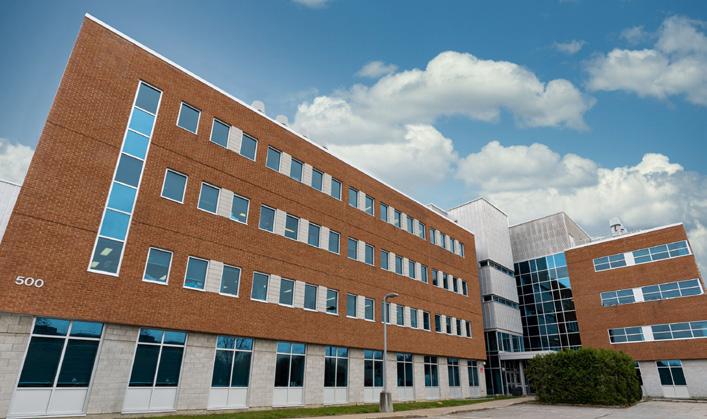

The organization has had several successes in 2022, starting with an agreement announced in May between CQIB and the Ontario Bioscience
Innovation Organization, to enable Québec companies who need to test and prove their products in real-world healthcare situations to do so as part of OBIO’s Early Adopter HealthLaterNetwork.thesame month, CQIB announced the creation of a new consortium that aims to accelerate technology validation within the Quebec health network. CQIB will lead the consortium, which includes Admare BioInnovations, Centech, District 3, CTS, ACET and QuantINO, and which will be supported by $2 million in financing from the Quebec ministry of economy and innovation.“Marketing in the health-care system requires a lot of effort and a thorough knowledge of the industry,” Niro said. “The consortium’s role will be to facilitate this process.”
The incubator is situated in the center of Greater Montreal’s Biotech City
alumni is Bio-K Plus, which makes drinkable probiotics as well as capsules was acquired by a multinational firm, catapulting co-founder Isabelle Chevalier to the status of a dragon on the Québec version of Dragon’s Den.
Perry Niro M.Sc., executive director of CQIB
SUPPORTED 100 COMPANIES and raised $500 million in investment for the province’s biotech companies. Last year alone, it raised $50 million in venture capital financing for startups.Founded in 1996 by the City of Laval, Que., and the National Institute for Scientific Research, CQIB was the first life-science incubator in Canada. It aims to facilitate the acceleration, growth and success of the next generation of life sciences and medical technology businesses. Today, it has 26,000 square feet of labs within the Laval Biotech
The Quebec Biotechnology Innovation Centre supports startup companies make it big in biotech and life sciences.

IN ITS 25 YEARS OF EXISTENCE, THE QUEBEC BIOTECHNOLOGY INNOVATION CENTRE (CQIB) HAS
AmongCity.its
Finally, in June, the organization announced it would expand its laboratory facilities in Laval by 3,000 square feet through a $3.6 million project financed by federal and provincial government as well as the City of “ThisLaval.project confirms our role as a driving force in the emergence of the new generation of life sciences entrepreneurs,” Niro said. “This is illustrated in the fact that graduates from the incubator have built nearly 70,000 square feet of new laboratories in greater Montreal.”
biotech.ca 75
“During my undergrad, I realized that many groundbreaking treatments come from lab-based research,” said Dr. Hill. “One of the most exciting, and surprising, aspects of my post-doctoral fellowship, was that I had the opportunity to become a co-founder in a biotech start-up.”
Powering Canada’s Biotechs
76 Fall | Automne 2022 BIOTECanada
TRADITIONALLY POWERED BY STEM CELLS, REGENERATIVE MEDICINE (RM) FOCUSES ON REPLACING, REPAIRING OR REGENERATING HUMAN CELLS, tissues and organs. In the coming decade, regenerative medicine therapies and technologies will improve and transform health for all as researchers work to deliver innovative treatments with improved patient outcomes. Canada is home to several leading-edge companies in the RM field, with many emerging companies joining the ranks recently such as Notch Therapeutics, Mesintel Therapeutics, Aspect Biosystems, and AmacaThera Inc.
The women behind two of Canada’s innovative biotech start-ups
Mesintel is decoding fibroblast biology at an unprecedented pace. The discovery platform has already yielded foundational insights into fibroblast dysfunction, their role in disease, and new therapeutic targets. The ongoing incorporation of more sophisticated computational approaches, including machine learning, is accelerating Mesintel’s discovery and development programs, enabling the creation of superior therapeutics.
From 10 years of age, Dr. Lesley Hill, Co-founder and Chief Operating Officer of Mesintel Therapeutics, would tell people that she was going to find a cure for cancer when she grew up, which at the time, to a burgeoning young scientist, meant becoming a physician.
“The Fueling Biotechnology Partnerships award from the Stem Cell Network is playing a huge role in supporting our company to develop therapies to improve liver
Mesintel Therapeutics focuses on fibroblasts, a cell type that has vital roles in health, and their dysfunction underlies numerous diseases with unmet medical needs, including cancer and fibrosis. Mesintel has developed a platform to accelerate the discovery of novel therapeutics for these diseases. The platform is also being leveraged in complementary therapeutic areas, including rare diseases, tissue regeneration and aging. The liver regeneration program is a high priority for Mesintel and is expected to significantly improve millions of lives globally.
MAKING STEM CELL THERAPY MAINSTREAM
For its part, Canada’s Stem Cell Network (SCN) has been leading the way in building national capacity in stem cell and RM research, supporting the commercialization of RM research and early-stage biotechnology companies through its Fueling Biotechnology Partnerships Program and training early-career researchers. Recently, SCN had the opportunity to speak with two inspiring women in biotech about their career journeys and how their companies are making a difference for Canadians.
Dr. Lesley Hill, Co-founder and Chief Operating Officer of Mesintel Therapeutics
ACCELERATING THE DEVELOPMENT OF INNOVATIVE THERAPIES FOR LIVER REGENERATION
regeneration,” said Dr. Hill. “With liver disease quickly reaching epidemic proportions, new approaches are desperately needed to improve liver health.”
For Dr. Emily Titus, Senior Vice President, Notch Therapeutics, her career path has been about passion and

“A turning point in my career came when I had the opportunity to focus on new areas of CCRM’s business, including the formation of companies,” said Dr. Titus. “One of my projects was the predecessor of Notch Therapeutics.”
biotech.ca 77
Dr. Emily Titus, Senior Vice President, Notch Therapeutics

Created in 2001, with support from the Government of Canada, the Stem Cell Network has grown from a few dozen labs to more than 230 world-class research groups, supporting over 225 research projects and more than 25 clinical trials. Since its inception, over 20 biotech companies have been catalyzed or enhanced and more than 5,000 highly qualified personnel have been trained. stemcellnetwork.ca
A snapshot of some of the biotech start-up companies catalyzed or enhanced through SCN

building a fulfilling career – one with impact. After completing a Bachelor of Applied Science, Emily transitioned to the field of pluripotent stem cell biology. Following her PhD, she landed her first job at the then
newly launched Centre for Commercialization of Regenerative Medicine (CCRM).
Notch Therapeutics is developing a pipeline of allogenic T cell therapies from induced pluripotent stem cells, specifically engineered to address the underlying biology of complex diseases, including cancer, and overcome the limitations of autologous therapies. The goal is to make T cell therapies accessible to more people, creating an off-the-shelf medicine that ultimately offers transformational health benefits over the existing standards of care in cancer.
“The Stem Cell Network was integral to my early career,” said Dr. Titus. “As a trainee I was sponsored to attend the annual Till and McCulloch Meeting. It was a great introduction into Canadian stem cell and RM science and allowed me the opportunity to interact and network with peers.”Since its inception, Notch has grown to a company with 80 staff at three sites: Toronto, Vancouver, and Seattle. Support and belief in the technology from the founding institutions in Canada made Notch a reality and the company looks forward to revolutionizing the landscape of T cell therapies for the benefit of Canadians.
78 Fall | Automne 2022 BIOTECanada AGWEST BIO 21 BIOGEN . . . . . . . . . . . . . . . . . . . . . . . . . . . . . . . . . . . . . . . . . . 65 BIONATION ...................................... 30 BIOSCIENCE MANITOBA . . . . . . . . . . . . . . . . . . . . . . . . . . . 42 BIOTALENT ...................................... 48 CASTL 58 CATTI 3 CEAPRO 44 CITY OF BRAMPTON . . . . . . . . . . . . . . . . . . . . . . . . . . . . . . 72 CQIB ............................................ 74 CPDN ............................................ 10 EPITOPEA 4 ADVERTISERS DIRECTORY / RÉPERTOIRE DES ANNONCEURS INVEST IN CANADA ............................... 79 IQVIA ............................................ 80 MEDICURE 20 ONTARIO GENOMICS 8 PATH THERAPEUTICS 66 SEAGEN ......................................... 18 SENECA COLLEGE ................................ 64 STEMCELL NETWORKS ............................ 76 TAKEDA CANADA 2 WEX PHARMA 51 WYVERN PHARMACEUTICALS 7 ZUCARA 56

@I@Invest_Canadanvestir_Canada Invest in Canada Investir au Canada #InvestinCanada#InvestirauCanada investircanada.cainvestcanada.caInvest in Canada Investir au Canada FIND IT HERE Find the world’s top talent. Cutting-edge R&D. Support for innovation. In Canada, you will find all you need for your next successful expansion. INVESTCANADA.CA DÉCOUVREZ-LES ICI Découvrez les meilleurs talents du monde. La R-D de pointe. Soutien de l’innovation. Au Canada, vous trouverez tout ce dont vous avez besoin pour réussir votre prochaine expansion. INVESTIRCANADA.CA

We believe “what’s possible” can always go further. That’s why we do things differently at IQVIA – by bringing the science of healthcare together with data science, advanced analytics and expert knowledge. It’s how we look beyond what’s expected in healthcare to see what’s possible.



Others may offer a way forward. IQVIA gives you a way further.

To engagement. To an entire ecosystem.


From evidence.

© 2022. All rights reserved. IQVIA® is a registered trademark of IQVIA Inc. in the United States, the European Union, and various other countries. YOUR WAY FURTHER IQVIA.COM/CANADA


