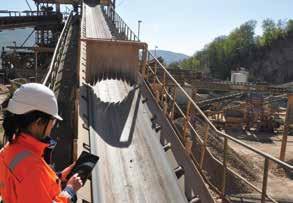
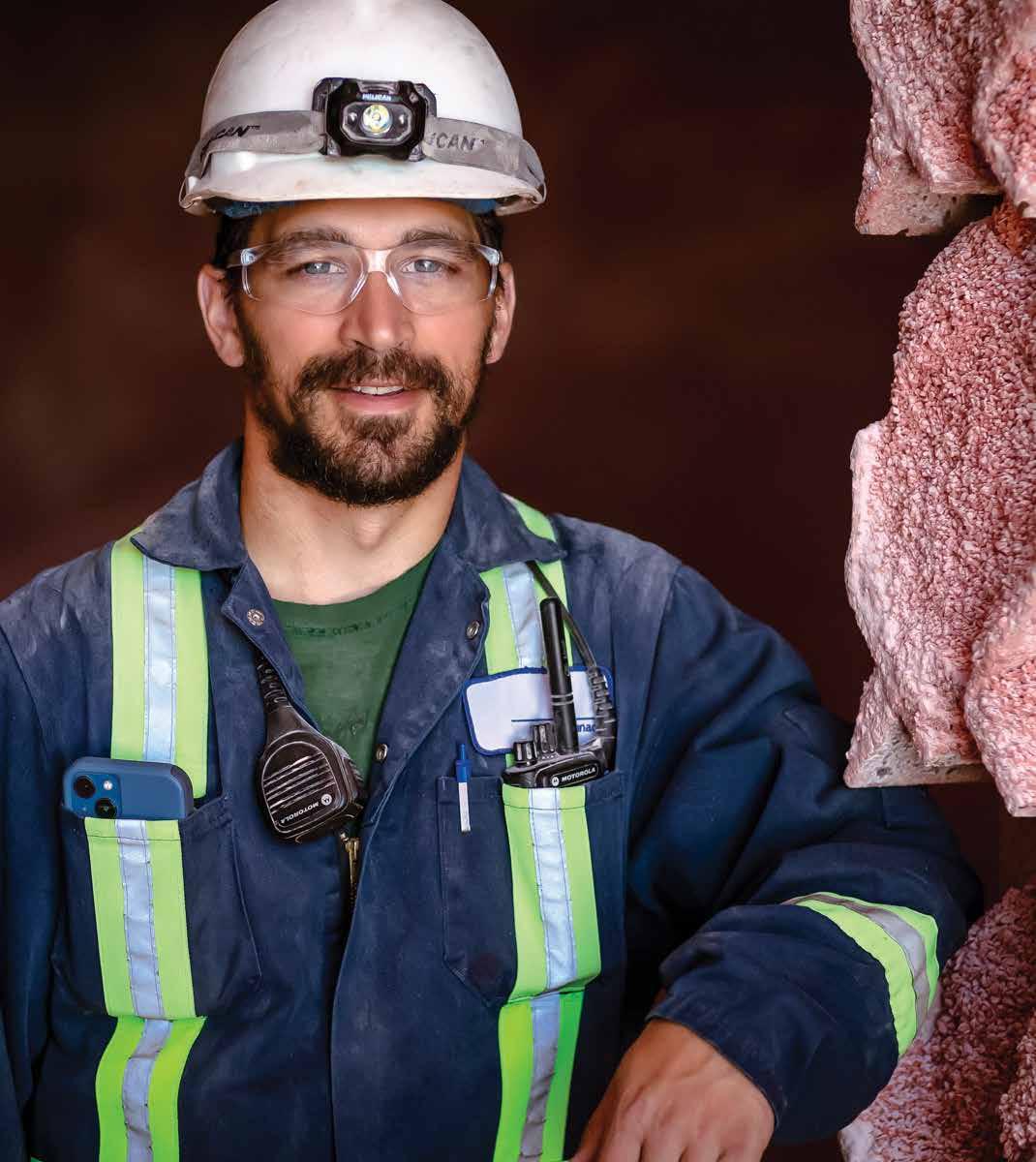
RETAINING TALENT IN MINING CREATING A CULTURE OF MAINTENANCE SAFETY
SELLING THE TECHNOLOGY SMRs POWERING THE NORTH
FEATURES
MINING IN ONTARIO
12 Ontario mining at a moment of consequence.
15 Regulations: Modernizing Mining in Ontario: Bill 5.
24 More mines join federal fast-tracking program: Part 2.
29 Updates on new mines and projects in Ontario.
65 History: Eighty-five years of SGS Lakefield’s global mining legacy.
TECHNOLOGY, EQUIPMENT, AND MAINTENANCE
22 Selling the technology.
33 This is not a revolution: It is a reveal.
40 Managing the digital mine in systems, not silos.
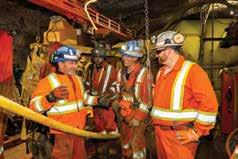
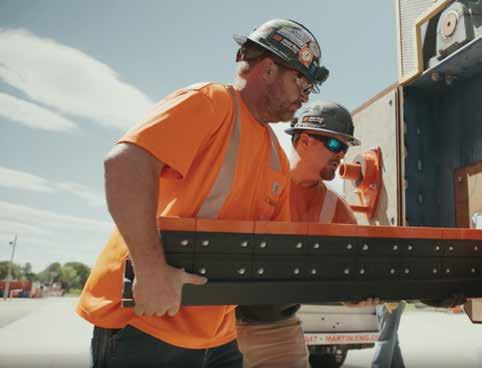
42 Conveyors: Creating a culture of maintenance safety, training, and profitability.
44 The AI boom beneath our feet.
49 Screens: The technological age.
53 Hydraulics at the edge.
CEO INTERVIEWS
35 Jorge Ganoza on why Fortuna is chasing value, not ounces.
46 Powering the North: A Conversation with NANO Nuclear CEO James Walker.
50 New Found Gold CEO outlines Queensway development strategy following Maritime acquisition.
WORKFORCE TRAINING AND EDUCATION
57 Leading the future of mining through education, innovation, and community partnership.
59 What have you done today that did not involve a mineral? Part 6.
61 Retaining talent in mining: The role of women in leadership.
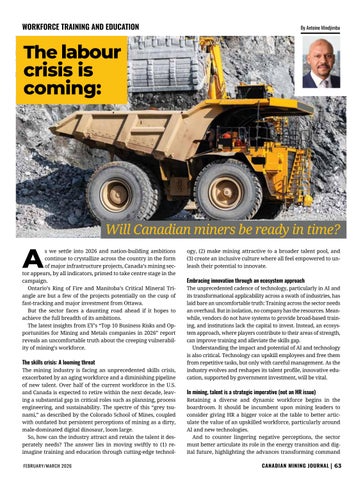
63 The labour crisis is coming: Will Canadian miners be ready in time?
DEPARTMENTS
4 EDITORIAL | A new world order: Carney addresses the Trump in the room.
8 FAST NEWS | Updates from across the mining ecosystem.
19 LAW AND REGULATIONS | Fifty years of the James Bay and Northern Quebec agreement: A mining perspective.
70 LETTER TO THE EDITOR 61
in April 2026
A new world order: Carney addresses the Trump in the room
Sixteen minutes of eloquence! That was Prime Minister Mark Carney’s address at the World Economic Forum in Davos. The speech struck many as a moment of rare candour on the global stage — that confronted what he described as a fundamental shift in geopolitics. In his speech, Carney argued that the post–World War II rules-based international order has effectively given way to a new era of great power rivalry and unrestrained geopolitics, a reality he said nations must acknowledge rather than wistfully mourn. He framed this shift as the end of a “pleasant fiction” of cooperation and predictability and urged middle powers like Canada to build strategic autonomy and new coalitions grounded in shared values such as human rights, sovereignty, and sustainable development.
Carney’s remarks implicitly addressed the “Trump in the room” without naming the U.S. president directly, responding to tensions stirred by controversial U.S. actions and rhetoric on issues like Greenland and tariffs that have strained traditional alliances. While he did not single out any leader by name, his forceful denunciations of coercive power politics and calls for collective action were widely interpreted as a rebuttal to that style of unilateralism, garnering standing ovations from the Davos audience. By positioning Canada and other mid-sized nations as builders of a new world order adapted to today’s fractured geopolitical landscape, Carney’s speech reframed the narrative from one of decline to one of proactive cooperation among like-minded states.
Articles on pages 12 to 21 and 24 to 32 of this February-March edition provide updates on mining in Ontario, including the Ontario Mining Association (OMA) President’s update on the state of mining in the province. Additionally, the editorial on page 65 tells the story of a research laboratory in Lakefield, Ont., near Peterborough, which has played an important role in the Canadian mining industry since 1941 — the SGS Lakefield Laboratory is celebrating its 85th anniversary this year.
Flip to pages 22, 33, 40 to 45, and 53 for the latest technology and equipment updates in mining. Moreover, articles on pages 57 to 64 discuss the latest topics related to workforce, training, and mining education. This edition also features several CEO interviews.
If you are planning to attend the Prospectors and Developers Association of Canada (PDAC) 2026 convention in Toronto, Mar. 1-4, please visit our booth to pick up a hardcopy of our February-March edition; we will be in booth # 808 in the South Hall. Finally, our April edition will showcase the technologies and strategies that help miners reduce their footprint, including mine electrification. From environmental mine design to BEVs, as well as advanced tailings management to progressive closure and reclamation practices, we will explore the tools redefining responsible mining. Editorial contributions will be accepted until Mar. 7, 2026, and should be sent to the Editor in Chief.
President, The Northern Miner Group Anthony Vaccaro
Established 1882
Canadian Mining Journal provides articles and information of practical use to those who work in the technical, administrative and supervisory aspects of exploration, mining and processing in the Canadian mineral exploration and mining industry. Canadian Mining Journal (ISSN 0008-4492) is published nine times a year by The Northern Miner Group. TNM is located at 69 Yonge St., Ste. 200, Toronto, ON M5E 1K3. Phone (416) 510-6891.
Legal deposit: National Library, Ottawa. Printed in Canada. All rights reserved. The contents of this magazine are protected by copyright and may be used only for your personal non-commercial purposes. All other rights are reserved and commercial use is prohibited. To make use of any of this material you must first obtain the permission of the owner of the copyright. For further information please contact Robert Seagraves at 416-510-6891.
Subscriptions – Canada: $51.95 per year; $81.50 for two years. USA: US$64.95 per year. Foreign: US$77.95 per year. Single copies: Canada $10; USA and foreign: US$10. Canadian subscribers must add HST and Provincial tax where necessary. HST registration # 809744071RT001.
From time to time we make our subscription list available to select companies and organizations whose product or service may interest you. If you do not wish your contact information to be made available, please contact us via one of the following methods: Phone: 1-888-502-3456 ext 3; E-mail: amein@northernminergroup.com
Mail to: Allison Mein, 69 Yonge St., Ste. 200, Toronto, ON M5E 1K3 We acknowledge the financial support of the Government of Canada.
Tamer Elbokl, PhD
“ACCURATE
Mine Reader.
Predict ventilation equipment maintenance requirements for uninterrupted operation.
Duetto Analytics™
Duetto Analytics™ is an intelligent diagnostics and analytics platform, built to unify your IIoT data into one actionable interface. Operating securely within your process control network, Duetto delivers real-time visibility, advanced trending, and predictive maintenance tools – giving operations teams greater control and fewer surprises.
Discover
Saskatchewan
Connect with us at Saskatchewan Day at PDAC.
To learn more, visit:
World-class resources, attractive incentives and trusted geoscience data. Saskatchewan is Canada’s top region for mining investment.
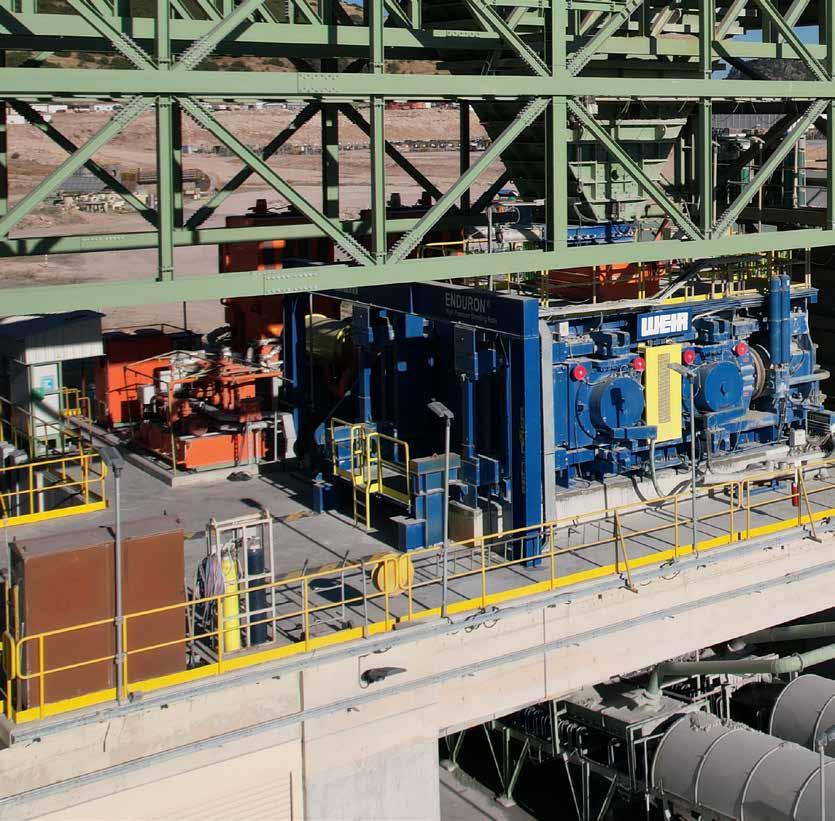
ENDURON® HPGR
Only ENDURON® HPGR comes with a 10-year bearing warranty. Not that you’ll need it. After all, there hasn’t been one premature bearing failure to date.
ENDURON® HPGR delivers unmatched grinding efficiency, even when processing the hardest rocks, boosting mineral recovery. Expect ≥95% equipment availability, so operators can rest assured production targets will be achieved whilst using the lowest possible resources.
With lowest energy consumption and no water or grinding media required, typical operating costs for HPGR based circuits are over 20% lower compared to conventional SABC circuits whilst reducing comminution CO2 emissions by 30%.
It’s no wonder we say ENDURON® on and on and on.
Find out why. www.global.weir/ENDURON
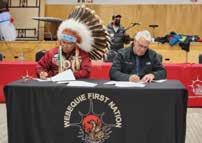
• Webequie First Nation, Ontario ink $39M pact to advance Ring of Fire
Ontario and Webequie First Nation have forged a $39.5 million agreement aimed at accelerating economic development and the construction of an all-season road to the Ring of Fire mineral-rich area in Northern Ontario.
Premier Doug Ford hailed the deal as a historic milestone, emphasizing its significance for Ontario’s economic future, reconciliation with First Nations, and the prosperity of Northern Ontario. He highlighted the agreement’s role in unlocking the potential of the Ring of Fire.
The funds will support community infrastructure and advance the development of the proposed Webequie Supply Road.
Delivering fit-for-purpose solutions across the entire project life cycle
We are a world leader, boasting decades of experience delivering fit-for-purpose solutions across the minerals and mining industry.
No matter your commodity, we are positioned to serve as your trusted advisors on the ground reducing your supply chain risk. We invest in the latest equipment, continual training and ensure industry requirements are met at the global, regional, and local level.
• Labour gaps risk slowing mining sector’s rise, industry council says
Canada’s mining sector holds strong promise, but it must tackle several workforce challenges to sustain growth, says the Mining Industry Human Resources (MiHR) Council.
Gustavo Jurado, MiHR’s senior labour market economist, shared that assessment at a MineConnect mini-forum on Oct. 21, 2025, as part of the Modern Mining and Technology Sudbury events.
MiHR is an independent non-profit that partners with industry stakeholders to analyze workforce and labour issues in mining. Right now, labour conditions favour employers, Jurado said, largely driven by high commodity prices.
• Electra ‘fully funded’ to build North America’s first cobalt refinery
Electra Battery Materials says it is now fully funded to complete the construction and commissioning of what would be the first cobalt sulfate refinery in North America.
The Canadian battery metals developer said it has closed a US$34.5 million financing and US$40 million debt equitization, marking a “major transformation” of its balance sheet and funding outlook.
With over US$80 million now secured from investors and government commitments, Electra has obtained all the capital required to complete its cobalt sulfate refinery located in Temiskaming Shores, Ont., seen as a critical asset that will strengthen the region’s battery and defense supply chains.
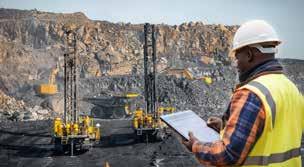
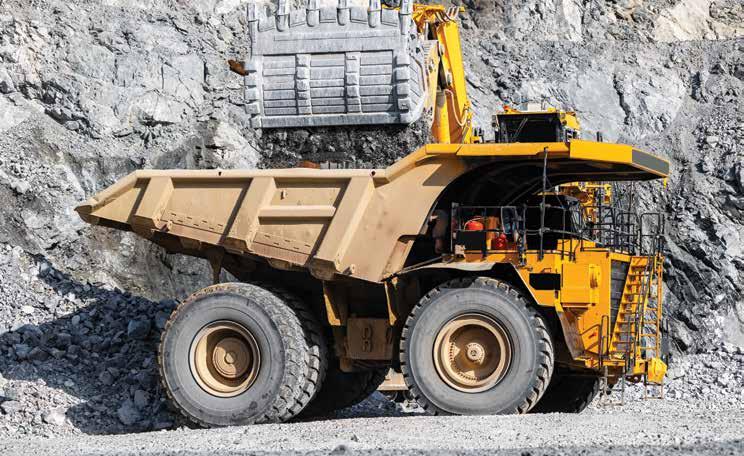
Labour gaps risk slowing mining sector’s rise, industry council says.
CREDIT: ADOBE STOCK.
Webequie First Nation Chief, Cornelius Wabasse, and Ring of Fire Metals Acting CEO, Stephen Flewelling, sign a Memorandum of Understanding in Webequie on Ring of Fire development. CREDIT: CNW GROUP/RING OF FIRE METALS.
Representation of Electra’s expanded cobalt refinery in northern Ontario.
The right lubricant choice is essential to your success. Petro-Canada Lubricants offers a comprehensive range of products, including PRODURO™, DURON™, HYDREX™, and our specialty greases and open gear lubricants, all designed to enhance efficiency and reliability in off-road applications. Choose Petro-Canada Lubricants for superior performance and peace of mind.
Ready to take your operations to the next level? Challenge us to show you the savings! Contact the Petro-Canada Lubricants team today and unlock potential with our Cost Savings Calculator.
petrocanadalubricants.com
• Feds invest $850K in Indigenous critical minerals projects
The federal government has announced a significant investment in Indigenous economic development projects across Northern Ontario. Minister Patty Hajdu, responsible for the Federal Economic Development Agency for Northern Ontario (FedNor), revealed a total funding package of over $850,000 to support 14 initiatives focused on critical minerals and related infrastructure. This investment aims to bolster engagement, capacity-building, and knowledge-sharing activities in Indigenous communities as Canada seeks to develop its critical mineral resources.
The funding comes as Canada’s mining industry enters a new phase characterized by rapid development, large-scale operations, and strategic objectives. The country’s deposits of critical minerals, essential for low-emission technologies such as batteries, wind turbines, electric vehicles, and solar panels, present substantial economic opportunities, particularly for Indigenous communities in Northern Ontario.
• New partnership aims to streamline mine closure in Canada
Triton Environmental Inc. (Triton), 360 Engineering and Environmental Consulting Ltd. (360 EEC), and NewFields Canada (NewFields Canada), announced a strategic alliance for mine closure.
Triton Environmental (Triton), 360 Engineering and Environmental Consulting (360 EEC), and NewFields Canada announced a strategic alliance to deliver regulatory-ready, community-trusted mine closure plans to mine owners across Canada. NewFields Canada operates as an independent consulting firm that provides engineering consulting, design, and construction services to the global mining and oil and gas industries. Unlike the standard closure-plan offerings from many large consultancies, the three firms combine environmental insight, engineering certainty, geochemical analysis, and social engagement to help mine owners develop sustainable closure plans with the specialized experience of niche firms.
ESKAY CREEK
Ontario mining at a moment of consequence:
Turning policy commitments into global leadership
Ontario’s mining sector is once again at a crossroads in 2026 — but this time, the stakes are higher, the global context is more volatile, and the opportunity is more consequential than at any point in recent memory.
Around the world, governments are racing to secure access to the minerals and metals that underpin clean energy systems, digital infrastructure, advanced manufacturing, and national security. Supply chains are being redrawn. Trade relationships are under strain. Geopolitical tensions, once peripheral to mining investment decisions, are now central to them.
In this environment, mining is no longer simply a resource industry. It is a strategic asset.
Jurisdictions that can deliver certainty, efficiency, and reliability will attract investment. Those that cannot will fall behind. Ontario is well-positioned to lead, but leadership will not happen by default. It will require deliberate choices, sustained investment, and a clear declaration that mining is a strategic priority for the province, not only in words but in outcomes. The Ontario government has taken important steps in the past year to move in this direction and reinforce mining as a driver of long-term growth. The challenge — and the opportunity — now is to convert momentum into measurable progress across the full mining ecosystem: exploration, development, operations, processing, infrastructure, and people.
Policy momentum in 2025: A foundation to build on
The Ontario government’s 2025 initiatives mark a meaningful shift toward a more competitive and coordinated approach to economic development, with mining rightly positioned at the core.
The launch of the “One Project, One Process” framework represents a key step toward optimizing government approvals for advanced exploration and mine development. By committing to a more coordinated, modernized regulatory approach, Ontario is signalling to investors that it understands the importance of time, certainty, and predictability in capital-intensive industries. Investments in the “Critical Minerals Processing Fund” further reinforce this message. Expanding Ontario’s processing capacity is essential to reducing reliance on foreign supply chains and ensuring that the value of Ontario’s mineral resources is realized here at home. Processing is not an optional add-on; it is a strategic necessity.
The cooperation agreement with the federal government to eliminate regulatory duplication and unlock the Ring of Fire is another important milestone. Aligning provincial and federal
processes is essential to advancing major projects efficiently and responsibly, particularly in regions with transformative potential for Indigenous communities and Northern Ontario.
The government’s investments in Northern infrastructure, including the reconstruction of Geraldton’s Main Street as a “Gateway to the Ring of Fire,” demonstrate an understanding that mining success depends on more than ore bodies alone. Transportation networks, community infrastructure, and regional development are foundational to sustainable growth. This approach is further reinforced by the community partnership agreements with Marten Falls First Nation and Webequie First Nation, which provide a clearer, more collaborative path toward advancing critical road infrastructure while aligning economic development with Indigenous priorities and long-term regional benefits.
Additional measures, such as steps to provide electricity price relief, fair WSIB premiums with rebates, and support for skilled trades training and upskilling, address real cost and workforce pressures facing mining companies and workers alike.
These measures align with the ambition outlined in the government’s “Critical Minerals Strategy,” which positions Ontario as a leader in the responsible production of essential minerals, and build on progress achieved through the “Building More Mines Act.” They also arrive at a moment when miners, investors, Indigenous partners, and governments alike are seeking certainty in an increasingly uncertain world.
But policy announcements are only the beginning. The question now is how Ontario builds on this foundation. The true test lies in implementation — across all commodities, all regions, and all stages of the mining lifecycle.
A sector that delivers — Economically and socially Mining is already one of Ontario’s most significant economic contributors, and its importance is growing.
In 2023, Ontario’s mining industry contributed $23.8 billion directly to the provincial GDP. When indirect and induced impacts are included, the total exceeds $31 billion. The sector employs nearly 22,000 people directly, with average annual earn-
President of the Ontario Mining Association (OMA), Priya Tandon.
ings of approximately $150,000, and supports a broader ecosystem of roughly 130,000 jobs across the province.
Mining is also a cornerstone of Ontario’s export economy. Mineral exports reached $64 billion in 2023 — more than a quarter of Ontario’s total exports. Of this, $42 billion was shipped to the U.S., including $5.7 billion in critical minerals, such as nickel, copper, and platinum.
Ontario is Canada’s leading gold producer, with 18 active gold mines producing 2.9 million oz. in 2023. Gold is now Canada’s second-largest export, and in Ontario it plays a unique economic role. Gold projects are often first movers in emerging regions, helping to finance infrastructure, establish transportation and power networks, and create the conditions for other industries to expand across Northern Ontario. Gold deposits also frequently host critical minerals that are essential to aerospace, energy, and defence applications.
Ontario’s global leadership extends beyond production. The province is the world’s premier hub for mining finance, with approximately 40% of global mining companies listed on the Toronto Stock Exchange and a combined market value exceeding $600 billion. This concentration of capital, expertise, and innovation underpins exploration, development, and technological advancement not only in Ontario, but also around the world.
Mining is also a leader in economic reconciliation. There are over 140 active agreements with Indigenous communities across Ontario, and Indigenous representation in the mining workforce stands at 12% — four times the provincial average across all sectors. These partnerships demonstrate what is possible when development is approached collaboratively and respectfully.
A sector under pressure
Despite its strengths, Ontario’s mining sector operates in an increasingly challenging environment.
Base metals markets, particularly nickel, illustrate the challenge. A surge in Chinese-backed smelting capacity in Indonesia, where facilities expanded from four to 55 in just over a decade, has driven global oversupply and depressed prices. While Indonesia has announced plans to reduce production quotas in 2026, most analysts still forecast a global nickel surplus through at least 2026 owing to the scale of existing capacity and softer-than-expected demand from the electric vehicle sector.
These market dynamics place pressure on Ontario operations, particularly given that we are a high-cost jurisdiction.
Energy costs remain a significant challenge, weakening Ontario’s global competitiveness relative to neighbouring jurisdictions. Aging assets, deeper and more complex orebodies, declining grades, and greater variability all require higher capital investment simply to maintain production.
At the same time, the sector is navigating an increasingly nonlinear, accelerated, volatile, and interconnected (NAVI) operating environment. Risks can materialize suddenly, triggering cascading effects that undermine investor confidence and restrict access to capital. Regulatory delays, cost escalation, and workforce shortages can quickly erode the viability of otherwise strong projects.
While major greenfield developments such as the multi-generational opportunity in the Ring of Fire are important to Ontario’s long-term future, existing mining operations must not be overlooked. Established hubs like Sudbury, Timmins, and Thunder Bay remain vital to Canada’s mining and critical minerals supply. These operations employ thousands of people, generate regional wealth, and offer lower-risk opportunities to support today’s mineral needs while longer-term projects advance. Sudbury alone has supplied high-purity nickel for over a century, supporting more than 60% of U.S. aerospace and defence requirements.
Resilience also depends on supporting all commodities. Gold’s current strength provides stability and fiscal support, but commodity markets are cyclical. Sustained investment across commodities is essential to long-term planning, particularly as revenues generated by strong performers help support minerals facing weaker market conditions.
Removing structural barriers to growth
Access to capital is inseparable from regulatory efficiency. Investors assess jurisdictions not only on geological potential, but also on how quickly and predictably projects can move through approvals, how competitive energy costs are, how tax regimes compare, and whether governments act in a coordinated and strategic manner. These factors increasingly determine where capital flows.
Competing jurisdictions understand this reality. They are actively de-risking mining investment through streamlined permitting, competitive energy pricing, and clear, coordinated government support. Ontario must do the same, not only for new developments, but also for existing operations seeking expansions, modifications, and mine life extensions, or simply, for everyday operational success. This requires a true whole-of-government approach that delivers competitive energy pricing, targeted tax incentives, and a fully implemented, adequately resourced “One Project, One Process” framework.
Crucially, regulatory modernization must extend beyond greenfield projects. Operating mines are the backbone of Ontario’s mining economy, yet too often face permitting delays that increase costs and undermine competitiveness. Without a modern, efficient framework that supports ongoing operations, Ontario risks production disruptions, deferred investment, and the gradual erosion of its position in an increasingly competitive global market.
Australian miner Wyloo owns the Eagle’s Nest nickel-copper project and various chromite deposits in the Ring of Fire area. CREDIT: WYLOO
MINING IN ONTARIO: ONTARIO MINING ASSOCIATION
People and place: The foundations of a competitive mining sector
People are as critical to mining as geology, and Ontario’s workforce challenge is becoming more acute. Skills shortages are expected to intensify as retirements accelerate and competition for experienced workers increases. Without a strong, visible pipeline of people who are aware of, interested in, and actively preparing for careers in mining, projects will stall regardless of market demand or policy ambition.
These workforce pressures are compounded by persistent infrastructure gaps in Northern Ontario. Housing shortages, limited access to healthcare and education, gaps in digital connectivity, and insufficient cultural and community supports all make it more difficult to attract and retain workers and their families. Operational challenges are further amplified by unreliable passenger air service and flight schedules that do not align with business needs, increasing costs and, in some cases, forcing workers to travel long distances on highways that are frequently hazardous in winter conditions.
Addressing these challenges is not peripheral to mining competitiveness. It is fundamental. A sector that cannot attract people, support communities, and move workers safely and efficiently cannot grow, no matter how strong the underlying resource base may be.
From momentum to defining action: What comes next
As global demand for strategic minerals accelerates, and geopolitical tensions intensify, Ontario faces a narrow but consequential window to act. The province has a rare opportunity to implement a comprehensive growth strategy that strengthens mining at home, diversifies markets, and positions Ontario as a global leader in the production of strategic minerals.
Ontario already has what many jurisdictions lack: an exceptional mineral endowment, established processing capacity, and strong, evolving partnerships with Indigenous communities. What is required now is sustained focus and execution.
This means moving beyond isolated initiatives toward coordinated, strategic action across government. It means ensuring that “One Project, One Process” is fully resourced and applied consistently across the mining spectrum. It means treating energy pricing, infrastructure investment, workforce development, and Indigenous partnerships not as separate policy files, but as integrated components of a single, coherent growth strategy.
In 2026, the ambitions set out in Ontario’s “Critical Minerals Strategy” must be visible on the ground. Streamlined permitting, competitive energy pricing, expanded processing capacity, targeted infrastruc-
MINE CONSTRUCTION AND MAINTENANCE
and operations.
www.noahrainbuilders.com
ture investment, and meaningful progress on economic reconciliation must become outcomes, not aspirations. This focus must apply across all commodities and all operations, from new developments to established mines that underpin today’s supply.
To support this shift from ambition to delivery, the Ontario Mining Association (OMA) has put forward a comprehensive set of recommendations for the 2026 provincial budget across six priority areas: strengthening geoscience and supporting a resilient mine lifecycle, modernizing regulatory processes, deepening Indigenous partnerships, delivering a competitive energy framework, growing the mining workforce, and incentivizing innovation.
These recommendations are practical and targeted, grounded in the realities of global competition and the operational needs of Ontario’s mining sector. They recognize that success depends on coordinated action across policy areas and sustained investment over time.
Turning commitments into sector wide progress will require consistent follow through, adequate resourcing, and a willingness to modernize systems that no longer serve Ontario’s competitive interests. It will also require ongoing collaboration among government, industry, Indigenous partners, and communities. The OMA stands ready to work with all partners to help deliver this next phase of growth.
From commitment to leadership: A clear path forward
The decisions made over the next year will determine whether Ontarians merely participate in the global minerals economy or lead it. Whether investment flows here or elsewhere. Whether communities in Northern Ontario grow or stagnate. Whether Canada’s allies see Ontario as a reliable partner in an uncertain world.
The government of Ontario has laid important groundwork. The task now is to build on it with urgency, consistency, and ambition.
The opportunity is real, the risks of inaction are clear, and the time to move from momentum to leadership is now.
Priya Tandon is the President of Ontario Mining Association.
By Michael D. Schafler and Ekin Cinar
Modernizing Mining in Ontario:
Recent regulatory shifts with Bill 5
In 2025, the landscape of Ontario’s mining sector underwent its most significant transformation in decades. Following the introduction and enactment of Bill 5, known as “the Protect Ontario by Unleashing our Economy Act, 2025,” the provincial government moved to overhaul the regulatory framework governing resource extraction and infrastructure. This legislative package, which received Royal Assent in June 2025, aims to accelerate the development of critical minerals, such as nickel, lithium, and cobalt, while simultaneously introducing sweeping powers to protect the “strategic national mineral supply chain.”
A new era of expedited permitting
At the heart of the 2025 reforms is a shift toward a “one project, one process” permitting model designed to reduce the time it takes to bring a mine into production. The legislation amended the “Mining Act, R.S.O. 1990, c. M.14” to allow the Minister of Energy and Mines to establish a mine authorization and permitting delivery team for specific designated projects. Once a project is designated, a team lead from the Ministry of
Energy and Mines is appointed to coordinate with other ministries to expedite application reviews and decision-making. The stated objective is to reduce review timelines substantively. To enforce this, the reforms introduced service standards for government reviews; if these standards are not met, proponents may be entitled to a refund of their permit fees.
Strategic supply chain protections and national security
While the reforms prioritize speed, they also introduce discretionary powers for the province to intervene in mining tenures for security reasons. The Minister of Energy and Mines is now empowered to deny the issuance of leases, restrict access to the mining lands administration system, or even cancel unpatented mining claims and leases if such actions are deemed “desirable for the protection of the strategic national mineral supply chain.”
These decisions are guided by factors including risk assessments from the Ministry of the Solicitor General and the economic interests of Ontario. Crucially, the legislation contains
Contiued on page 18
Australian miner Wyloo owns the Eagle’s Nest nickelcopper project and various chromite deposits in the Ring of Fire area in Ontario. CREDIT: WYLOO
$250 Million in Benefits. Zero New Equipment.
A major copper producer was bleeding margin. Metal prices falling, cost per tonne climbing, EBITDA under pressure. They’d spent heavily on equipment and technology. Performance stayed flat.
The fix wasn’t another capital project. It was changing how supervisors ran their shifts, how planners sequenced work, and how crews responded when things went off-plan.
Within three months, the operation posted its best production numbers ever. By year end: $250 million in annualized benefits. They hit their five-year plan in twelve months.
The Execution Problem
Every mine has a strategic plan, operational targets, and a list of improvement initiatives. Most have invested in technology, data systems, and modern equipment. So why does performance keep falling short?
Here’s the test: when something goes wrong (availability drops, dilution spikes, cycle time blows out) does your operation detect it fast, diagnose it correctly and fix it with disciplined countermeasures? Does that happen every shift, or just in the monthly review when it’s too late to do anything about it?
If the answer is “sometimes”, you don’t have a technology problem. You have an execution problem.
Between the boardroom and the blast face sits a layer of supervisors, planners, and frontline leaders who turn strategy into tonnes moved. When that layer works, variance gets caught early, problems get solved at the source and crews operate with ownership. When it doesn’t, your best equipment underperforms and your improvement initiatives fade the moment the consultants leave.
What We Actually Do
Mining & Metals is 60% of our business. We’ve been doing this for 80 years. This is our backyard.
Proudfoot works at the point of production (in the pit, at the face, in the plant, in the maintenance bay). Not reviewing from head office. On the floor at shift handover, in the planning room during scheduling, at the control board when something goes wrong.
We deliver results through three things:
The Proudfoot System (TPS): A method to find and fix the root causes of lost time and waste. Not a report. Not recommendations. Outcomes.
A Management Operating System (MOS): A structured way of working that gets the right information to the right people at the right time so they can make the right decisions (daily, weekly, across planning horizons). It connects strategy to the shift.
Frontline behavioural change: We change what supervisors and managers actually do, not just what they say in meetings. We build the habits that make standards stick and discipline repeatable.
This is top-down led and bottom-up designed. Leadership sets direction. The frontline owns the solution. That’s why it lasts.
Results You Can Verify
The $250 million copper transformation wasn’t a one-off. Across six continents:
US gold mine: Haul fleet productivity up 30%. Schedule compliance from 50% to 90% in 16 weeks. How? Redesigned planning processes and upskilled dispatch controllers.
Global zinc and gold operation: Downtime cut 21% across four mine sites. Built a predictable operating environment through aligned management practices.
Copper-cobalt mine, DRC: $64 million in annualized benefits. 40% reduction in maintenance downtime. 30% increase in battery metals recovery. Over 1,600 employees trained in continuous improvement.
Major iron ore producer, pit-to-port: 20% production increase with zero capital spend. Better planning discipline. Stronger supervisor capability.
ROI You Can Bank On
Over 25 years, Proudfoot has delivered $6.5 billion in measured benefits against $1.5 billion in fees. That’s better than 4:1 across thousands of engagements.
Today, we put our fees at risk tied to the results we deliver. Some projects exceed 10:1. We back ourselves because we’ve done this enough times to know what works.
The Next Decade
Cost pressure, commodity volatility, labour shortages, the demand to do more with less. Meeting it will take more than technology investment. It will take the ability to turn that investment into results, every shift, every day.
That’s the work. That’s what 80 years has taught us.
Contact Callum Stewart at cstewart@proudfoot.com or visit Proudfoot.com
MINING IN ONTARIO: REGULATIONS
provisions that extinguish causes of action against the Crown regarding these decisions, meaning proponents are generally barred from seeking compensation or damages if their tenure is revoked for supply chain security reasons. This shift reflects a growing concern regarding foreign influence.
The enactment of special economic zones
A pillar of the 2025 reforms is the “Special Economic Zones Act, 2025.” This legislation authorizes the Lieutenant Governor in Council to designate specific areas of the province as “special economic zones.” Within these zones, the government can designate “trusted proponents” and specific “designated projects” that are granted exemptions from various provincial acts, regulations, and even municipal by-laws.
The government expects these zones to facilitate projects of strategic importance, such as those in the Ring of Fire region. In December 2025, the province established the criteria for identifying these zones.
Overhauling environmental oversight
The 2025 reforms also fundamentally changed how mining projects interact with environmental protection. Bill 5 repealed the “Endangered Species Act, 2007,” replacing it with the “Species Conservation Act, 2025.” This new act introduced a “registration-first” approach, allowing most activities that were previously subject to lengthy permit processes to proceed via a
new “Species Conservation Registry.”
Furthermore, the legal definition of “habitat” was narrowed. For animal species, it is now limited to physical dwellings, such as dens or nests, and the area immediately around them, essential for rearing or hibernating. This change is intended to provide greater certainty for developers by reducing the scope of areas protected under species-at-risk legislation. In another move to streamline northern development, the province revoked the Eagle’s Nest multi-metal mine agreement, terminating a previous environmental assessment framework to make way for the new coordinated processes.
Mineral recovery from mining waste
Ontario also implemented a new regulatory pathway for the recovery of minerals from tailings and mine waste, which took effect on July 1, 2025. This framework allows companies to reprocess waste rock and tailings to extract valuable minerals without the requirement to file a full mine production closure plan.
Under this system, applicants must submit a “Recovery and Remediation Plan,” demonstrating that the land will be restored to a condition “comparable to or better than” its state before the recovery activity. This initiative is designed to reduce legacy mining liabilities while providing a low-carbon source of minerals for green technologies.
Responses and Indigenous consultation
The 2025 reforms have met with significant opposition from Indigenous organizations. Several First Nations of Treaty 9, which covers the Ring of Fire, noted that Bill 5 may be used to accelerate development by reducing or bypassing environmental assessment requirements and limiting consultation with affected Indigenous communities.
In response to this opposition, the government amended Bill 5 to include provisions addressing the duty to consult. Indigenous organizations have nonetheless continued to call for the suspension of Bill 5, maintaining that the amendments do not adequately protect their rights or address the substance of their concerns.
Conclusion
The mining reforms of 2025 represent an aggressive effort by the Ontario government to position the province as a global leader in the critical minerals market. By integrating the northern mining economy with southern manufacturing through expedited permitting and special economic zones, the province aims to “unleash” its economic potential. However, the success of these reforms remains contingent on navigating geopolitical risks and addressing the concerns raised by Indigenous communities regarding land sovereignty and environmental stewardship.
Michael D. Schafler is a partner in Dentons’ Toronto office and is a member of the firm’s global arbitration steering group. He previously co-led both the global and national Litigation and Dispute Resolution groups. Ekin Cinar is an associate dual-qualified arbitration and litigation lawyer in the Litigation and Dispute Resolution group in Dentons’ Toronto office.
Fifty years of the James Bay and Northern Quebec agreement: A mining perspective
November 11, 2025, marked the 50th anniversary of the signing of the James Bay and Northern Quebec Agreement (JBNQA), a landmark treaty that reshaped natural resources’ governance in Quebec and set a precedent for modern Indigenous land claims across Canada. Negotiated in the early 1970s amid the rapid expansion of hydroelectric development in northern Quebec, the JBNQA emerged from some of the toughest and most complex negotiations in Canadian history, involving among others, the Government of Quebec, the Government of Canada, the Grand Council of the Crees of Quebec, and the Northern Quebec Inuit Association. The JBNQA established a comprehensive environmental and social protection regime for Cree, Inuit, and Naskapi territories, while ensuring guaranteed rights to trapping, hunting, and fishing across those territories.
For mining companies, the legacy of the JBNQA remains key: resource development must balance Indigenous participation, environmental stewardship, and regional priorities. Recent reforms, notably Bill 63, “An Act to amend the Mining Act and other provision,”, clarify consultation obligations, formalize annual work planning, and enable the government and Indigenous nations to establish, by agreement, land boundaries where mineral rights are reserved or withdrawn from mining activities. The new section 2.4 of the Mining Act, introduced by Bill 63, even specifies that the purpose of establishing land boundaries by agreement with Indigenous nations is to reconcile mining activities with those carried out by Indigenous Peoples for subsistence, cultural, or social purposes. Together with evolving legislation and jurisprudence, these measures represent a natural evolution of the framework established under the JBNQA. Understanding this framework is now a strategic necessity for any company operating in Indigenous territories.
Historical context: The birth of the JBNQA
The JBNQA, signed on November 11, 1975, was Canada’s first modern comprehensive land claim agreement. It emerged from a dual historical context: the Quebec government’s ambition to expand hydroelectric capacity in the James Bay region, and the Cree and Inuit peoples’ urgent need to defend their rights and territories.
The legal foundation for such agreements had been laid just two years earlier by the Supreme Court of Canada in “Calder versus Attorney General of British Columbia (1973).” This decision recognized Aboriginal title, paving the way for negotiated agreements like the JBNQA to be developed and legally formalized.
The signing of the treaty in 1975 marked a turning point: it cleared
the way for Quebec to proceed with its hydroelectric development in the James Bay region that had previously faced legal challenges from Indigenous communities. In exchange, the province acknowledged the specific rights of the Cree and Inuit and agreed to a compensation package totalling $225 million over a 20-year period.
Modern mining governance and Bill 63
After JBNQA, the province continues to refine its mining policies to better align with Indigenous rights, environmental responsibility, and regional priorities. Over the past year, this evolution has taken concrete form through Bill 63, which signifies another milestone in Quebec’s approach to resource governance. Bill 63, which received Royal Assent on November 29, 2024, has established a more transparent, collaborative, and regulated system for mineral development.
At its core, Bill 63 reforms reinforce three key pillars: predictability, transparency, and Indigenous participation. These reforms modernize Quebec’s mining laws, redefine exploration rights, establish new mechanisms for land-use agreements with Indigenous communities, enhance environmental safeguards, harmonize mining activities with territorial planning, and provide greater ministerial powers to protect the public interest, land access, and safety.
KEY MEASURES INCLUDE THE FOLLOWING:
Agreements on land-use boundaries: The government can now enter agreements with Indigenous nations defining areas where mineral rights may be reserved to the Crown or withdrawn entirely from prospecting, exploration, and operations, ensuring that Indigenous communities retain meaningful control over land use.
Minister’s power to impose conditions for public interest:The minister can now impose conditions or requirements on holders of exclusive exploration rights when deemed appropriate. These conditions may relate to the work to be performed and can be applied for public interest reasons, including to prevent or reduce impacts on local and Indigenous communities.
Mandatory notification: The minister must notify affected Indigenous nations within 60 days of registering an exclusive exploration right (EER).
Annual work planning and community engagement: EER holders are required to submit annual work plans to local municipalities and affected Indigenous communities at least 30 days before work begins, hold information sessions for feedback if requested, and make the plans and session summaries publicly available.
By Maxime Lemieux, Maya Hyun Jee Élie, and Vincent Maltais
Wemindji Painted Hills Bay, James Bay Cree Community, Quebec. CREDIT: OVERFLIGHTSTOCK/ADOBE STOCK
LAW AND REGULATIONS
Ministerial authority to relocate resources:
The minister may require mining rights holders to remove or move any property, ore, or surface minerals from the land subject to the mining right to prioritize or reconcile land uses, preserve the territory, or address public interest concerns, particularly to limit impacts on local and Indigenous communities.
These measures establish clear disclosure requirements, formalize communication at the early stages, and ensure that Indigenous communities play a direct role in managing the potential impacts of exploration and mining activities.
Recent jurisprudence: Consultation obligations clarified In 2024, the Superior Court of Quebec in the decision, “Mitchikanibikok Inik First Nation (Algonquins of Barriere Lake),” stated that both the Quebec government and Quebec’s Minister of Energy and Natural Resources (today the Minister of Natural Resources and Forests) have a duty to consult and accommodate Indigenous communities before accepting new mining claims or allowing exploratory work on claimed lands.
The court determined that consultation obligations were triggered because all three conditions established by the Supreme Court decision, “Rio Tinto Alcan Inc. and The Constitution Act, 1982,” were met: (i) the government had knowledge of Indigenous claims to land and resources, (ii) contemplated actions under the Mining Act that could affect rights, and (iii) these actions had potential adverse impacts.
TIMELINE 1975 TO BILL 63:
• 1975 – JBNQA SIGNED: First modern Indigenous land claim agreement; established governance, land categories, and revenue-sharing mechanisms.
• 2002 – PAIX DES BRAVES: The agreement establishes a partnership that granted the Cree greater autonomy over economic and community development, provided consent to hydroelectric projects subject to environmental reviews, and created a high-level liaison committee to manage disputes and promote harmonious relations.
• 2010S – EXPANSION OF INDIGENOUS CONSULTATION AND GOVERNANCE IN RESOURCE DEVELOPMENT: During this period, the Quebec government strengthened consultation frameworks and environmental review processes for mining and other resource developments. This expansion was supported and formalized through a series of agreements with the Cree, granting the Cree greater autonomy, participation in land-use planning, and involvement in resource development decision-making.
• 2024 – MITCHIKANIBIKOK INIK FIRST NATION DECISION: The Superior Court of Quebec clarifies the duty to consult Indigenous nations regarding mining activities on lands for which Indigenous title has been claimed but not yet legally confirmed.
• 2025 – BILL 63: Assented to on November 29, 2024, modernizes mining law by enhancing Indigenous consultation, transparency, and predictability, and formalizes agreements on land-use boundaries and annual work planning.
Thisdecision,issuedjustpriortoBill63,alignswiththeMining Act’s reforms, which further strengthen transparency, Indigenous participation, and structured oversight in Quebec’s mining regime. The Attorney General of Quebec filedan appealonNovember22,2024,andtheoutcomeofthisappealremainspendingtoday.
Across Canada, courts are increasingly clarifying consultation obligations in similar contexts. In 2023, the British Columbia Supreme Court, in “Gitxaała Nation versus British Columbia(ChiefGoldCommissioner),”reaffirmedtheprovince’s duty to consult regarding mineral tenure and resource development. Comparable cases are also underway in Ontario, reflectinga nationwide trend toward more clearly definedand enforceableIndigenousconsultationrights.
Looking ahead: Implications for mining
AsnorthernQuebecentersaneweraofresourcedevelopment, miningcompaniesmustadapttoachangedlandscape,considering Indigenous nations’ perspectives, realities, and asserted claims. Bill 63 sets clear requirements for transparency, consultation, and land-use coordination, with courts continuing to refineconsultation obligations. Companies that align with theseregulationswillbebetterpositionedtosecureapprovals, managerisks,andbuildsustainablepartnerships.
The50thanniversaryoftheJBNQAservesasareminderthat modern resource development in Quebec is inseparable from Indigenousrights,governance,andenvironmentalstewardship. For mining companies, understanding this evolution, from the JBNQA to current reforms, is key to operating responsibly and sustainablyinoneofCanada’smostresource-richregions.
SHAREHOLDER ASSOCIATION OF RESEARCH AND EDUCATION (SHARE) OFFERS
A SOLUTIONS-ORIENTED PARTNERSHIP TO THE CANADIAN MINING INDUSTRY
he race to secure critical minerals is accelerating globally, with Canadian federal and provincial governments proposing fast-track pathways to expediate project reviews and permitting for priority minerals project developments. When aligned with the initiatives of Canada’s Climate Competitiveness Strategy, these measures are intended to create new economic opportunities for Canada.
Critical within this landscape is the focus of global investors and international customers, who are looking for mining sector climate strategies to reinforce the goals of the energy transition.
By their nature, mining projects are seen as high-risk investments — they are capital-intensive, long-lived, and front-loaded with irreversible spending, with an understandable perception that adequate climate strategies and proper consultation could appear to increase costs or slow down the early approvals process. The reality is that undermining Indigenous consent and climate transition planning in this industry will not succeed in speeding up development or investment — rather, it will expose industry members to material risks that may have significant impact on the bottom line.
SHARE has been engaging with the mining sector for two decades on behalf of investors representing CAD $148 billion in Assets Under Management. Our engagements evolve to respond to economic and regulatory realities faced by mining companies, with a recent focus on reinforcing Canada’s Climate Competitiveness Strategy.
Canada’s position in the global market and the importance of critical minerals in economic development planning offer an opportunity for Canadian producers to position their leadership on the global stage. SHARE has been discussing solution paths, strategies and approaches to allow mining companies to set climate emission reduction targets that tackle emissions beyond direct mining operations. On aver-
age, Scope 3 (indirect) emissions represent 75 per cent of the greenhouse gas emissions profile for a mining company — but can be as much as 95 per cent for these same companies, depending on their commodity portfolio.
Tackling Scope 3 will be crucial for companies wanting to remain competitive in the energy transition. SHARE is currently engaging nine publicly-traded Canadian mining companies and there are stong signals of progress and emering leadership. Six companies have adequate disclosure of all emissions, including Scope 3, with three of these companies taking steps and/or setting targets to reduce these emissions.
SHARE will continue collaborating with these companies over the coming months, setting the stage for this spring’s AGMs of Canada’s largest and most influential mining players, with the goal of ensuring Canadian mining companies can continue to attract global investment and customers through climate leadership. Through meaningful emissions reductions we can maintain Canada’s position as a global leader in mining — and ensure that our mining sector has the longevity and stability to thrive in the economic transition.
DE WEERDT IS SHARE’S SENIOR MANAGER OF CORPORATE ENGAGEMENT AND LEAD ON MINING SECTOR AND CLIMATE.
By Steve Gravel
Selling the technology:
ABridging the gap between innovation and the operational realities on mine sites
cross Canadian mining, operators face pressure to deliver safer, more productive, and more cost-effective performance while working in harsh environments with tight margins, stringent regulations, and little tolerance for disruption. All too often I meet technology companies that see mines as prime candidates for their innovations, from AI-enabled solutions and automation to IoT sensing, electrification, and advanced analytics. Yet many promising solutions stall in pilots, get lost in procurement, or fail to scale beyond a single site. The problem is not only the technology itself, but it is also how we sell it. Generic enterprise sales playbooks are not built for the realities of mining, which include complex stakeholder hierarchies, a production first mindset, a rigorous safety culture, nuanced CapEx and OpEx constraints, extended validation cycles, and highly localized decision processes. To close the gap between good tech and real adoption, the sector needs unique sales skills that enable teams to speak the language of the mine, structure risk-aware commercial models, and earn trust both at the face and in the boardroom.
Mining is a system with many decision nodes rather than a single buyer. Owner/operators, OEMs, engineering firms, contractors, and service providers each influence technology decisions, often at different phases. A salesperson trained to map this ecosystem of relationships can identify who signs the cheque, who owns risk, who bears operational disruption, and who benefits. Equally important is understanding the psychology of mining decision makers. They value safety, reliabil-
ity, and proven uptime over novelty. Intrinsically safe culture permeates every conversation, and anything that threatens production stability or introduces ambiguity will meet resistance. Sector-specific training equips teams to translate value into mine-specific language, such as availability, utilization, throughput, and safety outcomes, rather than relying on abstract features. A well-trained business developer should understand the difference between a site that wants innovation and one that is ready for it, including leadership alignment, maintenance capacity, data governance, and shift level change readiness. Without this grounding, vendors pitch into the void. With it, they anticipate objections linked to production priorities and design engagements that mines can accept.
Mines do not buy ideas because they are interesting; they buy measurable impact on key performance indicators. A sector specific curriculum can train teams to begin with real operational pain; for example, bottlenecks in asset availability, ventilation energy costs, equipment damage in mucking, or exposure risks in development headings. The pitch must connect those pains to outcomes that matter, such as fewer incidents, faster cycle times, higher recovery, and lower unit costs. In practice, this means reframing proposals around quantifiable results, including improvements between failures, fuel savings, reduced rework, and lower injury rates. It also demands field validation plans that respect site constraints. In mining, safety compliance, test documentation, and clear boundaries for disturbance are not optional. Credibility stems from rigor-
ous pilot scoping, hazard recognition, and adherence to site procedures. Effective training makes the likelihood of adoption the filter. Teams learn to ask whether the solution will withstand dust, vibration, heat, water, and variable connectivity, whether maintenance can own the system after the vendor leaves, and whether data workflows align with existing systems. Those who internalize these questions avoid solving the wrong problem or solving the right problem in the wrong way. Another point to consider is the daunting and demoralizing time investment required to sell to mines. Sales cycles in mining routinely stretch over 12 to 24 months, moving from concept to pilot, pilot to demo, demo to integration, and integration to scale. In this span, budgets freeze, priorities shift, and projects pause, often because of fluctuating commodities prices and production realities intervene. Advice to simply follow up more does not suffice. The ticket is maintaining meaningful engagement that advances validation without adding noise. Training tailored to mining equips teams with practical tactics, including cadence plans that respect shift schedules, technical newsletters that share proof of value data rather than marketing jargon, transparent updates that build credibility through small wins, and stakeholder maps that evolve as procurement and operations dynamics change. Role plays and case studies around paused projects can teach how to reframe delays as learning opportunities, preserving the sponsor’s political capital while moving the next low risk test forward. The objective is momentum without pressure, demonstrating reliability over time until the site sees the vendor as a partner rather than a peddler.
Equally important is understanding how mines finance and buy technical solutions. Even the best solution will stall if the commercial model does not fit the mine’s budget structure. Payment timing, fiscal cycles, and the split between capital and operating expenses drive feasibility. Sector-specific training shows teams how to design “buyability.” This includes pilot credits that convert to scale up discounts, pay for performance structures, equipment as a service approaches, leasing options, and subscription terms that map to operating budgets. Cash flow resilience is equally vital. With procurement timelines of a year or more, vendors must plan to survive milestone-based payments and extended approvals. Essential skills include building two-year cash flow models with contingencies, aligning invoicing to fiscal calendars, and leveraging public co-funding through government programs such as the Mining Innovation Commercialization Accelerator (MICA) Network, Canadian Mining Innovation Council (CMIC), and regional innovation funds to share risk and accelerate validation. When pricing and risk sharing mirror how mines commit funds, adoption accelerates.
There is an adage in the industry that mines “buy with their eyes.” As such, pilots are the crucible where technology either proves value or loses trust. High friction pilots, those that disrupt production, lack clear success metrics, or ignore safety and data governance, will fail regardless of technical merit. Training in mining-specific pilot design focuses on low disruption, explicit ROI hypotheses, defined data capture plans, and compliance embedded in work instructions. Clear terms for data and intellectual property protect both sides and prevent
procurement surprises during scale up. Mining innovation networks and R&D centres can de-risk entry by providing neutral grounds for testing and access to realistic environments. Sales teams trained to leverage these partners gain social proof and practical validation that speak to technical audiences. Transparency through regular reporting, open dashboards, and documented learnings further builds trust across stakeholders who must champion the solution internally.
Often, scoring a pilot is seen as the end of the journey. A pilot is not the end. It is the start of integration and change management. Mines value partners who show up after the purchase order, documenting configuration decisions, training maintainers of the solution and operators, managing expectations, and delivering incremental wins that build confidence. Sector-specific training emphasizes storytelling for technical audiences, using case evidence rather than superlatives, and turning pilot data into scale contracts through clear pathways that define scope, timelines, resource plans, and risk registers. Social proof matters most when it is relevant, such as evidence from similar geology, comparable fleets, matching ventilation challenges, or sites with unionized workforce dynamics. In mining, credibility accrues slowly and can be lost quickly. Disciplined post sale practice is the safeguard.
Mining has historically struggled with technology adoption because the business development strategies behind these innovations were not tailored to the industry’s unique risk profile and operational priorities. Vendors often approached mines with generic pitches and rigid commercial models, failing to account for safety culture, procurement complexity, and the need for incremental trust building. Tailored business development strategies, grounded in sector specific training, change that dynamic. The payoff is faster adoption, safer operations, and better ROI. When sales teams learn to sell for mining rather than to mining, technology transitions from interesting to essential. Pilots become vehicles for learning rather than proof of concept theatre. Business models align with fiscal reality. Operations feel heard and supported. Procurement sees risk being shared responsibly. Executive sponsors gain the evidence needed to scale with confidence. Teaching this approach is where we need to collectively innovate to make adoption easier. Currently, the Centre for Smart Mining is studying the best way to train for this type of sales approach to bridge the gap between the disruptive innovations we work with every day and the operational realities on mine sites. We hope to bring forward a compelling solution soon so that we can better equip salespeople of the future with the skills needed to clear these barriers more seamlessly.
Mining will always favour production stability over disruption. Sector-specific sales aptitude does not fight that truth. It works with it, translating innovation into practical, safe, and financially sound improvements. If we want the next wave of mining technology to make a real difference underground and at surface, we must prepare the people selling it to meet the industry where it is and help it get where it needs to go.
Steve Gravel is the manager of the Centre for Smart Mining at Cambrian College.
More mines join federal fast-tracking program: Part 2
In a news release promoting its report, “Recruit, Train, Retain: Fostering Low-Carbon Industries Through Regional Workforce Planning,” the Pembina Institute said, “Canada has some of the world’s largest reserves of nickel, lithium, cobalt, and graphite, making it one of the only Western nations with abundant critical minerals.”
The CIM Foundation, a strong supporter of the Canadian mining industry, said, “Critical minerals are the building blocks for the future of our green and digital economy. As a trusted supplier of responsibly sourced mining products, Canada is working to leverage its resource wealth, environmental stewardship, industrial know-how, and trade relations to meet the rising global demand for critical minerals and value-added products.”
Launched in August 2025, the Government of Canada’s Major Projects Office (MPO) will advance nation-building projects, considered to be of national importance, that are referred to the MPO, which will connect the national economy and diversify the country’s industries and trade opportunities. Some of these projects are critical minerals mines.
By streamlining approvals and committing to a two-year timeline for major project decisions, Canada is creating a more efficient and predictable environment to give investors and project proponents the certainty they need. This will help major projects get built faster, accelerating sustainable growth, strengthening national unity, and putting Canada on a stronger path to long-term economic prosperity.
The second tranche of projects referred to the MPO that were announced in November 2025, purportedly represent over $56 billion to the Canadian economy and would support 68,000 jobs.
Of the seven major projects that were announced, following
1) Ontario: Canada Nickel’s Crawford Project in Timmins Canada Nickel’s Crawford Project is a new mine and the world’s second largest nickel reserve, which will supply high-quality, low-carbon nickel, which is essential for batteries and green steel.
The MPO said, “This project will serve as an anchor for Canada’s global leadership in clean industrial materials. Located in the world’s second-largest nickel reserve, the Crawford Project will produce high-quality, low-carbon nickel essential for batteries and green steel. With projected emissions 90% below the global average and the potential for a net-negative carbon footprint, it represents a model for the future of responsible mining. The project will attract $5 billion in investment and create thousands of new careers, securing Canada’s place at the forefront of the clean economy.”
Mark Selby, CEO of Canada Nickel, said, “We are encouraged and deeply appreciative of this recognition of the strategic importance of the Crawford Project. We appreciate the Government of Canada’s
are three critical mineral mines that will help Canada become a powerhouse in the extraction and upgrading of critical minerals.
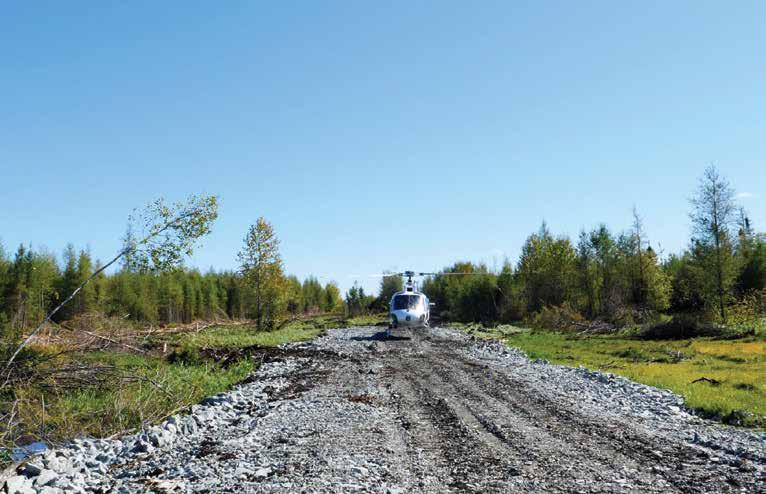
Canada Nickel’s helicopter at the Crawford Nickel Project site. CREDIT: CANADA NICKEL
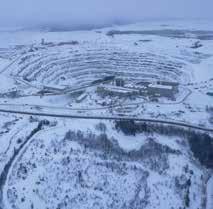
Aerial view of Crawford Nickel Project site in January 2026. CREDIT: CANADA NICKEL
significance with the coordination and urgency they deserve.”
The Crawford Project is in northern Ontario, 42-km north of Timmins, in the Timmins Nickel District, in the heart of Ontario’s Critical Minerals Corridor. The Crawford mine contains approximately 6.0 million tonnes of contained nickel in measured and indicated categories, hosted within approximately 2.56 billion tonnes of mineralized material, with an average grade of 0.24 % nickel (Ni). Additionally, the inferred mineral resources are approximately 3.7 million tonnes of contained nickel, with an average grade of 0.22 % Ni. The life of the mine is 40 years.
The Crawford Project was designed to achieve net-zero emissions. Canada Nickel developed innovative carbon capture technology through its proprietary In-Process Tailings Carbonation (IPT Carbonation) process. The IPT Carbonation process will allow 1.5 million tonnes of carbon to be stored annually, which is more than its total projected emissions, allowing the mine’s nickel to be net-zero.
Once operational, the Crawford Project is expected to also become one of Canada’s largest carbon storage facilities, which will contribute to environmental and economic goals.
Canada Nickel received $4.38 million from the Government of Canada’s Critical Minerals Infrastructure Fund which supported pre-implementation studies for the mine’s electrical infrastructure. The company’s feasibility study (FS) was published in November 2023. Its environmental impact statement was submitted, and permits were received in 2025. The results of the economic impact study for the Crawford Mine — released on October 15, 2025 — estimates the mine will generate a total economic contribution of over $70.2 billion to Canada’s GDP; generate over $7.7 billion in federal tax revenues and $8.3 billion in provincial tax revenues; and it will provide $16 billion in labour income from approximately 1,000 direct jobs and over 3,000 indirect and induced jobs.
Canada Nickel expects to break ground and begin construction on its Crawford Project by the end of 2026 with first production expected in 2028.
2) Quebec: Nouveau Monde Graphite’s: Matawinie Mine in Saint-Michel-des-Saints
Matawinie Mine is an open-pit mine that will be integrated with a planned battery material plant to produce spherical graphite for batteries and other advanced manufacturing applications.
The MPO said, “This open-pit graphite mine will provide important inputs for defence applications and battery supply chains. It will integrate with the planned Bécancour Battery Material Plant. The project will strengthen Canadian supply resilience and help accelerate the clean transition. It will create over one thousand new careers and draw $1.8 billion in investment.”
Eric Desaulniers, president and CEO of Nouveau Monde Graphite (NMG), said, “After a rigorous process of project development, we are excited to receive this recognition, which will support us in taking the final step toward financing commercial facilities that serve the economies of Canada and allied countries. This designation underscores the importance of building stronger and more sustainable supply chains, supporting our energy and industrial independence, and attracting investment for the responsible production of critical minerals.”
Located near Saint-Michel-des-Saints, 150-km north of Montreal, the Matawinie graphite deposit was discovered in 2015. NMG plans to operate an open-pit mine and a concentrator for an average nominal annual production of 106,000 t/y of natural graphite concentrate. NMG’s Bécancour Battery Material
The Matawinie Mine and the Bécancour Battery Materials Plant are two integrated projects by NMG that form a complete, domestic value chain for battery-grade graphite. The mine will extract natural graphite, which will be processed into high-purity active anode material for lithium-ion batteries at its Bécancour plant. NMG is on track to become one of North America’s largest fully integrated producers of natural graphite active anode material for batteries.
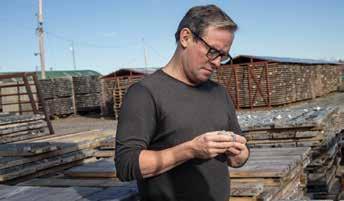
Canada Nickel’s CEO, Mark Selby. CREDIT: CANADA NICKEL
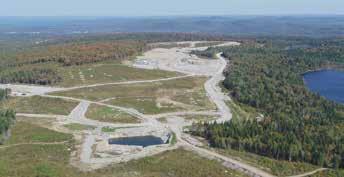
Aerial view of Matawinie Project. CREDIT: NMG
Drilling at Matawinie Mine site. CREDIT: NMG
MINING IN CANADA: ONTARIO/QUEBEC/NEW BRUNSWICK
Plant will refine graphite into active anode material, which will then be used in the production of electric vehicle batteries and energy storage systems. The Matawinie Mine will use hydroelectricity. The life of the mine is 25 years.
NMG has already established a partnership with Caterpillar for the development and procurement of a zero-emission fleet and infrastructure for the mine. Other responsible mining practices include the co-disposal of tailings, backfilling, and progressive reclamation. The natural graphite produced will go beyond energy storage into advanced engineered materials to support niche applications, such as electromagnetic interference (EMI) shielding. NMG is currently developing and optimizing its bipolar plate composites while exploring their potential for EMI shielding and electromagnetic protection. The company’s graphite performance validated in fuel-cell bipolar plates for hydrogen technologies and EMI shielding for telecom, automotive, and defence sectors.
At the G7 meeting in Kananaskis, Alberta, in June 2025, member countries adopted a Critical Minerals Action Plan aimed at strengthening and diversifying global supply chains for critical minerals, promoting transparent, rule-based markets, attracting new investment, and lessening non-competitive practices. Via its agreement with NMG, the Government of Canada intends to secure graphite for its domestic markets and stockpiling objectives and support allied nations and entities in building resilient and reliable supply chains. The Matawinie Mine will specifically address major gaps in Canada’s graphite value chain, where domestic mining is limited and there is currently no refined graphite production.
NMG has already received its governmental decree and key permits required thus far for its mine. The CGF and InvestissementQuebecarestrategicshareholdersintheMatawinieMine and contemplate additional investments at FID. The EDC and CIBalsoplantosupportthedebtportionoftheprojectfinancing. NMGexpectstomakeafinaldecisiononitsMatawinieMine inearly2026,withconstructionoftheminetostartinthefirst quarter of 2026, and the mine is anticipated to be in productionbymid-2028.
3) New Brunswick: Northcliff Resources’ Sisson Mine
The MPO said, “The Sisson Mine will produce tungsten — a critical mineral essential for high-strength steel production, defence, and industrial applications. Global tungsten markets are highly concentrated, and this project has the potential to make Canada a secure supplier for domestic and allied industries. It will position Canada as a reliable supplier of critical minerals to domestic and international partners, while creating hundreds of new careers.”
The Sisson Project is located on Crown land in central New Brunswick, 100-km northwest of Fredericton by road, and near the communities of Napadogan, Juniper, and Stanley. Situated within the Nashwaak Watershed, the area has supported logging activity for over a century. The Sisson Project area is well-served by local and regional infrastructure including highways, roads, railways, deep sea ports, and power lines.
Andrew Ing, president and CEO of Northcliff Resources, said, “We are excited that the Sisson Project is one of the nation-building projects announced today by Prime Minister Carney and referred to the MPO. Northcliff’s goal is to contribute to the efforts to build a resilient supply chain of critical minerals and support their growing use in digital technology, clean energy, and aerospace applications by becoming a reliable, easily accessible, domestic producer of tungsten and molybdenum in New Brunswick.”
Northcliff holds an 88.5% controlling interest in, and is the operator of, the Sisson Tungsten-Molybdenum Project. The Sisson Project is located near tidewater on the southeastern coast of New Brunswick. The project hosts a significant deposit of tungsten and molybdenum, both of which have been identified as critical strategic minerals by the Government of Canada.
Sisson Deposit mineral resources (approximate)
Measured and indicated: ~387 million tonnes grading ~0.067 % tungsten trioxide (WO3) and ~0.021 % molybdenum (Mo).
Inferred: ~187 million tonnes grading ~0.050 % WO3 and ~0.020 % Mo.
In August 2025, Northcliff received final approval for funding from Natural Resources Canada (NRCan) to help advance its Sisson Project. NRCan will provide contribution funding for up to $8.214 million in support of the costs for the update of the FS and basic engineering through the Global Partnerships Initiative, complementing work and funding received under a U.S. Critical Minerals Initiative of $20.7 million (approximately US$15 million).
Northcliff’s FS was initially published in 2013, and since then, the project has received key approvals including the New Brunswick environment impact assessment in 2015, the federal environmental impact assessment approval in 2017, and
Phase 1 concentrator at the Matawinie Project. CREDIT: NMG
Pressure measurement for your process? Leave
it to us!
Our technologies offer everything you need for process, hydrostatic, and differential pressure for mining. Around the world, VEGA pressure solutions stand for proven reliability and trend-setting innovation. Our pressure measurement solutions go beyond just efficient, optimised processes – they provide you with peace of mind, knowing that you’ve chosen the best technology available.
Everything is possible. With VEGA
the Department of Environment and Climate Change approved a five-year extension to the construction commencement timeline for an additional five years to 2030.
The company is currently advancing a focused work program designed to provide the necessary economic and technical information to support a construction decision. The work includes updating its FS and the completion of engineering activities and studies needed to satisfy the technical conditions associated with its in-hand environmental approvals as well as support project finance.
Based on conceptual plans and subject to financing, satisfying relevant environmental impact assessment conditions and completing other aspects of its current program to support a
construction decision, Northcliff anticipates it could commence construction on its Sisson Tungsten-Molybdenum Project as early as 2027, with potential for operations in 2029.
Canada can lead in the energy transition, shape the future of critical mineral supply chains, and become a global hub for technology and advanced manufacturing. These projects will create the infrastructure to diversity Canada’s trading relationships, unlock new markets, and position Canada as both a clean-energy and conventional-energy superpower.
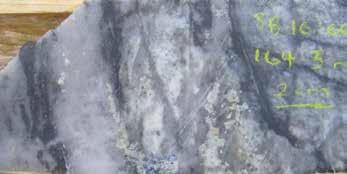
Drill core with a “quartz shear” vein, which is a feature that typically contains the highest grades of tungsten (WO3) in the Sisson Deposit. The irregular white grains in the centre toward the bottom are the tungsten mineral scheelite.
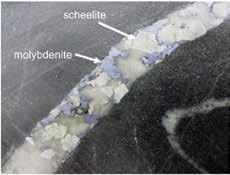
Drill core from Sisson Deposit with vein containing tungsten mineral scheelite and molybdenite.
CREDIT:
This is an exciting time to be a miner or developer in Ontario. Record gold and silver prices as well as rising base metals prices are a strong underpinning to growth in the sector. The need for critical minerals is also attracting additional encouragement and funding from several levels of government.
Moreover, the instability and unpredictably of the U.S. government are adding another unwanted level of risk to mining projects. This is the time, as Prime Minister Mark Carney asserts, for this country to diversify its economic ties and make the most of our resources for the benefit of all Canadians. Both the provincial and federal governments’ willingness to simplify the mine permitting process is most welcome.
Below is information on the development of Onaping Depth, two new gold mines (Côté and Greenstone), and an earlier stage gold project (Bradshaw). Let’s take a look.
Onaping Depth: Glencore (100%)
Miners often say that the best place to find a new mine is near an old mine. For the Onaping Depth Project, it is certainly true. The deposit lies beneath the former Craig Nickel-Copper Mine about 20 km northeast of Sudbury.
The 2025 year-end numbers were not available at press time, but the year-end 2024, the deposit contained probable reserves of 15.0 million tonnes grading 1.8% nickel, 0.93% cop-
All of what might were measured and indicated resources have been converted to reserves, but there is an additional inferred resource of 1.7 million tonnes at 2.0% nickel, 0.7% copper, 0.05% cobalt, 0.1 g/t gold, 1.6 g/t silver, 0.4 g/t platinum, and 0.5 g/t palladium.
Glencore is investing over US$1 billion at Onaping Depth, starting with an internal shaft from the 1,150- to 2,635-metre levels, a total of 1,485 metres. The 7.2-metre diameter shaft reaches a total depth of 2,635 metres from surface.
The Onaping Depth internal shaft will handle 4,000 t/d with a 3,400-hp double-drum production hoist and a 4,500-hp service hoist. The production hoist is fully automated thanks to Ignition HMI. An existing crusher is being rebuilt to size the ore ahead of hoisting.
Ore and waste will be skipped to the 1,200-metre level, then sent by rail to passes that feed the legacy Craig mine ore-waste handling system at the 1,433-metre level where the existing crusher is being rebuilt.
The first ore will be hoisted towards the middle of this year, and steady state production is to be achieved in 2029.
The Onaping Depth ventilation system is a push-pull config-
The double-drum, internal hoist installed for the Onaping Depth Project.
CREDIT: GLENCORE CANADA
MINING IN ONTARIO
uration capable of delivering 205,000 cm3 per second (435,000 cfm). The system will be partially automated using Ignition HMI software. To counteract the heat that will be encountered mining at such a depth, a 15-kW refrigeration plant will be established on the 1,915-metre level to chill the incoming air to 12°C.
The drilling-bolting fleet will include Epiroc Simbas and Jumbos with Boltec bolters. Epiroc ST14 load-haul-dumpers and Epiroc MT42 haul trucks will anchor the fleet. These are all battery electric vehicles, and their operation will be automated early in the mine life. An autonomous program for the fleet is under development with plans to begin implementation in 2027.
Glencore looks forward to the challenges and rewards of operating the Sudbury Basin’s deepest mine until at least 2043.
Côté Gold Mine: IAMGOLD (70%) and Sumitomo Metal Mining (30%)
There are more than just bragging rights involved when someone builds the first North American gold mine designed and developed for a fully automated drilling and haulage fleet and that mine becomes the third largest gold producer in Canada (behind Detour Lake and Malartic and ahead of Blackwater).
Those accomplishments describe the Côté Gold Mine 135 km north-northwest of Sudbury in the Shining Tree-Gowanda camp.
IAMGOLD and Sumitomo have invested almost US$3 billion to create an open pit mine and processing plant. The first gold was poured in March 2024, and commercial production declared in August that year.
To reap long term cost savings, many moving parts must come together. Guided by the Cat MineStar automated system and controlled from a central facility, a Caterpillar mining fleet was chosen. It consists of Cat 6060 electric shovels and Cat 793 240-tonne haulage trucks.
The blasthole drills, Epiroc Pit Viper 231, are another Canadian first. IAMGOLD is enjoying improved safety for operators, as they are also located in a remote-control room. The manufacturer expects significant savings because rod change time is cut.
Automation helps deliver 37,200 t/d of ore for processing, already 3% over nameplate plant capacity. The flowsheet includes Weir high-pressure grinding rolls, a semi-autogenous grinding mill, a secondary ball mill, and two Metso Vertimills. There are also a pair of gravity circuits creating high-grade gold concentrate.
Gold-bearing material from the gravity circuits and the trash screens pass through a carbon-in-pulp circuit, followed by electrowinning and refining. The mine produced approximately 399,800 oz. of gold (100% basis) in 2025, the first full year of operation. Output this year could be a high as 440,000 oz.
A new technical report concerning expansion of the Côté mill is expected in the second half of this year. The plan is to increase the plant to 50,000 t/d. An additional secondary crusher has been installed, and plans call for a third Vertimill, optimizing the refeed system, and increasing capacity at the leach tanks and fine ore dome. Also being studied for expansion is the tailings management facility. The company is spending US$120 million this year to derisk the mill expansion project.
The expanded mill will treat not only Côté ore but that planned from the adjacent Gosselin deposit. Together, the two deposits are estimated to contain over 25 million oz. of gold. IAMGOLD looks forward to a long life at Côté. As the mill expands, so will the tailings management facility.
At the end of 2024 (100% basis) and with the gold price at US$1,500/oz., the Côté deposit contains 229,175 tonnes grading 1.00 g/t gold containing over 7.3 million oz. in proven and probable reserves. Geologists have estimated another 438.5 million tonnes in the measured and indicated category at 0.84 g/t gold containing 11.8 million oz. And the inferred resource is an additional 60.4 million tonnes at 0.61 g/t gold containing 1.2 million oz.
Using the same parameters, the Gosselin deposit has no reserves yet, but the measured and indicated material is 161.3 million tonnes grading 0.85 g/t gold 4.4 million oz. There are 123.9 million inferred tonnes at 0.75 g/t gold containing almost 3.0 million oz. This deposit will help feed the mill expansion.
Given that the price of gold was flirting with US$5,000/oz.
Expansion is already in the works at the Côté Gold Mine. CREDIT: IAMGOLD
The Greenstone Gold Mine poured its first gold in May 2024. CREDIT: EQUINOX GOLD
at press time, the next reserve and resource numbers can be expected to rise.
Greenstone Gold Mine: Equinox Gold (100%)
Like the Côté Mine, the Greenstone Mine poured its first gold in May 2024. The site is 275 km northeast of Thunder Bay or 5 km south-southeast of Geraldton, in the Beardmore-Geraldton camp. The US$1.2 billion project includes an open pit mine and 27,000 t/d processing plant. It is expected to produce 250,000 to 300,000 oz. of gold in 2026. All-in sustaining costs per ounce will be US$1,705 to US$1,850.
To mark the official opening in August 2024, Equinox organized a bike ride from its head office in Vancouver to Geraldton. The effort raised $1.5 million for the Geraldton District Hospital thanks to the many who pedalled more than 3,600 km.
Mining at Greenstone open pit relies on Cat 793 haul trucks, two Epiroc D65 drills and six Epiroc 235 drills, Komatsu PC5500 shovels, a Komatsu loader, and six Komatsu D375A-8 bulldozers. The mining plan and fleet is operated by Equinox employees, but support activities such as explosive manufacturing and blasting are outsourced. A Cat 6030 excavator and four more Cat 793 trucks were added last year.
Processing begins with a high-pressure grinding roll, two ball mills, and two gravity concentrators. This is followed by pre-leach thickening, cyanide leaching, a carbon-in-pulp circuit, elution of the carbon, then electrowinning, refining, and cyanide destruction. Gold recovery could be as high as 91.0%.
The processing plant has a nameplate capacity of 27,000 t/d, and that rate will apply through 2034. After that date, Equinox expects throughput to decline until the end of the mine life in 2039.
Proven and probable reserves at the Greenstone mine are
144.7 million tonnes grading 1.23 g/t gold containing 5.7 million oz.
Exclusive of the reserves, there are also measured and indicated resources containing 3.3 million oz. of gold. The metal is contained in four deposits: Greenstone at 30.0 million tonnes at 2.3 g/t gold; Brookbank at 3.4 million tonnes at 5.45 g/t gold; Kailey at 11.3 million tonnes at 0.96 g/t gold; and Key Lake at 3.8 million tonnes grading 1.16 g/t gold. There is an inferred resource containing 2.6 million oz.
The Greenstone project covers a land package of 396 km2 which has produced over 4.0 million oz. of gold. Modern exploration has passed the area by, so Equinox is confident that it can extend production with the application of state-of-the art techniques.
Bradshaw Gold Project: Gowest Gold (100%)
Now, let us look at the Bradshaw Gold Project, formerly known as Frankfield East. The property lies 32 km north-northeast of Timmins, just beyond the Kidd Creek copper mine. The Timmins camp has produced over 172 million oz. (about half of Canada’s total gold output) from historical and current mines going back over a hundred years.
Gowest is exploring in the right neighbourhood to find an economic deposit, and the Bradshaw Project is shaping up. While the company has faced the typical challenges that accompany junior mining ventures, including intermittent progress over the past decade, its trajectory shifted in 2024 when Gowest was taken private, paving the way for renewed momentum and development focus.
The Bradshaw Project employs Dumas Contracting and Alex MacIntyre to lead mine development. Orbit Garant is tackling the diamond drill program, and Foraco Canada will do the pro-
Work is progressing quickly at the Bradshaw Gold Project now that the owner Gowest has been taken private. CREDIT: GOWEST GOLD
duction drilling. Leading the work for both underground and surface construction is Huron Mining, while Carman Construction has taken on surface support activities.
The deposit has a strike length of 950 metres and has been drilled to depth of at least 1,000 metres. It remains open along strike and at depth. The mineralization is contained in a consistent tabular structure. Gold occurs in a fractured, sulfidized, brecciated hydrothermal horizon in basaltic flows at or near the contact with steeply dipping ultramafic footwall.
According to the updated NI 43 101 report released in 2025, Bradshaw has an estimated mineral resource of 6.19 million tonnes grading 4.40 g/t gold containing approximately 876,000 oz. In addition, there is an inferred mineral resource of 5.10 million tonnes at an average grade of 3.93 g/t gold hosting a further 644,000 oz. A cut-off grade 0f 1.5 g/t gold was used to arrive at these numbers.
The Gowest plan is to develop a twin ramp system. Longitudinal longhole stoping is preferred. A 22,500-tonne bulk sample has been taken from the development sill levels and was successfully treated.
The project reached a milestone in August 2025, when Gowest acquired 100% of Northern Sun Mining, owner of the Redstone mill in South Porcupine. The mill is fully permitted and capable of processing up to 1,500 t/d — an important asset for expanding production in the future. Earlier, in July 2025, the
previous owner added 680,000 tonnes capacity to the tailings facility making the infrastructure suitable for long-term operations. Processing will include crushing, ore sorting, sulfide flotation, pressure oxidation, cyanidation, and gold refining. Gold refining will be done offsite.
The future is bright for Gowest as it is well on the way to completing the Bradshaw mine.
The future is promising
Ontario continues to be one of the more promising provinces for development and new mines. Besides the Côté and Greenstone Gold Mines that came onstream last year, the Madsen Mine has been reopened by West Red Lake Gold Mines.
Readers can expect more new producers soon. The fasttracked Crawford Project of Canada Nickel Co. is expected to officially break ground for construction this year. The Marathon Palladium-Copper Project of Generation Mining is targeting a 2028 start. Magna Mining is working on the reopening of the former Levack Nickel Mine and is taking a pre-feasibility look at the former Crean Hill Nickel Mine. Vale and Glencore are musing a restart for the former Nickel Rim South Mine as well.
The future looks bright, thanks to the bedrock industry that contributes so much to Ontario.
Marilyn Scales is a freelance mining writer.
Dumas is growing and looking for new team members
By Liz Dennett,
This is not a revolution:
It is a reveal It is a reveal
Mining has always been grounded in geology, chemistry, physics, and engineering. Biology has been there too, quietly operating in the background, shaping mineral systems long before humans learned to blast, crush, or leach ore. Microbes have been moving electrons, breaking down pyrite, oxidizing iron and sulfur, generating heat, and forming small, stable ecosystems inside rock for billions of years.
The biology is not new. What is new is that we can finally measure it with precision, instead of treating it like folklore. What is new is our ability to see it.
For decades, bioleaching was treated as a black box. Operators could observe outcomes, but not the activity inside the heap. Without visibility, biology felt unpredictable. Sometimes it worked beautifully. Sometimes it stalled. Sometimes nothing happened at all. Biology did not fail. We just were not measuring it.
Early efforts plateaued because the industry lacked sequencing tools, real-time sensors, and the computing power needed to understand what organisms were actually doing. You cannot guide a system you cannot measure.
My own path into mining came through astrobiology. I have spent years studying life in volcanic fields, acidic lakes, and places where the pH is low enough to melt a probe, but not low enough to deter microbes. When I first stood on a mine site and looked at a heap, it felt surprisingly familiar — an engineered system full of chemical gradients and microbial potential. The industry did not lack biology. It lacked instrumentation.
Those tools exist now. Sequencing costs have fallen faster than semiconductor prices. Sensors are smaller, cheaper, and rugged enough for mine environments. Cloud computing can interpret complex biological and mineral data in near real time. These advances transformed biology from an interesting idea into a practical lever for mining operations. The heap stopped acting like a mystery and started acting like an ecosystem we could finally hear. Meanwhile, pressure on metals keeps building. Electrification, AI infrastructure, energy storage, advanced manufacturing, and national security all depend on a wide range of minerals. These include copper, nickel, lithium, cobalt, graphite, rare earths, and other transition metals that influence electron behaviour. Demand is rising faster than new deposits can move through permitting, construction, and commissioning. Declining head grades, complex mineralogy, and higher processing costs now shape nearly every operational decision.
Every miner I know feels this tension. Some explain that they are moving more rock than ever for the same pound of copper. Others describe the difficulty of lowering cutoffs without compromising certainty. The International Energy Agency (IEA) projects a steep climb in copper requirements through 2040, and S&P Global estimates copper demand could double by 2035. Add the rapid growth of AI data centers, which few analysts forecasted, and the strain on supply becomes clear. The system needs more tools, not just more rock moved.
Microbial communities exist naturally in acid-mine drainage, volcanic systems, deep subsurface regions, and sulfide-rich ore bodies. They already know how to metabolize minerals under conditions most organisms cannot tolerate: salinity swings, arsenic, acidity, and temperatures from 20°C to 75°C. If you put them on a normal surface, they die almost instantly. But inside a heap, they behave like tiny biochemical reactors.
One of our earliest discoveries was that the right microbes are not always present — or active — inside a heap. Sequencing heaps at multiple depths revealed communities that were incomplete, dormant, or dominated by organisms that contributed little to leaching. That challenged a long-held assumption that biology would simply “figure itself out.” It will not. Not reliably. Not at scale. Biology adapts, but it does not self-optimize without support. Earlier bioleaching approaches relied on single organisms, often grown under ideal lab conditions that did not reflect the heterogeneity of a mine site. That is the equivalent of asking the same athlete to play every position on the field. A single microbe can perform one function well. A community can adapt to gradients, stress, and shifts in mineralogy. Mining environments reward functional diversity.
Precision biology is the shift. Today, we can screen microbial communities, adapt them to high salinity or arsenic, and identify which genes are linked to behaviours like pyrite oxidation. This reaction drives temperature profiles in heaps. We can track pH, ORP, iron, sulfur, and copper concentrations in real time. We can match microbial activity to mineralogical changes. When you can finally “hear” a heap, you can guide it. Once the signals made sense, the heap felt less like a black box and more like a conversation.
Watching sequencing data aligning with mineral changes felt like the heap was introducing itself for the first time. Suddenly, the signals made sense — the heat, the recovery curve, and the shifts in oxidation. For the first time, decisions were driven by evidence instead of intuition.
Dr. Liz Dennett, CEO and founder of Endolith
Copper ore solvent extraction at a mine. Leaching heaps and storage reservoirs. CREDIT:
TECHNOLOGY AND EQUIPMENT
Why does this matter? Because biology helps miners do what they already care about: pull more value from existing ore. Improving recovery on lowgrade material, reducing run-of-mine cutoffs from 0.3% to lower thresholds, improving performance in complex mineralogy, and making legacy stockpiles productive again all create meaningful economic impact. An 8% to 12%
increase in recovery on large operations is not incremental; it is transformative. At a time when demand outpaced supply, every additional pound matters. The next step-change in copper supply will not come from a discovery. It will come from better recovery.
There is also a national security angle. Countries are reevaluating their mineral strategies, and the U.S. recently added
We do not need to mine harder. We need to mine smarter. This is where biology becomes genuinely useful.
copper to the critical minerals list. Canada has long recognized the strategic importance of domestic and North American supply. Any method that improves recovery from existing infrastructure strengthens resilience across energy, manufacturing, and technology sectors.
Safety and permitting remain central. The responsible approach is to use nonGMO, naturally adapted communities with long operational histories. These organisms survive only within very narrow chemical conditions and die rapidly when removed from them. That predictability, combined with improved analytics, creates a transparent framework for environmental review. Regulators do not want surprises. Biology, when well-characterized, removes them. Predictability builds trust, and trust accelerates deployment.
The next five years will focus on translating consistent lab and column results into field validation. That requires engineering discipline, patient operators, and a willingness to let data guide decisions. Mining rewards evidence. Biology now produces it. The operators who succeed will be the ones who treat biology as intelligence, not an afterthought.
Biology does not replace metallurgy, chemistry, or engineering. It is becoming another tool — one that finally lets us observe and support the life that has always been part of these systems. The rock stays the rock. Chemistry stays the chemistry. What has changed is our ability to understand the organisms that have been quietly interacting with minerals since Earth formed.
This is not a revolution. It is a reveal. Biology is finally visible, measurable, and ready for deployment at scale.
Liz Dennett is the founder and CEO of Endolith. She brings deep experience across biology, mining, and cloud-scale data systems, with prior leadership roles at Amazon Web Services, Wood Mackenzie, and the NASA Astrobiology Institute. She holds a PhD in Geoscience from the University of Wisconsin–Madison.
Jorge Ganoza on why Fortuna is chasing value, not ounces
Fortuna Mining CEO discusses Séguéla Mine growth, West Africa strategy, and industry challenges
Fortuna Mining recently reported an extension of the expected mine life at its flagship Séguéla gold operation, reinforcing its position as a cornerstone asset in the company’s portfolio. During an onsite interview at the Séguéla mine in November 2025, Canadian Mining Journal’s Editor-in-Chief, Dr. Tamer Elbokl, spoke with Jorge A. Ganoza, president, CEO, and director of Fortuna Mining, about capital allocation, portfolio strategy, operational resilience, expansion prospects, and value-focused growth across West Africa and beyond.
Q: SÉGUÉLA HAS BEEN FORTUNA MINING’S STRONGEST CASH GENERATOR THIS YEAR, HELPING DELIVER ROBUST FREE CASH FLOW. HOW ARE YOU PRIORITIZING THAT CAPITAL BETWEEN WEST AFRICA GROWTH PROJECTS, BALANCE-SHEET STRENGTH, AND POTENTIAL SHAREHOLDER RETURNS OVER THE NEXT 12 MONTHS?
A: Undoubtedly in this price environment and with the low costs of the Séguéla mine, we have been enjoying strong free cash flow generation. But we have been deploying capital to-
wards organic growth. We have expanded our exploration programs from 2024 into 2025, and we are looking to expand them further into 2026. Also, we have the Diamba Sud Gold
Jorge A. Ganoza, president, CEO, and director of Fortuna Mining, at the Séguéla mine. CREDIT: FORTUNA MINING
Aerial view of the pits at Séguéla mine. CREDIT: FORTUNA MINING
Project in Senegal, which is advancing rapidly. We recently published a preliminary economic assessment (PEA) for the Diamba Sud Project that shows an internal rate of return on invested capital of 72% with an NPV of over half a billion dollars using $2,750 gold price. So, we have plenty of opportunities to continue deploying capital. We have a very strong pipeline of opportunities for further growth and optimization. Naturally, we first envision investing capital towards those opportunities and more exploration. Then, we have a share buyback program in place. Returning capital to shareholders through the buyback is something we have been doing, particularly at the end of 2024 and the start of 2025. And we will consider a dividend policy in due time, but I think we do not have shortage of investment opportunities for the capital we are generating.
Q: FOLLOWING THE DIVESTITURE OF YARAMOKO, FORTUNA MINING RESET ITS 2025–26 GUIDANCE AROUND A STREAMLINED PORTFOLIO. WHAT STRATEGIC FILTERS NOW DETERMINE WHICH ASSETS REMAIN CORE — AND WHAT WOULD PROMPT YOU TO ADD OR EXIT A JURISDICTION?
A: We have a very clear criteria with respect to what we need strategically in our portfolio. We need assets that can perform at or below the average cost curve for all-in sustaining costs. We need assets where we can project a life of mine of a decade at least. They also must be located within the jurisdictions of choice for us, which are West Africa and Latin America. The two mines we sold at the beginning of the year did not meet the life of mine criteria. So, we decided to divest. Additionally, exiting Yaramoko in Burkina Faso also had some security considerations.
Now, we have streamlined the portfolio, and the assets we have today meet the basic strategic criteria that we set up for the company. All of them are assets that offer growth opportunities. With respect to bringing new assets to the portfolio, I think the main consideration for us is that “we are chasing value, not ounces,” and that is something important to keep in mind in this high price environment for gold. Our jurisdictions of choice are West Africa and Latin America. Within West Africa, we are in the coastal countries, like Cote d’Ivoire and Senegal, and we are also investing in Guinea through a joint venture.
Q: POWER RELIABILITY AND PLANT DEBOTTLENECKING HAVE BEEN CENTRAL THEMES AT SÉGUÉLA MINE. WHAT LONG-TERM STRUCTURAL STEPS ARE YOU IMPLEMENTING TO IMPROVE SITE RESILIENCE AND HARDEN UPTIME THROUGH 2026?
A: At this mine (Séguéla), we have been enjoying tremendous exploration success, and that geologic foundation is underpinning our growth plans at this mine. As we just announced, we have not only balanced depletion for the year but also increased the size of reserves by 11%. Now, we can talk about a life of mine of 7.5 years, solely on reserves. We have expanded
our indicated resources, exclusive of reserves, by 100% to over 700,000 oz. of gold. We also expanded or inferred resources to about 700,000 oz. of gold, which is year-over-year growth of 15%. So, all of this is underpinning the expansion studies at this mine. We are also looking at underground mining scenarios. That study is expected to be completed in December 2025, and we are launching an expansion study as well for the processing plant. The plant currently has an annual throughput capacity of 1.75 million t/y, and we are looking to expand that to 2.5 million t/y.
Q: DIAMBA SUD’S PEA OUTLINED EXCEPTIONALLY STRONG ECONOMICS WITH A 70%+ IRR CASE. WHAT ARE THE GATING MILESTONES YOU NEED TO SEE BEFORE MOVING TOWARD A CONSTRUCTION DECISION, AND HOW WILL THE EXPERIENCE FROM SÉGUÉLA MINE GUIDE YOUR EXECUTION STRATEGY IN SENEGAL?
A: With the robust economics that we have shown in the PEA and the exploration potential that we can continue to see, the construction decision is a matter of when, not if, and we want to advance our engineering studies. We want to move from the PEA to a definitive feasibility study (DFS) in the first half of 2026. With the DFS, we want to be going public with a construction decision.
We are not advancing the project sequentially. Instead, we are doing several activities in parallel. We continue exploring, advancing the engineering studies, and we have initiated the permitting process. Last October, we filed our environmental and social impact assessment with the government. We are working closely with the authorities, and we expect a swift approval in the first quarter of 2026. Since the government is truly engaged with us, we have asked permission to initiate some early work to expand the camp facilities and start some excavations.
Q: FORTUNA MINING HAS EMPHASIZED DISCIPLINED CAPITAL ALLOCATION. WITH SÉGUÉLA MINE
Aerial view of the camp at Diamba Sud Gold Project in Senegal.
CREDIT: FORTUNA MINING
OUTPERFORMING AND DIAMBA SUD EMERGING AS A HIGH-VALUE PROJECT, HOW DO YOU BALANCE ORGANIC GROWTH WITH INCREASING M&A ACTIVITY ACROSS WEST AFRICA AND THE AMERICAS? WHAT DEFINES A VALUE-ACCRETIVE DEAL TODAY?
A: Our first focus is organic growth, and we have a robust pipeline of opportunities, expansion, advancing the Diamba Sud project to production, and initiatives that we have at our other mines. We are currently drilling and exploring for gold in Mexico, Argentina, Cote d’Ivoire, and Guinea, outside of our mine sites. So, we have a lot of optionality there. I go back to my original statement: In this high gold price environment, it is easy to chase ounces, but we are more focused on value.
Now, what defines value? First, we need to see opportunities for growth. For example, we continue harvesting growth at Séguéla mine. When we acquired Séguéla mine, the mineral endowment was about a million to 1.4 million oz. of gold. Today, based on our latest reserve numbers, plus what we have depleted, Séguéla stands at over 3 million oz. of gold and continues growing. We envision the same for the Diamba Sud project. For example, Caylloma Mine in Peru is a mine that has been running for generations, and we continue to see the mine producing. For us, a value proposition needs to come with a strong view and exploration potential. Sounds like fundamental economics, right? Again, Fortuna is chasing value, not ounces.
Q: YOU HAVE SPOKEN ABOUT BUILDING A RESILIENT, MULTI-JURISDICTIONAL MINING COMPANY. AFTER NAVIGATING CÔTE D’IVOIRE’S GRID RELIABILITY ISSUES AND EXITING YARAMOKO, WHAT NEW RISK SCREENS OR SCENARIO-PLANNING TOOLS ARE YOU APPLYING BEFORE COMMITTING MAJOR CAPITAL TO NEW REGIONS OR EXPANSIONS?
A: We feel very comfortable investing in the jurisdictions where we are currently located. We believe Côte d’Ivoire is a premier mining jurisdiction. In our interactions in Senegal, we find a government that is very committed to developing successfully modern mining. So, I think challenges might arise from this high gold price environment that has got everybody excited, but there is a flip side to that: governments will be asking for a bit more of the pie. Ultimately, we believe that all the jurisdictions where we are currently operating are welcoming and are working hand in hand with us to develop the mining industry.
Q: AS GOLD MARKETS REMAIN VOLATILE, WHAT ARE YOUR KEY SENSITIVITY BANDS FOR 2025–26 IN TERMS OF CASH FLOW, AISC, AND SUSTAINING CAPITAL? HOW DO THE CURRENT PRICE SCENARIOS INFLUENCE DRILLING INTENSITY, DEVELOPMENT PACING, AND DEBT STRATEGY?
A: I believe that the issue that we all need to address is what this $4,000 per oz. gold price means for the industry. There is a flip side to that, so let me make a reflection here: The last time we saw historic high gold price was in 1980 when gold reached $800 per oz. If we fast forward to 2025 and adjust that for inflation, that means $3,100 per oz. However, gold is trading over $4,000 today. A person in a position of responsibility or leadership in 1980, such as a professional with 10 years of experience, would be 75 or 80 years old today. So, no one in our generation has dealt before with this price environment.
So, what does this mean? There are risks associated with the structural bottlenecks of our industry. For example, when an underdog wants to build a mine, do they have enough qualified engineers? Are there enough manufacturing lines to provide the equipment we use in the industry or enough supply chains?
I believe that if prices stay where they are or continue moving higher, we are going to start seeing mounting pressure on all supply chains, and we are already thinking about that and preparing for the challenges that will come attached to it.
This article is based on a CMJ video interview recorded during a site visit to Séguéla Gold Mine in Côte d’Ivoire. The videos can be found here: https://www.youtube.com/watch?v=F2lfztFAT0c https://www.youtube.com/watch?v=viFwLboI4Ak
Caylloma Mine in Peru. CREDIT: FORTUNA MINING
Gold pour at the processing facility at Séguéla mine.
EQUIPMENT: DIGITAL TRANSFORMATION
Connected by design:
Managing the digital mine in systems, not silos
The mining industry has spent years talking about digital transformation. Headlines regularly point to the future of mining, the next generation of technology, and the promise of fully digital operations. Conferences, reports, and industry commentary continue to frame digitalization as something still on the horizon.
Underground, however, tells a different story. Digital transformation is not a future promise. It is a daily reality.
Traffic management now depends on real-time location data. Remote operators rely on live video and sensor feeds. Autonomous loaders and drills navigate using continuously updated positional information. Ventilation systems respond to air quality readings from fixed and mobile monitors. Production tracking, equipment diagnostics, and safety protocols all rely on data moving reliably between the working face and surface systems.
Supervisors no longer manage these operations with radios and clipboards. They work from screens that display equipment status, environmental conditions, and crew locations updated in real time.
The entire operation now depends on a digital foundation that is rarely noticed, yet always present. When it fails, operations stop. A communications outage can halt autonomous haulage as effectively as a mechanical breakdown. Loss of air quality data can suspend work in active headings just as surely as a ventilation fan outage. The operational impact of a digital failure is no different from that of a physical one.
In many operations, however, digital systems are still treated as supporting infrastructure. They are managed separately from production equipment, maintained on IT schedules, and addressed reactively when problems arise. Yet these systems influence production, safety, and cost as directly as any loader, drill, or truck. Because they carry the same operational risk, they require the same operational discipline.
Invisible failures
Physical mining equipment is built to per-
form in harsh underground conditions, and deterioration is expected, monitored, and visible. When performance changes, it is noticed immediately.
A loader with a flat tire sits motionless in the drift. A faulty pump leaves puddles spreading across the ground. A drill that will not power on is silent when the heading should be sonorous with percussion and vibration.
Underground crews do not need dashboards or diagnostics to recognize these failures. The equipment tells them. Digital systems do not.
Consider a fixed air quality monitoring station installed in an active heading. It is connected, powered on and reporting. The enclosure shows no physical damage or changes in appearance. There is no indication of a problem.
But that station is subjected to the same environment as the loaders and drills working alongside it. Over time, drilling dust settles into enclosure seams and around sensor inlets. Water spray during mucking carries slurry across mounting points. Blasting sends shock through conduit. Vibration from passing haulage trucks gradually loosens connections. The components inside the station begin to degrade. A gas sensor, for example, drifts out of calibration.
When this happens, decisions are made using data that is no longer accurate. Production crews are held back from headings that are safe to enter or, worse, advanced into conditions the drifted sensor can no longer reliably detect.
The IT crowd
The challenge is not that these failures occur, but that they are difficult to see, diagnose, and resolve using the management models mines have traditionally relied on.
When digital systems show problems underground, the response is typically shaped by IT practices developed for office and surface environments. Individual components are checked. Connections are verified independently. Maintenance is scheduled during planned
downtime. Systems are frequently supplied by multiple vendors, each with separate support teams and troubleshooting processes. In controlled environments, this approach works. Underground, it often does not. A sensor recalibrated on surface may drift again within days. A network connection repaired in isolation may fail repeatedly because the underlying issue, whether power instability or environmental exposure, was never addressed. Each intervention may be technically correct, yet the problem persists.
Standard IT management treats them as separate technical issues. But underground, they are usually symptoms of a broader misalignment. Digital infrastructure is still too often viewed as IT equipment that happens to be in a mine, when it should be understood as mining equipment that happens to be digital.
Integration motivation
Managing digital infrastructure as mining equipment means applying the same operational discipline used for physical assets: integrated accountability, condition awareness, and maintenance driven by operating reality rather than assumptions.
A mine does not source a loader chassis from one vendor, hydraulics from another, and the engine from a third, then expect separate service teams to coordinate when performance suffers. The machine is evaluated and maintained as a unified system. When output drops, diagnosis considers how components interact, not just which part failed.
Digital infrastructure underground requires the same approach. Communication networks, sensors, power systems, and analytics software function together as a single operational layer. When an air quality monitoring station begins reporting erratic data, the root cause may lie in sensor calibration, network performance, power stability, or environmental exposure affecting multiple elements at once. Identifying the issue requires visibility across the entire digital ecosystem, not isolated troubleshooting.
This is the basis of integrated ecosystem management, treating digital infrastructure as a web of interdependent components where sensors, networks, power systems, and software influence one another continuously rather than operating in isolation. Performance data from devices, networks, and supporting infrastructure is evaluated together, allowing degradation to be detected before it becomes failure. Maintenance shifts from reactive intervention to predictive, condition-based action informed by how systems are operating underground.
The outcome is practical rather than theoretical. Fewer unplanned interruptions, more reliable environmental data, and reduced operational risk follow. Digital infrastructure begins to perform as it should, as production-critical equipment held to the same performance expectations as any other asset in the mine.
The whole package
Managing digital infrastructure as an integrated operational system has implications beyond the mine site itself. It also reshapes how technology providers design, deliver, and support systems intended for underground use.
Supporting digital infrastructure underground increasingly requires a system-level, ecosystem view. Environmental exposure, power stability, network performance, and device condition interact continuously, and any one of these factors can influence system behaviour. Determining whether an issue originates with a sensor, a network connection, power quality, or changing underground conditions requires visibility across the entire infrastructure layer, rather than inspection of individual components in isolation.
Beyond the horizon
Digital transformation is no longer a promise on the horizon. Underground, it is operational reality. Digital infrastructure is not supplementary; it is foundational to how modern mines function.
Traffic management, remote operation, environmental monitoring, autonomous equipment, and real-time decision making all depend on a digital foundation that must perform as reliably as the physical equipment it supports. When that foundation falters, operations are interrupted, and risk increases.
The industry has already recognized this shift in practice. Mines operate differently today than they did a decade ago, and that change is irreversible. What has not fully caught up is how digital infrastructure is perceived, managed, and maintained.
Managing it with the same operational discipline applied to loaders and drills — rather than as IT equipment maintained on IT schedules — is what separates stable, predictable operations from reactive troubleshooting.
The mines that approach digital infrastructure this way, and work with providers capable of supporting it as an integrated operational system, will have a foundation as reliable as their mobile fleets. The ones that continue managing digital systems reactively, as separate components under fragmented responsibility, will continue experiencing the operational disruptions that result.
BRAKE SYSTEMS
This places new demands on how digital systems are designed and supported. Infrastructure must be hardened for underground environments, but it must also be capable of reporting on its own condition over time. Network performance, device health, power quality, and exposure to environmental stress need to be observable as trends, not information discovered only after failure occurs.
• MANUFACTURER
BRAKE
The digital foundation is already in place. How mines choose to manage it will determine whether it remains a reliable enabler of production or an increasingly significant source of operational risk.
• REMANUFACTURER
• MANUFACTURER
• REMANUFACTURER • WAREHOUSE DISTRIBUTOR
Software platforms play a central role in enabling this visibility. Platforms such as Duetto Analytics, developed by Maestro Digital Mine, illustrate this integrated approach by consolidating device health, calibration status, and system performance into a single operational view. Instead of managing sensors, networks, and supporting infrastructure through separate tools, performance data is evaluated collectively to identify early signs of degradation and support maintenance before failures affect operations.
For mines that depend on digital infrastructure for safety and production, the ability to understand how these systems behave, as a whole, is becoming as important as the infrastructure itself.
Replacement of the secondary belt cleaner blades from outside the system is faster, safer, and more ergonomic. CREDIT: MARTIN ENGINEERING
ital camera or smartphone to capture photos for evaluation.
Creating
a
culture of maintenance safety, training, and profitability
In bulk handling and processing, production uptime and meeting projected targets are naturally some of management’s primary goals. In some instances, quarterly or annual bonus structures can be tied to these targets. Although this bonus structure seems like an incentive program, it can harm long-term profitability and safety.
Fixating on production can lead to a culture of running the “equipment to failure,” which inevitably results in serious safety issues. Failure on a conveyor belt could mean (i) equipment detachment, causing belt damage and sparking, or (ii) components freezing, leading to belt damage from friction and heat. Both instances can result in a belt fire spreading quickly throughout the facility, putting every employee in danger, as the operation’s future goes up in smoke.
A “Production Done Safely” approach results in longer periods of uptime and greater production over the long term. When devising the conveyor production schedule, managers should allow ample downtime for necessary maintenance with proper lockout/tagout procedures and updated employee certifications for specified procedures, such as confined space entry and hot work. Scheduled shutdowns facilitate these maintenance activities.
However, a safety-focused production schedule is only the first step. Belt conveyors are some of the most essential and powerful production systems in a bulk handling operation, so this article will focus on conveyor systems.
Observation and logging
Whether it is an internal “belt boss” or a contracted service expert, system inspectors walk along the conveyor system, observing its function. A trained and experienced technician will use sight, sound, and even smell to detect changes and issues in the system. Martin Engineering’s program is called “Walk the Belt,” where a trained service technician will perform a routine inspection and servicing of conveyors within an operational facility.
During this process, they inspect its operation, make minor adjustments or perform cleaning activities, and note any significant issues requiring further attention. It indicates the approximate life expectancy of wear parts, informing managers of windows in which to schedule a full or partial shutdown.
At certain points, particularly at the head pulley and tail pulley, the inspector should hold and carefully observe the belt’s operation for at least one full revolution, preferably empty. This allows for a thorough examination of the belt’s condition, including its edges, splices, top cover, and tracking.
• Edge damage indicates mistracking. Either the belt is not centered on the tail pulley entering the loading zone, there is a significant shifting of cargo after the loading zone, or mistracking during discharge and return. If none of these factors exist, there may be bowing or camber in the belting.
• Splice damage from direct material impacts or edge wear needs to be remedied immediately once it is detected. A broken splice can cause dangerous contraction on a fast-moving and tensioned belt that could kill a worker who happens to be nearby.
• Gouges and dents in the top cover can hide fines that surpass the primary cleaner and spill along the return path of the conveyor, causing dust and spillage. This may require a secondary or tertiary belt cleaner to adequately clean the belt, improve air quality, and avoid the extra labour for cleaning.
• Most systems come with “belt tracking,” but those are usually mere shields that prevent contact with the stringer, resulting in friction damage and the belt folding over upon itself. There are well-tested tracking systems that detect slight variations in the belt and use the belt’s energy to pivot a specialized troughed idler and redirect the belt back to the centered position.
The belt inspector should document observed problems, for instance, they might note issues like “The centre roller on idler number 127 on Conveyor B is not turning.” It is crucial to immediately record these observations and use a dig-
Mean time between failures (MTBF) MTBF is the average uptime between unscheduled outages. It is a vital performance metric to measure safety and equipment design. MTBF also shows the relationship between maintenance and uptime. From an accounting perspective, it aids in determining the new
Taking a moment to observe a full rotation of the belt allows inspectors to see several potential issues. CREDIT: MARTIN ENGINEERING
equipment’s return on prevention (ROP) as compared to existing equipment.
To calculate MTBF, review the history of the system or equipment, compile the times between each failure, add them together, and divide them by the number of periods. For example, six failures have five periods of uptime between, so if the total uptime is 22 days, dividing that by five makes the MTBF 4.4 days. To increase the impact of the dataset, add the number of workers and man-hours for each downtime period and calculate the direct cost in labour.
Human factor engineering
Engineering decisions for retrofitted system changes are supposed to consider spatial restrictions, production limitations, bulk material traits, and workplace safety, and designers should account for those factors. However, they often inadvertently contribute to maintenance challenges.
Managers could point out the creation of a production schedule that includes shutdowns, causing designers to engineer systems around major service events. Unfortunately, this may cause designers to overlook the routine maintenance tasks like idler lubrication or belt cleaner upkeep, which may require short stints of downtime here and there to avoid dangerous maintenance around a moving belt.
“Human factor engineering” and ergonomics optimize the interaction between people and machinery, enhancing safety and operational efficiency. Although it might raise installation costs, consider how the long-term benefits of features such as walkways, platforms, and easy access to utilities like water, electricity, and compressed air can significantly enhance maintenance efficiency.
A conveyor system’s optimal performance is tied to the performance of the people who maintain it. Components designed for easy adjustment or replacement, such as track-mounted idlers, cradles, and belt cleaners that pull away from the system, can promote routine maintenance and lower the cost of operation because they take the pain out of servicing. This reduces the number of people needed for the task and drastically cuts the maintenance time.
Safe maintenance
Martin Engineering’s Center for Innova-
tion in Illinois develops methods to enhance the safety, longevity, and efficiency of existing equipment. Accessibility plays a significant role in this, prompting Martin Engineers to introduce the “Tracmount” system for conveyor components “Track mounted” conveyor equipment is a key innovation. The lockout/tagout (LOTO) procedure should always be observed. Installing a track-mounted component means it slides away from the system into the accessible walkway allowing for easy service. This prevents workers from having to slide under or precariously reach into the system.
Wear components that should be track-mounted include the following:
• Belt cleaners: Primary, secondary, and tertiary cleaners dislodge stuck-on material to ensure it does not carry back and spill along the belt path, creating dust and requiring cleanup.
• Idlers: When they seize, friction damage can rapidly erode the unprotected side of the belt and potentially lead to a conveyor fire.
• Cradles: Used at transfer points, they are bumpers that help seal the enclosure. Although designed to minimize drag and friction, they eventually erode and require flipping or replacement.
Rolling components on conveyor systems depend on proper lubrication to ensure longevity and avoid seizure. Follow manufacturer recommendations and avoid over-lubrication.
Storage strategies for reduced downtime
As tempting as it may seem, no facility has the space to accommodate all the components it needs at once. However, maintaining a stockpile of spare parts is essential for minimizing downtime. With effective inspection reporting, operators can identify commonly damaged parts and worn components, such as belt-cleaner blades, impact bars, idlers, and emergency belt fasteners,
that can be stockpiled for quick access. Using the same manufacturer for your conveyor components makes creating a ”boneyard” for storing decommissioned parts an excellent resource for replacement items. If kept clean, organized, and sheltered from the elements, these components can potentially carry the operation through to the next scheduled shutdown.
Keep in mind that some wear parts, such as polyurethane blades and rubber skirting, can have a shelf life of as little as two years, so maintaining a simple dating and rotation schedule is recommended.
Not everything can be planned
Maintenance managers often struggle to stay ahead of breakdowns in older facilities where improvements are incremental owing to budget constraints. If an employee identifies a risk, such as a tramp iron lodged in the structure, an overheating idler, or a fire hazard like smoldering material buildup, the first action should be to activate the belt stop switch. Safety always takes precedence over downtime.
Fostering a culture where staff have the autonomy to act without hesitation to ensure their own wellbeing and that of their colleagues is essential for “Production Done Safely.” Their ability to respond based on their experience and sound judgment should be sufficient to earn trust in the authority to shut down a system.
Training staff for prevention
Comprehensive training is crucial for the system’s longevity and the staff’s wellbeing. While having an intimate knowledge of your OEM’s equipment is beneficial, it is important to select a training course that provides a broad understanding of conveyor and bulk handling safety and operations.
Good morale = better operations
One universal truth in bulk handling is that the easier a job or task is to accomplish, the more likely it is to be completed consistently. The result is higher morale and a clean, efficient operation with only brief hiccups of unscheduled downtime. Believe it or not, this approach to “Production Done Safely” represents a cultural shift for many companies.
Mike Estes is EPC manager at Martin Engineering.
Placed on a track with handles, the unit can be serviced at shoulder height without full removal.
By Raul Munoz
The AI boom beneath our feet:
How data centres are rewriting mineral demand
Artificial intelligence (AI) may run in the cloud, but its foundations lie deep underground. Behind every autonomous vehicle algorithm, every training run, every AI-generated video, sits a physical network of hyperscale data centres, which are rapidly becoming one of the strongest new demand engines for critical minerals.
For Canada’s mining sector, the rise of AI represents a rare convergence: a rapidly expanding global market, strong alignment with Canada’s mineral strengths, and growing recognition that secure supply chains matter just as much as performance and price.
AI systems require enormous computational horsepower. As data centres scale to meet that demand, they are consuming not only vast amounts of electricity but also unprecedented volumes of minerals. According to the International Energy Agency (IEA), data centres already account for roughly 2% of global electricity use, a figure expected to more than double by 2030. In the U.S. alone, electricity demand could climb from under 200 TWh in 2023 to between 400 and 600 TWh by 2030, driven largely by AI workloads.
But beyond power, these facilities rely on a substantial — and diverse — suite of minerals to operate.
A recent U.S. Geological Survey breakdown highlights just how broad the material footprint is
• AI chips: silicon, germanium, gallium, indium, arsenic
• Server boards and circuitry: copper, silver, gold, tin, palladium, platinum, tantalum
• Cooling and heat sinks: copper and aluminum
• Storage and magnets: barite and rare earth elements (REEs)
Many of these elements are sourced from concentrated global supply chains. China dominates the production and processing of REEs and several byproduct metals essential to semiconductors. Some — like gallium, indium, and tantalum — are 100% import-dependent in the U.S. With AI accelerating, Western economies are reassessing where their minerals come from and how secure those supplies are.
No metal stands to benefit more directly from AI-linked infrastructure than copper. AI data centres are essentially copper frameworks. The metal carries high-voltage power from the grid into server halls; it enables heat exchange; it is woven
into transformers, switchgear, interconnects and vast webs of cabling. According to BloombergNEF, the industry average shows about 27 tonnes of copper used per megawatt of AI data center capacity. The metal can represent up to 6% of total data-centre capex.
Data centre demand for copper will average 400,000 t/y over the next decade, peaking at 572,000 tonnes in 2028. By 2035, global data centres could cumulatively lock up more than 4.3 million tonnes — equivalent to the annual production of the world’s top five mines combined.
The challenge, however, is that global supply is tightening. Years of under-investment and lengthy permitting timelines suggest copper output will reach only 29 million tonnes by 2035, far short of the roughly 35 million tonnes needed under current demand forecasts.
Battery chemistries are also evolving quickly. While lithium iron phosphate (LFP) dominates data-centre UPS installations today, alternatives like sodium-ion, zinc-based, and redox-flow batteries are advancing rapidly. This diversification creates a wider playing field for Canadian mineral suppliers in this new mineral economy as follows:
• Abundant deposits across copper, nickel, cobalt, lithium, REEs, and aluminum.
• A global reputation for responsible mining practices and transparent governance.
• “Preferential access” to the largest and fastest-growing AI data-centre market in the world: the U.S.
• A federal “Critical Minerals Strategy” designed to build supply chains for batteries, semiconductors, and clean energy technologies.
The surge in AI-driven mineral demand offers a powerful tailwind for Canadian miners, but it also brings new layers of complexity.
Commodity markets linked to AI — especially copper — are likely to experience sharper cycles, as forecasts tighten and new supply struggles to keep pace. These dynamics underscore the need for more agile planning frameworks; ones that blend rigorous long-range forecasting with the ability to adjust quickly when markets shift. Companies that can model price volatility, adjust capital allocation and maintain optionality in
project sequencing will be better positioned to capture value across the cycle.
Supply-chain resilience will also become a core differentiator. As governments and technology companies scrutinize upstream risks, the reliability of sourcing — not just the volume — will matter. Canada’s reputation for high ESG standards and predictable regulation is a strength here, but miners will need to reinforce that advantage through transparent reporting, strong community partnerships, and consistent operational performance. In a climate where buyers increasingly care about how minerals are produced, not just where, Canada has the potential to lead.
Project execution risk is another area demanding attention. If global forecasts materialize, the world will require an un precedented wave of new mines, expansions, and process ing facilities. Delivering these on time and on budget will be critical, especially as cost inflation, labour shortages, and sup ply-chain challenges become more frequent. Advanced risk modelling, stronger contractor oversight, and proactive insur ance strategies — particularly around DSU and construction risk — will play an essential role in protecting returns and sup porting investor confidence.
Finally, the rapid evolution of battery technologies and semi conductor materials means miners must remain closely at tuned to technological pathways. Today’s dominant chemis tries may not define tomorrow’s demand profile. Maintaining a diversified commodity portfolio and monitoring shifts in AI
To capitalize fully, the industry will need to approach risk management as a strategic discipline rather than an operational necessity.
during demand, not short-lived cycles.
In the AI era, risk management is not a defensive exercise. It is a competitive advantage — and one that Canadian miners are well-positioned to leverage.
AI is not just transforming digital workflows; it is reshaping the physical economy that supports them. The build-out of hyperscale data centres is poised to drive some of the strongest mineral demand growth of this decade, led overwhelmingly by
Core Orientation at Full Speed
A Conversation with NANO Nuclear CEO James Walker
As Canada works to decarbonize its mining sector while maintaining reliable energy access for remote and northern operations, nuclear power is re-entering the conversation — this time in a much smaller, more flexible form. Advanced microreactors and small modular reactors (SMRs) are increasingly being considered as alternatives to diesel and liquefied natural gas (LNG) in regions where grid extension is impractical and seasonal fuel delivery drives up costs.
James Walker, CEO of NANO Nuclear Energy Inc.
Against this backdrop, Canadian Mining Journal spoke with James Walker (JW), CEO of NANO Nuclear Energy Inc., a U.S.-based company developing transportable nuclear microreactors for off-grid industrial and community use. Walker’s career spans nuclear engineering, reactor physics, and mining operations, giving him a technical and commercial perspective on how advanced nuclear systems could support Canada’s North.
CMJ: CAN YOU START BY OUTLINING YOUR BACKGROUND AND HOW YOU BECAME CEO OF NANO NUCLEAR?
JW: My background is in nuclear engineering and nuclear physics. I began my career working on submarine reactor systems before moving into reactor physics and thermal hydraulics roles to help design the next generation of submarine nuclear reactors. Following these roles, I worked with the U.K. Ministry of Defence on nuclear fuel reclamation plants and reactor core manufacturing facilities. After moving to North America, my work expanded into building manufacturing and mining operations, which gave me exposure to the practical realities of large industrial projects. Through that network, I met the founder of NANO Nuclear
and became the second employee to join the company in late 2021. At that time, interest in advanced nuclear was still limited, so we focused on applications where nuclear had little competition, particularly remote and off-grid sites. From there, the company expanded into larger reactor systems and the nuclear fuel supply chain, and I eventually stepped into the CEO role as the business scaled.
CMJ: NANO NUCLEAR’S MODULAR REACTORS ARE DESIGNED FOR REMOTE, OFF-GRID APPLICATIONS. HOW DO YOU SEE THEIR POTENTIAL FIT IN CANADA’S NORTH, PARTICULARLY FOR MINING OPERATIONS THAT CURRENTLY RELY ON DIESEL OR LNG FOR POWER?
JW: Nuclear has very significant advantages in remote, off-grid environments, and Canada’s North is a prime example. Any other form of power — diesel, gas, or coal — requires continuous fuel resupply, which becomes enormously expensive and logistically complex in remote regions. Nuclear, by contrast, has all its fuel on site for years at a time.
With advanced microreactors, you eliminate much of that logistical burden. You do not need pipelines, long transmission lines, or constant fuel deliveries over winter roads. That alone is transformative for northern mining operations, and it also means power generation is no longer constrained by seasonal access or weather-related disruptions.
CMJ: MINING COMPANIES FACE HIGH COSTS FROM FLY-IN, FLY-OUT LOGISTICS AND WINTER-ROAD FUEL DELIVERY. HOW COULD MICROREACTORS LIKE THE KRONOS MMR REDUCE THOSE COSTS AND IMPROVE YEAR-ROUND ENERGY RELIABILITY?
JW: I experienced this firsthand when I spent time in Yellowknife
Rendering of the patented KRONOS MMR Energy System. CREDIT: NANO NUCLEAR
NANO Nuclear Energy Inc. is an advanced nuclear technology company focused on developing portable and stationary microreactors, nuclear fuel processing facilities, nuclear fuel transportation technology and services, space-based nuclear applications, and nuclear industry consulting. The company believes it is the first publicly listed nuclear microreactor developer in the U.S.
Led by a team of experienced nuclear engineers, NANO Nuclear’s reactor portfolio includes the patented KRONOS MMR Energy System, a stationary high-temperature gas-cooled reactor, which expects the near-term submission for a construction permit to the U.S. Nuclear Regulatory Commission to build the U.S.’ first full scale commercially licensed microreactor system. The company is concurrently developing the ZEUS solid-core battery reactor and the space-capable LOKI MMR, all designed to deliver modular, on-demand, zero-carbon power.
during a period when the hydroelectric dam was offline. Diesel had to be trucked in continuously to sustain the population and nearby mining operations, and the costs were extraordinary. If a microreactor had been in place, that dependency on diesel would have disappeared. Communities and mines would have been able to sustain themselves with a reliable baseload
power supply, independent of seasonal infrastructure. Beyond cost reduction, it fundamentally improves reliability. Mines can operate year-round without worrying about fuel shortages or logistical interruptions.
CMJ: GIVEN YOUR BACKGROUND IN BOTH NUCLEAR AND MINING ENGINEERING, WHAT LESSONS FROM THE MINING SECTOR INFLUENCE HOW YOU DESIGN AND COMMERCIALIZE THESE SMALL-SCALE NUCLEAR SYSTEMS?
JW: Mining teaches you very quickly how sensitive projects are to margins and logistics. Operations are capital-intensive from the outset, and the further you are from infrastructure — roads, rail, power, and water — the more your margins are squeezed.
That experience shapes how we think about microreactors. By providing an on-site power source, you remove one of the biggest uncertainties in mine development. Power, water treatment, and even food production can all be supported by a single energy system. That improves overall project feasibility and can unlock deposits that would otherwise be uneconomic.
“With
advanced microreactors, you eliminate much of the logistics that make northern power generation expensive and unreliable.”
CMJ: YOUR TEAM IS DEVELOPING THREE MICROREACTOR SYSTEMS — KRONOS, YOUR FLAGSHIP PROJECT, ZEUS, AND LOKI — AND PURSUING A VERTICALLY INTEGRATED APPROACH THAT INCLUDES INVESTMENT AND DEVELOPMENT IN THE FUEL SUPPLY CHAIN, AS WELL AS THE NUCLEAR TRANSPORTATION INDUSTRY. WHY IS THAT VERTICAL INTEGRATION CRITICAL TO SUCCESS?
JW: Vertical integration is essential for two reasons: security of supply and economics. For decades, much of the global nuclear fuel supply chain relied heavily on Russia because it was cheaper to buy enriched material than to
CEO INTERVIEW: ENERGY TRANSITION
build domestic conversion and enrichment facilities. By involving ourselves in the fuel supply chain — conversion, enrichment, and transportation — we can significantly de-risk our business and ensure we are more in control over our ability to mass manufacture our reactors systems, as well as opening additional revenue generating lines of business. It also makes our reactors more competitive because we control a significant portion of the cost structure. Beyond that, it opens additional revenue opportunities, including supplying fuel services to other advanced reactor developers.
“T
hese systems are inherently safe, compact, and designed to operate for years without refueling.”
CMJ: MANY REMOTE OPERATIONS IN NUNAVUT, NORTHERN QUEBEC, AND THE RING OF FIRE REGION FACE HARSH ARCTIC CONDITIONS. WHAT DESIGN FEATURES MAKE YOUR SYSTEMS RESILIENT TO EXTREME WEATHER AND LIMITED INFRASTRUCTURE?
JW: Advanced microreactors are fundamentally different from traditional nuclear plants. They use fuel forms that eliminate meltdown scenarios, which allows them to be co-located directly with industrial operations or communities.
From an engineering perspective, these systems are designed in sealed, robust configurations that are largely unaffected by external weather conditions. Once installed, they can operate continuously for years, regardless of temperature extremes or seasonal access challenges.
CMJ: CANADA’S REGULATOR, THE CANADIAN NUCLEAR SAFETY COMMISSION (CNSC), HAS BEEN ADVANCING A RISK-INFORMED FRAMEWORK FOR SMRS. ARE YOU ENGAGING WITH THE CNSC TO PREPARE FOR POTENTIAL CANADIAN DEPLOYMENTS?
JW: Yes, and we are not starting from scratch. The KRONOS reactor design had already undergone significant engagement with the CNSC under its previous ownership, including completion of Phase 1 of the CNSC’s vendor design review.
We are now moving into Phase 2, which is more comprehensive and involves building and demonstrating a full reactor system. The CNSC is already familiar with the technology, which provides a strong foundation as we move forward.
CMJ: WHAT ARE THE BIGGEST REGULATORY AND LICENSING DIFFERENCES BETWEEN CANADA AND THE U.S., AND HOW COULD BILATERAL COLLABORATION HELP ACCELERATE APPROVALS?
JW: Fundamentally, nuclear regulators in both countries are focused on safety. There is significant overlap between the U.S. Nuclear Regulatory Commission and the CNSC, even if documentation and emphasis differ.
Because our engineering work is already well-advanced,
we can develop a core body of technical documentation and adapt it to meet the requirements of each regulator. Working with both regulators concurrently increases scrutiny and, ultimately, confidence in the technology.
CMJ: PUBLIC CONFIDENCE AND INDIGENOUS ENGAGEMENT ARE CENTRAL TO CANADA’S REGULATORY PROCESS. HOW WOULD NANO NUCLEAR APPROACH INDIGENOUS PARTNERSHIP AND COMMUNITY CONSULTATION?
JW: Indigenous engagement is fundamental in Canada and must begin early. It is not optional. Consultation needs to be handled by people with experience in navigating these processes, and it must be incorporated into project planning from the outset.
Microreactors can provide long-term benefits for Indigenous and remote communities by improving energy sovereignty and reducing reliance on diesel. They can also enable local economic development through activities such as food production and water treatment.
CMJ: CANADA HAS COMMITTED BILLIONS OF DOLLARS TO SMR DEVELOPMENT, INCLUDING THE DARLINGTON PROJECT. WHAT DOES THIS SIGNAL FOR ADVANCED NUCLEAR TECHNOLOGY?
JW: Canada’s geography creates unique energy challenges. Beyond the southern population corridor, many communities and industrial sites face extreme remoteness where traditional solutions are expensive or impractical.
The level of federal and provincial support signals that Canada recognizes advanced nuclear as a viable solution. Financial incentives, direct investment, and supportive policy frameworks are aligning to move this technology from concept to deployment.
CMJ: FINALLY, WHAT GIVES YOU OPTIMISM THAT ADVANCED NUCLEAR POWER CAN BECOME A TRUSTED PART OF CANADA’S CLEAN-ENERGY FUTURE — AND WHAT STILL CONCERNS YOU?
JW: Nuclear power works. It provides high-capacity baseload power with zero carbon emissions. The challenge has always been public perception, shaped by older technologies and historic events that are no longer relevant to modern reactor designs.
What gives me optimism is that the worst-case scenarios associated with older reactors are simply not possible with these systems. They are inherently safe, compact and versatile. The main challenge is timing. Nuclear takes time to build, license, and demonstrate, and there are many moving parts, including fuel supply chains. But those challenges are manageable, and it is now a matter of execution.
“F or Indigenous and remote communities, energy sovereignty is one of the most important long-term benefits of microreactors.”
THE technological technological age
Updated technological processes save time, money, and manpower in the mining and aggregates industries. Any small error can result in missed specification and an inferior product. Using an app or vibration analysis for simple processes lessens the chance of human error getting in the way, leading to a better overall result. While many operations — from mining to crushing to packing — have started moving toward complete automation, aggregate and mining operations have now started looking into advancing the screening process with technological options.
The measurement of screen media is one area that requires complete accuracy, which is why operations cannot leave it up to chance. That is why indus try-leading manufacturers offer technological options for everything from warehouse management to screen media.
Warehouse management
Warehouse managers used to keep inventory lists as physical files, which was their only option. Mining and aggregate operations measured gauge sizes by hand to find the correct screen media for each step of the screening process. This left room for human error and incorrect measurements when ordering or placing screen media. The result would often be material that did not meet specification, the wrong screen media being ordered, and lost profits. However, this is not the only option anymore. As technology has advanced, so have warehouse management systems.
decisions on the screening machine. While vibration analysis options are not meant to serve as a diagnostics tool, the information can point to possible issues with equipment if the data skews at any point. This allows operators to decide if an alternative, more in-depth analysis is needed.
Dozens of companies offer warehouse management software. The issue is that not all companies understand what is important to each facility. That is why some manufacturers have pivoted to using RFID technology for tracking, storing, and replacing screen media. Panels that utilize this tech feature a microchip embedded in the outer polyurethane strip. The chip tracks and stores screen media data, such as panel dimensions, wire size, and other customer-defined details to provide easy access to necessary specs. The microchip is often programmed during production and contains certified information immediately.
Screening analytics
Beyond inventory management, many operations now invest in vibration analysis measurement tools. These sensors enable the reading of screen box vibrations and can be placed on each corner of the screening machine. The sensor measures g-force, stroke, rpm, and orbit, including lateral movement. The system collects vibration data and makes it available to the operator almost immediately. This data can then be used to fine-tune and make parameter
There is an app for that
The popular phrase “there is an app for that” could not be truer when it comes to automation. Many manufacturers now have equipment apps that control their warehouse management software and their vibration sensors while also giving customers access to a newsroom and expert documents. Look for a manufacturer with an all-in-one approach that allows facility managers to both track their inventory, manage their warehouse, engage in proper maintenance protocols, and ensure they are getting the right screen media for their operation.
Proper inventory management, vibration analysis, and other automation options make running a plant even easier. Make sure to partner with a manufacturer that offers the latest technological advancements to increase production and decrease downtime.
Ian Edwards is vice-president of Global Sales and Marketing at MAJOR, an innovative global manufacturer of wire screens for the aggregate, mining, and recycling industries.
The sensor measures g-force, stroke, rpm, and orbit, including lateral movement. The system collects vibration data and makes it available to the operator almost immediately.
CREDIT: MAJOR
Panels utilize RFID technology as a microchip embedded in the outer polyurethane strip. CREDIT: MAJOR
New Found Gold CEO outlines Queensway development strategy following Maritime acquisition
Interview with Keith Boyle, CEO of New Found Gold
New Found Gold continues to advance its Queensway Gold Project in Newfoundland, building on some of the highest-grade drill results reported globally in recent years. With the recent acquisition of Maritime Resources adding near-term production and cash flow, the company is now focused on permitting, engineering, and defining a clear development path at Queensway. In this exclusive interview with Canadian Mining Journal during a site visit, Keith Boyle (KB), CEO of New Found Gold, discusses near-term priorities, capital allocation, integration of the Maritime assets, and how the company plans to balance exploration with development across its growing Newfoundland portfolio.
CMJ: QUEENSWAY GOLD PROJECT DELIVERED SOME OF THE HIGHEST-GRADE DRILL RESULTS SEEN GLOBALLY IN RECENT YEARS. WHAT ARE YOUR TOP PRIORITIES OVER THE NEXT 12 TO 18 MONTHS TO CONVERT EXPLORATION SUCCESS INTO A DEFINED DEVELOPMENT PATH, AND WHAT KEY MILESTONES SHOULD INVESTORS BE WATCHING FOR?
KB: For us, our first priority was getting to cash flow. The priority was putting the right team in place so that we could get to cash flow.
The second was establishing what kind of project we were going to build. At Queensway, we have outlined and designed a phased approach focusing on the high-grade intersections, or the high-grade core, that you mentioned.
Our phased approach is looking at building a small 700-tonneper-day operation that will generate 69,000 oz. per year at less than US$1,300 all-in sustaining costs.
So, our priorities over the next 12 to 18 months are really focused on that high-grade core. First, we need to permit the operation. To permit it, we must get a certain amount of engi-
neering done, so we are in the process of getting engineering completed. We need to select our engineering company, get preliminary engineering done, then more detailed engineering finished, and submit our application at the beginning of 2026.
Through the permitting process, we are also drilling. We are infill drilling our resource, doing geotechnical drilling, hydrogeological drilling — really all the drilling required now to put the design of the operation together.
Lastly, once the permit is issued, we will start early works, including clearing the area and establishing our bases from which to work. Then, we will begin mining once we have upgraded our mill to receive the ore.
Those are the 12- to 18-month milestones. Eighteen months from now, we should be able to put a shovel in the ground and start mining.
CMJ: AS QUEENSWAY PROGRESSES, HOW ARE YOU APPROACHING CAPITAL ALLOCATION, FUNDING OPTIONS, AND POTENTIAL PARTNERSHIPS TO ADVANCE THE PROJECT WHILE PROTECTING SHAREHOLDER VALUE AND MAINTAINING FINANCIAL FLEXIBILITY?
The Iceberg Zone at Queensway Gold Project. CREDIT: TAMER ELBOKL
Keith Boyle, CEO of New Found Gold at the Hammerdown Mine. CREDIT: TAMER ELBOKL
The Queensway Gold Project encompasses approximately 1,750 km2, covering more than 110 km of strike on two primary fault zones: Appleton (AFZ) and Joe Batt’s Pond (JBP) that are spatially associated with the key gold discoveries made to date. Strategically located on the Trans-Canada Highway, 15-km west of Gander, the project is divided by Gander Lake into Queensway North and Queensway South.
New Found Gold has completed an initial Mineral Resource Estimate (MRE) on Queensway Gold Project and released a Preliminary Economic Assessment (PEA) in July 2025, which demonstrates a solid low-cost profile via a phased mine plan.
Queensway Phase One at a Glance:
• Planned throughput: 700 tonnes per day
• Expected production: 69,000 oz. gold per year
• Target AISC: < US$1,300/oz.
• Development approach: Phased, high-grade core focused
• Status: Engineering and permitting underway
KB: In the Preliminary Economic Assessment (PEA), we outlined phase one, and that capital cost was US$155 million to build that 700-tonne-per-day operation.
We just completed the acquisition of Maritime Resources. Hammerdown is now producing, and we expect cash flow from that operation. That cash flow will help fund some of that capital.
On top of that, we are looking at various options — mostly non-dilutive to shareholders — to maximize returns for shareholders in the financing packages we are looking at.
However, we are still in the early stages of determining what kind of financing package will minimize dilution to shareholders and increase returns while building the Queensway Gold Project.
CMJ: IF QUEENSWAY CONTINUES TO SCALE INTO A MULTI-MILLION-OUNCE DISCOVERY, DO YOU ENVISION NEW FOUND GOLD REMAINING AN INDEPENDENT FUTURE PRODUCER, OR WOULD YOU BE OPEN TO A DEVELOPMENT PARTNERSHIP ONCE THE RESOURCE IS FULLY DEFINED?
KB: I will unpack that because there are a few questions in there. First, on the multi-million-ounce discovery side, we have got a great exploration team and a great exploration package. I
truly believe this looks like other orogenic deposits where this could go on for decades. That is my belief.
Now, every project and every mining company is for sale. It is not my decision — it will be the shareholders’ decision. At the end of the day, if somebody comes along and says they really like what we have, that is not my call. My job is to bring forward whatever is best for shareholders and let them decide.
The key part for us is being able to deliver on what we have — to deliver production and to find the gold. That is our job. Until that time, if someone does come along, they will pay a premium because we can execute on what we said we are going to do. If you cannot execute, then anyone looking will pay a discount. For us, maximizing shareholder value means continuing to execute on what we said we are going to do.
CMJ: NOW THAT MARITIME RESOURCES HAS BEEN ACQUIRED, WHAT ARE THE IMMEDIATE INTEGRATION PRIORITIES, AND HOW DO THOSE ASSETS — SUCH AS HAMMERDOWN — ENHANCE YOUR LONG-TERM DEVELOPMENT STRATEGY AND POSITIONING IN NEWFOUNDLAND?
KB: We are focused on Newfoundland. We have the Queensway Gold Project, and now we have the Hammerdown Operation, along with the Pine Cove mill and the Nugget Pond hydrometallurgical gold circuit.
For us, the cash flow from Hammerdown will help with
The Lotto Zone at Queensway Gold Project.
The Hammerdown Mine. CREDIT: TAMER ELBOKL
CEO INTERVIEW: MINING IN CANADA
Key 12-to-18-month milestones:
• Selection of engineering firm
• Completion of preliminary and detailed engineering
• Submission of permitting application (early 2026)
• Infill, geotechnical, and hydrogeological drilling
• Permit issuance and start of early works
• Target: First gold pour at Queensway by late 2027
project financing, and that is how it enhances the strategy.
Our first priority is getting the mine ramped up to where it should be producing the ounces that have been planned. The second priority is looking at what the best alternative is for processing Queensway phase one material.
We have a couple of options we are evaluating — either Nugget Pond or Pine
Those are really the two main priorities. Beyond that, there are the normal integration activities that come with an acquisition, but the focus is getting that cash flow coming in and determining where Queensway phase one material will be processed.
CMJ:
FOLLOWING THE ACQUISITION OF MARITIME RESOURCES, HOW WILL YOU BALANCE EXPLORATION, RESOURCE GROWTH, AND FUTURE DEVELOPMENT PLANNING ACROSS
Why Maritime Resources’ acquisition matters:
• Adds near-term cash flow
• Includes Hammerdown mine and Pine Cove Mill / Nugget Pond Hydrometallurgical Gold Circuit
• Supports Queensway project financing
• Provides processing options for Queensway phase one material
KB: When you look at what we have, Hammerdown Mine has about a fiveto six-year mine life, and Queensway phase one will be producing in around that same timeframe.
We are looking at a projection of over 100,000 oz. Phase two will be Queensway-based, depending on the life of mine we have at that point.
So, we need to start exploring. The priority will be extending the life of mine at Hammerdown. When you look not just at Hammerdown, but at the broader property package, there are several targets and even historic resources.
We need to step back and say, what could this project look like first, and then prioritize drilling at both Hammerdown and at Queensway.
At the same time, you cannot stop exploration. We have some good exploration targets, and that will not change. As a rule of thumb, somewhere between 70% and 80% of drilling will be focused on upgrading resources and project-related work, with another 20% to 30% focused on finding new deposits.
That approach is not going to change because that is what built the value here, and we are going to continue doing that.
Watch the full video of the interview here: https://www.youtube.com/ watch?v=f9Difhhjayg
Exploration & development balance:
• 70% to 80% of drilling focused on resource upgrades and project needs
• 20% to 30% allocated to new discoveries
• Priority on life-of-mine extensions, particularly at Maritime
• Ongoing exploration at both Maritime and Queensway
Hydraulics at the edge:
How
biodegradable fluids are expanding into high-load and harsh-environment applications
For years, environmentally acceptable lubricants (EALs) were seen as niche solutions, limited to lighter-duty applications. But thanks to advances in synthetic renewable base stocks and progressive additive technologies, these fluids are rapidly gaining ground in the most demanding operational conditions, especially in mining.
As industries seek to meet stricter environmental standards, many are discovering that the evolution of EALs can present a solution that balances both performance and sustainability. The shift from niche to mainstream adoption is a necessity driven by both regulatory pressures and the need for enhanced operational efficiency.
WHY WE NEED SYNTHETIC RENEWABLE OILS NOW
The performance challenges of early EALs, particularly those based on vegetable oils, are well-documented. Their vulnerability to oxidation and hydrolysis, along with a limited-service life created significant reluctance among operators, particularly in industries with high-performance demands like mining. However, the new generation of biodegradable fluids, formulated with synthetic renewable base stocks, has closed the performance gap, providing excellent wear protection, thermal stability, hydrolytic stability, and fluid longevity.
These new formulations are not only more durable but are also engineered to address the challenges of high-load environments. With equipment exposed to shock loads, high temperatures, and harsh contaminants, traditional fluids have often failed to meet these demands. This leads to frequent maintenance and unscheduled downtime. In contrast, modern EALs are designed to offer the necessary stability to perform reliably in such conditions, reducing maintenance costs and increasing equipment uptime.
INNOVATIONS IN OXIDATION STABILITY AND PERFORMANCE
One of the key drivers behind the shift toward biodegradable fluids is their improved oxidation stability. Oxidation resistance is crucial for high-load and harsh environments, as it directly impacts fluid lifespan, performance, and equipment protection. Modern biodegradable fluids can now deliver ser-
vice intervals comparable to those of traditional mineral oils, while maintaining biodegradability and environmental compliance. These fluids also exhibit superior low-temperature fluidity, helping them perform optimally in colder mining regions where other fluids may become too viscous to be effective. That means greater flexibility in fluid choices, extending the operating windows for mining equipment in diverse climates.
BROADENING THE APPLICATION IN MINING
Historically, the adoption of biodegradable fluids in mining was limited because of concerns over compatibility with existing equipment and seals. However, as new formulations are developed with broader seal compatibility, mining operators are increasingly able to transition to EALs to lower the risk of costly leaks or system failures.
The demand for high-performance biodegradable fluids is being driven by the growing pressure to reduce environmental impact. Regulations governing fluid toxicity, biodegradability, and bioaccumulation are becoming more stringent worldwide. Mining operations that use traditional mineral-based oils face increasing exposure in the event of spills or leaks, especially in environmentally sensitive areas. By making the switch to EALs, you not only continue to comply with regulatory standards but also reduce the risks associated with environmental damage.
FLUID SELECTION PROCESS
When transitioning to biodegradable fluids, selecting the right fluid for specific applications is critical. Operators should consider the following factors to ensure the most effective solution:
• Seal compatibility: The chemistry of biodegradable fluids can sometimes cause seal swell or shrinkage, leading to leaks if not properly matched. Operators should audit their equipment to identify the materials used in seals and choose fluids that are compatible with those materials to prevent performance degradation.
• Oxidation stability and longevity: Different applications may require fluids with varying oxidation stability. For mining operations, where equipment is often subjected to extreme conditions, selecting fluids with superior oxidation resistance is crucial to extend service intervals and reduce
TECHNOLOGY AND EQUIPMENT
maintenance downtime.
• Viscosity requirements: Depending on the operating environment, selecting fluids with the correct viscosity for temperature fluctuations is essential. Fluids that perform well in high temperatures may become too thick in cold environments, leading to performance issues.
• Environmental impact: Evaluating the biodegradability and toxicity of fluids in relation to the mining site’s environmental
the advantages these fluids offer.
• Fluid analysis: Consistent fluid analysis can help ensure that the selected fluids remain effective throughout their lifecycle. This can be crucial in preventing unexpected equipment failures and ensuring that fluids maintain their performance over time.
THE ROAD AHEAD
AI Powered Search
TNM Marco Polo’s integrated chatbot lets you quickly and easily search more than 2,600 global mining companies and 13,900+ properties by just asking a question.
5,000+ Site-level Contacts
Search more than 13,900 global mining properties for the right contact and connect with them directly through a single click.
Learn more at marcopolo.tnm.global
SCAN ME
By Vladislav Kecojevic
of mining through education, innovation, and community partnership Leading the future
The Robert M. Buchan Department of Mining at Queen’s University is shaping the next generation of mining professionals through a blend of educational excellence, research innovation, and deep engagement with industry and communities. As the largest undergraduate mining program in North America, the department continues to grow in size, diversity, and impact, reflecting the evolving needs of a rapidly transforming sector.
Education built for a changing industry
Queen’s mining programs combine rigorous technical education and training with hands-on learning, preparing graduates for global careers in an industry defined by technological and environmental change. Undergraduate students benefit from experiential opportunities, including internships, co-op placements, and practical design courses. Graduate students pursue advanced research in MASc, MEng, and PhD programs that align with both academic and industry priorities. Complementing these on-campus offerings is a suite of fully online professional programs designed for working practitioners. These include the Social Performance Management in the Extractive Industries (SPMEI) graduate diploma, the six-course Queen’s Certificate in Mining Technologies (CMT), and specialized short courses in mineral processing, mining fundamentals, and data science. Together, these pathways ensure that learners at every stage of their careers can access modern, flexible education.
A human-centered approach to engineering
The Robert M. Buchan Department of Mining plays a pivotal role in transformation of engineering education. This initiative emphasizes human-centered design, encouraging students to consider the broader societal, environmental, and community
implications of the technologies and systems they create. With this renewed focus, graduates enter the workforce with a holistic understanding of responsible mining.
Record growth and increasing diversity
Over the past decade, the department has seen remarkable expansion. Second-year enrollment has surged from 16 students in 2017 to 54 in 2025, while total undergraduate enrollment has grown from 87 to 171. Female representation has more than doubled, rising from 14% to 32%. These trends reflect both the department’s revitalized curriculum and the broader recognition of mining’s central role in the global energy transition.
Research driving the industry forward
The mining sector is undergoing significant transformation as electrification, automation, artificial intelligence (AI), and Indigenous-led governance models reshape operational and strategic priorities. These shifts align closely with Ontario’s strengths in key critical minerals including nickel, cobalt, and chromite — and underscore the importance of innovation. Key research themes emerging across academia and industry include machine learning (ML) for mining operations and mineral processing; electrified fleets and renewable integration; advanced processing of battery metals; robotics, automation, and remote mining; and Indigenous partnership models grounded in shared decision-making. Mining faculty, students, and research staff at Queen’s University are engaged in cutting-edge work that addresses these emerging priorities. Supported by government and industry partners, their research focuses on transforming mineral processing and critical mineral recovery; enabling digital and autonomous mining systems; enhancing safety in deep and high-stress mines; advanc-
WORKFORCE TRAINING AND EDUCATION
ing low-carbon metal extraction and electrification; promoting sustainable, transparent, and community-trusted mining practices; supporting a more diverse and inclusive workforce; and delivering state-of-the-art testing and collaborative industry solutions. These combined efforts contribute to a mining future that is smarter, safer, and more sustainable.
Critical minerals and northern partnerships
Ontario’s Ring of Fire, Sudbury Basin, and Timmins regions are cornerstones of Canada’s critical minerals strategy. Unlocking their full potential requires coordinated research, infrastructure planning, and meaningful partnership with Indigenous communities. Strategic policy opportunities include targeted R&D investment, alignment of transportation and energy infrastructure, expansion of advanced technical training, and Indigenous capacity-building initiatives. The department’s commitment to reconciliation is reflected in ongoing events and partnerships. On
demand for critical minerals essential to the clean-energy transition. Addressing the gap requires coordinated action among universities, industry, colleges, government, and Indigenous communities. The Robert M. Buchan Department is committed to helping lead these efforts by expanding pathways into mining careers and delivering the education and research capacity needed to meet future workforce demands.
Looking
ahead
Research at the department will continue to advance data-driven discovery, autonomous technologies, AI, sustainability assessment, and low-carbon mining, which are core priorities for Canada’s critical minerals strategy. These themes will increasingly shape both academic programs and professional training offerings. Strengthening Indigenous partnerships, diversifying talent pipelines, and enhancing experiential learning will remain central to the department’s long-term mission.
By Donna Beneteau, Bruce Downing, and Tayyab Shah
What have you done today that did not involve a mineral?
Part 6: Out of sight, out of mine — A Saskatchewan mining perspective
Most Canadian mines are in remote regions far from where most people live. This physical distance adds to a significant disconnect between our daily lives and the origins of the materials we rely on. It is easy to forget that everything we use, from smartphones to toothpaste, has a mineral origin. That is why we have been asking a simple but powerful question throughout this series: “What have you done today that did not involve a mineral?” This is where the “Historical Canadian Mines Hub: https://www.cim.org/thehub/” comes in. This interactive tool is designed to spark curiosity and conversation, encouraging everyone to ask questions and then use the Hub to find answers about where the materials in their lives come from. Just as children learn that milk comes from cows, adults should recognize that most elements are recovered from minerals and know where and how those minerals are found.
While the Earth has endured ice ages and warming cycles long before humans arrived, the footprint we leave behind is unprecedented. Our mines, cities, and infrastructure permanently alter the landscape. What will become of the places we have mined, built upon, and changed? The answer depends on the choices we make today. If we want a future that respects both people and the planet, we must choose to make resource extraction more visible, understandable, and accountable. Together, we can build a legacy rooted in stewardship, education, and responsible resource use. Traditional educational approaches by the mining industry have not fully resonated with
the public, so we must continue exploring new ways to inform and engage in the practice and necessity of mining.
To inform people of the importance of mining, the Canadian Mines Hub must be completely accessible to all. This year, we began exploring the land impact of mining in Saskatchewan. By zooming in on known mine sites, we drew polygons around visible surface areas affected by mining. For historical coal mines located on acreages, where no visible impacts could be identified, we applied an estimate of a 10-by-10-metre footprint. While this land impact analysis is not a visible feature of the Hub because of the significant effort required to keep mine property data current, an effort sustained through volunteer hours, it remains an ongoing internal project. For those following along, mines operating up to 2025 were updated by the end of 2025.
From this analysis, we estimate that the total visible land footprint of mining in Saskatchewan is approximately 500 km2. To put that into perspective, Saskatchewan spans about 650,000 km2, and the combined area of Saskatoon and Regina is 408 km2. This comparison helps ground the scale of mining in something familiar. It shows that while the footprint is notable, it remains a small fraction of the province’s total area. Like the cities mining builds, this space allows people to live the lives they are accustomed to, and the space is being put towards helping us.
To further contextualize human impact, we compared the number of mines to the number of active landfills. In 2013, Sas-
WORKFORCE TRAINING AND EDUCATION
katchewan had approximately 500 active landfills and nine industrial landfills, compared to the 544 mines identified in our database. This comparison reminds us that wherever humans go, we leave behind waste, whether from mining, municipalities, or industry. Understanding and quantifying these patterns over time is essential to managing our collective footprint. It is worth noting that this comparison does not include the inactive landfills which also contribute to the long-term impact on the land.
Looking more broadly at land use, consider that in 2021, Saskatchewan had approximately 244,000 km2 of farmland and over 190,000 km of paved and unpaved roads. These figures reflect the vast areas dedicated to feeding people and connecting communities. It is reassuring to see that land used for waste disposal is only a small fraction compared to the land needed for essential human needs. While we have a great deal of space in Canada, we must think critically about how we use land and the long-term consequences of those choices.
As we reflect on land use whether for mining, landfills, or other human activities, we must also recognize how fortunate we are to have access to fresh water. Protecting this resource must be a priority. Our activities should never compromise water health. Unfortunately, places like Uranium City and Yellowknife serve as sobering reminders of the environmental damage that mining can leave behind. These stories need to be shared, and kudos must go to John Sandlos and Arn Keel-
ing who documented these places in their recent books. Our shared reliance on minerals means we also share responsibility for the impacts resource extraction has on the Earth. Acknowledging where we have gone wrong is the first step toward doing better.
Moving forward, let’s commit to greater transparency in how we collect, share, and communicate Canadian mining data. Let’s help the public understand where minerals come from, not only from behind gates, but also from landscapes that have shaped our history and will define our future. Because if mining remains out of sight, it will stay out of mind. And that lack of visibility will not inspire the curiosity needed to answer the question at the heart of this series: What have you done today that did not involve a mineral?
Connections within the industry can expand our knowledge. Donna Beneteau, an associate professor in geological engineering at the University of Saskatchewan, combines academic insight with industry experience in mining. Bruce Downing, a geoscientist consultant, based in Langley, B.C., combines research, education, geochemistry, and industry expertise. Tayyab Shah is a geospatial research manager and specialist in the Canadian Hub for Applied Social Research (CHASR) and a professional affiliate with the College of Graduate and Postdoctoral Studies at the University of Saskatchewan.
Retaining talent in mining: The role of women in leadership
The Canadian mining sector is entering a period of significant workforce strain. With more than 80,000 positions projected to be vacant by 2030 and competition intensifying across resource-based industries, companies face growing challenges in attracting and retaining skilled workers. At the same time, women remain notably underrepresented, making up only 16% of the mining workforce, well below the Canadian labour force average and declining sharply at senior levels. This gap is well-known, but its impact on retention, workplace culture, and long-term competitiveness is often underestimated. Increasing the representation of women in leadership is not only an equity consideration; it is tied directly to organizational stability and performance.
Workforce realities and retention pressure
Mining’s workforce pressures are shaped by remote operations, rotational schedules, and safety-critical environments. These conditions contribute to persistent turnover, particularly in regions where companies compete for a limited pool of skilled labour. Women in the sector face additional barriers, including fewer visible advancement pathways, limited access to mentors or sponsors, and difficulty balancing demanding work cycles with family or caregiver responsibilities. Many report being one of few or the only woman on their teams, which affects belonging, psychological safety, and long-term career decisions. According to the “Canadian Mining Outlook 2024” report by the Mining Industry Human Resources Council (MiHR), labour shortages and retention pressures are persistent challenges in mining. Women face unique retention barriers caused by workplace isolation, lack of advancement visibility, and work-life balance challenges, which directly impact their career longevity, compared to men. Addressing these issues is essential for ensuring companies have the workforce needed to operate safely, maintain stability, and remain competitive.
How women leaders strengthen talent stability
Research consistently links women’s representation in leadership to improvements in culture, retention, and performance. Organizations with diverse leadership teams tend to be more innovative and adaptive, qualities that matter as mining compa-
nies navigate technological change and shifting workforce expectations. According to the MiHR and a 2025 CIM Magazine report, female participation in Canada’s mining industry reached 19% — the highest to date — which correlates with improvements in innovation, workplace culture, and talent retention as companies increasingly embrace gender-diverse leadership. Representation at senior levels strengthens the talent pipeline. When women see other women leading, it signals that advancement is possible and increases their sense of belonging. This reduces attrition risk and expands the pool of workers ready to take on supervisory or managerial roles.
Why mining needs a broader leadership pipeline
With upcoming retirements in technical and supervisory positions, the mining sector must expand who is prepared to move into leadership roles. A narrow pipeline increases operational risk, limits innovation, and makes it harder to respond to labour shortages. Increasing the number of women with access to leadership development strengthens future workforce continuity and ensures companies benefit from a wider range of skills and perspectives.
Building support systems that improve retention
Strengthening the leadership pipeline requires more than isolated initiatives. Mining companies benefit from systems that support women in developing, advancing, and staying in the sector. Effective approaches include leadership forums, mentorship and sponsorship programs, and cross-industry networks that broaden perspective. Clear pathways to promotion are especially important in environments where rotational work, dispersed sites, and small teams can limit visibility to senior leaders.
What ROOM has learned from supporting women across industries
ROOM Women’s Network, an organization focused on advancing and retaining women in leadership through structured peer forums, professional development, and insight-driven programming, has observed consistent patterns across the industries it serves. Despite sector differences, the conditions that support women’s advancement and retention are strikingly similar.
From this cross-industry vantage point, we identified the following three factors that reliably strengthen retention and
WORKFORCE TRAINING AND EDUCATION: WOMEN IN MINING
leadership readiness:
• Sustained peer support.
• Structured development that builds confidence and capability.
• Psychologically safe environments where women can discuss challenges without risk.
These conditions matter in any workplace where women represent a minority, particularly in roles that are high-pressure, remote, or historically male-dominated. Many of these realities mirror mining environments.
Small-group forum model provides continuity over time, helping women strengthen decision-making, deepen leadership skills, and learn from peers facing similar pressures. The organization also gathers insights across its networks to identify trends, including where bottlenecks appear, what support correlates with advancement, and which barriers most often contribute to attrition.
How these insights translate to mining
Many findings align with the mining sector’s current workforce pressures. For companies with rotational schedules, remote operations, or limited numbers of women in senior roles, structured peer networks can reduce isolation, build confidence, and support long-term career commitment.
Continuous development forums are particularly relevant in mining, where employees often move between projects or sites and may have limited access to leadership programs offering consistency. Exposure to broader professional perspectives can build
problem-solving capability, improve communication across functions, and support strategic thinking. These skills are essential for the next generation of technical and operational leaders. These approaches complement internal programs by offering structure and continuity that can be difficult to maintain across multiple locations. As the sector prepares for significant retirements in supervisory and technical roles, development models that meet the needs of women at different career stages could support both retention and long-term workforce stability. proof point needed: retirement or supervisory turnover projections.
A sustainable workforce requires inclusive leadership
As labour shortages intensify and workforce expectations evolve, mining companies will need every available strategy to build and retain the talent required for future demand. Increasing the representation of women in leadership is not symbolic; it is a practical, evidence-based approach to strengthening retention, culture, innovation, and long-term competitiveness. Companies that invest in developing and supporting women leaders through internal initiatives and external networks will be better positioned to attract talent, retain high performers, and build resilient organizations prepared for the industry’s future challenges.
Linda Kuga-Pukulin is the President of ROOM Women’s Network and Women of Influence+.
The labour crisis is coming:
Will Canadian miners be ready in time?
As we settle into 2026 and nation-building ambitions continue to crystallize across the country in the form of major infrastructure projects, Canada’s mining sector appears, by all indicators, primed to take centre stage in the campaign.
Ontario’s Ring of Fire and Manitoba’s Critical Mineral Triangle are but a few of the projects potentially on the cusp of fast-tracking and major investment from Ottawa.
But the sector faces a daunting road ahead if it hopes to achieve the full breadth of its ambitions.
The latest insights from EY’s “Top 10 Business Risks and Opportunities for Mining and Metals companies in 2026” report reveals an uncomfortable truth about the creeping vulnerability of mining’s workforce.
The skills crisis: A looming threat
The mining industry is facing an unprecedented skills crisis, exacerbated by an aging workforce and a diminishing pipeline of new talent. Over half of the current workforce in the U.S. and Canada is expected to retire within the next decade, leaving a substantial gap in critical roles such as planning, process engineering, and sustainability. The spectre of this “grey tsunami,” as described by the Colorado School of Mines, coupled with outdated but persistent perceptions of mining as a dirty, male-dominated digital dinosaur, loom large.
So, how can the industry attract and retain the talent it desperately needs? The answer lies in moving swiftly to (1) reimagine training and education through cutting-edge technol-
ogy, (2) make mining attractive to a broader talent pool, and (3) create an inclusive culture where all feel empowered to unleash their potential to innovate.
Embracing innovation through an ecosystem approach
The unprecedented cadence of technology, particularly in AI and its transformational applicability across a swath of industries, has laid bare an uncomfortable truth: Training across the sector needs an overhaul. But in isolation, no company has the resources. Meanwhile, vendors do not have systems to provide broad-based training, and institutions lack the capital to invest. Instead, an ecosystem approach, where players contribute to their areas of strength, can improve training and alleviate the skills gap.
Understanding the impact and potential of AI and technology is also critical. Technology can upskill employees and free them from repetitive tasks, but only with careful management. As the industry evolves and reshapes its talent profile, innovative education, supported by government investment, will be vital.
In mining, talent is a strategic imperative (not an HR issue)
Retaining a diverse and dynamic workforce begins in the boardroom. It should be incumbent upon mining leaders to consider giving HR a bigger voice at the table to better articulate the value of an upskilled workforce, particularly around AI and new technologies.
And to counter lingering negative perceptions, the sector must better articulate its role in the energy transition and digital future, highlighting the advances transforming command
WORKFORCE TRAINING AND EDUCATION
like remote operations centres and automation. Showcasing the sector’s global nature and exciting, future-focused roles — in everything from digitalization and AI to sustainability and social responsibility — can help.
Career appeal must also go beyond compensation. The days of remuneration alone attracting workers into mining are diminishing, as employees increasingly
prioritize career development, wellbeing, and commitment to responsible mining. That is ultimately how you redefine the modern mining employee’s archetypal value proposition.
From there, you build out and articulate clear career paths to stem attrition, which offer different pathways to attract diverse cohorts. Outlining career journeys and showcasing people who
artin's Foundations™ Learning Center provides live and on-demand training on topics such as belt conveyor operation, equipment maintenance, safety protocols, material flow issues, and much more. Our online video sessions and webinars plus e-books, articles, and blogs deliver a variety of expert instruction options to help protect workers, prevent equipment failure, and maximize operational efficiency. Log on to learn more.
have followed these paths brings this value proposition to life.
Building high-performing cultures on inclusive foundation
In mining, “high-performing culture” is not a slogan — it is the operating system behind safe production, reliable execution, faster problem-solving, and stronger retention. Inclusion is the foundation because it increases who feels able to speak up, challenge assumptions, and learn from near-misses — behaviours that directly determine performance in complex, high-risk environments.
Even amid polarized debate on DEI, the performance logic is straightforward: broadening access to opportunity expands the talent pool and strengthens hiring and promotion decisions. Anglo American’s recognition as one of The Times Top 50 Employers for Gender Equality is a practical example of embedding equality into business strategy. Indigenous talent is also a major opportunity — particularly in Canada, where mining is already the largest private-sector employer of Indigenous Peoples, and the potential for increased participation remains strong. Beyond operational roles, pathways in areas like environment, community relations, and sustainability — where mission and values often align — can make mining more attractive while strengthening trust and long-term workforce stability.
A call to action for mining leaders
March 3-7, 2026
Las Vegas, Nevada
Booth #C30148
There is no true nation-building without Canada’s mining sector. But there is no mining sector without a new, reinvigorated workforce trained and empowered to write its next chapter. By articulating the value of a career in mining, showcasing nontraditional pathways, incentivizing training, and fostering a safe, inclusive culture, the sector can attract and retain the people it needs to thrive.
Antoine Mindjimba is a partner in the People Advisory Services practice at EY and has over 15 years of consulting experience domestically and abroad. He specializes in change management, culture transformation, diversity & inclusion, and transformative leadership.
From humble beginnings to global influence, SGS Lakefield has spent 85 years providing independent metallurgical
Punching above its weight:
Eighty-five years of SGS Lakefield’s global mining legacy
Aresearch laboratory in Lakefield, Ont., near Peterborough, which has played an important role in the Canadian mining industry since 1941, is celebrating its 85th anniversary this year.
The lab has a long history of helping mining companies unlock the value in their gold, base metal, and critical mineral projects worldwide, punching well above its weight in Canada and beyond. This was highlighted in 1997 when its testing was instrumental in helping uncover the Bre-X scandal which led to important changes in the mining world.
“The beauty of this place is that we are in the middle of cottage country. We have this centre of excellence that is globally recognized, but many people in our area and around Canada do not know much about us,” says Stephen Mackie who is the senior director, metallurgy and consulting, at SGS Lakefield.
Humble beginnings at the turn of the century
Built on the location of a former cement factory, the site has left its legacy on the nearby community from its early beginnings. In 1900, the factory supplied cement for the construction of the nearby Trent Severn Waterway, a renowned man-made waterway linking Lake Ontario to Georgian Bay.
Its origins as a research lab date back to the World War II when a small group of engineers and scientists took over what was then the abandoned cement factory to process nepheline syenite found in rock from nearby Blue Mountain.
This industrial mineral was required by glass and ceramics manufacturers at the
time as German U-boats were torpedoing ships on the East Coast that were transporting aluminum products. The manufacturers made important items that supported military as well as civilian needs during the war: glass containers needed for rations and medicines, insulating materials, and some technical ceramics.
Post war Lakefield becomes known around the world
In 1950, the lab became known as Lakefield Research, and in subsequent years, thanks to the leadership of one of its founders, Larry Seeley, it became the largest commercial metallurgical testing research and development organization in the world.
Under Seeley’s direction, Lakefield Research established labs in South Africa, Australia, and the Americas. It became known as a one stop shop where the industry could bring a rock of any kind and the lab would take a client through the project life cycle to help build a mill
or processing operation and take if from pit to port. From the beginning of a project, Lakefield Research tested deposits, examined the best ways to extract metals, optimize processing methods while minimizing the environmental impact.
“Larry’s vision was to build this metallurgical centre of excellence that would serve the mining industry not only in Canada but also around the world. He brought in global metallurgical experts including Chris Fleming, and their philosophy was they could take on any project, no matter how complex. The fact they were doing this globally is what garnered the attention of SGS,” Mackie says.
SGS partners with Lakefield Research to tackle the entire periodic table SGS, the world’s largest independent testing, inspection, and certification company based in Switzerland purchased Lakefield Research in 2002. Since that time, SGS has leveraged Lakefield’s industry leading knowledge and expertise into SGS’s network of labs.
Tyler Crary, who works at SGS Lakefield as the director of metallurgical operations, says, “One of the things that makes SGS Lakefield unique is the range of commodities it tests. When they brought Chris in, it was gold. Then, they expanded into Chile and associated themselves with the copper producers. And now, we can do basically everything: base metals, precious metals, and more recently, critical minerals and rare earths. We really help the industry tackle virtually anything on the periodic table.”
Crary adds, “Where SGS Lakefield has really made its mark though is as an independent third party, not pulling any punches when it works with clients trying to understand the true value of their deposits.”
What makes SGS Lakefield unique
According to Niels Verbaan, who is the senior technical director at SGS Lakefield, the lab will give you the news one way or the other: good, bad, or ugly. You are going to get the response because we
A metallurgist at SGS Lakefield carefully evaluating test work. CREDIT: SGS
MINING IN ONTARIO: HISTORY
are not selling you a mill. We are just an independent third-party lab helping the industry and our industry needs that. There have been a lot of horror stories. If you look up Bre-X, there are many other stories that come up when you search mining. It is our job to help clients and help investors do the right thing. When testing at Lakefield Research helped to uncover the Bre-X fraud, it was a major turning point for the lab.
Lakefield tests play a role in uncovering the Bre-X scandal
There are a few global events, and Bre-X is one of them that really kind of catapulted the business at SGS Lakefield into something bigger.
Verbaan adds, “The Walkerton E-coli water crisis in 2000 was another event that had a significant impact on SGS Lakefield’s environmental business, where they test drinking water and wastewater for different clients including many municipalities.”
SGS Lakefield leading the way with innovation
Over the years, SGS Lakefield has completed more than 22,000 projects from late-stage exploration to operating mines. As SGS Lakefield has established itself at the cutting edge of expertise in the sector, it has also been known for some notable technologies and process development to help advance the mining industry — mostly through flowsheet invention, proof of operable processes, and “bankable” scale-up work including the following:
• SART process for cyanide recovery (gold operations with Cu/Zn in solution): Lakefield Research co-developed SART with Teck as a practical way to recover cyanide (and precipitate Cu/Zn from WAD cyanide complexes), so cyanide can be recycled back to leaching, reducing operating cost and detox load.
• Hybrid BIOX + POX flowsheets for refractory gold: Lakefield piloted integrated biological oxidation + pressure oxidation flowsheets (BIOX partially oxidizes sulfides, then POX completes oxidation/arsenic handling), demonstrating very high gold extraction in pilot campaigns and suggesting simplifications to reduce capex/opex.
The expertise at Lakefield also has a track record of leveraging existing processes and technologies on new applications. For example, SGS Lakefield’s recent metallurgical work on deep-sea (polymetallic) nodules has focused on de-risking and optimizing onshore processing flowsheets that can convert nodule-derived intermediate products into battery-grade chemicals. In practice, this has meant running bench-scale hydrometallurgical test programs (flowsheet confirmation + optimization) with clients for key downstream inputs for EV/ battery supply chains — while also characterizing impurity deportment, solution purification needs, and overall recoveries to support scale-up decisions.
the world. CREDIT: SGS
SGS
Lakefield helps develop Goose Project in Nunavut
In another recent example, SGS worked closely with Vancouver-based B2Gold, which has projects around the world as well as in Canada. In its exploration report, B2Gold shared the importance of SGS Lakefield both in its preliminary testing before and after its acquisition of the Goose Project in Nunavut.
SGS helped de-risk the project by reducing the amount of cyanide used in the processing of the gold by almost 65% and by boosting gold recovery by 2%. SGS estimates this saves B2Gold as much as $24 million a year.
Ore bodies are becoming more complex
While gold has been king for most of the century at SGS Lakefield, producers are now looking at their tailings or at their core deposits to see if they may have other minerals of value that are now in high demand. SGS helps with geological surveys and using the latest technologies can get clients the answers they want. Crary, who has been involved in the industry for al-
most two decades, explained that the mining industry is constantly evolving, and SGS has been trying to evolve with it, leading the way in many cases.
“The ore bodies are changing. They are becoming increasingly difficult. The industry has dealing with the easy stuff for more than 100 years, and now things are getting much more difficult. We must be bang on with recovery, we must be bang on with grade. Everything’s expensive. We look for anything we can do to de-risk. Clients do not like taking on risk. The markets do not like taking on risk. It is hard for companies to raise money,” he adds.
James Brown, SGS’ director of consulting also adds, “Mining projects today face more complexity, scrutiny, and capital discipline than ever before. Independent consulting is not about second-guessing decisions — it is about strengthening them with objective insight, technical depth, and real operating experience. Over recent decades, SGS has recognized the need to evolve well beyond being a laboratory that simply runs tests. We work side by side with our clients as a true technical partner — helping interpret results, challenge assumptions, and translate data into practical, bankable decisions across the entire project life cycle.”
Government investment in the mining industry
While in recent times it has not been easy for companies to raise money, some of the money these days is coming from governments in North America who are now investing in mining projects the way China has for years. SGS is trying to help clients with that.
“We now have a dedicated person focused on helping our clients secure funding from government agencies, and this approach has been highly successful in obtaining financial support for our clients’ projects,” Mackie says.
But while the money from government is welcome, it adds another layer of complexity especially if the long-term prospects do not look that good.
Crary says, “Now, we may have to deliver the message to the government as well that the grant that they have offered may not make sense after the independent testwork that we have done. Sometimes we must tell them, it might be better to take the money to another project.
With decades of trusted pilot plant expertise, SGS Lakefield’s pilot plant facilities have been relied on from projects around
That is not an easy message to deliver.”
Mining industry needs more youth
There is one area SGS experts think Canada needs to prioritize. “The expertise within the mining sector is aging. People are aging out, they are retiring. There is a knowledge gap, and we have recognized that and have put resources in place to ensure that we can be the technical advisors at the table with these junior companies especially as they walk through a project life cycle,” Mackie says.
Crary agrees it is a concern. “From my side, I am seeing a bit of an uptick in mining students. It felt like every third commercial during the Blue Jays recent playoff run was that Ring of Fire commercial. I do not remember mining commercials 10 years ago. It is very different. I am hopeful younger people are going to go into our industry. It is one of our biggest problems by far, who is going to do all this work?” Crary adds. Because of the industrial nature of
conception when he was younger about the work they do at Lakefield.
“I grew up about 15 minutes from Lakefield. I was a student in 2007. I thought all this lab did was test water and a lot of people around here think that too,” Crary says. Mackie adds, “It is maddening looking at the local paper when they talk about critical minerals, and the local reporter does not talk to us. We are doing a lot of education now. We need to get more exposure because we are a place that can employ a lot of local people.”
Prospects look good over the next decade
With gold prices rising, and critical minerals and rare earths now in demand in Canada and around the world, Mackie is optimistic about the prospects for the mining industry over the next decade.
“It feels like the gold rush from the 19th century has turned into the critical minerals rush today,” Mackie says.
Verbaan, who is one of the leading
chain strategy, agrees the mining industry is at a turning point.
“You turn on the news like CNN and there is talk about a rare earth deal in Ukraine or here or there. I think that has piqued the interest of young students selecting their studies. Anecdotally, I can share that a program like Queen’s University mining program has probably doubled in size in the last two or three years,” Verbaan adds.
That is music to the ears of Mackie who has witnessed the evolution of Lakefield for more than two decades. He has been part of pioneering metallurgical research, seen defining moments such as Bre-X that reshaped industry standards, to its role today supporting gold, base metals and critical minerals worldwide.
“We are a metallurgical lab that has a long history of doing really important work for Canada and the rest of the world, and we expect to be playing a key role in the mining world for at least an
TECHNOLOGY: VIBRATING
SCREEN CONDITION
MONITORING SYSTEM
CUSTOM FULL LIFE CYCLE MANAGEMENT CONDITION MONITORING SYSTEM (CMS) FOR VIBRATING SCREENS:
by Bob Spicer
THE SHIFT FROM REACTIVE TO PREDICTIVE MAINTENANCE ISN’T JUST A TREND. IT’S A STRATEGIC IMPERATIVE FOR OPERATIONAL EXCELLENCE.
FROM DATA TO
DIAGNOSIS:
System goes beyond simple monitoring, using Advanced Envelope Demodulation Technology to detect early-stage bearing and gearbox faults including vibration, temperature, flow, and oil quality, weeks or even months before failure, giving actionable intelligence, not just data overload.
24/7 RELIABILITY:
With IP68-rated hardware, rugged system delivers uninterrupted monitoring where and when it is needed the most. Cloud-Powered Insight: Access real-time equipment dashboards, diagnostic reports, and automated alerts from
anywhere. Empower management and maintenance teams with centralized, precise decision-ready information.
PROVEN EXPERTISE:
Manufacturer is not just a software provider. As a core member of a major engineering group with nearly 20 years of experience manufacturing screening equipment, AURY understands vibrating machines from the inside out. System is built by engineers for engineers.
BENEFITS TO THE OPERATION:
• Proactive fault elimination by 75%.
• Maintenance reduced by 38% and downtime by 45%.
• Production increased by 25%
The CMS System is manufactured by the AURY Industry Group, one of the largest international manufacturers of precision vibrating equipment including Banana, Horizontal and Circular Motion/Decline and High Frequency /Dewatering Screens, Feeders, Sieve Bends, Coarse and Fine Coal Centrifuges, and replacement screen decks.
Bob Spicer is managing director of 2SP Solution Providers Inc. www.2SP.ca
A QUICK CASE IN POINT: Coal wash plant, CMS detected an abnormal vibration trend on a critical vibrating screen. The CMS system’s analysis pinpointed the issue: early inner-race damage on a specific SKF bearing. Armed with this precise forecast, the plant scheduled a replacement during a planned stop, avoiding an unplanned shutdown, and confirming the benefits and the strong return on investment of the CMS Diagnostic System.
2SP Authorized Distributor Canada and Zambia
Join 2SP, JASUNG®, AURY® & EVERGREEN® Team at CIM 2026 Booth 306 in Vancouver
Why International Operations Trust and Choose AURY® Vibratory Screens and Feeders, Centrifuges, Dewatering Equipment, Spare Parts, Replacement Screen Decks and the CMS Monitoring System?
● Proven Reliability in World’s Toughest Mines & Operations. ● Engineering Excellence from R+D to QC.
● Lower Energy, Spare Parts & Maintenance Costs ● Longer Life & Durability (ask about Guarantee).
● Take Full Control of the Operation with a CMS Management Condition Monitoring System.
● Higher Performance with >95% Media Recovery trong Return on Investment.
AURY®, with plants in Australia and China, is one of the largest international ISO 9001- certified manufacturers of precision, build mining tough, vibrating equipment for mining and processing operations including Banana, Horizontal and Circular Motion/Decline and High Frequency/Dewatering Screens, Feeders, Sieve Bends, Coarse and Fine Coal Centrifuges. Prompt delivery for screen panels, spare parts and the Exciter Service Exchange Program to support operational reliability. Trusted by long-term international partners incl BHP, Rio Tinto, Peabody and Glencore operations and 70% of coal processing plants in China
FREE TRIAL ORDER - S.A.R. SCREEN PANEL
AURY® SAR Super Abrasion-Resistant Screen Panels are Proven to Far Outlast and Outperform vs. the Others
● Proprietary alloy nitriding is proven to last ~300 to 500% longer than current conventional screens.
● Strong ROI by slashing maintenance & downtime, ensuring stable, high efficiency w/>95% media recovery. Also AURY® Polyurethane screen panels, stainless steel, rubber, wedge wire and custom requirements. Ask for Test Report: Screen Abrasion Resistance and Durability Comparative Test Results.
The shift from reactive to predictive maintenance isn't just a trend. It's a strategic imperative for operational excellence.
AURY® CMS Custom Full Life Cycle Management Condition Monitoring System.
● Maintenance reduced by 38% and downtime by 45%.
● Production increased by 25%. ● Proactive fault elimination by 75%.
● Specify CMS to be included on your next screen order to maximize the R.O.I.
AURY® various polyurethane screens.
• LETTER TO THE EDITOR
World Mineral Day
ADVERTISERS INDEX
We are soliciting dates for a proposed World Mineral Day, as a follow up to our fifth article published in the Canadian Mining Journal (October 2025, page 40) under the theme “What have you done today that did not involve a mineral?” This would enshrine the importance of minerals in everyday life. We also need support from the various mineralogical societies, universities, mining companies, mineral resource associations, journals, and rockhound clubs (and even politicians). We have also created a sticker that could be the logo of World Mineral Day. This sticker has been well-received by the public but needs sponsors and distributers.
If you can assist us in any way to promote a World Mineral Day, then we welcome your help, support, and input.
Bruce Downing, bwdowning@shaw.ca
Donna Beneteau, donna.beneteau@usask.ca
SERVICES
Mineral Exploration
Aerial Construction
Airborne
Geophysics
Thermography
Photogrammetry
Terrain Analysis
And much more...
FLEET
AS 350 Series (5-6 passengers)
D, BA, BA+, B2, SD2, B3
Bell 212HP BLR (14 passengers)
Multiple drone platforms
Infrared and long range cameras
SERVICES
Aerial
Airborne
Geophysics
Lake
Photogrammetry
Terrain Analysis And much more...
FLEET
AS 350 Series (5-6 passengers)
BA+, B2, SD2, B3
Compact design. Maximum power.
The new DR411i combines exceptional productivity with innovative iSeries technology.
With Sandvik’s new DR411i, you’ll reap the benefits from a compact drill that’s powerful, precise and productive. Paired with the innovative, data-driven technology the iSeries is known for, it’s as intelligent as it is capable. Making anyone adding it to their operation look pretty smart. Discover how the new DR411i drill from Sandvik can increase your productivity, visit rocktechnology.sandvik