


The Well Of PBC / Feb Issue 2023 2 Content 06 14 FEBRUARY 2023 FEATURE STORY You’ve got a friend in me 06 24 THE PROVIDERS Cancel Culture 14 THE RESERVOIR Who are the Black Sororities and Fraternities and what do they do to meet the needs of our communities? 24 THE WORD Want Better Mental Health? Connect with Your Community 10 THE FOUNTAIN Mental Health Awareness Club 12 BEYOND THE COUCH National Memorial for Peace and Justice 26 18 THE SOURCE Getting Your Questions Answered 28 THE DRAW The Importance of Social Connectedness and How it is Experienced Through Art 16 30 SPOTLIGHT Amazing Behavioral Health Professionals THE DEPTH Filipino Traditions 18 THE REAL BeWellPBC’s 2022 Impact 20 16 BEWELL NEWS 21 CORNER TALK What mental health priority will you be addressing in the coming year? 22
Letter from the editor
We live in a world that is increasingly connected through technology, yet many of us feel more disconnected than ever before. In this issue of The Well of PBC, we explore the theme of social connectedness and the benefits of being connected with others in our community.
This edition also focuses on Black History Month and the significance it holds. The importance of Black History Month lies in the fact that it helps to raise awareness and educate people about the rich history, culture, and societal contributions of the Black community. It also serves as a reminder to acknowledge and work towards ending the systemic racism and discrimination that the Black community continues to face.
Our feature story delves into the impact of social connectedness and how it plays such a large role in overall health. We’ll share groundbreaking research from Dr. Raj Chetty, Professor of Economics at Harvard University and the Director of Opportunity Insights, who uses big data to study the science of economic opportunity, about this important matter.
We also feature an article by Dr. Julie Radlauer, a doctor of public health and a licensed mental health professional, adviser, coach, advocate, and change-maker in the nonprofit world, who shares her insights on how we can improve our mental health through social connectedness.
In addition to our focus on social connectedness, we also explore other ways in which we can strengthen our
MADE POSSIBLE BY OUR INVESTED PARTNERS
connections with others, through art, community building, and mentorship. We share personal stories from individuals who have found connections in unexpected places, and offer tips for those looking to build deeper connections in their own lives.
We believe that the theme of social connectedness is more important than ever before, and we hope that this issue of The Well of PBC will inspire and empower our readers to build stronger connections with those around them.
We look forward to hearing your thoughts on our February edition. We hope you can connect to these articles and that you find yourself more knowledgeable on the impact social connectedness has on your daily life and overall health. In addition, we hope that you take the time to honor Black History Month and the important role it plays in our society.
Thank you for being a part of the mission:
Julie Khanna, Editor-in-Chief thewell@bewellpbc.org
To share feedback, obtain advertising information, or contribute, please reach us at thewell@bewellpbc.org
The Well Of PBC / Feb Issue 2023 3
“
To be the primary resource for behavioral health and wellness for Palm Beach County, a safe exchange space for community, and an outlet for our neighbors and stakeholders to transform the behavioral health landscape.
”
The Mission

The Well of PBC is an online publication that strives to be the primary resource for behavioral health and wellness for Palm Beach County, a safe exchange space for the community, and an outlet for our neighbors and stakeholders to transform the behavioral health landscape.






So, what does that mean to you? It means we not only want to be your go-to place for all things behavioral health topics, but we want to tell your stories too!
We are looking for freelance photographers (willing to barter) and writers to contribute to our art, ask the experts, youth, self-care, cultural, spiritual, and provider columns. Email us for our contributor guidelines, editorial calendar, or if you’d like to share an event or position you’re hiring for.
E: thewell@bewellpbc.org | Follow along at @thewellofpbc
The Well Of PBC / Feb Issue 2023 4
Our Team
Lauren Zuchman Publisher
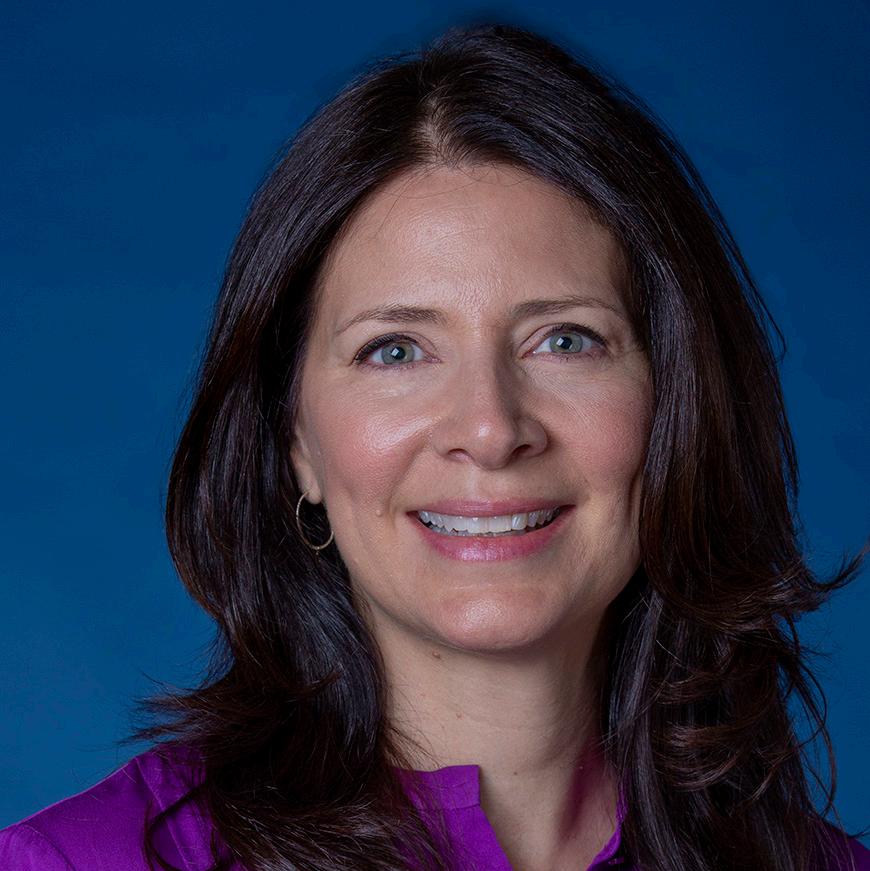
Lauren is the Executive Director for the countywide initiative, BeWellPBC, advancing behavioral health and wellness for all residents in Palm Beach County. The Well of PBC is a passion project for Lauren to increase behavioral health awareness, engage diverse perspectives across the county, and promote solutions to address our county’s most complex challenges.
Katrina Blackmon Marketing Manager
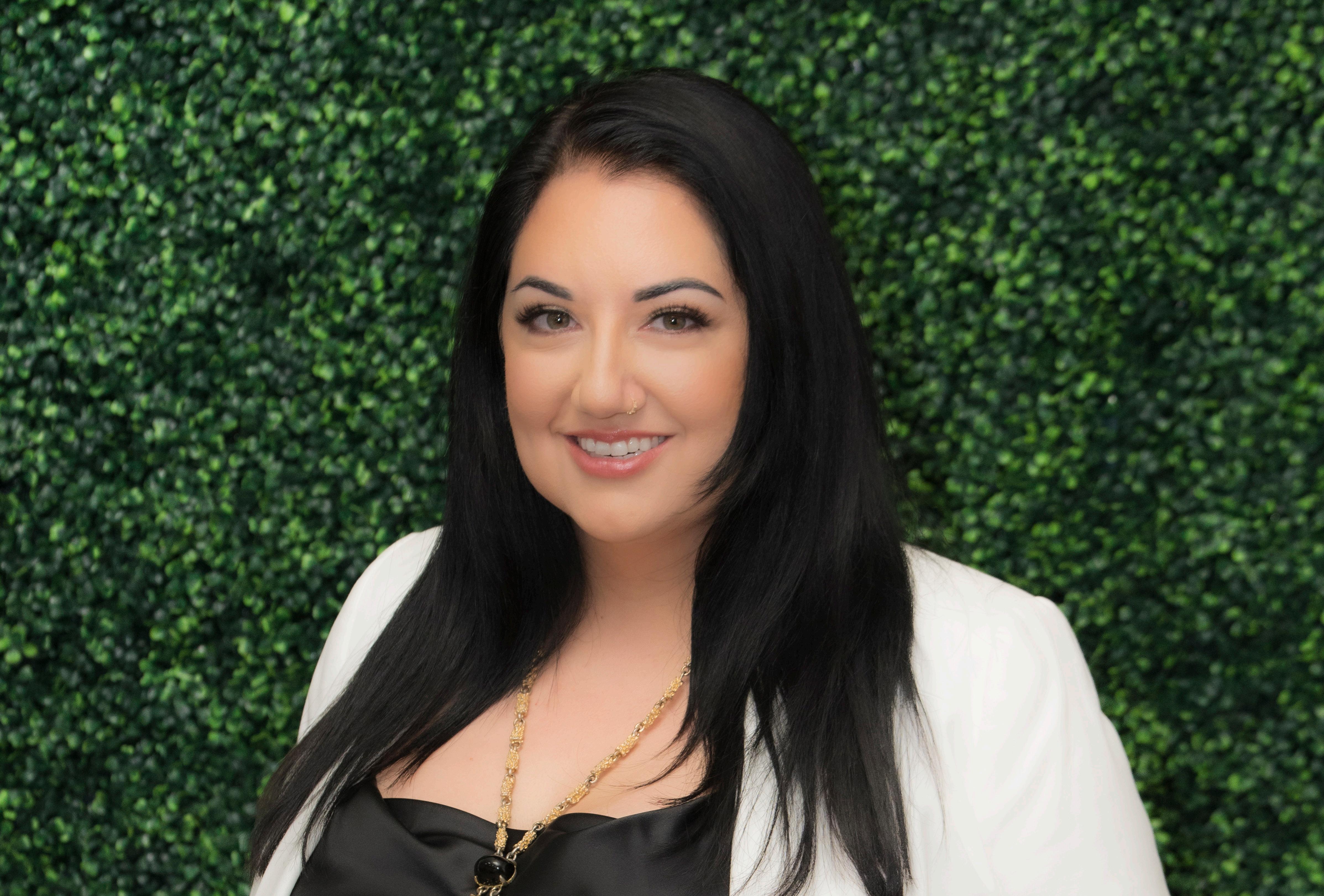
Katrina, founder & CEO of Unity3 Palm Beach, brings her executive advertising background combined with her love of faith, family, and this vibrant multicultural community to The Well of PBC and BeWellPBC.
The information in this issue of The Well of PBC is for information purposes only. The Well of PBC assumes no liability or responsibility for any inaccurate, delayed or incomplete information, nor for any actions taken in reliance thereon. The information contained about each individual, company, product or organization has been provided by such individual, company, product or organization without verification by us.
The opinion expressed in each article is the opinion of its author and does not necessarily reflect the opinion of The Well of PBC. Therefore, The Well of PBC carries no responsibility for the opinion expressed therein.
Any form of reproduction of any content in this magazine without the written permission of the publisher is strictly prohibited. © 2023 The Well of PBC All rights reserved.
Julie Khanna Editor-in-Chief
Julie, CEO of Khanna Connections, enjoys using her creativity to help health and wellness industries communicate with their audiences.
Creative Director
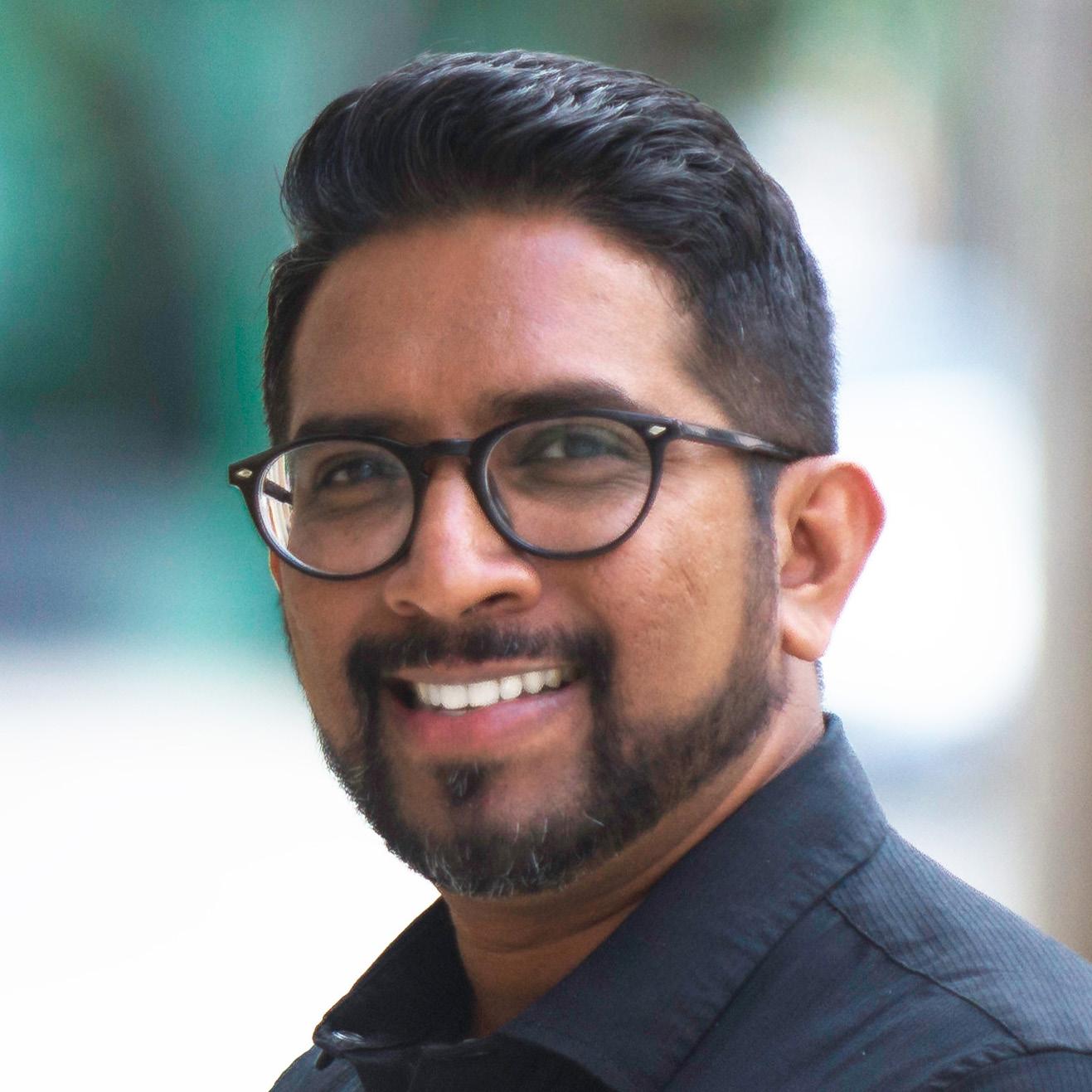
Surej, founder of Photography & Design by Sunman, is the creative visionary that brings life into each page, concept, visual and digital design of The Well of PBC publication.
 Alita Faber BeWellPBC Staff
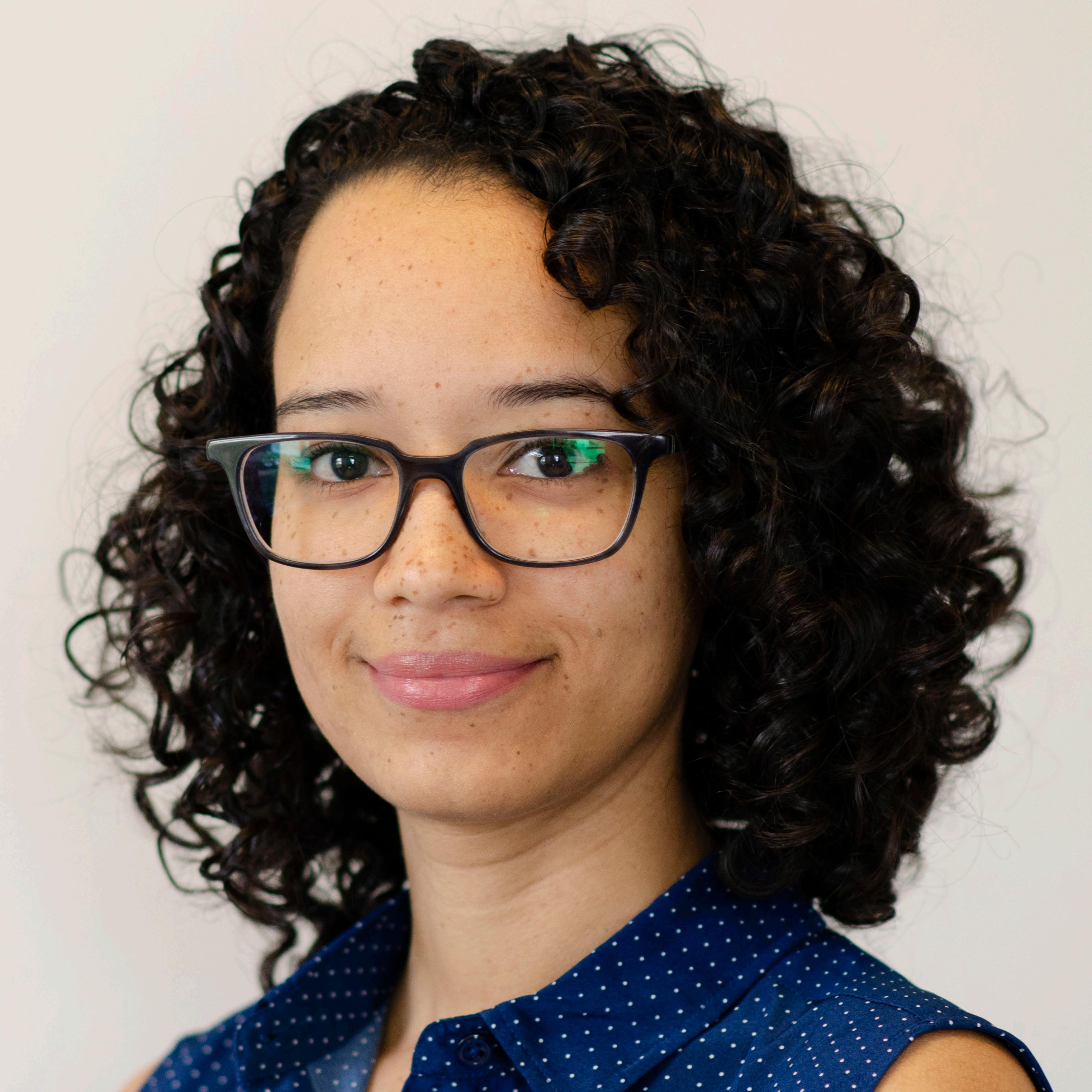
Alita Faber is the Networks & Special Projects Manager at BeWellPBC. Through her work, she wishes to help the field of behavioral health to become more equitable for the entire community, including those seeking services and those looking to work in the field.
 Melanie Otero Contributor
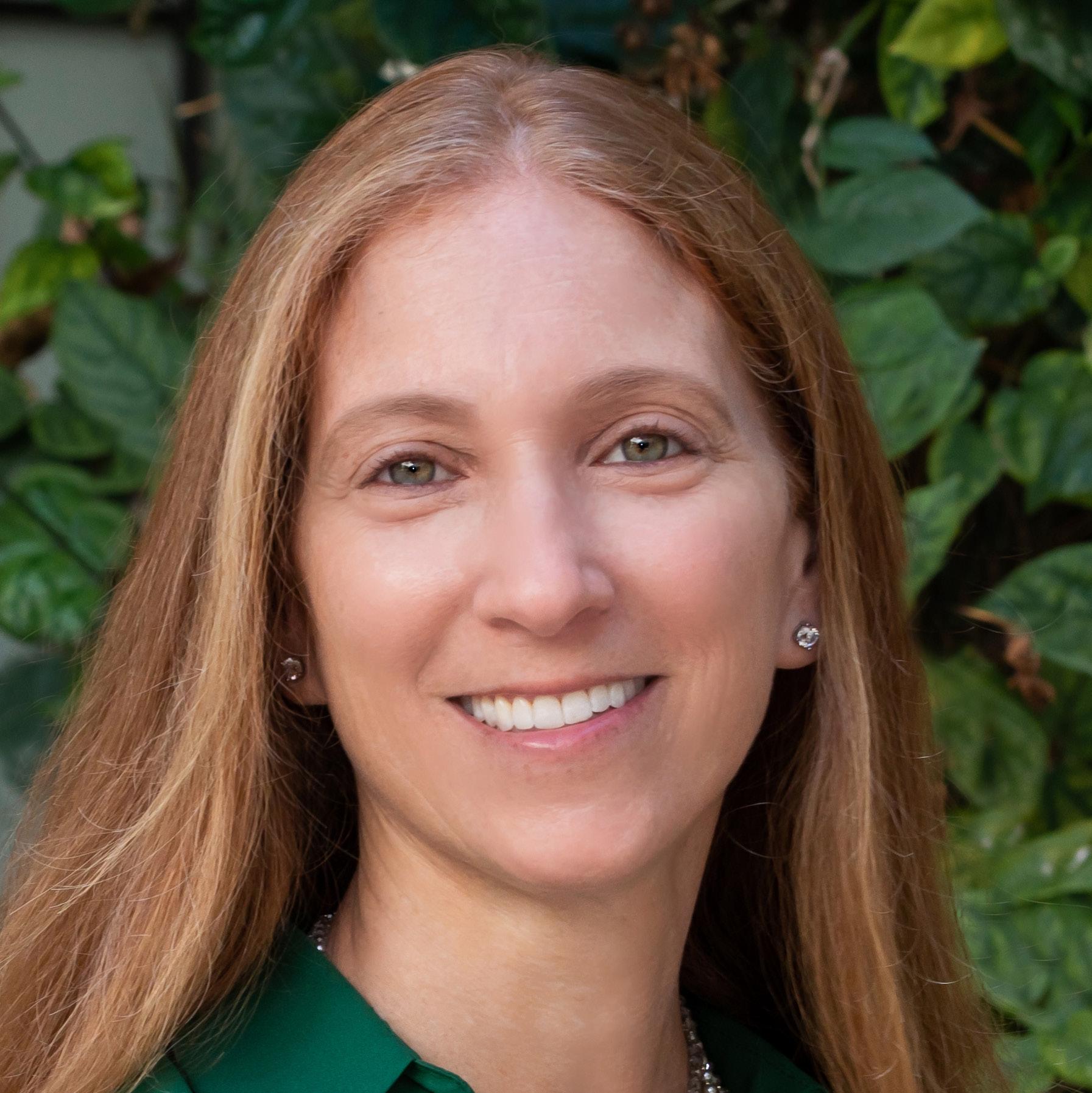
Melanie, president of Otero Communications, provides consulting services for some of Palm Beach County’s leading nonprofit organizations. With a special interest in behavioral health, she serves as a contributing writer to The Well of PBC.
The Well Of PBC / Feb Issue 2023 5
Surej Kalathil AKA Sunman
You’ve got a friend in me
How social capital enriches our lives
 By: Melanie Otero
As Kemberly Bush listened to Dr. Raj Chetty, keynote speaker at the Securing Our Future Economic Mobility Summit in early December 2022 at the Palm Beach County Convention Center, she was jumping up and down inside.
Chetty, professor of Public Economics at Harvard University and director of Opportunity Insights, was presenting his groundbreaking “big data” findings showing how an individual’s social network can be a factor in their ability to earn more and achieve the American Dream. The room was full of social service leaders like Bush, chief executive officer of Pathways to Prosperity, who had gathered for the one-day summit hosted by Palm Beach County’s Community Services Department to share learning on how to move people out of poverty.
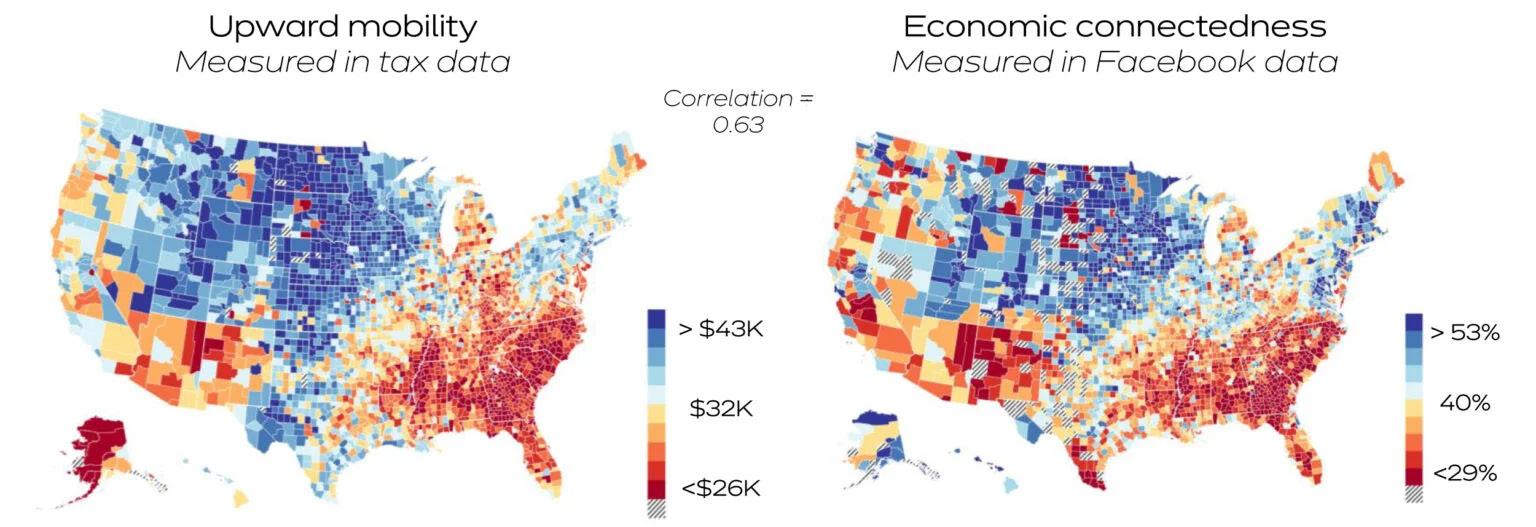
Chetty revealed U.S. maps comparing upward mobility with economic connectedness, explaining that it is exactly in the places where low-income people have lots of high-income friends that economic mobility is higher.
“It was validation, it was confirmation,” Bush said. “It was all about social capital, and bringing other people in. It is real. You can move people by the connections they have. I have seen it.”
Moving in the Right Circles
Bush has witnessed people moving from poverty to prosperity through a model called Circles®. Adopted by her organization in 2014, Circles offers participants, referred to as Circle Leaders, the opportunity to identify their strengths to improve their lives and to build community around them. “I had been in social work for 25 years before discovering Circles,” said Bush. “I hadn’t heard of anything like this where upper-income and lower-income people come together forming real bonds and friendships. This is not a program, it’s a movement.”
Building community around a Circle Leader begins with pairing them with a Circles Ally, a person or family who brings their knowledge, experience, and economic connections to support the leader’s goals. It’s more than help. It’s genuine friendship, forging bonds, and offering bridges to an Ally’s social capital, the connections that are often commonplace among people at higher-income levels, such as college or career networks, or neighbors with influence. It’s the one thing that’s missing from a Leader’s circle to help them break the cycle of poverty—the economic connectedness that Chetty identified as the pathway to upward mobility.
The Well Of PBC / Feb Issue 2023 6 FEATURE STORY
Upward mobility tends to reflect economic connectedness
The Trajectory Forward
When Clarence Hickman was accepted into the Circles program as a Leader in 2017 at the age of 29, his goals were clear: start his own car detailing business and purchase his first home. Hickman’s Ally, Ontario “OJ” Johnson, saw a young man, persistent in his dreams, who just needed a circle of connections and support to reach them.
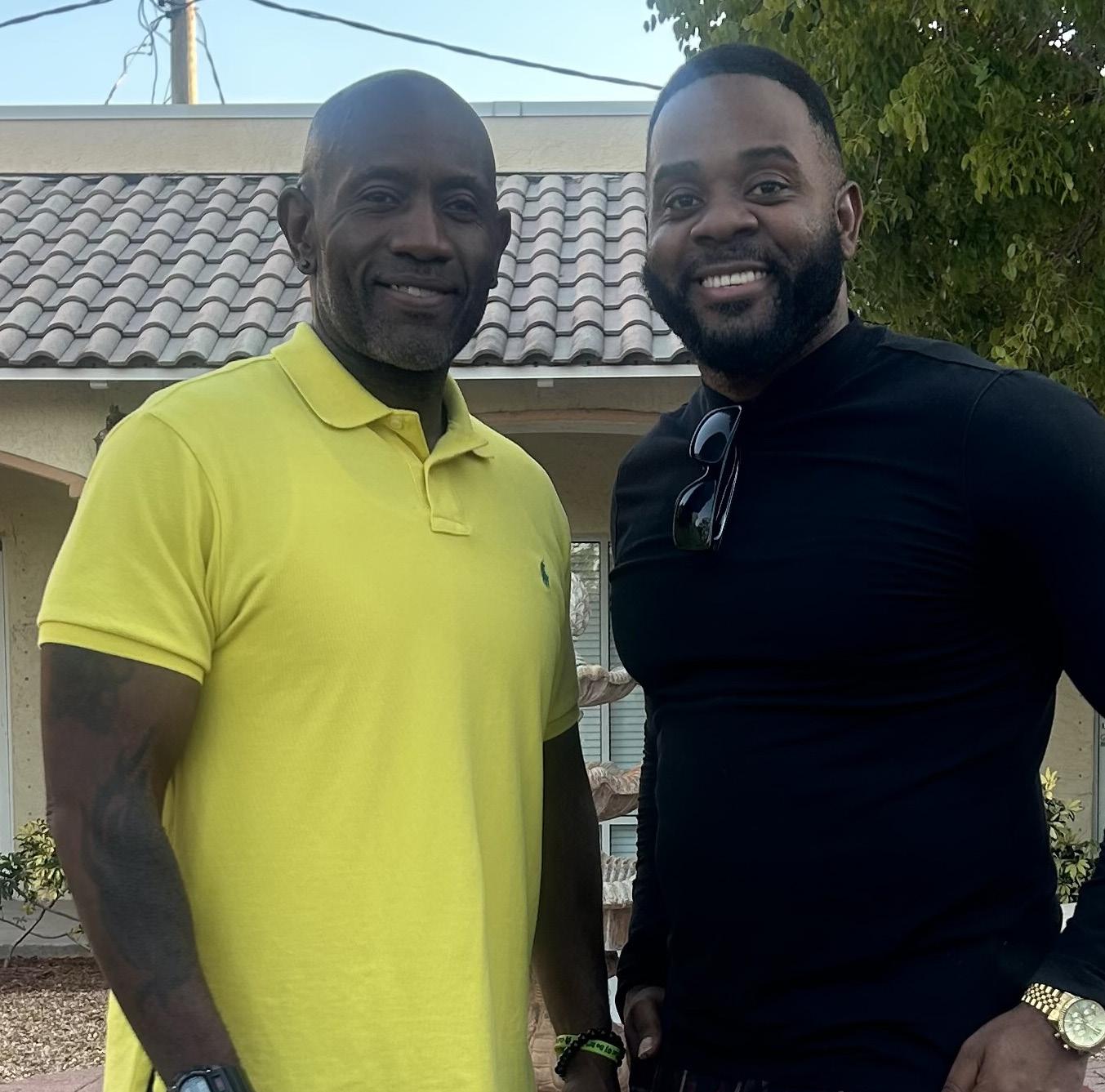
“Clarence hadn’t been exposed to a lot of things in life like me,” Johnson said. “It was an opportunity to ‘get in where I fit in,’ and help someone with my own experiences and knowledge.”
One of the first things the real estate professional did was connect Hickman to people from his circle to get his car detailing business off the ground, everything from finding a truck to sourcing parts online to referring him to new customers.
“I was another set of ears and eyes to be supportive of all the things he was trying to accomplish,” Johnson said.
“I was trying to better myself,” Hickman said. “OJ guided me to become self-sufficient, get my credit in order, get my business started, and purchase my first home.”
Johnson was also there for Hickman when he needed emotional support. “I was getting stressed out through the process of buying a home. OJ kept telling me to put one foot in front of the other, ‘I got you.’ He reassured me.”
“There was a lot of fear of new things,” said Johnson. “But helping him get over his fears and watching him grow and gain confidence—it was a thing of beauty to watch. I gained a real sense of satisfaction. I wanted to do more.”
The Well Of PBC / Feb Issue 2023 7 FEATURE STORY
Left: County-level map of upward mobility, defined as the average income in adulthood for children from low-income families. Right: County-level map of economic connectedness, defined as twice the share of friends with above-median socioeconomic status among people with below-median socioeconomic status. Source: Opportunity Insights
OJ Johnson and Clarence Hickman
The Well Of PBC / Feb Issue 2023 8 FEATURE STORY
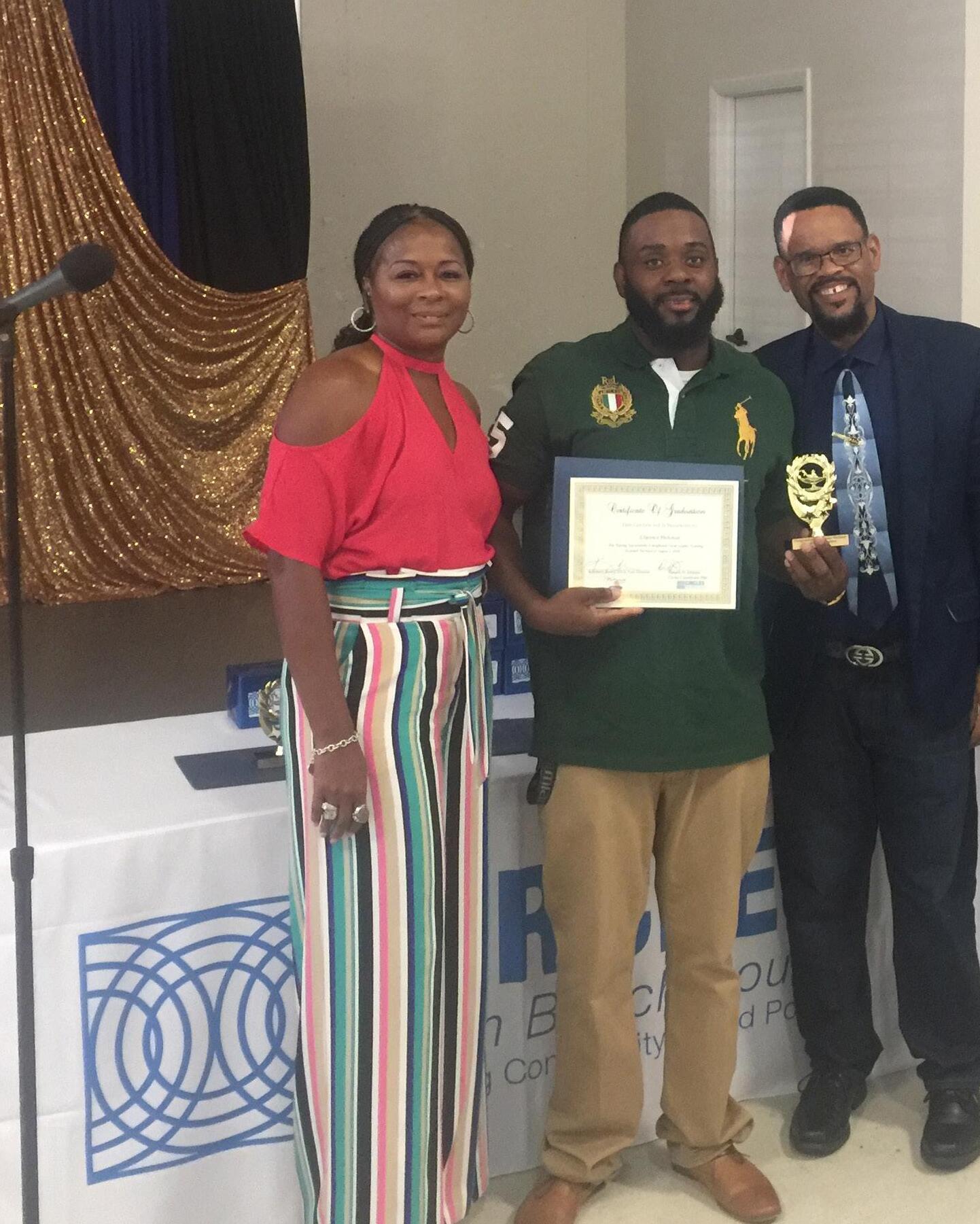
Clarence Hickman (second from left) at his Circles graduation with Kemberly Bush, Circles coach Guarn Sims, and OJ Johnson.
Open Minds, Open Doors
Bush felt uplifted by watching Leaders like Hickman, too. She saw how their new connections benefitted their lives in multiple ways, including mental health. “When you feel isolated, there is no person who has your back and there is no way out, you become gripped by anxiety and fear,” Bush said. “Then you come into an environment where everyone is saying you don’t have to do it alone—the mindset begins to open differently.”
Another way Circles Leaders expand their mindsets is by helping others through civic engagement. “We all have something to offer,” Bush said. “It’s about finding purpose. It changes your mental health when you are no longer a recipient and you become a giver. I’ve witnessed individuals who came in broken, but they found their voice—a voice they didn’t even know they had—and now they speak at city council meetings. To me, that’s gold.”
Hickman became a giver through connections that put him on the path to a social work career. He still has his detailing business on the side, but now he makes a higher income and invests his own social capital in others. After gaining experience as an advocate helping youth aging out of the foster care system—a position he attained through Circles—Hickman became a victim’s advocate for the Palm Beach County Courthouse. He speaks
of guiding women who are victims of domestic violence out of their situations by making connections for them, the same way people made connections for him. “Helping people find resources is second nature to me now,” he said.
Thanks to Hickman, Johnson has found something that comes second nature to him—working with men, slightly younger than his 48 years, who share a common language. He is increasing his impact through Circles by coaching other Circle Leaders and creating his own mentoring opportunities.
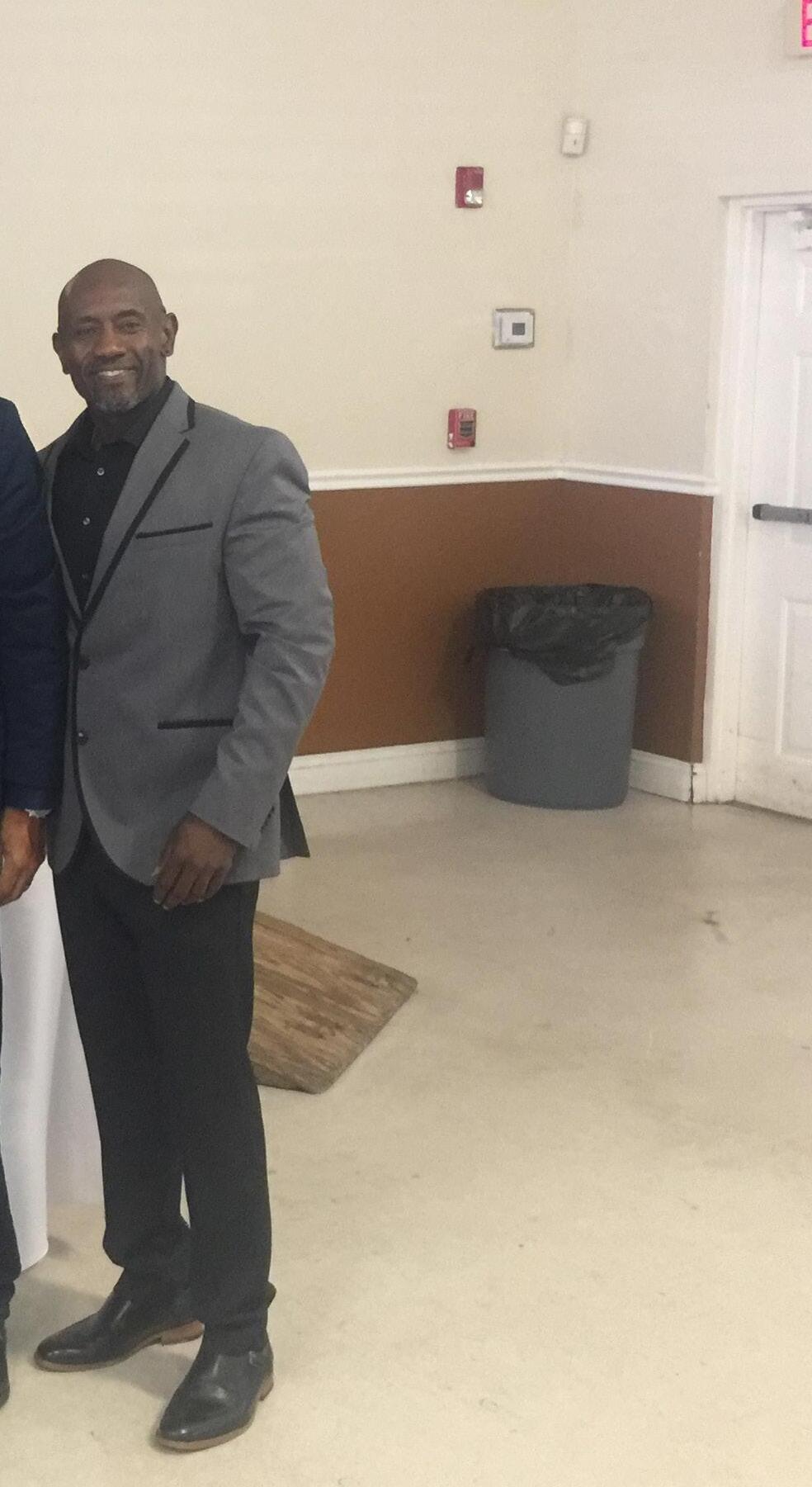
“Clarence was the ultimate example,” Johnson said. “I tell people all the time, it’s absolutely possible with community. We all want the same things. To feel safe and provide for our families. If we as people continue to engage, to see each other as people, to help, we can solve so many issues in this country, especially when it comes to poverty. True community can change a lot of circumstances.”
Hickman nods in agreement. “OJ helped change the trajectory of my life.”
Johnson knows Hickman has changed his life, too. “He’s my guy. I can truly call Clarence a friend.”
The Well Of PBC / Feb Issue 2023 9 FEATURE STORY
Then you come into an environment where everyone is saying you don’t have to do it alone—the mindset begins to open differently.
“ ”
Want Better Mental Health?
Connect with Your Community
By: Dr. Julie Radlauer-Doerfler, LMHC
Do you know that in the last twenty years, people went from having three close connections to having two close connections? That’s a problem because when we have strong social connections in our lives, we live 3.7 years longer than isolated people. There are other mental and physical health outcomes attributed to social connections including an increased immune system, less heart disease, and diabetes, decreased depression and anxiety, and even better memory.
As a researcher of social connectedness, I am often asked, “How can I create better connections in my life?” Seems like a straightforward question, but my typical response is, can you tell me more about what kind of connections you are looking to create? Feeling connected to another person is very different than feeling connected to your community. Honestly, we need both and one is not more important than the other.

Research demonstrates that we are happier when we have 3-5 strong ties (deep connections). Additionally, we can have up to 150 weak ties (friends, co-workers, classmates, or social media connections). It’s the combination of strong ties and weak ties that creates a happy, healthy human being.
Sometimes social connections are about people, and sometimes they are about networks and communities. When we are talking about individual connections, we
are looking for a support system to help us in times of need. When we’re talking about community connections, we’re looking for a sense of belonging. According to Healthy Places by Design, “People living in socially connected communities are more likely to thrive because they feel safe, welcome, and trust each other.”
Many people struggle with having those 3-5 strong connections in their life, thus, when they need support, they end up in crisis and leaning on government systems. One way to build those 3-5 strong connections is to engage in developing community social capital.
What’s Social Capital?
Have you ever been involved in a group, sports team, or with co-workers and had a need? Just by having access to others, you were able to ask for advice, seek support, or maybe even benefit from a connection- that’s social capital. If you reflect on that situation, did having a relationship with that person help you solve your problem? Research demonstrates that just by thinking you have someone to turn to (perceived support), you have better mental health.
These days, in communities all over the world, people are struggling with their mental health. Some communities have taken matters into their own hands and are using social capital to address community mental health. In Africa, there
Sometimes social connections are about people, and sometimes they are about networks and communities. When we are talking about individual connections, we are looking for a support system to help us in times of need. When we’re talking about community connections, we’re looking for a sense of belonging.
is a program called Friendship Bench where local “grandmothers” are trained in mental health interventions. The intervention involves sitting on community benches and being available for people in need to join them in conversation. This is an amazing example of social capital- they are taking the strengths in the community (the “grandmothers” who have time and experience) and creating an opportunity to support others in need.
Now, ask yourself this question, how do you think that the “grandmother” feels being a part of Friendship Bench? Not only is she helping someone in need, but she is also part of a solution to improve mental health AND she belongs to an important movement in the community. A similar program is available in the United States called Sidewalk Talk and it has been used in communities all over the country. Programs like these utilize something called abundance thinking, which is a mindset that focuses on community assets
The Well Of PBC / Feb Issue 2023 10 THE WORD
“ ”
rather than on deficits. It is the belief that there are enough resources available and more than enough creativity and wisdom to meet our needs. We build social capital when we recognize, celebrate, and reinforce assets inherent in local communities and acknowledge that every resident has assets and the ability to lead their change.
Building social capital starts with individual contributions. There are so many ways to build social capital, here are just a few:
• Make time to connect with people: When we take the time to learn about people, we create a connection that can support future community growth.


• Follow through and get things done: People want to work with others who are dependable and hardworking.
• Be positive and optimistic: Say yes to invitations to participate in
community efforts, boards, and organizations.
• Express Gratitude: Gratitude strengthens bonds between people, deepens trust, and expands social capital. People want to be around others who see them, appreciate them, and value their contributions.
• Return the favor: Reciprocity is an important component of building relationships.
• Invite others to participate: Enlist others along the way and help others build relationship networks.
Building relationships, connections, and social capital takes time and energy. When people invest their time and assets to help the greater good, communities become stronger, tighter bonds are created among residents, and support is built to sustain change. Having these connections creates better mental health for individuals as well as the community. Together we can change the narrative on mental health.
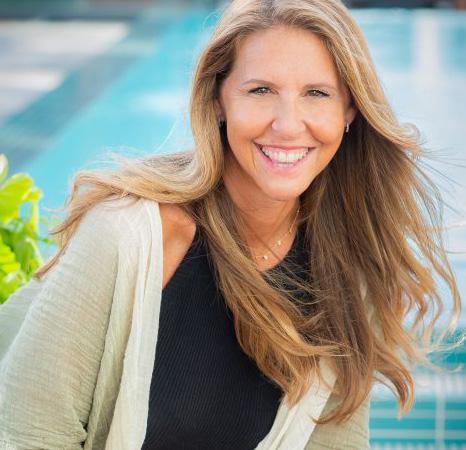
Dr. Radlauer-Doerfler is a leading expert in social connection and social support and uses her experience to create impact within communities, systems, organizations, and individuals. Her approach is collaborative, creative, and curious as she strives to educate utilizing unique avenues including media, stage production, video production, podcasting and writing. She has extensive experience in behavioral health, public health, and organizational development for more than 25 years. She is a national expert in behavioral health, social support, and social connectedness and uses this knowledge to further mental wellness. Her research on structural racism in the behavioral health field has led to the development of a national curriculum designed to create more equitable systems. She is passionate about addressing behavioral health challenges through social support and speaks widely on the topic.
The Word is a broad topic space for contributing writers (a.k.a the community) to share your stories of behavioral health or anything self-care related i.e. fitness, health, educational, parenting, hobbies, wellness, etc. To contribute, send your article ideas to thewell@bewellpbc.org with “The Word” in the subject line.
The Well Of PBC / Feb Issue 2023 11
THE WORD
Dr. Julie Radlauer-Doerfler, LMHC
By: Ruhani Dashmesh | @jupitermhaclub @Photography by Sunman
The topic of mental health is frequently looked at negatively due to society’s stigma towards it. Not only can mental health disorders lead to difficulties in relationships, but mental health disorders can also lead to affecting the persons’ well-being, their thinking, and their behavior. Mental health issues in teenagers are growing rapidly and they are highlighted by the CDC, mentioning “more than 1 in 3 high school students experienced poor mental health…” This is a significant statement because it reveals how many teens are impacted by mental health issues worldwide.
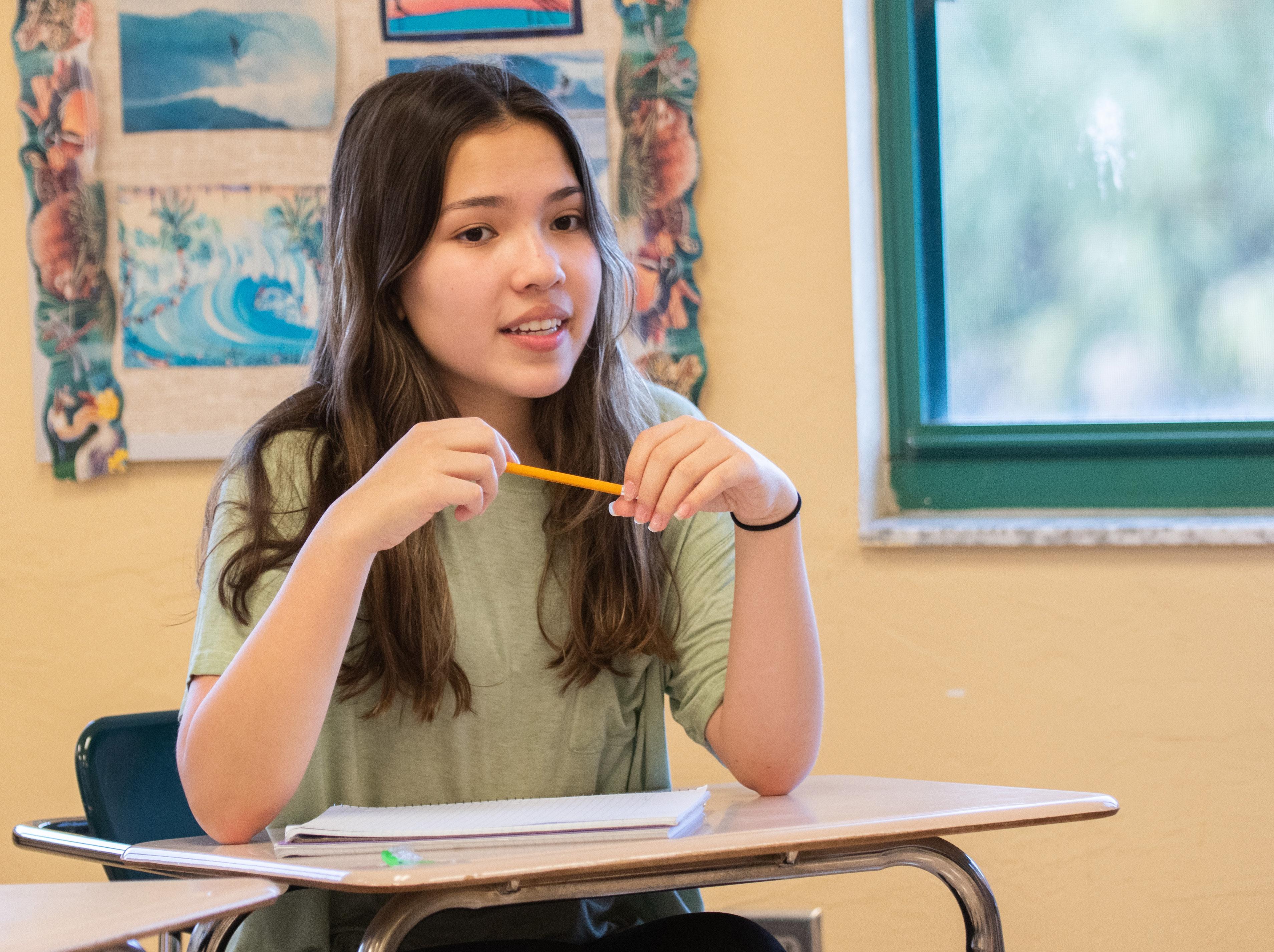
The Mental Health Awareness Club was started in the 2022-2023 school year at Jupiter High School and has over 200 members within our first year. The main goal of our club is to focus on school-wide mental health efforts as well as raising money and spreading awareness of mental health issues. During the club meetings, members are encouraged to write notes and cards with drawings and information briefing about mental health. The Mental Health Awareness Club officers then hang up the notes and cards throughout the high-traffic areas around the school to promote attention to the importance of mental health, especially among teenagers.
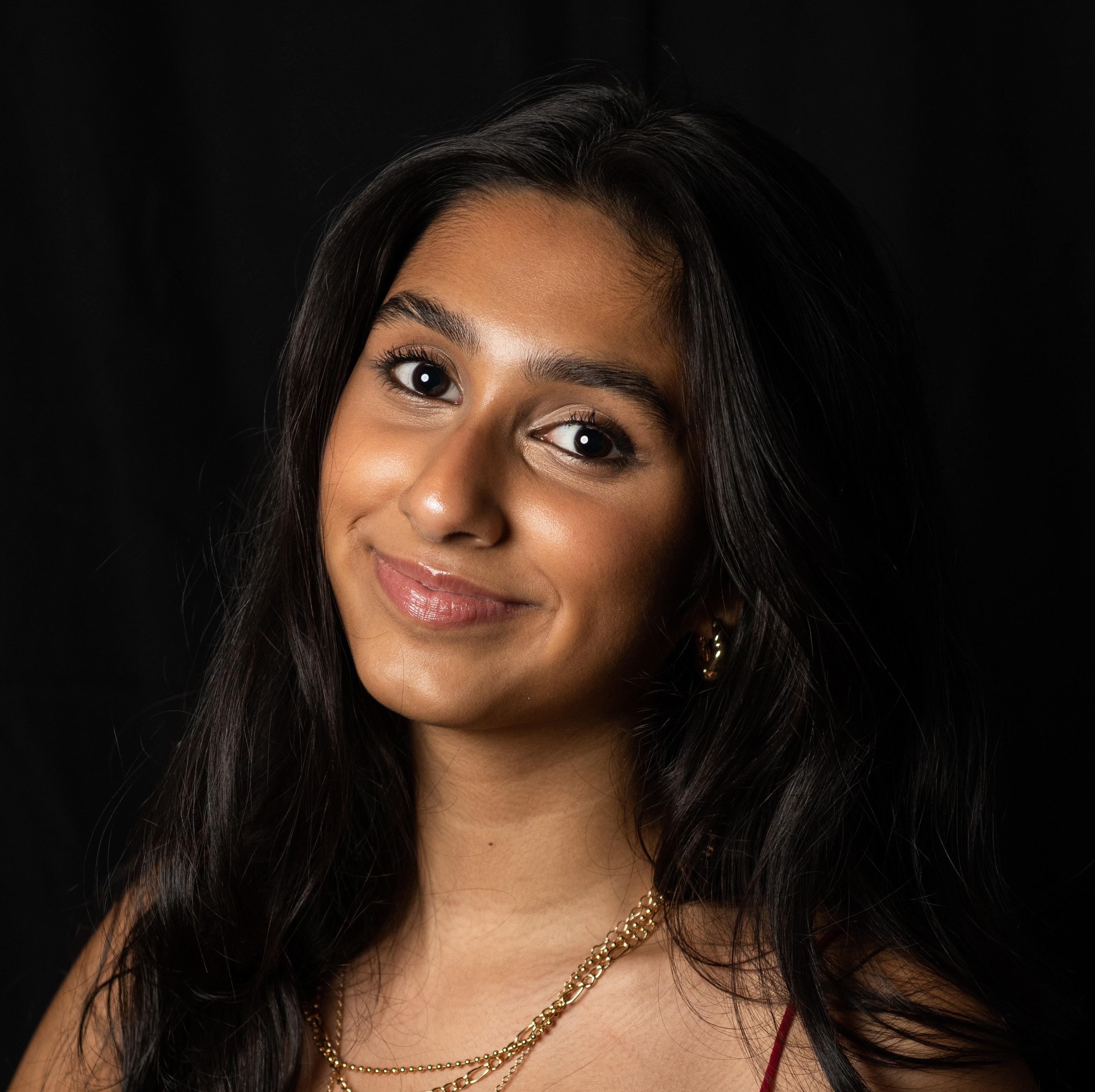
Ruhani Dashmesh and Sabrina Cohen are the Co-Founders of the Mental Health Awareness Club. Ruhani Dashmesh,
Mental Health
The Well Of PBC / Feb Issue 2023 12 THE FOUNTAIN
“
The main goal of our club is to focus on school-wide mental health efforts; as well as raising money, and spreading awareness of mental health issues.
”
Sophomore at Jupiter High School, and Sabrina Cohen, Junior. We would also like to thank our wonderful advisor, Sarah Guzick, and our officers for making this opportunity possible.
To help increase awareness and raise money for people suffering from mental health disorders, the club partnered with the National Alliance of Mental Illness (NAMI). NAMI helps overcome the stigma of mental illness by advocating, educating, and supporting victims of mental illness. The club had initially planned to raise $1,000 for NAMI; however, we quickly surpassed our goal by preparing multiple
fundraisers. In November of 2022, NAMI had its annual 5k walk, where individuals had a place to unwind. Attendees were able to walk from various sponsor tables that were giving out prizes to all those participating!
Members of the Mental Health Awareness Club at Jupiter High School were encouraged to participate. Over 25 members came to the 5k walk and involved themselves within the community and represented Jupiter High School. Prior to the walk, the club had started the donation pages for NAMI to help raise as much money as possible. Members
sent their donor pages to their family and friends which helped us reach our goal by a lot. The club has now raised over $2,500 for NAMI.
For World Mental Health Day on November 10th, Jupiter High School MHA passed out green ribbons symbolizing Mental Health Awareness to students and encouraged the importance of mental health.
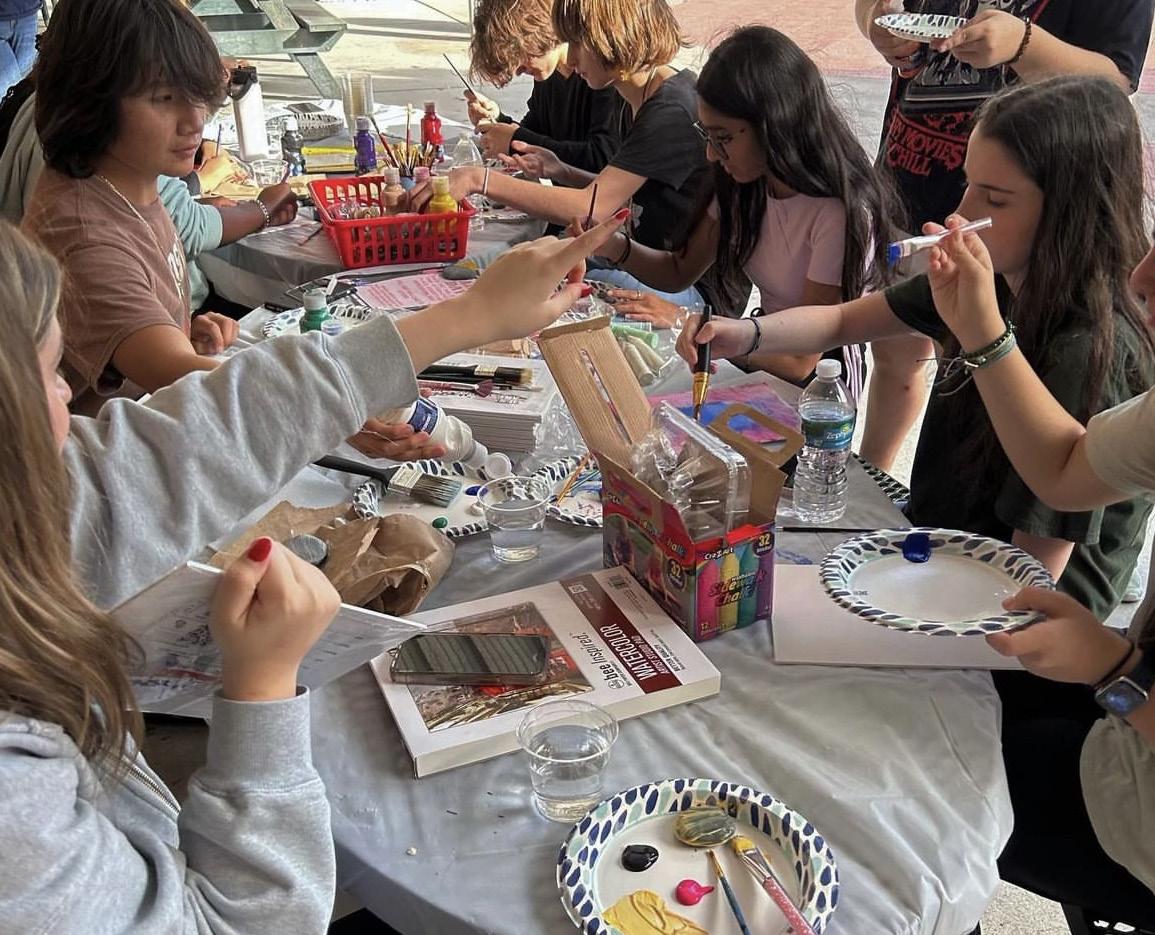
Recently in December, we held a day after school for anyone at Jupiter High School to come and participate in painting. Paint
day was a free event for which any student from Jupiter High School was encouraged to attend. Everyone who was able to attend was provided with canvases, paint, and bristol boards. We had an outcome of over 20+ students joining us. The event provided students with a way to socialize and relieve stress since finals were coming up.
Another fundraiser that helped us raise money was holding a booth at our school’s annual homecoming carnival. We set up a table and held a drawing for prizes. Prizes ranged from a variety of different things.
These were a few activities we did throughout this year, despite it being our first. It is so incredibly important to bring light to mental health and overcome the negative stigma towards it.
The Fountain is a space for youth to share their point of view on things that matter to them. To contribute, send your article ideas to thewell@ bewellpbc.org with “The Fountain” in the subject line.
The Well Of PBC / Feb Issue 2023 13 THE FOUNTAIN
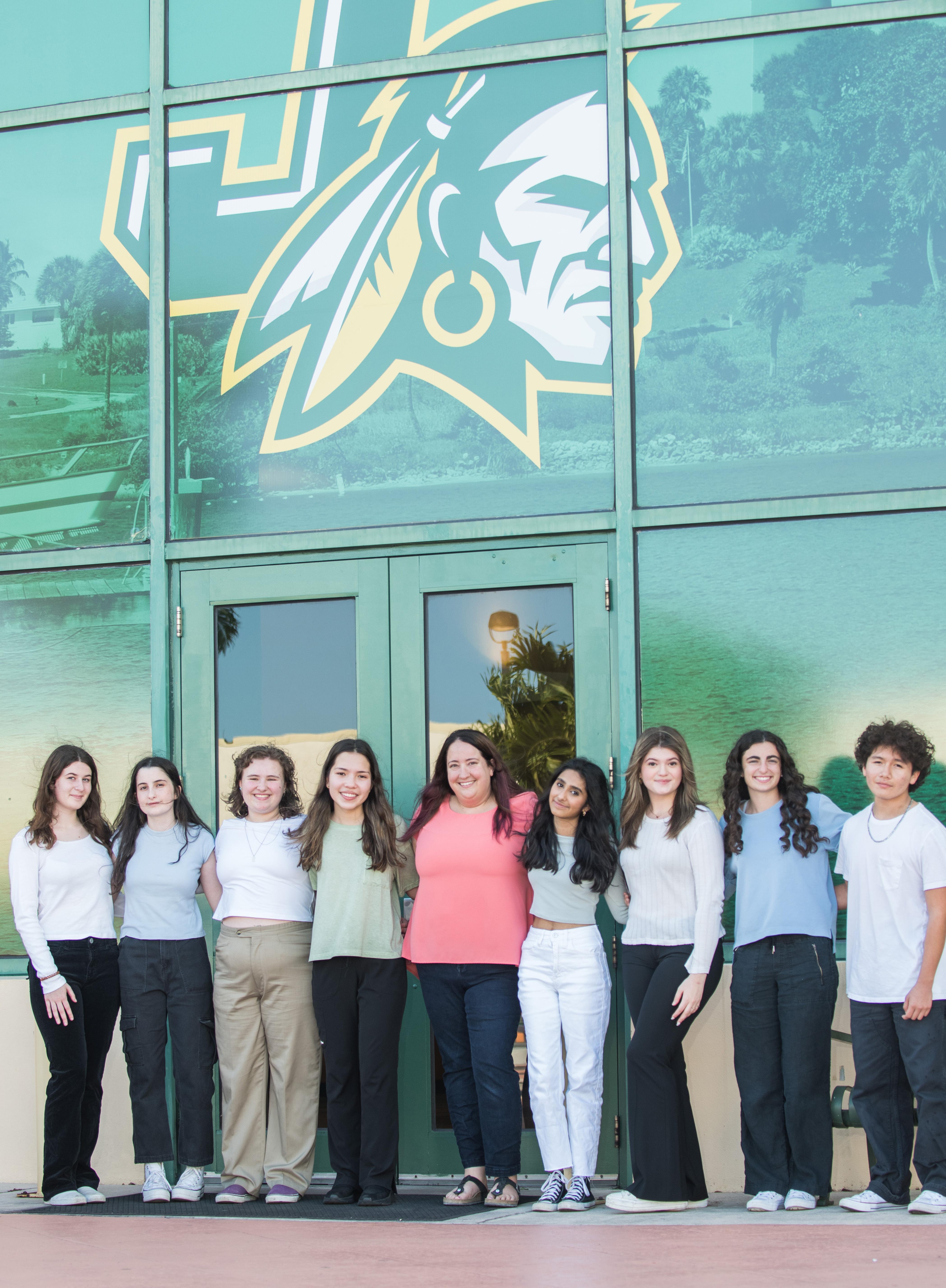
From Left to Right: Marley levine , Madison Cohen, Jocelyn B, Sabrina Cohen, Sarah Guzick (Teacher) Ruhani Dashmesh, Madison Vetere, Emily Diperi and Travis Mendoza
Sabrina Cohen Co-Founder
The Well Of PBC / Feb Issue 2023 14 THE PROVIDERS
“ ”
Looking at it from the pro-perspective, Dr. Bratini says that Cancel Culture can be an effective tool in rebalancing the power dynamic between individuals/communities and corporate entities.
Dr. Lucinda Bratini
“Cancel Culture” is a new name for a phenomenon that has long existedbefore celebrities were being brigaded on Twitter with #CancelParties, there were boycotts and calls to action for accountability, both on an individualized and collective scale.
However, the concept is far more complex and nuanced - especially when viewed through the lens of family and community as opposed to celebrity and fan culture.
Dr. Lucinda Bratini is a licensed psychologist and community organizer whose work focuses on co-constructing relational-cultural tools for individuals and communities.
“I think we all have engaged in this practice of canceling,” she said. “What we have termed ‘Cancel Culture’ or ‘Call Out Culture’ is a practice of not dealing with, not engaging or disconnecting from corporations or individuals that have been oppressive or beyond offensive and folks that have engaged in horrific acts that have significant impacts on our communities.”
Looking at it from the pro-perspective, Dr. Bratini says that Cancel Culture can be an effective tool in rebalancing the power dynamic between individuals/communities and corporate entities.
“I think there are ways in which this practice can be done well,” she said. “Collective cancellation or boycotting has highlighted the unjust and oppressive practices of corporations, so it brings attention and holds institutions accountable.”
Cancel Culture
By: Jaime Joshi Elder
Cancel culture can also be utilized to a positive end in terms of personal relationships.
“There are times in relationships where our boundaries are crossed and we are being hurt or harmed,” she said. “We have a need for distance, for disconnect, for space and one might call that either call-out or cancellation.”
Dr. Bratini came out to her family as queer when she was in her early 20s and knew she had to take space to create healthier boundaries.
“Very close family members were causing harm, very directly and very openly and (taking space) was a way to self-care. A way to unpack, understand and give myself space to do healing work. To find myself, my power and my voice during that time.”
She emphasizes that these viewpoints are not just individual concerns but reflective of a greater systemic concern which needs to be addressed and that shifts occur when we have more collective conversations about the impact of distance, conflict and injustice.
However, there must be balance and in order for cancellation to serve as a positive force, it must be processed and understood.
“When not processed, cancellation can be a reflection of our own internalized oppression,” Dr. Bratini said. “We get stuck. Our relational connections disconnect, we become isolated and I see that as very problematic.”
We Will Not Cancel Us: And Other Dreams of Transformative Justice by adrienne marie brown is an in-depth look at Cancel/ Call-Out Culture and explores the origins
of the ideal - as a way for marginalized and disempowered people to address harm - and goes on to ask how the practice serves us and how to seek accountability in ways that align with our values.
“It’s a beautiful, beautiful work,” Dr. Bratini says of Brown’s book. “It reminds us that we’re not perfect, that this work of liberation is messy, and that even those of us who care about this work have been socialized by capitalism. We must remember that our communities continue to be immersed in racist, colonial states. It is within these oppressive contexts that we’ve been taught that we cancel people; capitalist imperialist systems send people away to prisons; this is cancellation. So, while there are ways the practices are helpful, these practices cannot be divorced from the systems that have produced them. In the context of our most personal relationships, these are practices of disconnection.”
In order to cultivate the concept of cancellation as a helpful practice rather than one that harms, Dr. Bratini calls for collective effort and accountability.
“How do we be present in ways that are authentic and real?” she asked. “Speaking our truth to our experience but also being critically loving and owning the ways we’ve been harmed but also caused harm. How do we process that, support each other in doing that and repair what we need to do in order to come back? That’s collective work. I think that takes all of us.”
The Providers is a space for providers, practitioners, thought leaders, and systems change leaders to share. To contribute, send your article ideas to thewell@bewellpbc.org with “The Providers” in the subject line.
The Well Of PBC / Feb Issue 2023 15 THE PROVIDERS
The Of PBC / Feb Issue 2023 15
“Let’s Have Some Fun, This Beat Is Sick”
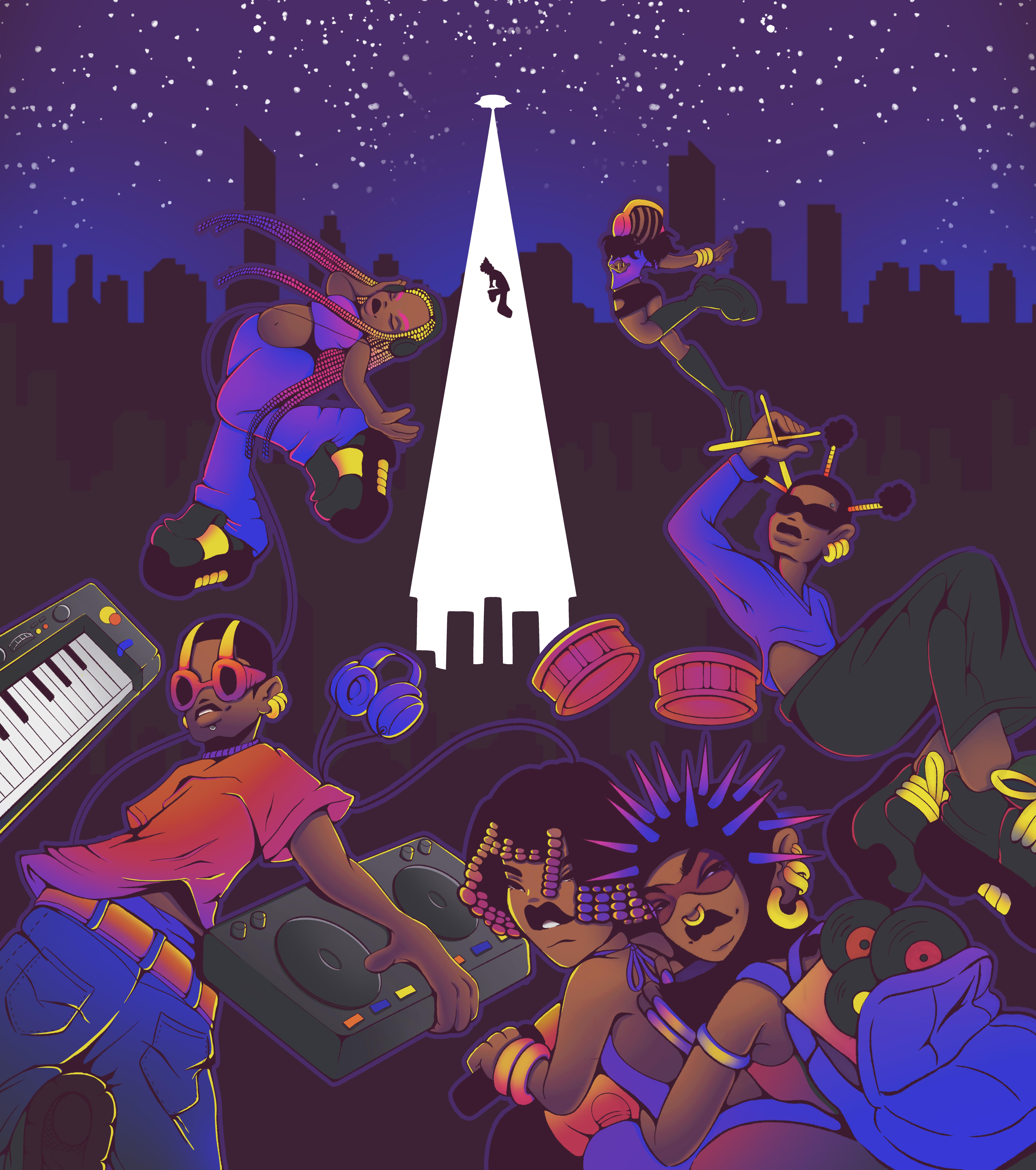
This illustration portrays how the underground music and nightlife scene provides a unique opportunity for people from all walks of life to connect and share their passions. This vibrant scene allows creative individuals to express themselves through their art, music, and fashion and provides a safe space for them to connect with others.
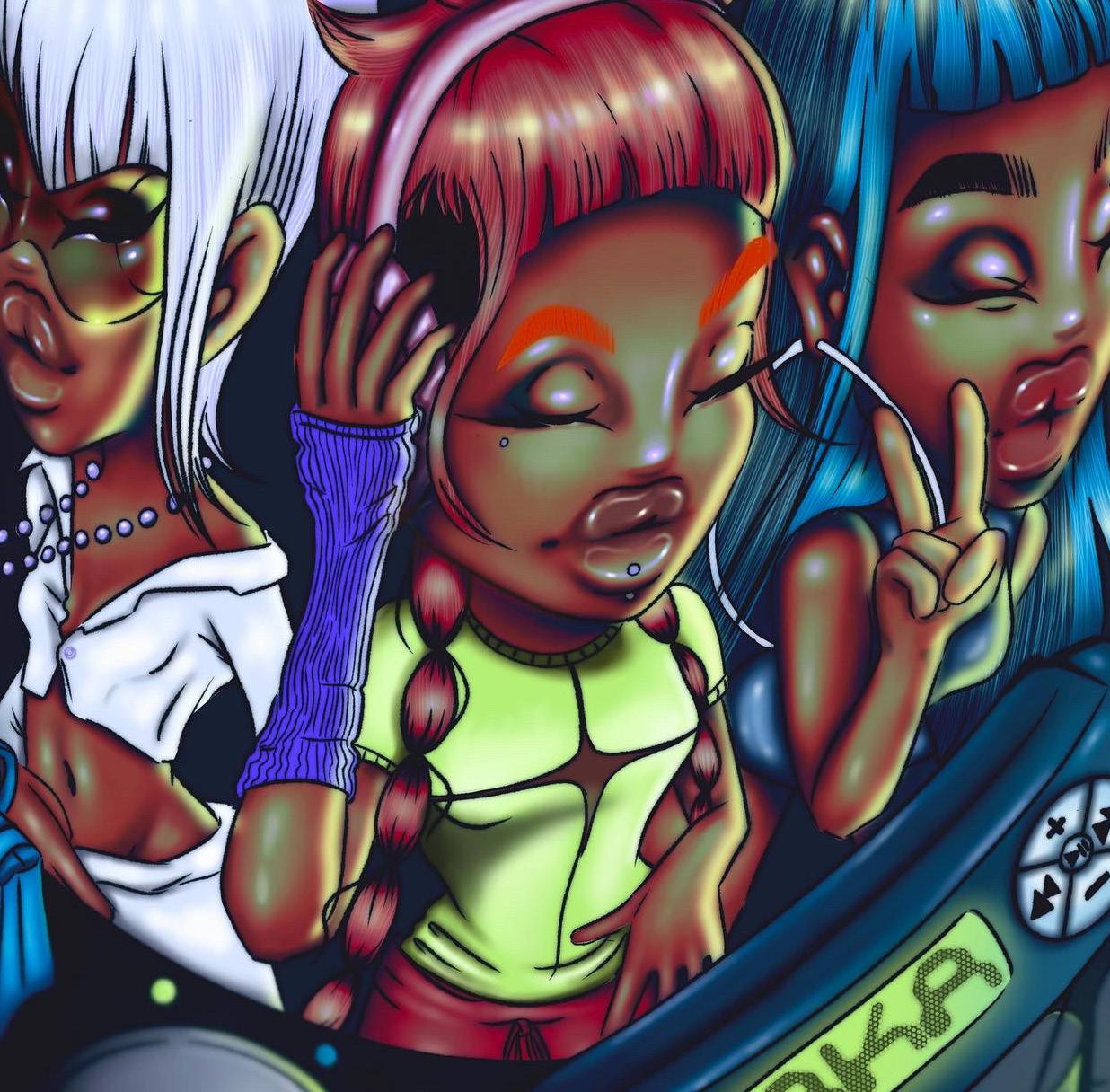
The Importance of Social Connectedness and How it is Experienced Through Art
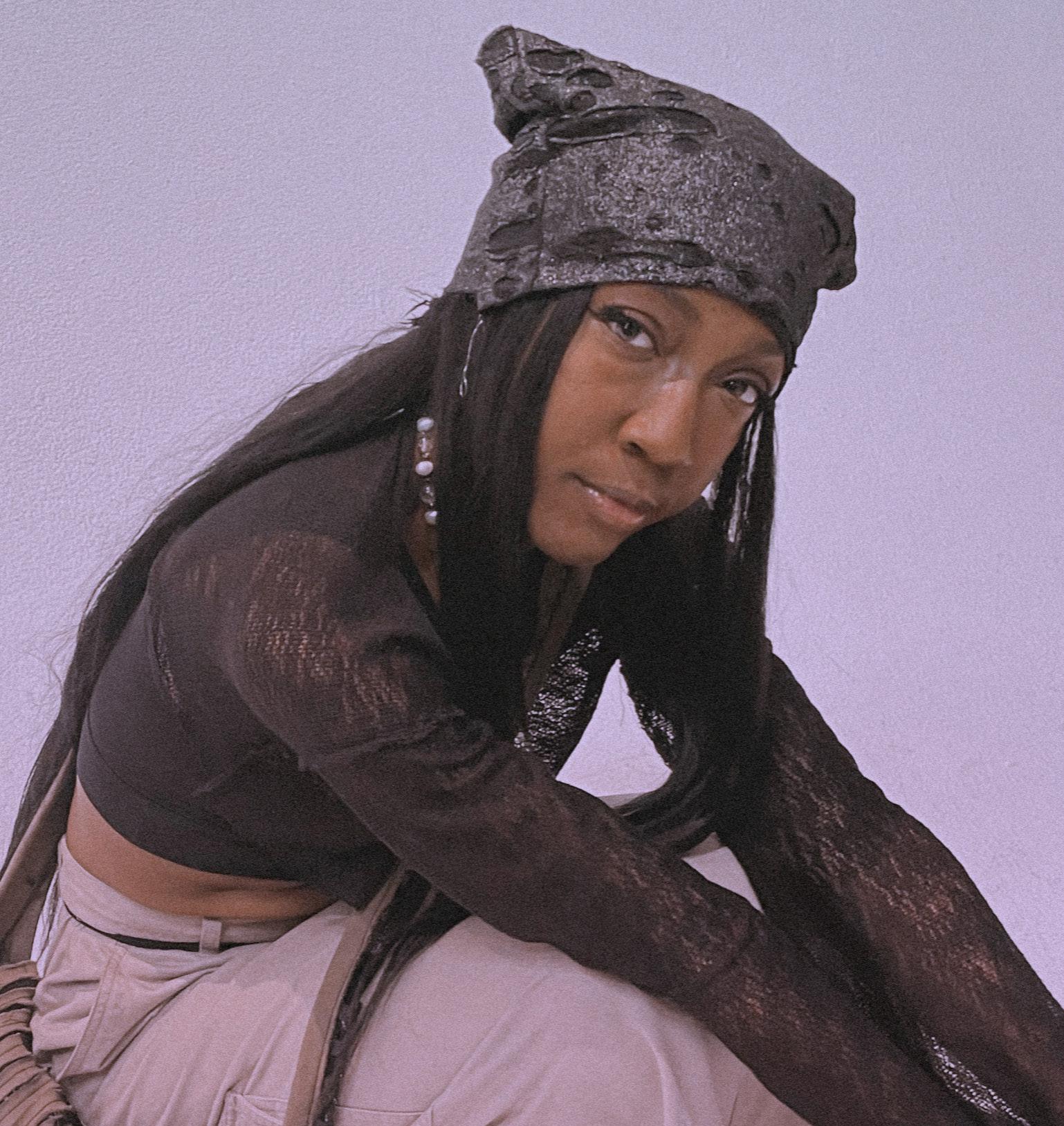 By: Makeala Lee | makasoft | www.maka.gallery
The Well Of PBC / Feb Issue 2023 16 THE DRAW
Social connectedness is imperative to our mental and emotional well-being. When we connect with others, it creates space for the community to be built. Finding our place within that community helps feed our sense of purpose and belonging. Social connectedness can be experienced through art in many ways. Whether it be an art piece that sparks emotion, creates a dialogue, or is curated by being active in a community, social connectedness through art can help us gain new perspectives, challenge our own ideas, and spark inspiration. For me, my creative opportunities would not have been as amazing as they have been if I didn’t connect with other people who have the same interests, passions, and values as me. This is why I often include my experiences and observations from my community in my work.
“Sugar Rush Illustration”
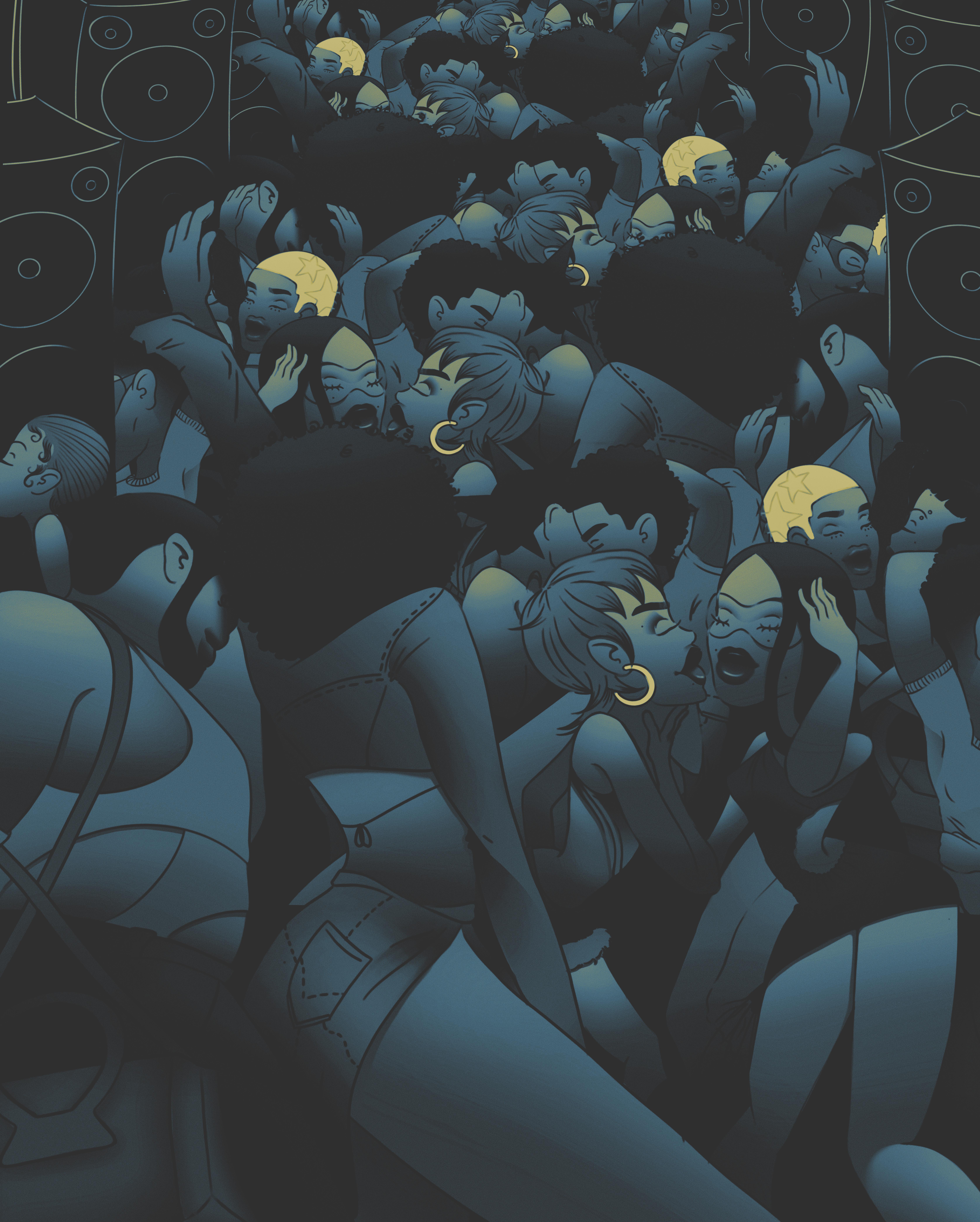
Sugar Rush is an event series that showcases the vibrant nightlife scene in Miami. Akia Dorsainvil, the curator of the event series, chooses DJs that bring transcendent music and lively energy to the scene. Sugar Rush is a piece that shows how the dance floor is a beautiful place where the music is always a powerful force and has been a source of connection between those in attendance.
“Utopia”
If you could take one thing with you to the future what would it be? Utopia visually displays the answer vibrantly. Music has been a constant stream of inspiration, the loudest form of self-expression, and the glue that binds a community of creatives. For centuries music has been a universal language. The power of sound would be imperative for us to bring to the future, as it has led us to gain a sense of togetherness living in an ever-changing world.
“Video Phone”
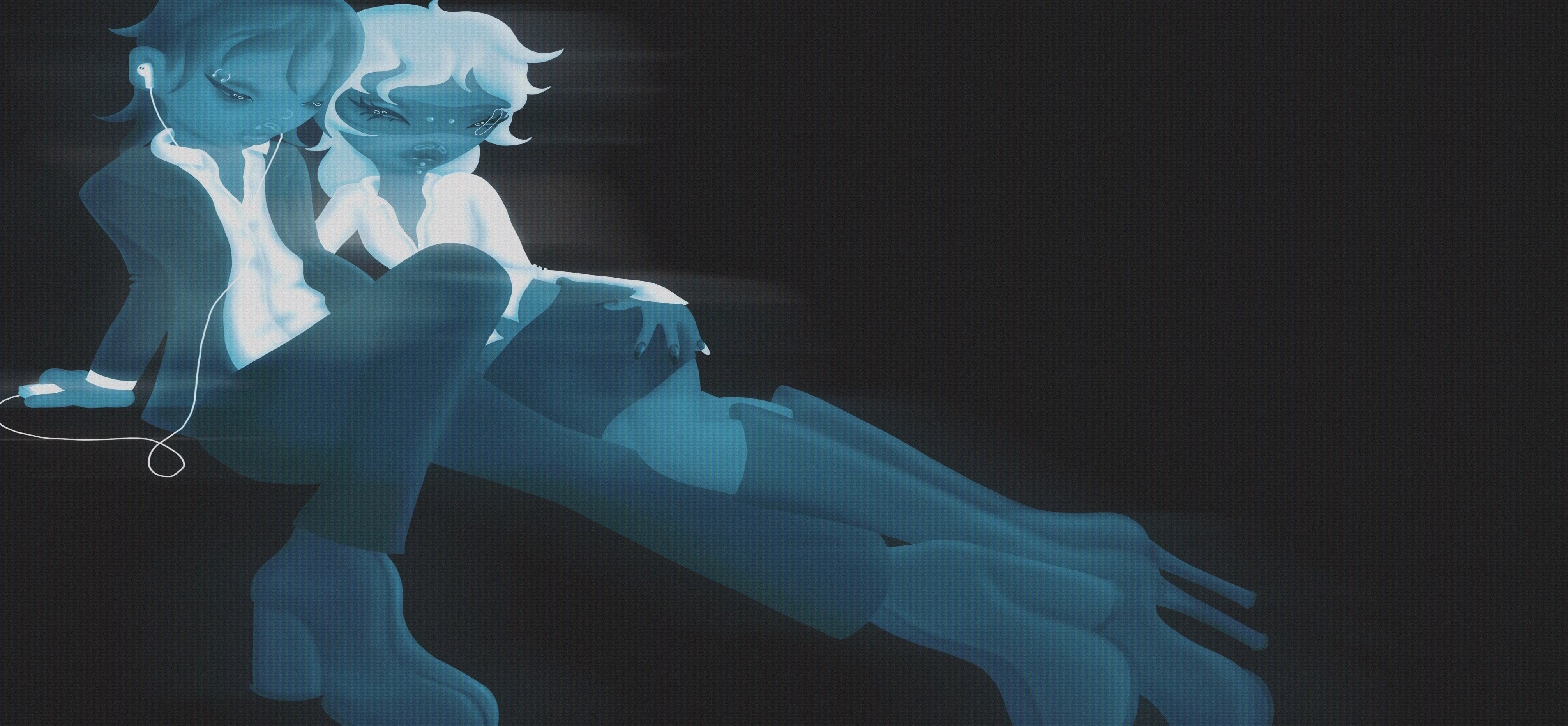
Video Phone is a digitally curated interpretation of the internet being a vehicle for escapism. Music streaming, media sharing, and virtual platforms play a factor in fostering love, connection, and community in the digital realm. Video Phone reminds us that the world wide web continues to connect our hearts, even though we are miles apart.
The Draw is a space for creatives to share their art, poetry, spoken word, etc. and/or how their art helps themselves and others. To contribute, send your article ideas to thewell@bewellpbc.org with “The Draw” in the subject line.
The Well Of PBC / Feb Issue 2023 17 THE DRAW
When we connect with others, it creates space for the community to be built. Finding our place within that community helps feed our sense of purpose and belonging.
“
”
Filipino
The Philippines…Pilipinas, as it is called in our language, is my homeland. A beautiful country where I was born and grew up in. A place that I treasure, love, and am truly proud of.
A tiny nation just about the size of Arizona but with a population that’s almost a third of the US, with more than 7,000 islands mostly separated by waters and more than 150 spoken dialects but with one common national language called Tagalog. It is a country with diverse, multi-denominational cultures and beliefs as influenced by hundreds of years of colonization by different nations from Asia, Europe, and the U.S.
Filipinos or “Pinoys”, a common informal way of referencing the citizens of the country, have common notable innate qualities. It is in their nature to be God-fearing, humble, respectful, and hospitable towards other people, especially to their elders and family.
I believe that the foundation and strength of every nation come from the most integral part of humanity…the family. This is where an individual’s core philosophies and basic moral and spiritual values come
Traditions
By: Noel Reggie
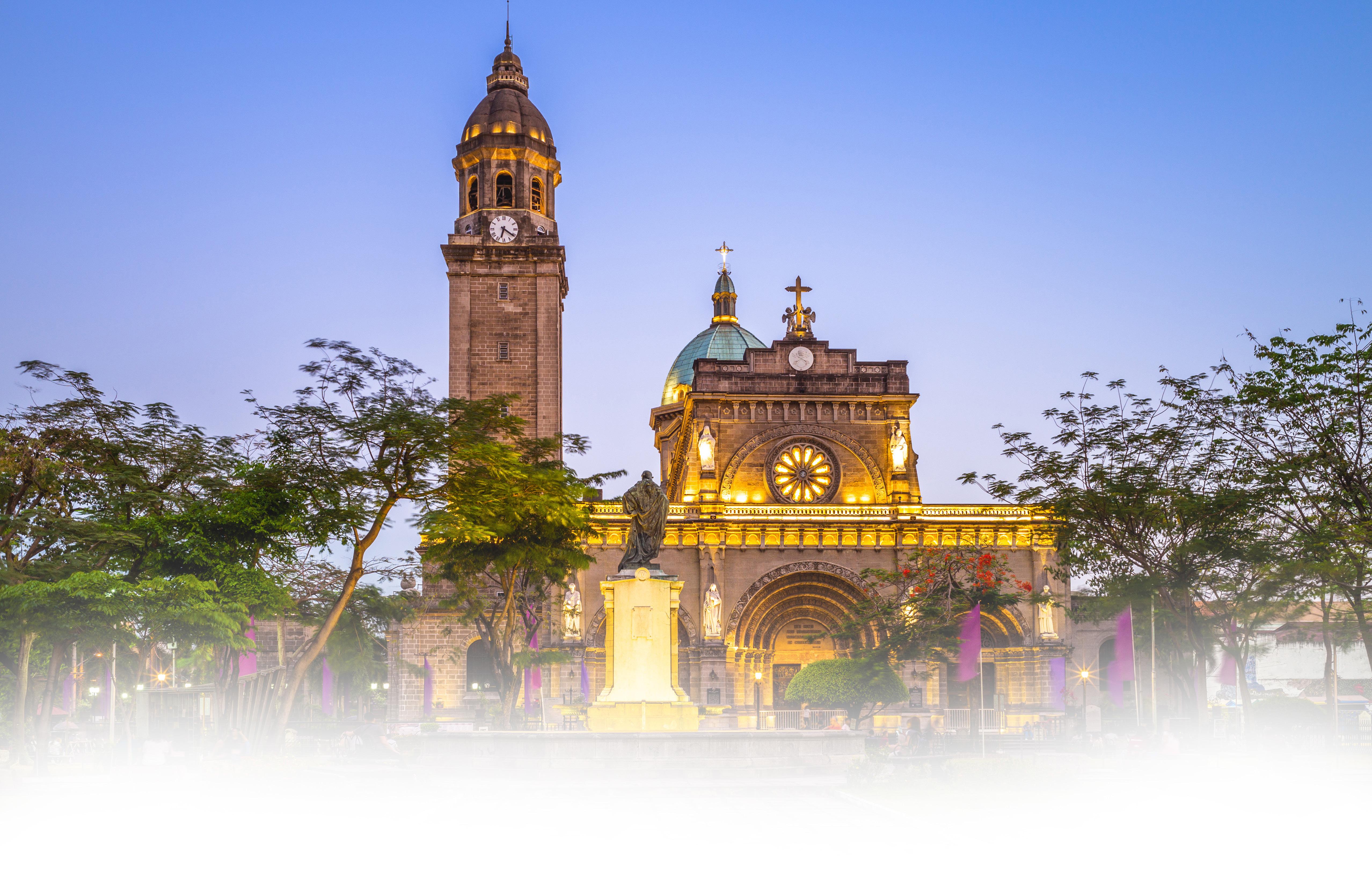
into shape. It’s shown by most of the country’s population belonging to the Christian faith, about 80-90%, as influenced and introduced through more than 300 years of Spanish rule.
Filipino ”
Christianity begins at home. Both parents will carefully make their common choice & decision on who’s the most deserving to stand as godparents during baptism. They will serve as second, faith-loving parents to the child throughout his/her whole life. Godparents can be one or as many as 5 or more. Huge responsibilities are placed upon them since they will serve as guides and guardians of the children throughout their life.
Several Christian traditions and practices play a very important part in Filipinos. Christmas is one of the most awaited and celebrated holidays. Filipinos start to observe the special day on what we call the “Ber months” (SeptemberOctober-November-December). As a matter of fact, I think we are the only country that starts celebrating it as early as September.
It is the time when every home gets decorated. The whole family putting their
decors together. The streets lit up with lanterns made up in a variety of ways, from wood to metal, covered with paper or Capiz shells, native in the country, which are whitish, the translucent shell is also used in making lamp shades and decorative articles.
Catholics will have daily evening or early morning masses that run from the 16th until the day itself on the 25th. This is one way of preparing for the birth of Jesus, whom we believe, had delivered us, and saved the world from our sins.
The Well Of PBC / Feb Issue 2023 18 THE DEPTH
I believe that the foundation and strength of every nation come from the most integral part of humanity…the family. This is where an individual’s core philosophies and basic moral and spiritual values come into shape.
“
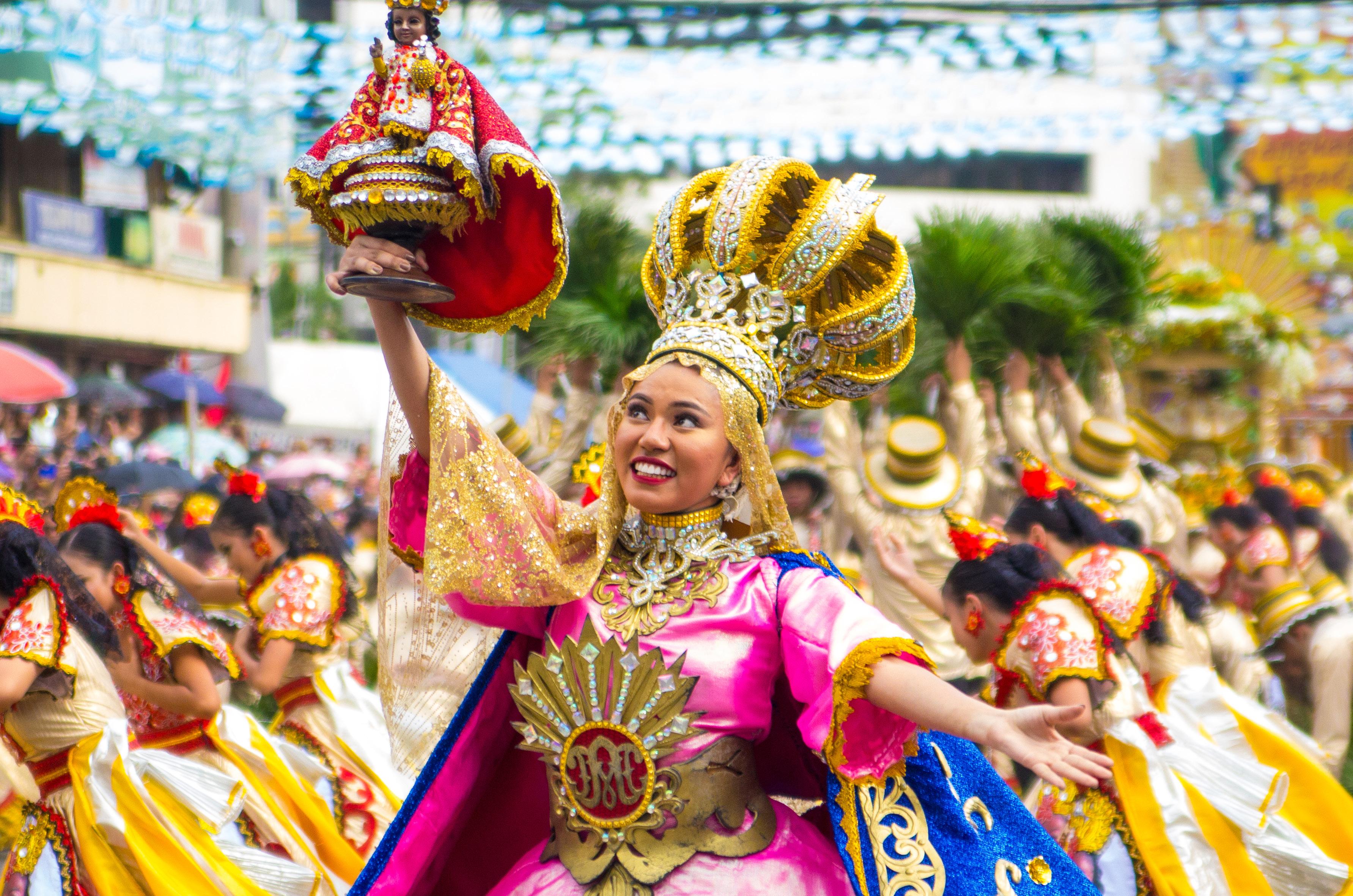
During Christmas itself, as most children around the world are excited about, is the opening of presents. Part of our tradition that’s unique is taking the children after mass to their Godparents, whose hands will be kissed to receive the spiritual blessing and at the same time, the gifts, most kids are anticipating, which is cash money.
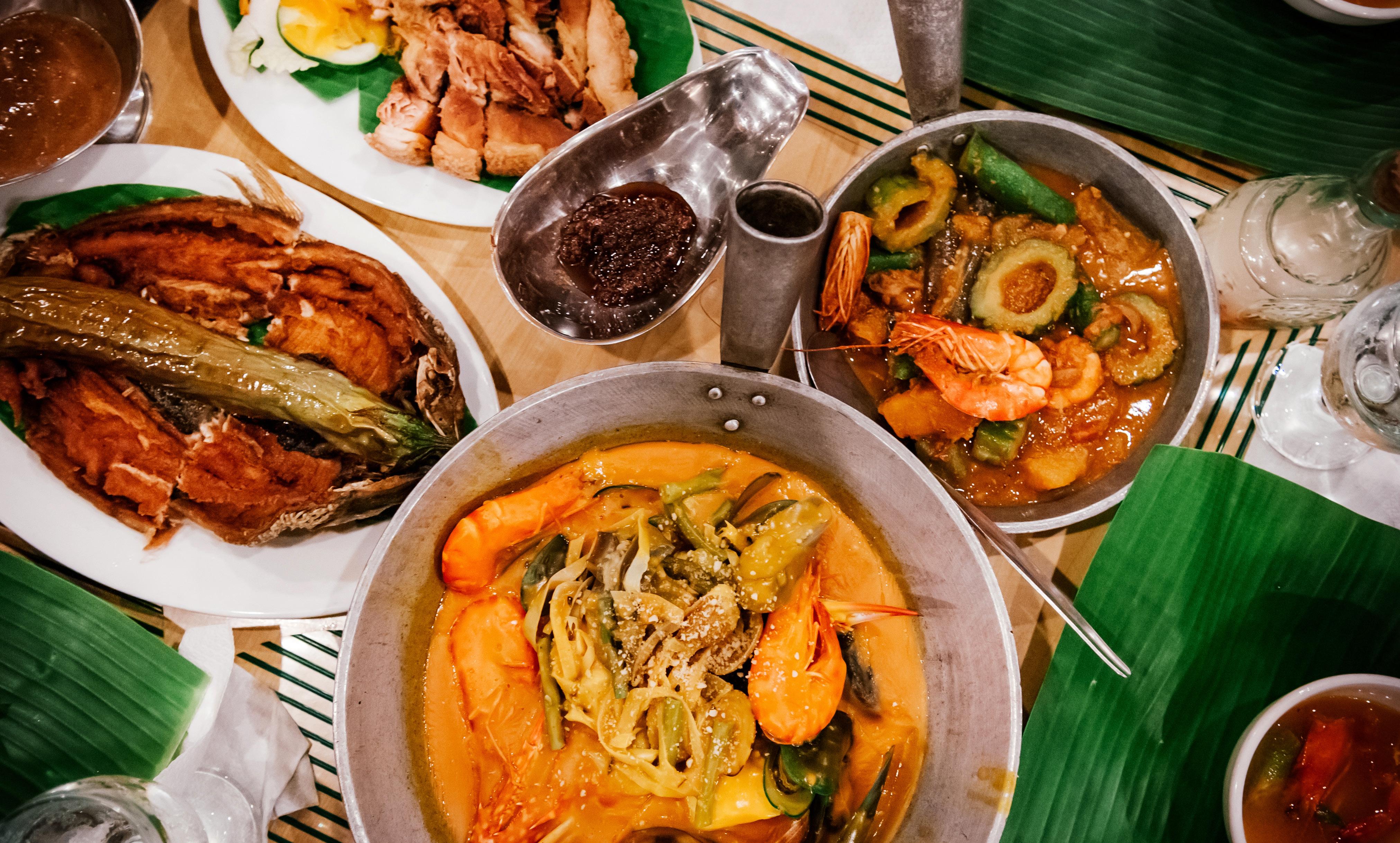
During Spanish rule, another social tradition that we acquired was the celebration of “Fiestas”, a Spanish word that means feasts. It is an event close to Thanksgiving in the U.S. All towns are usually named after saints with their birthdays being honored by preparing home-cooked foods, then inviting friends and families to join them usually for lunch or dinner. The hosts will offer guests food to take home before they leave, which they call “pabaon” (takeout).
One can never underestimate how Filipinos show their hospitality that others can never resist. Like an unexpected guest, whether a friend or a family, who knocks at the door and will get invited to join them especially if it’s time for a meal. When it’s too late at night for that person to go home, chances are he’ll be offered to stay to sleep over. Most families will even offer their main bedroom for them to sleep in.
Another kind gesture innate to us is saying “po” as a sign of respect, especially to someone older than you. Holding the door for someone behind you or giving up your seat or your place in line, in a train, bus, or room, to a woman, child, or elderly.
The effects of foreign occupation and colonization of our country brought about some of these rich traditions but at the same time, generated a sense of unity to pull people closer together to fight and eventually achieve freedom. In today’s world of hate, conflicts, and disunity, these are the same set of values that make every Filipino stand proud and connected to each other not only in the country but everywhere else in the world.
The Depth is a space for faithbased leaders and individuals to share their thoughts, guidance, encouragement, what they’re witnessing, and more. To contribute, send your article ideas to thewell@ bewellpbc.org with “The Depth” in the subject line.
The Well Of PBC / Feb Issue 2023 19
THE DEPTH
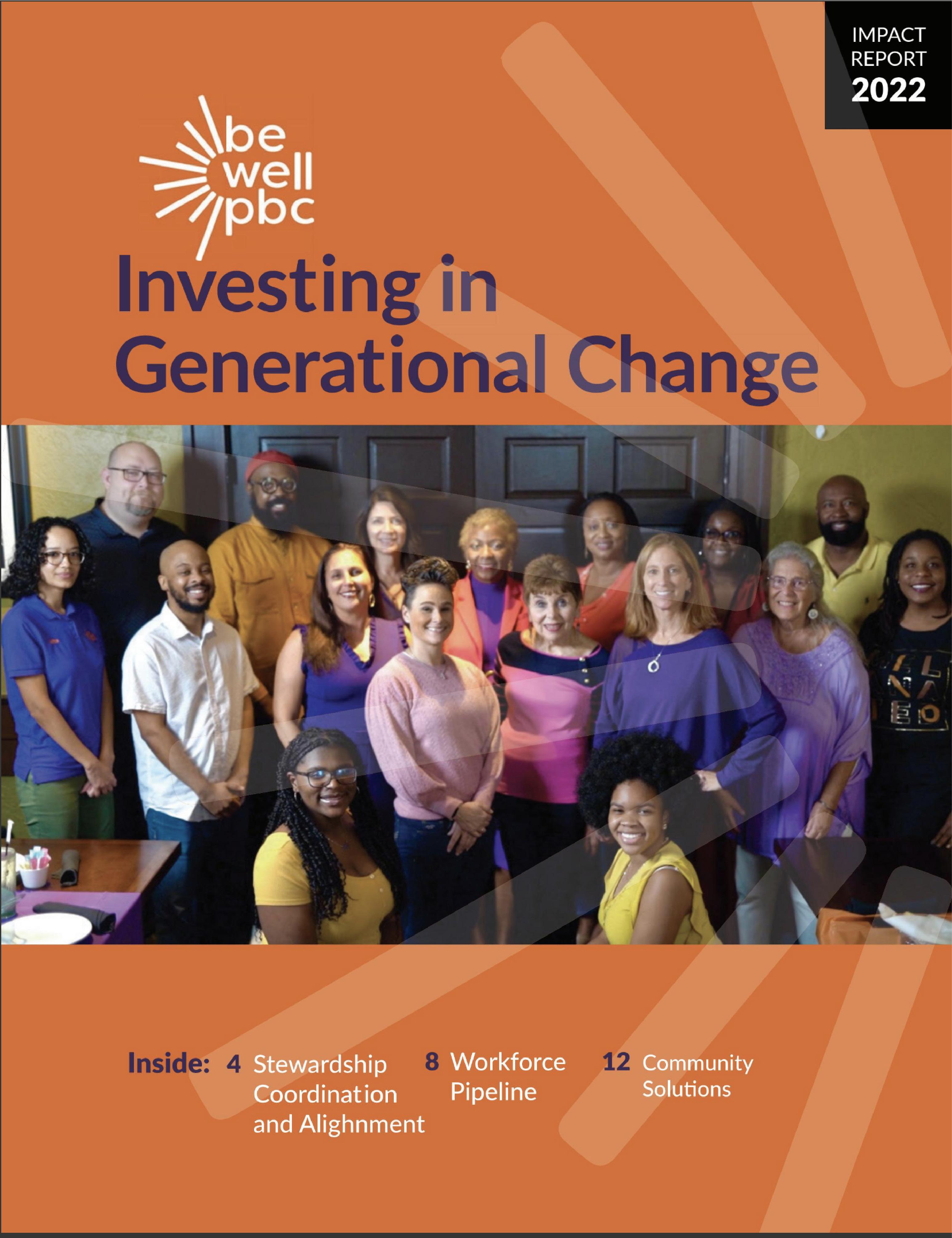
BEWELLPBC HIGHLIGHTS IMPACT IN 2022
The Well Of PBC / Feb Issue 2023 20 THE REAL
The Well Of PBC / Feb Issue 2023 20
Level Up! Mini-Grants
Making moves to promote the behavioral health and wellness of Palm Beach County youth. Mini-Grants For Youth, By Youth
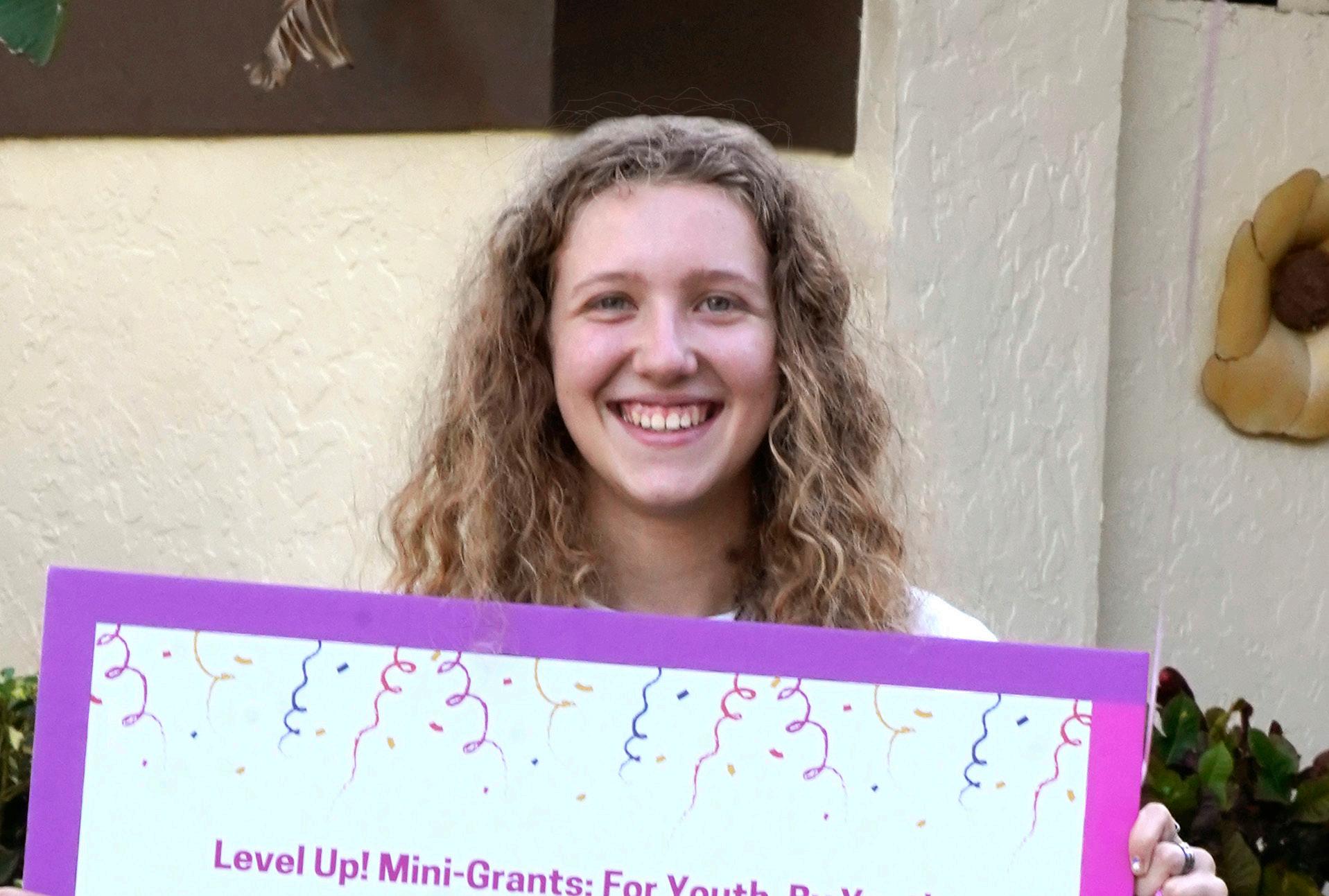
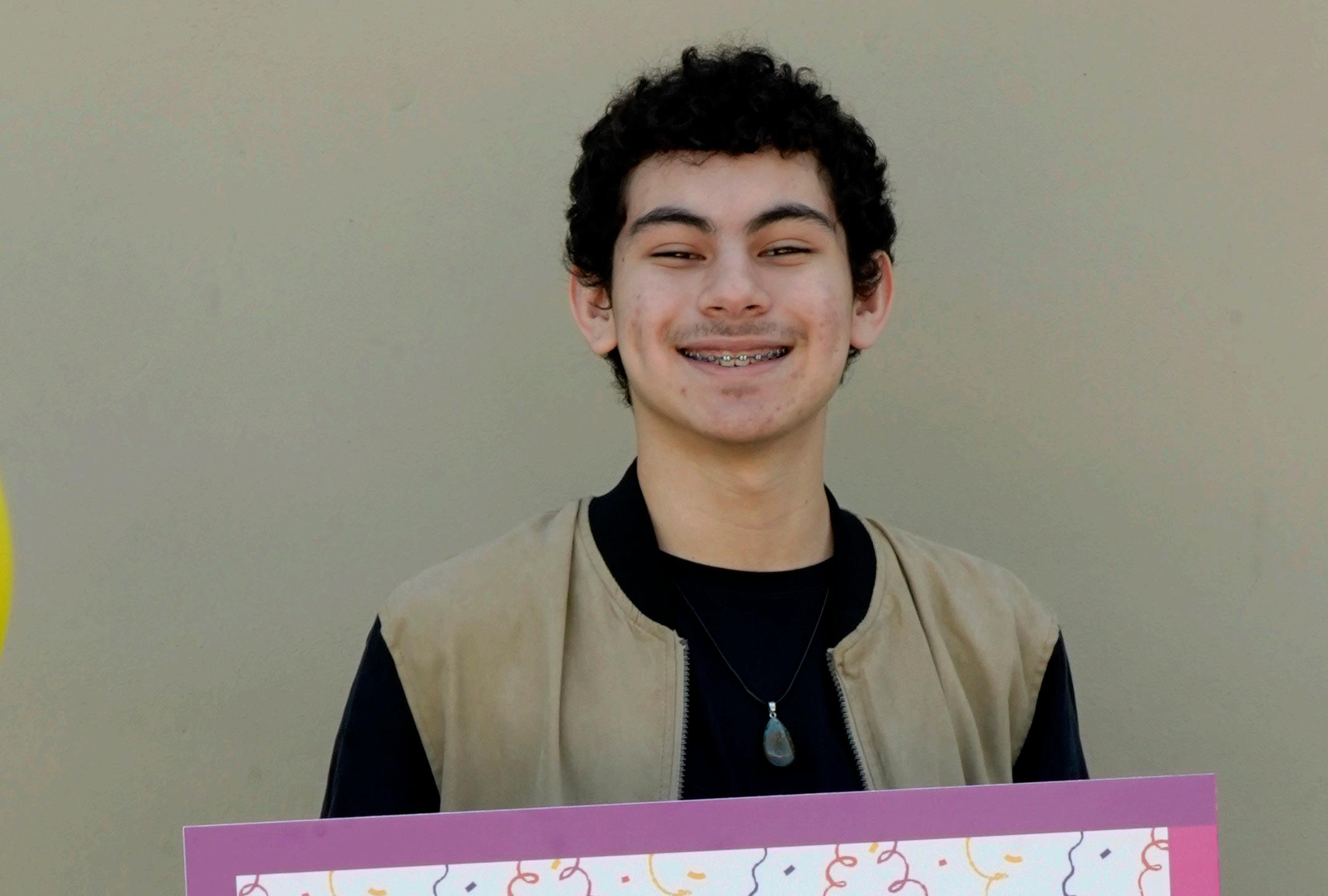
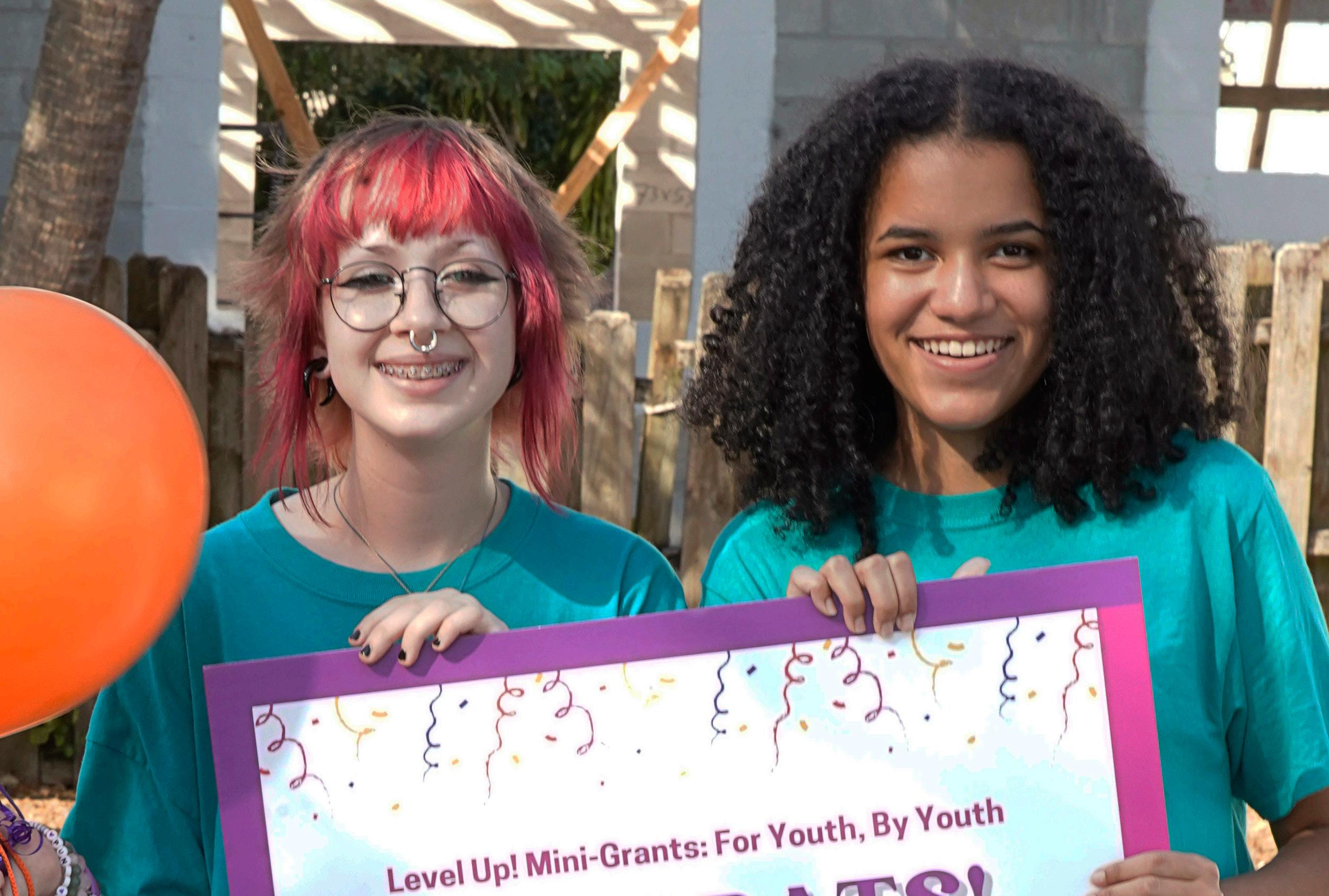
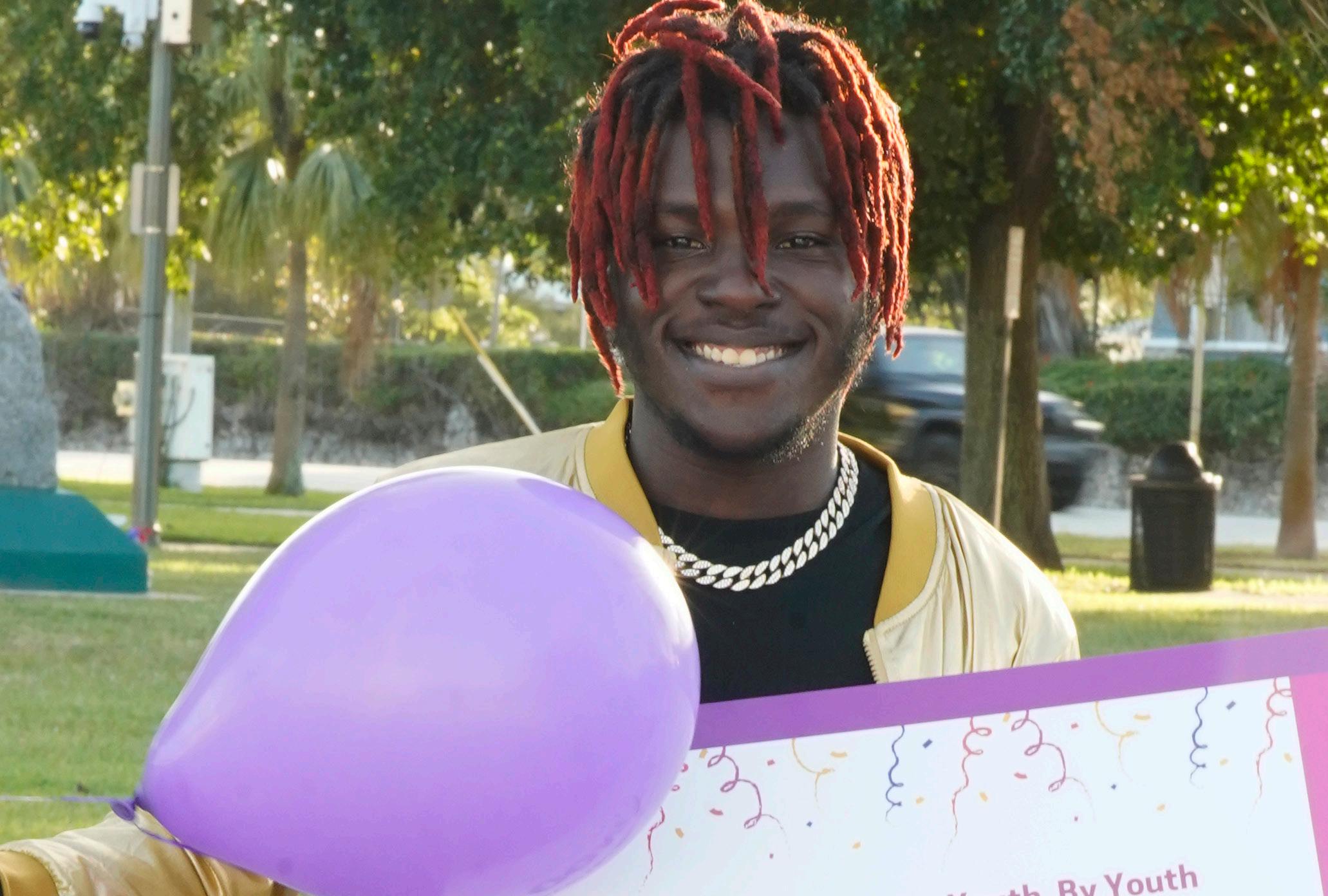
Congratulations to the six youth Mini-Grant awardees!

BeWellPBC would like to give a big thank you to our Superstar Panelists who reviewed all the amazing applications and aided in the selection process. Special thank you to the Merrell Family Foundation and The Frederick A. DeLuca Foundation for their generous donations that made the Youth mini-grants possible.
Innovative Idea:
This project will help youth create a song or dance expressing how they feel or what they experienced to help other youth speak up or know they are not alone.
Innovative Idea: Don’t MASQ Your Identity
A masquerade ball aimed to encourage teenagers throughout Palm Beach County to surround themselves with supportive friends and mentors. “Don’t MASQ Your Identity’’ is designed to invite youth, adults, and anyone else interested in supporting our youth to participate in a ball based around the idea of not masking your true self. We invite everyone to dress medieval and wear masks and outfits that represent the TRUE you!
Innovative Idea: Behavioral Health Career Bilingual Informational Booklet
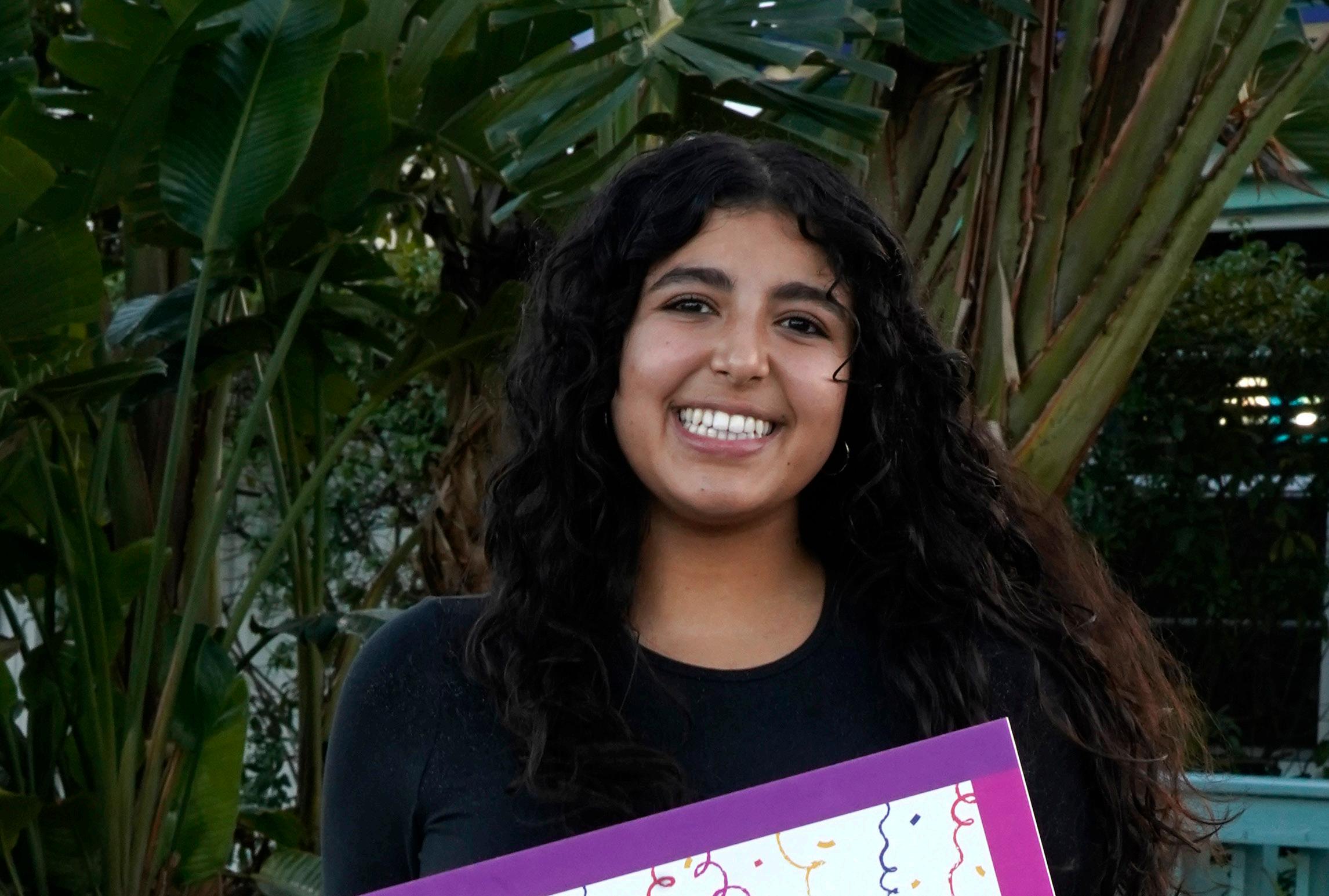
The booklet will highlight career education programs in Palm Beach County schools, such as the new Behavioral Health Technician curriculum (in Inlet Grove, Lake Worth, and West Boca high schools), and provide information on career pathways leading to professional degrees and industry certifications.
Innovative Idea:
The Palm Beach Pen Pal Project will consist of foster care youth in the community being carefully paired with a high school student. The particular high school student will keep in contact with the youth every month through letters and care packages. Each pair will hopefully build a connection and enable the students to act as mentors, friends, or just someone they can confide in and trust.
Innovative Idea:
Our purpose is to teach underprivileged teens around the Delray community the practice of Reiki to build confidence and comfort in their own energy. “We are looking to invite participants from local youth services organizations.”
Innovative Idea: Family Mindfulness in Nature
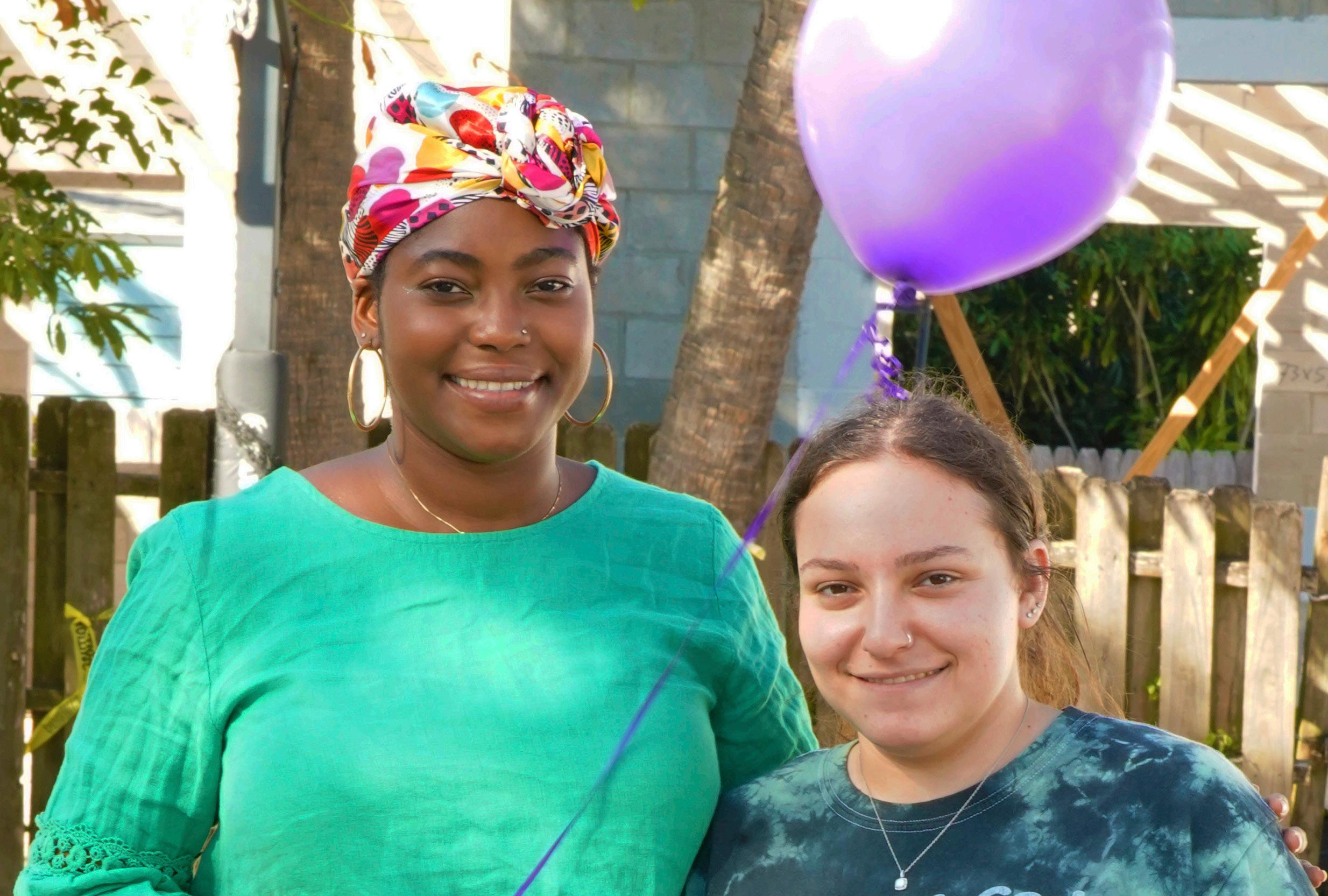
This project will allow students and families from underserved communities to visit the Morikami Museum to engage in a nature walk, practice holistic mindfulness in nature, and visit a local cultural center that they otherwise would not be able to see at zero cost. The goal is to teach both parents and their students about the importance of mindfulness and how to adapt this practice in their everyday life.
The Well Of PBC / Feb Issue 2023 21 BEWELLPBC NEWS
Project Leader: Caleb Ward
LilCali MusicMinds
Project Leader: Bug Greenberg
Project Leader: Miguel A. Benavente
Project Leader: Sofia Scher
Palm Beach Pen Pals
Project Leader: Maddy Kristol
Reiki Circle
Project Leader: Maya Lopez
What mental health priority will you be addressing in the coming year?
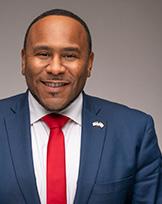
First, we must address the mental health crisis among youth by funding existing organizations who have successfully found rehabilitation methods. Next, we need to broadly increase access to equitable mental health care by identifying communities, zip codes who lack access to services. Finally, we must confront the unacceptable inequities in mental health among historically marginalized communities as a core function of everything we do.
One of my top priorities includes increasing awareness and shining a light on the need for increased and equitable access to services for mental health and substance use disorders. For far too long, there has been a stigma associated with seeking help for these issues. During our lives, most of us or a loved one will experience the need for help to address mental health or substance use. I want to make sure our residents know where to find help and eliminate any barriers to receiving the help they need so they and their families can live their best possible lives.
REPRESENTATIVE JERVONTE EDMONDS @TAEEDMONDS

CORNER TALK
COUNCILMAN @LAWSONSOLUTION
“
PALM BEACH COUNTY MAYOR GREGG WEISS @COUNTYCOMMISSIONERGREGGWEISS
”
”
“
The Mental Health priority that I will be attempting to address in the coming year is continuing to normalize the conversation surrounding the stigmas associated with mental health and to establish a Mental Health Advisory Board in the City of Riviera Beach. The purpose of the board is to advocate for members of the community living with mental illness and/or substance use disorders and their families. I cannot do this alone. I need your help in spreading the word through awareness, support, and advocacy activities so that we can truly have an impact on Mental Wellness. Let’s elevate the conversation around the stigmas. Be Well MY FRIENDS, together stronger.
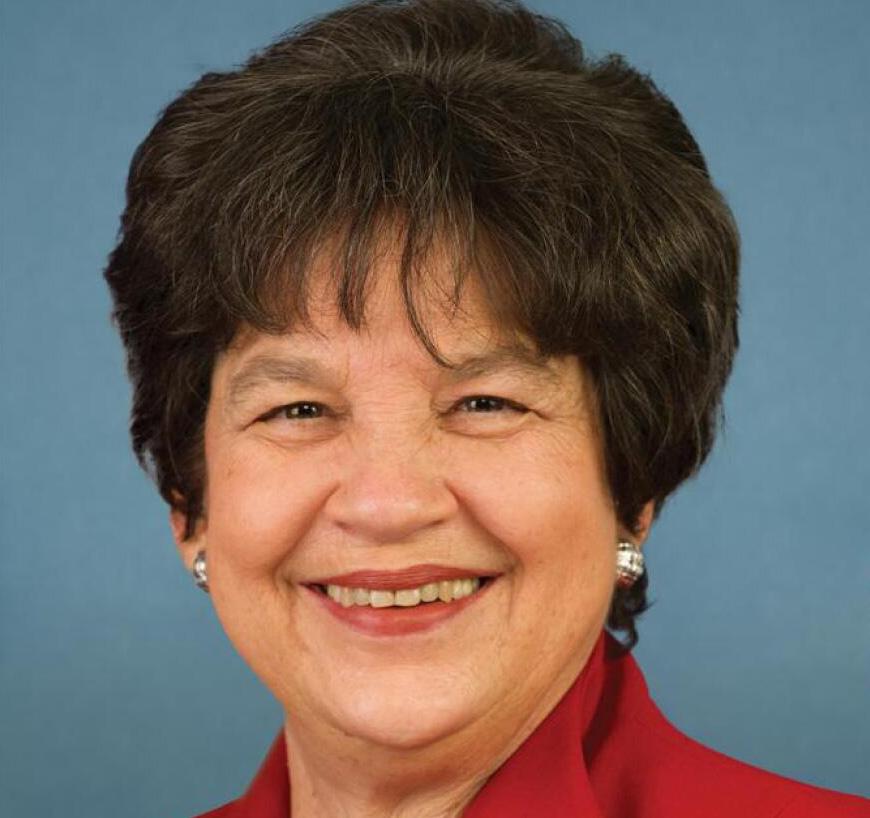
Nearly 60 million adults are living with a mental health condition. That’s millions of Americans who would benefit from additional mental health resources, care, and assistance. Last Congress, we sent nearly $245 million in mental health assistance to communities across the country—including right here in Palm Beach County—through the Bipartisan Safer Communities Act. As a member of the Labor, Health, and Human Services Appropriations Subcommittee, I will continue to advocate for boosting funding for critical programs and services that are designed to help Americans who need access to mental health care.
To have your voice heard from your corner of the neighborhood, send an email to thewell@bewellpbc.org with “Corner Talk and north, central, south, east or west” in the subject line.
“ ”
CORNER TALK
REPRESENTATIVE LOIS FRANKEL @REPLOISFRANKEL
COUNCILMAN DOUGLAS LAWSON @LAWSONSOLUTION
“ ”
Who are the Black Sororities and Fraternities and what do they do to meet the needs of our communities?
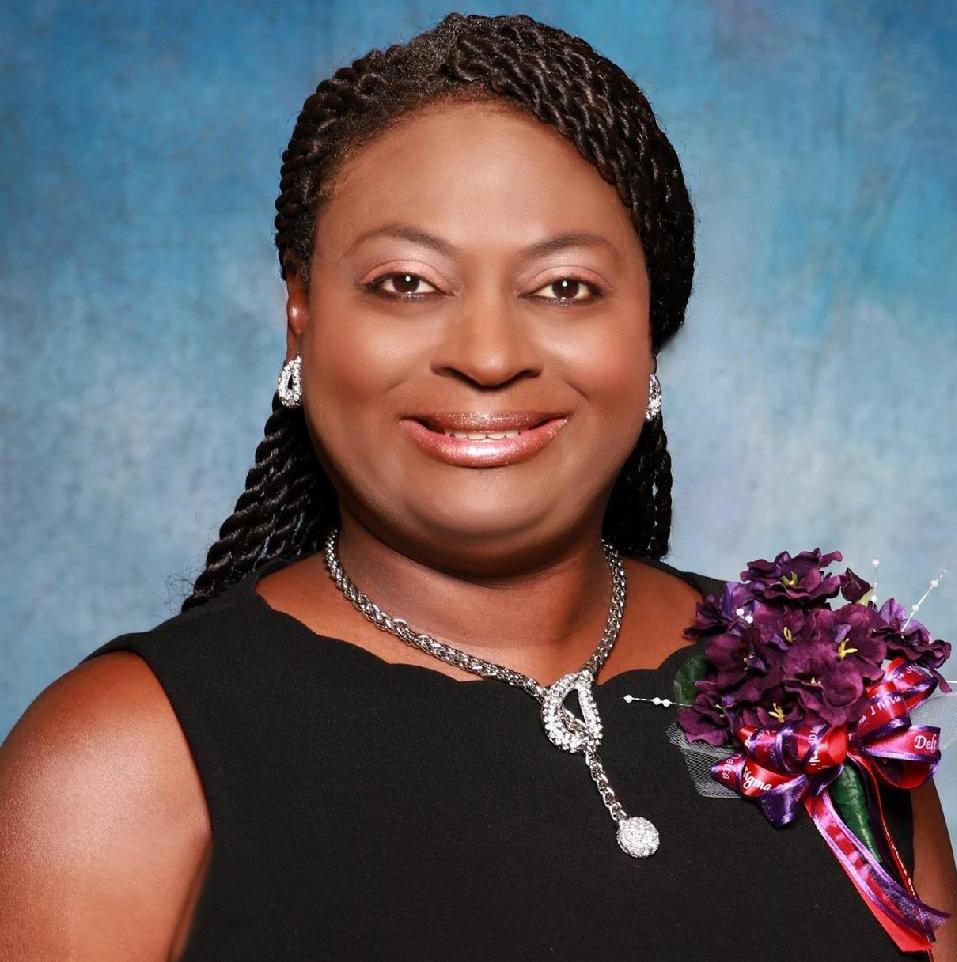 By: Rhonda Rogers, Immediate
The Divine 9 is a name used to refer to the 9 Black Greek Letter Organizations that make up the National Pan-Hellenic Council (N.P.H.C.) founded on May 10, 1930, on the campus of Howard University.
This council consists of 5 fraternity organizations and 4 sorority organizations being:
• Alpha Phi Alpha Fraternity, Incorporated. Founded on December 4, 1906, on the campus of Cornell University.
• Alpha Kappa Alpha Sorority, Incorporated. Founded on January 15, 1908, on the campus of Howard University.
• Kappa Alpha Psi Fraternity, Incorporated. Founded on January 5, 1911, on the campus of Indiana University.
• Omega Psi Phi Fraternity, Incorporated. Founded on November 17, 1911, on the campus of Howard University.
• Delta Sigma Theta Sorority, Incorporated. Founded on January 13, 1913, on the campus of Howard University.

• Phi Beta Sigma Fraternity, Incorporated. Founded on January
Instagram @spbcac_dst | www.sopalmbeachdst.com
9, 1914, on the campus of Howard University.
• Zeta Phi Beta Sorority, Incorporated. Founded on January 16, 1920, on the campus of Howard University.
• Sigma Gamma Rho Sorority, Incorporated. Founded on November 12, 1922, on the campus of Butler University.
• Iota Phi Theta Fraternity, Incorporated. Founded on September 19, 1963, on the campus of Morgan State University.
The history of Black Greek Letter Organizations (BGLOs), like the one I’m a part of (Delta Sigma Theta Sorority Incorporated), dates to the early 1900’s when African American students were excluded from Greek organizations at predominately white institutions. These organizations under this council work together and individually to ensure that change and progress is made within the Black community through social action, advocacy, and community programs. Black Greek fraternities and sororities were founded to promote community bonding, increase their professional opportunities after college, and to provide services to the Black community.
While White Greek organization member activity ends at the conclusion of their college career (graduation), the goal of Black Greek Letter Organizations, BGLOs, is to inspire people to continue the work after college. BGLOs provide opportunities for those who have already graduated college to join post-grad. As educated members of the Black community, Black Greeks can expand over multiple chapters across the nation and educate, inform, and serve their community beyond their college campuses.
The Well Of PBC / Feb Issue 2023 24 THE RESERVOIR
Past President of the South Palm Beach County Alumnae Chapter of Delta Sigma Theta Sorority, Inc.|
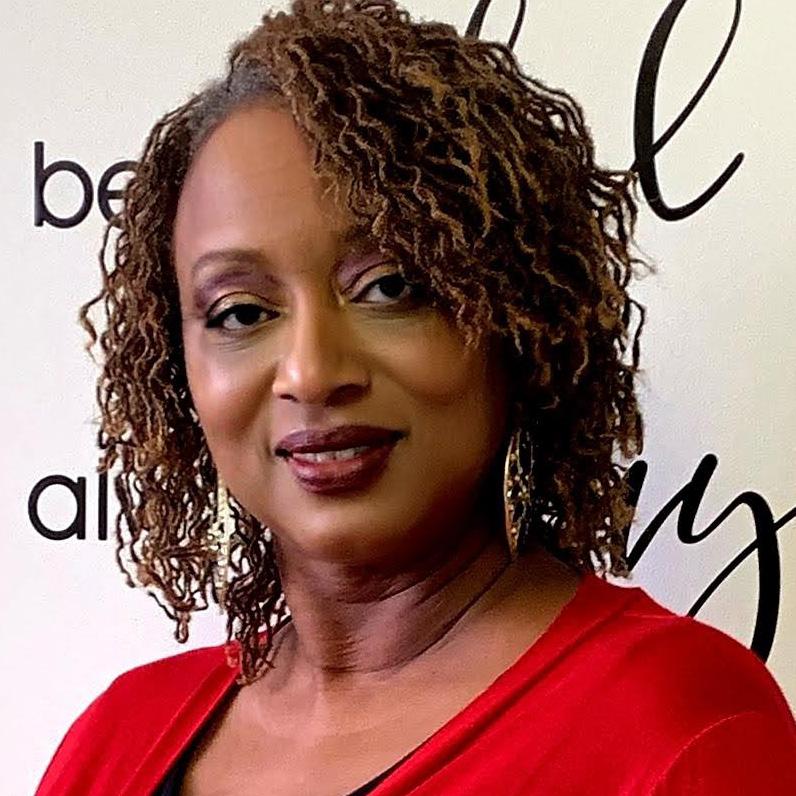
Rhonda Rogers
I am a proud member of the South Palm Beach County Alumnae Chapter of Delta Sigma Theta Sorority. I am the chapter’s immediate past chapter president and I have served as the National Pan-Hellenic Council of Palm Beach County’s chapter president.
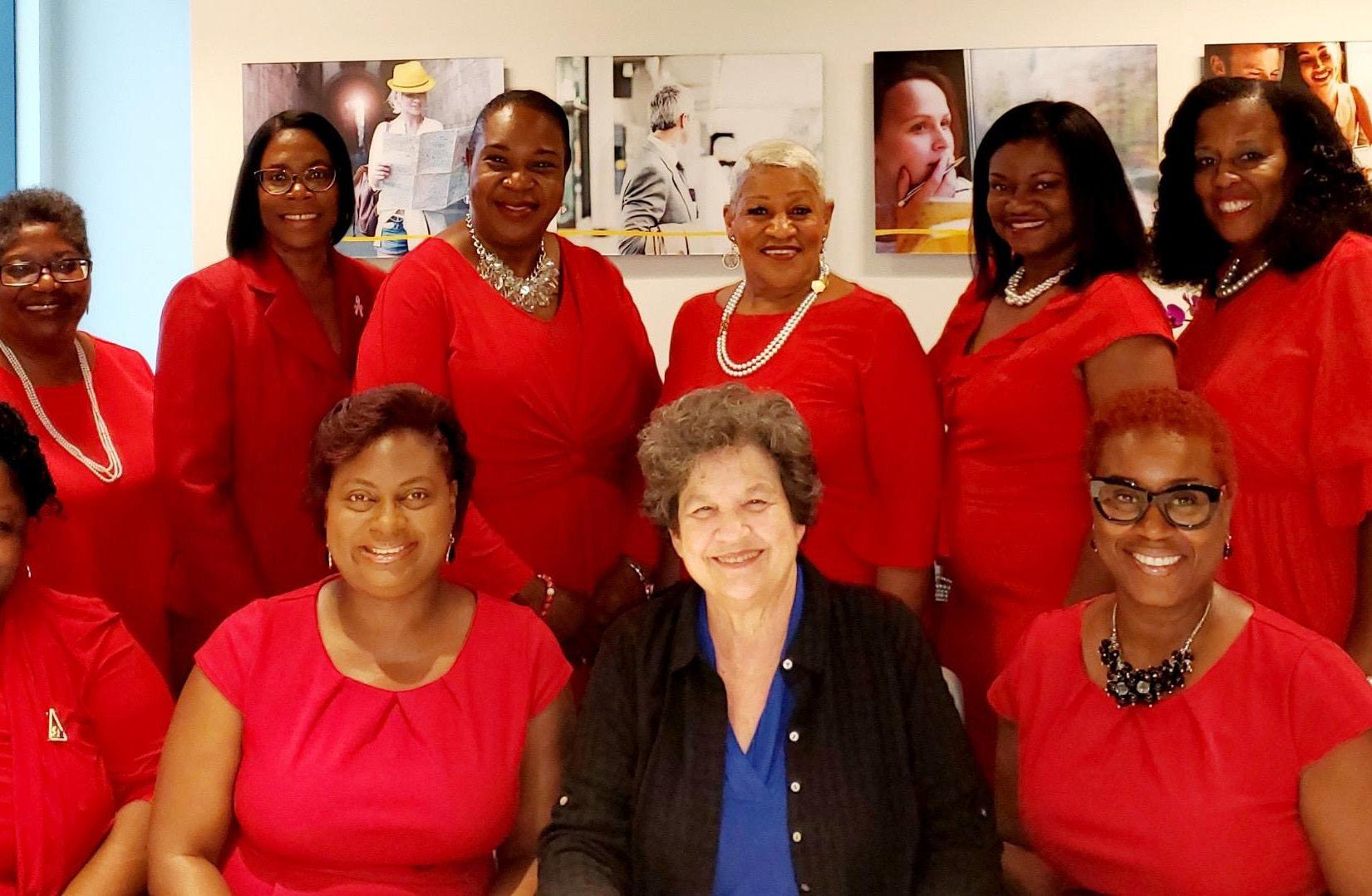
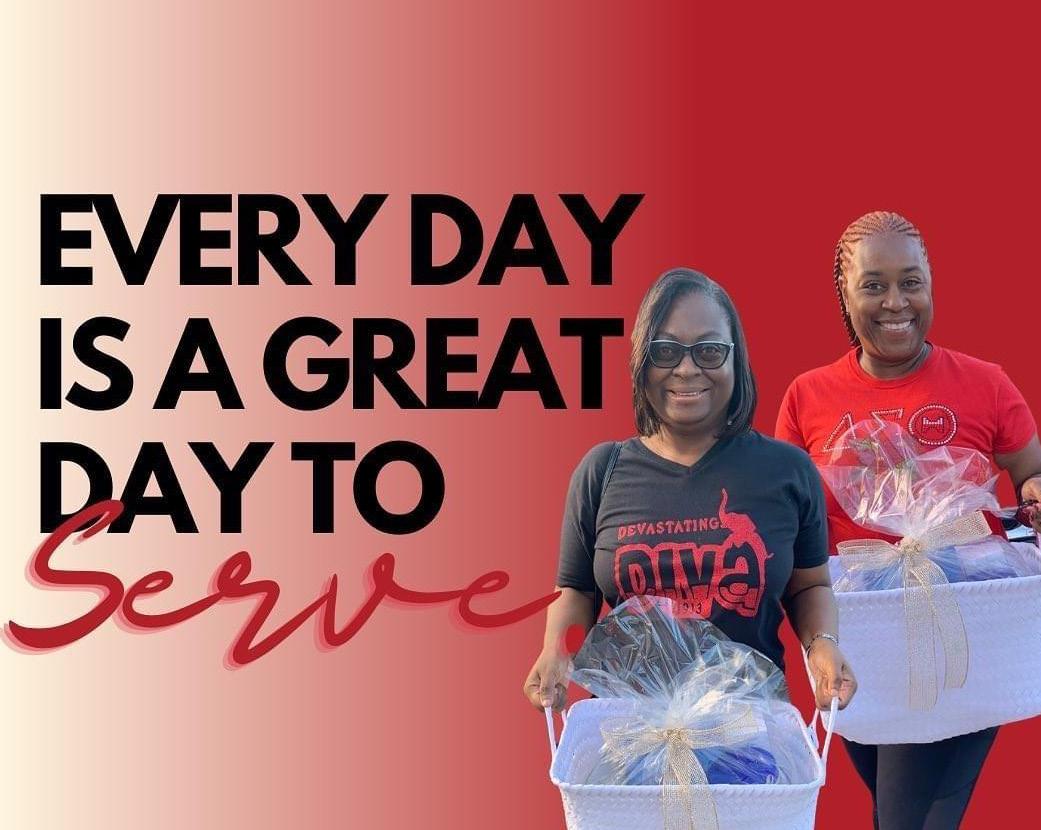
Our organizations have hosted numerous programs and events that address mental health and awareness. We have partnered
with Healthier Delray Beach with their annual Get Your Green On program and have had the director of the organization, Ms. Kenya Madison, who is a member of our chapter and Delta Sigma Theta Sorority, Inc. to serve on panels as a local expert. We have hosted these events in person and via zoom. Our organization has been involved in civic engagement since its inception. We have adopted precincts and work closely with the supervisor of election to ensure that the black
community gets out the vote. We have conducted voter’s registrations for high school students and adults. We have hosted candidates forums and actively participated in the Souls to the Polls with other community organizations and our local churches.
Divine 9 meets our community needs through the vast number of programs and events. When COVID-19 hit our black communities very hard, we all jumped into action to assist with finding testing locations and ensuring we got the information out about the virus and how to get ourselves and our family safe. Our chapter provided COVID-19 kits with supplies and literature.
Through our programs, we offer mentoring to young men and women. It’s important for us to provide quality mentoring services to our future leaders. The only way we are going to ensure that our legacy continues is by grooming our future members of our black sororities and fraternities. We must keep the DREAM ALIVE of the founders of our Divine 9 organizations who all envisioned a better and stronger black community.
The Reservoir is the cultural space for contributors to highlight customs, celebrations, holidays, rituals, recipes, and more. To contribute, send your article ideas to thewell@bewellpbc.org with “The Reservoir” in the subject line.
The Well Of PBC / Feb Issue 2023 25 THE RESERVOIR
” “
While White Greek organization member activity ends at the conclusion of their college career (graduation), the goal of Black Greek Letter Organizations, BGLOs, is to inspire people to continue the work after college.
National Memorial for Peace and Justice
National Memorial for Peace and Justice
By: Barbara Cheives | pbcremembrance.org
In June of 1923, Henry Simmons was lynched on the island of Palm Beach. We know that Officer J.N. Smith stopped “three Negroes in regard to the butchering of a turtle” and the possible possession of turtle meat and eggs. We know that a struggle ensued, and Officer Smith was shot with his own firearm. Sadly, he died three days later. Also sadly, when a mob of white men sought to avenge his death, they roused Mr. Simmons from his West Palm Beach rooming house in the middle of the night, then he was taken to Palm Beach and lynched. No connection was ever established between Henry Simmons and the policeman’s death, and no one was ever charged in Henry Simmons’ death.
In October of 1926, Samuel Nelson was lynched in Delray Beach. Mr. Nelson was supposedly charged with assaulting a white woman in Miami. He was arrested and jailed in Delray. An Associated Press report says that, “The following morning the steel door of the jail was found battered open and the Negro gone.” The body of Mr. Nelson was found on the bank of a canal near Military Trail, four miles west of Delray.
The lynching and murders of African Americans in America are a very ugly part of our history. More than 4,000 African American men, women, and children were hanged, burned alive, shot, drowned, and beaten to death by white mobs between 1877 and 1950. Brian Stevenson built the National Memorial for Peace and Justice on the grounds of his Equal Justice Initiative (EJI) in Montgomery, Alabama. This national monument to lynching sits on a six-acre site and is a sacred space for truth-telling and reflection about racial terror in America and its legacy.
I visited this museum in 2018 and found it to be one of the most moving experiences of my life. Among the sculptures and art designed to contextualize racial terror, 800 six-foot monuments are hanging to symbolize the victims. Each steel structure is engraved with the names of lynching victims and the county in which they were lynched. I found myself nearly paralyzed and in tears when reading the multiple Florida counties and then I came to Palm Beach County.
Barbara Cheives

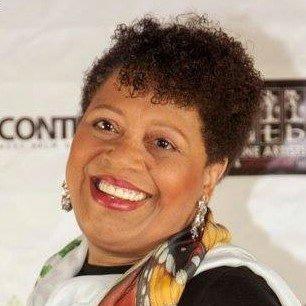
Barbara Cheives serves as the Co-Vice Chair of the Palm Beach County Community Remembrance Project Coalition and the Co-Chair of the Education and Community Engagement Committee. You can visit the site at pbcremembrance.org to follow the progress, volunteer, or to donate to the project.
The Well Of PBC / Feb Issue 2023 26
BEYOND THE COUCH
Because of that trip, I became involved with the Palm Beach County Community Remembrance Project. On the site in Montgomery are 800 stone replicas of the steel monuments. They plan to have each of the counties that are represented claim the replicas to be prominently displayed. Our County Administrator assembled a coalition of community members to lead that charge and we have been working for the past two years to bring our pillar home.
Claiming the pillars is a multi-step project. They ask that we collect soil from the site of the lynching. We have collected the soil of Mr. Samuels in western Delray Beach. His soil is contained in large jars bearing
his name. Several of the jars will remain in our county and one is going to be housed in the National Monument. Several of us are making the pilgrimage to Montgomery in February to deliver the soil. We are in the process of arranging for the collection of soil for Mr. Simmons. It is important to EJI that any county that is applying to receive their monument have community buy-in and support.
In December of 2022, we held an Essay Contest for 9th to 12th-grade students in our county. The students submitted essays about racial injustice in the United States. EJI is in the process of reading and judging the essays and will award scholarships to the students for the winning essays.
Additionally, we are planning a series of cultural and educational events ranging from arts to dance to a memorial quilt. My mother always told me that if we don’t know our history, we are doomed to repeat it. In 2020 when I participated in a march for Ahmaud Arbery, a 25-year-old Black man murdered during a racially motivated hate crime while jogging in Georgia, I found it reminiscent of Mr. Simmons and Mr. Nelson. He was erroneously assumed to be a burglar. It is my prayer that our work with this multicultural coalition will help to teach our community a lesson so that incidents of racial terror are not repeated.

Beyond The Couch highlights non-traditional mental health outlets and resources in Palm Beach County. To contribute, send your article ideas to thewell@bewellpbc. org with “Beyond the Couch” in the subject line.

The Well Of PBC / Feb Issue 2023 27
BEYOND THE COUCH
“ ”
(The Palm Beach County Community Remembrance Project Coalition) are planning a series of cultural and educational events ranging from arts to dance to a memorial quilt. My mother always told me if we don’t know our history, we are doomed to repeat it.
Q A
Get your questions answered here
The Source is a place for Palm Beach County residents and experts to connect and exchange information

How can you ensure short-term happiness turns into long-term happiness? D.K.
I tend to look at happiness and joy as two separate long-term goals. Since often happiness can be waived by financial hardships, illness, injury, and other aspects of life, I do not aim for long-term happiness but joy. Establish routines or dedicated time for yourself in healthy habits such as exercising, sunlight, quality nutrition, resting, meditation, and quality relationships. There will be moments of unhappiness but with joy you know there is hope that happiness will return. -
Christian E. Sanon
The first thing to consider is living in a mindset that has a solid and fluid
foundation to avoid ups and downs that are far out of range of comfort. Major and minor life events are constant, good and bad and this is what builds our own tools as people. By creating a sound mind, you can better prepare yourself to handle difficult life events. The expectation is usually what creates disappointment, which leads to unhappiness. The greatest tool available for insurance of happiness is self-love and having some kind of faith. Exercise, good sleep, hydration, laughing, and nutrition play a valuable role, as well as eliminating unnecessary stress. Have integrity and be kind. -Wendy
Seale
How do you turn your brain off and stop it from constantly overthinking?
J.G.
The best way to shut your brain off would be to practice moments of silence in small increments daily. Try to sit still without your phone, TV, people, and other influences around. You may start with 1 minute a day and increase it each week. This is how we desensitize ourselves from sensitivity to sensory input that constantly surrounds us. Also, pay close attention to what causes your mind to race and overthink. One method I use is writing down every thought that comes to my head immediately during my silent time. It allows me to empty my brain and have stillness for a moment, but it is a constant work in progress.
Remember to always be intentional too! -Christian
E. Sanon
The Well Of PBC / Feb Issue 2023 28
A THE SOURCE
Q A
The Well Of PBC / Feb Issue 2023 28
I have found that permitting myself to turn it off has helped. The creative mind never stops creating and overthinking, always on sensory overload. We feel like we have to entertain this fountain of thoughts when all it does is jam up our brains like 1000 cars in one lane. When you just let go, truly, and focus on one thing at a time, you will see better results in production. The internet is a danger zone if you are seeking to turn your brain off. Busy physical work is fantastic for turning the brain off. I love the lesson in The Karate Kid when Daniel had to paint the endless fence to learn discipline and focus. Also, “There’s only one way to eat an elephant: a bite at a time.”
Tutu
-Wendy Seale
-Desmond
I read trauma can be transmitted through genes. As a black male, I wonder if generational trauma is in my DNA. Do you think this is possible? A.J.
Honestly, I have not done enough research to say that it isn’t nor is possible. Research is still inconsistent
stating that intergenerational trauma does not damage the gene (genetic change) but alters how the gene functions (epigenetic change). I believe that our environment, influences, nutrition, and habits amplify generational trauma.
-Christian E. Sanon
I believe in inherited memory and mannerisms, which would align with trauma response. Although the environmental behavior of a traumatized parent can impact a child, as far as the mind and parts of the brain that produce chemistry to level out behavior could be damaged from trauma and passed on perhaps. Trauma changes brain chemistry and causes all kinds of damage so it would be no wonder this could be passed down. My belief stems from how a child can play classical piano at age 3, to find out a grandparent played piano, and so on. Addressing the trauma and healing is a really good step to wellness which is a brave and beautiful thing to do for oneself.
-Wendy Seale
Christian E. Sanon
Christian E. Sanon II is the co-founder of Look Up Therapy, LLC and president of Beyond the Valley foundation. His strong faith in God led him to feel inspired to use behavior analysis and passion to assist others to reach their full potential within his community.
Christian E. Sanon | @lookuptherapy | www.lookuptherapy.com
Wendy Seale
Wendy Seale is a Florida native with a rugged map of travel and life experience. She is marveled by this world and all of its little wonders. Her artistic voice speaks photography, writing and art. @wendysealephotography
The Source asks YOUR questions to a lived and learned expert. Lived experts have experienced behavioral health challenges and/or are family members, caregivers, faith-based leaders, neighborhood champions, and influencers. Learned experts are behavioral health professionals, nonprofit agencies, local government, educational institutions, system leaders, and funders. Email thewell@ bewellpbc.org with “The Source” in the subject line to ask a question or contribute as an expert.
The information presented is for the purpose of educating people. Nothing contained in this publication should be construed nor is intended to be used for medical diagnosis or treatment. It should not be used in place of the advice of your physician or other qualified healthcare provider. Should you have any health care related questions, please call or see your physician or other qualified healthcare provider promptly. You should never disregard medical advice or delay in seeking it because of something you have read in this publication.
The Well Of PBC / Feb Issue 2023 29
THE SOURCE A Q A The Well Of PBC / Feb Issue 2023 29
Rita Thrasher, age 91, retired after teaching reading in Ohio and Broward County for forty years. Her volunteer work in Broward County included organizing local, state and national alternative schools and completing a sabbatical study in New York. With local support she co-founded Boca Raton’s Promise:The Alliance for Youth, (501c3) in1998 and later founded its associate, Palm Beach County Action Alliance for Mental Health in 2011, leading both as a volunteer.
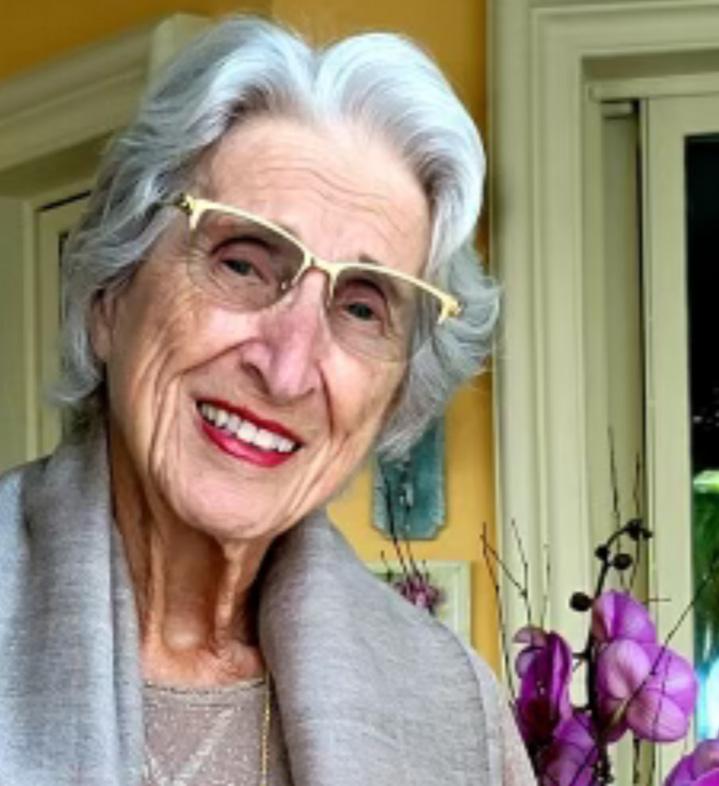
“Rita rose from the tragedy of losing two daughters and became an action leader,” said County Commissioner Maria Sachs, when presenting Rita with a County Proclamation on March 8, when introducing her as a retired teacher who became a champion for mental health. “She helped to introduce Mental Health First Aid training and most recently secured grants to expand the We Dine Together Club at Boca Community High School and re-start the after school
Rita Thrasher President & CEO – Boca Raton’s Promise
On June 7, Rita was described as “a gem” for volunteer work with public schools when presented with a Lifetime Advocacy Award by Keith Oswald, Equity and Wellness Director. Rita describes educators as her close friends and supporters in helping her set realistic goals for her work in Palm Beach County.
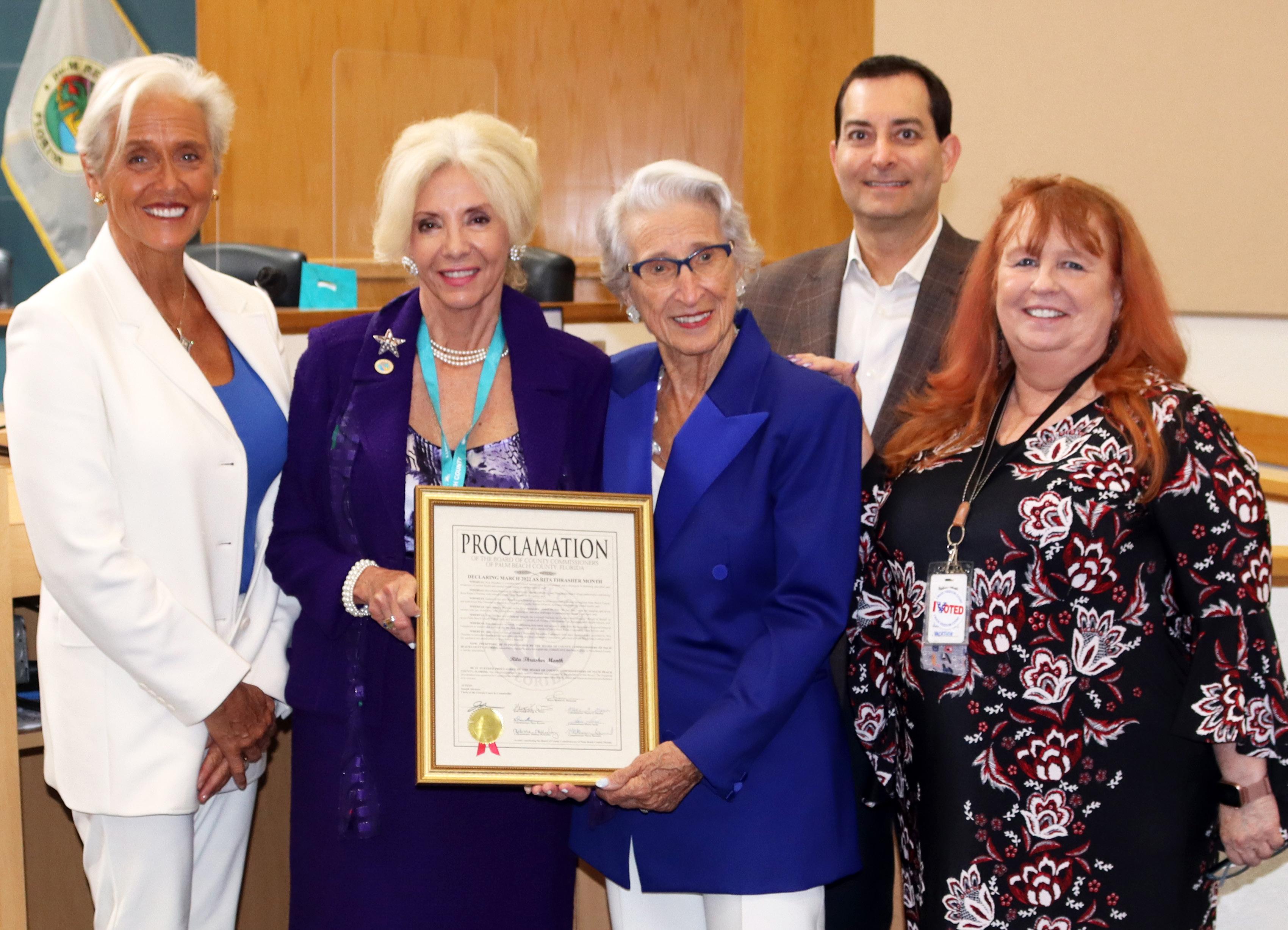
“No one says ‘no’ to Rita,” said Robert Weinroth. “She is a force to be reckoned with.” She was named Advocate of the Year in 2015 by the Palm Beach School Counselor Association. The Faulk Center for Counseling honored her with a Community Impact Award in 2017. In 2018, she received a star on Boca Raton Historical Society’s Walk of Recognition on Royal Palm Place.
Rita acknowledges help and opportunities provided by the Center for Group Counseling
when life presented challenges and she was offered an internship to chair a major event when Boca Raton became a Community of Promise in 1999. “Some life challenges have been managed with support from daughter, Marla, who financed group dinner meetings and provided caretaking after two of my colon cancer surgeries. I’m alive and healthy today because Marla guided me.
Additional gratitude goes to Directors and Advisors, and Gerda Klein, Ed Frontera, and Maria Kovachev for adjustments required after the loss of our spacious office when the building was sold in 2000. We operate today with continued support from the Boca Raton Regional Hospital Foundation, The City of Boca Raton, and the Schmidt Family Foundation.
Rita has been provided a new challenge and opportunity since moving to West Palm Beach in 2022 to be near her daughter. She will continue working and writing from a desk being provided in Vice Mayor Maria Sachs’ County Commission office.
“As I approach retirement, I will continue to lead the PBC Action Alliance’s transition team in meeting priorities: Palm Beach County needs us to keep these promises:
• Encourage and support youth leadership.
• “Identify and support faith-based needs.”
• Open New Doors for community stabilization
• Initiate County “Tues Talks”
My promise: I will identify and unify County resources for recognition by America’s Promise as a national prototype community of tomorrow. I will do this by:
Re-engaging founders of PBC Action Alliance
Opening New Doors with Hospitals, Retired Educators, and the Brain Connection
Resume PBC Action Alliance bi-monthly or quarterly meetings
The Well Of PBC / Feb Issue 2023 30 SPOTLIGHT
The Spotlight is the space to recognize the amazing people and diverse work of behavioral health helpers and careers in Palm Beach County. To nominate someone, send an email to thewell@bewellpbc.org with “The Spotlight” in the subject line.
Palm Beach County declares March as Rita Thrasher Month. Rita Thrasher accepted the honor at the County Commission meeting on Tuesday, March 8, 2022, for her many years of dedicated behavioral health service and leadership.
“FRiENDS Club” at Boca Raton Middle School”.
Rita Thrasher - 561-866-1850 5200 N. Flagler Dr. PH2 West Palm Beach, FL 33407 brpromis@gate.net
Mission
211 Palm Beach and Treasure Coast’s mission is to save and improve lives through crisis intervention and by connecting people to health, mental health, and wellness services 24 hours a day every day.

The Well Of PBC / Feb Issue 2023 31
Palm Beach County-wide behavioral health and wellness initiative If you are a resident, community member, provider, business, organization or system leader that shares our passion to change the status quo, take action and Join the Movement! To learn more visit www.bewellpbc.org or contact us at bewell@bewellpbc.org. WE ARE A @bewellpbc @BeWellPBC @be_pbc @BeWellPBC
