
Katelyn Love BSN, RN; Jennifer Sternberg, DNP, APRN, FNP-C; Kathryn Dambrino, DNP, APRN, FNP-C; Jennifer Hicks, DNP, APRN, FNP-C, PMHNP; David Phillippi PhD, Biostatistician
• Approximately 45-55% of individuals in recovery relapse within the first six months post-rehab.
• Due to loss of tolerance in their preferred drug of choice, these clients are at higher risk of mortality.
• This transition of care phase is a critical time for clients to avoid relapse while navigating recovery challenges on their own.
• The evidence supports standardized, intentional, clientcentered discharge planning as a method to improve transitional care outcomes.
• Currently, at this substance use recovery center, there is no standardized discharge process to support clients transitioning home
To empower clients to maintain recovery at home, an evidence-based, standardized discharge process will be implemented at this substance use recovery center in 90% of the intensive residential program discharges to home by December 2024.
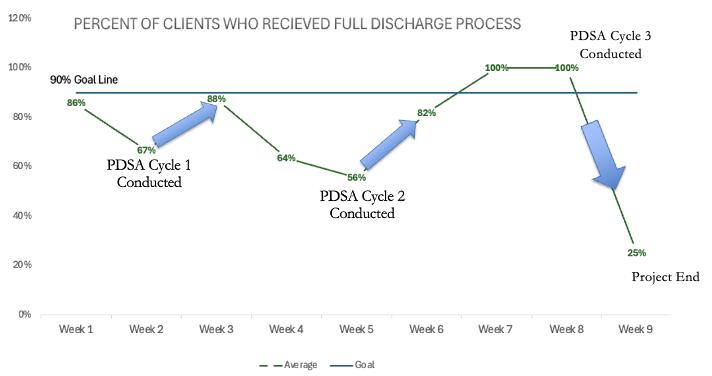
• From week 1 to week 6, 56%-86% of clients received the standardized discharge process.
• After 2 PDSA cycles, in week 7, 100% of clients received the implemented standardized discharge process.
• After week 8, PDSA cycle 3 was conducted, which ended the project due to the unavailability of the substance use recovery center staff.
• 66.67% of staff reported this discharge process increased their workload.
D. A., & Tohamy, A.A. (2022). Assessment of addiction management program and predictors of relapse among inpatients of the Psychiatric Institute atAin Shams University Hospital Middle East Current Psychiatry, 29(1), 80.https://doi.org/10.1186/s43045-022-00246-5
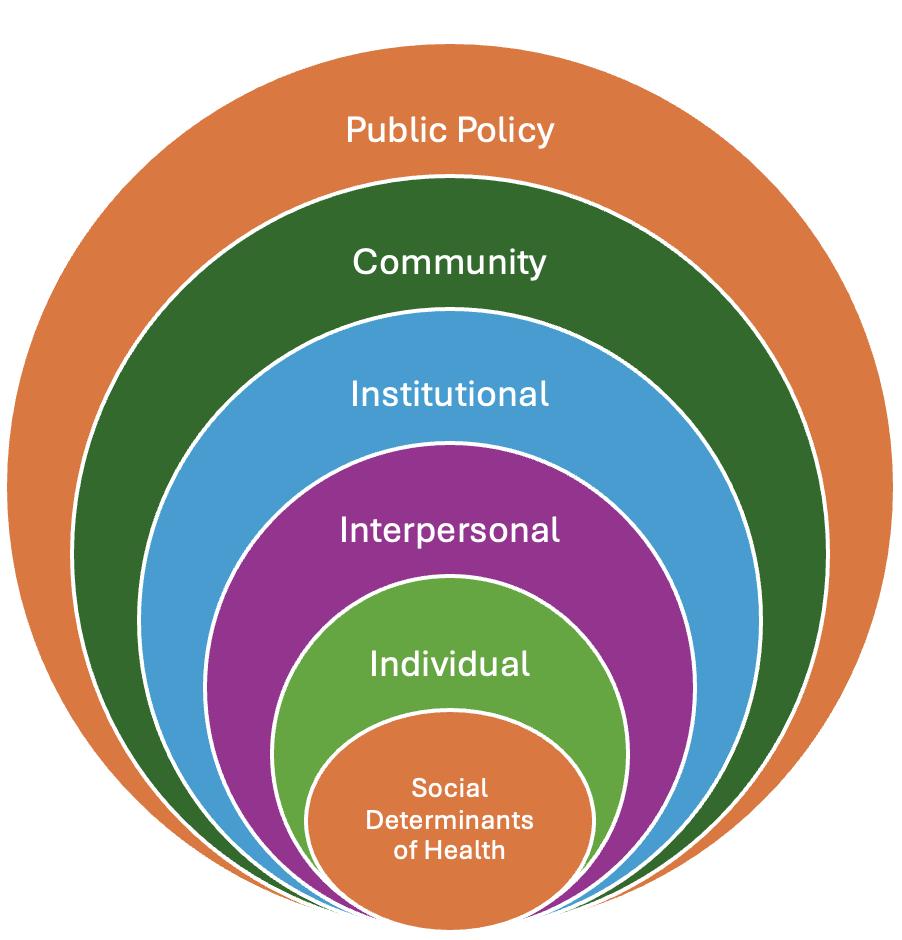
Provencher, V., D'Amours, M., Menear, M., Obradovic, N., Veillette, N., Sirois, M. J., & Kergoat, M. J. (2021). Understandingthe positive outcomes of discharge planning interventions for older adults hospitalized following a fall: a realist synthesis. BMC Geriatrics, 21(1), 84. https://doi.org/10.1186/s12877-020-01980-3 World Health Organization. (2010). A conceptual framework for model for action on the social determinants of health https://iris.who.int/bitstream/handle/10665/44489/9789241500852_eng.pdf?sequence=1
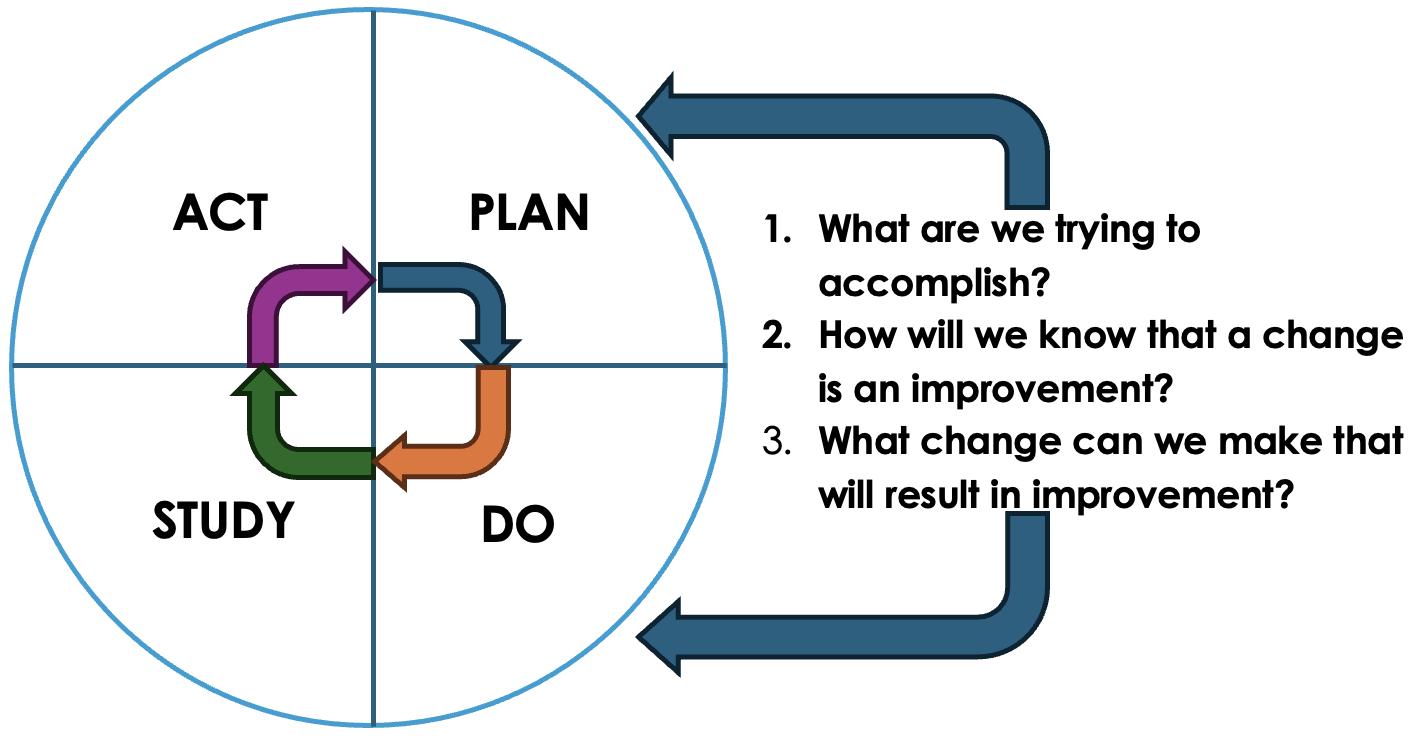
• This is a quality improvement project.
• The population is clients located at a substance use recovery center.
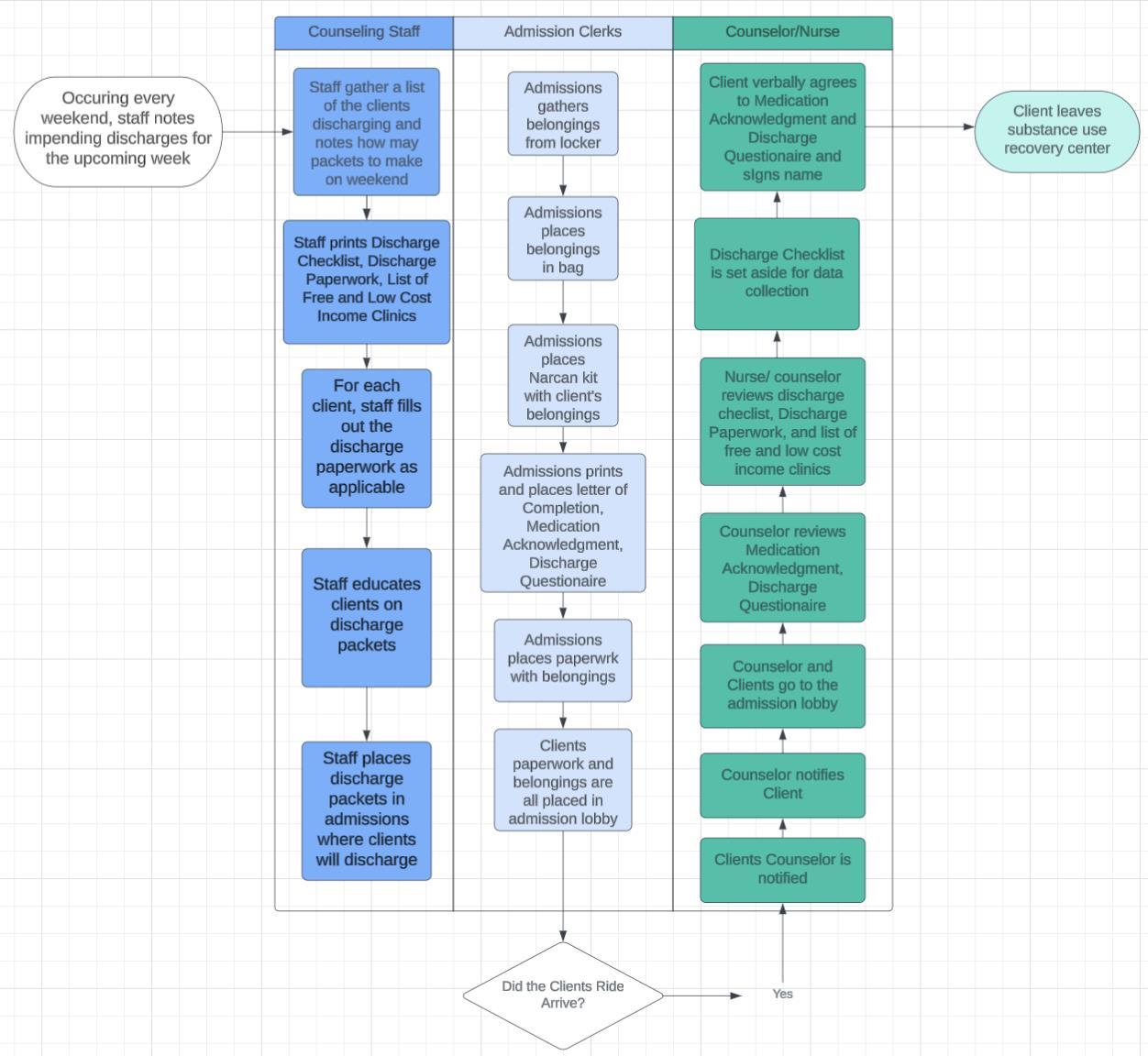
• The change idea is an evidenced-based standardized discharge process consisting of:
• Discharge checklist for staff
• Discharge paperwork for the client
• Referral guide for free/low-cost clinics in the area.
• The new discharge process at the substance use recovery center has led to the following improvements:
• A new prescription drug form was developed to ensure clients can easily refill their medications after discharge.
• The community is dedicated to improving the discharge process to better support clients.
• The referral guide has been well-received, with clients noting its benefits.
• For instance, one client arranged a next-day emergency dental appointment and had the repair done for under $100, avoiding a potentially costly issue.
• Next, we need to evaluate how the discharge process affects clients transitioning out of the substance use recovery center.
• Understanding this impact will facilitate a smoother transition into sober living and help organizations better meet client needs, enhancing satisfaction and retention.
• For sustainability, more than half of the staff reported this increased their workload, indicating possible modifications need to be made to better fit the staff schedule.