The International Journal for Bee-Centred Beekeeping
SPECIAL ISSUE incorporating Bees for Development Journal No. 144
Nature-based Beekeeping Nicola Bradbear and Janet Lowore, Bees for Development
“Don’t Call Me Honey!” Or: When ‘Honey is not ‘Honey’ Martin Kunz, Diversity Honeys, UK
Skep Beekeeping: Looking to the Past to Look to the Future Chris Park, UK

No. 25
NBH
Autumn 2022
i ncorporating B e e s rof mpoleveDe tn lanruoJ PS E C I AL EDITION
With support from The International Bee Research Association
WARRÉ HIVE


BLACK FRIDAY
FRIDAY
Keep an eye out for this year’s Black Friday deals!
Coming this November..
TOP
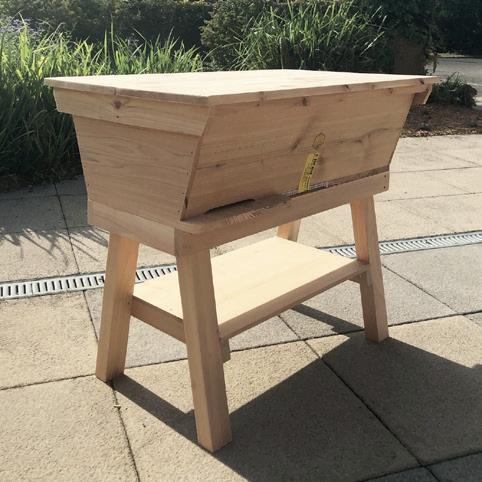
The Top Bar hive is a single box with 24 top bars. Made from British cedar the top bar hive is the traditional way of keeping bees in some African and Caribbean countries. Became popular in the UK for non-invasive beekeepers.
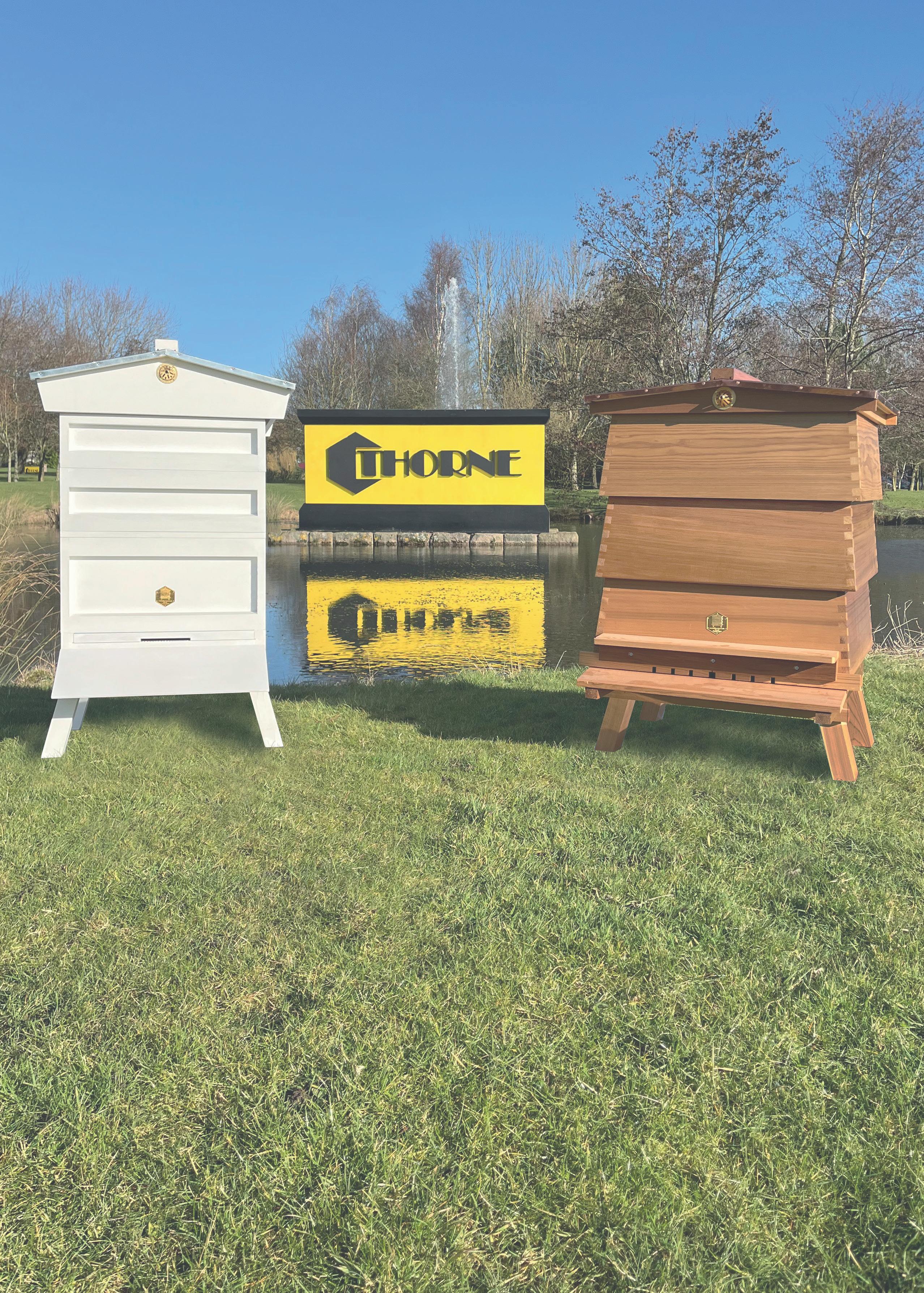
BEEKEEPERS KEEP BEES FOR OVER 100 YEARS HIVES, BEES, FRAMES, FOUNDATION, HARDWARE & CLOTHING, HONEY PROCESSING, LABELS, PACKAGING, QUEEN REARING, HEALTH & FEEDING, BOOKS, GIFTS, EDUCATION, CANDLEMAKING, AND MORE!
ONLINE, OVER THE PHONE, OR IN STORE LINCOLNSHIRE BEEHIVE BUSINESS PARK, RAND, NR WRAGBY, MARKET RASEN, LN8 5NJ SALES@THORNE.CO.UK +44(0)1673 858555 SCOTLAND NEWBURGH IND. ESTATE, NEWBURGH, FIFE, KY14 6HA SCOTLAND@THORNE.CO.UK +44(0)1337 842596 WINDSOR OAKLEY GREEN FARM, WINDSOR, SL4 4PZ WINDSOR@THORNE.CO.UK +44(0)1753 830256 STOCKBRIDGE CHILBOLTON
FARM,
6BU STOCKBRIDGE@THORNE.CO.UK +44(0)1264 810916 DEVON QUINCE HONEY FARM, SOUTH MOLTON, EX36 3RD DEVON@THORNE.CO.UK +44(0)1769 573086
HELPING
SHOP
DOWN
HAMPSHIRE, SO20
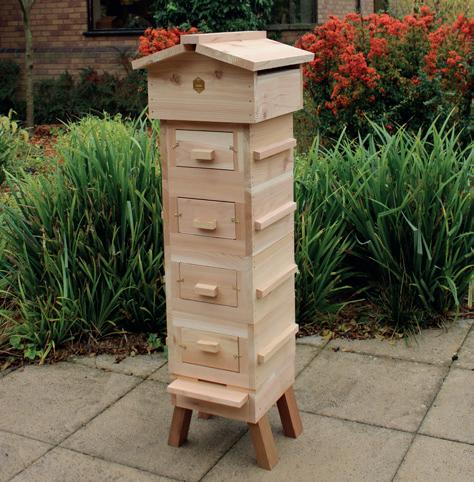
Designed in France by Émile Warré to make beekeeping more economical & now becoming popular in the UK. Made in our factory British Cedar, securely glued and nailed and includes a floor, four brood bodies, insulated quilt and roof. BAR HIVE
BLACK
Editorials John Phipps and Nicola Bradbear
Nature-based Beekeeping B fD
Nicola Bradbear and Janet Lowore, Bees for Development
The Long, Downhill Road in Beekeeping
John Phipps, Greece.

“Don’t Call Me Honey!” Or: When ‘Honey is not ‘Honey’
Martin Kunz, Diversity Honeys Ltd., UK

Honey Bee Pests
Varroa and Feral Bees: Which is the Villain?



Asian Hornets
Hornets still alive after over a day in a freezer - from Jersey Evening News
Small Hive Beetle: Aethina tumida becomes a severe problem for beekeepers in Ghana’s Cashew Farms B fD
Stephen Adu, Giacomo Ciriello and Isaac Mbroh, Bees for Development
Nature-based
Janet
Janet
in Amhara, Ethiopia B fD
Editor John Phipps - editor@naturalbee.buzz Neochori, Agios Nikolaos, Messinias, 24022 Sub Editor Val Phipps Publishers/Advertising Natural Bee Husbandry is published four times a year by Northern Bee Books, a trading name of Peacock Press Ltd. Email jerry@northernbeebooks.co.uk Tel +44 (0) 1422 882751 Magazine Design www.SiPat.co.uk Printing Custom Print Limited, Liverpool, UK ISSN 2632-3583 John & Val Phipps Editor & Sub Editor Martin
Assistant Editor Contents NBH
Nicola
Helen
Janet
Natural Bee Husbandry magazineA special issue incorporating Bees for Development Journal No. 144
Kunz
The
Bees for Development Team
Bradbear
Jackson
Lowore Giacomo Ciriello
4
5
8
13
19
19
19
20
Beekeeping
23 Beekeeping in Wulu, South Sudan
Lowore, Programme Manager, Bees for Development, and Getsh Kassa, Bees for Development Ethiopia
B fD
Lowore, Programme Manager, Bees for Development
and Andrea Akol, Executive Director, Humanitarian Actors for Grassroots Initiative, Juba, South Sudan 24 News Bites In Memoriam - Bill Turnbull, Patron of Bees for Development B fD 26 More trees gained than lost B fD World Resources Institute - wridigest@wri.org 26 Skep Beekeeping Looking to the Past to Look to the Future Chris Park, UK 27 Skeps Around the World: Examples of traditional hives created and used today in various parts of the world; Basketry and Weaving John Phipps, Greece 34 Treatment-Free Beekeeping: Friendship & Co-operation at Home and Across the Atlantic Marcus Nilson, Sweden. 37 Apimondia International Congress, Istanbul, August 2022 B fD Reports by Nicola Bradbear and Martin Kunz 38 Book Reviews The Mind of a Bee, Lars Chittka - review by Martin Kunz 41 Hand Pollination In China: The Shadow Of The Future, Mariann Fercsik - review by John Phipps 42 Events B fD 43
UK
Cover photo: Bees flying around a Sun Hive, photo by Paul Spierings. (From Journey into Wonder, Alberta Papma, The Netherlands, NBH No 7, May 2018).
I am very pleased to announce that starting with this special issue, we have joined forces with Bees for Development for the furtherance of sustainable, bee-friendly, ‘Naturebased’ beekeeping around the world.
We have very much to learn from the activities of Bees for Development who for decades have been involved with nature-based, local, low-input projects in developing countries, projects that have enabled many small communities to improve their livelihoods through the production and marketing of hive products.
The organisation has provided training in many areas of beekeeping, including the construction of hives from renewable local resources, management of colonies with minimal interference, the hygienic handling and packaging of products that have been harvested as well as providing all-important marketing skills.
Of course, the beekeeping projects are not just aimed at raising revenue for cash strapped communities, but also for providing wholesome and natural foods so important for the peoples' health and well being.
For those over recent years who have turned to traditional methods of beekeeping, whether they are using skeps, log hives, or other homes in which bees are allowed to build combs and make nests in the way that nature attended; the continued, uninterrupted success of centuries-old practices in ‘developing’ countries show that these peoples are able to be a guiding light for their modern contemporaries whose bees are experiencing greater problems as each year goes by.
We hope that this combined initiative will help to meet the needs of beekeepers in many parts of the world, and of course, most importantly too, the bees of whom they are guardians.
John Phipps, 1st October, 2022
Dear Friends
This is an innovative edition of Bees for Development Journal in which we join up with our friends at Natural Bee Husbandry magazine, to bring you this special combined edition.
To celebrate this unique event, the Bees for Development team have endeavoured to describe the philosophy that has informed our work over the past thirty years, and we therefore present here for the first time our Nature-based Beekeeping Approach Ours is not a prescriptive approach, describing one design of hive or a single way of doing things – it is beekeeping aimed at a wider agenda, addressing issues of social justice, and combining care for bees and the wider environment. We believe that as a reader of this magazine, you may find that your beekeeping can be well defined within this approach.
It is something of an experiment for us to join up with Natural Bee Husbandry in this way, and we thank our friends there, and especially John Phipps for bringing this idea to fruition. We feel that existing readers of both magazines will appreciate the wider scope provided by this joint edition, and we look forward to hearing your views - do let us know!
Nicola Bradbear
Bees for Development Journal
ISSN number 1477-6588.
Produced quarterly, we have readers in 128 countries. Editor: Nicola Bradbear PhD MBE; Coordinator Helen Jackson BSc and Production Coordinator Giacomo Ciriello PhD.
Subscriptions cost £30 per year:
¥ Pay online at www.shop. beesfordevelopment.org
¥ Or contact info@ beesfordevelopment.org
Bees for Development works to assist beekeepers in developing nations
Bees for Development gratefully acknowledge: ADM, Bees for Development North America, Charles Hayward Foundation, Darwin Initiative, Didymus Charity, E H Thorne (Beehives) Ltd, Ethiopiaid, Euromonitor International, Healing Herbs, Hiscox Foundation, Incubeta, John Paul Mitchell Systems, Rowse Honey Ltd, Welsh Government, Yasaeng Beekeeping Supplies and many other generous organisations and individuals.
Copyright
You are welcome to translate and/or reproduce items appearing in Bees for Development Journal as part of our Information Service. Permission is given on the understanding that the Journal and author(s) are acknowledged, our contact details are provided in full, and you send us a copy of the item or the website address where it is used.
1 Agincourt Street, Monmouth NP25 3DZ, UK; Tel: +44 (0)1600 714848.
Natural Bee Husbandry Magazine | No. 25, Autumn 2022 | Incorporating Bees for Development Journal No. 144 4 Editorials
Bees for Development
No 144
September 2022
The Journal for sustainable beekeeping
Nature-based Beekeeping
We humans endeavour to manage bees using different approaches according to our custom, education, needs and aspirations. Among many variables is the extent to which a beekeeping system draws upon natural processes and assets – as opposed to manipulated processes and external inputs. At one end of this spectrum we see honey bees being managed intensively with hundreds of closely-spaced colonies, involving all their honey being taken away, fed with refined sugar, and medicated to prevent the pathogens that are an inherent threat to any intensive system. At the other end of the spectrum, honey bees continue to live in natural cavities or in beehives we provide - for bee-conservation purposes, with little or no interference from us.
Bees for Development primarily considers beekeeping from the point of view of people living in poverty - usually in the poorest nations of the world. Intensive beekeeping is unaffordable for people in these areas because of the high capital cost. Where apicultural resources are abundant, we believe beekeeping has the potential to earn income for many people and still be good for bees and their habitat. To achieve this purpose, we advocate beekeeping systems that draw on nature. Any approach to keeping bees sustainably that uses nature, rather than cash, to get started and expand - is an excellent approach for people with limited financial means.
We call these approaches – and there are many – Nature-based Beekeeping. This means practical, feasible and
Principles
Nature-based Beekeeping is a system which:
¥ Elevates natural processes and natural assets, ahead of manipulated processes and external inputs
¥ Is socially just, allowing people to benefit, regardless of financial capital
¥ Is locally specific, not a top-down global model
¥ Is economically viable
¥ Respects indigenous knowledge, skills and experience
¥ Provides favourable conditions for honey bees to stay healthy without medications and supplementary feed
¥ Is strongly connected to the natural habitat in which the beekeeper is operating and creates an incentive for conservation
¥ Addresses a wider agenda of achieving beekeeping that is sustainable for the planet.
sustainable ways of keeping bees that are low-cost and low-impact, and draw on natural processes and assets to yield viable and productive harvests. In this article we explain the essen-
tial features and principles of Naturebased Beekeeping.
Nature-based Beekeeping is accessible
Low barriers to entry make Naturebased Beekeeping accessible, however it is not just ‘beekeeping for poor people’ – we propose that this approach is best for everyone, and the term Naturebased Beekeeping describes best practise beekeeping currently underway around the world.
Many tropical and sub-tropical nations have a natural abundance of the resources necessary for apiculture: bees, nectar and pollen. To derive a sustainable harvest from these resources, beekeepers need beehives, and the most suitable hives can be either made by the beekeeper, or purchased at low-cost. With accessible, low-cost hives, the barrier to becoming a beekeeper is removed and anyone can participate, as explained by Joshua Ngorok, a beekeeper from Uganda:
“ This way of beekeeping is so beneficial in that it is possible for everyone in the community. This approach doesn’t discriminate whether you are a child or an adult, as long as you are creative enough you can make it work for you ”.
All the evidence from honey-producing regions in developing nations

5 Bees for Development article | Nature-based Beekeeping
Nicola Bradbear and Janet Lowore, Bees for Development UK
B fD article
Above: Learners here, in Ethiopia, are making top-bar hives using locally available materials. © Bees for Development.
shows that where hives are cheapest, total honey harvests are highest – because the cost barrier to participation is low, allowing thousands of people to harvest honey.
Nature-Based Beekeeping is practical and achievable
Over the years significant effort and money have been invested in many developing nations to introduce so-called ‘modern’ beekeeping. This trend began in the 1960s and still continues. Sadly, there is little evidence that this effort has made a substantial and lasting contribution to raising the welfare of ordinary farmers. Much of the problem lies with the promotion of technology, which sounds good – who doesn’t want something described as ‘modern’? However in practice this offers no advantage. In fact, contrary to helping people, the emphasis on expensive technology has made beekeeping accessible only to wealthier people or those given free equipment by a donor. And even then, the results are disappointing. Expert beekeeper Patrick Ayebazibwe in Uganda draws attention to the advantages of local-style hives:
“You can start beekeeping with zero cost, because you can pick hive-making materials from nature. Even if you can’t make your own, a localstyle hive can cost just UGX5,000 (US$/€1.3) compared to UGX200,000 (US$/€52) for a so-called ‘modern’ hive. Not only that but it is easier to harvest honey from a local-style hive”.
For beekeeping to support people’s livelihoods it must be practical, achievable and accessible – regardless of a person’s financial status or access to donor funds. There are countless examples of conventional beehive donation projects which have failed to meet expectations. By contrast, Nature-based Beekeeping is practical, achievable and proven to work.
Nature-Based Beekeeping depends on local knowledge
The Nature-based Beekeeping approach places skills and knowledge at the heart of successful beekeeping – not expensive hives. It requires a good understanding of the local context. Beekeepers need skills in making beehives using natural materials and also knowledge about the local beekeeping season, when bees swarm, when flowers produce nectar and pollen, and when is the best time for harvesting honey. Nature-based Beekeeping is not a single methodology - practices vary from place to place – depending on the local context. Instead, it relies on indigenous knowledge. This can be quite disempowering for some elite groups – such as educated development workers – as it means that the expertise is out of their hands. Yet it is empowering for rural people who are the keepers of locally specific, indigenous beekeeping skills.
Nature-Based Beekeeping depends on bees’ natural biology and genetics
Nature-based Beekeepers allow bees to live more or less as they do in nature. This brings many health and economic advantages. The health advantages materialise because beekeepers do not interrupt the bees’ social immune responses, for example, a colony that is not subject to manipulations is better able to maintain a stable nest environment of optimum temperature and humidity, and the pathogen-resisting propolis envelope remains intact. The
3, above.
Donkorkrom in Ghana are made from hollow palm stems. They are termite and rot resistant, and as well as providing a suitable home for bees, are extremely durable. © Bees for Development Ghana

economic advantages materialise because bees that keep themselves healthy do not need expensive medications. Nature’s ‘survival of the fittest’ mechanism for good bee health and genetic fitness is the ultimate affordable solution for any beekeeper.
Is Nature-Based Beekeeping new?
No, Nature Based Beekeeping is not new, except maybe for this name. It captures our approach to considering and acknowledging the hundreds of thousands of accomplished Nature-based Beekeepers across the developing world. This is a new perspective. Elevating and respecting Nature-based Beekeeping means taking a fresh look at something that is widespread. Every day we see people make their own hives using natural, free materials. Too often outsiders believe that something which has been around for a long time, must be replaced with something considered more ‘progressive’ or ‘modern’. Not so!
It is time to stop using the term ‘traditional beekeeping ‘in a pejorative way, implying something that is old-fashioned and undesirable. It is time to look again and endeavour to understand and fully appreciate indigenous knowledge and skills.
Taking a fresh perspective and looking at beekeeping anew, we can see that it is conventional beehive donation
Natural Bee Husbandry Magazine | No. 25, Autumn 2022 | Incorporating Bees for Development Journal No. 144 6
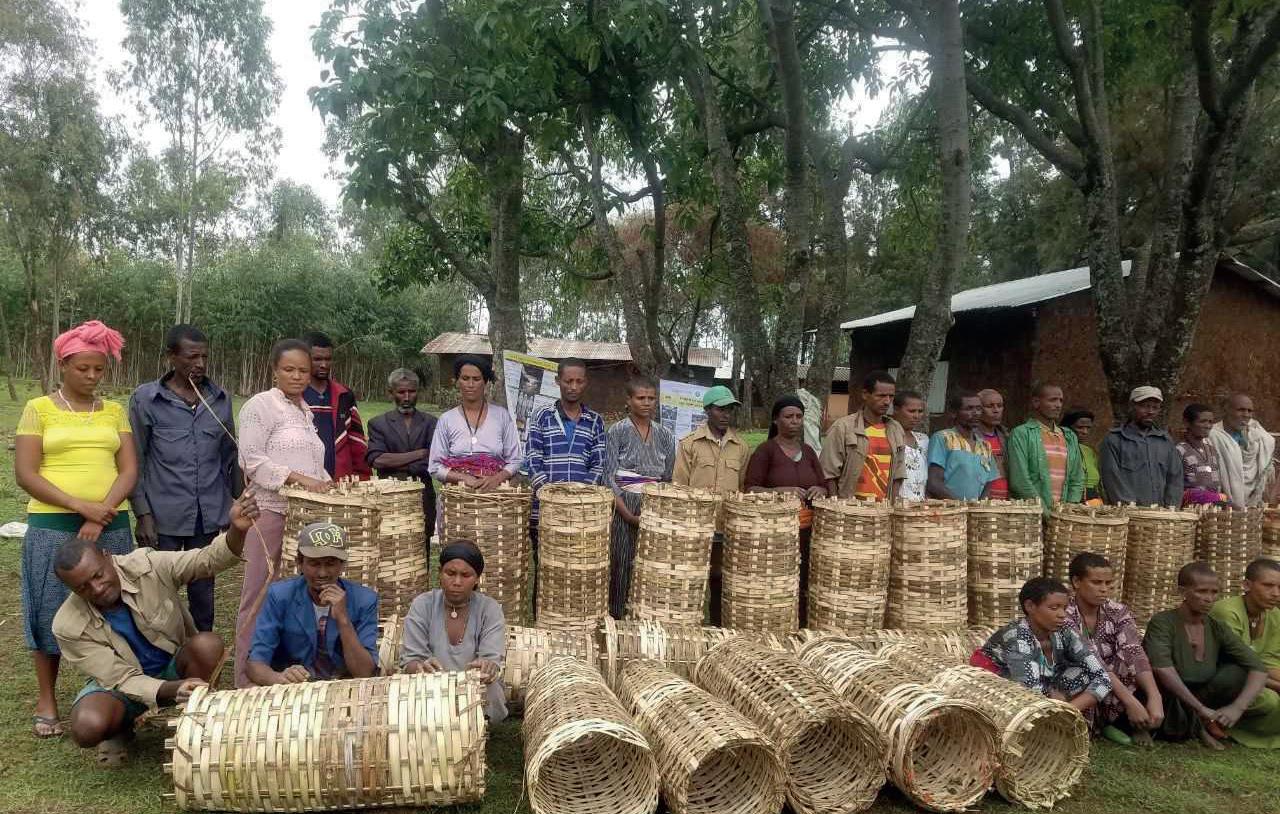
2, top. Bees for Development Ethiopia provided training in beehive weaving, empowering these novice beekeepers with the skills to scale up their beekeeping as they wish, without financial constraint. © Bees for Development Ethiopia
These hives near
Bees for Development article
projects that are old-fashioned, because they rely on the out-dated idea that people need imported technology to succeed. Nature-based Beekeeping builds on local expertise and knowledge and empowers people to connect with their traditions and cultures.
Nature-based Beekeeping is what many people have been doing all along. It is good beekeeping that works and uses nature as the key ingredient. In generating income, Naturebased Beekeeping is essentially a cash transfer from nature to beekeepers’ pockets – with help from a little insect!
Evidence of success
Across Africa the regions which harvest the largest volumes of honey are those where Nature-based Beekeeping is widely practised, for example, Tabora in Tanzania, the NorthWestern Province of Zambia, South West Ethiopia, and many other regions. The high volumes of honey harvested in these locations have given rise to honey and beeswax export. In Uganda, large volumes of honey are harvested in West Nile and around Kisoro, by beekeepers who own many, low-cost hives. Achini Kamilus, for example, uses hives which he makes himself, allowing him to keep 230 colonies of bees. Skills, knowledge and nature – the essential elements of Naturebased Beekeeping – allow him to earn good income from bees. Meanwhile Ethiopian beekeeper Anduamlak Asmare explains why he prefers local-style hives to frame hives:
“With frame hives the scaling-up is not promising as it is capital intensive and not preferable for catching swarms”.
Last year, using local-style hives placed in a natural setting, Anduamlak made in excess of US$/€1,000 from beekeeping.
Conclusion
Let us return to the words of Patrick Ayebazibwe who explains:
“Local-style hives have not been given a chance by promoters in Uganda, instead they all look to the other side at so-called ‘modern hives’. Yet localstyle hives are affordable and easy to use, and you can even harvest honey without using protection. The difference in yield between local-style hives and frame (Langstroth) hives is minimal, in fact even you can sometimes harvest more from local-style hives. And the quality of the honey is the same”.
The only down-side with local-style hives is that people have been led to believe that they are old-fashioned. This is the wrong way of thinking. It is time we re-evaluated what we know. Local-style hives, local skills and expert knowledge – and of course plenty of bees and flowers - are needed to make a good income from bees. Nature provides and we all have access to nature. Let us instead look at beekeeping from a new perspective and embrace Nature-based Beekeeping, an approach that places nature centre-stage.
If we look after nature, nature will look after us. Nature-based beekeeping helps this to happen.
Sources
7 Bees for Development article | Nature-based Beekeeping
Patrick Ayebazibwe, Achini Kamilus and Joshua Ngorok were interviewed by TUNADO (The Uganda National Apicultural Development Organisation) in 2021. Anduamlak Asmare was interviewed by Bees for Development Ethiopia in 2021.
B fD article
4. In Uganda, there is an abundance of natural materials suitable for hive-making. © TUNADO
The Long, Downhill Road in Beekeeping
 John Phipps
Sadly, this comment by Lenin has been fulfilled in many ways. Just like the worst aspects of communism and its strict control over people, it has extended to the way in which animals have been treated, removing them from their natural environments and imposing on them lifestyles which are not conducive to their health and well-being. This is most obvious with farm livestock. Regimes where cows are subjected to zero grazing, poultry are kept intensively in cages in sheds for egg production, and pigs, sometimes with over 2000 sows kept in cages on concrete for breeding and producing up to five litters in two years. The move against intensive farming and the cruelty involved has a long history, yet these units exist in most parts of the world and are considered to be a normal pattern of agricultural production. The call for animals used in the service of man to be treated humanely has as one of its main aims the right of an animal to carry out the normal aspects of its behaviour. Thus, cows to graze, poultry to scratch around and pigs to root about. Unfortunately, allowing such regimes to become more popular is not economic in terms of labour; animals allowed to wander free in the open, especially pigs, take longer to reach market weight; economics is more important than animal welfare. There has been more and more interest recently on how sentient animals are,
what they feel, both feel both physically and mentally, and how this should be addressed to reduce their suffering. One aspect of this I mentioned some time ago in these pages, the fact that farm livestock have in their genetic makeup behavioural mechanics so that when taken from places of confinement they can easily adjust to their natural way of life. And as an example of sentience, to see that an animal is suffering stress, one only has to watch a sow in a cage on concrete, at the time of her farrowing. She is up and down all the time, looking through the bars, knowing that she has to do something, but is unable to do so. It is not due to the physical feelings of discomfort before giving birth, she instinctively knows that she is unable to make the important preparations for her litter.
My agriculture students saw the uneasiness of the sows on visits to huge farrowing units. Back at our school farm, when a gilt - a pig that had never before given birth - was ready to farrow, we threw a bale of barley straw into her paddock. Excitedly, she tore away at the bale carrying mouthfuls of straw into the corner of her sty to make a huge, comfortable nursery bed for her piglets. It is horrendous today, when we should all know better, that farm animals on a huge scale are suffering simply because they are being deprived of their natural way of life.
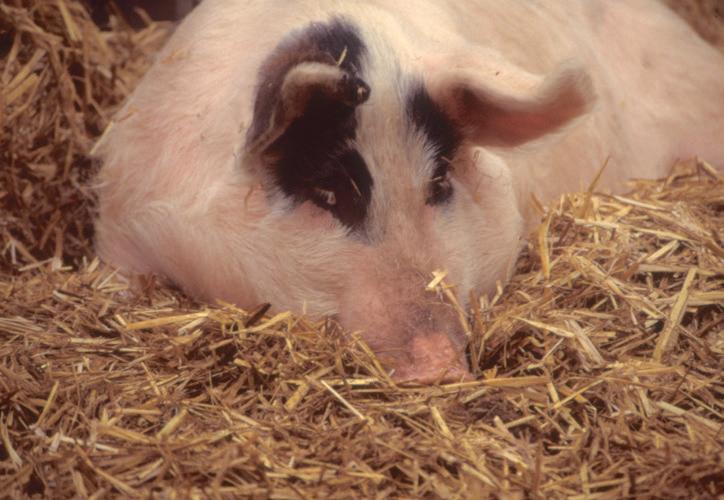
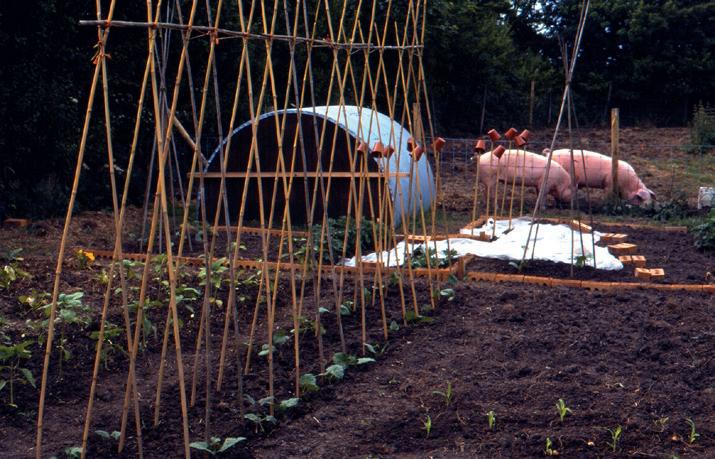
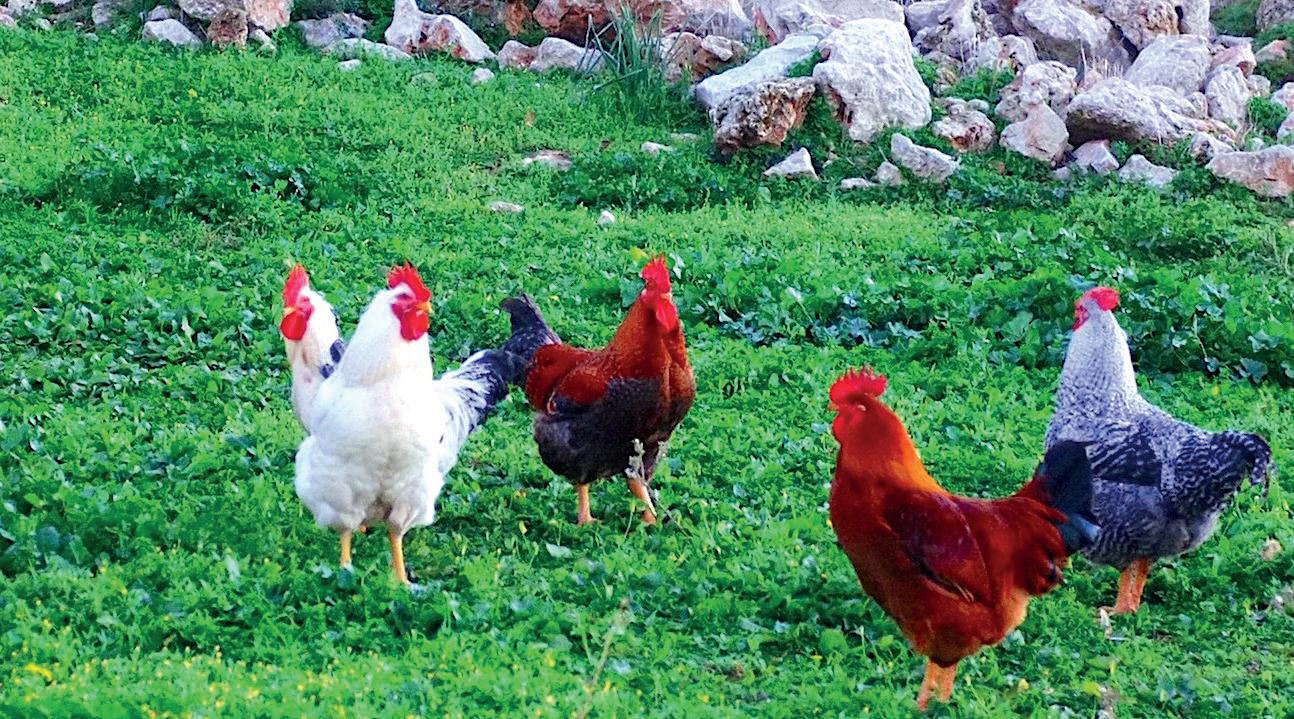
1–3. Farm livestock must be allowed to behave in the way in which nature intended - cows to graze (a herd of cattle living in a wildflower-enhanced pasture, Dr. Parry Kietzman); poultry to scratch around; and pigs to root about and lie in the wallows they love so much.
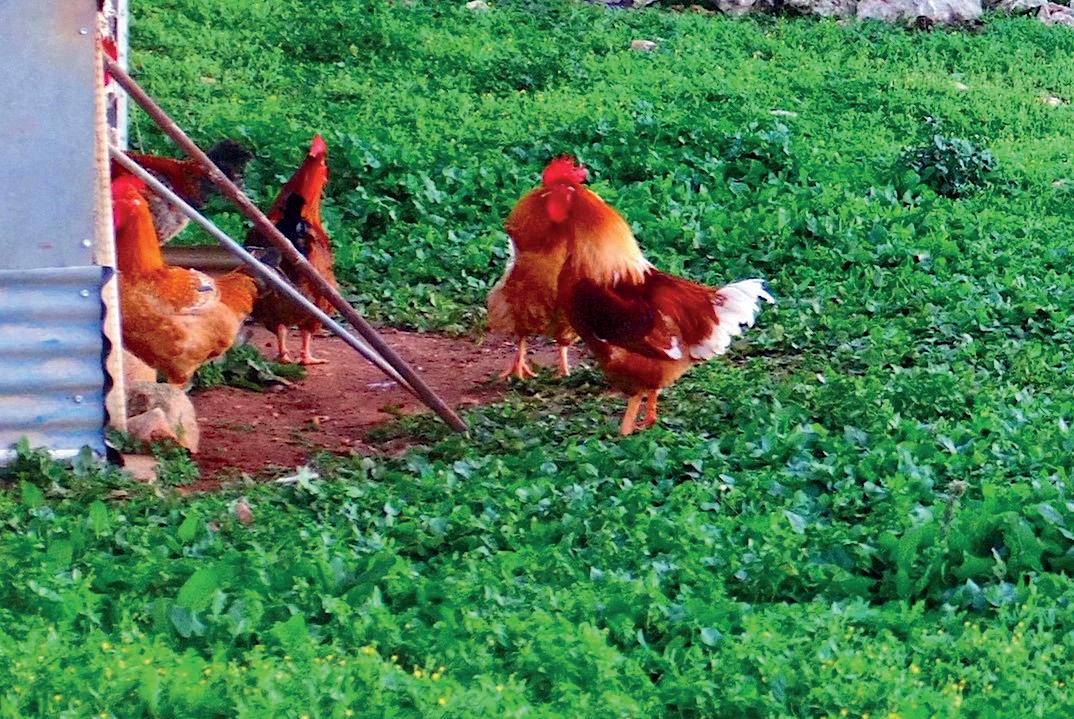
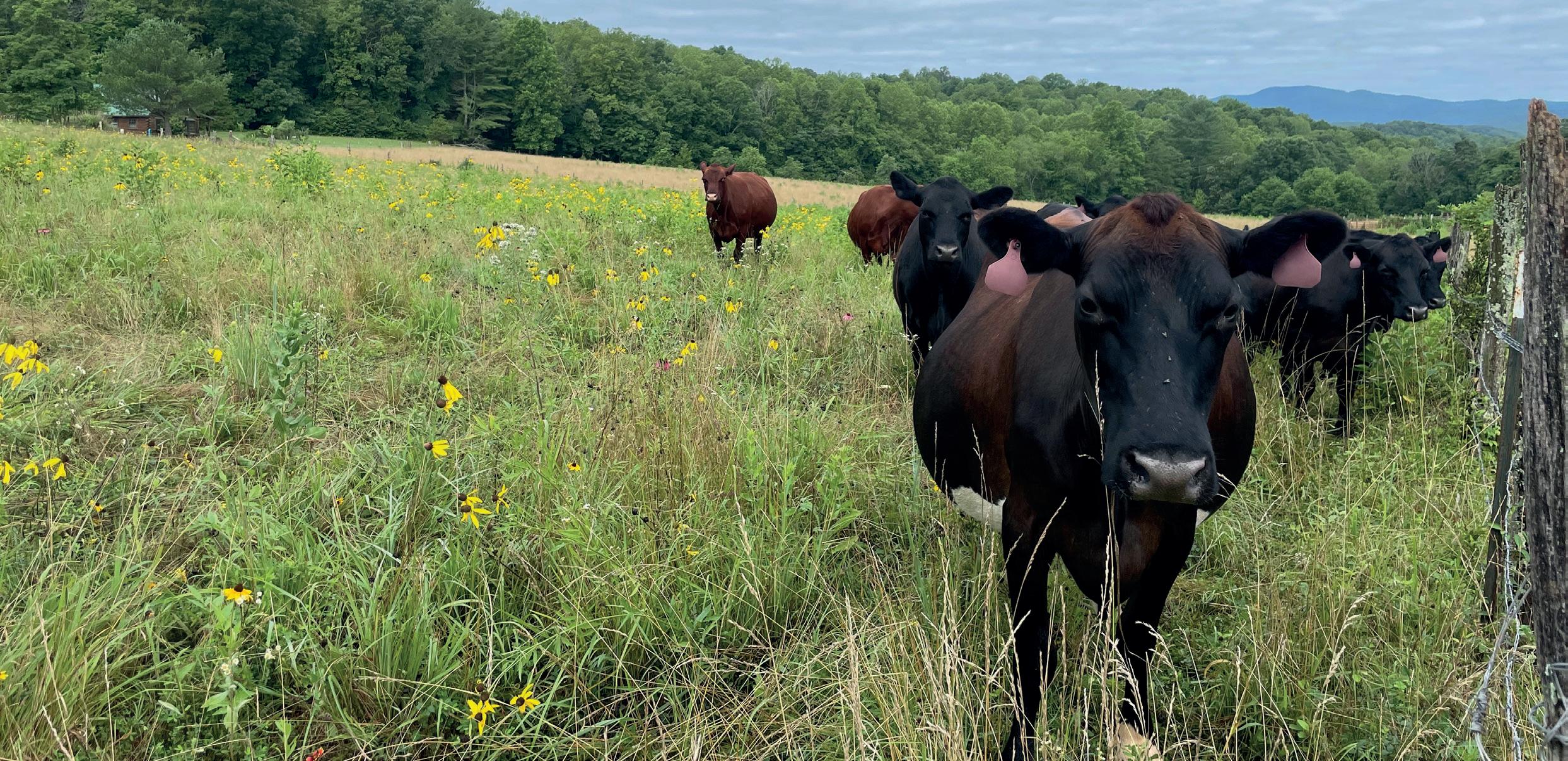
Natural Bee Husbandry Magazine | No. 25, Autumn 2022 | Incorporating Bees for Development Journal No. 144 8
“Human reason has discovered many amazing things in nature and will discover still more, and will therefore increase its power over nature.”
V. I. Lenin
2 1 3 4
4. A sow ready to farrow in the straw nest she has prepared for her litter.
The Natural Homes of Honey Bees
In the wild bees build their nests in confined spaces usually of an appropriate volume within a rock crevice or the hollow of a tree. Normally there is just the one entrance which allows the bees to enter and leave the hive, control the temperature and humidity of the space within exacting parameters, and to more easily defend the colony. Within that space the wax combs can be built into an almost catenary shape, though with elongated sides, with the right proportion of worker to drone cells, at the right spacing which allows for the extra thickness of honey stores when required and for drone brood which stands proud of the surface of the comb, and with ‘pop’ holes and brace comb for communication with other members of the colony - either through movement or transmission of sound.
These important features were retained when bees became ‘domesticated’ by man and housed through the centuries in log hives and skeps.
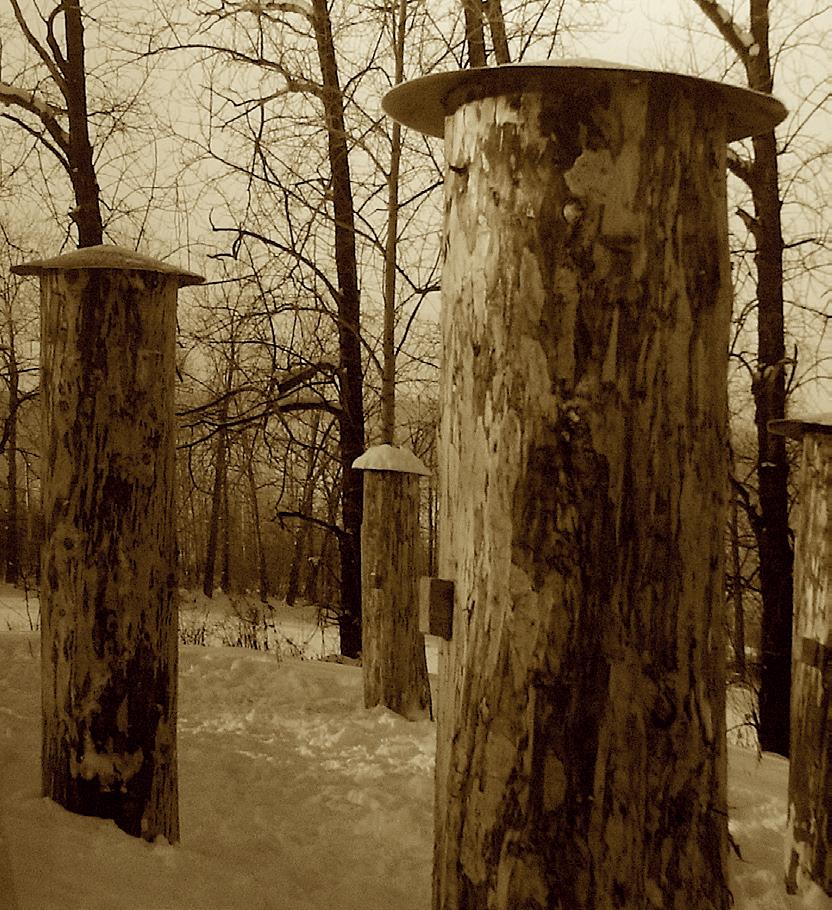

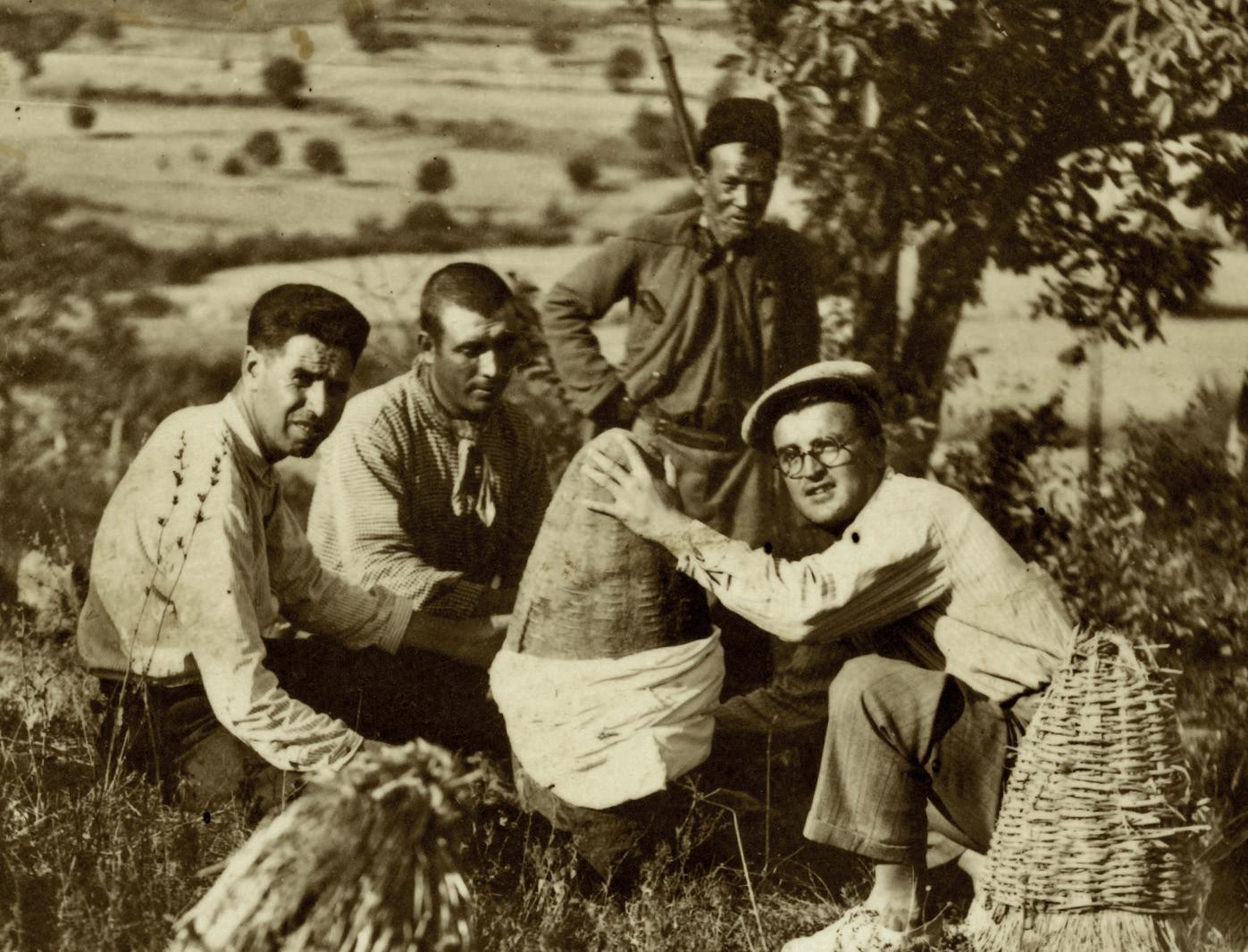
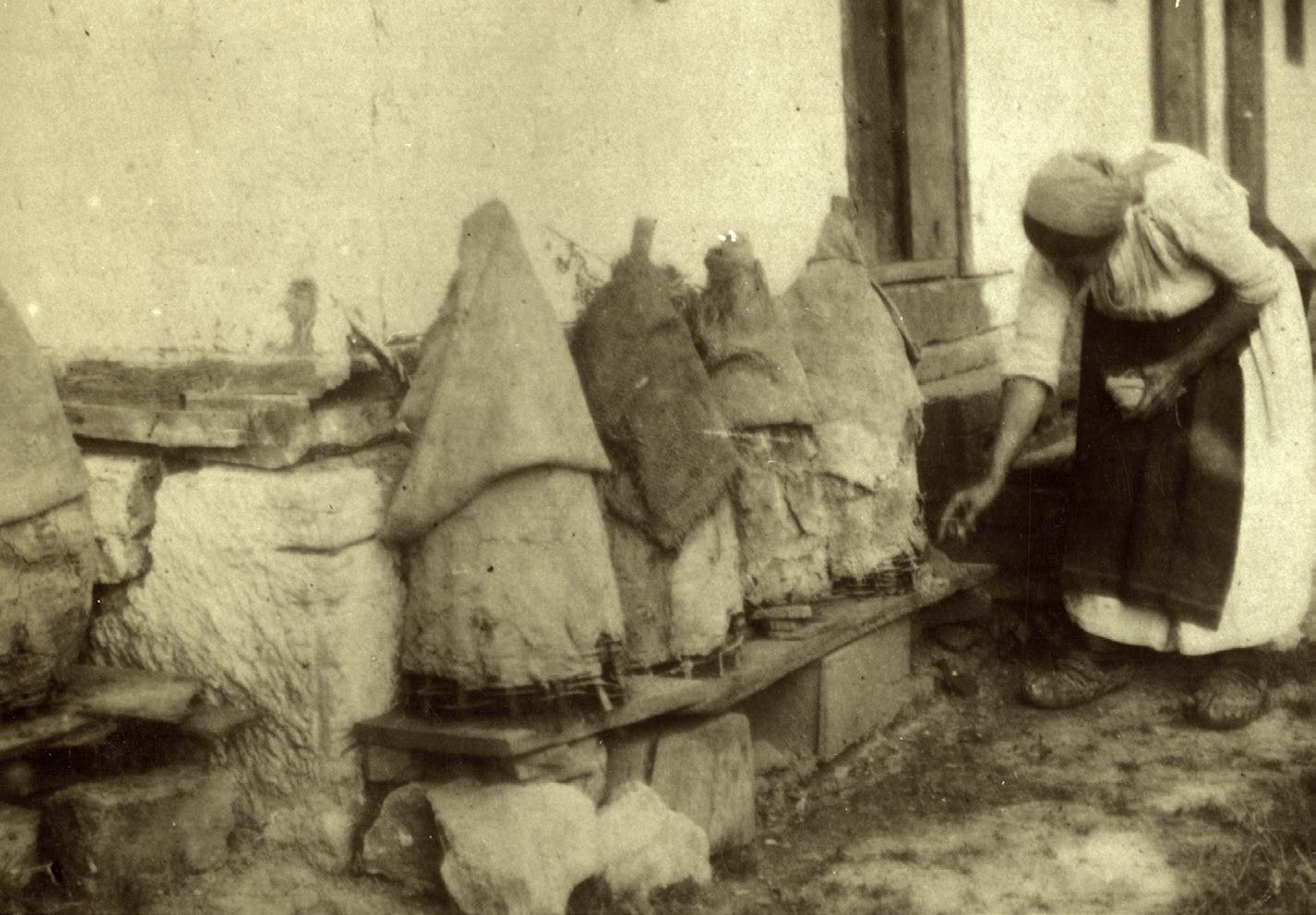
- clomed for protection from the weather and to conserve the right temperature and humidity within the hive, and made with wicker and daub.
9 The Long, Downhill Road in Beekeeping
5a, 5b. Skeps
6a, 6b. Very ornamental and (b) simple log hives.
5a
5b
6a
6b
The ‘Improvement’ of Beekeeping
“ If you let an animal live naturally, it is able to use its full toolbox and set of skills to survive and reproduce ,” says Seeley, who has been studying honeybees in the wild in the Arnot Forest outside of Ithaca, N.Y. “ But when you take any kind of animal and you force it to live in a different way, those tools aren’t allowed to function very well .”
It has frequently been stated that the two greatest advances in beekeeping occurred in the middle of the 19th century: the beginning of the use of frame hives by Dzierzon in Poland, Prokopovich in Russia and Langstroth in the United States, which then facilitated the importation of foreign queen bees which could be more easily introduced into these new types of hives.
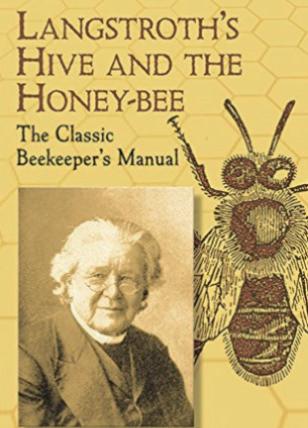
Whilst it is true that these advances were important milestones in beekeeping, that they greatly facilitated the work of beekeepers, that each of the new, many inventions of beekeeping apparatus streamlined the beekeeper’s work and led to new management techniques, it is my contention that each of these steps significantly stilted the bees’ ability to live in a natural way - and furthermore had long-term negative effects on the well-being of the colonies lasting until today.
Thus
the Hive
¥ A square hive - an unnatural shape for the bees’ nest - corners where cold and damp could accumulate; when a super is added, an arch not filled with honey shows that the colony needed a deep, right shape of nest
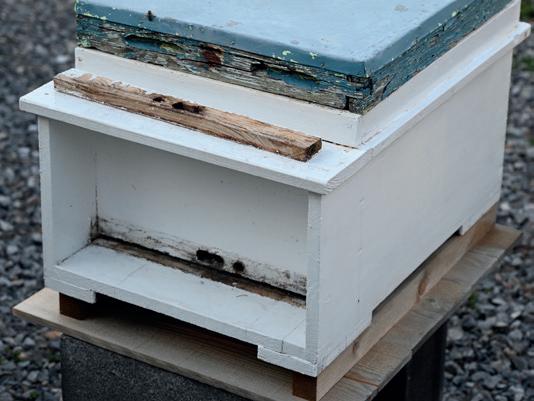
¥ Thin wooden walls, not enough insulation
¥ Frames - carefully separated from each other at a chosen spacing, taking no account of the extra room needed for drone brood - difficult for the bees to move from one frame to another for food during a long cold spell, hence ‘isolation starving’ - beekeepers taught to remove brace and burr comb essential for the integrity of the nest and maintenance of communication channels
¥ Wax foundation - favouring the production of workers, frustrating for bees that need to construct the right proportion of drone comb, wax commonly recycled for more foundation - increasingly less healthy for bees due to build up of chemicals from agriculture and bee pest control
¥ Allowed hives to be opened too frequently as part of management routines, upsetting the bees and requiring several hours afterwards for the colony to readjust to its right temperature and humidity
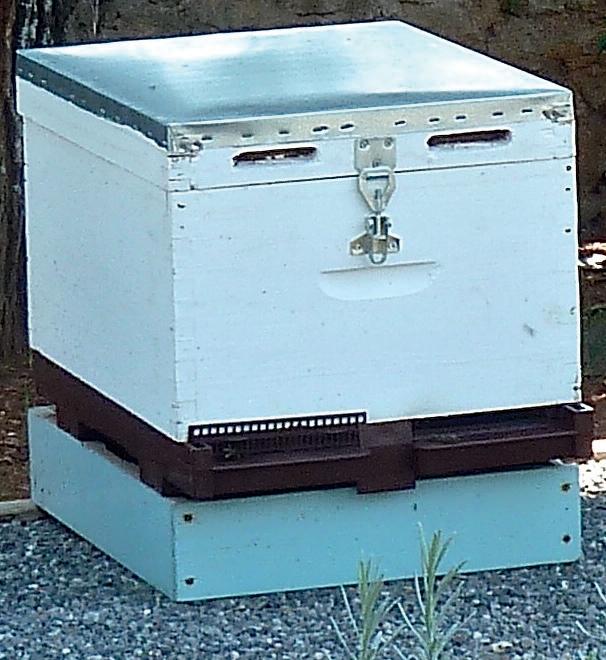
¥ Removing queen cells just delays swarming and frustrates the bees
¥ The list could go on and on!
7a. Rev Dr Johann Dzierzon 1811 - 1906; 7b. Dzierzon Hive (1838).
8a. Peter J Prokopovich
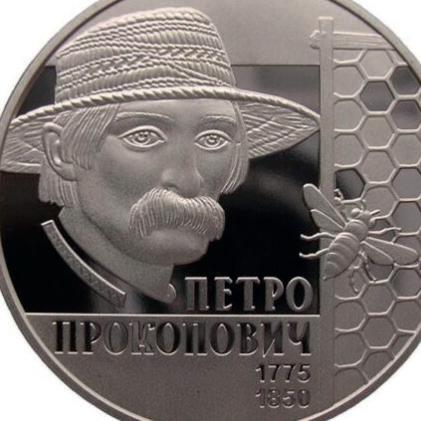

1775- 1850; 8b. Prokopovich Hive (1006). Photo: Viktor Fursov, Ukraine.
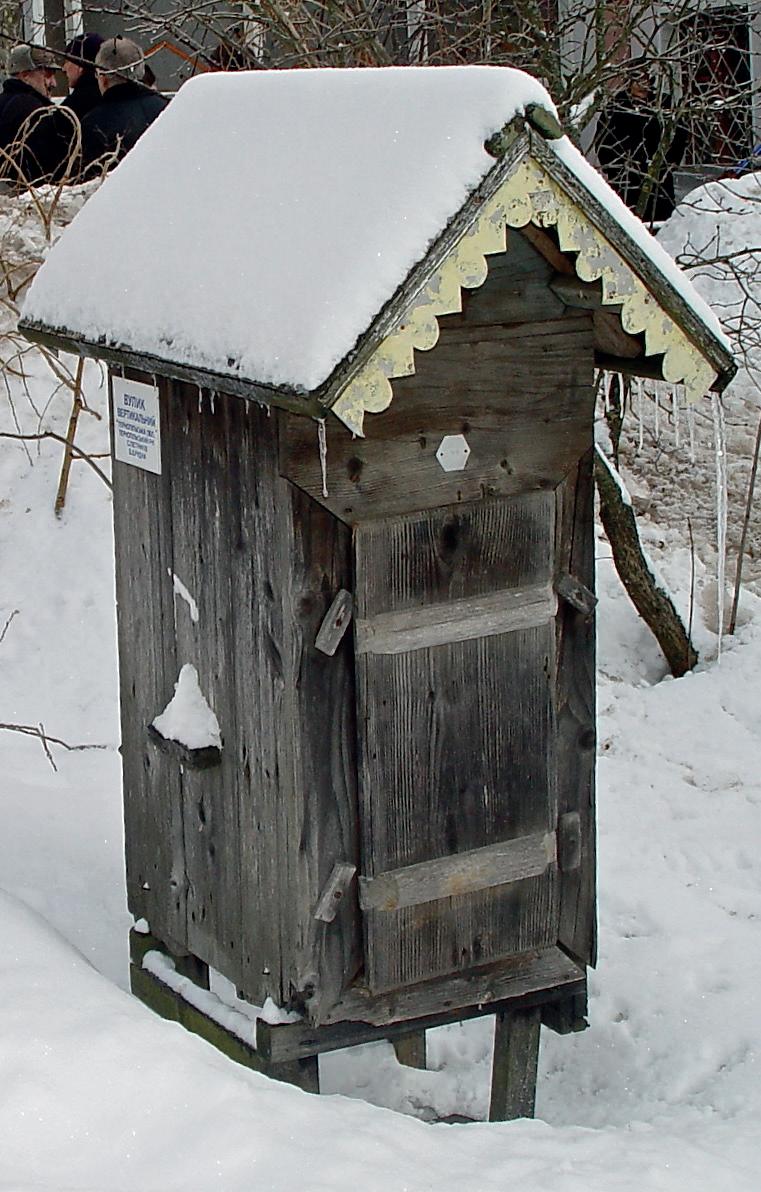
9a. Rev Lorenzo Lorraine Langstroth 1810 - 1895;
9b. Langstroth Hive 1851, model made by the Editor.
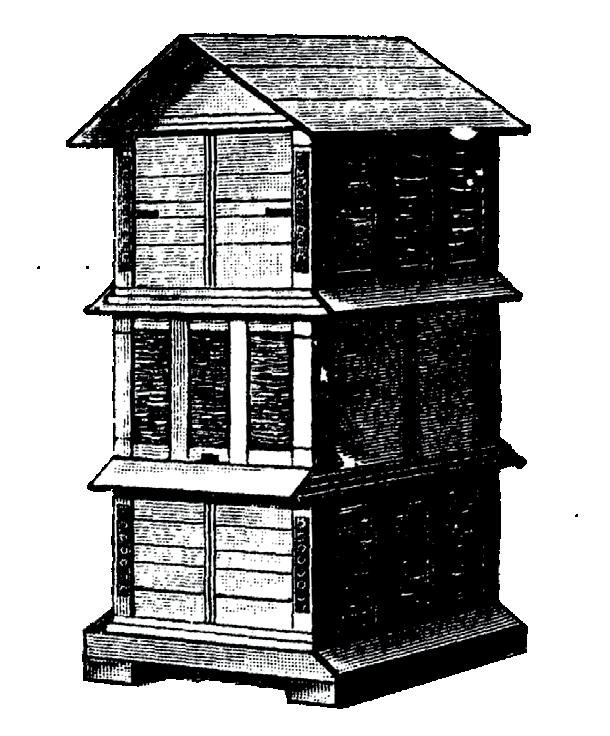
10. Typical box shape hive almost universal today.*
*Recent research reveals its many failings especially as regards thermoregulation. (Daniel Cook Ph.D: Journal of Economic Entomology, March 2022). Thomas Blow, former owner of Taylors of Welwyn, was concerned that the wintering of bees in early bar hives led to great losses of stocks, compared with those in skeps, due to the circulation of air (draughts) around the frames - and so had numerous complaints from his customers. In skeps the bees fixed their combs to the upper parts of the hive giving a cosy, draught-free, well insulated crown. He tried to solve the problem with his “Blow’s Anglo-Cyprian Hive” in 1883. However, this was so difficult to use in practice that it was doomed from the very start.
Natural Bee Husbandry Magazine | No. 25, Autumn 2022 | Incorporating Bees for Development Journal No. 144 10
10
7a 8a 7b 8b 9b 9a
The Foreign Queens
The import of bees was, and to some extent still is, for many beekeepers due to fanciful reasons: the colour of the queen, the possibility of better honey returns, the promise of gentler and easier to handle bees; just following a current trend or fashion, or simply because of their availability and it ‘would be nice to try them’.
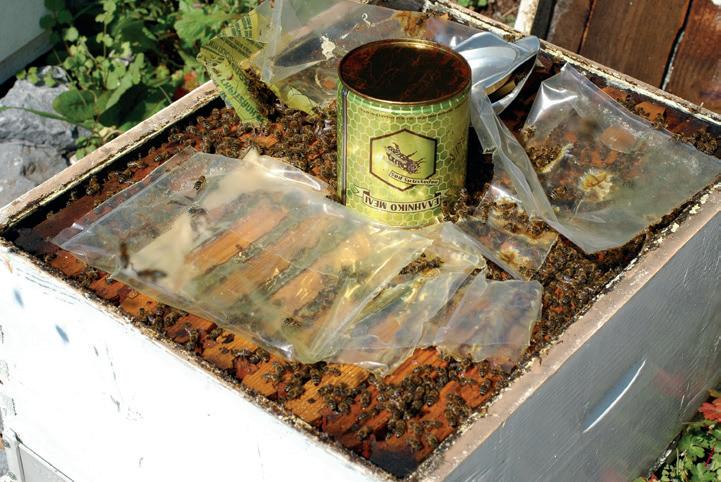
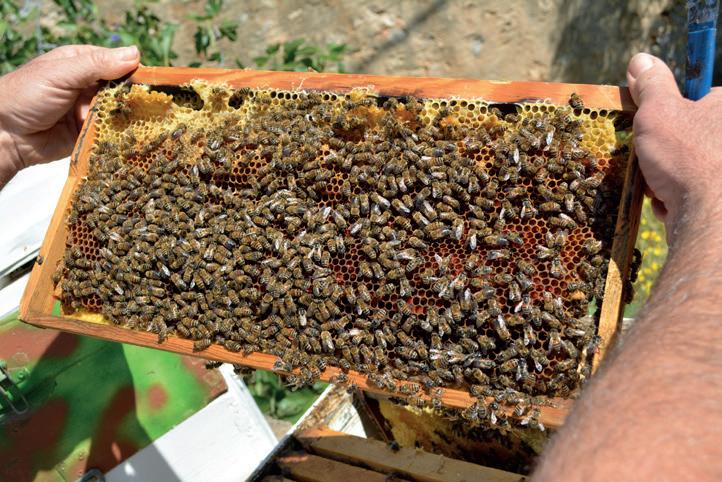
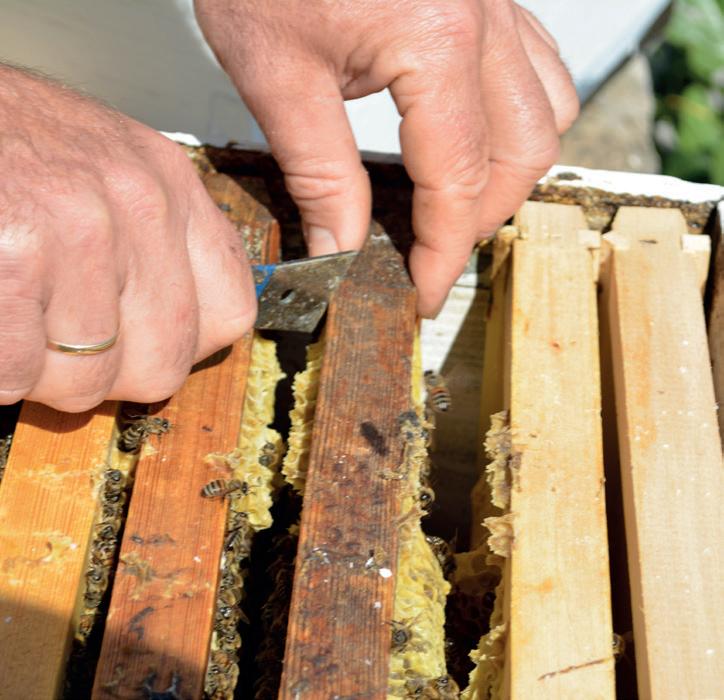
Whilst the new generation of a colony headed by a newly-imported queen, or a home bred one with a foreign heritage, may fulfil the expectations of the beekeepers, unfortunately the desired qualities can not only be lost in future generations, but lead to unwanted characteristics - especially aggressiveness.
In the first volumes of the British Bee Journal, from 1873 onwards, we can read how purchasers of foreign queens were frequently disappointed, proud though they might have been with the beautiful colour of a Golden Italian. They found that introducing such queens into their own colonies often ended in tragedy. This resulted in many pages of advice of how to avoid failure, plus a number of experts recommending ‘Italianising’ colonies.
In countries that I have visited where no or little cross-breeding has taken place, I have found the bees to be easy to manage without the necessity of wearing any protective clothing.
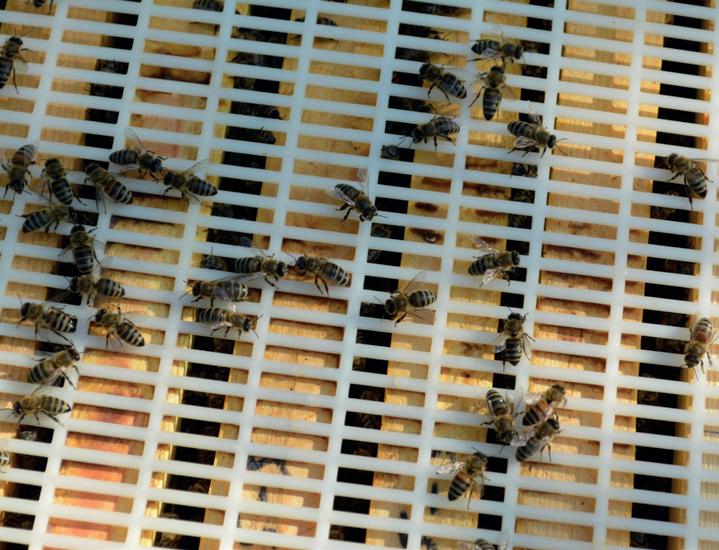
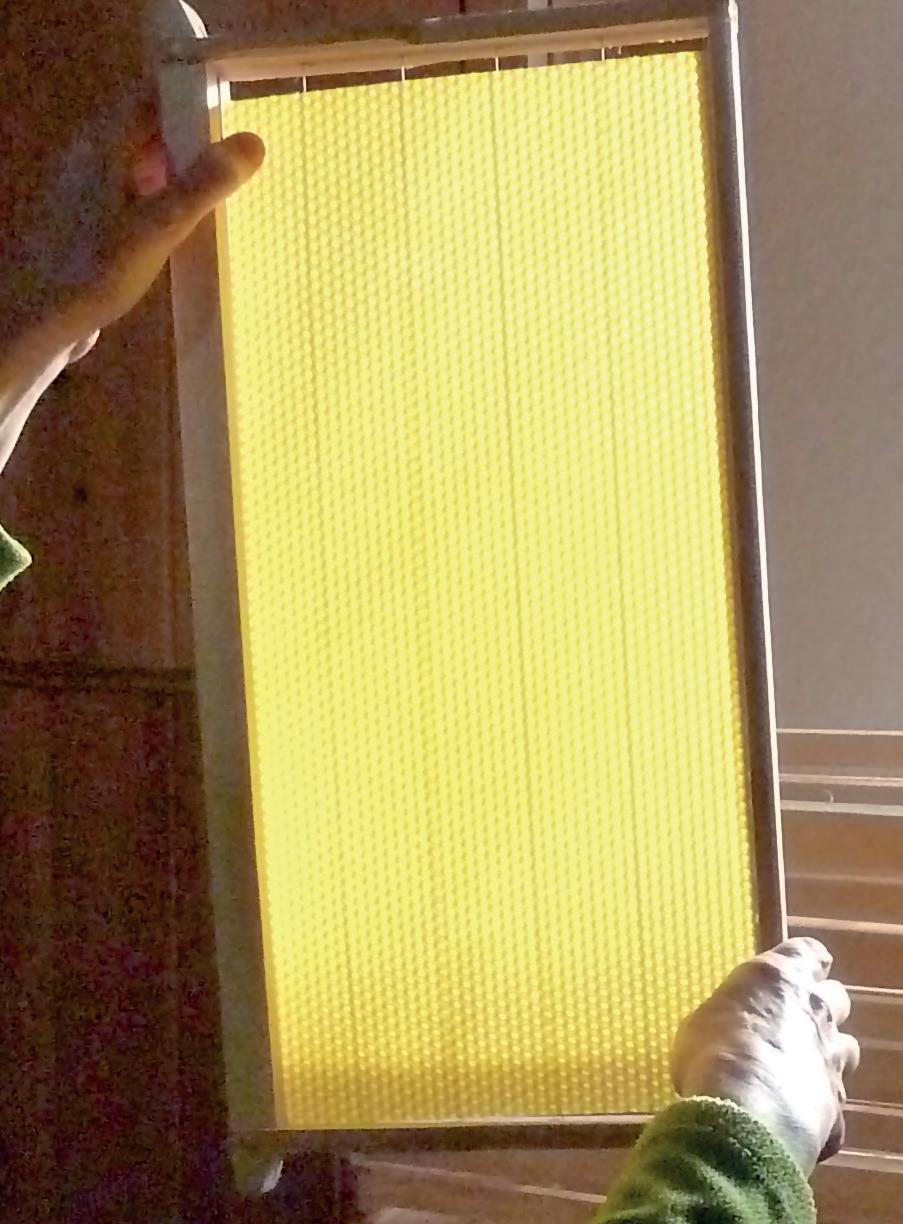
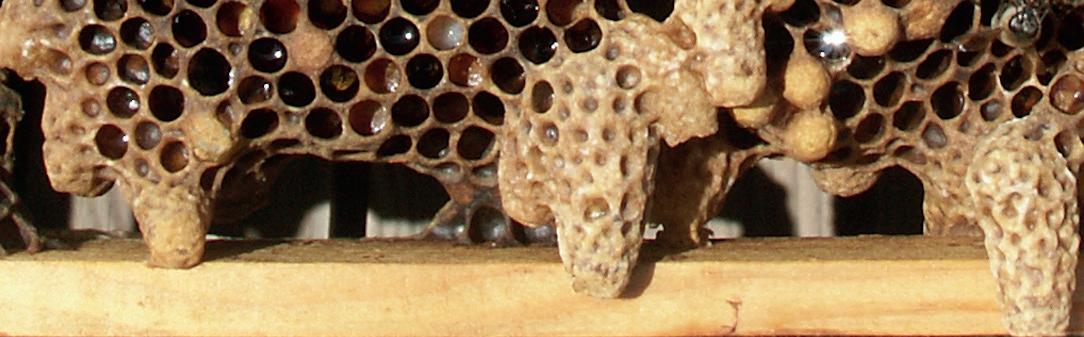
The importation of queens today is very controversial. Not only does cross-mating take place in any area in which they have been introduced, but they can interrupt on-going attempts to increase native bees in an area, bees which are able to make the best of the habitat in which they have existed for hundreds of years.

11
The Long, Downhill Road
in Beekeeping
11. Wax Foundation - Johannes Mehring (1857) - to control the bees’ construction of comb for the rearing of worker bees.
12. The Queen Excluder - L’ Abbé Collin (1875) - a barrier between the brood box and the supers which prevented the colony from constructing its nest in their natural way.
13. Frame spacing - metal ends William Broughton Carr (1887) and self-spacing frames Julius Hoffman and R O B Manley - to maintain the ‘bee space’, but which took into account neither the extra space needed for drone comb nor the bees’ desire to have thicker comb at the top of their nest (in skeps this made a good crown for overwintering).
16. Facilitated the mass feeding of colonies with inferior food: syrup.
14. Frames allowed their easy removal from the hive and cleaned of brace and burr comb.
15. Gave beekeepers complete access to the interior of the hive allowing queen cells to be destroyed (only delaying swarming and frustrating the colony).
17. Huge commercial queen-rearing stations allow queens to be exported to many parts of the world which are unsuitable for their colony’s well-being. The drones from these colonies hybridise with local bees negatively affecting their progeny including the increase in bad temper.
Transitional Beekeeping - A Time of Crisis for Honey Bee Survival
I do not think that it is a coincidence that the great mortality of bees in the first two decades of the 20th Century occurred at a time when so many beekeepers were changing from traditional skep beekeeping to transferring their colonies into frame hives. Whilst named the ‘Isle of Wight Disease’ (which defied all measures tried to cure bees suffering from it), it was for some time considered a mystery until Rennie discovered the acarine mites in the trachea which became the disaster’s scapegoat. Significantly, and again and again, reports in the BBJ came from from beekeepers who still kept their bees in skeps, who were boasting that their bees remained free of the disease; no signs of crawling and dying bees beneath the stands where their skeps were housed. British soldiers during WWI in Belgium and France found healthy colonies in skeps, where those in wooden haves had succumbed, and not surprisingly, re-stocking Britain’s bees were from skeps in these lowland countries, particularly from Holland. Interestingly, beekeeping scientist Dr Lesley Bailey found that whilst many colonies in Britain did suffer and collapse as a result of acarine disease, the mites were also found within the trachea of surviving colonies. He believed that the severity of the outbreak was partly due to the change in beekeeping methods from skep to frame hives. Obviously, the opening of hives, the sharing of combs from one hive to another which could pass on diseases and pests, added to the stress of the colonies and had a negative effect on their health. Whilst bees in skeps overwintered on natural stores of honey, modern beekeeping with the new feeding devices allowed beekeepers to remove as much honey from a colony as they desired, to be replaced with sugar syrup - further removing their colonies from natural to ‘synthetic’ forms of winter food.
Notes
Keeping the hive clean and tidy and allowing the easy removal of frames involved removing traces of propolis from all parts of the hives and frames. By doing so, beekeepers were depriving the colonies of the essential hygienic role that propolis gives to the bees.
Today and Onwards
Beekeeping globally is in a sad state:
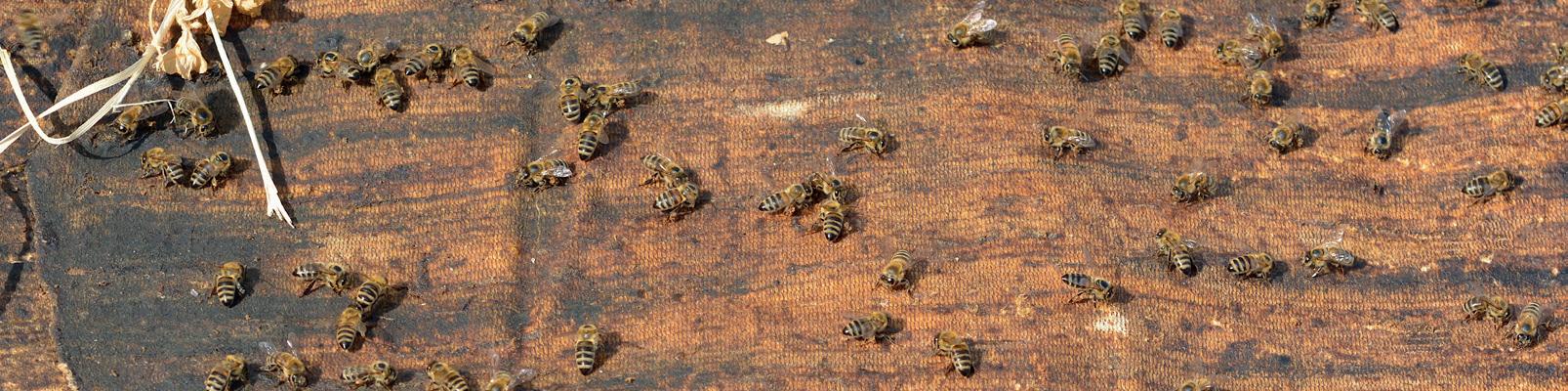
¥ Severe worldwide loss of colonies from varroa, viruses, colony collapse, pesticides and pollution
¥ Lack of year-round range of forage sources important for the gut health and immune systems, with too much reliance on monoculture and feeding colonies on various types of processed sugar syrups
¥ Year-round movement of colonies over long distances for demanding pollination workload for bees
¥ Infestation of hives with pestsvarroa, hive beetles,
¥ Treatment of colonies with pesticides which can kill brood within the comb and be absorbed into the wax which holds honey
¥ Problems with queen matings - lack of drones
¥ Longevity of queens enormously diminished in contrast with previous years
Many of the problems of beekeeping today cannot be fully attributed to huge commercial beekeeping operations; beekeeping is an essential service to agriculture if crops are to be pollinated. Large scale beekeeping could change, but agricultural practices need to change first - ie, more mixed farming, less monoculture; the creation of better environments and habitats for all forms of life, with the aim of providing a good balance of nature that enables sufficient predators to reduce the number of pests that attack our crops.
The Solution
Most importantly, beekeeping populations need to recover their strength and vitality. For far too long have they become shadows of their ancestors, being more susceptible to our challenging environments as well as to the ways in which they are managed. I strongly believe that the ever-growing number of bee-friendly beekeepers that allow their colonies to live untouched in their own apiaries, as well as re-wilding them in suitable places, may in time, through their swarming and natural mating activities, gradually come to stimulate a much-needed vigour.
The Isle of Wight phenomenon was thoroughly debunked on a scientific basis by Dr.Leslie Bailey of Rothamsted in 1981. According to Beowulf Cooper, founder of BIBBA, "Some of those personally involved in the restocking campaign have admitted to me that there was in fact no shortage of surviving native bees.” And yet as Norman Carreck has recently written, "half a century after the explanation was found to be scientifically unsound, many beekeeping books and articles still perpetuate the myth that the IOW disease was caused by the tracheal mite Acarapis woodi "; a prominent example being H R C Riches, President of the Central Association of Beekeepers and past President of the British Beekeepers Association in 1992. Even today similar claims are commonly made. However, in the last decade DNA studies by Pedersen and others in Denmark and elsewhere have conclusively shown that modern specimens of Dark Bees from the UK and Ireland fit into the genetic specification of Apis mellifera mellifera. (From DavidCushman.net)
Natural Bee Husbandry Magazine | No. 25, Autumn 2022 | Incorporating Bees for Development Journal No. 144 12
Comb
Moveable
Hives and Honey Bee Health
19 18 20
18. Propolis is collected in great quantities by bees. It is needed to seal parts of the hive, reduce the hive entrance and, most importantly, as an essential tool for the colony’s health. 19, 20. For many years at the beginning of the 20th Century many colonies were unsuccessfully transferred from skeps to frame hives. Was this the actual reason for the much-debated death of bees accredited to acarine disease?
Honey: Finding Markets for Honey of Non-Mellifera Bees
 Martin Kunz, UK. All photographs courtesy of the author.
I started keeping honey bees in my garden in 2013 in the misguided belief that this action would help ‘bees and the environment’ … While it became clear rather quickly that what bees in industrialised countries need is forage – not more A. mellifera colonies – it opened my eyes to bees wherever I went: My work for Fair Trade takes me to South and Southeast Asia often (Borneo is the centre of genetic diversity for the Apis genus) – where I found a variety of other honey bees, along with wonderful activists promoting beekeeping with native species. The main benefit is the increase of harvests as a result of pollination with appropriate species, with honey being a minor byproduct. However, one of the groups I met (Under the Mango Tree, India) wanted me to help them export their small honey harvest to Europe –which under the EU honey directive apparently was not legally possible. Together with a friend we started a company in order to test whether this obstacle could be overcome.
Six years on we finally succeeded (only on the Continent – not it Brexit land) – having accumulated a pile of financial loss, and a pile of insights. But
hopefully the main benefit of Diversity Honeys Ltd. will be to demonstrate the need for biodiversity in particular when it comes to pollination.
This is the story of our six year long sting operation:
According to the UK honey regulations, honey from Apis species other than mellifera must neither be called ‘honey’, nor must it be imported and sold as ‘honey’. If you have not heard of this regulation – neither had I until 2016, when, having ‘woken up’ to the importance of bees and other pollinators a few years earlier, I visited an exemplary non-governmental organization in India called ‘Under the Mango Tree (UTMT)’, which promotes and teaches beekeeping as a tool to help subsistence farmers improve their lives. UTMT teaches beekeeping mainly with A. cerana, because these bees are local, colonies can still be found in the wild, it is very low cost (contrary to A. mellifera), and it is very effective. Honey production is comparatively low since a colony probably only produces a fifth of a commercially managed A. mellifera stock. However,
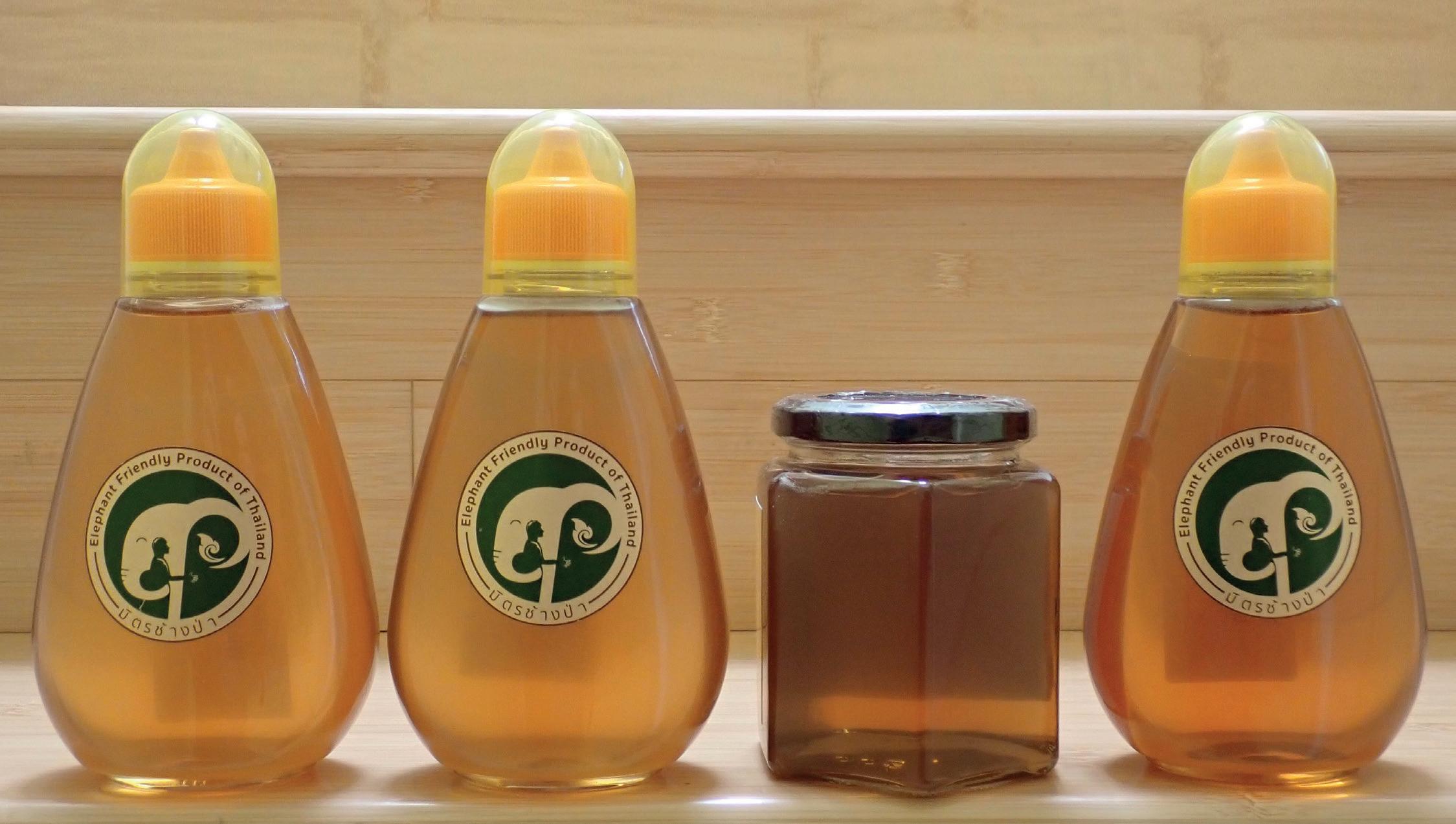
Above: At the end of my short visit to Thailand I was given these four jars of honey which I was determined to take home. One of these four was produced by Apis cerana (the other three by A. mellifera – an alien introduced into Thailand some time ago); any guesses which one?
the pollination ‘services’ of these local Apis relatives increase mango harvests by 60%, chilli yields up to 400%, and, if managed correctly, allow even a third harvest on the small fields.
At the end of my visit I was asked whether I could help export the UTMT honey to Europe “which does not allow it”. I had no clue, but said I would try to find out. And thus I found out that the EU honey directive 2001/110/EC indeed categorically states: “Honey is the natural sweet substance produced by Apis mellifera bees …”. Which is different to the FAO’s Codex Alimentarius, which states: “Honey is the natural sweet substance produced by honey bees ...”
A ‘Directive’ in the EU context means: all member states have to take measures to turn such a regulation into national law. In the UK – at the time still a member of the EU - the national honey regulations simply copied the EU one: Only A. mellifera bees produce ‘honey’.
That makes no sense, and so a friend and myself founded a company with the explicit aim of importing honey from Asian honey bees - despite these regulations.
13 “Don’t Call Me
Or: When ‘Honey’ is not ‘Honey’
Honey!”
“Don’t Call Me Honey!” Or: When ‘Honey’ is not ‘Honey’
Apart from A. cerana (which dwells in hives and is basically a smaller sister to A. mellifera) there exist about 10-12 more Apis species in Asia, with Borneo being the centre of genetic diversity of the Apis family. Of this group of Apis relatives, honey from 3 to 4 species is harvested in ‘marketable’ qualities –albeit nowhere near the volumes that would make a blip in international honey trading statistics.
Apart from A. cerana, all of these are living in the open, i.e. their nests consist of single combs, usually in difficult to access locations. For size and inaccessibility A. laboriosa tops the list. They are only found in Nepal in the high Himalayas. We know of them from pictures and videos of the daring honey ‘hunters’ dangling from huge rock faces with little protection. I have never come across their honey outside their region. A. dorsata, the ‘rock bee’, is slightly smaller, but has a much wider distribution, from (lower) rock faces to very tall trees, and (in today’s biologically impoverished environments) also man-made structures such as water towers and other tall buildings. Kipling called A. dorsata the ‘most dangerous animal in the forest’: they defend their smallish honey harvest (10 kg/colony) ferociously. But indigenous humans have been ‘hunting’ this honey, too, for thousands of years. They have learned to harvest at night (when the bees don’t follow the raiders), and by using some smoke and veils for protection.
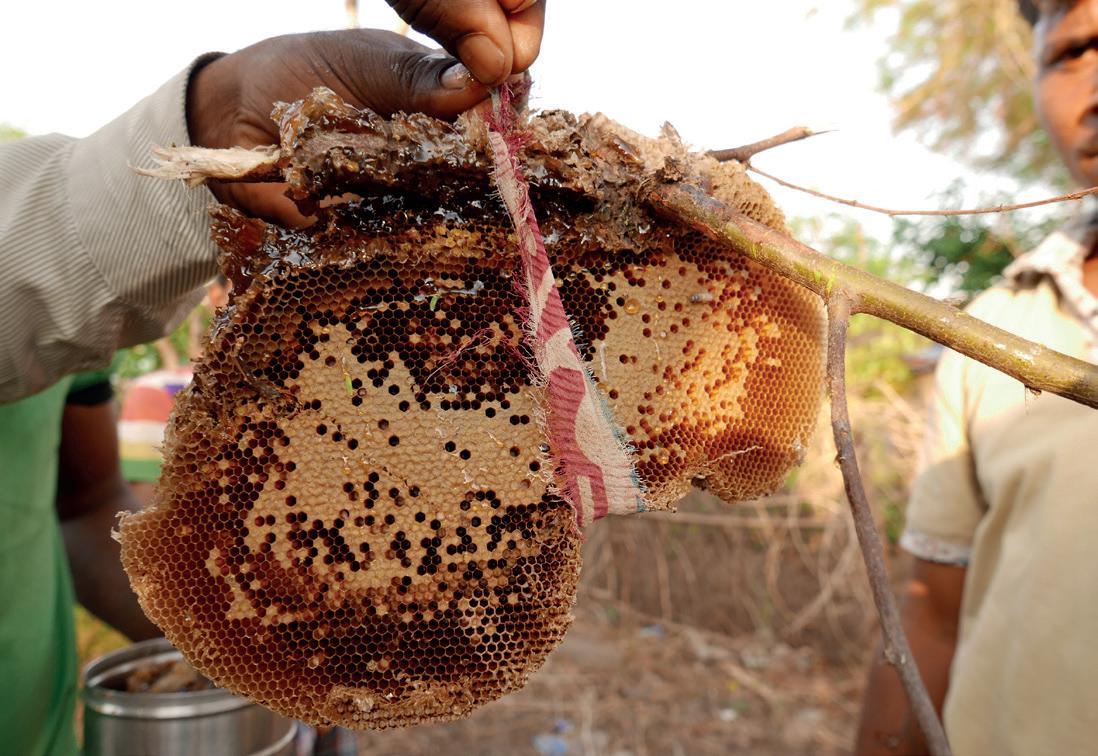
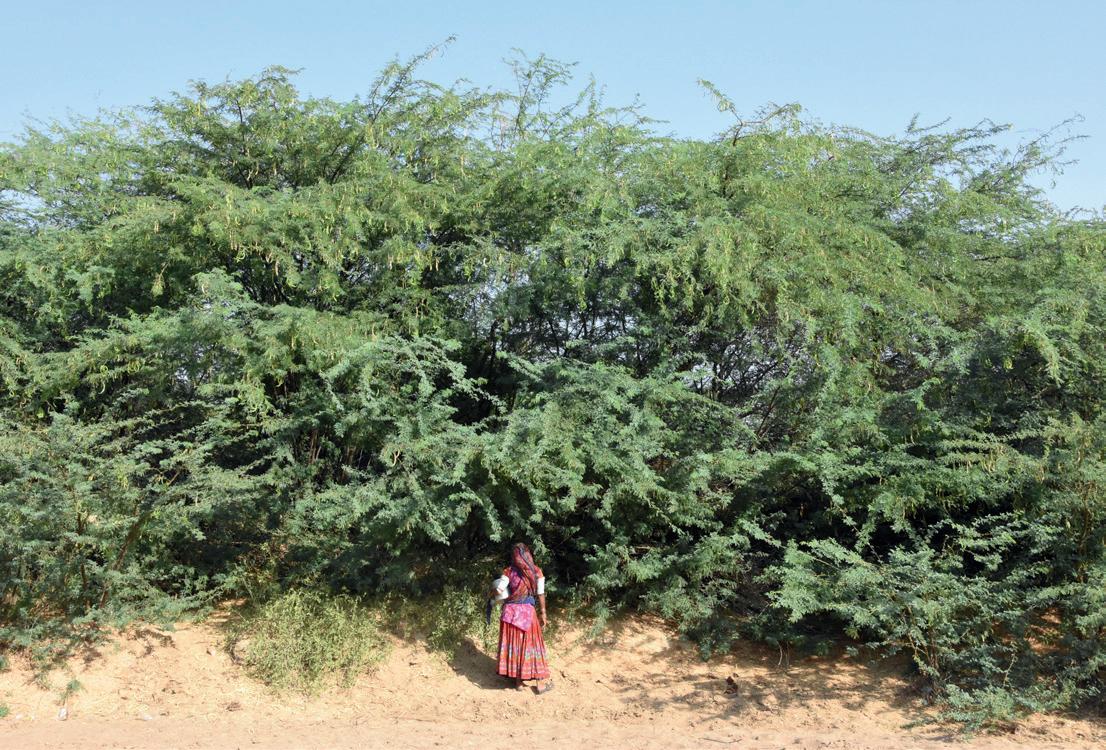
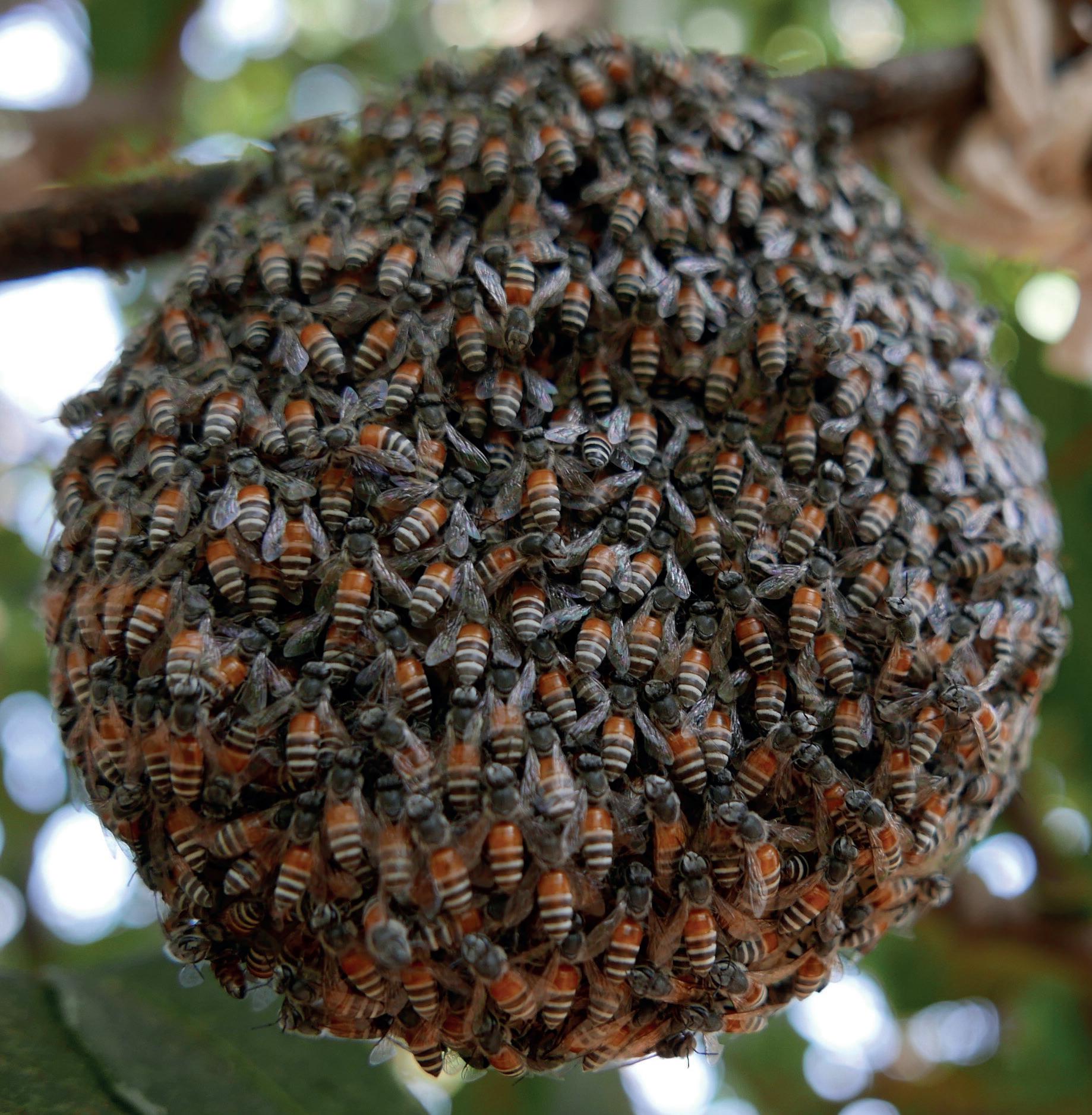
At the other end of the (size) spectrum is A. florea – the dwarf bee: When some of the Apis tribe (all of which originally were cave dwellers) left the protection of caves and trees, they either became big and fierce (like A. dorsata) to protect their brood and stores, or small and inconspicuous, which is the evolutionary path A. florea took. Their single comb is about the size of a tennis racket, hidden in thick (often thorny) bushes: only experienced ‘honey trackers’ can find these bees. And if an animal (or human) predator takes the honey stores (a drum like construction around the branch, which also serves as the dance floor for their waggle dance; the brood part of the comb is suspended from this ‘honey roll’) these peaceful little creatures simply start to build a home all over again 10-20 meters further away, scavenging wax (if possible) from their previous abode.

What does all this have to do with EU regulations? To begin with they turn out to be a sad tale of bee discrim-
Natural Bee Husbandry Magazine | No. 25, Autumn 2022 | Incorporating Bees for Development Journal No. 144 14
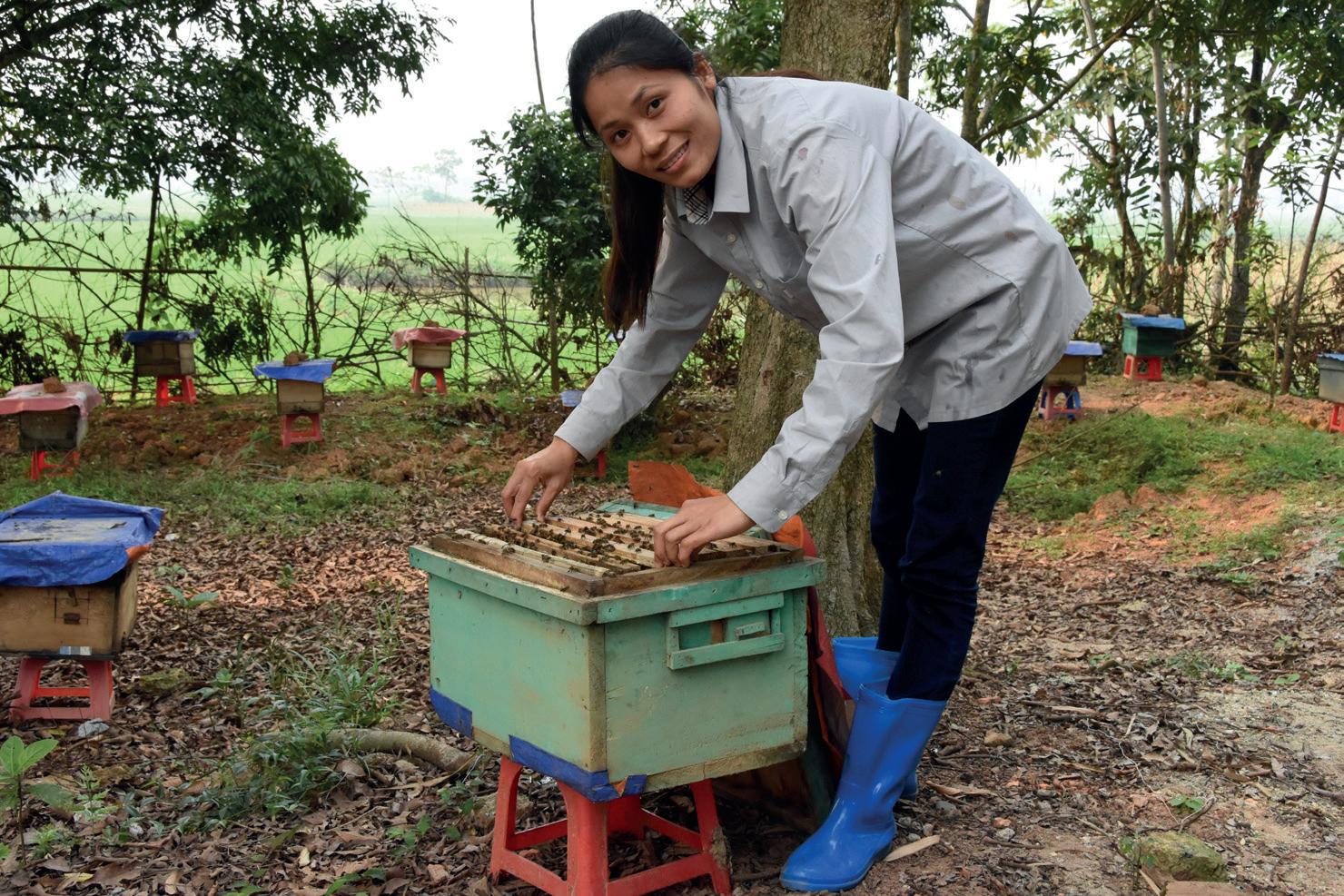
1. A. cerana in Vietnam - note the rice fields in the background.
2. A. cerana building comb.
1 2 3
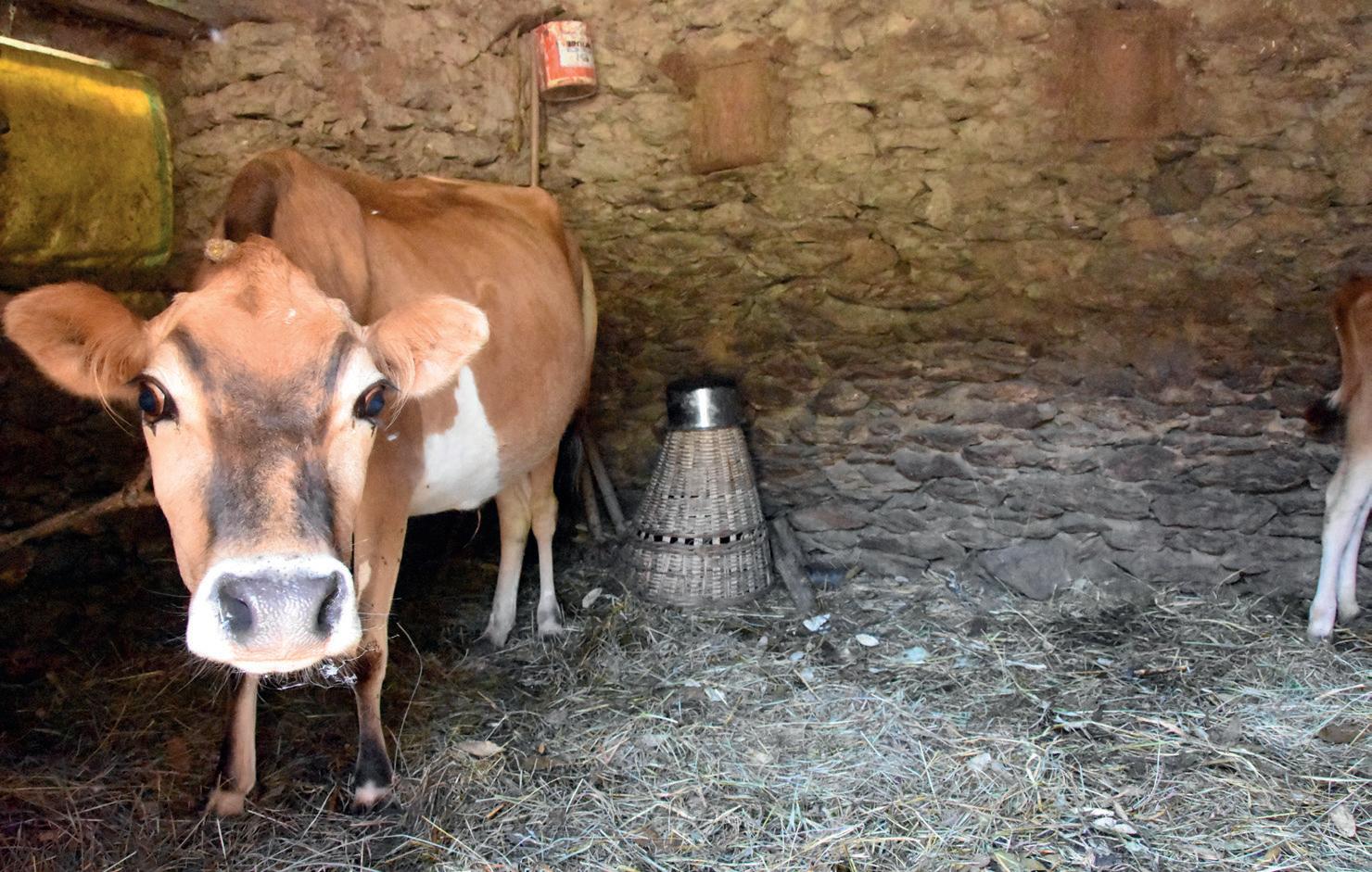
3. A good example of animal husbandry: two wall hives in a cowshed high in the Himalayas keep the bees warm, too.
15
“Don’t Call Me Honey!” Or: When ‘Honey’ is not ‘Honey’
2. The brood part of the A. florea nest is tied back to the branch after the honey has been harvested.
3. Spot the A. florea nest!
1. A. florea nest
1 2 3 4b 4a
ination and possibly more than a hint of lingering colonialism. The technical parameters that honey has to comply with are based on beekeeping in ‘temperate’ zones. The only concession, even in EU regulations, actually ‘acknowledges’ that by allowing at least an increased HMF parameter for honeys from tropical regions.

Let’s consider moisture. According to EU/UK regulations, the maximum moisture content permissible, apart from heather honey, is 20 %. How are bees with combs in the open to manage this, in tropical environments, during the monsoon season when the air holds so much moisture that it feels like walking through water? For example, an A. dorsata honey recently offered to us measured 22% - an amazing feat by the bees as far as I am concerned. Honey traders can gently reduce the moisture to comply with EU regulations – but (e.g. within Apimondia) there are those who cry foul: they claim that reducing water equals ‘adulteration’ – blissfully ignoring the fact that even A. mellifera themselves do this: after all: nectar has 60% moisture to begin with.
A particularly interesting parameter is C4 sugar, which does not show up in the EU directive, but is used by authorities as ‘proof’ of adulteration. And indeed, if C4 sugar shows up in a European or North American honey, it is likely that it has been adulterated with corn syrup, corn (or maize) being a C4 plant. C4 and C3 refer to the two different ways in which plants photosynthesize. Photosynthesis is the process by which plants combines water and carbon dioxide from the air and, with the help of energy from the sun, turn it into sugars that feed them. The key difference is that C4 plants store energy during the day, but only open their pores during the (cooler) night hours to absorb the carbon needed to produce sugar. The C4 process evolved in numerous plants in hot regions because it allows the plant to produce sugars while conserving as much moisture as possible. For plants in temperate regions, moisture conservation mostly isn’t much of an issue, they can afford to open the leaf pores during the day to take up CO2.
This being the case, there are plenty of C4 plants in tropical countries on which bees can forage. C4 sugars showing up in the honey they produce is NOT a sign of adulteration. The most common weed in rice fields visited by bees is C4 (rice, wind pollinated,
17
“Don’t Call Me Honey!” Or: When ‘Honey’ is not ‘Honey’
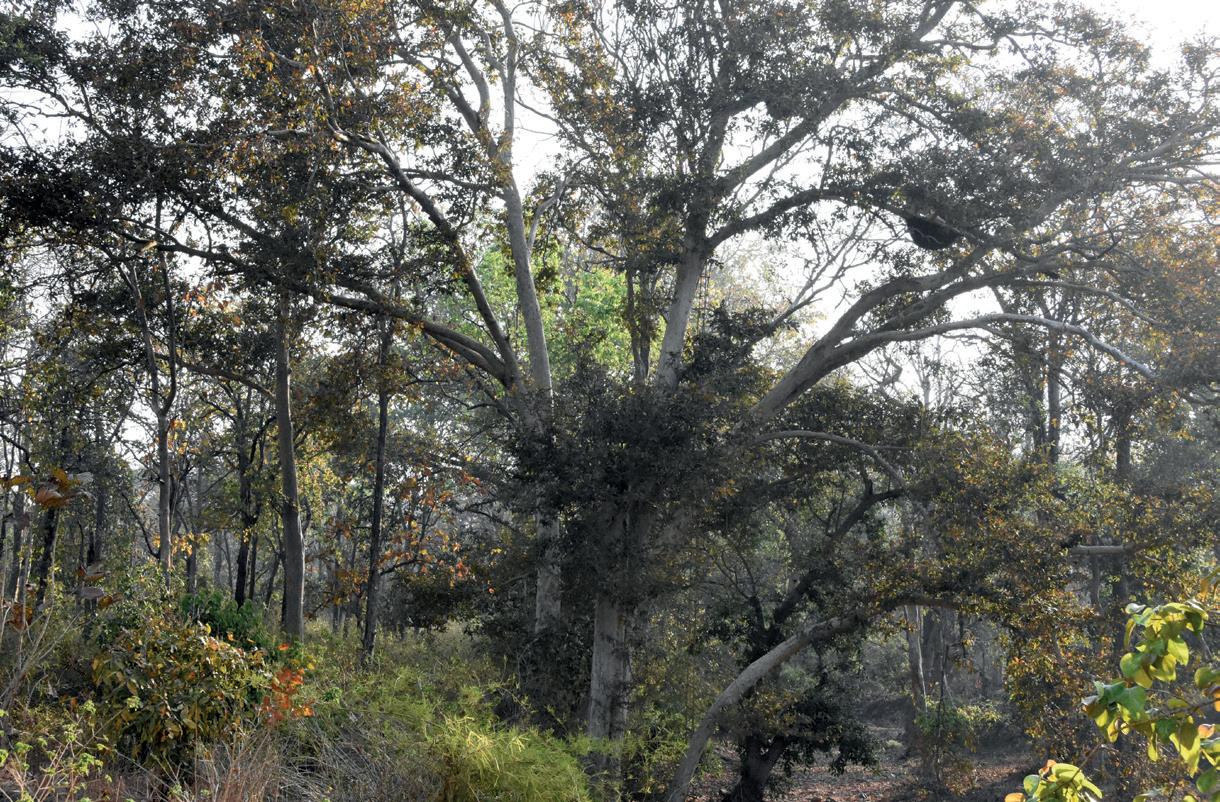
1. Tree with A. dorsata colony (top right quadrant).
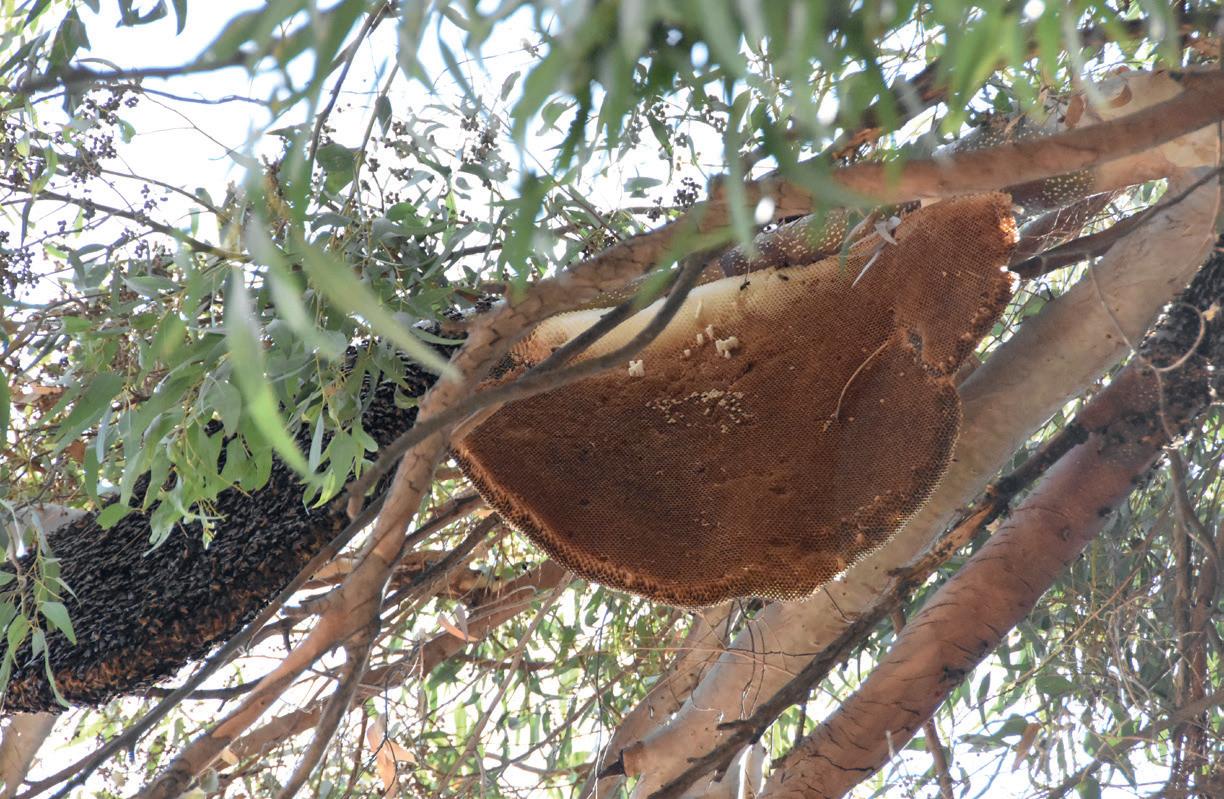
2. Abandoned A. dorsata comb and ‘live’ colonies.
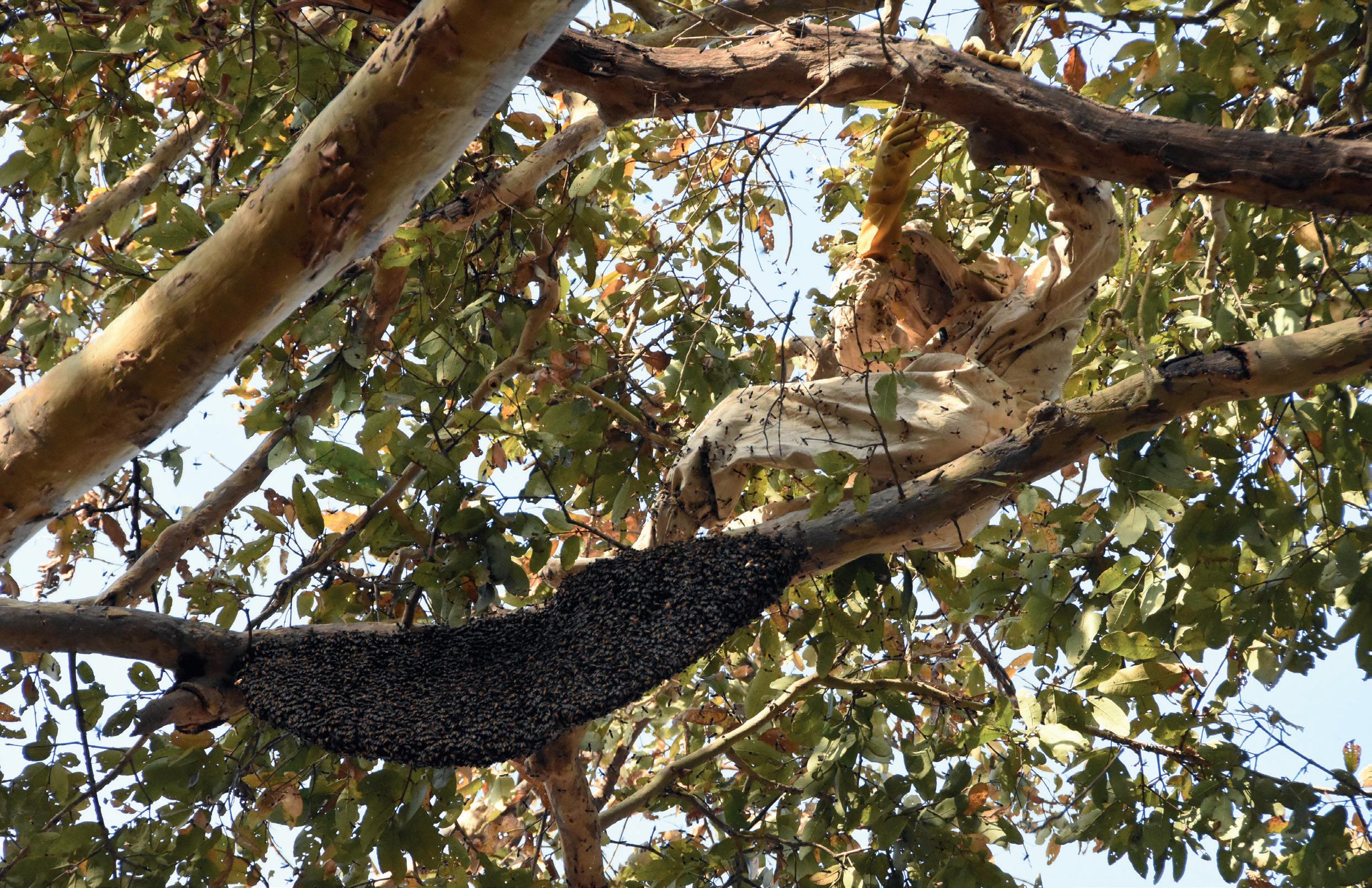
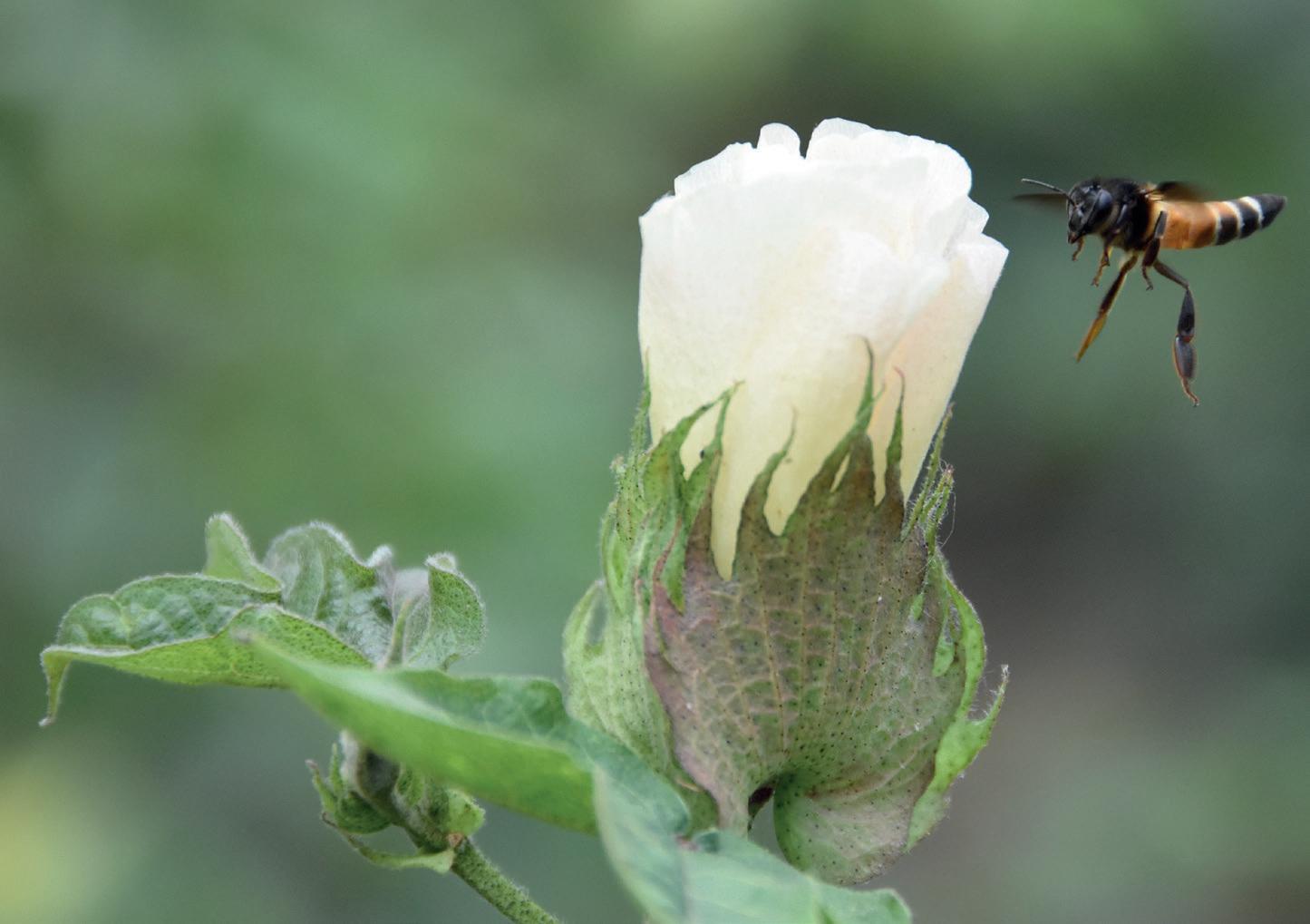
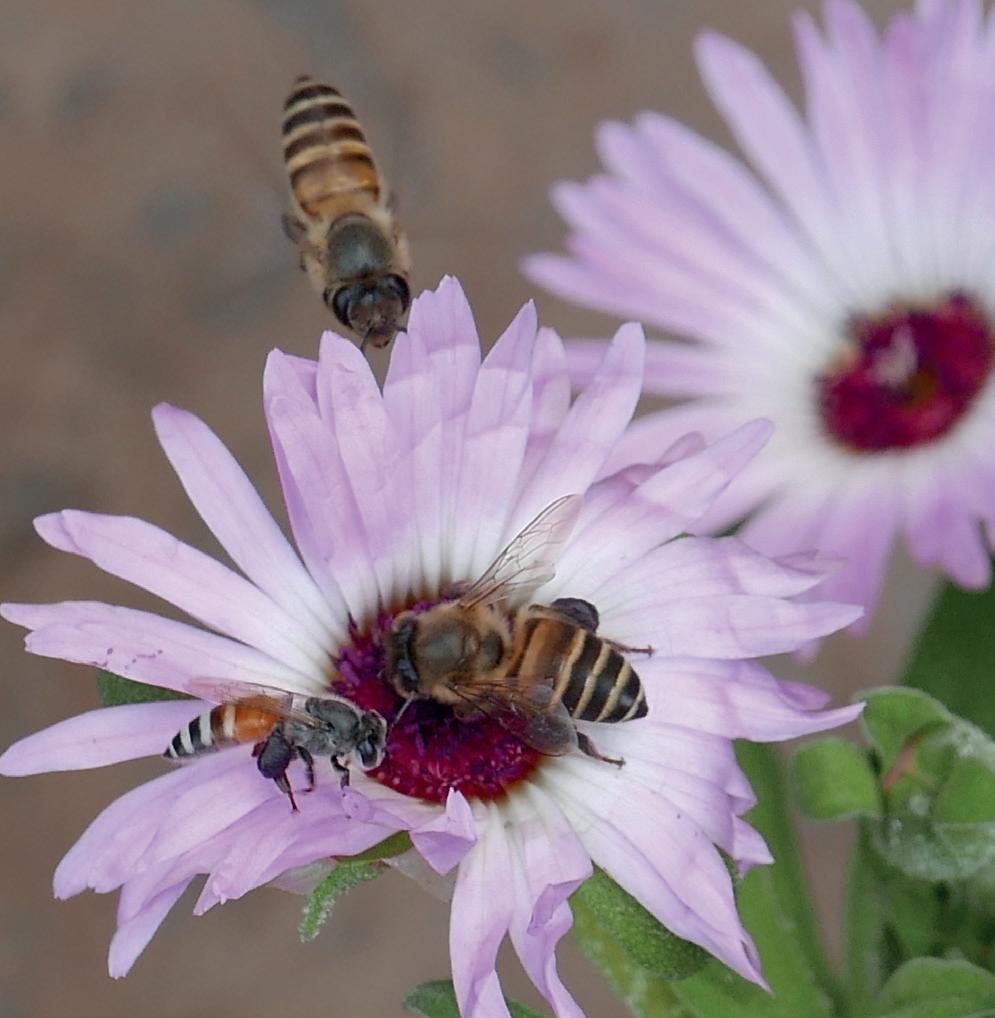
3. A. dorsata colony about to be harvested, note bees have started to defend. 4a. Two Apis cerana and an Apis florea on a potted 'ice plant' in the middle of New Delhi; 4b. A. dorsata approaching a cotton flower.
5 6
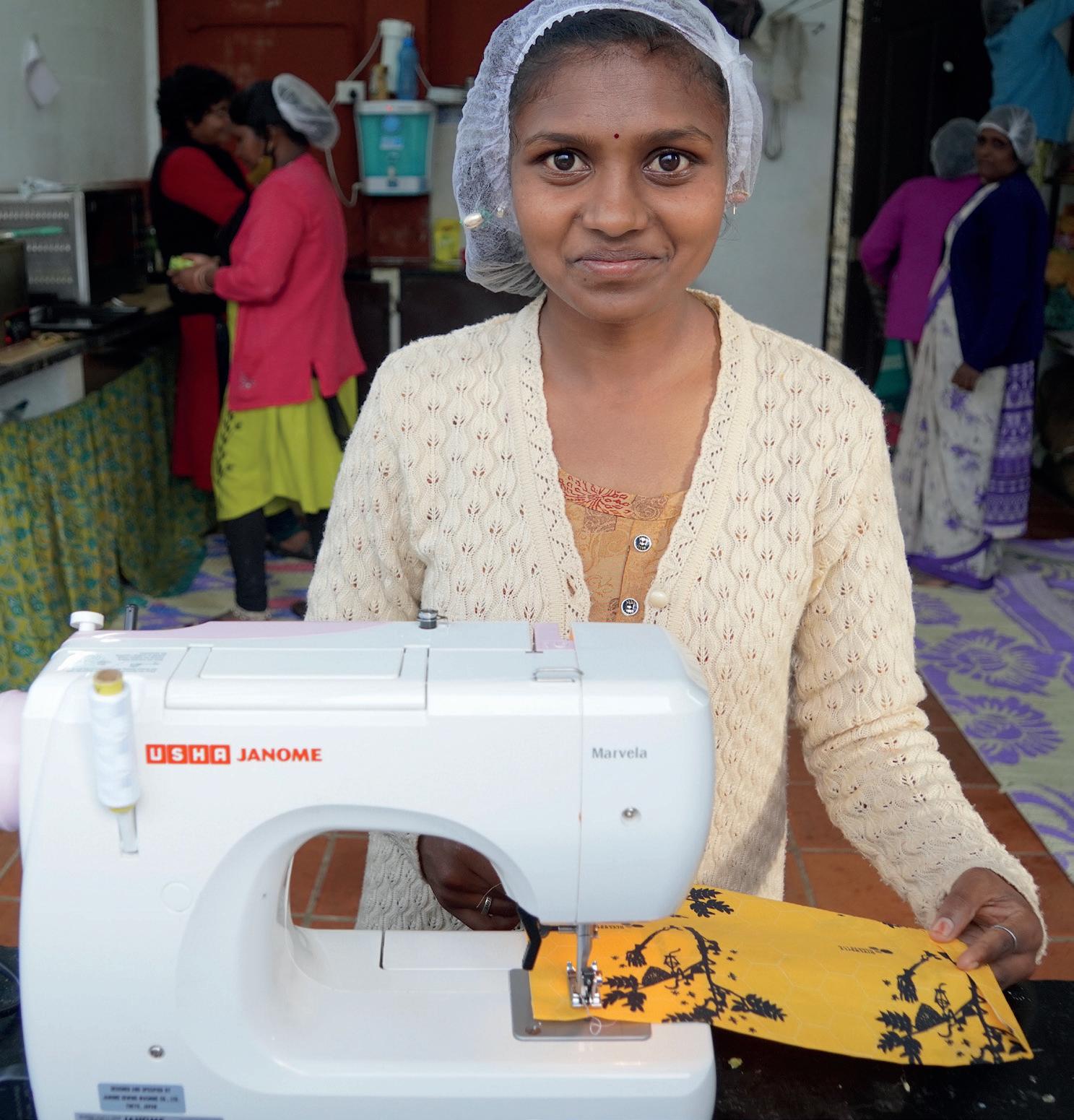
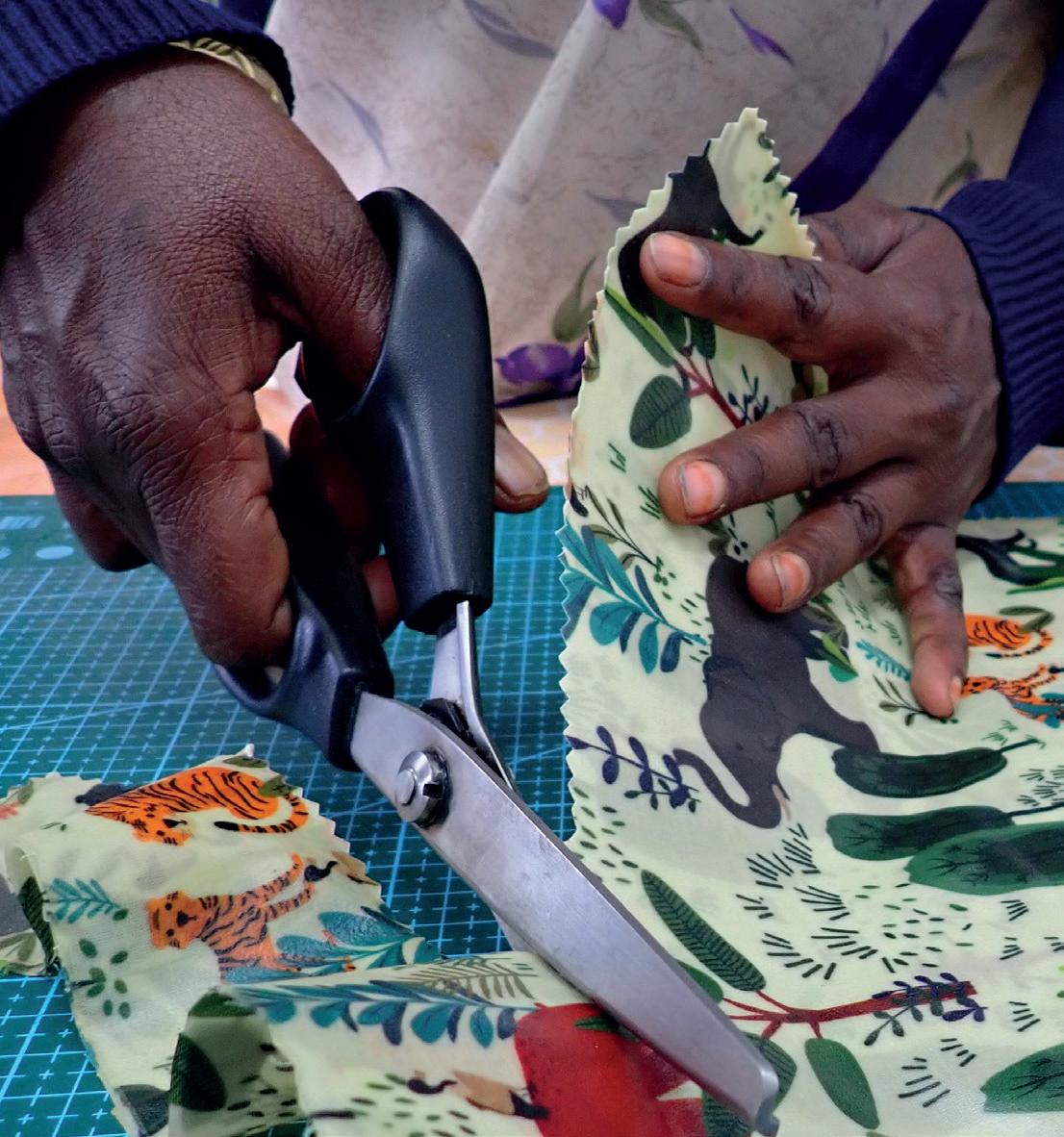
5. Success - at last, after a very long campaign! 6, 7. The use of wax for making wraps for foods is becoming increasingly popular. The women here are using the wax from A dorsata colonies once the honey has been pressed out.
but visited for pollen, is C3), as are numerous tropical tree species. In other words: C4 sugars in a honey from a tropical region are not automatically/possibly not at all ‘proof’ that illegal syrups have been used to ‘stretch’ the honey. It is necessary to check the flora of the area where the honey comes from. Sugar cane is a C4 plant and sugar cane syrup is used to adulterate honeys, but there is definitely no sugar cane grown in the Himalayan foothills, nor the western desert where our offerings of honeys come from.
HMF, too, is of course on the EU list as an attempt to check whether honey has been heated for (illegal) processing steps. While fully understanding and accepting the need to take all possible measures to prevent honey fraud (after all honey is only just behind milk and olive oil on the list of ‘popular food items to be adulterated’). Discriminating against honeys from small scale, genuine artisanal production settings in biospheres that have no resemblance to Europe nor Northern America does not strike me as fair.
Obviously, bearing in mind that the important missions of this journal are to encourage the production of natural and sustainable beekeeping (using diverse species of bees) and to help rural countries in developing countries to find markets both local and abroad for their products, we see our attempt to import ‘exotic honeys’ as an important trend.
Of course there are possible illegal ways around the trade barriers, but this is not a course anyone should be taking; important ventures like this should be above board and completely ethical. The UK ministry in charge of honey imports stated in a query we sent to them in 2016 that regarding the regulation referred to above that “There are no specific requirements relating to the species of bee. As long as you can comply with the import conditions, the honey can be imported.”
Despite problems with our attempts to import honey (Vietnam initially didn’t accept the validity of the UK ministry pronouncement) a shipment of honey was delivered safely to a packer in Wales. This was to be held in storage until we had procured other honey varieties. Unfortunately, subsequent attempts to import other types of honey led to four years of frustration - insufficient volumes from a specific supplier, honey contaminated with miticides, refusal of forwarding a shipment of A. dorsata honey by the EU due to high C4 sugar measurements, problems with paperwork which prevented the export of honey, a horrendous episode of the honey having to be returned from a UK harbour as it was in one sticky mess having been stored in Mumbai warehouse, and problems with faulty paperwork during Covid lockdown, meaning the destruction of the product at the importer’s expense. We further learned from all this is that ‘advice’ given by the UK Ministry isn’t acceptable in a legal case when we tried to find some compensation for the charges we were facing.
Recently, using a ‘sister’ company in Germany (the country so beholden to rules and regulations had left a small legal option, unlike the UK bureaucracy) we were enabled to import one A. florea and two A. cerana honeys from India. On Tuesday 4th of January, 2022, in the late morning hours, an unmarked van delivered seven drums of honey to an unobtrusive warehouse in the north of Germany. We had at last found a way to legally import non A. mellifera honeys into Germany, despite the scientifically untenable and, in effect, discriminatory EU regulation. The A. cerana honey was from the lower regions of the Himalayas, and the A. florea honey was from the Western desert region of Khuch (India). Packed and ready for marketing we found that honey
consumers were hit by the fallout from the pandemic and the War in Ukraine. Rising inflation and exploding costs of living made consumers draw their purse strings tight, there being only room for basic goods in the shopping basket; new, exotic and exciting products remain on the shelf.
We can only hope that this will change again – not just because of our little business: we want to keep drawing attention to the fact that Asian honey bees and the pollination services they provide are essential for the food security of millions of people. Honey is a sweet and delicious way to convey this message. That’s why we have nevertheless purchased some more honeys in South Asia – because these Asian bees, too, have a season when honey can be purchased, and that is from March to May.
One of the new honeys being packed right now in India is from a rubber plantation in South India.
After forty-five years in Fair Trade, fifteen in Fairly Traded natural rubber, and now six of Fair Trade ‘exotic honeys’, I’ve learnt that bees collect honey from rubber trees, but not from the flowers: When the tree produces new leaves in spring, the supply of sugar sap from the tree to the new leaves is not (yet) in balance – a bit like the limbs of dangly teenagers. And so, a sugary sap at the joint of the leaf oozes out of so-called extra floral nectaries.
We do hope that Diversity Honeys will survive the current difficult market situation – and grow beyond its own teenage stage, while never losing sight of its main aim: to highlight the threat to our (global) environment, one pollinator at a time, one jar of honey at a time.
Although I’m not Catholic I have always liked St Jude –the patron saint of ‘hopeless causes’ (depicted with a nice strong wooden cudgel). At the next opportunity I’ll light a candle (made of bee’s wax of course) – because now we have to sell those jars that did make it into Germany, legally, preferably before the next shipment arrives … and for that we need all the help we can get.
Note 1. From left to right: Wildflower honey - Apis mellifera; wildflower honey - Apis cerana; lychee honey - A mellifera; longan honey - A mellifera. Did you guess correctly?
Natural Bee Husbandry Magazine | No. 25, Autumn 2022 | Incorporating Bees for Development Journal No. 144 18
7
Pests. Varroa and Feral
Bees: Which is the Villain?
A very controversial point of view.
Associate Professor Patrick O’Connor, of the University of Adelaide, is obviously a lateral thinker (one suspects that he may also sometimes enjoy playing devil’s advocate). In a recent article for The Conversation (the conversation.com June 29th 2022), he explores the notion that the varroa mite could be viewed in a positive light as an effective form of biocontrol for feral honey bees.
Professor O’Connor argues that feral honey bees are a threat to our native biodiversity, as they are both abundant and effective competitors for nectar, depriving native birds, insects and mammals of this resource. He adds that feral bees can change the composition of the vegetative landscape, because they pollinate invasive species (which can be costly to control) and avoid some native plants.
The fight against varroa undoubtedly comes at a significant cost, at both government level, in terms of identifying and destroying infestations, effective surveillance and quarantine and support for affected industry, and for beekeepers, who face not only the loss of a substantial proportion of their colonies, but also increased labour and cost as a result of implementing a varroa management plan. And then there’s the estimated $14 billion of agriculture that is more or less dependent upon honey bees for pollination, coupled with the potential knock-on costs to consumers associated with decreased production or added expense. Alternatively, instead of treating the mite as a pest, Professor O’Connor reasons that if we treat it as a method of biocontrol, this would mean diverting funds otherwise earmarked for eradication and control to projects designed to help us live with varroa. He cites as potential examples increasing the use of native pollinators to assist agriculture, and deliberately releasing mites into feral honey bee hives in areas where native pollinators could benefit the most, such as environments recovering from bushfire. It is also suggested that the destruction of feral honey bees could in fact be beneficial for the commercial bee industry since they compete with managed hives.
Professor O’Connor acknowledges that evaluating the trade-off between potential environmental benefits versus costs to agriculture is not easy. But if we accept that it is almost inevitable that varroa will one day become entrenched in this country, he advocates that we should at least investigate the possibility of using the mite as a biological control, rather than simply committing all our resources to its exclusion. It’s an interesting and thought-provoking proposition.
Nevertheless, the impacts of feral honey bees are controversial and difficult to quantify. And it is an inescapable fact that, like it or not, much of our arable land has been converted to agriculture, and that feral bees are currently valuable pollinators of many crops. There is also evidence to suggest that the genetic diversity provided by feral honey bees may be beneficial; research published in PLOS ONE in 2012 showed that: ‘Colonies with genetically diverse populations of workers, a result of the highly promiscuous mating behavior of queens, benefited from greater microbial diversity, reduced pathogen loads, and increased abundance of putatively helpful bacteria.’
“We’ve never known how genetic diversity leads to healthier bees, but this study provides strong clues,” said
co-author Heather Mattila, a researcher at Wellesley College. Hives with more uniform genetics were found to be 127 percent more likely to harbour harmful pathogens than those that were genetically diverse.
Writing in Natural Bee Husbandry, Andy Collins suggests that feral bee colonies are also favoured by being further removed from neighbouring colonies, compared to those in managed apiaries, and that vertical transmission of disease (i.e. from one generation to the next, as opposed to horizontal transmission between colonies) inevitably leads to the rise of less harmful variants of pathogens, since the host organisms must necessarily be able to reproduce in order to transmit the disease. He compares thriving wild colonies with managed colonies in the same area which are treated for varroa and plied with supplementary food to stave off starvation, and concludes that wild colonies benefit from seclusion. Free from the stress of outside interference, he believes this enables them to optimise adaptive behaviour and successfully cope with environmental challenges.
So, is the varroa mite destined to be a valuable method of biocontrol to save native ecosystems from the insidious feral honey bee? Or will feral bees themselves prove to be an essential reservoir of genetic diversity that may one day prove to be the answer to Colony Collapse Disorder?
Pests. Asian Hornets
Massive nest containing 1,600 Asian hornets is found – and the insects are still alive after spending 28 hours in the freezer Jersey Evening Post, 14 th September, by courtesy of the Editor, Andy Sibcy
BEING hunted, thrown into a plastic bag and frozen alive would probably spell the end for most creatures – but it turns out that the Asian hornet can be hard to kill. The team responsible for tracking the invasive species have told how the half-dead occupants of one of the biggest nests they had ever encountered emerged to attack – despite being frozen for more than a day.
The nest, which weighed just over 8kg and was close to a metre in width, was found in a field near Waitrose in Vallée des Vaux.
Jersey Asian Hornet Group volunteer Bob Tompkins said the team became aware of it when a dog walker spotted hornets disappearing into a large bramble patch on the edge of a footpath.The nest, which weighed just over 8kg and was close to a metre in width, was located in a field near Waitrose in Grands Vaux. ‘It was the biggest ground-based nest we’ve ever had,’ he said.‘You can imagine what would have happened if someone was just coming along to pick blackberries.’
More than 1,300 hornets were removed using a specially designed vacuum, while a further 235 from the monster nest were caught in nearby traps.
The nest was transferred to a freezer, where it was stored for 28 hours before its dissection by group members John de Carteret and Bob Hogge.
However, Mr de Carteret said that the process – which usually kills all of the resident insects – had failed to wipe out the large nest’s population.
‘Normally they just go in overnight. We peeled the bag back, took a look and thought “hang on, that’s a live hornet coming out”,’ he said.
19 Pests
Pests. Small Hive Beetle
Aethina tumida becomes a severe problem for beekeepers in Ghana’s cashew farms
Stephen Adu, Giacomo Ciriello and Isaac Mbroh, Bees for Development
What was not a problem, now is
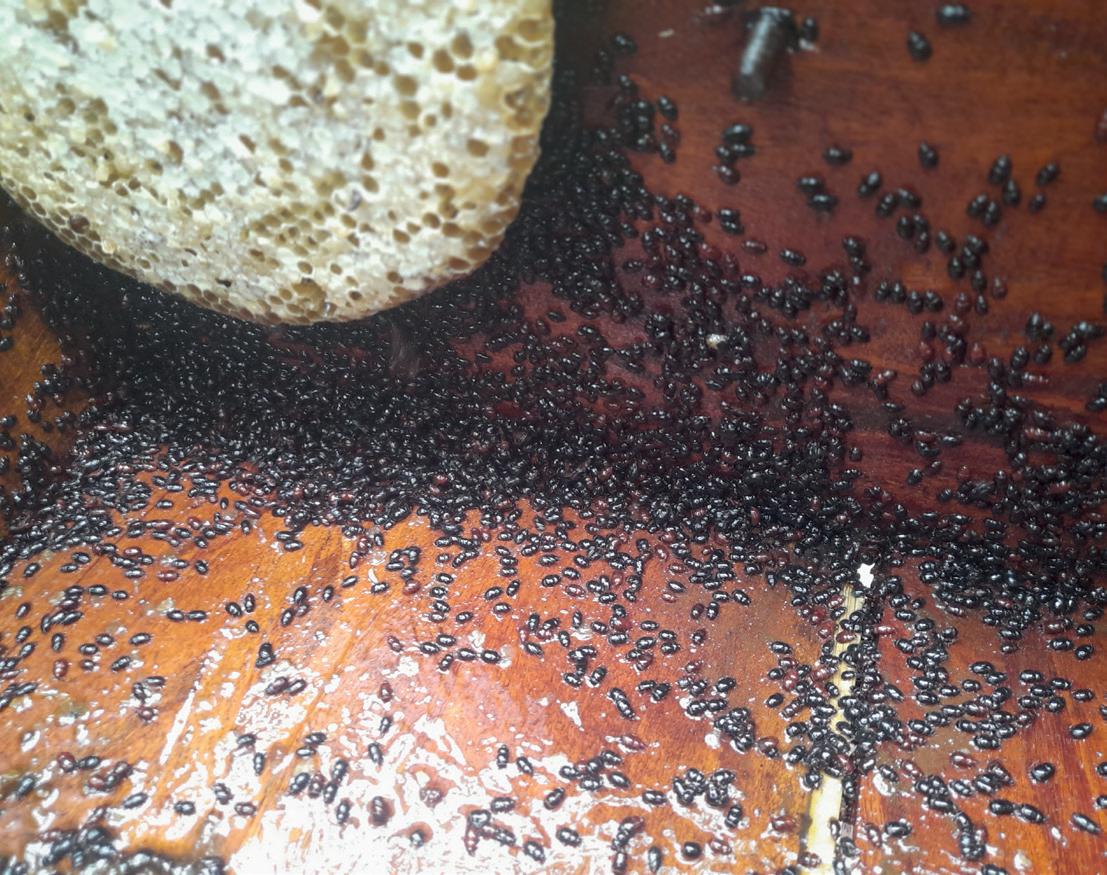
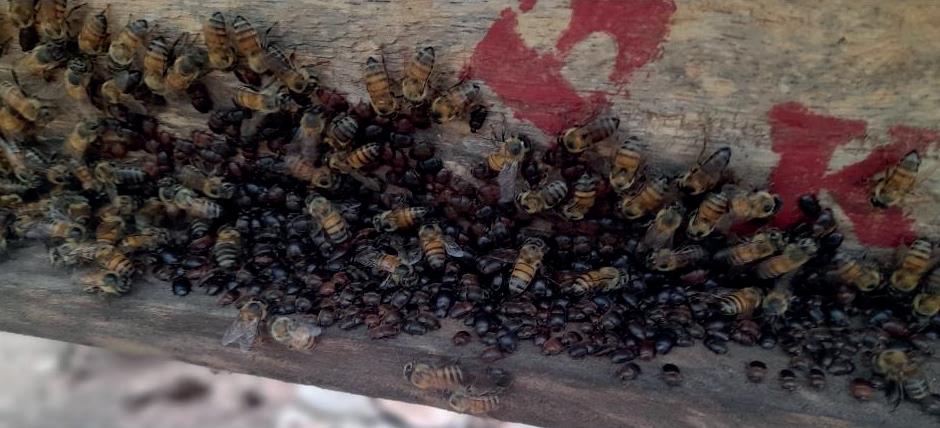
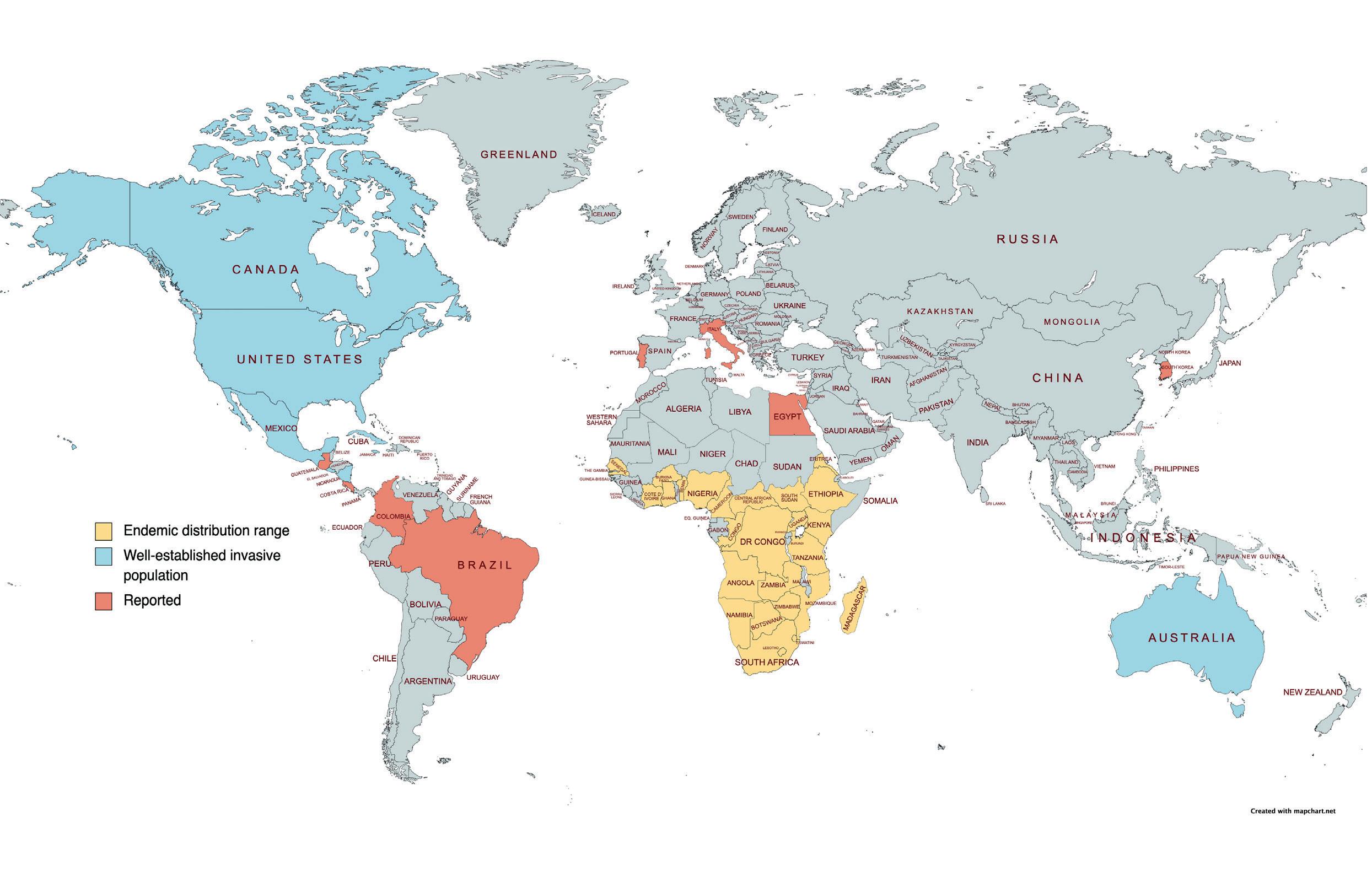
Aethina tumida is a beetle species endemic to sub-Saharan Africa and classified as invasive in north and central America and Australia. Commonly known as small hive beetles, they scavenge on honey bee colonies. Upon emerging, adult beetles seek out colonies and hide in hive cracks and crevices. Females lay eggs on or close to comb, so that hatching larvae can feed on brood, honey and pollen. Larvae then leave hives to pupate in soil. Within its local range, small hive beetle is considered a minor pest that tends to infest weak colonies and does not usually cause enough damage for beekeepers to bother with any control methods.
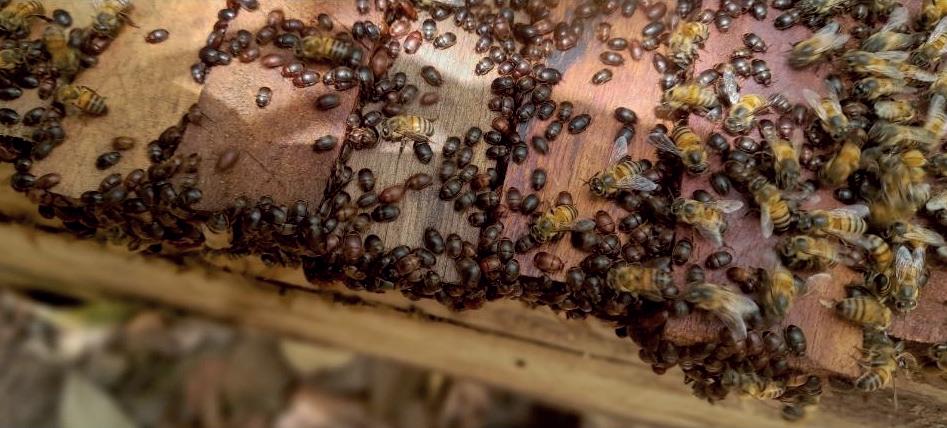
Previously the beetle had not been a problem for beekeeper Stephen Adu, or for other beekeepers working in central Ghana, where apiaries are now a regular sight on the many cashew farms which characterise the landscape around Kintampo, Nkoranza and Techiman. In March 2022 beekeepers noticed more severe infestations of small hive beetles, affecting even their strong colonies and quickly leading to absconding, completely spoilt combs and fermenting, contaminated honey. Stephen contacted Kwame Aidoo Director of Bees for Development Ghana for advice.
Natural Bee Husbandry Magazine | No. 25, Autumn 2022 | Incorporating Bees for Development Journal No. 144 20
2
3a
1, top. Aethina tumida global distribution map. 2, above. Aethina tumida, absconding and spoilt comb. 3a, 3b, below. Aethina tumida severe infestation.
3b
Development article
Bees for
To understand the extent of the issue and subsequent damage, Stephen and Isaac interviewed 18 beekeepers in eight communities. All had experienced unprecedented severe infestations of small hive beetle and lost colonies to absconding as a result. This amounted to 593 colonies across 147 apiaries. Isaac estimated the collective economic loss to be about US$/€10,500.
Experimenting with traps and treatments
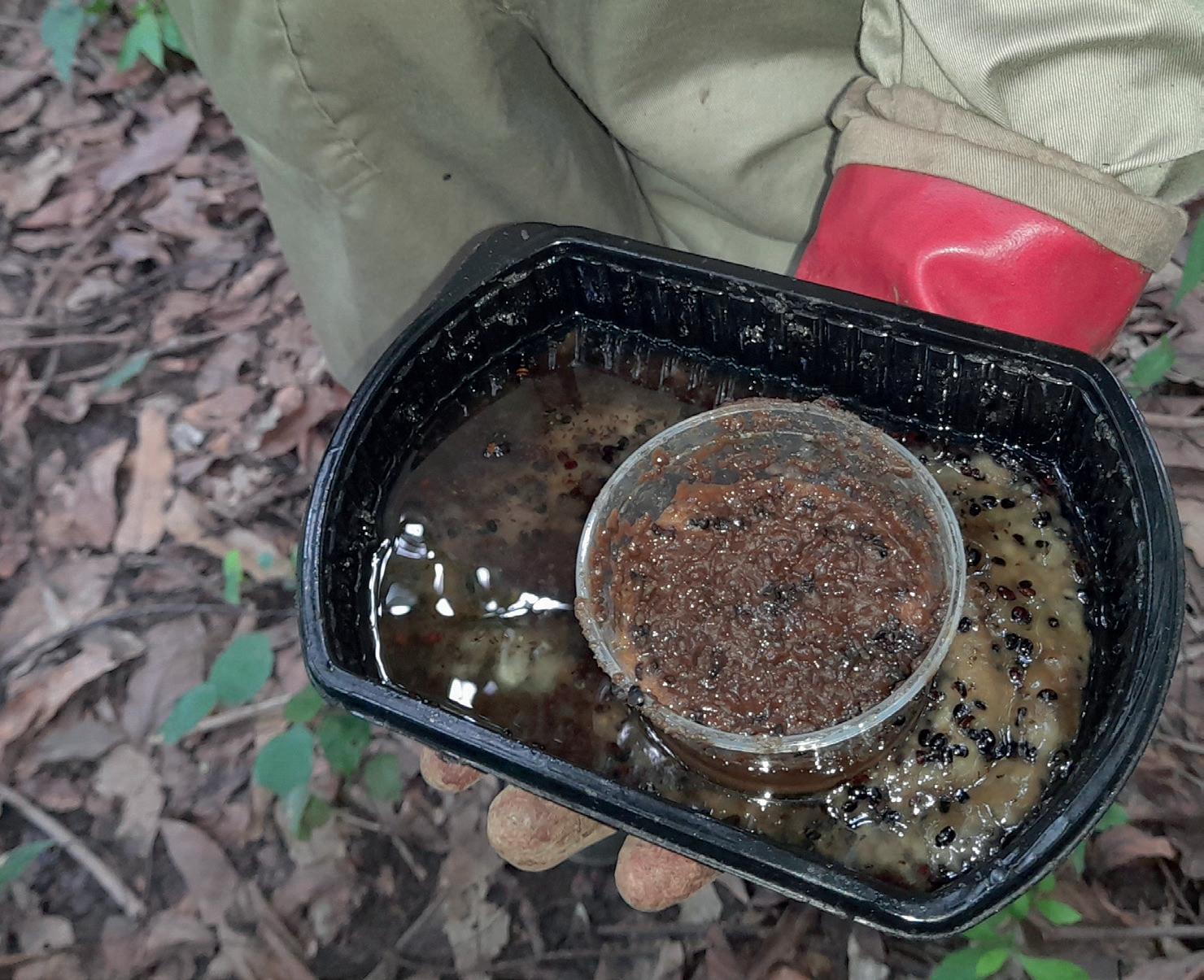
Kwame provided some options to control the beetle populations. He advised Stephen on making traps with takeaway food boxes, baited with soybean paste and honey and recommended filling crevices in hives. Also spraying neem leaf extract in the soil around hives to disrupt the life cycle as the larvae go to pupate. Stephen observed that beetles often congregated on the top of top-bars, and he developed an idea of combining powdered neem leaves with wood ash and spreading the mix on the top-bars. He trialled these different control methods across 12 apiaries and recorded the outcomes.
Stephen shared news of his experiments with other beekeepers, and many then tried a combination of these methods. Stephen carefully monitored and observed apiaries with severe infestations.
Traps were effective at attracting and stopping beetles, inside and outside hives, but were insufficient by themselves to control large infestations. Making traps required buying plastic containers, mineral oil and soybean paste, plus the additional labour of baiting, setting, checking and cleaning them out.
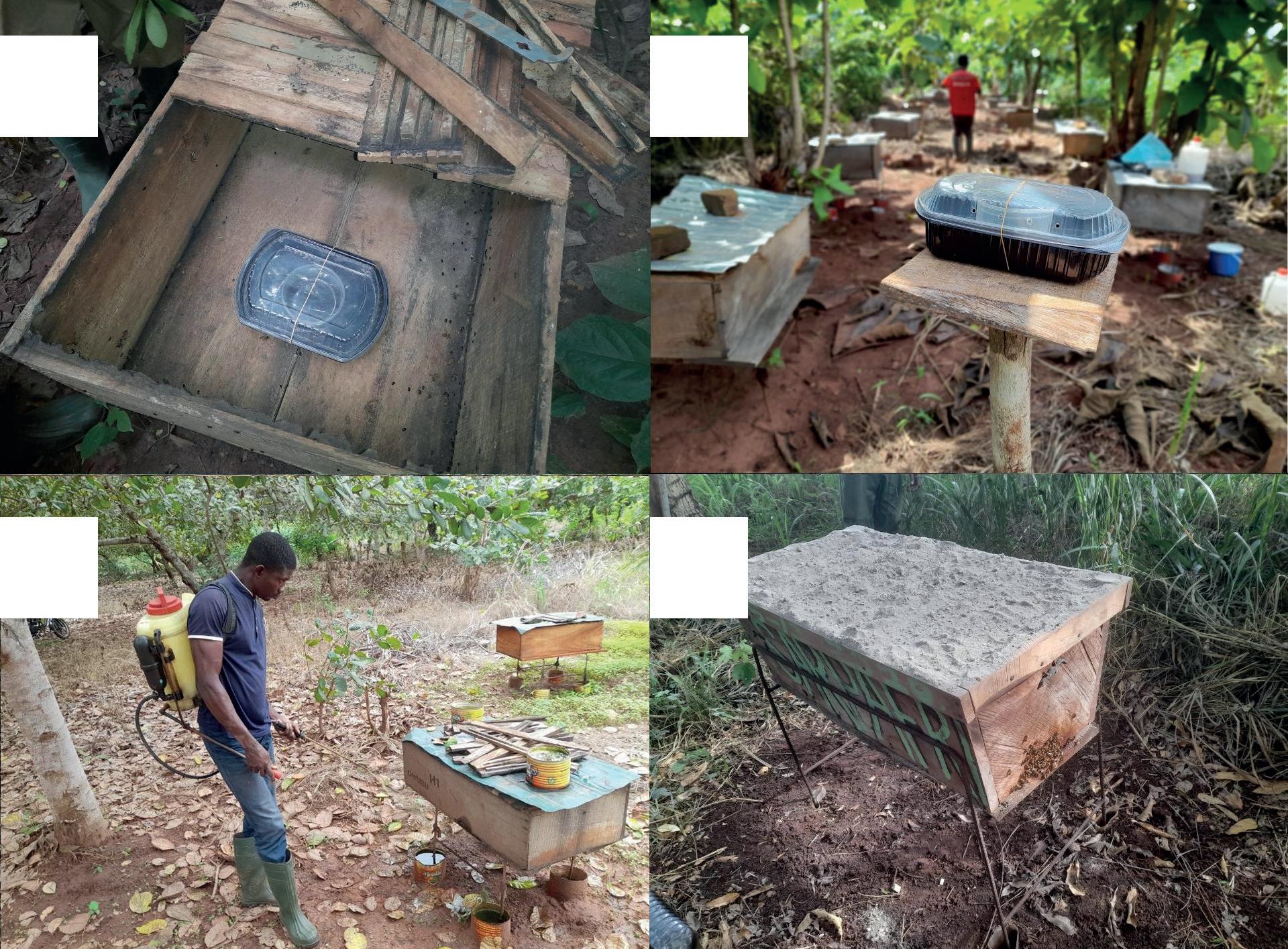
It was difficult to determine if spraying neem extract solution on the soil surrounding hives was effective in disrupting the beetles’ life cycle. Neem-based bio-pesticides can be powerful antifeedants and disrupt insect growth and reproduction. For the concentration necessary in and around an apiary to effectively weaken and collapse large populations of beetles, it is likely to severely affect honey bee populations, other insects in the vicinity and the many other pollinators collecting from cashew trees. The effects may not be immediately apparent, but no beekeeper wants to use pesticides and risk slowly poisoning their bees and environment.
Similar concerns apply to covering the top-bars with wood-ash and neem-powder mix. Stephen and other beekeepers who tried this method noticed substantially reduced beetle congregations inside the hives one week after application. Anecdotally, this was the most effective control method. Stephen noticed that it was just as effective in hives where, having run out of neem powder, he had applied only wood-ash. In future he intends to try using only wood-ash on the top-bars as
treatment for infested hives to reduce the risks associated with neem-extracts. By August 2022, the situation had returned to normal – with severe infestations of small hive beetle observed mostly in weaker colonies. This may be due partly to the effectiveness of control methods, but more significantly to seasonal changes. The beekeepers confronted with this new challenge have learned much, but many questions remain unanswered. A critical one is: how has the balance in the rela-
21 Bees for Development article | Pests. Small Hive Beetle
4. Control methods trialled – (a) trap inside hives, (b) trap in apiaries, (c) spraying neem extract on soil, (d) wood ash and neem powder mix on top bars.
4a 4c 4b 4d 5 B fD article
5. Traps checked after a week.
tionship between the honey bee and the small hive beetle tipped in favour of the latter here?
Rotten roots of the problem
Stephen trained as a master beekeeper on the Cashew, Bees and Livelihoods Project run by Bees for Development

Ghana 2017-2020. One of the goals of this project was to help a cohort of young people to become professional beekeepers and trainers, managing hundreds of colonies and supporting cashew farmers to keep bees on their orchards. Stephen has 250 colonies of his own and a further 120 on behalf of 16 farmers. Most of these colonies are in apiaries of 15-30 hives on cashew farms.
We believe that this style of intensive beekeeping within areas of intensive cashew nut cultivation is causing an imbalance in the host-scavenger relationship. The mechanism tipping the balance in favour of the beetles is probably the abundance of food. Not only do the beetle populations benefit from access to a lot of colonies, but also to big piles of rotting cashew apples, all in one place. Cashew farmers pick the nuts and leave the apples to rot, as there are no processors buying them and they are not highly regarded as fresh fruit.
Studies show that, with fruit as an alternative food source, small hive beetles are able to complete their life cycle even in the absence of bee colonies (Ellis et al. 2002), that beetles will lay eggs and feed on rotting fruit even when bee colonies are present in the vicinity (Buchholz et al. 2008), and that the presence of an abundant food source other than honey bee colonies may serve as a refuge and be a source of further infestations (Neumann & Elzen 2004). Large apiaries with mounds of fruit rotting on the soil nearby are a haven for small hive beetles.
The roots of the problem are in economic history. Cashew nuts are a cash crop grown for export, mostly unprocessed, that has turned large areas of West Africa into monocultures of non-indigenous trees. Tonnes of cashew apples could be processed into jams or juices, but the local food processing sector remains underdeveloped. Every year hundreds of tonnes of more widely consumed fruits including mangos, oranges and tomatoes go to waste in Ghana because processing or exporting them is not economically viable. Over decades, the lions-share of investments as well as development
aid has gone into export-orientated farming rather than developing the national food industry.
Strong and locally adapted honey bee populations may do well in cashew, citrus or oil palm plantations and beekeepers may harvest large honey harvests. But for how long will these bees stay healthy in an environment stripped of biodiversity and diverged from the natural ecosystems in which the bees evolved? In cashew farms, mounds of rotting fruit allow small hive beetle populations to skyrocket and overwhelm even strong colonies. In oil palm plantations, hives are burned, and the bees killed by palm wine tappers. Beekeepers with hives on citrus farms see trees covered with black mould and uprooted to be replaced with cocoa seedlings which leaves little for their bees to feed on.
Looking ahead
An important learning point, for those beekeepers who are in it for the longterm, is to seek out and protect apiary sites that offer more diverse and less polluted food sources. Plantations are there and remain an abundant source of nectar that can be exploited for gain, so beekeepers need to continue encouraging farmers to manage their land in pollinator-friendly ways. We must also acknowledge that it will
become increasingly difficult to carry on practising natural beekeeping in these unnatural environments. To conserve our strong honey bee populations, we must also be conserving the landscapes in which they developed –diverse forest-savannah parklands.
Stephen is not currently using any of the control methods experimented earlier this year. He is making sure his swarm catching boxes have no cracks and small entrances and that there are plenty around his apiaries so that if a colony absconds due to an infestation, they have somewhere clean to move into and start again. As the next cashew picking season comes along, Bees for Development Ghana will be looking to test our hypothesis that mounds of rotting cashew fruits offer additional breeding grounds for small hive beetle.
Images © Bees for Development Ghana
References
NEUMANN, P.; ELZEN, P. (2004) The biology of the small hive beetle (Aethina tumida, Coleoptera: Nitidulidae): Gaps in our knowledge of an invasive species. Apidologie 35: 229-247
BUCHHOLZ, S.; SCHAFER, M.O.; SPIEWOK S.; PETTIS J.S.; DUNCAN M.; RITTER W.; Robert SPOONER-HART R.; & NEUMANN P. (2008) Alternative food sources of Aethina tumida (Coleoptera: Nitidulidae), Journal of Apicultural Research, 47:3, 202-209
ELLIS J.D.; NEUMANN P.; HEPBURN R.; ELZEN P.J.; Longevity and reproductive success of Aethina tumida (Coleoptera: Nitidulidae) fed different natural diets. Journal of Economic Entomology 2002 95 (5):902-907.
Natural Bee Husbandry Magazine | No. 25, Autumn 2022 | Incorporating Bees for Development Journal No. 144 22
6. Cashew apples discarded after nut harvesting.
Bees for Development article
Bees for Development takes a closer look at Nature-based Beekeeping in Amhara, Ethiopia
Janet Lowore and Getsh Kassa, Bees for Development
Ethiopia’s Ten-Year Development Plan: Pathway to Prosperity (20212031) aims to increase honey production from 59,000 to 152,000 tonnes a year. This raises questions about the type of intervention needed to achieve this growth. Often the narrative in the beekeeping sector in developing nations' context is about ‘modernisation’, implying a shift in beekeeping approach towards greater adoption of the movable comb hive. In this article we take a closer look at the beekeeping system used by one experienced beekeeper in Ethiopia and ask questions about what this might tell us about the factors which support successful beekeeping.
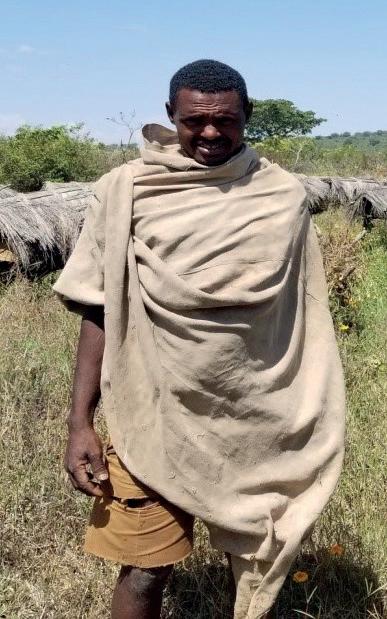
Anduamlak Asmare lives near Bahir Dar in Amhara, Ethiopia. He is 31 years old and married with three children. When Anduamlak was visited by Bees for Development Ethiopia in November 2021 he explained how he started beekeeping;

“I began beekeeping as a child and learned the basic skills and resources from my parents and grandparents who were living in this kebele*”.
Anduamlak owns 48 colonies located in the forest area. Most of the hives he uses are local-style widely used in Amhara; constructed using locally available materials. Anduamlak sells honey and bees to support his livelihood, confident in the knowledge that he will be able to catch more swarms and split his remaining colonies to increase his colony numbers. The sale of 58 bee colonies earned him ETB63,000 (US$/€1,240) and is encouraging him to engage more in bee colony selling. Asked about his apiary site he explained:
“I keep all bees in a forest area far from my home because I have learned from experience there is ample forage resource there and the micro-climate is more suitable for bees compared to homestead beekeeping”.
Anduamlak is convinced that keeping bees in the forest area is more productive than backyard beekeeping and believes the main reasons for this are greater availability of forage, a strong affinity between the bees and the natural setting and reduced human and livestock interference. He explained:
“I have a neighbour who used to keep 30 colonies next to my apiary in the forest. Last year he transferred them to his backyard because he felt that they would be safer as he was concerned about theft at the distant forest location. He was surprised to find that he could not get as much honey as previously and his beekeeping income reduced”. Anduamlak believes that this happened because forest beekeeping, in a natural setting, is more productive.
Anduamlak is most interested in localstyle and top-bar hives. His reasons:
¥ Easy to construct using locally available materials
¥ Very suitable to catch swarms
¥ No need of sophisticated and additional pieces of equipment
¥ Appropriate for natural settings
¥ Suitable for colony management
He considered that movable comb hives are not suitable on account of their high cost, which is a constraint to beekeeping on a large-scale, that they are not compatible with local beekeepers' indigenous knowledge, and ill-suited for swarm catching. Of the three types of hive Anduamlak is clear. Top-bar hives are productive and make inspection and colony management easy, but are less suitable for forest beekeeping because anyone, even those with no experience, can open them and steal honey. Given the forage advantages of placing hives in the forest – this is a real issue. He least prefers movable comb hives on account of high price, being difficult to manage, high risk of theft and the need for additional
equipment, for example honey extractors. On balance Anduamlak considers the local-style hives to be most practical.
Anduamlak earned over ETB28,000 (US$/€533) from honey sales and ETB63,000 (US$/€1,200) from sale of the colonies, a total of ETB91,000 (US$/€1,700) a significant proportion of his total income.
The forest area where the hives are kept is relatively green and conserved well. We asked Anduamlak about natural resource conservation:
“As you may observe my apiary is relatively green and there are beautiful flowers and green plants even if the summer season is ending. This is because I take care of this landholding and no one can cut a single tree here, or even enter the place. But, when you see the other common lands especially grazing lands, no one is taking care of them, and all that people want is to harvest the remaining resources of trees and shrubs. I believe that if there were many beekeepers next to me the environment would be conserved well”.
Case study information collected by Bees for Development Ethiopia
Taking a closer look
There is much to learn from this case study. The beekeeper is successful, making not only a good income from his system, but a good profit – all without adopting the advanced features of so-called ‘modern’ beekeeping. His outgoings are minimal. Anduamlak, who gained his skills from family members, has a keen understanding of the advantages and disadvan-
23 Bees for Development article | Bees for Development takes a closer look at nature-based beekeeping in Amhara, Ethiopia
B fD article
Anduamlak Asmare catching a swarm.
tages of different hive types and recognises that his preference is based on a balance of different factors – citing cost, useability and practical issues. Of particular interest is the intersection between hive type choice, apiary location and habitat protection. The beekeeper has evidence that the forest location away from the village provides excellent forage for his bees and this forage abundance underpins his good honey yields. Yet this distant location has implications for safety, and he would prefer not to place movable comb hives in this distant location for this reason. In addition to the other benefits of local-style hives –low cost, ease of swarm catching – they are more resistant to thieves, therefore the most practical option for the preferred forage rich location. It is fascinating to learn how the beekeeper protects his hive sites from other users, demonstrating a good link between beekeeping and habitat conservation.
*A kebele is roughly equivalent to a village. Images © Bees for Development Ethiopia
Conclusions
¥ Movable comb hives are not a panacea for profitable beekeeping, other systems are very effective
Beekeeping in Wulu, South Sudan
Janet Lowore, Programme Manager, Bees for Development UK and Andrea Akol, Executive Director, Humanitarian Actors for Grassroots Initiative, Juba, South Sudan
Beekeeping is the main source of cash income for the Jur Bele community in Wulu County in the Lakes State of South Sudan. Farmers set up hives which they make themselves from natural materials in and around their homesteads.
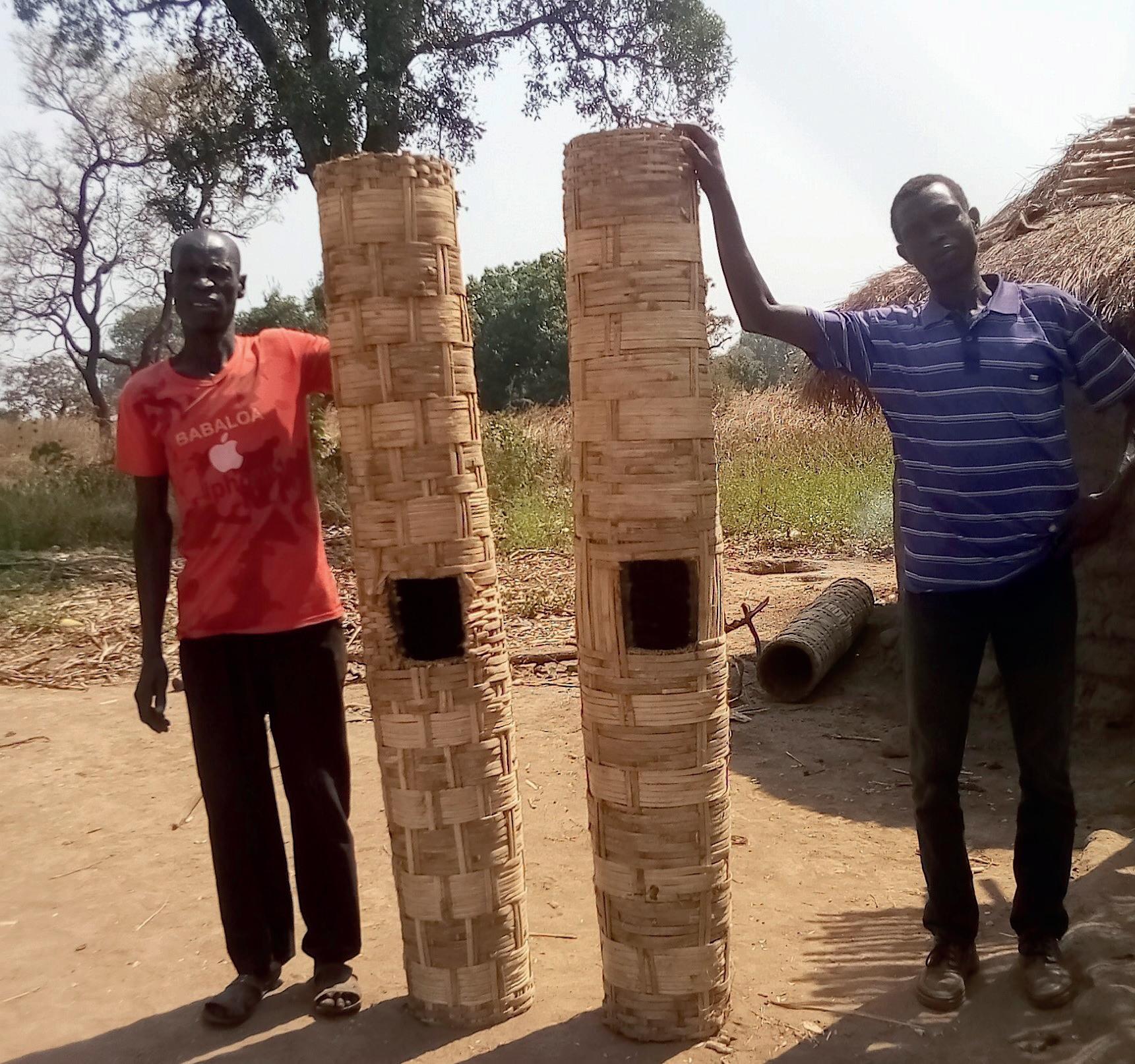
Farmers report that beekeeping is very beneficial, because it is possible to generate good income from selling honey, yet hives take up little space in the homestead. It is common for members of the Bele community to use honey as wealth for dowry payments and beekeepers with more hives are respected in the community. Honey mixed with other products like groundnuts and sesame is nutritious and sells well in the market. Beekeeping helps with food security as a source of economic exchange and helps people survive.
The peak seasons for harvesting honey in the county are May to June and September to October. After harvest the honey is separated from the wax and packed in bottles for sale in the local market, with some sold further away. The Wulu Beekeeping Association processes and packs honey for sale in Juba and Rumbek.
Wulu County is currently suffering from an economic downturn and high inflation, brought about by inter-communal conflicts. Local people survive by growing their own food and have little disposable cash income. The price of food and other commodities has increased drastically, and the poorest people are struggling. This means that the demand for income-generating activities like beekeeping is increasing, although they are affected by conflict and violence.
The conflict is characterised by clan fighting, and cattle raiding, looting and burning of houses, causing people to be displaced from the worst affected areas to villages around
¥ When considering the suitability of a beekeeping system for any given location, it is necessary to consider all aspects of the system and not only hive type. Scalability, fitness for purpose, security, ease of management, ease of swarm catching and need for other accessories (or not) must also be considered
¥ Local knowledge and culture are important, they give people a sense of security, ownership and empowerment
¥ We learn that forage abundance and richness is the greatest determinant of yield. Taking this into account, this case study tells us that for Ethiopia to meet its honey production goals it is probably most important to pay attention to habitat and forage availability, above other considerations.
Wulu town. The cattle migration route passes through Wulu to Mvolo in Eastern Equatoria. The process causes problems for beekeepers – especially theft of hives and honey. There is huge potential for more beekeeping in and around Wulu, but these episodic and unpredictable conflicts are posing serious problems. During the seasonal migrations of the cattle herders to the Wulu territory, hives and crops are destroyed by the youth.
Humanitarian Actors for Grassroots Initiative (HAGI) is a local NGO working to support the livelihoods and provide emergency support to 10,000 households in Wulu County. Recognising the value and potential of beekeeping in the area, HAGI is working with the local community to
Natural Bee Husbandry Magazine | No. 25, Autumn 2022 | Incorporating Bees for Development Journal No. 144 24
Anduamlak Asmare in his apiary in Amhara.
1. Bamboo hives are sited in locations away from beekeepers’ homes, but this makes them vulnerable to honey theft and damage.
Bees for Development article
overcome problems. One approach is to demonstrate how to establish home apiaries, as an alternative to placing hives widely dispersed in forests and communal lands – where they are at risk of theft (beekeepers have been robbed of their honey when carrying it back home from distant locations). Experienced beekeepers know where to place hives to attract migrating
swarms and know that distant forest sites are rich in bee forage and water. But the insecurity is making this approach to extensive beekeeping untenable at present.
With support from donor agencies HAGI has been working with beekeepers to trial top-bar hives in home-based apiaries instead of using bamboo hives in distant locations.
However, while the security situation is obliging beekeepers to set up apiaries closer to the village, it is not clear whether changing to top-bar hives is beneficial compared to using low-cost bamboo hives, in terms of efficiency, honey yields and profitability.
Images © Humanitarian Actors for Grassroots Initiative
Daniel Madokunde Chairperson, Wulu Beekeeping Association
Daniel is 37 years of age and responsible for his large, extended family. He started beekeeping when he was eight, when he helped his father. He learnt all the skills and aged 12 he started making his own hives from bamboo. He learned to position the hives in trees near water points and along swampy sites where bee swarms are attracted to them.
As a young man life was good, the money from honey sales enabled him to marry, construct four houses and buy goats and a pair of oxen. Food was plentiful and he was able to provide all the basic needs for his family. However, in 2009 fighting broke out between the Bele and Dinka from a neighbouring district. This led to much destruction: his 30 colonised hives were destroyed, and his goats and oxen were looted. His house, and his belongings, were burnt to ashes. This unbearable situation forced him to move with his family to Domoloto Payam. The fighting intensified for months and there was no food to eat as people were running for their lives.
In 2010 they started cultivation in the place they were living as Internally Displaced People, but he was reluctant to site more hives as he did not want them destroyed. Finally in 2014 he moved back to Wulu and his life as a beekeeper started again. He managed to make 20 hives and added these to some he was given by a donor agency. All the hives were occupied, and his first harvest was promising, enabling him to re-establish his livelihood with the help of beekeeping. Daniel was elected chairperson of the local Beekeeping Association, a position he has held for six years. The Association works as a group buying honey from other beekeepers, processing, packing and selling. Daniel continues to make more hives at home and currently he has 40 which are all occupied.
The group buys a 20-litre bucket of honeycomb at US$36 (€34), which they refine to produce 10 litres of liquid honey to sell at US$5.5 (€5.0) per litre. This earns US$55 (€52) in total, and US$19 (€18) profit per bucket: there is a good market for honey. ( These are 2021 prices ).
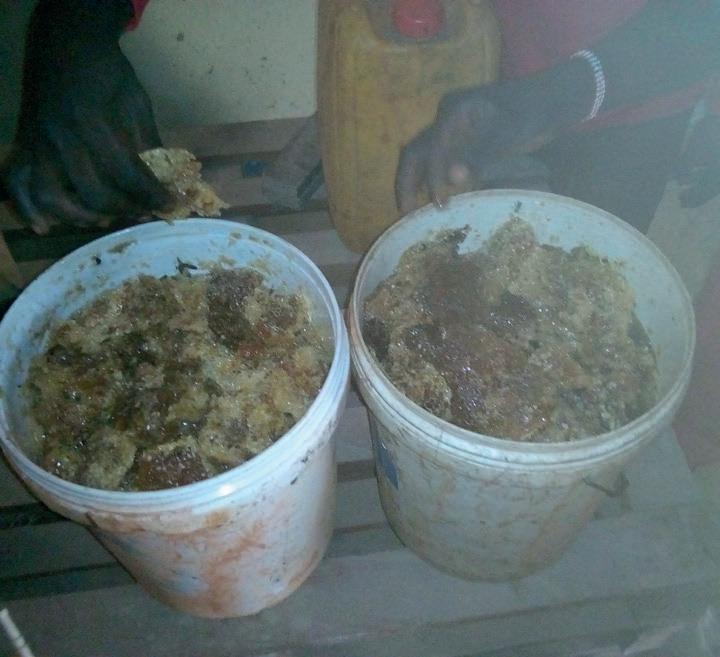
Daniel continues to face challenges. For example, some years there is a scarcity of honey and packaging containers are expensive. Lack of inputs such as boots, buckets, protective clothing and smokers are also problems.
Daniel has never regretted venturing into beekeeping as a business and he encourages more farmers to practise it as it is so profitable. He welcomes other organisations to support and encourage more farmers into beekeeping.
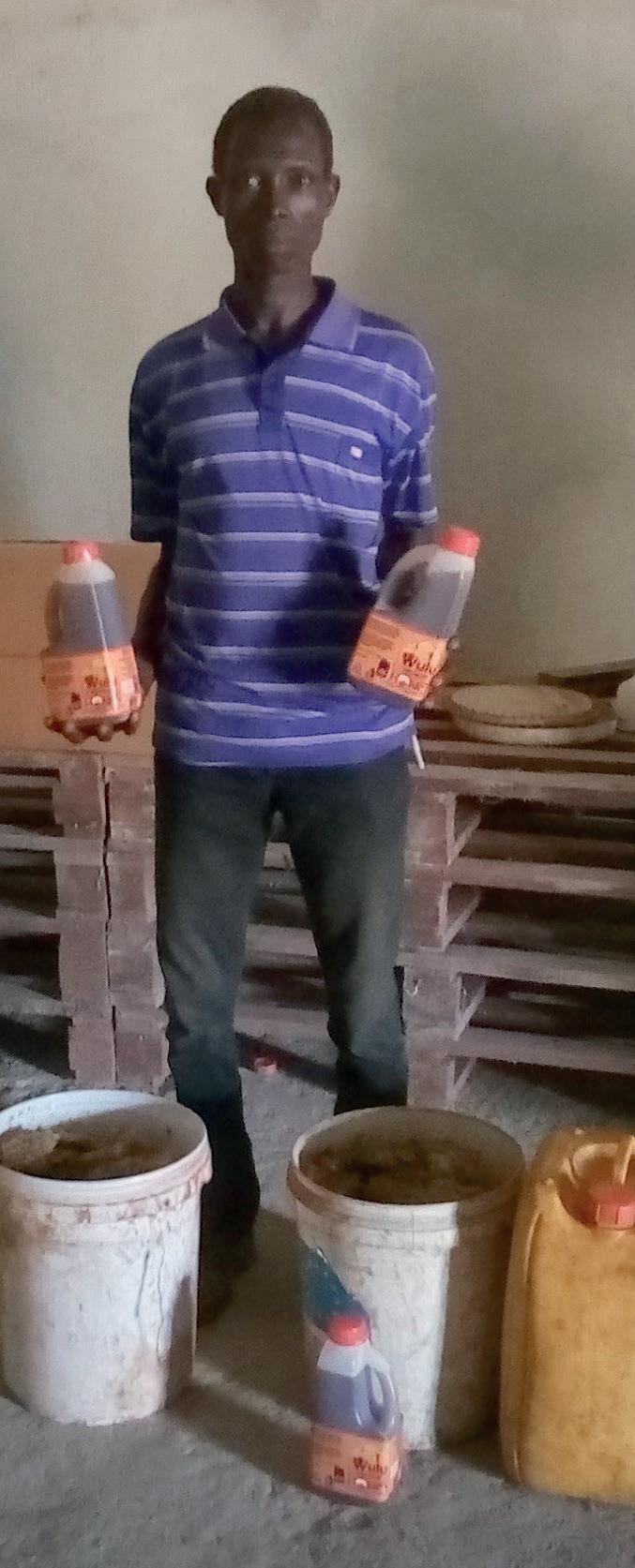
25 Bees for Development article | Beekeeping in Wulu, South Sudan
B fD article
2a, 2b. There is a good market for honey, and it is used for dowry payments.
News bites
In Memoriam
We are sad to report the death of our wonderful Patron Bill Turnbull. For 20 years Bill helped Bees for Development in raising funds. In 2005 he ran the London Marathon dressed in a beekeeping suit and veil and in 2016 recorded the UK BBC Radio 4 Appeal raising a record amount for our work in Ethiopia. Through his work as a journalist in many nations and as a beekeeper, Bill fully appreciated the value of bees within rural livelihoods worldwide.

Conservation: Trees
More trees gained than lost
Deforestation is a devastating problem but what remained elusive is how much new forest is growing. Data from research at the University of Maryland and WRI (USA) shows that 130.9m ha of land gained tree cover globally between 2000-2020 (together an area larger than Peru).
Despite the world gaining this significant area of tree cover it lost much more, an overall net loss of over 100m ha. Also, new trees do not make up for the loss of old-growth of carbonrich forests. This new data provides a chance to examine where and why gain is happening, and the opportunities to monitor and inform forest restoration efforts worldwide.
More gain than loss
Thirty-six countries experienced a net gain of tree cover between 2000-2020 with distinct regional patterns. European countries including Denmark, Ireland, Poland and The Netherlands saw some of the largest increases and Europe has more tree cover now than it did in 2000: a net increase of 6m ha.
Asia has a large proportion of the countries with net gain: Kyrgyzstan and Tajikistan in Central Asia, and Bangladesh, India and Pakistan in South Asia. In South America, Uruguay is the only country with a net gain, while in Africa, gains were in Algeria, Morocco, South Sudan and Sudan.
In countries with overall net losses, the data detected subnational hotspots of tree gain. In the Amhara and Tigray states of northern Ethiopia, the data shows a net gain in tree cover despite losses in the southern part of the country. A pattern of gain is visible in Africa’s Sahel region, which may point to the positive effects of decades of grassroot re-greening efforts to combat desertification.
Gain does not cancel loss
Although tree gain is occurring in many places, it does not negate the impacts of loss, especially in primary forest. Animals and plants that make forests their homes need established, connected, old-growth forests to thrive.
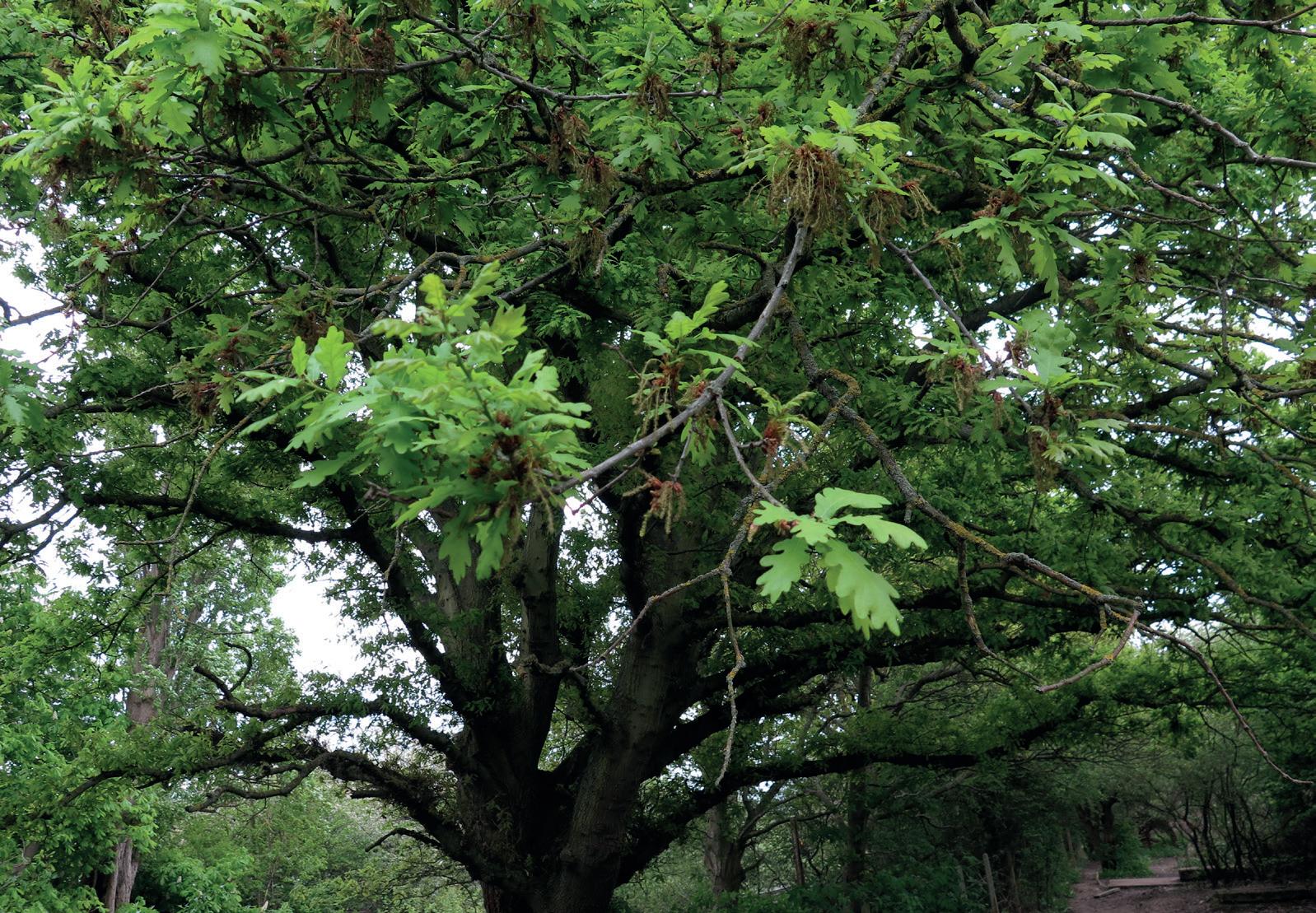
Better understanding
When gain and loss are combined, the full picture of forest change dynamics is seen and net changes in the total area of trees can be calculated. The data shows also tree height which is the variable related to biomass and carbon storage. Tracking net changes in tree area along with tree height allows estimates of the resulting emissions and absorption of greenhouse gases from the atmosphere with greater precision.
Challenges and opportunities
It can take 10-15 years for some trees to reach 5m in height needed for detection using this technology. This means that the tree-based interventions initiated through AFR100, a massive restoration effort led by African governments since 2015, have not yet shown up on the map. Another caveat is that, for now, the data only shows tree cover change 2000-2020. Data will soon look at annual change to detect the nuance in forest dynamics. This will help governments and restoration implementers set more relevant baselines for tracking restoration commitments and assessing patterns over time.
Measuring tree gain and loss together provides an accurate picture of global forest change dynamics, enabling monitoring progress toward critical climate change mitigation, ecosystem protection and forest restoration goals.
Source: World Resources Institute wridigest@wri.org
Natural Bee Husbandry Magazine | No. 25, Autumn 2022 | incorporating Bees for Development Journal No. 144 26
English Oak. Whilst tree planting is increasing in many parts of Europe, many ancient forests are being felled to make way for industrial and transportation projects, destroying valuable ecosystems for both fauna and flora. J. Phipps
B fD article
Skep BeekeepingLooking to the Past to Look to the Future
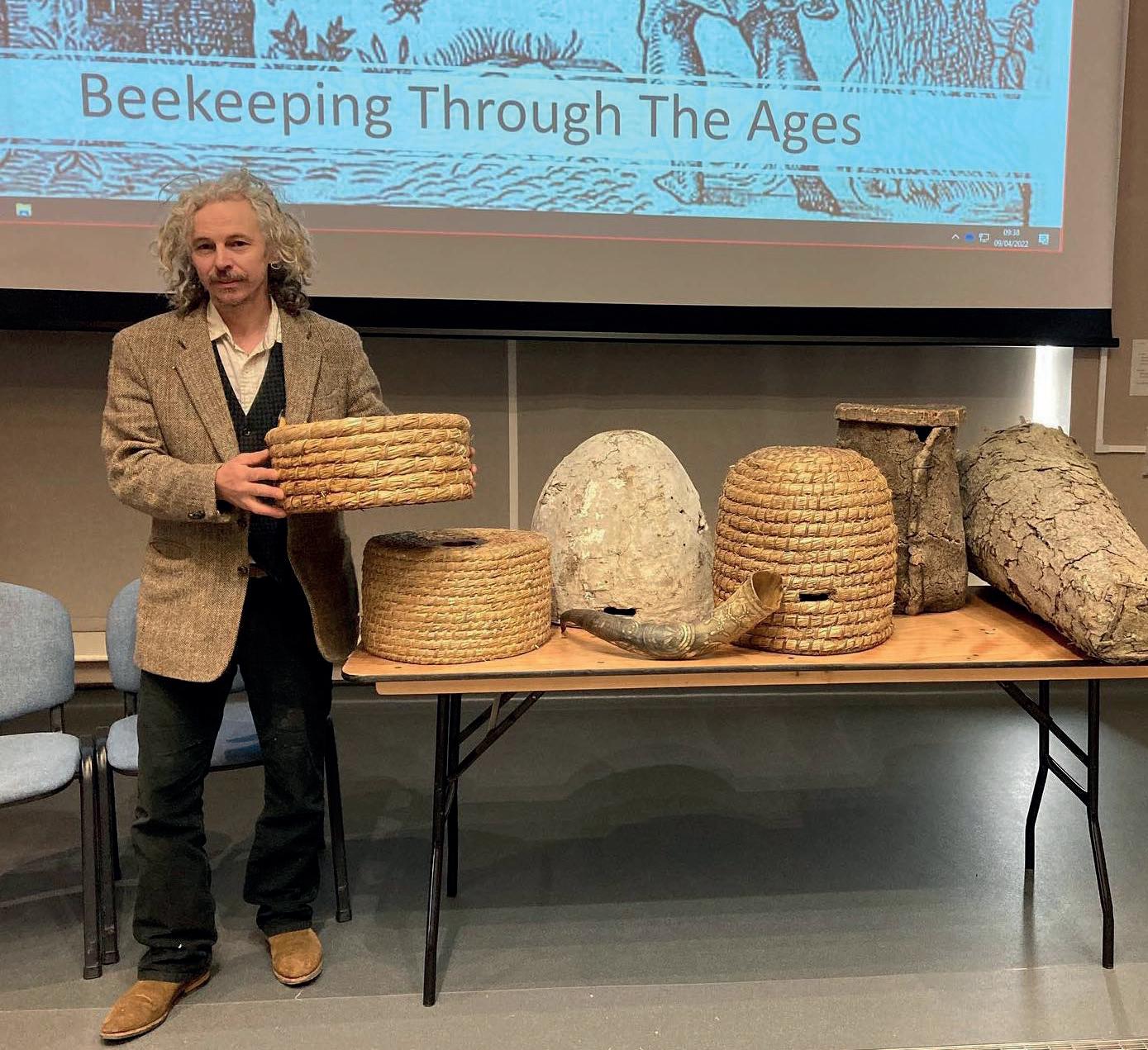
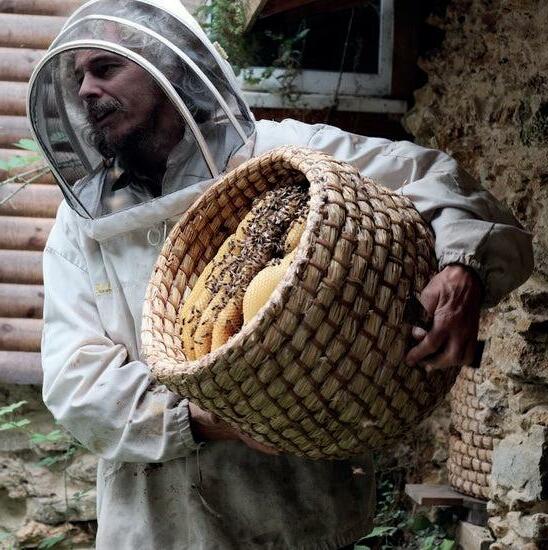 Chris Park
The Past: Old Ways and Wisdoms
Looking to the past we can see that we inhabit the "Isle of Honey" and the land of circles. Great ring-shaped enclosures and rotund homesteads, round houses and circular boats, curved earthworks, domed burial chambers, giant circular temples of standing stone and humble circular beehives. Consider the legendary round table... the word "church" is rooted in the word circle, reminding us of older sanctuaries like the sacred groves of antiquity. Our horizon is also rounded and a druidic eye can view the domed, starry night sky above us as a giant skep.
The romantic image of a straw skep on a stand has inspired many societies and institutions with its symbolism and allegory. Being a symbol it speaks without words directly to the soul or sub-conscious. It has a trans-rational charm, but there is also lot more of benefit than meets the eye and delights the heart. Through experimenting with and practicing skep beekeeping one can know that there was some simple wisdom in the old ways.
The Beginning of Hiving Bees
So where did it start? Archaeologists are undecided upon a date and even the era that we stopped honey hunting and started "keeping" bees in this neck of the woods. I provide here a very rough evolution of our relationship with honey bees.
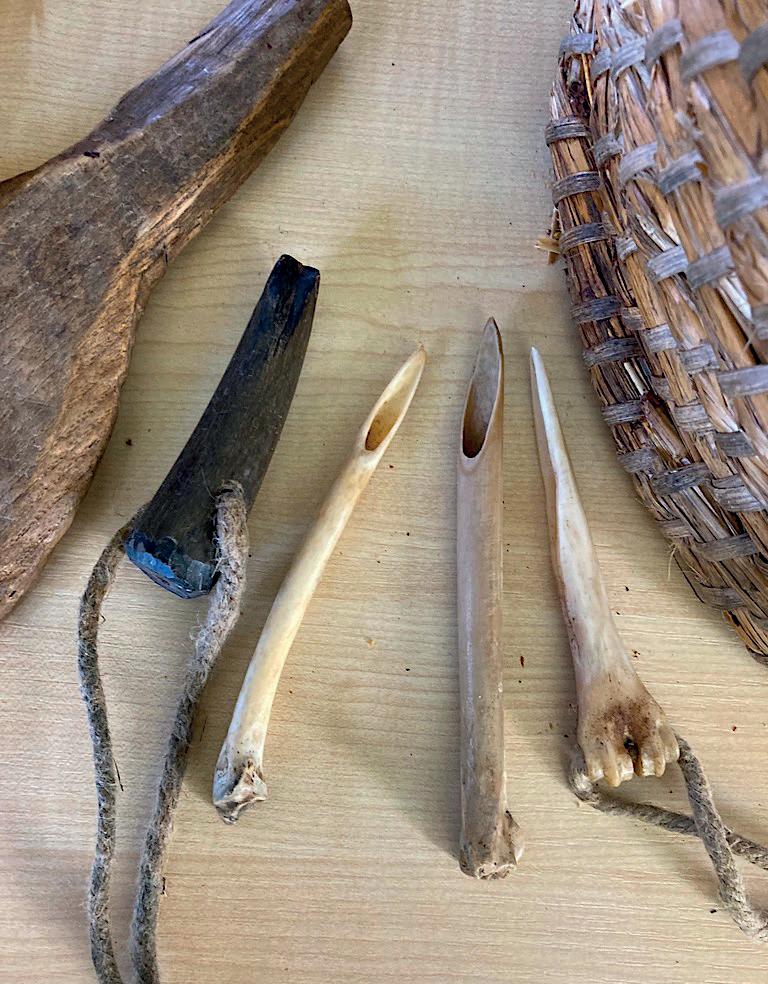
Our ancestors have been stealing honeycomb and brood from bees since they were able to climb trees. These practices became more cunning and developed. Many eons later European forest beekeepers were managing wild colonies high up inside trees, cutting doors to enable access to the comb and leaving their personal mark upon the trunk. In many areas this evolved into collating the colonies within special clearings, fenced or walled off from bears and deer, containing either hollow log hives or bark hives stood on end. They were sometimes roofed with straw, wood or slate. These wooded clearings were often found on a south-facing slope and were sometimes called a "gardd" or "garth". In northern Spain we find the stone walled "Albariza". The use of the log hive waned, perhaps because of their weight or a need for a more easily moveable hive. The use of basket hives or skeps then proliferated.
Some archaeologists assume the use of pottery hives, however, this may have been a more Mediterranean phenomena. The basket hives were predominantly woven out of hazel and willow, and were daubed or "cloomed" with dung, clay and other materials. They were of varying shapes and sizes. Some conical, some domed. Curiously, the Welsh word for bee hive is "cwch", which also means boat. The coracle fishing ancient Britons housed themselves in wicker buildings plastered with daub and topped with a thatched roof. Daub is one of the first composite materials, often a mix of manure, clay, subsoil, straw, hair, blood, oils etc. Essentially some sticky stuff and some plant or animal derived
27 Skep Beekeeping - Looking to the Past to Look to the Future
1. Chris with an occupied hive.
1 2 3a
2. The tools of a skep maker. These are Chris Park's tools, with the driving irons on the right. Photo: Roger Patterson 3a. Examples of Chris’ work.
fibres. The earliest bee baskets were designed on a similar technology, and covered with a straw or reed hat. This new manageable habitat for honey bees was created utilising the same materials and technology that we used for our own habitat.

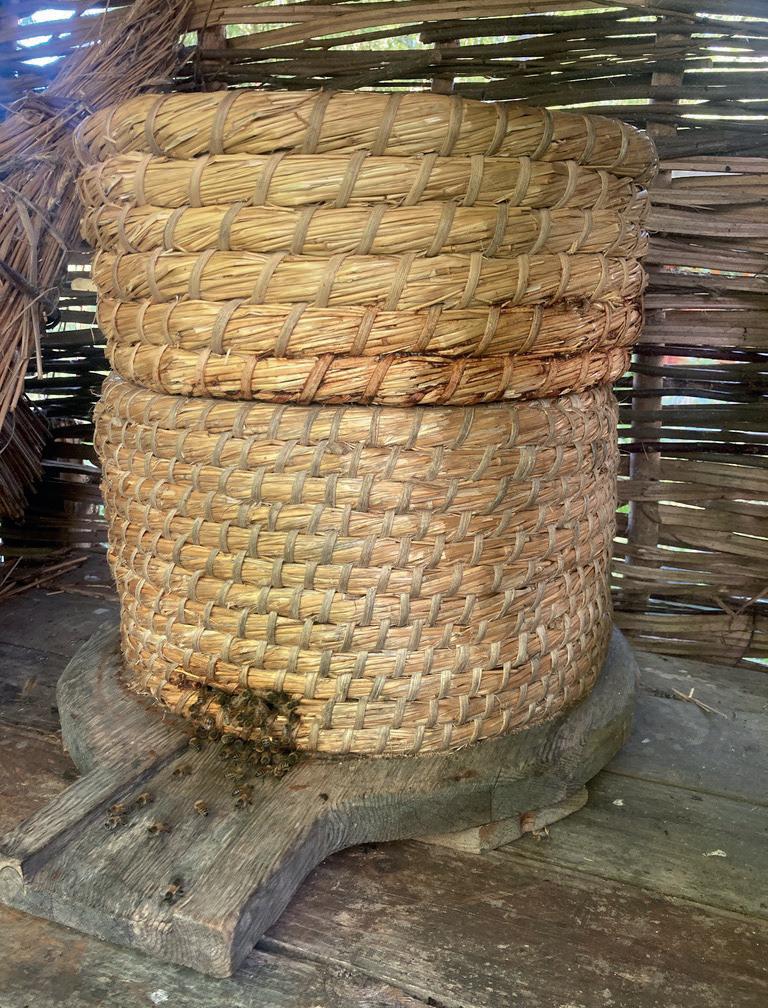
It is thought that straw skeps came into fashion during the Anglo-Saxon period, giving us the classical image of a skep on a stand that we know today. This straw craft, called lip work, has survived the test of time, and I’m sure many of you have a straw skep handy for swarm collection. Long straw varieties of wheat, rye, moor grasses and rushes were commonly-used materials. This was fed in to a cow horn to determine and uniform the thickness of the coils. A grooved bone needle (often of bird bone, or the cannon bone of a deer) helped to sew up the skep with a piece of lapping made of a traditional split material like willow or bramble (two members of the plant kingdom that bees know well).
The name "skep" derives from the Anglo Saxon "skeppa" meaning basket. Consider the last syllable of the word basket. There aren’t many skep beekeepers around this day and age, and some have simply kept a skep going for a season or two out of curiosity. There are more serious enthusiasts around. Like them, I keep a skep apiary, experimenting with various methods of construction, size, shape, materials, shelters and systems of use.
How Honey was Harvested
When I mention skep beekeeping to knowledgeable beekeepers two
comments usually arise: "we can’t do that anymore because you have to kill the bees to harvest the honey" and something about "bee boles", the alcoves set into cottage or garden walls to house skeps. A skep needs some protection from the elements or it will soon rot and decay. Bee boles are just one solution. Others are open sided sheds with shelves for the colonies, single stands with hackles (straw or reed hats), skep houses and even old basins or creamers.
Let us dispel the myth that bees need to be sulphured or drowned to be able to harvest honey. Some beemasters did, but not all. Being the favourite technique of Charles Butler, it gained much press when he published "The Feminine Monarchie" in 1623. There were and are of course other successful and less barbaric methods. The simplest way of harvesting honey from a skep is cutting a piece of honeycomb out from the sides, sometimes called "castrating" the comb. A cottage beekeeper could simply go and cut some more when the honey pot in the larder was empty. Sometimes an "Eke" (an extra section of about 5 coils of straw) is added underneath the skep for the bees to draw honey stores down in to. Another technique used is to drive the bees from a skep that is full to the brim, no later than midsummer. This involves up turning the colony and pinning an empty skep to the top with two iron staples and an iron pin (driving irons) or hazel spars and a hazel skewer, then rhythmically drumming the bottom skep. The bees' natural instinct is to walk orderly upwards to a dark place. After
about 20–30 minutes all the bees have occupied the top skep, which is placed onto the original stand and they have the rest of the season to build themselves up ready for the winter. From the original skep, honeycomb, wax and brood are harvested. This may also be done in the Autumn, and the bees are united with another colony, the honeycomb removed, any brood comb may be pinned into a new skep and stock introduced. Another system involves multiple layers of skeps, akin to a brood box and supers. The bottom flat-topped skep goes through the winter, and has a hole in the top that is opened when a "super" skep is placed on top. At the end of the season the top skep is removed and only honeycomb and wax is harvested. There is no queen excluder, but a three-inch diameter hole in the top of the brood skep for the bees to travel through and extend the comb. Some drone brood may have been laid in the top skep above the hole, but by the end of the season it will have been replaced with honey stores.
Some Pros and Cons
How is skep beekeeping relevant and of value to contemporary beekeeping? Skep beekeeping grew out of fashion when moveable frame hives became popular. Were some babies thrown out with the bathwater? Some obvious disadvantages of skep beekeeping to the contemporary beekeeper are the difficulty in inspecting brood comb, an inability to use foundation or reuse drawn out supers and swarm management.
Natural Bee Husbandry Magazine | No. 25, Autumn 2022 | Incorporating Bees for Development Journal No. 144 28
3b, 3c. Examples of Chris’ work.
3b
3c
Here is a list of some of the advantages of skep beekeeping.
¥ They are round to suit the shape of the bees’ cluster. This eliminates cold corners and enables the vertical, oval shape of the brood to develop naturally, not being forced to expand sideways. Charles Butler preferred slightly egg-shaped skeps to suit the natural shape of the comb.
¥ They are natural, breathable and well insulated.
¥ The bees draw pure virgin comb, reducing traces of chemicals or miticides from recycled wax foundation that may be affecting the fertility of queens and drones.
¥ The bees orientate the comb the way they like it to manage the ventilation and logistics of the colony. In my experience they draw it the cold way, although I have known one colony to draw two small ‘windbreak’ combs the warm way by the entrance (a rather large entrance on this particular skep).
¥ The bees decide on their own cell size.
¥ Minimal inspection means:
¥ The colony’s scent is disturbed less
¥ The colony’s temperature is maintained (consider Varroa)
¥ There is minimal risk of spreading disease (consider foul broods)
¥ Propolis is damaged less (one colony last winter built a curtain of propolis across the entrance with two small holes in. They made their own mouse guard and hygienic entrance.
¥ Bees are squashed less (consider Nosema).
¥ Bees are smoked less.
¥ Comb is broken less.
¥ Bees are stressed less.
¥ Honey bees are allowed to swarm. This is a natural way of re-queening, and an effective form of varroa control.
Skep Beekeeping: Research, Resurgence and Resilience.
New eyes on skep beekeeping has been part of the reason for a resurgence of interest in bees and beekeeping that has blossomed, including a rich diversification in styles of honey bee keeping, a widening of the perspectives of beekeepers and a rebirth of sensitivities towards more bee centred approaches.
We are seeing a renaissance of more natural ways of beekeeping. Natural
beekeeping groups, trusts and societies are proliferating as one of the many responses to recent and current problems with beekeeping practices, pests and diseases. Hence, keeping honey bees in skeps is recently receiving interest from those seeking new solutions, old ways or natural inspirations. It has always been of interest to those with an interest in the history and the heritage of honey, and now it is fascinating folk with an interest in the resilience of ancient technologies, the simplicity of natural and locally sourced materials and from those looking for a more bee-centered approach (assuming that no-one is interested in reviving the practice of sulphuring the bees, and can I reassure you that I have not yet met anybody who is).
Our passions and inspirations as beekeepers to ensure and entrust a harmonious and sustainable craft can be vast and varied. Some folks passion might be artificially inseminating queens and establishing breeding apiaries whilst another's may be keeping bees in hives designed upon Pythagorean principles and leaving them all the honey... all with valid and fascinating results. We have historically seen beekeepers developing their own unique styles, quirks and ways of working, influenced by inherited systems, mentored techniques, beekeeping courses and innovated practices. Over the last couple of centuries, due to many different factors, an homogenisation and refinement had occurred in beekeeping practices, and the choice of a few standard box hives, until fairly recently, had been the norm. However, human nature ensures that you’ll rarely find two beekeepers with exactly the same opinions and preferences, even if using the same equipment. It is often the case that once new beekeepers have found their feet and confidence, gained enough experience and practice and completed ample research, they will adopt and develop their own preferences and practices. Some sound advice for many aspects of life might be "to find one’s own truth... and then live it", whilst, within good reason and ethic, respecting the truths and inspirations of others. Inspiration indeed may be one of the keys to a marvellous existence.
From the middle of the seventeenth century, wooden, stacking hives and a myriad of contraptions for keeping bees began to be developed and were marketed. About a century later, move-
able frame hives were being designed and the BBKA and Central Association of Beekeepers were founded. Beforehand, some had considered early frame hives as "observation" hives and that their primary value was for education and science. The irrepressible spirits of enquiry and science have continued to progress our awareness of apiculture, honey bee behaviour and biology. However, the practice of keeping bees in a basket didn’t altogether disappear. Skeps continued to be used widely as swarm-collecting vessels par excellence. Skep beekeeping, in both wicker and straw, persevered in small pockets in Britain and Europe. It was preserved and rekindled by dedicated individuals and skeppists. It was mostly continued by those beyond the net of the media, perhaps the eccentric and cantankerous, maybe the romantic and the non-conformist, certainly by Scottish crofters, by German heathlanders (1) who managed skeps for cut comb and wax and by Dutch lowlanders who hired skeps out for pollination purposes and islanders beyond the ninth wave.
One can also seek out conversation with skeppists, makers, enthusiasts, craftspeople, bee masters and those who have professionally trod the paths of research. Some contemporary research into skep beekeeping has been pioneered notably by The International Bee Research Association (IBRA) who archive a wealth of images, artefacts and articles. Through the skilful work of Eva Crane and her precious work "The Archaeology of Beekeeping” (2), and through Frank Alston, practically and concisely in his book "Skeps, Their History, Making and Us” (3). It is also of interest to mention the small publication by Rev E Nobbs through BIBBA (Bee Improvement and Bee Breeders Association), "Make your own skep and revive a lost art" and another pamphlet titled "Skep Making" by Toon Brecklemans. The craft and practice of skep making within these shores and beyond owes much to the following notable experts: Firstly to Karl Showler (4), a prolific writer of articles (5) and essays and a skep-making demonstrator; to the tireless commercial skep maker David Chubb of Cotswold Bee Skeps (6); to the basket and skep maker Martin Buckle and his informative website (7); to George Hawthorne and his craft. Needless to say, as with all aspects of life, you can find much to read and look at on the subject across the World Wide Web.
29 Skep Beekeeping - Looking to the Past to Look to the Future
Skep beekeeping literature
Looking further back to a time when skep beekeeping was more commonplace, there are many charming and educational academic texts. Their scientific knowledge and accuracy is of course dated and limited. However, the insight into the mechanics, intricacies and logistics of skep beekeeping is invaluable. Here I list just a few in chronological order with some quotations.
C. Butler’s magnum opus, "The Feminine Monarchie" (1614)
This wondrous glimpse into the life of an ancient bee master is very enjoyable once you get your mind around the spelling and flowery language. He managed slightly egg-shaped skeps. "The bees do best defend themselves from cold, when they hang around together in the manner of a Sphere or a Globe (which the philosophers account the most perfect figure) and therefore the nearer the hive cometh to the fashion thereof, the warmer and safer be the bees". He says of fastening a hackle (straw/reed cover) to a skep: "first take a litch of strong reedes, and having wetted and wound it a little, put it about the neck of the hackle, and knitting the ends in a half knot, girt the hackle hard with it".
T. Wildman’s "A Treatise On The Management Of Bees" (1768) is beautifully illustrated. Strictly not a skeppist, but a pioneer of a cylindrical straw hive with top bars, akin to the ‘Greek Hive’. A fascinating document. His preferred material being straw at a time of early wooden alternatives... "straw hives, as far as regards the bees, are preferable to any other habitations, because the straw is not so liable to be heated by the rays of the sun at noon, to which they are generally exposed, and is better security against the cold, than any kind of wood or other material." The treatise is woven throughout with poetry, and wise words from the likes of Virgil and Ovid, and anecdotes and observations of his contemporaries engaged in innovation. Wildman was an avid spokesman for not sulphuring the bees to harvest honey and wax.
H. Taylor’s "The Bee-Keepers Manual" (1838) discusses both straw and wooden hives. He goes into some nice detail on hive stands and floor boards. "In size the floor-board ought to be a little larger than the exterior of the hive, from whence it should be chamfered down every way, to three-eighths of an inch at the edge." He preferred a small capacity skep for warmth.
A. Pettigrew’s "The Handy Book of Bees" (1870) returns the reader to a strict focus on skeps. I find it to be a very handy and amusing book. Known as "the Bee-man’s son" due to his father earning the title "the Bee-man" he preferred skeps of large capacity for maximum yield of honey and larger swarms. "The shape of hives may be rather conical at the top, or flat-crowned. It is a matter of taste and convenience this. Some bee-masters like one sort and some the other." He also comments on artificial swarming with skeps.
Standing upon the shoulders of these writers, researchers, crafts people and skep makers, through experimenting with materials, through working skeps in all seasons, one can hone a contemporary practice of skep beekeeping and expand a skep apiary utilising various systems, shelters and preferences as I have done. Of course, the primary source of learning is in the practice, one’s relationship with the bees and the seasons, the materials, the dynamics between the honey bee colonies and the environment they are situated in. My skep apiary is experimental and contains skep hives of various sizes and materials, utilising several different shelters and systems of management. Sometimes I am harvesting wax and honey, at other times keeping colonies for early swarms the following year, sometimes "driving the bees" into empty skeps, at other times settling swarms. I have also added open mesh floors to some of the skep stands. There is much more to do and learn. I am currently experimenting with mixing different daubs or clomb for wicker hives, different styles of hackle and varying the position of the entrance of the skep.
It is interesting that bees in skeps, being left to manage their own comb and be in control of their own ventilation predominantly draw their comb the "cold way" (in parallel lines pointing toward the entrance). I usually face the entrances southwards, and had wondered if the North- South alignment was perhaps magnetic. However, I recently had an entrance facing WSW and they aligned the comb the "cold way" still. I am constantly enchanted and surprised at their behaviour. Last winter a colony in a wicker hive (sometimes referred to as an alveary) with a letterbox entrance, sealed their door with a curtain of propolis, leaving just two bee sized round holes.
I find that teaching skep making and skep beekeeping and exhibiting is also of great value. I run skep making and skep beekeeping courses all throughout the year and visit a number of clubs and associations. I am continually meeting like-minded folk and always learning something new, hearing anecdotes from someone's family history or a fascinating piece of folklore.
However one’s beekeeping practice develops, skep beekeeping entails extra responsibilities. It is not just a
matter of throwing a swarm in a basket and away you go. In some parts of the USA, keeping bees on fixed comb rather than moveable frames is illegal. Developing best practice is important, whether you wish to establish a working apiary for harvesting honey and wax and swarms, or if you are simply keeping bees for pollination purposes, or for simple pleasures and enjoyment. Bees have seen aeons come and go, and those that aren't "kept" can do perfectly well by themselves if their environment is abundant and healthy. They are wild animals and the honest transaction of the keeper who harvests honey is thus; one gives them a good home, protects them from pests and diseases and in return takes a harvest. Simplicity may be one of the keys to success. Within skep beekeeping, the advantages are numerous for the bees and the keeper, but the disadvantages demand careful responsibility.
Developing Best Practice
Quality beekeeping entails social responsibilities, etiquette and community mindedness... the practice of skep beekeeping accentuates these values.
Natural Bee Husbandry Magazine | No. 25, Autumn 2022 | Incorporating Bees for Development Journal No. 144 30
4a, b and c. 400 years ago the Reverend Charles Butler was revising his book ‘The Feminine Monarchie’, including a four part onomatopoeic madrigal he composed that mimics the piping of the queen bees. Here is a skep, stand and cover (hackle) made in the way he describes in his book, the first publication in the English language dedicated solely to honeybees and beekeeping. Born in High Wycombe, he eventually settled in Hampshire and worked as the vicar of Wootton St. Lawrence. There he kept many colonies of bees in slightly egg-shaped skeps, calibrating the year using the stars and zodiac, extolling the virtues of bees as the source of all music, reading philosophy, campaigning for language reform, teaching about bee history, their behaviour and work, bee crafts, their sweet produce, the making of meads and ‘methaeglen’, apitherapy and bee medicines and much more.
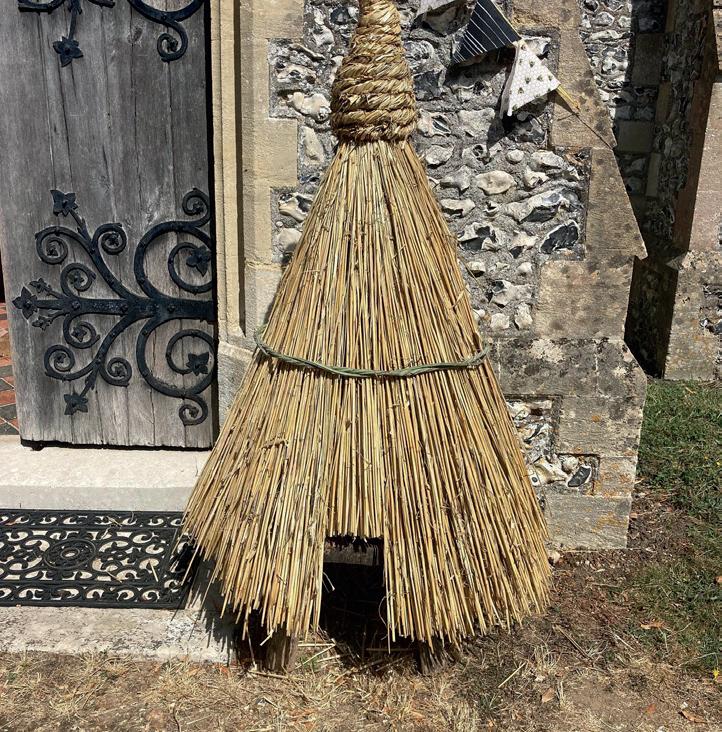

Skep beekeeping may not be something you would ever contemplate exploring, but some of you may, or it may have already have happened to you by accident. As earlier articles have outlined, the advantages of skep beekeeping are many, yet how one approaches the fewer, but major disadvantages is crucial. The most significant problem to tackle is the difficulty in inspecting the fixed comb and perhaps a more minor complication is the honey/wax harvest. Before I write about these, let’s first begin with the basics... siting an apiary.
Siting an Apiary
When choosing a site for skeps, with all the usual considerations, and whether you'll house them under straw hackles, inside bee boles, enclosed in a bee house or on shelves in a shelter, its proximity to the public is of greater importance. Especially so if you adopt a swarming system of management. Swarm control systems do exist for skeps, however it is wise to site them as if you were using a swarming system as your management styles may change over the years, and you may not always anticipate swarming. Due to the restricted access to viewing brood comb, and because queen cells may not always be apparent, one may wish to develop a greater awareness and sensitivity to the behaviour of the colony to assess when a colony will
swarm. This skill will take some time to hone. Swarming bees are commonly good tempered, and however educational and fascinating they may be to some, the sound, sight and energy of the bees may still provoke fear and alarm in others. Swarms may become aggressive if they've been hanging around for a while due to bad weather and if their honey stomach reserves become depleted.
We could summarise that life is better on a full stomach and skeps are more sensitively situated away from people and animals. Lure hives or skeps may be reassuring and an out-apiary to house swarms of unknown origin is a good practice. Looking back through time, skeppists and cottage beekeepers, or one of their family or colleagues, were generally around to hear or see a swarm, settle them or raise the alarm. A contemporary, conventional life is very rarely so sedentary. Today's broad-horizoned lifestyle means that one is often far from home even if you keep your bees there.
So here's the paradoxical situation... you've conscientiously sited your skep apiary a good distance from the public and perhaps your home, but you've settled into a system of management that allows your bees to swarm (ensuring natural re-queening, vibrant bees and an effective form of varroa control). You lose many swarms and then what? The majority of us simply won't have the time or will to
bother with swarming skeps. There may be some natural beekeepers who might consider these colonies as semiwild, and be happy that they might be providing the world with healthy, happy bees that have been chemical free and developed hygienic behaviour. There won't be many unshackled, extraordinary individuals who experience a spiritual epiphany, and feel that the soul of skep beekeeping is luring one's stressed out, thinly spread, disconnected, highly-mechanised human organism and all that is wrong with the world, back "home" to a simpler, closer, deeper, more sustainable and healthier relationship with all that resides and relates within one's horizon, in-sourcing village sufficiency, real community and integrated aspirations... if there are, changes may begin to appear in their lives. Fundamentally, if you mind about losing the odd swarm, you'll need to give proper consideration to siting your skeps close to home but away from those who may be alarmed by swarms. This will be fairly simple if you live in a rural area, not so easy if suburban, difficult if urban.
The capacity of skeps varies historically from as little as 18 litres up to 50 litres. The skeppists who preferred to keep bees in small skeps certainly enjoyed an early swarming system. Even those who preferred big skeps still sang the praises of allowing bees to swarm. To summarise his chapter on swarming and non-swarming systems

31 Skep Beekeeping - Looking to the Past to Look to the Future
in "The Handy Book of Bees", Pettigrew finishes with, "we greatly prefer the swarming mode of management. Hives that do not swarm are often affected and made useless by that terrible and incurable disease, ’foul brood'". He also gives several accounts of hives that had been left to swarm naturally reaching a greater weight than those that hadn't by harvest time.
Healthy Bees
How does one aspire to keep healthy bees in skeps or other fixed comb habitats that are not easily inspected? Once a suitable site for your skep is decided upon, be it a bole in your garden wall or a shelter at a club apiary, the next responsible decision to make is how to stock it.
Throwing a swarm of bees into a basket and letting them get on with it could be considered as irresponsible, yet one might point out that wild colonies of honey bees manage themselves and no one is responsible for them. A colony in an old stone farmhouse wall can yearly send out large healthy swarms of little black native bees from their undisturbed strongholds. Someone else may point out that a wild colony may have collapsed a few times, been reoccupied several times over many years, and may be living with a disease. Another may highlight the fact that they may have been keeping at bay, or living with, many of the pests and diseases that conventional beekeepers work so hard to eradicate. Whatever is pointed out, the provenance of swarms is most important. Needless to say, the most assured quality of healthy swarms is from your own stock, assuming your own stock is healthy. You may of course know of the "bee whisperers" amongst us, those who can lovingly turn around a dwindling or bad-tempered colony through their care and the spirit with which it is administered... enhanced by a welltended environment and the quality of forage. However, this may not be your calling, and those within your "honey bee horizon" may not appreciate you siting colonies of unknown origin nearby. In a nutshell, a swarm of certain and healthy provenance or a shook swarm from a good colony is a perfect way to stock a skep.
It would be polite to inform your local club and neighbouring bee keepers of your skep or skep apiary. They can be a fascinating addition to an apiary safari. I am assuming that most of the folk that read this article are experienced in and aware of the intricacies of keeping bees in moveable frame hives. If you are not, then it would certainly be wise to understand the way bees are predominantly kept at this present time and understand the varying crafts of your contemporaries. To visually and experientially learn from keeping one or two easily inspected colonies can only help to improve your understanding and appreciation of honey bees and their behaviour and improve your beekeeping. It will also be reassuring for a bee inspector if you keep one or two colonies on moveable frame hives in the same apiary, as a kind of control. There is no guarantee that they may contact a disease before a skep may, but the possibility of exposure to disease is greater. It may be the case that bee keepers are the cause of the spread of many pathogens through bad practice... but it is also possible that one little bee may one day alight herself upon a piece of toast within foraging distance that is spread with non EEC honey that may contain pathogens of a foul brood. Hence, it is a good idea not to site a skep or any other kind of fixed comb hive within foraging distance of a wholesale honey supplier.
Skep inspections
A simple and enlightening first step would be to observe the skep entrance. Whether you have a channel cut into the floor board for the bees to alight upon and crawl inwards underneath the skep, or a letterbox entrance somewhere further up, a great deal can be learnt watching and listening to the bees come and go. For example, if pollen is being brought home then it’s a sign that they have brood. If lots of pollen is coming in then one can discern that there is a lot of brood, or a well-mated queen beginning to lay. If there are yellow or brown spots of faeces then there is dysentery, and a possible nosema problem. If one hears piping or tooting, then swarms are preparing to fly. If a colony goes still and silent in good weather during a nectar flow, a prime swarm may be about to issue forth. The behaviour of bees and any debris at the entrance may also tell you of queenlessness, robbing, Chronic Bee Paralysis Virus (CBPV), mouse activity or starvation and more. A gem of a work and the only one solely dedicated to this subject is "At the hive entrance: Observation handbook" by H. Storch. (European apiculture editions 1985). It can be read, printed or downloaded at: www.scribd. com/doc/88176574/At-the-Hive-Entrance
A second step you may like to employ is hefting the skep, keeping it on the stand and board so as not to break the propolis seal. This art will take some time to master, and for the wisdom of one's flesh and sinew to calibrate and assess the weight of the colony. The kinaesthetic and sensitive tactile qualities that will be fostered within you may bestow all sorts of blessings upon your life in this increasingly abstract and mechanised world.
I like to put open mesh floors into skep stands. A third step may be removing and inspecting a tray beneath a mesh floor. Upon this tray there'll be a wealth of information about what is happening inside. You will see where the bees are uncapping stores and brood, where they are building new comb, various pollen loads, varroa, evidence of hygienic behaviour (chewed varroa mites, white antenna or nymph parts) -note the sterling work of Ron Hoskins and the Swindon Honey bee Conservation Group www.swindonhoneybeeconservation.org.uk)evidence of dysentery and other conditions or diseases. Plus, you will be implementing a natural way of helping the colony resist varroa. A tray beneath a mesh floor can also lure the wax moth to lay eggs there instead of the colony above. If you don't like the idea of a mesh floor, the skep stand or floorboards can be changed for clean ones, and the debris on the old one can be examined.
Penultimately, if what you observe so far is cause for alarm, you may wish to upturn the skep and look for queen cells or evidence of swarming; for a healthy brood check one can part the combs and if a good amount of healthy sealed brood is present fears may be eased. As Frank Alston wrote, "a good slab of solidly sealed brood is a fair indication that all is well". You'll be able to count the number of plates of brood comb, assess honey stores and perhaps spot a queen.
The nature and frequency of exposed inspection of skeps is a double-edged sword. On one hand, the less you inspect the better. The bees are less disturbed and the pheromones at the heart of their world remain happy ones, propolis is not broken, their temperature is not lowered, comb is not broken, bees are not squashed or smoked, bees are not stressed or put at risk of disease entering their dark temple of sound and smell, taste and touch. On the other hand, you'll be less aware if a disease has entered their world.
Natural Bee Husbandry Magazine | No. 25, Autumn 2022 | Incorporating Bees for Development Journal No. 144 32
Ultimately, in the worst case scenario, if a skep does need to be checked for foul brood, the combs can be cut out and inspected one by one as the cross sticks or "spleets" are slowly removed. A skep comb cutting knife that is usually used for harvesting is the right tool for the job. It consists of a blade that protrudes at a right angle from the end of a long handle. The combs can be carefully put back again if no sign of disease is present. The bees wouldn't thank you for it, and the bee inspector probably wouldn't either, but the job can be done.
Natural honeycomb can be transferred from one place to another with due care and attention. A few years back, a friend and I removed a colony from a roof that had been in there for a number of weeks. We simply took the combs out one by one from the closest end, inspected them and fastened them into an empty skep with cross sticks (cross sticks, also known as spleets, are pinned through the skep at right angles to the combs to brace them against falling out or falling against each other whilst upturning the skep). The straw skep had a flat top with a three inch feeding/expansion hole in the top. The colony was fed and built up well.
Apiary hygiene
Good apiary hygiene is of heightened importance in a skep apiary. To limit the spread of disease is paramount. As you most likely know, this can be done by preventing robbing and drifting, keeping the apiary clean and tidy, keeping any equipment clean and disinfected. Mice are a possible source of spreading disease. If a skep is well guarded from mice (a simple mouse guard can be pinned to the entrance) one may still build a nest on top of it in the winter months. It is good practice to check under hackles or skep shelters from time to time through the darker half of the year.
Harvesting Honey Today
Harvesting honey comes in various forms... assuming no-one is bent on reviving the practice of sulphuring or drowning the bees. The simplest way is to cut out some of the honeycomb from the outermost edges, sometimes referred to as "castrating" the comb. Ekes and Nadirs may be utilised in this method to increase the capacity of a colony one wishes to build up bigger if it hasn't sent out a prime swarm, and then harvest or castrate later in the season. Another successful method is to have a "brood" skep with a three inch circular hole in the top and consecutive "super" skeps above it. Driving or drumming the bees as mentioned in earlier articles is another method. In all these methods, it is easier to spill honey from honeycomb than it is using wired frames, so greater care must be taken. A large amount of wax is harvested, and ideally a colony ought not dwell on the same brood comb for more than two years without swarming. The bees can be driven into a new skep before midsummer, and they'll hopefully have the rest of the season to build up strong. Bees can be driven in the autumn and a new colony can be made up of any brood comb that has not yet emerged and some nurse bees. Honey comb can be consumed or packaged as cut comb, or run through straining bags into containers. The famous "honey-poke". The wax can then be washed and you are halfway to making mead.
I am still a learner myself, all the time learning, experimenting with the varying styles and sizes, systems and shelters. There are of course other intricacies and concerns depending on what systems of management a skeppist may
explore and deploy. It is not just sweetness and light, there is equal venom and shadow, and all is of great value. Developing best practice is an ongoing process and at least if one aspires towards impeccability then you can feel twice as good about enjoying the blessings and benevolence of skep beekeeping. There are many advantages for the bees, much more than those I have highlighted, and the disadvantages are generally for the beekeeper, and perhaps they are blessings in disguise.
Hopefully, this article will have given you enough tools, references and inspiration to begin a careful procession along the path; for the majority, an insight into what some of the natural beekeepers up the road from you may be up to and why. For all of you, a window onto a small fragment of the rich history and heritage of honey.
Chris Park's website: www.acorneducation.com/homepage.html
This article is combined from four issues of BBKA News Issues between January 2009 and February 2012. This version has been downloaded from Dave Cushman's website www.dave-cushman.net
References
1. http://www.youtube.com/watch?v=upbONroWPic
2. Crane, E. (1983) The Archaeology of Beekeeping. London:Duckworth
3. Alston, Frank (1987) Skeps Their History Making and Use. Hebden Bridge:Northern Bee Books
4. Showler, K. (2011) Essays in Beekeeping History.
5. http://www.beedata.com/data2/skeps.html
6. http://myweb.tiscali.co.uk/cotswoldbeeskeps/pageb.htm
7 http://www.martinatnewton.com/#!/beekeeping-pages,-skeps
It has been a long and interesting road to my keeping of bees in skeps: being introduced to bees at a smallholding in Sussex; experiences in permaculture and conservation projects, organic farms, off grid living, tree planting, working with environmental groups and training as a druid; being part of the team of volunteers living in a hill fort for the BBC’s 'Surviving the Iron Age' when honey was our only form of sweetening; settling on an organic farm 'Surviving the Iron Age’; inspired by Eva Crane's 'The Archaeology of Beekeeping’ I delved more into our beekeeping heritage, learning as much as I could to acquaint myself with the skills needed to keep bees in skeps and furthermore, eventually, to pass these skills on to other people. I was surprised how supported I have been by so many beekeepers along the way who recognised the importance of what I was doing, historically, environmentally, practically and socially. Notably, Ron Hoskins, Bill Mundy, Karl Showler, Francis Capener, Will Messenger, Peter Tomkins, Roger Patterson, Norman Carreck and Nicola Bradbear. Through researching and developing skep beekeeping, and working with and learning from the charity Bees for Development, and studying the work of eminent bee scientist Tom Seeley, I am firmly reassured that bee skeps, and fixed comb beekeeping in general, has a valid place at the beekeeping round table. In fact it’s probably the oldest and most sustainable seat at the table! Most bees in the world are kept on fixed comb, in some kind of natural hand crafted vessel, and the aforementioned authorities are confident that these bees, if treatment-free and allowed to swarm, are the healthiest bees in the world.
33 Skep Beekeeping - Looking to the Past to Look to the Future
Skeps around the world
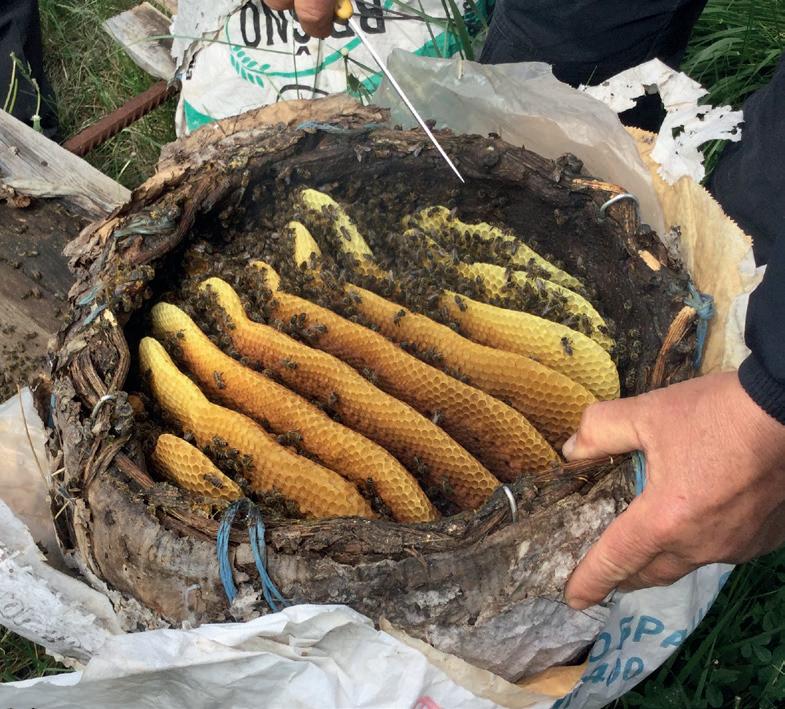
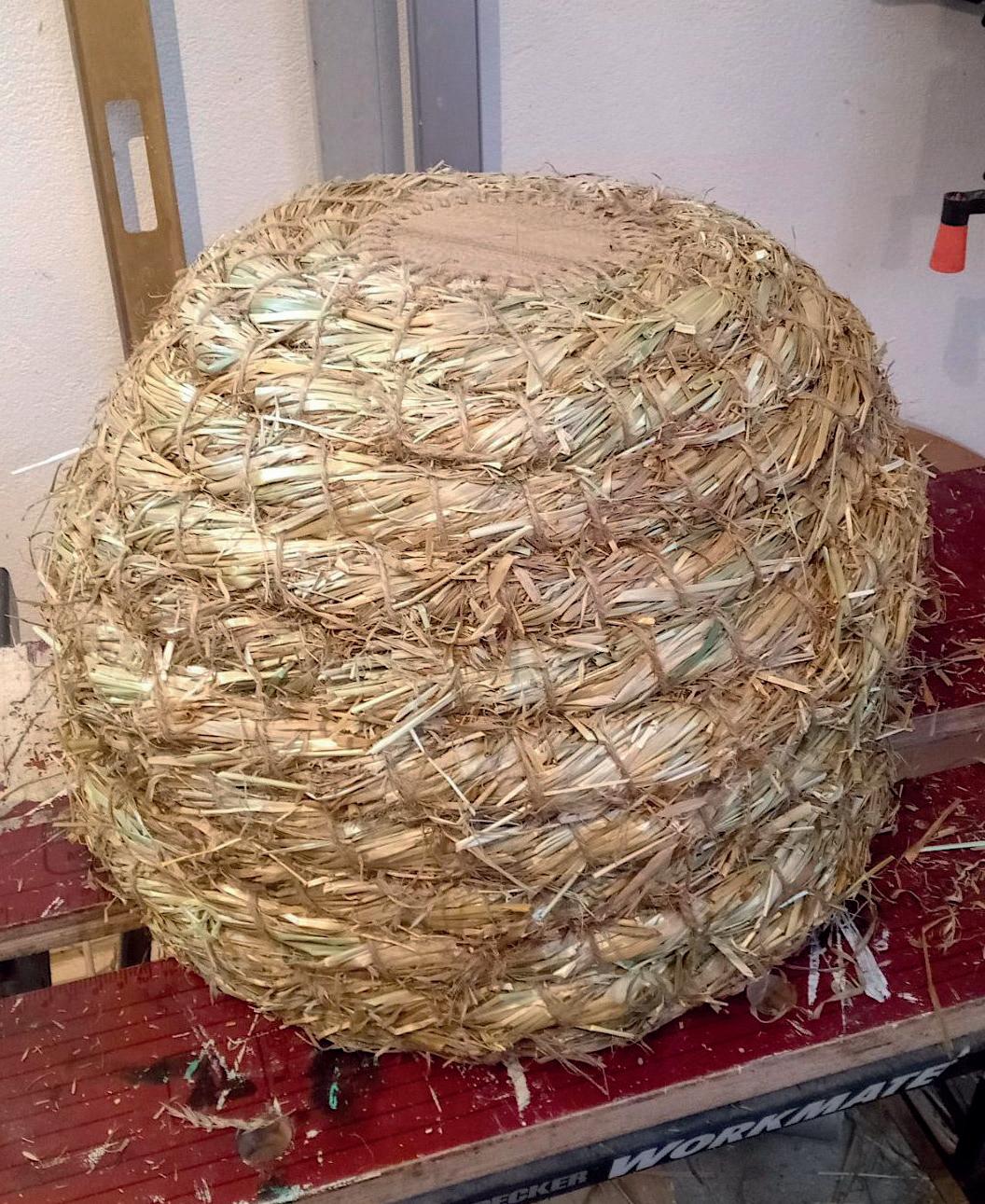
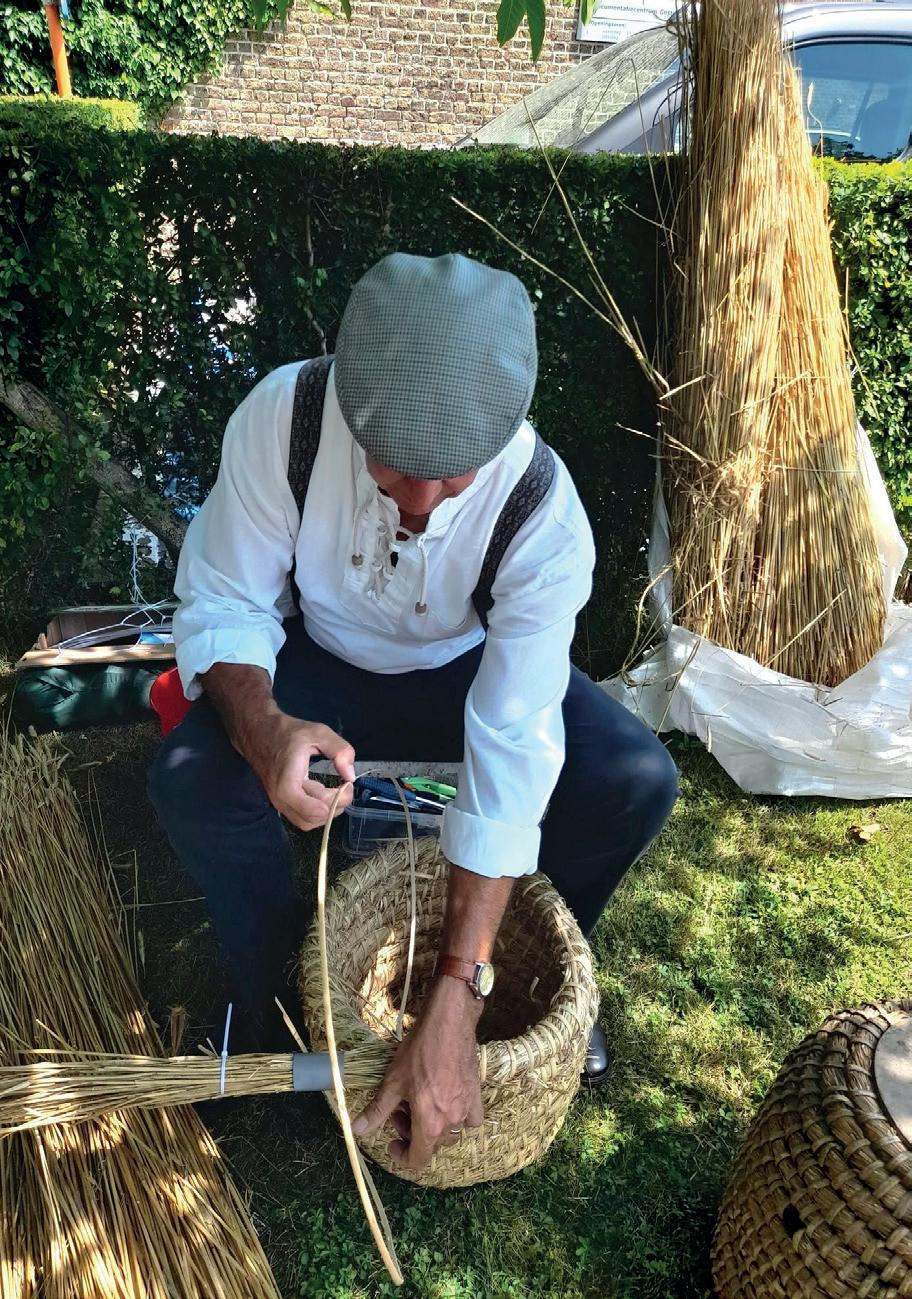
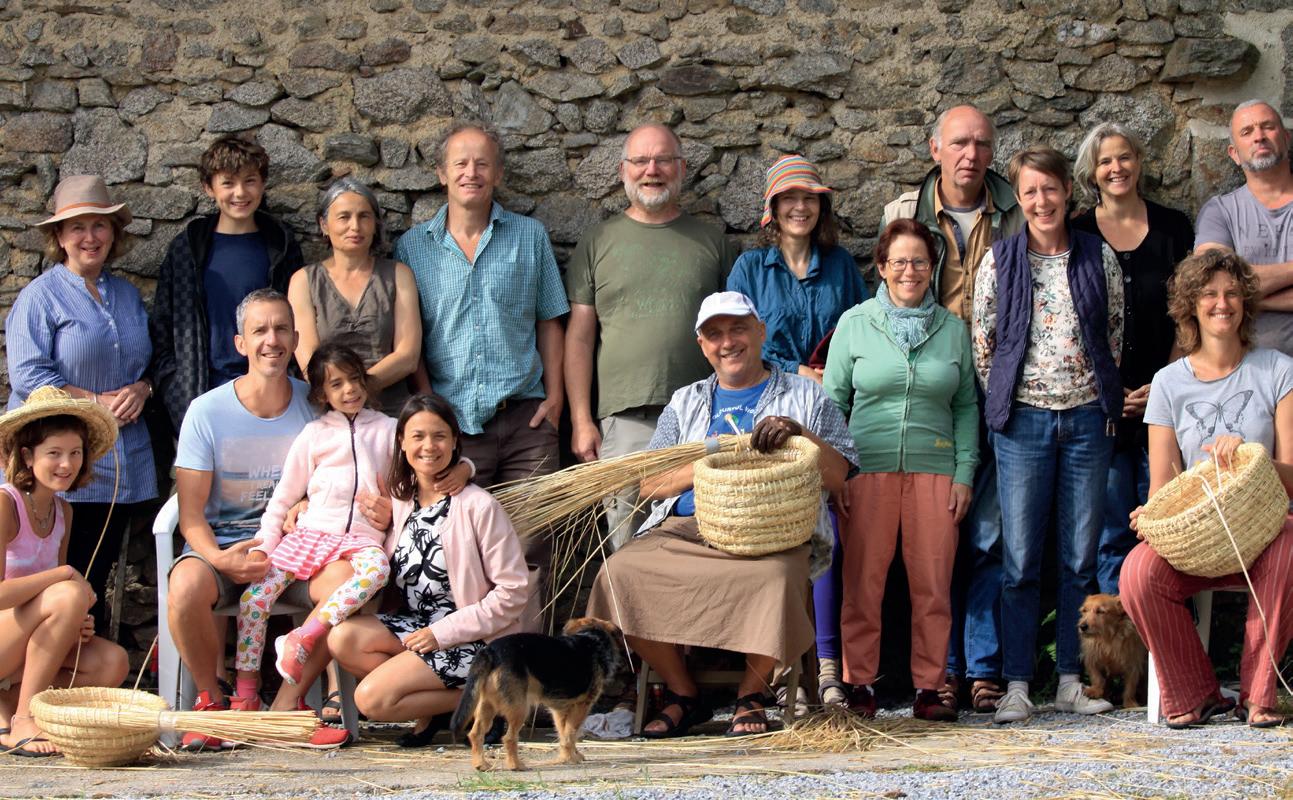
The editor thanks all those who submitted photos, though some were too small for reproduction. One of the best sites to see the extent of skep beekeeping is Mike Alber’s Facebook Group that has nearly 3000 members world wide. A special mention must be given to Kovács Tibor. His range of basketry and weaving projects are numerous and varied; a very imaginative and gifted craftsman.
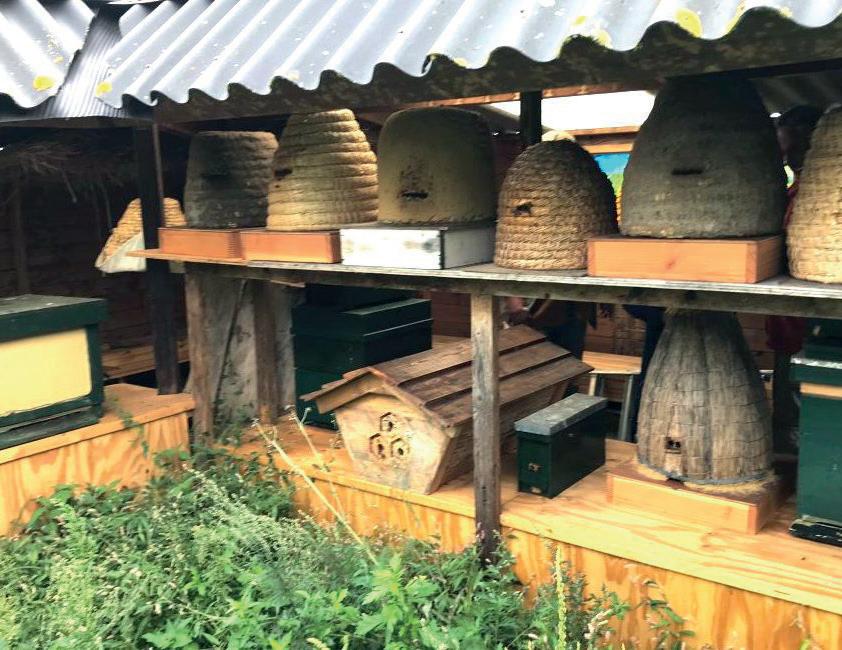
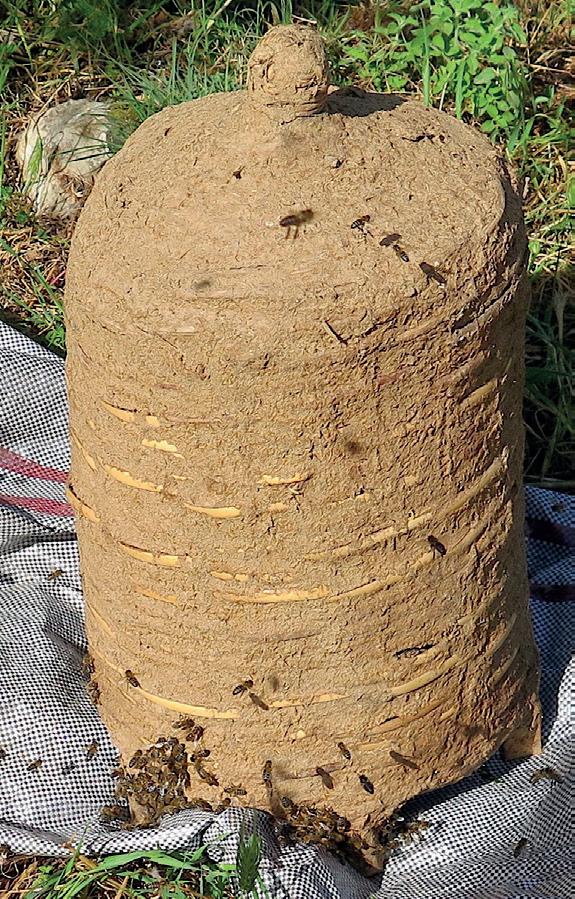
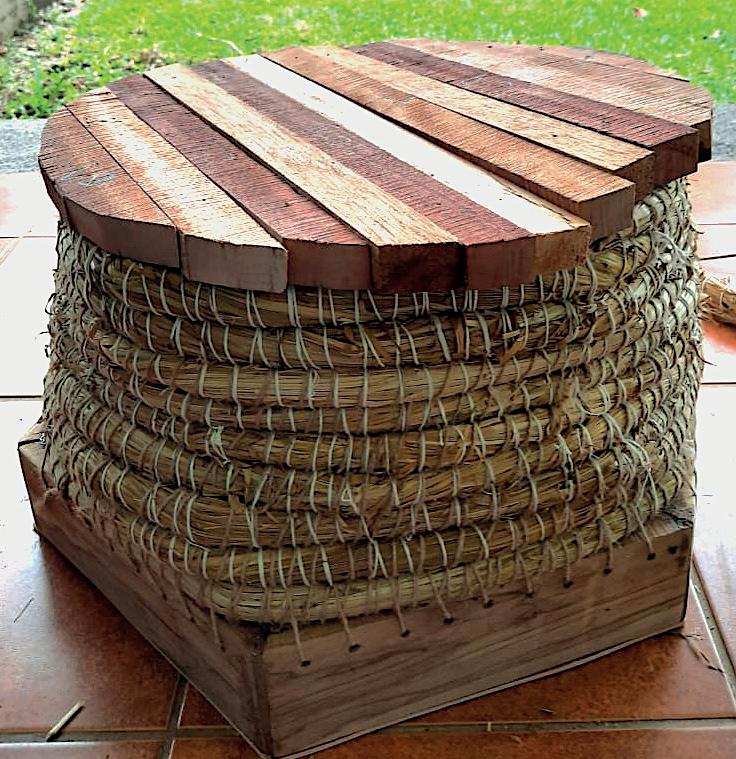
Natural Bee Husbandry Magazine | No. 25, Autumn 2022 | Incorporating Bees for Development Journal No. 144 34
1. Daniel de Rycker, Belgium.
2. Annie Tremblay, Costa Rica. 3. My first skep, Tim Whiitington, Massachusets, USA.
4. Macedonian ‘Trimka' skepGareth John. 5. Stipica Cicak, Slovakia. 6.‘Le Petit Beefest’ Creuse, France, organised by Karin Maassen and Adam Wright.
7. Ferry Schutzelaars’ Apiary, Harlem, Holland - Susan Knilans and Jacqueline Freeman. 8. Greek Skep, John Phipps.
1 2 4 5 8 7 6 3
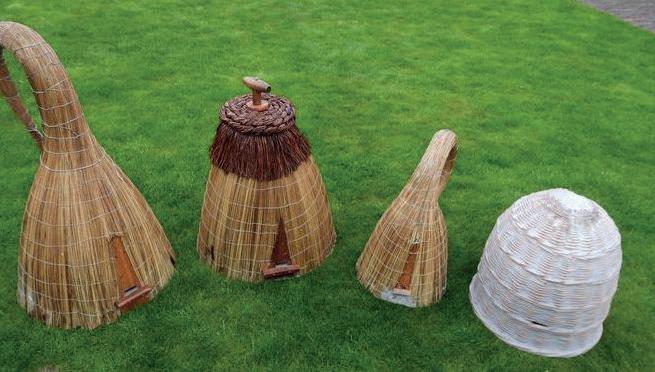
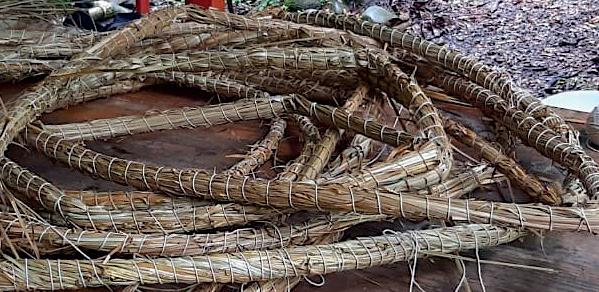
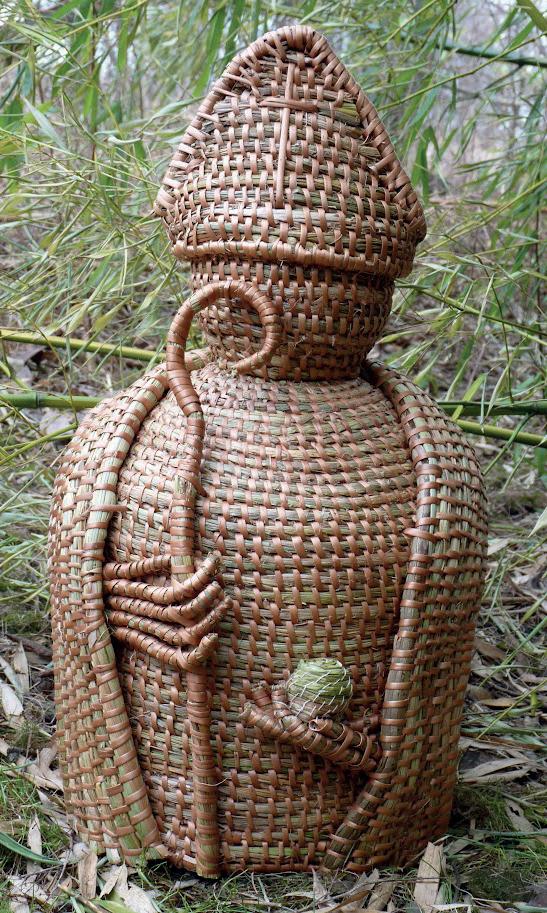
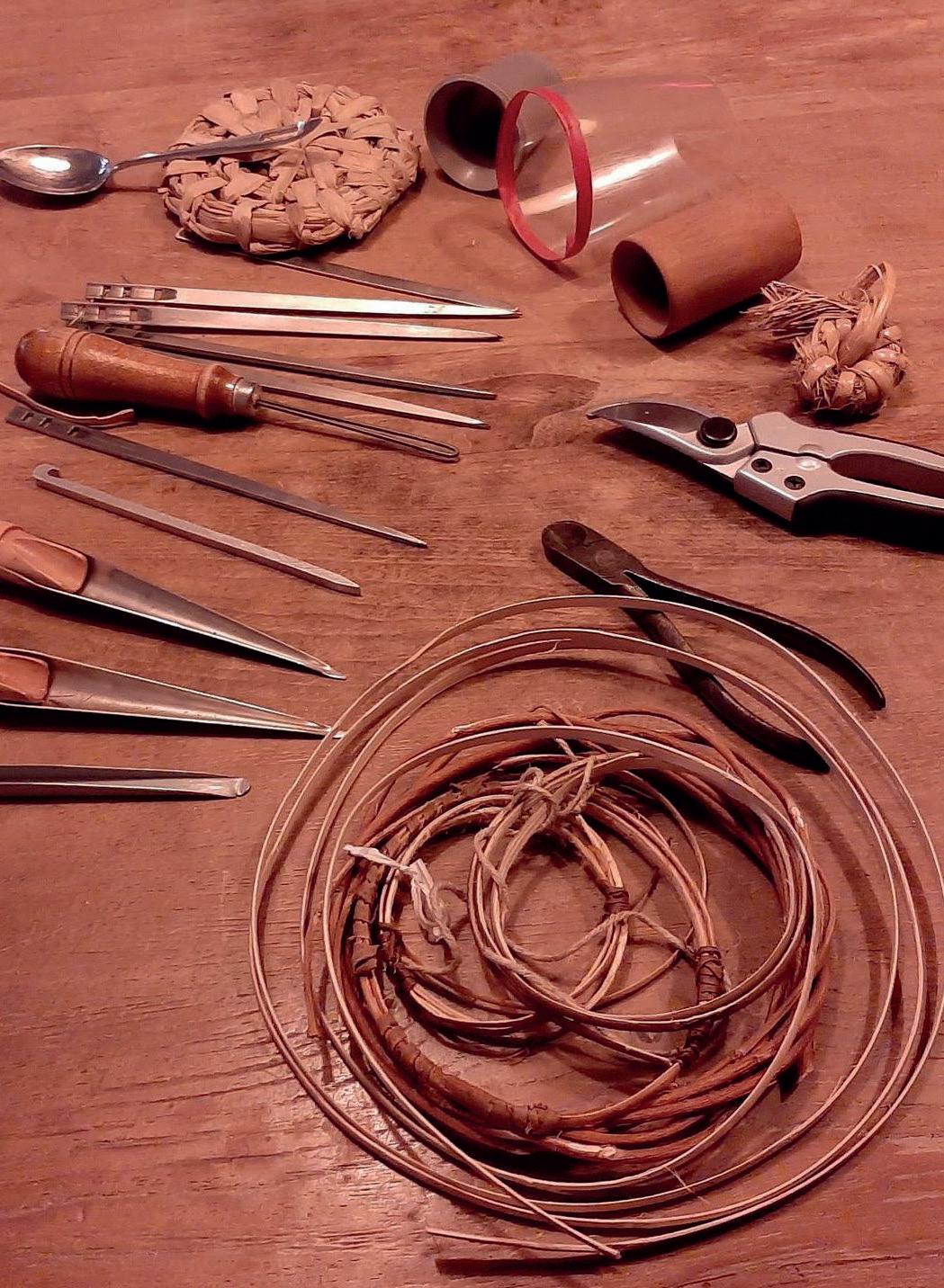
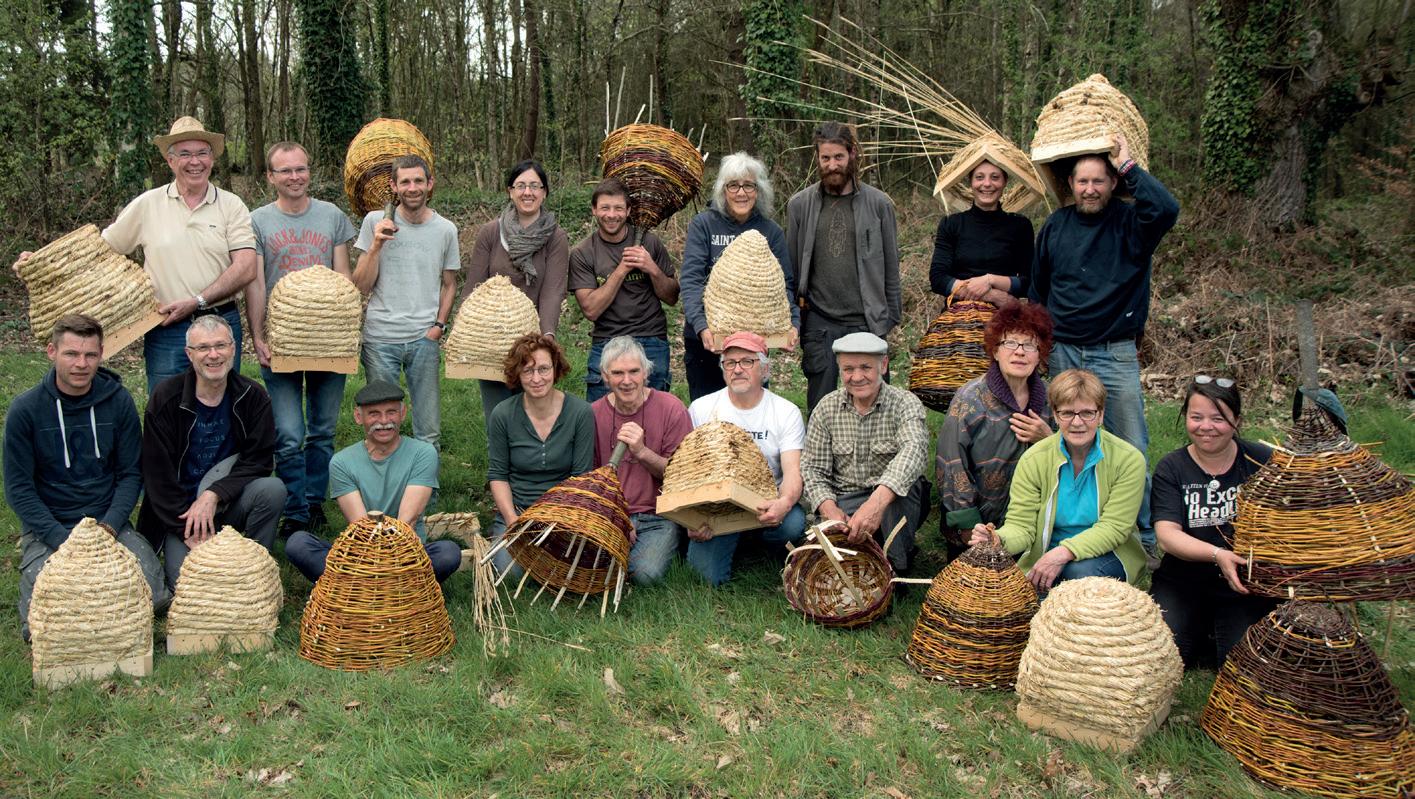
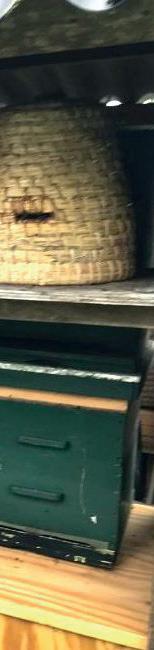
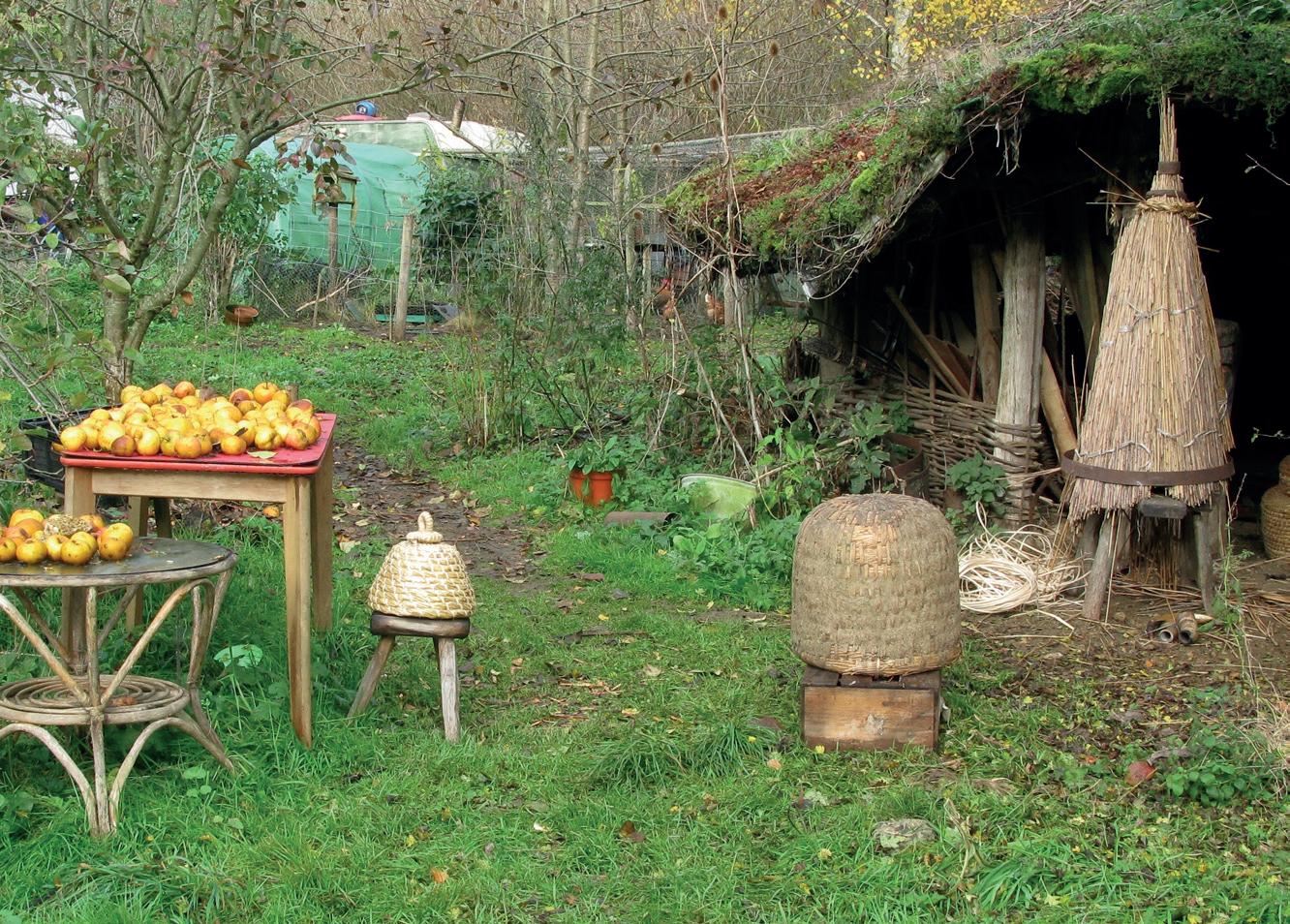
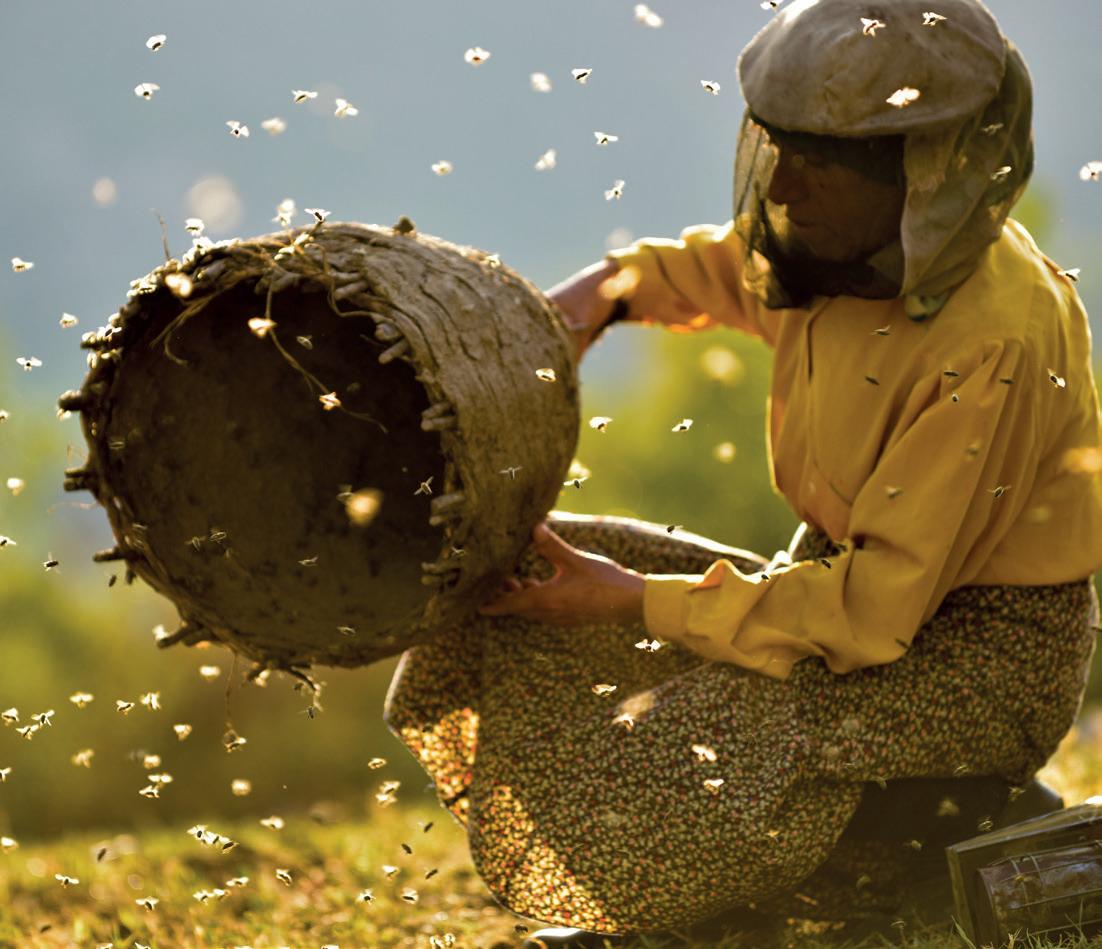
Skeps around the world 35
12 9 11 14 13 15 10
9. Chris Park’s apiary, England. 10. Macedonia - from the documentary ‘Honeyland’. 11. A variety of skeps, Tinus Kolsters, Holland. 12. Annie Tremblay - finds it easier to make long coils of straw rope and then stitching them together. 13. Skep tools, Mike Albers, Holland. 14. Skep making workshop in France. Jan Micheal. 15. Kovács Tibor, Hungary.
Basketry and weaving
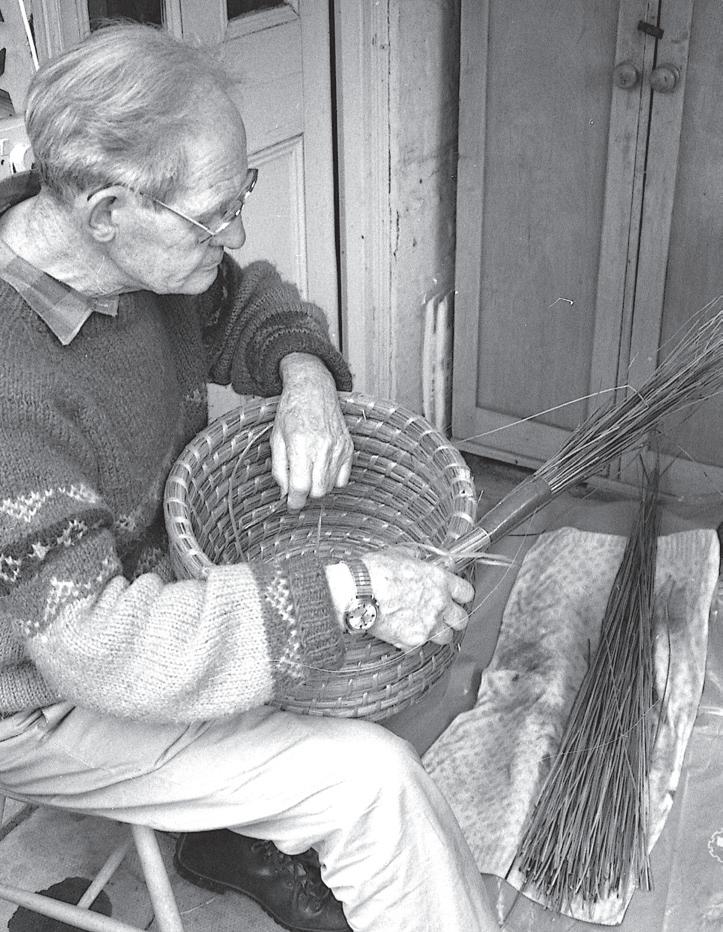
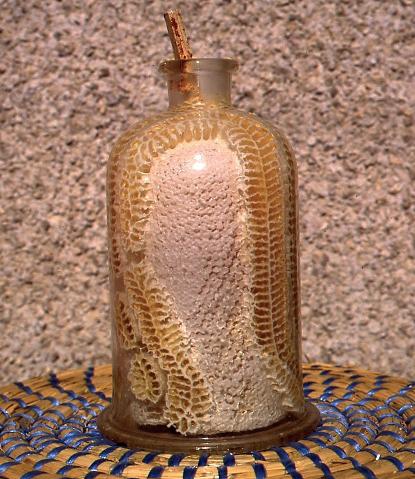
In the last two years of my primary school, during craft lessons we were taught basketry and weaving. To begin with we made simple holders for indoor plant pots. Their construction was relatively easy: upright stakes were placed in the pre-drilled holes around the circumference of the 3-ply wooden bases; underneath the bases, short lengths of the stakes were plaited together to hold them firmly in place; lengths of pre-soaked thin willow were then woven around the stakes until the desired height was reached, then the tops of the stakes were either plaited or hooped into the top layers of weave. The main skills needed were the ability to make the plaiting tight enough (something which usually foxed me), ensuring that the beginnings and ends of the added weaving material were only visible from the inside of the basket; and, most importantly, trying to achieve a symmetrical result. As you can imagine in a class of children, the variation was enormous. Finally, the container was tidied up by clipping away at pieces of cane. Sometimes, the finished item was varnished.
Following this we made tea trays, large rectangular shopping baskets which already had a strong framework within which we could work and, the only deviation from the use of natural materials, we used strips of coloured plastic to decorate the handles. Lastly, we progressed to weaving seats out of seagrass for stools.
Needless to say, most of us took pride in our work and the best examples were chosen for the annual arts
and crafts exhibition. However, the real joy was being able to give someone in the family something that was of great use in the home.
When I myself became a teacher and was sometimes involved in running craft lessons, no longer were the natural materials of willow, ramin, rattan and seagrass used: all the materials were
Baskets in Europe
Maurice Bichard
Fyfield Wick Editions 2008
Paperback, 275mm x 210mm
Illustrated in Colour and B&W
272 pages
ISBN 978-09560249-0-9
Available from Northern Bee Books
This large full-colour book is most certainly the definitive work on basketry and weaving in Europe. Region by region the author has delved into the history of this craft,
some form of plastic. This meant that without the pre-soaking, the plastic materials could not shrink to a nice tight finish like the natural materials did when they dried out.
I never thought that one day I would find those early craft lessons of much practical use to me - that is until I took up beekeeping. Now when I see how wonderfully and skilfully modern skeppists work and produce beautiful well-insulated, weatherproof homes of all shapes and sizes for their bees, and I remember my modest efforts of trying to accomplish an acceptable standard of symmetry, I feel too chastened to try. I have a complete sun hive kit and huge bundles of long rye straw lying in wait for me: one day I will just have to bite the bullet.
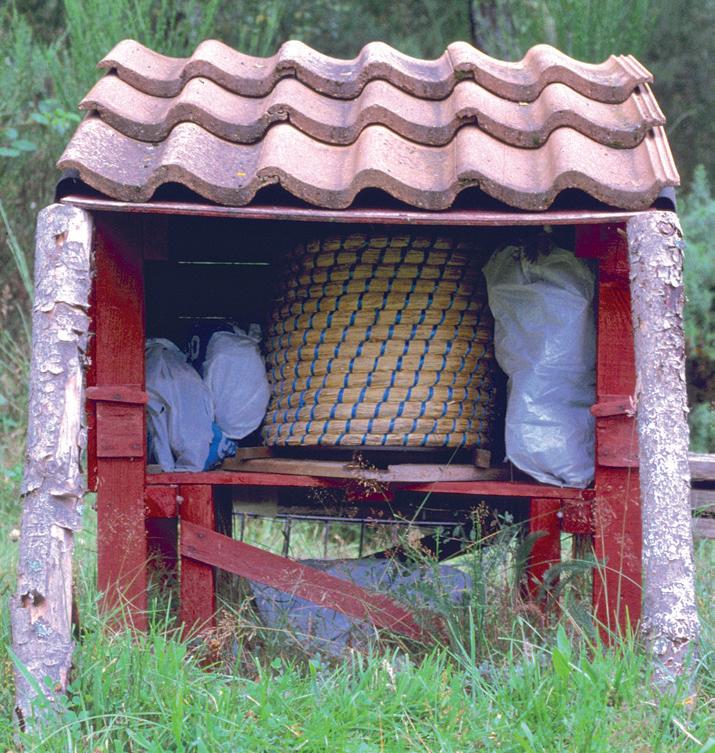
citing which materials are used in the construction of the enormous range of artefacts and the use to which they are put. Whilst he draws from some historical documents his main sources are the result of his extensive travels, the people to whom he has spoken and seen at work, and the museums he has visited in order gain a real sense of the craft’s history.
Seeing so much at first hand, he is able to give vivid, detailed descriptions of a vast range of techniques which will be of much interest and practical use to his readers.
Natural Bee Husbandry Magazine | No. 25, Autumn 2022 | Incorporating Bees for Development Journal No. 144 36
1. My late friend John Gleed making a skep during one of his visits to our home. 2. This skep made of straw and baler twine in its shelter at his home in Nairn. 3. Colonies in skeps can produce excellent table-ready combs of natural honey.
Beekeeping – friendship & cooperation at home and across the Atlantic
Marcus Nilsson, Sweden
Treatment-free beekeeping in Sweden has revolved around Erik Österlund and his work to obtain varroa tolerance in honeybees. He has shared his knowledge and results with local beekeepers in his area and has also, over the years, reached out to other treatment-free beekeepers around the world.

Magnus and Ulrika Kranshammar from Varberg, Sweden, who have also been working to develop and promote treatment-free beekeeping in their own bee yards as well as running the local county of Varberg Beekeepers Association, decided they wanted to raise some money to fund a meeting or conference on this important subject. They turned to Eric Österlund to ask which foreign guests and TF beekeepers to invite. Erik without hesitation told them to get in touch with Kirk Webster in Vermont. Said and done, Kirk was contacted and accepted to come and hold two lectures, the first ones outside the US.
The conference “The Way to a Varroa Tolerant Bee” turned out to be a huge success with over 150 beekeepers from around Sweden and Scandinavia in the audience and beside Kirk Webster, were many reknowned speakers, both beekeepers and scientists. Among them was Norwegian beekeeper Terje Reinertsen who in his own words wrote:
“We, my wife Anita and I, met Kirk Webster at the weekend conference in Varberg. Up to this time it has been the most interesting conference on the subject we have attended as it was focused only on treatment-free beekeeping. It is always good to meet with fellow beekeepers, especially those who believe that is of the uttermost importance strive for this goal. All lecturers shared a wealth of knowledge and experience to show those in attendance that this aim could be realised.”

After the conference many of the lecturers and some of the guests decided to socialize over dinner at a local inn. Discussions continued and new friendships developed and we all had a strong feeling that this conference was just a starting point for further cooperation, in Scandinavia, as well as abroad. After the conference, Kirk expressed a wish to visit both Terje in Norway and Magnus and Ulrika in Sweden, which of course was welcomed by all parties.
It so happened that the Kranshammars and Kirk both went to the Apimondia Congress in Montréal in 2019, after which the Swedish couple were invited to visit Kirk and work
for a week with him at his bee yards in Champlain Valley, Vermont. During and after work, beekeeping practice in general and treatment-free beekeeping in particular were discussed. A second trip to visit both Terje in Norway and the Kranshammars in Sweden was agreed upon, however the plan got abruptly postponed by the pandemic and will be realized now in August 2022. After a weeks stay and work with Terje in Norway the journey continued to western Sweden and Varberg. The Kranshammars run a small homestead side
by side with their landscaping and garden business. They are also engaged in the local beekeeping association where they arranged a lecture by Kirk for the local beekeepers. Kirk also was intrigued by the Swedish horizontal trough hives and the experimental super deep frame hive that Magnus has developed beside the other trough hives of his own construction.
As there was time for more excursions in Sweden, a visit was made to Eric Österlunds home in Bäckaskog, then on to Southern Sweden to visit Beefriendly in Scania, a project run by the author of this article. The project is based on work with swarms of local feral bees only, to try to develop a sort of local “ecotype”, tolerant of varroa and which would work well in the surrounding landscape. Bees are kept treatment-free in horizontal trough hives that closely resemble the Layens hive paired with the Drayton hive, a kind of “franken hive” of sorts. Bees are not fed and winter on their own honey supplies. But more on that in another article.
I had contact with Kirk over a land line today as I was finishing this short report on how important physical meetings are between treatment-free beekeepers from different parts of the world. I asked what his impressions from the journey were and he told me that he had wanted to meet with Terje to see how he tended his bees for a long time and that he was happy with the warm welcome and hospitality he was given in Norway and Sweden. He also was both surprised and impressed with our bees in that they were docile and easy to work with compared with those he had at home. This first trip to the Nordic countries was the experience of a life time which he hoped to be able to repeat in the future.
As regards Eric Österlund and his group of treatment-free beekeepers, they meet annually and are planning this autumn’s get together in November. The group continues to grow, accruing a mass of knowledge and experience in which they can all share.
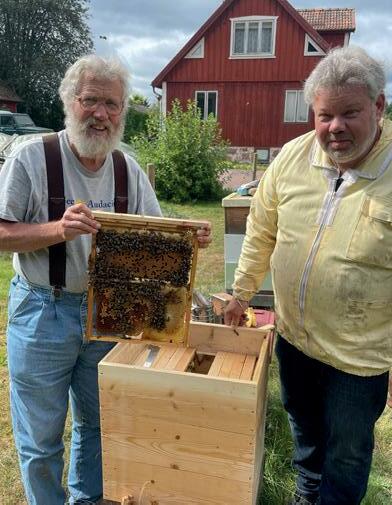
For more information:
www.kirkwebster.com | www.elgon.es/diary
www.landbi.no/introduksjon-til-reinertsenshonninggard (site in Norwegian but YouTube films with English subtitles)
37 Treatment-Free Beekeeping – friendship & cooperation at home and across the Atlantic Treatment-Free
1. Ulrika Kranshammar, Kirk Webster, Magnus Kranshammar; 2. Kirk Webster and Marcus Nilsson; 3. Terje Reinertsen.
Apimondia
Apimondia International Apiculture Congress in Istanbul
Nicola Bradbear, Bees for Development
Apimondia is the World Federation of Beekeeping Associations –its members are the world’s national associations, and every second year Apimondia organises a major Congress. Since Apimondia was formed 127 years ago, this makes Apimondia’s Congress one of the oldest in the world! Like the Olympics, nations bid to host the Congress years in advance – and five years ago, in Istanbul in 2017, Russia won their bid to host the Congress in the city of Ufa, South of Moscow, in 2021. Of course, COVID intervened such that the event planned for 2021 had to be postponed, and by March this year, it was clear that the war in Ukraine meant that an alternative venue must be found, without time for a normal bidding process.
The Apimondia Executive Council took the expedient decision to hastily organise a Congress in Istanbul – it was feasible as we already had valuable experience of running the 2017 Congress there, and by good chance the same venue was available for dates this August. This meant that the Congress had to be hastily re-organised in just five monthsa process that normally takes four years!
And thus the 47th Apimondia Congress took place during 24-28th of August --a slightly shorter Congress than usual, but nevertheless 3,700 people attended, representing 119 nations, though missing delegates from China and a few other nations that still have Covid-related travel restrictions.
The Executive Council took the opportunity to organise this Congress slightly differently - addressing three major topics during each morning of the three working days of the Congress: Honey purity and authenticity, Climate change, and Nature-based Beekeeping. The Congress Scientific Programme contained a further 22 Symposia addressing specific topics, as well as Round Tables and Workshops. All this was accompanied by a huge Trade Exhibition, the World Beekeeping Awards, Apimondia’s General Assembly, and Technical Tours. As we have come to expect from our Turkish hosts, there was a beautiful opening ceremony with bee dancers and music, and a vibrant closing ceremony too.
As President of Apimondia’s Scientific Commission Beekeeping for Rural Development, I organised the major symposium on Nature-based Beekeeping. As you will appropriate from the article on pages 5–7, Nature-based Beekeeping has wide definition, and this session was planned to highlight good, best beekeeping practises already underway worldwide, and on commercial scale. After my introduction, we heard from beekeepers around the world practising nature-based beekeeping at scale.
From Europe, we heard Sébastien Bonjour and Anne Bonjour-Dalmon describe Sébastien’s operation of a commercial bee farm with 1,500 colonies in France, aiming to interfere as little as possible with the colonies, and with a respectful attitude towards the bees – this includes never to kill queen bees.
From North America, we heard from Tucka Saville, a full-time beekeeper living from her commercial, naturebased beekeeping, managing 300 colonies in South Florida, treatment-free and highly bee-friendly.
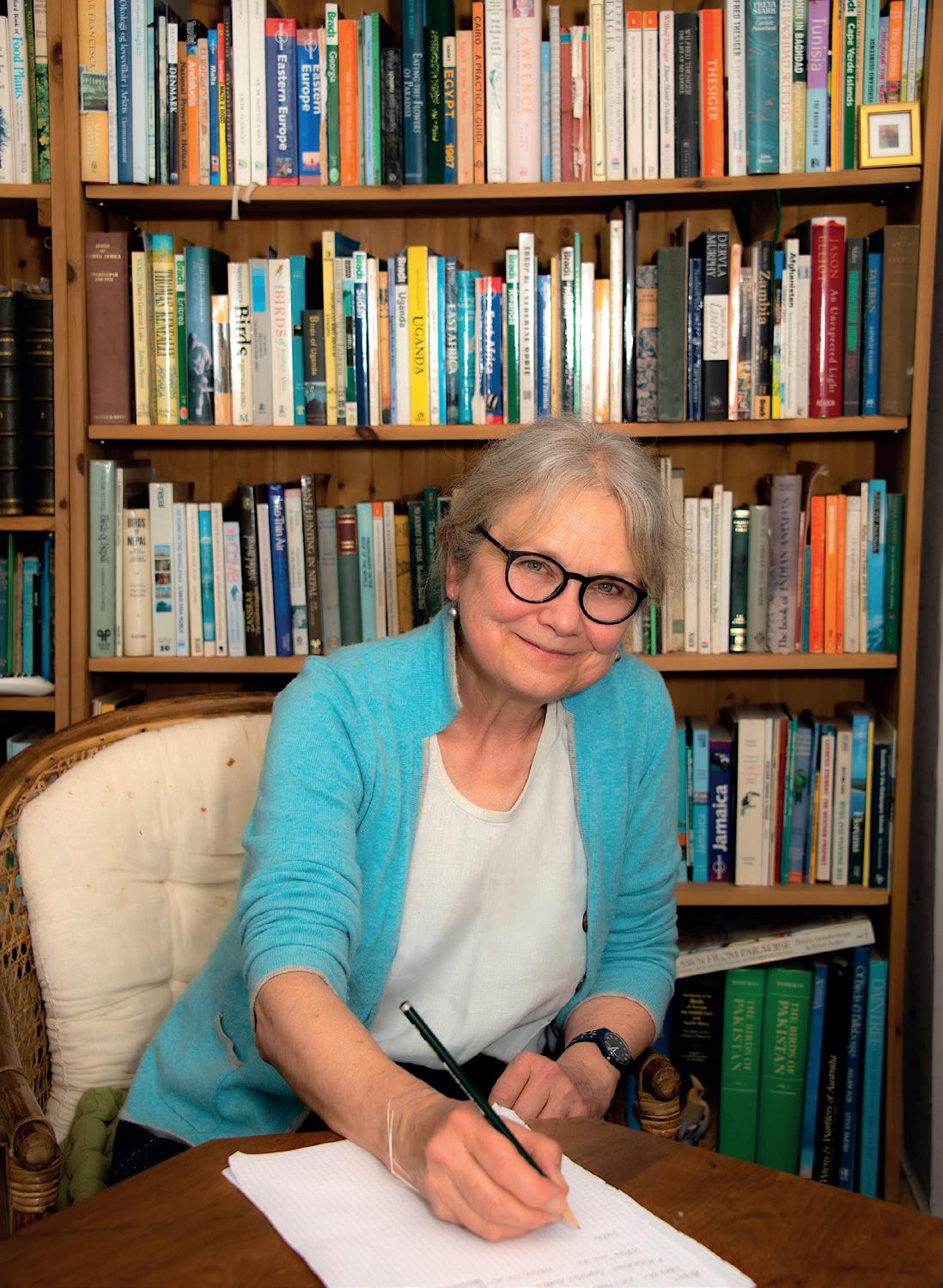
From South America, we heard from Pablo Chipulina, who works in the northern area of the province of Chaco, Argentina. This area has few roads and little communication, meaning that the indigenous and Creole people who live there have few job opportunities. Organic beekeeping is now enabling more than 74 families to build good livelihoods. They have created the Association of Young People of the Impenetrable Chaqueño, an organisation that brings together producers in the area. They have 1,750 honey bee colonies managed according to organic protocol. Sadly Pablo was ill at the time of the Congress and his talk was kindly presented on his behalf by Marta Soneira.
From Africa, we heard from Janet Lowore and Dickson Biryomumaisho, explaining the importance of nature-based beekeeping in Africa and emphasising the importance of the feasibility of beekeeping for financially poor people.
Finally we heard talks from Apimondia Presidents of Commissions: Fani Hatjina on treatment-free beekeeping, and Cristina Mateescu, on the need for clean, residue -free bee produce for use in apitherapy.
This was just a glimpse of one session - there were of course hundreds of other talks presented during the Congress – that is the joy of an Apimondia Congress!
At the closing ceremony the consortium of Scandinavian nations Denmark, Norway and Sweden won the voting to host the Congress in Copenhagen in 2025.
Before that, next year in September 2023, the Congress will get back on schedule with the Apimondia Congress in Santiago, Chile. It promises to be a wonderful event, where these discussions will continue!
During this Congress I stepped down as President of the Apimondia Scientific Commission Beekeeping for Rural Development – I am delighted that Megan Denver of USA won the Members’ vote to replace me in this role – Congratulations Megan!
Natural Bee Husbandry Magazine | No. 25, Autumn 2022 | Incorporating Bees for Development Journal No. 144 38
Bees for Development article
Apimondia
Bees Unite the World – Really?
The slogan of the Apimondia (1) meeting that took place end of August in Istanbul was ‘Bees Unite the World’. To begin with, when assessing the validity of the claim, one of course has to define ‘world’. At the final session attendees were told that almost 4,000 beekeepers and bee scientists from over 100 countries had attended the event, which had been organised at rather short notice. The original date of 2021 had become untenable due to Covid, and the chosen location, Ufa in Russia, had become untenable because of the Russian invasion of Ukraine. Global events that made painfully clear that the somewhat naïve slogan and logo of the event was more wishful thinking than reality. (2).

Of course, the ‘Ersatz’ location Istanbul, probably the only location that could be found at short notice, had already been somewhat questionable in 2017, when an Apimondia took place there as part of the ‘regular rotation’. In an article on what was then my first Apimondia I had written: “… I remembered … that there had of course been another ‘elephant’ at the conference, one that was not mentioned at all, and
that had been the cause for me going to Istanbul with a guilty conscience to begin with: the increasingly repressive government in Turkey, which imprisons critics in their thousandsincluding teachers, judges and even the chair of Amnesty Turkey with the absurd charge of “membership of a terrorist organization. (3).
So why did I even contemplate going in 2022? For one, I registered when I looked as if I could combine attendance with a business trip to the far East without creating extra air miles and emissions. More importantly, a number of friends and colleagues from Asia were coming to Istanbul, and there was no better way to meet them in person, after 2.5 years of lockdowns and travel restrictions. My resulting contact and follow up ‘to do’ list is almost longer than my conference notes on the presentations I managed to attend. Choices had to be made, according to the organizers they had ‘converted’ 600 submissions into 25 symposia in three parallel ‘streams’ and 250 posters.
Even so, somehow I must have picked less popular venues. There was
not a single event I attended where the hall was full – rather the opposite. Even the opening session on honey adulteration started more than 20 minutes late – presumably because the main speaker was hoping for more people to show up … Others events such as the ‘Asia Round Table’ would have fitted into a large classroom. (4). Though to be fair, Chinese scientists and beekeepers could not travel to Istanbul because of ongoing Covid restrictions at home.
What else was missing? Nicola Bradbear, Apimondia’s President for the Scientific Commission for Rural Development (5) started her short introduction at the opening session with the statement that she had not seen a single bee (nor any other insect) since her arrival in Istanbul. I made it my mission on my daily 15 mins walk between my hotel and the conference centre to spot a bee or other insects –and there was one moment, literally a split second, when a bee (probably a wasp) crossed my sight line. (6).
In the afore mentioned article written five years ago I noted: “… at the opening ceremony (unless it was literally lost in translation) there was not a single mention of the words pesticide, neonicotinoids or related items.” Five years on that had indeed changed. To
39 Apimondia
1. Whilst many beekeepers are trying to produce good quality honey and with a steady increase in organic products, there is still the world wide problem of fraudulent honey which severely affects the honey industry.
Martin Kunz
begin with there was a major session on climate change – possibly the best attended event I was at. But after all the record breaking headlines regarding heat, droughts and floods happening on a global scale this summer, the session felt mostly like a late token, as that horse has bolted the stable long ago. And this time there were, indeed, quite a number of lectures on the effects of glyphosate and other agri poisons, and statements how bad industrial farming and monocultures are for bees, insects and biodiversity in general.
What left a lasting impression with me was a comment from an elderly, grey haired Kenyan beekeeper, who has been keeping stingless bees all his life, but said (in a video clip) that this was no longer possible due to excessive grazing and pesticides in his region. And a presentation from Brazil demonstrated the sublethal effects the neonicotinoid Imidacloprid has on stingless bees. To me, both presentations are particularly noteworthy, because just prior to the start of the pandemic in 2020, I had the privilege of attending a conference on stingless bees which I summarised in an article under the headline: ‘The bees of the future have no sting.’ Is it too late for their survival already, too?
Another, major change compared to five years ago was a ‘major symposium’, on ‘Nature Based Beekeeping’. It included a session on ‘treatment-free beekeeping’ – which made me wonder just how far away we still are from true bee friendly beekeeping standards. ‘To treat, or not to treat’ is too simplistic an approach. The positive examples provided of apiaries managed without chemical inputs all had other key aspects that probably were more important for the survival of these colonies than not treating for Varroa. On a French island beekeepers harvest only the honey that is left over after the winter season – a method that was traditional in Black Forest beekeeping, too. Allowing bees to overwinter on their own honey stores rather than sugar water probably contributes more to their health and their ability to deal with stress factors such as changing climatic conditions or introduced pests and diseases than not applying oxalic acid.
One important topic has remained the same as in 2017: honey adulteration and standards. Prominent space was given to the introduction of a new standard published by US Pharmacopeia as part of their Food Chemicals
Codex (FCC). At the beginning of the talk a conciliatory claim was made, that the new code was in effect ‘the same’ as the Codex Alimentarius by the FAO. This sounds reassuring, but I am convinced that it is, in effect, highly misleading. The Food and Agriculture Organisation’s Codex defines ‘honey’ as follows: “Honey is the natural sweet substance produced by honey bees from the nectar of plants or from secretions of living parts of plants or excretions of plant sucking insects on the living parts of plants, which the bees collect, transform by combining with specific substances of their own, deposit, dehydrate, store and leave in the honey comb to ripen and mature.” This definitely includes all Apis species - possibly the stingless bees, too? (7). FCC apparently copies this definition – but then ‘adapts’ technical standards (and testing regimes) to the ‘changed times’. As a result, most traditional beekeeping, most tropical honeys, and basically all bee species that are not A. mellifera are bound to fail. One example: Bees in a tropical setting struggle to get the moisture content below 20% - how can they in a climate which at times feels like ‘walking through water’? But mechanical reduction of moisture has now been defined as ‘honey adulteration’. (8).
What makes this debate even more problematic is that this FCC standard is not freely available – one has to order it from the USA for the hefty price of USD 150. I am still trying to get hold of a copy – even when willing to pay the process is complicated.
Admittedly, in this session a slot was given to the FAO, in this instance to a representative of the FAO’s programme on food systems of indigenous people. From what I know and have seen of the life such indigenous guardians of nature lead, everything they collect, produce, consume from bees would fail the FCC ‘definition’ – beginning with larvae as a major source of protein.
In other words, I don’t see much unity around the world of bees, but of course, one area where we are all in agreement is that there is too much honey fraud going on, we all have to do what we can to help prevent it. But lopsided proprietary standards and definitions are not the way to go about it. (9)
One small item of progress that I thought I spotted is that the honey testing method NMR (Nuclear Magnetic Resonance), which caused
such an issue around the contest for the world’s best honey in the 2019 Apimondia in Montreal (when 45% of entries failed the testing) seems to have been ‘relegated’ to a position of being ‘one testing method among others’ – to be applied where appropriate only …
Almost the last item on the agenda of the closing session was the award for the ‘world’s best honey’, which went (after blind tasting by the expert jury) to a beekeeper from Greece. In view of the venue of this Apimondia perhaps a case of ‘taste over politics? (10)
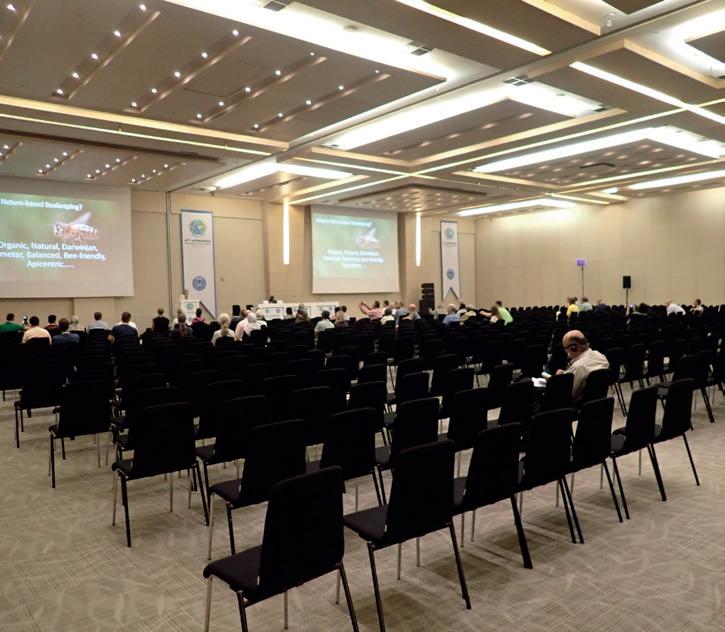
References
1 Also known as the International Federation of Beekeepers' Associations.
2 The event was 'hybrid' and of course I have no way of knowing how many people logged in and from where. 3 E.g. email campaign by amnesty UK on Nov 21, 2018.
4 The contingent of beekeepers from Ukraine was more numerous than all of Asia combined - and it received frequent applause ...
5 Nicola, who of course heads Bees for Development (BfD) stepped down at the end of the conference - having served for 29 record breaking years. Megan Denver of Hudson Valley Apiary Supplies was elected as her successor.
6 Nicola's comment reminded me of the visit by the (late) Queen Elizabeth II of England, who had journeyed to my home region in Southern Germany in May 1965: During that visit her hope asked to he taken to a horse breeding station near Stuttgart, instead she was brought to a museum honouring a local poet in a small town that shared the same name as the horse breeding centre. When she was confronted with poems instead of stallions, she is on record as having asked: "But where are the horses"? So this Apimondia was a bee conference without bees in sight.
7 The Roundtable on Asia has begun work on a standard for stingless bee honey - an open and democratic process.
8 What did not come up, but what I would love to see in a honey standard: Why not ban foundation and comb made from plastic? Or plastic hives? With honey being slightly acidic, should the risk of plastic contamination not be taken more seriously than reducing water - keeping in mind that even water in water bottles sheds nano particles...
9 The ISO is also working on a standard - which will also cost money... Why?
10 The next Apimondia event is in 2023 in Chile; slogan: Sustainable Beekeeping from the South of the World. This means going back to the 'normal' bi-yearly Apimondia rhythm. The very last vote in Istanbul decided that the 2023 event will be held in Copenhagen: The Scandinavian bid won over the proposal from Budapest in the closing event in Istanbul.
Natural Bee Husbandry Magazine | No. 25, Autumn 2022 | Incorporating Bees for Development Journal No. 144 40
2. Many lecturers like Nicola Bradbear found that they were speaking in halls with few people in attendance.
Book reviews
The Mind of a Bee
260 pages
Lars Chittka
Illustrated in colour and B&W 16 x24 cm, Hardback
Princeton University Press
Princeton/Oxford 1st Edition 2022
ISBN: 978-0-691-18047-2
List price: £25
Bees are a great conversation opener when meeting a stranger at a party. And if the new acquaintance is really keen and asks for recommendations on books to read, until now I recommended Thomas Seeley’s ‘Honeybee Democracy’ and Jürgen Tautz’ ‘The Buzz about Bees’.
The next person who asks me will have a third title added to this list: Lars Chittka’s The Mind of a Bee: While Seeley looks at the ‘decision making’ process of a swarm (which will make any Political Scientist jealous), and Tautz describes the incredible capabilities of bees at colony level, i.e. as a ‘super organism’, Chittka focusses on individual bees which turn out to be unbelievably complex beings. (The cover shows the orchid bee Eilossa sp. Euglossini because he is not only talking about honey bees; many of the experiments designed and described are done with bumble bees – as their size makes monitoring somewhat easier).
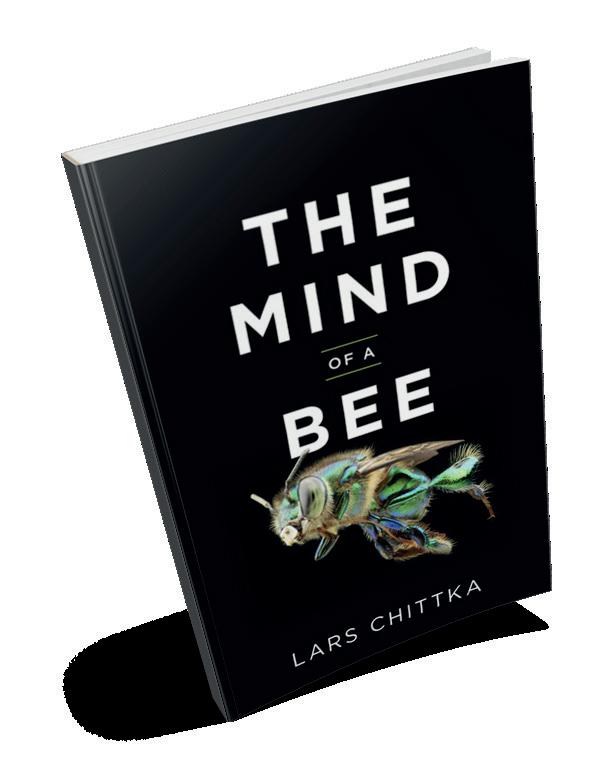
I must admit that even though I learnt what little beekeeping skills I have from a Demeter apiary, where every effort was made to be gentle with the bees, it was also considered ‘normal’ and not an issue, really, if in the process of an inspection a bee or two were squashed. It was referred to as ‘making stamps’.
After reading Lars Chittka’s book I will be even more careful to try and avoid this: Each and every individual bee is a marvel of nature and should be treated with utmost respect.
In order to do the book justice, I will simply follow its chronology. Chittka prefaces each chapter with a quote by bee researchers, most of whom died long ago (Lubbock Huber, Maeterlinck, … and of course Darwin).
Part of this humbling list is a Charles
Turner, an African American scientist (1867-1923), who despite his limited means (as a result of discrimination) did cutting edge experiments and had insights way ahead of his times. I had never heard his name before:
The Introduction (Chapter 1) Chittka states the aim of his book: to convince the reader that ‘each individual bee has a mind’.
Chapter 2 is all about vision, from Karl von Frisch’s experiment that proved that bees could see colour (against established scientific ‘wisdom’ which had him worry if he would be stymied at the beginning of his career for challenging the ‘big names’), to arguing whether bee colour vision evolved in response to flower colours. His conclusion: it was the other way around. Before plants turned to pollination by insects, the environment was mostly green and brown.
Chapter 3 explores the amazing capacity of bees to navigate in darkness and under cloudy skies. Chittka gives a detailed description of the bees’ anatomy that is the basis for their polarization sensitivity and their capability to make use of magnetic fields for finding their way around hive and foraging areas. Among other amazing insights he explains why bees do not visit flowers that have just yielded their nectar: flowers are (literally) grounded (i.e. negatively charged), bees (because they are flying) are positively charged. When a bee visits a flower, its negative charge briefly turns into a positive one – which tells the next visitor that right now there is no nectar to be had, landing on the flower would be a waste of time and energy.
Chapter 4 discusses ‘instinct’ – and Chittka dismisses the notion that bees are guided by instinct alone. An inter-
esting experiment, first done by Huber, but repeated recently, is to offer bees a glass ceiling to start building comb on. As glass is too slippery, the bees ‘simply’ started at the bottom and built upwards. Put glass on the bottom, too, and they start from the side. Put glass on the opposite side – they will bent the comb at a right angle ... Could the ability to deal with a problem that they definitely never encountered in nature really be instinct driven alone?
Chapter 5 looks at the ‘roots’ of ‘bee intelligence and communication’, in particular the evolution and deciphering of the waggle dances (A. mellifera is not the only one to dance).
Chapter 6 explains how bees ‘learn about space’, the use of landmarks for navigation - do they remember them? Do they have ‘mental maps’? The chapter also covers the development of technology that allows scientists to nowadays monitor individual bees (e.g. via harmonic radar technology) – a great improvement over Baron August Sittich Eugen Heinrich von Berlepsch’s method, who, in 1852, had a horse readied for pursuit after having seen a swarm settle in a lime tree. The next day he was able to chase the swarm to its new home one village over …
Chapter 7 explains how bees manage to gain an ‘overview’ of a forage area, while also finding even tiny flowers when collecting nectar: They basically can change flight speeds between a mode of visual intake that is high in speed and resolution, but low in accuracy, with one that is slow with poor resolution but colour enabled. Similarly intriguing is that bees seek out flowers that are warmer / provide warmer nectar – to save energy – even if the difference is as little as 4C.
Chapter 8 adds the argument that bees learn from each other (even across species) to the discussion whether they have ‘intelligence’: In one experiment A. mellifera bees were put into the same hive with A. cerana – and learnt to decode the respective ‘dialects’ of each other’s waggle dances – crucial for the smaller A. cerana which does not have the ability to forage as far as their bigger sisters.
Chapter 9 is where I got slightly lost: The details of the construction of a bee’s brain. Chittka writes: “I invite you to marvel for a few moments at the intricacy of Kenyon’s 1896 brain wiring diagram displayed …” – marvel was about all I could do. On the next page he quotes another early bee scien-
Book reviews 41
Reviewed by Martin Kunz Management Team member IBRA, Owner Diversity Honeys Ltd.
tist, Santiago Ramón y Cajal: “The complexity of the insect retina is something stupendous, disconcerting, and without precedent in other animals. … one is completely overwhelmed.” Indeed. One section in this slightly maddening Chapter 9 that I could relate to is that, apparently, bees have three distinct sleep phases – and there are indications that, during sleep, they consolidate memories from the previous day’s foraging.
Chapter 10 poses the question whether individual bees have ‘personalities’, and again the answer seems to be ‘yes’: Some bees work harder than others, others put in ‘easy foraging shifts’. And the individuals are, apparently, selfaware: Big bumblebees (workers vary in size by a factor of 10 – which does not change over their lifetime) are ‘conscious’ of their body size – if need be, they ‘angle’ their flight in order to squeeze through a small opening. Colonies also contain fast and slow learners – but the latter, too, contribute: The faster ones apparently work so hard – they don’t last as long as the slow ones, which means, that over the course of their lives, these end up contributing more to the hive than the fast super collectors.
Which leads to Chapter 11 and the question: “Do bees have consciousness?”, which in turn is explored via the question: Do they have feelings such as pain, are they “conscious of their own experience”? An experiment with (artificial) crab spiders resulted in the finding that bees learn to become weary of these predators and learn to avoid them. Chittka obviously could not resist straying beyond bees (and nor can I) when he explains that “… male fruit flies experience ejaculation as rewarding – but if they are deprived of mating opportunities,
Hand Pollination In China: The Shadow Of The Future
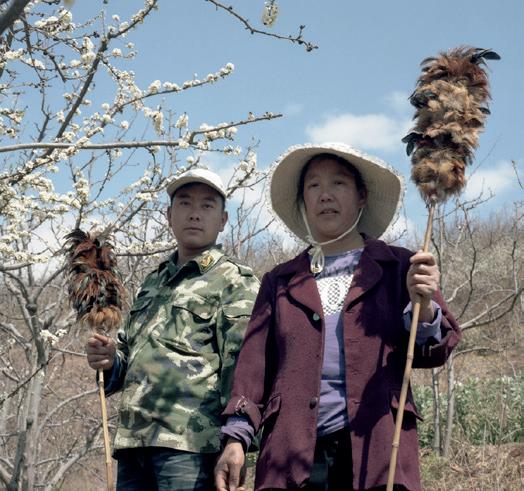 Mariann Fercsik
Northern Bee Books, 2022
Paperback, 120 pages, beautifully illustrated
ISBN-10: 1914934199 / ISBN-13: 978-1914934193
Reviewed by John Phipps
I like this book very much. It works for me on several levels: as a strong portfolio of carefully executed photographs; as an explanation as to why orchards are being pollinated by hand in the Sichuan Province of China; and fascinating information on the communities who carry out this almost feudal type of work.
In order to research this important topic, Mariann Fercsik travelled to China at her own expense, having just missed being awarded a Joan Wakelin Bursary (she was in second place!) and as a result we have yet again a vivid example of the dire effect of mankind on the environment. Fortunately, Mariann found the farmers to be extreme helpful and hospitable.
The story is rather complex: farmers changing from traditional agricultural practices to the creation of large orchards of pears which gave them a better income; the impact this monoculture practice had by drawing large levels of pests to the orchards; the increasing use of pesticidesand the subsequent deaths of each farmer's few colonies of bees; colonies which might have been brought in for pollination moved instead to lower slopes to avoid pesticide poisoning; the essential need for cross- pollination and the purchase of suitable compatible pollens partly because the local trees which might provide cross-pollination flowered at a different time; the acquisition
they begin to seek out alcohol, which is often found in nature in the form of fermented fruits.” (Sounds familiar?)
Back to bees: It is by now well known that bees seek out flowers with low levels of caffeine and nicotine in their nectar – are they looking for a fix?
Chittka ends his book by responding to potential critics, who might explain away all the ‘intelligent behaviours’ in one way or another as being possible without any conscious awareness, but confirms his own cautious conclusion:
“On balance, the evidence for at least a simple form of consciousness in bees is mounting.”
However: Even if the critics are right: Read this book –and be wowed.
There are, of course far more amazing descriptions of experiments, insights, … than I could hint at, e.g. the fact that bumblebees learned to work together to pull a string in order to ‘free’ a dish with a sugar solution reward …
The book is well and helpfully illustrated (in particular with drawings that explain the set-up of experiments), with only one illustration somehow so badly printed as to be useless (p 148) – but as it is part of that chapter 9, I probably would have struggled to understand this particular one in detail even if it covered a whole page.
As a teaser to the book there is this free to view 80 min lecture which L. Chittka gave to the Linnean Society of London: https://tinyurl.com/yvvmhha9
of the very arduous and technical skills by the workers to ensure that good pollination could be achieved.
The photos carefully selected for the work were taken with Mariann’s Hasselblad (heavy, so not an easy camera to travel with!) but she was intent on getting both the right detail into her photos in the wonderful square format. As such we get not only the photos about the pollination work, but also images of the landscape and the people in their village communities. The single portraits of people are outstanding and truly reveal the the impact of their work and the environment in which they live.
Mariann has duel British and Hungarian citizenship; she studied photography at university in London, and specialises in social and environmental issues. She uses a Hasselblad with 120 film stock as, unlike digital photography:
“it slows down everything. The process is different and it allows the sitter and me as well to spend some time in the present moment, to build an intimate relationship”.
Mariann hopes that her work will achieve its purpose of highlighting existing environmental problems, especially with this project the increasing menace of the insecticide poisoning of honey bees.
Natural Bee Husbandry Magazine | No. 25, Autumn 2022 | Incorporating Bees for Development Journal No. 144 42
Chen Tao and his mother are working on their orchards in Dayan.
Events
Chile
APIMONDIA: 48th International Apicultural Congress
4-8 September 2023, Santiago
Further details: www. apimondia2023.com

Denmark
APIMONDIA: 49th International Apicultural Congress
2025, Copenhagen
Further details will appear here
Slovenia
12th International Meeting of Young Beekeepers
5-9 July 2023 (Dates to be confirmed), Ivančna Gorica
Further details: www.icyb.cz
Sweden
XXVI IUFRO World Congress
23-29 June 2024, Stockholm
Further details: www. iufro2024.com
UK
91st National Honey Show
27-29 October 2022, Sandown Park Racecourse, KT10 9AJ Bees for Development will be there, and hosting our Social Evening with wine and food on Friday 28th October at 6.00 pm: www.beesfordevelopment.org
Spring Convention
21-23 April 2023, Harper Adams College
Further details: www.bbka.org.uk
Bees for Development
Interesting news for people working in beekeeping and development. Register and subscribe: www.resources.beesfordevelopment.org/sign-up

Courses
Straw Skep Making Course with Chris Park and Bees for Development
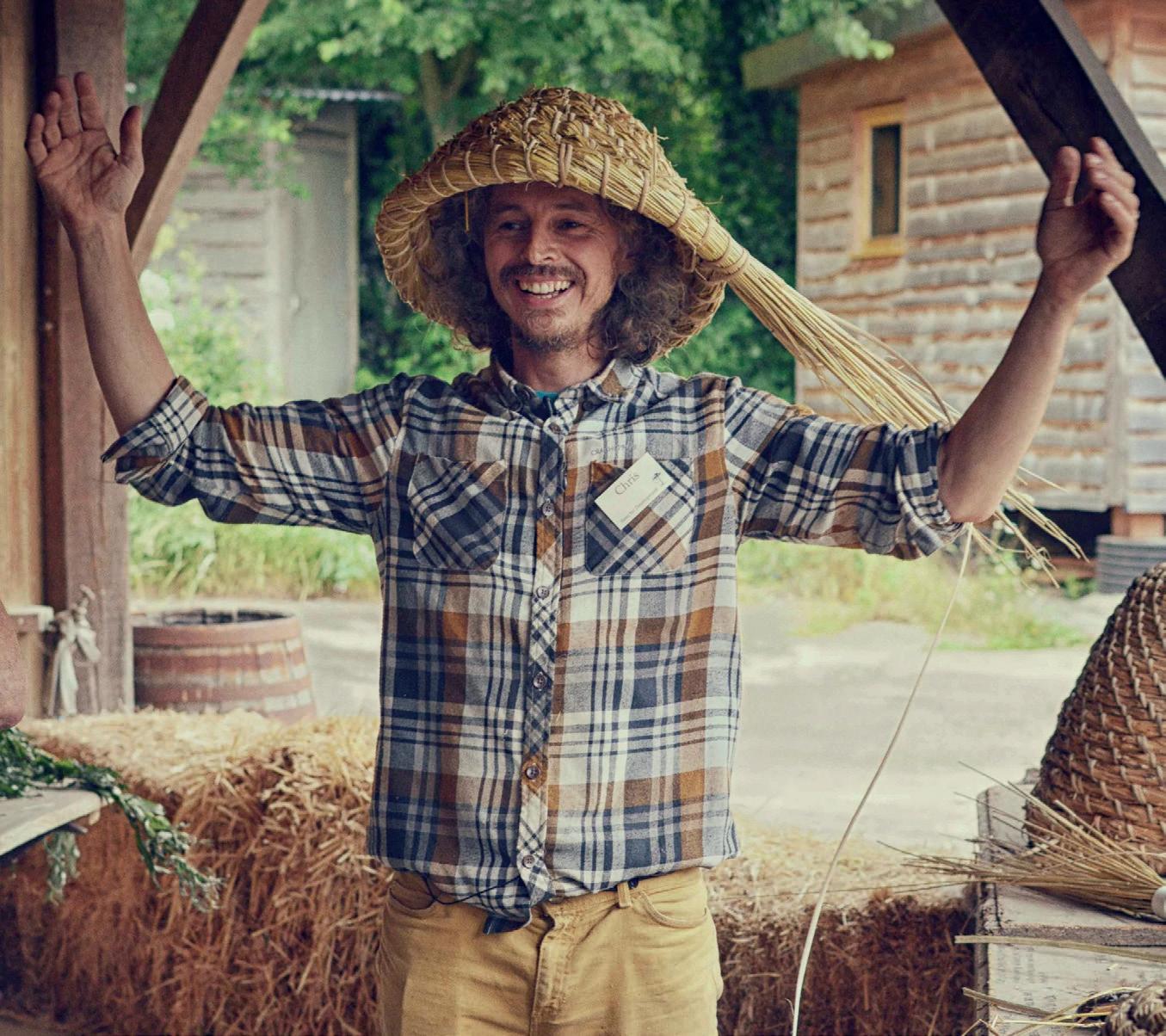
4 November 2022 Ross on Wye HR9 6JZ
Mead Making with Chris Park and Bees for Development
12 November 2022 Westmill Farm, Watchfield (Swindon)
Sustainable Beekeeping Course 22-23 April 2022 @ Wakelyns, Suffolk
For details: www.shop.beesfordevelopment.org or find us on Facebook, Instagram, Twitter, TikTok.
43 Events and courses
Resource Centre Bulletin
Please scan this QR Code to see all our Courses for the year ahead.
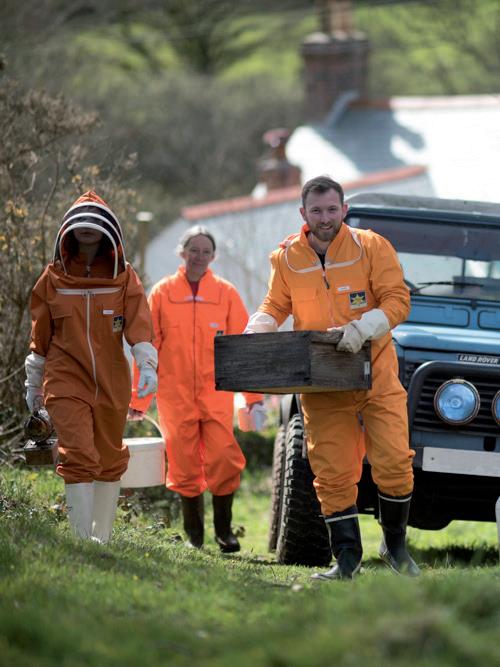




hello@bjsherriff.com | +44 (0)1872 863304 | www.bjsherriff.com MAKERS OF FINE BEEKEEPING APPAREL “Try our Unique ClearView TM veil which offers the best in clarity of vision... you’ll be able to see eggs, varroa etc extremely clearly almost as if you’re not wearing a veil!”
