STORAGE & MARKETING ISSUE THE VOICE OF WISCONSIN'S POTATO & VEGETABLE INDUSTRY
RESEARCHERS SHARE Findings at Field Days ALSUM FARMS & PRODUCE Celebrates 50th Anniversary WEATHER STATION NETWORK Will Expand Across Wisconsin STARCHY VEGETABLES Prove to Be Nutritious $28/year | $2.50/copy | Volume 75 No. 9 | september 2023 INTERVIEW: EUGENE MANCL AND GREG JOHNSON Ron’s Refrigeration and Air Conditioning, LLC
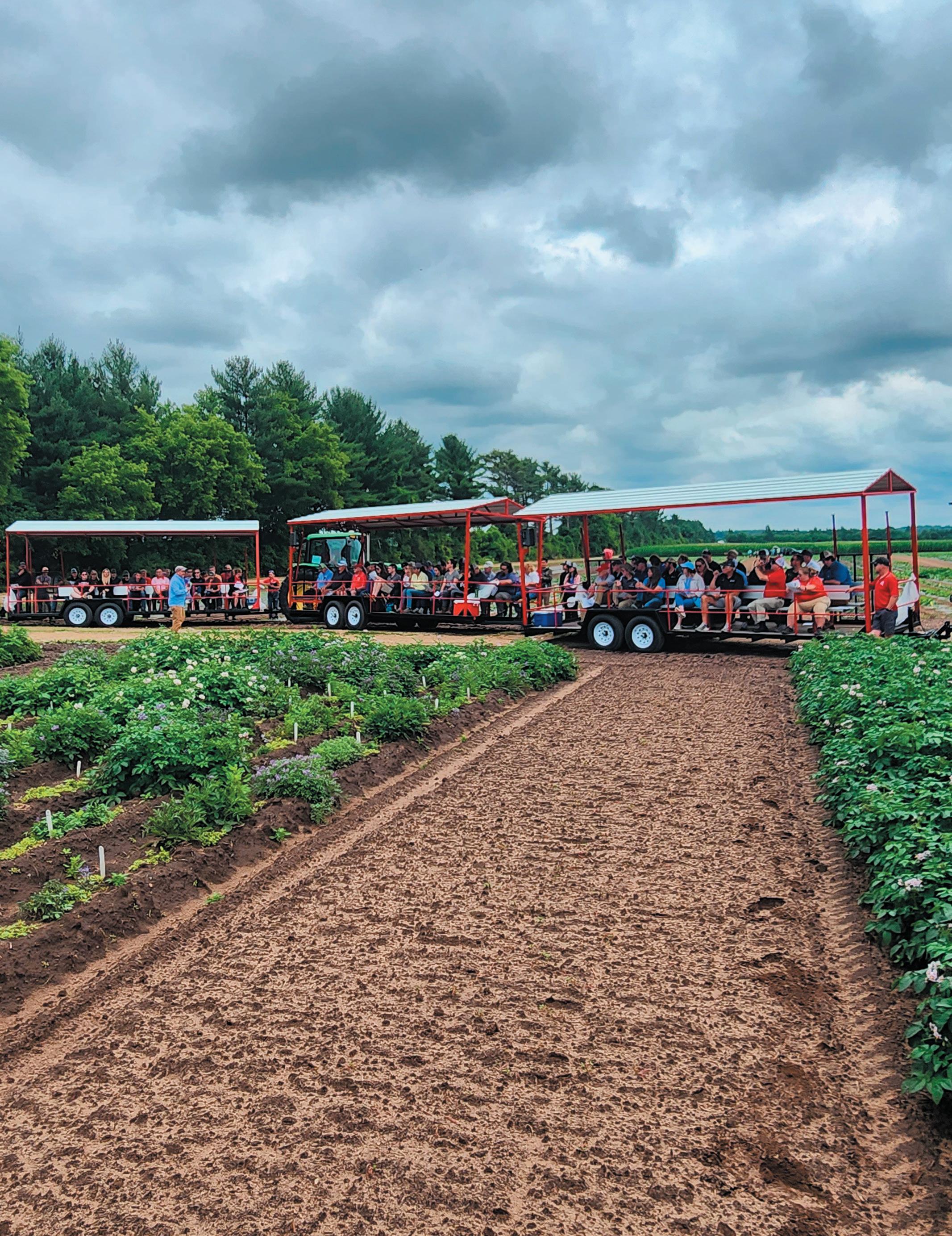
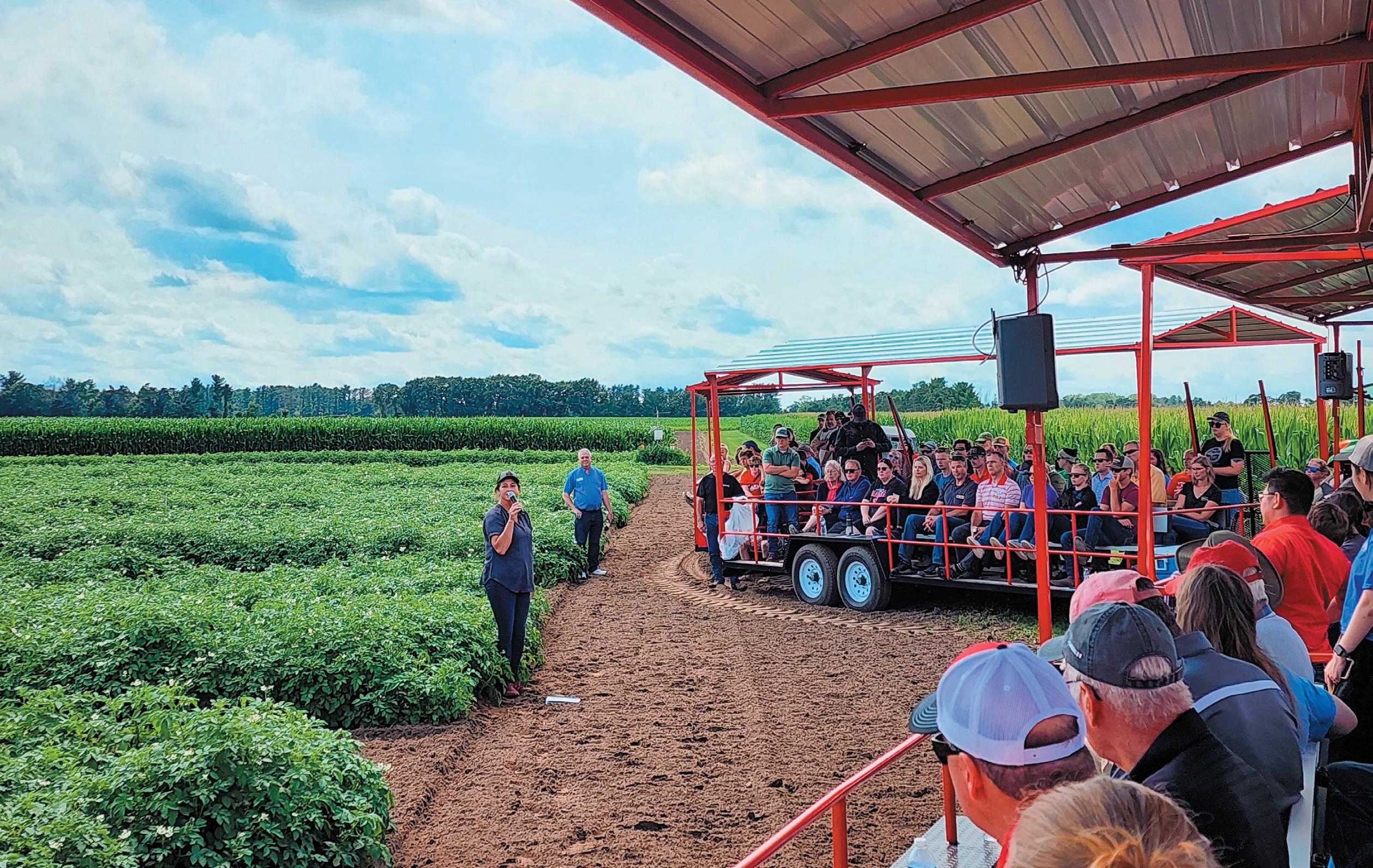
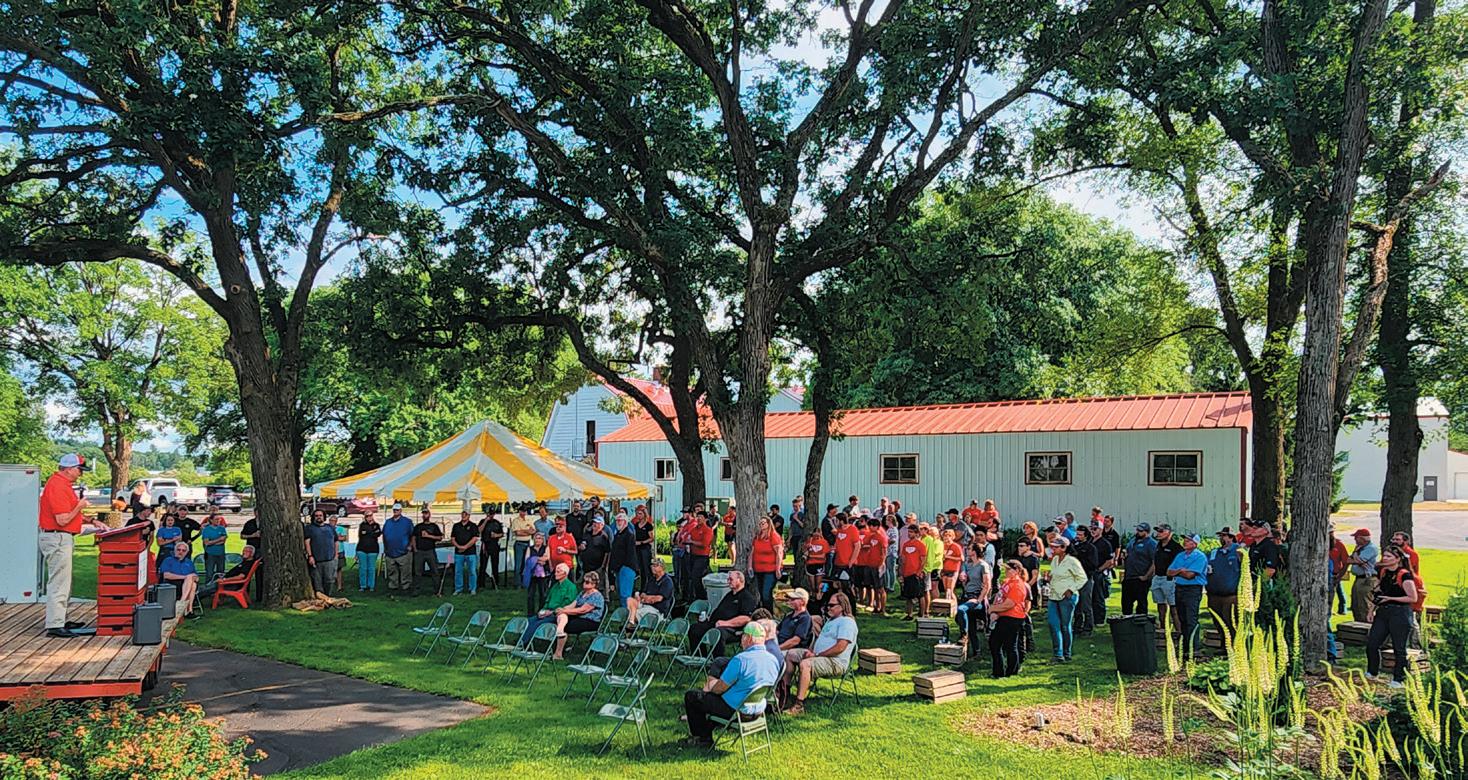
Dr. Russell Groves presents “Insect Management in Potato and Processing Vegetables” at the Hancock Agricultural Research Station Field Day. Photo courtesy of Troy Fishler




















Inventory • Replenishment services • Handle all freight needs • Long-Range planning • Mike Carter CEO | John Hopfensperger COO 8 0 0 - 8 2 6 - 0 2 0 0 715-677-4533 • Fax: 715-677-4076 Rosholt, Wisconsin 8 0 0 - 8 2 6 - 0 2 0 0 Jenna Wenzel • John Eckendorf Nic Bushman • Chris Lockery Jerome Bushman (FL - WI) Mike Gatz, Jim Stefan and Chris Fleming (Milwaukee) Paul Hegewald (All fruits and vegetables) Mike Whyte (Michigan) Transportation: Matt Dobbe • Denise Moze Year-round shipping from all areas.
8 BADGER COMMON’TATER INTERVIEW:
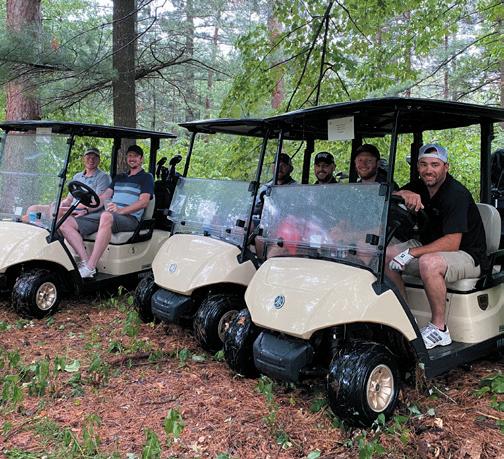
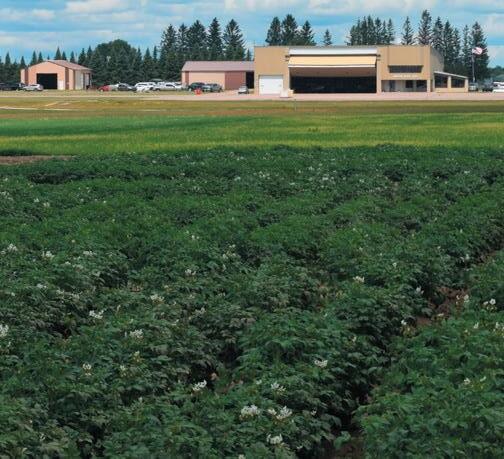
More than one person has had a hand in making Ron’s Refrigeration a successful operation for 50 years, and thus a co-interview in this issue with Senior Project Manager Eugene Mancl and Regional Service Manager Greg Johnson. Founded in 1973 by Ron and Bonnie Mancl, their children, Tammy Salewski, and Timothy and Eugene Mancl, now run the day-to-day operations of the company, employing over 40 people and offering a bevy of quality products and services.
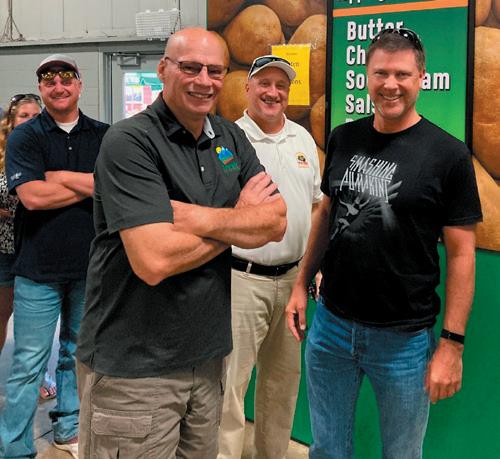
On the Cover: The clouds kept the crowd cool as Dr. Russell L. Groves gave a presentation on “Insect Management in Potato and Processing Vegetables” during the Hancock Agricultural Research Station Field Day, July 13, 2023. The Field Day is always a special occasion, but even more so with the WPVGA using the occasion to honor Hall of Fame members and past and present leaders of the Association as part of its 75th anniversary celebration. Photo courtesy of Troy Fishler

FEATURE ARTICLES: ALI'S KITCHEN ................... 65 AUXILIARY NEWS 53 BADGER BEAT 59 MARK YOUR CALENDAR ..... 6 MARKETPLACE .................. 34 NEW PRODUCTS ............... 44 NOW NEWS 35 NPC NEWS 64 PEOPLE ............................. 52 PLANTING IDEAS ................. 6 WPIB FOCUS ..................... 52 24 NEWLY FUNDED MESONET weather station network to expand across Wisconsin 41 ALSUM FARMS & PRODUCE hosts guests at two-day 50th anniversary celebration 54 STARCHY VEGETABLES JUST as nutritious as non-starchy veggies and whole fruit DEPARTMENTS: RESEARCHERS PRESENT FASCINATING FINDINGS Summertime in the potato industry means field days 16 EYES ON ASSOCIATES Rain couldn’t dampen the 2023 Putt-Tato Open golf event & annual fundraiser
POTATOES USA NEWS Milwaukee, Wisconsin, hosts successful Potatoes USA Summer Meeting 46 28 4 BC�T September
EVERY POTATO COUNTS
You want the best of both worlds. Speed to deliver maximum capacity and accurate defect detection to maintain consistent quality. Inspect the entire surface and look inside each potato to get the best out of every batch.
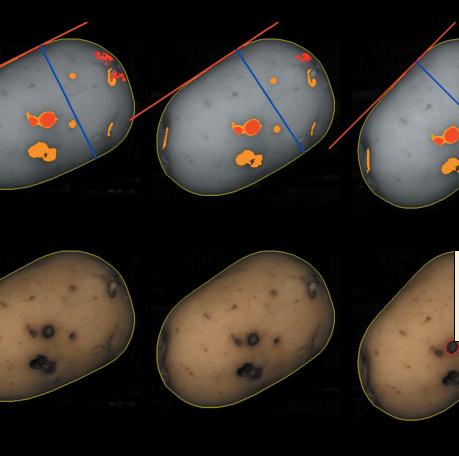
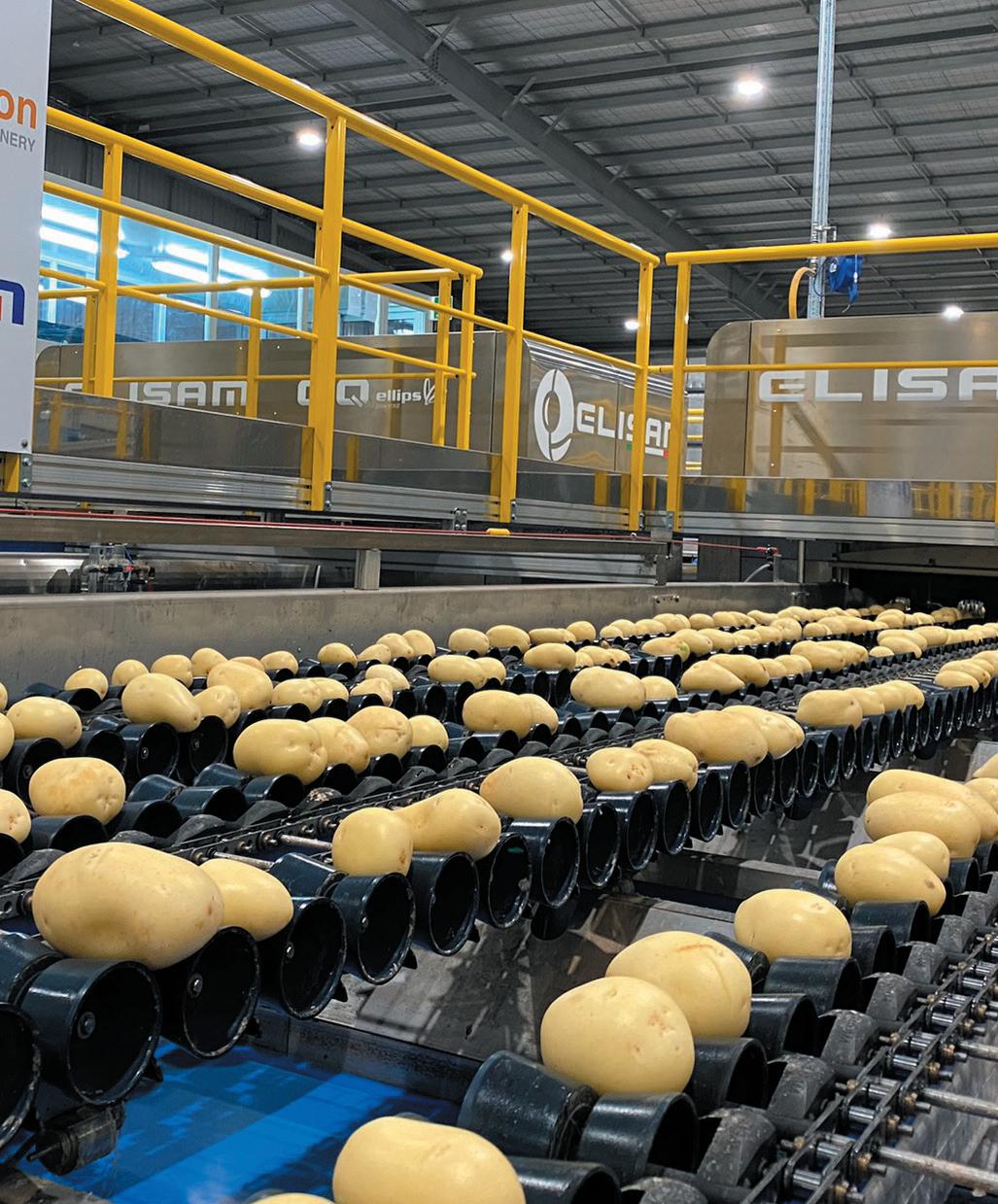
More info?
Please contact John Albert (206) 915-4962
john.albert@ellips.com www.ellips.com
WPVGA Board of Directors:
PresideNt: Ra Ndy Fleishauer
Vice PresideNt: Charlie Mattek
Secretary: JohN Bustama Nte
Treasurer: Alex Okray
Directors: Mike Carter, WeNdy Dykstra, Bill GueNthNer, Josh KNights & J.D. Schroeder
Wisconsin Potato Industry Board:
PresideNt: Heidi Alsum-Ra Ndall
Vice PresideNt: ANdy Diercks
Secretary: Nicola Carey
Treasurer: Keith Wolter
Directors: JohN Bobek, JohN FeNske, Jim Okray, Eric Schroeder & Tom Wild
WPVGA Associate Division Board of Directors:
PresideNt: Matt SeleNske
Vice PresideNt: ANdy Verhasselt
Secretary: Sally Suprise
Treasurer: Paul Salm
Directors: Melissa Heise, Etha N OlsoN, Scott Scheer, Morga N Smolarek & Bra NdoN Taylor
Wisconsin Seed Potato Improvement
Association Board of Directors:
PresideNt: Matt Mattek
Vice PresideNt: Jeff SuchoN
Secretary/Treasurer: CloVer Spacek
Directors: Charlie HusNick & ANdy Schroeder
Wisconsin Potato Growers
Auxiliary Board of Directors:
PresideNt: Heidi Schleicher
Vice PresideNt: DatoNN Ha Nke
Secretary/Treasurer: Becky Wysocki
Directors: Jody BagiNski, EriN Meister, Dakotah Smiley & Misti Ward
Mission Statement of the WPVGA: To advance the interests of WPVGA members through education, information, environmentally sound research, promotion, governmental action and involvement.
Mission Statement of the WPVGA Associate Division: To work in partnership with the WPVGA as product and service providers to promote mutual industry viability by integrating technology and information resources.
Badger Common’Tater is published monthly at 700 Fifth Avenue, Antigo, Wisconsin 54409
WPVGA Staff
ExecutiVe Director: Tamas Houliha N
Ma N agiNg Editor: Joe Kertzma N
Director of PromotioNs & CoNsumer
EducatioN: Da N a Rady
FiN a Ncial Officer: KareN RasmusseN
ExecutiVe Assista Nt: Julie BrauN
Program Assista Nt: Ja Ne GuilleN
Spudmobile EducatioN a Nd Outreach
AdmiNistrator: George Neuber

WPVGA Office
(715) 623-7683 • FAX: (715) 623-3176
E-mail: wpvga@wisconsinpotatoes.com
Website: www.wisconsinpotatoes.com
LIKE US ON FACEBOOK: www.facebook.com/WPVGA
Subscription rates: $2.50/copy, $28/year; $45/2 years.
Foreign subscription rates: $35/year; $55/2 years.
Telephone: (715) 623-7683
Mailing address: P.O. Box 327, Antigo, Wisconsin 54409
Or, subscribe free online: http://wisconsinpotatoes.com/blog-news/subscribe/
ADVERTISING: To advertise your service or product in this magazine, call (715) 630-6213, or email: Joe Kertzman: jkertzman@wisconsinpotatoes.com. The editor welcomes manuscripts and pictures but accepts no responsibility for such material while in our hands.
5 BC�T September
MARK YOUR Calendar
SEPTEMBER
9 2023 SPUD BOWL
Community Stadium at Goerke Park, 1 p.m. Stevens Point, WI
OCTOBER
19 4TH ANNUAL SPORTING CLAYS SHOOT
Wausau Skeet and Trap Club
Wausau/Brokaw, WI
19-21 THE GLOBAL PRODUCE & FLORAL SHOW
Anaheim Convention Center
Anaheim, CA
23-24 WPVGA RESEARCH MEETING
West Madison Research Station and virtual. 1 p.m. on Monday, 8 a.m. on Tuesday
Verona, WI
JANUARY 2024
8-9 POTATOES USA WINTER MEETING
Austin Convention Center Austin, TX
10-11 POTATO EXPO 2024
Austin Convention Center
Austin, TX
FEBRUARY
6-8 2024 GROWER ED CONFERENCE & INDUSTRY SHOW
Holiday Inn Convention Center
Stevens Point, WI
26-3/1 2024 NPC WASHINGTON SUMMIT
Washington Marriott at Metro Center
Washington, D.C.
MARCH
26-28 62nd ANNUAL WPS FARM SHOW
Experimental Aircraft Association grounds
Oshkosh, WI
MAY
18-21
NATIONAL RESTAURANT ASSOCIATION SHOW
McCormick Place
Chicago, IL
JUNE 23-26 12TH WORLD POTATO CONGRESS
Adelaide, South Australia
AUGUST
23-26 WISCONSIN FARM TECHNOLOGY DAYS
Country/Rock Fest Grounds
Cadott, WI
6 BC�T September
Planting Ideas
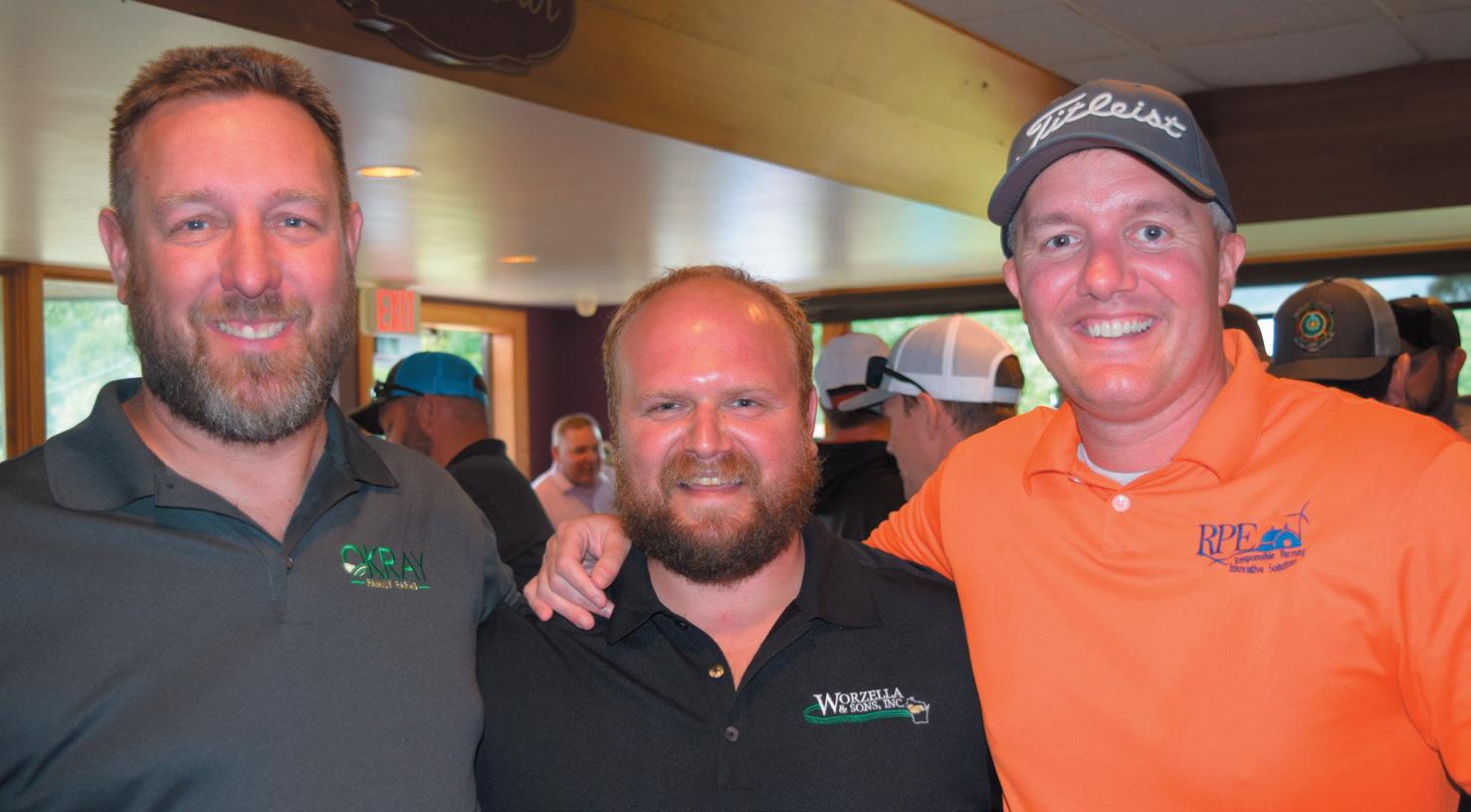
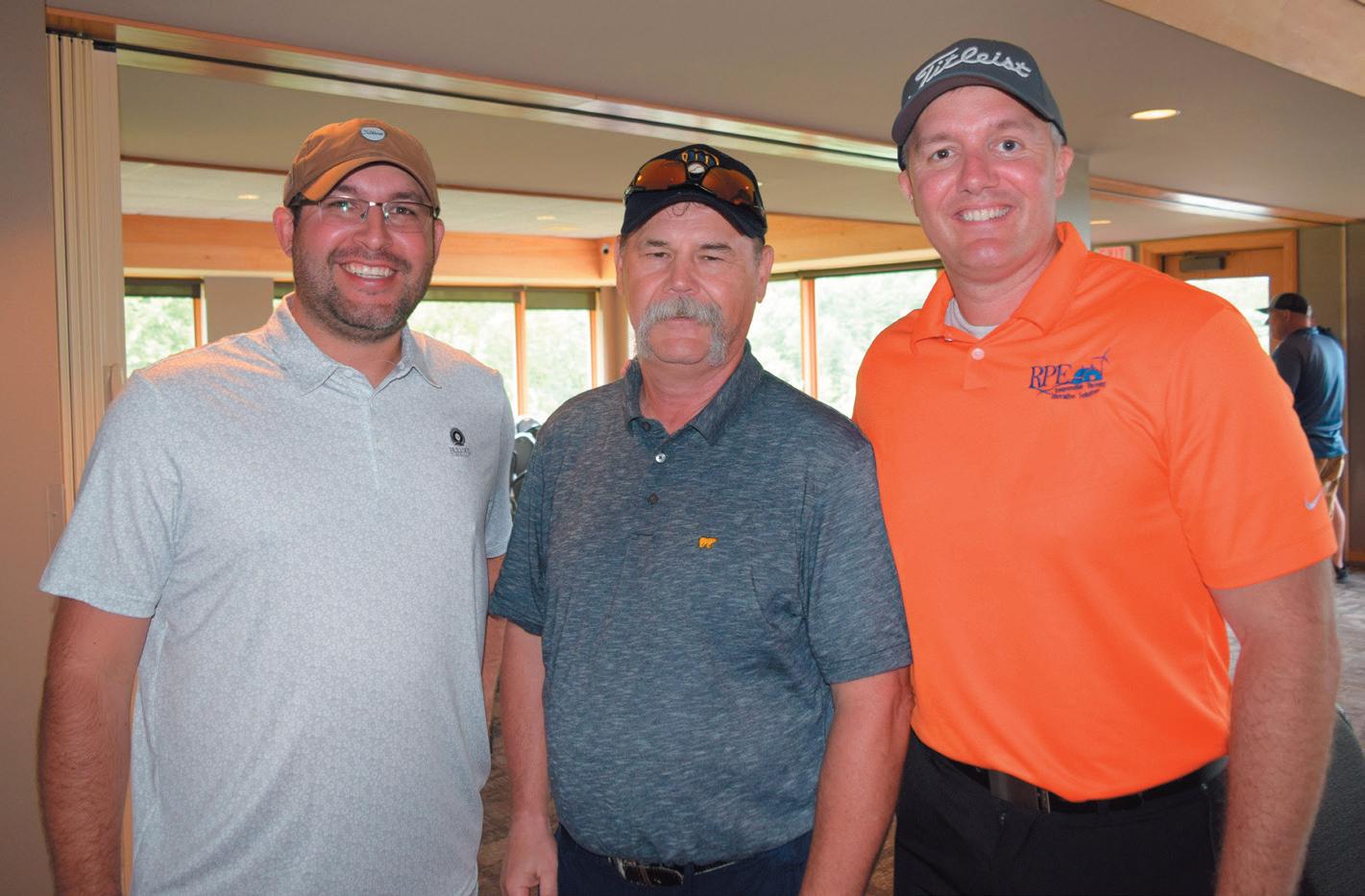
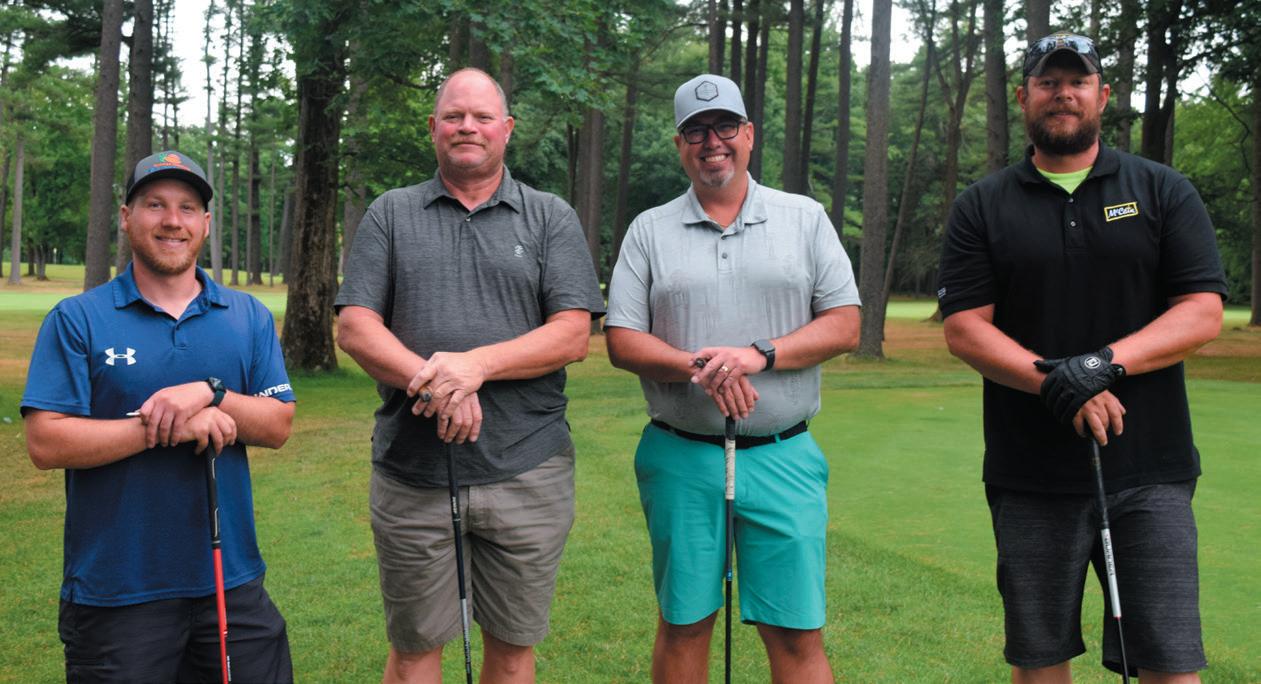
“Farmers can be friends,”said Chris Bella after urging me to take a picture of him and his fellow growers after the 2023 Putt-Tato Open, July 12, at Bullseye Golf Course in Wisconsin Rapids. From left to right in the picture above are Mike Barker of Okray Family Farms; Bella, who works for Worzella & Sons, Inc.; and Tim Worden of RPE, Inc., all wearing polo shirts embroidered with the names of their respective companies. Apparently, not only can they be friends, but the growers dress alike, too! Or maybe it’s proper golf attire.
Regardless, Bella has a point. I’ve heard from not only area potato and vegetable farmers, but also national trade reps and professionals that Wisconsin has tapped into something admirable with the way its growers work together for the betterment of the industry. I think the Wisconsin Potato & Vegetable Growers Association (WPVGA) has a lot to do with that, but it’s also good old Midwestern work ethic, friendliness, and values. Please see “Eyes on Associates” for full coverage of the Putt-Tato Open.
Coverage of events was a priority over the past couple months.
There is a feature article in this September 2023 issue on the Antigo Field Day, Hancock Agricultural Research Station (HARS) Field Day, and Lelah Starks Elite Foundation Seed Potato Farm Field Day, all held in July. At the HARS Field Day, in honor of the WPVGA’s 75th Anniversary, Executive Director Tamas Houlihan acknowledged Hall of Fame members, as well as current and past presidents of the WPVGA, Wisconsin Potato Industry Board, Wisconsin Potato Growers Auxiliary, and Associate Division, presenting gift items to each of the dignitaries.
Speaking of anniversaries, Alsum Farms & Produce celebrated its 50th anniversary in style, combining the 6th Annual Tater Trot walk/run with tours of the production facility and potato and pumpkin farms, and a celebration that included a produce market, vendor and educational booths run by local FFA chapters, and brats and Pepsi products. See the feature article herein for the rest of the story.
Read about other events in “Now News,” including the WPVGA’s Past Presidents Golf Outing, July 18 at the Glacier Wood Golf Club, in Iola, and the Antigo Legion baseball team honoring longtime potato grower John J. Baginski, July 17, in a game against Stevens Point billed as “John Baginski night.” Stevens Point defeated Antigo 7-0.
Please email me with your thoughts and questions. If you wish to be notified when our free online magazine is available monthly, here is the subscriber link: http://wisconsinpotatoes.com/blog-news/subscribe.
Joe Kertzman Managing Editor jkertzman@wisconsinpotatoes.com
Schroeder Bros. Farms, Inc. “ONLY THE BEST” Foundation & Certified Seed Potatoes REDS Dark Red Norland Red Norland RUSSETS COL 8 Norkotah Goldrush Plover Silverton TX 296 Norkotah WHITES Atlantic Hodag Lamoka Mackinaw Manistee NY163 Snowden N1435 Cty Rd D Antigo, WI (715) 623-2689 farm@sbfi.biz johnt@sbfi.biz WISCONSIN CERTIFIED SEED POTATOES
NAME: Eugene Mancl
TITLE: Senior project manager
COMPANY: Ron’s Refrigeration and Air Conditioning, LLC (A CoolSys Company)
LOCATION: Wisconsin Rapids, WI
HOMETOWN: Wisconsin Rapids
YEARS IN PRESENT POSITION: Thirty
PREVIOUS EMPLOYMENT: Pfizer Inc., and Minerals Technologies Inc.
SCHOOLING: Northcentral Technical College and Fox Valley Technical College
AWARDS/HONORS: Past board member and president of the WPVGA Associate Division
FAMILY: Daughter, Macy, and girlfriend, Denise
HOBBIES: Hunting, fishing, and car restoration
Interview
EUGENE MANCL AND GREG JOHNSON Ron’s Refrigeration and Air Conditioning, LLC
By Joe Kertzman, managing editor, Badger Common’Tater
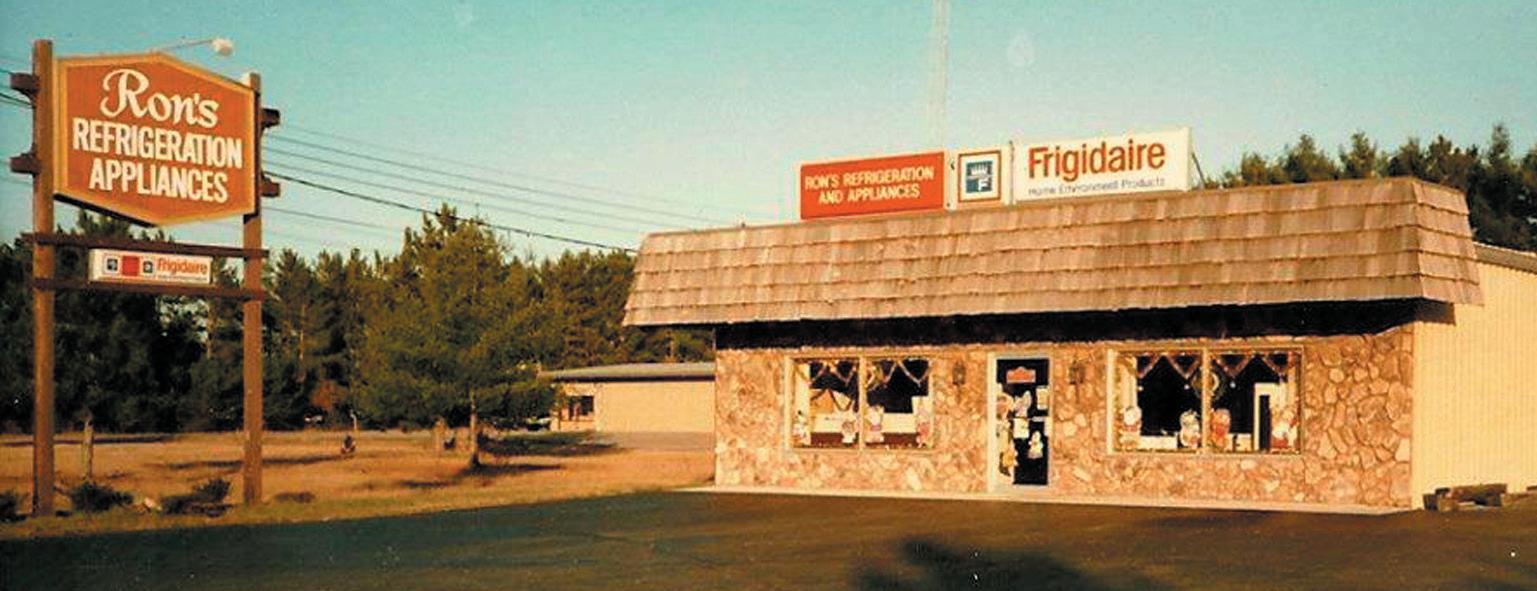
Founded in 1973 by Ron and Bonnie Mancl, this year marks the 50th anniversary of Ron’s Refrigeration and Air Conditioning in Wisconsin Rapids, Wisconsin.
The company name and family behind it are familiar to Wisconsin potato and vegetable growers and those in neighboring states, with the owners and employees of Ron’s Refrigeration having worked alongside area farmers for five decades.
After careful consideration, in 2018, the second generation of Ron’s Refrigeration felt it was best to join forces with CoolSys, a nationally known company, to increase the family business’s strength and stability into the future.
NAME: Greg Johnson
TITLE: Regional service manager
COMPANY: Ron’s Refrigeration and Air Conditioning
LOCATION: Wisconsin Rapids
HOMETOWN: Wisconsin Rapids
YEARS IN PRESENT POSITION: 30
PREVIOUS EMPLOYMENT:
NASCAR crew chief
SCHOOLING: Mid-State Technical College
FAMILY: Brother, Tim
HOBBIES: Bird hunting and dog training
From a time when Ron was running service, bidding projects, and building a customer base alone, the company has steadily progressed until today, when Ron’s Refrigeration employs over 40 people and provides engineering, design, service, and installation to customers throughout Wisconsin, Illinois, Indiana, Minnesota, and Michigan.
Though Ron and Bonnie are no longer active in the company, their children, Tammy Salewski and Timothy and Eugene Mancl, continue to run the day-to-day operations.
By joining forces, not only was the second generation of Ron’s Refrigeration able to continue running the company, but to also add technicians and gain a larger customer base throughout the United States.
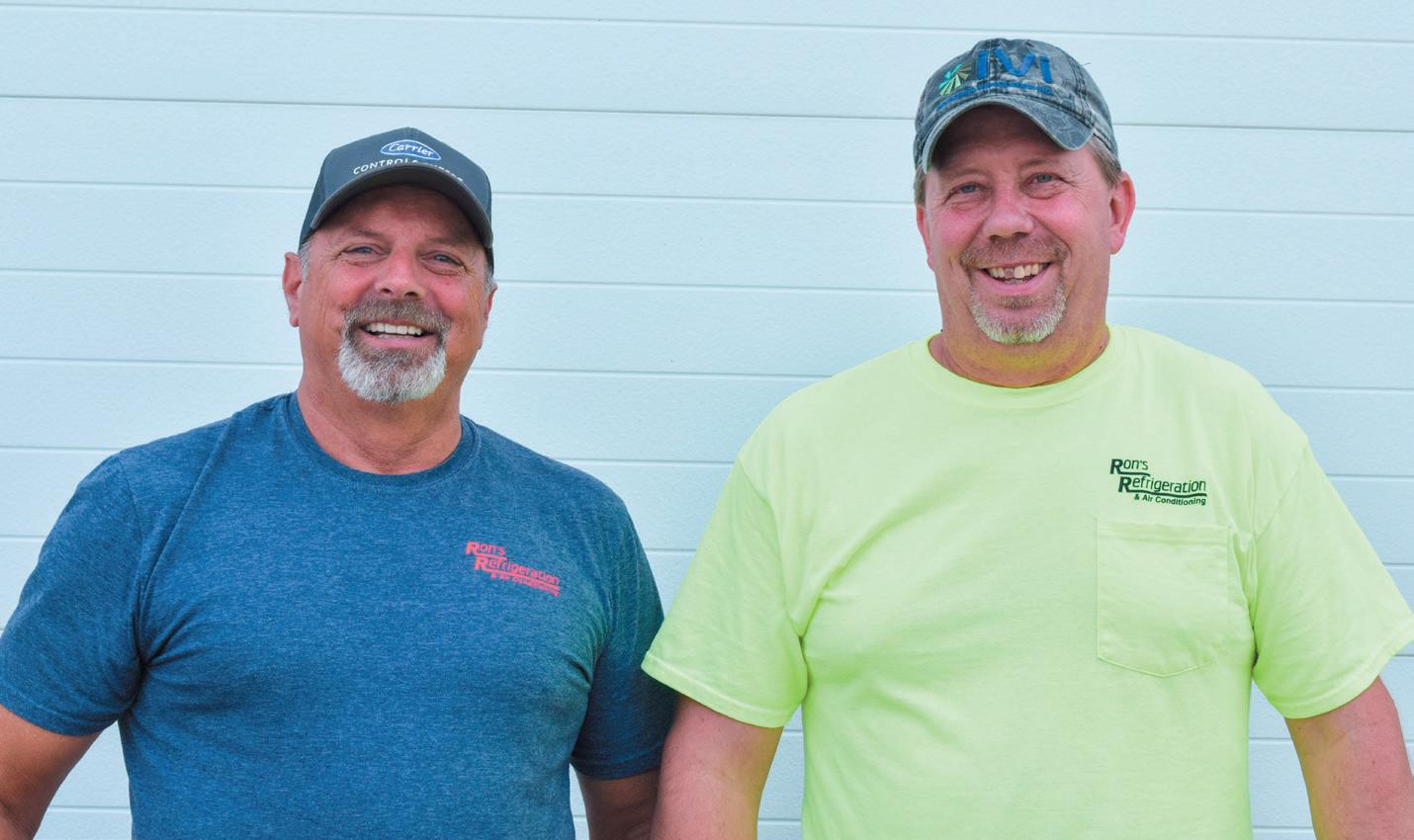
Above: Ron’s Refrigeration Senior Project Manager Eugene Mancl (left), whose father and mother, Ron and Bonnie Mancl, founded the company, started doing installs the same year as Regional Sales Manager Greg Johnson (right). The two have been involved in the potato and vegetable industry since their first year and learned a lot from the guys above them and from each other.
8 BC�T September
As senior project manager of the company, Eugene has been heavily involved in the agricultural industry, serving two terms as president of the WPVGA Associate Division Board of Directors, in 2013 and 2014, and staying involved in many committees. He opted to share the spotlight this issue with Greg Johnson, regional service manager for Ron’s Refrigeration, who answered interview questions with Eugene.
Eugene, your dad’s name is in your company name. That must make you proud. What do you most take pride in regarding how Ron’s Refrigeration has progressed and grown over the years? When I look at the history of the company, I’m most proud of what our parents built. They literally started with a pickup truck and $500 in savings. Sometimes it’s overwhelming to reflect on where it started and where it is today.
We get a lot of satisfaction knowing, after 50 years, we’re still working with some of our same customers and being introduced to their second and third generations.
My brother, Tim, sister, Tammy, and I have been involved in the company since we were young. After college, we all went out and pursued careers in different industries and eventually came back to join our parents years
later to help build Ron’s Refrigeration into the company it is today.
I am proud that we still work together. Our parents have retired, but still stop by to check in on us from time to time.
Regarding the 50th anniversary, what do you credit for the longevity and fortitude of the family business? Our ability to adapt and understand our customers’ needs. We have always looked for ways to diversify the company to help us succeed in the event of one industry having an off year or economic decline.

We added electrical a number of years ago, and that has been a great addition to our company.


What was instilled in us, and what holds true today, is that the most important part of a business is the customers and employees.
Greg, you and Eugene joined the company at the same time—in what roles, and how have they changed over the years? We both started doing installs and were involved in the potato and vegetable industry our first year. We learned a lot from continued on pg. 10

9 BC�T September
the guys we worked with, the guys above us and from each other.
From there, we learned service and sprout inhibiting along with refrigeration. Today, I am the regional service manager for the company and Eugene is a senior project manager.
We are both very active in the potato and vegetable side of the company.
Specifically, regarding potato and vegetable growers and storage, what are the main services and products that Ron’s Refrigeration provides to farmers in the area? We pride ourselves on being a one-call solution. We design, furnish, install, and service all aspects of equipment for the potato and vegetable industry.
We do the electrical, mechanical, refrigeration, and chemical applications.
What kind of upgrades to storage services and materials have you been able to offer over the past five years or so? What’s new in the service industry? We typically do a number of new storages every year along with a number of system remodels to update control panels, humidification, and refrigeration systems.
We recently launched a new panel, IVI Sentinel, which is a more economical version of our top-of-theline Imperium panel. Currently, we are installing some new high-pressure fogging humidification systems to replace the centrifugal humidifiers previously required for a storage building.
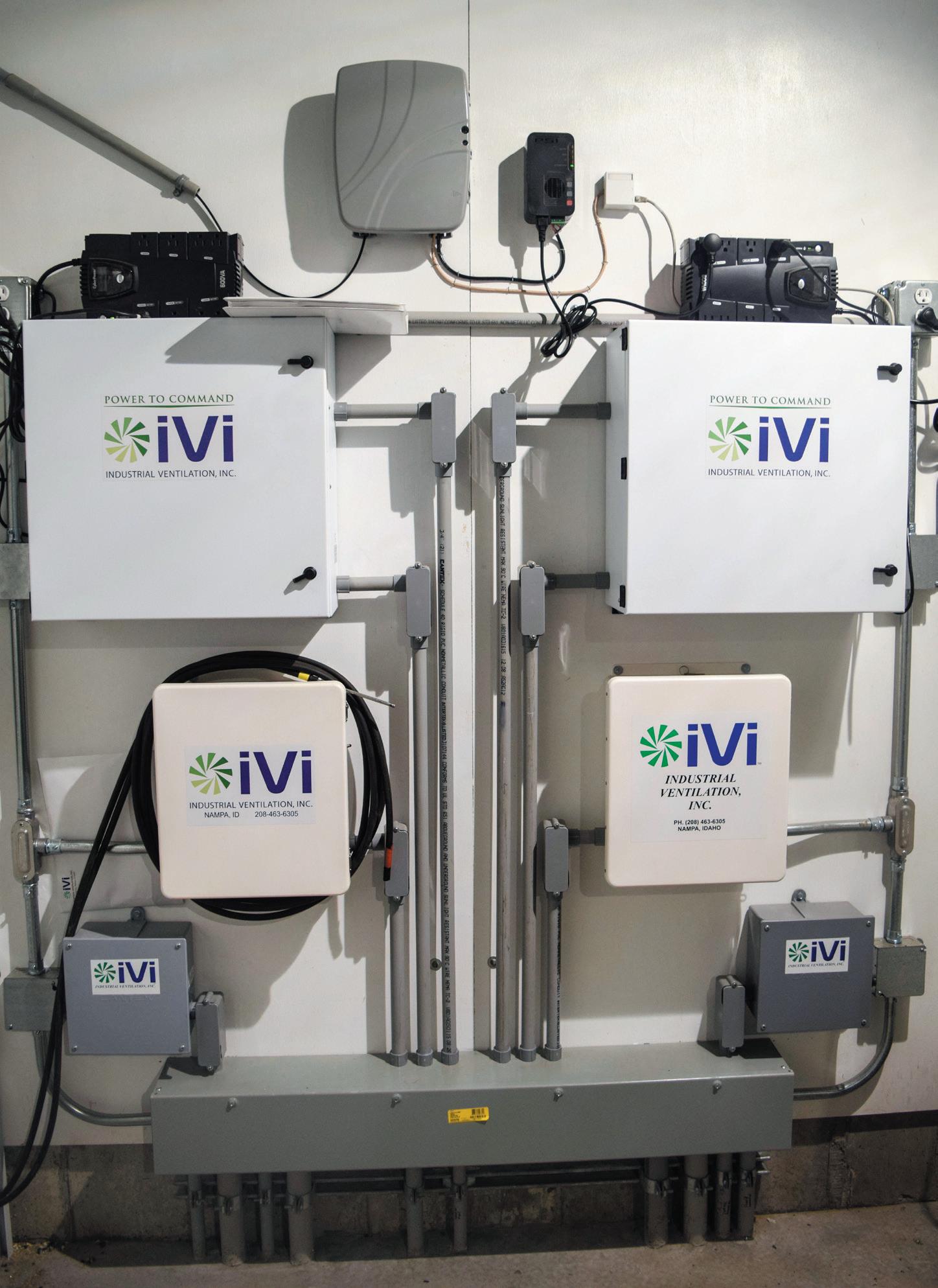
Can you give me specifics on brands, models and what features you consider upgrades? We have been an Industrial Ventilation Inc. (IVI) dealer since the late ’70s, making us IVI’s longest-running dealer.
Our current panel lineup is an Imperium, which is available in a
number of different configurations to accommodate the system design and customers’ needs/requirements.
We recently added the Sentinel panel, which is a slightly scaled-down version with the same internet access and control program as the Imperium and a few less frills to help reduce the price.
I’ve heard before, and Eugene said it again, that the decisions growers make in the field affect decisions you and they need to make in storage.
What does that mean exactly, and what advice do you have for growers regarding that notion? Disease management is best addressed in the field, and not after harvest.
A lot of changes we are making to current storage systems reflect how the customer intends to use the building. We have added refrigeration to many buildings in recent years as growers are harvesting earlier or holding product longer.
We find a lot of growers are
Interview. . . continued from pg. 9
10 BC�T September
Ron’s Refrigeration is Industrial Ventilation Inc.’s (IVI’s) longest-standing dealer, having been offering IVI control panels and systems since the late 1970’s to maintain temperature and humidity in potato and vegetable storage buildings. Ron’s Refrigeration recently added the IVI Sentinel panel, which is a more economical version of a top-of-the-line Imperium panel with internet access via phone or app and complete control at the users’ fingertips.
reevaluating the parameters they used when they first constructed the buildings based on changes to their storage requirements.
They are adapting to change, whether it’s climate or market, and we are there to help them change the performance of their buildings to meet these requirements.

More than one company has told me that, because of tightening budgets, area potato and vegetable growers aren’t building many new storage sheds, but instead upgrading what they have. What kind of upgrades and work can you provide? We have helped design from the ground up, for both electrical and mechanical systems.
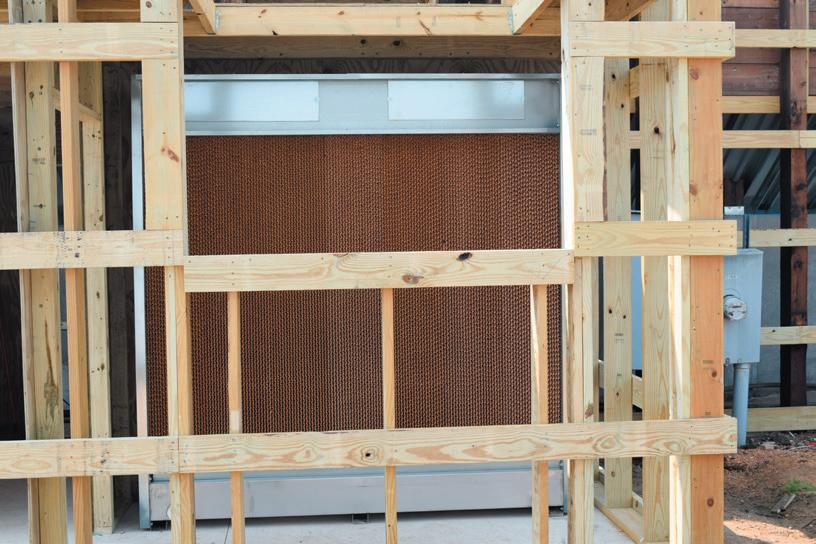
We’ve increased the performance of air systems along with adding systems such as refrigeration and Humidicells (evaporative humidifiers) to fit within their current structures and budgets. You’re currently remodeling an
Okray Family Farms storage building, and from what I understand, removed an entire side of the building and are adding new units. What kind of units, and what upgrades and remodeling are you doing? The basic structure
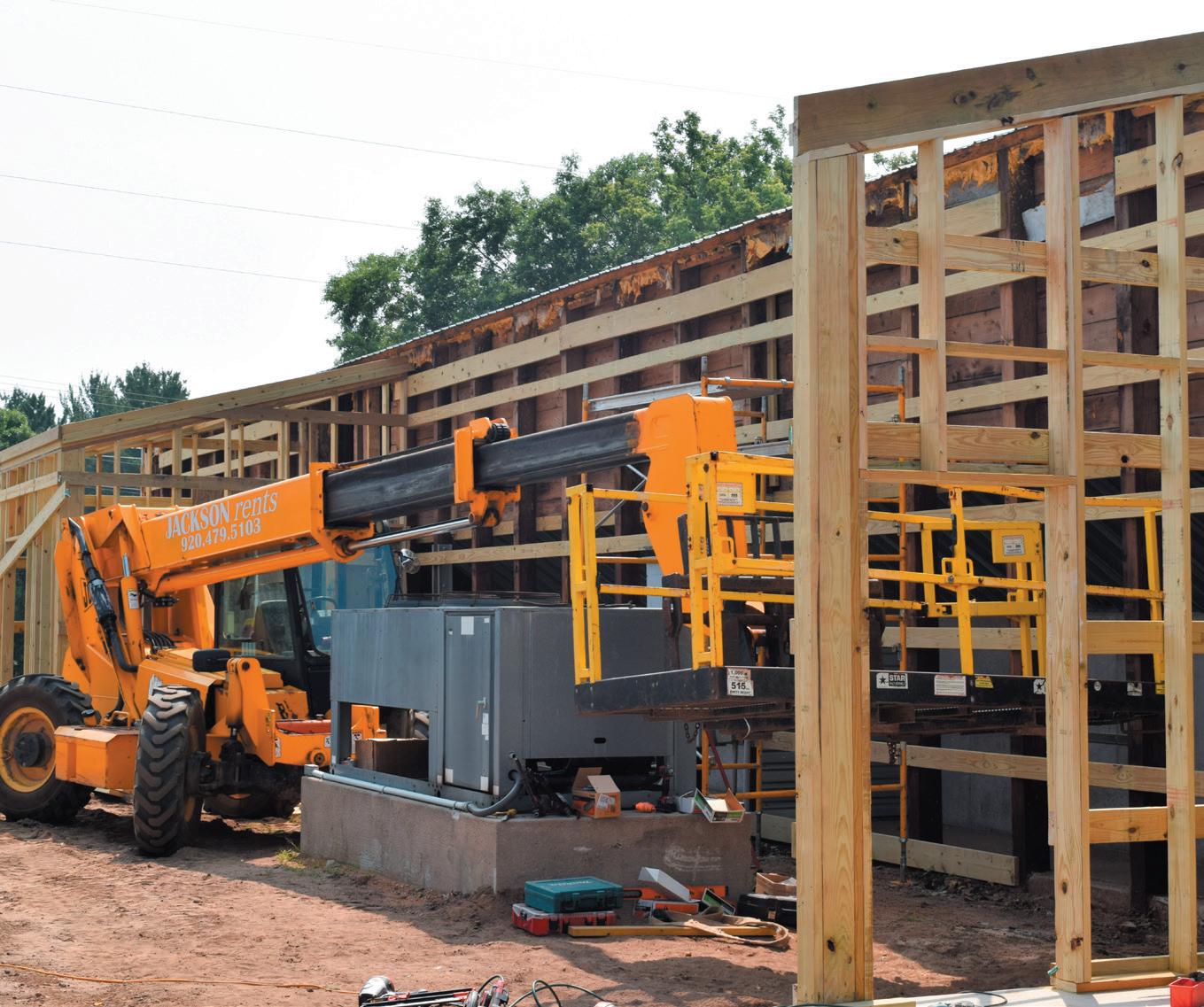
of the building needed some minor repairs, and after evaluating their expectations, we decided it was best to remove the whole north side of the building.
©2023 CliftonLarsonAllen LLP. Investment advisory services are offered
CliftonLarsonAllen Wealth Advisors, LLC, an SEC-registered investment advisor. CPAs | CONSULTANTS | WEALTH ADVISORS Dean Johnson Jim Halvorsen 715-344-4984 CLAconnect.com We’ll get you there. Where is your there? CLA brings balance to get you where you want to go.
on pg. 12
through
continued
11 BC�T September
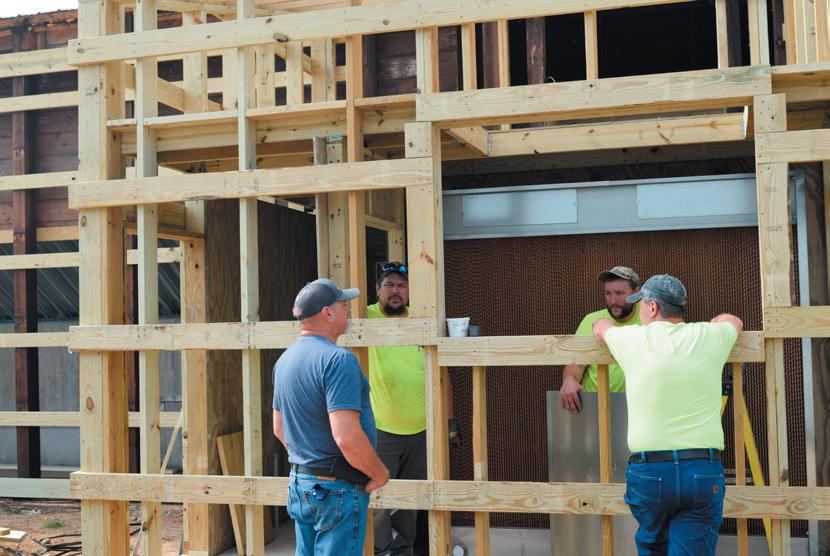
From left to right, Eugene Mancl, Tyler Jacoby, Daniel Hafstad, and Greg Johnson of Ron’s Refrigeration discuss the new Humidicell recently installed in an Okray Family Farms potato storage building as part of a complete remodel. The building was originally built with downflow systems and louvers for intake air, which fell out of favor years ago. As part of the revamp, three new systems feed the same building and include state-of-the-art control panels (IVI Sentinels), Humidicells, refrigeration, and thermal doors for intake air, along with a custom-built high-pressure fogging system for supplemental humidity.
There were downflow systems with louvers for intake air, which fell out of favor years ago.

There will be three systems feeding the same building, each having three bins, which will have state-of-the-
art control panels (IVI Sentinels), Humidicells, refrigeration, and thermal doors for intake air, along
with a custom-built high-pressure fogging system for supplemental humidity.
Interview. . . continued from pg. 11
Above: Celebrating its 50th anniversary, Ron’s Refrigeration was founded by Ron and Bonnie Mancl, in 1973. Pictured here, Ron and Bonnie have retired but still stop in the office to check in from time to time
Eugene Mancl suggests that growers take time to have their equipment checked and calibrated before the potato storage season.
“When I look at the history of the company, I’m most proud of what our parents built. They literally started with a pickup truck and $500 in savings.”
12 BC�T September
– Eugene Mancl, Ron’s Refrigeration
How will this help the Okrays in their storage needs now and in the future? The building will have three separate systems within it, each of them refrigerated independently of each other, along with being connected to their central flume system, allowing them a number of options when grading begins.
When the building is empty, it will be sanitized and used for the farm’s incoming seed crop, which allows the Okrays to store at three different temperatures until planting. It’s nice that these are smaller, more manageable bins.
Are there products that Ron’s Refrigeration markets that others don’t, and why are they integral to the growers’ storage success? We have a very strong line of in-storage sprout inhibitors that include Amplify and CIPC (Sprout NIP), along with Shield sprout inhibitor, a product used for grading operations.
We also offer ozone generators, which have been a very effective tool for growers for a number of years.

continued on pg. 14
CUSTOMIZED FINANCING
Unique operations need unique solutions.
Ag-focused solutions to fit any size farm, ranch, or agribusiness. Get the customized financing you need by contacting your local Agcountry office.
AgCountry.com/Locations
FOCUSED ON AG. FOCUSED ON YOU.
13 BC�T September
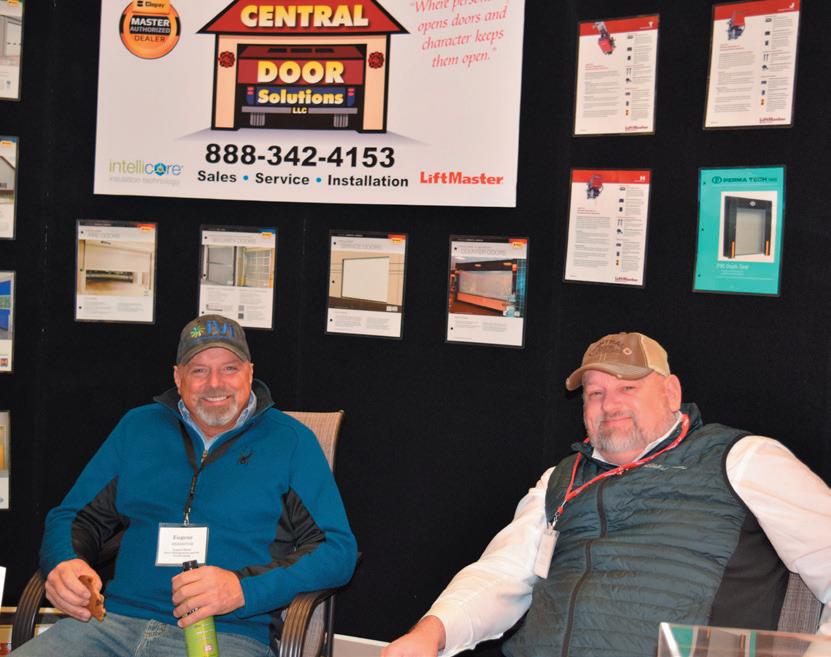
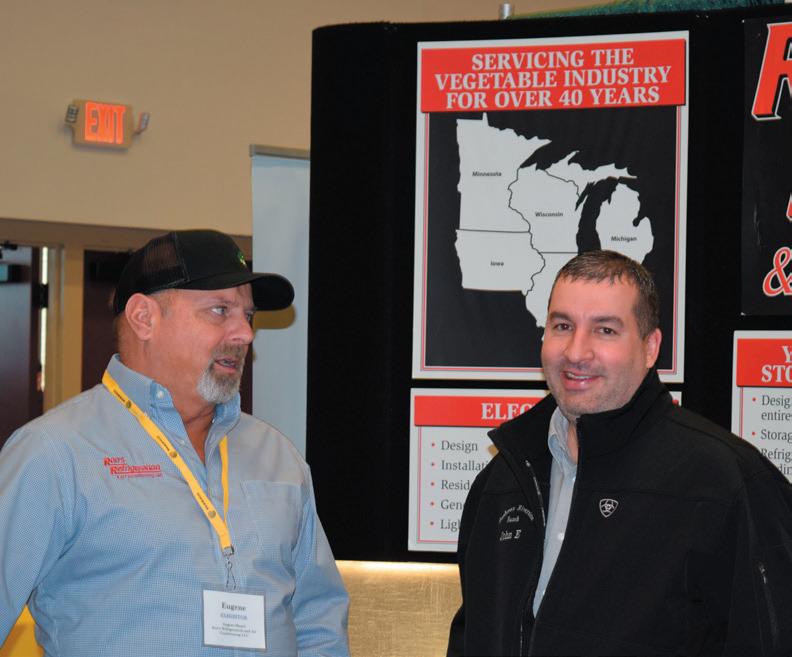
Above: Ron’s Refrigeration has been setting up and manning a booth at the Grower Education Conference & Industry Show in Stevens Point, Wisconsin, for many years. Shown at left in the first two images, Eugene Mancl visits with John E. Bushman (right in the first photo) of Bushman & Associates, and Chris Brooks (right in the second photo) of Central Door Solutions at past shows.
What do you wish more potato and vegetable growers in Wisconsin knew or would be proactive in doing to help with their storage issues? We have always been very proactive about pre-season storage checkouts, especially refrigeration systems, to


avoid unnecessary downtime once harvest starts.
If you have an issue with a storage system and, as a result, it doesn’t run on an evening when you have cooling available, it’s hard to replace that runtime.
Are there other large projects besides the Okrays that you’re currently working on? We have a number of refrigeration projects along with panel upgrades this season. We are currently working on designs for two new storages for next spring, in addition to normal servicerelated repairs.
To me, the industry is filled with some incredible people—do you have anything you’d like to share about working with growers and the ag industry in general? Everyone in this industry, from growers to fellow WPVGA Associate Division members, is very easy to communicate with when you are discussing upgrades and changes that will help them store their product better. We are a very close-knit community, have a great Association, and know each other well.
What do see down the line for potato and vegetable storage in Wisconsin? We see a lot more interest in upgrading older systems and improving the performance of their current storages, instead of building new ones.
Interview. . . continued from pg. 13
Jay-Mar.com • 715-341-3445 • 800-236-2436 FUMIGATION BY
protection
pests and pathogens. We have the best applicators and most innovative equipment in the industry. Your Total Agri Supplier 14 BC�T September
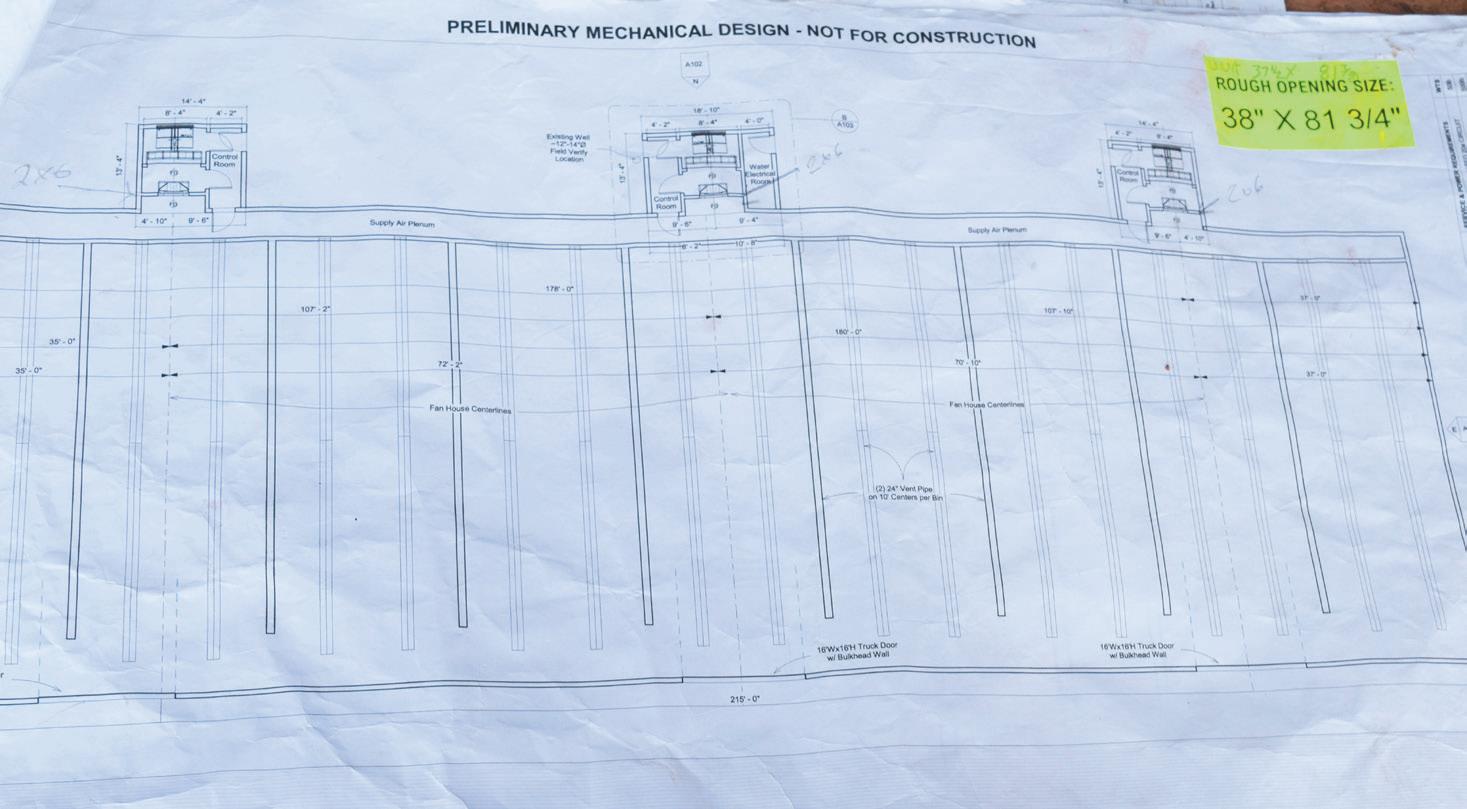
Above: Greg Johnson (left) and Eugene Mancl study a blueprint of a potato storage building remodel project that Eugene recently designed for Okray Family Farms.
Solid
against
Building costs and material availability have drastically changed over the last few years, and that is affecting everybody.
What do you hope for the future of Ron’s Refrigeration, Greg? Eugene and I have worked together for nearly 30 years and look forward to a successful future for Ron’s Refrigeration.
We have a strong staff of service and installation technicians and are continually growing our team to meet or exceed customers’ needs.
Anything I’ve missed that you’d like to add? We have always valued our relationships and involvement in this industry, and we look forward to being a part of it for years to come.

SNOWDEN • ATLANTIC • LAMOKA HODAG • MANISTEE • LADY LIBERTY MACKINAW • PETOSKEY • NY163 Contact: Jim or John
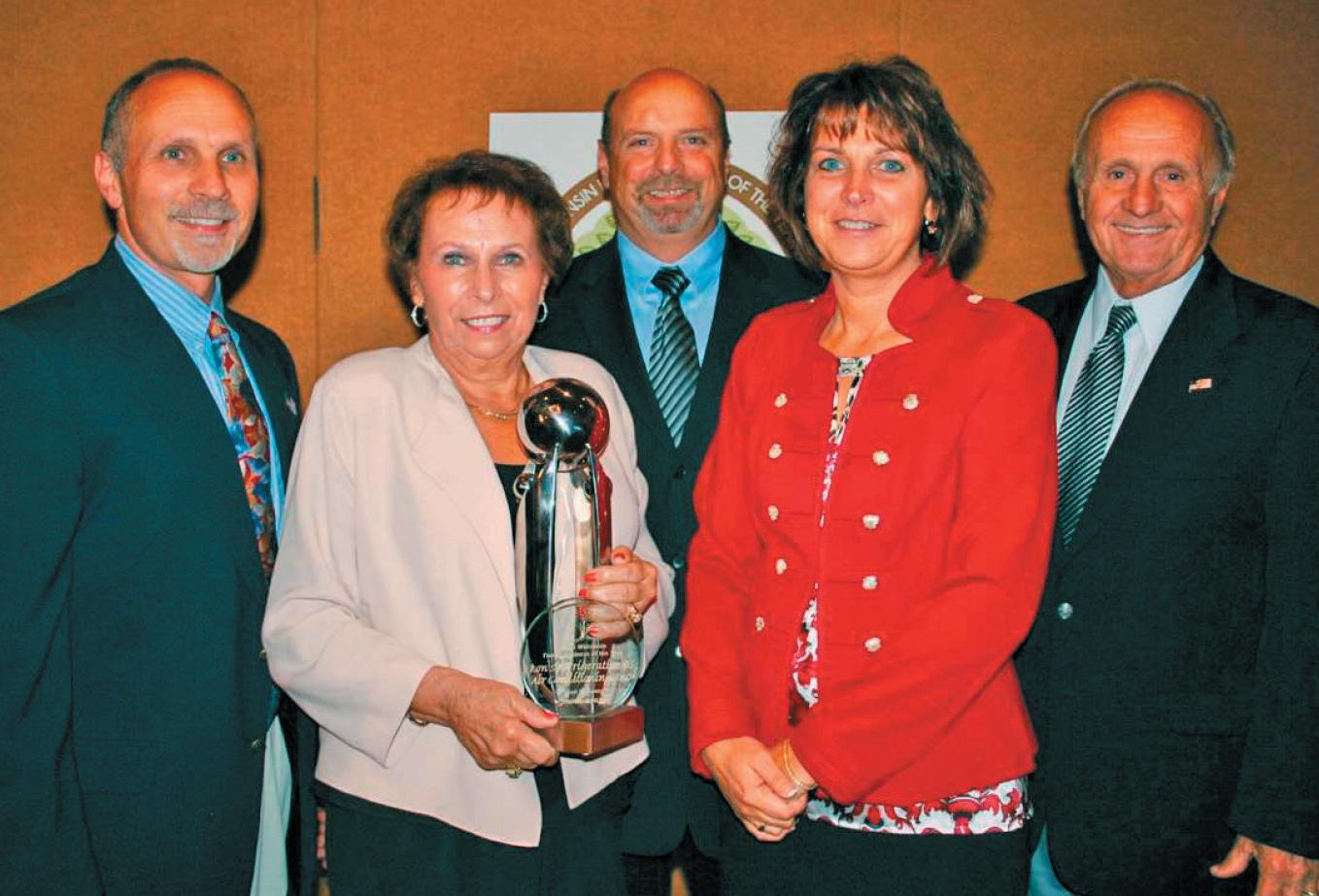
Ron’s Refrigeration and Air Conditioning, Inc. received the Wisconsin Family Business of the Year Award for 2013. From left to right are Tim Mancl (president of the company), Bonnie Mancl (co-founder), Eugene Mancl (senior project manager), Tammy Mancl-Salewski (vice president), and Ron Mancl (co-founder).
15 BC�T September
Researchers Share Findings at Field Days
WPVGA takes opportunity to recognize past and present leaders of Association
By Joe Kertzman, managing editor, Badger Common’Tater
Summer in the Wisconsin potato and vegetable industry means a flurry of field days.
Those related to potato and vegetable production in the state include the Antigo Field Day, held
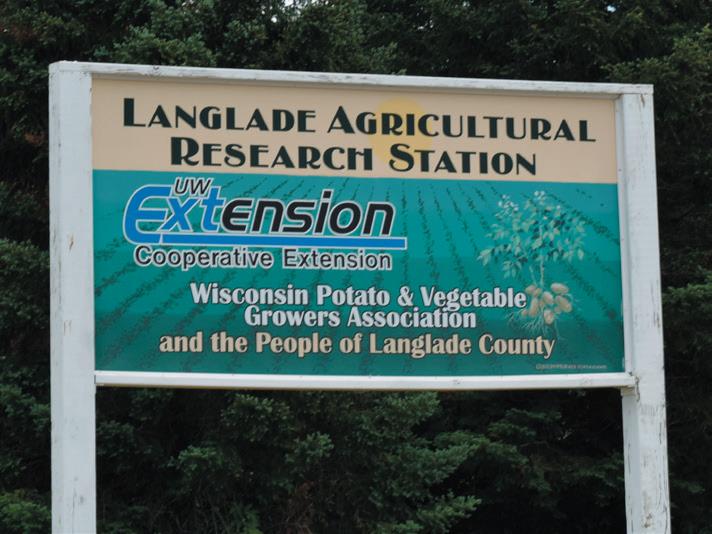
July 6, 2023, at the Langlade Agricultural Research Station (LARS); the Hancock Agricultural Research Station (HARS) Field Day, July 13; and the Lelah Starks Elite Foundation Seed Potato Farm Field Day, July 20, in Rhinelander.
At each stop along the “field day tour” over a two-week span, visitors were made aware of current research conducted at the Agricultural Research Stations and funded by the Wisconsin Potato Industry Board and Wisconsin Potato & Vegetable Growers Association (WPVGA) committees.
LARS Manager Niles Franc welcomed guests to the Antigo Field Day, and Brooke Babler of the Wisconsin Seed Potato Certification Lab gave an update on her team’s program.
“The crop’s been dry, and irrigation is a thing this year,” Babler noted. “Field inspections were delayed a little, so we’ve been putting a lot of hours in lately, and everything looks
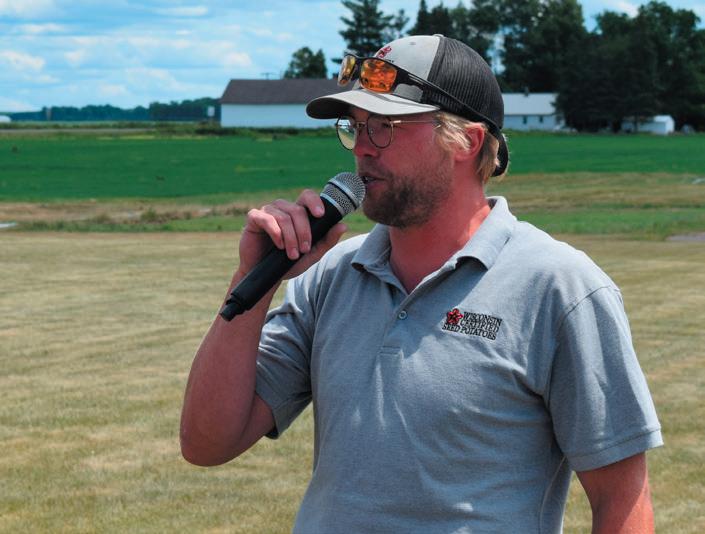 Langlade Agricultural Research Station (LARS) Manager Niles Franc welcomed guests to the Antigo Field Day, July 6, 2023.
16 BC�T September
Above: As part of the 2023 Hancock Agricultural Research Station Field Day, July 13, Dr. Amanda Gevens (left) updated attendees on potato and vegetable disease research and the current growing season. Photo courtesy of Troy Fishler
great with a lot of varieties out in the fields.”

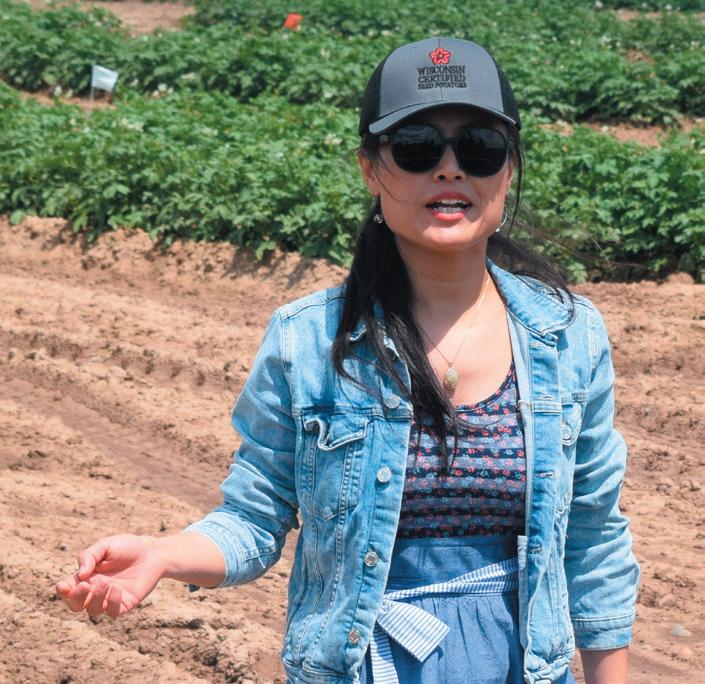
Wagons took visitors out to fields where Yi Wang, University of Wisconsin (UW)-Madison Department of Horticulture, talked about funded research in nitrogen management and remote monitoring.
Russ Groves, UW-Madison
Department of Entomology, discussed a healthy population of Colorado potato beetles, as well as work his team is conducting on the control of aphids, army worms, thrips, leafhoppers, and other crop pests.
Amanda Gevens, UW-Madison
Department of Plant Pathology, discussed potato scab treatment evaluation and an early blight systemic fungicide trial. Other research focuses on control of silver scurf, white mold, brown spot, and downy mildew, among others.
BIO-STIMULANT FIELD
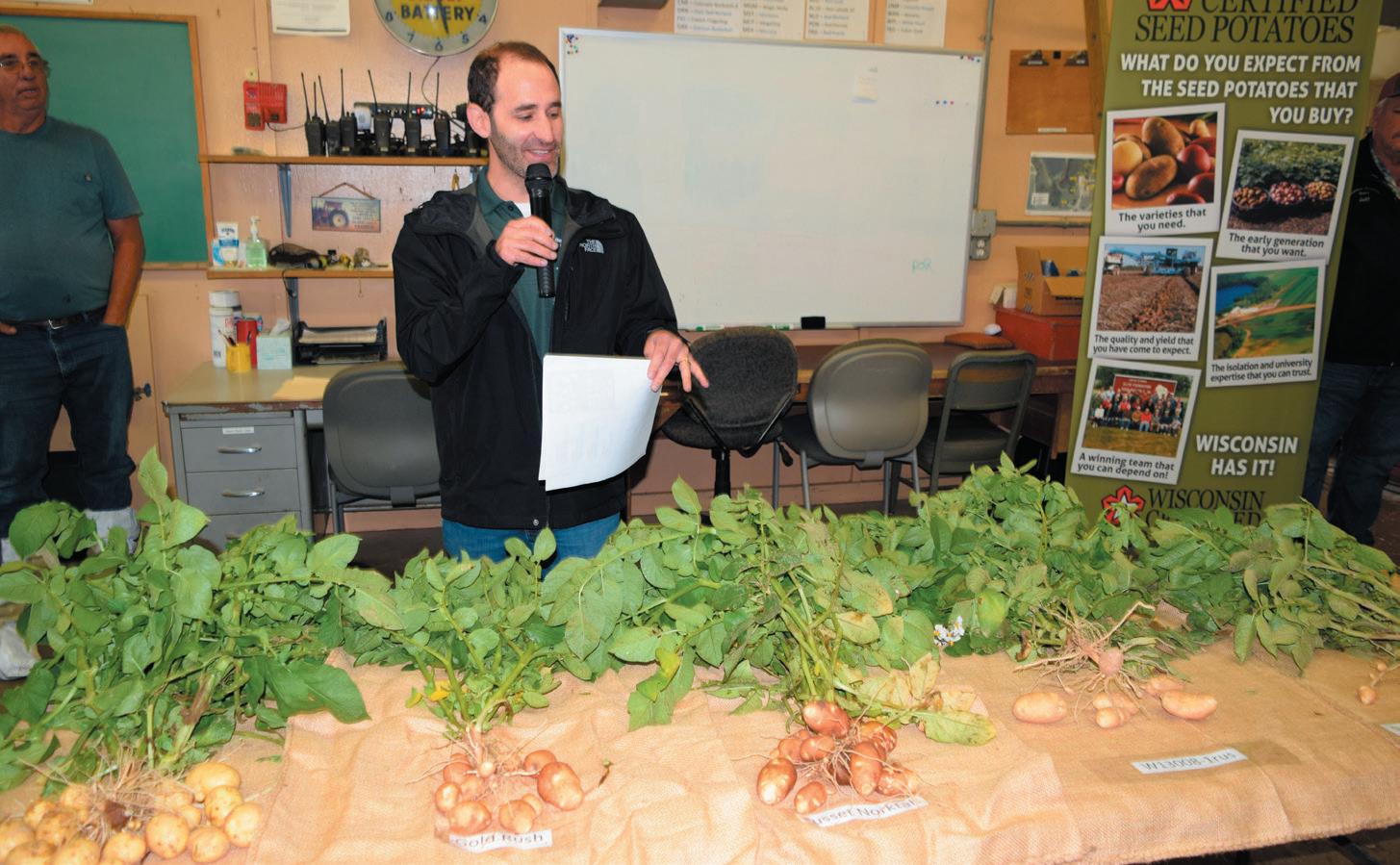
Rob Jarek of Timac Agro presented research on potato plots treated with the company’s bio-stimulants, saying, “As genetics advance, agronomy needs to catch up. Unless you’ve had your TV turned off, you know the biostimulant field has taken off.”
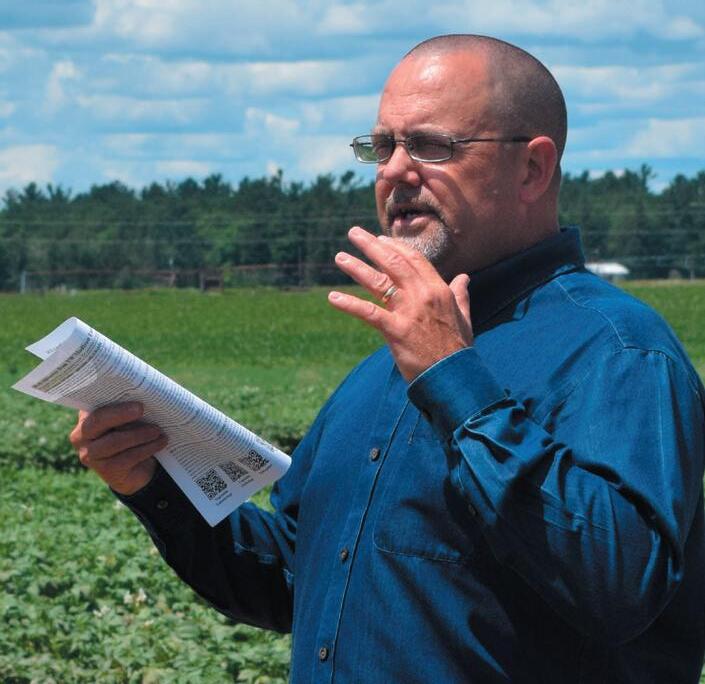
Jarek went on to discuss potato nutrition, nitrogen-fixing bacteria and nitrogen management, maintaining a balanced soil environment, humic
acids, and controlling pests with options other than pesticides.
Proceeding the presentations, food and refreshments were provided by Insight FS at East City Park, in Antigo. Sponsors of the Antigo Field Day include the Wisconsin Potato Industry Board, WPVGA Associate Division, Wisconsin Seed Potato Improvement Association, Quinlan’s Equipment, Riesterer & Schnell, and Langlade County.
Top: Yi Wang, University of Wisconsin (UW)-Madison Department of Horticulture, talked about funded research in nitrogen management and remote monitoring at the 2023 Antigo Field Day.
Bottom: Insect control was the logical topic of choice for Russ Groves, UW-Madison Department of Entomology, during the Antigo Field Day at the Langlade Agricultural Research Station.
The Annual HARS Potato Field Day is always a special occasion, but even more so in 2023, with the WPVGA continued on pg. 18
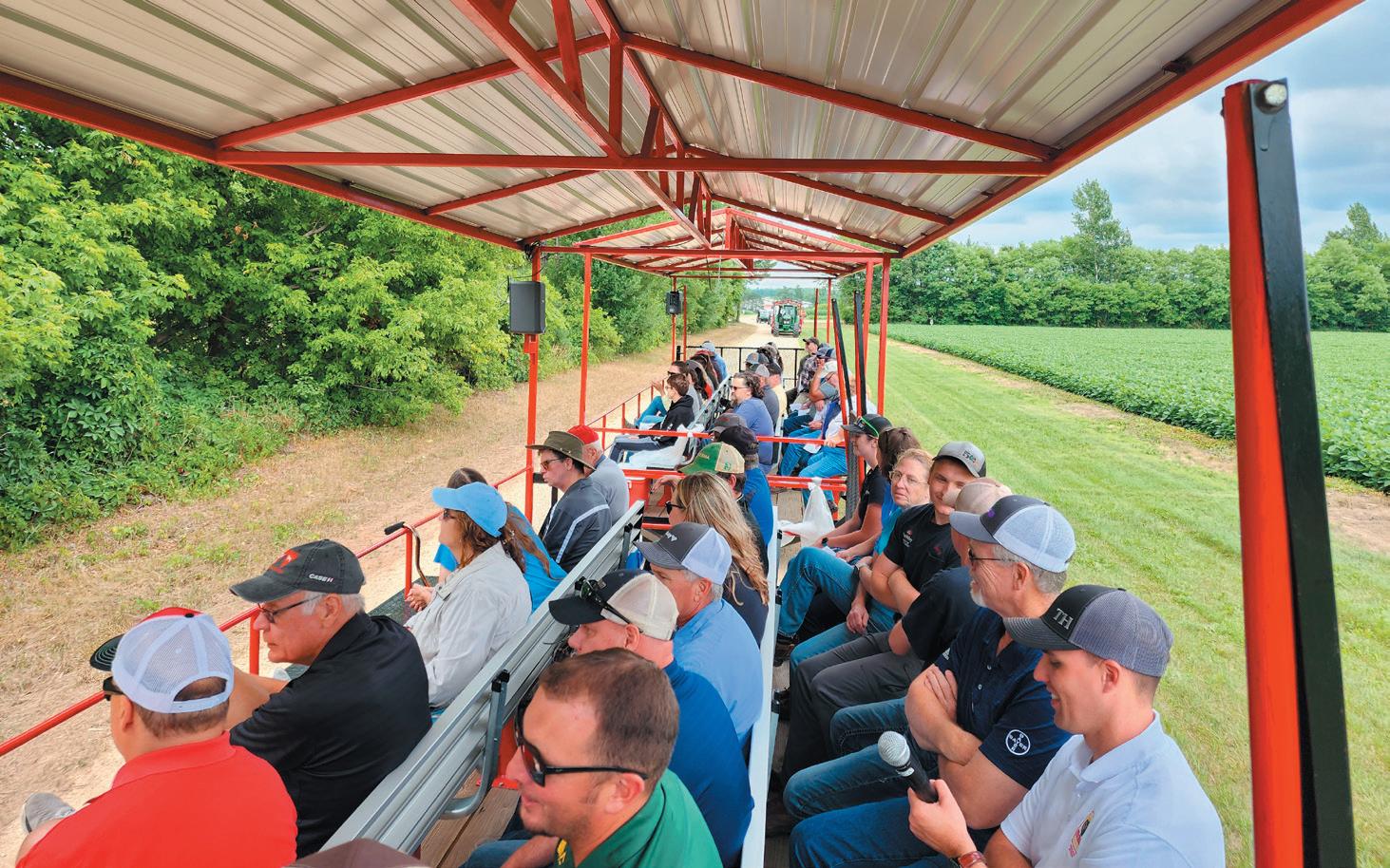 The wagons were full for field tours and researcher presentations at the Hancock Agricultural Research Station (HARS) Field Day, July 13. Photo courtesy of Troy Fishler
17 BC�T September
Researchers Share Findings at Field Days. . . continued from pg. 17
using the occasion to honor Hall of Fame members and past and present leaders of the Association as part of its 75th anniversary celebration.
The Field Day agenda included an introduction by HARS Superintendent Troy Fishler, a Storage Research Facility (SRF) update from SRF Manager Amber Walker, field wagon tours, and research reports.
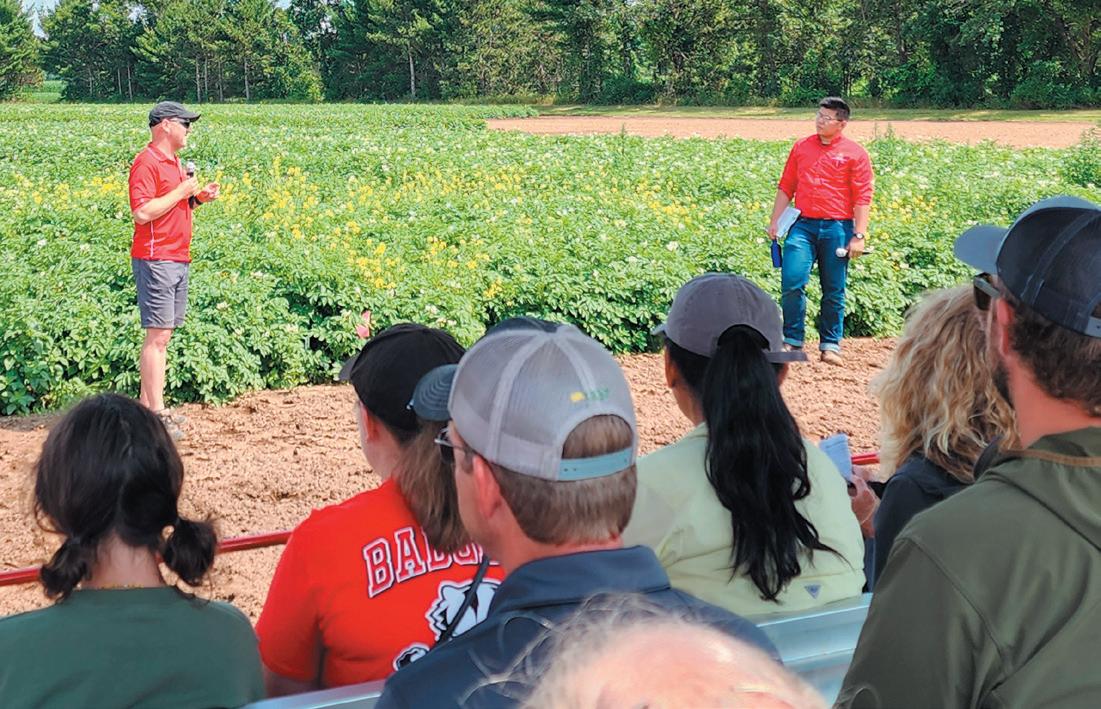
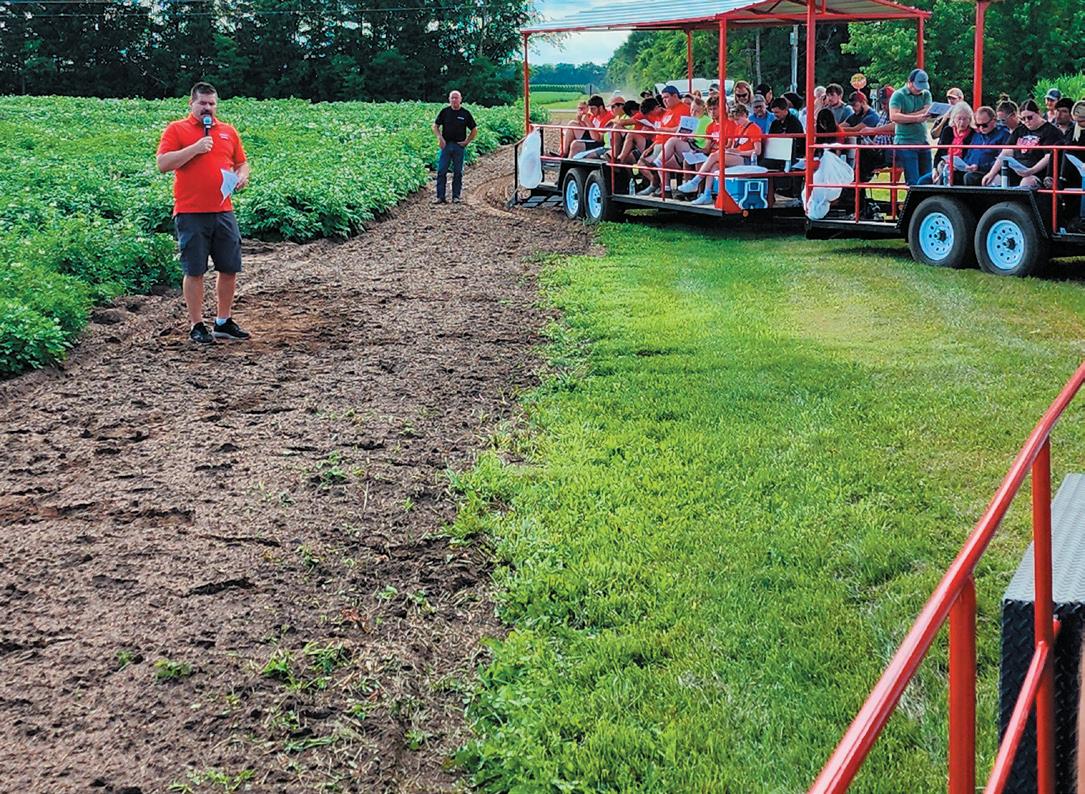
Groves presented “Insect Management in Potato and
Processing Vegetables,” and Paul Bethke, U.S. Department of Agriculture and UW-Madison Department of Horticulture, reported on “Diploid Potatoes—Two Steps Forward, One Step Back.”
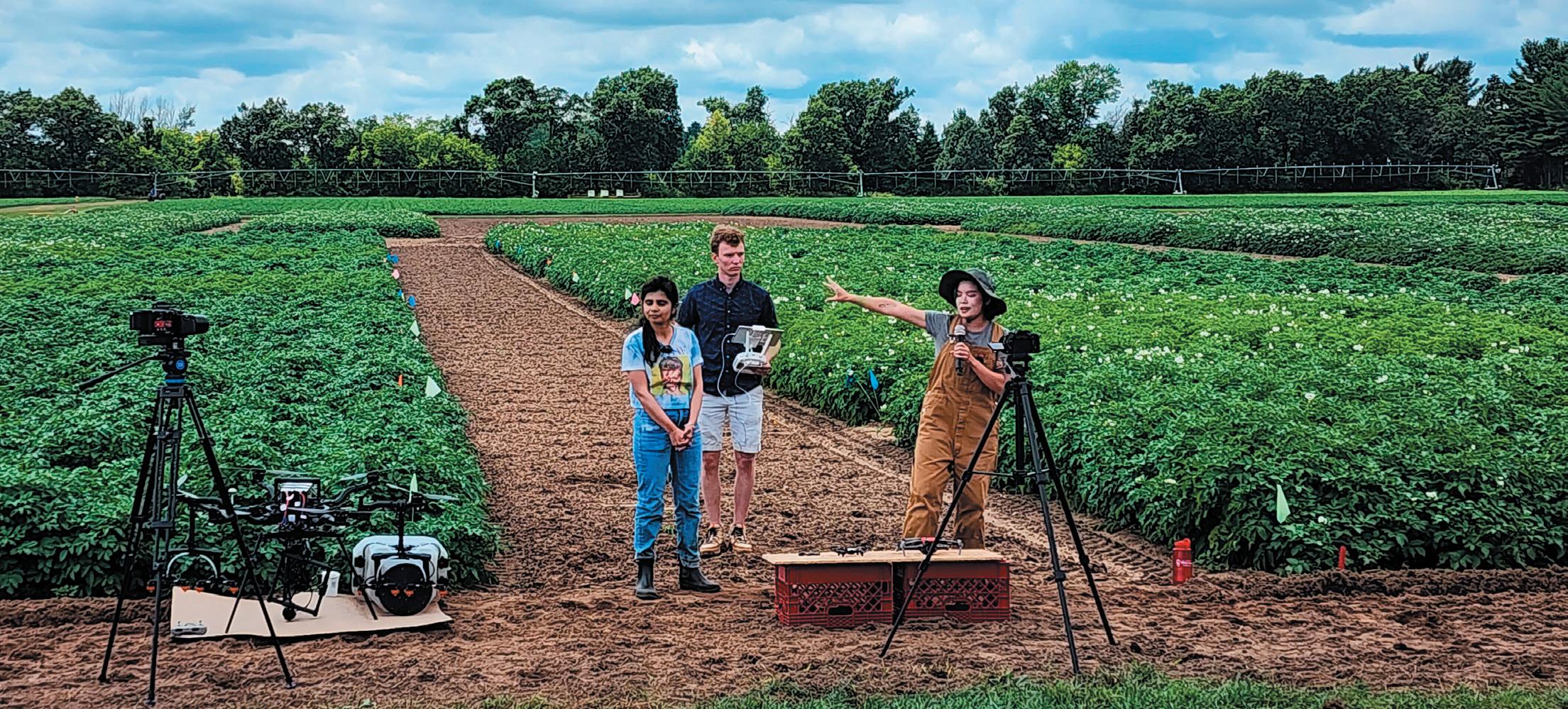
Two of Wang’s graduate students in the UW-Madison Department of Horticulture, Taqdeer Gill and Ophelia Tsai, discussed “Using Precision Agriculture in Vegetable Nitrogen Management.”
WEED MANAGEMENT
Jed Colquhoun, UW-Madison College of Agricultural & Life Sciences, Plant and Agroecosystem Sciences Department, gave an update on
Above: Yi Wang’s Ph.D. student, Taqdeer Gill (left), undergraduate summer help, Finn Johnson (center), and master’s degree student, Ophelia Tsai (right), in the UW-Madison Department of Horticulture, discussed “Using Precision Agriculture in Vegetable Nitrogen Management” during the HARS Field Day. Photo courtesy of Troy Fishler
HARS visitors heard Jed Colquhoun (standing at left), UW-Madison College of Agricultural & Life Sciences, Plant and Agroecosystem Sciences Department, give an update on water quality research, with input from Guolong Liang (right), outreach specialist, UWMadison Extension Ag Water Quality Program. Photo courtesy of Troy Fishler
BC�T September
Matt Ruark (left), professor and Extension soil scientist in the UW-Madison Nutrient Cycling and Agroecosystems Lab, presented his report on “Potato Soil Health” at the HARS Field Day. Photo courtesy of Troy Fishler
18
water quality and weed management research.
Gevens presented her potato and vegetable disease research and gave a current season update, and Jeff Endelman, who leads the potato variety development program in the UW-Madison Department of Horticulture, gave a breeding update. Matt Ruark, professor and Extension soil scientist in the UW-Madison Nutrient Cycling and Agroecosystems Lab, gave his report on “Potato Soil Health.”
In honor of the WPVGA’s 75th Anniversary, Executive Director Tamas Houlihan acknowledged Hall of Fame members, as well as current and past presidents of the WPVGA, Wisconsin Potato Industry Board, Wisconsin Potato Growers Auxiliary, and Associate Division, presenting gift items to each of the dignitaries. He also congratulated graduates of
the WPVGA Member Development/ Leadership Training Program and recognized current and retired UW-Madison potato researchers for their collaborative efforts to improve potato and vegetable
growing throughout Wisconsin.
A social hour in the HARS outdoor pavilion included a free barbecue dinner and refreshments sponsored
Quality Growers of Foundation and Certified Seed Potatoes for Over 50 Years!
Yellows: Colomba
Whites: Superior
Reds: Red Norland Modoc
Russets: Norkotah #8 Burbank Gold Rush Mercury Silverton Plover
In honor of the WPVGA’s 75th Anniversary, Executive Director Tamas Houlihan (left) acknowledged Hall of Fame members at the HARS Field Day, as well as current and past presidents of the WPVGA, Wisconsin Potato Industry Board, Wisconsin Potato Growers Auxiliary, and Associate Division, presenting gift items to each of them. Photo courtesy of Troy Fishler
We handle our own line of clean and dependable late model trucks for all of your delivery needs. N3502 Hwy H • Antigo, WI 54409 Office: 715-627-7753 • Fax: 715-623-5412 • mike@baginskifarms.com
Featuring Colomba An early maturing and high yield potential yellow variety. 19 BC�T September
continued
on pg. 20
Researchers Share Findings at Field Days. . . continued from pg. 19
by the WPVGA Associate Division and prepared by Swine & Dine.
The day wrapped up with an optional open house tour of the UW Potato & Vegetable Storage Research Facility, and self-guided tours of the
A.R.
SEED POTATO FARM TOUR
Wrapping up a whirlwind of field days, the Lelah Starks Elite Foundation Seed Potato Farm Tour
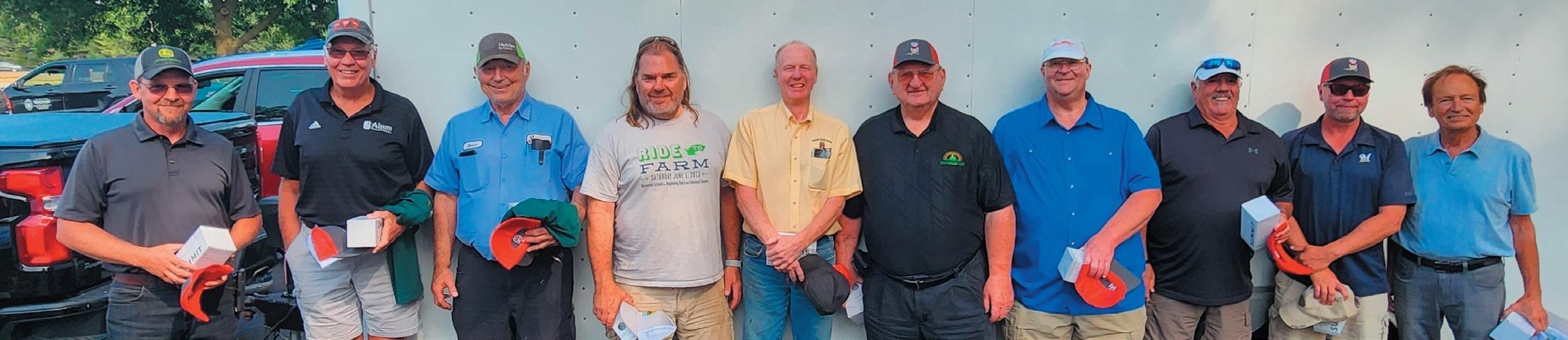
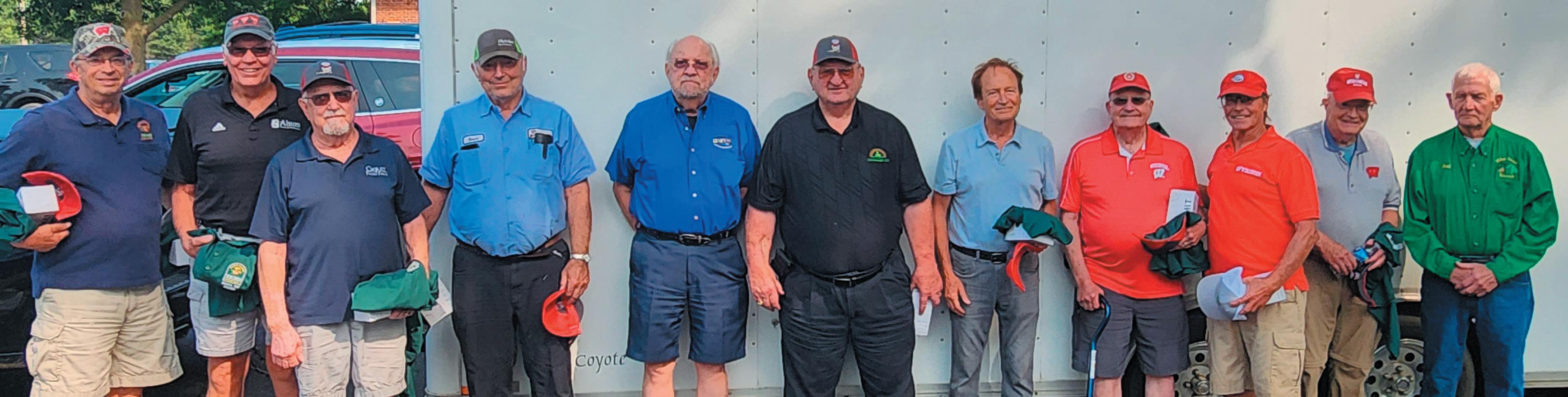
Above: WPVGA Hall of Fame members present at the HARS Field Day are, from left to right, Dr. Keith Kelling, Larry Alsum, Mike Finnessy, Steve Diercks, Jerry Bushman, Richard Pavelski, Nick Somers, Dennis Zeloski, Randy Van Haren, Dr. Walt Stevenson, and Paul Miller. Photo courtesy of Troy Fishler
began with welcome remarks from Babler, associate program director of the Wisconsin Seed Potato Certification Program (WSPCP).
Babler recognized several staff members, including Wisconsin Potato Coalition Farm Manager Cody Bandock and Assistant Manager Matt Young, as well as Erin Harmelink, WSPCP greenhouse manager.
Endelman discussed the Spud Pro program’s development of new
Albert & Villetta Albert-Hawley Horticultural Garden.
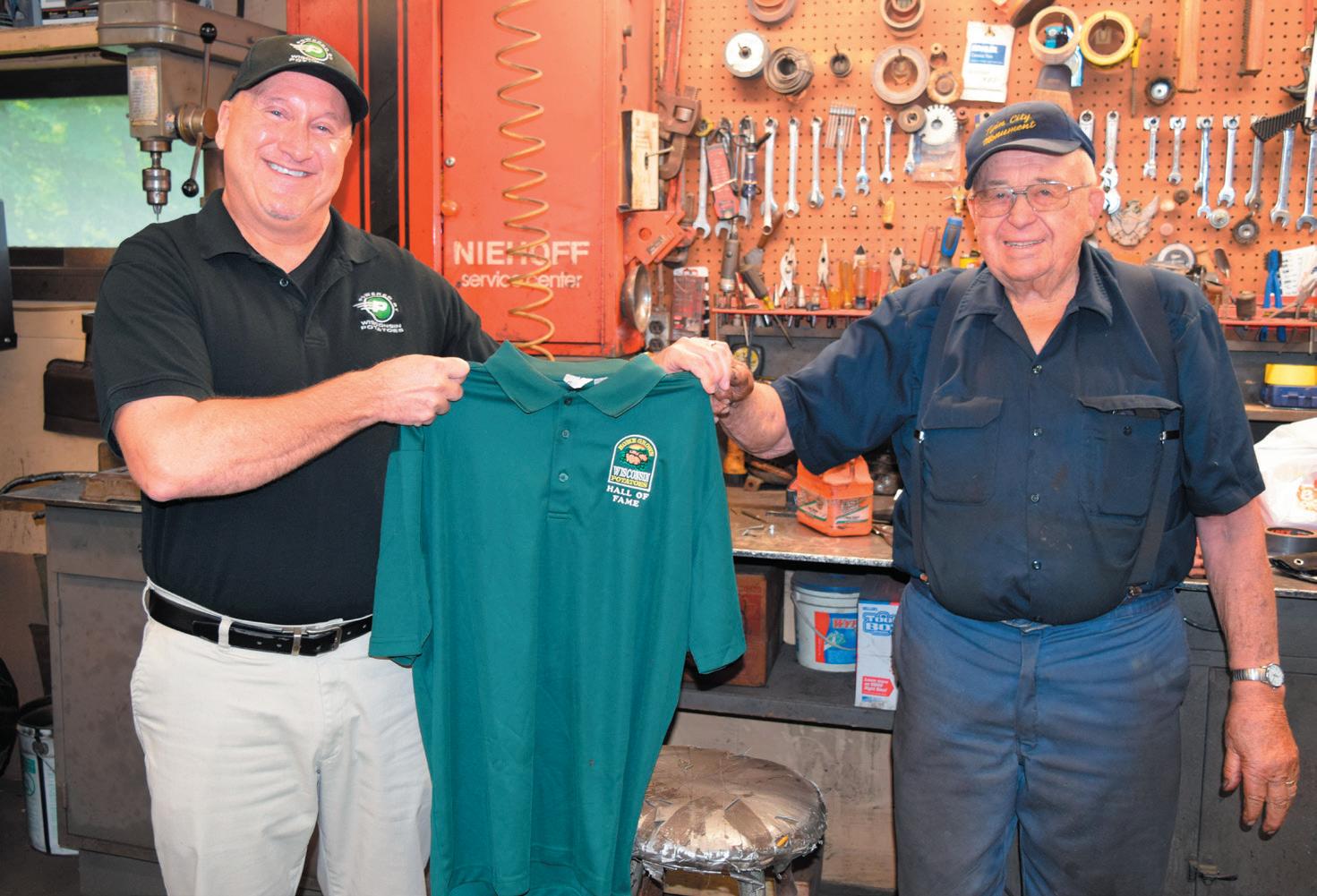
Left: With WPVGA Hall of Famer Louis Wysocki (right) not able to attend the HARS Field Day, Tamas Houlihan presented him with 75th Anniversary gift items at his home on August 17.
Past and present WPVGA presidents were honored during the HARS Field Day. In attendance were, from left to right, Randy Fleishauer, Larry Alsum, Steve Diercks, Andy Diercks, Kirk Wille, Richard Pavelski, Andy Wallendal, Ron Krueger, Mark Finnessy, and Nick Somers.
20 BC�T September
Photo courtesy of Troy Fishler
varieties, which started over 70 years ago, and said he is looking forward to working with the Potato Coalition in advancing the research.
As part of the field tours, Bandock and Young gave an update on the Wisconsin Potato Coalition and potato planting at the Elite Foundation Seed Potato Farm.
“This year, it took us about two weeks to plant everything and another week to cut the seed,” Bandock said. “We are looking forward to harvest and the crop looks really good.”
Gevens and Groves gave their respective vegetable pathology and entomology updates.
Gevens noted that her program uses hyperspectral imaging to detect disease in potatoes, saying that late blight, particularly, can be detected two days prior to symptoms appearing. There are plans to expand the research to include early blight detection.
WEATHER STATIONS

Groves said the Vegetable Disease and Insect Forecasting Network is a valuable tool for growers and expressed enthusiasm over the new Wisconsin Environmental Mesonet

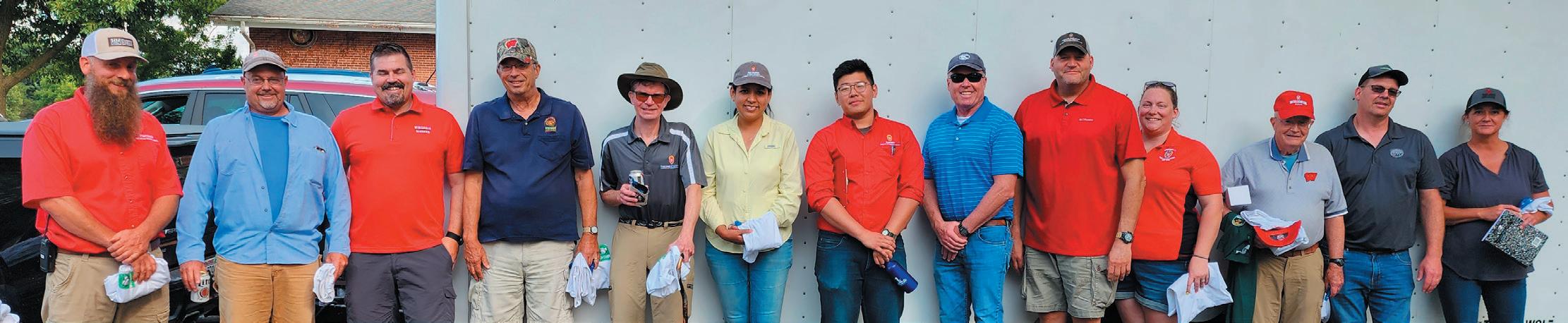
Above: At the HARS Field Day, in honor of the WPVGA’s 75th Anniversary, Tamas Houlihan recognized current and retired UW-Madison potato researchers and collaborators for their efforts to improve potato and vegetable growing throughout Wisconsin. From left to right are Paul Sytsma, Russ Groves, Matt Ruark, Keith Kelling, Jim Busse, Maria Caraza-Harter, Guolong Liang, Jim Drought, Troy Fishler, Amber Walker, Walt Stevenson, A.J. Bussan, and Amanda Gevens.
Left: During the Lelah Starks Elite Foundation Seed Potato Farm Tour, Jeff Endelman, who leads the potato variety development program for the UW-Madison Department of Horticulture, discussed Spud Pro’s development of new varieties, which started over 70 years ago, and said he is looking forward to working with the Potato Coalition in advancing research.
series of state-wide weather stations that Chris Kucharik, UW-Madison, Department of Agronomy, is spearheading.
Phone: 920-748-2601 1-800-782-9632 Fax: 920-748-4829 Commercial • Residential • Agricultural Design and Construction of: Post Frame • Stud Wall & Steel Buildings M.P.B Builders, Inc. From Planning through Completion www.mpbbuilders.com 654 E. OSHKOSH STREET RIPON, WISCONSIN 54971 continued on pg. 22 21 BC�T September
Groves also noted that aphid, thrip and two-spotted spider mite numbers are up this year.
Babler gave a WSPCP program update, saying the first field inspections were complete and the dry weather helped in that regard.
“There’s not a lot of potato blackleg this year, or Dickeya,” she noted, “no symptoms. But that doesn’t mean the pathogen isn’t still there.”
Her team is offering Eliza leaf testing focused on varieties that have no or low symptoms; conducting work
WE PARTNER WITH YOUR TRUSTED ADVISORS

As agriculture has evolved, the nature of the industry has become more complex and regulated. At Ruder Ware our attorneys act as legal counsel for producers and businesses providing products and services for the agriculture industry, and partner with a client’s current trusted advisors, such as accountants and lenders. Contact us today to see how our team approach yields the best results for your farm or business. ruderware.com |

Share Findings at Field Days. . .
from pg. 21
Researchers
continued
visit our blogs at blueinklaw.com
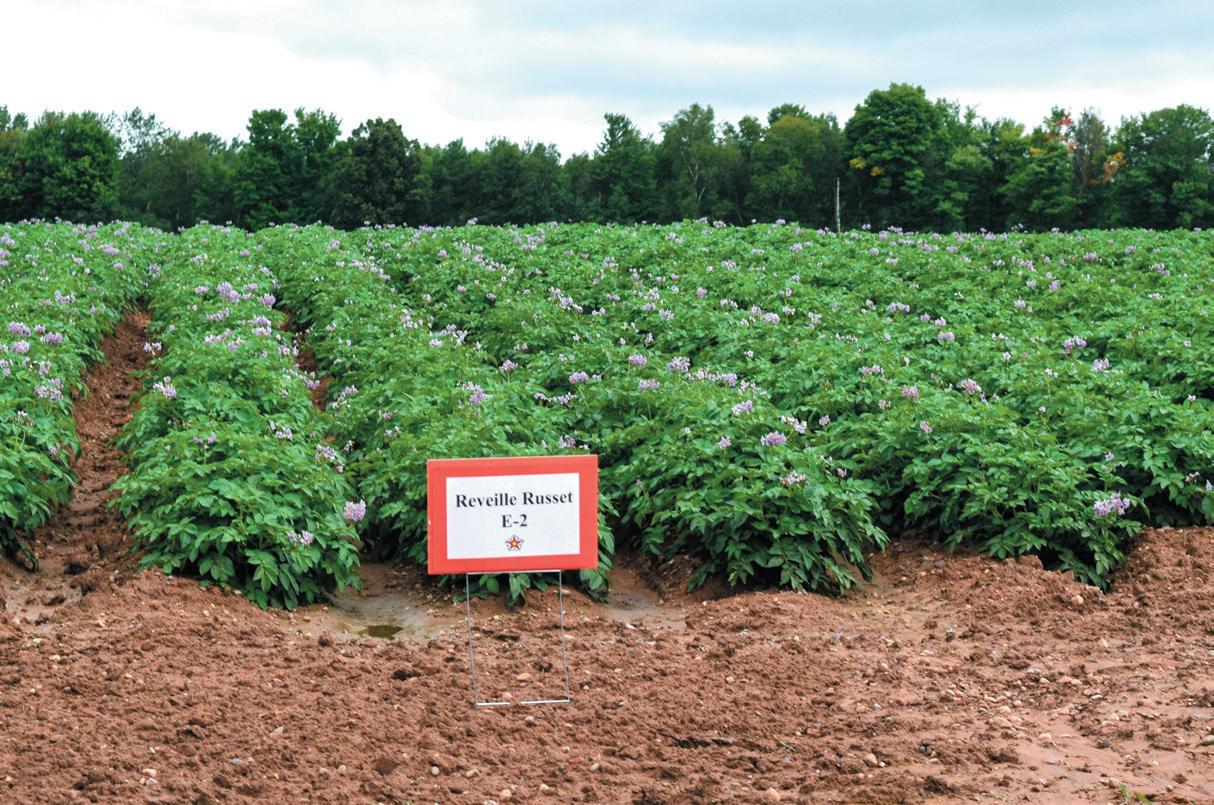
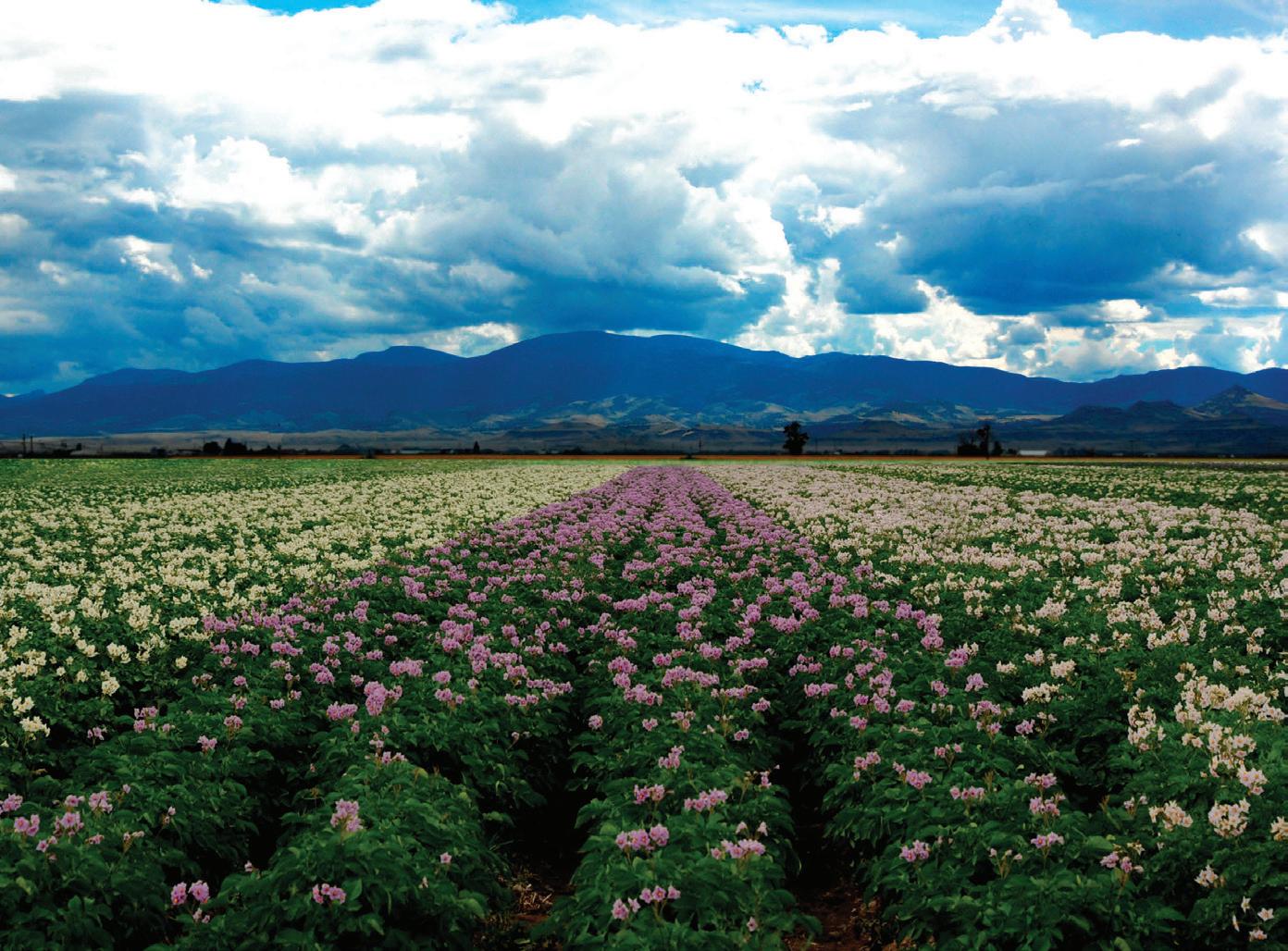
Left: Reveille Russet potato plants put their purple flowers on full display during the Lelah Starks Elite Foundation Seed Potato Farm Tour.
22 BC�T September
Right: Wisconsin Potato Coalition Farm Manager Cody Bandock (right) and Assistant Manager Matt Young (left) gave an update on potato planting at the Elite Foundation Seed Potato Farm.
using an aeroponic system to increase potato yields; practicing potted plant production in the greenhouse; and dormant tuber testing for Potato Virus Y antibodies.
As guests gathered under a tent for lunch catered by Swine & Dine, and refreshments, Houlihan announced gift items for all attendees in recognition of the WPVGA’s 75th anniversary.
Case IH, Beaver Machine, New Holland and Swiderski Equipment were recognized for supplying several tractors and implements to the farm over the years.
The Lelah Starks Elite Foundation Seed Potato Farm Tour wrapped up the summer’s field days specific to potato and vegetable production in the state of Wisconsin.
We can talk all day about our high quality machines for storage and handling but…
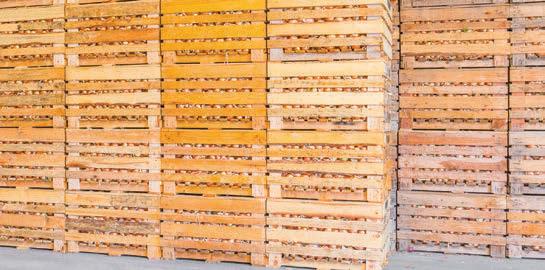
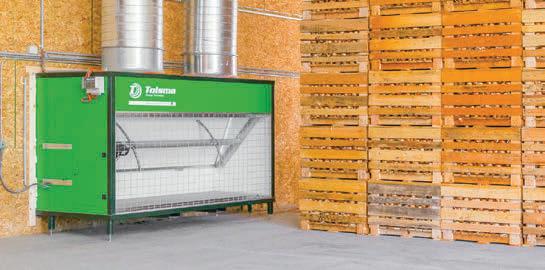
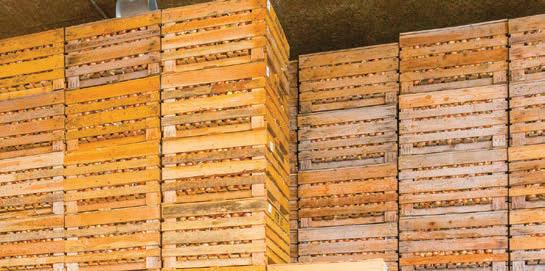




… it’s the result
that counts
TOLSMAUSA.COM STORAGE HANDLING
23 BC�T September
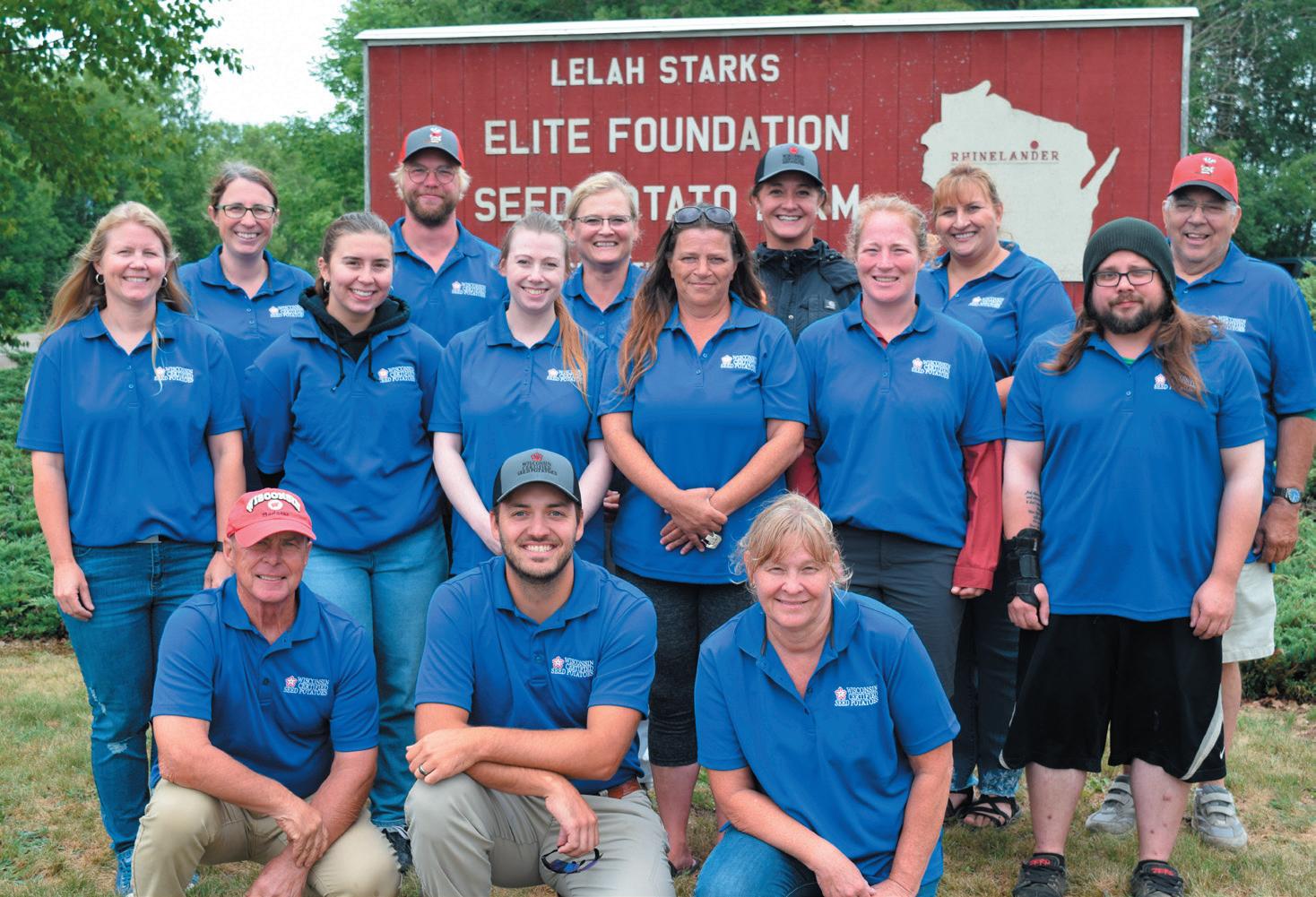
The Wisconsin Seed Potato Certification Program staff was out in full force during the Lelah Starks Elite Foundation Seed Potato Farm Tour. They are, from left to right in the back row: Brooke Babler, Niles Franc, Dianna Kessler, Dr. Amanda Gevens, Jolene Spurgeon, and Jerry Kuczmarski; from left to right in the middle row: Erin Harmelink, Laura Schwabe, Sarah deVeer, Shari Biesik, Katelyn Fillbrandt, and Sean Malone; and from left to right in the front row: Kevin Bula, Cole Lubinski, and Marge Hall. Not pictured: James Meyer.
Weather Station Network to Expand Across Wisconsin

Mesonets can guide everyday decision-making for the protection of crops and property
By Jori Skalitzky, communications specialist, University of Wisconsin (UW)-Madison College of Agricultural and Life Sciences (CALS)
A new era for weather data in Wisconsin is on the horizon thanks to an effort at the University of Wisconsin (UW)-Madison.
Wisconsin weather has become increasingly more unpredictable and extreme since the 1950s, posing challenges for farmers, researchers, and the public.
But with the help of a statewide network of weather stations known as a “mesonet,” the state would be better equipped to deal with the future obstacles of a changing climate.
“Mesonets can guide everyday decision-making for the protection of crops, property, and people’s lives while also supporting research, Extension, and education,” says
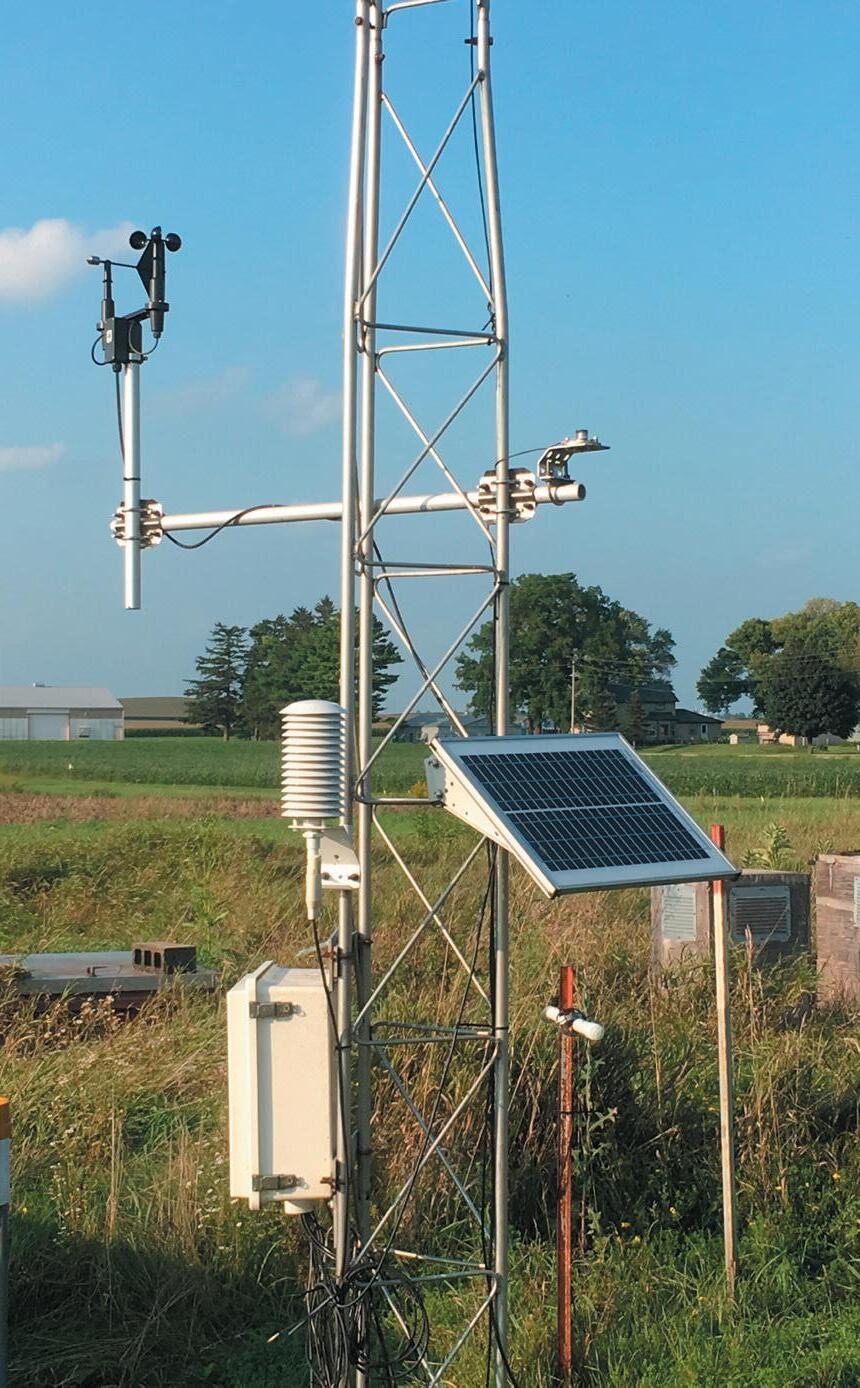
Above: At sunrise on Wednesday, March 15, 2023, a weather station is seen in a field at UW-Madison’s Arlington Agricultural Research Station in Arlington, Wisconsin. Thanks to new federal funding and support from the Wisconsin Alumni Research Foundation, this station (currently within Michigan State University’s Enviroweather system) will become part of a Wisconsin Mesonet (network) of about 90 weather stations, providing vastly improved monitoring of weather and soil conditions.
Chris Kucharik, professor and chair of the UW-Madison Department of Agronomy, as well as a faculty member with the Nelson Institute for Environmental Studies.
Kucharik is leading a major project to expand Wisconsin’s mesonet
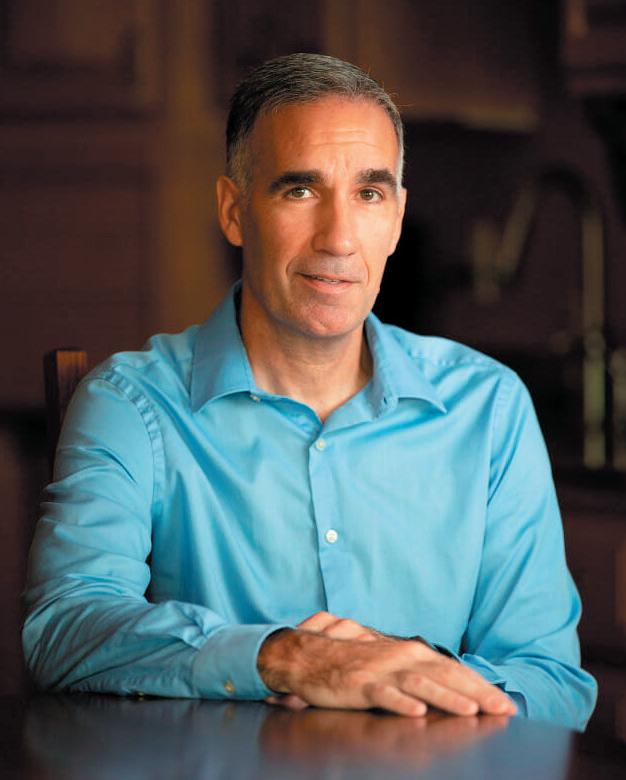 Photo courtesy of Michael P. King, UW-Madison CALS
24 BC�T September
Chris Kucharik, professor of agronomy at UW-Madison, will lead the new Wisconsin Environmental Mesonet project. Photo courtesy of Michael P. King, UW-Madison CALS
network with assistance from Mike Peters, director of UW-Madison’s Agricultural Research Stations.

Unlike many other agricultural states, Wisconsin has a minimal network of environmental monitoring stations. Almost half of the 14 weather and soil monitoring stations are at UW research stations, with the others concentrated in Kewaunee and Door counties on private fruit orchards. Data from these stations is currently hosted by Michigan State University’s mesonet.
WISCONET STATIONS
Going forward, these stations will be moved to a designated Wisconsinbased mesonet, called “Wisconet,” and the total number of stations will increase to 90 for comprehensive monitoring in all regions of the state. This effort is supported by a $2.3 million grant from the Wisconsin Rural Partnership, a U.S. Department
of Agriculture-funded UW initiative, as well as $1 million from the Wisconsin Alumni Research Foundation.
The expansion of this network is seen as a critical step in providing the highest quality data and information to those who need it. Each station contains equipment to measure atmospheric and soil conditions. Aboveground instruments measure wind speed and direction, humidity, air temperature, solar radiation, and liquid precipitation.
Right: Each weather station contains equipment to measure atmospheric and soil conditions. Aboveground instruments measure wind speed and direction, humidity, air temperature, solar radiation, and liquid precipitation. Below ground, soil temperature and moisture levels are measured at certain depths.
continued on pg. 26
25 BC�T September
Photo of the Arlington mesonet station courtesy of Chris Kucharik
Below ground, soil temperature and moisture levels are measured at certain depths.
Data from Wisconsin’s existing stations can currently be accessed on Michigan State’s “Enviroweather” website, https://enviroweather. msu.edu, but began to be switched over to a Wisconsin-focused site at https://wisconet.wisc.edu this summer.
Kucharik and his team are working to build a simple, open-access site where users can not only view and download station data in real time, but also find practical guidance for using that data to make real-world decisions.
“Our growers rely on weather data to make important daily decisions on

their farms. It affects when crops are
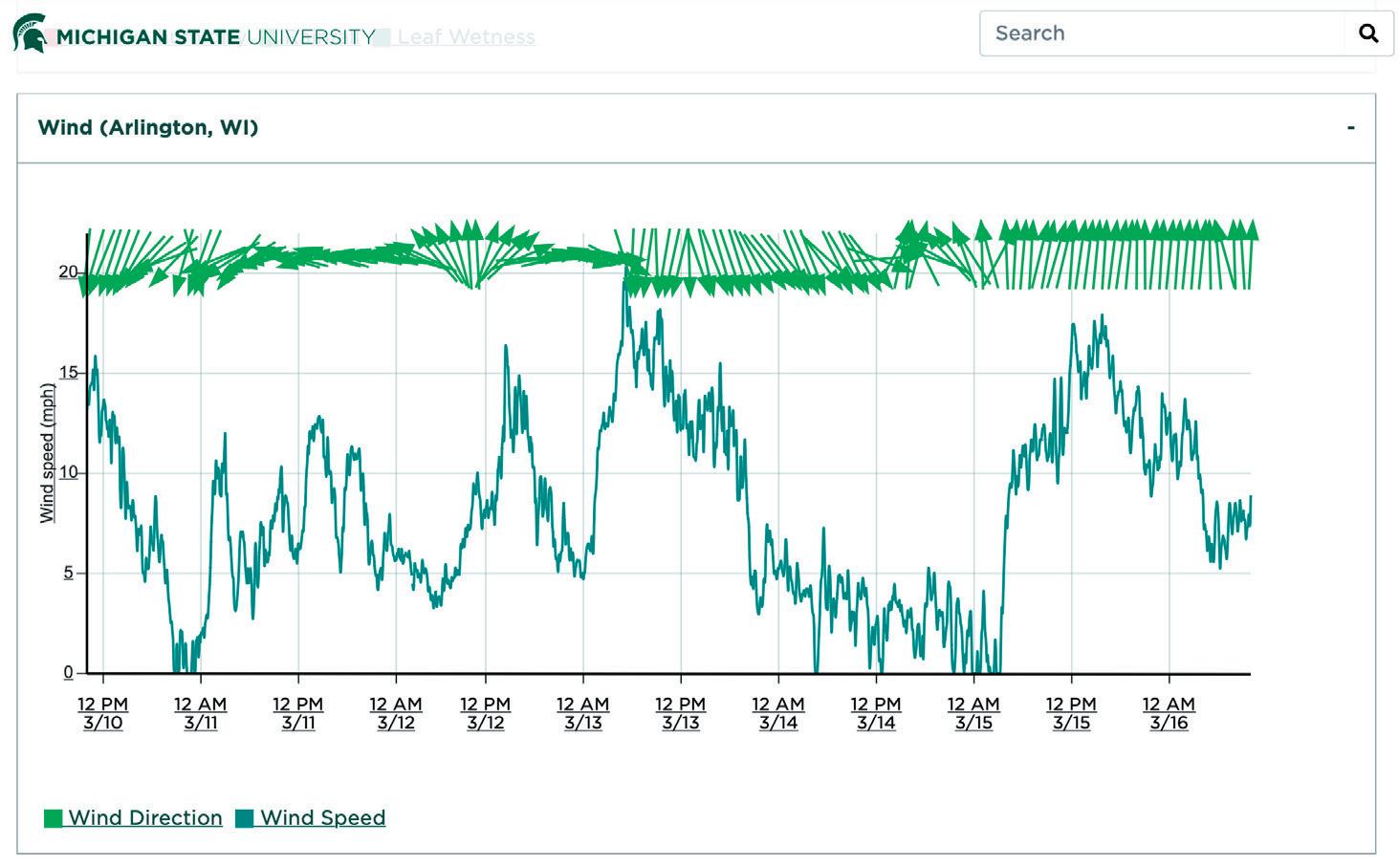
Above: Wind data for a weather station at UW-Madison’s Arlington Agricultural Research Station is captured from a Michigan State University website on Thursday, March 16, 2023. Image courtesy of UW–Madison CALS
director of the Wisconsin Potato & Vegetable Growers Association (WPVGA).
“So, we’re very excited about utilizing this expanded mesonet in the near future,” Houlihan adds.
In February, Kucharik presented the mesonet plan at the WPVGA Grower Education Conference. Andy Diercks of Coloma Farms, a Wisconsin potato grower and frequent collaborator with UW–Madison’s College of Agricultural and Life Sciences and Division of Extension, was in the audience and liked what he heard.
“Many of our agronomic decisions are based on weather we’ve experienced, or weather we expect to arrive within the next few hours or days,” Diercks says.
“It’s our goal to keep water, nutrients, and crop protectants where plants can use them,” he adds, “but we can’t
Weather Station Network to Expand Across Wisconsin . . . continued from pg. 25
P O Box 267, Monte Vista, CO 81144 ColoradoCertifiedPotatoGrowers.com Lyla@ColoradoCertifiedPotatoGrowers.com (719) 274-5996 26 BC�T September
succeed if we don’t fully understand the current conditions in the air and soil, and what to expect in the near future, like an unforeseen heavy rain event washing away a recent fertilizer application.”



The benefits the environmental mesonet will have for farmers is evident, but many others will benefit as well.
EXTREME EVENTS
“The National Weather Service regards these networks as valuable because they’re able to verify and lead to a better understanding of extreme events,” says Kucharik, who earned his Ph.D. at UW-Madison in atmospheric sciences.

“A research-grade network of weather stations evenly spread across the state provides the National Weather Service that many more data points,” he adds.

While call-in reports from people’s backyard weather stations are valuable, a mesonet can provide a more consistent and complete picture.
Mesonet data could also aid researchers, transportation departments, environmental managers, construction managers and anyone whose work is influenced by weather and soil conditions.


There are even opportunities for these stations to help support K-12 education, as school grounds could be a potential home for environmental monitoring stations.
“It’s another way of getting more students connected to something that affects their everyday lives,” Kucharik says. “You can connect that science to all sorts of other fields in agriculture, forestry, and wildlife ecology.”
The installation of Wisconsin’s new mesonet stations was slated to start this summer and is expected be completed in fall of 2026.

2731 Maple Drive • Plover, WI 54467 • 715-344-3401 • Toll Free: 1-888-696-4019 www.bigironequipment.com New & Used Sales Service • Repair Proud Dealer of: Co or Belt Mulchers Rock Crushers Customizing equipment to fit your needs for over 25 years! SPUDNIK Harvester Used
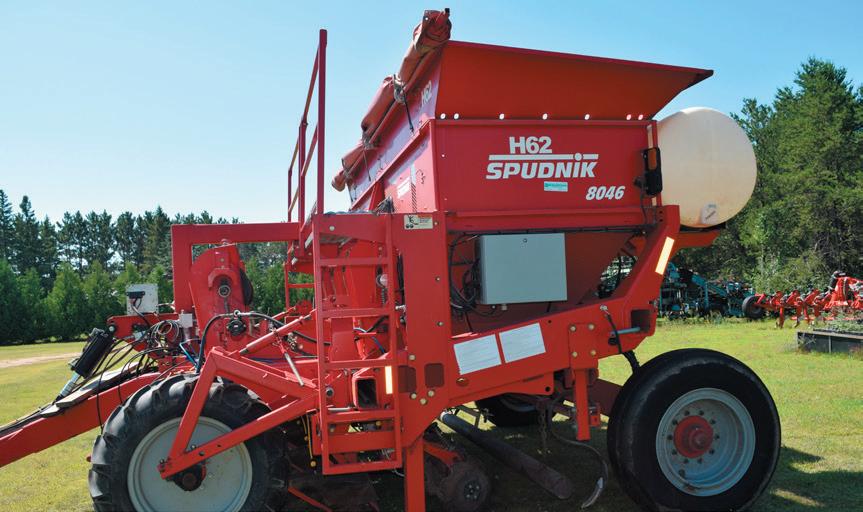
Used - SPUDNIK 8046 7-Row Potato Bed Planter. Includes Fertilizer Tanks and
Used - 2009 GRIMME M odel GL38T-2 8-Row Planter, 36”Row Spacing. 3 Available!
- 2004 SPUDNIK 9060 Hiller
Tubing.
“It’s our goal to keep water, nutrients, and crop protectants where plants can use them.”
27 BC�T September
– Andy Diercks, Coloma Farms
Eyes on Associates
Rain Couldn’t Dampen the 2023 Putt-Tato Open
Annual Associate Division golf outing raises funds for research, scholarships and important industry causes
The 2023 Putt-Tato Open was about gratitude and fortitude—gratitude for the much-needed rain in what was at that time a dry, nearly droughtstricken Wisconsin, and fortitude
to play through the wet and cold, at least for most golfers.
Of the 42 teams taking part in the Putt-Tato Open at Bullseye Golf Course in Wisconsin Rapids, more
than 30 played through it and finished their rounds despite the rain.
On the date of the annual fourperson scramble tournament and industry fundraiser, July 12, Central Wisconsin saw its first steady, substantial rain in weeks.

Despite the rain, the 23rd Annual Putt-Tato Open, sponsored by the Associate Division of the Wisconsin Potato & Vegetable Growers Association (WPVGA), reached its fundraising goals, with proceeds going toward agricultural research, college scholarships and other industry causes to be determined throughout the coming year.
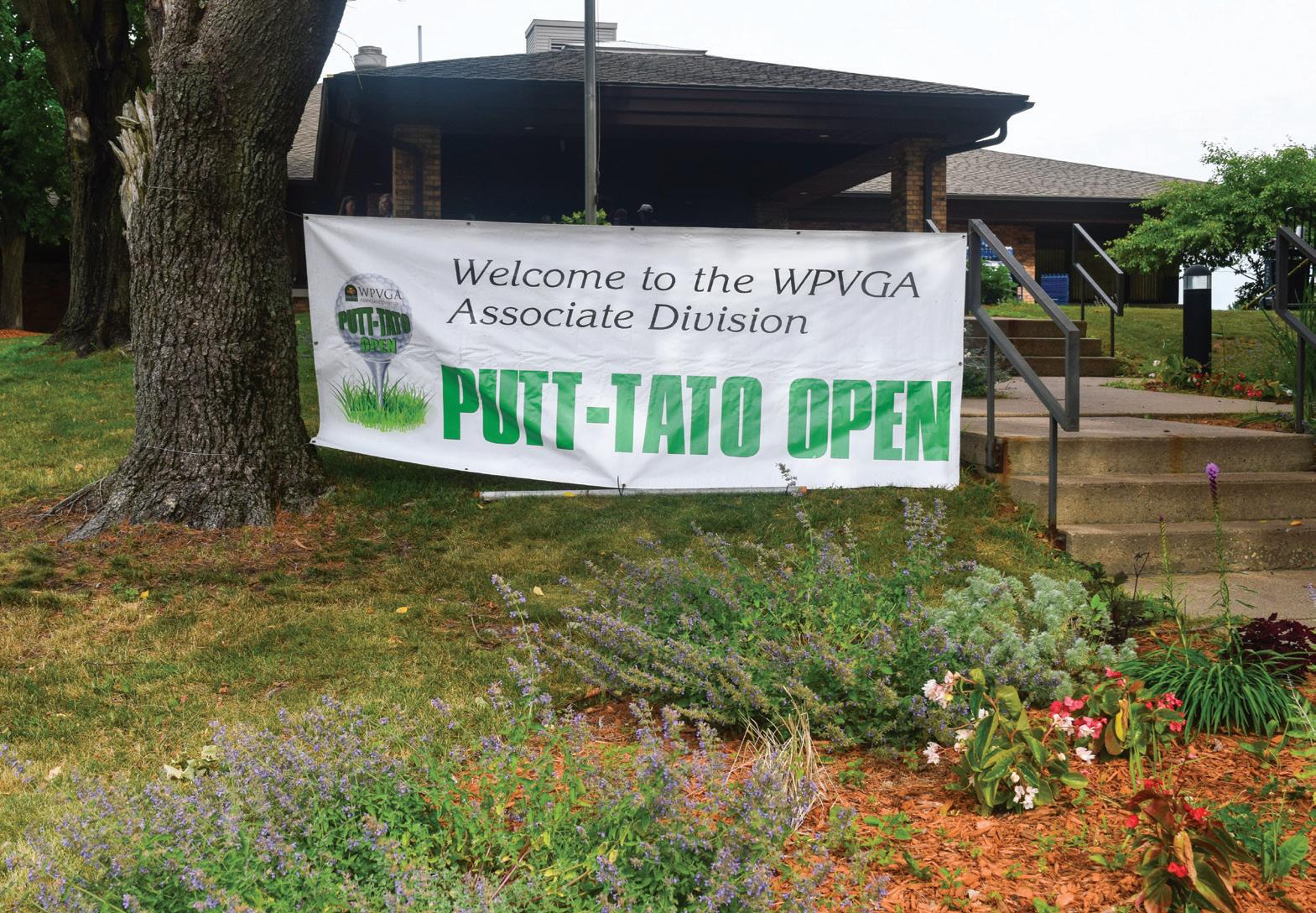
The annual tournament is a perfect mid-season opportunity for the Wisconsin potato and vegetable growing industry to gather before harvest for camaraderie, networking, and fun.
Through sponsorships, donations and raffle ticket and mulligan sales, the event raised more than $21,000 to go toward several worthy causes.
One of the largest fundraisers of the year for the Associate Division, the

NELSON’S VEGETABLE TORAGE S YSTEMS INC. S N7158 6TH DRIVE P.O. BOX 215 PLAINFIELD, WI 54966 OFFICE: (715) 335-6660 FAX: (715) 335-6661 SPROUT INHIBITING • FRUIT GUARD APPLICATIONS • SMART BLOCK APPLICATIONS • CIPC, CLOVE OIL APPLICATIONS KEEP ON TRACK WITH OUR SPROUT INHIBITORS AND DISINFECTANTS STORAGE VENTILATION • COMPUTERIZED CONTROL PANELS • HUMIDIFICATION • REFRIGERATION AGRI-VENTILATION SALES AND SERVICE AGRI-VENTILATION SALES AND SERVICE 24 HR. EMERG. SERVICE
28 BC�T September
Above: Playing for one of two RPE, LLC teams, as Nate Knutson putts during the 2023 Putt-Tato Open, teammate Luke Wysocki watches the result.
golf outing is a major undertaking, with board members gathering outside the clubhouse the morning of the event to check in groups and sell mulligans to golfers who always prove generous in their support of the industry.

WPVGA Executive Assistant Julie Braun and Financial Officer Karen Rasmussen once again coordinated the golf outing, setting up a booth at the fourth hole to sell raffle
tickets, offer Wisconsin potato chips and beverages and engage golfers throughout the day.
Progressive Ag, and Rural Mutual Insurance—the Zinda Insurance Group of Plover, and Jim Wehinger, Adams—sponsored lunch hot off the grill outside the clubhouse.
McCain Foods donated appetizers for the awards banquet, while Syngenta, AgCountry Farm Credit Services, and Sand County Equipment/Lemken/
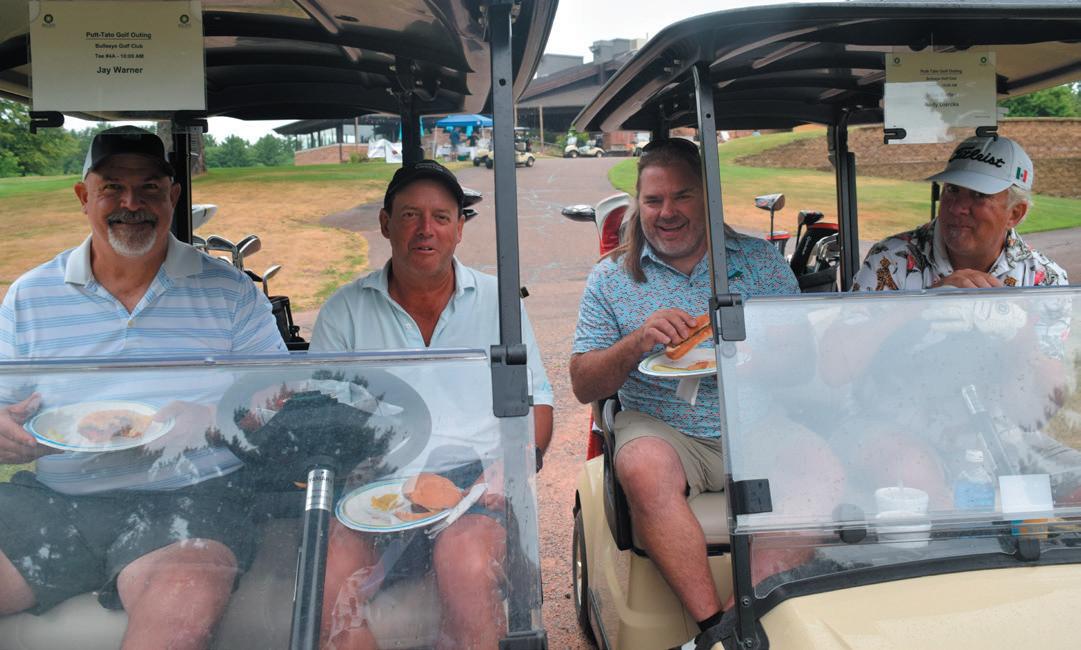
Left: Enjoying their lunch at the 2023 PuttTato Open are, from left to right, Mike Carter, Jay Warner, Andy Diercks and Dick Okray, playing for one of two Coloma Farms teams.
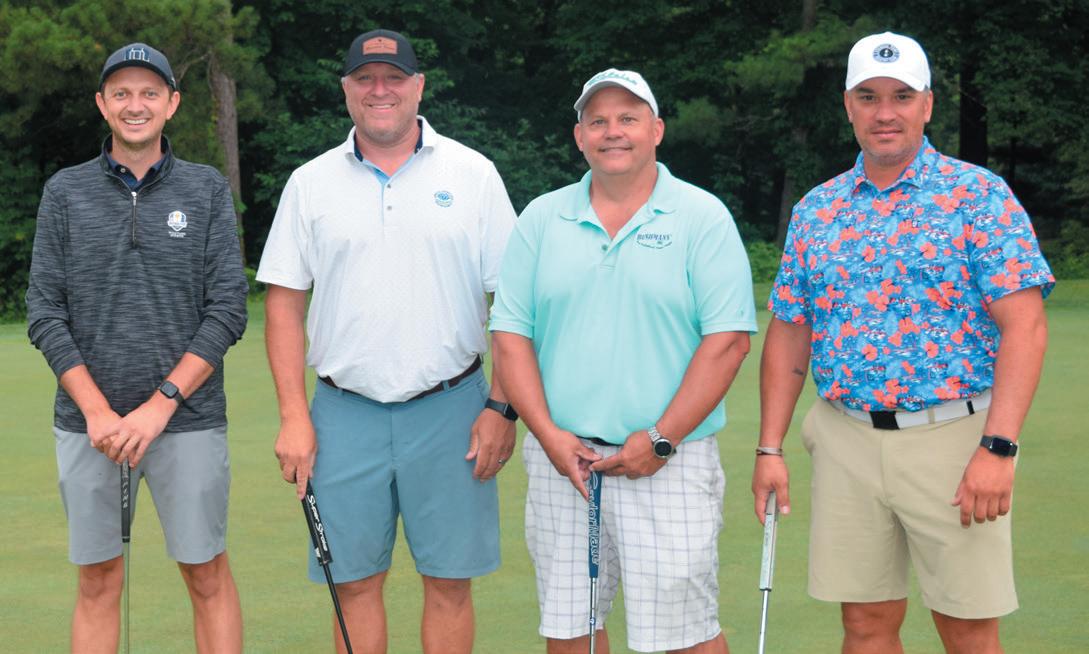
RIght: With a score of 59, the First-Place winners of the Putt-Tato Open scramble are, from left to right, Nic Bushman, John Hopfensperger, Chris Lockery, and Nate Bolton.
Lockwood were all Gold Dinner Sponsors, helping provide a delicious supper at the course.
At Compeer Financial, we’re defined by you — your hopes for the future as well as your needs today. When you need facility financing, we provide competitive rates and terms, flexible payment options and quick approvals for our loans and leases. Plus, you can convert your loan to take advantage of favorable interest rate changes. So whether you need an experienced lender or a trusted financial services provider you can count on, we’re ready.
Compeer Financial can provide assistance with financing and operations based on historical data and industry expertise. Compeer Financial does not provide legal advice or certified financial planning. Compeer Financial, ACA is an Equal Credit Opportunity Lender and Equal Opportunity Provider and Employer. © 2023 All rights reserved.
DEFINE YOUR SUCCESS WITH US COMPEER.COM/YOU OR CALL (844) 426-6733 Facility & Building Financing | Construction Financing Fixed and Variable Rates | Patronage Program | And More BUILDING
Cathy Schommer VP Food & Agribusiness (608) 370-6792 Cathy.Schommer@compeer.com continued on pg. 30 29 BC�T September
WITH
TOURNAMENT WINNERS
During the Awards Banquet, Associate Division Board President Matt Selenske announced the tournament winners and, with the help of WPVGA staff, doled out prizes to individual hole winners, drew names and gave raffle and door prizes.

Though awards were given for top scores and to those drawn for raffle and door prizes, the industry support was most impressive, and everyone who participated in the Putt-Tato Open contributed to good causes and walked away winners.
All segments of the potato and vegetable growing industry
contributed, including growers, potato brokerages, processors, insurance companies, banks and lending offices, real estate agents, fertilizer and chemical plants, implement and equipment dealers, and irrigation, refrigeration, trucking, storage and construction companies.
During the golf outing, hole sponsors hosted games and contests, and gave out prizes, gifts, and refreshments on the course, providing fun at each stop along the way.


In addition to raffle prizes each year, there are hole awards for longest drives and putts and being closest to the pins, as well as monetary prizes
Putt-Tato
up for grabs for golfers with the best shots.
Silver sponsors included Big Iron Equipment/Spudnik, Compeer Financial, and Modern Produce Equipment/Tong Engineering.
Eyes on Associates . . . continued from pg. 29
Representing Jay-Mar, Inc., Colton Bustillos shows good putting form at the Putt-Tato Open.
Nabbing Second Place at the Putt-Tato Open with a score of 61 are, from left to right, Tyler Hegewald, Jerry Pilecky, and Tim Worden, as well as Doug Posthuma (inset).
Left: Playing for TriEst Ag Group, Tony Belcher smashes a drive at the 2023
30 BC�T September
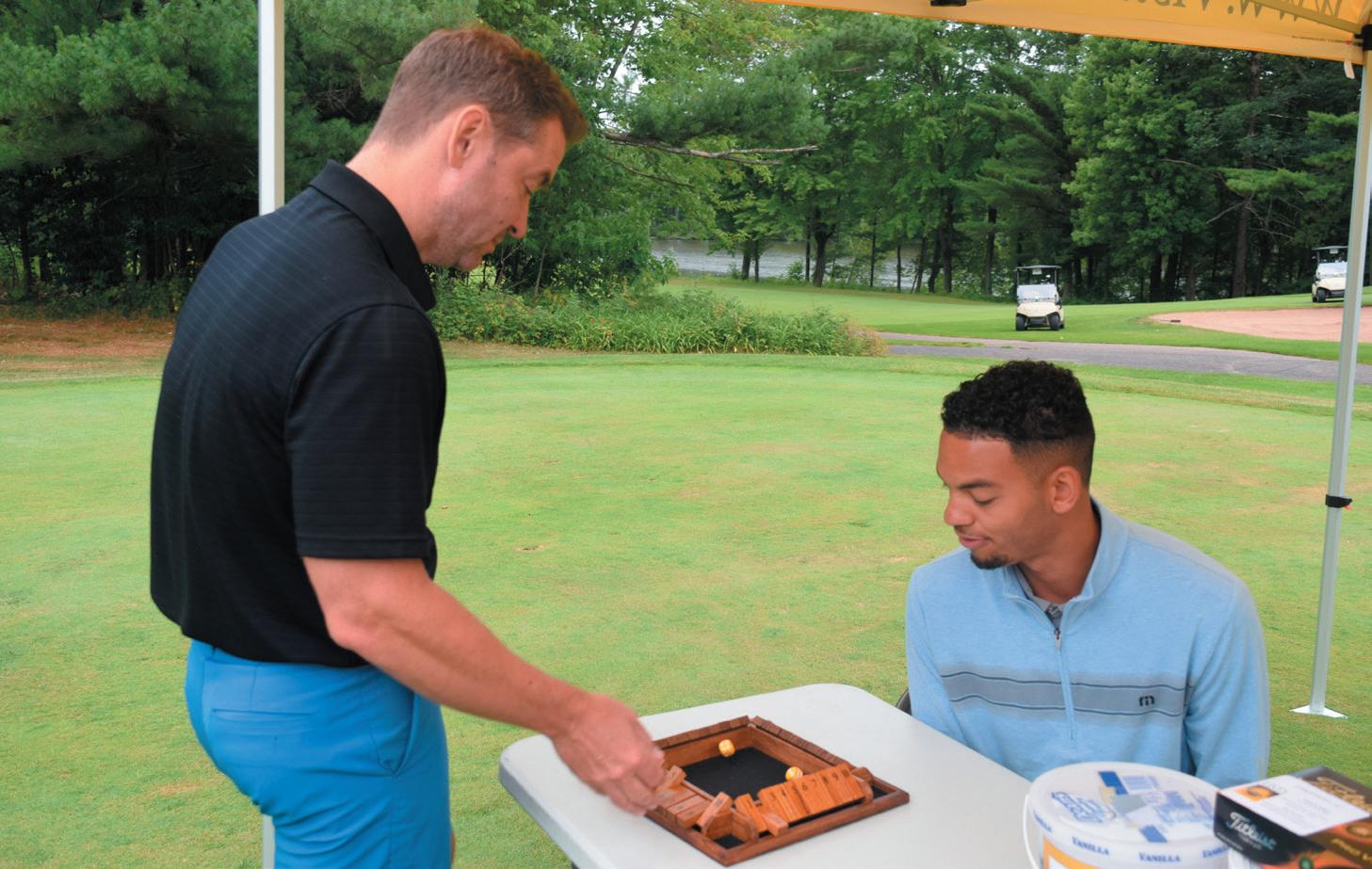
Right: Mikhail Salienko (left) of Compass Insurance shakes dice at the Vista Financial Strategies occupied hole for a chance to win a box of golf balls and two bottles of potato vodka—one distilled in Poland, and one in Wisconsin. Marcus Moreau of Vista Financial Strategies (right) welcomes golfers and keeps track of the game.
REMINDER: Watch your inboxes for the WPVGA Tater Talk eNewsletter and information on registering for the 4th Annual Sporting Clays Shoot October 19, 2023 at the Wausau Skeet and Trap Club in Brokaw, Wisconsin.

The Putt-Tato Open, in addition to providing a much-needed break during the growing season, generates significant funds that are put right back into the industry.

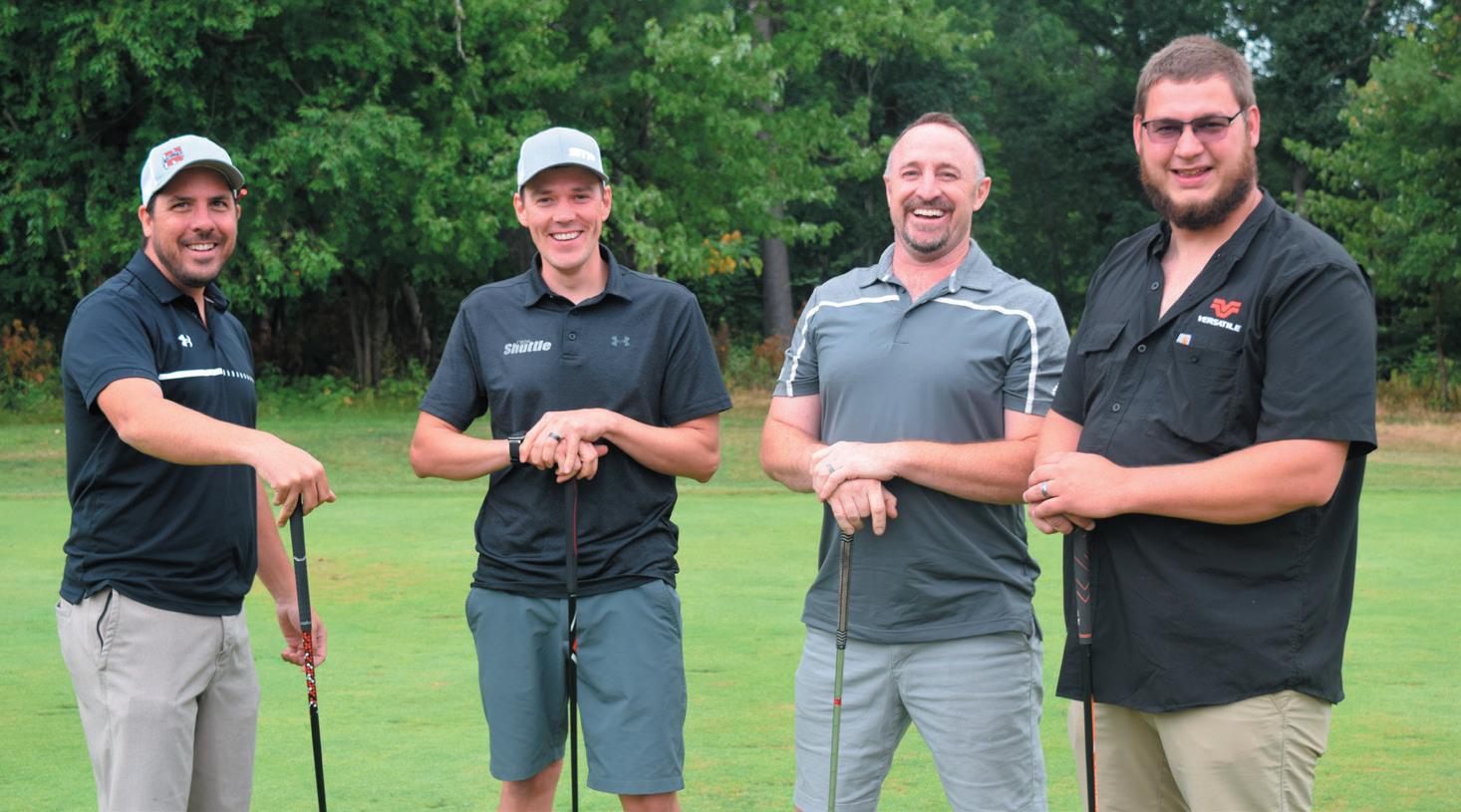
2023’s sold-out tournament is a testament to the dedication and generosity of the Wisconsin potato and vegetable industry. Look for the 2024 Putt-Tato Open to be at Lake Arrowhead, in Nekoosa, and in the area for years to come.
continued on pg. 32
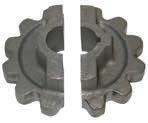
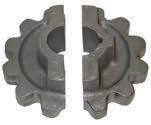
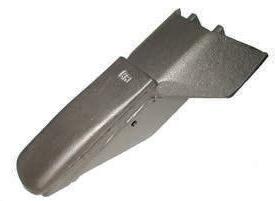
CHROME ALLOY WEAR PARTS Solving difficult wear problems! R & H Machine 115 Roedel Ave Caldwell, ID 1-800-321-6568 www.rhmachine.com Proudly made in the USA R & H manufactures points with High Chrome Alloy that are designed to fit several different types and styles of rippers. R & H also manufactures a variety of rollers, shakers and sprockets to fit most potato, sugar beet, garlic and tomato harvesting equipment.
McCain Foods was well represented by, from left to right, Alex Chisholm, Jim Ebben, Shannon Ruffalo, and Mike Johnson.
This Sand County Equipment team was all smiles at the Putt-Tato Open, including, from left to right, Greg Cappaert, Jacob Kringstad, Brion Hackbarth, and Jarod Cieslewicz.
Playing for Family Insurance Center, Carter Hanke chips one from the fairway at the 2023 Putt-Tato Open.
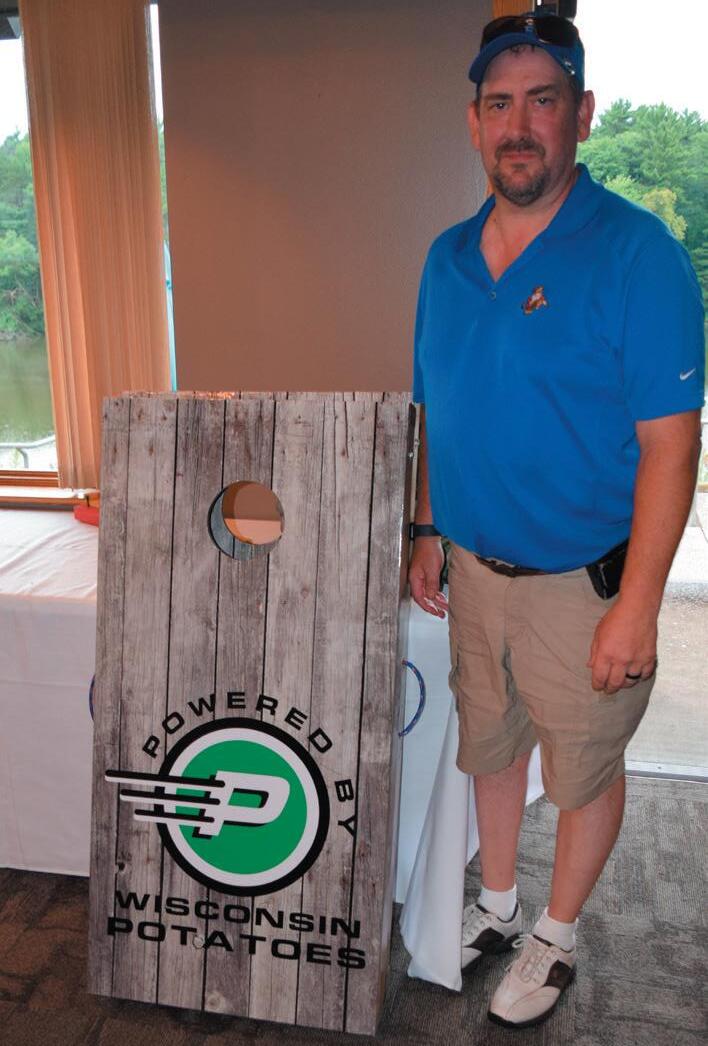
Mark Bacon of Bacon Farms walked away from the Putt-Tato Open with a custom beanbag toss game—a raffle prize donated by the Associate Division of the Wisconsin Potato & Vegetable Growers Association.
31 BC�T September


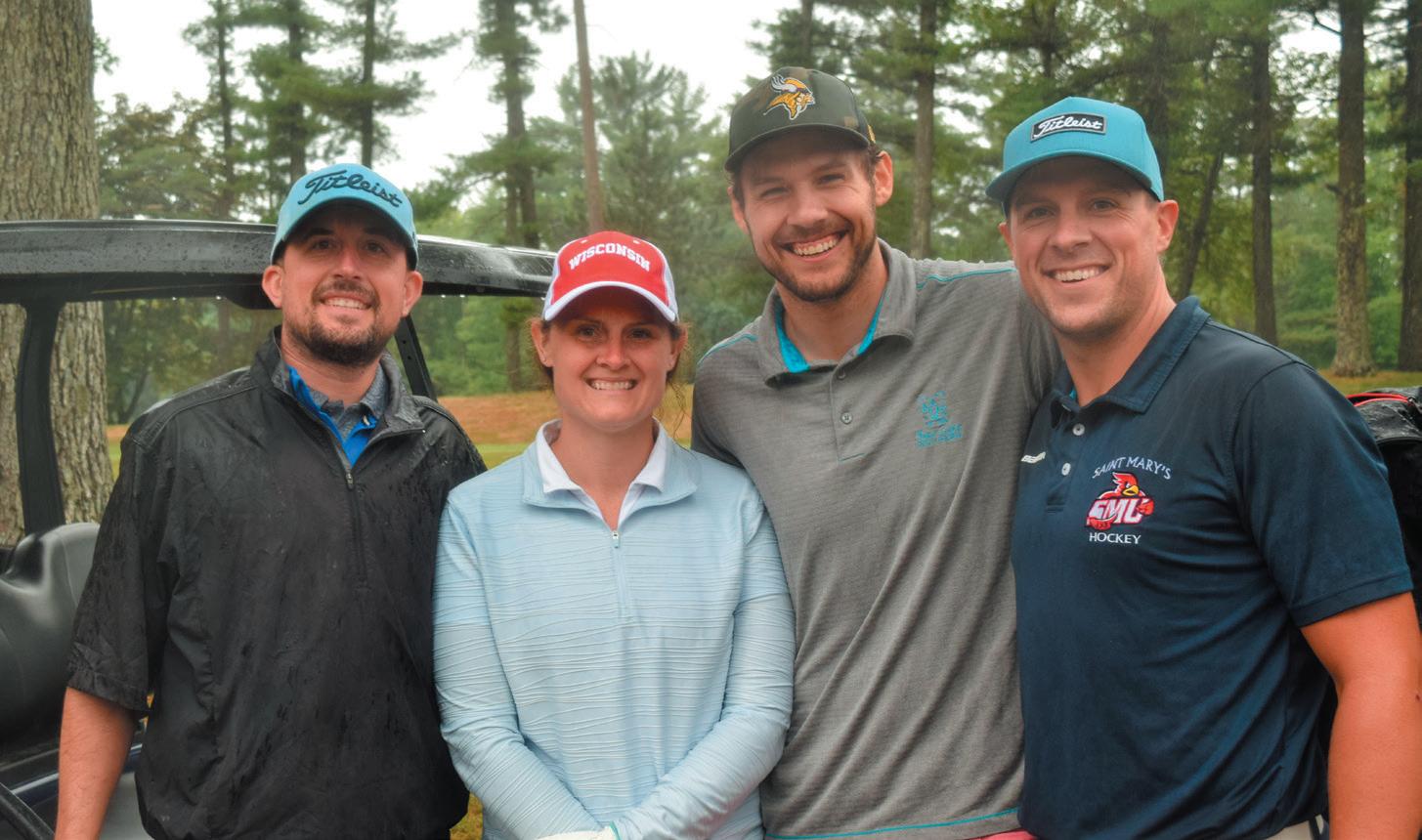
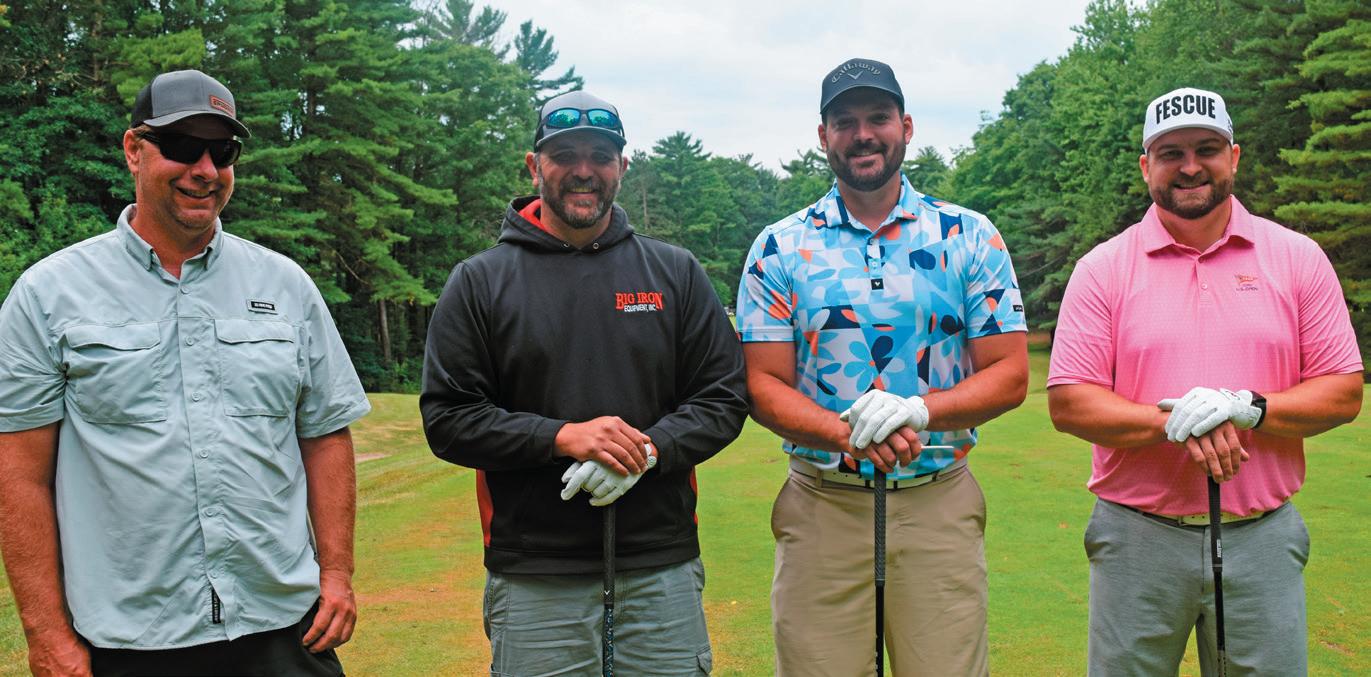








. . .
Eyes on Associates
continued from pg. 31
Brian Luther of AgCountry Farm Credit Services drives one at the Putt-Tato Open.
The Third-Place finishers at the Putt-Tato Open, with a score of 61 and playing for Big Iron Equipment, include, from left to right, Kevin Smith, Zach Mykisen, Josh Knights, and Jake Schwartzman.
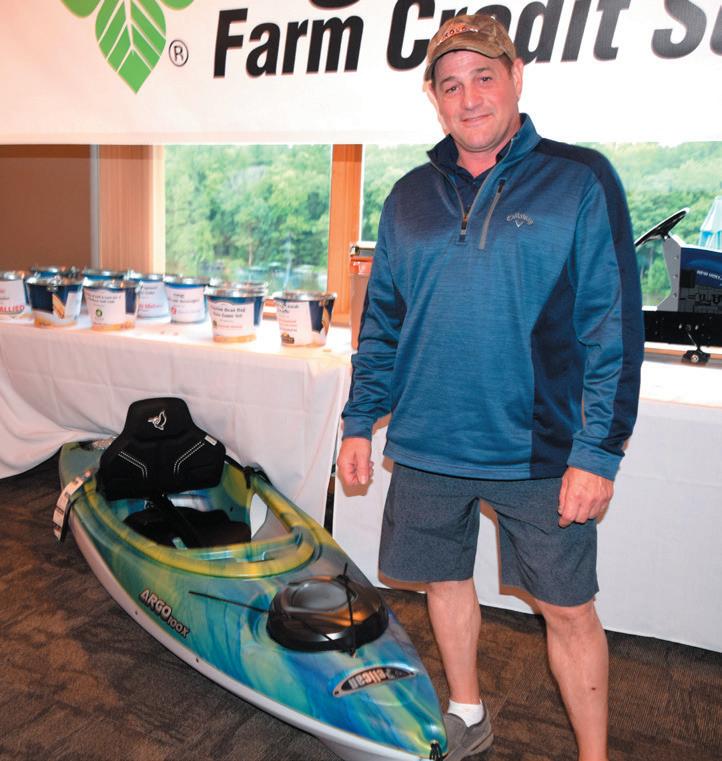
Jay Weidman of Mid-State Truck Service is the raffle prize winner of a nice kayak donated by C&D Professional Insurance Services.
From left to right, Brian and Kristen Mattmiller and Matt and Michael Wolter take a moment to mug for the camera.
Cliff Gagas of Gagas Farms takes a mighty swing from the tee box during the Putt-Tato Open.
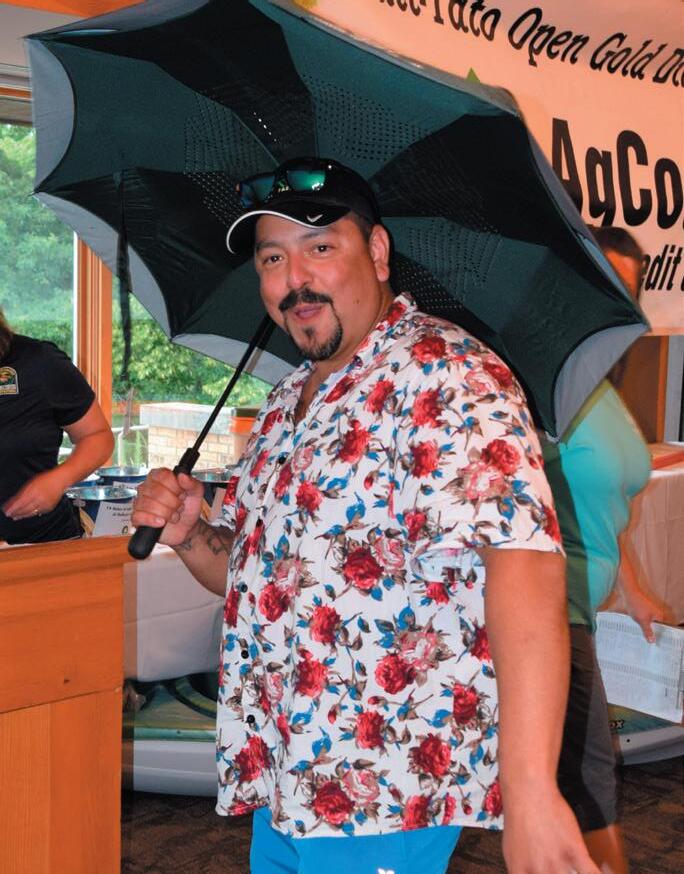
Javier Cipriano of Okray Family Farms is stylin’ with his new umbrella donated by Green Bay Packaging.
32 BC�T September
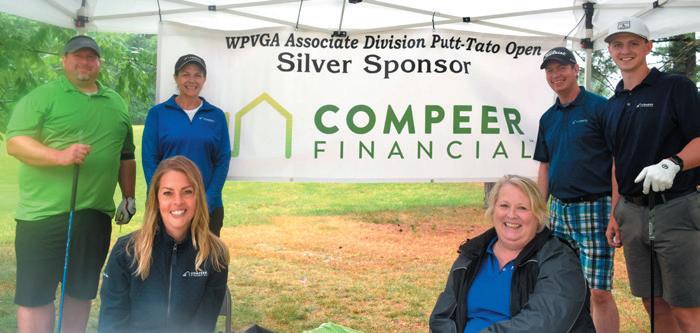
From left to right at the hole occupied by Silver Sponsor Compeer Financial are Ty Rohloff, Alyssa Perry, Cathy Schommer, Tracy Skrentny, Dan Kendall, and Andrew Schulenburg.
THANK YOU to the 2023 Putt-Tato Open Golf Sponsors





















GOLD DINNER SPONSOR
AgCountry Farm Credit Services

Sand County Equipment | Lemken | Lockwood

Syngenta


SILVER SPONSORS


Big Iron Equipment, Inc. & Spudnik

Compeer Financial

Modern Produce Equipment & Tong Engineering

LUNCH CO-SPONSORS
Progressive Ag
Rural Mutual Insurance: Zinda Insurance Group, Plover, WI & Jim Wehinger, Adams, WI

DRINK SPONSOR
Jay-Mar, Inc.
Volm Companies








APPETIZER SPONSOR
McCain Foods USA
GOLF BALL SPONSOR
Sand County Equipment

RAFFLE PRIZE SPONSORS
• FireDisc 36-inch Cooker
– Pest Pros & Allied Co-op
• Toy Pedal Tractor
– Swiderski Equipment



















• Windmill Spinner Garden Stake



– Jay-Mar, Inc.











• RTIC Cooler with Beverages
– BMO Harris Bank




















• Gift Basket & Golf Wedge
– EXIT Realty CW









• Gift Certificates for Rounds of Golf
– Bullseye Golf Club


• Custom Bag Toss Set
– WPVGA Associate Division

• Pelican Argo Kayak & Paddle


– C & D Professional Insurance Services & Adventure Outfitters
• Door Prizes
– Green Bay Packaging & TriEst Ag
HOLE SPONSORS






Adams-Columbia Electric Cooperative
Anderson O'Brien, LLP
Bayer EXIT Realty CW
Gowan USA

Green Bay Packaging

J.W. Mattek & Sons, Inc.
Keller, Inc.
Lineage Logistics

McCain Foods USA

MetLife Agricultural Finance
Mid-State Technical College
Mid-State Truck Service
Mt. Morris Mutual Insurance Company
Nelson's Vegetable Storage Systems, Inc.
ORO AGRI
Prevail Bank
Roberts Irrigation Co., Inc.
Ron's Refrigeration & AC
T.I.P., Inc.

















The Little Potato Company
TriEst Ag Group
Vista Financial Strategies
33 BC�T September
WPVGA Associate Division
Healthy Grown Message Featured on Interstate Billboard
By Dana Rady, WPVGA Director of Promotions and Consumer Education

In traveling down Interstate 39/51 near Bancroft, Wisconsin, over the last year, hopefully you’ve noticed a billboard showcasing the delicious, nutritious and versatile aspects of Wisconsin potatoes in the form of a gorgeous-looking loaded baked potato.

Above the photo is the message, “This Spud’s for You,” while featuring the Wisconsin potatoes consumer website address and peeled Wisconsin potato logo.
This year, the Wisconsin Potato & Vegetable Growers Association (WPVGA) remains under contract to utilize the same billboard, but the messaging is a little different.
To give the board a fresh look, it now sports a Healthy Grown message as a way to get consumers thinking about the program and provide an illustration of what to look for in stores.
Focusing on the Healthy Grown
program from an industry and consumer standpoint is in line with the objectives and strategies as established and voted on by the WPVGA Promotions Committee during recent strategic planning exercises.
HEALTHY GROWN SEAL
The new billboard design is a callout to the Healthy Grown program with a link to the consumer website underneath. To the right sits a burlap sack overflowing with potatoes and the new Healthy Grown seal on the front of the sack.
To the right of the bag is a call to action for consumers to “Look for This Seal.”
The wording is basic and the colors vibrant, both important considering that drivers only have so many seconds to comprehend a message when passing by. The use of the burlap sack in the design also creates a certain level of nostalgia and is
something many consumers associate with potatoes.
The underlying goal is not only for consumers to become more acquainted with the Healthy Grown program and choose Wisconsin potatoes when shopping, but also encouragement for more growers to join the Healthy Grown program and use the seal at retail whenever possible.
Expanding the Healthy Grown program with more growers in the state will allow Wisconsin to market its potatoes from a greater source of strength and a more collaborative standpoint. It will showcase an even greater team-oriented approach to putting Wisconsin potatoes on families’ plates.
Marketplace
Above: This mockup of the Healthy Grown billboard with a call to action for consumers represents it as it’s displayed on Interstate 39/51 near County Highway W, in Bancroft, Wisconsin.
34 BC�T September
Now News
Past Presidents Golf Outing Well Attended
Players hit the course at Glacier Wood Golf Club after WPVGA Board Meeting
On July 18, 2023, an annual tradition continued as the Wisconsin Potato & Vegetable Growers Association (WPVGA) held its Past Presidents Golf Tournament at Glacier Wood Golf Club, in Iola.
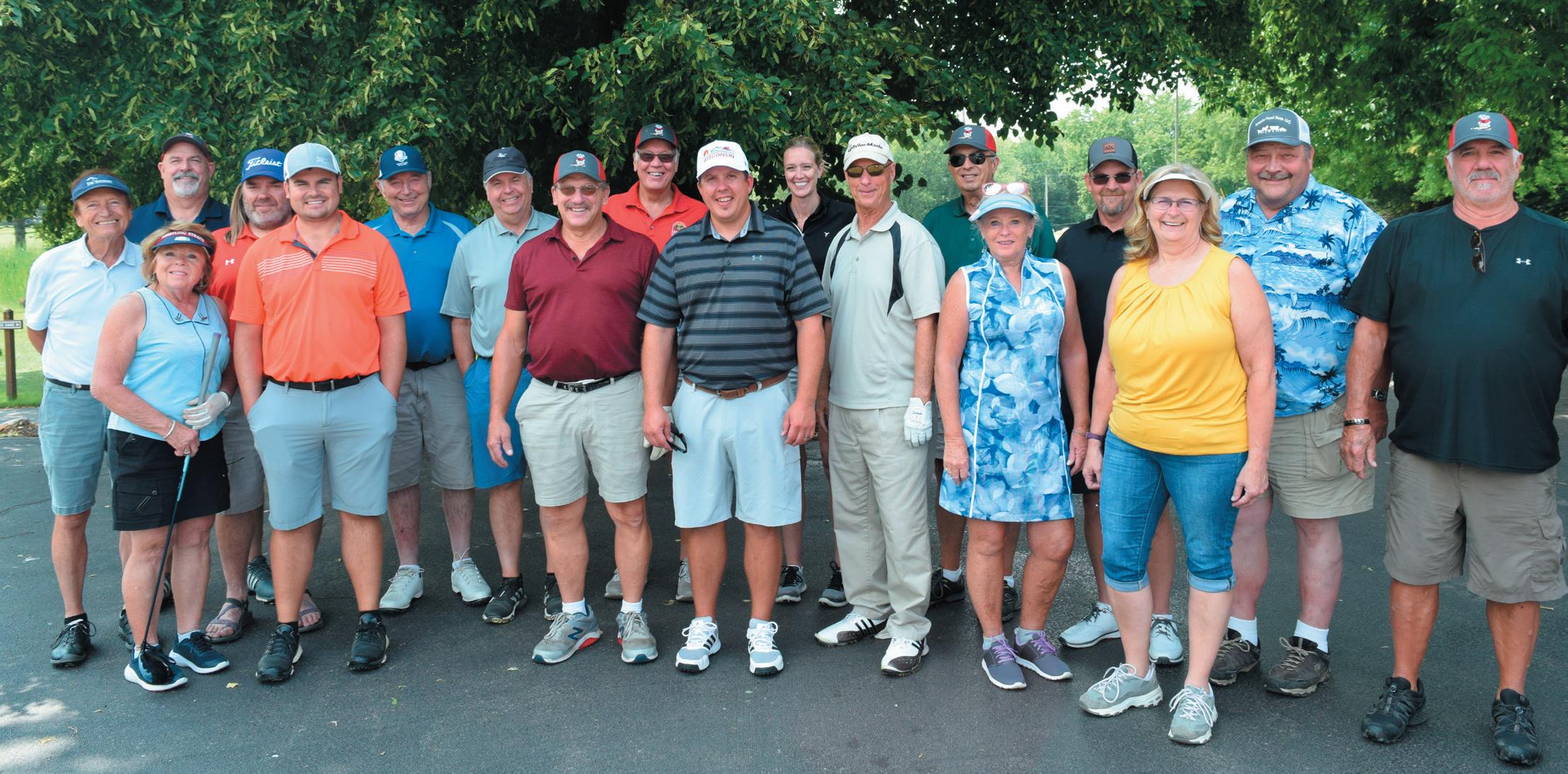
As is tradition, current WPVGA Board President Randy Fleishauer chose the course this year, which is close to home for the general manager of Plover River Farms, who lives in Iola.
The annual tournament honors the current and past presidents of the WPVGA Board of Directors, who often invite their spouses and family members. The event is a good opportunity for the potato and
Above: Participants in the Wisconsin Potato & Vegetable Growers Association (WPVGA) “Past Presidents Golf Outing,” July 18, in Iola, include, from left to right, Nick Somers, Mike Carter, Dianne Somers, Andy Diercks, Alex Okray, Steve Diercks, Jim Okray, Dale Bowe, Larry Alsum, Casey Kedrowski, Wendy Dykstra, Bob Guenthner, Keith Kelling, Cheri Guenthner, Randy Fleishauer, Carole Gagas, Cliff Gagas, and Ron Krueger.
vegetable growers to catch up and have some fun.

This year is especially poignant as the WPVGA celebrates its 75th anniversary and has been delivering hats, shirts, mugs, and other swag
to current and past presidents of the Association, its divisions, and the Wisconsin Potato Industry Board (WPIB).
In honor of the 75th anniversary of
COMMITTED TO QUALITY SERVICES Master Planning Design/Engineering Potato Storage Consulting General Contracting United States and Canada PROJECT TYPES Potato Storage: - Air Envelope - Straight Wall - Arch Buildings - Bin Storage Truck/Maintenance Shops Wash/Grading Facilities Packing Sheds Building Maintenance Remodels PLAN BETTER BUILD BETTER MAINTAIN BETTER mcgowanrice com continued on pg. 36 35 BC�T September
Mark Rice, Owner | Cell: 208.863.7242 | mrice@mcgowanrice.com
|
the WPVGA, past presidents of the WPVGA Associate Division were also invited to the golf outing, as well as those from the WPIB Board and the Wisconsin Potato Growers Auxiliary.




The winning foursome included Jim Okray and his son, Alex, along with Larry Alsum and his daughter, Wendy Dykstra, with the outstanding score of 12 under par!
A day that began with a WPVGA Board meeting continued during the four-person scramble golf outing and was capped off with a nice dinner at the course in anticipation of playing another round in 2024.
09-23 Badger Common'Tater (7.25x2.25).v2.pdf 1 2023-08-10 3:29 PM Now News. . . continued from pg. 35
This good-looking foursome playing the Past Presidents Golf Outing includes, from left to right, Tom and Caroline Wild, and Debra and John Wolter.
Current WPVGA Board President Randy Fleishauer shows good putting form during the event.
Cheri Guenthner chips one off the fairway during the 2023 WPVGA Past Presidents Golf Outing.
36 BC�T September
While past president of the WPVGA Associate Division, Casey Kedrowski (left), looks on, WPVGA Executive Director Tamas Houlihan hits a drive at the Past Presidents Golf Outing.
WPVGA & Antigo Legion Baseball Team Honor Baginski
John was a lifelong potato grower who loved the sport he played for many years


On July 17, the Antigo American Legion 19U baseball team honored longtime potato grower John J. Baginski, who passed away in the summer of 2021.
John was a graduate of Antigo High School, class of 1959. He loved the sport of baseball and played throughout his school years and continued in the county league.
He was also a lifelong potato grower, beginning his career as a boy working alongside his father and family on the Ted Baginski and Sons Potato Farm.
The Antigo Typhoon American Legion Post #3 hosted Stevens Point on Monday, July 17, at Kretz Park, in a game billed as “John Baginski Night.” Stevens Point defeated Antigo 7-0.
Chad Hoerman, the oldest of John and his wife, Kathie’s, eight grandchildren, threw out the ceremonial first pitch in John’s honor. Chad is a former Antigo Legion baseball player.
The Typhoon is proud to honor John, who was a baseball fanatic and a strong supporter of local teams and leagues.
The Wisconsin Potato & Vegetable Growers Association (WPVGA), a sponsor of the Antigo Legion baseball game, would like to thank Dean Noskowiak and the Antigo Dugout Club for honoring John Baginski.
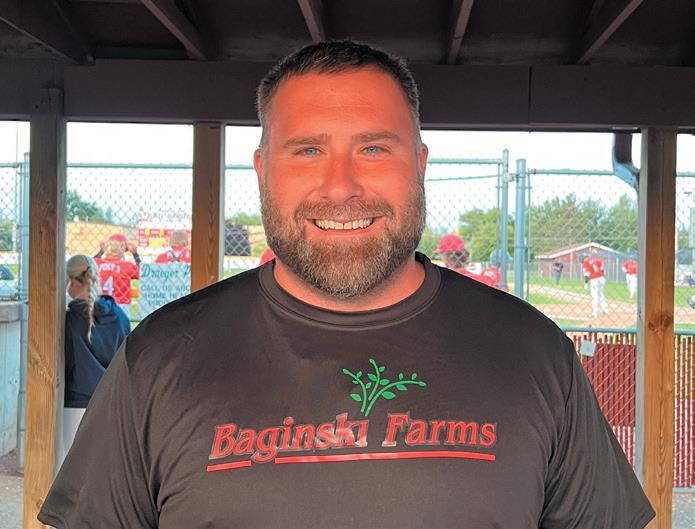
continued on pg. 38
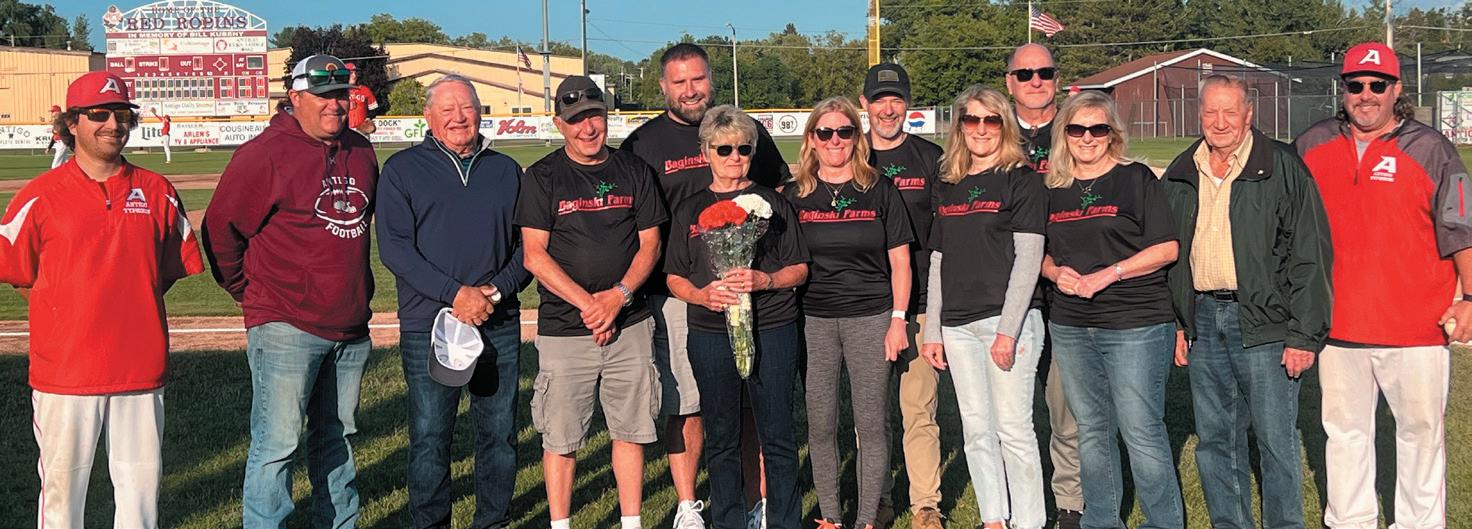
It was a Baginski family affair when the Antigo American Legion 19U baseball team honored longtime potato grower John J. Baginski, who passed away in the summer of 2021. From left to right are Antigo Legion baseball head coach Alex Heiny, Mike Baginski, Stosh Baginski, Ron Hoerman, Chad Hoerman, Kathie Baginski (wife of John), Gina Hastreiter, Chris Hastreiter, Jodie Fermanich, Paul Fermanich, Janice Hoerman, Florian Baginski, and Antigo Legion baseball assistant coach Dean Noskowiak.
John Baginski’s grandson, Chad Hoerman (shown here), threw out the ceremonial first pitch, July 17, during the Antigo American Legion baseball game honoring his grandpa. Chad is a former Antigo Legion baseball player.
John J. Baginski
37 BC�T September
Lundgren Sentenced to Prison for Failure to Pay Growers
Potato broker Thomas Lundgren owned Spud City Sales, LLC in Stevens Point, Wisconsin
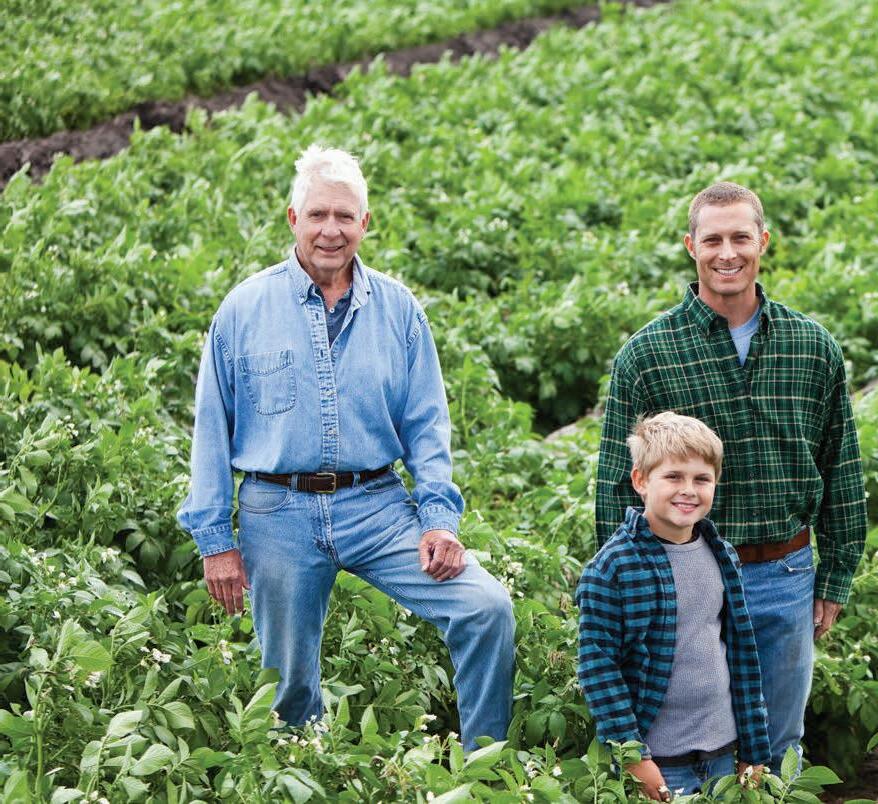
Thomas Lundgren, who stole almost $800,000 from Central Wisconsin farmers and trucking companies, pled guilty and was sentenced Monday, July 31, in Portage County Circuit Court to six months in prison and eight years of probation.
Currently of Chico, California, Lundgren is the former owner
of Spud City Sales, LLC, in Stevens Point, Wisconsin, which closed in December 2012.
Lundgren pleaded no contest on January 30 to four counts of theft of more than $10,000 each in a business setting. As part of a plea agreement, 12 other counts of theft in a business setting were dismissed, with nine
of the dismissed charges being considered during sentencing.
Lundgren made potato sales and then refused to pay farmers what they were owed between January 2011 and August 2012, according to the complaint. The victims included growers and trucking companies in Adams, Columbia, Portage and Waushara counties.
As part of the sentencing, Lundgren was ordered to pay back $125,000 of the $788,000 he owed to potato growers, which will be divided among his victims.
Researchers Use Multispectral Imaging
Recent technology helps detect potato disease earlier in its progression
Reprinted with permission from Potato News Today
Researchers are finding new ways to use the most recent technology, including multispectral imaging.
One example is University of Wisconsin-Madison research funded by the Wisconsin Potato
& Vegetable Growers Association, using cameras mounted on a drone that autonomously record a light reflection signature of the crop below.
Lead researcher Amanda Gevens
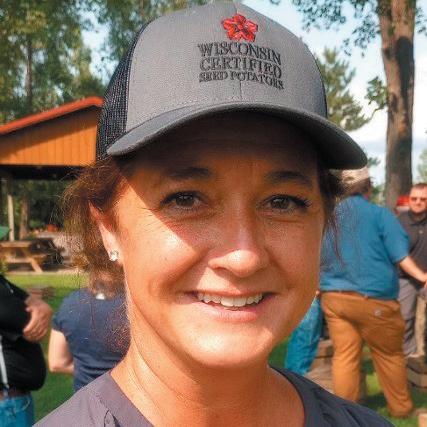
Amanda Gevens, chair, professor and Extension specialist, University of WisconsinMadison Department of Plant Pathology, and her team use multispectral imaging to detect potato disease early in its cycle. Image courtesy of Brownfield Ag News
discusses what the team has learned so far on the Brownfield Ag News program, “Managing for Profit.”
Listen to the interview with Gevens here: https://brownfieldagnews.com/ managing-for_profit/researchersuse-multispectral-Imaging-to-detectpotato-disease-earlier/.
Now News. . . continued from pg. 37
When you’re a member, YOU’RE AN OWNER Call our local commercial lenders at 800-398-2667 ext. 1125 to discuss possible options in helping your business succeed! Just as you own your business and reap the rewards of your hard work, member-owners benefit from the credit union’s financial growth and success. CoVantage Offers: n Better business loan rates n Lower business fees n Higher deposit rates Providing value to the people and businesses –the owners of the credit union – who rely on CoVantage for their financial needs. n Loan rebate program –Returning $20 million to account holders in t he past five years
38 BC�T September
Gumz Muck Farms Named Food & Agribusiness of the Year
Compeer Financial recognizes farm for innovation, community outreach and ag advocacy
Compeer Financial, a farm credit cooperative based in the Upper Midwest, has awarded Gumz Muck Farms of Endeavor, Wisconsin, the 2023 Food & Agribusiness of the Year Award.


The award recognizes businesses in the food and agribusiness supply chain, including processors and manufacturers in food and beverage, fiber, biofuel, grain merchandising, ag inputs, logistics and more, that have demonstrated leadership in innovation, agricultural advocacy, community outreach and client service.

Gumz Farms grows onions, potatoes, carrots and mint on approximately 6,000 acres of muck soil in southern Wisconsin.
With around 100 employees, the farm also packages its potatoes and onions for retail consumption, accounting for approximately 40% of Wisconsin’s onions and handling about 20% of the state’s fresh-market red potatoes.
Additionally, Gumz Farms distills its mint crops into oil for flavoring in products like chewing gum and toothpaste.

Brothers Roderick and Richard Gumz purchased the operation in the early 1990s from their family and are now the fourth generation of farmers in the United States.
Their great-grandfather emigrated from Germany in 1892 and established the family business of farming in muck soil. Muck soil is unique in that it contains high
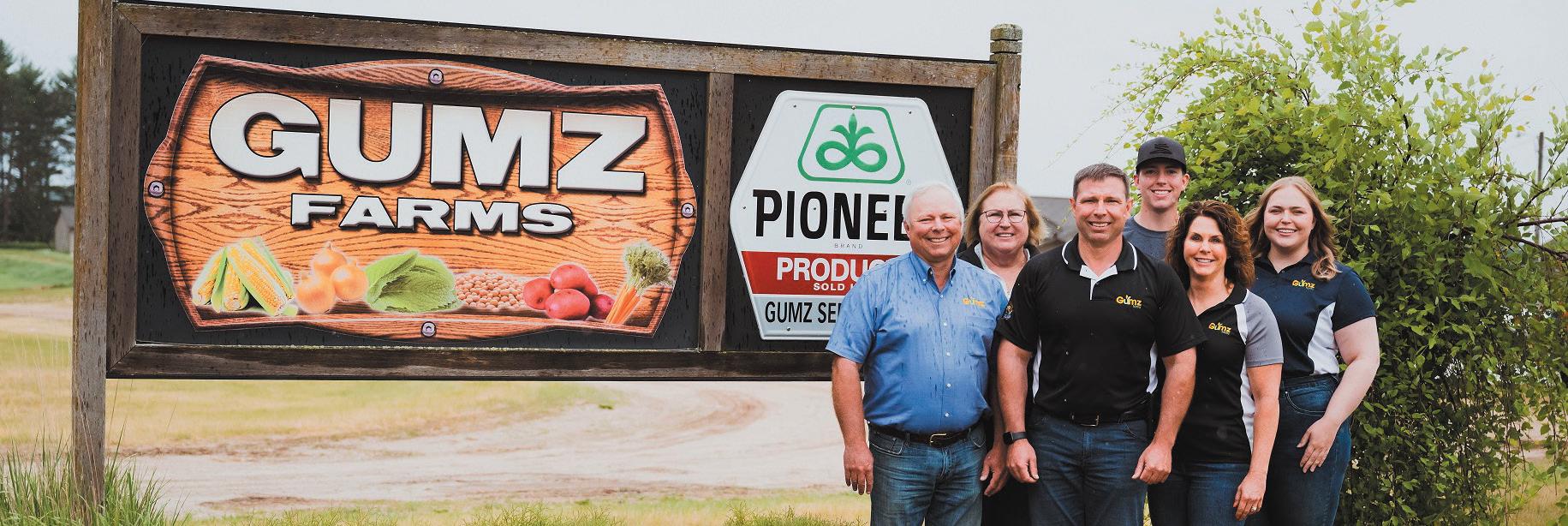
Brothers Roderick and Richard Gumz purchased Gumz Muck Farms in the early 1990s from their family and are now the fourth generation of farmers in the United States. In the photo are Richard and his wife, Linda, Gumz (two at left), and their daughter, Jacalynn (far right); and Rod and Michelle Gumz (front-center and center-right) and their son, Jason (behind them).
amounts of organic matter, creating a rich environment for growing specialized crops, but requiring additional attention due to its high moisture content.
“Gumz Farms is a leader in their field,” says Cathy Schommer, vice president of food and agribusiness at Compeer Financial.
HIGH-PERFORMANCE SPRAY FOAM INSULATION American-Made Manufacturers Serving all of Wisconsin Call or Text Ben 715-551-5945 www.energyedge.info Business • Storage Buildings • Shop • Barn • Commercial Building We are here to earn your business and prove our commitment to you in helping you achieve your goals! 55 reviews continued on pg. 40 39 BC�T September
MANAGING RISK
“Richard and Roderick are forwardthinking and have excelled in managing risk and improving production, processing and marketing,” she notes. “They have clear goals, not only for their own success, but also for the well-being of their employees, business partners and the local community. These qualities make them deserving of this recognition.”
Gumz Farms has embraced innovation to drive its operation forward, both in the field and in the packing shed. The family farm extensively employs guidance and precision agriculture practices to optimize field operations, particularly for crops that require multiple passes over the rows during the growing season.
In the packing operation, investments in storage facilities and automation have enhanced productivity, reduced employee fatigue, and ensured the delivery of high-quality products. “Adding climate-controlled storage facilities for our onions and potatoes enables us to extend the marketing season,” Roderick says. “This allows
full-time positions, which is key in retaining employees.”
“Many of our packing innovations focus on labor savings,” Richard adds. “We have automatic balers that can weigh out and assemble three-pound packages of onions, which are then placed into 50-pound master bags for shipment to retailers.”
“Our automatic palletizer robotically stacks our produce,” he adds, “which makes for a nice presentation while significantly reducing manual labor for our team.”
The operation incorporated an autograder for onions, further maximizing automation.
These investments require capital, and Gumz Farms has partnered with Compeer Financial to help make the opportunities a reality.
INTRICACIES OF AG
of agriculture, including the inherent adversities and challenges,” Roderick explains. “When we look at opportunities to make investments, whether in buildings, equipment or people, it takes capital.”
“Compeer not only provides the necessary funding, but also offers education, shares experiences and imparts knowledge to guide us in a productive direction,” he says. “We’re grateful for this collaborative relationship.”
For the Gumz brothers, telling the story of agriculture also plays a vital role in their success.
“Being advocates for agriculture is crucial because if we don’t tell the story, who will?” Roderick reasons. “There are fewer and fewer of us to share this story, and producers like us are best suited to do so since we are directly involved with agriculture.”
Where do we Start? On October 31, 2022, the unthinkable happened. We had a fire that destroyed our shop. We lost everything from tools to parts to machinery. Many neighbors and farmers offered help, but one in particular went above and beyond.
Where do we Start? On October 31, 2022, the unthinkable happened. We had a fire that destroyed our shop. We lost everything from tools to parts to machinery. Many neighbors and farmers offered help, but one in particular went above and beyond.
Alsum Farms & Produce stepped up and offered to rent us their shop a few miles down the road. As we near the completion of our new shop, we want to say thank you to everyone who stepped in and offered help. This is why we love the farming community. We want to extend a huge THANK YOU to Larry Alsum and his farm for helping a neighbor and fellow farmer in our time of need.
We would also like to thank Bill at Big Iron Equipment and Paul at Sand County Equipment for the excellent rebuild work on our harvesters for the 2023 Harvest Season. We are blessed to call these guys friends and are thankful for such great working relationships.
“We contribute to the story by actively participating in a variety of state and national industry associations and engaging with our local community,” he remarks. The brothers hope that this narrative will continue for generations to come.
Sincerely,
Mark and Shawn Bula Signature Farms LLC
Alsum Farms & Produce stepped up and offered to rent us their shop a few miles down the road. As we near the completion of our new shop, we want to say thank you to everyone who stepped in and offered help. This is why we love the farming community. We want to extend a huge THANK YOU to Larry Alsum and his farm for helping a neighbor and fellow farmer in our time of need.
We would also like to thank Bill at Big Iron Equipment and Paul at Sand
“The future for Gumz Farms is bright,” Roderick concludes. “The crops we grow are in demand, we have a great team, and the next generation of Gumz Farms is stepping up. As long as we continue to evolve and look for opportunities, Gumz Farms will undoubtedly be a part of the agriculture community for years to come.”

Now News. . . continued from pg. 39
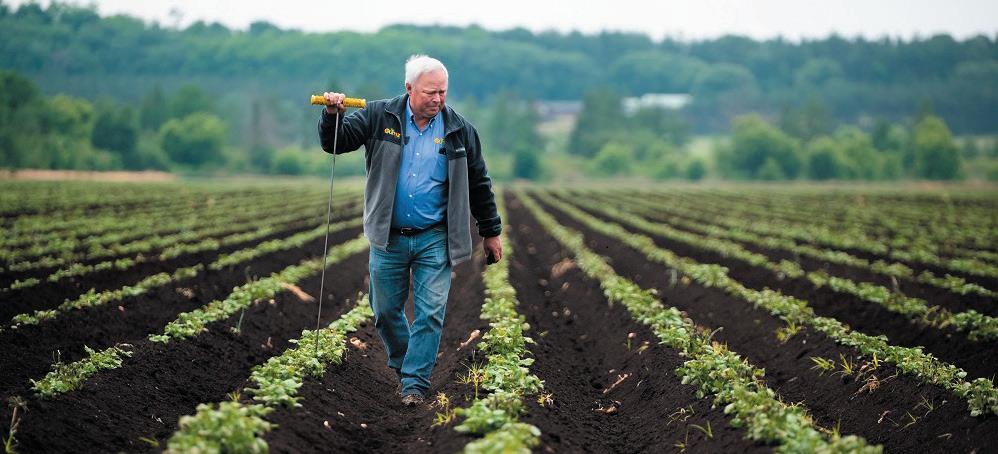
Above: Richard Gumz walks a potato field on Gumz Muck Farms carrying a soil probe to measure the topsoil depth
County Equipment for the excellent rebuild work on our harvesters for
40 BC�T September
Alsum Farms & Produce Celebrates 50 Years in Style
Coinciding 6th Annual Tater Trot raises $14,000 for Wisconsin FFA chapters
Alsum Farms & Produce, a leading fresh market grower, packer, and shipper of Wisconsin Healthy Grown® potatoes, pumpkins, onions, and wholesaler of fresh, quality produce, celebrated 50 years in business on Friday and Saturday, August 11-12, in Friesland.
The two-day 50th anniversary celebration welcomed more than 600 community members, grower partners, customers, and industry friends.
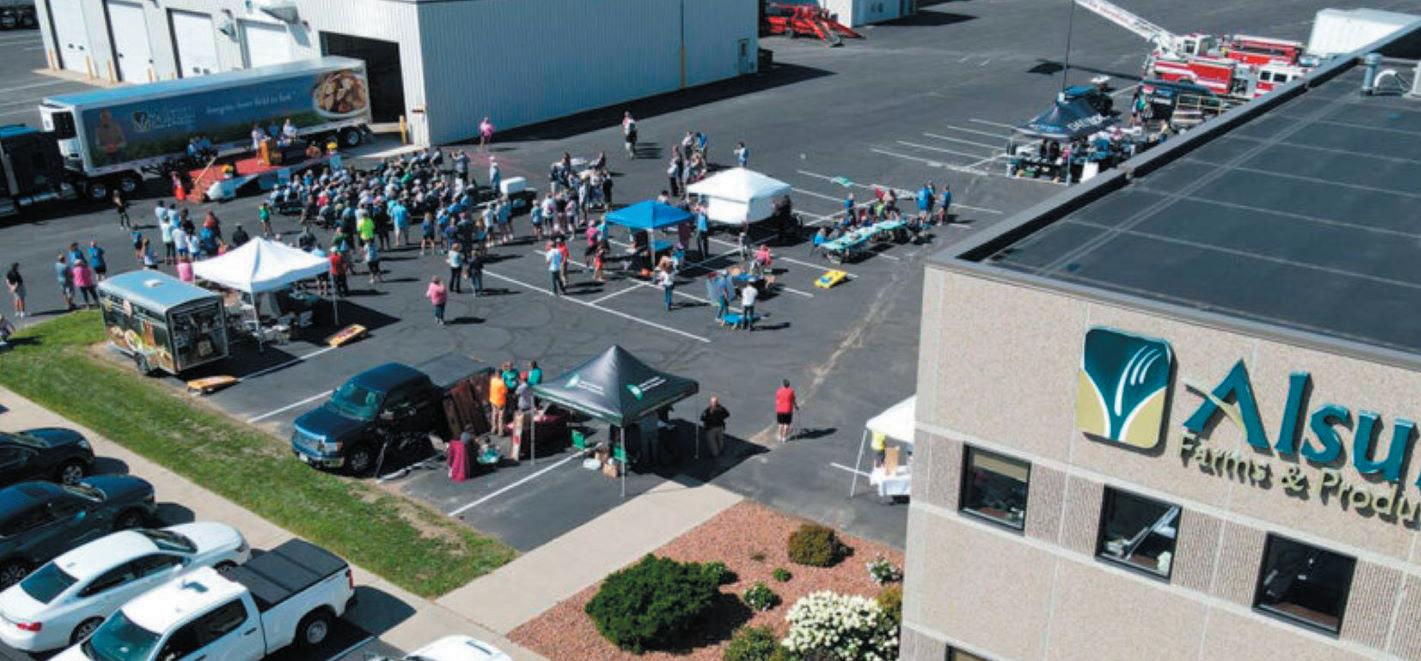
On Friday, registered guests enjoyed one of three free guided tours of Alsum Farms & Produce’s production facility. The well-attended tours ran at 8 a.m., 9:30 a.m. and 11 a.m., with cake and refreshments served afterward.
The 50th anniversary community
celebration continued Saturday with Alsum’s 6th Annual Tater Trot 5k Family Run and 2-Mile Walk.
The Tater Trot hosted 140 runners and walkers raising a record $14,000 to benefit seven Wisconsin FFA chapters. The Top 3 Male and Top 3 Female 5k runners were awarded in two age categories: 17 and under, and 18 years and older.
“Alsum Farms & Produce was elated to host the 6th Annual Tater Trot 5k to help support local FFA chapters and provide a unique opportunity to learn about the
RIght: Three-year-old Easton Shoup of Randolph, Wisconsin, was thrilled to meet Spudly at the Alsum Farms & Produce 50th anniversary celebration, all while clutching his bag of Wisconsin Home Grown Potato Chips.
nutritional and economic benefits of Wisconsin potatoes,” says Alsum’s Nikki Jedlowski, Tater Trot 5k event coordinator.
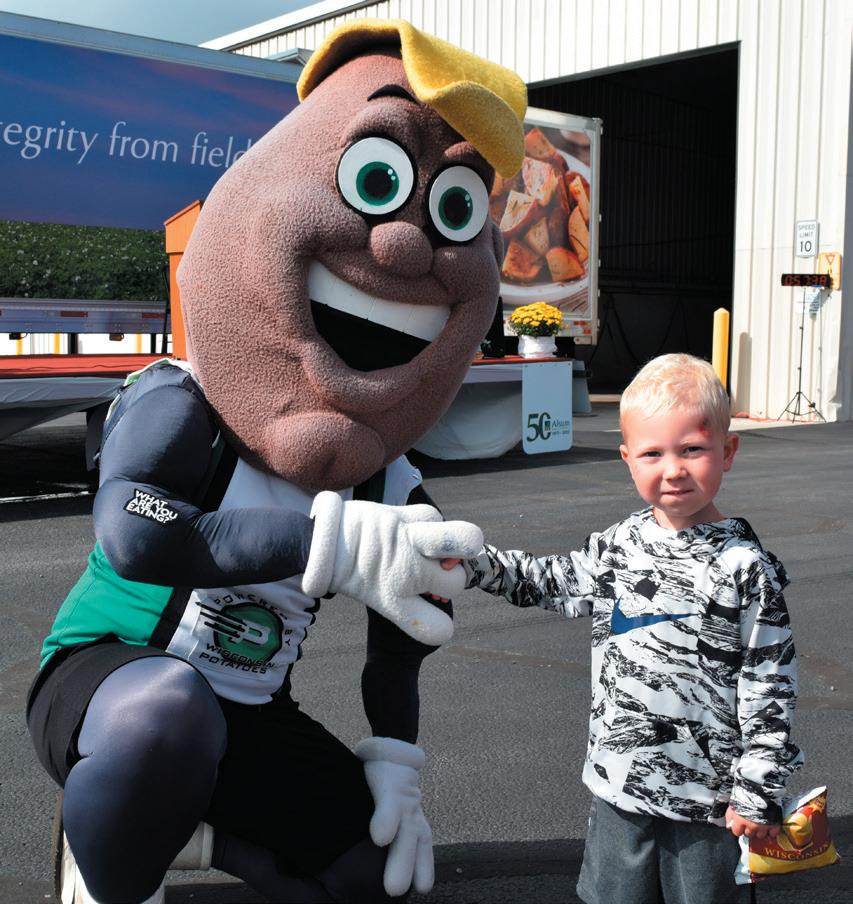 Above: A drone photo shows the Aslum Farms & Produce 50th anniversary celebration, August 11-12, in Friesland, Wisconsin.
continued on pg. 42 41 BC�T September
Alsum Farms & Produce Celebrates 50 Years in Style. . . continued from pg. 41
HEALTHY, FLAVORFUL & FRESH
“Potatoes fuel performance, and the Tater Trot 5k promotes the healthy, flavorful and fresh attributes of the spud,” she adds, “targeting everyday athletes to perform at their best and fuel their active lifestyles.”
Whether or not they participated in the Tater Trot, 50th anniversary guests had a chance to shop the farm fresh produce market, stroll through vendor and educational booths run by local FFA chapters, and enjoy a brat and a Pepsi from the 95.3 WBEV Beaver Dam radio station at the Friesland-based location.
The Wisconsin Potato & Vegetable Growers Association set up a tent at the celebration where visitors could meet the Association’s mascot, Spudly, and talk to Spudmobile Education and Outreach Administrator George Neuber.
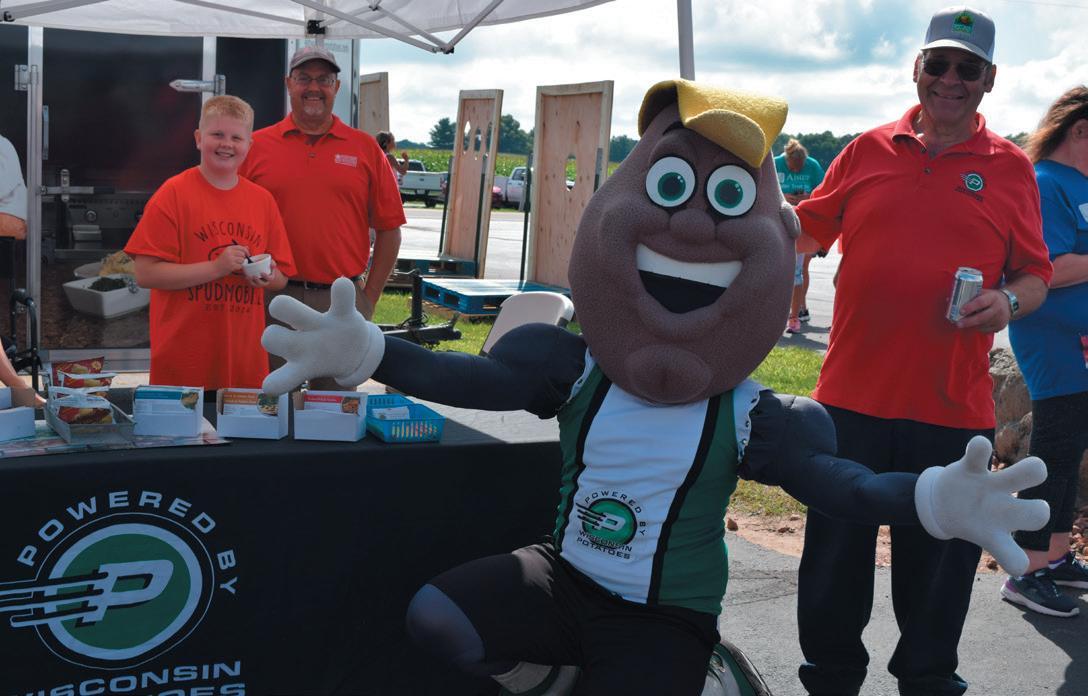

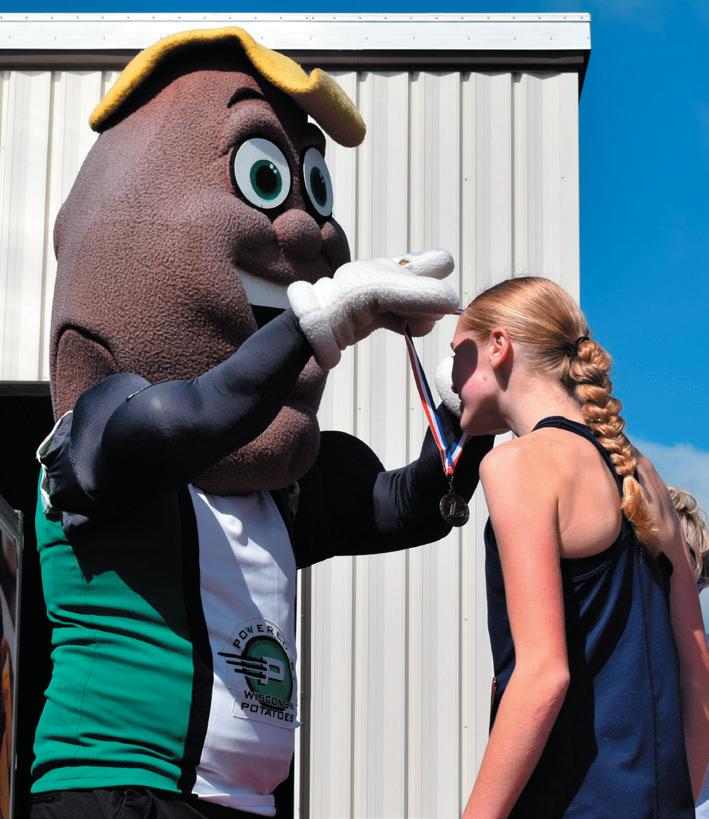
After the run/walk concluded, Larry Alsum, president and chief executive officer of Alsum Farms & Produce,
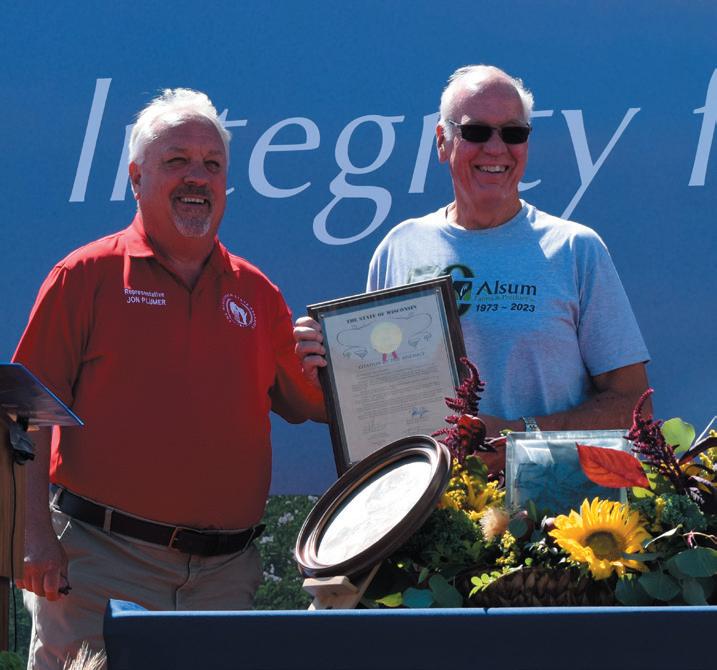
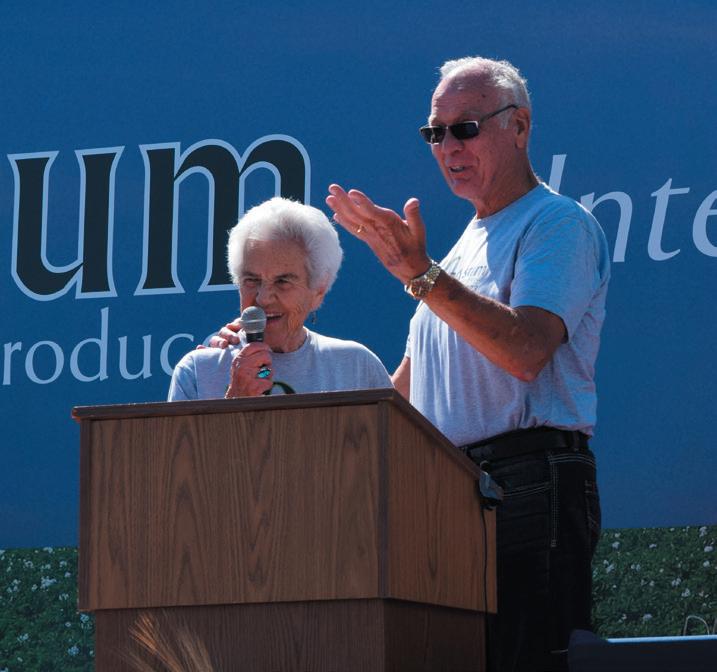
 During a short program recognizing Glenn Alsum’s family as well as grower and industry partners, Larry Alsum (right), president and chief executive officer of Alsum Farms & Produce, welcomed Lois Alsum (left), Glenn’s mother and Alsum’s first employee, onto the stage.
Wisconsin State Rep. Jon Plumer (left) presented Larry Alsum with a Certificate of Citation by the Assembly for hard work, integrity and community involvement during Alsum Farms & Produce’s 50 years in business.
Spudly hangs a medal around the neck of Colin Smith, the First Place Men’s 18 Years and Older winner of the Tater Trot 5k with a time of 17 minutes, 11 seconds.
Spudly presents a medal to First Place Women’s 17 Years and Under Tater Trot 5k winner Jena Norenberg who finished with a time of 23 minutes, 34 seconds.
Top Left: From left to right, Melissa, Roxann and Zack Johnson were proud participants in Alsum’s 6th Annual Tater Trot 5k Family Run and 2-Mile Walk.
During a short program recognizing Glenn Alsum’s family as well as grower and industry partners, Larry Alsum (right), president and chief executive officer of Alsum Farms & Produce, welcomed Lois Alsum (left), Glenn’s mother and Alsum’s first employee, onto the stage.
Wisconsin State Rep. Jon Plumer (left) presented Larry Alsum with a Certificate of Citation by the Assembly for hard work, integrity and community involvement during Alsum Farms & Produce’s 50 years in business.
Spudly hangs a medal around the neck of Colin Smith, the First Place Men’s 18 Years and Older winner of the Tater Trot 5k with a time of 17 minutes, 11 seconds.
Spudly presents a medal to First Place Women’s 17 Years and Under Tater Trot 5k winner Jena Norenberg who finished with a time of 23 minutes, 34 seconds.
Top Left: From left to right, Melissa, Roxann and Zack Johnson were proud participants in Alsum’s 6th Annual Tater Trot 5k Family Run and 2-Mile Walk.
42 BC�T September
Top Right: Manning the Wisconsin Potato & Vegetable Growers Association (WPVGA) tent at the 50th anniversary celebration were, from left to right, Mason Neuber, Dr. Russ Groves, WPVGA mascot, Spudly, and Spudmobile Education and Outreach Administrator George Neuber.
and his family led a short program of reflection to recognize founder Glenn Alsum’s family as well as grower and industry partners who have been integral to the operation’s success over the past five decades.
Larry then led a coach bus tour of the Alsum potato and pumpkin farms, in Grand Marsh, where consumers asked many great questions and were curious about how potatoes and pumpkins are grown and harvested.
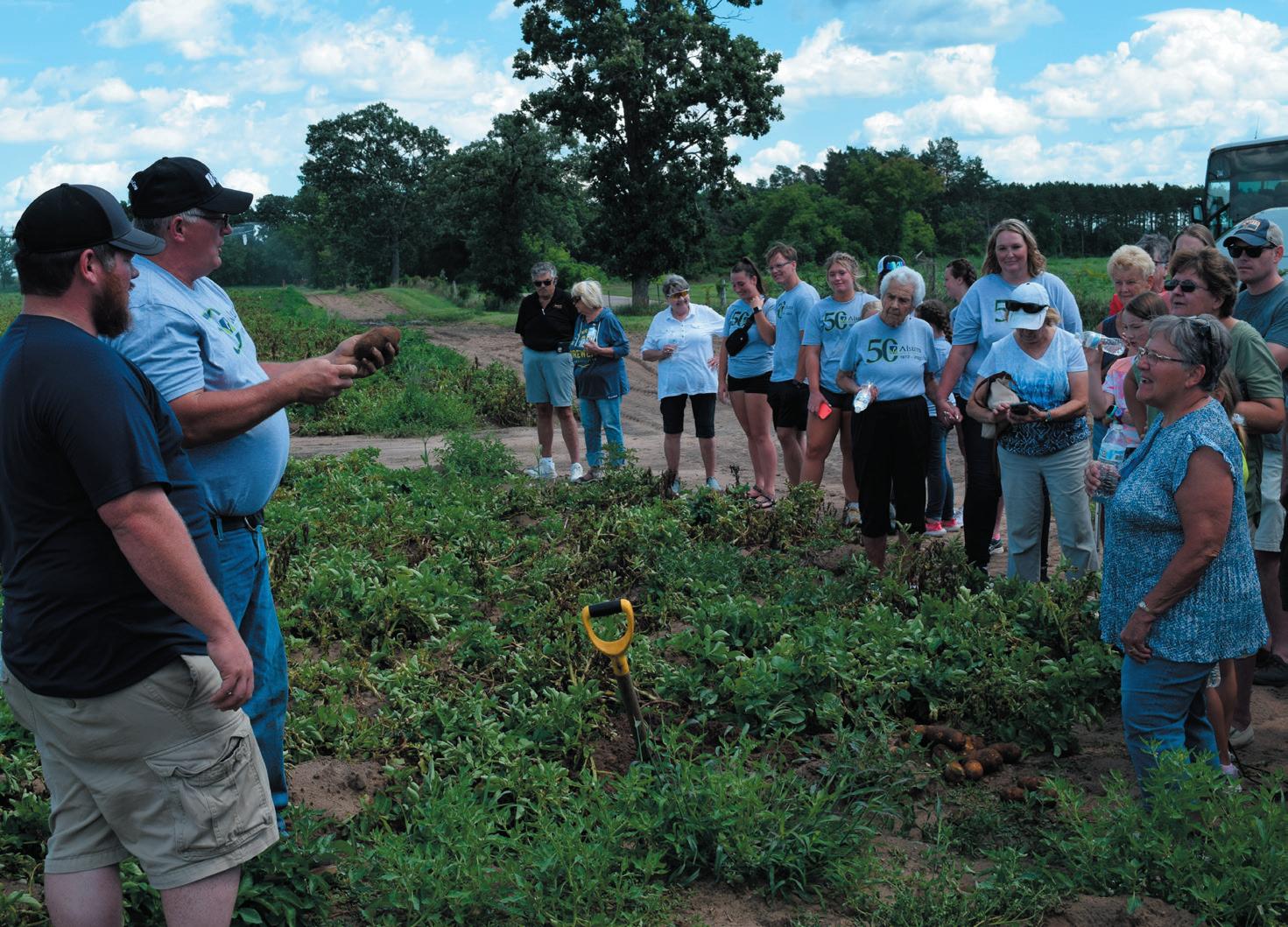
This Alsum community event celebrated the company’s 50 years in business of providing quality potatoes, onions, and farm fresh produce, and showcased the spud’s many healthy attributes.
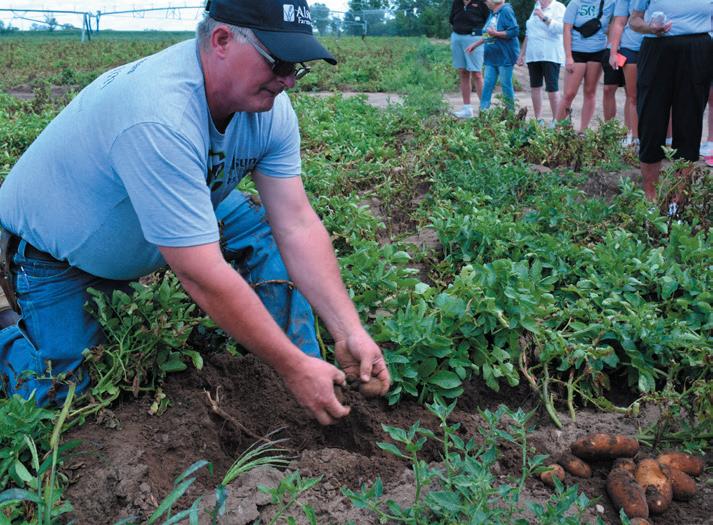
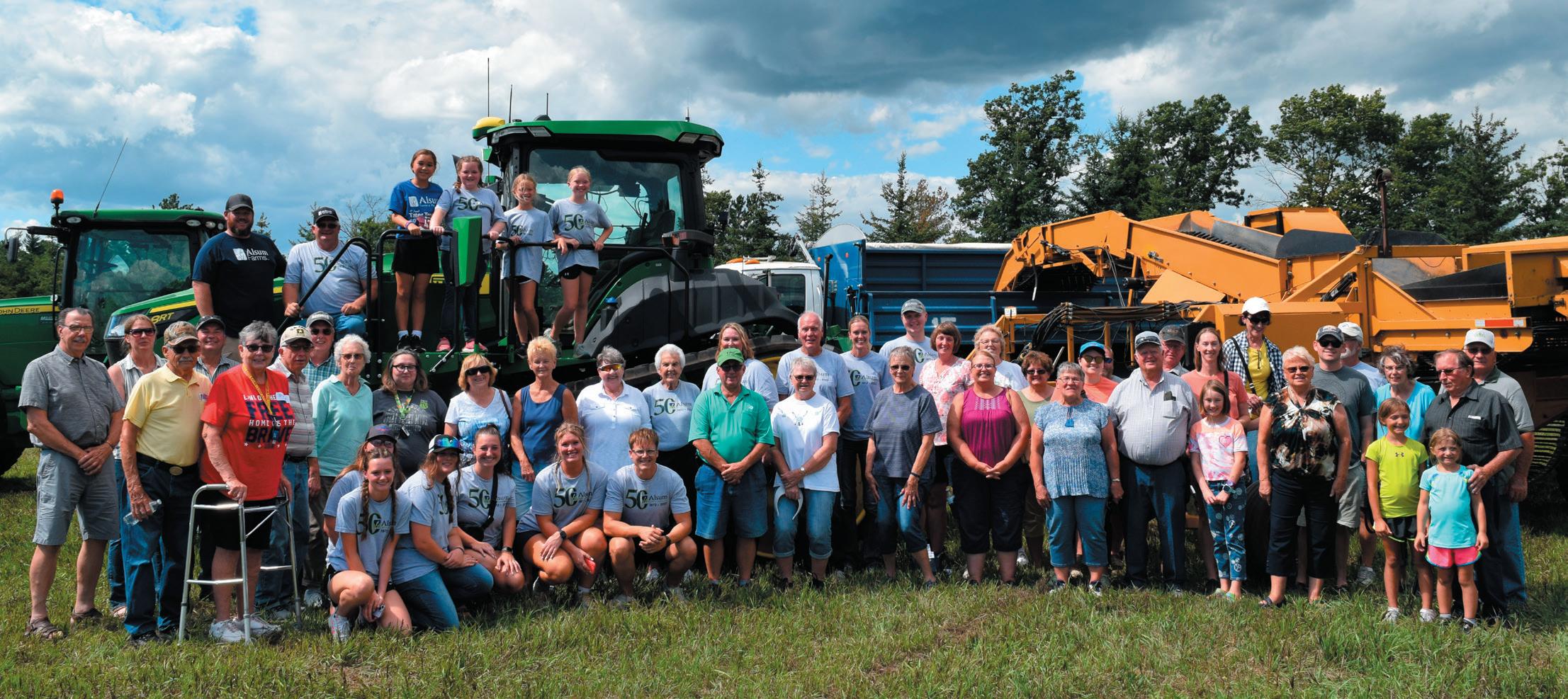
The year-long 50th anniversary theme, “Growing Goodness,” speaks to how Alsum Farms & Produce has enriched the lives of associates, customers, and consumers over the past five decades.
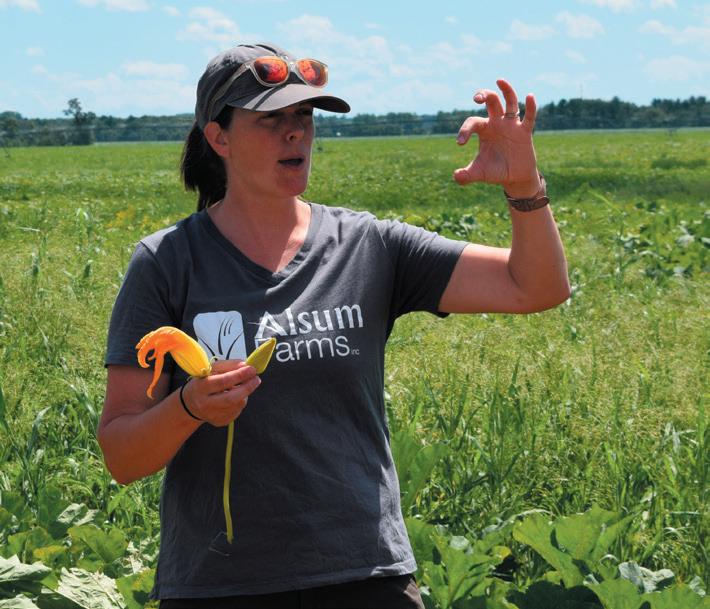 A nice crowd gathered for the coach bus tour of Alsum’s potato and pumpkin farms, in Grand Marsh.
Megan Wallendal of Alsum Farms & Produce showed guests how pumpkins are grown, in Grand Marsh, during a farm tour on Saturday. She explained that flowers from the male pumpkin plants grow upward, while female plants grow along the ground and produce bulbs that become the pumpkins.
Left & Above: Joe Huber and his son, Jeff, are farm managers at Alsum’s Grand Marsh location. Joe dug out some Goldrush potatoes for visitors to see during the farm tour on Saturday.
A nice crowd gathered for the coach bus tour of Alsum’s potato and pumpkin farms, in Grand Marsh.
Megan Wallendal of Alsum Farms & Produce showed guests how pumpkins are grown, in Grand Marsh, during a farm tour on Saturday. She explained that flowers from the male pumpkin plants grow upward, while female plants grow along the ground and produce bulbs that become the pumpkins.
Left & Above: Joe Huber and his son, Jeff, are farm managers at Alsum’s Grand Marsh location. Joe dug out some Goldrush potatoes for visitors to see during the farm tour on Saturday.
43 BC�T September
New Products
Pyure Debuts Controlled Air & Surface Purification
Unit works with new and existing HVAC systems to mitigate pathogens and air contaminants
Turn your heating, ventilation, and air conditioning (HVAC) system into a space purifying powerhouse. The Pyure MVP14™ controlled air and surface purification solution uses Pyure Dynamic Protection’s patentprotected technology, mimicking how sunlight sanitizes the outdoor environment by safely generating the same natural cleansers indoors.
These natural cleansers disperse and treat the entire space, purifying the air and cleaning all the surfaces the air touches.
Treat the air and surface problems that affect business, from pathogen mitigation to air contaminants, odors, and smoke from forest fires and cigarettes. With sensor-driven and customized controls, the system
responds to real-time data, delivering cleaning power when and where needed.
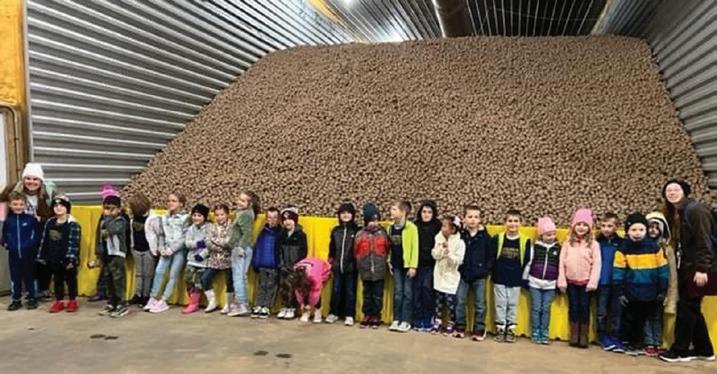
The MVP14 integrates with new and existing air-handling systems. Specify the system into a new build or add it to an existing system. With minimal size, the device is ideal for smaller spaces. It is installed in-duct and inline with the HVAC system, and one unit can treat up to 75,000 square feet of space.
This solution offers simple installation and upkeep. The device has little impact on the air handling system: minimal increase in airflow resistance, virtually no extra wear and tear on the HVAC system, and only a marginal impact on energy consumption. Only low frequency maintenance is required.
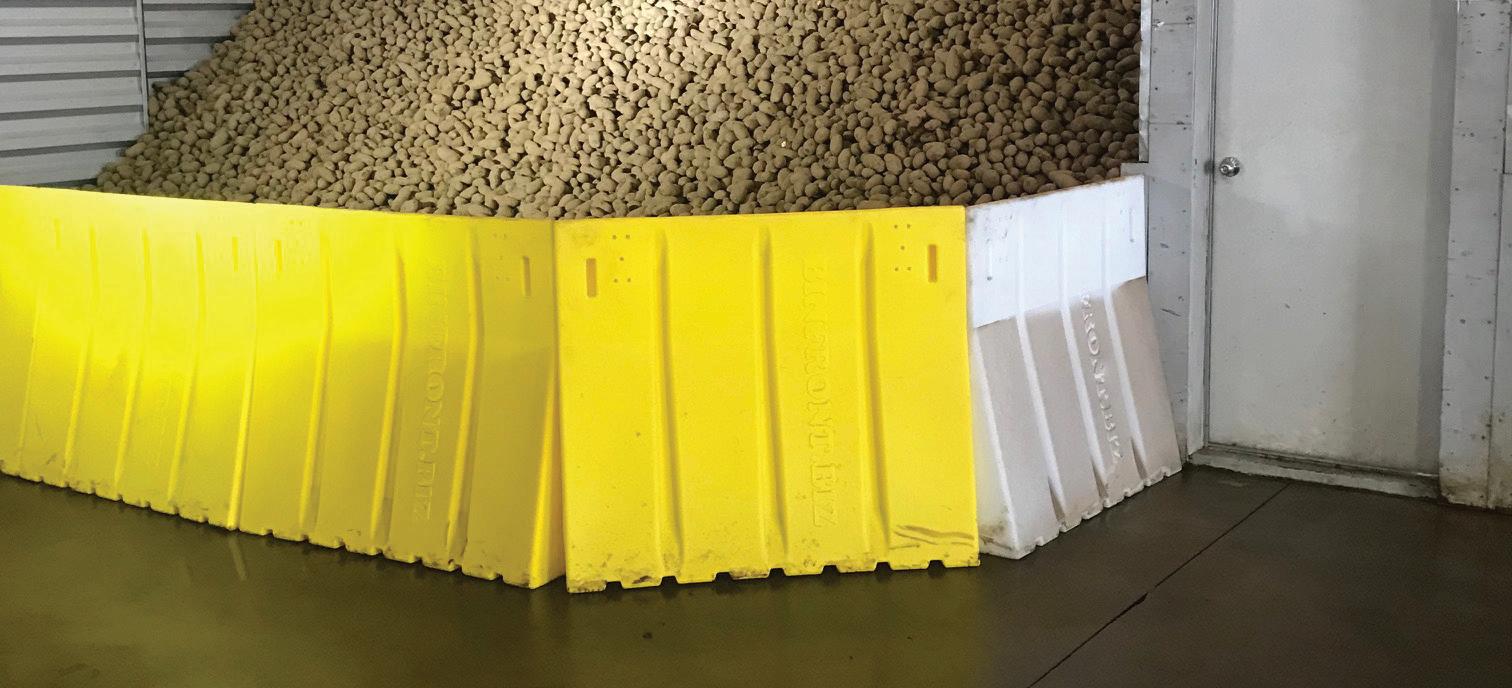
The MVP14 is proven in the real world to solve air quality concerns. Ask us for more details, and let’s discuss a solution tailored to your needs.
For more information, contact Melissa Richardson, Pyure Dynamic Protection, mrichardson@pyure.com, 877-735-3701, https://pyure.com.
Contact Pete Schroeder • 715-623-2689 Email: farm@sbfi.biz • Web: https://binfront.biz/ BINFRONT BARRIERS …a better barrier IDEAL FOR BULK STORAGE Barrier system walls off potatoes in bulk storage. BinFronts can be placed in tight circumferences for corners or circles, eliminating the burden of ordering corner pieces. • Interlocking Design for Stacking • Angled Barrier Ends Allow for 90-Degree Turns Using Three Barriers WHEN THERE’S A NEED FOR SEPARATION. 44 BC�T September
Currie Offers Ozone Generator
Ozone kills bacteria on contact and is an economical way of controlling rot in storage
Ozone is a proven, powerful way to effectively and quickly eliminate microorganisms, killing viruses and bacteria, including E. coli (Escherichia coli) and Listeria (Listeria monocytogenes).
It can be used to control biological growth of unwanted organisms in products and equipment used in food processing industries.
Ozone Solutions’ industry-leading technology is particularly suited for the food industry due to its ability to disinfect microorganisms without adding chemical by-products to the food being treated, food processing water, or atmosphere in which food is stored.
Ozone reverts to oxygen, leaving no harmful chemical residuals or altering the taste of treated food.
It controls specific storage rot, such as Fusarium, that comes in on potato tubers from warm, wet soils. Fusarium continues to grow and decay tubers in storage, contacting healthy potatoes and causing more rot.
Ozone stops this, as well as soft rot caused by bacteria, pythium leak—a fungal infection resulting from leaking material and infecting healthy potatoes, and every type of storage pathogen. Ozone reduces evaporative shrink in half.
Late blight-infected tubers can inadvertently be brought into storage without having any external symptoms and begin to decay quickly, causing huge losses. Ozone kills late blight.
Ozone Benefits for Food Processing/ Storage
• Longer shelf life
• Water and energy efficiency
• Lower cost in wastewater disposal
• Airborne microbiological and odor control
• Ethylene removal
• Approved by the U.S. Food and Drug Administration, U.S. Department of Agriculture and supported by the National Organic Program
• Environmentally friendly
• 3,000 times more germicidal than chlorine
• No harmful chemical residual that requires a final rinse
• Instant pathogen destruction
• Salmonella enteritidis
• E. coli O157:H7
• Listeria monocytogenes
• Shigella dysenteriae
• Micrococcus aureus
• Clostriduim botulinum
• Mycobacterium tuberculosis
• Bacillus anthracis
• Streptococcus sp
• Molds
• Botrytis
• Rhizopus
Ozone has become amazingly affordable over the past 20 years, to the tune of a fivefold price decrease. When Currie Chemical Company (CCC) started selling ozone generators, back in 1999, the company marketed a Corona Discharge Machine that would use air to generate 3 grams of ozone an hour for $8,000.
CCC now sells a Plasma Block Oxygen Fed Ozone Generator that makes 30 grams of ozone an hour for around $12,000.
In 1999, ozone cost $2,500 per gram, and in 2018, $500 per gram, a fivefold decrease in price. How many things in your business have gone down in price by five times?
Prices vary based on application, brand and configuration. For more information, contact Noel Currie, Currie Chemical Company,
• Grower-owned operation
• Operation packs many varieties of potatoes year-round for retailers, wholesalers & foodservice companies
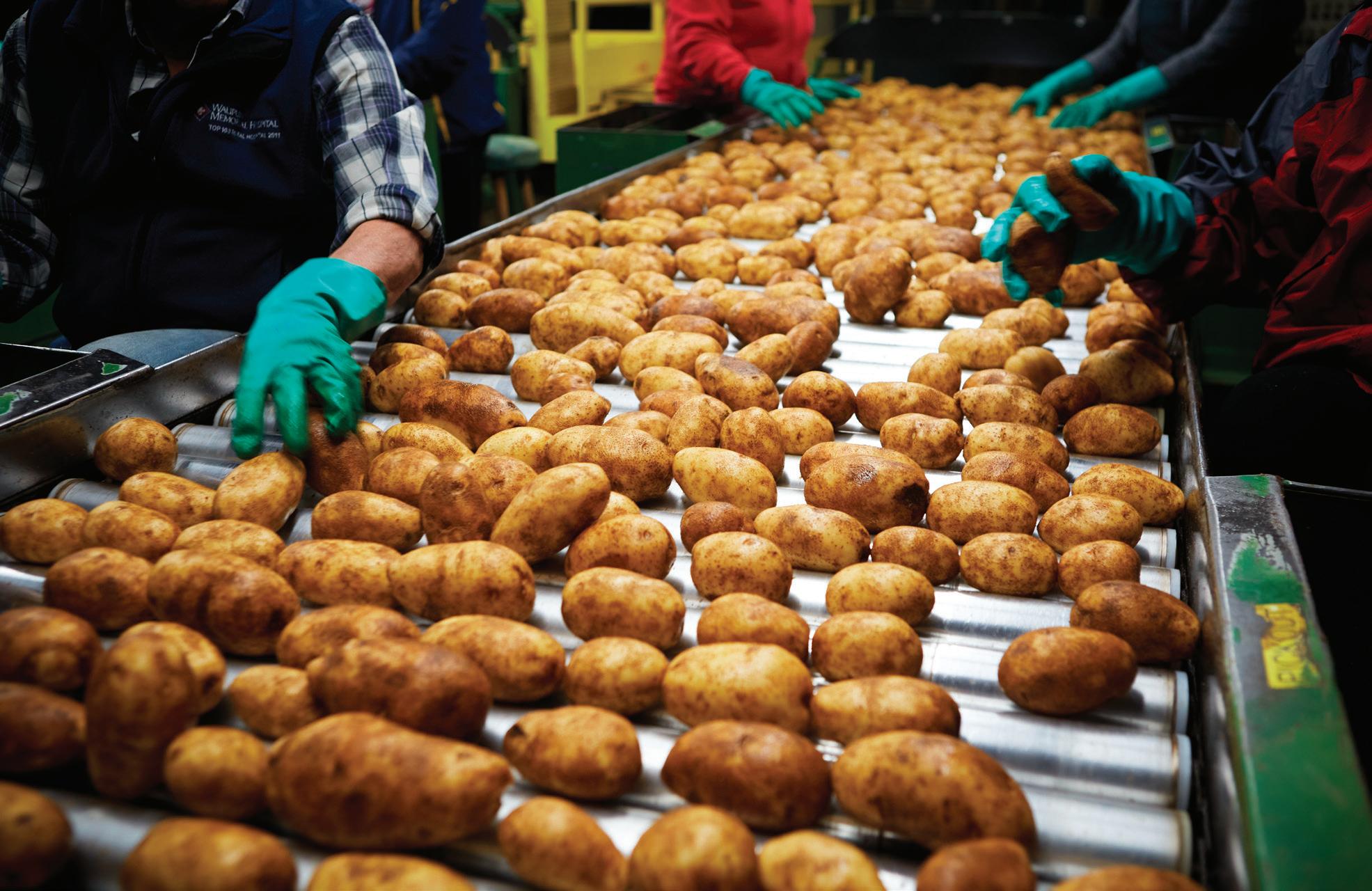
• Scoop-up purchasing
• Pool participation
• Multiple grading options
• Temperature & humidity controlled storage available
• Direct marketing
For more details on how to grow with us, contact Mike Hayes at 715-572-6366 or mike.hayes@wfc.ag
Come Grow With Us! Eagle River Seed Farm Seed Operations Wysocki Produce Farm Farming Operations Paragon Potato Farms Plant Operations 45 BC�T September
Potatoes USA News
Wisconsin Hosts Potatoes USA Summer Meeting
Chairman of the Board Mike Carter helps plan the proceedings in Milwaukee
Potatoes USA held its 2023 Administrative Committee Summer Meeting at the Hyatt Regency in Milwaukee, August 7-9, as hosted by Wisconsin’s own Mike Carter, presiding Chairman of the Board.
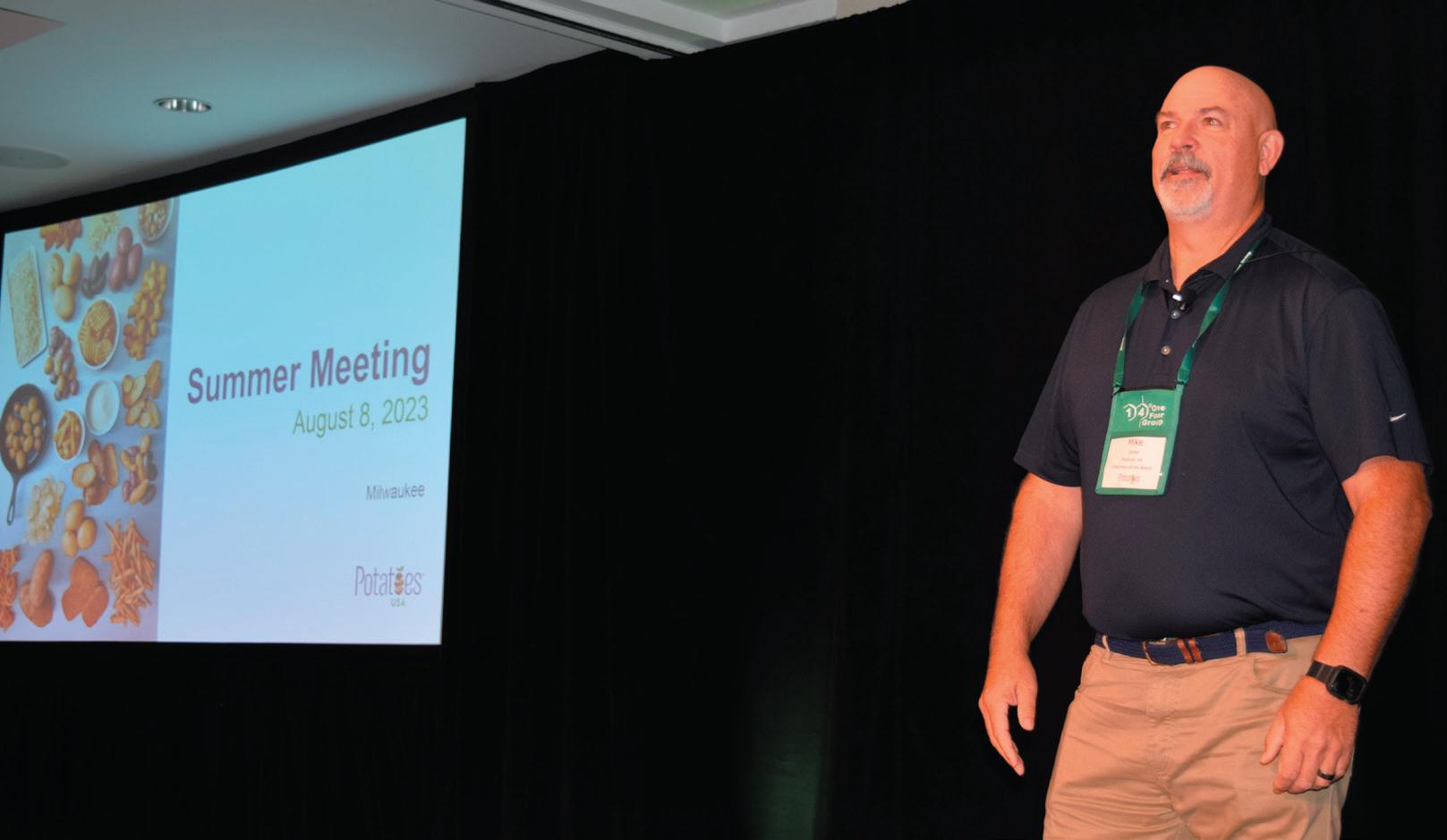

Carter is the chief executive officer (CEO) of Bushmans’ Inc., in Rosholt.
Potatoes USA Executive Committee meetings took place Monday, followed by “Cultivating Presentation Skills, A Workshop for Growers.”
Shuttle buses then took meeting attendees to the State Fair where they visited the Wisconsin Potato Growers Auxiliary booth and enjoyed loaded baked potatoes grown in the Badger State. The Auxiliary’s largest fundraiser of the year coincided beautifully with the Potatoes USA Summer Meeting.
After a nice evening at the fair, Potatoes USA members and industry peers were back in session Tuesday, including Domestic and International Marketing committee reports and dialogue, as well as presentations from the Research, Industry Outreach, and Finance and Policy committees.
Left:
46 BC�T September
Presiding Potatoes USA Chairman of the Board Mike Carter says he was honored to host the 2023 Summer Meeting in Milwaukee, August 7-9, marking the first time the new Administrative Committee met after the Annual Meeting.
Potatoes USA welcomed guests to a reception at the Milwaukee Brewers game Tuesday night at 6 p.m., where they witnessed an extra innings affair between the home team and the Colorado Rockies.
With the Potatoes USA main office being in Denver, it was another nice coincidence the two teams played each other at the same time as the Winter Meeting.
YOUNG FARMERS RECEPTION
The game also included a Young Farmers Reception in Suite 29 of American Family Field during the game, where growers could connect with like-minded peers.
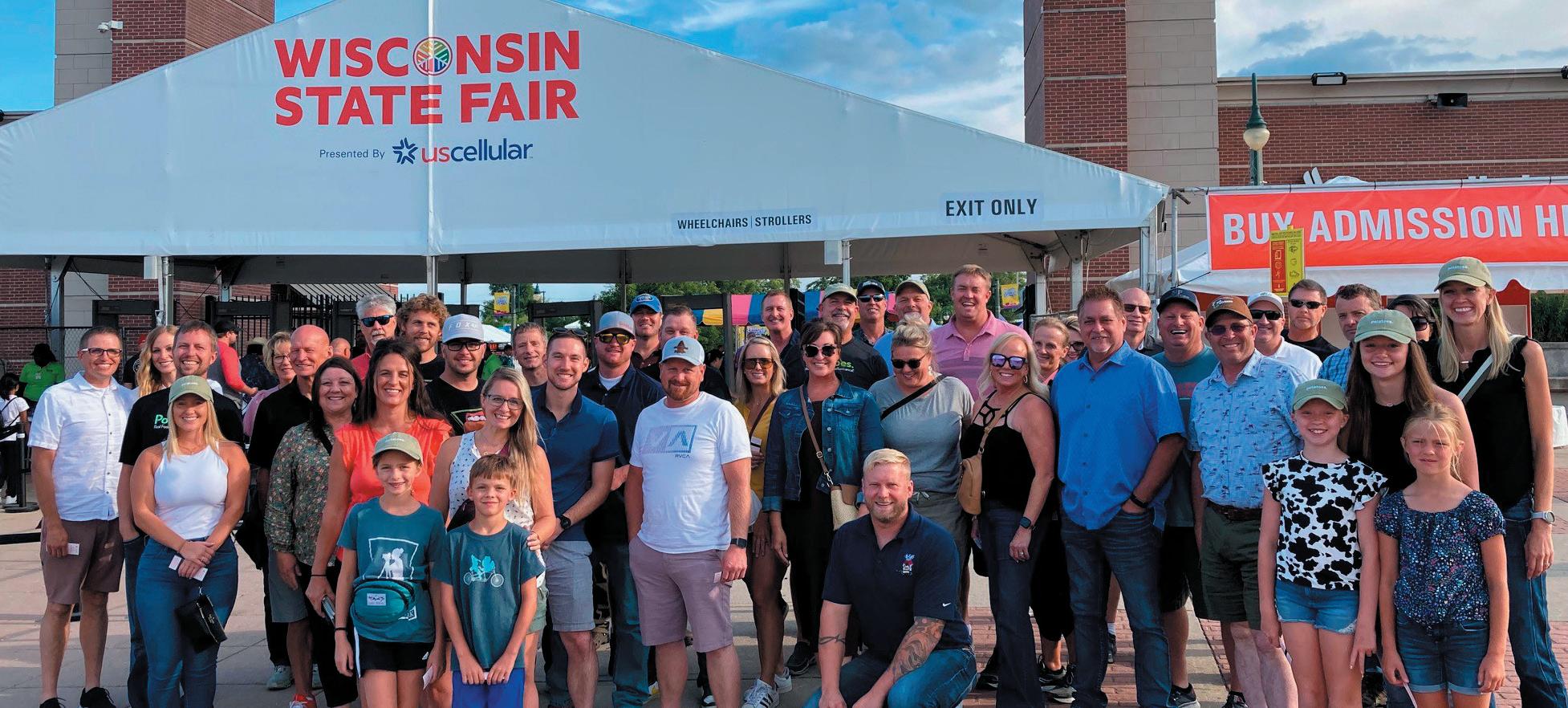
Potatoes USA provided snacks, drinks and a gift for those who joined them in celebrating the spirit of agriculture and camaraderie. Unfortunately for Brewers fans, the Rockies took the game in the 10th inning by a score of 7-3.
Bright and early, at 6:15 a.m., Wednesday was a Team Potato Workout in collaboration with Brew Fitness Milwaukee, providing a way to refuel for the day’s presentations.
United Potato Growers of America President and CEO Mark Klompien gave an industry update, and
Kam Quarles did the honors for the National Potato Council, of which he is the CEO.
The Winter Meeting ended with an Administrative Committee Meeting and question-and-answer session.
 Above: Potatoes USA Summer Meeting committee members and attendees were treated to the Wisconsin State Fair, where they gathered at the gate for a photo opportunity.
PH: 218-346-3357 • Toll Free: 888-884-8070 47418 US Hwy 10 Perham, MN 56573 • www.btuvent.com continued on pg. 48 47 BC�T September
Milwaukee rolled out the carpet for the national marketing arm of the potato industry, and Potatoes USA committee members and industry professionals responded in turn with a nice turnout, informational meetings, and a lot of fun.
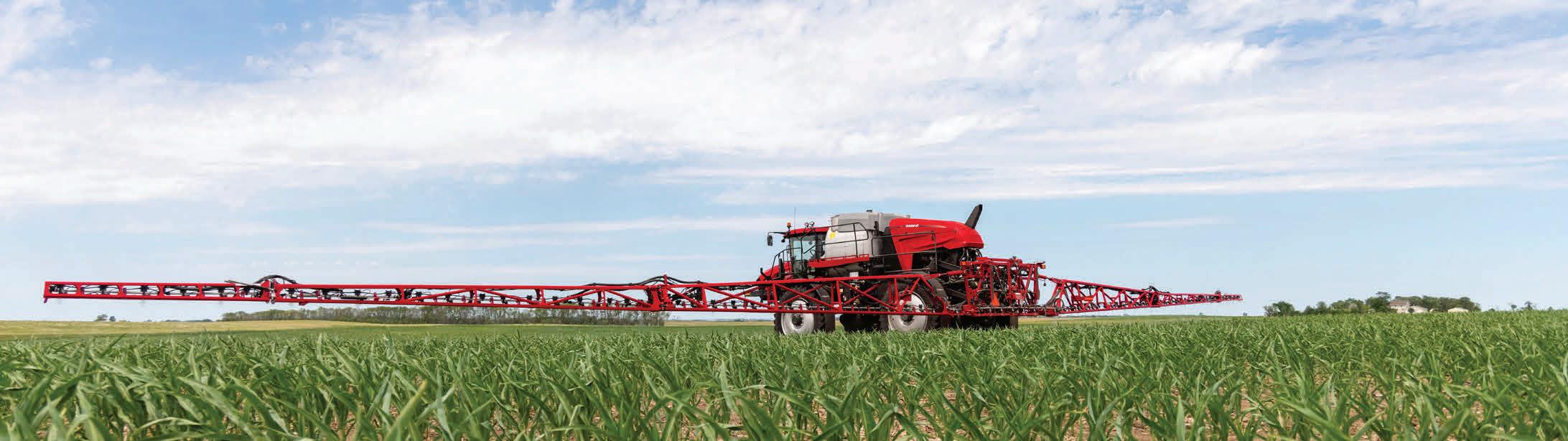
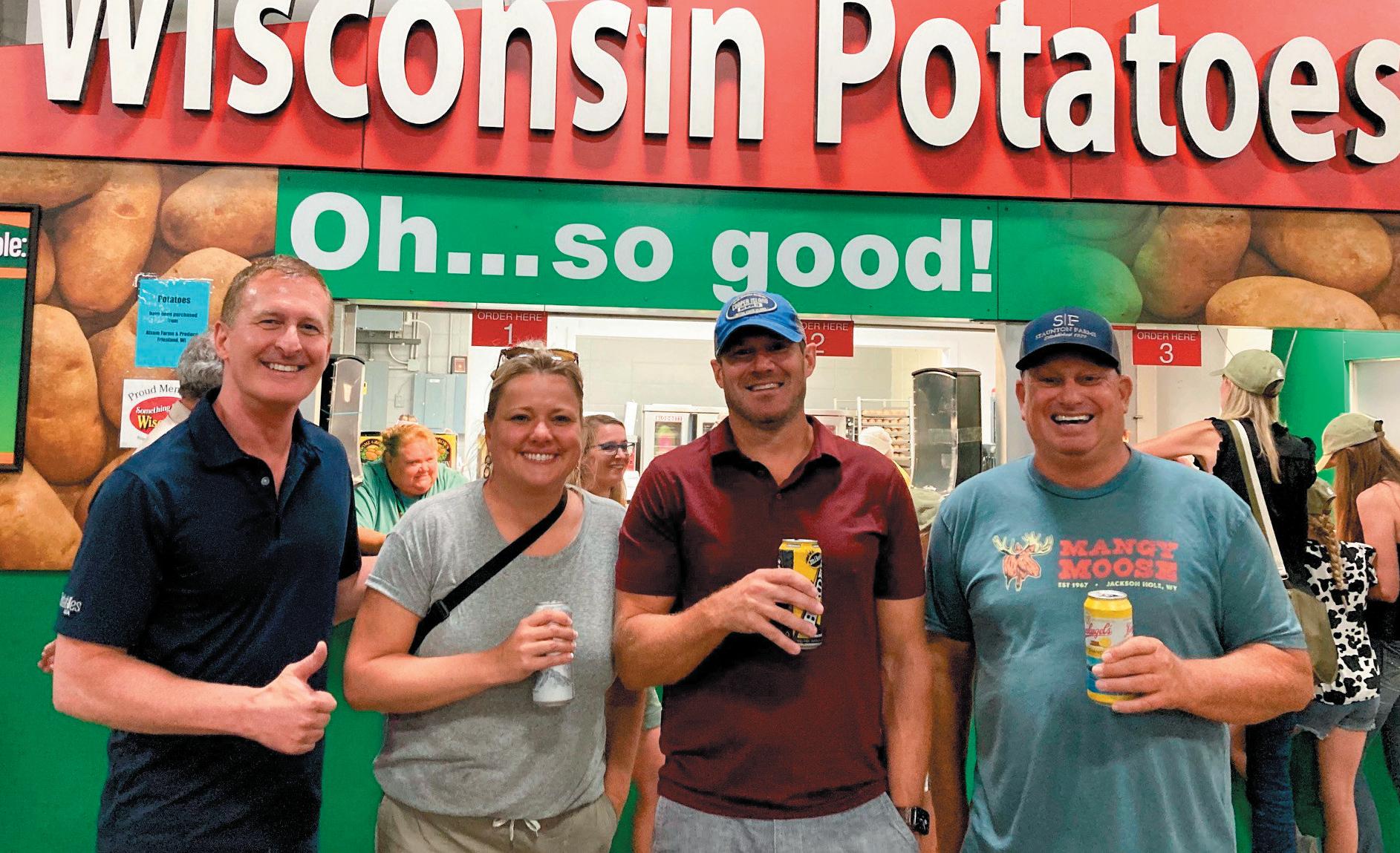
Above: Once inside the State Fair, Potatoes USA Summer Meeting attendees visited the Wisconsin Potato Growers Auxiliary booth and enjoyed loaded baked potatoes grown in the Badger State. Facing the camera from left to right in the first photo are Mike and Ali Carter, Shelley Olsen and Chris Voigt, the latter two from the state of Washington. Posing in front of the baked potato booth in the second photo, from left to right, are Potatoes USA CEO Blair Richardson, and board/committee members Leah Halverson, Jason Davenport, and Ed Staunton.
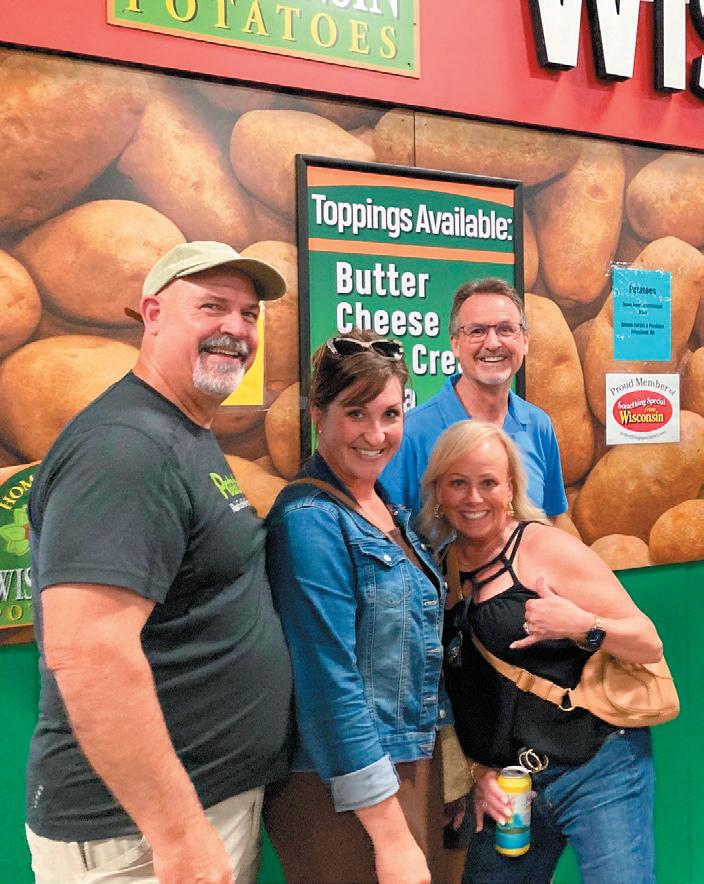
Potatoes USA News. . . continued from pg. 47
48 BC�T September
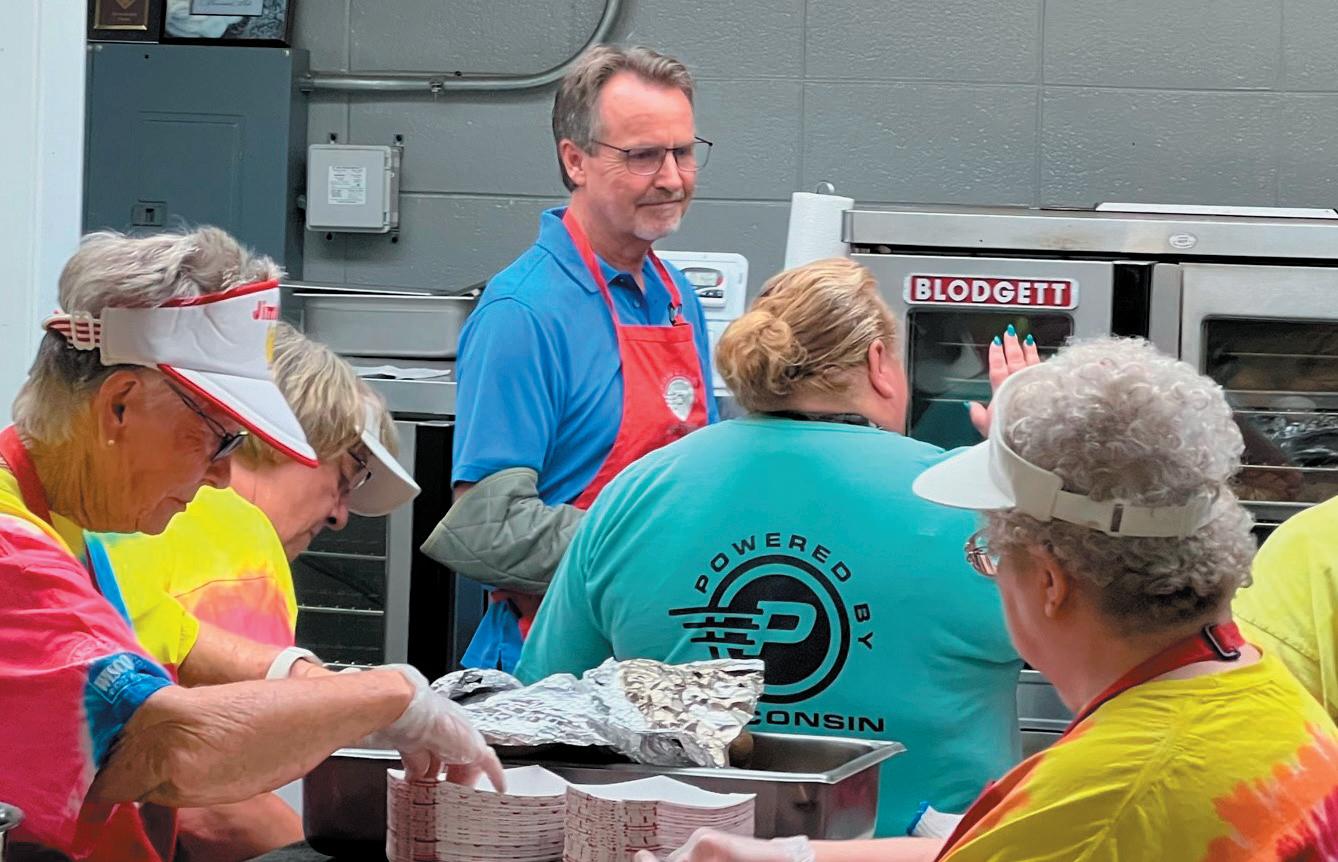
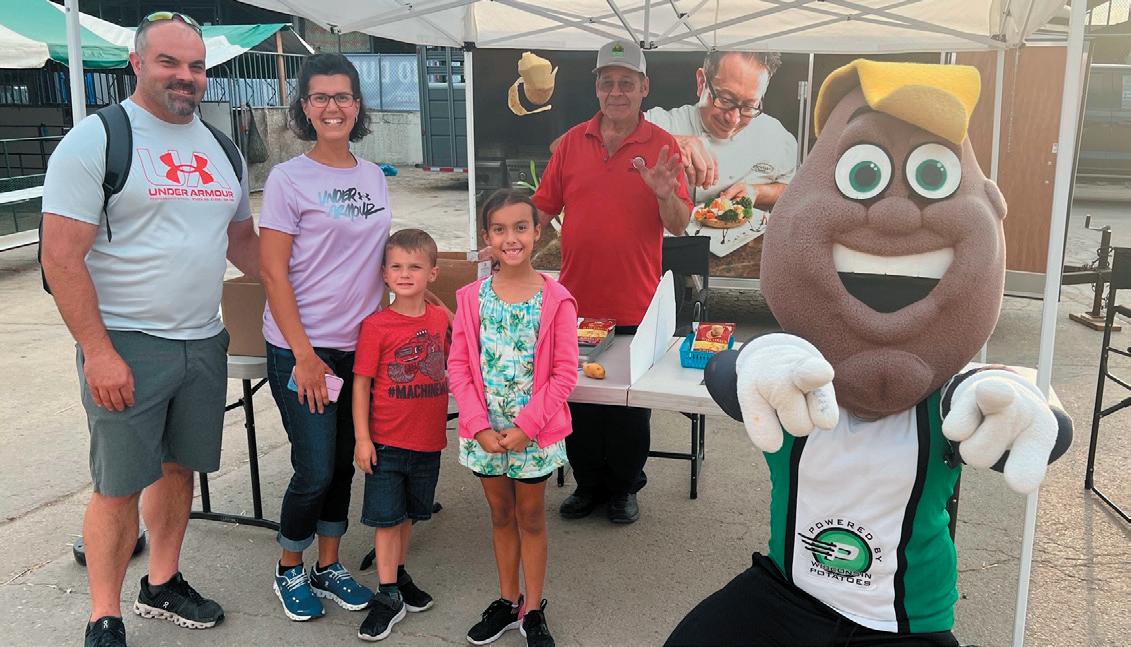
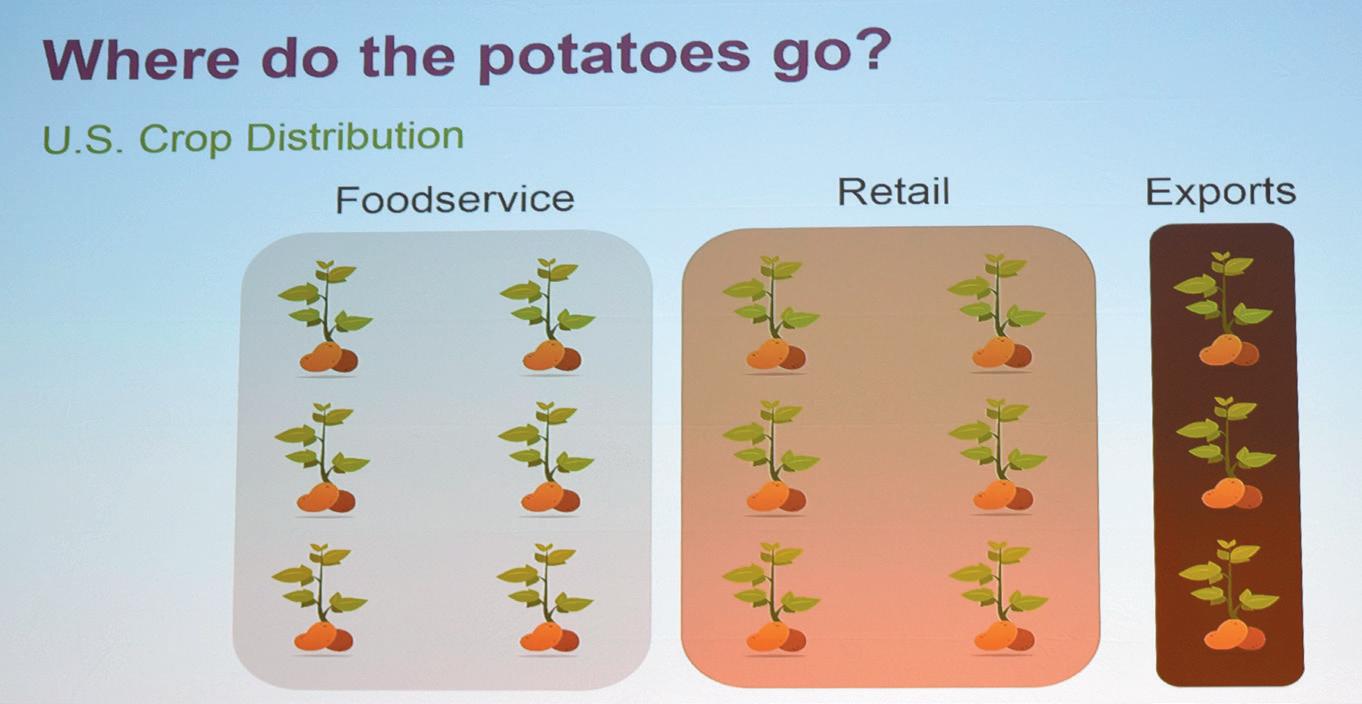
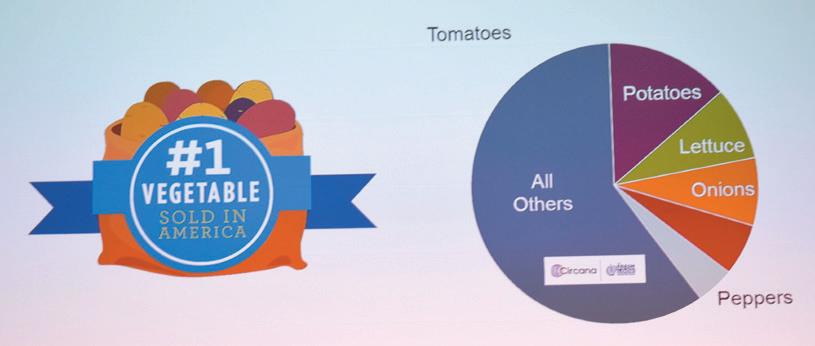
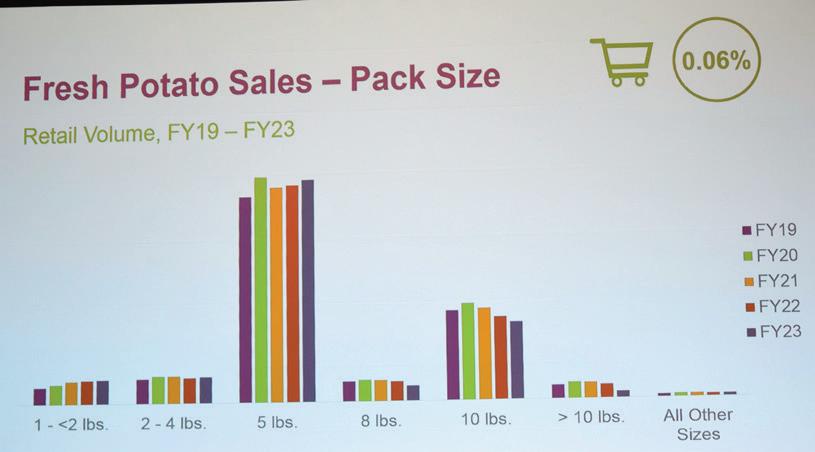
 Above: From left to right, Michael and Melissa Mach (Mike is the son of Antigo potato grower, Ron Mach) and their children, Caleb and Grace, visited the Wisconsin Potato & Vegetable Growers Association (WPVGA) tent at the State Fair where they met Spudmobile Education and Outreach Administrator George Neuber and WPVGA mascot, Spudly.
As part of her Domestic Marketing Committee report, Potatoes USA Chief Marketing Officer Kim Breshears shared screens illustrating U.S. potato crop distribution, retail market share, and fresh potato retail sales by package size, among many others.
Above: From left to right, Michael and Melissa Mach (Mike is the son of Antigo potato grower, Ron Mach) and their children, Caleb and Grace, visited the Wisconsin Potato & Vegetable Growers Association (WPVGA) tent at the State Fair where they met Spudmobile Education and Outreach Administrator George Neuber and WPVGA mascot, Spudly.
As part of her Domestic Marketing Committee report, Potatoes USA Chief Marketing Officer Kim Breshears shared screens illustrating U.S. potato crop distribution, retail market share, and fresh potato retail sales by package size, among many others.
continued on pg. 50 49 BC�T September
Above: Chris Voigt (far back), executive director of the Washington State Potato Commission, donned an apron and went to work in the Wisconsin Potato Growers Auxiliary baked potato booth at the State Fair.
Your choice of Valley® says it all. You know what it takes to be successful, and water management is too important to entrust to anyone other than Valley. Our commitment to unmatched performance and technological innovation keeps operations like yours thriving.
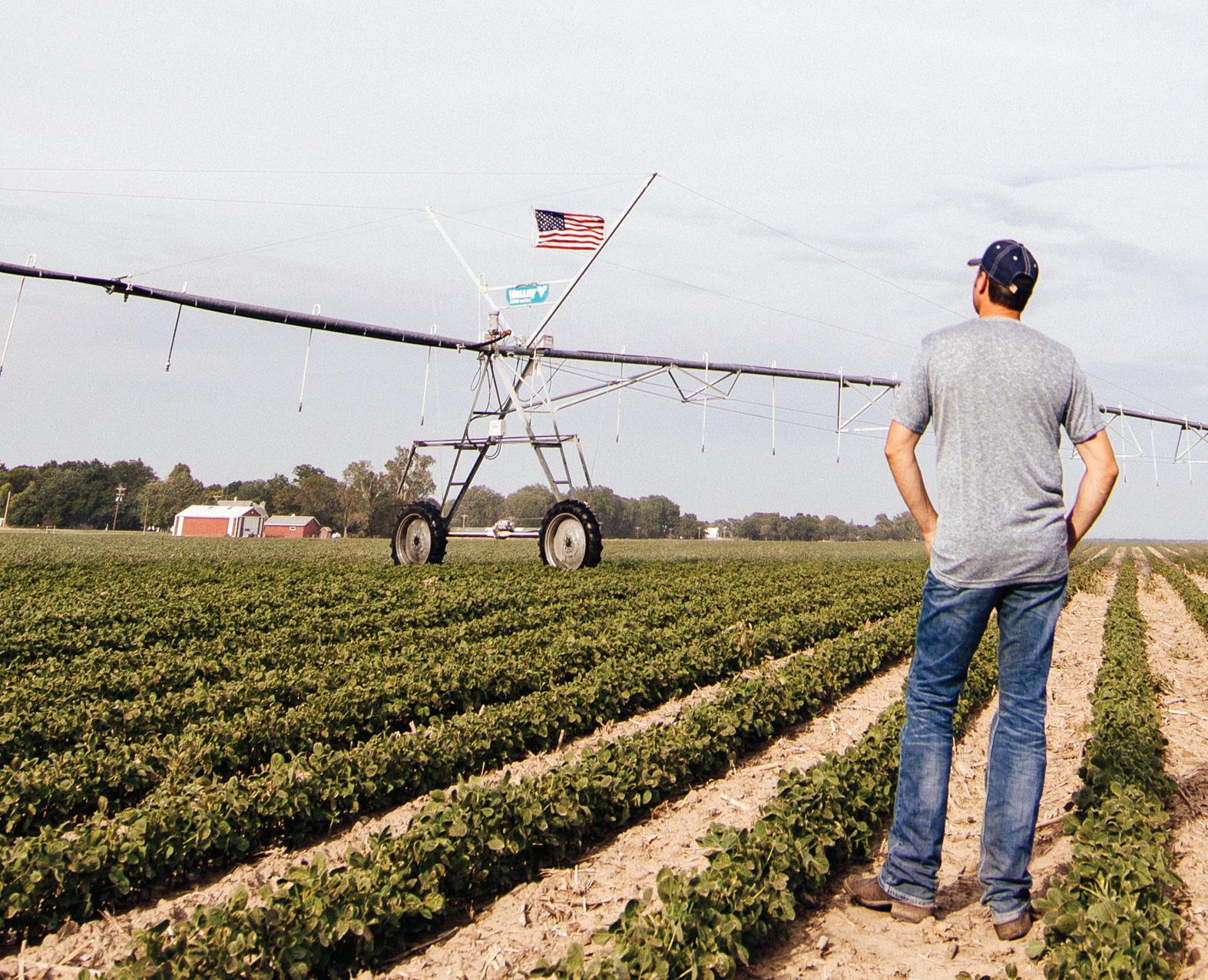


See your Valley dealer for all your irrigation needs.

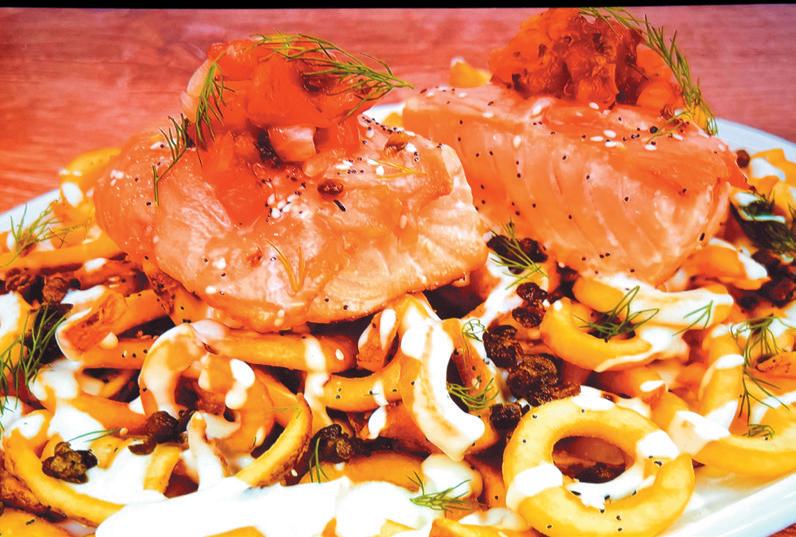
Potatoes USA News. . . continued from pg. 49
Above and Right: From left to right in the first image, R.J. Harvey, Chelsea Gray, Bonnie Johnson, Kim Breshears and Blair Richardson provided a Potatoes USA Industry Outreach Committee report during which Chef Harvey shared this image of loaded potato rings.
valleyirrigation.com CA1117 DEALER LOGO Address | Phone Number | Website suggested font: Arial VALLEY IS... PROOF YOU KNOW WHAT YOU'RE DOING.
Left: National Potato Council CEO Kam Quarles gave an in-depth industry update covering legislative issues and initiatives.
4 COLUMN x 5” 7.708” x 5” MAINTAIN TO SUSTAIN. valleyirrigation.com DA1271 Ensure your irrigation equipment will be ready for the growing season and avoid mid-season breakdowns. Valley® Preventative Maintenance goes beyond Valley machines as we can maintain all pivot brands and provide drive train, electrical, control panel and sprinkler upgrades. VALLEY® PREVENTATIVE MAINTENANCE North Central Irrigation Plainfield, WI: 715-335-6368 • 800-755-0268 Beloit, WI: 608-362-0706 • 800-924-0321 www.valleynci.com 50 BC�T September

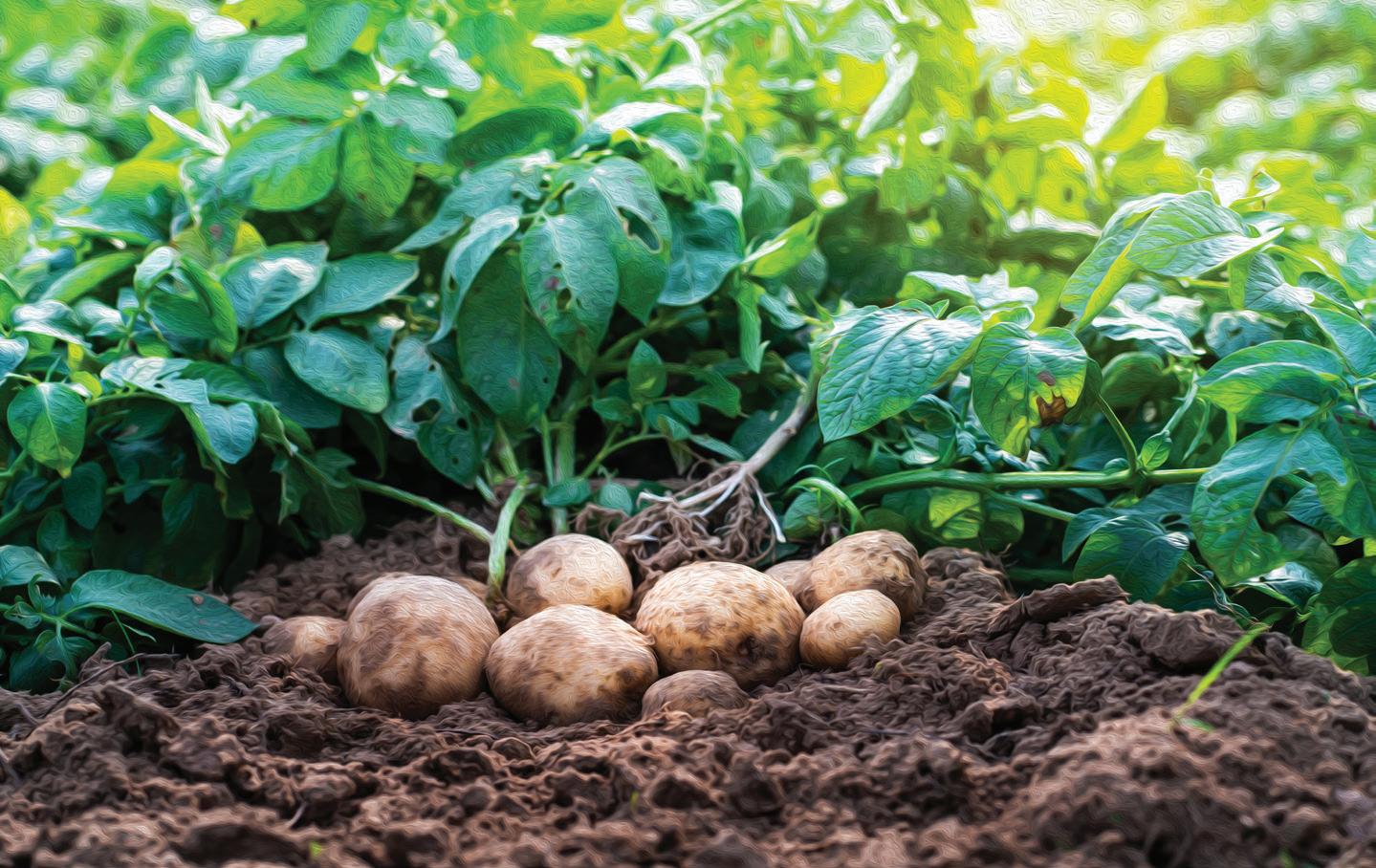

JANUARY 10-11, 2024 Brought to you by POTATO-EXPO.COM Register today at Brought to you by
People
Food + Farm Exploration Center Staff is Growing
Two new directors and an executive office manager join the team in Plover
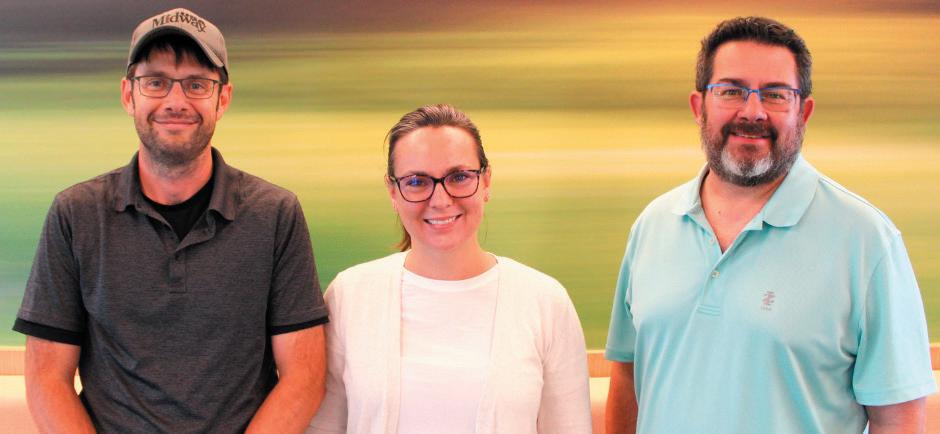
The staff has officially moved into their offices at the new Food + Farm Exploration Center in Plover, Wisconsin, including three newly hired team members.
Tom Coleman recently joined the Food + Farm Exploration Center team as the visitor experience director. Coleman’s role will be to promote the Food + Farm Exploration Center as an event facility in Central Wisconsin, throughout the state, and beyond. In addition, he will serve as the point person for guest services, the gift shop and Colorful Plate Café.
Tom cannot wait for “the opportunity to promote this new center to the public.” He adds, “After learning about the project, I knew it would have a major impact not only on our local community, but beyond.”
Heath Dornfeld has also recently joined the Food + Farm Exploration Center as the operations and exhibits director.
OVERSEEING DAILY OPERATIONS
Dornfeld’s role is to oversee the daily operations of the Food + Farm Exploration Center with a primary
focus around the functionality of the premises. His responsibilities also include managing the exhibits, maintenance shed, and demonstration fields. Heath looks forward to “getting to know the people and community that have come together to build the Food + Farm Exploration Center, and the challenge of creating things from scratch.”
Alex Skawinski is the newly hired executive office manager for the Food
WPIB Focus
+ Farm Exploration Center.
Skawinski’s role is to support the executive director and Food + Farm Exploration Center team, assist with project management, human resource needs, and finances, and manage board administrative responsibilities.
Alex is eager “to join the Food + Farm Exploration Center’s team of professionals, working on behalf of agricultural education and community development.”
Wisconsin Potato Assessment Collections: Two-Year Comparison
The Food+Farm Exploration Center welcomes, from left to right, Heath Dornfeld, Alex Skawinski, and Tom Coleman to the team.
Month Jul-22 Aug-22 Sep-22 Oct-22 Nov-22 Dec-22 Jan-23 Feb-23 Mar-23 Apr-23 May-23 Jun-23 Year-to-Date CWT 1,672,188.74 1.672.188.74 Assessment $133,812.37 $133.812.37 Month Jul-23 Aug-23 Sep-23 Oct-23 Nov-23 Dec-23 Jan-24 Feb-24 Mar-24 Apr-24 May-24 Jun-24 Year-to-Date CWT 1,313,762.07 1,313,762.07 Assessment $105,353.00 $105,353.00 52 BC�T September
Auxiliary News
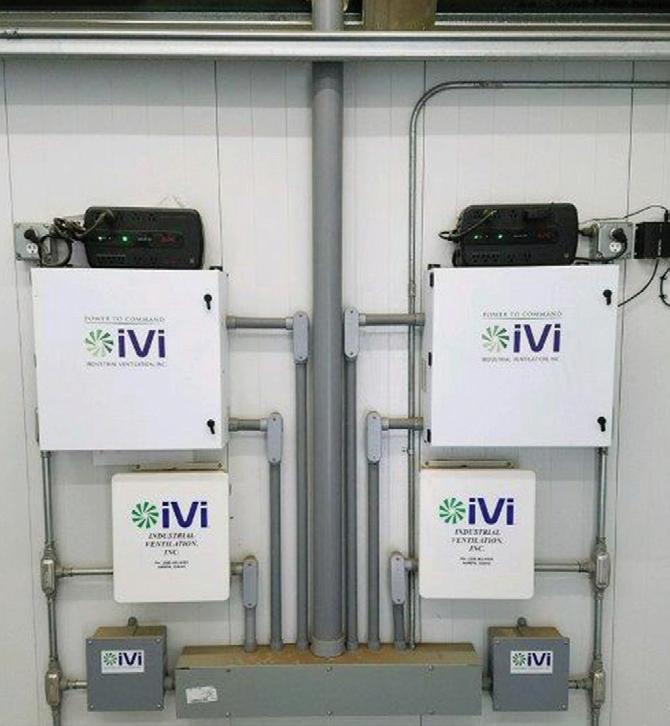 By Datonn Hanke, vice president, WPGA
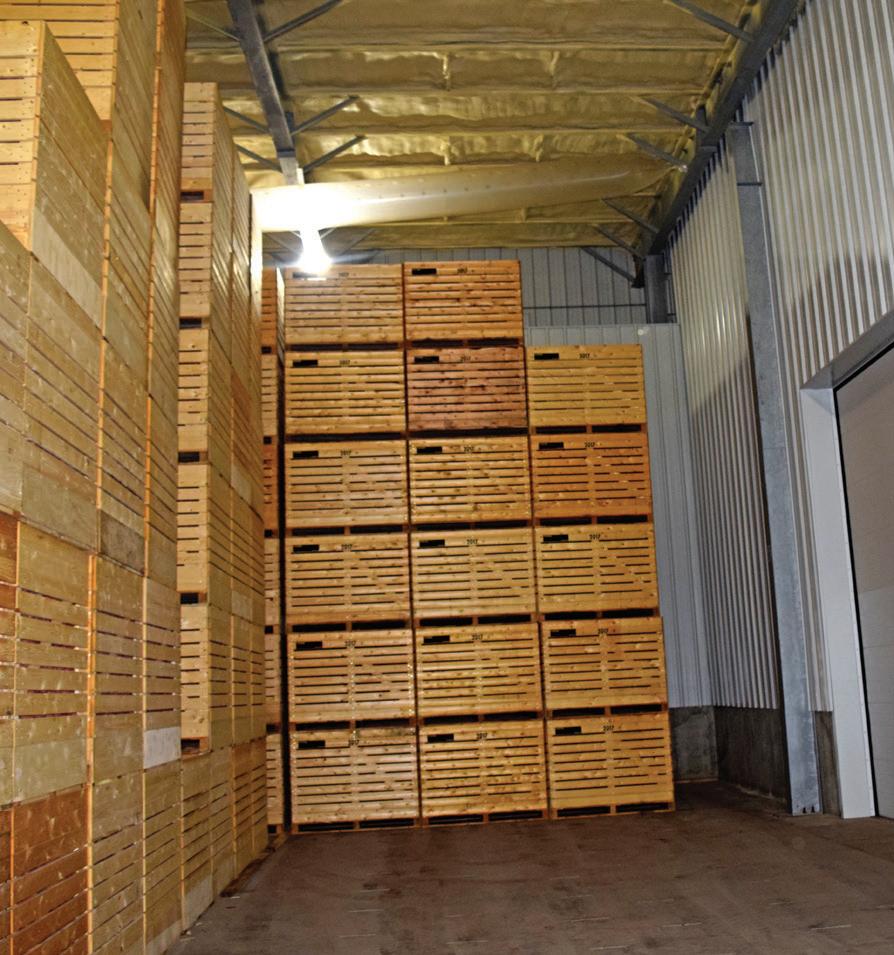
Hello, everyone!
Welcome back to Auxiliary News. We mentioned briefly in our last article that we have two new faces on the Wisconsin Potato Growers Auxiliary Board, so I’d love for you to get to know them.
I asked Dakotah Smiley to provide an introduction and tell us a bit about herself, so without further ado, meet Dakotah.
Hello, WPVGA. My name is Dakotah Smiley, and I am one of the newest board members to join the Auxiliary. For those who I haven’t had the pleasure to meet through my industry journey, hello. I am honored to serve on the Board and wanted to take a moment to introduce myself.
I was born and raised in Plainfield and currently reside in Hancock with my husband, Shane, and our beautiful children, Evan (3 years old) and Joanna (1).
I am a 2014 graduate from the University of Wisconsin-River Falls with a bachelor’s degree in agricultural studies and have been serving in different capacities in the industry since.
PASSION FOR RECRUITING
Six years ago, I found a passion for recruiting/human resources in the industry and am proudly working for AgHires, an industry-leading ag recruitment and job advertising firm. Partnering with different clients throughout the nation to hire top talent has given me a deeper respect and knowledge for the industry, even
New to the Wisconsin Potato Growers Auxiliary Board of Directors, Dakotah Smiley holds a bachelor’s degree in agricultural studies and has been serving in the industry since 2014.

though my heart and soul is always here in the Central Sands!
Along with all the other hats that I wear proudly, I have also served on the Board of Education at the TriCounty Area School District for the past five years. I am humbled and excited to see where my journey goes with the Wisconsin Potato Growers Auxiliary!
You’ll be meeting Erin Meister next, so stay tuned for that!
Thanks everyone. See you next time.
Datonn
1-800-236-0005 WWW.RONSREFRIGERATION.COM 24 HOUR EMERGENCY SERVICE YOUR ONE CALL STORAGE SOLUTION Computerized Control Systems Refrigeration • Humidification • Ozone Electrical Design & Installation Potatoes • Onions Sprout Inhibiting: Sprout Nip® • Amplify® • Shield® & Air Conditioning R R on’s efrigeration 53 BC�T September
Vice president, WPGA
Starchy Vegetables Are Nutritious
Nutrient profiling tools confirm comparable nutritional value as non-starchy vegetables and whole fruit
By the Alliance for Potato Research and Education (APRE)

A new study recently published in “Frontiers in Nutrition” (https:// www.frontiersin.org/articles/) has challenged the tendency in
nutrition research to separate starchy vegetables from their nonstarchy counterparts and categorize them with foods delivering lower
nutritional value.
Whole grains, legumes, non-starchy vegetables, and fresh fruit are typically considered to be higher quality carbohydrate foods, yet starchy vegetables, including white potatoes, are typically categorized in nutrition studies with sweets, candy, and soda when researchers assess subjects’ food intake and associations with health outcomes.
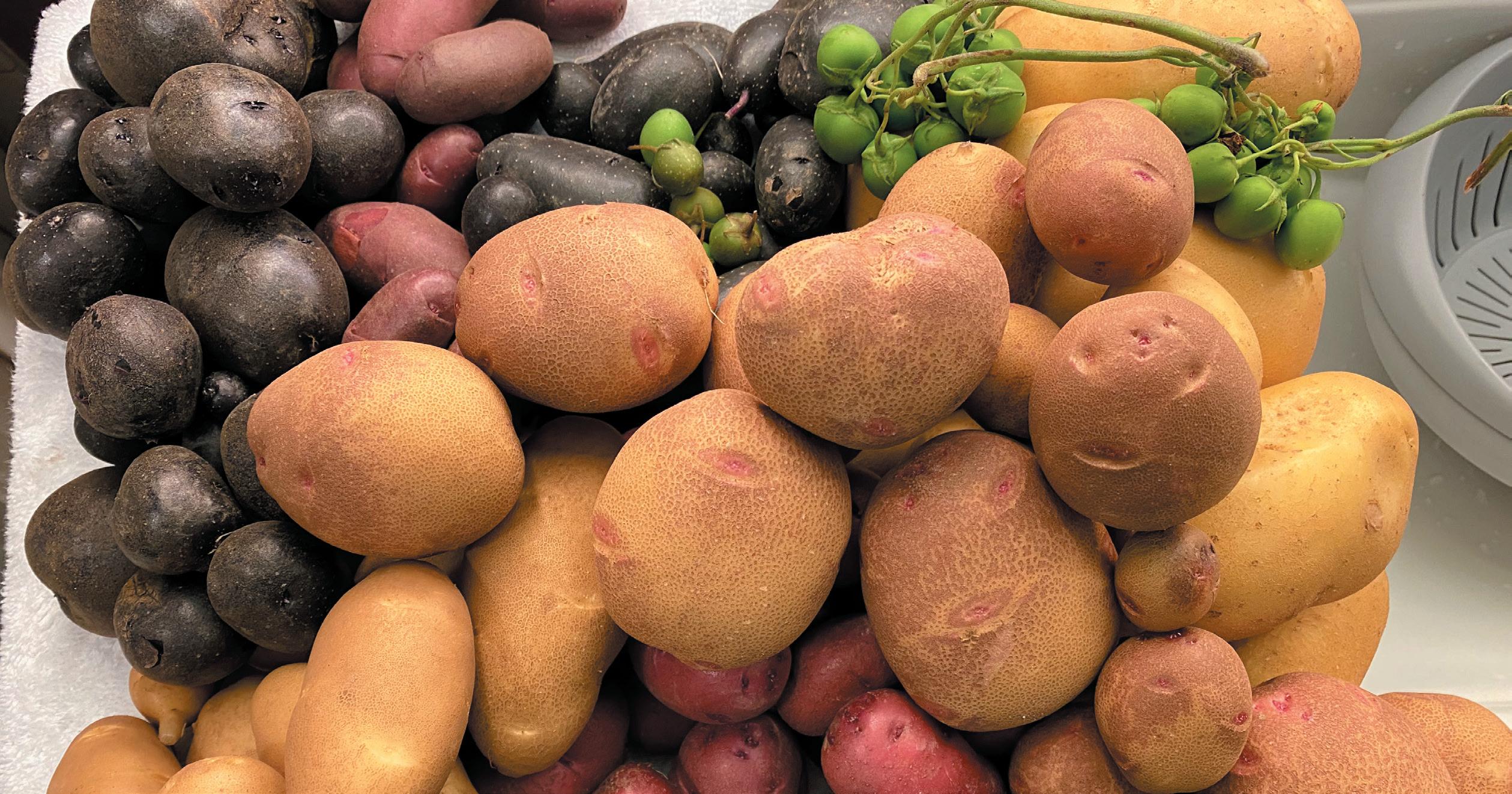
This new study used five separate indices to assess carbohydrate quality to determine if the categorization of starchy vegetables is an accurate reflection of the foods’ nutritional value.
Above: Previous nutrient profiling has shown that potatoes and beans lead the pack in terms of nutrients per penny, and this latest demonstration clearly shows that all vegetables should remain together when it comes to both research and dietary guidance.
54 BC�T September
Four of those carbohydrate quality indices (CQI’s), based on carbohydrate to fiber and sugar ratios, had been developed and validated, in 2021, by researchers at Tufts University.
The fifth index, the new carbohydrate food quality scoring system (CFQS-4) recently developed by scientists working with the Quality Carbohydrate Coalition, also incorporated potassium and sodium. All five indices had been previously published.
The new study screened more than 2,400 carbohydrate-containing foods for carbohydrate quality.
PLANT-BASED FOODS
Recognizing that carbohydrates are present in a great variety of plantbased foods, the study expanded the range of food groups to include refined and whole grains, snacks and sweets, but also starchy and non-starchy vegetables, legumes and whole fruit.
Starchy vegetables had not been tested before using the new carbohydrate quality metrics.

“Starchy vegetables are often not even viewed as vegetables and are routinely removed from highquality food categories in nutrition research,” explains lead author Adam Drewnowski, Ph.D., researcher, the Center for Public Health Nutrition at the University of Washington.
“That view is now challenged by the new nutrient profiling methods” he notes.
“Now that we have formal measures of carbohydrate quality that we can agree on, it is time to put starchy vegetables back where they belong,” Drewnowski says. “There is no need to demonize ‘bad’ vegetables when the American diet could do with more produce of all kinds.”

“There is no need to demonize ‘bad’ vegetables when the American diet could do with more produce of all kinds.”
Biocatalyst for Nutrient Release BENEFITS
Maximizes nutrient release from crop residues and the soil
Extends existing nutrient availability later into the season
Supports easier plantability in the spring
Promotes more even crop emergence
Optimizes yield potential for the next crop Plainfield, WI | 715-335-4900 continued on pg. 56 55 BC�T September
– Adam Drewnowski, Ph.D., the Center for Public Health Nutrition at the University of Washington
•
•
•
•
•
Starchy Vegetables Are Nutritious. . . continued from pg. 55
“I certainly hope that the Dietary Guidelines Advisory Committee takes note as they design a healthy diet at an affordable cost,” Dr. Drewnowski adds.
While the four CQIs and the CFQS4 had been published before, they had not been applied to evaluating carbohydrate quality of legumes, vegetables and fruit.
SPECIFIC RATIONS
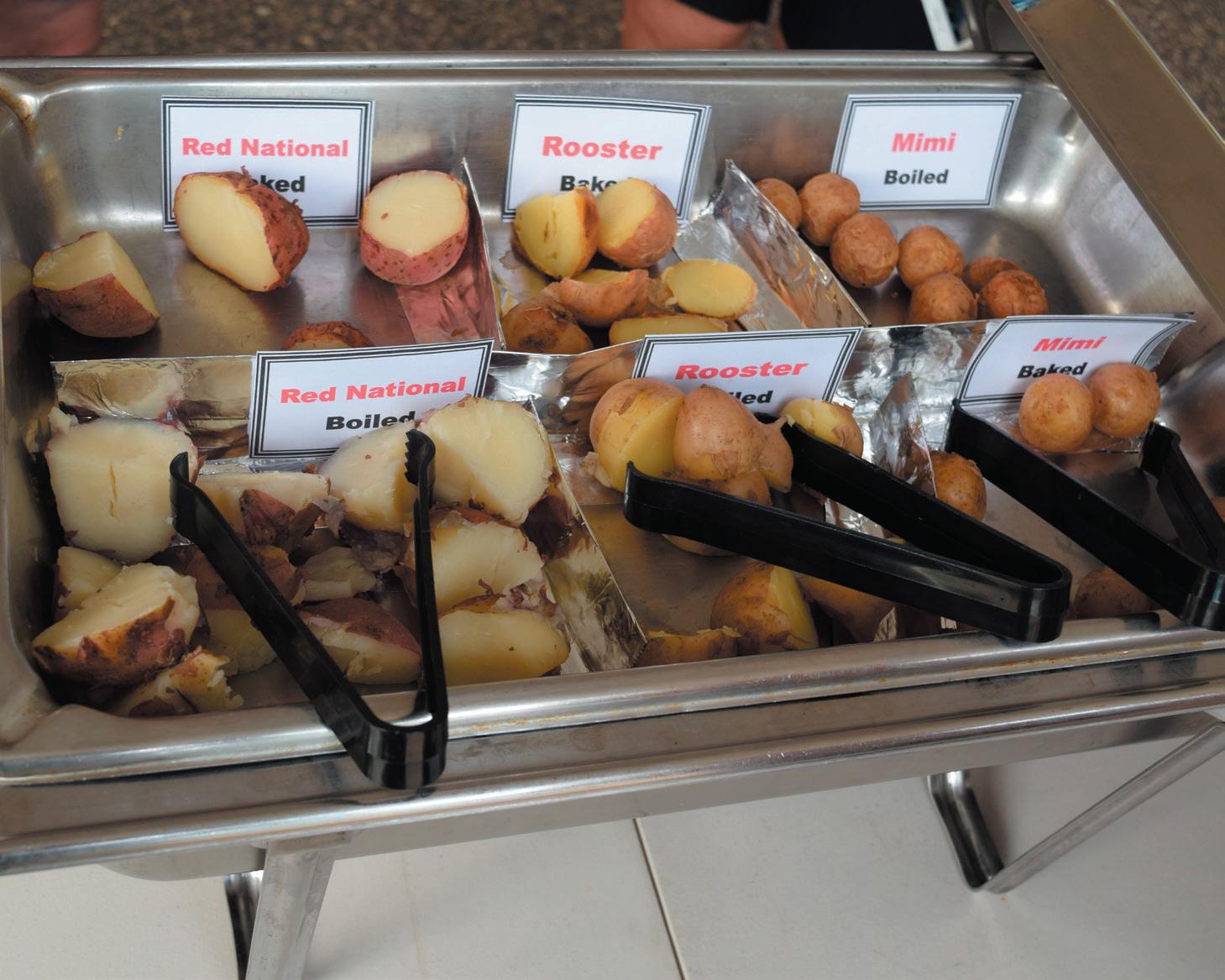
The five indices were based on specific rations of carbohydrate, fiber, free sugar, potassium and sodium.
Whereas potassium is underconsumed, sodium is consumed to excess. Both nutrients are recognized as ‘nutrients of public health concern’ in the Dietary Guidelines for Americans.
Based on the four CQI scores, nearly half of the 210 starchy vegetable
I appreciate the service provided by a local agent. They are always available for questions. I like having someone in my community that knows the area. It is like having a friend in the insurance business.
Walter Current Client
Customer service is one of our core values. Rural Mutual Insurance is ranked in the top percentile of the insurance industry by a customer satisfaction benchmark survey.

Find
at www.RuralMutual.com
a local agent
“
56 BC�T September
This study aligns with a broader, evolving body of literature showcasing the multidimensionality of carbohydrate foods and their role in human health.
foods analyzed in the study met the CQI definitions for high-quality carbohydrates, which were defined as those with evidence-based cut-off values for fiber and free sugar.
Meanwhile, extremely few snacks and sweets (1-5%), candy and desserts (0-5%) and refined grain foods (10-12%) could be considered high-quality, according to the same CQI measures.
Based on the more comprehensive CFQS-4 model, which also accounts for foods’ potassium and sodium content, starchy vegetables scored most closely to non-starchy vegetables and fruit versus sweets and soda.
“I hope that this simple application of existing carbohydrate quality metrics to a wide spectrum of carbcontaining foods will show that starchy vegetables belong with the high-quality carbohydrate foods,” Drewnowski says.
“Our application of other nutrient profiling has previously shown that potatoes and beans led the pack in terms of nutrients per penny,” he notes. “This latest demonstration clearly shows that all vegetables should remain together when it comes to both research and dietary guidance.”
STUDY STRENGTHS
More than 2,400 carbohydrate foods in the U.S. Department of Agriculture’s Food and Nutrient Database for Dietary Studies were evaluated using four previously published CQI’s, and one more recently created carbohydrate food quality scoring system (CFQS-4).
Specifically, the various CQI composites were:
• 10:1 Carbohydrate-to-Fiber model: at least 1 gram of fiber for every 10 grams of carbohydrate
• 10:1:1 Carbohydrate-to-Fiber-toFree Sugars model: at least 1 gram of fiber and no more than 1 gram of free sugar for every 10 grams of carbohydrate
• 10:1:2 Carbohydrate-to-Fiber-toFree Sugars model: at least 1 gram of fiber and no more than 2 grams of free sugar for every 10 grams of carbohydrate
• 10:1|2:1 Carbohydrate-to-Fiber and Sugar-to-Fiber model: at least 1 gram of fiber for every 10 grams of carbohydrate and fewer than 2 grams of sugar per 1 gram of fiber
The CFQS-4 model builds upon previous 10:1 and 10:1:1 ratios for fiber and free sugars relative

continued on pg. 58 57 BC�T September
Starchy Vegetables Are Nutritious. . . continued from pg. 57
to carbohydrate, but also assesses sodium (an over-consumed nutrient of concern) and potassium content (a shortfall nutrient of concern) according to the Dietary Guidelines for Americans.


Foods with at least 40% energy from carbohydrates per 100 grams of dry weight were included in all analyses. The frequency and percentage of foods that met the CQI criteria were calculated for each food group.
Carbohydrate quality scores were measured against the average energy densities of food groups and subgroups.
This study included a large, comprehensive dataset using multiple nutrient profiling models. Further research to build upon these models, however, should continue to incorporate other vitamins and

minerals in food quality assessments.
Nonetheless, this study aligns with a broader, evolving body of literature showcasing the multidimensionality of carbohydrate foods and their role in human health.
COMPREHENSIVE TOOLS





As Dr. Drewnowski explains, “Current efforts to inform dietary guidelines and regulatory frameworks would benefit from modern, comprehensive tools to define and assess carbohydrate food quality.”
This research was supported by the Alliance for Potato Research and Education (APRE) and by the Quality Carbohydrate Coalition (QCC), which is funded by Potatoes USA.

Neither APRE nor Potatoes USA had
an influence on the study design, conduct, execution, or data analysis after approving the initial proposal for funding.
Dr. Adam Drewnowski is a member of the QCC-Scientific Advisory Council. The article, “Multiple metrics of carbohydrate quality place starchy vegetables alongside non-starchy vegetables, legumes, and whole fruit,” is published in Frontiers in Nutrition (doi: 10.3389/ fnut.2022.867378).
in the Safe-T-Pull Booth #C5510 Wisconsin Public Service Farm Show, Oshkosh Sand County Equipment, LLC DIFFERENCE! Theirs Ours Demo’s Available Paul Cieslewicz Owner Shop: (715) 335-6652 • Fax: (715) 335-6653Cell: (715) 498-6651 8364 Monica Road, P.O. Box 228 • Bancroft, WI 54921 E-mail: paul@sandcountyequuipment .sandcountyequipment.com Wisconsin Public Service Farm Show, Oshkosh See Us At Booth #C5510 Lemken Rubin 12 Lemken: Making Tillage Great Again See Us in the Booth Wisconsin Public Service Farm Show, Oshkosh March 24th-26th. Sand County Equipment, LLC SEE THE DIFFERENCE! Theirs Ours Demo’s Available Paul Cieslewicz Owner Shop: (715) 335-6652 • Fax: (715) 335-6653Cell: (715) 498-6651 8364 Monica Road, P.O. Box 228 • Bancroft, WI 54921 E-mail: paul@sandcountyequuipment.com • www.sandcountyequipment.com Servicing all makes of equipment Your Dealer In www.sandcountyequipment.com Wisconsin Public Service Farm Show, Oshkosh March 28th, 29th & 30th See Us At Booth #C5510 See Us in Booth SEE THE DIFFERENCE! Theirs Ours Demo’s Available Your www.sandcountyequipment.com In the heart of potato country. Serving all of Agriculture. Shop: (715) 335-6652 • Fax: (715) 335-6653 • Cell: (715) 498-6651 8364 Monica Road, PO Box 228 • Bancroft, WI 54921 E-mail: paul@sandcountyequipment.com • www.sandcountyequipment.com Servicing all makes of equipment Owner: Paul Cieslewicz 58 BC�T September
Badger Beat
A New Beginning—Producing
Diploid Potato Seed
Breeding program conducts seed multiplication trial in anticipation of developing diploid potato varieties
By Paul Bethke, Andy Hamernik and Jeff Endelman
Seed potatoes are the foundation of the potato crop and are likely to retain that essential position for many years. However, there is interest in exploring how transplants produced from true potato seed might be incorporated into early generation tuber seed production.
True seeds are found in potato berries. Berries, also called fruit, are produced when flowers are pollinated. Bumblebees pollinate potato flowers in the field, but controlled hand pollination by humans works very well and is used in greenhouses.
Potato breeders have used this approach for decades to generate the seeds that lead to new varieties.
Several potato breeding programs in the United States, Europe and Asia are trying to develop genetically simpler diploid potato varieties.
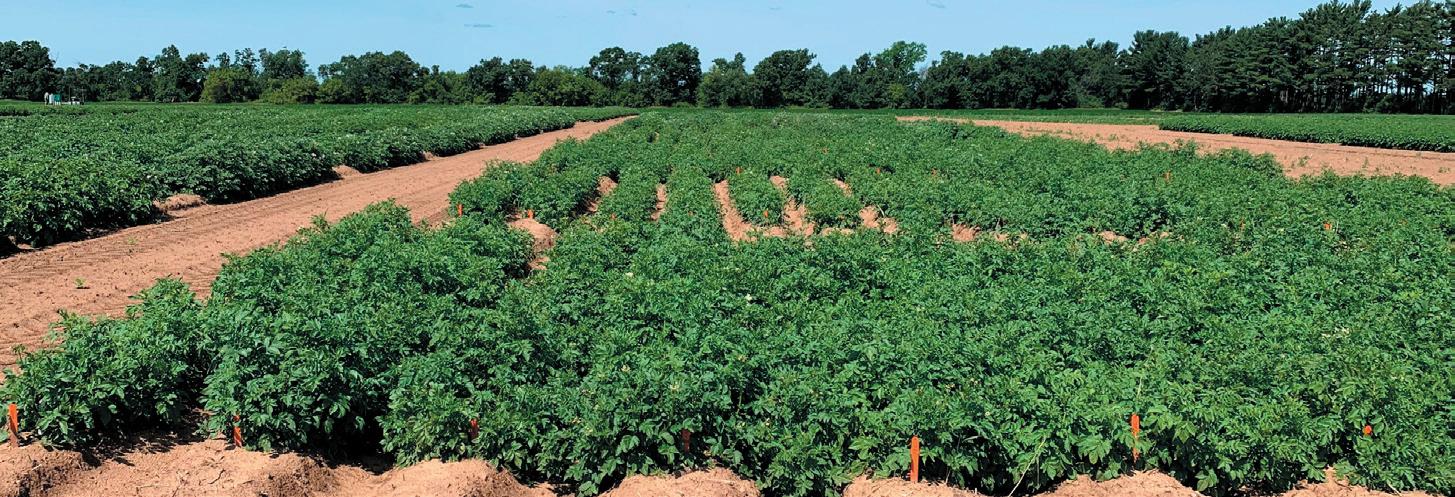
Diploid potatoes, which have their genetic information on two sets of chromosomes, are attractive to breeders because genetic manipulations are much easier than with our current tetraploid varieties that have four sets of chromosomes.
This, in turn, is expected to result in faster rates of variety improvement
and opportunities for enhancing, rather than replacing, a diploid variety.
A key breeding goal for diploid potatoes is production of diploid hybrid varieties. These varieties would result from cross-pollination between two diploid parents. The resulting hybrid seeds would be the new variety.
We are very familiar with corn and
tomato varieties, for example, that are produced this way. For potato, however, the approach is very unfamiliar, and it is reasonable to wonder how it could work.
TRUE POTATO SEED
Paul Mitchell and co-authors, in the August 2022 Badger Common’Tater, looked at the economics of seed potato production and how true potato seed might be incorporated into the process.
In this article, we will describe greenhouse and field activities that illustrate one way this might occur in practice. The benefits of true potato seeds will be highlighted, but no more than the challenges and disappointments we’ve encountered. To begin with, it might be best to review some of the activities that take place during the early phases
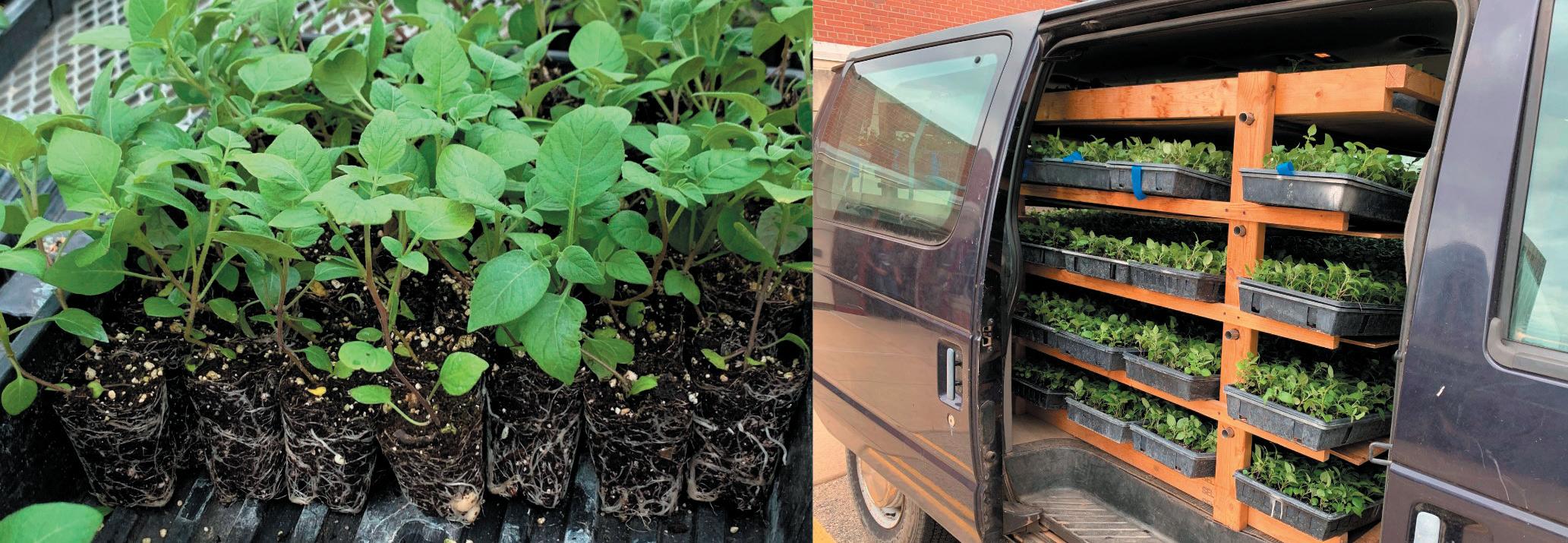 Above: Transplants grown from true potato seed are ready for transport.
continued on pg. 60
59 BC�T September
First field year seed tubers produced by transplants were used as seed the following year. As seen in this photo, rows planted from seed tubers in the >50 grams size category (front right) have full canopy coverage, but rows planted with seed tubers in the 10-gram size category (middle left) have not yet filled the rows. The photo was taken on July 7, 2023.
of the current seed potato system, and where true potato seed might be incorporated into the process.
In the current system, each variety is maintained long-term as tissue culture plantlets. Individual plantlets are contained in glass tubes and grown in sterile jelly-like media. Many tubes are collectively held within specialized rooms or cabinets that provide temperature control and illumination.
3-4 weeks until the required number of tissue culture plantlets has been produced.
You’d be healthier,
At the beginning of the multiplication cycle for each variety, individual tissue culture plantlets, which are each approximately 5 inches long, are removed from their tubes, cut into segments under sterile conditions, and placed on tissue culture media, where they grow until large enough for the next round of cutting.
Multiplying and maintaining tissue culture plantlets requires specialized facilities and skilled personnel. As a result, they are expensive to produce. They also cannot be stored for long, typically 1 to 2 months, except when they are placed on maintenance media. In the latter case, they can remain viable for 1-1.5 years, but grow very slowly when they are transferred to other media or soil.
Tissue culture plantlets are used currently to produce the first seed tuber generation. In one common scenario, they are the starting material for mini-tuber production in a nutrient film technique (NFT) system.
NFT systems are contained within temperature-controlled greenhouses. A nutrient solution containing all the components required to grow healthy potatoes flows gently past the roots of plants in the system.
You’d be healthier, too, if you spent your winters in Hawaii.

SEED PRODUCTION
Each round of multiplication increases the number of plantlets by threefold to tenfold depending on the variety. The process is repeated every
True potato seeds are an alternative to tissue culture plantlets. As with other crops, seeds can be produced in greenhouses or fields. Seed multiplication rates, whether per unit time or per unit area are very high. True potato seeds can be stored for years and are inexpensive to store and ship.
There is no soil in an NFT system. As in field production, the plants produce stolons and form tubers. The tubers are removed by hand every few days with the goal of harvesting many small tubers for the seed growers who will produce the first field generation.
Because traditional mini-tuber production from tissue culture plantlets requires specialized facilities and hand labor at several steps in
100% of Wisconsin Seed
100% of Wisconsin Seed
100% of Wisconsin Seed
Potatoes must be winter tested to be eligible for certified seed tags.
Potatoes must be winter tested to be eligible for certified seed tags.
Potatoes must be winter tested to be eligible for certified seed tags.
• While all state seed potato associations winter test their foundation lots, some do not winter test 100% of their certified seed lots.
• While all state seed potato associations winter test their foundation lots, some do not winter test 100% of their certified seed lots.
• While all state seed potato associations winter test their foundation lots, some do not winter test 100% of their certified seed lots.
• While all state seed potato associations winter test their foundation lots, some do not winter test 100% of their certified seed lots.
and Begin with the Best
100% of Wisconsin Seed Potatoes must be winter tested to be eligible for certified seed tags.

• Wisconsin does, and this assures you get only the top-quality seed.
• Wisconsin does, and this assures you get only the top-quality seed.
• Wisconsin does, and this assures you get only the top-quality seed.
• Wisconsin does, and this assures you get only the top-quality seed.
• While all state seed potato associations winter test their foundation lots, some do not winter test 100% of their certified seed lots.
• With the Wisconsin Badger State Brand Tag, you get one grade, one standard–certification that counts.
• With the Wisconsin Badger State Brand Tag, you get one grade, one standard–certification that counts.
• Wisconsin does, and this assures you get only the top-quality seed.
• With the Wisconsin Badger State Brand Tag, you get one grade, one standard-certification that counts.
• With the Wisconsin Badger State Brand Tag, you get one grade, one standard–certification that counts.
• With the Wisconsin Badger State Brand Tag, you get one grade, one standard–certification that counts.
Don’t bet your farm on untested seed potatoes. Check the winter test results and Begin with the Best — Wisconsin!
Don’t bet your farm on untested seed potatoes. Check the winter test results and Begin with the Best — Wisconsin!
Don’t bet your farm on untested seed potatoes. Check the winter test results and Begin with the Best — Wisconsin!
Don’t bet your farm on untested seed potatoes. Check the winter test results and Begin with the Best — Wisconsin!
Badger Beat. . . continued from pg. 59 You’d be healthier, too, if you spent your winters in Hawaii. 100% of Wisconsin Seed Potatoes must be winter tested to be eligible for certified seed tags. • While all state seed potato associations winter test their foundation lots, some do not winter test 100% of their certified seed lots. • Wisconsin does, and this assures you get only the top-quality seed. • With the Wisconsin Badger State Brand Tag, you get one grade, one standard–certification that counts. Don’t bet your farm on untested seed potatoes. Check the winter test results and Begin with the Best — Wisconsin! WISCONSIN CERTIFIED Wisconsin Seed Potato Improvement Association, Inc. For a directory of Wisconsin
healthier,
100% of Wisconsin Seed Potatoes must be winter tested to be eligible for certified seed tags.
•
bet your farm on untested seed
the winter test results
WISCONSIN CERTIFIED SEED POTATOES Wisconsin Seed Potato Improvement P.O. Box 173 • Antigo, WI 54409 • 715-623-4039
be
too,
You’d be
too, your winters in Hawaii.
• While their of their
Wisconsin top-quality • With one grade, Don’t
potatoes. Check
You’d
healthier,
if you spent your winters in Hawaii.
CERTIFIED SEED POTATOES Wisconsin Seed Potato Improvement Association, Inc. P.O. Box 173 • Antigo, WI 54409 • 715-623-4039 • www.potatoseed.org For a directory of Wisconsin Certified Seed Potato Growers, scan this code with your smartphone.
WISCONSIN
too, if you spent your winters in Hawaii.
CERTIFIED SEED POTATOES Wisconsin Seed Potato Improvement Association, Inc. P.O. Box 173 • Antigo, WI 54409 • 715-623-4039 • www.potatoseed.org For a directory of Wisconsin Certified Seed Potato Growers, scan this code with your smartphone.
WISCONSIN
WISCONSIN CERTIFIED SEED POTATOES Wisconsin Seed Potato Improvement Association, Inc. P.O. Box 173 • Antigo, WI 54409 • 715-623-4039 • www.potatoseed.org For a directory of Wisconsin Certified Seed Potato Growers, scan this code with your smartphone.
You’d be healthier, too, if you spent your winters in Hawaii.
WISCONSIN CERTIFIED SEED POTATOES Wisconsin Seed Potato Improvement Association, Inc. P.O. Box 173 • Antigo, WI 54409 • 715-623-4039 • www.potatoseed.org For a directory of Wisconsin Certified Seed Potato Growers, scan this code with your smartphone.
60 BC�T September
the process, NFT mini-tubers are relatively expensive. Mitchell et al. suggested a cost of $0.55 per minituber.
An alternative to NFT mini-tuber production is field production of mini-tubers or full-size seed potatoes from seedling transplants. Sowing seeds and producing transplants on a large scale is common practice for many horticultural crops.

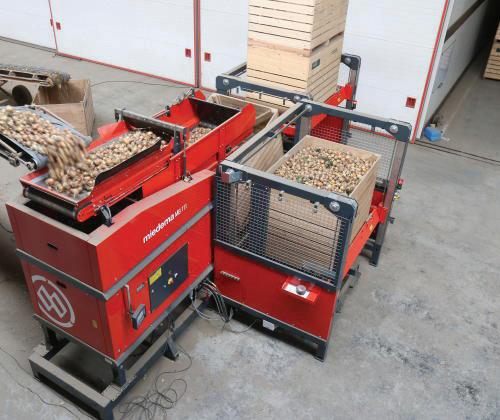
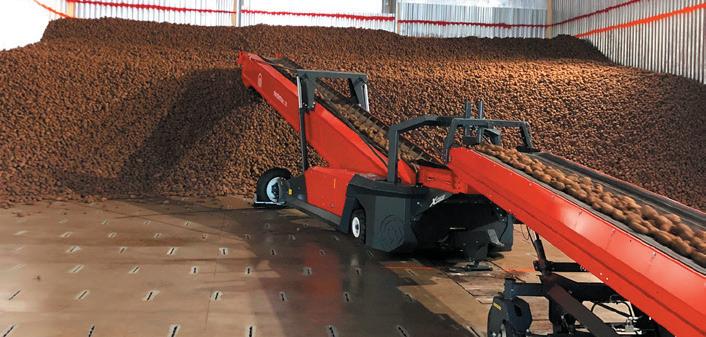
While mechanized transplanting is rare for potatoes, it is routine for many other crops, including tomatoes, the potato’s close relative.
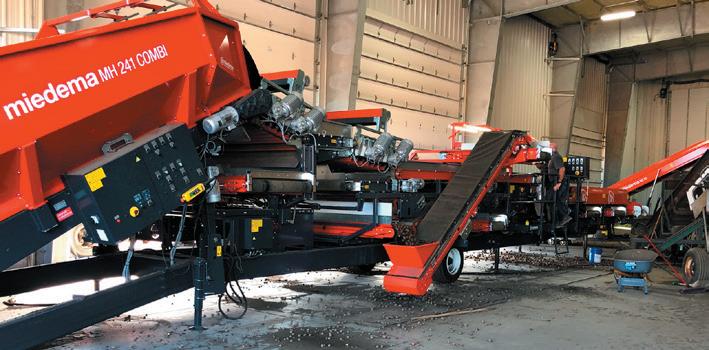
Rapid multiplication of new varieties is one of the supposed advantages of diploid potatoes. If that’s true, rapid multiplication would allow for earlier multi-location trials of potential new varieties, and a shorter time from variety release to grower’s fields.

SEED MULTIPLICATION TRIAL
In the spirit of “learning by doing,” we conducted a seed multiplication trial. The only constraints we placed
on ourselves were that the trial should take a year or less. We had to begin with a small amount of starting material and could only use an acre of field space.
The trial was conducted as part of the Specialty Crop Research Initiative (SCRI) project on diploid potatoes.
The first step was to produce one acre of transplants from 16 potatoes, eight each of two partially inbred parental clones from the University of Wisconsin (UW) diploid breeding program.
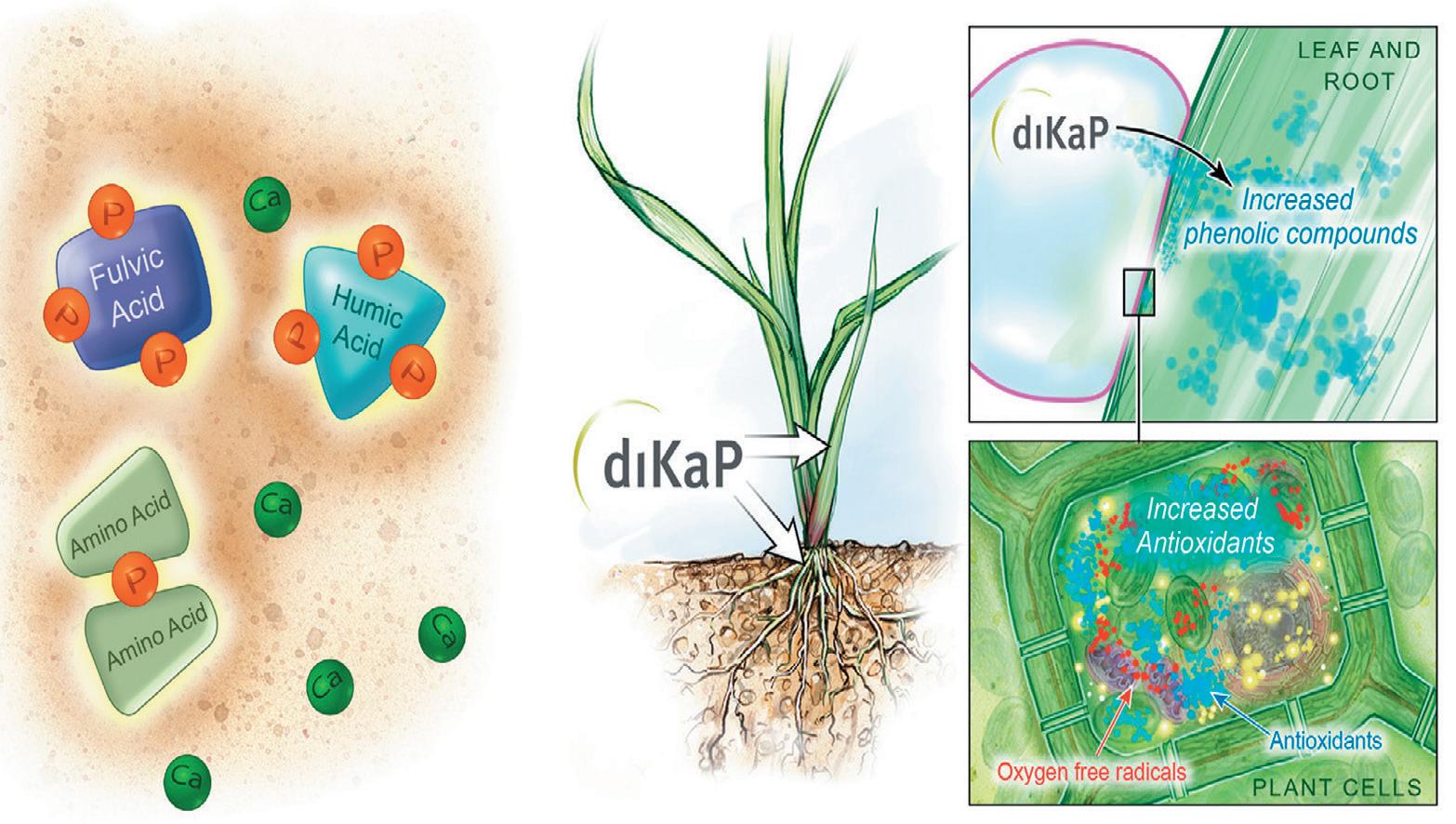
Those potatoes weighed less than
2 ounces each and were planted as single drops in pots filled with potting soil. They were grown on a single bench in a greenhouse during the winter of 2021-’22.
As they flowered, crosses were made by placing pollen collected from each parental line onto the other line. Potato pollen is simple to collect and can be stored easily for several months.
This simplifies crossing because pollen can be collected when it is available and used when it is needed.
1619 County Road K, Custer WI 54423 • Call: 715-592-4650 • Fax: 715-592-5063 • Email: tip@tipinc.net Thank you for your support! 1.800.225.9727 • www.tipinc.net VIEW OUR USED EQUIPMENT LIST ONLINE! LABOR SAVING TECHNOLOGY Combi Units Box Fillers AUTOMATED PILERS! PARTS & SERVICE: AVR/UNDERHAUG • DOUBLE L (LL) • BROEKEMA NOFFSINGER • TEROG • AG PARTS AND MUCH MORE! Redox provides two key solutions for Potato Bulking OXYCOM Calcium & diKaP • Sustains balanced plant growth in periods of environmental oxidative stress (EOS) • The combination of these two products increases phenolic compound production • Maximizes production of ATP & ADP • Increased daily photosynthate production and utility • Balances carbohydrate and nitrogen compounds for mature potato crop continued on pg. 62
“For each potato we planted in the greenhouse, we harvested 4,400 mini-tubers from the field.”
61 BC�T September
– Paul Bethke, U.S. Department of Agriculture and University of Wisconsin-Madison Department of Horticulture
Badger Beat. . .
continued from pg. 61
In the end, those 16 plants produced 1,121 berries.
All berries were harvested by March 1. True potato seeds were extracted from the berries, rinsed with cold water and allowed to air dry. The average number of seeds per berry, 45, was not particularly high. Potato berries from other parents can contain 10 times that amount. Still, the 50,700 seeds produced were more than we needed for the trial.
HARVESTED SEED
Freshly harvested potato seeds are dormant and will not germinate. However, they lose dormancy with dry storage at room temperature.
Four weeks after harvest, when dormancy was reduced, we soaked the seeds overnight in 1,500 parts per million gibberellic acid, a plant growth regulator, to further encourage germination, and then sowed the seeds in flats.
When the seedlings were well established, 15,000 of them were transplanted into horticultural plug trays.
We incorporated an intermediate transplant step because it allowed us to remove weak seedlings from the trial. We anticipated that there would be quite a few weak seedlings in our trial, since they came from parents whose genetic makeup still requires substantial improvement.
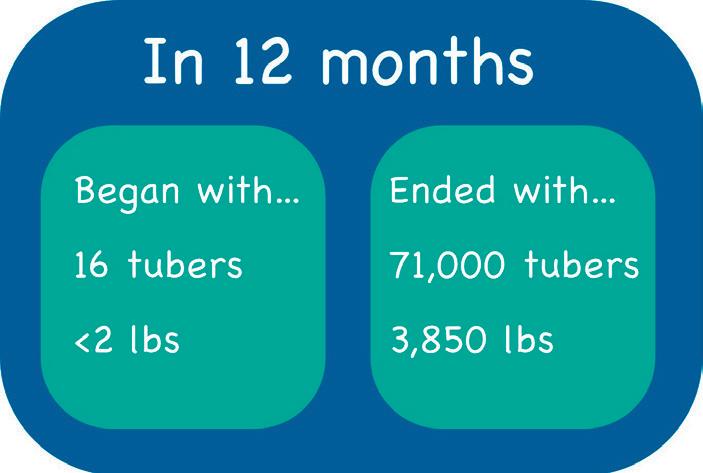
When commercially acceptable diploid varieties are available, it is likely that there will be few weak seedlings and seeds will be sown directly into plug trays or plug cubes. Seedlings were hardened off outdoors for a few days when they had reached the correct size for transplanting.
We loaded 14,000 transplants into a large mini-van the day before planting. On June 1, 11,500 of them were planted into pre-formed hills at the Hancock Agricultural Research Station using a single-row finger/cup transplanter.
In-row spacing was approximately 14 inches, and in retrospect, tighter spacing would have been much better.
RATE OF PLANT GROWTH
Damage from transplanting was minor and the rate of plant growth, although slow initially, was acceptable. Weed control, however, was a major challenge.
Hand weeding was used initially, followed by an application of herbicide at hilling. Then there was more hand weeding.
The plants were slow to fill the rows, and we were trapped in an unsatisfactory cycle where pulling weeds disturbed the soil and encouraged new weed seeds to germinate. Without a doubt, how best to control weeds among potato transplants is an area that requires additional research.
Much to our surprise, the transplant field senesced in mid-August and the vines were dead by August 23. What happened?
Recent research from the UW potato breeding program pointed to a possible explanation. It turns out that both parents contained only the “early” variant of the maturity gene. Knowing this, one would predict that their offspring would only have the early variant of the maturity gene and the vines would die early. This unexpected result points to an important advance in potato breeding efficiency. By knowing the composition of variants at the maturity gene in parental lines, potato breeders should be able to design crosses that result in new lines
that have a specific maturity class. This has not been possible before but should be done easily now, especially with diploid potatoes. But is it true?
To answer that question, we made crosses during the winter of 2022’23 that were designed to produce offspring with early, middle, and late season maturity.
MATURITY TRIAL
Transplants of those lines were planted at Hancock in May 2023. This article is being prepared in early August. Of the transplant lines in the maturity trial, those predicted to be early maturity are beginning to senesce while those predicted to be late maturity are still in full flower. The transplant field from the seed multiplication trial was harvested mechanically in October 2022, less than 12 months from the date when the parents were planted in the greenhouse.
Tuber size and number were quantified using the potato grading line at the Hancock Agricultural Research Station. The average tuber size was small, about 25 grams (0.87 ounces), and similar in size to tubers from clones of the parents that were grown in the same field. The total tuber number available for planting the next year was 71,000.
One scenario for seed potato
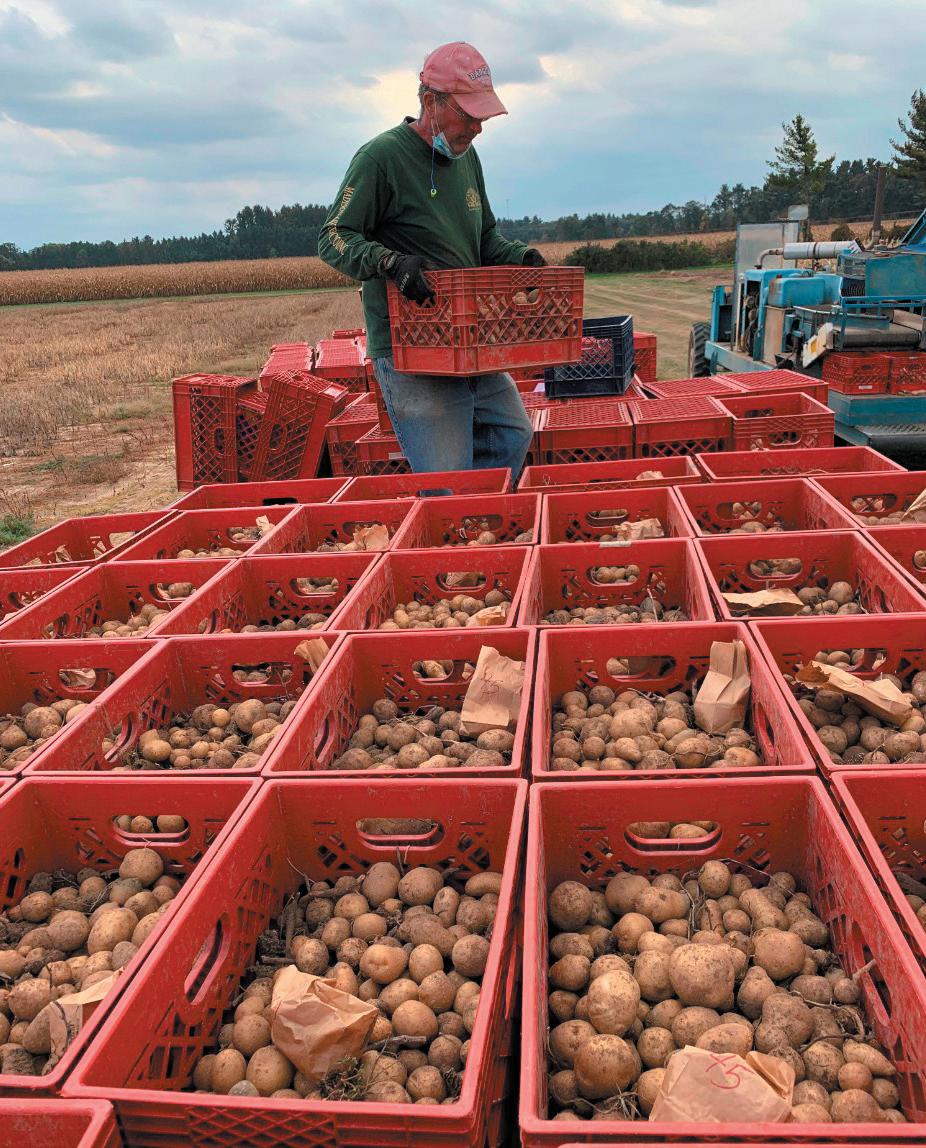 Potatoes are harvested from the seed multiplication trial.
62 BC�T September
Potatoes are harvested from the seed multiplication trial.
production that incorporates diploid true potato seed envisions transplants grown from seed producing first field year seed potatoes.
Those tubers would be used to produce second field year seed potatoes. Second field year seed could be multiplied as seed potatoes for one more year or sold to growers to produce potatoes for consumption.
The first field year tubers that we harvested in the fall of 2022 were stored at 38 degrees Fahrenheit at the Hancock Potato and Vegetable Storage Research Facility, graded into smallest (~10 gram [g.]), medium (~25 g.) and largest (>50 g.) size categories, and planted using standard methods for plot planting at the Hancock station.
A few observations from these plots are worth noting. First, time to emergence varied with tuber size. The largest tubers emerged first; the smallest were last.
Second, weed control was no more difficult than it was for other tuber plantings. Third, it was notable that the plants from even the smallest seed tubers grew larger on average than the transplants the previous year.

EARLY MATURATION
Finally, the plants have begun to senesce. This observation confirms the suggestion that they are genetically destined to mature early. In some ways, the seed multiplication trial was a success, and in others a disappointment.
The seed multiplication rate was high. For each potato we planted in the greenhouse, we harvested 4,400 mini-tubers from the field. Also on the plus side, the entire trial took place within a 12-month period and mini-tubers harvested in October had lost dormancy and were ready to plant the following spring.
Yet, tuber set in the field was less than we expected, averaging only five per plant. Many of the transplants we
put out had already begun to initiate tubers in the plugs.
Did early tuber initiation reduce tuber number and slow canopy growth? Additional research will shed light on this question.
We also came in well under the total yield that we hoped to achieve. Tighter plant spacing and longer vine maturity could have gone a long way toward increasing yield. Additional genetic improvements achieved through breeding will also contribute to increased yield.
Overall, our conclusion is that the talk about rapid multiplication of diploid potatoes using true seed is more than just talk. We had surprises and identified numerous opportunities for improvement to the process, but still managed to turn 16 potatoes harvested one year into enough seed to plant several acres the following year.
As a true Midwesterner might say, “That’s not bad.”
63 BC�T September
NPC News
MacAulay Named Canada Ag Minister
Former Prince Edward Island seed grower has previously held the office
In a ceremony on July 26, Prince Edward Island (PEI) Member of Parliament Lawrence MacAulay was named the new minister of the country’s ag department, Agriculture and Agri-Food Canada (AAFC).

MacAulay replaces former Minster Marie-Claude Bibeau, who led the department during the country’s response to the most recent potato wart outbreak on PEI. MacAulay previously held the office prior to Bibeau’s appointment.
Following an Oval Office meeting between Canadian Prime Minister Justin Trudeau and U.S. President Joe Biden, Bibeau and MacAulay met with U.S. Department of Agriculture (USDA) Secretary Tom Vilsack, in January 2022.
In the meeting, Bibeau and MacAulay pressed for the restoration of U.S. market access for PEI potatoes, quickly leading to the resumption of shipments of table-stock potatoes to the U.S. territory of Puerto Rico.
MacAulay was a seed potato grower on PEI before he entered politics.
Former Malpeque Member of Parliament Wayne Easter, who served with MacAulay, spoke with
the PEI news outlet Salt Wire about MacAulay’s appointment.
RESTORING CONFIDENCE
The report said that Easter told reporters, “One of MacAulay’s biggest challenges will be restoring international confidence in PEI’s potato industry after a bruising border dispute with the United States government during the fall of 2021 and winter of 2022.”
“The Canadian government halted trade of PEI fresh potatoes after a handful of detections of potato wart in the province,” Easter added.
“One of his key issues must be to restore our reputation in the potato industry in total and regain our seed markets around the world,” the outlet reported Easter as stating. “This whole dilemma was caused by an agency that is now under Lawrence’s control, and that’s the Canadian Food Inspection Agency.”
Following the reopening of the border to PEI potatoes except seed, the USDA Animal and Plant Health Inspection Service (APHIS) released a report that identifies numerous pathways for potato wart to enter the United States
from that production area. Seed is highlighted as the highest risk of those pathways.
An October 2022 USDA APHIS report stated, “An estimated 37 percent of U.S. seed potato imports from PEI go to climatically suitable areas. Without additional mitigation measures, seed potatoes from PEI would introduce potato wart into U.S. potato production areas.”
Currently, PEI seed is not being shipped into other Canadian provinces or into the United States.
Potato LEAF Accepting 2024 PILI Candidate Applications
The Potato Leadership, Education, and Advancement Foundation (Potato LEAF) is currently accepting applications for the 2024 Potato Industry Leadership Institute (PILI), February 21 through March 1, 2024.
PILI provides tools to help growers and industry members develop as leaders and motivate them to commit their time and energy to the betterment of the U.S. potato industry.
The Leadership Institute is a 10-day program that provides an overview of the U.S. potato industry, the
challenges and issues beyond the production sector, and the roles of the industry’s state and national organizations in maintaining a positive business climate for potato growers.
The 2024 program will begin in Idaho with leadership training and industry tours (traveling from Boise to Idaho Falls) and conclude in Washington, D.C., where the class will participate in the National Potato Council’s Washington Summit.
Thomas Baker of Allied Potato, Inc. in Bakersfield, California, who was a
2023 participant, says, “The Potato Industry Leadership Institute not only highlights the challenges we face as an industry, but also equips you with the knowledge and skills to effectively combat the issues.”
For a participant application and additional information, visit https:// pleaf.org/leadership-institute-1.
All applications must be submitted electronically by Friday, October 20, 2023. Participants will be selected and notified by November 10, 2023.
Prince Edward Island Member of Parliament Lawrence MacAulay is named new minister of Agriculture and Agri-Food Canada.
64 BC�T September
Ali's Kitchen
These Tots are Perfect for Game Day
Bite-sized, bacon-wrapped appetizers are sure to be a hit at any family gathering
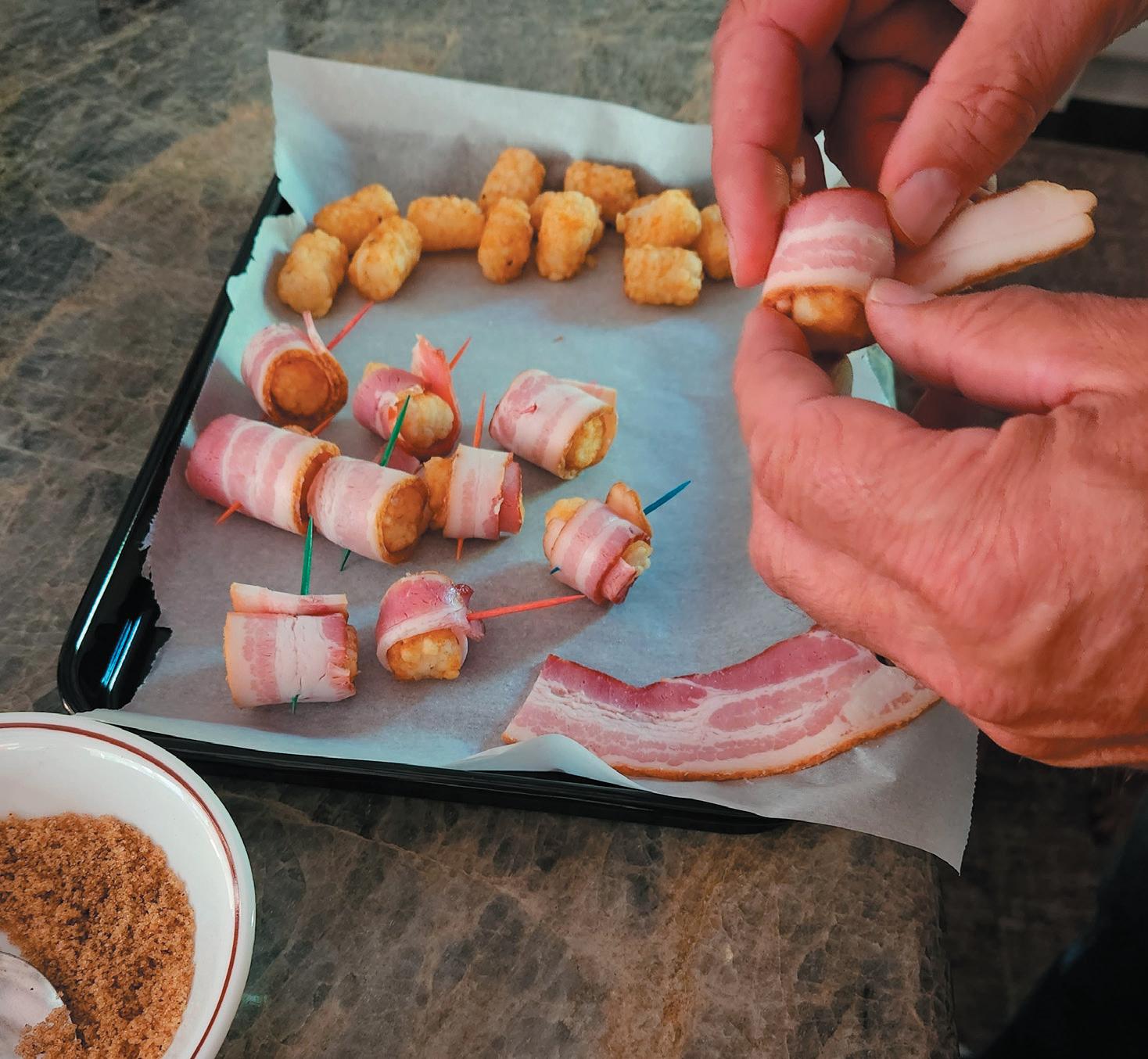
Column and photos by Ali Carter, Wisconsin Potato Growers Auxiliary
Tater Tots evoke feelings of childhood, leisurely evenings, and grandparents. If you feel the same, then I have a fun little recipe for you!

These bit-sized, bacon-wrapped appetizers are a hit at any family gathering but are particularly perfect for game day parties (Go, Pack, go!).
Or, if you have a Tater Tot craving one
evening and decide to indulge in an entire pan of Bacon-Wrapped Tater Tots and call it “dinner,” there is no shame in that either.
The wrapped Tots and dipping sauce can all be made a day ahead of time and placed in the fridge until you’re ready. Simply pop the Tater Tots in continued on pg. 66
INGREDIENTS:
Bacon-Wrapped Tater Tots
• 3 cups Tater Tots thawed to room temperature
• 16 ounces bacon (Cut each bacon strip into thirds)
• 1/3 cup brown sugar
• 1/4 teaspoon chili powder
Dipping Sauce
• 1/2 cup mayonnaise
• 2 Tbs. ketchup
• 1 Tbs. horseradish
• 1/4 tsp. salt
• 1/8 tsp. oregano
• pinch black pepper
• 1/2 tsp. hot sauce
65 BC�T September
the oven about 20 minutes before you plan to feed your guests and serve them hot with the chilled sauce.
DIRECTIONS
Preheat oven to 400 degrees Fahrenheit.
Wrap each Tater Tot with a piece of bacon. Secure the bacon with a toothpick to keep everything securely together.

Combine the brown sugar and chili powder in a bowl. Dip all sides of the bacon-wrapped Tater Tot in the brown sugar mixture. Place on a cookie sheet.
Continue until all the bacon has been used.
Bake for 20 minutes, turning the Tots halfway through the cooking time, until the bacon is crispy.
While the Tots are baking, mix all the
sauce ingredients together. Chill in the refrigerator until ready to serve. Enjoy!
PALLETIZING YOUR POTATOES WE’VE GOT YOU COVERED
At SYMACH, we’ll work with you to achieve the perfect palletizing solution for all your potato packing needs.

With our custom and modular design capabilities, plus industry leading stacking capacities, we are the perfect partner for all your potato palletizing needs.
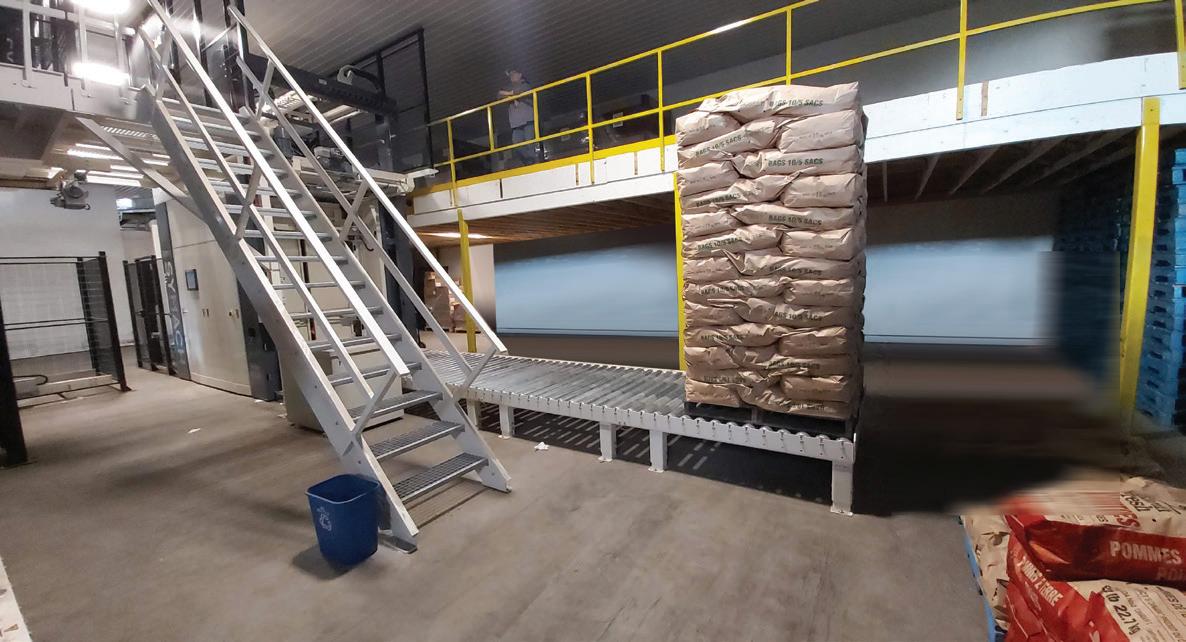
Our integrated software platform makes it simple and easy to switch between 5lb and 10lb paper bags, or cartons and display bins of potatoes. FOR MORE INFORMATION: Garnet McMillian | (814) 361-9228
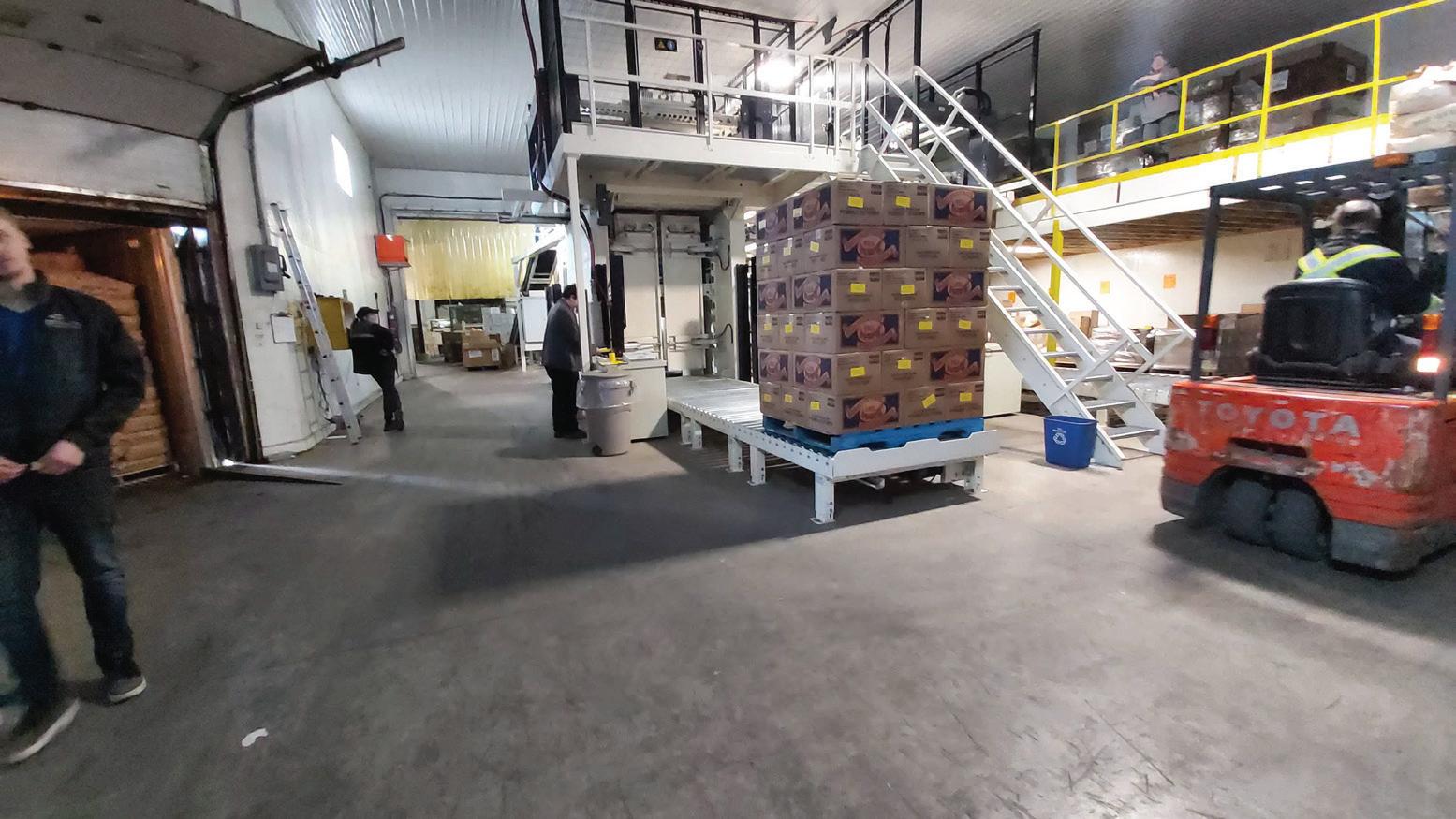
Advertisers Index 1,4 Group..................................... 37 AgCountry Farm Credit Services 13 Altmann Construction Company, Inc. ............................ 17 Badger State Irrigation................. 68 Baginski Farms ............................. 19 Big Iron Equipment ...................... 27 BTU Ventilation ............................ 47 Bushmans’ Inc. .............................. 3 CliftonLarsonAllen ....................... 11 Colorado Certified Potato Growers Association 26 Compeer Financial 29 CoVantage Credit Union 38 Ellips USA 5 Energy Edge ................................. 39 Heartland AG Systems ................. 48 IVI, Inc. ........................................... 2 Jay-Mar, Inc.................................. 14 John Miller Farms ........................ 67 J.W. Mattek & Sons ...................... 15 M.P.B. Builders, Inc. ..................... 21 McGowan Rice Construction ....... 35 Mid-State Truck Service Inc. 54 Montana Potato Advisory Committee 49 National Potato Council ............... 51 Nelson’s Vegetable Storage Systems Inc. 28 North Central Irrigation 50 Nutrien Ag Solutions 55 Paragon Potato Farms 45 R&H Machine, Inc. 31 Roberts Irrigation 63 Ron’s Refrigeration 53 Ruder Ware 22 Rural Mutual Insurance 56 Sand County Equipment .............. 58 Schroeder Brothers Farms ............. 7 Binfront Barriers .......................... 64 Signature Farms, LLC ................... 40 Swiderski Equipment ................... 25 Symach Palletizers, BW Flexible Systems 66 ThorPack, LLC 9 T.I.P., Inc. 61 Tolsma USA 23 Vantage North Central 57 Volm Companies.......................... 36 WPVGA Putt-Tato Open Thank You 33 WSPIA 60
. . continued
Ali's Kitchen.
from pg. 65
www.symach.nl | SYMACH is part of the BW FLEXIBLE SYSTEMS group of companies. 66 BC�T September
garnet.mcmillian@bwpackagingsystems.com
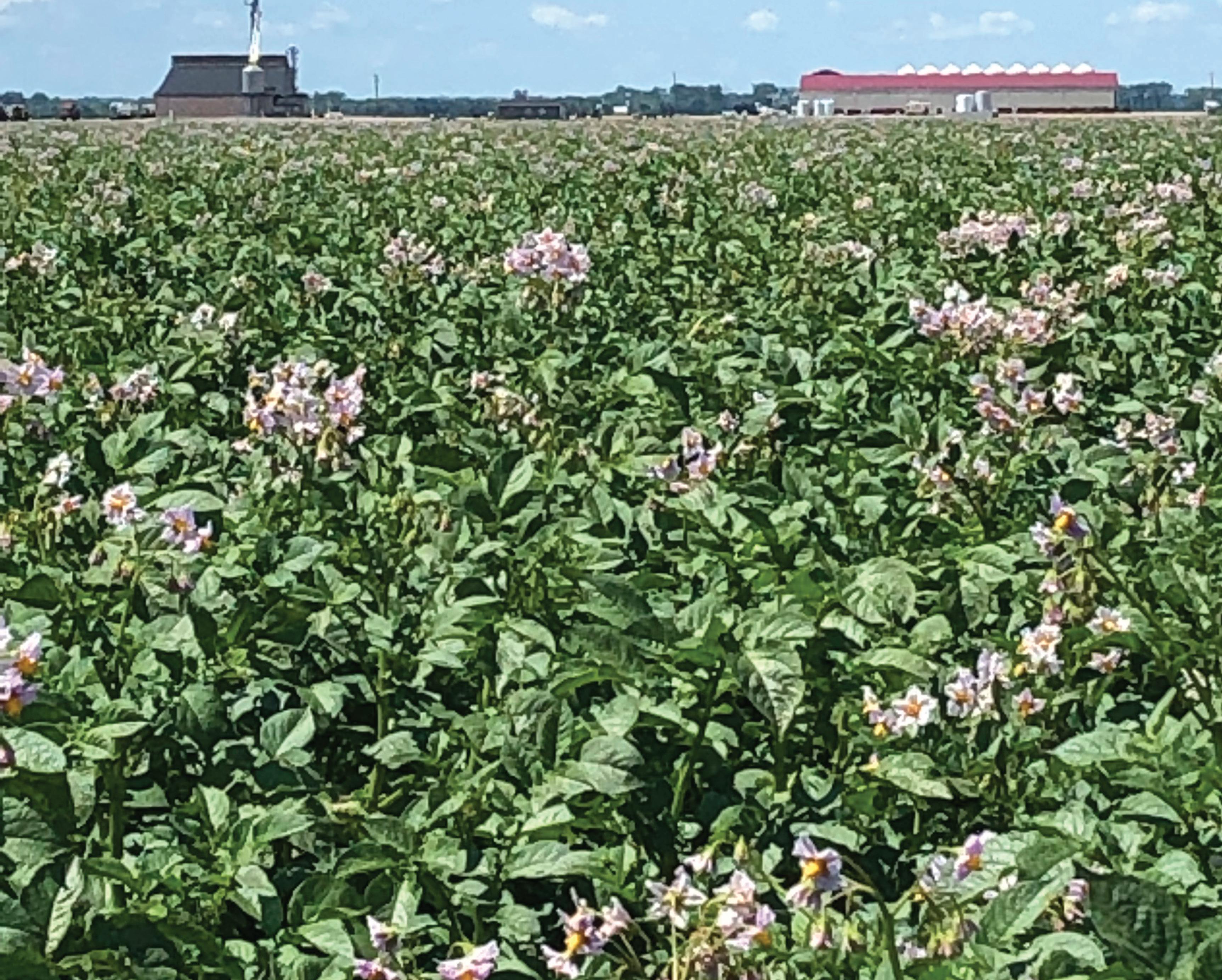

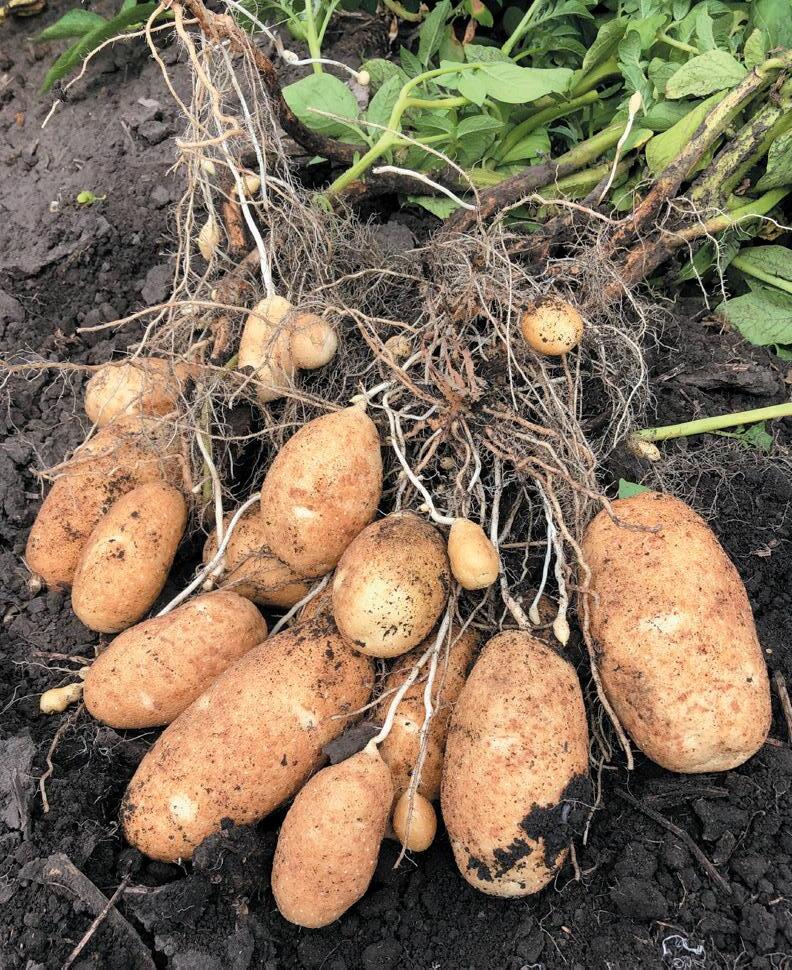
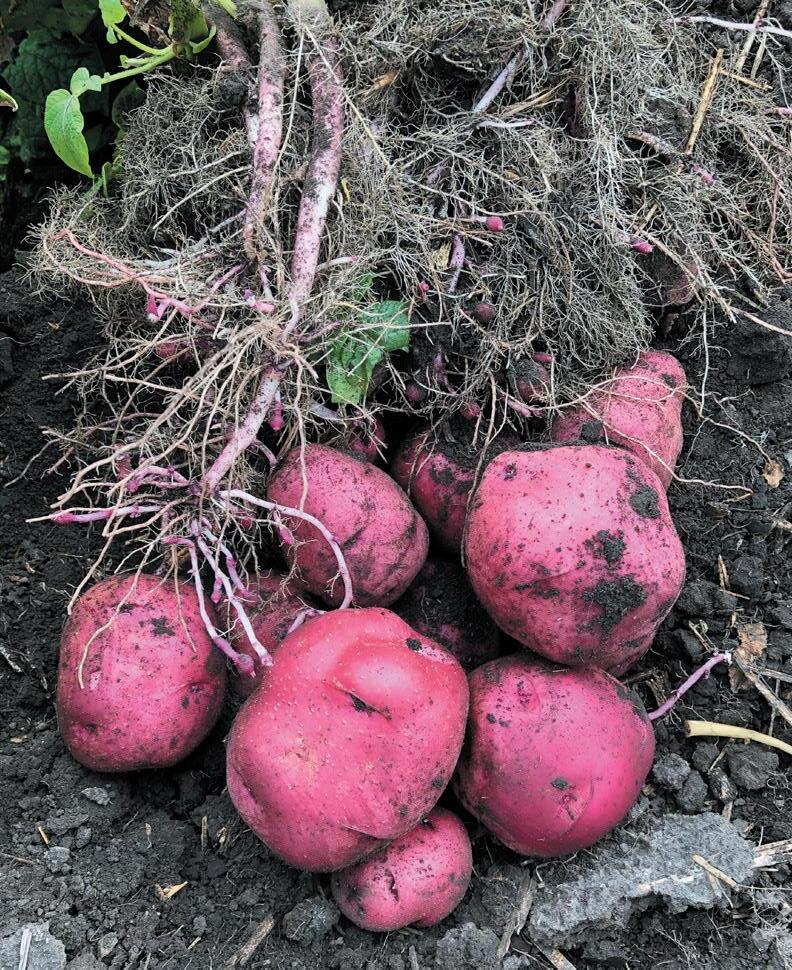
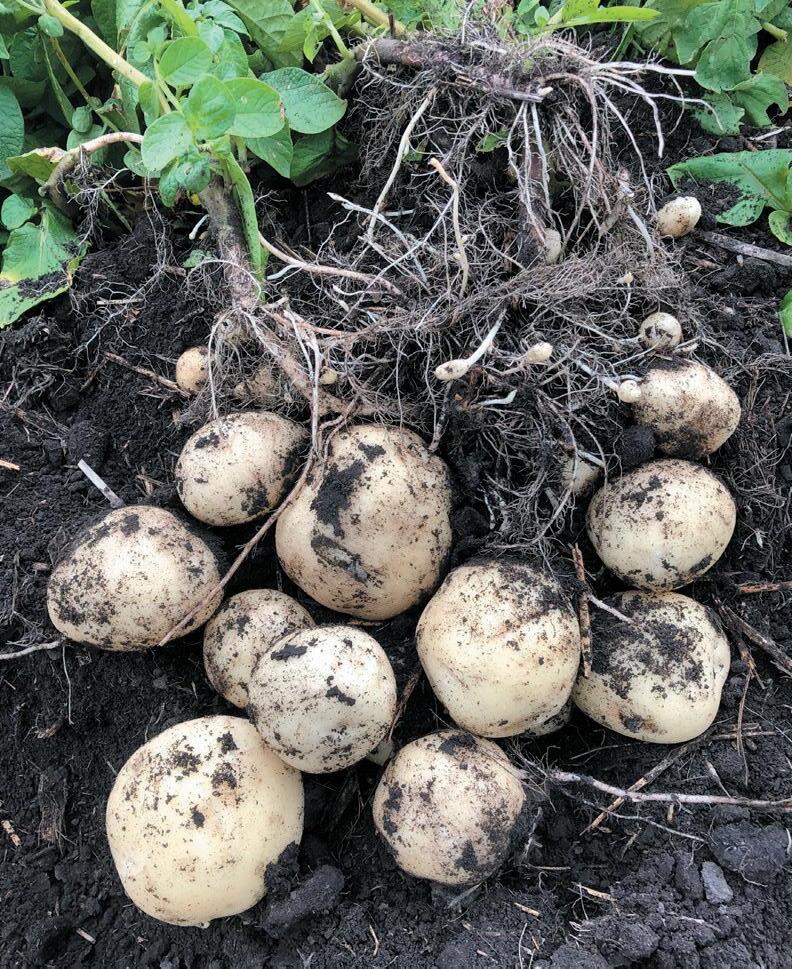
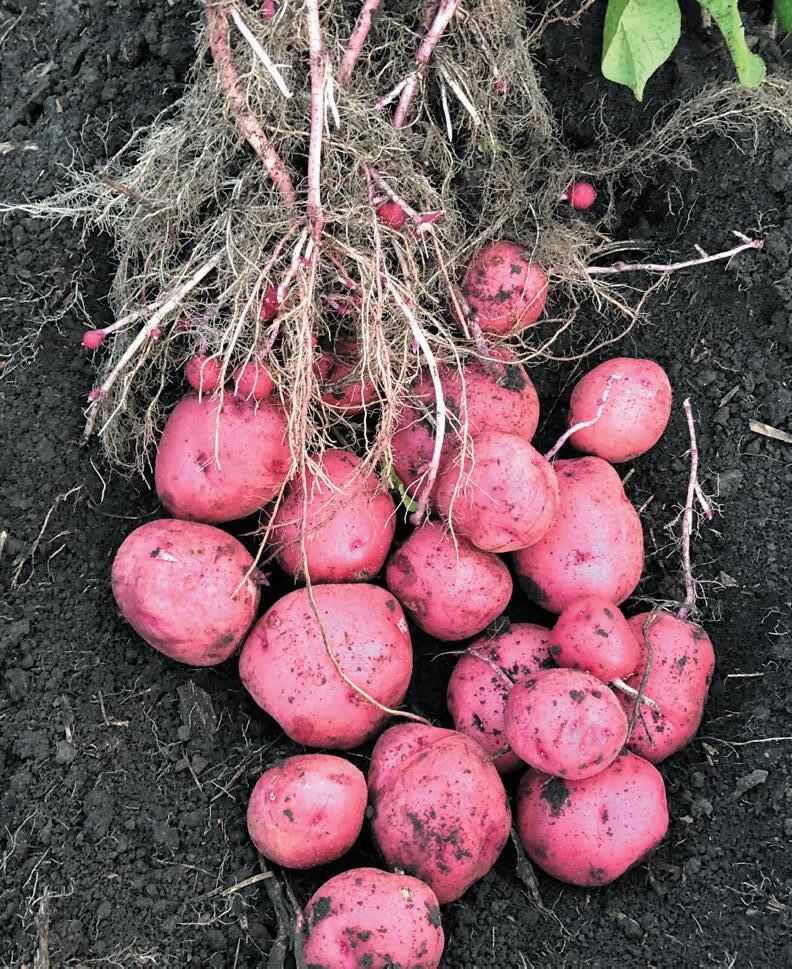


North Dakota Certified Seed Potatoes • Minto, ND Contact John Miller: (701) 248-3215 Dryland Grown…Northern Vigor! We are now offering shipments in 2,000 lb. totes and contracting for the current year and beyond if interested. Silverton Goldrush Chieftain Dark Red Norland Red Norland Modoc Lamoka Ranger Russet Dakota Russet Reveille Russet Viking Dakota Pearl ND7799C-1 Waneta All Lots PVX, PVY & Non-GMO Tested www.johnmillerfarms.com
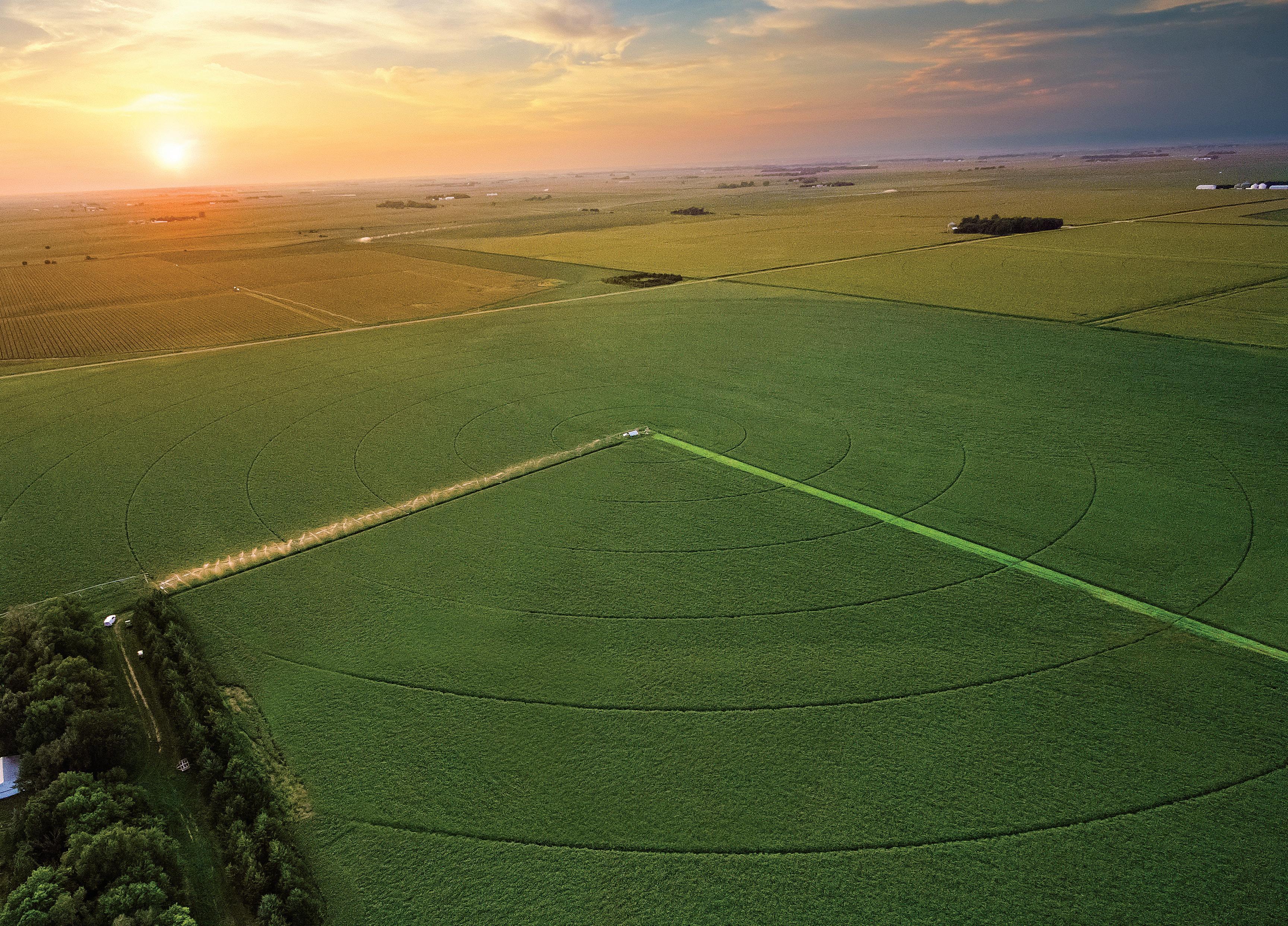
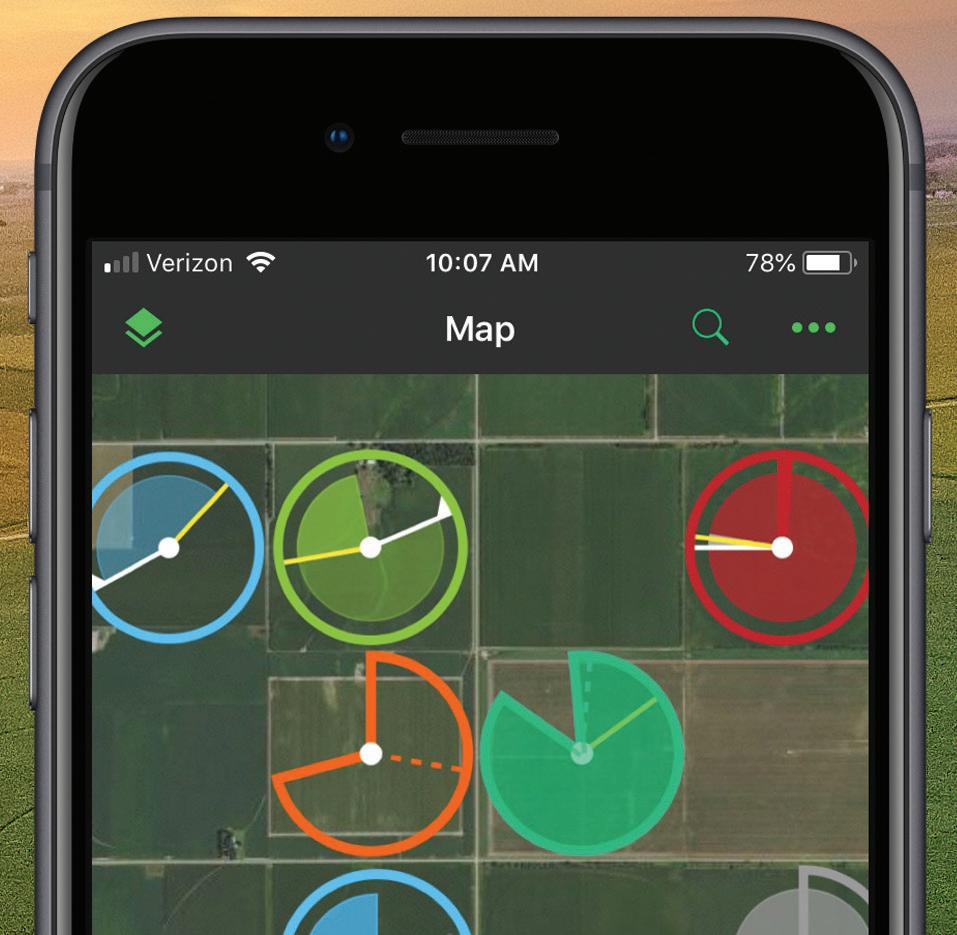
P.O. Box 327 Antigo, WI 54409 CHANGE SERVICE REQUESTED Non-Profit Org U.S. Postage Paid Stevens Point, WI 54481 Permit No. 480 Contact <Dealership name> to learn more about the FieldNET family of remote irrigation management tools – FieldNET® Pivot Watch™, Contact <Dealership name> to learn more about the FieldNET family of remote irrigation management tools – FieldNET® Pivot Watch™, FieldNET Pivot ControlTM and FieldNET Pivot Control LiteTM <Dealership Name> <Street> <City, ST 00000-0000> <phone> Contact <Dealership name> to learn more about the FieldNET family of remote irrigation management tools – FieldNET® Pivot Watch™, FieldNET Pivot ControlTM and FieldNET Pivot Control LiteTM <Dealership Name> <Street> <City, ST 00000-0000> <phone> <web> © 2023 Lindsay Corporation. All rights reserved. Zimmatic, FieldNET, FieldNET Advisor, FieldNET Pivot Watch, FieldNET Pivot Control and FieldNET Pivot Control Lite are trademarks or registered trademarks of Lindsay Corporation or its subsidiaries. Please contact Badger State Irrigation for support on all of your Zimmatic and FieldNET irrigation management products and tools. 715-335-8300 N6775 5th Avenue Plainfield, WI 54966
