




EDITOR-IN-CHIEF
Keith Loria
billiardskeith@gmail.com
CONTRIBUTING WRITERS
Charles S. Donnavan
Wendy King
Jason Moss
Anthony Stoeckert
MEMBERSHIP MANAGER
Shane Tyree shane@bca-pool.com (303) 243-5070 x23
ART DIRECTOR Julie Snee julie.snee@gmail.com
CHAIRMAN
Brian Igielski, GLD Products
VICE-CHAIRMAN
Chance Pack, Champion Shuffleboard
SECRETARY
David Piha, Greater Souther Home Recreation
TREASURER
Brian Rosselli, Olhausen Mfg
BOARD MEMBERS
Ivan Lee, Iwan Simonis
Debbie Corvey, Boynton Beach Billiards
Dan Pucci, American Heritage Billiards
Philippe Singer, The Predator Group
Ed Liddawi, Sandcastle Billiards
We are excited to present you with the first-ever 2020 BCA VirtuALL Billiard and Home Leisure Expo! This is a new adventure for us and we know it’s also different for you, too.
Obviously, we’re not doing this because we all want to be sitting at home or in our stores this summer but because we have to, for the safety and wellness of ourselves, our families, our staffs, and our customers.
Over the past few months, I feel it is safe to say we have all been thinking about those courageously battling the frontlines of the pandemic as well as those who have been directly impacted by this disease. But, we’ve also been naturally concerned with how this will impact our companies, our businesses and our livelihoods.
Now, while the country is slowly starting to open, we feel it is our obligation as your industry’s association to still provide a platform for you to connect, network and offer you as much information as we can to help your company continue to grow and thrive.
With our planned webinar series (July 27-30), we aim to provide you with tips to navigate operating your business during a pandemic, both logistically and from a marketing view. Along with our webinars, we have reached out to past BCA Expo exhibitors and are thrilled that so many of the industry’s leaders are participating in our inaugural BCA VirtuALL Expo.
Along with all the VirtuALL Expo information in this edition, you will also read about success stories from retailers and dealers during this unprecedented economic shutdown. We have a lot of information on COVID resources, such as: where to find loans for small businesses, how to keep your store clean and sanitized, as well as how to reduce stress while social distancing. Plus, we have a feature on how some of our PBIA instructors are providing virtual instruction for their students.
Thank you for participating in our first-ever BCA VirtuALL Expo event. We look forward to making this as seamless and successful as possible. Although there will be some hiccups along the way, we appreciate your continued support and dedication to the billiard and home leisure industry.
Join me at the BCA VirtuALL Expo July 27-30. Register at BCAExpo.com.

ROB JOHNSON, CEO

The coronavirus is having a drastic effect on businesses and the economy, and if your billiard store is closed, limiting its service, or simply slow because people aren’t shopping yet, you should focus a lot of attention on your marketing strategy.
Innovative ideas are what’s going to get customers back in-store once we get past these difficult times. That’s why billiard retailers need to create experiences in stores to give customers a reason to want to come back.
Ashley Sterling, director of operations at The Loop Marketing, notes once the pandemic is over, many types of companies will be looking at how to bring people back into their stores but billiard retailers shouldn’t be waiting for that time to come.
By Anthony Stoeckert
“Don’t wait to get in front of your customers,” she says. “If you own a billiard and home leisure store, you’re lucky as it offers a unique niche to market. We would suggest doing a behind-thescenes approach to your marketing. Film how a pool table is made or introduce people who work on them. Transparency is what everyone is craving right now.”
Home Leisure is in many ways an exciting business to market, as it has inherent entertainment value. The trick to promoting a store is to put on a show, and let people know it’s happening.
Whether you have someone showing an impressive trick-shot, offering advice in store, or maybe you are run -
ning a promotion, none of that matters if nobody knows about it. For them to know, and as a result enter your store or visit your website, they need to hear about it somewhere.
“Video ads are very cheap on Facebook, and you can target only the demographic or location you want to reach,” says marketing expert Richard Kline. “That keeps costs down to a minimum. The way to do this is to create a very small preview of what you’re planning, or at least a short captivating ad, and then run it as a Facebook video ad, targeted to your local area.”
If there are still health concerns when business opens up again, be sure to address those concerns. Don’t feel the need to talk about that in the ad itself, though.

“And don’t forget that once you’ve got them back in the game, they’ll keep coming back,” Kline says. “So, put on a show, make sure they know about that show, and then provide a service they love.”
Effective marketing will keep your customers aware of your store as they are quarantined. People are spending lots of time on their computers these days, which creates opportunity for you to bring them to your website and to interact with them through social media.
It’s essential to create a long-term plan for that glorious day when businesses re-open, which could mean a busy summer, followed by the all-important holiday season, and in this day and age, all the tools you need to improve your marketing game are at your fingertips –and your keyboard.
And if your store has an online component, this is a great time to promote items home recreation enthusiasts may want. After all, if they’re staying inside, they’re sure to be using the game room more than ever.
So much of marketing these days is done through social media, which offers numerous advantages because it allows you to spread the word of sales you’re hosting and the newest products on your shelves in creative and affordable ways. Social media is where people are looking for information, and, best of all, it’s where they share things they find interesting with their friends, contacts, and followers.
Manny Hernandez, who is the co-founder and CEO of Omni, Inc. and has more than 10 years of experience in the fast-evolving arena of direct response marketing, says marketing will be vital to retailers all year long.
“2020 is a year every retailer has to intensify its marketing efforts to achieve great results,” he says. “A retailer wants to acquire more customers, generate more sales, and grow their business’ revenue.”
Some of the tips he suggests that will help you create a “killer marketing strategy” for 2020 include upgrading outdated hardware, software, and processes, getting personal with customers, giving employees pep talks about your marketing strategy, modernizing, merchandizing, improving customer retention, and incentivizing your community to create content.
And here are some other ideas for how to improve your marketing, and boost your sales in the process.
Technology is always evolving. Just a few years ago, your social media could be successful just by posting clever posts and photos, but we’ve now reached the point where it is essential to make sure your social media and internet presences have video components as well.
“In 2020, put as much focus as you can into your video strategy,” says John Lincoln, marketing strategist and CEO of Ignite Visibility and the author of the books, The Forecaster Method and Digital Influences.
Lincoln notes that a smart approach to video on YouTube, Google Display and Facebook can drive traffic and increase buzz about your business.
“If you can get five to 10 great videos and advertise them once a quarter, your retail location will have all the customers you need,” he says. “The trick is to advertise your videos in a three-mile radius around your location, make sure to set the right demographic targeting and have a prospecting audience, remarketing audience and one audience that targets an existing customer list. Also, make a few videos with special offers for when things get slow. This way, you will have them in your back pocket should you need a ‘pop-in’ business.”
Creating your own YouTube channel is a terrific option, as it makes it easy for people to follow your programming, which can include things like videos of the products you sell. But don’t just show the products – demonstrate how games are played and how much fun they are. Offer tutorials on how to play pool, foosball, air hockey, or shuffleboard. Or post videos that show how an accessory can improve a customer’s game or keep tables in tip-top condition.
Content marketer Brendan McConnell says informative articles, videos, and web pages are the “secret sauce” to successful marketing.


“This is especially true for businesses that sell products or services for the home,” he says. “The reason for this lies in the growing trend of consumers researching products and solutions to problems online before they make a purchase.
“Think about it. If you’re a homeowner, and you’re looking for options for billiard tables or hot tubs, your likely first stop will be YouTube or Google. Here, you’d expect to find dozens of videos by companies and consumers that critique different products and offer advice on what to buy and how to install it.”
That gives retailers the opportunity to be the resource that creates those videos and articles.
“Because if you’re the trusted source of information that a consumer is using to make a buying decision, then it’s highly likely that they will choose you over a competitor,” McConnell says.
He suggests billiard retailers do some research and find out which products and services are most popular, things you already likely know. Then look into what content is available and if you can improve upon it, or add your own take on it.
“If so, then that is definitely a worthwhile marketing play,” he says.
Rio Rocket, a marketing expert, says the key for retailers is to protect themselves from seasonal ups and downs by creating “evergreen” content.
“Businesses that have an evergreen content marketing strategy reap considerable rewards in monetizing traffic in their slow seasons by cultivating prospects year-round whether their company provides services year-round or not,” he says.
He also suggests “swinging for the fences” by trying to create viral content, which he adds will either be a home run or strikeout, but if you come up with a viral video that hits, it will result in lots of attention for your store.
“The challenge of a viral marketing campaign is to nail down a concept or idea that becomes so contagious the desire to share it with the next person is almost irresistible,” Rocket says.
When it comes to video, he also suggests creating “episodic” content that will bring your followers back to your YouTube channel or Facebook change.
Podcasts have been around for a long time and many of the most popular ones couldn’t be simpler in concept as they consist of just a few people talking.
“Podcasts and audio books are forecast to be the most consumed content in 2020. Heading into 2019, there were more than 700,000 active podcasts with over 29 million podcast episodes up from the previous year of 550,000 and 18.5 million respectively,” says Rocket, adding that podcasts are conversational, niche-focused, and can be enjoyed by anyone who has a Smartphone.
If you start a podcast, be sure to do it consistently, posting new editions regularly, at least once a week. Talk about the latest products you offer, or sales you’re hosting. Interview players about their careers and upcoming tournaments. Interview manufacturers about their most popular products, and give your followers the inside scoop of new items that are on the way.
Everyone should be charitable and help those who are less fortunate, but supporting a local organization that helps others can also be good for your store’s bottom line.
“One of the ways that billiard and home leisure retailers can improve their business is to collaborate with a nonprofit in their community and support a cause,” says Sheryl Green, author of Do Good to Do Better: The Small Business Guide to Growing your Business by Helping Nonprofits. “The benefits of this include: increased brand awareness and being known as caring about the community, increased PR opportunities, increased foot traffic in the store, especially if they host in-store events for the nonprofit, and much more.”
There are so many ways to approach marketing in a post-COVID-19 world. All you have to do is figure out the right approach for your store, and how to go about getting it done.





By BCA Staff

Due to concerns over COVID-19, the Billiard Congress of America will host the BCA VirtuALL Expo and Business of Billiards Education Series during the same week that the BCA Expo was originally planned (July 27-31).
“Recognizing that hundreds of attendees plan for this Expo each year, as well as how many exhibitors and sponsors rely upon this event for a major portion of their livelihood, we have hoped that COVID-19 concerns might lessen by late summer,” says BCA Chairman, Brian Igielski. “Continuous monitoring of health advisories by the Centers for Disease Control and Prevention, the WHO and the appropriate organizations in Las Vegas has made it clear that it is not possible to move forward with the 2020 BCA Expo.”
The first-ever BCA VirtuALL event will consist of a series of educational webinars (sponsored by Legacy Billiards) that will
provide tips on managing businesses during this pandemic as well as guidance on the “new normal” facing the industry.
“Extraordinary times require extraordinary measures, and while we are saddened to take this action of changing the live BCA Expo this year in Las Vegas to a virtual event, we know it is the right decision,” says Rob Johnson, BCA’s CEO. “However, we are also excited to present the BCA’s VirtuALL event to assist our industry with needed education and promotions from our industry’s leaders. We eagerly look forward to the time when we can all get together in person to do business, renew relationships, and make new connections via the BCA Expo.”
For more on what to expect during the BCA VirtuALL Expo week, see the pages ahead.


Download the Whova mobile app and take the VirtuALL Expo with you!
MONDAY, JULY 27
@ 2PM EST
Home Entertainment is Hip Again
Are you planning to meet more customers and do more sales today?
Presented By: Lynn Switanowski
TUESDAY, JULY 28
@ 2PM EST
Operation Open Doors
Adapting to new COVID regulations
Visit BCAExpo.com
Click on the VirtuALL registration button and register for free
Visit the BCA VirtuALL Expo and Webinar site and select the live webinars you want to watch. Once you are signed up, you can add it to your calendar as a reminder.
Explore the Exhibitor Page to view information on participating exhibitors. All exhibitor videos will be available to watch starting July 27, 2020.
Presented By: Michelle Friends and Colin Walker
WEDNESDAY, JULY 29
@ 2PM EST
Marketing Your Home Entertainment Business: Adjust, Adapt or Become Irrelevant
The how-to of using social media to drive sales
Presented By: Lynn Switanowski
THURSDAY, JULY 30
@ 2PM EST
Your Pool Room CAN Stay Relevant
When the doors are closed (or not completely open)
Presented By: Lynn Switanowski
By Keith Loria
The 2020 BCA VirtuALL Expo will feature four incredible, informative webinars as part of the 2020 Business of Billiards Webinar Series (sponsored by Legacy Billiards).
Lynn Switanowski, founder and president of Creative Business Consulting Group, a retail strategy consulting firm, who is a popular and long-time BCA Expo speaker, will host three webinars, kicking things off on July 27 with “Home Entertainment is Hip Again.”
“Ironically, since COVID has hit, the billiard and home leisure industry has taken off. The manufacturers did a good job and some of the smarter, more adaptable independents capitalized on it,” she says. “So, the idea is how do you take this current mindset where we’re not going back to 100-percent ‘get out for entertainment’ for a very long time, and use that for your marketing messages to better sell your products to your customers?”
The premise of the webinar is to offer advice on how to help retailers communicate that they can solve people’s home entertainment needs that they didn’t even know they had.
“That requires a message around the current situation and making stay-at-home relative again,” Switanowski says. “Think social distancing and small-group get-togethers which are perfect for being at home. The idea of the webinar is to take their business and put it in the context of how relevant it can be in today’s social situations.”
On July 28, Colin A. Walker, an unemployment lawyer with Fairfield and Woods, P.C. in Denver, and Michelle

Friends, executive director for the firm, will host “Operation Open Doors,” which is a primer on adapting to new COVID-19 regulations.
“This webinar is about legal and business issues related to workers just starting to come back to the office,” Walker says. “She and I tag-team it. She will talk about the business side of things, such as staffing issues, equipment issues, IT and safety. I will talk about the employment-law issues such as the Family’s First Coronavirus Response Act.”
Additionally, in Colorado, the state has some specific requirements, just as all states do, and Walker will talk about what legal issues people will need to know.


“Michelle is really good with technology so we welcome questions during our presentation,” Walker says. “When she sees a good question, we’ll bring it up and one of us will answer live.”
During the webinar, the law firm’s team will also conduct polls, such as asking “how many people have a policy on returning to work,” and then tailoring some of the information based on the results.
“This is important to everyone in the BCA – manufacturers, retailers and pool halls – as there are some specific issues that this industry has,” Walker says. “For instance, manufacturers will learn about what they need to do if someone says they don’t feel comfortable coming back to work. From Michelle, they will get a lot of good information about operational stuff they should be considering, such as whether they should be taking employees’ temperatures every day and recording them.”
Walker notes that laws and regulations concerning coronavirus are changing very fast as governors continue to make rules and adapt restrictions. That’s why it’s important that those in the industry stay on top of these things.
“We’re happy to take questions at the end, and during the presentation we will take questions, but we have plenty to talk about for an hour,” he says.
Switanowski is back on July 29 for the webinar, “Marketing Your Home Entertainment Business: Adjust, Adapt or Become Irrelevant,” a how-to of using social media to drive sales.
“For this one, it’s more around the nuts and bolts of it all,” she says. “Whether it’s setting up selling capabilities on social media, setting up an e-shop, and showing how best to connect to customers. It’s the next version of what they should be doing already.”

For instance, Switanowski will explain why using online reviews to engage customers is important, and how retailers can communicate the best ways to shop, even if the front door is closed.
“There are now a lot of different ways that people can connect and retailers can service customers,” Switanowski says. “Virtual showroom appointments for instance. We need to communicate that new mindset that retailers don’t need to be in front of you to make a sale.”
Many of the manufacturers have found success with this, simply by forwarding calls to customer representatives. And the webinar will help retailers understand the front door might not open fully for a long time, but there’s still a way to do strong business.
“There are marketing techniques that will engage them,” she says. “Framing the marketing in the context of COVID in reality is stuff they should have been doing anyway. But now, the sense of urgency is that if they don’t do this, they will not be speaking to any customers.”
What retailers need to understand, even as some are starting to open their doors, is that many customers are scared and don’t want to go shopping in the same way as they have in the past.
“As a billiard retailer, how can you communicate that you’re cleaning and sanitizing your store every day and letting people know it’s a safe place to shop, and your team is wearing masks and there’s social distancing going on?” Switanowski asks. “All of that needs to be communicated and if I don’t have a customer on an email list, how am I going to tell them that?”
The next day, July 30, Switanowski leads the webinar, “Your Pool Room CAN Stay Relevant.” She notes reacting strategically and quickly to navigate this current lowered capacity in the pool room – no matter how long it lasts – will have crit-
ical repercussions for the long-term health of your business. This pool-room-focused session will share immediate ways to help your pool room connect with customers today, tomorrow and for years to come.
“We’re trying to help the pool rooms, which have historically done even less with marketing than the retailers,” she says. “These are essentially bar/restaurants that are getting hit really hard. We’ll explore how they are staying top-of-mind with their customers and what they can do to stay successful.”
Some of the best successes Switanowski has seen are pool rooms that have turned their parking lots into family arcades, setting up tables outside and offering takeout food and drink orders.
“But for those pool room operators who can’t do that, what are they doing to stay relevant?” Switanowski asks. “Are they showing old pool tournaments, are they communicating tricks, are they doing virtual live lessons? Basically, this is a marketing message directly to pool rooms.”
Having been a staple at BCA Expos for many years, Switanowski knows these virtual webinars will be different in scope, but she feels they will be just as valuable as her in-person talks.
“This is the wave of the future,” she says. “It’s still about building the trust and rapport. I will be onscreen more showing my face, and even though I am not physically walking up and down the aisles, for me my job is to mirror the engagement. I’ll be doing more polls and surveys during the session to engage and interact with all the participants.”
She knows this is a new experience for a lot of veterans of the billiard biz, but is confident that everyone will get something out of the webinars.


Our BCA members are a formidable bunch who have lived through recessions, natural disasters and other devastating events, but the COVID-19 pandemic was something no one saw coming.
But the industry is strong, with a lot of great, savvy people at the helm of the retail stores and manufacturing companies, who do what it takes to survive. During the pandemic, many have found that there’s been an uptick in consumers looking for home entertainment, and many have discovered ways to stay open and service customers.
Whether it’s by appointments, curbside pickup, expanding into online ordering or running social distance protocols in the stores, retailers are still doing business. And as restrictions start to be lifted around the country, some stores are just opening up and hope to find that same success.
By BCA Expo Staff
Here are some stories from BCA members about what they’ve experienced.
Audra DelConte, owner of Royal Billiard & Recreation in Hatfield, Pennsylvania, notes that the store took big measures to ensure customers knew that even though the doors were shut, they were still there to help.
“I spent four days on Instagram and doing Google Ads and putting signs on the door, so that was our biggest step,” she says. “I transferred the calls to my cell, was online looking at emails and integrated software on our website so people could instantly text us. I did everything I could to make us accessible during this time.”
Royal Billiard & Recreation did close some sales remotely and eventually
opened the store for private shopping by appointment. While closed, the store was offering deals of up to 30 percent off.
“We found people were looking to get out of the house and find some place quiet and safe to shop, or even browse,” DelConte says.
In mid-June, the store opened, though it’s reduced hours and taken steps to have customers social distance. All employees are wearing masks, there’s a sneeze guard at the counter and other safeguards have been installed.
Kornerpocket Billiardz, Inc. in Woodinville, Washington, never closed, even after the stay-at-home order went into effect in the state.
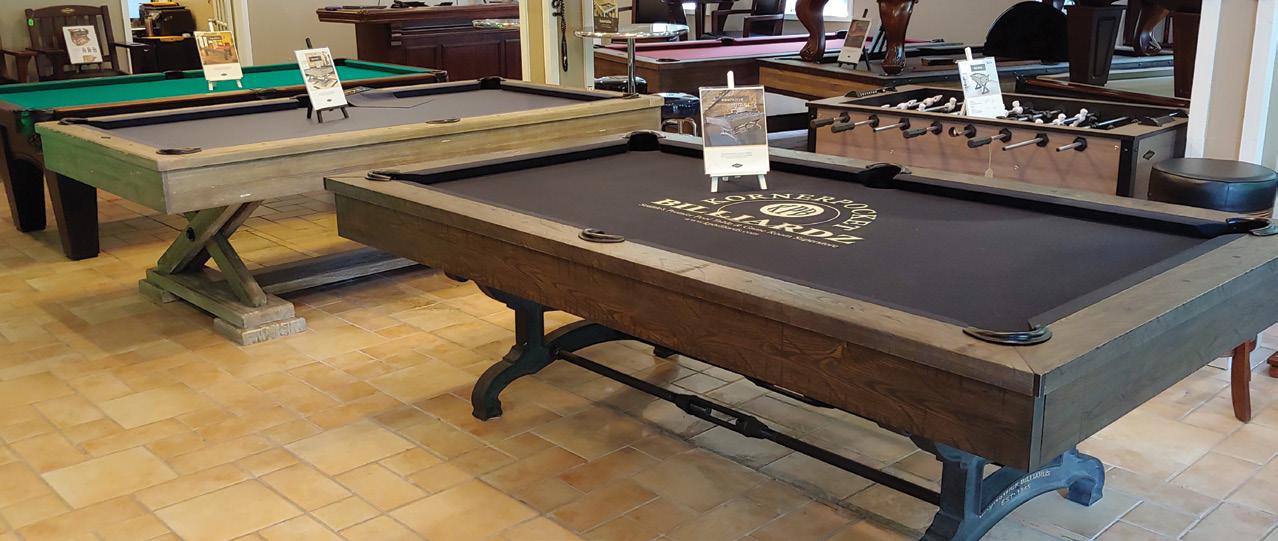







Stefanie Howard, owner of the store, notes she read through all the fine lines and found a way to still continue business.
“We applied with the state to be considered an ‘essential’ business since we offer moving services and the products we sell help keep people sane while being quarantined,” she says. “We have been accepting customers by private appointment and implemented a ‘Release of Liability’ form that customers sign before we come to their house and install anything.”
The ROL states that Kornerpocket Billiardz employees will use PPE (masks and gloves) and that the customer must give the technicians plenty of space to install their product in their home.
“We have two crews that work five days a week and when they aren’t in the field, they help in the store,” Howard says. “We had one tech take some time off as he was concerned about the virus but he has been back to work for the last few weeks.”
The store has had several online orders but most of the sales are done through email and phone – which is how it was done even before the pandemic.
“Essentially, it’s been business as usual with a few new procedures in place,” Howard says. “Our technicians have always been a cut above as we enforce strict standards to keep our high-end reputation. We are not ready to go out of business yet and will fight to the end.”
Leon’s Billiards & More in Lexford, Pennsylvania was closed from March 16 to May 15, so the store lost two months of sales plus its annual Home & Garden 10-day show was cut by two days due to low attendance caused by those fearful of the coronavirus.
“That was a big hit to us as we get a lot of revenue in March from that show – it’s normally close to holiday numbers,” says Mike Leon, owner of the billiard supply store. “Having no income for two months was a huge hit as the rent, insurance, truck payments and utilities still had to be paid. I was very lucky to have a great company like The C.L. Bailey Company defer some of my payments that were due. They went the extra mile helping many dealers.”
During the downtime, Leon would come into the store every few days and check voice mails and call customers, booking jobs for when he would re-open. He also sold a few items by e-mail and phone.
“We finally reopened on May 15 and business was very brisk,” Leon says. “The number of customers that came in was not great, but most people who came in bought. We sold 17 pool tables in two weeks of business in May, plus many other items and had service work.”
Back in January, Anthony Costanzo, owner of Capitol Billiards and Billiards Bar & Bistro in North Providence, Rhode Island, was talking to his wife about possibly closing the place down for the summer and reopening in the fall, never expecting something like the pandemic to come along and almost fulfill his prophecy.
“We are a mature business, but finding new employees has always been a problem in the summer so I looked at how much would it cost us and what the results would be,” he says. “As I get older and hopefully wiser, I accept a lot of what happens as just part of business life and move along. My belief is that for now, God and the government want us to take that break. Hopefully they want and need us back by August.”
With the exception of several tables purchased before COVID-19, Capitol Billiards will remain closed until the entire operation from bar to in-home delivery is deemed safe by the governor.
“We may either declare independence and open in mid-July or will wait until we get authority to fully open by the state and then open in the fall, but we will not do a partial opening with just food and no available seating at the bar,” Costanzo says.
Ricky Rivlin opened Billiard Gallery in 2004 and the Phoenix, Arizona-based store has been supplying pool tables and game room equipment for 16 years, so he wasn’t about to shut down when he thought customers might need him the most.
“I never closed,” he says. “It’s only me in the shop most times, so I stayed open so peope could still come in and buy what they needed.”
When the state of Arizona shut down on April 1, naturally, business was very slow. Rivlin did find more people calling in for orders, but for about two weeks, it was as slow as he ever experienced.
About April 13, as the stay-at-home restrictions started to be lifted, business picked up and the store has seen high demand for pool tables and home entertainment items.
“The big items are selling very, very well,” Rivlin says.

It’s not just the coronavirus or the political landscape that is presenting a challenging time for billiard retailers; there is also deep concern by many that 2020 could bring a recession. Many of those in the billiard industry know they need to hope for the best, and brace for the worst.
But, as important as business savvy and financial expertise can be in riding out difficult times, other traits also come into play and may be just as essential, says Marsha Friedman, a successful entrepreneur who still leads a business she launched three decades ago.
“One of those essential traits is courage,” says Friedman, founder and president of News & Experts, a national PR firm.
By BCA Insider Staff
“Thirty years ago when I started my company, I probably would never have said it takes courage to lead a small business, but without it, I assure you, you’ll fail,” she says.
Friedman, who is also the ForbesBooks author of Gaining the Publicity Edge: An Entrepreneur’s Guide to Growing Your Brand Through National Media Coverage, understands this firsthand. Her firm, like many businesses, endured tough economic times after the 9/11 attacks. Revenue dropped and bankruptcy loomed as a real possibility.
“I had to figure out how to turn my company around,” she says. “It took courage, endurance, and perseverance,
but I knew I could not go back, so I had no choice but to go forward.”
They’re the guiding principles she’s learned through the ups and downs and all the mistakes.
“If you’ve recently launched a new business, know that you’ll encounter challenges, but don’t panic,” Friedman says. “When times get tough, if you rely on the C’s as a sort of compass, you can guide the business back to smoother waters.”

Don’t be afraid. You know what you need to do to be successful and you have the power and knowhow to do it. Don’t let anyone tell you that you can’t do what you know you can. Be brave, be strong and be courageous. You can do whatever you set your mind to and be successful.
Care enough about yourself and your dreams to believe you can achieve success. “Just as important is caring about your staff and creating a positive work environment for them,” Friedman says. “Be supportive when stressful situations arise in their lives. Finally, a good business leader cares about customers. Be willing to listen to their concerns, take responsibility for mistakes, and correct them.”
Most people have faced and overcome challenges in life. The confidence that allowed them to prevail over those challenges needs to be brought into play in business, Friedman says. “Believing you can reach for and achieve your short-term and long-term goals is essential to getting you there,” she says.
It’s critical to stay up on the trends and disruptions in your industry. “But you need to recognize your limitations, and you shouldn’t take on jobs within your company for which you’re not qualified,” Friedman says. “You’ll make yourself miserable and your business will suffer.” So, she says, “Hire an accountant to handle the financials. Get marketing help if that’s not your thing. Hire competent people who you will trust in their jobs – and then trust them.”
“Stay dedicated to your goals no matter how difficult that becomes,” Friedman says, adding there are times when this will not only be difficult, but downright painful. That was the case for her during those tough times after the 9/11 attacks. “I had to make drastic cuts, including letting go beloved employees.” she says. “For more than a year, I ramped up marketing efforts, diversified our services, and took other steps to get the business out of the red. In 2005, I succeeded – and it has been upward and onward ever since.”


Steve and Tom Orner grew up around pool tables – literally.
As their parents grew their business, which today is known as Jay Orner and Sons Billiard Co., the family’s home served as a showroom, and tables could be found throughout the house, including in sleeping quarters.
“And in our bedroom, where my brother and I slept, there was a pool table in the room, and we had bunkbeds and in order to sleep on top, the only way to get down was to get on the pool table,” Steve Orner says.
More than 80 years after the brothers’ father, Jay, and grandfather, Hugh, took their first steps in the billiard industry,
By Anthony Stoeckert
the family enterprise is still thriving as Orner Billiards provides Indianapolis and its surrounding areas with the best American-made pool tables, shuffleboards, foosball, air hockey, bars and barstools, lighting and more.
“It’s just been one heck of a ride and we still love it, we still enjoy it,” Steve says. “The fact that we have employees that have been with us for 20 or 40 years, that says a lot.”
In 1939, Jay and Hugh decided they wanted a pool table, so they spent $100
on an old, beat-up model and got to work restoring it.
“They spent months sanding it down and fixing it up, and they took the table up and some people saw it and wanted to buy it for $200,” Steve says. “That started a chain reaction that is still going on to this day.”
Jay and Hugh kept on restoring tables, building an outstanding reputation in the process, and after about 10 years, they opened a pool room with six tables, and they also refurbished old Brunswick tables in the back, selling about 40 to 50 a year.
“That was pretty good back in those days,” Steve says. “When my dad met my


mom, the house that they bought became a showroom. So before my brother and I were born, they were selling tables out of the bedrooms in the house. They would have a couple of tables in each bedroom, one in the garage, and one in a little barn out in the back.”
Steve and Tom began helping out when they were very young and learned
how to sand down tables and install diamond sights.
“We were probably doing some dangerous stuff with the chemicals and the varnish and all that kind of stuff,” Steve says. “But I just remember the doorbell ringing and people knocking on the door and coming over in the middle of the night and looking at pool tables because everyone worked and the only time to look at a pool table was after dark when they got off work.”
Some of those folks who visited the house were legends. It wasn’t unusual for Steve and Tom to wake up in the
middle of the night and see Jay talking with Willie Mosconi or Danny Gartner.
“Jimmy Caras was a longtime family friend,” Steve says. “They would spend the night at our house, and to me and my brother they were just normal people who would stay over when they came to town.”
One of the most memorable of these houseguests was Norm Webber, who carried a suitcase that Steve says was as big as a car, and had clothes sticking out, like something from an old movie.
“It had stamps of all the cities he’d been to, and I go, ‘Mr. Webber,’ and he said, ‘Call me Norm!’ And I said, ‘That’s an awful big suitcase, what’s in it?” Steve says. “And he goes, ‘Well, I put on different costumes to be different people and I play pool, and I might go play as a farmer one day and the next I’ll put a wig on and go as a businessman.
“He would put wigs and mustaches on. And he’d play the same people three or four different times as difference characters. You talk about a big hustle, that was a big hustle. We lived that life, it was very normal for us to go to the pool room Sunday mornings and clean up, and there’d be nickels and dimes on the floor.”
Steve and Tom’s increased involvement with the business coincided with the growing trend of malls being built around the country, and that created a big opportunity for Orner Billiards.
“The malls all had fountains and we would rent space around the fountain and set up pool tables around Thanksgiving and Christmas,” Steve says. “We would work there at night and set up pool tables during the day, but we got a lot of business and got our names out there by doing that.”
Both brothers also had talents for other sports – Steve played baseball and Tom
starred on the basketball court for Butler University. Steve had aspirations to play professionally and was offered a scholarship at Ohio University, but injuries cut into his playing time and he focused on his other passion, that being the family business.
“As bad as it was for me at the time, it turned out to be a blessing in disguise,” he says.
Then Tom decided he wanted to join the business full time.
“That was when things really jumped,” Steve says.
Orner Billiards moved into its current location on Rockville Road in Indianapolis in the early 1980s.
“We got so lucky,” Steve says. “My dad and I were coming home from setting up a couple of tables one day, and we get off the Interstate, we lived maybe a mile off the Interstate back then, in a house that he built actually.”
They stopped to get gas at a station that was owned by a friend of theirs, who
told them that one day, the Interstate would get bigger and that homes would be built in nearby towns like Avon and Danville. A year later as they were looking for space for a store, they got word about a building that was for sale right near that station.
“We got the call at nine, and by noon it was ours,” he says.
They started out by displaying about 20 to 25 tables, some bars, and maybe a shuffleboard, and they rented out part of the building.
Now, Orner Billiards takes up the whole building, which has been added onto four times and offers 25,000 square feet of warehouse space with huge showrooms. And their reputation is so strong that people travel from as far as 200 miles to head to Orner Billiards for their game room needs.
And it remains a family endeavor as Tom’s wife, Cindy, runs the office; Steve’s daughter, Danielle, handles the books; and Tom’s sister-in-law, Diana, also works there.
“We’re a very close-knit family, and one store is more than enough,” Steve says. “We have thought about opening another store or two the way some of the other dealers around the country have. But the

majority of those didn’t work out, so I’m so glad we’ve kept it the way we did.”
For many years Orner Billiards sold mostly pool tables, though Steve remembers his father selling bars while the business was still based out of the family home. Then they started selling poker tables and three-way tables that could be used for poker, dining, and playing bumper pool.
One of the most popular items these days is shuffleboard, as the store now showcases about 20 shuffleboard tables and 45 pool tables.
“The shuffleboard business has skyrocketed for two reasons. First Donny Olhausen had the foresight to be the first one to make matching pieces where you could buy any pool table and get a matching shuffleboard,” Steve says, adding that about half of the store’s customers are buying matching shuffleboard and pool tables.
The second factor that has led to the growth of shuffleboard sales is the popularity of curling, which is one of the most popular events during the Winter Olympics.
“Curling is a very similar game to shuffleboard,” he says. “And curling is on TV, even during the off years of the Winter Olympics, people watch it, and I think that is a big reason why people are into it. People will play shuffleboard all night and kids stay in the game room and aren’t watching TV all day, they’re playing and participating.”
All of that has led to Orner Billiards selling about 200 shuffleboards every year, 10 times the amount they were selling just a few years ago.
“It’s a monster success,” Steve says.
One recent shuffleboard sale came when a man and his young son entered

the store, looking for something they could do together that doesn’t involve a screen. They were shown a shuffleboard that was set up in a backroom.
“The son starts playing shuffleboard and I put the bowling pins on, and we couldn’t get him away from it,” Steve says. “He said, ‘Daddy I want one of these.’ Well, they left buying a shuffleboard. They bought their pool table two or three years ago and I had a record of it, and they’re going to make a shuffleboard that matches it.”
Also popular are arcade games, multigame units that offer such favorites as Pac-Man that come in various styles.
“Customers want that old-time video game,” Steve says. “The one that we sell the most has 412 of the most popular games, and we even now have a virtual pinball game that has all the most popular pinball games on it. It’s another game for the game room, and it’s a tough world out there and keeps kids home in the game room.”
Orner Billards also installs, maintains, and repairs tables, with its installation team led by Mike Meads, who has worked for the Orner brothers for years, and Joe Gulledge and Tim Know, who have been the lead installers for almost 25 years. Roger Reece, who has worked for Orner Billiards for more

than 30 years, runs the warehouse, and Fred Wood has been handling rail covering and touch-up work for more than 25 years. Dave Bear, has been there for 40 years and does installations.
And while the business got its start with a restoration, that isn’t a big part of what the family does these days. However, they continue to work with Randy Burke, a nationally renowned restorer of antique tables, who recently restored a table they bought about 10 years ago, because a customer was looking for an antique table.
“I almost forgot we had it,” Steve says. “I told him we had it, and my guy said, ‘I’ve been tinkering with it for the past 10 years, I can bring it back to life but I need a few months.’ We restored that table, it was spectacular, built in 1882, and we brought it back.”
But Steve and Tom also know that the success of this family business depends on other people throughout the industry, and that’s why when a delivery comes in from a company like Olhausen or Legacy, he sends an email thanking them for their hard work.
“Everything they did, from entering a log number to putting it on the truck to shipping it to me, unloading it, putting it in my warehouse, taking it out and installing it, we’re all in that together,” he says. “That’s not just Orner Billiards, it’s a whole bunch of people.”
The brothers are proud to continue the legacy started by Jay, who passed away 12 years ago, and Lorraine who passed away in 1999. But their impact on the business is still felt.
“My mom and dad made a great team,” Steve says. “My dad was the risk taker and my mom was the one who kept everything calm. So many people come in and remember my mom and dad, and it’s so rewarding because they made friends with the customers. That’s what you’re supposed to do, and it’s a lost art in today’s world.”
His parents set a standard by caring about what they made and sold and for treating customers with respect.
“They were so influential, not only to me and my brother but to all our employees,” Steve says. “Customers still come in with stories about my mom and dad. We’re selling pool tables not only to the children of their customers but now to the grandkids and the great-grandkids. It’s unbelievable. For someone to say to me, ‘My great-grandfather bought a table from you,’ I get goosebumps, I’m talking to you and the hair is standing on my arms. When it comes to word of mouth, you can’t get better than that.”

Recently, Steve’s grandchildren started helping out at the store, continuing the family tradition. And even though Steve and Tom work long hours seven days a week, he says they’re still going strong and feel younger than their years.
“People always ask, ‘Isn’t it tough being in a family business?’ I wouldn’t trade it for anything in the world,” he says.
The hard work of the Orner brothers and the legacy of their store have helped them thrive during the coronavirus pandemic.
“Our athletic backgrounds help us in all forms of life – that’s what I tell my grandkids, it doesn’t mean you’re going to be a ballplayer but it makes you competitive, it makes you want to do whatever it takes to get things done,” Orner says.
Lockdown regulations required Orner Billiards to close in March, and though customers weren’t allowed in, the business’ website was updated to let people know certain products could be delivered or picked up, and Steve and Tom were in the store every day answering phones and responding to emails. They
also posted their cell phone numbers on the website and Facebook pages.
“We were somewhat surprised, we thought we’d get some calls here and there, but every night, those phones were ringing until 10 or 11 at night,” Steve says. “We have been around so long that I think people trust us, they know we’re big on American-made stuff and our Facebook page has thousands of pictures of installs we’ve done. People are home, they can’t do anything and now they want something to do inside.”
Orner Billiards sold a good amount of ping-pong tables in the early days of the quarantine because customers can set those up themselves. After a few weeks, pool table installations were allowed under certain regulations, including installers wearing masks and not being near the customers, and products and rooms were thoroughly cleaned with Clorox wipes. The store re-opened its doors for regular hours, again with certain restrictions, on May 18.
“We had a great April and May might be record-breaking, which is unheard of,” Orner says. “And for the last few weeks, we’ve been available to install full time, our guys are setting up seven days a week, it’s like Christmas.”
And Orner expects Christmas to be like Christmas, as he thinks the home
recreation industry is positioned for a boom for the rest of this year.
“This a time where I think if people stay positive, they’ll be successful,” Orner says. “I see the writing on the wall because less people are going on vacation and they’re going to spend more time at home, whether it’s around the pool or whether it’s in the basement or game room, and the game room is a family thing.”
His father had another motivation in opening his pool room, and that was to help kids. Jay would invite kids into the pool room, tell them to pick up a cue and play against them – using a broomstick as his cue. That simple gesture of goodwill made a lifetime effect on some of those kids, who aren’t kids anymore.
“They still come in and still play,” Steve says. “So they get their cues worked on, and this one guy, named Fritz, every time he comes in, he comes over and gives me a hug and he goes, ‘I know I tell you this every time but your dad saved my life.’ And I say, ‘Fritzy, you cheer me up every time you say that.’ My dad took him off the road and gave him a job, made sure he got home, and told his parents what a good kid he was. I hear those stories all the time but that one sticks out.”
Steve and Tom have been running Orner Billiards for a long time, and they plan on continuing to do so for quite a while for the simple fact that they love what they do, and they love their customers.
“I’ve always said we keep getting better and better as the years go by,” Steve says. “And today, we’re the best we’ve ever been.”

For nearly 20 years, Roy Pastor has shared his passion for pool by teaching young players how to improve their game, and many of his students have advanced to compete in some of the most prestigious tournaments in the world. Now thanks to technology, Pastor and other dedicated instructors are able to share their insight and wisdom with students from across the country through the PBIA’s Break and Run Junior Instructor Program (the PBIA is owned and operated by the BCA).
“Roy’s online pool coaching program is a great fit,” says Kan Yi, whose son, Kyle, has been taking online lessons with Pastor since 2018. “Roy utilizes Facebook Private Group, live videos and recorded videos, YouTube, Dropbox, Google Meeting – all kinds of the latest com-
By Anthony Stoeckert
munication techniques to teach students online. Roy’s advice always hits the point and guides Kyle through many difficult times. The encouragement from Roy propels Kyle to get better every day.”
Pastor played pool as a kid and competed in tournaments when he was in college and during his first two years of law school at the University of Pennsylvania. After he got married, had kids and began his legal career in the early ’80s, he put pool on the back burner for 20 years.
Then, about 21 years ago, Pastor started playing the game he loves again, and he also decided he wanted to teach.
“I didn’t have any formal instruction when I was growing up,” Pastor says. “I played in boys clubs and did the things
that are typical for our sport without any formal instruction.”
Pastor began his junior program, the New England Junior Billiard Training Program, at his kids’ high school. Brunswick donated two nine-foot tables and he taught there for about a year – and he even used the tables to teach physics to honor classes.
In 2002, he moved his program to the Billiards Café, an upscale pool hall in Ayer, Mass. He gave weekly instructions and ran a league, and that program is still running 19 years later.
Although he was an effective teacher, some of his students were developing very quickly, and he realized he needed to do more.
“I had a little bit of knowledge as a player,” Pastor says. “I was a decent collegiate player when I was younger but I didn’t really have the structure that I felt could help my students reach their full potential. I could help them reach my potential, but that’s not what an instructor should be doing. I should have the tools to help my students reach their potential and hopefully that’s much greater than what I was able to reach.”
He earned certification from the PBIA Program about 15 years ago, and eventually rose to the ranks of PBIA master instructor. His Junior program has expanded to two other locations, Weymouth Teen Center in Weymouth, where the program is run by Kathy Collins, and the Busters Billiards in Somersworth N.H., where Chris Freeman leads instruction. Both Collins and Freeman were trained by Pastor.
About two years ago, Walter Zincavage, a fellow PBIA master instructor, told Pastor the BCA was looking for ways to give back to the game. Pastor said that would be easy – all they needed was a program that would reach kids who don’t have resources or access to professional instructors.
“I cannot tell you how many times I’ve been to the Nationals or I’ve been to the Worlds – I’ve attended both many, many years – and I can’t tell you how many people have come up to me and said, ‘We don’t have an instructor like you near us. Our son or daughter is very motivated but we just don’t have anybody like you,’” Pastor says.
That inspired the idea for the Break and Run Junior Instruction Program, in which Pastor and other PBIA-accredited instructors teach students via online lessons.
“It’s really started to take off,” Pastor says. “We have a good number now of PBIA instructors who have signed on.
We have students across the country and Canada, and we actually have expanded a little bit to help people set up curriculum and structure for junior programs.”
Pastor and his instructors often use Facebook as a starting point, because just about everyone has it. He’ll start by having kids send a short video of them practicing, a few minutes is all he needs to get an idea of their abilities. He’ll then assign an instructor for them to participate in the Break and Run Program, with instruction tailored to each student’s skill set.
“The online program is very similar to what I do if I’m in the same room with the kids,” Pastor says. “We can also do FaceTime and other programs where it’s like you’re in the room. It’s an amazing opportunity to reach kids who normally would not have access to this instruction. It’s a great way for instructors to gain experience and it’s incredibly effective.”
It’s also free.
“The instructors donate their time,” Pastor says. “All of my physical programs in New England have been free too. I don’t mind charging adults but I’ve never charged any of my kids. We have multiple national champions who have never paid a penny. I didn’t want it to be about money.”
He hosts fundraisers that help him take 10 to 15 kids a year to the BEF Junior National Championships. Considering about 250 young players compete in the tournament, that means a good
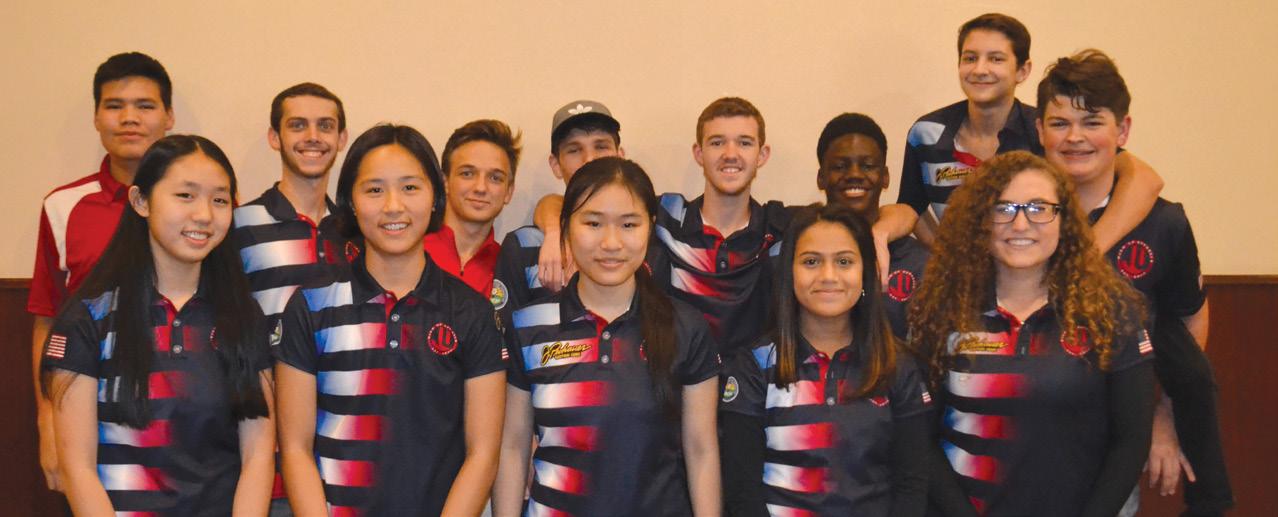
TOP: Roy Pastor
MIDDLE: The 2018 Junior National Championships. Pastor surrounded by Mitchell Jiang, Tiana Jiang and Vivian Liu
BOTTOM: Kyle Yi


percentage of the kids there are his students, and they regularly reach the finals or finish in the top 5.
“For me it’s a lot of fun, a labor of love, but I think things like that can make a big difference in the sport,” he says.
Pastor is also helping other instructors become effective virtual teachers. A year ago, he was even contacted by a middle school teacher in Poland who found about Pastor’s program on Facebook.
“He said he took a three-day class to become a PBIA instructor and said, ‘But I really don’t know how to do this,’” says Pastor, who forwarded the teacher in Poland a syllabus for a year-long program.
And with COVID-19 shutting down his law office and the New England USA Pool League, which he owns, Pastor has been working on a new initiative – the American Online Pool School, which certifies instructors into the PBIA, and for which he charges.
“It is an online school which will offer multiple courses and classes with various professional instructors,” Pastor says. “One of the primary motivating factors in the development of the school was to recruit and develop qualified accredited PBIA instructors for the Break and Run program. One of the primary courses in the school is the PBIA Instructor Accreditation Course. The school offers the only PBIA online accreditation course in existence.”
Pastor’s program is renowned as one of the best in the country. Over the last six years, he has had at least two, and sometimes three, students on the American Team at the WPA World Junior Championships, and his players have competed in Cyprus, Moscow, and China in recent years. Pastor’s students, in fact, have taken home more state and national champion titles than any other junior program in the United States over the last 10 years.
And he not only teaches them, he’s also introduced many of them to billiards.
“Most of my kids who have done really well in the BEF National Championships, walked into my program without ever having picked up a pool stick,” he says. “And most of them, their parents didn’t know anything about pool.”
Among his online students is Ezra Seymour, who is 9 years old and has been taking lessons for more than a year, and his younger brother, Donovan, who is 6 and is the youngest student in the program.
Ezra and Donovan’s father, Matt, has played pool his whole life, but never competed. Matt and his wife, Eve, set up an old pool table in their home so that the family would have a fun activity to play together, and they wanted Ezra to play the game properly and found out about Pastor.
“The experience has been incredible,” Matt says. “In the span of a year, I’ve watched a beginner 8-year-old learn

to dominate adult players and his goals have changed from simply holding his own with family to competing at a high national level with the long-term goal of representing the USA at theYouth World Championships in the future. Roy has been thorough in building his skill set step-by-step with patience, encouragement, and feedback on every video that we record of exercises or play.”
He adds that online lessons have provided his sons with a high level of training that would otherwise be impossible due to location and cost.
“Having videos and instructions at hand at all times allows us to review everything that we need to work on and the fact that high-level billiard people are following Ezra’s progress helps to maintain motivation which isn’t always easy with children,” Matt says. “The opportunity to have reviewed any video we record is incredible. I can’t imagine bringing in videos of Ezra’s play to an in-person instructor to review and talk about them.”
Steve Sherman is an instructor in Pastor’s program who started playing pool when he was 13. Over the years, he has received instruction from numerous top instructors and now at 53, has been teaching for about a year and a half. He’s an active member of the billiard community, including running a website for reviewing billiard products to


help educate players on products that can help them to improve their game.
“Billiards is very much a passion of mine,” Sherman says. “I am always looking for ways to give back to the billiard community and I receive great joy in helping others who share in that passion. I had actually been looking for ways to engage with kids to help them learn the sport at a young age so that they could grow up getting as much enjoyment from the sport as I have had. I feel that engaging with the youth is also a very important way to keep our sport growing and expanding.”
He met Pastor about a year ago, and shadowed him for a few months before taking on a student of his own.
“It was very important to Roy that every student in the program receive the same quality of training with the same techniques and disciplines,” Sherman says. “So he spent a lot of time with me, honing my skills as an instructor and providing me with the specific tools and training I would need to be successful as an instructor within the Break and Run program.”
Sherman has his own students now, and also consults with Pastor. He says teaching online has allowed him to build a strong relationship with a student.
“There really isn’t that notion of, ‘We meet on Saturday for your lesson,’” Sherman says. “It is much more fluid than that. You are always engaged. My students ask questions, post videos anytime they like. I do the same. We are in a constant process of communication and learning that is unlike anything I have ever experienced as a student myself or as an instructor.”
He adds that online teaching requires a completely different skill set than traditional instruction.
“In person, you have an opportunity to work physically with a person and

to help them interactively through the process,” he says. “So for example, if someone is dropping their elbow, you can physically help adjust that in person. Being remote, you have to find unique ways to do the same things without being in physical proximity.”
He also says that online training has created a strong sense of community, as kids are sharing what they’ve learned with each other through instructional videos that they share.
“I had a 10-year-old who was having difficulty with an open bridge,” Sherman says. “It was difficult for him to relate to what I was showing him because I am an adult. But another 10-year-old in the program made a video of himself doing an open bridge, and that was all it took for my student to get it. It is a wonderful and important aspect of our online program.”
Coaches in the program have established their own community, as they watch each other’s classrooms and share advice.
“The open forums in the program really allow the kids and instructors to have fun,” he says. “Students love showing off that new skill they learned, that runout they performed, that ghost they beat. It really helps to keep them engaged and enthusiastic and makes them feel that they are part of something bigger than just a teacher-student pairing.”
Pastor says his student KyleYe, who is 12 years old, is one of the top three boy juniors in the 14-and-under division.
Kyle’s performance backs that up. He finished first in the 2018, NEF National Junior 9-Ball Championships, 11-and-under Boys Division, second in the 2018 BCAPL World Championships Junior 8-Ball Division, and third and fourth in the Super Billiard Expo Junior 12-and-under Division.
“The online coaching from Roy is fantastic,” says Kyle’s father, Kan. “Kyle won national championships, yet his fundamentals needed to be rebuilt, that’s exactly how Roy started to help Kyle. Started from grip, elbow, stance, stepping in, alignment, speed control all these essential techniques. Roy has totally reshaped Kyle into an amazing junior player, with all the possibility to reach his potential. 2018 is a lucky year for Kyle, not just because he won the National, but also because he met a most respected and prestigious coach in the country to teach him.”
For more on the Break and Run program, including how to sign on to the program, go to playbetterbilliards. com/jr-instruction. Instructors who would like more information on Roy Pastor’s American Pool School can go to www.americanpoolschool.com.


By BCA Insider Staff
Many in the billiard industry are feeling the financial burden of the coronavirus pandemic, as retailers were forced to close, manufacturers found less need for their products and many long-time businesses were not able to pay their rents.
If you’re one of those businesses faced with these challenges, there are some options for help.
Many state and local governments are offering financial assistance, but it takes some research and being proactive to get chosen. For instance, the NYC Small Business Services is offering businesses with fewer than five employees grants to cover 40 percent of payroll costs for two months. Additionally, businesses with fewer than 100 employees and sales decreases of 25 percent or more will be eligible for zero-interest loans of up to $75,000.
Other agencies such as the Los Angeles City Small Business Emergency Microloan Program, the SBA Economic Injury Disaster Loan Program and State and Local Coronavirus Small Business Assistance also are offering help for those who meet certain criteria.
Here are some things billiard retailers can try to improve financial matters.
The U.S. Small Business Administration (SBA) is an independent federal agency whose purpose is to help people start and succeed in business. The SBA offers traditional loans for small businesses. However, because the coronavirus has had such a significant economic impact, the federal government has allocated additional money for Disaster Assistance Loans
through the SBA. These low-interest SBA loans are available in most states and regions to provide “working capital to small businesses suffering substantial economic injury as a result of the coronavirus (COVID-19).” To see whether you’re in an eligible region and what you need to do to apply, visit https://disasterloan.sba.gov/ela/.
If you have a small business insurance policy, you may also have a business interruption add-on. Business interruption insurance allows you to submit claims for lost income and some expenses if your business must close due to a covered disaster. If you also have extra expense coverage, you could apply for reimbursement of money spent beyond normal operating expenses to keep your business open during or in the wake of a disaster.
Slashing prices, offering one-day discounts or having a special sale is a great way to get people back in the store and help to keep businesses afloat, even as consumers are staying home more and spending less. Just make sure you’re providing ways for them to patronize your business that are in line with current health recommendations.
A business credit card with a 0% APR introductory rate may help you manage costs during this uncertain time. The in-
troductory offers available with business credit cards tend to be much shorter than those offered by consumer cards, but nine months, for example, is still a decent amount of time to cover an essential business expense without interest. Citi’s Diamond Preferred card is a great option, as is the Blue Cash Preferred card from American Express.
Selling gift cards today gives you cash-in-hand to make it through the short term, and targeting those who already know and love your business is a smart place to start. Yes, you will have to provide the value of the cards in goods and services in the future, but you will have the money you need to pay today’s bills and payroll. Plus, if more people have gift cards to your business, it ensures you will have customers in the future. And if they like what your business offers, you may have some repeat customers in the future.
Facebook has committed to offering up to 30,000 small businesses $100 million in cash grants and Facebook advertising credits. Full details have yet to be disclosed, but billiard retailers can sign up at www.facebook.com/business/boost/grants to get more details from the company when they’re available.
If you are worried about paying back a business loan, talk with your bank and see if they can help. Many banks have offered deferment and forbearance to business loan customers having trouble making payments during this time.
By Charles S. Donnavan
Many billiard stores were forced to close due to the COVID-19 pandemic and the stay-at-home orders enacted by state governments, but with stores starting to open, it’s important that owners understand how to clean and sanitize the store correctly so that employees and customers are safe.
Routine cleaning and disinfection of surfaces can help slow the spread of COVID-19, which is why cleaning and disinfection should be done at least after every work shift daily or as needed.
The first thing that should be done, according to the Centers for Disease Control and Prevention, is a thorough cleaning. The CDC recommends wearing disposable gloves when performing the disinfecting duties, and starting by cleaning all surfaces with soap and water. All counters, billiard equipment and tables should be disinfected as well, and repeated at the beginning of every day.
More frequent cleaning and disinfection may be required for high-touch surfaces such as tables, doorknobs, light switches, countertops, handles, desks, phones, keyboards, toilets, faucets, sinks, etc.
Sanitizing reduces the amount of pathogens (harmful microorganisms like bacteria, viruses, parasites, and fungi) to a safe level. Factors such as water temperature, water hardness (minerals in the water), pH (acid level in the water), concentration, and contact time are critical factors that must be met to ensure a proper level of sanitization is achieved.
One way billiard and home leisure stores can properly clean the shop and restore customer confidence is by adding a bipolar ionization indoor air quality (IAQ) device into building HVAC systems. These devices have scientifically proven to neutralize viruses, germs, bacteria and contaminants in buildings, according to Tom Abate.
“While how it works is highly complex, in layman’s terms, bipolar ionization devices, installed in building HVAC systems, perform like the old Pac-Man game: Ions (nature’s disinfec-
tants) are emitted into the air and neutralize coronavirus and replace it with clean, pristine, fresh air,” says Tony Abate, a certified indoor environmentalist as designated by the Indoor Air Quality Association and an expert on the airborne transmission of coronavirus. “The ions break down the protein surface of the virus so that it is unable to infect individuals even if ingested. Bipolar devices also provide an added continual protection on surfaces, which is key in billiard stores, as compared to over-the-counter wipes and commercial cleansers that lose effectiveness over time.”
To help prevent the spread of COVID-19 among employees and those entering the store, procedures and supplies should be in place to encourage proper hand and respiratory hygiene as well.
Here are some tips, according to Tom Abate, for keeping things clean, sanitized and safe:
Provide hand sanitizing and cart/basket sanitizing stations at the store’s entrance with prominent signage promoting usage.
Have procedures in place for sanitizing checkout stations, including any credit card payment pads, counter tops and other frequently touched surfaces after each use.
Consider alternative service models for older adults and those with serious chronic medical conditions. These may include pickup and/or delivery services, and providing dedicated hours of operation after performing the recommended cleaning and disinfection.

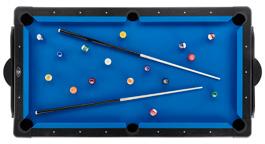
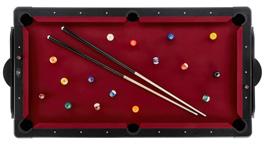
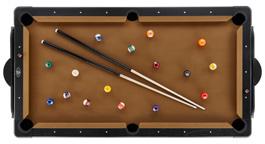



Signage about handwashing procedures and hand, cart/basket, checkout sanitizing stations should be available in prominent locations.
All high-risk locations in the store, warehouse or back room should be cleaned and disinfected on a regular schedule.
If any individual with confirmed COVID-19 was symptomatic while in the store, immediately close down and clean and disinfect throughout the area.
Regular hand washing with soap and water for at least 20 seconds should be done by all employees before and after eating, and after any physical contact with customers. Additionally, if an employee and customer both touch the same cue stick or other piece of billiard equipment, washing hands is paramount.
Use of hand sanitizer should be available for employee use after payment/bagging exchange with each patron.
By BCA Insider Staff
Now that retailers are starting to open up their stores and people are shopping for billiard and home leisure supplies, it’s important to remember that the coronavirus crisis is not over and many are still fearful of contracting the virus. That’s why it’s imperative that you implement social distancing guidelines in your store so customers feel safe and everyone is protected.
Here are some guidelines collected from different government agencies on how you can best create physical distancing in your billiard establishment.
O Separate people by at least six feet using physical partitions or visual cues, such as floor markings, colored tape or signs to indicate where workers should stand.
O Minimize exposure between cashiers and customers. Where physical distancing cannot be maintained, use barriers such as Plexiglas. Where barriers are not feasible, strongly recommend that employees and customers wear face masks.
O Use signage to remind customers of physical distancing at every opportunity.
O Adjust any in-person meetings with employees – if they are necessary – to ensure physical distancing.
O Place additional limitations on the number of workers in enclosed areas to ensure at least six feet of separation.
O Stagger employee breaks, in compliance with wage and hour regulations, to maintain physical distancing protocols.
O Dedicate shopping hours for seniors and other vulnerable populations.
O Increase curbside pickup and add delivery service options if possible for any home leisure items that can easily be chosen online or by knowledgeable employees.
O Provide separate, designated entrances and exits.
O Limit the number of in-store customers based on the size of the store.
O Encourage and train employees to practice physical distancing during pickup and delivery.
O Ask non-employee truck drivers, delivery agents, or vendors who are required to enter the store to have their employees follow the guidance of local, state, and federal governments regarding wearing masks.
www.fusiontables.com



By Wendy King
As COVID-19 continues to spread and we make lifestyle adjustments in response, the challenge is to maintain your mental and physical health in light of mounting stress. These strategies will help.
As social distancing becomes our new “norm,” the pressures may be overwhelming. There are challenges finding childcare and keeping necessities stocked, never mind keeping yourself safe at work and out in the world. And how much disinfectant is enough, anyway? We all need to think about practical coping strategies while dealing with the COVID-19 pandemic. Here are five to employ today:
The unknown can be scary and can overwhelm us. Fear can inflate negative thoughts, which leads to unhealthy stress. Ongoing stress releases hormones that get us ready for emergencies, but also severely depress our immune systems. Combat this fear by acting on facts, not misinformation. Look at the statistics and the real numbers of infections being reported by the Centers for Disease Control and local/ national officials.You can tackle fear by facing it head-on with facts and smart precautions like handwashing, disinfecting surfaces, and social distancing.
Social media platforms can cause incredible anxiety as rumors and misinformation spread on them. Limit time on social media, and don’t instigate hysteria by reposting un-vetted information. Limit your children’s exposure to television news. Their perspectives are different than those of adults, and they will have difficulty processing the facts. Children also notice our emotional state, so try to stay calm and provide facts to help them understand the situation and how everyone can get through this together.
Exercise your body to help keep your mind in check. In fact, aerobic exercise is as important for your head as it is for your heart. It has a unique capacity to exhilarate and relax, provide stimulation and calm, as well as counter depression and dissipate stress. So, take a walk, a run, or even tune in to one of the thousands of free online yoga, meditation or workout videos. Dust off your weight bench and take the laundry off the treadmill. Get on it. Use it.
Social distancing does not mean you shouldn’t seek and give support. The upside to social media is that we truly are more connected than ever before. Find out who needs help and offer it, in a way that keeps everyone safe and cared for. Even with social distancing, you can drop off medicine or supplies to a neighbor or friend. Call your church or check in with your online groups to find out who needs a meal that can be left on their doorstep, or a prescription delivered.
And of course, if you bought lots of “bulk extras,” maybe spare a few food or household items for those who weren’t able to stock up. Be creative to ensure our social distancing doesn’t lead to emotional distancing for those most in need.
One habit to curb is eating or drinking more than 100 grams of sugar a day. That much sugar reduces your white blood cells’ ability to kill germs by 40 percent! Also limit your alcohol intake as studies show that three or more alcoholic drinks daily is enough to suppress your immunity.
If anxiety or stress interfere with your ability to function or care for yourself or your family, seek professional help. Check in with your personal physician, contact your company-sponsored Employee Assistance Program (EAP) if you have one, or call a support line like the National Suicide Prevention Lifeline (1-800-273-8255) or Crisis Text Line by texting “start” to 741-741.






If you are interested in this program, please email




Billiards can largely be divided into three categories of cue sports: pool, snooker, and carom billiards. Readers will be familiar with the most common variations, such as eight-ball, nine-ball, straight pool, and standard snooker.
But, within those subdivisions exists a world of lesser-known regional and artistic adaptations. Who has played kaisa (from Finland) or keglebilliard (from Denmark) or sinuca (from Brazil)? According to Wikipedia, there are more than 50 types of billiard games across those three categories. How does one start to become familiar with them?
By Jason Moss
Movies and television episodes which prominently feature billiards can play a key role in that education, as a number of these offshoots have made it to the big screen. Below is a primer on where to start that knowledge journey.
Goriziana (or 9-pins) is a form of carom billiards especially popular in Italy. Nine pins sit in the center of a pocketless table. Two cue balls and a red ball are used. Each player attempts to hit the opponent’s ball and, from there, scores points by striking the red ball, or by making the opponent’s balls or the red ball knock over the pins. Play
continues until someone reaches or surpasses a pre-set number of points.
To visualize goriziana, watch the romantic comedy The Pool Hustlers (1983, Italy), also known as Io, Chiara e lo scuro. Francesco, a skilled goriziana player, never plays for money. He challenges Scuro, the reigning goriziana champion. When Francesco wins, his newfound confidence leads him to break his own no-betting rule, and he quickly falls into significant debt, losing his rematches to Scuro. This debt leads him to steal money, and ultimately, to compete in the International Single Set
Goriziana Championship as a way to turn around his life.
Destíkový Carambol (or tenfold carom) is a Czech variation of the carom billiards game four-ball, in which players earn one or two points based on caroming their white ball into the other balls. In the Czech version, greater points can be earned by the shot complexity, such as hitting all the balls or using the cushions before hitting any balls.
In 1994, the popular Czech stop-motion animated television series, Pat & Mat included a memorable and award-winning episode “Billiard” (or “Kulečník”). Pat and Mat, two eternally optimistic handymen known for their self-made problems and Rube Goldbergian solutions, attempt to play destíkový carambola, but the effort is continually compromised as minor table mishaps lead to rampant home destruction.
Of the many varieties of snooker is 3-Reds, essentially a faster version, with only three red balls instead of 15, and every time a ball is potted, another red is added randomly to the table, so there are only ever three reds on the table.
Sure, if you live in Salisbury, the local league has been playing this game for 30 years. But, if not, check out the 1975 Israeli film Hagiga B’Snuker (also known as Snooker or Festival at the Poolroom). After the pool hustler Gavriel fleeces Mushon of his money for a tooth replacement, Mushon returns the favor by convincing Gavriel to play his father, who seems to be an unsuspecting mark, in a game of 3-Reds. $10,000 later, it’s the hustler who has now been hustled.
Now, of course, if you’re new to the sport and not familiar with even the more common derivations, don’t despair. Billiards movies and television tackle everything from straight pool (Twilight Zone – “Game of Pool”) to nine-ball (The Color of Money) to three-cushion billiards (Carambola) to one-pocket (Turn the River). And while there are no films yet that incorporate balkline or Russian Pyramid, I’m confident they’ll be showing up in a series streaming on Netflix one day soon, too.
Jason Moss is author of “8 Ball on the Silver Screen” (www.billiardsmovies.com), a blog dedicated to the portrayal of billiards in film and television.