TO P












Newest fleet. Superior product. Zero excuses.


Newest fleet. Superior product. Zero excuses.







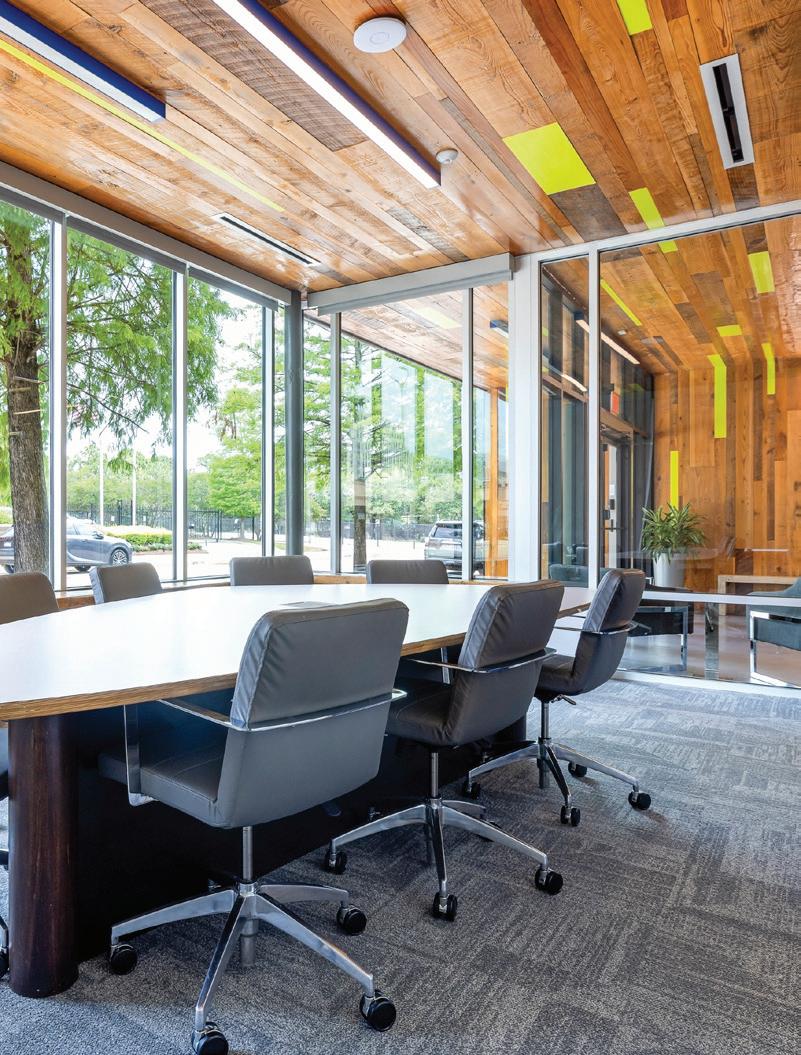



economy runs on private enterprise. Our annual Top 100 Private Companies package ranks the Capital Region’s most influential businesses and tells the stories of the leaders, innovators and risk-takers driving growth across the region. Design: Hoa Vu
that are driving economic growth and strengthening communities across the Capital Region. Page 143




77 Going nuclear now
Turner Industries isn’t waiting for reactors to arrive before building its supply chain.
83 Forging ahead
Livingston Parish fabricators are adding some 300 jobs almost overnight, betting big on the energy and data center boom.
88 Ahead of the curve
Peter Ranzino was pitching the internet to confused executives in the ’90s. Today he stands among Louisiana’s most successful—and earliest—tech pioneers.
96 The man who bought Exit 19
Garry Lewis couldn’t understand why a “virgin intersection” sat untouched on Interstate 12. Two decades later, it has 1,000 homes, a medical facility, an airport in the works and an RV resort.
110 Still standing
A family-owned shop built on neon, grit and personal service succeeds one sign at a time.
119 A mentor and a mid-century house
The surprising factors that convinced this boomerang to return to Baton Rouge
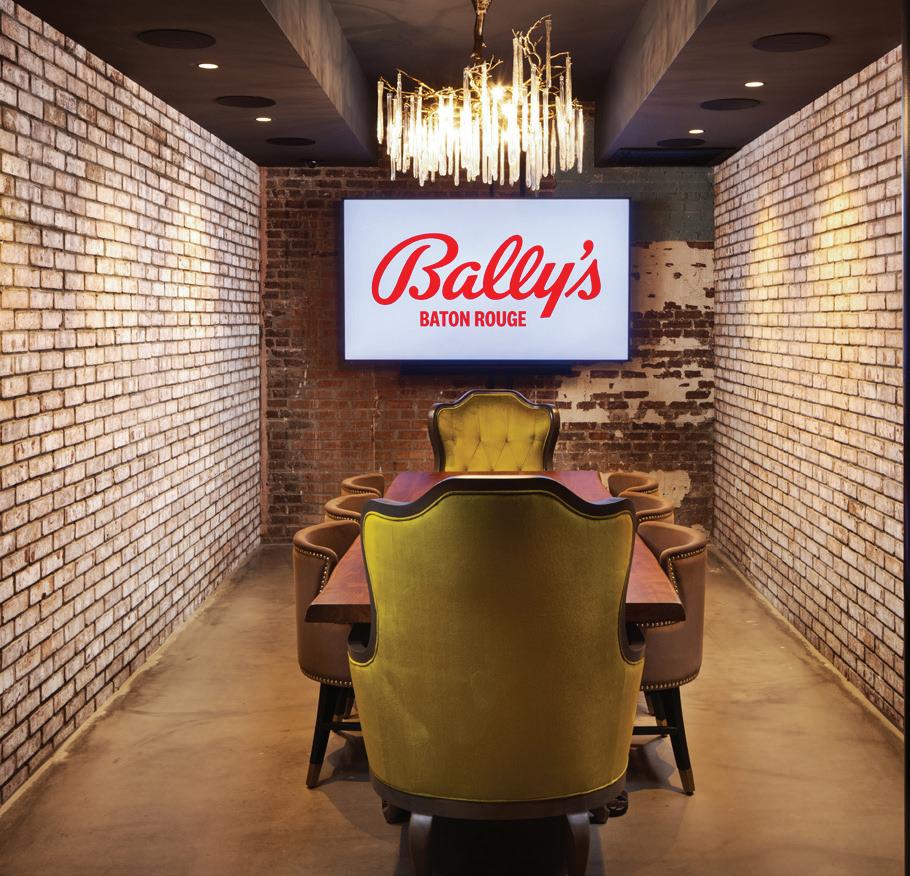
123 The house wins Landside gaming is giving Baton Rouge’s casino market a successful second act.

129 The fix is in
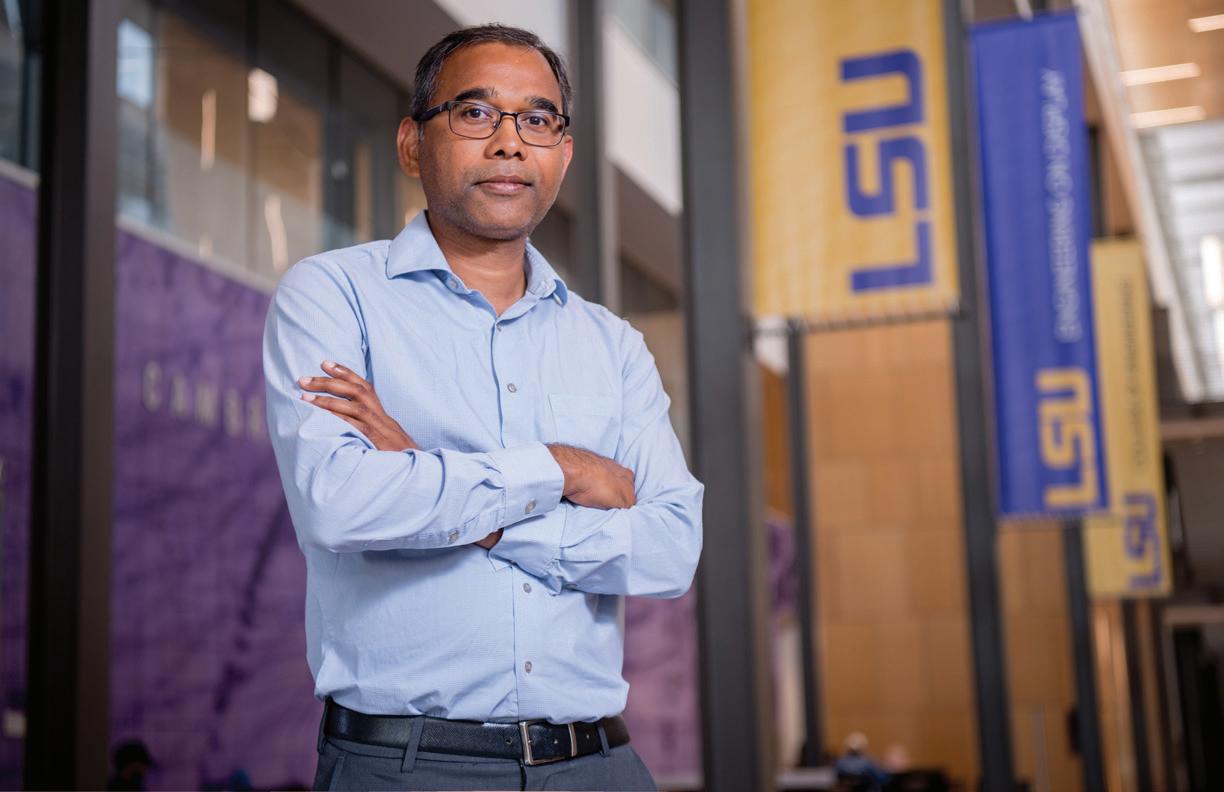
Capital Region companies are bringing their problems to LSU students. They’re leaving with custom-built AI tools.
136 In session
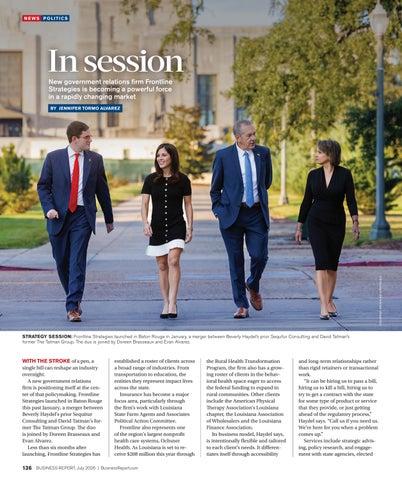
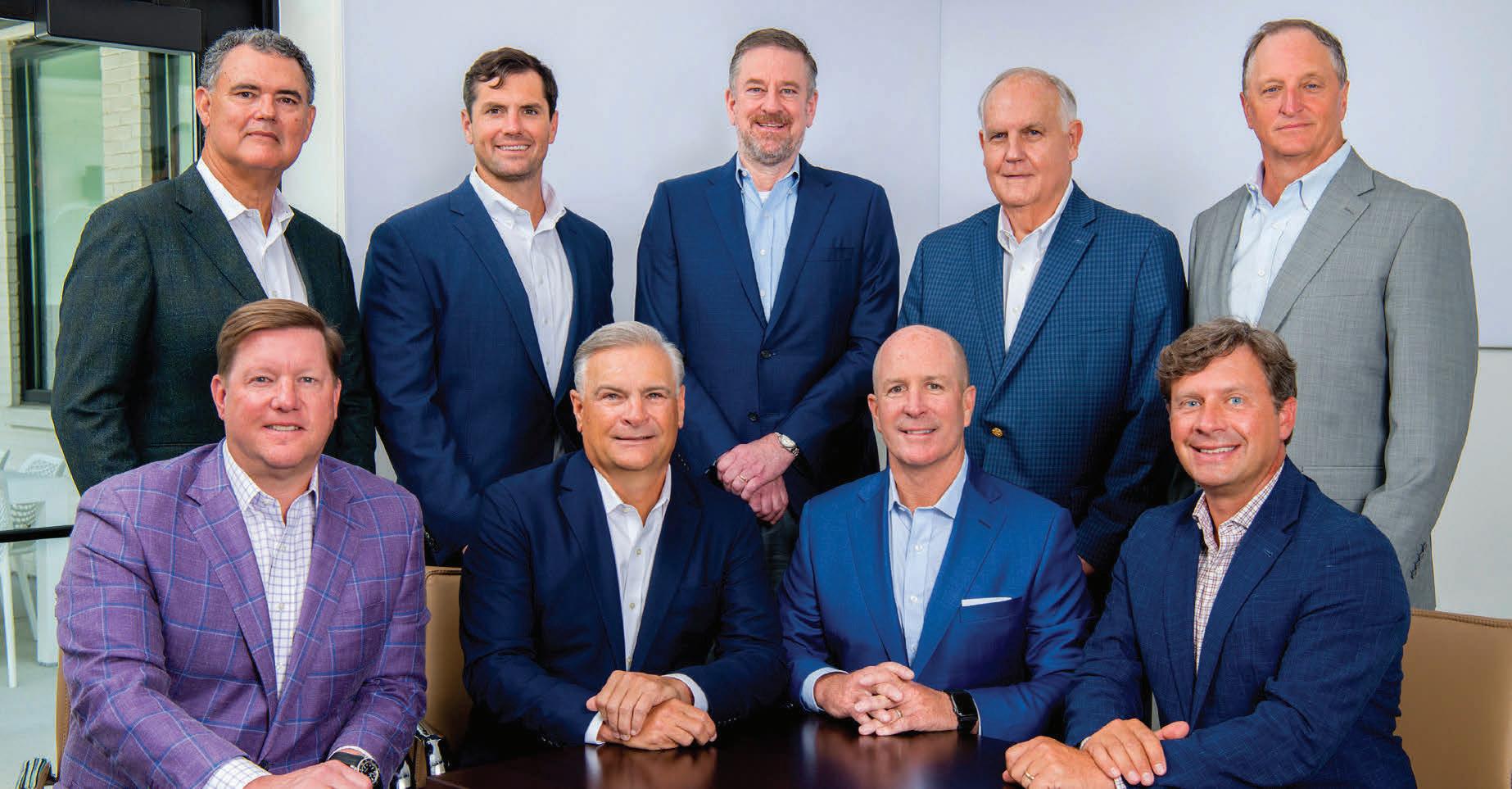
New government relations firm Frontline Strategies is becoming a powerful force in a rapidly changing market.
163 Rolfe McCollister Jr. Gov. Jeff Landry and legislators are hypocrites
Your Business
165 Company News
165 Moving Up
170 Recharge
Why coaching baseball is “flat-out inspiring” to Nexus Louisiana President and CEO Tony Zanders

EIGHTEEN MONTHS AGO, our leadership team here at Business Report made a commitment: We would lead the conversation about artificial intelligence in the Capital Region. But not just the conversation—the action. Anyone can talk about transformation. Leaders move first, learn fast and bring others along with them. We believed then, and we believe now, that our business community here deserves to be at the front of this transformation, not catching up to it.
And why not us? We are a capital city with world-class industries, institutions and talent. That means we have an obligation to engage with the tools and technologies that are reshaping how business gets done. When opportunity knocks on the door of a city like ours, we don’t peek through the blinds. We answer.
In today’s world, Business Report’s mission is not just to report the news. Our mission is to facilitate solutions that enable our community to be more knowledgeable and more successful. Reporting tells you what happened and facilitating solutions helps you decide what happens next. That’s the business we’re in.
If you’re still wondering whether AI matters to a business your size, consider this: According to the U.S. Chamber of Commerce, the share of small businesses using generative AI jumped from 40% to 58% in just one year— one of the fastest technology adoption curves we’ve seen. And it’s not adoption for adoption’s sake. Salesforce research found that 91% of small and midsize businesses using AI report increased revenue.
Read that again. This isn’t Silicon Valley hype. This is Main Street math. The businesses leaning in are saving time, serving customers better and growing. The companies sitting on the sidelines aren’t just standing still, they’re falling behind, because the gap between AI users and nonusers compounds every quarter.
That is exactly why I’m excited to announce that this fall we are launching the Business Report AI Academy, sponsored by Pellerin Technology. The AI Academy is built for business owners, executives and rising leaders who want practical, usable knowledge—not theory, not jargon, not fear. We have crafted a very precise curriculum with a variety of facilitators to deliver real-world applications for
those running companies and organizations.
Here’s what attending will do for you and your business:
You’ll save time on the work that drains you. From drafting proposals to summarizing reports and answering routine customer questions, AI can hand you back hours every week, hours you can reinvest in strategy, relationships and growth.
You’ll make better decisions, faster. AI tools can analyze your data, spot patterns and surface insights that used to require an analyst on staff. The playing field between small businesses and big companies has never been more level.
You’ll learn where AI fits, and where it doesn’t. The biggest barrier to adoption isn’t cost anymore. It’s confidence and clarity. The Academy can help you identify an area that matters most for your specific business, so you start smart instead of starting scattered.
You’ll future-proof your team. Your best people want to grow. Equipping them with AI skills isn’t just a productivity play, it’s a retention and recruitment play. The companies that train their people on these tools will attract the talent everyone else is fighting for.
You’ll join a community of leaders learning together. Transformation is easier with company. The Academy will connect you with peers across the Capital Region who are navigating the same questions, sharing what works and raising the bar together.
Every era of business has a moment when the tools change and the leaders are decided. The personal computer was one. The internet was another. Artificial intelligence is this generation’s moment and it’s moving faster than both. The Capital Region won’t get to the front of this transformation by accident, and we won’t stay there by accident either. It takes intention. It takes investment. For AI Academy details and registration, go to businessreport. com and click “Training” on the nav bar. Your business and your future will thank you.
Julio Melara, Publisher
Publisher: Julio Melara
Associate Publisher: Erin Pou
EDITORIAL
Executive Editor: Penny Font
Managing Editor: Allan Schilling
News Editor: Sheridan White
Ascension News Editor: Jordan Arceneaux
Senior Writer: Dillon Lowe
Digital Content Strategist & Researcher: John McElwain
Contributing Writers: Sam Barnes, Eileen McClelland, Maggie Heyn Richardson, Jennifer Alvarez
Contributing Photographers: Jackie Haxthausen, Don Kadair, Tim Mueller, Collin Richie
ADVERTISING
Senior Consultant & Assistant Manager: Kelly Lewis
Multimedia Marketing Consultants: Nicole Crochet, Emma Walker
Multimedia Marketing Consultant/Custom Publishing: Liz Bowen, Manny Fajardo, Judith LaDousa
Sales Intern: Blair LeBlanc
Marketing Director: Ashleigh Ward
Digital Operations Manager: Devyn MacDonald
Data Analyst: Sydney DeVille
Digital Operations Coordinator: Addie Champagne
Content Creator: Londyn White
Content Strategist: Emily Hebert
Sales & Marketing Operations: Kynley Lemoine
STUDIO E
Director and Corporate Communications Strategist: Mark Lorando
Special Projects Editor: Lisa Tramontana
Content Strategist: Emily Hebert
Multimedia Producer: Jordan Ponzio
Video Producer: Taylor Stoma
ADMINISTRATION
Chief Technology Officer: James Hume
Business Operations Manager: Kirsten Milano
Business Associate: Sarah Kleinpeter
Receptionist: Cathy Varnado Brown
CREATIVE SERVICES
Creative Services Manager: Ellie Gray
Art Director: Hoa Vu
Senior Graphic Designers: Melinda Gonzalez Galjour, Sidney Rosso
Graphic Designers: Aniya Dunn, Lea Showers
AUDIENCE DEVELOPMENT
Circulation and Client Experience Manager: Ivana Oubre
A PUBLICATION OF MELARA ENTERPRISES, LLC
Chairman: Julio Melara
Executive Assistant: Brooke Motto
Vice President, Sales: Elizabeth McCollister Hebert
Chief Content Officer: Penny Font
Chief Digital Officer: Erin Pou
Chief Operating Officer: Guy Barone
Circulation/Reprints/Subscriptions/Customer Service
225-928-1700 • email: circulation@businessreport.com
Volume 41 - Number 48





Gov. Jeff Landry has signed an executive order establishing statewide standards intended to prevent the costs of data centers and other powerintensive developments from being shifted to Louisiana ratepayers. The Louisiana Ratepayer and Community Protection Initiative directs state agencies to work with the Louisiana Public Service Commission to evaluate qualifying projects under a uniform set of “clear, uncompromising” criteria. Among them: Companies must fully fund the infrastructure needed to serve their projects, including power generation and transmission. They must also pledge to use natural resources responsibly and produce “meaningful” benefits for local governments and workers.


$1M
The amount by which construction bids exceeded Visit Baton Rouge’s estimate to renovate its new headquarters in a historic building on Lafayette Street near the Hilton and Hotel Indigo. Rising construction and labor costs played a pivotal role in the high bids. It’s literally back to the drawing board, working with architect Gros Flores Positerry to identify design changes to reduce costs while preserving the project’s overall vision. Read more at businessreport.com.
$9M
Amount of revenue that stands between the No. 1 and No. 2 Top 100 Private Companies: Louisiana Blue and Raising Cane’s. Last year, it was $39M Read more about Raising Cane’s “hot pursuit” of the No. 1 spot on page 38, and unlock all of Business Report’s data with an insider subscription. Visit businessreport.com/data-center.
Get an insider’s take on how AI is changing the way Louisiana companies do business in the July episode of “Strictly Business.” Guest Dek Terrell, director of the Center for Economics, Business, & Policy Research at LSU, shares a glimpse into a three-part report his team is working on that examines the state of AI in Louisiana, including capital investment, the percentage of jobs in the state that are considered AI intensive, the regional and industry occupations most likely to be impacted by AI and Louisiana’s competitive advantages. Register at strictlybusiness.businessreport.com.


Tickets are on sale now for the inaugural Excellence in Health Care Awards, where Business Report will honor the leaders, clinicians and organizations strengthening care delivery across the Capital Region. Finalists and honorees will be celebrated at an awards dinner on Wednesday, Aug. 12, at the Crowne Plaza in Baton Rouge. The evening will bring together top executives, physicians, nurses, researchers, administrators and care providers from across the sector. Among those honored: Baton Rouge Clinic CEO Ed Silvey with the Lifetime Achievement Award, and the Woman’s Hospital Perinatal Mental Health Unit with the Community Impact Award.



Since our 2026 Capital Region 500 edition was published in June, we have made some modifications to the digital edition to correct and clarify some of our profiles. We misspelled the name of Louisiana Blue CEO Bryan Camerlinck and published outdated information about MMR Group founder, president and CEO Pepper Rutland, Colonel’s Club Chef Chris Motto and Highland Wealth Partner Myles Laroux. We also erred in reporting Nguyen America EVP of Development, Leasing & Operations Kenny Nguyen’s educational status and title. We have eliminated the word “system” from Louisiana Community & Technical Colleges and River Parishes Community College in profiles of Quintin Taylor and Richard Nelson. And we corrected an erroneous photograph of DSLD CEO Saun Sullivan. We regret the errors. Get the latest edition at businessreport.com.
For more than a decade, CDR General Services has been delivering dependable workforce solutions backed by industry expertise, rigorous standards, and a hands-on approach that prioritizes safety, people, and performance.





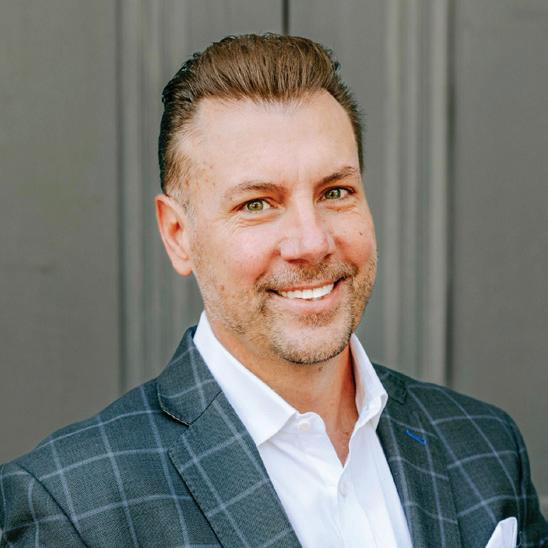
JOHN PAUL CASWELL, president and managing principal of Baton Rouge’s Iron Horse Financial, says effective wealth building has less to do with income level than with intentional habits. For young professionals especially, the key is building habits and systems early. Caswell shared with Business Report five strategies he recommends for long-term financial success.
One of Caswell’s biggest pieces of advice is to flip the traditional approach to saving. Instead of depositing paychecks into a checking account and trying to save whatever is left over, route income directly into a separate wealthbuilding account first. That approach makes spending deliberate and saving automatic. For most, the opposite is true.
“If we set up a wealth-building account that captures all of the income coming into the household first and then we deposit into the checking account only that which we intend to spend, then saving ends up being by default and spending becomes intentional,” Caswell says.
Many assume higher income automatically leads to greater wealth. In practice, Caswell says, discipline matters far more than salary. His rule of thumb: Aim to save as much as 20% of your income over time, even if you start
much smaller early in your career. The key is consistency and gradual improvement. “I’ve had people who have great incomes and very little wealth, and people who have moderate incomes who have built substantial wealth,” Caswell says of his clients.
Caswell believes many spend so much time trying to eliminate debt that they never begin building assets. He says people should generally “focus less on getting out of debt and start building wealth,” though he acknowledges that advice runs counter to traditional financial guidance. And that doesn’t mean ignoring debt entirely. Instead, he says debt should be managed alongside investing and saving. “We need to manage debt, we need to minimize debt, we obviously need to pay down debt, but we don’t need to make getting out of debt the front and center,” Caswell says.
While Caswell says the stock market is a solid default option for long-term investing, he encourages clients to identify wealth-building opportunities that genuinely interest them. For some, that might mean real estate. For others, it could be starting a business or investing in someone else’s. “Once you start building wealth, you can really start looking at what it is that you’re passionate about. … There are a lot of different ways to build wealth,” Caswell says.
Many young professionals avoid financial advisers because they assume they don’t have enough money yet, but Caswell says early guidance can make the biggest longterm difference. Importantly, though, he encourages people to seek out advisers who prioritize education and long-term planning rather than selling you a product. “A lot of people are reluctant to sit down with a financial adviser because they feel like they don’t have everything together,” Caswell says. “They’re likely in a better place than they think they are.”
Dillon Lowe
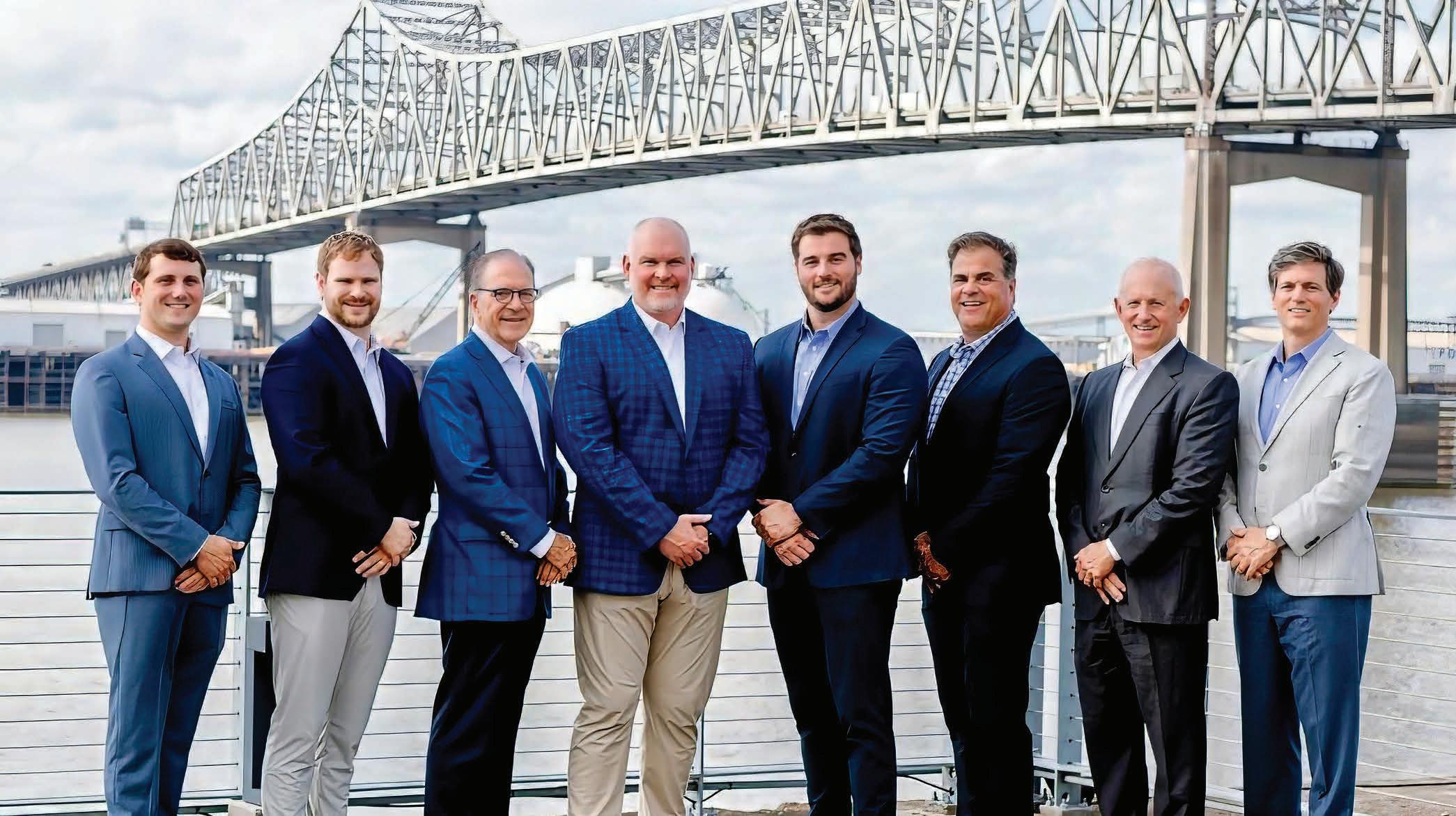
You need independent, objective and unbiased financial advice from an experienced team of financial advisors whom you can trust. We help clients build, manage, preserve and efficiently transfer their wealth.
Financial professionals at Wells Fargo Advisors Financial Network will take the time to understand your current financial situation, goals and dreams. Together we have over 120 years of industry experience servicing the complex financial needs of high net worth clients.

Founder, Lipsey’s
INFLUENCE in Louisiana has run through both commerce and public institutions. He bought S&S Wholesale Sporting Goods in 1977, renamed it Lipsey’s in 1993, and grew it from the smallest of 110 firearms distributors in 1987 into the largest in the country by 2024. The Baton Rouge company, which supplies dealers and retailers like Academy, Bass Pro Shops and Cabela’s, has broken ground on a new 265,000-squarefoot headquarters on Highland Road, due in fall 2027. His holdings also include Haspel, the New Orleans clothing line dating to 1909, and Lipsey Communications, a chain of 300-plus wireless stores. Beyond business, he twice chaired the Board of Regents, steering the state’s higher education system, and co-chaired John Bel Edwards’ transition team. One distinction is his alone: During his Army years in the early 1960s, he was the only military officer to witness President Kennedy’s entire autopsy after the assassination. He is deeply involved in the community: The cause closest to him may be Mary Bird Perkins Cancer Center, where he has volunteered since its inception, served over a decade on the board—including as chair—and founded its foundation.

Pick people smarter that you are to work for you. Build a team. Let your leadership team do their respective jobs. Reward success.
Borrowing $300,000 from the bank to buy S&S Wholesale from Bub McNut, venturing from retail to wholesale business

Knowing when to move on from one business to another. Listening to others smarter than me and taking their advice.
We just automated our warehouse to use robots to pull and fulfill orders.
Balancing work with pleasure. It took me 25 years to figure out I could take Saturdays off and the business would

I used to think that I had to be the first one at work and the last one to leave. That is smart when you first go to work or start a business. But as time goes by, you learn that you need time off to recharge and that the business can get along without you.
Having my scotch when i get home from the office
That I have had a positive and lasting impact, both civic and charitable wise, on the Greater Baton Rouge community

HARDEST TRUTH I’VE LEARNED ABOUT LEADERSHIP
When to turn over the reins of your company
My father. He knew how to get his employees to “buy in” to their jobs and then let them do it.
MOST PEOPLE DON’T KNOW I love my Saturday gin game.
THEME SONG FOR MY LIFE
“What a Wonderful World”
‘IMPOSSSIBLE’
IDEA I STILL BELIEVE IN
We could finally develop the Mississippi riverfront into a true dynamic tourist attraction.
I just did it! Went and saw the pyramids in Egypt.

This Q&A is extended content from the Capital Region 500, a special edition produced by Business Report that profiles the Capital Region’s most powerful and influential business leaders. Visit try.businessreport.com/capitalregion500/ for more information. 2026

Geopolitical shocks, accelerating AI and volatile markets have made uncertainty the defining condition of business— and leaders are discovering the hardest obstacles aren’t technical, but human. In Leading Through Free Fall, innovation strategist Brianna Sylver argues that great strategy fails when it ignores human dynamics: Teams stall, stakeholders lose confidence and projects drift into indecision precisely when the path ahead is unclear. Drawing on 20 years in user experience, research and strategy, Sylver offers a three-stage framework—Suiting Up, Free Fall, and Safe Landing—for guiding people through the anxious “messy middle” of change. Seventeen user-tested tools help leaders align colliding priorities, build trust and mobilize teams paralyzed by doubt. Rather than treating hesitation as failure, Sylver reframes it as raw material for alignment and impact—a practical playbook for leading with humanity when certainty is gone.


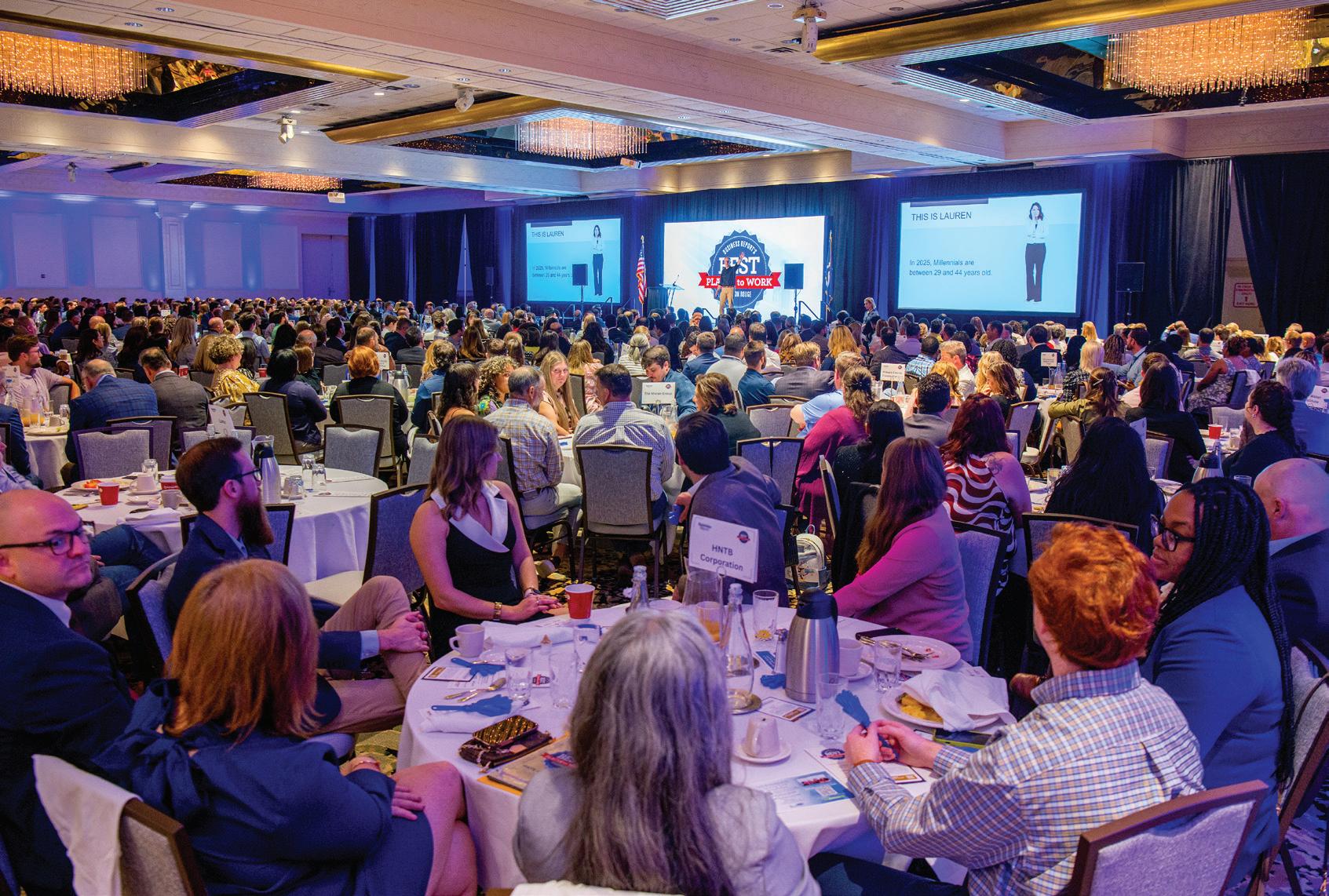
Doors open at 7:00 AM | Starts at 8:00 AM (ticket required)
PRESENTED INPARTNERSHIP WITH:

Starts at 11:45 AM (ticket required)
KEYNOTE SPEAKER: DR. LOREN SCOTT
ECONOMIST
SPONSORED BY:




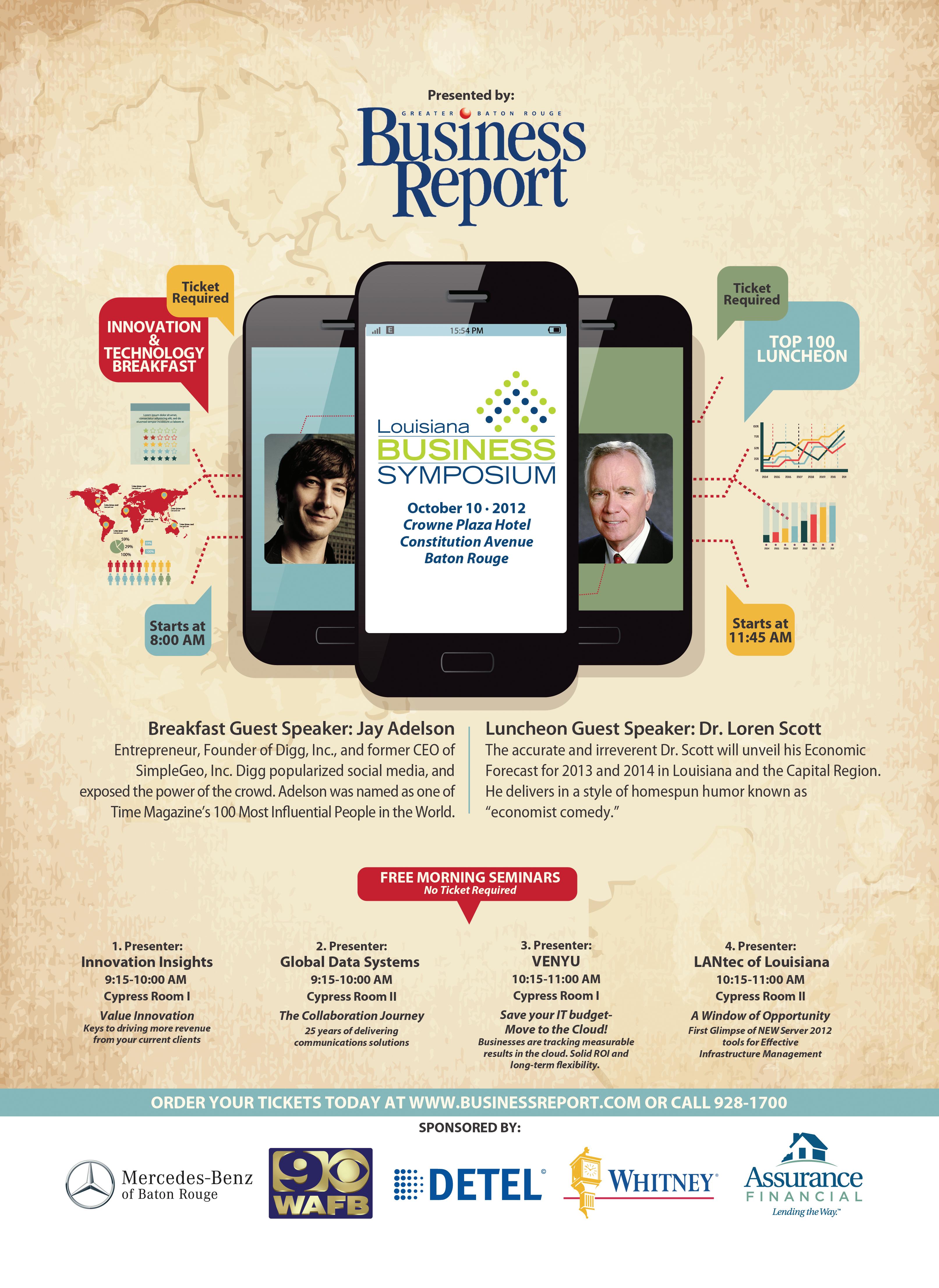
The accurate and irreverent Dr. Scott will unveil his economic forecast for 2027 and 2028 for Louisiana and the Capital Region. Purchase your



“Starting a business is the greatest thrill and most fulfilling thing you can do, but don’t expect to clock out and go home.”
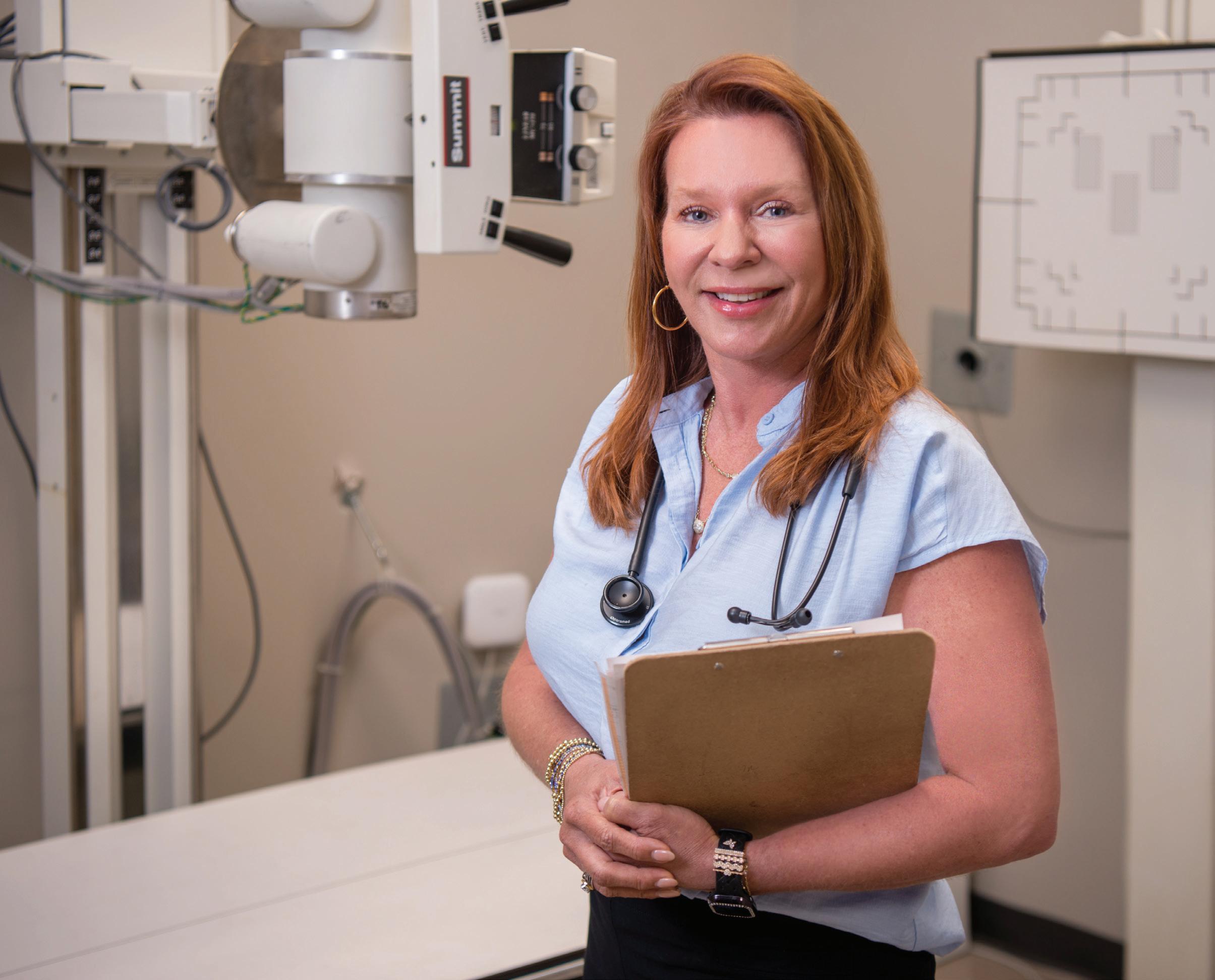
What they do: A geographic network of occupational health service providers serving industrial clients.
Owners: Sarah Taylor and Bryan Hollingsworth
Address: 15389 Airline Highway, Baton Rouge
SETTING ASIDE territoriality, mobile occupational health clinic owners Sarah Taylor and Bryan Hollingsworth spotted an opportunity to team up and double their geographic reach.
Their NuREADY Health Network, launched in 2025, is an innovative partnership that combines the firepower of their two businesses: Taylor’s homegrown Gulf Coast Occupational Medicine and Hollingsworth’s Texas-based Business Health Partners. The companies provide mobile occupational health services to industrial worksites.
Now, current and prospective clients can tap into streamlined services through one portal. The collaboration merges two of the largest clinic groups in the Gulf South, which provide on-site services that minimize downtime. The companies ensure employees can go to work and stay at work, and they address medical problems that might arise at work.
NuREADY has resulted in increased visibility for its partners’ businesses. The new collaboration is also
making it easier for them to grow even while industrial contractors chase data centers, Amazon fulfillment centers and LNG facilities across a broader area.
“Previously, there was enough work along I-12 to keep companies like mine profitable,” Taylor says.
“That’s no longer the case.”
The partnership has doubled the footprint for both businesses without requiring additional brick-andmortar investment. It is structured in name only with Taylor and Hollingsworth maintaining ownership of their individual companies.
Taylor is bullish on growth. NuREADY is looking at adding new companies to the collaboration, further expanding its reach, she says. “It was the formalization of a friendship that’s become a collaboration that’s extremely helpful to our contractors,” she says. “We’re putting competition aside for the betterment of our future.”
—Maggie Heyn Richardson

Address: 3145 Government Street
Phone: (225) 636-5157
Website: elsiespies.com
Cuisine: Sweet and savory pies and Louisiana-inspired dishes
Owner: Paul Dupré
Scene: A relaxed eatery located in the historic former Mid City post office
Pricing: $$ BY MAGGIE HEYN RICHARDSON
PHOTOGRAPHY BY COLLIN RICHIE
Since it opened in 2017, Elsie’s Plate & Pie has become a Government Street institution with a menu of sweet and savory pies and Louisiana-centric fare. Steady crowds have embraced the food and Elsie’s hip, relaxed atmosphere. Expect a wait during peak hours. The restaurant doesn’t take reservations.
In 2025, Elsie’s was named one of two Michelin-recommended restaurants in Greater Baton Rouge, part of the iconic guide’s new Louisiana list. Increased demand for the eatery’s catering orders and pies prompted a kitchen expansion earlier this year in an adjacent Mid City Square storefront.
The seafood pot pie is the top seller at lunch, says founder Paul Dupré. To make it, the kitchen cooks down onions with roasted garlic, dry seasonings and white wine, adding cream and a blond roux to thicken it. Shrimp, crawfish and crabmeat are folded in next, along with roasted red peppers, scallions and lemon juice. The filling is poured into a cast iron crock large enough to serve two, then topped with a fresh pie crust and baked to order. Dupré says the kitchen goes through 10 gallons of the creamy seafood filling almost every day. The dish comes with a salad. Expect to take home leftovers.

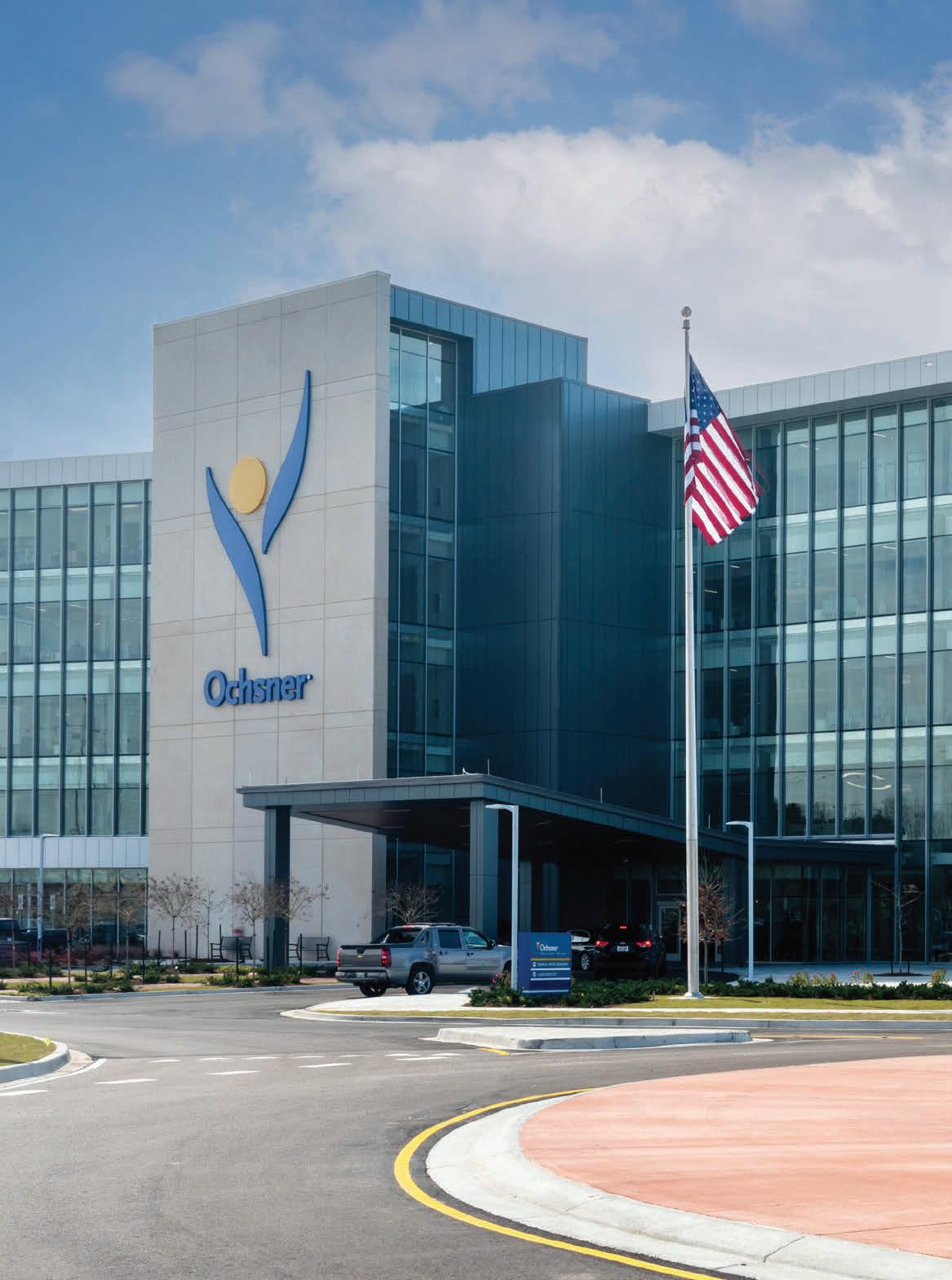
At Ochsner Baton Rouge, delivering exceptional, trusted healthcare is what we do best. Our talented and experienced teams work across our hospitals, clinics, outpatient and short-stay surgery facilities to provide in-person and digital options to meet you wherever you are on your healthcare journey.
With over 650 physicians and advanced practice providers in more than 30 specialties, we deliver leading-edge, evidence-based care tailored to your needs. Every day, our goal remains to strengthen the communities we serve by putting patients first. As the Capital region grows, so does our commitment to providing reliable, accessible healthcare, today and for the future.
Visit ochsner.org/batonrouge to learn more.



MOKEBA Manager Performance Contractors, Inc.
BLASIA RIVET CEO Decision Critical

CHUSTZ Senior Project Manager Group Contractors, LLC



PHOTOGRAPHY BY TIM MUELLER
Cost: NA
Architect: Grace Design Studios
Contractor: Buquet and LeBlanc
Completed: January 2026
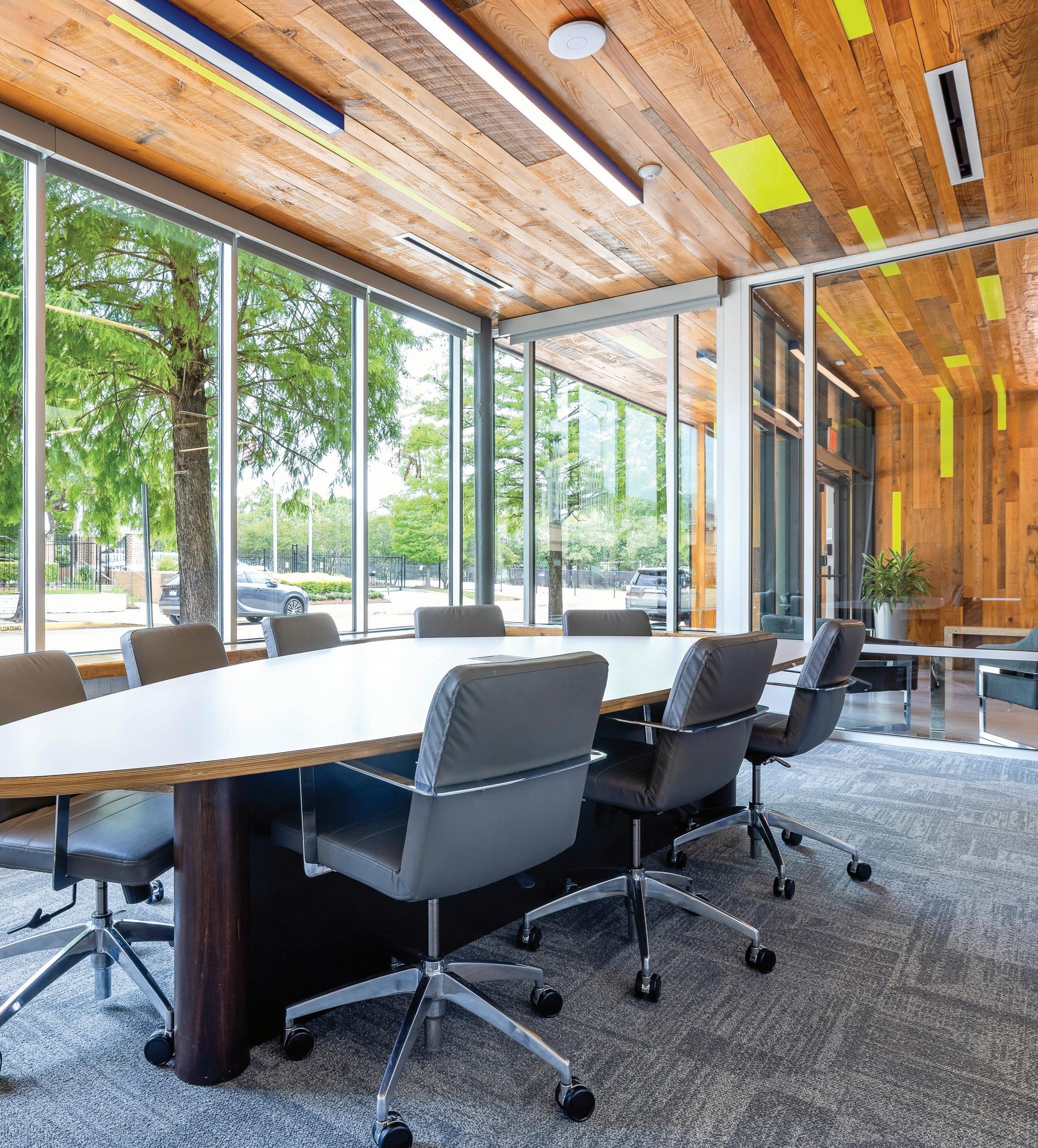
When Emergent Method outgrew its office at the corner of Laurel and Lafayette streets, the Baton Rouge consulting firm didn’t just need more room—it needed space to bring people together. The answer: roughly 11,000 square feet on Main Street, the former Creative Bloc space, nearly double its previous footprint and reconfigured around collaboration.
The new headquarters features expanded conference rooms, collaborative work areas and a large training center built to host client meetings, workshops and events. The space accommodates about 75 employees daily and can host gatherings ranging from small training sessions to receptions of up to 300 people.
Founder and President Nick Speyrer says the move was driven by rapid growth and the need to bring employees and clients together. “We didn’t have enough conference rooms, and we didn’t have a large training center to be able to have our clients come off-site and sort of have those ample facilities to do a half-day or fullday retreat,” he says.
The company purchased the building in August, completed renovations in about three months, and has operated in the space since January. Grace Design Studios and Buquet and LeBlanc handled the project.
Founded nearly 14 years ago, Emergent Method has tripled in size since 2018, with annual growth of 15% to 20%. It has made the Inc. 5000 list of the nation’s fastest-growing companies for eight straight years. The firm works with roughly 75 clients and 140 projects monthly, and now has about 160 employees—80 at its Baton Rouge headquarters.
“We’re at our best when we think about the clients that we want to work with, and how we bring the full horsepower of our firm to those clients,” Speyrer says.
SURVEY SAYS
Rules exist to be respected—and, occasionally, gleefully ignored. We asked Baton Rouge’s boldest leaders which business norm they love breaking, and the answers came back refreshingly unrepentant. Some preach radical transparency, happily handing rivals their playbook. Others pay top dollar instead of pinching pennies, hire for grit over GPA, or swap endless email chains for an old-fashioned phone call. A few flat-out refuse to choose between the corner office and the carpool line. And one founder summed it up in three words: “ALL OF THEM.”

“I love breaking the rule that says you should never be your friends’ doctor. I understand the logic; it’s meant to preserve objectivity. But I’ve found that friendship and good medicine aren’t mutually exclusive. In fact, they often bring out the best in each other.”
DR. CURTIS CHASTAIN, medical director, Lake Men’s Health and Executive Wellness

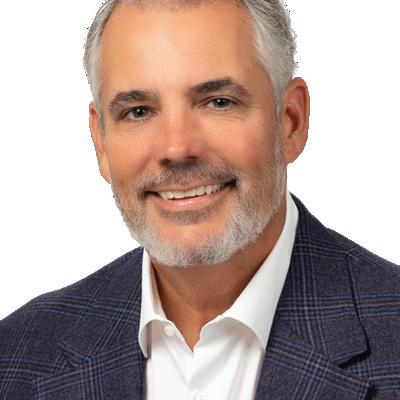


“The idea that consensus is required before action. Alignment is better. Momentum is even better. Perfect agreement is usually a delay tactic dressed up as process.”
TREY GODFREY, senior vice president of policy and talent development, Greater Baton Rouge Economic Partnership
“To be vigilant on not accepting the mindset of ‘This is how we have always done things.’”
KENNY
HODGES, CEO, Assurance Financial
“The idea that professionalism requires you to filter out your authentic self. I’ve learned that being genuine—sometimes to a fault— builds stronger relationships, deeper trust and a healthier work culture. I don’t believe in putting on a “work version” of myself that’s separate from who I really am.”
CHELSEA DUFRENE, chief marketing officer, Louisiana Economic Development

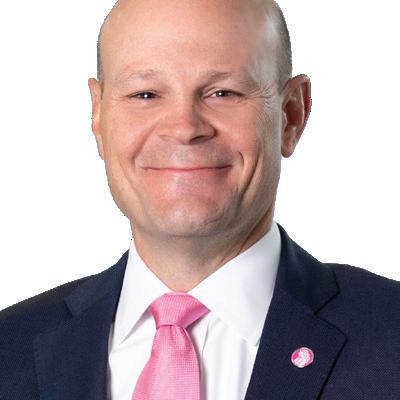
“Bigger is better.”
RENE RAGAS, president and CEO, Woman’s Hospital



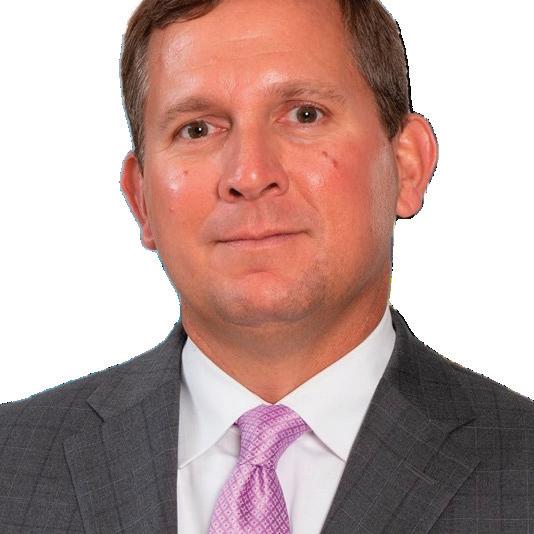
MARIE POWELL, founder and CEO, Brew Agency and The Brewery

“Hiring for grades only. We have found some of our most talented lawyers by looking beyond the resume.”
BOB
BARTON, managing partner, Taylor Porter Brooks & Phillips LLP


“These days, it’s the norm to send endless emails, but sometimes a quick phone call saves time and sparks a better conversation.”
KEITH CHAPPELL, CFO & SVP, The Celtic Group
“I love breaking the rule that you have to choose between being a dedicated professional and being present for your family. I’ve built my business while showing up for my kids, and I believe that being a strong leader at work and a hands-on mom aren’t conflicting roles. They’re actually complementary ones.”
KODI GUILLORY, president, Sustainable Design Solutions
“’Don’t give away your playbook.’ I break that one on purpose. I teach what we do ... to clients, brokers, even competitors. Radical transparency builds trust, shortens cycles and raises the bar for everyone. Paradoxically, the more I share, the more the right business finds us.”
KARL LANDRENEAU, director of commercial sales and leasing, NAI Rampart


“I’m not sure this is a norm, but ‘people > money.’ Don’t try to save money when hiring staff. Pay liberally and hire the best you can. They’ll pay for themselves 10x over.”
MILLER HILLIARD, president and CEO, Surety Bond Solutions


Discover the future of Baton Rouge.













EVERY GREAT RANKING starts with a little detective work, and ours is no exception. The hunt for Business Report ’s annual Top 100 Private Companies list begins in spring, when we dust off our contacts and start chasing leads.
We begin with the usual suspects—companies that have made recent lists—then widen the net to include businesses flagged by readers or turned up by our own digging. We also put out an open call on our websites, inviting any company that thinks it has what it takes to step forward and make its case. Then comes the legwork. We follow up with emails, phone calls and a healthy dose of research to confirm the numbers. When exact figures prove
1
2
3
4
5
6
7
elusive, we turn to industry reports and business databases to build informed estimates.
Not every company is eager to open its books, and that’s fine—when revenue stays under wraps, we lean on public records and trusted sources to land on a reasonable estimate, which we flag in the footnotes so you’re always in the know.
The final rankings reflect reported or estimated revenue from each company’s most recently completed fiscal year—for most, that means calendar year 2025.
Think your company has a place on next year's list? Make your case at research@ businessreport.com






IN THE SUMMER of 1996, Blue Cross and Blue Shield of Louisiana sat comfortably atop Business Report ’s Top 100 Private Companies list, boasting nearly half a billion in revenue and a workforce of 781. Turner Industries was knocking on the door that year, trailing the insurer’s $478.5 million by a little over $10.5 million. A mere month after those rankings ran, Todd Graves and Craig Silvey opened a curious little restaurant near the LSU campus—the place now affectionately known as “The Mothership.” Never mind that a college professor had rejected the concept or that the bankers were skeptical: Graves and Silvey sold one thing and one thing only—chicken fingers. Three decades later, that little startup called Raising Cane’s sits just over $90 million away from toppling the health insurance giant from the perch it has held for decades. Will 2026—the year Raising Cane’s celebrates its 30th birthday—finally be the year it happens? Stay tuned for the verdict in Business Report ’s 2027 edition.
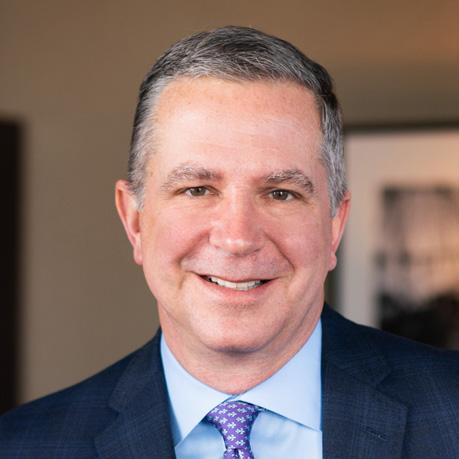

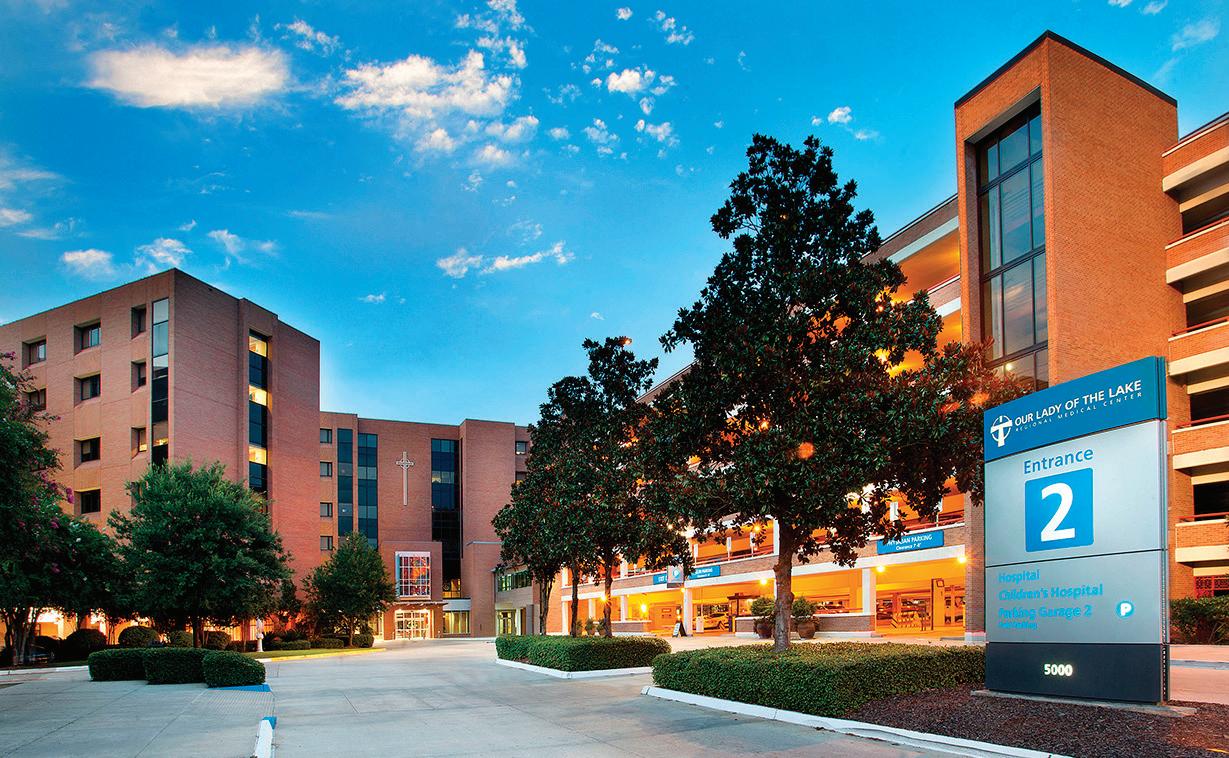
THOUGH ITS NONPROFIT status keeps it off the Top 100 Private Companies list, FMOL Health operates at a scale few private firms in the region can match. The faith-based health system posted $4.58 billion in revenue in 2025—up 13.22% from $4.04 billion the year before—a figure that, were it eligible, would slot in at No. 3, trailing only Louisiana Blue and Raising Cane's, and edging past Turner Industries. Its local workforce is just as commanding: With 10,728 employees across the Capital Region—part of 20,333 companywide—it would lead every local employer on the list, ahead of even Turner's 8,566. In an economy increasingly anchored by healthcare alongside its industrial backbone, FMOL is a reminder that some of the region's biggest economic engines aren't measured in private profits.
research@businessreport.com. Published July 7, 2026.
1 - Estimate



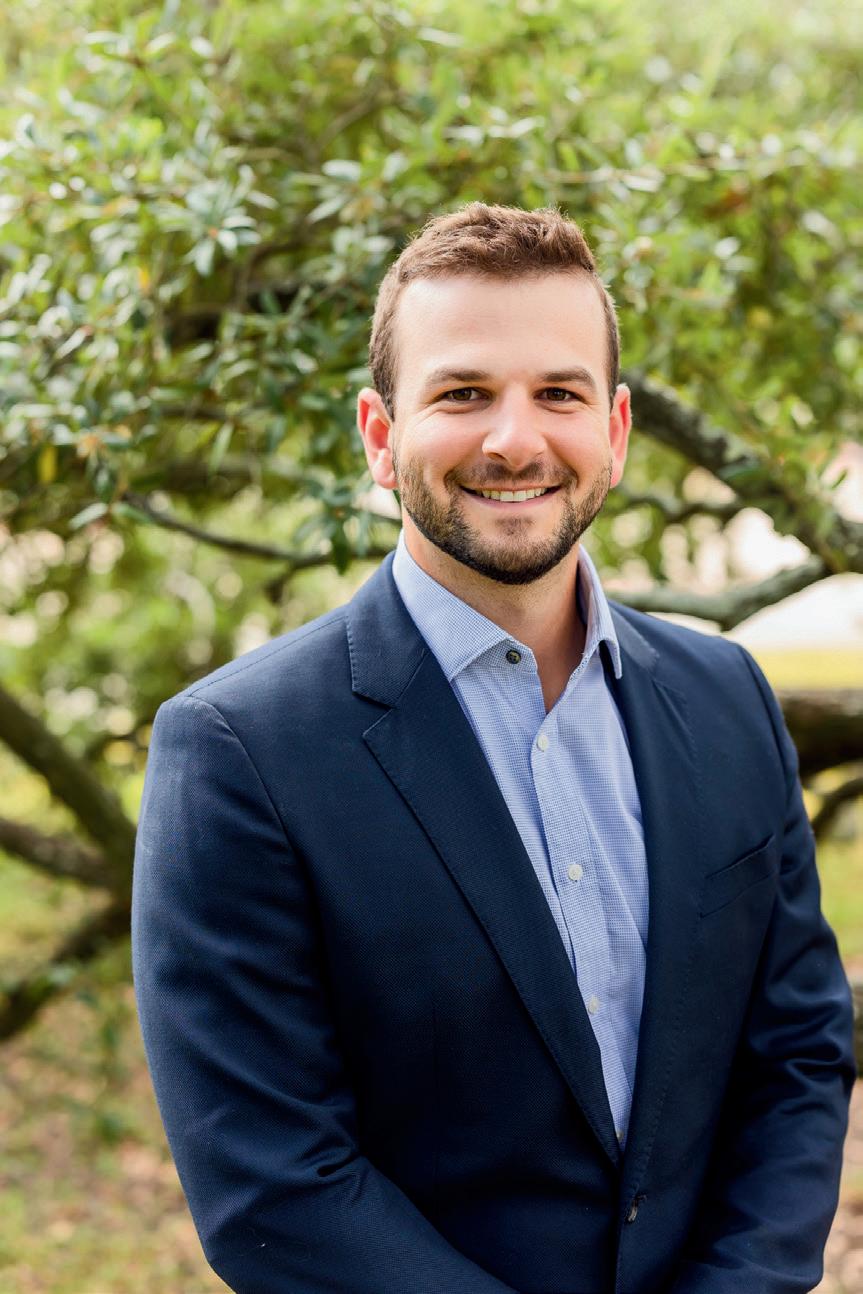







For more than 40 years, Moore Industries has partnered with clients, invested in people, and delivered solutions that create lasting value. Today, under the leadership of Owner & President Tyler Moore, we're building on that foundation while preparing for the opportunities of tomorrow.







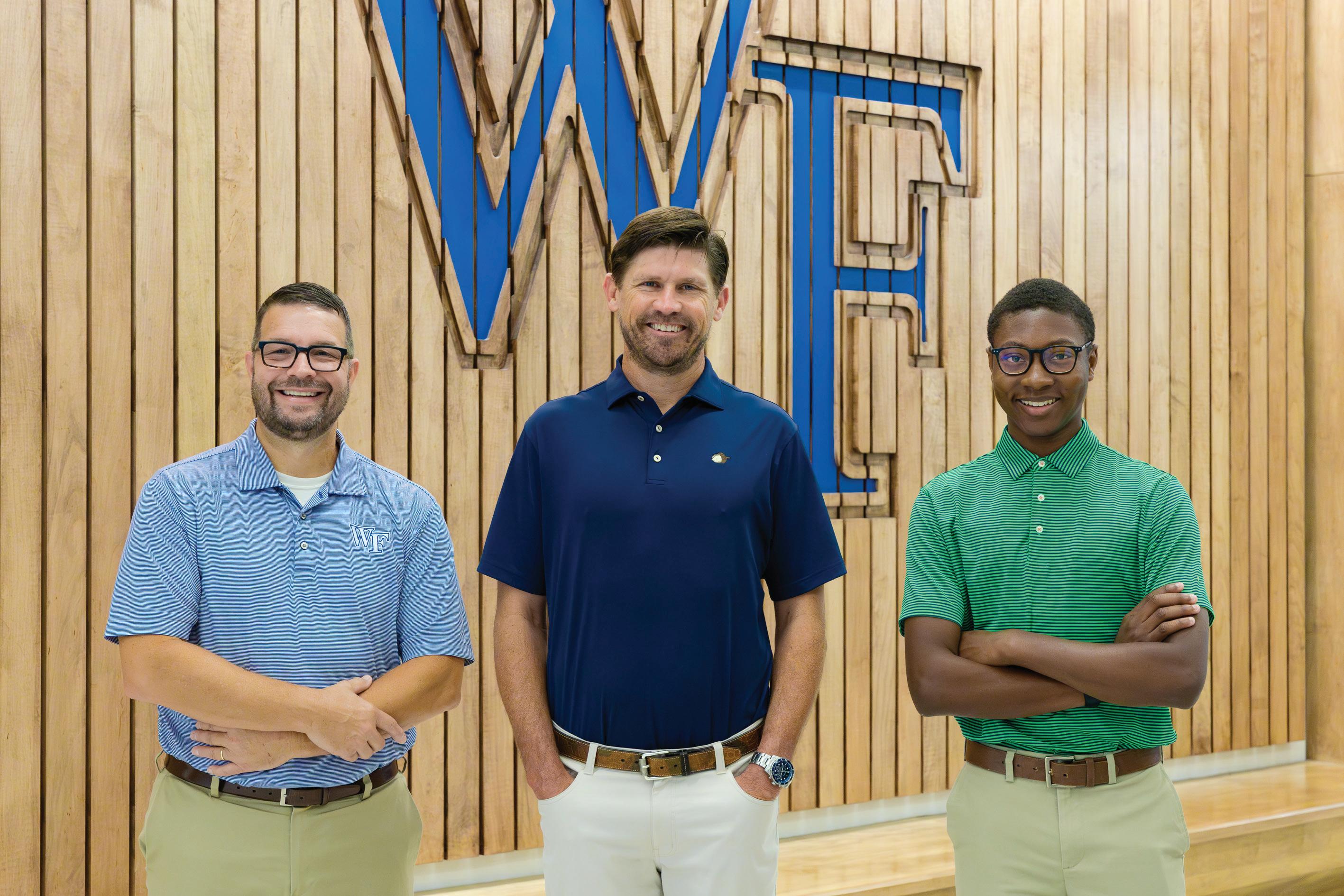
When a school system claims the #1 spot in the state - two years running - when a student earns recognition that reaches far beyond any zip code, and when a bank earns the trust and recognition of an entire region - that's not coincidence. That's what happens when people invest in each other. Bank of St. Francisville is proud to support the educators, the achievers, and the dreamers who make this community extraordinary. We don’t just celebrate success - we help Build a Stronger Future.

“Leaving a longtime, secure job to start Assurance Financial from the ground up with a baby on the way.”
—KENNY HODGES, CEO, Assurance Financial






THESE COMPANIES made the biggest leaps on this year's list, each climbing five or more spots from their previous ranking. Strong revenue growth— led by Level Homes' jump of 16 places—powered their rise up the chart.
No. 52 Level Construction and Development (Level Homes) +16
No. 56 Savard Labor & Marine (Savard Personnel Group) +11
No. 28 Valluzzo Companies +9
No. 85 Assurance Financial +9
No. 70 Surgical Specialty Center of Baton Rouge +8
No. 71 Cherbonnier Mayer & Associates (CMA Technology Solutions) +8
No. 73 Facilities Maintenance Management +8
No. 76 GLO Resources +8
No. 91 Cangelosi Ward General Contractors +8
No. 90 Cornerstone Commercial Flooring +7





IN A YEAR defined by national economic uncertainty—the drag of new tariffs, the unease of war abroad, and markets unsettled by both—the revenue swings among the Top 100 Private Companies grew more subdued in 2025, but no less telling. Fifty-four companies posted a revenue gain, a step back from last year's 75. The average gain, meanwhile, fell to 15.13% from last year's 29.43%, suggesting that growth, while still the prevailing direction, has decidedly cooled. On the other side, 31 companies reported revenue declines, up from 22 a year ago, with an average loss of 8.91%—virtually unchanged from 2024's 8.73%, a sign that while fewer companies thrived, those that slipped fell no harder than before.



No.32 TOP 1OO P RIVATE C OMPANIE S
ADVICE TO MY YOUNGER SELF
“Spend
money on experiences and live life to its fullest. Do not let anyone tell you otherwise. Be adventurous because your one life on earth is now, and it’s temporary. Do something with it and be proud because you’re
the only one who can truly make it happen.”
—TERRI HICKS, president and CEO, The Spine
Hospital of Louisiana





THESE ARE THE companies operating at the highest end of the revenue spectrum, grouped by those clearing the $500 million mark and the elite few surpassing $1 billion. Together they represent the region's true financial heavyweights—the largest revenue generators on the list.

$1B & BEYOND
Blue
Raising
Turner
MMR
Performance Contractors Inc.
LEMOINE
The Newtron Group
1
DBA-doing
$500M-$999M
Lipsey's EXCEL
Associated
Republic
Specialty
Price LeBlanc
ISC Constructors
Brown
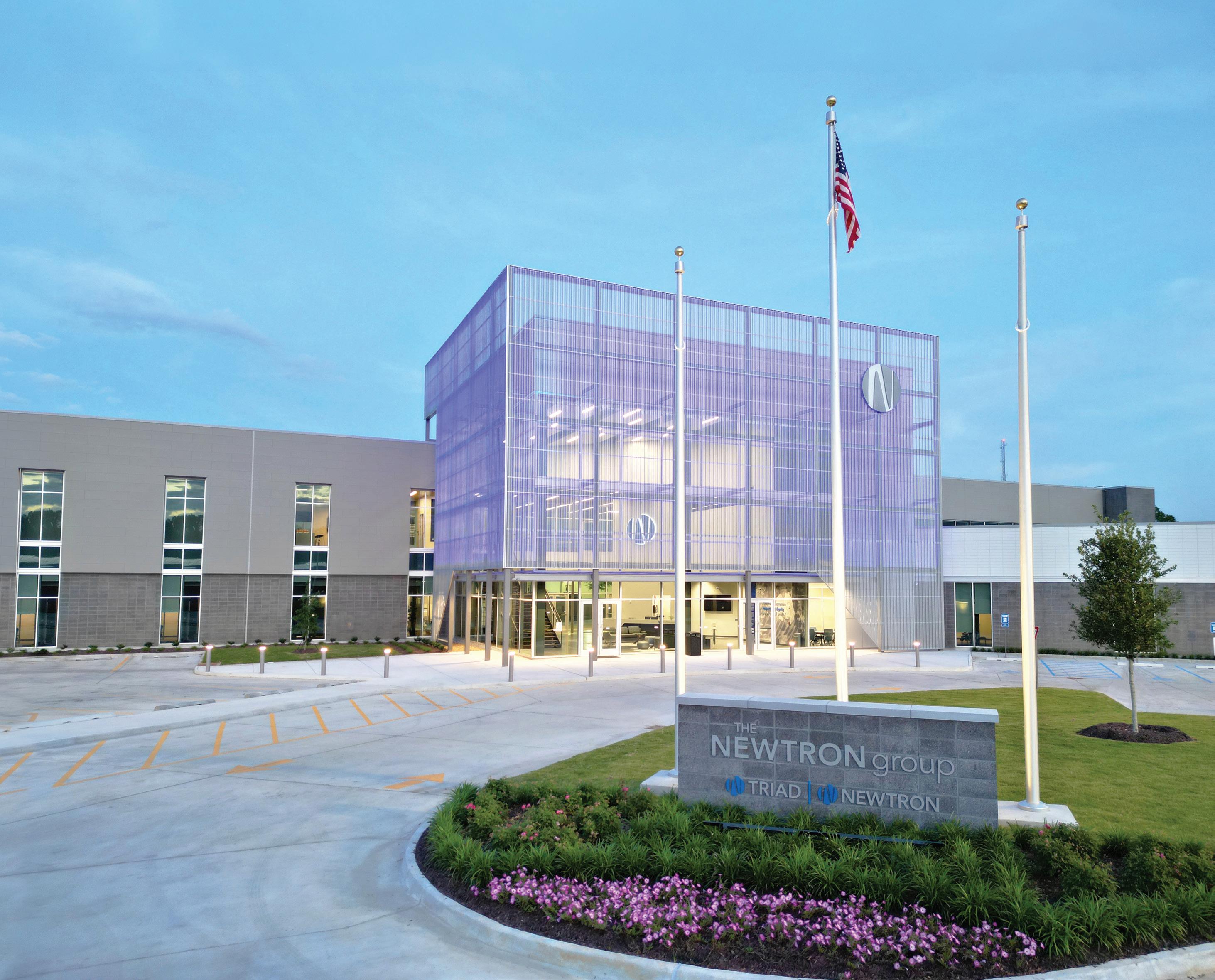

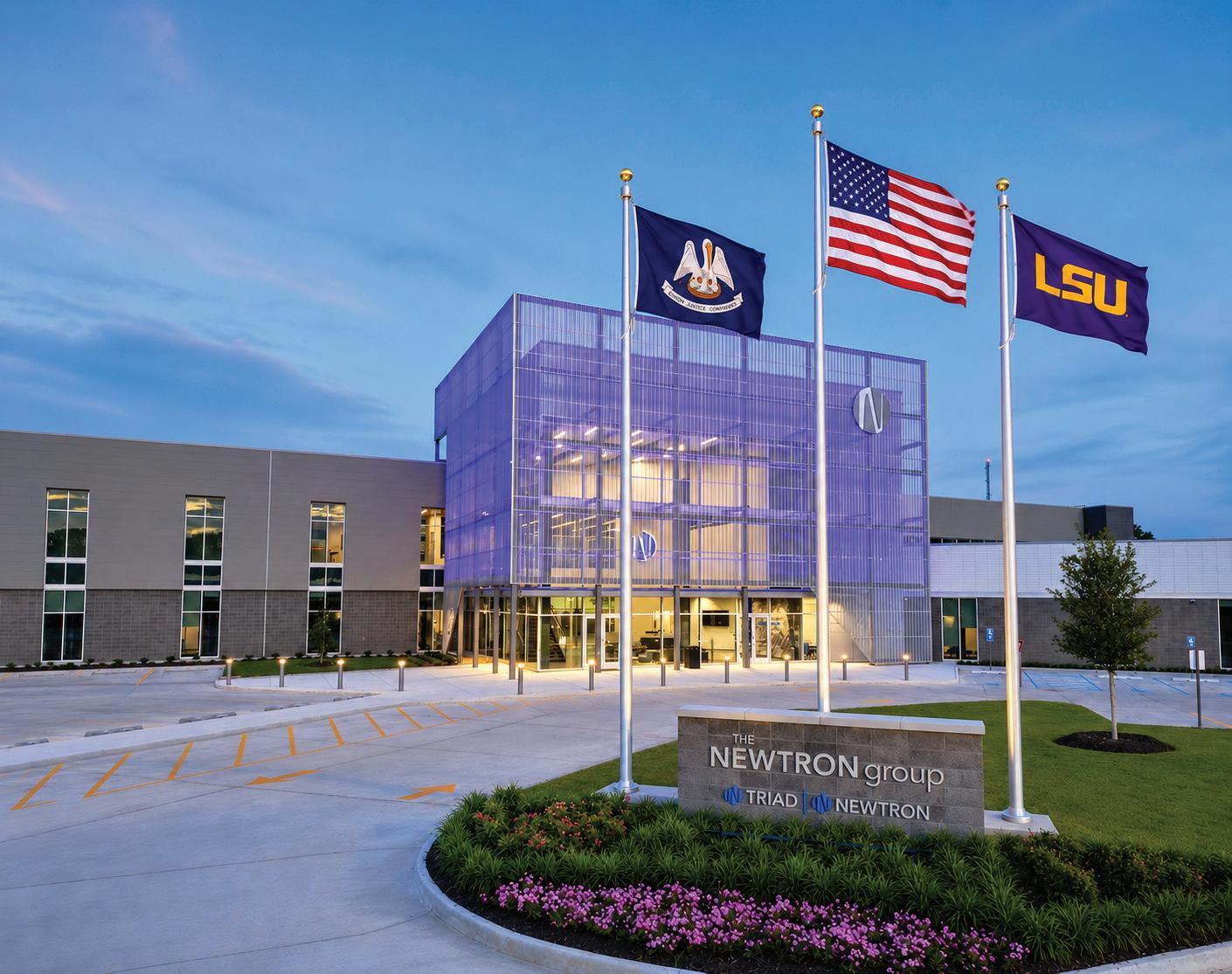
81
82
83
84 83 DPI Management CompanyLLC 8946 Interline Ave., Baton Rouge70809 225-923-0030| dpianes.com
85 94 Assurance Financial 9029 Jefferson Highway, Suite 100, Baton Rouge70809 225-448-2680| assruancemortgage.com
86 75 Master Vac Industrial Services/ Dynamic Environmental Services 6260 La. 73, Geismar70734 225-677-5446| mastervac.com




















Our bankers take the time to understand your goals, anticipate your needs, and guide you with clarity and confidence. It's not just about accounts and transactions; it’s about creating meaningful relationships that empower you to make the most of your money. Because when you have the right people in your corner, every financial choice becomes a smarter one.

Sponsored By:

Business Report’s AI Academy is a five-session professional development program designed to strengthen AI leadership capabilities and help organizations identify where AI can create meaningful value and impact.
Built for small and mid-sized businesses, the program provides practical guidance to evaluate, develop and implement AI strategies in responsible and impactful ways.
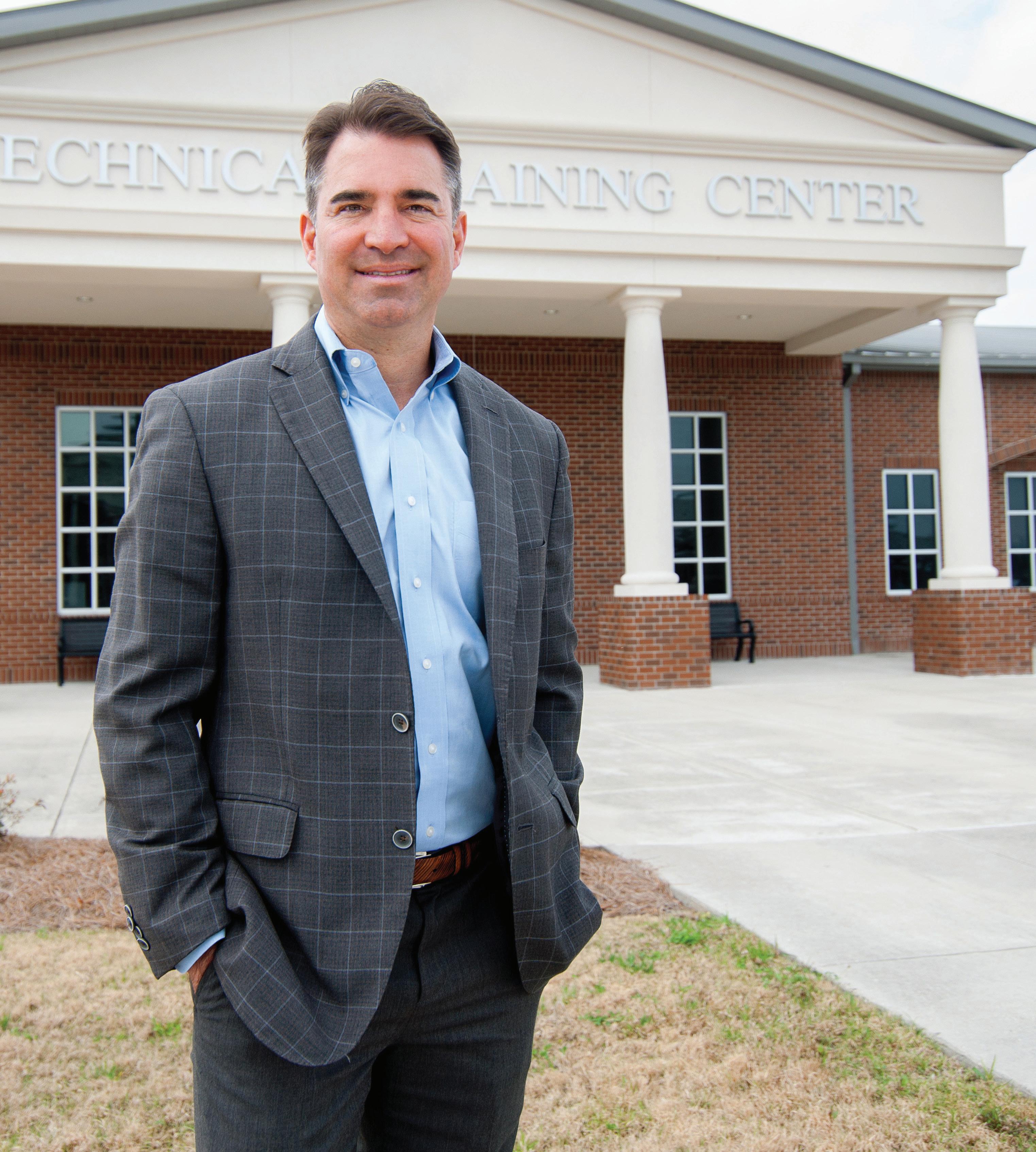
“Success isn’t measured in a day, a week or a year. It’s measured over a lifetime.”
—THAD RISPONE, president, ISC Constructors, on wisdom he gleaned from his father, Eddie Rispone






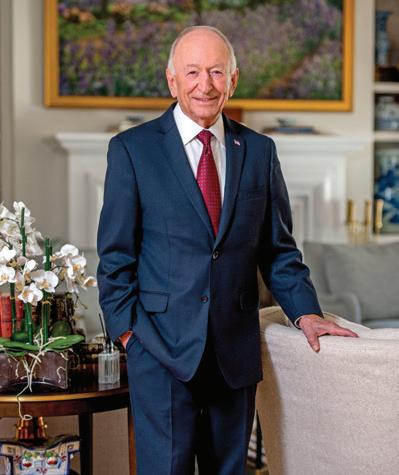
MELARA ENTERPRISES LLC publishes Business Report, the Daily Report AM and PM e-newsletters, and the newly launched Ascension Business Report. Its other major media brands include 225, inRegister and 10/12 Industry Report, along with a variety of online and custom publications. The company also operates Studio E and the Leadership Academy, and it hosts major community events such as Influential Women in Business, the Louisiana Business Symposium, Forty Under 40 and Best Places to Work. In 2025, Melara Enterprises' total revenue was $11,480,780, compared with $11,791,498 in 2024, a decline of 2.6%. As of June 2026, the company had 54 full-time employees, all based at its corporate headquarters on Jefferson Highway in Baton Rouge. Julio Melara is chair of Melara Enterprises and publisher of Baton Rouge Business Report



When you pull up to this home on Hillsdale Drive, the first thing you notice isn’t the house. It’s the tree.
A sprawling live oak anchors the front yard, stretching over a symmetrical Southern facade of brick columns, dormers and a welcoming front porch. For Trent Fresina, co-owner of LeBlanc & Fresina Builders, that tree inspired the direction of the entire build.
“The house was built around it,” Fresina says.
The team worked carefully to preserve the oak from the start, bringing in Bofinger’s Tree Service multiple times throughout construction before excavation, foundation work and exterior installation.
The result is a home that feels rooted in its site from the moment you arrive.
Designed by architect Lionel F. Bailey, AIA, and finished by interior designer Angel Lewis of A Lewis Designs, the 3,718-square-foot home includes four bedrooms, three full baths and two half baths.
The floor plan moves naturally from a welcoming foyer into the main living spaces, passing a powder bath and office areas before opening into the kitchen and living room. The layout creates openness while maintaining comfortable separation between spaces. Warm finishes and cohesive design choices carry throughout the home. “That traditional style, it really is homey and cozy,” co-owner Blake LeBlanc says.
A standout feature of the home is the custom bar beneath a barrel ceiling finished in reclaimed Old St. Louis brick.
The idea came from a creative collaboration between the architect, designer and builder, each contributing to a vision for the space that is both functional and aesthetic. The finished bar serves as a central gathering point and one of the most memorable interior details in the home.
“We worked on how we were going to make it all work and function as a team and truly executed on it,” Fresina says. “It really came out great.”
The rear of the home opens into a heated and cooled outdoor living area equipped with phantom screens that lower to enclose the space when needed.



“When you put those screens down,” Fresina says, “it extends the footprint of the home.”
A flush transition between inside and outside allows the spaces to flow together naturally, making the patio usable throughout the year.
LeBlanc & Fresina builds its pools in-house, and the Hillsdale backyard reflects that hands-on approach.
The design includes a raised spa, tanning ledge with bubblers and a fire feature wall that lights up the space at night. A playground is tucked into one corner of the yard, while open areas provide space for gathering and everyday use.
“The playground area next to the fire pit really flowed well,” LeBlanc says. “It’s all continuous together.”
The Hillsdale home earned both People’s Choice Award and Judges Award honors in the $1.5M–$3.5M+ category at the 2026 HBA Greater Baton Rouge Parade of Homes.
For Fresina, the Judges’ Choice recognition stood out because it came from industry professionals evaluating craftsmanship and construction quality.
A frequent comment from Parade of Homes visitors was music to Fresina’s ears.
“A lot of people said, ‘We’ve seen a lot of pretty homes, but this one, I could see myself living here,’” Fresina says.
For Fresina, the Hillsdale project perfectly embodies the 360 approach that distinguishes LeBlanc & Fresina’s work across Baton Rouge. The home combines craftsmanship and livability, bringing together architecture, design and construction in a way that elevates everyday life with distinctive details and thoughtfully curated interiors.
Learn more at lfbuildersla.com.
•







should homeowners do before meeting with a custom home builder?
Before meeting with a builder, homeowners should spend time defining their goals, priorities, and lifestyle needs. Gather inspiration photos, identify must-have features, establish a realistic budget range, and consider where you want to build. The more clarity you have about how you live and what you value, the more productive the initial meeting will be. A good builder can guide the process, but having a vision from the start helps create a home that truly fits your family.
How can homeowners establish a realistic budget and timeline?
The best approach is to begin with an honest conversation about expectations. Budget should not only include construction cost, but also site preparation, design fees, landscaping, and permitting cost. For timeline planning, understand that custom homes are unique projects with many moving parts. Thoughtful planning, timely selections, and strong communication between the homeowner, designer, and builder are essential to keeping the project on schedule. We encourage clients to focus on value and long-term satisfaction rather than simply chasing the lowest upfront cost.
What features provide the greatest long-term value?
The features that consistently provide the greatest value are timeless architecture, quality craftsmanship, energy efficiency, functional floor plans, and
durable materials. Well-designed kitchens, luxurious primary suites, ample storage, outdoor living spaces, and high performance windows and insulation are investments that homeowners appreciate every day. Trends come and go, but quality construction and thoughtful design never go out of style.
One of the most common mistakes is making major design changes after construction begins. Changes can affect cost, scheduling, and overall project efficiency. Another mistake is focusing solely on the initial price rather than overall value and quality. We encourage homeowners to spend extra time during the planning and design phase, as thorough preparation creates a smoother building experience and often saves money in the long run.
How can homeowners ensure a smoother and more successful project?
The key to a successful custom home project is choosing the right team and maintaining open communication throughout the process. Homeowners should work with experienced professionals, make selections early, and trust the expertise of the builder and design team. A successful project is built on collaboration, transparency, and shared expectations. When everyone is aligned from the beginning, the experience becomes far more enjoyable and the final result exceeds expectations.

Chase Jarreau is the founder and owner of Jarreau Construction, which has grown into one of the region’s respected residential construction firms over the past decade. Known for exceptional craftsmanship, innovative design, and a personalized client experience, Chase has built a reputation for creating homes of lasting quality and value. Today, he leads a team dedicated to delivering distinctive custom homes for families throughout the region.





THE CAPITAL REGION'S economy draws its strength from a mix of industry, government, education and healthcare. From the petrochemical corridors along the Mississippi River to the state offices and universities in Baton Rouge, its largest employers reflect the region's character and direction.

The rankings that follow identify the top employers in each parish, both public and private. They span the chemical plants, government agencies, school systems, hospitals and retailers that anchor communities across the region. All figures are drawn from the most recent available data, sourced from public records and parish chambers of commerce. Estimates are marked with an asterisk (*).



Everyone talks about innovation. What is Mercedes-Benz doing today that people will be talking about tomorrow?
Mercedes-Benz has always believed true innovation isn’t about adding more technology; it’s about making technology feel effortless. The S-Class has long been the vehicle where the future debuts first, and that tradition continues today. A perfect example is heated seatbelts. It’s a feature most people never think to ask for until they experience it, making cold mornings noticeably more comfortable. It’s a simple idea, but it reflects the Mercedes-Benz philosophy of improving even the smallest details. Every innovation is designed with one goal in mind: making every day driving more enjoyable, intuitive, and refined.
If someone has never owned a Mercedes-Benz before, what’s the one thing that surprises them the most?
Most first-time owners say it’s how quickly luxury becomes their new normal. They immediately notice the quiet cabin, the confidence behind the wheel, and the craftsmanship that surrounds them every time they open the door. The technology feels intuitive, anticipating their needs instead of forcing them to learn complicated systems. These thoughtful touches become part of everyday life, and they’re often what owners miss most when driving anything else. Once you’ve experienced a Mercedes-Benz, it’s difficult to imagine settling for less.
Everything begins with our philosophy: The Best or Nothing. Intelligent engineering delivers exceptional comfort through advanced seating, adaptive suspension, premium materials, and meticulous craftsmanship. Inside, technology like MBUX, the next-generation MB.OS operating system, and advanced driver assistance features work seamlessly in the background to make every drive more connected and effortless. Rather than adding technology simply to impress, Mercedes-Benz focuses on innovations that genuinely enhance the ownership experience.
Mercedes-Benz ownership is Owning a Mercedes-Benz is about far more than the vehicle itself. It’s about an ownership experience built around convenience. At Mercedes-Benz of Baton Rouge, services like complimentary Service Valet allow us to pick up your vehicle from your home or office, provide a complimentary Mercedes-Benz loaner, complete the service, and return your vehicle when it’s ready. It’s a premium experience that respects your time while delivering the level of care clients expect. For many owners, it’s this combination of exceptional vehicles and effortless ownership that keeps them coming back.
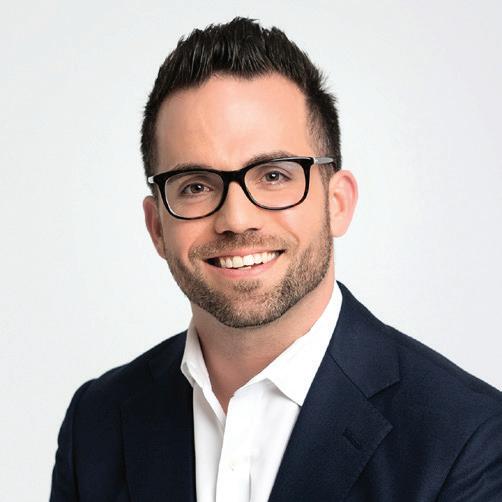
HESS CROCKET
General Sales Manager
Mercedes-Benz of Baton Rouge
Hess has spent nearly two decades helping lead one of Louisiana’s premier luxury automotive dealerships. Passionate about leadership, operational excellence, and developing people, he believes the strongest organizations are built by investing in their teams and continually improving customer experience. In addition to his automotive career, Hess is the Co-Owner of Evolve Studios alongside his wife, where they focus on creating exceptional experiences through thoughtful design, strong leadership, and a commitment to the community.











• Please respond by e-mail or phone with your approval or minor revisions.
• AD WILL RUN AS IS unless approval or final revisions are received within 24 hrs from receipt of this proof. A shorter timeframe will apply for tight deadlines.
• Additional revisions must be requested and may be subject to production fees. Carefully check this ad for: CORRECT

At Peters Wealth Advisors, every investment begins with trust. Guided by integrity and a deep commitment to understanding each client’s unique goals, we craft personalized financial strategies designed to support long-term financial goals and peace of mind. Our approach is simple: listen first, plan wisely, and act with transparency. Whether preparing for retirement, growing wealth, or securing a legacy, our clients know they’ll have caring, capable guidance as they work toward their future. Where trust meets strategy, and goals shape every plan.
1 2 EntergyCorp. 639 Loyola Ave., New Orleans70161 504-576-4000| entergy.com
2 1 Lumen TechnologiesInc.
CenturyLink Drive, Monroe71203 318-388-9000| lumen.com
3 3 PoolCorp. 109 Northpark Blvd., Covington70433-5001 985-892-5521| poolcorp.com
4 5 Lamar Advertising 5321 Corporate Blvd., Baton Rouge70808 225-926-1000| lamar.com
5 7 Origin BancorpInc. 500 S. Service Road E., Ruston71270 318-242-7500| origin.bank
6 9 Conrad IndustriesInc. 1501 Front St., Morgan City70381 985-384-3060| conradindustries.com
7 8 AmerisafeInc. 2301 La. 190 West, Deridder70634 337-463-9052| amerisafe.com
8
9 11
1351 Holiday Square Blvd., Covington70433 408-933-4000| globalstar.com
10 12 Viemed HealthcareInc.

Entergy has served Louisiana for 100 years. Now, we’re strengthening our commitment to the next generation and reinforcing the grid for our home state.
That means upgrading infrastructure and strengthening 70,000 utility poles to withstand stronger storms and reduce outages.
We’re also adding more sustainable and reliable power generation to fuel our growing communities.
This keeps costs down, which keeps our rates below the national average. Entergy’s team is also partnering with state and local leadership to help attract industry to create 100,000 new jobs in Louisiana.
Our employees are committed to making Louisiana better because this is our home, too.
Learn more at EntergyLouisiana.com/100-Plan
When you work with an independent insurance agent, you’re not limited to a single company’s plans or pricing. I work with multiple insurance carriers, which allows me to compare options and help you find coverage that best fits your specific needs and budget. Every person and family is different, and there is no one-size-fits-all solution when it comes to insurance. My role is to do the research and comparison shopping for you, saving you time and helping you avoid costly mistakes. Instead of spending hours trying to understand complicated insurance terminology, you have someone in your corner who can explain your options in plain English and help you make an informed decision with confidence.
I recommend reviewing your coverage at least once a year or whenever you experience a major life event. Changes such as marriage, divorce, having children, changing jobs, starting a business, or approaching retirement can all impact your insurance needs. Many people set up a policy and never look at it again, but insurance products and rates change over time.
One of the biggest mistakes I see is focusing solely on the monthly premium. While affordability is important, the lowest-priced plan isn’t always the best value. Deductibles, copays, provider networks, prescription coverage, and out-of-pocket maximums can all have a significant impact on your overall costs. Many people don’t discover gaps in their coverage until they actually need to use it.
Absolutely. One of the biggest advantages of working with multiple carriers is that I can compare plans and pricing to help find the right balance between coverage and affordability. There are often more options available than people realize.
I believe insurance should be personal. My goal isn’t simply to sell a policy; it’s to build relationships and become a trusted resource for my clients and their families. I take the time to listen, answer questions, and understand what is most important to each person I work with. As an independent agent licensed in multiple states, I have access to a variety of carriers and coverage options. This allows me to focus on finding solutions that fit my clients rather than trying to fit clients into one company’s products.
SHANNON HARRIS
Licensed Insurance Agent, BiG Agency
I believe insurance shouldn’t be confusing, stressful, or feel like a sales pitch. My goal is simple: help people understand their options, save money where they can, and feel confident knowing their families are protected. As a local licensed insurance broker, I work with multiple carriers and nationwide PPO plans, so I can do the shopping for you and help you find the coverage that fits your life. I treat every client the way I’d want my own family treated: with honesty, patience, and good old-fashioned Southern hospitality.

4

Bryan Wesley, Past President of CIAC
BY SAM BARNES
Turner Industries isn’t waiting for reactors to arrive before building its supply chain.
industrial sector are gambling that the growing clamor for additional nuclear energy investment is more than just talk, and it’s with good reason. Over the last year, public and private groups have been fanning the flames of public discourse, asserting that meeting future energy needs and emissions targets can’t be concurrently achieved without nuclear in the mix.
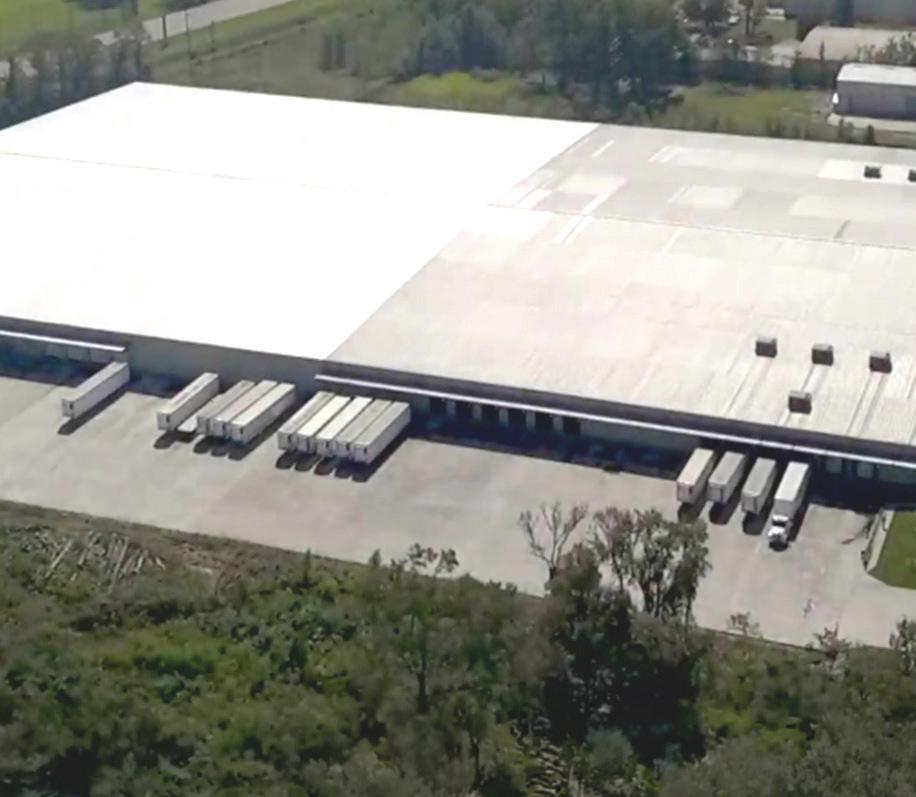
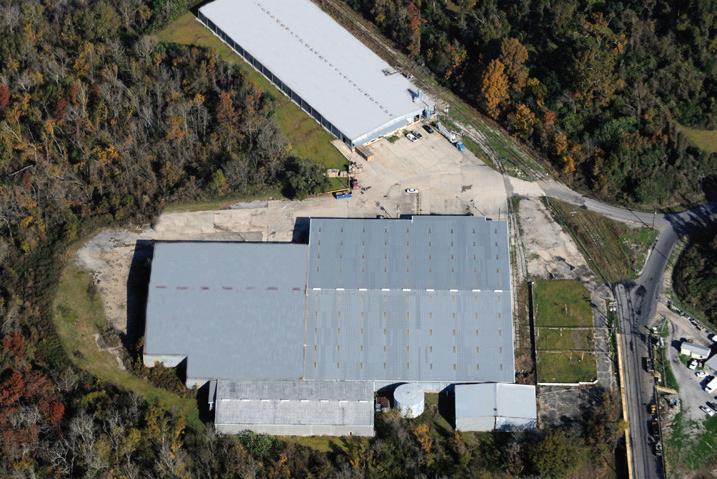
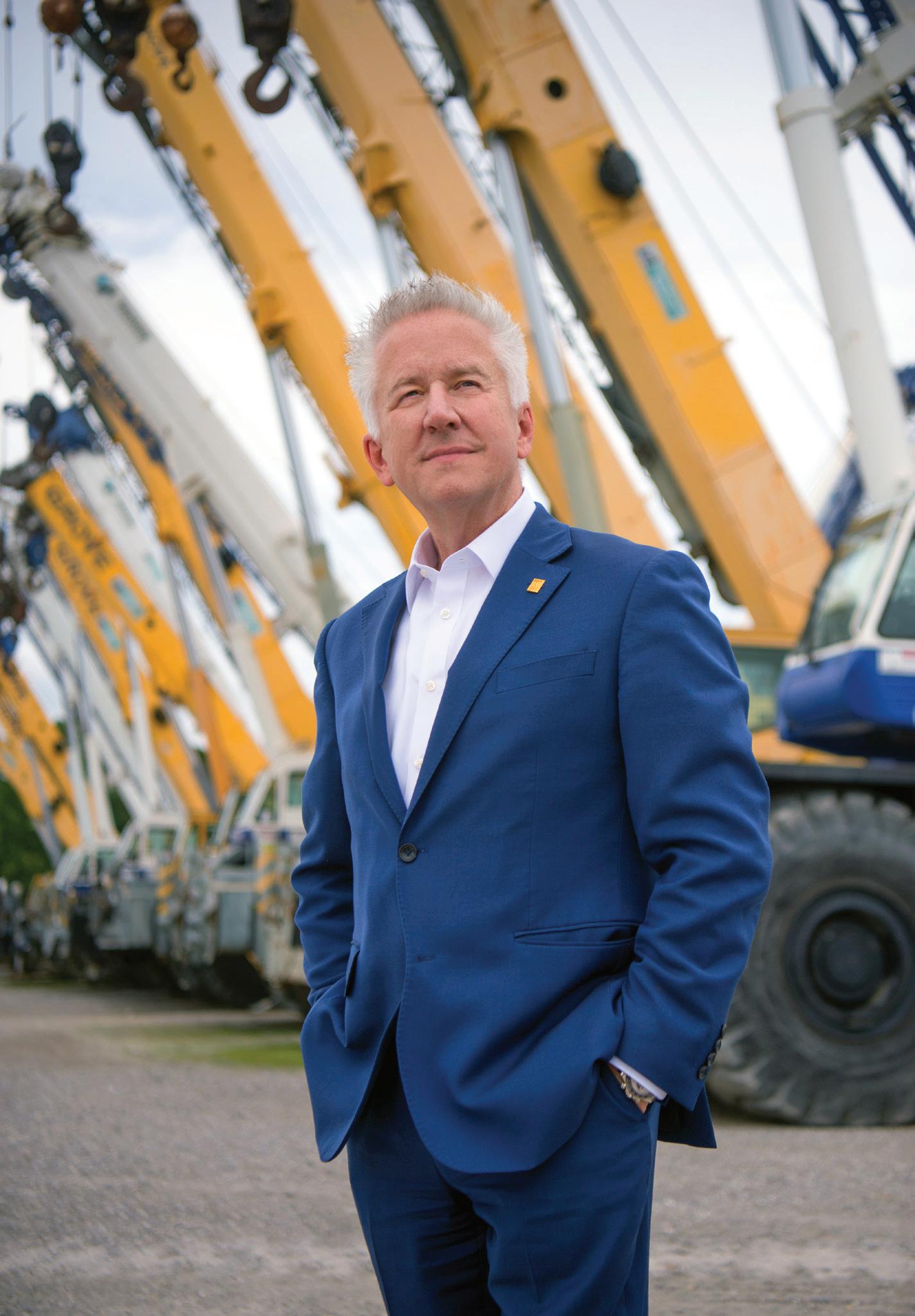
In April, Turner Industries became the first to take steps in that direction, announcing that its fabrication facilities in Port Allen and New Iberia would be dedicated to the production of high-precision modules and nuclear-grade piping for the next generation of nuclear reactors and advanced modular power plants. The move is expected to eventually create 1,000 direct new jobs, 500 at each site.
Stephen Toups, Turner CEO, calls it a calculated risk. “It reminds me of the old Wayne Gretzky quote, ‘I skate to where the puck is going to be, not where it has been.’ I think that’s what we’re doing,” Toups says. “I think nuclear is going to be there; it’s not something that’s going to happen next Friday, but it’s a swim lane that we can jump in.”
“It reminds me of the old Wayne Gretzky quote, ‘I skate to where the puck is going to be, not where it has been.’”
STEPHEN TOUPS, CEO, Turner Industries
It won’t be Turner’s first entry into the nuclear arena. In 2008, the contractor received its first ASME nuclear “stamp” to fabricate pipe, supports and modules for the nuclear market, and later supplied some 1,000 spools of pipe for the Vogtle Electric Generating Plant in Georgia from a fabrication facility in Texas. “There wasn’t a tremendous amount of momentum for it at the time, but we’ve maintained our nuclear
license and that skill set ever since,” Toups says.
Now that data centers and other energy-intensive industries such as Hyundai-POSCO Louisiana Steel in Ascension Parish are becoming reality, nuclear reactor manufacturers are once again looking to stand up a supply chain, and Toups wants to be ready. As such, Turner’s facilities will be designed to meet
the rigorous quality standards required by the Nuclear Regulatory Commission.
Things are moving faster than expected, as Toups had originally thought Turner’s first fabrication order wouldn’t come until 2030 or later. “In reality, we’re fabricating demonstrator pieces right now in New Iberia for an undisclosed client that we’ve worked for in
the past,” he says. “They’re testing the welds, quality, assembly procedures and productivity. They want to see how we do.” It won’t be a “zero-sum” game for Turner; it will continue to do its traditional work in the industrial space, although the mix of work could change as the nuclear market evolves. “We’re not going to stop our traditional work and do only nuclear. We’re going to do both,” Toups says. “We’re not stopping anything. We’re adding.”
A MORE URGENT TONE
It’s not the first time the nuclear discussion has surfaced in Louisiana. What’s different now is the high-profile, and largely bipartisan, support it’s receiving. The Louisiana Public Service Commission, Louisiana Economic Development, the governor’s office and a host of industrial groups are all pushing for the development of a local nuclear infrastructure.
The PSC first advanced the conversation in 2024 by authorizing Eric Skrmetta, District 1 commissioner in Metairie, to develop a collaborative task force— the Louisiana Advanced Nuclear Competitive Edge, or LANCE—to prepare for the eventuality of advanced nuclear. In its role, LANCE seeks to develop economic opportunities through advanced nuclear energy, attract investment for nuclear projects, develop and test advanced nuclear fuels and train the workforce needed for nuclear technology.
Then in the spring, Louisiana officials unveiled a new Nuclear Strategic Framework, hoping to


position the state as a central hub for the U.S. nuclear supply chain, and hosted the inaugural Louisiana Nuclear Strategy & Supply Chain Summit in New Orleans with the goal of transitioning the framework from planning into actionable, investable projects.
“I would consider a lot of what we’re doing in Louisiana right now to be lead development, because we don’t have a long-standing, thorough ecosystem on the nuclear side of things,” says Paige Carter, chief development officer at Louisiana Economic Development.
Carter hopes the state’s industrial base will give it a strategic advantage. “We have one of the strongest manufacturing and industrial backbones in the country,” she says, “but in terms of fuel enrichment and fuel conversion we still have a long way to go.”
The primary obstacle, she says, is an existing disconnect between the
suppliers of potential nuclear generation and the end users of that power.
“The relationship needs to be as fluid and complimentary as possible so that the nuclear industry can flourish,” Carter says. “That’s every state’s obstacle right now, and we want to make sure that we’re outpacing our peer states to ensure we’re building those relationships.”
That includes fostering B2B relationships, both upstream and downstream, and developing a local supply chain. “From a supply chain standpoint, we have unbelievable strength from companies such as Turner, MMR, Epic Piping, etc. This is an opportunity for us to win quickly and effectively on the manufacturing side.
“There are also a lot of concrete companies that could be certified for nuclear-grade concrete, and we want to make sure that we’re here to help companies make that pivot.”
Jeff Plauche, CEO of Allied Power Holdings LLC, says the recent summit in New Orleans served as a local “coming out” party, of sorts, for his company. Although headquartered in Baton Rouge, the entirety of Allied’s nuclear work lies outside the state.
Through its various entities, Allied provides nuclear power and fossil fuel maintenance services along with radiation safety and engineering services. It employs some 6,600 people worldwide. “If it’s nuclear in the Eastern U.S., we’re involved in one way or another,” Plauche says. “We’re actively doing maintenance work (much like a nested maintenance contractor in the industrial space), and we want to grow specifically in Louisiana, but the industry has to be there to grow into.”
Should small modular reactors, or SMRs. become a local reality, whereby the reactors are operating
within petrochemical facilities or at locations along the electrical grid, Allied will be ready. “That’s the play for us,” he says. “You start putting SMRs in the petrochemical facilities in the Gulf South, and as a maintenance contractor we can do everything for the SMR manufacturer at those facilities.
“I think it’s a ‘first mover’ issue,” Plauche adds. “SMRs are not to the point where they’re cost-effective, but once someone finds a solution to that issue, I think it gets rolling.”
Greg Upton, executive director at the LSU Energy Institute, says there will undoubtedly be a need for more nuclear energy in the long term. “We’re entering what the IEA (International Energy Agency) calls the ‘era of electricity’ … electricity needs are increasing, and that’s primarily why we’re talking about building out new forms of
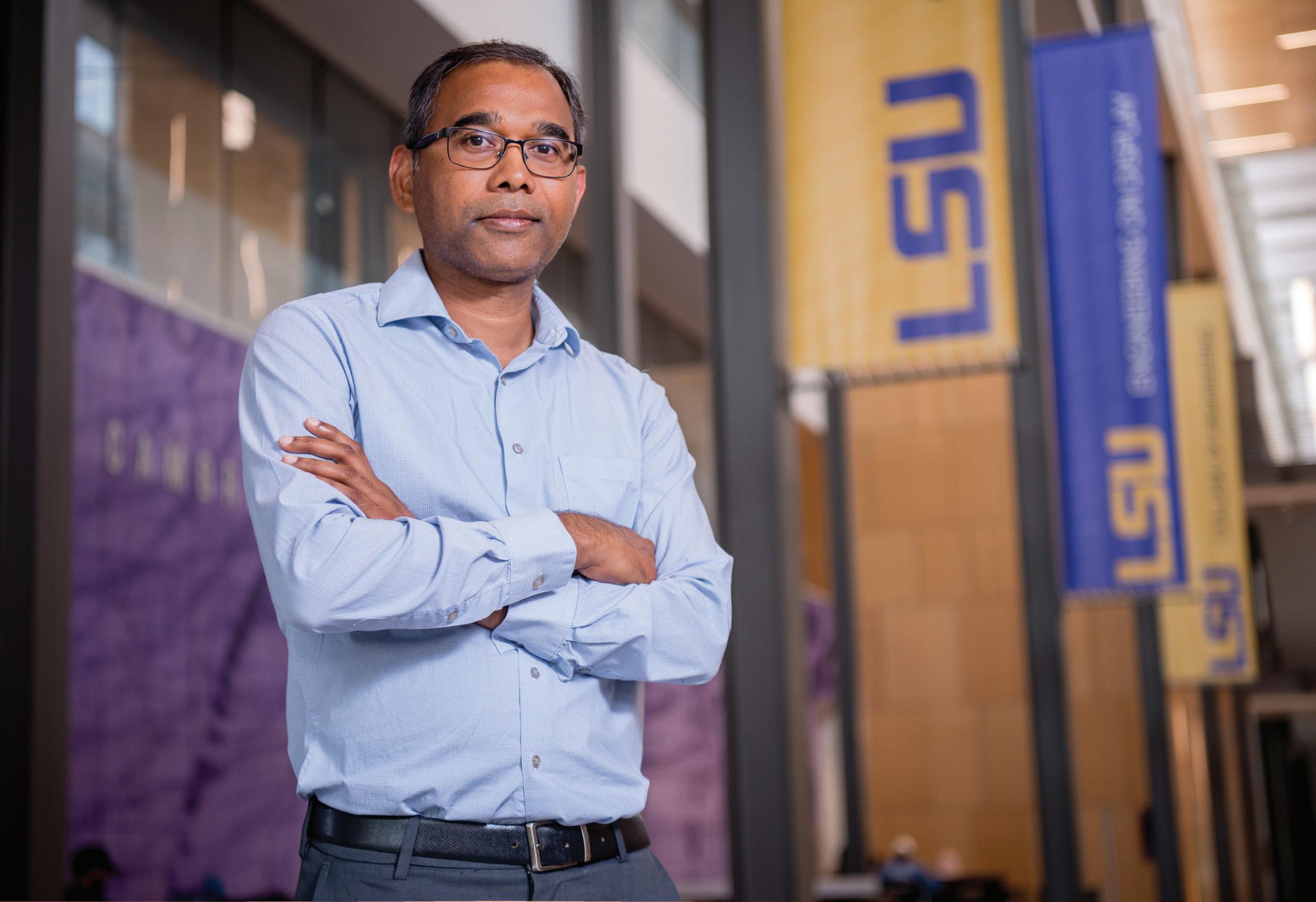
Last year, Manas Gartia spearheaded a multidepartment effort at LSU in applying for a five-year, $22 million U.S. Department of Energy grant to develop a local nuclear workforce. Louisiana’s proposal wasn’t funded, but the LSU mechanical and industrial engineering professor plans to apply a second time for the funding in 2026, since a nuclear workforce will continue to be a strong piece of the supply chain puzzle.

Featured V O ICE
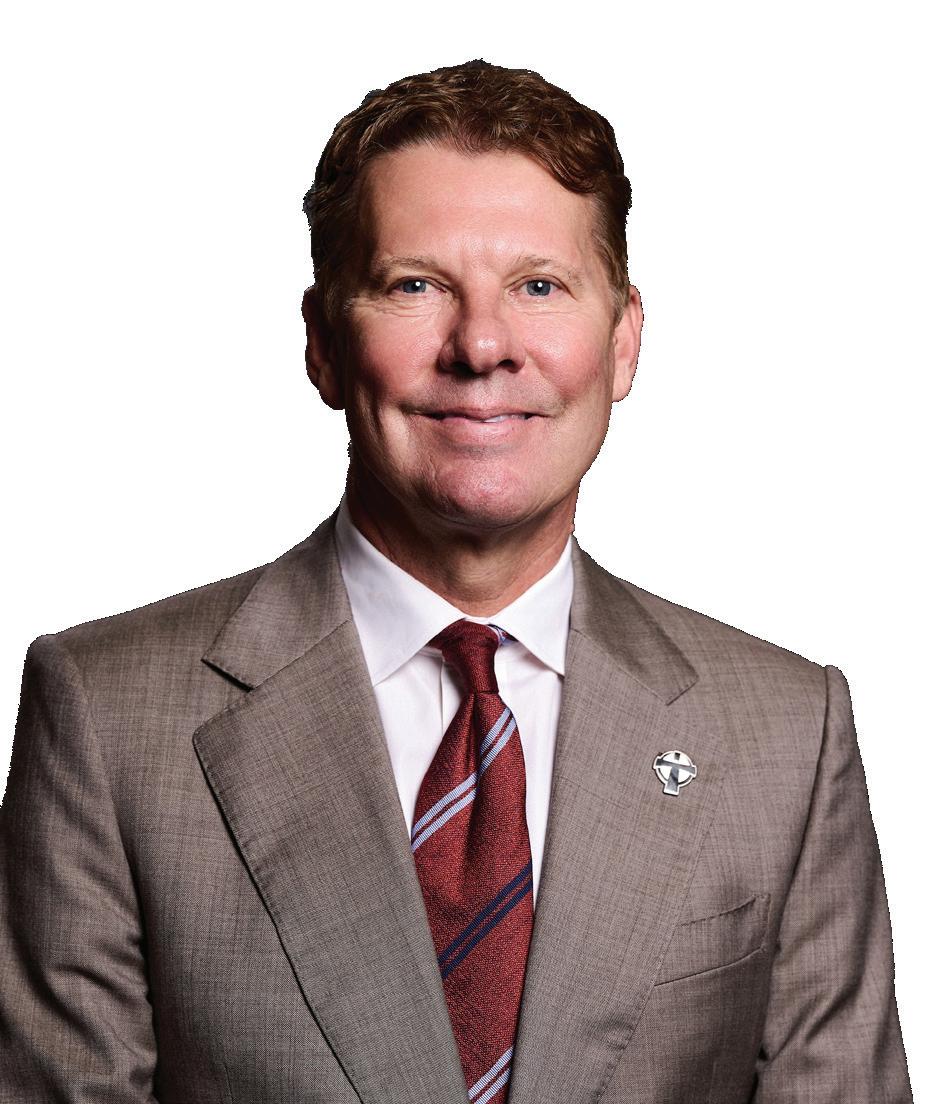
Presented by E.J. Kupier President & CEO, FMOL Health
Watch the full interview

Voices of the Capital Region is Business Report’s video series featuring influential leaders who share the experiences, decisions and lessons that shaped their careers. Discover the stories behind the titles and gain valuable insights from the people helping move our region forward.

generation,” Upton says.
In the industrial space, much of the excitement focuses on SMRs. “There’s a very big potential for them in the industrial facilities themselves,” Upton says. “It’s easy to understand the appeal. An industrial facility that uses natural gas as a feedstock would rather use it to make their product than combust it to create energy, heat and steam.”
There are also obvious environmental advantages. “If you’re able to use nuclear instead of natural gas, you’re not combusting anything and impacting the air quality,” he adds. “Nuclear also has the lowest life cycle emissions of any energy source—even solar and wind.”
Nevertheless, the technology behind SMRs is at least five years away from becoming reality, and building a traditional nuclear facility is cost-prohibitive for most electrical providers. “A new facility the same size as Vogtle in Georgia would be in the $6 billion range,” Upton says.
“Bringing the cost down would require a national push. If you had a national policy that pushes a lot of utilities to do nuclear, you could
plans to offer about $17.5 billion in low-cost loans to help utilities finance key components for a new wave of large nuclear reactors, aiming to restart large-scale nuclear construction.
Another hurdle is the general lack of nuclear-trained workers. In that vein, LED plans to work with Louisiana Community & Technical Colleges (LCTC), groups such as Associated Builders and Contractors, and the universities in the development of curriculum for engineering, technicians and skilled labor. “The most important thing is the coordination of all of those educational offerings,” LED’s Carter says.
“We have one of the strongest manufacturing and industrial backbones in the country, but in terms of fuel enrichment and fuel conversion we still have a long way to go.”
PAIGE CARTER, chief business development officer, Louisiana Economic Development
see that cost come down as more of them are built.” In hopes of alleviating the cost burden, the federal government recently announced
Manas Gartia, an LSU mechanical and industrial engineering professor, says the manpower issues encountered during the delay-plagued expansion project at the Vogtle facility should serve as a cautionary tale. “They needed 9,000 workers but they couldn’t find them,” Gartia says.
“They had to go to 48 different states to find these people, because there hasn’t been any significant construction of reactors in the U.S. since the 1980s. We’d lost that technical expertise.”
In hopes of staying ahead of demand, last year Gartia spearheaded a multidepartment effort at LSU in applying for a five-year, $22 million U.S. Department of Energy grant to develop a local nuclear workforce.
Unfortunately, Louisiana’s proposal wasn’t funded, but Gartia plans to apply a second time for the funding in 2026, since a nuclear workforce will continue to be a strong piece of the supply chain puzzle.
At present, LSU offers only a nuclear power engineering minor, and to scale it up would require additional state, federal or private support. “We’ll need simulators and they’re very expensive, running about $100,000 to $250,000,” he says.
Gartia also plans to collaborate with Baton Rouge Community College in the certification of nuclear welders, whereby LSU would provide instructor training and BRCC would provide the facilities for training the welders. “It’s a longterm plan and takes time,” he adds. “Reactors take from six to eight years, or more, to build.
“It’s not a two-year plan; it’s a 10-year plan to think about where they will get all of their workforce, engineers, clients, support from the public and Legislature … there are a lot of moving parts.”
“Nuclear has the lowest life cycle emissions of any energy source— even solar and wind.”
GREG UPTON, executive director and associate research professor, LSU Energy Institute

Outdoor advertising has always played a vital role in the American experience, capturing the moments that define us and the dreams that move us forward. For nearly 125 years, almost half of our nation’s history, Lamar Advertising has served as the enduring canvas for these stories. Today, our presence stretches from coast to coast, connecting communities and carrying our shared narrative forward.




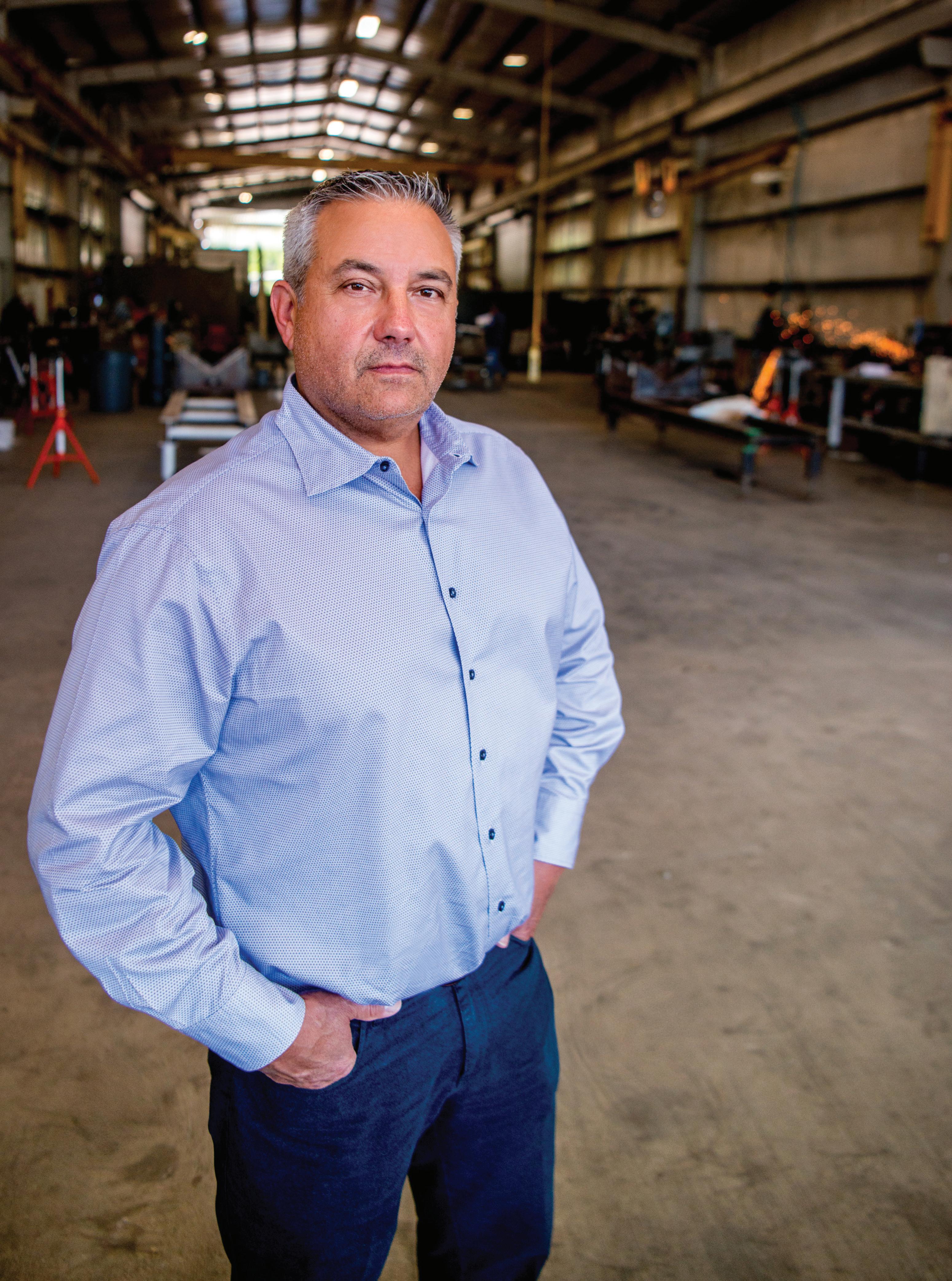
Livingston Parish fabricators are adding some 300 jobs almost overnight, betting big on the energy and data center boom.
BY BY SAM BARNES

“It’ll be one of the most advanced steel processing and fabrication centers in the South when we’re done.”
KYLIE SPARKS, president, Pipe and Steel Industrial


“If we completed the expansion today, I think we could fill it with work.”
REMI BONNECAZE, CEO, United Weld Holdings, right, with Chris Fadden, chief commercial and strategy officer
THE LAST SIX months have brought a whirlwind of job creation to Livingston Parish. Nearly in tandem, a handful of large fabrication facilities have announced capital expansions and added shifts to meet rising demand in the power, energy and data center markets.
Epic Piping recently announced a $25 million expansion and upgrade of its advanced manufacturing operations in Livingston; the Shaw Group plans to double its workforce in Walker as the company scales operations to support current projects; and Pipe and Steel Industrial
Fabricators is in the middle of a nearly $9 million expansion of its steel processing and fabrication facility north of Denham Springs to increase beam-cutting capacity.
Livingston Parish has quietly become home to a dense concentration of pipe fabricators in the region—an unusual specialization for a bedroom community its size, and one that has helped turn the parish into a magnet for the skilled craft labor the industrial corridor runs on.
The expansions will undoubtedly strain the local workforce—some
300 new jobs will be created by the investments at almost the same time—but it’s welcome news nonetheless for a community that has long produced a disproportionate share of skilled laborers for the industrial sector. “Our biggest issue has always been our ability to compete with heavy industry,” says Melody Lockwood, president and CEO of the Livingston Economic Development Council. “It has taken a while, but our companies are finally competitive with the pay, and our people are finding they can work closer to home.
“But we’re running into issues with scale. There’s such a high demand in a short period of time, and they’re all trying to get some of the same types of positions filled.”
To stay ahead of the surge in labor demand, advocates such as Kylie Sparks, president of Pipe and Steel Industrial, are pushing for Associated Builders and Contractors’ Pelican Chapter to open a new training facility in the parish. Sparks, an ABC graduate himself, says the presence of a local facility would create an uninterrupted career path for area high

operates a satellite campus in Walker, an ABC facility would provide a more consistent source of craft training. “We are desperately advocating for ABC to set up a training school here,” LEDC’s Lockwood says. “That’s a high priority for us. Now we can show them the demand in black and white.”
The fabricators themselves are already working to fill positions through collaborations with local


heavier wall and higher alloy materials that are required in a lot of these sectors that are growing, particularly in the energy market.”
Livingston Parish is ideally located within Epic’s distribution area, as it enables the fabricator to ship across the Gulf South. In addition, the parish offers a robust pool of skilled laborers. “It just makes sense to expand in Livingston because we have existing management and personnel here, and a labor force available to hire and train,” he adds. “It’s not in our plans to put up small shops in multiple locations … it’s to grow in scale at those locations that we have.”
Of course, Epic and other fabricators must deal with some of the same infrastructure issues faced by other companies in the Baton Rouge area. Traffic delays are a costly problem, as suppliers are often late in delivering materials and freight haulers are delayed in getting outbound products to the jobsites. At times, it can often take a westbound freight hauler more than an hour to get to the Mississippi River bridge.
“That impacts our delivery times and our costs, and those are things we have to work around,” says Chris Fadden, chief strategy and commercial officer at United Weld Holdings. To alleviate the issue, Epic offers flexible shifts for some of its workers—specifically those in its engineering and estimating departments—and will schedule outbound freight haulers to pick up deliveries at night when possible.
Rhett Phillips, vice president of U.S. pipe fabrication operations at The Shaw Group, says despite traffic concerns “a good presence of craft labor” in the parish and its proximity to the industrial corridor— combined with an abundance of available land—make the parish an ideal location for expansion. “We can get to the ports easily and it’s a good location for support industries,” Phillips says.
Like other fabricators, Shaw is diversifying its business model to cater to the booming power and data center markets. While it’s not adding square footage as part of the current investment, the fabricator is boosting its craft workforce and adding new equipment.
“We’ve commissioned a
PIPE POWERHOUSE: Livingston Parish has quietly become home to a dense concentration of pipe fabricators in the region—an unusual specialization for a bedroom community its size.

Three fabricators are adding a total of 300 new jobs in Livingston Parish while creating one of the densest concentrations of pipe manufacturers in the region.
Livingston
A $25 million expansion will add 80,000 square feet along with new welding stations and personnel to enhance production capabilities. The upgrade will allow Epic to fabricate larger, heavier wall and higher alloy materials for the energy market.
high-purity pipe orbital welding feature to our overall offerings,” Phillips says. “Some markets such as data centers and pharmaceuticals require their piping to be extremely clean, so we’re dipping our toes into that space.” Shaw expects to be at maximum capacity through 2027, following a 2025 slowdown caused by stalling carbon capture projects and tariff-induced delays.
Sparks doesn’t expect Pipe & Steel Industrial to have a problem finding the workers it needs. The fabricator is currently in the middle
Walker
Though not increasing its square footage, the fabricator is diversifying its business model to boost its craft workforce and add new equipment, including a high-purity orbital welding feature to serve the data center and pharmaceutical markets.
of two concurrent expansions that are expected to create more than 50 new jobs ranging from welders to pipe fitters, truck drivers and estimators. “Together, Livingston and Ascension probably support the largest group of craftsmen working in the industrial sector, whether that be pipe fitters, welders, electricians, scaffold builders, etc.,” Sparks says. “We’re the worker bees.”
Once the second expansion is complete, Pipe & Steel Industrial will support an additional 60,000 square feet of space. “It’ll be one of
North of Denham Springs
A nearly $9M expansion will boost beam-cutting capacity, while a second expansion will add 60,000 square feet, bringing steel processing in-house and on-site.
the most advanced steel processing and fabrication centers in the South when we’re done,” Sparks says. “Most fabricators have their steel processed and then sent to their shops. We’re going to process our own in-house and on-site.
“We need the growth out here. Livingston Parish is housing everybody that’s building all these large facilities along the industrial corridor, and we don’t get any reward from that,” he adds. “If we can create manufacturing jobs within our parish … that’s a bonus.”

Peter Ranzino was pitching the internet to confused executives in the ’90s. Today he stands among Louisiana’s most successful—and earliest—tech pioneers.
BY DILLON LOWE

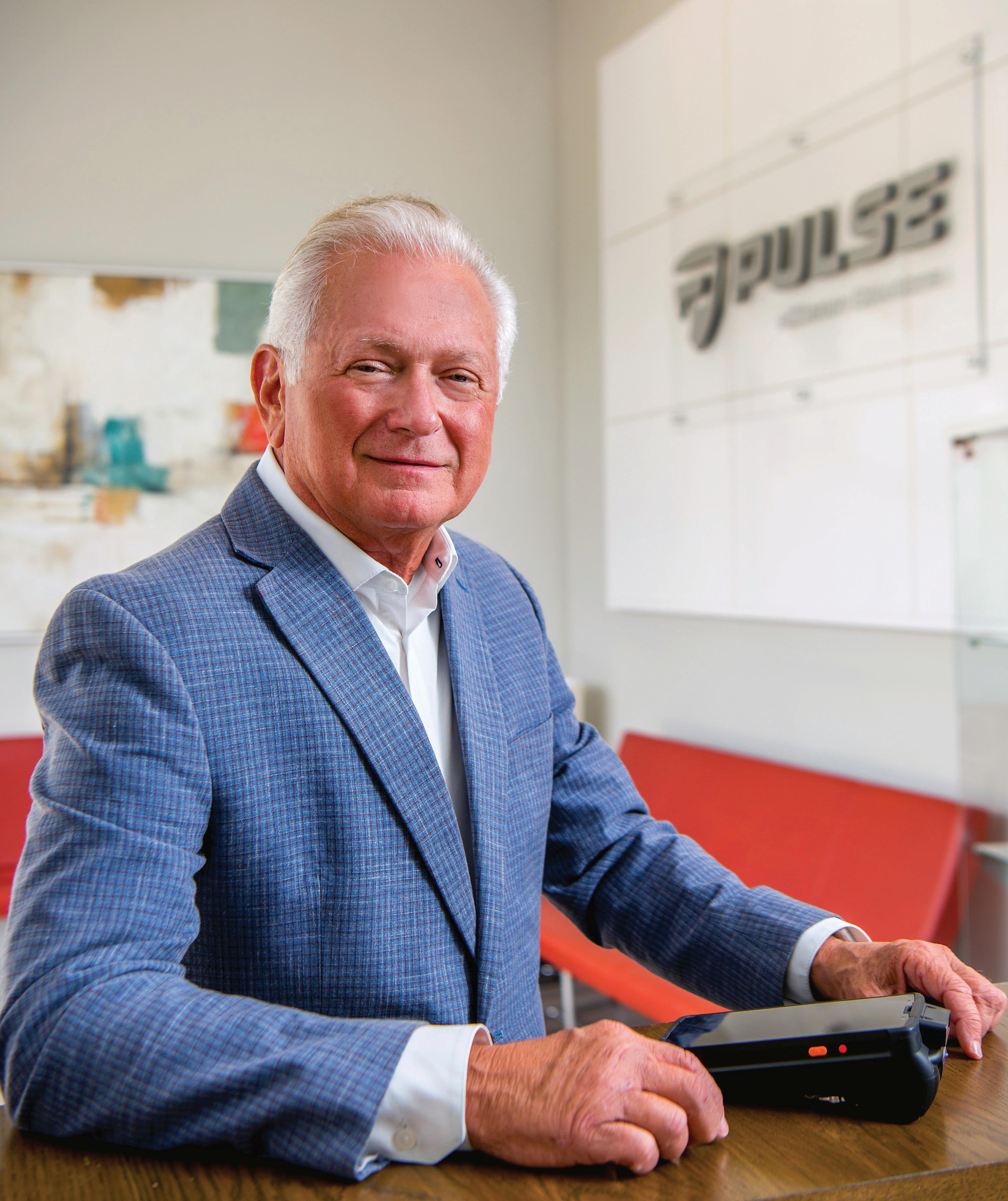
“This little thing called the internet popped up and I started thinking, ‘Wow, what if I could distribute content through that?’”
PETER RANZINO, co-founder and managing partner, Pulse eCitation Solutions; founder and president, Learning Sciences Corp.


Alzheimer’s Services of the Capital Area is a local, non-profit organization. Our mission is to teach, care for, and connect with individuals and families affected by Alzheimer’s disease and other memory-related impairments. For more than 30 years we have provided education, support, resources, and compassionate care to those navigating the challenges of dementia.
Serving a 10-parish region throughout the Greater Baton Rouge area, we offer a variety of programs designed to enhance quality of life for individuals living with memory loss while providing guidance, respite, and support for their care partners and families. We are an independent local organization, all funds raised here, stay here within our community to directly benefit the families we serve.
Through innovative programs, community education, support groups, and our awardwinning Charlie’s Place activity and respite centers, we strive to ensure that no family faces Alzheimer’s disease alone. We are dedicated to providing hope, help, and meaningful connections every step of the Alzheimer’s journey.




IN THE LATE ’90S, Peter Ranzino would walk into Baton Rouge boardrooms carrying a projector and a PowerPoint presentation about a technology many executives still barely understood: the internet.
He’d explain how companies could someday train employees online instead of gathering them in conference rooms or flying them across the country for seminars. In Baton Rouge, he says, the reaction was often confusion.
“They’d look around and go, ‘What’s this guy talking about? Internet? What?’” Ranzino recalls with a laugh.
Then he’d drive to Houston and deliver the same presentation to oil and gas executives.
“They’d go, ‘Hire the guy. We need that.’”
Nearly three decades later, Ranzino finds himself one of
Baton Rouge’s more successful tech entrepreneurs. Not one but two of his companies—Learning Sciences Corp. and Pulse eCitation Solutions—last year landed on the Inc. 5000 list of America’s fastest-growing private companies, an uncommon feat for any entrepreneur, much less one who has largely operated outside the spotlight.
The two businesses occupy very different corners of the tech world.
Learning Sciences builds largescale web-based training programs for Fortune 1000 companies and governmental entities. Pulse builds handheld electronic citation devices used by law enforcement agencies across Louisiana.
But both companies emerged from the same instinct that has guided Ranzino’s career since the early days of the internet: identifying operational bottlenecks and
figuring out how technology can streamline them.
Ranzino entered the e-learning business before most people even called it e-learning.
His first such company, Flying Fish Ventures, launched in 1995, when the internet crawled through dial-up modems and email itself still felt novel to much of corporate America. At the time, he was a partner in a video production company and began wondering whether the internet could someday become a viable content distribution platform.
“This little thing called the internet popped up and I started thinking, ‘Wow, what if I could distribute content through that?’” he says.
Ranzino started not with a finished product but with a customer. He was able to sell the idea of a
web-based learning platform to a client—global insurance brokerage J&H Marsh & McLennan—before he’d even begun development. As he was building the actual product, the brokerage bought him out to secure ownership of the relevant intellectual property, and he used the proceeds to launch another e-learning company, Flying Fish Creative Services, which he grew through much of the 2000s.
Eventually, after differences arose over that company’s direction, he stepped away. He spent the next year riding a motorcycle and waiting out a noncompete agreement.
“I was too young to retire and too old to work that hard,” he quips.
When the noncompete expired, he launched Learning Sciences Corp. from a subleased 10-by-10 office furnished with little more than a folding table, a lawn chair and a


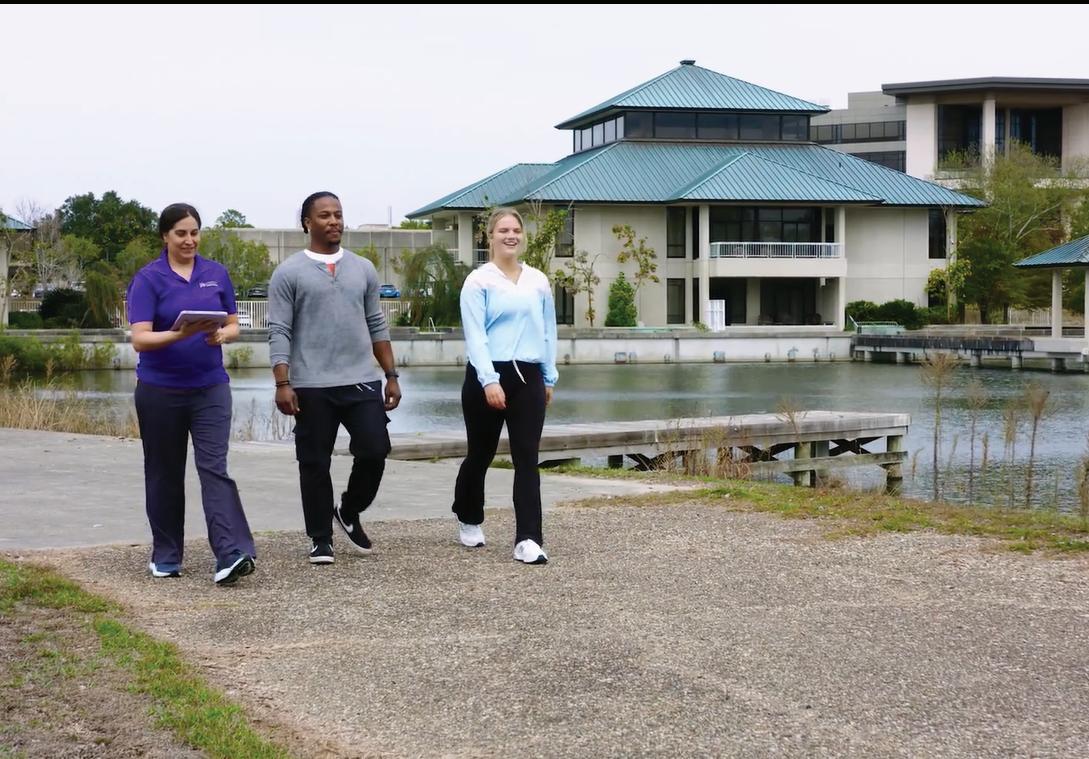
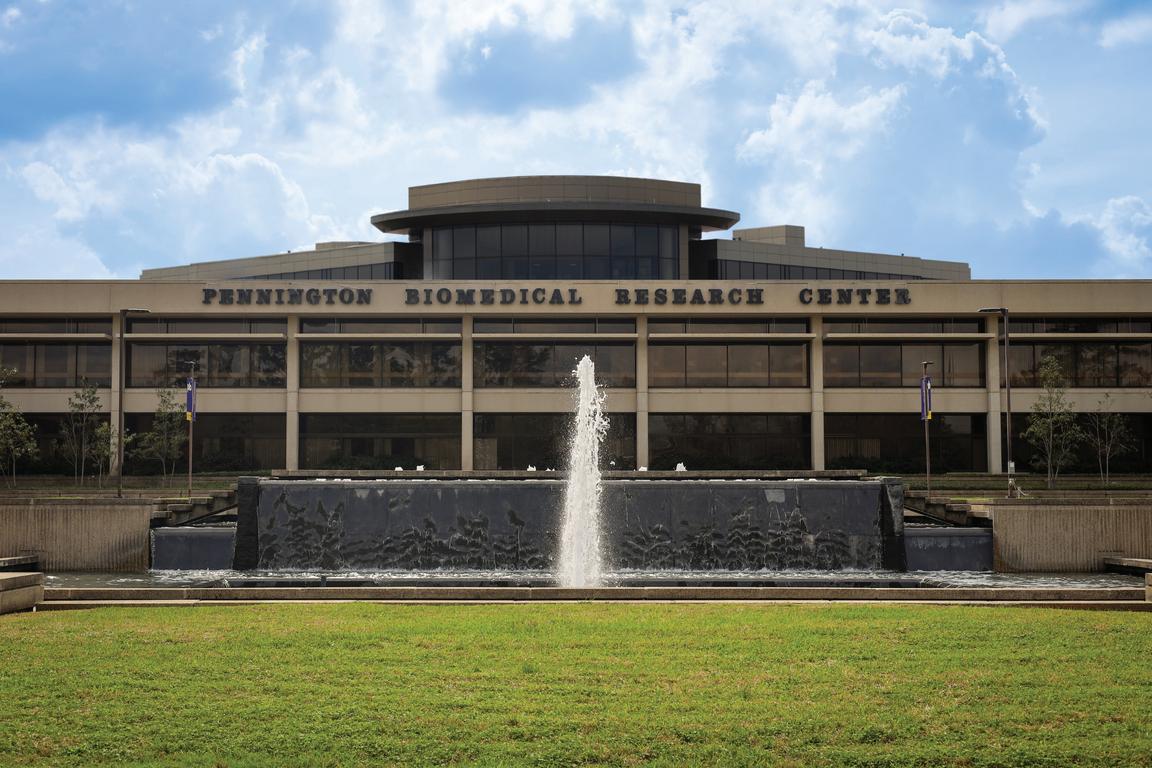


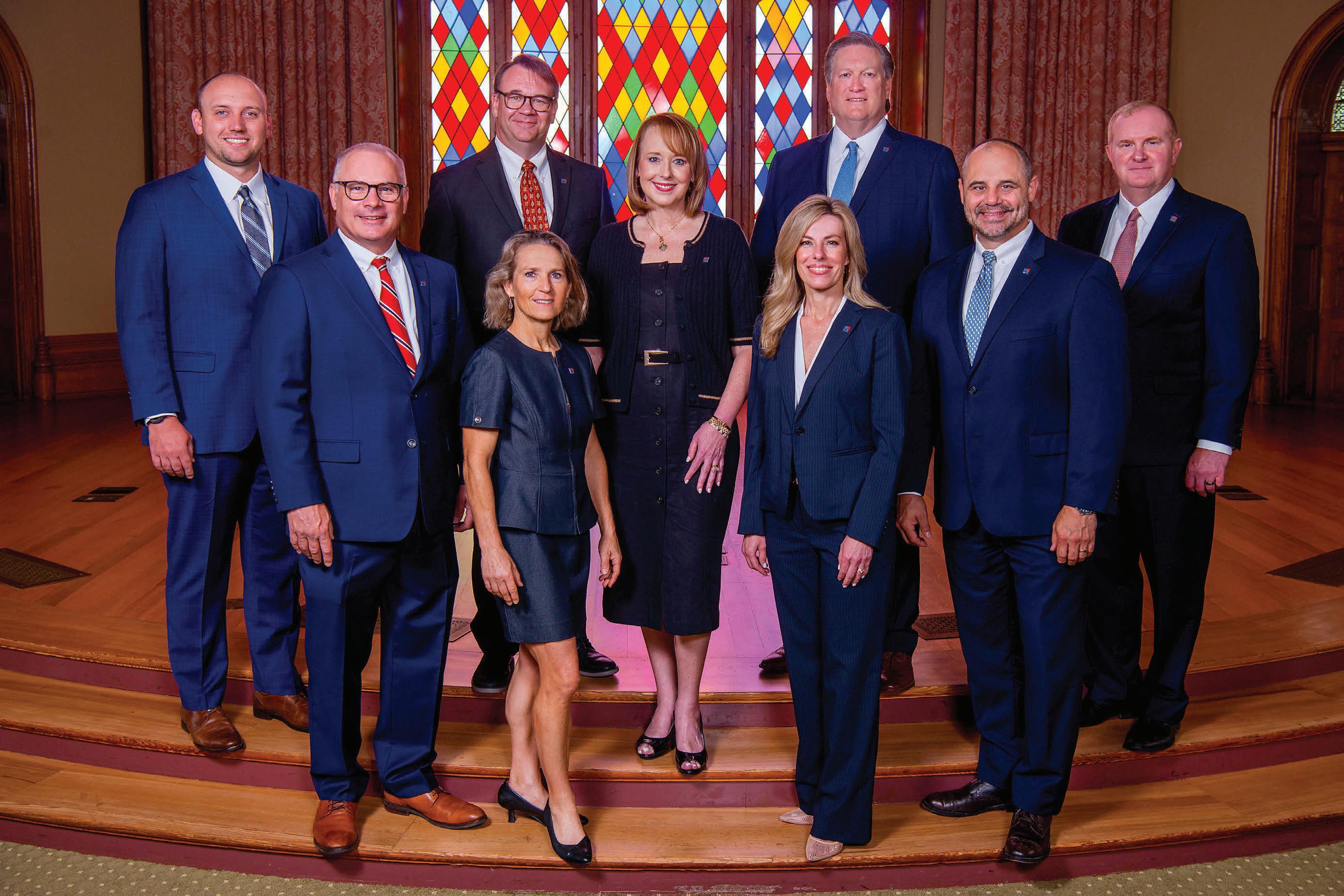


telephone. The year was 2008.
“It was what I knew,” he says. “I’d gone through all the different lifecycles of learning technologies. It was just what I knew.”
From those humble beginnings grew a company that today works with household names like Disney, Fox, Citgo and ConocoPhillips.
Learning Sciences specializes in building custom web-based learning platforms, particularly for regulatory compliance and workforce training. It develops the curricula with the assistance of subject matter experts, creates the content and, more often than not, hosts and manages the platforms for its clients.
The company has built its reputation on courses that go well beyond simple “click next” modules.
“It’s not just checking a box,” Ranzino says. “People actually have to learn in our courses. Everyone’s
been through online courses where you go next, next, next, and you hope you get eight out of 10 trueor-false questions right or whatever.
We don’t do that. We make people engage.”
One of Learning Sciences’ flashier assignments involves training NBC Sports production crews for the Olympics. The company develops orientation and training platforms for the thousands of employees who work the Summer and Winter Games, covering everything from emergency protocols and venue logistics to specialized safety training for camera crews operating high above arenas and stadiums.
“Even the celebrities and hosts on the air have to go through the training,” Ranzino says. “That’s a pretty cool deal.”
Over the years, Learning Sciences’ client list expanded largely through relationships and
Part of that stems from the realities of corporate geography. Many large industrial companies operating in Louisiana make purchasing decisions from corporate offices in Dallas or Houston, not Baton Rouge. But Louisiana was also just slower than other markets to embrace e-learning during the company’s formative years.
“Web-based learning was evolving, evolving, evolving,” Ranzino says, “and there just wasn’t a lot of technology being invested in here at that time.”
That dynamic ultimately gave Learning Sciences an unusual distinction as a Baton Rouge tech company serving major national clients while flying relatively under the radar locally.
As he was building the company, Ranzino would hear time and time again that he needed to pack up and move to Silicon Valley, Atlanta or Austin, Texas, if he wanted to truly take the business to the next level. But he stayed in Louisiana, mainly for personal reasons but also because he had little interest in building a sprawling tech empire. Even now, the company operates with a modest eight employees.
“I never tried to be Google,” Ranzino says. “I was just happy running a small, profitable company.”
ANOTHER PROBLEM TO SOLVE
referrals. A successful project with one division of a company often led to opportunities elsewhere within that same organization—or at entirely different companies when executives changed jobs. Along the way, the work gave Ranzino access to some of the nation’s top corporate minds.
“The greatest thing about our business is the people we get to meet,” he says. “We get to enter the C-suite and hear how these people think about business at a very, very high level.”
Listening in on those conversations became its own form of business education. “It was like my Harvard,” he says.
Despite the company’s success, Louisiana never became a major market for Learning Sciences. Ranzino estimates that more than 90% of the company’s business comes from outside the state.
Unlike Learning Sciences, Pulse eCitation Solutions was never part of a long-term master plan. In fact, the company started almost by accident.
Through Learning Sciences’ work with district attorneys and public safety agencies, Ranzino developed relationships within Louisiana law enforcement circles. Around 2017, he was asked over lunch whether he thought he might be able to improve upon the citation systems then on the market.
Existing systems were cumbersome and ill-suited for traffic stops. They relied on tablets and printers inside patrol vehicles, meaning officers had to repeatedly move back and forth between cars during stops. Officers wanted something safer and more efficient.
At first, Ranzino resisted the idea.
“I said, ‘No, it’s not in my wheelhouse’ … I didn’t wake up one day

EisnerAmper works with buyers, sellers, private equity firms, and corporate M&A teams at every phase. Sustain Momentum. MERGERS & ACQUISITIONS

Assurance
Tax
Advisory
Outsourcing

“Before you need money, you need a client. Every business I started, I got the client before I got the money to build the product. And I did everything I could to get the client to pay for it so I didn’t have to go out and get the money. Before you spend tens or hundreds of thousands of dollars on R&D, see if you can sell the idea first.”
and say I wanted to be in the e-citation business,” he says.
But the conversations continued, and eventually he and his business partner, Gerald Zylicz Jr., were sold on the idea.
Over the next two years, they worked closely with police departments, sheriffs’ offices and Louisiana State Police to develop a device capable of handling traffic stops from beginning to end entirely from the palm of an officer’s hand.
The resulting product resembles a traditional ticket book more than a tablet. It enables officers to run background checks and print citations all without ever needing to return to their patrol cars and instantly feeds data into what’s called the “Pulse Command Center,” a citation database that integrates seamlessly with third-party record and case management systems.
“Our core mission here is to make what officers do on the side of the road safer,” Ranzino says.
Pulse officially launched the product in 2021 and is now developing the third iteration. Today every Louisiana State Police trooper on patrol uses the device, as do wildlife agents and numerous municipal police departments and sheriff’s offices across the state.
Russell Graham, public affairs commander with the Louisiana State Police, says his agency adopted the Pulse devices as part of a larger push to advance its technological capabilities and improve efficiency. He says the device
offers myriad benefits but notes in particular the value of the Pulse Command Center.
“The eCitation system has strengthened our ability to aggregate and analyze real-time data, integrate with existing platforms and identify emerging trends,” Graham says. “These analytics directly inform training and operational decisions, allowing LSP to deliver professional, accountable and transparent public safety services.”
Though it currently operates only in Louisiana, Pulse is preparing to expand into other states. Like Learning Sciences, it remains a lean operation with only eight employees.
It’s worth noting that Pulse isn’t the only player in the handheld e-citation game. It’s competing with major firms like Motorola, CentralSquare and Tyler Technologies, companies that have far greater resources at their disposal. But Ranzino believes Pulse has an edge. In his telling, he and his team have designed an in-app workflow that’s second to none.
“Any high school kid in computer 101 can build an Android app,” he says. “That’s not the magic. The magic is the workflow.”
Looked at from a bird’s-eye view, the story of Pulse is not dissimilar from the story of Learning Sciences. Ranzino, it would seem, likes to follow a fairly simple entrepreneurial formula: Identify the opportunity and find the client first. Worry about building the actual product later.
That’s Law Elevated
For legal services that go above and beyond the ordinary, visit butlersnow.com
This ad authorized by Jennifer Aaron Hataway, Attorney, 445 North Boulevard, Suite 300 Baton Rouge, LA 70802. © 2026 Butler Snow LLP. All rights reserved. EC Filing #: LA25-19460
Garry Lewis couldn’t understand why a “virgin intersection” sat untouched on Interstate 12. Two decades later, it has 1,000 homes, a medical facility, an airport in the works and an RV resort.
BY EILEEN MCCLELLAND | PHOTOGRAPHY BY DON KADAIR
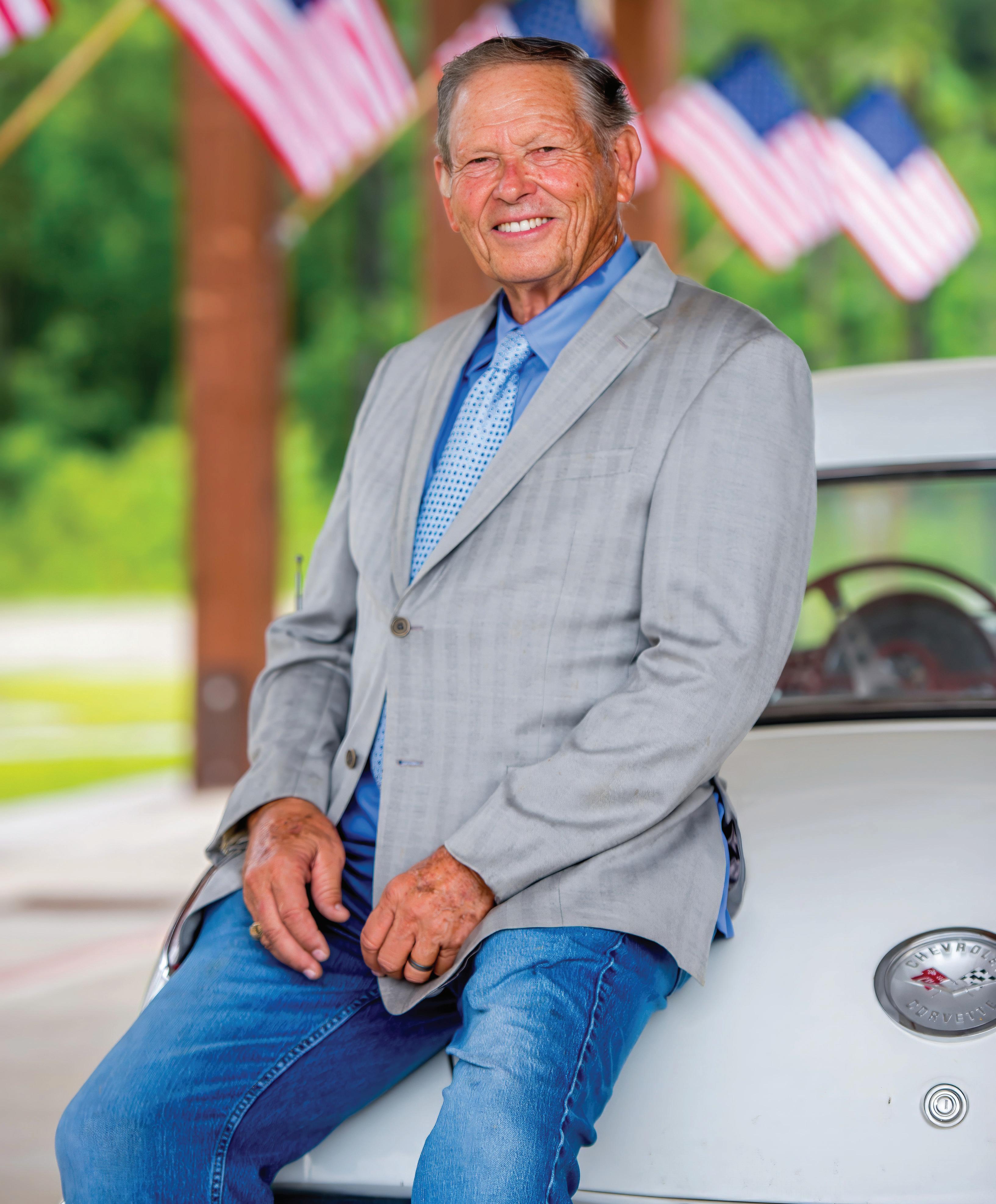
“I was having a good time being retired, but Gayle and I kept seeing this intersection where there was nothing but trees and a ballpark that was pretty well abandoned. I thought, ‘Hey, I’ll try to buy this intersection.’”
GARRY LEWIS, developer, on the decision to acquire land surrounding the Satsuma exit in Livingston Parish


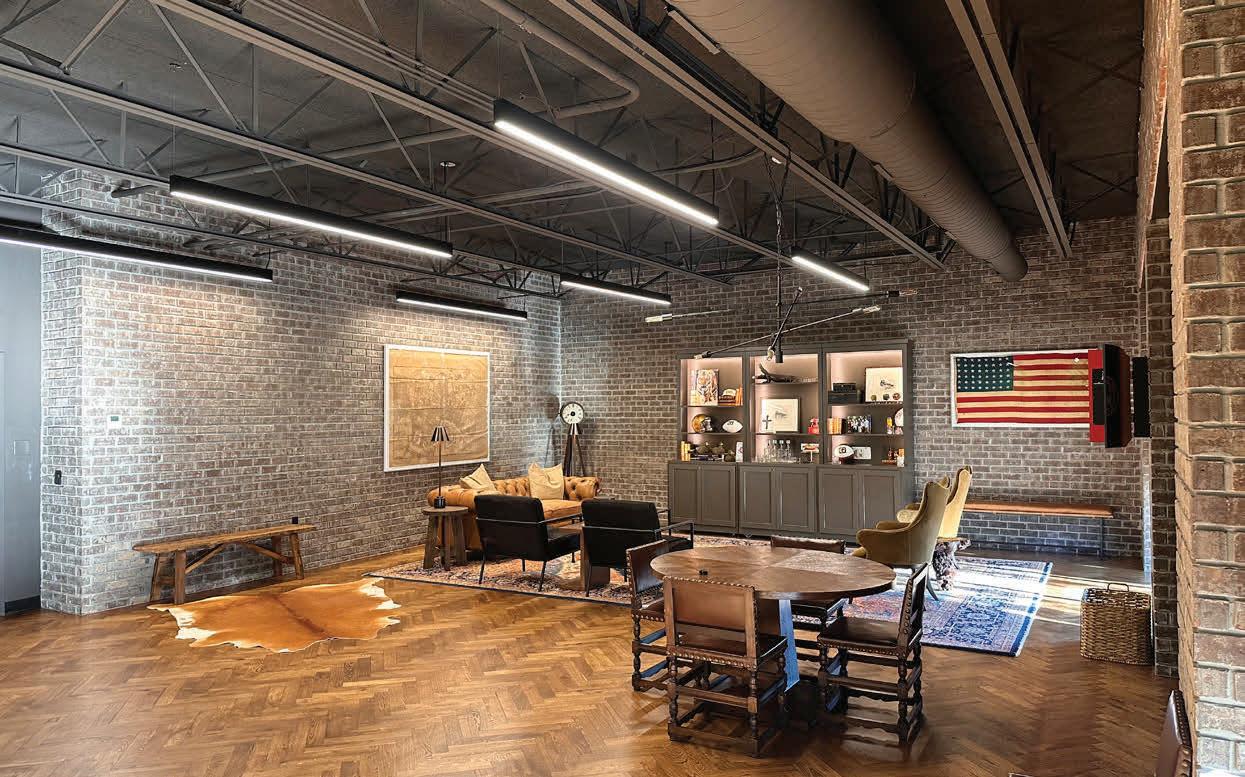

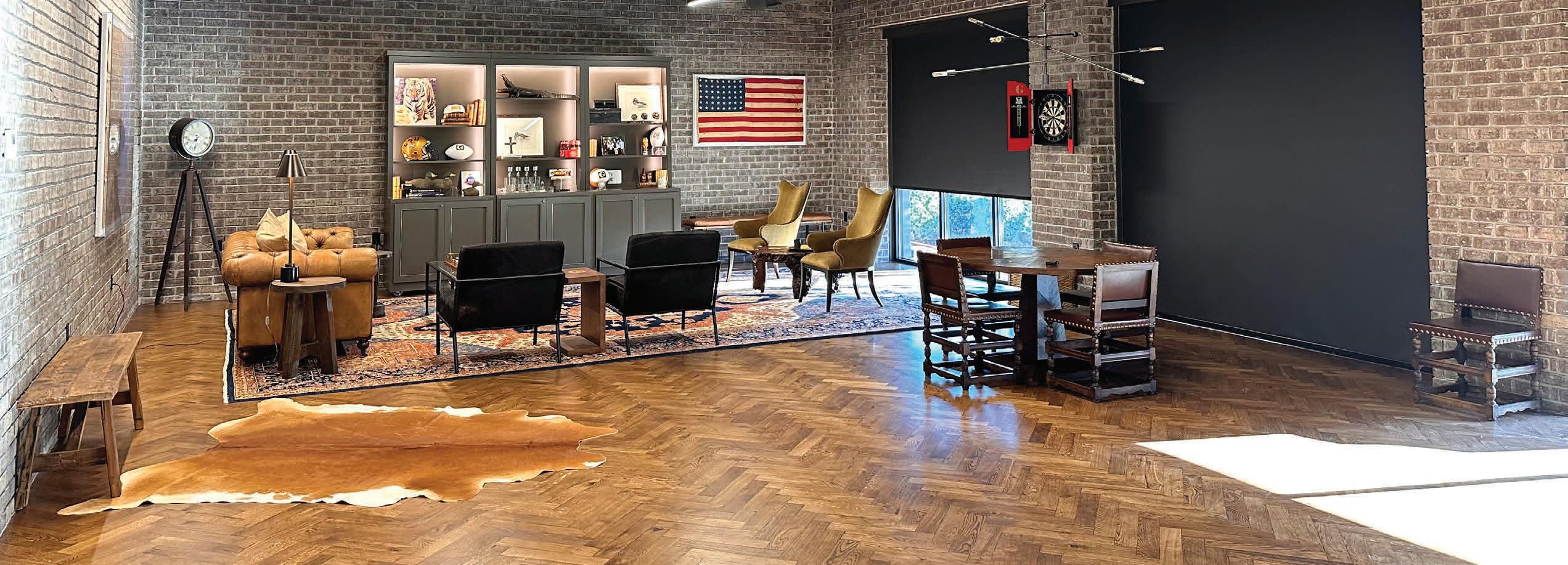
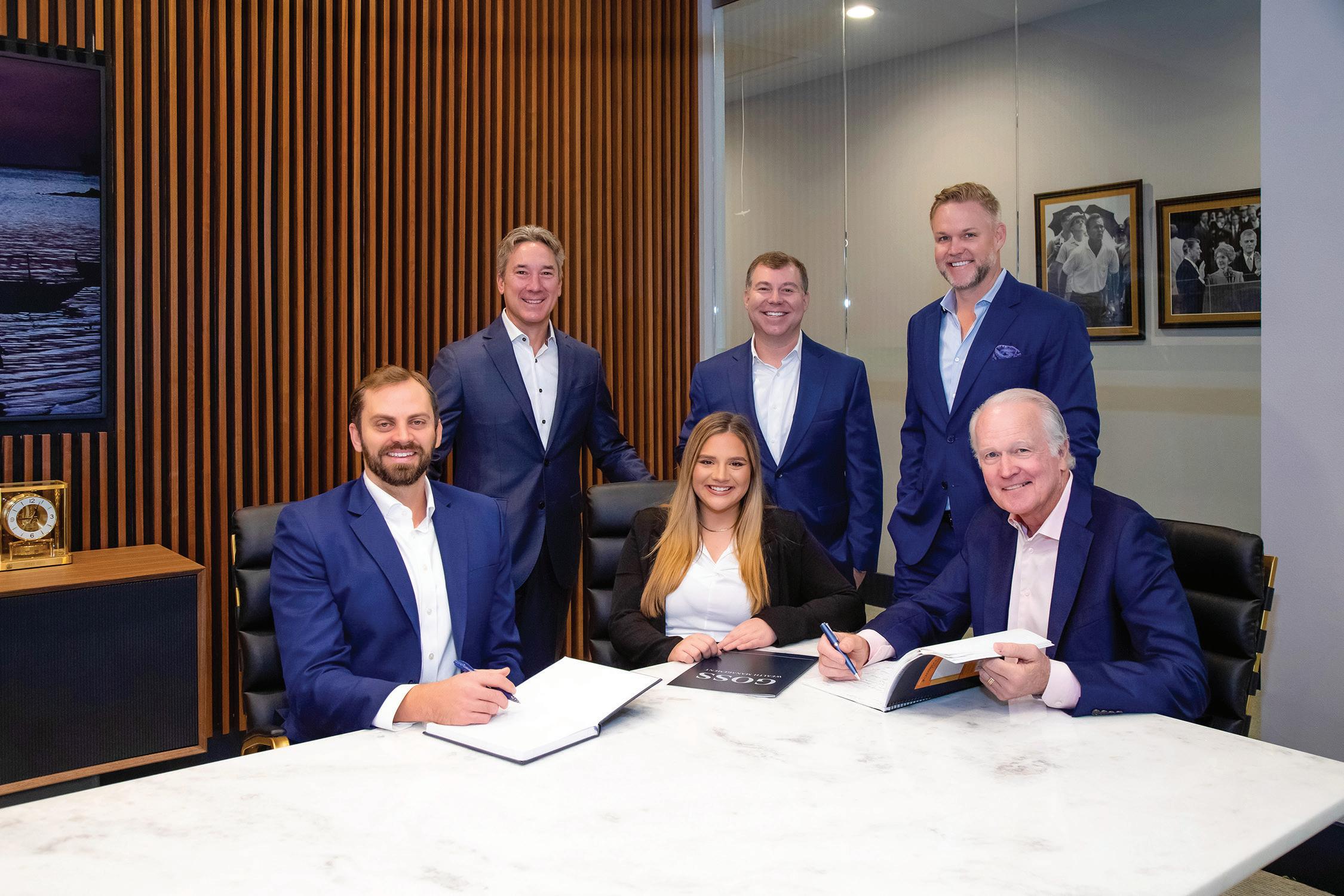
WHO QUALIFIES?
Individuals with Required Minimum Distributions (those over age 73). A required minimum distribution is a calculated mandatory amount that you must withdrawal from your Traditional, SEP, Simple, or Employer plan upon reaching age 73. If not taken a penalty could be imposed. By giving to a charity straight from these retirement accounts, you can help to avoid this penalty. HOW MUCH
There
JUST SOUTH OF the Interstate 12 exit at Satsuma, an F4 Phantom U.S. Navy jet sits near a turnoff for a row of recently built brick townhouses. Drive past them and you’ll come to a 30-foot-by-50-foot American flag, and—almost completely camouflaged by dense stands of native pine trees—the entrance to the new Patriots RV Resort.
It’s a series of fitting landmarks for Garry Lewis, the man who envisioned it all.
Lewis, who flew F4 Phantom jets off Navy carriers during the Vietnam War, has spent the past 20 years transforming Exit 19—once nothing but timber company land and gravel roads—into one of the more ambitious mixed-use development corridors in Livingston Parish. The RV resort, which was to celebrate its grand opening July 4, is his latest project—but likely not the last.
Lewis was born in 1946 in Lilbourn, Missouri, in the southeastern part of the state, a region known as the Bootheel. The son of William Merlin “Dub” Lewis, a farmworker and Pentecostal preacher, and his wife, Ida, he chopped cotton as a boy in the fields alongside his family on rented land and watched Air Force pilots from a nearby base circling overhead, trying to imagine what it felt like to be up there moving at that speed. As a kid, the fastest ride he’d ever had was in his father’s 1949 Chevrolet farm truck.
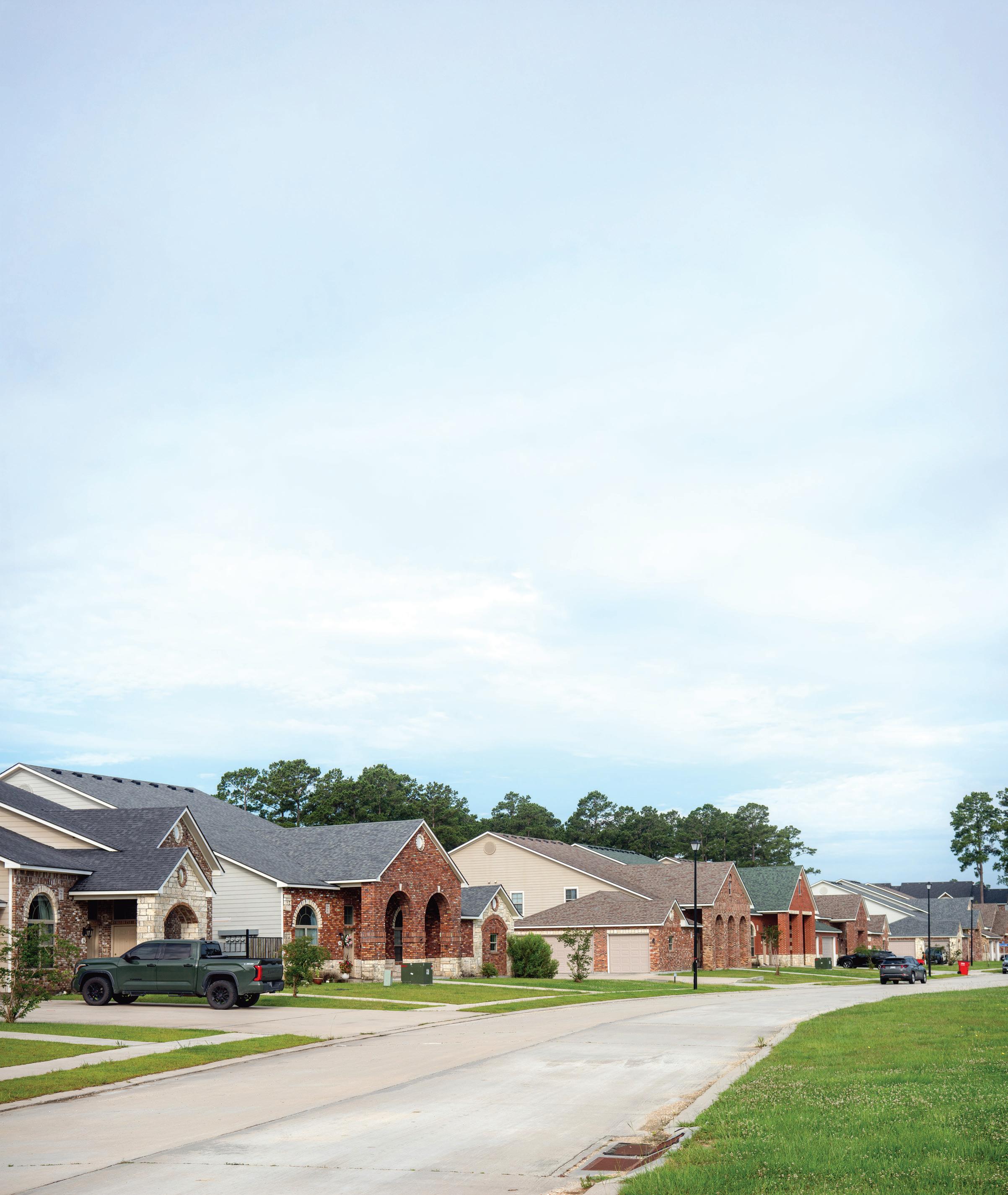
He earned a bachelor’s degree in art, with minors in physics and math, from the University of Missouri and married his college sweetheart, Gayle, with every intention of pursuing a creative life. But Lewis graduated at the height of the Vietnam War draft and his father, who served in the Pacific during World War II, suggested he enlist in the Navy.
“I didn’t dream I could actually be a pilot, but I thought if I could watch them land those planes on those ships, I thought that would be so neat,” Lewis recalls. When he told a Navy recruiter as much, the recruiter pushed back: “Why don’t you be one of those pilots?”
Lewis protested that he didn’t know how to fly. The recruiter, he said, had a good laugh at his prospect with limited knowledge of how it all worked, a “bad regional accent” and an art degree of all things—but then assured him he could become an officer and learn to fly. Pilot training took the young couple to California.
Combat missions in Vietnam followed and Lewis often flew the Phantom during his eight years of active service. “The Phantom is still the favorite of most everybody that flew that airplane regardless of what they flew later,” Lewis has said, due to its incredible speed and power.
When Lewis retired from the Navy with the rank of captain, he used GI Bill benefits to earn a law degree from the
University of Missouri. “I thought I’d do something with art in life, but as I got older, I saw that all the famous artists were very poor,” he says. “I had always been poor and thought I might like to try something else.”
He worked as a litigator, making his mark in high-profile wrongful death cases and simultaneously began building and selling homes with Gayle in Columbia, Missouri—the first step toward what would become a third career in real estate development. Gayle had begun building homes substantially on her own as they moved from one location to another while Lewis was in the service, raising their family along the way. They used the money they’d made selling their own houses to finance the start of the development company, which became Garry Lewis Properties. By 1994, most of his family, including his parents, had relocated to Louisiana, drawn by the same thing that would eventually pull Lewis himself: the swamps, the cypress trees, the seasonal floods that reminded him of his youth in the Missouri Bootheel. He decided it was time to retire and made the move from Missouri to Louisiana. Retirement, it turned out, didn’t suit him.
Lewis arrived in the Capital Region with money to invest, but by his own
account, he didn’t look much like a real estate developer. Arriving in a beat-up minivan, he walked into a meeting with Donnie Jarreau, now president and principal of Jarreau Real Estate, looking to buy a Baton Rouge apartment complex.
Jarreau showed him the property anyway, Lewis says, a kindness that launched a relationship that would span decades. Through Jarreau, Lewis acquired the Drusilla shopping center and today owns a mix of commercial and multifamily properties in Baton Rouge.
He considered himself retired through all of that—until he became fascinated by Exit 19.
As a regular visitor to a church in Livingston Parish, he was drawn to what he describes as the “really fine people” in the area and intrigued by the fact that one of Louisiana’s fastest-growing parishes had what appeared to be an untouched interstate interchange. He began to see its potential with a developer’s eye.
“I was having a good time being retired, but Gayle and I kept seeing this
intersection where there was nothing but trees and a ballpark that was pretty well abandoned,” Lewis recalls. “I thought, how can there be a virgin intersection on Interstate 12? Why is that vacant like that? I was so curious.”
“When I kept seeing this, I thought, ‘Hey, I’ll try to buy this intersection.’”
Through Jarreau, he eventually met representatives of Weyerhaeuser and Dickman timber companies and began purchasing land around the interchange. “I bought a lot of property before I decided to do anything at all, and there was some resistance when I decided to start developing.”
His father was skeptical. “You’re going to build something out here where there is nothing? You’re taking a big risk,” he remembers being told.
Lewis began assembling property in 2006. Since then, he says, he has built roughly 1,000 homes, along with community buildings, retail space and apartment complexes. His approach has emphasized master-planned communities rather than piecemeal development.
Lewis worked with parish officials to
bring utilities to the area. By 2014, underground infrastructure had been extended to serve commercial plazas, the Southshire community and the Suma Crossing mixed-use development. The North Oaks-Livingston Parish Medical Complex was planned as an anchor for those developments.
Today Suma Crossing includes retail space and a civic center. Suma Lake Apartments, with 350 units split north and south of I-12, has operated at full occupancy.
In 2017, Lewis donated 242 acres south of Exit 19 to help launch what is now the Livingston Executive Airport project. The gift, valued at $3.4 million, provided local matching funds that helped unlock millions in state investment. Though he owns adjoining property, Lewis says his involvement with the airport ended with the land donation.
Lewis, who owns five airplanes, sees airports as catalysts for development. “Typically, airport areas are very successful, almost anywhere,” he says.
His vision did not unfold unobstructed.
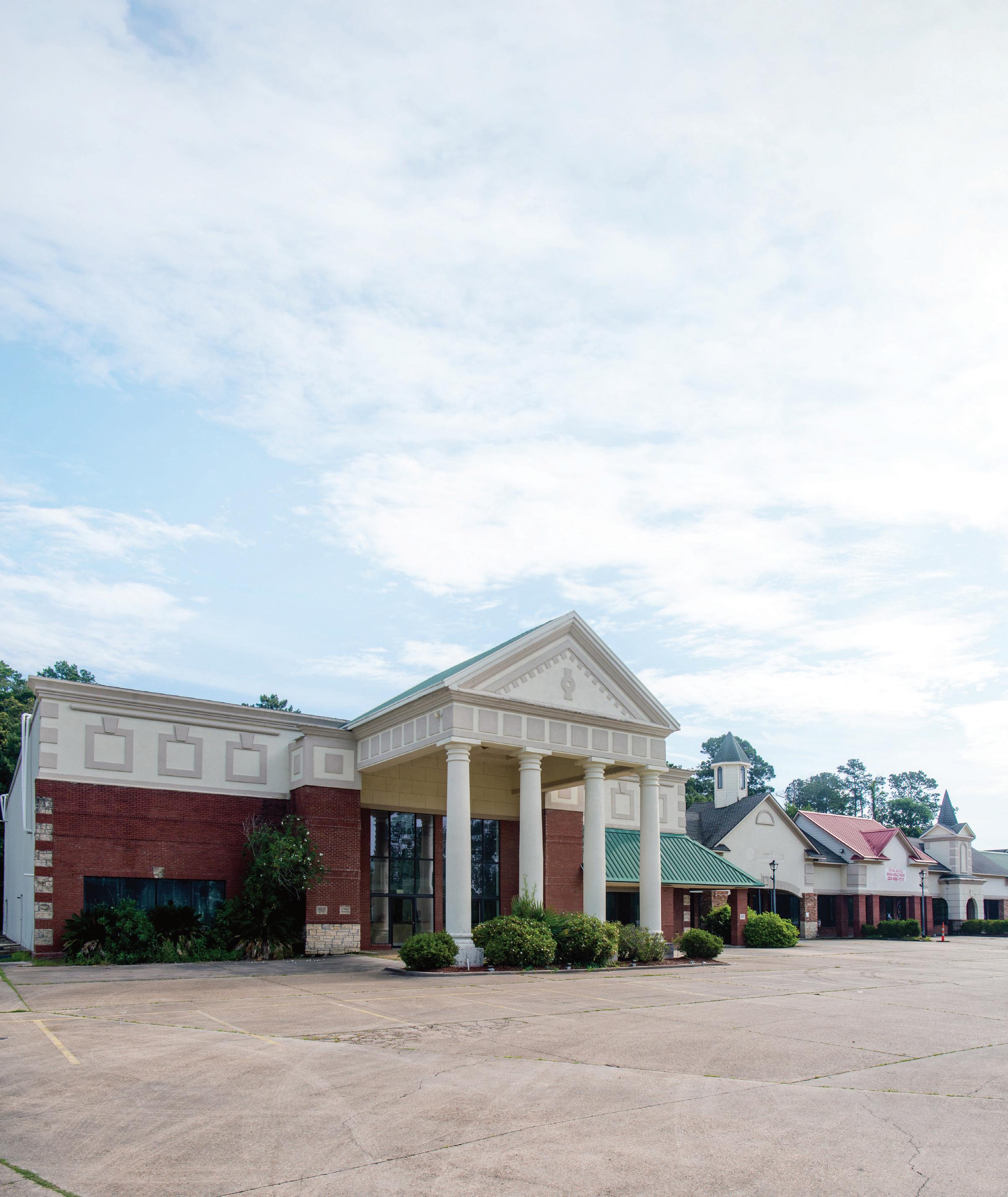
GOING COMMERCIAL: Suma Crossing on the north side of the interstate offers retail space and a theater-style civic center.


Charles R. Bowie, M.D.
Gregory L. Fautheree, M.D.
Garrett T. Venable, MD
Brandon Gaynor, M.D.
Eric K. Oberlander, M.D.
Kelly J. Scrantz, M.D.
Richard A. Stanger, M.D.
Paul J. Waguespack, M.D.
Our Lady of the Lake
Jessica L. Brown, Ph.D., MP
Brooke B. Cole, Ph.D., MP
Paul M. Dammers, Ph.D., MP
William J. Graugnard, M.D.
John E. Nyboer, M.D.
Scott D. Nyboer, M.D.
Samir K. Patel, M.D.
Jake Trahan, M.D.
ORTHOPEDIC SPINE
C. Chambliss Harrod, M.D.
Kevin P. McCarthy, M.D.
Gerald J. Calegan, M.D.
Dariusz W. Gawronski, M.D.
Benjamin G. Kidder, M.D.
Jon D. Olson, M.D.
Kuldeep V. Patel, M.D.
Rebecca E. Whiddon, M.D.

TERRI HICKS President & CEO
At the Spine Hospital of Louisiana, everything we do is designed around one thing — you. For more than 20 years, we have remained committed to delivering exceptional spine, neurological and pain management care through a patient-centered approach that prioritizes comfort, compassion and clinical excellence. As the region’s premier specialty hospital, we are honored by the trust our patients, physicians and community place in us every day.
On behalf of our physicians, providers and staff, thank you for allowing us to be part of your healthcare journey. We are proud to serve this community and remain dedicated to providing the specialized care you deserve.
Lewis spent more than a decade fighting with the U.S. Army Corps of Engineers over whether portions of his property constituted federally regulated wetlands. The dispute effectively ended after the U.S. Supreme Court’s 2023 decision in Sackett v. EPA, which narrowed federal jurisdiction over wetlands lacking a continuous surface connection to navigable waters.
Lewis also acknowledges legal disputes with neighbors, who preferred the area remain rural.
Livingston Parish Council member John Mangus, who represents District 6, says development around Exit 19 accelerated drainage improvements, road construction and utility extensions that might otherwise have taken far longer.
Mangus notes that Lewis’ developments include paved roads, curbs and amenities that anticipated many of the principles later embraced through parish zoning and planning efforts.
Lewis retains most of his holdings but has sold strategic parcels: land on the north side of the exit where an

Exxon station with a convenience store now operates, and land on the south side, slated to be a 15,000-square-foot RV-focused gas station and store that will sell groceries. Still in the pipeline: a townhome development, 118 standard building lots and another 100 estate-size lots in Southshire.
The Patriots RV Resort was not part of Lewis’ original plans. The idea came from a friend, former state Rep. John “Juba” Diez. “He kept saying, ‘I love RVing; you should build an RV park,’” Lewis recalls. “I told him I have enough to do.”
Eventually, curiosity won out.
A visit to Splash RV Resort in Milton, Florida, developed by Hammond native Tracy Durham, convinced and inspired him. “Splash has a real family feel about their resort,” Lewis says.
The lake took six months to construct. The remainder of the resort came together quickly over roughly 18 months.
When fully built out, the 97-acre RV resort will include about 460 sites divided among RV spaces, cabins and primitive campsites. Amenities range from five pools and a splash pad to a stocked lake, amphitheater, tiki bar and a 700-foot lazy river. Lewis expects to employ about 30 people initially and more than 70 once the resort is complete.
Other than social media, little advertising has been needed to generate interest. As a member park of Good Sam, a national RV network, Patriots RV Resort was already on RVers’ radar before it opened. Day passes won’t be available—a decision that has generated some acrimony among local residents, though Lewis says the resort’s overnight guests appreciate that restriction.
For neighbor Tom Pettitt, the transformation of Satsuma is welcome, but difficult to comprehend.
“It’s incredible. Nobody’s going to recognize this place,” Pettitt says.
“When I moved here there was nothing but gravel roads. I was working in Baton Rouge for an engineering company and wanted to live in the country. But it’s nice to have these amenities, for sure.”
Now 79, Lewis shows little sign of slowing. Though his son Drake has taken the helm as CEO, he remains as hands-on as ever. In the days leading up to the RV park’s opening, he was on-site daily, and as often as not his team found him operating equipment himself to keep the project on schedule. He and his wife did pause long enough to mark their 59th anniversary with a driving trip to Missouri in June.
“I think it’s going to continue to grow in an aesthetically good manner,” Lewis says, of Satsuma. “I want it to be a nice community for families, and I want this RV resort to be something good for the children in the area and throughout the region.”
The lots are selling. Families are moving in. And somewhere in those pine trees south of Exit 19, a 700-foot lazy river is open for business.
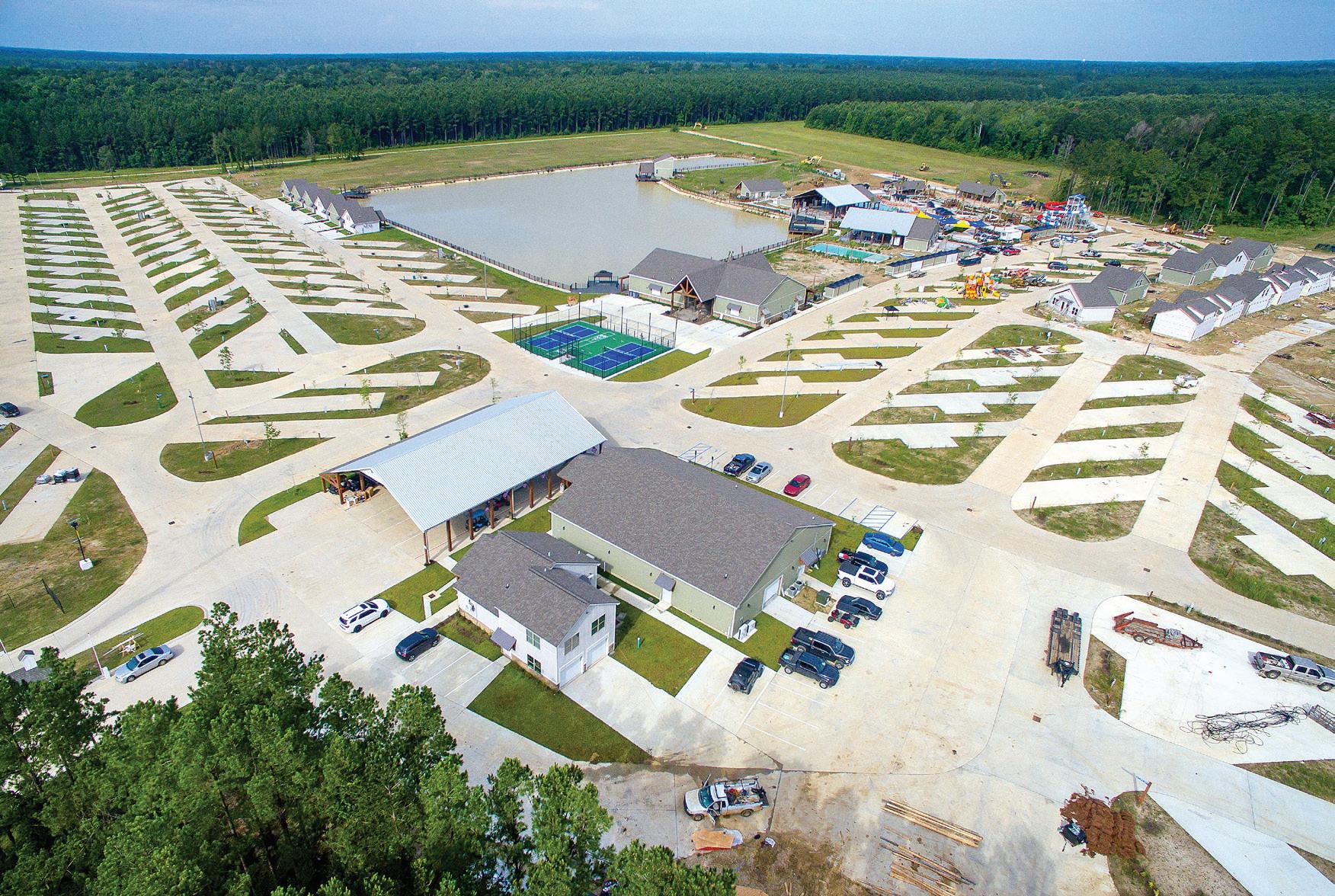



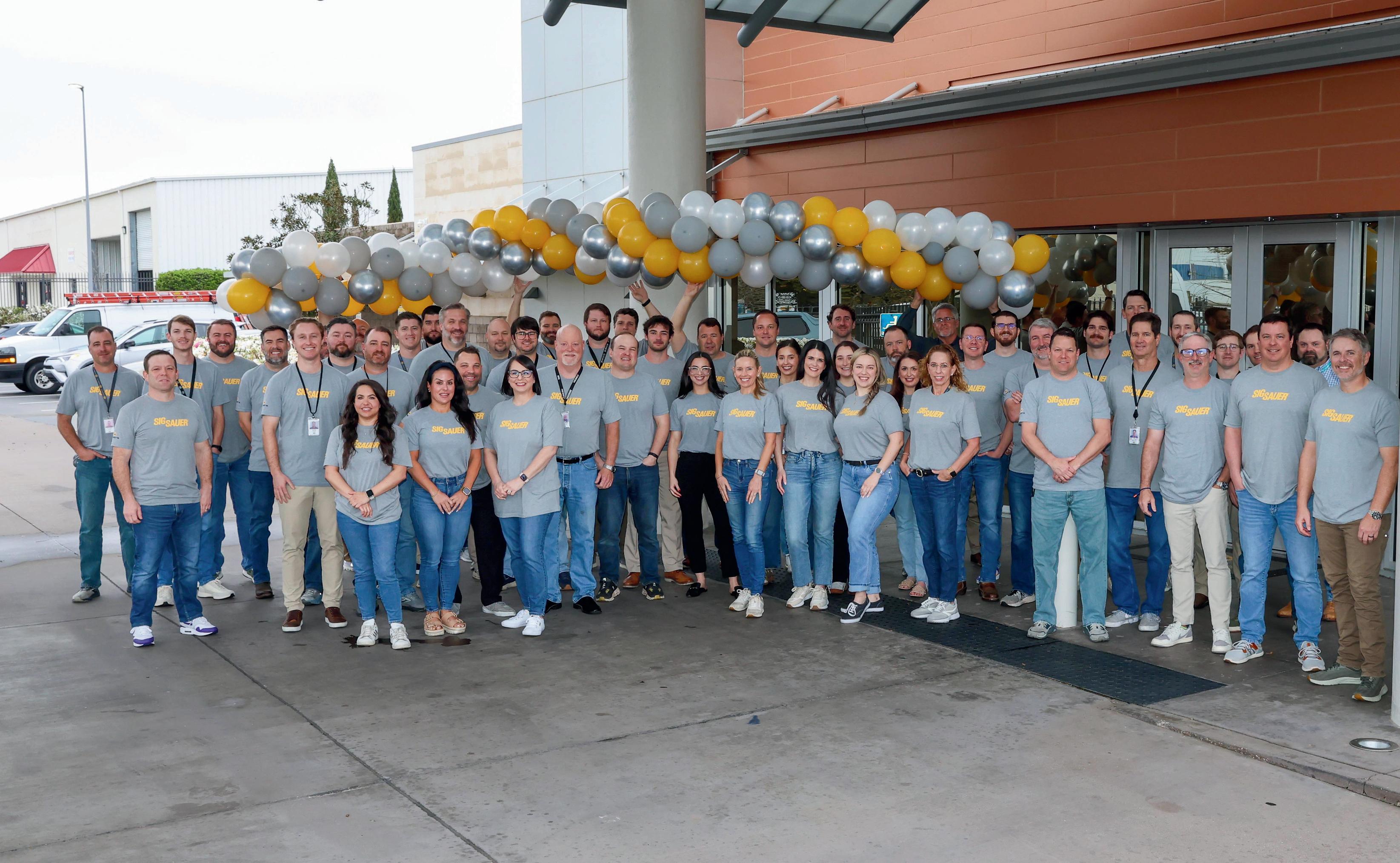



LIVINGSTON IS THE fastest-growing parish in Louisiana, a designation that carries both pride and pressure. Its population has surged along the Interstate 12 corridor for two decades, driven by families seeking affordable land, good schools and distance from urban density.
But for all that growth, it has remained, as Baton Rouge economist Loren Scott notes in a recent analysis, one of only two parishes in the state without a general aviation airport—St. Helena being the other.
That absence, Livingston Parish Airport District Chair Delia Taylor contends, has cost the parish in ways that are easy to overlook because “you never see what doesn’t come to you.”
“Business and industries know where the airports are,” she says. “This is not a hidden secret. If you don’t have one and they want one, they will never contact you. I’m afraid that’s where Livingston has been in the past.”
Working toward developing the Livingston Executive Airport in Satsuma has been a long process. The airport district was formed in 2016, but the effort to build a general aviation airport began about 20 years ago. “The good news is that the project is becoming a tangible, visible reality and it already has been and I believe will continue to be a tremendous asset to our parish,” Taylor said in May, as the first layer of runway asphalt was about to be laid.
Scott detailed the parish’s return on investment in an analysis he prepared for the airport district and presented to the Livingston Parish Council on May 14. “Was this a good investment by the parish?” Scott wrote in a letter attached to his report. “As it turns out, it
was a remarkably good investment, because of both the direct and indirect monies generated for the parish.”
Since 2017, Livingston Parish government has contributed $380,000 to the airport district. That began with $5,000 in the project’s first year, grew to a steady $35,000 annually through 2023, and has since increased to $60,000 per year. The funds have primarily covered administrative costs—bookkeeping, legal fees, audits and insurance for the volunteer board.
What that $380,000 has leveraged, however, is significant.
Garry Lewis, a developer who has been transforming the Exit 19 Satsuma area over the past decade, donated 242 acres for the airport site, a contribution valued at $3.4 million. An additional $50,000 donation covered the construction of the 1-mile entrance road to the airport. That donated land served as local matching funds to unlock state dollars from the Louisiana Department of Transportation and Development and from the state’s capital outlay budget.
In total, the airport district has attracted more than $17 million in non-parish funds over a 10-year period, which includes $3.45 million in state capital outlay funds currently in Priority 1 of the state budget for fiscal year 2026. Against the parish’s $380,000 investment, that’s a 45-to-1 direct return.
The airport itself remains under construction. Land clearing, drainage work and foundation preparation have progressed since the groundbreaking in 2024.

FLYING HIGH: In 2017, Garry Lewis donated 242 acres south of Exit 19 to help launch what is now the Livingston Executive Airport project. A decommissioned F4 Phantom jet like the one he flew off Navy carriers during the Vietnam War sits at the entrance.
Now crews are laying the subsurface and asphalt for phase one of the project—the 4,200-foot runway, turnarounds, taxiway and apron. Also to be completed: building hangars, fuel service stations and additional tree clearing. Crews will also need to return to add a 2-inch overlay to the runway to meet FAA standards for approval.
But the project has already begun reshaping the infrastructure of the Satsuma area beyond the airport fence line. Since breaking ground, the airport district has facilitated the extension of closed sewer lines from the town of Livingston, making those lines available to properties along the corridor between the town and the airport site. DEMCO is running electricity southward, beyond the airport property itself, expanding electrical capacity throughout the area. Two separate water systems—one for the town of Livingston and one for a community water system—have been connected not far from the site, a linkage that will allow future development to tap into expanded capacity relatively easily.
Fire District 4, serving the area, cut the ribbon on a new station on Satsuma Road in June.
“We’ve hardened the infrastructure in that area,” Taylor says. “Businesses are looking to come to Livingston Parish where we have a lot of infrastructure they need. They would’ve had to pay for electricity and sewer and water connections. When we’ve helped to expand that infrastructure into that area, that changes the calculus for them.”
When the airport opens, its primary users will
Continued on page 109



BIG INVESTMENT: The airport district has attracted more than $17 million in non-parish funds over a 10-year period, which includes $3.45 million in state capital outlay funds currently in Priority 1 of the state budget for fiscal year 2026.
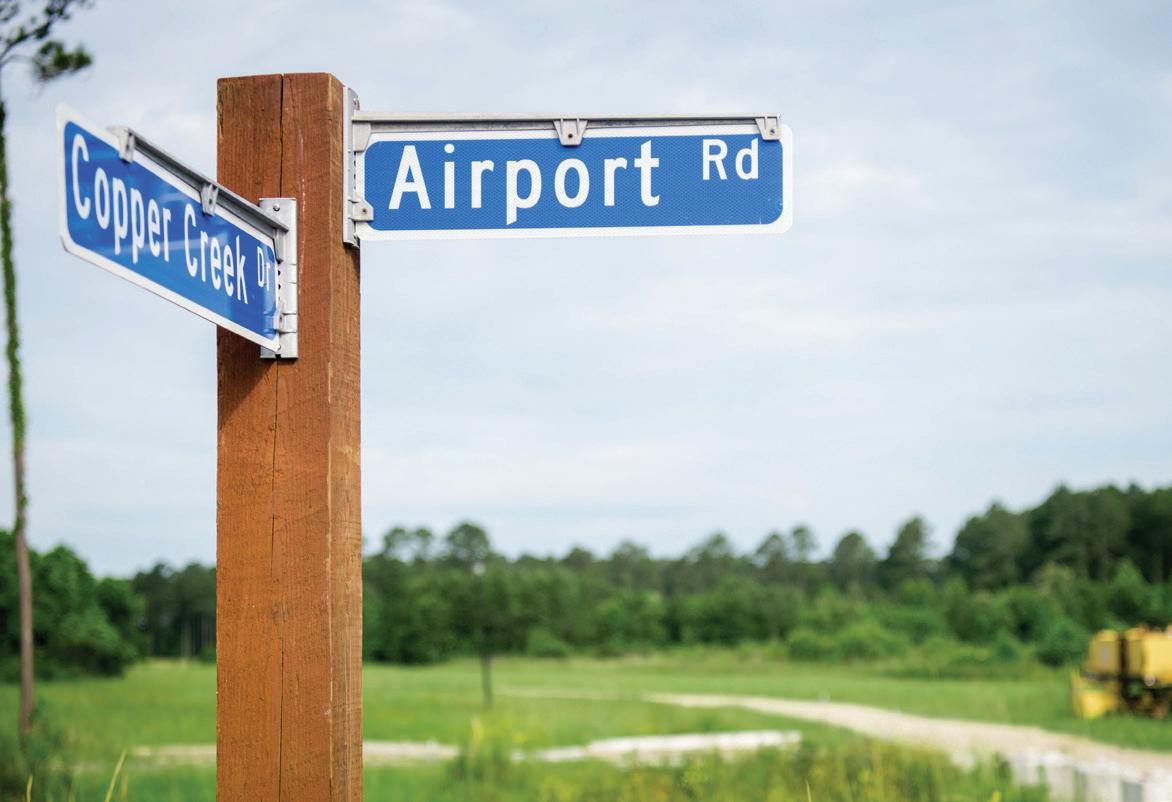
be corporate jet owners seeking an alternative to the congestion and scheduling conflicts at Baton Rouge Metropolitan and New Orleans’ Louis Armstrong airports. Joining them will be fixed-base operator clients who can own fractional jet interests and access available seats, as well as medical aviation operators—the pilots who fly organ donations and transport medical specialists across the region. The parish’s growing medical footprint, including a North Oaks facility and plans for a Baton Rouge General neighborhood hospital in Denham Springs, makes proximity to a general aviation option important.
Taylor also sees the airport as a signal to investors broadly. “A lot of investments are made in and around small airports,” she says. “Those who choose to invest in Livingston can fly in and check on their investment.” The expansion of drone delivery—Amazon is set to begin retail drone service in the Baton Rouge area this summer—and the broader growth of aviation technology are arriving at a moment when Livingston is, for the first time, positioned to participate.
Not everyone on the Parish Council, however, is as enthusiastic. During a November meeting, Council members Dean Coates and Ryan Chavers voted against allocating $15,000 for an essential FAA study—a vote illustrating the persistent friction between the airport’s boosters and skeptics who question whether public money should be spent on a speculative asset.
Council member John Mangus, who represents District 6, where the airport is being built,
acknowledges the challenge of how to answer that question. “It is difficult to get across to parish residents why it’s important to spend taxpayer money up front in order to secure state and federal funding. Some people are going to disagree,” he says. He describes the implicit understanding among council members as something of a “gentleman’s agreement”—a reciprocal willingness to support projects in each other’s districts. But District 6, he says, has historically faced a steeper climb.
Part of the challenge is cultural. The Satsuma area and the broader Colyell community, an unincorporated area of the parish now partially in District 8, has long attracted residents who prize its rural character. “Long-term residents like it that way—sleepy,” Mangus says. He campaigned on a platform of controlled growth and pushed hard for zoning to facilitate that. “I would like to get the tax burden off the backs of the homeowners.”
Residential growth, Mangus explains, generates costs that often outpace the tax revenue it produces. “Homes are built because of cheap land, but it’s not a good way to base the government’s economy.”
The parish succeeded in putting in a zoning framework in October 2025 and is in the process of developing a Unified Land Development Code, consolidating all development ordinances into a single framework.
“Do I want Satsuma to not be country anymore?” Mangus says. “Absolutely not. But controlled, regulated growth? Absolutely.”
—Eileen McClelland







A family-owned shop built on neon, grit and personal service succeeds one sign at a time.
BY EILEEN MCCLELLAND
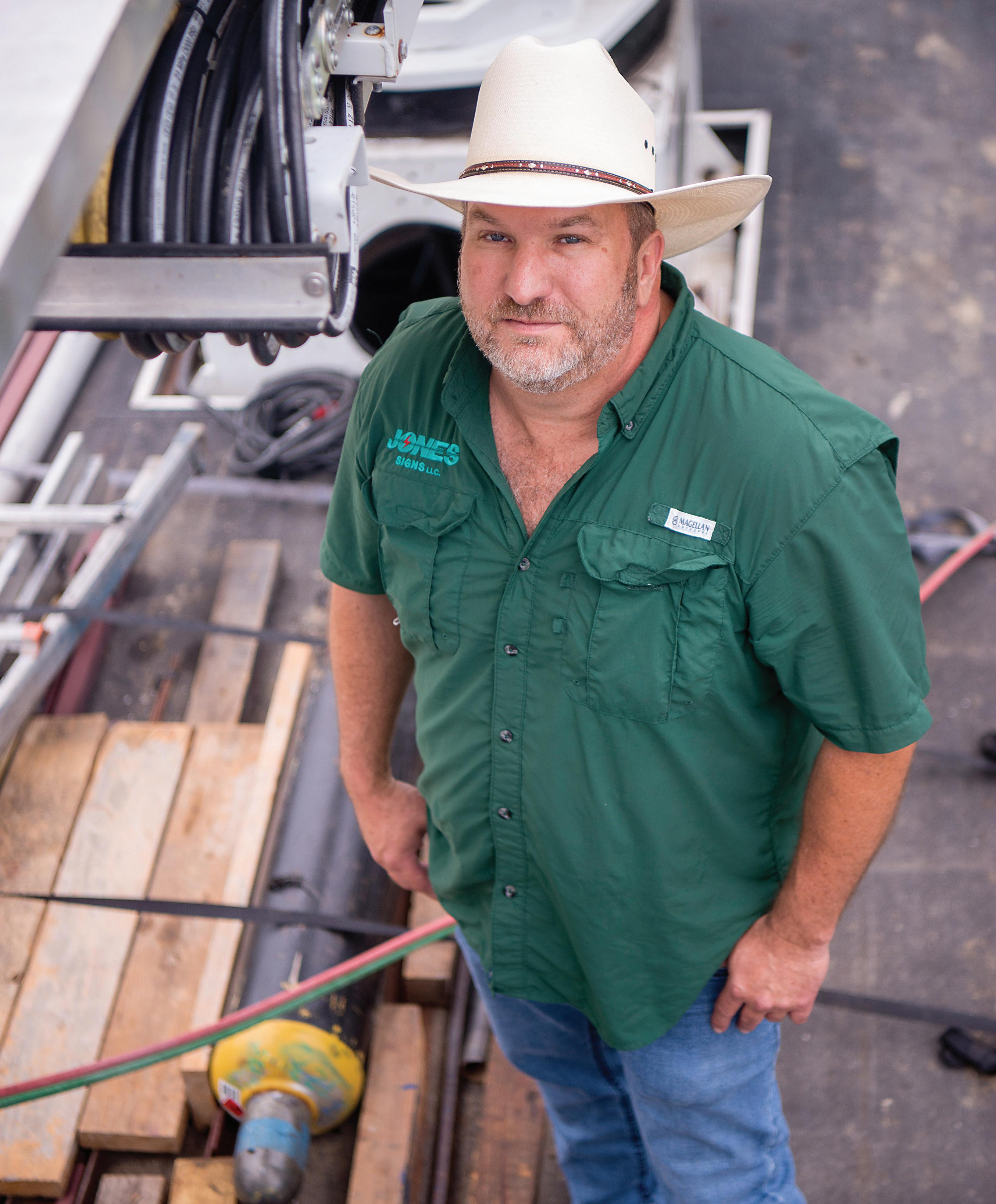
“I’ve
seen more people wanting to go to a look from the ’50s and ’60s; even the ’20s.”
SCOTT
JONES, Jones Signs
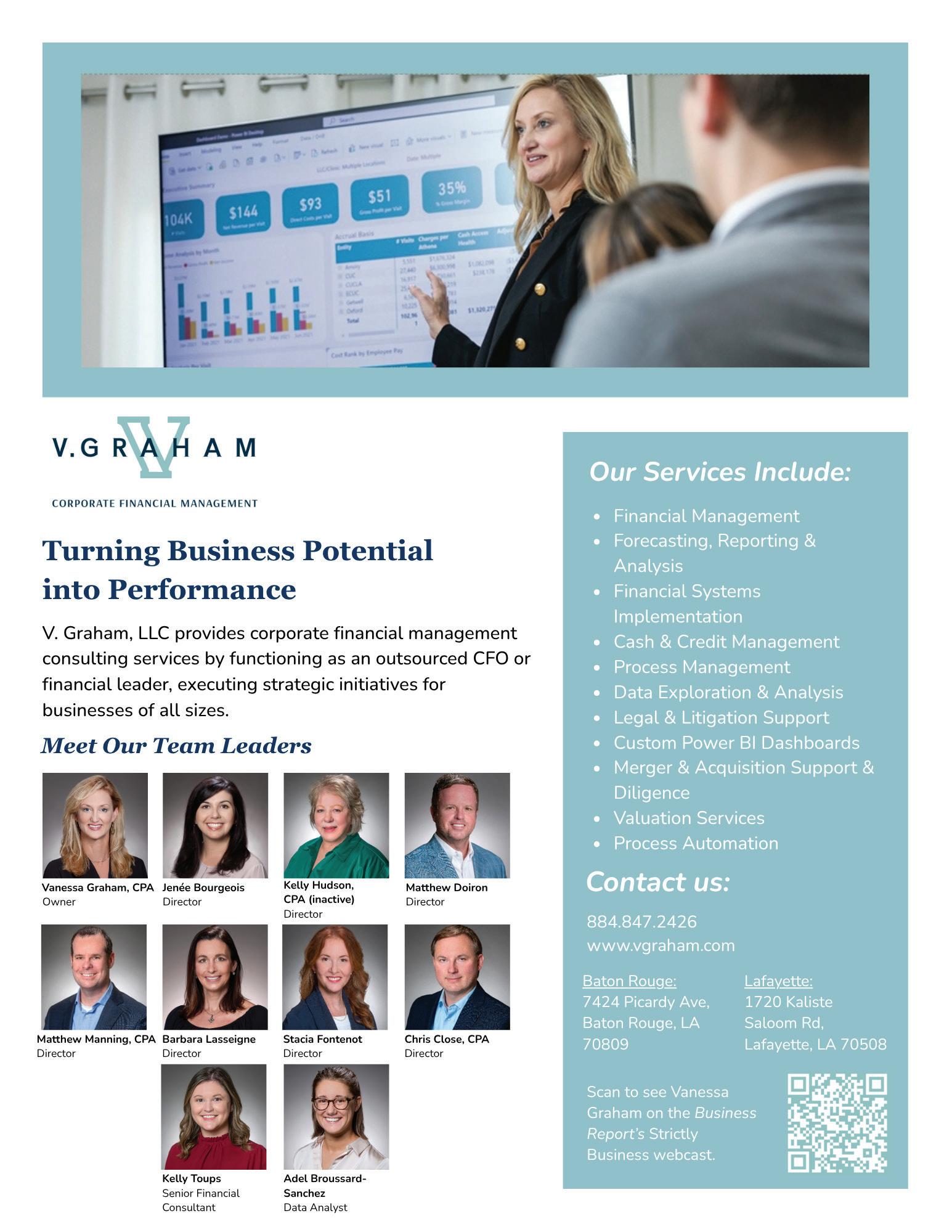

SCOTT JONES WAS born in 1975, the year his father, Buck Jones, officially opened the doors of Jones Signs in Baton Rouge. “This is what I’ve known most of my whole life,” Scott says.
Five decades after its founding, Scott runs the company his father built from nothing—literally nothing. The original shop had gravel floors, no running water and not a single bathroom. A hand-cranked crane was the heavy equipment of the day, and signs were drawn entirely by hand. The journey from that bare-bones operation to the full-service sign and billboard company Jones Signs is today reflects a stubborn determination to work hard and do things right.
Buck Jones didn’t set out to be a sign maker. He had worked offshore and then for the telephone company. On the side, he began helping a friend with sign work and discovered he had a knack for it, particularly the physical labor required in the early days. “Dad was a strong guy,” Scott says. “He could do
things a lot of people couldn’t do. And he was smart, smart, smart— genius smart.”
It wasn’t long before the moonlighting was out paying the day job, and in August 1975, Jones Signs was born as a full-time business.
The early years were grueling. There were no cordless drills, no augers, no forklifts. Concrete was broken with sledgehammers. Post holes dug by hand. “When it was hot, you burned. When it was cold, you froze,” Scott says. “When I was a kid, we had no automated anything.”
Scott would tag along with his father all over south Louisiana, at least trying to help. “He was a one-man band, but I’d be out there making noise and being silly more than anything.” Scott’s mom, Margie, helped; she did the books and ran errands for years until Jones Signs got big enough to hire a full-time office worker.
The milestones Scott remembers most from childhood were modest ones—the day his father poured
concrete to add a bathroom to the shop, or when a rotary phone finally appeared on the counter. “We thought we were in high cotton,” he says.
Then came the arrival by train of a hydraulic crane with an electric motor. Scott, 7 at the time, clearly remembers meeting the crane at the train station as if it were a visiting dignitary. His father and a friend spent a month building a custom deck on a brand-new truck just to carry it.
Scott grew up doing everything in the business from service to installation. After a brief sojourn in Denver, he returned to the family business and took on a fulltime sales role, working with his dad, who died in 2020. “I got proficient enough to make a living,” he says, “to keep the doors open.” Today, the company has a dozen employees.

The technological evolution of Jones Signs tracks closely with the broader transformation of the trade. In the early days, every design was done freehand—Buck would simply draw a design on paper. Later, he was able to project it onto a wall to trace it before painting or applying lettering. This was a staple technique in an era transitioning from hand-painted signs to vinyl lettering, providing a way to scale up smaller designs accurately. “That was a big deal to us in the mid-’80s,” Scott says of the projector setup. “That was cutting edge.”
Then Buck attended a sign industry trade show and brought home a small vinyl-cutting plotter, a computer-controlled machine that revolutionized the sign industry by replacing hand-painted lettering with precise, vector-cut adhesive vinyl graphics.
Suddenly the shop could produce detailed graphics that didn’t require a steady hand and a lot of patience.
Today every step of the process is computer driven—design software, precision cutting, digital printing. Scott watched it all happen. “You have no concept how easy it is today, compared to how it was.”
Jones Signs built much of its early reputation on neon—the luminous, hand-bent glass tubing that defined the look of commercial signage through much of the 20th century.
The company’s portfolio reads like a tour of Baton Rouge history: the iconic Frostop mugs of the ‘80s, the landmark Coca-Cola sign downtown that Jones refurbished twice and the interior signs of the sincerazed Cortana Mall.
One enduring neon example is the sign Jones created for Neal Hendrick when he launched Zippy’s Burritos, Tacos and More on Perkins Road 25 years ago. Hendrick arrived with a logo of a dancing sombrero—and a live demonstration. “I started dancing next to him. A Mexican hat dance,” Hendrick recalls. “Scott didn’t say, ‘This guy’s crazy.’ He said, ‘All right, I’ll do it for you.’ He went and figured it out and did it. It was the start of a great friendship. Only

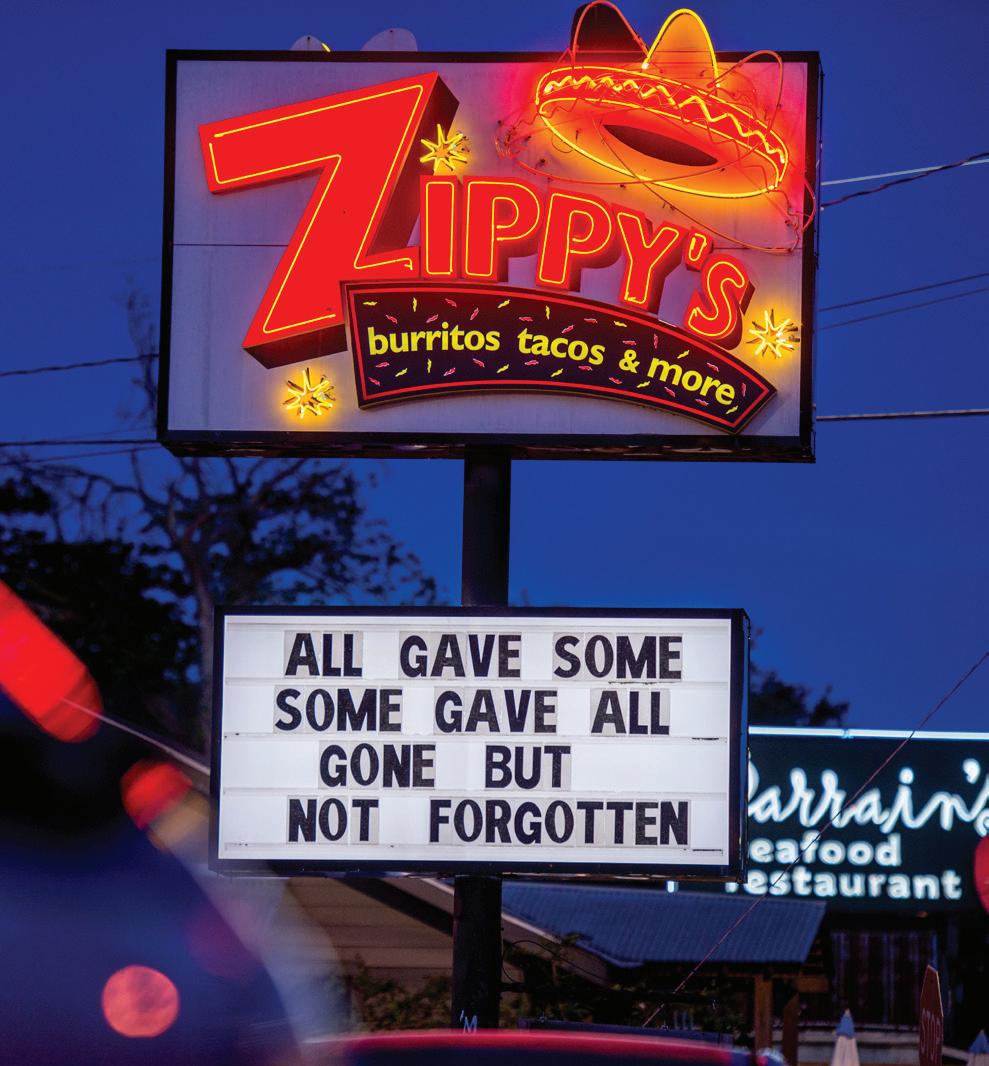
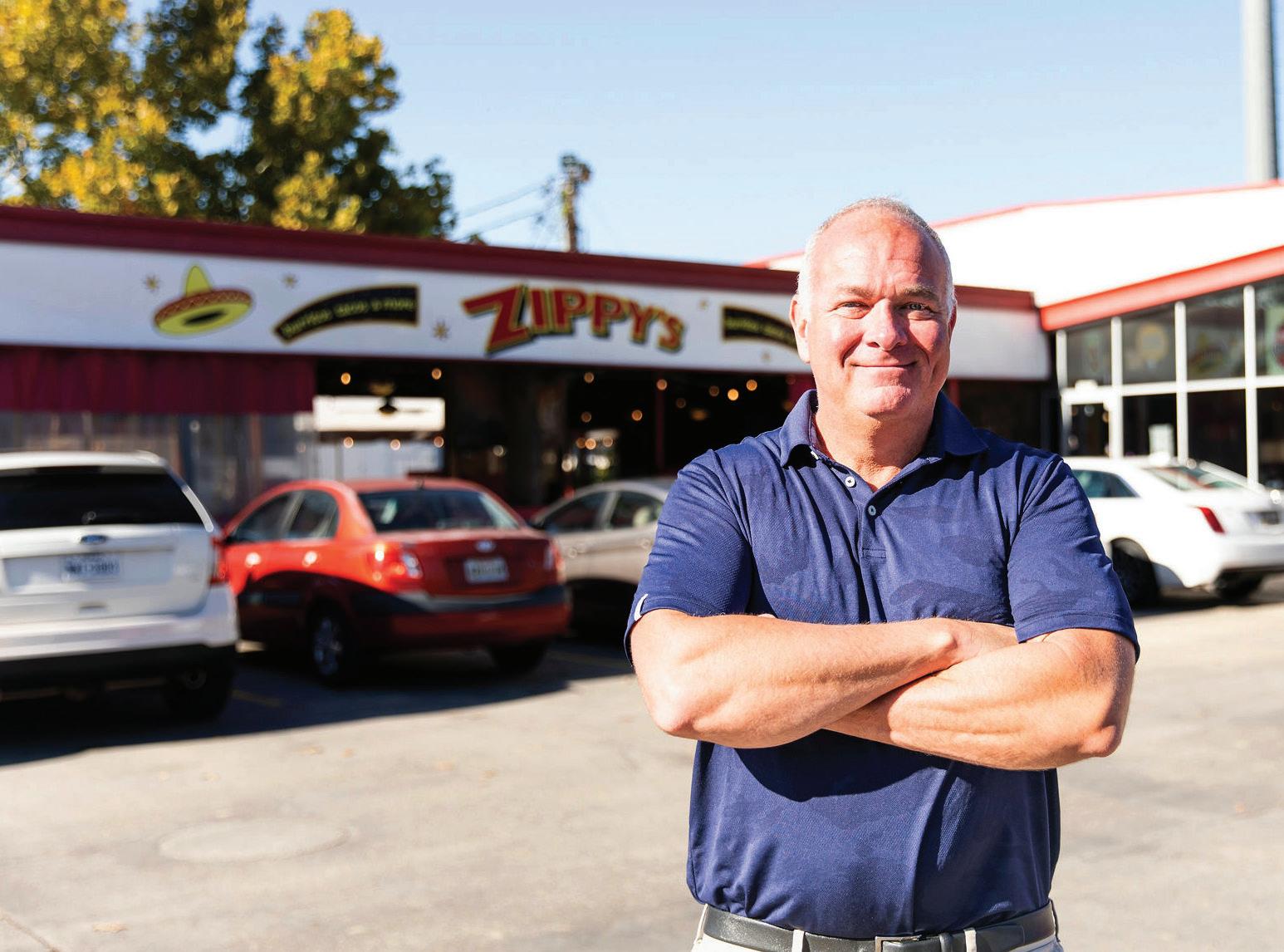
“I started dancing next to him. A Mexican hat dance. Scott didn’t say, ‘This guy’s crazy.’ He said, ‘All right, I’ll do it for you.’”
NEAL HENDRICK, Zippy’s Burritos, Tacos and More
later did he tell me he thought I was crazy.”
Jones built the neon sombrero sign with the illusion of movement and, characteristically, went a step further, suggesting Hendrick add a leaderboard beneath it. It has since become a neighborhood institution, beloved for its irreverent takes on LSU sports and local life. “It became a part of our culture and identity,” Hendrick says. “People say, ‘Did you see what Zippy’s put on the sign today?’” Unlike conventional advertising, the digital marquee sign opts for entertainment over sales pitches and regularly gets shared on social media. “If we didn’t have the sign, I’m not saying we’d be out of business, but it’s far exceeded our expectations.”
Spectacular as neon had been, the technology has gradually given
way to LED lighting. Jones is enthusiastic about LED’s possibilities. The practical advantages are substantial—LEDs last longer, have a wider range of color options, consume less energy and require far less maintenance than their fragile glass predecessors.
But the most exciting development Scott has noticed isn’t technological—it’s aesthetic. A hunger for nostalgic, retro design has emerged among clients, and Jones Signs is perfectly positioned to meet it. “I’ve seen more people wanting to go to a look from the ’50s and ’60s; even the ’20s,” he says. “It’s not for everybody, and not everybody needs to go there, but I do see more interest in it, and that’s pretty cool. It’s a real trend in the sign industry.”
The proof is in the portfolio.
Recent retro examples include the Colonel’s Club on Perkins Road and Brasserie Byronz on Government Street, as well as TJ Ribs and Ruth’s Chris Steak House.
“We could see a lot of changes in the sign industry coming; we were always trying to find another niche to make us stand apart,” Scott says.
The company has made signs for film productions, including the 1988 film Everybody’s All American, filmed extensively in Baton Rouge. Jones Signs also builds signs for other companies and ships them around the country. Church signs have become a notable niche.
In 2001, Jones Signs entered the billboard business through a partnership with Lamar Advertising
Company, but when Lamar pulled its contracts the next year, Buck found himself with a stockpile of materials—and launched his own billboard business.
Today the combination of custom signage and billboard advertising, under the name Digiclem Outdoor Media Source, sets Jones Signs apart from the competition. “It’s very complementary to a custom sign shop,” Scott says. “Having the ability to get a sign and advertise your business at the same time with a billboard—we’re one of the only companies you can do that with.”
American-made materials, including LED components, are a point of differentiation. “It’s very important to me that I deliver the best product I can,” Scott says. “I know if I give you the best product, you’re going to be happy with it and
you’re going to call me again.”
If Jones Signs is underbid by another sign company on a project, the would-be client who had been bargain hunting is likely to return sheepishly and ask Jones to fix what inevitably turned out to be inferior work, Hendrick says.
In a market where national chains dominate, Jones Signs also competes on something a franchise can’t easily replicate: a direct relationship with the person in charge.
“You’re working with the boss, not just a number,” Jones says. “I’m going to advise you. We’ll help you through the whole process.”
Most business still comes through word of mouth—a testament to the loyalty built over 50 years of delivering on promises. Tommy Doiron, senior vice president and facility manager at

Investar Bank, has worked with Jones Signs for 20 years. “Scott has always been there to give us pointers as to what works best, and he’s always been spot on. They’re more attentive to local companies than larger sign companies are.”
Jones Signs can offer flexibility on billboard contracts that some corporate competitors can’t: adjusted timelines, grace periods and terms for small businesses with unpredictable cash flows. When a client asked for a miracle—full signage for a new location opening in four weeks—the company made it happen.
Scott doesn’t shy away from the battles that come with the territory. Municipalities across Louisiana have tightened sign ordinances and moved to restrict billboard construction. He understands the impulse toward order, but he has seen too many well-intentioned regulations hurt the small businesses he serves.
About a decade ago, the mayor
of Denham Springs called Scott in as a consultant when the city was drafting a new sign ordinance. They found common ground with a compromise that worked for the city and businesses alike.
Although signage may not always be top of mind when considering ad strategy, its importance to a local business can’t be overstated.
Dr. Timothy R. Raborn, a dentist and owner of Model Dentistry in Central, says he spent a combined $145,000 on two electronic billboard signs from Jones Signs over 20 years, replacing the first one when it became obsolete. “I’ve been a practicing dentist for 41 years and this has been the biggest return on my investment of all the marketing I’ve done,” he says. “It paid for itself in six or seven months.”
Through all of it—the technological upheavals, the regulatory fights, the aesthetic trends—Jones Signs endures, guided by the instincts Buck Jones brought to the trade half a century ago: Build it right, use the best materials and treat clients like people.







Exactly like nothing else. A stately presence, a storied past.

The destination where every detail is perfected. Discover the unexpected.





BY
The surprising factors that convinced this boomerang to return to Baton Rouge
JOHN MUSSO IS the kind of boomerang that Capital Region economic developers dream about. The 41-year-old moved back to Baton Rouge after a successful Manhattan real estate career. His reasons are the same the Greater Baton Rouge Economic Partnership uses to lure natives back: affordable cost of living, friendly people and accessible, if imperfect, quality-of-life amenities.
The chance to ditch cramped apartment living in favor of a sprawling mid-century modern home with a pool was the first draw.
But what has kept Musso in Baton Rouge since his 2023 return is something else: an unlikely friendship with his 93-year-old neighbor and landlord, who has also become his professional mentor. Coldwell Banker owner Betty Phelps, a well-known Capital Region real estate veteran and 1999 Business Report Influential Women in Business honoree, has made it her mission to cement Musso’s commitment to Baton Rouge.
Not that Phelps was thinking about the city’s brain drain. In Musso, she simply saw a talented agent who should jump back into
the game.
“John can get along with anyone and talk to anyone, and that’s what it takes to be successful,” Phelps says. “I pushed him to get his [Louisiana] real estate license. What did he have to lose?”
As the Capital Region continues to struggle with keeping and attracting young professionals, the story is a window into the X-factors that can make the city “sticky” to would-be transplants. Sometimes it’s a house with the right aesthetics. Sometimes it’s relationships. Sometimes it’s both.
Musso grew up in Baton Rouge,
earned a degree in finance from Millsaps College in Jackson, Mississippi, and moved to New York the day he finished exams, skipping out on the graduation ceremony to reach the Big Apple as soon as possible. He worked in accounting before transitioning to real estate, ultimately working for several years with the luxury firm Douglas Elliman.
Real estate was a natural fit. Musso eventually became part of a team that achieved $650 million in residential sales. Then the pandemic hit. An aggressive shutdown forced New Yorkers indoors and
Musso decided to leave the city. Financial success made it possible to take time off from work and relocate to Miami. He assumed he’d eventually move back to New York.
Baton Rouge got in the way.
In late 2022, Musso came home for Christmas. After playing tennis at Bocage Racquet Club with a friend, he drove through the Jefferson Bocage neighborhood, noticing a house for rent that grabbed his attention.
“It was this mid-century modern design, and it had a pool and great backyard,” Musso says. “I walked through the front door and said, ‘Can I pay today?’”
Phelps had owned the house since 2001 and lived across the street. She often rented it to fellow homeowners in Bocage undergoing renovations.
She agreed to rent it to Musso. A friendship bloomed. Phelps found Musso engaging and interesting. The two shared a mutual love for real estate. Musso was also a selftaught artist who filled the house with colorful, sculptural furnishings and his own abstract paintings.
Musso completed his Louisiana real estate license in late 2025. In January, he joined Coldwell Banker One, the firm Phelps founded.
Phelps no longer has listings, but she still goes into the office every day, including weekends, offering her expertise to the team of agents. She also maintains a large personal portfolio of real estate and rental property from Orange Beach to St. Francisville, and across Baton Rouge.
“She’s a go-getter. She’s tough as nails and is just an inspiration,” Musso says. “To be able to still go in to work every day and enjoy what you do is incredible. She has so much discipline.”
A Hammond native, Phelps has always been interested in real estate. Even before obtaining a license, she was enamored with owning property, canvassing the newspaper for buying opportunities, she says. Her foray into sales came unexpectedly. When her daughters were young, she hired a babysitter to take a scuba diving course at a local YMCA. The course was canceled at the last minute, so Phelps—not wanting to waste the sitter—sat in on a real

estate seminar instead. She found it fascinating.
Real estate agent Durward Gully at Gully and Associates hired Phelps. She worked her way up to be the firm’s sales manager. Later, Gully asked her to buy in as his equal partner. When he died in 1994, Phelps bought his family out. The firm would later become Coldwell Banker One.
Phelps says success in real estate depends on elbow grease and a love for people. “It also helps if you can smell a sale,” she says.
She recalls what she had to do to earn one of her biggest commissions. At a social event in the early ‘70s, she heard that the Baton Rouge Clinic, then located on North 19th Street, needed more space. The wheels started turning in Phelps’ head.
“My doctor, Dr. [Charles] Prosser, was one of the founders of the clinic, so I started manufacturing illnesses so I could ask him about whether or not they’d found space,” Phelps says. “I made an appointment about every two weeks.
I had more sore throats and earaches, but eventually I talked him into buying land on Goodwood Boulevard through me. It took me a year.”
It’s one of many examples Phelps shares about the lengths she was willing to go to secure a sale.
She recalls leaving her family during a Mother’s Day lunch at the request of a public official who wanted to see property in St. Francisville. She left willingly, and she had a signed purchase agreement that evening.
BACK IN BATON ROUGE:
John Musso grew up in Baton Rouge, earned a degree in finance from Millsaps College in Jackson, Mississippi, and moved to New York the day he finished exams, skipping out on the graduation ceremony to reach the Big Apple as soon as possible. Until COVID hit, he worked for luxury real estate firm Douglas Elliman.

When an out-of-town executive innocently requested to meet at his hotel room to discuss housing options after hours, Phelps bucked safety concerns and went without hesitation.
“People thought I was crazy,” she says. “But I couldn’t get in the car fast enough.”
She successfully sold to the executive—and to subsequent employees of the same company over many years.
Musso comes from a real estate market in which agents didn’t focus
on developing relationships, but on marketing themselves as a brand.
In Baton Rouge, it’s more about getting in front of people, Phelps says. But Musso has the right skill set, she says. And it doesn’t hurt that he’s a native.
“Real estate in Baton Rouge is 100% built on relationships and being out and socializing with people and being known as someone people will trust,” Phelps says. “The more people you know, the better you’re going to do. John is going to do great.”

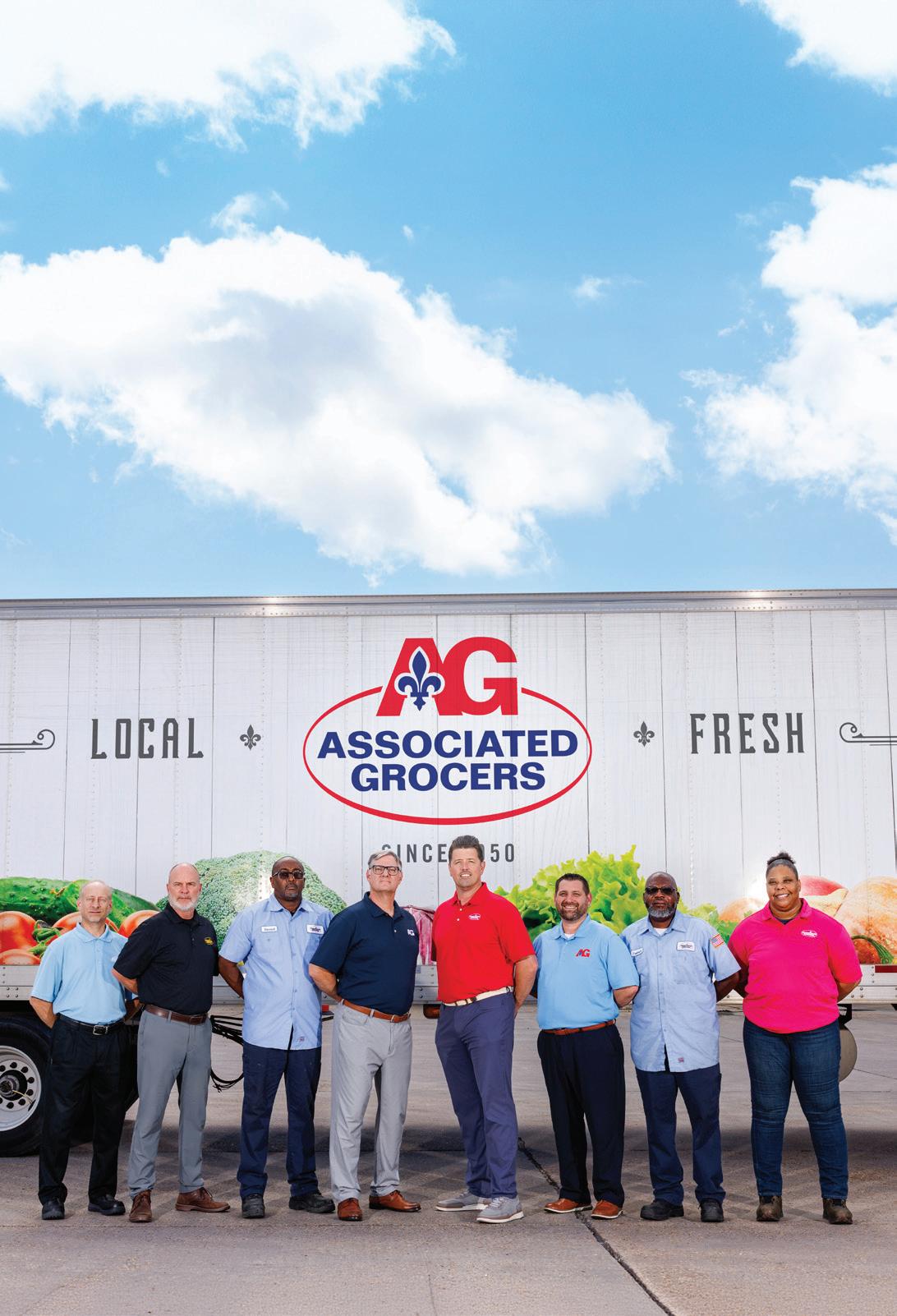
We are proud to have military veterans on our team and are grateful for their service.
We’re committed to providing our employees with the support, opportunities, and resources to succeed.








Rose Hudson Local businesswoman & CEO
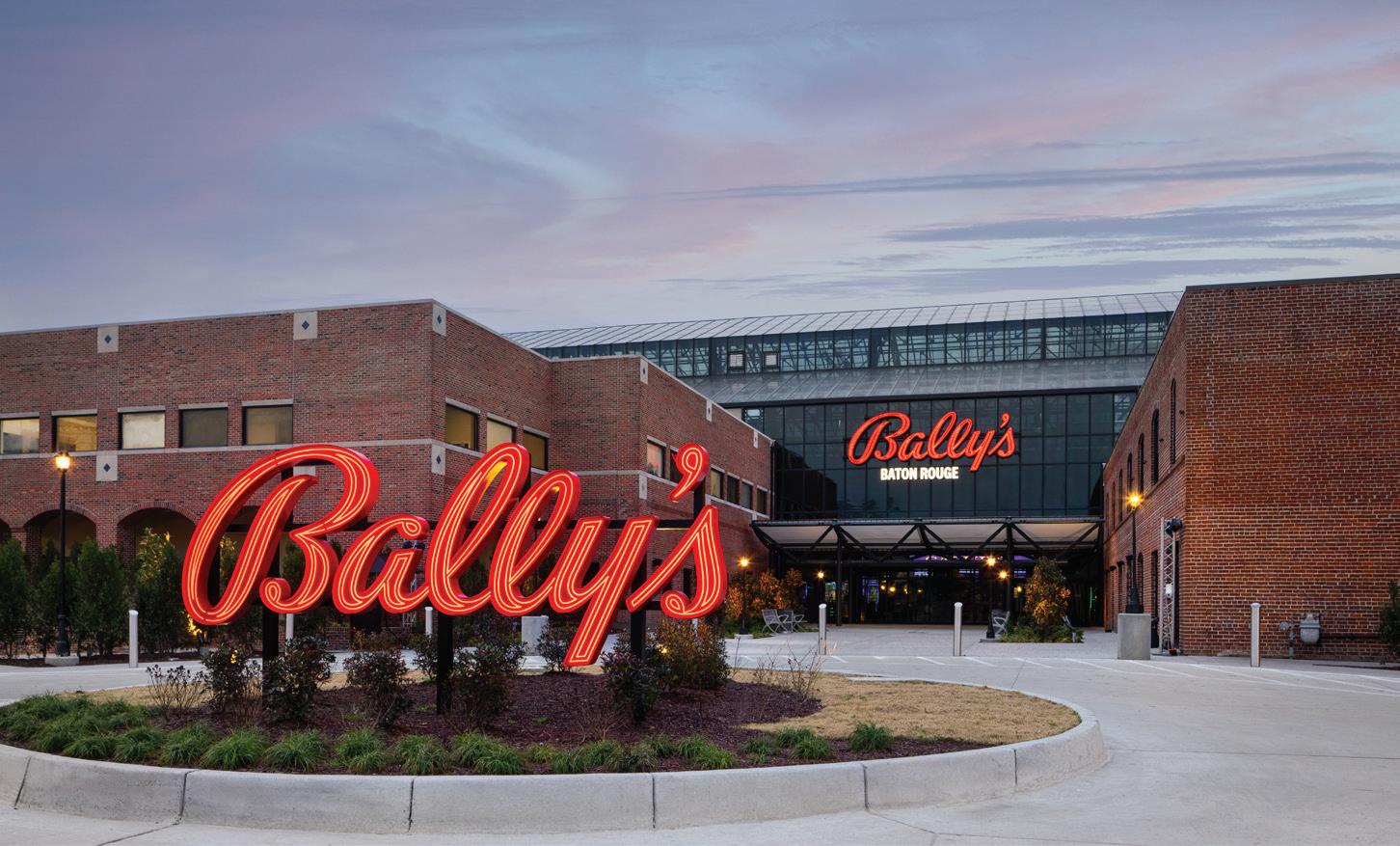
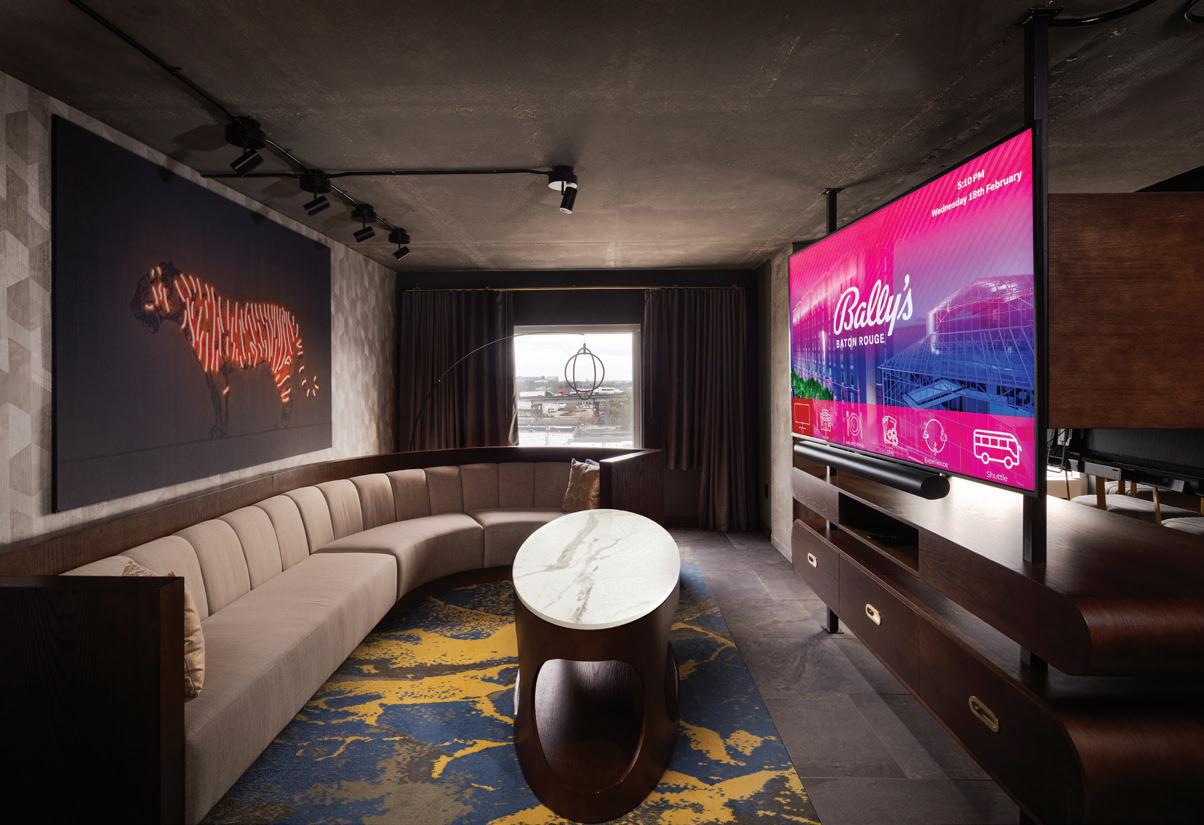

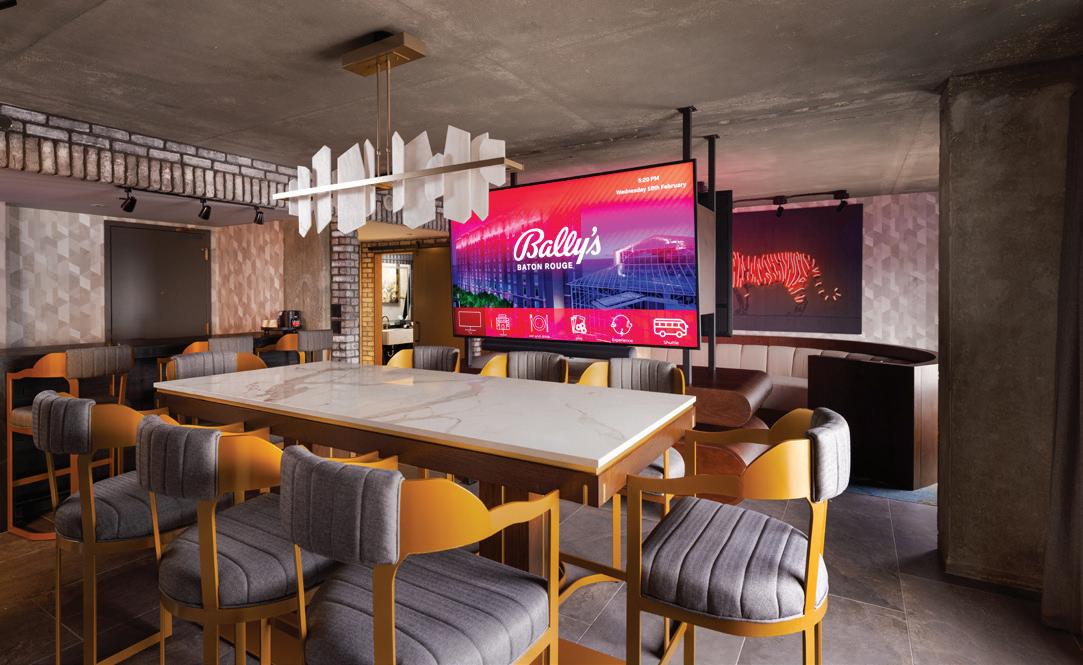
THE TRANSFORMATION: State legislation in 2018 authorized riverboat casinos to relocate to land-based facilities, provided they stayed within 1,200 feet of their original docks. The transformation at Bally’s has been the most dramatic: The $160 million reinvention of the old Catfish Town space delivers 25,000 square feet of Vegas-style gaming, entertainment and dining.
BY SAM BARNES
Landside gaming is giving Baton Rouge’s casino market a successful second act.
NOT LONG AGO, the Belle of Baton Rouge was pulling in somewhere between $600,000 and $700,000 a month—respectable, perhaps, for a riverboat casino rocking gently on the Mississippi, but hardly the stuff of Vegas dreams.
Reborn as Bally’s Baton Rouge Casino & Hotel and planted firmly on dry land, that same property now generates $4 million to $5 million a month.
“It has been a remarkable turnaround,” says Baton Rouge economist Loren Scott.
That turnaround didn’t happen by accident. It happened because
Louisiana finally gave its casinos permission to come ashore.
State legislation passed in 2018 authorized riverboat casinos to relocate to land-based facilities, provided they stayed within 1,200 feet of their original docks—close enough to honor the letter of the law, far enough from the water to change everything.
The move was part of a broader statewide push to make Louisiana’s gaming industry more competitive with neighboring states, shedding the inefficiencies of the riverboat model for something sleeker, more immersive and, as it turns out,
significantly more lucrative.
Nowhere has that played out more dramatically than in Baton Rouge, where two Bally’s Corp. properties have gone landside within two years of each other, reshaping not just the city’s casino market but the texture of its downtown.
The Queen Baton Rouge made the move in 2023. Bally’s Baton Rouge followed in late 2025, less than a mile downriver. Together, they’ve helped push gaming revenue in what remains Louisiana’s smallest market from roughly $65 million to $80 million—a surge that has state budget forecasters quietly pleased.
The transformation at Bally’s is the more dramatic of the two. The $160 million reinvention of the old Catfish Town space now delivers 25,000 square feet of Vegas-style gaming, entertainment and dining.
Adjacent to the casino floor, a newly renovated 10-story hotel opened in spring 2025 with 242 guest rooms, 64 signature suites and a VIP lounge that frames sweeping views of downtown Baton Rouge— the kind of amenity that turns a night at the casino into a destination weekend.
When the full complex opened in December, it also added 500 jobs,

many of them table dealers trained at the casino’s own free on-site dealer school.
The Queen, meanwhile, has quietly become a powerhouse in its own right, comprising more than 100,000 square feet of gaming, dining and live entertainment along the Mississippi, with 30,000-plus square feet of contemporary gaming space, more than 725 Vegas-style games and 18 table games. Its monthly revenue has climbed from an average of $4 million to $5 million to $7 million to $8 million since moving ashore.
For Bally’s Corp., owning two casinos in the same midsize market—less than a mile apart—is a balancing act that keeps its executives watchful. “Above all else, with the opening of Bally’s we didn’t want to cannibalize any of the customers from The Queen,” says Lauren Westerfield-Boberg, the company’s global vice president of public relations. So far, the concern has proved
largely unfounded, thanks to a natural segmentation that emerged between the two properties.
The Queen draws a return, hyper-local crowd—regulars who know the floor and come back often. Bally’s, by contrast, skews toward out-of-towners—convention attendees, concertgoers, fans rolling into town for an LSU or Southern University game who find themselves near the Raising Cane’s River Center and in need of somewhere to spend the evening.
“It has proven to be a successful formula for us so far,” WesterfieldBoberg says. “Revenues are up and head counts are up for both.”
The broader market has felt the lift, too. L’Auberge Casino, the market’s longtime dominant player, absorbed a small early hit from Bally’s arrival but has stabilized at around $14 million a month—right where it was before the landside conversions began. Across all three properties,
1,479 people are now employed in Baton Rouge’s casino industry. “That’s a big number,” Scott notes.
It’s a big number for state coffers, too. Greg Albrecht, who continues to develop Louisiana’s revenue forecast following his tenure as legislative fiscal officer, has been watching the Baton Rouge market closely.
Gaming play data through April shows adjusted gross revenue statewide at $243 million, up 9.8% over the same period in fiscal year 2025. Baton Rouge’s share of total statewide admissions has grown from 15.8% to 18.7% in a single year.
“That’s some fairly significant admissions growth,” Albrecht says. “There are simply more people coming through the doors.”
What’s striking, though, is what’s happening inside those doors. Even as statewide admission numbers remain below pre-COVID levels, the revenue generated per visitor has climbed sharply—from roughly
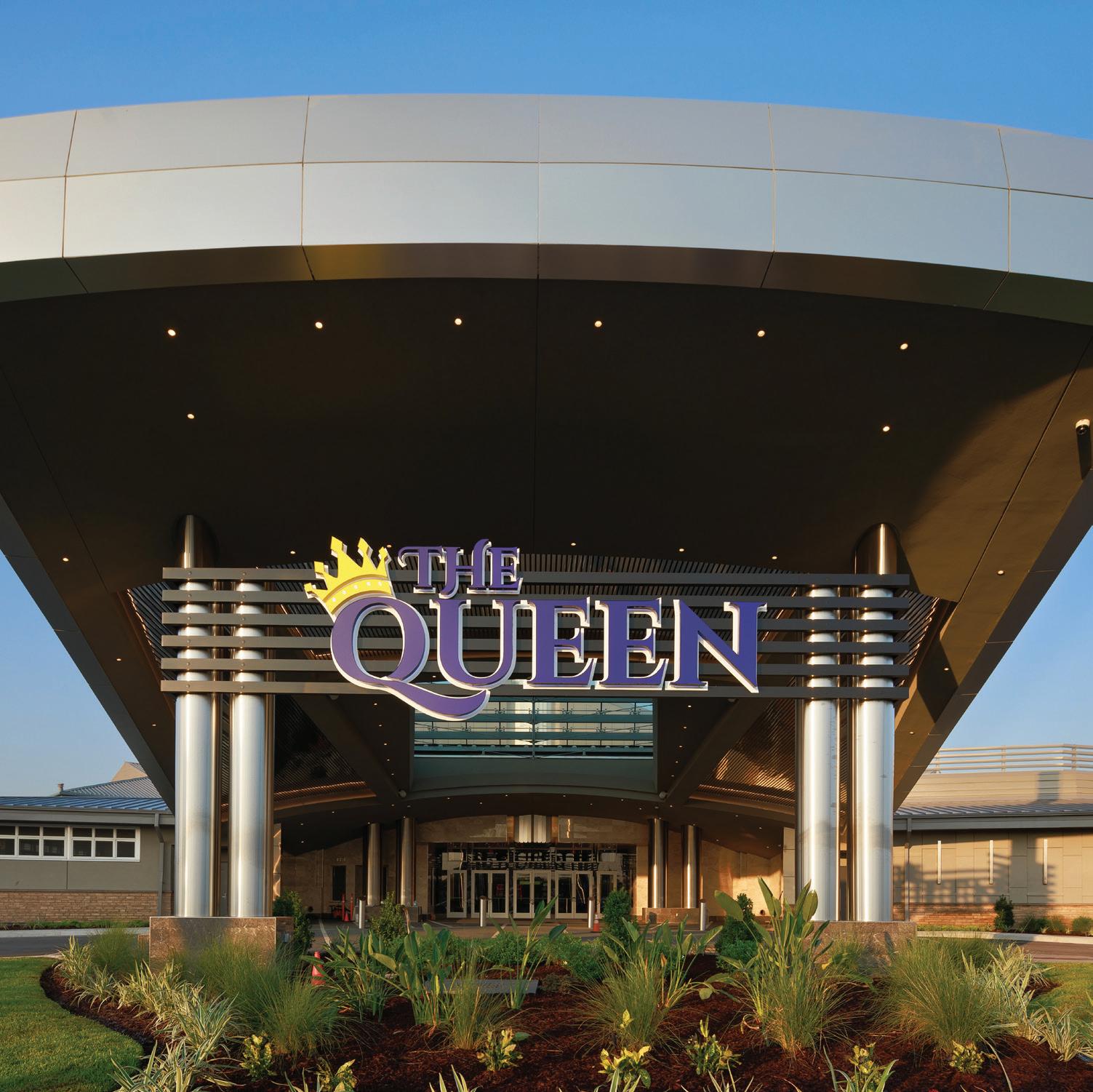
The stats that define Baton Rouge’s casinos
Bally’s Baton Rouge
• Nine food, beverage and entertainment venues
• 25 table games
• 800-plus slots and electronic games
• 46-foot big screen and 14 betting kiosks in the DraftKings sportsbook
The Queen Baton Rouge
• Five food, beverage and entertainment venues
• 18 table games
• 725 Vegas-style games on a new slot floor
L’Auberge Baton Rouge
• Five dining destinations
• 50 table games
• 800-plus slots and video poker
• Sportsbook with big screens and 17 betting kiosks
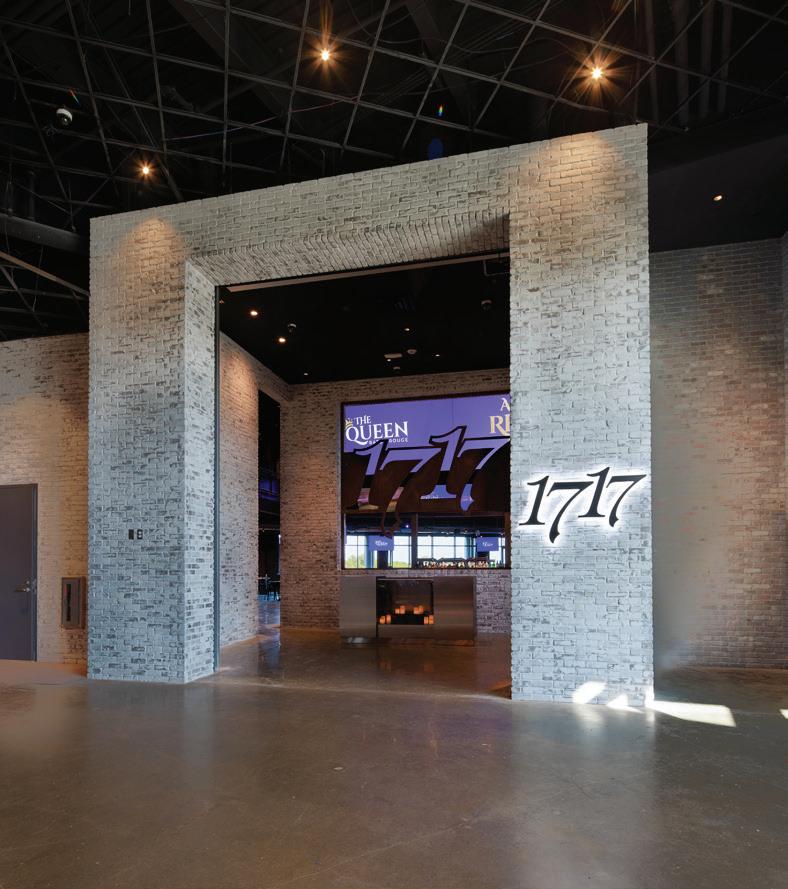

















$90 a head before the pandemic to nearly $120 today.
Fewer players, it turns out, are spending considerably more. “That means the casinos are getting more money out of a fewer set of players,” Albrecht says.
Whether the momentum holds is the question nobody can quite answer yet.
Scott is candid about the uncertainty. “The forecast is very muddy,”
DINING: L’Auberge Casino, long a dominant player, absorbed a small early hit from Bally’s arrival but has stabilized at around $14 million a month—right where it was before the landside conversions began. Construction is underway on Emeril’s Chop House, an upscale, 175-seat American steakhouse by celebrity chef Emeril Lagasse.
he says. “We’ll have to wait to see if Bally’s continues to succeed as much as it has. I think it’s still too early to say because we don’t know if this is a new trend or if they’re simply benefitting from being new to the market.”
For now, at least, the numbers are good—and in Baton Rouge, after years of watching the rest of Louisiana’s casino market outpace it, good feels like a start.

| 11AM SPECIAL GUEST

DIRECTOR. LSU CENTER FOR ECONOMICS, BUSINESS & POLICY RESEARCH

THE
TOPIC OF DISCUSSION MEASURING CAPITAL INVESTMENT
AI INTENSIVE OCCUPATIONS
COMPETITIVE ADVANTAGES FOR LOUISIANA SPONSORED BY:
BY DILLON LOWE
Capital Region entities are bringing their problems to LSU students. They’re leaving with custom-built AI tools.
ON A MONDAY evening in May, teams of LSU students traded hoodies and backpacks for business attire and took the stage inside Tiger Stadium’s South Stadium Club.
Their audience included faculty members, business representatives and potential employers. But this wasn’t a pitch competition. They presented functional artificial intelligence tools developed over the course of a semester for four prominent Baton Rouge organizations: MMR Group, Baton Rouge Community College, Neighbors Federal Credit Union and Performance Contractors.
The event, called the LSU AI Showcase, marked the culmination of the sixth cohort of a capstone-style course designed to give technically advanced students experience solving real-world business problems using large language models. The showcase is typically held each fall and spring, with new student teams presenting their work at the end of each semester.
Keith Mills, an assistant professor in LSU’s Division of Computer
Science and Engineering who led the course during the spring 2026 semester, says the program was conceived by former LSU Provost Roy Haggerty as a way to pair technical instruction with actual business needs.
“This is a capstone where there is direct industry buy-in,” Mills says, referring to the culminating academic experience designed to bridge the gap between classroom theory and real-world application.
Before classes begin, LSU officials recruit businesses with potential AI projects, and on the first day of class, those businesses introduce themselves and explain the problems they hope to solve. Instructors assemble student teams based on student preferences as well as the technical demands of each assignment. And because the program’s emphasis is on developing tools that sponsors can actually put to use—not just tools that are technically impressive—each team also includes a business lead tasked with keeping each project in line with sponsor objectives.
Admission to the course is selective. Students submit résumés and transcripts for review, and most who are admitted are upper-level undergraduates or graduate students with substantial computer science experience.
Throughout the semester,
representatives from the sponsoring businesses meet weekly with the students assigned to their projects. The business representatives provide data, explain internal processes and help refine the applications as they’re built.
The course helped lay the groundwork for LSU’s broader push into artificial intelligence.
The university now plans to launch Louisiana’s first bachelor’s degree in AI this fall and is currently developing an applied master’s degree in AI, an applied intelligence lab and new coursework focused on agentic systems and neural networks. The larger ambition, according to Mills, is to make LSU the state’s central source of AI expertise.
“This course was kind of like the small little snowball that rolls down a hill and becomes a huge snow boulder, so to speak,” Mills says.
The latest cohort tackled four decidedly practical problems, ranging from construction bidding and jobsite safety to college registration and third-party cybersecurity risk.
A student who tries to register for a course at Baton Rouge Community College may occasionally be stopped by the system—even when there’s a legitimate reason the student should be allowed to enroll.
In such cases, the student submits an “override request” explaining why an exception should be granted. An administrator must then review the student’s academic history, the course requirements and the student’s rationale before approving or denying the request.
As those requests accumulate, so too does the administrative burden.
“That was the problem that we had to solve,” says William Morales, an LSU computer science student who worked on the BRCC project. “They had lots of trouble with manually reviewing override requests.”
Morales and his teammates developed GuideOverride, a web application designed to give administrators a faster first pass. The system combines information about course requirements with historical override decisions, then uses AI to assess whether a request appears likely to merit approval.
The goal isn’t to remove people from the process. GuideOverride organizes the relevant information and offers a recommendation, leaving the final decision to a human reviewer.
“The human presses the last button—approve or deny,” Morales says.
As of early June, BRCC had not yet put GuideOverride into active use, but Morales says the college is working toward implementation.
“They’re going ahead and trying to move to the new [system],” he says, “but it’s obviously a process.”





























For MMR Group, one of the nation’s largest electrical and instrumentation contractors, the process of deciding whether to pursue a new project often begins with a single email address.
Requests for proposals arrive at bids@mmr.com, accompanied by a dense collection of contracts, specifications and other documents that can stretch into the thousands of pages. Before MMR can determine whether to submit a bid—or how to price one—its estimating team must comb through that material for critical details.
That was the problem assigned to Peter Franz and seven other students on the MMR team.
“What’s really nice about AI is it can read things really, really fast,” says Franz, a computer science master’s student at LSU.
The team’s solution, called Bid Busters, monitors MMR’s proposal inbox, downloading and analyzing incoming emails and attachments automatically before answering a set of questions developed by the company’s estimators.
According to Franz, an experienced employee typically spends about 30 minutes reviewing a proposal and answering that initial set of questions. Bid Busters completes the same first-pass review in roughly 10 minutes—and is able to continue processing documents overnight.
But speed was only part of the assignment. Because a confidently stated false answer can distort a bid decision, the students built a second layer of review into the system. One model generates an answer, while another checks whether that answer is supported by evidence in the proposal documents. Answers that cannot be verified are flagged for human review.
“Guessing is like the worst thing,” Franz says. “Hallucinating a wrong answer that’s confidently said is, like, very dangerous. It’s a very bad thing.”
The students ultimately transferred the code and operating instructions to the company. Two members of the Bid Busters team will remain involved over the summer to assist with the transition.
“MMR owns the code—was given the code at the end, was given a guide at the end—and is very interested in continuing with our solution,” Franz says.







Whether it’s on the green or in the carpool line, getting your back-BACK- is the goal. Dr. Eric K. Oberlander is an awardwinning spine specialist who has developed one of the largest practices in the country.
As one of the TOP Board Certified Neurosurgeons in Louisiana who has fellowship training in minimally invasive and complex spine surgery, his services are in high demand. Join the 8,000 patients that see Team Oberlander per year.
Call (225) 768-2023 to schedule your appointment.



Eric
Oberlander, MD
Board Certified Neurosurgeon

PATIENT KIRK FISHER IS BACK GOLFING JUST MONTHS AFTER DR. OBERLANDER REMOVED A LIFE THREATENING TUMOR FROM HIS SPINAL CANAL. NOW CANCER FREE AND PAIN FREE, HE IS LIVING HIS BEST LIFE. SCAN THE QR CODE BELOW TO SEE THE VIDEO OF KIRK’S AND OTHER PATIENTS REMARKABLE STORIES.

Some of the documents Neighbors Federal Credit Union must review to assess its vendors can run well beyond 100 pages.
Known as SOC reports, the documents detail the controls vendors use to protect sensitive systems and data. Neighbors employees must search them for exceptions, evaluate the vendors’ responses and determine whether any shortcomings could expose the credit union to risk.
“It takes a long time to go through these really, really long SOC reports,” says Mason Dornier, an LSU computer science student concentrating in cybersecurity.
That’s why Dornier and his teammates built Beyond Ctrl-F, a platform designed to automate much of the initial review. The application scans SOC reports for control exceptions and other relevant information, then organizes its findings in a dashboard for an employee to examine and approve.
The primary goal is to save time for senior personnel who would otherwise have to comb the reports manually, but the students also extended the platform beyond document review.
A separate feature researches vendors for cyberattacks, data breaches and other security incidents that may not appear in their SOC reports, giving Neighbors valuable context when deciding whether it would be prudent to begin—or continue—a business relationship.
The result, Dornier says, is a “one-stop shop” for reviewing vendor security.
“If they are missing things, what are they missing?” he says. “Was it just someone who didn’t change their password in a timely manner, or did they not have any of their passwords encrypted on their internal network?”
Dornier says Neighbors planned to continue developing and eventually use the platform after the students handed it off.













































This Fourth of July, as our nation approaches its 250 anniversary, we are reminded that the truest luxury is HOME. th We remain honored to help Baton Rouge families find theirs.







The Performance Contractors team began the semester with a problem that was deliberately broad: Find a way to improve safety.
“They didn’t define what they wanted,” says Iago Nonaka, a mechanical engineering doctoral student at LSU. “They just told us, ‘We want something that can improve our safety problems.’”
To narrow the assignment, the students met with safety managers, spoke with field personnel and visited a Performance Contractors jobsite. Those conversations revealed that the company’s challenge was not a shortage of information but the difficulty of turning a large volume of safety data into something employees could use efficiently.
The platform Nonaka and his teammates developed, called ForeSight, gives safety managers a simpler way to search incident reports, audits and other company records. Through an AI assistant, a manager can ask questions about accidents, recurring hazards or trends at a particular jobsite and receive summaries, charts and other visualizations without manually sorting through the underlying data.
“What was the worst accident that we had at this site?” Nonaka says, offering one example. “The [system] will check the data and explain or summarize what happened.”
The students also developed tools for field employees, making it easier to record safety observations from a jobsite. A separate risk-scoring component helps managers identify patterns that may warrant attention before they contribute to an accident.
Because of the broad scope of Performance Contractors’ original request, the project was divided between two student teams.
Nonaka says the experience gave him valuable insight into how modern AI tools can be applied to real-world business problems, and that the same approach could be adapted for smaller companies without the resources to develop such systems internally.
“It would be pretty easy for a student to try to create a startup based on the same features we developed here,” he says.


New government relations firm Frontline Strategies is becoming a powerful force in a rapidly changing market
BY JENNIFER TORMO ALVAREZ
STRATEGY SESSION: Frontline Strategies launched in Baton Rouge in January, a merger between
former The
Group. The duo is joined by Doreen
WITH THE STROKE of a pen, a single bill can reshape an industry overnight.
A new government relations firm is positioning itself at the center of that policymaking. Frontline Strategies launched in Baton Rouge this past January, a merger between Beverly Haydel’s prior Sequitur Consulting and David Tatman’s former The Tatman Group. The duo is joined by Doreen Brasseaux and Evan Alvarez.
Less than six months after launching, Frontline Strategies has
established a roster of clients across a broad range of industries. From transportation to education, the entities they represent impact lives across the state.
Insurance has become a major focus area, particularly through the firm’s work with Louisiana State Farm Agents and Associates Political Action Committee.
Frontline also represents one of the region’s largest nonprofit health care systems, Ochsner Health. As Louisiana is set to receive $208 million this year through
the Rural Health Transformation Program, the firm also has a growing roster of clients in the behavioral health space eager to access the federal funding to expand in rural communities. Other clients include the American Physical Therapy Association’s Louisiana chapter, the Louisiana Association of Wholesalers and the Louisiana Finance Association.
Its business model, Haydel says, is intentionally flexible and tailored to each client’s needs. It differentiates itself through accessibility
and long-term relationships rather than rigid retainers or transactional work.
“It can be hiring us to pass a bill, hiring us to kill a bill, hiring us to try to get a contract with the state for some type of product or service that they provide, or just getting ahead of the regulatory process,” Haydel says. “Call us if you need us. We’re here for you when a problem comes up.”
Services include strategic advising, policy research, and engagement with state agencies, elected

• Personalized assistance for every stage of your career journey
• Free help with resumes, applications, letters of inquiry, and job search strategies
• Free Workshops And Seminars
• Job Club
• Job Fairs
• YouTube Roundup at youtube.com/careercenter
• Curated experience, guiding you to the tools and resources most valuable to your business or start-up
• Small Business Librarian Office Hours each Thursday from 4 pm – 6 pm at the Main Library at Goodwood
• Free consultations by appointment smallbusiness@ebrpl.com
• Free in-person series featuring local subject matter experts
• Previous sessions are archived at: https://ebrpl.co/engineseries
• LinkedIn Learning: On-demand video courses covering technology and business skills
• Gale Presents Udemy: On-demand video courses
• Mometrix: Professional exams practice and preparation, including Project Management Institute
• Data Axle: Data resources used to create B2B and consumer sales lists (valued at over $8,000 yearly, FREE with your library card)
• Statista: Leading consumer and industry statistics resource (valued at over $15,000 yearly, FREE with your library card)
• Mergent Intellect: Data resources used to create B2B and consumer prospect list (valued at over $245 FREE with your library card)
• Gale Business Plan Builder: Interactive resource to solidify your business idea into something tangible (valued at $125, FREE with your library card)
• Gale Courses: 6-week long asynchronous instructor led online classes
• Gale Presents: Udemy: On-demand video courses
• Hiveclass: On-demand video courses for sports and exercise
• Creativebug: On-demand and live craft classes
• Craftsy: On-demand and live craft classes
• Mango Languages: On-demand interactive language learning courses
• Libby in the Digital Library, with eBooks and eAudiobooks for women on the go!
• Great for customizing bags, tees, and more to amplify your brand


New Orleans “ “
When I was diagnosed with breast cancer, I needed to be positive. Having Louisiana Blue allowed me to focus on getting well. Right Card. Right Care.
officials and business groups.
Tatman brings three decades of government relations experience, including long-standing client connections developed through The Tatman Group—and he’s been in the trenches with them through highs and lows.
“Short-term success is measured by, yes, did we get these bills passed at the Capitol this year? But ultimately, success is: Did these clients stick with you? That’s really important and a testament to the firm that David built, where he’s had clients that have been with him for 15 to 20 years,” Haydel says. “You’re not going to win them all, but at the end of the day, [clients] feel like you’re putting them in a position for success and working hard on their behalf.”
Brasseaux’s background is rooted in infrastructure and state government. She previously led the American Council of Engineering Companies of Louisiana and has worked across multiple state agencies, including the Louisiana Department of Health, the governor’s office under former Gov. Kathleen Blanco and the offices of three attorneys general.
government relations at large— quite like AI.
When a 40-page bill would get filed just a few short years ago, lobbyists would print it out, sit around a table and laboriously dissect it word for word, Haydel says. Today’s pace could not be more different. “You’re expected to know within five minutes what [a] bill does,” she says. “AI is creating a lot of expectations on our end.”
As the technology accelerates, companies are increasingly concerned about how quickly legislation and regulation surrounding it may reshape their operations.
AI was one of the dominant discussions of the 2026 state legislative session, impacting everyone from physical therapists to funeral directors. Lawmakers filed at least 24 bills related to AI this session.
Agencies throughout state government are working furiously to determine how the technology should be implemented, regulated and integrated into existing systems.
Number of AI-related bills filed during this year’s legislative session (though several later were either deferred or withdrawn)
Source: Louisiana
Haydel is Harvard- and Stanford-educated and served on the U.S. presidential campaign for Mitt Romney and as a special assistant to former Gov. Bobby Jindal. A 2022 Business Report Influential Woman in Business, she most recently led civic leadership initiatives at the Baton Rouge Area Foundation.
Alvarez has also worked for several governors, including as an outreach specialist for former Gov. John Bel Edwards and as the state government relations director for the American Heart Association.
“There’s really no better perspective than having worked in state government and seeing how it works from the other side,” Haydel says.
But nothing hovers over Frontline’s future—and
Policymakers are racing to establish guardrails around where AI belongs and how it should be used ethically.
Where does it fit in the delivery of health care? What is its place in K-12 education systems?
“I don’t know that in my entire career I have seen an issue affect almost every single aspect of business and government the way AI has,” Tatman says. “I don’t care whether you’re an insurance agent, a movie producer, a healtcare professional or even a lobbyist—because we’re all using it so much in our jobs now.”
Local leaders are trying to avoid being blindsided by rapidly changing policy and regulation.
“In our profession, that creates a lot of opportunity to work with companies that maybe have not had government relations support before,” Haydel says.
At the same time, the advocacy world itself is undergoing a generational transition.
In 2024, Louisiana lobbyist registrations hit a 10-year

high, according to data from the Louisiana Ethics Administration Program. Meanwhile, the national workforce is shifting as older workers retire. By the end of 2023, the number of Gen Z workers surpassed baby boom-
“There’s really no better perspective than having worked in state government and seeing how it works from the other side.”
BEVERLY HAYDEL, Frontline Strategies
ers for the first time, according to the U.S. Department of Labor Employment and Training Administration.
“There are a lot of people who’ve been doing this for 30 to 40 years who are reaching a point in their career where maybe they don’t want to take on as many new clients. You see a lot of younger lobbyists entering this
field,” Haydel says. “Even just in the past 12 months, I know four or five different people who have become a lobbyist. I think people see a lot of opportunity here.”
That next generation enters the profession not just with traditional political instincts and training, but with a willingness to adopt emerging technologies and new ways of working. With freshly formed firms and more entrepreneurs entering the realm, the result is a much less consolidated industry.
“There’s a lot more choice than there used to be. On any given day when a company needs a lobbyist, there’s a lot of people they can call,” Haydel says.
As policy moves swiftly, businesses are increasingly recognizing how their industries can change overnight.
“Having a good government relations team on your side is a really, really important thing,” Tatman says. “We want to help clients for a long time. Not just through one session.”




Join us for the
as we recognize the individuals, teams and organizations meeting that moment — those improving access, elevating outcomes and strengthening the region’s capacity to deliver high-quality care today while building resilience for what comes next.

TITLE SPONSOR
PREMIER SPONSORS

August 12 • 6:15PM
CROWNE PLAZA EXECUTIVE CENTER Scan to get tickets

SIGNATURE SPONSORS







Meet businesses that are driving economic growth and strengthening communities across the Capital Region.


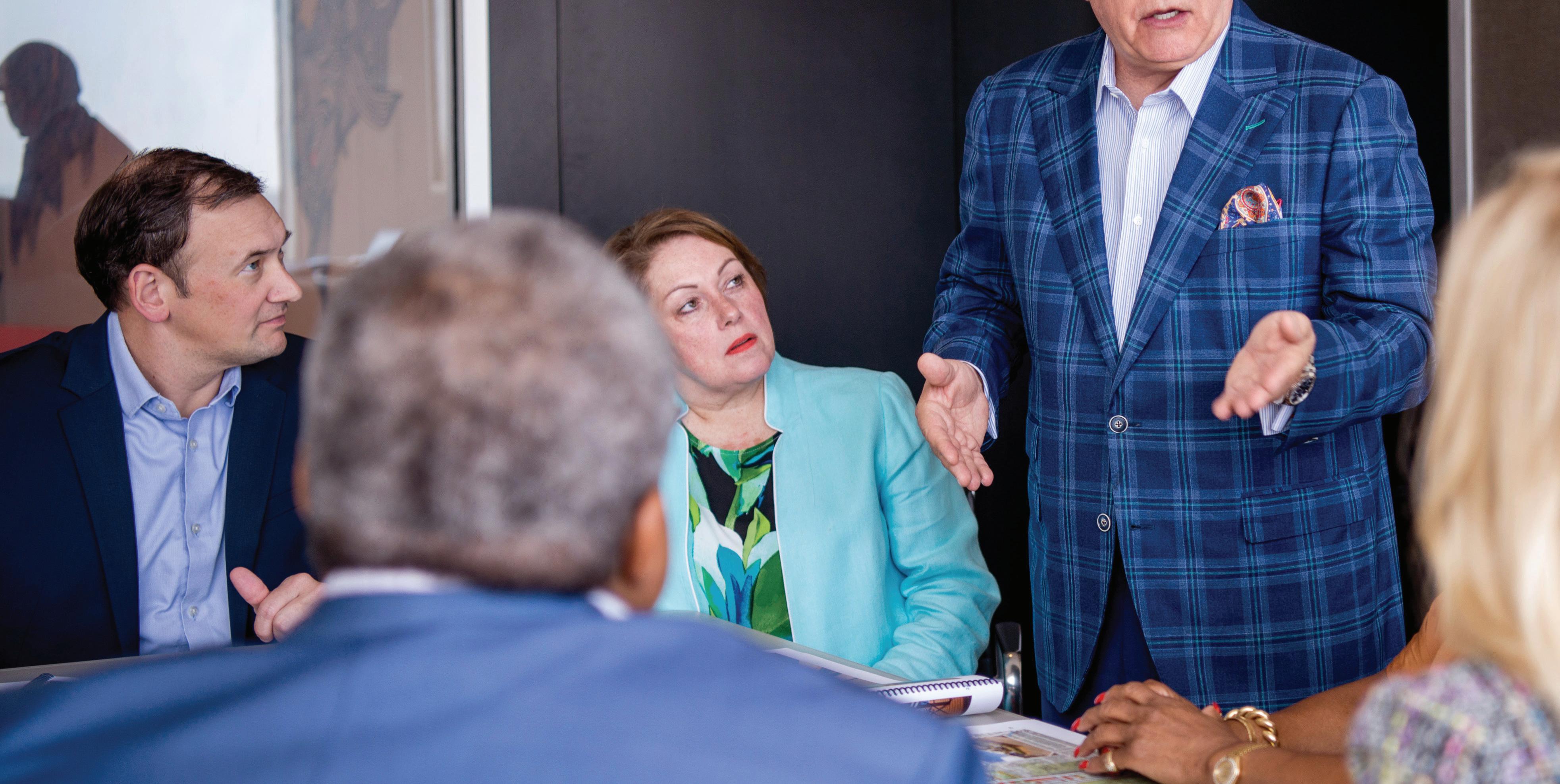
Fishman Haygood is at the forefront of transforming Baton Rouge, and partner Charles A. Landry, a longtime resident, passionate community leader and seasoned real estate attorney and developer, is leading the charge. From innovative projects in business, research, technology, arts and culture to dynamic residential, hotel and retail developments, Charles has spent his 50-year career helping shape the future of our vibrant city.
Charles and the Fishman Haygood team continue to drive generational change with several exciting projects on the horizon. Get ready—Baton Rouge’s quality of life is about to be transformed through the creation of new community assets that will benefit residents, visitors and local businesses for generations.

THEN:
• Shaw Center for the Arts
• Baton Rouge Community College land acquisition and development
• Mall of Louisiana
• Louisiana State Office and Parking Buildings – Downtown
• Bon Carré Business Center
• Louisiana Technology Park
• Water Campus
• Four United Plaza Office Building
• Knock Knock Children’s Museum
• IBM Center Building / 525 Apartments
• Capital City Press project
• Americana and Rouzan Traditional Neighborhood Developments
• Materra Planned Unit Development
• Hilton Baton Rouge Capitol Center
• Marriott Courtyard Hotel
• Arlington Marketplace
• Formation of LSU and River Center Economic Development Districts
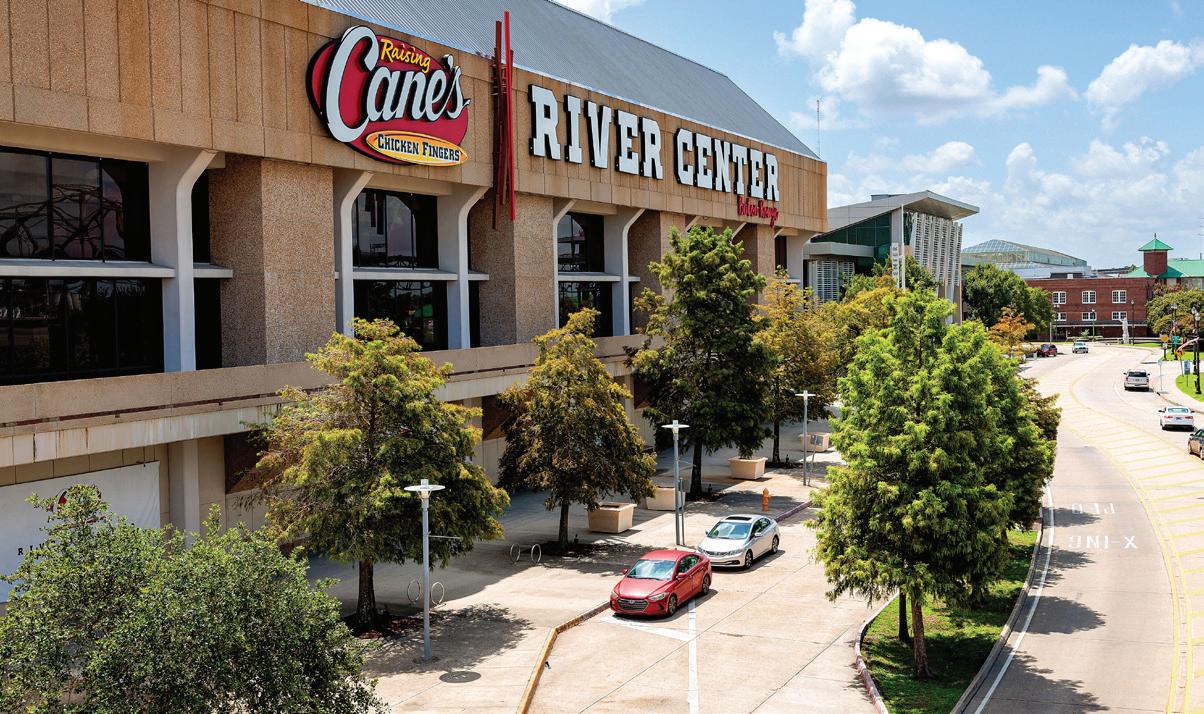

• LSU Arena Development (in progress): A state-of-the-art facility designed to host university sports as well as major entertainment and music events. This new arena will be a hub for students, faculty, community residents, and visitors alike.
• River Center Revitalization and Expansion (in progress): Reimagined as a premier convention space with meeting facilities and a new headquarters hotel, ready to welcome the crowds for the big events.
• Memorial Park Redevelopment (in progress): A vibrant, mixed-use space where Baton Rouge residents can live, work, and play — featuring professional sports, entertainment, wellness, hospitality, and commercial options.

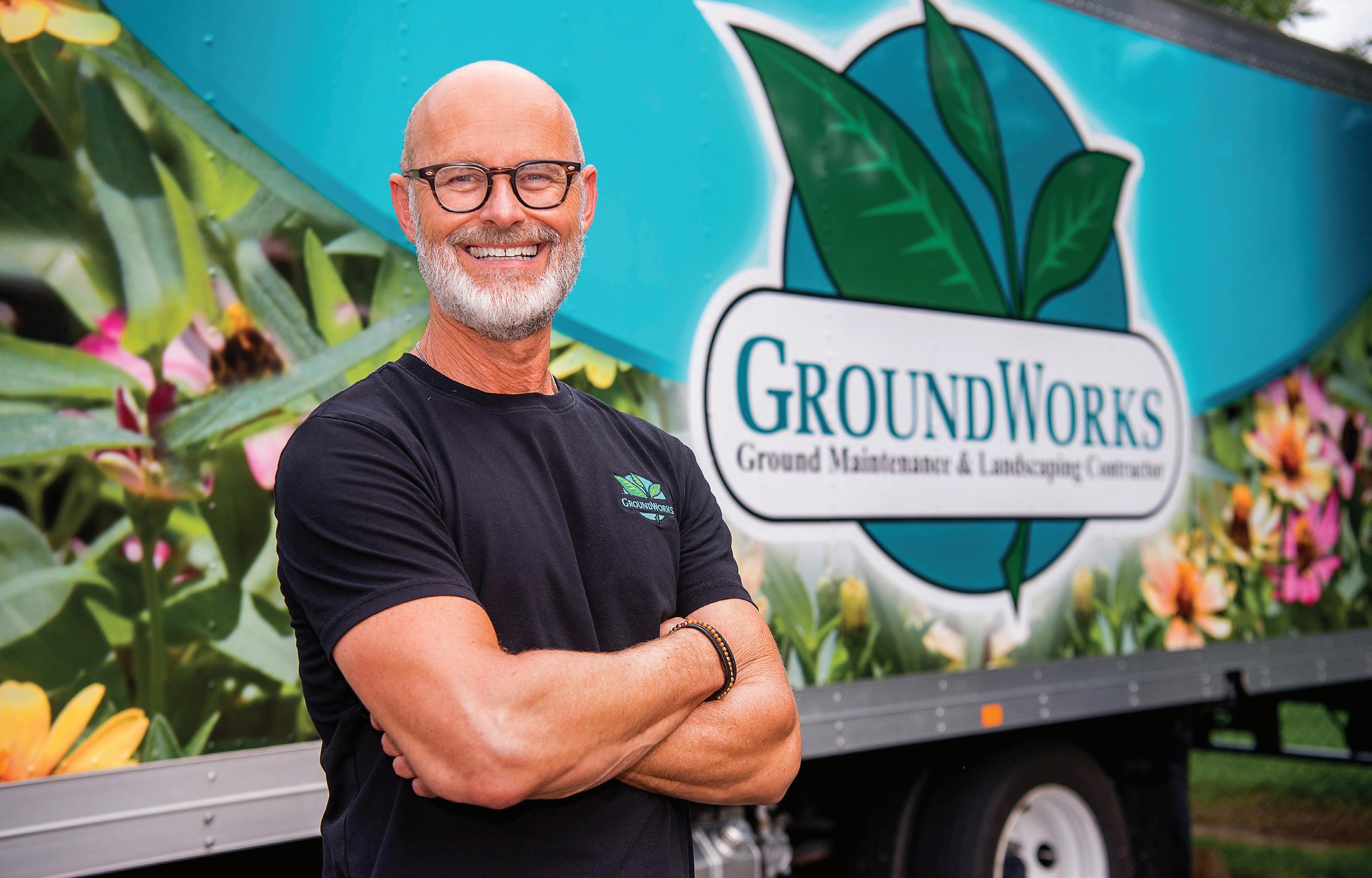

GroundWorks is a Baton Rouge-based commercial landscaping management company serving the southern half of Louisiana with a fleet of 30 trucks and a team of approximately 100 employees. Founded by Austrian-born Richard Netzberger (above), the company offers full services from landscape architectural drawings to implementation and maintenance. Our Legacy Transforming outdoors, enriching lives.
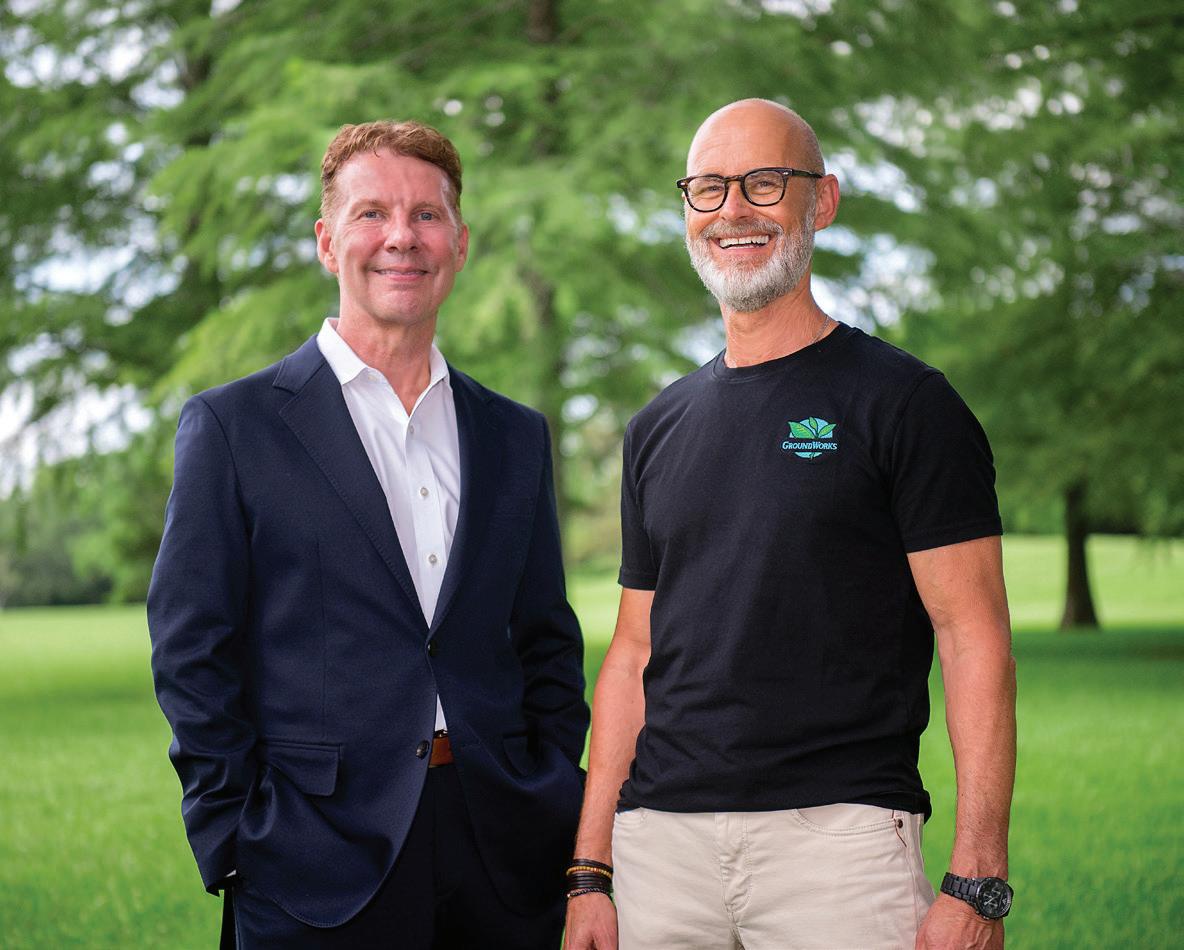
“I was born in Austria, where I grew up in a small village close to the family dairy farm and later pursued a career in music. In 1984, my band was invited to represent German and Austrian heritage at the New Orleans World’s Fair. On opening day, among 100,000 people, I met Brenda, the woman who would change the course of my life. After exploring Europe, getting married in Austria and now three years later, it was time to let the band know that we were moving to the United States and making BR our home.”
“During my time working for the State of Louisiana, our elderly neighbor had a medical procedure and asked me to help keep up his yard while he recovered. What began as a small favor gradually evolved into GroundWorks as we know it today.”
“Two relationships shaped GroundWorks into the company it is today. Neill Corporation became an early cornerstone — its founder, Edwin Neill, pushed me to prove what I was capable of without ever having to say it out loud. I worked harder for him simply because I wanted to prove myself to him. Then in 2013, an unexpected call from the plant services director at Our Lady of the Lake opened a door I didn’t fully understand at the time. Thirteen years later, that relationship has grown into a system-wide contract with FMOL Health reaching as far as Jackson, Mississippi.”
“I operate by a simple rule: fulfilled, motivated employees build great companies, whereas a toxic environment does the exact opposite. Creating an organization that genuinely cares for its people has always been a priority for me.”
“Coming to this country with much of nothing — but having the opportunity to do whatever you set your mind to and become successful — is a testament to the United States. It is still the best country in the world, and I am very grateful for it.”
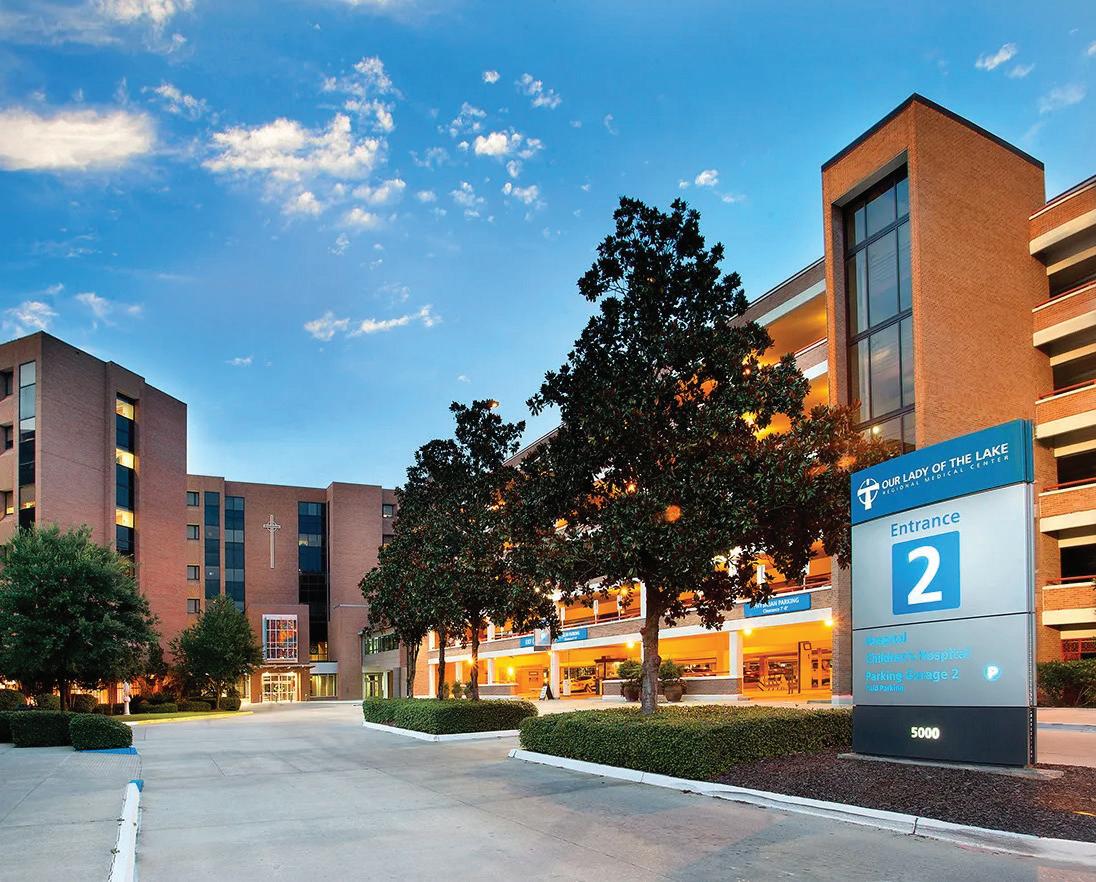

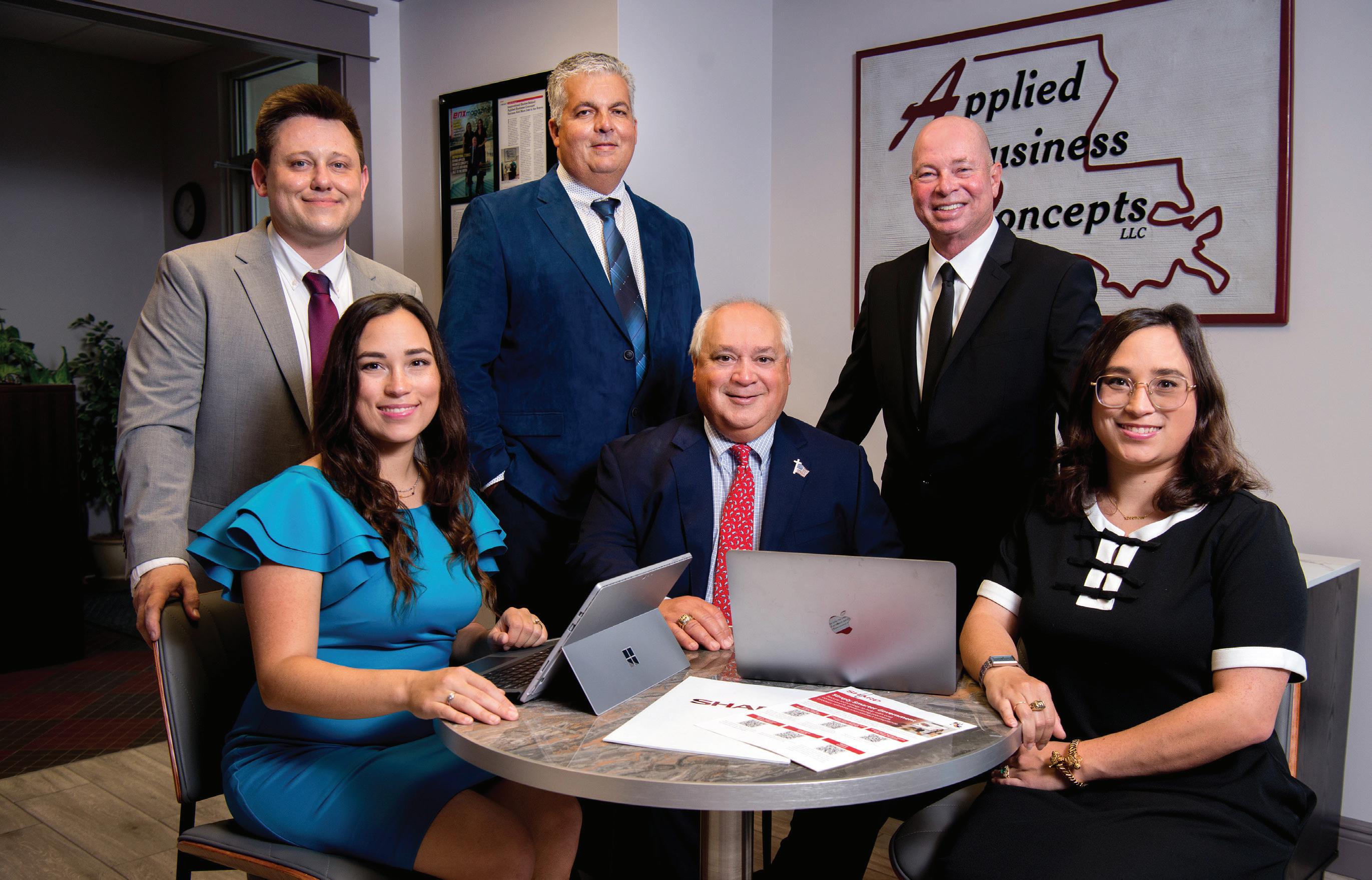
Applied Business Concepts is a veteran-owned, Baton Rouge-based document solutions company founded by Ben Ragusa, Jeff Ragusa and Ed Doyle. Built on more than 150 years of combined industry experience at founding, ABC is proudly celebrating its 30th anniversary as the region’s most trusted office technology provider. Our Legacy Multi-generational success, as a result of prioritizing customer needs and our business family.
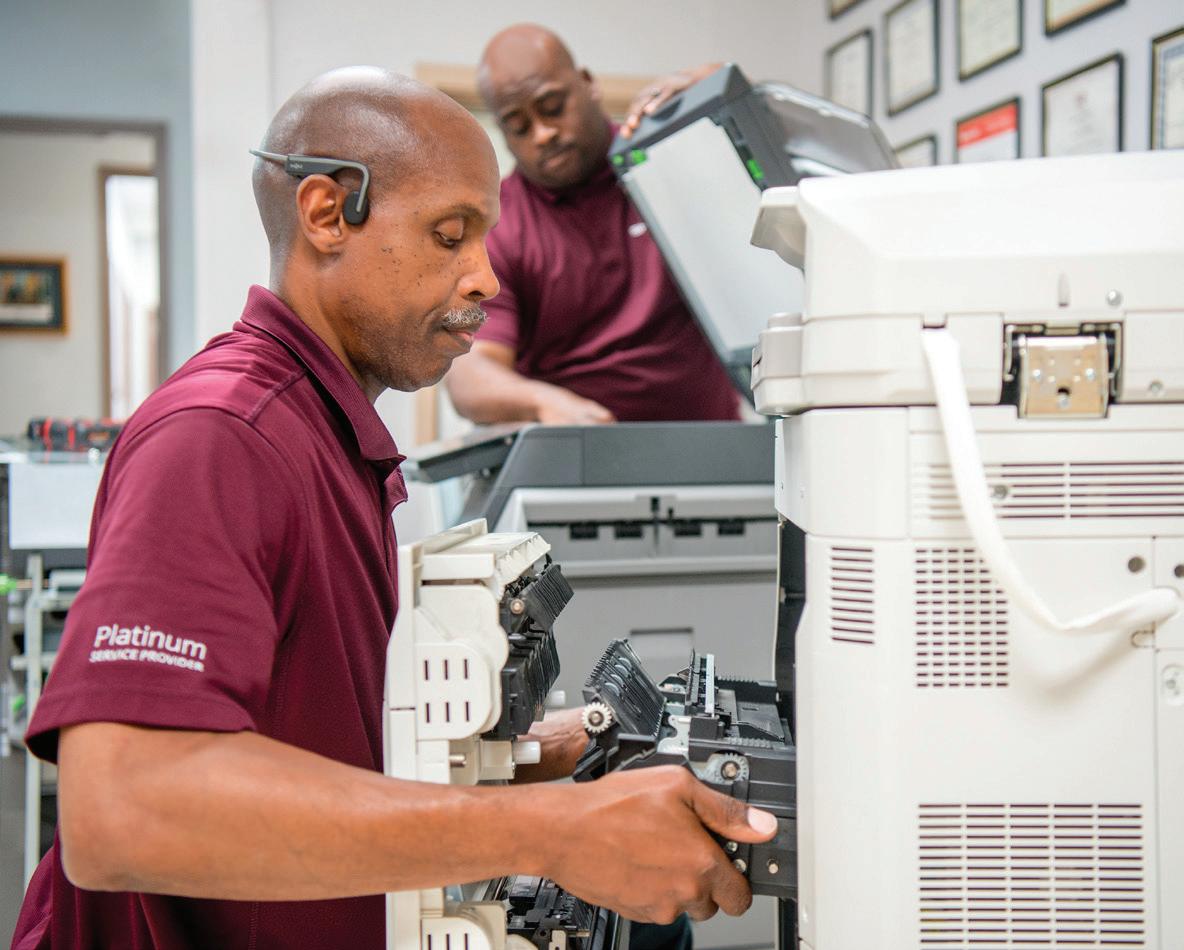
“We are a fifth-generation Baton Rouge family. This city isn’t just where we do business — it’s who we are. Every investment we make here is personal.”
“The secret to our success is extraordinary personnel from very diverse backgrounds coming together as a business family. Over 52% of our team has been with ABC for more than 10 years, and our combined industry experience now spans more than 325 years. That depth of knowledge—and loyalty—is what sets us apart.”
“We stay on top of technology advancements but maintain a personal touch in all aspects of our business, especially relative to customer interaction. That balance is something we’ve never been willing to sacrifice.”
“We support CureSMA in the Baton Rouge and South Louisiana region, helping children with spinal muscular atrophy, as well as Tunnel to Towers, Samaritan’s Purse, Wounded Warriors, Sacred Heart Catholic School and Church, and several other organizations close to our hearts. Giving back to this community—and to those who have served our country—has always been central to who we are.”
“We lost our patriarch, Ben Ragusa, in December 2025. Construction has just completed on a memorial to our business history in Ben’s former office. We expect it to become the heartbeat of our headquarters, featuring videos of Ben’s peers, family and friends sharing their memories, along with photos spanning more than 50 years. At the same time, the third generation of the Ragusa family is growing into management roles, as Madeline and Elizabeth continue their journey to eventually lead Applied Business Concepts into the future.”
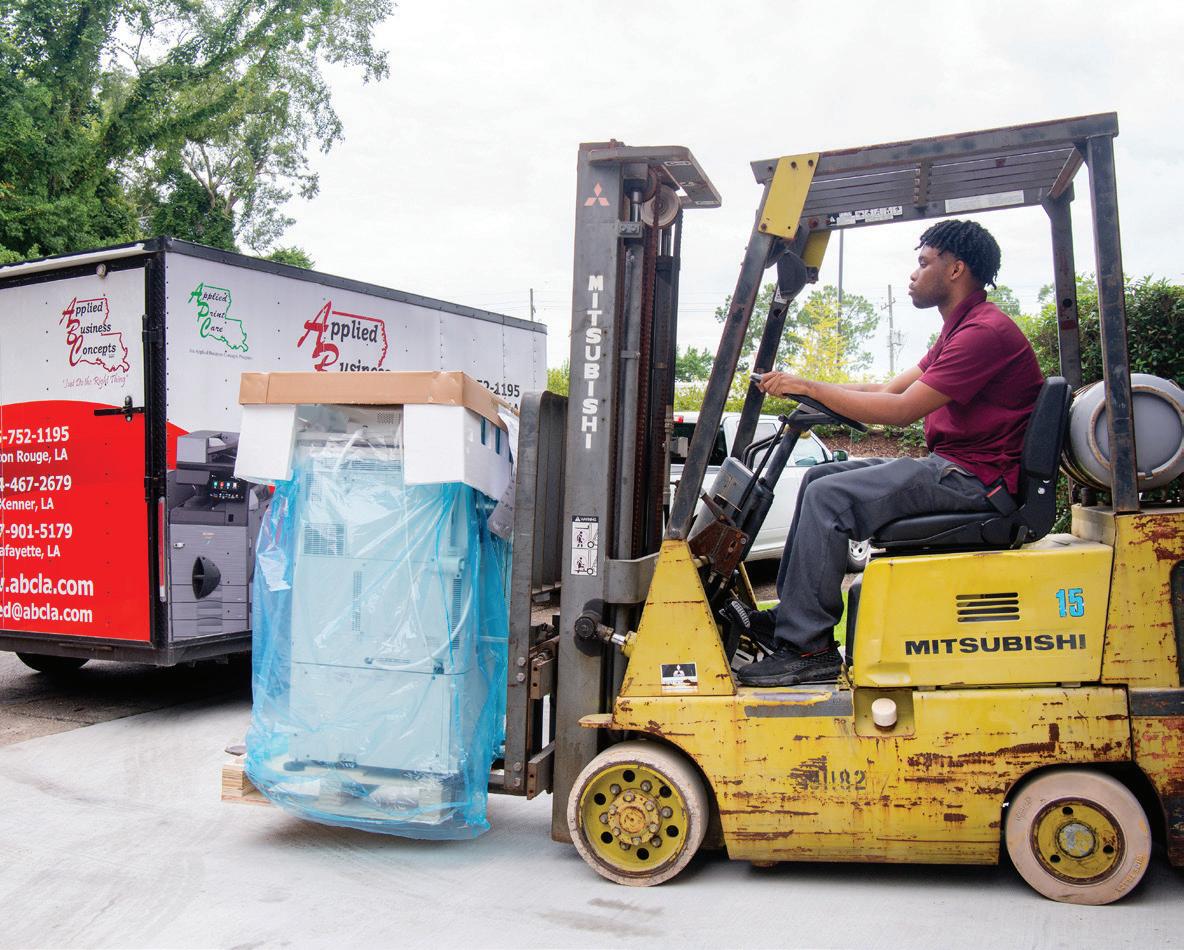


LandSource, Inc. is a Baton Rouge-based land surveying firm founded in 1996 as a spinoff of CSRS. Led by President Scott Patterson and Chief Operations Officer David Patterson, the company has grown from a commercial surveying practice into a full-service firm serving commercial, municipal development and industrial clients throughout the state. Our 30-Year Legacy Technology has changed but our commitment to honesty, integrity and quality work has not.
“I have spent more than 60 years in Baton Rouge and Scott was born and raised here. While we both have deep roots in northwest Florida, we never considered starting LandSource anywhere other than Baton Rouge. Scott and I both found our wives here, raised our families in Baton Rouge and are LSU grads. We can’t imagine living or working anywhere else. In our 30 years of surveying, we never once regretted our decision to start our business in Baton Rouge.”
“We can’t credit any one thing for LandSource’s longevity but, for us, the formula has been hard work and communication. Fortunately, it didn’t take us 30 years to figure this out. Soon after starting LandSource, we discovered that giving our clients excellent service for a reasonable fee and keeping the lines of communication open would be crucial to our success. Thirty years in the business have shown us that hard work and good communication leads to lasting relationships with some great clients.”
“Technology in surveying changes quickly. When I first started in surveying everything was done with a transit and steel tape. Technology has reshaped the industry. In the early 1990s we purchased our first robotic total station, and in 1997 we purchased our first GPS unit. A couple of years ago, we purchased top-of-theline utility locating equipment for subsurface utility mapping and, most recently, we purchased our first survey-grade drone. Current drone technology utilizes artificial intelligence which has led to autonomous navigation and advanced sensors that have made drones safer and more versatile. The onboard LIDAR, infrared and ultra high-resolution cameras have expanded their capabilities and we believe that the technology will continue to advance.”
“We started LandSource with a focus on commercial and development surveying. We also positioned ourselves to be the surveyor for area civil engineering firms that don’t have a surveying component. This approach has served us well but client needs led us to expand our services to include work in the municipal and industrial sectors. Our work is now pretty evenly divided amongst all four sectors. We are excited about having added subsurface utility mapping and drone services and are committed to adapting to new technology as it develops.”
“For over 15 years, we have volunteered our surveying expertise for the St. Jude Home here in Baton Rouge. Scott and I both have friends and family members who have benefited from the generosity of St. Jude Children’s Research Hospital, so this is close to our hearts.”
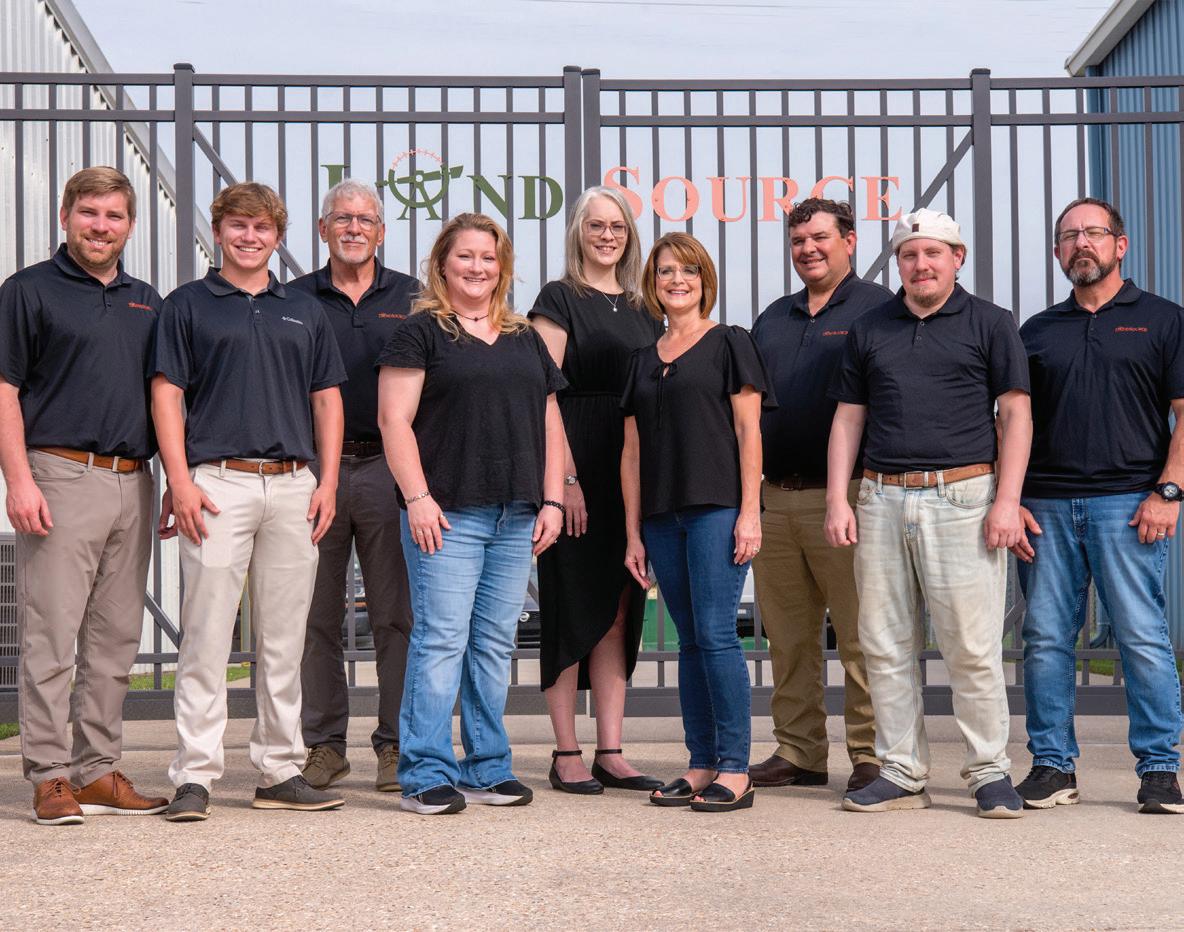

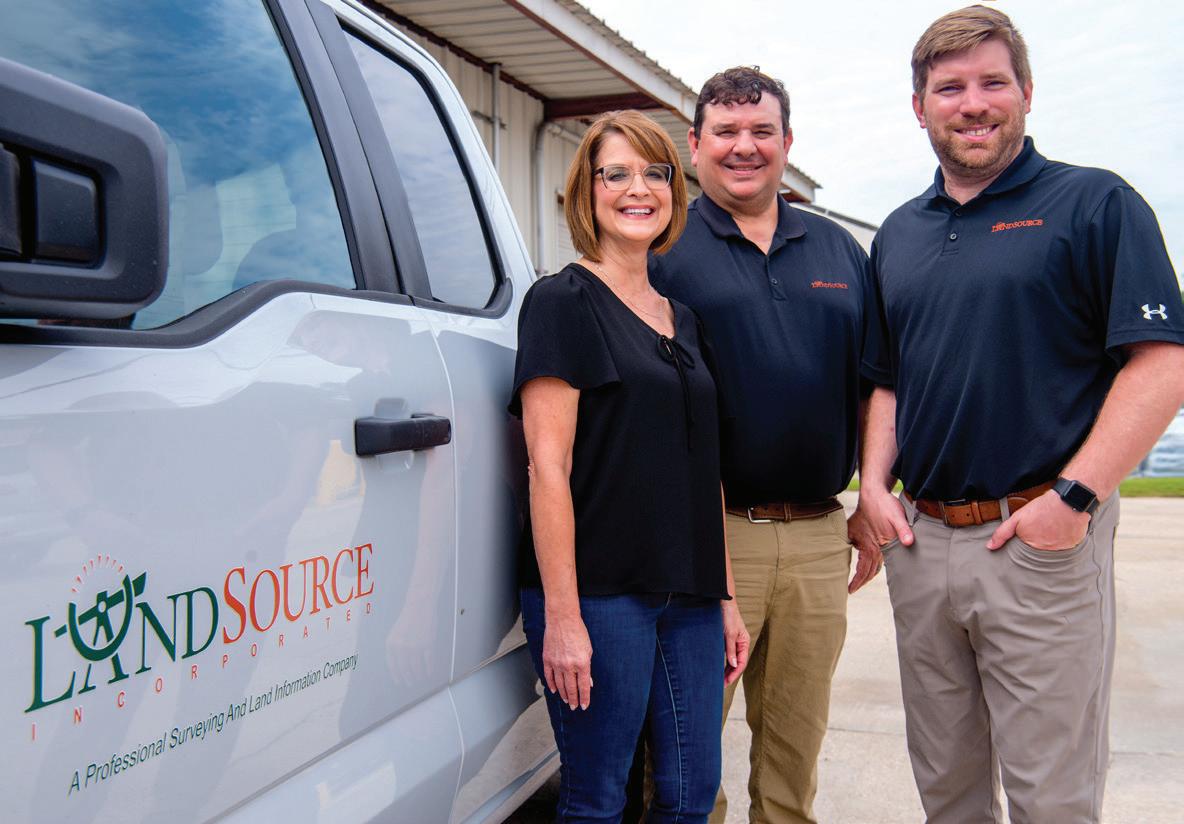

“Baton Rouge is a great place for families, and the culture is tough to beat. Investing in the infrastructure throughout the city has been incredibly rewarding, and we look forward to seeing more facilities built that allow others to experience all we have to offer.”
“Stay the course. Being consistent with communication and effort has been key for us. The conversations and the jobs aren’t always exactly how we’d like them to be, but showing up with consistency has continued to be an integral part of our business growth.”
“We are actively involved in First Tuesday, an organization that supports about a dozen nonprofits throughout Baton Rouge. Our office takes the day off each month to volunteer at one of those organizations, and it is one of my favorite things we do as a company.”
“We are currently underway on a 20-field turf conversion project in Minden, where the excitement around sports tourism has been incredible. We also recently completed a 100yard indoor football pavilion for West Monroe High School. Structures like these are becoming more common and more necessary, given the attention on heat-related illnesses in high school athletics.”


1951
Benny’s Car Wash is a fourth-generation, family-owned car care company serving the Greater Baton Rouge area for 75 years. What began as a single location has grown into a 10-location operation offering car washes, oil changes, fueling stations and B-Quik convenience stores, with deep community roots at every stop.
“Baton Rouge is home for our family, our employees and generations of customers who have supported us since the beginning. Every new location, service and improvement we make is a commitment to creating jobs, serving our neighbors and helping strengthen the community that has helped make Benny’s what it is today.”
“The No. 1 secret to our success is simple: we never stop putting people first. We’ve focused on taking care of our customers, our employees and the communities we serve. Trends, technology and consumer habits have changed over the decades, but our commitment to being the best service organization in the Baton Rouge area has remained constant.”
“Every October, our team transforms one of our car washes into a two-night Halloween attraction and donates 100% of the proceeds directly to Our Lady of the Lake Children’s Hospital. Together with local businesses, sponsors and volunteers, these efforts have raised more than $200,000 for the hospital, a tradition that perfectly reflects our commitment to giving back.”
“The average Bennys Club member saves around $717 per year across our car washes, oil bays and fueling stations. Many members think of their club plan as just a car wash membership, but Bennys is truly a one-stop shop — and those savings can add up to hundreds of dollars each year.”

GEO Heat Exchangers is a Baton Rouge-based industrial services company specializing in fastturnaround solutions for new heat exchangers, repairs, retubes and new bundles. Now in its third generation of family ownership, the Ohmstede family has grown the business from a single 9,000-square-foot shop to a 64,000-square-foot campus.
“Our legacy is the Ohmstede family and three generations of operating a successful business for 30 years — starting with building a 9,000-square-foot shop in 1996 and growing it to 64,000 square feet, on a budget and without any borrowed funds.”
“Our success comes down to quality workmanship, good communication and fair pricing. The majority of our work is hands-on, performed by craftsmen with years of experience — supported by state-of-the-art equipment to ensure quality and accuracy.”
“Our team supports fundraisers for families facing unplanned medical emergencies, along with organizations including United Way, ARC, Mary Bird Perkins Cancer Center, Ducks Unlimited, Delta Waterfowl and LSU, as well as community groups across Iberville, Ascension and East Baton Rouge parishes.”
“We recently added a 12,000-square-foot storage facility onsite with a 25-ton overhead crane, and we’ve completed our new engineering building, which houses quality control and our receiving department.”
Executone of Louisiana is a Baton Rouge-based telecommunications company that has been equipping businesses, schools, hospitals and government agencies with cutting-edge communications systems for 65 years. Under the leadership of owner, president and CEO Chad Coppola, the company is building on a proud legacy with continued growth.
“As a locally owned and operated company in Baton Rouge, we’ve developed a reputation for reliable, innovative communication solutions backed by exceptional service. In a fast-changing world, a thriving business relies on the latest technology to boost productivity and drive profitability — and we not only stay ahead of the game but empower our customers to do the same.”
“We’re different with our customer service. We’ve got trucks on the road and a hands-on approach — we’re not going to ship you a box of parts and let you have at it. Whether installing two phones or 2,000, the outstanding service is always the same.”
“Over our 65 years in business, Executone has grown from a twoperson shop in Baton Rouge to a team of more than 40 serving clients across Louisiana and southeast Texas. Through the Ideacom Network we partner with dealers nationwide, pushing beyond the geographic boundaries of the Capital Region to deliver the same level of service across the country.”
“We’re all members of the same team here. Our CEO grew up at Executone, and so did many of our team members who are counting 25-plus years of service. In a time when you see so much turnover of employees, their longevity and commitment speak volumes.”
Our Legacy Service is our business, and our customers are the proof.

“Block Companies was founded in Baton Rouge on a simple idea: do things the right way, with the right people, and build projects that stand the test of time. For more than 21 years, we have focused on quality, accountability, and long-term relationships. Those standards shaped our early work and continue to guide every decision we make in every market we serve.”
“Our growth has never been driven by the desire for scale alone. It has been guided by a commitment to serve our clients at a higher level. Our employees are the foundation of our success. From the field to the office, we bring pride, discipline, and a deep sense of ownership to every project. Our dedication defines the quality of our work.”
“We measure success by the strength of our relationships and the quality of our work. We are grateful for the clients and communities who place their trust in us. That trust is earned with every project and remains central to everything we do. We build enduring projects—and lasting partnerships—that reflect the standards we were built on, while representing Baton Rouge with pride wherever we go.”
“In 2019, we expanded that reach with the opening of our Houston office—an important milestone that broadened our opportunities while preserving the hands-on approach our clients value. Since that time, Block has completed projects across seven states and today maintains licenses in 13 states, providing the flexibility to support clients and partners as they grow into new markets.”
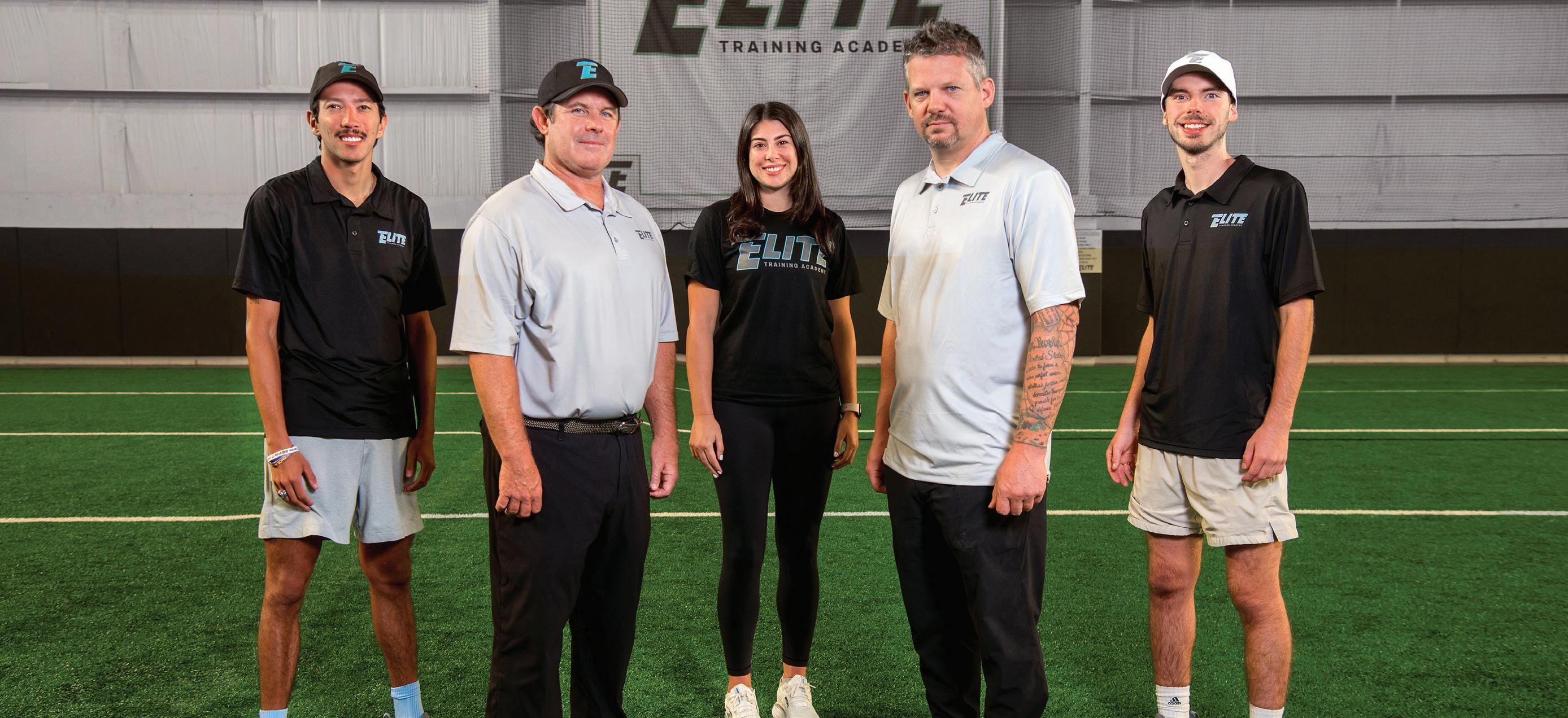

Elite Training Academy is a Baton Rouge-based youth sports facility founded by a group of local natives determined to fill a gap they experienced firsthand. With a vision to make Baton Rouge a regional and national destination for youth athletics, Elite is building the infrastructure to match the city’s passion for sports.
“Baton Rouge has a deficiency of quality youth sports facilities. Our ownership group is made up of Baton Rouge natives and residents who have experienced that deficiency firsthand. We want to support youth athletics in our community and provide facilities that make Baton Rouge a destination for youth sports nationally.”
“As a fairly new business, our success is in front of us. We are growing alongside the fast expansion of youth athletics across the country, and we’re looking to add new sports offerings at our facilities to meet the community’s needs while continuing to improve what we already offer.”
“We have hosted several community-oriented camps throughout the year and serve as the host facility for the Joe Burrow Foundation’s back-to-school events. We look forward to expanding our community offerings as we grow.”
“We have great college athletics at two of the most prestigious and recognizable universities in town. We should couple that with great youth athletics to make Baton Rouge a true sports destination for athletes of all ages, year-round. That is exactly what we are working toward.”
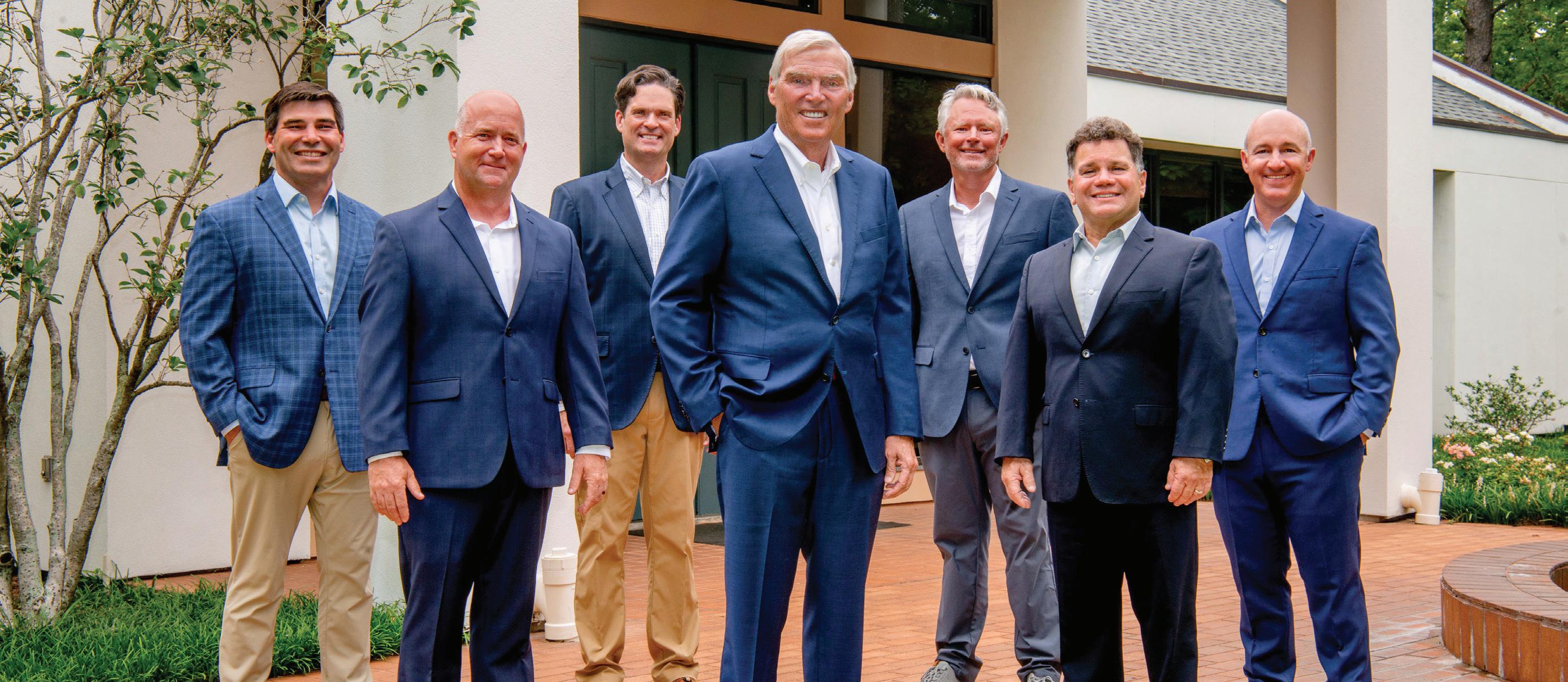

Milton J. Womack, Inc. is a Baton Rouge-based general contractor that has been building across the Capital Region for more than half a century.
“We’ve had opportunities over the years to expand and establish offices in other markets, but we’ve made the business decision each time to stay close to home. We want to be part of the story of everything associated with Baton Rouge by staying a singleoffice firm by choice. Womack has built its reputation on a simple but powerful promise, and kept its roots firmly planted in the community that made it.”
“We are builders. We don’t have a business development department — our BD department is the people involved in our projects every day. We use the term ‘Construct with Confidence’ a good bit. We have always been confident in our ability to execute the projects we’ve been awarded. Part of that confidence is knowing what our abilities are, as well as our limitations.”
“The only constant is change. Over the 70 years we have been building in Baton Rouge, we have adapted to fax machines, computers, cell phones, construction-specific software, COVID delays and, most recently, the integration of AI. We conduct our business with the same values Mr. Milton built this company on decades ago — but we have never been afraid of change.”
“There are countless people who have provided for their families through the success of our company over the years. Those people have been involved with their churches, their schools and their neighborhoods. Our work with the various health care systems in the Capital Area, Rotary, American Heart Association, Mid-City Redevelopment, YMCA, St. Vincent de Paul and Alzheimer Services of the Capital Area are just a few that quickly come to mind.”


Studyville is a Baton Rouge-based tutoring and academic enrichment company dedicated to closing the literacy and skills gaps facing students across the Capital Region. Founded by CEO Amanda Martin, Studyville combines personalized, human-centered instruction with a deep commitment to the communities it serves.
“Baton Rouge is home, and there is enough work here in our city, and enough incredible people here to help us get the job done.”
“Seventy percent of American children are not reading on grade level. Students lack the rudimentary math skills needed for advanced courses. College admission is becoming increasingly competitive. There is a major skills gap from our high school students to our workforce. We will be busy for quite a while.”
“We bought band uniforms for the EBR Schools ‘Band Together’ project, donate to teacher appreciation weeks, donate books to school libraries and summer reading initiatives, sponsor student award ceremonies and donate to school food drives.”
“While businesses and even classrooms are quickly adopting AI, we are keeping the human element at the forefront of our business. Students learn by interacting with humans, not computers.”
“We recently published our first children’s book “Henry the StarSpangled Spaniel” with Forefront Books and Simon & Schuster. Henry is born out of our literacy tutoring curriculum, where we decided we needed our mascot to not only teach literacy, but also civics and American history. In his origin story, Henry wakes up and it is the Fourth of July, and it’s his birthday! His grandmother and friends give him a doghouse that turns out to have very special, magical powers. Children love following along with Henry on his adventures as he discovers American history firsthand.”
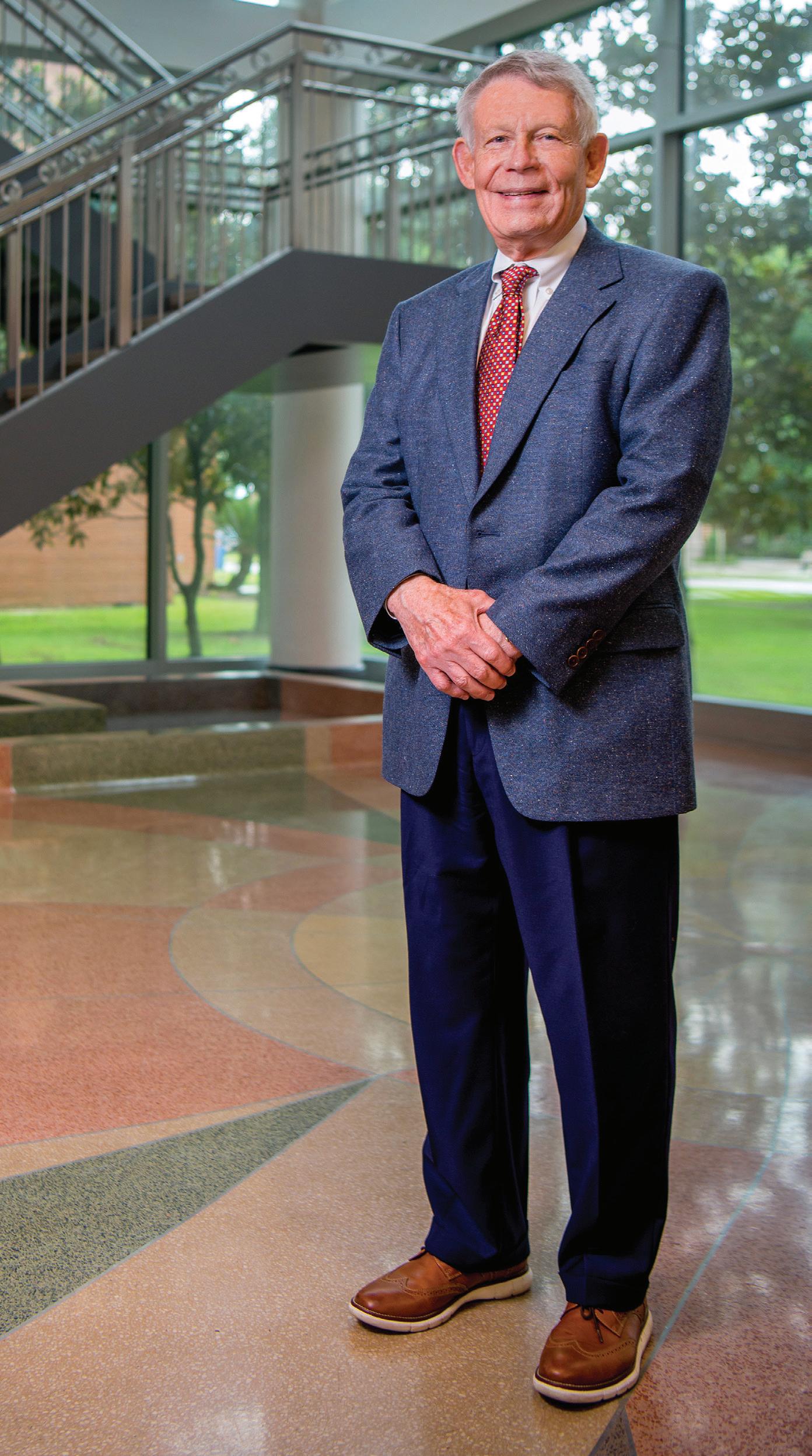
“Our strength has always come from our physicians and employees. One of our retired physicians once said that we must always remain accessible, affable, affordable and able — and those four principles continue to define who we are today. Nearly 40% of our non-physician staff have been with us for more than 10 years, and their dedication is the reason The Clinic has been recognized as an MGMA Better Performing Practice every year since 1998.”
“We continue to grow our footprint across Louisiana, including locations in Monroe, Opelousas, Prairieville, Zachary and New Roads. As a member of the Mayo Clinic Care Network, our physicians have access to world-class expertise while patients remain close to home. Even as we innovate, we remain grounded in the personal relationships and continuity of care that have always defined The Baton Rouge Clinic.”
“Our physicians and staff regularly participate in community health programs, free screenings, school-based initiatives and partnerships with local nonprofit organizations that support families across the region. We have always believed that caring for people extends far beyond the exam room.”
“Many people are surprised to learn that the very first ‘patient’ seen at The Baton Rouge Clinic in 1946 was a black Labrador Retriever brought into our original location above the Pig and Whistle Restaurant. The physicians performed a successful operation, and that story has become a cherished part of our history.”





The Baton Rouge Clinic, AMC has been delivering patient-centered care to the Capital Region for 80 years. Founded by four local physicians, the clinic has grown from a single practice into a network of 18 locations serving nearly 400,000 patients across Louisiana, while remaining true to the physician-led model that has defined it from the start.


LANTEC Corporate Training Center is a Baton Rouge-based workforce development firm that has been helping Louisiana employers build stronger, more capable teams for more than 27 years. From leadership development and technical skills to cybersecurity and AI, LANTEC partners with organizations across industries to solve workforce challenges — and the results speak for themselves.
“Baton Rouge sits at the heart of Louisiana’s economy, bringing together industry, government, healthcare, manufacturing, education and technology in a way few markets can. Baton Rouge has provided the ideal environment for us to build relationships, serve employers and expand our impact for more than 27 years and counting.”
“One of the things we’re most proud of is helping Louisiana employers access workforce development funding through programs such as the Incumbent Worker Training Program and Small Business Employee Training Program. Since 2008, we’ve helped secure more than $26 million in workforce training funds. The ripple effect of that investment can be seen in companies, communities and careers throughout Louisiana.”
“We’ve never viewed ourselves as simply a training provider. Our focus has always been on helping organizations solve workforce challenges. Whether that’s leadership development, technical skills, safety training, cybersecurity or artificial intelligence, we listen first and then help clients find solutions that support their long-term success.”
“Our team is moving into a significantly larger, modernized space designed to enhance our clients’ learning experience and support our continued expansion. And while LANTEC is headquartered in Baton Rouge, our instructors and programs have supported organizations across the country — and even internationally — through virtual and instructor-led training. What started as a local training company has grown into a workforce development partner with far-reaching impact.”

AUGUST 15, 2026
One night can change lives. Join us for Baton Rouge's premier celebration supporting individuals and families affected by Multiple Sclerosis. Enjoy dinner, an open bar, exciting auctions, and dancing to the music of REWIND as we come together to make a difference. Scan the QR code for tickets and details.

DO AS I SAY, not as I do.
Gov. Jeff Landry and most of the Legislature are telling local school district leaders to handle the $168 million that was cut from school budgets to pay for teacher stipends by reducing “the waste and the bureaucracy.”
Landry says, “It is time for these school boards to tighten their belt.” He also claims the state has spent millions giving stipends to principals and assistant principals who “don’t deserve it.” Strong words.
First, Landry's comments indicate he has been aware of the waste, has said and done nothing, and that Louisiana is giving millions in stipends to employees who, in his opinion, don’t deserve them.
The same can be said for your state government. I believe the government is always the most wasteful and inefficient operator—because it is spending your money, not its own.
Gov. Landry’s first veto this year was Senate Bill 125, sponsored by Sen. Gerald Boudreaux, D-Lafayette, which passed both the House and Senate unanimously.
The future of our community and City-Brooks Park is an important discussion going on right now. It's not just about how we use this prime site in the heart of Baton Rouge; it's also about what voices are heard and if all new ideas are considered.
Rolfe McCollister Jr. is a contributing columnist. The viewpoints expressed are those of the author and do not necessarily reflect those of Business Report or its staff.
Then why did he allow it?
Second, while he and the Legislature are now demanding all these cuts, their first move was to have you pass a constitutional amendment to give them an easy out by tapping funds that would cover all those current expenditures and would do nothing to eliminate waste or tighten the belt.
Finally, Landry is quick to say the school boards are wasteful and bureaucratic and need to tighten their belts and stop paying those who don’t deserve it, but he and the Legislature fail to apply the same standards to his state budget of $47 billion (with a general fund of $12.6 billion). Hypocrites.
They couldn’t find that $168 million for teachers in their "wasteful spending?"
Let me be clear to the governor and legislators: I am sure there is money to be saved in the local school budgets—and I advocate saving it.
GOD IS ABLE, PART 4
This feature is a tribute in honor of Business Report founders, Rolfe McCollister Sr. & Rolfe McCollister Jr.
As The Advocate reported, “It would have increased the cap the state pays out to wrongfully convicted people. It is currently set at $400,000, with an annual payout of $40,000 over the course of 10 years. The legislation would have increased the cap to $600,000, with the same annual payout over the course of 15 years.”
Boudreaux told The Advocate, “It is hard to ‘put a price tag’ on the harm people suffered in these cases. Their whole lives were stopped because they were wrongfully convicted. I want to emphasize ‘wrongfully convicted’—for something that they did not do.”
I am certain Landry knows the golden rule, so I ask him, if he were falsely accused and wrongly convicted, forced to give up 20, 30 or 40 years of his life with his family and to live in an 8-by-10 cell, would he be content with just $400,000 in compensation paid over 10 years?
His good buddies, the trial lawyers, demand that much or more for a simple rear-end collision that causes a sore back or neck.
Every legislator saw this increase in the cap as fair and compassionate, given that it would rob a fellow citizen of their freedom and cause their family to suffer as well.
But not Gov. Landry. He was coldhearted and wrong to veto the bill. Governor, as the saying goes, “You reap what you sow.”
NOT ONLY IS GOD able to make all grace about to you, and to do abundantly according to the power that works within you, and keep you from stumbling, He is able to perform what He promises. God promised Abraham and Sarah a son. Abe contemplated his own body at age 100 as dead to be able to produce children and the deadness of Sarah‘s womb. Romans 4:20-22 reads, “YET or BUT, with respect to the promise of God, he did not waver in unbelief but grew strong in faith, giving glory to God, and being fully assured that
Our Capital City has been held back for decades by the response, "That's the way we've always done it before."
Really? Have those same people noticed we are in the 21st century and AI is quickly changing how we live and work? Have they asked why our city and state are shrinking when the rest of the South is booming?
For 24 years I have been asking our community to “think different” and consider what the highest and best use is for this “central park on the lakes” and how everyone can enjoy it.
I don’t oppose the planner, Sasaki, showing a design with the park and golf course just as it is now—but it must also show an option with no golf course, too. The park belongs to all residents and everyone’s ideas should be heard and considered for the future.
On July 4, we celebrated a historic milestone. The United States of America is the greatest country on earth. We are all blessed to live in America and enjoy freedom and so many opportunities. I am grateful to God, our founding fathers and all those who have made so many sacrifices to build America. The American dream is alive and all around us as shown in this issue of the Top 100 Private Companies. May God continue to bless America.
what God had promised, He was able also to perform. Therefore, it was also credited to him as righteousness.” Often when God promises something, it is in the backdrop of beyond natural impossibilities, which takes a miracle or supernatural ability to pull off or perform. It took 25 years for this promise to be fulfilled. We need the grace to be fully assured and to grow strong in faith as Abraham did to persevere in God’s ability to perform what He promises. God is Able, Beloved! —Jeff Mitchell, Retired COL and Army Chaplain

CERTIFICATIONS
Baton Rouge General has been awarded a three-year reaccreditation under the Metabolic and Bariatric Surgery Accreditation and Quality Improvement Program, a joint initiative of the American College of Surgeons and the American Society for Metabolic and Bariatric Surgery.
Dr. Lin Dang has been elected chief of the medical staff at Woman’s Hospital for a one-year term—the highest elected leadership position among the medical staff. In this role, she will also serve on the Woman’s board of directors.

Martha Vasquez, CFO of Element Construction.
Dr. Gang Hu has been named a Fellow of The Obesity Society, one of the organization’s highest honors. Hu directs the Chronic Disease Epidemiology Laboratory at Pennington Biomedical Research Center.
Louisiana Economic Development honored five companies at the 2026 Spotlight Louisiana Awards. Capital Region winners were Marks Construction (Small and Emerging Business of the Year), Parish Aggregates (Source Louisiana Vendor of the Year) and Manship
St. James Place has named three new members to its board of directors, each serving a three-year term: Jake Manship, pres-



Dennis Bamburg Jr. has joined Bonvenu Bank as vice president and business development officer. In his role, he will work closely with the bank’s commercial banking teams across northwest Louisiana and the Capital Region, supporting the bank’s ongoing growth.
Franciscan Missionaries of Our Lady University
Lindsey Duplessis has been named Ascension market president at Currency Bank. In her role, she will lead the bank’s planned growth and expansion into Ascension Parish.
Grant Guillotte has joined First National Bank of Louisiana as ex-
team, bringing more than two decades of banking experience along with a record of leadership. Audrey Schmolke has been named senior vice president/private banking program manager. In her role, she will lead the development and growth of FNB’s private banking program, focusing on delivering tailored financial solutions to individuals, business owners and professionals.
Rob Raemsch has joined Investar Bank, National Association as chief credit officer, executive vice president. In his role, he will oversee the company’s credit function, including








Dr. Adaku Adebamiji has joined Ochsner Medical Complex – The Grove as a children’s gastroenterologist. In her role, she will diagnose and treat gastrointestinal, liver-related and nutritional disorders in infants, children and adolescents.
Marie Barker has joined Ochsner Medical Complex – The Grove as a board-certified nurse practitioner specializing in cancer care at the Hereditary and HighRisk Clinic. In her role, she will help with cancer risk assessment, pre
Rouge as a board-certified psychiatrist specializing in outpatient mental healthcare. In his role, he will provide personalized treatment with medication management and evidence-based strategies for a wide range of psychiatric conditions.
Yasmin Bennie has joined Ochsner Health Center – O’Neal as a board-certified family nurse practitioner specializing in hepatology. In her role, she will provide comprehensive care for individuals with liver disease.
for patients with a wide range of musculoskeletal conditions, specializing in care for knees and total knee replacements.
Kenneth “Kip” Matthews has been named director of the LSU–Mary Bird Perkins Cancer Center Dr. Charles M. Smith Medical and Health Physics Program. In his role, he will lead the program’s academic, research and training initiatives, advancing its mission to prepare the next generation of medical physicists through expanded research opportunities, en
In his role, he will specialize in malignant tumors and blood disorders, both cancerous and noncancerous.
Tiffany Richardson has joined Ochsner Medical Complex – The Grove as a board-certified nurse practitioner in the Lifestyle & Wellness Department. In her role, she will help patients improve their health through customized plans for nutrition guidance, exercise, behavioral support and medical management.
Melissa Cresson has joined Jones Walker LLP as special counsel in the litigation practice group and a member of the commercial disputes team in the Baton Rouge office. In her role, she will represent local, national and international energy and industrial clients in high-stakes litigation matters.
Emily Guidry has been pro



FRIDAY, AUGUST 21, 2026 FRIDAY, AUGUST 21, 2026 FRIDAY, 21, 2026 7:00PM 7:00PM



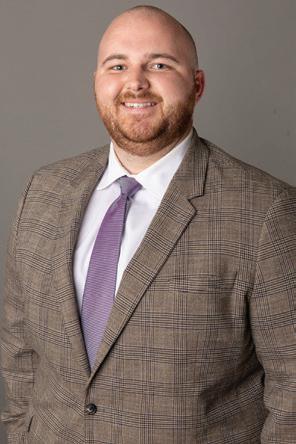


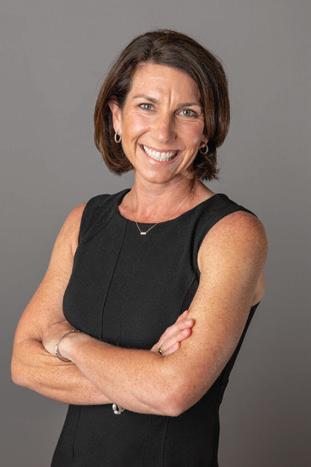


Cystic Fibrosis Foundation 10101 Siegen Lane, 2A Baton Rouge, LA 70810 (225) 769-9994 PRESENTED BY
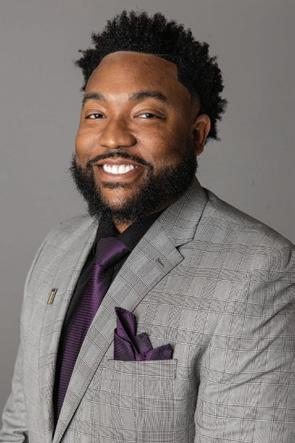




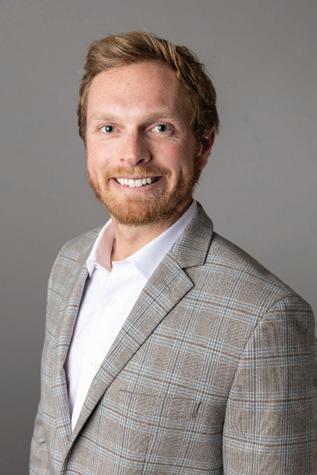







THANK YOU TO OUR SPONSORS The Advocate Coleman Partners Architects Parish Pediatric Dental Krewe Jim Crane State Farm For sponsorships, tickets (include entertainment by True Spin, Food & Beverages) or event info...




Barbara Auten, Executive Director
What sparks your passion for your organization?
Making the journey easier and improving quality of life by guiding those affected through the progression of the disease.
ALZHEIMER’S SERVICES OF THE CAPITAL AREA
Blanche Faulk, CEO/Founder
What legacy do you hope to leave?
I hope to leave a legacy of empowerment, inclusion, and opportunity, helping people who are blind or visually impaired build confidence, independence, and community for generations to come.
BLIND GRACE
What achievement are you most proud of?
Creating a 35,000 sq. ft. healthcare facility for adults 50+ and investing in a Baton Rouge community that hadn’t seen meaningful development in 25+ years.
CARESOUTH MEDICAL & DENTAL
Deanna Melancon, Director of Sports Medicine Engagement
What sparks your passion for your organization?
Supporting athletic trainers who care for young athletes fuels my passion for advancing sports medicine and education.
BATON ROUGE ORTHOPAEDIC CLINIC
What achievement are you most proud of?
I’m most proud of leading BREC through significant organizational change, improving efficiency, financial accountability, and long-term planning.

Katrina Stokes, Executive Director
What sparks your passion for your organization?
We are so grateful for our patrons’ trust and support and look forward to providing 10 more years of programs, services, and resources to the community.
EAST BATON ROUGE PARISH LIBRARY
What legacy do you hope to leave?
Music is a unifier. If BRSO can help connect our community, that is the greatest legacy we could possibly leave.
BATON ROUGE SYMPHONY

What achievement are you most proud of?
Over the course of four years, the Bridge Center has assisted more than 13,000 individuals in their journey toward recovery.
What achievement are you most proud of?
I’m just proud to have the opportunity to serve this incredible hospital. It is truly a special place from top to bottom and a blessing to our region.
BATON ROUGE GENERAL FOUNDATION

Bell,
What sparks your passion for your organization?
I’m inspired by the volunteers, donors, employees, and partners who support Capital Area United Way’s mission to improve lives across our community.
CAPITAL AREA UNITED WAY

What sparks your passion for your organization?
Every girl deserves a space to build confidence, develop leadership skills, and form meaningful relationships that help her pursue her dreams.
GIRLS ON THE RUN SOUTH LOUISIANA
What sparks your passion for your organization?
Our goal is to help every family that we can. Making a difference in just one child’s life makes all of our efforts worthwhile.
GRANDPARENTS RAISING GRANDCHILDREN
Elizabeth (Liz)
Pfifer President & CEO
What sparks your passion for your organization?
I’m passionate about serving our community, building relationships, and creating innovative solutions to ensure every family has access to the food and support they deserve.
GREATER BATON ROUGE FOOD BANK
Melissa Fitch, Executive Director
What sparks your passion for your organization?
My passion for adoption comes from watching families grow through placement and then develop into amazing parents.
ST. ELIZABETH FOUNDATION
Tara Haney, CEO
David Tidwell, President & CEO
What sparks your passion for your organization?
Watching someone move from crisis and uncertainty to stability, self-sufficiency, and renewed hope for their future.
HOPE MINISTRIES
Sunnie Johnson-Lain, President & CEO
What achievement are you most proud of?
As a first-generation professional, I’m grateful to have a career that aligns with my gifts and creates positive impact.
SOCIETY OF ST. VINCENT DE PAUL BATON ROUGE

What legacy do you hope to leave?
Success for me is about being a good steward of Emerge’s strong legacy, leaving it even stronger and well-positioned to serve generations of children and families to come.
THE EMERGE CENTER

Morgan Hilliard, MBA CEO
What sparks your passion for your organization?
Knowing one opportunity can change a student’s life—and helping make those opportunities possible through the Thrive Foundation.
THRIVE ACADEMY/ THRIVE FOUNDATION

NeShana Bilbrew, President
What sparks your passion for your organization?
What sparks my passion is simple math: one mission, multiplied by nearly 1,200 women giving their time, becomes far more good than any of us could do alone.
JUNIOR LEAGUE OF BATON ROUGE
Blair Purgerson, Vice Chairman
What legacy do you hope to leave?
My hope is that SJHF’s legacy is a stronger awareness of hospice care — rooted in peace, comfort, dignity, and compassion..
ST. JOSEPH HOSPICE FOUNDATION
Heather Blaylock, Area Director
What legacy do you hope to leave?
I hope to leave behind a thriving, sustainable ministry where every kind of kid in Baton Rouge has someone who knows them, loves them, and points them to Christ.
YOUNG LIFE MINISTRIES

Christina Carville, Founder & President
What sparks your passion for your organization?
Living with MS myself, I understand the daily challenges people face and am driven to help others maintain their independence, dignity, and quality of life.
KNOCK OUT MS

Denise J. Brown, Executive Director
What legacy do you hope to leave?
My hope is that every at-risk student we serve walks away not just with a business suit, but with the unshakeable confidence to lead.
SUITING 101
What legacy do you hope to leave?
I hope to leave a legacy of care without conditions and full personhood for youth.
YOUTH OASIS