290
RISK
Figure 4
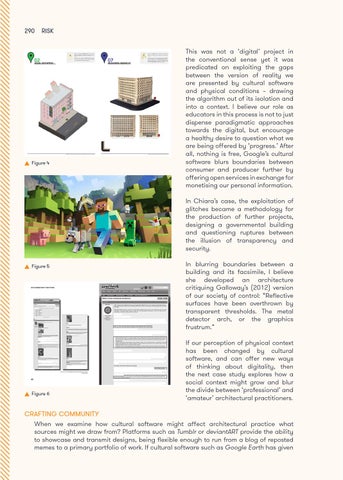
This was not a ‘digital’ project in the conventional sense yet it was predicated on exploiting the gaps between the version of reality we are presented by cultural software and physical conditions – drawing the algorithm out of its isolation and into a context. I believe our role as educators in this process is not to just dispense paradigmatic approaches towards the digital, but encourage a healthy desire to question what we are being offered by ‘progress.’ After all, nothing is free, Google’s cultural software blurs boundaries between consumer and producer further by offering open services in exchange for monetising our personal information. In Chiara’s case, the exploitation of glitches became a methodology for the production of further projects, designing a governmental building and questioning ruptures between the illusion of transparency and security.
Figure 5
Figure 6
In blurring boundaries between a building and its facsimile, I believe she developed an architecture critiquing Galloway’s (2012) version of our society of control: “Reflective surfaces have been overthrown by transparent thresholds. The metal detector arch, or the graphics frustrum.” If our perception of physical context has been changed by cultural software, and can offer new ways of thinking about digitality, then the next case study explores how a social context might grow and blur the divide between ‘professional’ and ‘amateur’ architectural practitioners.
CRAFTING COMMUNITY When we examine how cultural software might affect architectural practice what sources might we draw from? Platforms such as Tumblr or deviantART provide the ability to showcase and transmit designs, being flexible enough to run from a blog of reposted memes to a primary portfolio of work. If cultural software such as Google Earth has given