418
PARTICIPATION
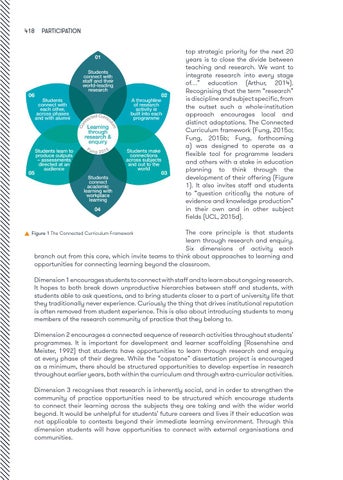
top strategic priority for the next 20 years is to close the divide between teaching and research. We want to integrate research into every stage of…” education (Arthur, 2014). Recognising that the term “research” is discipline and subject specific, from the outset such a whole-institution approach encourages local and distinct adaptations. The Connected Curriculum framework (Fung, 2015a; Fung, 2015b; Fung, forthcoming a) was designed to operate as a flexible tool for programme leaders and others with a stake in education planning to think through the development of their offering (Figure 1). It also invites staff and students to “question critically the nature of evidence and knowledge production” in their own and in other subject fields (UCL, 2015d). The core principle is that students learn through research and enquiry. Six dimensions of activity each branch out from this core, which invite teams to think about approaches to learning and opportunities for connecting learning beyond the classroom.
Figure 1 The Connected Curriculum Framework
Dimension 1 encourages students to connect with staff and to learn about ongoing research. It hopes to both break down unproductive hierarchies between staff and students, with students able to ask questions, and to bring students closer to a part of university life that they traditionally never experience. Curiously the thing that drives institutional reputation is often removed from student experience. This is also about introducing students to many members of the research community of practice that they belong to. Dimension 2 encourages a connected sequence of research activities throughout students’ programmes. It is important for development and learner scaffolding (Rosenshine and Meister, 1992) that students have opportunities to learn through research and enquiry at every phase of their degree. While the “capstone” dissertation project is encouraged as a minimum, there should be structured opportunities to develop expertise in research throughout earlier years, both within the curriculum and through extra-curricular activities. Dimension 3 recognises that research is inherently social, and in order to strengthen the community of practice opportunities need to be structured which encourage students to connect their learning across the subjects they are taking and with the wider world beyond. It would be unhelpful for students’ future careers and lives if their education was not applicable to contexts beyond their immediate learning environment. Through this dimension students will have opportunities to connect with external organisations and communities.