
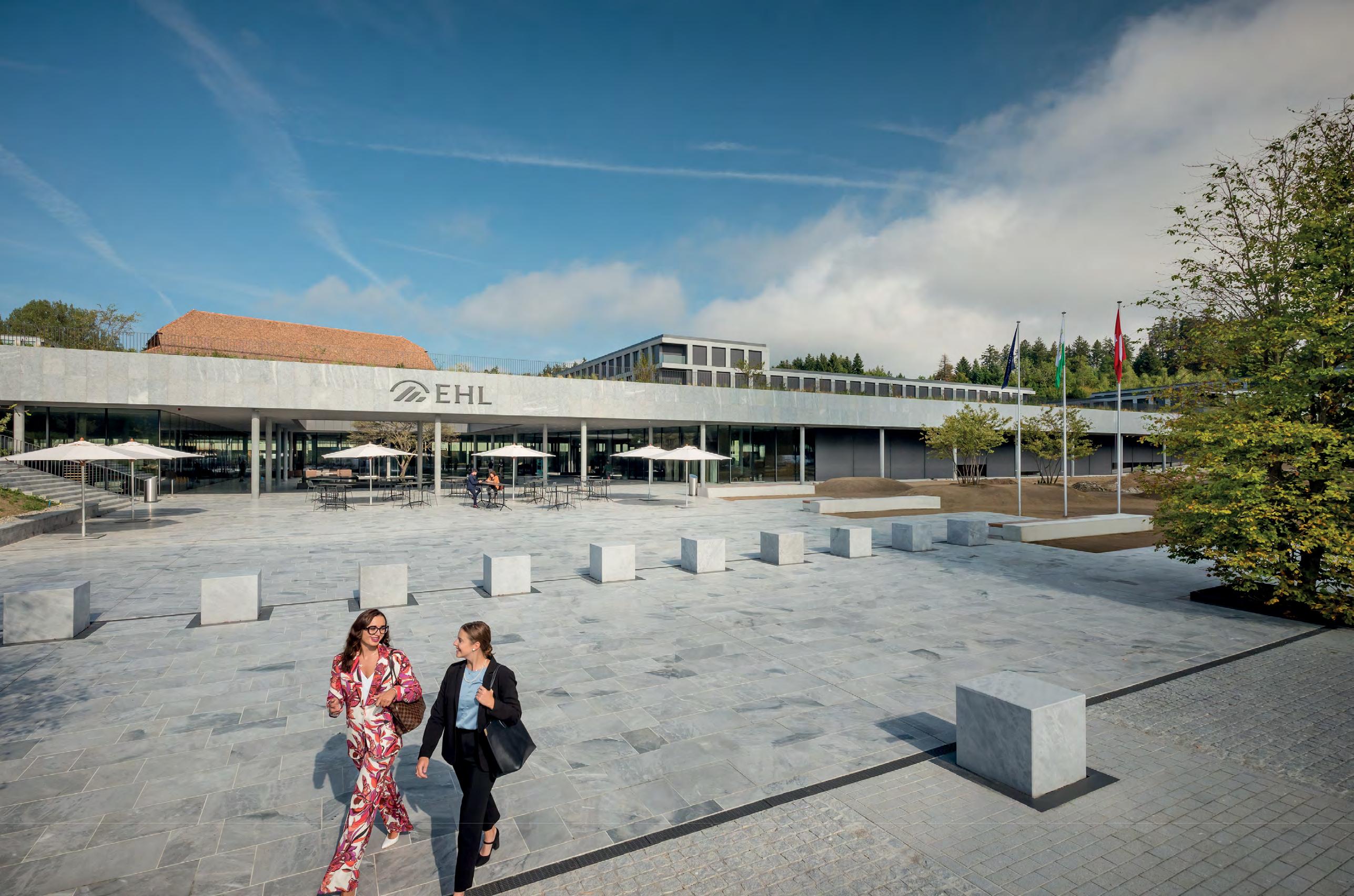
Embark on a Transformational Journey
At EHL Hospitality Business School, a Bachelor’s in International Hospitality Management is more than a degree: it’s a transformation. Here, classrooms become real-world stages. You don’t just learn business; you live it. You don’t just meet people; you understand them
Hands-on Learning 25 immersive workshops in your first year alone
Build Lifelong Connections Network with global industry leaders, attend exclusive company visits, and be a part of a global alumni community
One degree. Endless Options. Wherever you go, you’ll carry something that sets you apart: the ability to connect, to lead, and to create meaningful experiences.
Interpersonal Skills
Hone soft skills for the professional world and build your personal branding

Start your journey → ehl edu/bachelor




Child-friendly
A comfortable experience for children & parents
Advanced technology
Digital 3D Scanning and X-ray
Pediatric dental specialist Covering all subspecialties
Preventive care and growth monitoring Ensuring healthy smiles with proper growth and development








FOREWORD
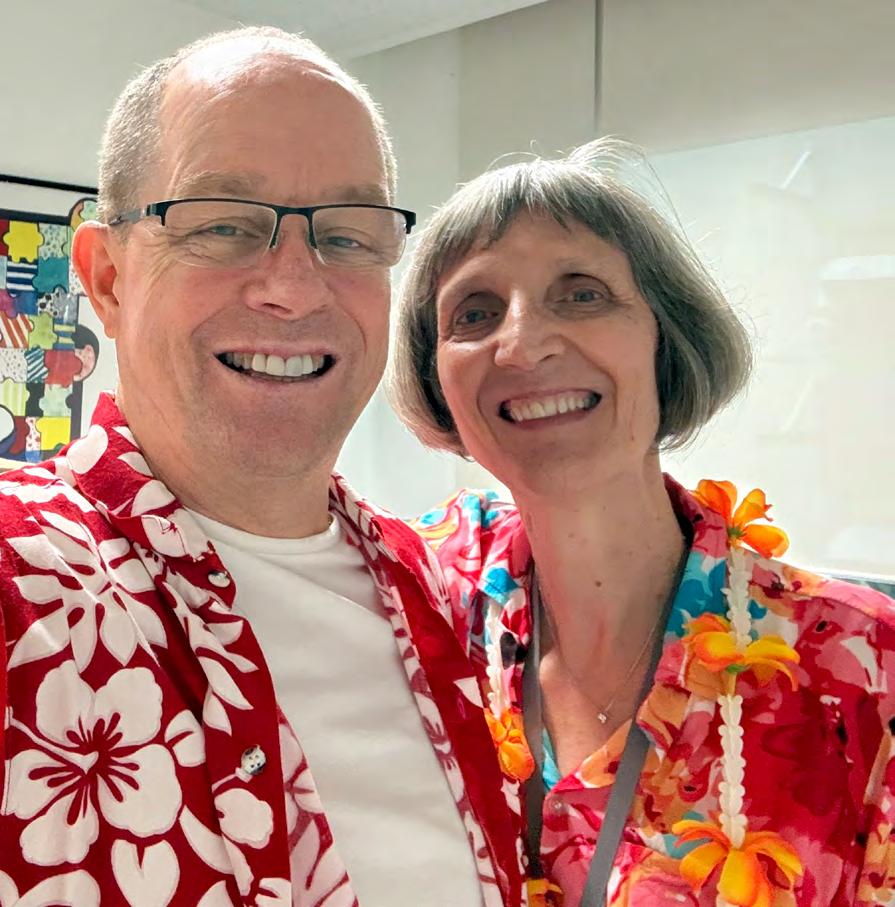


By Stephen Murgatroyd, Head of Libraries and Sarah Murgatroyd, Foundation Stage Assistant Leader
August 18th, 2000 … a date forever etched on our minds … the day we flew from London Heathrow with our three young children for an adventure into the unknown. Bangkok Patana awaited us in the ‘Land of Smiles’ and little did we know that it would become like a family for more than the next quarter of a century. Thailand, and Bangkok, have grown to become incredibly important to us and we now count ourselves lucky to call two places on the planet home.
Some of our favourite memories (and there are so many) relate to watching our boys grow and develop into the young men they are today, experiencing everything that Patana had and has to offer ... from their wonderfully well-rounded education to the opportunities they discovered on the
sports fields of SE Asia where they flourished, to the stages of the old auditorium (now the Secondary Library), the new Theatre and the Black Box where they were encouraged to showcase a side to their characters that had hitherto been very well hidden!
It has been a privilege to play a small part in the learning journeys and lives of hundreds of children and students at Patana. Being able to see many of them graduate from the school and to watch them walk across the stage to collect their Patana Diplomas has been a joy to behold.
Along with our own development, as teachers and individuals, our boys, their friends and the children we have taught have become both open minded and are caring, empathetic, hardworking, kind and helpful ... just the type of people you




want taking their first adult steps in the world. Patana alumni make a real difference! Saying goodbye to this special school, and the city we call home, is going to be the hardest thing we have done. As someone recently told us, “Don’t be sad that it is over, be happy that it happened,” and that encapsulates everything for us – in August 2000 we could never have imagined that the dream we had, moving to Patana, was going to turn out to be the best 26 years of our lives.
643 Lasalle Road (Sukhumvit 105)
Bangna Tai, Bangna
Bangkok 10260 Thailand
Tel: +66 (0) 2785 2200
Email: reception@patana.ac.th www.patana.ac.th
Editor: Sneha Mathew
Tel: +66 (0) 2785 2411
Email: snma@patana.ac.th
Advertisement: Finn Balslev
Tel: 081-866-2577
Email: finn@scandmedia.com
Design & Production: Scand-Media Corp., Ltd.
Tel: +66 (0) 2943 7166-8 www.scandmedia.com
Bangkok Patana Magazine is the termly publication of Bangkok Patana School published three times per year and distributed to 2,000 members of the School community. Reproduction of articles, artwork and illustrations by written permission only. This magazine is printed on recycled paper.
Bangkok Patana School


YEAR 3 RESIDENTIAL
Big steps and sandy feet to grow resilience
By Tom Leighton, Year 3 Assistant Leader of Learning
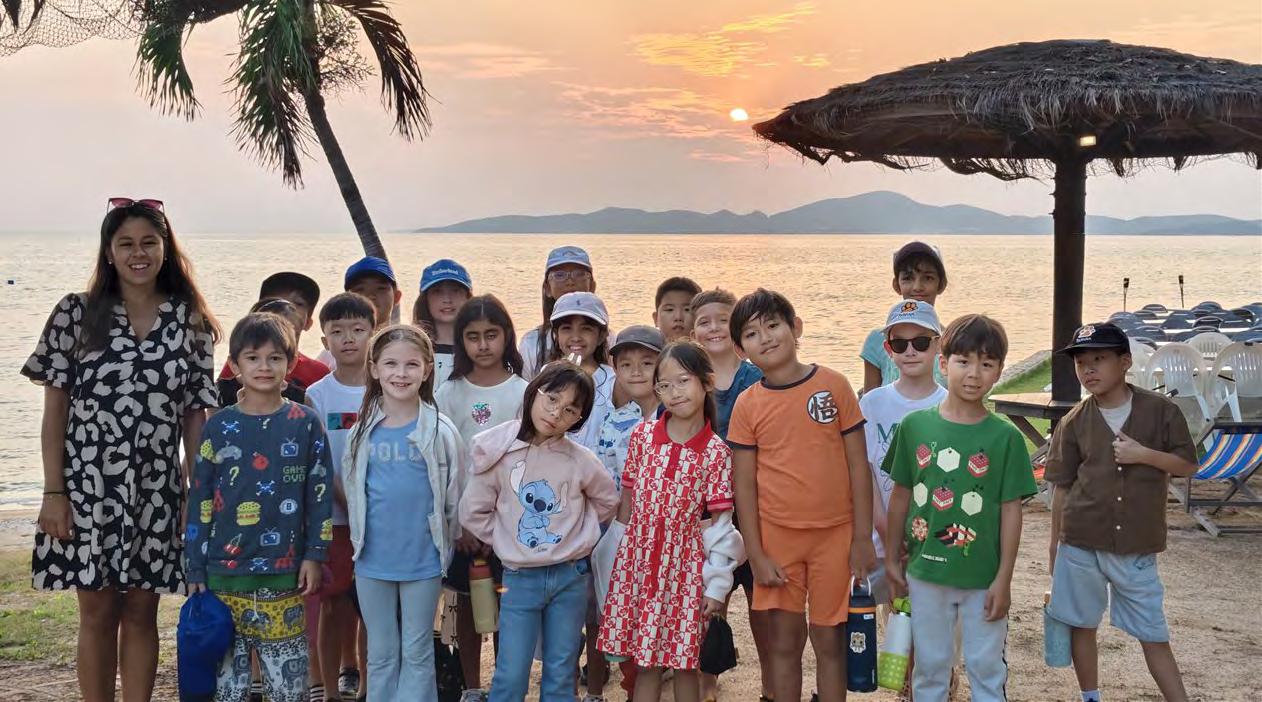
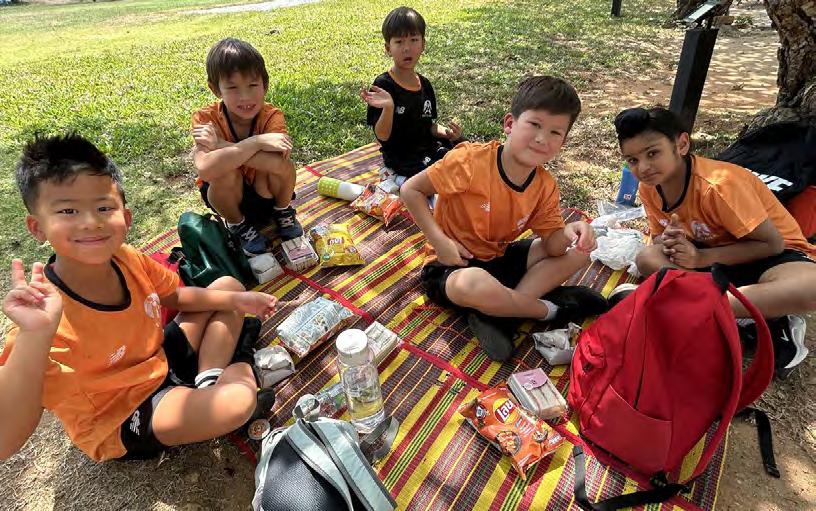
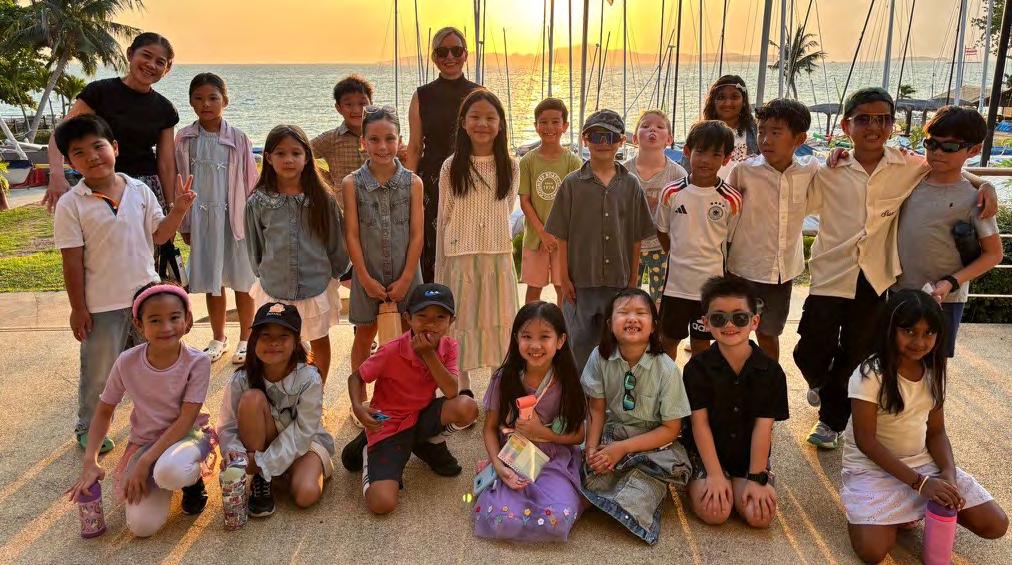
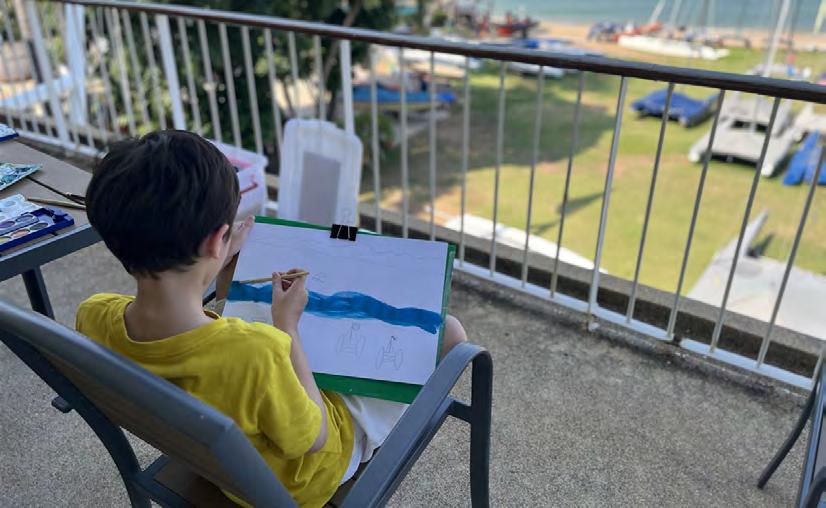
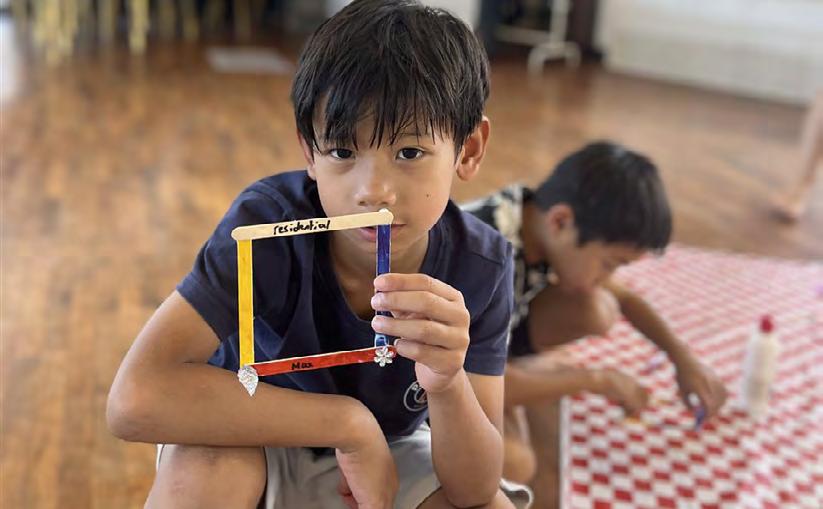
Year 3 spent two nights in Pattaya at a yacht club for their Residential visit. For many students, this was their first extended time away from their family and provided a valuable opportunity to build independence and resilience, while strengthening their friendships. Across the two-week period, classes attended in pairs, supported by a dedicated and experienced team of staff.
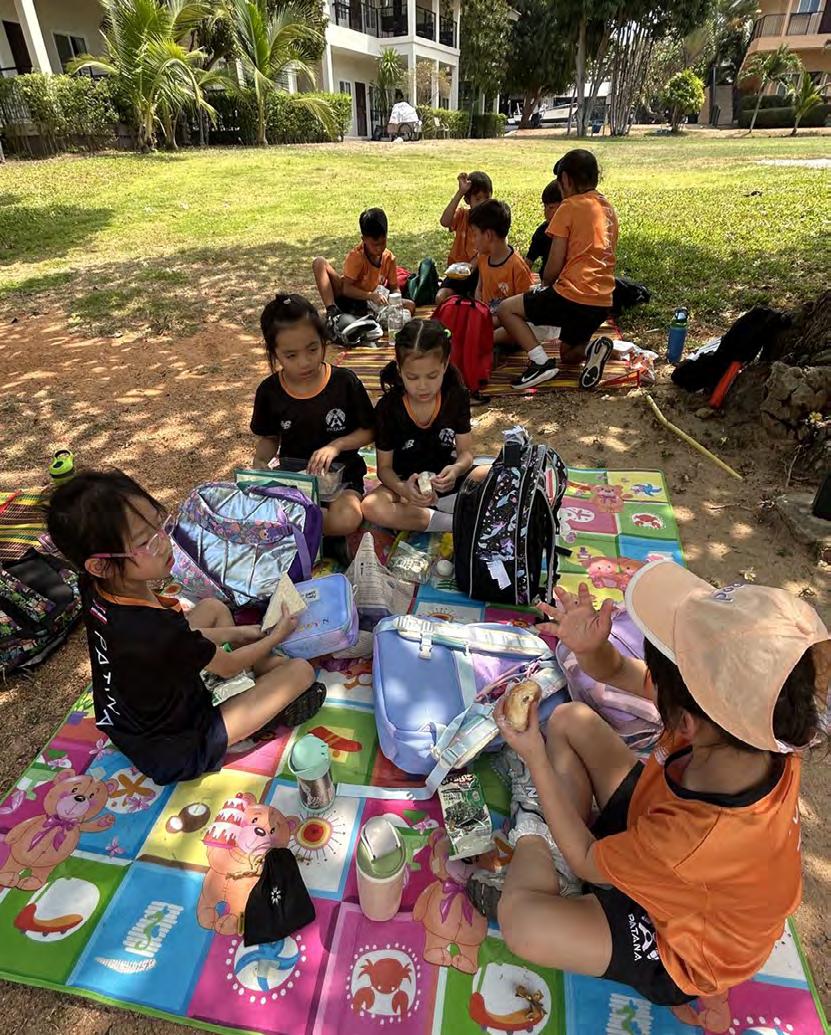
From the moment the students left school, energy levels were high and conversations were filled with anticipation. Upon arrival, students quickly jumped into activities that balanced outdoor play, creativity and teamwork.
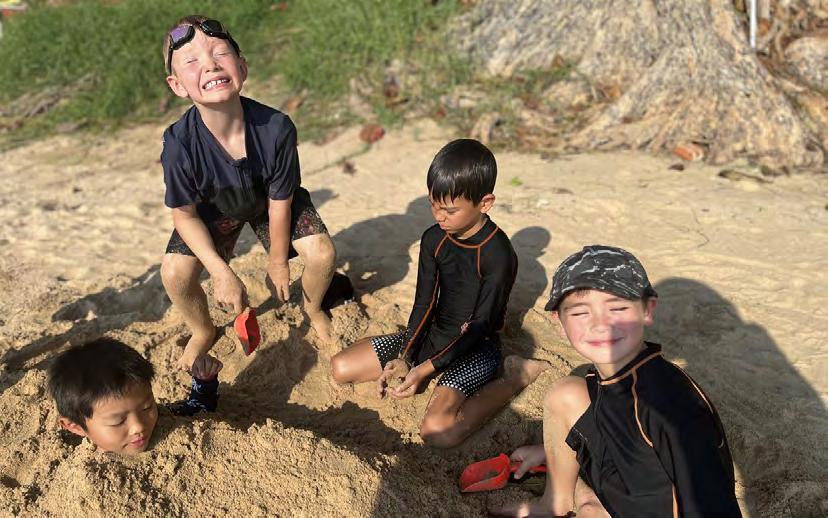
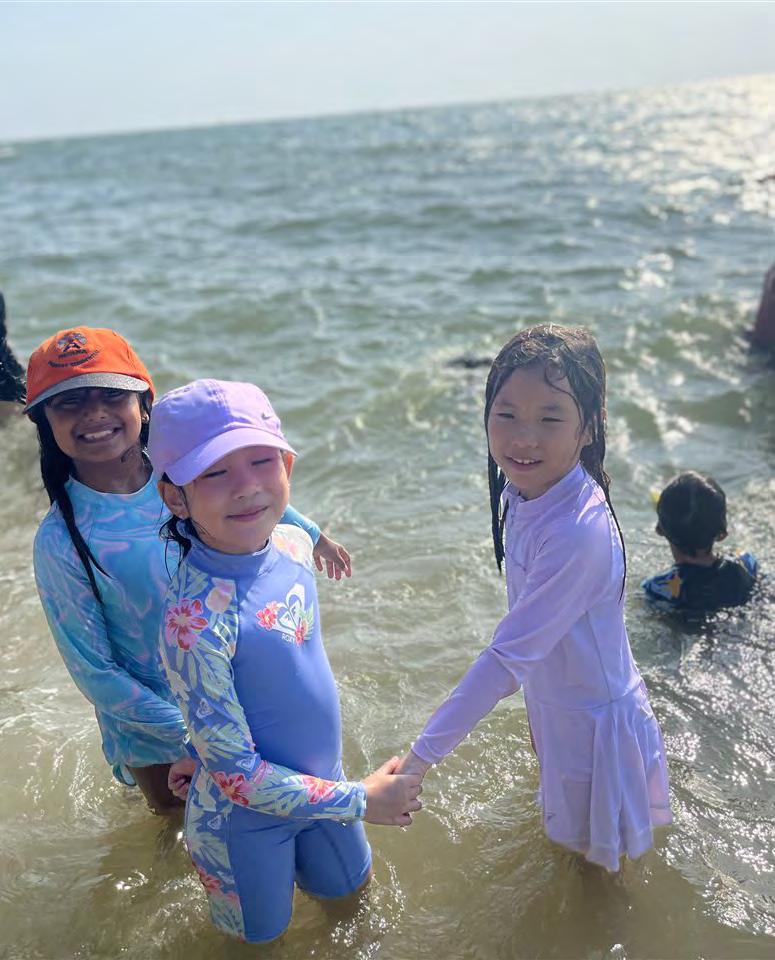
The beach was a clear highlight of the visit. Students relished the opportunity to swim, play in the sand and work together in a relaxed coastal environment. “I loved splashing in the ocean and playing in the sand,” said Amber from 3M. Purposeful learning was also woven into these moments. “My favourite part was the beach clean because it was fun and I collected a lot of rubbish. It made me happy to help the environment,” said Alpha from 3T. Similarly, Kai from 3M shared, “I liked the beach clean best because it helps people when walking on the beach, and it saves animals’ homes.” It was wonderful to see students making meaningful links to their recent shark and
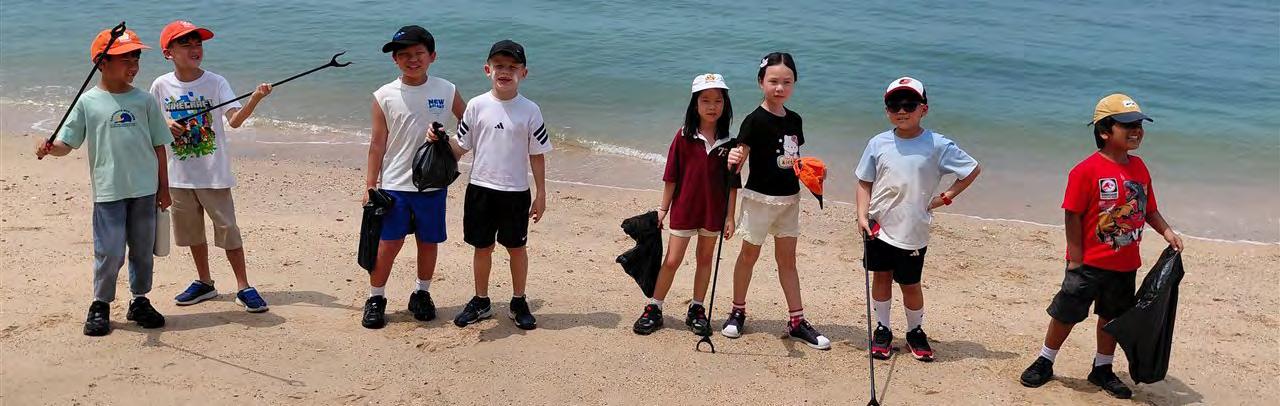
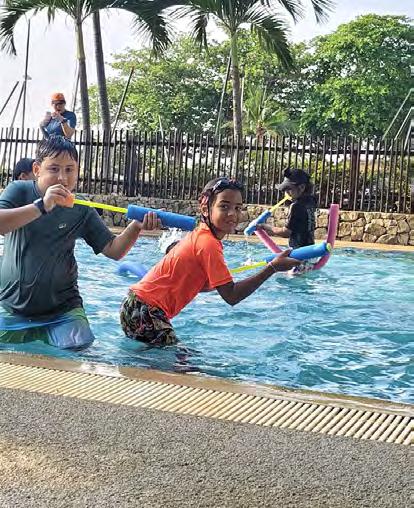
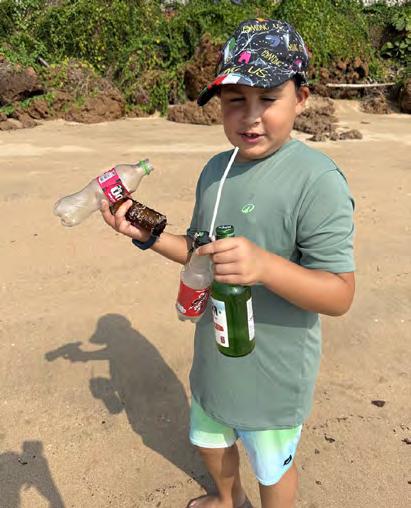
reef conservation assemblies and applying through community action and service.
There were many memorable moments away from the beach as well. “My favourite part was sleeping in the same room as my friends. We barely slept on the first night!” said Isobel from 3J. Living together encouraged cooperation and adaptability, with students learning how to organise themselves and support one another. This was captured humorously by Lila from 3D, who said, “My favourite part was the room inspections because it was chaos trying to tidy before the teacher arrived!”
Evenings brought a different kind of excitement. The talent show stood out as a highlight, showcasing not only creativity but courage, with students cheering one another on throughout. “It was challenging to perform a card trick in front of lots of people, but I overcame my fears,” said Milo from 3S. Laughter
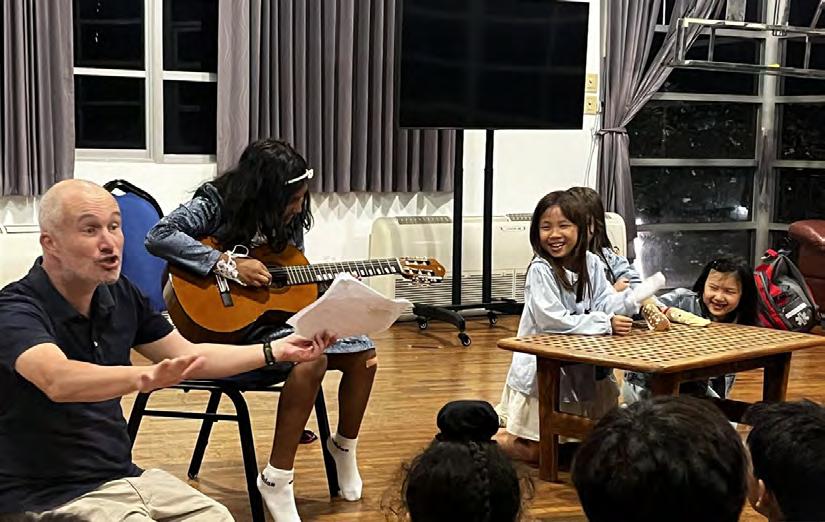
was never far away, with Kylie in 3H recalling, “It was so funny when the boys were dancing like chickens – they were so excited and silly.”
The beach barbecue was another much-loved experience. As the sun slipped below the horizon, students were able to enjoy the famous Pattaya sunset and gaze across a pristine stretch of shoreline. “I really liked the beach barbecue with my friends,” said Carlie from 3L, while Yoyo from 3M reflected that “it felt good to keep the beach beautiful.”
This Residential marked an important first step in the students’ journeys beyond the classroom. Throughout the visit, they demonstrated resilience, independence and a growing ability to work collaboratively. With many more exciting learning opportunities ahead at Bangkok Patana, this experience has set a confident and positive tone for the years to come.
LONG SERVICE AWARDS




Mrs Kornthong Pol-ar-wut 35 Years














Mrs Wilai Pongsantisuk 40 Years
Mrs Harsha Ambani 30 Years
Ms Rapeeporn Tangkitpanich 30 Years
Mr Anawat Pensiri 30 Years
Ms Siyapa Chaiyakornpakitti 30 Years
Mrs Pornpimon Chuenchandaeng 25 Years
Ms Sarina Dhawan 25 Years
Mrs Diana Jones 25 Years
Ms Suwannee Pimjun 25 Years
Mr Kazuya Yoneyama 25 Years
Mr Michael Lyons 25 Years
Ms Masaya Chouaynakorn 25 Years
Ms Bongkot Piyawiphat 25 Years
Ms Panchita Rakpan 20 Years
Mr Andrew Tatam 20 Years
Mrs Tasneem Poonevala 20 Years
Ms Ampai Hengsuwan 20 Years
Ms Tarinee Phadungsakchayakul 20 Years
Ms Siriporn Thongthaisin 20 Years

Ms Manora Petchsuwan 15 Years

Mr James Myers 15 Years
Mr Somchai Taikhao 15 Years

Mr Suphit Hlaothong 15 Years

Mrs Claire Myers 15 Years

Mrs Caroline Ferguson 15 Years

Mrs Sawalee Singhapun 15 Years

Ms Junsri Nonthaisong 15 Years

Ms Tracey Barton 15 Years

Mr Simon Griffiths 15 Years

Ms Waleerat Wiriyapan 15 Years

David Hopwood 15 Years

Mr Andrew Haughton 15 Years

Mr Wisit Chaiyakhan 15 Years

Billy-Jon Osborne 15 Years

Mr Ekachai Gerdkaew 15 Years

Mr Surat Wissavawirool 15 Years
Congratulations and thank you for your years of service
Mr
Mr
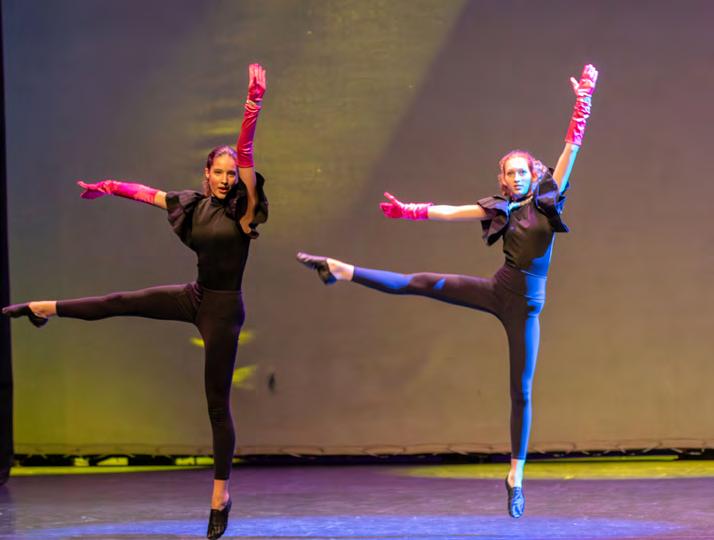
THE DROP-OFF POINT: WHY STUDENTS LEAVE DANCE AFTER PRIMARY AND WHAT WE CAN DO ABOUT IT
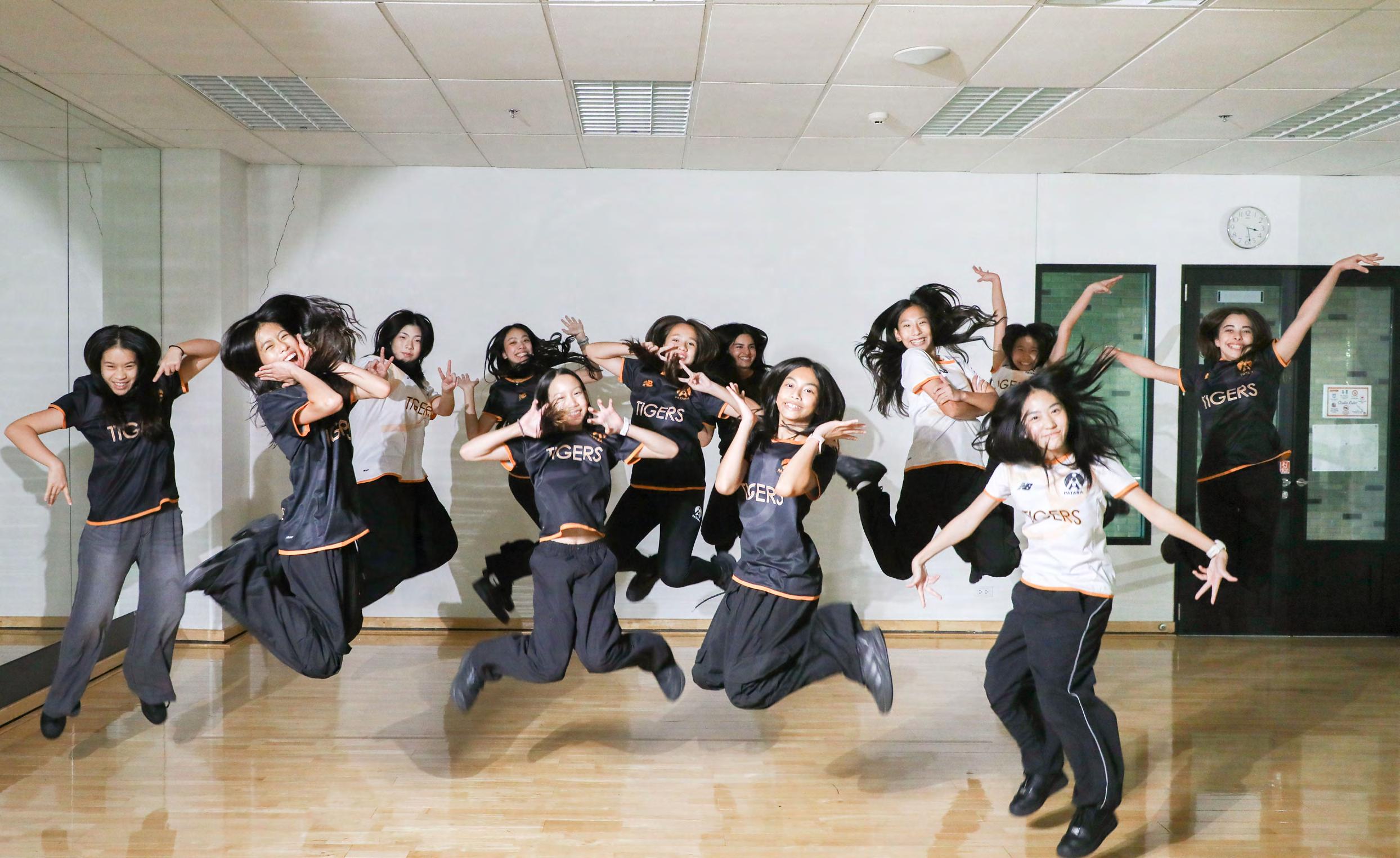
By Sarah Dullaghan, Cross Campus Head Dance Coach
It happened twice in one week. Two thoughtful, committed, genuinely talented students - both of whom I would have expected to continue dancing for years – casually told me that they wouldn’t be continuing dance classes into Year 7. Not because they didn’t enjoy it. In fact, both were quick to say the opposite: they really enjoyed dancing. But somewhere along the way, they had decided it simply wasn’t something they would continue.
That moment stayed with me. Not because it’s unusual. Sadly, the opposite. Because it is becoming increasingly common. It made me wonder: why do students feel they have to stop dancing at exactly the point when it could offer them so much?
The transition from Primary to Secondary school is a significant shift. Students go from being confident, settled and often among the oldest in their environment, to suddenly finding themselves at the very beginning again. New spaces, new expectations, new social dynamics. It’s a time when fitting in starts to matter more,
and standing out can feel like a risk. In that context, activities that once felt easy to embrace can become something to question. Dance, unfortunately, is often one of them.
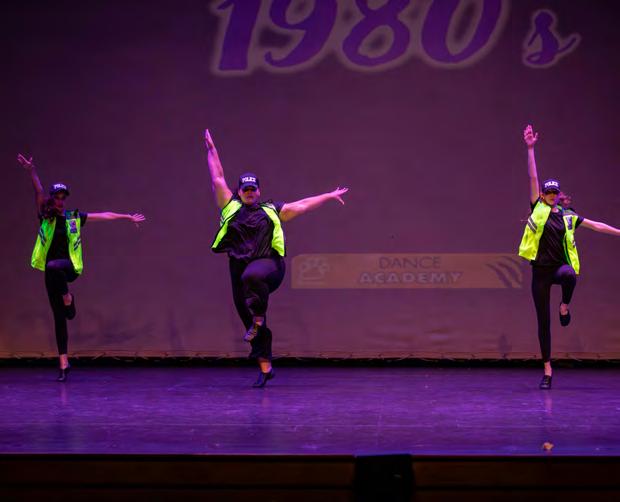
Not because students stop enjoying it, but because they begin to see it differently. As they grow older, young people become increasingly aware of how their choices are perceived by others. Dance can start to feel “uncool” or misunderstoodespecially when compared to activities that are more socially reinforced. For boys in particular, this can be even more pronounced. Despite evident visibility of male dancers across all genres, outdated stereotypes still linger, causing many of our boys to step away. Not through lack of interest (last year’s Dance Extravaganza had 23 Primary boys performing!) but through a desire to avoid standing out in the “wrong way”.
Alongside this, there is often a growing sense that time needs to be spent “wisely.” As students move into Secondary School, academic expectations begin to increase,
and with that comes a subtle but powerful message: some subjects matter more than others. Creative pursuits like dance (and other arts) can be pushed to the side - not always explicitly, but enough for students to internalise the idea that continuing is optional, secondary or even indulgent. And yet, this is exactly the stage where dance can have the greatest impact.
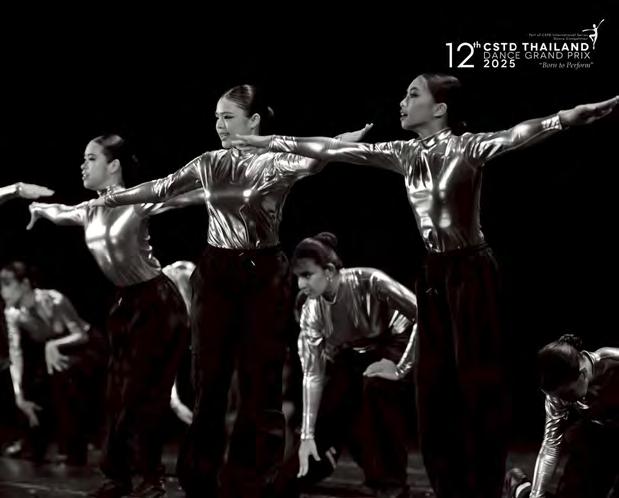
During early adolescence, young people are navigating huge physical, emotional and social changes. Dance provides a space where those changes can be explored rather than judged. It offers a way to build confidence - not just through performance, but through persistence. To experience progress, even when things feel temporarily unfamiliar or challenging.
Physically, dance keeps students active at a time when many begin to drop off from regular movement. It develops coordination, balance, strength and spatial awareness in an integrated way - skills that underpin everything from sport to everyday movement. Additionally, in dance, these skills are developed in response to music,
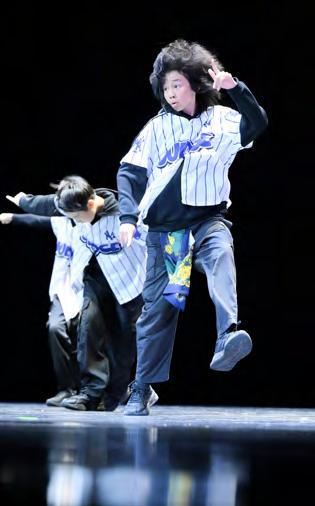

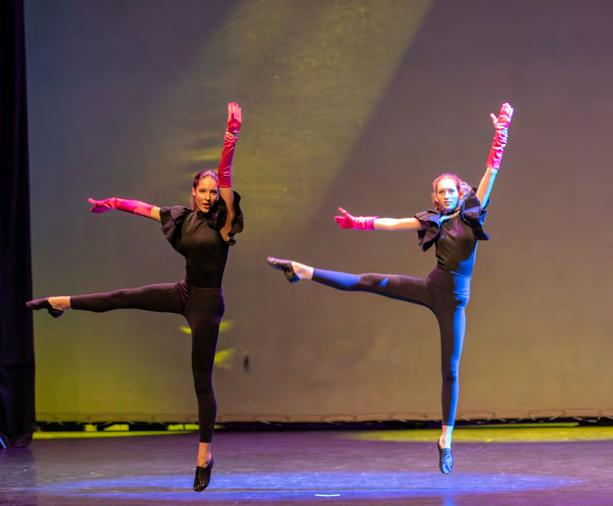
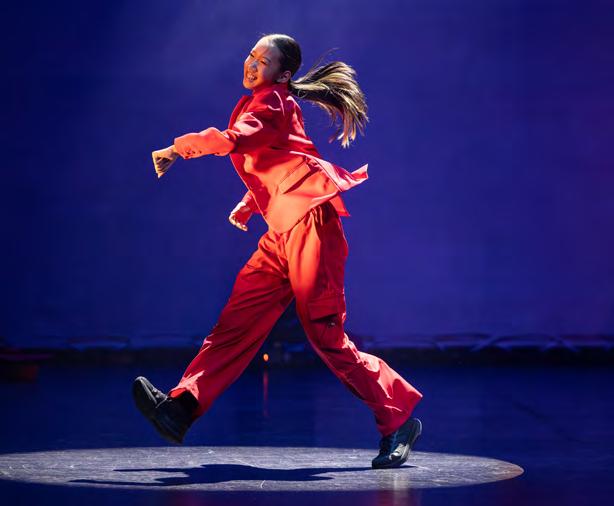
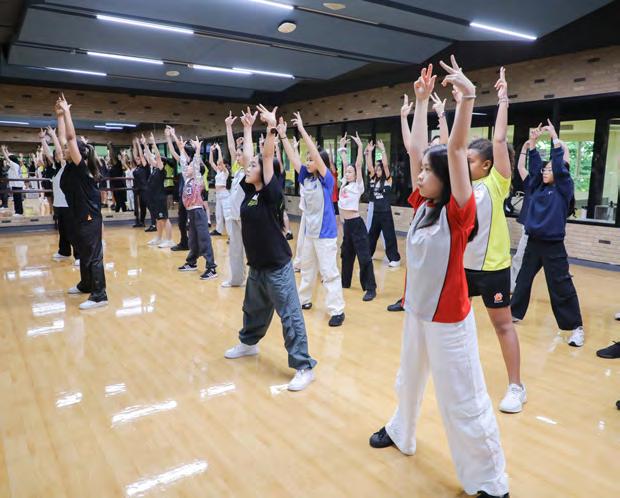
requiring timing, rhythm and control, which adds an additional layer of cognitive and physical benefit during a stage when bodies are rapidly changing. Mentally, dance offers something equally important: release. A space away from academic pressure, where students can reset, express themselves and reconnect with something they enjoy. At a time when stress and anxiety are increasingly common, having that outlet matters.
Academically, too, the benefits are often overlooked. Students who remain physically active tend to show stronger focus, improved memory and better overall engagement with school. The discipline, time management and resilience developed through dance translate directly into the classroom. And socially, dance provides something invaluable: belonging.
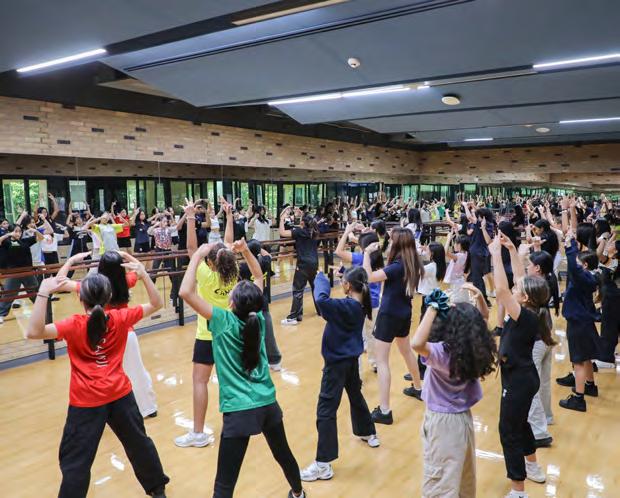

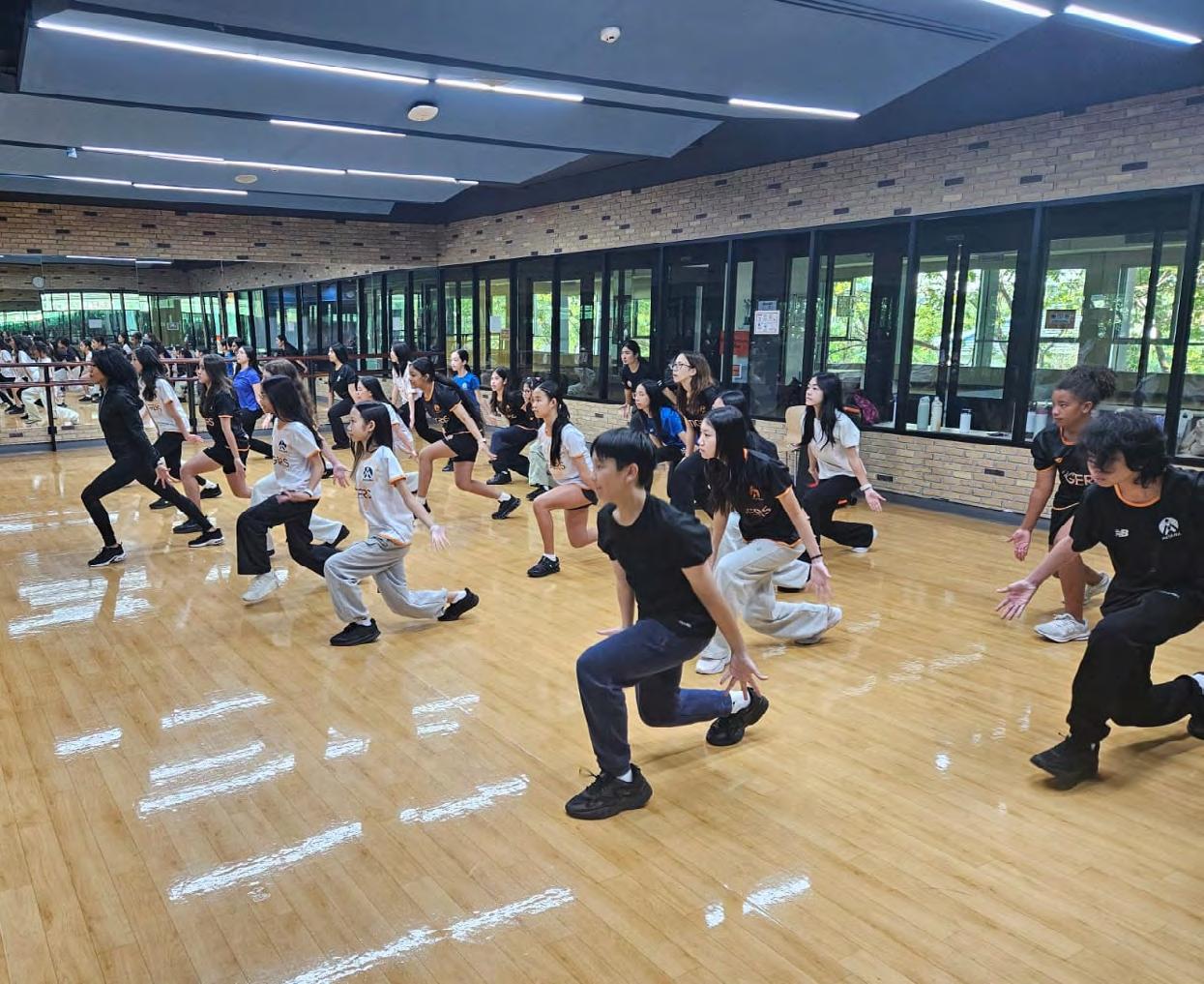
A consistent community. A place where students are known, supported and part of something bigger than themselves. For boys especially, remaining in dance can be a powerful act of self-definition - one that challenges outdated stereotypes and opens doors to confidence, creativity and leadership.
So, if students enjoy dancing, why do so many still step away? Often, it’s not a clear decision. A sense that “this is just what happens now.” When a student says they want to quit, it’s important to look beneath the surface. Is it truly a loss of interest - or is it discomfort, pressure or uncertainty disguised as a decision? Which is why the role of adults, both parents and educators, is so important. For educators, this means creating environments that prioritise the individual over the ideal. Shifting the focus from perfection to progress. Celebrating effort as much as outcome. Offering variety in styles so students see that dance is not one narrow pathway, but a broad, inclusive field where everyone can find their place. At the Dance Academy, this is something
we are continually striving for. It also means being mindful of the physical and emotional changes students are navigating. Simple adjustments – perhaps reducing mirror use, allowing for flexibility in uniform, encouraging student-led creativity – can make a significant difference in how safe and supported they feel.
For parents, the role is just as important. Support matters, but so does the type of support. Encouragement without pressure. Interest without over-involvement. And, crucially, a willingness to challenge the idea that only certain pursuits are “worth it.” Perhaps most importantly, both parents and educators can actively challenge the narratives that push students away. Whether that’s the idea that dance isn’t for boys, that it isn’t academically valuable, or that it must be pursued perfectly to be worthwhile. Because at its core, this isn’t just about retaining students in dance classes. It’s about helping young people hold onto something they enjoy - at a point in their lives when they are most at risk of letting go of the things that make them feel most like themselves.
MANY EYES, ONE IMPACT
The SEC Year in Reflection
By Ana Bolakoso, Year 11
This year the Student Environment Committee (SEC) was able to really celebrate a different side of what making an impact can look like. At the start, it felt like the problems we were talking about; plastic pollution, climate change, food waste, were just too big but over time, the SEC has proven that change doesn’t come from one big action. It comes from lots of small steps, taken together, as a community.
A Thai proverb we kept coming back to is that ‘a pineapple has many eyes’. It reminds us that change happens when many people are watching, noticing and acting in small ways. That idea really shaped everything we did this year.
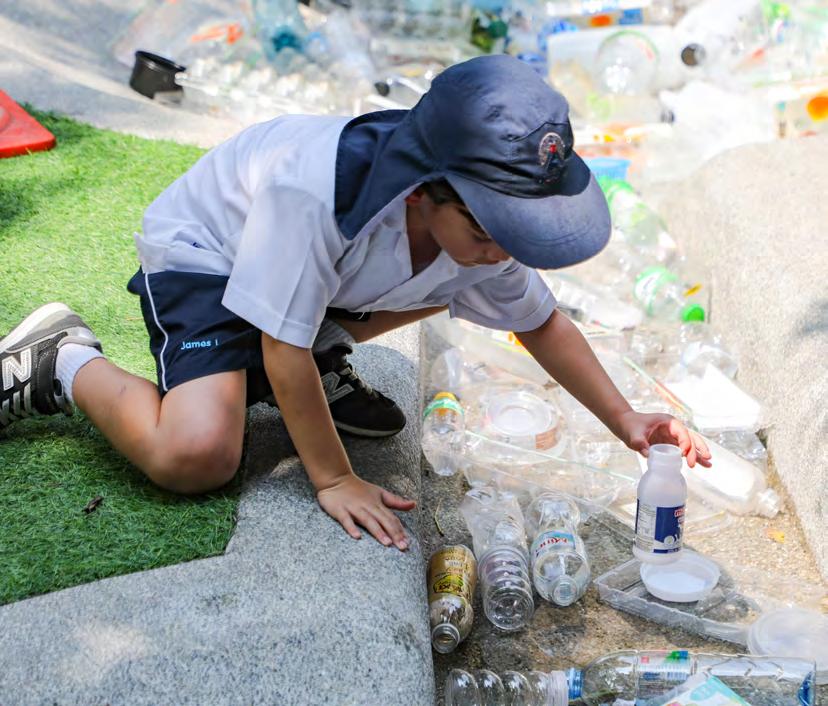
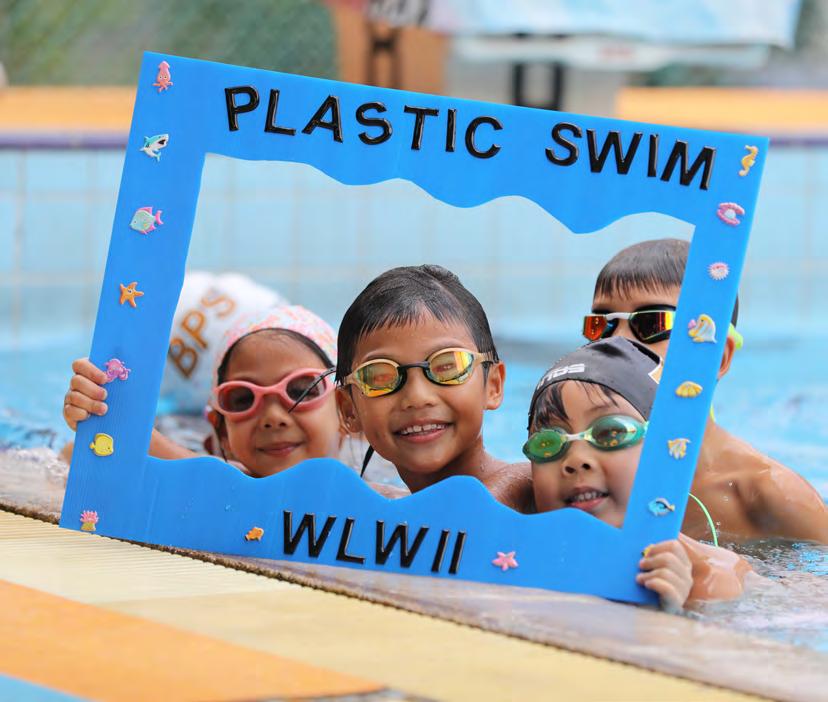
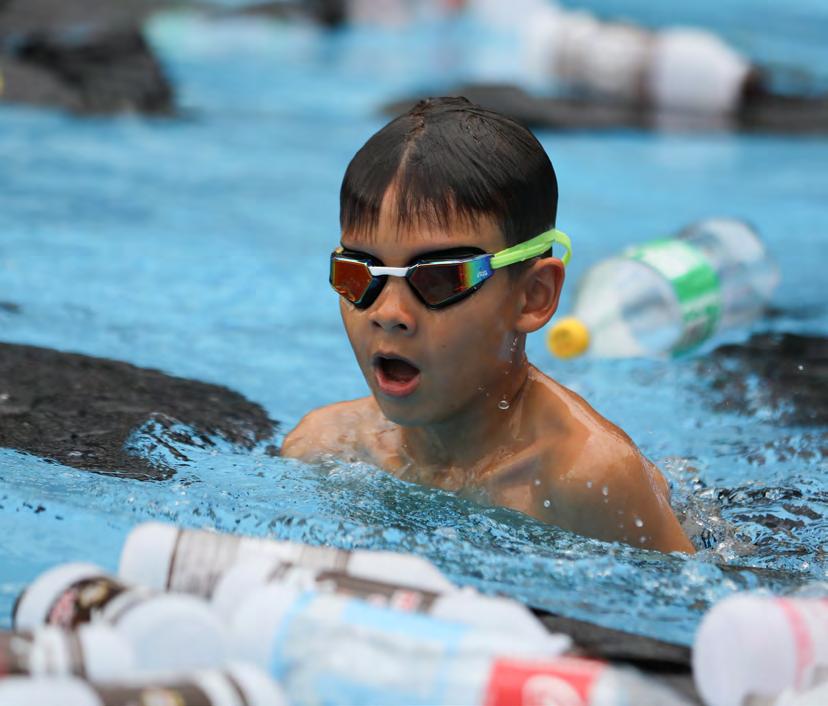
One of our biggest highlights was Waste Less Week #11, which focused on SDG 14: Life Below Water. But what made it powerful wasn’t just the theme, it was how we brought it to life. We turned the Foundation Stage Sensory Stream and 50m Pools into a “Pacific Garbage Patch” so younger students could see the impact of ocean waste. We set up a ‘plastic soup’ display in the canteen to show how microplastics enter the food chain. There were quizzes, library displays and even blue spirulina smoothies that got everyone talking.
What stood out to me most was the many different entry points. Some students connected through Science, others through Art, others just through curiosity. It didn’t feel like we were telling people what to do, it felt like we were inviting them in.
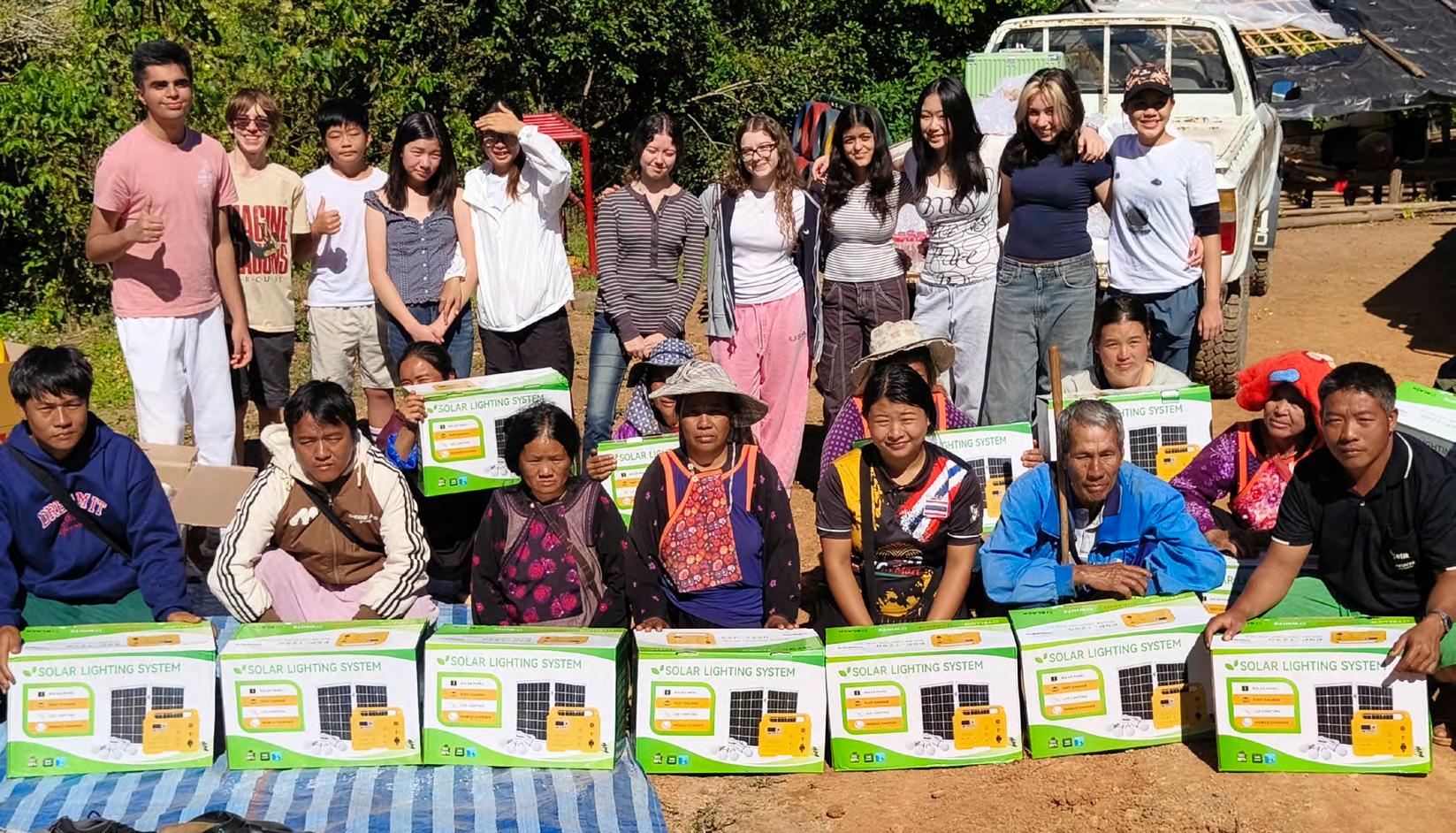
The same idea carried through to our Solar Village trip. Visiting Pang-Hua once again in rural Northern Thailand helped us understand sustainability in a completely different way. It
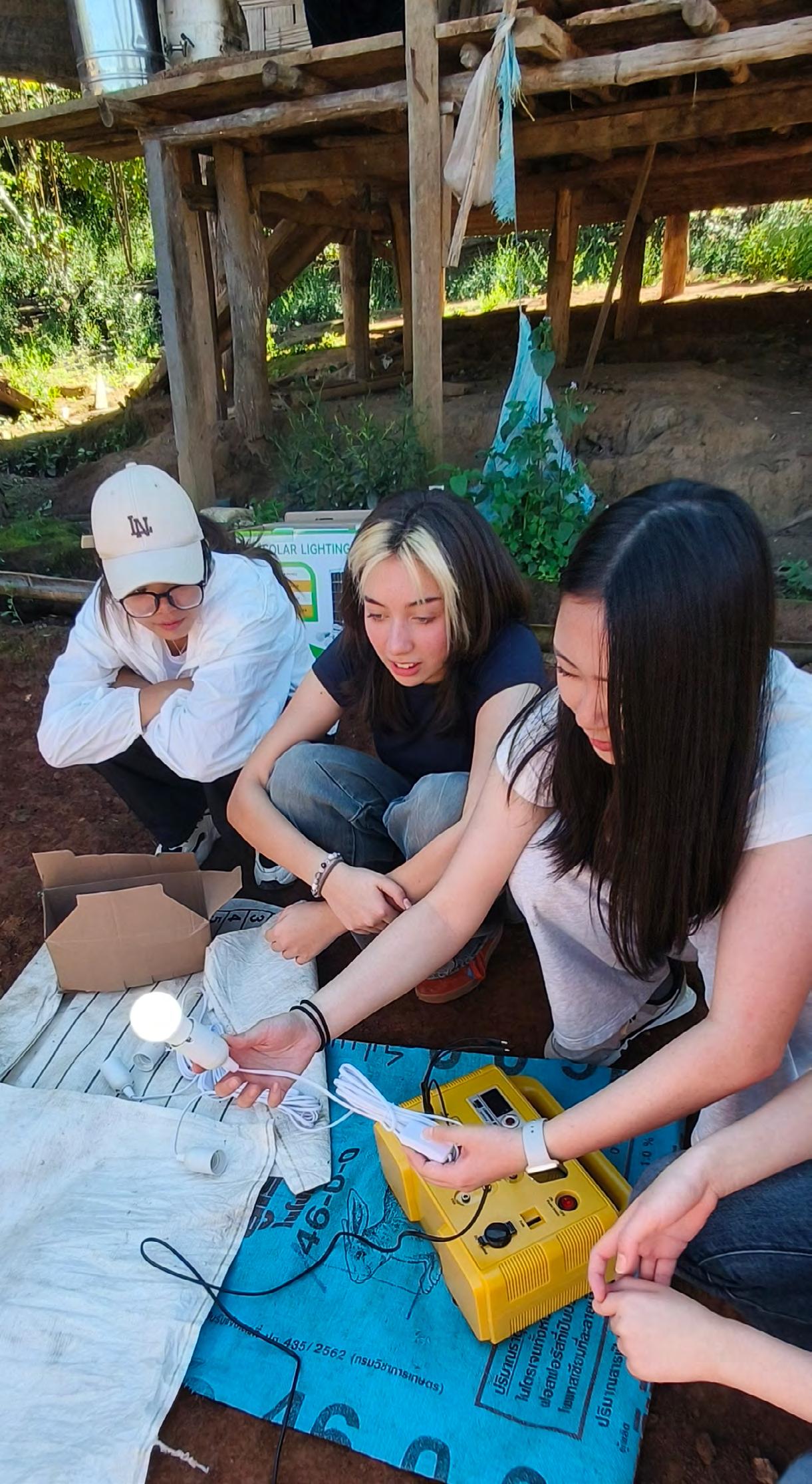
wasn’t abstract anymore, it was real people, real lives and real challenges. Seeing how communities are using solar energy and rethinking resources made me realise that sustainability isn’t just about reducing, it’s about reimagining how we live. It also made our role feel more meaningful.
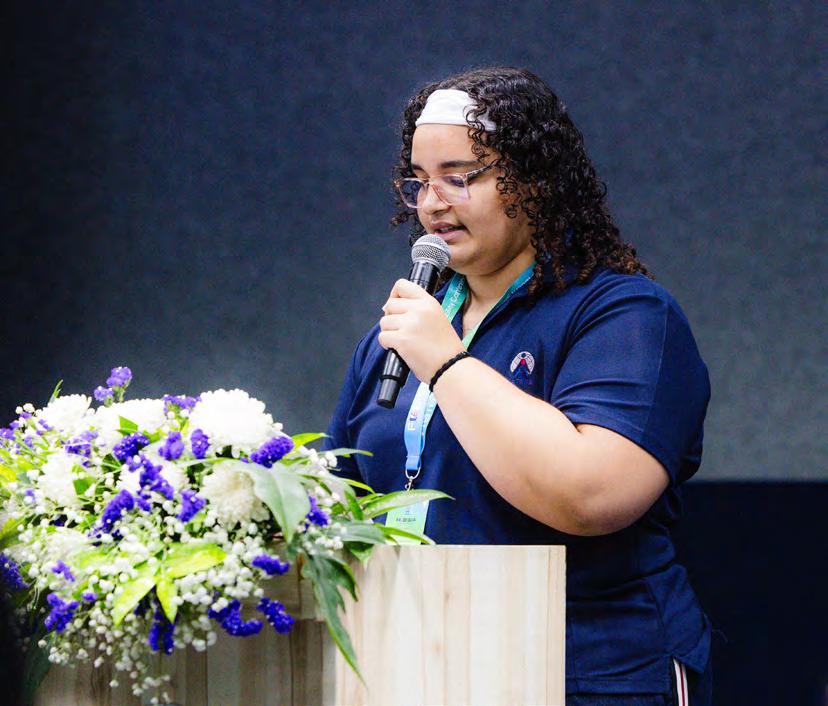
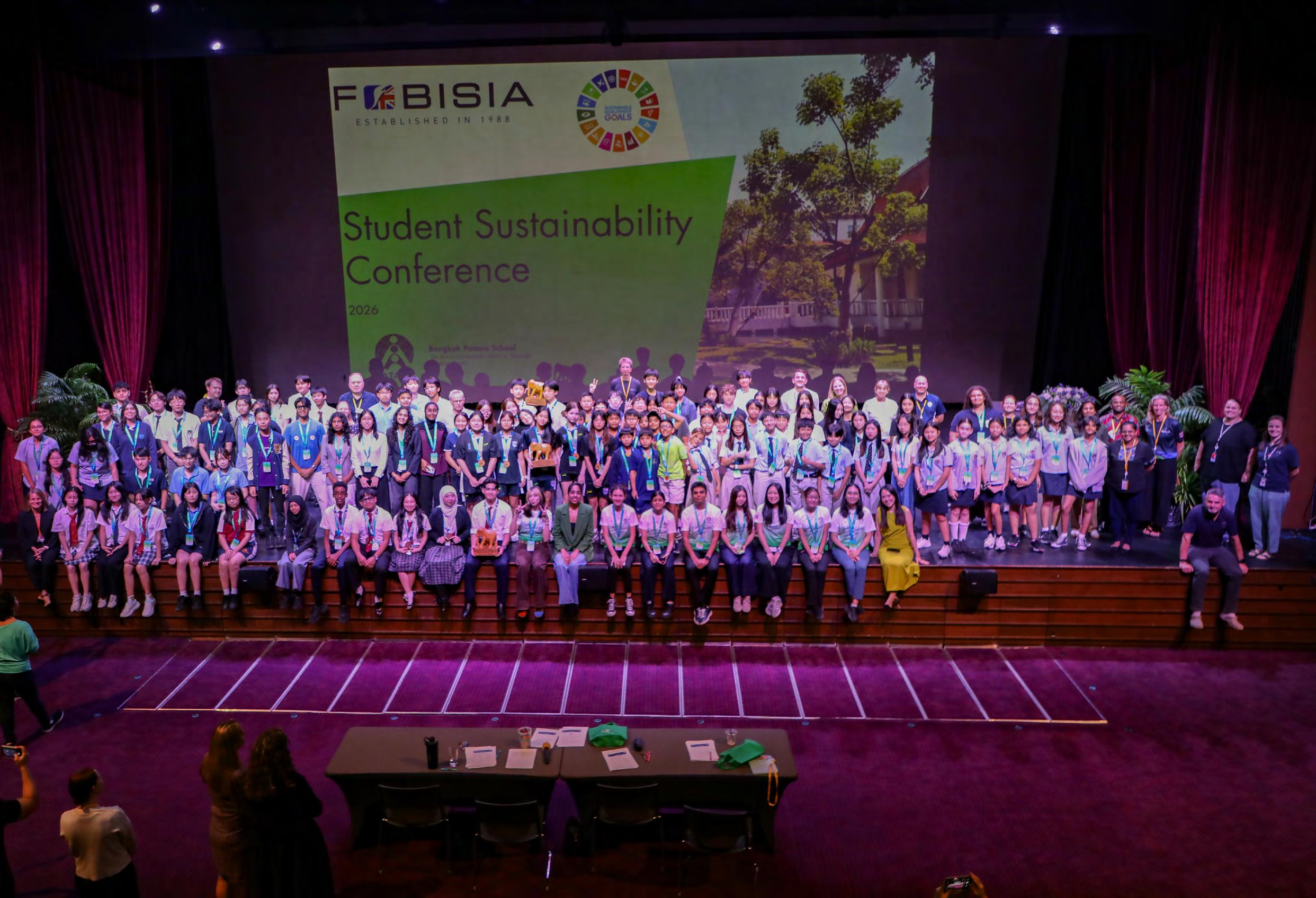
Hosting the FOBISIA Student Sustainability Conference was another highlight. Bringing together students from across the region showed us that we’re not alone in this work. There were so many ideas, from reducing emissions to rethinking travel, and it pushed us to think more critically and more creatively. But again, the biggest takeaway wasn’t one single idea. It was the sense of shared responsibility.
Looking back, what I’m most proud of is not just what we did, but how we did it. We focused on bringing people with us, step by step. Whether it was donating items, changing small habits, or just starting a conversation, every action mattered.
The pineapple has many eyes. And this year, it really felt like more and more people were starting to see.
NOW AND THEN
By Garam (Momo) Lee, Year 10
A distant memory returned to me of when the world was much bigger, And I was caught off guard by an unexpected visitor, An emerald swallowtail resting on the back of my hand, Its iridescent wings changing colour under the sun’s lucid gaze, As light as air, so fragile that a single breath might unmake it, The weight of the moment too much to bear, A tear rolled down my cheek, landing on its wing, I stared in horror, thinking I had killed it, Holding out my tiny arms, I turned my head away, Unaware that it was only waiting to dry, And when ready, it twitched its wings calmly and began to fly, I remember the urge to chase it, Overridden by the fear of what I might do if it were in my hands again, A quiet pressure seemed to descend on the day, An unfamiliar sensation I now recognise as regret, For not understanding and turning my head away, I find myself walking down that same path now and then, And if I listen carefully, I can still hear the gentle flutter of wings.

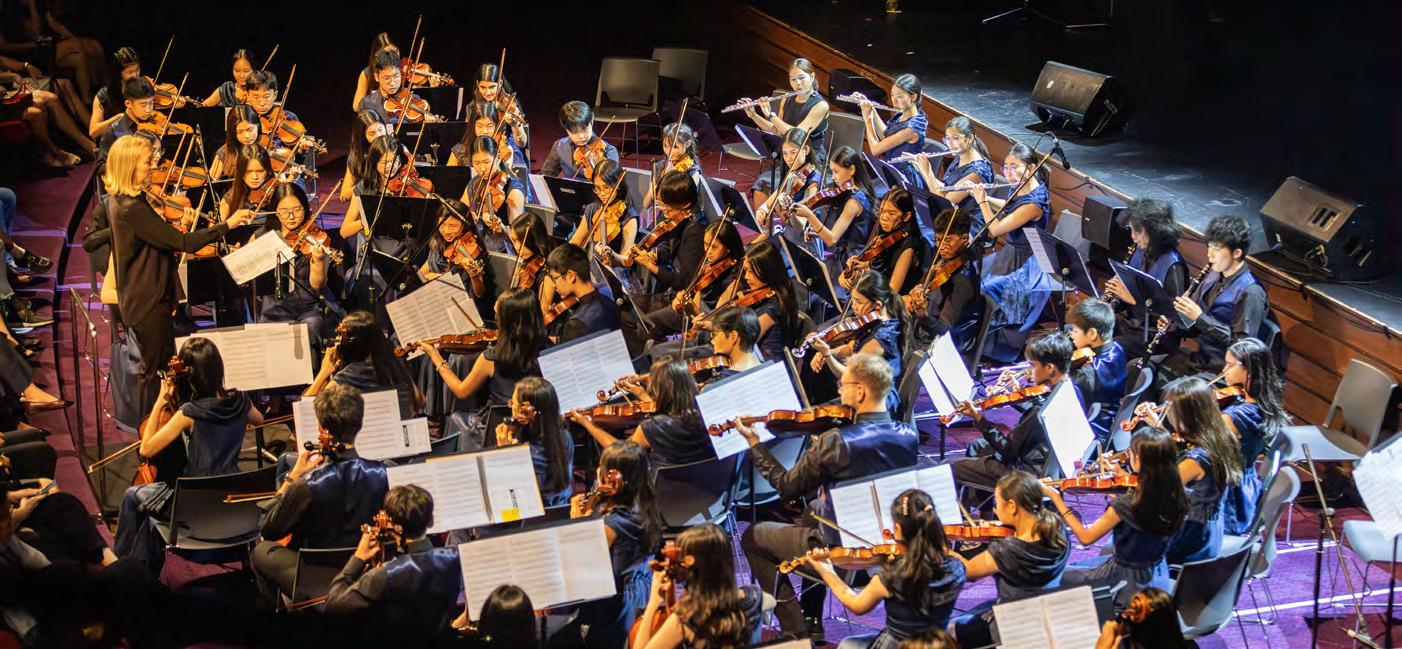
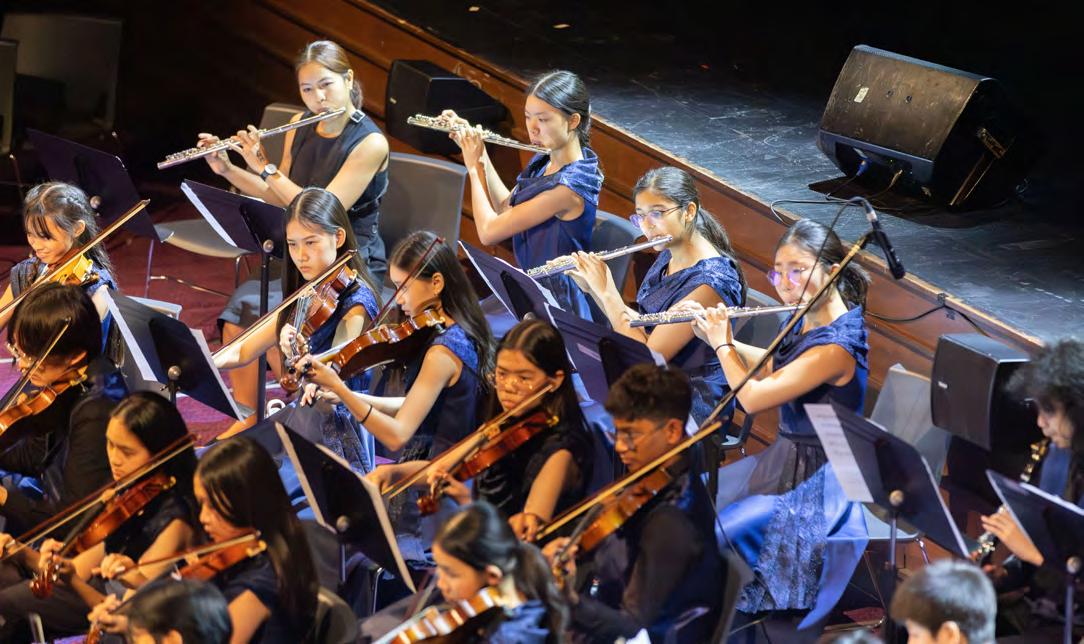
WHERE CLASSICAL MUSIC MET JAZZ AND STUDENTS FOUND THEIR VOICE
By Atisha (Irene) Chermjutidham, Lily Grosic, Sirianong (Plearn) Devakula Na Ayudhya and Sara Naheta
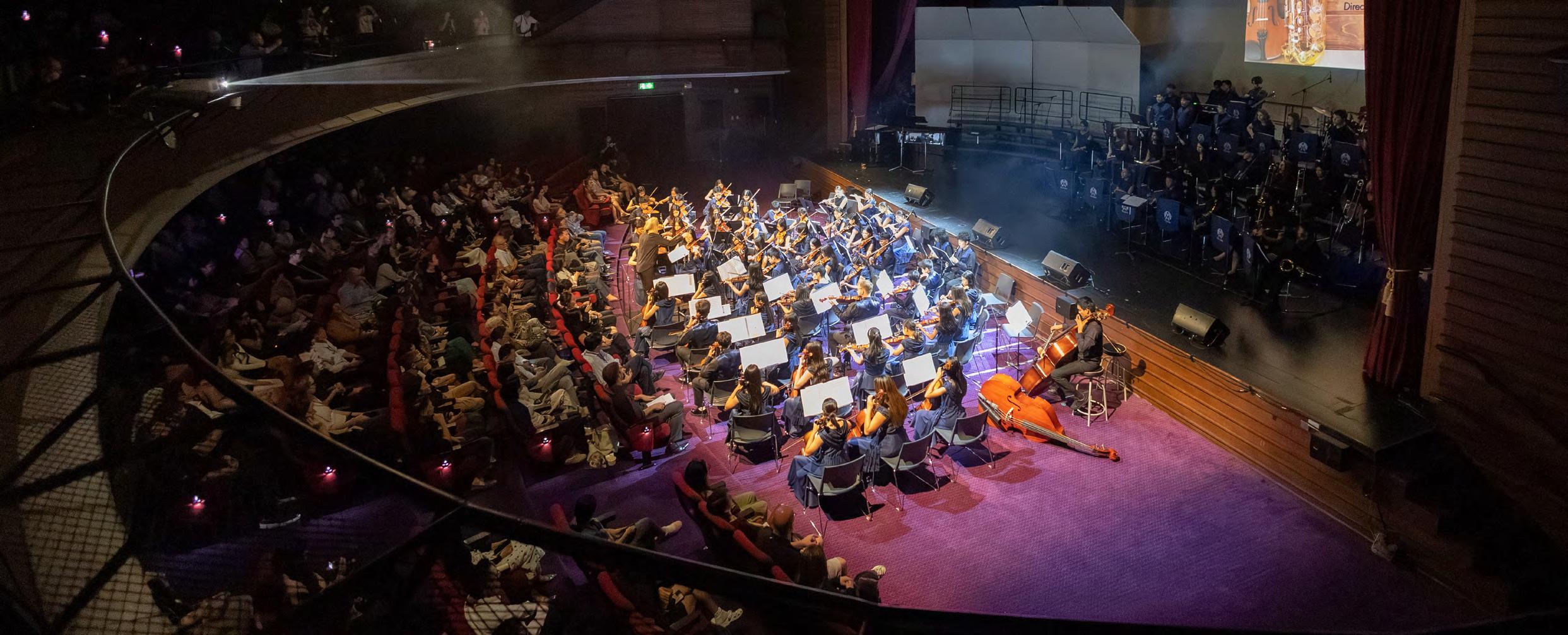
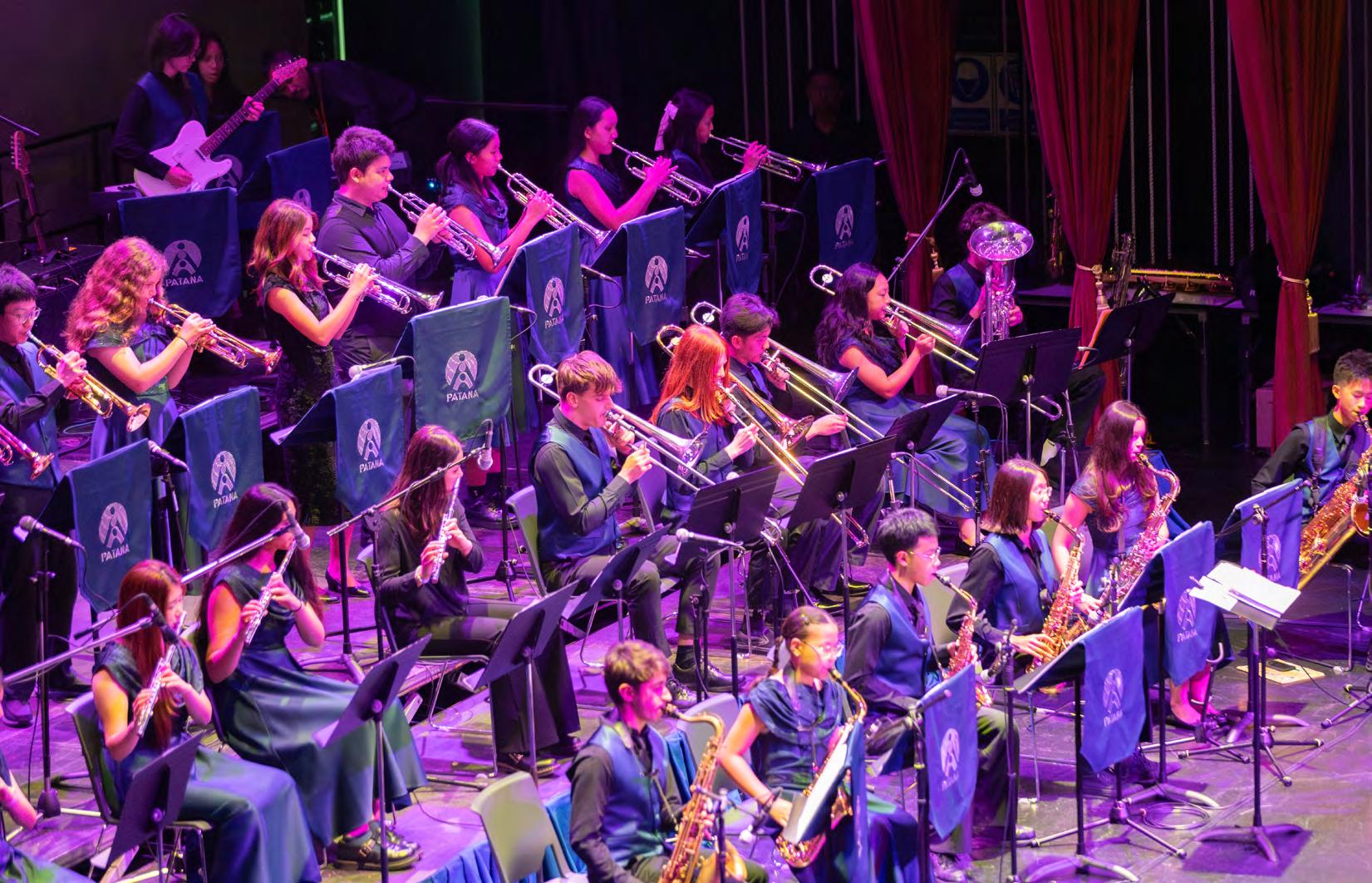
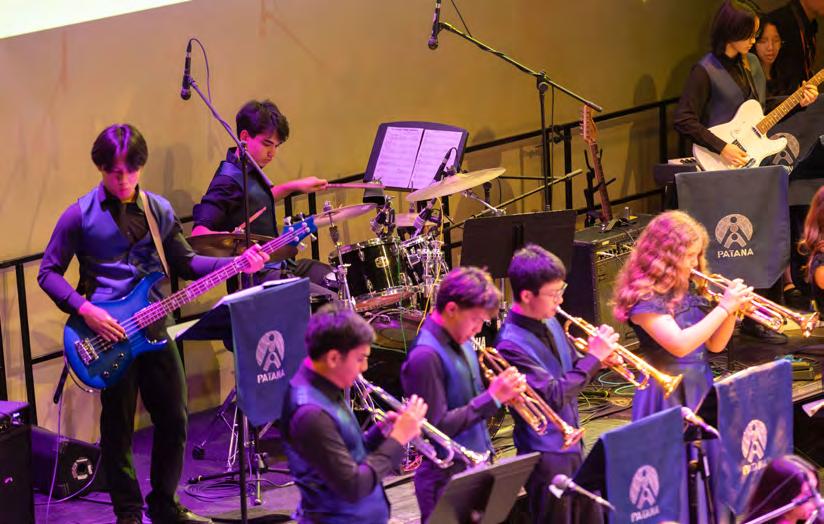
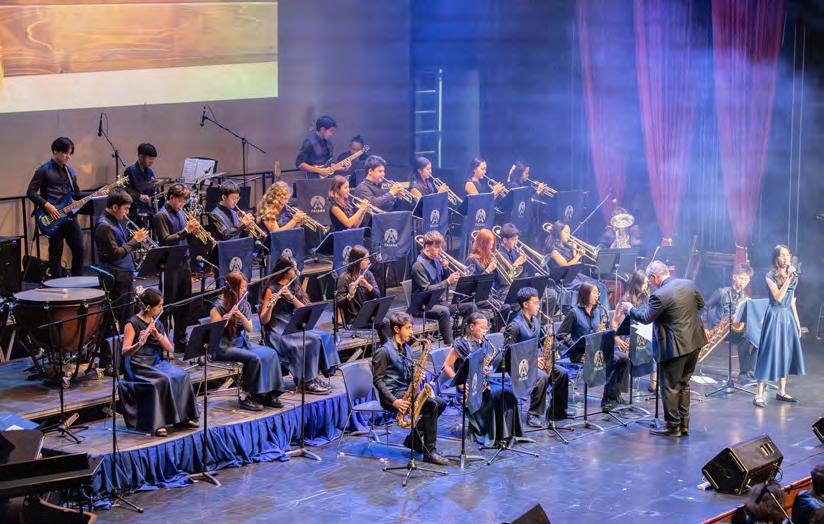
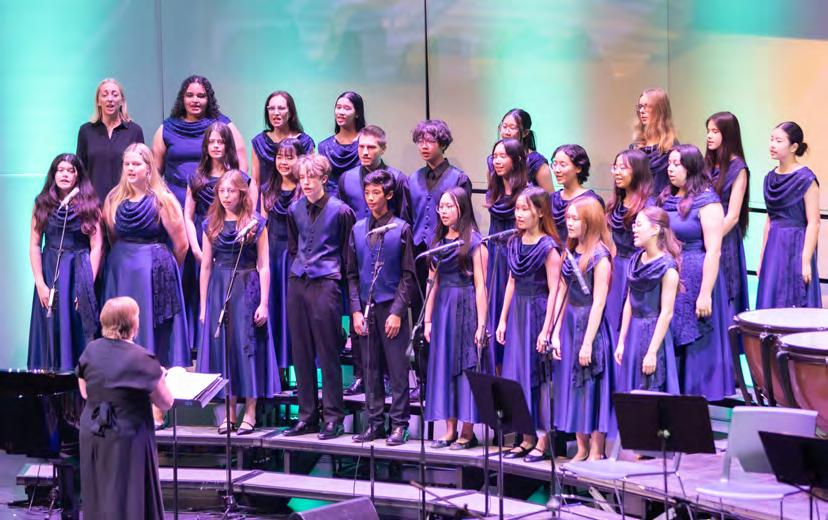
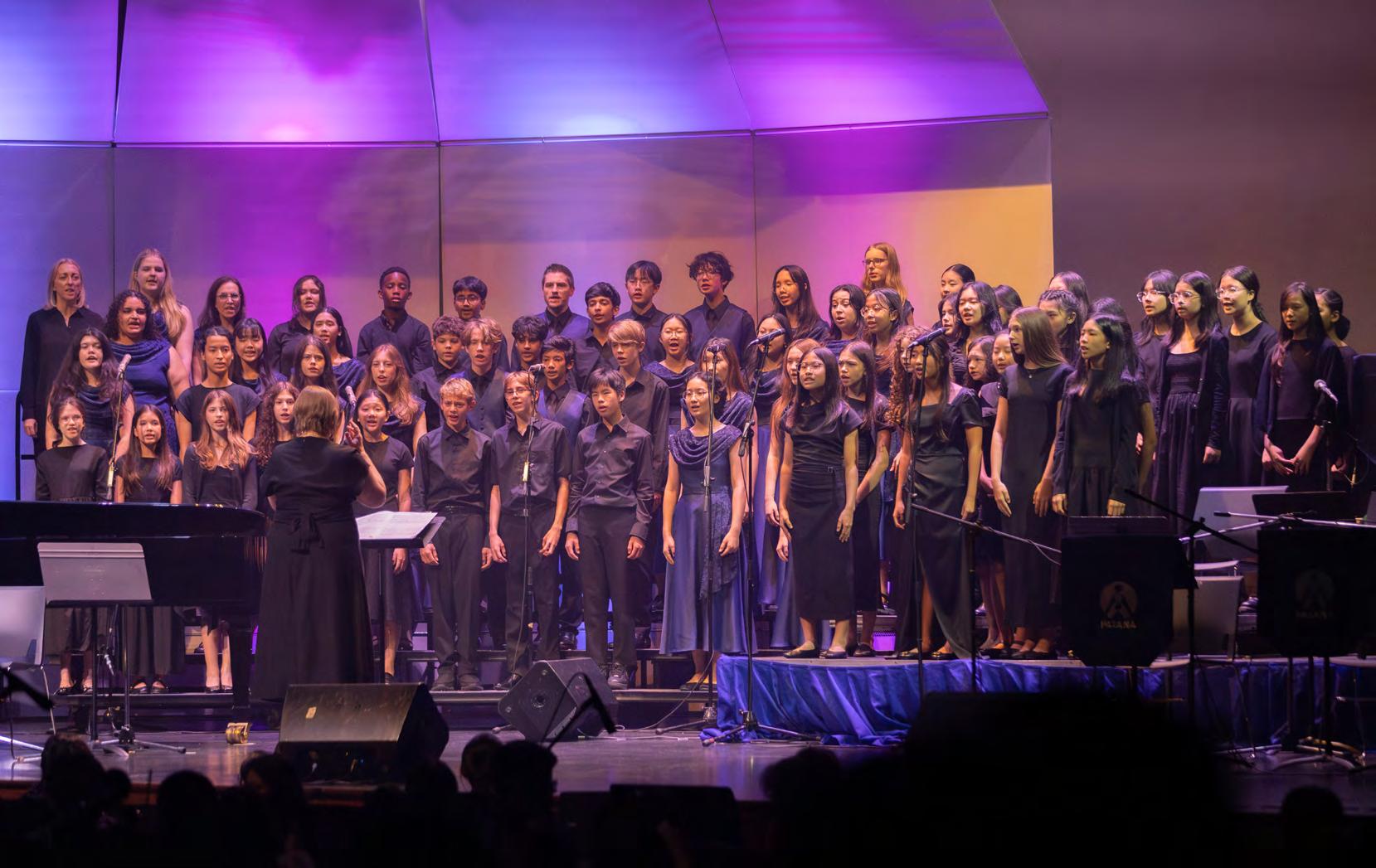
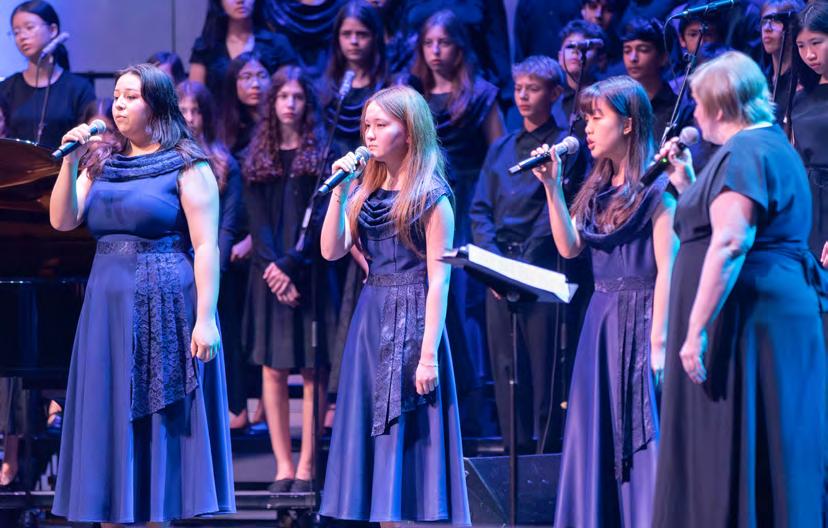
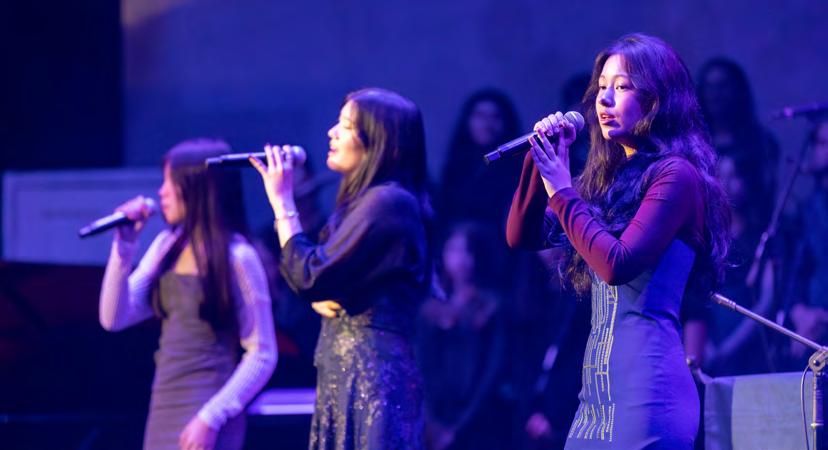
Patana Classics Meets Jazz brought together musical groups, each with their own rehearsals and routines, to share one stage. It was a concert shaped by the teamwork, trust and the confidence that comes from performing alongside others.
Jazz players, orchestral musicians and choir members prepared in different spaces, but they worked towards the same result. When the concert began, those separate efforts came together. What the audience saw was the outcome of steady practice and shared responsibility, rather than a single final performance.
Backstage, students experienced familiar pre-concert moments. Instruments were checked. Voices warmed up. Quiet conversations filled the space. These moments happened out of sight, but they were an important part of the eveningreminders that performance is as much
about preparation and support as it is about being on stage.
“Those small moments are what stay with you,” said one singer later. “Not always the performance itself, but the way everyone comes together around it.”
When the performers finally stepped into the light, nerves gave way to focus. What followed was a culmination of weeks of rehearsal, where self-doubt led to encouragement and gradual transformation.
For the Jazz Ensemble, that transformation had been particularly personal.
Learning to Sit With Uncertainty
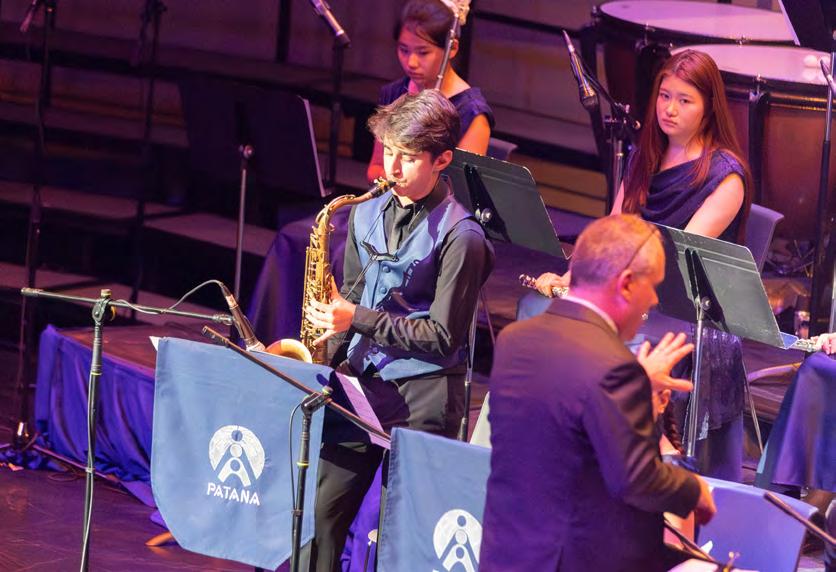
Jazz demands a relationship with unpredictability. Improvisation, by its nature, leaves no room for certainty, and for many students, that was both the challenge and the lesson.
Basile, a pianist in the Jazz Ensemble, described joining the group as an exercise in vulnerability. “Before joining the Jazz Ensemble, I focused mainly on what I was most comfortable with,” he said. “Being part of the group changed that.”
At first, the experience was overwhelming. “I didn’t know where I belonged or what I was doing,” he recalled. With limited confidence in reading and playing chords, he struggled to keep pace. But the ensemble did not leave him behind. Peer support, informal mentoring and hours spent in practice rooms slowly reshaped his understanding of both music and collaboration.
Before his first major solo, a fellow musician helped him work through chord progressions. “It was incredibly useful,” Basile said—one of those moments where learning becomes communal.
Over time, jazz taught him something more lasting than technique: how to make peace with imperfection. “I have messed up countless times, especially in improvisation, where there’s no way of knowing how it will come out.”
What mattered, he learned, was not the absence of mistakes, but the response to them. In one performance, after a wrong note threatened to derail his confidence, he made a decision mid-phrase. “I learned to make people believe my mistake was intentional,” he said. “That shift in mindset made me more willing to take risks.”
The lesson stayed with him. “It’s okay to make mistakes,” he said—even, he noted, for the most experienced musicians. As Mr Larking, one of the ensemble’s guiding teachers, often reminds students: “Leave your ego at the door.”
A Second Home in Sound
For Eames, a departing senior preparing to graduate, the Jazz Ensemble represented something harder to articulate. “The unequivocally unique community that I found through the Jazz Ensemble,” she
said, “is what I’ll miss most.”
Over four years, Thursday rehearsals became a space where expectations softened and authenticity took their place.
“There was always a comfort in knowing that every Thursday, I had a place where I could come home and make music with like-minded people.”
Looking back, Eames said she valued the in-between moments most: “The little interactions right before we go on stage, or the laughter after someone definitely messed up a run-through—those are the moments that stick out.”
When she first joined, however, her relationship with music was transactional. Singing felt like a job, measured by accuracy and technique. “I believed the value in each of my performances was equated to hitting each note perfectly.”
That pursuit of perfection came at a cost. Her love for singing began to fade-until jazz reframed the experience.
“Jazz taught me to see the true joy in creating, which always comes with its imperfections,” she said.
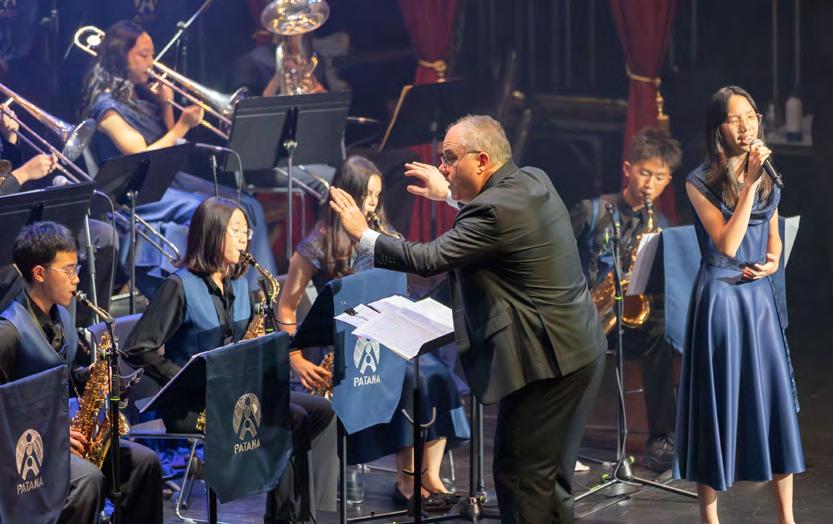
Advice from a teacher crystallised the shift: he would rather “listen to me crack during I Have Nothing,” she recalled, “than listen to me sing without any soul.”
To her younger self, Eames would offer a gentler directive now: have fun, stay present, and keep listening.
Beyond One Ensemble
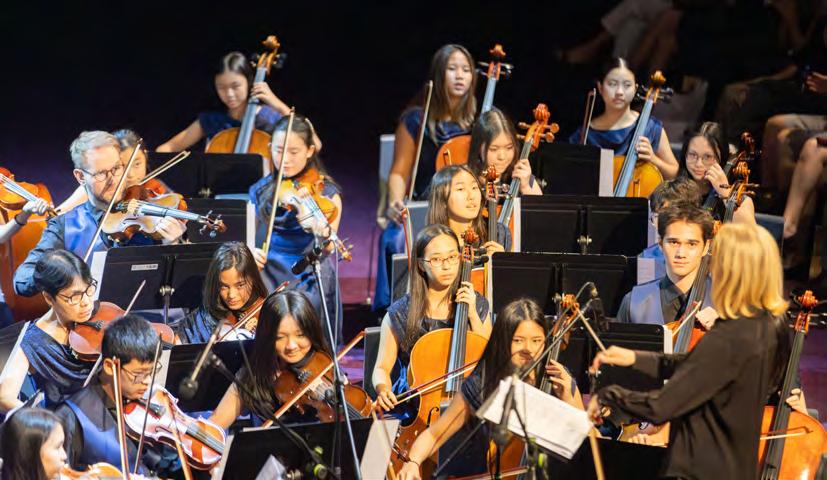
While jazz formed the emotional core of the evening, Patana Classics Meets Jazz was never meant to belong to one group alone. Across the stage, orchestral musicians and choir members were navigating their own versions of the same experience: anticipation, doubt, and eventual pride.
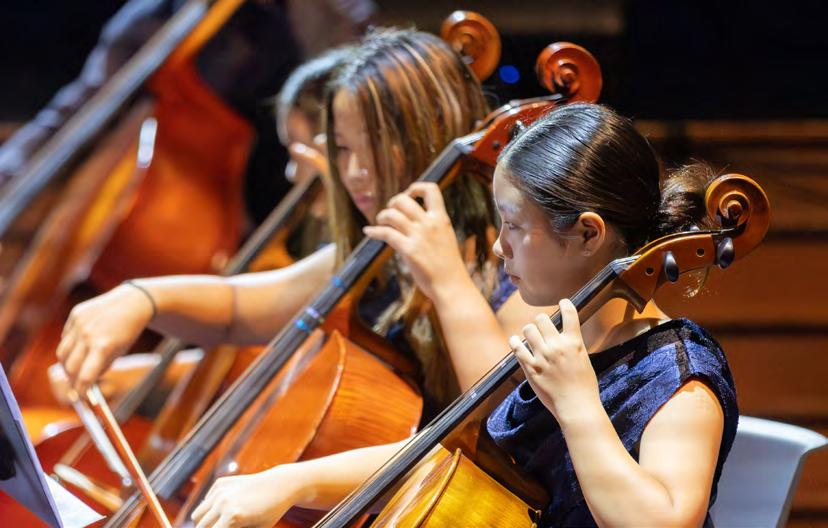
For the Orchestra, the journey began weeks earlier with rehearsals marked by precision and pressure. As the concert approached, anxiety crept in—especially during the final run-through, when the weight of expectation sharpened every mistake.
Once the performance began, the tension eased. The Orchestra played with cohesion and energy, a reflection
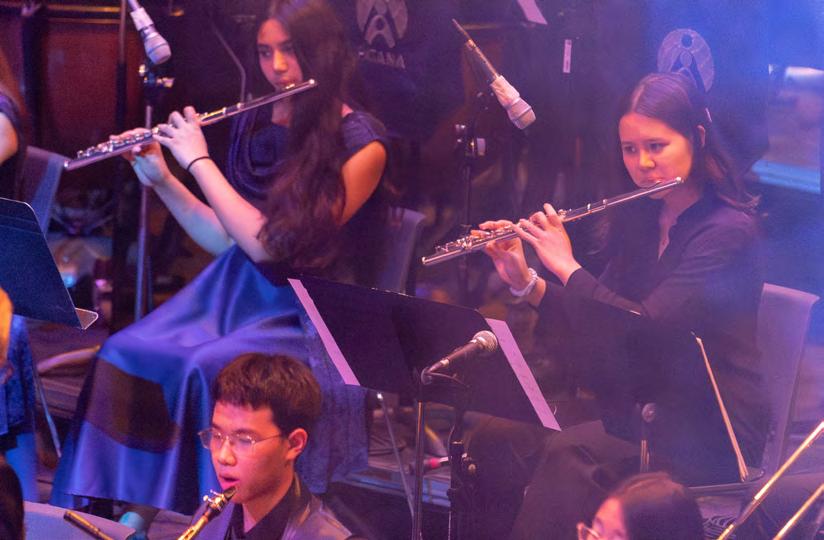
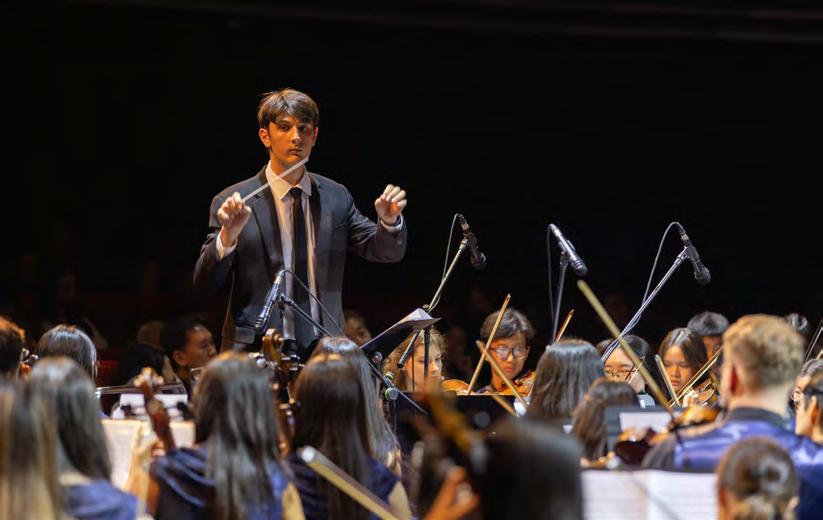
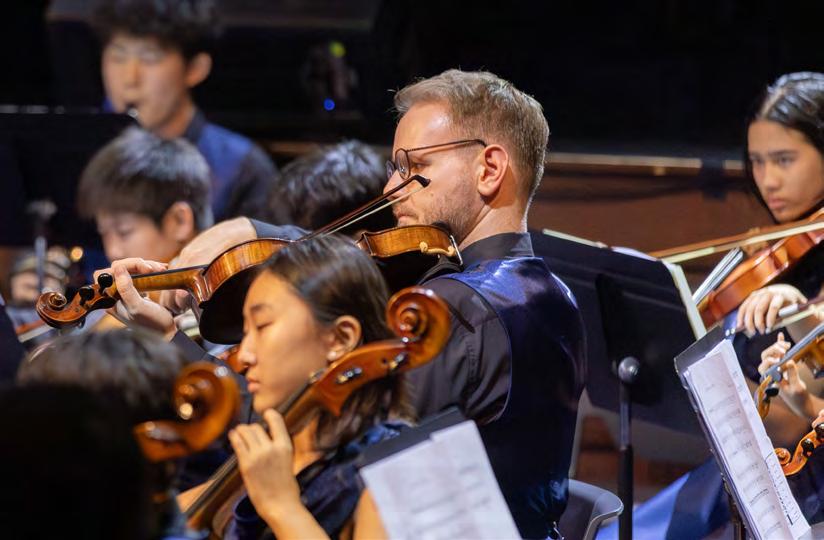
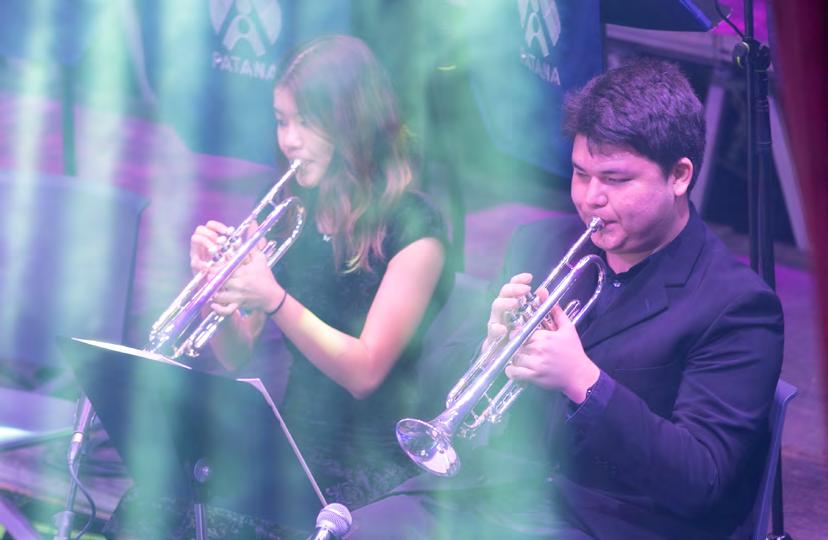
of collective effort rather than individual virtuosity. A highlight came when student conductor Basile Humbert stepped onto the podium to lead the orchestra in a composition of his own—an unmistakable moment of trust and leadership.
Performing alongside the choir added complexity. Unexpected key changes, sections that needed adjustment, and rhythmic challenges in pieces such as The Ground demanded adaptability. Listening-careful, intentional listeningbecame essential.
“We weren’t doing it alone,” one Orchestra member reflected later.
“Practising together over time made the performance feel less frightening.”
That sentiment echoed throughout the Theatre.
Voices Joined
For the Choir, the concert offered both challenge and affirmation. Song selections pushed performers to blend across genres, culminating in the closing piece, Oscar Winning Tears, where Jazz Band, strings, and voices converged.
The result was powerful not because it was flawless, but because it was unified.
“Rehearsing with such a talented group pushed me to listen more carefully and adapt,” one Choir member said. Performing in front of an audience transformed nerves into momentum-and, eventually, confidence.
What Remains
After the applause faded and instruments were packed away, what lingered was not just the memory of sound, but of shared experience. Jazz improvisation, orchestral discipline, and choral harmony had each offered different paths toward the same understanding: music is not about control, but connection.
Patana Classics Meets Jazz was ultimately less about where classical met jazz, and more about where students met one another-through uncertainty, growth, and trust.
Long after the final note faded, that collective spirit is what remains.
CREATING CURIOSITY, AWE AND WONDER IN THE NURSERY
By Gemma Price, Nursery Teacher and Sarah Murgatroyd, Nursery Teacher and Foundation Stage Assistant Leader of Learning
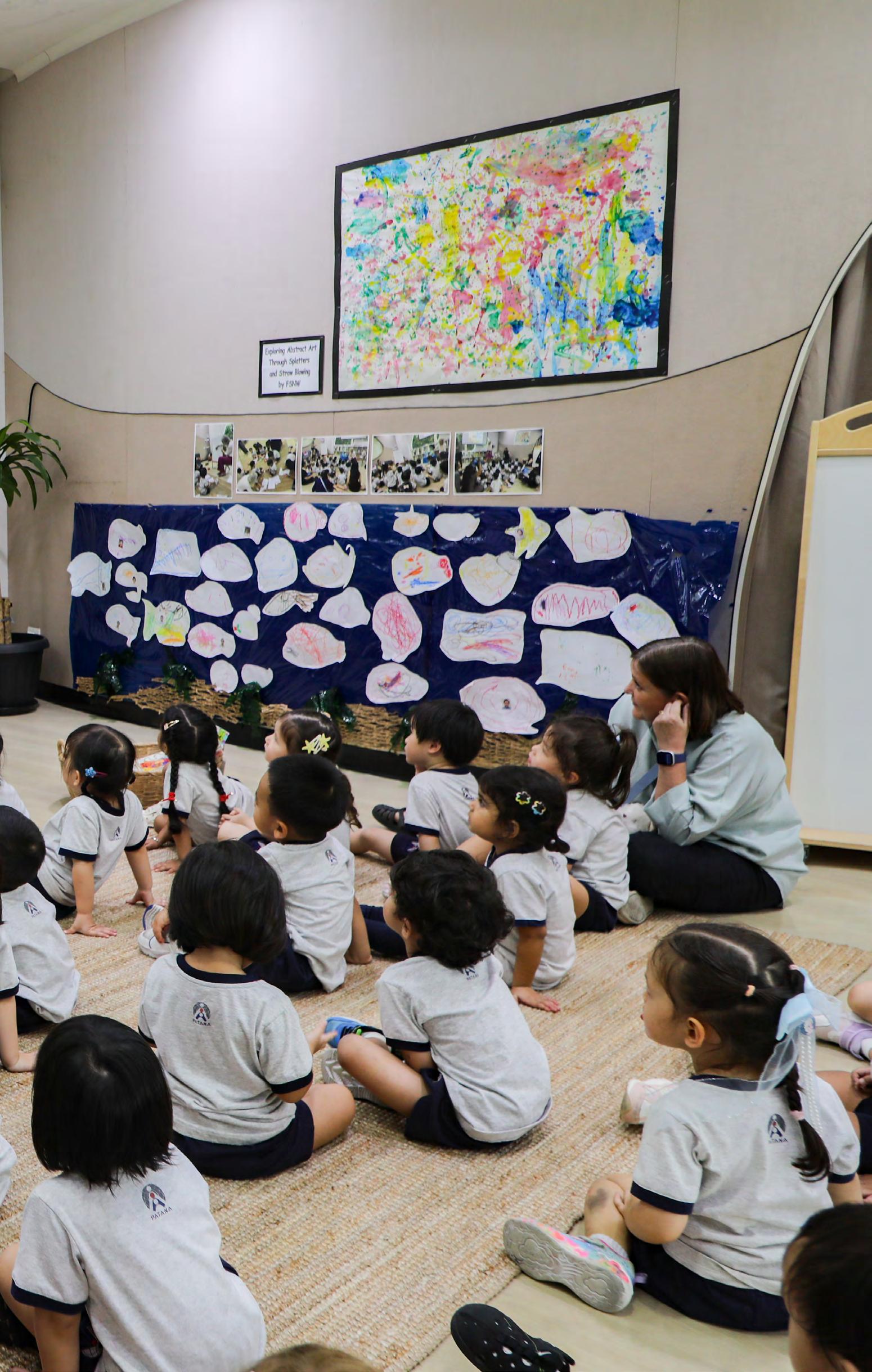
As educators at Bangkok Patana School, we are guided by our Teaching and Learning framework, and we have been collaborating on Portraying the Curriculum in our Nursery. We have been focusing on Tom Sherrington’s WalkThru’s Play and Practice to support our teaching and learning, which has supported us in shining a lens on our pedagogical practice.
Magical learning happens in our Nursery when teachers notice what sparks student’s curiosity, and we enable
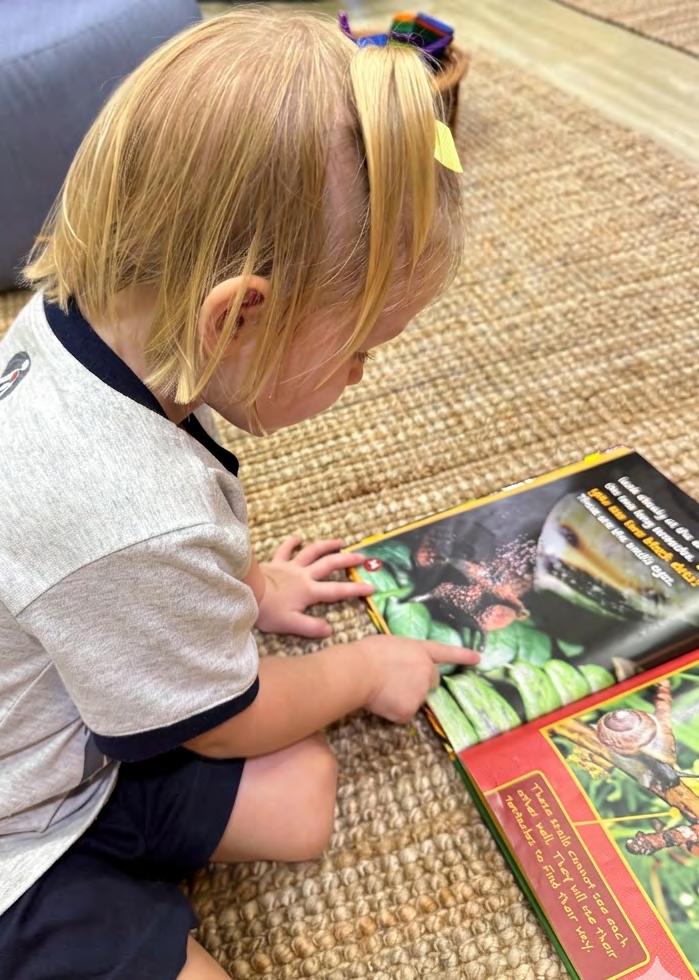
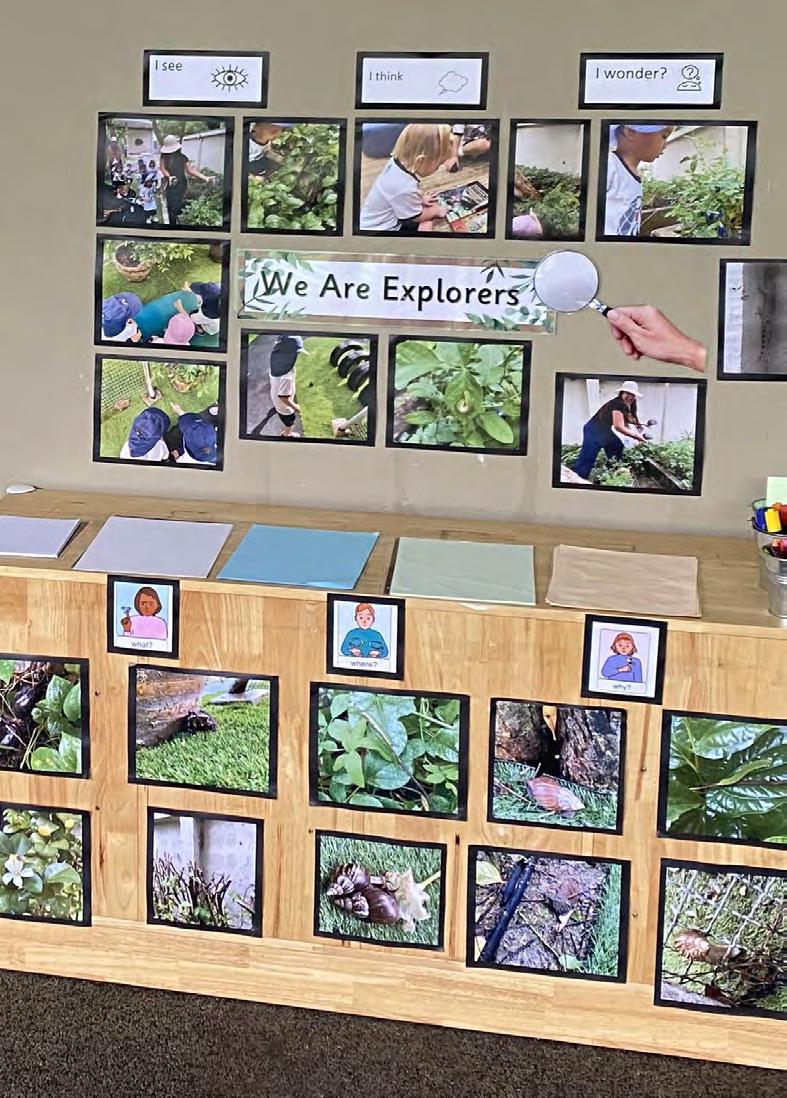
students to follow their interests. During the rainy season, the Nursery children enjoyed exploring our natural outdoor learning environment. To their surprise, they discovered many snails around the garden. Scaffolding the children’s learning in the moment, supported the children in finding out more about where snails live, what they like to eat, how they move, and why snails have shells to keep them safe. We encouraged our children to look, to think and to wonder as part of the learning process. Giving children time to
share their ideas enabled them to further develop critical thinking skills through back-and-forth interactions with peers and teachers. New vocabulary was introduced and children made links in their learning. To answer the children’s ’wonderings’ and questions, they became young researchers by using non-fiction books and technology to find out more information.
Our core book ‘ The Very Hungry Caterpillar’ has been a popular text this year and the children were fascinated by the process of the caterpillar changing
into a butterfly. We portray the curriculum by creating “a variety of rich, relevant and engaging experiences”, so there was great excitement when three boxes appeared in our Nursery classes. Using their looking eyes, the children discovered Leopard Lacewing caterpillars munching on green leaves.
By caring for the caterpillars and keeping their habitat clean, the children developed respect for living things. After some time, the children witnessed the transformation from caterpillar to chrysalis,
they then eagerly waited for the butterflies to emerge. Singing our special caterpillar song, we released the butterflies into the Nursery garden with a huge cheer as they flew away. The experience deeply enriched their understanding of life cycles. This exploration supported early scientific thinking, helping children recognise growth and change in the natural world.
In Nursery, we focus on children using their senses to explore the world around them and develop the Characteristics of Effective Learning through their play. As
active learners, the children showed a “deep drive to know more about their world”.
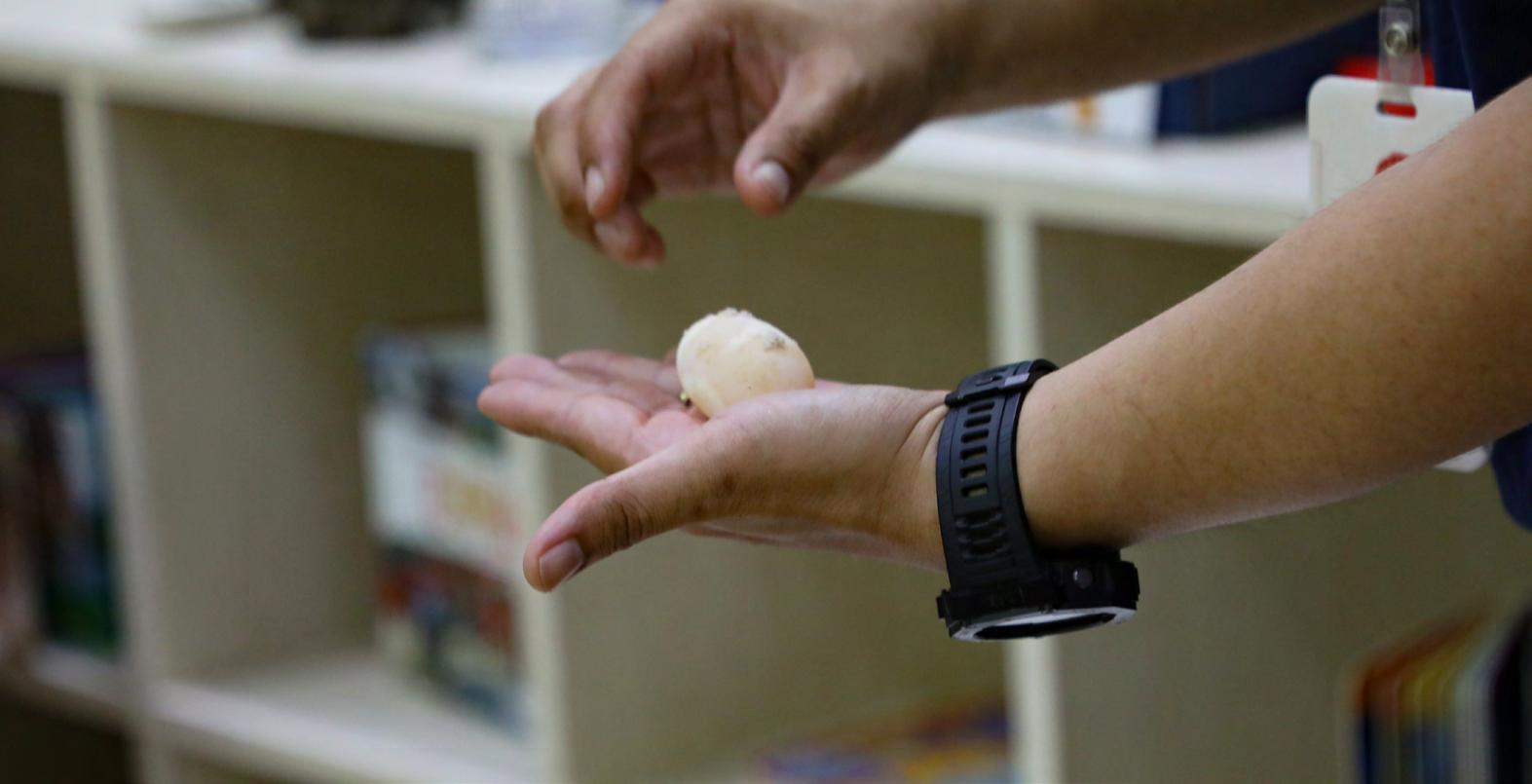
The children are fortunate to learn within an urban oasis and recently discovered an egg next to our turtle pond. The twinkle in children’s eyes, the excitement in their voices and the spring in their steps highlighted their curiosity as their faces lit up with awe and wonder! It was magical when they noticed something amazing and could not wait to share it with the Nursery team and their friends. The big question was,
LEARNING
how could we take care of the egg? We sought advice and expertise from our Secondary Science Faculty and they were delighted to take us all on an exciting learning journey.
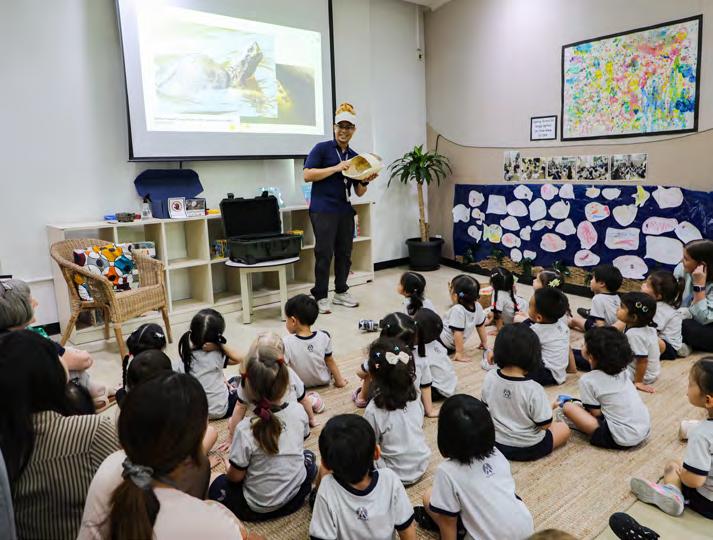
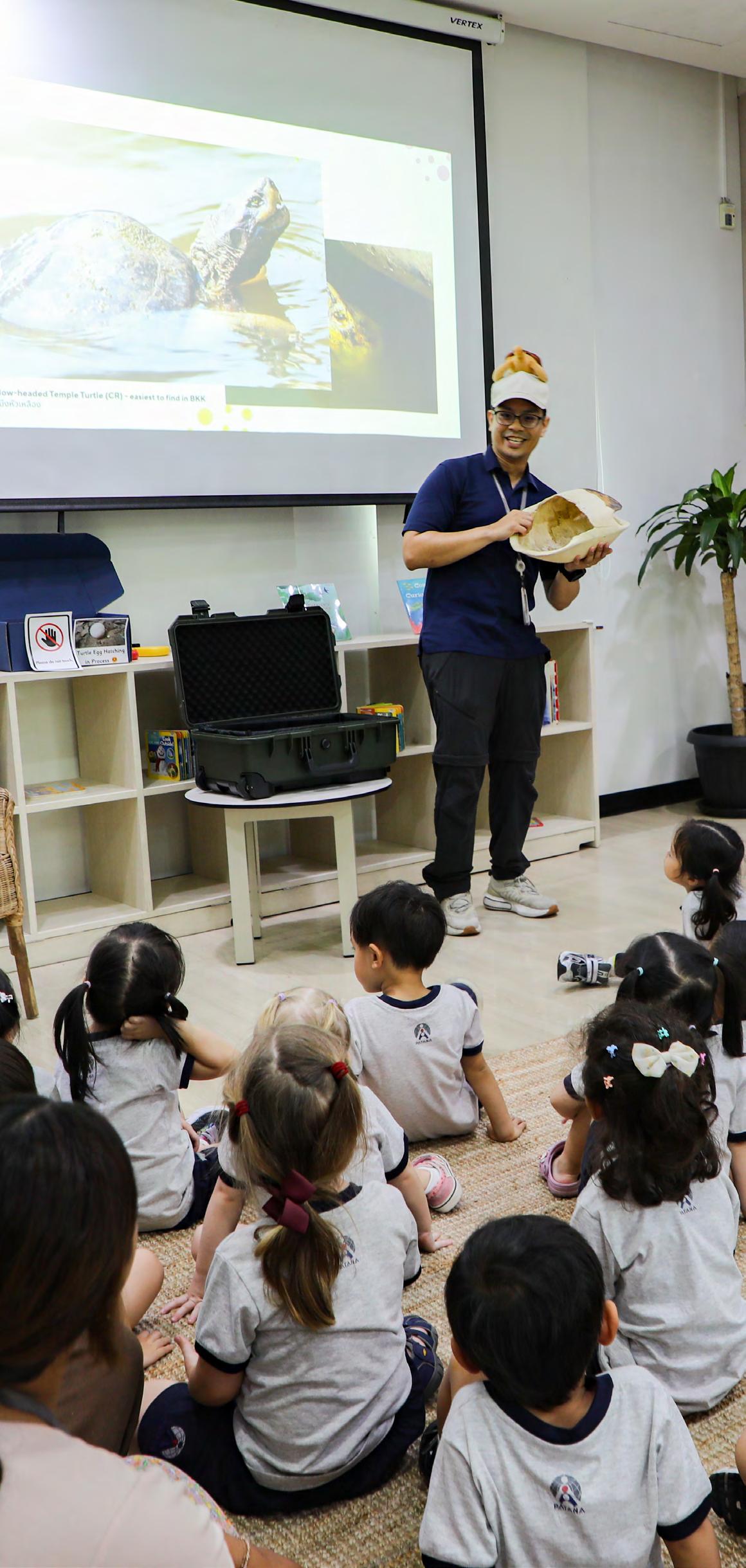
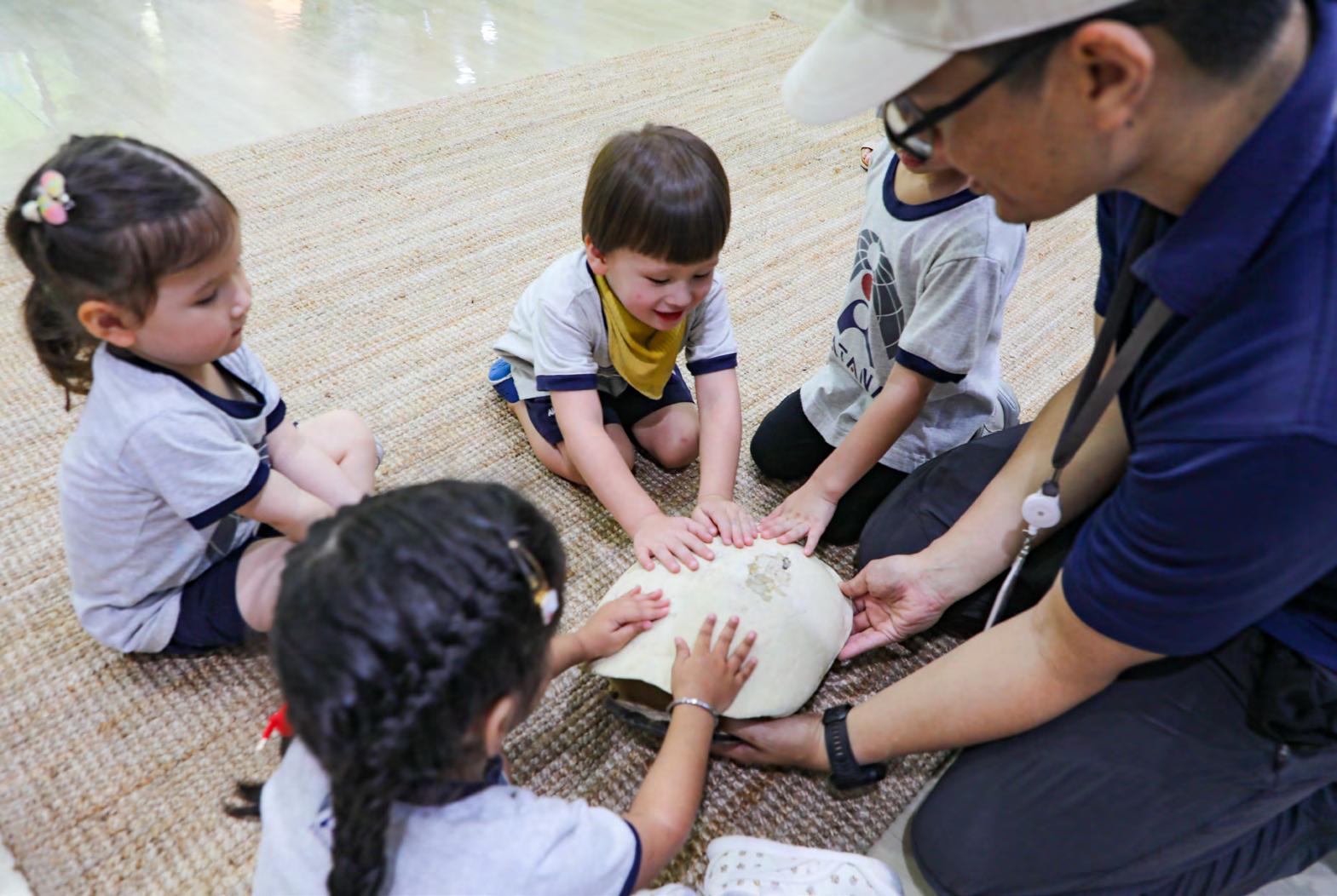
We were shown how to use technology to create a safe and warm natural environment for the egg. This included an instrument that measured the humidity by putting the probe into the sand around it. We were not sure if the egg contained an embryo in the early stages of development, so we were shown how to put it on top of a special bright light to see inside. Through hands on experiences, the children have learnt more about the turtles that live in our pond. Tanawat (Turbo) Ubonrat, our Outdoor Ed Technician, created more excitement as he revealed the 50 year old turtle shell hidden in his large case,
and the children had the opportunity to explore it closely.
We value and promote student agency in our Nursery. It is a powerful learning tool as children are intrinsically motivated to learn. The amazing learning experiences we have witnessed this year were sparked by children’s interests and curiosities about the natural world. In our modern world, it is important that we encourage children to take time to notice, to see, to think and to wonder. We were thrilled to receive affirming comments from Nursery parents sharing that these experiences were impacting the children as individuals and learners.
“Lately she is very interested in nature, she waves to snails, frogs, birds and even small insects when she is playing in her neighbourhood. She copies the animal’s



actions and sounds. I am really happy that my daughter can learn many things in Nursery.”
As a Nursery team, we are nurturing the global citizens of the future. We are inspiring them as stated in our school’s mission “to act as responsible stewards of the environment”. The children are continuing to explore our environment, and we cannot wait to see where their curiosity takes them next.
Bangkok Patana School. (2026). Standards for BangkokPatanaSchoolEducators,2026
Bangkok Patana School. (2026). Teaching and learningframework:PortrayingtheCurriculum2026
Early Education. (2021). Birth to five matters: Nonstatutory guidance for the Early Years Foundation Stage https://www.birthto5matters.org.uk
Sherrington, T., & Caviglioli, O. (2024). Teaching WalkThrus 3: Five-step guides to instructional coaching. John Catt Educational.
YEAR 13: HEXAGONAL THINKING FOR DEEPER CONNECTIONS
By Rosemary Marshall, Key Stage 3 Curriculum Leader, English
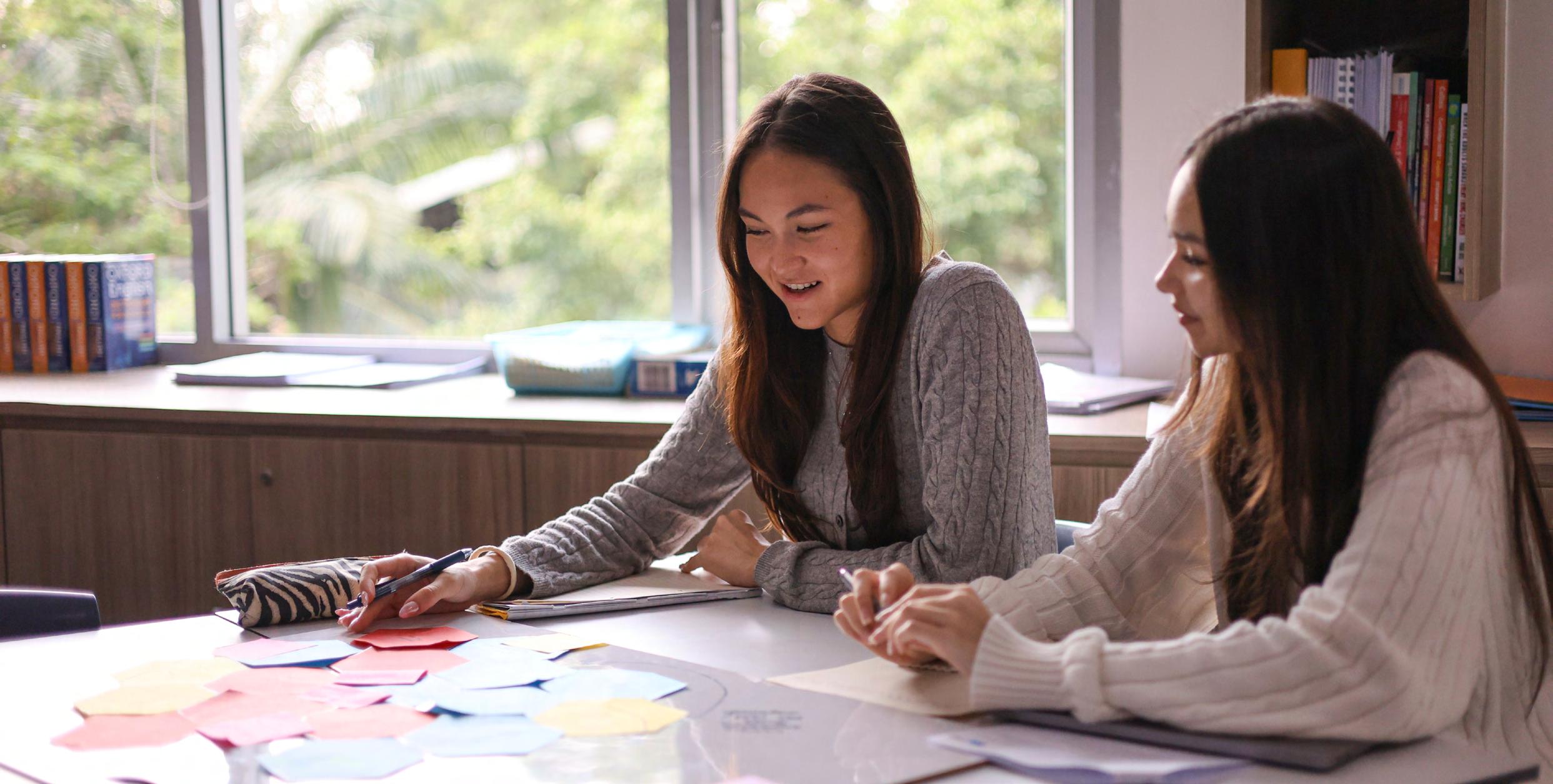
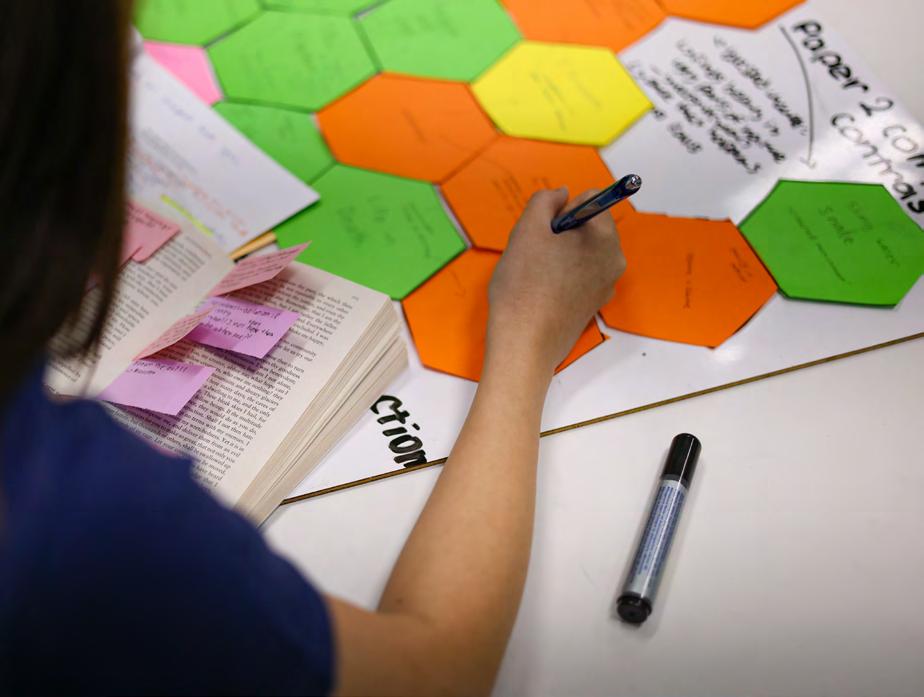
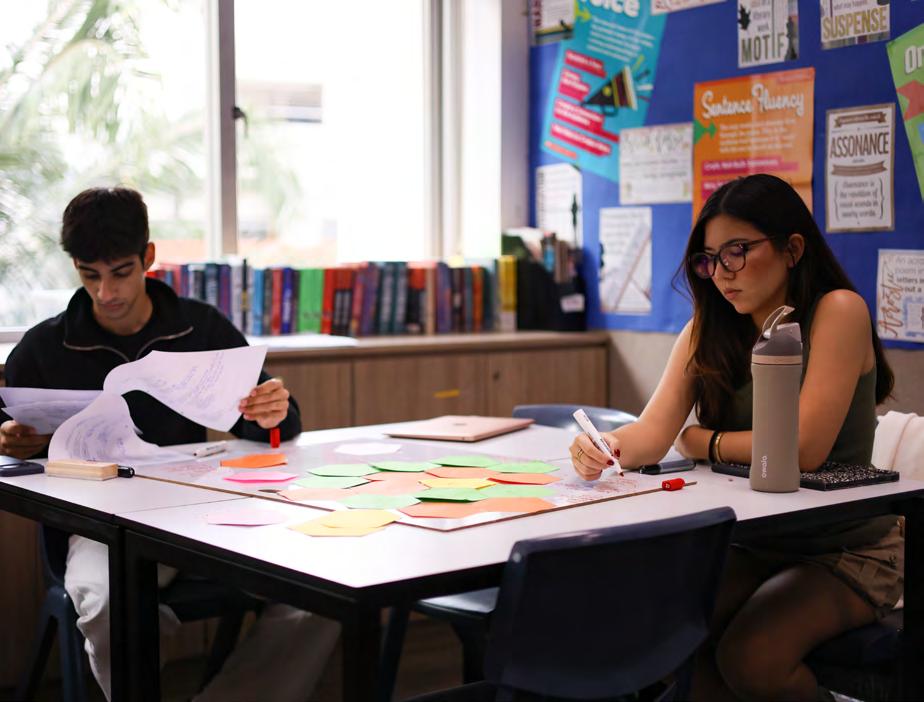
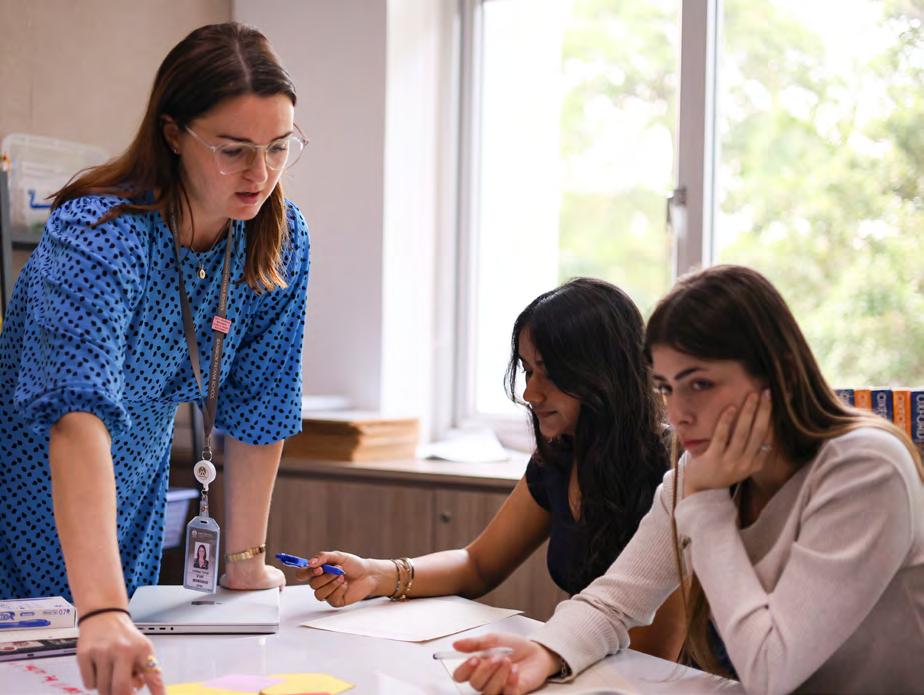
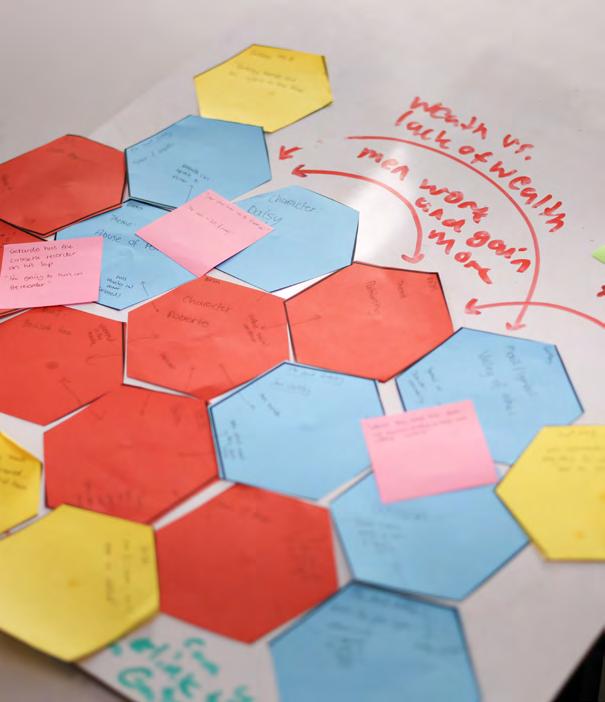
Year 13 English students have been exploring Hexagonal Thinking as a dynamic revision strategy to strengthen their textual comparative skills for IB Paper 2. This method, rooted in SOLO taxonomy (Structure of Observed Learning Outcomes), encourages students to move beyond surface-level recall and towards relational and extended abstract thinking. By physically arranging hexagons that contain self-selected key ideas, quotations, themes, or contextual factors, students are challenged to justify the links they create. By actively engaging in the challenge of identifying and justifying abstract links, students move beyond passive review and into evaluative analytical response. What makes this strategy particularly powerful is its ability to encourage unlikely connections. Students are not limited
to obvious thematic overlaps; instead, they are prompted to experiment with surprising juxtapositions. For instance, in Miss Marshall’s HL English class, when revising Frankenstein and The Rime of the Ancient Mariner, one student linked “Victor’s scientific ambition” with “the Mariner’s compulsion to tell his tale.” At first glance, these ideas seem unrelated, but the connection opened up a discussion about how both characters are burdened by knowledge and driven by forces beyond their control. Such out-of-the-box thinking mirrors the demands of Paper 2, where nuanced, original comparisons often elevate essays into the top bands.
Similarly, Mrs Tyrrell’s class applied the same strategy to Medea, Death and the Maiden, and The Great Gatsby Here, students used IB Paper 2 past
questions as prompts to shape their hexagon clusters. One group connected “Euripides’ manipulation of language” with “Ariel Dorfman’s use of silence” in Death andtheMaiden. Though unconventional, this pairing led to a rich exploration of how playwrights use communication—or its absence—to exert power and control. Another group linked Gatsby’s “green light” with Medea’s “chariot of the sun,” sparking debate about how symbols of transcendence can embody both hope and destruction. These unexpected connections pushed students to think creatively, sharpening their ability to craft original comparative arguments.
After the activity, students translated their hexagon configurations into challenging exam style questions and structured essay plans. This step is crucial: it bridges the
gap between exploratory discussion and analytical writing. By rehearsing the skill of justifying connections orally, students build confidence in articulating comparative arguments under timed conditions.
The benefits of this approach are clear:
• Active learning: Students physically manipulate ideas, which aids memory and engagement.
• Critical vocabulary: Repeated justification sharpens the precision of analytical language.
• Unlikely connections: The openended nature of hexagonal thinking encourages risk-taking and originality, vital for high-level comparative essays.
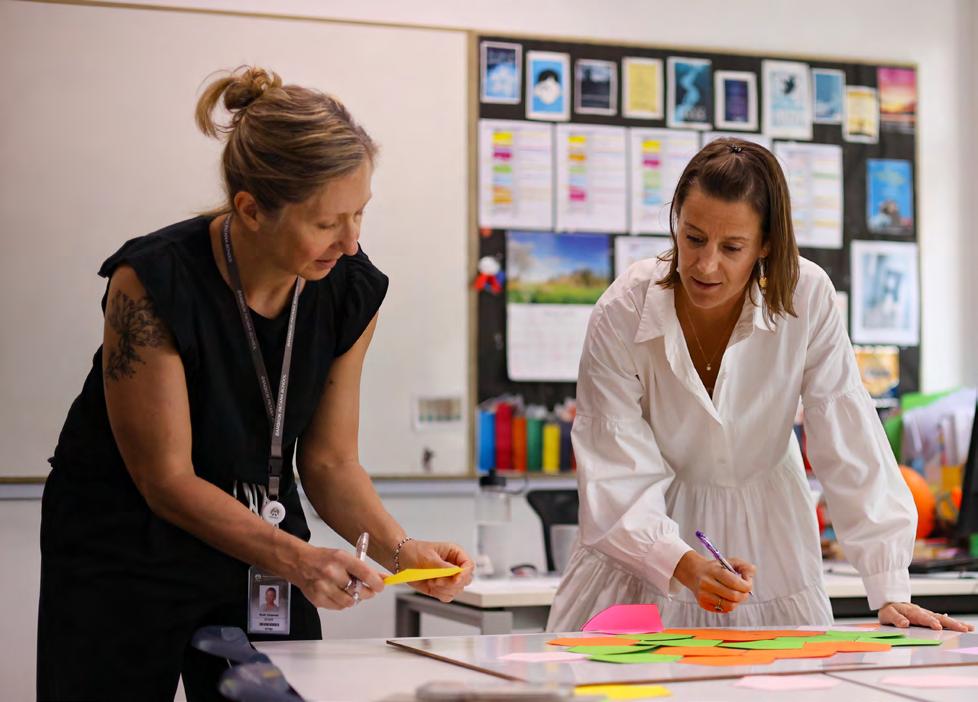
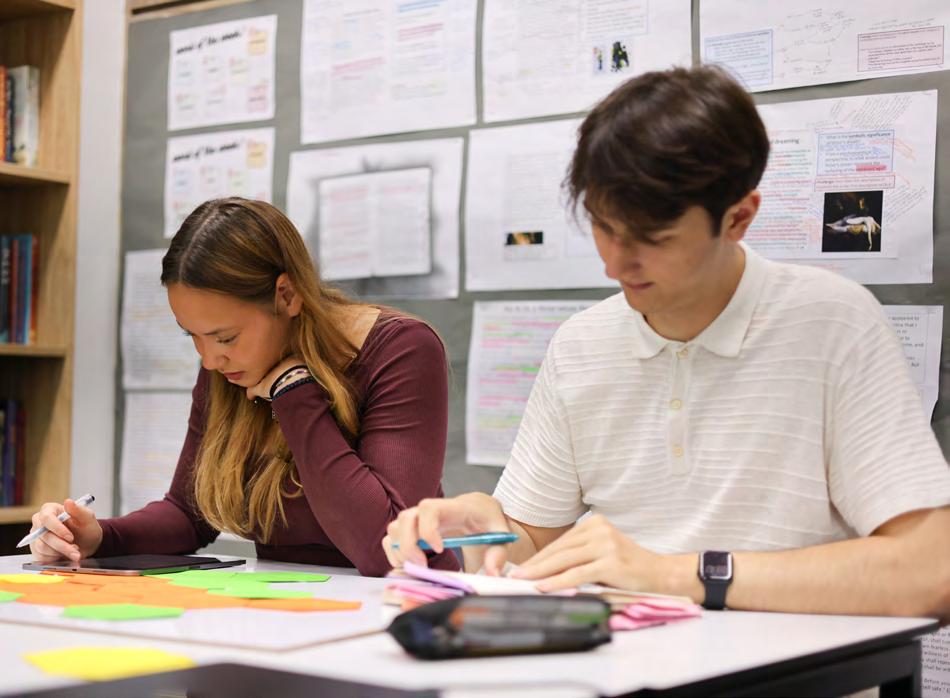
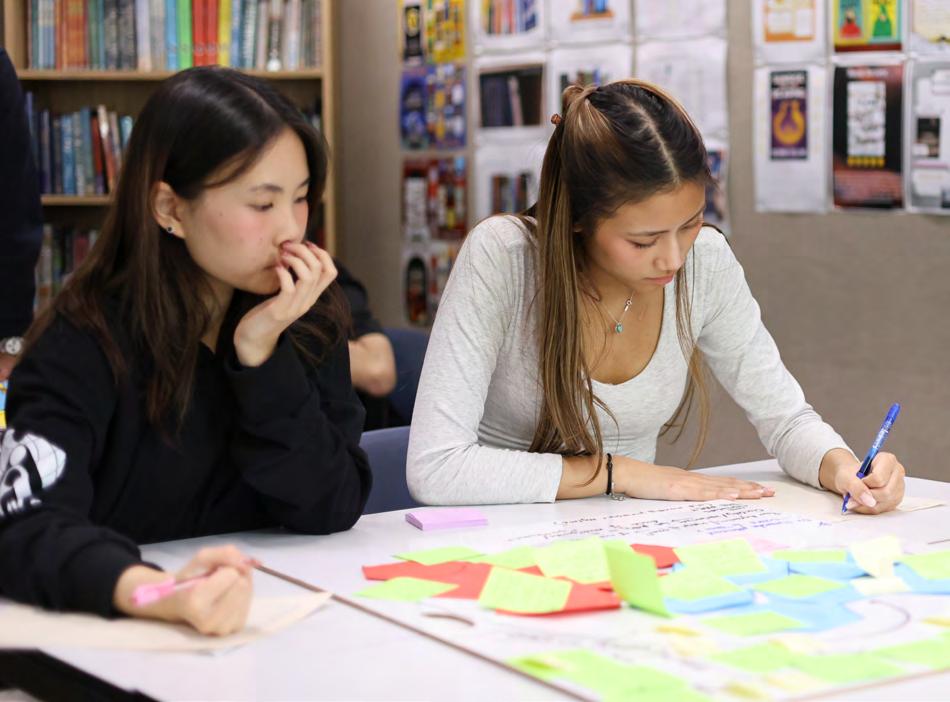
• Text-specific insight: Students move beyond generic themes to explore how writers use form, language, and symbolism in distinctive ways. Hexagonal thinking encourages justifying challenging connections.
• Exam readiness: Students practice deep thinking in real time, a skill essential for tackling unseen questions in May.
Carla, Year 13, shared:
“Usinghexagonsisanenjoyableand engagingwaytoexploretextsinamore abstractandcreativemanner.Ithelpsus formulate ideas and questions for Paper 2,whilealsoallowingustovisuallymap connectionsbetweencharactersandcore themes. These skills can be effectively transferred into our exams.”
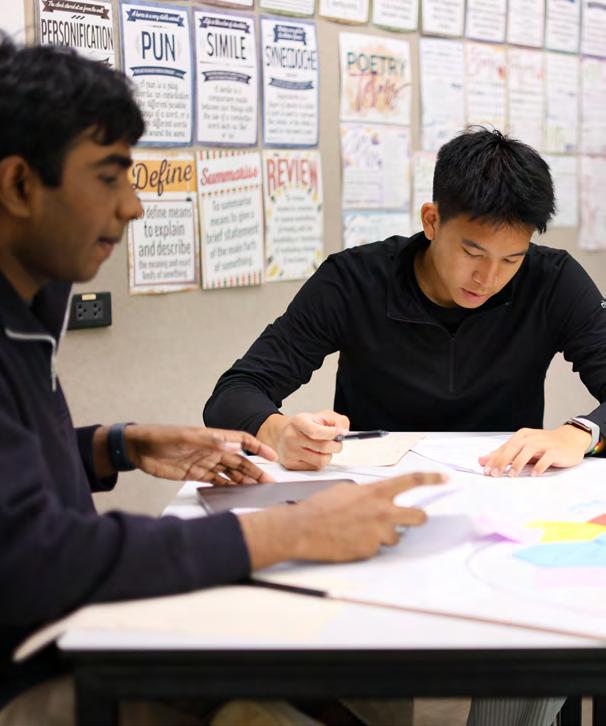
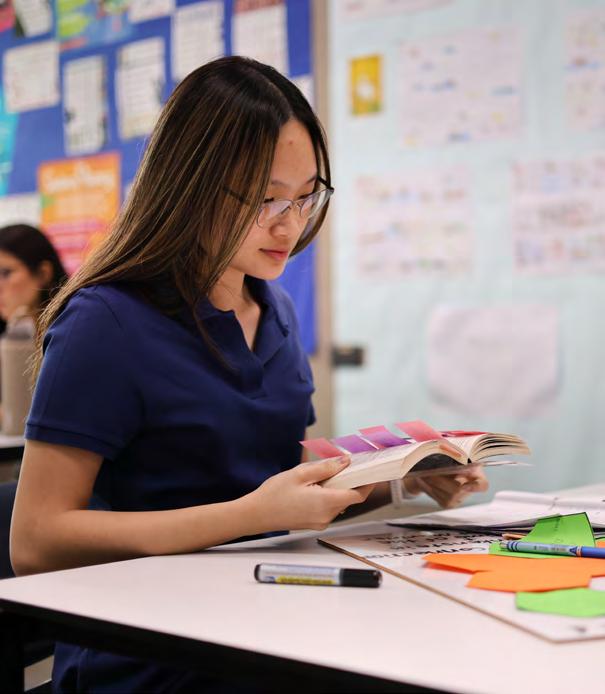
Amy, Year 13, reflects:
“It’saneffectivewaytoopenupnew perspectives regarding the two texts; teaching us to think on the spot which is an essential skill to the Paper 2 exam in May.”
Ultimately, Hexagonal Thinking, underpinned by SOLO taxonomy, equips students with the ability to construct nuanced, flexible comparisons across texts. It transforms revision from rote memorisation into a collaborative, analytical process that builds confidence and prepares them to meet the challenges of Paper 2 with clarity and originality.
Good luck to Year 13 – may your hexagons lead to bold connections and exam success!
ALUMNI STORIES LIFE AFTER PATANA


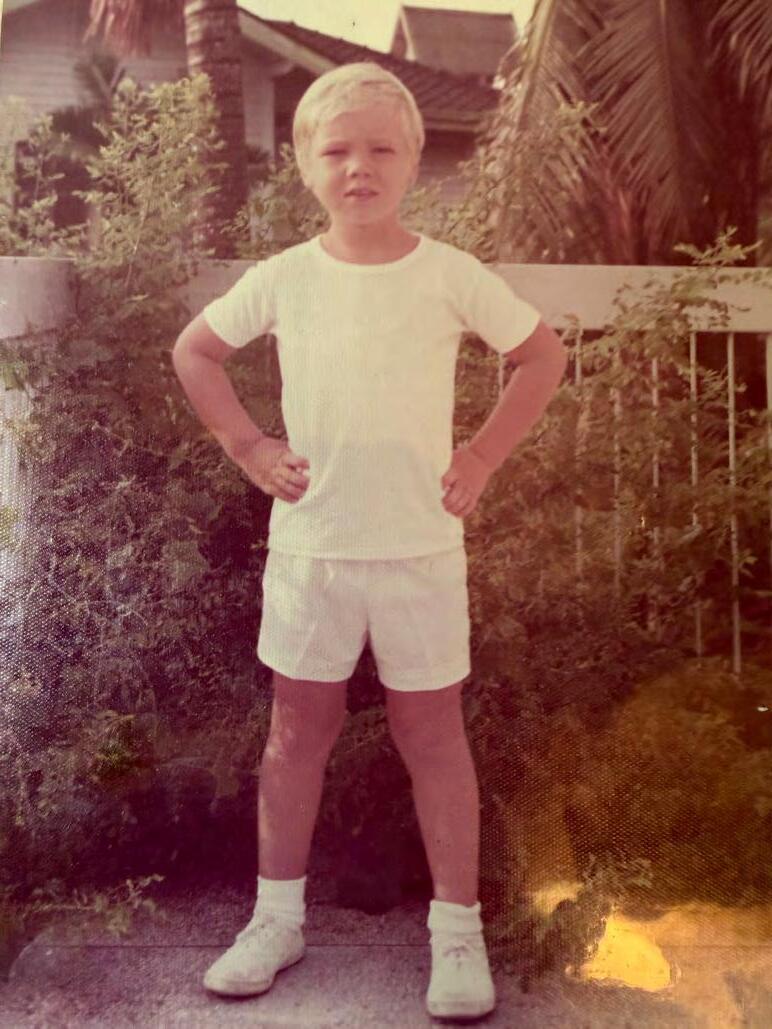
AN EARLY CHAPTER OF PATANA A CHILDHOOD IN THE 70S
For Tim Blackburn, Bangkok Patana
School is not just a place of learning but the beginning of a lifelong connection to community, culture and the wider world.
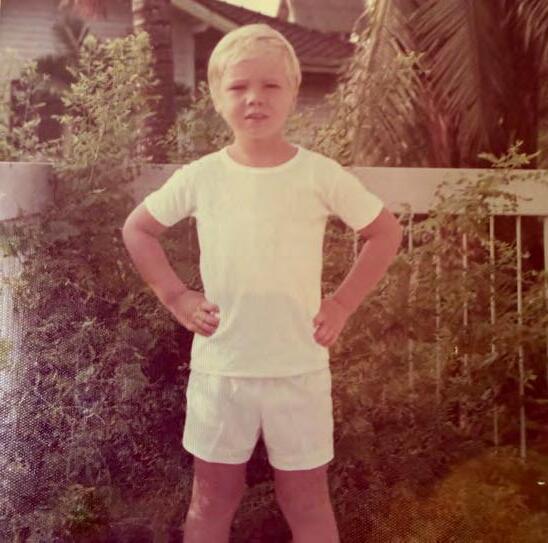
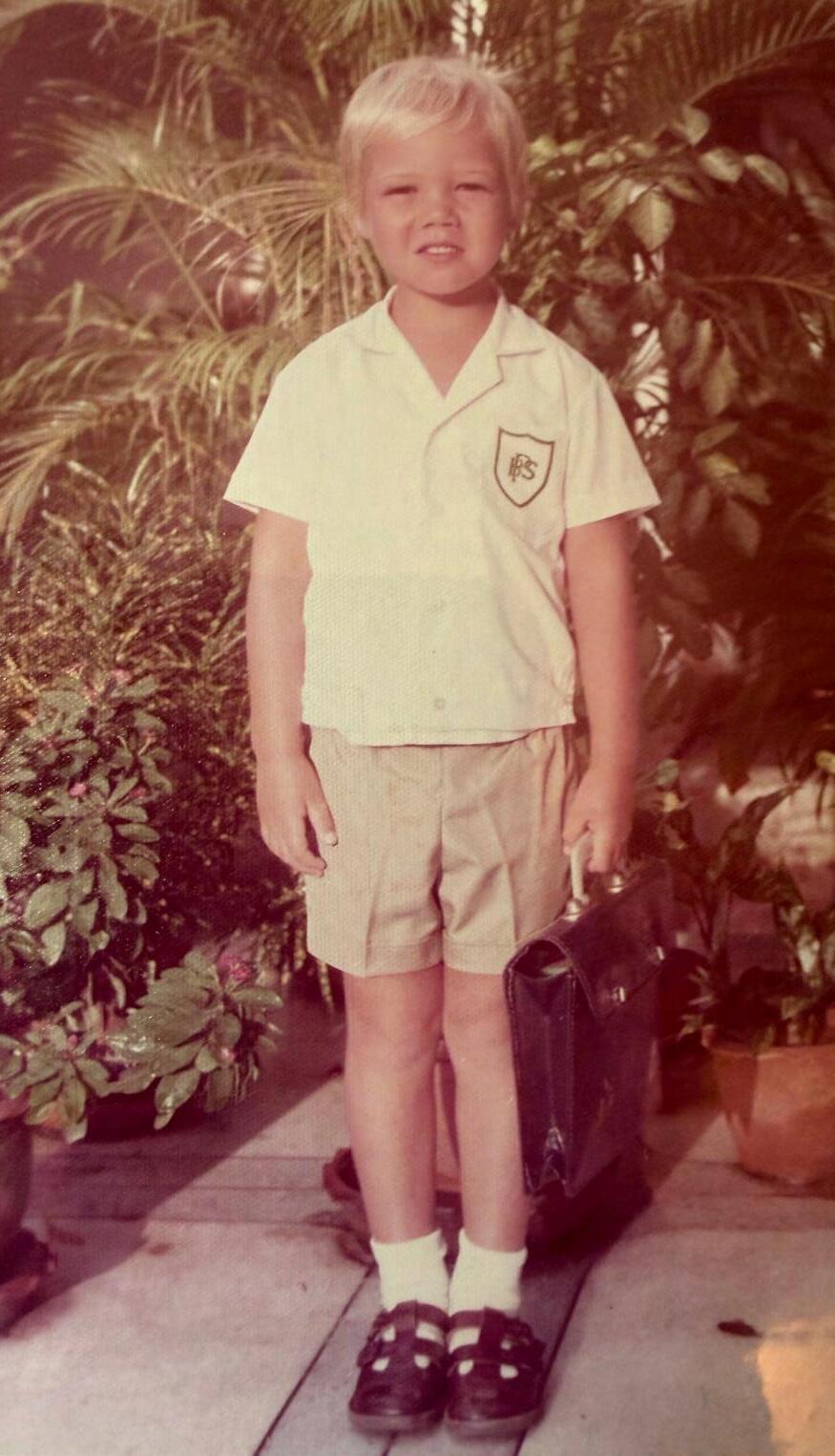
Having joined the school in 1974 at just four years old, Tim was part of a generation that helped shape the identity of Patana in its earliest years.
“I was born in Bangkok,” he recalls, “and attended Jean Fraser’s kindergarten before continuing to Patana with many of the other children from ‘Auntie Jean’s’.” It was a natural progression into a young but ambitious international school that would leave a lasting imprint on his life.
A School Above the Klong
Tim’s earliest memories are vivid and deeply rooted in the physical and emotional landscape of the school. “The wooden classrooms above the klong,” he says, “and the excitement of walking across to the opening of the new Stuetzel Building.”
Bangkok in the early 1970s was a unique place to grow up. Weekends were spent exploring Hua Hin, Pattaya or travelling “up country,” while the backdrop of global events quietly shaped daily life. “As a child, you’re largely oblivious,” Tim reflects, “but I do remember the military coups,
occasional curfews and the presence of US military during the Vietnam conflict.”
Despite this, his school experience was rich, joyful and full of discovery.
Milk Cartons, Sports Days and Spartans
A typical school day was simple yet full. Early mornings gave way to busy lessons, creative projects and lively break times. “Break time was all about trays of Foremost flavoured milk cartons, chocolate or strawberry, as I recall.”
Art stood out as a favourite, with students
GLOBAL CITIZENSHIP
creating crafts tied to cultural celebrations, from Christmas decorations to loy kratongs. There was also a strong sense of friendly competition. “Inter class sports rivalry was keen,” he says. “And sports day was always a highlight.”
Perhaps most memorable were the swimming galas at the British Club, where students were divided into teams with classical names. “I remember the pride of being a Spartan,” he shares.
People Who Shaped the Journey
Behind these memories were influential figures who helped define Tim’s experience. Headmaster Duncan Lawson stands out as a charismatic and ambitious leader. “He was a huge character, mischievous and really set the tone for the school.”
Equally memorable was Claire Gibson, the school librarian. “She presided over this cool, quiet treasure trove of books,” Tim says. “Our families have remained lifelong friends.”
These relationships, along with the school’s diverse community, played a key role in shaping Tim’s worldview. “Patana was incredibly international,” he explains. “It taught tolerance, curiosity and a genuine appreciation for different cultures.”
A Foundation for a Global Life
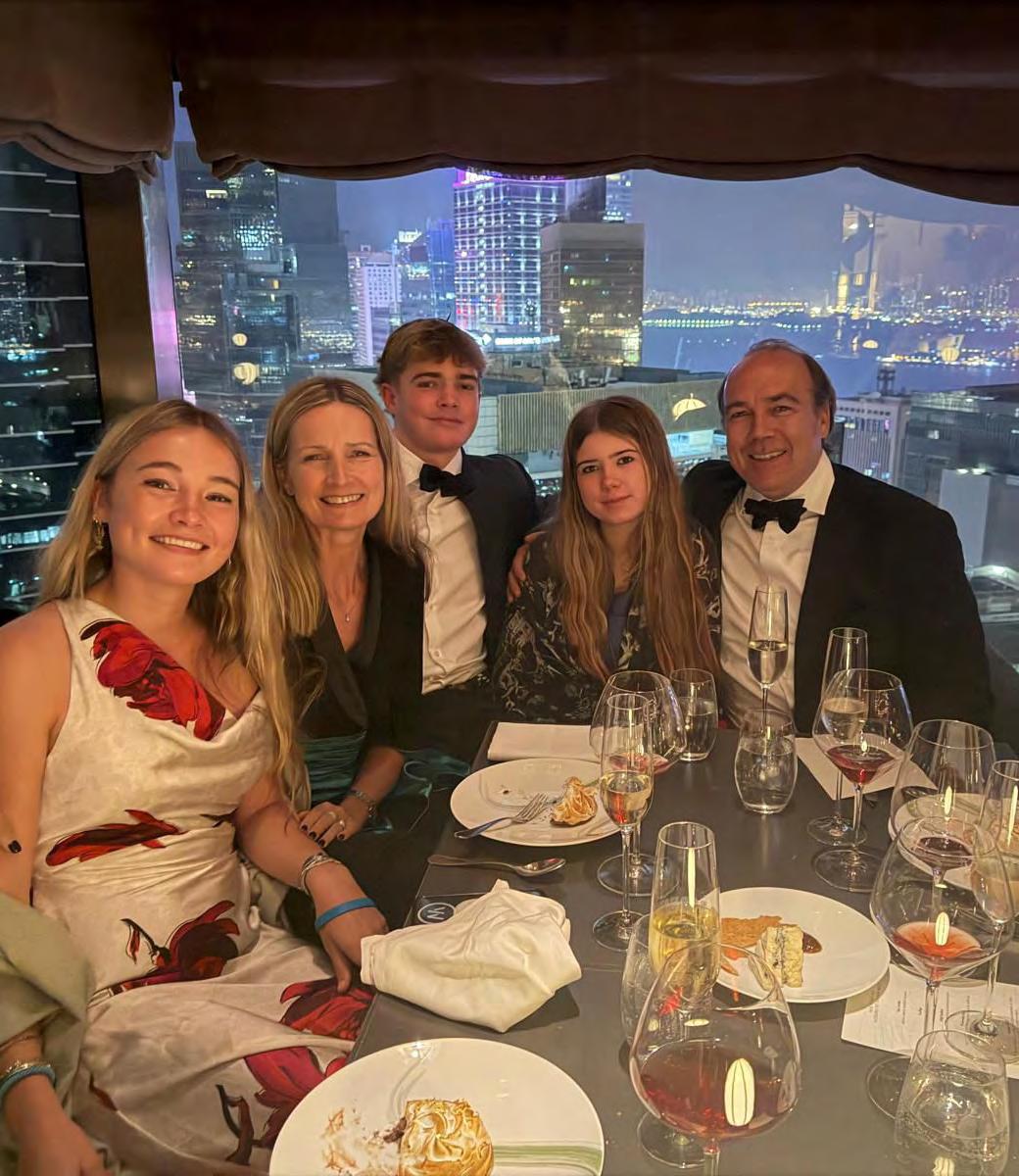
At the age of 10, Tim left Patana for boarding school in the UK, later attending Sherborne and then Cambridge, where he studied Modern Languages. His career has since taken him across the world, from Sydney and Singapore to Rio de Janeiro and Hong Kong, where he is now Chief Executive of Swire Properties.
Looking back, he sees a clear thread connecting his early years at Patana to his global journey. “A global outlook, openness and curiosity were all forged at Patana,” he reflects.
Though the campus today is vastly different from the one he remembers, Tim believes the essence of the school remains unchanged. “The facilities are unrecognisable,” he says,
“but the values and the school’s role in the community have remained constant.”
A Pioneering Spirit
How would he describe the spirit of Patana in those early days?
“Pioneering, ambitious, international.”
It is a spirit that continues to resonate, even as the school celebrates its 70th anniversary. For Tim, being part of that early chapter is a source of pride. “Patana opened my eyes to the wider world,” he says. “It gave me an appreciation of people and cultures that has stayed with me throughout my life.”
A Message for the Next Generation
His advice to current students is simple but meaningful:
“Embrace every moment of the Patana experience, academic, extracurricular and social. It is a unique environment that prepares you not just for exams but for life as a global citizen.”
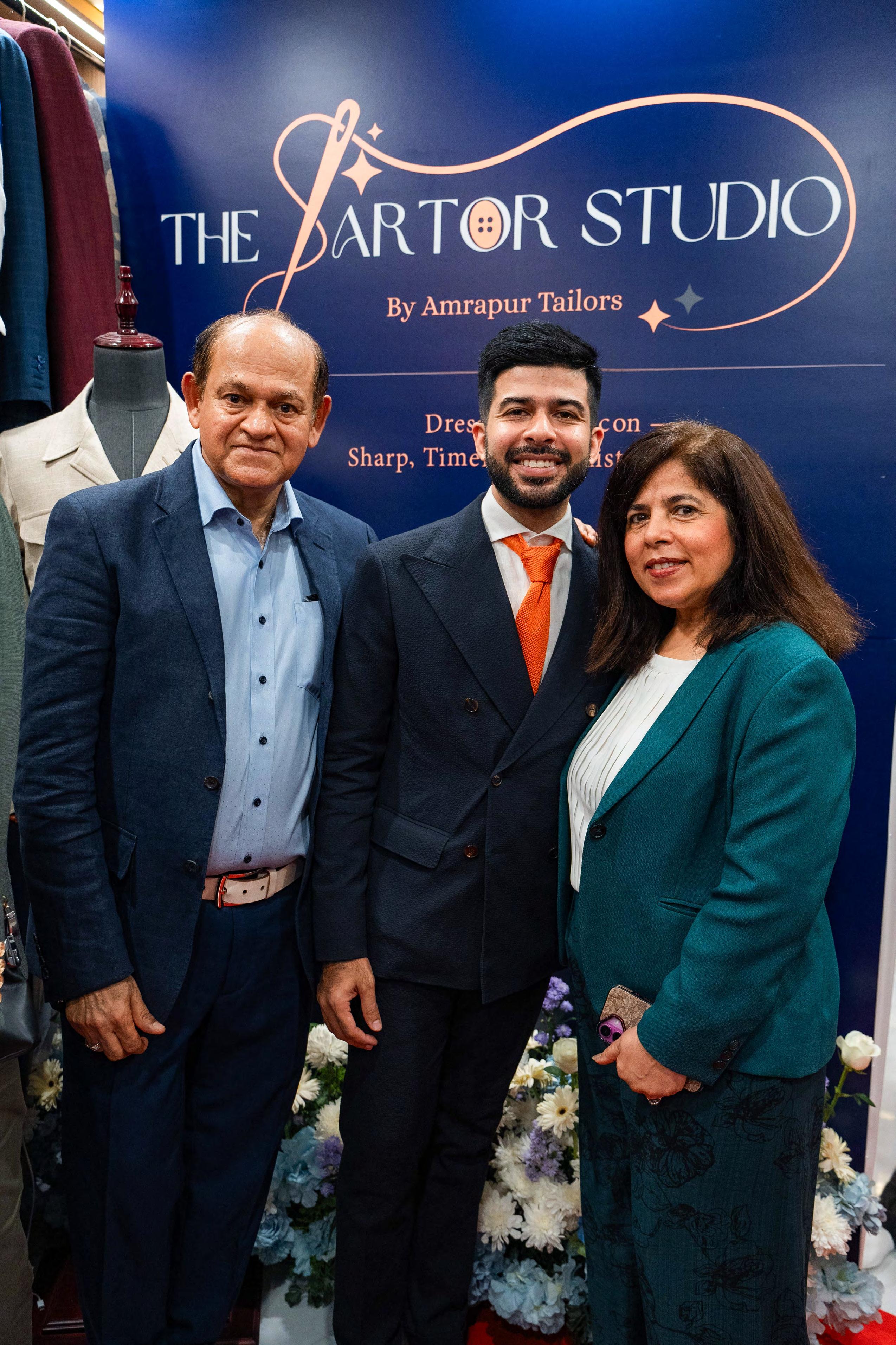
‘We are a heritage tailor, not an old tailor’:
the three generation family keeping bespoke tailoring alive since 1953