
Rosemary THYMES ™ FALL 2022 A Rosemary Beach POA Newspaper • rosemarythymes.org BUILDING COASTAL RESILIENCY RestorationDune THE NEW MERCHANTS OF ROSEMARY BEACH GETTING TO KNOW THE NEIGHBORS LIQUID RHYTHM AND BLUES

@ c o a s t a l s o u t h w a l t o n a R o s e m a r y B e a c h ® t r a d i t i o n s i n c e 1 9 9 9 78 Main St. Rosemary Beach, FL order to go (850) 213 0521 t h e r o s e m a r y b e a c h i n n . c o m r e s e r v a t i o n d e s k : 8 4 4 . 8 6 5 . 5 7 8 3 @ t h e r o s e m a r y b e a c h i n n c o a s t a l s o u t h w a l t o n c o m 8 5 0 8 3 0 4 7 5 3 m i r i a m @ m i r i a m d i l l o n c o m a m e n i t i e s i n c l u d e c o m p l i m e n t a r y b e a c h c h a i r s + b r e a k f a s t a t T h e S u m m e r K i t c h e n C a f e t h e s u m m e r k i t c h e n c a f e c o m @ s u m m e r k i t c h e n r b


*ROSEMARY BEACH is a registered trademark owned by Rosemary Beach Holdings, LLC and is used with permission pursuant to a license from Rosemary Beach Holdings, LLC. Co ntact us today for projections and a complimentary initial clean . 888.389.3525 | www.RosemaryBeach.com - Property Listing on www.rosemarybeach.com - $750+ discounts with our Rosemary Rewards Card - Concierge Service & Unlimited DVD Rentals - Discounted Owner Referral Commissions - Earn up to $1,000 referring homeowners to rental - Two Free Owner Cleans per year - Complimentary Fitness Center & Racquet Club Access - Owner App and Web Portal to manage bookings - Complimentary listing on VRBO/HomeAway - Venue Space Rental Discounts - Discounted Owner Referral Commissions - Shoulder and Off-Season Special Event-Driven Rentals Homeowner Advantages E X C L U S I V E E X P E R I E N C E D I F F E R E N C E in Property Management the

ROSEMARY THYMES | 4 TM PUBLISHED BY THE ROSEMARY BEACH PROPERTY OWNERSFREDASSOCIATIONKRUTZ PRESIDENT MARK BUESE VICE PRESIDENT LINDA GIFFORD SECRETARY ERIC SLUSSER TREASURER LETTYE BURGTORF TIM MARYMARTINZAHNER BOARD MEMBERS DAVID BAILEY TOWN MANAGER BRET AZZARELLI TOWN ARCHITECT ROSEMARY BEACH POA PO BOX 611010 ROSEMARY BEACH, FL 32461 CONTRIBUTING WRITERS MAGGIE JACKSON FIAMA MASTRANGELO THE ROSEMARY THYMES IS PRODUCED BY BALLINGER PUBLISHING MALCOLM BALLINGER OWNER KELLY ODEN EXECUTIVE EDITOR GUY STEVENS ART DIRECTOR FOR ADVERTISING RATES CALL 850.433.1166 EXT 27 ADVERTISEMENTS IN THE PAPER DO NOT CONSTITUTE AN ENDORSEMENT BY THE POA BOARD. ROSEMARY BEACH IS A REGISTERED TRADEMARK OWNED BY ROSEMARY BEACH HOLDINGS, LLC AND IS USED WITH PERMISSION PURSUANT TO A LICENSE FROM ROSEMARY BEACH HOLDINGS, LLC. CONTENTS 6 Town Map 8 From the POA 10 Rosemary Beach Foundation 12 Around Town 15 The New Merchants of Rosemary Beach 18 Getting to Know the Neighbors: The Flora + Fauna of 30A 20 Liquid Rhythm and Blues 23 Dune Restoration: How the Community of Rosemary Beach is Building Coastal Resiliency 28 Calendar of Events 30 Kid Bits 32 The New York Times Crossword Puzzle 30 20 1518 FIND US ONLINE @therosemarythymesrosemarythymes.org


rosemary beach, fl . across from the pearl . 850-231-1808 . Browse at curate30A.com a collaboration with Vinings Gallery Curate features artwork that stirs the soul in a stunning array of paintings, glass and sculpture. Stop by and see us soon.
Full Bloom, Nicoletta BellettiUnending Breath and Light, Steven Quartly
Letting Go, Josef Kote Sublime Prophecy, Simon Kenevan


ROSEMARY THYMES | 6 2 2 1 1 3 4 5 6 7 3 2 3 4 1 2 3 4 5 6 7 9 11 13 1 1 2 1 2 3 8 10 12

Amenities Legend I. Major Parks –• 1. Eastern Green 2. Western Green 3. South Barrett Park 4. North Barrett Park 5. West Long Green Park 6. East Long Green Park 7. St. Augustine Park II. Neighborhood Parks –• 1. Abaco Park 2. Phase X Park 3. New Providence Park 4. Fountain Park 5. Hedgelong Park 6. Wiggle Park 7. Atticus Park 8. Triangle Park 9. East Kingston Park 10. West Kingston Park 11. Bridgetown Park 12. Kingsbridge Park 13. Butterfly Park III. Playgrounds –• 1. Playground Park 2. Cabana Playground 3. St. Augustine Park Splashpad IV. Pools –• 1. Coquina Pool 2. Barbados Pool 3. Cabana Pool 4. Sky Pool V. Civic Buildings –• 1. RBPOA Offices 2. Town Hall 3. Rosemary Beach, FL Post Office VI. Amenities Managed by Cottage Rental Company –• (additional fee) 1. Racquet Club 2. Fitness Center A founding partner of The Premier Property Group, Keith Flippo is a consistent leader in sales of South Walton properties, ranking in the top 1% of the Emerald Coast Association of Realtors since 2009. Keith specializes in the marketing and sales of luxury properties along with developing new area projects via The Premier Development Group, founded in 2015. A resident of Rosemary Beach since 1999, Keith possesses an intimate knowledge of the communities along Scenic Highway 30A and is known for taking the time to “make the home match” with a customer’s individual needs and desires. MAKING THE HOME + MATCH The Premier Real Estate Agent for South Walton & Scenic 30A C 850.543.5187 O 850.213.5000 E keith@theppg.net W KeithFlippo.com This advertisement is not an offer to sell or a solicitation to buy, to residents of any state or province in which registration and other legal requirements have not been fulfilled. This advertisement is not intended to solicit properties currently listed by other real estate brokerages. All advertised square footages should be verified by the buyer. Obtain the Property Report required by Federal law and read itbefore signing anything. No federal agency has judged the merits of value, if any, of these properties

We
ROSEMARY THYMES | 8
And last but certainly not least, we hope that you are enjoying the quieter part of the year here on this fantastic stretch of coast, catching up with old friends, maybe making some new ones, and perhaps discovering that it is hard to label Rosemary Beach anything but unique.
IT HAS BEEN SAID that labels are for soup cans, and for sure some labels applied to other things are less meaningful than they first appear. It must be true that a young person walking by is somebody’s son or daughter. But they may also be somebody’s friend, grandchild, or teammate, or perhaps an employee, coworker, or sibling. Likewise, Rosemary Beach is to some a place they are staying for a week-long vacation, a workplace, or a permanent residence, a family beach house, or even a friend’s family beach house. Perhaps to some, Rosemary Beach is just an investment, a one-time day trip, or the town down the road that has nice parks and restaurants. None of these labels would seem to change what the town actually is. Our individual perspectives certainly have a lot of influence on the meaning and usefulness of all and any of these labels, but the fact remains that Rosemary Beach is a lot of different things to a lot of different people. As the magical place now known internationally as “30A” continues to be discovered by new generations and families, ongoing development both in and around our town is placing unheralded pressures on us. The Board of Directors of the Rosemary Beach Property Owners Association believes in taking a proactive role to ensure we are ready for these changes and that this town continues to prosper while maintaining its timeless character that we all know and love. The Board, as it has often done before, held a strategic planning session in the spring to review our mission, vision and values, to review recent progress and performance, and to prepare for new challenges and opportunities ahead. This year the outcome of the session was summarized with the phrase “Density and Intensity,” which is intended to capture both a description of the success of the town as well as the challenges involved in managing that success. During the planning session, a lot of labels applicable to Rosemary Beach were discussed and will continue to be discussed as we consider how to approach aspects of this “Density and Intensity” issue that to some may be positive and to others negative. We recognize that whether perceived as positive or negative, they all represent opportunities to continue to strive towards our vision. Governing a town as special as Rosemary Beach is often not easy, but it is always worth the effort. Of note, during that strategic planning session our Vision Statement, established in 2008, was again confirmed as remaining perfectly relevant: The town of Rosemary Beach aspires to be the best family beach community in the United States, driven by quality and excellence in everything it does. By preserving its architectural heritage, natural beauty and vibrant community spirit, Rosemary Beach will be a place that blends a tranquil residential area and active Town Center where residents, guests and merchants live, work and play in harmony. We hope you enjoy the stories in this issue of the Rosemary Thymes newspaper. As a quarterly publication, we try to focus the Rosemary Thymes’ content on topics of longer-term interest to our owners, merchants and visitors. As a compliment to that perspective, we also send monthly newsletters to the property owners that include updates on shorterterm issues and topics. The community’s websites rosemarybeachfl.org, which is maintained by the Rosemary Beach Property Owners Association (POA), and rosemarybeach.com, which is maintained by the Cottage Rental Company (CRC), are updated regularly with notices of interest to owners and visitors. The calendars on both websites are updated continuously and are available to all users. Take a moment to check out these online resources when you have a chance. We also appreciate the contributions made over the years by an ever-increasing list of talented and committed people, among them many volunteers, who have left their mark on this town and the lives of those around them. We thank all of them for their contributions, and we look forward to the contributions of others to come. Please drop us a line at POA@rosemarybeachfl. org and share your thoughts with the POA’s staff and the Board.
From the Board of Directors and staff of the Rosemary Beach Property Owners Association
From the POA
Welcome to Rosemary Beach! are Glad You are Here.

O P E N D A I L Y 78 N BARRETT SQ ROSEMARY BEACH 16 S. BARRETT SQUARE OPEN DAILYSHOP. LIFESTYLE. ROSEMARY BEACH ® *ROSEMARY BEACH is a registered trademark owned by Rosemary Beach Holdings, LLC and is used with permission pursuant to a license from Rosemary Beach Holdings, LLC. (850) 213-3797 www.shoprosemarybeach.com


FOUNDATIONBEACHROSEMARY
South Walton High School students create visual interpretations of classical music
“Music in Pictures has been an annual staple of Walton County arts education for the past decade,” Dimitri Zachos, Art Educator, South Walton High School said. “Each year students throughout the district of all grade levels are given the opportunity to showcase their amazing talents and artistic achievements inspired by classical music and professional musicians.”
ROSEMARY THYMES | 10
South Walton Boys & Girls Club Members Penelope Lynn and Wilder Standley PicturesMusicIn
4TH OF JULY BIKE DECORATING On Independence Day, visitors and locals displayed “red, white, and blue” at a bike decorating contest and parade sponsored by the Merchants of Rosemary Beach. Donations collected were matched by the Rosemary Beach Foundation and benefitted the Boys & Girls Club. “Thanks to the Rosemary Beach Foundation’s dedicated and continued support of our mission and young people, we are able to make a positive impact for all the youth we serve in South Walton,” Shervin Rassa, CEO of Boys & Girls Club of the Emerald Coast said. “Annually, the Club serves 500 members, ages 5–18, Kindergarten through 12th grade.”
Now its 12th year, Rosemary Beach Foundation’s Music in Pictures year-long arts initiative is offered to 4,000 students in 20 Walton County schools. In collaboration with Florida State University faculty, the program includes art instruction, musical performances, juried exhibition and professional development for teachers.
A SUMMER OF GIVING In June and July, Rosemary Beach Foundation donated over $40,000 to those in “Weneed.aregrateful to our partners, volunteers, and sponsors for joining our efforts to help our community.” says Malayne DeMars, Executive Director.
Rosemary Beach Foundation continues its commitment to provide support to the community through events, educational programs and charitable activities. Since 2006, over $1 million has been donated to local organizations, schools, hurricane recovery and COVID-19 relief.


ROSEMARY THYMES | 11 In April, Rosemary Beach Foundation hosted its annual Month,tournament.cornholeHeldduringAutismAwarenessthe2022 event benefitted three organizations who provide training and education for individuals with developmental differences. Each charitable partner received $13,000. “As South Walton Academy (SWA) enters our new school year, with the support of our community and the Rosemary Beach Foundation, we have added classrooms to accommodate our growing student enrollment,” Calley Middlebrooks, Founder, SWA said. “Located in Santa Rosa Beach, SWA is also open to the public for extracurricular activities to include pickleball, volleyball, art, music, dance and more.” ABOUT ROSEMARY BEACH FOUNDATION Rosemary Beach Foundation, a 501(c)(3) nonprofit organization, operates on program revenues, sponsorships, grants and contributions from individuals and businesses. To learn more and to become a Friend of Rosemary Beach Foundation, please visit www.rosemarybeachfoundation.org Special MalayneOlympicsDeMars, Patrick Rosser and Damien McNeill South Walton Academy Jennifer Filippone, Austin Bentley, Calley Middlebrooks and South Walton Academy students Westonwood Ranch Johnny Mutina and Westonwood Ranch participants 30A TournamentCornhole


ROSEMARY THYMES | 12 Around Town Rosemary Beach Racquet Club staff: From Left to Right Melody Tucker, Hudson Rhelm, Kerry Richardson, Tomasue Weber, Luke Hawk Tournament Winners: Mason Blackwell Anne Stricklin Club Members: Robert DeMars Stephanie Moore Former Rosemary Beach Property Owners Association Accounting and HR Manager, Jennifer Sullivan, was recognized for her contributions to Rosemary Beach over the past 8 years. Rosemary Beach Foundation’s Annual Wimbledon Round Robin “What a fun time we had in our Annual Wimbledon Round Robin.” – Tomasue Weber, Director Rosemary Beach Racquet Club


Broker Associate c tom@scenicsir.com850.225.4674tom.scenicsir.com Featured 30A Local Golf Columnist Tom Fitzpatrick Each Office is Independently Owned and Operated. RAFA NADAL WINS MAJOR #21 Golfers can learn from Rafa. Extend the trail arm thru impact to get more distance. On location in Mallorca, Spain


Serving lunch, dinner, cocktails, wine and spectacular views at Rosemary Beach v i s i t e d w a r d s 3 0 a c o m f o r h o u r s & m e n u s crest Beach's spo r brunch, lunch, py hour and dinn every day aco30a.com for hours & menu


While the dining room is open to all ages during lunch service, it is restricted to guests 18 years of age and older for dinner service. Gallion’s is open seven days a week. Lunch is served from 11 am to 3 pm and dinner service begins at 5 pm. Gallion’s Bar is open daily from 11 am until close.
The latest fine dining addition to Rosemary Beach, Gallion’s Restaurant, boasts fresh coastal fare featuring chef-inspired dishes, local seafood, seasonal favorites and indulgent desserts. Small plates offer unique twists on coastal cuisines like Florida citrus ceviche with yuzu, crab cakes two ways and citrus scallops. Entrees run the gamut from ahi tuna and grilled grouper to shrimp pasta, organic chicken and a selection of aged steaks. Located in the heart of Rosemary on the iconic Barrett Square, this upscale yet approachable restaurant and cocktail lounge offers sophisticated small plates, coastal inspired entrees and a dynamic spirits and wine list including the Buffalo Trace Vintage Collection and Screaming Eagle Cabernet Sauvignon along with a menu of bold cocktails. Featuring exceptional cuisine and a timeless interior designed by Erika Powell of Urban Grace, Gallion’s promises to be a must try dining destination for both residents and visitors of Rosemary Beach and 30A.
The New Merchants of Rosemary Beach
GALLION’S 104 BARRETT SQUARE, UNIT C GALLIONS30A.COM
It is set to be an exciting season in Rosemary Beach with new merchants popping up all throughout town. Learn more about some of the newest shops, spas and eateries and be sure to stop in and enjoy their services. By Maggie Jackson
ROSEMARY THYMES | 15


“Wellness, overall, has always interested me—whether that is working out or caring for our body and soul,” Nava said. “We want to make sure that we focus on experience so that when people come to Vivo they are receiving a full experience and having that relaxation that shows that this is their moment. We always try to deliver that experience where they are relaxed, even if it is just for 50 minutes.”
VIVO DAY SPA 8 GEORGETOWN AVE.
Vivo offers massages, facials and body treatments as well as various add-on services and treatments to enhance the experience, such as CBD muscle balms, cupping therapy, reflexology and more. Nava also said that there are plans underway to add a cryotherapy room in the near future.
3RD CUP COFFEE 16 S BARRETT SQUARE
When guests arrive at the spa, they will be immediately greeted by Vivo staff with complimentary tea or champagne while waiting to receive their services. Vivo’s team of trained massage therapists and aestheticians will consult with each guest to customize a treatment that works best for them and choose an aromatherapy option. Vivo also offers in-home services (within a 10-mile range of Rosemary Beach) for guests that wish to add that extra layer of privacy and relaxation during their vacation.
For those who have been visiting Rosemary Beach for a while, Vivo Day Spa is a familiar name. The next time you visit, you might notice some changes.
When owner Eve Nava acquired the business with her husband in April, they wanted to share their passion for wellness with both the visitors and locals of Rosemary Beach.
The 3rd Cup is located in South Barrett Square just across the street from Pescado. Owner Jean Basse explained that when you arrive at 3rd Cup Coffee, you can expect the experience to be high-end, quick and convenient so that you can enjoy your vacation time doing things other than standing in line. To ensure that customers receive the best coffee possible, 3rd Cup Coffee has partnered with high-end micro coffee roaster, Non-Fiction. Based in Pelham, Alabama, Non-Fiction is committed to making an impact both globally and locally. “This small batch roaster ensures the best practices for coffee farming around the world,” Basse said. “Non-Fiction purchases only the best quality beans at prices that financially support small farms. The same price is paid year in and out to assure the best bean supply and to make sure that these craft coffee bean farmers sustain their quality in each crop cycle.”
3rd Cup Coffee also offers a variety of baked goods and pastries to help you start your day. Learn more about 3rd Cup Coffee and check out some of their menu offerings @3rdcup on Instagram.
If you are looking for a new way to start your morning in Rosemary Beach, 3rd Cup Coffee has you covered. 3rd Cup Coffee, a play on the number of cups of coffee that are needed to achieve well-documented health benefits such as an improved mood, good cardiovascular health and the reduced risk of certain cancers and Type 2 diabetes.
For more information on Vivo’s and to book services, visit vivospa30a.com.


SOWAL HOUSE 82 S BARRETT SQUARE Located in the heart of Rosemary Beach, SOWAL House provides a space for creatives to gather, connect and collaborate. Described as a media company, an art house and an intimate private event space, Dave King, Chief Vision Officer of SOWAL House, says that the space is unlike any other commercial space in South “SOWALWalton.House is nostalgic in feel, yet futuristic in its vision,” King explained. “At SOWAL House, we believe in cultivating South Walton’s burgeoning creative culture by providing a space where authentic connections are made, and meaningful collaborations take place. We’re building a brand that supports the creative class of South Walton.” The space SOWAL House offers is ever-changing and can be utilized for a variety of functions. From fundraising and networking events to private parties and filmed performances, each SOWAL House experience is unique. While having the allure of being exclusive, the space is also very inclusive to our local community. According to King, there are four ways for people to gain access to the space:
2. Attend a Fundraiser. SOWAL House donates its space to local nonprofits such as the Rosemary Beach Foundation, Westonwood Ranch and United Way for fundraising events throughout the year.
1. Rent It. SOWAL House is an ideal venue for special events, meetings, conferences, executive retreats, and more. The 1,600-square-foot space can accommodate up to 30 people and has a dedicated Zoom room, multiple seating areas and a wrap-around bar. SOWAL House books a maximum of four private events per month.
ROSEMARY THYMES | 17
3. Scan It. Keyholder Cards are given to local artists, creative entrepreneurs and service industry workers—like the baristas at your favorite local coffee shop—to distribute. Registered cardholders are randomly invited, lottery-style, to free private events and networking meetups hosted at the venue throughout the year.
4. Become a CLUB Member. CLUB at SOWAL House is an exclusive membership program that connects and entertains local business leaders and influencers of South Walton by hosting a hyper-curated event each month. For complete details on SOWAL House, visit sowalhouse.com or check out @sowalhouse on social media.


EXPLORING THE FLORA + FAUNA OF 30 A
the Neighbors
The Rosemary Beach community built itself amongst some of the most breathtaking coastal landscapes in the world. In addition to the panoramic views of the Gulf of Mexico, Rosemary Beach is also entrenched in a rich natural environment surrounded by four state parks that are lush with native vegetation and various species of wildlife. Grayton Beach, Topsail Hill Preserve State Park, Eden Gardens and Deer Lake offer natural getaways for both locals and visitors of Rosemary Beach looking to immerse themselves in nature. Each of the four nearby parks is home to a plethora of flora and fauna that are unique to Walton County. Park visitors may experience sightings of some of the region’s endemic wildlife, including the various sea turtles, tortoises, shorebirds, bears and, of course, alligators. The natural habitats of these critters are just as unique and exciting to explore, especially for outdoors enthusiasts. Within the 30A region, some of the most memorable species of vegetation include scrub oaks, pines and seagrass. Together, the flora and fauna of the region craft some of the world’s most unique and biodiverse ecosystems.
By Fiama Mastrangelo photo by Guy Stevens
Getting to Know
ROSEMARY THYMES | 18
The lush coastal vegetation serves as the glue for the landscapes of 30A. Bluestem grass, sea oats, oaks and pines provide stability to the sandy beaches and prevent storm erosion. The rooted vegetation keeps the integrity of the beach structure while sweeping waves and heavy rainfall pull away at the sand during severe weather. Additionally, the vegetation can serve as an important food source for many smaller beach creatures, such as the shorebirds and tortoises.
THE FLORA
The picturesque coastal dune lakes are a standout feature in the 30A environment. Nestled just behind the shoreline, these brackish water lakes are extremely rare. According to the Florida State Parks, only four countries in the world have these natural formations. Walton County is one of two regions in the entire United States that contains the coastal dune lakes, the other region being in Oregon.
Walking trails in the nearby state parks feature the spindly scrub oaks and whimsical magnolia trees that characterize coastal hiking paths. Florida State Park describes Deer Lake Park as a home to a wide array of unique flora, such as the pines and deer moss found along the hiking trails. Deer Lake also contains a variety of rare plant life such as Gulf Coast lupine, spoonflower, pitcher plants and Curtiss’ sandgrass.
THE FAUNA Rosemary Beach is home to many of Florida’s iconic fauna. Sightings of black bears and alligators aren’t all too rare in the 30A area, and they certainly catch everyone’s

A relative of the sea turtles can be found above ground on the beaches and parks of 30A. The Gopher Tortoise is a threatened species living all throughout the sunshine state. According to the Florida Fish and Wildlife Conservation Commission, the gopher tortoise can live 40 to 60 years in the wild, and spends most of its time burrowing near scrub oaks and other vegetation that thrive in sandy soil. In addition to the many shelled critters of the 30A region, a wide range of shorebirds can be found foraging near coastal dune lakes. Snowy plovers and red knots are two species of shorebirds that populate the regions surrounding the coastal dune lakes. While the native bird species are bountiful enough, Walton County sits in between two major migration routes for birds. In fact, it is estimated that up to 200 different bird species pass through the region each year, making the area a must-visit for avid birdwatchers. Situated amongst the lush vegetation of local beaches and state parks is a vibrant community of coastal creatures. From alligators to pitcher plants, Rosemary Beach serves as a haven for the richly biodiverse ecosystems of Walton County. Visit floridastateparks. org to learn more about each of the four nearby parks and make reservations for camping and other outdoor activities. ▪
According to Visit South Walton, green sea turtles and loggerheads are the two most common species of sea turtle nests on the nearby beaches. In the spring and early summer months, sea turtles will nest on the beach and lay their eggs. Come late summer and early fall, the hatchlings will make their way out of their shells and into the ocean, guided by the light of the moon. Beachgoers might notice protected turtle nests during this season, and groups such as the South Walton Turtle Watch (SWTW) may even host special events for public education and outreach, such as the SWTW’s Turtle Talk Tuesdays series.
The coastal dune lakes of Grayton Beach State Park. Walton County is one of the few regions in the world containing natural dune lakes. Photo by Guy Stevens. Both Loggerhead turtles and their nests are a common along the beaches of 30A. photo by Guy Stevens photo by Guy Stevens
ROSEMARY THYMES | 19 attention. The region also houses many endangered species, and serves as an important habitat to nesting sea turtles.


“To be minutes away from the most beautiful natural reefs in our area is a unique opportunity,” Ogle said. “I just want everybody to come out, have a good time and create these memories with family around fishing.”
Though the local fishing charter captains like Captain Kyle are known for their great skills and fishing prowess, these family adventures are all about crafting valuable moments with one another. “We miss fish, we catch fish, we share these moments of laughing and camaraderie and bonding with family, and that’s really what I like to focus on,” Ogle emphasized. “It’s all about the fun. It’s all about getting the kids interested and seeing who develops ‘the bug.’” For Ogle, creating these moments for families to witness the “spark” in action is priceless. Each fishing adventure with Captain Kyle is unique to the family onboard. To craft the perfect experience, Ogle will ask his passengers, “Are we catching dinner tonight, or are we catching-andreleasing?” This way, every family can choose the adventure that suits them best. Some families may opt to catch-and-release a shark while others may choose to get the kids involved with catching their own dinner. When Red Snapper is out of season, Vermilion snapper and Triggerfish are prime choices for families looking to catch and cook as these types of fish are particularly fun to catch and tasty for eating. By making sure each trip is unique to the family involved, Ogle successfully crafts “a killer family trip” for his passengers. “Music, fishing, and family are definitely serious passions of mine,” the father of two said. The Liquid Rhythm’s name is a nod to Ogle’s passion for music. For the last twenty years, Ogle has played guitar for the band, Dread Clampitt. Dread Clampitt plays their take on traditional bluegrass, a genre that is sometimes referred to as newgrass music. The band also tackles the old school country genre, which is accomplished through their ensemble that includes a fiddle, a guitar and a mandolin. Once fishing season ends for the year, Dread Clampitt will make its return to the Red Bar for Monday night performances. For the family looking to experience an authentic fishing adventure with Captain Kyle, visit liquidrhythmcharters.com for additional information and to book a trip. Positive vibes and killer times are just a click away.
Liquid Rhythm and Blues: Family Fishing Fun with Captain Kyle By Fiama Mastrangelo
Fishing on the Gulf Coast has been a favorite pastime for locals and visitors alike. The sparkling bluegreen waters and candycolored sunsets provide a heavenly backdrop for water adventures in 30A. Charter fishing captains of the area serve as expert guides for families looking to dip their toes into the Gulf Coast fishing waters. Liquid Rhythm Charters is one of the local fishing charters that seeks to deliver these unforgettable adventures to families. Captain Kyle Ogle is the leader of the Liquid Rhythm and has had a passion for fishing for as long as he can remember. “It was always about fishing; that was the community we grew up in in Destin. A lot of my heroes were captains,” Ogle said. His father, Captain Jay Ogle, was a bill fisherman and won several tournaments along the Gulf Coast chasing Blue Marlins. His next-door neighbor growing up was the local fishing legend, Captain Tommy Browning, who ran the charter boat ‘Finest Kind’ at the time. Being immersed in the close-knit fishing community in Destin helped Ogle realize his childhood aspirations through the mentorship and support of the fishermen around him. With his heart set on becoming a captain someday, Ogle worked alongside expert captains and experienced mates to pick up and refine his own skills and techniques. The captains of local charters have created a culture of community that seeks to empower and engage all fishing enthusiasts in the area. Liquid Rhythm is one of the few local fishing charters that launches straight off Grayton Beach. “It’s one of the only places in the country where we can do beach launch charter fishing, and I really respect the opportunity to be a part of that fleet,” Ogle said. Families aboard the Liquid Rhythm get to experience these rare beach launches as part of their adventure with Captain Kyle.
ROSEMARY THYMES | 20


OPEN DAILY 9-5 (850) 231-2410 34 NORTH BARRETT RBTRADINGCOMPANY.COMSQUARE Rosemary Beach® logo wear, home décor, gifts and more! *ROSEMARY BEACH is a registered trademark owned by Rosemary Beach Holdings, LLC and is used with permission 3OA Cookies & Cream Located at Publix plaza at Watercolor Crossing and 30Avenue at Inlet Beach ice cream • cookies cookie & ice cream cakes • milk shakes custom cakes – pickup or delivery! 30Avenue 850-909-0405 WaterColor 30acookiesandicecream.com850-231-2552 30A 395 Seaside Rosemary Beach 98 30AVENUE AT INLET BEACH & WATERCOLOR CROSSING 98 30A Rosemary Beach #ICECREAMTOSS


GIGI’S FABULOUS KIDS’ FASHIONS & TOYS 62 MAIN STREET ROSEMARY BEACH www.gigisfabkids.com 850.231.0110 STELLAR 9961 East County Hwy 30A Suite 7B SEACREST BEACH, FL 850.231.1720@gigisstellar 1-800-432-JOIN savethemanatee.org(5646) Photo © David Schrichte S SOaveureagrass Protect manatees: Take a break from fertilizer



COASTAL RESILIENCY: WHY INVEST IN DUNE RESTORATION? Because coastal dunes are nature’s first line of defense against destructive waves, waterfront communities benefit greatly from strengthening this critical environment. To this end, the community of Rosemary Beach is committed to preserving and strengthening their native dune ecosystem. Aware of the coast’s regulatory and environmental complexities, Town Manager David Bailey enlisted the coastal restoration experts at Dune Doctors to develop and implement a four-phase Dune Master Plan™. Tailored to Rosemary Beach’s unique environmental needs, each phase addresses every aspect of planning, constructing, and maintaining a protective dune ecosystem in compliance with environmental regulations.
COASTAL PROCESSES: WHAT ARE COASTAL DUNES? Coastal dunes are vegetated sand mounds that form along sandy beaches. Wind and waves carry sand along the beach, where these particles collide with obstacles, such as sand fences and native grasses, initiating a new dune. If left undisturbed, the dune will slowly increase in size. Over time, multiple dunes will form between the woody scrub zone and the water. Wind and wave action continuously reshape the coastal environment, so dunes grow, shrink, and move in response.
ROSEMARY THYMES | 23
A quick stroll along Rosemary Beach’s shoreline reveals new sand fences, thousands of new native plants, dune signage, and erosion-preventing pathways at the end of each community boardwalk. These initiatives are part of community efforts to become more storm resilient through a multiphase coastal restoration project designed by Dune Doctors. The project’s immediate and long-term benefits—such as invasive vegetation removal and erosion control—align with Rosemary Beach’s commitment to sustainable development. “We are honored Dune Doctors has been chosen to help this vibrant community lead the way in implementing proactive resiliency efforts for Northwest Florida,” Dune Doctors’ CEO Frederique Beroset, MBA & MS Biology, said. By Amanda Martins photo by Guy Stevens
PHASE 1: PRESERVATION - ESTABLISHING A HEALTHY ECOSYSTEM In Phase 1, Dune Doctors revitalized native vegetation throughout the existing dune to encourage root growth. Thriving coastal plants weave complex root systems through the sand, which combats erosion. To create
DUNE RESTORATION: HOW THE COMMUNITY OF ROSEMARY BEACH IS BUILDING COASTAL RESILIENCY

PHASE 2: PROTECTION - BUILDING A NEW PROTECTIVE BERM In Phase 2, the community initiated a new line of defense between homes and the water. Dune Doctors worked with local and federal environmental authorities to install wildlifefriendly sand fences, designate pedestrian walkways, add dune signage, and plant thousands of dune-stabilizing plants seaward of the existing dune. The fences’ strategic placement will accelerate sand build-up in the form of a new protective berm, and the native vegetation will hold the sand in place. Roped-off pathways at the end of each boardwalk will help beachgoers avoid accidentally damaging the developing berm. To protect the environment, the signs will alert vacationers to stay off the dunes while providing further information for curious beachcombers. All these measures help create a safer environment for dune-nesting wildlife and people. During this phase, Rosemary Beach also transitioned from wooden beach boxes to a sustainable clothbag system for beach storage, ahead of Walton County’s new beach storage ordinance.
Frederique Beroset, MBA & MS Biology, installs sea oats to initiate a new protective berm.
Rosemary Beach’s dune was the only protective barrier standing between homes and destructive wave action. A restoration effort is now underway to strengthen and expand this critical environment.
NATIVE VEGETATION: DUNE STABILIZATION AND ECOLOGICAL ENHANCEMENT When selecting native species for Rosemary Beach, Dune Doctors considered each plant’s ecological and protective qualities in terms of erosion control, stabilization capability, and natural beauty. Dune Doctors installed coastal plants that coevolved with Northwest Florida. The rigorous selection process and planting standards ensure that over 95% of the plants will thrive within a few months of installation.
ROSEMARY THYMES | 24 a healthier environment for the native vegetation, Dune Doctors extracted debris, trash, thatch (dead plant material), and invasive plants. These cleanup efforts reduce the odds of dune fires, plant disease spread, and invasive threats. “This is the quickest way to enhance the vitality, growth, and aesthetics of the existing dune ecosystem,” Beroset said.
PHASE 4: MAINTENANCE – STEWARDING THE EXISTING DUNE AND NEW PROTECTIVE BERM Dune maintenance involves season-specific care based on the growth cycles of native plants. Ongoing monitoring allows the coastal restoration experts at Dune Doctors to detect and address erosive threats as they arise. “Uninterrupted dune maintenance counters the natural erosive forces acting on coastal landscapes and builds upon the investment Rosemary Beach has already made,” Beroset said.
PHASE 3: OPTIMIZATION – STRENGTHENING THE EXISTING DUNE In Phase 3, Rosemary Beach strengthened the dune closest to waterfront homes: the existing dune. As the last barrier between the community and potential storm surge, the existing dune is a precious asset, stretching across the entire beachfront. This dune’s continuous nature is crucial to preventing destructive waves from reaching the community. To limit the likelihood of a storm surge breach, Dune Doctors stabilized erosion-prone areas with native vegetation. During future boardwalk replacements, the community will work closely with Dune Doctors to maintain the berm’s integrity.
On Rosemary Beach, two plants dominate the spread from the dunes to the water: sea oats


White morning-glory (Ipomoea imperati) is a native groundcover plant that spreads across the dune. The plant’s surface level growth functions like a net, holding the sand in place. US Beach, Florida 32461
(Uniola paniculata) and panic grass (Panicum amarum). These two species are the first plants to colonize the beach after storm damage and can withstand temporary flooding and highspeed winds. To survive, these plants weave an extensive web of roots (reaching over 40 feet long in all directions) through the sand. These resilient grasses initiate, grow, and anchor coastal dunes. To increase dune height, native groundcover plants, such as white morning glory (Ipomoea imperati) and sea purslane (Sesuvium portulacastrum), sprawl across the dune’s surface, helping keep the sand in place. In addition to diversifying and fortifying the dune ecosystem, these plants provide food and shelter for native wildlife. Rosemary Beach’s dune hosts a colorful arrangement of flowers whose seeds feed birds, mammals, crustaceans, and insects. Beyond fulfilling this critical ecological function, the flowers also enhance the dune’s natural beauty. Rosemary Beach has a rich history of neighborhoodoriented sustainable practices, and by implementing their entire Dune Master Plan™, the community now also serves as an example of proactive coastal stewardship. For more information on this project or related inquiries, email Bankston at Roberts@DuneDoctors.com.
12805
MARSHA BURKE Global Real Estate Advisor c marsha@scenicsir.com770.722.8656 STACEY WRIGHT Global Real Estate Advisor c stacey@scenicsir.com832.289.9949 Information presented is subject to errors, omissions, changes, or withdrawals without notice Sotheby’s International Realty® and the Sotheby’s International Realty Logo are service marks licensed to Sotheby’s International Realty Affiliates LLC and used with permission. Destin Real Estate Company fully supports the principles of the Fair Housing Act and the Equal Opportunity Act. Each Office is Independently Qwned and Operated. Artfully withextraordinaryunitinghomesextraordinarylives.Don’tjustlookforaplace.Discoverahome. BurkeTheGroup
Highway 98 East | Suite D201 | Inlet


ROSEMARY FOUNDATIONBEACHEVENTSBoo’s,Brews&Bingo Thursday, October 27 Try your luck at some “howl-o-rific” bingo. Costumes encouraged and awarded. Benefits Caring and Sharing of South Walton. Rosemary Beach Unleashed Sunday, November 20 Bring your family and your favorite canine for an afternoon of fun. Activities include Westminster-type dog show, dog contests, music, silent auction and more. Benefits Alaqua Animal Refuge. Holiday Tour of Homes Saturday, December 3 Tour a specially curated collection of Rosemary Beach homes dressed up for the holidays! Benefits Shelter House of Northwest Florida.
Calendar of Events
30ASUNDAYSFarmers’ Market Year-round 9am-1pm Rosemary Beach Town Center on East Long Green Walk through the beautiful parklike setting with shade trees, a pretty fountain, cobblestone walkways and visit with our friendly farmers, makers and bakers. Incredible farmers’ market with the highest quality products and professional vendors bringing produce, local grass-fed beef, bone broth, fresh chicken, pork, free range eggs, dairy, & honey in addition to all the other great artisan and specialty products.
Apostles by the Sea SUNDAYS, 10:30 AM, WATERSOUND ORIGINS TOWN CENTER PAVILION
Apostles By-The-Sea Anglican Church is holding Sunday services at 10:30AM at the Watersound Origins Town Center Pavilion. For more information, please visit their website at apostlesbythesea.com.
Friday, November 25, 2022 6 PM, South Barrett Square Don’t miss the excitement as we “turn on the town!” Enjoy musical performances by the Charles Dickens Carolers, see Santa’s big arrival and the lighting of the tree and then enjoy a carriage ride throughout town! Merchant Holiday Open House Friday, November 25, after the tree lighting Visit the Town Center Merchants after the tree lighting for a very special evening of holiday shopping and refreshments!
Girls Getaway February 9 – 12, 2023 Enjoy a 4-day celebration for women. Festivities include a welcome bonfire, workshops, Saturday evening bash (dinner, dancing, silent auction), Sunday brunch and more!
ROSEMARY THYMES | 26
FAITH Chapel at the Beach Chapelatthebeach.org 9 AM, TOWN HALL Chapel at the Beach is holding worship services in Town Hall at 9:00 AM every Sunday. For more information, please visit their website at www.chapelatthebeach.org
Breakfast with Santa Saturday, November 26, 8 AM to 10 AM, Town Hall Bring the kids to Santa’s Workshop for a magical morning filled with delight! The event includes a boxed breakfast, a professional color photo with Santa and a special goodie bag from Gigi’s! Tickets are $20 and available at the door. 100 percent of admission proceeds will go to the SWFD Angel Tree Program.
MERCHANT EVENTS Kids’ Halloween Bash and Trick-or-treating Saturday, October 29, 2022 2 PM to 5 PM Bring the little ghosts and goblins for trick-or-treating throughout the town center businesses! Participate in our annual costume contest, pumpkin carving and pumpkin painting contests! Enjoy games, prizes, colored hairspray, balloons and more! Tree Lighting Ceremony
30A Cornhole Tournament Spring 2023 Teams of two players are invited to friendly competition (round robin followed by single elimination). For more information, tickets, and sponsorship opportunities rosemarybeachfoundation.orgvisit photo by Guy Stevens

ROSEMARY THYMES | 27 42 939 18 33 45 1 322214735 1331 3 8470105 12 21 Post 6 28 WTownHallesternGreen 16 27 41 Scenic Highway 30ASquarBarrettSouthhNortBarrettSquaree RosemaryAvenue MainStreet W Water Street E Water Street 43 EasternGreen 36 34 37 14 Ea st Lo ng Gre e n 46 24 West Long Green 2311 23190 38 44 M ERCH A NTS DIRE C TO R Y #rosemar yb each | rosemar yb each .com ROSEMARY BEACH is a registered trademark owned by Rosemary Beach Holdings, LLC and is used with permission pursuant to a license from Rosemary Beach Holdings, LLC. F O O D & DR IN K 1 Amavida Coffee & Tea 850.231.1077 | amavida.com 2 Charlie’s Café 850.588.3050 | charliescaferosemary.square.site 3 CK’s Feed & Supply 850.588.0908 | cowgirlkitchen.com/feed 4 Cork & Barrel 850.399.4919 | 30acorkandbarrel.com 5 Cowgirl Kitchen 850.213.0058 | cowgirlkitchen.com 6 Edward’s Fine Food & Wine 850.231.0550 | edwards30a.com 7 Havana Beach Bar & Grill 850.588.2882 | thepearlrb.com 8 Havana Beach Rooftop Lounge 850.588.2882 | thepearlrb.com 9 Kilwin’s 850.399.4000 / kilwins.com/rosemarybeach 10 La Crema Tapas & Chocolate 850.534.3004 | lacrematapas.com 11 Pescado Seafood Grill & Rooftop Bar 850.213.4600 | rooftop30a.com 12 Playa Bowls playabowls.com 13 Restaurant Paradis 850.534.0400 | restaurantparadis.com 14 Summer Kitchen Café 850.213.0521 | theskcafe.com 15 The Courtyard at Pescado 850.213.4600 | rooftop30a.com/the-courtyard 16 The Sugar Shak 850.231.3655 | thesugarshak.com 17 Gallion’s 850.399.4909 | gallions30A.com FA SH IO N 18 Bombora Sun & Surf 850.278.2092 | bomborasunandsurf.com 19 Disco 850.588.4316 | disco30a.com 20 Faherty 850.213.3064 | fahertybrand.com 21 Gigi’s Fabulous Kids’ Fashions & Toys 850.231.0110 | gigisfabkids.com 22 Hissyfits Boutique 850.231.0311 23 OKO 850.502.2786 | okolifestyle.com 24 The 30A Store 850.605.3070 | 30agear.com 25 The Rosemary Beach Collection and Kids Co 850.213.3796 | shoprosemarybeach.com 26 Tidwell & Son 850.213.3806 | TidwellandSon.com 27 Willow 850.231.0433 | wearwillow.com 29252620 B E A UTY, HO M E & G I F T S 28 Curate 850.231.1808 | curate30a.com 29 Huck & Harlowe 850.848.9808 | huckandharlowe.com 30 Luminary 850.588-1558 | luminarylifestyle.com 31 Pish Posh Patchouli’s 850.231.2005 | patchoulis.com 32 Rosemary Beach® Trading Company 850.231.2410 | rbtradingcompany.com 33 SEA Contemporary Art Space 850.231.0081 | seacontemporary.com 34 Spa Pearl 850.460.9041 | thepearlrb.com 35 The Hidden Lantern Bookstore 850.231.0091 | thehiddenlantern.com 36 Parish + Ex Voto 850.388.0110 | ashleygilbreath.com | exvotovintage.com 37 Tracery 850.231.3746 | traceryinteriors.com 38 Vivo Spa 850.231.6801 | vivospasalon.com LODG IN G 39 Rosemary Beach® Cottage Rental Company 877.594.1791 | rosemarybeach.com 40 The Pearl 850.588.2881 | thepearlrb.com 41 The Rosemary Beach® Inn 844.865.5783 | therosemarybeachinn.com R E C RE A T I O N 42 Bamboo Bicycle Company 850.231.0770 | bamboobicyclecompany.com 43 Rosemary Beach® Racquet Club 850.278.2061 | rosemarybeach.com SE R V IC E S 44 30A Farms 30afarms.com 45 Regions Bank 850.213.2630 | regions.com 46 Rosemary Beach® Realty 850.278.2000 | rosemarybeachrealty.com USEFU L N U M BER S Beach Service 850.231.1860 Fitness Center 850.278.2200 Property Owners Association 850.231.1861 Post Office 850.231.1366 Security 850.699.3469 15

Penelope (10) lost her first molar! She let it get so wiggly that it just fell out. Since it was the first one it was pretty shocking since it was so big! She said it was weird not having a tooth there but at least it isn’t hurting anymore.
Parker (10) paid tribute to her lost kitty by painting Mushka Antoinette. She styled their late Persian kitty in a Marie Antoinette style. This is just one of many ways Parker has artistically paid homage to their furry friend.
ROSEMARY THYMES | 28
Charlie (8) started horseback riding lessons this summer! She’s super excited to try something new. She loved the horse that she got to ride and was a natural. She also got to go to sleepaway camp for the first time. She had her big brother Coen there to show her the ropes.
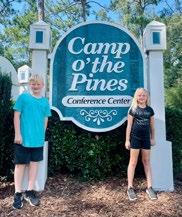
Lainey (6) from Charlotte, NC had the best time at the beach with some of her friends. She loves to shop and of course stopping at Gigi’s was a must do! Natalie (8) got to play at the World Series for softball and represent the Hawks which is a local South Walton team. It was held in Orlando and she had so much fun. Teams come from all over the country. The highlight, besides playing softball, was the opening ceremony where she got to trade team pins and meet new friends. Way to crush it Natalie.
AND NOW ONTO THE LOST EmiliaTEETH…(9)visited the dentist and got a baby tooth wiggled out. As per usual she was super brave and rocked the procedure. She also had a couple of spacers removed.
News the way kids like to tell it... all good, mostly true and, of course, totally earth shattering. by CHRISTIA PALIZZI
Kirie (10) from Knoxville, TN spent the summer at the beach! She had the best time and was able to partake in Emerald Coast Theater Company’s junior version of The Jungle Book. She’s always the villain and got to play Kaa the snake! She ssssslayed, of course.
Tatum (4) Tallahassee,fromFLwent to camp for the first time this summer! She made an American flag and a birdhouse. Every Thursday was water day and she could wear a swimsuit and splash around in some sort of water! Sprinkler or pool. Cambree (8) from Norman, OK went to Hawaii to hike to the oldest lighthouse. She took a ride on the admiral’s boat in Pearl Harbor. Emilia (9) traveled from Florida to Idaho and Washington to visit family. One highlight of the trip was cuddling her cousin Brandon’s python, Nagini. Rett (7) from Oxford, MS went fishing on a huge boat. He caught a shark, a bonita and a huge trigger fish. He says it was so fun.
Gigi’s own Ms. Rita held her second annual summer camp for her nieces and best friend’s little girl. Roxy, MerMer along with Jazz and Elica (from Colorado) were in attendance. They all loved swimming with the mermaids and did tons of arts and crafts. They spent their time swimming in the pool or at the beach. Wyatt (18) has been one of Gigi’s kids for over 18 years. He also shares a birthday with Ms. Rita. He is all grown up and now a pilot for a major island. It’s so special to be able to see kids grow up. Jimmy (11) and Jackson (8) are brothers from Tulsa, OK. They’ve been going all over the south, including Dallas and Atlanta playing lacrosse this summer. They’re so happy to be taking a break at the beach.
Trent and Derek from Egan, MN visited 30A. Trent golfed and it was very fun. Derek liked biking around to new places. It’s their first time to Seacrest but they’d been to Florida before. Stella (9) from Mandeville, LA went to Washington DC to see Hamilton! They had box seats. She’s seen it many times before but never in DC. Angelica and LaFayette are her favorite characters. She also loves to see the Smithsonian Museum and the American Girl store. Her big brother Jack broke his arm playing baseball. He collided with his team member. Fiona (9) from Cape Girardeau, MO won the 4th of July costume contest. She decorated her bike on the 3rd and went to the parade. They have a fun tradition of staying up late to decorate the night before and then leave early for the parade. They come every year and are able to celebrate her bestie’s birthday. Congrats, Fiona on winning the Lady Liberty award. Evia Gray (10) from Santa Rosa Beach, FL played Mary Poppins in the Surf side Musical Theater. The hardest part was learning a super intense bit of chore ography to WorldRothchildandalisticexpealadocious.supercalafragThecostumewashotandthickconsistedofaredwoolcoat.ShealsogottogotoDisneyforherbirthday!
Huckleberry (7) is single handedly trying to keep the tooth fairy in business. He has lost so many teeth that he basically has no teeth left. With his jaw clenched tight he can suck in a lot of air. Take all of those lost teeth to the bank, Huck!


ROSEMARY THYMES | 29


ROSEMARY THYMES | 30 ACROSS 1 Homes that may have butlers 7 Singer Dylan of the Wallflowers 12 Supporting beams 18 Bear or boar 19 Bees, e.g. 21 Gleaming 22 The ‘‘C’’ of AMC Theatres 23 The whole package, colloquially 24 Sevastopol is its largest city 25 Not true? 27 Visitor to a website, in analytics lingo 29 ‘‘Time ____ . . ’’ 30 Concedes 33 Santa ____, Calif. 34 m, to Einstein 35 B.C. neighbor: Abbr. 38 Think creatively 40 XL or 11C 42 Beer named for a founding father 45 W-2, for one 47 W.W. I helmet, informally 51 2004 Will Smith sci-fi film 52 D.S.T. starting time . . or a hint to 42-Across 54 Weightlessness . . or a hint to 118-Across 56 ____ Compton, first woman to cover the White House for a TV network 57 Rating unit 60 Libya’s Gulf of ____ 61 Reporter’s credit 62 TV tavern 64 Mimic 66 ‘‘Royal’’ bird 67 In 68 Top credit rating . . or a hint to 25-Across 71 23rd in a series . . or a hint to 27-Across 73 Trust in 76 Fails to be 78 Keen 79 Google ____ 83 Holds in high regard 84 Old lab burners 86 Water bird with a haunting call 88 Bit of HI gear? 89 Cops . . . or a hint to 115-Across 90 Club for farm kids . . or a hint to 97-Across 91 Pouch on a string 93 Game with L- and T-shaped pieces 96 Locale for a West Coast wine tour 97 Secretive 99 R.&R. settings 101 Crystal-clear 103 ‘‘O, ____ fortune’s fool!’’: Romeo 104 Singer King with the 2014 hit ‘‘Ex’s & Oh’s’’ 108 Body feature of a mammoth 110 Holy ____ 112 It might be taken to the airport 115 Spelling aid? 118 Baseball announcer’s call on a home run 121 Nigerian city of 3.5+ million 122 Set on the ground 125 ‘‘Jeopardy!’’ fodder 126 This evenin’ 127 Video-call glitch 128 ‘‘I kid you not!’’ 129 Rate 130 Like the Xbox One X vis-à-vis the Xbox One 131 Makes some Z’s DOWN 1 Colorful parrot 2 Santa ____ 3 Jazz singer born Eunice Kathleen Waymon 4 Warning sign 5 Commercial follower of ‘‘-o-’’ 6 A-game or b-ball, e.g. 7 The ‘‘you’’ of the song lyric ‘‘I’m begging of you, please don’t take my man’’ 8 Part of the knee, for short 9 D.I.Y. buy 10 ‘‘Magnum, P.I.’’ setting 11 Sauvignon ____ 12 Where one might turn on the jets 13 D&D monster 14 Pelvis bone 15 Gregor ____, Kafka protagonist 16 Some genealogical work 17 Pioneering mail-order company 19 Introductory courses 20 Mixes together 26 Not looking good 28 Ctrl + Q 31 First couple of the early 1910s 32 ‘‘Shut your trap!’’ 36 Apply with a Q-tip, say 37 Kerfuffles 39 Wore down 41 RNA polymerase, e.g. 42 Thailand, once 43 River through Tuscany 44 Reaches 46 Bone filler 48 No. 2 on a table 49 Bone-dry 50 A great deal 53 How-to go-to 55 Obtain 58 YouTube or Gmail 59 ‘‘Phew!’’ feeling 61 They’re filled with X’s 63 Engraving instrument 65 Lean against 69 Whirlybird whirlers 70 Like some plants and physicals 72 Personal story, informally 73 One calling a ‘‘T’’ 74 Turnoff 75 Wash up 77 Certain fossil preserve 80 The art of music? 81 Vegetables that make a fitting addition to alphabet soup? 82 [Oh, well] 85 ‘‘Tsk, tsk!’’ 87 Classic soda brand 92 ‘‘Oh, I see!’’ 94 Small-screen entertainers? 95 Ibn ____ (former Mideast king) 97 Responsibility of a personnel director 98 Japanese noodle 100 Young salmon 102 Like hawks 104 Hit 1979 musical in which a character’s mistress is one of the main roles 105 University of New Mexico team 106 Bank deals 107 ____ Vedder, lead singer of Pearl Jam 109 Garden-variety 111 Some I.R.A.s 113 Licoricelike flavor 114 Rap producers make them 116 The ‘‘O’s’’ of Cheerios 117 Old ____, Conn. 119 Spinach is rich in it 120 El ____ 123 Drop o’ the mornin’ 124 Cheer to a matador Tina Labadie lives in London, Ontario. This is her first New York Times crossword. It has one of my favorite kinds of themes — one offering many different ‘‘aha’’ moments. The example at 118-Across, at the bottom of the puzzle, is a little different from the others, like the kicker of a joke. As a construction fillip, every letter in the alphabet is used at least once in the completed grid. — W. S. LETTERPLAY BY TINA LABADIE / EDITED BY WILL SHORTZ

12805 US Highway 98 East • Inlet Beach, Florida 32461 Live music on The Green | Visit ThirtyAvenue.com for details SHOP. DINE. STROLL. REPEAT.


81 ROUND ROAD 390 WALTON ROSE LANE $3,500,000 4 Bed | 4.5 Bath | 2,352 Sq Ft $5,320,000 5 Bed | 4.5 Bath | 4,516 Sq Ft 63 S. CAMP CREEK ROAD 79 PATINA BOULEVARD $6,995,000 6 Bed | 6.5 Bath | 6,836 Sq Ft $2,195,000 3 Bed | 3.5 Bath | 1,738 Sq Ft 101 W. WATER STREET 11 S, LAKE BRIDGE DRIVE $3,200,000 3 Bed | 3 Bath | 2,282 Sq Ft $7,195,000 4 Bed | 4.5 Bath | 3,082 Sq Ft 104 N. BARRETT SQUARE UNIT 2B $2,450,000 3 Bed | 2 Bath | 1,402 Sq Ft 13 SPANISH TOWN LANE $4,900,000 5 Bed | 5 Bath | 2,180 Sq Ft 11 BEACHSIDE DRIVE UNIT 633 $1,179,000 3 Bed | 2 Bath | 1,028 Sq Ft ROSEMARY BEACH® is a registered trademark owned by Rosemary Beach Holdings, LLC and is used with permission pursuant to a license from Rosemary Beach Holdings, LLC. CONTACT US: (850) www.RosemaryBeachRealty.com278-2000 VISIT US: 78 NORTH BARRETT SQUARE IN ROSEMARY BEACH® Scan here to stay up to date on these listings and more! Want to see the latest listings?


