The Top 10 Things They Didn’t Teach Me in Law School
 BY RON SATIJA
Contracts and tax law, whether there was such a thing as “sub stantive due process,” or whether tax policy properly reflected the goals we expressed as a body politic. I didn’t take any litigation or drafting classes. I had to learn these lessons every day at work, often painfully at first.
I’ve heard that law school has improved on these issues since I graduated, but I would not trade the many lessons I didn’t learn in law school.
I am one of the younger members of the “Still Lovin’ It” section. Some previous contribu tors have been practicing over 50 years, while I’m only at 20. But I am old enough to be thrilled that I am still lovin’ law practice, and I am young enough to remember law school pretty well. I’ve spent the last 20 years thinking about how law practice is not what I
expected and how it has changed me for the better. Here are the top 10 things they didn’t teach me in law school:
10. LAW SCHOOL DID NOT TEACH ME HOW TO MANAGE STRESS.
The practice of law is nothing if not pressure packed. This is particularly true in bankruptcy, practiced with its insanely shortened deadlines, constant expedited matters, and scrutiny from all the parties who appear in each case. How you learn to stay calm and centered without turning to drink or drugs, and how you keep anxiety and depression at bay, are abso lutely the most crucial things all lawyers need to learn. My approach is to work out and do yoga several times a week and eat healthy foods that keep my energy level high.
The practice of law is nothing if not pressure packed. Learning to stay calm and centered and how to keep anxiety and depression at bay are crucial things all lawyers need to learn.
austinbar.org DEC. 2022/JAN. 2023 | VOLUME 31, NUMBER 10
continued on page 8 LAW SCHOOL DID NOT TEACH ME : 10. HOW TO MANAGE STRESS 9. HOW TO HAVE WORK/LIFE BALANCE 8. HOW TO MANAGE PRIORITIES 7. THAT THERE IS NO SINGLE PATHWAY TO SUCCESS 6. HOW TO GET BUSINESS 5. HOW MUCH CREATIVITY THERE IS IN THE PRACTICE OF LAW 4. HOW TO RESOLVE CONFLICT 3. HOW TO MANAGE THE BUSINESS OF LAW 2. HOW TO TAKE LAW SCHOOL EXAMS 1. HOW TO PRACTICE LAW!








Get started at lawpay.com/austinbar 866-730-4140 TOTAL: $1,500.00 New Case Reference **** **** **** 9995 *** Trust Payment IOLTA Deposit YOUR FIRM L OGO HERE PAY AT TO RNEY PO WE R ED BY 22% increase in cash flow with online payments Vetted and approved by all 50 state bars, 70+ local and specialty bars, the ABA, and the ALA 62% of bills sent online are paid in 24 hours Data based on an average of firm accounts receivables increases using online billing solutions. LawPay is a registered agent of Synovus Bank, Columbus, GA., and Fifth Third Bank, N.A., Cincinnati, OH. Trusted by 50,000 law firms, LawPay is a simple, secure solution that allows you to easily accept credit and eCheck payments online, in person, or through your favorite practice management tools. I love LawPay! I’m not sure why I waited so long to get it set up. –Law Firm in Ohio + Member Benefit Provider
Austin Bar Foundation Gala Tickets On Sale Now Jan. 28 at 6:30 p.m., Downtown Marriott Unveiling of Judge Lora Livingston’s Portrait and Ribbon Cutting for the New Civil and Family Courts Facility Dec. 2 at noon, 1700 Guadalupe Street
CONNECTIONS
ONLINE austinbar.org EMAIL sonta@austinbar.org MAIL Sonta Henderson Managing Editor Austin Bar Association 712 W. 16th Street Austin, TX 78701





for UPCOMING EVENTS
&
news + info IN EVERY ISSUE 16 Briefs 18 Section Spotlight 22 AYLA 24 Third Court of Appeals Civil Update 25 Federal Civil Court Update 27 Third Court of Appeals Criminal Update DEPARTMENTS 6 President's Column 10 Be Well 21 Opening Statement 28 Entre Nous 30 Practice Pointers RISK-TAKING CAN BE FUN... …BUT NOT WHEN IT’S A MALPRACTICE CLAIM. Personal Injury Claim* • Lawyer sued for allowing a default judgment taken against client • Damages of up to $4,000,000 sought ($200,000 policy limit) • TLIE settled case for $300,000 INSURED BY TLIE IF NOT INSURED Deductible $1,000 Defense costs $10,000 Amount over policy limit + $109,000 Settlement + $300,000 Total out-of-pocket = $110,000 Total out-of-pocket = $310,000 * Based on actual claim handled by TLIE. FIND OUT MORE: TLIE.ORG or (512) 480-9074
CONTENTS
| VOLUME
NUMBER 10 DECEMBER 2022 /JANUARY 2023 | AUSTINLAWYER 3
INSID E austinbar.org ONLINE AU ST INL AW Y ER AL AL DEC. 2022/JAN. 2023
31,
NEWS & ANNOUNCEMENTS
up-to-date
Message
data rates may apply.
SOCIAL LIKE facebook.com/austinbar FOLLOW twitter.com/theaustinbar WATCH vimeo.com/austinbar TEXT austinbar to 313131 FEATURED ARTICLES 1 The Top 10 Things They Didn’t Teach Me in Law School 7 Snacks and Book Chats TCWLA and Law Moms Out Loud Come Together 13 A Successful Path Austin Bar Member Recognized by TxDOT 14 The More You Know Travis County Civil and Family District Courts: Amended Local Rules 2022 Overview DEC 9 CLE by Major Events Committee: Holiday Ethics. Register at austinbar.org
FOLLOW instagram.com/theaustinbar
STREAM @AustinBarAssociation
AUST INL AW Y ER AL AL
OFFICIAL PUBLICATION OF THE AUSTIN BAR ASSOCIATION

AUSTIN BAR ASSOCIATION

Amanda Arriaga President
Justice Chari Kelly President-Elect
Mary-Ellen King Secretary
Maitreya Tomlinson Treasurer
David Courreges Immediate Past President
AUSTIN YOUNG LAWYERS ASSOCIATION
Blair Leake President
Sarah Harp President -Elect
Emily Morris Treasurer
Ciara Parks Secretary
Rachael K. Jones Immediate Past President

Austin Lawyer

©2022 Austin Bar Association; Austin Young Lawyers Association
EXECUTIVE OFFICES
712 W. 16th Street
Austin, TX 78701

Email: austinbar@austinbar.org Website: austinbar.org Ph: 512.472.0279 | Fax: 512.473.2720
DeLaine Ward Executive Director
Debbie Kelly Associate Executive Director

Sonta Henderson Managing Editor Rachael K. Jones Editor-In-Chief
Austin Lawyer (ISSN #10710353) is published monthly, ex cept for July/August and December/January, at the annual rate of $10 membership dues by the Austin Bar Associa tion and the Austin Young Lawyers Association, 712 W. 16th Street, Austin, TX 78701. Periodicals Postage Paid at Austin, Texas. POSTMASTER: Send address changes to Austin Lawyer, 712 W. 16th Street, Austin, TX 78701.

Austin Lawyer is an award-winning newsletter published 10 times a year for members of the Austin Bar Associ ation. Its focus is on Austin Bar activities, policies, and decisions of the Austin Bar Board of Directors; legisla tion affecting Austin attorneys; and other issues impact ing lawyers and the legal professionals. It also includes information on decisions from the U.S. Western District of Texas Federal Court and the Texas Third Court of Ap peals, CLE opportunities, members’ and committees’ ac complishments, and various community and association activities.
The views, opinions, and content expressed in this pub lication are those of the author(s) or advertiser(s) and do not necessarily reflect the views or opinions of the Aus tin Bar Association membership, Austin Bar Association Board of Directors, or Austin Bar Association staff. As a matter of policy, the Austin Bar Association does not endorse any products, services, or programs, and any ad vertisement in this publication should not be construed as such an endorsement.
Contributions to Austin Lawyer are welcome, but the right is reserved to select and edit materials to be pub lished. Please send all correspondence to the address listed above. For editorial guidelines, visit austinbar.org in the “About Us” tab.
PUBLISHED BY
Monarch Media & Consulting, Inc. Ph: 512.680.3989 | Fax: 866.328.7199
monarchmediainc.com Advertising inquiries call 512.293.9277.
912 S Capital of Texas Hwy, Suite 450 www.fosterglobal.com EMPLOYERS We deliver a full suite meet the needs of your INVESTORS & STARTUPS Now more than ever foreign investors seeking permanent resident status in the U.S. rely on Foster to while they focus on their investment. INDIVIDUALS & FAMILIES At Foster, we’re proud of our long history of service and advocacy on behalf of individuals and families. Responsive. Experienced. Professional. 4 AUSTINLAWYER | DECEMBER 2022 /JANUARY 2023
Monday, December 12, 2022 For any questions about the Legal Advice Clinic or Legal Assistance Program please contact the Austin Bar Association at 512 472 0279 x110. 2022 Free Legal Advice Clinic Dates for Veterans Monday, November 14 Monday, December 12 *All dates are subject to change to Virtual Clinics depending on COVID 19 circumstances. To be placed on the Clinic List, you must fill out an application. Please scan the QR code or use this link to apply: https://memcentral.wufoo.com/forms/z1sd7s861eqtdpo/
ins are welcome to attend and apply in person! Please note that all applicants are seen in the order of attorney availability
Walk
Time: 1:30 p.m. to 4:00 p.m. *Sign in starts at 1:30 p.m. Please sign in before 3:30 p.m.
you, please
Place: Austin VA Outpatient Clinic 7901 Metropolis Drive, Austin, Texas, 78744 *Location is subject to change to Virtual Clinic. Please check your email prior to the clinic or contact our office for confirmation of location. To best assist
bring any paperwork relevant to your case. The Texas Access to Justice Foundation and Austin Bar Foundation provide support to this program.

We are halfway through this bar year, and we have some great events coming, including the 20th Anniversary Austin Bar Foundation Gala on Jan. 28 at the Austin Marriott Downtown. Our theme this year echoes our
AMANDA ARRIAGA , TEXAS CASA

Great Things to Come in 2023
Onward and Upward with the Austin Bar
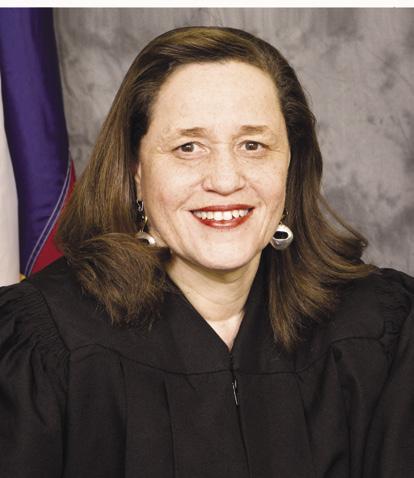
theme from the inaugural year: a Masquerade Ball. We will be presenting the Distinguished Lawyer Awards to some im pressive attorneys, including, Judge Lora Livingston, Bobby Taylor, and Judge Lee Yeakel. For the first time, instead of a live auction, we will have a raffle, with a grand prize of $10,000. The Foundation Gala funds the important projects of the Austin Bar Foundation, and the operation of the Foundation. You can find information on how to buy Gala tickets and raffle tickets at austinbar.org.
In addition, as we look towards a new calendar year, I want to remind you that starting Jan. 10, the Texas Legislature will be in session. While we don’t neces sarily talk about the legislative session as much as we talk about the courtroom, I encourage you to keep track. The hearings are public and can be found online at capitol.texas.gov. If you’re
the type of person who still has cable, like I do, you can watch the floor debates of the House and Senate and keep track of what is happening in real time. If you ever want to know what is happening and why, let me know and I am always happy to discuss. Good governance is important, both for the Austin Bar and for the State of Texas. AUST INL AW Y ER AL AL
PRESIDENT'S COLUMN 6 AUSTINLAWYER | DECEMBER 2022 /JANUARY 2023
AUSTIN BAR FOUNDATION 20TH ANNUAL GALA Masquerade SATURDAY JAN 28 2023 AUSTIN MARRIOTT DOWNTOWN
The Foundation Gala funds the important projects of the Austin Bar Foundation, and the operation of the Foundation.
Snacks and Book Chats
TCWLA and Law Moms Out Loud Come Together
BY HANNAH HEMBREE BELL, LESLIE DIPPEL, KATE LINCOLN-GOLDFINCH, AND SHERINE THOMAS
The Travis County Women Lawyers Association (TCWLA) and Law Moms Out Loud partnered on a book club event that highlighted Austin attorney and author Chandler Baker. We discussed Baker’s books, Whisper Network and The Husbands


TCWLA started a book club several years ago to provide members an opportunity to read personal development books and the space to discuss them with other attorneys sharing similar interests. Each meeting has been a productive discussion and a safe space for vulnerability and growth.

Law Moms Out Loud produces a podcast series that highlights powerful women with interesting stories. Its mission is to help lawyer moms grow as moms, law yers, and people. The potential synergy between our two groups led us to this collaboration.
At our event, Law Moms Out Loud creators Kate LincolnGoldfinch and Hannah Hembree Bell interviewed Baker live as a guest on their podcast, while the book club served as the “studio audience.” After the live podcast portion of the evening (it was so much fun!), we hung around to chat and visit with Baker, a local Austin law mom. She graciously discussed her journey as an author and answered our many questions about her inspirations and future goals. (There may have been more than a few of us having fan-girl moments!)
Although this book pick was a departure from our usual non fiction, this collaboration gave us an inspiring opportunity to meet a local Austin, New York Times bestselling author and special gem, learn from her journey, and celebrate her success. Watching the Law Moms Out Loud in action was a real treat. Watch for
lots more to come from these powerhouse ladies!
Several aspiring authors were in the group. Baker encouraged them to keep writing—every day— just keep writing. This advice pretty much reflects the mantra of these two amazing groups of lawyers. We keep working and improving every day, simply by keeping at it every day.
We also know that when women get together, amazing things happen. While chatting after the event, Hembree Bell and Baker hatched a plan and hosted a free write-in for NaNoWriMo (IYKYK) in November, which was a big success. If you or anyone you know is an aspiring writer and would like to know about future events, email hannah@ hembreebell.com for more details.
You can listen to Baker’s Law Moms Out Loud episode wher ever you access your podcasts. If you are interested in the TCWLA book club, including seeing our past and future book selections, you can find more information at http://tcwla.org. Come join us!
AUST INL AW Y ER AL AL
Leslie Dippel is a past president of the Austin Bar and serves as the director of the Civil Litigation Division at the Travis County Attorney’s Office.
DECEMBER 2022 /JANUARY 2023 | AUSTINLAWYER 7
We keep working and improving every day, simply by keeping at it every day. We also know that when women get together, amazing things happen.
TOP LEFT: Chandler Baker, Hannah Hembree Bell, Kate Lincoln-Goldfinch TOP RIGHT: The group is all smiles after the fun-filled event. LEFT: Kate LincolnGoldfinch, Hannah Hembree Bell, Leslie Dippel, Sherine Thomas.
continued from cover
Ron Satija is certified by the Texas Board of Legal Specialization in Business Bankruptcy. He practices on behalf of both creditors and debtors in the bankruptcy court as well as in out-ofcourt restructuring and debtor-creditor law. Satija practices with Hayward PLLC, a woman-owned law firm in Austin, and blogs at spirituallybankrupt.com.
Once you become a lawyer, it is so easy to get caught up in the life of a lawyer (“da life,” you might say). Maybe you work out or drop off kids at school in the morning, but then you go to work and stay there until bedtime. Dinnertime can turn into a microwaved meal at your desk. Law school trained us to work hard 24/7. How do you pull yourself away? It is difficult to be a full-time lawyer and also keep up friendships, be a good family member or spouse, and be a good neighbor. And what about hobbies and recreation?
8. LAW SCHOOL DID NOT TEACH ME HOW TO MANAGE PRIORITIES.
In law school, the priority was to do well and to find a good,

high-paying, prestigious job. But what about social service? And what about lifestyle? Should your priority be to write a legal article, sit on a bar committee, or volunteer for VLS? Should you take pro-bono cases or more CLE or trainings? Should you get board certified? Should you blog, podcast, or speak at CLE? All of these things take time. And I didn’t even mention personal choices, such as getting married, having kids, deciding where to live, and so on.
7. LAW SCHOOL DID NOT TEACH ME THAT THERE IS NO SINGLE PATHWAY TO SUCCESS.
In law school I learned to interpret appellate cases and write about them. This prepared me for a job as a junior associate at a large law firm or maybe a judicial clerkship, neither of which I received. I worked as an editor of
legal publications for a while, at a dotcom for a few years, and then I started filing consumer bankrupt cy cases. I have sometimes wished I had the big firm and clerkship experience, but as I have talked to my peers who did, I realize that all paths have their pros and cons. The key is that you are enjoying what you do and are gaining experience, supporting yourself, and helping people.
6. LAW SCHOOL DID NOT TEACH ME HOW TO GET BUSINESS.
Having followed the path I did, I had to get the word out. Why should anyone hire Ron Satija to be their attorney? At the outset, I didn’t think anyone would! Most of my business came from word-of-mouth and referrals from my prior firm, and also from a business networking group called BNI. At first, I was very resistant to networking because
Arielle Rosvall, Coleen Kinsler 8 AUSTINLAWYER | DECEMBER 2022 /JANUARY 2023
partners: associate attorneys:
9. LAW SCHOOL DID NOT TEACH ME WORK/LIFE BALANCE.
The Top 10 Things They Didn’t Teach Me in Law School
Law school did not teach me that there is no single pathway to success….I have sometimes wished I had the big firm and clerkship experience, but as I have talked to my peers who did, I realize that all paths have their pros and cons.


it felt somehow like selling out. However, networking doesn’t have to be a bad word. The key is to be passionate about what you do and do good work. People will remember your enthusiasm and refer work to you.
5. LAW SCHOOL DID NOT TEACH ME HOW MUCH CREATIVITY THERE IS IN THE PRACTICE OF LAW.
There are so many ways to handle any given problem. It is not a mechanical choice to decide to file a debtor in a particular chapter of the Bankruptcy Code. Creditor work and collections offer myriad options, whether to garnish accounts or seize assets, or come up with a settlement the debtor can stick to. In law practice generally, there are opportunities to come up with a creative fee arrangement with a client or a creative business plan or trade name. You might structure an entity to get the best tax outcomes, write up an estate plan that exactly meets the client’s wishes, or structure a win-win settlement. I have often wished I had written a novel (and
I still might someday), but I have already been creatively inspired in my law practice daily.
4. LAW SCHOOL DID NOT TEACH ME HOW TO RESOLVE CONFLICT.
Nowadays, our society seems entirely taken over by anger. I represent people who are in difficult and often bitter conflicts. I believe that my role as a professional is to see and manage the conflict but not get caught up in it. It has taken a lot of practice and a lot of work on my own anger, but being able to approach opposing parties with calm, compassion, and curiosity has made me a better lawyer.
3. LAW SCHOOL DID NOT TEACH ME HOW TO MANAGE THE BUSINESS OF LAW.
Getting a case is one thing, but keeping your doors open is anoth er. Who do you hire? What are the requirements when you hire an employee? How do you manage them? How do you choose an office and how do you negotiate the lease? How do you choose a
case-management system? How do you get your bills out monthly? How do you collect delinquent fees? Do you remember to pay your bar dues and take your CLE annually? All of these are lessons I have had to learn painfully, and often repeatedly, over the years.
2. LAW SCHOOL DID NOT TEACH ME HOW TO TAKE LAW SCHOOL EXAMS.
In my first year of law school, there were flyers posted on campus for a class on how to take law-school exams. Not part of the law school curriculum, the class was offered by a company for a fee. I pooh-poo hed the idea. “I’ve taken exams all my life. This won’t be any
Chris Andre
New Vehicle Leasing / Pre-Owned Sales Domestics / Imports / Exotics
Busy Schedule? Call me. Home or Office Viewing and Delivery Any Make. Any Model.
Email | chris@appleleasing.com

different.” Boy, was it different. As you know, the “IRAC” method is key, and for me it wasn’t intuitive. When I mentor law students, I emphasize this lesson. And the number one lesson:
1. LAW SCHOOL DIDN’T ACTUALLY TEACH ME HOW TO PRACTICE LAW!
When I graduated, I didn’t know how to file a case or draft an agreement! I didn’t know that lawyers draft the orders that judg es sign! I didn’t know the role of the clerk! It could be the classes
I took: I loved thinking about the abstract issues in constitutional, learning them through the practice of law for anything.
AUST INL AW Y ER AL AL
Phone | 512.653.3718
DECEMBER 2022 /JANUARY 2023 | AUSTINLAWYER 9
Grief and the Holidays
What You Can Do to Make a Difference
Moreover, in the legal world, we see unique grief. Some attor neys suffer grief due to career developments, the secondary trauma from witnessing clients’ suffering, or the breakup of a law firm. It is difficult to deal with injustices or hardships imposed on a beloved client or client’s family.
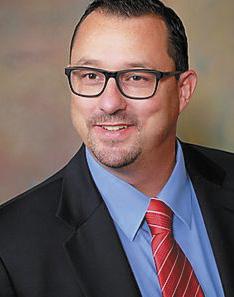
Chris Ritter is in-house legal counsel for the State Bar of Texas. He graduated magna cum laude from Baylor University in 1994 with a B.A. in political science and philosophy. After graduating from The University of Texas School of Law (J.D., 1998), he was a civil trial lawyer in West Texas for over 15 years. He previ ously served as the director of the State Bar’s Texas Lawyers’ Assistance Program (TLAP) and has a Master of Education in clinical mental health counseling from Lamar University.
Hopeless debt can create a grief mixed with unhealthy anxi ety. The pandemic, war, political circumstances, taxes, law school debt, natural disasters, health problems, and so many more contribute to the challenge.
I lost my wife and the mother of our eight-year-old daughter on June 4, 2019 after several years of battling breast cancer. The grief was monumental. However, it was much different than the grief of a close friend who lost a loved one to suicide. It was also very different than the grief I suffered when I was divorced in my first marriage many years ago.
lives are permanently changed, it is healthy to process that anger. Resisting anger will prolong our suffering. I highly recommend us ing a mental health professional to help speed this process along.
CONNECT TO OTHERS WHO UNDERSTAND
We lawyers are amazingly resilient, con sidering the ups and downs and constant stresses connected to our profession. As close as we function to the edge of our maximum capacity, a loss hitting us can be the last straw.
Grief can stem from several kinds of losses: the death of a loved one, a divorce, a medical diagnosis, an addiction, the end of a career, a devastating legal outcome, a disability, an accident, and many more.
Even if we are not the ones affected directly, grief is con stantly affecting our colleagues and clients in serious ways. In a profession that deals daily with wrongful deaths, estates, divorces, murders, assaults, catastrophic accidents, discrim ination, disability, and so forth, it is shocking how little we know about grief or what to do about it.
Despite the differences, one thing seems to be constant: Grief is horrible during the holidays.
Here are three things that might help:
NONRESISTANCE
I hate the word “acceptance” because it seems to imply that something is acceptable. That said, it is widely understood that denial is the first stage of grief and resisting “what is” often contributes to our suffering. Therefore, I have found great relief in trying to “not resist” that the holidays are here and they don’t look like I want them to look. I don’t need to resist my emotions. I don’t need to resist the grief. The shortest distance to the other side of something is through it. Trying to “hold back” to help others not feel bad for me is not helpful to anyone.
Nonresistance also helps with anger. If we are upset that our
Connecting to others who understand something about our situation can be a huge game-changer. While pity from some people can be painful, a conversation with someone who has directly experienced a similar grief can inspire hope. Peers who have been through what I have and shared their experience gave me the strength I needed to take the next step.
HELP OTHERS
It has been essential for me to get involved in service work around the holidays. Helping others gets my mind on gratitude and feels like a tribute to lost loved ones, particularly when I do service work a loved one took interest in. My daughter and I spend time over the holidays preparing gift bags for homeless people and handing them out on Christmas. My late wife did this once before she died. This has been very powerful in transforming some of our grief into gratitude. There are lots of options.
BE KIND TO YOURSELF
At the end of the day, nothing is more important than being kind
to yourself. Give yourself permis sion to have healthy boundaries and to say no when you don’t feel like doing something with certain other people. If you struggle with depression, that is common. Depression is also something that can be dangerous around the holidays for some people, so please do not hesitate to connect with a professional to address it. Depression is suffered by 46% of attorneys at some point in their practice, but it is very treatable and the vast majority of those who get help fully recover. If you or someone you know needs help, 988 is the new national Suicide and Crisis Lifeline, and for local professional referrals or peer sup port for lawyers, TLAP is always there at 800.343.TLAP. AUST INL AW Y ER AL AL
Endnotes
1. See Patrick Krill, Ryan Johnson, and Linda Albert, The Prevalence of Substance Use and Other Mental Health Concerns Among American Attorneys, Journal of Addiction Medicine, Feb. 2016, Vol. 10, Issue 1, pp. 46-52, http://journals.lww. com/journaladdictionmedicine/ Fulltext/2016/02000/The_ Prevalence_of_Substance_Use_and_ Other_Mental.8.asp
BE WELL 10 AUSTINLAWYER | DECEMBER 2022 /JANUARY 2023
At the end of the day, nothing is more important than being kind to yourself. Give yourself permission to have healthy boundaries and to say no when you don’t feel like doing something with certain other people.





DECEMBER 2022 /JANUARY 2023 | AUSTINLAWYER 11 Texas values. Global reach. Visit www.crowe.com/disclosure for more information about Crowe LLP, its subsidiaries, and Crowe Global. © 2022 Crowe LLP. MBV2301-001H Crowe is a public accounting, consulting, and technology firm with five offices in Texas. Our experienced teams – locally and around the world – provide a variety of services and solutions for legal departments and law firms. • Forensic accounting and litigation support • Business valuation • Family law forensic accounting • Digital forensics and incident response services • Legal management consulting Explore more on crowe.com. Annual sponsors receive benefits such as social media mentions, a marketing email to the Austin Bar membership and much more. For complete information visit the sponsorship page at www.AustinBar.org or call 512.293.9277. to the Austin Bar Association 2022 Annual Sponsors! Me di a tor, Arbi t ra tor, Spe ci a l J udge a nd Li t i ga t i on Consult a nt
Senior
District Judge
Stephen Yelenosky
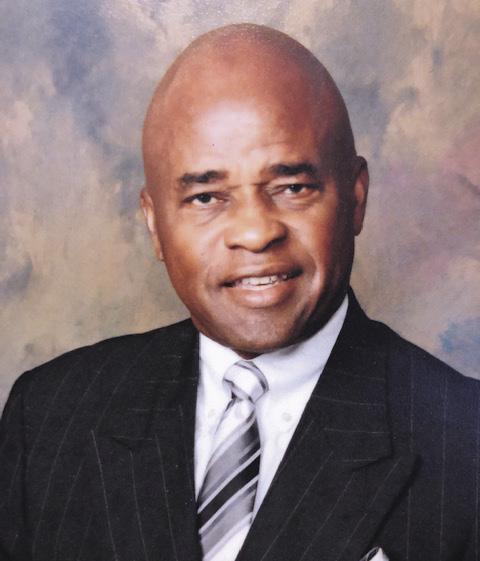








12 AUSTINLAWYER | DECEMBER 2022 /JANUARY 2023 Congratulations to the 2023 Distinguished Lawyers JUDGE LORA LIVINGSTON BOBBY TAYLOR JUDGE LEE YEAKEL LAW FIRM LLP 1101 S. Capital of Texas Hwy Building G, Suite 200 Austin, TX 78746 512.477 5796 | BCLAWTX COM Family Law | Real Estate | Construction Law | Commercial Litigation
A. Stinson | Leslie J. Bollier | Tony Ciccone The Bollier Ciccone team provides premium and personalized services to discerning clients seeking award-winning family and civil law a�orneys.
Susannah
A Successful Path Austin Bar Member Recognized by TxDOT
BY SONTA HENDERSON
Congratulations to Austin Bar mem ber Judge Kevin Madison. Judge Madison’s court, Lakeway Municipal Court, was selected for the 10th time as a winner of the Municipal Traffic Safety

30,000) than any other munici pal court in Texas.
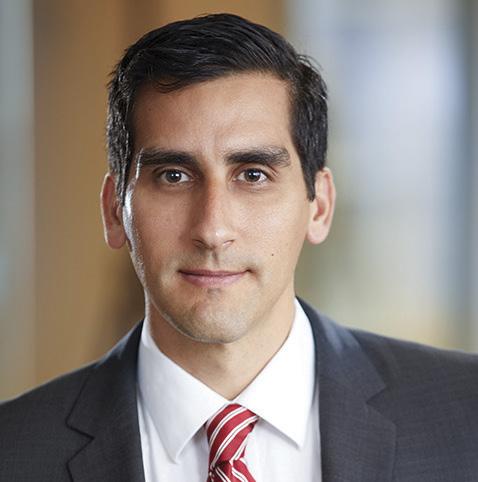
Last year, Judge Madison received the Texas A&M Transportation Committee and Texas Save a Life Texas Impaired Driving Safety Champion Award for his personal work and com
Judge Madison’s court, Lakeway Municipal Court, was selected for the 10th time as a winner of the Municipal Traffic Safety Initiatives Award by the Texas Department of Transportation (TxDOT) and Texas Municipal Courts Education Center (TMCEC). These awards are presented annually for outstanding traffic safety programs that help reduce traffic fatalities on Texas roads.
Initiatives Award by the Texas Department of Transportation (TxDOT) and Texas Municipal Courts Education Center (TMCEC). These awards are presented annually for outstand ing traffic safety programs that help reduce traffic fatalities on Texas roads. Judge Madison’s court has won more awards in its size category (population under
mitment to decrease fatalities caused by impaired drivers on Texas highways.
Judge Madison is also the on-call magistrate for Texas Game Wardens (Central Texas) and Texas Alcoholic Beverage Commission (TABC) agents.
TABC utilizes Judge Madison for evidentiary search warrants in cases where bars over-serve
patrons who go on to cause fa tal car crashes.
Judge Madison attended The University of Texas at Austin and graduated with honors with a B.A. in psychology be fore attending the University of Texas System Police Academy, where he graduated as class valedicto rian in 1977.
In 1981, he graduated from the University of Houston Law Center.
Judge Madison has served on the bench for 32 years and presides over seven municipal courts throughout Central Texas. In addition to his role as judge and state magis trate, he continues to serve as a volunteer firefighter and EMS first responder. Judge Madison has 22 years of experience as a
is a
of UBS AG.
FINRA/SIPC. CJ-UBS-626383028 Exp.: 10/31/2023
DECEMBER 2022 /JANUARY 2023 | AUSTINLAWYER 13
firefighter and EMT and more than eight years of experience as a police officer. AUST INL AW Y ER AL AL
Helping clients manage significant wealth advisors.ubs.com/matt.rappaport Matt Rappaport, CFP ®, CDFA®, CEPA® Financial Advisor 512-542-7507 matt.rappaport@ubs.com UBS Financial Services Inc. 98 San Jacinto Boulevard Suite 600 Austin, TX 78701 Certified Financial Planner Board of Standards Inc. owns the certification marks CFP® and Certified finanCial PlannerTM in the US. As a firm providing wealth management services to clients, UBS Financial Services Inc. offers investment advisory services in its capacity as an SEC-registered investment adviser and brokerage services in its capacity as an SEC-registered broker-dealer. Investment advisory services and brokerage services are separate and distinct, differ in material ways and are governed by different laws and separate arrangements. It is important that you understand the ways in which we conduct business, and that you carefully read the agreements and disclosures that we provide to you about the products or services we offer. For more information,
client relationship summary provided at ubs.com/relationshipsummary
ask
Advisor for a copy. © UBS 2022. All rights reserved. UBS
Services
Judge Madison holding the Texas Impaired Driving Safety Champion Award in 2021.
please review the
, or
your UBS Financial
Financial
Inc.
subsidiary
Member
The More You Know
Travis County Civil and Family District Courts: Amended Local Rules 2022 Overview
The Local Rules of Civil Procedure and Rules of Decorum for the District Courts of Travis County have recently been amended. The latest revisions are effective as of Oct. 15, 2022. Below is a summary of the recent revisions to the Local Rules. Other valuable information can also be found at traviscountytx.gov.
GENERAL CHANGES
• Changing the name of the courthouse to the Civil and Family Courts Facility (CFCF) throughout the Local Rules in preparation for the move in early 2023.
• Clarifications, especially where there are compliance problems.
• Adds cross-references to other Local Rules provisions.
• Clarifies that cases can be assigned to particular judges only pursuant to 2.6 and 10.2.
• Changes capitalization of “court” and “judge,” and changes “shall” to “must.”
• Makes references (for addresses, locations, and website links) more generic in preparation for the move to the CFCF, and for flexibility.
• Incorporates pandemic practices where they are working well.
• Moves forms to website.
CHAPTER 1: GENERAL ORGANIZATION
• 1.1 states that the Local Rules are subject to any current emergency orders and that these and any standing orders and forms are available on the website.
• 1.3 clearly spells out how the central docket works; explicitly excepts only 2.6 and 10.2 special assignments; and states that documents filed with the district clerk aren’t forwarded to a judge, and vice versa.
• 1.4 explains generally where the location of hearings on the central docket will be posted, includes language that should be in a notice of hearing for cases, and states that a sample hearing notice for the central docket is posted on the website.
• 1.5 adds to list of motions challenging a prior ruling that need to go back to the judge who made the ruling, and includes language “if available” for visiting judges.
• Adds sections on how to set cases (1.8), explaining that references to “parties” or “counsel” include self-represented parties (1.9), stating that “must” indicates a mandatory act (1.10), and states that standing orders, emergency orders, and forms are available on the website (1.11).
CHAPTER 2: SETTING CASES ON THE CENTRAL DOCKET
• 2.2 adds a certification requirement (in addition to the existing certification about conferring on date and time of hearing) with two specific choices of language, and adds that the court retains discretion to strike any setting without such a certificate.
• 2.3 adds a requirement that settings must not be requested until the motion is filed or will be filed immediately, but in no event later than 24 hours later, and that time estimates are for the total time for all matters and all participants in the entire hearing; a half-day hearing generally provides fewer than 3 hours and a full day hearing generally provides fewer than 6 hours; jury trial announcements must include time for every part of the trial; the court may reschedule a matter if it determines it cannot reasonably be heard within the announced time.
• 2.4 explains that the party who obtains the setting must give notice to all parties, and states that sample notices are posted on the website.
• 2.5 explains that judges do not sign orders setting cases with limited exceptions, and even if an order is signed, the setting must be made with the court administrator’s office.
• Maintains 2.6 as the rule for special assignment of complex cases since that is the colloquialism used for these specially assigned cases.
• 2.7 provides the deadline for settings and references needed for announcement pursuant to Chapter 3.
• 2.14(b) clarifies the need for agreement to pass a setting.
• Other non-substantive changes, primarily for clarification.
CHAPTER 3: ANNOUNCEMENT DOCKET AND ASSIGNMENT OF CASES FOR SETTINGS ON THE CENTRAL DOCKET
• 3.2 and 3.4 change the dates of the announcement period and docket call for jury trials.
• 3.3 changess the timing of the continuance docket so it will be heard upon request to the duty judge.
CHAPTER 4: MATTERS PRELIMINARY TO TRIALS ON THE MERITS ON THE CENTRAL DOCKET
• Clarifies that the only motions that may be heard the week before a trial are motions for continuance.
• States that courtesy copies should be provided to opposing counsel as well as the judge.
CHAPTER 5: NOTICE TO TRIAL JUDGE OF POST-TRIAL PLEADINGS
• Adds to the list of post-trial pleadings that must be sent to the judge.
• Expands manner of notice to include emails to the submission email address.
CHAPTER 6: MOTIONS TO WITHDRAW AS ATTORNEY OF RECORD AND MOTIONS TO SUBSTITUTE ATTORNEYS
• Makes clarifications so the provisions are more easily understood and to provide that “a hearing is required unless… .”
CHAPTER 7: UNCONTESTED AND EMERGENCY MATTERS
• Refers to Standing Order on Submissions.
• Maintains the uncontested docket/duty judge, but removes specific times for that docket and instead states that times will be posted, to allow flexibility to change the days/times based on volume/need.
• Adds a 5-minute limit to matters presented at the uncontested docket.
• Changes 7.1 and 7.2 to clarify that a case must be on file before the duty judge will consider an emergency motion.
• Updates the rule on emergency motions to direct parties to use the submission email addresses.
CHAPTER 8: DISMISSAL FOR WANT OF PROSECUTION BY THE COURT
• Moves the provision (from 2.14(b) to 8.8) that trial settings after a mo tion to retain from the DWOP docket cannot be moved by agreement.
CHAPTER 9: REMOTE HEARINGS
• The section is renamed from “Telephone Hearings” to “Remote Hearings” to preserve the ability to use videoconferencing rather than the phone whenever possible.
• Clarifies that each court has its own procedures for conference calls and indicates that a record is available in limited circumstances.
• Adds language regarding hearings by videoconference, referring to standing and emergency orders posted on the website.
• Allows parties to request a remote hearing, directs how and when that may be done, and provides for handling of objections to remote trials and hearings.
CHAPTER 10: JUDICIAL REVIEW OF ACTIONS OF ADMINISTRATIVE AGENCIES
• Updates the definitions and applicability for clarification.
• Maintains 10.2 as the rule for special assignment of administrative cases since that is the colloquialism used for these cases.
14 AUSTINLAWYER | DECEMBER 2022 /JANUARY 2023
• Allows a party to seek a TRO from the duty judge before assignment under the chapter and simultaneously makes the rules on hearings more clear.
• Changes the requirement of hard copies of briefs to be digital or hard copy, pursuant to the instructions of the assigned judge.
• Clarifies the types of cases to which the chapter applies.
• Other changes to clarify current practices.
CHAPTER 11: DRAFTS OF JUDGMENTS, DECREES, AND ORDERS TO BE SIGNED BY JUDGE
• New 11.1 clarifies that proposed orders must not be filed as standalone documents.
CHAPTER 12: RULES OF DECORUM
• More specifically describes appropriate clothing and adds that any recording of a proceeding must be in compliance with TRCP 18c and Local Rule 16.
• Clarifies that the rules of decorum apply to both in-person and virtual courtrooms.
CHAPTER 13: REFERRAL OF CASES TO MEDIATION
• Replaces references to “nonbinding alternate dispute resolution” and “ADR” with “mediation,” but allows other forms of ADR.
• Adds a good faith requirement to mediation efforts.
• Requires attendance of persons with authority to settle in addition to the parties.
• Removes requirement that parties exchange pre-mediation demand and offer letters (since most mediators have their own requirements).
• Other clarifications.
CHAPTER 14: APPLICATION FOR INITIAL AUTHORITY TO SERVE CIVIL PROCESS IN TRAVIS COUNTY (RULE 103 ORDERS)
• Removes the form from the text and states that it will be posted on the website.
CHAPTER 15: RESERVED FOR EXPANSION
No changes.
CHAPTER 16: RULES GOVERNING RECORDING, BROADCASTING, AND PHOTOGRAPHING OF COURT PROCEEDINGS
• Clarifies that this chapter applies to both in-person and remote proceedings.
• Expands the scope to cover any request to “record, broadcast, or photograph court proceedings.”
• Updates the text to address the fact that anyone with a smartphone is able to record, broadcast, or photograph court proceedings, and states that the chapter’s applicability is not limited to the media.
CHAPTER 17: LOCAL RULES OF ADMINISTRATION FOR THE DISTRICT AND STATUTORY COUNTY COURTS No changes.
CHAPTER 18: INTERPRETERS
• Adds detail to conform with current policies.
• Refers to the Limited Proficiency Plan posted on the website.
CHAPTER 19: PROCEEDINGS BEFORE TAX MASTERS IN DELINQUENT PROPERTY TAX COLLECTION CASES AND PROCEEDINGS BEFORE ASSOCIATE JUDGES IN OTHER CIVIL CASES
• Expands District Courts’ ability to assign cases to associate judges pursuant to statute.
• States associate judges “may hear all matters authorized by the Government Code to be heard by an Associate Judge in civil cases
over which the District Courts have jurisdiction.”
CHAPTER 20: LIMITED APPEARANCE, WITHDRAWAL, SUBSTITUTION No substantive changes.
CHAPTER 21: SETTING CASES ON THE FAMILY AND CPS DOCKETS
• 21.1 specifies that longer than half day is more than three hours.
• 21.2 specifies that shorter than half day is three hours or shorter.
• Requires that parties an nounce for docket call on short docket as well as long docket cases.
CHAPTER 22: PROCEEDINGS BEFORE ASSOCIATE JUDGES IN FAMILY LAW CASES
Velva Price began serving as the Travis County District Clerk in January 2015. Price is a licensed attorney and began her second term in January 2019. One of her duties is to inform and prepare attorneys and the legal community of transitions in the District Clerk's Office that may affect their practice.

• Provides that associate judges can hear name change petitions under Title 2.
• Directs posting of notice of right to hearing de novo outside as sociate judges’ courtrooms and provides that it may be otherwise communicated.
CHAPTER 23: PRETRIAL PROCEDURES
• Updates the names of standing orders.
• Reiterates not to request a TRO with same relief as contained in standing order.
• Allows spreadsheets in editable form in proposed property divisions as well as PDFs.
• Provides that in cases requesting child support or spousal mainte nance, parties shall bring specified financial documents to the pretrial hearing and the trial (rather than filing), and provides that this requirement does not change any discovery requirements.
• Allows for summary of requested relief in Proposed Disposition of Issues as opposed to using the proposed parenting plan form.
• Allows amendments to pretrial forms by agreement of the parties after the deadline to submit pretrial forms.
• Clarifies dockets for which no pretrial forms are required.
• Provides that a motion to confer with a child should be set at the same hearing as the motion or trial it is related to, and such a motion cannot be set separately.
CHAPTER 24: CHILD SUPPORT AND SPOUSAL MAINTENANCE ORDERS
• Updates the agencies through which child support and spousal maintenance are to be paid.
CHAPTER
25: ADOPTIONS AND TERMINATIONS
• Requires Domestic Relations Office to prepare termination report in cases seeking termination only.
• Adds new 25.5 to require an order dismissing the CPS case at the time of an adoption of a child in CPS’s custody.
CHAPTER 26: FAMILY LAW NOTICES AND ORDERS TO APPEAR
• Updates language to be used in orders to appear. AUST INL AW Y ER AL AL
DECEMBER 2022 /JANUARY 2023 | AUSTINLAWYER 15
NEW MEMBERS
The Austin Bar welcomes the following new members:
Courtney Anderson Broadhead
Lindsay Bailey
John Cowan
Cassandra Diaz
Kimberly Flores
Shreya Gajula
Marc Anthony Hanna
Ryan Hecht
Madison Huerta
Marvin Jennings
Nicole Langeberg
Stephanie Long Chrissy Mann Allen Martin
Leigh McBride
Lora Naismith
Renee Nguyen
Doug O’Connell
Courtney Raaz
Ashley Rich
Janie Rowland
M. Alejandra Salas
Jamila Sanchez
Robert Schuwerk
Cooper Shear
Jessie Spears
Shanon Stanfield
Rachel Stephenson James Tinley Kelly Walla
KUDOS

� Holly Pulido is now the Chief Operating Officer at Slack Davis Sanger LLP. Pulido joined the firm in 2021. She has over 20 years of experience in all areas of legal administration and finance. Pulido currently serves on the International Board of Directors of the Association of Legal Administrators (ALA) and was President of the ALA Austin, Texas Chapter in 2018. She is also a member of the Society for Human Resource Management.
IN MEMORIAM
� Edwin Walker Arenson passed away on Oct. 13, 2022. He was 72 years old. Arenson
practiced law for over 45 years. The former Austin Bar member’s law practice included elder law, wills, trusts, probate, and general practice at Arenson & Spears. He was a graduate of The University of Texas School of Law, J.D. 1976.


� Bennie Elliott Ray passed away on Oct. 18, 2022. He was 82 years old. The former Austin Bar member practiced criminal law. During his career, he also lectured on comparative law at Cambridge University and on international criminal law at the East China Institute of Politics & Law and The Universidad National in Costa Rica. He graduated from Sam Houston State University with a
B.S.; the University of Houston Law Center with a J.D.; and St. Edwards University with a M.A. in Human Services. AUST INL AW Y ER AL AL
SUBMIT A BRIEF
If you are an Austin Bar member and you’ve moved, been promoted, hired an associate, taken on a partner, or received a promotion or award, we’d like to hear from you. Notices are printed at no cost, must be submitted in writing, and are subject to editing.
Announcements should include all pertinent information, including firm name, address, and contact numbers. Send submissions along with a highresolution head shot to Austin Lawyer Managing Editor Sonta Henderson at sonta@austinbar.org.
BRIEFS 16 AUSTINLAWYER | DECEMBER 2022 /JANUARY 2023
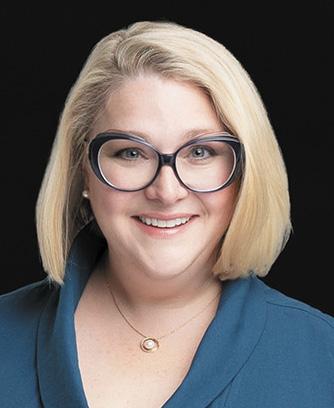
ABOVE: (from left) Arenson, Pulido, Ray.
Family Law Specialist




DECEMBER 2022 /JANUARY 2023 | AUSTINLAWYER 17 Collaborative Divorce. Helping couples problem solve their way through divorce. 7500 Rialto Blvd, Bldg One, Suite 250, Austin, Texas 78735 whitten-law.com | info@whitten-law.com | (512) 478-1011 Adoption Grandparent or Non-parent Rights Collaborative Law High-Asset Divorce Modifications of Custody, Possession & Support
Tim Whitten has practiced in family law since 1992. He has been certified as a Family Law Specialist by the Texas Board of Legal Specialization.
Specialization
*Kimberly A. Edgington kim@whitten-law.com
Meet Bliss Foster, Animal Law Section Chair
Passionate About Animal Protection
Marilee Bliss Foster is an attorney, animal welfare advocate, and volunteer for various nonprofit organizations. She has been involved with these efforts since 2005. She has also written for various publications about legal, animal-related, and general topics. She has served as a council member for the State Bar of Texas Animal Law Section and is the chair of the Austin Bar Animal Law Section.
AUSTIN BAR: Why did you want to be an attorney?
FOSTER: I wanted to be an attor ney so I could make a difference in the world—especially for those who are extremely disadvantaged, people and animals. Also, when I was young, certain attorneys I met made a huge impression!
AUSTIN BAR: Why did you want to join this section and become the section chair?
FOSTER: We have a GREAT section, which was founded by Kelley Dwyer. Our members really care about the way laws impact animals, and we do quite a bit to help the animals in our state. Some of us are involved in legislative efforts. Some of us are

involved in community outreach. Some of us are involved in the practice of animal law. Some of us are involved in all of it!
AUSTIN BAR: What area of law do you practice? What is most interesting about it to you?
FOSTER: I have worked and volunteered in many areas. I have been involved in volunteer legal services efforts, nonprofit pro gram and development support, animal-welfare legislative efforts, newspaper and magazine writing, and general civil litigation (mostly pre-trial). I have testified at state legislative committee hearings, and at city and county hearings about ordinances and nonprofit program support efforts. This
type of work interests me, since it can make a difference for those who may be disadvantaged in some way. Lives can definitely im prove if there is a program or law in place. Results are not always measured in dollars and cents.
AUSTIN BAR: Briefly share your plans for the section this year.
FOSTER: Currently, we are in the planning stages of a CLE related to the Humane Cosmetics Act of 2021, legislation reintro duced in Congress in December of 2021. We may also have a CLE related to pets in estate plans. Another consideration is a CLE related to animal rescue organiza tions. Our section is also excited to have a representative from Austin Wildlife Rescue speak to us about what they do. Other plans might include a community outreach project around the holidays. It’s a lot of fun!
AUSTIN BAR: If you weren’t an attorney, what would you do for a career?
FOSTER: I would have been a marine biologist and deep-sea diver.
AUSTIN BAR: Tell us a fun fact and/or hobby we’d be sur prised to know about you.

FOSTER: Years ago, I went on an observation boat to watch a dolphin release. This beautiful dolphin, Mille, had “stranded” on a beach. Prior to her release,
I helped a volunteer team record Mille’s chuff and swimming patterns. Watching her reclaim her freedom in the ocean was a great blessing!
AUSTIN BAR: Tell us more about your passion for animal welfare.
FOSTER: I have helped mostly with legislation at the state level. I helped Texas Humane Legislation Network (THLN) improve the lives of animals through education, outreach, and lobbying related to bills affecting cruelty to non-livestock animals, dog fighting, and anti-gassing in animal shelters, among others. Also, when I lived in New Mexico, I volunteered to help Animal Protection Voters (APV) with lobbying for a bill that banned coyote-killing contests, which passed in 2019. Later, I helped APV with the early stages of education, outreach, and lobbying for a bill that restricted traps, snares, and poisons on public lands. The bill passed in 2021. I also helped Street Homeless Animal Project in New Mexico— including the research of grant opportunities for a billboard campaign related to the dangers of leaving dogs in hot cars. I also helped them fundraise for veterinary expenses for the pets of the homeless. In both Texas and New Mexico, I have helped with community pet spay/neuter program efforts to assist people who would not otherwise be able to afford these surgeries for their pets. The joint impact of spay/ neuter efforts and animal rescue is so important, as it absolutely reduces the euthanasia numbers in our shelters and helps get animals into caring homes. That is really important to me.
AUSTIN BAR:
FOSTER: Cat
INL AW Y ER AL AL
SECTION SPOTLIGHT 18 AUSTINLAWYER | DECEMBER 2022 /JANUARY 2023
Are you a cat person or a dog person?
and dog! Koala and dolphin—all of them! AUST
We have a GREAT section, which was founded by Kelley Dwyer. We all care about the way laws impact animals, and we do quite a bit to help the animals in our state.
“ ”
Foster took this photo at the release of a dolphin named Mille off of Galveston Island. The event was coordinated by Texas Marine Mammal Stranding Network.









COFER & CONNELLY
Mark Pryor
Rick Cofer
Jaynie Badgett
Ko
Geoffrey Puryear AUSTIN H CENTRAL TEXAS H HILL COUNTRY PRINCIPAL OFFICE: 602 W. 11 TH ST., AUSTIN, TX 78701 • 512-200-3801 COFERCONNELLY.COM FAMILY LAW • CRIMINAL LAW • PERSONAL INJURY Natalia Tsokos
Liz Duggan Ramey
Jeffrey Connelly



20 AUSTINLAWYER | DECEMBER 2022 /JANUARY 2023 DavidToddLaw.com • Eminent Domain • Personal Injury 512 .472 .7799
What I Did Last Summer, Part 1
Gathering Opinions on New Legal Writers
BY WAYNE SCHIESS, TEXAS LAW, LEGALWRITING.NET
In summer 2022, I had lunch meetings with five local attorneys. My goal was to gather input from practicing lawyers about ways I could improve my teaching of legal writing. Before meeting, I asked my “consultants” to consider three questions:
1. What do you think of the writing abilities of the new lawyers you work with?
2. What do you think of new lawyers’ ability to manage research and writing projects?
3. What are some changes or additions to law-school legal-writing instruction you would recommend?
WRITING ABILITIES OF NEW LAWYERS
I was pleased to learn that, accord ing to my consultants, the writing ability of new lawyers these days is okay. No one was gushing about it—after all, new lawyers need lots of practice and experience to become skilled legal writers. But I was pleased that I didn’t hear any “the sky is falling” or “sound the alarm” reports.
I think that’s partly because formal legal-writing instruc tion in U.S. law schools, once almost non-existent, has been
transformed in the last 30 years.
At many schools, legal writing has moved from a low-credit, pass-fail course taught by teach ing assistants to a graded course taught by full-time faculty.

Still, there’s room for improvement, and the most common concerns expressed about new lawyers’ writing fell into three categories: tone, concision, and organization.
Tone
My consultants said that new lawyers sometimes write too formally, in a tone that is stiff or stilted. They guessed that new lawyers might be trying to sound … lawyerly. This is understandable, of course, and it’s a phase nearly every lawyer passes through. You’ve entered a learned profession, and you’ve become a licensed attorney, so you want to sound like one.1 Yes, writing with an unduly formal tone is a flaw, but it’s not a major one. With some good feedback about audience and purpose, new lawyers will adapt to expectations and begin to adopt a readable tone.
Concision
New lawyers’ writing is some times wordy and verbose, my
categories: tone, concision, and organization.
consultants said. They see long sentences, complex structures, and big words. But mostly, they said, they see documents that are too long. A memo the assigning lawyer thought would be five pages is ten; email messages that could be two or three paragraphs are five. New lawyers need to weed out extraneous details and unnecessary background and deliver the key information or analysis efficiently.
I agree that concise writing is a challenge for new lawyers, and my perspective as a teacher of first-year law students makes me aware of a risk to keep in mind. If you apply pressure on novice legal writers to be concise, they might cut useful or necessary content just to achieve conci sion. In other words, to get the five-paragraph email down to three paragraphs, the beginner might just cut two paragraphs— perhaps removing a key legal standard or an important piece of the analysis.
What we want, of course, is for the writer to carefully edit all five paragraphs, removing a few words here, dropping an unnec essary comment there, and then consolidating so that we end up with three paragraphs. Ideal concision is achieved by a series
of small edits that add up. Organization
Even a concise piece of legal writing that uses the right tone still needs to be well organized, and in this area my consultants had two key comments: First, they wanted more up-front, bottom-line summaries in nearly everything thing they read. Spill the beans: Get to the point first and put the background second, they said. It’s a common recom mendation for all legal writing.2 Second, the rest of the document should be sensibly ordered, with headings if necessary and strong topic and transition sentences.
These two key comments—the need for an up-front summary and the importance of a sensible, discernible order—highlight the reality of law practice: Lawyers are busy. These two techniques help busy lawyers read and understand efficiently.
Next month: More about my meetings and the input I received. AUST INL AW Y ER AL AL
Footnotes
1. Wayne Schiess, The Sound in Your Head, Austin Lawyer 6 (Nov. 2009).
2. Summaries in Legal Writing, part 1, Austin Lawyer 9 (Feb. 2008); Summaries in Legal Writing, Part 2, Austin Lawyer 6 (Mar. 2008).
OPENING STATEMENT DECEMBER 2022 /JANUARY 2023 | AUSTINLAWYER 21
At many schools, legal writing has moved from a low-credit, pass-fail course taught by teaching assistants to a graded course taught by full-time faculty. Still, there’s room for improvement, and the mostcommon concerns expressed about new lawyers’ writing fell into three
AYLA PRESIDENT’S COLUMN
BLAIR LEAKE , WRIGHT & GREENHILL, P.C.

A Day On, Not a Day Off MLK Day of Service
AYLA runs a yearly event known as the MLK Day of Service, which is a full day of numerous different volunteer opportunities for local attorneys and their loved ones on Martin Luther King Jr. Day. The MLK Day of Service, however, is certainly not something that was invented by AYLA, and instead has a long, winding history that is worth exploring.
The actual holiday, Martin Luther King Jr. Day, was first formally proposed as federal legis lation by Michigan Congressman John Conyers just four days after King’s assassination on April 4, 1968. Conyers proceeded to in troduce the same legislation year after year until—finally—15 years later it was passed and signed into law in 1983. However, only 27 states initially recognized the holiday. Some states made a notso-subtle dig at MLK and what he fought for by crassly combining the new holiday with holidays honoring persons who fought for the Confederacy—and thus necessarily fought for subjugation and slavery.
Virginia is one of a handful of states that opted for such a snub the following year by combining the new federal holiday with LeeJackson Day to form Lee-JacksonKing Day. Sixteen years later, Virginia partially relented and split the combined holiday into
two separate holidays. Twenty years after that, Lee-Jackson Day was formally eliminated entirely as a Virginia holiday and replaced with Election Day, lending credence to King’s famous belief that “the arc of the moral uni verse is long, but it bends toward justice.”
The federal legislation that enshrined MLK Day did not stay static. Eleven years after its original passage, Congressman John Lewis and Senator Harris Wofford proposed the King Holiday and Services Act of 1994 to amend the bill that first estab lished the holiday. According to the National Museum of African American History & Culture, the amendment made MLK Day the only federal holiday designated as a day where all Americans are encouraged to volunteer and improve their communities. As King himself once observed, “Life’s most persistent and urgent question is: What are you doing for others?”
It is no surprise that the holiday created in King’s honor developed the informal slogan of being “a day on, not a day off.” Beyond just helping your community, volunteering has also been proven again and again to help one’s self. In the past, volunteer opportu nities provided through AYLA’s MLK Day of Service event have included opportunities to help abandoned animals, help local schools, help those in hunger, help those experiencing financial insecurity, and help those in need of medical care. AYLA invites you to join in on Monday, Jan. 16, 2023 by making it a “day on” to stand up and help your communi ty as well as yourself. AUST INL AW Y ER
AL AL
AYLA DAY OF SERVICE
Monday, Jan. 16, 2023
In honor of Dr. Martin Luther King, Jr., the Austin Young Lawyers Association will coordinate its 13th annual Day of Service project in Austin on Monday, Jan. 16, 2023. This local project is modeled after the national Martin Luther King Day of Service, which is intended to transform Dr. King’s life and teachings into community service that helps solve social problems.
AYLA invites the Austin legal community to sign up for one or more of the volunteer or donation opportunities available for the Day of Service. Save the date ahead of time to plan to volunteer or donate. Volunteer opportunities and signup information will be shared in early January.
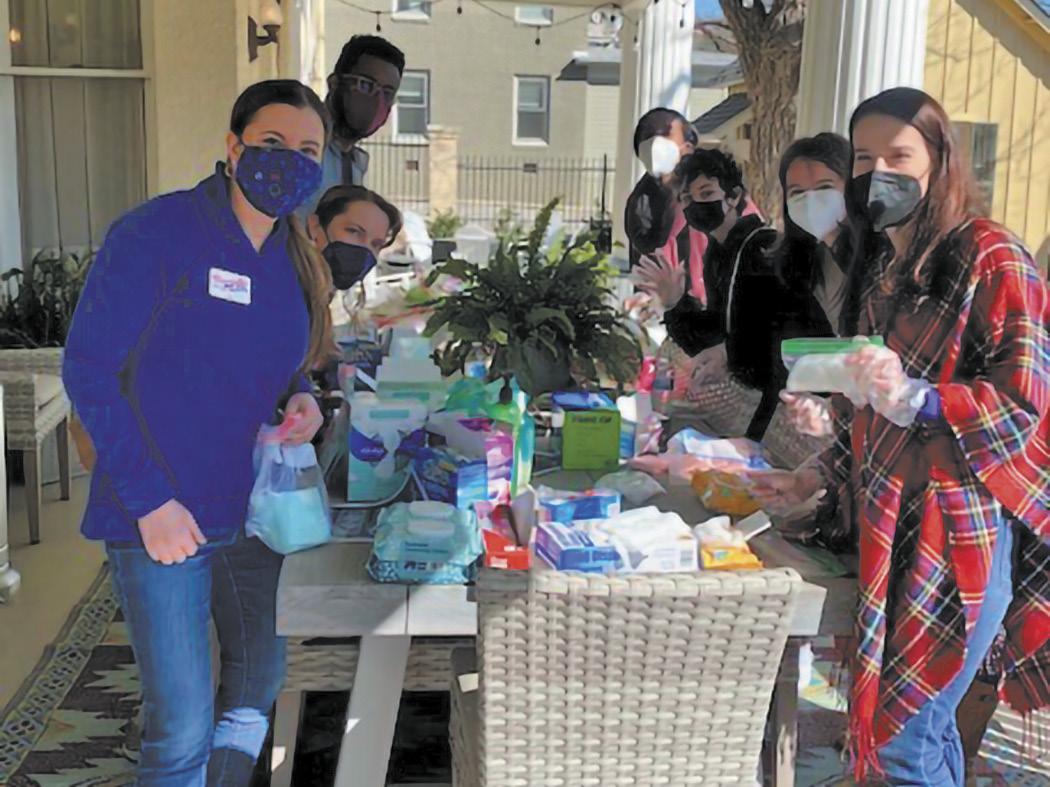
AYLA members making care packages on the annual Day of Service in 2022.
AUSTIN YOUNG LAWYERS ASSOCIATION
22 AUSTINLAWYER | DECEMBER 2022 /JANUARY 2023
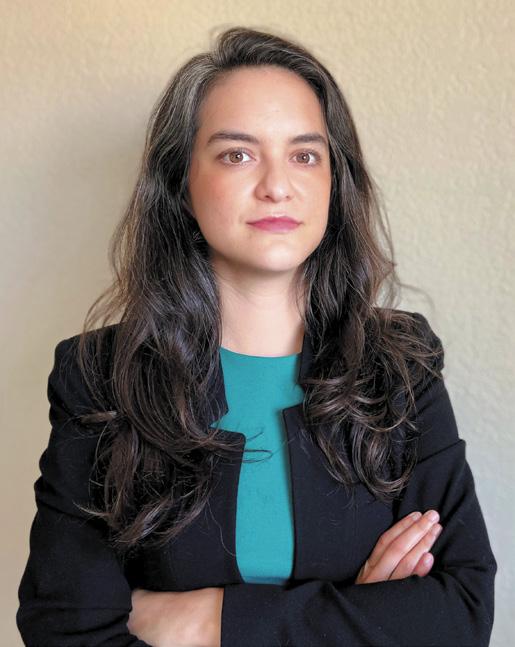
AYLA Member Spotlight: Nora Estefania Picasso-Uvalle
Nora Estefania Picasso-Uvalle is licensed to practice law in both Mexico and Texas. She focuses on serving the immi grant population by providing advice on issues. In her spare time, she makes sure her pets live their best life, too.
AYLA: Tell us about your background.
PICASSO-UVALLE: I am originally from Mexico, and a licensed attorney there, too. I have always been interested in public-interest law. That is why after a couple of years working at the Federal Electoral Court in Mexico, I moved to Colombia to get a master’s degree, then I worked at a nonprofit doing stra tegic litigation. After law school in the U.S., I came to Texas, where I work on immigration. I first provided services to detained asylum-seeking families, and I currently manage myPadilla.com, a service providing advice to immigrants charged with criminal offenses in Texas, at the Capital Area Private Defender Service.
AYLA: How long have you been involved in AYLA and what’s been your best AYLA
AYLA Hosts Tailgate
Loudly Supportive of Austin Families
The Austin Young Lawyers Association hosted the 6th annual Tailgate for a Cause on Saturday, Nov. 12, 2022. Fans of both teams joined in the fun. Admission to the tailgate was a suggested $20 donation per person.


The purpose of the tailgate was to raise funds and awareness to benefit AYLA’s community holiday event for underprivi leged families, which will be held on Dec. 11, 2022.
AYLA will partner with the YMCA to
provide toys for approximately 200 children. Our goal is to provide holiday cheer to families who might not otherwise have that opportunity.
Thank you to our AYLA tailgate committee and to our generous sponsors, without whom this event would not have been possible! AUST INL AW Y ER AL AL
experience so far?
PICASSO-UVALLE: I have been involved in AYLA since 2021 (when I moved to Austin). I had the incredible opportunity to participate in the AYLA/ Austin Bar Leadership Academy. It is a great opportunity to meet other lawyers and to learn from local leaders. Since I loved it so much, now I’m serving on the Leadership Academy committee!
AYLA: What was your child hood dream job?
PICASSO-UVALLE: I wanted to be a veterinarian—sometimes I still daydream about it. Maybe when I retire, I will have my own dog shelter (ok, cats too).
AYLA: What are some of the things you enjoy most about living in Austin?
PICASSO-UVALLE: I love that people are super friendly and I can take my dogs (Dante and Fox) everywhere. Also, summers in Austin are the best, especially with all the lakes around the city. And the pink sunsets! My favorites.
AYLA: What’s your best advice for fellow young attorneys?
PICASSO-UVALLE: Have a community-wise mindset. When you help others grow, you are growing yourself. Be kind and generous—the world is violent enough. Find an activity that brings you happiness outside of work. A job is just a job, and you are much more than a lawyer. Cook, garden, learn a hobby. Your body, mind, and family/ friends will be thankful for it. AUST INL AW Y
ER AL AL
AUSTIN YOUNG LAWYERS ASSOCIATION DECEMBER 2022 /JANUARY 2023 | AUSTINLAWYER 23
AYLA and Austin Bar members braved the chilly weather to tailgate and support the cause during the UT versus TCU game.
The following are summaries of selected civil opinions issued by the Third Court of Appeals during October 2022. The summaries are an overview; please review the entire opin ions. Subsequent histories are current as of Nov. 2, 2022.
of a list of all accident claims and lawsuits in Texas where a UPS vehicle allegedly failed to yield the right of way, for a five-year period. The court of appeals an alyzed two recent supreme court discovery-mandamus cases but rejected their application to the particular facts. The court noted that the challenged discovery re quest related only to Texas, where the accident occurred. Further, the number of failure-to-yield accidents was not excessively large. The court concluded there was no abuse of discretion and denied mandamus relief.
ORIGINAL PROCEEDING: Court grants relief where trial court sua sponte grants a new trial.
The court ordered the trial court to either vacate its mistrial order or identify with reasonable specificity, with reference to evidence, the reasons it granted a new trial. The court conditionally granted relief.
PLEA TO THE JURISDIC TION: Adjacent property owner lacks standing to challenge easement removal.
lot. The court found the evidence was legally and factually sufficient to support the implied findings and affirmed.
APPELLATE JURISDICTION: Expiration of elected official’s term moots appeal.
ORIGINAL PROCEEDING:
Court denies mandamus relief in discovery dispute.


In re UPS, Inc., No. 03-22-00526CV (Tex. App.—Austin Oct. 21, 2022, orig. proceeding) (mem. op.). Defendants in a personal injury lawsuit sought mandamus relief from a discovery order as overbroad. The challenged dis covery order required production
In re Tex. Dep’t of Fam. & Prot. Servs., No. 03-22-00618-CV (Tex. App.—Austin Oct. 28, 2022, orig. proceeding) (mem. op.). Following a jury verdict, the trial court sua sponte declared a mistrial. The court of appeals noted that a trial court must state legally appropriate reasons to set aside a jury verdict, includ ing specific reasons from the particular facts. The trial court’s only explanation was that the jury received material perjured testimony. The court held that the explanation was insufficient because it failed to identify the testimony or how it undermined the jury’s findings. According to the court, perjury does not necessarily support a new trial.
Bellingham Enters., LLC v. Colby Constructors, LLC, No. 03-2200233-CV (Tex. App.—Austin Oct. 13, 2022, no pet. h.) (mem. op.). Bellingham challenged the Commissioners Court’s order to vacate a drainage easement that ran on Colby’s lot. Defendants challenged Bellingham’s standing to challenge the order because the easement was located entirely on Colby’s lot and any impact to Bellingham’s property was speculative. The court of appeals observed that Bellingham’s stand ing turned on whether he met his burden to show his lot suffered an actual or imminent injury. Colby presented evidence that water flow rates would not change with the easement’s removal and would have no negative impact on adjacent properties. Bellingham presented controverting evidence. Because the trial court did not issue findings of fact, the court assumed that the trial court considered the conflicting evi dence and implicitly found that easement’s removal would not negatively impact Bellingham’s
King v. Goodwin, No. 03-2100293-CV (Tex. App.—Austin Oct. 14, 2022, no pet. h.) (mem. op.). After Goodwin’s election to the Bee Cave city council, councilmembers voted to remove him from office for violating the city charter. Goodwin sued. The trial court enjoined the city officials from interfering with Goodwin. On appeal, coun cilmembers sought dismissal on mootness grounds, contending Goodwin’s claims became moot when his term expired. Goodwin contended that the controversy remained because of the possibility that the same action would occur again if he ran for office in the future. The court of appeals concluded that there was no evidence that the council would again vote to remove Goodwin based on his prior conduct in office. The court held that the expiration of Goodwin’s term mooted the case and dismissed for want of juris diction. The dissent would have held that the capable-of-repeti tion-yet-evading-review exception to mootness applied.
 AUST INL AW Y ER AL AL
THIRD COURT OF APPEALS CIVIL UPDATE 24 AUSTINLAWYER | DECEMBER 2022 /JANUARY 2023 You’re busy looking out for your clients’ needs. Who’s looking out for yours?
Jr., CFP Financial Professional ® 3305 Northland Dr., Suite 414 Austin, TX 78731 512-302-6051 kaighinjr@momentumin.com Member: FINRA/SIPC
Jim Kaighin,
>
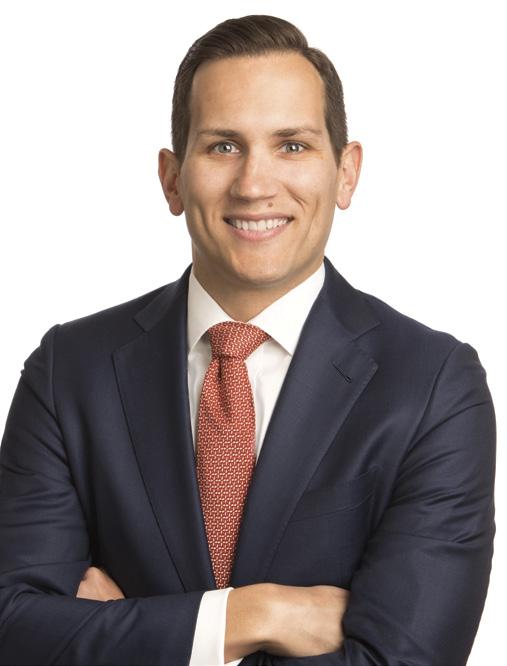
Laurie Ratliff is a former staff attorney for the Third Court of Appeals. She is board certified in civil appellate law by the Texas Board of Legal Specialization and an owner at Laurie Ratliff LLC.
The following are summaries of opinions issued by the Fifth Circuit. The summaries are overviews of particular aspects of the opinions; please review the entire opinions.
DIVERSITY JURISDICTION:
A case is removable to federal court only if complete diversity of citizenship exists between the plaintiff and all defendants, not just the defendants that have been served at the time of removal.
In re Levy, No. 22-30622, 2022 WL 14732482 (5th Cir. Oct. 26, 2022). Levy and Dumesnil, both citizens of Louisiana, had a traffic collision. Levy filed suit in Louisiana state court against Dumesnil and two other defendants, Dynamic Energy Services International and Zurich American Insurance Company. Zurich—a diverse defendant and the only one who had received ser vice of process—promptly removed to federal court on the basis of diversity jurisdiction. Invoking the logic of snap removal for purposes of the forum-defendant rule, 28 U.S.C. § 1441(b)(2), Zurich argued that removal was proper because complete diversity existed between all served parties, even if it did not exist between all named parties. The district court apparently agreed and denied Levy’s motion to remand. Levy filed a petition for writ of mandamus directing the district court to remand the action.
The Fifth Circuit granted the petition. The forum-defendant rule, the court explained, states that a case otherwise removable on the basis of diversity jurisdiction may not be removed if any of the parties “properly joined and served as defendants” is a citizen of the forum state. Thus, the forum-de fendant rule does not prohibit removal of case in which forum and non-forum parties are named as defendants, provided that the non-forum defendant is served and removes before any forum defen dant is served. But the forum-de fendant rule is simply an addition al, non-jurisdictional restriction on removal. Citing long-standing Fifth Circuit precedent, the Court explained that removal on the basis of diversity jurisdiction always requires complete diversity among all named parties, and the com plete-diversity requirement cannot be circumvented through failure to serve a party that would otherwise destroy diversity. Because Levy and Dumesnil were both citizens of Louisiana, complete diversity did not exist, and removal was improper.
REMOVAL: When an insured sues the insurer and an agent for whom the insurer has ac cepted responsibility under the Texas Insurance Code before removal, the agent is improperly joined for purposes of deter mining diversity of citizenship, regardless of whether the insurer accepted responsibility
before or after suit was filed. Advanced Indicator & Mfg., Inc. v. Acadia Ins. Co., 50 F.4th 469, 472 (5th Cir. 2022). Advanced Indicatory and Manufacturing claimed its building was damaged by Hurricane Harvey’s winds. Advanced submitted a claim to its insurer, Acadia Insurance Company. Acadia’s adjuster determined that pre-existing conditions caused the damage in question, and Acadia denied Advanced’s claim based on Warren’s conclusions.
Advanced sued Acadia and Warren in state court. Both Advanced and Warren were citizens of Texas. Roughly three weeks later, Acadia elected to accept liability for Warren under Texas Insurance Code § 542A.006, which provides that if an insurer accepts liability for its agent after suit is filed, “the court shall dismiss the action against the agent with prejudice.” Acadia removed the case to federal court the next day on the basis that Warren was improperly joined and, therefore, did not destroy diversity. Warren then moved to dismiss the claims against him in federal court. Advanced filed a motion to remand, arguing that Warren was not improperly joined because he was a proper party at the time suit was filed. The district court denied the motion to remand and, later, granted summary judgment for Acadia. Advanced appealed.
On appeal, the Fifth Circuit
David Shank represents clients in highstakes, complex disputes in Texas and around the country. He is a partner at Scott Douglass McConnico, LLP.

held that the district court did not err in denying remand. In doing so, the court resolved an issue that had previously split district courts. The court held that the volun tary-involuntary rule-under which an action that is nonremovable when it is filed may only become removable by the voluntary act of the plaintiff—does not prevent removal when a defendant’s post-suit election under Texas Insurance Code § 542A.006 makes a suit removable. Some district courts had held that the voluntary–involuntary rule prohibited such a result because an election under § 542A.006 is an act by the defendant. But the court concluded that its approach is a natural extension of its prec edent recognizing an exception to the voluntary-involuntary rule where a party is improperly joined at the time of removal AUST INL AW Y ER AL AL
FEDERAL CIVIL COURT UPDATE DECEMBER 2022 /JANUARY 2023 | AUSTINLAWYER 25
>
PRACTICAL TIPS FOR AVOIDING CONFLICTS OF INTEREST

Conflicts of interest are a consistent source of legal malpractice claims. Read below for some tips to help avoid running afoul of the Texas Disciplinary Rules of Professional Conduct.
1. Implement a Formal Conflict Checking System. This is essential regardless of firm size. There are several software options on the market, or you can design your own searchable database in any word processing program.
2. Watch for the Inadvertent Client. Attorneys try to avoid joint representation problems by agreeing to represent one party and documenting that the other party has been advised to seek independent counsel. Despite this documen tation, if the attorney continues to interact with this individual, she may have unintentionally established an attorney-client relation ship. Remember to never answer any legal questions from the non-client. Instead, advise them to seek independent counsel.
3. Write the Non-Engagement Letter. When declining representation, it’s advisable to write to the prospective client confirming that the attorney will not be repre senting him. The letter should confirm that the firm received no confidences and has returned any documents provided.
4. Take the Extra Steps When Taking On a Joint Representation. If an attorney can ethically represent multiple parties and believes a joint representation is prudent, she should proceed with care to discuss: (1) the implications of agreeing to a joint representation; (2) how both potential and any actual conflicts will affect the rep resentation; (3) how confidentiality works in a joint representation; and (4) obtain all parties’ agreement to sharing confidential and privileged information between or among them.
5. Recommendations for Engagement Letters.
- Identify Precisely Who Is (and Who is Not) the Client. Ambiguity about who exactly is represented may arise in a variety of common situations. Proper identification of the client can help defeat a motion for disqualification or a claim that a prohibited conflict of interest influenced the lawyer’s representation.

- Multiple Clients. If the representation involves multiple clients, it’s advisable that the letter should: (1) address potential adversity between the jointly represented clients; (2) include provisions for the clients’ consent to the joint representation with the letter to be signed by each of the clients; (3) explain that confidential information may be shared among the clients; and (4) explain what will happen in the event of future adversity among the clients, including withdrawal.


- Get the Client’s Signature. While most engagement letters and conflict waivers are not required to be signed under the Texas Rules, the best practice is to have procedures in place to sign and: (1) remind the client to return the executed copy; and (2) monitor that any required consents have been obtained prior to the firm commencing work on the matter.
These tips can help you avoid some of the more common conflict pitfalls. Should you have a question about a given situation, please review applicable rules and case law. See more tips and articles at tlie.org.
26 AUSTINLAWYER | DECEMBER 2022 /JANUARY 2023
Divorce and Child Custody Surveillance ~ Undercover Background Checks Computer & Phone Forensics Corporate Investigations Expert Testimony and more Offices in Austin, Round Rock and Dallas STRICTLY CONFIDENTIAL
in Forbes Magazine
“Information is power, the not knowing is devastating.”
Featured
Anji Maddox
SPONSORED CONTENT
Content provided by Texas Lawyers’ Insurance Exchange
The following are summaries of selected criminal opinions issued by the Third Court of Appeals from May and June 2022. The summaries are an overview; please review the entire opinions. Subsequent histories are current as of Nov. 1, 2022.

EVIDENCE ADMISSIBILITY – EXTRANEOUS OFFENSES:

In trial for aggravated robbery, evidence of another robbery al legedly committed by defendant was admissible to prove identity. Clifford v. State, 653 S.W.3d 1 (Tex. App.—Austin 2022, pet. ref’d). Clifford was convicted of committing an aggravated robbery in Sterling City. At trial, the State sought to admit evidence of another robbery that occurred in Midland for the purpose of establishing Clifford’s identity as the Sterling City offender, and the district court admitted the evidence. On appeal, Clifford argued that extraneous-offense evidence may only be admitted to prove identity when identity has been made an issue in the case. Clifford claimed that he had not made identity an issue because he made no opening statement and had not cross-examined any of the State’s witnesses on the issue of identity at the time that the State offered the extraneous-offense evidence. However, Clifford raised the issue prior to trial, arguing during a pretrial hearing that his
main defense was “going to be the simple question of identity” and that identity was going to be “real important” during the trial. Additionally, identity was an issue for the State: “[W]hen the trial court made its ruling, none of the State’s witnesses had been able to identify Clifford as the offender from the convenience store robbery, and the surveillance footage from the convenience store showed that the offender was wearing a mask completely covering his face and other clothing concealing his identity.” The court also observed that the Midland and Sterling City robber ies shared “significant similari ties,” including a skull mask that was worn by one of the robbers during both robberies. Because of the “common characteristics” of the two robberies, the court was unable to conclude that the district court abused its discretion in finding that the evidence pertaining to the Midland offense was relevant to establishing the identity of the man wearing the skull mask during the Sterling City offense.
SEARCH AND SEIZURE – “COLLECTIVE KNOWL EDGE” DOCTRINE: Police, working as a team, had reason able suspicion to initiate traffic stop, even though detaining officer did not testify at the suppression hearing.
State v. Hartley, No. 03-21-00230CR (Tex. App.—Austin June 23,
2022, no pet.) (mem. op., not des ignated for publication). Following a traffic stop, Hartley was arrested for driving while intoxicated. Prior to trial, Hartley filed a motion to suppress, arguing that the police lacked reasonable suspicion to stop or probable cause to arrest him for DWI. The officer who initiated the traffic stop did not testify, and the State failed to pres ent any video evidence showing the initiation of the stop. Instead, another officer who arrived at the scene shortly after the stop testified, and the State played a recording of a 911 call reporting the defendant’s reckless driving. The trial court granted the motion to suppress, concluding that there was no evidence that the detaining officer had reasonable suspicion to initiate the stop. On appeal, the State argued that the information provided to the 911 operator and communicated to the testifying officer provided an objectively reasonable basis for the stop and that this information could be imputed to the detaining officer under the “collective knowledge” doctrine. The appellate court agreed and reversed the trial court. The court observed that the trial court had found that the information relayed to the 911 dispatcher regarding defendant’s reckless driving would support an officer’s reasonable belief that a traffic offense had been commit ted, and it also had found that the 911 information was relayed to the officer who arrived at the scene
shortly after the stop. The record supported these findings. “The remaining question,” the appellate court determined, was “whether that same information also can be imputed to [the detaining officer], even though he did not testify at the suppression hearing and there is no other evidence before us as to what [he] observed prior to initiating the traffic stop.”
Following the reasoning of State v. Martinez, 569 S.W.3d 621 (Tex. Crim. App. 2019), the appellate court concluded that the two officers were “working as a team” to detain and investigate Hartley in response to the 911 call, and “the sum total of their knowledge, including the information relayed to [the testifying officer] from the 911 call, amounted to reasonable suspicion to detain Hartley for committing a traffic offense.”
AUST INL AW Y ER AL AL
THIRD COURT OF APPEALS CRIMINAL UPDATE DECEMBER 2022 /JANUARY 2023 | AUSTINLAWYER 27
Patrick Keel Former District Judge Mediator Arbitrator patrickkeel.com Available by video and in person.
Zak Hall is a staff attorney for the Third Court of Appeals. The summaries repre sent the views of the author alone and do not reflect the views of the court or any of the individual Justices on the court.
>
The Perils of Parody
BY CLAUDE DUCLOUX
As I know from the past 30 years of receiving both appreciation and scorn from my readers, everyone loves an excellent satire attacking something or someone who richly deserves it. But how one handles being on the receiving end is enormously informative. Petulance and self-pity are as use less as moving too fast in quick sand—you just sink more quickly. Except when the U.S. Sixth Court of Appeals has your back. But I’m getting ahead of myself. Let’s start at the beginning.
In my estimation, the most astounding expression of the human organism is the ability to create, express, and appreci ate humor. And the profound achievement associated with the art of satire is the ability to create social change by deft exposition and reflection of the idiocies and failures of societal structures through clever parody.
Human progress is moved, as we are entertained and informed, and often transformed, by the brilliance of legendary humorists who expose the silliness, hypocri sy, and cruelty of those in power. The names are legion: Voltaire, Benjamin Franklin, Mark Twain, Oscar Wilde, Dorothy Parker, H. L. Mencken, and yes, even Andy Borowitz. Not surprisingly, those with no sense of humor (and, sadly, you DON’T know who you are) frequently seek to punish those whose brilliance holds them or their personal credo up to ridicule. Voltaire (a personal idol of mine) was imprisoned in the Bastille for almost a year in 1717 for mocking the Duc d’Orleans, who banished him from Paris. Ten years later, he was imprisoned again and exiled from France. He remains one of France’s greatest playwrights and historians.
Fortunately, there has been
a robust stare decisis in this country, protecting the rights of humorists to make fun of the high and mighty and those in power. “The last thing we need, the last thing the First Amendment will tolerate, is a law that lets public figures keep people from mocking them.”
White v. Samsung Electric, 989 F.2d 1512, 1519 (9th Cir. 1993). Well, we are apparently down at the last thing the First Amendment will tolerate. (Go get a strong beverage before you keep reading.)
While few police departments are known as elite training institutions for the next wave of writers for National Lampoon, their activities, like many governmental processes, are rich and productive sources of parody, sarcasm, and humorous exposi tion. But, as I mentioned above, such humor is not accessible to the humorless. Nevertheless, “[A] parody enjoys First Amendment protection notwithstanding that not everyone will get the joke.”
Golb v. Atty. Gen. of N.Y., 870 F.3rd 89, 102 (2d Cir. 2017).
When Anthony Novak created a fake Facebook page parodying the real Facebook page of the Parma, Ohio Police Department, he apparently failed to read them their rights or perhaps his rights—to poke fun at them. So, when Novak’s page announced, inter alia, that: a) Parma Police Department was holding a “pedophile reform event,” and successful participants could not only be removed from the sex offender registry, but could be police officers after completing “puzzles and quizzes”; and b) that the police department would be offering abortions to teenagers in the police van; and c) that, in connection with recruiting officers, minorities were “strongly encouraged not to apply”—all of which should have
triggered some reasonable doubt as to authenticity—all hell broke loose. Although Novak took down the page after only 12 hours, he was arrested, jailed, indicted, and prosecuted for disrupting public

doing their job by arresting him. But the Sixth Circuit disagreed, saying the First Amendment doesn’t protect you from an arrest supported by “probable cause.” So, let’s look at the arrest.
In my estimation, the most astounding expression of the human organism is the ability to create, express and appreciate humor. And the profound achievement associated with the art of satire is the ability to create social change by deft exposition and reflection of the idiocies and failures of societal structures through clever parody.
services—a felony!
After hearing no evidence of disruption, but that the police department was simply focused on the derogatory nature of the page, the jury acquitted him, and Novak sued the department and the two investigating officers. The federal judge denied the police department’s motion to dismiss, which asserted qualified immunity—they had just been
Long story short, the judge found that the police depart ment did NOT act in bad faith, claiming it was reasonable for officers to believe Novak was “impersonating a police officer,” so, claims denied. Now, wait—im personating a police officer? By describing policies and activities that everyone knew do not (and could not possibly) exist? How did that harm a citizen? Now
ENTRE NOUS 28 AUSTINLAWYER | DECEMBER 2022 /JANUARY 2023
Image courtesy Claude Ducloux.
the case awaits certiorari in the Supreme Court of the United States. The clear argument is that the police department’s defense of “probable cause” could NOT work so long as a reasonable reader would recognize this was parody. But the court says, in so many words, “Well, you should have had a disclaimer warning the reader that this fake page was supposed to be funny!” Well, here is the really funny part.
To bolster Novak’s petition to the Supreme Court, The Onion, the nation’s most prominent sa tirical newspaper, has written an amicus brief, which is a thing of beauty. The Onion is justifiably worried that if this gambit works for the Parma Police Department, irritated officials all over the U.S. could harass and arrest their humor writers and editors for bogus “good faith” reasons, clear ly stifling free speech and the transformative power of commen tary. (Isn’t arresting critics what Putin, Kim Jong Il, and other despots do?) This fairly serious (yet immensely entertaining) brief—which, in itself becomes a parody of brief-writing—explains to the Supreme Court how humor and parody work, and what a dangerous precedent this is to people like the writers of The Onion to have to fear “good faith” arrests by the subjects of their humor.
Most importantly, The Onion explains, parody does NOT work by warning the reader that it is coming. The joy of parody is that the reader believes, even for a second, that the statements are true, before reality kicks in and laughter results. And humor is not perfect. Writers cross the line, but here a claim that probable cause existed is hard to swallow. As the jury saw, Novak’s arrest was pure retaliation, not police work.
Hefty legal precedent should have protected Novak. And in fact, the reader’s transitory appreciation that the item is not real, but a parody, bolsters its rhetorical effect on the reader—it
makes the reader think!
Humorists throughout time have unwittingly predicted the future while creating fiction. (The Onion had a story in 2017 about nuclear codes being found by a cleaning lady in Mar-A-Lago, and delivered to the lost and
found). Even more importantly, these parodies often commend us to examine whether we, as a society, should prevent that future.
make you think and laugh at the same time. (See? You didn’t need a warning on that last sentence, did you?)
Enjoy your holidays. And let’s hope the Parma Police Department doesn’t arrest Santa for burglary.
The Onion’s Amicus Brief can be found on the Supreme Court’s website, www.supremecourt. gov. AUST INL AW Y ER AL AL
Finally, as the greatest writer of all time, I hope you will join me in protecting my right to
SPECIALIZING IN Peer-Level Contract Attorneys and Paralegals
Expertly
matched to your needs and culture
• Experienced legal talent for when quality matters






• Peer-to-peer client service experience
• Cost-efficient & flexible solutions
• Contract engagements, contract-to-hire & permanent placement
Flexible legal talent is closer than you think.
CONTACT US TODAY.
Jeff Lilly, Partner jlilly@latitudelegal.com 512-956-8980
9442 N. Capital of Texas Hwy Plaza 1, Suite 500 Austin, TX 78759
LATITUDELEGAL.COM DECEMBER 2022 /JANUARY 2023 | AUSTINLAWYER 29
The joy of parody is that the reader believes, even for a second, that the statements are true, before reality kicks in and laughter results. And humor is not perfect.
How to Become a Texan
BY BRAD WIEWEL
address, it should be used on all correspondence.
Austin is being over run by “outsiders!”
Whether they’re from California, New York, or Illinois, nothing is going to stop them. As Austin lawyers, we are encountering them in our offices and in our neighborhoods. Many are coming to avoid higher taxes, but the California tax authorities, and their counter parts elsewhere, do not just roll over and let all those dollars stroll out of their states so easily—many are very aggressive. It is essential for your clients and new friends to establish Texas as a verified domi cile to escape their clutches! Here are a few pointers for recent Texas transplants on how to do that.
First, they should change their mailing address. While this seems mundane because tradi tional mail is not as important as it once was, this simple task puts the federal government on notice that a move has occurred; they can pick up a Movers Guide and PS Form 3575 at the post office. Second, they should let their creditors or anyone else they deal with on a regular basis know about the move. They should inform any entity (corporation, LLC, etc.) that they deal with too. Once they have a Texas
Getting a Texas driver’s license and having their vehicle registered here signals an intent to permanently reside, as does having the vehicle inspected and getting Texas license plates (and once they get those, they can enjoy a tremendous amount of relief that they will not be stereotyped by having out-of-state plates on Mopac anymore!). They can also file a relatively obscure “Residency Affidavit” which can be obtained through the Texas Department of Safety website. It is an explicit statement of intent to make Texas their legal residence. Opening a bank or credit union account seems basic, but because so many people do not use or need a local bank now, it is a step that can be powerful, but overlooked. Having paper checks showing a Texas address is perhaps arcane, but smart too.
Many Texans are frightened about the political and cultural leanings of these “foreigners.”
Whatever their persuasion, registering to vote is simple and convincing evidence of a new domicile because it carries criminal penalties with it. The application is available online from the county tax office.
Updating an estate plan may seem like an odd addition to this list, but it’s important for two reasons. First, it certainly shows a commitment to the laws of Texas regarding these vital issues. Second, out-of-state documents do not work well here. In Texas, we call our medical directive a “Medical Power of Attorney” and our termina tion-of-life-support document a “Directive to Physicians.” In other states, those are often combined into one instrument that may be named a “Health Care Proxy” or “Advanced Health Care Directives.” Texas medical
providers are used to seeing Texas documents and willingly accept them; non-standard directives may cause confusion and caution at the wrong time. Out-of-state wills normally do not include the required Texas verbiage, which can equate to more time and expense. Many Californians in particular have revocable living trusts which specify that they are governed by the state law where the trust was drafted. Having a trust governed by Texas law strengthens the client’s hand when dealing with the tax collector in the state of their former residence.
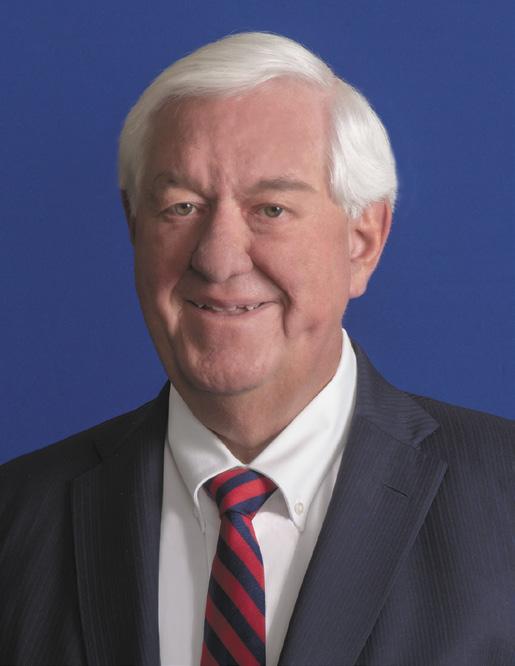
Two more tips. Becoming a member of a church or other
place of worship is a mark of stability and solidity, as is establishing a relationship with a local doctor, dentist, veterinar ian, and even therapist. Finally, joining gyms, clubs, and olunteer organizations help to make a chal lenge on residency extraordinarily difficult to win.
Our law firm literally wrote the book for all new Texas residents: Welcome to Texas, Now What? The ending sentence of the book’s introduction is, “Don’t forget why you are moving here.” Good advice for them, and a good reminder for those of us who got here first, by birth or otherwise, to be patient, kind and friendly to our newly minted Texans.
 AUST INL AW Y ER AL AL
PRACTICE POINTERS 30 AUSTINLAWYER | DECEMBER 2022 /JANUARY 2023
Brad Wiewel is a board certified Texas estate planning attorney with the Austin firm of Texas Trust Law.
Many are coming to avoid higher taxes, but the California tax authorities, and their counterparts elsewhere, do not just roll over and let all those dollars stroll out of their states so easily—many are very aggressive. It is essential for your clients and new friends to establish Texas as a verified domicile to escape their clutches!
ADVERTISERS
ADVERTISER
Apple Leasing 9
Armbrust & Brown, PLLC 17
Bollier Ciccone LLP 12
Broadway Bank 32
Cofer & Connelly, PLLC 19
Crowe LLP 11
Foster, LLP 4
Judge Stephen Yelenosky 11
Knolle, Holcomb, Callahan & Taylor, P.C. 20
Lakeside Mediation Center 16
Latitude 29
Laurie Ratliff LLC 20
Law Office of Tim Whitten 17
LawPay 2
Momentum Independent Network 24
Noelke Maples St. Leger Bryant, LLP 8
Patrick Keel 27
Reed, Claymon, Meeker & Hargett, PLLC 31

Scott Baker Mediation, LLC 25

She Spies Private Eye, Inc. 26
Terri Crewe 12
Texas Lawyer Insurance Exchange 3
Texas Lawyer Insurance Exchange 26
The Snell Law Firm 5
Thomas Esparza, Jr. P.C. 3
Todd Law Firm, PLLC 20

UBS Financial Services Inc. 13
UT Austin Center for Professional Education 17
Vaught Law Firm 31
LAW
Help.
and
Now Available FAMILY LAW Divorce Custody Same-Sex Marriage Appeals Modifications
Client-Centered
Law
We’re Here. We’re Open. We’re Ready to
Video Conferencing
In-person Social Distancing
A
Approach to Family
We understand. We can help.
FIRM,
Board-Certified in Family Law and Civil Appellate Law by the Texas Board of Legal Specialization
Family Law
Legal
AustinDivorceLawyer.com 512.605.0999
Board-Certified
Law by
Legal Specialization DECEMBER 2022 /JANUARY 2023 | AUSTINLAWYER 31
P.C. Mediations Arbitrations Attorney Jimmy Vaught,
Attorney Jillian French Board-Certified in
by the Texas Board of
Specialization
Attorney Erin Leake
in Family
the Texas Board of
. . . . . . . PAGE
Comprehensive Wealth Management Solutions
At Broadway Bank we understand the key to building a lasting legacy requires a comprehensive approach to your financial planning. Our team will take the time to learn about your unique circumstances and identify the values most important to you and your family. As a client, you will have a dedicated team of impeccably credentialed professionals to provide thoughtful and custom-tailored advice and guidance. Our team’s expertise goes beyond trust administration and investment management.

Rev. 10/22 #828752636 WEALTH & PRIVATE BANKING
We offer a wide array of specialty services including:
• Estate settlement
management
• Oil and gas mineral
Not FDIC insured Not guaranteed by the bank Not a deposit Not insured by a federal government agency May lose value Investments are: 828752636-AU Lawyer - November 2022 Print Ad.indd 1 10/12/2022 10:34:51 AM
• Real estate management Let our team help you build your legacy. broadway.bank/wealth • (512) 465-7801 • Foundation management • And more
