AUSTRALIAN PAIN SOCIETY NEWSLETTER

VOLUME 38, ISSUE 4
VOLUME 39, ISSUE 4
Well. What a marvellous event was the Annual Scientific Meeting of the Australian Pain Society? A conference with everything for some people, and something for everyone. Great speakers, an array of different topics, and as usual a packed dance floor! A big thank you to Daniel Harvie who sums up the conference in this edition and to the other organisers from the Gold Coast. We also thank all the speakers who provided such a breadth of knowledge and experience in the management of people with persistent pain. I always say, the APS ASM is my favourite conference, and I am already looking forward to Hobart next year.
Lincoln Tracy was able to interview Associate Professor Beth Darnell about her career in pain medicine. She started out with a degree in mass communications, intending to be a science reporter, but moved into being the scientist herself. People arrive at a career in pain medicine often by very different routes and few start with an intention to devote their professional life to this specialty. It was interesting to note she relates that pain management is not well integrated into US psychological training. Is this the experience of Australian psychologists as well?
2019 is the Global Year Against Pain (GYAP) in the most vulnerable and this includes infants and children. The GYAP article gives invaluable links to websites and resources here and overseas that assist with management. The Pain in Childhood SIG also provide a link to their blog.

Fittingly there are a lot of paediatric pain issues in this edition. More than usual. That worthy charity “Cops for kids” have funded three very different projects on childhood pain. They are wide ranging in their scope looking at pain in cerebral palsy, needle distress and phobia, and the development of the adult Pain ROADMAP which is being gamified for children. In addition, the Pain in Childhood SIG has reviewed two equally diverse papers that are helpful, informative and useful to all who practice in pain medicine. All very innovative and interesting.
It is very heartening to see the penetration of ScriptWise into the press, by encouraging patients to attend informed doctors and pharmacists to reduce the potential for harm of sleeping tablets, by not prescribing benzodiazepines concurrently with opioids. ScriptWise have released an online kit for patients and health professionals about the addictive potential of sleeping tablets. Both opioids and benzodiazepines are implicated in suicide, accidental death, and addiction. Raising awareness, about the dangers of using them in conjunction, must be applauded. I fear that there is a long way to go still as frequently patients tell us they are using diazepam as a muscle relaxant even to this day. I look forward to this being expanded nationwide.
 Nicholas Cooke, Locum Editor

Following an outstanding 2018 conference in Sydney, the 2019 Annual Scientific Meeting on the Gold Coast had a lot to live up to. And it did.
Following Sunday’s well-received preconference workshops, the conference began with talks from two outstanding psychologists, researchers and authors Dr Melissa Day and Associate Professor Beth Darnall who updated us on psychological therapies and their effect on targets such as pain, catastrophising, and opioid tapering.
Brief (scalable) group-based and digital interventions were in the spotlight, along with cognitive therapies and mindfulness. The shared and distinct mechanisms of various psychological interventions were also discussed, along with the interesting finding that mindfulness seems to have its benefit more so through reducing pain catastrophising, rather than through enhanced mindful awareness, reminding us of the need to interrogate treatment mediators in the quest to understand and improve them.
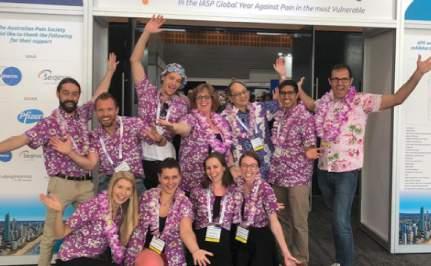
The local organising committee gambled (successfully) on a uniform and social program in line with typical Gold Coast weather.
Dressing in tropical attire… And convening a social program including runs/walks, yoga by the beach, and Hinterland hikes.
Topical sessions embodied full landscape of biological, psychological, and social research and reflected the diversity of the APS community.
In the second plenary session, Associate Professor Christine Lin provided an update on pharmacological management of low back pain, suggesting that common analgesics fail to improve rates of recovery when compared with placebo. Continuing on the theme of limitations with current pharmacological approaches, Professor Tor Wager expressed limitations in the understanding of the mechanisms of persistent pain in developing more effective approaches. He went on to present an impressive body of work revealing brain-based biomarkers of
pain that he posits reveal new treatment targets and ways to interrogate treatment mechanisms and measure efficacy.
Following the plenary, keynote speakers Beth Darnall, Glenn King, and Nanna Finnerup graciously gave their time to join the early career researchers for a well-attended trainee session organised by Associate Professor Tasha Stanton. This was a great chance to glean from some of their wisdom while getting to know some peers.
On Tuesday Professor Clare Collins opened the third plenary session by sharing her research, along with that of newly completed PhD candidate Katherine Brain, showing that changing diet can positively impact pain while highlighting that nutrition research in the field is in its infancy.
Following Clare, Professor Nanna Finnerup put the focus on the treatment of neuropathic pain and new findings from large scale RCTs and systematic reviews. Also discussed were the data suggesting that the number of patients positively responding to pharmaceutical treatments within trials has been reducing over time (i.e. number needed to treat increasing) and that poor patient selection may be responsible. Nanna highlighted the need to move towards “precision medicine” where phenotypic presentations are matched to interventions.
In plenary session four we heard again from Associate Professor Beth Darnall,
on the important topic of patient-centred opioid tapering before being introduced to Associate Professor Julia Hush. After stating that 95% of people presenting with LBP will have a non-specific type, Julia posited the need for a paradigm shift in the context of low back pain. Julia highlighted the multiple factors that can influence pain, and that in the context of this complexity it is unsurprising that clinical trails testing unimodal interventions rarely show meaningful effects. Instead a model of person-centred multimodal care addressing individual biopsychosocial contributors was proposed.
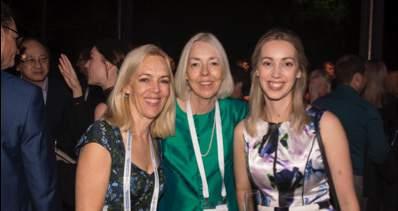
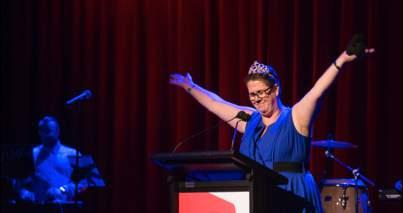
The gala dinner became more than a highlight when outgoing APS president Fiona Hodson facilitated a seamless transition from speech to free for all dance fest… which barely paused for the topclass cuisine!
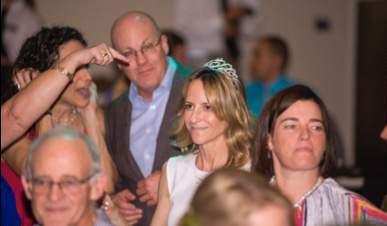
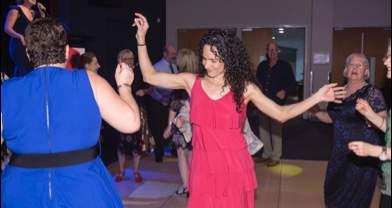
On the final day, Professor Tor Wager kicked off the fifth plenary session with a fascinating take on the history, science and clinical relevance/utility, of the placebo effect.

Professor Nanna Finnerup then rounded out her earlier talk on neuropathic pain by sharing her research and clinical experience in the area of central neuropathic pain. Professor Michael Farrell then enlightened the audience with the science of interoception (sensations of the body) including thirst, breathlessness, and pain. This was presented in the context of the purpose of such sensations in motivating behaviours to restore homeostasis. Realities such as the immediate quenching of thirst by drinking, well before any real change in hydration
status, may give insight into the nature of interception and its non-lineal link to pathophysiology.


Finishing strong, the final plenary session began with Professor Glenn King who convinced the audience of the utility of studying spiders in understanding nociception and the quest for new analgesics. Spiders (and other critters) have been developing pain inflicting chemical arsenals for millennia, and as such reverseengineering proteins in venom may give rise to new ways of combating nociceptive pain.
Following Glenn, Jenni Johnson spoke about access to pain management services, particularly for vulnerable populations, a very topical session in this IASP global year of pain in the most vulnerable. Specifically, she spoke about the revolution in the NSW health system, including communitybased pain programmes, train the trainer programmes, telehealth, web-based resources, and decision tools for clinicians
In the final plenary, Associate Professor Ben Colagiuri discussed the role of patient expectations in modulating treatment effects, and the difficulties in equalising patient expectations across treatment arms in clinical trials utilising blinding. Moreover, he highlighted that trials rarely report whether blinding to treatment (or placebo) was successful, and that when it is reported blinding is shown to be unsuccessful which may introduce bias.
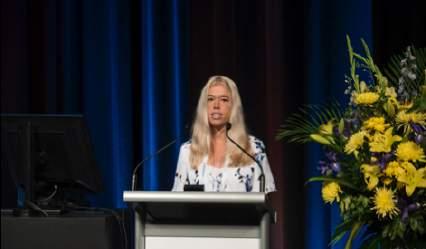
ASSOCIATE PROFESSOR BEN COLAGIURIThe conference was also spattered with presentations from the next generation of pain researchers, including Rising Star Winner Dr Arjun Muralidharan, APS PhD scholarship recipient Dr Sherelle Casey, and a host of entertaining 90-second rapidfire presentations.

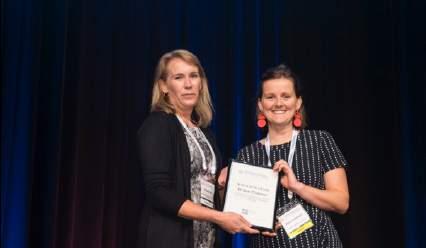
Congratulations to the three prize winners:
• Best Free Paper Award - Damien Boorman
• Best Rapid Communication AwardAlexandra McCutchen
• Best Poster Award - Dr Jane Chalmers
Look forward to seeing you in Hobart in 2020!
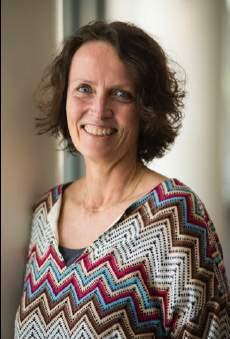
DR JANE CHALMERS DR ARJUN MURALIDHARANBeth Darnall, PhD, is an Associate Professor in the Department of Anesthesiology, Perioperative and Pain Medicine at Stanford University, USA. Her research examines different ways to best treat and prevent chronic pain, with a specific passion for utilising behavioural medicine strategies to facilitate pain control and opioid reduction. Darnall sat down with Lincoln Tracy, a research fellow from Monash University, Australia, at the 2019 Australian Pain Society Annual Scientific Meeting, which took place April 7-10, 2019, on the Gold Coast, Australia. Darnall discussed her path to pain psychology through journalism, her passion for advocacy, and her fondness of the 1987 album ‘The Joshua Tree’ from Irish rockers U2. Below is an edited transcript of their conversation.
That’s an interesting question, because I didn’t set out to be a pain researcher. In fact, I set out to be a journalist or to communicate about science. So, I pursued a bachelor's degree in mass communications. But it was during the pursuit of my degree that I realised that what I really wanted was to be leading the cool science that someone else would report—rather than reporting on other people's cool science. After finishing my degree, I wanted to further my education and subsequently pursued a PhD in clinical psychology—still without the knowledge that it would lead to pain research. However, pain isn't integrated into psychological training systematically in the United States—it’s virtually absent. It was only through treating patients that I realised that this was something I loved, and I connected with it very deeply because I had chronic pain as a child. I ended up pursuing a specific area of pain research and clinical work because I had a personal understanding of where the gaps lay.
How do you feel your earlier training in communications and clinical psychology helps you now, as you travel the world and share the research you do?
Well, the benefit of the clinical psychology training is relatively intuitive as my
research is built around investigating application of psychological principles and psychological treatments to improve pain care. Then I think the communications training taught me to concisely package a message in a digestible format. I have always been drawn to the mass communications of pain research findings, so I've had blogs on Psychology Today or have pursued lay public articles and writings. I think it's a critical aspect that we be able to communicate to the public what we're doing, why it's important, and why it's important to them
That last part is particularly important for me as I'm investigating treatments that are consumed by the public, and there have been so many misconceptions about the role of psychology in the experience and treatment of pain. Part of my mission is to dismantle these misperceptions. By destigmatising psychological or behavioural interventions, there is increased receptivity and uptake of these treatments by the public as they increase their willingness to engage and participate—therefore improving their own outcomes.
Without that messaging piece, we lose our audience entirely. Increasing the public's willingness to engage in the treatments that we're investigating is a critical piece
of improving access to pain care. I think it's been more important than I realised at the outset.
If you hadn’t pursued this path into pain research, what do you think you would be doing?
If life were completely different, the only thing I can tell you is that I was on a trajectory to be a writer. Currently, I write for clinicians, scientists, and the public— but it's in a different way than I was initially pursuing. I can’t imagine any alternate reality where I’m not writing—I feel it’s just hardwired into who I am. But I have always joked that if I wasn't in my current career, I'd be a race car driver. I think that says a lot about my personality!
I feel there are a lot of misconceptions people have about pain. But one significant misconception is the amount of control people can have over their own pain and its impacts on their life. People can have much more control than they realise—such as using self-management techniques and soothing behaviours to enhance descending modulation and de-amplify pain processing. This is not well appreciated by the public—or even most general healthcare practitioners. While these strategies will not cure an underlying medical condition, they can greatly improve life in the context of chronic pain.
Altering this leads to patient empowerment and—ideally—engagement with low-risk, non-pharmacological strategies. I'm looking forward to the day when that's more broadly appreciated by the public and healthcare systems. That’s why I see so much potential benefit in the accessible digital interventions I use in my research. It bypasses the need to see a clinician or to get a co-pay. I know that for many people it’s not enough on its own, that individual
and group treatment can be so critical, and that some people might benefit from pharmacological therapy as well. But it’s a great first step for people to begin understanding how some of these pieces fit together—and what they can do to help reduce their pain and suffering.
Looking forward to the next five to 10 years, what is there that you would like us to know about pain that we don’t currently understand?
There is—and has been—a very large focus on opioid medications and reducing risks for patients. I would love there to be more pharmacological options that offer improved pain care without the risk of addiction. While I am a behaviourist and focus on these aspects in my research, we still need pain medicine—pharmacology has such a critical role for so many of our patients. I feel there is less appreciation for the importance of pharmacology, so I always want to advocate for that. I would love there to be major discovery in nonaddictive medications.
Unfortunately, we have gone much too far on limiting opioids in the United States. This has been to the detriment of many people with pain where we are inflicting additional pain and suffering on patients who actually benefit from opioids. Because of this I feel the imperative is to treat the individual, not the dose. Some people benefit from opioids—and it is humanitarian care to preserve their access to that form of treatment. While I’m a strong advocate for behavioural interventions, I also spend a lot of my free time advocating for patients to have access to pharmacology as well.
Part of the solution is transcending the mentality that the way we treat pain is binary—that it’s behavioural or pharmacological. The reality is that it’s both. We need the whole toolbox to deliver
precision care to the individual—without judgment of what we utilise from the toolbox.
How do you deal with negative comments and feedback online?
That’s interesting, because it happens on both sides. If patients misinterpret my advocacy for better access to behavioural treatments, then there is the perception that “well, she just wants to take our opioids away”. But at the same time, when I advocate for patients to have the right access to medications other people think “well, she’s promoting a risky and potentially addictive medication”. I get negative comments from all sides. The truth is, I see both sides and advocate for a balanced approach that is focused on access to pain care that is right for the individual patient.
When I communicate things online I try to provide access to evidence-based pain care—regardless of how one individual may feel about that. There is so much emotion wrapped up in these topics, and from the patient perspective I understand the judgement they receive from medical professionals. Patients may feel stigmatised by being referred to a psychologist—they feel like they have been told that their pain is all in their head.
Therefore, if I represent psychology in that tweet or in that conversation, I understand why there are negative perceptions about what that represents to them, feeling judged or blamed, or that I'm attempting to take something away—when nothing is further from the truth. While I do support psychological treatments, I equally advocate for access to opioids on my feed. It’s partly my responsibility to provide balanced information with the hope that people will see that as they form their opinions.
If you are on Twitter long enough and you have anything to say that's going to be controversial, you will engender negative feedback. I guess the adage is that you don't take it personally or engage with it. I view my Twitter feed as a profession news feed—here’s what I think, here's what I'm doing, here's what I support. But it's not meant to really engage at the individual level or try and convince people of anything. I don't see that as my role at all, so I offer a perspective and then don’t worry about people’s opinion of me. That's quite freeing. You also must have a thick skin—and know how to utilise the mute button!
What are some of the most important things you try to teach the PhD students and trainees that you work with?
One thing I have learned from my own journey has been questioning perceived obstacles and finding a way to do what I was passionate about doing in the absence of funding or support. We spend so much time trying to secure funding and resources—but you need to think about how you can be creative with your approach and use the time to do your research without formal permission from a funding agency. In the United States we are constantly focusing on getting funding—yet there are often pieces of work that can be done in the absence of any funding. I think it is critical that you keep making progress with your research—particularly early on in your career.
On a different note, I don’t really talk much about maintaining a work-life balance because I freely admit that I don’t have any work-life balance. I love what I do and am really passionate about it—so it ceases to be work. It just becomes part of my mission and what gives me life. If I’m not doing research or writing I’m advocating to ensure that the policies that are put forward in the United States
are patient-centred, compassionate, and grounded in evidence. There are people who do this on a full-time basis, but it has been something that has brought even more meaning to the work that I do—and the connection that I feel to people.
Do you have a favourite song or piece of music?
I love music that has either a piano or a violin. I’m not as fussed about the type of music—techno or rock, for example—I just love these instruments and really resonate with the songs they feature in. With respect to an impactful album, though, there was one from a few decades ago when I was younger—you probably weren’t even born! I think The Joshua Tree, from U2, is just
stunning. I was listening to it just the other day and after all this time I think almost every song off that album is just beautiful.
Thanks for giving up your time, Beth. I really appreciate it.
Thank you so much, Lincoln, it's been such a pleasure.
Lincoln Tracy is a postdoctoral research fellow in the School of Public Health and Preventive Medicine at Monash University and freelance writer from Melbourne, Australia. He is a member of the Australian Pain Society and enthusiastic conference attendee. You can follow him on Twitter (@ lincolntracy) or check out some of his other writing on his website
2019 is the IASP Global Year Against Pain in the Most Vulnerable which includes pain in infants and young children.
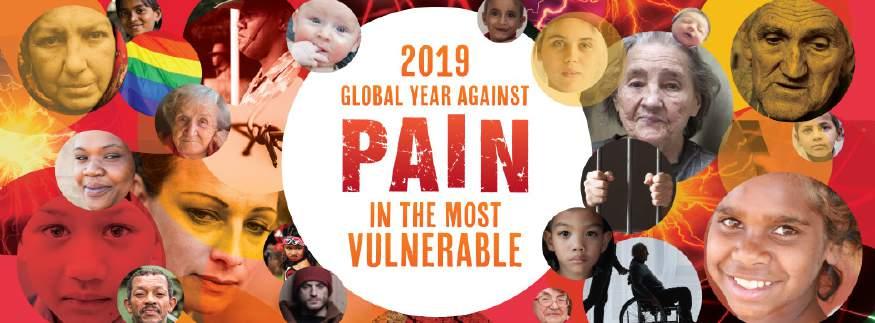
“The aim of this year is to highlight the needs of people who are unable to articulate their pain in a way that health professionals can understand and/or whose pain problems are underestimated and so they are more likely to receive inadequate pain control.” (IASP 2019 Global Year Aims and Objectives)
All children experience pain. From a baby’s birth throughout their life children can experience pain. The accurate assessment and management of pain in children and infants is paramount for clinicians, parents and of course children and infants.
Fortunately, there are a large number of resources available for parents, children, and clinicians to help manage pain in childhood.
Lars Arent-Nielsen, the IASP president has summarised some of the resources
available at the IASP website in a published newsletter. The IASP has developed a special Global Year website with free, downloadable tools, peer-reviewed fact sheets in English with many scheduled translations, free quarterly webinars, PAIN article compilations, a calendar of events, and more. You can read the rest of Lars letter at the IASP website (Lars Arendt-Nielsen, IASP President) Go to the IASP Global Year Against Pain in the Most Vulnerable to access their resources.
Clinicians in most Australian hospitals have access to UpToDate through their health libraries. UpToDate has an Evaluation and management of pain in children page, which contains some useful resources specifically for clinicians.
Some of the world leaders in childhood pain are Canadian and they have developed really innovative ways to address the issue of pain in childhood. Take a look at the It Doesn’t Have to Hurt proven pain control for children site and Centre for Pediatric Pain Research developed by a number of pain researchers including Dr Christine Chambers. Dr.
Chambers is the Canada Research Chair in Children’s Pain and a Killam Professor in the Departments of Pediatrics and Psychology & Neuroscience at Dalhousie University. Dr Chambers and her team have used the power of social media to get evidence based pain management information to parents. The Centre for Pediatric Pain Research have a number of useful resources on their site including a range of pain assessment tools for children. Dr Christine Chambers latest initiative SKIP (Solutions for Kids in Pain) is focused more on clinicians than the "It Doesn’t Have to Hurt" campaign go to https://www. kidsinpain.ca/.
Stefan J. Friedrichsdorf is the IASP President-Elect of the Special Interest Group on Pain in Childhood and another world leader in pediatric pain. Dr Friedrichsdorf is the Medical Director, Department of Pain Medicine, Palliative Care and Integrative Medicine, Children’s Hospitals and Clinics of Minnesota and Associate Professor of Pediatrics, University of Minnesota. Dr Friedrichsdorf has a website ‘noneedlesspain’ where he has shared many of his presentations and other resources such as the magic glove, Pediatric Acute Pain Management Reference Card and information about educational opportunities.
Rachael Coakley is the Director, Clinical Innovation and Outreach in Pain Medicine, Department of Anesthesia, Critical Care and Pain Medicine, Assistant Professor in Psychology, Department of Psychiatry, Harvard Medical School and Boston Children’s Hospital. Dr. Coakley has produced three instructional “how-to” videos on her Comfort Ability website for parents who have kids with chronic pain. They cover how parents can assist a child with relaxation, the use of reflective listening to help a child adhere to a treatment plan, and how parents can lead an effective school meeting to get accommodations in school. Go to
https://www.thecomfortability.com/ blogs/how-to-videos. The website also provides downloadable tip sheets for parents that summarize key points for each video as well as series of mindfulness and guided imagery exercises for kids and teens. These are audio recordings, but with downloadable scripts so parents or providers can read them.
Dr. Coakley’s team also hosts free online chats for kids (ages 10-17) and parents once a month. The chats are hosted by a pain psychologist and a parent or teen mentor and we cover lots of integrative coping strategies for pain management. Parents and teens can sign up for the chats here: https://www.thecomfortability.com/pages/ online-health-chats
The Pediatric Pain team of the Hospital of Trousseau in Paris and Pediadol have developed an excellent book on headaches Migraine, céphalées de l'enfant et de l'adolescent go to www.pediadol.org (this is a French website but google will translate it for you).
Get involved
If you have an interest in pain in childhood, please consider joining the Australian Pain Society’s Pain in Childhood Special Interest Group and the IASP Pain in Childhood Special Interest Group.
Upcoming events:
12th International Symposium on Pediatric Pain ISSP 2019 – Basel Switzerland 16-20th
June 2019
Save the date:
40th Australian Pain Society Annual Scientific Meeting – Pain in Childhood preconference workshop, Sunday 5th of April 2020
13th International Symposium on Pediatric Pain ISSP 2021 – Auckland, New Zealand from Thursday 25th to Sunday 28th March, 2021.
Accordingly, we trialled offering member only access to video recordings from our past conferences.
As it turns out, most of you didn’t seem to need this service - we assume that that’s because you were with us in-person at the event.
Accordingly, they will not be available for the 2019 Annual Scientific Meeting.
We hope this does not cause an inconvenience to any of our members.
WE’RE ALWAYS LOOKING FOR

EverTechnology recorded 31 sessions of the 2019 Australian Pain Society 39th Annual Scientific Meeting.

Use this link to purchase your recordings of APS2019.

Cops for Kids (CFK) began in 2006 when a group of police officers in Port Adelaide, South Australia, wanted to support the sick children and families of their colleagues. These officers began donating a small amount of their salaries to the children’s charities that supported these families. Since an initial donation of $500 in 2007, CFK has grown to more than 1,900 members and donated more than $1,200,000 to South Australian children’s charities.
In 2016, CFK was approached by Anne Burke—Australian Pain Society (APS) South Australian Director at the time—with a proposal to fund a clinical research grant into ways to manage paediatric pain by tapping into the established APS Pain in Childhood Special Interest Group (SIG). This was a ground-breaking moment for CFK; an opportunity to pioneer clinical research that directly benefited children. Together with Tracy Hallen (Project Officer at the APS Secretariat), Anne helped guide CFK to form a collaboration with the APS and the Australian Pain Relief Association (APRA) to partner in the APS-APRA-CFK Clinical Research Grant Program.
As part of the APS-APRA-CFK Clinical Research Grant Program, CFK committed $90,000 over three years to support clinical research that explores various aspects of paediatric pain management and will ultimately lead to improvements in health outcomes for children. It is hoped that the research supported by this grant program will act as a platform for future research
and continue to influence healthcare development long after the initial donations.
For Dr Adrienne Harvey—a paediatric physiotherapist from the Murdoch Children’s Research Institute in Melbourne and recipient of the inaugural APS-APRACFK#1 Clinical Research Grant—it was a case of being in the right place at the right time. “I'm new to the pain field—my research has focused on children with cerebral palsy and other disabilities. We had recently started a program of research into pain in children with cerebral palsy when someone alerted me to this grant scheme. I thought it would be ideal for me to apply for” said Harvey.
Cerebral palsy is a physical disability that affects movement and posture and is the most common physical disability in childhood. Pain is a common symptom in children with cerebral palsy, particularly in those with severe motor impairments. Harvey and her team—which included doctors physiotherapists, and occupational therapists from the Royal Children’s Hospital, the Children’s Hospital at Westmead, the Women’s and Children’s Hospital in Adelaide, and the Queensland Children’s Hospital—set out to study the effects of a commonly used medication called gabapentin in children with cerebral palsy.
“We’ve been using gabapentin to treat children with cerebral palsy for a long time and know that it works from a clinical perspective, but there have been no studies specifically in the cerebral palsy population for this drug”, explained Harvey. “The APS-APRA-CFK#1 Clinical Research Grant allowed us to undertake a pilot study investigating the effects of gabapentin for managing pain in this paediatric population.”
Thirteen children with dystonic cerebral palsy were recruited over a 15-month period and were prescribed gabapentin using a standardised dosing regimen. “We found that gabapentin decreased pain-related behaviours and dystonia while improving wellbeing and comfort”, Harvey reported. “A number of families told us that for the first time their child was comfortable and sleeping through the night—not constantly crying out [due to their pain]. One family reported that their child started vocalising during the study— he was six and had never previously done this before.”
While Harvey acknowledges that these initial results must be interpreted with caution, she sees the potential benefits this treatment could have. “I think this will be a really key paper for clinicians around the world to refer to as it seems to be effective and have tolerable side effects compared to a number of the other medications we use in children with cerebral palsy. We’re just trying to improve the lives of these children and these results will be a key plank in guiding future studies that can potentially be incorporated into routine clinical care. We’re very appreciative of the funders for allowing us to do this study.”
Associate Professor Tasha Stanton—a National Health & Medical Research Council (NHMRC) Career Development Fellow
from the University of South Australia and recipient of the APS-APRA-CFK#2 Clinical Research Grant —was drawn to the APSAPRA-CFK Clinical Research Grant Program as it provided the opportunity to promote a novel collaboration with Associate Professor Melanie Noel from the University of Calgary and the Alberta Children's Hospital Research Institute. “I've never worked in the area of paediatric pain, so it's lovely to have the opportunity to get a grant that lets you do a focused research project in that area”, said Stanton.
Stanton and Noel set out to reduce the fear and pain associated with needles in children in the context of receiving a flu vaccination. “Bad experiences with needles as a child can result in significant needlerelated fear when they are older”, explained Stanton. “This can lead to things such as vaccine hesitancy—meaning you can potentially get outbreaks of preventable diseases—but also a more general avoidance of medical encounters because they don’t like needles.”
“We’re looking at two specific interventions as part of the study—a positive memory reframing intervention that tries to reframe the pain associated with needles, and a sensory strategy which aims to see if we can actually make the needle hurt less”, Stanton described. Following on from previous research into memory-reframing interventions led by Noel, the first intervention aims to increase self-efficacy— the belief in our innate ability to achieve goals—and uses cognitive strategies to reframe the pain: “Let’s be positive, let’s be realistic, and let’s be brave.”
The sensory strategy builds on earlier research from Stanton showing that when we divide our attention between two areas of skin, applying a stimulus in-between these areas makes it hurt less compared to when attention is not divided. Stanton and Noel are turning this sensory intervention into a game with these children to see
if it works. Children recruited as part of the study are allocated into one of four groups—memory reframing, dividing attention, a combination of the two, or a group where they do not receive either intervention (but receive usual, best standard care strategies implemented by the nurse administering the vaccine).
Since starting the pilot study Stanton and Noel have recruited 37 child-parent dyads but are continuing to collect data this year to better examine the effects of the two interventions. “The initial results from our blinded analysis are really promising. Regardless of the group the children are in, we see a reduction in fear and pain-related catastrophising immediately after the needle compared to the reported levels before the children receive their injection. We see a further reduction two-weeks after the injection”, Stanton reported.
“We didn’t see any overall effect on pain in our initial analysis, but we see some initial evidence that there is a specific effect of intervention group—that is, only certain interventions lead to reductions in pain ratings after the child receives the injection”, Stanton explained. “Ideally we would have 15 child-parent dyads per group, which would give us more robust pilot data that could help us to plan better testing in a larger setting.” These initial results suggest that implementing small changes to the way children receive vaccinations could have significant impacts on their experience of the needle. This could have important influences on the development (or avoidance!) of needlerelated fear.
The recipient of the final APS-APRACFK#3 Clinical Research Grant—Dr Nicole Andrews, an occupational therapist and clinical researcher from the University of Queensland—saw the grant scheme as an
opportunity to test whether an adult pain management approach could be modified for use in children. “We had just finished a really successful implementation of the Pain ROADMAP app in adults and there were a lot of paediatric clinicians around Australia that really wanted to use it. But we knew we would have to adapt the app for use in children”, explained Andrews.
Pain ROADMAP is a mobile health platform with an accompanying app. People wear an activity monitor—like a Fitbit—which transmits data to an online portal where clinicians can analyse and review the activity related data. “Basically, the platform monitors activity in people with chronic pain and you can see really clearly which activities have caused an exacerbation in pain. As a clinician, you can then give specific feedback on how your patients can adapt those activities to eliminate pain exacerbations or flare ups”, Andrews described.
“There were really promising results from the pilot [in adults]”, said Andrews. “People were monitored for three oneweek periods and received feedback over a three-month period. At the end of the three months basically no-one was getting activity related pain exacerbations or flareups any more. Their pain really stabilised, which resulted in increased productivity, decreased opioid use, and improvements in mood.”
Andrews and her team—including clinicians from the Queensland Children’s Hospital, the Royal Melbourne Hospital, and the Perth Children’s Hospital and a software engineer from the CSIRO—are currently determining how the app will be gamified for use in children. “A gamified version would require more graphics, built-in rewards, and opportunities for interaction”, Andrews said. “The aim of the research is to provide the justification of why you need to gamify an app for kids—which no one has
actually done. It is just assumed that if you are going to make an app for kids you need to have all these special features in it.”
“This small grant is mainly focused on developing a modified version of the app, and doing a really small trial where people get randomised into either the modified or original version of the app. We’re really interested in seeing if gamifying an app actually works—are we going to get a better compliance from a paediatric population with a modified version, or could they just use an adult app?” Andrews will provide an update on her research at the 40th Annual Scientific Meeting of the Australian Pain Society, which will be held in Hobart from April 5-8, 2020.
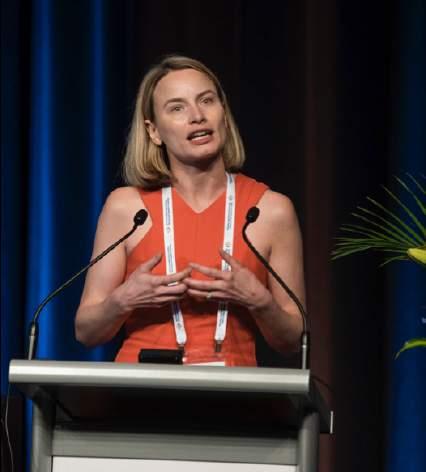
Lincoln Tracy is a postdoctoral research fellow in the School of Public Health and Preventive Medicine at Monash University and freelance writer from Melbourne, Australia. He is a member of the Australian Pain Society and enthusiastic conference attendee. You can follow him on Twitter (@ lincolntracy) or check out some of his other writing on his website
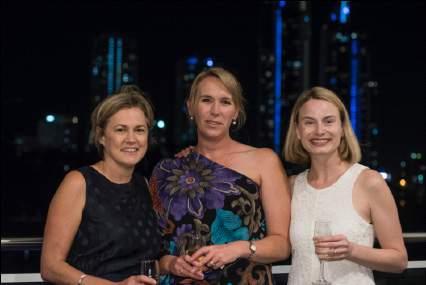
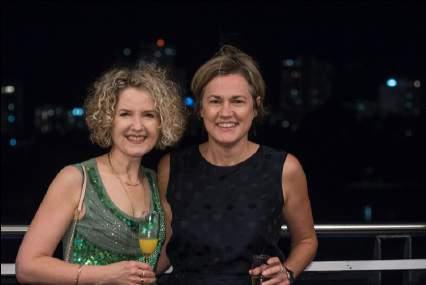 TRACY HALLEN AND DR ADRIENNE HARVEY
ASSOCIATE PROFESSOR TASHA STANTON
TRACY HALLEN AND DR ADRIENNE HARVEY
ASSOCIATE PROFESSOR TASHA STANTON
Khu, M., Soltanis, S., Neville, A., Schulte, F., & Noel, M. (2018). Posttraumatic stress and resilience in parents of youth with chronic pain. Childrens Health Care, DOI: 10.1080/02739615.2018.1514606.
Reviewer:
Bronny Trewin, Senior Clinical Psychologist, Burwood Pain Management Centre, Christchurch, NZ.
Study group:
Participants were youth referred to a tertiary level chronic pain programme. The final sample consisted of 135 parent-child dyads. The youth group consisted of 64.4% female, age range 6 – 17yrs (M age = 13.1), referred for abdominal pain (3%), headache pain (62.2%) or complex pain (34.8%); with an average pain duration of 3.1 years. The parent group was 89.6% mothers.
Aims:
Previous research has demonstrated that parents are critical in influencing the development and maintenance of child pain. This study is the first to evaluate parental resilience in the field of chronic pain; as well as to examine the relationships between parental resilience and distress, and child pain.
The researchers aimed to:
1. Assess parental resilience of the sample (PTG; post traumatic growth), and to
examine the relationship between parental resilience and PTSS (post traumatic stress symptoms).
2. Investigate the association between PTG, internalising symptoms (depression and anxiety), and child pain outcomes.
3. Determine whether parental PTG moderates the relationship between parents’ internalising symptoms and their child’s pain outcomes.
Methodology:
This study used a cross-sectional sample, utilising correlations and relationships from self-report data completed at time of referral.
Questionnaires were distributed via the Research Electronic Data Capture (REDCap).
Parents completed:
• The Posttraumatic Growth Inventory (PTGI) – as a measure of resilience following an extreme stressor or potentially traumatic experience.
• Posttraumatic Stress Disorder Checklist (PCL-5) – as a measure of PTSS.
• The Patient Reported Outcomes Measurement Information System (PROMIS-29)
Youth completed:
• The Pain Questionnaire
• The Patient-Reported Outcomes Measurement Information System (PROMIS-25) paediatric profile (version 1.0) pain intensity and pain interference subscales.
Summary of the results:
• As hypothesised, a curvilinear relationship between PTSS and PTG
was shown, with the most growth observed at moderate levels of parent PTSS. In other words, some stress is necessary for fostering resilience; however, once the stressor reaches a certain threshold parental post traumatic growth declines.
• Parents with higher internalizing symptoms had children who reported greater pain intensity and interference.
• Finally, it was predicted that parental resilience would moderate, or buffer, the relationships between parent internalizing symptoms and child pain outcomes. As hypothesised, this relationship was weaker when parental resilience was present.
Although parental internalising symptoms were associated with worse pain outcomes, contrary to predictions, higher PTG was associated with greater parental endorsement of internalising symptoms, and greater child-reported pain intensity and interference. The authors suggest that this might be explained by a number of factors including, demand characteristics in questionnaire completion, shared underlying biopsychosocial factors for greater PTSS and PTG, or finally, a possibility that those with more elevated anxiety or depression may be more greatly impacted by a negatively life events and thereby have greater challenges and greater gains in growth.
Conclusions:
This study provides preliminary evidence that the presence of parental resilience may buffer the association between parental depressive symptoms and child pain intensity.
Although a certain degree of stress may be necessary in order to challenge an individual’s understanding of the world and foster growth, stress beyond a
certain threshold can hinder the ability to adaptively process and to grow as a result of the experience.
This study suggests that distress and resilience do not exist at opposite ends of a spectrum, but should be conceptualized as two separate dimensions. Just because a parent is highly distressed, this does not mean that resilience is absent; and likewise the presence of resilience does not preclude internalizing symptoms.
It is widely accepted that when working with youth pain it is appropriate to target the whole system. This research further supports a systems approach, and further indicates that interventions should:
• Target parental internalizing symptoms to help with treating child pain.
• Work to increase parental resilience and posttraumatic growth as this may provide a ‘buffer’ between parent distress and child pain.
• Emotional distress and growth can co-exist, clinicians should be assessing for both domains separately.
Declaration:
Nil declaration to make.
Nelson, S.M., Cunningham, N.R., & KashikarZuck, S. (2017). A Conceptual Framework for Understanding the Role of Adverse Childhood Experiences in Paediatric Chronic Pain. Clinical Journal of Pain, 33:264-270.
Reviewer:
Kirsty Ross, PGDipClinPsych, PhD Senior Clinical Psychologist & Senior Lecturer
Acting Clinic Director, Massey University Psychology Clinic, Palmerston North, New Zealand. K.J.Ross@massey.ac.nz
Study group:
This review looked at existing research into health outcomes of adverse childhood experiences (ACEs) in the adult and paediatric populations, to develop a conceptual framework for the relationship between ACEs and persistent pain in young people.
Aims:
To develop a conceptual framework, adapting the biopsychosocial model of pain to incorporate the research on ACEs, with a view towards highlighting existing knowledge and providing avenues for future research.
Methodology:
A review of the literature was performed in the areas of ACEs and health outcomes
with general adult and paediatric populations, in addition to studies within the pain literature. Search terms included such phrases as: “adverse childhood experiences,” “chronic pain,” “health outcomes,” “paediatric,” and “stress and pain.” Relevant articles were categorized using the biopsychosocial model as a guide.
Summary of the results:
This article provides an adaptation of the integrative biopsychosocial model of pain and highlights the potential influences ACEs may have on the development, maintenance and exacerbation of persistent pain in youth. Biological (i.e. chronic stress leading to hyper-arousal, associated cortisol responses/overactivation of the hypothalamic-pituitaryadrenal (HPA) axis, leading to inflammation and allostatic load), psychological (ie, cognitive processes, psychological comorbidities), and social (i.e. family and peer/social environment) risk factors are reviewed.
Conclusions:
The neurobiology of ACEs overlaps with known processes involved in the development and maintenance of persistent pain. It is also possible that early adversity may be a risk factor through psychological comorbidities such as depression or anxiety. In addition, chronic early adversity may lead to a catastrophic cognitive pattern and negative appraisals around an individual’s coping ability, which may also apply to pain, leading to subsequent impairment. Finally, there is a bi-directional relationship between how a parent copes with their child’s pain, and how the young person themselves copes. Parents’ own ACEs background can affect how they react and manage their child’s situation, and some ACEs themselves are directly about the level of family functioning, which can impact on the child’s social support and models
of coping. As ACEs can affect prosocial behavior, young people with higher ACEs may have less peer supports available also, and may experience social isolation and bullying. An interactional relationship between the persistent pain and ACEs is thus suggested.
Reviewer's critique & take home message:
This is an excellent article, well supported with existing knowledge and research on both ACEs and persistent pain. This conceptual model provides food for thought about clinical work with youth with persistent pain and points towards the need to routinely ask about early adversity, as well as considering the role of ACEs for parents. This may affect the way parents engage with health services, and respond to the challenging situation of seeing their child in pain.
In addition, targeted research on the relationship between chronic pain and ACEs in children remains limited, as ACEs is rarely assessed in a systematic way in the context of clinical care or research, and this is identified as an area of need. Initial studies already point to a relationship between ACEs and chronic medical conditions, including persistent pain, in youth. Prospective longitudinal studies are needed, to explore the relationship between ACEs and development and/or maintenance for persistent pain and/or pain related impairment. More research would also enable better prediction and identification of those at greater risk for pain related impairment, those youth with persistent pain who need more intensive and comprehensive services involved, and facilitate targeted psychological treatment plans for youth with ACEs as well as persistent pain.
Declaration:
Nil declaration to make.
Thank you to APS members Carolyn Arnold, Stephen Gibson, Melita Giummarra, and Benny Katz and their colleagues Julia Gilmartin-Thomas, J. Simon Bell, Danny Liew, Rachelle Buchbinder, Colin Chapman, Flavia Cicuttini, Malcolm Dobbin, Jenny Gowan, Dan I. Lubman, Matthew McCrone, Jennifer Pilgrim, Anneliese Synnot, Eleanor van Dyk, Barbara Workman, and John McNeil for sharing this recent publication.
Julia FM Gilmartin-Thomas, J. Simon Bell, Danny Liew , Carolyn A. Arnold, Rachelle Buchbinder, Colin Chapman, Flavia Cicuttini, Malcolm Dobbin, Stephen J. Gibson, Melita J. Giummarra, Jenny Gowan Benny Katz, Dan I. Lubman, Matthew McCrone, Jennifer Pilgrim, Anneliese Synnot, Eleanor van Dyk, Barbara Workman, John McNeil
Article first published online: March 2018
Journal Reference: Research in Social and Administrative Pharmacy, 2019 Feb; 15(2): 207-213
DOI: 10.1016/j.sapharm.2018.03.060
Link: https://www.ncbi.nlm.nih.gov/ pubmed/29622502
Objective
There is limited clinical evidence to inform the safe and effective use of analgesics in older populations, as well as limitations in both effectiveness and tolerability. Pharmacists are in a unique position
to optimise chronic pain management as they are relatively accessible, are a member of medication management teams, and have the required expertise to conduct medication reviews and provide patient education. Pharmacists should be equipped with the knowledge and skills to take on this role.
The ‘Inaugural Monash University School of Public Health and Preventive Medicine (SPHPM) Best Practice in Chronic Pain Medication Management Day Conference’ was held in December 2016 at the Alfred Medical Research and Education Precinct (Melbourne, Australia) to educate and inform pharmacists, physicians, allied health professionals, researchers, academics, and the public about challenges in chronic pain medication management.
Fifteen experts in pain and medication management for older persons presented on aspects of chronic pain epidemiology, current management of chronic pain and analgesic use in older Australians, and challenges associated with pain management in older persons.
Presenters highlighted patterns of opioid use and consequences in Australia, and the impact on older Australians. Medication management concerns included the increase in opioid use and misuse Australia-wide, as indicated by increased prescribing and increased opioid-related hospitalisations and deaths. Opportunities were identified for pharmacists to contribute to improving pain management and opioid use in older people from policy development, participation in multidisciplinary teams and patient education.
Pharmacists can positively influence the health and social problems associated with inappropriate medication management of chronic pain. To make a meaningful contribution pharmacists require continuing education to equip them with the skills to have an impact.
Pharmacists are accessible to patients and are crucial members of the medication management team, with the medication expertise to review medication regimens and provide patient education. To fulfill these responsibilities pharmacists should be educated and informed, and should have the skills to optimise chronic pain management.
Declaration
Dr Gilmartin-Thomas is a NHMRC–ARC Dementia Research Development Fellow. Professor Rachelle Buchbinder is a NHMRC Senior Principal Research Fellow. The authors would like to acknowledge the conference support provided by SPHPM (Monash University), the conference organising committee comprising Monash University staff from the Faculty of Medicine, Nursing and Health Sciences, and the Faculty of Pharmacy and Pharmaceutical Sciences, and the assistance provided by Ms Kate Wang at the conference.
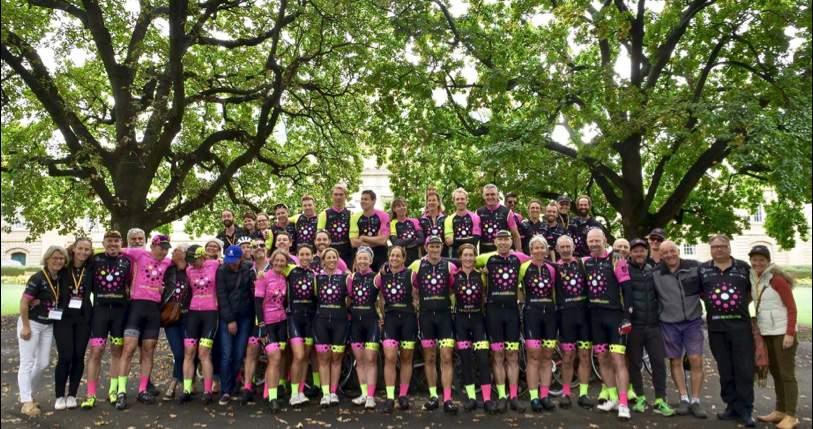
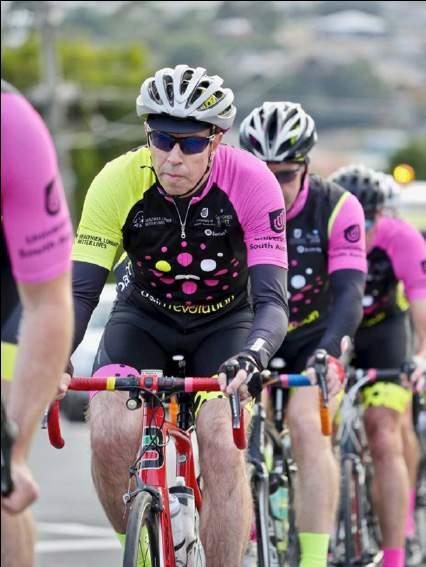
16- 23 May 2019, 8 days 700 kilometres Devonport to Hobart
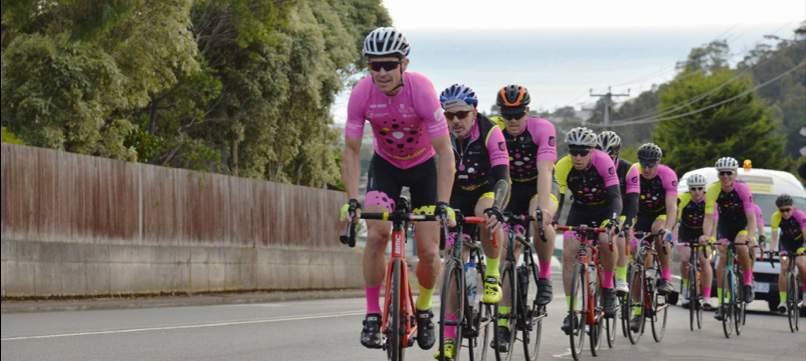
The Pain Revolution Tour was amazingly successful involving 20 full house events in 10 locations.
Penetration of ‘Pain Revolution’ across the community was excellent –collaborating with 30 community agencies and bodies including but not limited too; Tasmania Primary Health Network, Lions, Rotary, Country Women’s Association, Uniting Care, Vincent DePaul and the Salvation Army.
Some interesting statistics:
• 26 cyclists
• 700km
• 420 sandwiches
• 350 biscuits
• 200 muffins
• 4 blueberry cakes
• 4 banana cakes
• 6 lumberjack cakes
• 8kg of stewed apples
• 6kg of snakes alive
• 120 boiled eggs
Testimonials
• I just attended the pain revolution seminar in Hounville. It was incredible!! Learning about it all and knowing I have hope for my recovery.
• Thank you so much for all your fantastic work with bringing this incredible understanding about pain!! The more we know and understand, the better we will be.
Local and state media covered the tour: WIN News, The Guardian, Hobart Mercury, ABC radio plus many others.
Content Produced –Ride Videos
There are six videos due to be released pending editing before distribution on social media channels to continue to drive awareness and engagement with key audience groups:
• Clinicians in Cars – David Butler and Lorimer Moseley, Ben De Riter and Taylor Wilcynski
• Podcasts – Pene Wood (opiates), Dan Harvie (VR and Pain Management)
• Platinum sponsor content – LPE Program
• Platinum sponsor Content – Dan Harvie and Dianne Wilson
• Neil Pearson sponsorship – interview with Sinan Tejani
• Pain Revolution story video feat. Lorimer Moseley
Social Media Engagement
6275 engaged followers
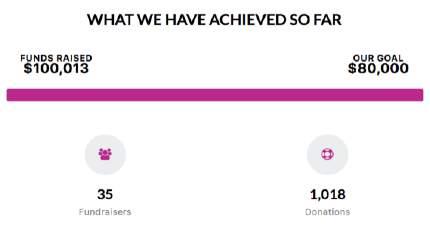
2240 engaged followers
1200 engaged followers
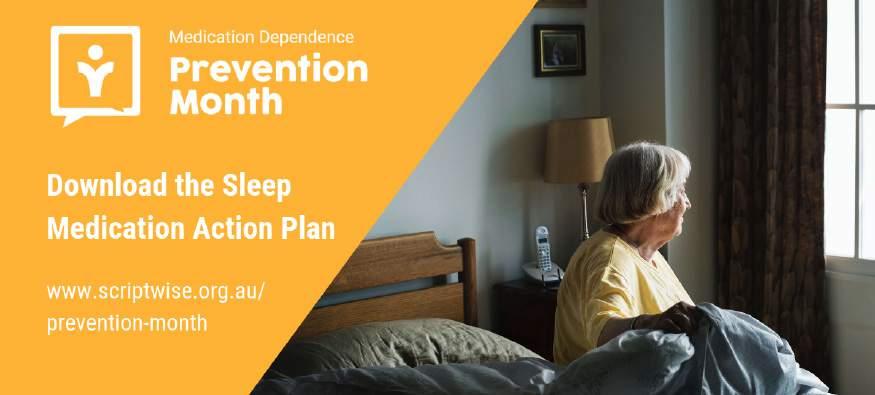
ScriptWise is urging all Australians prescribed a sleeping tablet to also speak with their health professional about a plan to safely reduce and stop as part of its recent Medication Dependence Prevention Month campaign in May.
Australians can download ScriptWise’s newly released Sleep Medication Action Plan to start the conversation with their health professional at www.scriptwise.org. au/prevention-month.
ScriptWise is launching the campaign because benzodiazepines, a common sleeping tablet with brand names such as Valium and Serepax, are commonly involved in overdose deaths in Australiai. In 2016, 36.7% of all overdose deaths (663) involved benzodiazepinesii.
Benzodiazepines are also highly implicated in road accidents and increase the risk of falls (particularly in the elderly)iii .
ScriptWise CEO Bee Mohamed says that while people can experience dependence and withdrawal symptoms while using benzodiazepines as prescribed, it is a risk that is often not discussed with patients.
Recent Australian research found that 81% of patients reporting a new problem of insomnia are prescribed a medicationiv
“People may be having problems sleeping for a lot of different reasons and alongside other health conditions such as pain or mental health issues,” says Ms Mohamed.

“While using these medications for a short time might be helpful, it is important that we’re all aware that using these medications for too long can make them less effective and can increase the chances of experiencing serious unintended side-effects.”
“More importantly, it’s crucial that people know that there are other proven ways to treat long-term sleep problems and that
doing this can help reduce symptoms from conditions such as pain, depression and anxiety.”
International guidelines suggest benzodiazepines should be prescribed to treat anxiety and/or insomnia for less than four weeks.
It is estimated that 4 in every 10 people who take benzodiazepines regularly for more than 6 weeks will experience withdrawal symptomsv.
ScriptWise seeks to empower people to find out more about managing ongoing sleep problems by visiting its newly released online toolkit on sleeping tablets at www.scriptwise.org.au/sleeping-tablets.
The toolkit features interactive, evidencebased information and videos featuring experts in sleep health and the use of common sleeping tablets.
i. Australian Bureau of Statistics, ‘3303.0 – Causes of Death, Australia, 2016’. Accessed 4 July 2016
ii. Australian Bureau of Statistics, ‘3303.0 – Causes of Death, Australia, 2016’. Accessed 4 July 2016
iii. Drug info, State Library NSW, ‘Benzodiazepines’. Accessed April 2019. https://druginfo.sl.nsw.gov. au/drugs-z-drugs/benzodiazepines
iv. Ree, M., Junge, M., and Cunnington, D., ‘Australasian Sleep Association position statement regarding the use of psychological/ behavioural treatments in the management of insomnia in adults’, Sleep Medicine, Vol 36, 2017. Accessed March 2019: https://www.sleep. org.au/documents/item/2983
v. NSW Health, 2008. Drug and Alcohol Withdrawal Clinical Practice Guidelines - NSW, Sydney: NSW Health

Reminder that we are keen that members inform us when they have publications so that this can be shared with your APS colleagues.
Please send the newsletter editor (via the APS Secretariat, aps@apsoc.org.au) the title, authors and reference (i.e. the journal, volume etc.) of the article, preferably with a short explanatory note to give our readers the gist of the article, e.g. the conclusions part of the abstract; if you would like to supply a short commentary on the article, even better.
Congratulations to James Kang, the APS/APRA #5 scholar who has recently been awarded his Doctor of Philosophy (PhD).
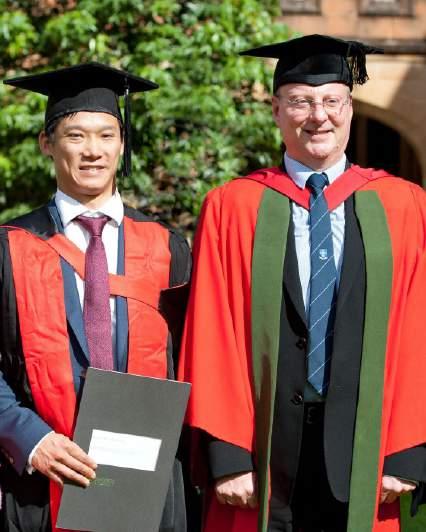
This is an outstanding achievement for Dr Kang and the culmination of significant effort and dedication on his part.
James’s research topic was “Epigenetic influence in cognitive impairments in chronic neuropathic pain” which over the years morphed into the works presented in his thesis “The effect of nerve injury on behavioural selection and its relationship to prefrontal function”, whilst studying under the supervision of Associate Professor Kevin Keay at the University of Sydney.

The APS has proudly partnered with the Australian Pain Relief Association (APRA) and industry sponsors to support our flagship PhD program since 1995. Our support extends to giving our PhD candidates the opportunity to present at our Annual Scientific Meetings (ASMs), which proves to be a valuable experience. We are pleased that James has presented his research in plenary sessions at our past ASMs in 2015 in Brisbane, 2016 in Perth, 2017 in Adelaide, and finally in 2018 in Sydney.
We are delighted to acknowledge the successful completion of Dr Kang’s research, made possible by the APS/APRA #5 PhD Scholarship.
Please see the link below for more details Banting Postdoctoral Fellowships
CALL FOR EXPRESSIONS OF INTEREST
$1
The HCF Research Foundation’s mission is to improve the delivery of health services in Australia for the benefit of its members and for all Australians. We do this by funding research projects that focus on new ways to provide high quality care to improve patient outcomes.
The HCF Research Foundation is making its 9th annual call for research projects to deliver $1 million in funding to the research community in health care areas that provide opportunity to significantly improve health services.
The HCF Research Foundation is seeking Expressions of Interest (EOIs) from research teams interested in funding for health services research to begin in 2020.
EOI’s are invited for research projects that specifically address the following topics:

• Innovative health care models that encourage the right care in the right setting with a particular emphasis on providing safe and high quality alternatives to hospital based care which facilitate consumer choice and access;
• Research projects that provide a solution to reduce known health care variation in hospital care as demonstrated
in The Australian Atlas of Healthcare Variation Series published by the Australian Commission for Safety and Quality in Health Care.
Applications involving collaborations between investigators from a range of backgrounds, including career researchers, practicing clinicians, policy makers, and the private sector are encouraged. Those proposals that demonstrate a considered approach to translation of the findings into practice will be given priority.
Research grants awarded by the HCF Research Foundation for 2019 ranged in value from $80,000 to $275,000. Applications will be assessed on scientific merit as well their ability to affect meaningful change to health services provision. Applications that demonstrate a strong opportunity and considered approach for translation of research outcomes into practice will be considered favourably.
EOIs received after 5:00pm AEST on Thursday, 27 June 2019 will not be considered.
EOIs will only be accepted on the forms available at www.hcf.com.au/foundation
We wish to sincerely thank Fiona Hodson as she steps down from her role as APS President.
Fiona has been a long-term APS Board member, beginning in 2011 as the NSW Director, becoming the President-Elect in 2015 and President in 2017.
During those years Fiona was the major driver behind the update and launch of our most recent publication “Pain in Residential Aged Care Facilities: Management Strategies, 2nd Edition” and a significant force in raising the profile of the APS with government agencies, contributing to multiple working party groups and collating several consultation submissions.
We are pleased that we will continue to benefit from her experience and professionalism as Fiona continues in an ex-officio capacity as Immediate Past President to the APS Board.
We are sad to confirm that Joy Burdack has retired from the Australian Pain Society Board as the Director for the ACT.

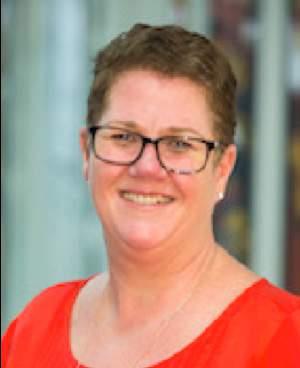
Joy has been the ACT Director for the past six years and was an avid contributor to several committees. Joy was always willing to help with board projects and commitments.
We wish Joy well for the future!
We are delighted to confirm that Dr Anne Burke is the new President of the Australian Pain Society.
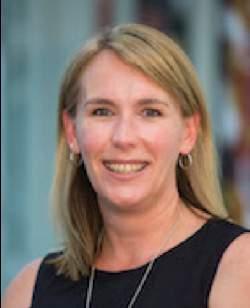
Anne served as South Australian Director for 6 years from 2011 before becoming President-Elect in 2017 and now President from 2019.
Anne is the Co-Director, Psychology, Central Adelaide Local Health Network and has maintained an active attachment in the Pain Management Unit since 2002. She holds clinical lectureships with The University of Adelaide - where she completed her PhD research - and Flinders University. Anne has conducted research in the areas of forensic and clinical health psychology, with her primary research interests being the evaluation of different therapeutic interventions for chronic pain, the impact of waiting for services, models of pain acceptance, clinical workforce issues and health service delivery.
We are happy to confirm that Trudy Maunsell is the new President-Elect for the Australian Pain Society.
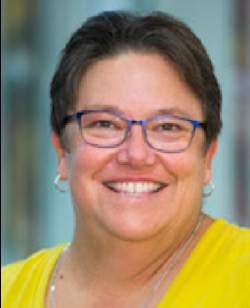
Trudy was Queensland Director for six years from 2013 and now steps into the role of President-Elect from 2019.
Trudy has a broad range of clinical experience in rural, remote and metropolitan hospitals as a Registered Nurse and Midwife and has been involved in pain management as a Clinical Nurse Consultant for the past 18 years after becoming interested in pain whilst a Nursing Unit Manager of an acute surgical ward in a regional referral hospital.
Trudy's interests in pain management include clinical care delivery, the establishment of outcome based key performance indicators for acute pain services and pain management education. Trudy has also conducted several commissioned training programs for nursing staff in Hong Kong and Singapore.
We are pleased to confirm that Joyce McSwan has joined the Australian Pain Society Board as the Queensland Director.

Joyce is a multi-award winning clinical pharmacist with a special interest in treating persistent pain. Currently she is the Clinical Program Director of the Gold Coast Primary Health Network, Persistent Pain Program, Australia’s first federally funded primary health multidisciplinary pain program. She was recently named Australian’s No. 1 Agenda Setter by the readership of the Australian Journey Pharmacy and was the pharmacy representative on the Australian Pain Society Relationships Committee from 2017-19. Some of her more recent appointments include being an Expert Panel member of the Chronic Pain Medscheck Trial Program and Chair of the Pharmacology Program for the 2019 Australian Pain Society Annual Scientific Meeting. Joyce is a member of the International Association of the Study of Pain and her expertise lies in innovating clinical pathways within public and private primary health sectors. She is also the Founder and Managing Director of the PainWISE Pharmacy Professional Services program, Australia’s first multidisciplinary clinical pain program for the pharmacy industry. Her work focuses on translating clinical evidence to everyday practice and optimise care for those living with persistent pain.
We are pleased to confirm that Dr Andrew Watson has joined the Australian Pain Society Board as the ACT Director.

Andrew worked in a variety of rural and remote locations as a GP including three years with the RFDS in far north Queensland and a year in northern Canada before undergoing specialty training in Anaesthesia. He is currently the Director of Anaesthesia, Pain and Perioperative Medicine at Calvary Hospital, senior staff specialist in the pain management unit and department of anaesthesia at the Canberra Hospital and a lecturer at the Australian National University Medical School. An interest in behavioural change and community medicine was developed though this period including a degree in public health. Andrew’s biggest interest in pain is in behavioural modification and in transitional pain and he very much likes working in a multidisciplinary clinic with a solid team with wide skills and interests.
We welcome both Joyce and Andrew to the APS Board.
Formal Degree Course (Online)

Graduate Certificate, Graduate Diploma and Masters
Endorsed by the International Society for the Study of Pain (IASP), this leading degree program provides advanced evidence-based and clinically relevant education in pain management for graduates in medicine, dentistry, nursing, physiotherapy, psychology and other allied health disciplines.
The program has been developed and is taught by The Faculty of Medicine and Health’s Pain Management Research Institute (PMRI), based at Royal North Shore Hospital and the The University of Sydney’s Kolling Institute.

The program is conducted entirely online and commences in March or August each year, with enrolments closing either late January or late June.
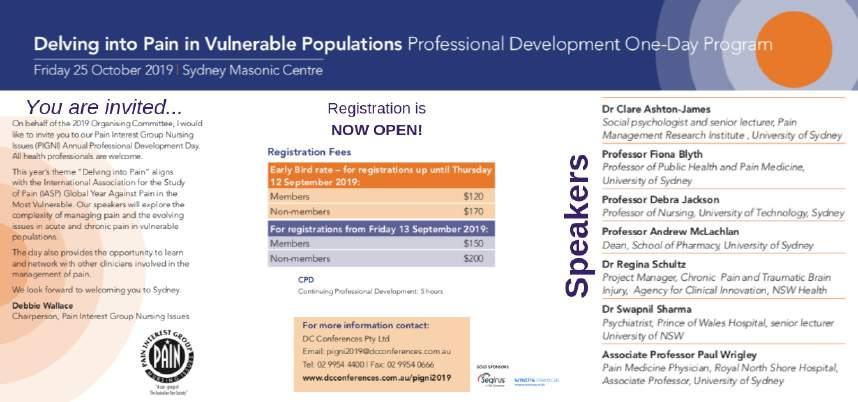
For dates & further information visit: sydney.edu.au/medicine/pmri/education
T: +61 2 9463 1516
E: paineducation@sydney.edu.au
CONTACT
For further information or to complete an Expression of Interest visit: www.dcconferences.com.au/rmsanz2019
DC Conferences Pty Ltd
P: +61 2 9954 4400 E: rmsanz2019@dcconferences.com.au
APIC2 The 2nd Asia Pacific Conference on Integrated Care will bring together researchers, clinicians, policy makers, industry, NGOs and consumer representatives from Australia and across the Asia-Pacific region. Led by colleagues at IFIC Australia, the Scientific Committee. Call for papers is now open until Friday, 28 June.
THEMES
Achieving Value for People and Populations

Implementing Integrated Care Empowering and Engaging People and Communities Integrated Care Innovations, Models and Systems
Email events@integratedcarefoundation.org
Evaluation, Monitoring and Quality Improvement
Improving People’s Health and Wellbeing through Integrated Care
Join
Expressions of interest online at www.dcconferences.com.au/aps2020
For sponsorship and exhibition opportunities or more information please contact the APS Conference Secretariat DC Conferences Pty Ltd
P: 61 2 9954 4400
E: aps2020@dcconferences.com.au

Submission Deadlines
Topical Sessions 1 October 2019
Free Papers & Posters 31 October 2019
Rising Star Award 31 October 2019
Early Bird Deadline 19 February 2020
• The cost of pain in Australia, launched by Painaustralia on 04 April 2019: https://www.painaustralia.org. au/static/uploads/files/the-cost-ofpain-in-australia-launch-20190404wfrsaslpzsnh.pdf
• 2nd TED-Ed Video – The mysterious science of pain: Explore the biological and psychological factors that influence how we experience pain and how our nervous system reactions to harmful stimuli. https://www.youtube. com/watch?v=eakyDiXX6Uc
• New videos from NSW Health: Working with Aboriginal People https://www.youtube.com/ watch?v=AV4Muq87ekQ&feature=em-uploademail
• Draft Report on Pain Management Best Practices: Updates, Gaps, Inconsistencies, and Recommendations from US Department of Health & Human Services – Published 12 December 2018 https://www.hhs.gov/ash/ advisory-committees/pain/ reports/2018-12-draft-report-on-updates-gaps-inconsistencies-recommendations/index.html#.
XDQNbmaQ-yQ.mailto
• The Third Australian Atlas of Healthcare Variation: https://www. safetyandquality.gov.au/atlas
• Palliative Care Australia (PCA) and Australian Indigenous HealthInfoNet (HealthInfoNet) has launched a new Palliative Care and End-of-Life Resource Portal for the workforce who support Aboriginal and Torres
Strait Islander peoples at Parliament House in Canberra. The palliative care and end-of-life portal is designed to assist health professionals who provide care for Aboriginal and Torres Strait Islander people, their families and communities: https://healthinfonet.ecu.edu.au/ learn/health-system/palliative-care/
• Painaustralia eNewsletter: latest issue, available online at http://www. painaustralia.org.au/media/enews
• ePPOC- electronic Persistent Pain Outcomes Collaboration: For more information about ePPOC, refer to the website: http://ahsri.uow.edu.au/ eppoc/index.html
• PainHEALTH website: http://painhealth.csse.uwa.edu.au/
• ANZCA/FPM Free Opioid Calculator
App: Smart phone app that converts opiates to milligrams of morphine, available for both iPhone and Android: http://www.opioidcalculator.com.au
• Stanford University: CHOIR Collaborative Health Outcomes Information Registry: https://choir. stanford.edu/
• 2019 Global Year Against Pain in the Most Vulnerable: Launched 31 JAN 19. See information and resources on our website: http://www.apsoc.org.au/ global-year-against-pain
• Opioid Podcasts for GPs: 20 week series from the Hunter Postgraduate Medical Institute: http://www.gptraining.com.au/recent-podcasts
• Airing Pain: Pain resources via an online radio show produced by Pain Concern, a UK registered Charity: http://painconcern.org.uk/airing-pain/
• Digital Health Guide: Developed by Primary Health Network Tasmania: https://digitalhealthguide.com.au/Account/ LogOn?ReturnUrl=%2fSpecialtyForm ulary%2f2
At login. Username: connectingcare Password: health
• 2017 Australia’s Health Tracker by Socio-economic status: Released 28NOV17: https://www.vu.edu.au/australian-health-policy-collaboration/ publications#goto----------------australias-health-tracker-by-socioeconomic-status-----------=1
• Indigenous Resources: New webpage on the APS website aggregating Indigenous resources: https:// www.apsoc.org.au/IndigenousResources
• IASP Statement on Opioids: Approved February 2018: https:// www.iasp-pain.org/Advocacy/ OpioidPositionStatement
This reference can also be found on the APS Position Papers webpage.
• NSW Cannabis Medicines Advisory Service (CMAS): Launched 29JAN18
Fact Sheet on our website: https://www.apsoc.org.au/PDF/ Fact_Sheets/20180129_NSWCannabisMedicinesAdvisoryServiceCMAS_Fact_Sheet_FINAL.PDF
Service available: 9am-5pm MondayFriday
Hotline: (02) 4923 6200 or email: HNELHD-CMAS@hnehealth.nsw.gov.au
• Choosing Wisely Australia – News & media: http://www.choosingwisely. org.au/news-and-media
• Over the counter codeine – changes to supply: https://www.nps.org.au/ medical-info/clinical-topics/over-thecounter-codeine-changes-to-supply
• Medicines with codeine – what you need to know: https://www.nps. org.au/medical-info/consumer-info/ medicines-with-codeine-what-youneed-to-know
TGA
• Codeine information hub: https:// www.tga.gov.au/codeine-info-hub
• Guidance for the use of medicinal cannabis in the treatment of chronic non-cancer pain in Australia, v1-DEC17: https://www.tga.gov. au/publication/guidance-use-medicinal-cannabis-treatment-chronic-non-cancer-pain-australia
• Our Mob- Resources for Aboriginal People: https://www.aci.health.nsw. gov.au/chronic-pain/our-mob
• Brainman and Pain Tool Kit translations, SEP15: http://www.aci. health.nsw.gov.au/chronic-pain/ translated-resources
• Pain Management Resources: http://www.aci.health.nsw.gov.au/ resources/pain-management
• Quicksteps to Manage Chronic Pain in Primary Care: http://www.aci.health. nsw.gov.au/chronic-pain/health-professionals/quick-steps-to-managechronic-pain-in-primary-care
• Built into Quicksteps- “How to de-prescribe and wean opioids in general practice”: http://www.aci. health.nsw.gov.au/chronic-pain/ health-professionals/quicksteps-to-manage-chronic-painin-primary-care/how_to_de-prescribe_and_wean_opioids_in_general_practice
• A list of helpful apps for consumers and clinicians now available at: http://www.aci.health.nsw.gov.au/ chronic-pain/health-professionals/ management-of-chronic-pain
• Chronic Pain in the ED: https://www. aci.health.nsw.gov.au/networks/ eci/clinical/clinical-resources/ clinical-tools/pain-management/ chronic-pain-in-the-ed
• APS Plenary Recordings
As an exclusive benefit to APS members, the following Plenary videos are now available for free access:
- 2018 conference in Sydney
- 2017 conference in Adelaide
- 2016 conference in Perth
• Better Pain Management online learning modules
APS members receive a 20% discount
• BPR SIG Expert Database Survey and Results
• Refer to our website for a full listing of media releases: http://www.apsoc.org. au/Media
APS #1-APRA Samantha South 1999
“Antinociceptive pharmacology of morphine and its major glucuronide metabolites”
CSL #1-APS-APRA Lara Winter 2004
CSL #2-APS-APRA Anne Pitcher 2006
Mundipharma #1-APS-APRA Kathryn Nicholson Perry 2007
APS #2-APRA Debbie Tsui 2008
Mundipharma #2-APS-APRA Zoe Brett 2011
APS #3-APRA Susan Slatyer 2013
“Antinociceptive properties of the neurosteroid alphadolone”
“Conditional comfort: A grounded theory study in nursing approaches to acknowledging and responding to pain in nursing home residents with dementia”
“Pain Management Programmes in Spinal Cord Injury: Cognitive Behavioural Pain Management Programmes in the Management of Sub-acute and Chronic Spinal Cord Injury Pain”
“Preclinical studies in painful diabetic neuropathy”
“Individual differences in vulnerability to the development of chronic pain following injury”
“Caring for patients experiencing episodes of severe pain in an acute care hospital: Nurses’ perspective”
APS #4-APRA Amelia Edington 2013
“Defining inhibitor binding sites unique to the glycine transporter, GLYT2: A potential target for the treatment of chronic pain”
Janssen Cilag #1-APS-APRA Mary Roberts Due “An investigation of the role of sleep in chronic pain”
Mundipharma #3-APS-APRA Audrey Wang 2017 “The cortical integration of tactile sensation in complex regional pain syndrome”
Janssen Cilag #2-APS-APRA Sarah Kissiwaa 2017
APS #5-APRA James Kang 2019
“Pain induced synaptic plasticity in the amygdala”
“The effect of nerve injury on behavioural selection and its relationship to prefrontal function”
Seqirus #1-APS-APRA
Cops for Kids #1-APS-APRA
Cops for Kids #2-APS-APRA
Sherelle Casey “Cannabinoids for neuropathic pain”
Dr Adrienne Harvey “A pilot study of gabapentin for managing pain in children with dystonic cerebral palsy”
Dr Tasha Stanton “Reframe the pain: Dividing attention and altering memory to reduce needle pain and distress in children”
Cops for Kids #3-APS-APRA
Dr Nicole Andrews “An evaluation of the usability of a paediatric version of the Pain ROADMAP app”
Dr Maria Barker-Mott General Practice
Ms Jessie Channell Anaesthesia
Mr Clement Chow Physiotherapy
Ms Jane Clothier Musculoskeletal Medicine
Ms Sally Ely Physiotherapy
Mrs Muriel Ginges Physiotherapy
Dr Zhipeng Guan General Practice
Mr Damien Lawrence Physiotherapy
Dr Yee Leng Loh Anaesthesia
Ms Emma Newsome Pharmacy
Mr Mark Nichols Psychology
Miss Angela Parker Nursing
Mr Muath Shraim Physiotherapy
Mrs Susan Taplin Nursing
Miss Elizabeth Urquhart Exercise Physiologist
Dr Jayath Vidanage Pain Medicine Physician
Dr Dana Weber Anaesthesia
16-20 Jun 2019
IASP Pain in Childhood SIG
ISPP 2019 12th International Symposium on Pediatric Pain: Children and Families as Partners in Pain Management
Congress Center Basel, Basel, Switzerland https://www.ispp2019.org/2019.html
18-20 Jun 2019
Lowitja Institute International Indigenous Health and Wellbeing Conference 2019 Thinking Speaking Being First Nations Solutions for Global Change
Darwin Convention Centre, Darwin, NT https://www.conference2019.lowitja.org.au
10-12 Jul 2019
Occupational Therapy Australia
Together Towards Tomorrow
International Convention Centre, Sydney, NSW http://www.otaus2019.com.au
25-26 Jul 2019
Arthritis & Osteoporosis WA
Making Sense of Pain: 9th Inter-Professional Workshop
Wylie Arthritis Centre, Perth, WA https://www.arthritiswa.org.au/events/details/id/980/
12-14 Aug 2019
Dietitians Association of Australia, 36th National Conference
More than meets the eye
Gold Coast Conference and Exhibition Centre, Gold Coast, QLD https://daa2019.com.au
4-7 Sep 2019
European Pain Federation EFIC 11th Congress
Bringing the future to the present Feria Valencia, Valencia, Spain https://efic-congress.org
10-13 Sep 2019
Palliative Care Australia and Hospice New Zealand
2019 Oceanic Palliative Care Conference
Perth Convention & Exhibition Centre, Perth, WA
https://oceanicpallcare.com
3 Oct 2019
UQ RECOVER Injury Research Centre
Whiplash 2019: Expanding Horizons
University of Queensland, ViewPoint, Building 33, Brisbane, QLD
https://cre-rfrti.centre.uq.edu.au/event/367/whiplash-2019-expanding-horizons
17-19 Oct 2019
Australian Physiotherapy Association
Transform 2019
Adelaide Convention Centre, Adelaide, SA
https://transform.physio
17-19 Oct 2019
Academy of Child & Adolescent Health
ACAH2019 Annual Conference
Hotel Grand Chancellor, Adelaide, SA
admin@acah.org.au
20-23 Oct 2019
Rehabilitation Medicine Society of Australia and New Zealand (RMSANZ) 4th Annual Scientific Meeting
Contemporary Rehabilitation: Knowledge Translation, Collaboration and Community Engagement
Adelaide Convention Centre, Adelaide, SA
https://www.dcconferences.com.au/rmsanz2019/
24-26 Oct 2019
RACGP - GP19
Your patients. Your community. Your solutions. Adelaide Convention Centre, Adelaide, SA
https://www.gp19.com.au
25 Oct 2019
Pain Interest Group Nursing Issues (PIGNI) Professional Development Day
Delving into Pain
SMC Conference & Function Centre, Sydney, NSW https://dcconferences.eventsair.com/pigni2019/
11-13 Nov 2019
International Foundation for Integrated Care - IFIC Australia
APIC2 - 2nd Asia Pacific Conference on Integrated Care
Melbourne Convention and Exhibition Centre, Melbourne, VIC https://integratedcarefoundation.org/events/apic2-2nd-asia-pacific-conference-on-integrated-care
29 Nov 2019
University of Sydney, Pain Management Research Institute
Descending the analgesic ladder: A landmark forum on opioid de-prescribing for chronic pain
Taronga Centre, Taronga Zoo, Sydney, NSW https://sydney.edu.au/medicine/pmri/education/continuing/forum-deprescribing-opioids.php
18-21 Mar 2020
New Zealand Pain Society Annual Scientific Meeting 2020
Making the Connection - Cortex, Culture and Community
Copthorne Hotel, Bay of Islands, New Zealand
TBA
5-8 Apr 2020
Australian Pain Society 40th Annual Scientific Meeting
In the IASP Global Year for the Prevention of Pain
Hotel Grand Chancellor, Hobart, TAS https://www.dcconferences.com.au/aps2020/
All people will have optimal access to pain prevention and management throughout their life.
The Australian Pain Society is a multidisciplinary organisation aiming to minimise pain and related suffering through advocacy and leadership in clinical practice, education and research.
AIMS:
• To promote the provision of healthcare services for pain management
• To promote equity of access to pain management services
• To actively engage with key stakeholders and contribute to their activities
• To provide a contemporary forum to discuss issues relating to pain research and treatment

• To foster and support pain-related evidence-based research
• To share and promote the expertise of all disciplines involved in the treatment of pain
• To promote and facilitate evidence-based pain related education for health professionals and the community
• To promote the development and use of standards and outcome measures in everyday clinical practice
PRESIDENT:
Dr Anne Burke
Central Adelaide Local Health
Network, Royal Adelaide Hospital
Adelaide SA 5000
Tel: 08 8222 5403 | Fax: 08 8222 5904
PRESIDENT—ELECT:
Ms Trudy Maunsell
Acute Pain Service
Princess Alexandra Hospital
Woolloongabba QLD 4102
Tel: 07 3176 5547 | Fax: 07 3176 5102
SECRETARY:
Dr Will Howard
Director, Pain Service
Austin Health
Studley Road
Heidelberg VIC 3084
Tel: 03 9496 3800 | Fax: 03 9459 6421
TREASURER:
Mr Tim Austin
Camperdown Physiotherapy
Inner West Pain Centre
100 Carillon Avenue
Newtown NSW 2042
Tel: 02 9517 1787 | Fax: 02 9516 2491
ACT DIRECTOR:
Dr Andrew Watson



Calvary Hospital
Canberra ACT 2617
Tel: 02 6201 6352
NSW DIRECTOR:
Dr Tim Ho

Royal Prince Alfred Hospital
Inner West Pain Centre
100 Carillon Avenue
Newtown NSW 2042
Tel: 02 9517 1764 | Fax: 02 9517 1832
NT DIRECTOR:
Ms Diann Black
Royal Darwin Hospital
PO Box 41326
Casuarina NT 0811
Tel: 08 8931 1029
QLD DIRECTOR:
Mrs Joyce McSwan
Gold Coast Primary Health Network
Persistent Pain Program, QLD
Tel: 0412 327 795 | Fax: 07 3539 9801
SA DIRECTOR:
Dr Michelle Harris

Royal Adelaide Hospital and Lyell McEwin Hospital
Adelaide SA
Email: michelle.harris2@sa.gov.au
TAS DIRECTOR:
Dinah Spratt
Physiotas Physiotherapy
3/11 Poyston Drive
Shearwater TAS 7307
Tel: 03 6428 7500 | Fax: 03 6424 7811
VIC DIRECTOR:
Dr Laura Prendergast






Pain Service, Austin Health
Chronic Pain Clinic, Goulburn Valley
Health VIC
Tel: 03 9496 3134 or 03 5832 3020
WA DIRECTOR:
Mr Shadreck Tozana
Functional Revival and Baptistcare
Bethal, 2 Bethal Way Albany WA 6330
Tel: 0437 541 165 | Fax: 08 9841 8480
IMMEDIATE PAST PRESIDENT:
Ms Fiona Hodson
Hunter Integrated Pain Service
John Hunter Hospital Campus
New Lambton NSW 2305
Tel: 02 4922 3435 | Fax: 02 4922 3438
SPC CHAIR:
A/Prof Kevin Keay




Department of Anatomy
University of Sydney
Sydney NSW 2006
Tel: 02 9351 4132 | Fax: 02 9351 2817
IASP LIAISON:
Professor Michael Nicholas
Pain Management Research Institute

Royal North Shore Hospital
St Leonards NSW 2065
Tel: 02 9926 7894 | Fax: 02 9662 6279
Website: www.iasp–pain.org
COMMUNICATIONS/WEBSITE/ SOCIAL & OTHER MEDIA COORDINATOR:
Dr Will Howard

Director, Pain Service
Austin Health
Studley Road, Heidelberg VIC 3084
Tel: 03 9496 3800 | Fax: 03 9459 6421
NEWSLETTER EDITOR:
Dr Stephanie Davies WA Specialist Pain Services


Cottesloe WA 6011
Tel: 0412 933 419 | Fax: 08 9286 8023
NEWSLETTER ASSISTANT EDITOR:
Dr Lincoln Tracy
School of Public Health and Preventive Medicine
Monash University
Melbourne VIC 3004
Tel: 03 9903 0288
PHD SCHOLARSHIP CHAIR:
A/Prof Michael Farrell
School of Biomedical Sciences
Monash University
Clayton VIC 3800
Tel: 03 9905 6094
SECRETARIAT:
DC Conferences Pty Ltd
PO Box 637
North Sydney, NSW 2059
Tel: 02 9016 4343 | Fax: 02 9954 0666
Email: aps@apsoc.org.au
Website: www.apsoc.org.au