AUSTRALIAN PAIN SOCIETY NEWSLETTER

VOLUME 38, ISSUE 4
VOLUME 40, ISSUE 1
2020 is here! It feels like only yesterday we were saying goodbye to 2019 in the December edition of the eNewsletter, and now here we are in February. I hope that all APS members had a safe and enjoyable holiday period with your families and loved ones.
Following the departure of Dr Stephanie Davies as APS Newsletter Editor at the end of last year, the Society is on the lookout for some new faces to join the Editorial team. Don’t be afraid to reach out to either the APS Secretariat or myself if you have any questions about getting involved. Having a dedicated and enthusiastic Editorial team is vital for the ongoing sustainability of the APS eNewsletter.
Dinah Spratt, Chair of the Local Organising Committee for the 2020 APS Annual Scientific Meeting, provides a fantastic overview of the program for our upcoming conference. I am sure the cannabinoids debate will be of interest to many attendees, so make sure not to miss this new format of presentation. Dinah also highlights a range of social activities to see all the beauty and wonder of Tasmania. With this year’s conference leading into Easter, why not spend a lovely long weekend exploring all the Apple Isle has to offer? Take advantage of the early bird registration rates, available until February 19th.
This edition of the eNewsletter also features an excellent contribution from Arno Ebner of the Pain in Childhood SIG, updating his 2019 list of pain and relaxation information for patients, families, and doctors. Like Arno, I am keen to learn more about the
availability of high-quality virtual reality relaxation products that can be used in the home. There are numerous research studies demonstrating the effectiveness of such products in relieving pain and anxiety a clinical environment, so it will be exciting to see if these become available commercially.

Many APS members have had a productive start to the year, with Pain in Childhood SIG member Tiina Jaaniste providing an overview of the Paediatric Pain Think Tank that took place in Sydney in early January. It sounds like Chris Eccleston and Emma Fisher, the chairs of the think tank, did an excellent job of leading the multidisciplinary group of attendees through a highly productive and informative day.
Providing high quality care to individuals in rural and remote regions of Australia can be challenging. Through ECHO, an interactive model of collaborative learning, professionals from rural or under-served areas can join a community of multidisciplinary professionals to share knowledge and discuss cases in a de-identified manner. There are ECHO projects popping up around Australia, so make sure to read all about it and see if there is one near you. Thanks to Phil Nixon for providing this great summary!
Thank you to APS members Geoffrey Speldewinde, Audrey Wang, Brian Pulling, Tasha Stanton, Rocco Cavaleri, Simon Summers, and Siobhan Schabrun (along with all their colleagues) for sharing recent publications with the Society. It is great to see the achievements of so many of our members. If you are a member and have
had an article accepted for publication recently, make sure to send it in to the APS Secretariat. If you want to send a short commentary on your article as well, that’s even better!
In October last year I was fortunate enough to meet Shelly Wiechman, an attending psychologist from Seattle with expertise in
helping patients adjust to injury or disability, non-pharmacological pain management, and paediatric mental health. It was wonderful to sit and chat about her work, which I feel will be of interest to many APS members.
Lincoln Tracy, Acting EditorTo ensure continuity of publication, we are seeking Expressions of Interest (EOI) for additional volunteer members of the APS Newsletter Editorial Team. Broadly, the responsibilities include:
1. To assist in the production of the newsletter to provide more scientific content and strength to the newsletter; in particular, to alert APS members to recent publications by providing two or more references of interest to readers; these could be by:

a. listing the title, key authors, and where to find the reference; or
b. by a brief synopsis provided by you; or,
c. perhaps best of all, by obtaining the abstract (with permission to use it.)
2. To act as a second reviewer for the APS newsletter content
3. To be the senior editor when the editor is unavailable.
If you are interested in this role, and have further queries please contact Kristy Gorenc at the APS Secretariat aps@apsoc.org.au. Applicants will be asked to submit a written EOI with their CV. All EOIs will be reviewed and considered by the APS Board. This is a voluntary position.
Closing date: Sunday 26 February 2020
Get in early and secure your place at Australia’s only multidisciplinary conference offering insights into the complex nature of pain management from a variety of medical, nursing, and allied health perspectives.
To register please click here!
Being an APS member helps you save on your APS 2020 registration fee!
Early Bird Before 19 February 2020
Non-Member Registration Price VS
Becoming an APS Member
APS Student Member Registration Price
$1,140 OR
Being a member saves you up to $270 after membership fees!
Only $230 Being a member saves you $845 after membership fees!
Colleagues interested in becoming members and saving on their registrations too?
Tell them to become an APS Member and start saving right away!
We look forward to welcoming you to Hobart, Tasmania.
Should you have queries, please contact the Conference Secretariat.
Pick the Brain of a Pain Researcher!
Have you ever wanted to ask a well-known researcher –
“How did you know this was for you?”
“How did you know what opportunities to say yes to and what to say no to?” Well, now is your chance!
This session is for early career researchers, and includes networking opportunities with the following international experts:
• Dr Janet Bultitude, Psychology Department and Centre for Pain Research at the University of Bath in the United Kingdom
• Professor John F. Cryan, Dept. of Anatomy & Neuroscience, University College Cork, Ireland
• Dr Erin Krebs, Minneapolis Veterans Affairs (VA) Centre for Care Delivery and Outcomes Research, University of Minnesota Medical School, USA
• Professor Mark Hutchinson, Centre for Nanoscale BioPhotonics, University of Adelaide, Adelaide, Australia
Date: Monday 6 April 2020
Time: 5:30pm - 6:30pm
Cost: $10 per person, includes a drink on arrival
When registering for the conference, don’t forget to add in a ticket to the Trainee Session! To register click here
Awaken the senses! Get that coffee!
We all know how much that morning coffee helps get us through that first plenary session of the morning, but how about bringing your own cup? APS2020 urges all delegates to bring their reusable cups and help save mother earth!
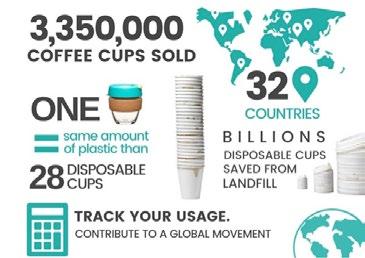
Don’t worry, Hobart Grand Chancellor will wash your reusable cup for you! Need reusable cups? Order your APS reusable keep cups when you register –it will be waiting for you at the registration Desk.
Find out more about the conference by visiting the website
2020 sees the Australian Pain Society revelling in its 40th Annual Scientific Meeting. Please help us celebrate this by sharing a favourite memory from a past ASM.
It could have been a plenary speaker that changed your research focus. A poster abstract that opened your mind to a new way of thinking. Connecting and meeting new people, who have since become lifelong friends and colleagues.
Or maybe it was kicking up your heels at a Gala Dinner!
Please take this opportunity to share your most memorable moments of an APS ASM in either a 20- second video or a 100-word written statement.
Responses will be collated and featured at APS 2020.
Entries should be sent to aps2020@dcconferences. com.au by Monday 30 March 2020
Join
Expressions of interest online at www.dcconferences.com.au/aps2020
For sponsorship and exhibition opportunities or more information please contact the APS Conference Secretariat

DC Conferences Pty Ltd
P: 61 2 9954 4400
E: aps2020@dcconferences.com.au
Submission Deadlines
Topical Sessions 1 October 2019
Free Papers & Posters 31 October 2019
Rising Star Award 31 October 2019
Early Bird Deadline 19 February 2020
The Australian Pain Society is celebrating its 40th Annual Scientific Meeting this year, and where better to celebrate it than the Tasmanian capital Hobart, rich in history since it’s foundation in 1804 as a British penal colony, which sits on the picturesque River Derwent in the south east of the state. Hobart is the second oldest capital city after Sydney. Its Aboriginal descendants often refer to themselves as ‘Palawa’.
DINAH SPRATT Chair-Local Organising Committee
Hobart Town is a place to explore. See all the town has to offer; from the curious 19th century sandstone and weatherboard cottages nestled in the quaint and tiny lanes of Battery Point, to the Georgian sandstone buildings of Salamanca Place. Once used as warehouses for produce such as grain, whale oil, and apples, these buildings are now delightful craft shops, art galleries, bars, and cafes. Be sure to stick around until Saturday to see the famous outdoor Salamanca Markets, a brilliantly bustling experience.
The conference will be held at the Hotel Grand Chancellor, ideally located on the waterfront, comprising of Victoria Dock (a working fishing harbour) and Constitution Dock (full of floating fish punts and the odd wayward seal!). The conference backs onto Easter, giving delegates the opportunity to rest awhile and explore the true wonder of our Apple Isle, a reference to its former status as an important apple grower and exporter.
The program this year brings us an impressive variety of national and international speakers, who are true experts in their field. Our three international speakers, Professor John Cryan, A/Professor Erin Krebs, and Dr Janet Bultitude - hail from Ireland, America, and the UK, respectively, and will challenge our thinking with their fascinating topics covering the interactive role of the brain, gut and microbiomes with regards to immune and mental health disorders, the latest research on chronic pain and opioids, and the sensory changes experienced in complex regional pain syndrome and their similarity to neglect-like behaviour often seen post stroke.
We have 7 national speakers, including Professor Michelle Sterling (who will be presenting the IASP Global Year Of lecture), Dr Christine Barry, and Dr Corbus Greber, who will be feeding us research delights ranging from targeting risk factors to improve health outcomes following motor vehicle crash musculoskeletal injury, associations between chronic pain and the female reproductive tract, and the scale of opioid and cannabis consumption in Australia. For further information on all our national plenary speakers please visit the conference website.
The latter ties in nicely with our panel discussion on whether cannabis is the next opioid crisis. This is a new format, and we’re looking forward to a lively debate with panel members including Ruth Forrest, independent member of the Tasmanian Legislative Council and Inquiry Chair of the ‘Legalised Medicinal Cannabis Final Report’ published in 2015. It’s worth noting that Tasmania currently cultivates and exports medicinal cannabis and is also the world’s largest producer of legal alkaloids.
On Sunday we have our popular preconference workshops, covering our usual topics on acute pain, pain in childhood, fundamentals, and basic pain research, as well as pharmacology and physiotherapy workshops. These will be followed by the allied health discipline sub group meetings.
This year is the IASP’s Global Year for the Prevention of Pain, and our 19 topical concurrent sessions and five free paper sessions will cover many aspects of pain prevention and management throughout the age spectrum, highlighting the relationship of pain with food, mood, communication, and social connections as well as mechanisms driving opioid efficacy, and the benefits of interventional pain procedures and psychological
interventions. We also have the novel ‘Thinking outside the Box’ topical workshop.
The exhibition hall is the place to ‘eat and greet’. Be sure to attend the welcome reception on Sunday, which provides an opportunity to catch up with old friends and colleagues and to meet new ones. We have numerous exhibitors this year, and there will be ample time over the conference to browse amongst the posters.
Our social program includes an informal catch up on Monday at the Post Street Social Bar, on Franklins Wharf, followed by a personal tour of Parliament House, where Parliament has held its sessions since 1856. Our Gala dinner will not disappoint, set in 15 acres of native bush land at the magical Glenn Albyn estate, with stunning views of the Derwent River. The dance floor is sure to be packed all evening with delegates grooving to the popular live band the Giant Hamsters. Dress up with a ‘splash of red’ to celebrate the ASM’s ruby anniversary.
To finish, delegates simply can’t miss our Wednesday tour which will take us on a ferry trip up the Derwent to MONA. This Museum of Old and New Art is situated mostly underground and can only be described as a unique ‘assault on the senses’, but with a playful vibe, which will leave you with a lasting impression.
The Hobart ASM is not to be missed, so jump on our website, available here and register before 19 February to catch the early bird and secure accommodation in your favorite spot. I look forward to seeing you there!
The 2020 Global Year for the Prevention of Pain has been officially launched by the International Association for the Study of Pain (IASP).
To download a copy of the locally produced poster and to access the IASP Fact Sheets, visit the Global Year page of the APS website.
Along with our regular collaborators:
• New Zealand Pain Society
• Faculty of Pain Medicine, ANZCA
• Painaustralia
we encourage you to help raise awareness of this important topic.
A limited number of A3 posters have been printed and are available upon request.
If you conduct an event to raise awareness of Prevention of Pain, please send us a report and photos to share with your fellow members.





For further information: Faculty of Pain Medicine, Australian and New Zealand College of Anaesthetists www.fpm.anzca.edu.au, Australian Pain Society www.apsoc.org.au, New Zealand Pain Society www.nzps.org.nz, Painaustralia www.painaustralia.org.au, International Association for the Study of Pain (IASP) www.iasp-pain.org.




Welcome to my first blog and newsletter article of the new year 2020.
A year ago, in January 2019, I provided a list with pain and relaxation information for families and doctors in this blog. This is a list of various resources from pain services all over the world.
I reviewed all the links to see if they are still working. For example, some links have changed like the Starship Hospital ‘painkete’ PDF file, so I updated it and I could not really find out if the ‘Take A Chill’ and ‘My Calm Breath’ apps are still functional, hence I have removed them from this list. I added two new resources for sleep relaxation, more for younger children, that were recommended to me by parents. I had a look at them and think they are great; I nearly fell asleep myself when listening to them. Have a look at the ‘Bedtime Explorers’ podcast under ‘Mindfulness and relaxation information’ and ‘Moshi Twilight Sleep Stories’ under ‘Apps’.
The links under ‘Mindfulness and relaxation Information’ are also very handy for patients with mental health problems, not only for pain.
If you know another useful resource for this list or become aware of a dysfunctional one, please share with us. Just email your recommendation or comment to the APS Secretariat at aps@apsoc.org.au.
In my next blog, I want to explore the commercial availability of high quality virtual relaxation products ... It is a new and emerging market with great potential, so maybe next year I will be able to add some VR applications to this list.
So, here is my personal resource list I use for my parents, caregivers and children and adolescents with Chronic and Persistent Pain for 2020. The list can also be found here:
https://blog.apsoc.org.au/category/painin-childhood-sig/
Good relaxation apps are “Smiling Mind” (for Android and iOS, Free), “Headspace: Meditation & Sleep” (for Android and iOS, Free but in-App purchases), “Yoga for Kids” (only for Android, Free)
For relaxaing into sleep try the “Moshi Twilight Sleep Stories” (subscription required, for Android and iOS), more for younger children
Designed to target anxiety is the ‘MindShift CBT™” app to take control over worries (for Android and iOS)
Two similar yet both excellent books are
‘Conquering Your Child’s Chronic Pain’ by Christina Blackett Schlank and Lonnie K. Zeltzer and
‘Managing Your Child’s Chronic Pain’, by Tonya M. Palermo and Emily F. Law
Varied general pain information. These websites contain a mix of info material for parents and children and explain what pain is and what they can do about it
https://media.starship.org.nz/the-pain-kete/ pain-kete.pdf
A printable PDF summary from the Auckland Hospital Paediatric Pain team about what pain is, with many tips and ideas what you can do about.
https://www.kidshealth.org.nz/ chronic-or-persistent-pain
The New Zealand Paediatric Society website’s pain site developed by their Special Interest Group Pain in Childhood. Brief general information for families about chronic and persistent pain with book and app recommendations, videos, external links and a downloadable booklet ‘Understanding persistent pain – how to turn down the volume on persistent pain https://www.aci.health.nsw.gov.au/ chronic-pain/painbytes
The Australian Pain Management Network offers comprehensive information for everyone, youth and health professionals alike. You will find an abundance of materials about what pain is, and how to better manage it with information about medication, mindful strategies, nutrition, physical activities, sleep. The information
for parents and youths is usually in video format while the health professionals’ information links to reading resources and external links.
https://www.zoffness.com/resources
Rachel Zoffness, a Child Psychologist from Northern California created this website for patients. Find many useful links to videos, articles and info sites under ‘Resources’. They cover information about different forms of pain and management strategies to use.
https://www.kidsinpain.ca/
Solutions for Kids In Pain (SKIP), a Canadian website dedicated to knowledge translation with useful videos and printouts.
https://www.aboutkidshealth.ca/pain
Information on acute and chronic pain from symptom recognition, assessment and diagnosis to treatment and long-term outcomes from The Hospital for Sick Children in Canada. This learning hub is made for patients and families.
https://www.mycarepath.ca
Learn. Plan. Take Charge of Pain. This web resource assists children and parents to understand and manage pain and gives things to try to help feeling good again.
https://ken.childrenshealthcarecanada.ca/ xwiki/bin/view/Paediatric+Pain/
A Canadian website with toolkits and resources for acute procedural, acute presenting and chronic pain. The website is more suitable for health professionals than for patients, but you will find useful handouts like the 40 pages ‘My Pain Toolkit’ for young people and teenagers.
https://www.betterhealth.vic.gov. au/health/conditionsandtreatments/ chronic-fatigue-syndrome-cfs
Basic information but covering all aspects of chronic fatigue syndrome and what one can do to improve it.
https://fibroguide.med.umich.edu
From the Chronic Pain and Fatigue Research Center in Michigan comes this symptom management program for patients with fibromyalgia. It consists of learning and management modules.
https://painhealth.csse.uwa.edu.au
Comprehensive information, tips, support and personal stories to help managing musculoskeletal pain. This painHealth website was created by the Department of Health, Western Australia, in collaboration with Curtin University, the University of Western Australia and the Musculoskeletal Health Network.
INFORMATION
These websites offer limited information about pain itself but have many useful self-helping strategies, e.g. relaxation practices and mindfulness tactics
https://www.kinderling.com.au/music/ programs/bedtime-explorers
A podcast from Kinderling with beautiful soothing short stories to help young children to fall asleep. It is free and the Podcast can be played from various sources, e.g. website, Apple podcasts, Google podcasts, the Kinderling App or Spotify
https://www.thecomfortability.com
A comprehensive self-management website developed by Psychologist Dr Rachael Oakley. The website contains an abundance of resources for children in pain and their parents. There are how-to-videos, podcasts and guided exercises to watch and listen to for coping strategies, mindfulness and relaxation exercises like breathing, active muscle relaxation and guided imagery. The Paediatric Pain Blog is full of tips for parents how to help their child in pain, e.g. with attending school and there is a good video collection with coping stories from children and parents.
https://youth.anxietycanada.com/ anxiety-101
Not so much about pain but the Anxiety Canada site has cool information about anxiety for youths. Learn how to face your fears, to think right, how to chill and about healthy habits and what to do for common problems with anxiety.
www.calm.auckland.ac.nz
CALM is for Computer Assisted Learning for the Mind. There is no information about pain in general, but the website offers mindfulness and meditation exercises via audio files and a few reading materials.
It is useful to strengthen one’s resilience and the ability to cope with anxiety, stress and finding a meaning in life. Good if you like laying down and listen to guided relaxation exercises
https://keltymentalhealth.ca/mindfulness
On this Canadian website you will find ideas and resources for mindfulness exercises incl. apps, podcasts and videos
Here you find an overview of various YouTube pain videos. Videos on YouTube might be removed or changed. If the link does not work use the video title for the YouTube search bar.
https://www.youtube.com/ watch?v=JrCdyuDsg6c&t=1s
Migraine: How it works and how to get it under control!
https://www.youtube.com/ watch?v=KfYC6zfrV80&t=61s
Understanding pain – and what’s to be done about it in 10 minutes (New Zealand)
https://www.youtube.com/ watch?v=J6--CMhcCfQ
Elliot Krane: The mystery of chronic pain
https://www.youtube.com/ watch?v=lVdulzi6oYw&t=2s
Understanding pain - and what's to be done about it in 10 minutes!
https://www.youtube.com/ watch?v=RWMKucuejIs&feature=youtu.be
Understanding Pain What to do about it in less than five minutes
https://www.youtube.com/ watch?v=zr9n1Rypquc
Yoga Progamme for Teens with Recurrent Abdominal Pain – Leora Kuttner
https://www.youtube.com/ watch?v=Zv6RPoVZx9M
Understanding the Complexity of Pain
https://www.youtube.com/ watch?v=ikUzvSph7Z4
Tame The Beast — It's time to rethink persistent pain
https://www.youtube.com/ watch?v=I7wfDenj6CQ
How does your brain respond to pain?Karen D. Davis
https://www.youtube.com/ watch?v=9mcuIc5O-DE
How Do Pain Relievers Work? - George Zaidan
https://www.youtube.com/ watch?v=GF2xhUKxzxY
What Is Pain Video
https://www.youtube.com/ watch?v=jIwn9rC3rOI
Understanding Pain: Brainman chooses
https://www.youtube.com/ watch?v=HV_V4jl6zK8&t=80s
Living with Epidermolysis Bullosa - Coping with Pain during Bandage Changes (German with English subtitles)
This is the end of the list for 2020. I am sure you find something useful here. Please don’t forget to send me you own suggestions or let me know about any problems.
Kind regards and a Happy New Year.
Dr Arno Ebner, MD PhD FRACP Paediatrician in CairnsI can be contacted via the APS secretariat at aps@apsoc.org.au
While many people were still on holidays, 25 researchers and clinicians with an interest in paediatric pain came together in Sydney on January 8th for a think tank. The meeting, sponsored by the Australian Pain Society (APS), was chaired by Chris Eccleston and Emma Fisher, visiting paediatric pain researchers from Bath, UK. Not only did we have meeting attendees from across the various hospitals, universities, and research institutes in NSW, we also had attendees from Queensland and South Australia. There was discussion about the various Big Questions facing the field of paediatric pain, including updating societal views about pain, equitable care, conceptualising pain within a developmental framework, considering what we should be assessing, and treatment development. Emma Fisher shared her research investigating
which children following injury are most vulnerable to ongoing chronic pain with the group. Chris Eccleston raised the concept of “treatment-resistant chronic pain”, with discussion about whether these patients can be identified early and how best to support them.
Chris spoke about a recent Cochrane overview that he led, summarising the evidence from 23 systematic reviews on pharmacological interventions for children with chronic pain See link here. He noted that the overview highlighted a serious lack of available evidence for all drugs aimed at relieving pain in children, with there being only six trials including 393 participants. The resulting dissemination plan has utilised publications, blogs, newsletters, videos, and social media to convey the need for more evidence production in the field; a message that needs to be heard by researchers, policy makers, and funders alike.
A highly interesting afternoon session involved each meeting attendee identifying issues or questions that they would most like to see addressed in the field of paediatric pain. With a diverse group of professionals, working in a wide range of settings,
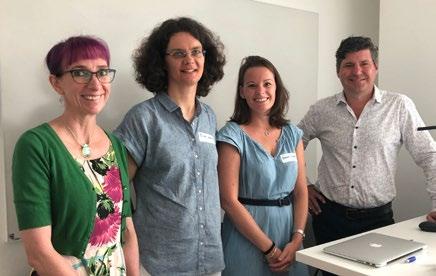
the issues and questions raised were varied and challenging. However, it was exciting to see ideas being bounced around, possibilities raised, and seeds being sown for future potential collaborations.
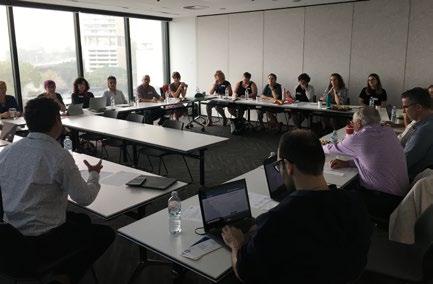
In summary, the day was an opportunity to hear from Chris Eccleston and Emma Fisher about their perspective about where the field of paediatric pain is currently at. Moreover, with a diverse group of meeting attendees from various clinical and research settings, the day provided an opportunity to discuss challenges that were often similar across settings, and to start considering responses and potential solutions.
Thanks again to the APS for supporting the Pain in Childhood Special Interest Group and ensuring the success of the day.
Tiina Jaaniste Pain in Childhood SIG member SydneyChildren’s Hospital
Australia is a geographically vast country, with a broadly distributed population. Unacceptable health disparities and limited access to specialist care is a big problem, particularly in rural, remote, and disadvantaged communities. For these communities, poor access to specialty services and difficulties with workforce retention compound inequities driven by social determinants of health.
Project ECHO has been implemented at Children’s Health Queensland Hospital and Health Service (CHQ) as a key enabler of its Integrated Care Strategy, to improve the health outcomes of children and young people. The initiative increases collaboration between primary, secondary and tertiary health sectors, education, and social care services.
ECHO is an interactive model of collaborative learning through case discussions. In ECHO, professionals from rural or under-served areas gain access to a panel of specialists through regular videoconferencing. At every session, participants present de-identified patient cases for whole group discussion and to gain advice from the group. The interprofessional participant cohort form a community of practice, a mechanism for ongoing knowledge sharing and mentorship.
Initially introduced in the US state of New Mexico, the model has spread rapidly after a study published in the New England Journal of Medicine demonstrated that patients with hepatitis C had equivalent outcomes when treated by ECHO-trained primary care doctors, compared to hospital specialists (Arora et al. 2011).
The ECHO model has been applied and studied in a range of health conditions internationally (Zhou et al. 2016). The ECHO Institute indicates the characteristics of conditions or diseases well-suited to ECHO: common, complex, evolving treatments, high societal impact, serious outcomes if untreated, and improved outcomes with disease management. Persistent pain ticks all the boxes, and currently there are 124 opioid reduction and pain-related ECHOs worldwide.
The operations of the CHQ ECHO hub in Brisbane were initially funded through an Integrated Care Innovation Fund grant, and have been sustained through other grant funding. The hub has expanded from the pilot program launched in 2017, focusing on paediatric ADHD, to the delivery of a further seven programs across a range of physical and mental health conditions."
The Paediatric Persistent Pain ECHO was launched in July 2018, in response
to the challenges of supporting pain management providers across a vast geographical context. ECHO was identified as a way for the Queensland Interdisciplinary Paediatric Persistent Pain Service at Queensland Children’s Hospital to better connect with health professionals treating children with persistent pain throughout the state. Through collaborative partnerships between services, local providers could be supported to apply a sociopsychobiomedical approach to the management of these complex patients.
The interdisciplinary panel consists of a Senior Medical Officer, Psychologist, Physiotherapist, and Occupational Therapist.
Feedback from participants is positive:
“As a rural therapist often working in isolation it can be challenging to access professional development. ECHO has provided fortnightly supervision and support from the convenience of my own office! The design of the program allows for consolidation of knowledge and expert opinion in a supportive environment. I have expanded my own reflective practice skills after being given the opportunity to present whilst also receiving direct feedback from statewide experts.”
Panel members have also anecdotally reported unanticipated benefits of participating in an ECHO network, such as gaining an increased appreciation of different contexts and generalists’ capabilities with caring for patients with complex needs.
There is growing interest in the ECHO model in Australia, with a number of hubs now operating programs on various topic areas. These include the Opioid Management ECHO based at St Vincent’s Hospital in
Melbourne, and Liverpool Hospital’s Hepatitis C ECHO. Increasingly, ECHO hubs from Australia and New Zealand are working together to facilitate the spread of the model, through regular meetings by the Asia-Pacific ECHO collaborative.
Several adult-focused Pain ECHOs are currently under development, targeting primary care medical, nursing and allied health and with an expected launch date in 2020:
• Pain ECHO, Western Victoria
Target catchment: Western Victoria
Launching February 2020
Fortnightly sessions, day and time to be advised
Contact: projectechopain@westvicphn. com.au
• Pain ECHO, Townsville Hospital
Open to a national and international audience
Launching February 2020
Frequency, day and time to be advised
Contact: stephen.gilbert@health.qld. gov.au
• Persistent Pain Service ECHO, Royal Hobart Hospital
Target catchment: Tasmania
Anticipated launch mid-2020
Fortnightly sessions, day and time to be advised
Contact: megan.lawrence@ths.tas.gov. au for more information
Other ECHO networks offered by CHQ include:
• Kids & Teens Mental Health & Behaviour
• ADHD
• Clubfoot and other Foot Anomalies
• Palliative Care
For more information and to register, visit our website.
Arora et al. (2010), Outcomes of treatment for Hepatitis C virus infection by primary care providers. New England Journal of Medicine 364 (23), 2199-2206.
Zhou Z, Crawford A, Serhal E et al. (2016), The impact of Project ECHO on participant and patient outcomes: A systematic review. Academic Medicine 91(10), 1439-1461.

Declaration *Phil Nixon has nothing to declare
Phil has a background in acute paediatric physiotherapy. He has practiced clinically at both Mater Children’s and Queensland Children’s Hospitals, predominantly in the areas of orthopaedics and clinical education. Phil is currently employed at the Project ECHO Hub at Children’s Health Queensland, working to build strong and collaborative communities of practice around the topics of paediatric persistent pain, child and youth mental health and behaviour, and clubfoot.
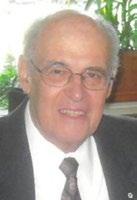


JULY 19, 1929 - DECEMBER 22, 2019
Dedicated his life to helping others. Ronald Melzack dedicated his life to helping others. He believed that "No one should have to feel pain". As a Professor at McGill University, his research led to groundbreaking developments in the pain field. He received the Order of Canada, the Prix du Quebec, and was inducted into the Canadian Medical Hall of Fame in 2009. Ron is survived by Lucy, his wife of 59 years, and Lauren and Joel, their two children.
A more detailed tribute can be found in the Montreal Gazette.
Thank you to APS member Geoffrey Speldewinde for sharing the following recent publication:
Article first published online: 20 November 2019
Journal Reference: Oxford Academy Pain Medicine
DOI: https://doi.org/10.1093/pm/pnz282
Link: https://academic.oup. com/painmedicine/advancearticle-abstract/doi/10.1093/pm/ pnz282/5634192?redirectedFrom=fulltext#. Xduum3OR3NI.email
Objective/Background/Aims/
Introduction: There are many physical, pharmacological, and interventional therapies aimed at alleviating sacroiliac ligament/joint complex pain, including thermal neurotomy. Sacroiliac joint (SIJ) innervation, as opposed to posterior sacroiliac ligament complex innervation, remains uncertain; thus lateral branch thermal neurotomy to alleviate sacroiliac joint pain remains controversial.
This study aimed to compare the success rates of two lateral branch neurotomy techniques, large continuous-lesion multielectrode radiofrequency neurotomy (RFN; Simplicity, Neurotherm Inc.) and
small-lesion monopolar periforaminal, to relieve pain from sacroiliac joints, as well as whether these would alter physical and psychological health.
Design: Retrospective clinical audit of prospectively gathered consecutive data.
Setting: A private community-based multidisciplinary pain clinic.
Subjects: Referred from primary care environments.
Methods: Of 96 consecutive thermal neurotomies with baseline data completed, follow-up data were found in 73 patients during the period 2011–2017. After diagnosis by dual-positive fluoroscopic intra-articular injections, 41 patients underwent 47 monopolar periforaminal neurotomies, and 32 underwent 49 large continuous-lesion multi-electrode RFNs, with >12-month follow-up. The primary outcome was 50–100% relief of pain for more than six months. Results are presented as success rates. Secondary outcomes were Functional Rating Index Depression Anxiety and Stress Scale and Patient Specific Functional Scale.
Results: Follow-up data were available for 80 (83%) of the 96 procedures. Success occurred in 69% of all procedures (39% complete >75% relief and 30% good 50–75% relief). Success was 57% with worst-case analysis. Success rates were
SUCCESSFUL
71% in the large continuous-lesion multielectrode RFN group and 65% in the periforaminal group, with overlapping confidence intervals. Significant improvements also occurred in the secondary measures.
Conclusions: Thermal neurotomy demonstrated a 69% success rate in reduction of sacroiliac ligament/joint complex pain for more than six months equally by large continuous-lesion multi-electrode RFN and periforaminal monopolar techniques, with attendant improvement in physical and psychological function.
Declaration: Geoffrey Speldewinde has nothing to declare
Thank you to APS member Dr. Audrey P Wang and her colleagues M Schira, F Mancini, Z Isherwood, J H McAuley, G Iannetti, MI Sereno, GL Moseley, and CD Rae for sharing the following recent publication:
Article first published online: Date Oct 2019
Journal Reference: The Journal of Neuroscience
DOI: https://doi.org/10.1523/ JNEUROSCI.2005-18.2019
Link: https://www.jneurosci.org/content/ jneuro/39/46/9185.full.pdf
Research blog in
https://imaging.neura.edu.au/mapping-ofcortical-somatotopies-in-chronic-complexregional-pain-syndrome/#page-content
ABSTRACT
Objective/Background/Aims/
Introduction: It has long been thought that severe chronic pain conditions, such as complex regional pain syndrome (CRPS), are not only associated with, but even maintained by a reorganization of the somatotopic representation of the affected limb in primary somatosensory cortex (S1). This notion has driven treatments that
aim to restore S1 representations in CRPS patients, such as sensory discrimination training and mirror therapy. However, this notion is based on both indirect and incomplete evidence obtained with imaging methods with low spatial resolution.
Design: Experimental functional magnetic resonance imaging (fMRI) of participants with unilateral CRPS and matched controls (age, gender and handedness).
Subjects: Table 1 in the paper reports the demographic and clinical information of the study sample (healthy controls: n=17; CRPS to the left hand: n = 8; CRPS to the right hand: n =10). Age was similar in the control group (mean ±SD = 44.9±12.0 years) and in the patient group (44.2 ± 11.3; t test: t(33) = 0.19, p = 0.856, BF10=0.329). Edinburgh Handedness Inventory laterality score was comparable in controls (73.6 ± 49.8) and patients (61.6±58.1; t test: t(33)=0.65, p=0.518, BF10 = 0.384).
Methods: Here, we used fMRI to characterize the S1 representation of the affected and unaffected hand in humans (of either sex) with unilateral CRPS.
Results: The cortical area, location, and geometry of the S1 representation of the CRPS hand were largely comparable with those of both the unaffected hand and healthy controls. We found no
differential relation between affected versus unaffected hand map measures and clinical measures (pain severity, upper limb disability, disease duration). Thus, if any map reorganization occurs, it does not appear to be directly related to pain and disease severity.
Conclusions: Thus, if any map reorganization occurs, it does not appear to be directly related to pain and disease severity. These findings compel us to reconsider the cortical mechanisms underlying CRPS and the rationale for interventions that aim to “restore” somatotopic representations to treat pain.
Implications/Discussion: This study shows that the spatial map of the fingers in somatosensory cortex is largely preserved in chronic complex regional pain syndrome (CRPS). These findings challenge the treatment rationale for restoring somatotopic representations in complex regional pain syndrome patients.
Declaration: This work was supported by National Health and Medical Research Council Project Grant ID 630431. F.M. and
G.D.I. were supported by Wellcome Trust Strategic Award COLL JLARAXR. G.D.I. was also supported by ERC Consolidator Grant PAINSTRAT. A.P.W. was supported by Australian Pain Society/Australian Pain Relief Association, Mundipharma (PhD Scholar #3), and Neuroscience Research Australia Educational Grants. G.L.M. was supported by National Health and Medical Research Council of Australia Research Fellowship ID 1061279. The authors acknowledge the facilities and the scientific/technical assistance of the National Imaging Facility, a National Collaborative Research Infrastructure Strategy capability, at Neuroscience Research Australia Imaging, University of New South Wales. We thank the participants, clinicians, Dr. Michael Green, James Carthew (audio metronome) and
Cassie Ross. G.L.M. receives royalties from books on pain, CRPS, and rehabilitation and speaker’s fees for lectures on pain, performance, and rehabilitation, outside the submitted work. He has also received support from Pfizer, Workers’ Compensation Boards in Australia, Europe and North America, AIA Australia, the International Olympic Committee, Port Adelaide Football Club, and Arsenal Football Club, outside the submitted work. The remaining authors declare no competing financial interests.
*F.M. and A.P.W. contributed equally to this work.
Thank you to APS members Erin MacIntyre, Brian Pulling, and Tasha Stanton and their colleagues Maja Sigerseth and Roger Newport for sharing the following recent publication.
Article first published online: November 2019
Journal Reference: Pain Report
DOI: 10.1097/PR9.0000000000000795
Link: https://journals.lww.com/painrpts/ Fulltext/2019/12000/The_effect_of_ knee_resizing_illusions_on_pain_and.16.
aspx#pdf-link
Objective/Background/Aims/Introduction: Resizing illusions that manipulate perceived body size are analgesic in some chronic pain conditions. Little is known whether such illusions may also alter other physiological features, such as swelling.
To determine the effects of a knee resizing illusion on knee pain and swelling in symptomatic osteoarthritis.
Methods: This case study was extracted from a larger study evaluating the analgesic effects of resizing illusions in people with knee osteoarthritis. A mediated reality system (alters real-time video) was used to provide resizing “stretch” and “shrink” illusions of the knee. Knee pain intensity (0–100 numerical rating scale) was measured before and after illusion and after sustained (3 minutes) and repeated
(n = 10) illusions. In this case study, knee swelling (leg circumference below, at, and above the knee) was also measured.
Results: The 55-year-old male participant reported a long history of episodic knee pain and swelling that was subsequently diagnosed as severe osteoarthritis in 2013. In the first testing session, the participant experienced an increase in pain with the shrink illusion and a decrease in pain with stretch illusion. A noticeable increase in knee swelling was also observed. Thus, in sessions 2/3, swelling was also assessed. The stretch illusion decreased pain to the largest extent, but resulted in increased knee swelling. Repeated and sustained stretch illusions had cumulative analgesic effects but resulted in cumulative increases in swelling. While the shrink illusion increased pain, sustained (∼10 minutes) visual minification of the entire knee and leg reduced both pain and swelling.
Conclusions: Our case report suggests that both pain and swelling may be modifiable by altering body-relevant sensory input in symptomatic knee osteoarthritis.
Declaration: T.R. Stanton received travel and accommodation support from Eli Lilly Ltd for speaking engagements (2014; unrelated to the present topic). R. Newport is the creator the MIRAGE mediated-reality systems. The University of Nottingham (United Kingdom) received equipment fees for creation of mediated-reality systems for external laboratories. The remaining authors have no conflicts of interest to declare.
Thank you to APS members Rocco Cavaleri, Simon Summers, Siobhan Schabrun and their colleague Lucy Chipchase for sharing the following recent publication:
Article first published online:
Journal Reference: PAIN
DOI: 10.1097/j.pain.0000000000001656
Link: https://journals.lww.com/pain/ Abstract/2019/11000/Repetitive_transcranial_ magnetic_stimulation_of.21.aspx
Repetitive transcranial magnetic stimulation (rTMS) of the primary motor cortex (M1) is increasingly being investigated as a means of alleviating chronic pain. However, rTMS interventions are typically initiated once pain has already become chronic and maladaptive patterns of neural activity are likely to have been established. A critical question is whether M1 rTMS applied soon after pain onset can prevent the development of maladaptive neural activity and promote recovery.
Methods: This study investigated the effect of 5 consecutive days of excitatory M1 rTMS on pain, functional limitation, mechanical hyperalgesia, descending inhibitory pain control, and M1 organisation in the transition from acute to sustained pain. Thirty healthy participants attended 8 sessions over a 16-day period. On days 0, 2, and 4, nerve growth factor was injected into the right forearm to induce progressively developing muscle soreness and mechanical hyperalgesia. Active or sham excitatory rTMS was delivered on days 4 to 8. Clinical and neurophysiological outcomes were recorded on days 0, 2, 4, 6, 8, 11, and 14. Active rTMS promoted recovery of muscle soreness, pain, and mechanical hyperalgesia when compared with sham rTMS (all between-group P < 0.05). Corticomotor excitability and descending inhibitory pain control did not differ between groups.
Results: These findings suggest that active excitatory M1 rTMS promotes recovery of muscle soreness, pain, and mechanical hyperalgesia in the transition from acute to sustained experimental pain. The analgesic effects of M1 rTMS do not seem to be
modulated by descending inhibitory pain control or local changes in corticomotor excitability.
Conclusions: Active excitatory M1 repetitive transcranial magnetic stimulation promoted recovery of muscle soreness, pain, and mechanical hyperalgesia in the transition from acute to sustained experimental pain. Excitatory M1 repetitive transcranial magnetic stimulation may have clinical utility if applied soon after pain onset.
Declaration: This research received no specific grant from any funding agency in the public, commercial, or not-for-profit sectors. S.M. Schabrun receives salary support from the National Health and Medical Research Council of Australia (1105040), and S.J. Summers receives support in the form of an Australian Postgraduate Award (APA).

Reminder that we are keen that members inform us when they have publications so that this can be shared with your APS colleagues.
Please send the newsletter editor (via the APS Secretariat, aps@apsoc.org.au) the title, authors and reference (i.e. the journal, volume etc.) of the article, preferably with a short explanatory note to give our readers the gist of the article, e.g. the conclusions part of the abstract; if you would like to supply a short commentary on the article, even better.
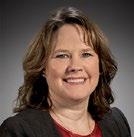
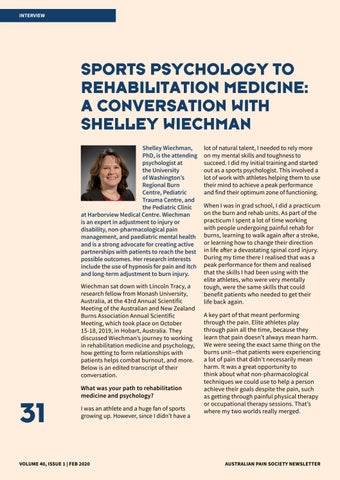
Shelley Wiechman, PhD, is the attending psychologist at the University of Washington’s Regional Burn Centre, Pediatric Trauma Centre, and the Pediatric Clinic at Harborview Medical Centre. Wiechman is an expert in adjustment to injury or disability, non-pharmacological pain management, and paediatric mental health and is a strong advocate for creating active partnerships with patients to reach the best possible outcomes. Her research interests include the use of hypnosis for pain and itch and long-term adjustment to burn injury.
Wiechman sat down with Lincoln Tracy, a research fellow from Monash University, Australia, at the 43rd Annual Scientific Meeting of the Australian and New Zealand Burns Association Annual Scientific Meeting, which took place on October 15-18, 2019, in Hobart, Australia. They discussed Wiechman’s journey to working in rehabilitation medicine and psychology, how getting to form relationships with patients helps combat burnout, and more. Below is an edited transcript of their conversation.
What was your path to rehabilitation medicine and psychology?
I was an athlete and a huge fan of sports growing up. However, since I didn’t have a
lot of natural talent, I needed to rely more on my mental skills and toughness to succeed. I did my initial training and started out as a sports psychologist. This involved a lot of work with athletes helping them to use their mind to achieve a peak performance and find their optimum zone of functioning.
When I was in grad school, I did a practicum on the burn and rehab units. As part of the practicum I spent a lot of time working with people undergoing painful rehab for burns, learning to walk again after a stroke, or learning how to change their direction in life after a devastating spinal cord injury. During my time there I realised that was a peak performance for them and realised that the skills I had been using with the elite athletes, who were very mentally tough, were the same skills that could benefit patients who needed to get their life back again.
A key part of that meant performing through the pain. Elite athletes play through pain all the time, because they learn that pain doesn’t always mean harm. We were seeing the exact same thing on the burns unit—that patients were experiencing a lot of pain that didn’t necessarily mean harm. It was a great opportunity to think about what non-pharmacological techniques we could use to help a person achieve their goals despite the pain, such as getting through painful physical therapy or occupational therapy sessions. That’s where my two worlds really merged.
After that practicum I realised that working in the burns and rehabilitation space was where my passion was and that I wanted to work with people with devastating injuries to help them get their life back. I was lucky that there was a job opening in this area at the place I’d done my training, so I could move right into it and start using the sports psychology skills in rehabilitation. My dissertation involved working with patients with trauma pain, and that flowed nicely into the clinical work I was doing in the rehab space.
How did you make the transition from clinical work into research?
During my sports science days I had worked with elite athletes who had gotten injured and spent a lot of time working through their pain issues as part of their rehabilitation. Then my dissertation investigated the use of patient-controlled analgesia in the population of trauma patients that had a history of drug and alcohol problems and whether these pre-morbid risk factors influenced opiate use. I found that when you take someone with an alcohol and drug problem, and you give them control over their management with patientcontrolled analgesia, they use either just as much or even slightly less [patientcontrolled analgesia] than somebody without an alcohol and drug problem.
When I started on the burn unit, I was seeing that pain seemed to be the barrier to achieving the patients’ desired quality of life. Pain was impacting their mood, their sleep, or their ability to function. It was preventing them from fully engaging in their intensive physical therapy programs, or the acute pain during wound care procedures was so traumatising that they went on to develop PTSD.
So, given my history in working with elite athletes, my dissertation work, and the fact that my mentor, Dave Patterson, was
really involved in acute pain management, it was a natural fit for me to follow in his footsteps. I thought, “We’ve got to find better management for acute pain. [So] let’s continue to look at hypnosis. Let’s look at distraction—whether that’s through virtual reality or mindfulness. What is it that we need to do to help these people manage pain so they can participate in their own rehab?”
How does your role fit into the multidisciplinary nature of the burn unit over in Seattle?
I’m very fortunate to work on a burns team that has a longstanding tradition of supporting psychologists. The previous directors really embraced the role of psychology and while they have moved on, the rest of the multidisciplinary team is very welcoming of psychologists and very much understand the importance of mental health. We’re very well resourced, with surgeons, intensivists, physicians, a pharmacist, a chaplain, social work… the list goes on. We all round together twice a week to make sure that the patient’s needs are met from each discipline’s point of view.
Another thing that I have benefited from is that I meet patients when they first arrive in the ICU, follow them through their acute phase of hospitalisation, and then see them when they come back for appointments in our outpatient clinic or another rehabilitation setting for years afterwards. The opportunity to have continuity of care and develop relationships with our patients is something that is very valuable to me. We tell them, “You're part of the burn family, and so you can always come back. You have a place to come to.”
It’s been particularly fun getting to work with the kids. I’ll get to meet them in our burn unit, and then get to reconnect with them when I go out to our camp that we
have for kids with burn injuries. A lot of the kids that we started working with at age five have now grown up, gotten married and had their own children, and now come back to the camp each year as counsellors. It really helps me combat any burnout or compassion fatigue. Getting to see how successful these people, who experienced an incredibly traumatic situation when they were young, have become really helps me understand and experience the resiliency of the human spirit. The light at the end of the tunnel is very positive.
This week you have spoken about the importance of recognising the difference between procedural pain and anxiety. Can you elaborate on why this is important, and how you assess the difference between the two?
Differentiating between pain and anxiety is important because we know that anxiety exacerbates your experience of pain. When we assess someone and they’re off the charts in terms of pain you’ve also got to look at how much of a role anxiety is playing in that. It’s also important because pain and anxiety can require different treatments. Luckily, a lot of the techniques target both pain and anxiety, but you really need to know what you are dealing with. We don’t want to treat anxiety with an opioid, and we don’t want to treat pain with an intervention that only targets anxiety.
Your assessment of pain versus anxiety must be brief, as it is something you need to do at the bedside and often on multiple occasions. We find that when parents bring their children in, they have a really good idea of their child’s coping style—they’ve just never used that kind of language before. So, when you are taking their history on intake you ask, “How does your child respond to medical procedures? How do they respond when they get an immunization? How do they respond when they have a skinned
knee?” You can ask adults the same kinds of questions: “When you’ve been injured in the past, are you an approach coper or an avoidance coper?”
The main thing to remember is that the assessment is a quick couple of questions that allow you to figure it out and assess as you go. Asking questions like “Is virtual reality still working for you during wound care, or are you feeling like it’s actually creating anxiety because now you want to participate in wound care?”
And finishing on a more light-hearted note, if you could have a dinner party with anyone—dead or alive—who would you want at the table with you and why?
I tend to be really intrigued by people who have reached peak performance in their field, particularly if they have pure raw talent and have overcome adversity to succeed. A lot of the time you see people who that are talented but are unable to come back after a major downfall. One of those people who I’m incredibly interested is Neil Armstrong. How do you have that much courage to be the first man in space? That is a peak performance in real life, and I think it’s incredible to be able to remain calm under that kind of pressure.
Michelle Obama is my current idol, I love how she presents herself. I love how she can be in a supportive role to a very powerful man but then also make a name for herself. I love her causes, values, and demeanour. I think she’d be fascinating to talk to. And Eleanor Roosevelt is similar, I think she was very understated yet had the confidence to do great things without needing to be in the limelight.
I’ve got to have one elite athlete there, so I have to go with Michael Jordan. I respect the fact he was able to maintain his athletic prowess for so long. He clearly had pure raw talent, but he also had a mental toughness. I’d also be
interested in meeting one of the survivors of the Boston Marathon bombing. There have been a lot of life-changing stories about them. I think it would be interesting to bring someone to the table who has experienced a tragic, lifechanging event, and has managed to turn around and get their life back together.
Lincoln Tracy is a researcher and freelance writer based in Melbourne, Australia. He is a member of both the Australian Pain Society and the Australian and New Zealand Burns Association. You can find him on Twitter @lincolntracy

These newly renamed and expanded grants are available to Nursing, Allied Health Professionals and Trainee/Early Career Researchers.
The Clinical Professional Connection Grant is designed to support APS members in the following ways:
• Nursing or allied health clinicians from non-metropolitan locations to visit a major metropolitan multidisciplinary pain centre, for the duration of generally one (1) week. Visits are intended to support professional learning (including the exploration of new models of care) that can inform service development in non-metropolitan services with single or limited discipline profiles;
• Trainee/early career researchers (i.e., researchers currently undertaking their PhD, or within five years of PhD conferral) to visit a major metropolitan multidisciplinary pain centre for the purpose of conducting/initiating a clinically-oriented research project that involves the development of a new partnership/collaboration with allied health, nursing or medical pain specialists. Projects can use basic science or applied methods, but the clinical relevance of the project must be clearly articulated.
See website for Eligibility Criteria, Terms and Conditions, and application form.

Tēnā koutou NZPS members, APS members also welcome!

The NZ pain society (NZPS) presents the 2020 webinar series on various pain education topics relevant to clinical practice. This webinar series is a webbased pain education resource for health professionals, and researchers interested in various health and research topics related to pain practice. Please see below for more details about our first webinar.
Topic: ‘Psychological aspects of paediatric pain management’
Overview: This presentation will discuss the key psychological constructs relevant to the development, assessment and treatment of paediatric chronic pain.
Date and time: 17 February; 6:30-7:30 pm
Join from PC, Mac, iOS or Android: https://otago.zoom. us/j/702129734?pwd=blBVc2V1TmlCRnVHTnRxZUZvaUtIZz09
Password: 268866
Presenters: Bronny Trewin and Dr Jessica Mills – Clinical Psychologists at the Burwood Pain Management Centre, Burwood Hospital.
Chair: Dr John Alchin, Pain Medicine consultant at the Burwood Hospital, Christchurch.
Details above alos available in the Members Only area of the APS website: https://www.apsoc.org.au/Login.aspx
We hope you can participate!
Stay tuned for information about our 2020 Webinar Series. Please visit the NZPS website at https://www.nzps.org.nz for more information.
KEYNOTE PRESENTER


Professor Lorimer Moseley, University of South Australia










• FPM/ANZCA Opioid Calculator App - updated: This updated app version 2.7 released in JAN20 includes refined Tapentadol conversion. Also refer FPM website: http://fpm. anzca.edu.au/front-page-news/ update-to-the-fpm-opioid-calculator
• Latest opioids data from the Australian Bureau of Statistics: https://www.abs.gov.au/ausstats/ abs@.nsf/MediaReleasesByCatalogue/ CC21BEAE2026450DCA25847F0013A 28F?OpenDocument
• Australia’s annual overdose report 2019: http://www.penington.org. au/australias-annual-overdose-report-2019/
• Chronic Pain: Is Australian healthcare really helping people who have chronic pain? Radio National discussion on 23JUN19: https://radio.abc.net.au/ programitem/pgE7Pk0jlV
• New videos from NSW Health: Working with Aboriginal People https://www.youtube.com/ watch?v=AV4Muq87ekQ&feature=em-uploademail
• Medicinal cannabis for chemotherapy-induced nausea and vomiting
(CINV): prescribing with limited evidence – Published 12 November 2018: https://www.mja.com.au/ journal/2019/210/1/medicinal-cannabis-chemotherapy-induced-nausea-and-vomiting-prescribing-limited
• The Third Australian Atlas of Healthcare Variation: https://www. safetyandquality.gov.au/atlas
• Palliative Care Australia (PCA) and Australian Indigenous: HealthInfoNet (HealthInfoNet) has launched a new Palliative Care and End-of-Life Resource Portal for the workforce who support Aboriginal and Torres Strait Islander peoples at Parliament House in Canberra. The palliative care and end-of-life portal is designed to assist health professionals who provide care for Aboriginal and Torres Strait Islander people, their families and communities. https://healthinfonet. ecu.edu.au/learn/health-system/ palliative-care/
• Painaustralia eNewsletter latest issue, available online at: http:// www.painaustralia.org.au/media/ enews
• ePPOC- electronic Persistent Pain Outcomes Collaboration: For more information about ePPOC, refer to the website: http://ahsri.uow.edu.au/ eppoc/index.html
• PainHEALTH website: http://painhealth.csse.uwa.edu.au/
• ANZCA/FPM Free Opioid Calculator
App: Smart phone app that converts opiates to milligrams of morphine, available for both iPhone and Android: http://www.opioidcalculator.com.au
• Stanford University: CHOIR Collaborative Health Outcomes Information Registry: https://choir. stanford.edu/
• 2019 Global Year Against Pain in the Most Vulnerable Launched 31JAN19
See information and resources on our website: http://www.apsoc.org.au/ global-year-against-pain
• Opioid Podcasts for GPs: 20 week series from the Hunter Postgraduate Medical Institute: http://www.gptraining.com.au/recent-podcasts
• Airing Pain: Pain resources via an online radio show produced by Pain Concern, a UK registered Charity: http://painconcern.org.uk/airing-pain/
• Digital Health Guide: Developed by Primary Health Network Tasmania: https://digitalhealthguide.com.au/Account/ LogOn?ReturnUrl=%2fSpecialtyForm ulary%2f2
At login. Username: connectingcare Password: health
• Indigenous Resources: New webpage on the APS website aggregating Indigenous resources: https:// www.apsoc.org.au/IndigenousResources
• IASP Statement on Opioids: Approved February 2018: https:// www.iasp-pain.org/Advocacy/ OpioidPositionStatement
This reference can also be found on the APS Position Papers webpage.
• NSW Cannabis Medicines Advisory Service (CMAS): Launched 29JAN18
Fact Sheet on our website: https://www.apsoc.org.au/PDF/ Fact_Sheets/20180129_NSWCannabisMedicinesAdvisoryServiceCMAS_Fact_Sheet_FINAL.PDF
Service available: 9am-5pm MondayFriday
Hotline: (02) 4923 6200 or email: HNELHD-CMAS@hnehealth.nsw.gov.au
• Choosing Wisely Australia – News & media: http://www.choosingwisely. org.au/news-and-media
• Over the counter codeine – changes to supply: https://www.nps.org.au/ medical-info/clinical-topics/over-thecounter-codeine-changes-to-supply
• Medicines with codeine – what you need to know: https://www.nps. org.au/medical-info/consumer-info/ medicines-with-codeine-what-youneed-to-know
• Low Back Pain resources published 16OCT18: https://www.nps.org. au/medical-info/clinical-topics/ low-back-pain
TGA
• Codeine information hub: https:// www.tga.gov.au/codeine-info-hub
• Guidance for the use of medicinal cannabis in the treatment of chronic non-cancer pain in Australia, v1-DEC17: https://www.tga.gov. au/publication/guidance-use-medicinal-cannabis-treatment-chronic-non-cancer-pain-australia
• Our Mob- Resources for Aboriginal People: https://www.aci.health.nsw. gov.au/chronic-pain/our-mob
• Brainman and Pain Tool Kit translations, SEP15: http://www.aci. health.nsw.gov.au/chronic-pain/ translated-resources
• Pain Management Resources: http://www.aci.health.nsw.gov.au/ resources/pain-management
• Quicksteps to Manage Chronic Pain in Primary Care: http://www. aci.health.nsw.gov.au/chronic-pain/ health-professionals/quick-steps-tomanage-chronic-pain-in-primarycare
• Built into Quicksteps: “How to de-prescribe and wean opioids in general practice”: http://www.aci. health.nsw.gov.au/chronic-pain/ health-professionals/quicksteps-to-manage-chronic-painin-primary-care/how_to_de-prescribe_and_wean_opioids_in_general_practice
• A list of helpful apps for consumers and clinicians now available at: http://www.aci.health.nsw.gov.au/ chronic-pain/health-professionals/ management-of-chronic-pain
• Chronic Pain in the ED: https://www. aci.health.nsw.gov.au/networks/ eci/clinical/clinical-resources/ clinical-tools/pain-management/ chronic-pain-in-the-ed
• APS Plenary Recordings
As an exclusive benefit to APS members, the following Plenary videos are now available for free access:
- 2018 conference in Sydney
- 2017 conference in Adelaide
- 2016 conference in Perth
• Better Pain Management online learning modules
APS members receive a 20% discount
• BPR SIG Expert Database Survey and Results
• Refer to our website for a full listing of media releases: http://www.apsoc.org. au/Media
PAST SCHOLARS
PHD SCHOLARSHIP SPONSOR
SCHOLAR TOPIC
Seqirus #1 — APS — APRA Sherelle Casey
Cops for Kids #3 — APS — vAPRA Dr Nicole Andrews
PHD SCHOLARSHIP SPONSOR
APS #1 — APRA Samantha South 1999
“Cannabinoids for neuropathic pain”
“An evaluation of the usability of a paediatric version of the Pain ROADMAP app”.
CSL #1 — APS — APRA Lara Winter 2004
CSL #2 — APS — APRA Anne Pitcher 2006
Mundipharma #1 — APS — APRA Kathryn Nicholson Perry 2007
APS #2 — APRA Debbie Tsui 2008
Mundipharma #2 — APS — APRA Zoe Brett 2011
APS #3 — APRA Susan Slatyer 2013
“Antinociceptive pharmacology of morphine and its major glucuronide metabolites”
“Antinociceptive properties of the neurosteroid alphadolone”
“Conditional comfort: A grounded theory study in nursing approaches to acknowledging and responding to pain in nursing home residents with dementia”
“Pain Management Programmes in Spinal Cord Injury: Cognitive Behavioural Pain Management Programmes in the Management of Sub-acute and Chronic Spinal Cord Injury Pain”
“Preclinical studies in painful diabetic neuropathy”
“Individual differences in vulnerability to the development of chronic pain following injury”
“Caring for patients experiencing episodes of severe pain in an acute care hospital: Nurses’ perspective”
APS #4 — APRA Amelia Edington 2013
“Defining inhibitor binding sites unique to the glycine transporter, GLYT2: A potential target for the treatment of chronic pain”
Janssen Cilag #1 — APS — APRA Mary Roberts Due
“An investigation of the role of sleep in chronic pain”
Mundipharma #3 — APS — APRA Audrey Wang 2017 “The cortical integration of tactile sensation in complex regional pain syndrome”
Janssen Cilag #2 — APS — APRA Sarah Kissiwaa 2017
APS #5 — APRA James Kang 2019
Cops for Kids
#1-APS-APRA
Cops for Kids
#2-APS-APRA
Dr Adrienne Harvey
Dr Tasha Stanton
“Pain induced synaptic plasticity in the amygdala”
“The effect of nerve injury on behavioural selection and its relationship to prefrontal function”
“A pilot study of gabapentin for managing pain in children with dystonic cerebral palsy”
“Reframe the pain: Dividing attention and altering memory to reduce needle pain and distress in children”
Where: Children’s Complex Pain Service Newcastle, NSW
Job Reference: REQ146962
Employment Status: Permanent Part Time
Hours per week: 16hrs (0.4 EFT) Recruitment link: https://jobs. health.nsw.gov.au/hnelhd/jobs/ physiotherapist-level-3-paediatricpain-62773


Contact: Rosemary Day, Acting Paediatric Physiotherapy Head of Department (T: 02 4921 3700 Thursdays, Fridays; Fax: 02 49236422; E: rosemary.day@health.nsw.gov.au)
Applications Close: 12 February 2020
This position is based within the interdisciplinary Children’s Complex Pain Service, John Hunter Children’s Hospital, Newcastle NSW, with capacity to deliver care and education flexibly via telehealth and outreach clinics as required. Applicants must be able to work Thursdays and Fridays to align with interdisciplinary clinic days. Applicants should have advanced physiotherapy skills; ability to practice autonomously; experience working with children and families. Other qualities sought: an understanding of the complexity and impact of complex and chronic pain; ability to deliver trauma-sensitive care with interdisciplinary team support; cultural competency is essential.
Other States rolling out events soon!
44
TITLE FIRST NAME
LAST NAME DISCIPLINE GROUP
Dr Claire Ashton-James Psychology
Mr Lewis Crawford Science Research
Dr Fernan de Guzman Anaesthesia
Dr Laura Ferris Psychology
Prof Denise Harrison Nursing
Dr Geoffrey Hogan Psychiatry
Dr Nathan Johns Rehabilitation Medicine
Ms Sara Kirwan Physiotherapy
Dr Yi-Ching Lee Pain Medicine Physician
Dr Nunzio Mosca Psychology
Mr Brendan Mouatt Exercise Physiologist
Dr Andrew Stewart Anaesthesia
Mrs Nicola Thong Pharmacy
Ms Penelope Wood Pharmacy

RENEWAL NOTICES FOR 2020 HAVE BEEN SENT BY EMAIL TO MEMBERS IN LATE NOVEMBER.
Thank you for your continued support and membership of the APS.
Please note:
1. We understand that circumstances change, so each year we ask you to select your appropriate level of membership.
2. This system of self-reporting subscription levels was implemented in 2009 for the benefit and fairness of all members.
As previously advised the Australian Pain Society Board resolved at the Strategic Planning Meeting in August 2019, that membership fees will increase for 2020 to the following rates:

a. Regular A $110
b. Regular B $205
c. Regular C $310
d. Retired $ 65 Concessional Rate
e. Student $ 65 Concessional Rate
(Please note that such resolutions by the APS Board are permitted under clause 6.7 of the new APS constitution, adopted on 10 April 2019.)
Before renewing online, please ensure you Review and update your member profile. Payments can be made by Credit Card, BPAY, or Cheque.
18-21 Mar 2020
New Zealand Pain Society Annual Scientific Meeting 2020
Making the Connection - Cortex, Culture and Community
Copthorne Hotel, Bay of Islands, New Zealand
https://www.nzccp.co.nz/events/conferences/new-zealand-pain-society-2020-conference/
28-29 Mar 2020
Pain Association of Singapore
Annual Scientific Meeting 2020
One Farrer Hotel, Singapore, Singapore
https://www.pain-asm.com
2-4 Apr 2020
Exercise & Sports Science Australia (ESSA)
Research to Practice 2020
Perth Convention and Exhibition Centre, Perth, WA
http://researchtopractice2020.com.au
4-8 Apr 2020
Australian Pain Society 40th Annual Scientific Meeting
In the IASP Global Year for the Prevention of Pain Hotel Grand Chancellor, Hobart, TAS
https://www.dcconferences.com.au/aps2020/
23-26 Apr 2020
AOCPRM
The 7th Asia-Oceanian Conference of Physical & Rehabilitation Medicine
ICC Jeju, Jeju, Korea
http://www.aocprm2020.com/html/
27 Apr - 1 May 2020
SpineWeek Committee
SpineWeek 2020
Melbourne Convention and Exhibition Centre, Melbourne, VIC
https://www.spineweek.org
1 May 2020
Faculty of Pain Medicine (FPM) Symposium
Impart Nurture Grow
Pan Pacific Hotel, Perth, WA
http://fpm.anzca.edu.au/events/2020-fpm-symposium
1-5 May 2020
Australian and New Zealand College of Anaesthetists (ANZCA) Annual Scientific Meeting 2020 Inform Inspire Influence
Perth Convention and Exhibition Centre, Perth, WA https://asm.anzca.edu.au
15-17 May 2020
Australian Psychological Society College of Clinical Psychologists 2020 Annual Conference Complexity in Practice
Sofitel Brisbane Central, Brisbane, QLD https://www.psychology.org.au/APS-CCLIN-Conf/2020
25-26 May 2020
National Rural Health Alliance 7th Rural and Remote Health Scientific Symposium Shaping the future
Alice Springs Convention Centre, Alice Springs, NT http://www.ruralhealth.org.au/7rrhss/
22-23 Jun 2020
Occupational Therapy Australia
2020 OT Exchange
Crown Promenade, Melbourne, VIC https://otaus.com.au/events/the-ot-exchange-2020
25-27 Jun 2020
International Neuromodulation Society
2nd Joint Congress of the INS European Chapters Paris, France
https://e-ins.org/
31 Jul - 2 Aug 2020
Pharmaceutical Society of Australia - PSA20
TBA
TBA, Sydney, NSW
https://www.psa.org.au/networking-events/information-on-major-events-and-conferences/
7-8 Aug 2020
International Association for the Study of Pain (IASP)
19th World Congress on Pain
RAI Amsterdam Convention Centre, Amsterdam, Netherlands https://www.iaspworldcongress.org
7-9 Aug 2020
Neuromodulation Society of Australia & New Zealand (NSANZ) 14th Annual Scientific Meeting
Neuromodulation, Value Based Care
Sofitel Brisbane Central, Brisbane, QLD
https://dcconferences.eventsair.com/nsanz2020/
22-25 Sep 2020
Rehabilitation Medicine Society of Australia and New Zealand (RMSANZ)
5th Annual Scientific Meeting: Forging Alliances, New Horizons
Gold Coast Convention and Exhibition Centre, Gold Coast, QLD
https://www.dcconferences.com.au/rmsanz2020/
6-8 Oct 2020
International Federation of Orthopaedic Manipulative Physical Therapists (IFOMPT)
IFOMPT 2020: Innovate - Integrate
Melbourne Convention and Exhibition Centre, Melbourne, VIC
https://ifomptconference.org
4-11 Nov 2020
Wounds Australia
Wounds 2020
Brisbane Convention and Exhibition Centre, Brisbane, QLD
https://wounds2020.com.au/?utm_source=australianpainsociety&utm_medium=banner&utm_ campaign=website
11-13 Nov 2020
Clinical Oncology Society of Australia (COSA)
47th Annual Scientific Meeting
Convention Centre, Brisbane, QLD
https://www.cosa.org.au/events/annual-scientific-meeting/
26-28 Nov 2020
Australian and New Zealand Association of Oral & Maxillofacial Surgeons
ANZAOMS 2020 Confernce
Hobart, Tasmania
https://www.anzaomsconference.com.au/
25-28 Mar 2021
IASP Pain in Childhood SIG
ISPP 2021 13th International Symposium on Pediatric Pain: Knowledge, Growth, Practice
Cordis Hotel, Auckland, New Zealand
https://www.ispp2021.org
23-25 Jun 2021
Occupational Therapy Australia
TBA

Cairns Convention Centre, Cairns, QLD https://www.otaus2021.com.au
VISION, MISSION AND AIMS
VISION:
All people will have optimal access to pain prevention and management throughout their life.
MISSION:
The Australian Pain Society is a multidisciplinary association whose mission is to advance pain prevention, management and clinical practice.
PRIORITIES:
In order to achieve our mission, the Australian Pain Society will provide:
• Education
• Advocacy
• Research
• Services and resources
• Membership
• Good governance and operations
PRESIDENT:
Dr Anne Burke

Central Adelaide Local Health Network, Royal Adelaide Hospital
Adelaide SA 5000
Tel: 08 8222 5403 | Fax: 08 8222 5904
PRESIDENT—ELECT:
Ms Trudy Maunsell
Acute Pain Service
Princess Alexandra Hospital
Woolloongabba QLD 4102
Tel: 07 3176 5547 | Fax: 07 3176 5102
SECRETARY:
Dr Will Howard

Director, Pain Service
Austin Health
Studley Road
Heidelberg VIC 3084
Tel: 03 9496 3800 | Fax: 03 9459 6421
TREASURER:
Mr Tim Austin
Camperdown Physiotherapy
Inner West Pain Centre
100 Carillon Avenue
Newtown NSW 2042
Tel: 02 9517 1787 | Fax: 02 9516 2491
ACT DIRECTOR:
Dr Andrew Watson

Calvary Hospital
Canberra ACT 2617
Tel: 02 6201 6352
NSW DIRECTOR: Dr Tim Ho


Royal Prince Alfred Hospital
Inner West Pain Centre
100 Carillon Avenue
Newtown NSW 2042
Tel: 02 9517 1764 | Fax: 02 9517 1832
NT DIRECTOR:
Ms Diann Black
Recovery
Royal Darwin Hospital
Casuarina NT 0811
Tel: 08 8931 1029 | Fax: 08 8922 8325
QLD DIRECTOR:
Mrs Joyce McSwan
Gold Coast Primary Health Network
Persistent Pain Program, QLD

Tel: 0412 327 795 | Fax: 07 3539 9801
SA DIRECTOR:
Dr Michelle Harris

Royal Adelaide Hospital and Lyell McEwin Hospital
Adelaide SA
Email: michelle.harris2@sa.gov.au
TAS DIRECTOR:
Dinah Spratt
Physiotas Physiotherapy
3/11 Poyston Drive
Shearwater TAS 7307
Tel: 03 6428 7500 | Fax: 03 6424 7811
VIC DIRECTOR:
Dr Laura Prendergast


Pain Service, Austin Health
Chronic Pain Clinic, Goulburn Valley Health VIC

Tel: 03 9496 3134 or 03 5832 3020
WA DIRECTOR:
Mr Shadreck Tozana
Functional Revival and Baptistcare
Bethal, 2 Bethal Way Albany WA 6330
Tel: 0437 541 165 | Fax: 08 9841 8480
IMMEDIATE PAST PRESIDENT:
Ms Fiona Hodson

Hunter Integrated Pain Service
John Hunter Hospital Campus
New Lambton NSW 2305
Tel: 02 4922 3435 | Fax: 02 4922 3438
SPC CHAIR:
A/Prof Kevin Keay





Department of Anatomy
University of Sydney
Sydney NSW 2006
Tel: 02 9351 4132 | Fax: 02 9351 2817
IASP LIAISON:
Professor Michael Nicholas
Pain Management Research Institute
Royal North Shore Hospital
St Leonards NSW 2065
Tel: 02 9926 7894 | Fax: 02 9662 6279
Website: www.iasp–pain.org
COMMUNICATIONS/WEBSITE/ SOCIAL & OTHER MEDIA COORDINATOR:
Dr Will Howard
Director, Pain Service
Austin Health
Heidelberg VIC 3084
Tel: 03 9496 3800 | Fax: 03 9459 6421
NEWSLETTER EDITOR:
Dr Lincoln Tracy
School of Public Health and Preventive Medicine
Monash University
Melbourne VIC 3004
Tel: 03 9903 0288
PHD SCHOLARSHIP CHAIR:
A/Prof Michael Farrell
Department of Medical Imaging and Radiation Services

Monash University
Clayton VIC 3800
Tel: 03 9905 6094 | Fax: 03 9902 9500
SECRETARIAT:
DC Conferences Pty Ltd
PO Box 637
North Sydney, NSW 2059
Tel: 02 9016 4343 | Fax: 02 9954 0666
Email: aps@apsoc.org.au
Website: www.apsoc.org.au