We are pleased to announce the launch of the first HDBaseT™3 matrix product to the market
Using HDBaseT™3 technology, these powerful HDBaseT™ matrix support uncompromised 4K 60Hz 4:4:4 resolutions over distances up to 100m over a CAT6A. The new HMX88-18G and HMX44-18G come into their own with advanced audio features specifically designed for maximising the integration of AV sources in the modern home. Enhanced audio routing is achieved through the integrated audio matrix. This enables the audio from displays (via HDMI ARC or Optical S/PDIF), and all other sources to be embedded and routed through the system at the users discretion. The inclusion of a 1Gb Ethernet channel allows for LAN serving to all HDBT outputs / zones as required, IR and RS-232 pass-through, advanced EDID management, and PoC provide the ultimate flexibility.
The combination of these technology features enable our installation partners the ability to create a truly immersive AV experience throughout the home.
NEW
HMX88-18G
8x8 HDBaseT™3 AV Matrix
• Uncompressed / unconverted 4K 60Hz 4:4:4 to 100m
When we talk about smart homes, we of course mean the ones filled with the latest technology, and entertainment experiences, intelligent lighting that adjusts with the time of day, motorised blinds that know when to close themselves, and high-performance home cinema systems. But I’ve been thinking lately – aren’t smart homes older than we give them credit for? In fact, haven’t they been around for millions of years?
Consider the humble beehive. Bees regulate the temperature inside their hive with astonishing precision, fanning their wings to cool things down or clustering together to generate warmth. Termites, often dismissed as pests, build mounds with natural air conditioning systems, carefully designed to maintain a perfect internal climate no matter what’s happening outside. Even birds, with their nests, have figured out the basics of insulation, airflow and structural integrity. Nature’s been building energy-efficient, automated, selfregulating homes long before we installed our first lighting control system or set up a control app.
While we’re busy layering homes with new technology, adding more sensors, more integrations, more automation, nature has quietly been perfecting passive design. And it makes me wonder – how much inspiration are we really taking from
the natural world? Should we be looking more closely at biomimicry, at systems that don’t need an app to function, but simply work because they’re inherently and intelligently well designed?
At EI, we love the flashier side of smart homes and entertainment systems as much as anyone. There’s nothing quite like seeing a room transform with a single command, or watching someone’s jaw drop when a hidden projector glides silently out of the ceiling. But there’s also something magical about the ‘invisible’ intelligence of a space that simply works without intervention – no login required, no firmware updates necessary. Jason Knott examines this area and its attractiveness to affluent homeowners in his column this month. So be sure to check it out.
As we move towards smarter, greener, more sustainable homes, maybe the real innovation isn’t just in adding more tech, but in blending it with natural intelligence. Perhaps the smartest home of the future will combine cutting-edge automation with principles borrowed from nature, creating spaces that work with, rather than against, their environment.
Spending long periods watching nature busy itself this spring, EI is convinced we have much to learn from the natural world and its simple efficiency. Either way, it’s a reminder that smart design isn’t always about the latest upgrade – it’s also about observation, patience and learning from the world’s original innovators.
Enjoy the issue.
GETTING IN TOUCH
EDITOR-IN-CHIEF
Daniel J Sait, dan@allthingsmedialtd.com
MANAGING DIRECTOR
Ian Kitchener, ian@allthingsmedialtd.com
SALES DIRECTOR
Kelly Byne, kelly@allthingsmedialtd.com
CEO
David Kitchener, david@allthingsmedialtd.com
STUDIO MANAGER
Mark Weller, mark@allthingsmedialtd.com
ACCOUNTS
susan@allthingsmedialtd.com
Essential Install magazine, Suite 14, 6-8 Revenge Road, Lordswood, Chatham, Kent ME5 8UD
T: +44 (0)1634 673163
F: +44 (0)1634 673173
www.essentialinstall.com
SOCIALS
/INSTALL_MAG /ESSENTIALINSTALL
The editors and publishers do not necessarily agree with the views expressed by contributors, nor do they accept responsibility for any errors in the transmission of the subject matter in this publication. Whilst we make every effort to ensure that everything is factually correct, we cannot be held responsible if factual errors occur.
In all matters, the editor’s decision is final. Editorial contributions to Essential Install magazine are welcomed, and the editor reserves the right to alter or abridge text prior to the publication. All articles are copyright and remain the property of Essential Install magazine.
Essential First Aid Kit for AV Integrators
Think of it as a go-to case packed with essential CYP Europe products that help tackle common installation problems quickly and efficiently. At some point, every installer hits a snag: a cable doesn’t reach, the signal won’t connect, audio won’t pass through, or something just isn’t behaving the way it should. That’s where this kit comes in…
• Solves common AV headaches in seconds
• Fits in a van, sits in a rack room, travels on-site
• Prevents project hold-ups
• Maintains professional momentum on the job
Don’t install without it.
Contact your local CYP Europe representative for more details.
SONY ANNOUNCES RETURN OF PROJECTORS TO THE MARKET
Sony has announced that its BRAVIA home cinema projectors and business projectors will resume shipping in the European market starting this month (May 2025), after a two-month interruption. The move follows recent amendments to EU export control regulations and trade restrictions, says Sony. The BRAVIA Projector 7 will also be making its European debut this summer.
The products returning to market will be shipped under current technical specifications, with availability aligned to Sony’s regional logistics schedules.
The BRAVIA Projector 7 (VPL-XW5100), announced in the US and other regions excluding Europe, joins the existing home cinema line-up. Sony says the BRAVIA Projector 7 delivers an immersive, cinema-quality experience at home.
Powered by the XR Processor for projector and high-brightness laser technology, it features XR Dynamic Tone Mapping, Deep Black, TRILUMINOS PRO and Clear Image for rich contrast, vibrant colours, and 4K upscaling.
With IMAX Enhanced compatibility and a 2,200-lumen laser light source in a compact design, it offers vivid viewing and low-latency 4K 120fps gaming, says the maker. Drawing on
Sony’s expertise in professional cinema gear, the projector is designed to bridge the gap between the filmmaker’s vision and in-home entertainment.
“We’re delighted to be able to resume shipping of our projectors, including our latest BRAVIA Projector 8 and BRAVIA Projector 9 for home cinema, seamlessly across Europe and we’re excited to introduce the BRAVIA Projector 7 later this summer,” commented Rik Willemse, Head of Professional Displays and Solutions, Sony Europe. “These products have remained available in other regions, and we’re now focused on meeting European customer demand as swiftly as possible. We’re glad to be back and appreciate the continued understanding and support of our partners and customers.”
Further details on shipping windows will be available via Sony’s professional partner portal and communicated through authorised channels.
Sony sony.co.uk
FUTURE-FOCUSED EDUCATION PROGRAMME FOR CEDIA EXPO & COMMERCIAL INTEGRATOR EXPO
CEDIA has announced a reinvigorated education programme for CEDIA Expo and Commercial Integrator Expo 2025, taking place Sept. 4-6 in Denver, Colorado. This year’s curriculum, presented during the CEDIA Education Conference from September 3–5, is designed to deliver real-world insights, foster cross-industry collaboration and provide clear pathways for ongoing learning.
“This year, we started from the ground up,” said Paul Dolenc, Vice President of Education & Training at CEDIA. “We’ve moved beyond the familiar formats and topics and instead leaned into what integrators need now and in the future. The result is a programme packed with diverse voices, advanced topics, and clear takeaways.”
The programme features five tracks, covering business, emerging technologies, technical, certification and design and build with classes tailored for both integrators and designers. Within these areas, newly developed courses comprise a wide spectrum of business-critical subjects, such as EV Charging Infrastructure: The Next Frontier in Home Energy; Creative Lighting Design: Practical Steps to Knock It Out of the Park; Energy Management & Microgrids: What Integrators Need to Know; and The Last 5%: Completing Projects with Excellence.
The education programme includes a collaborative format, with nearly all sessions
featuring two or more presenters or panel discussions, offering contrasting perspectives from integrators, manufacturers and thought leaders. CEDIA has also ensured that there is a clear next step to the training, with attendees receiving links to white papers, CEDIA Online Learning, and related sessions to continue the training journey.
“CEDIA Board Member, Amanda Wildman has been the driving force behind the
programme’s structure,” continued Paul. “She drew on her deep industry experience to identify what’s most relevant for today’s integrators. Her work has completely transformed our approach, and her clarity brought a fresh vision to life – and it’s now shaping how we’ll build future events.”
CEDIA Expo cediaexpo.com/show/schedule
Sony projectors have returned to supply lines after a break
Registration for CEDIA Expo and the CEDIA Education Conference is now live
Elevate your audio experience
• Built-in Anthem Room Correction (ARC® Genesis) - optimises sound for each zone with built-in speaker profiles for Paradigm speakers
• Efficient and powerful Class-D amplification delivers reliable, high-fidelity audio across multiple zones.
• Supports 8 zones with independent DSP control.
• Compatible with all leading control systems. Contact the Invision | Pulse Cinemas team for
Designed for efficient installation, Era 100 Pro is the ultimate all-in-one audio solution for commercial spaces and residences. Sonos-engineering delivers premium sound in a compact, versatile form factor. With access to commercial streaming services and an easy control experience, it’s the perfect fit for your next project.
TVDB2B MAKES BEELINE FOR AV INSTALLERS!
TVDB2B, the recently launched trade-only e-commerce platform is targeting CI with a hive full of buzzing deals, prize draws and a free soundbar with any first online order over £300!
TVDB2B targets the AV and CI trade with plans to shake up distribution across
the sector. With bold graphics and the brand’s cheeky black-and-yellow mascot Bizzy the Bee, the company says its opening campaign sets out to expose just how comfortable many AV retailers and CI installers have become with existing suppliers –and prove that sharp pricing and great customer service don’t have to be mutually exclusive.
At the heart of the initiative is a clear invitation for AV professionals to take a fresh look at how they buy. The TVDB2B website is a fast and easy-to-use click-to-buy platform designed for the trade, with tradeonly pricing visible after log-in and free delivery across the site. It offers a wide selection of AV kit, TVs, commercial displays, electrical
NINETY YEARS OF EXCELLENCE: AWE MARKS LANDMARK ANNIVERSARY
AWE Europe, multi-award-winning smart home and home cinema distributor, is proudly celebrating its 90th anniversary in 2025. This milestone will be commemorated with a series of content and activities, each designed to be a testament to AWE’s enduring legacy, and partnerships with leading brands and dedicated professionals, which have cemented its position as one of the leading distributors in the sector.
From its humble beginnings as an audio enthusiast’s hobby, the company has evolved into a pivotal distributor serving both the custom install and independent electrical retail sectors. Today, as a fourth-generation familyowned business, AWE continues to be driven by a deep-seated love for the industry, music and film, a passion that resonates through every aspect of its operations. Over the coming months, AWE will pull back the curtain, sharing the stories, insights and the essence of what makes AWE, unequivocally, AWE.
The journey begins with the launch of a short video entitled ‘AWE 90 in 90 Seconds’. Supported by brand partners Bowers & Wilkins, Epson, LG, Marantz and Sony, the video offers a rapid yet rich glimpse into AWE’s remarkable history.
Stuart Tickle, Managing Director at AWE, said, “Reaching 90 years in business is an incredible achievement, a truly momentous
milestone for AWE. As a fourth-generation family business, it is deeply moving to reflect on the dedication of the generations before me who have steered us to this point.
“Each of us have brought our own direction to the business ensuring it has not just endured, but thrived through the challenges that being a company owner brings. This couldn’t be done
accessories, networking and audio curated for high-end CI projects, small commercial installations and residential overhaul projects alike. Beyond the catalogue, the site also features a quote request tool for complex or large-volume jobs, a product request service that allows customers to prompt the TVDB2B buying team to source new lines and regular Flash Deals designed to reward stocking up or taking advantage of a bargain.
The overall tone of the TVDB2B website, its promotions, emails and advertisements is fun and direct, but the message is profound, says the company: the AV trade deserves better. Better pricing. Better service. And a platform that works harder for AV installers and retailers alike.
Rob Greenlees, Sales Director at TVDB2B, said, “This isn’t just about being cheaper. It’s about being fairer, faster and more responsive to what our customers need. We want people to realise there is a better way to buy, and we’re here to prove it.”
TVD Group www.tvdb2b.com
without the support of others, so my sincere gratitude extends to the entire AWE team past and present, our loyal customers and our esteemed brand partners for their ongoing commitment and unwavering trust.”
AWE Europe awe-europe.com
Installers are encouraged to sign up, enter the prize draw and claim a free soundbar by placing their first order of £300 or more
Where First Class Meets First Releases
Experience Hollywood’s biggest films in the comfort of your own home—before they’re available anywhere else. Bel Air Cinema brings first-run movies to private theatres with unrivalled quality and convenience. Designed for those who demand the best, it delivers breathtaking visuals and the ultimate cinematic luxury.
Contact DbM today to discuss how this exclusive experience can be integrated into your home.
HOUCHMAND AUDIO AND APEX AUDIO GROUP PARTNER
HOUCHMAND Audio has partnered with Apex Audio Group to drive the global expansion of its ultra-luxury high-fidelity audio solutions. Following three years of meticulous refinement, the HOUCHMAND M1 System is now available for distribution, bringing state-ofthe-art engineering, cutting-edge technology and handcrafted German craftsmanship to the world’s most exclusive trade and retail partners. This collaboration aligns HOUCHMAND Audio’s expertise in sonic innovation and designled loudspeakers with Apex Audio Group’s experience in high-performance audio strategy, distribution and commercial development. With an immediate focus on growing the brand’s presence in the luxury residential, hospitality, and CI-Fi (Custom Integration, High-Fidelity) sectors, HOUCHMAND Audio is actively seeking select distribution and integration partners in key territories worldwide.
Apex Audio Group will lead the commercial development of Houchmand Audio, implementing a structured plan to expand distribution channels, align with key markets, and position the brand at the forefront of luxury audio. The partnership will focus on expanding international distribution networks, establishing new routes to market through luxury retail partners, custom integrators and design-led architectural firms.
The strategy will also be to develop curated sales channels – implementing a tailored approach to trade partnerships, combining CI-Fi integration, high-net-worth client engagement and exclusive retail collaborations.
Another priority will be to drive experiential marketing – Elevating HOUCHMAND Audio’s brand positioning through immersive listening
experiences, trade-focused PR campaigns, and premium editorial content.
paradigm in high-fidelity design, where stateof-the-art engineering meets uncompromising aesthetic excellence,” said Andy Oattes, Director at Apex Audio Group. “We are focused on positioning the M1 System within premium markets, ensuring that trade and distribution partners can offer their clients an exclusive, world-class audio experience.”
HOUCHMAND Audio, added, “Our partnership with Apex Audio Group marks an exciting new chapter, ensuring that the M1 reaches the world’s most discerning listeners through carefully curated distribution channels.”
Apex Audio Group
apexaudiogroup.com
HOUCHMAND Audio houchmand.de
Russound has formally announced that the company has recently partnered with Match Distribution in the UK and Ireland where dealers will be able to procure their products for installations and upgrades.
“We are excited to partner with Match Distribution,” said Charlie Porritt, CEO of Russound. “Russound is dedicated to providing high quality audio products globally and we believe that this will be a great new partnership for helping all of our friends in the UK and Ireland get the latest Russound products quickly and easily to help both their current and future project needs.”
Match Distribution is passionate about technology, with years of industry experience, working with the finest brands in the business, now including Russound. The recently launched distributor offers expert consultation, product training, stock and same-day dispatch. Match Distribution says its mission is simple and one that its new partner aligns well with: to partner
world-class brands and professional installers creating outstanding projects and enhancing customer experience. “We are delighted to be working with such stalwarts of the industry. Russound’s dedication and support to the professional market is exactly what we look for in a partner,” said Mark Taylor, Director and Co-Founder of Match Distribution.
Match Distribution matchdistribution.com
Russound russound.com
Blustream is renowned for delivering unmatched performance and reliability, offering a comprehensive range of HDBaseT, Video over IP, HDMI, and Audio solutions that set the standard for seamless AV integration across any environment
The M1 was showcased at High End Munich 2025 introducing a new standard in luxury audio
Architectural LED lighting brand Anolis – a Robe Business – has appointed Eloise Reed as its International Specification Manager.
Eloise is based in the UK and will be travelling extensively both nationally and internationally in her role for the Czech Republic-based manufacturer, which will include streamlining the design support and tender processes for clients and boosting the Anolis profile within the architectural lighting community.
Absen has sharpened its UK pro AV focus with three new strategic hires. Peter Mytton-Bayley – Business Development Executive: With 30 years of experience in consultant and strategic roles within the AV sector, Peter joins Absen’s UK team to support its expanding market presence. Chris Wilson – Business Development Manager, Absen UK and Ireland pro AV: Bringing 20 years of experience in both indirect and direct AV sales, Chris will champion the development of Absen’s UK sales and enhance customer relationships. Martin Price – Business Development Manager, Absen UK and Ireland pro AV: Martin embarks on his latest AV industry journey with 30 years of experience, focusing on expanding Absen’s presence in the Midlands, the North of the UK, as well as Scotland and Ireland.
Atlona, a Panduit company, has promoted Paul Krizan to Product Line Manager. Reporting to Atlona Executive Director Jamey Swigert, Paul will drive the innovation cycle for Atlona moving forward, leading the product management and hardware engineering teams as they bring the next generation of Atlona’s AV products
to life. He will also maintain and evolve the existing portfolio of Atlona collaboration, connectivity and control products worldwide.
Hive, specialist in media control solutions, is expanding its team with five new roles as it continues to scale.
Rory Jervis joins as Sales Director to drive commercial growth, while Nigel Sadler has been promoted to Chief Pollinator, a newly created role focused on strengthening partnerships and amplifying Hive’s vision.
Further reinforcing Hive’s expansion, Ciaran Abrams has been appointed as Lead Developer, Danielle Hastings joins as Customer Service Executive and Alex Couzins steps in as Marketing Specialist.
Solstice AV, international distributor of professional audiovisual solutions and value-added services, has appointed Chris Ball as new CFO and COO to support the next phase of company growth and expansion. With over 20 years of top-level financial and business transformation experience, Chris will work closely with Solstice AV’s board and will leverage his extensive financial expertise to support the next phase of growth and expansion.
Void Acoustics, innovator in cutting-edge audio solutions, has appointed Sam Brandon as its new Managing Director. He succeeds Co-founder Alex Skan, who has held the position since 2016 and will continue to play an active role within the business.
Founded over two decades ago by Rog Mogale and Alex Skan, Void Acoustics is renowned for pushing the boundaries of sound system design.
Eloise Reed
Peter Mytton-Bayley
Chris Wilson
Paul Krizan
Chris Ball Martin Price
The main event in the
17–18 SEPTEMBER 2025 FARNBO ROUGH EXHIBITION CENTRE
The only dedicated AV & Smart Home Show in the UK
Rewarding excellence in the industry
CHESTNUT TREE HOUSE
Meet the Installer: Behind the Scenes at a Together For Cinema (TFC) install with Seven Integration.
This month we talk to Alex Josling, one of the Directors at Seven Integration, a smart home installation specialist founded in 2003 and based in Hove, East Sussex. The company started as a Hi-Fi and home cinema company, but quickly developed into offering smart home solutions for every aspect of home life. Usually, the team can be found working in highend, luxury homes, or estate-wide projects, but when Alex met Ian Morrish, Together For Cinema (TFC) Founder and Managing
Director, at a CEDIA event, he knew he had to get involved. Initially starting small with some technical support for an existing project, Seven Integration became a Bronze Level Charitable Partner in 2024. This year Seven Integration has taken the lead as designer and installer for one of TFC’s latest projects at Chestnut Tree House Children’s Hospice in Arundel, West Sussex.
Chestnut Tree House hospice is a haven for children and families in East and West Sussex.
The charity provides hospice care services for children and young people with life-limiting and life-threatening conditions. From splashing in the pool, to woodland walks, children with complex medical needs are supported and families can benefit from a chance to relax, knowing their young people are receiving the best possible care in the perfect environment for them.
In 2014, Chestnut Tree House worked with TFC to create a multi-purpose cinema room, but recently they realised that the hospice would really benefit from an intimate, single-use space for everyone to relax and enjoy a movie in. Ian Morrish got back in contact with Alex and within a few short months, plans had been prepared and the whole team were ready to get started.
“Every project starts with a detailed discussion about what’s needed,” Alex explains. “With a TFC project, we meet with the hospice team to really understand their needs and any sensitivities around the working environment. Delivering a positive outcome in a hospice brings with it some particular challenges that have to be the absolute priority. Then it’s a case of meticulous planning; ensuring the equipment is spot on, logistics are organised and that we’re ready to work respectfully and flexibly on site.”
Alex (black shirt) celebrates the opening with staff, with Ian Morrish (far left) and members of the Alltrade team
One of the key design considerations for a hospice project is simplicity. For Chestnut Tree House, Alex wanted to create a magical experience in the media room, without it being overwhelming. Everything for the room can be switched on and off from a simple Control4 keypad on the wall, each button fitted with a tiny light indicating whether an element is on or off. The walls are painted in soothing green tones and acoustic panelling, donated directly by local merchants Howdens, has been used to keep the space from becoming too reverberant. There are electronic Lutron black-out blinds and a beautiful star ceiling. Additional medical furniture, such as supportive chairs and beds are also easily accommodated, ensuring the new
media room is as inclusive and welcoming as it can be.
“Everyone’s needs are different, but simplicity of control and reliability are absolutely key,” Alex continues. “We want the space to be incredibly easy to use, so we focus on ensuring that anyone, including staff, parents or children, can operate the system safely and without stress.”
After the initial planning meeting, the project was delivered in just three days of on-site work. This ensured minimal disruption to the staff and residents, plus it reduced the time required away from the office for Alex and his team. Projects like this take a huge team effort, not just from TFC and the installers, but also from
the suppliers who generously supply everything needed to make each project special.
“Being part of a project like this is a really rewarding experience,” Alex concludes. “I would wholeheartedly recommend it to others. As an industry, we invariably work for very wealthy clients. Working with TFC gives us a chance to give back, to use our skills for something genuinely meaningful, and it puts everything into perspective in a very rewarding way.”
If hearing Alex’s story has interested you, please consider contacting Ian Morrish directly to see how you can get involved.
Together For Cinema togetherforcinema.co.uk
The on-site work was completed in just three days
PARADIGM/ANTHEM: MADE IN CANADA!
The Pulse Cinemas/Invision team recently led a delegation of UK integrators on a trip to the Paradigm/Anthem HQ in Mississauga, Ontario, Canada, to discover what enables this innovative brand to deliver some of the best AV experiences on the planet.
Dean Sutton, General Sales Manager at Pulse Cinemas, explains, “We wanted to showcase what ‘Made in Canada’ actually means and how this not only benefits performance, but controls the design and production process. By understanding how performance can be built, rather than simply outsourcing to third-party overseas manufacturers, our aim was to demonstrate how control over performance and design decisions directly improves results. This, of course, also has financial benefits. By cutting out unnecessary and often bloated middleman costs, Paradigm can deliver defined, measurable performance without the usual price tag.”
All of this is underlined and reinforced by recent international uncertainty around trade and logistics. Keeping as much control in-house as possible minimises the possibility of disruption, keeping the supply chain reliable for integrators.
Dean adds, “We also wanted to highlight the design and production process all the way through to system and speaker demonstrations, so our dealers can make informed choices when selecting speakers, processing and amplification for their projects. We also felt that a greater understanding of the range would be beneficial. From standard and custom soundbars, two-channel and
cinema, to outdoor experiences, Paradigm offers an extensive range that boasts excellent performance specifications and power, while maintaining a palatable price point across multiple experience levels.”
THE HEART OF CANADA
Based in Mississauga, part of the Greater Toronto Area known for its diverse cultural population and importance as a business centre and transport hub, the team sampled local nightlife in and around Toronto. The Paradigm and Anthem Experience Centre was located very close to the hotel selected for the trip for added convenience, and all guests reported being extremely well looked after.
From Paradigm, the trip was hosted by John Soden, Vice President, and Michael Nielsen, International Sales Manager. The group enjoyed some local Canadian delicacies and a few of John Soden’s favourite culinary haunts – no one will forget the cinnamon bun! Wine and whisky tasting also proved popular. A trip to witness the power and majesty of Niagara Falls was another big hit.
There were many important takeaways from the visit, but Simon Gibbs, Head of Projects and Sales at Pulse Cinemas, highlights in particular,
“The sheer attention, care and commitment to audio performance and the lengths Paradigm goes to in ensuring everything is made in-house. It’s really impressive. This element of control is very evident in the performance standards they can achieve through their patented processes.”
Dean adds, “Regarding Anthem, we were seriously impressed with the red circuit boards – they’re military grade! Also, some were surprised to learn that ARC is already built into a large percentage of subwoofers, delivering easier setup, smarter bass correction and system-wide integration across many types of projects.”
Both Dean and Simon are keen to underline that if Paradigm and Anthem are not already part of your regular AV line-up, the advantages of the brand are many.
Dean says, “Performance delivered for the price is a big consideration in any purchase, and we feel this is unmatched in the industry. Paradigm speakers evoke an effortless audio experience – no distortion at impressive SPL levels – along with a non-fatiguing experience that is full of detail, clarity and extended dynamic range.”
Simon adds, “When paired with Anthem, you have a combination that has literally been made for each other. It’s personal preference, but Anthem and ARC software offer huge bang for buck. It remains highly intuitive yet offers extended calibration capability when compared to its peers. As these brands are developed by the same parent company, they’re clearly engineered to work in harmony. Both rely on science-based design principles –including blind testing and anechoic chamber testing – so it’s very much an engineering and performance-first philosophy.”
Dean underlines, “With this combination you can achieve accurate, neutral, revealing sound – not something ‘hyped’ just to sound impressive in a short showroom demo. These products have longevity, are fully optimised and sound highly engaging and ‘true’, thanks to their science-backed engineering. We feel the combination of Paradigm and Anthem is compelling for users who want high-end audio experiences with less guesswork and a system
that competes more favourably with others costing much more when pieced together from different brands.”
INTEGRATOR INSIGHT
The beauty of this type of visit is that each integrator enhanced their knowledge of the brands depending on their existing level of insight. For some, it was learning more about the manufacturing process, while for others,
it was the range and the attention to detail, or the consistency across the brands. Everyone was impressed with the knowledge and passion displayed by those bringing these technologies to market.
Martin Wakefield says, “Getting to know some of the key team members at Paradigm and seeing the passion behind product development was a highlight. Seeing the products and manufacturing in the flesh – the passion and the quality – has made me want to make Paradigm our only in-ceiling brand and also install a new demo room to showcase an in-wall cinema.”
A worthwhile experience all round – and this won’t be the last of its kind. Look out for future trips featuring associated Pulse Cinemas/ Invision brands.
Pulse Cinemas pulsecinemas.com
As well as sampling the nightlife, the group enjoyed taking in the magnificent Niagara Falls.
TITAN OF MUSIC?
Herculean integration power, colossus processing and god-like beauty - can Roon’s new Nucleus Titan flagship deliver divine inspiration to mortal AV installers?
You have got to love the new Roon Nucleus Titan straight out of the box. It promises all of the goodness of the original Roon Nucleus with some additional specs and a chassis that would look the part as the centrepiece of a top-flight Hi-Fi system rack in the living room. It’s a solid, billet-machined aluminium case with gorgeously crafted side-cooling fins and a hefty top-plate available in three colour options – wood, stone marble or dark grey with funky bronze edge detail.
The top plate is inlaid with multi-layer filigree metalwork that covers the large square case port, aiding passive cooling as there is no fan. As vent grilles go, this is the Gucci of grilles. There is no doubt in my mind that audio giant Harman, which recently acquired Roon, had a significant hand in the investment and creative execution of this industrial design. This level of eye candy may be a little moot for rack-mount installations, but I’d always opt for style over otherwise fantastic products that look like they were designed by a 10-year-old and haven’t changed their appearance for years. (I am looking at you, Meridian 218.)
So, other than wowing with its build quality and sheer style, how far does the Titan go in justifying its near doubling in retail price over the outgoing Nucleus Plus model or even the multiples over the very affordable Nucleus One?
Positioned as the new Roon flagship, the Nucleus Titan brings new levels of processing power and integration capability, improved connectivity and is easier to set up and use. It also claims to offer better audio performance, thanks mainly to its fanless and all-solid-state design. It comes with the full suite of MUSE Precision Audio Control DSP functions for the like of RoomEQ, upsampling and headphonecentric sonic features.
At its core, the Titan is a Roon OS appliance. It runs the same powerful software as the original Nucleus but is equipped with considerably more computing headroom thanks to Intel’s latest-generation NUC compute module. Library capacity has no stated upper limit, but Roon claims ‘over 100,000 tracks’ for the Titan compared to the One’s ‘up to 100,000’. Storage options are also improved. The Titan supports both internal SSDs and external
USB storage, offering faster transfer rates and improved heat management compared to the Nucleus. For customers with extensive local libraries, particularly those ripping large CD or SACD collections to FLAC or DSD, this could be a key selling point.
For installers, perhaps the most critical advances lie in the Titan’s enhanced integration options. The Titan supports Roon’s latest API architecture, ensuring smoother compatibility with Crestron, Control4, ELAN, RTI and several other control platforms. With Control4 for example, certified drivers ensure that Roon zones appear as native media zones, with track metadata and zone control accessible directly within the Control4 interface.
Crestron users benefit from similar native zone integration, including support for touchscreen metadata, browsing and transport control. For multi-room installations spanning multiple brands and interfaces, this kind of plugand-play interoperability should streamline commissioning and reduce ongoing support needs. That is arguably the most important feature for professional installers, where system reliability and service contract efficiency are key metrics of profitability.
For the end user, this kind of tight integration reduces the need for parallel apps or workarounds and offers a more unified audio library experience, which is essentially the whole premise of Roon in the first place. The Titan still unifies local libraries with the likes of Tidal, Qobuz, Spotify Connect via third-party endpoints, into one rich interface. It is metadatadriven and album-centric, designed to appeal to
serious music fans who want to cut to the heart of the music and artist rather than faff around with multiple apps and Googling details.
For installers required to integrate Roon as a front-end to an existing static or distributed audio system, whether via Roon Ready endpoints from brands like Linn, dCS, KEF, or Bluesound, or using a Roon Bridge into legacy DACs, the Titan makes system connectivity even easier. These include USB 3.0 (2x USB-C and 2 x USB-A), HDMI and dual Ethernet ports, allowing for redundancy or network isolation for audio zones. Internal solid state storage options include 0, 3, 4 or 8TB drives – albeit at a premium that PC-centric users may find a little spendy in comparison to off-the-shelf SSDs.
CRUSHING IT WITH CRONUS?
While not strictly a Titan feature, the interface, whether accessed via a tablet, phone, or integrated control system, remains an intuitive yet detailed user experience, rich in information and seamlessly integrated across local and streamed sources. There really is nothing else like it, and for music-centric customers, it should be top of the offers list. Like myself and many of my erudite reviewer colleagues over in the dedicated consumer Hi-Fi media that are playing and listening to music every day, the Roon OS is pretty much a default front end in some way, shape or form.
In terms of the Titan’s sonic performance, the lack of fan, solid state drives, uprated power supply and robust engineering should all pay dividends, although Roon endpoint hardware tends to have a much greater impact on the result. I managed to get it hooked up to my Roon account in seconds, establish my local libraries and log into Tidal and several other services seamlessly. Without a hitch, it identified and played to a house full of Roon-enabled devices from Bluesound, my go-to streamer amp, the Marantz M1 and the AV10 in the cinema. All sounded great too streaming Tidal Max.
Titan has been designed to scale too, offering system expansion opportunities into the future. It can process DSD and PCM upsampling to multiple endpoints simultaneously and supports multi-zone
DSP without compromising responsiveness. That could be an issue with earlier iterations of the Nucleus that would get seriously toasty and slow down under extreme load, despite blowing fans.
As clients who are more engaged with their music are more likely to invest in multi-zone audio, higher-end DACs, or upgraded speakers, the Titan is sort of a gateway drug to bigger connected audio systems throughout the home. Roon, and by extension the Titan, becomes a tool not just for playback but for deepening the client’s connection with their system and ideally the installer’s ongoing relationship with the client.
Despite being wowed by the industrial design of the Titan, I came to this review with the specs in mind and thinking there wasn’t much of an upgrade over the One to justify the higher price. Yet using and understanding the Titan in its context makes much more sense. It is essentially a statement piece that backs up its rather glorious physical presence with software intelligence, platform flexibility and a commitment to long-term support that reflects Roon’s broader ambitions in the custom integration space.
Being shallow, I would buy it for the marble-stone finish top and impressive Art Deco grille alone.
WARNING SIGN: IS THERE A TECH BACKLASH BREWING AMONG ELITE CLIENTS?
Wealthy U.S. clients are embracing the ‘dumb home.’ Will that trend carry over to the UK and what can integrators do about it? Jason Knott, EI’s resident number cruncher, former CE Pro Editor and data solutions architect evangelist at D-Tools, looks at this intriguing trend.
High-end tech UK integrators take note: the luxury home market in the U.S. may be sending a clear, if unexpected, message—less tech is more. A recent eye-opening article in The Hollywood Reporter signals a subtle but growing revolt among the elite against the very technology that integrators have built their businesses around. Some of the wealthiest clients in glitzy Los Angeles are walking away from hyper-connected homes and embracing the ‘dumb home’ as a new status symbol. The question is: Will that trend stay within the boundaries of California or migrate to the affluent in the UK?
The article paints a vivid picture: L.A.’s celebrity elite are increasingly commissioning multi-million-dollar homes without any smart tech—no voice-activated lighting, no appcontrolled HVAC, not even an automated toilet. Instead, these clients are gravitating toward homes with natural heating, old-school light switches and a retreat from digital clutter.
According to one residential estate agent quoted in the article: “Buyers are seeking homes that offer self-sufficiency, resilience and a retreat from tech-driven lifestyles.” The article claims the popularity of tech-less homes isn’t just aesthetic—it’s philosophical. In an age of digital saturation, simplicity is luxury.
A Beverly Hills-based interior designer cited in the article tells the story of a client who inherited a fully automated penthouse with a control system. The result? Chaos… the homeowners said they ‘couldn’t find a single light switch.’ The client ended up spending more than £75,000 to rip out the intelligent, motion-activated lighting system and replace it with manual controls.
In another example, a dining table embedded with hydraulic lifts wouldn’t budge without a passcode. Elegant? Maybe. Frustrating? Definitely.
The kicker? Even highly paid tech executives themselves are opting out. The article details how a former CrowdStrike exec asked for a media room that included books, board games and a Corvette-turned-pool table. Why? He wanted a place that his six kids would actually use—no screens required.
THE CULPRIT: OVER-SELLING AND UNDER-USING
So, how did we get to this point? Integrators may have to look in the mirror and ask themselves if they have over-sold the dream of the fully connected lifestyle—loading homes with layers of automation that were too complex, too glitchy, or simply unused. Clients don’t just stop using these features—they
remember the frustration. And in tight social circles, that perception spreads like wildfire. “Tech was a waste of money”, they say. And their friends listen.
Integrators, this is your wake-up call. Technology is not dead. But the days of impressing elite buyers with over-engineered digital wizardry may be. Simplicity, reliability, and wellness are the new luxury. Integrators who listen—really listen—to their clients’ needs and frustrations will earn trust and long-term business.
Don’t be the company they call to uninstall a £100,000 system. Be the partner who helps them enjoy their home—tech and all.
WHAT TO DO: ADAPT OR BE LEFT BEHIND
Integrators don’t need to abandon technology… they need to recalibrate their pitch and refine their value. Here’s how:
1. Prioritise Usability Over Complexity — Avoid layering in flashy systems that require manuals. Ensure every system—be it lighting, AV, or shades—has a fallback manual control and intuitive interface.
2. Reframe ‘Smart’ as ‘Simple’ — Instead of overwhelming clients with tech, offer systems that blend invisibly into the home and daily life. A rock-solid, enterprise-grade wireless network is still a must-have, but it doesn’t need to be over-branded.
3. Lean Into Wellness — Many affluent clients are leaning toward wellness-focused lifestyles. Leverage this with solutions like circadian lighting, air quality sensors, and natural soundscapes—technologies that support peace of mind rather than disrupt it.
4. Offer a ‘Less Is More’ Tier — Create service packages that focus on essential functionality: fast, reliable Wi-Fi, high-quality (but limited) music zones, a basic media room and discreet security. Make simplicity the feature.
5. Educate, Don’t Just Install — Spend more time understanding your client’s lifestyle and tech tolerance. If a client rarely uses their TV remote, they’re not a candidate for a 10-zone touchpanel system.
The Vierti Keypad
In Stock & Now Shipping
Vierti Keypads offer homeowners a sleek and effortless way to control lighting, shades, draperies, motorised screens, and more - combining elegance with seamless functionality.
MARKETING CHEAT SHEET
Pete Baker, President of The Big Corp, experienced integrator, marketeer, smart home expert and regular EI contributor, offers some thoughts on getting your marketing right.
I have worked for various companies in different roles. This experience has fuelled my passion for deconstructing the sales process. The fundamental question at the heart of this process is ‘why?’ – why should someone buy your solution, listen to your presentation, or work with your company?
Steve Jobs once said, “Most people don’t even know what they want until they see it. So sometimes you have to give people what they need, not what they’re asking for.” This is exactly what he did when he disrupted the market with the iPhone.
Many companies make the mistake of ‘talking’ about what they consider is important, not what’s important to the customer. “Look at these impressive brands we offer”, “Check out this massive project we did”, etc, these simply may not be the best starting point. I like to follow a simple structure
WHO
Who are you? A critical first step in the process is to establish credibility for yourself and the company. Also, what is your brand personality? Your brand personality is described as the ‘human traits or characteristics associated with a specific brand name’. Common characteristics or traits represented to instil confidence include experience, quality, durability, excitement and sophistication. This can be reflected in your mission statement, tagline, logo, etc. You need to decide WHO you are, so potential customers can understand WHY they should do business with you.
Every consumer makes a key decision in the buying process before committing to handing over any money: do I trust this person and the company they represent? Establishing credibility and confidence with the prospective
customer is an essential first step. Once you have this, they are more likely to listen to and trust you.
Start by sharing your experience, credentials, accolades, and/or business tenants from which your customers can benefit. Key points: How long have you been offering these products or services? Do you have any licenses, certifications, or awards for your customer service, support or completed projects? Are there any core company values that might resonate with your audience? Do you have testimonials from satisfied customers? Showcase these on your website, advertisements, business cards, vehicles, or within your office.
WHAT
Next, what products and services do you offer? What sets them apart? One useful exercise is a SWOT analysis: Strengths, Weaknesses, Opportunities and Threats. It can be a powerful and productive sales and marketing tool to identify and understand your Unique Selling Propositions (USPs). Do you offer unique products or services that they cannot find with your competitors?
It is important to highlight the benefits of your product/service. Do the products or services have longer warranties than your competitors? Do you have an extended product or service contract option? Is your product and service offering easy to digest? Integrators should segment their products and services into easy-to-understand categories.
WHY
What key benefits can you offer with your services or product offering that they cannot receive from your competitors? What are the emotional drivers behind your brand, product or service?
Buying behaviour is defined by fulfilling either a need or a want. The emotional drivers behind a buying decision will determine if a purchase is based on need or want. Buying something based on a need is typically filling a gap for something that is a necessity. Wanting something is often based on desire and is not a necessity, yet something that makes life or work easier and more enjoyable. This is where the rubber meets the road. I call these key benefits ‘breadcrumbs’ and they do not need to be delivered all at once. Rather, they can be delivered in bite-sized morsels during the customer engagement – in longer engagements – or blended throughout an ad, presentation, or website etc.
One of their ‘emotional drivers’ may be gaining confidence that they will easily be able to operate the system you offer. You can address this by ensuring the system is userfriendly enough for anyone to operate it. The best way in doing so is by demonstrating the user interface.
HOW
How can customers benefit by investing in you and your company? This is often described as Unique Customer Benefit (UCBs). Provide a recap of points covered, or a more formally defined list of the key benefits (UCBs) you want to highlight and what they will gain overall. For example, I have a flyer for my business called “BIG Benefits Flyer”. This document highlights the key benefits for a potential customer to work with BIG.
Understanding problem areas or areas of opportunities for each potential client and HOW you envision your product or service solving those issues is essential. For instance, improved comfort and convenience, a more secure environment, reducing energy costs elevating their (lifestyle) experience.
ENHANCING HUMAN EXPERIENCE THROUGH SOUND AND LIGHT
Tom Ríby, K-array Global Business Development Manager, argues for a more joined up and human approach for true integration.
In an era where technology is expected to blend seamlessly into our environments, the systems we integrate into our spaces should do more than simply function. They should elevate and enrich the human experience. At K-array, our philosophy has long centred on creating solutions that are as elegant and unobtrusive as they are powerful and immersive. Today’s consumers are searching for technologies that not only perform technically, but also serve the emotional, psychological and physiological needs of those interacting with them.
THE SHIFT TO EXPERIENTIAL DESIGN
What was once referred to as ‘human-centric design’ has evolved into something broader, deeper and more meaningful: experiential design. This is not about checking ergonomic boxes or following trends—it’s about designing technology to support how people actually feel and function in a space.
Whether in a workplace, hospitality environment, educational space or healthcare facility, AV systems must contribute to the overall experience. This doesn’t just mean louder, brighter or clearer. It means smarter, more intentional technology that understands its context and respects the people within it.
INTEGRATED LIGHT AND SOUND, DESIGNED FOR PEOPLE
KSCAPE’s flagship product, RAIL, epitomises the shift toward truly experience-focused
design. A world-first architectural lighting system with integrated professional audio, RAIL blends two of the most essential environmental factors of light and sound, into a single, elegant linear fixture.
Incorporating full-range loudspeakers and high-quality LED lighting (including tunable white and RGBW options), RAIL allows integrators and designers to balance light levels and soundscapes in a way that adapts to how people use a space throughout the day.
RAIL can support circadian rhythms through tunable white lighting that mimics natural daylight cycles, improving alertness and mood. Furthermore, it enhances ambience by combining warm, immersive audio with tailored lighting scenes. The result is a natural sensory experience that supports comfort, focus, and connection.
DISCREET DESIGN, POWERFUL RESULTS
One of the fundamental principles of experiential AV is unobtrusiveness. Technology should serve the environment—not dominate it. We can see this trend in the rise of ultracompact, high-performance loudspeakers, designed to integrate invisibly into architectural finishes, delivering pristine audio without visual clutter.
This results in spaces that feel open, calm and intentional, rather than filled with intrusive technology. By reducing visual noise and focusing on quality over quantity, we help designers create environments that prioritise wellbeing without sacrificing performance.
INTELLIGIBILITY, COMFORT AND CONTROL
Experience-driven audio is not just about volume, it’s about understanding. In collaborative spaces, clear speech intelligibility reduces cognitive load, prevents fatigue and enhances productivity. In hospitality and leisure environments, it ensures music and ambience feel natural and immersive, never overpowering.
Combined with intuitive control systems and integrations, today’s users can adapt their AV environment to suit their own needs, whether it’s lowering background levels to create ambience or transitioning to dynamic audio for parties and events.
SUSTAINABILITY AS PART OF THE EXPERIENCE
There’s a growing recognition that sustainability is part of great experiential design. Reducing energy usage, minimising waste and extending product lifespan all contribute to the health of the planet—and by extension, the wellbeing of the people on it.
Consumers are consciously searching for products that are built with efficiency in mind. From energy-saving amplification to environmentally conscious lighting design, integrators are mindful of creating systems that are as kind to the earth as they are to the senses, and manufacturers are becoming more aware of these motivations.
CREATING MEANINGFUL EXPERIENCES
Ultimately, experiential design is about empathy. It’s about understanding how people feel in a space and designing technology that respects and enhances that experience.
At K-array, we are proud to contribute to this movement. Whether it’s helping a team collaborate more effectively, crafting a welcoming background ambience, or giving a home cinema the immersive depth it deserves, our mission remains the same: to design AV solutions that feel as good as they sound and look.
This isn’t just about innovation. It’s about intention. And we believe it’s the future of experience.
LOUDSPEAKERS
SPEAKERS THAT LOOK AS GOOD AS THEY SOUND
Let’s face it—years ago, most loudspeakers weren’t designed with aesthetics in mind. They were big, black boxes built to sound great and you just had to work around them. But that’s changed massively, says Charlie McClarron, Sales Director UK, Steinway Lyngdorf.
Design is just as important as performance, especially when you’re putting speakers into high-end living spaces. Architects and interior designers are more involved than ever in AV projects and the technology has to work with the space, not against it. That’s led to a shift towards speakers that either blend in beautifully or make a bold design statement in their own right. It’s no longer just about hiding the speakers. It’s about offering solutions that suit the room, the style and the people.
One of the most encouraging trends is how many more people care about sound. Whether it’s streaming high-res music or watching films in Dolby Atmos, clients are expecting more from their systems – and they’re often willing to invest.
That means loudspeakers can’t just be ‘good enough’, they need to deliver an emotional connection. Great sound doesn’t just fill a room – it draws you in, you feel it, not just hear it.
So, it’s not just about power or specs anymore, it’s about balance, accuracy, dynamics and making sure a system works together as a whole. And that goes for every kind of install, from media lounges to dedicated cinemas, to multi-room audio.
SEAMLESS INTEGRATION
Loudspeakers don’t stand alone anymore. They’re part of a much bigger ecosystem that includes control systems, automation, lighting and voice assistants. So, while sound quality is key, speakers also need to fit into a wider world in a way that’s simple and reliable.
This is especially true for installers. The fewer headaches they have during setup and calibration, the better. So, speakers that are easy to position, easy to drive and work well with room correction are getting a lot of love. It’s all about making performance predictable and repeatable, without hours of tweaking. This is where our own RoomPerfect comes in – one of the most effective and simplest to use room calibration systems on the market.
Good system design also helps avoid the usual compromises with speaker placement. In-wall speakers don’t have to sound secondrate. With proper tuning and solid acoustic design, they can match (or even beat) traditional box speakers.
THE RISE OF THE MULTIPURPOSE ROOM
We’re seeing fewer ‘classic’ home cinemas and a lot more multipurpose spaces – rooms that serve as family lounges, game zones, music rooms and media hubs. That’s changing how loudspeakers are specified and designed.
People want systems that work for background music during dinner and for movie nights. That means speakers need to be versatile, and the system has to strike a balance between impact and subtlety. A lot of people aren’t looking for speakers that just sound good for films, music-only playback is just as important.
Installers are getting creative with this. In-wall and on-wall setups are getting better every year and even compact systems can now deliver serious performance. It’s a shift from ‘bigger is better’ to ‘smart is better’. Just look what we can achieve from our small speakers and subwoofers with both Lyngdorf and Steinway systems.
TELLING THE STORY
While the tech has improved, one of the biggest challenges we face is helping clients understand what great sound actually feels like. Speakers
are often seen as the supporting act to the big screen or the lighting control – but they’re the thing that brings it all to life.
When someone experiences a properly set-up system, the penny drops. They’re not buying a product anymore – they’re buying the experience. But to get to that point, they usually need to hear it.
That’s why demos are so important. Once people have that emotional response to great sound, the conversation changes. They start asking how far they can take it – not how much they can cut.
We’re moving into an era where speakers need to be high-performance, easy to integrate and design-conscious – all at the same time. It’s a big ask, but it’s also a big opportunity.
For manufacturers, it means doubling down on innovation – not just in how speakers sound, but how they look, how they install and how they behave as part of a full system. For installers, it means finding creative ways to meet client needs without compromising on quality or complexity. And for clients, it means getting audio experiences at home that were once only possible in the best commercial cinemas or live venues. If these challenges are met, it’s a great time to be in the loudspeaker space.
SHAKING THE STATUS QUO
Why Infrasonic Bass is a game-changer for home technology integrators, explains Geoffrey Heinzel, Co-Managing Partner, ASCENDO Immersive Audio.
It’s said that the home theatre experience is split equally between audio and video, but there’s a way for integrators to squeeze more oomph out of that audio side to give clients an unforgettable experience: infrasonic bass.
Infrasonic subwoofers achieve bass reproduction into the single digits, with frequencies so profound they are felt more than they’re heard. They’re what make a car chase feel real, a thunderstorm feel alive and a concert feel like it’s in your room. Infrasonic bass pressurises the (sealed) space, making the sound visceral.
A little background as to why we decided to begin focusing on infrasonic bass: At CEDIA Expo 2016, we were in a sound room with an immersive audio demo that used eight 15in subwoofers. Before the show, we had tested the setup in a room with concrete walls and got good, solid bass. Unfortunately, the CEDIA sound rooms were extremely leaky and we didn’t get much bass below 30 Hz. The bass escaped through the flimsy booth walls and ceiling into the show floor.
After this experience, I made the choice to design and build ASCENDO subwoofers for the markets that not only needed deeper, but also louder bass. After developing the first samples, we realised just how many movies we already owned, such as John Wick and Wonder Woman , that had a lot of content below 20Hz.
We felt that a whole world was missing by not reproducing this low-frequency section. I started to dig deeper into the matter, even in the face of other audio companies making fun of us (some of which now sell what they themselves call infrasonic subs).
ASCENDO brought our first infrasonic subwoofer, a 50in model, to Munich High End 2017, and people reported that neighbouring rooms had jumping record needles and those from two floors down felt earthquake-like rumblings and wondered where the bass was coming from.
Todd Sutherland, Sutherland AV Marketing (our U.S. distributor), has noticed increasingly excited reactions in potential clients and dealers after they experience demo theatres featuring ASCENDO infrasonic bass reproduction.
“They are like kids in candy stores, asking us to play all kinds of movies – titles they’ve watched a thousand times before. They are not prepared for the kind of bass those movies contain because their systems have never been able to reproduce these extremely low frequencies before,” he says.
”It’s more of a physical response because humans can’t appreciably hear 10Hz…their bodies,
however, don’t forget that experience. Once a potential customer experiences infrasonic – if they have the budget – they have to have it because playback at home will never sound right again without it.”
Consumers are definitely interested in this technology. Our infrasonic subwoofers posts have gone viral several times, getting anywhere from a million to 4.5 million views. Because of our leadership in the category and the buzz we’ve generated about it online, people are finding us and reaching out with unexpected applications for the technology.
Recently, for example, we were approached by Marc Sherratt, MSSA Sustainability Architects, and musician/sound designer Franco Schoeman, B1DR, to participate in the renowned La Biennale Architettura 2025 in Venice with an exhibit that illustrates how infrasonic sounds can teach elephants to use a newly proposed 1,000-kilometer migration corridor across the Limpopo Province of South Africa. The proposed technology would restore the large-scale act of seasonal wildlife movement between grazing lands.
Whether the applications are home theatres or homes on the range, we find both the excitement our customers exhibit when they feel our infrasonic bass in their bones, and the larger application of our infrasonic technology for causes like helping to save the endangered savanna elephant, extremely rewarding.
We are looking forward to meeting integrators from all over the globe at CEDIA Expo 2025 to show them the innovations we are working on in this category, as well as some very exciting new speaker products.
Images courtesy of ARLED MovieCore Demo Room, Germany, which uses a 50in ASCENDO infrasonic subwoofer
A PROFESSIONAL RESULT
Using professionally-installed audio products in light commercial projects pays dividends, says Russound CEO, Charlie Porritt.
Do you know that feeling of walking into a store and they are playing one of your favourite songs on the radio? Or maybe you step into a classic Italian restaurant and the music you hear as you walk in the door is a perfect accent to the restaurant itself? These are small details that bring you into a setting without much thought but make the experience inviting from the start. This is the power of providing an easy-to-use sound system to your customer’s business.
At Russound, we have not only been servicing the residential industry since 1967, but also the light commercial industry as well. Our products are perfect for these businesses to help set the mood and make your customer’s clientele feel welcome. By adding loudspeakers to a setting this gives it a warmth that would otherwise be lost to the coldness of a quiet room, and helps to set the tone for the environment that they are looking to create.
Not only does this make the customer’s experience in the business more enjoyable, this may often cause them to stay longer and increase sales. When designing the system with your commercial customers this will be one of the great benefits that you can discuss with them and then tailor a design solution for them that fits their unique needs. They know the clientele that they are looking to attract into the business and you know the products and system that you are able to offer them. Together you will be able to create a system that makes their business feel even more professional, welcoming, or enjoyable. This will also help them differentiate themselves further from their competition.
Along with customers, having music in the background and forefront can also create a more positive work environment and improve employee morale. When designing the system with the business owner you can create a system
that is user-friendly to the employees as well, so that they have the ability to make adjustments to the volume or anything else as needed with the simple tap of a button, or twist of a knob.
MORE MEAT ON THE BONE
Of course, sometimes the environment may call for more than just background music. If your customer has more needs such as paging or music on hold, then there are systems available that can add capabilities like that as well. Our MIXAMP-60, for example, is an all-in-one solution with built-in audio sources, pre-amp mixing, audio amplification, expandability to external sources, microphones, etc., in one small, rack-mountable chassis. By using this and connecting it to on-wall volume controls and speakers throughout the business, you have an easy to operate system that is perfect for a small professional setting.
Some installers are more comfortable installing residential systems and are hesitant to approach the light commercial space, but they shouldn’t be. With audio products such as the ones from Russound, it is easy to use your residential knowledge and expertise and adjust it into this segment of what we like to call ‘light commercial’. A similar design and installation process that you are already familiar with can be
applied here as well. If you’ve used whole home audio products such as the MBX-AMP Wi-Fi Streaming Zone Amplifier or the robust SMZ16PRE 16x16 Matrix Pre-Amplifier with Streamer Built-in in a home, then you are already one step ahead and able to leverage these products into a design build for a business space.
The inverse of this is also true, if you are selling audio products in a commercial application, this means that you are familiar with Russound products and/or other brands audio products. Because of this you have now widened the scope of your business opportunities to be not only this segment, but residential systems as well. Your expertise in designing one system will carry over into the other and you may be able to talk to the business owner about what they are currently using in their own home for music. Having a similar system at home and at work will create familiarity and make the system even easier to use.
Whether you are working on a residential system, or a light commercial system, the music that is playing sets the mood and can be designed to fit your customer’s needs. Professional installers have a hand in making these environments welcoming to anyone who enters to ensure that they enjoy their time there for as long as they choose to stay.
TACKLE DCI COMPLIANT ROOMS & DOLBY IMMERSIVE PROCESSING WITH DBM
DbM has teamed up with TPI, the experts in high-end professional cinema audio. Today, Giles Smith, CEO at TPI, and Barry Sheldrick, Director of Sales at DbM, discuss the challenges and opportunities surrounding the creation of Dolby-processed DCI cinemas in the residential space, to assist installers in navigating this sector and helping them to seize opportunities.
Giles explains: Typically, a DCI cinema is a commercial movie theatre or professional screening room that adheres to a stringent set of standards, as laid down by Digital Cinema Initiatives (DCI) (a consortium of major film studios) for video and audio playback. The goal of DCI is to ensure uniformity, highquality technical performance, reliability and consistent visual and audio presentation across different theatres.
The standards cover not only audio and video equipment specifications but also a myriad of other aspects, including dictating the format for delivery of media content known as DCP (Digital Cinema Package) files. The DCP files are particularly important as they are delivered fully encrypted and are often locked to a specific projector or screen for displaying at a particular time and date.
Now, whilst DCI-compliant rooms are usually found within the professional movie industry, DCI standards can also be applied to home cinemas, yielding not only the benefits of clearly defined performance criteria, but also allowing for the playback of commercial cinema content in a residential environment.
When specifying a DCI-compliant solution for a project, both video and audio equipment must be carefully considered. The video playback device will usually contain a device called the media block. The media block is the central hub from which all DCP content is derived in a playback situation. The video content will display via the playback device (large-format LED screen or projector) whilst the audio gets transmitted from the media block as a mix of either AES3 and AES67 feeds, or just an AES67 feed. These feeds then need to be decoded; the most popular solution
for this is to use one of the Dolby range of cinema audio processors, which utilise their ATMOS-branded version of the SMPTE immersive audio standard.
When deciding to use a Dolby cinema processor, one must understand that these are controlled devices which can be supplied only to approved projects through approved designers. To gain Dolby approval for an ATMOS cinema (and thus the supply of a processor) the whole project must go through a design process controlled by Dolby themselves, and fully reviewed by them at each step. Complete design drawings must be submitted along with a rigorous Dolby Atmos Room Design Tool submission. This process can take several weeks and is specifically designed to ensure that the proposed system design and loudspeaker layout absolutely achieves the performance characteristics required, not only
by DCI, but by Dolby themselves. Additionally, once the cinema design has been approved, the processor supplied, and the cinema completed, a full calibration is required by a Dolby trained and approved calibration engineer. This thorough attention to detail ensures that once the DCI and Dolby names are associated with a cinema, it can be assured that its performance will achieve the required specifications.
Designing a residential room with DCP playback is not without the potential for pitfalls.
Much of the specialist equipment required by DCI, whilst DCP capable, simply cannot handle audio formats from commonly used residential sources such as Apple TV and Kaleidescape, meaning a parallel audio-content handling system must be carefully integrated alongside that of the DCP one.
Additional challenges can be experienced by integrators when deploying reliable AoIP networks, as used in the Dolby range of cinema processors. Often, this is exacerbated by the overly-complex enterprise-grade IT networks commonly installed in UHNW properties.
Another crucial area highlighted by Giles is correct acoustic design for the space. He explains, “I cannot overstate that a significant part of the audio budget must be made available for correct acoustic-room design, modelling and fit-out. The acoustic package is such a significant aspect it must not be overlooked.”
Barry adds, “Once you have done a few, it does become more straightforward, but it is complex, and careful planning and strong relationships within the DCI world are very important. This is why the relationship we have with TPI is so important. It gives DbM dealers access to their expertise and the company’s excellent range of speakers and electronics, especially created to fit into this sector.”
Another important aspect pointed out by Barry and Giles is the interior design scheme. Barry says, “This isn’t the time for bold colours or ambitious statement interiors – an understated style ensures the cinema performs to the
right standards. The standard was created for commercial cinemas, so think along those lines”.
SO WHY DCI?
Giles says, “The project might stem from a client who is in the movie or audio sector and needs a consistent level of performance, or it may have come about because, as an installer, you want to provide the very best experience you can for a customer with a larger space.”
Barry adds, “Once you move into a space that needs 15 seats or more, this really starts to make a lot of sense. Some of the equipment you’re used to using – and getting good results from – in small to medium-sized spaces is simply not designed to deal with larger rooms. This is when a DCI-compliant cinema comes into its own. Also, the experience is very, very good. Even for those who have experienced a good level before, audio-visually it does take you to another level – especially as, with TPI’s help, we are not just meeting, but exceeding the standard.”
Giles concludes, “For clients and end-users who want best-of-the-best performance, without a subjectivity aspect, DCI performance-specified TPI rooms offer an undeniable benchmark”.
Barry concludes, “It’s about awareness with integrators and end-users too. We are working on that, and are confident we can help our customers move into, or expand their activity in, this sector. Get in touch to find out more.”
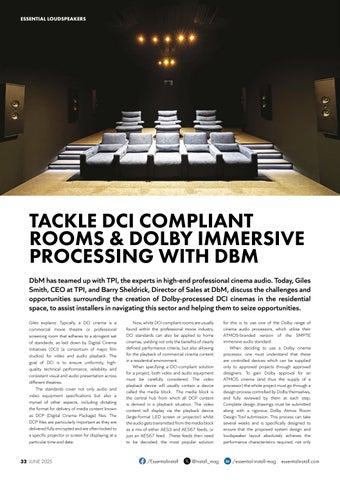
Needing to create high-performance cinema in larger spaces? this could be the answer
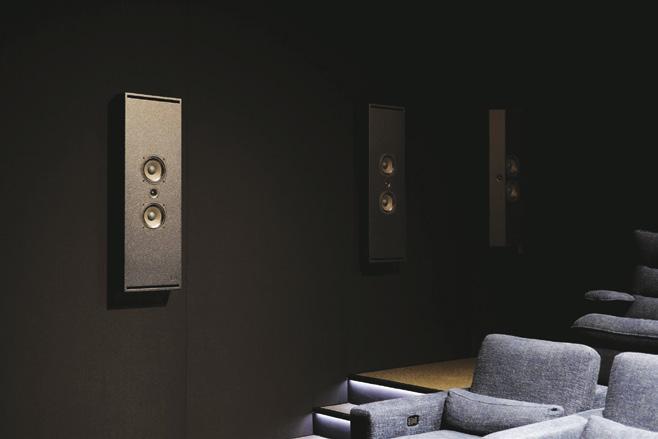
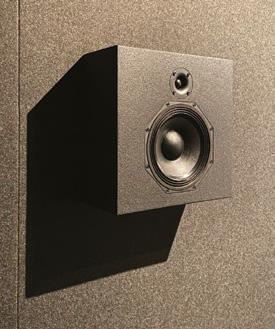
TPI create a range of compatible products
ELEVATING THE AUDIO EXPERIENCE WITH L-ACOUSTICS
Dennis
Lundell, CEO
of Aloud says the smart home audio market has evolved significantly with a growing demand for aesthetically pleasing solutions.
An increasingly design-oriented requirement pushes integrators to integrate speakers seamlessly into the home, in turn, driving a demand for plastered-in and other types of discreet installations.
However, balancing aesthetics with audio quality presents a challenge. While plastering over speakers might work in lower-priority rooms, high-priority areas require more sophisticated solutions.
But clients don’t necessarily understand the difference in quality until they experience it. For us, this is what our showroom is for. We have observed that clients, initially indifferent to the idea of high-end audio, often become avid enthusiasts after experiencing the uplift in quality. Sometimes, bringing the system to the client’s home can make a significant impact too.
We have one memorable instance which involves us taking a speaker setup to a building site during construction. The client was sceptical about the investment in high-quality audio and had reservations due to the ongoing construction chaos. We decided to set up the speakers in a partially finished room, amidst the dust and noise. As soon as the system was activated, the transformation was profound. The rich, immersive sound filled the space, making the construction site feel like a serene concert hall. The client was visibly moved by the experience. This demonstration turned the tide and the client not only approved the installation, but also became an enthusiastic advocate.
BALANCING AESTHETICS AND AUDIO QUALITY
Often, there are differing opinions between clients and design professionals. While clients may desire high-quality audio, interior designers and architects may prioritise aesthetics. Every project demands a balance and it’s about finding the right solutions that satisfy professionals and the client.
We recently spent considerable time discussing the placement of a single L-Acoustics subwoofer to ensure all parties were satisfied. The client was determined to have a high-end audio system, but the client’s spouse had a strong preference against any visible audio components, which could have led to the rejection of the entire audio system.
We explored innovative installation techniques that would allow the subwoofer to blend seamlessly with the room’s design. This process involved collaboration with the architect to ensure that the solution met both the aesthetic and acoustic requirements.
This exemplifies the intricate game we must play between form and function in home audio integration. It underscores the importance of understanding and respecting the diverse priorities of all stakeholders involved in a project. By taking the time to meticulously plan and communicate, we can achieve outcomes that exceed expectations and deliver unparalleled audio experiences.
THE APPEAL OF L-ACOUSTICS
With over 30 years of experience in residential audio, the L-Acoustics brand stands out for Aloud. The sound the speakers produce is extraordinarily present – I fondly remember the first time I had the opportunity to listen to L-Acoustics and the experience took me by surprise. The brand’s entry into the residential market is revolutionary, offering unparalleled sound quality and a unique experience that makes you feel you are there with the musicians.
As an integrator, it’s crucial to have confidence in the brands you work with and L-Acoustics provides that assurance through its history and expertise. The brand’s story, known for excellence in concert audio, resonates
strongly with clients. Sharing this story adds a layer of respect and trust, making the technology more relatable and appealing.
By choosing L-Acoustics, clients are not just investing in high-quality audio equipment; they are connecting with a legacy of innovation and excellence. This connection enhances the experience, making them confident that their investment is worthwhile and will elevate their home audio environment.
RECENT PROJECT AND FUTURE PROSPECTS
One of our recent standout projects involved the seamless integration of L-Acoustics X4 speakers onto apple trees. This project was unique both in its setting and in its requirements. The client, an avid gardener and audiophile, wanted an audio system that would provide high-fidelity sound throughout their garden without disrupting the natural beauty.
We custom-painted the X4 speakers to match the colour of the apple trees. The result was remarkable: the speakers virtually vanished among the trees, providing an immersive audio experience without intruding on the serene landscape. The client was delighted with the outcome – he couldn’t actually find the speakers until we pointed them out – as it allowed them to enjoy their favourite music, with the sound seemingly emanating from the environment itself.
Looking ahead, I am enthusiastic about integrating L-Acoustics’ new HYRISS technology into projects. It’s a groundbreaking innovation that takes audio experience to the next level – it gave me goosebumps when I first heard it. HYRISS technology offers unparalleled precision and clarity in sound reproduction, allowing for a more immersive and lifelike experience. The advanced features of HYRISS include dynamic sound mapping that adapts to different environments, ensuring optimal audio quality whether in a small indoor space or a large outdoor setting. This adaptability makes it an incredibly versatile solution. I am confident that incorporating HYRISS technology will not only enhance the audio experience for our clients but also set a new standard in the industry for highfidelity sound systems.
LOUDSPEAKER DESIGN IN AN AGE OF OVERLOAD
Andy Oates, Founder of Apex Audio Group, explains why loudspeakers remain one of the few remaining expressions of tactile certainty in the smart home.
Loudspeakers have a distinct position in the modern smart home. As signal processing moves into software and control becomes seamless - and AI looks poised to revolutionise the ecosystem, the loudspeaker remains resolutely, manifestly tangible. It introduces form into the room. It delivers physical energy and it connects ‘the system’ to human experience.
For integrators and designers, this matters. Loudspeakers are no longer judged solely on output. They are experienced in a broader context. As part of architecture, interior composition and user expectation. Their success is measured both in sound quality and in the way they occupy space and reinforce trust in the designed system.
Across the smart home sector, the pressure to reduce visual impact has been balanced by a rise in the acoustic performance potential. Manufacturers have responded with a more resolved approach to product design, investing in materials, finish, spatial coherence and DSP. At the same time, architectural speakers have reach maturation point. Performance gaps between visible and hidden solutions have
completely narrowed. The result is a more complex, more interesting market.
This evolution sits at the heart of my CI-Fi thesis. A framework that recognises high-performance audio as an integrated experience, not simply as a standalone luxury. CI-Fi shifts the focus away from the product in isolation and places emphasis on how that product lives and breathes within a space and the broader system, how it is felt and how it performs under real architectural conditions. It is not a matter of visibility versus discretion. Design when done right is pure alignment. With form, function, and fidelity. Each working in rhythm to the clients’ requirements, connecting emotionally and elevating the human experience.
The Art of Slowdown (AOS) intersects here. As digital abstraction increases, and friction is removed from every aspect of human life, human systems naturally seek tangibility. When devices vanish, we are literally losing a meaningful point of contact with our world. CIFi, through its insistence on material presence and resolved interaction, restores that contact.
The loudspeaker, therefore, becomes more than a ‘node’ within the system. It becomes a piece of design intent, something that signals credibility and presence in a smart home increasingly shaped by discreet automation.
This sits within a broader cultural movement: a return to the physical across disciplines in every aspect of society. We’re witnessing a resurgence of tactile interfaces in the home: buttons, dials, and levers are reappearing as psychological markers of reassurance. Materials are becoming heavier, more textured, more deliberate. Interior design is once again prioritising our senses - acoustics, light control, tactile feedback. In response to years of glass, gloss and flatness, we are seeing a reawakening of industrial design. The physical is returning.
Artificial Intelligence will accelerate this shift. As AI handles background tasks, such as automation, logic, voice interaction, computation, it clears space for sensory focus. With cognitive labour managed at the system level, human attention becomes freed to re-engage with texture, material and sound. Surfaces begin to matter again.
Physical presence delivers its own rewards and can be considered a vital part of system design
Loudspeakers are central to this moment. They are one of the few objects in the smart home that can remain beautifully physical. They move air. They are very intentional. And they reward close attention to material, proportion and placement.
Manufacturers are responding with greater design fluency and many are honouring their past and their engineering history. Sonus faber, for example, applies techniques from the regional heritage lute craft: curved laminated enclosures, leather baffles, hand-applied finishes, using the rich artisan approach, but now applied to resonance control in Loudspeaker cabinets and to manage diffraction. The result is visual elegance underpinned by acoustic discipline.
Houchmand offers another vision. Its loudspeakers are finished in 24-carat gold, rose gold, and platinum to match the material standards found in carefully engineered interiors. These choices are not decorative flourishes per-se, they reflect a growing demand for coherence between visual design and system performance. Behind the finish is a rigorous acoustic platform. The brand draws from line-source principles and phase-linear architecture, employing coaxial drivers for consistent directivity and time alignment. This is a speaker system capable of delivering precise spatial imaging and full-bandwidth clarity in complex residential environments.
Steinway Lyngdorf, by contrast, prioritises architectural neutrality. Its speakers are voiced for boundary interaction. Their internal architecture is precise and their external form is restrained and luxurious. They are not designed to perform in isolation, but as part of a roomadapted system. In every case, the brand’s intent is to remove friction, protect sonic integrity and let the speaker integrate without dilution.
The distinction between free-standing and architectural loudspeakers is no longer binary. Sonus faber’s Arena series is a fully architectural solution built to reference standard. Driver materials are consistent with their floor standing lines. The enclosure has been engineered for acoustic neutrality within a cavity. This is not retrofit thinking. It is a complete design pathway.
For integrators, this and other product series from Meridian, PMC, L-Acoustics and others raises the standard. Architectural speakers must now be selected for the continuity of performance they offer, not only price and profile. It is no longer acceptable to assume a client will trade fidelity for aesthetics. The very best systems do both.
WAVEGUIDES HAVE MOVED BEYOND PURE FUNCTION
Once the domain of Altec Lansing and JBL, they now serve as design signatures. The OJAS x Klipsch collaboration captures this perfectly. It’s a beautiful, brutalist, intentional and unapologetically tactile design. The exposed horn forms are communicating heritage and design precision, making acoustic control a visible part of the aesthetic appeal. This is where CI-Fi holds the line. In CI-Fi projects, each speaker - visible or not - is expected to meet a certain threshold of tactile performance. It must connect emotionally and touch the senses. It must belong to the space, both physically, AND emotionally. Anything less weakens the system.
Psychology reinforces this integration of meaning and performance. Gerald Zaltman’s research at Harvard shows that up to 95% of purchasing decisions occur subconsciously. Antonio Damasio’s findings confirm that
emotional engagement is necessary for action. Clients may read specifications, but they decide based on confidence and confidence is built from visual, tactile and contextual cues.
This is why loudspeakers must be more than inert transducers. They must reflect care in their construction. They must communicate alignment with the broader experience of the room. The CI-Fi approach asks: does this product feel complete before it is heard?
In The Art of Slowdown, physical presence is not a strange nostalgic reaction. It is a structural necessity. It is how we regain orientation in systems that increasingly operate in digital abstraction. The loudspeaker when made well, placed correctly and integrated with emphasis on musicality and coherency, becomes a beautiful point of contact. It is where the system literally connects to our senses.
For integrators and manufacturers, the implication is clear. Loudspeakers are no longer just performance tools. They are design artefacts. They are emotional markers. They are indicators of whether a system has been properly considered.
The best loudspeakers don’t demand attention by use of vulgar. They reward it. They align with the space. They project. And in doing so, they restore something that many systems have lost: Presence.
Four Key Benefits of the NODE NANO for Custom Installers
As smart homes evolve, so does the demand for more integrated and sophisticated audio solutions. For custom integrators, the NODE NANO is not just another product; it’s a gateway to efficiency, affordability, and superior sound quality in multi-room systems. Here are four compelling benefits that make the NODE NANO an essential tool for any installer:
Seamless Multi-Room Integration with BluOS
BluOS is at the forefront of multi-room audio technology, offering high-resolution wireless streaming that integrates effortlessly across various devices. With the NODE NANO, installers can harness the power of BluOS to deliver synchronized sound or different music in multiple zones, all controlled through a single, intuitive platform. This integration is not only seamless but also scalable, ensuring that systems can expand to meet future needs without compatibility issues.
Robust Connectivity and Control
The NODE NANO’s extensive connectivity options, including dual-band Wi-Fi, gigabit Ethernet, and various digital and analog outputs, ensure it can integrate smoothly into any existing system. Combined with the easy-to-use BluOS Controller app, the NODE NANO offers installers a versatile tool that enhances control and reduces the complexity of managing multi-zone audio systems. Additionally, its compatibility with major smart home systems like Control4 and Crestron further underscores its adaptability in sophisticated smart home environments.
Unmatched Affordability for High-End Audio
W ith its affordable price tag, The NODE NANO is a game-changer for both installers and their clients. It democratizes high-end audio, making it accessible without compromising on quality. This affordability allows installers to propose a cost-effective solution that fits well within the budget constraints of most homeowners, while still delivering the rich, detailed sound associated with more expensive systems.
Compact and Efficient Design
Space efficiency is crucial in custom installations, and the NODE NANO excels in this regard. Capable of fitting up to three units in a single rack space, it simplifies installation and maximizes the use of valuable rack real estate. This compact design not only makes it ideal for centralized audio systems but also reduces the visual impact of technology within the home, preserving the aesthetic integrity of client spaces.
By leveraging the NODE NANO’s integration capabilities, affordability, compact design, and versatile control options, installers can deliver superior audio solutions that meet the demands of modern smart homes. Explore how the NODE NANO can transform your installations and delight your clients with a level of audio excellence that only Bluesound can offer.
www.bluos.io/bluos-app
WHY TRAINING MATTERS
Michael Short, VP, Marketing Operations and Residential, Crestron, underlines why training is vital.
The smart home and AV industry is in perpetual motion — along with the technological advances that these businesses are built on. What was cutting-edge yesterday is commonplace today, and tomorrow promises to bring even more transformative technologies. Just think of the evolution of internet connectivity from dial-up to broadband, for example.
In this dynamic environment, ongoing training isn’t just beneficial — it’s absolutely essential for survival. Installers and integrators who commit to continuous learning will not only stay competitive but will also drive the industry forward, shaping the future of how we live, work, and interact with our spaces.
COLLABORATION + TRAINING = DEEPER UNDERSTANDING
The importance of training in this field cannot be overstated. It’s the bedrock upon which expertise is built, enabling professionals to navigate the complexities of integrated systems. Effective training programs empower technicians to not just install equipment, but to truly understand the underlying technologies. This deeper understanding translates into more efficient installations, fewer troubleshooting headaches and ultimately, more satisfied clients. As we’ve highlighted with Crestron’s True Blue philosophy, creating exceptional
experiences is a collaborative effort between integrator, manufacturer, design-build pros and even end users. Robust, relevant training equips our partners with the tools they need to deliver on those experiences.
MOVING THE INDUSTRY FORWARD
Training courses are the engine of progress within the industry. They bridge the gap between emerging technologies and practical application, ensuring that installers and integrators are prepared to handle the latest innovations. Consider the rapid evolution of AV-over-IP, a technology that has revolutionised how we distribute audio and video signals. Without robust training programs like those offered by Crestron Technical Institute (CTI), this powerful technology would remain inaccessible to many, hindering its widespread adoption and the benefits it brings. Training also fosters a culture of innovation, encouraging professionals to explore new possibilities and push the boundaries of what’s achievable.
ADDRESSING THE SKILLS GAP
One of the biggest challenges facing the industry today is a growing skills gap. The demand for sophisticated integrated systems is increasing, but the pool of qualified professionals isn’t
keeping pace. This gap creates opportunities for those willing to invest in their skills. Areas ripe for upskilling include network technologies, AV-over-IP, and even user interface design for those still doing custom projects. Mastery of these areas will be crucial for designing and implementing the seamless, intuitive experiences that clients expect. Crestron’s commitment to training, evident in initiatives like the Crestron Masters program, directly addresses this skills gap, providing focused learning opportunities on topics like designing for secure environments, scaling networks — and, of course, AV-over-IP.
THE VALUE PROPOSITION OF TRAINING
Manufacturers, integrators, and homeowners all benefit from a well-trained workforce. For manufacturers, training ensures that their products are installed and utilised correctly, maximising their performance and minimising support issues. For integrators, training is a competitive differentiator, attracting clients who seek expertise and reliability. And for homeowners, it guarantees a smoother, more enjoyable experience with their technology, transforming their homes into truly smart and intuitive spaces.
PREPARING FOR THE FUTURE
The future of smart home and AV technology is bright, but also uncertain. Artificial intelligence, the Internet of Things, and other emerging trends promise to reshape the landscape in profound ways. To prepare for what’s next, technicians must embrace a mindset of continuous learning. Events like Crestron Masters, which focus on cuttingedge technologies and an evolving curriculum, provide a valuable platform for staying ahead of the curve. By investing in training today, professionals position themselves not just for current success, but for a future where their expertise will be even more in demand. The industry needs professionals who are not just installers, but true technology architects, capable of designing and implementing the integrated experiences of tomorrow.
The Active twenty5i series is an elegantly simple solution for any music lover. With all the amplification in the speakers, just add a preamplifier, or a streamer with volume control, to create a world-class system that’ll get you even closer to your music.
For over 30 years, we have provided worldleading professional music-makers with active loudspeaker systems used to create much of the music and movies you love. Now we’re bringing this thinking to the award-winning twoway twenty5i series speakers, guaranteeing ideal integration for a staggeringly pure, natural, and free-breathing sound.
Existing owners of two-way twenty5 and twenty5i speakers – 21, 22, 23 & 24 – can now add all the active benefits of higher resolution, control, and transparency with a simple-to-install user-fit Active upgrade pack.
TRAINING TO TAKE YOUR BUSINESS TO THE NEXT LEVEL
ADI | Snap One is the destination for integrators seeking to immerse themselves in the world of smart home integration.
The company offers an array of products across multiple categories that position it as the onestop supplier its customers can depend on for every smart home installation.
It provides different paths for integrators based on their particular experience, skill sets and expertise and has been continually enhancing its solutions and services with a goal of becoming their most valued and trusted partner. Above all, ADI | Snap One is committed to keeping things simple for its customers. This is a refreshing vision with a goal to save time, cost and hassle in product choice and system design, installation, integration and after-care.
Training is fundamental to the success of the business, customers and the industry.
ADI | Snap One has a responsibility to design training that both supports technical product integration and enhances the professional standards for the home technology industry. It also recognises that the training support provides needs to evolve to support new product innovations, working practices and the requirements of our customers.
The team of EMEA Sales Engineers already provide very successful 1-to-1 short burst product training for ADI | Snap One customers, having completed over 400 two-hour sessions in 2024. In listening to feedback, it was clear that integrators wanted more in-depth specific training on key products and categories to help them grow their business in the smart home sector. They also wanted these sessions to be delivered face-to-face in a one-day format.
THE RESPONSE
In response, ADI | Snap One launched a new In-Person Category Training programme that combines both theory and practical hands-on training.
Held at regional training centres across the UK and Ireland, this free-to-attend training programme proved extremely popular with more than 110 delegates across the 14 sessions that were provided last year. For 2025, ADI | Snap One has expanded its In-Person Category Training to reach many more customers with valuable, free training on the key smart home product areas that will help make their business a success.
The training covers the following key areas: Networking Best Practices and Control4 Advancements & Lighting.
The Networking Best Practices course covers networking principles, exploring how ADI | Snap One products can be used to deploy fast, reliable networks. The course covers Networking Principles, identifying the impact of a robust networking topology, the application of common best practices and explains why Multigig technologies are important and when to use VLAN. Other topics featured in the training include Router Review and Configuration; Managed Switch Introduction and VLANs; Working with inSSIDer and 3rd party WiFi tools; Applying WiFi best practice in OvrC and a Re-Introduction and Recap on Araknis Networking Technologies and Ranges. Control4 Advancements & Lighting is exclusively for Control4 Partners and focusses
on what’s new for 2025 and beyond, working with OvrC as a setup and troubleshooting tool on Control4 installations, evolving lighting solutions and networking best practice when installing Control4.
With ADI | Snap One being a CEDIA CEU Provider, the above two courses are both CEDIA Approved CEU Courses, providing attendees who complete the session with 2.50 points.
Delivered by the ADI | Snap One EMEA sales engineering and education teams, these category training sessions – which began in April – will take place in locations across Belfast, Enfield, Northampton, Nottingham, Poole, Reading and more. An online space (snaponeevents.com/emea) has also been introduced to complement these in-person trainings and allow delegates to view schedules, course agendas and register their interest.
ADI | Snap One is committed to its customer base and supporting them in their ability to grow and develop their businesses. This training initiative builds on our track record as a CEDIA award-winning training provider. It takes product training to our customers across the UK and Ireland with valuable in-person courses that teach both theory and guided practical skills.
In-Person Category Training is designed to equip customers with the important skills they need to work successfully with new products and technologies that can help them grow their business, expand into new areas and be more successful. If you are interested, please register at – snaponeevents.com/emea.
In-Person Category Training has been increased
OUTSMARTING THE SMART TECH SKILLS GAP
Some training advice from the experts at BEMCO on how KNX can help build your business.
Smart technology has changed what clients expect from installers.
Homeowners want systems that follow their habits and work around their schedules. Businesses want AV setups that leave a lasting impression while keeping costs down. Offering agile smart tech solutions makes you the go-to expert for retrofits and new builds in your area. So how do you find success in this competitive field?
BREAKING DOWN THE SKILLS GAP
Traditional electrical work is practical. It follows codes that have existed for decades. But smart systems need software configuration, IP addressing and protocols like KNX. Even for seasoned installers it can be a struggle to keep up. Add to that the particular case of UK buildings, and the challenge grows. Ever tried retrofitting wireless relays into a 1960s fuse box with no neutral wire?
Clients don’t care if their voice assistant won’t talk to their HVAC because of a firewall; they want it fixed. If you can’t diagnose why their Lutron shades won’t sync with the SONOS system, they’ll call someone who can.
But then there is the challenge of making sure you keep your skills sharp, but find it a challenge to make the time. Between jobs, inspections and quoting, who has the time to sit through webinars?
These are all valid points. Meanwhile, smart technology evolves daily. If you fall behind, your toolkit will feel outdated before long.
The good news? You don’t need to become a coder or spend hours watching YouTube video
tutorials. You just need the right platform (KNX) coupled to the right practical, hands-on training suited for real-world jobs. Because training pays off when it helps you solve immediate problems.
LOOK FOR HANDS-ON, KIT-BASED LEARNING
Forget theory-heavy courses. The best training must mirror real jobs.
Our training offers Starter Kits. A pre-set enclosure with a KNX actuator, sensors and a controller. Wire it, program basic lighting scenes and take it back to the van.
Our training courses give you common issues such as DHCP errors that crash an AV system. This allows you to solve problems as if they were a real installation.
Certificates that actually matter are important. A KNX Partner accreditation is more than a badge for your website. It shows you speak the language of modern systems. Smart homeowners will Google ‘KNX-certified installer near me’ before making a call.
Mentorship is also vital. Learning from a professional who has been there before beats a YouTube tutorial. Some training courses let you shadow an integrator on a retrofit job. You can also join a peer group to brainstorm solutions for issues, like Zigbee interference from LED drivers.
THREE MUST-HAVE SKILLS FOR 2025 (AND HOW TO GET THEM)
You don’t need to be an IT specialist, but you do need to: Assign static IPs, configure VLANs for IoT devices, and ping-test
connections. Explain to clients why their £15 router won’t cut it for 4K streaming and 30+ smart devices. Learn to segment networks (IoT devices on a separate VLAN). Set up secure passwords and 2FA for system access. Solve modern systems like a puzzle: for example, an HVAC setpoint might trigger the blinds to close and the AV system to lower the volume. Training should help you build a visual map of how devices interact. It will also help you fix any conflicting protocols.
TRAINING PAYS FOR ITSELF
Let’s talk ROI. A five-day KNX course might cost £500, but here’s what you gain: Higher day rates, specialised smart home work can earn you up to 30% more than regular jobs. Proper training also reduces issues like intermittent communication failures and builds client trust.
Clients will keep demanding faster, smarter and more integrated systems. So, what’s next?
Start small. Master KNX basics with a KNX Starter or Basic Partner Course, perhaps find a training partner to split costs and work together as a team. Build relationships with local wholesalers. They’re your go-to source for stock shortages and new gear. Look for a training programme that offers support after you earn your certificate. It should provide technical advice and help with product sourcing. Know how to ‘sell’ the idea of living in a smart home and answer clients’ questions. Get confident: properly plan a smart home project and don’t be afraid of charging customers for time that you spend with configuration and service.
WHY TRAINING IS THE BACKBONE OF SUCCESS
Chris Yorgey, Application Engineering Manager, Lutron Electronics Training Lead, UK & Continental Europe, underlines the importance of staying on top of the knowledge arms race.
In the rapidly evolving world of smart homes and integrated technology, training isn’t just a nice-to-have. It makes the difference between delivering a seamless experience for homeowners and an overly complex system that falls short of expectations. The reality is systems are getting more powerful, the demands more complex and changing at an ever more rapid pace. In contrast, customers are looking for systems that are simpler and more seamless. It’s those on the front lines, the integrators and installers, who carry the weight of turning these more advanced systems into something easy and intuitive for the user. So why does training matter now more than ever?
THE COMPLEXITY CLIFF
The smart home industry has exploded with options, protocols, ecosystems and expectations. What used to be a relatively straightforward lighting or AV install now might involve cloud integrations, app-based control, voice interfaces, conditional automation and energy management. All tied together across multiple platforms.
This complexity often leaves even seasoned pros feeling like they’re one update away from being behind. And that’s where structured, manufacturer-led training becomes vital. Not just to understand what the system does today, but to stay ahead of what it will do tomorrow.
SKILL GAPS: THE UNSPOKEN CHALLENGE
Across Europe and the UK in particular, we’re seeing a clear divergence: integrators are hungry for innovation, but often stretched thin on the technical depth needed to keep pace. This isn’t due to a lack of skill, it’s a bandwidth issue. Most teams are running lean and setting aside time to learn is tough to justify in the short term.
But here’s the irony: that investment in training pays back almost immediately in reduced troubleshooting time, cleaner installs and happier clients. One hour in a lab can save three on-site.
WHAT ‘GOOD’ TRAINING LOOKS LIKE
It’s not enough to send over a manual or run through a slide deck. The best training today combines all the training tools at our disposal. It uses self-paced training to lay out foundational knowledge in a consistent and repeatable way. Then it builds upon that foundation with hands-on, problem-solving tied to real-world scenarios.
At Lutron, we’ve seen the power of putting techs into a simulated home environment where they can build, test and troubleshoot a system from start to finish. That kind of experiential learning sticks. More importantly, it builds confidence.
But training also needs to be flexible. Some trainings, like software training, are more suited for virtual live sessions, while others, like product installation, are best in a classroom or lab. The point is to meet integrators in a way that resonates and facilitates the best educational experience.
LIFELONG LEARNING
We believe training shouldn’t be one-and-done. It’s a lifelong process. The systems will keep evolving, and so must the teams who bring them to life.
In many ways, training is a quiet differentiator. It doesn’t get celebrated as much as product
launches or project wins, but it’s the foundation under every great system. For manufacturers, offering it well is a duty. For integrators, embracing it is a competitive edge.
THE INDUSTRY’S SHARED RESPONSIBILITY
As manufacturers, we can’t afford to treat training as an afterthought or a bolt-on. And integrators need support that goes beyond tech specs. They need mentorship, clarity, and a safe place to ask the hard questions. That’s why Lutron has made a significant push on training this year. In just the first half of 2025, we’ve already trained more integrators than in 2020 through 2022 combined. It’s a reflection of how urgent and essential this need has become. And just as importantly, it shows that integrators themselves are recognising the value of continuous learning to stay competitive.
In a world where clients expect Apple-grade polish from every system, we have a shared responsibility to raise the bar. Because in this industry, one poorly executed install doesn’t just hurt the installer. It can erode trust in smart home technology as a whole. For that reason, we need to approach training with the right mentality. Training isn’t overhead — it’s infrastructure.
AHEAD OF THE CURVE
Training for the modern AV integration landscape with Cody Crossland, VP of Sales & Customer Service, Blackwire Designs.
In the constantly-evolving AV integration industry, ongoing training is not just beneficial – it’s essential to staying ahead of the curve. To stay competitive in the face of advancing technologies and increasingly complex client expectations, integrators need to continuously update their knowledge and skills. Homeowners today expect seamless, intuitive experiences across increasingly complex systems, from voice control and lighting to whole-home AV and security. Success in meeting these expectations demands more than just technical expertise. Precision, adaptability and a dedication to ongoing learning are crucial elements.
Regular training ensures that installers are equipped with the latest knowledge on emerging technologies, integration protocols, and industry best practices. This empowers them to design and deliver solutions that are both innovative and reliable while also helping to reduce costly errors and rework. One major skills gap in the field is in networking and integrating IP-based systems. As smart homes become more reliant on robust and secure networks, installers without a foundational understanding of network design, cybersecurity and system interoperability risk falling behind. Intelligently designed training programmes and tools like Blackwire’s Network Provisioning Service have made it easier to learn the basics and effectively troubleshoot problems, enabling companies to
save on-site time and costs without requiring them to become subject matter experts.
When it comes to personal development, integrators and installers must invest in structured training, including manufacturer certifications, hands-on workshops and industry-specific courses. But beyond technical skills, one of the most valuable ways to stay up to date is by creating a culture of learning. Organisations that prioritise ongoing employee growth and knowledge sharing usually see increased employee retention, greater job satisfaction and enhanced project outcomes. In an industry where precision and performance are paramount, this kind of investment pays long-term dividends.
But training shouldn’t stop with the integrator. User education and support are critical elements of long-term system performance, and providing clear documentation and basic training on network usage and troubleshooting helps clients feel more secure managing their technology. Establishing a support system for ongoing assistance ensures users can adapt to changes and maintain optimal performance over time. After all, a well-informed client is more likely to value and maintain the system you’ve delivered.
This is also where proactive maintenance strategies come into play. Monitoring tools can track system performance and flag anomalies
before they affect the user experience. Regular firmware updates, security patches, and equipment checks help ensure reliability and protect against vulnerabilities. By designing networks with scalability in mind, as well as assessing usage trends regularly, integrators can future-proof their installations and provide even greater long-term value to clients.
Another essential strategy for staying educated and ahead of technological trends is leaning on your professional network, specifically working closely with distributors and partners who prioritise ongoing training and support. The best partners don’t just ship products; they provide insight, guidance and access to the latest educational resources.
Partnering with innovative distributors that provide technical workshops, product updates and practical training significantly enhances internal learning initiatives. These relationships help integrators stay current with evolving standards and emerging solutions, while also offering a valuable sounding board for troubleshooting, planning and innovation.
In today’s smart home and AV world, training is the bridge between innovation and execution. It fosters confidence, improves outcomes and builds trust, both within integration teams and with end-users. The pace of technological advancement isn’t slowing down and neither should our efforts to stay ahead of it.
Elevate Your Experience
Introducing Advanced Full-Motion 4D® + Shift™ technology. Easily fine-tune your TV’s height after installation to get the perfect position.
Advanced Full-Motion 4D® + Shift™ TV Mount
FITS 42-95 " TVS
20 CM HEIGHT ADJUST
92 ° SWIVEL
-15 ° / 5 ° TILTING
71 CM EXTENSION
MODEL VLF828-B2
Premium TV Mounts
SANUS sets the standard for mount technology
Innovative design and outstanding safety features make them perfect for all AV needs. Fast and simple to install, they offer a clean and stylish finish - while boasting unparalleled performance.
Sonos® Accessories
Get the perfect sound from your ERA 100 and 300 speakers or Sonos Arc soundbars with SANUS’ compatible mounts and stands. Our adjustable height stands, tilt/swivel wall mounts and our complementary sleek, subtle design provide the perfect positioning.
Premium Racks
PREASSEMBLED COMPONENT RACKS: strong and sturdy construction in heavy gauge welded steel. Available in 15U, 27U, 36U and 44U. STACKABLE SKELETON RACKS: can be floor or wall-mounted for maximum versatility. Available in combinable 10U, 15U and 20U sizes.
Specialties
From universal soundbar mounts and cable management solutions, to TV Media in-wall box, AV component shelves and projector mounts, SANUS has thought of everything to finish any AV install to perfection.
PUTTING THE HOME INTO HOME ENTERTAINMENT
Nick Moore, Senior Project Manager at well-established and respected integration company LMS, examines a growing trend and opportunity for the industry to truly live up to the title of integrator.
Once upon a time, home entertainment equipment dominated the home; goliath-sized TVs bullied their way into the corner of every living room, loudspeakers were monoliths, resplendent in black or walnut veneer – dominating each space they occupied. Processing and content delivery equipment such as amplifiers, satellite boxes and video record/replay devices were wedged into unforgiving furniture with cables sprouting like unkempt weeds. Homeowners turned a blind eye to the chaos – they had to.
As installers we were able to tackle much of this chaos and ‘tidy up’ the mess, finding space for the equipment in racks and integrating the equipment into the home more efficiently and aesthetically. Fast forward to today and mercifully with the advent of streaming technologies, video and audio services have been integrated into our TVs or increasingly miniaturised into sleek, easier to integrate boxes.
The ‘telly’ (or ‘video display device’) itself is barely recognisable and is available in a variety of forms from wall-mounted slender-thin monitors to projector and screen formats. Genius trickery can even make high resolution images magically appear apparently from the ether!
Multi-channel surround sound systems bring some of the experience of the Empire Leicester Square into the home. Speakers can be big – and sometimes they need to be to ‘move air’ in large spaces. They can be exquisite statement pieces of furniture –equally at home in living rooms or galleries – or plastered into ceilings, rendered completely invisible. Other aspects of home entertainment
equipment such as amplifiers have become smaller and easier to integrate around the home. This galloping technological evolution is a good thing, a great achievement, even. And it provides our industry with the incredible opportunity to be creative and integrate levels of performance that are frankly staggering and move from just tidying up equipment to true integration into the home and the lifestyles of those who live there, our customers!
DELIVERING REAL INTEGRATION
As professionals, we have the tools, experience and expertise to amaze and delight our clients in order to truly blend high performance tech into their homes. We take care of the ‘why’ and ‘how’ challenges when designing and installing. The ‘what’ is more subjective.
By carefully listening to our clients and their design experts we can better understand what their version of home entertainment is. With what we have at our disposal today, we can craft solutions that mimic their lifestyle and needs, but the crucial factor is genuinely designing it around them and not a set of industry templates we have got used to relying on because we know they work and are repeatable.
We need to create rooms that are pleasant to be in, with technologies that complement décor and, if needed, defocus from the componentry in favour of the ambience and user experience. There are plenty of products available that provide us with the ability to live up to our ‘integrator’ status.
In our field we have ingenious answers to almost every technical challenge, although we should listen, pause and consider whether the highly advanced engineering product is actually the best and most appropriate answer. Performance, ease of use and reliability trump complexity and high maintenance every time.
As an example, the trend for home entertainment in exterior spaces has become very popular. Compact ‘spike mounted’ speakers designed for discrete installation in planters and flowerbeds, combined with submerged subwoofers add the all-important dynamic range.
Custom and paintable wall-mounted speakers add to the palette and, when combined with a large screen weather resistant TV, create an enhanced audio-visual experience.
Outside spaces bring acoustic and viewing challenges and we can meet these, to a large extent, although often the pleasure of enjoying music, watching sports or a movie with family and friends is less about technical excellence and more about being together in the moment.
It’s about balance. Our clients are always complimentary when their needs and expectations are met or exceeded rather than sticking to industry norms that might work for some but not others.
Selecting genuine lifestyle solutions that enhance experience and blend into the homescape – whilst providing the desired performance and budget targets – is fundamental.
LinkMediaSystems (LMS) linkmediasystems.com
The Elements Never Stood a Chance
Get reliable audio designed to withstand everything nature wants to throw at it with Episode Extreme and Surroundscape audio solutions.
CEDIA TECH + BUSINESS SUMMITS
Chris Brooker, Founder of integration company LAVA, explains how CEDIA Tech + Business Summits are powering the future of smart home integration.
When I left my corporate IT job in 2016 to start my smart home technology company, LAVA, I wasn’t sure exactly where the path would lead, only that my passion for technology, smart gadgets and problem-solving needed a new outlet. Fast forward to today and LAVA has become a trusted name in home integration, delivering smart automation, lighting and AV solutions to homeowners who want a seamless, intelligent living experience.
But I didn’t get here alone. A big part of that journey and my continued growth has been my involvement with CEDIA. I joined the organisation at the very beginning of my smart home career because I knew I needed more than enthusiasm to be taken seriously. CEDIA education was my starting point. Attending the relevant training for an industry newcomer gave me the confidence and technical foundation I needed to launch my business with professionalism. Since then, I’ve continued to build on that knowledge, most recently completing a KNX course to expand the services we offer.
This brings me to the CEDIA Tech + Business Summits. I recently attended the Bristol edition in March, something I had been advocating for since attending the first one back in 2017. Having also gone to the London event a few years ago, I was thrilled to see Bristol back on the calendar. And it didn’t disappoint.
What stood out to me this year was how much the event has evolved. It’s no longer just about new product launches, although there are plenty of exciting innovations to see. This year’s focus on business development really hit home. I found the CEDIA Smart Home Assurance Scheme talk with Steve Moore particularly valuable. This programme has the potential to help us connect more effectively with housebuilders and property developers - a market we’re keen to explore.
Networking was another huge win. These events are a brilliant chance to catch up with familiar faces and meet new industry professionals. As well as having meaningful conversations with suppliers, I discovered products that I hadn’t come across before and picked up on some emerging trends. And because it was hosted locally in Bristol, I could
attend without having to dedicate a full day to travel - something every small business owner can appreciate.
If you’re an integrator, electrician, or tech enthusiast looking to expand into home automation, I can’t recommend the CEDIA Tech + Business Summits enough. Whether you’re just starting out or have been in the game for years, there’s something for everyone, from hands-on insights to high-level strategy.
These events are so important for our industry. They’re a chance for us to come together, learn from each other and strengthen the foundations of smart home integration across the UK. With upcoming CEDIA Tech + Business Summits in Leeds and London, there’s a real opportunity for more professionals to get involved, stay informed, and future-proof their businesses.
Don’t miss your chance to be part of it. Other CEDIA Tech + Business Summits in the diary for 2025 include Headingley Stadium in Leeds (June 4) and at the Business Design Centre in London on (July 8). Register at cedia.org/techsummits.
ULTIMATE HOME CINEMA SHOWROOM SHOWCASES PROCELLA AUDIO
This ambitious project by Ultimate Home Cinema has many leading brands at its heart, including Procella Audio – ensuring visitors enjoy an impressive next-level experience.
Founded in 2019 and based in Greater London, Ultimate Home Cinema has established itself as a leader in high-end home cinema sales and AV integration. Under the leadership of Mehmet Kohman, the company specialises in crafting bespoke cinema experiences that blend cutting-edge technology with seamless integration. Ultimate Home Cinema designs tailor-made systems that transform home entertainment spaces into immersive, state-of-the-art cinemas. The company wanted to create a high-performance showroom to demonstrate the capabilities of modern home cinema systems.
Mehmet explains, “The initial planning for this cutting-edge demo facility took shape in 2022, driven by a commitment to creating a high-channel, high-performance space where clients could experience our brands at their absolute best. Designed to push the boundaries of home cinema, this state-of-theart environment showcases the pinnacle of audiovisual technology, offering an immersive and uncompromising demonstration of worldclass sound and visuals.
Mehmet adds, “This fully treated room features a 13.8.12 Procella Audio system, driven by Trinnov Audio’s industry-leading processing and amplification, ensuring breathtaking sound precision.”
The system also features processing from MadVR Envy, a Kaleidescape movie/content system and a JVC NZ900 projector paired with a 165in CinemaScope screen. To optimise contrast and eliminate reflections, the walls and ceiling are draped in black velvet.
A front baffle wall was constructed to optimise the main soundstage, ensuring precise speaker placement and acoustic integration of the Procella Audio speaker array. The speakers chosen for this project include P815 LCR speakers – high-output, full-range units delivering strong clarity, dynamics, and impact. Also housed in the same unit are four 18in Pro Driver subwoofers and
three Procella P6 speakers (front/height channels), enhancing vertical immersion and spatial accuracy.
A further baffle wall at the rear of the space houses four additional 18in subwoofers, placed directly opposite the front subwoofers to create a perfectly balanced bass response using Trinnov WaveForming technology. This technology employs advanced algorithms and real-time measurement to cancel out reflections and room nodes that can impact audio quality.
This baffle also contains four Procella P6V MK2 rear surround speakers, precisely positioned to deliver an enveloping surround experience, along with two Procella P6 MK2 speakers (left and right rear height channels) to enhance overhead immersion for a fully three-dimensional soundstage. For both baffle walls, custom-built cabinetry was designed to optimise speaker placement, ensuring compliance with the requirements of Trinnov WaveForming technology.
Mehmet explains, “The Procella Audio 13.8.12 hybrid layout has been designed for high SPL without distortion, perfect for reference-level playback. Uniform dispersion ensures every seat is in the sweet spot. Tuned for both music and film, this cinema offers unparalleled realism and impact.
“We also designed the hybrid speaker layout to accommodate all immersive audio formats, including Dolby Atmos, DTS:X and Auro-3D, ensuring optimal performance and versatility for any cinematic experience.”
WHY CHOOSE PROCELLA?
Mehmet reveals why Procella Audio was chosen. “For this project, Procella Audio was selected because it delivers reference-quality cinema sound that meets the highest standards for high-end home theatres.
“Originally developed by DTS engineers, Procella speakers are designed to reproduce the
dynamics, clarity and impact of a professional commercial cinema in a private setting. Procella speakers deliver high SPL without distortion, ensuring crystal-clear dialogue, powerful sound effects and a truly immersive experience.”
Mehmet continues, “Given the size of the room and the 165in CinemaScope screen, we needed a speaker system capable of delivering even coverage and consistent performance across multiple seating positions. With support for Dolby Atmos, DTS:X, and Auro-3D, Procella provides a cohesive and precise surround sound experience, making it an ideal choice for this project.
“Procella’s tonality and dispersion characteristics also make the brand a perfect match for the Trinnov Altitude 32 processor and Amplitude 16 amplification used in the project, allowing for precise calibration and optimal performance.
The front firing speaker array
“Overall, Procella was the natural choice for this project, ensuring uncompromised audio quality that aligns with Ultimate Home Cinema’s commitment to delivering the best possible home theatre experience.”
It was not just the high-performance aspects of the products that drove brand choice—expertise and support were also key considerations.
Mehmet says, “Both Trinnov Audio and Procella Audio were integral to the success of this project, offering invaluable expertise and support. Procella Audio was essential in selecting the perfect speaker solutions for the space, carefully considering both the room’s acoustics and its intended use. Their contribution also extended to providing the powerful amplification necessary to drive our eight 18in subwoofers, delivering unrivalled precision and dynamic range.
“Trinnov Audio played a pivotal role in optimising our speaker layout and placement, with particular focus on our custom-built subwoofers. The cutting-edge WaveForming technology ensured exceptional performance,
while their deep knowledge of acoustics and system integration was crucial in achieving optimal sound reproduction.
“Together, Trinnov and Procella’s support was instrumental in realising this high-performance system, perfectly aligned with our vision of an unparalleled audiovisual experience.”
EXPERIENCING THE SHOWROOM
Mehmet explains, “Access to the facility is by appointment only, ensuring a personalised and immersive experience for each client or visitor. Customers can schedule a visit by reaching out directly via phone or email, or by completing our online booking form.
“Once an appointment is confirmed, we provide comprehensive instructions for accessing the facility. Upon arrival, guests are warmly greeted and guided through the space, where they can fully experience the capabilities of our high-end systems in a meticulously controlled environment. This process guarantees that each visitor receives dedicated attention and a bespoke demonstration, tailored to their specific needs and interests.”
Meticulous building of the support structures was crucial
Calibration and careful initial design, coupled with the power of the brands involved, produced the results the company was looking for
Essential Kit List
Speakers
• 3 x Procella P815 – Left, Centre, and Right (LCR)
• 10 x Procella P6V MK2 – Wide, Side, and Rear Surround
• 5 x Procella P6 MK2 – Height Channels (three at the front, two at the rear)
• 7 x Procella P5ICW – Six Atmos speakers and an Overhead/VOG channel
• 8 x 18in Faital Pro 18HP1060 (4-ohm) professional subwoofer drivers in custom-built cabinets, powered by Procella DA08-DSP power amplifiers
Processing
• Trinnov Altitude 32
• 2 x Schiit Modius DACs
Amplification
• 2 x Trinnov Amplitude 16
• 2 x Procella DA08-DSP power amplifiers
Video Components
• JVC NZ900 – High-end 4K HDR projector
• Panamorph DCR lens with M2 mounting bracket system
• Control4 for controlling audio, video and lighting
Room Treatment
• Vicoustic Multifuser DC3 diffuser panels
Storage
• All components housed in a 44U SANUS rack
DESIGN & CONSULTING
With our experience of smart home integrations and BMS, we can bridge the gap between the AV and HVAC worlds, designing systems that take full account of how the client wants to use them. We offer a range of services from consulting to complete system design.
MONITORING & DIAGNOSTICS
All our solutions include advanced cloud-based monitoring for analysing system performance and fault reporting. Turn a reactive response into a proactive call to inform clients that their problem has been resolved, even before they knew they had one.
Multi-platform smart home integration tailors the experience to the client - whether that is elegant in-room controls, or virtually invisible sensors with App-based controls. All backed up with sophisticated installer tools.
FEEL THE VALUE OF VESTRA
The new Vestra Subwoofer Series by Monitor Audio extends the brand’s independent range of subwoofers, delivering three models ideally suited to entry– and mid-positioned speaker series, whether used traditionally or deployed within custom installation applications.
Engineered and developed alongside Monitor Audio’s recently launched premium Anthra Series Subwoofers, each of the three Vestra subwoofers – the W10, W12 and W15 – includes an acoustic package that enables
Monitor Audio to deliver on its Transparent Design Philosophy, which couples superior design elements, intuitive user experience and advanced acoustic engineering, ensuring all elements of performance, technology and design work in harmony.
Vestra subwoofers utilise Monitor Audio’s proprietary C-CAM cone technology (Ceramic-Coated Aluminium Magnesium) – a cone technology ideally suited for subwoofers. The properties of C-CAM ensure a more
L-ACOUSTICS GOES ULTRA-COMPACT
Delivering decades of professional audio expertise in its most accessible amplifier to date, L-Acoustics has revealed details of its ultra-compact LA1.16i Amplified Controller.
Building on the innovative approach introduced with the LA7.16i, the LA1.16i is a 16-channel amplified controller specifically engineered for the installation market. The company says this latest innovation delivers unmatched channel density in a space-saving 1U format, making premium L-Acoustics sound accessible for a wider range of projects in the commercial and residential space.
Purpose-built for near-field and short-throw applications where higher sound pressure levels aren’t the priority, the LA1.16i is designed for hospitality venues, retail environments, cultural spaces and residential installations. Its high channel count enables the deployment of large quantities of speakers – for example, up to 48 X4i compact enclosures – while its space-efficient design maximises rack space utilisation and optimises installation costs.
Like its predecessor, the LA1.16i incorporates L-SMART, L-Acoustics’ patented power management technology that intelligently matches real-time power delivery to the needs of the loudspeaker system.
fatigue-resistant, stronger and lighter cone. The result is a material that offers greater pistonic movement under extreme stresses than standard aluminium cones.
Behind the C-CAM cones are powerful new motor systems, featuring triple suspension (W12 and W15), uprated venting and larger round-wound voice coils made of high-purity copper wire. The suspension provides greater control and precision under extreme low frequencies, the venting supports greater airflow to reduce unwanted heat and the larger voice coil delivers the highest possible BI (field strength).
The C-CAM bass driver surround has also been carefully optimised. It allows the largest possible cone surface so that the excursion is controlled without overstretching, causing distortion or breaking.
A Class-D 250W amplifier is powering the Vestra W10, while a 500W Class-D amplifier powers the Vestra W12 and W15. Each has been optimised and configured to match the drive unit and speaker system. The amplifier enables a range of connectivity options, including unbalanced stereo RCA, LFE unbalanced RCA inputs, useful DSP pre-set configuration modes for in-room position optimisation and a 12-volt trigger.
Monitor Audio monitoraudio.com
This innovation optimises efficiency and ensures reliable performance while reducing energy consumption compared to traditional amplifier designs.
The LA1.16i is well suited for front-fill and delay systems in theatres and performing arts centres, distributed background music systems in restaurants, hotels and retail spaces, L-ISA spatial audio and ambiance active acoustics installations, and home cinema and yacht entertainment systems.
The Milan-certified LA1.16i supports Milan-AVB and AES67 audio network protocols
with seamless redundancy, alongside AES/ EBU and analogue inputs. Installation-friendly features include terminal block connectors for all audio outputs, GPIOs for third-party control system integration and a 24V DC backup power input for the DSP card. The LA1.16i is remotely configurable, monitored using L-Acoustics LA Network Manager software, and offers integration with control systems through Q-SYS plugins, Crestron modules and HTTP API.
L-Acoustics l-acoustics.com
Each is built with rigid, reinforced and braced 15mm thick MDF, finished in black or white vinyl with painted matte 21mm thick front baffles
The LA1.16i will ship in summer 2025
KALEIDESCAPE ANNOUNCES NEW STRATO E MOVIE PLAYER
New entry-level Kaleidescape movie player
Strato E delivers lossless audio and referencequality 4K video.
Hot on the heels of the Strato M announcement, Kaleidescape has announced Strato E, a new entry-level 4K movie player for residential, marine and commercial theatre systems. Strato E supports reference 4K video output with SDR, HDR10, and Dolby Vision. Strato E supports lossless multi-channel and spatial object-based audio, including Dolby Atmos and DTS:X.
Strato E enhances the movie player lineup, with Strato M as the reference 2K player, Strato E as the entry 4K player, and Strato V as the flagship 4K player; Strato C remains the best player for compatibility with the maker’s legacy products says Kaleidescape.
The new player works on its own or as part of a larger Kaleidescape system. As a standalone system, the unit provides a single playback zone that holds a half-dozen movies on an internal solid-state drive – downloading a movie in about ten minutes over gigabit Ethernet. The streamlined interface, optimised for navigating
MASTERS OF MUSIC
NAD Electronics has announced the release of two additions to its Masters Series, the M33 V2 BluOS Streaming Amplifier and the M23 V2 Stereo Power Amplifier. These next-generation models build on the legacy of the original M33 and M23 with cutting-edge digital architecture, refined sonic performance and enhanced connectivity for audiophiles, custom integrators and premium audio dealers, says the maker.
The original M33 was widely welcomed for combining audiophile-grade sound with modern streaming convenience. NAD says the M33 V2 raises the bar yet again. Incorporating MQA Labs’ new FOQUS and QRONO technologies, alongside an ESS SABRE ES9039PRO DAC, a next-generation ESS ADC and Gen 2 Purifi Eigentakt amplifier modules, the M33 V2 is engineered for timing precision and musical integrity throughout the entire signal chain.
Key enhancements include FOQUS (ADC) and QRONO (DAC) from MQA Labs, ensuring accurate signal conversion and preserve timing, nuance and spatial cues.
A new ESS ES9039PRO DAC achieves ultra-low distortion and wider dynamic range, whilst Dirac Live Bass Control readiness delivers precise subwoofer integration and optimised room response. Also included are XLR pre-outs and higher subwoofer output level, providing expanded system flexibility for separates and multi-sub configurations.
a small movie library, offers automatic offloading of watched movies 48 hours after playback to make room for more movies. Purchased movies can be re-downloaded at any time. All movie players can also be grouped with Terra Prime movie servers to increase movie storage.
Kaleidescape Strato movie players provide access to the Kaleidescape movie store, the world’s only digital movie collection with
lossless audio and full reference video quality. The movie store offers thousands of 4K and HD titles for purchase or rent, including movies, TV series, and concerts. Kaleidescape movies are downloaded, not streamed, so there is never buffering or loss in quality, underlines the maker.
Kaleidescape kaleidescape.com
The products also support BluOS multi-room streaming, Apple AirPlay 2, aptX HD Bluetooth, HDMI eARC and integration for smart home platforms.
Featuring the latest Eigentakt modules from Purifi, NAD’s own amplifier design expertise, and system-friendly enhancements, the M23 V2 delivers authoritative dynamics and low distortion, says the maker. Capable of delivering 200W per channel (8 ohms) or 700W bridged, the M23 V2 is offered as a strong companion
to the M33 V2 or M66 preamp, creating an ultra-high-performance, flexible system.
Used together, the M33 V2 and M23 V2 offer an end-to-end NAD solution that embodies the Masters Series philosophy: benchmark innovation, intuitive control and sonic performance that rivals ‘boutique’ brands—without the boutique markup.
NAD Electronics nadelectronics.com
Pulse Cinemas and Invision UK are the trade suppliers of the Kaleidescape system in the UK
The new products will be available from August
Vinyl-over-IP
IT’S DONE WITH DM NVX.
Drop the needle. Network the fidelity. DM NAX® Audio-over-IP Edge Devices easily bridge any audio from any source — CDs, Bluetooth® audio, even vinyl records — onto the network. Powered by the DM NVX® AV-over-IP platform, they give your clients more ways to enjoy their favorite music. However they want. Wherever they want. With pristine audio reproduction and effortless Crestron Home® OS control.
SCAN
LUTRON STAYS IN TOUCH WITH AVIENA
Lutron Electronics has announced the launch of the Aviena toggle keypad. Designed for seamless integration with Lutron’s HomeWorks system, Aviena has been created to pair refined elegance with effortless, tactile control and will be available Q3 of 2025.
This addition to Lutron’s premium control lineup blends heritage-inspired aesthetics with intuitive functionality. Hand-finished in solid brass and featuring a weighted mechanical toggle switch, the Aviena toggle keypad represents a timeless, design-driven solution for luxury spaces, says Lutron. The maker says designers and specifiers can now incorporate this elegant keypad into their projects, delivering both visual distinction and elevated user experience in any high-end interior.
Crafted from hand-finished solid brass, Aviena features a weighted mechanical toggle switch, exuding timeless elegance with a modern, curvilinear form. An easy-to-use toggle allows for effortless control of lighting and shading, providing one-touch transformation to suit any environment. Native compatibility with Lutron’s HomeWorks system guarantees intuitive performance ensuring smooth, cohesive integration. The switch is compatible only with HomeWorks at this point. Available
Finishes include Aged Brass, Aged Bronze, Brushed Brass, Satin Nickel, Bright Chrome, Graphite and Champagne
in seven of Lutron’s Signature Metal finishes, Aviena offers a unified design aesthetic when paired with Alisse keypads and other premium Lutron devices.
Supports configurations of up to four-toggle switches, adapting to various control needs with precision and ease, with options for single-line engraved text and iconography.
“The Aviena keypad combines the timeless beauty of heritage design with Lutron’s legacy
SONOS UNLEASHES THE POWER OF SPEECH
Sonos has introduced a new Speech Enhancement feature – a software tool that lets listeners tune their content to their precise needs and fully immerse into their favourite shows and films.
Using AI to detect and clarify dialogue –and developed with RNID (Royal National Institute for Deaf People) to incorporate valuable perspectives of those with hearing loss – Speech Enhancement provides four levels of control that empower viewers to create a customised sound experience.
While subtitles, volume control and Bluetooth headsets can help, Sonos wanted to help solve this problem and provide a better way to listen.
Sonos also worked with award-winning film sound mixer Chris Jenkins to tune the tool so it not only clarifies dialogue, but also retains the artistry of movie moments like action scenes and music montages.
The new feature is part of Sonos’ commitment to inclusive design and consistently
of innovation,” said Ben Bard, Vice President of Lutron. “Aviena not only elevates the user experience but also provides designers with a distinct option for crafting truly bespoke, luxury spaces that offer both elegance and smart home functionality.”
Lutron luxury.lutron.com
reinventing its products to be more equitable and accessible for all. It will be available to use on Sonos’ Arc Ultra soundbar via a software update rolling out now.
The result is a dynamic Speech Enhancement tool with four different levels to choose from – the highest of which is expressly designed for those with hearing loss – via the Sonos app home screen.
Low – A subtle, artistic nudge that emphasises dialogue while maintaining the original experience and creator intent.
Medium – A medium enhancement that provides better dialogue clarity and a tasteful balance of the surrounding mix elements.
High – A higher setting that makes dialogue obviously prominent while reducing other mix elements.
Max – The most pronounced setting where dialogue clarity takes full priority, designed for those with hearing loss. Unlike the more balanced approach of Low, Medium and High levels, Max level further controls the dynamic range of non-speech elements, placing dialogue firmly at the forefront of the experience.
Sonos sonos.com
New clearer speech options available to Sonos users
CABASSE UNVEILS LA SPHERE EVO
Celebrating its 75th anniversary (1950–2025) and building on its acoustic expertise and wireless audio technology, the brand has unveiled its new masterpiece. Building on this success of LA SPHÈRE, the brand has envisioned a new, more compact system that incorporates its finest acoustic and software technologies, delivering a unique sound experience with LA SPHERE EVO. For high sound quality, precision and purity, Cabasse selected ultra-high-performance speakers,
designed and manufactured in its Brest (Brittany) workshops.
The renowned TCA tri-coaxial driver (high, midrange, and low-midrange based on aramid fibres), already featured in the brand’s most prestigious models, including LA SPHÈRE, ensures faithful and precise reproduction of timbres. Bass is delivered via two 30cm HELD drivers in push-push configuration for optimal vibration control. Four amplifiers are included per speaker for a total output of 10,200W
REACH THE SUMMIT WITH JBL
HARMAN Luxury Audio Group has announced the debut of three new additions to the JBL Summit Series, described as a “breathtaking expression of JBL’s most advanced loudspeaker craftsmanship.” The expanded Summit Series now spans five models – including the JBL Everest and K2 – and introduces three new designs – Makalu, Pumori and Ama. Each model is inspired by a Himalayan peak and crafted to deliver unparalleled sound reproduction that stirs emotion and reveals new layers in every recording, says their creator.
Named after Makalu, the world’s fifth-highest mountain and an imposing pyramid-shaped peak located just 19 kilometres (12 miles) from Everest, the Summit Makalu has been created to command attention with its bold stature and sonic scale. As the flagship of the new additions, this three-way floor-standing loudspeaker is designed to anchor large, immersive listening spaces with deep, articulate bass and soaring midrange detail.
Inspired by Mount Pumori, affectionately known as the ‘Daughter of Everest’, the Summit Pumori was conceived to capture the mountain’s grace and strength in sonic form. This three-way floor-standing model is voiced for musical balance and purity. Its 10in woofer and 8in midrange driver are tuned to bring lifelike scale and warmth to every performance, while JBL’s
RMS – 127 dB. The extended frequency range is 14 Hz – 27,000 Hz and the product also includes the latest-generation DSP processing for total sound immersion, extreme precision and uncompromising dynamics.
This four-way active stereo system houses all amplifiers, DACs and streamers in a base just 7 cm thick. No cables, no external amplifiers to install or configure. Easy to install and use, its performance is optimised thanks to an integrated microphone inside the speaker, which enables automatic room calibration.
The system is easy to control using the Cabasse StreamCONTROL app, allowing precise and customisable adjustments. The speakers are compatible with the Cabasse multi-room ecosystem and are Roon Ready.
The challenge was to retain the aesthetic lineage of LA SPHÈRE (standing 1.40 metres tall and weighing 98 kg) in a smaller product, LA SPHERE EVO measures ‘only’ 1.34 metres and weighs 60 kg. The central stand has been replaced with a fluid-shaped base inspired by Cabasse’s signature Lissajous curves—an airy design crafted in mirror-polished chrome, which discreetly conceals all wiring.
Cabasse cabasse.com
signature D2 compression driver and HDI horn architecture preserve nuance and clarity.
Derived from Ama Dablam, one of the Himalayas’ most iconic and picturesque peaks, whose name means ‘Mother’s Necklace’, the Summit Ama is a compact speaker designed to reveal the heart of the music. This two-way stand-mount loudspeaker pairs an 8in HC4
cone woofer with a D2 compression driver and HDI horn to deliver exceptional clarity, control, and coherence across the frequency spectrum. The Summit Ama’s elegant cabinet rests on a matching steel and aluminium stand.
HARMAN Luxury Audio Group harmanluxuryaudio.com
New grilles feature intricate wave-like patterns, revealing glimpses of the speakers
The additions to the JBL Summit Series will be available later in 2025
The Art Of Precision Audio
Experience sound like never before with TPI—where aerospace engineering meets high-fidelity audio. Designed for those who demand exceptional clarity, depth, and precision, TPI’s expertly crafted systems bring every movie, song, and performance to life with breathtaking realism. Built to military standards for unmatched reliability, they ensure flawless, immersive sound in home cinemas, studios, and hi-fi setups.