


SPECIAL FEATURE: CIRCUIT PROTECTION & SWITCHGEAR SPECIAL FEATURE: WIRING ACCESSORIES SPECIAL FEATURE: LIGHTING VOLUME 43 NO. 09 • SEPTEMBER 2023 ELECTRICALCONTRACTINGNEWS.COM 33 69 51 uickwire The faster way to connect downlights. www.quickwire.co.uk www.niglon.co.uk t 0121 711 1990 e sales@niglon.co.uk Connect with us: CIRCUIT PROTECTION www.contactum.co.uk sales@contactum.co.uk 020 8208 7400 www.contactum.co.uk sales@contactum.co.uk 020 8208 7400
Circuit Protection Solution Defender Consumer Units & Distribution Boards are produced in- house with independent Third Party Type Test Certification! Defender 1.0 Defender 2.0 Defender B Board www.contactum.co.uk sales@contactum.co.uk 020 8208 7400
Circuit Protection Solution Defender Consumer Units & Distribution Boards are produced in- house with independent Third Party Type Test Certification! Defender 1.0 Defender 2.0Defender B Board
The
The
Helping to connect security in over


9.4



million properties* across the UK, every day.















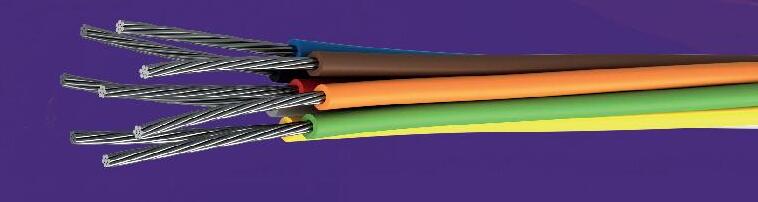
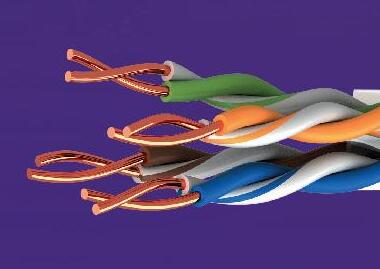
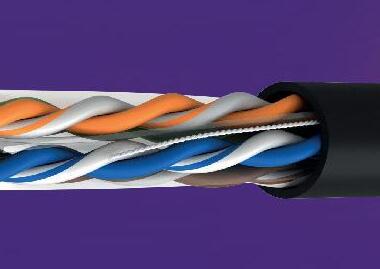
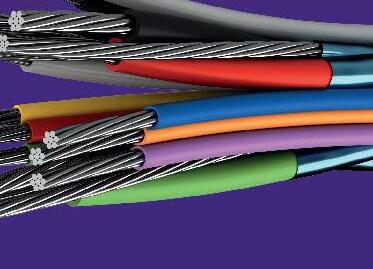
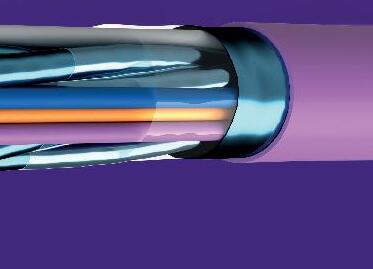
Webro Cables are designed to connect access control systems, CCTV cameras and alarm panels nationwide with optimal performance that residents and businesses can rely on to build a protected world. We do more than you think...

Webro Cables are available next day –cut to length, on reels, or in pull boxes.










Explore the full AV & CI range at www.webro.com


*Source: Ofcom


4 Editorial Last chance to enter! 6 Industr y News Study finds EV adoption being restricted in urban environments; eFIXX and EI Live! take to the airwaves; UK on track for best year ever for renewable energy and heat installations; and more 16 Contract News UK Power Networks Services awarded London Trams contract extension; McCann secures landmark street lighting services contract; Partnership improves energy efficiency and social housing; and more 20 Training City Plumbing opens energy efficiency centre to showcase renewables offer to contractors 22 Key Issue The rise of business consumers 24 Project Focus Case study: Wales Millennium Centre 26 Interview Putting the LIA in the spotlight 32 Competition Win a DeWALT Combi Drill Set and Wera screwdrivers, courtesy of Armorduct 44 Advertisement Feature Niglon’s innovative Protego consumer units to revolutionise electrical installations 56 Advertisement Feature Are you offering your customers the very best downlights? 72 Advertisement Feature Investing in the future 79 Company Showcase Sponsored content from across the sector VOLUME 43 NO. 09 • SEPTEMBER 2023 CONTENTS CONTENTS…
33 Elucian by Click –from zero to hero 36 Retrofill solution brings security and efficiency 38 Protective devices in electrical systems 46 Pioneering sustainable switchgear: Reducing the environmental impact of SF6 gas 48 BS 7671 AMD 2: Vehicle-to-grid and RCDS 50 What are the risks of fitting a IP65 consumer unit outside? … THERE'S MORE TO 51 Ovia – a leading light in the Scolmore Group 54 Illuminating minds and spaces 58 Ansell smart lighting system gives Michelin star restaurant the edge 62 An architectural pearl in the heart of Warsaw 64 LED lighting helps borough of Sefton on its way to net zero emissions 66 Switching off fluorescent tube lamps in favour of LEDs 68 DALI paving the way for the future 69 Median and Niglon –a story of success 74 What are the latest trends and developments in wiring accessories? 76 Testing requirements and USB socket outlets Circuit Protection & Switchgear Lighting Wiring Accessories
Regulars
Hello and welcome to the September issue of ECN. This is a bumper issue, with all the latest industry, contract, project and product news, plus special features on Circuit Protection & Switchgear; Lighting; and Wiring Accessories, compiled to give you a comprehensive and in-depth view of what’s happening in these important areas of the industry.

In Circuit Protection & Switchgear, learn more about the Elucian by Click range of consumer units and circuit protection from Scolmore; Greg Taylor from Orbit Electrical Services gives a run down of protective devices in electrical systems; and Peter Betts from VIRTUS Data Centres looks at the role that data centres and other electricity-intensive sectors can play in eliminating the need for SF6 gas.
In Lighting, just a few of the articles include fantastic case studies from Ansell Lighting and TRILUX; and Megaman UK writes on the specifics of the recent fluorescent lamp ban, along with the advantages of switching to LEDs.
And in Wiring Accessories, take a look at the latest trends and developments in wiring accessories according to Verso, while Scolmore’s Jake Green gives insight into testing requirements and USB sockets.



This issue also features an exclusive interview with Ayca Donaghy, the CEO of the Lighting Industry Association (LIA). Check it out on page 26 to find out more about Ayca’s career journey and the work of the LIA.
We also have an exciting opportunity for readers to win some amazing prizes in this issue – Armorduct is offering one lucky reader the chance to win a DeWALT Combi Drill Set and Wera screwdrivers, worth nearly £500! For more details and how to enter, please see page 32.
Finally, an important reminder that the ECN Awards close for entries on 15 September. These awards showcase and recognise outstanding contributions within the industry, so for those who would like to enter, please do so before the deadline.

The ECN Awards take place on 30 November at the Heart of England Conference and Events Centre in Coventry and is set to be a fantastic evening, so please do get involved. Best of luck to all the entrants!
See you next month!
Carly Wills, Editor

EDITORIAL
The editors and publishers do not necessarily agree with the views expressed by contributors, nor do they accept responsibility for any errors in the transmission of the subject matter in this publication. Whilst we make every effort to ensure that everything is factually correct, we cannot be held responsible if factual errors occur. In all matters, the editor’s decision is final. Editorial contributions to ECN are welcomed, and the editor reserves the right to alter or abridge text prior to the publication. All articles are copyright and remain the property of ECN. Overseas Subscription Rates: Europe £60.00; Rest of World £70.00. Copyright © 2023, All rights reserved. Printed by Micropress, Reydon Business Park Fountain Way, Reydon, Southwold, IP18 6SZ. EDITOR: CARLY WILLS T: 01634 673163 E: carly@allthingsmedialtd.com EDITORIAL ASSISTANT: ISHA JAIN T: 01634 673163 E: isha@allthingsmedialtd.com GROUP ADVERTISEMENT MANAGER: KELLY BYNE T: 01634 673163 E: kelly@allthingsmedialtd.com STUDIO: MARK WELLER T: 01634 673163 E: mark@allthingsmedialtd.com MANAGING DIRECTOR: DAVID KITCHENER T: 01634 673163 E: david@allthingsmedialtd.com ACCOUNTS T: 01634 673163 E: susan@allthingsmedialtd.com ECN charity of choice Published monthly by All Things Media Ltd., Suite 14, 6-8 Revenge Road, Lordswood, Kent ME5 8UD. Tel: 01634 673163 Fax: 01634 673173 NEXT TIME… October Issue Editorial deadline: 21 September Advertising deadline: 28 September EV Charging electricalcontractingnews.com @ElecConNews /electricalcontractingnews @ecn_magazine HVAC LAST CHANCE TO ENTER! UPS, Power & Energy Special Supplement: Lighting AWARDS 2023 ELECTRICAL CONTRACTING NEWS

• Drive profit and growth • Develop your teams • Simplify your work life • Stay ahead of the competition Join today and receive an exclusive welcome pack*! Register for mySchneider to start your membership se.com/uk mySchneider Contractor Program *Whilst stocks last Take your contracting business to the next level with the
STUDY FINDS EV ADOPTION BEING RESTRICTED IN URBAN ENVIRONMENTS
A new study from Juniper Research has found that lack of public infrastructure is severely limiting EV adoption in urban environments. In particular, as flat and apartment owners typically cannot have home chargers fitted, the lack of public infrastructure is a stumbling block to EV adoption in urban environments.
While EV charging points in service will grow from 14.2 million in 2023 to 45 million in 2027 globally, the analysis identified a significant gap between public and home charger adoption, with over twice as many home chargers as public chargers being in service by 2027.
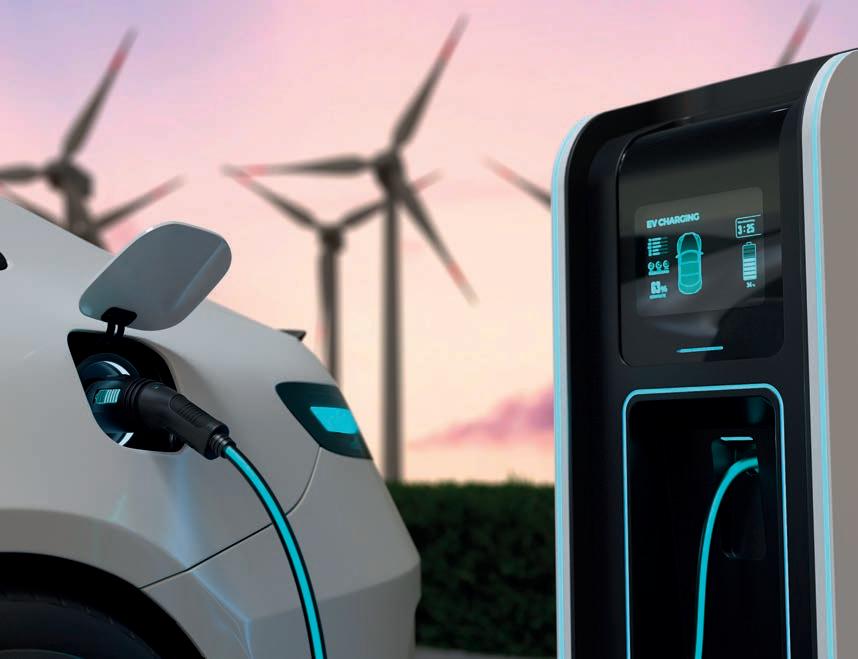
The report identified improving shared data on charging point distribution, as well as agreeing partnerships, to accelerate roll-outs in key areas as vital to redressing the gap.

The study has found that present initiatives from governments are not sufficient to accelerate EV adoption, with new innovation and business models within EV charging needed. Research co-author, Nick Maynard, explains, “It is clear that regulator initiatives, such as requiring charging points to be added to new buildings, are insufficient by themselves to roll out charging infrastructure on a wide enough scale to drive environmental benefits. EV charging networks must work together with both city authorities and each other to identify how best to plug gaps in charging infrastructure, or EV adoption will continue to be limited.”
Juniper Research, juniperresearch.com
Protect Monitor Control
GRANT & STONE ‘ELECTRIFY’ FOOTBALL TEAM’S FUTURE WITH NEW SPONSORSHIP
Grant & Stone has announced as the new kit sponsor of Oxfordshire-based Wheatley Men’s Football Club for the 2023/2024 season.

The company, which has builders merchants, electrical wholesalers, plumbers merchants and bathroom showrooms across the county, says it is proud to support the club. New match day shirts displaying the Grant & Stone logo have been issued to the team.
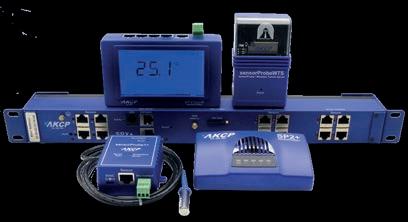
Save Energy with AKCP Sensors
Contact us for a FREE site survey or online demo to learn more about our industry leading environmental monitoring solutions and how they can help to reduce your energy costs. Scalable, with Ethernet and WiFi connectivity, over 20 sensor options for temperature, humidity, water leakage, airflow, AC and DC power, a 5 year warranty and automated email and SMS text alerts.
0800 030 6838
hello@serverroomenvironments.co.uk
Liam Webb from Wheatley Men’s Football Club, comments, “We’re really excited to have a major regional company sponsoring the team. This fantastically generous sponsorship is invaluable and helps our club to continue operating and contributes to a professional match day experience. We are so very grateful to Grant & Stone for their generosity.”
Peter Cudd, who is Group Managing Director at Grant & Stone and local to the area, says, “Organisations like Wheatley Men’s Football Club do so much for their local community, and we are delighted to be making this commitment to the team –the kit looks great. We wish the squad the very best of luck for the season and look forward to hearing about their results.”
Grant & Stone, grantandstone.co.uk
6 | September 2023 electricalcontractingnews.com @ElecConNews /electricalcontractingnews @ecn_magazine INDUSTRY NEWS
Cooling | Power | Fire | Racks | Monitoring
Environmental monitoring experts and the AKCP partner for the UK & Eire.
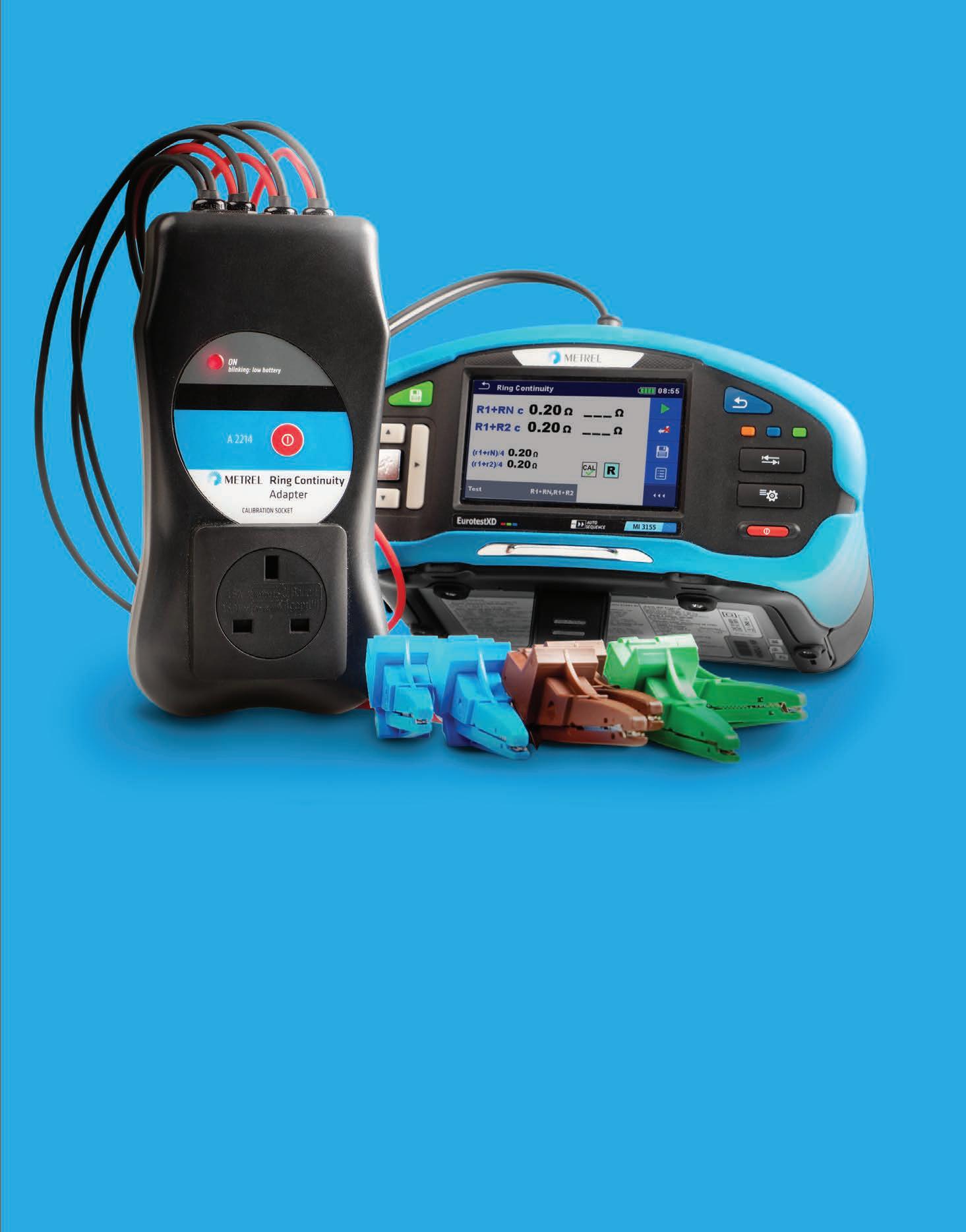


Metrel UK Ltd. Unit 16, 1st Qtr Business Park Blenheim Road Epsom Surrey KT19 9QN Phone: 01924 245000 E-mail: info@metrel.co.uk Web: www.metrel.co.uk Twitter-@MetrelUkLtd Facebook - @MetrelUk Instagram- metrelukltd Maybe we can help you WORK SMARTER not harder. The new Ring Continuity Adapter A 2214 from Metrel will speed up your measurement of r1, rn, r2 and R1 + RN, R1 + R2 by automating the process. • Line, neutral and PE resistance all measured at a single press of a button • Automatic calculation of (r1+rn)/4 and (r1+r2)/4 for easy results evaluation • Connect once, no need to change leads until all continuity tests are complete • Accuracy, with the easy-null capability for all test lead components • Speeds up ring final circuit testing Find out how we can help, call us TODAY on 01924 245000 or mail: info@metrel.co.uk for more information. Get more from your tester
66% OF UK TRADES WILL HAVE TO CANCEL WORK DUE TO WORKFORCE SHORTAGES THIS YEAR
New research from Rated People has revealed the impact of labour shortages on the construction industry in 2023. Almost two in three (63%) UK trades say they’re struggling with workforce shortages this year and 66% say they are having to cancel work as a result.
Rated People interviewed more than 2,000 tradespeople and homeowners across the UK. The study reveals plasterers, handypeople and builders are the top three trades that have been the most affected by workforce shortages.
Top 10 trades that experienced workforce shortages in 2022
BGEN AND BARROW RAIDERS ENCOURAGE THE NEXT GENERATION OF WOMEN
Barrow Raiders has announced an exciting new partnership with BGEN. The organisation employs more than 1,000 employees and specialises in digital, electrical, and mechanical engineering.
One of the key aims of the new partnership with the Raiders will be to encourage more women in the area to try something different, such as rugby league and engineering. As part of this, BGEN will become the main commercial sponsor of the club’s Raiders Girls side – an initiative that encourages young women aged 5-16 to get into the sport.
The firm supports locally when delivering projects for its clients and says it will continue to do so against initiatives set out in its ESG strategy – this sponsorship being the latest example.
Steve Neale, Chairman, Barrow Raiders, says, “As part of the club’s commitment to increase female opportunities and participation levels across the local area, this new partnership makes total sense for both parties.

“Gaining the support of a high profile, reputable and esteemed organisation like BGEN is fantastic for the club and area as a whole, and we are delighted to welcome them to the Raiders family.” BGEN, b-gen.co.uk
The 2023 Rated People Home Improvement Trends Report discovered that tradespeople think the main driving force behind the workforce shortage is a lack of workers with adequate training or experience.
One of the biggest reasons for the scarcity of skilled workers over the past couple of years is the impact of Brexit – this has prevented many highly skilled tradespeople from having working rights in the UK, and it has also meant many people working in the industry deciding to leave the UK.
UK tradespeople cite a lack of young people getting into the industry as the second-largest contributing factor to the current shortages, whilst careers advice at school failing to advocate for trades was specifically named by one in eight (12%) tradespeople. Rated People, ratedpeople.com
EFIXX AND EI LIVE! TAKE TO THE AIRWAVES
eFIXX is partnering with EI Live! 2023 to spread the word about the opportunities delivered by the show in the smart home and luxury AV industries for electricians and electrical contractors.
With over half a million subscribers on its YouTube channel, the eFIXX platform offers a powerful partner to gain attention for the show from those working in the electrical industry and related trades.
Recently, David Kitchener, Managing Director of All Things Media, parent company of EI Live!, was a special guest on the eFIXX biweekly TV show, where the importance of the burgeoning smart building sector was discussed in relation to the electrical contracting sector – check it out on eFIXX’s YouTube channel @efixx.
The Technical Theatre at EI Live! features informative talks and education sessions. eFIXX’s own Gary Hayers will be chairing two sessions in the Technical Theatre: ‘Smart Home Installer Secrets’ on Wednesday 13 September, and ‘Is Wireless the Future of Smart Home Installation’ on Thursday 14 September – both aimed at electricians and electrical contractors.
Whether you are starting out in the smart building industry or looking to expand further, EI Live! 2023 is the perfect place to start, with all the major players exhibiting and ready to welcome contractors and explain the products and services on offer.
EI Live!, eiliveshow.com
FIX RADIO ADVANCES AS BRITAIN’S FASTEST-GROWING BROADCASTER
Fix Radio is the fastest growing national radio station in the UK, registering an increase in listeners by nearly 250% since its national launch in May last year. The builders station had a weekly reach of 295,109 tradespeople between September 2022 and February 2023.
The growth of Fix Radio highlights the wider trend of the increasing audience share that commercial radio enjoys, with figures from RAJAR showing that commercial radio registered a record weekly reach and share of listening for a second consecutive quarter. There is a distinct shift away from the ‘big radio’ stations occurring, as every full-time national BBC station is now in recession, as an abundance of listeners are moving to ‘lifestyle’ stations, such as Fix. Combined commercial radio stations now boast a total audience of 39.2 million listeners per week over the last three months, 7.5 million more than the BBC. For many listeners, the tailored output from these stations have become more appealing than the one-size-fits-all approach of the big stations.
Fix Radio, fixradio.co.uk

8 | September 2023 electricalcontractingnews.com @ElecConNews /electricalcontractingnews @ecn_magazine INDUSTRY NEWS
RankTrade % Experienced Workforce Shortages in 2022 1Plasterer/renderer 93% 2Handyperson 89% 3Builder 68% 4Gardener/landscape gardener 64% 5Painter and decorator 53% 6 Bathroom fitter 50% 7Electrician 49% 8Roofer 48% 9Plumber 38% 10Carpenter/joiner 33%



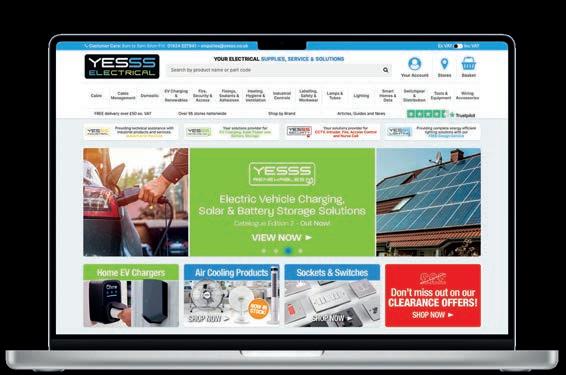
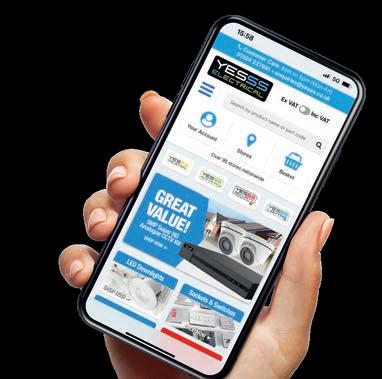











YOUR ELECTRICAL SUPPLIES, SERVICE & SOLUTIONS YOUR TRADE WEBSITE Find us at yesss.co.uk EDITION 2 INDUSTRIAL products NOW IN STOCK catalogue YESSS.CO.UK OPEN 24/7 • OVER 95 BRANCHES NATIONWIDE OUT NOW! Contact your local store for access to your trade account online features: • View your account including quotes, orders and statements • Request a quote Create ‘Favourite’ lists for your different projects • View your most frequently purchased products • Ability to make a payment on your trade account • View your local store stock • Access to nationwide stock • View your saved pricing • Multi-quote ordering • Click & Collect (within 1 hour) Do you have multiple engineers working for you? Ask your local store about a more customised experience
UK IN DANGER OF LOSING BRITISH TRADESPEOPLE TO JOBS ABROAD
The UK construction industry is experiencing a severe labour shortage, with almost two-thirds (63%) of UK trades struggling to fill roles this year, according to Rated People

New research from the trades platform reveals that UK tradespeople are also looking to leave the country to find work abroad, which could make the situation even worse.
A better quality of life and enhanced career opportunities are driving UK tradespeople to seek work abroad and the new study uncovers which countries are attracting our skilled workers the most.
Researchers analysed Google data for 15 types of trade jobs in different countries around the world. By comparing UK search volume over the past year with the previous 12 months, the results show where different trades are increasingly looking to find work around the world.
In total, there were more than one million searches made for trade jobs in different countries since June 2022. Across the 15 trades, 10 are looking for work in Australia more than any other country. Saudi Arabia appears three times, and Brazil and Spain both feature once.
For construction jobs in general, searches for jobs in Saudi Arabia have gone up the most, with interest rising by 293% over the past year.
Brexit, a lack of young people getting into the industry, and the cost-of-living crisis are key factors contributing to the lack of skilled workers in the industry. Rated People, ratedpeople.com
UK ON TRACK FOR BEST YEAR EVER FOR RENEWABLE ENERGY AND HEAT INSTALLATIONS
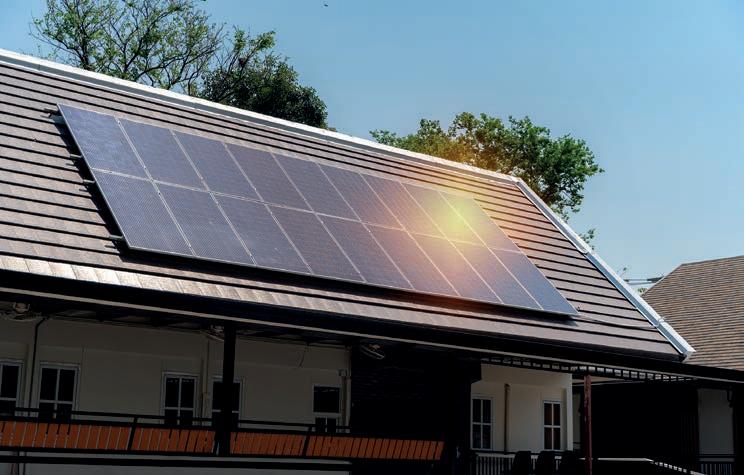
More households are installing heat pumps and solar panels in the UK than ever before, with a 62% jump compared to last year, new data from the official standards body for renewable technologies shows. MCS data shows that in the first six months of 2023, more than 120,000 certified solar panels, heat pumps and other renewable technologies were installed in UK homes, the highest number ever by this point in the year.
The previous record for renewable installations was more than a decade ago in 2012, when households raced to get solar panels before cuts to the Feed-In Tariff incentive scheme kicked in.
June saw 27,791 certified installations recorded on homes and businesses across the UK, bringing the total for the first half of the year to 122,155. 2023. The record saw more installations in the month of June and in the first half of the year than any previous year.
2023 is the first year to average more than 20,000 solar panel installations per month, and the first to see more than 3,000 heat pumps installed per month. Analysts say that with this sustained growth, nearly a quarter of a million households could install renewable energy by the end of this year.
MCS, mcscertified.com
JTL APPRENTICES REACH SKILLELECTRIC UK FINAL



Three apprentices from JTL have reached the final stage of the SkillELECTRIC UK competition.
Demi Mae Whitehead from William Davis Homes; Ben Gillin from Lloyd Morris Electrical; and Thomas Turner from Parker Technical Services, have been named amongst the eight finalists at the UK grand final of the competition. The three learners beat competitors from across the country at the national qualifying heats to be named within the top eight scoring apprentices.
All three will now compete at the final between 14-16 November at Oldham College, where they will complete a two day practical installation task under the close scrutiny of judges in the hope of being named the SkillELECTRIC UK Champion. The practical assignment will also include a solar PV-related task to reflect the growing needs for training in solar installation.
Jo Frith Williams, Interim Director of Quality at JTL, says, “We’re thrilled that three of our learners have made it to the final of the SKILLELECTRIC UK competition and want to congratulate Demi Mae, Ben and Thomas on their fantastic achievements.” JTL, jtltraining.com
10 | September 2023 electricalcontractingnews.com @ElecConNews /electricalcontractingnews @ecn_magazine INDUSTRY NEWS
Search term YoY % increase in Google searches Construction jobs – Saudi Arabia 293% Cleaner jobs – Australia 183% Plumber jobs – Saudi Arabia 171% Painter jobs – Australia 158% Plasterer jobs – Australia 157% Roofer jobs – Australia 130% Carpenter jobs – Australia 129% Tiler jobs – Australia 129% Electrician jobs – Saudi Arabia 126% Gas engineer jobs – Australia 124% Gardener jobs – Australia 115% Bricklayer jobs – Australia 113% Builder jobs – Australia 87% Heating engineer jobs – Brazil 25% Handyperson jobs – Spain 20%
DR YCA B
A stable and safe environment for the engineer to fit and repair external Smart Meters and EV charging points.
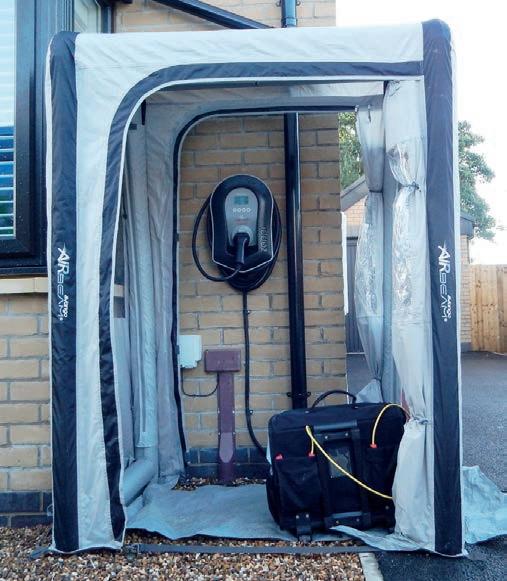

• Work not lost due to the ‘British weather‘
• Circa 2 minutes to inflate and deflate
• Industry feedback pays for itself after three rescheduled jobs
As seen on eFIXX!
Introductory

Specification
Material
• Full flame retardant fabric – adhering to EN5912 safety standard
• Durable 210 denier material
• Waterproof and water resistant – flysheet and groundsheet are factory taped, providing water tight seal
• Full UV protection
• Non conductive
• Passed by Trade Union
Size
• Inflated: 183 x 125 x 90cm (H x W x D)
• Packaged: 25 x 30 x 62cm (H x W x L)
1 YEAR WARRANTY
Features and Benefits
• Light and portable
• Tough, stable and reliable
• Waterproof material and construction
• Move onto the next job without costly delays
• Help speed the transition to Net Zero
Tested and Supported
• Manufactured and supported by Vango
• The inventors of AirBeam®
• Over 50 years experience in design, manufacturing and support
• Quality Assured
YOUR ELECTRICAL SUPPLIES, SERVICE & SOLUTIONS YESSS.CO.UK OPEN 24/7 • OVER 95 BRANCHES NATIONWIDE
offer price for
limited
only!
a
time
INTRODUCTORY SPECIAL OFFER! Ex. VAT Scan QR code for further information
£275.00 EACH Price Inc. VAT (£330.00)
CITY PLUMBING AND TEENAGE CANCER TRUST ANNOUNCE FUNDRAISING MILESTONE
City Plumbing and Teenage Cancer Trust are celebrating a remarkable milestone after funds raised through their partnership reached the magical figure of £3 million.
The company has supported Teenage Cancer Trust since 2012, making it one of the charity’s longest standing ‘charity of the year’ partnerships.
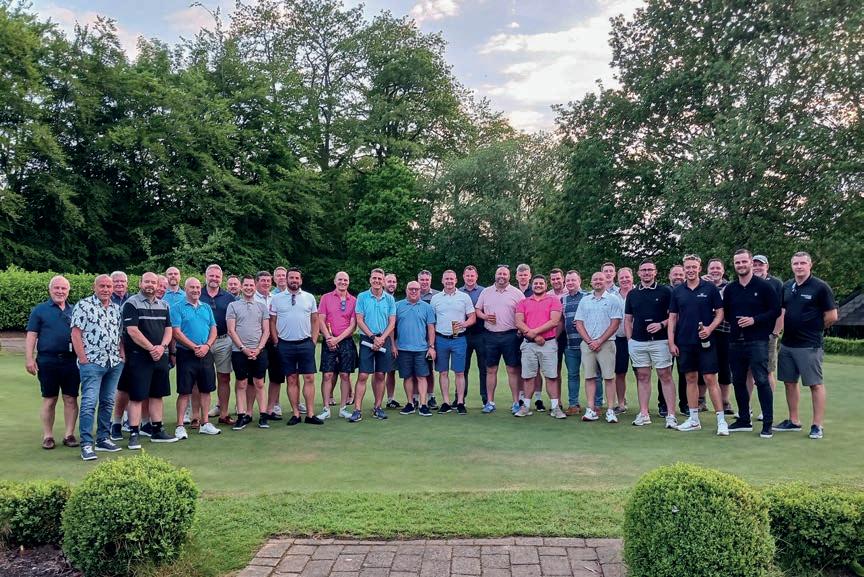
During that time, employees across the business have raised money through a wide range of fundraising activities, from hikes and climbs to cycle rides, treks, walks and marathons. One even had the Teenage Cancer Trust logo tattooed on his body to help raise funds!
Dr Louise Soanes, Chief Nurse, Teenage Cancer Trust, says, “On behalf of all Teenage Cancer Trust’s nurses, we’d like to say a huge and heartfelt thank you to City Plumbing for all their fundraising.
“The total raised means that we could provide over 100,000 hours of nursing care to young people with cancer, helping them to cope with the trauma of a diagnosis and making sure they are cared for during treatment.
“Raising such a large sum of money is an incredible achievement and will make such a huge difference to so many.” City Plumbing, cityplumbing.co.uk
BCIA RELEASES GUIDE ON BEMS DESIGN AND EMBODIED CARBON
The BCIA’s Technical Working Group has produced a new technical guide to add to its online portfolio of guides available to download.
The new guide is titled, ‘Building Energy Management System (BEMS) Design and Embodied Carbon’ and highlights how embodied carbon can be reduced in BEMS systems.
‘ELECTRICIAN PLUS’ CONCEPT LAUNCHED BY TESP
The new brand concept, ‘Electrician Plus’ has been launched by The Electrotechnical Skills Partnership (TESP) to highlight how the role of a qualified electrician is central to the installation of low carbon and renewable technologies.
Adequate understanding of electrical scientific theory and principles and demonstrable occupational competence are critical for the safe installation of technologies such as solar photovoltaic (PV) panels, battery storage systems and electric vehicle charging points (EVCP). The core competence of a qualified electrician is the foundation from which to upskill and train in these areas.
The Electrician Plus model highlights how once someone reaches qualified electrician status, all that is needed is top-up CPD and qualifications in specific new technologies, to enable safe, compliant and competent installations.

Awarding bodies such as City & Guilds, EAL and BPEC have been leading the way in this area with their updated EVCP and solar qualifications, designed so that only electricians who meet the industry Level 3 standard can enrol on these courses, helping safeguard against non-qualified and under-qualified personnel undertaking renewable installations and the potential safety and fire risk this poses.
The new Electrician Plus logo will be used to endorse relevant qualifications to show they are industry approved in terms of content and assessment, providing robust upskilling for qualified electricians who have a solid foundation of electrical skills and knowledge. TESP, the-esp.org.uk
Embodied carbon is the equivalent of carbon dioxide (CO2) emissions associated with materials and construction processes throughout the whole lifecycle of a building. With all new contracts, consideration for embodied carbon reduction must be included in the BEMS design.
BCIA President, Graeme Rees, says, “The BCIA technical guides are a vital tool designed to help members and anyone working in the building controls and BEMS industry work more effectively. This latest guide details the importance placed on the reduction of carbon emissions by governments around the world and the steps consultants and specifiers can take to reduce embodied carbon, including early engagement with clients and ensuring the most up to date BEMS controls are installed.”
All technical guides can be downloaded from the Technical Guides section of the BCIA website.
BCIA, bcia.co.uk
MOVERS & SHAKERS…
Hudson Group has appointed industry guru, Trevor Tomkins, as Group Technical Consultant to work across and represent the three businesses which comprise the group – RMS, Armorduct and Milton. In his role, Trevor, who has been in the electrical and cable management sectors for over four decades, will bring his years of experience to support customers across the group, primarily focussing on projects in corrosive and hazardous environments.
Jay Parmar, Chief Executive of the Joint Industry Board (JIB) has been appointed as a member of the Industry Competence Committee (ICC). The ICC has been set up to monitor and help to improve industry competence. As a member, Jay will play an active and key role in providing leadership to the built environment industries on competence, helping to facilitate improvements in competence standards and practice, as well as supporting BSR’s strategies to deliver culture change.
Johnson Controls has named Marc Vandiepenbeeck as Vice President and President, Building Solutions Europe, Middle East, Africa, and Latin America (EMEALA). In this role, Marc will serve as an officer of the company and oversee Johnson Controls’ $3.8bn building solutions operations across 90 countries.
12 | September 2023 electricalcontractingnews.com @ElecConNews /electricalcontractingnews @ecn_magazine INDUSTRY NEWS
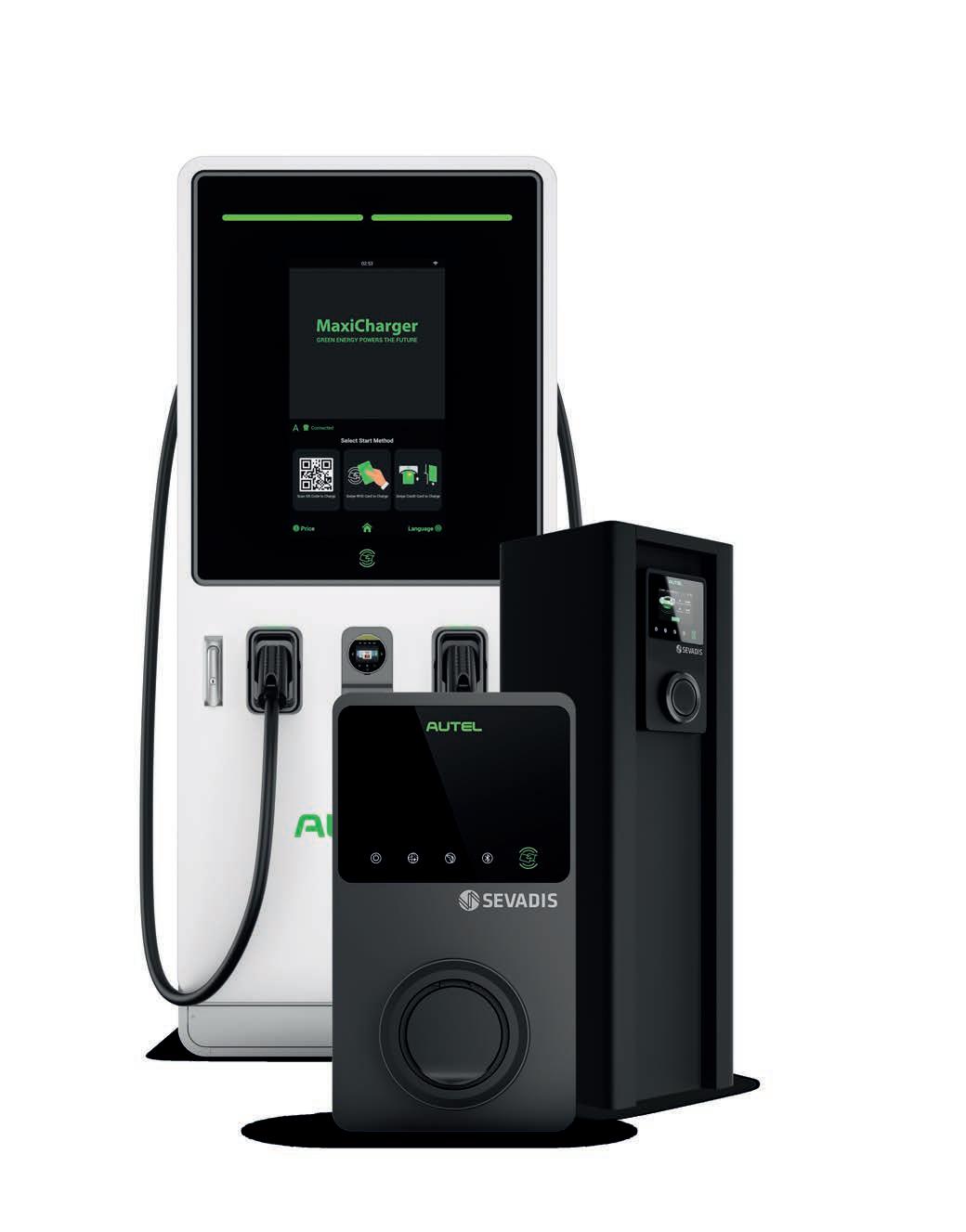
YOUR EV CHARGE POINT PARTNER

Easy to install
On-time deliveries
Flexible solutions for all
Industry-leading reliability
Trusted & credible experts
0330 058 7144 | enquiries@sevadis.com | sevadis.com
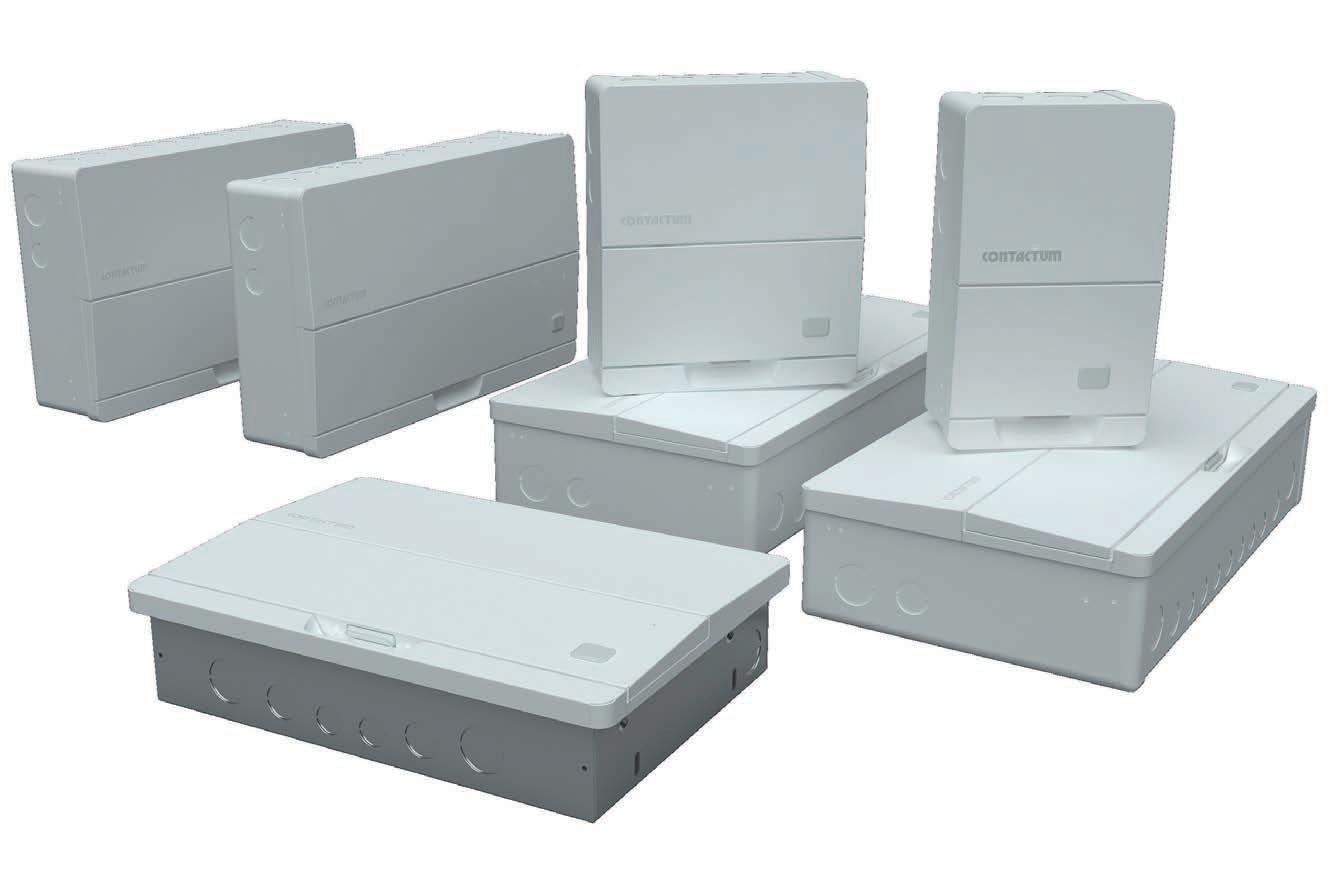


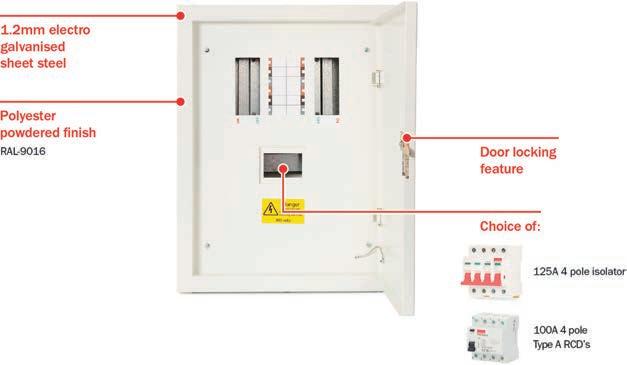
www.contactum.co.uk sales@contactum.co.uk 020 8208 7400 “THE ELECTRICAL CONTRACTOR’S CONSUMER UNIT” Compliant with BS EN 61439-3, including Annex ZB Type Test Certificate issued by third party Sur face and flush mount versions Up to 24 modules single row Up to 44 modules dual row 18th Edition compliance Up to 100A without derating Type A RCDs and eRCBOs Defender 2.0 Award Winning Consumer Units Supplied Through Contactum’s Preferred Distributor Network Consumer Units & Distribution Boards Designed & Independently Type Tested To BSEN 61439-3 & BS7671 18th Edition Amendment 2
• Tested in accordance with IEC 61439-3
• Tested in accordance with IEC 61439-3

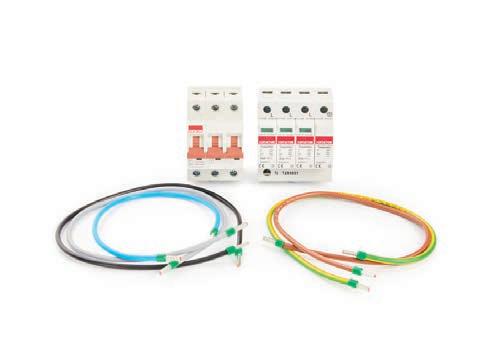
• Extension enclosures, metering kits & surge protection available
• Extension enclosures, metering kits & surge protection available
• Tin plated busbar, improved connection, prevention of copper oxidisation
• Tin plated busbar, improved connection, prevention of copper oxidisation
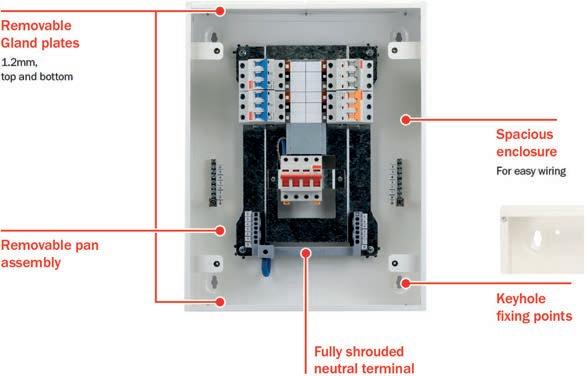
• Fully shrouded neutral terminals
• Fully shrouded neutral terminals
• 4 to 16 triple pole ways
• 4 to 16 triple pole ways
• Single phase conversion kit
• Single phase conversion kit
• Busbar short circuit withstand rating Icw 20ka 0.25s
• Busbar short circuit withstand rating Icw 20ka 0.25s
• IP4X with door and DFC fitted
• IP4X with door and DFC fitted
• IP2X with all devices and blanks fitted with covers off
• IP2X with all devices and blanks fitted with covers off
www.contactum.co.uk sales@contactum.co.uk 020 8208 7400 www.contactum.co.uk sales@contactum.co.uk 020 8208 7400
Tested by an independent reputable laboratory
Three Phase range of Defender B Boards, complementing our Defender 1.0 & 2.0 Consumer Units. www.contactum.co.uk sales@contactum.co.uk 020 8208 7400
Introducing
Tested by an independent reputable laboratory
Three Phase range of Defender B Boards, complementing our Defender 1.0 & 2.0 Consumer Units.
Introducing
UK POWER NETWORKS SERVICES AWARDED LONDON TRAMS CONTRACT EXTENSION
UK Power Network Services has been awarded a two-year contract extension by London Trams to continue the inspection and maintenance of 13 trackside substations in the Croydon area.

Originally appointed three years ago, both organisations have been working collaboratively to continuously deliver a reliable and efficient service for customers across South London.
Philip Heathcote, Head of Markets at UK Power Networks Services, says, “We are delighted to be able to continue this very successful partnership with
MCCANN SECURES LANDMARK STREET LIGHTING SERVICES CONTRACT
London Trams. The service we have provided has allowed us to continuously ensure the reliability of the tram service for passengers.”
London Trams has set out an ambitious 15-year plan, Tram 2030, highlighting key improvements which will be made to accommodate growing demand, improved reliability, as well as the regeneration of Croydon town centre.
The works undertaken by UK Power Networks Services will support this, through the maintenance of the energy infrastructure of electrical transformers, battery chargers, protection systems and emergency lighting. Ultimately,
this will mean trams can become longer to accommodate more passengers, more frequent services into major interchanges such as East Croydon and Wimbledon, and developing new connectivity as part of the longer-term plan for trams in South London.
The work conducted by UK Power Networks Services also includes 24/7 emergency first line response to ensure any incidents are resolved quickly.
UK Power Networks Services, ukpowernetworksservices.co.uk
McCann has secured a significant street lighting services contract with Suffolk County Council, following an invitation to tender in September 2022, with the proposed contract spanning seven years and commencing from 1 October 2023. There is also an option to extend the contract for an additional three years, resulting in an estimated overall project value of £35 million over 10 years.
Under the comprehensive contract framework, McCann will be responsible for critical tasks including emergency attendances, fault repairs, asset cleaning, electrical testing, visual inspections, lamp changes, and the repair and replacement of assets as required.

Suffolk County Council’s extensive street lighting network encompasses 62,000 road lighting assets, including 55,000 columns, 9,000 signs and bollards, and 3,500 associated assets. Additionally, the council is entrusted with maintaining 10,500 assets within parishes in Suffolk and 1,200 assets within parishes in Norfolk.
Councillor Paul West, Suffolk County Council’s Cabinet Member for Ipswich, Operational Highways and Flooding, says, “I am delighted to welcome our new street lighting services contractor, McCann to Suffolk. Following a rigorous procurement exercise, McCann demonstrated how they would be a perfect fit for our county.
“With recent successes to replace 43,000 of our streetlights with sustainable LED lanterns, McCann looks to further these successes and support us to deliver on the county council’s ambitions, especially by providing value for money and enhancing our environment, supporting us on our journey to net zero carbon.” McCann, mccann-ltd.co.uk
16 | September 2023 electricalcontractingnews.com @ElecConNews /electricalcontractingnews @ecn_magazine CONTRACT NEWS
Wall Charger 2
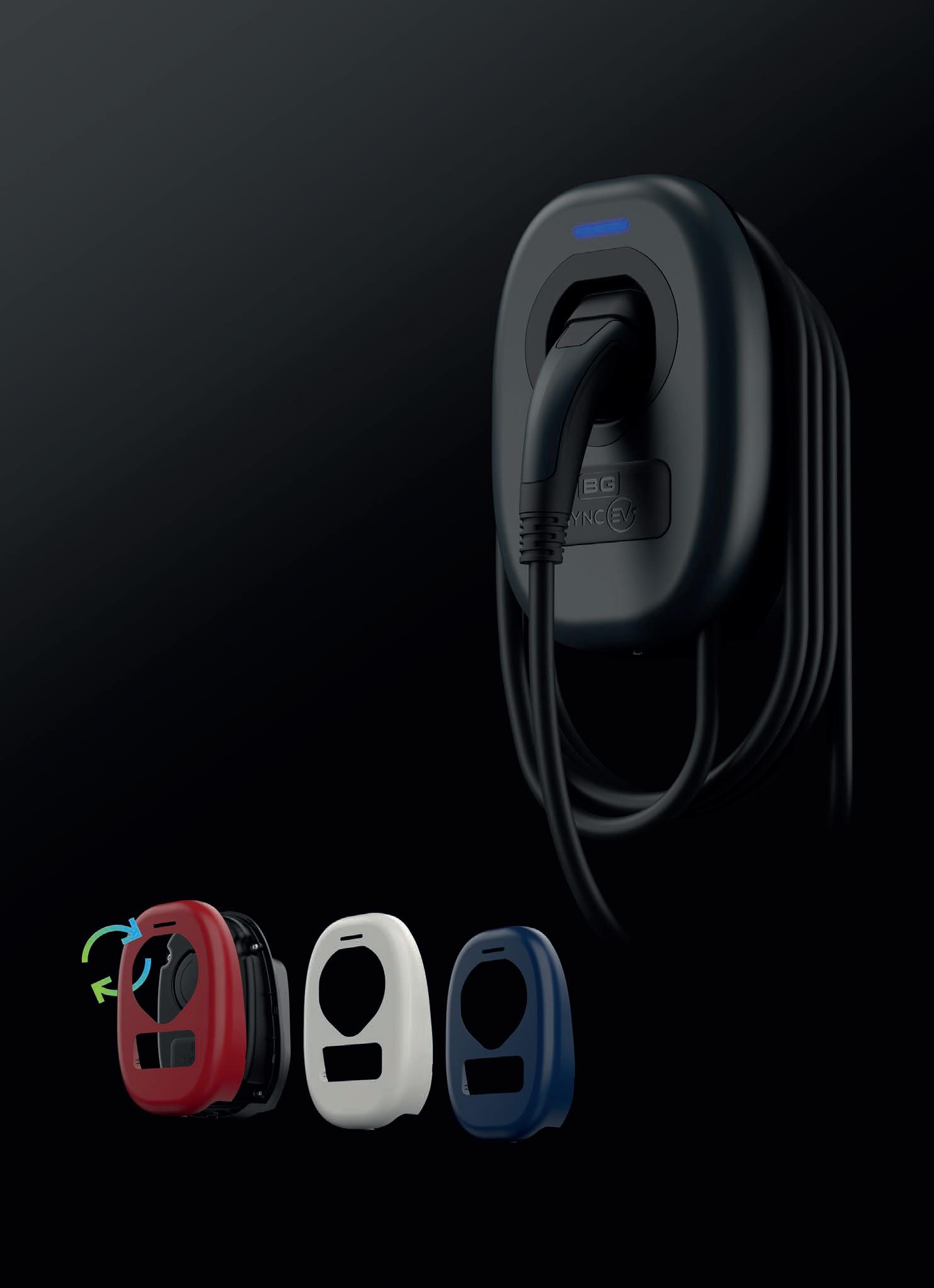
7.4kW Tethered & Socketed
Models with Wi-Fi, LAN, 4G and RFID
Quick and easy installation, with UK based technical support
3 year warranty & OZEV Approved
Compatible with all electric and hybrid plug-in vehicles
AVAILABLE NOW
View the range at syncev.co.uk
Interchangeable front fascias change the colour to suit your style
Universal fit for Socketed or Tethered chargers
Introducing NEWFOR2023
BALFOUR BEATTY APPOINTED PREFERRED BIDDER ON SSEN TRANSMISSION’S ASTI FRAMEWORK
Balfour Beatty has been selected as one of the 10 preferred bidders on SSEN Transmission’s approximately £10bn Accelerated Strategic Transmission Investment (ASTI) framework, responsible for delivering the onshore transmission infrastructure within SSEN’s ‘Pathway to 2030’ network redevelopment programme.
Balfour Beatty’s works will include the delivery of the overhead lines, underground cables and substations needed to redevelop the transmission network in the north of Scotland between now and 2030.
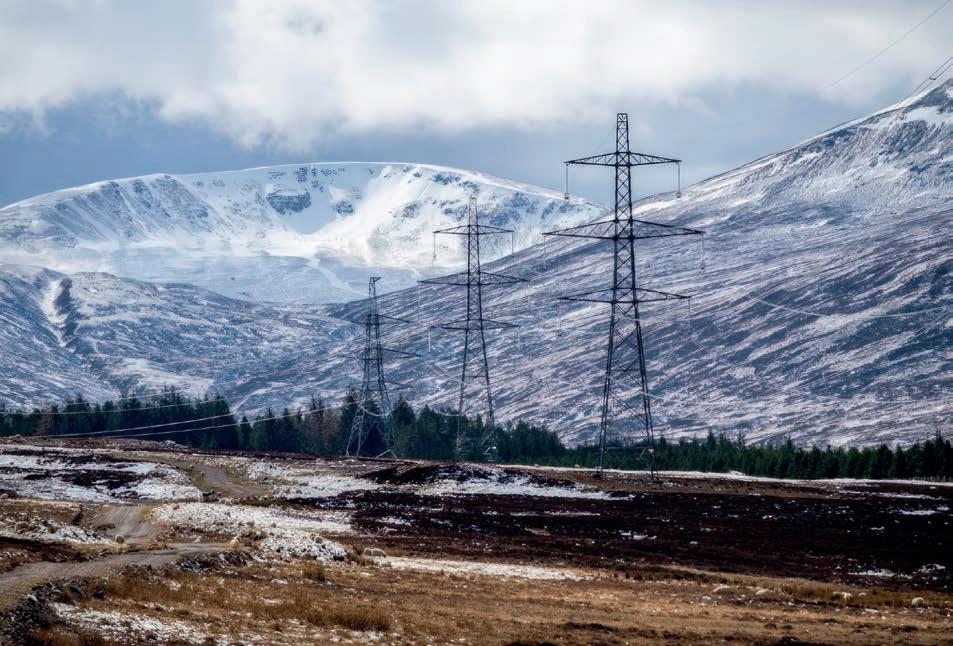
As a significant step forward in the major upgrade of the electricity transmission network, on completion, the programme will help to meet the UK and Scottish Government’s 2030 renewable energy and climate change targets. In addition, it will contribute to securing future energy independence by enabling the connection and transportation of affordable and homegrown low carbon power, reducing the country’s dependence on global wholesale energy markets.
The company is also delivering a new 400kV substation and associated cabling and overhead line works on behalf of SSEN Transmission in Peterhead, to ensure the continued safe supply of power to the north east of Scotland.
Ian Currie, Managing Director of Balfour Beatty’s Power Transmission & Distribution business, says, “Having worked closely and collaboratively with SSEN Transmission for over 40 years, we are delighted to be contributing to the upgrade of the electricity transmission network through their latest framework.
PARTNERSHIP IMPROVES ENERGY EFFICIENCY AND SOCIAL HOUSING

SHAL Housing has turned to technology to improve the efficiency of heating systems and comfort for residents across its portfolio as a part of its smart home scheme.
Driven by a partnership with City Plumbing, together with technology providers, Vericon Systems and ADEY, the scheme has already identified improvements that could be made in 83% of properties. SHAL and its partner, Somerset Gas, who fitted the technology, have piloted it in a number of homes in order to assess the value for money and customer impact.
Innovative technology, including telematics hardware from Vericon Systems and app-based onsite water testing, and remote monitoring MagnaClean magnetic filters from ADEY installed in individual homes, gives SHAL Housing complete visibility of the health of the heating systems. In practice, the data gathered is being used to inform a proactive approach to property maintenance.
Remote, real-time monitoring means faults and inefficiencies are quickly identified without the need for occupants to report problems. This insight allows maintenance teams to be equipped with specific fault information to quickly and accurately resolve issues before they cause greater disruption.
Alongside monitoring the performance of gas boilers and the wider heating systems, technology from Vericon Systems is also being used to measure temperature and humidity in individual homes. By monitoring these factors, SHAL Housing can identify potential damp and mould problems and work with tenants to resolve any issues before they become dangerous.
City Plumbing, cityplumbing.com
“As the largest power transmission contractor in the UK, we will utilise our expert capability and extensive experience to play our part in providing secure energy for the surrounding area for the future.”
Balfour Beatty, balfourbeatty.com
COMMUNITY FAMILY ENTERTAINMENT CENTRE WITHIN US AIR FORCE BASE ILLUMINATED
Ventola Projects has successfully installed phase one of its VAvR Experience solutions for a Family Entertainment Centre (FEC) within a prominent US Air Force Base in Germany.
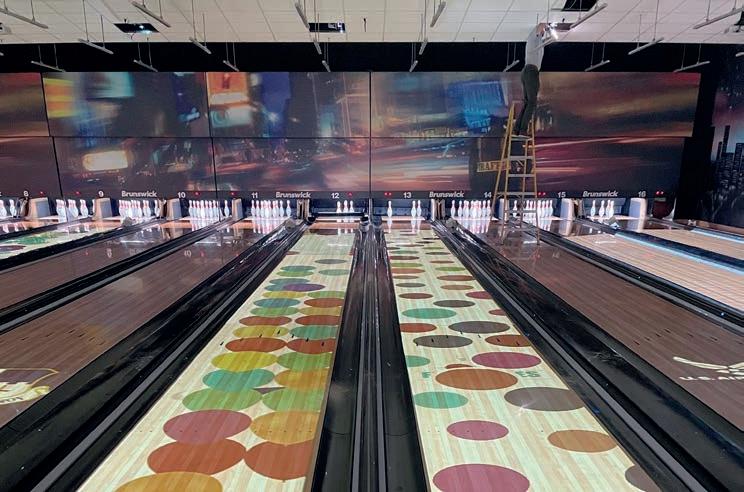
The company says that this milestone project showcases the company’s commitment to innovation and excellence in providing energy efficient, sustainable and intelligent technology solutions for critical infrastructure and family entertainment applications.
The installation represents a start to some significant advancement in single platform technology, enhancing the FEC’s overall efficiency, with smart hardware integrated controls and enabling eventual seamless automation.
Key benefits of the VAvR Experience and technology solutions include:
• Immersion and experience – enhancing the customer’s engagement, providing families with engaging experiences to enjoy together, and easily adjusted to the liking of all ages.
• Sustainability – the VAvR LED range features many eco-friendly components and energy saving solutions to reduce greenhouse gas emissions and promote green practices.
Mick Ventola, CEO of Ventola Projects, expressed his delight on completing the initial stage of the project, saying, “We are thrilled to have been selected as the experiential partner for this prestigious USAB project. Our team worked diligently to deliver its objective to meet the specific needs of this overseas community-based entertainment facility.”
Ventola Projects, ventolaprojects.com
18 | September 2023 electricalcontractingnews.com @ElecConNews /electricalcontractingnews @ecn_magazine CONTRACT NEWS
SSEN Transmission
CITY PLUMBING OPENS ENERGY EFFICIENCY CENTRE TO SHOWCASE RENEWABLES OFFER TO CONTRACTORS
Carly Wills was invited to tour City Plumbing’s newly opened Energy Efficiency Centre in Farnborough to find out more about the company’s energy efficiency offer.
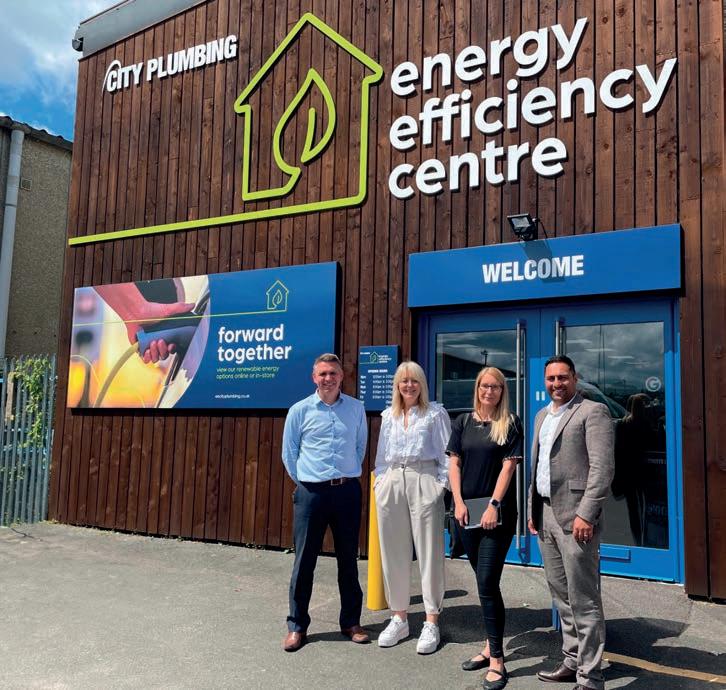
Imust admit, when I was invited to take a tour of City Plumbing’s Energy Efficiency Centre in Farnborough, I did wonder about the relevance for electrical contractors, given the name City ‘Plumbing’. But as soon as I entered the Centre, the opportunities available to electrical contractors by diversifying into renewables became strikingly clear.
The Centre features an accredited training centre and a showroom area, featuring an extensive range of energy efficiency technologies and manufacturers.
At the Centre, I met with Debra Boucher, the Centre of Excellence Manager; Hemal Morjaria, Managing Director – Energy Efficiency & Electrical; and Marc Miller, Energy Efficiency Director. All three are highly knowledgeable in their field and explained the technologies available in detail, as well as the importance of spreading the word to electrical contractors that renewable technology is out there and will be the future – so there’s no better time to upskill, to be able to add services such as air source heat pump and solar panel installation to your offer.
City Plumbing’s Energy Efficiency Centre features an extensive range of technologies
First stop on the tour were the air source heat pumps. An air source heat pump pulls in air from outside, then uses it to heat a special refrigerant liquid. As it warms up, the liquid turns into gas.
This gas is compressed to increase its temperature – which provides heat and hot water. When the gas cools down, it becomes liquid again and gets reused at the start of the cycle.
“It’s all about keeping the ambient temperature in your house to a nice reasonable level,” says Hemal.
“We are seeing more electricians coming to us and saying they want to learn more about more about renewable technology, especially solar and air source, because I think they’re finding this a niche into the market.
“You need to have an electrical qualification to install an air source heat pump, therefore, we’re finding our customer base coming to us for advice and an unbiased view on what’s a good heat pump, and what works better in whichever situation.
“We have a technical design team which provides designs for heat pumps on the floor, solar PV, wastewater recovery, solar thermal, etc. within a 24-hour period, free of charge.”
Hemal says that, from an electrician’s point of view, because the regulations are changing around the way electricity is used to heat homes, the company is seeing a lot of electricians showing a lot more interest in the heat pump side of the business.
Gas boilers will be phased out in England in 2025 and in Scotland in 2024, so at that point renewable technology, for example heat pumps, will have to come in.
Hemal says, that underfloor heating works really well with air source heat pumps, because it keeps the ambient temperature constant, and there are four different electrical and water underfloor heating systems on display at the Centre.
Marc says, “As we move towards legislation changes in probably about a year’s time for newbuilds, you will probably see a number of house builders go for heat pumps, with underfloor heating as well, as it helps to maintain that ambient temperature.”
Another technology on display at the Energy Efficiency Centre is wastewater heat recovery for showers and baths, which recovers the heat from wastewater through a heat exchanger, extracting the thermal heat and using it to heat the mains water coming in. This saves the water heater having to heat the water to its full temperature, resulting in around 55% energy efficiency when used in a shower.
We then moved on to solar PV. City Plumbing has 370 branches across the UK and Ireland that have the ability to stock and distribute solar products. Products can be picked, packed and dispatched from a central warehouse, to be received at the branch, ready for the buyer to do the onward delivery or collection.
“Our mindset as a business is that we need to react really quickly to everything. And that’s how we’ve educated ourselves, so our ability to react quickly in all marketplaces is proving to be really good in the solar market,” says Hemal.
Solar panels use daylight to generate DC electricity, so an inverter is required to convert it to the AC used in a house. How much electricity you generate is dependent on how many panels are on the roof.
“So, you could probably generate enough electricity to store in a battery to use at night, or even two batteries or three batteries,” says Debra. “You can then use that stored energy at night, and although I don’t think you’ll be totally off grid, the average house could probably be around 40% to 60% self sufficient.
“And solar panels are not as expensive as people think.”
City Plumbing stocks a number of solar panel brands and has more in the pipeline.
There are also a number of EV chargers on display at the Centre, which are either tethered or untethered. When installing an EV charger, the electrical supply needs to go into the fuse box, with a separate RCBO – yet another opportunity for electrical contractors.
The second part of the Centre is the accredited training centre, where City Plumbing partners with GTEC to deliver LCL Award heat pump and solar panel installation training. Learners have access to rigs and a working heat pump in the Centre, specifically to aid with this training.
The majority of the courses offered are three-day courses, and at the end of the training, participants receive an LCL Award. If the contractor then wants to become MCS accredited, their LCL Award puts them on the road to carry on and be able to competently fit an air source heat pump.
“Feedback received so far from the training has been really good,” says Debra. “They really like the room and they like the Centre.”
City Plumbing’s Energy Efficiency Centre is open to all installers and homeowners. I’d highly recommend a visit to get a real understanding of the different technologies available and learn about how they work.
City Plumbing, cityplumbing.co.uk
20 | September 2023 electricalcontractingnews.com @ElecConNews /electricalcontractingnews @ecn_magazine TRAINING

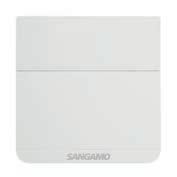
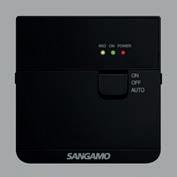
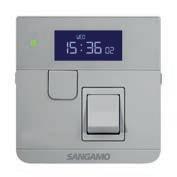
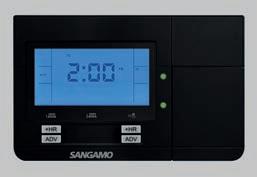
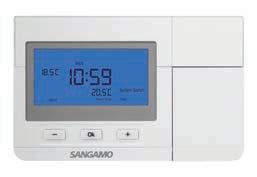
GET THE COLD CONTROLLED The Plus range of Heating and Timer Controls Now available in white, silver and black email: sales@espuk.com visit: www.espuk.com call: 01527 515150
THE RISE OF BUSINESS CONSUMERS
Until recently, B2B and B2C customers were often treated to wildly different experiences. While B2C shoppers enjoyed the latest technologies and trends, from self-checkouts to virtual fitting rooms and same-day delivery, B2B still relied on traditional trading methods – partner-client liaison and sealing deals with a signature and a handshake.
However, times have changed. B2B buyers now expect the same customer experiences they receive from B2C companies. They want convenience and the freedom to purchase goods and services digitally, 24/7, where pricing is more transparent and delivered via a frictionless buying process. In fact, recent research reveals that 90% of buyers now expect a similar shopping experience on a B2B website as they do on a B2C website.
So, what’s changed? And how can B2B businesses meet these soaring modern expectations? Let’s take a look.
The convergence of B2B and B2C
The pressure for B2B companies to enable online ordering and raise their experiences to B2C standards was amplified by the pandemic, as digital temporarily became the only way to access certain products and services. 43% of B2B buyers switched suppliers during COVID-19, simply because their supplier had no online ordering available. And before the pandemic, 44% of buyers said they would purchase directly from a sales representative, but this fell dramatically to just 16% post-lockdown.
Simultaneously, millennials and Gen Z are forming a large, influential portion of the wider workforce. 73% of millennial workers are now involved in product or service decision-making within their companies; these digital natives no longer expect the same level of face-to-face interaction and account management that historically has been paramount in B2B.
Now, more than two-thirds of buyers say they prefer remote human interactions or digital self-service. Gartner forecasts that by 2025, 80% of B2B sales interactions between buyers and suppliers will take place on digital channels, with a third of all buyers already indicating a preference for a seller-free sales experience. So, B2B businesses must begin harnessing new strategies and technologies to meet these new customer expectations.
Reshaping B2B journeys
A crucial part of the modern digital shopping experience is personalisation. Data allows businesses to get to know their customers more closely than ever, and then tailor their offerings to satisfy customer needs. From detecting a customer’s location to show real-time local stock availability, to serving up product recommendations and promotions based on search histories, B2B personalisation can supercharge sales conversions without the need for a sales rep go-between.
This requires a strong data and analytics strategy. Organisations must regularly clean and prepare their data to remove anomalies, automate its extraction, display it within a visual dashboard to uncover important insights, and remain alert to any fluctuations. Once set up, organisations are then near guaranteed to enjoy a competitive advantage.
B2B businesses must also become agile, building a faster speed-to-market for new products and services. By streamlining production and go-live processes, the company can capitalise on lucrative trends and position itself as an industry leader, rather than a follower. But perhaps the most important strategy of all is the expansion of B2B channels.
Integration for omnichannel e-commerce
For top B2C businesses, omnichannel has become the dominant form of commerce. Customers are increasingly demanding seamless experiences across online and in-store shopping. Not only does omnichannel drive loyalty by giving customers the freedom to shop in the ways they prefer, but it also helps the business to reach new customer segments – boosting sales, efficiency, and inventory turnover.
As a result, omnichannel is increasingly seeping into the B2B world. Corporate customers now have 10 or more channels to interact with suppliers, up from just five in 2016. Even established B2B brands like Schneider Electric are developing online marketplaces for distributors, with the company’s customer-facing web shop launching in Egypt, France, India and Indonesia.
B2B suppliers cannot solve the needs of an entire segment of customers through one channel, nor can they ignore e-commerce. The option to engage via face-to-face, remote, and self-service should be available to all customers, from small to medium-sized enterprises (SMEs) up to the largest organisations.

The drivers of successful digital transformation
Digital transformation is an ongoing journey. Customer behaviours and expectations evolve so quickly that companies must think in non-traditional ways and invest in flexible innovation. It’s a complex undertaking, but businesses will be rewarded with greater impact, growth, and sustainability. Along every stage of this transformation, staff must be supported and upskilled to help prepare them for the jobs and business models of the future.
Though a transformation strategy will fluctuate slightly depending on the organisation, there is a handful of drivers that all B2B businesses can follow to ensure they digitally transform towards B2C standards. As discussed, businesses must be customer-centric, data-driven, and agile. They also need to employ both ‘makers’ and ‘doers’ within their organisation – those who ideate and innovate, and those who can transform those visions into a reality.
Meanwhile, cultivating a culture of transparency creates employee trust, engagement, and buy-in, a prerequisite for any successful transformation. And finally, B2B businesses must uphold a collaborative, ready-to-learn mindset – after all, remaining receptive to new partners and ideas is the only way to keep pace with B2C progress, and meet growing B2B customer expectations long into the future.
Schneider Electric, se.com
22 | September 2023 electricalcontractingnews.com @ElecConNews /electricalcontractingnews @ecn_magazine KEY ISSUE
Chris Green, Marketing Director UK&I at Schneider Electric, looks at how to create outstanding B2B experiences.
Businesses on a digital journey follow a customer-centric, data-driven, and agile approach
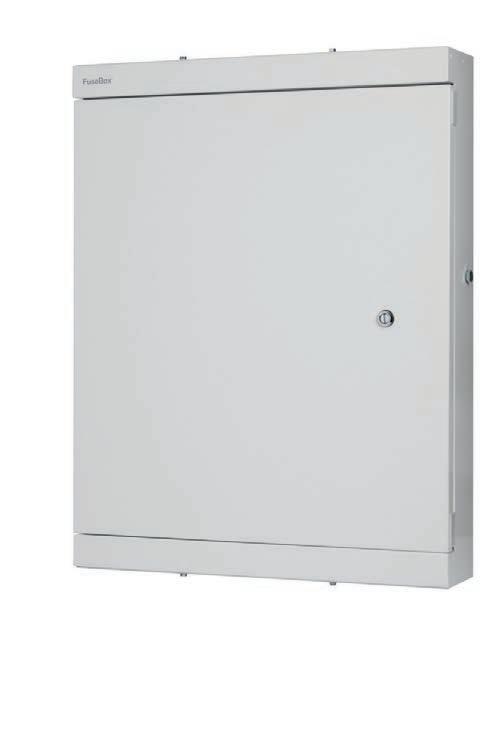
B xes! 3 Phase
TPN Distribution Boards
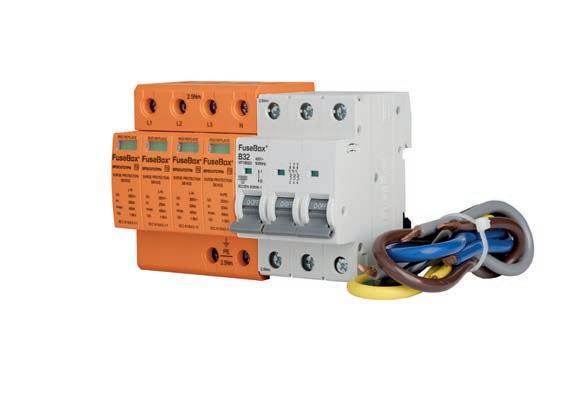
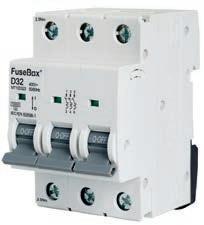
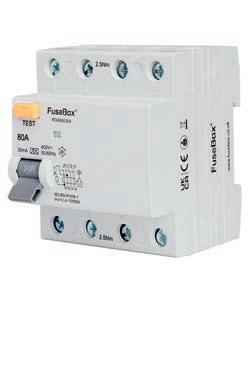
Domestic, commercial and industrial installations – the FuseBox range of TPN distribution boards, with T2 SPD and 125A 4Pole main switch as standard.
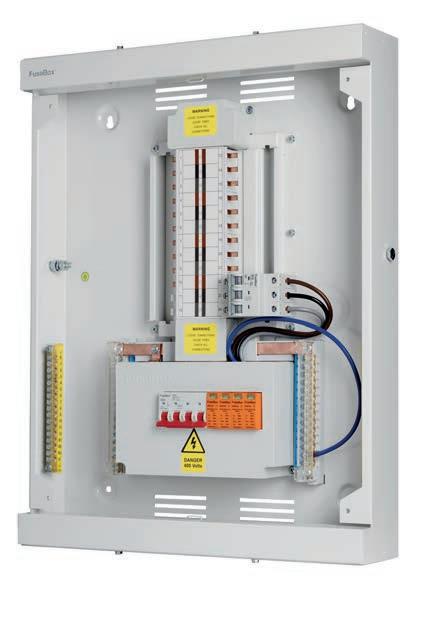
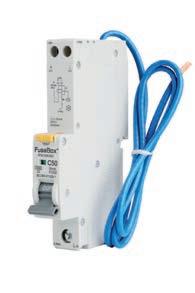
• 10kA Devices: MCBs, RCBOs, RCDs
• Compatible with FuseBox 6kA devices without any modification



• Removable gland plates top and bottom

• Unique hinged front cover assembly
• Robust design – 1.2mm zinc galvanised steel
• 3, 7, 11 and 15 usable ways
NEW Range Brochure Find Your Local Stockist Making Electricians Smile! fusebox.co.uk01563 533 554
MCBs RCBOs RCDs Protection NEW
CASE STUDY: WALES MILLENNIUM CENTRE
In the heart of Cardiff, the Wales Millennium Heritage Centre underwent a remarkable transformation, thanks to a collaboration between LEDFlex; architect, Viewport Studio; and lighting designer, Desmond O’Donovan from DHA Designs. Together, they recognised the need to revitalise the front of house spaces, the foyer and cabaret, to make them more inviting and accessible to the public, in response to the evolving needs of the local community.
orking closely with DHA Designs and Viewport Studio, LEDFlex brought its expertise to create a bespoke lighting scheme that would infuse warmth and consistency into these dedicated spaces. The foyer, previously dimly lit and dreary with harsh materials, underwent a stunning metamorphosis. The key objective was to introduce ample lighting without compromising the aesthetics of the space.
The solution was found in LEDFlex’s High Lumen Ultimo Neon 16, which now softly and warmly illuminates the foyer, discreetly integrated along the room’s edges, under the bar’s vertical face, and in the ceiling details.
The interior is further modernised using natural finishes, such as oak panelling and LEDFlex’s highly efficient Eco Flex and ultra slim Nano Flex, blending seamlessly into the bar joinery construction. Moreover, rich wool mix fabrics elevate the look, and
Wa neutral flooring choice enables soft, diffused and reflected lighting.
In the cabaret, LEDFlex’s 4mm wide Nano Flex is seamlessly integrated into the shelving and bar front, creating a streamlined and inviting ambiance.
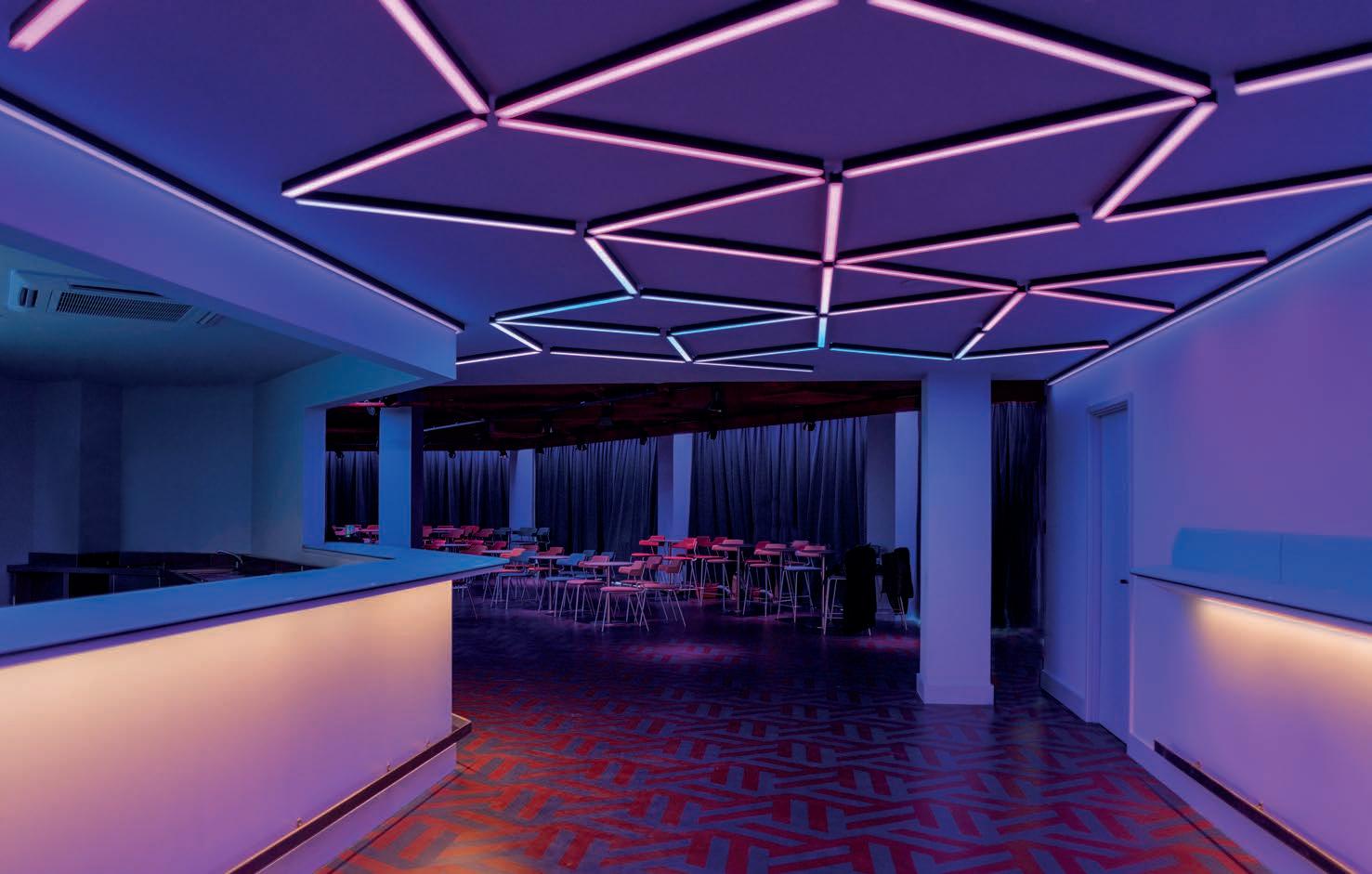
Geometric triangle accents on the ceiling further add drama and dynamism to the space, designed with LEDFlex’s custom double width Rigid RGBW Pixel PCBs in custom black profiles. Meanwhile, the Ultra Bright RGBW 60 provides a captivating cove lighting effect around the room.
One standout feature in the cabaret is the oversized triangle structure above the dance floor, custom designed using LEDFlex’s triple width RGBW Pixel Flex in a custom black profile connected to Digidot C4 Extended Drivers. This feature allows guests to dance the night away while enjoying captivating visual displays throughout the pre-show, main event, and post-show production.
This transformative renovation, combined with the innovative lighting design, has turned the Wales Millennium Centre into an exemplary showcase
venue. It now stands as a hub for a variety of cultural events that celebrate the diversity of the local Welsh community. The modernised spaces not only showcase Welsh stories and talent to international audiences, but also serve as a vibrant lifeline for the Welsh creative scene.
LEDFlex, ledflexgroup.com

24 | September 2023 electricalcontractingnews.com @ElecConNews /electricalcontractingnews @ecn_magazine PROJECT FOCUS
A standout feature in the cabaret is the oversized triangle structure above the dance floor
NEW MODERN ATTRACTIVE DESIGNS
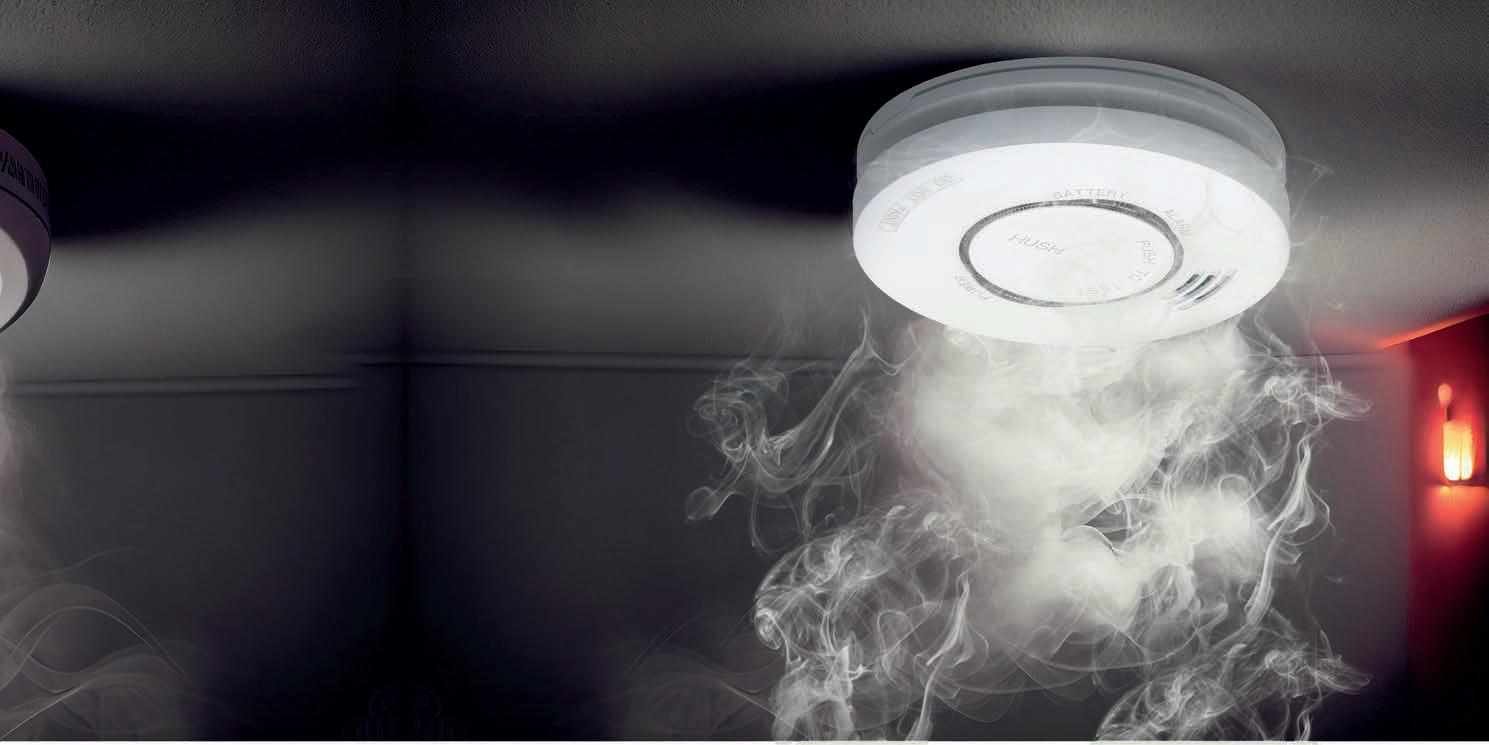
DETECTOR ALARMS
RADIO INTERLINKED ALARMS WITH UP TO DATE TECHNOLOGY
RANGE INCLUDES
Battery Powered Smoke, Heat & Carbon Monoxide Alarms
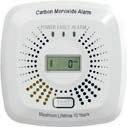
With 10 year Lithium Battery
Mains Powered Smoke & Heat Alarms
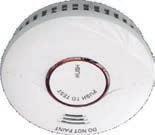
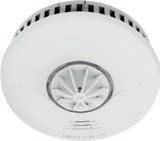
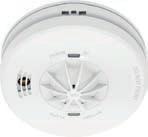
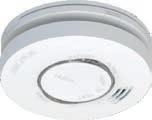
With 9v Alkaline Battery back up
Pair seamlessly with each other & upto 40 alarms.
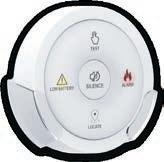
Wireless Remote Controller
Test, Silence & Location functions for Smoke & Heat alarms

For control of triggered alarms
With 3 Year replaceable Cr2450 battery
44-48 Freshwater Road, Dagenham, Essex RM8 1RX Telephone: 020 8503 8500 | Facsimile: 020 8503 8900 Contact our Sales Team for more information Website: www.cedelectrical.co.uk | Email.: info@cedelectrical.co.uk
PUTTING THE LIA IN THE SPOTLIGHT
CW: Tell us about yourself and how you got into the sector.
AD: My journey to the corporate world has been unconventional. Born in Istanbul to a prima ballerina mother and a bank manager father, I moved to Belfast aged 11. Despite disappointing my Turkish family, I got accepted into Paul McCartney’s Liverpool Institute for Performing Arts. After facing the harsh realities of being an out-of-work actor, I pursued a teaching qualification but grew disillusioned with the inequality in education. Eventually, I joined the electrotechnical industry through UK Cables as a Turkish Supply Chain Executive and later became a National Account Manager, building vital industry relationships.
Head-hunted by Lutron, I played a key role in setting up its electrical distribution channel and launching high-end smart lighting control solutions, expanding my network further. To foster
personal and professional growth, I undertook an Executive MBA at London Business School, graduating in 2020. Equipped with valuable skills, I took on an exciting opportunity at Beam Group, establishing its new UK and Ireland commercial division.
Throughout my unconventional career, I have remained dedicated, ambitious, and enthusiastic. My long-term goal has always been to be an influential woman in the industry, effecting positive change. As we face a turning point in climate, resources and communities, I believe an industry association is the perfect platform to lead the way. The LIA membership represents a significant proportion of the lighting industry; meaning the value we can bring to businesses via our wide reach is vast. It is our responsibility to drive forward the environmental and social responsibility agenda, and leading these efforts is, therefore, perfectly aligned with my personal ambitions.
Ayca Donaghy, Chief Executive Officer of the LIA

CW: Can you give us an overview of the work that the LIA does?
AD: The LIA is Europe’s largest lighting trade association, serving the UK’s lighting industry and supply chain. Our mission is based on three pillars: Support, Represent, and Connect. We offer comprehensive support services, technical expertise, training, and certification to our members. Additionally, we advocate for their interests at all levels, raise industry standards, and facilitate valuable networking opportunities.
CW: Tell us about your current role.
AD: As CEO of the LIA, my role is to lead our association and industry forward, fostering innovation and meaningful impact. I set the direction for our team, collaborate with industry stakeholders, and represent the LIA at events. It’s a dynamic role and no day is the same, but I love being part of this vibrant industry.
26 | September 2023 electricalcontractingnews.com @ElecConNews /electricalcontractingnews @ecn_magazine INTERVIEW
Carly Wills speaks to Ayca Donaghy, Chief Executive Officer of the Lighting Industry Association (LIA), about her career so far and life at the LIA.



JOIN US AT AND www.rolecserv.com t: 01205 724754 e: enquiries@rolecserv.co.uk The UK’s most a ordable EV charging solution EV regulations compliant Safe, secure and fully UK Smart Charge Point Regulation compliant. Quick & easy to install Independent back plate for simple wall or post installation. Built-in PME fault detection No need for earth rods saving on installation time and costs. 3 year warranty Included as standard, for added peace of mind for the occupier. 3 YEAR WARRANTY Solar Charging Sync your home renewables to benefit from zero-cost and zero-carbon charge. (Single phase models only)
CW: What are the best things about your role? What are the most challenging?
AD: Being at the helm of the LIA allows me to lead a talented and passionate team of professionals who are dedicated to the industry’s growth and success. However, leading a dynamic association like the LIA means there are numerous priorities competing for attention. Finding the right balance between short-term needs and long-term goals can be demanding, as every decision I make can have far-reaching consequences.
Within the lighting industry, there are diverse perspectives, interests, and stakeholders. Ensuring that all voices are heard and respected, while maintaining a cohesive direction, requires strong communication and diplomacy. Nevertheless, I thrive on these challenges, as they push me to grow both personally and professionally.

CW: How has COVID-19 affected the industry? What are the positives?
AD: Like many other sectors, the lighting industry faced numerous challenges during this global crisis. The pandemic disrupted supply chains, caused project delays, and affected consumer behaviour and spending patterns. However, amidst the challenges, there have been several positives that have emerged.
One notable effect of the pandemic has been a heightened awareness of the impact of lighting on our mood, productivity, and overall wellbeing. This was driven by people spending more time at home during lockdowns and as remote working became the norm. This led to an increased interest in smart lighting solutions that offer personalised control, circadian lighting options, and energy efficiency.
The pandemic has also fostered collaboration and solidarity within the
industry. Manufacturers, suppliers, and professionals came together to address the challenges collectively, share knowledge, and develop strategies for business continuity. This collaborative spirit led to the formation of partnerships and the exchange of ideas, contributing to the resilience and adaptability of the lighting industry.
CW: Aside from COVID-19, what are the biggest changes across the industry in recent times? What will be the biggest changes in the future?
AD: Aside from COVID-19, the lighting industry has seen a notable shift towards prioritising sustainability, competence, and compliance. The focus on eco-friendly lighting and waste reduction has been driven by growing environmental awareness and the need for responsible practices. Additionally, safety standards have gained even greater significance, particularly in the aftermath of the Grenfell disaster, prompting a renewed commitment to ensuring public safety.
Looking ahead, we can expect intensified efforts in sustainability, as the industry responds to global calls for eco-conscious practices. Alongside this, robust third-party verification and industry recognised processes will likely gain prominence, ensuring that professionals meet high standards and maintain a commitment to excellence in their work. Embracing these changes will pave the way for a greener, upskilled, and safety oriented lighting industry in the future.
CW: What’s next for you and for the LIA?
AD: The first half of this year has been an incredible period of growth and learning for me. I’ve been actively engaged in observing, networking, and listening closely to the industry’s pulse, which has given me a profound understanding of its dynamics. The LIA team’s efforts to enhance visibility and showcase the brilliance of the association and the lighting industry have been unwavering. Putting our name in the spotlight and highlighting the exceptional work of our members has been a top priority for us.
And we’re not slowing down! The remainder of this year is all about gearing up for what lies ahead, not just in 2024, but beyond. Anticipate cutting-edge training, improved efficiencies within our association, a public image that stands out, industry insights that fuel business growth, and so much more. We’re more than ready to embrace change and stay adaptable, as we continue to shape a brighter and better future for the lighting world.
CW: Do you have any career advice for anyone starting out in the industry?
AD: Absolutely! If you’re just starting out in the lighting industry, there are some key pieces of career advice that can set you on the path to success.
Firstly, embrace lifelong learning. The lighting industry is constantly evolving with new technologies and trends. Stay curious and hungry for knowledge. Continuously seek opportunities for learning, whether through formal education, workshops, or
28 | September 2023 electricalcontractingnews.com @ElecConNews /electricalcontractingnews @ecn_magazine INTERVIEW
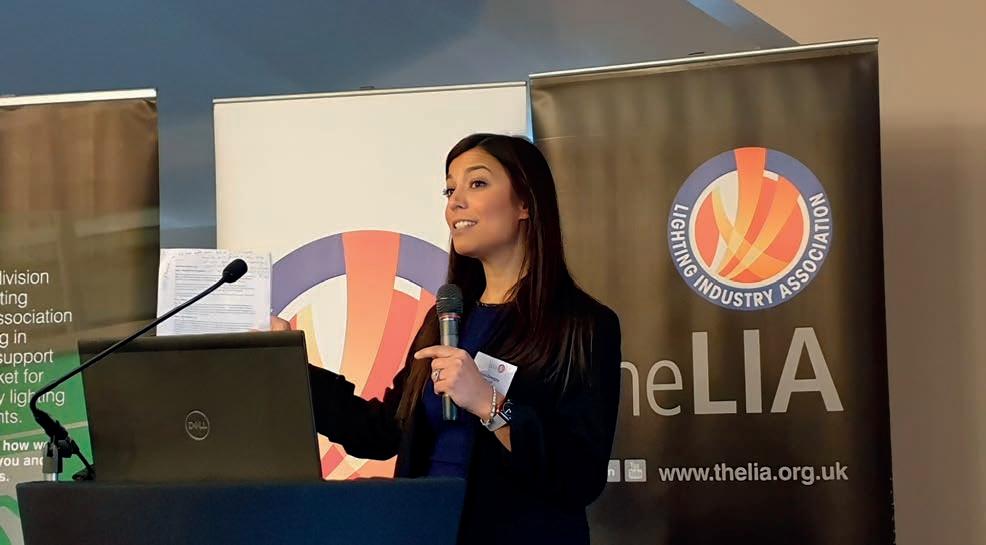
The LIA’s talented and passionate team is dedicated to the industry’s growth and success
“Leading a dynamic association like the LIA means there are numerous priorities competing for attention”
With the ECN Awards only two months away, it’s time to get your entries prepared! There are 5 awards up for grabs in the COMPANIES category – if your company is an outstanding manufacturer, wholesaler/distributor or electrical contractor that has been operating between 1 January 2022 and 31 August 2023, please ENTER NOW!



•Manufacturer of the Year
•Independent Wholesaler/Distributor of the Year
•Chain Wholesaler/Distributor of the Year (three stores or more)
•Contractor of the Year (turnover over £5m)
•Contractor of the Year (turnover under £5m)
ECN AWARDS 2023 SPONSORS

Heart of England Conference and
Centre, Coventry 30 November 2023
#ECNAWARDS
Events
Companies
ENTER NOW COMPANIES CATEGORY
electricalcontractingnews.com/awards-entries
online resources. The more you know, the more valuable you become to employers –and the lighting industry as a whole.
It is also important to align this with practical experience. Theory is essential, but hands-on experience is equally valuable. Look for internships, apprenticeships, or entry level positions that offer practical exposure to lighting projects and real-world scenarios. This will not only build your skills, but help you network with lighting industry professionals.
The next piece of advice is to network. Networking is key in any industry, and the lighting sector is no different. Attend industry events, conferences and seminars to meet fellow professionals, potential

mentors and employers. Building strong relationships can open doors to exciting opportunities and collaborations.
Be sure to stay updated with technology. The lighting industry is at the forefront of technological advancements. Keep yourself updated with the latest lighting solutions, smart technologies and energy-efficient innovations. Being tech-savvy will give you a competitive edge.
Finally, it is crucial to seek support from associations like the LIA. The LIA is a fantastic resource for newcomers. Take advantage of the training we provide and explore our new Future Lighting Leaders initiative, which can offer guidance and mentorship as you progress in your career.
CW: What do you think are the most exciting products or technologies coming to the market?
AD: The most exciting products and technologies coming to the lighting market are undoubtedly the ones that harness the power of AI and 3D printing. Artificial intelligence is revolutionising the world, and the lighting industry is set to embrace the opportunities it will bring. AI already has the power to offer personalised lighting experiences, energy optimisation, and enhanced lighting control, and its limits are yet unknown.
3D printing is another game-changer in the lighting industry, allowing for the creation of highly customised and intricate lighting fixtures. Designers and manufacturers can now unleash their creativity without limitations, crafting unique and visually stunning lighting designs that were previously unattainable with traditional manufacturing methods. The flexibility of 3D printing enables rapid prototyping and shortens product development cycles, accelerating innovation in the lighting market. Additionally, 3D printing facilitates on-demand manufacturing, reducing inventory costs and waste, ultimately leading to a more sustainable production process. As these technologies continue to evolve, I can’t wait to witness the fascinating products and solutions LIA members bring to the market.
CW: What are your interests away from work?
AD: My greatest joy is spending time with my little family, especially my three-year-old boy. We love exploring, having movie nights, and creating beautiful memories together. It’s what I work for, and I’m lucky to have a fulfilling job too.
LIA, thelia.org.uk
30 | September 2023 electricalcontractingnews.com @ElecConNews /electricalcontractingnews @ecn_magazine INTERVIEW
Networking is key in any industry
The LIA is a fantastic resource for newcomers



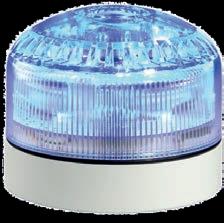
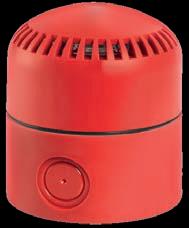
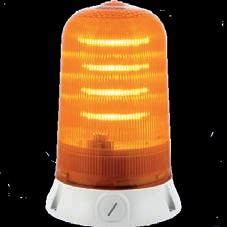
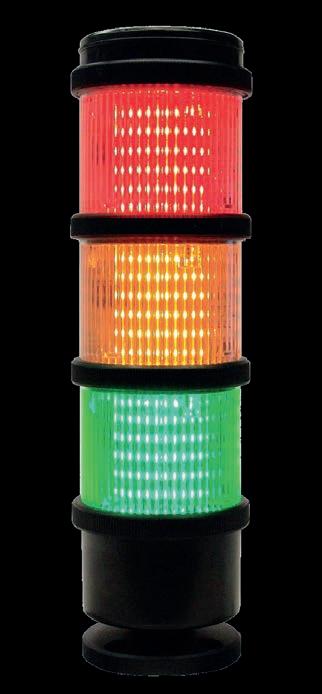
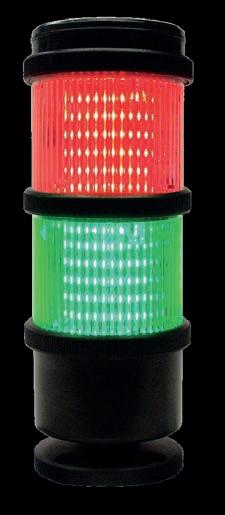





t: 01785 818600 f: 01785 811900 e: sales@switchtec.com www.switchtec.com Celebrating 40 years in the supply & distribution of high quality Control & Automation Products. Audible & Visual Alarms Follow us on: Pre Assembled and Modular Light Towers Multifunction Light and Acoustic Options 36mm, 50mm & 70mm Ø, Round & Elliptical Super bright LED Technology LED Beacons - Rotating, Flashing & Steady Light Output Multi Tone Sounders IP65/66 Ingress Rating UL, UKCA & CE Approved Electrician Courses Online JIB Gold Card Training C & G Level 3 NVQ 2357 & 2346 C & G Level 2 & 3 2365 2391 Inspection & Testing 18th Edition & Much More… www.xstraining.com | enquiries@xstraining.com | 01535 657059
WIN A DEWALT COMBI DRILL SET AND WERA SCREWDRIVERS
To celebrate its 25-year anniversary, Armorduct is giving ECN readers the chance to win an impressive tool bundle to help your projects stand the test of time.
Founded in 1998, and part of the Hudson Group, Armorduct is a leading UK manufacturer of cable management components and systems.
From its West Midlands base, it designs and manufactures a vast product range, including cable containment, trunking, trays and baskets. Distributed via a network of national and independent electrical wholesalers, the products are used by M&E contractors in the infrastructure, education, healthcare and commercial sectors.
As well as manufacturing standard cable containment systems, Armorduct has a unique in-house design capability. This means it can provide bespoke items to support any project or challenge, no matter how large or small.
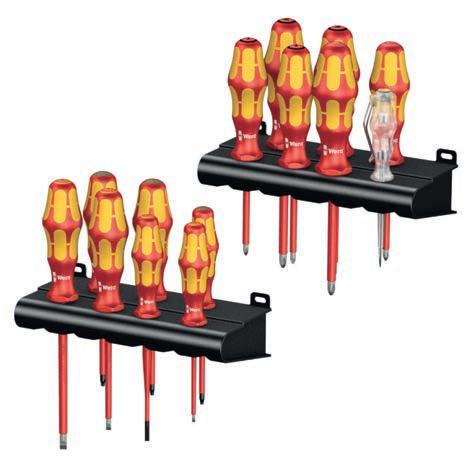
To mark its success and 25 years in business, Armorduct is giving away a DeWALT Combi Drill and Impact Driver Brushless Twin Pack as well as a Wera Kraftform Plus Mixed VDE Screwdriver Set (16 pieces) –worth nearly £500!
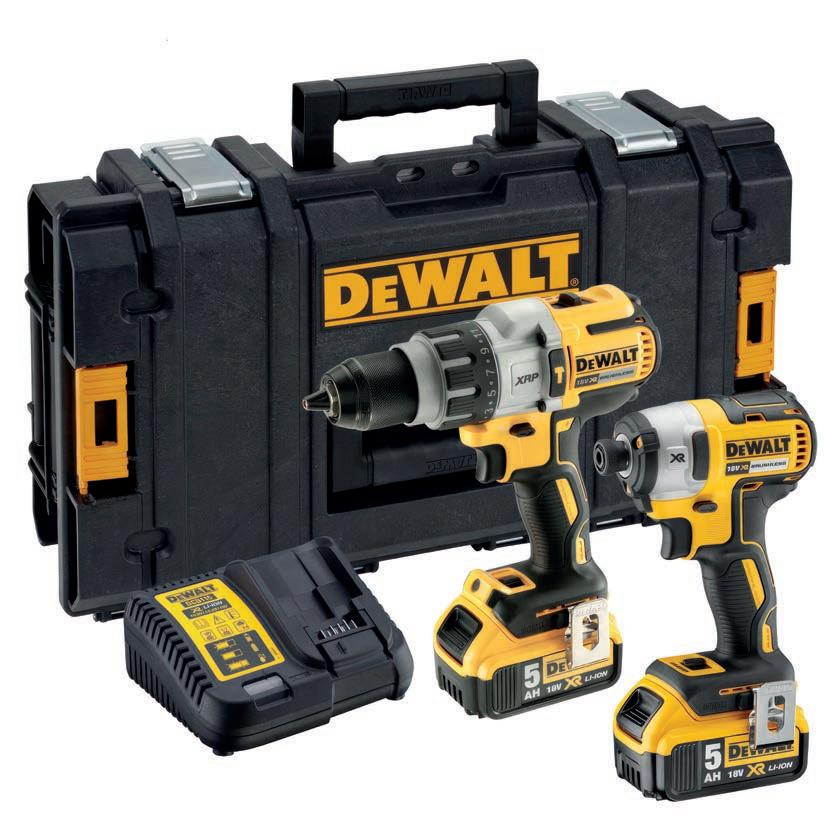
For your chance to win a a Dewalt Combi Drill set and Wera screwdrivers, simply answer the following questions correctly.
1. What year was Armorduct founded?
a) 1998
b) 2008
c) 2018
2. Where is Armorduct based?
a) East Midlands
b) West Midlands
c) Hampshire
3. Where are Armorduct’s products manufactured?
a) China
b) United States
c) UK
July Competition
The winner of the July competition – an Xbox Series S, courtesy of FuseBox – was Steve Seagrave.
Closing date
All entries must be returned by 30 September 2023. The editor’s decision is final. For the full terms and conditions, visit electricalcontractingnews.com/ competition-terms.
The name of the winner will be published in the November issue of ECN.
*Prize not exchangeable.
To enter, please complete the form below and post to: ECN Competition, All Things Media Ltd, Suite 14, 6-8 Revenge Road, Lordswood, Kent, ME5 8UD. Alternatively, you can enter online at electricalcontractingnews.com/competition or email your answers and contact details to: carly@allthingsmedialtd.com.
The answers to September’s competition are:
Details Name Company Name Address ................................................................................Postcode Tel Mobile E-mail.....................................................................................................................................
Personal
1. 2. 3.
Contact Preferences YES, I would like to receive the ECN newsletter YES, I would like to subscribe to ECN magazine YES, I would like to share my data with Armorduct
Date
Signature
register to receive
copy of ECN
month,
electricalcontractingnews.com/subscribe COMPETITION
To
your
each
visit
September 2023 | 33 The Complete Consumer Unit 01827 63454 | sales@scolmore.com | www.scolmore.com ECN Feature Sponsorship September ad - Elucian.indd 1 16/08/2023 14:42 SPECIAL FEATURE CIRCUIT PROTCTION & SWITCHGEAR supported by @ElecConNews /electricalcontractingnews @ecn_magazine electricalcontractingnews.com
ELUCIAN BY CLICK — FROM ZERO TO HERO
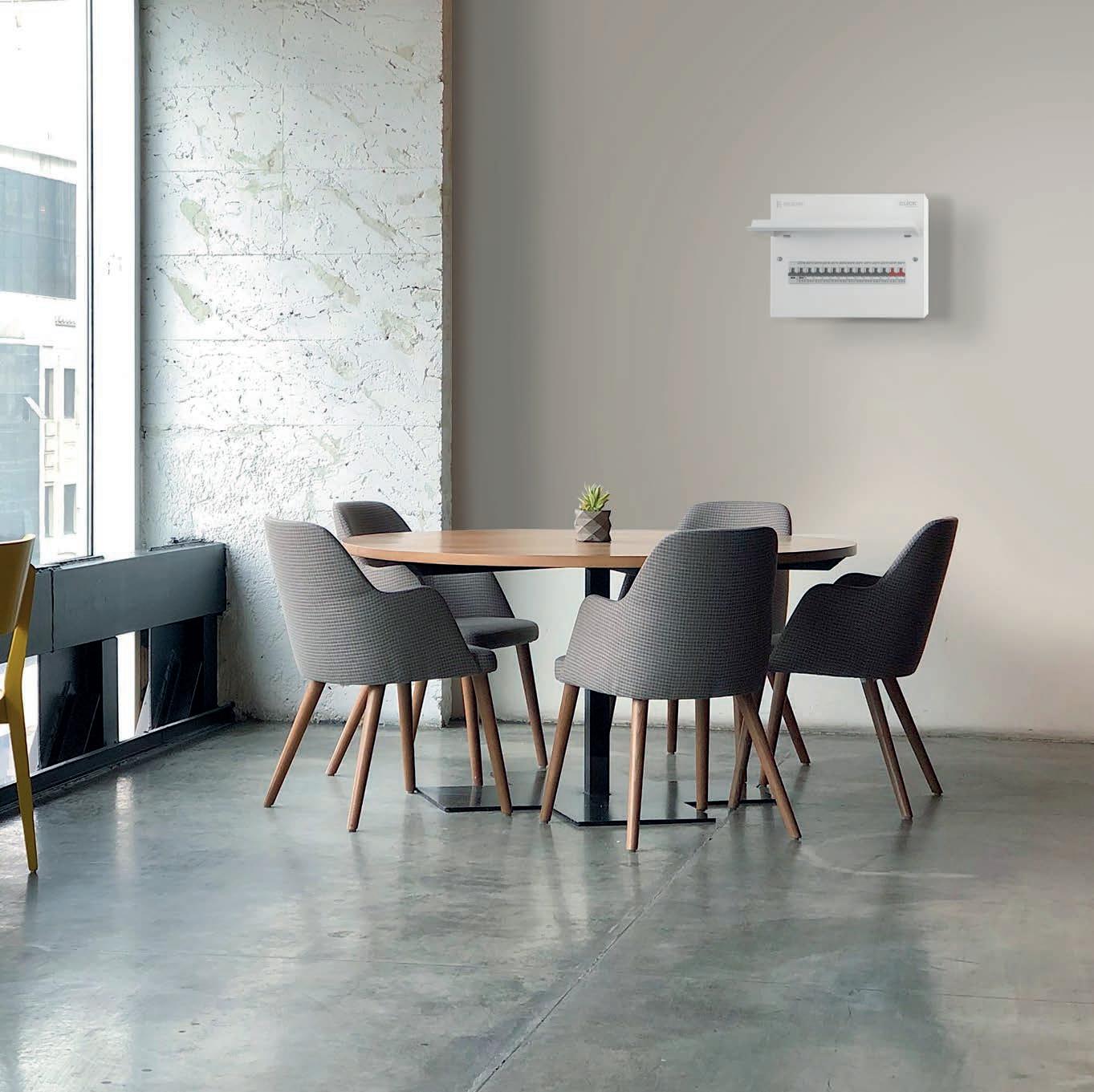
From a standing start point when it was first launched by Scolmore in June 2021, the award-winning Elucian by Click consumer unit and circuit protection range has rapidly grown to become the number one choice of the professional electrical contractor. Katie Plumstead, Group Marketing Manager, Scolmore Group, looks at the progress of the brand since its launch.
The launch of ‘Elucian by Click’ over two years ago was the result of months of extensive research and consultation with contractors and installers to come up with a range of products that would best suit their requirements when working across a range of projects and would offer them compliance with all the latest regulations. The introduction of the comprehensive range means that wholesalers and installers have access to a one-stop shop for everything wiring accessories related from one of the industry’s most trusted and reliable brands. Scolmore made a significant investment at the time to ensure that stock levels of the Elucian products were high to meet the anticipated demand, and with orders far exceeding the original projections, this move certainly paid off.
Comprehensive consumer unit range
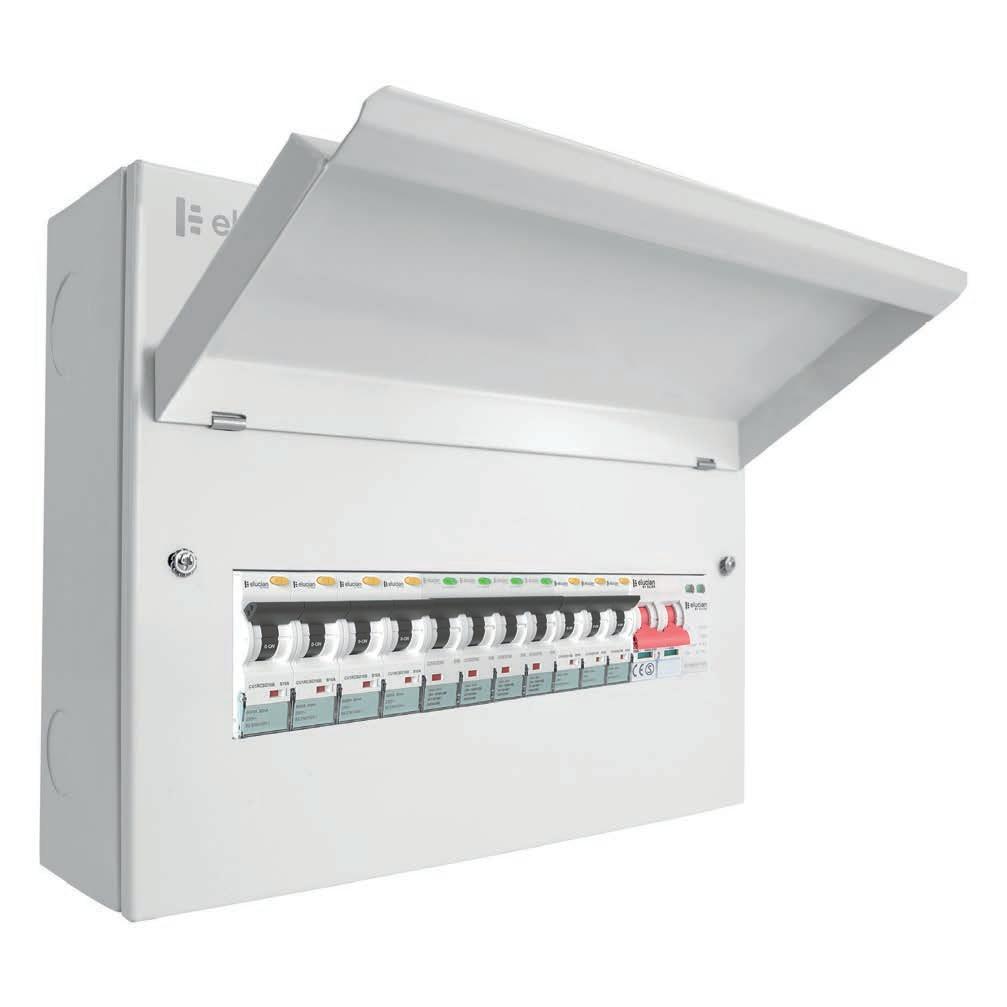
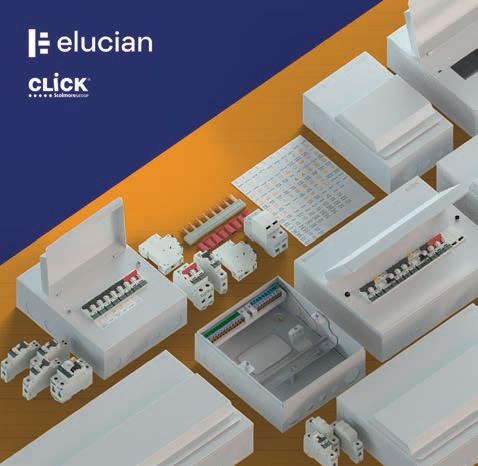
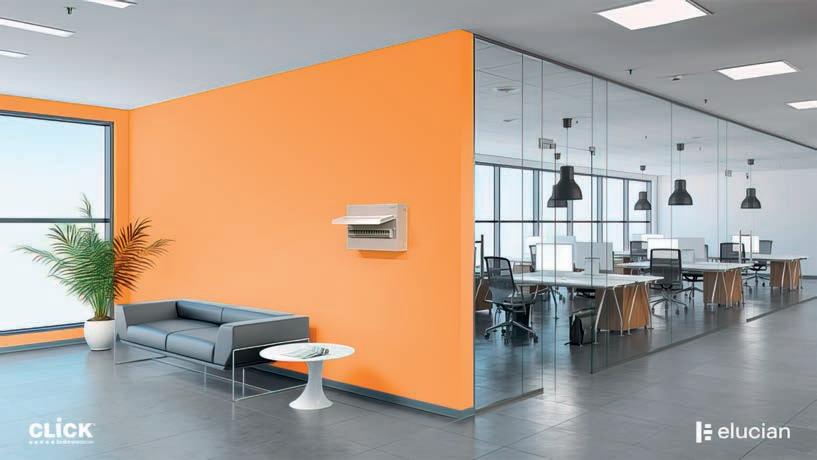
Designed with the installer in mind, Elucian is an extensive range of metal consumer units that are functional, stylish, innovative, and provide an ideal solution for any residential or light commercial environment. They are packed with features to make installation quick and simple for electricians. The range comprises:
• Combination units
• Garage consumer units
• Split load consumer units
• Straight way consumer units
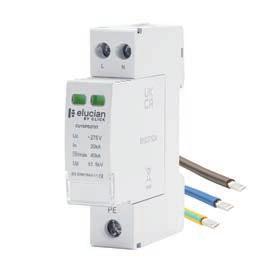
• Split load consumer units with surge protection
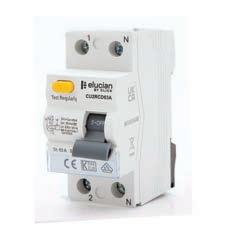
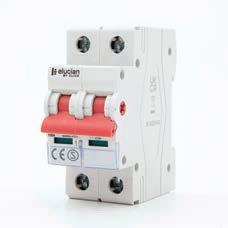
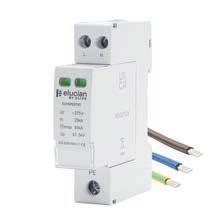
Scolmore has highlighted some of the key features that are making these units stand out in the marketplace and helping installers make an informed choice:
• Non-combustible and robust metal housings – ensure compliance with Regulation 421.1.201 of BS 7671:2018 Amendment 2 detailing the requirements for consumer units and similar switchgear assemblies in domestic premises to be made from a non-combustible material.
• Mains Switch Tail Clamp – supplied and pre-fitted on each consumer unit for added stress relief to ensure the Mains Tails terminations do not come loose and to help fix the Mains Switch Isolator more securely to prevent any rocking or movement. The Mains Switch Tail Clamp will accept a maximum of 25mm² double insulated tails.
• Knockouts – the units all come supplied with a range of 40mm, 32mm, 25mm and 20mm knockouts, making each board universally adaptable for all installation and cable types.
34 | September 2023 SPECIAL FEATURE CIRCUIT PROTECTION & SWITCHGEAR electricalcontractingnews.com @ElecConNews /electricalcontractingnews @ecn_magazine
Elucian by Click was launched in 2021
Elucian is an extensive range of metal consumer units that are functional, stylish and innovative
ECN May strip ads - Elucian Devices.indd 1 20/04/2023 13:53
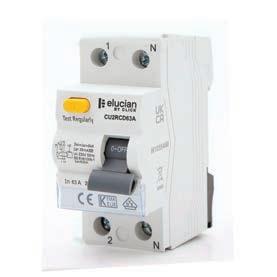
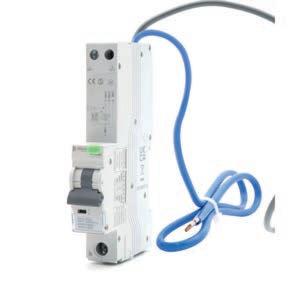
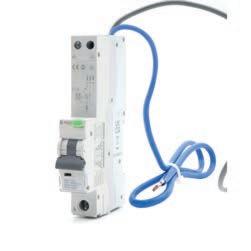
Our Elucian range of Protective Devices are easy to install, suitable for residential and light commercial environments, they provide protection against earth faults to ensure people’s safety against electrocution and fires. Now including AFDDs.
Protective Devices by
Click®
• Rear Knockouts – the units also come supplied with rounded rectangular knockouts for easy removal and to provide ample cabling capacity for any installation type.
• Earth and Neutral Bar Configuration – each unit has its own specifically configured Earth and Neutral Bar to allow for best practice installation of each board type, neatness of connections and ease of circuit identification.
• Backed off Neutral and Earth Bar Screws – for added convenience and to allow quick and easy termination.
• Keyway Din Rail – a fast release Keyway Din Rail allows for ease of installation.
• MCB style solid blanks for any unused ways – these are din rail mountable and can only be removed when the cover is removed, thus providing additional safety.
Circuit protection
The Elucian range of protective devices are easy to install, suitable for residential and light commercial environments, and provide protection against earth faults to ensure people’s safety against electrocution and fires. The range comprises:
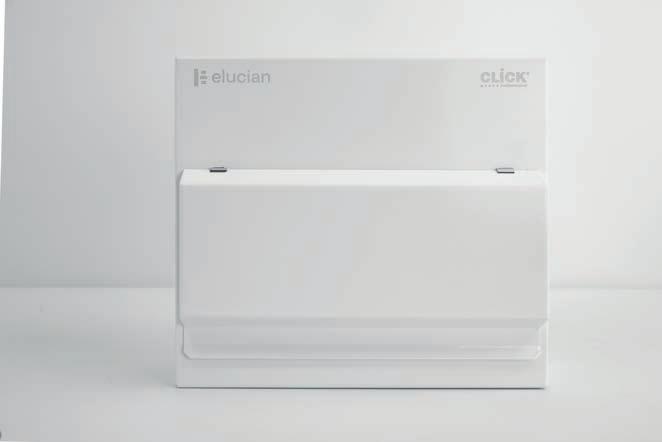
• MCBs
• Isolators
• SPDs
• Blank Modules
• RCDs
• RCCBs
• RCBOs
• AFDDs
• Contactors
Consumer Units
Continual investment
Having established a firm footing in the circuit protection sector of the electrical accessories market with its comprehensive line up of products, Scolmore has continued to invest in the Elucian range to provide electricians with products that offer them convenience and easy installation solutions. Since launch, a further 10 products have been developed and added to the range, either to complete the product line up or to provide a solution to a particular installation issue. These include:
• SPD populated units – Elucian Switch-Disconnector Units and Combination Units are both now available with SPDs pre-installed, giving installers greater flexibility when working on a range of projects.
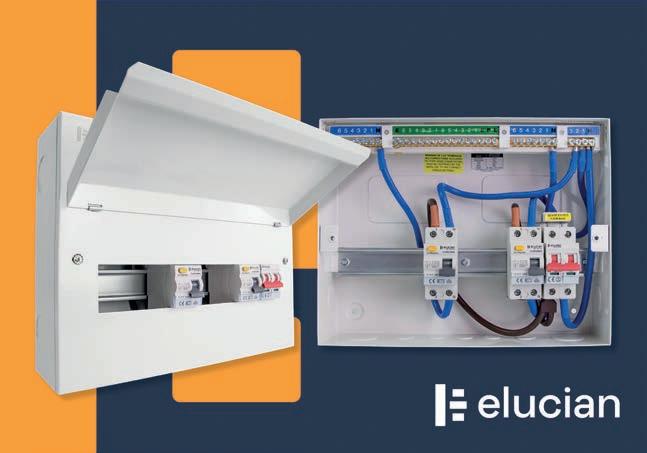
• 2 Pole (20A) or 4 Pole (25A, 40A and 63A) Modular Contactors in a variety of Normally Open or Normally Closed contact configurations compatible with the Elucian range of Consumer Units.
• Single module SPDs – Scolmore has added a slimline version of the existing 2 Pole, Type 2 SPD in a single 18mm module width.
• 25A rated RCBO – added to the extensive protective devices line-up.
• Recessed Frames – designed to fit around 16, 18 and 22 way consumer units, allowing the consumer units to be recess mounted.
• Cable entry plates – provide protection against sharp edges for cables and offer
a greater rigidity when pulling cables through the rear of the consumer unit.
• Pattress mount kit – allows cables to be fed from the top, bottom and either side of the consumer unit.
Scolmore will continue to develop the Elucian offer and respond to feedback from installers to bring further additions to the range.

Circuit protection –a growing market
According to a report from Grand View Research, the global circuit protection market size was valued at USD 46,844.9 million in 2022 and is expected to advance at a compound annual growth rate (CAGR) of 5.9% from 2023 to 2030. The growing demand for wireless and connected devices is experiencing growth worldwide, along with proliferating electronic components sales in developing countries, resulting in high demand for circuit protection products for equipment safety, which is a major factor expected to drive the growth of the global market. In addition, stringent government regulations pertaining to the quality of electronic products, along with high demand for fuses, overvoltage protection, and PTC devices from the automotive and telecommunication sector are factors expected to positively impact the market growth.
Scolmore,
scolmore.com
SPECIAL FEATURE CIRCUIT
@ElecConNews /electricalcontractingnews @ecn_magazine electricalcontractingnews.com
PROTECTION & SWITCHGEAR
Elucian consumer units are packed with features to make installation quick and simple for electricians
Scolmore will continue to develop the Elucian offer and respond to feedback from installers
Elucian by Click® brings to the market a comprehensive Consumer Unit and Circuit Protection range. It covers a broad range of installations and offers a number of features and benefits that will enhance the products’ convenience, flexibility and safety properties. ECN May strip ads - Elucian Devices.indd 2 20/04/2023 13:53
by Click®
RETROFILL SOLUTION BRINGS SECURITY AND EFFICIENCY
A leading Belgian energy supplier has turned to ABB Electrification Service for a retrofill solution to safeguard and extend the safe operating life of its switchgear systems across five of its combined heat and power (CHP) plants.
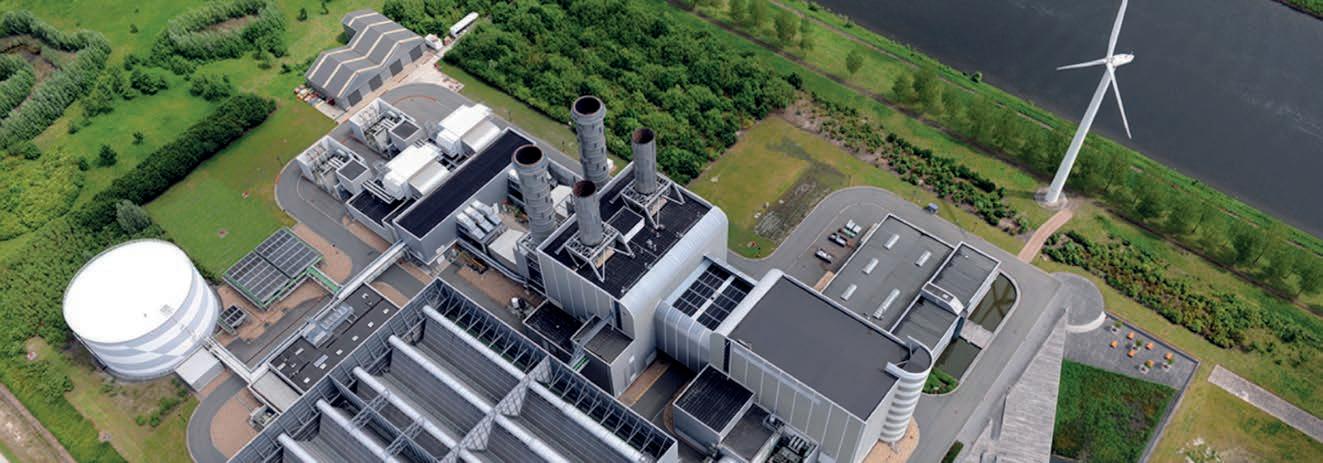
ENGIE, which specialises in energy supply, management, mobility solutions, solar panel installations and batteries, and asset-based energy services, was looking to modernise its electrical infrastructure by extracting as much value as possible from its existing equipment with high embedded carbon and material footprints – such as switchgear metal cabinets, plates and busbars.
The ABB OneFit Retrofill Solution replaced conventional and aging breaker components with state-of-the-art VD4G vacuum circuit breakers. The upgrade protects mission critical ENGIE assets, such as generators and transformers, against potential short-circuits by isolating power interruptions within milliseconds and preventing severe damage and lengthy plant stoppages.
ENGIE’s Technology Manager, Nico Verroken, says, “ENGIE is all about providing efficient and sustainable energy solutions that will support our customers in their transition to zero carbon. Our innovative heat and power plants harness the waste
heat created during electricity generation and convert it to usable power for the local infrastructure, so their continuous and safe operation is absolutely essential.
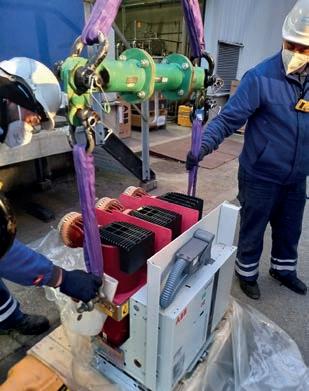
“For us, this retrofill from ABB not only provided a low carbon footprint solution, but minimised disruption to energy supply while guaranteeing reliable and safe energy for the long-term.”
Another bonus of the OneFit retrofill service is that upgrades can be implemented in stages and staggered to not only optimise capital expenditure, but also to allow work to be completed in short production breaks and within normal planned maintenance downtime.
ABB’s Electrification Service Sales Engineer, Ben Verboven, adds, “Our technical expertise, combined with close and transparent collaboration with ENGIE, meant the best custom-made and cost-effective solution was developed for the business. The highest safety standards for employees across all five sites was guaranteed by providing an extra enclosure inside the switchgear and a closed-door operational mode, which removes the risk of electrical contact injuries.”
Comprising an adaptation kit and standard withdrawable equipment, the OneFit plug-in technology enables the new breakers and switchgear components to be simply and safely connected to a wide range of existing panels, including those of other manufacturers.
For ENGIE, this latest modernisation program by ABB Electrification Service is a tangible example of how the circular approach of extending asset lifespan and reducing the cost of operating equipment brings both short and long-term benefits, while helping deliver performance improvements, investment optimisation and new levels of sustainable efficiency.
ABB, abb.com
by Click®
36 | September 2023 SPECIAL FEATURE CIRCUIT PROTECTION & SWITCHGEAR electricalcontractingnews.com @ElecConNews /electricalcontractingnews @ecn_magazine
The upgrade protects mission critical ENGIE assets
Our Elucian range of Protective Devices are easy to install, suitable for residential and light commercial environments, they provide protection against earth faults to ensure people’s safety against electrocution and fires. Now including AFDDs.
Protective Devices
ECN May strip ads - Elucian Devices.indd 1 20/04/2023 13:53

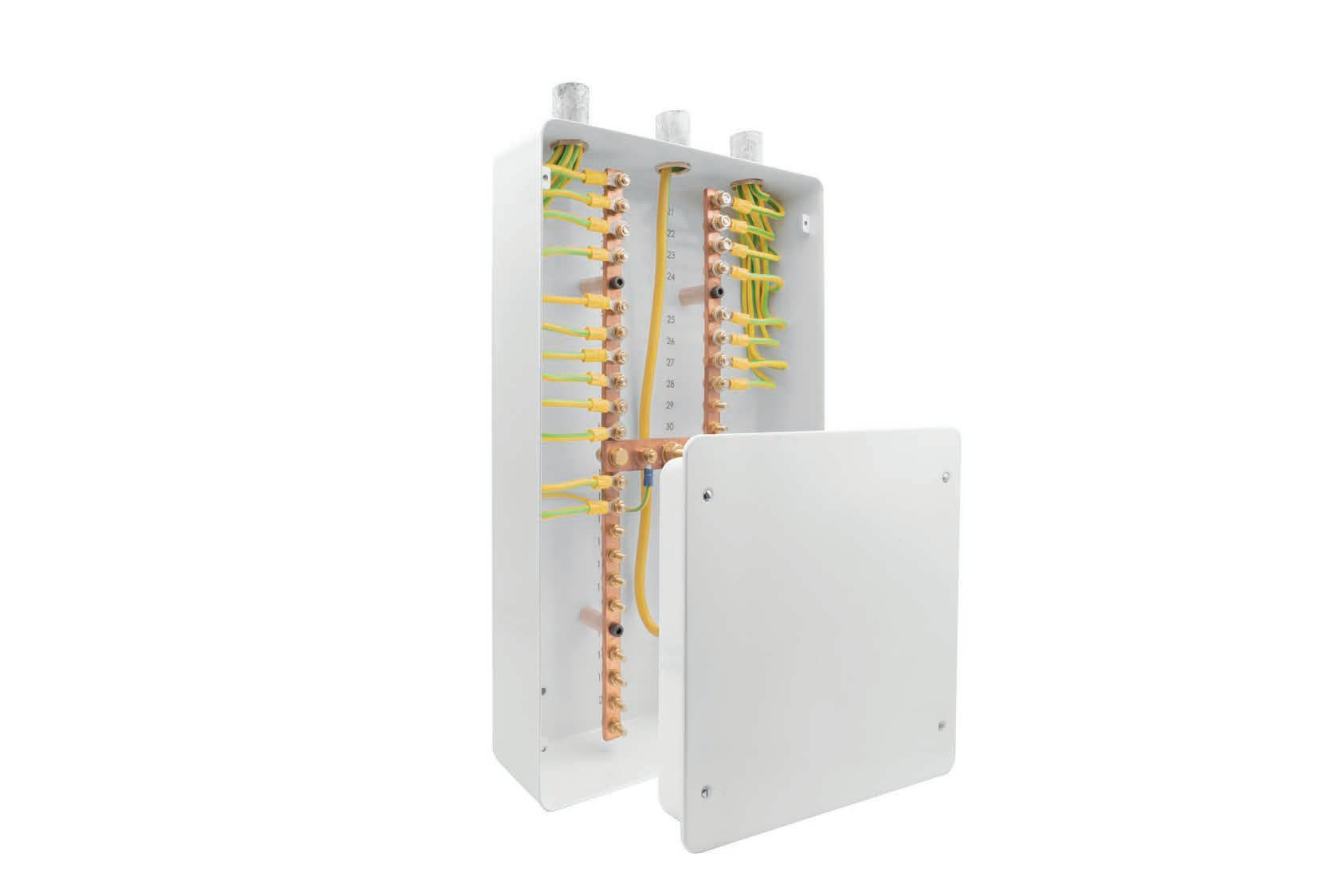
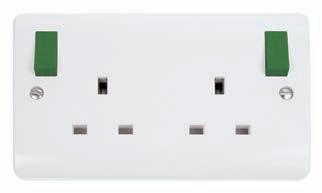
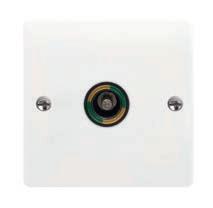
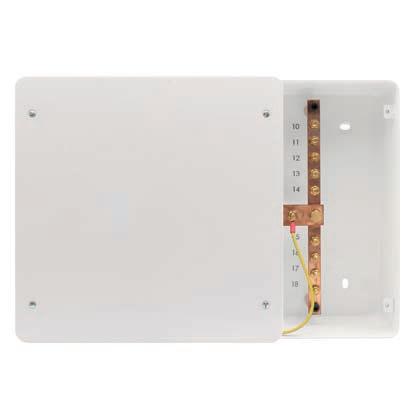
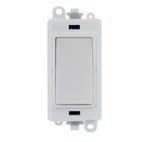
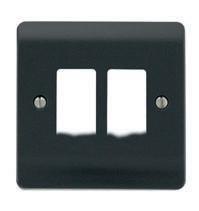
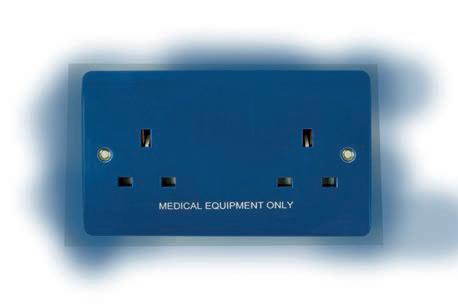
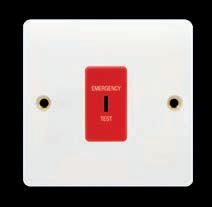
Medical Solutions NHS Hospitals, Health Centres, Care Homes and GP Practices Visually Contrasting Wiring Accessories Supplementary Equipotential Bonding Connection Points Antibacterial & Antiviral Certified Wiring Accessories Socket Outlets SLIM RECESS DEPTH 62MM STRONG & RELIABLE MEDICAL ENVIRONMENTS • For use in any medical environments (Hospitals, GP & Dental Practices) • High quality finish with a sturdy and reliable box design • Smooth cover designed with infection control in mind • Perfect depth to recess into partition walls • Option of recessed or surface mounted design • Tested to BS61439-1
Bonding Busbar more from the range GridPro Red Switch Modules
Equipotential
PROTECTIVE DEVICES IN ELECTRICAL SYSTEMS
Greg Taylor, Electrical Designer and Consultant at Orbit Electrical Services, gives
Protective devices are critical in electrical systems, acting as vigilant sentinels that safeguard equipment and individuals from potential hazards. Their primary function is to detect anomalies in electrical currents, such as overloads or short circuits, and respond swiftly by disconnecting the circuit. This immediate action prevents equipment damage and averts potential fires or injuries to personnel.
Back to basics – types of protective devices
The vast world of electrical engineering is home to a diverse range of protective devices, each tailored to specific requirements:
• Fuses: The BS88 cartridge fuse, for instance, is designed for diverse applications and is revered for its durability. It melts its fusible link during an overcurrent, interrupting the circuit and averting potential dangers.
• Miniature Circuit Breakers (MCBs): MCBs automatically disconnect electrical circuits during abnormal conditions. MCBs are available in different types, each designed for specific applications based on the design parameters they are intended for. For instance, Type B MCBs are usually most suitable for residential uses, tripping between three to five times its rating. Type C, ideal for commercial purposes, trips between five to 10 times, while Type D, used for industrial applications with high inrush currents like motors, trips between 10 to 20 times its rated current.
• Residual Current Devices (RCDs): An RCD is a life-saving device designed to prevent fatal electric shocks and provide protection against electrical fires. It constantly monitors the electric current flowing through one or more of the
circuits it protects. Suppose it detects electricity flowing down an unintended path, such as through a person touching a live part. In that case, it will disconnect the circuit, significantly reducing the risk of death or severe injury.
• Residual Current Breakers with Overload (RCBOs): RCBOs combine the functions of an RCD and MCB, offering dual protection against overcurrent and earth fault currents. Their dual nature ensures circuits are monitored for overload and potential earth faults, ensuring heightened protection on an individual basis.
• Surge Protective Devices (SPDs): SPDs protect electrical systems from transient overvoltages, which can arise from indirect lightning impacts, utility supply discrepancies, or unforeseen power spikes. These devices act swiftly by channelling the excess surge current to the Earth, protecting electronic equipment from potential harm.
Getting technical –how do they work?
• Circuit breakers: Their operation hinges on two primary principles – thermal and magnetic. Thermal circuit breakers employ bimetallic strips, which bend to trigger the switch-off mechanism when heated by an overload. In contrast, magnetic circuit breakers use solenoids. As the current increases, the solenoid’s magnetic field strengthens, operating the trip mechanism.
• RCD/RCBO operation: RCDs and RCBOs are specifically designed to detect the difference in current between live and neutral wires within a circuit. If the circuit is operating correctly, these currents should be balanced. However, the electrical flow changes if there’s a fault (for example, if a person touches a live component). The RCD detects this
38 | September 2023 SPECIAL FEATURE CIRCUIT PROTECTION & SWITCHGEAR electricalcontractingnews.com
a run down of protective devices in electrical systems.
Consumer Units
Elucian by Click® brings to the market a comprehensive Consumer Unit and Circuit Protection range. It covers a broad range of installations and offers a number of features and benefits that will enhance the products’ convenience, flexibility and safety properties. ECN May strip ads - Elucian Devices.indd 2 20/04/2023 13:53
by Click®
S E E T H E P R O B
L E M C L E A R L Y W I T H
D I A G N O S T I C S O N - B O A R D

On-Board Diagnostics
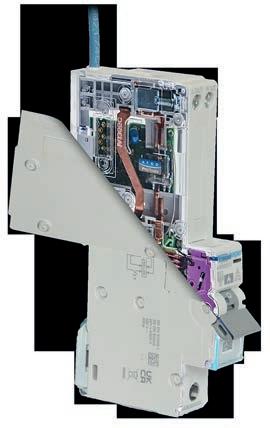
The award-winning AFDD with ProTools has the ability to identify 8 statuses with on-board diagnostics, saving you time and effort in fault finding.

imbalance and trips the circuit, often in just a few milliseconds, to minimise the risk of electric shock.
• Fuses: Fuses are made of a wire or metal strip and are designed to melt under excessive current, breaking the circuit.
• Relays: Their operation leans heavily on electromagnetic principles. By detecting imbalances or specific conditions in a circuit, relays command switches (often in more significant devices like circuit breakers) to disrupt current flow.
The operation of these devices often hinges on their trip characteristics. An MCB, for instance, will trip faster under a higher overload, while an RCCB will trip when it detects a mismatch between the phase and neutral currents, indicating a possible earth fault. The speed at which these devices operate is critical – often the difference between a safe interruption and a potential hazard.
BS7671 Regulation 411.4.4
BS7671 Regulation 411.4.4 states that the characteristics of the protective devices and the circuit impendence shall fulfil the following requirement, as shown in the formula diagram:
This regulation ensures that in the event of a fault, the protective device will activate quickly enough to prevent harm to the circuit or persons.
The formula essentially compares two parts.
1. The product of the fault loop impedance and the tripping current of the protective device (Zs x Ia).
2. The product of the nominal voltage to Earth and a voltage factor that accounts for potential voltage variations (Uo x Cmin).
For the protective device to be effective, the first product (representing the potential harm) must be less than or equal to the second product (representing the safety threshold).
In practical terms, this ensures that the protective device will activate safely and timely during faults, thus safeguarding the installation and its users.
New technologies
The UK market, always at the forefront of innovation, has seen groundbreaking advancements in the last few years.
• Smart circuit breakers: The future lies in integration, and smart circuit breakers exemplify this. Merging traditional functions with IoT, they offer real-time monitoring, analytics, and even remote control features.
Electricity at Work Act 1989BS7671:2018+A2:2022
Regulation 4(2): Equipment should be constructed or adapted to prevent danger.
Regulation 4(3): Every work activity, including the operation, use, and maintenance of a system, should not pose a danger.
Regulation 6: Systems should be suitably maintained to prevent danger.
Regulation 411.3.2: Automatic disconnection in case of a fault.
Regulation 411.3.3: Additional requirements for socket outlets and for the supply of mobile equipment for use outdoors.
Regulation 433.1: Discusses the assessment of general characteristics of overcurrent protective devices.
With the rise of solar panels and home energy storage solutions, prosumers need advanced protective devices. These ensure that any energy fed back into the grid or stored meets safety standards and does not cause overloads and any unforeseen issues.
Regulations
Compliance with regulations is non-negotiable in the electrical domain. The Electricity at Work Act 1989 & Requirements for electrical installations BS7671:2018+A2:2022, a cornerstone in UK electrical regulations, emphasises the importance of protective devices.
Where:
• Zs: Impedance of the fault loop (in ohms, Ω) This includes:
• The source of the electricity.
• The line conductor leading up to the point of the fault.
• The protective conductor connecting the point of the fault back to the source.
• Ia: The current (in amperes, A) that triggers the automatic operation of the protective device within a specified time. When a Residual Current Device (RCD) is in use, this current is the residual operating current that disconnects the circuit in the specified time.
• Uo: The nominal AC rms or ripple-free DC line voltage to Earth.
• Cmin: The minimum voltage factor, considering variations in voltage due to factors like time, location, changing of transformer taps, and other considerations. For a low voltage supply in line with the Electricity Safety, Quality and Continuity Regulations, Cmin is given the value of 0.95.
• Arc Fault Detection Devices (AFDDs): AFDDs represent a significant advancement in electrical protection. Initially introduced as a recommendation in BS7671 in 2018, their affordability and availability have surged, positioning them as a more frequent option for installers. Uniquely designed, AFDDs excel in detecting elusive arc faults that traditional protective devices might overlook. Their integration has become pivotal, especially emphasising enhanced fire safety in modern electrical systems.
Effects on prosumers and the future
The evolving landscape of protective devices is a boon for professionals and prosumers. As individuals engage more in producing and consuming electricity, the demand for enhanced safety and efficiency escalates. The future beckons a scenario where energy consumption is streamlined and secure, and advanced protective devices, with their real-time monitoring and predictive maintenance capabilities, will be at the helm of this transformation.
• Electricity at Work Act 1989 (Statutory) – a pivotal UK legislation, this act mandates the safety standards and responsibilities for all activities related to electrical systems and equipment.
• The Electricity at Work Act 1989 & Requirements for Electrical installations BS7671:2018+A2:2022 (Non-Statutory) – the BS 7671 Wiring Regulations, integral for any electrical professional in the UK, emphasise the necessity of regular inspections, appropriate device selection, and correct installation and maintenance.
Conclusion and summary
The dynamic nature of the UK’s electrical landscape demands adaptability and foresight. Given their multifaceted roles, protective devices are pivotal in assuring safety and efficiency. As the industry evolves, all of us must stay on top of developments, ensuring that the future of electrical safety in the UK remains bright and secure for generations to come.
Orbit Electrical Services, orbitelectrical.co.uk
by Click®
Protective Devices
Our Elucian range of Protective Devices are easy to install, suitable for residential and light commercial environments, they provide protection against earth faults to ensure people’s safety against electrocution and fires. Now including AFDDs.
40 | September 2023 SPECIAL FEATURE CIRCUIT PROTECTION & SWITCHGEAR electricalcontractingnews.com @ElecConNews /electricalcontractingnews @ecn_magazine
≤ x x Zs la Uo Cmin
ECN May strip ads - Elucian Devices.indd 1 20/04/2023 13:53
MK SENTRY RANGE:
MK Sentry Circuit Protection provides a range of metal consumer units for surface and recessed mounting with a complete portfolio of safety devices. The empty and part-populated variants enable the installer/end user to create a bespoke configuration with incoming switch, surge device (SPD), and combinations of arc fault (AFDD) , earth leakage (RCD/RCBO) and over current (MCB/RCBO). Alternatively, fully populated consumer units are an off the shelf option.
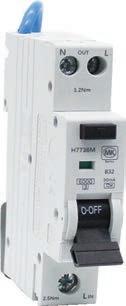
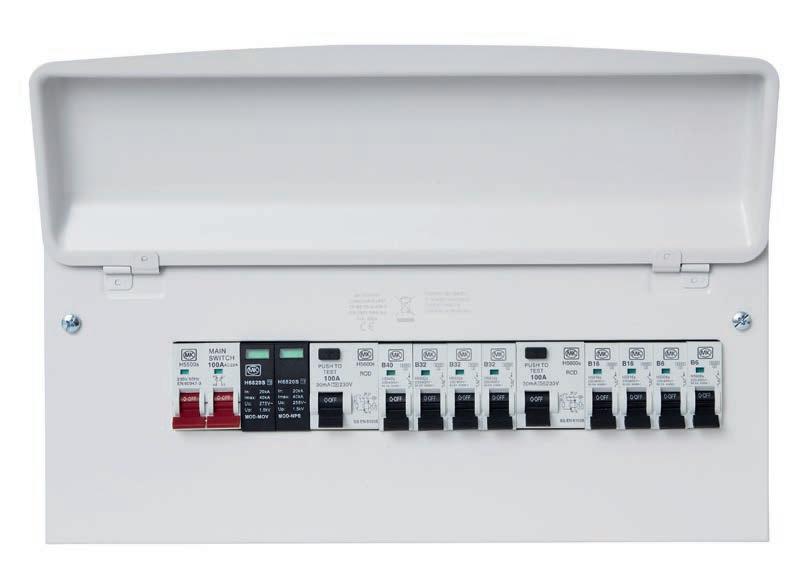
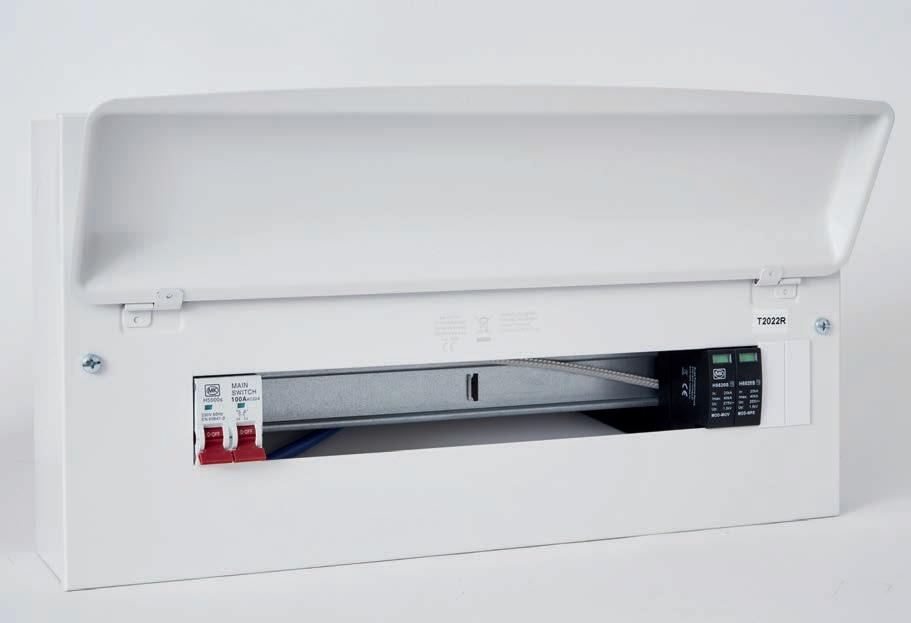
Our full range of safety devices include AFDD (providing additional protection against fire in the home), SPD (protection against transient high voltages and lightning strikes) as well as protection against electric shock, over current and for EV charging is given by the RCBO, MCB and Type A RCD.
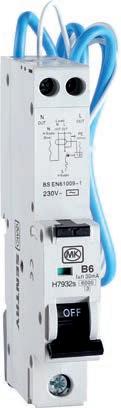
CircPro (UK) Limited
3C Lamson Road, Rainham, Essex RM13 9YY
Phone: 01708 986180
Email: enquiries@circpro.co.uk
www.mksentrycircuitprotection.co.uk
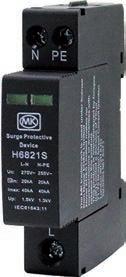
FEATURES OF THE MK SENTRY
• Full range of empty, pre-populated and populated boards - 4 to 21 module
• Full range of devices
• Complies with BS7671:2018
• 10 year guarantee - 5 year guarantee (SPD & AFDD)
• Bespoke configurations available
• Project support available

Made in China. The MK Trademark is used under license from Novar ED&S Limited. Novar ED&S Limited makes no representations or warranties with respect to this product. This product is manufactured by CircPro (UK) Limited, a division of Yihua.
Sentry
COLLECTION INTRODUCING
The NEW Protego Circuit Protection range of metal consumer units are here. Offering unrivalled solutions for your electrical installations.
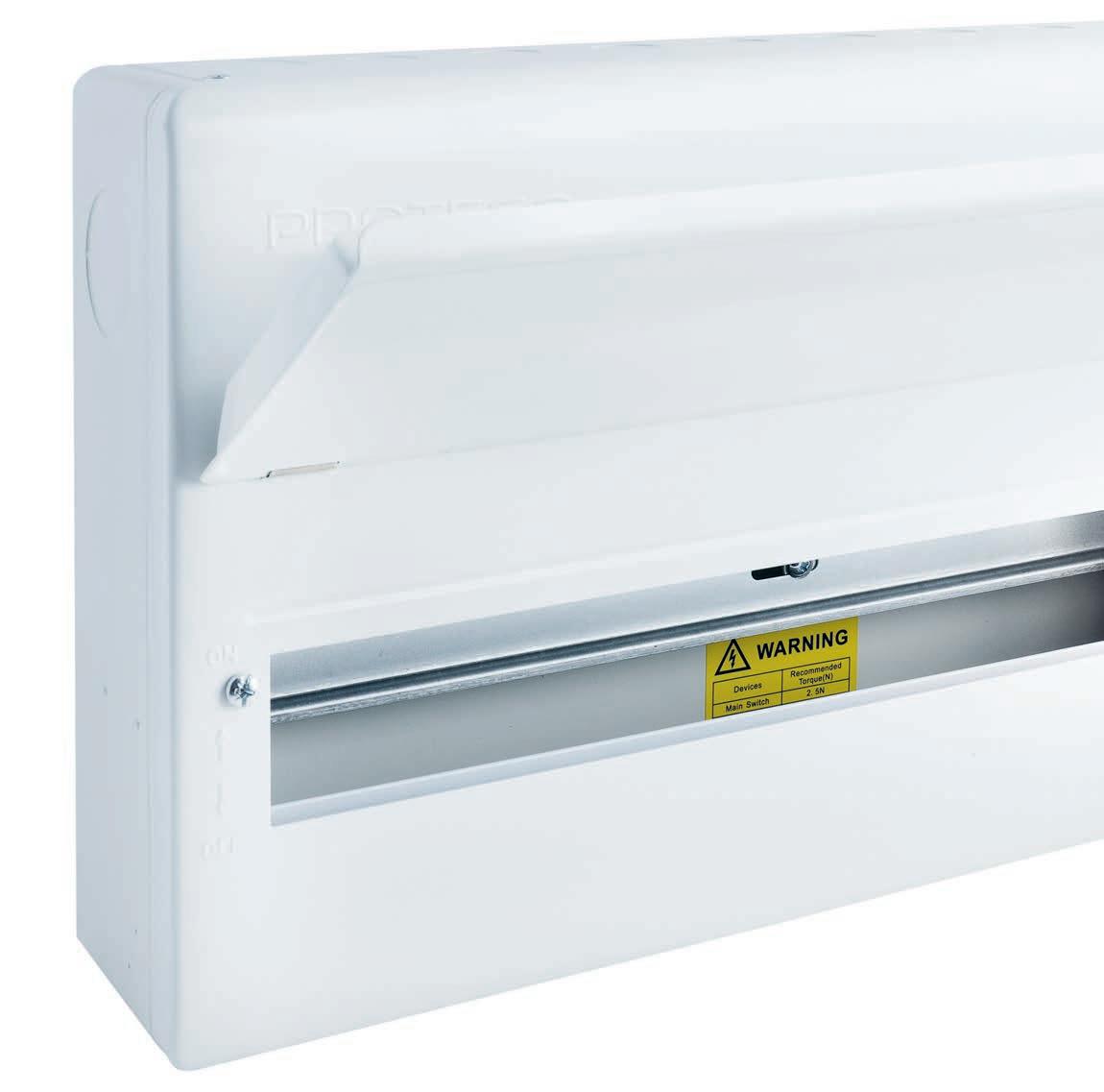
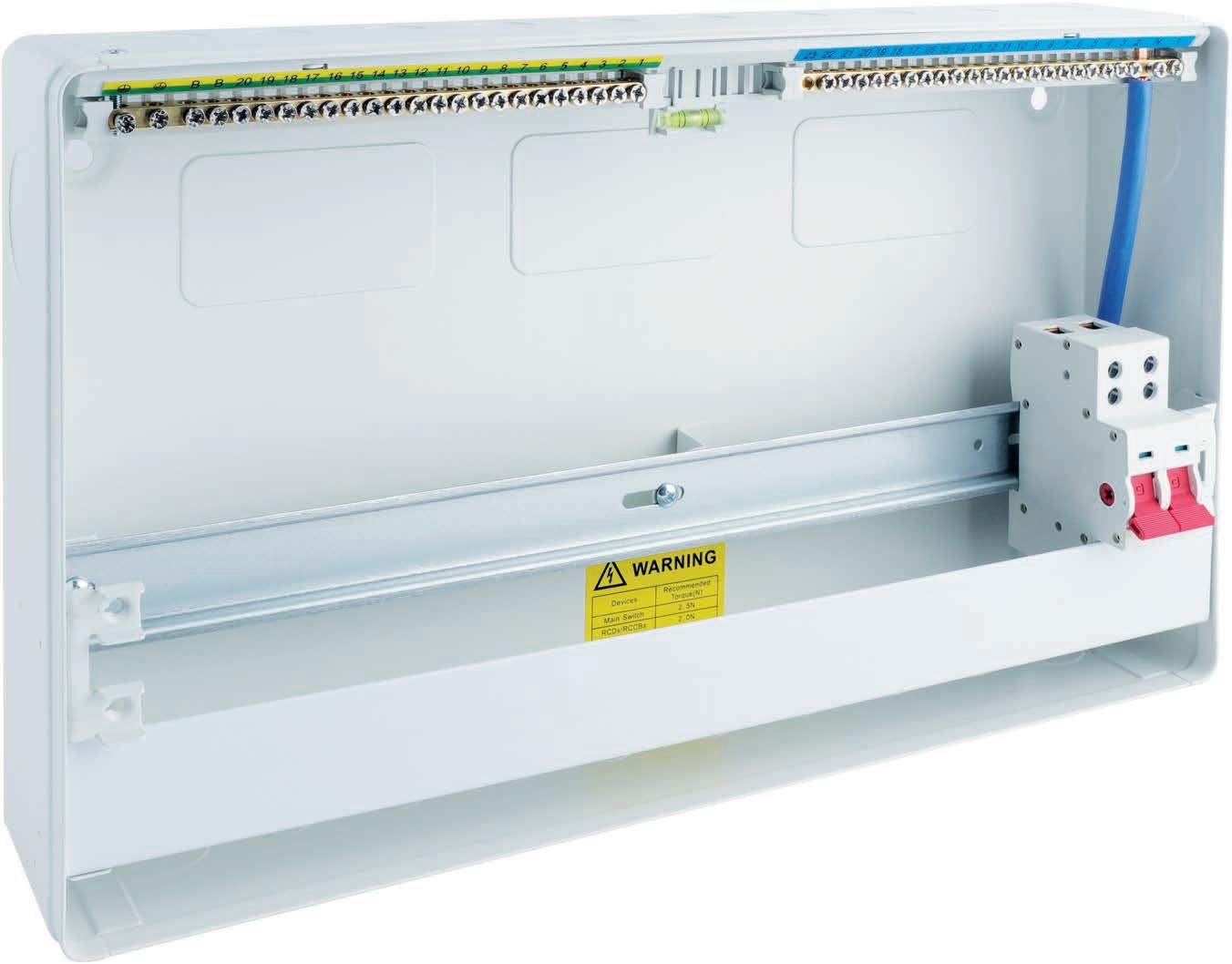


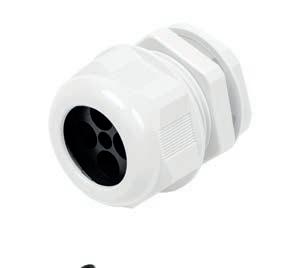
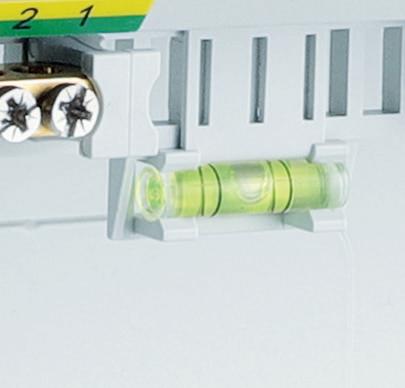
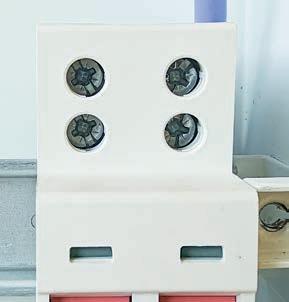
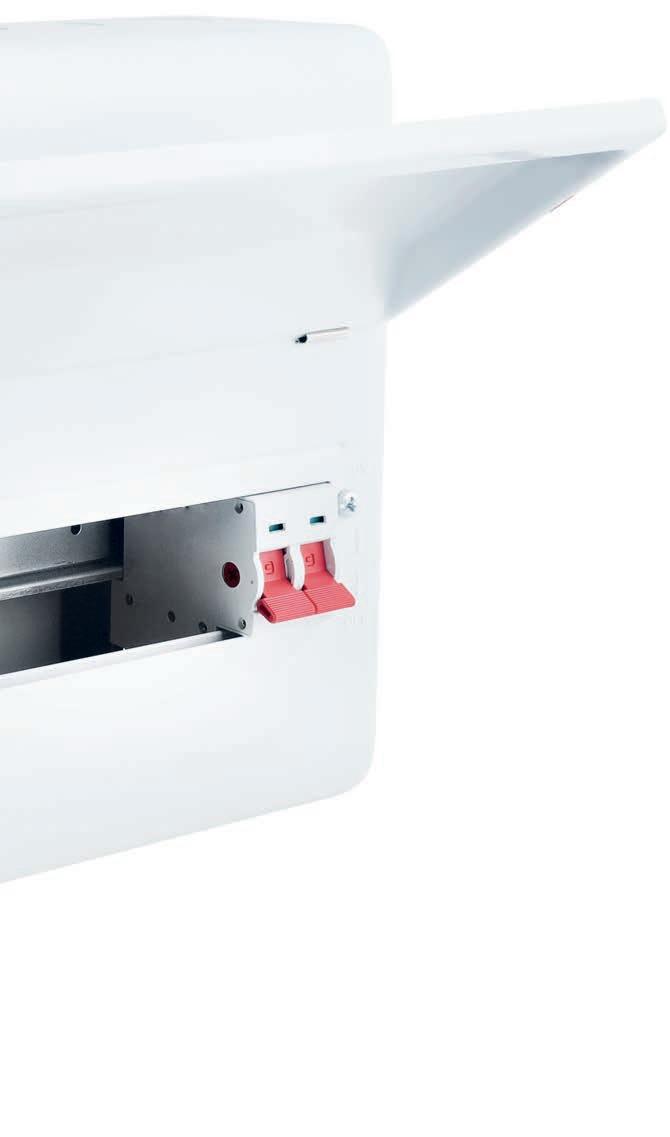 Busbar shield
Board height 260mm for ease of cabling
Edging strips supplied
Variable sized knockouts
Incoming dual terminals on the mains switch
In-built spirit level
Metal boards constructed of 1.2mm steel
Busbar shield
Board height 260mm for ease of cabling
Edging strips supplied
Variable sized knockouts
Incoming dual terminals on the mains switch
In-built spirit level
Metal boards constructed of 1.2mm steel
Connect with us: www.niglon.co.uk t 0121 711 1990 e sales@niglon.co.uk
32mm Tail Gland Kits supplied
NIGLON’S INNOVATIVE PROTEGO CONSUMER UNITS TO REVOLUTIONISE ELECTRICAL INSTALLATIONS
This new range, consisting of eight distinct lines under one main product group, is the result of a customer-centric approach, with a focus on addressing the needs and preferences of wholesalers and installers alike.
As a company that values its customers’ feedback, Niglon actively sought insights from existing board users, installers and wholesalers to understand their requirements better. Armed with this valuable information, Niglon’s product team set out to create a Consumer Unit Range that not only meets industry standards but also offers a host of features aimed at enhancing user experience and convenience.
“We believe in listening to our customers and continuously improving our offerings based on their feedback,” says Oliver Hinley, Operations Director at Niglon. “The development of the new Consumer Unit Range is a testament to our commitment to providing the best solutions for our valued wholesalers and installers. We are dedicated to offering more options, improved safety features, and ease of installation to meet the evolving demands of the electrical industry.”
Key features of the new Niglon Consumer Unit Range
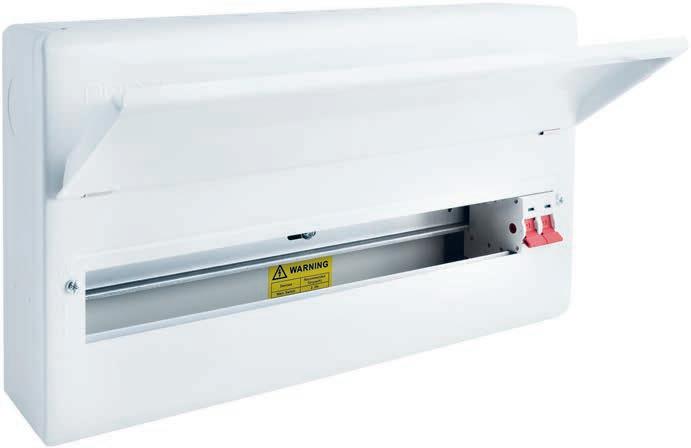
• Non-Combustible Enclosures: Safety remains the top priority for Niglon. The new consumer units feature non-combustible enclosures to minimise fire risks, providing peace of mind for both users and installers. All boards are BS7671 (18th Edition) compliant, and third party tested to BS EN61439-3 SEMKO Certification.
• Knockouts: The consumer unit range incorporates precision knockouts for effortless wiring, saving valuable time during installation. This feature ensures that wholesalers and installers can work efficiently, meeting tight project deadlines without compromising on quality.
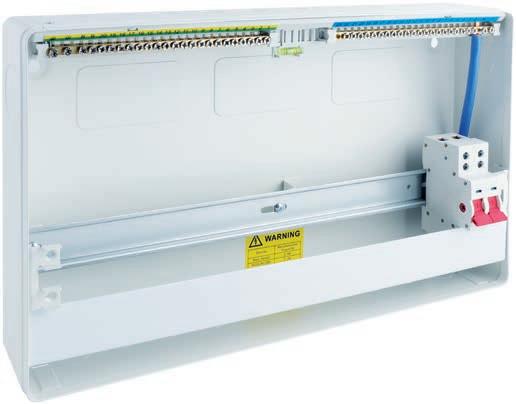
• Busbar Cover: The Protego range comes with busbar covers as standard, adding an extra layer of safety during maintenance or inspections. This feature safeguards against accidental contact, reducing the risk of electrical shocks.
• Cover Fixing: The retained cover fixing screws have a short turn thread which means the cover is fixed quickly and securely.
• Edging Strip: Superior quality edging strip is supplied with all boards for covering rear knockout edges to protect internal wiring from sharp edges.
• Label Set Design: A clear and concise label set has been designed to accommodate any installation configuration for easy circuit identification.
• Body Design: The consumer unit is constructed from 1.2mm thick steel and its rounded edges and radiused corners make it extremely robust yet easy to handle for installation.
• Spirit Level Indicator: The larger boards have an integrated level indicator to help with the orientation of the board when fixing in position.
• Twin Terminal Mains Switch: All mains switch isolators have incoming twin terminals to give extra assurance the supply cable is securely fixed. These have been fully third-party type tested to BS EN 60947-3 certified by SEMKO.
Integration with existing Niglon products
Understanding the importance of compatibility, Niglon designed the new Consumer Unit Range to seamlessly integrate with its existing modules. This compatibility provides wholesalers and installers with the flexibility to expand their electrical systems without any hassle.
Innovative solutions for a safer future
The Protego range is a testament to Niglon’s commitment to safety and innovation. By incorporating essential design features after listening to customer feedback, Niglon says it aims to set new industry benchmarks for electrical safety and efficiency.
Get more details
For more information about the complete Protego range and new design features offered in the new consumer unit range, please get in touch with Niglon. The company’s team of experts is readily available to answer any queries and assist with product selection to meet specific needs and requirements.
Niglon is a well-established and reputable name in the electrical industry, recognised for its dedication to quality, safety, and innovation. With a strong focus on engineering excellence, the company has been providing a wide range of electrical products to customers worldwide for more than 80 years. Niglon’s diverse portfolio includes wiring accessories, circuit protection, cable management, lighting solutions, and more.
Niglon prides itself on being able to create reliable and efficient solutions that address the evolving needs of the electrical industry while contributing to a safer and greener future.
Niglon, niglon.co.uk
44 | September 2023 ADVERTISEMENT FEATURE electricalcontractingnews.com @ElecConNews /electricalcontractingnews @ecn_magazine
Niglon is excited to unveil its latest innovation – the highly anticipated new Consumer Unit Range, marketed under the name ‘Protego’.
Niglon has launched its new Protego Consumer Unit Range
Single
Single
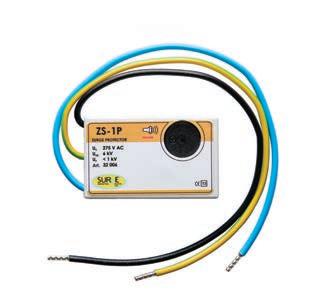
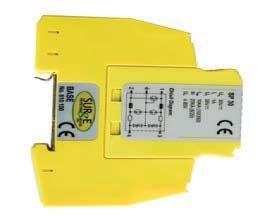
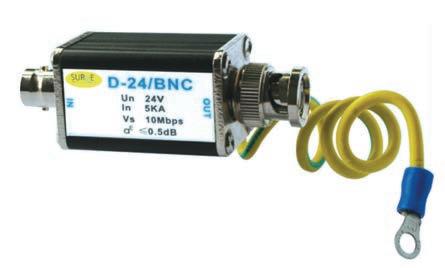
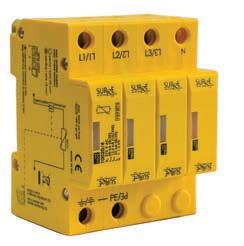
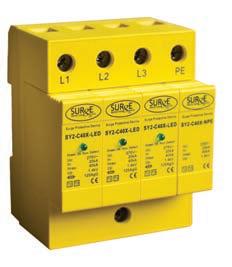
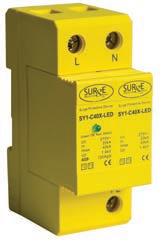
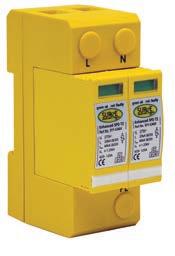
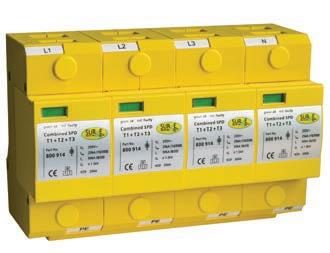
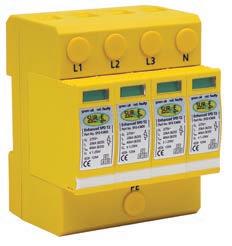
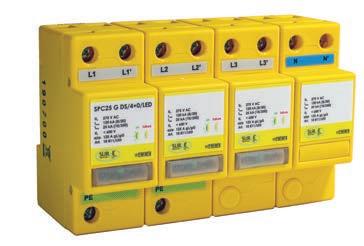
THE SPECIALISTS IN LIGHTNING & SURGE PROTECTION Tel: 01484 851747 www.surgedevices.co.uk info@surgedevices.co.uk ON-DEMAND TRAINING NOW AVAILABLE
Level
/
100kA 10/350µs LPL
1
2
all / full mode protection
SPD with
phase also available
Part No.10811LED
10/350µs LPL Level 1 / 2
phase also available
Part No.SY1C40X Part No.SY1C40XLED
10/350µs LPL Level 3 / 4
phase also available
Part
No.SY2C40X 100kA
Part No.800914
50kA
Single
A WHOLE RANGE OF DEVICES FOR ALL YOUR SURGE REQUIREMENTS! Part No.32006 Part No.SP30 Part No.D-24/BNC Designed specifically to protect fire alarm/burglar alarm panels and individual sockets Designed to protect coaxial ethernet network systems www.surgedevices.co.uk/spd-training-academy THE SPD TRAINING ACADEMY Three Phase Window indication Single Phase Window indication Three Phase LED indication Single Phase LED indication Designed to protect measuring and control circuits, bus systems or telecommunications systems Part No.SY2C40XLED Type 1 + 2 + 3 Combined Lightning & Surge Devices Type 2 / 3 Surge Devices
Part No.10020/4
PIONEERING SUSTAINABLE SWITCHGEAR: REDUCING THE ENVIRONMENTAL IMPACT OF SF6 GAS
In today’s energy-intensive world, where the seamless functioning of electrical infrastructure is crucial, switchgear assumes a pivotal role in ensuring uninterrupted power networks. However, amid this pursuit for uninterrupted energy supply, an environmental challenge emerges – the use of sulphur hexafluoride (SF6) gas in switchgear applications. Whilst SF6 is highly effective in providing insulation and arc-quenching capabilities, its environmental impact cannot be overlooked. With a global warming potential (GWP) that surpasses carbon dioxide by thousands of times, SF6 stands as a potent greenhouse gas, posing a threat to our planet’s climate stability.
Recognising the urgency to tackle this environmental concern, the data centre industry, along with other electricity-intensive sectors, must lead the way in spearheading innovative solutions that eliminate the need for SF6 gas. By embracing sustainable alternatives and championing the development of eco-friendly switchgear technologies, these industries can demonstrate their ongoing commitment to environmental responsibility and sustainability.
While the European community has taken steps to eliminate SF6, the UK is yet to implement such regulations. Nonetheless, industry leaders such as VIRTUS actively advocate for SF6-free switchgear, driving sustainable alternatives. Indeed, even without legislative mandates, it is crucial for the industry to drive innovation and prioritise environmentally responsible choices. VIRTUS says that it recognises the need to lead this change and actively advocates for SF6-free switchgear to demonstrate its commitment to environmental responsibility and sustainability.
The data centre industry, with its significant energy consumption, has enough influence to create market demand for SF6-free switchgear. By promoting its adoption, operators incentivise manufacturers to invest in research and development, fostering the creation of

more sustainable solutions. Market forces can drive change alongside legislation, so by demonstrating the demand for sustainable switchgear, operators can encourage switchgear producers to prioritise innovation and the development of alternatives to SF6.

In taking a proactive stance, the data centre industry can inspire change and drive sustainable practices in other sectors. SF6 is not only used in data centres but also in renewable energy production, such as wind power, and its usage is likely to increase with the rise of electric vehicles and other energy-hungry applications. By promoting SF6-free switchgear, VIRTUS aims to encourage other sectors to follow suit.
To reduce the environmental impact of SF6 gas in switchgear, the industry is actively exploring and adopting sustainable alternatives. Promising solutions include air-insulated switchgear (AIS), vacuum-insulated switchgear (VIS), the development of new gases and solid insulation solutions.
AIS eliminates the need for SF6 gas by using air as the primary insulation medium. It offers reliable performance, simplicity and ease of maintenance while significantly reducing the environmental impact. While AIS has limitations in compactness and high voltage handling, it is a mature technology widely adopted in various applications.
VIS employs a vacuum as the insulation medium, replacing SF6 gas. VIS offers high reliability, low maintenance requirements and a compact design. Initially developed for medium voltage applications, it is now being adapted for high voltage use. The absence of SF6 gas in VIS eliminates associated environmental risks.
Researchers and manufacturers are actively developing alternative gases with lower GWPs compared to SF6. Gases such as nitrogen (N2), carbon dioxide (CO2) and fluoroketones (FKs) are being investigated for their effective insulation and arc-quenching capabilities, offering more environmentally friendly options for switchgear.
Efforts are underway to develop solid insulation solutions for switchgear,
eliminating the need for greenhouse gases. Solid insulation materials provide excellent electrical insulation properties, contributing to long-term sustainability and reduced environmental impact.
As the data centre industry and other electricity-intensive sectors champion the adoption of sustainable alternatives to SF6 gas, a more sustainable future awaits. While the precise cost implications of transitioning to SF6-free switchgear are not yet fully understood, the drive to meet market demand for eco-friendly solutions will likely lead to improved affordability over time. By demonstrating a commitment to environmental responsibility and actively advocating for sustainable alternatives, the industry sets a powerful example for other sectors to follow.
Addressing the environmental impact of SF6 gas in switchgear requires collaboration and industry leadership. The data centre industry, with its significant energy consumption, holds the power to drive change and shape a greener and more sustainable electrical ecosystem. By embracing innovative technologies, promoting the development of eco-friendly switchgear solutions and advocating for stricter regulations, the industry can pave the way for a more sustainable future.
VIRTUS
Data Centres, virtusdatacentres.com
46 | September 2023 SPECIAL FEATURE CIRCUIT PROTECTION & SWITCHGEAR electricalcontractingnews.com
Peter Betts, Engineering Director at VIRTUS Data Centres, takes
a
look at the role that data centres and other electricity-intensive sectors can play in eliminating the need for SF6 gas.
Paving the way for a more sustainable future
Consumer Units
Elucian by Click® brings to the market a comprehensive Consumer Unit and Circuit Protection range. It covers a broad range of installations and offers a number of features and benefits that will enhance the products’ convenience, flexibility and safety properties. ECN May strip ads - Elucian Devices.indd 2 20/04/2023 13:53
by Click®


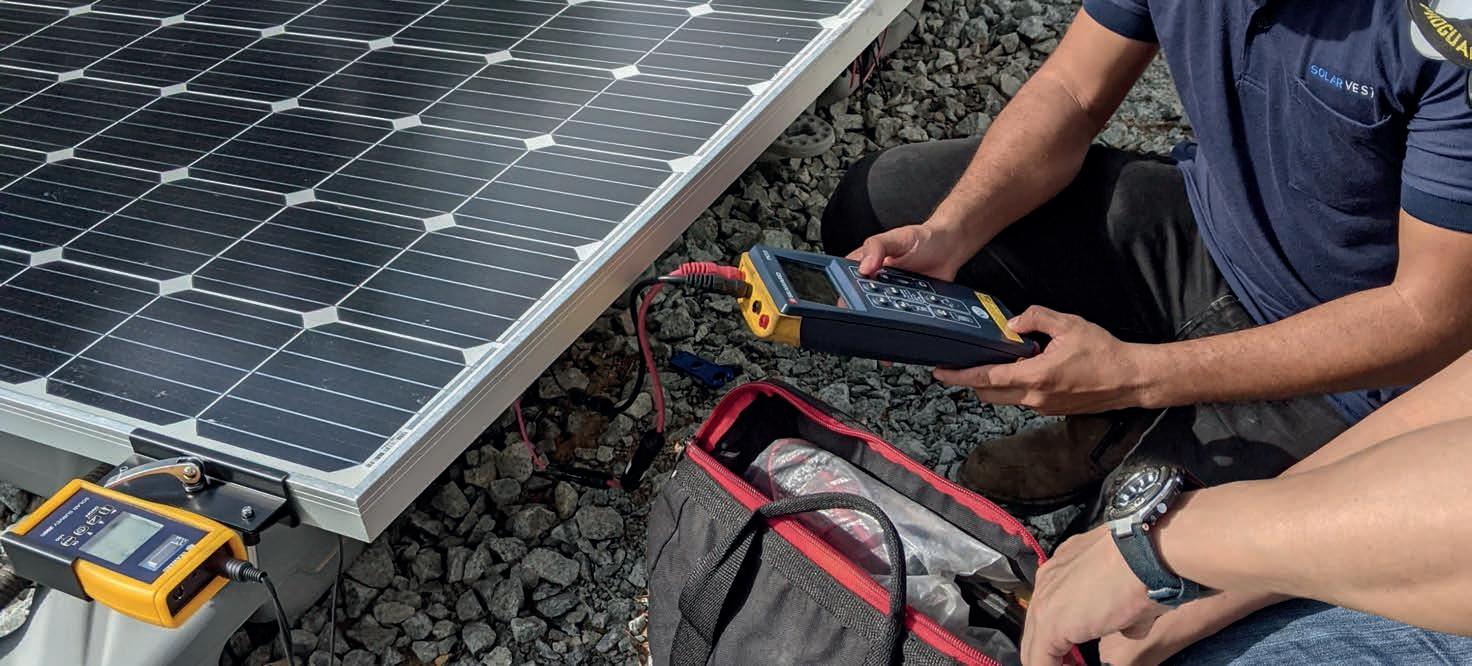
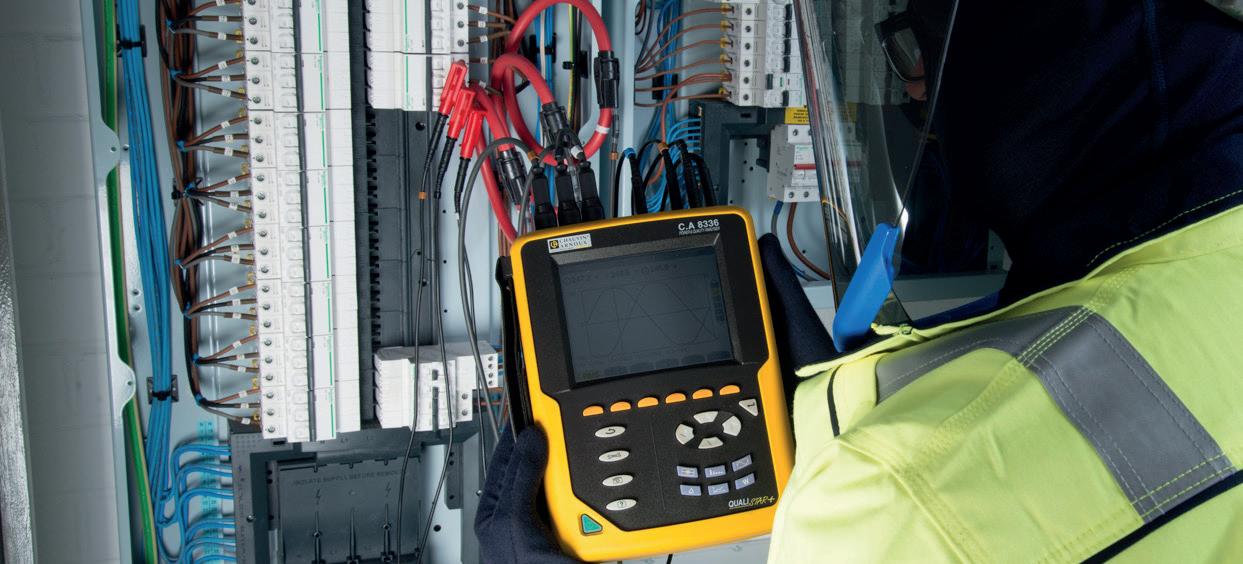
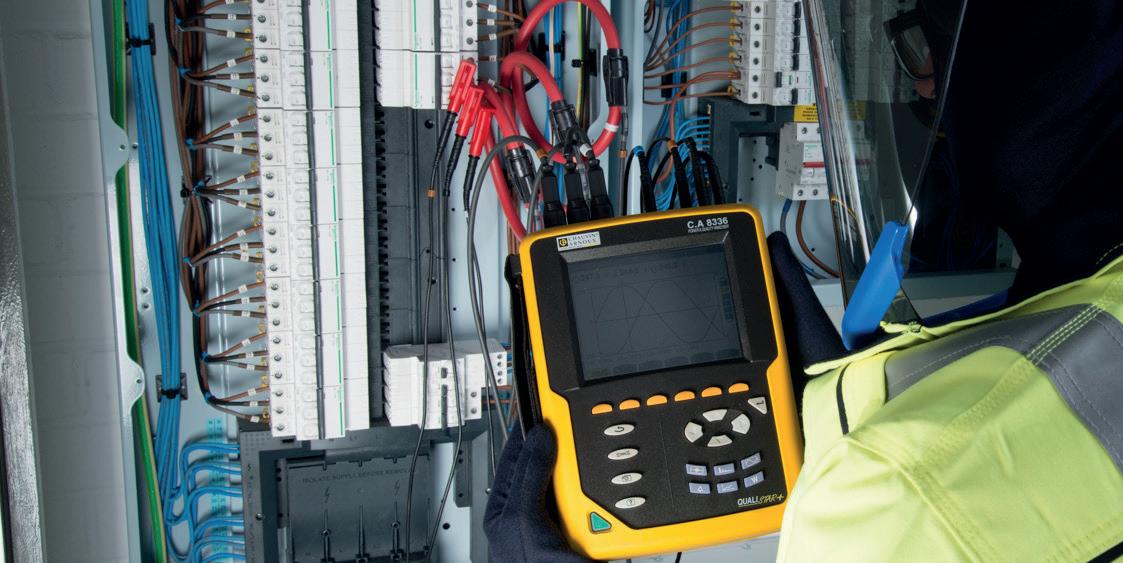

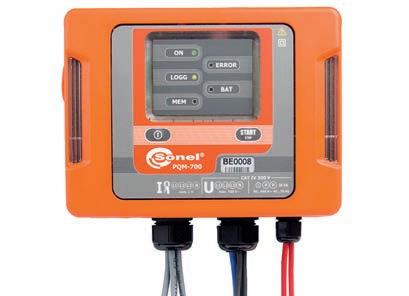

Specialist Energy Products & THERMAL IMAGING CAMERAS ENERGY ANALYSIS SOLUTIONS The UK’s leading supplier of Specialist Energy Products & Services Sales: 0161 877 0322 | Email: sales@dilog.co.uk
BS 7671 AMD 2: VEHICLE-TO-GRID AND RCDS
The IET Code of Practice (CoP) for EV Charging Equipment Installations (5th Edition due 18 September 2023) gives detailed design requirements, based on BS 7671, for example, for a basic domestic charging install supplied directly from the mains. The RCD selection for Mode 3 charging is straight forward – see 722.531.3.101 Amendment
2. If the charge point contains 6mA smooth DC detection, a single 30mA Type A RCD can be mounted in the charge point or upstream based on the installation design requirements – see CoP clause 5.6.2.
Doepke is seeing a growth in small pilot projects (microgrids) for Vehicle-to-Grid (V2G), although it is early days for this technology. The standards and communication requirements to manage large scale use of EV batteries as a distributed energy resource (DER) are complex (for a brief overview see IEC Frances Cleveland’s IEC blog[1]).
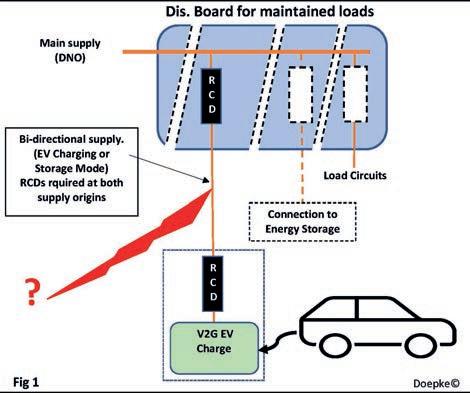
Installation designs containing a V2G, V2H (home): The cable connecting the V2G charging equipment to the main distribution board, running in EV charging mode or storage mode, may require two RCDs. Why?
In charging mode, the 30mA RCD mounted in the V2G charging equipment may trip (see later section on bi-directional RCDs) with
a fault located upstream, but obviously it does not disconnect the supply to the fault. If the design rules require RCD protection for the supply cable, an additional RCD must be installed at the origin of cable supplying the EV charger (see CoP EV Charging Installations section 10).
V2G inverters and Types of RCD
The CoP for Electrical Energy Storage Systems Table 9.4 specifies selection requirements for Types of RCD used in circuits containing bi-directional inverters. This is applicable to Fig. 1 V2G charge controllers.
Bi-directional RCDs: In Fig.1, the two RCDs associated with the V2G charge controller circuits must be suitable for bi-directional operation, i.e. based on the controller/EV battery status (charging or discharging). Confirm with the RCD manufacturer that the RCD model you are proposing to use is suitable for bi-directional operation.
Consider the guidance given in the associated IET CoPs for safe installation designs before deciding on the final design. Check the V2G equipment manufacturer’s installation specification for any specific RCD requirements related to its product. When mounting RCDs in series, note the flow of residual currents through the RCDs and location of the RCDs with respect to each other and any selectivity requirements. For example, smooth DC fault currents, associated with two EV chargers containing 6mA DC detection would preclude the use of Type A or F upstream due to the summation
Protective Devices
of DC fault currents – in this case 12mA. See 722.531.3.101 Amendment 2 Note 1 referring to Regulation 531.3.3, and for selecting the appropriate Type of RCD see Note 1, 2 and 3. For example, Doepke Type B-MIs have a lower smooth DC detection threshold (6mA), enabling their use downstream of Type A in single load applications on one feeder.
Conclusion
The revised Code of Practice for EV Charging Equipment Installations and BS7671 Amendment 2 detail basic requirements for safe design. The IET Code of Practice for Electrical Energy Storage Systems is relevant to complex installations containing battery back-up systems incorporating EV charging as well. Check the V2G equipment manufacturer’s specifications for specific RCD requirements and any additional equipment requirements to meet BS7671. With existing RCD protection on the main incoming supply, consider the design carefully – RCD Type, sensitivity, selectivity, bi-directional operation if relevant. Equipment that fails to at least meet the existing regulations will not provide the expected level of protection and service appropriate to modern installations. For further information on RCDs, please refer to the Doepke website product selection and download pages.
Doepke, doepke.co.uk
[1] https://www.iec.ch/blog/integrating-electri c-vehicles-grid-its-complicated
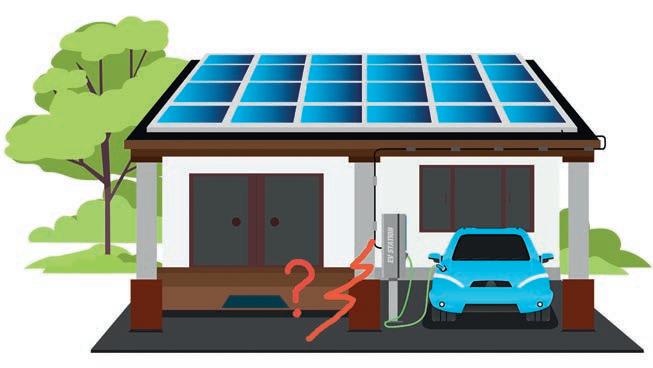
48 | September 2023 SPECIAL FEATURE CIRCUIT PROTECTION & SWITCHGEAR electricalcontractingnews.com @ElecConNews /electricalcontractingnews @ecn_magazine
Chaz Andrews, Doepke Technical Manager, outlines key points and selection requirements for RCDs associated with V2G Installations.
Fig.1
Our Elucian range of Protective Devices are easy to install, suitable for residential and light commercial environments, they provide protection against earth faults to ensure people’s safety against electrocution and fires. Now including AFDDs.
ECN May strip ads - Elucian Devices.indd 1 20/04/2023 13:53
by Click®

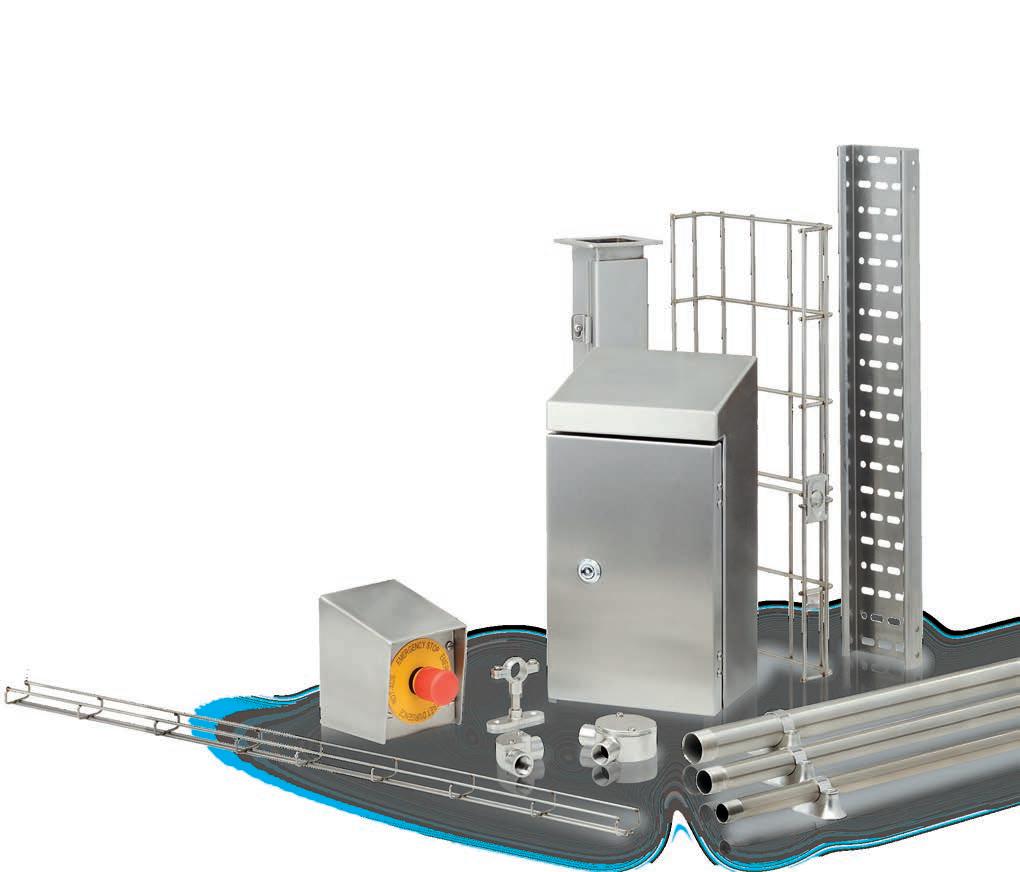




www.lasnek.com Lasnek Ltd, 1 President Way, Luton, Bedfordshire, LU2 9NR Tel: +44 (0) 1582 425 777 • The stainless steel containment specialist • Choice of containment types & finishes • Bespoke manufacturing service • Large stock availability
Stainless Steel Cable Management Systems Design | Manufacture | Supply
IP65 consumer units have been around for a very long time and can be used for many applications but are often used where the units may encounter water, such as the outdoors. An IP rating is an ingress rating given to an electrical product based on its ability to resist the ingress of both solids and liquids, which in turn gives it weatherproof properties, which is why you will often find IP65/66 units being referred to as ‘weatherproof’.
The rating is given to these products before they have had any adjustments made to them by the consumer. They are tested by blasting water jets at them from all different angles. When the units are tested they don’t take into consideration drilled holes and the thermal derating of

the devices that are going to be fitted inside of the units. So yes, IP65 consumer units do have weatherproof properties, however there are certain instances that can reduce their efficiency in being weatherproof. One of the risks of a IP65 consumer unit is that if you were to drill a hole into the IP65 consumer unit or any other IP65 accessory, such as an outdoor socket, you would reduce its IP properties. To reduce the risk of water entering your unit you can gland any wires into the consumer unit from the bottom, to avoid the downfall of rain and seal any of the holes with silicone. This would reduce the ingress of water, however, it is important to note that although water/dust may not be able to find its way into the consumer unit, it would still reduce the IP65 unit of its IP properties.
WHAT ARE THE RISKS OF FITTING A IP65 CONSUMER UNIT OUTSIDE? Consumer Units
Alongside this risk you will also need to think about the thermal derating of your RCD/RCBO. Thermal derating of RCD/RCBO’s can vary across different manufacturers, which is why it is very important to get the thermal derating factors from your chosen circuit protection manufacturer. The thermal derating will affect the RCD/RCBO’s tripping capacity. When the external atmosphere’s temperature rises in the summer months, the protection devices will trip quicker. On the other hand, when the temperature outside drops, the protection device does the exact opposite and doesn’t trip as fast. When temperatures drop outside in the winter, your 32a RCBO that is protecting your EV charger may encounter a problem, but as the tripping time is increased due to the temperature drop, your RCBO will not trip, leading to a very expensive problem.
Although the IP65 consumer units are manufactured to have weatherproof characteristics, unfortunately the RCBO’s are not. They cannot work in certain capacities of heat. Although hundreds of electricians are fitting these IP65 consumer units outside, Verso recommends that you do the necessary checks, such as contacting your circuit protection manufacturer and requesting the thermal derating factors of its RCBO’s.
Verso says it does not currently offer a IP65 consumer unit but when it does, it will not be marketing it for use outside of the property, unless something is put in place that will mitigate the risk of alternating the tripping times of its protection devices. Verso says it is dedicated to providing electricians with the highest level of quality and safety and operates with complete transparency.
Verso’s Managing Director, William Winter, is taking a very proactive approach to busting myths in the electrical community and taking a deeper dive into topics such as AFDD’s and how they can stop nuisance tripping, earth leakage and why it is on the rise, surge protection devices, and everything to do with Amendment 2 and its changes.
Verso Electrical, versoelectrical.co.uk
50 | September 2023 SPECIAL FEATURE CIRCUIT PROTECTION & SWITCHGEAR electricalcontractingnews.com
Verso Electrical looks at IP65 consumer units and what you should consider when fitting them outdoors.
Elucian by Click® brings to the market a comprehensive Consumer Unit and Circuit Protection range. It covers a broad range of installations and offers a number of features and benefits that will enhance the products’ convenience, flexibility and safety properties. ECN May strip ads - Elucian Devices.indd 2 20/04/2023 13:53
by Click®
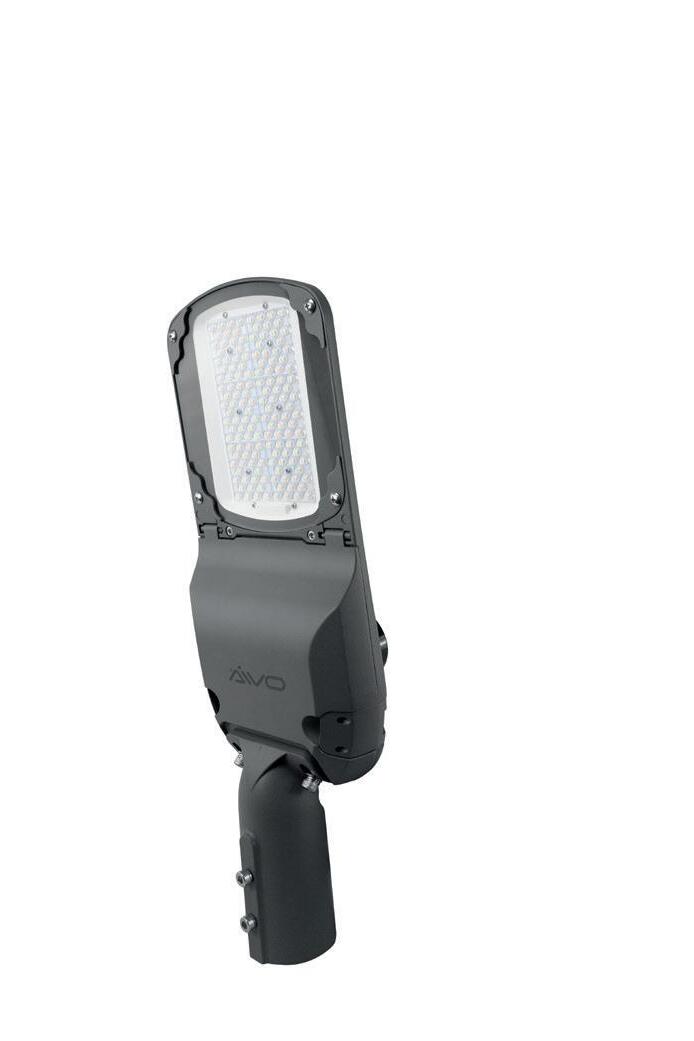

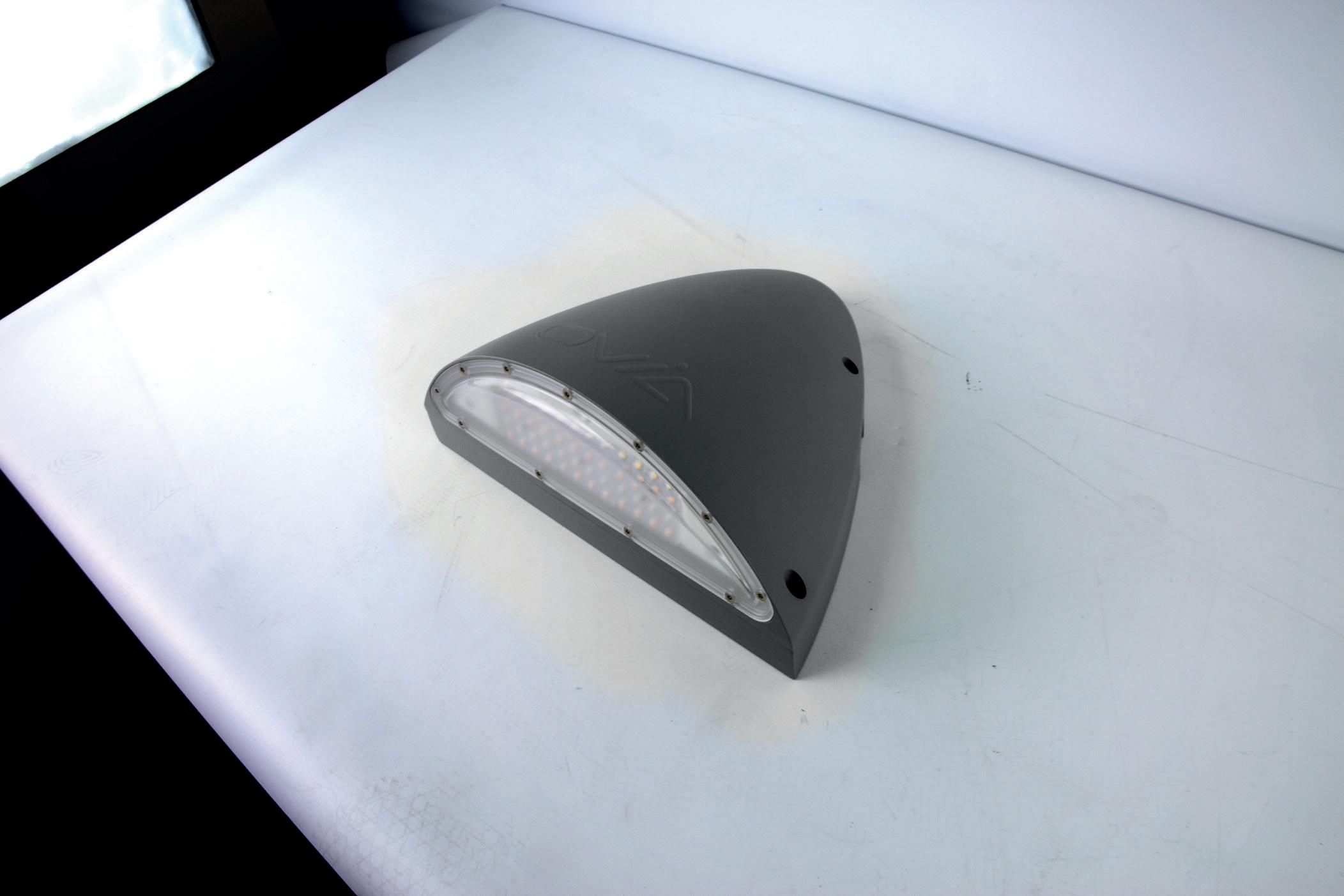
call: 01827 300640 email: sales@oviaUK.com LIGHTING UP ALL OPTIONS AN EXTENSIVE RANGE OF POWERFUL AND EFFICIENT LIGHTING SOLUTIONS ECN September Feature - Exterior Lighting.indd 1 16/08/2023 16:04 SPECIAL FEATURE LIGHTING supported by @ElecConNews /electricalcontractingnews @ecn_magazine electricalcontractingnews.com
OVIA — A LEADING LIGHT IN THE SCOLMORE GROUP
The company was launched at the end of 2019, with industry expert Mike Collins at the helm and a small sales team hitting the phones and the roads. The aim was to bring to the professional electrical contracting market an extensive range of high quality, competitively-priced products that would be quick and easy to install and would help save contractors time and money on a vast range of projects. Fast forward to 2023 and there are now 19 sales team members and a portfolio offering in excess of 1,000 individual product lines, covering a broad spectrum of sectors.
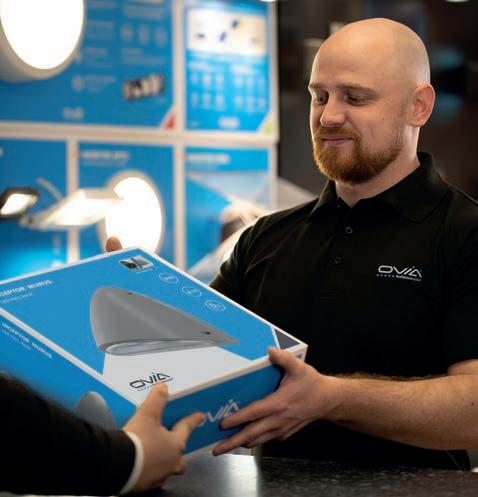
An established brand
When Ovia was officially launched as an independent lighting company, it was anything but another new LED lighting company – the name was already a familiar one in the industry. It was first introduced by Scolmore in 2011 as the umbrella brand for the company’s growing lighting collection. Having enjoyed considerable success with it during the ensuing eight years, Scolmore recognised the huge market potential that the transformation of the lighting sector was bringing, with the emphasis on energy efficiency and connected systems. The Ovia lighting range was developed with this in mind.
Lighting up all options
With its extensive collection of luminaires, contractors large and small can have confidence that in the Ovia range they will find a lighting solution to suit every possible project they are working on. All sectors are covered including domestic, commercial, industrial, utility, amenity, emergency lighting and floodlighting. The lighting offer is further enhanced with a full range of lighting control solutions that will optimise energy saving credentials.
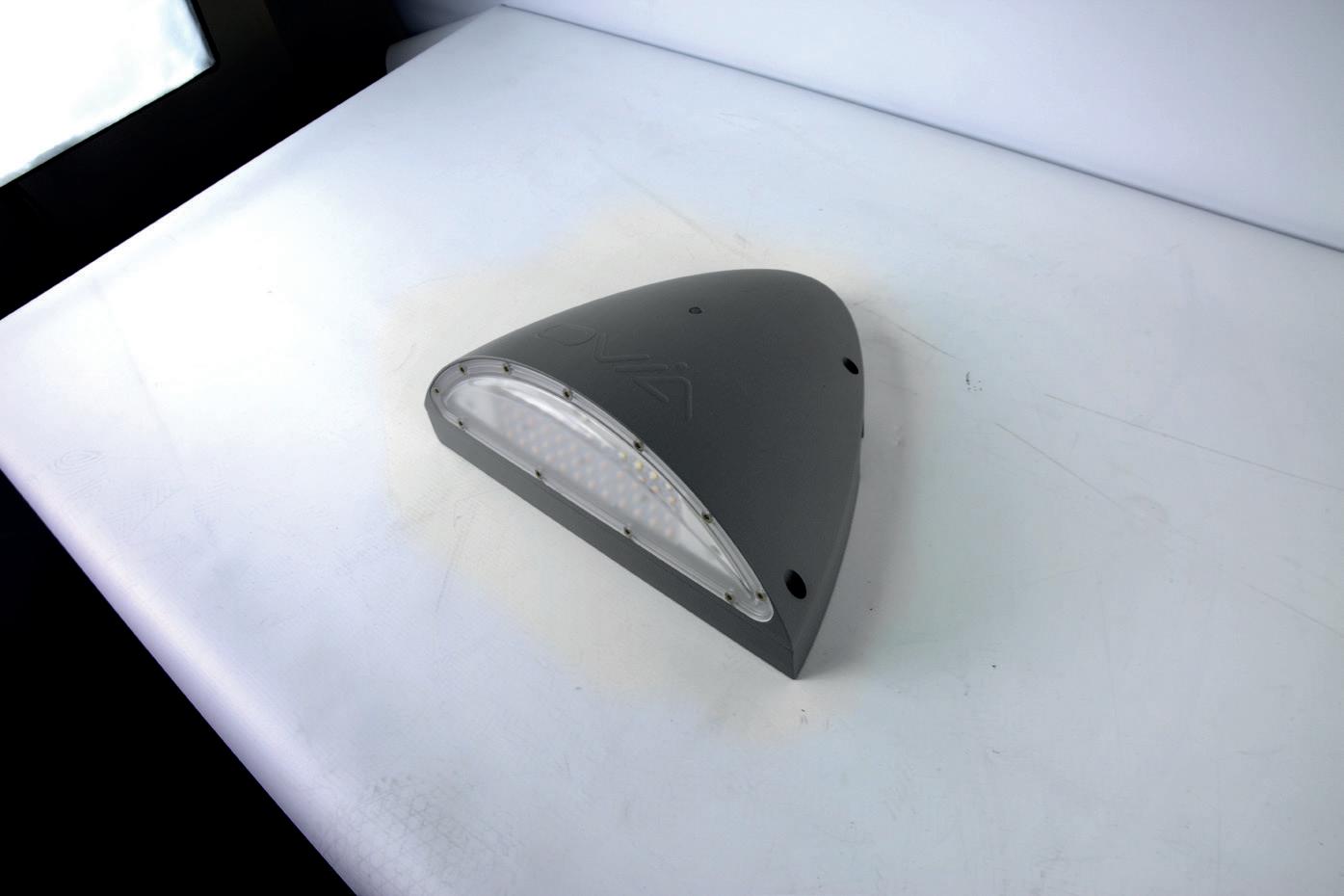

Spotlight on the
From A to B
Proving popular with installers working on projects within the education sector is the range of LED linear battens from Ovia. The Inceptor A-Lite range of 4ft and 5ft LED linear battens are high performance fittings that are safe, quick and easy to install. They are available in standard, microwave sensor and emergency versions and in a choice of wattages – 17W, 25W, 32W, 50W and 60W –and all models include a CCT switch. They feature a hinged diffuser with a quarter turn locking mechanism and push fit/piano key terminals, which all combine to allow for quick and easy access into the internals, speeding up the installation time. They come
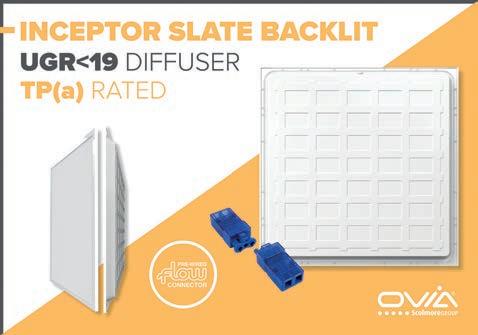
52 | September 2023 SPECIAL FEATURE LIGHTING
As it enters its fifth year of trading as an independent lighting company within the Scolmore Group, Ovia is bigger, and its future brighter than ever.
Katie Plumstead, Group Marketing Manager, Scolmore Group, looks at the company’s progress since launch and why contractors are flocking to the brand.
LIGHTING THE WAY Inceptor Murus IP66 LED Wall Pack with Colour Temperature Adjustment ME1-2 (TYPE II) 80°x140° Beam Angle Photocell Sensor Version Available Emergency Version Available 5 Year Warranty 5YR WARRANTY ECN Feature Strip ads - Exterior Lighting.indd 1 18/08/2023 16:38
pre-attached to the base of the product, allows the diffuser to be hung from the base and means the installer doesn’t have to remove the cover and place it aside during installation. The diffuser can be easily pulled apart from the steel base with the help of spring clips, allowing for quicker and easier installation.
UGR19 panels
The Inceptor Slate Backlit is a range of TP(a) rated backlit panel lights with a low, <19 UGR diffuser, making them suitable for a range of installations and working environments. With its pre-wired push-fit 3-Pole Flow connector making for quick and easy installation, it is proving a very popular choice with contractors.
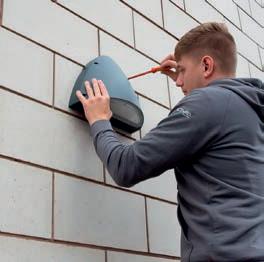
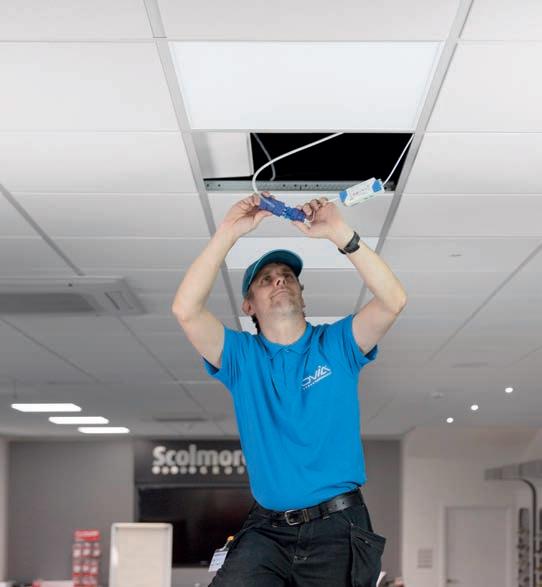
TP(a) Materials – The Building Regulations Approved Document B2 (buildings other than dwelling houses) places restrictions on the use of certain thermoplastic materials when they are used as lighting diffusers and form part of a ceiling. TP(a) rated materials may be used almost without restriction, but restrictions exist on the use of TP(b) rated materials. Inceptor Slate Backlit ceiling panels are TP(a) as standard.


Inceptor Slate Backlit is a premium LED Panel range and forms part of Ovia’s commercial lighting offer. They are designed to fit standard 600mm x 600mm panel sizes, making them an ideal retrofit for existing, less efficient lighting options.
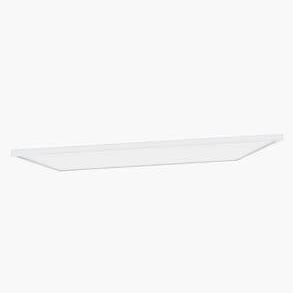
Floodlighting the area

Ovia’s portfolio of floodlight solutions includes the Gator range of LED Street Lighting with CCT Switch. With an IK10 housing and IP66 rated, Gator is ideal for lighting larger outdoor areas, such as car parks and walkways, and is designed to be quick and simple to install via toolless entry, with the toolless gear tray allowing for easy maintenance.
There are three size/wattage options to choose from – large (135W), medium (65-100W) and small (20-40W) – and they offer 50,000-hour lifetime and 85° x 150° beam angle. They are available in a grey finish and come with a five-year warranty. The reversible mount option is an additional feature. The mount bracket can be rotated and pivoted to allow for vertical or horizontal fitment with no additional joints required. The Spigot size is 76mm and a wall bracket is available.

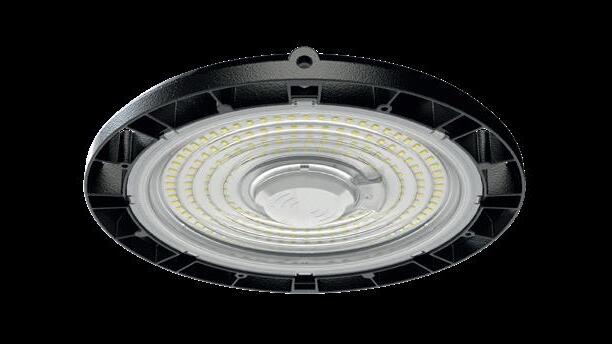
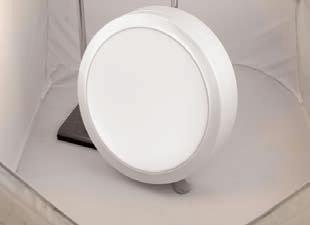
Packing a punch
Inceptor Murus is a range of LED Wall Packs with CCT Switch and a robust IK10 rated housing that makes them ideal in outdoor settings. The range also sits within Ovia’s floodlighting collection.
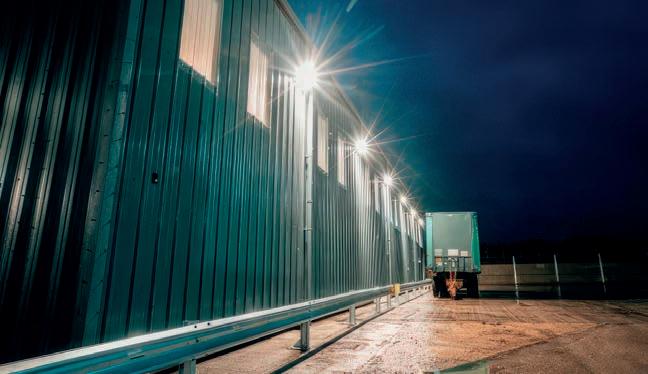
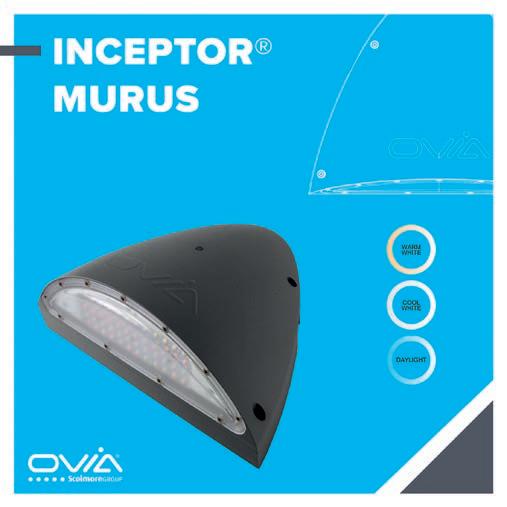
Designed to be fast and simple to install, the IP66-rated Inceptor Murus is available in 15W and 25W options and in a choice of standard, photocell, and photocell and emergency versions. The photocell version can assist with energy saving by allowing the light to turn on and off at set lux levels. Inceptor Murus will turn on when the lux level is below 10-30 lux.

Installation of the Murus is straightforward, thanks to the Push Fit/Piano Key Terminal Block and the fitting can be flush mounted on a Besa box for ease of installation. All models include a CCT switch allowing the product to change colour temperature between Warm White
3000K, Cool White 4000K and Daylight 6000K. Inceptor Murus is available in a choice of anthracite grey or light grey finish and it comes with a five-year warranty.
The future is bright
New product development has remained a key part of the company’s strategy this year and the Ovia team will continue to engage with contractors throughout 2023/4. It was always Scolmore’s aim to see Ovia as the one stop shop for contractors for all their lighting solutions, delivered through the reliable wholesaler channel and the company will be continuing its efforts to generate further demand from the specification teams working on major projects.
Ovia, oviauk.com
Ovia’s portfolio of floodlight solutions includes the Gator range of LED Street Lighting with CCT Switch

September 2023 | 53 SPECIAL FEATURE LIGHTING @ElecConNews /electricalcontractingnews @ecn_magazine electricalcontractingnews.com
Installing the Inceptor Slate Backlit
oviaUK.com FREE LIGHTING DESIGN SERVICE INCLUDING FREE SITE VISITS ECN Feature Strip ads - Exterior Lighting.indd 2 18/08/2023 16:39
ILLUMINATING MINDS AND SPACES
One sector that is making significant strides in this endeavour is the lighting industry. COCO Lighting says that the company is not only a pioneer in providing safer and more sustainable emergency lighting solutions, it is committed to educating the masses about sustainable lighting practices.
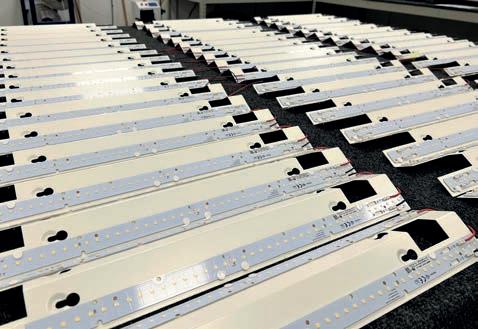
The company says that adopting eco-friendly lighting practices is a potent way to reduce energy consumption, lower carbon footprints and contribute to a greener planet. That’s why it was one of the founders of The Regen Initiative – a lighting fixture refurbishment service that breathes new life into existing fixtures, all while enlightening consumers and industry professionals alike.
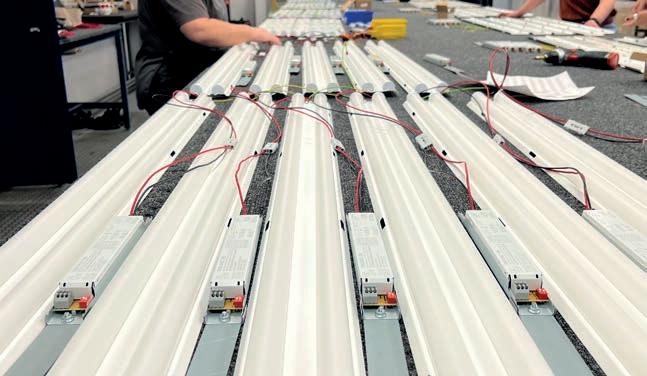
The concept of the circular economy has long since been a beacon of hope and innovation, more than just a buzz phrase, creating scalable solutions for the lighting industry promises to revolutionise the industry and conserve resources.
Traditionally, the linear economy model follows a ‘take, make, and dispose’ trajectory, leading to the depletion of resources and the accumulation of waste. In contrast, the circular economy envisions a system in which resources are utilised to their maximum potential with longevity and recyclability in mind. This shift represents not just an environmental movement, but
In the circular economy, waste ceases to be a problem and becomes a resource
a fundamental reimagining of progress. The focus is no longer solely on generating economic growth at the expense of the planet, but on fostering prosperity that is inclusive, sustainable and beneficial for both people and the environment.
At the heart of the circular economy lies longevity – products should be conceived with durability and repairment in mind, ensuring that they remain functional for as long as possible.
This shift challenges the prevalent culture of disposability and encourages a return to craftsmanship and quality. Moreover, the circular approach compels manufacturers to think beyond the initial lifecycle of a product. Materials are therefore selected based on their potential for reuse and recycling, leading to the creation of closed-loop systems that minimise resource extraction and waste generation. So, in the circular economy, waste ceases to be a problem and becomes a resource – recycling, upcycling and repurposing all becoming an integral part of the production cycle.
Businesses that adopt circular
The circular economy represents more than just a departure from linear consumption and its patterns. It embodies a vision for a harmonious coexistence between humanity and the planet. By redefining progress, rethinking production and reshaping consumption the circular economy offers a roadmap to a future where prosperity is measured not only in economic terms but also in terms of environmental health, social equality and lasting wellbeing. The transition to this newfound and fresh economy that’s taking hold across the lighting industry requires a sustained commitment, which COCO Lighting says it is wholeheartedly committed to.
As we stand at a critical juncture in lighting history, the circular economy beckons as a blueprint for a future of economic security. Embracing the circular economy is not just a choice, it’s a necessity, with a call to action to reshape our world, restore our environment and forge a path towards sustainable prosperity for generations to come.
COCO Lighting says it is dedicated to the field of sustainable lighting solutions and
54 | September 2023 SPECIAL FEATURE LIGHTING
In an era where environmental consciousness is paramount, the pursuit of sustainable solutions has become crucial across all industries.
LIGHTING THE WAY Inceptor Murus IP66 LED Wall Pack with Colour Temperature Adjustment ME1-2 (TYPE II) 80°x140° Beam Angle Photocell Sensor Version Available Emergency Version Available 5 Year Warranty 5YR WARRANTY ECN Feature Strip ads - Exterior Lighting.indd 1 18/08/2023 16:38
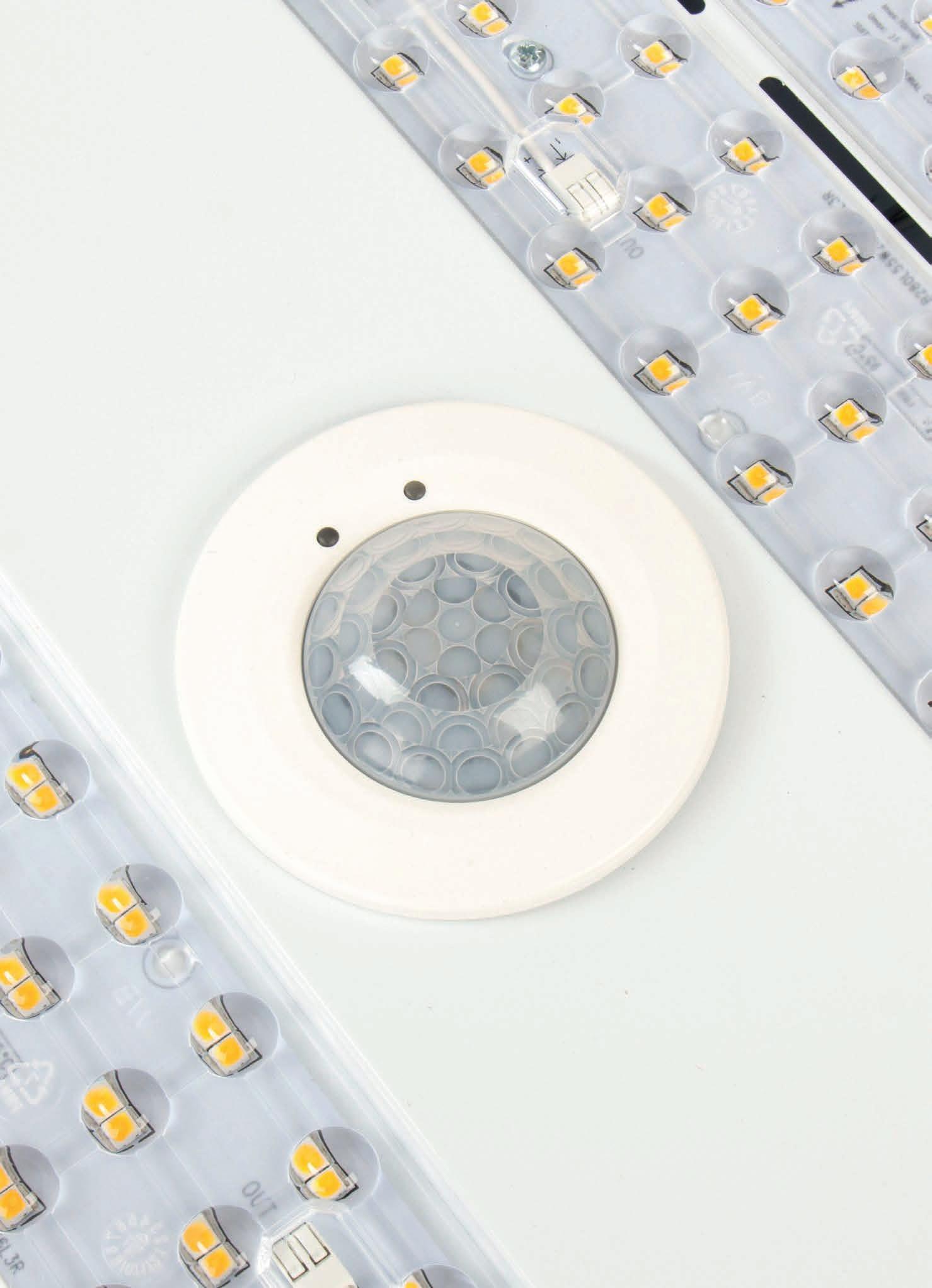
EXPO NOW TM66 ASSURED ! High/low bay for large areas Scan to read more about our Expo range! • CIBSE • • CIBSE • 012-0003
ARE YOU OFFERING YOUR CUSTOMERS THE VERY BEST DOWNLIGHTS?
Shyel Stark, Senior Product Manager at Luceco Lighting, introduces the new FType family of LED fire-rated downlights, which are set to develop new trends for contractors and the downlight market.
Introducing Luceco Lighting’s revolutionary new family of FType fire-rated downlights: FType Essence, FType Mk2 and FType Ultra. These cutting-edge downlights are designed and engineered in the UK to set a new standard of lighting performance and functionality, with the latest advancements in LED technology.
Luceco Lighting says it is proud to be the first to market with what will become new, trend-setting, innovative features, including the new Dim2Warm CCT, QuickView Cable Window, and the Easy Access ClipFit connector.
Key features across the range
At the core of every product in the FType family lies a set of standard features that immediately levels up this range.
• QuickView Cable Window: This feature enables easy inspection of wire connections, even after cables are secured in place. This provides the contractor with added safety and reassurance that the connection is secure.
• Trade-rated toolless SpeedFit Connector: Say goodbye to complicated installations. Innovative loop-in/out piano key terminals allow effortless connection with both solid and stranded cables, minimising installation time.
• Super slim flat or regressed removable bezels: Compared to many competitors, the new FType boasts a super slim bezel design, offering a refined and discreet finish that seamlessly blends
FType Essence
If the project budget is a priority, FType Essence is the perfect choice for fire-rated LED downlights. These low-profile downlights strike the ideal balance between functionality, design, and performance. With LENLEN terminals and trade-rated SpeedFit housing design, installation becomes a breeze and upgrading to downlights becomes affordable. Available in 3000K or 4000K light outputs and a range of bezel colours, Essence downlights deliver maximum performance at a cost-effective price, making them ideal for any application, including bathrooms and shallow ceiling voids. And with a three-year warranty, you can trust in their quality and durability.
FType Mk2
The Mk2 range includes all the exceptional features of Essence and adds even more value to your lighting experience. FType Mk2 incorporates only the very latest technology and designs, ensuring market-leading performance and truly innovative lighting features. Power selectable functionality between 4W and 6W is standard, which allows lighting spaces to be customised based on the end user’s needs. Choose between the new-to-market Dim2Warm CCT and 4Colour CCT versions.
Dim2Warm CCT
Completely new to the global lighting market, Dim2Warm CCT versions are colour selectable via a switch between 3000K and 4000K. However, unlike any other, when set to 3000K and installed on a dimmer switch, Dim2Warm mode is unlocked. Dim2Warm technology allows the downlight to adjust to a warmer colour temperature output when dimmed, creating that cosy, ambient effect delivered by filament and halogen, but lost with LED technology.
4CCT Colour Change
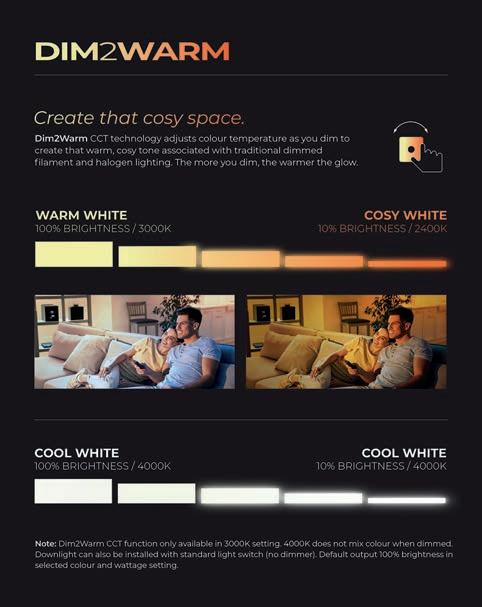
Alternatively, opt for the four colour CCT version, which offers a choice of 2700K, 3000K, 4000K and 6000K with a flick of a switch, enabling rooms to be fully customised based on lighting preferences and preferred colour temperature.
These downlights are perfect for all applications, including bathrooms, and they come with a confidence-inspiring five-year warranty.
FType Ultra
market
Designed for and with contractors in mind, the low-profile FType Ultra range represents the pinnacle of downlight technology. Not only do they incorporate all the features and benefits of the Mk2 range, but they are also available in both the Dim2Warm and 4Colour CCT options and include the new, ground-breaking Easy Access ClipFit connector.
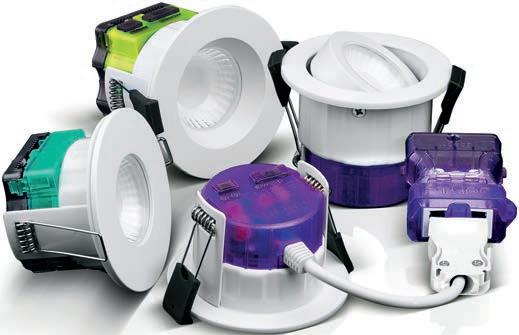
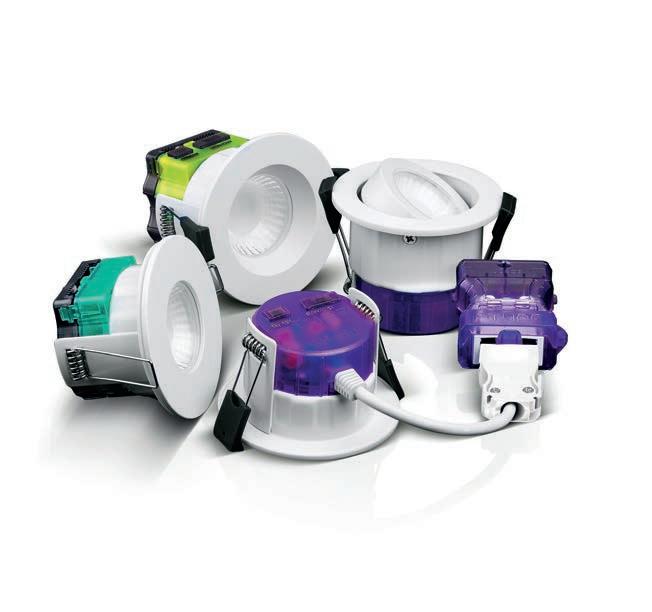
With its patent-pending design, the Easy Access ClipFit connector is designed to facilitate and revolutionise easy installation by providing 360° access for wiring cables. Say goodbye to bending and fiddling with cables around outer housings, with the removable VDE-approved terminal block. Ideal for stiff cables, simply wire directly to the terminal connector and push-fit into the housing before clamping cables shut. The connector also features the QuickView Cable Window for easy inspection and a VDE-certified terminal block, compatible with 18th Edition 500V insulation resistance testing and it comes with an impressive seven-year warranty.
Luceco Lighting, luceco-ftype.com
ADVERTISEMENT FEATURE electricalcontractingnews.com @ElecConNews /electricalcontractingnews @ecn_magazine
Dim2Warm CCT versions are new to the global lighting
Luceco Lighting has launched its new family of FType fire-rated downlights
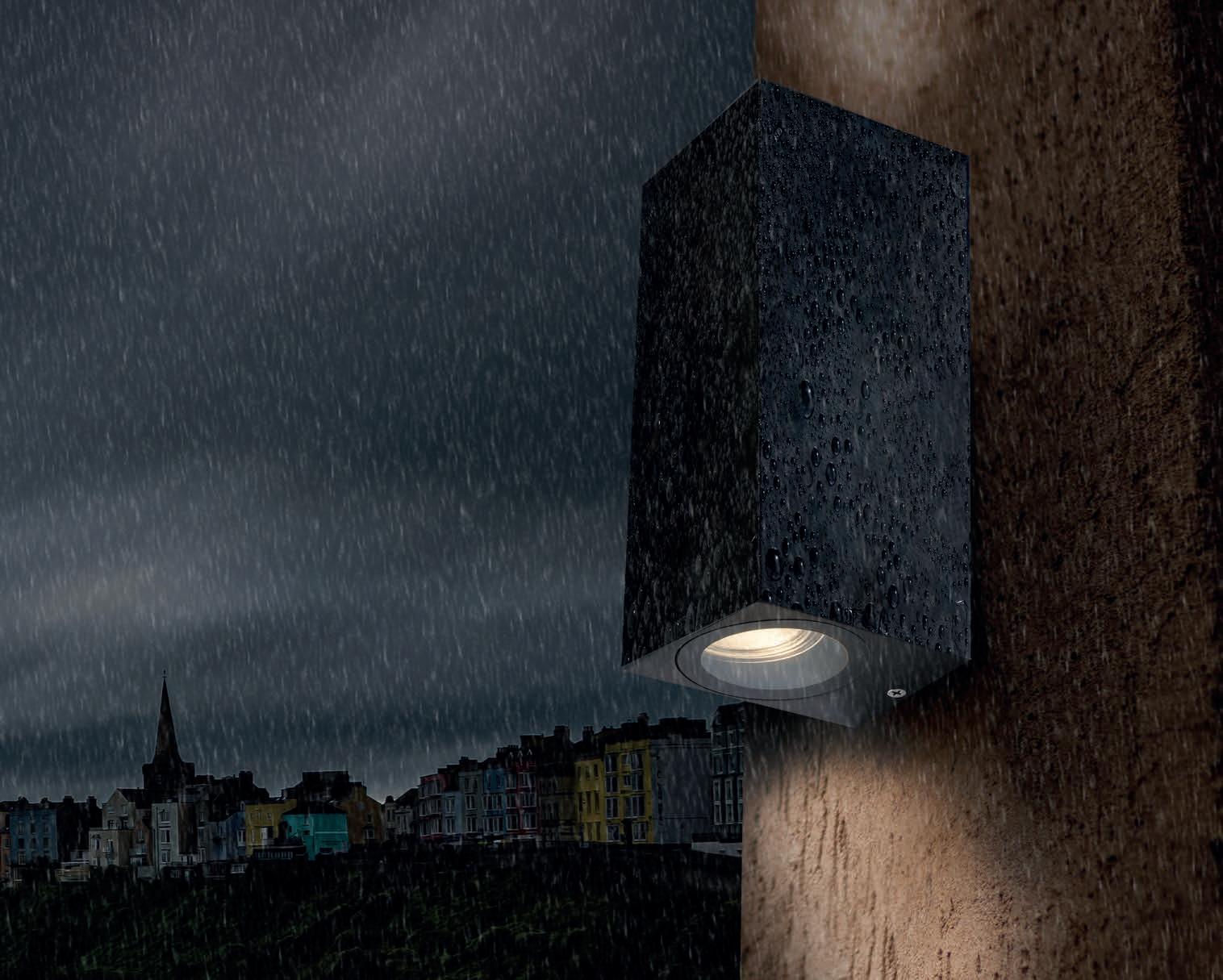






IP44 to IP65 * FOUR CCT SETTINGS * * * SPECIFIC PRODUCTS ONLY Eamon
Alana
ROBUST, CORROSION-RESISTANT AND LOW-MAINTENANCE OUTDOOR LIGHTING POLYCARBONATE
COLLECTION NEW 01582 88 77 60 mlaccessories.co.uk sales@mlaccessories.co.uk
Dura Toro
THE
ANSELL SMART LIGHTING SYSTEM GIVES MICHELIN STAR RESTAURANT THE EDGE
As well as creating two contemporary dining rooms where guests can watch the creative cooking process unfold, one of the keys to enhancing the customer experience was a new smart lighting and control system, designed and implemented by Ansell Lighting, which has helped the restaurant take its gastronomic concept to the next level.
Executive Chef, Rocío Parra Haro, and her sommelier and head waiter husband, Alberto Rodriquez, turned to Ansell to help realise their vision and create a series of dynamic environments.
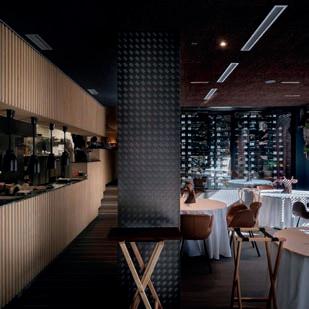
Using Ansell’s intelligent control system, OCTO, the lighting throughout the restaurant, and specifically around individual tables, can be changed for each part of the meal.
Alberto explains, “We play with the light depending on the stage of the gastronomic experience. The light is dimmed at the beginning of the process – when the dishes come out, the intensity is increased and when dinner is finished, it is dimmed again.
“I give a lot of importance to light, but I really like darkness. Everything is decorated in a range of dark colours, but the tables have nothing – the importance is in the dishes. That’s why the table should be illuminated but the rest should not, to create a more intimate atmosphere.”
facilities.
Rocío adds, “The client is always surprised by the lighting changes. It provides a different dimension.
“It is a system that no one else has here in Salamanca; it is very exclusive. There are local restaurants with a great atmosphere and good lighting, but they lack the ability to create scenes, change colours or colour temperatures, intensities, etc.”
To achieve the desired effects, the restaurant team worked closely with Ansell’s Spanish-based team, including Luis Felipe Esteban, Commercial Director of Ansell Lighting. Different luminaires were installed around the restaurant – from the Eaves linear recessed luminaire that provides a very high level of visual comfort, to the Prism Pro Gimbal to illuminate tables and the Michelin award itself. Luis says, “The luminaires are not invasive; to create an elegant space they should be barely seen – the focus being on the lighting they create, and not to their appearance or position.”
In the entrance area, the Prism Pro Mini was used for low level lighting, while the Unity Mini 24V, 10cm track spotlight was used to illuminate and highlight the logo. Boa LED strip in warm white was
used to keep the lighting in line with the warm wood tones throughout the rest of the restaurant. During events, the Boa RGB also allows the restaurant to reflect the visiting brand’s corporate colours.
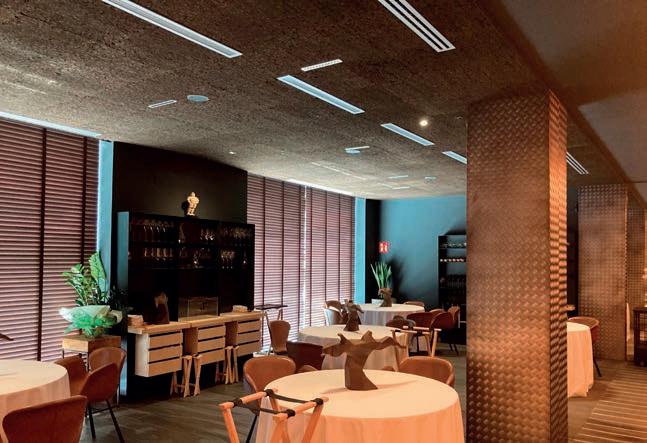
Finally, the Prism Pro Antiglare IP65 was used for the bathrooms and kitchen.
Alberto and Rocío use the OCTO app to integrate and group all the lighting fixtures, enabling them to illuminate one table at a time. They also use a smart switch with four pre-set buttons to select the preferred scenes, not only for food service but different times of the day as staff arrive or are prepping the food and venue.
The new system has also delivered energy savings and makes the restaurant more efficient by not allowing lights to be left on unnecessarily.
Alberto appreciates the support provided by Ansell throughout the project, including the detailed designs. He says, “The Ansell team was very attentive for as long as it took for me to understand how everything works. Now I handle the system as if I am an expert – maybe I could work at Ansell Lighting!”
Ansell Lighting, ansell-lighting.com
58 | September 2023 SPECIAL FEATURE LIGHTING electricalcontractingnews.com @ElecConNews /electricalcontractingnews @ecn_magazine
After being awarded the prestigious Michelin Star in 2022, the En La Parra restaurant in Salamanca, Spain, undertook a refurbishment to expand and improve its
Different luminaires were installed around the restaurant to enhance the customer experience
oviaUK.com FREE LIGHTING DESIGN SERVICE INCLUDING FREE SITE VISITS ECN Feature Strip ads - Exterior Lighting.indd 2 18/08/2023 16:39
The lighting throughout the restaurant can be changed for each part of the meal
BESA RANGE
Metway History
The Wiring Systems division was launched in 1999 concentrating on providing a “plug & play” alternative to conventional wiring which has evolved into a rapidly growing business.
Metway has continued to invest in its lighting control portfolio to offer enhanced operation with simplified installation and operation, while ensuring compliance with the latest standards and codes of practice.




Projects
Metway have supplied 6-pole BESA outlets and connectors for the Ericsson building in Dubai project, via Acoulite in Dubai. All luminaires on the project required mechanical protection with a pluggable connection for all the luminaires.

The solution was the use of the Metway BESA outlet, fitted to the conduit, with 6-pole black / blue latching plug to provide a safe and secure connection for the mains and Dali supply to the luminaires.
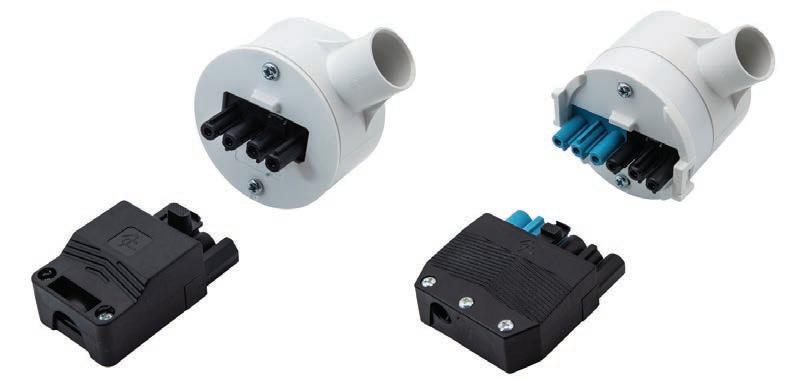
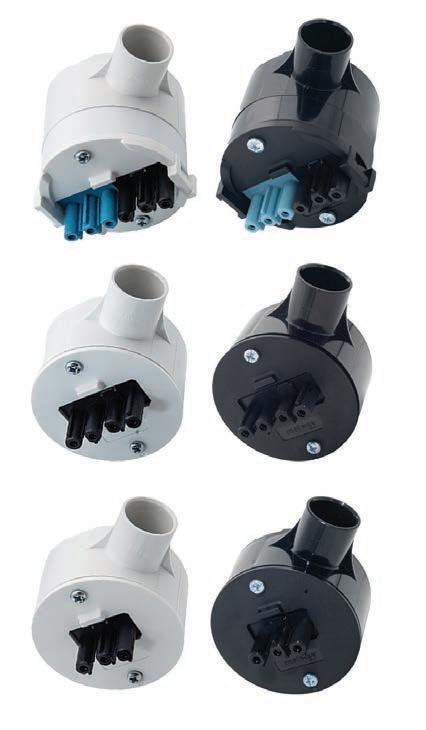
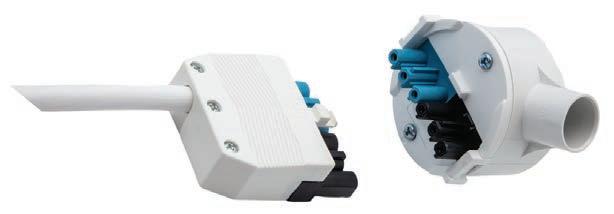
in 3, 4 and 6-pole versions, all 16A rated, they are manufactured in V0 self-extinguishing material. All BESA socket outlets use double stacked terminals for ease of installation, allowing for loop in and loop out, and can accommodate up to 2.5mm conductors.
Available
to see range
Scan
Metway Electrical Industries Limited, Barrie House 18 North Street Portslade East Sussex BN41 1DG UK sales@metway.co.uk 01273 439266
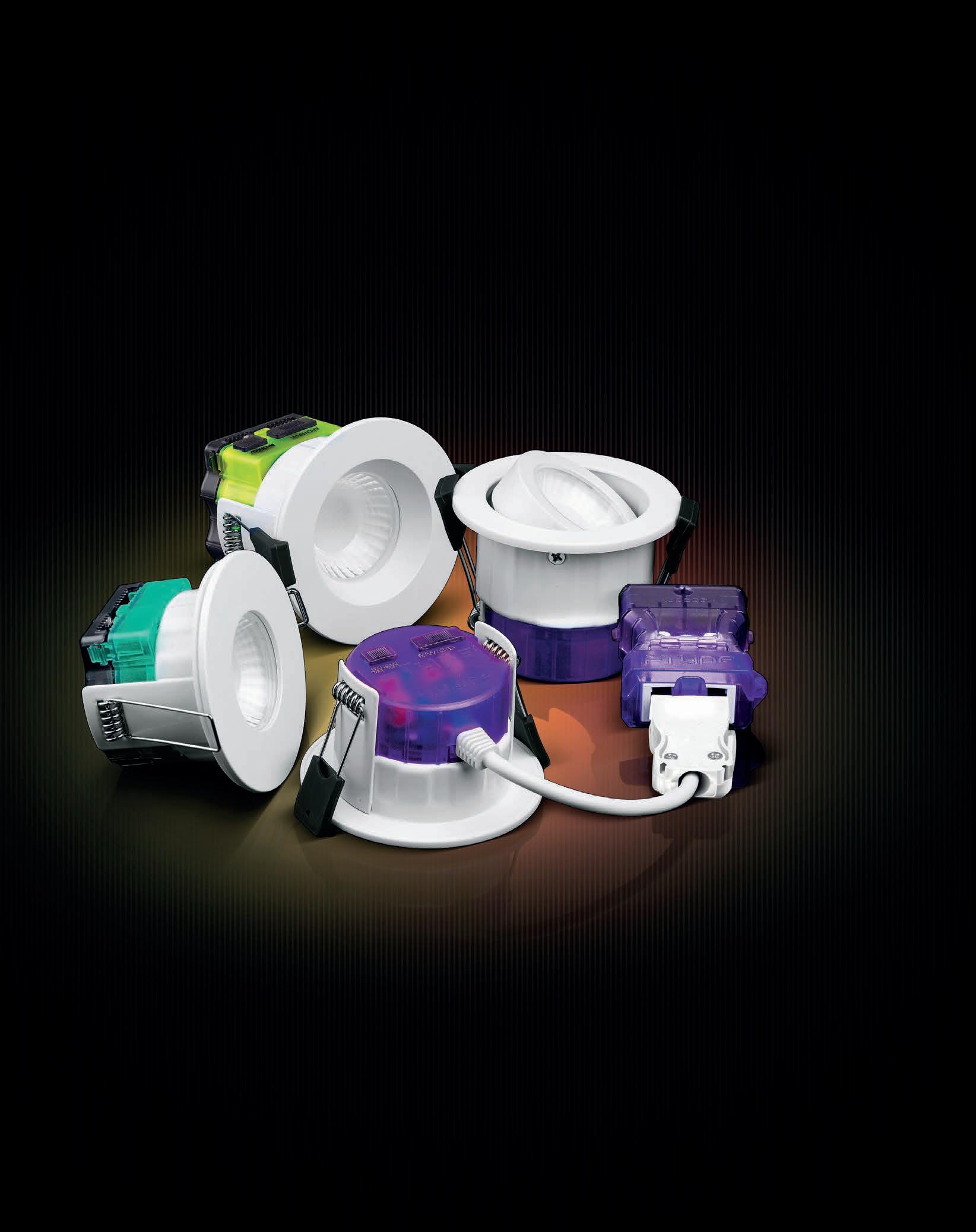
AS STANDARD (MK2 & ULTRA MODELS) High performing retrofit downlight at a cost effective price Maximum performing retrofit downlight with CCT, Wattage selector and Dim2Warm technology Maximum performing 1st & 2nd fix downlight with CCT, Wattage selector and Dim2Warm technology.
Making Downlighting Choices Easier - Simpler Options, Larger Choice • Dim2Warm standard on MK2 and Ultra models - Replicates the feel of halogen through LED technology • Quick view window - Conveniently check your connection is properly terminated • SpeedFit Connector - Innovative loop-in/out terminals that speed up cable connection See the revolutionary new range at www.luceco-ftype.com NEW TO MARKET
NEW FType Downlight Range
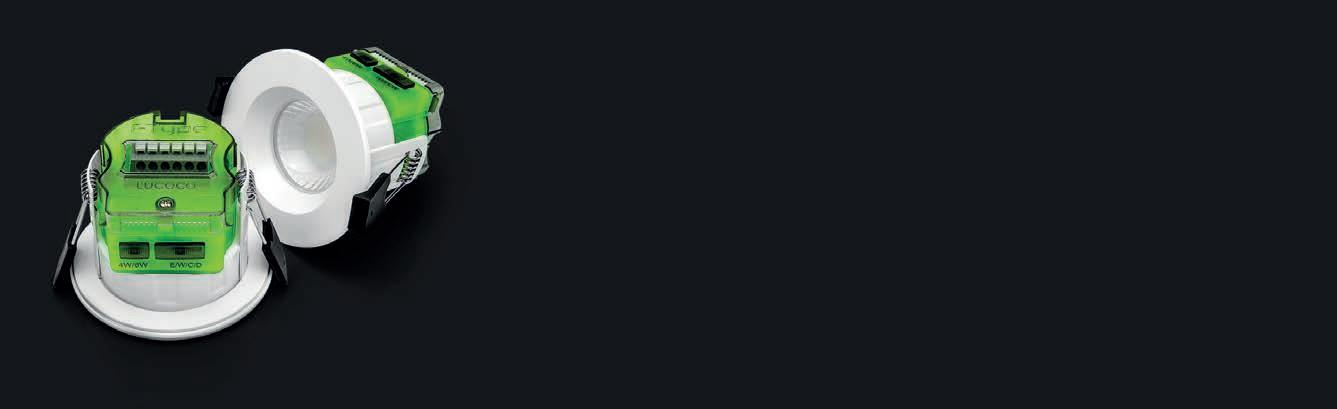
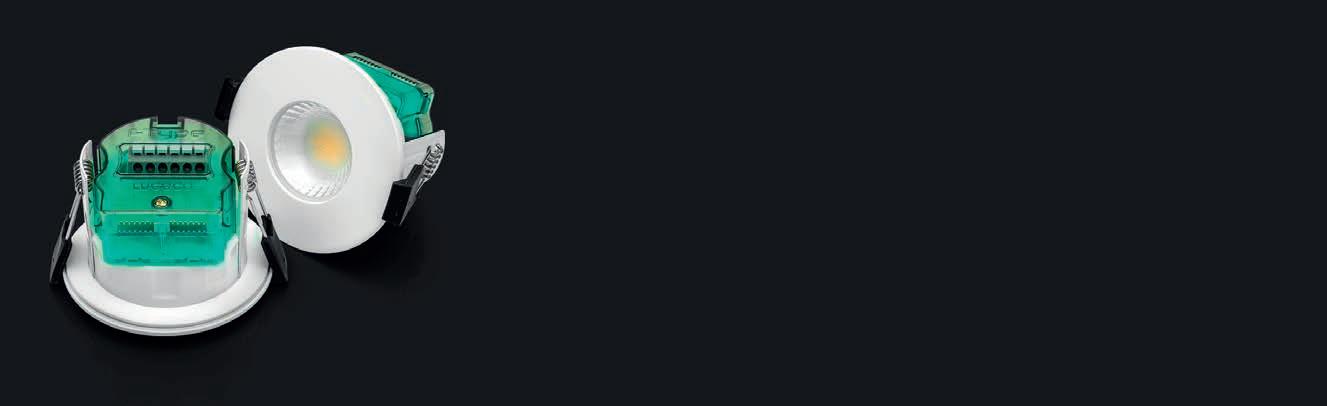
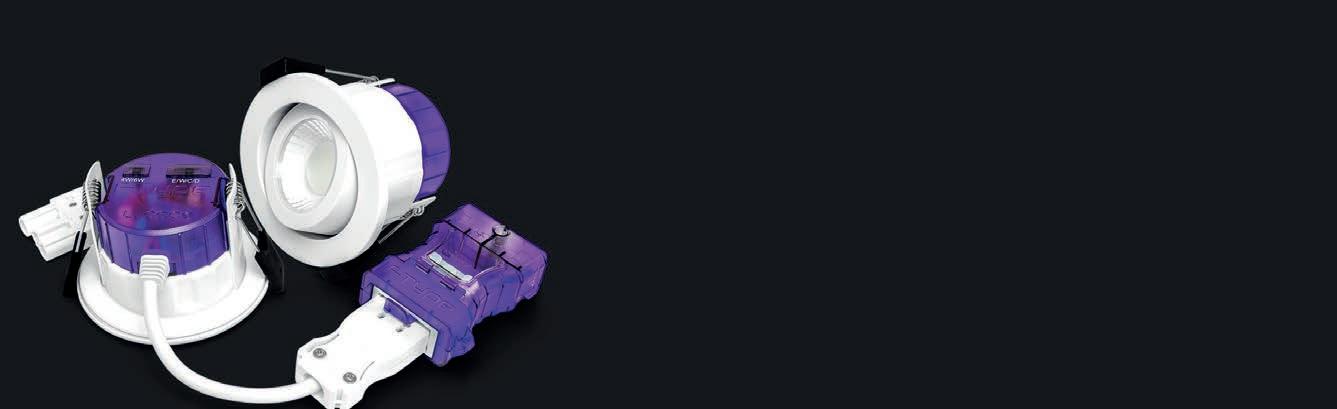
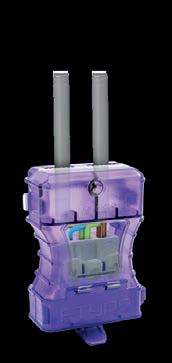
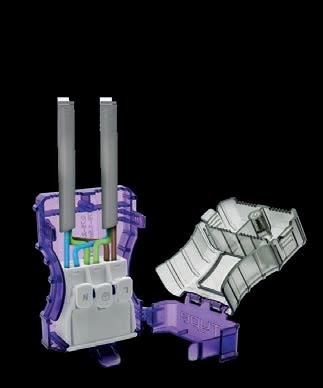
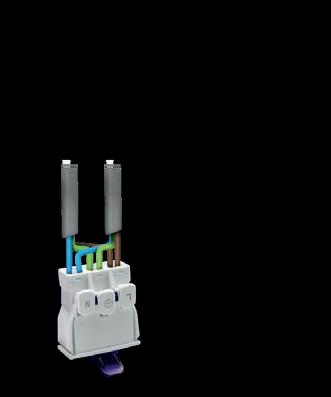
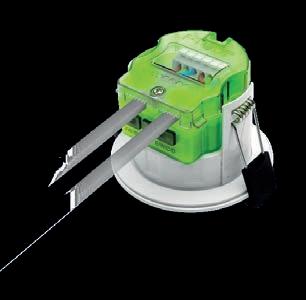
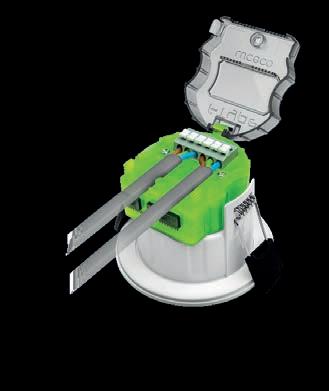
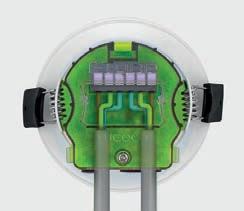
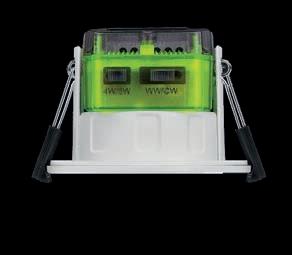
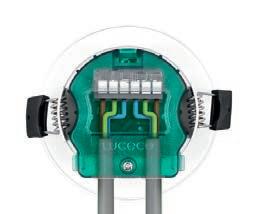
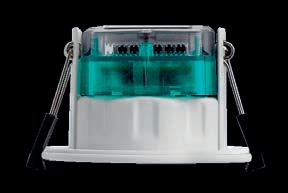
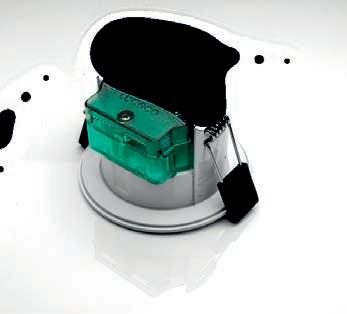
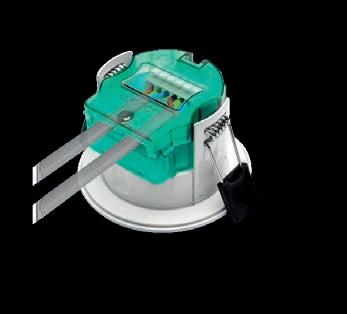
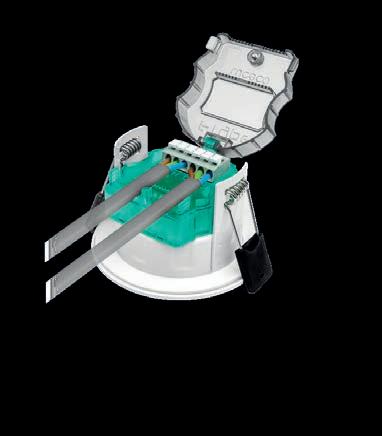


www.luceco.com One light, Four whites 4000k & 6000k compatible with 18th edition 500V insulation resistance testing 3. Lock collar 1. Connect SpeedfitTM Connector Trade rated Speedfit loop in/out piano terminals for solid or stranded cable QuickViewTM Window Check wired cable connections are secure after locking lid shut Power & Colour Select 4W, 6W, 2700k, 4000k & 6000k QuickViewTM Window Check wired cable 4000K COOL WHITE 3000K WARM WHITE SpeedfitTM Connector Trade rated Speedfit loop in/out piano terminals for solid or stranded cable DOWNLIGHTS for 1st & 2nd Fix for Retrofit for Retrofit
AN ARCHITECTURAL PEARL IN THE HEART OF WARSAW
The Zamoyski Palace, a Neo-Renaissance masterpiece constructed between 1875 and 1877, is a testament to history, having survived the Second World War.
Today, it serves as the prestigious headquarters for the Association of Polish Architects, SARP.
When the association sought a lighting partner for the extensive renovation of the palace’s underground areas and a newly created exhibition space, TRILUX emerged as the perfect ally. The historical significance of the building demanded exceptional lighting standards that seamlessly integrated with its grand architecture. Meeting this challenge head-on, TRILUX utilised LENTY track-mounted spotlights and linear luminaires with lenticular lenses to achieve the perfect balance of energy efficiency, high-quality illumination, and architectural harmony.
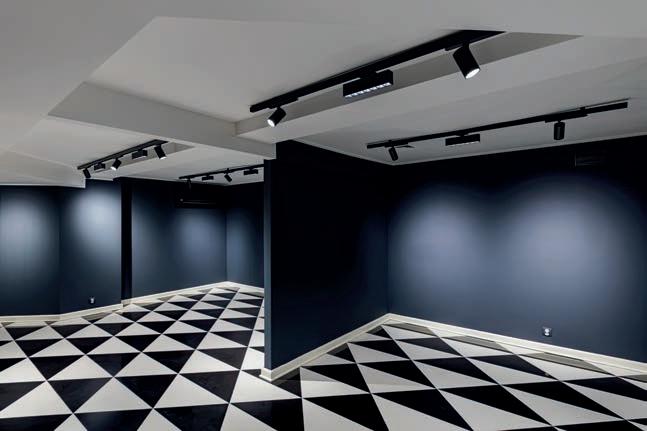
The lighting solution provided by TRILUX offers low glare and an impressive colour rendering index (CRI>90), creating a pleasant ambience that accentuates the exhibits without straining visitors’ eyes.
Tomasz Płuska, TRILUX Architecture Developer Manager, expressed his delight with the project’s success, stating, “The LENTY TRACK spotlights direct the light onto the exhibits, accentuating their character while bringing out the finest details in the shadows.”
The collaboration between TRILUX and SARP also transformed the basement area into an attractive exhibition space. Thanks to the technical lighting developments
and Board Member of APA Wojciechowski Architects, praised the exclusive design of the luminaires, which have now become attractive interior design elements.
Beyond the successful renovation project, TRILUX’s collaboration with SARP extended to a dazzling event. In May 2023, the Zamoyski Palace was the venue for the prestigious SARP 2023 Awards. TRILUX illuminated the palace garden for the event, showcasing its outdoor lighting range. Smart CONSTELA LED steles welcomed esteemed guests, featuring the integrated Gobo spotlight and demonstrating new possibilities of use. These were complemented by FACIELLA

62 | September 2023 SPECIAL FEATURE LIGHTING
TRILUX has collaborated with the Zamoyski Palace in Warsaw, illuminating this rare architectural gem with cutting-edge lighting technology.
TRILUX’s exceptional lighting seamlessly integrates with the grand architecture
LIGHTING
Inceptor Murus IP66 LED Wall Pack with Colour Temperature Adjustment ME1-2 (TYPE II) 80°x140° Beam Angle Photocell Sensor Version Available Emergency Version Available 5 Year Warranty 5YR WARRANTY ECN Feature Strip ads - Exterior Lighting.indd 1 18/08/2023 16:38
The Zamoyski Palace, a Neo-Renaissance masterpiece
THE WAY











M *Subject to minimum quantities and fair use policy.
LED LIGHTING HELPS BOROUGH OF SEFTON ON ITS WAY TO NET ZERO EMISSIONS
The project includes the upgrade of 26,000 light points on traffic routes, roads, streets, and residential areas. The phased program will be completed in 2025, and is expected to reduce annual maintenance by 45%. This will save the council over 7,161,500kWh energy per year/£1.8 million per year on energy costs, following the completion (based on average and estimated prices 2021-2025), as the lighting installed uses up to 70% less energy when compared to the existing HID lighting installed. The reduction in ongoing energy costs is expected to pay for the project in full within eight years. The upgrade is even more important against the backdrop of the ongoing energy crisis. This upgrade takes the council closer to its goal of leading to net zero carbon by 2030.
In July 2019, Sefton Council declared a climate emergency and enacted a plan to reduce its environmental impact through energy efficiency and carbon reduction projects, leading to net zero carbon by 2030. By upgrading public lighting within the borough, the council can contribute to its goals of reducing carbon emissions and energy consumption, while also reducing
long-term maintenance and improving the street environment for residents and visitors.
Sefton has been on its path to net carbon zero since 2020, but skyrocketing energy prices and the need for safer streets for pedestrian and highway users have raised the urgency of replacing outdated technology with alternatives that are long lasting, cost-effective, and environmentally friendly.
Signify’s Philips LumiStreet gen2 LED luminaries were selected for the project. LED lighting is a safe, highly effective alternative to older technologies such as the High Intensity Discharge (HID) lamps that were previously in place within the Borough of Sefton. LED lamps can produce excellent light levels using far less energy than their conventional counterparts and require little ongoing maintenance. According to Signify’s redundant data, if the entire UK&I region followed the example of Sefton Council and switched all conventional road and streetlights to LED, the country could save 603,000t of carbon and £520 million per year in energy costs.
In addition, the LED lights offer improved colour rendering which helps CCTV recognition, creating a greater sense of wellbeing and security for people in the area. LED lights can be more

precisely focused on roads and paths to minimise any intrusion into homes or gardens. A neutral white colour was selected for the project to maintain a pleasant night time atmosphere while maintaining excellent visibility.
Sefton Council worked with Jones Lighting to carry out trials, comparing results from different manufacturers to assess their relative quality and efficiency.
Signify’s lighting solution impressed the council with its design, performance, and total cost of ownership, which considers how the initial project investment is offset by the energy savings achieved by converting existing lighting to LED.
“The LED upgrade is a significant step forward towards Sefton Councils’ commitment to becoming net zero by 2030. Additionally, the streets are now lit better than before to ensure citizens can feel more confident and secure during the evenings or nights. A great win for the citizens and the borough,’’ says Dave Jones, Managing Director, Jones Lighting.
“After an extensive test of the market in which we reviewed the lanterns’ performance and costs followed on site trails, we determined that Signify would be our preferred manufacturer for the LED conversion scheme,” says Mark Bond, Senior Street Lighting Engineer at Sefton Council. “Signify’s lanterns provided us with excellent output in terms of lighting performance and energy efficiency. After working with Signify and its logistics team, we’ve been very pleased with delivery timescales and overall performance.”
“Addressing climate change is the most urgent issue of our age,” says Dervan Alleyne, Director Public Lighting and Sports Lighting, Signify UKI. “The lighting upgrade reinforces how lighting can contribute to the council’s agenda and the environment. We are proud to support Sefton Council in its journey to net zero and at the same time, create an improved experience for local people and visitors.”
Signify, signify.com
64 | September 2023 SPECIAL FEATURE LIGHTING electricalcontractingnews.com @ElecConNews /electricalcontractingnews @ecn_magazine
Signify is supporting Sefton Council’s climate action by upgrading the borough’s public lighting to energy efficient LED.
oviaUK.com FREE LIGHTING DESIGN SERVICE INCLUDING FREE SITE VISITS ECN Feature Strip ads - Exterior Lighting.indd 2 18/08/2023 16:39
Before (left) and after (right) the LED upgrade
For sales and enquiries please contact us at +44 28 9079 2155 / info@flexform.co.uk
flexform.co.uk
B.E.G. LUXOMAT ® net
■ Addressable multi-master Lighting Control System
■ Supports DALI and DALI-2 luminaires
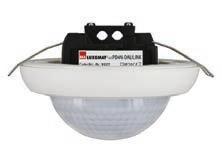

■ Ideal for retrofitting
■ Super flat multisensor available
■ Simple, intuitive operation
■ Free Bluetooth app with 2 functions:
- Scene control for end customer
- Commissioning tool for installers
DALI Multisensor PD4N-DALI-LINK Part no. 93377
DALI push-button module PBM-DALI-LINK-4W-BLE Part no. 92732
DALI Power supply PS-DALI-LINK-FC Part no. 92846
DALI-LINK
2 1 3 24m 8m 6.40m 2.50m 1 på tværs 452m 2 frontalt 50m� 3 siddende 32m� walking across walking towards seated 0870 850 5412 info@beguk.co.uk beg-luxomat.com
LARGE OFFICE SOLUTION
FlexformCables flexformcablesltd
AVAILABLE FROM
SWITCHING OFF FLUORESCENT TUBE LAMPS IN FAVOUR OF LEDS
As part of the European Commission’s eco-design and Restriction of the use of Hazardous Substances (RoHS) directives, all electrical and electronic equipment that includes hazardous chemicals is gradually being phased out. In conjunction with this, two more types of fluorescent lamp types have ceased production this summer.
This extends the list of lamps no longer legally manufactured to include: T5 and T9 ring form fluorescent lamps, compact fluorescent lamps with plug-in base (CFL), halogen pins (G4, GY6.35, G9) and T5 and T8 fluorescent tube lamps. In the coming years, the ban will be extended further to encompass Circline T9 lamps, High-Pressure Sodium (SHP) lamps and other special fluorescent lamp products. Whilst stock of these products may continue to be available in some locations, manufacturing will cease, and they will soon disappear from circulation. This follows a concerted effort to make products safer and prompt an industry-wide switch to more efficient LED alternatives.
However, whilst the industry as a whole has been moving towards more efficient lighting products for several years, it is still common for some offices, schools, commercial and residential buildings to continue using fluorescent lighting products. This is almost entirely down to the false perception that it is easier to switch out lamps like-for-like than to transition to alternatives. With the ban now in place though, it is more important than ever for contractors to be aware of the options available and the benefits of making the switch.
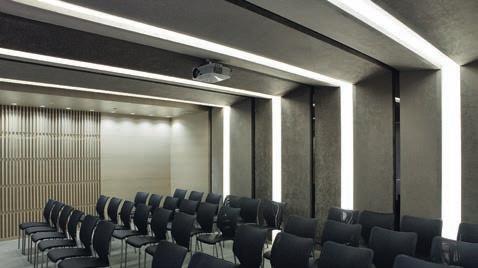
Some of the most recent products to be banned were T5 and T8 fluorescent tubes, the manufacture of which ceased on 25 August. This type of lamp is still common in workplaces and commercial settings across the country, but making the switch to LED tubes is quick and easy. This is because
many LED tubes are now compatible with conventional ballast (magnetic ballast) or mains input fixtures, so a fluorescent tube can be removed and replaced with an LED without the need for rewiring.
As fluorescent tube lamps can last for several years, many may be tempted to put off their replacement for as long as possible. Those customers who do need replacements may wish to take advantage of dwindling fluorescent stock instead of making the switch to LEDs. However, these recent bans combined with an influx of new products means that there has never been a better time for you to recommend that your customers make the switch and make the most of the benefits of LEDs.
First and foremost, LED tubes have the advantage of being considerably more efficient than their fluorescent counterparts, usually operating at a wattage of 25 or less. As a result, switching can provide instant energy savings for end clients – a significant advantage for businesses with rising energy bills. Furthermore, by making the switch
a much longer lifespan of approximately 75,000 hours compared to the 15,000 hours of a fluorescent equivalent. As a result, both OPEX and long-term CAPEX savings can be made by switching. It is also important to note that, as existing fluorescent lamp stocks dwindle and the demand for LEDs increases, LED products should decrease in price over time.
LED tubes also have an advantage over fluorescent alternatives when it comes to the end of their life. Fluorescent lamps are notorious for containing potentially dangerous chemicals that pose a health risk to bystanders, most notably vapourised mercury. Although only found in small quantities in lamps, this neurotoxin can potentially cause a number of neurological conditions if the lamp shatters and bystanders are exposed. These chemicals also make fluorescent products hard to dispose of safely, and as a result, your customers can incur extra costs to safely recycle their fluorescent lamps.
LEDs on the other hand do not blow, instead – if left until the very end of life – their light output slowly dims until the lamp goes out. LEDs are also mercury free, and crucially, there are now a range of shatterproof tube lamps available, a particular advantage for schools, hospitals or customers in the hospitality sector. For example, the new T8 LED tubes offered by Megaman have a glass case with a PET coating as standard for all 2, 4 and 5ft tubes, preventing them from shattering and posing a health risk.
Overall, whilst this ban may impose a mandatory switch from fluorescent to LED lamps, it offers the chance to take advantage
66 | September 2023 SPECIAL FEATURE LIGHTING
Despite the UK leaving the European Union, many fluorescent lamp types continue to be phased out in accordance with EU directives. Here, Micaela Abbott, Sales Director at Megaman UK, looks at the specifics of the most recent ban on the manufacture of fluorescent tube lamps, and outlines some of the advantages of switching to LEDs.
LIGHTING THE WAY Inceptor Murus IP66 LED Wall Pack with Colour Temperature Adjustment ME1-2 (TYPE II) 80°x140° Beam Angle Photocell Sensor Version Available Emergency Version Available 5 Year Warranty 5YR WARRANTY ECN Feature Strip ads - Exterior Lighting.indd 1 18/08/2023 16:38
Improved efficiency, safety and reduced lifetime costs all add up to make the switch to LEDs
More than 100 years of tradition.
7 years of LEDVANCE.
LED IS LEDVANCE
PROFESSIONAL LED LAMPS NOW BEAR OUR NAME
Having emerged from the general lighting division of OSRAM, LEDVANCE has established itself as a leading name in innovative LED solutions in just seven years. We are now taking the next logical step in Europe by offering our professional range of lamps under our own name. Thanks to our know-how based on more than 100 years of experience, our new LEDVANCE LED lamps are more impressive than ever. But the best thing is you now get our full professional portfolio from a single brand – from LED lamps, strips, drivers and luminaires to light management systems and human centric lighting. This makes our support for you simpler, more extensive and more focused than ever. LED IS LEDVANCE. You can count on us.
We are committed to sustainability. Find out more at ledvance.com/sustainability
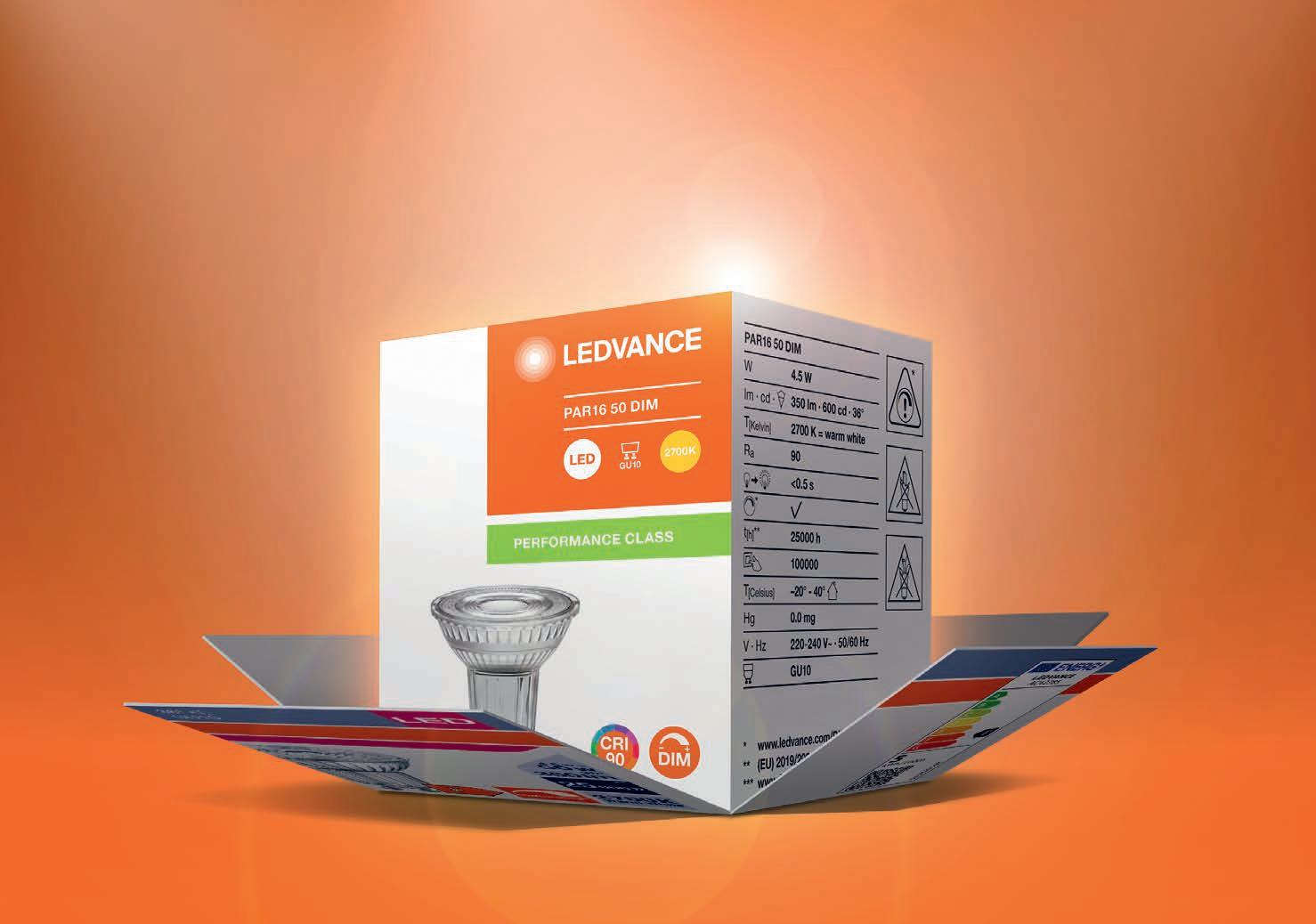
DALI PAVING THE WAY FOR THE FUTURE
There are many driving forces for sustainability across the lighting industry. First and foremost is the need to address environmental issues, which are closely linked to social responsibility. This leads to the introduction of legislation and compliance requirements, focused on achieving a more environmentally sound future.
Another factor is the move towards a circular economy. This has garnered wide-reaching support, including a policy and regulatory framework in the European
Union. A circular economy approach aims to ensure products can be reused, refurbished, upgraded and recycled, rather than simply disposed of when they no longer work or stop being fit for purpose.
When we look at lighting control, it is easy to see the role this can play in achieving better sustainability. LED light sources, alongside simple control techniques such as switching and dimming, have been a great starting point. Building on this, the use of sophisticated lighting control systems, enabled for example by DALI, has further leveraged these gains.
An effective approach is to introduce an automated DALI lighting control system with sensors that detect occupancy, movement and daylight levels. This eliminates the unnecessary use of lighting when a space is not being used.
When detecting presence and movement using a PIR sensor, the system responds by turning lights on and off as required, reducing energy usage. With regard to daylight levels, light level sensors inform the system how much natural light is available in a particular location, and the artificial lighting levels can then be increased or decreased accordingly.
A more sophisticated lighting control system, with increasing functionality and intelligence, results in greater energy savings. One of DALI’s roles is to standardise the functionality of input devices that provide information to the system, such as switches, sliders and push-button devices.
Turning our attention to future-proofing, DALI has a clear role in the circular economy, given its status as a globally standardised protocol. Rather than being a temporary solution or a fast-changing trend, the DALI protocol has been around for decades, supported by all major players in the lighting industry.
The DALI-2 certification programme, which has been developed and maintained by the DALI Alliance, has created an ecosystem of interoperable products from multiple vendors. This
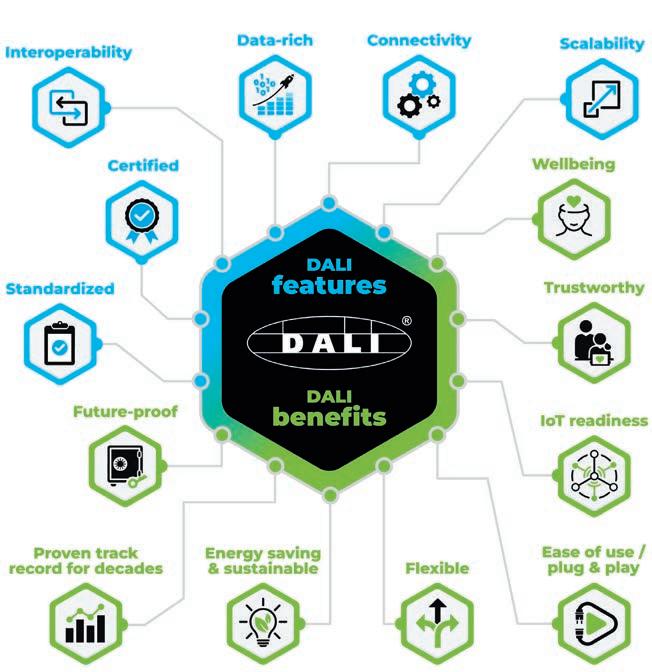
ensures the long-term availability of compatible components. It also removes issues associated with vendor lock-in and reliance on proprietary solutions that may become obsolete in the future. Bolstering this further, DALI-2 provides backwards compatibility with earlier product generations.
By its very nature, DALI is a flexible solution that lends itself to future-proof designs that extend the useful life of a lighting control system. Changes to the design of a DALI system and how it is operated can often be dealt with by software reprogramming, rather than having to rewire or replace luminaires and other equipment. This could, for example, allow the operator of a commercial building to easily change the layout of a space to accommodate new tenants.
At the luminaire level, future-proofing is enabled by the Zhaga-D4i connector system, which facilitates the plug and play replacement of luminaire-mounted sensors and communication nodes. Zhaga-D4i combines the standardised mechanical interface from the Zhaga Consortium, with the communication and power requirements specified by the DALI Alliance as part of the D4i certification program.
Zhaga-D4i certification has enabled an ecosystem of interoperable luminaires and control devices. This allows luminaire owners to easily update their fixtures, protect their investment, sustainably extend the life of the luminaire, and keep pace with fast-moving developments.
DALI can clearly demonstrate its benefits with regard to enhancing sustainability, reducing energy consumption, and paving the way for the future. As a global industry organisation focused on standardisation and market acceptance, the DALI Alliance also enables the broad adoption, scale and technology leadership that is needed to keep driving energy usage down and promoting sustainable lighting solutions.
DALI Alliance, dali-alliance.org
68 | September 2023 SPECIAL FEATURE LIGHTING electricalcontractingnews.com @ElecConNews /electricalcontractingnews @ecn_magazine
Sustainability across the electrical sector continues to be a key focus, with lighting playing an important role. In order to achieve a lower carbon society, it is important to look at what can be achieved now, as well as future-proofing. This will ensure opportunities can be seized when the time is right. Tim Whitaker from the DALI Alliance tells us more.
oviaUK.com FREE LIGHTING DESIGN SERVICE INCLUDING FREE SITE VISITS ECN Feature Strip ads - Exterior Lighting.indd 2 18/08/2023 16:39

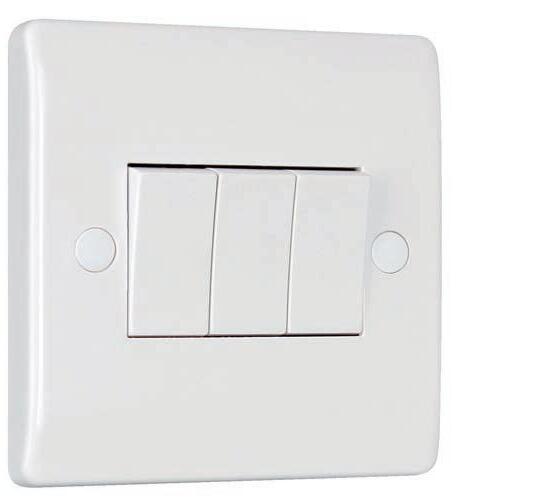

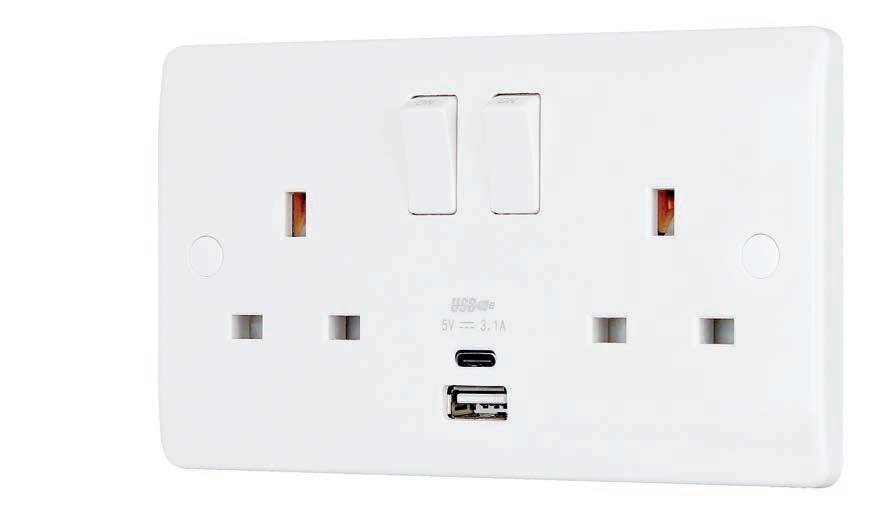
September 2023 | 69 Tel: 0121 711 1990 | Email: sales@niglon.co.uk | Web: www.niglon.co.uk Wiring Accessories Independently Tested & Certified by MEDIAN SPECIAL FEATURE WIRING ACCESSORIES supported by @ElecConNews /electricalcontractingnews @ecn_magazine electricalcontractingnews.com
MEDIAN AND NIGLON — A STORY OF SUCCESS
Since around the turn of the millennium the company had offered a basic square edge/traditional range of wiring accessories, but in 2014 the decision was taken to significantly increase the offering in this area with the addition of seven new ranges. These included decorative metal plates, IP66 weatherproof, and a grid system, amongst them.
2020 saw the addition of a new range, called Median – a white moulded wiring accessory range manufactured with urea plates. The range features soft curved edge plate styling and has a slightly deeper profile than Niglon’s super slimline range, Profile. The effect is a simple and understated appearance designed to complement all interiors. Niglon felt that the Median range was needed to fill a gap in its wiring accessories portfolio and time has proven this to be just the case. Although launched in an incredibly turbulent period (one month after pandemic restrictions began), Median has quickly become in demand by the contractor and wholesaler alike, due to its many features and benefits. In this article Niglon explains some of these and why they have led to it being one of the fastest growing areas of the business.
Product guarantee
The Median range is manufactured using quality electrical components and materials, backed up with a 20-year guarantee (except electronic components, which still have a two-year guarantee), giving you the confidence that these switches and sockets will stand the test of time.
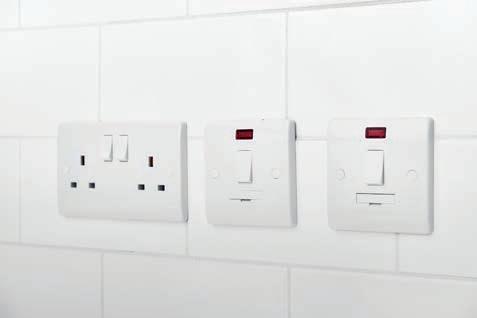

Quality holds significant importance for Niglon as a company that has been supplying the trade for such an extensive period of time. Before becoming incorporated in 1966, the family had acted as manufacturer’s agents (dating back to the 1940s) and it is this history which means the company is very careful when putting its name to any product. As such, the Median range has been tested and deemed to pass BS1363 by a reputable and independent third-party test house with a global reach, called Intertek. This gives wholesalers and installers alike confidence to buy the product in the safe knowledge it has undergone checks and inspections not only by the factory which is producing it, but also by an organisation (the test house) that is impartial and independent from Niglon.
Single screw modular switches
All 10AX light switches are constructed using a highly adaptable modular single screw fixing, allowing reconfiguration on site without the need for a full grid system. This saves the electrician time on site and provides terrific flexibility. Additions to the range over recent years (including, for instance, a fan switch module) mean most adaptations can now be fully handled. The cost-of-living crisis continues to bite, with inflationary pressures gradually eating away at living standards in the UK. All this additional cost for the contractor (fuel, materials, staffing rates) means there is a real risk of their business becoming less profitable as time goes on. It is imperative then that they look at all areas of expenditure to understand how greater efficiencies can be achieved, to build and retain margins. This might be changing their fleet of vehicles over time, increasing the number or ticket value of the jobs brought in by the team, and looking at efficiencies in their supply chain with regards to their choice of product purchases. Value engineering needn’t be a dirty phrase, and the ability to use a range which allows a quicker change out of a modular switch isn’t going to put profit back in the business on its own. However, as labour costs are by far the biggest cost to any business after the cost of materials, any improvement which can be gained by working with a more efficient product should be grasped with both hands.
Antimicrobial properties
The Median range is made from a high-grade Urea. This material has inherent antimicrobial properties, helping to stop the spread of bacteria such as MRSA, E.Coli, Salmonella and Klebsiella Pneumonia. Niglon has gone so far as to have its products lab tested and can provide these results upon request. This means customers will have proof of what microbes struggle to survive on the Median product, and the effective ‘kill rates’ or efficacy of the same.

70 | September 2023 SPECIAL FEATURE WIRING ACCESSORIES electricalcontractingnews.com @ElecConNews /electricalcontractingnews @ecn_magazine
Niglon is a family owned and operated electrical distributor and has supplied the wholesale trade in the UK with all manner of electrical components for over 60 years.
Median has quickly become in demand by the contractor and wholesaler alike
Quality holds significant importance for Niglon as a company
Screwless Decorative Advanced Decorative Slimline Decorative Square Edge Moulded
Soft Curved Edge
Slim Moulded
Given the range was launched at the height of the COVID-19 pandemic, there was an understandable desire to investigate if the urea material was antiviral in nature. This led to the company conducting further detailed research into antiviral product claims, and whether the industry-accepted test standard for virucidal activity (ISO21702) is fit for purpose or adequately understood by those in the trade (manufacturers, wholesalers and installers). The diligence shown in investigating product features and benefits hopefully provides additional reassurance to people thinking of switching to Niglon’s Median range.
USBs
Demand for ultra-fast charging in homes and other buildings is rising in line with our increased reliance on phones and other devices. Niglon continues to see the rise in demand for both its A type and C type sockets and expects this trend to continue.
Smart USB socket outlets are able to detect USB devices when charging and adjust the current, turning to standby when the device is fully charged and having the ability to protect devices in the event of an overload. Hence the success of Niglon’s recently launched sockets with inbuilt USB-C chargers.
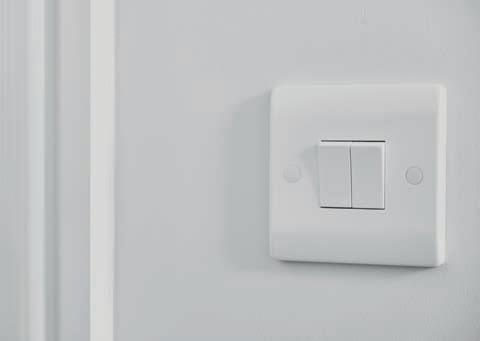
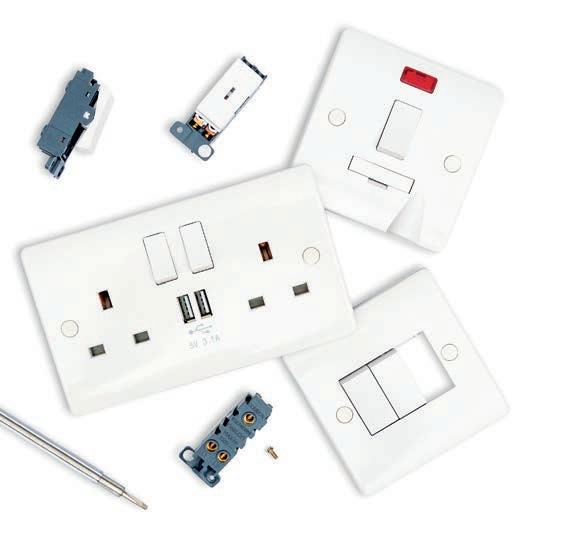
USB-Cs are able to charge a smartphone up to 70% faster than standard chargers, and are increasingly being used by those seeking a quick battery boost, given even 10 minutes plugged into one of these sockets is enough to make a big difference to the power levels of a phone or tablet.
Operations Director, Oliver Hinley, explains, “We know contractors and developers are seeing an increase in demand for USB-C charging as they’re not only quicker, but they’re also becoming standard on many more new smartphones and tablets.”
That’s why Niglon decided to launch its Median 2 Gang 13A Switched Socket with both a USB-A and a USB-C port – ideal for use in a family home where multiple devices might need charging at the same time, or within an office environment, for example.
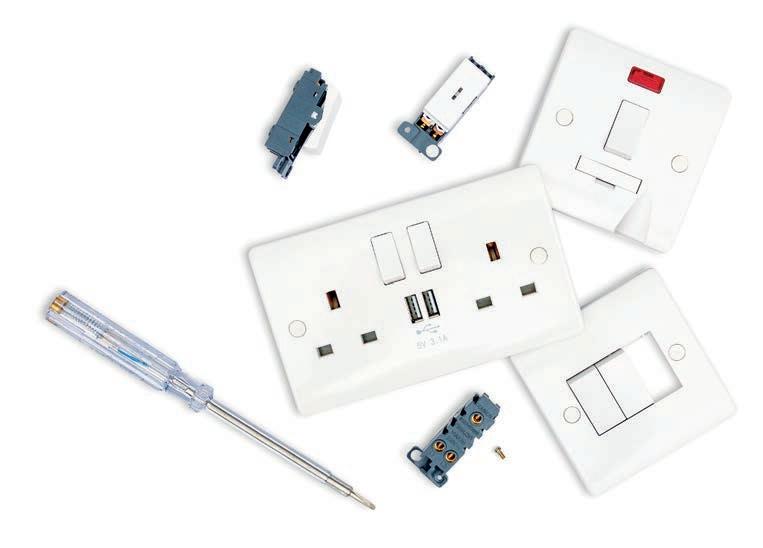
Oliver continues, “We’ve seen the product flying off the shelves, especially as we have priced these products very favourably so wholesalers can offer them for a fantastic price to installers.”
Other features and benefits
Neons: Where applicable flush red neon indicators have been fitted, giving a clean sophisticated look to the range. The use of neons is unobtrusive in daylight and produces a soft glow in the dark.
Screw caps: Every product is supplied with screw caps which have a click on action for easy use, adding to the sophisticated look of every faceplate and providing a clean and uncluttered finish to the design.
Accepts LED dimmer: Expand the Median range further with the use of the LEDDIM120. Complete with three mode settings for maximum compatibility and programmable minimum brightness levels to eliminate flickering.
Giving something back
For its initial two years upon launching the Median, Niglon worked closely with the Electrical Industries Charity, the EIC. As part of this partnership, the company donated 10% of the profits plus VAT from every single sale of its Median wiring accessories range during this period. The effect of this was to give some fantastic support to a much-valued organisation that every year touches the lives of thousands of people who work in the electrical industries, or their families. Niglon was one of the first organisations to partner with the charity in such a way, through what is called its Commercial Agreement (CA) programme. Niglon says it is very proud to have done its bit for the industry it serves, and which provides its living, and over this time has donated over £50,000. This has been used to support the wide-ranging work of the electrical industry’s charity during this time. Niglon has also worked to highlight and spread awareness of the fantastic work
of the EIC among the industry through traditional and social media.

The EIC has been established for more than 100 years, and its aim is to support anyone in need within the electrical industry (including former workers) through a wealth of practical, emotional and financial support – as well as signposting towards specialised services.
To find out more about the charity, please visit electricalcharity.org.
To the future – more success for Median and for Niglon!
Niglon’s roots and relationship with the electrical industry go back a long way; to when the current Operations Director’s great grandfather, Stanley Douglas Hinley, began working as a manufacturer’s agent, later joined by his son John who would travel the country as the company’s only salesman. Fast forward several decades and the family continues to be involved and the range of products offered has expanded enormously; there are now more than 4,500 products used and loved by contractors up and down the UK. Included within this offering are 10 wiring accessories ranges, including the latest to be brought to market – Median. The last few years have seen both Niglon and this range enjoy remarkable success, and as the company looks positively towards the future, the company says it is certain that the best is yet to come.
Niglon, niglon.co.uk
September 2023 | 71 SPECIAL FEATURE WIRING ACCESSORIES @ElecConNews /electricalcontractingnews @ecn_magazine electricalcontractingnews.com
Ten wiring accessories ranges are included within Niglon’s offering
TV / Data & Power Grid System Weatherproof Metal Clad www.niglon.co.uk | 0121 711 1990 | sales@niglon.co.uk 10 RANGES OF WIRING ACCESSORIES Providing an offering for all budgets and applications
The Median range is manufactured using quality electrical components and materials
INVESTING IN THE FUTURE
ith the strategic appointment of new key personnel and the development of cutting-edge product ranges, backed by compelling new literature and marketing endeavours, Selectric is firmly positioned for future growth. As the company forges ahead, it maintains focus on continuous development, regularly listening to the electrical marketplace and collaborating with industry stakeholders to develop new products that align with their ever-changing needs.
Recent feedback has driven Selectric to invest significantly in its smart accessory range and other new and exciting products, coming throughout 2023 and 2024.
Elevating standards with the 5M and 5M-PLUS Ranges
The 5M and 5M-PLUS ranges have long been a staple in the success of Selectric’s wiring accessories ranges, and new finishes are always being explored in line with current market trends. Among them is an exclusive new handcrafted dark bronze finish for a classic heritage look. Bringing added warmth and depth to the overall interior style you’re seeking to achieve, this luxurious metal adds a feeling of class and elegance to the overall aesthetic of any room.
It’s remarkable durability and timeless quality withstand the test of time, ensuring an elegant and stylish appearance for decades after installation. The dark bronze is a durable finish, which is worth considering if you have a busy family environment at home, and will not dull over time. From modern to industrial or traditional settings, this finish adds a touch of sophistication, making it a versatile choice for both residential and commercial spaces.
WEmpowering accessibility and hygiene with Part M Series
In response to the growing popularity of Selectric’s Part M series, the company will be expanding the range with additional USB outboard rocker options. With a keen eye on inclusivity, the contrasting colours of the Selectric Part M plates and inserts help assist the visually impaired and allow easy location of the wiring accessories against the surrounding environment.
Furthermore, the entire range boasts full antimicrobial certification, so you can rest assured with peace of mind that using these ranges will not assist in the progression of these kinds of bacteria.
Unveiling the Selectric GRID360 Kinetic
Significant time and capital have been invested in the research and development of an innovative range of state-of-the-art wireless products, set to be released as Selectric GRID360 Kinetic.
Powered by cutting-edge technology, these wireless Kinetic switches remove the need for batteries or hardwired power cables without detriment to the dependability of traditional wired switches. There is no need for complicated cable runs within walls and they can be installed on any surface to provide a clean, convenient and safe system that is simple to install and easy to use.
The Selectric GRID360 Kinetic wall switches have been proven to be reliable in quality, stable in signal transmission, and well-designed in appearance, which will fit into the company’s ever-popular GRID360 range of products. Furthermore, the Selectric GRID360 Kinetic system uses a very small amount of energy and so reduces overall power consumption, which will result in economic savings and contribute towards an improved carbon footprint.
There is a wide range of kinetic receivers to choose from to solve real-life controlling requirements and Selectric will be offering a range of non-dimmable, dimmable and smart receivers, suitable for wide input voltage from AC85-240V 50/60Hz. The lowest and highest brightness level can be set by an app on the smart dimmer. This helps the performance and compatibility of the dimmer to suit more dimmable light fittings whilst avoiding flicker and slow response issues often found with smart dimmers. A 30-150m transmission range (depending on
context) ensures the switches perform steadily under complex indoor or outdoor installations.
Investment in tooling and certification has also led to the development of additional new products, including:
• USB modules
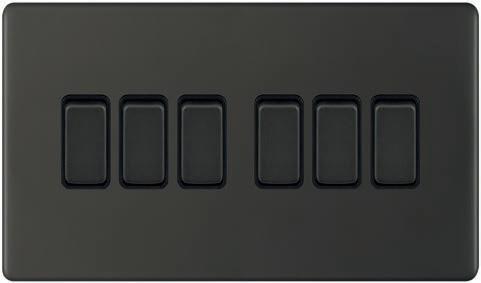
• Illuminated grid modules
• Medical sockets
• Isolator grid modules
• Spacers
• Hotel key cards
• Outboard rockers/sockets – clean earth and USB
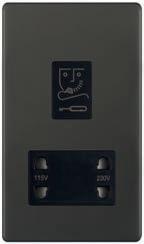
• Lockable euro modules
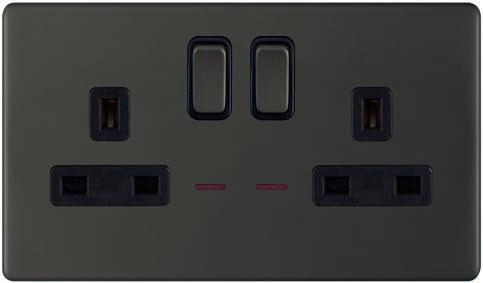
• Emergency red accessories
• Decorative pendants
• Decorative ceiling switches

• DC solar isolators
• ATOM CCT ranges
• Integrated fire-rated LED CCT downlights with plug-and-play connectors
Committed to ensuring we’re all future ready
Selectric’s steadfast commitment to innovation also extends beyond product offerings. With a refreshed brochure set to inspire in the coming year and an expanded digital presence through the company’s website and on social network channels, there is serious investment going into the future of the company.
The company’s wholesalers and valued clients remain the cornerstone of Selectric’s success, and the company pledges to continue providing them with an unparalleled experience as it future proofs its position in the market.
72 | September 2023 ADVERTISEMENT FEATURE electricalcontractingnews.com @ElecConNews /electricalcontractingnews @ecn_magazine
Selectric, selectricuk.co.uk
Selectric is committed to innovation that anticipates the needs of its clients. The company understands that new products are vital for the growth and success of any business and believes that it is this proactive mindset that sets Selectric apart from other manufacturers in the electrical industry.

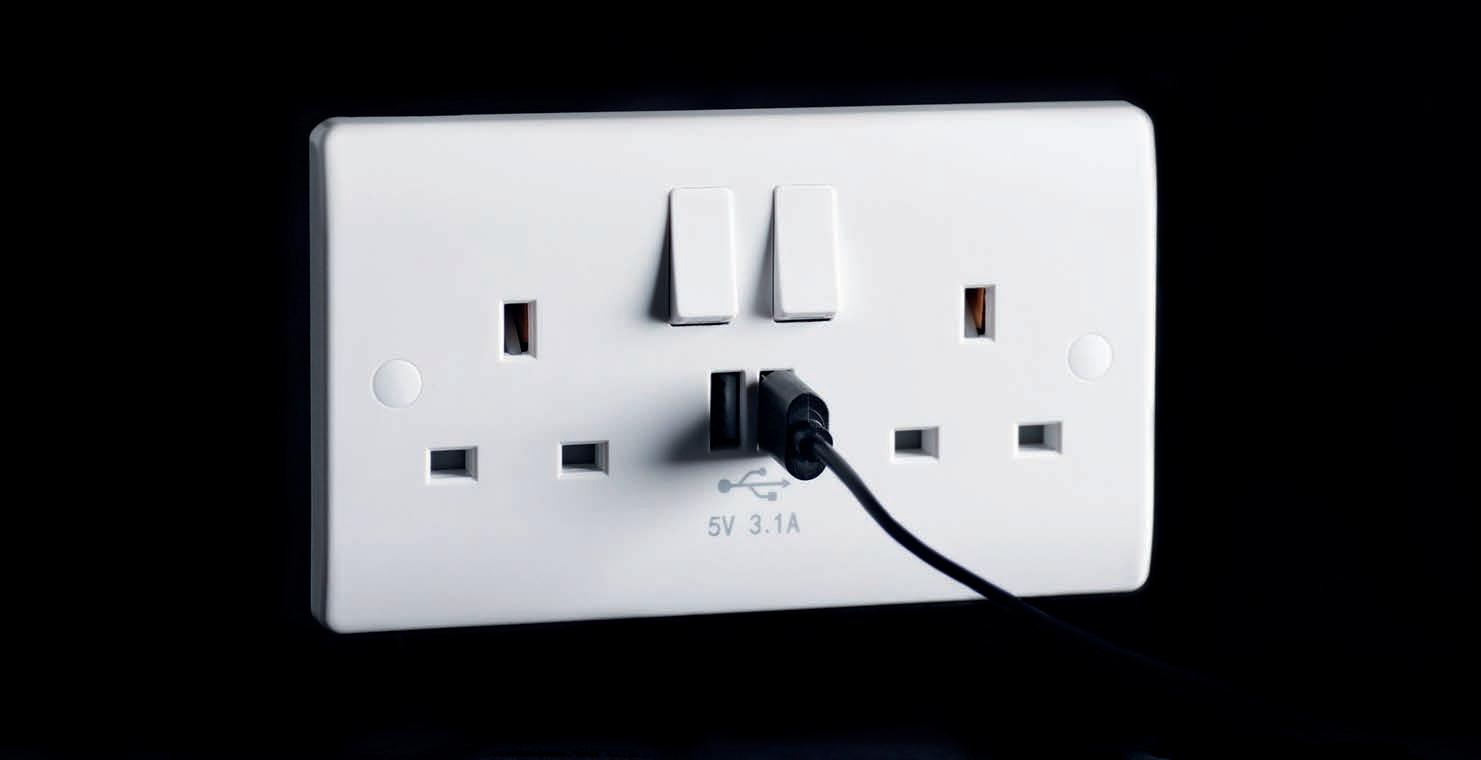
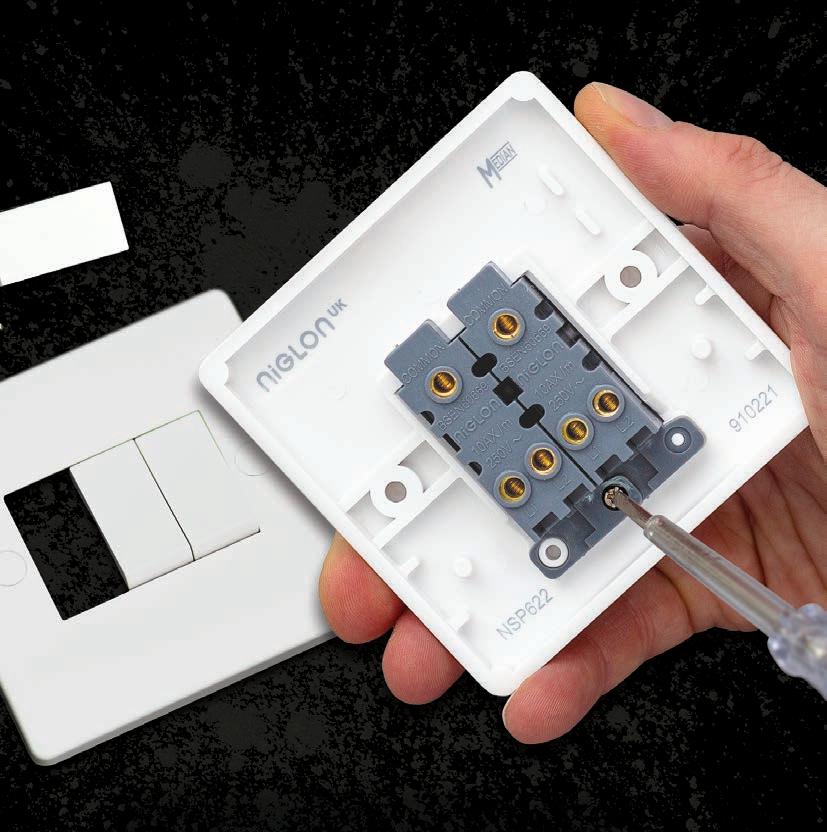
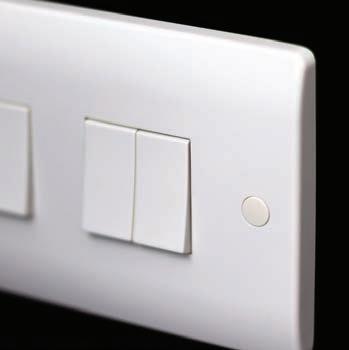
t 0121 711 1990 e sales@niglon.co.uk Connect with us: • Screw Covers Offer A Clean Sleek Appearance • Single Screw Modular Switches • Antimicrobial Urea Switchplate • Soft Curved Edge Clean, simple & manufactured in bright white Urea. Our first ran ge to have single screw fixings on all its modular switches WIRING ACCESSORIES Independently Tested & Certified by
WHAT ARE THE LATEST TRENDS AND DEVELOPMENTS IN WIRING ACCESSORIES?
Electrical
One of the biggest changes to the wiring accessories game was the introduction of the USB-C Connector in 2014. The USB-C connector was developed by the USB Implementers Forum (USB-IF), which is the company that has developed and certified the USB Standard over the last few years.
Companies such as Apple, Dell, HP, Intel, Microsoft and Samsung are members of the USB IF. If these large corporations were not active members of the USB IF, we would not have had the USB-C connector readily accepted by PC manufacturers.
What does it look like?

The new connector looks like a micro-USB or rectangular USB 3.0 Connector at first glance; however, it is more oval and slightly thicker so it can accommodate the connector being inserted from either side. This design is easy for the end user to use as there is no right or wrong way to plug the charger in, which means you can do it in the dark!
What does this release mean for tech manufacturers?
When the USB-C first came into the market, only a small minority of individuals thought it would become universal. However, not long after, the European Union decided it wanted to simplify digital life, calling for the USB-C connector to be used for all battery charging starting in 2024.
This meant that iPhones in the future would have USB-C ports and connectors, replacing the old lightning ports. Initially, Apple introduced the USB-C connector on the MacBook in 2015, and iPads began switching in 2018.
The Apple MacBook and Google Chromebook Pixel were the first to implement the USB-C Connector. Although these are household names, they
weren’t the only ones who jumped on the implementation of the new Type-C USB. LeTV, famous for its bespoke services, including smartphones, cloud services, electric cars, and real estate, was the first manufacturer to implement the fancy new port into its smartphones
Although Apple implemented the USB-C into its MacBook and iPads, the company is not racing to change the USB ports on its new iPhones. This may be down to Apple’s MFI (Made for iPhone) certification program, which regulates the quality of third-party manufacturers cables and accessories and gives a commission of sales to Apple. Thus, the implementation of the new USB-C could potentially reduce a valuable revenue stream for Apple.
How is this development affecting wiring accessories manufacturers?
Double sockets with additional USB-A ports are the norm for most consumers across the country, as it allows you to charge your device without taking up space in the socket and without having to carry around adapters. These USB-A sockets are found within every wiring accessory
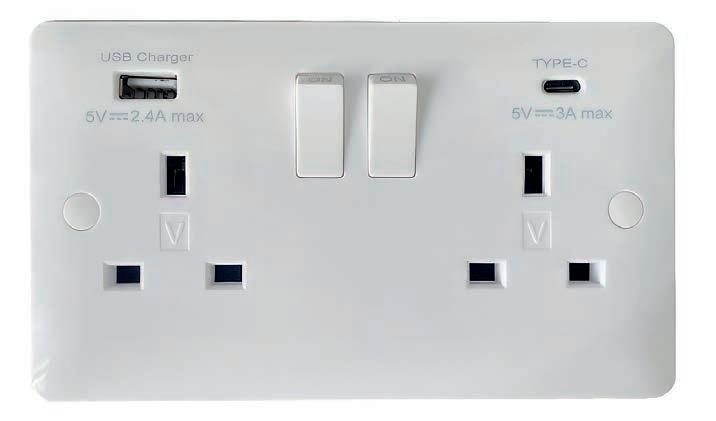
manufacturer’s portfolio worldwide, and Verso offers one in its White Plastic and Part M range.

So, as the market has now adapted to these USB-A sockets, with the introduction of a new standardised USB must come changes to products that were catered to the USB-A. Which, in turn, leads wiring accessory manufacturers such as Verso to create a new double socket to cater for the market.
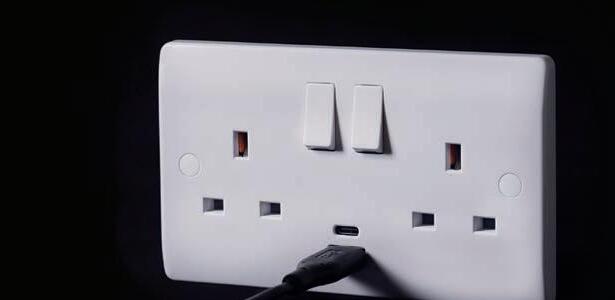
Verso was one of the first on the market to release the USB-C double socket, doing so by creating double sockets that have one USB-A port and one USB-C port. At the time this was the best decision, as USB-C was slowly on the rise, but was not readily used. This way the company could cater for all households by offering a complete solution.
Over the years, the demand for USB-C double sockets has risen, as homeowners want to invest in the most innovative and practical solutions, particularly when it comes to their tech. Verso predicts that after the implementation of the new European Union decision (December 2024), USB-C double sockets sales will rise, whilst USB-A double socket sales will dwindle.
Verso Electrical, versoelectrical.co.uk
74 | September 2023 SPECIAL FEATURE WIRING ACCESSORIES electricalcontractingnews.com @ElecConNews /electricalcontractingnews @ecn_magazine
Wiring accessories are one of those product categories in our industry that will rarely have any big developments, so when there is, it’s a big deal, says Verso
www.niglon.co.uk | 0121 711 1990 | sales@niglon.co.uk 10
ACCESSORIES
Verso was one of the first on the market to release the USB-C double socket
RANGES OF WIRING
Providing an offering for all budgets and applications
• Single screw fixing modular switches
• Anti-Microbial
• Screw covers offer a sleek appearance
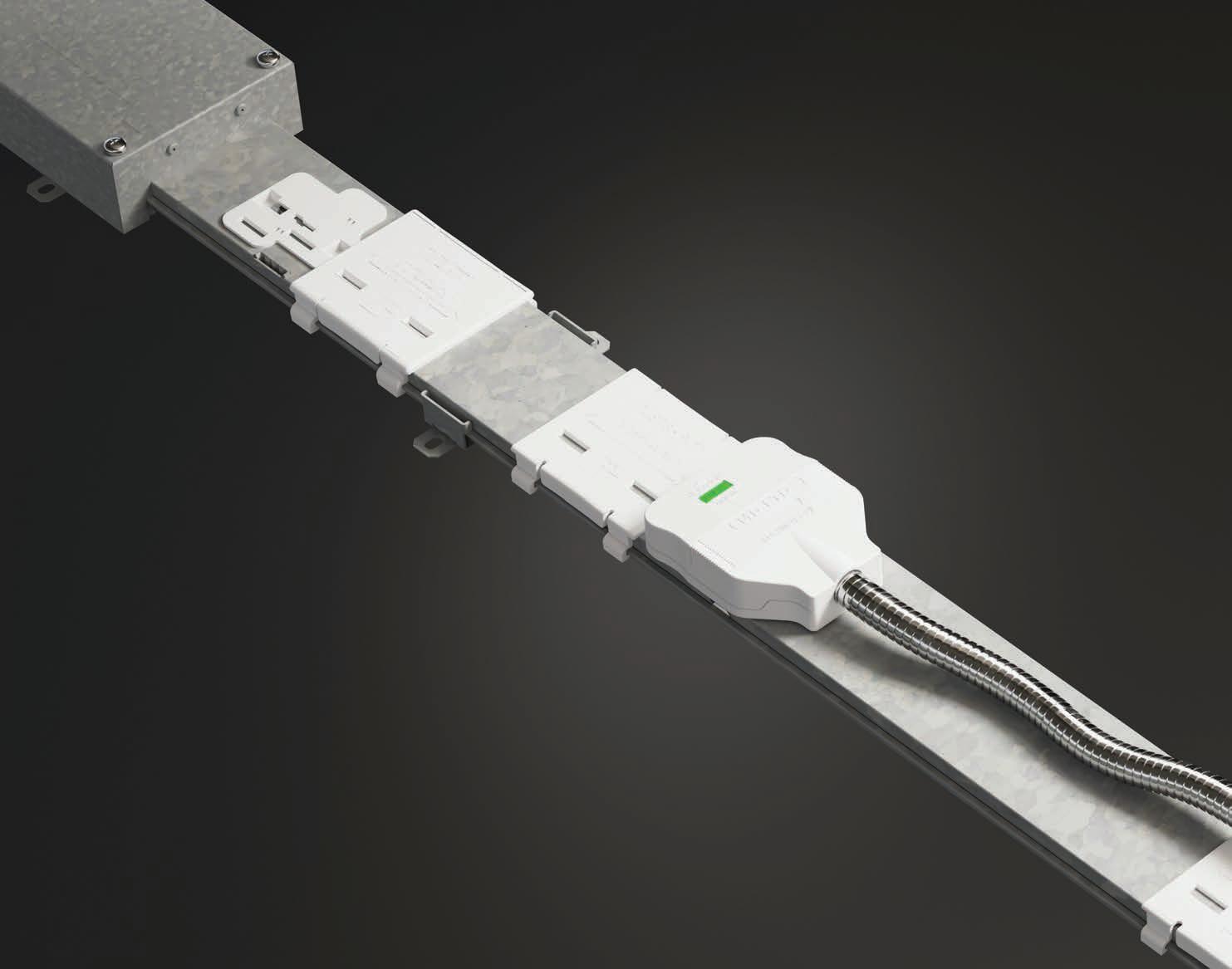
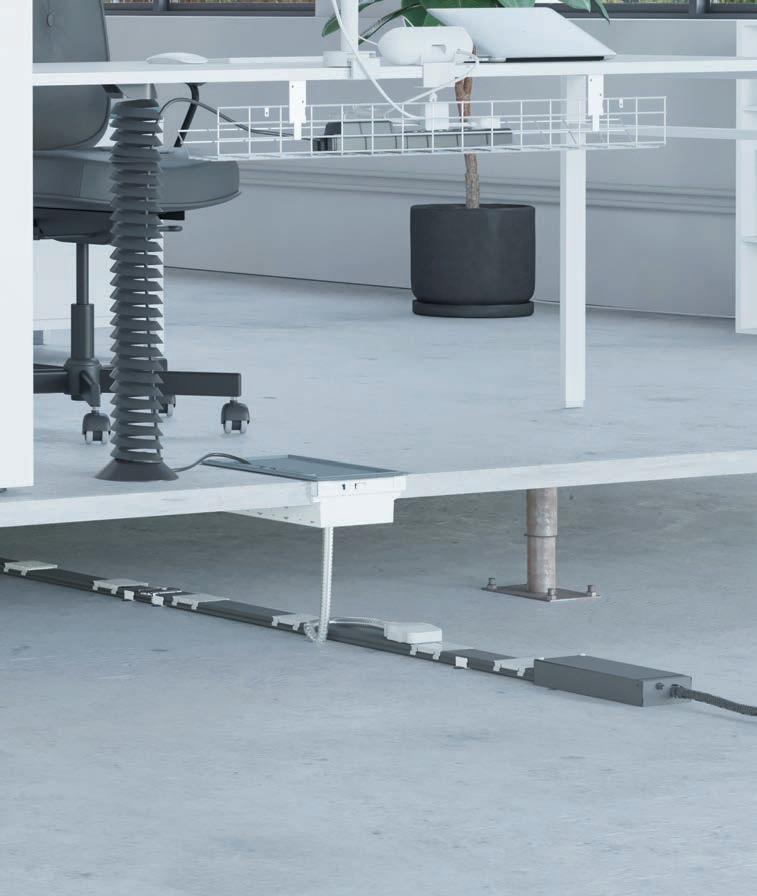
HOUR LEAD TIME
48
TESTING REQUIREMENTS AND USB SOCKET OUTLETS
With USB socket outlets, the charging unit is built into the back of the socket, and this is sometimes fixed to the On
position. This means that the switches on the socket that control the 13A plug element have no connection to the USB charging point, with the result that it is permanently connected. This could cause problems when carrying out insulation resistance testing, as the electronic components of the USB charging unit are part of the circuit, and therefore, the 500V that electricians use to test them could damage those components, resulting in a faulty charging port.
The Click range of USB sockets has been designed to withstand the 500V insulation test due to the nature of the circuitry built within the USB socket.
Chapter 64 of BS 7671 details the general requirements for initial verification, and Section 643 deals with the requirements for testing. Here, Jake briefly considers the requirements for insulation resistance testing and the care that should be taken when testing after second fixing has occurred.
Insulation resistance testing
Insulation resistance testing is carried out to confirm that there are no inadvertent connections between live conductors and Earth before the installation is energised (643.3.1).
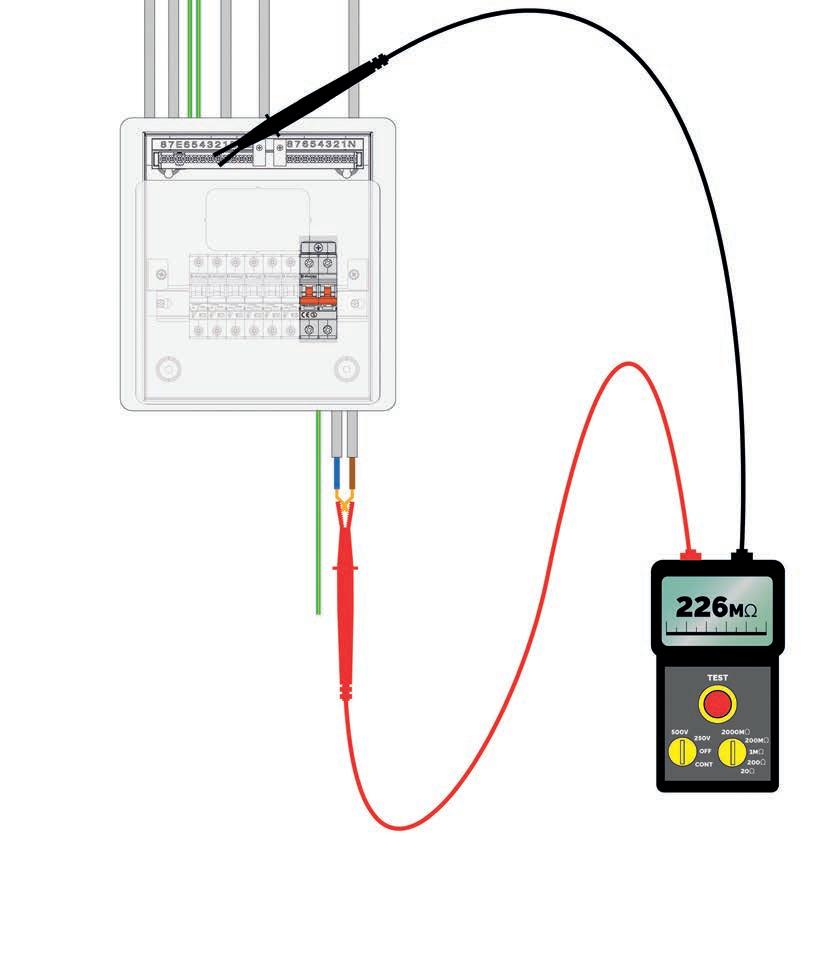
The insulation resistance test is a ‘dead’ test, and typically the normal supply should not be ‘live’. To this end, the person carrying out the test should ensure that the circuits to be tested are isolated and the normal power cannot be energised inadvertently.
The minimum required insulation resistance values in megohms is detailed in Table 64 (right), although a value significantly in excess of these stated values is preferred (643.3.2).
76 | September 2023 SPECIAL FEATURE WIRING ACCESSORIES electricalcontractingnews.com @ElecConNews /electricalcontractingnews @ecn_magazine
Are you having to deal with problems with USB socket outlets that have been faulty following insulation resistance testing? If so, Jake Green, Head of Technical Engagement at Scolmore Group, can shed some light on the issue.
live conductors
Minimum values of insulation resistance Circuit nominal voltage (V) Test voltage DC (V) Minimum insulation resistance (MW) Up to and including 500V with the exception of SELV and PELV systems 500 1.0 www.niglon.co.uk | 0121 711 1990 | sales@niglon.co.uk 10 RANGES OF WIRING ACCESSORIES Providing an offering for all budgets and applications • Stainless steel faceplates • Metal to metal rockers • Modular light switches • Discrete moisture gasket
Figure 1: Testing
to Earth


Webinar - Introducing Sonos for Professionals September 7, 12:30pm (BST) Sonos at EI Live September 13-14, booth 59a Discover the latest audio solutions from Sonos for Professionals. Designed exclusively for those new to Sonos, this webinar is your gateway to transforming both your customers’ audio setups and your business. Register now to secure your spot and unlock the future of professional audio integration. Register now
Sensitive electronic equipment
The note attached to Regulation 643.3.3 indicates that manufacturer’s instructions may recommend that some equipment needs to be disconnected even when the test voltage is reduced to 250V DC. This may apply, typically, to accessories such as socket outlets with USB connections and the like.
Scolmore’s Click socket outlets with USB ports do not require disconnecting and may be tested between live conductors (connected together) and Earth at a test voltage of 500V DC whilst still connected in circuit.
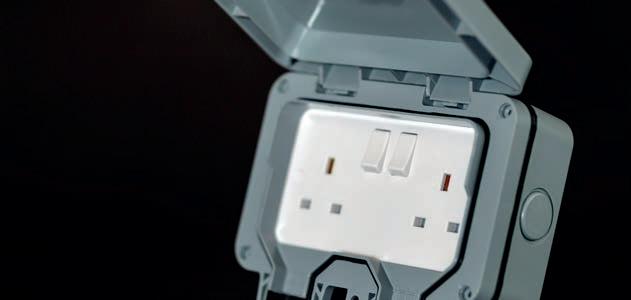
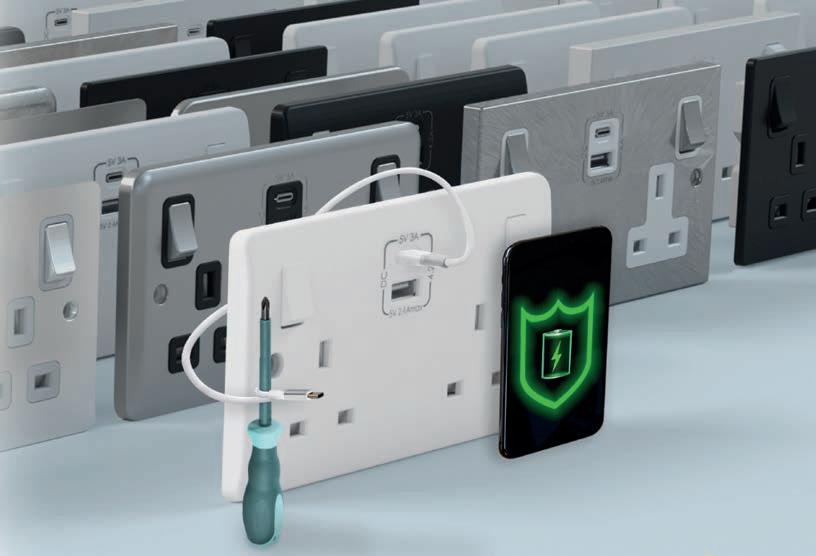
Conclusion
Insulation resistance testing is an essential part of ensuring that prior to energisation, the installation is safe. The tests verify that there are no inadvertent connections between live conductors and between live conductors and Earth. Care should be taken to ensure that any connected equipment is capable of withstanding the test voltages applied. Where there is a risk of damage or test results outside of the permitted range, it may be necessary to disconnect equipment prior to any test being carried out.
Up to and including 500V 5001.0
Regulation 641.1 requires that every installation is tested both during erection and on completion, before being put into service. Insofar, as this relates to insulation resistance testing, this means that tests should be carried out after first fixing (after cables have been installed and prior to equipment being connected). This test confirms that the installed cables are in a fit state.
The final insulation resistance test needs to be carried out after second fixing has taken place. However, after second fixing it may be that connected equipment may influence the measurement or result of the test (643.3.3). Where this is the case, following the connection of equipment, it is permitted to reduce the test voltage to 250V DC and to test between the live conductors (connected together) and Earth.
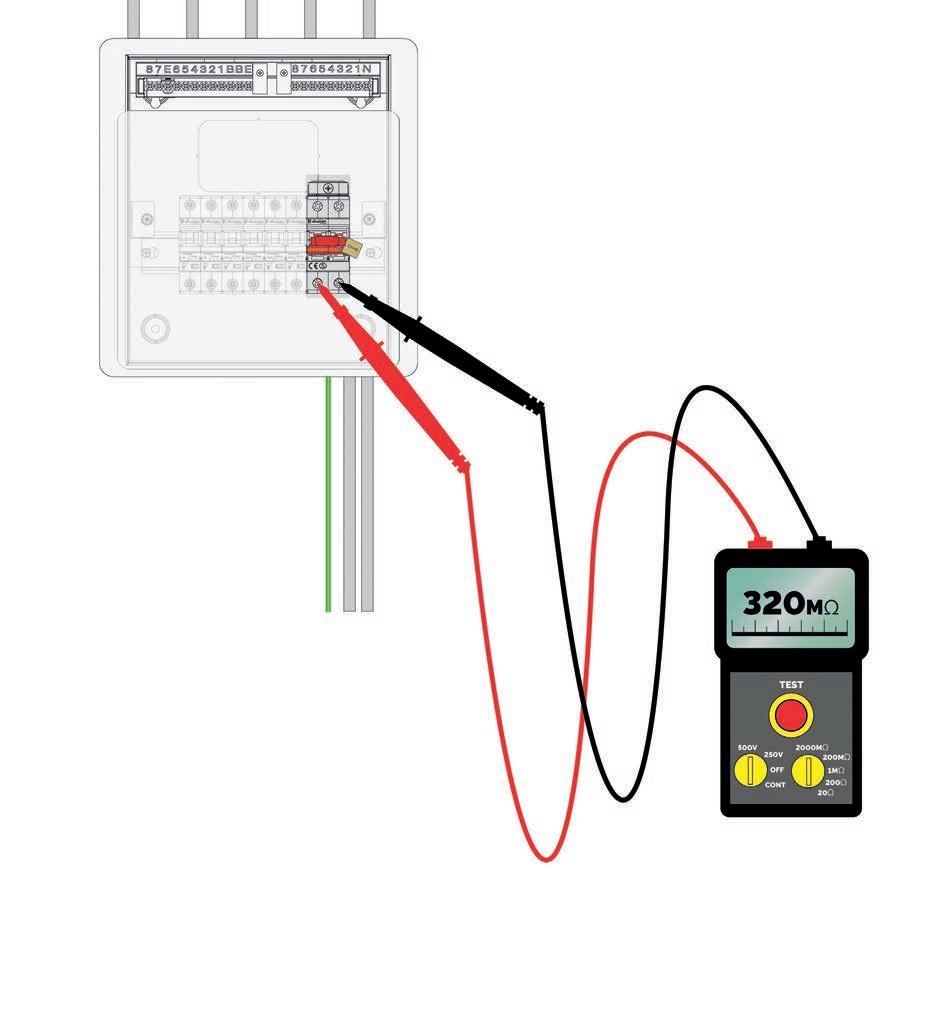
78 | September 2023 SPECIAL FEATURE WIRING ACCESSORIES electricalcontractingnews.com @ElecConNews /electricalcontractingnews @ecn_magazine
Scolmore, scolmore.com
www.niglon.co.uk | 0121 711 1990 | sales@niglon.co.uk 10 RANGES OF WIRING ACCESSORIES
Figure 2: Testing between live conductors
Providing an offering for all budgets and applications
• Independently tested and certified by Intertek
• Manufactured in high impact resistant material • Protection against ingress of water and dust


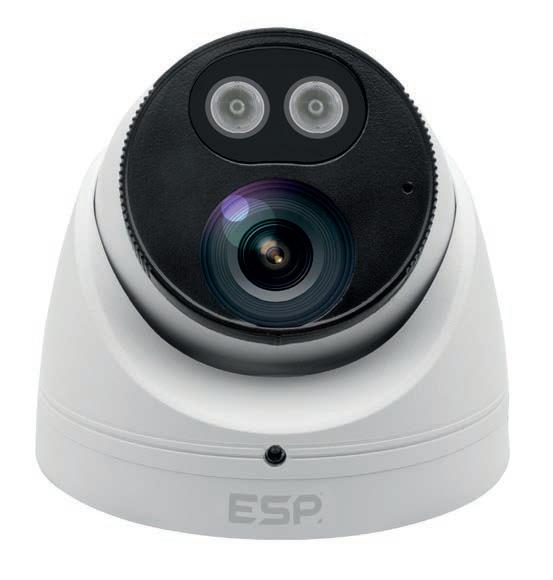
September 2023 | 79 email: sales@espuk.com visit: www.espuk.com call: 01527 515150 NO MORE GUESS WORK 24/7 Colour CCTV, ideal for large or small commercial applications ECN September Feature ad - 247 Colour CCTV.indd 1 18/08/2023 16:33 COMPANY SHOWCASE supported by @ElecConNews /electricalcontractingnews @ecn_magazine electricalcontractingnews.com COMPANY SHOWCASE SPONSORED STORIES FROM THE INDUSTRY
ARE YOU MAKING THE MOST OF THE CONTINUED GROWTH IN CCTV?
According to the Electronic Security Systems and Admission Control Market Report
UK 2021-2025 from AMA Research, the market for electronic security products and services grew steadily between 2015 and 2019, before a sharp contraction in 2020 caused by the COVID-19 pandemic and its impact on the construction sector and on economic activity more generally. The report describes the UK electronic security market as mature, especially in the non-residential sector, in terms of the proportion of premises that have some form of security equipment installed. This means that demand for replacement and upgrades is the key feature of the market and accounts for the majority of end-user sales.
Technological developments have driven the replacement market, with heavy expenditure on R&D a key characteristic of the market. Leading technological trends include improvements in image quality, thermal imaging, artificial intelligence (AI), deep-learning analytics for CCTV, cloud-based solutions for video management systems, and facial recognition and other biometrics for access control. The COVID-19 pandemic has generated further development of specific applications such as management of crowd density and touchless access control.
With CCTV accounting for the largest part of the electronic security sector, there is plenty of opportunity for contractors and wholesalers to take a share of this growing market. For many installers working within the electrical industry, CCTV will be seen as a security solution mainly for the domestic end of the market. However, according to ESP, with the right knowledge of the products, solutions and support services available to satisfy larger, more complex projects, contractors are in a prime position to take on more ambitious security schemes.
This is where it pays for contractors to partner up with a reputable supplier who can not only provide a comprehensive range of security solutions, but that also has the expertise and experience in the planning, design and ongoing support that will reassure contractors that they will be providing the best possible security solution for their clients.
Glorious technicolour
ESP has been supplying CCTV solutions for the professional installer market for over 25 years and continues to invest in the development of the range to make sure that contractors have access to systems that harness the latest technologies, are quick and easy to install and boast a raft of features and benefits. The latest development of the category saw the launch of the 24/7 Colour IP POE CCTV range, which takes the company’s CCTV offer to another level.
When it comes to CCTV security, colour-related information can play a vital role in identifying the detail of activities, particularly in the hours of darkness. Conventional cameras with infrared lighting will only provide black and white images for night-time monitoring. This can result in people or vehicles, for example, appearing blurred and blending into the background, making it difficult to discern crucial elements. Providing sharp detail, in colour, day or night, ESP’s 24/7 colour CCTV range is designed to offer superior, reliable and straightforward installation solutions for a range of applications from domestic through to larger and more complex commercial projects.
With a total of 12 cameras offering a choice of 2MP, 5MP and 8MP resolution options, as well as a broad range of 8MP NVRs consisting of 4, 8, 16, 32 and 64 channel
models, ESP really does have a range of security systems to cover all applications.
Superior image quality
The cameras use low light image sensors, which are able to use background light to produce a colour image in reduced light environments. If the background light is insufficient for the low light image sensors to produce a colour image, the white LEDs on the cameras have the facility to activate by virtual line crossing and permitter intrusion set by the user. By providing 8MP recording, the NVRs offer support for high resolution cameras in record, playback and live view modes.
The 24/7 Colour IP POE CCTV range sits alongside ESP’s established CCTV offer which comprises the HDView IP PoE 5MP range, designed for larger and more complex commercial projects, and the Rekor IP PoE 2MP range, which is tailored for the domestic market.
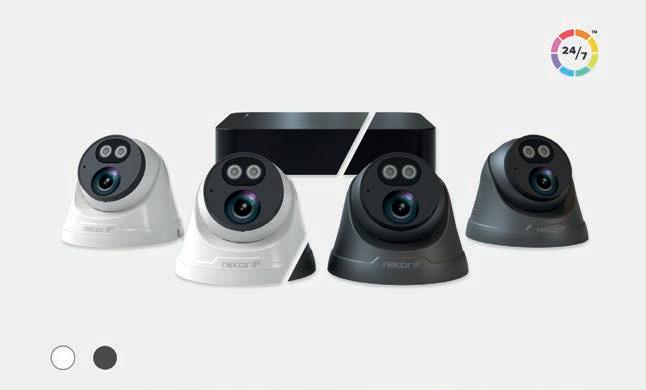
Free design service

For these CCTV projects that require larger systems and specific cameras, ESP believes that pre-planning is vital and that producing and working to a professional design will mean the best possible system is specified to get the most effective results on site. The design service is able to generate computer generated models of a system’s live view from the cameras, a useful tool to ensure a client will have a good understanding of the camera angles and views before committing to the system. As well as providing computer generated previews from the camera locations, the service will provide recommendations for the total amount of cable required for installation, suitable hard drive capacity and will also highlight the record duration, resolution and ESP camera part number required – making specifying an installation simpler.
With access to ESP’s comprehensive range of sophisticated CCTV systems, the support of a highly experienced technical team and a free specialist design service at their fingertips, contractors have all the tools they need to satisfy even the most challenging CCTV projects.
ESP, espuk.com
80 | September 2023 COMPANY SHOWCASE SPONSORED STORIES FROM THE INDUSTRY electricalcontractingnews.com @ElecConNews /electricalcontractingnews @ecn_magazine
As the CCTV market continues to show strong growth, ESP is encouraging contractors to think big and take advantage of ESP’s higher specification systems for larger, commercial projects, and the company’s growing support services.
24/7 Colour CCTV That won’t miss any detail during the night www.espuk.com ECN September strip ads - 247 Colour CCTV.indd 1 18/08/2023 16:34
LED LINEAR BATTENS FROM OVIA
Proving popular with installers working on projects within the education sector is the range of LED linear battens from Ovia
Inceptor A-Lite is a range of 4ft and 5ft College LED linear battens available in standard, microwave sensor and emergency versions and in a choice of wattages (17W, 25W, 32W, 50W and 60W) and all models include a CTA (colour temperature adjustable) switch – a built-in, three position switch which allows for instant change of the colour temperature, from warm white (3000K), to cool white (4000K) to daylight (6000K).
Inceptor A-Lite is a high-performance fitting that is safe, quick and easy to install. It features a hinged diffuser with a quarter turn locking mechanism and push fit/piano key terminals, which all combine to allow for quick and easy access into the internals, which speeds up the installation time. It comes with an IP20 and a TP(b) rating.
Inceptor B-Lite is a range of 4ft, 5ft and 6ft linear batten multi-current LED fittings, available in standard, microwave sensor, emergency sensor, and microwave and emergency sensor versions. They are a direct replacement for conventional battens and boast many features.
A security wire, pre-attached to the base of the product, allows the diffuser to be hung from the base and means the installer doesn’t have to remove the cover and place it aside during installation. The diffuser can be easily pulled apart from the steel base with the help of spring clips, allowing for quicker and easier installation.
Ovia, oviauk.com
TPN – THE LATEST PHASE IN THE FUSEBOX RANGE
Introducing FuseBox’s TPN
Distribution
Boards, with 3, 7, 11 and 15 usable ways, complete with 10kA devices and 125A 4 Pole main switch with T2 Surge Protection Device fitted as standard. The robust 1.2mm zinc galvanised steel enclosure, finished in RAL 9001 epoxy powder coating, ensures long life in harsh environments.
• 10kA devices: MCBs, RCBOs, RCDs
• Compatible with FuseBox 6kA devices without any modification
• Removable gland plates top and bottom
• Unique hinged front cover assembly
• Shrouded neutral terminal bars
• Extension box option
• Manufactured in accordance with BS EN61439-3
• Ideal for commercial, industrial and domestic settings
The complete range of TPN Distribution Boards and 10kA devices is now available at all FuseBox stockists.
FuseBox, fusebox.co.uk
WIRELESS HEATING CONTROLS FROM SANGAMO
With wireless technology now seen as the preferred technology for heating and plumbing contractors, Sangamo has seen a rise in demand for the wireless room thermostats it offers in its Choice Plus range. Contractors can install them more quickly, without the need for hard wiring the thermostat - making them the perfect replacement for older wired thermostats and a great opportunity for contractors to upsell to their clients.
The Sangamo Choice+ wireless programmable room thermostat is designed for controlling heating systems via an electronic sensor. It operates via wireless communication between the thermostat and receiver and is 24-hour or seven-day programmable. It regulates and maintains a desirable temperature through the home by calling for heat as the temperature varies through the day.
It offers a TPI (Time Proportional and Integral) control feature to ensure a maintained temperature by analysis of the heating and cooling periods. In addition, it includes Optimum Start and Delayed Stop for additional efficiency, heating and cooling for the time programmed.
ESP, espuk.com
AXIOM EXTENSION LEADS, TRAILING SOCKETS AND BLOCKS
If the need is for power away from permanently fitted sockets, Axiom has options to meet almost any requirement with its comprehensive range of 13A extension leads, trailing sockets and blocks.
Extension leads start with simple one to two gang options and up to 15m of cable, but a total of 20+ variants up to 10 gang in size includes leads with mini sockets, some four gangs with neons, individually switched or fused varieties, and finally anti-surge leads with the largest 10 gang version being free-standing with neon.
Moving to trailing sockets, another wide range consists of one to eight gang sizes in three categories: standard fused and individually switched; standard and individually switched; and standard switched with neon. One and two gang socket blocks complete this sector.
And new to this Axiom range is a free-standing pop-up tower socket with 3x13A sockets and 2 x USB ports, plus a five gang extension lead with remote control.
CED Electrical, cedelectrical.co.uk
September 2023 | 81
COMPANY SHOWCASE
@ElecConNews /electricalcontractingnews @ecn_magazine electricalcontractingnews.com 24/7 Colour CCTV That won’t miss any detail during the night www.espuk.com ECN September strip ads - 247 Colour CCTV.indd 2 18/08/2023 16:34
SPONSORED STORIES FROM THE INDUSTRY
SNICKERS WORKWEAR TROUSERS –WORKING AS HARD AS YOU DO!
Hi-tech fabrics, functionality and fit are the hallmarks of this market-leading working clothes range.
For discerning professional tradesmen and women, trousers that deliver maximum functionality, comfort, protection and mobility are key factors in their brand choices.

That’s why the sustainable, street-smart, body-mapping features of Snickers Workwear work trousers make them the clothes of choice for those who want to work at their best.
The AllroundWork trousers suit any kind of work in any trade. FlexiWork trousers deliver superior freedom of movement, while LiteWork trousers keep you cool, dry and ventilated.
Then there’s RuffWork trousers, reinforced and tough for the roughest work on site. ProtecWork protective wear for hazardous environments and certified high-vis trousers, when personal visibility on site is a priority.
Snickers Workwear trousers also deliver certified protection with the patented KneeGuard system and CORDURA reinforcement for greater flexibility, comfort and durability.
All in all, this is what makes them the optimal choice for craftsmen and women who need to get every job done comfortably, efficiently and sustainably on site.
Snickers Workwear, snickersworkwear.co.uk
SCOLMORE ADDS UNSWITCHED SOCKETS TO PART M RANGE
Scolmore has added new
Unswitched
Socket Outlets to its comprehensive Part M visually contrasting wiring accessories range.
The Part M range includes anthracite grey finished accessories to comply with
current Building Regulations Part M. They are all antibacterial and antiviral certified, with a 20-year guarantee against faults in material or manufacture. The Part M range features the same modular design of the Click Scolmore ranges, allowing designers and installers unprecedent flexibility in creating dedicated wiring solutions for any wiring requirements.
All Part M wiring accessories are compliant with all UK and European standards and the full range of Part M visually contrasting wiring accessories can be viewed on Scolmore’s website, as well as on the Scolmore Group app. Scolmore, scolmore.com
HAMILTON VERVE WHITE PLASTIC –EVEN MORE HIGHLY CHARGED AND DIMMABLE!
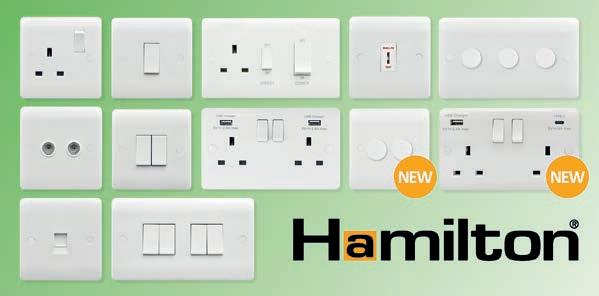
Verve from Hamilton extends range to include combined USB-A&C charging plates and 250W LED dimmers.
Ultra-fast USB charging options: Charging smart devices has become an everyday necessity and Verve doesn’t disappoint. New combined USB-A 2.4A and USB-C 3A double switched sockets (4.8A total) make simultaneously charging laptops/tablets and mobile devices faster and easier.
Higher-rated LED dimming: The new 250W LED 2-Way rotary dimmers offer two and a half times the dimming capacity of the standard 100W dimmer. With its proven LEDIT-B dimming technology, it’s an intelligent choice for controlling mains dimmable LEDs in rooms with two entrances/exits – available in one to four gang plates.
Hamilton Litestat, hamilton-litestat.com
CENTIEL LEADS INDUSTRY WITH SUSTAINABLE UPS LAUNCH TO HELP DATA CENTRES ACHIEVE NET ZERO TARGETS

Centiel UK has launched its new uninterruptible power supply (UPS), StratusPower, to provide complete peace of mind in relation to power availability while helping data centres to achieve net zero targets.
Centiel’s latest innovation leads the industry as StratusPower shares all the benefits of its award-winning three phase, true modular UPS CumulusPower – including ‘9 nines’ (99.9999999%) availability to effectively eliminate system downtime; class leading 97.1% on-line efficiency to minimise running costs; true ‘hot swap’ modules to eliminate human error in operation – but now also includes long-life components to improve sustainability.
The three-phase modular UPS StratusPower now covers a power range from 50 to 1,500kW in one cabinet and can be paralleled for 3,750kW of uninterrupted, clean power, which is perfect for data centres, minimising total cost of ownership but also helping achieve sustainability goals with a full commitment to zero waste and net zero policies. Centiel, centiel.co.uk
82 | September 2023
COMPANY SHOWCASE SPONSORED STORIES FROM THE INDUSTRY electricalcontractingnews.com @ElecConNews /electricalcontractingnews @ecn_magazine 24/7 Colour CCTV That won’t miss any detail during the night www.espuk.com ECN September strip ads - 247 Colour CCTV.indd 1 18/08/2023 16:34
KNIGHTSBRIDGE LED BATTENS SEND FLUORESCENTS DOWN THE TUBE
The BATSC range of LED battens from Knightsbridge provide energy efficient, cost-effective and technologically advanced replacement alternatives to outdated fluorescent lighting.

The BATSC units are colour temperature and wattage adjustable, offering ultra-high efficiency and contain the latest control chip technology. Highly durable, owing to their steel and polycarbonate construction, the battens are low-maintenance and long-lived, with an estimated lamp life of nearly seven years or 60,000 hours of use.
Three variants of the battens are available in 4’, 5’ and 6’ lengths, and in standard or emergency versions. All battens are IP20 rated and the emergency models are self-test.
The range is led by the BATSCW – the most cost-effective ‘go to’ version for the majority of applications. Depending on length, wattages are adjustable from 18 through to 52W (4’ – 18/32W, 5’ – 22/41W and 6’ – 27/52W) and in three temperatures: 3000K warm white, 4000K bright, neutral white and 5700K daylight. Knightsbridge, mlaccessories.co.uk
HELLERMANNTYTON LAUNCHES INNOVATIVE CABLE IDENTIFICATION SOLUTION FOR TELECOMS INDUSTRY
HellermannTyton has launched an addition to its identification portfolio with a bespoke solution for the telecoms industry.
The P-flag label provides a flag-style marking system for labelling various cable sizes. Whether the application is in wire harness assemblies or hard-to-reach areas, they are ideal for organising and permanently marking individual wires and cables.
Made from Polypropylene, the wrap-around self-adhesive labels are ideal for telecoms and also suitable where identification is needed in harsh environments, due to their resistance to fuel, low temperatures, abrasions and humidity.
Available in various sizes, the labels can be customised from different colours. Leaving no exposed adhesive, they avoid adhering to adjacent labels, a notched score line allows for error-free folding, and a self-locking tail permanently bonds it to wire and cable. After installation, information can be read from both sides to identify cables.
Printable from a HellermannTyton thermal transfer printer, the labels can be created with barcodes, graphics and text without losing visibility. HellermannTyton, hellermanntyton.co.uk
Q-NECT LEVER CONNECTORS AND CONNECTION BOXES FROM UNICRIMP
Unicrimp, part of the Scolmore Group, introduces a new category of products. Marketed under the new Q-NECT brand, it comprises lever connectors and connection boxes. It brings together products that provide strong, quick and reliable solutions, and offer versatility when carrying out everyday tasks.
The range comprises:
• 2, 3 and 5 way lever connectors – Suitable for solid, stranded and flexible cable types. Using screwless spring clamp technology, with no need for any tools.
• IP66 weatherproof junction box – Design makes installations efficient. It can house four of the 3 Port Lever Connectors using the 360° detachable cradle and with a curved lid, provides additional space for wires.
• IP connection boxes – Comprises a 4 Pole 2 Way 24A IP68 Inline Connection Box; 4 Pole 3 Way 24A IP68 (M16+M20) Connection Box; and 3 Pole 2 Way 16A IP66 Connection Box.
• 5 pole, 3 way IP68 ‘T’ and 2 way inline connectors – Materials ensure connectors withstand harsh environments.
Unicrimp, unicrimp.com
ANSELL UPGRADES POPULAR TORNADO EVO BATTEN RANGE
Ansell Lighting has made upgrades to its Tornado Evo batten range.
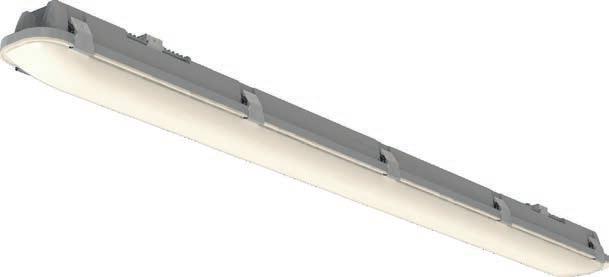
With improved energy efficiency, the range is capable of delivering 160lm/W, reducing electricity consumption and running costs. It has remained power selectable, with both output power options which deliver light uniformity, thanks to a high transmittance polycarbonate diffuser.
Featuring a smart new look, it is available in four lengths: 600mm, 1200mm, 1500mm and 1800mm, and it is now CCT selectable between 4000K, 5000K and 6000K, allowing users to choose their desired lighting hue.
OCTO Smart Control, Digital Dimming, Corridor Function, Integral Microwave Sensor, Self-Test and DALI Emergency versions are also available.
The emergency option has been improved, so that the whole luminaire illuminates during emergency operation.
With ease of installation in mind and an innovative spring clip gear tray release, it is fitted with a Tridonic driver as standard, promises a long L70 54,000 hours LED lifespan and comes with a five year warranty.
Ansell Lighting, ansell-lighting.com
September 2023 | 83
COMPANY SHOWCASE
@ElecConNews /electricalcontractingnews @ecn_magazine electricalcontractingnews.com 24/7 Colour CCTV That won’t miss any detail during the night www.espuk.com ECN September strip ads - 247 Colour CCTV.indd 2 18/08/2023 16:34
SPONSORED STORIES FROM THE INDUSTRY
Did you know as a NAPIT member you have access to: Contact NAPIT today on 0345 543 0330 or email info@napit.org.uk Trust the Tick
