

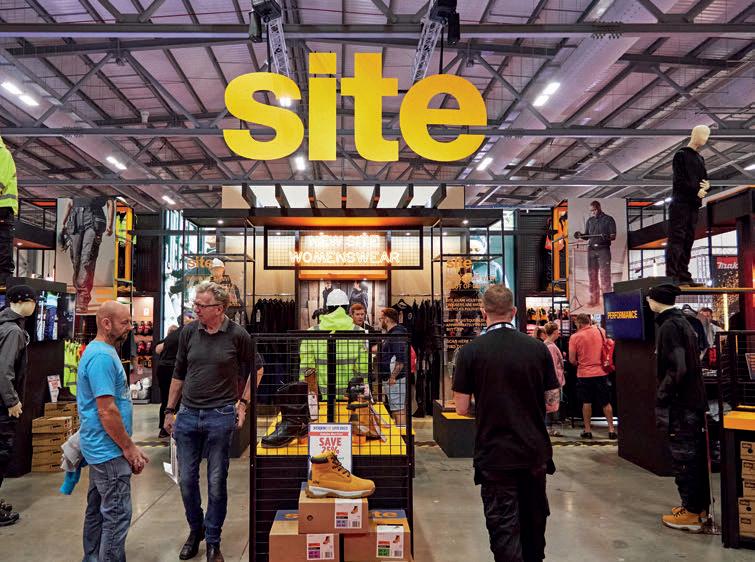
At EI Live! (Stand 111, 18-19 September, Farnborough Exhibition Centre) Snap One will invite visitors to experience the key benefits of seamless product integration and the full range of business opportunities available through its leading OvrC remote monitoring and management system, which turns 10 years old this year, and award-winning Control4 home automation platform.
“EI Live! presents a huge opportunity for visitors to grow their understanding of the Snap One ecosystem and learn the many advantages of product integration with OvrC and Control4,” says Mark Reynolds, Vice President and General Manager EMEA at Snap One. “We welcome visitors to take part in our on-stand training sessions focusing on our key technologies, applying best practices which will help to make their lives
easier, more efficient and more profitable by fully harnessing the power, control and management capabilities afforded by OvrC and Control4. Together, we can simplify daily tasks, consolidate controls and deliver better customer experiences for a wide range of activities and needs.”
Attendees can visit an impressive Control4 experience zone to take a deep dive into all the latest hardware and software

innovations from the Snap One ecosystem. Across both days of EI Live!, Snap One will be hosting three free-to-attend training sessions that will provide the Control4 experience and dedicated product training sessions, as well as hosting two talks in the Technical Theatre.




Hello and welcome to the August issue of ECN!
A lot has changed within the past month. After 14 years of Conservative leadership, a Labour government is now in power.
Many of the industry’s leading bodies have expressed their views and most are embracing the change. NAPIT’s new Managing Director, Frank Bertie, has welcomed the new Labour government’s willingness to engage with the industry to develop plans to meet net zero targets. Frank says it is encouraging to see the new Prime Minister, Sir Keir Starmer, discussing “the opportunity of clean British power, cutting your energy bills for good.” He also welcomed the new Chancellor, Rachel Reeves’s plans for new housing targets and lifting the ban on on-shore wind, as changes that will provide NAPIT members with increased opportunities and confidence in planning their future work.
The ECA has expressed eagerness to build on existing relationships with elected representatives and collaborate with the new government. The association points out that the shortage of a skilled workforce is a fundamental obstacle to achieving net zero, which demands early attention as it takes four years to develop the core competencies needed for electrical
work and installation. The ECA is urging the new government to take the first step on the path to achieving the 2030 target set out in the manifesto. Additionally, the ECA is calling on the new government to place qualified electricians at the heart of the net zero transition, bring in protective legislation to combat poor payment practices, address the challenges preventing an increase in people qualifying as electricians, and establish a stronger skills pipeline to support learners into electrical employment.
MCS CEO, Ian Rippin has described Labour’s win as a “pivotal opportunity” for the government to showcase its dedication to expediting the UK’s shift towards cleaner and greener energy. He says that it’s critical for Labour to demonstrate its dedication to achieving net zero by 2050.
This includes not only reducing the UK’s carbon emissions for environmental benefits but also making home-grown energy, like solar PV and heat pumps, more accessible and affordable.
Back to this issue, and there’s a lot going on – from features on Cable Management, Electrical Enclosures/Cabinets, and LED Lighting, to the latest industry, contract and product news.
This month’s competition gives one lucky reader the chance to win a whopping £250 voucher to spend on LumXpert, courtesy of Signify, so don’t forget to enter!
I hope you enjoy the issue, see you next month.
01634 673163
E: carly@allthingsmedialtd.com
DEPUTY EDITOR: SIMON ROWLEY
T: 01634 673163
E: simon@allthingsmedialtd.com
GROUP ADVERTISEMENT MANAGER:
KELLY BYNE
T: 01634 673163
E: kelly@allthingsmedialtd.com

STUDIO: MARK WELLER
T: 01634 673163
E: mark@allthingsmedialtd.com
MANAGING DIRECTOR: DAVID KITCHENER
T: 01634 673163
E: david@allthingsmedialtd.com
ACCOUNTS
T: 01634 673163
E: susan@allthingsmedialtd.com




Signify has announced a new partnership with the Mercedes-AMG PETRONAS F1 Team. Connected by their shared passion for technological innovation and sustainability, the partnership will drive forward the team’s vision of becoming one of the world’s most sustainable professional sports teams.
Eric Rondolat, CEO, Signify, says, “We are excited to have the opportunity to support the winning objective of Mercedes-AMG PETRONAS F1, providing human-centric lighting innovations that can enhance the team’s performance. We are honoured to associate our brands with one of the strongest in the world and to deliver unforgettable racing experiences for fans at the track, as well as watching and gaming at home. With many collaborations already begun, I am eager to see this partnership grow.”
To win in Formula One, every member of the team must perform to their full potential at every moment. Signify’s lighting innovations will augment the team’s efforts to create optimal conditions for drivers, engineers and team members, helping them see, feel and perform
Mike Andrews, CEO of NAPIT, is stepping up to take the new role of Divisional Managing Director for UK and Ireland Compliance and Certification Division within Phenna Group, and Frank Bertie, Chief Technical Officer, is stepping into the role of Managing Director at NAPIT.
In his new role, Mike will be leading the division in which NAPIT is an integral part for Phenna Group.
Phil Marshall, CEO of Phenna Group comments, “With a strong track record in compliance and a keen eye for certification and industry standards, Mike will spearhead initiatives to grow and elevate the Group’s high standards in these critical areas.”
Frank has been part of NAPIT from the very beginning and is perfectly positioned to continue to drive NAPIT forward and build on its continued growth.
Mike says, “Frank Bertie has been with NAPIT from the very beginning and has built up an unwavering rapport with NAPIT members, staff and customers over these years. Frank’s knowledge of the electrical industry is unrivalled, so he is perfectly positioned to take over this leadership role and continue to lead NAPIT forward on its continued growth.”
Frank comments, “Over the years I have seen NAPIT go from strength to strength – this continued growth is a firm focus in the ongoing strategy for NAPIT. Collectively with the fantastic NAPIT employees we will ensure that the same exemplary standards of customer service, service delivery and support are upheld, and NAPIT continues to excel and grow.”
NAPIT, napit.org.uk


at their best. NatureConnect, EyeComfort and other technologies will bring the power of daylight indoors to aid concentration with light that is comfortable for the eyes and support the body’s natural rhythm and ability to adjust to a challenging global schedule.
With the new partnership, Signify has also committed to sharing knowledge and expertise to support the Mercedes-AMG PETRONAS F1 Team in developing its Climate Transition Plan.
Signify, signify.com

LearningLounge has announced the launch of the Apprentice Channel of Excellence (ACE) – a new venture in collaboration with Electrical Safety First
This pioneering channel is dedicated to empowering electrotechnical apprentices and their training providers with best-in-class digital learning resources. ACE is set to launch in January 2025, offering support for the study of Level 2 and 3 Electrical Installation.
The Apprentice Channel of Excellence will feature a rich array of digital learning materials, including:
• Science and theory videos: Detailed visual guides to explain complex electrotechnical topics
• Health and safety essentials videos: Including onsite-insights
• Practical skills refresher videos: Practical skills and considerations
• Benchmarking quizzes and assessments: Tools to test knowledge and track progress
• Expert insights: Advice and tips from industry professionals and educators
Luke Osborne, Deputy Technical Director at Electrical Safety First, says, “As we approach the official launch in January 2025, more news, updates, and sample content will be released. We invite apprentices, educators, and all stakeholders in the electrotechnical field to join us on this exciting journey.”
Terry Brown, Director of Learning Lounge, adds, “Don’t miss out on the latest developments and exclusive previews – visit ace.learninglounge.com today to register and stay informed. Follow us on social media for real-time updates.”
Electrical Safety First, electricalsafetyfirst.org.uk

JTL has named Edward Barber, Dammy Ajibade and Chris Lintern as the winners of its National Apprentice Awards.
After being named as the winners at JTL’s Regional Awards earlier this year, Edward, Dammy and Chris went on to compete against eight other regional electrical and MES winners at JTL’s annual apprentice awards ceremony. Yeovil-based Chris, who completed his apprenticeship at Spectrum Electrical Group, was named the winner of the JTL National Apprentice of the Year Award for 2024. London-based Dammy, who completed his apprenticeship while working for T Clarke, and Sutton Coldfield-based Edward, who works for Sandwell Metropolitan Borough Council, were named the national winners of the Paul McNaughton National Electrical and Mechanical Engineering Services (MES) Apprentice of the Year awards respectively.
Chris Lintern, JTL’s National Apprentice of the Year for 2024, notes, “It feels amazing to be named the national winner, and I’m very proud to be recognised for what I’ve achieved.
“Next in my career, I want to do some more electrical-based training, excel a bit more in the industry and keep working as hard as I can.
“To people looking to get on the career ladder in this industry, definitely consider doing an apprenticeship. It’s the best way to learn in my opinion. It gives both practical and theoretical ways of learning all in one – the best of both worlds.”
JTL, jtltraining.com


Domestic, commercial and industrial installations – the FuseBox range of TPN distribution boards, with T2 SPD and 125A 4Pole main switch as standard.
• 10kA Devices: MCBs, RCBOs, RCDs
• Compatible with FuseBox 6kA devices without any modification
• Removable gland plates top and bottom
• Unique hinged front cover assembly
• Robust design – 1.2mm zinc galvanised steel
• 3, 7, 11 and 15 usable ways


UK Power Networks is to invest more than £7 million in replacing 4.5km of underground cables between Sydenham Park and Churchfields Road in south London.
The new 33,000V cables will be the latest design to maintain safe and reliable power supplies to customers in the local area, as more people use low carbon technologies such as heat pumps and EV chargers in the future.
The project started in Sydenham Park in March this year and will take around 22 months to complete, with Churchfields Road being the last section of the electricity network to receive an upgrade.
Alun Read, Project Development Manager at UK Power Networks, says, “This is one of a number of high-profile schemes we are delivering across London and the South East over the next five years. Successful delivery of these projects will result in a more secure network to meet future needs. This will also help the UK towards achieving net zero by enabling the installation of new EV charging points, heat pumps, renewable generation and battery storage facilities.” UK Power Networks, ukpowernetworks.co.uk
KNX UK has announced the details of its upcoming National Conference, an event designed for professionals in the building automation, construction, building design and electrical engineering industries.
Set to take place on 5 September 2024 at SAMA Bankside in London, this year’s conference will offer a dynamic and interactive agenda aimed at equipping attendees with the knowledge to thrive amidst changing regulations and technological advancements. Notably, the event will provide critical insights into PSTI and RED Compliance and KNX IoT.
This one-day event promises a rich programme filled with expert insights, practical applications, and strategic guidance in the rapidly evolving world of building automation.
Attendees will benefit from CPD opportunities, product demonstrations, and discussions designed to enhance understanding and proficiency in implementing KNX technology.
For more information on the conference agenda and to register, please visit the KNX UK website. KNX UK, knxuk.org


CEF has announced that registrations are now open for its upcoming series of TechTalks, commencing in September.
Taking place in over 20 locations across the UK, the free and educational events are back for a fourth series and will once again feature expert advisers and presenters providing insightful information on the latest standards, regulations, news and products from over 20 leading brands with CPD accredited training.
The upcoming series, centred around the theme of ‘Have your say’, will provide a platform for electricians to collaborate with CEF and its event partner, the Institute of Engineering and Technology (IET). Attendees will be given the chance to expand their knowledge about the industry, as well as share their opinions and ask questions.
Digital certificates marking attendance and CPD accreditation will be emailed to all attendees following the events. Additionally, CEF will offer exclusive discounts and giveaways to all event participants along with a pack of ‘Techcards’, which act as a handy reference to the topics covered at each talk.
For the full list of dates and venues, and to secure a place, visit your local CEF branch or register for free at cef.co.uk/tech-talks. CEF, cef.co.uk
The Electrotechnical Skills Partnership (TESP) is warning people who are looking to qualify as an electrician to beware of expensive training packages that promise much, but may fail to deliver.
In the latest video from TESP’s ‘Rogue Trainers’ campaign, an unsuspecting customer walks down a high street of what appears to be attractive gold, silver and bronze package offers, but soon falls foul of pushy sales tactics and empty promises.
With this latest campaign promotion, TESP is hoping to raise awareness of training providers who operate outside of the industry-approved training routes and try to sell ‘bundles’ of qualifications to those unaware of what is actually needed to become qualified.
Many of these packages include courses that are not essential or suitable for new entrants. Often using terms such as ‘Professional Electrician’ or ‘Full Scope Electrician’, most contain a mix of knowledge qualifications and other courses that are best taken only once qualified.
In addition to the new video, on the Rogue Trainers website, TESP has created a list of qualifications commonly found in these bundles and outlined their content and intention, to help arm individuals with the right knowledge when looking for electrical training.
TESP, the-esp.org.uk




Screwfix LIVE, the omnichannel retailer’s flagship event dedicated to the trade and DIY enthusiasts, is returning to Farnborough in September.
The free to enter show will take place on 27-29 September at the Farnborough International Exhibition and Conference Centre, with even more exclusive show deals and leading suppliers. Furthermore, visitors who register for the event can claim a free goodie bag at the show worth over £40.
With more than 180 leading trade brands under one roof, customers and families will enjoy three days of live product demonstrations, entertainment for children and adults, appearances from special guests, and much more.
Max Britten, Screwfix Managing Director, says, “We’re excited to be back in Farnborough for another year of Screwfix LIVE. We can’t wait to welcome our customers and suppliers. Every year Screwfix LIVE gets bigger and better, with even more top brands and the latest innovations in the trade.”
Screwfix LIVE will also host the final of Screwfix Top Tradesperson on 27 September. The competition is now in its 15th year, championing tradespeople across the UK and Republic of Ireland.
Ten skilled finalists will face a panel of industry experts, including 2023 champion Astrid Arnold, to determine who will be crowned Screwfix Top Tradesperson 2024 and take home a bundle of tools, tech and training worth £20,000.
Screwfix, screwfix.com
ECA has welcomed the new government’s plans for an immediate programme of house building, investment in infrastructure including clean energy, and unblocking the planning system.
ECA Chief Operating Officer, Andrew Eldred, explains, “We have seen a new era of opportunity set out by the Chancellor and the Secretary of State for Energy Security. Businesses in the electrotechnical sector will welcome the swift actions taken by the new government with the prospect of economic growth promising busy order books after months of flatlining.
“These ambitions will increase an already stretched workforce and could exacerbate the culture of poor payment practice in supply chains. The government must work closely with industry to address these underlying structural issues to have a chance of fulfilling their pledges.”
The new Chancellor, Rachel Reeves, has pledged to build 1.5 million homes in the next five years, while the new Energy Secretary, Ed Miliband, has reiterated the Labour party’s pledges to boost energy independence and cut bills through clean power by 2030. ECA, eca.co.uk


Professional electricians and installers are risking their lives every day by not following basic safety procedures before starting work, Super Rod has claimed.
2,044 installers were surveyed in 2022 about their safety habits, and although the findings show some positives, as an industry, Super Rod believes we have a long way to go – with an average of 13 fatalities and over 220 serious injuries a year, many of which could have been avoided if safe isolation was in practice.
The survey was inspired by Michael’s Story. Michael Adamson was just 26 when he died after coming into contact with mains voltage power in an incident at work in August 2005. He was an experienced electrician but there were a number of health and safety failings on the site where he was working – including the failure to implement safe isolation procedures and a failure to provide lock off devices and testing equipment – which would eventually lead to his tragic death.
Super Rod is now running the survey again, to try and gauge whether or not safety has improved among electricians in the workplace. Open to electrical apprentices, electrical installers, electricians and maintenance workers, the survey can be found on the Super Rod website.
The survey will remain open until 31 August 2024 and everyone who completes the survey will be in with a chance to win a Klein Tools Tradesman Pro Tool Bag kit. Super Rod, super-rod.co.uk
BGEN has appointed Amy Twist in the newly created role of Head of Sustainability. Amy will be responsible for driving BGEN’s goal of achieving net zero status, as well as overseeing BGEN’s wider ESG strategy.
ESP has welcomed Matthew Herron as Area Sales Manager for the North London, Northern Home Counties and East Anglia regions. In his new role, he will be responsible for developing new and existing customer relationships at an independent and national level.
Project Solar has appointed Tom Armstrong as its new Managing Director. Tom, who has worked at Project Solar for over a decade, will also be responsible for the commercial solar and battery division across Project Better Energy, Project Solar’s parent company.
Scolmore Group has hired three new members to its sales team. Andy Cannell and Rachael McDermott join a growing specification team as Group Key Account and Specification Managers, and James Flower joins as Click Scolmore Area Sales Manager for Merseyside and the North West regions.


Our Weatherproof Range ensures safe, reliable outdoor electrical access. Designed for high dust and water exposure, it boasts IP55 (Flush) & IP66 (Surface) ratings.
For added security, these padlockable products are available in Flush and Surface Mount options. Manufactured in-house, Contactum guarantees durability, exceptional service, and top quality.
Switch to Contactum’s Weatherproof Range for protected outdoor living, available across the UK.
Contact our Customer Services team for a stockist near you: +442082087419 | Sales@contactum.co.uk


IP55 Rated or IP66 Rated
Flexible Mounting Options
Robust Construction


Lockable Covers
Weatherproof Seals
Wide
Temperature Range


At EI Live! (Stand 111, 18-19 September, Farnborough Exhibition Centre) Snap One will invite visitors to experience the key benefits of seamless product integration and the full range of business opportunities available through its leading OvrC remote monitoring and management system, which turns 10 years old this year, and award-winning Control4 home automation platform.
“EI Live! presents a huge opportunity for visitors to grow their understanding of the Snap One ecosystem and learn the many advantages of product integration with OvrC and Control4,” says Mark Reynolds, Vice President and General Manager EMEA at Snap One. “We welcome visitors to take part in our on-stand training sessions focusing on our key technologies, applying best practices which will help to make their lives easier, more efficient, and more profitable by fully harnessing the power, control and management capabilities afforded by OvrC and Control4. Together, we can simplify daily tasks, consolidate controls, and deliver better customer experiences for a wide range of activities and needs.”
EI Live! attendees can get to grips with the latest advances in OvrC, an essential operational utility for use on every project, regardless of the installed equipment. Among the key recent enhancements are configuration through OvrC of Araknis 2.5 Gbps routers, up to 10Gbps Layer 3 PoE++ switches, and indoor/outdoor Wi-Fi 6 solutions, simplified setup through OvrC for Binary MoIP distribution of 4K60 video content, offering video tiling for up to 16 sources, and reduced video compression for 10G-capable networks. Visitors can also see how OvrC integrates with the WattBox brand of power conditioning, power
management and surge protection devices to minimise service calls for clients, as well as how the Luma Surveillance brand can save time on deployment and promote end user peace of mind through being NDAA compliant and easily monitored and maintained through OvrC.
Also central to Stand 111 will be an impressive Control4 experience zone. As well as seeing how Control4 integrates seamlessly with OvrC for remote system configuration and maintenance, visitors can also take a deep dive into all the latest hardware and software innovations. These include the UI features of the Control4 Halo and Halo Touch remotes, improvements to CORE controllers, customer empowerment tools, Vibrant Linear Lighting with colour control, Apple Music integration, and Luma Bridge which seamlessly integrates Luma Video Streams, whilst enabling video playback within Control4.
Other technologies from the Snap One ecosystem on display will be the recently launched Episode Radiance system, the world’s first outdoor solution to power audio and lighting through a single two-conductor wire. Episode Radiance is a robust 70V outdoor bollard-style speaker and LED light module that can be attached to a speaker or mounted as a standalone lamp for both spot and ambient lighting needs. The latest architectural loudspeakers from Episode and Triad brands will also be on the stand, together with Triad Soundbars and racks from the company’s Strong brand.
Across both days of EI Live!, Snap One will be hosting three free-to-attend training sessions that will provide the Control4 experience and dedicated product training sessions on Stand 111. These bite-sized sessions will cover OvrC and its positive impact on Networking Best Practices, Luma and how a surveillance solution can be configured quickly and securely through OvrC and Control4, plus what’s new with Control4 and how to optimise your install times. More information will be shared in the lead up to the show.
The company is also hosting two talks in the Technical Theatre featuring conversations with Snap One Partners. On Wednesday 18 September, Kyri Androu from Electricus and Greg Smith from Penkhull Electrical will join a conversation entitled, ‘From Electrician to Home Tech Installer’ and on Thursday 19 September Alex Jones from The Smart Home Garden and Snap One’s Jason Girardier will discuss ‘The Outdoor Entertainment Opportunity’. Both sessions are free to attend, and more information is available on the EI Live website at eiliveshow.com/ technical-theatre-2024.
Snap One, snapone.com


Experience seamless product integrations & a wide range of business opportunities from Snap One at EI Live 2024. Showcase of brands include Control4, OvrC, Araknis, Triad, Wattbox, Binary and More!
18-19 SeptemberStand 111

Electric vehicle (EV) charge points from vehicle charging specialist CTEK are to be installed in UK car parks managed by provider of parking solutions, APCOA.
APCOA, which manages 1.8 million parking spaces in 13 countries, has signed a partnership supply agreement with CTEK which will see its CHARGESTORM CONNECTED units fast charging EVs at up to 22kW in APCOA car parks.
There is already EV charging available in many of the UK car parks APCOA manages, with more than 1,000 charge points installed and a further 300+ in the pipeline for this year. They are in car parks servicing destinations including rail, health, education, hospitality, retail, local government and airports.
APCOA’s first installations of CTEK charge points have just gone into car parks owned by Hillingdon Council in West London. APCOA is also installing CTEK charge points at 37 of the railway station car parks it runs for Govia Thameslink Railway (GTR).
CC3 is CTEK’s most advanced charge point to date, which is ready for the next era of EV adoption including ‘plug and charge’ automatic

vehicle identification. It supports the latest OCPP 2.0.1 standard (Open Charge Point Protocol) for interoperability and communication.
Designed both for ease of installation and ease of use, CC3’s robust anti-tamper enclosure and advanced cyber
Vent-Axia has supplied its Sentinel Apex to provide ventilation for ECO MEP’s highly-efficient commercial office environment in Ashford, Kent.
ECO MEP is a commercial contractor that focuses on delivering sustainable solutions to its customers, making this next generation of commercial heat recovery ventilation the ideal ventilation solution for its own offices. Committed to creating a carbon negative operational workplace for its staff and visitors, ECO MEP modelled its new building’s usage requirements before specifying the Sentinel Apex to deliver energy efficient ventilation with heat recovery, while providing excellent indoor air quality (IAQ), ultra-low sound levels and good thermal comfort.
The new ECO MEP headquarters are located in a two-storey new-build industrial unit. Its Cat B fit-out objectives were to specify only the most efficient products in all areas. On the ground floor of the unit there are a variety of rooms including a meeting room, break out area, storage space, a kitchen, toilets and a shower. Due to the diverse nature of rooms, including wet rooms, a controlled mechanical ventilation solution was needed to meet ventilation requirements.
The Sentinel Apex was developed as the next generation of commercial heat recovery ventilation products to help specifiers create low carbon buildings as we head towards the UK’s 2050 net zero target. Designed to be highly energy efficient with industry-leading low specific fan powers (SFP), the Sentinel Apex has a low embodied carbon too. Occupant comfort has also been a priority in its development with the Apex operating quietly as it efficiently improves IAQ. Meanwhile, to make specification simpler for consultants, the Sentinel Apex features many components and controls as standard.
Vent-Axia, vent-axia.com

security features, plus its dual socket options and up to 22kW charging, make it ideally suited to multiple charge point installations at car parks.
CTEK, ctek.com

Marshland Primary Academy, in Moorends, Doncaster, is preparing for the future by switching its heating and hot water system from gas boilers to highly efficient, low-carbon ground source heat pumps.
Kensa Contracting is delivering the retrofit project and, in June, representatives were on hand to show the school’s pupils how freely available renewable heat energy from the ground will be used to keep classrooms warm for the next 100 years.
Switching from gas to electrically powered ground source heat pumps will decarbonise the school’s heating and hot water system, reducing the CO2 emissions it produces from heat by as much as 77%.
The decarbonisation project, which started in May and is expected to be completed in October, has been part-funded by the Government’s Condition Improvement Fund and will see 18 boreholes drilled deep beneath the school’s playing field to access the renewable energy source.
Once installed, six new ground source heat pumps will convert this energy into usable heat for the school’s upgraded heating and hot water system. The heat pumps will also be housed indoors, shielded from the elements, with some located where the school’s current gas boilers are.
Along with the heat pumps and ground source infrastructure installation, the school’s green heating renovations also include new radiators and solar PVT being fitted. These measures will help the primary academy achieve the highest possible energy efficiencies while also providing greater energy security.
Kensa Contracting, kensacontracting.com
99% product reliability
10 second technical response time
20 minutes for average AC install

Our industry-leading support for EV charging solutions sets us apart, providing you with unrivalled assistance and expertise. Benefit from seamless installations and ongoing reliability and in turn enhance your reputation and customer satisfaction.
Get in touch today and speak to one of our team of experts 0330 058 7144
Zumtobel Group lighting brands Thorn and Zumtobel and contractor Lytestream have devised a comprehensive lighting solution for Darlington Library that seamlessly blends heritage preservation with modern functionality.
Darlington Library is a testament to the town’s rich historical and cultural heritage. Built in 1885 with a later extension in 1933, the library holds significant architectural and cultural value. The recent refurbishment and restoration have aimed to preserve the library’s historical significance while incorporating modern elements to meet the needs of contemporary library users.
For the lighting, the main challenge was to offer a scheme that did not visually interfere with the building’s architectural appearance while providing visual interest and functionality.
Zumtobel Group, through Lytestream, provided a comprehensive lighting solution tailored to the unique needs of Darlington Library. The specified products included Zumtobel’s TECTON, SLOTLIGHT, SLOTLIGHT round, and LITECOM, alongside

Thorn’s luminaires Ceasar, Contrast RGBW, Piazza, Blade RGBW, Katona, Poppack, Aquaforce MWS, and IQ Wave suspended.
The new lighting solution offered numerous benefits, including energy efficiency, flexibility for future changes, complete lighting control, and colour
Balfour Beatty has announced that it has been awarded a contract to construct three new substations in Argyll, Scotland, on behalf of SSEN Transmission. The contract has been awarded through the GIS2 RIIO T2 framework, to which the company was appointed in 2022.
The contract will see Balfour Beatty unite its power transmission and distribution expertise with its regional capabilities in Scotland to design and build the three new 275kV substations in Craig Murrail, An Suidhe and Crarae.
The new substations form part of SSEN Transmission’s Argyll and Kintyre reinforcement strategy and, on completion, will enhance and strengthen the electrical transmission infrastructure in Argyll to support the expected rise in renewable energy production in the region.
As part of its commitment to leaving a lasting, positive legacy in the communities in which it operates, Balfour Beatty will employ a minimum of 50% of its workforce from the local, surrounding area.
Main construction is due to start late summer 2024. At construction peak, Balfour Beatty will employ approximately 200 people including a number of apprentice, graduate and trainee positions.
Balfour Beatty, balfourbeatty.com

selection in specific areas like the children’s library and Dovecot area on the roof. Efficient archives control was also achieved, enhancing functionality while preserving the building’s historical integrity.
Suzy Hill, Library Manager, Services Group, Darlington Borough Council,
comments, “Zumtobel Group’s lighting solution for Darlington Library has successfully balanced preserving heritage with embracing modernity, creating a vibrant and functional space for the community.”
Zumtobel Group, zumtobel.com

Fire protection solutions manufacturer, Advanced, has provided an intelligent fire panel with wireless detection to protect a historic mansion house and estate in Scotland.
An Advanced MxPro 5 analogue addressable fire panel has been installed in Wedderlie House to provide industry-leading protection that is high-performance and fault tolerant. The system protects the whole house, which required Category L2 coverage as it provides wedding accommodation.
Fire and security service provider, Safe Services, installed an Advanced MxPro 5 four-loop analogue addressable fire panel with 86 devices on the loop. Due to the age and construction of the building, it would have been impossible to install cabling without damaging the property, so the Advanced panel was seamlessly integrated with EMS Firecell wireless devices.
MxPro 5 offers customers a choice of leading detector protocols and a completely open installer network, backed up by free training and support. MxPro 5 can be used in single-loop, single-panel format, or easily configured into high-speed networks of up to 200 panels covering huge areas. Ease of installation and configuration, as well as its wide range of peripheral options, make MxPro 5 customisable to almost any application.
Advanced, uk.advancedco.com

From domestic installations through to complex commercial & industrial installation designs, we have an SPD to suit.
2024 has seen a record number of tradespeople choosing to become their own boss. Mark Krull from Logic4training provides practical advice for electricians considering taking the first leap to self-employment.
According to the latest figures from the Office for National Statistics (ONS), 47,000 building services engineers went self-employed between December 2023 and March 2024 –the biggest increase we’ve seen in 15 years. It comes alongside some shifts in the wider construction sector, which saw 16,000 redundancies from February to April 2024 –a 167% jump from the previous quarter and a 433% increase on the previous year.
So, what’s behind this trend? It seems many electricians are finding the perks of being self-employed too good to resist. It can be a bit daunting to go out on your own for the first time, but the perks of being your own boss – such as setting your own hours, choosing your projects and keeping the profits – are attractive to many electricians.
Electrical skills are in high demand as homeowners undertake energy efficiency upgrades. Retrofit projects such as internal insulation or re-roofing often lead to a re-wire, and interest is growing in solar PV, heat pumps and battery storage. If you’re considering making the leap to self-employment, now might be the perfect time.
Many electricians are finding the perks of being self-employed too good to resist
Here are some practical tips and advice to help you get started on your journey.
Are you qualified? Following the appropriate training and/or apprenticeship, electricians will need to join a CPS scheme to notify the local authority of their work. Having proper qualifications under your belt together with relevant experience goes without saying, but with growing interest in the renewable side of electrical work, you might consider whether there is demand in your local area. Level 3 solar PV and battery storage qualifications are the ideal upskill for electricians who want to help customers cut energy use and lower their carbon footprint.
Reach out: Get in touch with all the local tradespeople you know; builders, plumbers and heating engineers. Let them know you’re planning to go self-employed and ask for work opportunities. Sub-contracting is a natural first step to setting up your own business, allowing you to build your reputation and gain valuable experience in site work, customer relations, pricing, cash flow and time management.
Ask an accountant: As a small business owner, you’ll pay annual taxes based on

your earnings minus expenses like tools and vans. While you can file your tax return with HMRC yourself, hiring an accountant is wise. Initially, they can provide valuable advice on the best way to set up your business, ensure you are compliant with tax laws and help you file the necessary paperwork. Moving forward, your accountant will ensure you claim all the deductions you are entitled to and help you shoulder the administrative burden – well worth it for a few hundred pounds a year. Make a plan: Put together a working business plan incorporating all of the above with your intentions for the business. It doesn’t have to be complicated or final, but by researching your opportunities and having a clear sense of direction you will increase your chance of success. You could even use AI to provide a framework for your business plan.
Using AI for your business: AI is a useful tool for small businesses that, if used correctly, can save time and increase marketing output. Think of it as a glorified version of Google, a research tool that can help to create social media posts, write content for your website, compose emails to clients and even create templates for documents such as risk assessments and business plans. The key thing about using AI is to make it your own – use it as a starting point from which you can build a personalised piece, adding your own voice, ideas and perspective.
Managing cash flow: Software like Quickbooks or Xero is essential but there are also apps specific to electricians and the trades that could help to track projects, income and expenses and ensure sufficient cash flow.
Get insured: As a basic starting point, you’ll need adequate public liability insurance to cover injury or damage to property, and your tools and equipment will need to be covered for theft and/or damage. You might also consider whether other types of insurance, such as employer’s liability insurance and life insurance, meet your needs.
The electrical sector is a dynamic and evolving part of the low carbon landscape, creating opportunities for electricians. With strategic planning, technological tools and high-quality training and qualifications, electricians can build a successful career on their own terms and meet growing demand for electrical work.
Logic4training, logic4training.co.uk








Every day we see more and more new and emerging technologies in our industry and we need to keep abreast of these changes. To keep you and your customers safe and to keep on top of recent changes, make sure you have the very latest edition of the IET Wiring Regulations.
Use our handy timeline to quickly and easily check that you’re up to date at theiet.org/regs-checker-ECN
To buy copies of the book and expert guidance publications or to find out more about a solution for your company including books and multi-access digital subscriptions visit theiet.org/amendment2-ECN
Winning government and private sector electrical contracts is a challenge many electrical contractors encounter and sometimes avoid. Technical expertise, qualifications and experience are all critical. However, over recent years, there has been a focus in electrical tenders and bids on other factors such as social value, comprehensive project management and sustainability principles, writes Jason Cooney, Director of Tsaks Consulting.
Electrical contractors and electricians will need to amend and improve their bid writing processes to account for new trends to keep winning public and private sector contracts.
Public sector agencies and government departments procuring services through RFPs and Panel Arrangements are increasingly prioritising electrical contractors that contribute positively to society and the environment. This is reflected in the ‘Social Value’ component of RFTs. Electrical contractors and electricians need to look beyond the project itself and look at how their business can make a positive contribution to the community, society and the environment. You need to show that by awarding you a contract, the local community will benefit through your initiatives and the activities of your business. This is critical to winning a tender, and initiatives and benefits can include:
• Hiring local apprentices and sub-contractors to complete works and transfer critical skills.
• Sponsoring local community organisations in the area in which you operate.
• Having a procurement policy in place to purchase from locally based suppliers, including disability owned businesses.
Case studies are vital components of any bid, but to truly impress the reader, electrical contractors are now going beyond showcasing technical proficiency. In order to keep winning contracts, when detailing your previous experience and projects (case studies) you need to cover:
• Safety: What was your safety performance on the project? Did you have to put in place any site-specific safety procedures or solutions? Were there zero safety incidents?
• Challenges: What was challenging about this project and how did you overcome these challenges? Were you working in a restricted site or in an environment that required out-of-hours work? Were you working in a hospital environment, for example, and needed to comply with specific site access requirements?
• Reporting and administration: Did you manage the project effectively and comply with all admin and reporting requirements?
When writing a methodology statement, it’s not enough to simply summarise your programme and detail how you will approach the work. Your methodology needs to cover safety, client engagement, site meetings, any specific tender requirements and sustainability. In addition, you need to thoroughly and clearly explain the advantages your methodology will bring to the project.
Most electrical contractors think through the methodology and programme and come up with innovative solutions that will ensure the project is delivered either faster or to a higher quality. However, these solutions aren’t communicated or explained adequately in the methodology. You need to clearly explain your methodology to score well.
Many electrical contractors work as subcontractors for larger Tier 1 or Tier 2 contractors who have secured government projects. These larger contractors often have strict safety and environmental requirements that all their subcontractors must adhere to. When bidding for such subcontracts, it’s crucial to demonstrate your credibility as a supplier who prioritises these same values. Here’s how to stand out:
• Safety accreditations: Highlight any relevant safety accreditations your company holds, demonstrating your commitment to a safe work environment.
• Environmental policies: Outline your environmental policy and how it aligns with the main contractor’s sustainability goals.
• Proven experience: Showcase your experience working with Tier 1 or Tier 2 contractors on similar projects, emphasising your ability to meet their specific needs and exceed expectations.
By implementing these strategies and adopting a selective bidding process, focusing on contracts where your strengths align with project requirements, electrical contractors can significantly increase their win rates and secure valuable long-term projects. Prioritising safety, social value and clear communication are no longer optional – they are essential elements for any winning bid.
Tsaks Consulting, tsaksconsulting.com


3ti, a designer, installer, funder and operator of solar car parks (SCPs), has completed the installation of a Papilio3 pop-up solar car park and electric vehicle (EV) charging hub at the Council Depot Centre in Merrow, Guildford. Opened in June, the latest installation will support the council’s transition to electrified fleets.
Papilio3 was the perfect solution to fulfil the urgent need for EV charging infrastructure for Surrey County Council (SCC), which required an installation suitable for a compact area at the site. Papilio3 is uniquely designed around a recycled shipping container, giving it the ability to be easily transported and lifted into place.
To date, Papilio3 has been installed in a range of settings across the leisure, public, private, commercial and industrial sectors to quickly meet the need for destination and workplace charging at locations including the iconic Silverstone racetrack, Five Rivers Health & Wellbeing Centre in Wiltshire, Surrey Research Park and Raigmore Hospital in the Scottish Highlands.
SCC will use Papilio3 to charge its growing electric vehicle fleet, which contributes to its sustainability strategy. Each Papilio3 has an installed capacity of 19.3kWp and can produce up to 18MWh of electricity in year one, equivalent to 64,343 EV miles, saving 3.6tCO2e.
Papilio3 combines local mains power with solar and is built around a recycled shipping container that can be installed in under eight hours. It can fast charge 12 EVs at 7, 11 or 22kW simultaneously, ideal for a range of destinations with two to five hour dwell times, removing the reliance on carbon-intense and costly ultra-rapid charge points.
Pre-fitted with a range of safety features, including motion lighting, CCTV and full accessibility for wheelchair users, Papilio3 can be rented on a monthly basis from 3ti. Surrey County Council has agreed a three-year hire for Papilio3.

Papilio3 is uniquely designed around a recycled shipping container

Paul Wheadon, Strategic Contract Group Manager for the Council’s Highways and Transport Department says, “We’re delighted to have Papilio3 installed, which represents an important milestone in our effort to reduce emissions and expand our electric vehicle fleet.
“With charging capacity up to 22kW, multiple operational vehicles (when not in use) can be charged throughout the day, ensuring vehicles remain operational without the need for long dwell times on low-powered charging options.
“As well as the benefit of generating solar power to charge our fleet, the nature of the structure means we have the flexibility to conveniently relocate the unit elsewhere on the site in the future if needed, unlike with other charging solutions.
“Papilio3 aligns with our wider commitment to reduce the impact of transport on the environment, as we continue to work towards achieving a greener future”.
“We thoroughly enjoyed working with the council to overcome these challenges and are delighted to broaden access to EV charging and, together, ‘Leave Something Better Behind’.”
SCC will use Papilio3 to charge its growing electric vehicle fleet
Ben Marchant, CEO at 3ti, adds, “The installation of Papilio3 at the Council Depot Centre is enabling the council to expand its electric fleet and deliver on its commitments to securing a greener future by decarbonising the transport sector. This particular application introduced new constraints for our team to overcome, further illustrating the versatility of our innovative pop-up solar car park which continues to be able to adapt to a range of varied applications and conditions.
As part of its ongoing commitment to supporting electric fleets, 3ti is spearheading a government-funded project that includes a six-month real-world trial using a fleet of over 10 EVs as grid assets. The ‘V2X Fast Hub’ project uses a customised Papilio3 with smart grid controls and a 280kWh DC battery, while utilising an innovative DC microgrid system to manage bi-directional charging technology through both CCS and CHAdeMO EV charge points, harnessed by Turbo Power Systems. A flexible energy management system developed by GridBeyond will help oversee energy management and aggregation services, while Cenex will host the vehicle trial and capture data to share with Innovate UK.
The project will be the first in the world to trial a 12 charge point DC Smart Microgrid for CCS V2X based on ISO15118-20. The innovative set-up will provide faster, bi-directional EV charging at speeds up to ±30kW, with much higher power and round-trip energy efficiency than AC solutions.
3ti, 3ti.co.uk
Having the right electrical tools in your toolbox is not just about efficiency – it’s about safety, precision and ease of use too. KNIPEX is always at the forefront of innovation, with each of its tools engineered with specific features to tackle the rigours of electrical tasks.
The KNIPEX StepCut XL (95 18 225) is designed for enhanced performance and ease of use. It is equipped with a high-leverage joint, long handles and optimised cutting edges, which allow for significantly easier cutting than with compact cable shears. It has a large cutting capacity, capable of handling solid copper or aluminium cables up to 35mm², stranded cables up to 70mm² and fine stranded cables up to 120mm². Features such as the adjustable, high-leverage bolted joint ensure precise, smooth cutting, while the slim head enhances accessibility in tight spaces.
The KNIPEX Stripping Knife (16 50 145 SB) features a guide shoe and a versatile ratchet function that facilitates easy cutting across various types of cable sheaths. Its blade is designed with three distinct cutting areas, allowing for both round and
lengthwise cuts. This is a very safe knife: the guide shoe protects the conductor insulation underneath the cable sheath during use and a three-stage blade lock ensures secure handling and transport. The ergonomic handle has an integrated tether attachment point while the replaceable hook blade has four adjustable positions: folded, straight, angled and ratcheting.
Combining functionality and innovative design, the KNIPEX Metric WireStripper (13 76 200 ME) excels in stripping a wide range of cable sizes thanks to its large capacity and sharply ground stripping profiles which ensure intuitive handling and precise positioning. Its hybrid design, as slim as needle-nose pliers yet as robust as combination pliers, offers high stability and excellent accessibility. The WireStripper is particularly adept at handling solid conductors from 0.75 to 6mm² and fine-stranded conductors from 0.5 to 4mm².

Each of these tools reflects KNIPEX’s commitment to providing high-quality, reliable tools that meet the specific needs of electricians. From cutting to stripping, these tools ensure that professionals can perform their tasks with enhanced safety, precision and ease, proving essential in any electrician’s toolkit.
KNIPEX knipex.com/en-uk


Ratchet function:
Versatile blade with three cutting areas for round and lengthwise cuts
Further information on the stripping knife click here

Carly
to learn more about her career so far and the role she plays in the electrical contracting sector.
CW: Hi Ruth, please tell us about yourself and how you got into the sector.
RD: By accident! My Dad was an incorporated electrical engineer who became a sole trader electrician after being made redundant in the recession of the 1990s. He worked from home, so I grew up surrounded by electrical contracting. Frankly, I had no desire to be part of that world.
I started working part-time during my A Levels doing admin for a global speciality chemical manufacturer. I enjoyed working so abandoned my plans to go to university. I worked there for nine years, ultimately specialising in supply chain management and completing a distance learning degree.

Twenty years ago, I was on maternity leave with my first daughter when I started helping my Dad out with his admin just to get out of the house and keep my brain active. I did this again two years later with my second daughter. It boosted the business so my Dad decided to rent commercial premises and grow the business. But he was trying to do too much, working on the tools and running an office, and I was worried about his health. I left my safe corporate job to help him get set up, and I’ve never escaped! My Dad is happily retired now and SJD has grown significantly in recent years. We have a superb team.
CW: For those who may not know, can you give us an overview of the work that SJD Associates does?
RD: Originally SJD was a typical small local contractor, undertaking domestic and light commercial work in schools, offices and factories. As I understood manufacturing environments, we quickly picked up more industrial clients, undertaking larger and more complex projects. Now we have an in-house design team and most of our work is public sector projects, healthcare, education and prisons. We work directly for regional NHS trusts, universities and local commercial and industrial businesses, and subcontract to a handful of carefully selected major and regional main contractors.
CW: Tell us about your current role – what are you responsible for and what does the normal working day consist of?
RD: As Managing Director I’m responsible for the strategic direction and overall performance of the business. I ensure we have the necessary resources, such as people, assets and finance and are positioned to secure opportunities that work for our strategy to deliver profitable growth. I make sure we comply with our company responsibilities and that risks are well managed. I listen to the team’s ideas and experiences, scan the horizon and plan for future improvements.
There’s no typical day, but there is a monthly and yearly rhythm of tasks, planning and reporting. Our Operations Director is responsible for the successful delivery of all our design, installation and testing activity.
CW: You are also Chair of The Electrotechnical Skills Partnership (TESP) – what does that entail?
RD: Lots of emails! TESP’s priorities are clear entry and progression routes and high-quality training and assessment, with strong employer engagement. My role is helping steer and develop solutions for industry skills challenges, whether research, guidance, resources or campaigns. Examples include the Electrical Careers website, the Rogue Trainers campaign, Electrician Plus or the Experienced Worker Assessment process.
I work closely with TESP members ECA, SELECT, NET, JIB and Unite and regularly engage wider industry and key stakeholders, including certification bodies, training providers, awarding organisations and government departments. I represent TESP at the EAS Management Committee and various industry meetings. I promote TESP’s excellent work and speak at sector events about skills issues, such as apprenticeships and competence.
CW: What are the best parts of your role? What are the most challenging?
RD: The best bits are seeing people taking more responsibility, solving problems and having a positive impact – that applies across all my roles. I like getting things done and making a difference. It’s satisfying that there are so many people working hard to improve standards and competence across the whole sector.
The most challenging times are when I come across obvious unfairness, whether in commercial practice or in the skills sector. Then I find it difficult to be diplomatic and patient. My instinct is to tackle things head on which isn’t always the most effective approach to achieve change. Luckily, I’m surrounded by colleagues in SJD and across the industry who provide wise counsel.
CW: We are delighted that you are joining the ECN Awards judging panel this year –why did you want to get involved?
RD: I really enjoy judging. It’s fascinating reading entries and nominations – this industry has some incredible success stories. It can be really hard to choose, or sometimes someone will just stand out.
CW: Huge congratulations on receiving your MBE – you must be very proud. What else in your career are you most proud of?
RD: Thank you. It was an amazing, nerve-racking experience receiving the award, and brilliant to talk with HRH Princess Anne about the importance of robust technical education.

I’m very proud of how the SJD team has grown, not just in terms of the number of people, but in terms of personal development, skills, strength and capability. We have a strong culture, and a good sense of fun, pride and always looking out for each other.
I’m also immensely proud of TESP’s work. There’s a superb unsung team and many supporters delivering great impact for the whole industry with very few resources and a huge amount of good will.
CW: What’s next for you and SJD Associates?
RD: This year SJD has experienced exceptional growth – we’ve been on a high growth journey for several years. My key focus will be preparing the business for the next stage, including a refurbishment project to upgrade and double our space.
I’m preparing for my ECA presidential year which kicks off in May 2025. I’ll be travelling all over the UK, connecting with ECA members and working with colleagues to strengthen and progress the association. In 2026, ECA will be 125 years old so it’s a privilege to become President at this time.
I also have my roles with TESP, IfATE, the Lighthouse Construction Charity and the Building Safety
Regulator’s Industry Competence Committee to keep me busy.
CW: Do you have any career advice for people starting out in the industry?
RD: Check out the Electrical Careers website for the recognised training routes and trusted industry advice and information. Make sure you’re on a recognised pathway and study one qualification at a time. Always have high standards and pride in your work.
CW: What do you think should be made a priority for the electrical sector?
RD: Supporting employers to be able to absorb more apprentices and sustain them to completion. We have an excellent track record in starts – it’s the most popular apprenticeship – but we need more people to enter and make it to completion to deliver the demand for electrification and safe buildings.
CW: Where do you see the industry in five years?
RD: There’s a lot of opportunity out there and thankfully better industry alignment
around standards now, which gives me a lot of confidence in a bright, safe future. I expect the Electrician Plus model will be fully embedded across the training sector due to the requirements of the Building Safety Act, so there will be clear, robust qualification pathways and certification arrangements for the installation of electrical vehicle charging equipment, solar photovoltaic systems and electric energy storage systems.
I hope training will be better across the board, with consistent, high-quality provision and close employer engagement and workplace-based opportunities for every learner.
CW: What are your interests away from work?
RD: I like to explore different cities here and in Europe – my children are adults now so it’s nice to be able to escape and relax every now and again, and I like a glass of wine in the sunshine. Otherwise, I don’t have much time for hobbies, but I try and get to a few classes at the gym each week. I like yoga for the lie down at the end of the class, it’s really good to empty my mind.
SJD Associates, sjd-electricalmiltonkeynes.co.uk TESP, the-esp.org.uk
WISKA UK 25 YEARS 2000-2025

Carly Weller and Kelly Byne visited Elliott Rothon, WISKA UK’s Marketing Manager, at the company’s premises in St. Columb Major, Cornwall, to find out more about WISKA and what it can offer electrical contractors.
WISKA UK was started on 17 January 2000 and is approaching its 25th year in the UK market. The business began in Wadebridge in Cornwall and moved to several different locations as

COMBI 304 junction box
it grew. The business is now based in St. Columb Major, which is in North Cornwall and is in the process of negotiating building a purpose-built 25,000ft2 warehouse and offices in the vicinity to accommodate future growth.
The company has seen steady growth year on year and now employs around 50 people. In addition to WISKA’s own salespeople, the company employs some very experienced sales agents – most of which have been working with WISKA UK since the early days. Most of the team works in Cornwall, with 40% of the team starting off as apprentices. This is also reflected in the average age of the team, at 32 years old.
WISKA Hoppmann was started in 1919 and focused on shipbuilding in Hamburg. Over the years, the company developed its range into plastic products, which is why the quality and ingress protection is so good for the electrical installation market.
Elliott says it was tough introducing the products into the market. They were quite different from the existing installation products in the market, so it took a lot of hard work and perseverance to develop them.
In 1925 WISKA developed the first plastic cable gland, ISOSTABIL, which was revolutionary at the time. ISOSTABIL was manufactured with the common Witworth thread, which was the first standardised thread in the world.
In 1994, the company launched the COMBI 308 junction box. The product is so iconic that it is often referred to as a ‘WISKA box’ rather than the product name.
WISKA undertook to develop the products specifically for the UK market and has continued to do this, with many products in the range specifically designed for the UK.
WISKA UK is run by Elliott’s parents.
“My parents had known the Hoppmann family for many years, so it was an easy decision to work with them,” says Elliott.
“My Dad has worked in the electrical industry for over 40 years and, during the time with WISKA UK, my Mum has worked with him. They believe passionately that the business is still about people and invest their time heavily in them – as you can see by our development of a young team. They believe in working closely with both suppliers and customers and put a lot of time into this.”

The company’s main premises includes offices and a 10,000ft2 warehouse, with additional warehousing of a similar size being located nearby. The company prides itself on being able to supply most products on a next-day service to anywhere in the UK. WISKA has also invested heavily in IT and offers e-commerce facilities to its customers.
“That’s what our customers need,” says Elliott. “If they need something quickly, we’ll get it to them.”
The warehouse also houses a production area, where bespoke orders are packaged.
WISKA’s business is focused on the electrical wholesale market, supplying products through to electrical contractors. As well as this, WISKA develops business
through specification with some of its projects, including Queen Elizabeth Aircraft Carriers and Astute submarines, illustrating the quality of its product.
“We continue to develop new products,” says Elliott. “We only develop products that give an advantage to the installer, rather than ‘me too’ products. This ensures that our range remains interesting and gives benefits to the installer.”
Whilst WISKA was known for the COMBI box in the early days, this has now expanded into a full range of products.
WISKA was the first company to develop a VentGLAND, which reduces condensation in enclosures, and the TKS, which is ideal for consumer units. Much of this technology is through twin shot moulding which has now been developed into 3-shot moulding.

New to WISKA this year is the TriShot cable gland, which Elliott describes as more than just a new cable gland. The TriShot has been built to perform and features IP68 protection with or without cable/blind plug, quick and fast installation, wide clamping range (6-14mm), a built-in seal which means no need for inserts, and a tight seal for any cable type, using very technical injection moulding facilities.
With 54.5% less product carbon footprint than a regular cable gland, the TriShot is being touted as the future of cable glands and a true trailblazer for sustainability.
In 2019, WISKA celebrated its 100th year with a phenomenal party. “It was what I imagine a Hollywood party would be like”, Elliott recalls.
Not long after that, WISKA opened its new 36,500m 2 factory in Kaltenkirchen (just north of Hamburg), Germany.
Planned and designed to ensure optimal material flows, the factory impresses with a significantly higher level of automation and digitalisation, both in logistics and manufacturing. The factory embraces sustainability, with solar panels on the roof and an environmentally friendly water system.
WISKA has identified its core values which it calls its PATH – Positivity, Approachable, Team and Humble. “We believe that following the PATH is really important when it comes to running our business and the people we have working for the business”, Elliott says.
Sustainability is also very important to WISKA and the company has achieved a ‘Committed’ EvoVadis rating for its sustainability management. The company says that sustainability is not a buzzword, but something it has been practising for generations.
“We are very much a family business, with both my sister and future brother-in-law working in senior roles in the company,” says Elliott. “This makes for a great environment to work in and ensures the long-term future of the business.”
WISKA, wiska.com


Signify has recently launched a new, comprehensive over-the-counter Trade range of pocket friendly priced LED luminaires, under a new brand – Ecolink!
The luminaires have been designed in the UK to specifically meet the lighting needs of the majority of day-to-day projects for electrical installers.
Choose from an extensive range of competitively priced, energy efficient LED luminaires, delivering quality and building on the heritage of one of the world leaders in lighting. Backed by over 130 years of innovation, Ecolink has been created for UK professionals.
July saw the first phase of products launched:
• LED panel with a choice of four switching/control/ emergency options
• IP65 rated LED flood light with motion sensor
• LED batten with options for plug-in self-test emergency lighting pack or manual test emergency pack
• LED non-corrosive fitting with the choice of manual test emergency pack or plug-in self-test emergency lighting pack
• LED standalone emergency range, comprising IP65 bulkhead, twin spots, recessed and surface mounted spots
• LED emergency exit signs for wall and ceiling mounting
For flexibility and ease of ordering, the same emergency pack can be used across both the LED battens and non-corrosive luminaires.
Phase two of the range will be launched across September and October, with the addition of:
• LED bulkhead – available in switchable CCT and switchable lumen output
• LED highbay
• LED fire rated downlight – available with switchable CCT
The new Ecolink range meets most of the lighting application requirements for day-to-day projects; a one-stop shop for all commercial and residential projects.
Ecolink LED lighting products are available in-store and online from all the best distributors. All product information can be accessed via the Ecolink website and purchases can be made instantly from a range of online stockists.
For installers wishing to use Ecolink in projects that require a lighting design, the range is now also available via Signify’s new LumXpert app. Installers can choose from a range of Ecolink and Philips products, create tailored lighting designs, generate quotes, enjoy real-time access to stock availability and compare prices from a range of wholesalers. There’s even the option for 30-day credit payment terms!
Signify, signify.com
For your chance to win a £250 voucher to spend on LumXpert, simply answer the following questions correctly:
1. Ecolink is the new brand from which company:
a) Philips
b) Signify
c) LumXpert
2. The standard and self-test emergency pack is compatible with which two Ecolink fittings:
a) Non-corrosive and batten
b) Batten and panel
c) Panel and non-corrosive
3. How many days credit can installers access when purchasing through the LumXpert app:
a) 10 days
b) 20 days
c) 30 days
The winner of the June competition – a bundle of cable accessory products, courtesy of Unicrimp – was Andrew Whyte.
All entries must be returned by 31 August 2024. The editor’s decision is final. For the full terms and conditions, visit electricalcontractingnews.com/ competition-terms.
The name of the winner will be published in the October issue of ECN.
*Prize not exchangeable.

There is a wide variety of cable management systems available, utilising different materials. Here, Martin Russell at Marshall-Tufflex looks at the properties of metal cable management products and how they can be utilised.
Choosing the most suitable cable management solutions for a project is essential to ensure cables are adequately supported, contained and protected. The right products will ensure the cables can be routed to the correct place and also improve the experience of building users. When looking at metal products there are

• Pre-galvanised steel cable tray.
• Exclusively available in the UK from Marshall-Tufflex.
• Available in light, medium and heavy duty.
• ‘Fast Fix’ allows sections of tray to be simply connected without the need for separate couplers, saving on both installation time and costs.
• An adjustable riser allows for angles between 0 to 90° to be formed to the exact height and angle required.
Simply join sections of
several different options, including metal trunking, metal tray and wire basket. The installation of these products should also be considered in terms of how the systems will be supported within their environment, with solutions such as threaded rod ladders, wire suspensions or metal strut frameworks.
It is important to consider the environment the cable management will be installed in to assess the likely level of wear and risk of impacts. Regulation 522.6 of the IET Wiring Regulations 18th Edition (BS 7671) provides guidance on protecting cables from a range of ‘external influences’ including mechanical stress such as impact, abrasion, penetration, tension and compression. It states that in environments where medium or high severity impacts can occur – categorised as AG2 and AG3 – the cables should be protected using one or a combination of: the mechanical characteristics of the system; the installation location; and additional protection – such as installing a barrier to prevent impacts.
For commercial, industrial and retail environments, one of the simplest ways to prevent the risk of mechanical stress on the cable installations is to route them out of the way using ceiling-mounted metal cable trays and wire baskets. This will prevent the risk of accidental damage and there are a range of options depending on the number and type of cables that need to be supported.
A wire basket, or cable tray product with a slotted design, will make it simple to secure the bundles of cables. Wire baskets also provide a simple solution where cables need to be dropped out at regular intervals along the length of the cable management system. What’s more, using a wire basket with integral couplers can speed up an installation.

• IP4X rated metal trunking ideal for heavy duty installations.
• Manufactured from hot dipped galvanised steel for greater durability.
• Available in 27 different size variants including two and three compartment versions.
• Wide range of components including gusset bends, end caps, reducers and crossovers to meet all installation requirements.
• Supplied with Marshall-Tufflex’s unique hexagonal turnbuckle lid fixings, designed to make installation quick and easy.
It is also important to consider how the cable tray or wire basket will be fixed to the structure of the building. One effective option is metal strut products. Available in either slotted or plain design, metal strut provides a versatile and adaptable way to mount, support and connect cable management systems.
Metal trunking systems are an ideal solution for addressing the risk of using the ‘mechanical characteristics of the system’ due to the enhanced strength and durability. For example, due to the height it is mounted at in the room, dado and skirting trunking may be exposed


to frequent or heavy accidental impacts. This is particularly an issue in places such as warehouses or storage areas where materials or equipment are moved regularly. In these situations, a robust steel trunking system may be the best option, especially for retrofit projects.
The greater durability of metal trunking systems should also be considered in lower risk but busy environments where greater wear and tear may be expected. The higher initial cost is often offset by a longer-term reduction in the need for additional maintenance and replacement of damaged sections.
For some projects there may be a risk of radiated electromagnetic interference (EMI), which may come from a variety of sources, including nearby equipment. However, one of the most common issues is interference caused by a large number of power, data and other service cables being routed together, such as in large offices. The solution is to separate the data and
• Large capacity aluminium trunking suitable for dado and skirting applications.
• Three deep segregated compartments that can be further subdivided for cable separation.
• Screened dividers for EMI protection.
• Individual covers on the three main compartments for ease of access.
• When specified with polycarbonate fittings the system meets accepted requirements for low smoke zero halogen (LS0H).
• Wide range of angle, tee and internal and external bend sections available for flexibility of installation.

power cables using a material that provides shielding, such as steel or aluminium. While this can be achieved by fitting metal dividers into PVC-U trunking, this does not protect against external sources of EMI, which can include any electrical device nearby. Steel or aluminium trunking systems can provide a more complete level of EMI protection.
While it has always been important, recent years have seen an increased focus on improving the fire safety of buildings, with changes to both the Building Regulations and Wiring Regulations. As a result, selecting non fire-propagating, low emission products has never been more important. Metal cable management systems have a clear benefit here. By their nature, both aluminium and steel are classified as non-combustible, low smoke zero halogen (LS0H) materials. However, it is also important to consider the properties of the accessories and fittings installed as part of a metal system. Selecting polycarbonate fittings allows the system to maintain its low smoke zero halogen (LS0H) classification.
Furthermore, in the event of a fire, falling and fallen cables can present a serious hazard to those evacuating as well as firefighters moving into and through the building. There have been cases of firefighter fatalities caused by entanglement in fallen cables. Many buildings now contain a vast number of cables due to the technology and connections required.
The 18th Edition of the Wiring Regulations includes enhanced requirements to minimise this risk. In Regulation 521.10.202 of the Wiring Regulations, it states that all cables should be adequately supported using non-combustible fixings to prevent premature collapse in the event of a fire. This means that cables need to be supported using a material with a melting point high enough to sufficiently withstand the heat of a fire – 1,000°C for up to 120 minutes. While aluminium has excellent resistance to heat and can withstand temperatures of up to 655°C, it does not meet the required standard and so, like PVC-U, aluminium products are not acceptable as a sole form of support. Where aluminium trunking or trays are used, cables must be fixed to the fabric of the building, either the wall (within the trunking) or the ceiling, using fire-resistant steel cable clips.

• Available in slotted and plain design.
• Available as light gauge or heavy gauge.
• Manufactured from pre-galvanised mild steel to BS EN 10326 or hot dip galvanised after manufacture to BS EN ISO 1461.
• Back-to-back welded version also available.
However, customers may want to achieve a higher level of fire safety and as a result it may be worth recommending steel cable management systems due to the higher melting point of between 1,200 and 1,500°C, depending on the steel’s composition. As long as the cable management is connected to a fire-resistant element of the building’s fabric, then it can effectively protect from the risk of fallen cables.
Metal cable management systems provide a range of benefits, especially where a higher level of durability, impact resistance or EMI shielding is required. Marshall-Tufflex offers a wide range of steel and aluminium cable management solutions. This includes the recently launched galvanised Metal Trunking range that has over 600 products to ensure all installation requirements can be met easily and efficiently.
Marshall-Tufflex, marshall-tufflex.com


Ian Arbuckle MIET, CEO at LINIAN, looks at what premature collapse is and assists in understanding and complying with the regulations.

Premature collapse is a term that installers started hearing about several years ago.
Since the introduction of BS7671 17th Edition Amendment 3 2015, we have seen multiple interpretations and, more recently, contradictions of the regulations surrounding this.
Fire alarm systems have pretty much always required the use of metallic fixings for cables. Fire alarm regulation BS5839 states: “f) Methods of cable support should be such that circuit integrity will not be reduced below that afforded by the cable used and should withstand a similar temperature and duration of that of the cable, while maintaining adequate support.”
The intention of this was to ensure circuit integrity is maintained on the fire alarm system itself in the event of a fire. This prevents failure of the alarm system in the event of a fire.
Emergency lighting code of practice (BS5266) also contained similar clauses for the same purpose.

Following the tragedies that have taken place such as Shirley Towers (April 2010), Harrow Court (February 2005) and Atherstone-on-Stour (November 2007), whereby firefighters and members of the public have been killed by becoming entangled in collapsed electrical cabling, the coroners’ recommendations included changes to the building regulations and electrical wiring regulations.
Such changes would invite a proactive approach by installers, including EV, PV, fibre, data and telecoms to prevent such tragedies from occurring again.
This ultimately led to the changes within Amendment 3 to BS7671 17th Edition which included a possible solution to this issue for the first time. But it also brought confusion through a lack of clarity. The amendment stated: “21.11.201 Wiring systems in escape routes shall be supported such that they will not be liable to premature collapse in the event of fire.”
Great…but what is the criteria for an ‘escape route’?
The fact is that whatever area is between a building occupant or member of the emergency services and the exit is the ‘escape route’. Thus, it became evident that further clarity on the matter was required urgently.
In response to this, the guidance was further updated to remove the reference to escape routes within the release of BS7671 18th Edition. Installers were now faced with having to support cabling “in all areas not just escape routes”. Again, installers were left to interpret this without much further guidance.
Then comes Amendment 2 to BS7671 18th Edition in 2022. It effectively prohibited installers from installing anything other than life safety systems and cleaners’ outlets within the main circulation areas of buildings. Not ideal, considering these tend to be the areas where the main containment and cabling for data systems run.
Finally, comes the fabled ‘Corrigendum’. This clarified that the regulations would apply only to Protected Escape Routes such as firefighting lobbies, shafts or stairwells.
Installers have many things to consider when selecting appropriate cable supports to use. The architectural and structural design, proximity of other services, interior design features and the risk and consequence of failure, to name a few. In order to comply with the most recent regulations, installers are required to navigate the sea of solutions with a varying degree of technical suitability and select suitable fixings to be installed in the correct manner. Until now there has been little guidance on this, however, the 2022 release of Guide to Premature Collapse by BEAMA is a great place to start (a free download is available from the BEAMA website). This document offers clarifications on things such as stairwells, temperature zones and acceptable hanging loops. There needs to be a similar standards document introduced to provide clarity, but in the meantime, here are some facts that may assist:
• The IET Wiring Regulations apply to all cables installed regardless of their function.
• EV, PV, fibre, data, telecoms, low voltage and signal cables are not exempt. The risk we are trying to mitigate has nothing to do with the risk of shock or system integrity, as has been explained. It’s the risk of entanglement of emergency services that’s the issue here. It can cost lives!
• The permanence of an installation has no bearing, i.e. building sites, temporary accommodation, etc. must comply.
• The regulations are evolving. Understanding the history behind them and the ability to carry out risk assessments are the two sharpest tools in your toolbox. LINIAN, linianclip.co.uk


Mike Jackson, Sales Director at cable accessories supplier, Unicrimp, talks to ECN about the growth and development of the company since it was launched by Scolmore Group in 2014.
Despite the industry going through many changes over the past 30 years, just as important as ever is the need to have confidence in the products you are working with, and that means going with a brand of accessories that you can trust.
Time spent replacing a faulty or unreliable product is time wasted that could be spent on another job. Installers are increasingly looking for products that offer them flexibility and will help them get a job done quickly and relatively easily, and they will be looking to manufacturers who can offer products that do just that. Quality and reliability and knowing that products have been tested and certified where necessary are all important factors. The reassurance that there is good technical support will also play a part in purchasing decisions.
All Unicrimp products are manufactured in accordance with Scolmore Group’s defined set of criteria and meet the requirements of the market for which they are intended. This is achieved in several ways by utilising recognised third party test houses to carry out compliance testing and performing regular routine maintenance/inspection of the products and manufacturing facilities. All products are batch-coded for improved traceability and, should any issues arise, Unicrimp has the advantage and reassurance of the back-up of the Scolmore Group technical department.


Unicrimp was launched by Scolmore Group in 2014, to bring to the electrical wholesale industry a comprehensive range of cable accessory products that would complement Scolmore’s successful Click wiring accessories, Elucian circuit protection and Ovia lighting portfolios.
Since its launch 10 years ago, the range has been continually developed and expanded, and currently comprises three distinct product categories, with each one marketed under its own sub brand and all available exclusively through the electrical wholesaler channel. These are the Q-Crimp range of cable and wire accessories, Q-Fire fire-rated and 18th Edition compliant cable accessories, and the most recent addition to the portfolio, Q-Nect lever connectors and connection boxes, launched last year.
The Q-Crimp range of cable accessory products provides everything required to harness cable between the consumer unit and the end accessory. The product offering comprises an extensive range of cable management consumables, including stainless steel cable ties, nylon cable ties, crimp terminals, PVC tape, copper tube terminals, cable clips, and brass and nylon glands. Most electricians will carry all of these products in their tool bag, so in that sense they are all key products. Unicrimp’s cable clips account for the biggest part of the business and its customers are constantly reporting that they are the best performing cable clips on the market – due to their versatility. The self-grip design aids
installation and they have long, thick steel nails for good pull out value.
Q-Fire is an extensive range of fire-rated cable accessories that are 18th Edition compliant. The comprehensive range provides installers with an expanded choice of fixing solutions, suitable across a range of applications and environments – helping them to satisfy the latest wiring regulations. The 18th Edition Wiring Regulations stipulate that cable support systems must be constructed with materials that will withstand premature collapse caused by direct exposure to heat. There are no applications excluded – trunking, conduit and cabling fixed to surfaces of the building or attached to cable support systems must all have fire-resistant supports in place.
The launch of the Q-Nect range of lever connectors and connection boxes at the beginning of last year allowed the company to bring together a selection of products that work in conjunction with each other to provide installers with strong, quick and reliable solutions that will offer them versatility when carrying out their everyday tasks.
Unicrimp is continually assessing the market for opportunities, reviewing its product ranges and adding to its portfolio to introduce new products that contractors are seeking, to help them with quicker and easier installation.
Unicrimp, unicrimp.com


•
• Type 1, 2 & 3 SPD’s
• Up to 100kA Imax

• Suitable for all earthing & lightning systems
• 1 Phase + N & 3 Phase + N
• Visual & Remote status indicators
• MOV & GDT+MOV Versions
• Plug in Modular Construction
• 18th Edition compliant
• cULus, TUV, CSA, EAC & CE/UKCA Approved


• IP40 Metal Clad or IP65 ABS Enclosed versions
• AC & DC Surge Protection Devices
• Type 1, 2 & 3 SPD’s
• Main Switch, MCB, RCBO or Fuse protection
• Up to 50kA Imax
• Suitable for all earthing & lightning systems
• 1 Phase + N & 3 Phase + N
• MOV & GDT+MOV Versions
• Plug in Modular Construction
• 18th Edition compliant
• cULus, TUV, CSA, EAC & CE/UKCA Approved


• DC Surge Protection Devices
• Type 1 & 2 SPD’s
• Up to 40kA Imax
• Suitable for all earthing & lightning systems
• Up to 1500VDC Operating Voltage
• 100,000A Short Circuit withstand versions
• Visual & Remote status indicators
• MOV & GDT+MOV Versions
• Plug in Modular Construction
• 18th Edition compliant
• EAC & CE/UKCA Approved


Tom Harris, Head of Technical for UK & Ireland at Gripple, explains how innovation is driving cable management forward, revolutionising the speed at which projects can be delivered, helping to address skills shortages, and supporting the industry’s ambitious sustainability targets.
Cable management is a crucial part of any large-scale construction project. Organising, routing and protecting cables critical to the efficient operation of the building, these vital pieces of infrastructure are the heartbeat of the project, ensuring workspaces stay not only tidy and organised but also safe for those working in them.
For any manufacturer, innovation is crucial and a key driver behind long-term growth and success. Without it, methods would never improve, emerging challenges would remain unresolved and changing requirements would be unaddressed. The construction industry has experienced significant change in recent years, with the introduction of the Building Safety Act bringing new considerations to all areas of construction. In cable management, this has seen the increased demand for fire-rated products – a demand that innovation has to meet.

Despite this, construction is an industry that is generally slow to implement change. Average productivity levels, a key indicator of progress and innovation, across the industry sit well below the UK average. As a key manufacturer in the sector, it is Gripple’s job to change that – to innovate, solve the problems facing customers and drive efficiency to meet the demands of the future. With this in mind, collaboration with customers is pivotal.
Historically, cable management has taken a ‘one size fits all’ approach, with methods of managing cables remaining largely unchanged for a number of years. That’s not to say there isn’t an appetite for change, and it’s the job of suppliers to work closely with stakeholders to uncover and solve the challenges holding the industry back.
That said, it’s important not to take these issues in isolation. Innovation is more than just new products. It’s about understanding where your products sit in the wider project and how they can positively impact the whole building. The skills shortage, for example, is an industry-wide issue, and whether you’re installing mechanical and electrical services or floors, your experience of this issue is likely to be similar. Manufacturers have a significant duty to not only meet the needs of the building design, but to also design products that maximise construction efficiency in the short-term. Here, utilising designs that promote simple and time-effective installation, often requiring no tools, is crucial. This not only improves safety for installers, with minimal training required to achieve correct installation, but it also contributes to the project’s overall efficiency. Improving the competency of the installing contracts is also a key driver within the Building Safety Act. By simplifying the installation process this ensures competency is easier to reach, supported by both training literature and on-site toolbox training.

Innovation is also about future-proofing, ensuring solutions are designed not only for the challenges of today but also for those emerging in the future. As we enter the era of the Future Homes and Building Standard in 2025, sustainability will undoubtedly occupy a more commanding place in contractors’ minds. Driving innovation in this area will be key to success.
Advancements in technology, a drive towards greater efficiency and safety on-site and industry sustainability targets are all key factors in innovation. With the Building Safety Act, we witnessed first-hand the speed at which real change can be implemented. Working together we can build more efficiently, cost-effectively and sustainably, but that only works if we truly collaborate. Cable management is just one component in a complex set of systems that make up a building – but if suppliers take the same approach across the board, we can all achieve more with less cost and environmental impact. That’s the goal we should all be aiming for.
Gripple, gripple.com


● Steel, PVC & nylon flex conduit
● Sizes ranging from 13-54mm, in lengths 10-50m
● Fixed and swivel connectors in brass & nylon
● Contractor packs (black & white) IP40-IP64, in PVC and polypropylene
● Simplex Power branded
● BS EN 61386-1:2008


As a long-established British manufacturer of steel cable management products, Tamlex takes immense pride in both its heritage and its customer-centric approach. In an industry where efficiency and precision are of growing importance, the company’s range of pre-fabricated solutions, including trapeze systems, custom bends, distribution board trunking and bespoke colour options, are streamlining how electrical contractors operate on-site.
Tamlex’s pre-fabricated solutions are meticulously designed at its manufacturing facility in Telford to reduce waste, save time and enhance the overall efficiency for on-site installers. Working with customers to develop products that are pre-engineered and ready to install has led to many avoiding last minute issues such as onsite fabrication errors and material wastage. This not only speeds up the installation process but also ensures a higher standard of accuracy, significantly reducing the likelihood of costly reworks.
Whether dealing with one-off bespoke products or large call-off orders, the company’s solutions are designed to meet the unique requirements of today’s industry demands. Tamlex’s trapeze systems provide a robust and flexible support framework for cable installations, while its custom bends offer precise, pre-formed angles that eliminate the need for time-consuming onsite adjustments. The distribution board trunking is another standout product, facilitating neat and efficient cable management around electrical distribution boards.
Tamlex says it understands that cable management is not just about functionality but also about integration into the broader aesthetic and structural design of a project. The company’s bespoke colour options allow for seamless blending or bold contrasts, depending on the project requirements. This customisation extends beyond colour to include a range of finishes and materials, ensuring that products not only perform exceptionally but also enhance the visual appeal of any installation.
The company’s commitment to excellence extends beyond the products themselves. It offers comprehensive technical support, field sales representatives and design capabilities to assist clients throughout the project. The experienced team is on hand to provide guidance, from initial designs to final production, ensuring that every project runs smoothly and efficiently.

To further enhance efficiency, Tamlex offers bespoke delivery options tailored to the specific needs of each project. A call-off delivery service allows for floor-by-floor distribution, minimising on-site storage needs and reducing handling times. Direct-to-site delivery ensures that products arrive exactly where they are needed, while the company’s labelling system provides clear identification of goods, simplifying the handling on-site.
Tamlex’s commitment to delivering products in packs as per installation requirements ensures that contractors receive everything they need for each phase of the project, reducing downtime and streamlining workflow.
The company’s pre-fabricated service has been available for many years now and customers up and down the country are taking advantage of it. This service is in addition to a comprehensive steel cable management product portfolio which is constantly evolving and expanding. Recently its IP4X trunking was redesigned to speed up installation times by incorporating
an IP kit into each accessory. Tamlex’s strut offering has been enhanced by a brand-new rolling line being commissioned in its Telford based factory in 2023.
This year has seen the launch of new pedestal boxes, now available in different configurations and colours.
In an industry where time and precision are critical, Tamlex’s pre-fabricated steel cable management solutions offer a clear advantage. By reducing waste, speeding up installation times, and providing tailored, high-quality products, the company helps electrical contractors achieve their deadlines with greater efficiency and reliability. The company’s technical support, design capabilities and bespoke delivery options further ensure that clients receive the best possible service from start to finish.
Tamlex’s commitment to excellence in both product and support positions the company as a trusted partner for electrical contractors across the UK.
Tamlex, tamlex.co.uk

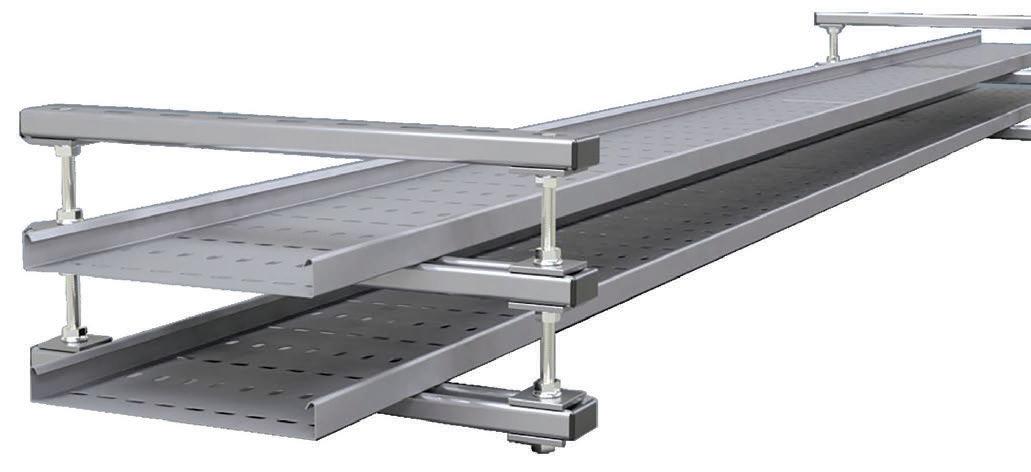
Utilising pre-fabricated solutions will speed up installation time, as these solutions are bespoke and pre-assembled, minimising the time required for on-site setup.
Utilising pre-fabricated solutions will speed up installation time, as these solutions are bespoke and pre-assembled, minimising the time required for on-site setup.
BESPOKE
Additionally, the use of pre-fabricated systems reduces waste by ensuring exact measurements and minimising excess materials. Also, reduces labour costs, as the need for on-site customisation and adjustments is minimised.
Additionally, the use of pre-fabricated systems reduces waste by ensuring exact measurements and minimising excess materials. Also, reduces labour costs, as the need for on-site customisation and adjustments is minimised.


ABB is investing more than £27 million in a greenfield facility in Nottingham to meet increased demand for Furse earthing and lightning protection solutions.
ABB’s new state-of-the-art site is expected to open in early 2025 and will integrate advanced technology, flexible automation, R&D and testing, and digital processes to boost production capacity and enhance efficiency and sustainability.
The site will produce power distribution enclosures which serve as protective housings for electrical distribution components such as circuit breakers, fuses, switches and meters, ensuring the safe distribution, metering and control of electricity throughout residential, commercial and industrial buildings.
More than 100 employees will relocate to the new 9,500m2 facility from the existing 6,300m2 ABB Installation Products Nottingham foundry, which has continually operated for over a century in the area where Furse originated in 1893.
In addition to an expanded footprint, the site will be constructed in line with the BREEAM Excellent rating for sustainable building standards and include efficient equipment and technology, photovoltaic rooftop cells, electric vehicle charging stations, and processes centred on reducing waste and energy. The space will be designed to support collaboration and training, accelerate R&D, and drive automation to serve European customers and increase available inventory globally.

Worldwide, an estimated 1.4 billion lightning flashes occur annually, equal to over 42 strikes each second. Even indirect lightning strikes up to a kilometre away can create transient overvoltages and have devastating consequences such as fire, shock hazards, equipment damage and costly outages, resulting in downtime and financial losses.

Furse solutions from ABB Installation Products are engineered to provide reliable earthing, lightning risk, and electronic systems and surge protection, helping safeguard structures and the electrical systems within. The products are used in more than 20 countries across a broad range of applications and environments, from data centres and medical facilities to essential infrastructure, utilities and renewable energy.
“This important investment builds on 130 years of Furse technology, enabling us to remain at the forefront of earthing and lightning protection and deliver solutions that improve safety and reliability for our customers. As part of our global growth strategy, we continue to expand our capabilities and capacity, further strengthening ABB’s manufacturing footprint and supply chain and regionalising production of high-demand electrical solutions that customers, installers and distribution partners need,” says Khalid Mandri President, ABB Installation Products Division.
“Building this site in Nottinghamshire further reinforces our commitment to the industries we serve and to the community where we have operated for more than a century and want to continue to be a leading employer.”
ABB Installation Products currently has six locations in Europe: Belgium, France, Hungary, Italy, Switzerland and the UK where it employs more than 100 associates in Nottingham who develop, test and produce a broad range of Furse solutions. The new campus will occupy nearly five acres in Fairham Business Park, within close proximity of ABB’s existing Wilford Road site, and is accessible for employees, customers, suppliers and distribution partners.
“We are continually advancing solutions across electrification, and the earthing and lightning protection lifecycle. Our new facility is a leap forward in design and technology, positioning us for the future while enabling us to preserve resources and reduce energy and water consumption aligned with circularity and sustainability priorities across ABB’s operations,” says Andrea Castella, Europe Region Leader, ABB Installation Products.
ABB, abb.com

Environmental monitoring experts and the AKCP partner for the UK & Eire.

Contact us for a FREE site survey or online demo to learn more about our industry leading environmental monitoring solutions with Ethernet and WiFi connectivity, over 20 sensor options for temperature, humidity, water leakage, airflow, AC and DC power, a 5 year warranty and automated email and SMS text alerts.
0800 030 6838 projects@serverroomenvironments.co.uk

Matt Page, EV Business Development Manager at Lucy Zodion, discusses the latest innovative approaches that are streamlining the installation of EV feeder pillars.
The rapid expansion of electric vehicle (EV) infrastructure, particularly at EV hubs, is critical to support the increasing number of EV drivers on our roads looking for reliable and fast charging options. For Charge Point Operators (CPOs), efficient and environmentally responsible installation methods are essential.
EV feeder pillars are essential to distribute power safely and efficiently. Depending on the site requirements, the pillars can be installed directly onto a concrete plinth or mounted on a metal root that is buried in the ground.
Direct installation onto a concrete plinth is particularly beneficial in urban environments or areas where ground excavation is impractical or undesirable. It offers a quick, efficient solution that reduces the need for extensive groundwork, thereby minimising the impact on the local environment and infrastructure.
However, while concrete is an affordable and versatile construction material, it has its environmental considerations: between 4-8% of total global CO2 emissions come from the concrete and cement industry.
As we strive for sustainability and net zero targets, it is crucial to ensure that the methods we use to install EV infrastructure are also environmentally friendly. Policies and regulations such as the UK’s Climate Change Act, the ‘Building to net zero’ scheme, and The Paris Agreement of 2015 emphasise the importance of sustainable building practises, prioritising durability, energy efficiency and waste reduction.

One of the key innovations by Lucy Zodion is the detachable root section of its feeder pillars. This design feature allows the root section to be sent and installed separately from the feeder pillar itself. By pre-installing the root section, civil works can be completed in advance, significantly reducing the overall project duration. This modular approach means that the feeder pillar can simply be mounted on the pre-installed root section, avoiding the need for extensive on-site work.
Lucy Zodion’s feeder pillars can be integrated with systems like the STAKKAbox base to further streamline the installation

The flexibility of the detachable root section is particularly advantageous for projects on tight schedules. This was demonstrated in a recent collaboration with InstaVolt, where the installation of its Taurus Crafts EV charging hub was expedited by completing the civil works before the feeder pillars arrived on site. This method not only saved time but also minimised disruptions – an essential consideration for public infrastructure projects.
To further streamline the installation process and enhance environmental responsibility, Lucy Zodion’s feeder pillars can be integrated with systems like the STAKKAbox base.
The STAKKAbox provides a flexible access chamber system that complements Lucy Zodion’s feeder pillars by offering robust cable management and reduced concrete usage. The system’s design utilises Glass Reinforced Polyester Resin (GRP), which is not only lightweight but also extremely durable and fire retardant, making it an ideal choice for access chamber products.
One of the standout features of the STAKKAbox system is its modularity. The access chambers can be built up section by section, much like a Lego set, allowing for easy customisation on-site without the need for heavy machinery or specialised tools. This makes the installation process significantly faster and less labour-intensive, which in turn reduces costs and the overall environmental impact.
Unlike traditional concrete chambers, the STAKKAbox does not require a concrete surround, significantly reducing the carbon footprint associated with

the installation process. In addition, the system’s twin-wall design offers superior side-wall strength, capable of supporting vertical loads up to 60t, ensuring long-term durability and reliability.
InstaVolt’s recent project exemplifies the benefits of these innovative installation techniques. By utilising the detachable root sections and pre-installed civil works, the project timelines were substantially shortened. In future schemes, InstaVolt plans to incorporate the STAKKAbox base system to further enhance the installation process by providing a streamlined cable management solution that reduces the reliance on concrete and promotes sustainable practices. This approach not only facilitates the rapid deployment of EV charging infrastructure but also ensures that installations are future-proof and capable of supporting the evolving needs of the growing EV market.
In the pursuit of net zero goals, it’s vital to remember that the installation methods for EV infrastructure must also be sustainable. By integrating cutting-edge solutions like Lucy Zodion’s detachable root section and NAL’s STAKKAbox base system, specifiers can ensure that the growth of EV infrastructure is both efficient and environmentally-friendly, setting a new standard for the industry.
Lucy Zodion, lucyzodion.com


Spelsberg UK has provided Grifen Sprinkler Solutions with durable enclosures capable of withstanding temperatures up to 80°C, water jets, and boasting a high IK09 impact resistance rating.
Sprinklers are an essential component of a building’s fire protection system. Automation can enhance safety, as well as ease of use, but this means that the control system requires its own protection. Grifen Sprinkler Solutions requested Spelsberg UK to provide high durability enclosures that could withstand the demanding environment. The service required digital printing as well as CNC machining, but it was essential for this customisation to maintain the integrity of the enclosure.
To protect from the threat of fire, sprinkler system design and manufacture is governed by strict standards. Though these regulations are highly robust, some sprinkler system manufacturers say that standards can be extended further.
In the event of a water leak in the sprinkler system’s supply, the resulting pressure drop would typically cause the pump’s motor to temporarily kick in, as if it were reacting to the activation of the sprinklers. These motor re-starts would happen continuously, drawing repeated high current and damaging the motor’s windings. Instead, Grifen’s Asset Protect functionality upholds long-term reliability by putting the system into safe mode and generating an alert, enabling rapid maintenance.
Sprinklers are an essential component of a building’s fire protection system
“Key aspects of protecting a sprinkler system’s backup and maintenance, for example, are not completely included in the regulations, but ensuring the long-term electrical reliability of the system is important to optimise safety,” says Gary Noble, Managing Director of Grifen Sprinkler Solutions.

Features like Asset Protect are the result of Grifen’s holistic focus on fire safety. The company supplies sprinkler system contractors in the UK and Ireland, with systems designed for domestic, industrial and commercial buildings. This ranges from Category 1 residential dwellings through to Category 4 tower blocks above 18m, including the highest EN 12845 standard. Even Grifen’s sprinkler systems for individual residences are electronically controlled by an industrial PLC, with logic control and software functions authored in-house. At the other end of the scale, Grifen’s fire sprinkler systems for Category 4 commercial properties include remotely controlled testing on a weekly basis. This optimises safety by providing more regular tests than the regulations require and reduces the resources necessary for on-site inspection.
The system’s electronics need a high level of protection. In the event of a fire, the enclosure must be able to withstand the initial heat. Then, the unit has to prevent water ingress when the sprinkler system is activated. The enclosures also have to be sufficiently durable to protect the electronic controls from any impact. Grifen uses Spelsberg’s high-durability industrial enclosures, manufactured from polycarbonate. These boxes protect in temperatures up to 80°C, sufficient to match the rating of the electronics, and they endure until the sprinklers activate to quell the heat. The enclosures can also withstand water jets and provide a high IK09 impact resistance rating.
To accommodate the automated system’s multiple cable connections, as well as the control unit’s digital display, every enclosure requires a CNC machining process. The digital display window, as well as the cable entry points, must be cut in specified locations and to exacting dimensions. Crucially, when the

display and the cables are installed, the surrounding gap must be sealed to uphold the level of ingress protection.
Spelsberg provides all CNC work on-site at its Midlands facility, and although Grifen supplied its own drawings, Spelsberg’s technicians can also create CAD designs. Providing a test prototype in days, Spelsberg then despatched the full quantity of Grifen’s order in less than three weeks. As a result of the enclosure’s precision CNC machining, combined with specially designed cable glands, when Grifen installed the control unit, this upheld the high IP rating.
“Spelsberg’s machining ensures repeatability,” says Gary. “It’s also a fast turnaround, so it’s become a key service for us.”
Although Grifen’s control unit is designed to be accessed remotely, or via the digital display, the device is still required to present a variety of user and safety information. Spelsberg provided Grifen with digital printing directly onto the enclosure, providing a highly durable, long-lasting finish. Combined with Grifen’s graphic design, Spelsberg’s printing service also ensures a professional presentation.
“Previously, we used stick-on labels. Printing directly onto the box is much more hardwearing, and it saves us significant time resources compared to manual application. It also ensures a high-quality finish,” says Gary.
While the capability of Grifen’s systems lies within its software functions, supported by the quality of flow control hardware, the protection of the automated system is fundamental.
Spelsberg UK, spelsberg.co.uk
Spelsberg’s industrial enclosures are manufactured from polycarbonate


Bespoke spiral PUR and PVC cables made to your specification in white, grey, black or colour of choice.
We are also the only UK manufacturer supplying textile braided spirals in a range of over 140 finishes.
For sales and enquiries please contact us at +44 28 9079 2155 info@flexform.co.uk
flexform.co.uk
FlexformCables flexformcablesltd
FLEXFORM CABLES ARE MANUFACTURED IN THE UK
ORDER NOW: 01772 672 020
Offering a full range of weatherproof switches.
• Complete with back box
• Multiple knock-out points
• Lockable covers
• With features such as IP66 rated level of protection. IN STOCK NOW


While not always the most obvious element, electrical enclosures and cabinets are critical to commercial building infrastructure. The correct storage and protection of electrical components and equipment, ensuring compliance with required safety installation standards, and the proper design, use and maintenance, are all vital to the operation of any commercial establishment.
The primary function of electrical enclosures and cabinets is to protect electrical components from environmental hazards such as the ingress of dust or water and physical damage. In commercial settings, these enclosures are important for the operation of electrical systems, such as power lighting or office equipment.
When designing an electrical system, it is important to consider the types of electrical enclosures available. These include:
• Metallic enclosures: Typically made of steel or aluminium, they tend to be used for their durability and are most used in industrial settings where mechanical protection is a priority. They would also be used where cleanliness is important, in a material such as stainless steel. The cost can be prohibitive, however, so they are sometimes replaced with lower-priced, non-metallic equivalents.
• Non-met allic enclosures: Made from materials like fibreglass or polycarbonate, these enclosures are impervious to corrosion. As such, they can be used in scenarios where resistance against chemicals is important.
• Weatherproof enclosures: Designed to protect electrical equipment from the elements, these enclosures tend to be used outdoors – however, they have become popular for indoor use due to ease of installation.
• Hazardous location enclosures: These are specially designed to contain explosions and prevent the ignition of hazardous environments. They would only be used in settings where flammable gases, vapours or dust are present and would have a specific marking to confirm their suitability for this.
Electrical enclosures and cabinets are critical to commercial building infrastructure

Aside from the material used, it is vital the IP (Ingress Protection) rating of any enclosure is considered and maintained. The IP rating system classifies enclosures by their protection. For example, an IP67 rating would mean complete protection against dust ingress and immersion in water to a specific depth. These ratings are maintained with the selection and installation of suitable cable glands, ensuring safe cabinet cable entry and exit.
Compliance with standards and regulations is also crucial in the installation of electrical enclosures. Traditionally, installations have been covered by BS 7671. However, when designing and fitting electrical systems within cabinets, regulations such as EN 60204-1 must also be considered.
Enclosures in commercial buildings are used in a variety of ways, with one use being protecting control panels, which often contain electronics and controls for systems such as lifts, and therefore need to be accessible for maintenance. Enclosures for servers, for example, often feature cooling mechanisms to dissipate the heat generated by the equipment. When enclosures are used for security systems, they need to protect the components to ensure their integrity and reliability. And finally, electrical enclosures in a commercial property are also used to connect cables, while creating a safe environment to allow for future safety inspections.
Considerations when installing electrical enclosures include several factors. Location is a primary consideration as, while enclosures need to be accessible
for maintenance, they should also be protected from accidental damage. The need for adequate ventilation should also be accounted for, particularly where potential overheating of equipment is a concern. Specific metallic enclosures may require earthing, which can be completed with earths provided with cables themselves or those with the enclosure. When labelling electrical enclosures, any markings should be clear for both maintenance and emergency responses. Gaining easy and direct access to internal components should be kept in mind too, particularly as it may require special access via a specific key/tool, subject to its own set of standards. An example would be a cabinet door which isolates electrical supply when opened to reduce the risk of shock.
Regular maintenance of electrical enclosures is essential and includes checking for signs of wear or damage, whether seals are intact, and the functionality of cooling systems. Periodic inspections help in the early detection of any issues, preventing downtime and ensuring compliance with safety regulations.
In conclusion, electrical enclosures and cabinets play a fundamental part in the design of safe and efficient commercial buildings, the protection of vital electrical systems, and the safety of building occupants. Adhering to standards of safety and performing regular maintenance is key to the longevity of these enclosures, especially as commercial buildings and their technology continue to evolve.
CEF, cef.co.uk
Following the huge success of the inaugural ECN Awards, we have added new awards for 2024. There are 23 awards up for grabs, covering all areas of the electrical contracting industry.

PRODUCTS
• Cable Product of the Year
• Cable Management Product of the Year
• Circuit Protection Product of the Year
• Fire Safety Product of the Year
• HVAC Product of the Year
• Lighting Product of the Year
• Software/App of the Year
• Tools/Testing Product of the Year
• Wiring Accessories Product of the Year
SUSTAINABLE PRODUCTS
• EV Charging Product of the Year
• Power (including Solar PV) Product of the Year
• Smart Buildings/Sustainability Product of the Year
PROJECTS
• Lighting Project of the Year
• Sustainable Project of the Year
• Overall Project of the Year
TRAINING
• Training Provider/Initiative of the Year
• Apprentice of the Year
COMPANIES
• Manufacturer of the Year
• Independent Wholesaler/Distributor of the Year
• Chain Wholesaler/Distributor of the Year (three stores or more)
• Contractor of the Year (turnover under £5m)
• Contractor of the Year (turnover over £5m)
SPECIAL AWARD - Special Recognition Award


Acrospire has collaborated with Centregreat and Newport City Council to upgrade the iconic town bridge lighting to LED, delivering 61% energy savings while preserving its historic charm.
Newport Bridge (colloquially called Town Bridge), opened in 1927 across the River Usk in Newport, connects the High Street and Clarence Place with Newport Castle and Newport city centre.
The project resulted in a significant 61% energy saving for the council

On 5 March 1913, Houdini defied police and jumped manacled from the bridge, captivating onlookers. The current bridge, built in 1927, followed plans initiated in 1911 to replace the earlier 1800s structure, representing a significant milestone in Newport’s infrastructure development.
In line with environmental goals and cost-saving measures, in 2021 Newport City Council embarked on a city-wide initiative to transition to energy-efficient LED lighting.
As part of this initiative, it recently looked to upgrade its heritage lanterns in key locations across the city centre, with the Town Bridge being among the first sites selected for renovation. Collaborating with Centregreat, the council’s electrical engineering team, Acrospire was tasked with upgrading the bridge’s lighting to LED while preserving its historic charm.
Acrospire recommended a combination of its 31W Muirfield and 75W Hexham luminaires to replace the existing SON lanterns along the bridge.
The Muirfield, a signature heritage post-top lantern, and the Hexham, inspired by Victorian gas lanterns, were chosen for their authentic design and energy efficiency. Using the 12 existing ornate columns and arrangement (two Muirfield and one Hexham), with a 3000K colour temperature, the new lighting
solution pays homage to the warm glow of traditional gas lamps while delivering modern performance.
Mike Marshall, Contracts Manager Centregreat, comments, “Council budgets are very tightly stretched, with Newport City Council predicting a deficiency in the coming year’s energy bills. We chose to work with Acrospire as it represents the most cost-efficient options for our heritage lighting project, keeping energy and investment costs low.”
The project resulted in a significant 61% energy saving for the council, marking a successful step towards achieving its environmental targets.
Through collaboration and innovation, the revitalisation of Newport Town Bridge’s lighting not only preserves its historic significance but also sets an example of sustainable urban development for future generations. Acrospire’s expertise in heritage lighting solutions has contributed to the enhancement of Newport’s landmark.
Mike adds, “With its exceptional efficiency, service, good value and authentic design, Acrospire is an easy option for any heritage lighting project. Backed with its 12-year warranty we are always reassured by our choice.”
Acrospire, acrospire.co


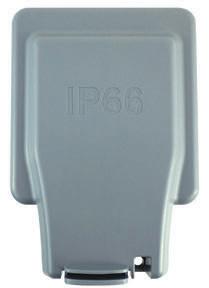
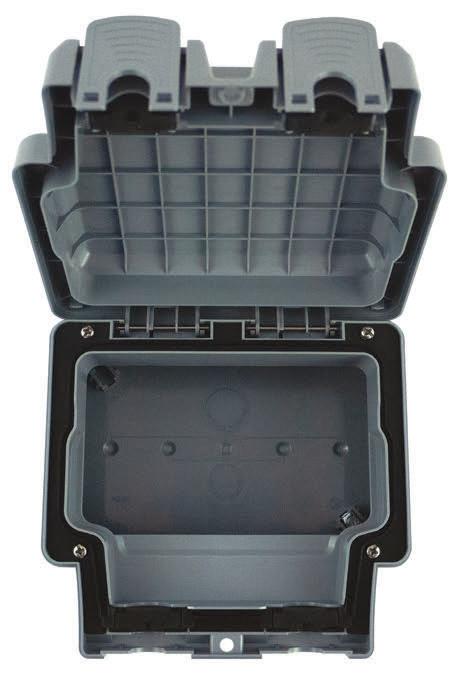


A leading sports centre used by elite athletes in Switzerland is an ‘energy champion’ after having a state-of-the-art lighting controls solution installed in its new buildings.
Swiss professional athletes, such as 2021 European Athletics Indoor Champion sprinter Ajla Del Ponte and three-time European Champion swimmer Noè Ponti, train at the CST Youth Sports Centre in Tenero-Contra, Locarno for competitions.
The centre, a facility of the Federal Office of Sport (FOSPO), also serves to promote youth sport and – in addition to the sports facilities – a school and vocational training is provided.
The CST centre has an excellent infrastructure with numerous facilities where over 160 sports are practised. There are also training rooms, a canteen, an accommodation building with 280 beds and a campsite. There are five large buildings on the 350,000m2 site, which is open to the public.
In this unique showcase project, German manufactuer B.E.G. – which has offices in the UK – provided intelligent KNX occupancy detectors in combination with KNX DALI gateways to help the sports centre be as energy efficient and comfortable for users as possible.
Swiss architect, Mario Botta, whose world-famous works include numerous museums such as the San Francisco Museum of Modern Art (SFMOMA), Évry Cathedral in France and the Church of San Giovanni Battista in Mogno, Switzerland, led the architectural project at the sports centre.
Mario designed four of the five buildings on the site of the youth sports centre and his most recent multi-purpose building, called Brere, was completed in 2023.

The building welcomes visitors in an imposing portico on columns which becomes a canteen terrace in the summer. The building comprises a double hall for artistic and apparatus gymnastics on three floors, a canteen with 440 seats, and 13 theory rooms.
The lecture theatre with multimedia equipment is ideal for conferences and events with up to 250 participants. These areas are now supported by an intelligent, equally flexible lighting control system.

B.E.G. installed occupancy sensors in all areas of the building (stairwell, corridors, training rooms, open spaces, restaurant, basement and sports hall) via Swiss electronics distributor, Swisslux, which was awarded the overall contract for the building technology for the new building.
The sensors were networked via KNX and a DALI-KNX interface – all of which were remote-controlled and configured using the BLE-IR adapter in combination with the B.E.G. One app. The BLE-IR adapter can also be used as a luxmeter.
The manufacturer also used orientation light guides so users can move around the building safely at different times when brightness changes throughout the day.
Electrical contracting company, Spinelli, developed lighting scenarios using the B.E.G. sensors with so-called ‘lighting scenes’ for the multi-purpose halls and
gymnasiums. This was so the halls are optimally lit at all times for the respective purpose, for example, for conferences, games, training sessions or simple cleaning.
Paul Jones, Sales Director of UK & Ireland at B.E.G. UK, says, “The B.E.G. sensors used at the CST Youth Sports Centre were ideal for this project as the detectors are very sensitive, even over long distances and can also very accurately detect and adjust the brightness.
“The detectors transmit the values to the DALI control components – even across sensors – enabling precise daylight-dependent light control. This results in a very linear dimming curve without those present in the building realising for ultimate convenience.
“The B.E.G. sensors were fitted in multiple areas of the new buildings, including the huge double gymnasium which now offers ideal and comfortable training conditions for artistic and apparatus gymnastics.
“Because of the investment made in installing an optimal and energy-efficient lighting solution, the CST Youth Sports Centre is now a sports training facility which is not only fit for future generations but for the present too.”
B.E.G., beg-luxomat.com
Advanced ceiling and high bay motion sensors designed by industry professionals, for industry professionals.
Bluetooth® built-in
Configurable as standalone or networked using our dedicated app.
Colour choice
Available as standard in white or black.
7-year warranty
Market-leading warranty for added peace of mind. Made in Britain

Power supply PS-DALI-LINK-FC Part no. 92846
DALI Power supply
PS-DALI-LINK-FC Part no. 92846


DALI Multisensor
PD4N-DALI-LINK Part no. 93377
PD4N-DALI-LINK Part no. 93377

DALI push-button module
PBM-DALI-LINK-4W-BLE Part no. 92732
PBM-DALI-LINK-4W-BLE Part no. 92732
Lighting Control
■
■ Supports DALI and DALI-2 luminaires
■
■ Ideal for re trofitting
■ Ideal for re trofitting
■ Super flat multisensor
■ Super flat multisensor available ■ Simple, intuitive operation
Simple, intuitive operation ■ Fre e Bluetooth app with 2 functions:
■ Simple, intuitive operation
■ Fre e Bluetooth app with 2 functions: - Scene control for end customer - Commissioning tool for installers
Scene control for end customer
Commissioning tool for installers

Equipment Leasing Solutions explores why electrical contractors should embrace leasing for LED lighting.
LED lighting is one of the most cost reductive technologies available to businesses and education establishments, due to its low energy consumption and the ability to integrate advanced sensors and controls into the installations.
Despite this, many have still not transitioned to LED lighting. One mechanism available to contractors to help with this transition is offering customers a leasing option.
Leasing enables the customer to spread the cost over several years, typically two to seven, allowing them to invest in the technology today without any upfront cost.
The beauty is that due to the dramatic cost-saving nature of LED technology, in the majority of cases, the savings generated outweigh the leasing cost, therefore giving the customer an immediate return on investment.
Here is an example of a recent installation funded by Equipment Leasing Solutions:
As you can see, the customer still makes huge savings after the leasing repayments have been deducted from their annual energy savings, and the benefits do not stop there.
• A clear path to savings: By leasing their LED lighting, customers enjoy fixed repayments, making budget forecasting more manageable. This predictability, combined with consistent energy savings, allows for accurate financial planning and streamlined operations.
• Advantages for electrical contractors: Offering leasing options presents a unique opportunity for electrical contractors to expand their customer base and increase project volume. By providing a cost-effective and convenient alternative to traditional purchases, contractors can secure more projects. Additionally, leasing options allow contractors to differentiate themselves in the market, highlighting their commitment to providing sustainable and affordable solutions.
• Swift payment terms: On completion of a project, your invoice can be paid within 24-48 hours by leasing funders, providing speedy payment.
• Tax efficiency: Lease payments are 100% tax deductible against the customer’s taxable profits.
By partnering with a provider such as Equipment Leasing Solutions, you can quickly and efficiently provide your customers with access to leasing options:
• Contact the leasing provider to obtain a quote for your customer.
• Your customer accepts the quote and agrees to proceed.
• The leasing provider consults with the customer for the information required to get a credit decision.
• If the customer’s leasing is approved, documents will be sent for signing.
• You deliver/install the project.
• The customer confirms the delivery/ installation of the project.
• Your invoice is paid within 24-48 hours.
Offering LED lighting leasing options is a win-win proposition for both electrical contractors and their customers. Contractors can benefit from increased project volume and a competitive edge in the market. Meanwhile, customers can enjoy immediate ROI, predictable monthly payments and reduced operating costs. By embracing this innovative approach, electrical contractors can illuminate a path toward a more sustainable future, powered by the benefits of energy-efficient LED lighting.
Equipment Leasing Solutions, els.lease

According to a recent research report, the UK lighting market is forecast to reach a value of approximately £2.3 billion by 2028, experiencing a steady growth trajectory despite recent economic fluctuations. Mike Collins, Managing Director at Ovia, looks at the details of the report and what is behind the projected growth.
The 17th edition of the UK Lighting Market Report 2024-2028 from AMA Research provides a comprehensive review of the rapidly evolving lighting industry. Significant changes have impacted the market in the last two to three years. The most significant of these are new regulatory requirements, the wider adoption of LED solutions, as well as the strong growth in smart and connected lighting technologies.
The UK lighting market is reported to be a mature market that has undergone significant changes in recent years. The most important is the withdrawal from production of incandescent, halogen and fluorescent lighting. These products are progressively being replaced by energy efficient LED lighting, however, with higher levels of competition, this technology has seen a sharp fall in price over the last decade, impacting on market value growth.
The focus of the report is on the main types of lighting products and systems used in residential and non-residential applications, and it covers the key product categories –lamps, luminaires and lighting controls. Although these have been relatively separated in the past, the market is now witnessing an increasing overlap between these categories. Much of this can be attributed to the development of connected lighting systems, such as equipment combining luminaires with lighting controls, and also the growth in the number of luminaires supplied with integrated LED lamps.
The UK lighting industry is facing a number of challenges in 2024, including a decline in construction new orders, increasing competition, high production costs, changing legislation, stricter health and safety regulations, and environmental issues.
As such, the market is expected to remain flat in 2024 and be supported primarily by RMI activity. The market is then forecast to return to steady growth in 2025 to the end of the forecast period. Although market demand is highly influenced by construction output, the market is expected to also be sustained by many of the recent technological advances in LED lighting, as well as the growth in demand for smart lighting devices and connected systems and controls.

The UK lighting industry is facing a number of challenges in 2024
As the drive towards improving sustainability and energy efficiencies endures, so the rapid evolution of LED technology continues. According to The Climate Group: “LED lighting has been recognised as one of the most actionable and ready-to-implement technologies for cities to transition to a low carbon economy and peak emissions in the next decade.”
It also states that lighting accounts for nearly 6% of global CO2 emissions, and a global switch to LEDs could save over 1,400 million tons of CO2 and avoid the construction of 1,250 power stations.
Switching to LEDs is an easy win –something as minor as a 20% reduction in energy costs can add the same benefit as a 5% increase in sales for business.
Upgrading from conventional lighting to LED technology can deliver significant cost savings of up to 80% for a business. This is according to the Government Department for Business, Energy and Industrial Strategy. By replacing incandescent lamps with LED lamps there is the potential to reduce electricity consumption by 50% to 80%. If you add in controls and IoT devices like motion sensors, building owners will be able to further manage lighting use and electricity consumption.
As a company, Ovia has focused its efforts on contributing to the lighting industry’s transition to a circular economy
and working towards making sure all of its Inceptor LED luminaires meet the requirements of the TM66 Assured Product Verification Scheme. This scheme is an innovative initiative developed and fulfilled by the Lighting Industry Association (LIA) and endorsed by CIBSE (Chartered Institution of Building Services Engineers) and its aim is to advance circular economy practices within the lighting industry.
Having been accepted as a founding partner for TM66 last year, Ovia has become more involved in discussions with the LIA on the importance of the circular economy and to highlight the company’s plans to support the TM66 verification scheme. Last year LIA Chief Executive Officer, Ayca Donaghy, and Head of Policy and Sustainability, Bob Bohannon, visited Scolmore Group’s head office to meet with the Ovia team for discussions on the whole subject of the circular economy and the efforts being made by Ovia to drive its sustainability policies throughout the entire business operation.
Almost the entire range of Ovia’s Inceptor luminaires have now been tested and scored very well on the TM66 Circularity Report. Testing involves the gathering of thorough evidence to support the specifications of the product range. The LIA verifies the TM66 results to ensure they have a consistent and accurate rating. Ovia will continue with its promise for every one of its Inceptor lighting products to reach the standards set by the TM66 report.
Ovia, oviauk.com



Herbolario Navarro, one of Spain’s largest retail chains for organic products, has taken a significant step towards sustainability – with TRILUX as its lighting partner.
With over 250 years of history and a nationwide presence, Herbolario Navarro is considered a pioneer for ecological and healthy products in Spain. In 2023, the company significantly strengthened its commitment to sustainability by investing in modern

Herbolario Navarro has installed E-Line Next LED in over 50 stores nationwide
LED lighting, switching to 100% green energy, and installing solar panels in its logistics centres. In addition, the organic chain works with the ‘Too Good To Go’ app to combat food waste and has saved over 60,000 products to date.
The retail giant installed E-Line Next LED in over 50 stores nationwide. The continuous lighting system sets energy efficiency standards and significantly reduces carbon footprint. Its excellent light quality ensures perfectly illuminated goods and a high-quality ambience while being environmentally friendly.
Herbolario Navarro chose TRILUX’s E-Line Next LED track system with integrated emergency lighting for excellent, highly efficient light and improved product presentation. The continuous-row lighting system is characterised by its straightforward and safe installation. Overall, the lighting intensity in the aisles and, therefore, the visibility of the products has been increased.
B.Veo Track spotlights are also used in the bakery and fruit and vegetable departments. They beautifully illuminate the products thanks to their high natural colour rendering. Simultaneously, the spotlights blend into the shop design as part of the E-Line Next LED system. Another plus is the flexibility of the continuous-row lighting system, which enables Herbolario Navarro to adapt the lighting quickly and efficiently to changing market trends.
The collaboration between Herbolario Navarro and TRILUX has improved the shopping experience and delivered significant benefits. The higher quality of light and more attractive product presentation have increased customer satisfaction, while the lighting’s energy efficiency has reduced energy costs and CO2 emissions. This project is a testament to both companies’ high standards of quality and sustainability and a promising step towards further cementing Herbolario Navarro’s position as the market leader in the field of ecological products in Spain.
TRILUX, trilux.com


The essential lighting choice for superior energy efficiency, longevity and a more sustainable future, LED technology has facilitated a widespread shift away from other traditional lighting sources. In this article, Chris Anderson from Ansell Lighting provides a closer look at the benefits of the technology and rules surrounding the use of older lighting sources.
LED technology has transformed the lighting industry since becoming a widely adopted choice for illumination in recent decades.
Whilst LED lighting isn’t strictly a legal requirement in the UK, heightened performance criteria for energy regulations have seen it become the go-to source of lighting, meeting illumination standards specified for both residential and non-domestic buildings.
In the UK, all residential developments must include at least 75% low energy lighting, which is defined as lights that produce over 400lm at an efficiency of 45lm per watt of power output. For non-domestic buildings, lighting should achieve an average overall efficiency of at least 55lm per watt. LED lights meet both these requirements whilst traditional lighting sources such as incandescent and fluorescent do not.
This energy efficiency is probably the biggest benefit of LED lighting all in all. LEDs consume up to 90% less power than incandescent bulbs and up to 80% less than fluorescent lights, supporting moves towards a greener future. In fact, calculations from The Climate Group estimate that switching bulbs to LED can save more than 1,400 million tons of CO2 globally.
With improved energy efficiency comes lower operational costs, another major benefit of LED lighting. As an example, a 60W halogen light bulb costs roughly £7.20 per year to operate, based on an average usage of 10 hours per day, whilst the equivalent LED bulb costs just £1.08. Multiply this over any size of building and the savings are significant.


Alongside heightened energy efficiency and cost reduction, one of the most appealing advantages of LED lighting is its longevity. LEDs can last anywhere from 25,000 to 60,000 hours, compared to around 1,000 hours for incandescent bulbs and between 8,000 and 15,000 hours for fluorescents. Not only is this much more cost and time-efficient, but this extended lifespan means it is also a much more sustainable option, contributing to a reduction in waste and overall environmental impact.
LEDs are also much more robust and durable than traditional lighting choices. They are resistant to shocks, vibrations and external impacts, making them suitable for a wide range of applications, including outdoor and industrial settings. They are also extremely flexible when it comes to design, available in a variety of forms including strips, panels and individual bulbs, as well as offering a multitude of colour and brightness options.
Another major benefit of LED lighting is that it does not contain any hazardous materials, so is much safer for the environment. Fluorescent lights, for example, contain mercury which poses significant environmental and health risks if not disposed of properly.
The many benefits of LED lighting versus traditional alternatives are plain to see and have been a huge factor in driving the move towards LED use in the UK.
Regulatory measures aimed at reducing energy consumption and environmental impact have also influenced their adoption.
As of August last year, the production of T5 and T8 fluorescent lamps has been banned in Great Britain, complying with the EU’s Restriction of Hazardous Substances (RoHS) Directive, which has also seen the production of CFL and ring-form T5 and T9 lamps prohibited since February last year.
The directive, which aims to restrict the use of hazardous materials, rules that mercury can no longer be used in lamps (as well as other types of electrical and electronic equipment) due to the potential risks it poses if released into the environment. Only HPD lamps and special purpose lamps are exempt from the ban and will be produced for another three to five years.
Whilst wholesalers will continue to stock CFL, T5 and T8 lamps until supplies are exhausted, it is fair to assume that their availability will undoubtedly dwindle as time moves on. Many customers may be unaware of this change in legislation and the scarcity of replacement products, so it is advisable that installers make recommendations to customers to upgrade lighting systems as soon as possible.
As we look to the future, it is certain that LED will continue to lead the way in offering sustainable and cost-effective lighting, paving the way for a greener, brighter built environment.
Ansell Lighting, ansell-lighting.com


Break into ring final circuits.
Repair or extend existing cable runs.
Connect 2 spurs with the 4 way splitter.
Maintenance free.
No earth sleeving required.
Compact - Fits through a 24mm or 30mm hole.
Lightning fast QuickwireTM push in technology.


The challenges of dimming LEDs are notorious. LEDs often require specific conditions to dim smoothly without flickering, and not all LED lamps support dimming capabilities. Addressing these intricacies, Theben introduces the Dimax 540 Plus B, a state-of-the-art dimmer designed to master the art of LED dimming with precision and ease.
The Dimax 540 Plus B is a flush-mounted dimmer specifically engineered for both resistive (R) and capacitive (C) loads, offering optimised settings for LEDs as well as traditional incandescent lamps. One of the standout features of this dimmer is its compatibility with retrofit projects. Its small design (no bigger than a £2 coin!) allows for easy installation in a variety of settings without the need for extensive rewiring, as no neutral conductor is necessary. This makes it an ideal choice for upgrading older buildings or enhancing new constructions with advanced dimming capabilities.
Ovia’s floodlight range includes the Inceptor Murus – a range of LED Wall Packs with CTA Switch and a robust IK10-rated housing that makes them ideal in outdoor settings.
Theben: Pioneer in electrical innovation
Founded on a legacy of innovation and quality, Theben continues to lead with products that redefine industry standards. From best-selling devices like the ELPA staircase time switch to pioneering KNX systems, Theben’s commitment to excellence is evident in every product distributed globally.
Join electricians worldwide who trust Theben for cutting-edge solutions that deliver unparalleled performance and reliability. Whether you’re retrofitting a home or designing a new commercial space, the DIMAX 540 is your go-to solution for superior dimming technology.
Theben, theben.co.uk


Designed to be fast and simple to install, the IP66-rated Inceptor Murus is available in 15W and 25W options and in a choice of standard, photocell, and photocell and emergency versions. The photocell version can assist with energy saving by allowing the light to turn on and off at set lux levels. Inceptor Murus will turn on when the lux level is below 10-30 lux.
Installation of the Murus is quick and easy, thanks to the Push Fit/Piano Key Terminal Block, and the floodlight can be Besa box or trunking mounted. All models include a CTA switch, allowing the product to change colour temperature between Warm White 3000K, Cool White 4000K and Daylight 6000K.
Inceptor Murus is available in a choice of anthracite grey or light grey finish and it comes with a five-year warranty. Ovia, oviauk.com
With a rich history spanning over a century, KNIPEX is an established leader in the plier manufacturing industry, continuously at the forefront of innovation and quality.
The KNIPEX Metric WireStripper (13 76 200 ME) is a perfect example of the KNIPEX ethos, a tool designed to meet the rigorous demands of modern electricians with precision and efficiency. Once used, you’ll find this tool is integral to a wide array of tasks, from installing new wiring systems in both residential and commercial settings to maintaining and repairing older electrical installations.
The Metric WireStripper is adept at handling solid conductors from 0.75 to 6mm² and fine-stranded conductors from 0.5 to 4mm², with the ability to cut copper and aluminium cables up to Ø15mm. This versatility is critical for dealing with various cable types and sizes typical in today’s electrical work. Its innovative cutting geometry is especially effective for flat cables, which are commonly utilised in tight spaces like along baseboards or within narrow conduits, making it

IronmongeryDirect has expanded its range of heating and ventilation solutions. New additions include underfloor heating, extractor fans, ducting and accessories, heat recovery units and hand dryers, all from leading brands.
A number of underfloor heating products are now available from well-known brands, Heat Mat and Heat My Home.
The range from Heat Mat can be fitted directly beneath tile and stone, or with levelling compound when under carpet, LVT and laminate floors to offer efficient, high-quality heating backed by a lifetime guarantee.
Alternatively, the Heat My Home range is ideal for projects with a more restricted budget and is a trusted choice among installers.
IronmongeryDirect’s expanded HVAC range also incorporates 80 new products from Manrose, including ducting, ducting accessories and extractor fans. In addition, the online supplier’s website now features Vent-Axia products.
indispensable in building renovations or upgrades where space is limited.
The Metric WireStripper’s hybrid design merges the slender profile of needle-nose pliers with the strength of combination pliers, offering high stability and exceptional accessibility, key for navigating confined spaces. Precise stripping profiles and location ridges ensure accurate wire positioning for secure, clean connections. Additional functionalities include wide, cross-hatched gripping surfaces for wire twisting, a milled groove for secure handling of small items and a convex gripping surface for managing both flat and round materials. It also includes deburring edges for pipes, reinforcing its role as a multifunctional tool.
For electricians, the KNIPEX Metric WireStripper is not just a tool; it’s an essential part of your toolkit, enabling you to execute diverse electrical tasks with confidence and precision.
KNIPEX, knipex.com

IronmongeryDirect has added new products from Everything Hand Dryers. These energy efficient units are suitable for all washroom environments and come with a three-year guarantee.
IronmongeryDirect’s HVAC range also includes Vent Axia PIV units which provide pure, filtered air throughout the home to help protect against the formation of condensation and mould.
IronmongeryDirect, ironmongerydirect.co.uk


SPONSORED STORIES FROM THE INDUSTRY
With EV charging adding to the catalogue of existing consumer demand for safe, sustainable and reliable outdoor lighting and electrical power, there is no better time for electrical contractors to work with Luceco’s best-selling outdoor IP65 consumer units, branded BG Sync EV. Designed for the easiest and quickest installation, these market-leading products are for professional-only fit in an expanding consumer market, where installers can really guide end-user choice.
Fully compliant to IP65 external standards, the BG consumer units are the perfect solution for security lights, pond accessories, garden decorative and drive lighting, outdoor DIY, and gardening appliances, as well as EV charging points.

Rated IP65 as defined by BSEN60529: 1992+A2:2013, the BG outdoor consumer unit from Luceco has a lockable front cover to prevent unauthorised access to the electrical safety devices protecting the circuits.
The IP65 enclosure also provides protection against dust and water jets, making the unit safe from accidental proximity of a garden hose or jet washer. There is also a IP20 version for indoor use. IP65 products are available in smart anthracite black and white, and IP20 in white.
Luceco, luceco.com
Tamlite Lighting is urging the lighting industry and the wider built environment sector to embrace remanufacturing as a step towards achieving net zero.
In a newly published white paper, Tamlite Lighting explores how significant sustainability gains can be made throughout the supply chain by applying remanufacturing processes in the lighting sector.
The paper introduces the concept of the circular economy and discusses the progress being made by the lighting industry in establishing more circular approaches for the sector.

The white paper, entitled Towards Net Zero: Can Remanufacturing Create a More Sustainable Future for Lighting? draws on Tamlite’s collaborative work with CIBSE and other industry bodies to support the development of remanufactured products. This includes initiatives such as CIBSE’s TM66 Circular Economy Assessment Methods (CEAM). Importantly, the paper underlines the key role of specifiers in driving the uptake of circular economy principles for new lighting projects, and the need to engage all stakeholders in a project to promote a circular approach.
Tamlite Lighting, tamlite.co.uk
Click Scolmore introduces a new and innovative Recessed Mounting Kit for its Aquip66 2-gang weatherproof socket enclosures. It will slash socket protrusion by 50%, ensuring a sleek and discreet installation.
The kit is made up of three components – a polycarbonate mounting base, a black silicone rubber seal and a polycarbonate bezel.
Here are four easy steps for installing an Aquip66 2-gang weatherproof socket with the new recessed mounting plate:
• Step 1 – use the mounting base to mark against the wall and chase out approximately 173 x 145 x 42mm from the brickwork.
• Step 2 – with the mains power off, pull through the mains cable. Then insert wall plugs, screw the mount and seal into position.

• Step 3 – ensure the mounting base is securely screwed to the wall with the silicone rubber seal. Now clip the outer bezel onto the fitting.
• Step 4 – finally, wire up, insert and secure the Aquip66 Weatherproof Socket into the Recessed Mounting Kit.
The kit is available in anthracite grey to match the IP66 Aquip Weatherproof range. Scolmore, scolmore.com
Meridian Lighting has announced the launch of an extensive new range of LED floodlights, comprising 10W, 20W, 30W and 50W fittings either Standard or with PIR Rotational Sensors.
Finished in black, these stylish new IP65-rated floodlights are built with die-cast aluminium bodies and tempered glass diffusers. With a 120° beam angle, they all deliver a 4000K cool white temperature output at 120 lumens per watt. That’s up to 6,000 lumens for the 50W fitting (IP65 gives ingress protection from all dust and low pressure water jets).

Supplied with adjustable angled brackets and a 1m cord, these new Meridian LED floodlights have an average lifespan of 25,000 hours and are further supported with a three-year warranty.
Quality is assured with CE, EMC, LVD, RoHS and REACH compliances or approvals.
CED Electrical, cedelectrical.co.uk
Vent-Axia has launched the Lo-Carbon Sentinel Econiq Cool-Flow to help housebuilders manage overheating in new homes. A groundbreaking step for Vent-Axia, the innovative Lo-Carbon Sentinel Econiq Cool-Flow is the company’s latest flagship mechanical ventilation with heat recovery (MVHR) system combined with its intelligent Econiq Cool-Flow Module.
Designed to mitigate overheating conditions in warmer temperatures, the Lo-Carbon Sentinel Econiq Cool-Flow improves indoor air quality (IAQ) while delivering the highest level of thermal comfort.
Offering powerful cooling, the Lo-Carbon Sentinel Econiq Cool-Flow lowers fresh air supply temperature from ambient temperatures by up to 21ºC, utilising R32 refrigerant with a Global Warming Potential (GWP) of 675, over 50% lower than R134a. Boasting an Energy Efficiency Ratio (EER) up to 4.12, with best-in-class Specific Fan Powers (SFPs) and thermal efficiencies up to 93%, the Lo-Carbon Sentinel Econiq Cool-Flow features intelligent controls that automatically switch between heat recovery, summer bypass, and active cooling (via the intelligent Econiq Cool-Flow Module), continuously measuring internal and external temperatures to maintain comfort thresholds efficiently. Vent-Axia, vent-axia.com

THORNeco has announced the expansion of the Zoe range with the introduction of a Prismatic diffuser version, alongside the launch of two new products, Sylvie and Maya.

The enhanced Zoe downlight range now features a prismatic diffuser variant, significantly reducing perceived glare for a more comfortable lighting experience. Zoe’s sleek 27mm profile ensures it fits seamlessly into most ceiling types. With the VARIO feature, contractors can easily adjust the colour temperature on-site, while the FLEX feature allows for preferred lumen output selection.
The Sylvie downlight has been designed for superior safety and flexibility. With fire-rated protection (90/60/30 minutes), a VARIO feature for on-site colour temperature adjustment, and a compact 64mm height, Sylvie fits various ceiling types. The integrated housing design with an IP65 rating ensures robust protection.
Maya is the ideal cost-effective solution for office lighting, replacing traditional 4 x 14W T5 or 4 x 18W T8 fluorescent lamps. With a UGR of less than 19, Maya ensures gentle, glare-free lighting, which is perfect for productive workspaces.
THORNeco, thorn-eco.com
SPONSORED STORIES FROM THE INDUSTRY
CU Phosco, the largest family-owned UK designer and manufacturer of outdoor lighting solutions, is proud to announce the launch of a new product, the PhosLink Adjustable Power Connector. Designed for the versatile CU Phosco E95X luminaire range, PhosLink offers an unprecedented level of power adjustability and efficiency for outdoor lighting applications.
The PhosLink series includes two variants – PhosLink1 and PhosLink2 – each engineered to provide nine distinct power settings. This flexibility empowers customers to tailor the power output of their luminaires to suit specific project requirements, directly on-site or within their depots.
As a result, customers can benefit from more streamlined stock management with the flexibility to adjust the lumen output as necessary either
in the workshop or on site, and greater adaptability in their inventory holdings.
Key Features of PhosLink:
• Customisable power settings: Both PhosLink1 and PhosLink2 allow users to adjust power outputs in increments of 100mA. PhosLink1 supports settings ranging from 200mA to 1000mA, while PhosLink2 ranges from 250mA to 1050mA
• On-site flexibility: Each luminaire is initially set to the lowest output, allowing for easy adjustments to higher settings as required. This enables customers to achieve the desired wattage without the need for additional installation procedures
• Energy efficiency: PhosLink ensures direct, economical, and targeted lumen output, making it ideal for energy-conscious lighting schemes

Unicrimp has extended its comprehensive range of Q-Crimp electrical sleeving solutions to include new black and grey PVC sleeving. Used to insulate and protect wiring, cable sleeving keeps the wire safe from abrasion and temperature damage, and comes colour-coded to make wiring identification easier. The new additions to the range include:
• 100m x 2mm PVC Sleeving – Black
• 100m x 2mm PVC Sleeving – Grey
• 100m x 3mm PVC Sleeving – Black
• 100m x 3mm PVC Sleeving – Grey
• 100m x 4mm PVC Sleeving – Black
• 100m x 4mm PVC Sleeving – Grey
The Q-Crimp electrical sleeving range can be cut to size to suit the task at hand. Unicrimp, unicrimp.com
Signify has launched a comprehensive new over-the-counter trade range of lighting under a new brand; Ecolink. Designed and developed in the UK to meet the specific needs of electrical professionals, Ecolink delivers a competitively priced, quality LED lighting range.
The new Ecolink range has been developed with the vision to illuminate spaces through competitively priced, energy efficient LED luminaires, delivering quality and building on Signify’s heritage.
July saw the first phase of the Ecolink launch, with the range comprising:
• LED Panel with four solution possibilities
– On/off, On/off + 3hr manual Emergency, DALI, and DALI + 3hr manual Emergency
• IP65-rated LED Flood light with IP65 motion sensor
• LED Batten with options for plug-in self-test emergency lighting pack or, manual test emergency pack

• LED Standalone emergency range, comprising IP65 Bulkhead, Twin spots, Recessed and Surface mounted spots
• LED Emergency Exit signs for wall and ceiling mounting, all equipped with high-quality Lithium Ferro Phosphate batteries
• LED Non-corrosive fitting with the choice of manual test emergency pack or, plug-in self-test emergency lighting pack
Phase 2 of the range will be launched across September and October.
Signify, signify.com


• Ease of installation: Designed to be user-friendly, the PhosLink connector simplifies the process of adjusting wattage. By simply repositioning a link wire and pressing the connector button, users can select the appropriate setting with ease
• Optics compatibility: Standard optics options include P4 for residential roads and R2 for footpaths, with additional optics available upon request
Sangamo has announced the launch of its new three channel programmable thermostat with RF and Wi-Fi. The new thermostat provides the means to operate and control separate heating zones within a residential property, increasing efficiency and reducing energy use and utility costs.
• International Dark-Sky Association approved: Initially designed with DarkSky accredited E95x range, compliant when using a colour temperature of 3000K or below, at zero-degree tilt.
CU Phosco, cuphosco.com

The new Sangamo Thermostat Kit is suitable for properties with two-zoned heating systems and is designed to help installers comply with the requirements of Part L Building Regulations where two zone heating is stipulated. The kit comprises two RF programmable room thermostats to control heating over two zones and hot water programming, and one receiver complete with three independent channels – two for heating and one for hot water. The system can be programmed and controlled directly or remotely via the ClickSmart+ app.
Easy installation and ease of programming and operation are at the heart of the new kit. Thermostats can be wall-mounted and are supplied with a wall-fixing mount, a free-standing base for table top positioning. The thermostats control the receiver via radio frequency and they can be powered either by replaceable batteries or USB-C power source. ESP, espuk.com
Tailored to address every commercial need from office to factory, three new downlights offered by Knightsbridge share key features such as plug and play connectors for easy installation and dimmable drivers as standard.

The line-up consists of Kara, Sara and Seren, all of which deliver superior energy efficiency through advanced LED technology, with a rating of at least IP20.
The downlights offer versatile wattage and colour temperature options and are compatible with EMKIT2L to provide emergency lighting options. All have warranty periods extending up to five years.
Kara LED panels are round and recessed, employing edge-lit technology to distribute light evenly without glare or black spots. Available in power settings from 6W to 24W, the Kara has a slim profile that makes it easier to fit in shallow ceilings.
Sara downlights merge a robust die-cast aluminium construction with functional flexibility, offering TRI-CCT and TRI-Wattage options that range from 15W to 40W.
Constructed from a robust die-cast aluminium body coated with a white powder finish, Seren downlights provide TRI CCT (3000K/ 4000K/ 5000K) and TRI wattage options. Knightsbridge, mlaccessories.co.uk

Take your listening experiences to new heights.
Take your listening experiences to new heights.
The all-new 8” ln-Ceiling Speakers by Sonos and Sonance feature completely new acoustic components, offering natural, room-filling sound with discrete installation.
The all-new 8” ln-Ceiling Speakers by Sonos and Sonance feature completely new acoustic components, offering natural, room-filling sound with discrete installation.
Pre-order now at your distributor
Pre-order now at your distributor


We’ve got you covered... - Insulated enclosure - Option red/yellow or grey/black padlockable handle - IP66/67 - Can be installed in the most arduous of environments
Rated operational currents up to 50A & up to 1000V using a utilization category of DC-PV0, DC-PV2 or DC-21B. A solution for isolator applications for the solar photovoltaic market.