Atlanta Parent June 2023 / atlantaparent.com Just Ask Dad Stay and Play in Georgia Jump In! Summer Fun Is Calling Get Wet Guide Mom-Approved Pediatricians






NOW OPEN BOLD. COLORFUL. INSPIRED. BRAVES.COM/THREADS @BRAVESTHREADS STAY CONNECTED
WANNA HANG OUT?
SUMMER EXHIBIT
Discover surprisingly slow ways animals survive in a fast-paced world.
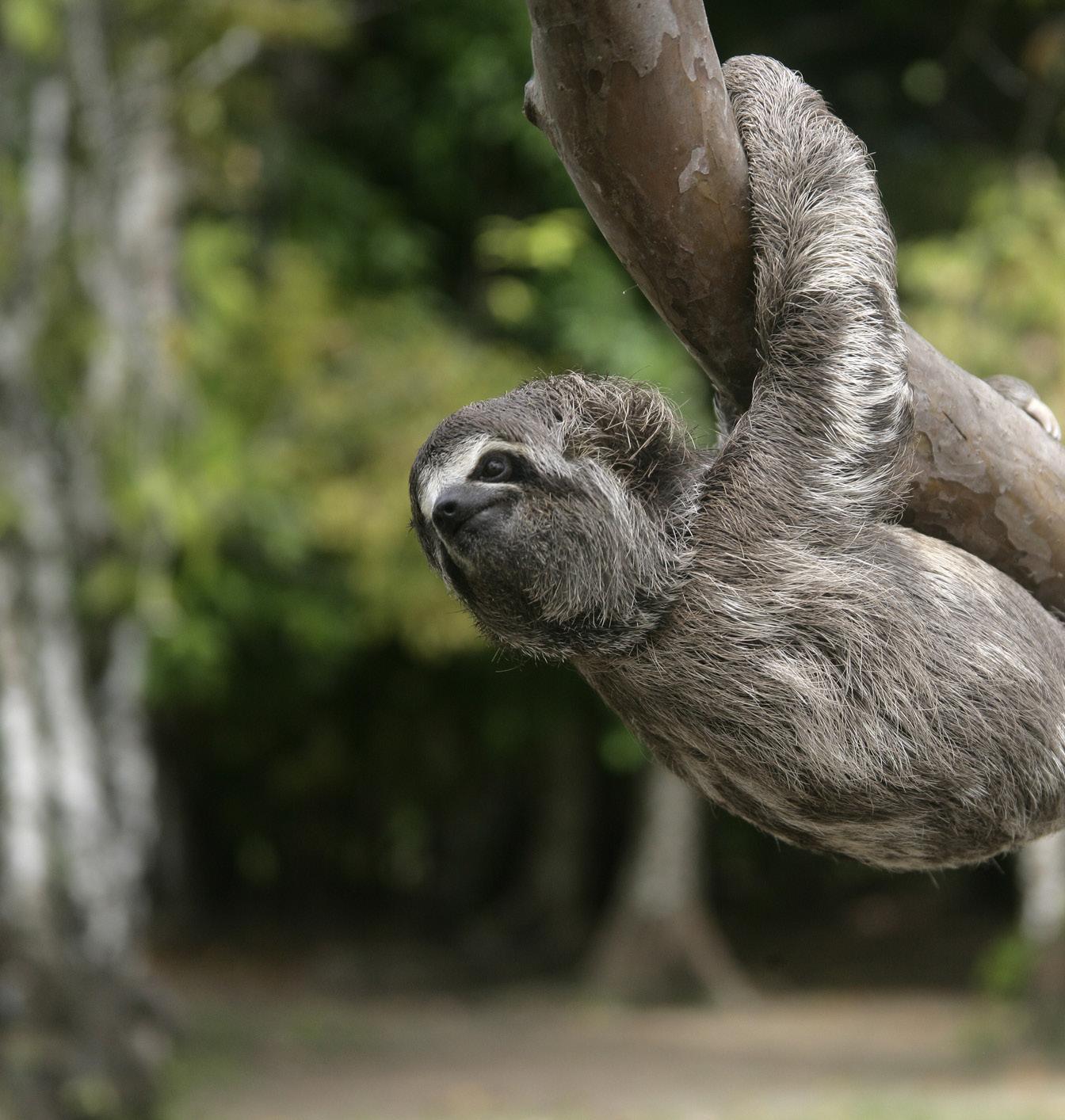
See Live Animals!
Sloth • Boa constrictor • Iguana
Hedgehog • Tortoise • and more!
FernbankMuseum.org @FernbankMuseum A WORLD OF WOW
FREE
Sponsored locally by
Additional support provided by the Frances Wood Wilson Foundation.
FOR MEMBERS!
Survival of the Slowest is designed and offered by Little Ray’s Nature Centres in collaboration with the Canadian Museum of Nature. Atlanta’s Science and Nature Experience
June
YEARS OF ATLANTA PARENT

Summer FUN Guide / 43
Pools and splash pads, the newest attractions, exhibits, and free and fun things to do. Plus, top June events, Fourth of July and more!
It’s Time for Summer Reading!
Prevent the “summer slide” and keep kids reading with these tips and local programs.

Just Ask Dad
We asked eight Atlanta dads to tell us what they love about being a father.

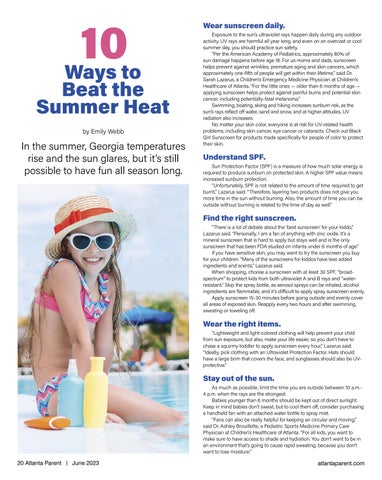
10 Ways to Beat the Summer Heat

Use our tips to protect kids from sun and heat.

Stay and Play in Georgia
Get ready for a great time! These not-to-miss spots are right here in the Peach State.
Pediatricians & Specialists

We

Love
/ 35
We asked readers to recommend their favorite pediatricians and specialists.

SPONSORED
Publisher’s Note / 8 Good Stuff / 12 Like
n Last Chance: Snag a Spot at These Top Camps! / 10
n Fun Family Destinations in Georgia / 32
June 2023 Atlanta Parent 5 atlantaparent.com
39
Inside
15 18 20 23
CONTENT
on
facebook.com/ AtlantaParentMagazine
us
Facebook;
Immerse your child in the language of music.

PUBLISHER Liz White lwhite@atlantaparent.com
ASSOCIATE Laura Powell PUBLISHER lpowell@atlantaparent.com
ACCOUNT Carolyn Haushalter EXECUTIVE chaushalter@atlantaparent.com

ACCOUNT Genie Lockeretz EXECUTIVE glockeretz@atlantaparent.com
ACCOUNT Alyssa Gerold EXECUTIVE agerold@atlantaparent.com
770-645-5578
The Music Class® is an early childhood music program designed to unleash the musical potential of children from birth to age six. Parent+child classes feature award winning music, engaging activities and anytime-access to the music on our app. Classes start June 3-9. Join the fun this summer at one of our 8 convenient locations. themusicclass.com/atlanta
STAFF WRITER Emily Webb and DIGITAL ewebb@atlantaparent.com
CONTENT CREATOR
COPY EDITOR Mary Williams
EDITORIAL Sheri Taylor-Emery ART DIRECTOR creative@atlantaparent.com
PRODUCTION Robin Mintz
ADMINISTRATIVE Amanda Allen ASSISTANT
MARKETING Felicia Barman MOM
Sign Up For Our e-Newsletter at AtlantaParent.com


Like Us on FACEBOOK

Atlanta Parent magazine is published monthly by Atlanta Parent, Inc., 2346 Perimeter Park Drive, Atlanta, GA 30341. Telephone 770-454-7599, Fax 770-454-7699. Atlanta Parent magazine is available free of charge throughout the metro area and as a digital issue at atlantaparent.com. Atlanta Parent magazine welcomes letters, articles, artwork and photographs from its readers and the community. Atlanta Parent magazine is not responsible for the return of unsolicited materials. All rights reserved. Any reproduction in whole or in part, is prohibited without written permission.
© Atlanta Parent, Inc. 2023
6 Atlanta Parent June 2023 atlantaparent.com
EXPLORE • BALANCE • BELONG • SUCCEED OUR FOUNDATION CAPSTONEACADEMY.COM
Personalized care means more respect for you.

Wellstar, PeopleCare means working relentlessly to exceed national standards for care. Find personalized expert care from doctors, nurses, and caregivers who’ll see you as more than a patient.
At
wellstar.org
Be The Most Informed Parent On The Playground!
Publisher’s Note

School’s out, the weather is warm, and Atlanta families are ready for summer! There’s an air of excitement in our house as my kids get ready for their favorite summer activities: day camps, a lot of time playing sports, biking, trips to the pool, and of course, reading. I remember exploring the library as a kid. Choosing my own books made me feel independent, and I loved the summer reading programs. I was able to explore new ideas through the books I read. I fondly remember not being able to put down the “Lord of the Rings Trilogy,” “Little Women” and tons of “The Babysitter’s Club” books. When my kids inevitably get bored and restless this summer, our first trip will be to the library. Read our ideas (page 15) for keeping the fun going with reading during the summer, and find out about your local library’s summer reading program.
Atlanta just keeps growing! So many fun new exhibits and experiences are opening their doors just in time for summer. CAMP Atlanta is an interactive theater with shows, live music and games based on The Little Mermaid. We’re also excited about the new Museum of Illusions, with puzzles to solve and gravity-defying spaces. Kids who like to get messy can get slimed at the Sloomoo Institute in Buckhead. Just down the street, the re-imagined LEGO Discovery Center has virtual reality race cars and 4D movies.
Atlanta Parent’s Summer Fun Guide is a great resource — it’s full of this summer’s events, museums, places to play and more. If you are on a budget, check out all the free stuff to do, from outdoor movies and concerts to roller skating. Plus, don’t miss our annual Get Wet Guide with the area’s best pools, splash pads and water parks. Visit atlantaparent.com for even more fun things to do.

For families who want to get away for a day or weekend trip, our Stay and Play in Georgia section will help you make plans for exploring nearby towns, tubing, lakes to visit and where to see some of the state’s best scenery.
Whatever you and your family have planned, we wish you a great start to summer!
Associate Publisher




8 Atlanta Parent June 2023 atlantaparent.com
FIND us at AtlantaParent.com EMAIL To sign up for our weekly e-newsletter visit atlantaparent.com LIKE us facebook.com/ atlantaparent Stay connected with us for upcoming events, great giveaways, reader input and more!
How to Reach us: We welcome your views and comments. Letters that appear in the magazine may be edited for content and space. Telephone 770.454.7599 Fax 770.454.7699 Snail Mail 2346 Perimeter Park Drive Atlanta, Georgia 30341 Email lwhite@atlantaparent.com Website www.atlantaparent.com

SUMMER CAMPS Your Kids Will Love

n Field Trips, Friends and Fun
This summer, dive into all things LEGENDARY at Sunshine House Legendary Summer Camp and never hear “I’m bored!” Each week is full of exciting themed experiences, activities and field trips your camper will talk about for weeks. Explore legends from Bigfoot to Atlantis, sports legends, legendary stars from music and screen, legendary fables and fairy tales, even the Knights of the Round Table! Where else will your camper splash around a water park, design their own comic book character, recover dragon eggs and tour a football stadium — all in the same camp? Limited spaces. Register today! 22 metro Atlanta locations; sunshinehouse.com.
n STEM Camps for Every Kid
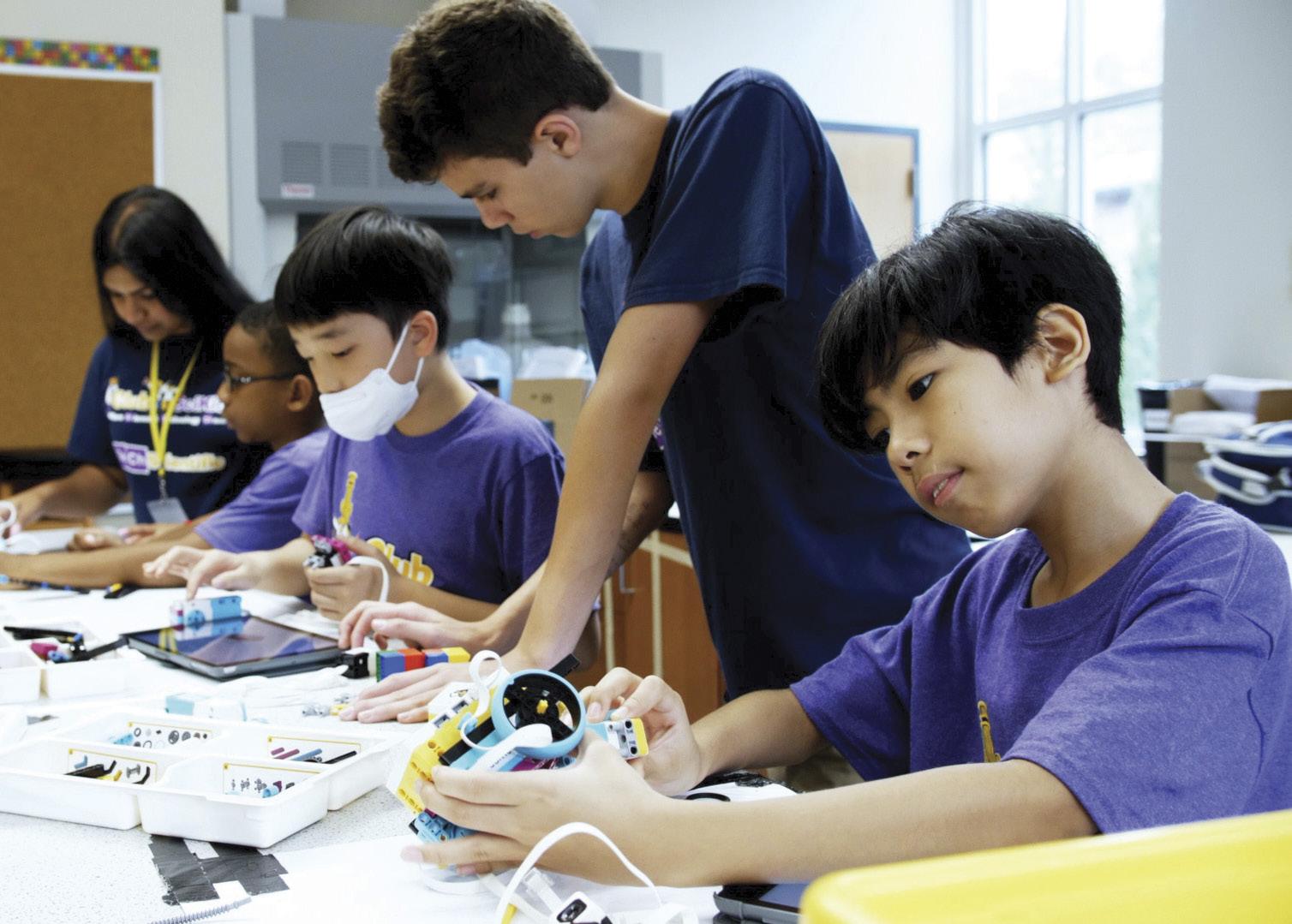
Club SciKidz is the best place under the sun for STEM based science and technology camps. 70+ offerings include topics such as veterinary medicine, LEGO robotics, Minecraft, American Doll, and environmental sciences such as Climate Change and Rescuing the Rainforest! These are camps you won’t want to miss! Each day starts with a spectacular science demonstration and rotates through classes incorporating science, technology, art, and an exciting outdoor component. June 12-July 28. Use coupon code “atlantamom” for $10 off registration! Register at atlanta.clubscikidz.com.
n A Camp Where Kids Are in Charge
Since 1980, Steve & Kate’s Camp has put kids in charge of their own learning experience. Kids ages 5-12 choose from a variety of activities in real-time, including sewing, coding, film, sports, baking and more! As kids try, fail, and learn on their own, they learn to trust their own judgment and tackle world challenges with creativity and confidence. Families can buy any number of days to use at any time — no weekly reservations required. Or, buy a Summer Pass, which covers the whole season. Either way, any unused Passes will be automatically refunded at summer’s end. Lunch, snacks and all hours (8 a.m.-6 p.m.) included. Register at steveandkatescamp.com.
n Create and Innovate This Summer
Kids are great designers! They think outside the box and love to try out new ideas. This summer at Museum of Design Atlanta’s CAMPMODA, kids who want to change the world will be busy making cool stuff and sharing their ideas in half-day in-person and virtual studios. Join CAMPMODA for street art, architecture, LEGO, Minecraft, game design, beat making & DJ-ing, engineering, climate change, maker lab and more! CAMPMODA offers in-person and virtual opportunities for creative kids ages 6-17 to make and build together in Atlanta and beyond. Scholarships are available. Learn more and register at museumofdesign.org/camps.
10 Atlanta Parent June 2023 atlantaparent.com SPONSORED CONTENT
Sunshine House Legendary Summer Camp
Club SciKidz
Summer camp makes the days so much better!
It’s not too late to register for these awesome camps.
n Learn the Art of Dance
At Terminus Ballet School Summer Intensives, students learn the art of dance while making friends and developing their confidence. The curriculum includes ballet, pointe or boys’ technique, hip hop, modern and contemporary dance. Student creativity is encouraged whilst strengthening their technical foundation. Led by a team of professional dancers, the faculty brings an elite understanding to the classroom and creates a safe and nurturing environment. For boys and girls ages 8+. Learn more at terminusmbt.com.

n Explore, Create and Imagine

A long-time beloved fixture in the Buckhead community and conveniently located amidst some of the best Buckhead area schools, Saint Anne’s Day School offers half-day preschool-aged programming during the summertime and the school year. Children participate in a plethora of experiences: art, nature, play, sun, music, STEM, friends and fun. With an emphasis on imagination and the great outdoors, your child will thrive in these fun-filled and popsicleloving days. Come let your creativity shine at Saint Anne’s Summer Camp! For ages 2-7 years-old. Register now at saintannesdayschool.com/programs/summer-camp.
n Themed Dance Camps
Have you signed up for Alpharetta Recreation and Parks Summer Dance Camp? There’s still time to register for a fun, dance-filled summer! Weekly themes are incorporated into dance and crafts. Campers will share the fun with family and friends through a recording of each week’s dance. Themes include Paw Patrol, Enchanted Fairies, Magical Unicorns, Frozen Adventures, Splish, Splash… Mermaid Tales, Candyland, Party in the USA and more! Camps are held at the Alpharetta Community Center and are open to boys and girls ages 3-10. Fees vary by camp week and residency status. Register at bit.ly/41TuhUT or call 678-297-6100.



June 2023 Atlanta Parent 11 atlantaparent.com
Saint Anne’s Day School
Steve & Kate’s Camp
Alpharetta Recreation and Parks
CAMPMODA at Museum of Design Atlanta
Terminus Ballet School Summer Intensives
StUff G oo d
by Emily Webb
THINGS WE LIKE GO ON A ROAD TRIP
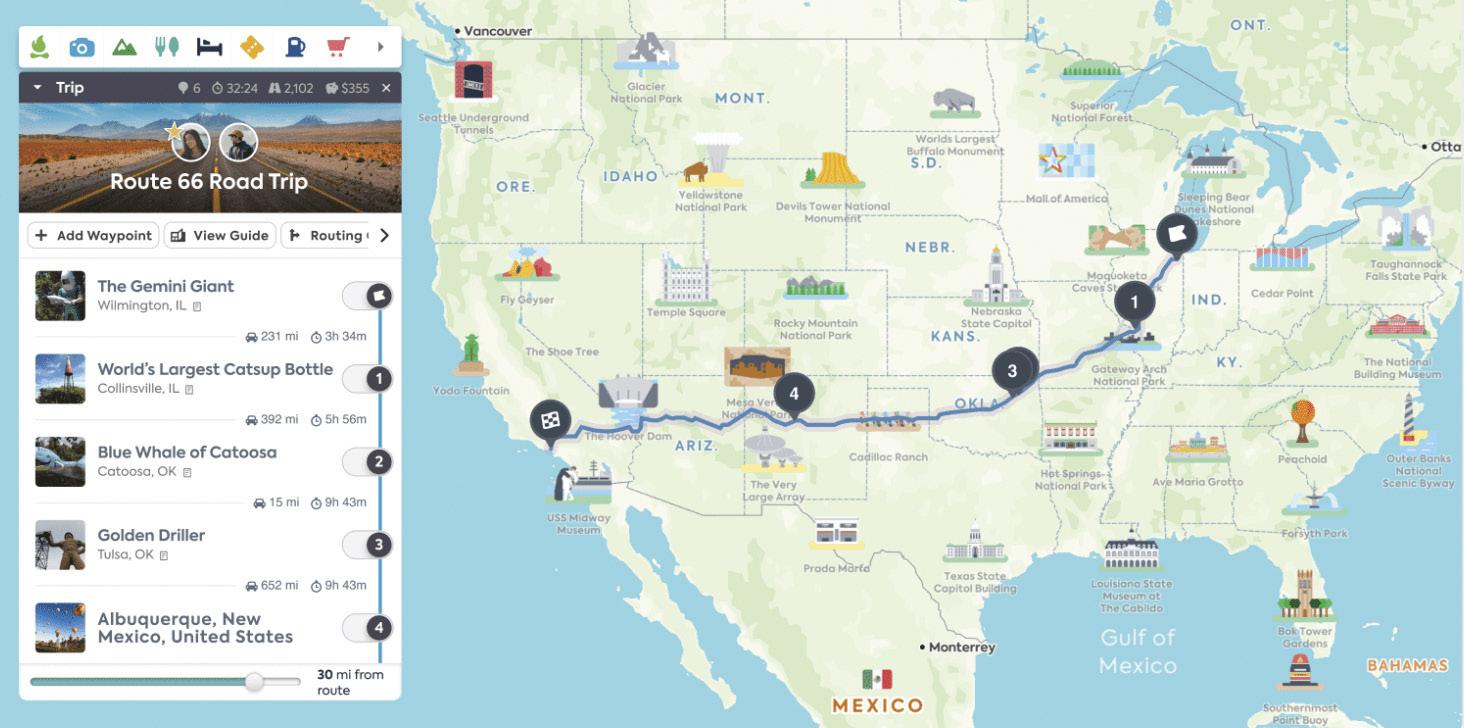
Find Cool Stops
Explore more than 300 extraordinary places to take your trip to the next level with Roadtrippers. Type in where you are starting and where you’re going and look for exciting stops along the way, including sights and attractions, restaurants, places to camp, activities, shopping and more. roadtrippers.com
Amusing Activities
Your kids will be entertained with the On the Go! Games from Grandlmoon with Hangman, Dots & Boxes, On-the-Go Bingo, Connect 5, Tic-Tac-Toe and Categories. Each game comes with instructions. Chronicle Books’ On-the-Go Amusements: 50 Cool Things to Do in the Car has tons of different ideas for engaging your brain and starting family fun conversations. Available on amazon.com for $9.99 and $8.14.


Everything in Its Place
Keep your child’s must-have travel items organized with a Backseat Organizer from Reserwa. This two-pack includes storage organizers with a touch screen tablet holder and multiple pockets, and it’s easy to clean to keep your car neat and tidy. Available at amazon.com for $14.99.

Taking out the Trash
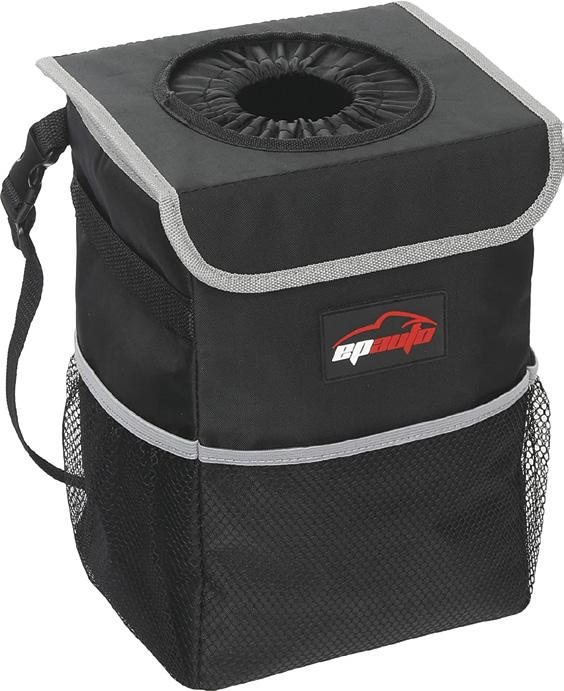
Stay clean with the EPAuto Waterproof Car Trash Can. This two-gallon capacity bin features a lid to keep trash out of sight, comes with 10 bags and fasteners to keep the bin from moving around while traveling. Available in multiple colors at amazon.com for $8.04-$9.23.
Say, “Cheese!”
Capture the memories of your trip with instant wallet-sized photos with FUJIFILM’s INSTAX mini 12. This camera automatically calculates brightness and adjusts shutter speed for clear pictures, and then twist the lens for closeup mode for a family selfie. Available in multiple colors at instax.com for $79.95.

Just in Case
Be prepared for anything with Everlit’s Survival Car Emergency Kit, which includes repair cable ties, bungee cords, electrical tape, a space blanket, a tire inflator, a first aid kit and more. Available at amazon.com for $64.95.

12 Atlanta Parent June 2023 atlantaparent.com


June 2023 Atlanta Parent 13 atlantaparent.com
MAY 15 – AUG. 15

A summer of fun including Storytimes in area parks and splash pads, camp inspired crafts and programs, a week of magic shows, and much more!
Log how much you read and win prizes!

Learn More: gwinnettpl.org

Seven Tips to Keep Your Kids Reading This Summer
 by Jan Pierce
Summertime is here and while children deserve a break from their usual routines, reading is one academic skill that should stay.
To be successful, reading takes practice, and children need to make daily reading a high priority in the summer.
As a bonus, children who learn to read fluently become independent learners with the doors to an endless number of ideas wide open to them. Here are some tips to keep your kids reading, and actually enjoying it:
1 2 3
Plan your daily reading sessions around a family challenge. Set goals for each reader in either number of books read or number of pages read. Set both weekly goals that are rewarded with small prizes and work toward a summer goal with a larger reward that can be earned. Weekly prizes can be as simple as a trip to McDonald’s, five extra minutes of screen time or a new inexpensive toy. The end of summer reward should be something pretty exciting such as a day at a waterpark or an overnight stay at the beach. Don’t break the bank, but make the prizes motivating. Keep a chart to track progress and it will be fun for everyone.
Use your local library as a resource. Libraries love to issue library cards to young readers and usually have a motivating challenge going themselves. See which day story hours are held and find out if you can dovetail your summer challenge with theirs. Libraries work hard to meet the needs of children over their summer months and often have special activities planned just for them. Find out more about local summer reading programs on page 16.
Do you belong to a book club? If you do, you know the routine. Gather a group, select a book everyone wants to read and then meet weekly to share ideas, answer questions together and talk about what you did or didn’t enjoy. Children are perfectly able to do this with some guidance. So, gather the family or include some neighborhood kids of reading age and go for it. Book clubs for parents and children are also popular. Search online for tips on starting your own parent-child book club. Crafts and snacks related to the book being read round out the book club experience.
4 5 6 7
You may not be aware of all the excellent children’s reading websites available online. If you have access to a computer, visit some of these sites with your children and watch them get excited about reading:
n adlit.org
n storylineonline.net
n kidsread2kids.com
n booksforboys.com
n tumblebooks.com
Select several of your children’s favorite books and go to the author websites. You’ll be amazed at how rich and stimulating author sites have become. They have stories to read and lots of related crafts and games to do, too. Some favorites are janbrett.com and kevinhenkes.com.
Choose a chapter book that the whole family will enjoy and do a family read-aloud in the evenings or in the car while you travel. Choose a book with enough drama to keep all members interested. “Where the Red Fern Grows” by Wilson Rawls is a good choice or try “The Indian in the Cupboard” by Lynn Reid Banks. You can even choose a series and try to finish it before summer is over. If the book was made into a movie, have a family movie night as a reward for finishing the book.
Be a reader yourself. Believe it or not, children of readers are influenced to read more by seeing their parents with their noses in a good book. If dinner conversation is sometimes about good books and the ideas inside them, so much the better.
Encourage children to spend lots of time this summer running, playing and taking a break from the classroom, but be sure to include quality time with reading as well. Your kids will learn to enjoy the world of books — there are endless topics and genres to enjoy — and they’ll also be better prepared to get going on their learning again next fall. Happy Summer Reading!
June 2023 Atlanta Parent 15 atlantaparent.com
It’s Time for Summer Reading in Atlanta!
Here’s what’s happening at your local library, bookstores and more.
by Mary Williams
School-aged children are used to swapping out books at the media center or classroom library, so keep it up over the summer by visiting your local library. Younger ones will love the sights and events of the library even if they aren’t old enough to read.

The best part is the metro Atlanta libraries are ready for you with their summer reading program! The Georgia Public Library’s 2023 theme is “All Together Now” and is focused on kindness, friendship and unity. Check your local branch for special events like storytimes, arts and crafts, magic and puppet shows, STEAM activities and prizes. Need to find a library? Visit georgialibraries.org.
What’s happening where you live?
n The Fulton County Library system will kick off its summer reading program on June 1 — look for special events including puppet shows, performances and a themed “Field Day” with face painting, crafts, bubbles and more. Check your local branch’s calendar for storytimes for toddlers and preschoolers, early learning programs, movies and more fun things to do. fulcolibrary.org
n During Gwinnett Public Library’s Summer Reading Challenge, “Camp Kindness,” kids of all ages can earn prizes and free books by reading and logging their books on Beanstack. Summer events include storytimes at area parks and splash pads, puppet shows, camp-inspired crafts and activities. Stop in your local branch for early learning and literacy activities, story times and kids’ craft programs. gwinnettpl.org
n At DeKalb County Libraries, join in kick-off “All Together Now” scavenger hunts at area branches, where kids can solve puzzles and receive their summer reading starter pack. Many of their library locations offer book clubs, storytimes, author events and more to keep kids engaged and reading. dekalblibrary.org
n Beginning June 1, Cobb County Libraries will have their online reading tracker Beanstack ready to roll. Each member of the family can sign up and be entered to win prizes based on how much you read. All summer long, you can make kindness cards for members of the community any time you stop by a branch, plus they’ll have storytimes, arts and crafts and more for the whole family. cobbcounty.org/library
16 Atlanta Parent June 2023 atlantaparent.com
Storytimes and More Reading Programs
n Visit Little Shop of Stories in Decatur for storytime on Tuesdays and Thursdays. This summer, ages 5 and younger can win prizes during the Wee Reads program; older kids can complete their bingo cards to win prizes through the Summer Reads program. littleshopofstories.com
n Wednesday storytimes at the Peachtree Road Barnes & Noble include activities and a craft. During B&N’s summer reading program, kids in grades 1-6 can choose a free book for every eight books they read. barnesandnoble.com
n During the Atlanta Hawks’ Check It Out Reading Challenge, kids who read five books between May 27 and September 4 will receive a free youth ticket with the purchase of one adult ticket to an Atlanta Hawks regular season game. nba.com/hawks/ community/checkitout
n The Carlos Museum’s Wrapped Up in Reading program encourages kids to read and learn about civilizations around the world. Kids who read five books from their 2023 booklist will receive a prize. carlos.emory.edu/wrapped-up-in-reading
n Pizza Hut’s Camp BOOK IT! Program: Track and reward your kids’ reading this summer and they’ll receive a free one-topping Personal Pan Pizza. The website also has fun activities and book recommendations. bookitprogram.com/ book-it-for-parents
n Chuck E. Cheese Reading Rewards: Kids can receive 10 free play points with any food purchase. Download the rewards chart and track their reading progress, then redeem the chart at participating locations. chuckecheese.com
n Storytime is everywhere! While you’re out and about with the kids, check for storytimes at local museums and venues, including Atlanta History Center, Fernbank Museum, The Wren’s Nest and the Plaza at Avalon.
Haven’t
been to the library lately?
Here are some helpful hints for getting started:
n Find the branch closest to you. A simple Internet search should make this easy.
n Once you arrive, find the circulation desk and ask for an application.
n Fill out the application, kids can do their own (or you can help) and provide a photo ID.
n Get your FREE library card and start checking out books!
n Before you go home, be sure to explore the fun freebies. You can check out passes for places like Zoo Atlanta, Center for Puppetry Arts, the Carlos Museum and the Go Fish Education Center. You can also check out a ParkPass and Discovery Backpack with binoculars and nature guides for Georgia State Parks.

June 2023 Atlanta Parent 17 atlantaparent.com
Just Ask Dad
by Tali Benjamin and Mary Williams
June brings the start of summer and also a day for us to celebrate dads. This year, Father’s Day is on Sunday, June 18. It’s a day to embrace all the things that make dads great — from the fun they bring to the lessons they teach. So, in their honor, we asked local dads a few questions about fatherhood today, and here’s what they had to say.
What are your favorite things to do with your kids?
Going to the aquarium and the zoo, checking out different festivals, going on walks, watching the Braves on TV or going to Braves games, dancing to music, throwing stuff, playing with our cats and dog. There is so much to do. There’s never a weekend where we are sitting around bored. There’s something happening every weekend.
– Jonsie Pitts, dad of a 1-year-old from Powder Springs
Explore the backyard! Emilia is a curious little girl, and I’m an engineer. So, I like to explain to her how things work. We have a half-acre backyard, and we have lots of trees and vegetation. We can spend hours outside looking at nature and exploring. Springtime is the best time for that and she knows it. She’s being raised in a multilingual family. I speak French with her while her mom speaks Portuguese, so it’s stunning to see her developing her language based on what she likes to do (exploring nature and eating).
– Steven Berguin, dad of one from Marietta
I love to play and act out made up scripts and scenes from our favorite movies. Family night on Sunday is my favorite!
– Quincy Caver (above), dad of three from Decatur

What is the best thing about raising your kids in Atlanta?

All the wonderful parks and attractions to take them to. We love Brook Run, Centennial and Piedmont parks. Gwinnett County also has some good parks.
– Christopher Jackson, dad of two from Chamblee
I think we have a strong outdoor set up that isn’t always recognized or appreciated. From rivers and lakes to parks and mountains, we have so many outdoor options.
– Jonathan Byrd, dad of two from Brookhaven
– Kareem Lopez (left), dad of two from Decatur
18 Atlanta Parent June 2023 atlantaparent.com
There is always something free to do. We’re going to Second Sunday at the High Museum of Art. It is free every month.
What is the scariest thing about being a dad in 2023?
Gun violence. Casually shopping for a bulletproof backpack was never something I thought I would do. Also, harmful images and information being readily available for this generation. That just wasn’t something we had to worry about as kids. - J.P.
I am soon to be 40! I only have one child, but the pressure we live in with the society expecting your kid to always achieve milestones way earlier is just too overwhelming and is a terrible, stressful thing to deal with when you are older than an average father. – S.B.
How easily children are exposed to adult things.
– Kevin Fox (below), dad of two from Dunwoody
What is the most exciting thing about being a dad in 2023?
Just watching her grow up and learn new things fast; she catches on to things.
– Sean Wade (above), dad of one from Loganville
Doesn’t matter the year, in my opinion, I love watching them grow and seeing them smile. – C.J.
Raising my children in a technology driven world. The opportunity they get to have a positive impact and voice to the masses is so much more than I could have ever thought. – Q.C.

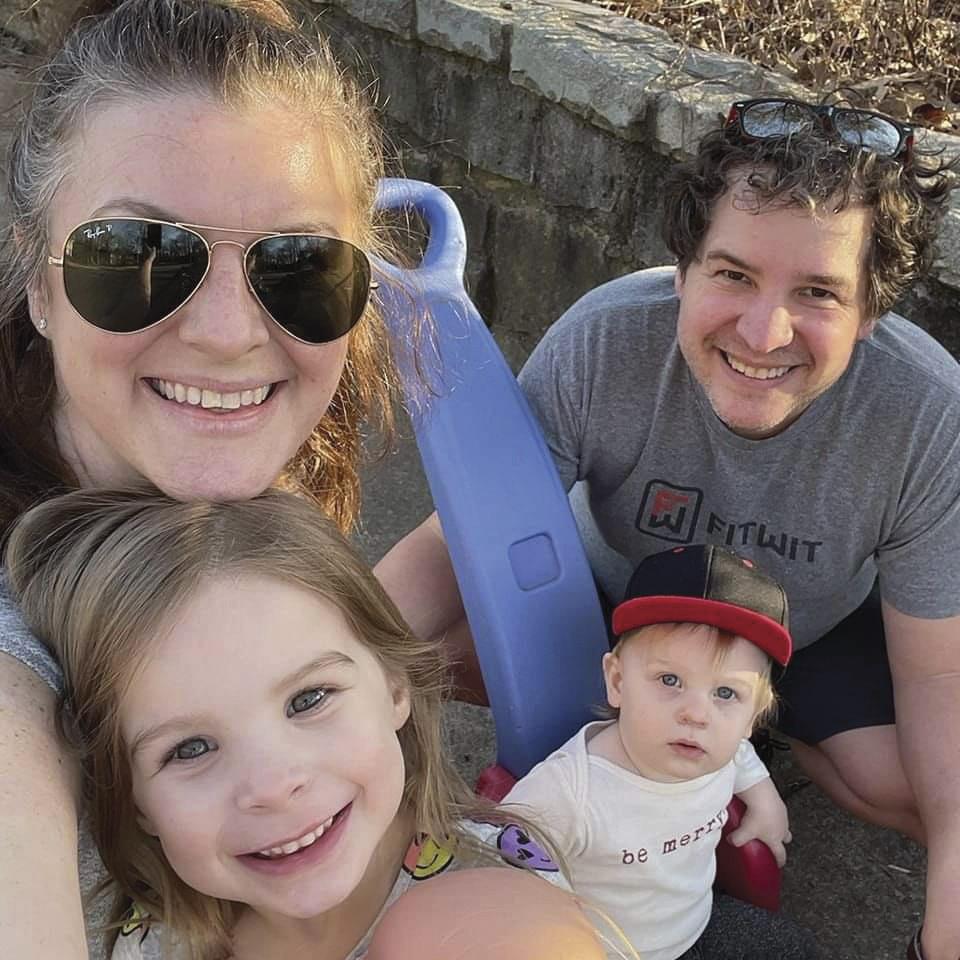

What is one piece of advice you know you’ll give your kids?
Your word is your bond. Mean what you say, say what you mean. – C.J. (right)
Love yourself. Feel your feelings. Dream your dreams. Just be you. You are loved beyond measure. You are enough. – J.P.
Realize when you are in a situation where you need to take a pause and think before doing something impulsive. – J.B.
To learn to be patient, enjoy every moment, good or bad. Understand everything won’t be perfect, but everything will be perfectly fine. – S.W.
June 2023 Atlanta Parent 19 atlantaparent.com
10
Ways to Beat the Summer Heat
by Emily Webb
Wear sunscreen daily.
Exposure to the sun’s ultraviolet rays happen daily during any outdoor activity. UV rays are harmful all year long, and even on an overcast or cool summer day, you should practice sun safety.
“Per the American Academy of Pediatrics, approximately 80% of sun damage happens before age 18. For us moms and dads, sunscreen helps prevent against wrinkles, premature aging and skin cancers, which approximately one-fifth of people will get within their lifetime,” said Dr. Sarah Lazarus, a Children’s Emergency Medicine Physician at Children’s Healthcare of Atlanta. “For the little ones — older than 6 months of age — applying sunscreen helps protect against painful burns and potential skin cancer, including potentially-fatal melanoma.”
Swimming, boating, skiing and hiking increases sunburn risk, as the sun’s rays reflect off water, sand and snow, and at higher altitudes, UV radiation also increases.
No matter your skin color, everyone is at risk for UV-related health problems, including skin cancer, eye cancer or cataracts. Check out Black Girl Sunscreen for products made specifically for people of color to protect their skin.
Understand SPF.
Sun Protection Factor (SPF) is a measure of how much solar energy is required to produce sunburn on protected skin. A higher SPF value means increased sunburn protection.
“Unfortunately, SPF is not related to the amount of time required to get burnt,” Lazarus said. “Therefore, layering two products does not give you more time in the sun without burning. Also, the amount of time you can be outside without burning is related to the time of day as well.”
Find the right sunscreen.
“There is a lot of debate about the ‘best sunscreen’ for your kiddo,” Lazarus said. “Personally, I am a fan of anything with zinc oxide. It’s a mineral sunscreen that is hard to apply but stays well and is the only sunscreen that has been FDA studied on infants under 6 months of age.”
If you have sensitive skin, you may want to try the sunscreen you buy for your children. “Many of the sunscreens for kiddos have less added ingredients and scents,” Lazarus said.

When shopping, choose a sunscreen with at least 30 SPF, “broadspectrum” to protect kids from both ultraviolet A and B rays and “waterresistant.” Skip the spray bottle, as aerosol sprays can be inhaled, alcohol ingredients are flammable, and it’s difficult to apply spray sunscreen evenly. Apply sunscreen 15-30 minutes before going outside and evenly cover all areas of exposed skin. Reapply every two hours and after swimming, sweating or toweling off.
Wear the right items.
“Lightweight and light-colored clothing will help prevent your child from sun exposure, but also, make your life easier, so you don’t have to chase a squirmy toddler to apply sunscreen every hour,” Lazarus said. “Ideally, pick clothing with an Ultraviolet Protection Factor. Hats should have a large brim that covers the face, and sunglasses should also be UVprotective.”
Stay out of the sun.
As much as possible, limit the time you are outside between 10 a.m.4 p.m. when the rays are the strongest.
Babies younger than 6 months should be kept out of direct sunlight. Keep in mind babies don’t sweat, but to cool them off, consider purchasing a handheld fan with an attached water bottle to spray mist.
“Fans can also be really helpful for keeping air circular and moving,” said Dr. Ashley Brouillette, a Pediatric Sports Medicine Primary Care Physician at Children’s Healthcare of Atlanta. “For all kids, you want to make sure to have access to shade and hydration. You don’t want to be in an environment that’s going to cause rapid sweating, because you don’t want to lose moisture.”
20 Atlanta Parent June 2023 atlantaparent.com
In the summer, Georgia temperatures rise and the sun glares, but it’s still possible to have fun all season long.
What’s the difference between chemical and mineral sunscreen?
Chemical and mineral sunscreens shield your skin in different ways.
“Mineral sunscreens sit on the top of the skin to block UV rays, like a shield, whereas chemical sunscreens bind with UV rays, like a sponge. Despite small amounts of chemical sunscreens being absorbed into the skin, there is no current evidence either sunscreen is unsafe,” Lazarus said.

Chemical sunscreens are quick and easy to apply, and unlike mineral sunscreens, they don’t leave a white film on the skin; however, they may cause skin reactions in certain people. Titanium dioxide and zinc oxide are common ingredients in mineral sunscreens and are generally recognized as safe and effective by the FDA.
Mineral sunscreens are ideal for children, people with sensitive skin and people with melasma. Unlike chemical sunscreens, they offer immediate protection. Since it sits on the top of the skin, it may contribute to acne, and it is also harder to apply, leaves a white film on the skin and needs to be applied more frequently than a chemical sunscreen.
Drink water.
“Get your kids used to drinking water,” Brouillette said. “Leave a big pitcher of water in the refrigerator, so they are used to taking that out as something to drink. Give them their own bottle or cup they’re excited to drink out of. You can also try different flavored waters, but make sure they’re not super sugary. If they’re older, you can incentivize and make it a reward system: they can’t go out and play until they drink water. For little ones, make sure they get in the habit of drinking water early. If kids grow up not drinking water, it can be a hard habit to get into. The body and hormones are sensitive to carbs and sugar, and if you get used to them, it changes what your body expects in a physiological way.”
Don’t wait until your child is thirsty to encourage them to hydrate. Serve water 30 minutes before an activity. Kids who weigh less than 90 pounds should aim for five ounces of water every 20 minutes, and those who weigh more than 90 pounds should aim for eight ounces every 20 minutes.

Don’t give babies water.
Ages 6 months and younger get their hydration from breast milk and/ or infant formula and should not be offered water, which is too much work on your baby’s kidneys. If you’re breastfeeding, make sure to drink plenty of water.
“Making sure that you are keeping babies cool and they’re not losing too much heat is going to be important,” Brouillette said. “Make sure you are feeding and hydrating at age-appropriate times.”
Serve sports drinks only in certain situations.
Sometimes, sports drinks and energy drinks are terms used interchangeably, but these drinks are not the same.
“If your exercise is longer than an hour, you should add something with some electrolytes, such as POWERADE, Pedialyte or Gatorade,” Brouillette said. “When you’re sweating, you’re losing salt and water. Especially if your child is a salty sweater — there is white trim around the sweat stain on the shirt — it is even more important to make sure you’re replacing salts in some way. Because these drinks have a lot of calories and sugar, they should not be a primary source of hydration.”
You can also serve foods containing carbohydrates and electrolytes, such as milk, a seed or nut butter sandwich, a banana or nuts and crackers.
Children should not drink energy drinks. “In general, we recommend against caffeine under the age of 12 and limited between the ages of 12-15,” Brouillette said.
Know the signs of health issues.
Young children are more likely than adults to suffer from heatrelated health issues, like heat cramps, heat exhaustion or heat stroke. Heat stroke and heat exhaustion need immediate medical attention.
Signs of a heatrelated problem:
l Cramps
l High body temperature
l Red, hot, dry skin (not sweating)
l Heavy sweating
l Rapid pulse
l Throbbing headache
l Dizziness
l Nausea/vomiting
l Confusion
l Loss of consciousness
l Paleness
Signs of dehydration:
l Low energy levels
l Less frequent urination
l Dry mouth
l Lack of tears when crying
l Loose stool or decreased bowel movements
l Extreme fussiness
l Excessive sleepiness
l Sunken eyes
l Cool, discolored hands and feet
l Wrinkled skin
Practice what you preach.
Kids are more likely to take part in healthy, safe habits if they see adults doing it, too. Make sure you wear protective clothing and regularly use sunscreen, and make it a habit to drink water together.
June 2023 Atlanta Parent 21 atlantaparent.com



















































Rabun County, Georgia. Home to outdoor adventure, state parks, rivers, lakes & waterfalls, farm-to-table dining, eclectic shops & markets, wineries & distilleries, Appalachian art & culture, resorts, spas & gol ng, and so much more!Visit ExploreRabun.com.
Autumn Mares Tails by Peter McIntosh mcintoshmountains.com
STAY AND PLAY IN GEORGIA
There’s so much to do and explore in Georgia — you don’t even have to leave the state to see amazing views, play in the water, learn about history and so much more!
 by Emily Webb and Mary Williams
NATURAL WONDERS l SCENIC WATERFALLS
LAKES WE LOVE l GLAMPING l A TASTE OF HISTORY
PLUS: GREAT DAY AND WEEKEND TRIPS
SPONSORED CONTENT

June 2023 Atlanta Parent 23 atlantaparent.com Cont’d on next page

PLAY
Natural Wonders
Georgia has so many one-of-a-kind vacation destinations. These six spots are tops for their beauty, activities and outdoor fun. Put them on your family’s summer bucket list!

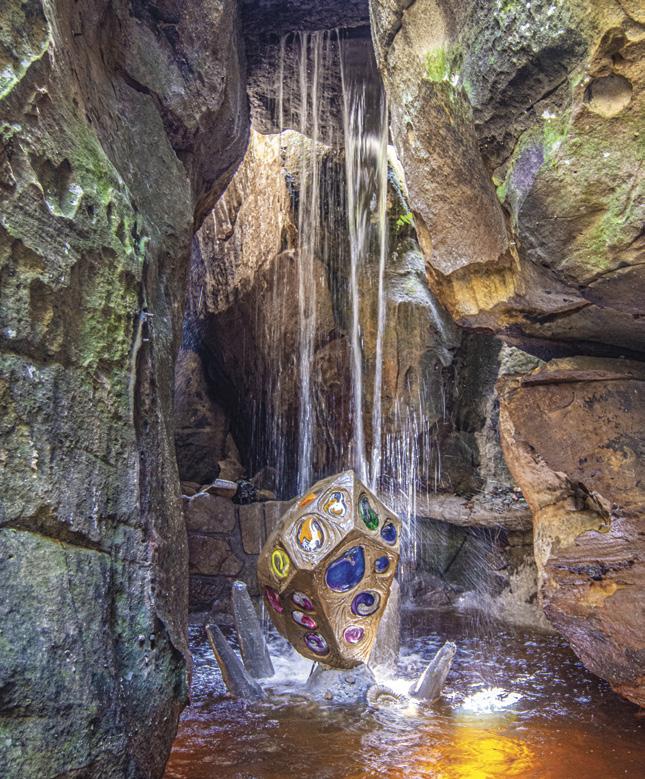
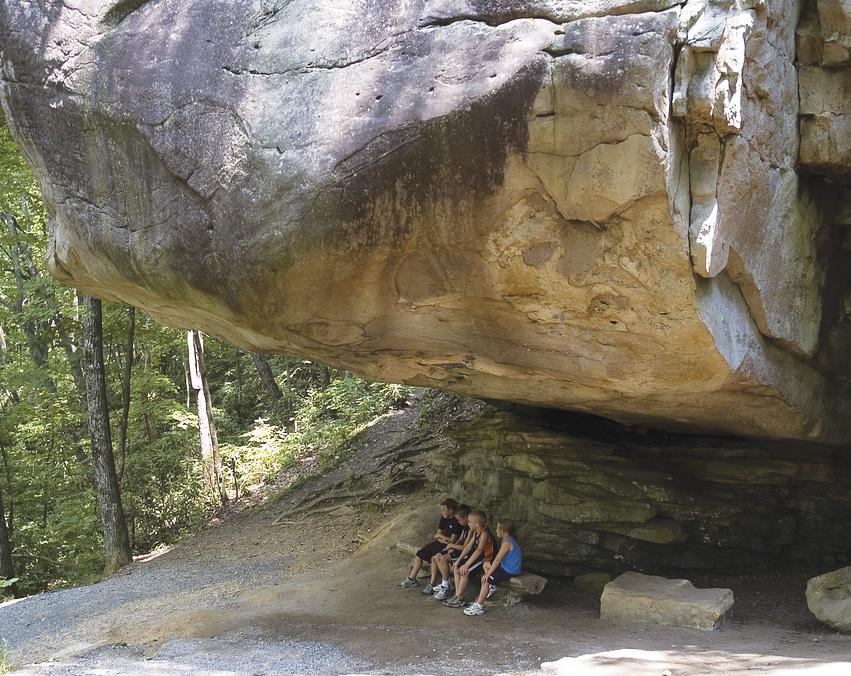


l Cloudland Canyon State Park. It took millions of years for nature to form the awe-inspiring canyons and caves in one of Georgia’s most scenic parks. Walk or hike over 64 miles of trails, from easy to challenging routes, and enjoy great views from any location. The park is also a popular spot for fishing, hiking and horseback riding; overnight camping options include cottages, tents, trailer sites and even yurts. Rising Fawn, gastateparks.org/cloudlandcanyon
l Rock City. Located atop Lookout Mountain, Rock City is a true marvel of nature with ancient rock formations, gardens with more than 400 native plants and a panoramic view where you can see seven states. Explore natural areas, including Hall of the Mountain King, Grand Corridor, Mushroom Rock and Fat Man’s Squeeze. Kids will love the whimsical Gnome Valley, Fairyland Caverns and Mother Goose Village. Lookout Mountain, seerockcity.com
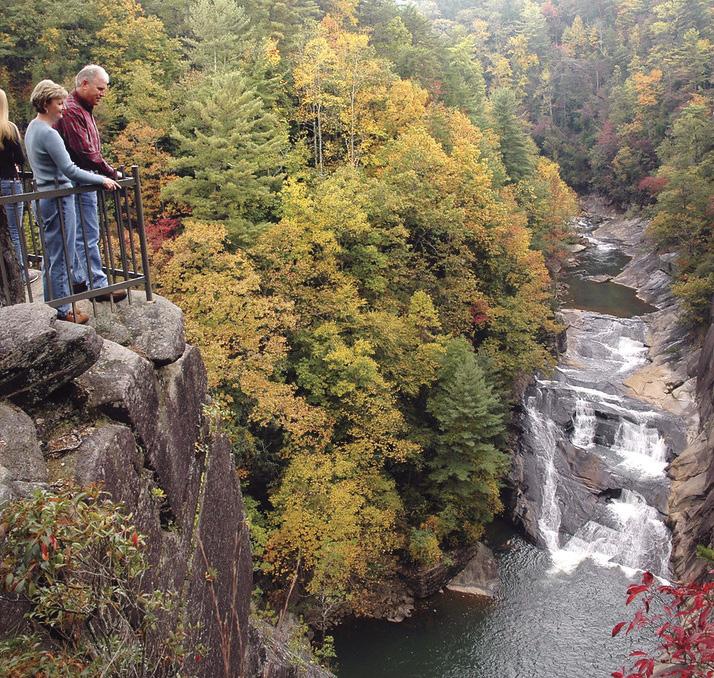
l Tallulah Gorge State Park. As one of Georgia’s Seven Natural Wonders, this spectacular canyon is two miles long and nearly 1,000 feet deep. Hike rim trails to several overlooks, or if you’re looking for more of an adventure, obtain a permit to hike to the gorge floor. Other activities include archery, biking, fishing, geocaching, swimming and more. Tallulah Falls, gastateparks.org/tallulahgorge
l Radium Springs Gardens. Radium Springs Gardens pumps 70,000 gallons per minute of 68-degree water from an underground cave, and in the 19th and early 20th century, many believed bathing in mineral water had healing properties. Walk through a courtyard where the former Radium Springs Casino once stood to view natural foliage, crystal clear waters and beautiful flora. This spot is also considered one of Georgia’s Seven Natural Wonders. Albany, visitalbanyga.com
l Georgia’s Barrier Islands. Georgia’s barrier islands are one of the state’s top summer vacation spots, and for good reason — they offer something for everyone: sandy beaches, historical sites, upscale resorts, wildlife and pristine expanses of marshland. Four main barrier islands, St. Simons Island, Sea Island, Jekyll Island and Little St. Simons Island, make up the Golden Isles. Enjoy a range of outdoor activities, including camping, kayaking, horseback riding, nature tours, hiking and boating, all in one of the state’s most beautiful settings. goldenisles.com
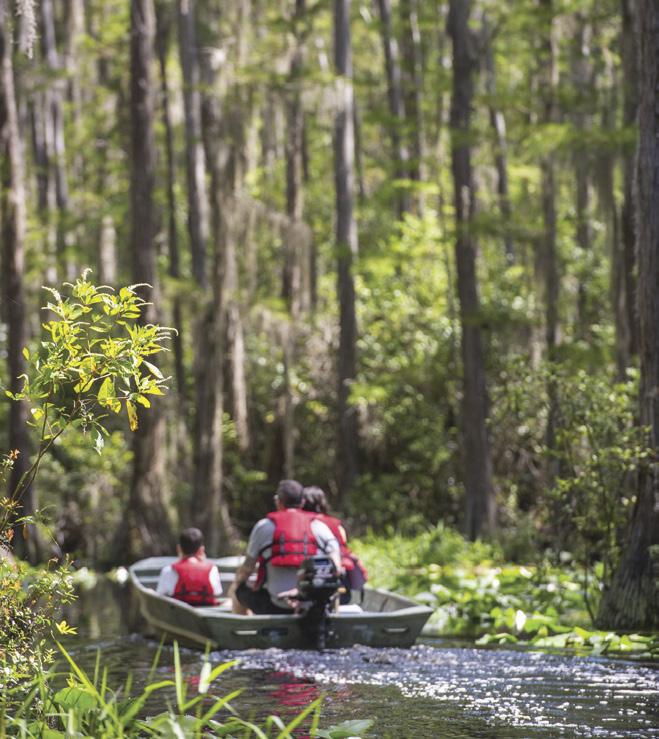
l Okefenokee Swamp Park and Okefenokee Adventure. Considered the headwaters of the Suwannee and St. Marys Rivers, this fascinating swamp provides habitats for threatened and endangered species, more than 600 plant species and contains 353,981 acres of National Wilderness Area. Explore the area with a boat or train tour, and view live wildlife shows and exhibits. Waycross and Folkston, okeswamp.org
Cont’d on next page
June 2023 Atlanta Parent 25 atlantaparent.com
STAY AND
IN GEORGIA
Radium Springs Gardens
Okefenokee Swamp Park
Georgia’s Barrier Islands
Cloudland Canyon State Park Rock City Tallulah Gorge State Park








STAY AND PLAY IN GEORGIA
Scenic Waterfalls
From short and easy trails to more challenging hikes, Northeast Georgia has a wealth of beautiful waterfalls. Enjoy a day trip to one of these family-friendly falls or spend a weekend exploring the area.
l Anna Ruby Falls. Located in the Chattahoochee National Forest, Anna Ruby Recreation Area is a short drive from Helen. An easy half-mile paved trail leads to the foot of a rare set of double waterfalls. Be sure to stop at the visitor center, which offers a variety of educational programs and activities throughout the year. Helen, helenga.org
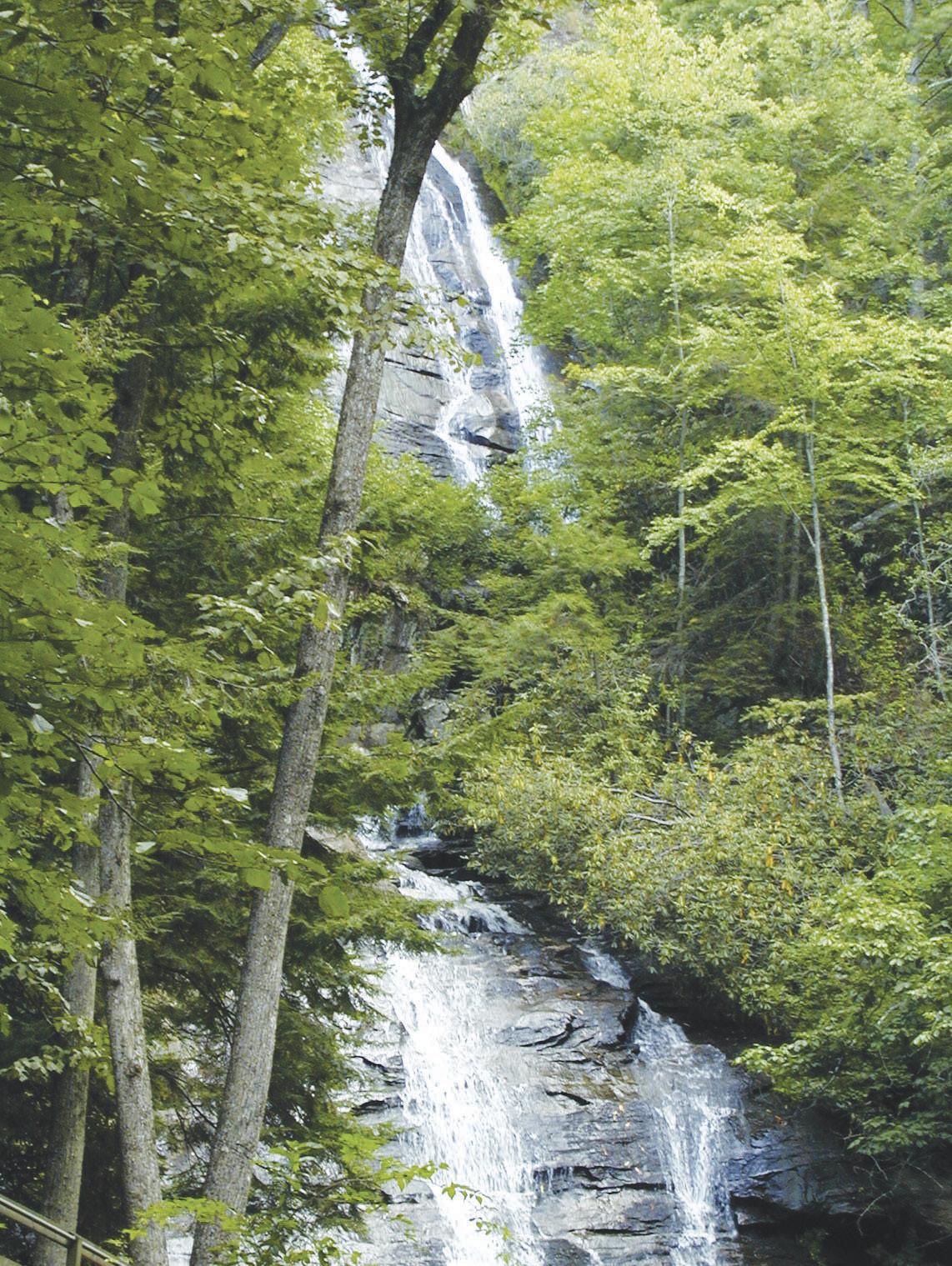
l Toccoa Falls. Located on the beautiful campus of Toccoa Falls College, this spectacular attraction is one of Georgia’s hidden gems. An easy, accessible pathway leads to the 186-foot, free-falling Toccoa Falls. It’s ideal for beginners or families with younger kids. Toccoa, stephenscountyga.gov
l Dukes Creek Falls. A moderately challenging 1¼-mile hike leads to Dukes Creek Falls in the Chattahoochee National Forest, where several large waterfalls are formed at the convergence of Dukes Creek and Davis Creek. The main fall is a majestic 150-foot, multitiered cascade. Viewing platforms make it easy to get a panoramic view. Helen, fs.usda.gov
l Hurricane Falls. This series of six falls cascades through the 1,000-foot deep Tallulah Gorge. The 2¼-mile round trip hike takes visitors over a dizzying 80-foot suspension bridge before ending at Hurricane Falls. Spectacular views make this state park one of Georgia’s most popular. Tallulah Falls, gastateparks.org/tallulahgorge
l Panther Creek Falls. For families with a little more hiking experience, this seven-mile round-trip trail in the Panther Creek Recreation Area crosses sandy floodplains, smaller creeks and rock outcrops through the Chattahoochee National Forest. The multi-tiered falls end in a sandy shoreline area, perfect for resting up for the return hike. Turnerville, fs.usda.gov
Lakes We Love
Whether you’re looking for a quiet spot to canoe, a sunny beach or a place for watersports, Georgia’s beautiful lakes have it all! Here are a few of our favorite spots.
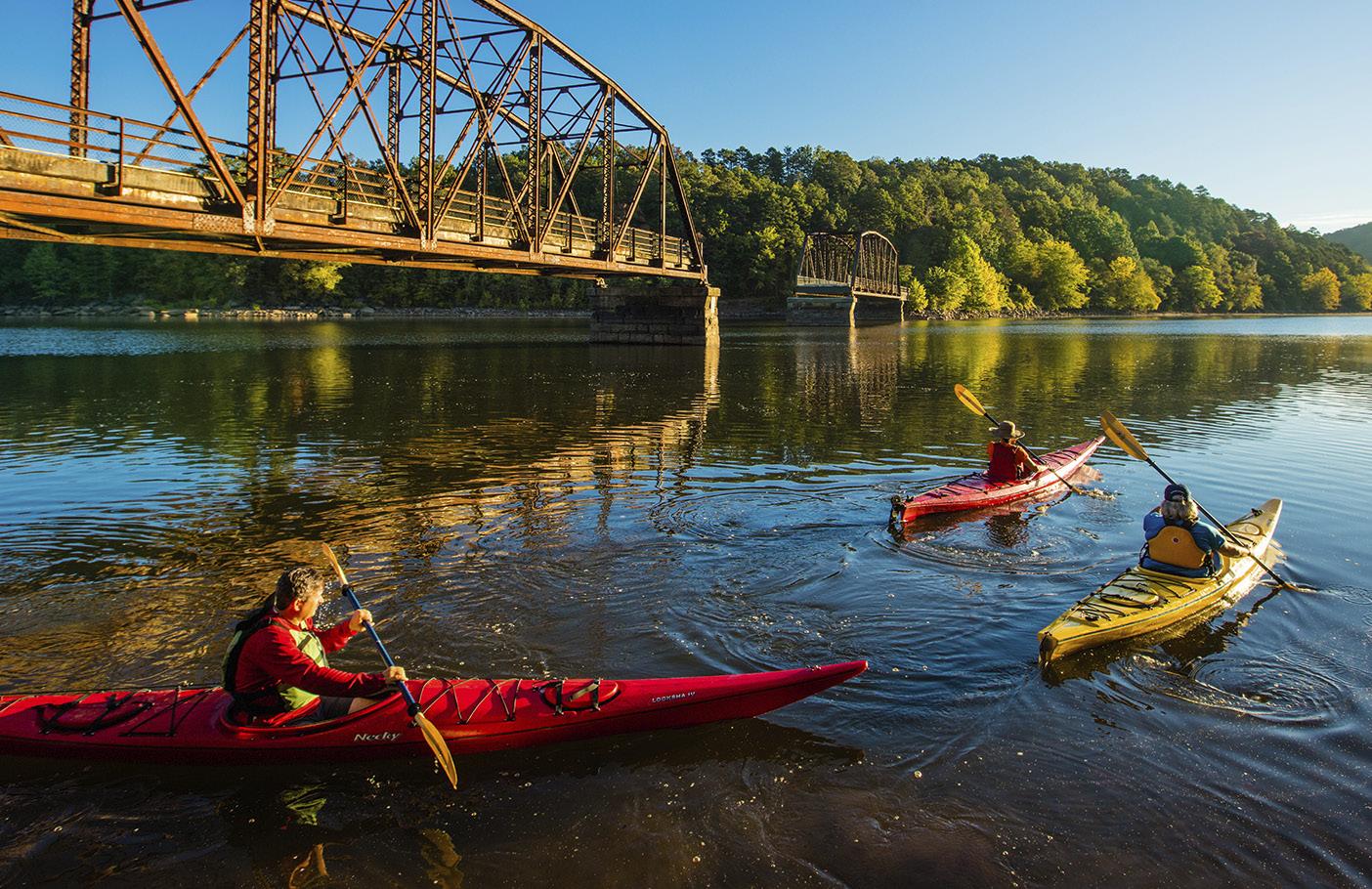
l Lake Allatoona. Located northwest of Atlanta, Lake Allatoona makes an ideal day trip. Visit one of its many parks, with beaches, picnic spots, playgrounds and other facilities. Cauble Park on Lake Acworth (which flows into Lake Allatoona) is popular for its beach and amenities. Red Top Mountain State Park also has biking and hiking trails, beaches and a historic Civil War site. Acworth, allatoonalake.org
l Lake Lanier. It’s one of the state’s most visited lakes, and one visit will tell you why. Lanier Islands Resort and its waterpark are popular destinations; the lake also has plenty of day parks with beaches, boat access, picnic areas, and fishing. Visit Don Carter State Park for activities like paddling, horseback riding and 15 miles of hiking trails. Gainesville, discoverlakelanier.com
l Lake Blue Ridge. Much of this lake’s shoreline is part of the Chattahoochee National Forest; Morganton Point Recreational Area has a great family beach as well as kayak and paddle board rentals. The Dayuse Area offers hiking, a paved walking loop and scenic lake views. Lake Blue Ridge Recreation Area has great views of the dam, with an accessible park, swimming and other amenities. Blue Ridge, blueridgemountains.com
l Lake Hartwell. Located on the border of Georgia and South Carolina, Lake Hartwell is known for its great fishing. Not an angler? The lake has nine campgrounds and a wide variety of family-friendly things to do, including beaches, biking, canoeing and waterskiing. Opportunities for walking and hiking abound, including a paved and accessible trail leading to the Hartwell dam. Hartwell, visitanderson.com/lake-hartwell
l Lake Sinclair. Spend a weekend — or a week — on Lake Sinclair, located near 1-20 in Milledgeville. Little River Park and Scenic Mountain campgrounds have RV and pop-up camper sites, tent camping and cabin rentals. Explore the lake’s quiet coves in a canoe or kayak, float in a tube, rent a boat or go jet skiing. Hike or walk the nearby trails and enjoy the public fishing area and sandy beaches. Milledgeville, visitmilledgeville.org
l Lake Blackshear. Plan an upscale vacation at Lake Blackshear Resort and Golf Club, where you can rent a villa or cabin and enjoy golfing, restaurants and other amenities, or camp lakeside at Georgia Veterans Memorial State Park, with fishing, biking and hiking trails, water sports and sandy beaches. The park’s military museum pays tribute to veterans from the Revolutionary War to the present day. Cordele, lakeblackshearresort.com
Cont’d on next page
June 2023 Atlanta Parent 27 atlantaparent.com
Anna Ruby Falls
Lake Hartwell
ROAD TRIPSTHE Best Vacation Experience

Please contact Alyssa at agerold@atlantaparent.com for more information.


STAY AND PLAY IN GEORGIA
Tubing and Rafting
Traveling by inner tube or raft is a great way to cool off in the summer. Enjoy an adventurous or relaxing day on the river at these spots.
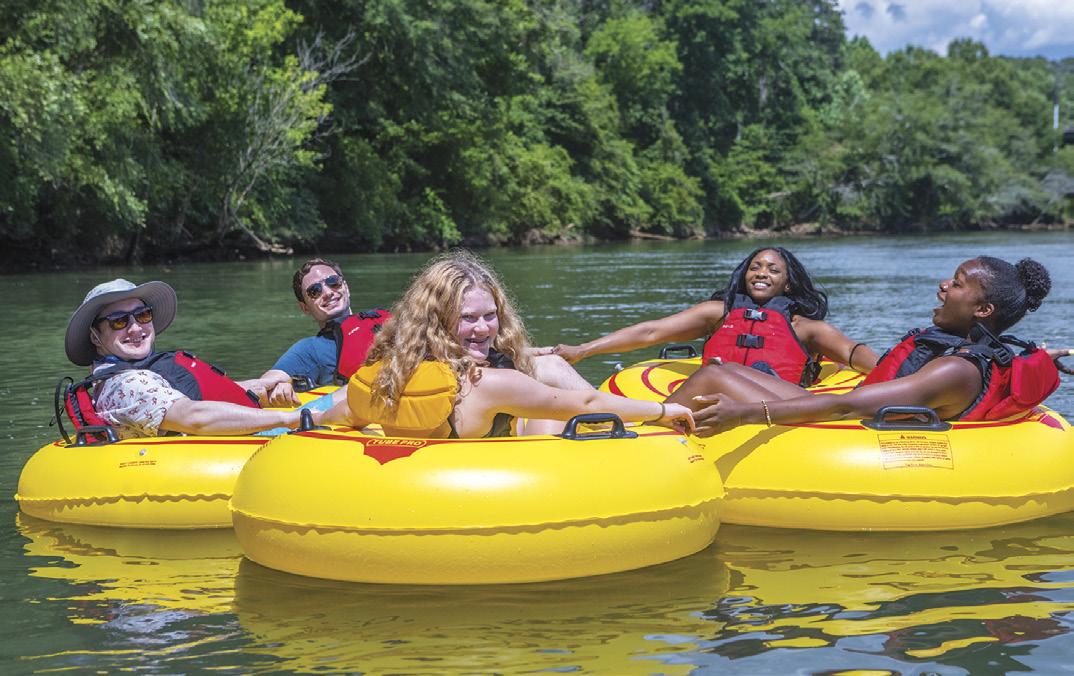
l Appalachian Outfitters. Meet at the Dahlonega outpost for a tube ride on the Chestatee River. A shuttle will take you to the start site for a 30-45 minute float. If you want to do the trip again, take a 10-minute walk back, or pay a $3 shuttle fee for each additional ride. You can also rent a canoe and kayak for trips on the Chestatee and Etowah Rivers. Dahlonega, canoegeorgia.com
l Cool River Tubing. This tubing company sits right in the Germaninspired town of Helen. After snaking down the Chattahoochee River on a one- or two-hour ride, explore the town and have a taste of German food. Along with tubing, their Aerial Adventure Park offers ziplines, aerial adventure courses and a climbing wall. Helen, coolrivertubing.com
l Toccoa River Tubing. This tubing adventure is worth the trip to the scenic Blue Ridge area. The Toccoa River is nestled in the beautiful North Georgia Mountains for a relaxing 1.5-mile trip. McCaysville, toccoatubing.com
l Helen Water Park & Tubing. This family attraction in Helen offers a 2.5hour tube ride from Highway 75 North to Edelweiss Strasse. At the end of your tubing trip, enjoy the full service restaurant and bar. While you’re there, enjoy the water park’s slides and activities. Helen, helenwaterpark.com
l Nantahala Outdoor Center. Plan an outdoor adventure with NOC. They offer whitewater rafting, tubing, ziplining, mountain biking and more. Head to Clayton for a 5-6 hour rafting trip, or float down the Chattahoochee River in a tube. Kayak, canoe and paddleboard rentals and guided trips are also available; book tickets online. Sandy Springs and Roswell, noc.com
l Southeastern Expeditions. The beginner rafting trip includes incredible scenery and stretches of whitewater for an overall relaxing trip along the Chattooga River. Canoes and kayaks are also available, and you can learn paddling skills and techniques with clinics. Clayton, southeasternexpeditions.com
l Whitewater Express. Head to Columbus for the RushSouth Whitewater Park on the Chattahoochee River, the longest urban whitewater rafting in the world. The Classic Trip is best for beginners, where rafters will take on Class 1-3 rapids on a two-hour trip. After, visit the Blue Heron Adventure Park for a ziplining adventure to Phenix City, Alabama. Columbus, chattahoochee.whitewaterexpress.com Cont’d on next page
28 Atlanta Parent June 2023 atlantaparent.com
Atlanta parents want to know about your family destination.
Nantahala Outdoor Center
A Taste of History
Georgia is rich in fascinating history! You don’t have to travel far from home to find heritage museums or historic landmarks that will appeal to the whole family.
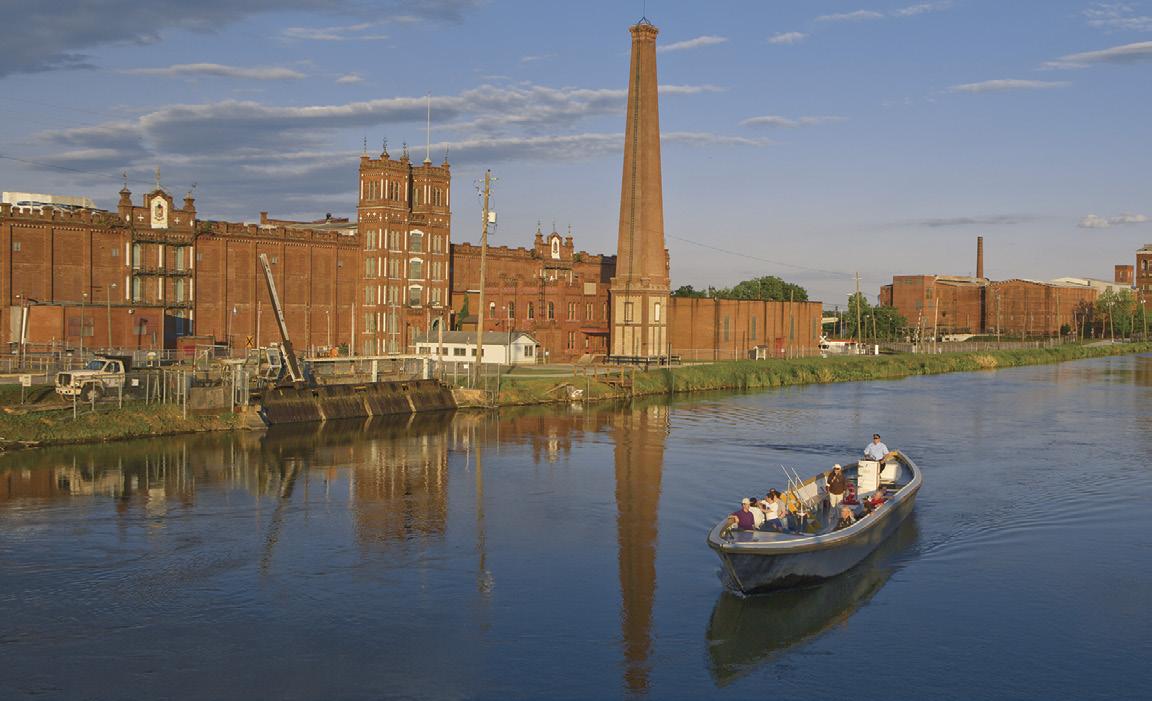
l Augusta Canal. Float through history on a guided tour of this historic canal, built in 1845, where you’ll see 18th-century textile mills and the Confederate Powder Works. See what it was like to be a canal worker during the immersive “Canal to Cloth” experience. The scenic towpath is a popular spot for walking and cycling. Augusta, augustacanal.com
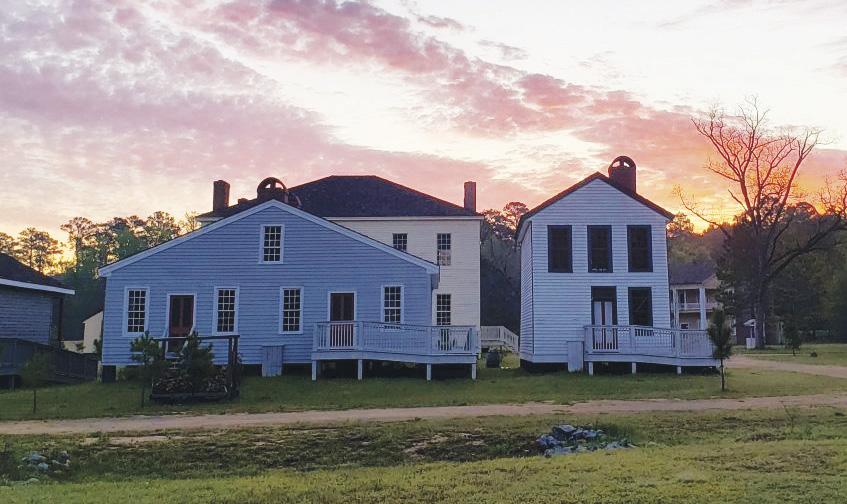
l Historic Westville. This living history museum explores 19thcentury life in the South. Learn the history of the Muskogee Creek people that lived in the Chattahoochee Valley. In the historic village, tour authentic homes, shops and churches and hear from costumed interpreters. Columbus, westville.org
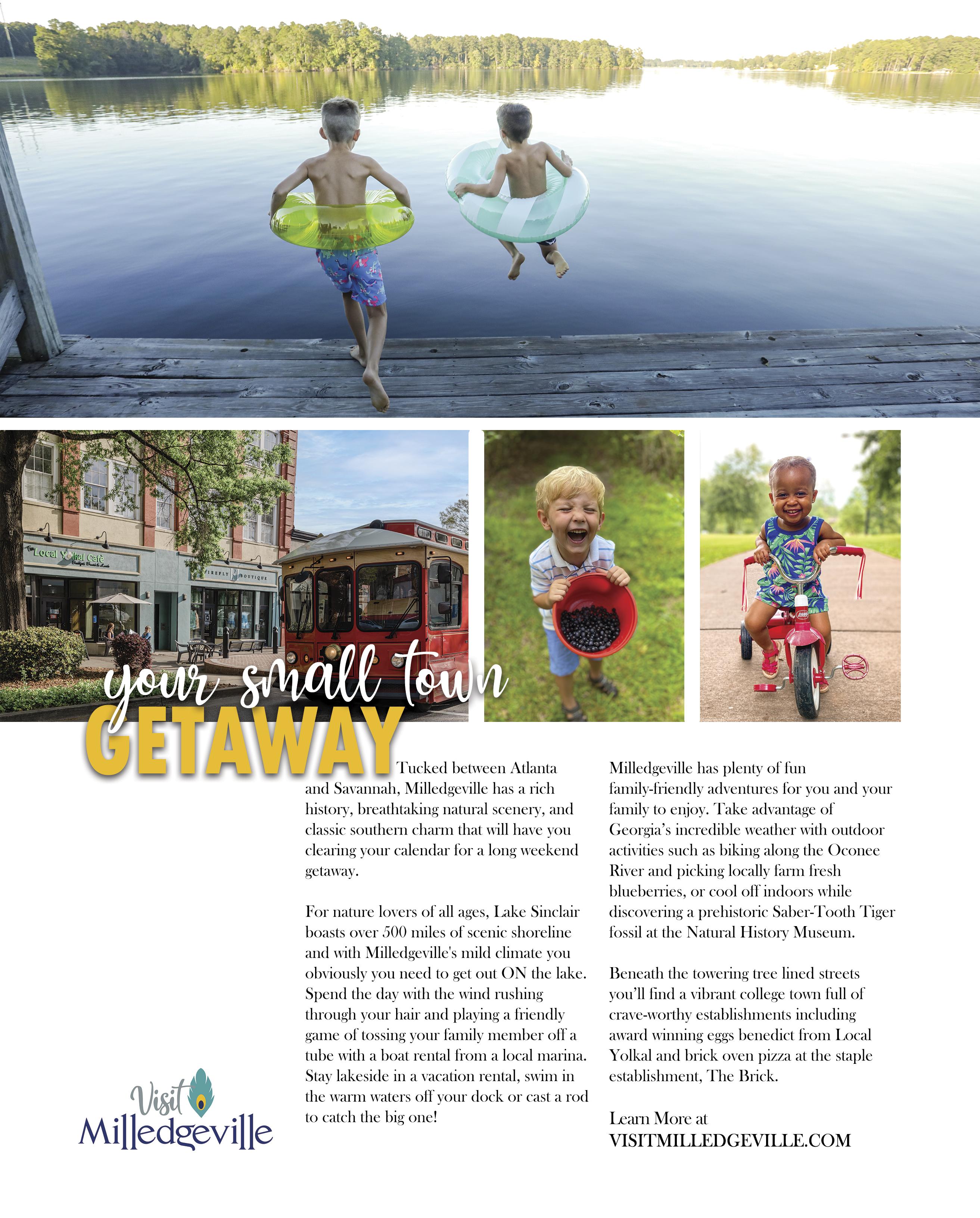
l William P. Wall Museum of Natural History at Georgia College. A great stop for science-loving kids, this museum holds one of the largest selections of fossils on display in the Southeast, covering the last 500 million years. It’s also home to a fulldome planetarium featuring state-of-the-art graphic projection, where you can see shows about astronomy and the night sky. Milledgeville, gcsu.edu/nhm
l Roosevelt’s Little White House State Historic Site. This carefully preserved retreat was built in 1932 by Franklin Delano Roosevelt, who traveled to Warm Springs to treat his polio. Take a tour of the house, guest house, servants’ quarters and garage, then visit the Memorial Museum and Historic Pools. Picnic and enjoy scenic views at Dowdell’s Knob, visit the fish hatchery and stroll through the town of Warm Springs. Warm Springs, gastateparks.org/littlewhitehouse
Coastal Georgia: Play in the Sand
Our state’s coastline and islands offer family fun for play in the sun and sand, historical exploration, interactive exhibits with animals, attractions and more.
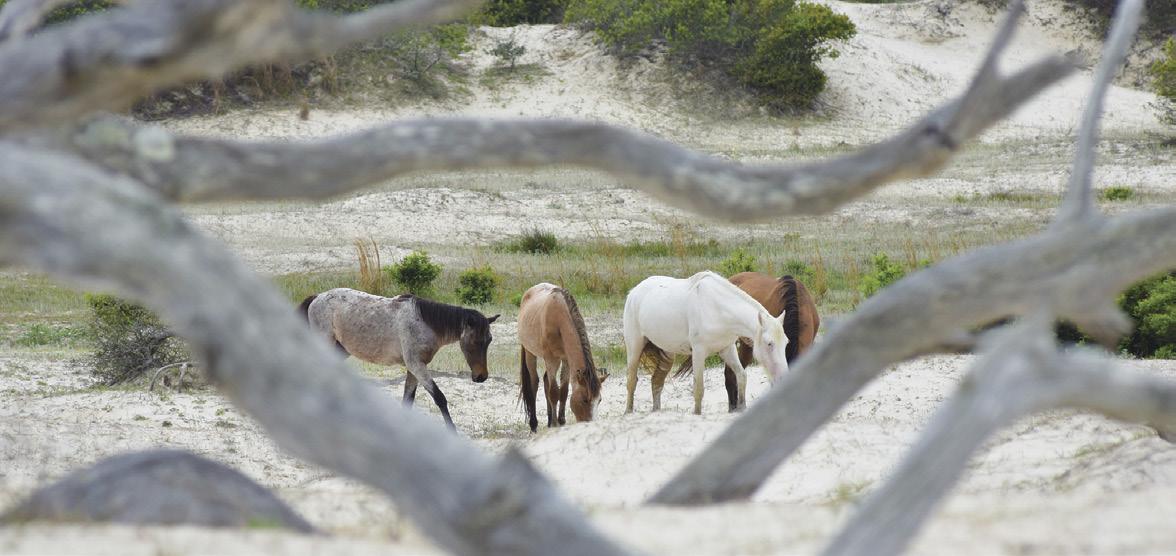
l Jekyll Island. Visit the Georgia Sea Turtle Center, which is actually a hospital for sick and injured turtles; check out exhibits about sea turtle conservation and rehabilitation and even adopt one and track its progress. Fish from the pier, bike the trail system, take a horsedrawn carriage in the National Historic District and get wet at the Summer Waves Water Park. Explore Driftwood Beach for a family photo op. jekyllisland.com
l Cumberland Island. Ride the ferry to Cumberland Island and explore 18 miles of undeveloped beaches (pack a lunch as there are no concessions on the island.) Go see the Cumberland Island National Seashore Museum and if your kids like submarines, the St. Marys Submarine Museum, with displays including a working periscope, models of torpedoes, a deep-sea diving suit and submarine uniforms. St. Marys Waterfront Park has a playground for kids. nps.gov/cuis
l St. Simons Island. Climb to the top of the St. Simons Lighthouse, and see as far as Jekyll Island, Brunswick and the south end of St. Simons. Stop by Christ Church, Frederica, one of Georgia’s oldest parishes, dating back to 1736. Watch for dolphins from the pier. Play in Neptune Park near Pier Village or go for a family bike ride around the island looking for tree spirits — kids love to find faces carved into the beautiful oak trees all over the island. goldenisles.com
l Tybee Island. Take an ecology tour with a marine biologist to examine tide pools, comb the beach and pull a net from the ocean to see cool marine life. At the Tybee Island Marine Science Center, go on a self-guided tour offering a behindthe-scenes view, observe underwater creatures and more. Catch the sunset at the Tybee Island Light Station, Georgia’s oldest and tallest lighthouse. Families can climb 128 steps of the lighthouse tower to see the breathtaking views. visittybee.com
Amanda Miller Allen and Elsa Simcik
30 Atlanta Parent June 2023 atlantaparent.com STAY AND
IN GEORGIA
PLAY
–
Augusta Canal
Historic Westville
Cumberland Island
Glamping and More

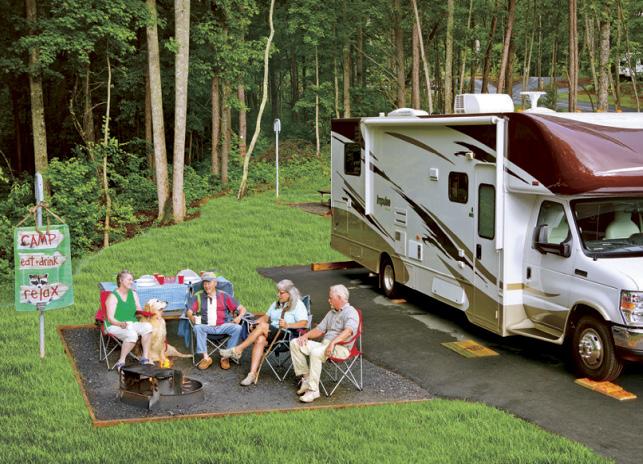
Put a spin on camping in these interesting shelters and environments.
l Nacoochee Adventures. Relax in the serenity of the forest in a red or green gypsy wagon or in a pioneer covered wagon. Helen, nacoocheeadventures.com
l Suwannee River Eco-Lodge. Located near the Okefenokee Swamp, this lodging site features eight cottages with kitchens, meeting space, a barbecue shelter and commercial kitchen. Fargo, gastateparks.org
l Amicalola Falls State Park & Lodge. The Len Foote Hike Inn is reached only by hiking a scenic five-mile trail through national forest. Meals are provided, so guests only carry their personal items. Dawsonville, hike-inn.com
l Mistletoe State Park. This park has an all-wooden, rustic tent cabin that is 12’x24’, 8’ of which faces the Clarks Hill Lake. Appling, gastateparks.org
l Unicoi State Park & Lodge. Bring your hammock or a sleeping bag for a night under the stars at Squirrel’s Nest covered primitive camping platforms. This site also offers furnished Safari Tents for a glamping getaway. Helen, unicoilodge.com
l Stay Dahlonega. Enjoy a treehouse escape with these three luxury, high-design experiences. Dahlonega, staydahlonega.com
l Historic Banning Mills. Stay in a cozy rendition of the Swiss Family Robinson’s rooms but with all of the modern conveniences with a Tree House Room. Whitesburg, historicbanningmills.com
l Little Raccoon Key. Glamp on your own private island with this vacation including a solar-powered Luxury Canvas Tent. Jekyll Island, littleraccoonkey.com
A yurt is a covered, insulated and circular shelter. You can stay in one at these spots:
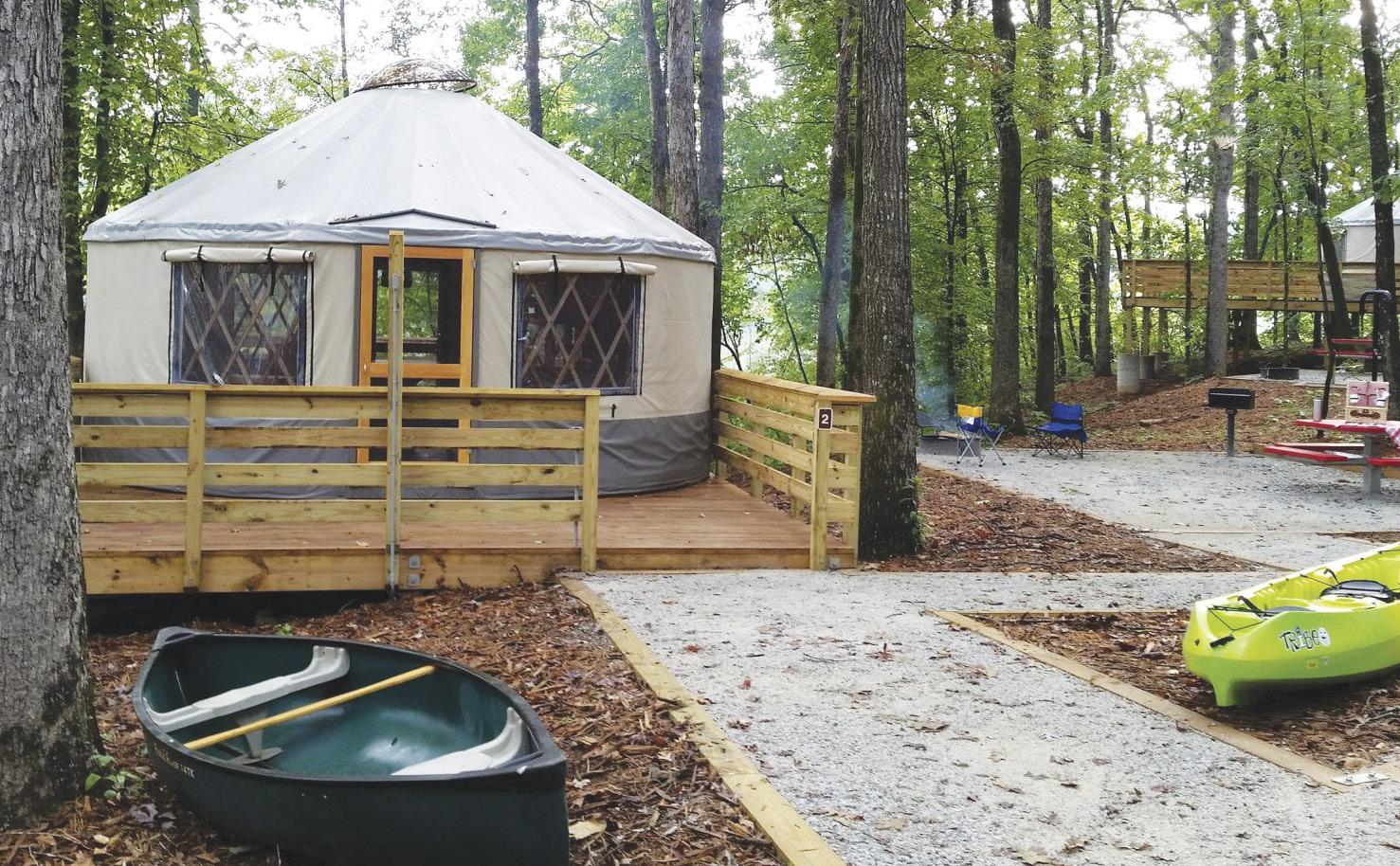
l Cloudland Canyon State Park. Rising Fawn, gastateparks.org
l Red Top Mountain State Park. Acworth, gastateparks.org
l High Falls State Park. Jackson, gastateparks.org
l Fort Yargo State Park. Winder, gastateparks.org
l Tugaloo State Park. Lavonia, gastateparks.org
l Skidaway Island State Park. Savannah, gastateparks.org
l Sweetwater Creek State Park. Lithia Springs, gastateparks.org
l Stone Mountain Park. Stone Mountain, stonemountainpark.com
June 2023 Atlanta Parent 31 atlantaparent.com
Sweetwater Creek State Park
Georgia Summer Adventures!
n North Georgia Mountains’ Hidden Gem
Treat the Family to a visit in North Georgia’s White County, including Alpine Helen and the villages of Sautee-Nacoochee and Cleveland, conveniently located just 90 minutes north of Atlanta. Georgia’s official Outdoor Adventure Destination also offers abundant shopping, history museums, performances, hand crafted arts and wonderful events throughout the year. White County offers a great escape for the entire family no matter the age. Stay at the newly renovated Unicoi State Park and Adventure Lodge. Make sure you tempt your taste buds at one of 25 downtown dining destinations, including bakeries and candy kitchens, while in town. helenga.org


n A Short Drive, a Perfect Weekend!
If you’re looking for family fun and adventure, look no farther than your own backyard! Rabun County, just a short trip away, is Atlanta’s backyard playground for all kinds of adventures. This quaint mountain get-away offers a wealth of unique and wonderful experiences, all of which come with amazing views, fresh air and sunshine. From thrilling outdoor activities like hiking, biking, rafting, zip-lining, horseback riding, fishing and camping, to the relaxing pleasures of cultural exploration, spas, golfing, shopping, wining and dining, there’s something for everyone in Rabun County! Visit explorerabun.com to start your adventure today.
n Get Away to Georgia’s Great Lake
This summer, “Lake it…or Not” at Georgia’s Lake Lanier. 45 minutes north of Atlanta, escape to Lanier Islands Resort and cool off in their new Parakeet Springs Kid Zone or take a thrilling slide down Parrot Mountain. Are you looking for adventure on dry land? Lake Lanier has you covered with back to nature outings at Elachee Nature Science Center and the Atlanta Botanical Gardens in Gainesville. Need to chill out indoors? INK, the Interactive Neighborhood for Kids, is ready to tucker out even the most active toddlers and pre-teens. For more information and summer fun inspiration, visit Discover Lake Lanier on all social channels and online at discoverlakelanier.com.

32 Atlanta Parent June 2023 atlantaparent.com SPONSORED CONTENT
Plan a day or weekend trip to one of these great family destinations.
n Enjoy a Family Getaway on the Lake

Just a short trip away from the hustle and bustle of Atlanta, Lake Sinclair is a peaceful retreat that’s home to refreshing waters, easy-to-use outfitters, plentiful small-town charm and a fisherman’s tall tale or two. If you’re looking for a quick getaway that offers a variety of experiences, you’ll find it tucked along our shores. Conveniently located just an hour and a half southeast of Atlanta, spend the day on Lake Sinclair, and if you need to cool off, just jump in. Grab the family, pup and all, and head to Milledgeville for a fun-filled trip! visitmilledgeville.com
n The Best Local Food, Pure and Simple
Farmview Market, located in Madison, Georgia, is your destination for family fun! Offering Georgia’s best selection of local foods and gifts, there is something for everyone. Stop by and enjoy the cafe with gourmet farm food fast, full-service butcher shop, ready-to-eat meals, local gifts and crafts, homemade desserts, ice cream, smoothies, coffee and more! Check out the seasonal Farmers Market and events calendar at farmviewmarket.com and plan a stop at Farmview on your next road trip.

n Explore Air Force History and Heritage

The Museum of Aviation, located just north of Macon, is the second largest museum in the United States Air Force. Offering free admission, the Museum of Aviation houses more than 85 historic U.S. Air Force aircraft, missiles, cockpits and award-winning exhibits. For information and hours of operation, visit museumofaviation.org.
FOR MORE INFO:
n White County helenga.org
n Rabun County explorerabun.com
n Lake Lanier discoverlakelanier.com
n Lake Sinclair visitmilledgeville.com

n Farmview Market farmviewmarket.com
n Museum of Aviation museumofaviation.org
June 2023 Atlanta Parent 33 atlantaparent.com
Gwinnett Pediatrics & Adolescent Medicine


















Gwinnett Pediatrics & Adolescent Medicine is the oldest established practice in Gwinnett County. The practice is proud to provide traditional, conservative health care in agreement with recommendations and guidelines offered by the American Academy of Pediatrics. The pediatricians consider it a great honor to partner with you in facing the challenges of caring for and raising your children. Working with parents throughout life’s most important endeavors has been the mission of GPAM for more than 45 years.
Their team consists of 18 board-certified pediatricians and four nurse practitioners. They offer four convenient locations in Gwinnett County with offices located in Duluth, Dacula, Lawrenceville, and Sugar Hill.
Call today to learn more or to schedule an appointment at your nearby office, 770-995-0823. To learn more about their pediatricians and the practice, visit GwinnettPeds.com and follow them on Facebook and Instagram.
Duluth
Dacula

Sugar Hill 770-995-0823
Lawrenceville
GwinnettPeds.com




Facebook.com/GwinnettPeds.com

SPECIAL ADVERTISING SECTION 34 Atlanta Parent June 2023 atlantaparent.com MOM-APPROVED DOCTORS SPECIAL ADVERTISING SECTION
•
•
•
Kathy Shirazi, M.D.
Rachel Gillman, D.O.
Sara Jacobsen, M.D.
Stephanie Jones, C.P.N.P. Allison Smith, C.P.N.P.
Laura Babcock, D.O.
Scott Darby, M.D.
George Stickney, M.D.
Homare Kubagawa, M.D.
Wes Johnson, M.D.
Mahnaz Faroqui, M.D.
Keyana Washington, M.D.
Yolanda Johnson, M.D.
Ashley Stolle, M.D.
Suzanne Molock, M.D.
Sharon Steele, M.D.
Susan Smiley, M.D. Lisa Roberts, M.D.
Yvette Quisling, M.D.
Courtney Widjaja, M.D.
Eliza Antonowich, C.P.N.P.
Jessica Podlaski, C.P.N.P.
Parents are choosy when it comes to medical care for their children. Atlanta Parent asked readers — moms and dads like you — to nominate pediatricians and specialists they would recommend. We wanted to know what makes your child’s doctor special and you told us.

PEDIATRICIANS
Adamkiewicz, Thomas, MD Perimeter Pediatrics Clinic, Atlanta
Akinsola, Adebayo, MD
Baybol Pediatrics, Chamblee and Lawrenceville
Aldridge, Sarah, MD
Sandy Springs Pediatrics, Sandy Springs
Avery, Rashida, MD
Intown Pediatrics, Atlanta and Decatur
Babcock, Laura, DO
Gwinnett Pediatrics & Adolescent Medicine, four metro Atlanta locations
Bataille, Fredly, MD
InTown Pediatric & Adolescent Medicine, PC, Atlanta and Decatur
Benaroch, Roy, MD
Pediatric Physicians, PC, Roswell and Alpharetta
Benza, Natalia, MD Healthy Kids R Us Pediatrics & Adolescent Medicine, Dunwoody
Berenson, Gloria Ana, MD Dunwoody Pediatrics, Dunwoody and Alpharetta
Bien, Elizabeth R., MD Pediatric Physicians, PC, Roswell and Alpharetta
Blackington, M. Rebecca, MD Roswell Pediatric Center, PC, Alpharetta and Cumming
Bowman, Catherine, MD Roswell Pediatric Center, PC, Alpharetta and Cumming
Brown, Lauren Vergouven, MD Peachtree Park Pediatrics, Atlanta
Brutus-Darius, Jessie, MD Healthy Kids R Us Pediatrics & Adolescent Medicine, Dunwoody
Burnham, Brian D., MD Roswell Pediatric Center, PC, Alpharetta and Cumming
Burnham, Robert D., MD Roswell Pediatric Center, PC, Alpharetta and Cumming
Cabrera, Greg, MD North Point Pediatrics, Alpharetta
Chheda, Shefali, MD Harmony Pediatrics, Alpharetta
Clements, Rebecca B., MD Preston Ridge Pediatrics, Alpharetta
Cline-Egri, Zachary, MD Pediatric Physicians, PC, Roswell and Alpharetta
Colquhoun, Cynthia, MD Wellstar Pediatric and Adolescent Center, Smyrna
Cooper, Jeff, MD Cooper Pediatrics, Duluth
Corral, Jessica, MD
The Pediatric Center of Stone Mountain, Stone Mountain
Darby, Scott, MD
Gwinnett Pediatrics & Adolescent Medicine, four metro Atlanta locations
Dickerson, Jill, MD
Vibrant Kids Pediatrics, Newnan
Drake-Forte, Gabraella, MD
TenderCare Pediatrics Inc., Alpharetta
Eaton, Melissa G., MD Roswell Pediatric Center, PC, Alpharetta and Cumming
Elliott, Steven, MD Piedmont Pediatrics, Atlanta
Faroqui, Mahnaz, MD
Gwinnett Pediatrics & Adolescent Medicine, four metro Atlanta locations
June 2023 Atlanta Parent 35 atlantaparent.com MOM-APPROVED DOCTORS
Cont’d on next page
“Dr. Berenson and Dr. Kelly take their time with both my children, never rushing us or making us feel like just any other patient. They also have Saturday hours.”
– Claudia B.
“
Dr. King is an exceptional pediatrician. He was amazing when we brought our newborn son in and made us feel confident in our parenting.”
– Monica W.
Fatema, Tayaba, MD United Pediatrics, Lawrencevile
Garrett, Tolly W., MD North Point Pediatrics, Alpharetta
Gfroerer, Terrence, MD
Dunwoody Pediatrics, Dunwoody and Alpharetta
Gillman, Rachel, DO
Gwinnett Pediatrics & Adolescent Medicine, four metro Atlanta locations
Gotlieb, Edward M., MD The Pediatric Center of Stone Mountain, Stone Mountain
Guthrie, Bridgette D., MD Roswell Pediatric Center, PC, Alpharetta and Cumming
Hill, Andrea, MD Monroe Pediatrics, Monroe
Homer, Ronald A., MD Dekalb Pediatric Associates, PC, Tucker
Jacobsen, Sara, MD
Gwinnett Pediatrics & Adolescent Medicine, four metro Atlanta locations
Johnson, Wes, MD
Gwinnett Pediatrics & Adolescent Medicine, four metro Atlanta locations
Johnson, Yolanda, MD
Gwinnett Pediatrics & Adolescent Medicine, four metro Atlanta locations
Josephson, Douglas S., MD Roswell Pediatric Center, PC, Alpharetta and Cumming
Judah, Lauren, MD West Atlanta Pediatrics, Lithia Springs and Dallas
Kelly, Linda S., MD
Dunwoody Pediatrics, Dunwoody and Alpharetta
King, David M., MD Children’s Medical Group, Atlanta
Klopman, Andrea F., MD
Roswell Pediatric Center, PC, Alpharetta and Cumming
Kubagawa, Homare, MD
Gwinnett Pediatrics & Adolescent Medicine, four metro Atlanta locations
Landis, Evan N., MD
Roswell Pediatric Center, PC, Alpharetta and Cumming
Lavania, Hiral, MD
One Family Pediatrics, Cumming
Metzig, Natalie M., MD Northside Pediatrics, Sandy Springs and Woodstock
Miller, Robyn, MD Snellville Pediatrics, Snellville
Molock, Suzanne, MD
Gwinnett Pediatrics & Adolescent Medicine, four metro Atlanta locations
Mordi, Emmanuel E., MD Delta Pediatrics, Buford
Muller-Dale, Stephanie, MD North Point Pediatrics, Alpharetta
Nally, Meg Mackin, MD North Atlanta Pediatric Associates, Atlanta
Norwood, Dorsey, MD Norwood Pediatrics, Atlanta
Pleasant, Shyronda, MD Pleasant Peds Care of Conyers, Conyers
Quisling, Yvette, MD
Gwinnett Pediatrics & Adolescent Medicine, four metro Atlanta locations
Ransom, Lindsey, MD West Atlanta Pediatrics, Lithia Springs and Dallas
Reisman, A. Gerald, MD Dunwoody Pediatrics, Dunwoody and Alpharetta
Roberts, Lisa, MD
Gwinnett Pediatrics & Adolescent Medicine, four metro Atlanta locations
Roberts, Nikki, MD Cobb Pediatrics, Marietta
Salandy, Shelly-Ann, MD Children’s Medical Associates, Hiram
Sellers-Scott, Adrene M., MD Kaiser Permanente Henry Towne Centre, McDonough
Sells, Deneta, MD
InTown Pediatric & Adolescent Medicine, PC, Atlanta and Decatur
Shah, Shalini M., MD Village Pediatrics at Vickery, Cumming
Shelton, Melinda, MD DeKalb Pediatric Center, Decatur
Shepard, Alejandro, MD Intown Pediatrics, Atlanta and Decatur
Shirazi, Kathy, MD
Gwinnett Pediatrics & Adolescent Medicine, four metro Atlanta locations
Silverman, Howard W., MD Roswell Pediatric Center, PC, Alpharetta and Cumming
Smiley, Susan, MD
Gwinnett Pediatrics & Adolescent Medicine, four metro Atlanta locations
Smith, Shayna, MD
Flourish Pediatrics, Sandy Springs
Stebbins, Stanton, MD Pediatric Physicians, PC, Roswell and Alpharetta
Steele, Sharon, MD
Gwinnett Pediatrics & Adolescent Medicine, four metro Atlanta locations
Stickney, George, MD
Gwinnett Pediatrics & Adolescent Medicine, four metro Atlanta locations
Stolle, Ashley, MD
Gwinnett Pediatrics & Adolescent Medicine, four metro Atlanta locations
Tolkan, Judith R., MD
Roswell Pediatric Center, PC, Alpharetta and Cumming
Torres, Alejandro, MD
Dunwoody Pediatrics, Dunwoody and Alpharetta
Vigil, J. Vincent, MD
Children’s Medicine, PC, Lawrenceville and Suwanee
Washington, Keyana, MD
Gwinnett Pediatrics & Adolescent Medicine, four metro Atlanta locations
Wells-Jarrett, Estonna, MD
Sandy Springs Pediatrics, Sandy Springs
Widjaja, Courtney, MD
Gwinnett Pediatrics & Adolescent Medicine, four metro Atlanta locations

Wilburn, Kelly, MD
Dunwoody Pediatrics, Dunwoody and Alpharetta
Wilkov, Jane, MD
DeKalb Pediatric Center, Decatur
Williams, Christian, MD
Wellstar KenMar Pediatrics, Acworth
Young, Earl, MD
West Atlanta Pediatrics, Lithia Springs
Youngblood, Elaine, MD
Kids First Pediatrics, Stockbridge
36 Atlanta Parent June 2023 atlantaparent.com MOM-APPROVED DOCTORS
Cont’d on page 38
“Dr. Shah asks my kids questions and talks with them. The office has books for the kids in the lobby and TV’s in each colorful room.”
– Melanie R.
“Dr. Tolkan always takes such good care of us. We also love her therapy dog, Gypsy!”
– Joy C.
PENTA: Pediatric ENT of Atlanta




Pediatric ENT of Atlanta (PENTA) has established itself as one of the leading pediatric ear, nose, and throat providers in the nation. Since 1987, they have cared for thousands of children with common to complex ear, nose, and throat conditions. Today, they provide pediatric ENT care to many across the Southeast, with four locations including four Rapid ENT Care Centers, and four Hearing Centers of Excellence. Their physicians are boardcertified, fellowship-trained pediatric specialists and head and neck surgeons.
The Rapid ENT Care Centers, staffed by pediatric-trained physician assistants and nurse practitioners, provide quick access to ENT care and treatment. Through their pediatric audiologists and physicians, the Hearing Centers of Excellence provide patient access to hearing loss evaluations, hearing tests, hearing aids, assistive technology, hearing loss prevention, and state-of-the-art cochlear implantation.
The physicians of PENTA are honored to be nominated by their patients as Atlanta Parent’s Mom-Approved Doctors. Call or visit the website to request an appointment at the PENTA location nearest you.
SPECIAL ADVERTISING SECTION SPECIAL ADVERTISING SECTION June 2023 Atlanta Parent 37 atlantaparent.com MOM-APPROVED DOCTORS 2 Atlanta Parent <ISSUE> <DATE> atlantaparent.com SPECIAL ADVERTISING SECTION
Atlanta • Alpharetta Duluth • Marietta 404-255-2033 childrensent.com
James Thomsen, M.D. Erik Bauer, M.D. Paula Harmon, M.D., MBA
PEDIATRIC SPECIALISTS
Bauer, Erik, MD
PENTA: Pediatric ENT of Atlanta, four metro Atlanta locations
Berenson, Frank, MD
Panda Neurology & Southeast Center for Headaches, Atlanta
Bernard, Paul, MD
Pediatric Endocrine Specialists, Atlanta
Berland, Jerry E., MD
Thomas Eye Group, multiple metro Atlanta locations
Bhatia, Taz, MD
CentreSpringMD, Atlanta and Johns Creek
Chacko, Thomas, MD
CHACKO Allergy, Asthma and Sinus Center, six metro Atlanta locations
Ganz, Jodi E., MD
Olansky Dermatology & Aesthetics, Atlanta, Roswell and Cumming
Gold, Benjamin D., MD
GI Care for Kids, Atlanta and Decatur
Harmon, Paula MD
PENTA: Pediatric ENT of Atlanta, four metro Atlanta locations
Hochman, Jay, MD
GI Care for Kids, Atlanta, Marietta and Alpharetta
Hurwitz, Eugene, MD Center for Allergy and Asthma of Georgia, five metro Atlanta locations
Ingley, Avani P., MD
Northwest ENT and Allergy Center, Atlanta and Marietta
Mehta, Tejas, MD
GI Care for Kids, Atlanta, Marietta and Lawrenceville
Moncino, Mark, MD
Georgia Center for Autism and Developmental Pediatrics, Sandy Springs
Parikh, Shatul L., MD
Northwest ENT and Allergy Center, Atlanta and Marietta
Patel, Nirav R., MD
GI Care for Kids, Atlanta and Marietta
Phoenix, Vidya P., MD
Thomas Eye Group, multiple Atlanta locations
Punjani, Zahra, DMD
Bloom Holistic Dentistry, Atlanta
Rubin, Leslie, MD
The Rubin Center for Autism and Developmental Pediatrics, Atlanta
Sheerin, Kathleen A., MD
Atlanta Allergy & Asthma, Lawrenceville and Sandy Springs
Sherrod, Olga, MD
GI Care for Kids, Atlanta, Decatur and Lawrenceville
Sidhu, Navreet, MD
Inspire Pediatric Neurology, Atlanta

Thomsen, James, MD
PENTA: Pediatric ENT of Atlanta, four metro Atlanta locations

Tritt, Ramie A., MD
Atlanta ENT Sinus & Allergy Associates, PC, Atlanta
Videlefsky, Neill, MD
Children’s Healthcare of Atlanta Sibley Heart Center, Atlanta, Alpharetta and Lawrenceville
Yoo, Jina, DDS
Happy Children Pediatric Dental Sedation Center, Atlanta
Dr. Reet Sidhu is a board-certified pediatric neurologist specializing in developmental and behavioral neurology with 25 years of experience.
She received her medical degree from Northwestern University and completed her training in Pediatric Neurology at Harvard University, Boston Children’s Hospital, where she also served as Chief Resident and completed additional fellowship training in Behavioral Neurology.
Her unique perspective, both personally and professionally, led her to form Inspire Pediatric Neurology so she can continue her passion of helping children with neurodevelopmental disabilities and their families. Her dual-specialty in neurology and development allows her serve both aspects of a child’s care, while integrating evidence-based experience with family values to guide decision-making.
Dr. Sidhu knows how important it is to find a physician you can trust, and the impact this makes on everyone’s lives. She and her team are passionate about taking time to get to know each family to provide the highest quality, compassionate and comprehensive care. They believe in a team approach for a child, collaborating closely with schools, therapists, and parents in getting children on the path to achieving their fullest potential.
Schedule an appointment with Dr. Sidhu and her team to see how Inspire Pediatric Neurology can set your family on a better path with Neurodevelopmental evaluations or Neurological consultations for developmental delay, autism, ADHD, seizures, tics, headaches, concussion and more.

SPECIAL ADVERTISING SECTION
38 Atlanta Parent June 2023 atlantaparent.com MOM-APPROVED DOCTORS
Pediatric
Located in the Piedmont Center in Buckhead 3575 Piedmont Rd. NE, Suite 1500 Atlanta 30305 404-487-0363 inspirepediatricneurology.com
SPECIAL ADVERTISING SECTION
Inspire
Neurology
CentreSpringMD
Innovative holistic pediatric care delivered by Board Certified Pediatricians and Pediatric Nurse Practitioners.
The team at CentreSpringMD addresses the challenges of pediatrics today by blending the importance of nutrition, gut health, environmental stressors, and toxins in the development of children. From ADHD to Pans/Pandas, asthma, allergies, anxiety, depression, digestive disorders, and inflammation, they get to the root of issues your child may face today. Their team creates personalized treatment plans to keep children healthy, not just visit to visit but for the long haul.
Dr. Taz, the founder of CentreSpringMD, is board-certified in Integrative Medicine and a practicing pediatrician since 2000. She continues to lead and mentor the pediatric team at CentreSpringMD.





Isabela Castro Sucre is a board-certified PNP-CP and has seven years of experience prior to CentreSpringMD in NI/ICU, Pediatric CICU, and PICU, developing advanced assessment skills.

Dr. Vandita Acharya is a board-certified Pediatrician and former Assistant Clinical Professor of Medicine at Vanderbilt University, where she served as staff pediatrician in their pediatric after-hours clinics. She is committed to finding and treating the root cause of illness with a special interest in pediatric mental health, PANS/PANDAS, allergies, asthma, and eczema. Schedule an appointment today and see the difference innovative holistic pediatric care can make.
Dunwoody Pediatrics



The pediatricians and staff at Dunwoody Pediatrics take great pride in assisting you in raising healthy, happy children, from the first visit with your newborn to the visit before they head off to college. They love caring for your whole family as your children grow and move towards adulthood. With a combined experience of more than 100 years in pediatrics, their professionals extend the greatest caliber of care for you and your children.
Dr. Reisman, Dr. Berenson, Dr. Wilburn, Dr. Gfroerer, Dr. Kelly and Dr. Torres are honored to be nominated among their peers for the 2023 Mom Approved Doctors. They each bring a unique perspective to medicine with their training, experience and medical focus. Some areas of their expertise include Pediatric Nutrition, Obesity, Asthma care, ADHD, Kidney Disease, Hypertension, Gastroenterology, Adoption and Foster Care. All Dunwoody Pediatric Physicians are Board Certified in Pediatrics and Fellows of the American Academy of Pediatrics. They offer Saturday AM sick clinics, telehealth visits for certain conditions, travel visits and free prenatal interview appointments, both live and virtual. For more information about their providers, office hours and locations serving Dunwoody, Alpharetta, Roswell and the Cumming areas, please visit DunwoodyPediatrics.com.

770-394-2358
3300 Old Milton Parkway, Suite 200 Alpharetta 30005 770-664-9299
DunwoodyPediatrics.com
SPECIAL ADVERTISING SECTION SPECIAL ADVERTISING SECTION June 2023 Atlanta Parent 39 atlantaparent.com MOM-APPROVED DOCTORS
1428 Dunwoody Village Parkway Dunwoody
30338
SPECIAL ADVERTISING SECTION
Brookhaven 1401 Dresden Drive Atlanta 30319 Johns Creek 10220 Medlock Bridge Road Johns Creek 30022 404-814-9808 CentreSpringMD.com/Pediatrics
Isabela Castro Sucre, PNP-CP
Taz Bhatia, MD
Greg Cabrera, MD

Dr. Greg Cabrera founded North Point Pediatrics (NPP) in 1998. He has served on the Board of Directors of the Children’s Healthcare Network and the Physicians Alliance Board. In addition to caring for his patients, Dr. Cabrera is an Assistant Professor for Emory University School of Medicine, Morehouse School of Medicine, Philadelphia College of Osteopathic Medicine, South College Physician Assistants and Brenau University Physician Assistants.
The pediatricians and providers at NPP are committed to providing exceptional pediatric medical care in a warm, loving environment. Dr. Cabrera and NPP have won numerous awards including: The Best of North Atlanta “Best Pediatrician” (2021, 2022), Best of My Alpharetta “Best Pediatrician” (2022, 2023).

North Point Pediatrics is accepting new patients. Call today to join the NPP family.

Hiral Lavania, MD
Dr. Hiral Lavania is a Board-Certified Pediatrician, International Board Certified Lactation Consultant and a Fellow of the American Academy of Pediatrics. She is the creator of One Family Pediatrics and Medical Director of Breastfeed Atlanta.
The practice is dedicated to providing accessible, individualized healthcare to children and adolescents and empowering parents with knowledge about their child’s well-being. Along with being a Patient Centered Medical Home, the practice provides in-house mental health and lactation support for patient accessibility.
Dr. Lavania is affiliated with Northside Forsyth Hospital where she provides initial care and lactation support for newborns. Visit OneFamilyPediatrics.com and learn more about Dr. Lavania and why her patients have nominated her five years in a row!

Natalie M. Metzig, MD
Dr. Natalie M. Metzig, a board-certified pediatrician, graduated summa cum laude from the University of Wisconsin – Milwaukee. She then attended the Medical College of Wisconsin and subsequently completed her pediatric residency at Emory University in June 2014.
Dr. Metzig is originally from the Atlanta area, and she has always considered Georgia home. She enjoys spending her spare time with her husband, Louis, and her daughter, Violet. Her favorite pastimes include traveling, hiking with their golden retriever, Albert, cooking, gardening, and spending time with family and friends. Schedule an appointment today with Dr. Metzig or any of Northside Pediatrics 12 providers.

3180 North Point Pkwy. Suite 410 Alpharetta 30005 770-664-0088
northpointpediatrics.biz
2575 Peachtree Pkwy. Suite 301 Cumming 30041 678-962-PEDS (7337) OneFamilyPediatrics.com



Sandy Springs, 404-256-2688 Woodstock, 770-928-0016 NorthsidePediatrics.com
SPECIAL ADVERTISING SECTION 40 Atlanta Parent June 2023 atlantaparent.com MOM-APPROVED DOCTORS
ATLANTA PARENT’S MOM-APPROVED Tell us about your favorite OB/GYN and fertility specialists in the Atlanta Area. Go to atlantaparent.com/nominate
Intown Pediatric & Adolescent Medicine, P.C.

Intown Pediatric & Adolescent Medicine was founded by Dr. Sells in 2006 to provide warm, friendly and excellent care for the growing population of in-town families. Since then, the practice has grown to three locations and each provides children and parents with a comfortable, friendly environment. Their three locations include Glenwood Park, Brookhaven and their newest Decatur location, which is open
Dr. Avery and Dr. Shepherd joined the practice in 2021 and the Intown Pediatrics team will be welcoming an additional physician to their growing practice this fall.

The mission of Intown Pediatrics is to be a true “neighborhood” practice by being involved in community activities, offering convenient appointment times and after-hours advice to concerned parents. Intown Pediatrics has 13 pediatric clinicians committed to partnering with families to foster the healthy growth and development of their children, while striving to be easily approachable and communicative.
The entire staff at Intown Pediatrics is dedicated to providing comprehensive and informative care for each patient. Visit IntownPediatrics.com today and learn more about their team and all they can offer your family as they develop a “provider-parent” partnership with you.

Glenwood Park 490 Bill Kennedy Way Atlanta 30316
Town Brookhaven 705 Town Boulevard, Suite S560 Atlanta 30319
Decatur 200 E. Ponce de Leon Ave. Decatur 30030
404-446-4726
IntownPediatrics.com
Norwood Pediatrics

Opening in the fall of 2022 and located in East Point, Norwood Pediatrics serves pediatric patients in metro Atlanta and surrounding counties. As pediatric providers, Dr. E. Dorsey Norwood and her business partner, Allison Miller, NP-C, believe that raising a child is a rewarding — as well as a challenging — experience for a parent.
Dr. Dorsey Norwood was born and raised in Atlanta. She graduated from the University of Virginia in 1993 and received a BA in Studio Art, painting abstract expressionism. She received her medical degree from Emory University. Afterwards, she remained in Atlanta for her residency at Emory University serving patients at Children’s Healthcare of Atlanta, Hughes Spalding Children’s Hospital, and Grady. She is a proud member of the American Academy of Pediatrics.
Allison grew up in middle Georgia and studied Communications at Wake Forest University in 1996. She moved to metro Atlanta in 1998 where she earned her nursing degree from Georgia State University. Allison also has a master’s degree in Nursing Leadership in Healthcare Innovations with a concentration in Informatics, as well as a post-master’s certificate, through Georgia State University. She is board certified as a Family Nurse Practitioner through the American Academy of Nurse Practitioners. As an RN, Allison worked in the Emergency Departments of Grady Health System and the former South Fulton Medical Center, the IT Department at WellStar Health System, and the Professional Services group within Ingenious Med.


The practice’s goal is to help you enjoy this experience and ensure that your child’s full potential is reached. Healthy children are the results of healthy families and communities. From well care to sick visits, Norwood Pediatrics offers a full range of pediatric services for children from newborns to young adults.

SPECIAL ADVERTISING SECTION June 2023 Atlanta Parent 41 atlantaparent.com MOM-APPROVED DOCTORS SPECIAL ADVERTISING SECTION
Deneta H. Sells, MD
Fredly Bataille, MD
Allison Miller, MS, APRN, NP-C, CPHIMS
1136 Cleveland Ave., Suite 308 East Point 30344 404-446-3900 norwoodpediatrics.org
E. Dorsey Norwood, MD, FAAP


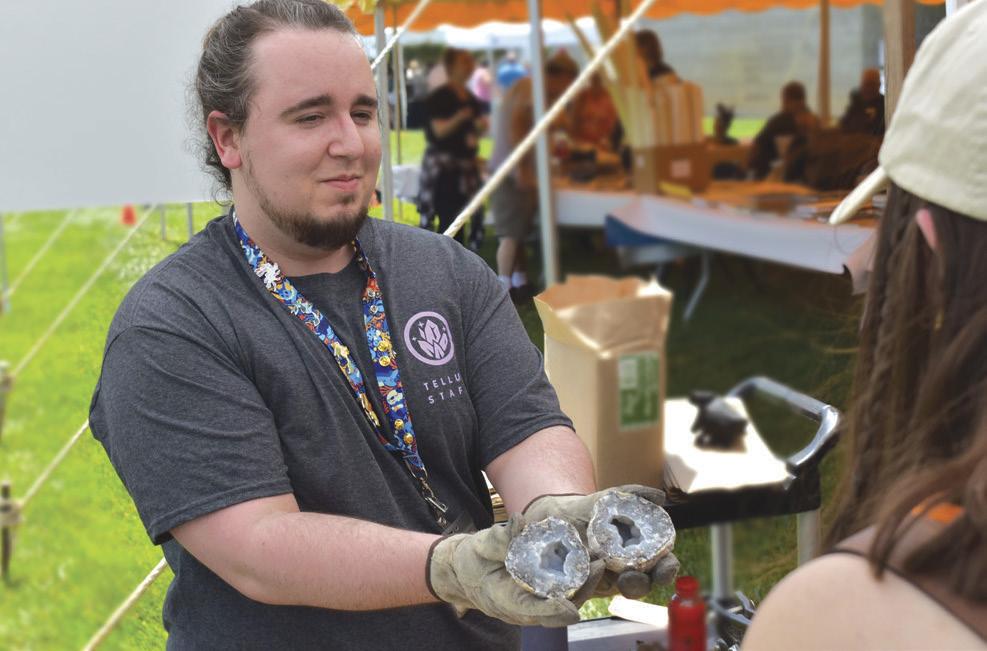
tellusmuseum.org Smit hsonian A liate TELLUS SCIENCE MUSEUM THE SOUTHEAST’S FAVORITE ROCK SHOW! TWO EVENTS. ONE LOCATION! CARTERSVILLE | I-75 EXIT 293



75+ Days of Summer New Things to Do July 4th Parades Free Fun SUMMER Fun Guide Best Places to Swim and Splash
The ATL List
These top attractions are a must-do to appreciate the city.
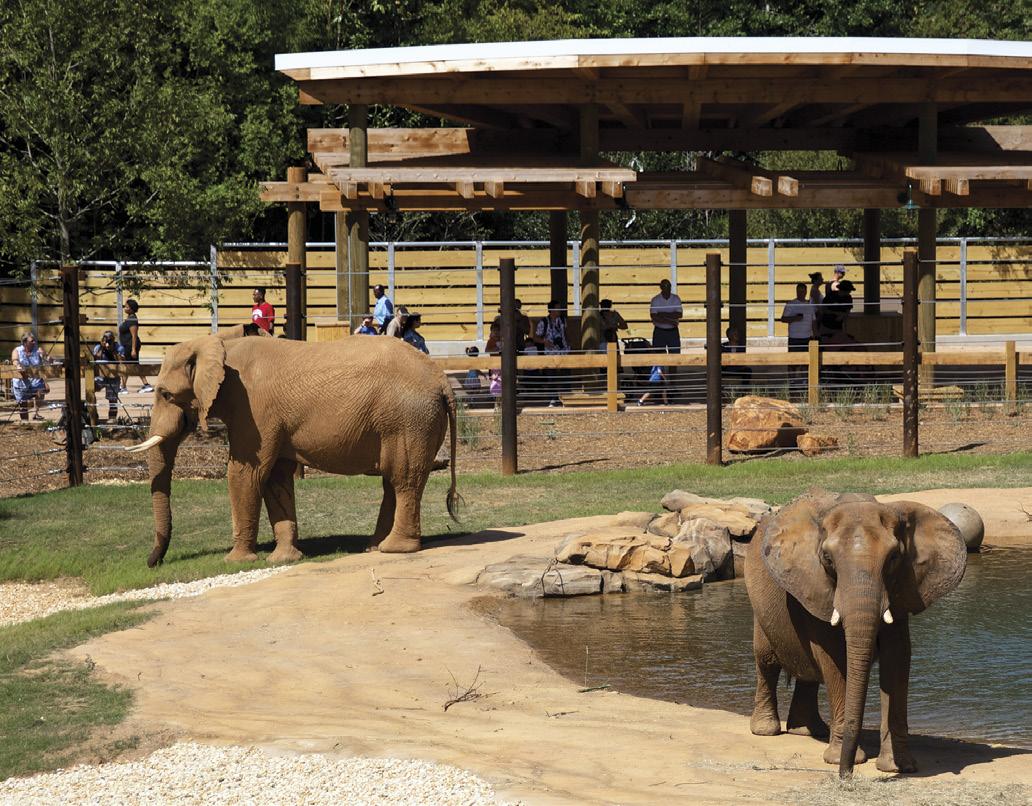

l Explore, eat and more!

The Atlanta BeltLine has it all — it’s a walking trail, bike path, green space, art museum. Walk along this 22mile for attractions, restaurants, parks and trails. Explore historic neighborhoods with a bike or walking tour, view art installations, get fit with a fitness class, stop by a playground and more. Atlanta. beltline.org
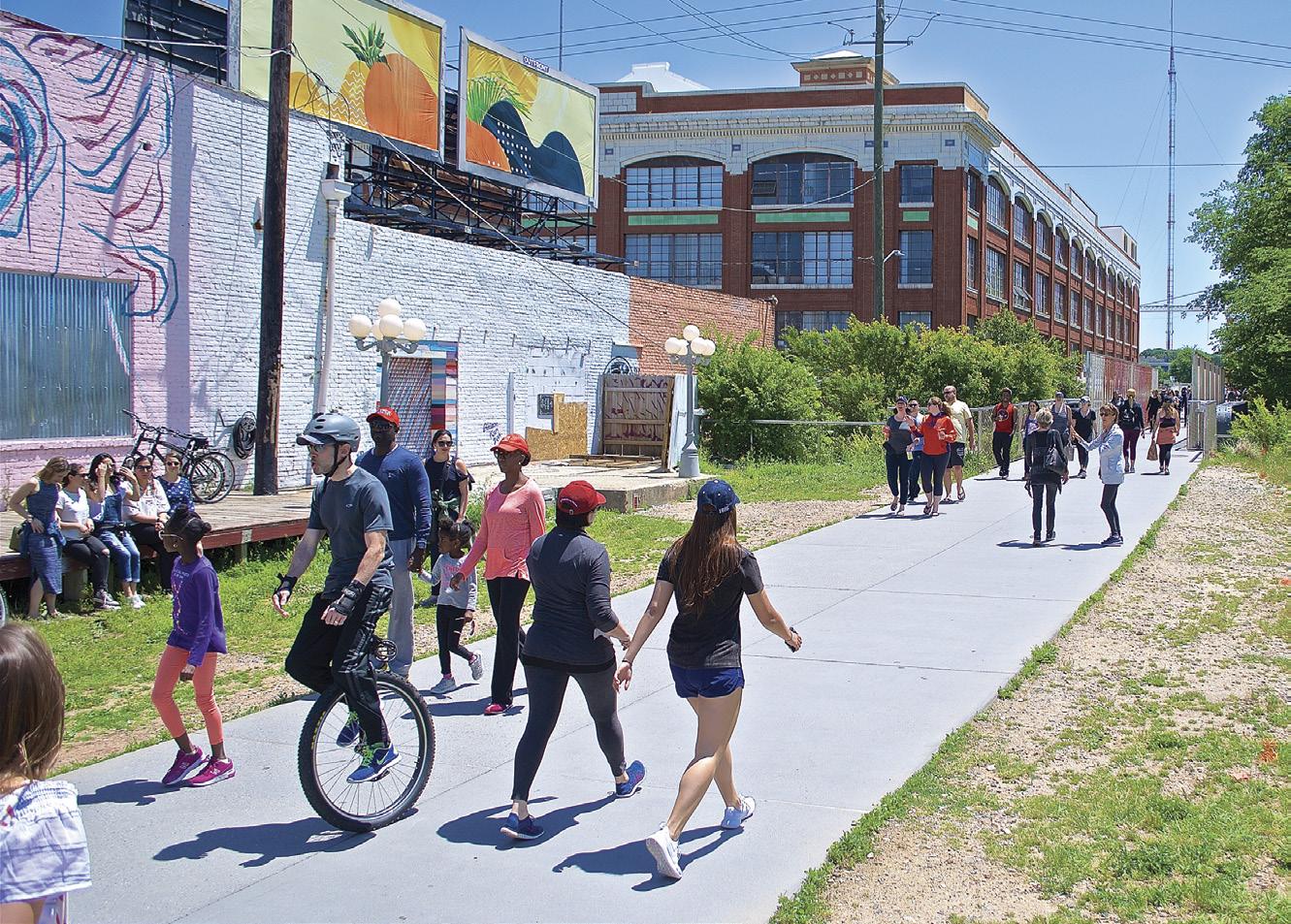
l An all-day dazzler!
Stone Mountain Park has nature, outdoor beauty and family fun. Hike 15 miles of trails, explore the 363acre lake, and visit historic spaces. Learn more about dinosaurs with the four-level Dinotorium playground, travel across the park on the Scenic Railroad, play a game of mini golf, climb adventure courses and more. Starting on June 10, enjoy special summer entertainment with Summer at the Rock and the all-new Summer Light Show. Stone Mountain. $39.95+; ages 3-11, $34.95+; ages 2 and younger, free; parking, $20. stonemountainpark.com
l Animals galore!
Visit with animals from all over the world at Zoo Atlanta. Scaly Slimy Spectacular features more than 70 species of amphibians and reptiles, and the African Savanna has elephants, giraffes and more. The Wild Encounters experience allows you to get up close to a fascinating animal, including a lemur, an elephant or a warthog. The special area for kids includes Treetop Trail, the Endangered Species Carousel, a train, a splash pad and a petting zoo. Atlanta. $26.45-$33.70; ages 3-11, $21.20-$26.95; ages 2 and younger, free; activities, extra. zooatlanta.org
l It’s a garden party!
Stroll through the two locations making up the Atlanta Botanical Garden.

The Lou Glenn Children’s Garden in Atlanta features a splash pad, Flower Bridge, vegetable gardens, honeybees and more. The exhibit “Trolls: Save the Humans by Thomas Dambo” features enormous folklore-inspire sculptures for a unique outdoor art installation.
The Ada Mae Pass Ivester Children’s Garden in Gainesville has carnivorous plants, a Treehouse and Rock Climb, frog sculptures and a Fairyland Trolley. Atlanta and Gainesville. $14.95-$29.95; ages 3-12, $12.95-$26.95; ages 2 and younger, free atlantabg.org
44 Atlanta Parent June 2023 atlantaparent.com SUMMER Fun Guide
l Fossils, forests and fun!
Kids play as they learn at Fernbank Museum of Natural History. Permanent exhibits delve into STEAM, forces, nature, dinosaurs and the regions of Georgia. The newest exhibit, “Survival of the Slowest,” opens on June 10 and looks at how animals use being slow, small or weak to their advantage. The outdoor WildWoods and Fernbank Forest feature interactive “Nature Stories” and “Adventure Outpost,” as well as special exhibit “Flora, Fauna & Flight” on view through Aug. 27. Watch educational documentaries exploring animals and the environment. Atlanta. $25.95; ages 3-12, $23.95; ages 2 and younger, free. fernbankmuseum.org
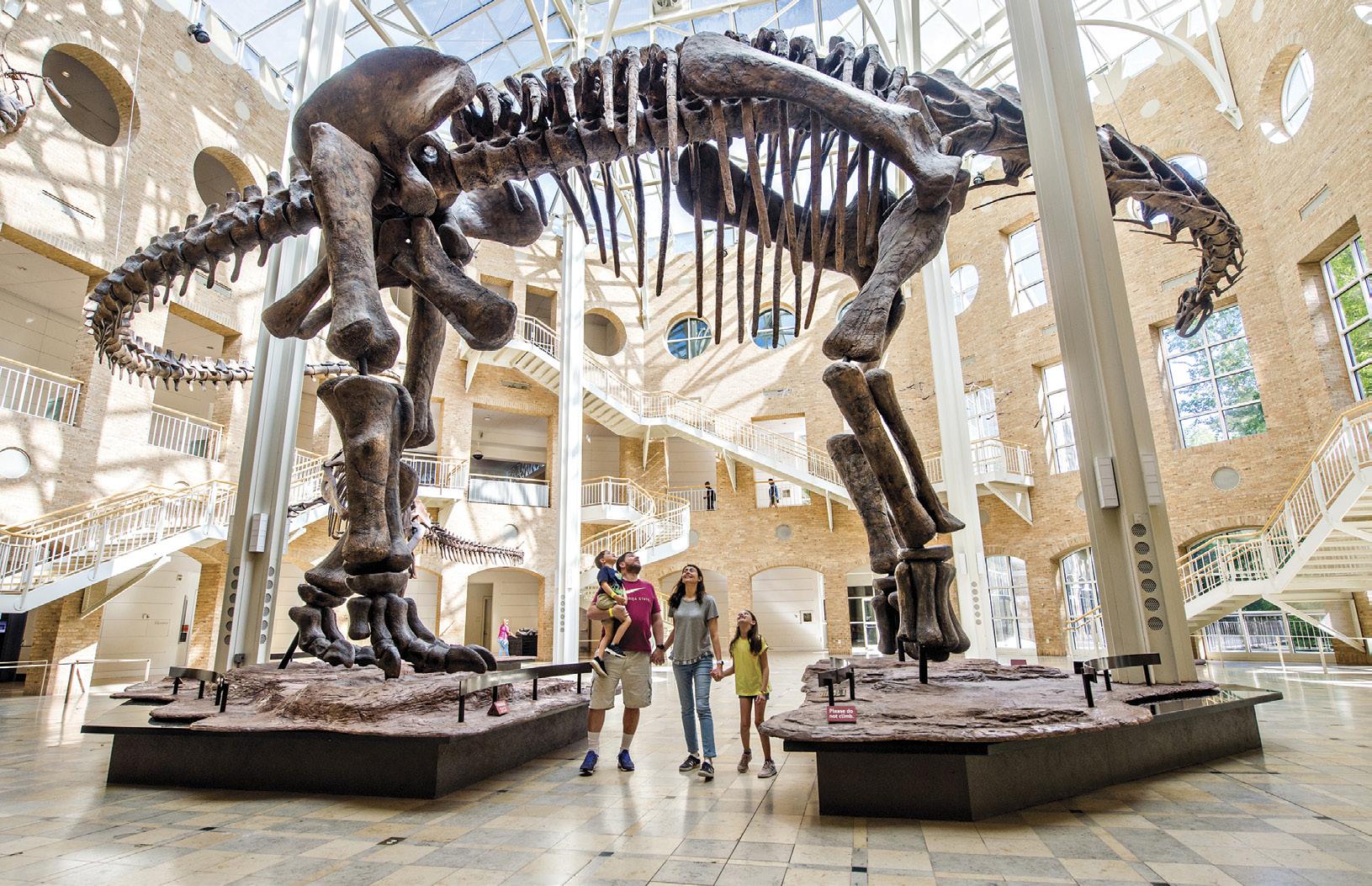

l Get your game on!
Watch the winning Atlanta Braves compete on their home field at Truist Park. Enjoy Friday Night Fireworks and the acrobatics of the Flippenout Extreme Trampoline Stunt Show with the Friday Night Showcase. Before the game, kids will love Hope & Will’s Sandlot with rock climbing, ziplining and carnival games. The Kids Club is a free program for ages 14 and younger with giveaways, exclusive content of Braves players and more. Atlanta. $13+; ages 2 and younger, free. mlb.com/braves


l Touchdown!
Explore the people, traditions and passion of the sport at the Chick-fil-A College Football Hall of Fame. Find your favorite team on the threestory helmet wall, sing karaoke fight songs, enact being an announcer with the interactive ESPN College GameDay Desk Built by The Home Depot, test your skills on the Indoor Playing Field and more. Atlanta. $30.25; ages 3-12, $23.75; ages 2 and younger, free. cfbhall.com

l Play the day away!
The hands-on Children’s Museum of Atlanta offers kids tons of opportunities to explore educational concepts with interactive exhibits and stations for play-based learning. The summer’s featured exhibit is “Shaun the Sheep: Flock This Way!” for an adventure on Mossy Bottom Farm. Atlanta. $13.95-$19.95; ages 11 months and younger, free. childrensmuseumatlanta.org
June 2023 Atlanta Parent 45 atlantaparent.com
New & Noteworthy
Explore these attractions.

l Be part of Ariel’s world with Disney The Little Mermaid x CAMP. Opening on June 3, this theatrical experience features live music, puppetry and magic for an immersive dive into the beloved movie. Catch a witchy magic show in Ursula’s Lair, play basketball with giant pearls in King Triton’s Palace, explore hidden treasures in the Sunken Ship and discover Ariel’s collection of gadgets and gizmos a-plenty in her Trinket Grotto. Through Sept. 4. 4551 Olde Perimeter Way, Atlanta. 917-765-0106. $29-$35; ages 1 and younger, free. camp.com
l Make your own fantastic slime at Sloomoo Institute. At the DIY Bar, customize the perfect slime by choosing from more than 40 colors, 60+ fragrances and 150 charms. You can also enter augmented reality and enjoy ASMR experiences with The Sloomooverse, walk over 350 gallons of slime at Lake Sloomoo and turn into a slime creature with Slimey Mirrors. With the Enhanced Experience, you can also get slimed at Sloomoo Falls. 3637 Peachtree Rd. NE, Atlanta. $39-$69; ages 11 months and younger, free. sloomooinstitute.com

l The Museum of Illusions Atlanta offers visitors an interactive and immersive journey through the world of optical illusions and mystifying puzzles. Try to solve fascinating illusions, holograms and gravity-defying spaces with more than 80 exhibits. Illusion rooms like Tilted Room, Reversed Room and Vortex Tunnel will teach you not to trust your eyes! 264 19th St. NW, Atlanta. $29; ages 5-12, $24; ages 4 and younger, free. moiatlanta.com

l The recently renovated LEGO Discovery Center allows you to design and build with all kinds of LEGOs. At Duplo Park, younger guests can learn to build and play together. Create your own Minifigure, and design, build and launch a spaceship. Other experiences include enjoying a sensory 4D cinema experience, zapping trolls to save the princess with Kingdom Quest, spotting local landmarks in Miniland, driving a virtual reality racecar, and going on a swashbuckling quest on a LEGO-themed pirate ship. 3500 Peachtree Rd., Atlanta. 404-848-9252. $28.99-$41.99. legodiscoverycenter.com/atlanta

46 Atlanta Parent June 2023 atlantaparent.com SUMMER Fun Guide
SUMMER Fun Guide
Must-See Exhibits
Kids will be mesmerized by these museum-style experiences that should top your list of summer must-dos!
l Electricity: Powering the World
Tellus Science Museum / Through Feb. 25, 2024
Learn how the use of electricity has revolutionized our lives. 100 Tellus Dr., Cartersville. 770-606-5700. $17; ages 3-17, $13; ages 2 and younger, free. tellusmuseum.org
Get Outdoors
l Flora, Fauna & Flight
Fernbank Museum / May 27-Aug. 27
Discover how plants and animals defy gravity with this artistic outdoor exhibit featuring photos and sculptures. 767 Clifton Rd., Atlanta. 404-929-6300. $25.95; ages 3-12, $23.95; ages 2 and younger, free. fernbankmuseum.org
l Butterfly Encounter
Chattahoochee Nature Center / June 5-Aug. 6
l Jurassic World: The Exhibition
Pullman Yards / May 26-July 31
Travel to Isla Nublar to walk in the land of Jurassic giants, come face-to-face with ferocious raptors, get close to a Tyrannosaurus rex and more. 225 Rogers St. NE, Atlanta. $29.99+; ages 3-15, $24.99+; ages 2 and younger, free. jurassicworldexhibition.com
l Survival of the Slowest
Fernbank Museum / June 10-Sept. 4
Learn how animals’ traits of being slow, small or weak work to their advantages in their habitats. 767 Clifton Rd., Atlanta. 404-929-6300. $25.95; ages 3-12, $23.95; ages 2 and younger, free. fernbankmuseum.org

l Shaun the Sheep: Flock This Way!
Children’s Museum of Atlanta / Through Sept. 4
Explore the antics of Shaun the Sheep and his pals from Mossy Bottom Farm by playing in the barn, creating stop motion animation and more, while little ones will enjoy their own “tot spot.” 275 Centennial Olympic Park Dr. NW, Atlanta. 404-6595437. $13.95-$19.95; ages 11 months and younger, free. childrenmuseumatlanta.org
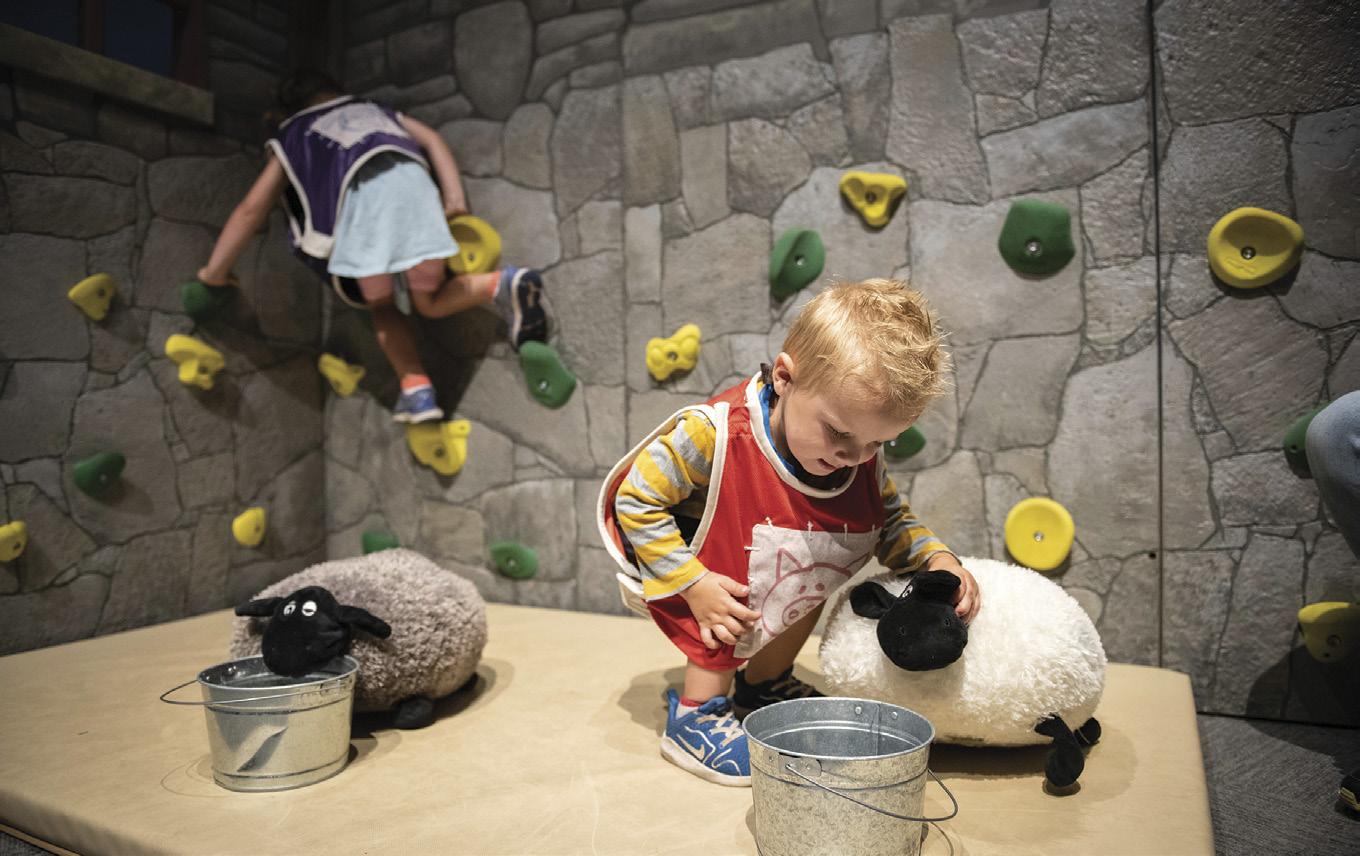
l How People Make Things
Tellus Science Museum / Through Sept. 4
Inspired by the factory tour segments from “Mister Rogers’ Neighborhood,” enjoy hands-on activities to explore four manufacturing processes and how things are made. 100 Tellus Dr., Cartersville. 770606-5700. $17; ages 3-17, $13; ages 2 and younger, free. tellusmuseum.org
l Immersive Disney Animation
Armour Yards / Through Sept. 30
Enter the worlds of beloved Disney characters with this immersive experience featuring the music and artistry from a variety of animated films, including “Frozen,” “Encanto,” “The Lion King” and more. 159 Armour Dr., Atlanta. $28+. lighthouseimmersive.com/disney/atlanta
Join hundreds of live butterflies for pretty photo opportunities with these creatures and their nectar and host plants. 9135 Willeo Rd., Roswell. 770-992-2055. $15; ages 13-18, $11; ages 3-12, $9; ages 2 and younger, free. chattnaturecenter.org
l Trolls: Save the Humans
by Thomas Dambo
Atlanta Botanical Garden / Through Sept. 17
These folklore-inspired sculptures are built from reclaimed materials and range from 15 feet tall to 25 feet wide. 1345 Piedmont Ave., Atlanta. 404-876-5859. $26.95-$29.95; ages 3-12, $23.95-$26.95; ages 2 and younger, free. atlantabg.org
More Exhibits to Check Out At the Illuminarium
l WILD: A Safari Experience: Through June 29
l SPACE: A Journey To The Moon & Beyond: Through July 1
l Waking Wonderland: Through July 1
550 Somerset Terrace NE, Atlanta. 404-341-1000. $27.50-$50; ages 3-12, $27.50-$45; ages 2 and younger, free. illuminarium.com
At the Exhibition Hub, Atlanta Art Center
l Art of the Brick Immersive Experience: Through June 30
l Claude Monet: The Immersive Experience: Through July 2 5660 Buford Hwy. NE, Doraville. $29.90-$36.90; ages 4-12, $17.90-$24.90; ages 3 and younger, free. theartcenters.com
June 2023 Atlanta Parent 47 atlantaparent.com
Shaun the Sheep: Flock This Way!
Survival of the Slowest
Fun Guide
Not-to-Miss June Events

Events may be cancelled or changed after our deadline. Please check before visiting to confirm. Full calendar online at atlantaparent.com.
l Big Bounce and Slide Festival

Cumming Fairgrounds
June 2-3, 10 a.m.-9 p.m. and June 4, noon-7 p.m.
Bounce on more than 85 inflatables, slip on huge waterslides, take photos with Anna, Elsa and more, get your face painted, compete on obstacle courses and more. 235 Castleberry Rd., Cumming. 404-999-9978. $15-$30 ; ages 1 and younger, free. Family 4 Pack, $75. bouncehouseatlanta.com
l Flying Colors Butterfly Festival
Chattahoochee Nature Center
June 3, 9 a.m.-3 p.m. and June 4, noon-5 p.m.
Get close to hundreds of native butterflies in a colorful environment with beautiful flooms, take photos, meet pollinator experts, play the migration game and more. 9135 Willeo Rd., Roswell. 770-992-2055. $25; ages 2 and younger, free.chattnaturecenter.org

l A Year with Frog and Toad
Woodstock Arts
June 7-21. See website for showtimes. Frog and Toad’s friendship endures throughout the season as they plant gardens, swim, rake leaves, go sledding and learn life lessons along the way. 8534 Main St., Woodstock. 678-494-4251. $18-$23. woodstockarts.org
l Civil War History Day
The Southern Museum of Civil War & Locomotive History
June 10, 9:30 a.m.-5 p.m. Re-enactors discuss artifacts, give live demonstrations and provide hands-on activities. 2829 Cherokee St. NW, Kennesaw. 770-427-2117. $10; ages 3-17, $5; ages 2 and younger, free. southernmuseum.org
l Virginia-Highland Summerfest
Virginia-Highland
June 10, 11 a.m.-7 p.m.
Celebrate the community and summer with live bands, great art, good food and more in this vibrant neighborhood. Virginia Ave., Atlanta. Free admission. vahisummerfest.org
l RockFest
Tellus Science Museum
June 10-11, 10 a.m.-5 p.m.
Enjoy everything that glitters and gleams with geology-themed activities, minerals, fossils and more. 100 Tellus Dr., Cartersville. 770-606-5700. $17; ages 3-17, $13; ages 2 and younger, free. tellusmuseum.org
48 Atlanta Parent June 2023 atlantaparent.com SUMMER
Big Bounce and Slide Festival
The Great Georgia Balloon Festival
l Twilight Trek
Zoo Atlanta / June 10, 16 and 30, 6:30-9 p.m.
Go on an after-hours tour to hear how species are reintroduced into the wild, learn how to become a conservation hero and take part in engaging activities. 800 Cherokee Ave. SE, Atlanta. 404-624-9453. $25; ages 3 and younger, free. zooatlanta.org
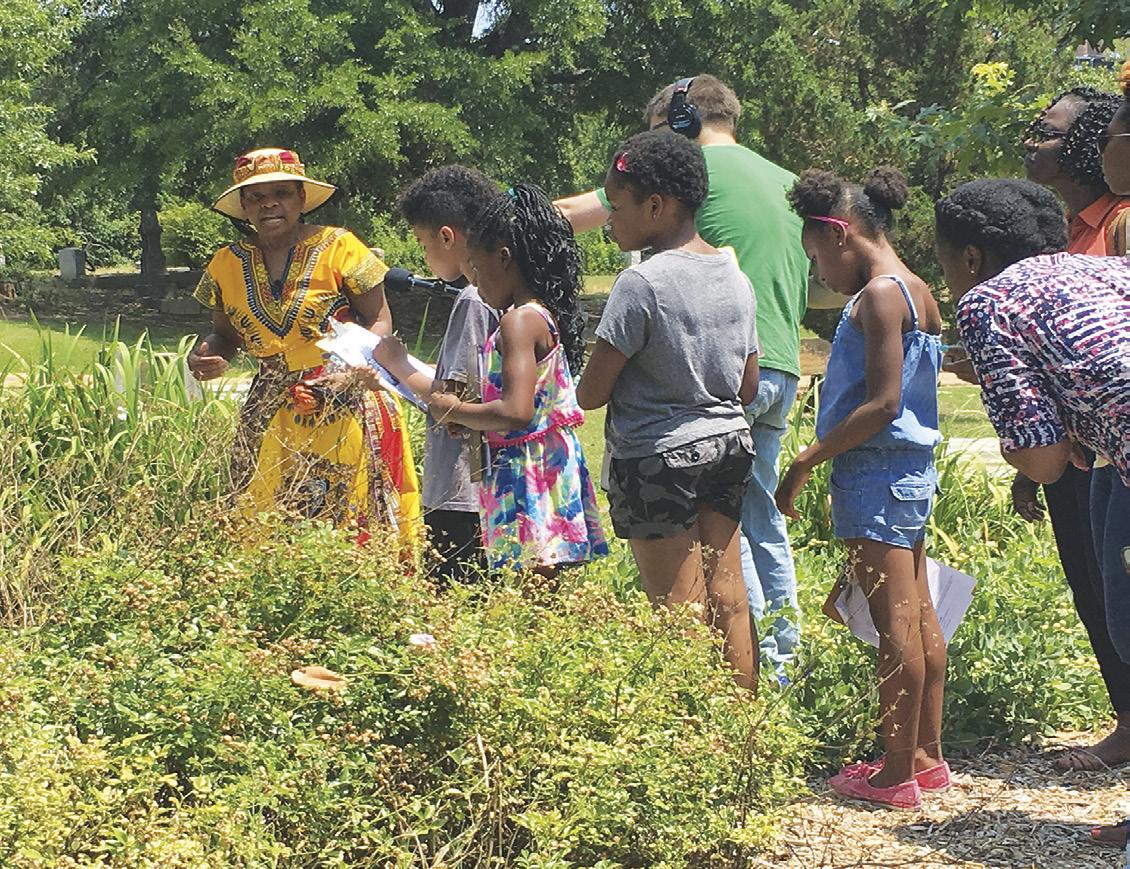
l Summer at the Rock
Stone Mountain Park / June 10-July 30
Enjoy the season of summer with fun-filled attractions, special entertainment and the new Summer Light Show. 1000 Robert E. Lee Blvd., Stone Mountain. 800-401-2407. $39.95; ages 3-11, $34.95; ages 2 and younger, free. stonemountainpark.com
l Midsummer Jr!
Aurora Theatre / June 14, 10 and 11:30 a.m.
From the Atlanta Shakespeare Company, this adaptation of Shakespeare’s classic includes puppets, live music and silly props. 128 E. Pike St., Lawrenceville. 678-226-6222. $7. auroratheatre.com
l The Great Georgia Balloon Festival
Atlanta Motor Speedway / June 16-17
Go on a ride on a hot air balloon, play in the Kids Zone with games, train rides and more, listen to live music, and at night, view the Hot Air Balloon Glow & Laser Show. 1500 Tara Pl., Hampton. 877-926-7849. $20; ages 6-18, $8; ages 5 and younger, free; balloon rides, $35. atlantamotorspeedway.com
HONOR JUNETEENTH
l Juneteenth
William Root House / June 10, 10 a.m.-4 p.m.
This day will include guided museum tours, living history demonstrations, storytelling and more. 80 N. Marietta Pkwy. NW, Marietta. 770-426-4982. Free admission. roothousemuseum.com
l Juneteenth Atlanta Parade & Music Festival
Centennial Olympic Park / June 16-18
Celebrate freedom, liberty and human rights with a marching band parade battle, an African drum circle, competitions, children’s activities and more. 265 Park Ave. W. NW, Atlanta. 404-753-4555. Free admission. juneteenthatl.com
l Juneteenth Celebration
Oakland Cemetery / June 17, 10:30 a.m.-1 p.m.
This celebration focuses on the importance of the holiday, the accomplishments of African Americans and the economic reconstruction of the African American community with tours, live music, food trucks, storytelling and more. 248 Oakland Ave. SE, Atlanta. 404-688-2107. Free admission. oaklandcemetery.com
l City of Austell Juneteenth Festival + Parade
Legion Park / June 17, 11:15 a.m.-7 p.m.
l
Unicorn World
Georgia International Convention Center
June 16, noon-8 p.m.; June 17, 9 a.m.-5:30 p.m. and June 18, 10 a.m.-5:30 p.m.
Celebrate all things magical with this unicorn experience featuring life-sized, animatronic unicorns, themed crafts, face painting, bounce houses and more. 2000 Convention Center Concourse, College Park. 865-217-6509. $39; ages 1 and younger, free; activities, extra. theunicornworld.com

l Family Food Fest
Georgia Freight Depot / June 18, 3-6 p.m.
Sample a wide variety of foods at this family-oriented event featuring well-known chefs, cooks, caterers and restaurants, live entertainment, a kid’s area and more. 65 Martin Luther King Jr. Dr., Atlanta. 470-834-2188. $35-$40; ages 12 and younger, $15-$20. familyfoodfest.org
Cont’d on next page
Honor history with a parade, live music, African drummers, cultural foods, storytellers, local vendors and more. 5514 Austell-Powder Springs Rd., Austell. 404-954-2576. Free admission. austelljuneteenth.com
l Juneteenth Celebration of Freedom
Downtown East Point / June 17, 5-9 p.m.
Celebrate Juneteenth with a parade and live music. 2757 E. Point St., East Point. 404-270-7045. Free admission. eastpointcity.org
l Concert on the Green: A Juneteenth Celebration
Logan Farm Park / June 17, 5-10 p.m.
Join in this celebration of freedom and respect for all cultures. 4405 Cherokee St., Acworth. 770-917-1234. Free admission. acworth.org
l Juneteenth
Atlanta History Center / June 18, 10 a.m.-4 p.m.
Honor the history of Black genealogy and agricultural practices with live music, storytelling, crafts and food. Registration recommended. 130 W. Paces Ferry Rd. NW, Atlanta. 404-814-4000. Free admission. atlantahistorycenter.com
June 2023 Atlanta Parent 49 atlantaparent.com
Photo courtesy Historic Oakland Foundation
Juneteenth Celebration
Unicorn World
Not-to-Miss
June Events


l Roswell Summer Puppet Series
Roswell Cultural Arts Center
June 20-July 22. See website for showtimes. These exciting puppet shows will feature five performances: Tanglewood Marionettes’ “Cinderella,” Frisch Marionettes’ “Wizard of Oz,” That Puppet Guy’s “The Giant, The Beanstalk, and Jack” and “Big Bad, Little Red Pig Show” and Barefoot Puppets’ “Galapagos George.” 950 Forrest St., Roswell. 770-594-6232. $7; Puppet Pass, $28. roswellcac.com
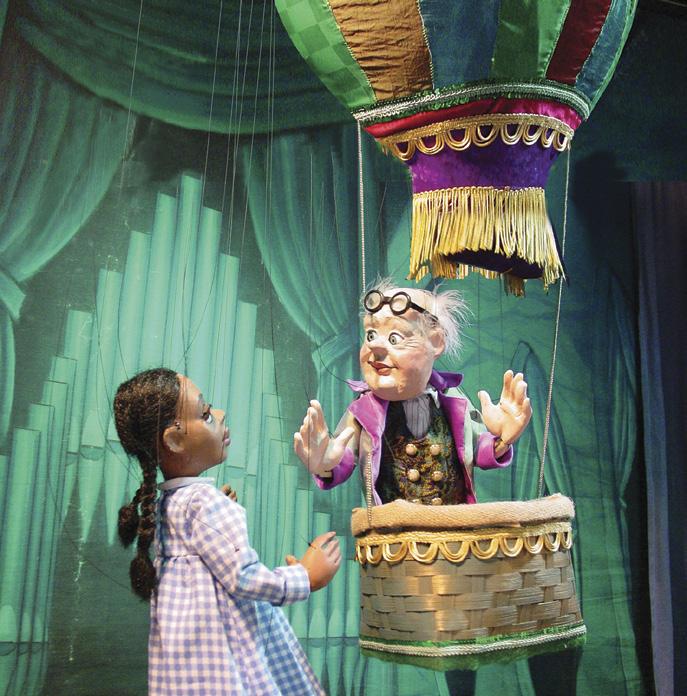
Concerts in the Park: A Latin Celebration

Piedmont Park Oak Hill
June 22, 7:30 p.m.
From the Atlanta Symphony Orchestra, this sizzling program celebrates the timeless rhythms and melodies of Latin America with a selection of Latin-inspired pieces. 371 10th St. NE, Atlanta. 404-733-4800. Free admission. aso.org
l Model Railroad Days
Southeastern Railway Museum
June 24, 10 a.m.-5 p.m. and June 25, 1-5 p.m. View classic trains on display, model layouts and model railroads for sale, and go on a train ride. 3595 Buford Hwy., Duluth. 770-476-2013. $18; ages 2-12, $12; ages 1 and younger, free. train-museum.org
l Cherokee Tales
Aurora Theatre / June 28, 10 and 11:30 a.m. Children will hear about Cherokee culture, history and Sequoyah, one of the most influential figures in Cherokee history, with this puppet show. 128 E. Pike St., Lawrenceville. 678-2266222. $7. auroratheatre.com
50 Atlanta Parent June 2023 atlantaparent.com SUMMER
Fun Guide
Roswell Summer Puppet Series


June 2023 Atlanta Parent 51 atlantaparent.com
SUMMER Fun Guide
75+ Things to Do This Summer!

Artsy Experiences
l At the High Museum of Art, view special and permanent exhibitions featuring all kinds of artworks. Current and upcoming exhibits explore collections from Ancient Nubia, samurai armor, Styrofoam sculptures and more. On the second Sunday of each month, explore art for free while enjoying art-making activities and live music. Atlanta. $18.50. high.org
l Enjoy the art of theater at the Center for Puppetry Arts. Check out the Worlds of Puppetry Museum for a look at the history and traditions of puppetry from around the world and the legacy of Jim Henson. The Create-A-Puppet Workshop is a hands-on craft for building your own puppet. Atlanta. $16; Create-A-Puppet, $6.50. puppet.org
l MODA’s summer exhibit “Level Up” opens on June 3 and focuses on how games inspire imaginations, shape identities and challenge players to re-envision the world as they connect to other people. Virtual and in-person youth workshops for ages 6-18 show more about the design world with hands-on programs. Atlanta. $10; ages 12-18, $8; ages 11 and younger, free. museumofdesign.org
l Visit The Art Barn for a look at farm life while making masterpieces. Enjoy handson time with chickens, ducks, bunnies, lambs, goats, donkeys, horses and pigs, sing a few favorite farm songs, explore the Friendship Garden, create a piece of art and more. Canton. $20; ages 1 and younger, free. theartbarn.com
l View the story of America with contemporary Western artwork, a Presidential Gallery and a Civil War art gallery at Booth Western Art Museum. The highlight of this museum is Sagebrush Ranch, an interactive gallery for children with hands-on stations, include riding in a stage coach, dressing in cowboy attire and saddling a horse. Cartersville. $13; ages 12 and younger, free. boothmuseum.org
l Visit SCAD FASH Museum of Fashion + Film to see the fashion of Madame Grès and the photography of Ellen von Unwerth. Atlanta. $10; ages 13 and younger, free. scadfash.org
Get creative by taking cool photos at a Selfie Museum.
l Original Selfie Museum. Atlanta and Alpharetta. $24-$29. originalselfiemuseum.com
l Gurl Mobb Museum. Atlanta. $35-$65. gurlmobbmuseum.com

Look at intriguing public art pieces; many cities and areas display temporary and permanent installations.
l Freedom Park. Atlanta. freedompark.org
l ArtAround Roswell. Roswell. roswellartsfund.org
l Art in Sandy Springs. Sandy Springs. sandyspringsga.gov/art-collections
l Arts Alpharetta. Alpharetta. artsalpharetta.org
l Decatur Arts Alliance. Decatur. decaturartsalliance.org
l Suwanee SculpTour. Suwanee. suwanee.com/explore-suwanee/public-art
52 Atlanta Parent June 2023 atlantaparent.com
There’s so much to do in metro Atlanta! Rescue your kids from boredom by planning a visit to these cities, attractions, parks and more.
Original Selfie Museum
Beat Brain Drain

l Explore the wonder of water at Gwinnett Environmental and Heritage Center, the county’s first LEED-certified building. Step back in time to see the history of waterways, play with water for hands-on learning about the water cycle and discover the diverse ecosystem in Gwinnett. Enjoy the outdoors with five miles of walking trails. Buford. $7.50-$10.50; ages 3-12, $3.50-$6.50; ages 2 and younger, free. gwinnettehc.org
l Learn more about the people, cultures and historical events that have shaped Atlanta at Atlanta History Center with exhibits on the Civil War, the 19th Amendment, the Atlanta Olympics, folk arts and more. On June 8, view the life and work of one of America’s most influential interior designers with “The Road to Good Taste: The Design Life of Ruby Ross Wood.” The site also includes beautiful gardens and historic houses. Atlanta. $24; ages 4-12, $10; ages 3 and younger, free. atlantahistorycenter.com
l What’s it like to be the president? Get an interactive view of the modern American presidency at the Jimmy Carter Library and Museum, which features a life-size replica of the Oval Office, a “Day in the Life of the President,” a map table for monitoring elections and more. Atlanta. $12; ages 16 and younger, free. jimmycarterlibrary.gov
Planes, Trains and Automobiles
l Immerse yourself in the wonderful world of science at Tellus Science Museum. The Millar Science in Motion Gallery propels visitors through 100 years of changes in transportation technology exploring automobiles to rockets. Other permanent exhibits include minerals, gemstones and fossils, and special exhibits explore electricity, how things are made and the history of the National Oceanic and Atmospheric Administration. Travel through the solar system with a show in the Bentley Planetarium. Cartersville. $17; ages 3-17, $13; ages 2 and younger, free; planetarium, $3.75. tellusmuseum.org
l Choo-choo! The Southern Museum of Civil War & Locomotive History is home to the “General,” made famous during the Civil War’s Great Locomotive Chase of 1862, as well as tons of locomotive technology, and you can even operate a diesel train simulator at the interactive Jolley Education Center. Kennesaw. $10; ages 3-17, $5; ages 2 and younger, free. southernmuseum.org
l Located at Delta headquarters near Hartsfield-Jackson International Airport, learn about aviation history at the Delta Flight Museum through interactive exhibits, planes dating back to the 1920s and a Boeing 737 flight simulator. Atlanta. $15; ages 5-17, $10; ages 4 and younger, free. deltamuseum.org
l Travel the way they did in the old days with a train ride on the Historic Train or Park Train at Southeastern Railway Museum, and additional rides are $4. Duluth. $18; ages 2-12, $12; ages 1 and younger, free. train-museum.org
l Appreciate the beauty and history of automobiles at Savoy Automobile Museum as you inspect different makes, models and eras of cars. Cartersville. $15; ages 3-12, $5; ages 2 and younger, free. savoymuseum.org

l Ages 3 and older can experience what it’s like to drive at TinyTowne with tiny cars, booster cars and smart cars. After cruising about, go on a train ride around the facility, or play games in the Carcade. Norcross. $35-$99. tinytowne.com
l Part of Reinhardt University, Funk Heritage Center tells the story of early Appalachian settlers and Southeastern Native Americans through educational programming, exhibits, art and artifacts. Visit the Appalachian Settlement, and enjoy the outdoors with a walking trail and garden. Waleska. $7; ages 17 and younger, $5. reinhardt.edu/funkheritage
l The Computer Museum of America explores technology and computing with exhibits focused on NASA and Apollo 11-17, supercomputers, a STEAM timeline, a collection of Byte Magazines and a WWII Enigma machine. Roswell. $15; ages 4-17, $10; ages 3 and younger, free. computermuseumofamerica.org
l Operated by the DeKalb County School District, the Fernbank Science Center features the Jim Cherry Memorial Planetarium for a look at the stars, and you can look through the telescope in the Ralph Buice Jr. Observatory. It also includes live animal displays, an Apollo 6 Command Module and a temporary exhibit on nature photography. Atlanta. Planetarium, $5-$10. fernbank.edu
l Uncover how scientists merge old-fashioned detective work with high-tech science to crack the cases of mystery diseases at the David J. Sencer CDC Museum. Exhibits focus on a variety of public health topics and the history of the CDC. Atlanta. cdc.gov/museum/index.htm
Cont’d on next page
June 2023 Atlanta Parent 53 atlantaparent.com
Atlanta History Center
SUMMER Fun Guide

Get Active
Challenge your body with rock climbing.
l Adrenaline Climbing. Suwanee. $14. adrenalineclimbing.com
l Escalade Rock Climbing. Kennesaw and Peachtree City. $18; Kids Play Area, $7. escaladegym.com
l Stone Summit Climbing. Multiple locations. $22-$28; ages 12 and younger, $17-$23. ssclimbing.com
l Wall Crawler Rock Club. Atlanta. $15; ages 18 and younger, $13. wallcrawlerclimbing.com
Stay cool on the ice.
l The Cooler. Alpharetta. $10. cooler.com
l Center Ice Arena. Sandy Springs. $10; ages 5 and younger, $7; ages 3 and younger, free. centericearena.org
l Atlanta IceForum. Duluth. $12; ages 5 and younger, $6. iceforum.com
l The ICE. Cumming. $9; ages 6-10, $7; ages 3-5, $5. theice.info
l Atlanta Ice House. Marietta. $14; ages 9 and younger, $10. atlantaicehouse.com
Swing in the trees with these adventures.
l Screaming Eagle Aerial Adventure at Chattahoochee Nature Center has two courses. Designed for ages 8 and older, the Zipline Canopy Tour showcases an aerial view of the area and Beaver Pond. The Aerial Adventure Course has 28 challenge elements. Roswell. $35-$59; CNC admission, extra. cncziplines.com
l Treetop Quest’s aerial adventure parks offer exciting challenges as you maneuver through obstacles and ziplines. Spider Quest at the Gwinnett location is a special harness-free challenge for the daredevil. Buford and Dunwoody. $22-$57; Spider Quest, $10-$19. treetopquest.com
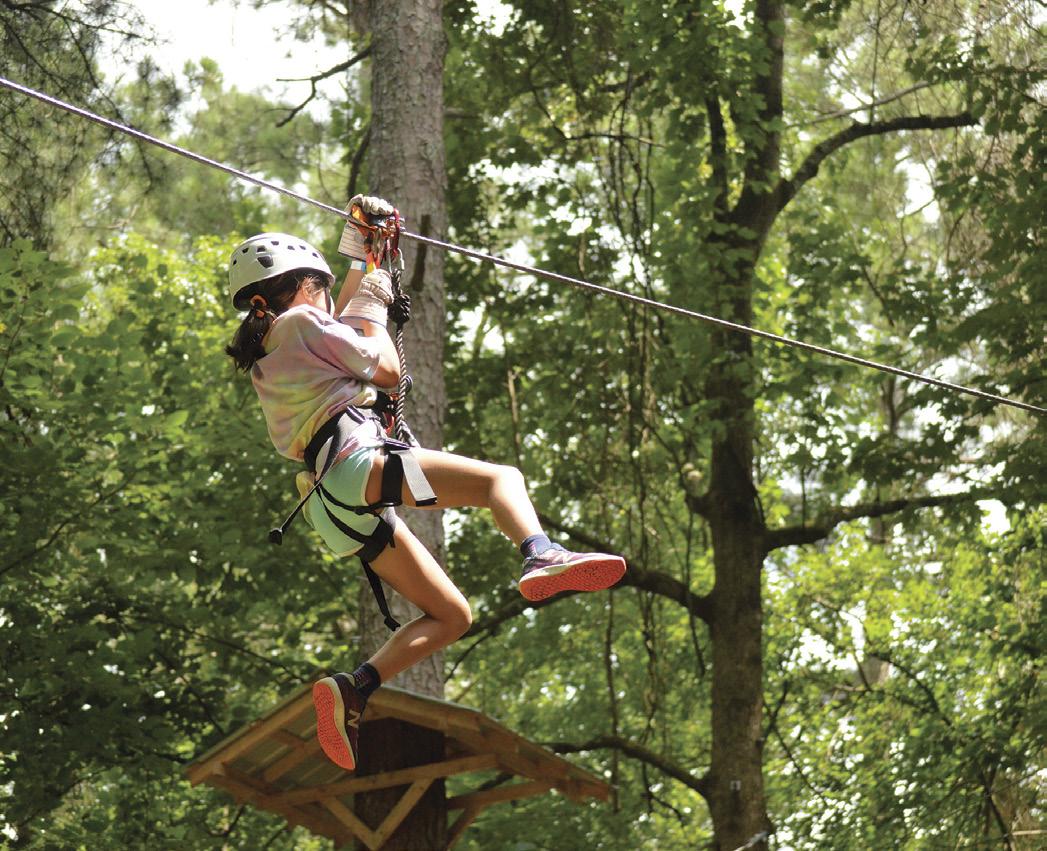
l Historic Banning Mills’ Zip Line and Aerial Adventure Park holds the Guinness World Record for the longest zipline canopy tour with more than 3,000 feet of ziplines. Nestled along Snake Creek Gorge, take in incredible scenery. Whitesburg. $59-$519. historicbanningmills.com

54 Atlanta Parent June 2023 atlantaparent.com SKY ZONE ROSWELL 1425 Market Blvd. Suite Roswell100-A30076 678-745-9900 skyzone.com/roswell SUMMER FLY PASS Only $69.99 Valid now through August 31, 2023 • Jump up to 90-minutes a day • 10% discount o a Birthday Party Package (Party must be booked by August 31, 2023 and party must occur by August 31, 2024) • 10% o Sky Zone merchandise
Screaming Eagle Aerial Adventure
Amazing Animals
l Travel under the sea with Georgia Aquarium. View more than 50 species in the 6.3-million gallon Ocean Voyager tunnel, see penguins, rays, fishes, otters, whales and more, dive into multiple habitats with “Aquanaut Adventure: A Discovery Zone,” and explore ocean predators in “Sharks! Predators of the Deep.” Special experiences include animal encounters. Atlanta. $42.99-$47.99; ages 2 and younger, free. georgiaaquarium.org
l Spot animals from around the world at Yellow River Wildlife Sanctuary with deer, black bears, vultures, owls and more. Book a Sloth Encounter for one-on-one time with the sloths, Sid and Sue. Purchase a feed cup to serve the deer, bison, tortoise, sheep, goat, cattle, mini horse, mini donkey or alpaca, and you can pet the animals in the Petting Yard, Barn Yard and Bunny Yards for an up-close look. Lilburn. $20; ages 3-12, $13; ages 2 and younger, free. yellowriverwildlifesanctuary.com
l SeaQuest Stonecrest allows viewers to touch, feed and participate in tons of animal interactions featuring exotic mammals and fish from five different continents. Reserve one-on-one time with a sloth, birds, porcupines, a wallaby and more. Stonecrest. $16.99; ages 2-11, $10.99; interactions, extra. stonecrest.visitseaquest.com

l The 80-acre Pettit Creek Farms has Georgia’s largest camel herd with 21 camels. It’s also home to giraffe, kangaroos, sheep, capybara, reindeer and more. The drive-through tour is available through August. Before your tour, purchase an optional feed bag for the animals. Cartersville. $29.99-$34.99. pettitcreekfarms.com
l Visit with fluffy alpacas at Creekwater Alpaca Farm. Along with alpacas, you’ll see bunnies, goats, sheep, horses, pigs, guinea fowl and Toulouse Geese. Explore the gift shop for alpaca fiber clothing, accessories and more. Snellville. $17; ages 2-13, $12; ages 1 and younger, free. cwafarm.com
l Walk through Dino Safari to take part in a dinosaur expedition. Take a ride on the Sauropod slide, race a Raptor, dig up fossils, view more than 20 moving dinosaurs, and check out a virtual reality experience. Alpharetta. $16-$19; ages 2-12, $13-$16; ages 1 and younger, free. dinosafari.com
Cont’d on next page
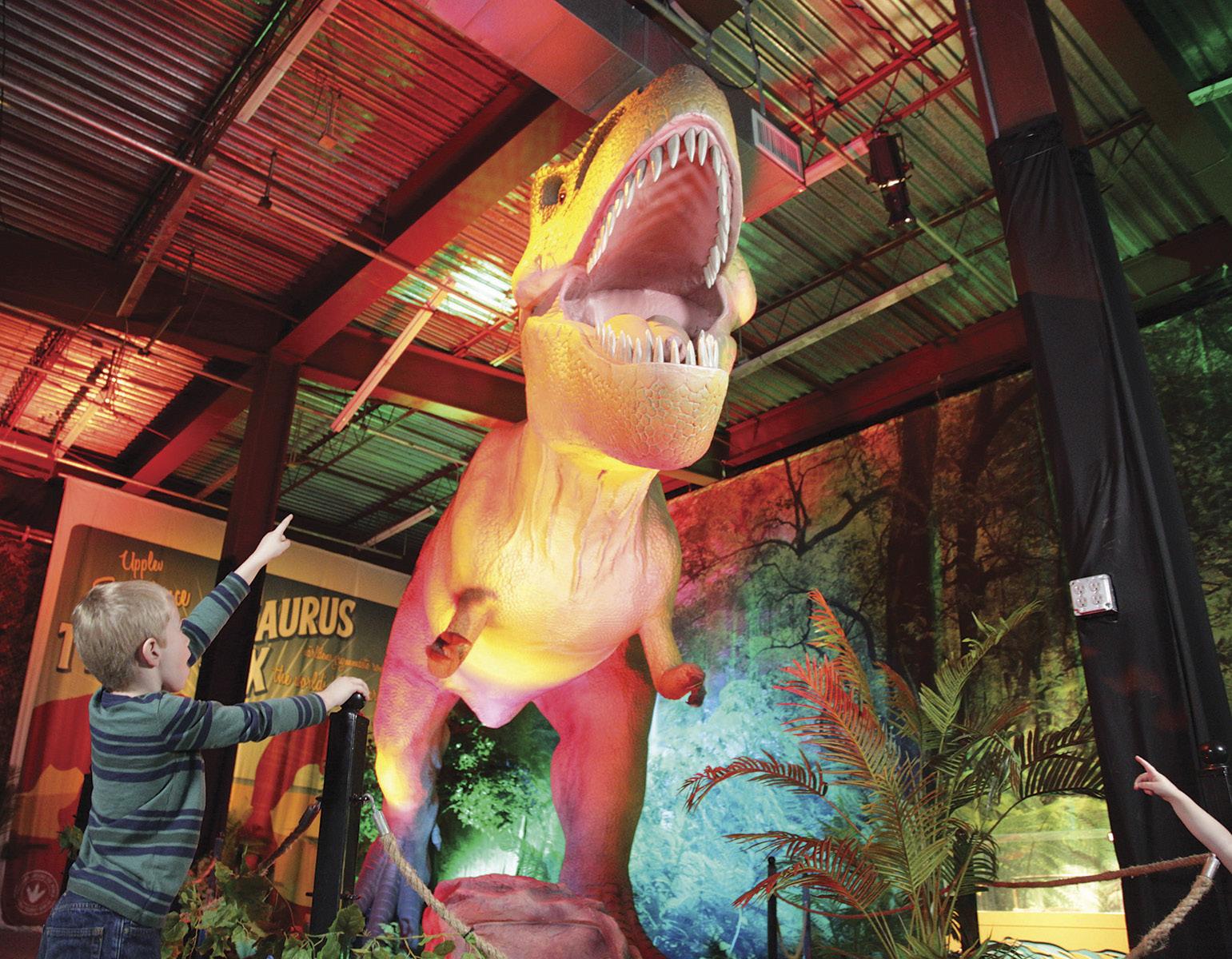
June 2023 Atlanta Parent 55 atlantaparent.com
Dino Safari
SUMMER Fun Guide
Free Fun
l Kids ages 2-15 can bowl two free games per day with Kids Bowl Free. Participating centers in metro Atlanta include Stars and Strikes, Pin Strikes Entertainment Center and The Comet Pub and Lanes; visit the website for a list of centers and available days. kidsbowlfree.com

l Get two free skate passes per child every week through Kids Skate Free. Kids must be 12 years and younger. Participating centers include Skate Zone and Sparkles Family Fun Centers. kidsskatefree.com
l Learn more about Civil Rights icon Martin Luther King Jr. at Martin Luther King Jr. National Historical Park. View his birth home and the Historic Ebenezer Baptist Church, and smell the blooms at the “I Have A Dream” World Peace Rose Garden. Atlanta. nps.gov/malu
Several stores offer in-person workshops for kids; these chains have multiple locations across Atlanta.
l Home Depot. homedepot.com
l Lowe’s. lowes.com
l Michaels. michaels.com
Enjoy a great movie on a big screen.
l Movie Mondays. Norcross. norcrossga.net
l Outdoor Movie Series. Kennesaw. kennesaw-ga.gov
l Feature Friday. Lawrenceville. lawrencevillega.org
l Movie Monday. Newnan. ga-newnan.civicplus.com
l Movies at the Park. Johns Creek. johnscreekga.gov
l Movies On The Square. Colony Square. colonysquare.com
l Pics in the Park Summer Movie Series. Dunwoody. dunwoodyga.gov
l Flicks on the Green. Peachtree Corners. peachtreecornersga.gov
l Movies Under the Stars. Mall of Georgia. simon.com/mall/mallof-georgia
Rock out to music and discover new bands at a community concert series.
l Glover Park Concert Series. Marietta. mariettaga.gov
l Summer Concert Series. Norcross. Canned food and non-perishable item donations requested. norcrossga.net
l Concerts by the Springs. Sandy Springs. citysprings.com
l City Green Live. Sandy Springs. citysprings.com
l Roswell Riverside Sounds Concert Series. Roswell. roswellgov.com
l Thursday Night Live. Peachtree Corners. theforumpeachtree.com
l Summer Concert Series. Peachtree Corners. peachtreecornersga.gov
l Summer Concert Series. Johns Creek. johnscreekga.gov
l First Friday. Canton. cantonga.gov
l Home by Dark at Brooke Street Park Concert Series. Alpharetta. awesomealpharetta.com
l Woodstock Summer Concert Series. Woodstock. woodstockconcertseries.com
l Groovin’ on the Green. Loganville. loganville-ga.gov
l Fridays-N-Duluth. Duluth. duluthga.net
l Groovin’ On The Square. Colony Square. colonysquare.com
l Groovin’ on the Green. Dunwoody. dunwoodyga.gov
Visit a free museum for an easy educational activity.
l Roswell Fire Museum. Roswell. roswellgov.com
l Marietta Fire Museum. Marietta. mariettaga.gov

l Robert C. Williams Museum of Papermaking. Atlanta. paper.gatech.edu
l Atlanta Contemporary. Atlanta. atlantacontemporary.org
56 Atlanta Parent June 2023 atlantaparent.com
Stars and Strikes
Glover Park Concert Series
Marietta Fire Museum


START YOUR ADVENTURE THIS SUMMER AT DINO SAFARI! LASTFinalWeekend DAYJAN3$20GETUPTO OFF!* NORTH POINT MALL UPPER LEVER NEAR THE FOOD COURT Get tickets at DinoSafari.com GET UP TO $20 OFF THE PRICE OF ADMISSION WITH CODE ATLPARENT Coupon is valid for $5 off up to (4) tickets. Offer valid for online purchases only. Coupon cannot be combined with any other offers or coupons. Subject to availability. Sales tax and ticketing fees are not included.
Fountains l Splash Pads l Pools With More l Water Park Attractions l Beaches
Get Wet Guide Summer in Atlanta Is Hot!
Cool off with these fun ways to play in the water. Jump through a fountain or splash pad, soar down a waterslide or head to a nearby beach.
Fountains
FREE:
l The Battery Atlanta
This shopping, dining and sports space also features an interactive water fountain for splashing around during hot days.
Where: 800 Battery Ave. SE, Atlanta. batteryatl.com
l Big Splash Interactive Fountain at Town Center Park
This fountain features 43 jets and uses up to 1,400 gallons of recycled water per minute.
Where: 330 Town Center Ave., Suwanee. 770-945-8996. suwanee.com
l Duluth Town Green Fountain
In the middle of the Town Green, this fountain sprays water two stories in the air.
Where: 3167 Main St., Duluth. 770-476-3434. duluthga.net
l E.E. Robinson Park Fountain
Cool off at this interactive fountain, and the amenities at this park include covered playgrounds, baseball/softball fields, a paved trail with a bridge and more.
Where: 855 Level Creek Rd., Sugar Hill. 678-277-0910. gwinnettcounty.com

58 Atlanta Parent June 2023 atlantaparent.com SUMMER Fun Guide
Please call or check before heading out to confirm the water feature is open.
The Battery Atlanta
l
Fountain of
Rings at Centennial Olympic Park
Get sprayed, surprised and chilled in these dazzling fountains featuring the Olympic Ring symbol.
Where: 285 Andrew Young International Blvd. NW, Atlanta. 404-223-4000. gwcca.org
l Graves Park
This park has an interactive fountain to play in, along with a playground, trail loop, wood bridges and a soil-based soccer field.
Where: 1540 Graves Rd., Norcross. 678-277-0870. gwinnettcounty.com
l Legacy Fountain at Piedmont Park
Splash in this fountain that features more than 70 jets reaching up to 30 feet in the air and magnificent LED lighting.
Where: 1320 Monroe Dr. NE, Atlanta. 404-875-7275. piedmontpark.org
l Town Green at Alpharetta City Center
In front of City Hall, this area features a spray fountain and seating for families.
Where: 2 Park Plaza, Alpharetta. 678-297-6130. awesomealpharetta.com
l Village Park at North Henry
Cool off in this interactive fountain, play on the playground, and work out at the outdoor fitness circuit.

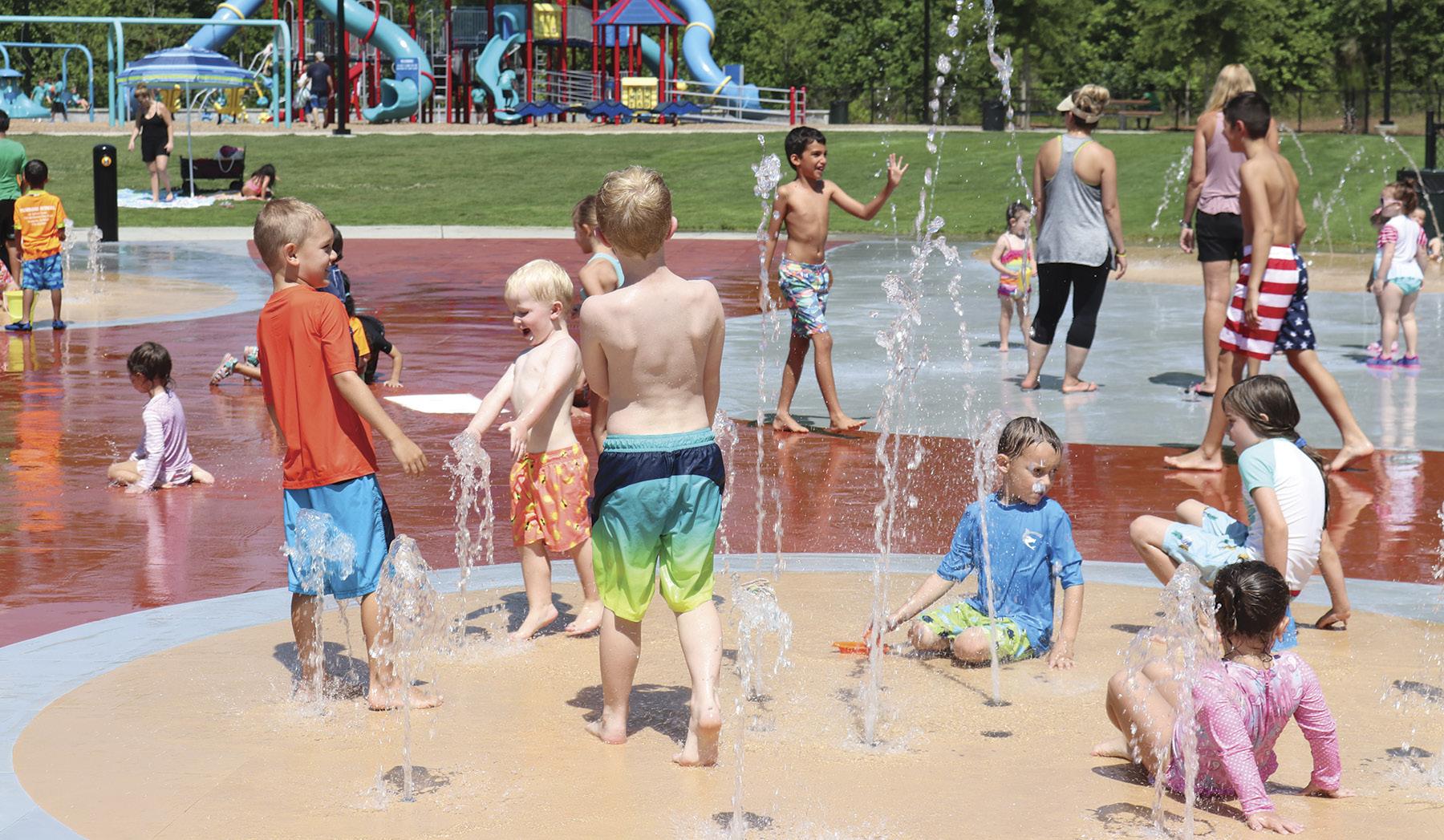
Where: 750 Fairview Rd., Ellenwood. 770-288-7300. visithenrycountygeorgia.com
FOR A FEE:
l Atlanta Botanical Garden
Head to the Children’s Garden to cool down with fountains that splash up from the ground or fall from above, and there’s a kid-sized alcove behind the waterfall.

Where: 1345 Piedmont Ave., Atlanta. 404-876-5859. atlantabg.org
Cost: $26.95-$29.95; ages 3-12, $23.95-$26.95; ages 2 and younger, free
l Geyser Towers at Stone Mountain Park
This attraction features a trickling creek and a climbing structure with gushing geysers; you must be 32 inches tall and wear closed-toe shoes.
Where: 1000 Robert E. Lee Blvd., Stone Mountain. 800-401-2407. stonemountainpark.com
Cost: $39.95+; ages 3-11, $34.95+; ages 2 and younger, free; parking, $20
l Splash Fountain at Zoo Atlanta
During the heat of summer, splash around at this fountain with 18 water jets for a cool down between visiting animals.
Where: 800 Cherokee Ave. SE, Atlanta. 404-624-9453. zooatlanta.org
Cost: $26.45-$31.70; ages 3-11, $21.20-$25.45; ages 2 and younger, free
Cont’d on next page
June 2023 Atlanta Parent 59 atlantaparent.com
Geyser Towers at Stone Mountain Park
Town Green at Alpharetta City Center
E.E. Robinson Park Fountain
SUMMER Fun Guide
Splash Pads and Spraygrounds
FREE:
l Center Hill Splash Pad
Kids will love playing in a water tunnel and hurdling over in-ground spray jets to beat the heat.
Where: 2305 Donald Lee Hollowell Pkwy. NW, Atlanta. 404-546-6813. atlantaga.gov
l Cook Park Splash Pad
This 16-acre park features an enormous playground, splash pad, multi-purpose courts, a rock climbing wall and more.
Where: 616 Joseph E. Boone Blvd. NW, Atlanta. 404-546-6813. atlantaga.gov
l D.H. Stanton Park
Here you’ll find a splash pad that is part of the first solar-powered park in the city and features spray jets, stationary water cannons and more.


Where: 213 Haygood Ave., Atlanta. 404-477-3003. beltline.org
l Historic Fourth Ward Park
This 17-acre park’s splash pad has jets that stream water from all directions.
Where: 800 Dallas St. NE, Atlanta. 404-546-7655. beltline.org
l Laurel Park Splash Pad
Run through numerous sprinklers and water sprayers.
Where: 3100 Old Cleveland Hwy., Gainesville. 770-535-8280. hallcounty.org
l Lillian Webb Park
This splash pad features interactive fountains.
Where: 5 College St., Norcross. 678-421-2069. norcrossga.net
l Perkerson Park
Frolic in this splash pad featuring granite sculptures from a local artist.
Where: 770 Deckner Ave. SW, Atlanta. 404-546-6757. beltline.org
l Splash Park at Sugar Hill
Play around in the light-up fountain and water jets.
Where: 5039 W. Broad St., Sugar Hill. 770-945-6716. cityofsugarhill.com
l Two Bridges Park
This new park in Dunwoody features the city’s first splash pad.
Where: 50 Perimeter Center E., Dunwoody. 678-382-6700. dunwoodyga.gov
FOR A FEE:
l East Roswell Sprayground
Kids and toddlers will love the water features at this sprayground.
Where: 9000 Fouts Rd., Roswell. 770-594-6188. roswellgov.com
Cost: $2; ages 11 months and younger, free
l Elizabeth Porter Park Sprayground
Water jets and sprinklers will lead to hours of laughter and play.
Where: 370 Montgomery St. NE, Marietta. 770-794-5601. mariettaga.gov
Cost: $2-$3
l Exchange Splash Pad
Cool off beneath the water play structures, sprinklers and fountains at this splash pad.
Where: 2771 Columbia Dr., Decatur. 404-687-3430. dekalbcountyga.gov
Cost: $3; ages 3-18, $2; ages 2 and younger, free
l McBrayer Park
Cool off with the fountains and water features; this park also has a playground.
Where: Central Ave., Hampton. 770-9464306. hamptonga.gov
Cost: Non-Hampton resident, $5; cash only
60 Atlanta Parent June 2023 atlantaparent.com
Lillian Webb Park
Cook Park Splash Pad
Photo courtesy the Beltline
l Old Atlanta Park
This 34-acre park also has a playground. Rent it on Friday and Saturday evenings or on Sundays for an exciting private party.
Where: 810 Nichols Rd., Suwanee. 770-205-4646. parks.forsythco.com

Cost: $2
l Riverside Sprayground
Play beneath a spinning mushroom and cool off with the in-ground spray jets.
Where: 575 Riverside Rd., Roswell. 770-594-6158. roswellgov.com
Cost: $2; ages 11 months and younger, free
l Splash Island at Adams Park
This splash pad includes water blasters, spray tunnels and a water-pouring bucket.

Where: 1581 Lagoon Ln. SW, Atlanta. 404-546-4001. atlantaga.gov
Cost: $5
Elizabeth Porter Park Sprayground
l Swift-Cantrell Park Splash Pad
This 3,200-square-foot splash pad has water play options controlled by motion sensors, including a fountain, ground geyser, jet stream, magic mist and sea silhouettes. Where: 3140 Old 41 Hwy., Kennesaw. 770-422-8274. kennesaw-ga.gov
Cost: $3; ages 2 and younger, free
l Waleska Splash Pad
Cool off under the water spray features at this splash pad; the park also has a playground, horse shoe pit, track and tennis and basketball courts. Where: 704 Bartow St., Waleska. 770-924-7768. playcherokee.org
Cost: $1-$2
Cont’d on next page
June 2023 Atlanta Parent 61 atlantaparent.com
SUMMER Fun Guide
Pools
l McKoy Pool
The beach-entry access pool makes it easier and accessible, and bubbler features entertain younger swimmers. Decatur also has the Ebster Park Pool, Glenlake Pool and Oakhurst Indoor Pool.
Where: 534 McKoy St., Decatur. 404-377-0494. decaturga.com
Cost: $3-$6; ages 2-17, $2-$4; ages 1 and younger, $0-$4
l Piedmont Park Aquatic Center
Enjoy beach entry with a current channel for floating and go swimming at this aquatic center.
Where: Monroe Dr. NE, Atlanta. 404-875-7275. piedmontpark.org
Cost: $5
l Roswell Area Park Pool
This park includes a 50-meter Olympic-size pool with eight lap lanes, a diving well and a children’s pool with a mushroom waterfall.
Where: 10495 Woodstock Rd., Roswell. 770-641-3822. roswellgov.com
Cost: $3-$5; ages 1 and younger, free
l Sewell Park Pool
This outdoor pool has a splash pad and a fountain with a palm tree.
Where: 2051 Lower Roswell Rd., Marietta. 770-509-2741. cobbcounty.org
Cost: $4.50-$6.75; ages 3-17, $3.50-$5.25; ages 2 and younger, free
Pools with Mini-Water Parks
l Best Friend Park Pool
Play in the outdoor leisure pool, giant waterslide and water play structures.
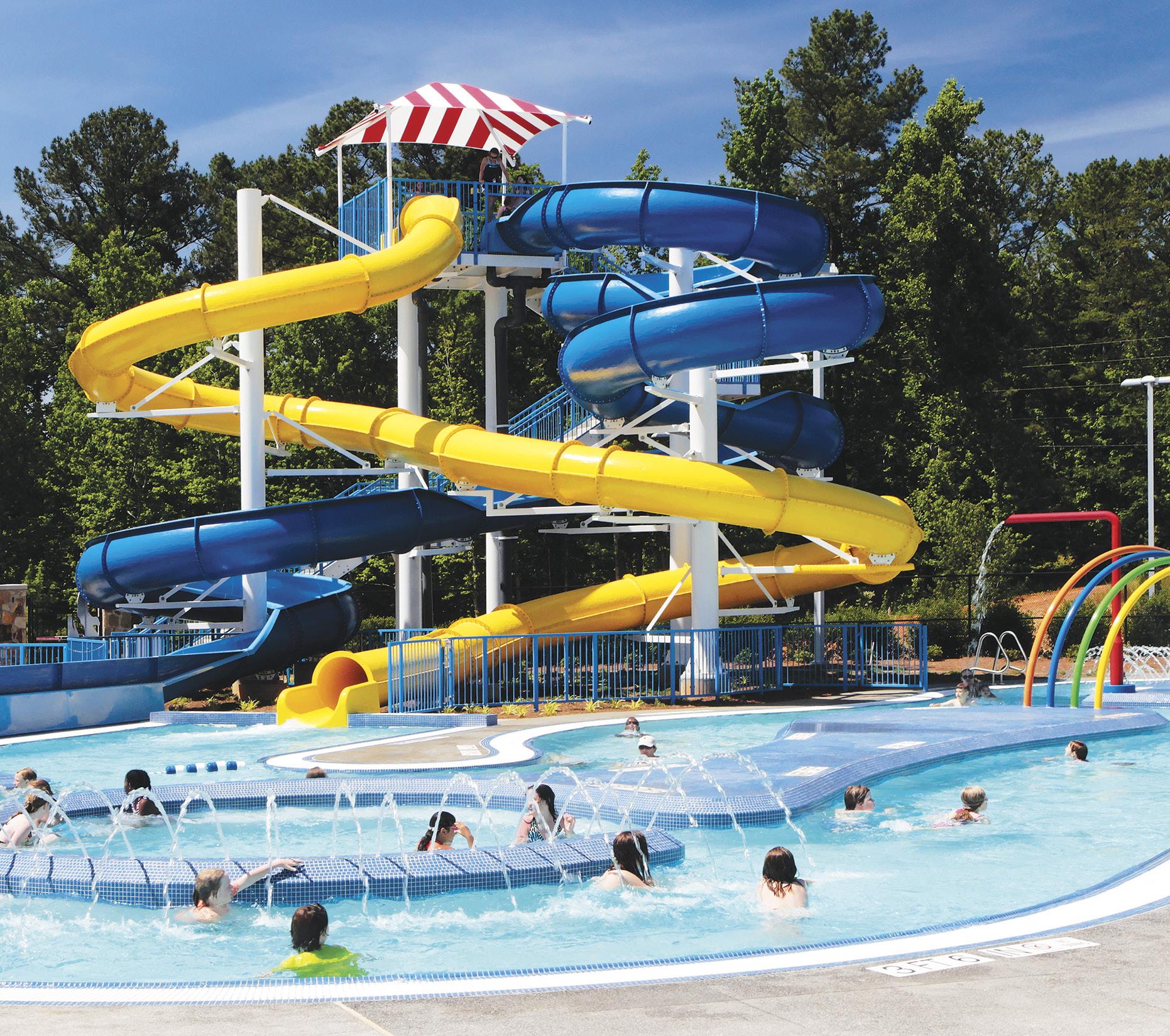
Where: 6224 Jimmy Carter Blvd., Norcross. 678-277-0224. gwinnettcounty.com
Cost: $4.25-$8.50
l Bethesda Park Aquatic Center
This location features an indoor leisure pool, a giant waterslide, a river channel, water play structures and more.
Where: 225 Bethesda Church Rd., Lawrenceville. 678-277-0880. gwinnettcounty.com
Cost: $4.25-$8.50
l Bogan Park Aquatic Center
Slide down the giant waterslide and cool off with the water play structures.
Where: 2723 N. Bogan Rd., Buford. 678-277-0853. gwinnettcounty.com
Cost: $4.25-$8.50
l Cherokee County Aquatic Center
The Oasis, the outdoor leisure pool, features beach entry, two waterslides, a water playground and water play features.
Where: 1200 Wellstar Way, Canton. 678-880-4760. playcherokee.org
Cost: $9; ages 2-13, $7; ages 1 and younger, free
Cherokee County Aquatic Center
l Collins Hill Park Aquatic Center
Features include an indoor swimming/diving competition pool, an outdoor leisure pool with a river channel, waterslides and water play structures.
Where: 2200 Collins Hill Rd., Lawrenceville. 770-237-5647. gwinnettcounty.com
Cost: $4.25-$8.50
l Cumming Aquatic
Center
The Outdoor Leisure Pool has a waterslide, lazy river and a play structure area for cooling down during the summer season.
Where: 201 Aquatic Cir., Cumming. 770-781-1781. cummingaquaticcenter.com
Cost: $8; ages 2-13, $7; ages 1 and younger, free
l Frances Meadows Aquatic Center
This aquatic facility features a seasonal outdoor water park with a splash zone.
Where: 1545 Community Way NE, Gainesville. 770-533-5850. gainesville.org
Cost: $9; ages 2-13, $7; ages 1 and younger, free
l Lenora Park Pool
Splash around in the outdoor leisure pool, giant waterslide, river channel and water play structures.
Where: 4315 Lenora Church Rd., Snellville. 770-982-5309. gwinnettcounty.com
Cost: $4.25-$8.50
l
Mountain Park Aquatic Center
This center’s outdoor leisure pool has zero-depth entry, waterslides, a river channel, bubble bench and more.
Where: 1063 Rockbridge Rd., Stone Mountain. 678-277-0870. gwinnettcounty.com
Cost: $4.25-$8.50
Cont’d on page 64
62 Atlanta Parent June 2023 atlantaparent.com
JUNE 3
Jazz in the Alley: Adrienne Woods, The Headliner Band & Trumpeter Terence Harper

JUNE 9

Summer Concert Series: Bogey and the Viceroy
JUNE 23
Summer Concert Series: Purple Madness
JUNE 24
Bluesberry Music Festival
JULY 3 Red, White & BOOM!
JULY 7
Summer Concert Series: Az IzZ

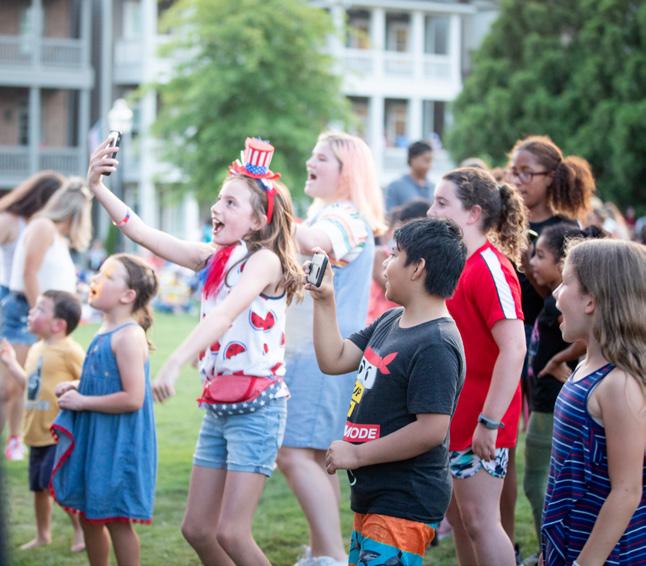
SCAN FOR A FULL LINEUP OF EVENTS!

SUMMER Fun Guide
l Rhodes Jordan Park Pool
Splash around in the outdoor leisure pool featuring a waterslide, river channel and water play structures.
Where: 100 E. Crogan St., Lawrenceville. 678-277-0892. gwinnettcounty.com
Cost: $4.25-$8.50
l Seven Springs Water Park
This water park features two waterslides, a lazy river and a splash pad. Grab a snack at the concession stand.
Where: 3820 Macedonia Rd., Powder Springs. 770-528-4035. cobbcounty.org
Cost: $6-$9; ages 3-17, $4-$6; ages 2 and younger, free
l South Cobb Aquatic Center
Splash down spiraling waterslides or float along the lazy river.
Where: 875 Riverside Pkwy., Austell. 770-739-3180. cobbcounty.org
Cost: $4.50-$6.75; ages 2-17, $3.50-$5.25; ages 1 and younger, free
l West Gwinnett Park Aquatic Center
Featuring indoor and outdoor pools, waterslides, a river channel, a bubble bench and water play structures, this aquatic center has something for everyone to dip their toe in.
Where: 4488 Peachtree Industrial Blvd., Berkeley Lake. 678-407-8801. gwinnettcounty.com
Cost: $4.25-$8.50
l Wills Park Pool
Cool off in a leisure pool, and enjoy interactive play stations, a waterslide and more.

Where: 1815 Old Milton Pkwy., Alpharetta. 678-297-6107. alpharetta.ga.us
Cost: $5-$8; ages 3 and younger, free

64 Atlanta Parent June 2023 atlantaparent.com
Wills Park Pool
Water Park Attractions
l Buccaneer Cove at Malibu
Norcross
This five-level water play area features more than 1,000 feet of slides, tunnels, spray loops, a huge splash bucket and a water cannon, while parents relax and supervise from a lounge chair or cabana.
Where: 5400 Brook Hollow Pkwy., Norcross. 770-416-7630. malibunorcross.com
Cost: $15.99-$34.99
l Margaritaville at Lanier Islands
Cool off in the newly renovated wave pool, play in the Parakeet Springs kids’ zone, stand under the Fin Dunker Bucket and slide down the new Parrot Mountain summer tubing slide.
Where: 7650 Lanier Islands Pkwy., Buford. 470-323-3440. margaritavilleresorts.com/margaritaville-at-lanier-islands
Cost: $39.99-$54.99; ages 3 and younger, free; parking, $20
l Six Flags Hurricane Harbor
Part of Six Flags Over Georgia, race down Bonzai Pipelines, test your bravery on Tsunami Surge, or catch a wave in the 38,000-square-foot Calypso Bay.
Where: 275 Riverside Pkwy., Austell. 770-739-3400. sixflags.com/overgeorgia
Cost: $34.99-$79.99; parking, $30
l Six Flags White Water
Float as a family on the Bahama Bob Slide and other family rides, play in the new AquaPlay structure Caribbean Cove, splash in Buccaneer Bay and more at this 69-acre water park.
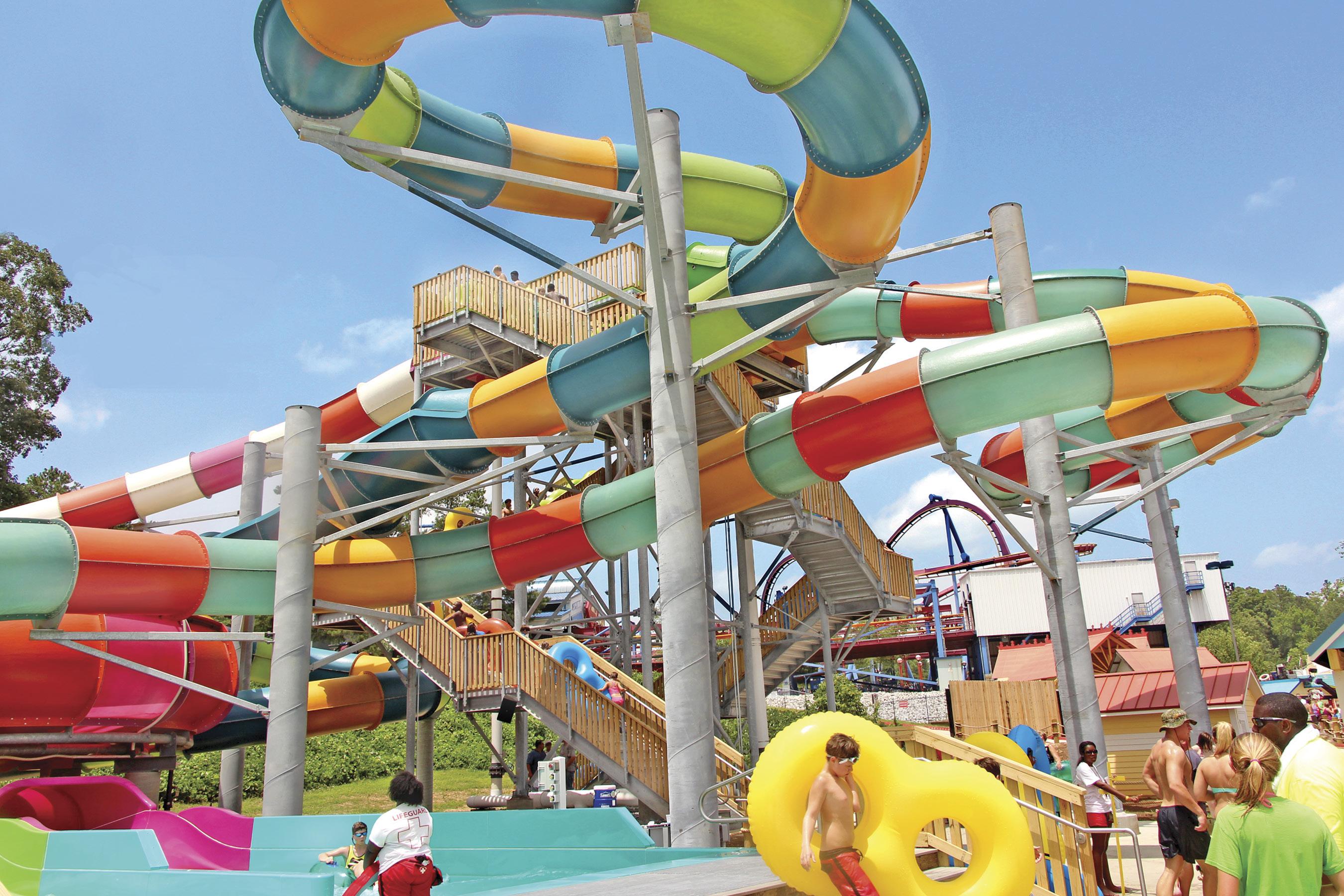
Where: 250 N. Cobb Pkwy. N, Marietta. 770-590-4067. sixflags.com/whitewater
Cost: $29.99+; parking, $25
l Spivey Splash
This water park in Clayton County includes a 1,279-feet-long lazy river, a splash pad, pools for different ages and more.
Where: 2300 Hwy. 138 SE, Jonesboro. 770-603-4000. spiveysplash.com
Cost: $20; ages 2 and younger, free
l Terminus Wake Park
Play in an aquatic amusement park with the giant inflatable water playground. Minimum age of 5.

Where: 171 LakePoint Pkwy., Cartersville. 470-315-0155. terminuswakepark.com
Cost: $24-$28
l Great Wolf Lodge
Spend the night at this water park featuring waterslides, attractions and areas for all ages and thrill levels.
Where: 150 Tom Hall Pkwy., LaGrange. 844-473-9653. greatwolf.com/georgia
Cost: Day Pass, $60-$100; Nightly rates, $269.99+
Cont’d on next page
June 2023 Atlanta Parent 65 atlantaparent.com
Six Flags Hurricane Harbor
Margaritaville at Lanier Islands
SUMMER Fun Guide

Beaches
l Cauble Park Beach
Head to Lake Acworth for Cauble Park with a playground, sandy beach and paddleboarding or kayaks. The city of Acworth also has three other beaches on two lakes: South Shore Park, Dallas Landing Park and Proctor Landing Park.
Where: 4425 Beach St., Acworth. 770-917-1234. acworth.org
Cost: Parking, $15
l LandShark Landing at Margaritaville at Lanier Islands
Celebrate life on the lake with the beach, boat docks, fire pits, special events and LandShark Bar & Grill.
Where: 7650 Lanier Islands Pkwy., Buford. 470-323-3440. margaritavilleresorts.com/ margaritaville-at-lanier-islands
Cost: Free-$9.99
l Robin Lake Beach at Callaway Gardens
Enjoy the white sand beach and lake activities, as well as biking, ziplining, hiking, mini golf and more.
Where: 17800 US Hwy. 27, Pine Mountain. 800-225-5292. callawaygardens.com
Cost: $19.95-$24.95; ages 2 and younger, free
l The Swimming Beach at Red Top Mountain State Park
Enjoy the swimming sand beach nestled in a cove and surrounded by trees for cooling off. Where: 50 Lodge Rd. SE, Acworth. 770-975-0055. gastateparks.org/redtopmountain
Cost: Parking, $5
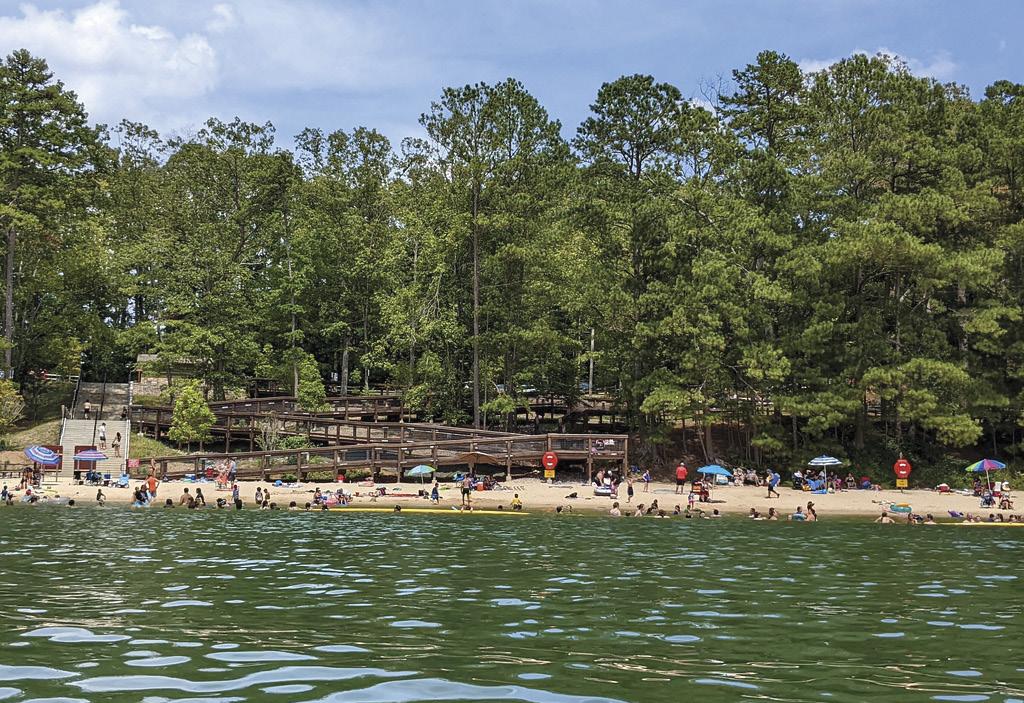
66 Atlanta Parent June 2023 atlantaparent.com A SMITHSONIAN AFFILIATE SouthernMuseum.org • 770-427-2117 Monthly Homeschool Workshop Weekly Preschool Program Virtual Outreach Field Trips All aboard for museum fun!
Red Top Mountain State Park
Jason’s Music Party
jasonsmusicparty.com
A Birthday Concert for Your Child. Interactive live kids music for all occasions. Performing classics and new favorites, percussion jams, singing, dancing and more. Options for every budget. Easy set-up, best for ages 1-8.

BIRTHDAY PARTY PLANNER
Sky Zone Roswell
skyzone.com/roswell
dodgeball, Warrior Course, Sky Slam, Wipe Out,
Altitude Trampoline Park
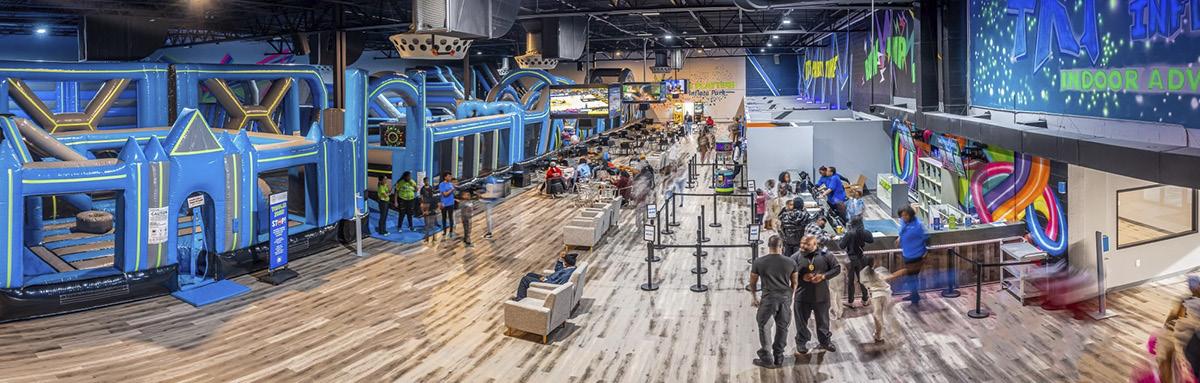
altitudeeastcobb.com
Altitude Trampoline Park is the place for kids to freeplay! Parties are indoor adventures that will have guests bouncing, soaring, tumbling and battling their way to a one-of-kind experience. Call today! 770-693-7627.
entertainment. Favorite kids characters, circus, fire, holiday, DJs, dance acts and more for all ages at your location. Atlanta Based Since 2001. 275 entertainment options to choose from.

KB Fun Zone
kbfunzone.com
Step foot into the KB Fun Zone. A mobile gaming truck party offering a top-of the-line gaming experience. Equipped with the latest and greatest video games. Book your party today! 404-916-0703.

Yellow House Parties
yellowhouseparties.com
Customized spa parties! Experience our beautiful venue where your princess will enjoy a pampering spa experience in spa robes, receive edible facials, mini manis & pedis, glitter makeovers, have a runway show and more. 470-301-3485.

TKT Playtime
tktplaytimeinflata.com
Now open 20,000 sq ft facility, the largest indoor “Inflata park” in Georgia providing fun and excitement for all ages! Obstacle course, mega slides, dodge ball, gamers zone and more. Visit today for the best jumping fun! 404-343-2764.
Circus Camp
circuscamp.org
Celebrate your child’s birthday with our trained professionals. One-on-one instruction. Magic shows, balloon sculpting, juggling, face painting and other extras available. Register online Dunwoody and Decatur, 404-370-0001.


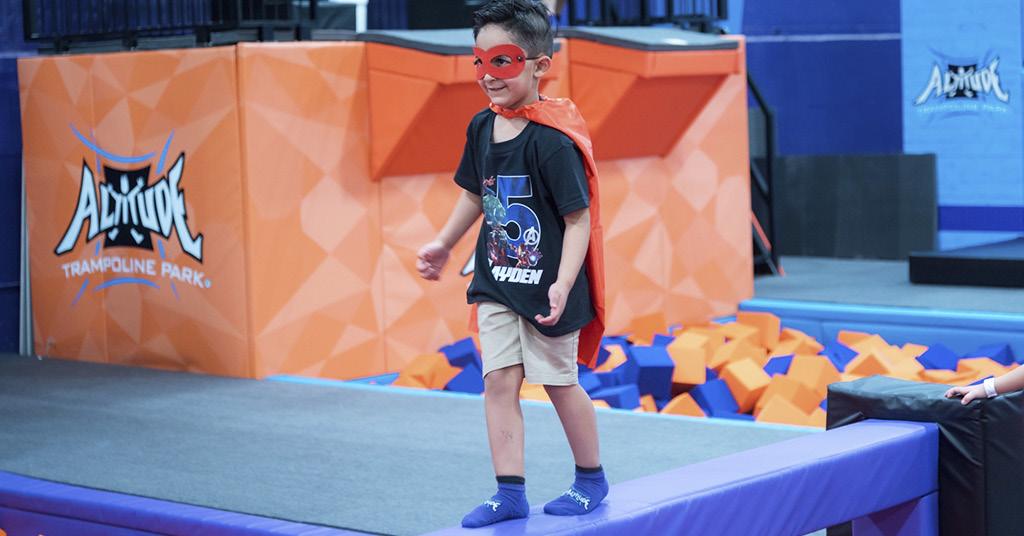



June 2023 Atlanta Parent 67 atlantaparent.com
SPECIAL ADVERTISING SECTION
IT’S ALWAYS SOMEONE’S BIRTHDAY! Make sure party-planning parents know about your business. Be a part of our Birthday Party Planner. In print, 24/7 and online for a full year.
more info, contact Genie Lockeretz at 678-938-8116 or glockeretz@atlantaparent.com
For
Top 4th of July Events
Everyone Loves a Parade
l July 4th Parade. Downtown Newnan. July 4, 9 a.m. A patriotic, hometown parade starts at Veteran’s Memorial Park and ends at Greenville Street Park. 30 Temple Ave., Newnan. 770-253-8283. Free admission. mainstreetnewnan.com
l Dunwoody Fourth of July Parade. Dunwoody Village. July 4, 9 a.m.-1 p.m. Marching bands, floats, clowns and more will march from Mount Vernon Road and Jett Ferry Road to Dunwoody Village. Dunwoody Village Pkwy., Dunwoody. Free admission. dunwoodyga.org
l Peachtree City July 4th Parade & Fireworks. Drake Field. July 4, 9 a.m.-10 p.m. Fourth of July parade begins at 9 a.m. on Peachtree Parkway, and fireworks begin at dark at Lake Peachtree. 155 Willowbend Rd., Peachtree City. 770-631-2542. Free admission. peachtree-city.org
l July Fourth Spectacular! Woodstock. July 4, 10 a.m. Parade begins at 10 a.m. at Woodstock Elementary. Festival starts at 11 a.m. at The Park at City Center, and fireworks begin at dusk behind Lowe’s. Rope Mill Rd., Woodstock. 770-517-6788. Free admission. woodstockga.gov
l Fourth in the Park. Glover Park. July 4, 10 a.m.-9:30 p.m. A parade, free concerts, an arts and crafts show, food, carnival games and fireworks. Let Freedom Ring Parade begins at Roswell Street Baptist Church and ends at North Marietta Parkway. 50 N. Park Square, Marietta. 770-794-5606. Free admission. mariettaga.gov
l Pied Piper Parade, Concert and Fireworks. Downtown Decatur. July 4, 6-10 p.m. Decorate a wagon, ride your bike, skate or walk along with the parade that begins at First Baptist Church of Decatur. After, enjoy the Concert on the Square and fireworks. E. Court Square, Decatur. 404-597-3218. Free admission. visitdecaturgeorgia.com
Fireworks, Fun and More
l Fantastic Fourth Celebration. Memorial Lawn at Stone Mountain Park. July 1-5. Enjoy a fireworks display following the new Music Across America Light Show. Reservations encouraged for the Summer Light Show. 1000 Robert E. Lee Blvd., Stone Mountain. 800-401-2407. $39.95; ages 3-11, $34.95; Summer Light Show, $5-$19.99; parking, $20. stonemountainpark.com
l Red, White & Boom! Lillian Webb Park. July 3, 5-10 p.m. Fireworks, food trucks, inflatables, music and more. 5 College St. NW, Norcross. 770-448-2122. Free admission. norcrossga.net
l Independence Day Celebration. Newtown Park. July 3, 6-10 p.m. Listen to live music, enjoy activities, taste food and watch fireworks. 3150 Old Alabama Rd., Johns Creek. 678-512-3200. Free admission. johnscreekga.gov
l Kennesaw’s Salute to America. Downtown Kennesaw and Depot Park. July 3, 6-10 p.m. Pre-Fourth celebration with live music, food vendors and fireworks. 2829 Cherokee St., Kennesaw. 770-422-9714. Free admission. kennesaw-ga.gov/salutetoamerica
l Red, White and Boom! Olde Town Conyers. July 3, 6-10 p.m. Celebrate the nation’s independence with food trucks, activities for kids, live music, fireworks and more. 901 Railroad St., Conyers. 770-602-2606. Free admission. conyersga.com
l Sparks in the Park. E. E. Robinson Park. July 3, 6:30-11:30 p.m. Fireworks, inflatables, food and drinks and live entertainment. 850 Level Creek Rd., Sugar Hill. 770-945-6716. Free admission. cityofsugarhill.com
l Cumming Fourth of July Celebration. Cumming Fairgrounds. July 4, 10 a.m.-10 p.m. Festivities include a parade, a dance contest, food and vendors, children’s activities and fireworks. 235 Castleberry Rd., Cumming. 770-781-3491. Free admission. cummingfair.squarespace.com
l City of Cartersville 4th of July Celebration. Dellinger Park. July 4, 4-10 p.m. Concert, fireworks, children’s area, food and more. 100 Pine Grove Rd., Cartersville. 770-423-1330. Free admission; parking, $10. jrmmanagement.com
l July Fourth Concert and Fireworks. Cauble Park. July 4, 4-10 p.m. Food vendors, live music in the afternoon and fireworks at 9:30 p.m. 4425 Beach St., Acworth. 770-917-1234. Free admission. acworthtourism.org

l Stars & Stripes – July 4th Fireworks Celebration. City Green. July 4, 4-10 p.m. Enjoy food trucks, live entertainment and fireworks. 1 Galambos Way, Sandy Springs. 770-206-1447. Free admission. visitsandysprings.org
l Chamblee Fourth of July Celebration. Chamblee City Hall. July 4, 5-10 p.m. Activities for kids and adults, food vendors, live music and an elaborate fireworks show. 3518 Broad St., Chamblee. 470-622-9271. Free admission. chambleerocks.net

l Fourth of July Fireworks Extravaganza. Roswell Area Park. July 4, 6 p.m. Live music, entertainment, food trucks and fireworks at sunset. 10495 Woodstock Rd., Roswell. 770-641-3727. Free admission. roswellgov.com
l Fourth of July Celebration. Wills Park. July 4, 8-10 p.m. Pack a picnic, blanket and chairs to watch a display of fireworks at dusk. 11925 Wills Rd., Alpharetta. 678-297-6130. Free admission. awesomealpharetta.com
68 Atlanta Parent June 2023 atlantaparent.com
SUMMER
Fun Guide
Fourth in the Park
Red, White & Boom! at Lillian Webb Park
Your Summer Go-To Bucket List


Alliance Theatre alliancetheatre.org
Atlanta Braves braves.com
Chattahoochee Nature Center chattnaturecenter.org
Children’s Museum of Atlanta childrensmuseumatlanta.org
City of Acworth visitacworth.com

City of Norcross aplacetoimagine.com
Dino Safari dinosafari.com
Douglas County exploredouglascountyga.com
Fernbank Museum fernbankmuseum.org
Fulton County Library System fulcolibrary.org
Gwinnett County Public Library gwinnettpl.org
Margaritaville at Lanier Islands
margaritavilleatlanierislands.com
Microsoft Peachtree Junior Atlanta Track Club atlantatrackclub.org
Roswell Summer Puppet Series Roswell Cultural Arts Center roswellcac.com
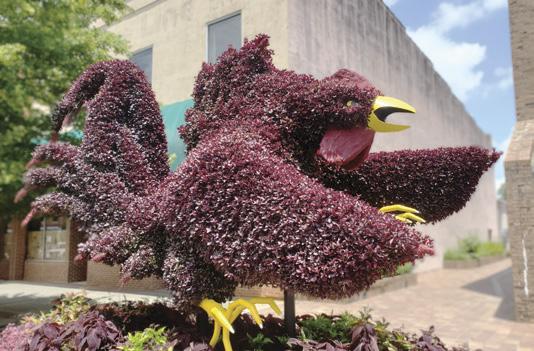
Sky Zone skyzone.com/roswell
The Southern Museum southernmuseum.org
Southeastern Railway Museum southeasternrailwaymuseum.org
Stars and Strikes starsandstrikes.com
Summer Reading at Georgia Public Libraries georgialibraries.org/sr23
Tellus Science Museum tellusmuseum.org
Zoo Atlanta zooatlanta.org
Our SmallTown Festivals



Are Big On Flavor
Take
VISITOLD96SC.COM


June 2023 Atlanta Parent 69 atlantaparent.com
ABBEVILLE, EDGEFIELD, GREENWOOD, LAURENS, AND McCORMICK COUNTIES
a bite out of life in South Carolina’s Old 96 District! Come join us this season with fresh new ways to travel, our favorite festivals, small-town charm and attractions to enjoy with the whole family.
The Offi cial School of Atlanta Ballet

SUMMER DAY PROGRAMS
Offering a variety of programs to keep your kids active and learning! Registration now open.

June–July 2023 | Ages 2–17
Two convenient locations:
Virginia Highlands | 404-883-2178
Buckhead | 404-303-1501
70 Atlanta Parent June 2023 atlantaparent.com
Visit centre.atlantaballet.com/summer-programs
Photo by Kim Kenney.
OCT 29
Sun: 1:30pm & 3pm Día de Muertos (Day of the Dead)

FAMILY CONCERT SERIES
DEC 3 Sun: 1:30pm & 3pm ’Twas the Night Before Christmas

Sun: 1:30pm & 3pm
SCAN CODE FOR OFFERS!
All concerts take place in the Woodruff Arts Center, Atlanta Symphony Hall. The Family Concert Series is made possible by the generous support of the Lettie Pate Evans Foundation. All dates, programs, artists and prices are subject to change.


23
|24
|
SEASON
523-a/F-Atl Parent Season.indd 1 5/17/23 1:16 PM
more connection

Conquer eleven towering waterslides with a SoundWaves Experience Package, explore acres of garden atriums, and find adventure around every corner during your thrilling summer getaway.

GaylordOpryland.com

more thrills