Co-Founder, Creative + Style Director Paul Farkas Co-Founder, Artistic Director + Tech Director
PHOTOGRAPHY CONTRIBUTIONS
PHOTOGRAPHERS | Reiner Bajo/Peacock | Sharon Daniels | Mr. Grant Hao-Wei Lin/Kintsugi | Lair Collective | Ryan Miller/Red Bull | Trevor Moran/Red Bull | George Orozco | Ian Patterson |
Riding the Waves Griffin Colapinto
This
We
Unterberger
The Art of the Snack Kintsugi Omakase
We made our way to SoHo to enjoy a truly special culinary experience - omakase. We enjoyed a 16 course tasting menu and wanted to know more about its origins, the different tasting menu options, and more!
Charting Her Course
Angel City FC’s Sydney Leroux talks with us about the love of the game, how she came to soccer, and navigating recovering from injury.
Down in the Valley
We talk with STARZ’s P-Valley star Nicco Annan who serves as Executive Producer and host of the companion series to this show as well as EP Shoshana Guy.
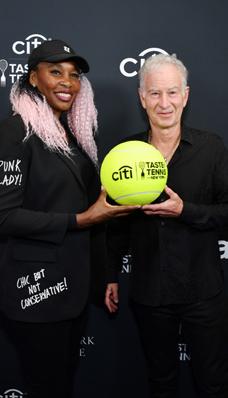
Citi Taste of Tennis
Next month, Citi’s Taste of Tennis is back ahead of the US Open! We find out more about this event, its tennis stars and culinary greats that will be there.
The Ancient World Lara Wolf
Peacock Original’s Those About To Die can be streamed now and we chat with Lara Wolf about her role in this Ancient Roman series!
This month we're excited to share a number of stories from athletes who will be competing at this year's Paris 2024 games! While the majority of athletes will assemble in Paris for this year's Summer Games, those who are competing in surfing will make their way to Tahiti in Teahupo’o. This month's cover story is with World Surf League's #2 ranked pro-surfer Griffin Colapinto who will competing with Team USA Surfing, and will make his first Olympic appearance this year.
In addition to the success that he has had throughout his career and this year, we know he has an array of fans which includes Matthew McConaughey who has shown his public support of him at a number of meets. In addition to surfing, he is also in a film that is currently in the film circuit, Trilogy: New Wave and will be released this September. He stars alongside Australian Olympic surfer Ethan Ewing and Hawaiian Seth Moniz. The film focuses on the non-competitive side of surfing.
We wanted to know more about how he got into the sport, going pro, Paris 2024 , and his partnership with Procter & Gamble's Athletes For Good alongside the International Olympic Committee (IOC) and International Paralympic Committee (IPC) and his chosen charity which focuses on mental health.
ATHLEISURE MAG: When did you fall in love with the water?
GRIFFIN COLAPINTO: I fell in love with the water when I was about 3 years old!
AM: What was the moment that you realized that you wanted to surf professionally? Where did that journey come from as we know that you love the water, you loved surfing, and then you wanted to do it as a professional.
GC: Well, the journey started down at my dad’s surf camp. He started a surf camp down at Santa Clemente the year I was born and he ran that for 20 years. So I was just growing up with the beach and him
and he was in love with surfing and the ocean and he was a lifeguard and a teacher so that carried over to running a surf camp in the summer time. He just created a rad family dynamic down there with all the instructors and I was just growing up on the sand every summer! That and I just started – I don’t know it was natural, I wasn’t forced into surfing and being a competitive person and playing games. I just took to it naturally because I was on the beach and the sand. I remember a lot of the kids that were down there and the instructors that were there would always be on the beach. I just wanted to be able to impress them with the things that I was able to do in the water. I remember taking a surf board out there in front of them and wanting to surf for them.
I had this one moment where I was probably 7 or 8 and I felt like I caught some air on a pipe and I remember looking at all of the instructors on the beach and they were cheering. That feeling right there triggered competitive surfing for me right there! Being able to perform for people made me really happy!
AM: What is an average week like for you when you’re out there surfing whether you’re training for competitions or whatever?
GC: Yeah, well! I definitely think that there is a lot of discipline on my routines whether I’m waking up early and doing everything that makes me feel good like meditation, writing, and surfing of course! Working out and all of those things are important. It’s also essential to give yourself time to rest and to recover and I also have fun! I enjoy golfing a lot so that’s a nice way to take my mind off of surfing because sometimes you can just plow yourself through into the ground too much! It's a good balance.
AM: Congrats on qualifying for Paris
2024! What are you looking forward to?
GC: Yeah, it’s pretty wild! So our Olympics, we will be in Tahiti which isn’t near Paris, but it’s going to be on its own little adventure over there! It should be pretty exciting from what I have heard! They have put in a lot of work over there in Teahupo’o and although I can’t say what it will be like yet, I’m excited!
AM: And you’re ready for it!
GC: I’m ready!
AM: Tell us about Athletes For Good as we know it’s an initiative between P&G, IOC, IPC – can you give us a little background on that?
GC: So the Athletes For Good, P&G granted us money to donate to our favorite charity. I donated funds towards To Write Love On Her Arms (TWLOHA) a mental health organization that provides the tools and mental health resources for anyone that is going through challenging times in their lives due to suicide or maybe there is a close family member in their family that did commit suicide and needs someone that they can talk to about it. You can go to TWLOHA and you can get a local counselor nearby and they just provide rad things like that. It is definitely a big deal these days with social media and everything going on and it can take you away from the source of where we came from. I’m really proud to be able to represent it.
AM: Had that been an organization that you had been involved with before? What drew you to picking TWLOHA in terms of where you wanted the donated funds to go to?
GC: Well, I originally got into mental health through surfing. My dream of being on the World Championship Tour and being a World Champion, it comes with a lot of challenges, and anytime you have a big goal in mind, there is going to be a lot of ups and downs with
that. So, through that, the mental side of things plays a big role and I realized that and it opened my eyes to a lot of different perspectives and other people. I just kind of realized that there are a lot more people on similar paths that go through hard times. For me, I was super fortunate to grow up with amazing parents and to grow up in a beautiful community with a lot of support and I still find myself on days struggling with some slight depression and not very happy and not knowing why. I just felt that there are people who got dealt with a bad set of cards, a lot worse than me and I can only imagine what they are going through. So that’s what drove me into this space and it's really cool that P&G gave us this grant and I’m excited!
AM: You mentioned that when you’re taking time for yourself, you play golf! Are there other things that you do to take time for yourself to be in the place that you need to be so that you can infuse that energy into other areas of where you also want to be?
GC: Just kind of being aware of how I am feeling and what is best for me in the moment. As an athlete, it’s easy to over do it, to over exert yourself and to just be addicted to the hard work and you feel like you need to work, work, work, work, but in reality, half the battle is just being good at resting too! So learning that has been a big part of it and I feel that slowly but surely, I’m getting better every day!
AM: Which is an awesome skill to have too!
You can find out more about Athletes For Good that recognizes the efforts of athletes to improve their communities off the field. Griffin shares more information about TWLOHA and why he is involved with them in his IG post .
@griffin_cola
PHOTOGRAPHY COURTESY | FRONT COVER, PG 16 + 20 Trevor Moran/Red Bull | BACK COVER, PG 18 + 22 Ryan Miller/Red Bull | PG 24 P&G |
One of the best things in life is to re-discover, deep dive, and better connect with things long-admired, and cherished. Bob Marley’s music lies at the top of my musthaves – many tracks and live albums suiting best for joyous and sad moments, and all in between, as well as adventuring outdoors, smoking sessions, studying, romance and more.
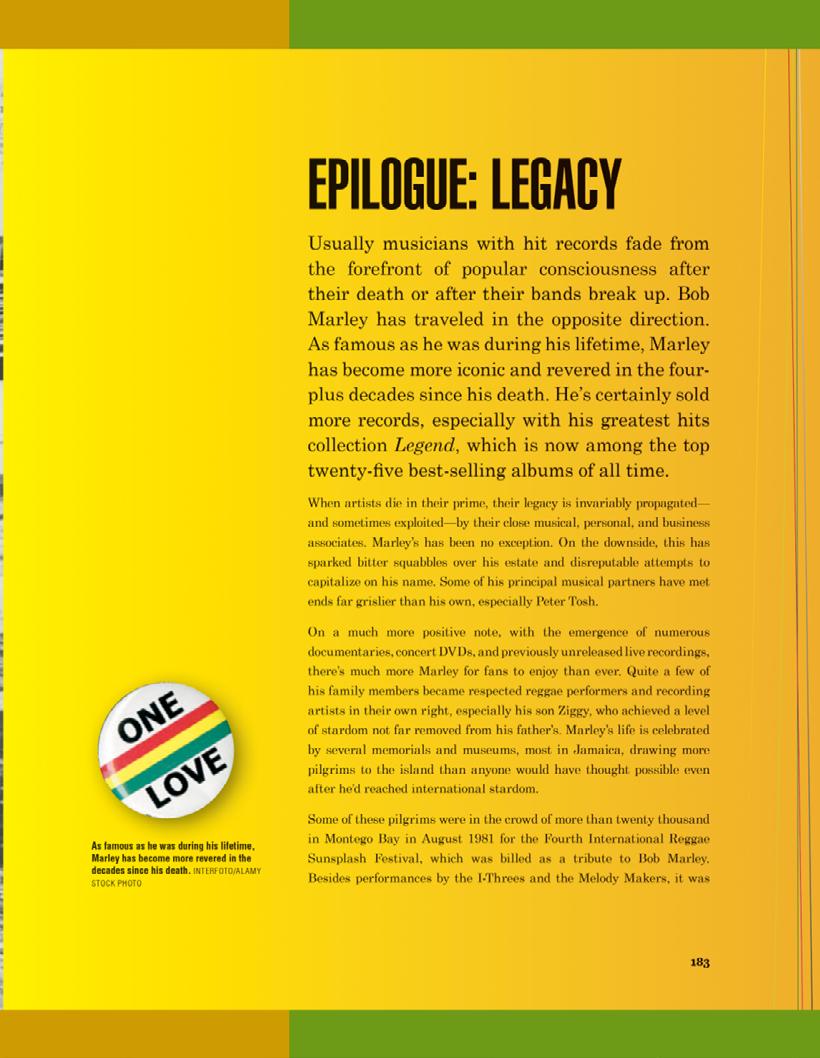
Upon reading Bob Marley and The Wailers: The Ultimate Illustrated History by Richie Unterberger, it was quickly apparent that it was time to dust off those old soundboard recording treasures and look to the music, life and culture that has served as such stong guidance over the years.
We put together an expanded 9PLAYLIST STORI3S to explore and ponder more about the man, his music, and the times for then and now, along a series of our favorite song selections: Sun Is Shining, Positive Vibration, Roots Rock Reggae, Downpressor Man, One Love, Zimbabwe, And I Love Her, High Tide or Low Tide, and Redemption Song.
Ultimately, with questions or thoughts of art and nature; good and tough times; peace and strife; love, respect and kindness, we ask along this and our musical journey - What Would Marley Do (WWMD)?
And I Love Her (Alternate Take)
ATHLEISURE MAG: I stumbled upon this ballad mid-college and was floored. It felt immediately intimate and special, loved sharing it at parties as friends generally loved it.
RICHIE UNTERBERGER: Most of the attention on Marley's career goes to the last seven or so years of his life when he was becoming an International star, first with the original Wailers and then with other Wailers. But there was a lot of good music that he made, often with the original Wailers, in the first 10 years of his recording career, which isn't very well known because it was primarily heard in Jamaica and not elsewhere.
And the earliest years of those are like from 1962-63 to 1966. That's when he had his debut single with Studio One. And the records are a lot more ska influenced than what he did after 1966 - [ska as] the precursor to reggae music. It's a lot faster and it's sort of a combination of Jamaican folk music with early American soul music.
Like they did a Curtis Mayfield song and he was maybe their biggest early influence. That's not a surprise. But them doing a Beatles song is not something that you would necessarily expect. And the version that they do, it is more imaginative than you would think, even if you know a fair amount about reggae and the Wailers. I'm a big Beatles fan. I love the original version, but they give it more of a wilting, early reggae cast and they also add, 'and I love her, yes, indeed,' after like every chorus. So it sounds more like a soul, early reggae hybrid sort of yearning quality that's not in the Beatles original, which makes it an interesting variation. And that's how they kind of varied soul music in general, when they were doing their first records in the mid '60s.
AM: At this time, were they doing covers towards getting acceptance or was that honoring their influences, or both?
RU: It's kind of all the above, but I think even though the majority of the material from the get go was original, I think there were a lot of songs they just liked that they wanted to do. It's just it's like when the Beatles started, they were already great songwriters on their first album, but the first few albums all have a good number of cover versions, which they did really well. They didn't just imitate Chuck Berry or Little Richard. They put their own personality on it very strongly. But also, I think they, and a lot of early reggae acts or ska acts, were just putting out tons of records, even though Jamaica was a pretty small market. And to fill out all these singles coming out and the one album that they did
in the mid 60s, they needed to have more songs probably than they had already written. So they opted for songs that they really liked and maybe songs that when they performed live would get a good reaction to sort of vary their repertoire if they were playing long concerts.
AM: Yeah. I always liked the Bob Dylan one, 'Like A Rolling Stone.’
RU: And another example, they did a Temptations song, Don't Look Back, an earlier version than the one that Peter Tosh did where Mick Jagger duetted with him in the late 60s. But he was aware of that song by the Temptations, which isn't one of their big hits, even when he was pretty early in his recording career.
AM: You know, I love that part of your book when you showed the Rolling Stones imprints, didn't know much about that, and definitely that whole part about Mick Jagger and the Stones backing Peter Tosh and all that.. That was terrific!
RU: Thanks. Yeah. It's really interesting because I think when the Rolling Stones set up their own label, their ambition was to have it be a sort of Apple Records, the way that Beatles ran Apple Records for the first couple of years, where it would be their label, but they would sign a lot of other artists and not just sign them, but often produce them or help them hands on, like they did with Badfinger and Mary Hopkin. And for various reasons, that aren't clear to me, they signed very few people, like less than five. And the only significant one they signed to put out a reasonable number of records was Peter Tosh. And I think that although the Stones didn't do many reggae songs, whether it was covers or they wrote their reggae style songs, they really liked the music.
They did some recording in Jamaica, like Goats Head Soup, the 1973 album, and they saw the connection between reggae and the American rhythm and blues and soul music that they loved and wanted to promote it with one of the leading artists
who was available because he had left the Wailers for various complicated reasons, right after the Wailers started to get a big International audience on Island Records. So I'm not saying they were the most altruistic group of people in the world, the Rolling Stones, but they really wanted to promote a form of Black music, not Black American as it happens, but still from near North America.
It didn't work out indefinitely because Peter Tosh had a fallout with Keith Richards. This is like a few albums into his career with Rolling Stones records. But it was an alliance that made a lot of sense. It's the only such alliance the Stones made for their own record label, but it was the one solid indication of what they could do to help another artist. Not that Tosh needed so much help for his art, but his promotion to an International audience, which also Mick Jagger, of course, helped by actually singing on Don't Look Back, and also appearing in the official promotional video that Peter Tosh did, and also they sang it together on Saturday Night Live.
Sun is Shining
AM: This song increasingly became one of my favorites throughout my life. It’s always something that gets to me right away and the right ways, just find it so magnificent – it's sexy and inspirational!
RU: A lot of the attention given to Mar ley as a songwriter or for his protest songs are the ones championing social justice. And that's very important, arguably the most important part of his songwriting. But it should never be overlooked, that like almost all great songwriters, he could write about social issues, but also just write songs that were feel good songs, like ‘Positive Vibration,’ it was a great example, I think.
Also really good love songs - and although a lot of his songs, like Get Up,
Stand Up is a great example, are about self-empowerment, a lot are sort of anthems just to make people feel more positive about what they are experiencing, what they hope to experience. And Sun Is Shining is an early example of that.
And I think it's interesting that throughout his career, Marley and Tosh would sometimes remake songs from pretty early in their career, like One Love is another great example, when they realized we're getting a much bigger audience and a lot of those people around the world never heard these records, which were primarily or only distributed in Jamaica. It was time to make those songs, which still have a universal message, something that everybody can hear on records, not just in their concerts. So Sun Is Shining is an example of that, where it was revisited and remade as well.
AM: Near the end of the song, he's talking about how he's 'a rainbow, too.' And it made me really reflect, wondering if this was him rescuing us as the unifier, and if also he was encouraging us that we all could all be rainbows, too?
RU: I would say like not just a lot of songwriters, but a lot of artists, his messages can be validly interpreted in different ways. So you might say he's talking about himself or that he's talking about everybody, all of his listeners and himself, or he's talking about both himself and his listeners. One of his great strengths was that as a songwriter, he could deliver very clear, yet easily understood messages that were inspiring. When you hear his spoken interviews, he's often a little vague. And it's interesting that it's not like his songwriting, which is very clear and direct. ‘Get Up, Stand Up’ - I mean, how can you misinterpret that? I Shot the Sheriff - but I swear it was self-defense..; it's very lucid.
And it's unknown how precise his lyrics were explicitly stating. Yeah, meaning that it's hard to say whether his lyrics were meant for this is how I'm feeling, or this is how humans as a whole feel, or it
could be both. His clear, direct messages were that in the lyrics, whether it's interpreted, however it's interpreted to apply to, they are very easily understood and they hit very directly [and across the world]. And it's unlike his spoken interviews, the last quote before my epilogue, somebody who was talking to the New York Times right after he died, just a fan, not someone who knew him, she said, ‘as an orator, he wasn't much, but his music said it all.’ It's almost like his music was his great expression of communication.
He also traveled and did concerts in Japan and other countries where knowledge of English was appreciably lower then, like a couple generations ago. A lot of people probably, if they read the lyrics on the page, they might have had a hard time understanding them, but when they heard them, they were geared around choruses which were easy to remember and sort of sink in. I think a lot of those messages did get through, both in the words, but also the way that they were sung.
High Tide or Low Tide
AM: So let's talk about High Tide or Low Tide and the Catch a Fire sessions in general? This track is so delicate and haunting, really enjoy it chilling with my girlfriend for sure.
RU: Yeah, Catch a Fire [sessions] - made really good music. I think in Britain a few people had heard them because there was such a big Jamaican population there, Jamaica, and they, Marley and Tosh, liked to have an International audience. They had gone to London in part to not just get a bigger audience or whatever concerts they could do, but try to find a record label. I think the feeling was it's going to be easier in Britain than in the U.S. because of that Jamaican population, Jamaica being a former British population in Britain, here was a much wider knoeledge of reggae, even among non-Jamaicans,
and his record labels were distribution, business distribution, primarily to serve the British Jamaican audience.
To bring reggae music itself to a wider audience, the goal was to give them more of a luster of a rock group, not so much in changing their music, but in marketing the album design, how it's distributed, it's on Island records, which a lot of people associated with those big British rock groups, and only subtly adding some rock instrumentation to their sound without diluting it.
Their appeal then, it was slightly earlier, but still very good records, music was slowing down into reggae and the lyrics were becoming a lot more socially conscious. Even though Catch a Fire is a very wellknown album now, when it first came out it, it was primarily an underground hit, but that was very important, because that's where Marley's huge following could grow. When people saw the Wailers when they made their first American tours, they really stood out, in part because most white rock listeners had not heard reggae before, but also because the stage presence and the concerts were so good, and they got a lot of FM radio. I've talked to the leading FM radio disc jockey in the city in which I grew up, Philadelphia, and he said, 'oh yeah, when that record came out we leapt on it, we played it a lot, both because we loved it, but also we knew that our listeners who were maybe more used to Pink Floyd or Sticky Fingers, or something like that would love it too!'
But it should not be lost sight of that the biggest reason was that the material was very strong. You can't sell a record with that sort of marketing if the songs aren't really strong. In retrospect I kind of wish that it could have been a double album, not just Marley but also Tosh and Two, a lesser but significant degree by Quayler. Part of the reason I think that they did not stay together long on Island Records, after being together for a long time, was that Mar ley was getting so much of the songwriting, and that's one of the rea -
sons he got more attention than anywhere else, although I emphasize they were a group at that time, it wasn't as what it became. They were a group in the sense that all of them have the impact that the act has.
AM: I was thonored to see the Wailers after Bob Marley had passed, they were terrific.
Positive Vibration and Roots Rock Reggae
AM: This pair were often musts for outdoor adventures.
RU: With Positive Vibrations, it's like some of Bob Marley's song titles, you get the idea very quickly before even hearing the song. That's a really good example of, yeah we're going to dig into the lyrics.
We're all going to have a much better life here if we can all learn to groove together, which to some degree his concerts enable many people to do that together. But also, even if you don't think about the lyrics, it captures in a way that few reggae songs have done and reggae's been around now for 60 years or so.
Downpressor Man
AM: I first encountered Downpressor Man at an outside cafe in Miami. I had heard the cover rendition of Sinner Man before Man before and loved it, but this magical slowed down version just hit so hard. Of course, a big fan of and feel it gives justice to Nina Simone’s tough bar to meet.
RU: I think that Peter Tosh shared with Marley as a songwriter, where he's documenting the injustices done to the underprivileged - which in Jamaica, most of the people considered underprivileged would have been. And in this instance, he adopted almost like spiritual, but made it particular, or
more particular to the circumstances, not just of the oppressed in Jamaica, but the oppressed anywhere. I think that's a big part of not just Marley and Tosh's appeal, but reggae's appeal, especially in Africa, places which don't enjoy, in some cases, not as many human rights. Him changing the focus of the song and championing the downtrodden was something that made people feel that he had a lot of empathy for his audience and was able to express that well.
One Love
AM: With One Love, it's definitely something that became a huge country anthem, it always gives me a smile, and like a hug and form of encouragement – it's inviting..
RU: When preaching unity, [it's] hard to do.. without sounding sappy or sounding, just to get together, to find some common ground. This song had those kinds of sentiments, but did it in a humbler way than a lot of such songs do, but also should not be overestimated. The Beatles had a lot of great lyrics, but maybe the biggest reason they became the biggest group ever was that the songs were so melodic. Marley and the Wailers had a lot of such songs, which were very catchy, easy to hum. One Love is maybe his greatest expression of his hopes for a universal common ground between people of all geography and make inroads toward making the world a more peaceful place. Like I said earlier, he'd done that song, it caught on a lot more when it was remade in his solo career in the 70s. It was more updated, it sounds very contemporary.
Zimbabwe
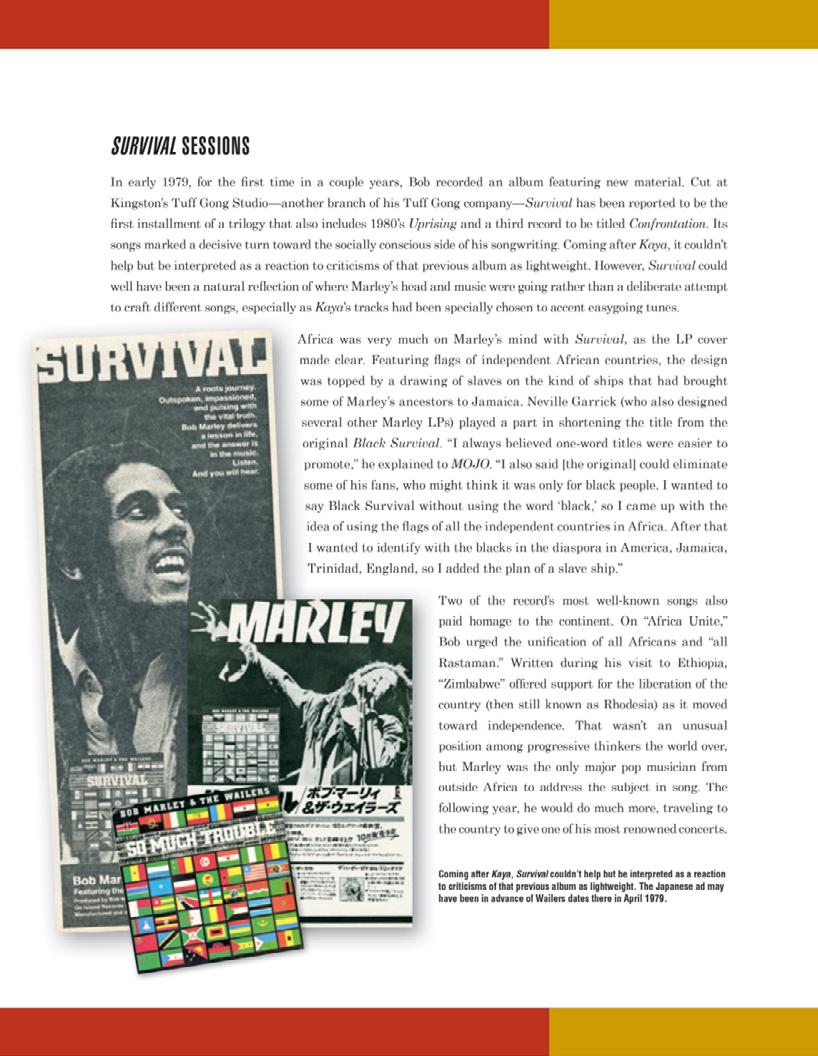
AM: With Survival, it was very interesting to read your commentary because there came across with fierce lyrics and anthems.
RU: It might seem more tilted toward that on his album, but it seems like he always had a wide range of songs that he emphasized the most, but on others, that was because he was one of the first reggae
artists, maybe the first, to recognize that an album should have, even if it's not like a story album or not all the songs, a theme. So maybe with Survival, he focused more on a full statement than like a romantic album that he did, but it's something that will vary on what was put out there that'll keep people interested.
I'm kind of speculating because, in part, Marley's life was short.. he didn't go through all of the phases of his career and explain them in ways like John Lennon did in his numerous interviews before he died. So it's a little bit of projection on my part.
AM: With Zimbabwe, having such significance, and the way it was performed so beautifully at legendary concerts, but how was that received globally?
RU: I do think that it meant a lot that Marley was sort of voicing his support for people's independence and self-determination in a country. It's often asked, and it's a very logical question, what would Marley have done had he not died so young in his later years? He was only - I think, although it's not certain, he definitely would have performed a lot more in Africa. He'd only perform there a bit toward the end of his career, both because he got a really great reception there, but also he saw that, as universal as his music was, it had some particular parts of meaning for people in Africa, where a number of countries - maybe South Africa got more attention in the United States for that than anywhere else, but a number of countries there - I think he would have performed there as much as he could have, maybe written more songs that were directly applicable to Africa. And possibly, it would seem like a logical step to me, maybe incorporating some elements of African music as he became more exposed to them, whether through touring or just listening more, because in the early 80s, that
was the point where artists like Fela were starting to get a much bigger audience in the United States, and I could see Marley being very interested in someone like Fela, not just musically, but also lyrically, and also as a cultural figure in Nigeria.
Redemption Song
AM: Redemption Song, a lot of people's top favorite, and it is very reflective and boldy highlights the past and gives deep lessons. I’ve always held it in a different way, like a supercharged guide to fall back to when happy and chill or lost and sad. It says so much about the past, present and future of humanity, extremely prophetic!
RU: It's interesting to me for a few reasons. One is that unlike maybe all of his other really well-known - it could in some ways be heard not even as a reggae song, more as like folk. And that, it actually relates to something I was riffing on a couple minutes ago, [the] direction that he might have changed his style to that style that he would have done. Maybe he would have been thinking, yeah, I'm a reggae artist, I'm never going to abandon reggae, but I want to explore different styles that might not be dominantly reggae. Other artists have done that. Joni Mitchell started as a folk singer, then she admitted some rock influences, then she went into jazz. Paul Simon started, but then he incorporated reggae and gospel. He eventually got to African music, of course. I think he knew this when he was writing it, that he could do several different styles of music welland when I hear it, because he didn't die that much long afterward, it's like he also had some sort of awareness that his time is not going to be long, whether he dies or not. it's almost like a Martin Luther King song. It's almost like Martin Luther King's final speeches, where he feels like, I might not have much time, but his urgency to get a message across.
AM: A hypothetical, because I've enjoyed some bubblegum gelato vape during our interview, what did he say about technology? Would he e-vape today or be comfort-
able his audience did?
RU: About his drug use, which is mostly cannabis, in the book or elsewhere, because there is music, but specifically as far as people using that sort of stimulation for recreational purposes, I don't think he ever would have minded whether it was with a religious dimension, as it was with a lot of prostitutes, or you just wanted to use it, at least in your ability of function and people around you. [Be sure to] be kind to your neighbors, right?
Yeah, and musically, maybe what he would have done. It's hard to project, like, if he was still making music in 2020, what he would have done. What he would have done, at least if he had lived another 10 or 20 years, if he wasn't ill. Technology, I think that would have been one of the things that he would have been wary about in some of his songs. The adverse effects of technology, not just AI, but climate change, which, when he died, that was his concern.
PHOTOGRAPHY
CREDITS | PG 27, 3857 Quarto Publishing/Bob Marley and The Wailers: The Ultimate Illustrated History | PG 60 Deposit Photos |
As we're all enjoying our favorite teams and sports that are taking place at Paris 2024 , we have a series of interviews with Olympians that are in this issue that we participated in when we were within the 100 days of the games. We're kicking it off with 2X Team USA Olympics Gymnastics, Jordan Chiles (G1, S1) who competed in Tokyo 2020 and is competing in Paris alongside her teammates Simone Biles (G5, S1, B2), Suni Lee (G2, S1, B1), Jade Carey (G2), and Hezly Rivera (G1), known as The Golden Girls! They have already won a Gold medal from the Paris 2024 games!
We sat down with Jordan to talk about the sport, becoming an Olympian, how much she is looking forward to this year's Summer Games which will have an audience in attendance as well as being able to meet other athletes, and how she maintains self-care! We have enjoyed seeing her floor routines which mix Hip-Hop, Beyoncé, and more. She also has fans that include Megan Thee Stallion, 2X Gold Medalist + 6X NBA Champion Michael Jordan, and Queen Bee herself, Beyoncé.
ATHLEISURE MAG: We have enjoyed seeing you do and it’s great to chat with you!
JORDAN CHILES: Thank you so much for having me! I love opportunities like this and to have the ability to be able to speak with you about my goals and everything like that, this should be fun!
AM: What’s your earliest gymnastics memory that made you love this sport?
JC: I would probably say that I was around 9 or 10 years old and I had really bad ADHD when I was younger. So I always say that gymnastics saved me because I was able to get all of my energy out before I realized that I had a gift and talent and that I would be able to go somewhere with it. I just thought that it was all fun and games so I really just wanted to be able to take that energy to the next level around 9/10/11 years old so it was pretty cool to just take off and to see what else I could do.
AM: I love that!
Everyone has their specialty in the sport, what do you feel are your areas of things that you love to do?
JC: I kind of just love my sport in general. I don’t have a specialty in what I do. I’m just known as the hype woman a lot as people say! I give a lot of energy to the crowd and to my teammates. I just think that being a leader as well and kind of knowing and understanding each and every aspect of what it is to be an athlete – mentally, physically, and so I can say that it’s about me being myself and being authentic to who I am.
AM: You have been on the Women’s US National Gymnastic Team since 2013, what does it mean to you that you have represented your country from the Olympics to World Championships, NCAA Championships with UCLA , and just owning all of the spaces?
JC: Man, it’s been crazy! I can say knowing that I have been on the National Team since I was 12 years old it’s been a whirlwind, a crazy ride, it’s been up and down – the road wasn’t straight or smooth. It was very bumpy and curvy, but I am really proud to say that I represent Team USA and just being able to help the country understand that our sport is such a unique and different thing than it is to other sports in that it’s hard work, it’s dedication, and it’s a simplicity thing to who you want to be. I think that it’s pretty cool. I can say that representing Team USA wearing Red, White, and Blue and always having it wherever I go on my back is definitely something that I cherish for sure!
AM: I have always enjoyed watching your routines and I have literally had tears in my eyes just watching you perform. Whether it’s you in UCLA incorporating Hip-Hop, Beyoncé and all of these different things – what goes into creating these performances and obvi-
ously deciding the elements that are involved as well as the music and all of that?
JC: So when it comes to my floor routine, the first one that I had, I was really little and it was Michael Jackson and I did a tribute to him. I think that it’s really about the culture and the music and how pop culture has kind of changed the atmosphere into what it means to putting your own touch and taste to it – your own piece – like your cherry on top you know? It’s like you have this awesome sundae and you want to put that cherry on top to show who you are! So, when it came to my music, obviously I just want to be able to not only get the crowd involved, but also to take it back for them. Because they are watching and if they hear something that they’re like, “oh my gosh, I remember when I was in high school listening to this song,” that is what I do, whether it is Beyoncé, the 90s, taking it back to the Michael Jackson days, or even bring in superheroes! I’ve done that too! It’s pretty cool to put my own touch into everything.
AM: When you competed at the Summer Games in Tokyo and you came home with a medal, did you always imagine that you would be on that stage?
JC: I always imagined that I would be an Olympian for sure and go to the Olympics, but I didn’t believe whatsoever that it would be in Gymnastics! Back in 2008, I told my mom when we were watching the Olympic Games, “you know what? One day I want to go to the Olympics!” Back then, I didn’t know what sport I was doing, I was young. So, knowing that it was for Gymnastics and I was able to bring home a medal, being there in that position and being on that stage – not a lot of people get to experience that and I am beyond proud of myself for sure. I can just say that the little me would be very proud and to be able to continue on with something that I have always dreamed of.
AM: What are the challenges of being an Olympic Gymnast and what does an average day or week look like when you’re
training and preparing for the upcoming Summer Games?
JC: Obviously, it’s a little different. My first Olympic Games, I was really a nobody! Knowing that I am going into this 2nd Olympic cycle with an Olympics under my belt, it’s different for sure! But, I am still doing everything that I was doing just like it would be my first. I have been taking it day by day and month by month. As we’re talking right now, we are under 100 days away! Knowing that makes me just like ahh – oh my gosh this is so crazy and I’m doing this all over again, but it definitely is a mental game and for someone like me who's kind of already been through it, I know what to do, but for others that maybe this is their first time trying out for the Olympics, just take this moment as this will always be something that you will be able to cherish. Just take it piece by piece, remember your why, and that’s how I always think of it every step of the way.
AM: With it being less than 100 days to Paris 2024, what does it look like in terms of your schedule for qualifying and other things on the Road to the Olympics.
JC: Knowing that we’re just a few days away as I will say it like that because it just sounds more reasonable! Right?
AM: Right!
JC: We have a competition this week which starts off with the Core Classics. Our season actually started at the beginning of Jan, but unfortunately, I was unable to compete due to a shoulder injury that I had. So this meet that is coming up this weekend is my first meet that will put me on the platform to show people where I am at, what I am doing, and to give our head people an understanding of where – if I am picked – where I can be on the team. Obviously, 2 weeks after that, we have Championships which is a really big
meet as well and then about 2 and a half weeks after that, we have Olympic Trials. That will be where they pick the Olympic Team and the Olympic Alternates. It’s definitely a fast cycle for us. We are one of the last Team USA sports that do – besides Track & Field, that we are the last to find out who gets to go!
AM: Yeah, we’ve been watching other sports on Team USA that are already confirmed and we keep checking for you guys to see when those announcements will be.
JC: Yeah, us and Track & Field, we’re always the last to figure out what the team is. But I feel that that is the coolest part of it because it’s like, “ooo who is it going to be?” It’s also motivating to see other people that have already made it so it pushes you to think that you want to make it so that you can meet some of the other people who will also be there as well! It’s a great process and I think that the qualifying part is the biggest that you will ever experience.
AM: In terms of Paris, what are you looking forward to?
JC: Well, knowing that I have been to Paris already a few times, I still think that every single time that I get off the plane, it’s just beautiful. I love being out there! The culture, the atmosphere, the designers, everything fashion – it’s just amazing! I think that the biggest thing is just enjoying and having an Olympic Games that will be normal. In Tokyo there was COVID and we didn’t get to do a lot and just to be able to go around the Olympic Village with people and being able to have an audience and to enjoy the Olympic experience. So I am truly looking forward to that! Also being able to get to meet people we didn’t do that last time. I hope that I will be able to meet a basketball player or a volleyball player, golf or whatever it is and to be able to experience that!
AM: With that time being so close, you have partnered with Bliss. What is the synergy between you and the brand?
JC: So Bliss felt very natural to me. It felt like it fit in with who I am trying to be and especially with their commitment to self-care which is a very key thing to me whether it’s in your skincare, your beauty, taking a nap you know? Having the ability to just embrace who you are and with their Lemon Sage Body Butter, it’s definitely a game changer for sure. I feel very confident, elegant, and smooth who I am. It’s just a nourishment for sure and being able to have Bliss as a partner within my daily routine, makes me feel like a brand new person every single time!
AM: I have to say that I am a long time fan of this scent and that product and you get that luxury feeling when you put it on.
In terms of self-care, what do you do? I know that you’re always traveling and you have a schedule so what do you do to take that time so you have moments for yourself?
JC: A lot of times when it comes to self-care, it does come to beauty and you want to take that time to feel as beautiful as possible because you know that this world is very crucial and it does take a whirlwind on you. Within my self-care, I like to take time to myself. It could be sitting in my room and drawing, whether I’m looking at a Netflix show and binge watching and just being by myself because I am around a lot of people 24/7 so sometimes taking that sound and putting it away helps a lot. I take naps! I take naps all of the time! If you don’t know where I went, and you don’t see me at all – it’s because I’m asleep in my room napping. That’s how I do self-care for myself or sometimes I go shopping. Retail therapy is the best!
AM: How do you keep your skin looking and feeling hydrated especially when you think about travel, doing all of the movements when you have perspiration and the chalk you use? Looking at
your skin right now, obviously you’ve got it down as your skin is glowing and it looks beautiful.
JC: Oh thank you! With the hydration part, I do a lot of intake of water because as a gymnast, we sweat a lot. I mean I’m not really a sweater but when it does come to working out, always grinding, we lose a lot of salt so, that does make our skin very dry and brittle. Also the magnesium we’re around in our chalk, it takes moisture out. So because of all of that, I drink a lot of water and I make sure that I am always moisturized no matter where I go! So whether it’s a lotion or a scrub or whatever it is, even for my lips, I keep everything hydrated because I am always in chalk! I don’t like chalk already because it’s nasty so that hydration, it really comes in to make you feel good. I wake up every morning, I wash my face, I do my whole skincare and if I forget to put my moisturizer on, oh I go crazy! I’m like my face is going to fall off! So I make sure that I am taking everything in for sure!
AM: Are there any kind of projects that you have that we should keep an eye out for as obviously you have an amazing schedule coming up and we can’t wait to see that! But is there anything else that we should know about?
JC: I can say that there is this one thing that is coming into play and I can’t really say a lot without saying a lot! It’s definitely going to give a perspective on when you feel you have done so much in your life that you can help others so I will leave it with that! So just keep an eye out on it and I feel that a lot of people will be able to take a lot from it. They will understand what it is like to be an athlete and to be someone that is more than just an athlete!
AM: What do you want your legacy to be whether it’s in the sport or outside of it? As you just stated it’s not just about being an athlete, it’s more than that.
JC: I think the legacy would be more so that I was always having fun, I always - I
don’t like to say this, but I wasn’t always a rule follower. I always did things outside of the box and just enjoyed being the person that I was, being authentic to who I am as a person, and knowing that there is only one you and that nobody can change that. I think that the legacy is who you are, what you want to do in your life, and how can you control that within yourself!
@jordanchiles
PHOTOGRAPHY CREDITS | PG 66 Team USA Facebook | PG 71 + 9PLAYLIST PG 76 Team USA | PG 74 Bliss | PG 78 + 63MIX ROUTIN3S PG 80 Jordan Chiles |
We've always enjoyed watching Beach Volleyball when we're watching the Olympic Games! This year our eyes are on Team USA Beach Volleyball duo, Sara Hughes and Kelly Cheng! They're a fun pair to watch when they hit the sand and we can't wait to see what they do at Paris 2024 . We caught up with them to find out how they came to the sport, what they love about it, combining their super powers, how they stay in shape, Safe Sun, and more!
ATHLEISURE MAG: When did you fall in love with volleyball?
SARA HUGHES: I fell in love at the age of eight years old in Huntington Beach, California.
KELLY CHENG: I fell in love with volleyball back when I was 11 years old. I started out playing indoor and thought that was where I’d be for the rest of my life. When I tried out beach in high school… that all changed! I decided to play only beach in college and have been playing professionally ever since!
AM: What led to you choosing beach volleyball and what do you love about it?
SH: Beach volleyball has always had my heart from a young age. I love the environment and atmosphere of the sport. You have to be versatile and well versed in all aspects of the game. There are no subs or coaches when you are on the court so you have to figure out how to win with one other person beside you.
KC: I chose beach volleyball for so many reasons. The beach being my office is top of the list. Getting to be outside for so much of my life is such a joy. I love that there are only 2 people and no subs - you have to be adaptable and think on your feet. You’re so exposed out there on the court and have to figure out how to win just with you and your partner. Allowing my creativity to shine on the court is another passion of mine. There isn’t one way to play this game and I love pushing the envelope on how to play!
AM: You guys have been partners for awhile whether in high school, youth competitions, while competing at USC and beyond - tell me about your style of play and why this duo is so synergistic!
SH: We play with a lot of passion and love for the game. We are both athletic and dynamic and we love showing that on the court. We have great communication and inspire each other to get better every day and change the way the sport is played.
KC: We have such chemistry on and off the court. We connect well and make each other laugh. We enjoy doing life together. Those intangible things have always been easy for us. Now add on top of that our creativity, passion, determination - and we’re unstoppable!
AM: Kelly, you competed at the Olympics in Tokyo 2020 and Sara you are looking to add this to your impressive resume! With us being 100 days out, what are the weeks ahead looking like in terms of qualifying and when you find out about getting this coveted slot?
SH: I am so excited to be going to my first Olympic Games. We actually found out a few weeks ago that we have qualified for Paris! We have 3 more big tournaments to compete in before the games but we have a solid month of training at home before the Olympics. During that time we will refine some skills, game plan, and most importantly have fun and enjoy the journey.
KC: We were pumped to qualify for Paris! It is so exciting to be going to my second Olympics. This time will be SO different. Tokyo was such a unique experience due to all the Covid protocols and it being a closed Olympics. This time around, my family will come and cheer me on!! We have a couple more tournaments worth Olympic points, but after that we get a chunk of time at home allowing us to spend time with family and prepare for the Paris
Olympics.
AM: What are you looking forward to should you be able to go to the Summer Games?
SH: I am looking forward to proudly represent Team USA on the worlds largest stage. I also can’t wait to play in the stadium in Paris that will be under the Eiffel Tower.
KC: I’m really looking forward to opening ceremonies! So unique this year being on boats on the Seine River; it should be iconic. And speaking of iconic, our venue will be one of the most jaw dropping locations ever - right in front of the Eiffel Tower!
AM: What's an average week like in terms of training and working out individually as well as a duo?
SH: We train on the sand 4-5 times a week together. I am in the gym 3x a week but have routine stretches, rehab, and ab exercises that I complete every day.
KC: It depends on the week and where we’re at in season, but typically as a team, we train on the sand 4 times a week and watch film and/or have team meetings 2x a week; Solo, I do blocking work with my assistant coach 2x a week, in the gym (Stark) 3x a week, physical therapy 3x a week, sports psych once a week, and Pilates 3x a week. I also try to get a massage or ice bath in every week for recovery! It’s a full time job and I love it!
AM: Do you have any routines that you do before a match to get your head in the game and do you have anything you do after a match to come down from all that energy?
SH: I have a routine warm up that I complete that gets my body warm and ready to go. Kelly and I also share headphones and listen and jam out to music while we warm up. It is a fun way to do our individual routines but stay connected at the same time. After matches we debrief as a
team and talk about how the game went.
KC: My favorite pre match routine that Sara and I do together is pray. It sets the tone for the match and always brings me back to the present and gives me perspective. After a match to cool down I love to FaceTime my family. They mean the world to me.
AM: Of course, as beach volleyball players, you're constantly in the sun, and SPF is an essential! How do you engage in safe sun?
SH: Absolutely, safe sun practices are crucial for us, given the amount of time we spend training and competing outdoors. I make sure to apply sunscreen liberally before each practice or match and reapply regularly throughout the day. The Bliss Block Star Daily Mineral SPF 30 is fantastic because it's not just about protection; it's about performance. Knowing we have a reliable sunscreen that's invisible and lightweight allows us to focus entirely on our game without worrying about sun damage.
KC: Engaging in safe sun practices is non-negotiable for us as beach volleyball players. We're out in the sun for hours on end, so protecting our skin is a top priority. I always start my day with a layer of SPF 30 sunscreen, and I carry it with me to reapply as needed. I also love how its neutralizing and almost mattifying! Teaming up with Bliss with their Block Star Daily Mineral SPF 30 is a game-changer. It's formulated to be invisible and lightweight, so it doesn't interfere with our performance on the sand.
AM: It seems like we're living in an interesting time where beauty brands are focusing on women's sports to get into their routines especially when it's being used directly in their sport! It makes sense as we can truly see how it is being used which allows us to see
how it will work in our day-to-day! What do you think about this synergy between women athletes and beauty brands that are partnering in this way?
SH: It's an exciting development to see beauty brands like Bliss partnering with women athletes. This synergy between sports and beauty not only highlights the importance of skincare for active lifestyles but also celebrates the strength and beauty of women in sports. It's empowering to know that brands recognize our influence and want to support us in our endeavors both on and off the court.
KC: It's a testament to the growing recognition of the intersection between sports and skincare. As athletes, we're constantly exposed to the elements, so having products like Bliss SPF products designed specifically for our needs is invaluable.
AM: When you're not training or competing, how do you take time for yourselves?
SH: I love spending time with friends and family. They are the best support and outlets for me. I also love taking the time to read, jump in the ocean, and take a nice hot bath.
KC: I love a good self care day! A face mask, epsom salt bath, a massage, some quiet time with my Nintendo switch and I’m happy and recharged.
AM: Are there any upcoming projects that you have going on that we should keep an eye out for?
SH: Fun projects coming out with Delta Airlines, Chipotle, KTTape, Nike, Optimum Nutrition, Eli Lilly, and NBC Sports.
KC: In January we will be running our third annual mentorship camp.
Each year in January we spend 3 days mentoring and pouring into young up and coming beach volleyball players. Usually sophomores or juniors in high school. My husband Jordan and I will ask 6 local fe -
male beach volleyball pros (ranging from AVP champions, Olympians, and Olympic Gold medalists!) to join our camp! During those 3 days, the mentees get to partner up with their pro/ mentor and train with them, eat meals together, learn from the whiteboard camps that the mentors run, and participate in fun, silly, competitive group activities together! I think the most beneficial part of camp is what comes after. We ask each mentor to try to continue investing in their mentee consistently for at least the rest of the year! The goal is to create life long relationships that allows an older figure to pour into the next up and coming generation of beach volleyball athletes.
@sarahughesbeach
@kellycheng
PHOTOGRAPHY CREDITS | PG 83 Team USA | PG 84, 9LIST STORI3S PG 89 - 94 Sara Hughes + Kelly Cheng | PG 86 Bliss |
Every four years when we watch the Summer Games, we enjoy connecting and reconnecting with those competing, veterans, analysts, and personalities. It's a great time to come together to support an array of sports that we all enjoy. Of course with Team USA Gymnastics, we know that we'll be cheering this group along and we took some time to talk with 5X Team USA Gymnastic Olympic Medalist, Nastia Liukin (G1, S3, B1). We caught up with her on what she's doing, her thoughts on competing at Paris 2024 , her advice for the women's team, what she will do in Paris, her collaboration with Recess Pickleball and more.
ATHLEISURE MAG: It has been quite a year in gymnastics and we have enjoyed watching the road to seeing who would be on this year's Team USA Women's Gymnastics Team! As a 5X Olympic Medalist, what have been some of the biggest moments that you enjoyed while competing at the Olympics?
NASTIA LIUKIN: Competing at the Olympics is a surreal experience. One of the biggest moments for me was winning the all-around gold medal in Beijing in 2008. Standing on the podium, hearing the national anthem, and realizing all the hard work had paid off was indescribable. Another unforgettable moment, and perhaps the most memorable, was standing in the tunnel with my teammates before we stepped onto the competition floor for the first time. We all looked at each other, not exchanging any words, knowing that our lives were about to change forever.
AM: Like many, we are excited about the upcoming Summer Games and of course, to see Team USA Gymnastics hit the floor! What are you looking forward to this year with this team?
NL: I'm incredibly excited to see the new talent and the routines that Team USA will bring to Paris. This year's team has shown such resilience and dedication, and I can't wait to see them shine on the world stage. I'm biased because Hezly Rivera trains with my parents, but I cannot
wait to watch her realize her dreams in Paris. I’m also so excited to see Suni (G1, S1, B1) step onto the competition floor after the year she has had.
AM: Do you have any words of advice for the ladies as they head to Paris?
NL: My advice would be to trust your training, trust your muscle memory, but also, enjoy it! This is a once-in-alifetime experience that some will never have again. Leave it all out on the competition floor, but take time to soak in the small moments.
AM: Will you be in Paris and if so will you be broadcasting/being an analyst or will you be there with another brand? What are you excited about for the Olympic Games?
NL: I’m so excited to be in Paris right now. I recently announced that I’ll be ELLE Magazine’s official gymnastics correspondent, I’ll be filming my own show that dives into the psychology of the Olympic journey, and working with the USOPC on numerous events throughout the Games. I’m also excited to watch in a spectator capacity for the first time! My favorite part of any Olympics is to witness the culmination of years of hard work and dedication that these athletes have given to their sport. The Olympic spirit is truly special, and being there to experience it firsthand is always inspiring.
AM: You are no stranger to collaborations. You just launched your latest one with Recess Pickleball!
What do you love about this sport and how/why did this partnership come about?
NL: Pickleball is such a fun and engaging sport that brings people together. I love the social aspect and how it can be competitive yet enjoyable for all skill levels. The partnership with Recess Pickleball came about so organi -
cally because I was always a fan of their brand. I actually sent them a DM a year and a half ago telling them that it was on my vision board to launch a collaboration with them leading up to Paris, and here it is!
AM: We have seen a number of athletes that have embraced this sport. Will you be playing in tournaments?
NL: I hope to, yes, but definitely more social tournaments than competitive! It’s a great way to stay active and challenge myself in a new sport. Plus, the pickleball community is incredibly welcoming, and I’m looking forward to connecting with fellow players.
AM: We know that you're a big advocate of mental health. How do you take time for yourself when you're not in the midst of projects?
NL: Meditation has been a learned skill that I’ve incorporated into my mental health routine after a close mentor shared how well it worked for him, specifically TM. The Calm App or Headspace are great ways for beginners to get into meditation, too. I’m also a fan of hot and cold therapy, which is a huge mood booster. Something else that I look forward to every day, now that I live by the water, is catching the sunset along the beach. It’s incredibly grounding, sets me up for a good night’s sleep, and I do it with my dog, Harley, who makes everything better!
AM: Are there any other projects that you're working on that you would like to share with us?
NL: I’m excited to share a few big things once I’m in Paris, so you’ll have to stay tuned!
@nastialiukin
PHOTOGRAPHY CREDITS | Recess Picklaball
THEARTOF THESNACK: KINTSUGI OMAKASE
This month, we made our way to Kintsugi Omakase to have an epic meal that we will talk about for quite a bit! We knew that there would be a number of courses that would be created in front of us by Chef Victor Chen who was in last month's issue in our THE 9LIST 9M3NU feature.
Our meal didn't disappoint! We were able to enjoy a 16 course meal that is part of their Kintsugi Experience. It's a fantastic experience where upon entering the restaurant, you are sitting with 9 other guests who have a front row seat at a meal that is next level. We wanted to know more about when the restaurant launched, why they provide omakase, and what you can expect when it comes to heading to this SoHo destination!
ATHLEISURE MAG: When did Kintsugi launch and can you tell us about the founders/owners of the restaurant?
ASHE YEUNG: Kintsugi was originally founded in 2018 by owners and New Yorkbased creative partners, Ashe Yeung, an architect, and Tim Madrid, an Art Director.
AM: Can you tell us about the chef as well and his background?
AY: Executive Chef Victor Chen, formerly of New York Sushi Ko & Sushi Seki, is a passionate sushi chef that prepares his sushi in the traditional edomae style. Unlike many other sushi chefs, he does not solely use Japanese ingredients. A long-standing relationship with fishmongers allows Kintsugi Omakase to offer locally sourced fish, enabling for a broader selection and more moderate prices.
AM: Can you tell us about the ambiance of the restaurant and what guests can expect when they come in for a visit?
AY: The dining room is centered around a natural wood 10-seat sushi counter, which is framed by dark charcoal walls. Soothing light is filtered through Japanese wooden slats creating a relaxing mood for guests. Each course is presented on dinnerware
in collaboration with EM Ceramics and Spark Bird Studio who has created an exclusive line of handcrafted, gold-fused dinnerware for Kintsugi.
AM: We know what omakase is, but can you tell us the history of what this dining experience is?
AY: Omakase, rooted in Japanese culinary tradition, traces its origins to the Edomae sushi culture of early 19th-century in Tokyo. Initially, it is referred to entrusting the chef to create a meal based on seasonal ingredients. Over time, omakase has evolved into a revered dining experience where patrons place complete trust in the chef's expertise and creativity, highlighting the essence of Japanese culinary craftsmanship.
AM: You only offer omakase. Why was that the experience that you wanted to focus on?
AY: Omakase represents the pinnacle of our culinary philosophy, emphasizing quality, seasonality, and the art of storytelling through food. By exclusively offering omakase, we curate a deeply personal and memorable dining journey for each guest, showcasing the freshest ingredients and innovative techniques that define a culinary vision. It allows us to foster a direct connection with diners, sharing not just a meal, but a transformative gastronomic experience that celebrates tradition with a modern touch.
AM: For those that are coming for lunch, what can you tell us about The Lunch Rush Omakase?
AY: The Lunch Rush Omakase is a combination of a quick sushi fix with a high quality offering and also serves as an introduction to omakase for those who have never tried. Our Lunch Rush Omakase is a 12-course one-hour experience for $60. It is served only on Friday, Saturday and Sunday. We always promote the art of omakase and it is key for
us to have an omakase with an affordable price tag.
AM: For dinner, you offer The Grand Street Classic, The SoHo Experience, and the Kintsugi Omakase - the latter which we enjoyed this recently. Can you tell us about each one of those and what the differences are between them?
AY: We serve three tiers of premium omakase which include seasonal appetizers and sushi: The Kintsugi Omakase, a 16-course service for $195; The Soho Experience; a 13-course experience for $155; and The Grand Street Classic; a 10-course meal for $95. All tastings also include a sushi chef’s choice of hand roll, gourmet miso soup, tamago, and seasonal dessert. Each tier features a varied amount of seasonal and premium ingredients diligently prepared by our chef. Our goal is to be able to cater to as many customer as possible and feature different offerings with the same high quality standards.
AM: Are there additional items that you can pair with these packages?
AY: We offer a seasonal beverage pairing featuring sake breweries that are high quality and paired perfectly with our omakase. We also do a seasonal sea urchin (uni) tasting that showcases different sea urchins from around the world; and from time to time, we offer prized auction grade uni.
AM: Can you tell us about 3 cocktails that you suggest that we should have on our next visit?
AY: We only have one cocktail called Murasaki, which in Japanese means purple. The cocktail itself is a beautiful vibrant purple color made with yuzu, sake and violet extract.
AM: Can you tell us about 3 sakes, beers, or cider that we should pair with our meal?
AY: We are a big fan of Echigo Koshihikari beer, which used the same rice that most
sushi restaurants use as the basis of their beer, perfectly paired with our omakase. We are also avid enthusiasts of the Masumi brewery. Masumi is one of Japan's premier sake brands, produced by Miyasaka Brewing Company in Nagano Prefecturel they have been making sake since 1662. For a more modern flavor profile, we highly recommend the uka sake series. They are made very well with a combination of Japanese and American crafts into one single bottle
AM: Are there any special events taking place this summer or fall that you would like us to know about?
AY: We will be participating in the NYC Restaurant Week with the NYC Tourism Board. Our goal is to promote the craft of omakase from now to September 1st. We will be taking a short break after September 1st and will re-open on September 12th. Then, we will be transitioning into our fall menu, which to all edomae style sushi lovers, it is the best season where all the fish are fragrant, fatty, and simply delicious. We highly recommend all patrons to book ahead of time to make sure that they can save a seat.
For those that want to try Kintsugi Omakase, Restaurant Week kicked off Jul 22nd and goes through Aug 18th with participating restaurants. The below is available until Sep 1st. Kintsugi will offer a 12-course prix fixe menu for $60 per person with an optional seasonal sake flight for an additional $30 per person. Guests can add-on a premium seasonal uni handroll for $30 per person. The menu is subject to change due to availability and seasonality, highlights include their Housemade Japanese Potato Salad with Arctic Sweet Shrimp, Orata/Seabream from Greece, and Hotate/Scallop from Hokkaido Japan - to name a few.
@kintsuginyc
PHOTOGRAPHY CREDIT | Mr. Grant HaoWei Lin/Kintsugi
As we navigate the summer, there are a number of events that are always on our mind! With the US Open around the corner, Citi Taste of Tennis kicks off a series of events as well as the Grand Slam that gets everyone excited! At Citi Taste of Tennis, you're able to enjoy some of the best chefs and restaurants as well as seeing your favorite tennis players who will be playing at the US Open as well as veterans together! We've enjoyed attending over the years and look forward to attending on Aug 22nd at Gotham Hall with this year's host, Prakash Amritraj We wanted to know more about this event as well as others that are part of Taste of Tennis. We sat down with AYS Sports Marketing CEO, Penney Lerner to get all the details.
ATHLEISURE MAG: Before we delve into this year's Citi Taste of Tennis, I wanted to know more about AYS Sports Marketing and who this producer is?
PENNY LERNER: Citi Taste of Tennis was created by AYS Sports Marketing, a woman-owned experiential marketing agency started in 1996 by mother and daughter duo, Judi and Penny Lerner.
AM: When did Taste of Tennis launch and why was this created?
PL: The principals at AYS worked with various tennis tournaments for many years and, in doing so, developed close relationships with tennis players, agents, and other industry insiders. With their fingers on pulse on the state of professional tennis, they identified an exciting and untapped opportunity. While tennis featured topnotch tournaments and A-list players, there were no high profile “off the court” events that were prominent in so many other sports. To fill this void, AYS created the Taste of Tennis in 1999.
In 2000, AYS hosted the first Taste of Tennis event in NYC headlined by Andre Agassi and celebrity chef Emeril Lagasse. The event combined food prepared by top chefs, celebrity appearances, entertainment and an Oscar's style red carpet. The
event was instantly a hit among players, fans, sponsors and the media. Since then, the Taste has become a who’s who of tennis stars, culinary personalities and celebrities. Past attendees include Serena Williams, Venus Williams, Rafael Nadal, Coco Gauff, Mike Tyson, Eva Longoria, Marcus Samuelsson, Lana Del Rey, Naomi Osaka, Andy Roddick, John Legend, Chrissy Teigen, Olivia Culpo, Maria Sharapova, John McEnroe, Nick Kyrgios, Al Roker, Tamron Hall, Billie Jean King, Morimoto, Monica Seles, and many others
AM: We have attended Citi Taste of Tennis for a few years and have enjoyed them each time. In addition to NY, you have a Taste of Tennis for London, Indian Wells, Washington D.C., and Miami. What do you look for when it comes to deciding on bringing a Taste of Tennis to a city as we assume that it involves doing it in tandem with a tennis match?
PL: Citi Taste of Tennis has occurred in many different cities over the past 10 years, from Melbourne to London to New York City to Toronto. We are always evaluating cities that have unique culinary offerings, have the potential for new digital content and most importantly, have tennis happening nearby!
AM: In terms of the upcoming Citi Taste of Tennis what does the calendar look like in terms of planning? Can you tell us what you are focused on when you're a year out, 6 months, 3 months, and a month away?
PL: Citi Taste of Tennis is a brand. We focus on it for 12 months of the year and are constantly evaluating new markets, rising chefs and culinary trends, up and coming tennis players, unique venues, inspiring digital content, social media, sponsorships and more. It’s a big undertaking, and we have a great team and after 24 years, hundreds of hours of digital content and 75+ events, we have a solid understanding of what the brand requires.
AM: This year, you are returning to Gotham Hall. Each year, these events blend players, fans, and cuisine. Can you tell us what we should expect this year?
PL: Guests will enjoy cuisine prepared by 20 leading chefs including Mischa Tsumura (No. 5 Best Restaurant in the World –Maido) and Antonio Bachour (World’s Best Pastry chef 2018, 2022). They will also be treated to special appearances by a number of top tennis stars including 8-Time Grand Slam Champion Andre Agassi, Qinwen Zheng (World #7) and Alexander Zverev (World #4). There will also be great food and fun promotions provided by our sponsors including Segafredo Zanetti Coffee, Scenic Cruises, Boar’s Head, Barbados Tourism Board, Liquid Death and Savas Health.
AM: Is there anything new being added to this year's event?
PL: We are producing a live cooking competition between Chef Mischa and Chef Antonio with WTA player Qinwen Zheng and ATP player Zhizhen Zhang which Andre Agassi will judge!
AM: Outside of the events associated with tennis tournaments, what does Taste of Tennis do throughout the year?
PL: Taste of Tennis started out as a 3-hour culinary event and has evolved into one of the most popular brands in pro tennis. In addition to the 3 North American events, we currently produce, Taste of Tennis is also an Official Sponsor of the Giorgio Armani Tennis Classic at Hurlingham (UK). This year, we will also have a Taste of Tennis experience at the National Bank Open (Toronto). We have a full-time staff dedicated to managing all elements of the brand including sales, culinary, digital content, production, and public relations. Suffice to say it's a year-round program.
@tasteoftennis
PHOTOGRAPHY COURTESY | Taste of Tennis
We love this time of year when we have all of our favorite sports happening during this time of year. We turn our attention to soccer and Angel City FC . We took some time to sit down with one of their star athletes, Sydney Leroux, Team USA Soccer Gold Medalist for London 2012 as well as being a World Cup Winner for USWNT at the 2015 FIFA World Cup.
We wanted to catch up with her to find out how she got into the sport, playing for Angel City FC, her partnership with TYLENOL as well as how it assisted her through recovering from her injuries so that she could get back to the game and team that she loves!
ATHLEISURE MAG: When did you fall in love with soccer and realize you want to play professionally?
SYNDEY LEROUX: I fell in love with soccer probably when I was around four or five. My mom put me in every sport possible because I was crazy and she wanted me to burn off some energy. I just loved scoring goals and so I continued to play. I also played baseball, but I played with boys. And so my mom was like, “Okay, you need to make a decision”, and I decided to stick with soccer.
AM: Was there anything behind that decision to pick soccer for baseball?
SL: Well, the boys started getting huge and I stayed the same size. And I just felt like I gravitated towards soccer.
AM: We know the season has started for Angel City FC, but what are you most looking forward to this season? What have you enjoyed so far?
SL: I'm looking forward to just continuing to push, we're midway through the season now and I think we've seen really good things. I think just like working off of that and trying to be a good teammate and do as much as I possibly can.
AM: What does it mean to play the sport you love and represent your passion?
Whether it's on the global stage or whether it's just playing in LA? What does that mean to you to get to represent?
SL: It means so much. I think that I've been able to see the growth of women's soccer and women's sports, like being in it and being involved. The NWSL started like 13 years ago, and I was there for that. There was this fear about like, are we going to continue or is it going to fold like all of the other women's leagues before the NWSL. I was playing in Boston at a little high school field with a couple hundred fans. Someone had a little camera and it went on YouTube, and now I play in front of a sold out stadium with 22,000 people in Los Angeles. I don't think anyone could have ever thought that, but I think we pushed for that and this is what we want. So yeah, I'm just so happy to be a part of it and know that the future can even be better.
AM: Why have you partnered with TYLENOL and what is the Care Commitment?
SL: I partnered with TYLENOL because I realized that it's everywhere in my lifefrom my muscle aches and pains to the kids having a fever. I just realized it's everywhere, so it made sense. Coming back from my injury, I knew how hard that was. I'm really excited to announce the TYLENOL Care Commitment, which is a recovery fund to help injured athletes get back into the game. TYLENOL is committing funding to help injured athletes recover and compete once again, starting this year with a sponsorship to the Women’s Sports Foundation.
AM: How do you manage training during the in-season and how does that compare to when you're in the off-season?
SL: Training in season is tough. But I would also say that training in the off-season and getting ready for a grueling season, we play like 10 months a year, so the offseason is very short. I just try to stay healthy, that's my num -
ber one right now, and it's been going good so far.
AM: As a mom, how do you balance that training and playing soccer in the games with the activities with your kids and being their role model?
SL: I think that there's no perfect balance, you just have to do as best as you can. For me to be a role model to my children and to other moms, too, has been amazing. I also think just being able to play with them and do what I do and bring them along with me, I think that that's been really helpful. But it's just about sometimes getting outside and playing.
AM: Do you have any advice for moms balancing that busy career with raising a family?
SL: I think don't be so hard on yourself, give yourself grace. Your kids just love you and as long as you're present there when you can be, I think that's all that matters.
AM: Any other upcoming projects we should keep an eye out for? What's the next thing for Sydney?
SL: Yeah, I actually play in my 150th game coming up against Orlando, so I'm looking forward to that.
@sydneyleroux
PHOTOGRAPHY CREDITS | PG 135 Sydney Leroux| PG 136 George Orozco | 9PLAYLIST MULTI PG 138 - 141 XXX |
We enjoyed a gala dinner at Manhatta to discover, learn, and enjoy.
Prosciutto Di Carpegna PDO, the EU Gem Ham. We discussed the careful selection and aging process they have, which translated into highly delicate, delicious prosciuitto.
The prosciutto was quite versatile, which we tasted as a stand-alone ingrediant, as well as an element incorporated into other courses, such as the halibut.
If was interesting to hear about their high standards in selection, salting and aging process. We enjoyed the aged prosciutto as a stand-alone appetizer and as part of dishes, both were delicious. The evening ended with a most striking sunset through the window-paneled event room at Manhatta, and like that all of our senses were certainly igntited.
@consorzio_carpegna
PHOTOGRAPHY CREDITS | The EU Gem Ham Prosciutto di Carpegna PDO
Readers of Athleisure Mag know that we enjoy watching STARZ’s P-Valley. In fact, we even interviewed members of the cast for our MAY ISSUE #77 for the last season of this series. This series focuses on Chucalisa and the chosen family of those that work at The Pynk. In this series, we get to know about this strip club, those who work there, and the events that take place in the community that affect those that work there. We love that we get to see a lot about these multi-dimensional characters in terms of their hopes, dreams, how they support one another and beyond!
Although we’re all waiting for the upcoming season of P-Valley, today we get to watch Down in the Valley that lets us know more about the cities that represent Chucalisa as well as the stories that come from there as well as how elements of those lives directly tie into the show. In this companion series qith 6 episodes hosted by and is Executive Produced by Nicco Annan (Shameless, Snowfall, Claws) who plays Uncle Clifford in the show and Executive Produced by Shoshana Guy (Rock Center with Brian Williams, High on the Hog: How African American Cuisine Transformed America, The 1619 Project), we get to hear their stories and learn more about what we have all come to love about this series!
We had the chance to sit down with them to talk about the Mothership show, how this series came about, why it was created, and what we can expect from it!
ATHLEISURE MAG: Before we delve into Down in the Valley, what attracted you to P-Valley and why did you want to be in this incredible show which I have loved watching over the seasons?
NICCO ANNAN: Well thank you, what attracted me to this show, P-Valley, I am going to say is the fact that it was created by such an auteur as Katori Hall (The Mountaintop, Hurt Village, Tina - The Tina Turner Musical). She is really a person who I love her work in the theater and I was reading her work before I was actually even auditioning for anything like that. I also love
that it was something that was a true reflection of where I came from and all different types of our culture. It wasn’t just limited to a narrow viewpoint of how I saw myself and my community.
AM: In watching the show, I love the complexities, the characters, the topics that are talked about, and the city almost becomes a character in and of itself. Although I know that the city portrayed in the series is fictionalized, it seems more like a composite of a number of cities in the South. How did Down in the Valley come about as I feel that it allows the city as a character to step forward a little bit.
NA: Yes, part of Down in the Valley, we wanted to be able to go to different cities, You're absolutely right! Chucalisa, Mississippi is a fictitious city, but it is a real Native American burial ground. In the world of P-Valley, all of this is behind us and we are really an amalgamation of the South and it would be almost like if Jackson, Mississippi and Memphis had a baby! You know with a Mama in Tunica. Haha – that’s Chucalisa.
One of the things you know that Shoshana and I talked about in creating this show, Down in the Valley, we really wanted to go to different parts of the South that were in The Delta – that Bible Belt space to see what it was really like. It was about the real people and the real places!
AM: So how did both of you become attached the show. Shoshana, I have also been a fan of your work as a journalist and a producer. As a Telecom major in college, I have been enthralled by your work. How did both of you come to this project?
SHOSHANA GUY: I had worked sort of adjacent to Starz on the 1619 Project and so I had a relationship with them there and you know, I am always looking for new folks to collaborate with so it was really exciting for the idea of - I mean, I
love the Mothership Show as we call it. So it was a really exciting idea for me to be collaborating with Nicco and Katori and of course, a new production company Zero Point Zero (Nomad with Carlton McCoy, United Shades of America w Kamau Bell, Somebody Feed Phil) which it was produced out of. So once I sort of had that initial relationship, the idea of collaborating with a new group of people was very appealing to me so when I got the call, I said yes, that sounds interesting to me.
AM: And Nicco?
NA: What’s the question?
AM: We love you in the Flagship show but what drew you to come in as the host and the Executive Producer in this show? What were the stories that you wanted to tell as you mentioned earlier about focusing on the different cities and the people within it. I came across a quote that, “even though The Valley is a concept, and a state of mind, it actually reflects various areas.” As someone who is from the Midwest originally and has lived in NY for over 2 decades, I love learning about other communities.
NA: You know, when I created this show, I had the idea for this show back during S1 of P-Valley! So it was something that was always in my mind and it was about the right time. The industry has been going through a lot of restructuring, the big strike, there was this thing called COVID that the entire world experienced. So it just felt like, now is the time that we can have some space to do it. I had a little time off from the Flagship show, so when I brought it to the network, my ideas and I got that all pitched out and partnered up here with Shoshana, we really went in and found a team of people, a team of diverse people, Black women, queer people, people that were connected and had passion for the South to be able to come together and to tell this story and always having Katori in the mix!
It's so funny because my brain really just
went for half a second to the script and the world of Chucalisa and I had to say, wait!
SG: Haha you were going to recite some lines for us?
NA: Right! I was going to go into a whole other place!
SG: Yeah! He’s an amazing multi-tasker!
AM: Right haha!
NA: It was just a natural, I mean honestly, it was a natural process and it was a labor of intense love, it has been one of severe dedication, you know to make during this past year. And it’s something that we wanted to do where it wasn’t about a replacement of P-Valley, it is about an expansion and creating something more. I really felt like it was an opportunity because I meet fans and other members of the Pynk Posse and there is an intense love! We can be quite intense and so I wanted to make sure that I could do something that is reflective of who I am meeting and who I am encountering, and I think that sometimes in life, you can forget the beauty and the strength that we can come from. So, I wanted to make something that was full of love, full of intention, and low on trauma.
SG: Yeah, I have to add to that to say that one of the fun things about being in the field is watching people’s reactions to Nicco was that they already felt so connected to him because of this character that he plays in the show. It was such an interesting and enjoyable piece of the operation to be moving around in space and to see how it all came together!
Remember when we went to the tailgating event?
NA: Yes!
SG: This older woman came up to me and asked me could he come over for
just a second? So I looked over to where Nicco was and I said (waving her arms over), come on over here! She said to the group, “he’s coming home!”
NA: Yesss!
SG: I always remember that moment because it really felt symbolic of the way that people feel about the Mothership Show and also for us to be able to bring that feeling of home onto the screen.
AM: In preparation for this interview, I watched the entire season as I wanted to have a great backdrop for this series and to juxtapose that with the Mothership show.
I love that there are aspects of Anthony Bourdain: No Reservations. As you have this travel component in many respects and you also have this journalistic and getting into sociopolitical issues that are taking place and doing this without having the trauma aspect involved. That is such a complicated, nuanced, and beautiful mix to be able to put that together in a half hour show that is not coming off preachy, but is talking about issues that are also a crossover into what is being discussed and shown in the Mothership!
SG: Girl, who are you telling?
AM: I mean, in your mind it’s like “boop, boop, boop” triangulating all of this!
NA: Hahaha!
AM: I mean, I’m impressed by it and seeing how it is laid out and the depths of its connective tissue – it’s amazing.
NA: Oh thank you!
SG: Yes, thank you so much! It’s wonderful that you see the notes of No Reservations in there because we obviously produced it out of that kind of legendary production company, so it’s always going to have that sort of feel and flavor of that underneath it. You know, I'm a trained journalist, I have a degree from Columbia University, I worked at NBC News for many many
I worked at NBC News for many many years. So everything that I approach, has that kind of journalist feel underneath it. I’m always interested in how stories and narratives collide with real issues that are going on. We know that as Black people, it’s always a lot of things that we are working on, building on, celebrating, but also processing as a people. So our goal was to make sure that that came through. A nice balance of the fun and also the real things that we go through.
NA: To also add in, all of the creativity with the dance, and the dance elements that are in the storytelling, it’s connected. Things are elevated and there are moments of hyperreality so to speak. Like you experience that in the Mothership Show, we experience it in real life. It was just a way to capture that on screen and really tell these complex stories of real people who have real lives that are intertwined and showing you that it is really laced into the stories of P-Valley in this fictional world and here is the real world that is showing you those real things. Elements like how Hoodoo is ensconced in the community and it’s not something that the character Diamond (Tyler Lepley) just came up with out of thin air, you know what I mean? Some things like the superstition that we all have of “don’t sweep my feet,” like my grandmother would say that. Or throwing salt over their shoulder you know what I mean? Little things like that that you don’t necessarily know the root of, but you’re able to go in here and see where it all derives from in a fun, sexy, and entertaining way.
While we wait for the next season of P-Valley, watch Down in the Valley on STARZ and/or stream it on the STARZ app.
@alldaynicco @pvalleystarz @shoshanaguy
PHOTOS COURTESY | Down in the Valley/Starz
This month, we're already excited for new shows that will be part of our steady streaming as we navigate the summer! We sat down with Lara Wolf to talk about how she got into the industry, her approach to playing her characters, and her latest project, Those About to Die which is currently streaming on Peacock as a Peacock Original! With an incredible cast and the ability to take us back to Rome, Gladiator Games, and corruption - we knew that we wanted to find out a bit more about what she is up to as well as this series.
ATHLEISURE MAG: What was the first film or TV that made you aware of this industry?
LARA WOLF: Growing up, music was actually more prevalent than film and TV. It was always playing in our house, either from my dad's massive record collection or from him playing the guitar. And I would always sit with him and sing. That was a significant influence on me and the foundation for me seeking to be in the arts later. Of course, I watched every Disney cartoon, but it wasn't until I was a teenager with battles that films like Incendies, Control, Hunger, House of Sand and Fog made me feel a certain way, maybe made me feel understood. And so I started to develop a palette for film, and the more I watched, the more I wanted to be part of the world.
AM: When did you realize that you wanted to be an actor and where did you train to hone in on your craft?
LW: As a kid, I jumped at every opportunity to perform in front of an audience. It allowed me to express myself as a somewhat introverted child otherwise. I didn't grow up in an environment that would encourage performance art professionally, so it didn't cross my mind. But later on, when I was already in college going on to be a psychologist, something was missing, something I couldn't ignore. So, I started reconnecting with that childhood passion and picked vocal classes. This allowed me to release whatever I was hold -
ing in, which then snowballed into gigging in bars around town and performing, at the same time watching films, then enrolling in studying film, film history, and film theory, and finally realizing and admitting that I wanted to be in them! But that also required that I move to a place that would offer acting programs, a movie industry, and like-minded people. So, I moved to NYC from Zurich and studied at the Lee Strasberg Institute for 2 years. I have lived there since, continuously honing my actress, singer, and writer skills.
AM: I remember you in Quantico, how do you approach playing characters and what are you looking for when it comes to deciding on whether you want to be attached to a project?
LW: When I receive a script, I quickly notice if I fit into that world and if the character resonates with me. I look for similarities and differences and personalize as much as possible.
When deciding about a project, I ask myself if it is a story I want to tell and if it is something I would be interested in watching. I also get excited about collaborating with a director whose work I admire and with actors I look up to.
AM: We have heard great things about The Performance which is an Arthur Miller (Death of a Salesman, The Crucible, The Price) short story and is directed by Shira Piven (Claws, Sweetbitter, Divorce) and you acted opposite Jeremy Piven (Entourage, Wisdom of the Crowd, Sin City: A Dame to Kill For). Can you tell me about this film, your character Sira and why you wanted to be part of this?
LW: I remember seeing the breakdown that my agent at the time had sent me and thinking: if I don't book this part, then I won't book anything, because the way this character was described fits like a silk glove. They were looking for someone who spoke English, German, and French and could sing jazz. It's so
rare that a role would check so many of my boxes. Aside from that, I was excited about the project itself, a period piece based on an Arthur Miller short story about a Jewish-American tap dance group in the 1930s that decides to fly to Europe for a tour right before the second WW and get themselves into a tricky situation. The film explores how far you are willing to go and what you are willing to risk and sacrifice for your passion. And when does your passion turn into greed? While it was a period piece, it's still incredibly relevant today, and I find that very rewarding. It was a blessing getting to work with the wonderful Shira Piven, Josh Salzberg (Welcome to Me, Walking Man, Welcome to Flatch), Robert Carlyle (Stargate Universe, Once Upon a Time, The Full Monty series), Jeremy Piven, and my colleagues, who were fantastic actors and brilliant tap dancers, and it was such a pleasure watching them do the choreographies. Our days were filled with music, dancing, singing, and acting - a dream! Our costumes were phenomenal, and the locations in Bratislava, like the State Opera, helped immensely to dive into the period.
AM: We're looking forward to Peacock Original's Those About to Die! What drew you to this series?
LW: All of it was appealing: the genre, the historical aspect, having Roland Emmerich (The Day After Tomorrow, Independence Day: Resurgence, Moonfall) - the master of big-scale disaster films - lend his expertise to this ancient story, shooting in Rome where it all happened, Sir Anthony Hopkins (The Silence fo the Lambs, Nixon, Westworld series) playing the Emperor, and of course, getting to play the Judean Queen Berenice was a dream come true.
AM: What can you tell us about the show as well as your character Queen Berenice?
LW: Her life unfolded against the backdrop of the Roman-Jewish revolts when the Romans burned down the Second Temple and enslaved the Judeans. The Judean Queen Bernice was the daughter of
King Agrippa I of the Herodian dynasty, and she was known for her strategic alliances and marriages. There were also rumors about an incestuous relationship with her brother, but there are no facts to prove it, and it might only show the threat she posed as a woman in power. Her most notable relationship was with the son of the Roman Emperor Vespasian (played by Anthony Hopkins), Titus, also known as the destroyer of Jerusalem and its temple. Naturally, this caused controversy and put her in the eye of public scrutiny on the side of the Romans and the Judeans. Despite this, her political acumen, diplomacy, and grace prevailed throughout history. And for me, it was an honor to be given the trust to play her and give voice to this incredibly powerful Queen in our history.
AM: It's a great cast that includes Sir Anthony Hopkins, Johannes Haukur Johannesson, and Iwan Rheon - what was your biggest takeaway from having this experience in this series?
LW: Every time I get to be on a set, it feels like the dream comes true again. My gratitude is beyond words. This is true, especially this time with this collection of incredibly talented actors, two top directors in our industry, and a production team that meets the highest standards. I love knowing that the people I work with are brilliant at their craft because it is a lot of fun working with them and motivates me to be a better actor. Ultimately, it's all about collaboration, honing your craft, getting as close as possible to the slippery idea of perfection, and seeing how it all comes together as a collective work of art.
AM: You've been acting for awhile and been in a number of series, but you are also a writer! When did you realize that you wanted to include this in your storytelling?
LW: From the moment I started this acting journey, different people in the industry encouraged me to write. Up until
that point, all I had written were either essays or papers from when I was studying Psychology and Film, all in an academic tone. I had never imagined that I would ever write fiction and dialogue. I had never really seen myself as a writer, but I started dabbling in writing almost secretly and noticed how ideas would come up and evolve. Then, finally during the pandemic, the stories poured out of me, maybe because we were all cooped up and needed to sit still, which is typically not my forte. But it really allowed me to dig deep, improve and find the joy in writing. Currently, I'm working on a play I'm workshopping at the Primitive Grace Theatre Ensemble with Paul Calderón (Fear the Walking Dead, Bosch, Boardwalk Empire) and David Zayas (Michael Clayton, The Blacklist, Dexter) as co-directors.
AM: When you're not in the midst of a project, how do you take time for yourself?
LW: I guess that's exactly when I have the time to take time for myself. And I love getting back into a healthy food/sleep/ exercise routine, which is often hard to maintain when working. I use the time between projects to reboot physically and mentally and feed myself creatively by writing or seeing art or plays. As I mentioned, I'm part of a theatre company in NYC which I'm very grateful for as it is my safe, creative place to work with other actors and writers and wonderful mentors. And then I also sing and write music and collaborate with other musicians.
AM: Do you have any upcoming projects that we should keep an eye out for?
LW: Keep an eye out for the film Reading Lolita in Tehran, directed by the renowned Eran Riklis (Shelter, Spider in the Web, A Borrowed Identity). It is based on the same-named NY Times bestseller memoir written by Professor Azar Nafisi and starring the Iranian icon Golshifteh Farahani (Pirates of the Caribbean: Dead Men Tell No Tales, Exodus: Gods and Kings, Invasion).
And there is a next project on the horizon, and I wish I could tell you, but my lips have to remain sealed for now. I can only say that it's an action/spy film with a stellar cast! And you can follow me on @laradwolf for all the updates. Thank you so much!
Accessories are always that key component of your outfit that enhances elements of your look or your features. They are the pieces that become statements of conversation while also being fun ways to change up your style or reflect your personality in a cetain way! Whether you reach for them first to create your look or you finish it off with those touches, it's always something that we are on the hunt for! We have attended a number of editor previews, have enjoyed seeing items on the runway and beyond and of course, it's always fun scrolling our social feeds for great looks to add to our collections.
Parker Thatch is a luxury accessory brand that has been around since 2009 and we became aware of the brand a few years back. We love that its known for great handbag styles that are chic, has a number of fabrications that it offers, and has a great aesthetic that will never go out of style. When we had the chance to talk with Celebrity Costume Designer Allyson Fanger, she reminded us that not only is it a great handbag line, but they also have fun jewelry as well. After deep diving with the brand, we reached out to Irene Chen, Co-Founder of this line. We knew that she had a phenomenal background as a product developer at Donna Karan and we wanted to know more about how she got into the industry, how she came to designing this line with her husband Matt, and what we need to know about this brand as well as upcoming seasons!
ATHLEISURE MAG: I know your brand has been around for quite awhile, but I love how recently in the last few years how I have seen the videos that you do, the fun assortment, and how you engage with your customers as well as showing off how stylish you are as well. It’s so great to be connected to talk about the brand!
IRENE CHEN: Oh thank you! I’m really excited to chat with you as well as I really appreciate and love what you guys are doing with Athleisure Mag in terms of showing the importance of movement and fashion together. For me, it’s an important ele -
ment of my life! I’m just so happy to speak with you.
IC: That is part of everything that I honestly so connect with and what we do you know. I feel that there are so many products out there these days and I think that the key is that there are so many people that they don’t feel great about themselves and they are stuck in their homes and they are not doing any kind of movement and I think about the connection of how do you get someone to get up and move so that they can feel good about it and make it really easy for you. I think that’s why I think that what you guys are doing is so cool.
AM: Well thank you!
Before we delve into talking about Parker Thatch and this great accessory brand, can you tell us about your background? You were at Donna Karan, that assortment had those elements and bones for that person who lived a full cycle from studio to office and everything in between. It would be great to know about your background and how you came to the fashion industry.
IC: It was totally one of those weirdo things! When I graduated from college, I went to UCLA , and then I cam back to San Francisco and then I just took a job like most people would out of college in consulting and I did that for about 2 years. Sometimes you look back at things that you did and wonder why you did certain things, but consulting really taught me and gave me the foundation for everything that we do like time management and all of that stuff. You wouldn’t be able to learn and that’s what I did. But then, 2 years after consulting, you decide on whether you will stay or go onto Business School in that transition and for me, I had this gnawing feeling as I didn’t want to do either of those things. I have always loved fashion personally and so I sent my resumes out and I think whenyou're young, you
just have more courage sometimes. When I was consulting, you travel a lot and I read a magazine and they showed a picture of the President of Donna Karan and she was in a meeting and she was Asian and it was really interesting because at that time, there wasn’t a lot of representation and for people to see them in magazines and I was looking at this thinking that this was amazing and she was leading these people. For some reason, it dawned on me that I wanted to send her my resume and I had to figure out how I was going to do this.
You know, you do weird things so I pretended that I was sending a package and I called the mailroom as I knew I had to get the specific information in terms of the floor that she was on. So I sent my resume and they did call me and ask if I wanted to come in. It was this crazy thing and it happened in 2 seconds and I honestly leveraged my Excel Spreadsheet skills in terms of getting in the front door!
AM: Ha! We’ve all been there and same!
IC: Slowly but surely, I worked my way through and I really loved working with product. At the end of the day, I worked there a very long time. I got to learn how to develop product and all aspects of the business. It was an exciting time for me actually.
AM: I have such a respect for product developers as my aunt was one for a number of major brands. It’s such an amazing way to extend a brand especially when you get into licensing and other things like that so I think that it is so cool.
What led you to decide to go off on your own and to create Parker Thatch?
IC: Well it’s so funny because I was living in New York and I met my husband Matt who is my husband now. I think it was just close to the dot com time when we met and I was very burnt out with what I did and I was traveling almost every day of my life for a number of years and I was
just really exhausted. We met and his mother got sick and I said, “why don’t we just go to Australia,” because that’s where his parents were. So we spent almost a year there and we thought that maybe we could do something on our own. So that’s what started us tinkering with businesses in the year 2000. It has been crazy! I think that when we started that we were a little too early so no one understood it and now it’s like we could have done x, y, and z under this company given now how the business works. We had to survive and we said let’s just do stationary because people kept saying that they loved our paper and they didn’t understand the tech version of it.
So they just wanted to buy the paper. So that’s how we started! We started our company at my parent’s basement in the room that I grew up in.
AM: Well I love a good piece of stationary.
IC: So stationary turned into home and then I think in about 2009, Matt had an idea because we were doing a lot of customizing. He said, “I think that we could customize on cotton.” Can you think of something we can do on cotton. I told him it would be great to have a tote bag and that’s how it happened. I started with the bag at my dry cleaners. It’s the craziest story.
AM: Ok, I love that story and I love when people get scrappy to figure out how to take their vision and bring it to life and to figure it out! What a good synergy it was for you to find her because when you were saying this I thought, “well just because you can hem a pant, doesn’t mean you can make a bag!”
IC: We wondered what kind of materials we could use because we had no money to do any of this stuff so then I was like, “I love canvas and we can cut 2 strips of leather.” So the bags were made from canvas that we bought at Joann Fabrics and 2 strips of leather that Matt cut and
grommeted on and that’s how it came about. Then we did these stripes with your monogram on it and stripes with your monogram on it and at that time, it was all about magazine and gift guides. So we sent them out and people loved them and it was insane!
AM: That is incredible!
What has drawn me to your brand as I have always been aware of it from a handbag assortment as opposed to your jewelry, is when I was talking with Celebrity Costume Designer Allyson Fanger for our MAY ISSUE #101 -
IC: She’s the best, I love her!
AM: It was amazing to be able to chat with her as I have loved the work that she has done in her career and the way that she is able to tell story the looks of the character whether alone or when they are interacting with others.
IC: How cool is she?
AM: She is so cool -
IC: She is so damn cool!
AM: The whole time I’m looking at her and all of her jewelry and in addition to my role as the Co-Founder/Creative + Style Dir. of Athleisure Mag, I’m also a Fashion Stylist and accessories are really my thing and it’s what I love utilizing as statement pieces when I am putting looks together.
So when she was talking about pieces she loves, she was pointing to her ring and said it was from Parker Thatch. I was surprised because I knew of your brand, but didn’t know that you made jewelry and she’s wearing it and we have a gab session for like 5 mins and I knew then that I would reach out to connect with you!
IC: Oh my God, I love that and she’s just so great! She’s such a great connector and she’s such a generous person when it comes to expanding to smaller designers
and she’s just a great human being.
AM: In looking at the line again closely, I enjoy the clean aesthetic of what the brand is and I also love as you have mentioned that you work with your husband on this line and Athleisure Mag is also co-founded by a couple, my boyfriend and I.
IC: No way! I love it!
AM: We have a great flow. So what is your advice to people who are looking to start a venture whether it’s your significant other, a best friend, or a sister because when you have these relationships especially when you’re first starting out to make a business, it’s always good to keep some things in mind. So what is your advice?
IC: My biggest advice honestly, and I don’t know if you feel the same way, but really having respect for each other and the key I think fortuitously is to be on the same channel in terms of look and feel. The tone of voice – that is already naturally there and I don’t know if you feel that way.
AM: Yup!
IC: So that made it easy. But I think that it is truly respect and we each have skill sets that the other doesn’t have and we really lean on each other for those and I think that it’s also about growing up. It’s about getting away from always being right and becoming more vulnerable with yourself and saying, you know, that’s not my strength.
Exactly! I think that that is about building a team. We can’t be good at everything and I think a lot of time when you start a business, you think I can do everything – but you really can’t and it’s humbling yourself and respecting the other person. It’s like what you said, this is your lane and not mine and it’s worked for a very long time – we’re still married, we have 2 kids, and we’re still working!
AM: Ok, that’s amazing! Because times get hard sometimes!
IC: Haha don’t get it wrong! We still fight over stuff haha!
You know, when you make your own business, there are a lot reasons why you got to where you did and there is a lot of making the donuts and at the same time, it’s a lot of fun! Making your own business is super hard! The key is just moving forward every single day. There will be days where you feel like you can’t do it anymore and that you just have to put one foot in front of the other.
AM: 100% haha there are times you have to be your own hype person and just keep going!
IC: You just have to get it together and just move! That’s the key!
IC: Yes!
AM: If you’re able to still do things when the mountains continue to grow ahead of you and you don’t know how you would even think to climb it because there is no way to hold on and you find yourself in an American Gladiator situation you know that you’re going to keep giving it your all!
IC: It really is! It’s a mindset and I think that that is the key. You have to do hard things and sometimes those challenges let you see that you can do way more than what you believe you can do. We sometimes hold ourselves back from what we can do.
I think that it’s fascinating that you said all that because for the last 6 years I have been focused on getting fit and learning about a lot of that. There is this whole concept of Zone 2 training which is about running slow actually makes you go faster. I think that that concept, I really take to heart. That's exactly what you are saying. Sometimes you need to just chill out. When you do that, I think that it makes things go much faster and smoother.
IC: I love the fact that you do that because you’re able to keep moving! Just like you said, it's all about moving forward! That is truly what it is to be focused, to move, and to not be distracted. You want to do everything, but you can’t!
AM: 100% and that’s a huge lesson that you learn and it humbles you ha!
For someone who is not familiar with Parker Thatch, how would you describe this brand to someone who is just coming into it?
IC: Definitely this brand is all about what we say daily, it’s about ease and elegance and I really believe that. It’s about how do I make a product for you that is easy to put on and that you feel great! It’s not about being fussy and it’s always about one beautiful piece that you put on and that’s why I love jewelry. I love a great white shirt and a pair of jeans and then stack up that necklace and you look 100% and that takes 5 seconds. I think that for me, that was very important for that woman that sometimes feel stuck – how do I get you to just get out of the house? Like, you need to feel good to get that motivation so that you can have a good day! It’s not going to be everyday that you may feel that way, but I want to make products that will help you get there!
AM: In looking at the assortment, I love the Charlie bag which is amazing, the Cross Your Heart Sling is another one and personally, I’m not someone who tends to gravitate towards that style, but when I’m styling on set, I actually do use that style as it’s a great way for me to have what I need to set my outfits without running back to our set up since we sometimes take over an entire building or space. So being able to have my jewelry and everything on me as we transition from one look to the next and knowing its secure is how came to embracing slings initially.
What would you say are 3 must haves whether it be in handbags or your jewelry that people should be adding to their closets or to begin establishing their Parker Thatch collections?
IC: I love that! For sure, if you’re not a sling bag person, it’s this weird bag that when you want to be hands free and it’s not just a nylon sling bag. You can also make it into a clutch which is really great for travel. The Charlie bag for sure! It’s our newest bag. It hits all the points. It zips, it’s slouchy, it’s cool, and I just wanted to create a bag that when you feel you’re in those cool jeans that you love you feel it all together. You know, when you look at a surfer or a skateboarder, I’m always inspired by them. Even when they’re just carrying their skateboard, I’m always like, “damn, you look so cool!”
AM: It comes off so easy and effortless.
IC: Yeah and the way that they walk, there’s such a slouch to what they do and that’s how I conceptualized it. It took awhile to get that bag with its material to have that slouch and we had to keep testing it to get it there. I think that when you carry it, it kind of makes you feel like that. So I think that that bag is a fantastic bag! Then for me personally, the Jane bag again, it’s all about slouchiness for me! That bag again is great for travel and if you want to dump all of your commuter stuff in it, it’s a great bag!
So those three bags, I personally use them every day. It’s kind of a bag within a bag that’s within a bag. I do love that!
Now jewelry wise, for sure the Long Links Necklace. The huge Manifestation Crystal is a really popular thing and again, I love it when you can hang it. That Long Links Necklace looks amazing when you do that and again, for me it is about the slouchiness. You can make it long and you can make it short and it has this sexiness when you wear it with an open shirt and I love that. So for me, that’s what I am doing every day.
AM: What is your process in terms of adding styles to the brand or when you are thinking about colorways? Sometimes when you are looking at various brand the assortment is so vast and although there are a lot of options, it can also generate a lot of noise when it is not curated, edited, or rotated so that pieces can stand out.
IC: Definitely, it’s interesting because most of our stuff is pretty evergreen so we will always bring in the colors and I always feel like that. I’m a practical human. If I am going to buy an expensive big item, I’m thinking about if I am going to be using this every day. That’s important to me. When we bring in the colors, I’m always thinking about the little things that you can bring into your bag when you’re looking to go out. We kind of move a little bit with the seasons. Our best sellers are always the Caramel Suede, the tan colors, and so we’re always keeping that as the foundation. Camo is a big thing for me and it’s really interesting. When we first put it out there I was like ok and it’s great to see how our camo with the pink and red stripe has really become a big thing for us.
AM: It’s cute.
IC: Yeah and it’s such a great bag to travel with and a great bag to work with.
AM: Where do you go for inspiration? Even though the line has those evergreen elements in terms of your assortment, I’m sure that you’re still adding things here and there or looking at trend reports, Pantones, etc.
IC: You know, I always say that when you look at the products, for me the designs that we do are always a little familiar to you. But then the inspirations and feel is about putting a little something to it. So is it a red handle versus a brown one?
Our bags are familiar and yet there is something not familiar about it? That’s what makes me want to buy things these days because there are so many things
that are out there like the fanny pack which is our sling bag. It is a fanny pack which is familiar, but lets do it in a beautiful leather and let’s use a strap and put in a pop of color so that your personality comes forward. I think that that is my inspiration and I am a practical person so that is what I draw from.
AM: I love the straps!
IC: They are so fun!
AM: I like that you can customize it and make it your own a little bit. Going back to the Sling Bag it’s a style that generally would not be one that I would personally gravitate to.
IC: I know!
AM: But then you hit IG, and I’m looking at how it’s larger than a traditional sling bag and I’m like, “why not change out the one I use on set and bring that in?” or I was just at Governors Ball and I did have a sling mini backpack that I brought, I would have preferred to have this body style and of course, I have styled a number of shoots where I have had sling bags in them. Then once you get to thinking about an accessory paired with my moto jacket you start to see how it can be worn personally. To your point, it’s about the familiar with these tones that have a little something nuanced. I do love a good slouchy bag style and years ago, there were so many and now not so much. There are versions that are oversized but that structure of the slouch that gives that cool girl style is not always there it’s just large. So a bag like XL Jane that is in my wheel house!
IC: It's putting your vision on it where the familiar meets the unfamiliar! That’s what takes it to the next level and you’re like, I need that! The familiar lets you connect with that memory and then the part that isn’t you say hmm there’s something there and together it becomes something that you love – it’s a little link and a little extra!
AM: It’s a little something. I love that and
I love visual texture. Now there is a place for something that is completely new, but then you have to think about it and see how it sits in your life. I knew that these pieces felt familiar while being presented differently. I knew when I looked at the colorways and the fabrications that I would wear a good portion of them and in some cases it reminded me of a bag from many years ago that I either wanted but couldn’t get, or had been part of my collection and had been lost to time, or would just be a silhouette that would be in a primary rotation.
IC: Oh thank you!
AM: Yeah and then you think about how versatile it can be with my leggings, jeans, maxi dresses, etc. I love visual mapping outfits because I love collecting pieces but there is a tight edit of my go-to’s that are with me when I’m out and about, at a meeting, etc. Those are the pieces that you live out of. So I like the classic and effortless components with that little bite so that it’s not too sweet. I’m not a fan of anything personally that is too sweet.
IC: Me neither! That’s so funny! I’m not a frilly person, but I will wear a shirt with a puffy sleeve, but then I have to put it with a pair of jeans.
AM: Same. I had a fun summer boho puffy sleeved maxi dress in black and it felt a little sweet, but of course, I paired it with my Caviar Beaded Lagos and a pair of Adidas Superstars with my Carrera’s to edge it up.
IC: You always have to juxtapose it. Even when we first started with that tote bag, we put leather straps on it and then a monogram and it took a canvas bag to something that was different. It’s fun!
AM: Have you guys done collaborations or are you working on any?
IC: We’re starting to do more of them. We just did one with Larissa Mills, she has a great story. She's a mom in Boston who has this insane following on Tiktok and In -
stagram and she has amazing style. She has collaborated with everybody like the Gap and for some reason, we really connected and we just did this cool little envelope clutch and we’re looking to do more of that and I just feel that I really love to meet those who share the same sense of sensibility and it can be any product! It’s about making that familiar product and making it a little bit extra!
AM: What will Fall and Holiday look like – or anything that you can share on that front.front.
IC: Yeah, Fall and Holiday is really all about burgundy tones, dark espressos, navy, and a lot of suedes. The Charlie bag has done really well for us and we want to bring more of that slouch in there with the jewel tones. We are doing textures like basketweave and hair – I love hair. So I love a cheetah, I love a great zebra print, and also playing with hot pink hair and yellow hair! That’s really fun on straps! So taking fun stuff and putting it on a strap so you’re not married to hot pink on the main part of the bag. But you can bring that texture in. A lot of croc and shiny things – like little tiny shiny things for Holiday!
AM: Oh that’s exciting! I can’t wait for that to come out!
IC: We’re really excited about that and it’s just really yummy. I love a burgundy and I really love an oxblood which is perfect for fall.
AM: You can never have enough oxblood. I love it when you talk about leather accessories, I love that color when you talk about a gel mani – it’s so rich and although for me it’s like a new neutral, it’s really great in the Fall!
You know, there are a number of brands that have lived in the handbag portion of the accessory category and they are now branching out into travel and travel specific pieces.
IC: Yeah.
AM: Is that something that you envision for the brand?
IC: Yes! That Charlie bag that we just introduced, we just did it in an XL and I tested it by taking it to Iceland and it was awesome! We are going to do more of that. We’re also working on a really good slouchy tote and again, over the shoulder, really slouchy, beautiful leathers and I can’t wait for that!
AM: Oh that sounds amazing and I can’t wait to check it out.
IC: It’s a great bag and it’s going to be one of those things that you’ll want to drag it everywhere! I want people to live in these bags! Also understand that it’s ok for it to get messy. People get so crazy when they spill on it and I’m like, “dude, that’s life man!” You should be proud of that, that means that you are moving and yeah it got dirty. If there is a drop of wine on that, that’s life!
IC: We had the great honor of meeting 4X Team USA Olympic Beach Volleyball Medalist Kerry Walsh Jennings (G3, B1) and I think that she is just so bad ass! I remember when she was pregnant and she won that Gold medal and I was like, damn, she is so badass! So she came in and she had our sling bag on and she was like yeah but I spilled on it and I feel awful and I was like that’s awesome. She carries it everyday and she’s so tall and that’s life and I loved it! It should be your companion and that is what we want to strive for and we want you to grab it and know that it feels good and it does what it needs to for you.
@parkerthatch
PHOTOS COURTESY | Parker Thatch
ATHLEISURE LIST: NYC,
Toronto, Brooklyn (coming soon)
OTHERSHIP
Othership launched in Toronto in February 2022. The COVID restrictions ended in late January. Due to the success and the demand that took place in its first month, their second location in Toronto opened. They knew that a number of cities have people that are stressed and struggle and are ultra social. The Flatiron location opened in July 2024 and 25 Kent Ave. They will also have another in Williamsburg, BK next year with 6,168 sqft.
The 5 founders include Robbie Bent, his wife Emily Bent, and their best friends - Amanda Laine, Harrison Taylor, and Myles Farmer. With a focus on developing healthier communities in Toronto, they started by building a makeshift ice bath and sauna in Robbie's backyard together, they discov-
ered that the combination of hot and cold immersion acted as a powerful social tool, breaking down barriers and fostering connection.
For each location, the goal is to create an environment that embraces emotions and vulnerability, empowering people to be kind to themselves, adopt a healthy mindset, and build community - free from alcohol. We want people to start their day with a reset, or come in and socialize for a night out away from bar culture.
Othership’s custom-designed ice baths are kept icy cold as low as 32°F. The benefits are many, including a sense of pride after class, improved focus and enhanced mood, and a complete reduction of stress. The ice bath also
enhances recovery and reduces soreness after workouts, along with benefits like reduced inflammation and a stronger immune system.
Othership’s performance saunas are designed to provide a clean, fresh heat up to 190°F, with aromatic snowballs providing humidity that feels like 200°F. Users find focus and meditative experiences, increased blood circulation, and reduced cortisol levels.
Free Flow classes allows you to use the space how you like. You can hang out with friends and there are quiet free flows as well throughout the day. Social replaces the bar or nightclub as a place to meet people at night. Sometimes there are DJs, music, and even comedy nights. Classes fall into 3 categories (up, down, and all around for energy, relaxation, or emotional connection) and they offer breathwork, aromatherapy via essential oils, towel waving, and a curated soundscape.
Journeyers should wear a bathing suit and make sure to bring a water bottle (no glass). Towels are provided.
Othership offers a performance sauna, the coldest commercial ice baths in North America, and a beautiful amphitheater seating social commons area with three kinds of tea. They have showers, changing stalls, and washrooms as well as lockers for storing belongings. It is also wheelchair accessible.
OTHERSHIP
23 W 20th St NY, NY 10011
othership.us
ATHLEISURE LIST: NYC: Washington DC
HIRAYA
We head to DC to Hiraya with Chef/ Owner Paolo Dungca which opened in September 2023 in the city's H Street neighborhood. When dining here, you'll enjoy Filipino cuisine which is described as a balance between salty, sweet, and sour. It is a true melting pot of all cuisines because of their history and experiences.
You'll feel at home as they have two unique experiences in the same building. The downstairs café is an all-day brunch affair, where you can come in and enjoy coffee, Filipino breakfast staples, and french pastries with Asian twists. You can hang out all day, work from home during the week, or come and enjoy weekend brunch. Upstairs, there is an upscale tasting room. They offer an 8-course tasting menu at the chef's counter and a la carte dining options in the dining room - a progressive, Filipono fare. They also have Fili -
pino-inspired cocktails and wine pairings available to accompany each meal.
It was important for Chef Paolo to have a casual spot in the day where you can come in 3-4 times a week! Upstairs, he wanted to have something where you can come in and celebrate your special occasions.
When you're downstairs he suggests the MAKULAY LATTE, or RAINBOW LATTE, featuring the flavors of yellow birthday cake. He also recommends their SILOG BREAKFAST BOWLS (TAPSILOG, TOCILOG, or LONGSILOG). These are very nostalgic from his childhood growing up in the Philippines. Lastly, enjoy one of their unique pastries. They take staple French-American pastries and add their own unique twist to them, for example, their Black Truffle Ensaymada.
The chef’s tasting menu is a fun way for to introduce diners into this heritage. They start off with Filipino dessert staples that are turned into savory courses, and as the menu progresses, it incorporates classic dishes that are reinterpreted in a modern way. They want to challenge the guests' perception on what Filipino food can be. Filipino food is often eaten with rice, but throughout this menu progression no rice is being served with the menu to offer a more unique experience and insight into the culture’s cuisine.
Enjoy Sunset Hour which runs from 3pm-6pm daily at the café.
In the restaurant, 3 dishes on the a la carte menu they suggest includes: the Cassava Cake with Crab fat, Lardo and Ikura, the Pato Tim which is Roasted Duck with Five Spice, Carmelized
Plums and Star Anise and the Palabok with Octopus, Pasta Chitarra, and Quail Egg.
In August, they will participate in the RAMW Restaurant Week starting August 12th - 18th. They have also partnered with Resy for their 10 year anniversary starting August 19th - 23rd.
HIRAYA
1250 H Street NE
Washington, DC 20002
hirayadc.com
@hirayadc
Stay connected and follow us across our social channels on @AthleisureMag!
Bingely Books
PEOPLE WILL TALK
Gallery Books
Kieran Scott
In People Will Talk we are introduced to 3 women that are believed to be involved in a murder after an ill fated wedding that took place. We meet Peter who is known for his charm and the 3 women which in -
clude Maya - his tennis star girlfriend who just won a Grand Slam at Wimbledon, Catherine his high school sweetheart turned successful wedding planner, and Leanne who is his aunt and legal guardian of his son. They all arrive at the family clambake when they find themselves in a room together via receiving a cryptic text.
In the room they find out that Tilly is actually marrying Peter and that his relationshp with Maya is over, he will not invest in Catherine's business, and his aunt will have to give up guardianship on his son. The women are upset and attend the wedding; however, when the bride turns up dead - they all become suspects and they must work together to work out who killed her!
SALT & SHORE: RECIPES FROM THE COASTAL SOUTH
Weldon Owen Sammy Monsour
We always love a great cookbook and in Salt and Shore: Recipes from the Coastal South is focused on inspired takes on recipes from the South that are focused on sustainable seafood, cocktails, hospitality and a rich heritage in this region!
Chef Sammy Monsour and mixologist Kass Wiggins present their
take and love for Southern Cooking and culture. With a focus on coastal resiliency and marine ecosystem health, they encourage us to see the beauty of the coastal South and how we can bring it into our meals when entertaining.
The cookbook includes recipes, techniques, expert tips, and stories about local organizations and geo-specific topics that are from the area.
THE ORPHANGE BY THE LAKE
Independently Published
Daniel G. Miller
In The Orphange by The Lake, we meet Hazel who desparately wants a new life as she's single, 30, and her private investigation business is not doing well. Things take a turn when she meets Madeline Hemsley a socialite with a task that is too good for her to consider passing up. She wants Hazel to find a missing girl who is no longer in a known
orphange. What is thought to be a typical runaway case seems to be filled with sinister behavior, blood stains, and secrets that she couldn't even imagine! This thriller is one that will defintiely be a read that you'll want to take with you whether you're commuting or preparing to travel and need something immersive as you do a bit of self-care.
Bingely Streaming
SPRINT: THE WORLD'S FASTEST HUMANS
Netflix Originals
Netflix
We enjoyed watching Sprint: The World's Fastest Humans which lets us follow elite Sprinters as they are on the road to the Olympics and making a statement with
their talents. This docuseries follows some of your favorite Track and Field stars including: Sha'Carri Richardson (USA), Noah Lyles (USA), Shericka Jackson (Jamaica), Zharnel Hughes (England) Lamont Marcell Jacobs (Italy), Shelly-Ann Fraser-Pryce (Jamaica), and Elaine Thompson (Jamaica). It's a great series and one that will connect you to what's going on in the world of Track & Field for Sprint athletes to be ready for Paris 2024.
CHARLIE HUSTLE & THE MATTER OF PETE ROSE
HBO Original HBO
When you talk about scandals that took place in the history of MLB, Pete Rose is one that comes to mind. In Charlie Hustle & The Matter of Pete Rose, we look at his journey that spans over 60 years in this four part series. We get to know more about his rise to stardom in the league, his banishment from the game in 1989 due to betting, and his bid to be reinstated and placed in the National Baseball Hall of Fame.
Throughout the series, we get to know about his career and being baseball's all-time hits leader. We also dig into why he is a polarizing figure in sports. We hear from him as well as interviews he held and commentary from luminaries in the league. It gives us more insight into who this man is beyond what we have known and what he has learned as he has navigated the past decades.
CHAMELEON: DOCTOR MIRACLE
Campside Media, Sony Music +
The Binge
Spotify
Chameleon is an investigative podcast that takes us into interesting worlds each season whether it was Gallery of Lies, Wild Boys, Dr. Dante Master of Deception, High Rollers, and Hollywood Con Queen. This season, Doctor Miracle is focused on a wellness canter, Miracle Ranch which is in SoCal.
The center promotes itself as a luxury escape that will allow you to navigate life through clean alkaline living. Led by Dr. Robert O. Young, he has acquired a clientele of wealthy people who followed his "groundbreaking" methods of living well. By staying at his facility, he promised that everyone would live well; however, those who did got worse and didn't live an optimized life.
Through legal documents and candid interviews with former patients and employees, law enforcement officials, and affected family members, this series unravels the chilling true story of one man who convinced scores of people that cancer is not a cell but an “acidic, poiisonous liquid”, and how his popular “alkaline diet” turned deadly.