October 2023 ISSN 0959-2962 No. 435 www.anaesthetists.org @Anaes_News Wellbeing issue: Leaving a little Safer travel to work – a nationwide survey of experiences Getting life right first time – a personal view Revitalising the mind and body: my upside-down three-month sabbatical on wellbeing A retreat for doctors: what is the point?
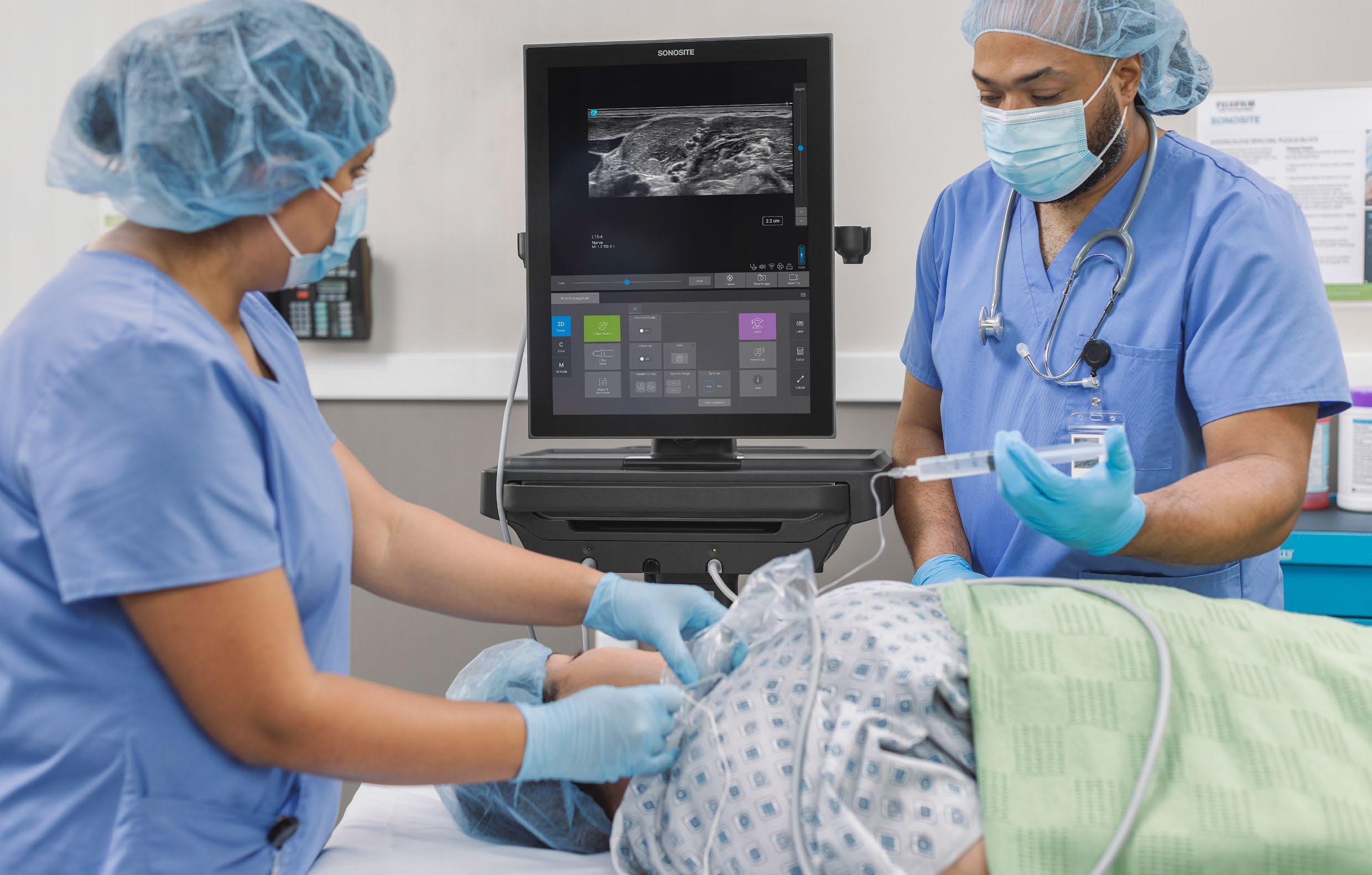

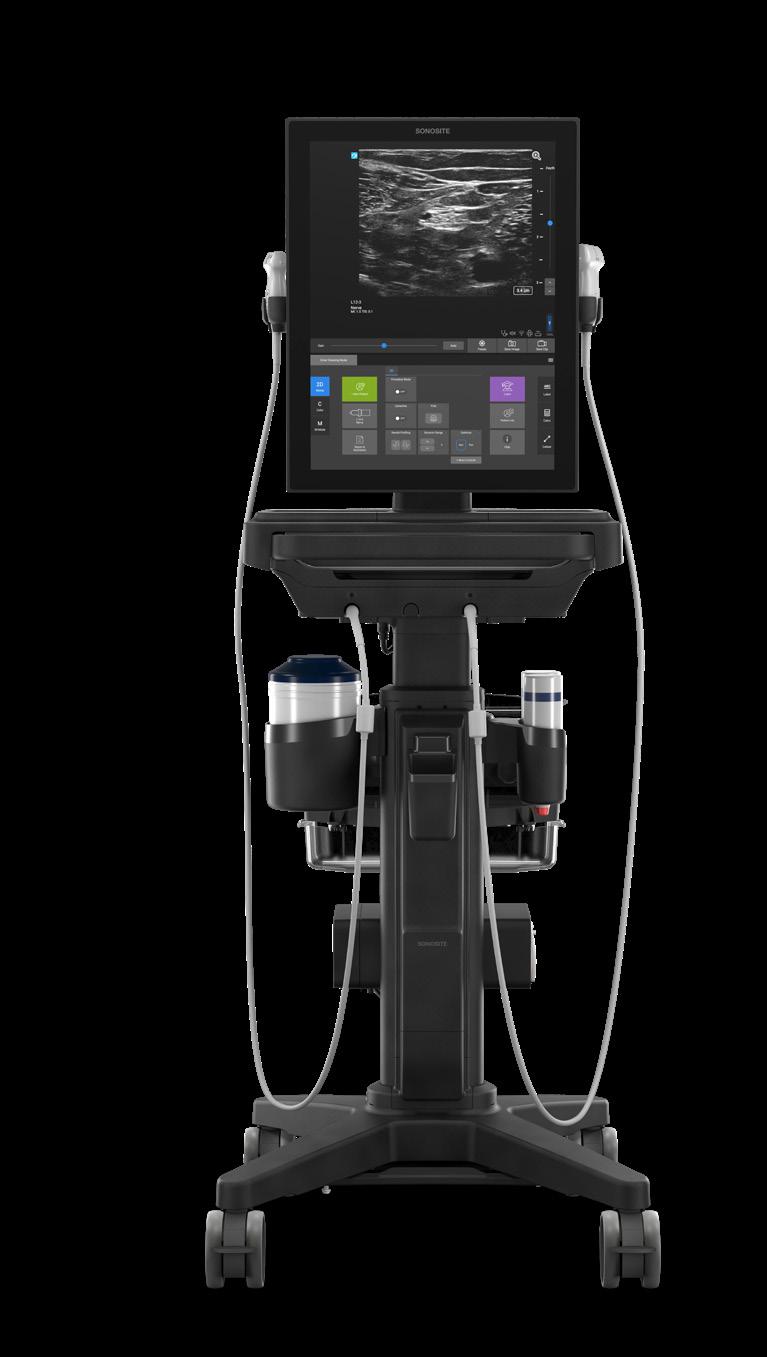
Introducing Sonosite ST Designed to raise the bar for ultrasound procedures. Built with an intuitive interface, Sonosite ST simplifies your workflow, helping you do what you do best - provide patient care. With its streamlined design and sleek all-touchscreen, Sonosite ST accommodates how you move and where you go. Discover the image clarity you have come to know and rely on from a Sonosite system. SONOSITE and the SONOSITE logo are registered and unregistered trademarks of FUJIFILM Sonosite, Inc. in various jurisdictions. FUJIFILM is a registered trademark of FUJILM Corporation in various jurisdictions. All other trademarks are the property of their respective owners. Copyright © 2023 FUJIFILM Sonosoite, Inc. All rights reserved. Subject to change. To find out more, please visit sonosite.com/uk or scan the QR code. MKT03744_UK 08/2023
Welcome to the October 2023 issue of Anaesthesia News on wellbeing. To say that things are turbulent for the anaesthetic workforce just now feels like an understatement – industrial action, recruitment, retention. Where do we start?
After listening to a podcast recently that compared the work environment for physicians on both sides of the Atlantic [1], I reflected that problems about workforce wellbeing and physician burnout are not unique to one healthcare system or country. Dr Dike Drummond (the Happy MD) describes the need to ‘step out of the whirlwind’ before doctors can gain perspective on wellbeing [2]. All the articles in this issue share a theme of stepping away or taking a pause.
Victoria McCormack writes about stepping away from perfectionism and moving towards acceptance – doctors are often reluctant to seek help, and knowing when and how is the important first step. Naomi Freeman and Rob Fleming cover the stepping away that we do every day in travelling to and from work. A survey of our Association’s membership shows that there is still much to do to improve the working lives of anaesthetists.
When we are within the whirlwind, we may not consider our financial wellbeing. Dave Murray’s article looks at the balance between time, money and our internal battery – as well as three types of fun.
Travelling to Australia for a wellbeing sabbatical gave Tei Sheraton new perspectives that she applies at work. Finally Jo Hacking writes about her experience of running retreats for doctors, and tackles some misconceptions about the ‘retreat’ word.
I hope that you find time to read these articles, and that something in this issue gives you a new perspective.
Robert Self Immediate Past Honorary Membership Secretary, Association of Anaesthetists
References
1. You are not a frog. How to survive a toxic system – on both sides of the pond, 2023. https://youarenotafrog.com/episodes/172/ (accessed 10/8/2023).
2. TheHappyMD. Physicians on purpose Podcast 1 – Step out of the whirlwind, 2023. https://www.thehappymd.com/blog/physicianson-purpose-podcast-1-step-out-of-the-whirlwind (accessed 10/8/2023).
18
20
26
Association of Anaesthetists 21 Portland Place, London W1B 1PY
Telephone: 020 7631 1650 Website: www.anaesthetists.org
Editor: Mike Kinsella
Membership Services Committee: Robert Self (Chair), Tei Sheraton (Vice President), Kenneth Barker (Elected Member), Benjamin Fox (Elected Member), Jonathan Harrison (Elected Member). Paul Bourke (Convenor, Scottish Standing Committee), David Honan (Convenor, Irish Standing Convenor), Ben Evans (Trainee Committee), Reshma Khopkar (SAS Committee) and Officers of the Association (ex-officio).
Address for all correspondence, advertising or submissions:
Editorial Assistant: Kate Mooney
Email: anaenews@anaesthetists.org
Design: Chris Steer
Digital Designer
Telephone: 020 7631 8803

Email: chris@anaesthetists.org
Copyright 2023 Association of Anaesthetists
The Association cannot be responsible for the statements or views of the contributors. No part of this magazine may be reproduced without prior permission. Advertisements are accepted in good faith. Readers are reminded that Anaesthesia News cannot be held responsible in any way for the quality or correctness of products or services offered in advertisements.
3 Anaesthesia News | October 2023 | Issue 435 Back to contents Welcome
3 Introduction 4 Leaving a little 6 Safer travel to work – a nationwide survey of experiences 10 Getting life right first time – a personal view
Revitalising the mind and body: my upside-down three-month sabbatical on wellbeing
A retreat for doctors: what is the point?
12
16
Regional anaesthesia for all: rising to the challenge of the RCoA 2021 Curriculum
Your letters
Anaesthesia Digested
25
Winter Scientific Meeting 2024 6 Contents 12
Follow Anaesthesia News on Twitter @Anaes_News
Leaving a little
The stacking of the dishwasher is the Myers-Briggs test of marital personalities. Firmly in the camp of ‘perfect is the enemy of done’, I stack in a manner displeasing to my spouse. Quite frankly, the haphazard dishes don’t fill me with joy either. Anaesthetists study flow and pressure, and here I am setting up a model of turbulence that often makes me wince.
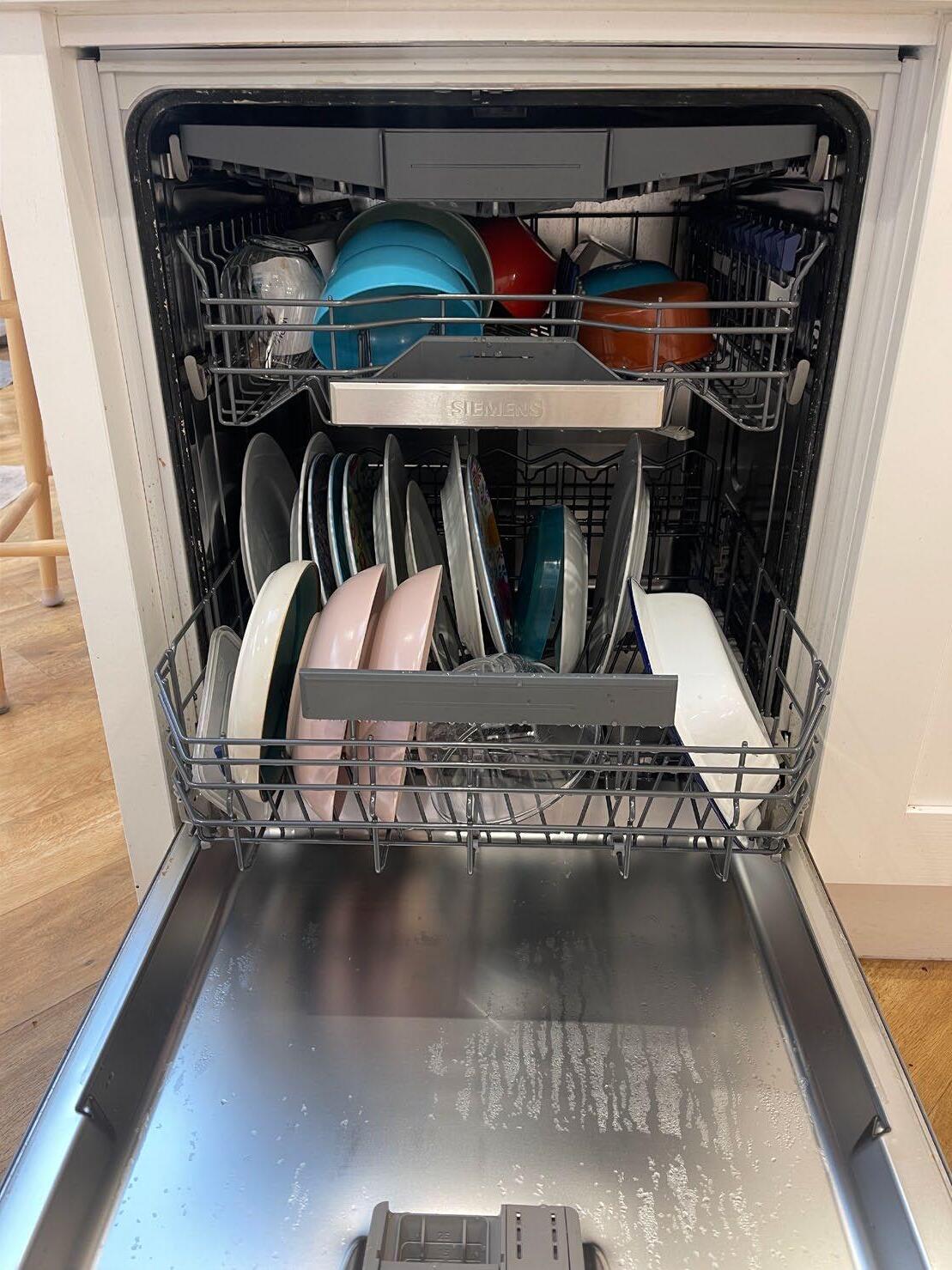
Such lack of elegance is born out of years of panicky tasks performed in uncertain nap times; lunches eaten in anaesthetic rooms whilst my assistant slowly sends for the next to give me a ‘break’; podcasts for fellowship exams absorbed while marching babies to sleep; catching up with friends, my attention split inequitably between brawling offspring and my poor pal’s news.
I love order. I love the pleasing effect of a job well done. I’ve taken photos of birthday cakes, mowed lawns and cleaned fridges as a balm to look back on when I wonder what I’ve done with my day. We all know the anaesthetist/ intensivist cliches of perfectionism. The misuse of difficult diagnoses such as obsessive-compulsive disorder to describe our love of the orderly. At work, it clearly saves lives to be driven by excellence and attention to detail.
It also saves lives to recognise one’s humanity. I know that at 3 A.M. on a night shift, I brief the team that I may become taskfixated and mute during our resuscitation and stabilisation of a patient. I run through checklists and verbalise my thoughts so that my colleagues become my shared brain to avoid human factors blunders. In short, I prioritise and make allowances for my available bandwidth. I aim for as good an outcome as possible, but sometimes when all hell is breaking loose it is best to aim for the good rather than become paralysed and steeped in the treacle of chasing perfection.
I am not always at peace with this notion. In a spell of time off sick after the initial couple of waves of COVID, I had to confront the notion of perfectionism. As PTSD, anxiety and depression forced me to take time off, I had to look at my coping mechanisms and assess if they were serving me adequately. As it turns out, I’m not a perfectionist (spouse not surprised). I have a growth mindset and quite variable self-esteem. I seek out challenges that are designed to confirm to myself that I am of value because, ultimately, I don’t think that I have intrinsic value if I am not of service. Who am I if I’m not a doctor? A helper, a mother, a spouse? I stopped working for six months, couldn’t pick up my kids from the playground because the noises would trigger me, watched the tail of the pandemic flame out with a fizzle and forgotten thanks. It was a bereavement of sorts. I had left my purpose – or it had left me. I didn’t know what I wanted. At times I wanted to leave my life, or at least make it stop.
Either way I was forced to face the mental model that had me trying to please the world, spinning plates, dropping them and starting again day after day. There are lots of great things about challenge: it made me walk towards a rewarding, challenging career. Nothing good ever comes easy, they say…
Pushing oneself gets results; until it doesn’t. Until one has so many mental tabs open that one’s mind never really knows rest. Until one physically can’t stop until every last job is done, or one
4 Anaesthesia News | October 2023 | Issue 435 Back to contents
feels permanently unsettled because no work life or home life has a finish line. Sometimes one has to leave something half done, badly done, lest one becomes undone.
Clearly, as this piece makes clear, I am no psychologist, but as I learned more with the excellent help from Practitioner Health I wondered how many of us have similar ideas of ourselves that are not serving us well? I am working towards the practice of acceptance. I accept the unanswered email that must wait. The teaching not yet written. The papers not yet read. Occasionally, the dishwasher not yet stacked at all. Plates will drop, but I can decide which ones to put down more often. Triage doesn’t just belong in medicine.
I’ll try to reframe my lack of perfection as a pragmatic solution to a very full life. I have value even when I’m not being productive; abandoning the aspiration to absolute excellence means that leaving a little behind, but not the whole lot, might just be the imperfection I need.
Victoria McCormack
Consultant in Critical Care and Anaesthesia, Manchester Foundation Trust
Honorary Secretary Elect, Association of Anaesthetists
Twitter: @vlm1victoria Get
Mediplus TIVA Sets
Further reading
Doctors are often reluctant to seek help, and contacting Practitioner Health or similar organisations is the most important (and hardest) first step.
• Emergency Contacts – Association of Anaesthetists website https://anaesthetists.org/Home/Wellbeing-support/ Emergency-Contacts-I-need-help-now
• Practitioner Health NHS Urgent help
https://www.practitionerhealth.nhs.uk/shout-and-ph-crisissupport-text-service
• Practitioner Health NHS – accessing the service
https://www.practitionerhealth.nhs.uk/doctors-and-dentists
• Gerada C. Beneath the white coat. Doctors, their minds and mental health, 1st edn. Routledge, 2020.
in touch: +44 (0)1494 551200 @MediplusTIVA
marketing@mediplusuk.com www.mediplusuk.com
Dedicated infusion delivery systems Designed in conjunction with anaesthetists to meet the highest TIVA standards as outlined in the guidelines*
*Nimmo AF, Absalom AR, Bagshaw O, et al. Guidelines for the safe practice of total intravenous anaesthesia (TIVA): joint guidelines from the Association of Anaesthetists and the Society for Intravenous Anaesthesia, 2018)
Safer travel to work –a nationwide survey of experiences
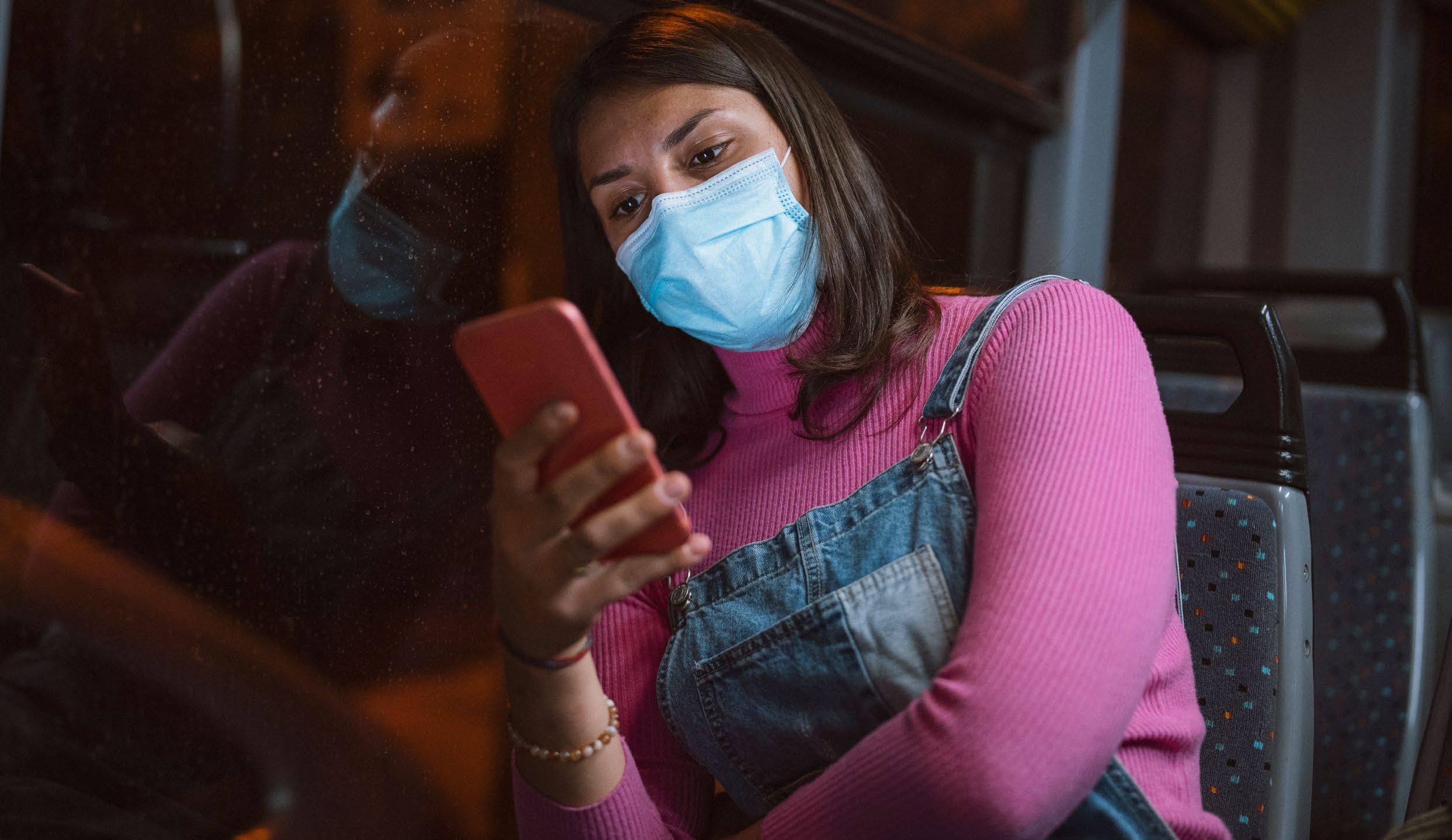
During the COVID-19 pandemic, many hospitals introduced initiatives to improve the wellbeing of staff who were still travelling to work when many of the public were working from home or were furloughed. Many organisations suspended their parking charges and some road and rail travel became free or subsidised for keyworkers. While other programmes associated with lockdown have become permanent, many changes relating to travel to and from work have been rolled back. After controversy over the reintroduction of a parking permit scheme at one UK hospital, the Board of the Association of Anaesthetists began to discuss how anaesthetists travel to work and what we could do to support our membership.
Many of us have experienced issues associated with long commutes, difficult journeys, unconventional parking arrangements, or having to park in residential areas. These issues include minor inconveniences such as unhelpful bus timetables and inadequate parking at remote hospital sites, but also more important factors involving safety including travelling while fatigued or late at night, and the risk of crime. These all contribute to making our days more difficult, potentially before they even start.
Though these anecdotes sounded familiar, we had no hard evidence that this was an issue. We decided to conduct a nationwide survey of all Association members between December 2022 - February 2023. We asked about commuting including duration, travel method, perceptions of safety, and whether these would influence employment choices. We explored whether our members had experienced crime related to commuting journeys. Free text options were included.
We had over 960 replies, representing over 10% of our membership. The majority of responses came from doctors working clinically, with a small number from medical students, anaesthesia associates and retired doctors.
Overall, 38% respondents took between 30-60 min to get to work (Figure 1). Notably, 22% of those who had to travel more than an hour were trainees, compared with 12% of SAS/ locally-employed doctors and 6% of consultants. When asked how often travel is undertaken when it is dark, 98% answered ‘sometimes’ or ‘always’, perhaps reflecting emergency work as well as the need to be in before sunrise or travel home after sunset during winter months.
6 Anaesthesia News | October 2023 | Issue 435 Back to contents
Perhaps unsurprisingly, groups of doctors more likely to be undertaking resident shiftworking reported longer commutes and were more likely to travel in the dark. Trainees are disproportionately affected compared with SAS, locally employed doctors and consultants. The latter groups are often in substantive posts in one hospital and therefore likely to live nearer their place of work.
When asked about how safe people feel travelling to work, 34% of respondents ‘sometimes’ felt unsafe travelling to work; the majority of these were trainees (56%), followed by SAS/ locally employed doctors (42%) and consultants (26%). Alarmingly a small proportion ‘always’ felt unsafe (Figure 2).
We asked what would make anaesthetists feel safer travelling to work, and the answers were as one might expect: better lighting in car parks; shorter travelling distances; better public transport; and greater availability of on-site security support (Figure 3). Trainees were more likely to report that they would feel safer if they had access to better and closer parking facilities than other groups, reflecting that permanent staff have better access to regulated car parks in some organisations.
From an environmental viewpoint, 17% of respondents cycle to work at least some of the time, the majority of these as their main method of commuting. It was encouraging that 80% of these 154 doctors report being able to park their bikes safely. However, there were also multiple references to bicycle theft in the free text answers. As we all look towards greener ways to travel, secure storage and safe cycle routes to and from hospitals should be a key focus of healthcare infrastructure.
Overall, 70% of respondents drive to work at least some of the time, most using a car as their main method of commuting. There were some free text comments related to difficulty getting a parking permit, the cost of parking, and problems finding a parking space; 46% of respondents could park at work but had to pay, and 20% could park for free.
Only 8% of respondents report using public transport some of the time, with 7% overall using public transport as their main method of commuting. The majority of those using public transport report that the bus stop is either within the hospital premises, or close to the hospital. The regularity of public transport to hospital sites varied significantly; overall 21% of respondents said that better public transport would make them feel safer on their journey.
Over the last 6 months, have you ever felt unsafe travelling to/from work?
Figure 1. How long does it take you to commute?
Figure 2. Over the last six months, have you ever felt unsafe travelling to/ from work?
How long does it take you to commute?
Over the last 6 months, have you ever felt unsafe travelling to/from work?
Figure 3. What would make you feel safer travelling to / from work?
What would make you feel safer travelling to / from work?
0% 10% 20% 30% 40% 50% 60% Always Never Rarely Sometimes
Trainees SAS / Locally Employed Consultant 0% 5% 10% 15% 20% 25% 30% 35% 40% 45% 50% <15 min 15-30 min 30-60 min >60 min
Trainees SAS / Locally Employed Consultant
0% 10% 20% 30% 40% 50% 60% Better lighting Closer / better parking Better public transport Shorter distance Availability of support (security) 0% 10% 20% 30% 40% 50% 60% Always Never Rarely Sometimes
Trainees SAS / Locally Employed Consultant
Regarding safety, 81 (8%) respondents reported being a victim of crime on their work journey. This ranged from verbal abuse through to assault and attempted or actual theft of possessions or vehicles. Fatigue was still a common theme in the free text comments, including reports of ‘microsleeps’ at the wheel, falling asleep at traffic lights resulting in collision, and not being able to access hospital rest facilities, with some feeling pressured to drive home. The #FightFatigue campaign has been part of the Association of Anaesthetists advocacy work since 2017, and has resulted in improvements in hospital facilities for those working unsociable hours [1]. There is clearly still work to be done, and data from this survey should help add weight to that campaign.
An impact on psychological wellbeing from commuting was reported by 17%, and 25% said that it had been a factor in deciding where to live, with many stating it directly influenced choice of employment. Decisions about where to take a permanent job are multifactorial, but employers may find recruitment and retention easier if they address some of the issues reported by our members.

We realise that this survey is just the beginning of what may be a long fight to improve hospital facilities to a standard where workers are enabled rather than feeling hindered in doing their jobs. There are multiple forces at play here, not least from those that own and run hospital estates, councils, government policy and transport companies.
Our next step in this campaign is to write to the chief executives of each UK Trust and Board with the results of this survey, along with steps they could take to help improve safe travel in their area. We also intend to present these data in greater depth in some of our forthcoming educational events in order to raise awareness. This article is also one step in getting the word out, so thank you for reading.
If you would like to know more about the campaign or learn how to get involved, please contact JennyGowen@anaesthetists.org.
Naomi Freeman
Immediate Past Chair, Association of Anaesthetists Trainee Committee
Consultant Anaesthetist, Royal Infirmary of Edinburgh
Robert James Fleming
Honorary Membership Secretary, Association of Anaesthetists

Specialist Anaesthetist, Sherwood Forest Hospitals NHS Foundation Trust
Twitter: @DrNFreeman, @RobJimFleming
References
1. Association of Anaesthetists. Fatigue, 2023. https://anaesthetists.org/Fatigue (accessed 29/8/2023).
Wylie Medal Undergraduate Essay Prize 2022
Back our campaign today to promote:
• Enhanced education
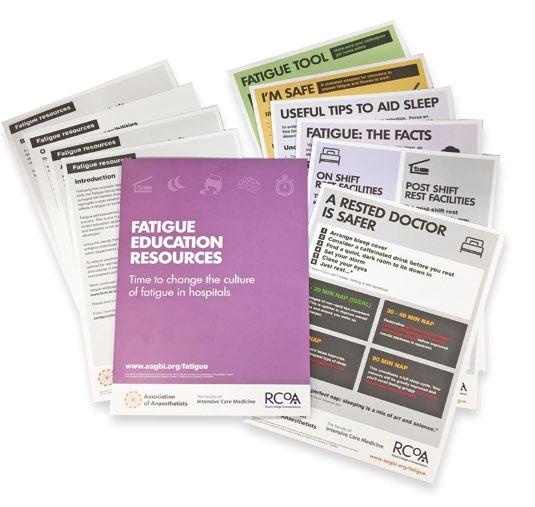
• Protected rest breaks, and
• Better access to facilities

The Association of Anaesthetists will award the Wylie Medal to the most meritorious essay on this year’s topic: Inequalities in health this year: how does it affect pre-operative care & recovery? written by a medical student at a university in Great Britain or Ireland.
Prizes of £500, £250 and £150 will be awarded to the best three submissions.
The overall winner will receive the Wylie Medal in memory of the late Dr W Derek Wylie, President of the Association 1980-82.
For further information and to apply please visit our website: anaesthetists.org/Wylie-medal-2022 or email secretariat@anaesthetists.org or telephone 020 7631 1650 (option 3)
Closing date: 12 January 2022
Calling ALL Theatre staff...
Would you like to live in a world where your daily work is easier than it is right now?
SCReaM is an accredited course that could help…
Topics include: Systems Thinking, Human Performance, Models of Safety, Psychological Safety and Non Technical Skills (stress, comms, leadership & teamwork)
8 Anaesthesia News | October 2023 | Issue 435
Download your resource pack today Updated resources available anaesthetists.org/FightFatigue
healthcare professionals with practical, everyday solutions to raise awareness, change attitudes and improve working environments.
#Fightfatigue
Supporting
SCReaM Human Factors & Team Resource Management Accredited Human Factors Training Established fellowship opportunity available @SCReaMSafety www.scream-safety.com ✉ rsch.scream@nhs.net
Getting life right first time – a
The lyrics from ‘Time’ by Pink Floyd (Dark Side of the Moon) sum up why it is important to get your work-life balance correct. Time, money, and your internal ‘battery’ are all limited, and the latter two need topping up (we can’t do anything about time except to use it efficiently). The aim of this article is to share some ideas on working out what’s important to you, so that you can balance the personal ‘cost’ of topping up your bank balance with the need to recharge your battery.
Are you having fun?
I would suggest that it is important to spend your time having as much fun as possible. However, there are three types of fun; while not all are equal, they all have value (Figure 1).
Type 1 fun: these are things that are instantly enjoyable, fun while you are doing them, and you’d gladly do them again. Eating chocolate, time spent with friends and family, skiing, etc. Type 1 fun is great at recharging your internal battery. If elements of your day-to-day work are Type 1 fun, so much the better as you are also topping up the bank balance.
Type 2 fun isn’t instantly enjoyable, but is rewarding, often in retrospect and you’d still do it again. It is why people say ‘never again’ during a marathon, but gladly sign up again even after the endorphin hit has subsided. It still recharges your battery. A large part of your time spent at work might be considered Type 2 fun. It isn’t instantly enjoyable, but value results from a bigger bank balance.
Type 3 fun: not fun at all. Ideally never to be repeated. Think your worst Finals viva. In fact the only enjoyment from Type 3 fun comes from recounting the experience to friends over a drink/ coffee. Type 3 fun still has value if you learn from it and make changes accordingly. The pandemic was a good example of this, as people realised what was really important.
This…… Not this……
This…… Not this……
this......
Money: how much, or how little do you need?
Rising costs of living, student loans, and changes to pensions mean that most of us will need to work longer, so a sustainable work-life balance is even more important. The aim should not be to earn as much as possible as quickly as possible. There is a danger that you end up in a vicious cycle, fearful of relinquishing earnings because more money always appears ‘useful’, but leaving insufficient time for having fun. It is better to ask, “What is the least I can earn, for as long as I want?” If you get this right, then you have arguably created your optimal work-life balance.
To work out how much you need, there are a few calculations you should do:
1. Look at all your bank and credit card statements and work out where you spend your money. This is much easier with online banking that can provide totals for each category. A spreadsheet will allow you to add up how much you spend each year on mortgage, bills, food, car, hobbies, holidays, school fees, professional fees, etc. Ideally do this for a whole year, but 2-3 months will give you a reasonable estimate.
2. Once you have done this, you can make judgement on the personal ‘cost’ of meeting that expenditure. Does your £1000 a year Costa/ Starbucks (or perhaps ‘Costbucks’) coffee habit bring you as much fun as a short holiday. Do you want to work those extra hours to fund that coffee habit, or would you rather forego it and do less work?
3. Now ‘stress test’ things. If you had a drop in income by 20% or 40%, where would you prioritise your expenditure? This is a really good way of focussing your thoughts and working out what is really important. If you could no longer tolerate your current working arrangements, how little money would provide a lifestyle that was still fun?
10 Anaesthesia News | October 2023 | Issue 435 Back to contents
1
2 Type 3 Type 1 Type 2 Type 3
Type
Type
personal view
Type 1 Type 2 Type 3 Type 1 Type 2 Type 3
This...... Not
Figure 1. Are you having the right type of fun?
Spending less time in an unfulfilling job may give you a better work-life balance if you know you can cut your expenditure and still have fun. However, be wary of cutting out things that are important for personal wellbeing and help you recharge. For an extrovert who needs social interaction to recharge, an easy target might be the cost of weekly socialising with friends. Cutting this out will mean you have removed something that is important for wellbeing.
Once you have worked out your expenditure, you can see where you might improve your work-life balance. The peculiarities of UK taxation mean that working (or dropping) an extra PA can have a different impact on take-home pay, depending on your current salary (Table 1). You may find that you can work less and spend less, but on things that are more fulfilling and give you more Types 1 and 2 fun.
Knowing what you currently spend allows you to work out roughly what you need in later life when kids have left home, or in retirement. The flexibility of retirement means you can travel and eat out ‘off-peak’, doing more but without costing more. Commuting costs and professional fees disappear. This will give you an idea of how big a pension you need, and hence how long you need to work for.
A good financial planner can help in working out if you can afford your lifestyle goals. Having worked out what you spend your money on, and what brings you the most fun, you will be in a better position to make any necessary changes to achieve that goal.
What next?
Hopefully the above financial exercise has given you some idea of whether improvements to your work-life balance are easily achievable. Mentoring can support you in identifying solutions; job planning discussions may be required. If there is little financial room for manoeuvre, more drastic solutions might be needed. Some areas of the country have a far higher cost of living. A national payscale means that your money may go a lot further if you relocate, with work being much the same. It may take a while to work out how to regain what you are missing and Get life right first time.
Dave Murray Consultant Anaesthetist James Cook University Hospital, Middlesbrough, UK
Resources I have created an example spreadsheet that will automatically add up the different expense categories, downloadable at https://1drv.ms/x/s!AiFKu76P0Etmi891pNcRQYAcsaeVUg
Table 1. Take-home pay for a full-time consultant with a 10 PA job plan with £100,000 gross annual salary (highlighted), compared with job plans having other PAs. Assumes 12.5% pension contributions (or fixed £12,500 if working > 10 PAs as additional PAs are non-pensionable). It does not account for student loan repayments or deductions for professional fees. 2023-24 tax year. Those on child benefit or with childcare vouchers may be affected more. Source: www.listentotaxman.co.uk (accessed 27/7/2023).
11 Anaesthesia News | October 2023 | Issue 435 Back to contents
PAs/week Gross Salary (£) Take-home pay (£) Change in take-home pay for each change in PA Tax fee allowance (£) 8 80,000 49,453 -5,050 12,579 9 90,000 54,503 -5,050 12,579 10 100,000 59,553 12,579 11 110,000 65,353 +5,800 12,579 12 120,000 69,653 +3,400 8,829 13 130,000 73,453 +2,900 3,829 14 140,000 77,603 +3,250 0 15 150,000 82,903 +4,400 0
Revitalising the mind and body: my upside-down three-month sabbatical on wellbeing
In October 2022 I started a three-month sabbatical from my consultant post at Aneurin Bevan University Health Board (ABUHB). It was a fabulous experience that I would recommend to anyone who might be considering a change. At the end of the three months I felt healthier and happier. I had exercised regularly, slept properly, eaten a better diet, and had some headspace to think about my next steps as one of the wellbeing leads in our department.
Before the sabbatical, I was weary. The continuing workforce crisis, the experiences of anaesthetists and intensivists during COVID and beyond, and the Ockenden report highlighting poor NHS care flapped around like aimless bats in my mind. The bats jostled with my own mundane personal issues. I needed some time and space to organise what was important for me, what I should do next for myself, and what I might bring back. A sabbatical was the perfect opportunity.
Initially my thoughts had been to develop a CPD wellbeing programme for anaesthetists and intensivists. I am grateful to Dr Adrian Neal (Clinical Psychologist and Head of ABUHB Employee Wellbeing) for persuading me that this was not the best approach, but that I should think more broadly and with an open mind. I discussed my plans with colleagues at the Association of Anaesthetists and my contacts in Australia. Australia had been affected very differently by the pandemic, had a good pedigree in terms of wellbeing work in anaesthesia and surgery, and a culture that I felt was more closely aligned to our younger generation of healthcare workers. I armed myself with a core interview schedule and a curiosity to delve into the realm of wellbeing down under. As I left for Australia I felt that I was the Welsh response to Crocodile Dundee!
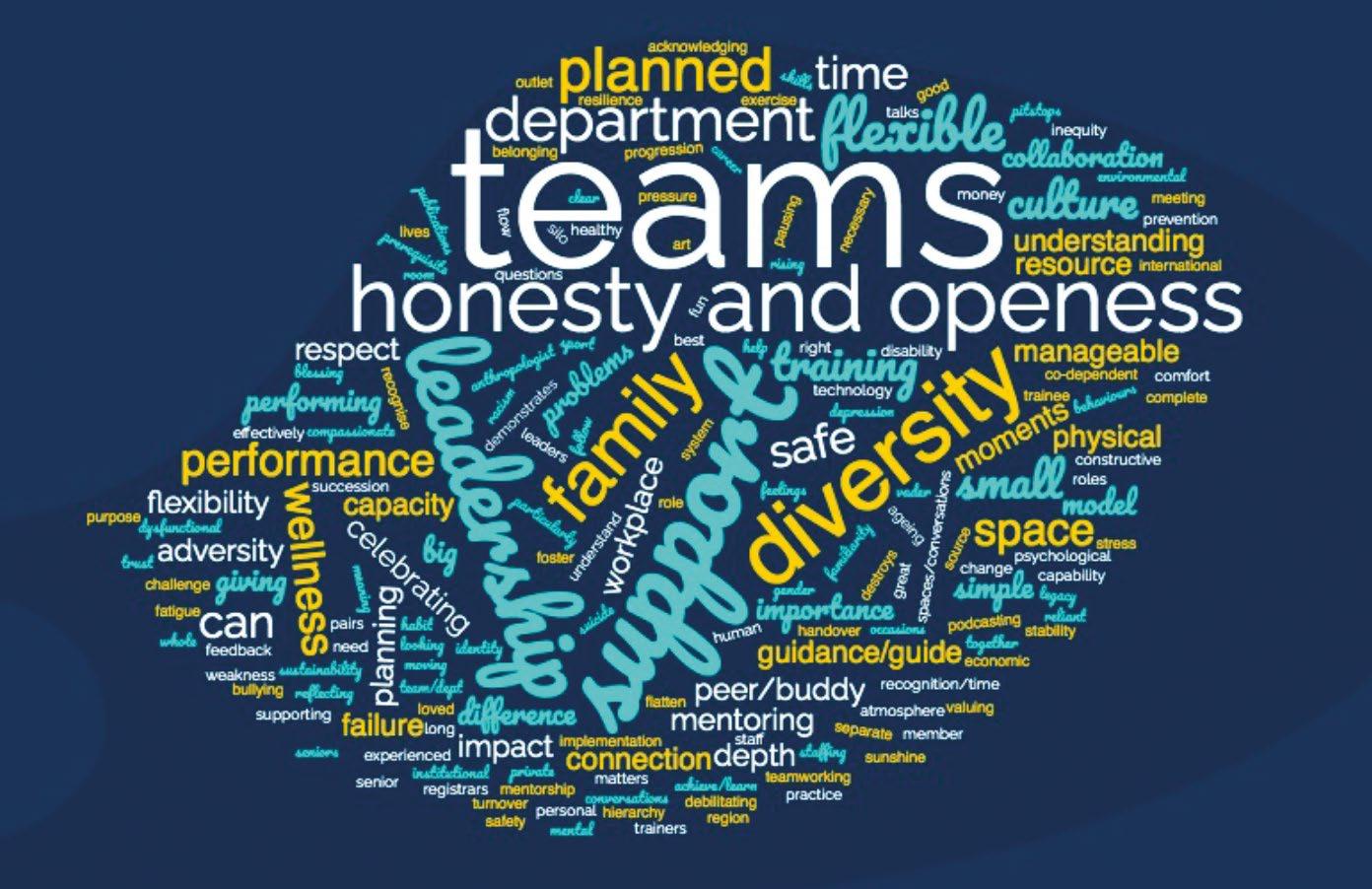
In total I interviewed 23 individuals and two teams. I used the skills that I had learned from the Association mentoring programme (active listening, reflecting, summarising) during the interviews. The themes that I started with were wellbeing CPD, suicide prevention, counselling and peer support. The questions were broad and intended to elicit meaningful insights from participants. I used some software to transcribe
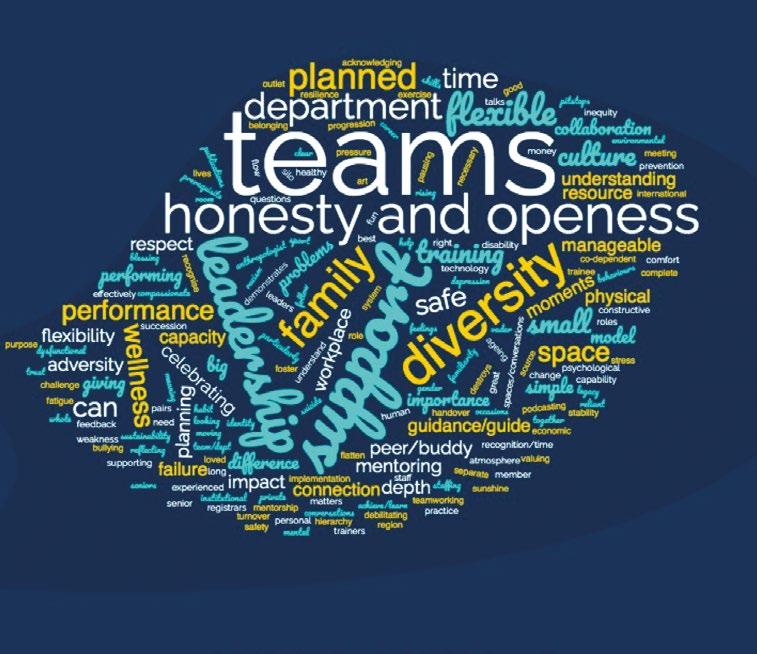
the individual interviews, which helped me to identify themes (Figure 1). Throughout the sabbatical I had regular discussions with colleagues that helped me gain more diverse insights, and contacted different experts as new themes emerged.
CPD
I spoke with surgeons involved in the development of the Royal Australasian College of Surgeons (RACS) Operating with Respect course [1]. The course looked excellent with a multidisciplinary faculty, and is supported by an app ‘RACS Speak Up’ that gives advice on principles to deal with unacceptable behaviour. Healthcare staff in Australia benefit from study leave with generous budgets that are reimbursed immediately after booking. My sense was that study leave and CPD are a joy, and not a fight to be won.
Suicide prevention
Just before my departure one of my colleagues committed suicide. Long hours, high-pressure environments, dependence of various others on us, and emotional exhaustion makes healthcare professionals vulnerable to mental health challenges. Participants emphasised the importance of creating safe spaces for open dialogues about mental health, fostering a non-judgmental culture, and promoting early intervention and access to mental health resources. A veterinary surgeon who had previously attempted suicide emphasised the importance of peers, friends and family in understanding normal behaviour for individuals, so that changes could be picked up and acted on in a way that was most appropriate for them and their personality.
12 Anaesthesia News | October 2023 | Issue 435 Back to contents
Counselling
Many individuals express hesitation in seeking counselling due to perceived stigma. One consultant anaesthetist had trained as a counsellor and emphasised the importance of keeping things simple and manageable, the department as a family, and the importance of family support. Additionally, introducing confidential counselling services within the hospital setting offers a discreet and accessible option for those in need.
Peer support
The interviews revealed that peer support plays a pivotal role in mitigating stress and promoting wellbeing. One Emergency Medicine department highlighted the importance of pausing and reflecting as a habit in their team. The consultants also did a coffee and a gas podcast for the Association covering the wellbeing initiatives in their department [2].
Identifying other areas to obtain a rich picture
While my sabbatical offered valuable insights into the themes explored, it also shed light on additional areas that contribute to the overall wellbeing of healthcare professionals. Some of these areas include:
Work-life balance
Many healthcare staff in Australia are given an extra 13 weeks of long service leave every seven years, and sabbaticals are encouraged. Exploring strategies to achieve a healthy work-life balance is crucial for long-term wellbeing.
Equity and diversity: embracing inclusion and empowerment
From my interviews and meeting teams it seemed that the most successful teams had a culture where all different types of people were heard and respected. This aligns with observations from Google’s Aristotle project.
I interviewed an Emergency Medicine doctor who was quadriplegic. There were significant challenges to overcome to accommodate his physical requirements, but by fostering an inclusive workplace the department saw benefits for both staff and patients. In the same interview he described a period of poor mental health prior to becoming quadriplegic that he found even more debilitating than his physical disability. When I recounted this to my friend who is a consultant psychiatrist she said “Without mental health you have no health.” This tiny insight was one of many during my sabbatical that have changed the way I think.
13 Anaesthesia News | October 2023 | Issue 435 Back to contents
Figure 1. Themes from individual interviews
Valuing yourself and your staff: cultivating a culture of appreciation
A resounding theme that emerged from the interviews was the importance of valuing oneself and one’s colleagues. As healthcare professionals, we often dedicate ourselves tirelessly to the care of others, sometimes forgetting to prioritise our own needs.
During the COVID pandemic I witnessed discussions about payment for additional hours in which it was suggested that it was immoral to claim these monies. My view is that it is important to understand how much a service truly costs for any future planning. In the few interviews where value and payment came up, it was clear that claiming for work undertaken is the norm in Australia. Money is one of the ways in which staff value is recognised, and we should not shy away from this.
Conclusion
My sabbatical has been an immensely positive experience. As a result of my experiences I will be working with the Human Resources Lead for Equity and Diversity and the Appraisal Lead to introduce mentoring skills to appraisers, as well as assisting the peer support programme within ABUHB. I would like to see more opportunities for sabbaticals within the NHS to enhance our working lives and careers and broaden our perspectives. We deserve to thrive and not just survive.
Acknowledgements: Many thanks to ABUHB who supported me in this sabbatical, all the volunteers who generously gave their time to be interviewed, and the colleagues who listened to my reflections, challenged and supported me.
Tei Sheraton Consultant Anaesthetist
Aneurin Bevan University Health Board, Royal Gwent Hospital, Newport Vice President, Association of Anaesthetists
Twitter: @liberian_girl01
References
1. Royal Australasian College of Surgeons. What you can do, 2023. https://www.surgeons.org/en/about-racs/about-respect/what-youcan-do#Operating%20with%20Respect (accessed 11/8/2023).
2. Association of Anaesthetists. Coffee and a gas: a wellbeing podcast, 2023. https://anaesthetists.org/Home/Wellbeing-support/ Coffee-and-a-Gas-A-wellbeing-podcast (accessed 10/8/2023).
The Barema & Association of Anaesthetists Environment Award for anaesthesia
The Association of Anaesthetists recognises that our actions have an impact on the environment and regards global warming and climate change as pressing issues.
The Association have once again linked with Barema, the Association for Anaesthetic and Respiratory Device Suppliers, representing companies that manufacture or supply anaesthetic and respiratory equipment in or to the UK to award the Barema & Association of Anaesthetists Environment Award for anaesthesia. The award recognises excellence in sustainability within the specialty and engages with industry partners to further develop a greener anaesthesia agenda.

Device Suppliers, representing companies that manufacture or supply anaesthetic and respiratory equipment in or to the UK to award the Barema & Association of Anaesthetists Environment Award for anaesthesia 2022. The award recognises excellence in sustainability within the specialty and engages with industry partners to further develop a greener anaesthesia agenda.
The Barema & Association of Anaesthetists environment award is an annual award for the single best initiative or project related to anaesthesia,
intensive care or pain management that has had and will continue to have a measurable beneficial effect on the environment.
The winner will receive a cash prize and a grant for further support and development of the project and will be invited to present their work at WSM 2024.
and will be invited to present their work at Annual Congress 2022.
For more information on the award and how to submit, visit https://anaesthetists.org/Home/Get-involved/ Grants-awards-and-prizes/Barema-AssociationEnvironment-Award
For more information on the award and how to submit, visit https://anaesthetists.org/Home/Get-involved/ Grants-awards-and-prizes/Barema-AssociationEnvironment-Award Submit your application by the deadline of 23:59 on 1 June 2022.
Submit your application by the deadline of 23:59 on 27 September 2023
14 Anaesthesia News | October 2023 | Issue 435 Back to contents
2022
Scientific Programme Workshops

Including:
Titrating intraoperative analgesia
Delirium biomarkers/ can we predict post-op delirium?
Ditching desflurane: trainee perspective
Online propofol concentration monitoring
TIVA use in obstetrics
Dexmedetomidine: SPICE and ICU outcome
A morning full of interactive workshops focusing on entry level and advanced pEEG, TIVA and Eleveld
A one-day paediatric TIVA meeting, TIVA for Tots, will be held on Thursday 16th November in parallel to the ASM. Visit the SIVA website for the latest information: www.siva.ac.uk
Intravenous Anaesthesia 25th Annual Scientific Meeting
Glasgow 2023
The Society for
Thursday 16th & Friday 17th November 2023
A retreat for doctors: what is the point?
Recently, I had a conversation about our retreat with a friend, who just happens to be a doctor. I asked why he wasn’t signing up. He said “How is chanting and wafting patchouli going to help me? I am worn out. I don’t have the time, money or the headspace, and anyway we’ve got a family holiday coming up.”
So why should he - or anyone else - go on a retreat?
To me, he had just answered his own question, and also beautifully expressed a common misconception of this type of retreat. From our experience, a retreat means taking time to withdraw from the usual responsibilities and life boundaries to find some all-important headspace. This allows time to explore internal stories and assumptions in the company of other medics whose experiences may resonate with our own. This professional understanding allows for open and confidential conversations with huge shared learning opportunities, but without the expectations or perceived judgement of academic conferences or that of a family holiday! To care for ourselves is part of our responsibility as a doctor. This is vital CPD and is as essential as any other professional learning; it is also a recognition of being human, rather than merely being a ‘doctor’.
If we apply Maslow’s theory of motivation [1], our human needs going upwards from the pyramid’s base are: physiological (shelter, food and clothing); safety (e.g. job security); love and belonging (friendship); esteem; and self-actualisation. Our experience is that many doctors have a sense of being detached from their own human experience, of a loss of identity beyond their job. Some also speak of feeling isolated, having low selfesteem or feeling inadequate, and some even speak of not feeling safe.
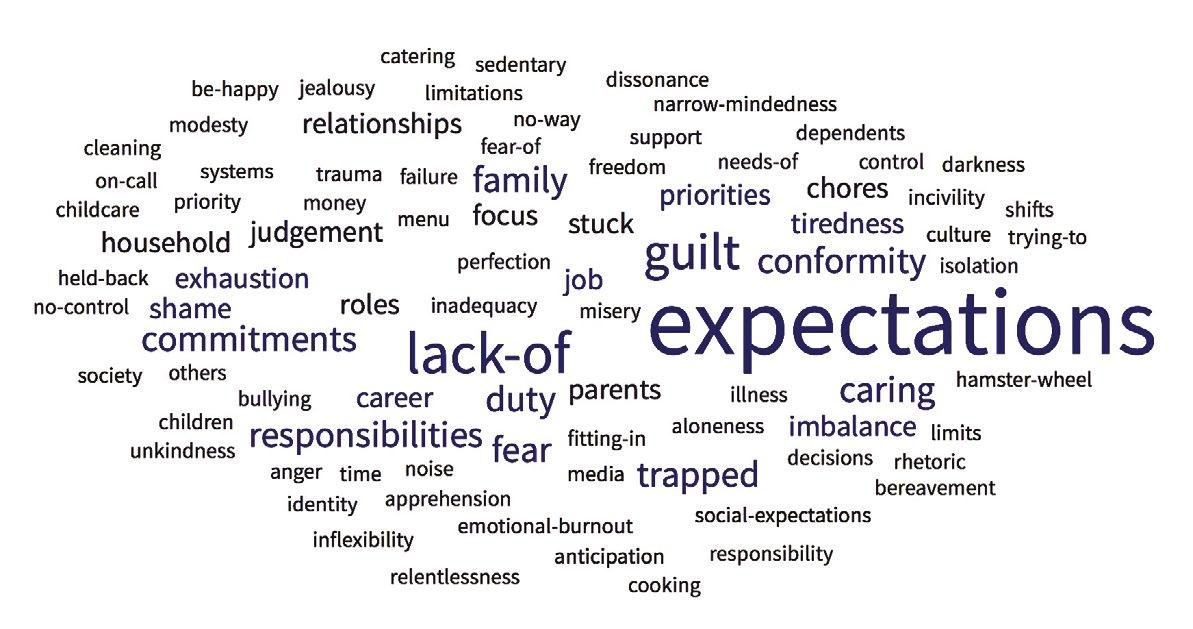
We have had frank discussions around how expectations (personal, societal, systemic and professional) don’t allow for the vulnerability of recognising, let alone addressing, gaps in our basic needs. Having a non-judgmental space and permission to acknowledge and name feelings that we may not usually feel able to express can be a very empowering experience (Figure 1).
I love a good metaphor. Imagine that you feel a bit stuck –perhaps like an infant inguinal hernia (bear with me - I was a paediatrician!), or when trying to pour a bag of rice into a narrow-necked jar. Just squeezing or pushing harder can cause a bottleneck with increased distress, further impaction and a much worse situation. It is pulling back, decompressing and addressing other causes of discomfort that will allow flow to return. If you just ‘go away and do something else’, a hernia will occasionally reduce spontaneously, but recurrence is the norm if the underlying causes aren’t also addressed. With a bag of rice it is important to have a contingency plan before you ‘just let go’ (Figure 2).
So going on a retreat allows active ‘decompression’. It dedicates time for you to identify and explore what actions, skills or thoughts might nurture longer term benefits. It is a chance to practise having such thoughts in a safe space, and try new skills without fear of judgement. It is a space to make your own connections.
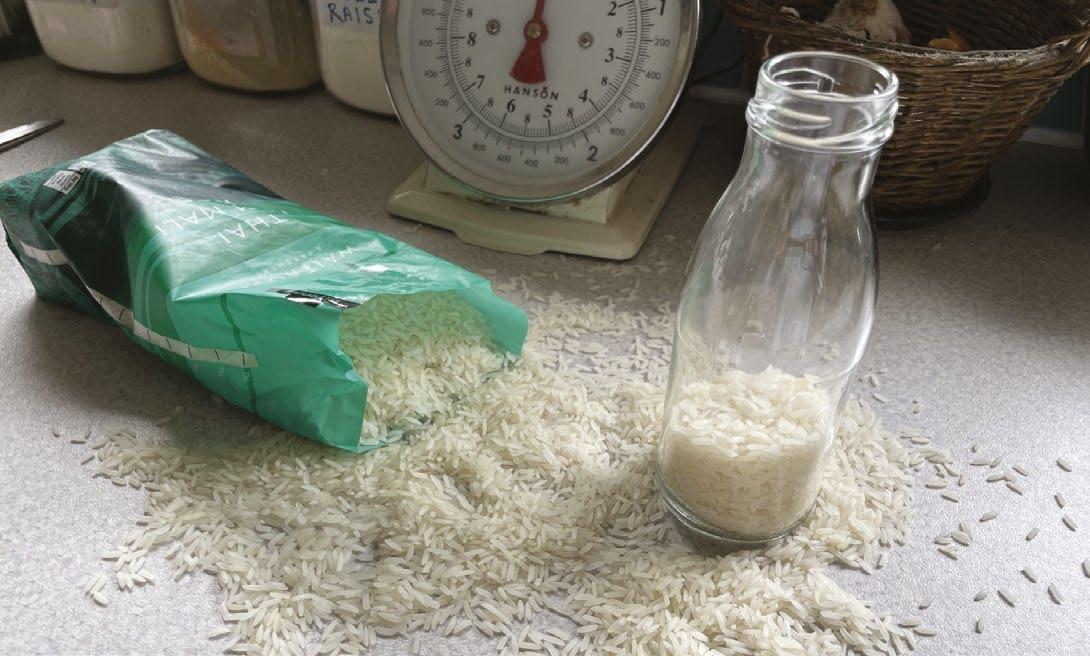
16 Anaesthesia News | October 2023 | Issue 435 Back to contents
Figure 2
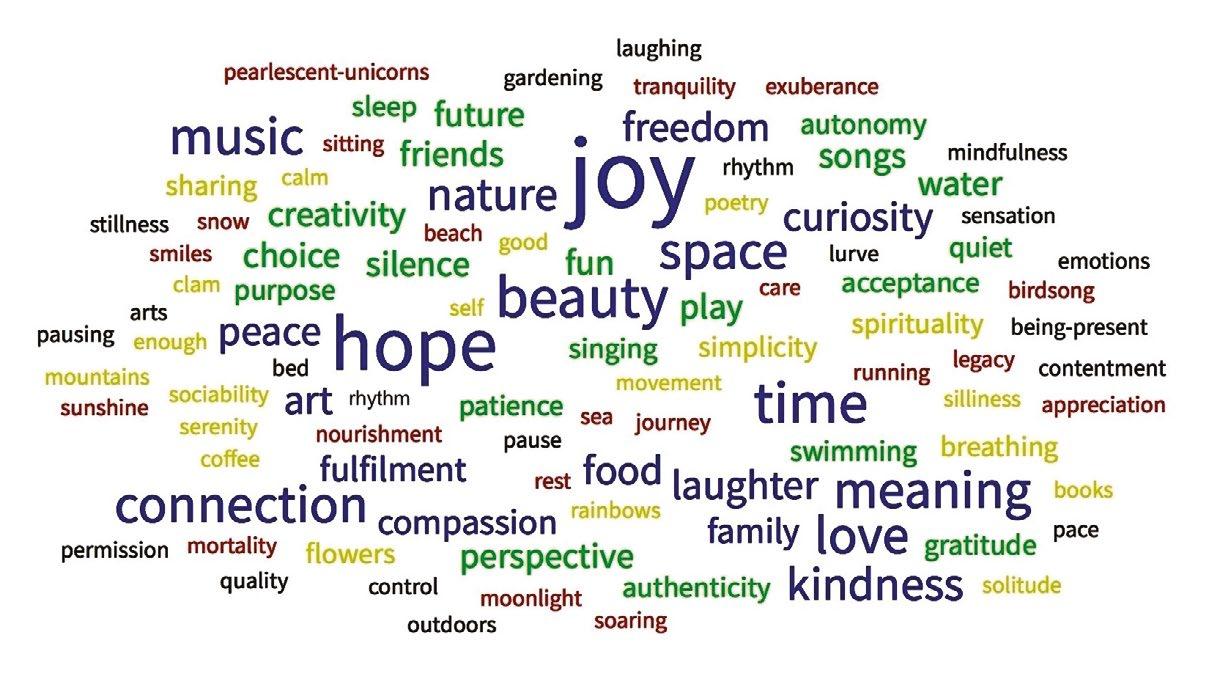
Figure 1. What drains us (summarised retreat workshop answers).
What happens on retreat?
Most importantly you get to be somewhere that you chose to be and think about what you value. There are workshops: ‘Ownership of your personal story’ is at the heart of the ‘learning objectives’. You set your own goals, intentions and boundaries. Telling and hearing stories opens conversations. The sharing of personal learning among the group can be a powerful experience.
There is value-based work using lighthearted art or craft to identify what really matters to you, and some facilitated talking with active listening. There is plenty of laughter, and some tears are inevitable – quite often mine (Figure 3)!
Why might a retreat be good for an anaesthetist?
I asked the opinion of some anaesthetists who have been on our retreat:
“This speciality has had its own very distinct challenges in recent years. Because of the ‘service provision’ nature of anaesthesia, and the absolutely essential skills that were redeployed during the pandemic, the anaesthetic team had a double hit. We were integral to the COVID ward teams that dealt with so much death and moral injury, but are now ‘back to business as usual’ (according to the policy makers), and dealing with the constant backlog of operation waiting lists. So many of us are exhausted – and yet no-one has really had a chance to recover, let alone step away to deal with some of the trauma we’ve experienced.”
“An invaluable opportunity to explore your emotions, with people who understand and value you and your profession. It's an opportunity to refocus and learn to take care of yourself as well as others.”
There is also a chance to try a ‘taster menu’ of things that you may not have felt able to try before, or you may have enjoyed when you had less ‘else’ to deal with. We offer yoga, mindfulness, meditation; some creative writing and free-flow time where you can try sketching, watercolour, nature connection and an introduction to coaching; ideal if you really don’t know what you need, or what it is that you may be missing.
The setting of the retreat is also important – in the countryside, with dedicated time outside to connect with the environment. Research now shows that being in nature has beneficial effects on physiology and cognitive function [2, 3]. Time spent in a green space (the more biodiverse the better) can de-activate the amygdala and downgrade the stress response [4]. This improves psychological flexibility and – dare I say it – resilience. Delicious food and sociable mealtimes are also an integral part of the whole experience.
“I was surprised at how useful I found the whole retreat. I had expected it to be a nice break away from work and normal responsibilities. I hadn’t expected to work through a whole lot of stress that I didn’t even know I was carrying. I didn’t expect to meet so many amazing people, and to be met with so much love and support by a group of strangers. Also, the food was out of this world!”
“It was an excellent physical and psychological space for unpacking emotions, reflecting and recharging in a safe, compassionate and well-supported environment. Balm for the soul.”
So – a retreat can be a proactive step towards what you value. Patchouli and chanting – optional.
Joanna Hacking Director, About Wellbeing Ltd Axford, Wiltshire
Twitter: @woodlinesjo
References
1. Maslow AH. A theory of human motivation. Psychological Review 1943; 50: 430-7.
2. Richardson M, McEwan K. 30 days wild and the relationships between engagement with nature's beauty, nature connectedness and well-being. Frontiers in Psychology 2018; 9: 1500.
3. Pritchard A, Richardson M, Sheffield D, McEwan K. The relationship between nature connectedness and eudaimonic well-being: a meta-analysis. Journal of Happiness Studies 2020; 21: 1145-67.
4. Sudimac S, Sale V, Kühn S. How nature nurtures: amygdala activity decreases as the result of a one-hour walk in nature. Molecular Psychiatry 2022; 27: 4446-52.
17 Anaesthesia News | October 2023 | Issue 435 Back to contents
FIgure 3. Joy board (summarised retreat workshop answers).
Regional anaesthesia for all: rising to the challenge of the RCoA 2021 Curriculum
June 2023 saw a new course for anaesthetists of all levels in the beautiful Scottish town of St Andrews. With a focus on the seven Plan A blocks endorsed by Regional Anaesthesia-UK [1], the two-day Regional Anaesthesia: Plan A Blocks course (https://medicine.st-andrews.ac.uk/short-courses/regional-anaesthesia-a/) used the excellent facilities at the School of Medicine, University of St Andrews to develop delegates’ skills and knowledge in performing these key procedures.
The RCoA recognise the value of ultrasound-guided regional anaesthesia (UGRA) by mandating this at Stage 3 training in the 2021 curriculum. The new minimum standard is that all anaesthetists at completion of training will be able to competently, safely and independently deliver a wide range of UGRA procedures; in essence the seven Plan A blocks (Box 1). These have been chosen as they are believed to provide the ‘highest possible value to the greatest number of patients’
Barriers to training in regional anaesthesia have previously included a potentially wide range of blocks to learn, a different approach being taught by each expert, and large time intervals between performing the blocks. Our course focussed on seven blocks with a standardised approach using the ESRAendorsed guides [2], and gave delegates the opportunity to perform multiple repeat blocks with immediate objective and expert feedback.
Box 1. Plan A blocks
Interscalene-level brachial plexus
Axillary-level brachial plexus
Erector spinae plane
Rectus sheath
Femoral
Adductor canal
Popliteal sciatic
18 Anaesthesia News | October 2023 | Issue 435 Back to contents
The course brought together an expert faculty of regional anaesthesia practitioners from the UK and Europe and anatomy demonstrators from the University of St Andrew. We had generous support from industry: Intelligent Ultrasound, GE Healthcare and Vygon. In particular, Intelligent Ultrasound provided NeedleTrainer™ (https://www.intelligentultrasound.com/needletrainer/), a novel advanced regional anaesthesia simulator that allows the combination of real-time ultrasound image analysis with simulated needling on live subjects. An exciting feature of this device is the objective metric of percentage time that the needle tip is in view during a simulated procedure.
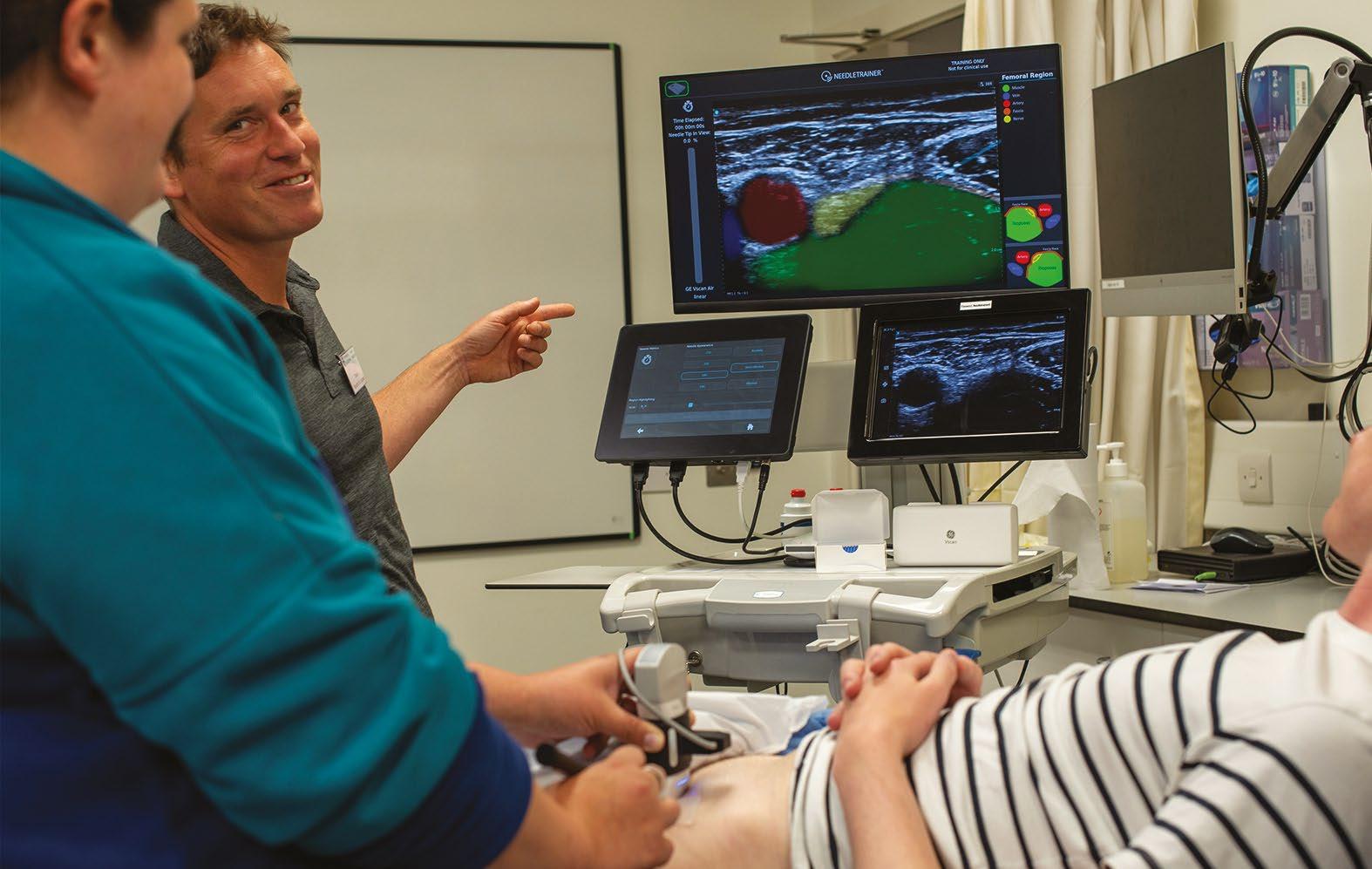
Each half day session began with a review of cadaveric specimens, delivered by an anatomy demonstrator. The 24 delegates were then taught in groups of three for cadaveric needling and live scanning with simulated needling. The small group sizes allowed focussed development opportunities for all delegates, with one-to-one feedback and teaching in a constructive and supportive educational environment. The session was then closed with a lecture topic aligned to RCoA curriculum outcomes.
The feedback from delegates was overwhelmingly positive. We feel that this course provides confidence, competence and feedback that aids future development. A repeat of the course is planned for 2024, and we hope that this enjoys equal success.
References
1. RA-UK. Plan A Blocks, 2023. https://www.ra-uk.org/ index.php/plan-a-blocks-home (accessed 15/8/2023).
2. ESRA. Plan A Blocks, 2022. https://esraeurope.org/wpcontent/uploads/2022/04/FACTSHEETS_ESRA2022.pdf (accessed 15/8/2023).
Fiona Watson
Specialty Registrar in Anaesthetics
NHS Tayside
Nick Record
Specialty Registrar in Anaesthetics
NHS Tayside
James Bowness
Consultant Anaesthetist
Aneurin Bevan University Health Board
Alasdair Taylor
Consultant Anaesthetist
NHS Tayside
Twitter: @bowness_james
19 Anaesthesia News | October 2023 | Issue 435 Back to contents
Dear Editor
Packaging design strategies to reduce the risk of mis-selection of medicines
The design of medicine packaging can result in different products looking extremely similar, and the same product from different suppliers looking completely different [1, 2]. This occurs despite suggestions that all pharmaceutical companies follow international, European and UK regulations [1, 2], although such regulations do not necessarily result in optimum readability or ease of use for clinicians [1]. Recently released guidance from the Difficult Airway Society and Association of Anaesthetists on implementing human factors in anaesthesia recommends that pharmaceutical companies incorporate human factors design and testing into their medicine ampoule and packaging development to improve readability and minimise mis-selection, and that anaesthetists work with pharmacy and procurement colleagues to prioritise human factors principles during procurement processes [2].
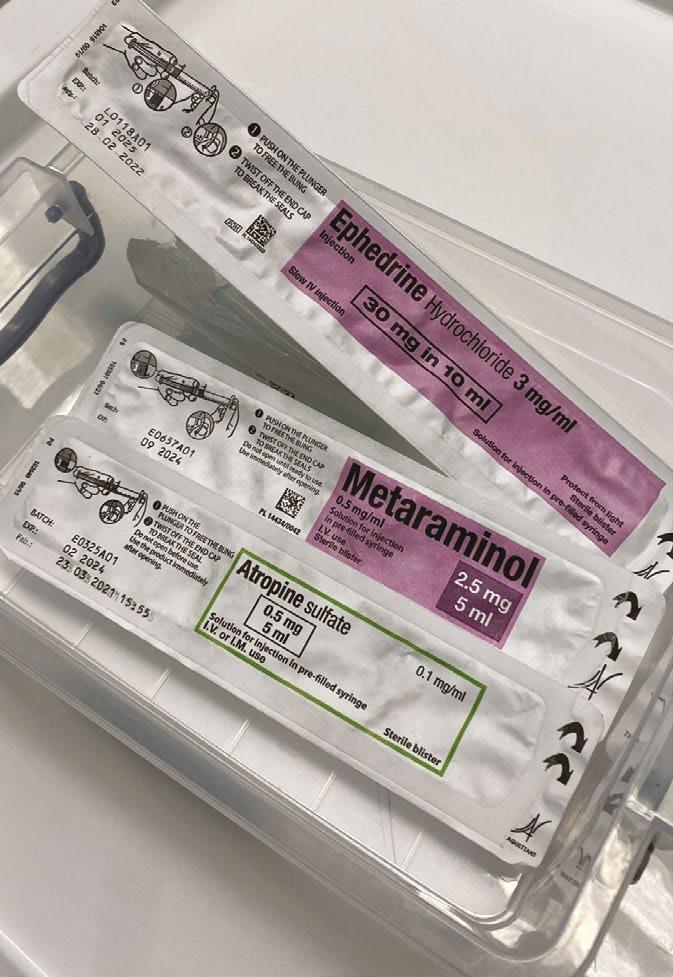
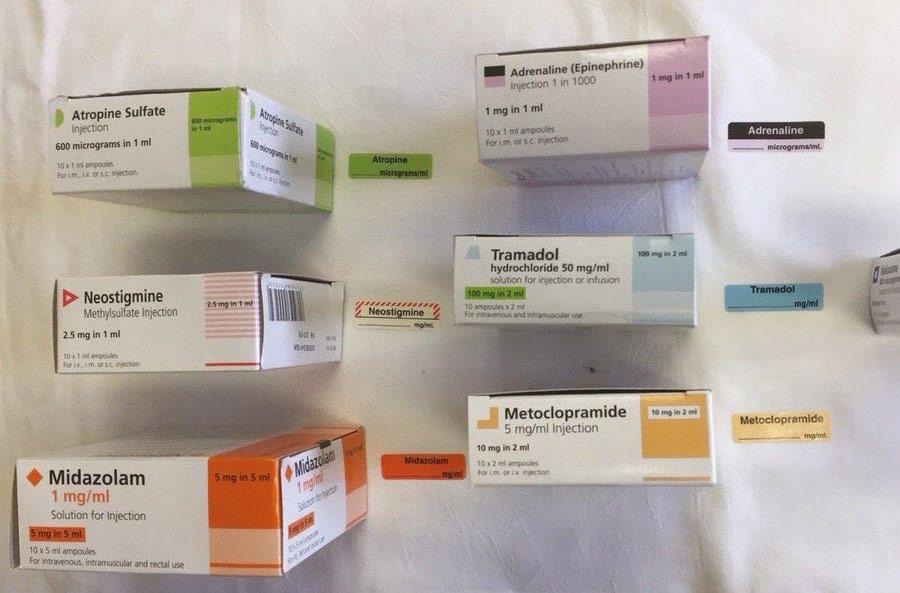
Discussions with the MHRA are in progress. In the meantime, two UK medicine suppliers have elected to improve their product design to prioritise patient safety. Hameln Pharma Ltd (Gloucester, UK) has aligned the design of both their packages and ampoules with the ISO syringe label colour coding (Figure 1) [3], and Aguettant Ltd (Flax Bourton, Bristol, UK) has designed its prefilled syringes to use these colours. In addition, the name of the medicine on the Aguettant prefilled syringes is in a bigger font than the company logo, and the shape of their prefilled syringes is different for different medicines: for example, ephedrine prefilled syringes are long and thin whereas metaraminol prefilled syringes are short and wide (Figure 2).
Implementation of such design strategies by our colleagues in industry should be applauded, and we hope that other medicine suppliers will consider following their lead.
James A. Penketh
ST6 Anaesthetics and Intensive Care Medicine
University Hospitals Bristol and Weston NHS Trust, Bristol
Sethina A. Watson
ST6 Anaesthetics
North Bristol NHS Trust, Bristol
Kathleen Ferguson
Consultant
Department of Anaesthesia, Aberdeen Royal Infirmary, Aberdeen
Fiona E. Kelly
Consultant
Department of Anaesthesia and Intensive Care Medicine, Royal United Hospitals Bath NHS Foundation Trust, Bath
Twitter: @jpenketh39; @morefluids; @KFAberdeen; @fionafionakel
References
1. Kelly FE, Frerk C, Bailey CR, et al. Human factors in anaesthesia: a narrative review. Anaesthesia 2023; 78: 479-90.
2. Kelly FE, Frerk C, Bailey CR, et al. Implementing human factors in anaesthesia: guidance for clinicians, departments and hospitals. Anaesthesia 2023; 78: 458-78.
3. International Organization for Standardization. ISO 26825:2020 Anaesthetic and respiratory equipment – User applied labels for syringes containing drugs used during anaesthesia – Colours, design and performance, 2020. https://www.iso.org/standard/76678.html (accessed 5/7/2023).
20 Anaesthesia News | October 2023 | Issue 435 Back to contents
Send your letters to: The Editor, Anaesthesia News at anaenews.editor@anaesthetists.org Please see instructions for authors on the Association's website www.anaesthetists.org
Your letters
Figure 1. Hameln Pharma medicine boxes and standard syringe labels
Figure 2. Aguettant prefilled syringes
A response
The Association of Anaesthetists supports the principles outlined in this letter by Penketh et al. It will continue to work towards influencing the UK and international regulatory, pharmacy and procurement bodies to facilitate the introduction of appropriately presented packaging, ready to administer dosing, and prefilled syringes for medications used by anaesthetists.
We note that recommendations in the recent Association of Anaesthetists guidelines on handling injectable medications in anaesthesia support best practice pharmacy procurement in terms of labelling and the use of prefilled syringes where available [1]. Prefilled syringes have been introduced in many other areas of medical practice (e.g. anticoagulants, insulin and saline flushes) and it is anomalous that this has not been developed more widely in anaesthesia.
Alongside emergency medications, the introduction of prefilled syringes for other medicines commonly used by anaesthetists would offer productivity and safety advantages, in terms of time and cognitive load respectively. If Trusts fail to implement best practice, when predictable errors occur it is too simplistic and counterproductive for patient safety to blame the individual administering the medication – they have been set up to fail!
Peter Young
Chair, Association of Anaesthetists Safety Committee
Twitter: @peteryoung101
References
1. Kinsella SM, Boaden B, El-Ghazali S, et al. Handling injectable medications in anaesthesia: guidelines from the Association of Anaesthetists. Anaesthesia 2023; 78: Early View https://doi. org/10.1111/anae.16095.
Dear Editor
Human factors is fundamental in design of healthcare buildings: the clinical liaison role
I enjoyed hearing Dr Fiona Kelly and Ms Sue Deakin championing human factors for patient safety at the recent RCoA Anaesthesia 2023 conference. It is apparent that consideration of human factors should take place at the very outset of healthcare building design and that Estates team involvement is fundamental, as recommended by the latest guidance on implementing human factors from the Difficult Airway Society and Association of Anaesthetists [1]. Dartford and Gravesham NHS Trust recognised this link during the COVID-19 pandemic. In my role as an anaesthetist and intensivist I collaborated with the Estates team to ensure adequate oxygen flow [2]. This led to the creation of a clinical liaison role to the Estates team that mediates between clinicians and Estates on all new projects. For example, the proposed layout of our new MRI scanning room would have required the disconnection of the breathing circuit from the patient, disconnection of the piped gases, and movement of the anaesthetic machine across the room in order to allow transfer of the patient to the trolley. This was discovered at the blueprint stage by floormapping patient and staff movements. The updated plan involved repositioning of the MRI scanner and new shielding calculations, allowing a fixed position for the anaesthetic machine and monitoring and thus providing a safer patient and staff environment.
This is just one example, and I believe every Trust could benefit from closer working between clinicians and their Estates team. With the growing awareness of sustainability in healthcare this relationship between clinical projects and the Estates teams projects sees increasing overlap; in my opinion for safer and greener patient care a clinical liaison within the Estates team is a necessity.
Daniel R. Lake
Consultant Anaesthetist and Intensivist, Clinical Liaison to Estates Team Darent Valley Hospital, Dartford and Gravesham NHS Trust, Dartford
Twitter: @DrDLake
References
1. Kelly FE, Frerk C, Bailey CR, et al. Implementing human factors in anaesthesia: guidance for clinicians, departments and hospitals. Anaesthesia 2023; 78: 458-78.
2. Lake D, Henwood M, Eadie P, et al. How not to run out of oxygen: Primary FRCA forcibly put into practice by COVID-19 to maintain patient safety. Journal of Patient Safety and Risk Management 2021; 26: 81-8.
Anaesthesia News | October 2023 | Issue 435 21
Congratulations to James A. Penketh for winning October's Letter of the Month prize.
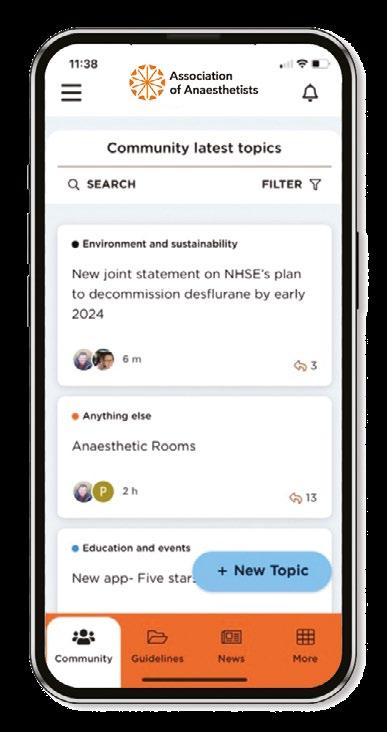
Community, our new online member network and forum. A space for members to share ideas, knowledge, advice, solve problems, collaborate, ask and answer questions and, above all, connect with each other. https://community.anaesthetists.org The username and password that you use to login to Community are the same as your username and password on the Association's website.
Thank you for being part of our community
With the new membership year starting on 1 July 2023 we want to thank you for being a member.
I have enjoyed various webinars and educational content. I appreciate the access to Anaesthesia.
Locally-employed / Trust Doctor
In our recent membership survey the top 3 rated benefits were our guidelines, educational events and our publications including our journal Anaesthesia. If you haven’t yet signed up to renew your membership by Direct Debit, contact us today to ensure you continue to enjoy all the benefits of membership in the year ahead.
Free subscription to our internationally respected Anaesthesia journal, rated the number 1 journal in Anaesthesiology
Unlimited access to over 1000 educational videos through our dedicated online platform Learn@
Guidelines very useful and used regularly. I have attended some educational events and found these excellent.
Consultant
Access to the latest patient safety guidance via the member-only Association guidelines app

Overall good educational events which are always well run. Guidelines excellent and advocacy for all the current issues affecting the specialty.

Consultant
Great seminars, valuable guideline resource.
Trainee – ST3, ST4 or ST5
Free worldwide patient transfer insurance of up to £1 million
For a reminder of all the benefits of membership visit:
Maximise your membership For full list of member benefits visit: anaesthetists.org/Home/Membership/ Benefits-of-membership As the new membership year starts, make sure you are making the most of all your member benefits. Exclusive member discounts at all Association events Aug Anaesthesia Pe i-opera ive medicine cr t cal care and pain Anae_v77_i8_OFC.indd 1 Volume 77, Issue 8, August 2022 Effectiveness of emergency general surgery some answers, more questions J. D. Forrester and S. M. Wren 854 The need to improve opioid prescribing and data collection in patients undergoing orthopaedic surgery N. Levy, S. A. McNally and D. N. Lobo 858 Developments in adult critical care transfer in England: a positive legacy of the -19 pandemic 861 “You test because you cannot afford to make assumptions” C. M. McGlennan and T. R. Christmas Original Articles 865 Effectiveness of emergency surgery for ve common acute conditions: an instrumental variable analysis of a national routine database A. Hutchings, S. O’Neill, D. Lugo-Palacios, S. Moler Zapata, R. Silverwood, D. Cromwell, L. Keele, G. Bellingan, S. R. Moonesinghe, N. Smart, R. Hinchliffe and R. Grieve Factors associated with persistent opioid use 6–12 months after primary total knee arthroplasty M. T. Kluger, D. A. Rice, R. Borotkanics, G. N. Lewis, A. A. Somogyi, D. T. Barratt, M. Walker and P. McNair 892 Carbetocin vs. oxytocin at elective caesarean delivery: a double-blind, randomised, controlled, non-inferiority trial of low- and high-dose regimens McDonagh, J. C. A. Carvalho, S. Abdulla, D. Cordovani, K. Downey, X. Y. Ye, D. Farine, M. Morais and M. Balki An evaluation of the outcome metric ‘days alive and at home’ in older patients after hip fracture surgery A. Wu, M. T. Fahey, D. Cui, B. El-Behesy and D. A. Story Review Articles 910 Comparison of ultra-low, low and high concentration local anaesthetic for labour epidural analgesia: systematic review and network meta-analysis L. Halliday, M. Kinsella, M. Shaw, J. Cheyne, S. M. Nelson and R. J. Kearns 919 Learning from the law: review of 21 years of litigation for anaesthetic negligence resulting in peripartum hypoxic ischaemic encephalopathy K. McCombe and D. G. Bogod How to design and publish quality science studies L. Miles and D. A. Story Correspondence Anaesthesia Peri-operative medicine, critical care and pain
anaesthetists.org/Home/Membership/
The effect of placement and management of intrathecal catheters following accidental dural puncture on the incidence of postdural puncture headache and severity: a retrospective real-world study
Binyamin Y, Azem K, Heesen M, et al.
Postdural puncture headache was first described by Bier in 1898 after he injected cocaine into the subarachnoid space of himself, his assistant and seven patients; six of these nine described the classic symptoms. Although much less common now, it is a potentially debilitating complication of obstetric epidural analgesia with an important impact on the ability of affected women to breastfeed as well as their postnatal mental wellbeing. In this study the investigators examined the use of intrathecal catheters after an accidental dural puncture in labouring women, evaluating the subsequent incidence of headache and the need for an epidural blood patch. They found an incidence of accidental dural puncture of 0.59%; 40% of these
women had the epidural catheter placed intrathecally. This manoeuvre on its own did not decrease the incidence of headache, but injecting normal saline through the catheter did. The authors hypothesise that the saline injection may restore cerebrospinal fluid volume and thus reduce cerebral hypotension and headache, in keeping with Bier’s original observation that headache results from the loss of cerebrospinal fluid. Interestingly, the use of an intrathecal catheter reduced the need for an epidural blood patch. Being retrospective, the study has the potential issues of bias as well as lack of randomisation, blinding and protocolisation, but it adds to the literature surrounding this difficult-to-treat complication.
Patients' expectations, experience and acceptability of postoperative analgesia: a nested qualitative study within a randomised controlled trial comparing rectus sheath catheter and thoracic epidural analgesia
Brearley SG, Varey S, Krige A.
Pain relief was also the focus of this study that explored patients’ expectations and experiences of epidural analgesia and rectus sheath catheters. Twenty patients took part in semi-structured interviews, with three themes identified for discussion: perceptions of the effectiveness of the interventions in managing pain; experience of receiving the interventions; and anticipation of the interventions. It is interesting that there were no differences in patients’ perceptions of the effectiveness of either intervention in managing postoperative pain, but large differences in their experiences. Those who had an epidural discussed their fears and, in some instances, how this fear was more concerning to them than the surgery or the cancer diagnosis. They also spoke about the experience of having the epidural inserted,
which was sometimes difficult and painful. There were also negative experiences for patients who had a rectus sheath catheter, with patients voicing concerns that the staff were not familiar with the pumps being used, leading to delays if the pump needed attention and subsequent anxiety about pain developing in the interim. This is an interesting study that looks at patient acceptability and satisfaction rather than efficacy and safety. The patients eloquently describe anticipation of problems with pain relief techniques, particularly epidurals, that were not addressed by their clinical teams. This research should help inform and guide our practice, in particular more directed pre-operatively counselling.
25 Anaesthesia News | October 2023 | Issue 435 Back to contents
the articles referred to can be found in either the latest issue of Anaesthesia or on Early View
ahead of print)
2023
Seema Agarwal, Editor, Anaesthesia
N.B.
(ePub
October
Anaesthesia Digested
Winter Scientific Meeting
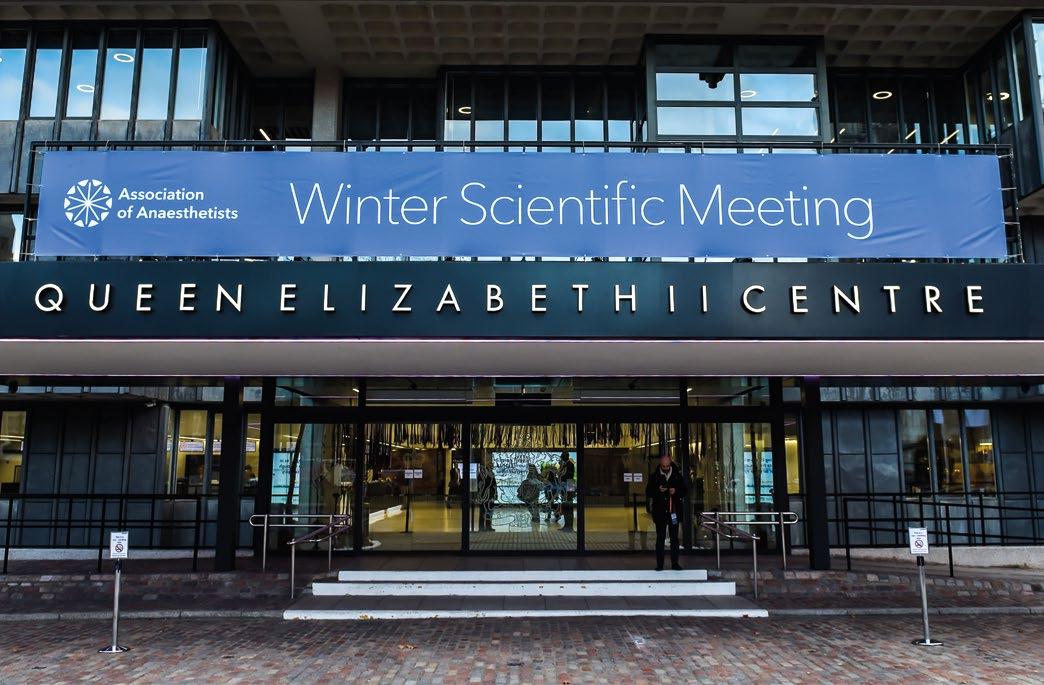
Thursday 11 - Friday 12 January 2024, QEII Centre, London
Don’t miss the winter social
Join us on the evening of the first day for a lively winter social of canapés, drinks, great entertainment and great company. If you’re attending WSM 2024 in person, you’re already on the guest list as entry to the social is already included in your ticket price.
Join in-person or online, the choice is yours!
Attending in person:
Book your study leave and register your place at www.anaesthetists.org/WSM2024
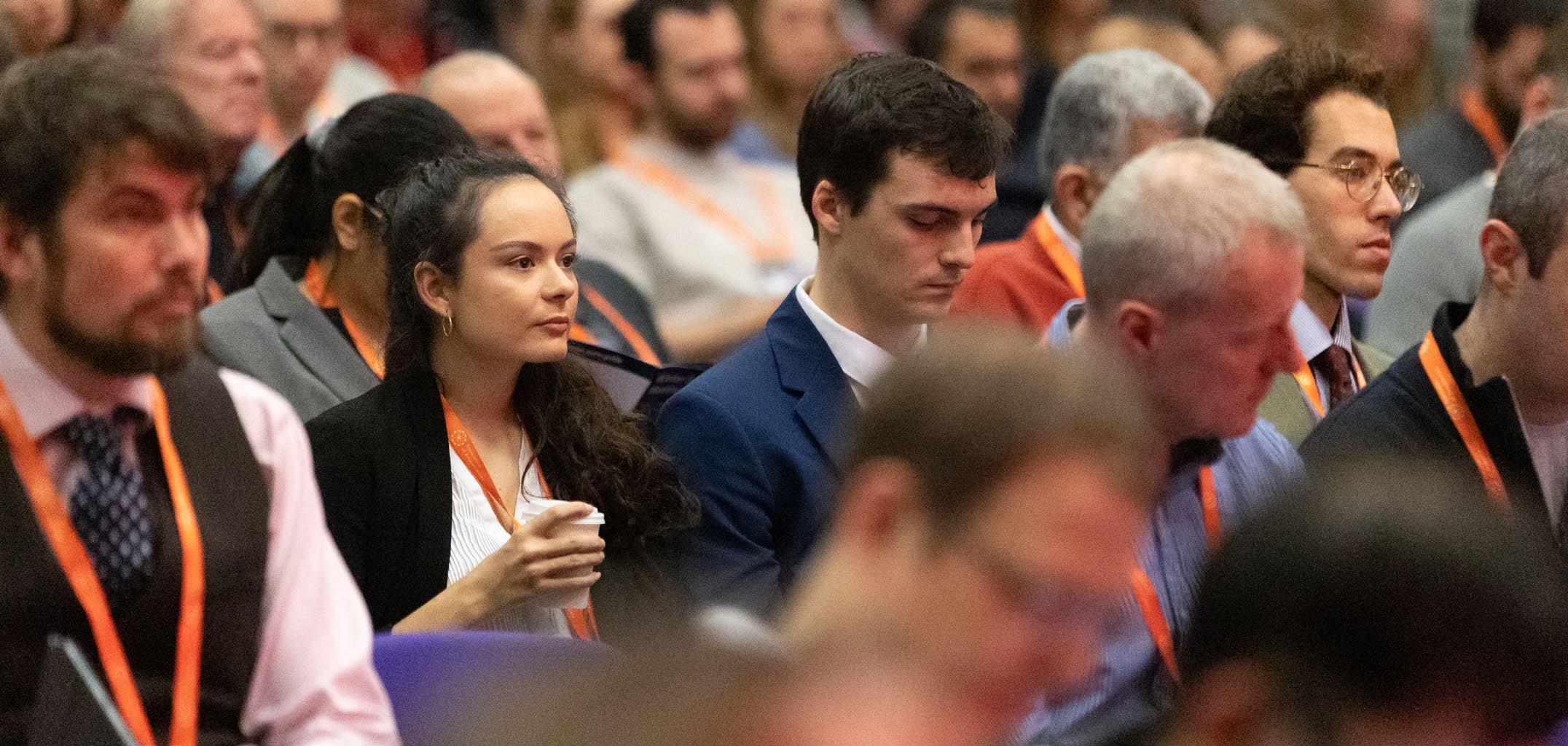
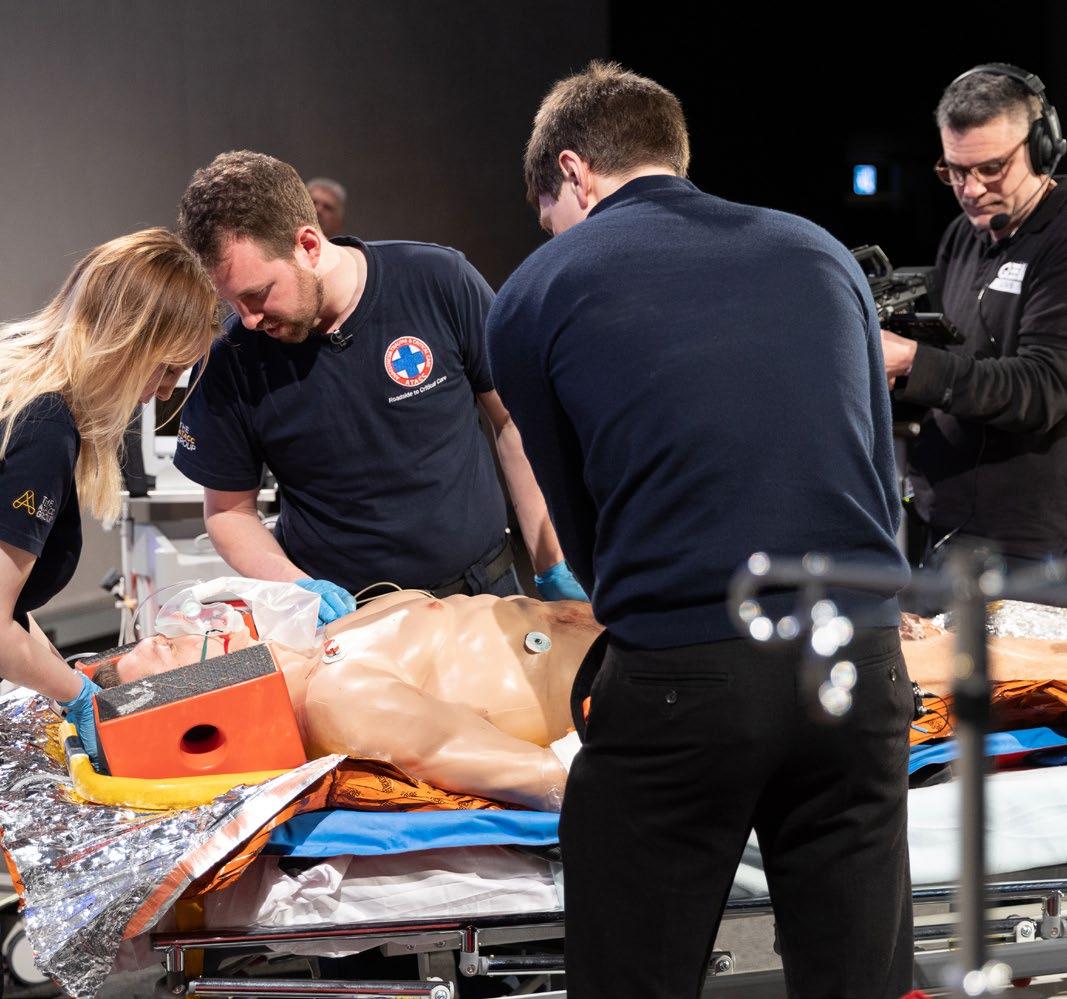
After the success of last year, WSM returns to delivering in-person anaesthesia education and CPD at the QEII Centre, Westminster, London. As an exciting hybrid conference you can also join in online from the comfort of your home or workplace, from anywhere in the world.
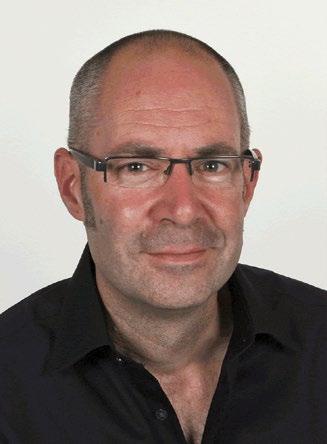
Confirmed Keynote speaker:
Prof Brendan McGrath Consultant in Anaesthesia & Intensive Care Medicine, Manchester
More to be announced.
• Access to all three learning streams on the day(s) of your attendance, including the exclusive third stream that will only be available to those attending in person; plus receive recordings to watch back later.
• Access to the industry exhibition and sponsored symposia.

• Hot lunch and refreshments on the day(s) of attendance and the social event on Thursday evening, all included in your ticket.
• Discounted registration fees for Association members.
Attending online:
• Join in live from the comfort of your home or workplace, anywhere in the world.
• You can also watch the conference content after the event (streams one and two only). So even if you can’t join live, you won’t miss out.
• Discounted registration fees for Association members.
Whether you join us in person or online, we look forward to welcoming you to WSM 2024. For more information and to book, please visit the Association website at www.anaesthetists.org/WSM2024
26 Anaesthesia News | October 2023 | Issue 435
This January don’t miss the opportunity to come together with friends and colleagues to learn, network and gain essential CPD at the Winter Scientific Meeting 2024 (WSM) in person or online.


Meeting 2024 Scan QR code for further information anaesthetists.org/WSM2024 Booking now! Special member booking rates available. Including exclusive early booking discounts. Anaesthesia News | October 2023 | Issue 435 27
Executive Editor vacancy for Anaesthesia Reports
Anaesthesia Reports is looking for a new Executive Editor. In this role you are the figurehead of the journal and responsible for raising its profile within the community and ensuring content meets the editorial strategies of the journal. The term of office is 2 years with opportunity for extension.
We’re seeking applicants with a broad knowledge of research, practice, and education across all areas of anaesthesia. Applicants should have:
• Excellent communication skills, both written and verbal
• A collaborative leadership style.
• A sincere commitment to inclusion, diversity, and equity.
• An understanding of different publishing models, including Open Access and have familiarity with social medial channels.
• An international network of colleagues to help us extend the reach of the journal.

• Editorial experience is welcomed, but not necessary; however, experience of authoring and reviewing for academic journals is essential.
As Executive Editor, your key responsibilities will include:
• Collaborating with Association of Anaesthetists, Wiley staff and the Editorial Board to drive the strategic direction of the journal.
• Implementing and applying the editorial policies of the journal.
• Maintaining a high level of quality and ethical standards throughout the peer review process.
• Handling the peer review of papers.
• Dealing with manuscripts and all other issues promptly and with appropriate communication with the Editorial Office, authors, reviewers, and other parties.
• Acting as the senior authority on all matters of editorial policy, decisions, and scope, acting with impartiality, confidentiality, and fairness.
• Selecting and inviting appropriately qualified scientists to serve as Editors and Section Editors, ensuring adequate subject representation and geographical spread.
• Representing the journal at meetings, conferences, and events, and deliver reports for committee meetings.
• Dealing with issues concerning research and publication misconduct according to the guidelines of the Committee on Publication Ethics (COPE).
Training in processes and the peer review system will be provided. An honoraria payment is available for this role, as well as expenses for Board Meetings and other events where the Association requests attendance.
Applicants should demonstrate a compelling strategic vision for the journal’s development and should submit along with their CV a 1-2 page plan outlining their short, medium and long-term goals for the journal. Please send your CV and strategic plan to Francesca Cockshull, Director, Publishing, Policy and Heritage: francescacockshull@anaesthetists.org.
Anaesthesia Reports is an official journal of the Association of Anaesthetists. It is international in scope and publishes original, peer-reviewed articles, reviews, case reports, media content, and associated papers on all aspects of anaesthesia, perioperative medicine, intensive care, and pain therapy. For more information, please check out the journal website: