CONEXPO Highlights Enhance Your Asphalt Season

• Duval welcomes youngsters
• Colorado funding example
• Silica plans made easy
• Front mount screeds
• Hill paving how-to
• Duval welcomes youngsters
• Colorado funding example
• Silica plans made easy
• Front mount screeds
• Hill paving how-to
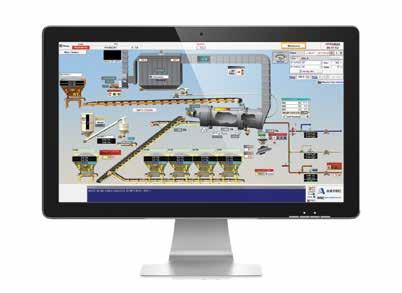
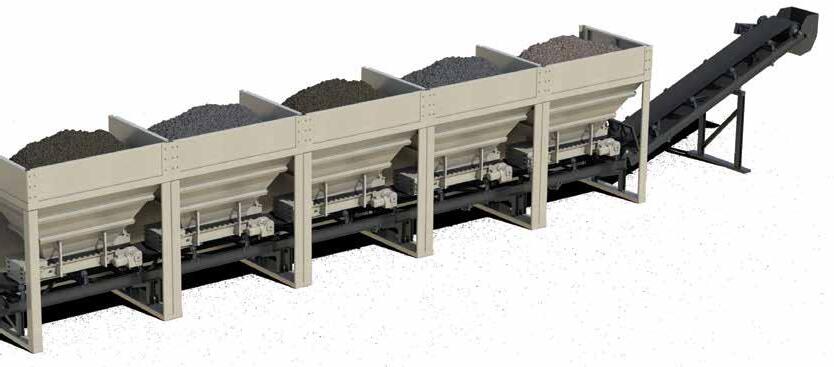
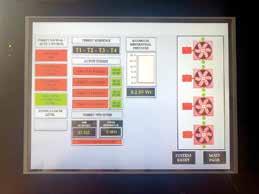
Astec paves the way for sustainable, innovative asphalt plants. The new IntelliPac Moisture System is a revolutionary solution that integrates seamlessly with Astec control systems. This provides unparalleled, real-time visibility into virgin aggregate moisture content. IntelliPac empowers operators to optimize mix design, minimize energy consumption, and reduce environmental impact. With Astec, you get superior asphalt production – better for the environment, better for your business.

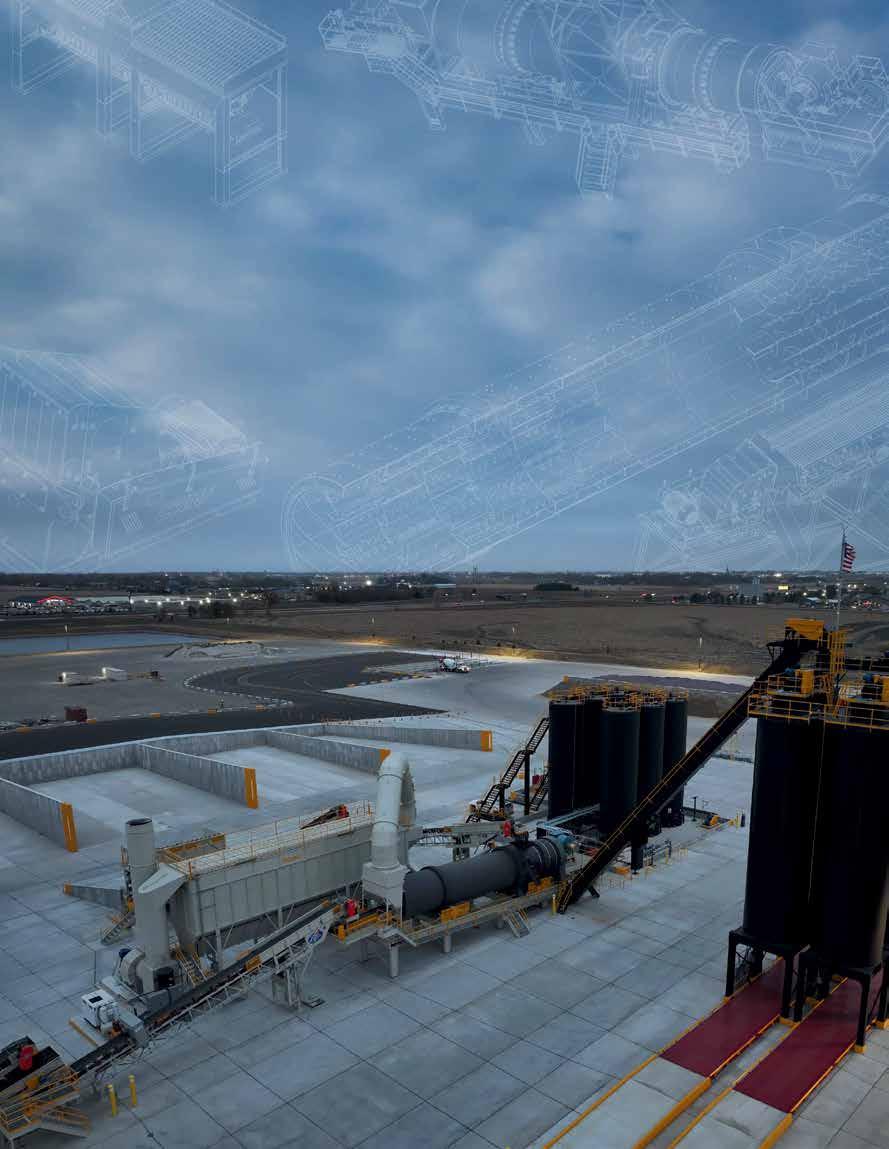

CWMF DELIVERS MORE THAN JUST ASPHALT PLANT EQUIPMENT. WE ENGINEER FULL-SCALE, CUSTOM SYSTEMS AND SOLUTIONS — BUILT FOR YOUR GOALS AND BACKED BY THE CREW WHO KNOWS EVERY BOLT AND WELD.


6 – Data Under Pressure By Sandy
Lender
8 – Create Your Silica Plan Online By Sandy Lender
10 – 10 Things That Change When You’re Paving on a Hill After decades of paving steep grades, Bill Stanley breaks down 10 rules that help crews plan, pave and compact asphalt safely on hills
By Bill Stanley
14 – Using the Screed Effectively: Part 3 When it’s best to use the front mount vibratory screeds By Benjamin Everett

– Prepare to Sell Your Asphalt Business, Part 2 By Sam Mielke
– Colorado Roadway

Indulge the Gen-Xer in me for a moment while I channel Bowie + Queen and regale you with this: “That’s the terror of knowing what this world is about, watching some good friends screaming ‘Let me out!’”
The asphalt industry is under pressure to prove all manner of data points. Prove we’ve put the proper silica mitigation devices and methods in place. Prove we’ve lowered emissions and fuel use at the plant. Prove we’ve lengthened the life of a pavement through exact density specs, VMA targets and IRIs. And more. To offer this proof to the various environmental groups and agencies demanding it, we’ve gathered data.
Clouds of data that AI systems are supposedly tracking.
During her opening remarks for the “Iron, Data, and Dust: The Real Future of Automation and the Workforce” panel discussion at CONEXPO-CON/AGG March 5, Procore Senior Director Sasha Reed shared results from her company’s “The Future State of Construction” report showing an alarming inefficiency in the industry. The construction industry is spending the equivalent of one day per week searching for data. “We’ve become less efficient because we have more to grapple with,” she told the audience.
Can you relate?
From the editor’s desk, I see that concept in action when I ask a source how a mix design performed behind the screed or what densities they were getting on the long joint and the response is a variation of, “We have a ton of data to sort through before we’ll know that.”
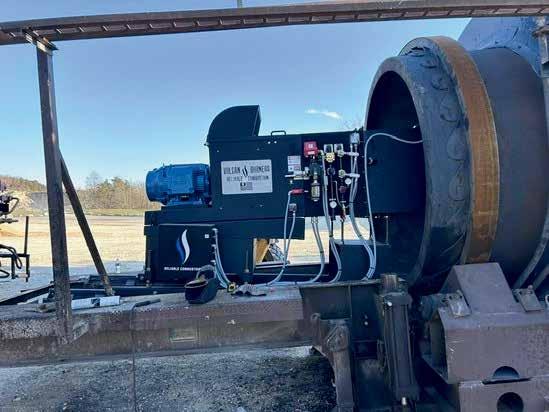
In this issue, we offer a look at an online method of creating a written silica exposure mitigation plan to help with at least a portion of the reporting (page 8). We also examine the Vortex™ burner, launched during the show, to assist industry with efficient combustion at the asphalt dryer. Because the ACCU-Fire™ system controls it, plant managers have access to its performance data (page 50). There are myriad examples of technology introduced during the recent tradeshow to help asphalt professionals gather and parse information, but are we noticing the trend toward data overwhelm
and how it might be influencing our workers for bad rather than good?
The United States Attorney’s Office Southern District of Ohio posted a press release in February stating, “Two asphalt companies have agreed to pay $30 million total to resolve False Claims Act allegations that they submitted fraudulent test results to the Ohio Department of Transportation (ODOT) for federally funded asphalt projects in Ohio.” We don’t need to drag anyone’s name through the mud here, but we do need to point out; those companies were winning paving awards during the total 13 years of questioned activity. Entities that relied on solid data were misled, undermining confidence in systems and structure.
I can’t state with certainty that the underlying cause for submitting already existing test results is an overwhelming amount of requested data. I suggest that pressure could be a factor.
Every state requires some level of testing and proof of good, solid metrics for payment, so the taxpayers are guaranteed the best quality of the low-bid system. But are those data-heavy requirements now setting contractors up for unnecessary anxiety? Or is that the new paradigm? Execute the project to exacting standards; then prove you’ve done so beyond a reasonable doubt with mountains of data the AIs have stored.
Or you don’t get paid.
My hope is systems like Astec’s Signal Connectivity Suite, XBE’s Agent XBE, Command Alkon’s Command Intelligence, Pavewise’s PavewisePro, and others to be discussed in our pages this summer, will help contractors not only identify best practices for improvement but will also help track the information and offer the provable data to agencies (and award committees) as it’s demanded. Again, the pressure is on to learn how to leverage these systems for their most efficient use, so we aren’t spending a day per week searching for the information.
602 W. Morrison, Box 6a Fayette, MO 65248 (660) 728-5007 • www.theasphaltpro.com
GROUP PUBLISHER
Chris Harrison chris@theasphaltpro.com
EDITOR
Sandy Lender sandy@theasphaltpro.com (239) 272-8613
DIGITAL EDITOR
Sarah Redohl sarah@theasphaltpro.com (573) 355-9775
MEDIA SALES
Cara Owings cara@theasphaltpro.com (660) 537-0778
ART DIRECTOR
Kristin Branscom
BUSINESS MANAGER
Susan Campbell (660) 728-5007
OPERATIONS
Natasha Nivens natasha@theasphaltpro.com
AsphaltPro is published 11 times per year. Writers expressing views in AsphaltPro Magazine or on the AsphaltPro website are professionals with sound, professional advice. Views expressed herein are not necessarily the same as the views of AsphaltPro, thus producers/contractors are still encouraged to use best practices when implementing new advice.
SUBSCRIPTION POLICY: Individual subscriptions are available without charge in the United States, Canada and Mexico to qualified individuals.
One year subscription to non-qualifying Individuals: United States $90, Canada and Mexico $125.00. For the international digital edition, visit theasphaltpro.com/subscribe/

Stay Safe, Sandy
Lender


BY SANDY LENDER
Contractors have needed to conduct a job hazard analysis for silica and then create a plan to mitigate that hazard since June 23, 2018, when CFR 1926.1153 went into full effect. That’s the Construction Silica Standard from the Occupational Safety and Health Administration (OSHA), which was first published on March 25, 2016.
A decade ago, AsphaltPro Magazine was sharing information and articles to assist contractors in navigating the standard, and you can find those around the website. The Center for Construction Research and Training (CPWR) also assembled a webinar titled “Understanding & Implementing the New Construction Silica Standard,” which is still available on YouTube.
Now CPWR has revised its website for silica information, offering an updated “Work Safely with Silica” website and exposure control planning tool. While the entire site has a new look and corrected links, the section we’ll focus on is the tab for creating your own silica mitigation plan. During a Feb. 26 webinar, the team from CPWR shared aspects of the updated tool, and encouraged users to re-register at the site to begin creating their written exposure control plans again.
First, the five main sections of the site are “Know the Hazard,” “Regulations & Requirements,” “Training & Other Resources,” “Frequently Asked Questions,” and “Control the Dust,” which is the tab where you create your plan.
The training and resources tab includes, but isn’t limited to, video and webinar links as well as two toolbox tips, two hazard alert cards, and other printable handouts. These assets are downloadable and shareable for free; they’ve been made available with tax dollars through NIOSH and are in the public domain.
The “Control the Dust" section of the site offers a button labeled “Create-A-Plan,” which takes you to a page to prepare a written exposure control plan for your individual project in three steps. In step one, the system offers you the option to register with the site. Registering is confidential and optional, and gives you the ability to save your work. Basically, you’re able to save each plan you develop to retrieve and modify the plans at a later date. Registering does not save repetitive information for populating future plans that you work on. We’ll share more on that in step three below.
During the webinar, CPWR’s Chris Cain stated clearly, “There is a real firewall between us and users in there.” She, and others in the meeting, explained that the system prevents CPWR from seeing or accessing information that users input. If you decide not to register, you can still save a downloadable pdf of your plan—something you can print out. But you won’t be able to save the plan for future access and modification.
Step one also gives you multiple “tasks” and multiple materials to select from to begin building your written exposure control plan. If
you’ll be cutting/sawing an existing asphalt pavement or transporting fractured sand, you’ll be able to select “asphalt” as your material and “cutting/sawing” or “frac sand transferring” as your task.
If your project is more complex than one task, you are able to choose multiple tasks and materials.
These selections automatically populate in step two, where you’ll select the method(s) you wish to use to control silica dust. The system will offer you a list of approved exposure control measures that are available to you for your tasks and materials, as well as professionals available to assist you, and so on. The system doesn’t suggest specific make and model of products but does list commercially available tools and methods that have been OSHA-approved.
THE SITE MAKES IT EASY TO REMEMBER TO INCLUDE ALL THE ELEMENTS OSHA WILL BE LOOKING FOR
In step three, the selections and information will be in place for you. This is the screen where you’ll input additional plan information such as:
• the name of the competent person for silica on a construction project,
• your procedures to restrict access to the premises,
• description of the training offered to the personnel performing the work,
• housekeeping measures used to limit employee exposure to respirable crystalline silica,
• what medical surveillance will be provided, and
• other considerations.
These fields will not automatically populate, even if you’ve registered with the site, but the team shared during the February webinar that you can duplicate existing plans and use the same information again if you’ve registered and saved your previous plans. Given the amount of information to be included in a written exposure control plan, it would make the job easier to access previous elements for copying, pasting and simple editing.
For contractors who have been painstakingly preparing written exposure control plans, this site offers a way to streamline the process, making it nearly impossible to “forget” an element that OSHA will be looking for in the plan. The CPWR team shared that OSHA has a link to the tool on its site and has accepted plans from the former iteration of the site. To try it out for yourself, visit silica-safe.org.
Hard-won know-how for the next generation
After decades of paving steep grades, Bill Stanley breaks down 10 rules that help crews plan, pave, and compact asphalt safely on hills.
BY BILL STANLEY
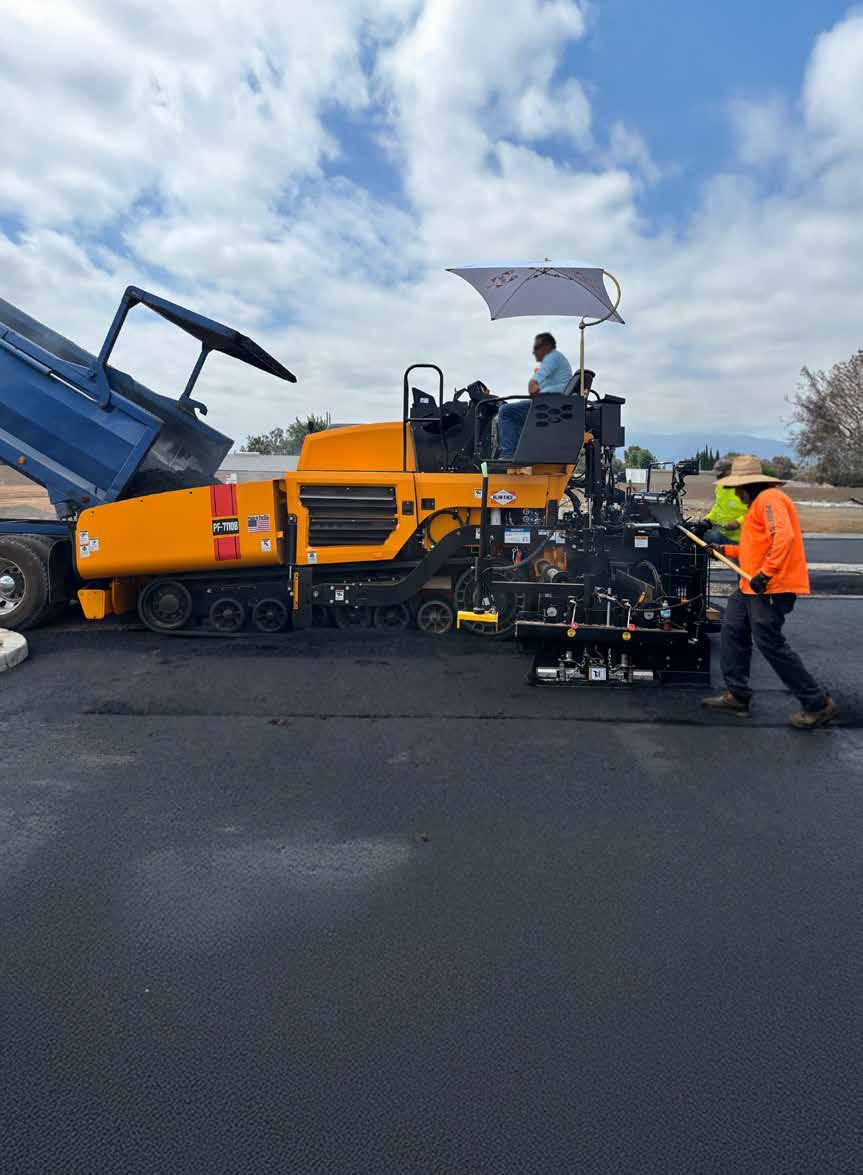
Paving on hills can be an adventure—and not always the fun kind. Once you get above about a 7-10% grade, especially if there’s a turn involved, everything changes. Equipment performs differently. Trucks behave differently. Rolling is different. Even what the finished pavement looks like is different from flat ground. We pave hills all the time where we’re at, and we’ve learned the hard way that you can’t treat them like a normal job. Safety, planning, mix choice, hauling, and traffic control all get amplified. If you don’t recognize that going in, a hill will find every weak spot in your operation fast. Here are 10 rules we follow to safely plan and execute a hill paving job.
When we quote a hill job, the very first conversation we have is about expectations. Paving up or down a hill is not the same as paving flat ground, and if you don’t explain that up front, you’re setting yourself up for problems later. Hills don’t roll the same. They don’t finish the same. And they don’t behave the same under equipment.
So we warn them early. We explain that hills may show more texture, more movement, or minor imperfections—and that’s not a failure. That’s the reality of gravity, traction, and safety all fighting each other.
On steep grades, mix selection matters more than people realize. We don’t want a soft, sandy mix on a hill. That kind of material is fine on flat driveways, but on a slope, it wants to push, shove, split, and move.
On hill jobs, we typically order a more aggressive, stony mix. It holds together better under the rollers, gives better traction, and stands up to the extra wear you get from vehicles climbing and braking on a slope. In snow country, that added texture also helps with winter traction, which some customers specifically ask for on steep hills.
On hills, we often recommend going thicker than we would on flat ground. It’s not about appearance—it’s about durability. The wear factor on a hill is much higher, so if a job is typically a 2-inch pave, we may recommend going heavier, closer to 3 inches.
Drainage is a big deal on hills. We all know what happens when water sits on the pavement, but if water moves across the pavement too fast for too long, it can cause stripping.
When we can, we’ll pitch the pavement left to right, right to left, or add a crown to get the water off quickly. On some jobs, we’ll even
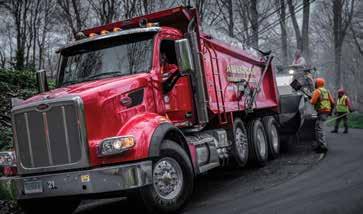
build what we call a whoop-de-doo—a slight bump or cross slope— to break the flow and kick the water off the pavement partway down the hill instead of letting it run all the way to the bottom.
We also try to avoid curbing on hills unless there are proper catch basins. Once water leaves the mat, it has to go somewhere, and if the edges aren’t protected with curb, shoulder material, or a swale, that runoff will erode the sides of the hill and undermine the pavement.
Before we ever start paving, we think about how we’re getting equipment onto the hill and how it’s going to behave once it’s there. With a paver, direction matters. If we’re paving downhill, we’ll drive the paver down the hill. We don’t back it down. If we’re paving uphill, we’ll back the paver up the hill, not drive it up. That keeps the weight where it belongs and helps maintain traction. Lastly, we only ever pave on hills with our tracked pavers.
Rollers also need to be thought through before they ever touch the mat. On steep grades, we want two-wheel-drive rollers, not single-drive machines that can spin easily. Getting equipment positioned safely and correctly at the start makes everything else on the job go smoother and safer.
When we’re paving on a hill, we bring our best equipment. Trucks, pavers, and rollers all need to be in top condition, especially brakes and traction. If a piece of equipment is compromised, it doesn’t go on a hill job, because on a steep grade, equipment problems turn into safety problems.
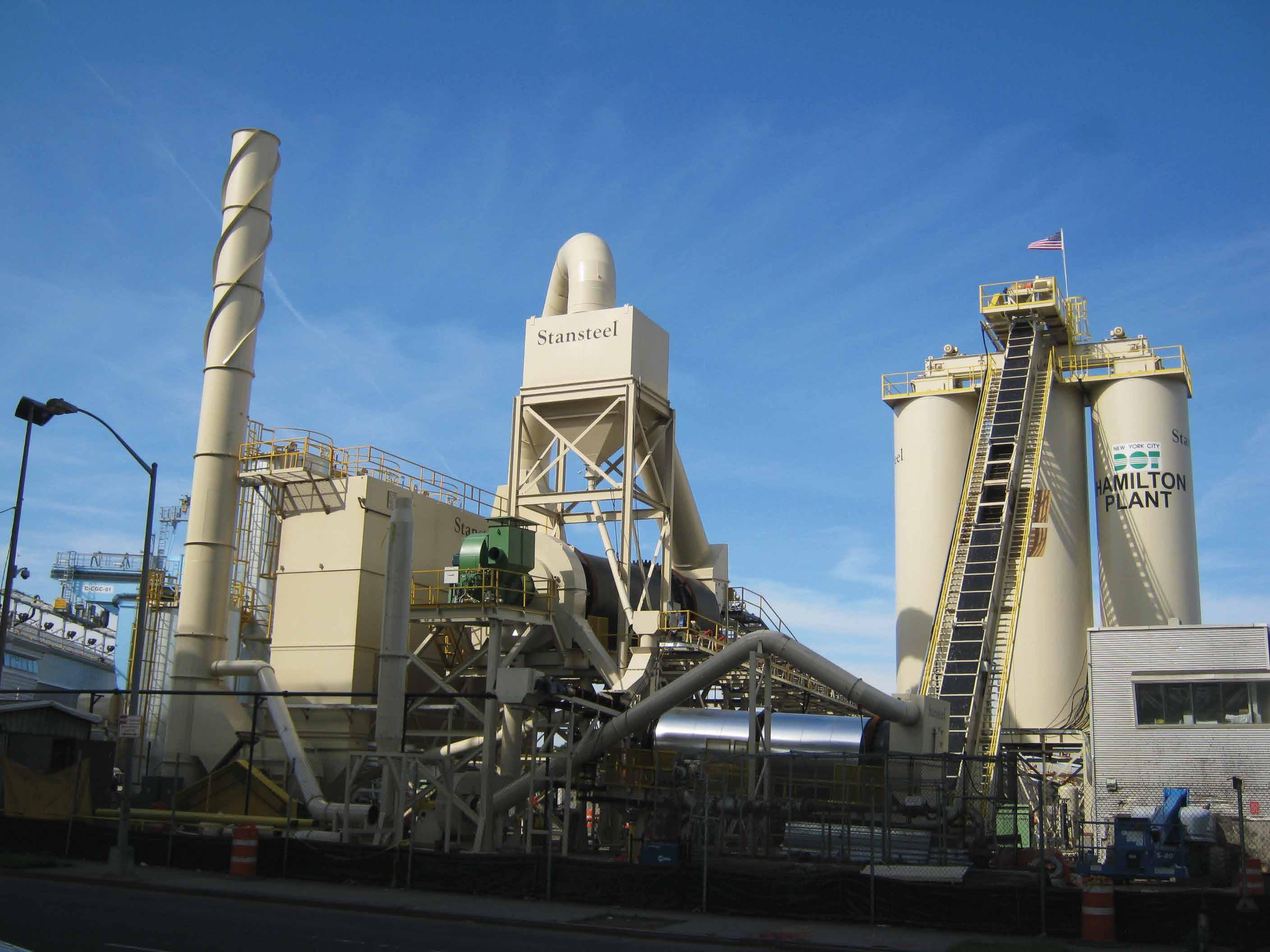
Engineering services
Plant service provider
Electronic technicians
Customer service representatives
Custom fabrication
Over 70,000 parts in stock
Emergency shipping
And more! Over 2,800
(located next to UPS world hub)
Used equipment inventory
Proven electronic plant controls
24/7 emergency service
Combustion/air system analysis
Obsolete parts solutions
Plant diagnosis and correction
Series of safety innovations
Reconditioned used equipment
Cost - saving solutions


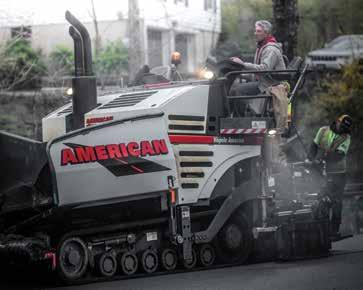
Hauling changes immediately when you’re on a hill, and the first concern is safety. When a truck is backing up or down a grade, braking, traction, and bed lift are all working against gravity. Backup alarms mean something different on a hill. When you hear one, everyone needs to be clear, because mistakes can get worse on a slope.
Truck selection and driver experience matter a lot here. We put our best drivers on the steepest parts of the job. If a driver is green and the hill is severe, we’ll stage the truck at the top and have one of our experienced drivers bring it down and unload. We’ll also stage trucks on flat ground and bring them up one at a time instead of stacking trucks on the hill.
Lastly, we don’t run full loads on hills. If a truck normally hauls around 22 tons, we’ll cut that back depending on the grade. Lighter loads are safer for backing, easier on brakes, and put less strain on the truck when the driver raises the bed.
What Goes Up… Must Come Down | Paving downhill brings its own set of problems, and one of the biggest is material control. When the paver is pointed downhill, asphalt wants to move. If you’re not careful during loading, material can roll out of the hopper and spill in front of the paver, getting under the tracks. On a steep grade, that can cause a machine to move when you don’t want it to, and that’s a dangerous situation.
Tack is important on any job, but on a hill you have to think about safety just as much as bond. You need enough tack to properly bond the lifts together, which is especially important on a slope where gravity is always working against you. At the same time, you don’t want a surface that’s so slick that a truck or the paver can lose traction. Trackless tack can help, but it has to be applied right. If it’s too heavy or still wet, a truck backing down a grade can slide when it hits the
brakes. Because of that, when we can, we’ll tack hours ahead of time or even the night before, so it’s set up and dry before trucks are on it.
You also have to remember that the asphalt itself can move on a hill. If the tack is too heavy and the mat is hot, the material can slide when you start rolling. It’s always a balance—enough tack to do its job without creating a safety issue.
Overloading the paver on a hill can cause it to spin, lose traction, or jerk the screed when you try to move. That’s why on steeper grades, we don’t overload the hopper. We’ll fill it partway and take a lot of small dumps instead of one big one. We also try to avoid loading the paver in the steepest part of the hill. Instead, we fill lower on the grade and then pull through the steep section before the next dump.
Whether we’re paving on flat ground or a hill, we never want the truck bumping the paver. On a hill, the truck will stop close, but it will stop a little farther away than it normally would, just in case it can’t stop as quickly on the grade. Just like any other job, the paver will drive into the truck. But unlike any other job, the paver does not (and probably could not) push the truck.
On hill jobs, having a dump man helps a lot. Someone watching the dump, flagging the driver, and guiding how close to get, when to stop, and how much to raise the bed keeps everything controlled and prevents problems before they start.
On steep hills, we don’t try to pave full width. Opening the screed all the way and loading it up with material is a good way to get stuck. The wider you go and the more material you carry, the harder it is for the paver to pull. We’ll narrow it up, even if it means making an extra pass, because less material on the screed and less weight in the machine gives you a much better chance of climbing without losing traction.
Rolling on a hill takes a quality operator. Going up a hill, a roller can spin and tear the asphalt. Going down a hill, it can push it. Because of that, the first thing we do on steep grades is go with one of our lighter rollers. Temperature matters more on hills, too. If the asphalt is too hot, it makes both of those problems more likely, uphill or downhill. Because of that, we’ll often let the mat cool 10 to 15 degrees more than we normally would before rolling. We also don’t let rollers get nearly as close to the screed when rolling downhill, for obvious reasons. Sometimes, we’ll even take the screed operators off the screed. There’s no uniform rolling pattern for all sloped jobs. But one rule we follow is the roller will climb the hill on material that’s already been rolled and make new passes coming back down. That way, every time the roller goes uphill, it’s on asphalt that’s already been compacted, which helps reduce spinning and damage to the mat.
On a hill, sightlines are shorter, cars come over crests or around curves faster than you expect, and drivers don’t always see what’s hap-
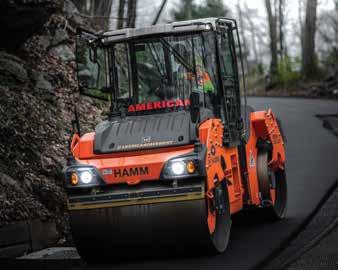
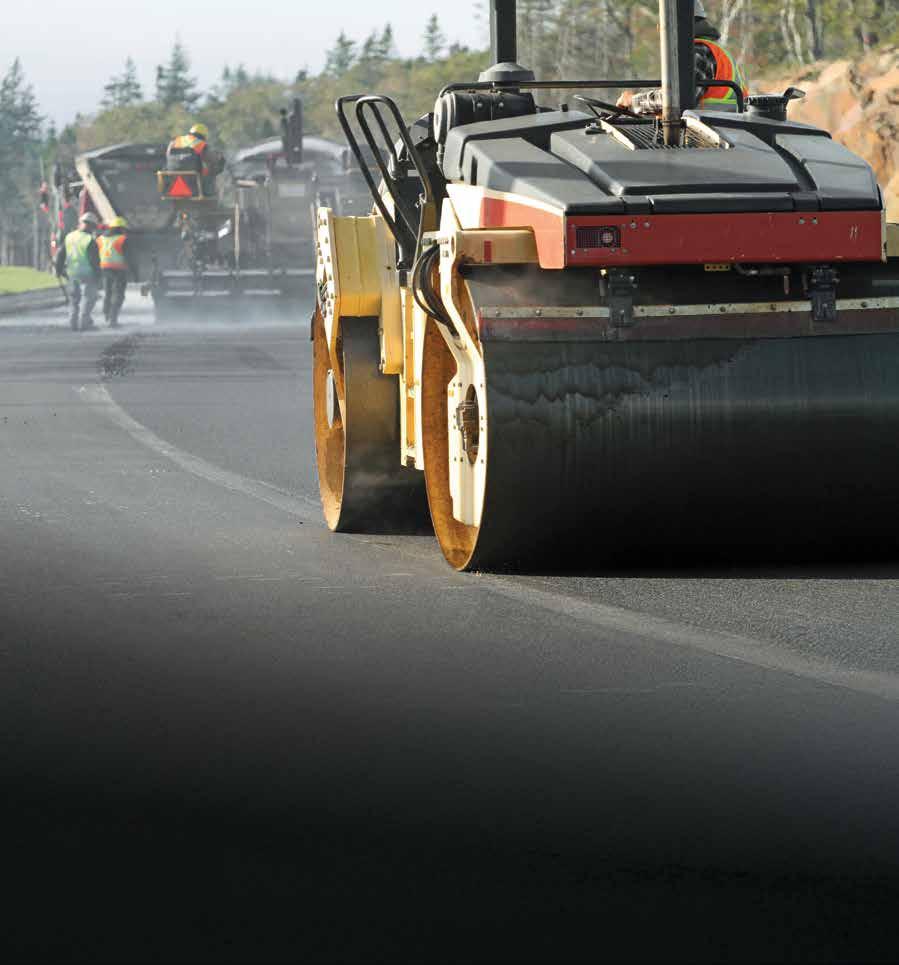
A roller operator begins compaction on a freshly placed mat along a steep roadway. On hills, crews typically start with lighter rollers and allow the mat to cool slightly to reduce the risk of pushing or tearing the asphalt.
pening until they’re right on top of the job. This makes flagging and traffic control even more critical.
On steeper hill jobs, we’ll shut traffic down while trucks are on the hill. There’s no safe way to have a truck backing on a grade and cars trying to get by at the same time. We’re not risking the crew, the driver, or the public to save a few minutes.
We also control what’s happening inside the work zone more tightly. We don’t have laborers standing near moving equipment, and nobody is walking between trucks, pavers, or rollers on a hill. When machines are moving on a slope, people are clear and out of the way.
In our neck of the woods, we sometimes pave what I like to call goat paths. On these really steep hills, we take a different approach. We might pave two lifts instead of one, paving the first lift downhill and the second lift uphill to get to the required thickness. Pulling uphill on asphalt reduces the amount of mix we’re loading into the paver, and it gives us better traction than we’d have trying to pave uphill on gravel or dirt.
Paving on a hill isn’t a different job. It’s the same job, just turned up. Everything is heightened. Trucks, equipment, rolling, traffic, and people all have less room for error. Things happen faster, and when something goes wrong, it goes wrong in a hurry.
The crews that do this work well are the ones that think ahead, slow themselves down mentally, and stay disciplined. You bring your best people, your best equipment, and you respect what gravity is doing to the job. When you do that, you can pave hills safely while building pavement that lasts.
Bill Stanley owns American Pavement Specialists, Danbury, Connecticut, with his wife, Colleen. Stanley has more than 50 years of experience in the asphalt industry.
it’s
BY BENJAMIN EVERETT
Starting with the February issue, we began a bit of a review on the three most common types of screeds we use in asphalt paving. In the second installment, we reviewed the U.S.-style rear mount design hydraulically extendable asphalt screed, and got into its primary area of expertise, which is mainline paving. This is also commonly known as the heavy highway class category, including interstates and airports.
Now let’s look in detail at the other common screed version that we see on most U.S. paving sites—the front mount (extenders are in front of the main screed unit) vibratory asphalt screed.
A front mount’s primary work type typically features a lot of difficult commercial and street paving work, such as tight quartered and variable width carparks, industrial sites along with complicated urban areas in major cities, especially those sites that have complex shapes and ever-changing dimensions.
This type of paving is very different from essentially straightforward mainline work. In this area, asphalt contractors have to quickly adapt “on the fly” to constant width adjustments, navigating around obstructions ranging from planters and light posts, wheelchair ramps and pedestrian refuges in private and commercial work, to abrupt carriageway width changes featuring long tapers into and out of lanes, intersections and roundabout approaches. To throw in another curve ball when you thought it couldn’t get any more challenging, many older urban roads are frequently highly crowned, meaning you often need to bend the main screed and dial in maximum extension + slope to maintain target thickness and avoid “running the screed aground” on high areas in the grade. This is very challenging work. Those who do this work every day understand exactly what I’m talking about. I grew up doing this type of commercial paving; it’s not easy, I assure you. It soon sorts out those who can walk the walk, not just talk the talk. This is
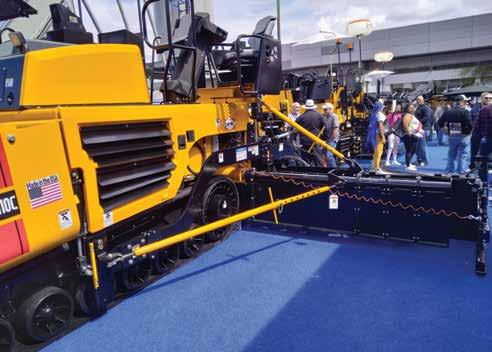
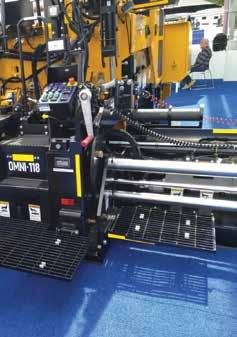
This is the Blaw-Knox OMNI 318 10- to 18-foot front mount vibratory screed on display. This screed has been proven since 1983 and, in my opinion, keeps getting better with each iteration. It features equal, 18-inch main and extender screed plate depths.
very labor intensive, precision work requiring much detailing.
It requires a unique blend of flexibility, quick reactions and adaptability from a paver screed. These are features a well-designed and properly balanced front mount screed delivers in bucket loads.
Generally speaking, commercial paving work such as carparks and private work, along with thin mill and inlay, or overlay paving in metropolitan areas is less about a billiard table smooth mat and density, and more about mat appearance, neat finishing against adjacent features such as curb and gutter and achieving specified mat thickness on a grade that is frequently variable. In this vocation, the front mount vibratory screed bests a heavy highway rear mount on most counts, because it requires a fundamentally different skill set than what the rear mount offers.
Usually, a U.S.-style front mount vibratory screed is strongly built and able to cope with quite a lot of torsion and stress imposed on it, both in the transverse plane through extreme crowning, and also the longitudinal, when of-
ten differing requirements on either side of the screed require each tow point to sometimes be at extreme opposites to one other. That’s a big ask, I believe. If you have undertaken this work, it’s pretty unique how bent out of shape you can make a good front mount become, and yet it takes it in stride and comes back every day asking for more.
In this application, they generally perform well at depths of 1.5 to 4 inches thick. Most often the screed plate widths of both the main and extenders are not the same, and with one exception I know of, most front mounts can’t go double width as a rear mount usually can.
The reason for this is due to the design of a front mount, which gives it one of its key strengths.
Remember, I just stated that a particular advantage of a well-conceived front mount screed is its ability to comfortably manage constantly changing paving widths. This is due to the fact the extender depths (front to back dimension or length) are typically half that of the main screed, and sometimes only one-third of the main screed depth. Commonly, the depth
of front mount extenders is only in the range of 8.5 to 10 inches. Technically this is classed as a “strike off,” not a true screed plate.
The general industry rule of thumb for a screed plate is 12 inches or greater. There are currently only two front mount brands that offer this. One range is the Vogele VF 500 8-foot and VF 600 10-foot commercial front mount models, while the other is the BlawKnox OMNI 318 10-foot front mount. This is a unique design which I’ll delve into.
The narrow strike off extender plates both allow a front mount to carry a much smaller volume of mix in front of the main screed, and for them to be retracted on demand quite quickly. This feature is exceptionally desirable and a real advantage on variable width paving work.
Because of that, the front mount requires an open void or gap between the inner ends of each extender when the screed is fully retracted to its 8-foot or 10-foot basic width. This is so it can basically “store” all that mix that was being carried in front of the main screed at moderate to maximum paving widths. For example, if you were paving a typical lane width of say 12
feet wide, on an 8-foot front mount, this means each extender would typically be pushed out around 2 feet. Imagine you encounter a temporary lane width narrowing, such as a concrete pedestrian refuge that projects out into the lane, meaning you have to quickly reduce the width to say 9.5 feet. All of that material has to go somewhere when you retract the extenders in over half the distance they were out just a moment before. The front mount design provides the space for you to do this.
However, a rear mount’s ability (versus a front mount’s) to feed material out to wider widths soon becomes apparent, once you have each front mount extension pushed out 2 feet or more.
While a rear mount can manage up to twice its basic paving width without having to add bolt-on auger extensions, generally once you go wider than about 20 inches with a front mount type extender, it becomes harder to get material out to the end gate, and it’s better to install a set of 6- or 12-inch bolt-on auger extensions, provided the default minimum paving width you intend to do will allow for this.


Our dedicated employees provide solutions to filtration an fabrication challenges, including design recommendations.
We provide consistent quality in the manufacturing of dust collector bags and wet filtration products. We maintain a 100% inspection rate to ensure customer satisfaction.
We manufacture filters across the full spectrum of temperature and efficiency ranges.
Our staff works with customers to assist in innovative and creative applications.
We recognize the importance of having dust collector bags and filters. Immediate response to customer needs is our number one priority.
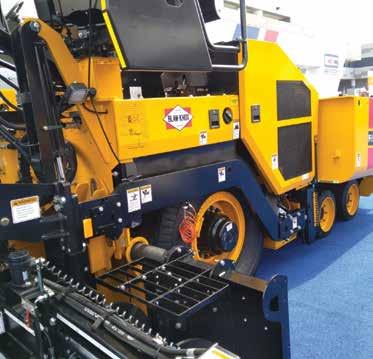
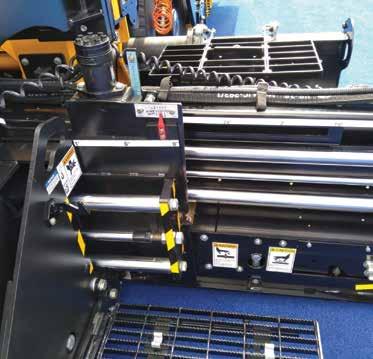
The Blaw-Knox UltiMat 160 front mount vibratory screed is the only front mount screed I’m aware of that can go double its basic width, making it unique.
Beware of a trap for the unwary. Because bolton auger extensions and guards are essentially a fixed width and can’t reduce below the length they are, if you find the need to drastically reduce your paving width on the fly to deal with some kind of obstruction, it can be easy to become preoccupied and lose sight of the imminent collision you might have between the outside of the fixed auger extensions and the telescopic screed extensions.
Commercial paving contractors frequently have to build a lot of takeoff pads by hand due to the work requiring many paving runs to start off against a wall or some other impediment on a building site. This is a labor intensive, repetitive step and the 16-inch depth of a rear mount screed’s plate forces you to build a much longer start off pad for your screed structure to sit on for each new run. Time is money, and commercial paving crews don’t enjoy having to exert more manual labor and time to construct longer take off pads than they need to, especially when a nimble commercial style front mount with its generally much narrower extender plate depths offers them an easier way. This is why front mounts are preferred in variable width and parking lot paving work.
There are some disadvantages to the front mount design to keep in mind. Having significantly shallower (front to rear dimension) extender screed plates versus that of the main screed depth, leads to a much different mat texture across the full width of the screed, with sometimes inconsistent mat densities at fully extended or even moderately extended paving widths. This is because with such a shallow footprint, the mix passing beneath the extenders only gets about half the amount of time to receive energy and weight into it, relative to the much deeper main screed plates.
Because of this, it is often necessary to dial in around ¼-inch positive extender angle of attack relative to the main screed. What I mean by this is the front edge or bullnose of the extenders needs to be at a steeper attitude than the main screed angle of attack in order to force feed more material under those short strike off plates to try and pack in more density and to match the mat texture behind the main.
These screeds require properly trained, skilled screed operators who understand the correct operation of the screeds they are in charge of, and how to make the necessary adjustments when required to maintain acceptable mat texture, density and a smooth mat free of transition lines.
I need to tell you that it isn’t as simple as “one and done” on a front mount. Different mat thicknesses require more or less angle of attack on the extenders, as do different types of mixes. If you are placing a 3/8-inch or smaller nominal maximum aggregate size (NMAS) carpark mix at around 1.5 inches one day, then the following day you need to place a ¾-inch NMAS FAA-spec asphalt at 3 inches thick, you are going to need to put in some work to fine tune it, because it won’t lay the same. Some can be a bit fussy to get the best out of them I’ve found. Nevertheless, there are a few really good front mount designs about.
I have found some model front mount screed designs to be not very well balanced due to their weight distribution and positioning “fore and aft” (and in the vertical plane) of their screed pivot point. This is the pin lower down on the screed drop arm, which allows the depth cranks to set the main screed initial angle of attack or pitch. By its very nature, the location and position of this pivot point affects the screed’s behavior. Sometimes, it can prove quite challenging to get a front mount to place a perfectly flawless mat, completely free of transition lines. It takes effort.
There are a number of very capable and popular U.S.-made front mounts out there that, such as Blaw-Knox’s time honored and unique double width 8- to 16-foot UltiMat
160 and UltiMat 16 models, plus the 10- to 20-foot UltiMat 200, Caterpillar’s 8-foot SE47 FM and 10-foot SE60 FM, and Carlson’s EZIV 08 and 10, that are all very well proven, solid platforms, and could all be considered as an industry standard, in my opinion, along with Vogele’s 10-foot VF 600 and 8-foot VF 500 models also.
As always, there can be an exception to the rule, and I’m going to touch on that one next.
That of course, is the legend of all proven heavy screed platforms, the Blaw-Knox OMNI 318 10-foot front mount. This over 40-year-old veteran is unlike anything else, because no other front mount offers similar features. It has equal depth (front to back), 18-inch main and extender screed plates (double a 9-inch strike-off), along with the original Blaw-Knox conceived pre-strike off plates that are located in front of the main screed. These function to carefully meter the amount of mix that is carried in front of the main screed, allowing operators to maintain just the right amount to float the screed, but not so much it prevents the extenders from being able to fully retract back in on demand.
I really like this type of screed; it imparts a particularly tight, ironed mat texture, similar to what you normally associate with a heavy highway class rear mount vibratory screed.
Now the previously highlighted front mount platforms from Blaw-Knox, Cat, Carlson/Astec and Vogele are all fairly heavy units, and rightfully fit into the heavy commercial/heavy highway line.
On the lighter, commercial side of it, for the contractors who specialize more in carparks, private driveways and more lightly trafficked secondary roads, there are pretty much five well known manufacturers who have become household names: LeeBoy (recently acquired by the FAYAT Group, which also owns Dynapac and Bomag), Weiler, Carlson/Astec, Dynapac and Mauldin.
This final installment has focused on the front mount vibratory hydraulically extendable screed, but don’t forget your other options. If you specialize in more than just heavy highway or commercial paving, there are plenty of folks out there who make a liv-
ing by covering all of those bases on a routine basis. While there is no hard and fast rule, and it is true that a rear mount can be used in commercial work and a proven, solid front mount platform easily delivers heavy highway, high spec FAA type work and even precision racetracks, I suggest the 70-30 rule as a guide.
If 70% or more of your work is straightforward, constant width mainline and heavy highway paving, probably one of the proven rear mount platforms we covered earlier would serve well.
Conversely, if nearly 3/4 of your primary work is difficult, variable width and commercial work, then I’d suggest looking closely at a well-respected front mount screed. It’ll be your best friend. Select the right screed for the right project with the right parameters, and you can’t go wrong.
Benjamin Everett is the owner of About Asphalt Ltd., and has worked in the asphalt industry for nearly four decades. For more information, contact him at bjeverett@ aboutasphalt.co.
BY KATE FISCHER
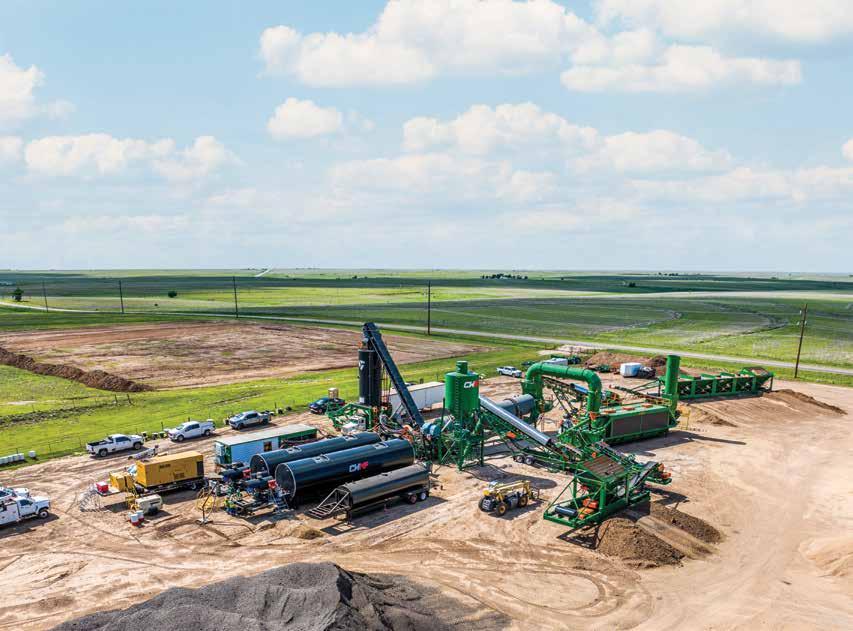
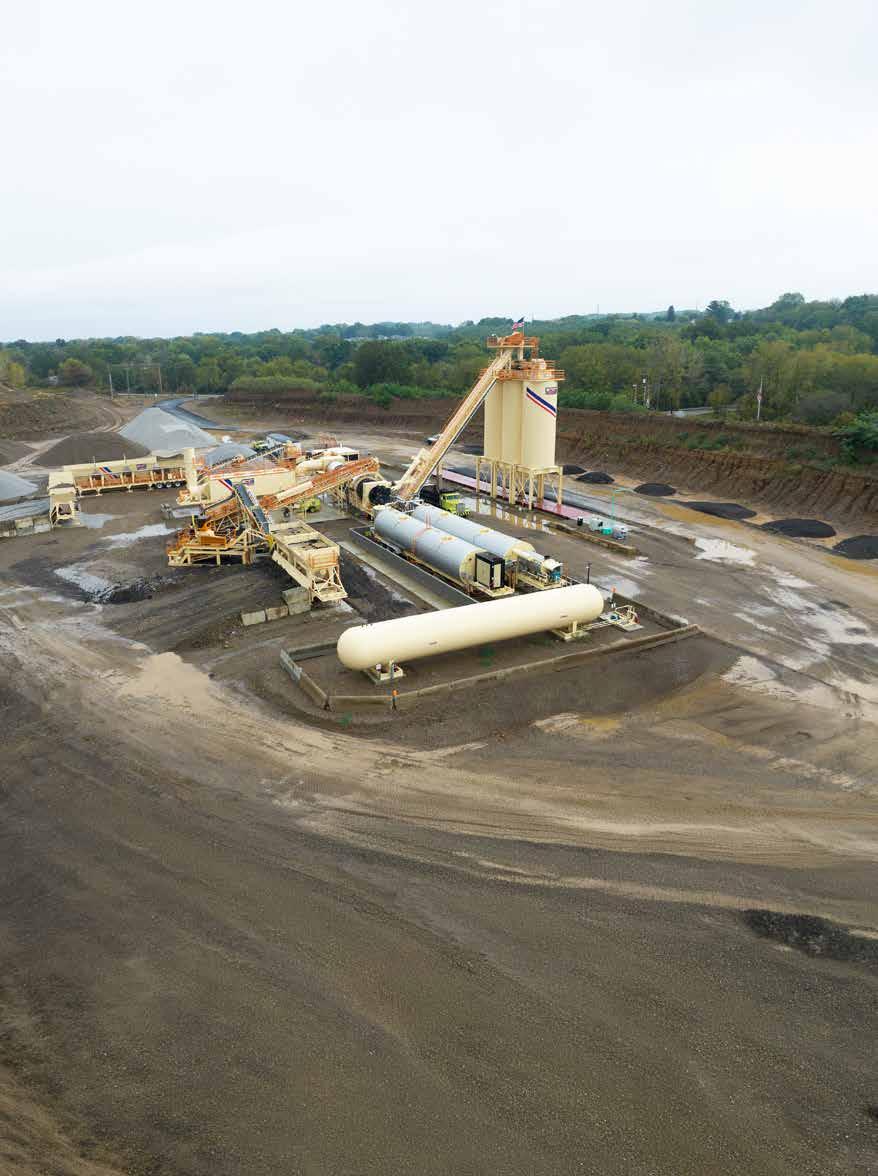
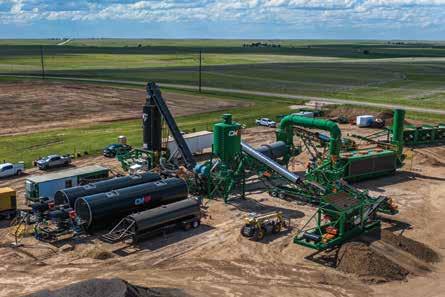
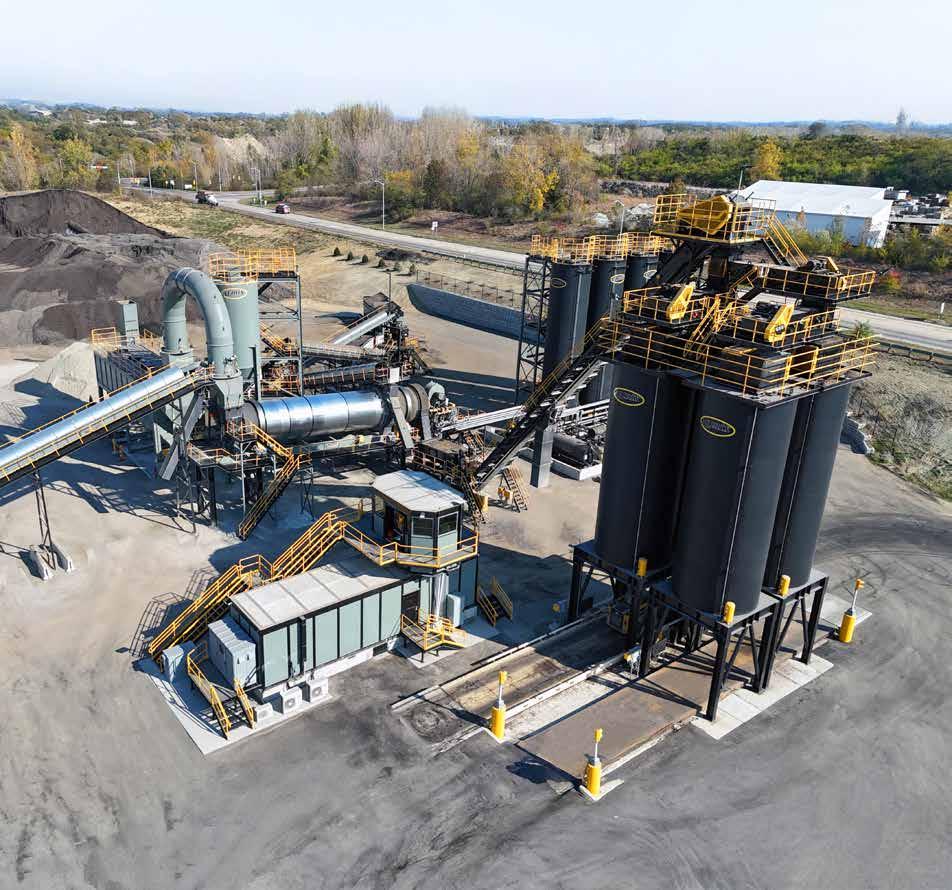
IIn 2024, Duininck commissioned a new 350-ton-per-hour (TPH) portable counterflow asphalt plant in Texas—their first of its kind. For most contractors, a new plant build is about efficiency, mobility, or production capacity. For Duininck, it was all of that—and a return to a partnership grounded in trust, flexibility, and shared values built over more than 30 years.
Editor’s Note: Duininck was founded in 1926 when three entrepreneurial brothers started a road construction business in Prinsburg, Minnesota. In keeping with AsphaltPro’s anniversary celebrations this year, we wish the Duininck team a Happy Centennial!
The relationship between Duininck and CWMF traces back to the early 1990s, when a problematic baghouse order from another vendor brought together Harris Duininck, second generation owner, and Loren Mick, founder of CWMF. Loren stepped in to help resolve the
issue, and sparked a working relationship built on service, accountability, and mutual respect.
Travis Mick, vice president at CWMF, remembers those early days clearly. “Harris and my dad were like oil and water at first—very different personalities—but somehow it worked. They ended up building a real friendship grounded in respect, even if they didn’t always agree.”
Even after Loren’s passing, the personal connection remained. “Harris stayed in touch and shared stories about the two of them working together,” Travis added. “That kind of legacy says a lot, not just about companies, but about people.”
Chris Duininck, president of Duininck Minnesota, has watched that trust carry forward. “What started between Harris and Loren evolved naturally as both companies grew,” Chris said. “As we matured, the partnership carried through to our teams at every level.”
In 1999, Duininck commissioned CWMF to build a complete asphalt plant from the ground up, which was an experience that set the tone for future collaboration.
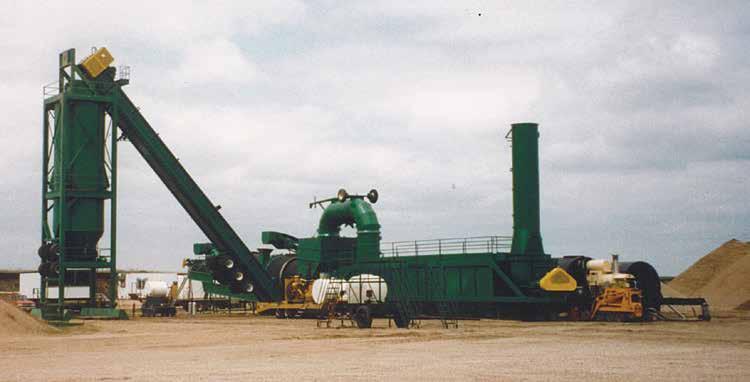
for decades.
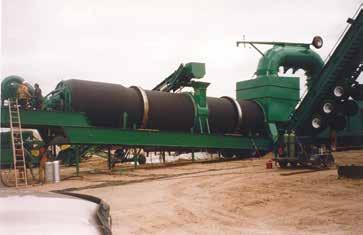
1985: Duininck launched its Texas division and 50 families relocated from Prinsburg, Minnesota 2024: The new portable counterflow plant was commissioned in Texas
Today, Duininck operates asphalt plants in both regions, shifting crews as seasons change and investing in equipment that supports large-scale, geographically dispersed projects. For Texas, flexibility was critical, and Duininck selected a 350-TPH portable counterflow plant to support its Texas operations in the early 2020s. It was commissioned in 2024. (See sidebar for details.)
“What stood out was that they were fair on pricing, and the product quality was exceptional,” Chris said. “Word spread internally, and our Texas operation eventually began using CWMF for components and parts.”
That confidence spanned decades. By 2024, when Duininck evaluated how to support growing demand in Texas, CWMF was a natural choice.
Duininck’s Texas roots go back to 1985, when challenging business conditions in Minnesota prompted expansion south. Fifty families relocated from Prinsburg, Minnesota, helping launch the Texas division, while Harris Duininck remained in Minnesota guiding diversification and growth at home.
“With a market defined by long haul distances and decentralized projects, mobility matters,” Chris explained. “A portable plant allows us to bring production closer to major highway and municipal work, reducing transport time, fuel use, and cost—without compromising quality.”
The 350-TPH counterflow system delivers the output required for major infrastructure projects while maintaining tight temperature control and efficient fuel use, which are key factors in Texas’ highheat paving environment.
“Our experience led us to partner with CWMF to build a plant suited to our needs,” Chris added. “The last complete plant we purchased was more than 20 years ago, and the timing was right to deploy additional resources in the market.”
After three decades, the partnership operates without complexity.
“A lot of our deals have been done on a handshake,” Chris said. “It all comes down to trust—trusting each other to get the job done and meet commitments.”
From CWMF’s perspective, that familiarity leads to better solutions. “When you know a customer this well, you understand what



matters most to them,” Travis said. “That allows us to recommend equipment and configurations that truly support how they work.”
Both companies point to people as the foundation of quality work.
“Our employees take pride in their workmanship and in representing the company well,” Chris said. “There’s real satisfaction in supporting a family business and recommending them across the industry with confidence.”
“That connection matters,” Travis added. “People work harder for people they trust, and that’s been true at every level of this partnership.”
CWMF, now a legacy brand within Astec, reinforces the long-term strength of customer relationships like Duininck’s, providing scale and stability behind the products and values that have earned trust over decades.
More than 30 years in, the Duininck–CWMF relationship isn’t just about equipment. It’s about consistency, accountability, and building for the long haul, one plant at a time.
Plant Type: 350 TPH Portable Counterflow Asphalt Plant
Location: Texas
Built By: CWMF
Commissioned: 2024
Duininck selected a 350-TPH portable asphalt plant to support Texas operations defined by long haul distances and decentralized job sites. Mobility allows production to move closer to large highway and municipal projects, reducing transport time, fuel consumption, and overall cost while maintaining consistent mix quality.
Counterflow technology was the preferred choice due to its ability to meet both performance and environmental expectations. By moving aggregates opposite the exhaust stream, the system is designed to maximize heat transfer, improve fuel efficiency, deliver tight temperature control, and reduce emissions, which management saw as critical advantages in high-temperature paving environments.
The system supports Duininck’s production target of 350 TPH, aligning with the scale of heavy civil and municipal work common across Texas. Its ability to integrate high volumes of recycled asphalt pavement (RAP) also supports sustainability goals while lowering material costs.
Minnesota
• Focus on freeze-thaw durability
• Softer binders (PG58-34)
• Higher recycled content
• Rounded glacial aggregates
• Emphasis on crack resistance and long-life pavement Texas
• Built for extreme heat and heavy truck traffic
• Stiffer binders (PG70-28/PG76-28)
• Angular limestone and granite aggregates
• Dense-graded structures for rut resistance
Both regions are expanding balanced mix design (BMD) programs, blending volumetric targets with performancebased testing to meet durability expectations across climates.
Duininck’s operational and sustainability strategy centers on smart material management—locating plants near job sites, sourcing aggregates locally, and reclaiming and recycling asphalt whenever possible. Recent projects, such as reprocessing materials at Willmar High School, have demonstrated both environmental benefits and meaningful cost savings.
YBY ASPHALTPRO STAFF
You can look anywhere online to see wrapups of CONEXPO-CON/AGG 2026 touting the final square footage and attendance, but let’s focus on your bottom line. The tradeshow could be called “overwhelming” with the abundance of new iron and technology to wade through to find the nuggets that will help the asphalt mix designer, producer, paver and maintenance contractor increase profits for the 2026 paving season and beyond. Let’s start with a business aspect of the show and work our way into the iron.
Most conversations included the topic of bringing workers to the industry and training them on the skills necessary for success. Reliable Asphalt Products, Inc., Shelbyville, Kentucky, gathered attendees for a special workforce development ceremony at its booth to celebrate Rogers Group, Inc. (RGI), Nashville, Tennessee, and its commitment to fostering an ongoing workforce of safe and engaged asphalt employees.
Reliable Asphalt Products worked with AsphaltPro Magazine, Fayette, Missouri, to honor the asphalt industry’s workers.
Brianna Overstreet was recognized for her contributions to RGI since joining in 2013 and her promotion to assistant corporate asphalt plants manager. Richard Warren was recognized for his service as asphalt plants manager for the southern half of Middle Tennessee and his pending retirement after 49 years of hard-earned, real-world knowledge.
Vice President of Rogers Group Nick DiBartolo took to the podium to validate
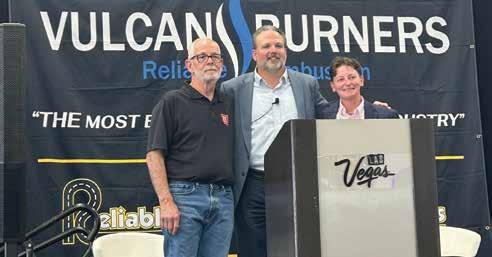
Vice President of Rogers Group Inc. (RGI) Nick DiBartolo, spoke during a workforce development ceremony March 4 to validate and honor the advancing and retiring members of our industry. Richard Warren (at left) was recognized for his service at RGI. He is set to retire in May 2026 after 49 years of hard-earned, real-world knowledge—knowledge that strengthens the industry and will continue to do so through the many individuals he has mentored. Brianna Overstreet (at right) was recognized for her contributions to RGI since joining in 2013. She has been promoted to assistant corporate asphalt plants manager.
and honor the advancing and retiring members of our industry, saying, “Rogers Group is welcoming a number of new faces for the 2026 construction season. We’re honored by the responsibility of bringing these individuals into the asphalt industry—of making them feel at home, making them feel safe, and making them feel part of one of the strongest road-building communities in the country. We hope those joining us this spring will look at this ceremony as a reflection of who we are—an organization committed to developing our people, celebrating their growth, and recognizing their contributions for years to come. On stage with us today is a powerful example of that commitment.”
In other areas of workforce development, the show offered more than 150 education sessions. If you filtered for “asphalt,” you could find 12 in the west hall classrooms alone. Bryce Wuori, CEO of Pavewise, Bismarck, North Dakota, alongside Foster Ladlee of BOMAG Americas, presented “Smarter Paving: Real-World Lessons in Intelligent Compaction and Emerging Technologies”

CEO & Founder of Gravis Robotics, Ryan Luke Johns (holding award) celebrates with his team on the Ground Breakers Stage. The company won the Contractors’ Choice Technology Next Level Impact category for its Gravis Rack platform, which adds 3D sensing, cameras, and onboard computing across a wide range of earthmoving equipment brands and sizes. In the cab, the system acts as a copilot, providing real-time cut/fill visibility, analytics, augmented-reality guidance, and people-detection. The same platform also enables autonomous excavation tasks such as trenching, bulk excavation, and truck loading, allowing operators to command and monitor one or more machines through a single portable tablet interface.
Since its introduction, the Weiler P385 has set the standard for commercial pavers. The P385C raises that standard.
Increase to 120 hp with the Cat® C3.6 Tier 4F/Stage V engine.
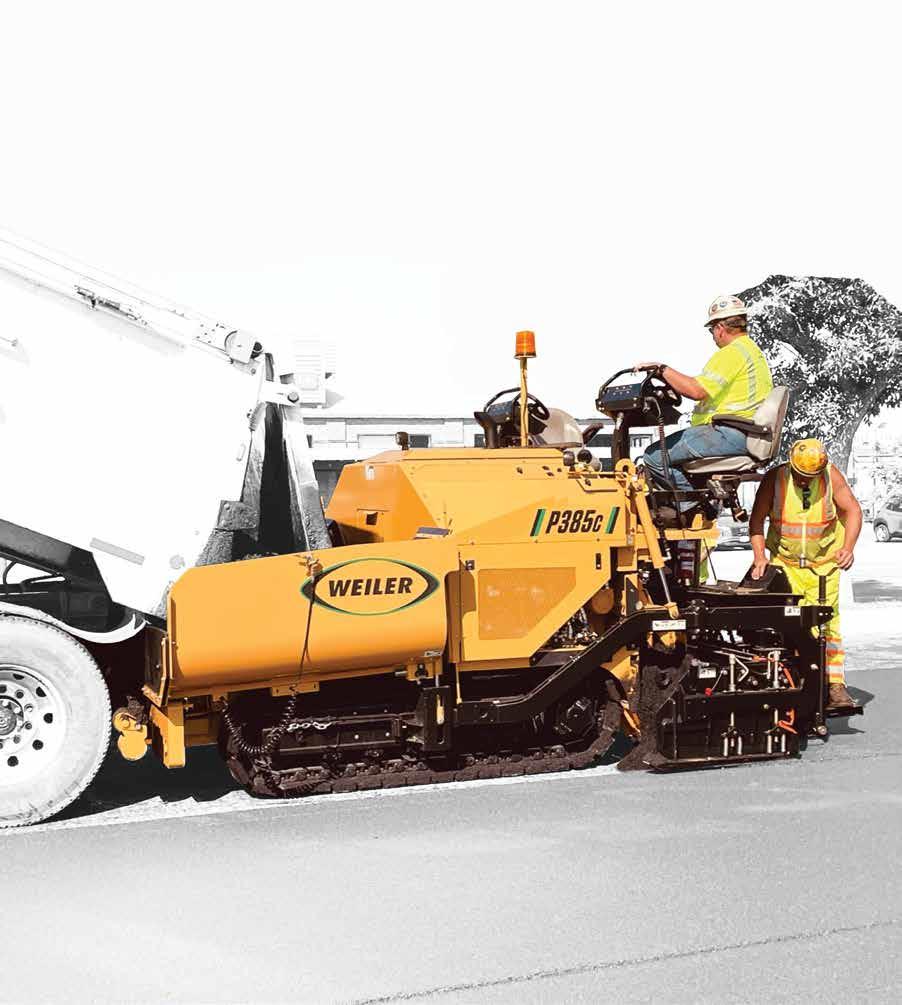
Variable speed and reversible conveyors and augers and a 25% increase in tunnel height provide optimal material output.
Modular conveyor drive and sealed chain case increase feeder system reliability and life.
Enhanced heat system performance with direct-drive hydraulic generator and elimination of GFCI breakers.
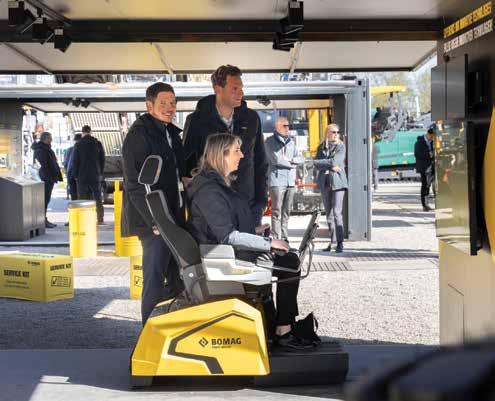
Attendees were able to experience remote operation of a BOMAG single drum roller from the company’s booth. The simulator allowed visitors to remotely operate a BOMAG BW 177 DH-5 PL roller located thousands of miles away in Ridgeway, South Carolina. The simulator design gives those operating the roller the same feeling as if they were sitting inside the BW 177’s cab. The seat, lever and controls are the same as inside the roller far away. Multiple screens provide the operators with full visibility of the area surrounding the roller, helping to increase operating safety. Working through an internet connection, all roller functions—forward/reverse, speed, turning, and vibration— were controlled from the simulator station.
wherein crowd questions and involvement about new technologies, specifications, and struggles with technology from a cost standpoint took about half of the session. Wuori also served as the technology expert during AsphaltPro’s Ask the Expert series in our grand lobby booth.
“The most memorable moment of the Ask the Expert session was my conversation with a QC manager about field data and its future,” Wuori said. “He expressed enthusiasm for how it could shape the industry's future, particularly by enabling the younger workforce to transition into the field.”
For business questions, AsphaltPro hosted bestselling author Ed Wallace. His two sold-out sessions, “Relational Leadership” and “Accelerating Business Relationships” were geared toward business relationships. He shared, “My main takeaway is that relationships are alive and well in the construction industry and while important, AI is not a substitute.”
For paving questions, AsphaltPro hosted consultants John Ball of Top Quality Paving
& Training, Manchester, New Hampshire, and Ben Everett of About Asphalt Ltd., New Zealand, with a guest appearance by Ray Eisner, formerly of Brannon Sand & Gravel. For asphalt material questions, expert Bob Kluttz of Asphalt Technology Consultant LLC was available at the booth as well.
All around the show’s 3 million square feet, training and education included the buzzword: “simulator.” At the Caterpillar stand in the festival lot, Simformotion, which is the team that designs and manufactures Cat® Simulators, met with AsphaltPro to discuss the current and future role of simulators in heavy equipment operator training, how customers feel the reality of the controls using the simulation training, and benchmarking for asphalt operators with training technology. You can see that interview on our YouTube channel.
Attendees could try out simulators in a variety of booths from Caterpillar to FAYAT to Volvo to CM Labs and others. The CM Labs booth included live demonstrations and the chance to participate in a skills-based exca-

vator challenge. The CM Labs simulators include curriculum within the Intellia Workforce Training System, which now includes the award-winning Intellia Single Drum Roller Simulator Training Pack.
In addition to expanded training, attendees were exposed to hundreds of new pieces of equipment and new technological advances for using and optimizing that equipment, as well as their businesses. Some of those new technologies were up for awards on site, and throughout the show, attendees voted for the Next Level Award winners. This year’s program culminated with a ceremony on the Ground Breaker’s Stage, sponsored by Sherwin Williams, in the west hall. Prior to the show, 237 companies submitted their equipment and technology offerings for judging. The panel of judges comprised experts from:
• Associated Builders and Contractors (ABC)
• Association of Equipment Management Professionals (AEMP)

• National Asphalt Pavement Association (NAPA)
• National Ready Mixed Concrete Association (NRMCA)
• National Stone Sand and Gravel Association (NSSGA)
The judges narrowed down the field to 20 finalists, which were highlighted throughout the show. This provided industry the Contractors’ Choice winners of Husco’s GenSteer™ system in the Equipment Next Level Power category and Gravis Robotics’ Gravis Rack platform in the Technology Next Level Impact category. Also in the technology realm, Command Alkon hosted a press conference highlighting how digital platforms and artificial intelligence (AI) are transforming operations across the heavy building materials industry. The briefing, led by Martin Willoughby, CEO, and Ranjeev Teelock, chief product officer, outlined the company’s vision for what it calls the “Era of Intelligent Operations.” Willoughby and Teelock shared how the industry is entering a generational shift driven by connected data, automation, and AI designed specifically for concrete, aggregate, and asphalt producers.
A highlight of the press conference was a preview of Command Intelligence, which is Command Alkon’s new agentic AI capability within the Command Cloud platform. Teelock introduced the capability as the company’s next step in bringing AI directly into operational decision-making for materials producers. Command Intelligence enables users to interact with operational data in a more intuitive and actionable way through the Command Intelligence Assistant.
The assistant allows teams to access key performance indicators and operational metrics to support faster and more informed business decisions, such as evaluating delivery priorities in the dispatch center or letting the assistant identify and adjust incorrectly priced tickets, and more. The goal is to simplify how users run their business while reducing reliance on tribal knowledge by providing consistent, data-driven insights.
Command Alkon celebrates its 50th anniversary this year. Today, the company serves producers across the globe with a team of more than 800 employees and a collective 5,000+ years of industry experience, supporting operations across the concrete, aggregates, and asphalt sectors.
Another agentic AI demonstrated at CONEXPO was the Agent XBE from XBE. The company refers to it as “the outcome-driven superworkforce.” The user in the dispatch office suggests to the AI what outcome he or she wants from a particular project, and the Agent XBE figures out how to get everything done for that outcome. Because it’s built to integrate with other servers and platforms, it offers ideas for managing all manner of projects at the plant, on the job and in the dispatch room.
In live demonstrations, experts explained the Agent XBE can be used in three main ways: • Live, such as prompting in real time;
• Scheduled, such as setting up a routine task to be performed at the end of the day; and
• Event-based.
Personnel showed you can ask the Agent XBE to suggest areas for improvement while tracking KPIs and activity. For example, if you recognize your company had 27 late starts in Q4 2025, you may wish to address this problem. By asking the Agent XBE to analyze the late starts, it can break down what was happening by plant, by job planner, by mix type at the plant, and so on. It can show you which combinations of elements most often resulted in real-world instances of late starts. Then it can offer suggestions for plant maintenance, stocking up on material/inventory, training of personnel, and so on. And speaking of stocking material, with inventory tracking and management, you can offer the agent as simple of a command as “keep the silos full” and it will monitor for purchase and delivery of material to execute that command.
While at the booth, AsphaltPro learned that the data Agent XBE filters and analyzes lets it return results as forward-thinking as suggestions on when to acquire a subcontractor rather than continue to hire out their services.
Other plant-centric technologies around show included the Signal Connectivity Suite from Astec Digital, which offers seamless communication and monitoring across all plant and mobile assets. This allows managers to stay connected, gain actionable insights, and optimize operations. There’s more detailed information on this system in this month’s product gallery.
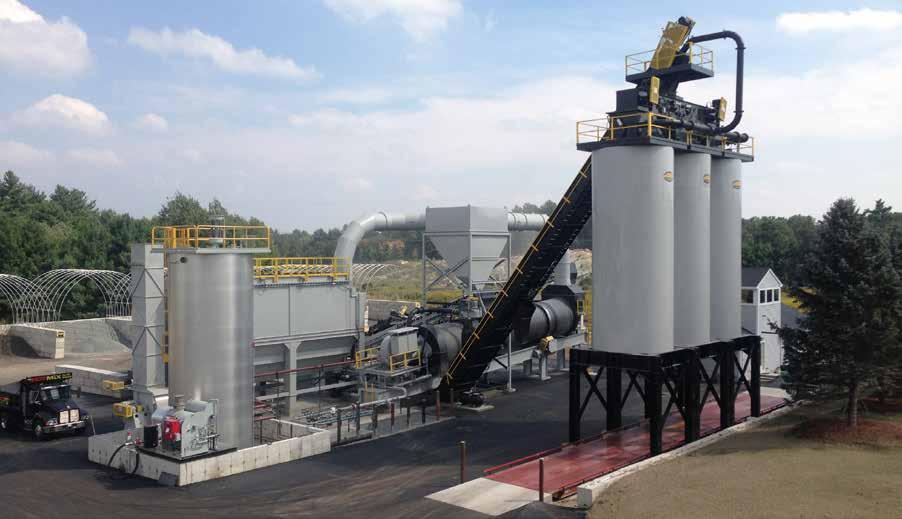
Your first stop in the FAYAT GROUP road lifecycle, ADM makes the plants that make the hot mix. When it comes to North American roadbuilding, FAYAT Group brands including ADM, BOMAG, Dynapac, LeeBoy, and Mecalac have you covered.

and recycles
to create
carbide grit, had a
attention to their booth in the north hall. In the Kenco Engineering booth,
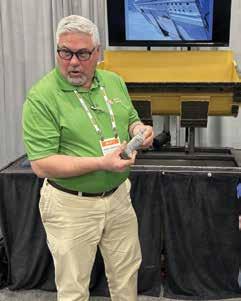
showed the crushed pieces and flakes of tungsten that go into the Tungsten Impregnated Carbide (TCI) wear strips his company uses to strengthen parts for the construction industry. Watch his explanation of the process and its importance to wear life, cost savings and even fuel savings at the AsphaltPro Magazine YouTube channel.

When a machine has a malfunction, the Jaltest device onboard sends the alert plus diagnostic information to headquarters. Rather than waiting for a mechanic to be dispatched to the scene, the assessment takes place via the Jaltest technology. If the system can make the repair and reset the machine, it does so. If the system can offer guidance to the operator, then the system is able to reset the machine at the conclusion of the repair. If the system can predict a potential breakdown and schedule routine or special maintenance ahead of that emergency, downtime can be prevented entirely.
Cojali offers communication and monitoring across mobile assets as well. Its Jaltest technology is more than telematics, offering not only predictive maintenance for hundreds of equipment types, but also offering advanced diagnostics to personnel. When a machine experiences a critical error, the Jaltest device onboard sends an alert plus diagnostic information to headquarters, letting assessment and action take place without delays.
The system is “visibility plus action” to save contractors time and headache. Given Cojali’s 30+ years in heavy-duty diagnostic and continued work with over 100,000 shops around the world, they are uniquely positioned to handle repair for a multitude of brands including Cat, John Deere, Komatsu, SANY, and more. While visiting the Cojali booth, AsphaltPro confirmed the availability of the technology for systems on HAMM rollers, Cat pavers, and other equipment relevant to the asphalt industry. We also found the intuitive platform not only easy to navigate but also comprehensive with detailed, color pictures of systems and components within the explanations of errors and codes.
These technologies not only support workers but also the iron. And the iron was on display everywhere you turned. We’ll be highlighting new paving and production equipment in tshe next few product gallery departments.
What’s great news for the construction industry is the number of machines going straight to the field. Road Builders out of Hawaii not only bought a package from Boom Light in the central hall, but also scooped up a new material transfer vehicle from Weiler. “They got the 2181,” Ball said. “It’s got new doors on the reservoir for conveyor 2 that slide out, and the cleanout on that is so much easier now. It’s a gamechanger.”
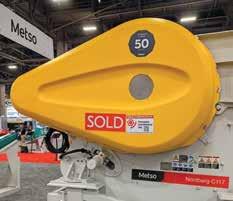
At the Eagle Crusher booth, multiple items were spoken for by the end of the show, with the 1400-CV crushing plant with a built-in front discharge conveyor, originally built for a dealer, reverting to a customer in the booth. A spokesperson for Sakai confirmed four rollers shipped from the show to their new homes: the TW354 combination roller, SW774 asphalt roller, SV204 soil compactor, and SV544 soil compactor. On Saturday morning, everywhere you looked, “sold” signs accompanied proudly displayed contractor logos on equipment, signifying a healthy CECA 2026.


BY MOLLY BERRY
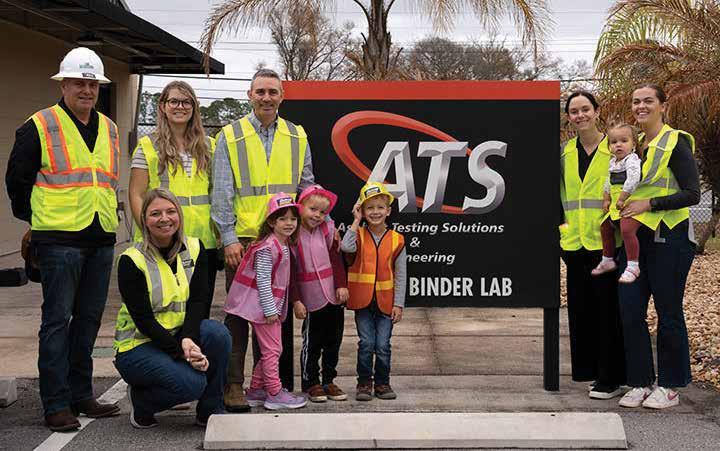
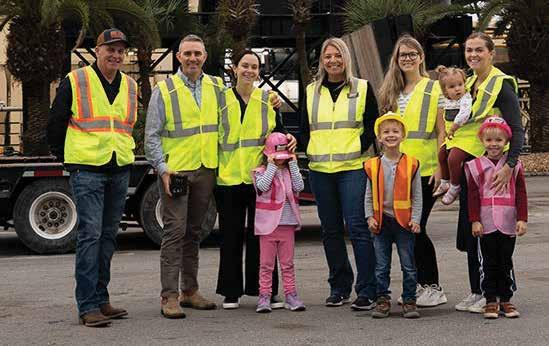
DDuval Asphalt Products, Inc. (Duval Asphalt) and Asphalt Testing Solutions & Engineering, LLC (ATS) recently welcomed three special guests to its asphalt plant and testing laboratories: two 4-year-olds and one 6-year-old with a big curiosity about heavy equipment, big trucks, and how asphalt is made.
What could have been a simple tour quickly became an unforgettable, handson learning experience, thanks to a team determined to make asphalt science come alive at a kindergarten level.
“A simple phone call because ‘my daughter loves big trucks and YouTube videos that teach her how things work’ transformed into a meticulously curated tour for a group of curious [kids],” said Jacy Fazio, mother of one of the special guests. “All my parent friends know the feeling of wanting to seize the day when the kids are out of school to create core memories. Duval Asphalt and ATS truly exceeded our expectations.”
To explain how asphalt mix is created, team members used Coco Krispie treats as a delicious and relatable demonstration. The cereal represented aggregate, while the melted marshmallow/butter mixture served as the binder, helping the children see how individual components combine to create something strong and cohesive.
Inside the ATS Binder Lab, technical testing was reimagined using Play-Doh. Binder lab technicians demonstrated how tests like Dynamic Shear Rheometer (DSR) and ductility work by manipulating and stretching the Play-Doh. They even added rubber ducks to the ductility bath for a little extra fun.
In the plant, operators showed the young visitors how asphalt is loaded into dump trucks, while quality control technicians introduced them to asphalt cores and pills and explained volumetric testing in simple, interactive ways.
“AS A GIRL-MOM AND AN ENGINEER, MY FAVORITE PART WAS ALL THE WOMEN EVERYWHERE WE TURNED—IN THE TESTING LABS, IN THE CONTROL TOWER, ETC. SO AWESOME TO SEE SO MANY FEMALES IN THE CONSTRUCTION INDUSTRY.”—JACY FAZIO
The learning continued in the mix design and performance testing labs, where the children created their own “asphalt mixes” by combining different sizes of aggregate. They also met Lucy, the EZ Street robot, and had the opportunity to sit in the driver’s seats of a sweeper and an asphalt paver, definitely a highlight of the day for the heavy equipment enthusiasts.
“We’re deeply grateful to have this business in our community,” Fazio said. “They went above and beyond in planning engaging activities for the kids to enjoy while they learned...We had the absolute best time watching our kids learn about construction and specifically asphalt. As a girl-mom and an engineer, my favorite part was all the women everywhere we turned—in the testing labs, in the control tower, etc. So awesome to see so many females in the construction industry.”
Each child left with Coco Krispie treats, Play-Doh, ATS rubber ducks, aggregates from their custom mix designs, asphalt pills, and toy CAT loader trucks to remember their day, but more importantly, they left with a firsthand look at the people, science, and innovation behind modern asphalt production.
“At Duval Asphalt and ATS, we believe education and industry pride start early,” said Molly Berry, Duval Asphalt & ATS Marketing Professional. “If we’ve sparked a lifelong interest in infrastructure, engineering, or construction, we consider that a success. We hope to see them back as part of our team in about 14 years.”
Duval Asphalt and ATS remain committed to community engagement, workforce development, and showcasing the professionalism, innovation, and opportunity within the asphalt industry…for visitors of all ages.

Will you work with a Girl Scout/ Boy Scout troop or summer school program over the next few months? It’s a great opportunity to show kids how “cool” a job in the asphalt industry can be. To help kids understand the nuances of asphalt construction, Duval Asphalt and ATS used materials children are familiar with. Here are some great ideas.
• Use Coco Krispie treats to demonstrate how asphalt mix is created. The cereal represents aggregate; the melted marshmallow and butter mix represents the binder. (Depending on the age of your audience, you can introduce the vocabulary word “viscosity.”)
• You can talk about ductility with Play-Doh.
• Do you have a partnership with a local Case, Deere or other equipment dealer who would donate plastic or die-cast equipment models? Use those to help demonstrate an aspect of the paving operation and send youngsters home with a piece of equipment they’ll cherish.
• Check out the Asphalt Lane children’s activity book AsphaltPro offers for an inexpensive community relations tool. It’s a great leave-behind item or goodiebag stuffer to help kids understand how an asphalt road gets made. What other ideas do you have for explaining aspects of our industry on a child’s level? Share them on our social media platforms to help everyone spread the good word about this amazing industry.




By Sarah Larson
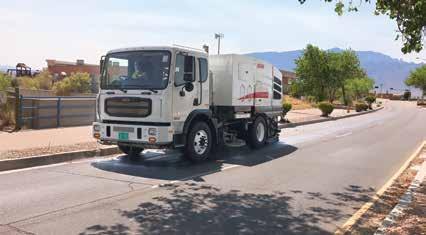
Street sweeping involves more than aesthetics. For contractors, spring is a busy start time for projects, but salt, debris and dust are stirred up from construction work. That makes street sweeping critical for maintaining a safe job site, and it also helps prevent tracking any debris out from work zones.
With an extensive dealer network, Elgin Sweeper is able to support contractors in keeping job sites clean and efficient. The team shared five ways street sweeping is vital in spring road construction cleanup.
1. Control dust. Not only is dust from worksites a nuisance, but it also pollutes the air. Street sweeping can help limit that using water spraying mechanisms that help minimize the dust.
2. Clear accumulated debris. By sweeping streets, particularly in the spring, it helps remove any buildup left over like snow melt and sand from the winter.
Beyond the seasonal needs, construction sites regularly have debris such as dirt, gravel, rocks, and other building materials. These materials can get tracked (or spilled) onto surrounding roadways. This not only hinders daily operations but also poses safety hazards for workers, residents and commuters. Regular sweeping prevents the accumulation of debris, ensuring a clean and safe working environment.
3. Help prevent flooding. If streets aren’t swept during peak rain season, flooding is significantly more likely to occur as sewers and drains clog with debris. This not only impacts homes and businesses, but construction sites and wildlife. Spring is a busy time for road construction, and that mixed with the amount of rain that accumulates, makes sweeping crucial to help prevent flooding.
4. Comply with regulations. There are both environmental and safety regulations that street sweeping can help accommodate. Sweeping the streets regularly can help prevent pollutants from exiting the construction site and therefore prevent fines from local authorities.
5. Save costs. Investing in street sweeping may seem like an additional expense, but in the long-term, it helps save money. A regular street sweeping schedule prevents debris and dust buildup in construction sites, which might otherwise cause wear and tear on heavy equipment and machinery at the site.
With an array of sweepers suited for construction sites and industrial applications from the Elgin Waterless Pelican for dust suppression to the Elgin Broom Bear, Elgin Sweeper supports contractors for the life of the sweeper.
For more information, visit ElginSweeper.com.

By Vince Aurilio
Editor’s Note: The National Asphalt Pavement Association (NAPA) recently released the 15th Annual Asphalt Pavement Industry Survey on Recycled Materials and Warm-Mix Asphalt Usage (IS-138) with results from the 2024 construction season showing over 96% of asphalt mix that’s reclaimed from old asphalt pavements is put back to use in new asphalt pavements, and the remaining 4% is used in other civil engineering applications. These stats and facts make Sripath Technologies’ information relevant for all sectors of the asphalt industry.
This article explores the financial incentives of incorporating reclaimed asphalt pavement (RAP) into asphalt mixtures and highlights how technologies like asphalt rejuvenators unlock even greater economic gains.
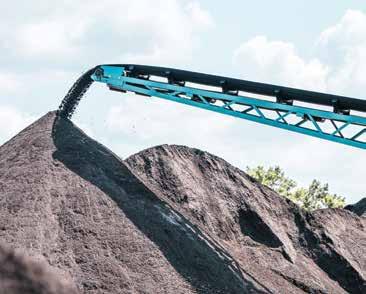
RAP refers to asphalt material recovered from road surfaces that have been milled or demolished during maintenance or reconstruction. The material consists of high-quality aggregates coated with aged asphalt binder, which is an asset that can be reused in new pavement mixes. Rather than sending these valuable resources to landfills, RAP can be processed and blended back into hot-mix asphalt (HMA) or warm-mix asphalt (WMA) production, replacing portions of virgin aggregates and bitumen.
The growing push toward sustainability has elevated RAP’s importance. By reusing existing materials, producers can reduce dependence on newly quarried stone and petroleum-based binders while simultaneously reducing greenhouse gas emissions and landfill use. However, because the binder in RAP has aged and stiffened through oxidation, it does not always perform identically to virgin binder. That’s where asphalt rejuvenators (or recycling agents), which are additives designed to restore some of the original flexibility and performance of aged binders, are essential.
RAP offers:
• Direct material cost savings
• Lower transportation and logistics costs
• Reduced disposal and landfill costs
Case Study: How ReLIXER® Enabled Cost Savings in High-RAP Mix
One of the most effective ways to unlock the economic benefits of RAP is with asphalt rejuvenators designed to restore balance to aged binder systems. A recent comparison between a conventional control mix and a high-RAP mix incorporating ReLIXER asphalt rejuvenator illustrated how rejuvenation can reduce overall mix costs while maintaining performance expectations.
In the control mix, RAP content was limited to approximately 15%, with the majority of the blend relying on virgin aggregate and virgin binder. Virgin binder alone accounted for roughly 5.5% of the total mix composition, contributing disproportionately to material costs. (This low-RAP, non-rejuvenated approach represents the traditional baseline for many producers but comes with higher exposure to raw material pricing risk.)
By contrast, the high-RAP mix incorporating ReLIXER increased RAP content to 40%, significantly displacing both virgin aggregate and virgin binder. In this formulation, virgin binder usage was reduced to approximately 3.8%, while ReLIXER was added at a very small dosage, about 0.1% of the total mix. Despite this minimal addition rate, the rejuvenator played a critical role in restoring workability and performance balance to the aged RAP binder, allowing higher recycled content without compromising mix design requirements.
From a cost perspective, the impact is clear. When indexed against the control mix (set at 1.00), the high-RAP mix with ReLIXER achieved a cost index of approximately 0.85, representing a meaningful reduction in overall material costs. These savings were driven primarily by reduced reliance on virgin binder and aggregate.
Importantly, the cost reduction was not achieved by sacrificing durability.
Rejuvenation enables producers to design high-RAP mixes that meet performance expectations while improving economic efficiency. Over time, this approach also supports longer-term value through improved resistance to premature cracking, better aging characteristics, and reduced maintenance demands, further extending the cost benefits beyond initial production.
In the evolving landscape of asphalt production, RAP stands out as a cost-effective and sustainable solution to rising material costs and environmental pressures.
By reducing reliance on virgin aggregates and bitumen, lowering transportation and disposal expenses, and delivering durable pavement performance, RAP helps producers and project owners stretch budgets further while meeting quality and sustainability goals. With proper mix design strategies including a rejuvenator to optimize performance, RAP use is more than a cost-saving tactic. It is a pathway toward smarter, greener infrastructure development and maintenance.
For more information, contact info@sripath.com































rior to 2024, Pat Giffin of Seminole Asphalt Paving, Inc., Sanford, Florida, hadn’t heard of the work the Construction Angels organization was doing. That changed when he attended the 4th Annual Dobbs Equipment Golf Classic. Dobbs Equipment, LLC, headquartered in Riverview, Florida, is a supporter of Construction Angels, Inc., Palm Beach Gardens, Florida.
“It all started with me back in May 2024 when Dobbs Equipment invited our construction company to the golf tournament they were hosting in Orlando,” Giffin said. “After settling into my room, I noticed there was a pamphlet on Construction Angels. After reading the information, I realized this foundation helps families affected when a tragic death happens in our industry. This foundation has touched our hearts so immensely.”
Construction Angels is a 501(c)3 non-profit organization that provides immediate financial assistance and grief counseling to the children (19 years and younger) and spouse left behind when a construction worker is involved in an accidental work-related fatality. The organization offers construction scholarship opportunities to qualified applicants, and additional scholarships to surviving children of a fallen worker. These missions spoke to the heart of Giffin and Seminole Asphalt Paving’s Kenny Floyd.
Seminole Asphalt Paving is a full-service commercial asphalt paving company that serves the state of Florida and specializes in asphalt paving, asphalt repair, sealcoating and all types of pavement maintenance methods. Management is proud of their paving crews, ensuring they’re trained well. Management is also aware of the risk crew members face when they’re working alongside live traffic.
“For 42 years, I have been in this line of work,” Giffin said. “Thank God I have not had to witness any fatal accident myself, but I’ve heard of a lot of them. This is why Kenny Floyd and I think the Construction
By AsphaltPro Staff
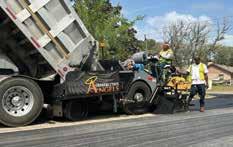
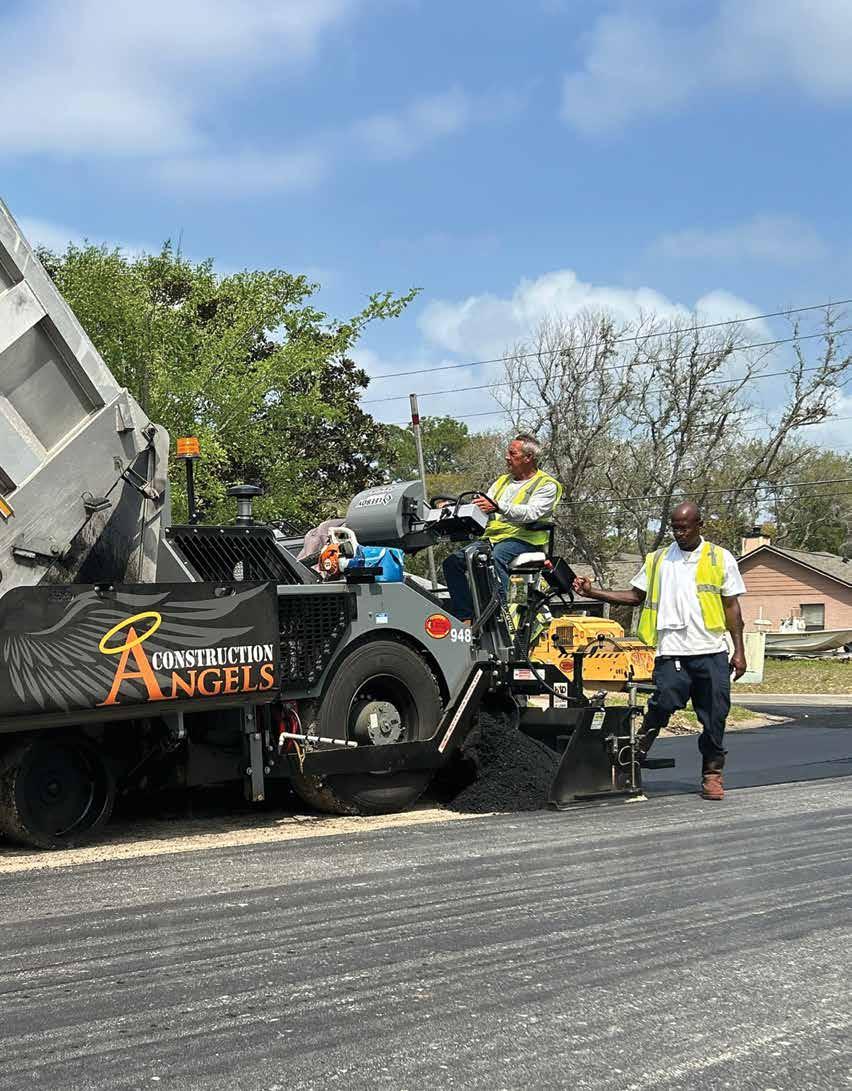
The latest community relations icon for Seminole Asphalt Paving is the customwrapped 6150 paver from LeeBoy with its detailing bringing awareness to Construction Angels. Here the paver is already deployed in the field, resurfacing Panama Rd. in Winter Springs, Florida. Photo courtesy of Construction Angels
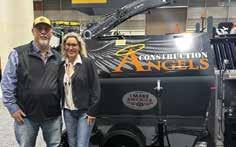
Seminole Asphalt’s Kenny Floyd and Construction Angels’ Kristi Ronyak posed with the latest 6150 paver, wrapped to bring awareness to the 501(c)3 and the work the organization does to provide timely financial assistance and grief counseling to the families of fallen workers in our industry.
Photo courtesy of Construction Angels

Angels organization is an awesome organization, helping families put the pieces back together, helping families in their time of need.”
Seminole Asphalt has a unique way of showing the community which worthy causes it supports and added Construction Angels to its stable of organizations. That unique method involves custom wrapping its equipment.
Starting with a 6150 asphalt paver purchased in 2023, the contractor elected to have a patriotic paving machine. The same model was purchased in 2024 and again in 2025. Each model included LeeBoy’s Legend HD screed, automatic temperature control, heated endgates and sloping extensions. And each had its custom detailing executed by ASR Graphics, Inc., Maiden, North Carolina, according to Brian Hall, territory manager for LeeBoy.
“As a longtime LeeBoy partner, Seminole Asphalt Paving has always taken an interest in themed pavers,” Hall explained. “From an American flag themed paver to last year’s Autism Awareness unit, Kenny Floyd and his crew have always looked for a way to raise awareness. After joining Dobbs Equipment at the Golf Classic supporting Construction Angels, next year’s choice was clear. Construction Angels’ contribution to our industry is massive and what a great way to highlight those efforts.”
Others in the Dobbs and LeeBoy family share that sentiment. Bryce Davis, vice president of sales for LeeBoy shared, “In our industry, every manufacturer and contractor has seen all kinds of training. And the biggest item for every job site that I’ve seen is on safety training. Every contractor is more focused on this today than ever before, for very good reasons. Having Construction Angels in this world today brings more attention to our industry in a very positive way. Everyone at LeeBoy wants to thank Construction Angels for what they stand for and the support they give our industry.”





From AsphaltPro Staff
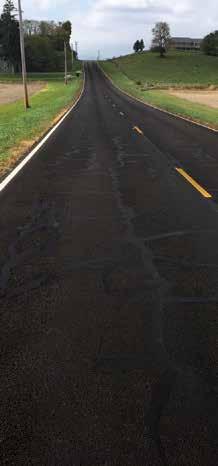
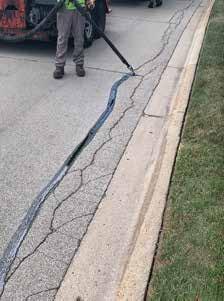
s pavement maintenance and preservation contractors dive into spring and summer work, a spattering of news items can help with decision-making in the field. We present a handful of updates you might have missed going into the hectic season.
In partnership with the Florida Pavement Preservation Council, the Florida LTAP Center is hosting a five-part series to take attendees from the basics of asset management to advanced roadway reclamation. By the time this issue hits the streets, two sessions remain:
• Thin Overlay, In-Place Recycling, and Reclamation, to be held May 13
• Interactive Q&A Panel Discussion, to be held June 3
Visit https://floridaltap.org/pavement-management-plan-5-partseries/ for information and free registration.
The SUPER 800-5 P-tier paver from Vögele features a wide hopper for commercial contractors. During CONEXPO-CON/AGG, Vögele product experts explained their mini sized pavers are ideal for narrow jobs, but customers had requested a more versatile hopper. The wide, foldable wings accommodate loading from haul trucks as well as skid steers.
The SUPER 800-5 P-tier tracked paver is the first Mini Class representative of the Dash 5 generation. Vögele equipped the small paver with the ErgoBasic 5 operating concept. Users have an unrestricted view to the front thanks to the new, double-folding material hopper.
The tracked paver features a 74-horsepower engine, paving widths from 4 feet, 7 inches up to 11 feet, 6 inches, and depths up to 8 inches with a laydown rate of up to 330 tons per hour.
For more information, visit https://www.wirtgen-group.com/ocs/enus/voegele/voegele-products-94-c/
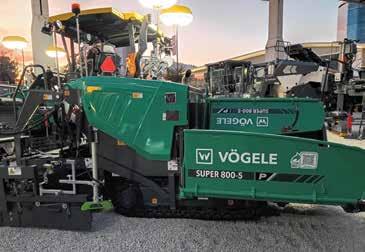
Cat Rentals℠ launched a brand refresh and updated digital tools during CONEXPO-CON/AGG 2026 for a more seamless experience for rental customers across the Cat® dealer network. The digital enhancements are designed to offer more streamlined communication with a dealer, and integration of telematics information to provide better visibility into machine data for enhanced rental fleet management.
Cat Rentals is now part of a connected experience ecosystem that integrates with cat.com and VisionLink™. The redesigned rental management experience will also integrate the new Cat AI Assistant later this year to further help customers easily navigate the rental process. Ultimately, Cat Rentals will help enable more rental opportunities and insights for customers, providing a smarter, consistent rental digital experience.
For more information, visit catrentals.com.
CAMSO Construction launched an all-new line of turf-friendly compact track loader tracks plus a new excavator chain-on rubber pad lineup for mini-excavators from 3T-15T during CONEXPO-CON/AGG. For compact track loaders, CAMSO Construction has announced an all-new Superior Durability (SD) track. Touting in-built forged metal bars and endless joint technology, the new SD tracks also sport a double-sided self-cleaning stepped lug design.
For more information, visit parent company, RPG Group www. rpggroup.com
Nature Coatings, Las Vegas, announced in March the launch of BioBlack AR™, an asphalt rejuvenator engineered to extend the duty cycle of pavement infrastructure. Designed for high-traffic environments—from municipal roadways to industrial logistics centers—BioBlack AR™ utilizes a proprietary penetrating formula that restores the flexibility of the asphalt binder. This performance-driven approach is
proven to extend the service life of pavement by 30% and reduce aggregate raveling by over 50%, according to the manufacturer.
“Our focus with BioBlack AR™ was to solve the biggest headache in pavement management: the high cost of frequent repairs,” said Jane Palmer, CEO of Nature Coatings. “By meeting the rigorous FAA P-632 standards, we are providing a product that performs under the most demanding conditions, ensuring safety through high skid resistance and durability that slashes long-term maintenance costs by up to 85%.”
For more information, visit https://www.naturecoatingsinc.com/asphalt
Holms Attachments, Hickory, North Carolina, and Energreen America, Aiken, South Carolina, announced in February a cooperation to provide U.S. dealers and end users with sweepers for the Energreen ILF self-propelled hydrostatic machines. The range of Energreen ILF self-propelled hydrostatic machines has been designed primarily for the professional care of large outdoor spaces—such as cleaning roadsides. The Holms angle sweepers follow surface slopes and irregularities in every position thanks to their unique, spring-loaded Self Adjusting Suspension system.
Alessandro Cazzin, CEO of Energreen America said, “We are happy to add the Holms product to our offering. The partnership supports our goal to be a complete supplier for the roadside maintenance customer.”
Crafco, which produces, promotes and supplies specialized preservation products to the pavement, roofing, waterproofing and athletic sur-


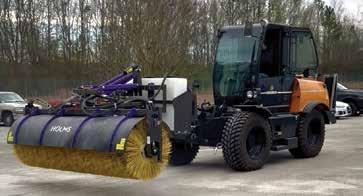
facing industries, is celebrating a 50th anniversary this year. According to the company’s website, “Crafco delivers confidence through innovation, quality, and value since 1976.”
Throughout those 50 years, the company has taken on other entities as part of its growth. For example, in late 2010, Crafco purchased the then-second largest sealant and mastic material manufacturer in the United States, Deery American Corporation. In 2003, Crafco opened an equipment assembly and sealant distribution warehouse in Breclav, Czech Republic, which operates under the name Crafco OS in Europe.
On Oct. 19, 2020, Crafco purchased the assets of Right/Pointe, LLC, located in DeKalb, Illinois, to enhance Crafco’s ability to better serve existing customers in the Midwestern United States.
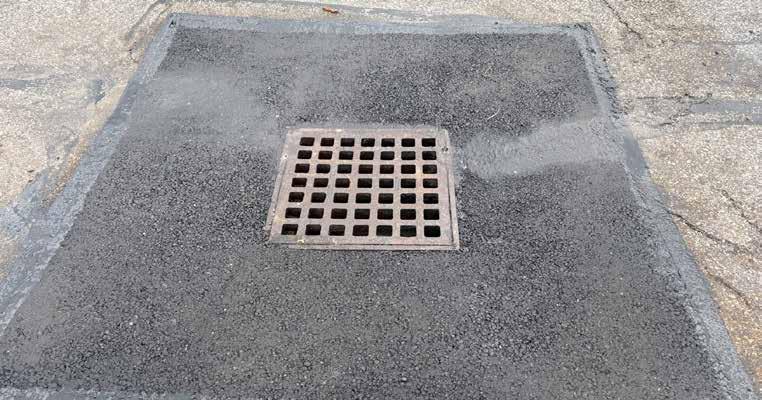
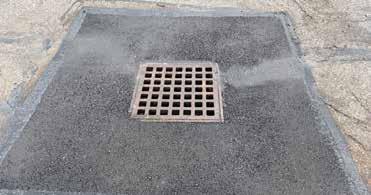

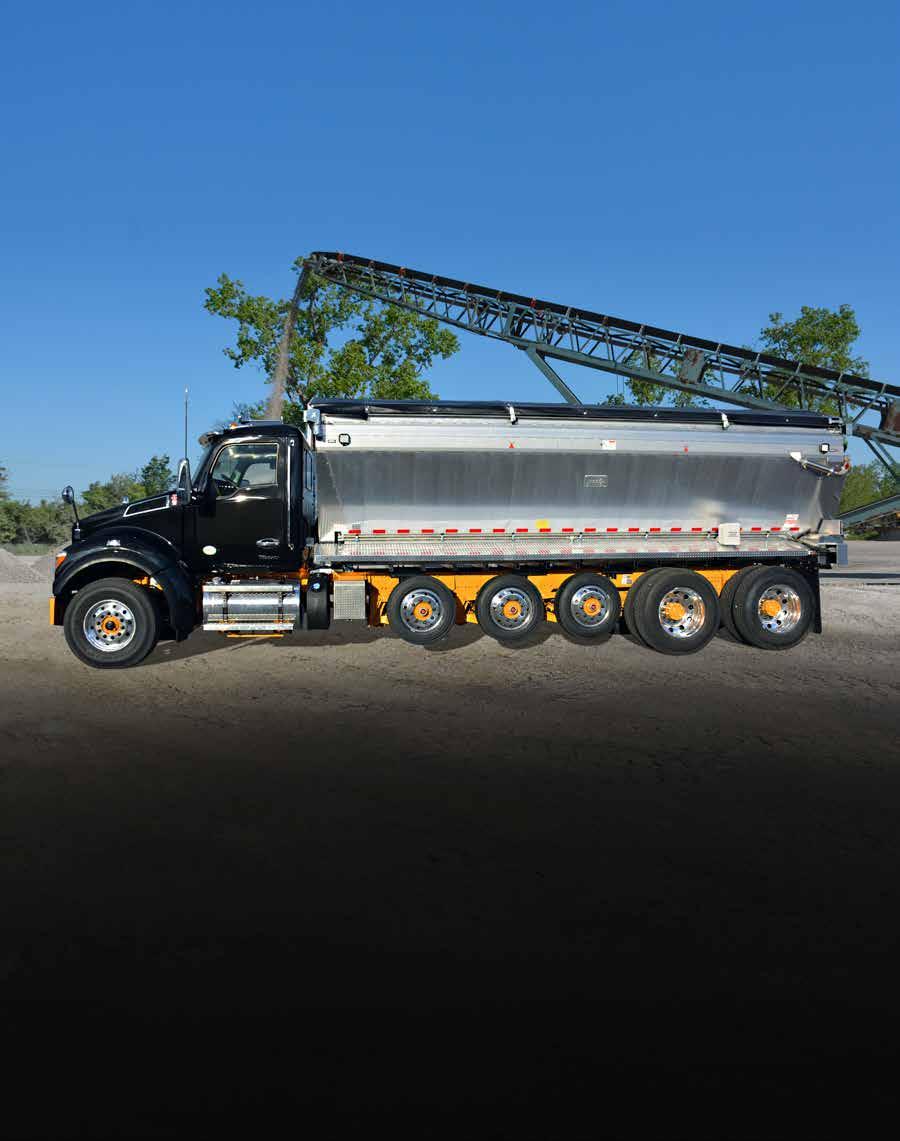
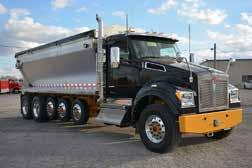
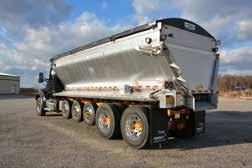

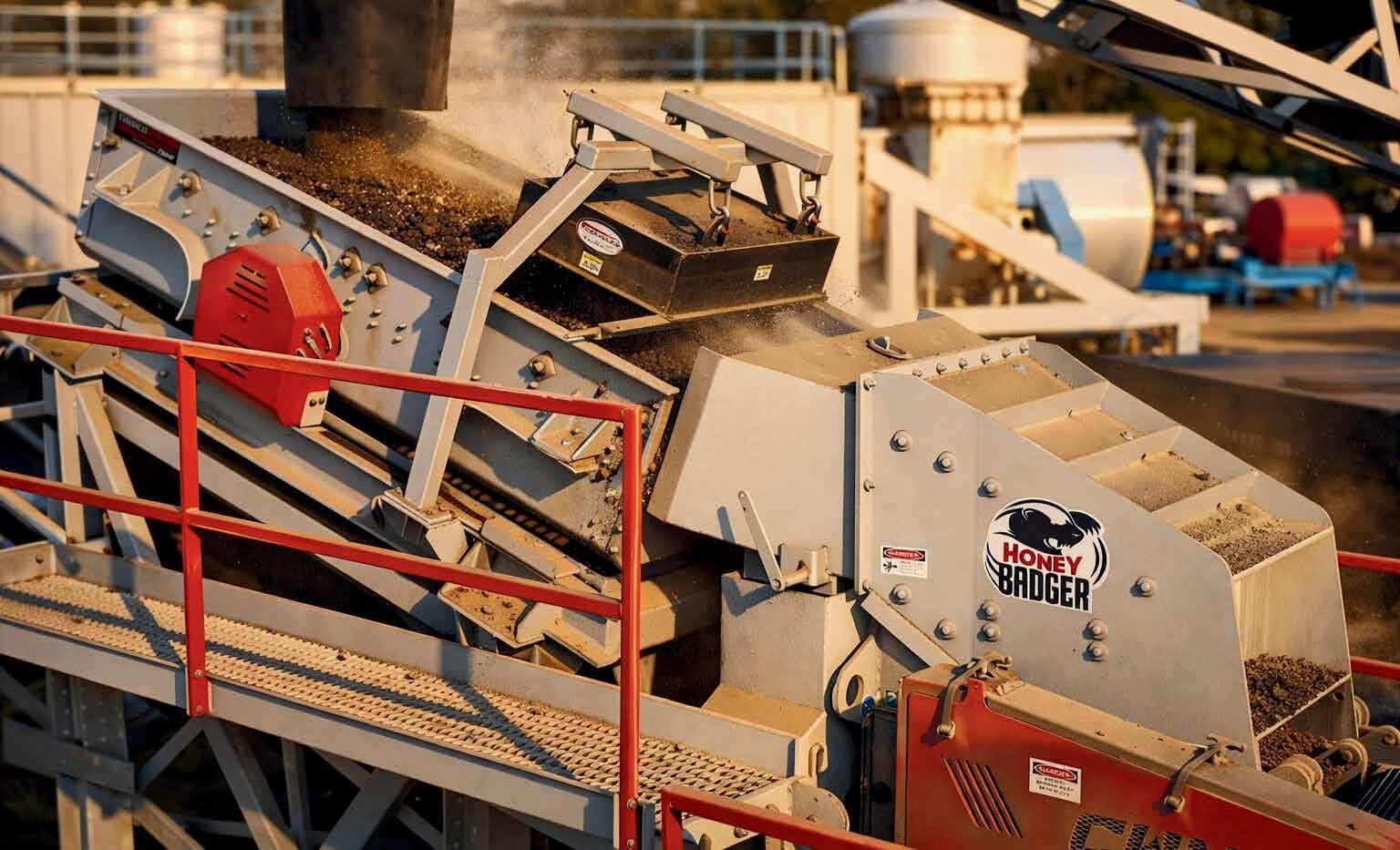
Recycle the road with the fiercely reliable Honey Badger RAP Crusher. From replaceable, abrasion-resistant steel wear liners to a 1/2” steel pulverizing hopper, this machine is built for wear and tear.
Fully equipped for maximum power, reliable operation, and easy maintenance, the Honey Badger is ready to crush it.
Solterra Materials, Phoenix, announced in March company growth, expanded operations across Arizona, and a new website. Recent statistics from P&S Intelligence have shown that the overall market size of the asphalt industry will expand to roughly $52.9 million by 2032. Solterra Materials, a leading Arizona-based asphalt materials provider and a division of Sunland Asphalt, is already seeing the effects of this expected growth.
Since its founding in 2018, Solterra Materials has expanded from 29 to 42 employees. This represents a nearly 45% increase for the company that operates across the state of Arizona, serving private, commercial, highway and infrastructure projects, and supports a wide range of asphalt needs, from private developments and commercial projects to largescale highway and infrastructure work, as well as specialized asphalt solutions.
Along with promoting its team internally in 2026 and launching its new website (www.solterramaterials.com), a key component of Solterra Materials’ 2026 growth strategy is its enhanced quality control (QC) division, which features a fully accredited lab where the team can provide mix designs and QC services in-
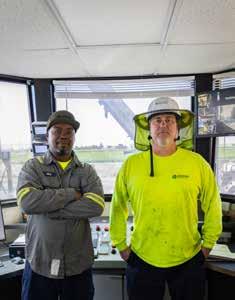
ternally and for customers, giving additional confidence, project reliability and support.
“Across Arizona and nationwide, we’re seeing continued momentum in infrastructure investment, private development and roadway improvements,” said General Manager Scott Bollinger. “That growth is translating into increased demand for reliable, high-quality asphalt production and technical support. By expanding our team, strengthening our QA/QC capabilities and fully staffing our plant maintenance operations, we’re positioning Solterra Materials to meet that demand.”
In addition to team growth, Solterra Materials has also strengthened their fully staffed, inhouse maintenance team responsible for plant repairs, equipment optimization and infrastructure improvements. This investment has enhanced production efficiency, minimized downtime and allowed the company to maintain consistent, high-performance output.
The company has also expanded its industry footprint through participation in Building Women in Construction (BWIC), through the Arizona Chapter of the Associated General Contractors (AZAGC), demonstrating its commitment to workforce development and industry leadership.
Take a look over the next few pages at the products and services that will assist the entire industry this season as our industry grows. AsphaltPro Magazine is using the next few product gallery departments to highlight new technology launched at the recent CONEXPO-CON/AGG in case you missed anything you need to enhance your bottom line.
ADM/FAYAT Group unveiled a new asphalt plant model for its EX Series line of continuous-mix asphalt plants during CONEXPO-CON/AGG 2026. The new EX 300 was on display at the ADM FAYAT Group booth and featured a 102-inch drum diameter and 50foot length.
ADM’s Mike Devine shared that the EX 300’s design was customer-influenced. The lack of bells on the ends of the drum was a request from customers to make routine maintenance more convenient.
The new EX 300 has a capacity of 300 TPH. Like all EX Series plants, the EX 300 can handle up to 50% RAP.
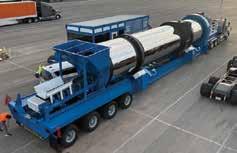
The new EX 300 plant from ADM FAYAT Group was on display at CONEXPO-CON/AGG and featured a 102-inch drum diameter and 50-foot length.
Unique features of the EX 300 counterflow asphalt plant include:
• Single drum diameter
• High efficiency CBS total air burner with variable drive frequency (VFD)
• Trunnion drive with VFD, no V belts
• Drum insulation with stainless steel cover
• Flights designed for easier maintenance
• Available as portable, relocatable or stationary
• Optional high wear package
• Elastic tire supports
As with all EX Series asphalt plants, the EX 300 achieves maximum heat transfer and fuel efficiency through separate drying and mixing zones with its single-drum counterflow-system technology. This technology provides the longest aggregates drying and mixing times in the industry, ensuring consistent, quality asphalt that meets all federal and state specifications, according to the manufacturer. A wide range of components are available to customize the new EX 300.
For more information, visit www. admasphaltplants.com
ALLU Finland Oy, launched the ALLU Concrete Bucket during CONEXPO-CON/AGG 2026. Developed for excavators in the 25to 45-ton range, this new attachment brings crushing directly to demolition and recycling sites. It allows operators to process concrete, bricks, and asphalt efficiently on-site; minimizing material handling, reducing transport costs, and in many cases, replacing the need for a separate mobile crusher. Learn how Ian
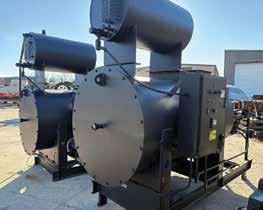
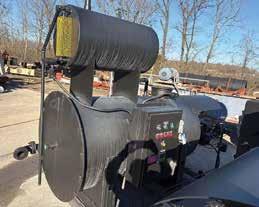
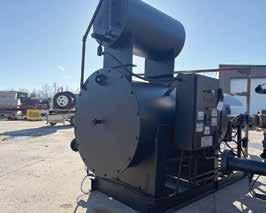
All of our reconditioned hot oil heaters receive:
Pressure test & coils inspection Test fired on oil and gas Gauges replaced All safeties & verified operations tested Fresh coat of paint
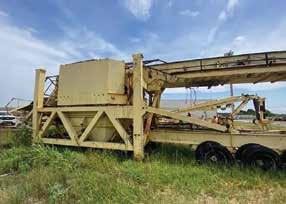
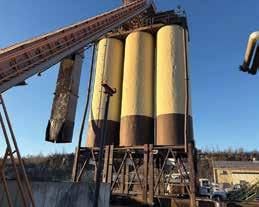
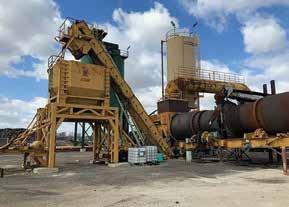
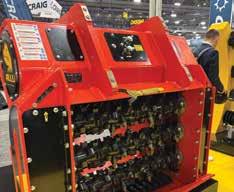
Schouten uses the product on the AsphaltPro Magazine YouTube channel.
Bucket features:
• On-site crushing and screening in a single attachment
• Up to 100 TPH processing capacity
• Accepts feed sizes up to 300 mm
• Adjustable counter blades for 0–50 mm or 0–100 mm output
• Robust heavy-duty structure built for demanding demolition work
In real-world applications, the bucket has processed 1,000 tons of concrete and brick rubble to under 100 mm in just 10 hours, with quick and simple tooth replacement (keeping downtime to a minimum).
For more information, visit https://allu.net
Astec Industries, Chattanooga, launched its Signal Connectivity Suite from Astec Digital during CONEXPO-CON/AGG 2026. The platform allows communication and monitoring across all plant and mobile assets, letting the owner stay connected, gain actionable insights, and optimize operations. It provides:
• System Integrations
• Predictive Maintenance
• Machine Learning & AI
• Robotics
• Advanced Simulation
• Extended Reality
• Digital Twins
• Cloud Computing
• Internet of Things
Specifically, Signal includes an asset map, machine overview, plant overview, LiveJob (live tracker), and paver tracker screens. Let’s break down what those highlights provide.
When on the Asset Map screen, you have a visual, location-based view of all assets, allowing you to check key statuses like fuel level and
engine hours. This offers you access to your entire fleet for easy navigation and lets you spot assets needing attention.
When on the Machine Overview screen, you have a comprehensive, real-time snapshot of a specific piece of equipment. This shows you “live” machine status indicators for fuel, faults, location, live schematics, and so on, letting you identify any issues with real-time diagnostics and historical data views.
When on the Plant Overview screen, you have a real-time, high-level snapshot in one dashboard of all the plant operations, from production rates and energy use to historical trends. This offers instant visibility into top-level plant performance with production and energy metrics and drill-down views into the individual details like mix information, silo inventory, tank inventory, alarm information, and so on.
When on the LiveJob screen, you have a real-time, live dashboard of ticketed material output and job progress. This gives you visibility into tons loaded and job progress with detailed breakdowns by job, customer, mix and truck rotations.
When on the Paver Tracker screen, you have real-time location and activity tracking of the asphalt paver. This screen provides insight into job activity such as total runtime, distance paved, average feet per minute, idle events and reasons, and it integrates with Astec Digital’s telematics ecosystem for unified data and alerts.
Attendees at CONEXPO-CON/AGG could see live demos of the Signal Connectivity Suite, and you can run through a quick tour at the company’s website.
For more information, visit https://www. astecdigital.com/en/digital-solutions/planttelematics/signal-marketing.html
Among the many products on display, Astec included its well-known Double Barrel® dryer/ drum mixer with high RAP capability. At the core of the design is a proprietary two-chamber configuration consisting of an inner drying drum and an outer mixing drum. This configuration ensures virgin aggregate is fully dried in an extended drying zone before entering a flame-free mixing environment, where RAP, liquid asphalt cement, and fines are introduced in a controlled, sequential manner. This process promotes temperature uniformity, thorough coating, and reduced oxidation, supporting clean, efficient operation at high RAP percentages.
The Double Barrel’s sequential, flame-free mixing process is designed to support mix quality even at elevated RAP rates, helping producers reduce virgin material consumption while maintaining performance. The unit
on display at CONEXPO-CON/AGG featured these key design improvements, based on customer feedback:
• Enhanced trunnion adjustment design for simplified maintenance;
• Increased drum tire width on portable units for improved load distribution;
• Reinforced suspension designs to extend working life of drum support components;
• Optional bar-spoke suspension configuration for added durability;
• High-wear mixing tips included as standard for extended service life;
• Reversing/interstitial mixing tips designed to increase material dwell time and improve mix quality;
• Improved access and service features including upgraded door hardware, mounting systems, and service platforms; and
• Portable-unit enhancements that simplify setup, teardown, and cable management. For more information, visit www. astecindustries.com.
CASE Construction Equipment launched enhancements to the G Series large wheel loaders, including an advanced AutoDig feature to help less experienced operators work more efficiently, during CONEXPO-CON/AGG 2026. Further improvements include heated and ventilated seats, rear object detection, and an optional hydrostatic continuously variable transmission (CVT) available on the 1021G and 1121G models.
Additionally, CASE showcased a 921G large wheel loader American flag display model with a special edition wrap celebrating CASE’s American heritage and commemorating the America’s semi quincentennial celebration.
Cedarapids®, a Terex brand of modular, portable, and static crushing and screening equipment, previewed two new developments at CONEXPO-CON/AGG 2026: the CRH5064 Portable HSI Impactor Plant and the TRAC Vibration Analyzer. The CRH5064 Portable HSI Plant has been designed to deliver high-capacity performance with reduced maintenance for quarrying, recycling and demolition applications.
At its core is the TI5064 Horizontal Shaft Impactor powered by a 400-horsepower motor, featuring a high-inertia four-bar rotor, monoblock primary curtain with replaceable tips, hydraulic tramp iron relief, hydraulic-assisted apron adjustments and a hydraulically opening hood. Prototype testing recorded 600–700 tons per hour when processing


That’s why we bring more than just tools, we bring the fire.
From retrofits and relocations to maintenance, parts, and plant upgrades, Motion Engineering keeps your plant running hot and smooth. With over 30 years in the asphalt industry, we’ve seen it all and solved it all.
Let’s talk about how to make your next project faster, cleaner, and more efficient.

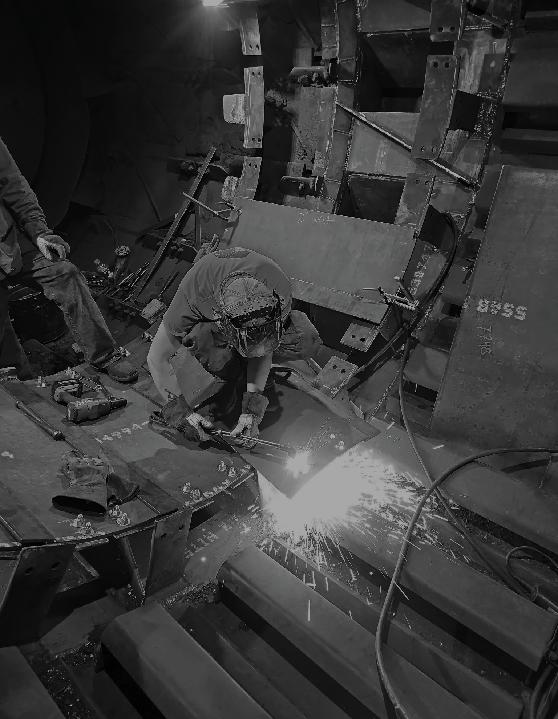






30-inch minus shot rock limestone, and a maximum 30-inch feed size.
Another highlight of the CRH5064 plant is the latest 60-inch x 20-foot Cedarapids Advantage Series Feeder, which widens the intake by eight inches compared to earlier models. The plant is also available with multiple axle configurations and a removable feed-hopper module for improved transport flexibility, with optional features including feeder lift, a jib crane for blow bar changes, a self-cleaning magnet, under-crusher pan feeder, and expanded electrical and conveyor options.
Eagle Crusher unveiled its new Talon™ line of heavy-duty crushing and stockpiling equipment for recycling applications at CONEXPO-CON/AGG 2026. The new TalonTrax™ mobile crushing plant and the new TalonStack™ mobile stockpiling conveyor were on display.
At the heart of the TalonTrax, is Eagle Crusher’s new TalonMax™ (TM-15) impactor, featuring an open-rotor design that reduces weight while still providing the same crushing capabilities for which Eagle Crusher equipment is known. The impactor also features a new, thicker blow bar design to increase overall wear life. Its rotor is 44 by 41 inches with a feed opening of 42 by 32 inches. It requires 150-200 horsepower. The impactor’s approximate weight is 23,000 pounds; the rotor’s weight is 6,200 pounds. The proven three-bar design handles aggregates, recycled asphalt, and concrete with rebar and other steel contaminants.
The TalonTrax plant is a dual power plant that can be powered by the onboard diesel engine or switched to external power from a genset or line power. The plant also features a dual-motor, under-crusher pan feeder with discharge clearance in excess of 23 inches. TalonTrax comes equipped with a cross-belt,
permanent magnet that removes steel contaminants from crushed material. The magnet is reversible to allow steel discharge from either side and stays on for transport. The heavy-duty hopper is sized for feeding with a loader or excavator and the grizzly bypass chute and cross conveyor with flop gate allow for either removal of the material that passes through the grizzly deck for stockpiling or blending back with the crushed material.
The new TalonStack self-propelled, radial stockpiling conveyor has been designed to improve productivity and mobility while minimizing operator costs. The TalonStack 65 was on display, with Eagle Crusher offering a wide range of TalonStack sizes.
For more information, visit https:// EagleCrusher.com.
EDGE Innovate showcased its SCREENPRO S16, now officially available to customers across North America, at CONEXPO-CON/ AGG 2026. The SCREENPRO S16 is the latest addition to the SCREENPRO range.
Designed to handle feed capacities of up to 600 tonnes per hour, the SCREENPRO S16 is ideally suited to mid- to large-scale operations requiring high production rates and precise material separation. The machine features a 16-foot x 5-foot dual-deck screen, providing a 16.7-square-yard screening surface. The screening angle can be adjusted between 14 and 20 degrees.
The SCREENPRO S16 has multiple screen media options, allowing operators to tailor the machine to suit different materials and end-product requirements, whether processing aggregates, construction and demolition waste, or recycled materials. For recycling applications, the S16 can also be equipped with over-band magnets and magnetic head drums for efficient ferrous metal recovery.
The SCREENPRO S16 incorporates intelligent load management, hydraulic folding conveyors, a low-level feed hopper, and a two- or three-way split configuration. It is powered by a Caterpillar Tier 4 Final / Stage V engine, with dual power and electric hybrid drivetrains also available to support EDGE Innovate’s commitment to sustainable, low-emission solutions.
EvoQuip®, a Terex brand, displayed the Cobra 290R track mounted impact crusher during CONEXPO-CON/AGG 2026. The Cobra 290R is built to handle reinforced concrete, recycled asphalt, construction and demolition waste, and natural rock. It has an integrated afterscreen to help achieve specification in a
single pass, with oversize material recirculated back to the crusher or stockpiled, depending on site objectives. For cleaner, higher-value outputs in C&D applications, the optional wind sifter introduces density-based air separation to remove lightweight contaminants such as plastic and wood.
John Deere, Moline, Illinois, debuted in February, its SmartDetect™ Assist, which is its latest object detection technology. Building on the SmartDetect™ and SmartDetect™ Digital solutions, SmartDetect Assist supports job site safety by automatically slowing or stopping a machine when there is an obstacle detected.
SmartDetect, the foundation of the portfolio, uses cameras and machine learning to identify obstacles and deliver visual and audible alerts, helping operators better understand their surroundings. SmartDetect Digital adds another layer by bringing near miss footage and insights into the John Deere Operations Center™, supporting worker training and management.
Now SmartDetect Assist leverages high-resolution cameras, radar, and an in-cab display to provide operators with a clear, accurate view of the machine’s surroundings. When an obstacle is detected, SmartDetect Assist delivers instant visual and audio alerts inside and outside the machine, followed by dynamic slowing or stopping prior to a potential collision.
While SmartDetect Assist does not replace an operator’s role and responsibility to safely operate the machine, the solution provides an added layer of support to help maximize uptime and job site safety. The system includes configurable operating parameters and safeguards, including operator-controlled momentary override. In addition, the in-cab display features projected reverse path lines, giving operators a clearer understanding of where the machine is headed to help increase situational awareness during operation. SmartDetect Assist is available today on select John Deere Utility Loaders.
ProStack®, a Terex brand, announced the appointment of Sync Aggregate (Sync) as the distributor for its complete product range throughout Utah. Based in Springville, Utah, Sync is a supplier of rock crushing equipment, parts, and field service to the state’s aggregates and material processing sectors. Under the new agreement, Sync will represent ProStack’s full portfolio of material handling solutions including tracked conveyors, tracked feeders, telescopic conveyors, hoppers and bulk reception
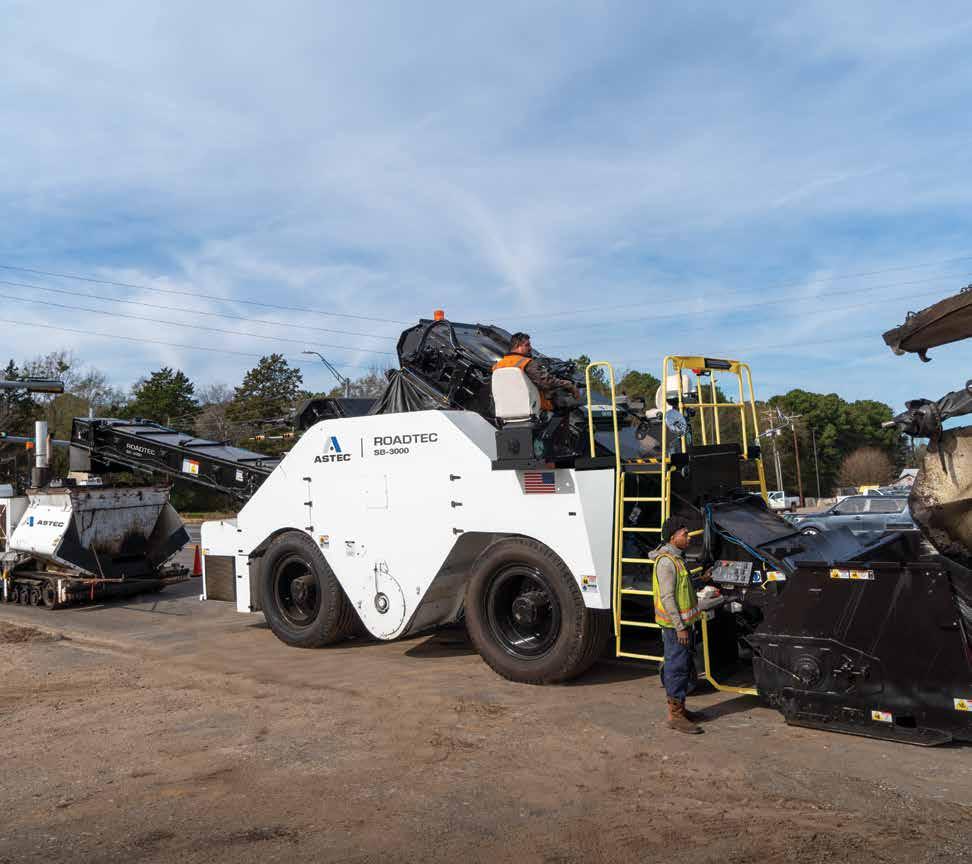
Astec revolutionized the paving industry with the introduction of the Shuttle Buggy, and now the SB-3000 sets a new standard in material transfer vehicles. Effortless maintenance, unmatched performance, and four steering modes for ultimate agility keep paving seamless. Experience groundbreaking innovation with the patented Ground Crew Control Station for the ultimate user experience and protection. The SB-3000 isn’t a machine, it’s a revolution in material transfer, built on Astec’s legacy of industry firsts.
feeders. This will provide customers in Utah with local access to ProStack’s bulk material handling equipment, parts and service through factory-trained technicians.
The announcement follows ProStack’s renewed focus on the North American market, enhanced by recent product launches such as the TW 36-150 telescopic conveyor. This 150foot radial telescopic conveyor is built in Mt. Vernon, Missouri, and has been specifically designed for the North American market.
Stansteel Hotmix Parts & Service, Louisville, Kentucky, launched the Vortex™ burner during CONEXPO-CON/AGG 2026. The total air burner design with direct drive impeller system offers a lower blower motor horsepower compared to other models, according to the manufacturer, with a new Vortex fan system.
The modulating fuel lance offers precise commissioning and setup with any fuel type including oil, LPG, Bio LPG, LNG, natural gas and rDME. It’s designed to burn multiple fuels concurrently and has a water injection system for ultra-low NOx capability.
It offers a dynamic rotational burner section for left- and right-handed site applications and is compatible with short- and long-nose applications on counterflow drum mixers. The burner is installed on a multi-track system to facilitate easy access for inspection and routine maintenance. The split section construction allows quick and easy servicing.
The double skin combustion box offers air cooling capability to reduce thermal stress and prevent overheating, thus improving combustion stability.

The ACCU-Fire™ burner control offers remote access and is capable of delivering performance data for real-time optimization, including remote access to fuel meters.
For more information, visit www.stansteel.com.
In the Webster Combustion aggregate dryer burner family, the company offers the HDRA Low NOx burner series—rotary drying. The model HDRA-RF is a register-style total air burner that allows producers to shape the flame by automatically controlling the register vanes to optimally fit their dryer and combustion zone. This flame-shaping capability means the flame will not impinge on material or flights, and CO can be maintained at much lower levels. In addition, NOx levels for the HDRA-RF are significantly lower than typically seen in asphalt applications, according to the manufacturer. It is designed for firing rates from 50 million up to 200 million Btu/ hour. Its turndown rates are up to 10 to 1 on gas firing; up to 8 to 1 on oil firing, according to the manufacturer.








First released in 2013, the CMS-1625 is CSI’s newest generation specifically engineered for performance and built for reliability. From startup to shut down, on existing or new burners the CMS-1625 gives operators clear visibility, precise control, and peace of mind resulting in:
TOTAL CONTROL. TOTAL CONFIDENCE.

Powered by an Allen Bradley Compact Logix PLC, Red Lion 15” Graphite Series high resolution touchscreen and a Honeywell Programmable flame relay the CMS-1625 becomes a fully integrated operating system delivering a burner control like no other in the asphalt industry.
• 21 point valve characterization program allows for the combustion air and fuel outputs to be configured for maximum fuel efficiency and emission compliance from low to high fire.
• 16 point first out annunciator indicates the safety switch status and will display which safety faulted during operation.
• Automatic or manual control of the burner, exhaust fan and drum speed.
• FGR and water injection control loops for Nox reduction.
• Single fuel or dual fuel control modes
• Optional baghouse burner and pulse control
• Gas pressure, gas flow, drum draft, baghouse pressure drop, oil pressure, oil flow and atomizing air pressures are displayed and trended on the touchscreen. Tons per hour pulse input can be used with a fuel flow input to display and trend btu’s per ton in real time.
• Flame shape output for the Webster HDRA burner.
• CMS-1625 is specifically designed for maximum versatility with over 60 installs from coast to coast on Astec, Cedar Rapids, Gencor, Hauck, Vulcan and Webster burners.
With over 30 years of experience, CSI Combustion Services brings hands-on expertise to every project. Asphalt producers benefit from a partner who understands burners, controls, and plant operations-not just panel assembly. From panel integration, troubleshooting and system optimization, start up and commissioning support, upgrade and retrofits, to burner tuning for upcoming source testing. Combustion Services delivers control you can rely on-plant after plant.
TOTAL CONTROL. TOTAL CONFIDENCE


AsphaltPro’s advertiser index is designed for you to have quick access to the manufacturers that can get you the information you need to run your business efficiently. Please support the advertisers that support this magazine and tell them you saw them in AsphaltPro magazine.




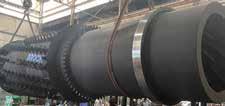









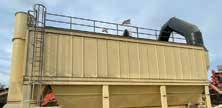
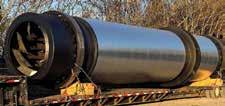


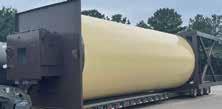
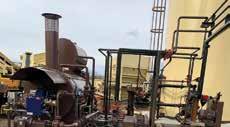
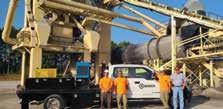

BY SAM MIELKE
Editor’s Note: This is the second installment of a two-part series from investment banker Sam Mielke on positioning your asphalt business for sale. Part one addressed workforce planning, financial organization, and building a strong revenue base. This installment focuses on the operational work that separates a smooth, premium transaction from a difficult one.
The deals that close smoothly and at a premium share a common trait: the owner spent years building systems before ever calling an investment banker. The deals that stall or sell at a discount? The owner was the system. The work covered below isn't glamorous, but when a buyer’s due diligence team sits down across from you, it’s exactly what they're looking for.
You want to create systems that reduce owner dependency. Every buyer asks the same question early in the process: “What happens
if the owner walks away?” If the honest answer is that the business falls apart, that will show up in your valuation and in how long you, as the owner, are required to stick around after closing.
Put simply: if you want to sell 100% of your equity at close, you need a capable replacement for every task you currently handle. If you don’t have those people in place, buyers will either lose interest or require you to stay on.
A common structure we see at OffDeal is owners selling 75% of their stake and rolling over 25% equity, which can work, but it means you’re not fully walking away at closing. The more self-sufficient your operation, the more options you have.
Start by writing things down. Document your scheduling process and create a crew leader checklist for every job type you run. Build a training sequence for new hires that goes beyond “ride along with me for a week.” If your estimator left tomorrow, could someone else produce an accurate bid by Friday? If not, start there.
Two examples from the field: One paving contractor we worked
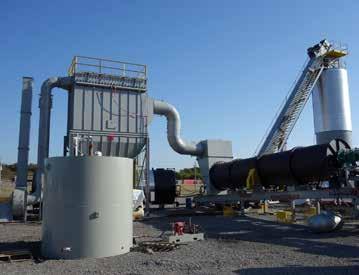
with wanted to sell 100% of his equity at close, but he was still the primary estimator, the main client contact, and the only person who knew the crew scheduling system. Buyers saw a business that couldn’t function without him, and they walked away.
Compare that to another owner who had spent years building a management layer beneath him. He sold 75% of his stake, rolled over 25%, and stayed on to continue running and growing the business (though no longer as CEO). Because buyers could see the operation would hold up without him at the helm, he attracted multiple competitive offers and secured a premium valuation. The equity rollover was a strategic choice that gave him continued upside in the combined entity.
As part of building a business that runs itself, make sure you document vendor relationships, contacts and pricing. Your supplier relationships and subcontractor networks are real assets, but only if they’re documented in a way that transfers cleanly to a new owner.
Wherever possible, push for written contracts over handshake agreements. Informal arrangements create friction during due diligence and introduce risk around continuity.
Maintain a current vendor list with pricing terms and payment arrangements on file. Collect and update certificates of insurance from subcontractors annually. If you’ve negotiated favorable rates with a local asphalt plant, get those terms in writing so a new owner can maintain them from day one.
Favorable supplier pricing that shows up in your margins is a genuine competitive advantage, but only if it’s documented well enough to survive the ownership transfer.
When a buyer sits down to evaluate your business, the more operational data you have tracked and available, the better. Most paving companies in the lower middle market don’t do formal job costing, and buyers know that. But the ones that have started tracking even basic metrics stand out. If you can show actual costs against estimates on a per-job or per-job-type basis, that’s a significant advantage.
Job costing software is a nice-to-have that becomes increasingly valuable as you scale, and there are affordable platforms designed for contractors that can get you started without a heavy lift. Even if you’re not there yet, start with what you can: track material costs, labor hours, and subcontractor spend by project. The goal is to give a buyer confidence that your margins are grounded in real data, not just gut instinct.
An example from the field: A word of caution: A common pattern we see in due diligence is companies running estimates in one platform and accounting in another, with no connection between them. Reconciling that gap during a live transaction takes weeks and creates uncertainty that buyers price in. Even basic data hygiene, like making sure your systems talk to each other, can prevent this from becoming a deal issue.
As part of building a self-sufficient business, you want to maintain clean client records and a clear sales pipeline. A buyer isn’t just pur-
chasing your past revenue—they’re purchasing your future revenue. Client records spread across multiple systems, or a sales pipeline that exists only in the owner’s head, make it impossible for a buyer to assess the health of your customer base independently. Buyers who can’t clearly see repeat rates, customer longevity, and pipeline activity will discount what they can’t measure. Invest in a basic CRM before you go to market. It doesn’t need to be complicated—it needs to exist.
Maintenance and repair work commands higher valuations than new construction because it recurs. Parking lots need to be sealed, patched and striped on regular cycles. That’s predictable, bankable revenue that doesn’t depend on new development or economic cycles. Sealcoating programs, annual lot maintenance contracts, and recurring crack repair agreements all create the kind of forward revenue stream that buyers will pay a premium for.
If your book is heavily weighted toward large, one-time construction projects, consider diversifying your revenue and pushing for as much recurring work as possible. The time to build that book is now, not when you’re ready to sell.
Client concentration is equally important. If your top two customers represent 30% or more of revenue, that’s a red flag in any due diligence review. Even when those relationships are long-standing and loyal, a buyer still has to price in the risk of losing them postclose. And that risk shows up in your valuation. The goal is a client base diversified enough that no single account can materially damage the business if it walks.
Consider two paving companies that went through the sale process. Both were profitable. Both had experienced owners. The difference was what each owner had built around the business over time.
This example from the field is illustrated in the tables shown with this article online. Visit TheAsphaltPro.com to see the details of Company A, which was built to sell, and Company B, which was built around the owner.
While both owners built excellent paving businesses, Company A’s owner had spent years building systems alongside the business. Company B’s owner had built the business around himself. That distinction showed up in every phase of the sale from the number of interested buyers to the pace of due diligence to the final structure of the deal.
The contractors who get the best outcomes when selling are the ones who started preparing years in advance. SOPs, vendor files, clean client records, and revenue diversification don’t generate the same excitement as landing a big contract or adding a new piece of equipment to the yard, but when the time comes to sell, that operational infrastructure is what separates a smooth, premium transaction from a difficult one. Start building it now. Your future buyer will notice, and your bottom line will show it.

Sam Mielke is an Investment Banker at OffDeal, an AI-enabled M&A advisory firm that has a specialization in the sale of privately-held businesses in the asphalt and paving industry.
BY SANDY LENDER
n the February 2025 edition of AsphaltPro Magazine, Tom Peterson, the executive director of the Colorado Asphalt Pavement Association (CAPA), shared multiple “wins” from the November 2024 election for agencies and road users in Colorado. He outlined how CAPA, with leadership from then-Director of Engineering Mike Skinner, P.E. CAE, supported cities and counties throughout the state in making the case to increase funding to maintain and improve the condition of streets and roads.
Skinner had shared, “Increased funding for streets and roads is a win-win for all involved. The citizens win with smoother, safer roads that are often tied to the mantra ‘No More Potholes.’ The local governments win by improving the street network and being able to stretch the taxpayer dollars by improving streets in fair condition for much less than rebuilding them [later]. The industry wins by having more tons to pave and [work for] their crews.”
Unfortunately, regional funding initiatives haven’t resulted in high marks for the entire state. According to the Restore Our Roads campaign, “Roads and bridges that are deteriorated, congested or lack safety features, cost Colorado motorists a total of $11.4 billion statewide annually—as much as $3,060 per driver in some areas— due to higher vehicle operating costs, traffic crashes and congestion-related delays, flat tires and vehicle wear and tear. With only 34% of Colorado’s roads in ‘good’ condition—far below the national average—the American Society of Civil Engineers’ 2025 report gave Colorado a D+ grade for its roads and highways. Meanwhile, the Colorado Department of Transportation (CDOT) faces a $350 million annual shortfall just to maintain existing conditions. At least $200 million is needed solely for pavement maintenance.”
While Skinner has since taken on the mantle of executive director for the Asphalt Pavement Alliance, the team at CAPA has not wavered in its commitment to helping citizens of the state enjoy better roads through the work of the association’s membership. At the end of 2025, the CAPA board of directors committed $100,000 to the Restore Our Roads Campaign to make better use of funding for road improvements in Colorado.
The campaign is designed to address roads and bridges in poor condition throughout the state by reallocating existing transportation taxes and fees to ensure they are used specifically for road maintenance and construction, without raising new taxes. The initiative seeks to secure sustainable funding for infrastructure improvements, addressing a significant funding shortfall faced by CDOT.
To that end, the campaign has developed a ballot measure, called Initiative 175, that will go through the signature petition process and propose an amendment to the state’s constitution. Amendment 22 to Section 1, article X, reads: “State revenue collected to support road transportation—required use.” If passed, it would mandate that road fees currently in place are used for road improvements,
and a portion of sales tax on vehicle parts and equipment are also mandated for road use. CAPA shared that, if approved, the measure is expected to add an additional $1 billion per year of funding for road improvements.
CAPA 2025 President Stuart Ponting commented, “For too long, elected officials in Colorado have neglected the funding for road improvements. This measure will provide the needed funds to address priority problems in roadway condition, safety and congestion.”
The amendment, as written, gives a clear definition for the generated revenue, stating, “State revenue collected to support road transportation means (I) all sales and use or excise taxes or fees imposed and collected by the state on motor vehicles and motor vehicle fuel; and (II) two-thirds (2/3) of states sales and use taxes imposed and collected by the state on motor vehicle parts, equipment, materials, and accessories that are affixed to a vehicle.”
As of Nov. 19, 2025, the Restore Our Roads program had announced and confirmed that the Colorado Construction Industry Coalition was moving forward to collect signatures on initiative 175. The immediate next step was to raise the funds needed to collect signatures on 175 and secure its placement on the 2026 ballot. The goal: to secure $2 million in pledges.
By March, CAPA reported the initiative to have the measure on the November 2026 ballot continued to move forward and gain momentum, stating they are 75% of the way to the $2 million goal for the signature campaign.
“Those collecting signatures have shared that most voters are very surprised to learn that road fees collected in Colorado currently do not go for road improvements,” CAPA shared.
With the roadbuilding industry’s collective eye on infrastructure funding this year, it’s refreshing to see Colorado addressing the stewardship of tax dollars intended for such projects. The Restore Our Roads campaign has a unique opportunity to ensure funding is directed where it is supposed to go. The petition process and ballot measure will be exercises to watch.