
OUTLOOK


IN THIS ISSUE:
• We look at how Marram stacks up against other accommodation booking sites.
• The Heart Foundation wants us to make informed decisions about how we drink.
• There are many reasons to go wild in Wellington. See the holiday feature.
• Summer photo competition winners showcase an exceptional Kiwi summer.
• Why it’s important to follow the rules around cleaning your holiday home.
• And achieving the impossible in your Marram kitchen.
2024 TIROHANGA
We’re two months into 2024 and as Autumn starts to make its presence felt, it’s a good time to reflect on how we’re going to do winter this year.
If you’re a regular watcher of TV news, you’re probably hunkered down already for a year from hell with warnings about rising interest rates, inflation and global temperatures, dished up on a nightly basis.
But if like me, you managed to find time over the summer break to while away time on the internet reading articles you’d normally bypass, like what to expect from 2024 (The Post), you’re probably brimming with excited anticipation.
Wellington Mayor Tory Whanau’s predicting the capital will have the most sunshine hours in the country and Opposition Leader Chris Hipkins is predicting a Grand Final win for the Warriors.
The reality is, we’ll just have to wait and see.
One thing’s certain though, as part of the Marram Community we get to enjoy benefits that will help soften the edge of whatever the year throws at us.
4


In this Autumn Outlook you’ll find an assortment of features and stories it’s hoped will help you navigate smoothly through winter.
Ditch the alcohol, the health feature on page 4 will not only save you precious dollars but improve your health and possibly save your life.
Wellington is the focus of the holiday feature. Who knew there was so much free stuff to do in the nation’s Capital?
Remembering fun times and better days is surely a good way to improve mental health, so your photos showcasing those hazy lazy crazy days of summer are featured on page 20.
And if the winter really starts tying you in knots, why not whip up a fluffy sugary cloud of deliciousness with Marram’s super easy Pavlova recipe on page 24.
Winter well whanau.
Sue Burgin Content Editor - Etita Kōrero3 The many benefits of being with Marram. We look at how Marram stacks up against other accommodation booking sites.
4 6
Strengthening evidence around alcohol and the risk factors for heart disease sees the Heart Foundation take a firmer stand.
It’s small and bite-sized, there’s a lot to do for very little money and the locals are very friendly – three good reasons to plan a holiday in the nation’s capital.
If you’ve been admiring the artwork in Marram’s newly refreshed Wellington apartments, then you can meet the artist, Alfred Memelink on page 16.
The winning entries in the Show Us Your Best Summer photo competition evoke happy memories of a cracker El Ninõ summer.
And paying homage to a Russian ballerina by whipping up a fluffy cloud of deliciousness in the Marram holiday home kitchen – Yes you can do it!
2
Marram Community Trust PO Box 24006 Wellinton 6142 New Zealand
04 801 2920 Fax:
385
Etita Kōrero - Content Editor: Sue Burgin email: sue.burgin@marram.co.nz Etita Hoahoa - Design Editor: Destina Munro email: destina.munro@marram.co.nz 6 24 6
Editor’s Letter In this issue:
Ph:
04
3558
20
4
24
Cover photo: Friends enjoying Otari-Wilton Bush reserve: From left: Rose Friend, Grace Friend and Aroha Dalton.
20 16
16 20
The benefits of being with Marram
There are plenty, we know this because you constantly say so.
In the last Marram beneficiary survey (2023), you were asked why you joined the Marram Community, why you stay in the community and how you benefit.
The holiday benefit works in many ways but perhaps the biggest in these days of pressure on household budgets, is the discount between Marram rentals and market rates. So it’s no surprise you said when you’re looking to book holiday accommodation, you go to the Marram website first because that’s where you’ll find the best rates and value for money.
If your first choice of location is unavailable, you may look at a Marram location close by, for example, Wellington South when the Wellington City apartments aren’t available.
Failing that, you’ll check out Booking.com, Wotif or other accommodation booking sites.
Marram’s hard to beat
Using Booking.com as a reference, we looked at how Marram stacks up against the rest.
• For a single night in a serviced, one or twobedroom apartment, Marram is 10 to 20 per cent less than market rates. If you stay two nights or more, then the discount becomes much greater as Marram will only charge you once for servicing and cleaning. A week in a Marram home is at a huge discount because the price caps at the weekly rate when five, six or seven nights are booked in one block.
• Looking at popular tourist destinations like Queenstown and Mt Maunganui, the discount is huge. A week in a Marram home may cost $480 for two bedrooms but 5x as much to go non-Marram, eg $2,500 to $4,000 for the same standard of accommodation elsewhere.
How does Marram do it?
Through the generous contributions of beneficiaries who’ve been donating to the Trust since 1944.
The Trust has invested in land, has no debt, no leases and is not paying commercial bank loans or lease fees like many motels. All you pay for is maintenance and refurbishment, cleaning, linen and electricity. The overheads are very low.
Marram has its own holiday accommodation booking app on its website at marram.co.nz. It doesn’t use a booking company so isn’t paying fees to someone else to operate a site.
CEO Glenn Clark says it’s a very efficient operation. “Marram’s been doing property management for decades.
We do around 30 refurbishments a year and buy in bulk, getting good discounts as a result. And most other accommodation providers are trying to make a profit. We’re not; Marram is not-for-profit.”

Value for money
“The original cottages were more of a bach experience, and over the years we’ve lifted them to be at least as good as motels,” he says.
“Again, in the Marram survey, beneficiaries now rank them as good or better than motels.”
The holiday homes are continually evolving but they’re still seen by the community as well-appointed, comfortable, very affordable homes away from home.
Recent changes have seen Wi-Fi installed and sustainability is now at the forefront of refurbishments.
Marram’s starting rolling out EV chargers and over the next five years, you’ll see the wireless broadband Wi-Fi replaced with fibre optic cable for an even faster internet experience.
Security will also be beefed up so people can feel as safe in a Marram home as they do in their own.
Budgets under pressure
The CEO says there’s no doubt there’s pressure on household budgets right now and no doubt Marram’s benefits are at their best.
He says holidaymakers are looking for value for money when it comes to their holiday accommodation and financial assistance for healthcare, and Marram’s still delivering that along with good old-fashioned service.
“We still answer the phone and reply to emails – a rare commodity.”
Moving forward
Marram has some very clear and consistent goals:
• Add more homes.
• Keep the quality of the homes to the standard we all expect.
• And keep healthcare benefits relevant to the needs of the community.
The challenges:
• To make sure beneficiaries are getting the most out of the Marram benefits in tough economic times.
• To keep Marram relevant – always including how it can help you control the household budget.
“Since 1944, Marram’s been there, and it’s times like these when it’s at its best.
There’s no catch. Marram’s been doing this for 78 years.” Glenn Clark.
3
Making informed decisions about how much we drink
Strengthening evidence around alcohol and the risk factors for heart disease has prompted the Heart Foundation to take a firmer line around what we should be drinking.
Dave Monro, Chief Advisor of Nutrition for the Heart Foundation says it’s not about telling people to stop, it’s about helping people make informed decisions about drinking alcohol.
“People need to be mindful about how much they drink and their patterns of drinking, and of the stronger links between heart health and alcohol,” he says.
Is this new advice a complete U-turn?
“I wouldn’t say it’s a complete U-turn because when we last reviewed our advice in 2013, we acknowledged that not drinking alcohol is the healthiest choice.
The key change is that we no longer include the two and three-drinks per-day allowance as part of our advice.“
Dave says they want to get the message out that there’s no safe limit and that getting your alcohol consumption as low as possible is going to be best for your heart.
A glass of red a day keeps the doctor away
Well, no.
Dave’s keen to dispel what he calls the myth that moderate consumption of alcohol, such as red wine is good for your heart.
“This commonly held belief has come about because red wine contains antioxidants like resveratrol. There’s now stronger evidence to clearly show any amount of alcohol increases the risk of heart disease. It doesn’t matter whether it’s wine, beer, cider or spirits, red wine’s the same as any other type of alcohol and you shouldn’t consume it for heart health benefits.”
Strengthening evidence around alcohol and risk factors for heart disease
Let’s have a look at the stats.
Twenty percent of adults (15+) have high blood pressure.
Four out of five adults choose to drink alcohol, one in five of them in a hazardous way.
He says the new alcohol advice is in line with other organisations worldwide.
“Our new position is informed by the latest published research and international guidelines, most notably recent guidance from Australia and Canada.”
Evidence shows alcohol increases the risk of high blood pressure, atrial fibrillation (AF) and haemorrhagic stroke. Alcohol may also increase your risk of heart failure and ischaemic heart disease, and many other conditions are also adversely affected by alcohol.”
 Chief Advisor of Nutrition, Dave Monro

Making it practical and realistic for people
Dave says with the stats in mind it’s about making sure any advice around alcohol is presented in a practical and realistic way for New Zealanders. After all, many of us consume different amounts of alcohol, and we may have different motivations to reduce alcohol consumption, and some may find it easier than others.
It’s not about telling people how to live their lives
“We’re saying if you don’t drink alcohol now, it’s best not to start. If you choose to drink, it’s better to drink less. Any steps you can take to reduce the amount you drink will benefit your heart health.”
Small steps to heart health
The Heart Foundation wants us to think about the small steps we can take over time, and lifestyle changes that we can make that will fit into our daily routines and that we will stick to.
• Half or quarter fill the glass you would have once filled.
• Schedule alcohol-free months, weeks or weekends.
• Drink more slowly.
• Be mindful of situations when you’re more likely to drink, and have options other than alcohol.
• Look at other coping mechanisms.
• Opt for low or zero-alcohol products like iced teas and waters flavoured with herbs, fruit or cucumber.
• Choose mocktails on special occasions.
• Think about the size of the glass you’re using. That can make a huge difference.
• Follow the one water one wine rule.
Beware low-carb beers
They have less carbs but usually have the same alcohol levels and carry the same risk for heart health.
Dave also urges caution around choosing a month to go without alcohol.
“For some having a month without alcohol can be a circuit-breaker and a catalyst for starting new healthier habits, however many simply jump back into unhealthy drinking habits the minute a new month arrives and there is no long-term health gain.”
Cucumber Lemon Mint Water
1 English cucumber, sliced thinly
2 lemons, sliced
1/2 bunch of fresh mint leaves, removed from the stems (about 40 leaves)
2 - 4 cups filtered water or sparkling water
In a pitcher or glass jar, combine the cucumber slices, lemon slices, and mint leaves.
Cover and place the jar or pitcher in the refrigerator for at least 4 hours, or up to 24 hours. Enjoy cold.
cleaneatingkitchen.com
Tumeric Ginger and Cinnamon Tea
2 tsp of turmeric powder (or grated fresh tumeric)
2 tsp of ginger powder (or grated fresh ginger)
1 cinnamon stick
1-2 tbs of honey
5-7 cups of water
A splash of lemon juice
In a medium-sized saucepan add turmeric, ginger, honey, lemon juice, water and cinnamon (halve the recipe if peferred and strain if using fresh tumeric and ginger). Bring the mixture to a boil and stir. Leave the mixture to simmer for 12 minutes and strain. simshomekitchen.com
He says that changing lifestyles and forming new healthy habits should be done in a practical, sustainable way.
A future without alcohol
So finally if you’re failing to find joy in a future without alcohol, maybe it will help to know that giving it up will not only be beneficial for your heart health but also your wallet, mental health and sleep.
Dave says, “For some people completely removing alcohol may be a struggle or something that they don’t want to do. It may not be the occasional social drink that is the issue, it may be drinking through the week which contributes the most alcohol and where people may want to consider making some changes.”
“It is important that people know the increased heart health risks associated with consuming alcohol and that any steps to reduce consumption over time are going to be beneficial for your heart health – no matter how big or small.”


5
Wellington
You just can’t beat it
 by Sue Burgin
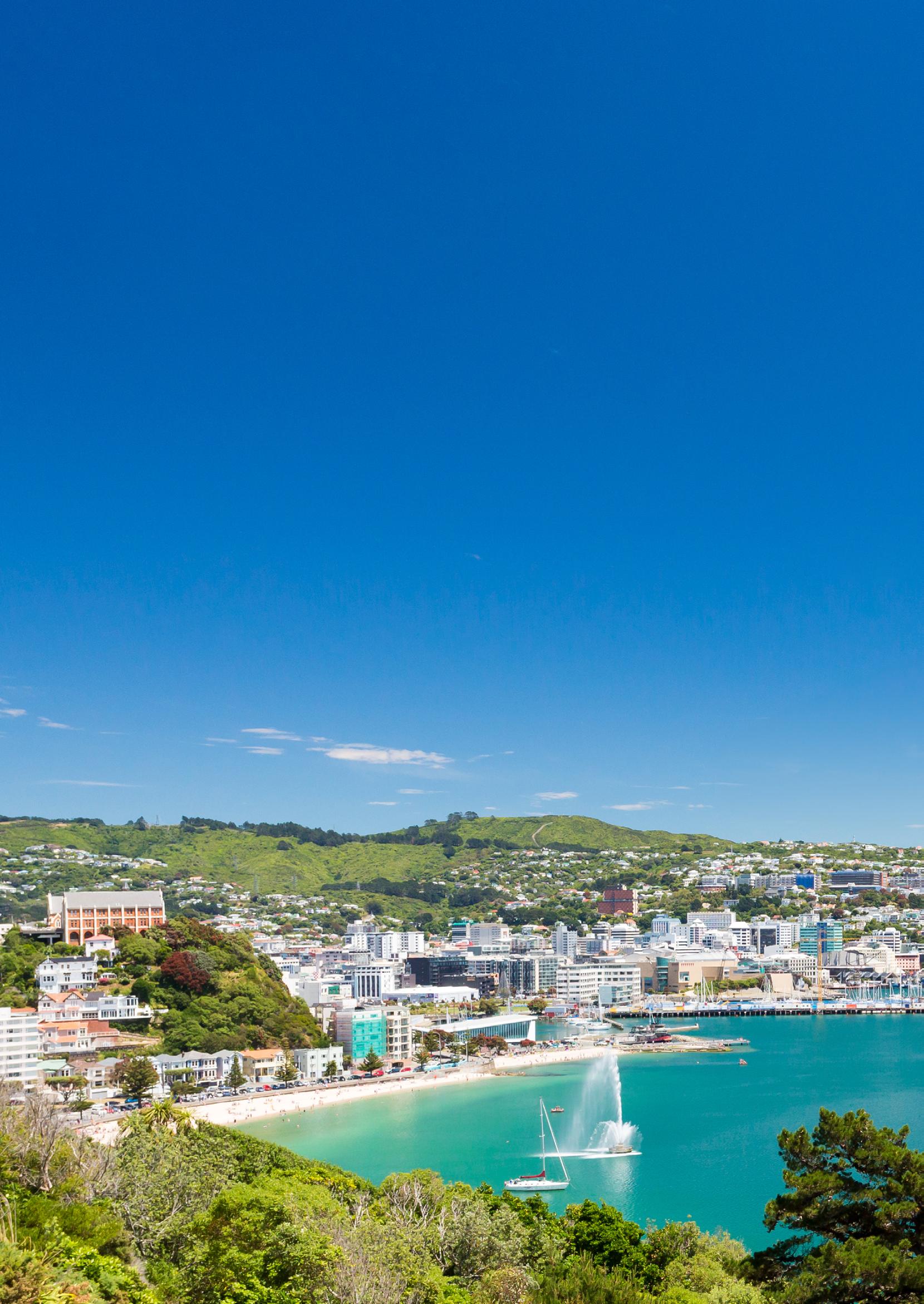
Whether it’s on a good day or in the grip of a howling southerly, Te Whanganui-aTara, Wellington, is a great place to spend a few days according to Jo Heaton, the city’s Tourism and Visitor Economy Manage r.
“It’s small and bite-sized, there’s a lot to do for very little money and the locals are very welcoming,” she says.
Wellington’s been referred to as the Coolest Little Capital in the World for some years but Jo Heaton's not keen on that, saying it’s an evolving city with so much more to offer these days.
Best seen from the water
“It’s a beautiful harbour city and you must get out on the water to truly appreciate how beautiful it is,” Jo says.
But if you don’t have time for a harbour cruise then the city’s vibrant waterfront is a great place to start.
A stroll along the waterfront takes you from the Courtenay Place entertainment quarter and bohemian Cuba Street end of town to the Lambton Quarter, known as the Golden Mile with its higher-end shopping, government offices and Parliament buildings.
It also takes you past two of the city’s biggest museums, Te Papa and the Wellington Museum and a selection of popular waterfront restaurants and bars.
Telling our stories
“We’re really good at telling the stories of New Zealand, and that’s what a capital does,” she says.
“Every New Zealander should go to Parliament and then wander across the road to see the country’s founding documents, part of the He Tohu exhibition at The National Library.”
She says you visit Parliament to hear the story of NZ society, Te Papa for the history of the people and Zealandia for an environmental history lesson.
A coffee stop and the cheese scones at the café in the National Library come highly recommended for anyone needing a break, while trolling through the Women’s Suffrage Petition to see if any of their family members signed it.
A city at home with nature
Wellington’s close proximity to nature is a huge bonus according to the tourism boss.
She recommends checking out the Find Your Wild website before any trip to Wellington: wellingtonnz.com/visit/trails
The city’s well-endowed with opportunities to enjoy the great outdoors and encounter the local wildlife.
Jo Heaton's favourite thing to do in Wellington is visit Zealandia, the world’s first fully fenced eco sanctuary which can be reached by a ten-minute bus ride from the city centre.
6
Twenty years after being established it’s having an incredible impact on the birdlife of the lower North Island.
“In what other city, can you look out your window and see Kākā and Kererū,” she asks.
And then there’s the adorable baby snow leopards Asha and Manju. You’ll find them 10 minutes from the city in the other direction, at the Wellington Zoo in Newtown.
Committed to sustainability
“There’s a real commitment to sustainability by Wellington’s tourism operators according to Jo Heaton.
The city has E-bikes, E-scooters and EVs for hire, and you can cruise across the harbour on the Ika Rere, East by West’s new electric ferry to Days Bay and Matiu/Somes Island. It’s the country’s only electric ferry.
Both Zealandia and Wellington Zoo are committed to sustainable tourism.
An events-driven city
Many visitors and holidaymakers are attracted to Wellington by popular annual events like WOW (World of Wearable Arts), Wellington On A Plate and big sports events.
But Jo Heaton says the city also attracts some major international exhibitions and events.
Te Papa’s current blockbuster exhibition, Dinosaurs of Patagonia, is proving very popular and runs until 28 April.
The city’s new Tākina Convention Centre has also been drawing the crowds to its Marvel: Earth’s Mightiest Exhibition which also ends 28 April.
And in a real coup for the city, the Queen and Ben Elton musical We Will Rock You will be playing at the city’s St James Theatre from 15 August to 1 September.
Lots of free stuff
Apart from all the great free walking and cycling trails, there are many other family-friendly things to do that won’t cost you a cent.

There’s no charge to visit the Museum of Wellington or Te Papa, and the Weta Cave in Miramar is free to visit, but there is a charge for the Workshop Tour.
Parliament and the National Library both operate free tours.
The city’s Botanic Garden, waterfront Sunday markets and Otari Bush Reserve are also great places to hang out with family and friends. And of course, being a harbour city there are numerous beaches and bays to visit.
Wellywood
Weta was described by Jo as the rockstar product for Wellington. “We are very lucky to have Weta and the film family here in Wellington. Magic is created out there – just five minutes from the airport.”
From the minute you land at Wellington Airport you know you’ve reached Middle Earth. The handiwork of the film capital’s Weta Workshop is suspended in the form of a giant Eagle watching over the busy concourse.
Designated a UNESCO City of Film, Wellington offers film buffs tours of some iconic Lord of the Rings film locations, and a chance to visit the Weta Workshop, where sets, costumes and creatures were created for the movies. Jo recommends booking ahead for the workshop tour as it can get booked out during busy holiday periods.
Finally, the elephant in the room
Wellington’s weather. We all know it can be very challenging, positioned as the city is beside Cook Strait, the narrow strip of water separating the North and South Islands.
The Roaring 40s can hammer the city like demons possessed, but Jo has a more positive view.
“It’s part of what makes the city ever-changing and interesting,” she says.
And the city’s best-kept secret?
“Wellington’s Airport Express bus. Just $10 from the airport to the city. It’s faster than an Uber taking just 18 minutes, and there are seven stops, five on the Golden Mile.”
7
Connecting the past to the present - a plethora of world-class mu se ums
If the role of a capital city is to tell the stories of a country and its people then Wellington’s acing it with a plethora of world-class museums, many free, and all easily accessed from the city centre.
Sitting in the shadow of its younger but much bigger brother Te Papa, the Museum of Wellington is a mustsee on any visit to the capital.
You’ll find it on the waterfront in an historic building that was once the headquarters of the old Wellington Harbour Board.
Museum Site Manager, Lindsey Maymon says these days it houses a collection of seemingly disparate taonga that reveal the character of Wellington, where kids and adults alike find plenty to get excited about.
“It’s
like being loose in your Granny’s attic”
Entering the museum you travel back in time, transported through an area that looks exactly as it did when it was a bond store in the 1890s.
Lindsey Maymon says from there you might head to the very popular Attic Room.
“It’s just like being let loose in your Granny’s attic, you never know what treasures you’ll find.”
There’s Wellington’s original Espresso roasting machine, items from the Springbok tour protests, and objects and letters belonging to Sir Maui Pomare and the Wakefield brothers who founded The New Zealand Company.
Visitors can dig deep, listen to audio recordings and rummage through drawers.
Salvaged ship a hit with the kids
On the maritime history floor the Captain’s Cabin, salvaged from a ship that sank near Wellington in the 1870s, is very popular with kids who love to climb onboard and imagine what it must have been like back in the day.
The Museum’s Site Manager says in this area you will also get a very good opportunity to look at Wellington from the cultural perspectives of immigrant and Māori settlers.
“It’s a good reminder of the intersections of the various cultures,” she says.

8
The museum also houses the cannon from the Aurora, the ship that brought the first wave of formal European immigrants to New Zealand.
The grand Napoleonic Von Korn Room
The boardroom of the original Wellington Harbour Board HQ has remained virtually unchanged since the 1920s, with its wool-topped tables, gilt features and impressive portraits of Harbour Board Chairmen of past, it has a grand Napoleonic feel.
Lyndsey says visitors are invited to sit in the chairs and make themselves at home, unlike the initial intent to be special and separate.
“The Harbour Board had incredible influence over people’s financial future.”
The Harbour Board was disbanded in 1989 and the building became a museum.
Wahine theatre experience overwhelming for some
“There’s a lot of raw footage captured on the day of the Wahine tragedy that is powerful and important, but it can be overwhelming for some,” Lyndsey says.
The overnight ferry returning from Christchurch sank at the entrance to Wellington Harbour in 1968.
“It’s all the more powerful being an event that happened in living memory, but it’s also a wonderful story of a community that came together.”
And then there was Barbie
The idea which could be seen as risk-taking by the museum's temporary exhibitions curator, turned out to be the most popular exhibition ever, attracting 47 thousand visitors to the museum during its run last year.
Lyndsey says displaying Patsy Carlisle’s collection of Barbie dolls, the largest in New Zealand, addressed the larger story of who we are.
“It was an accident of great ideas and perfect timing with the blockbuster Barbie movie out at the same time.”
A must-see museum on any visit to Wellington
Lyndsey Maymon says she’s been around museums all her life but reckons the Museum of Wellington, named as one of the top 50 museums in the world by the Times of London, is pretty special.
“It features stories of grand and influential people and events, but also tells the stories of ordinary folk. It connect the past to the present and invokes memories and invites personal stories and reflection, and that’s special,” she says.
And there’s no admission charge.
See the website www.museumswellington.org.nz/ wellington-museum for details on paid tours and tailored experiences which can be booked.


9
Photos this page: From top: Theatrical illusionistic techniques to tell Māori creation legends; the Attic displays creations from lions to flying saucers.
Previous page: The Museum of Wellington, previously the Bond Store, is located on 3 Jervous Quay. Photo credits: WellingtonNZ.com
Public engagement key to d e mocractic health
If you’ve always wondered what goes on at Parliament, beyond what we see on the TV news, then book a tour next time you are in Wellington and prepare to be mesmerised.
At the end of your tour, you may have come across the ghost in the House of Representatives Library, stood on the floor of the Debating Chamber, encountered a politician in the famous black and white tiled lobby and rubbed the trunk of an ornamental elephant from Thailand, hoping for good luck.
Welcome to your house
Rafael Gonzalez-Montero, Chief Executive, of Parliamentary Services, says there’s a real commitment these days to making Parliament accessible and connecting people with the parliamentary process.
“You’ll often hear MPs say ‘Our house is your house’. Our challenge is to show visitors Parliament is not a boring place that doesn’t affect them, but a welcoming place, and we love to show them how easy it is to get involved in the work that goes on there.”
Parliament’s Visitor Experience Manager Sasha Greig concurs, “This is your parliament, you have an influence, this is how you do it,” she says.
Making a connection in the corridors of power
Sasha says visitors are often surprised at how open and accessible the New Zealand Parliament is.
They feel more connected after taking one of our tours, saying they had no idea they could have their say on things, and they get very excited when they see an MP in person.”
Sasha says it’s a chance to get up close and personal with really important moments in our history.
She says the basic 60-minute tour is a great way to get a taste of the various elements of parliament.

 Above: Parliament tour includes Executive Wing. Next page from top: Legislative Council Chamber and Theatrette. The Beehive alongside Parliament House in the foreground. Photos supplied.
Rafael Gonzalez-Montero, Chief Executive of Parliamentary Services.
Above: Parliament tour includes Executive Wing. Next page from top: Legislative Council Chamber and Theatrette. The Beehive alongside Parliament House in the foreground. Photos supplied.
Rafael Gonzalez-Montero, Chief Executive of Parliamentary Services.
“You learn about popular history in the rooms where it happened and can put people in the spaces we get to know so well through TV news, like the Beehive Theatrette, famous for the daily COVID briefings in 2020.
A tour for everyone
The 60-minute tour covers all three buildings that make up our Parliament, the Beehive, Parliament Building and the House of Representatives.
“If you want more, then there are various guided and themed tours like art tours, a women's suffrage tour and a parliamentary process and participation tour.
On weekends and holidays, you can book a special children-in-the-house tour aimed at 7 - 12-year-olds and their families. The kids get a Passport to Parliament on completion of the tour.
A real live working building
Rafael points out that while visitors are always welcome, it is a working building and this can dictate where you can go at times. “But this can add to the visitor experience, you’re not coming to an empty shell.”
As a result, there are security checks to go through before entering the building.
You will go through a scanner and be asked to leave your coats and bags in the check-in area. There is a second check before entering the debating chamber and at this point you will be asked to leave your phone behind.
Book ahead to avoid disappointment
Sasha says 40 to 45 thousand people visit Parliament every year and that number swells to 55-thousand when you add in special events.
Because of this, booking your tour in advance is advised, “It’s sad when we have to turn people away.”
Rafael says he loves seeing visitors picnicking on the parliamentary lawns, but if you’re not up for that, recommends taking a break in the Copperfields café, which is open to visitors on days the house is not sitting.

“They have the best donuts and cheese scones in Wellington,” he says.
Visitors can also dine at Parliament’s iconic Bellamys restaurant, which Rafael says is a lovely experience when combined with a Twilight Tour.
Highly recommended on a parliament visit
According to Rafael the architecture is very special, stretching over 100-years evolution of history and our parliament, and both he and Sasha love the magnificent library and reading rooms in the House of Representatives. The library boasts a ghost and the country’s oldest toilet.
Sasha says she loves to go to the mezzanine floor in the Beehive to look out on the forecourt at the statue of Richard Seddon, a Prime Minister she says who had no love of the women's suffrage movement or its leader Kate Sheppard, but who ironically now stands looking at the Kate Sheppard Apartments for eternity.
Note: The popular, free, 60-minute general tour runs seven times a day, every day except the Christmas and New Year statutory holidays.
For information on other tours and booking details: https://www.parliament.nz/en/visit-and-learn/visit/


Good Job, Job
Wellington has a lot to thank Job Wilton for.
The early settler refused to burn off all the bush on his 700-hectare farm on the city’s western hills, choosing instead to save some native fauna for generations to come.
That was almost 100 years ago when the first European colonists were busy clearing land to build the city.
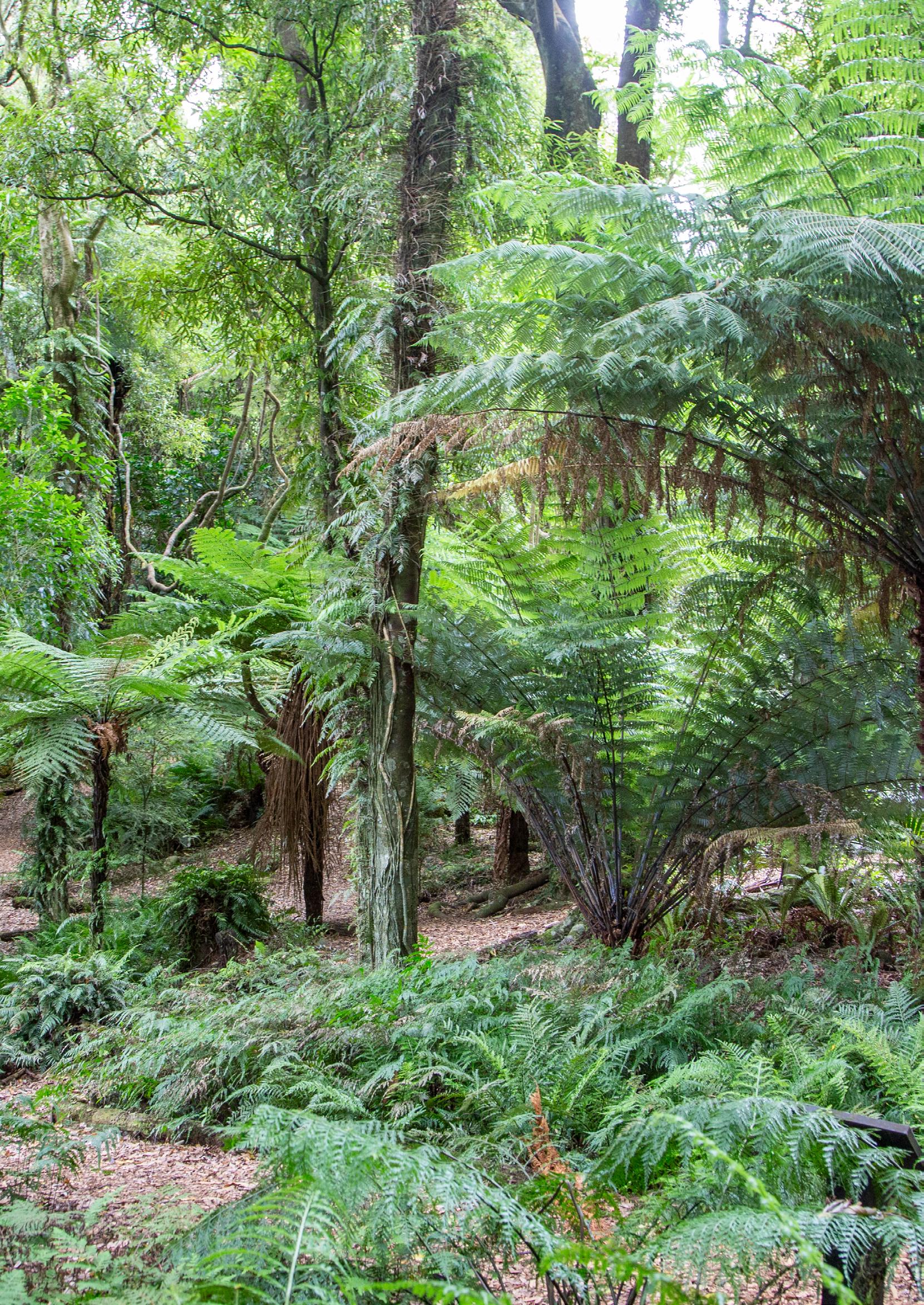
Today the reserve known as Ōtari Wilton’s Bush is a very popular destination for locals and visitors alike.
Tim Park, Manager of the country’s only botanic gardens dedicated solely to native plants, reckons Job Wilton would be very happy to see the way Ōtari is connecting people with nature today.
No longer a place of many snares or traps
Before Job Wilton, Māori settlers had long appreciated the abundance of flora, fauna and birdlife in the area.
In fact, Ōtari was originally called Ōtari Kākā, a place of many snares or traps, a place where you could catch many Kaka.
Thanks to Job and his foresight to fence off and preserve seven hectares at the top of the bush, Kākā along with Kererū, Kārearea. Kākāriki Tūī, Pīwakawaka, Kōtare, Riroriro and Ruru all call Ōtari home.
‘All weathers, no excuses’
In 1906 the forest was gazetted as a scenic reserve and then in the mid1920s the Ōtari Open Air Native Plant Museum was established. The idea

12
was to bring plants from all over New Zealand into one place for research and conservation purposes.
There are approximately 1200 species, hybrids and cultivars and almost all have been raised from cuttings or seeds collected from the wild.
Ōtari Wilton’s Bush today consists of 100 hectares of native forest and five hectares of plant collections, and it’s a great place to visit according to Tim Park.
“It’s a great place to walk with a variety of styles of tracks, from wheelchair accessible to rugged tramping tracks."
He says there are guided walks, nature trails, treasure trails and amazing views, with lots of resting places along the way.
There’s a picnic area with free electric BBQs and a visitor information centre that‘s reached via a 75-metre canopy walkway, 18 metres above the forest floor. “All weathers, no excuses,” he laughs.
Open 24/7 and free
Tim recommends a two-hour first visit, which allows you to familiarise yourself with what’s available in the reserve and then return for a half-day walk to the skyline.
“It’s a lovely walk that allows you to see the gardens, forest and great views of the city towards the top.”
He says if you like a flat walk you can park in the northern carpark and enter the forest from there.
The reserve is open 24/7 and information on Visitor Centre opening hours and other events and venues can be found online at wellingtongardens.nz
Dogs on leads are welcome at Ōtari.

13
Photos: above: from left Rose and Grace Friend, Baxter, Aroha Dalton.
Previous page: from left Tiriti Dalton and Maia Bouzaid.
Photography by Destina Munro
Lifetimers living the good life
Carol and Chris Chambers are a pair of Silver Nomads with nothing but good things to say about Marram.

The North Shore couple retired 18 months ago and say they’ve barely been home for half that time, preferring to hit the road, staying in Marram holiday homes wherever possible.
“Even with the additional Lifetime fee, Marram’s still good value, reliable and we know what to expect,” Carol says.
The couple estimates on average Marram homes cost around half to two-thirds the price of other accommodations.
They say they stayed in the Wellington apartments recently for $104 a night for 10 nights, but an Airbnb in New Plymouth cost $136 a night, and another in the Wairarapa was $170 a night.
Carol and Chris are particularly fond of the Taupo homes where they say the House Volunteer has created an atmosphere that is bright and spotless and planted pots, all with such loving care.
They have particularly fond memories of their first stay with Marram in Mt Maunganui.
“We had a 3-year-old and an 11-month-old and it was the most perfect location. The baby took his first steps in that holiday home.”
Note: You become eligible for Lifetime status once you have worked for Marram Affiliated Organisations for five years, and been contributing to Marram continuously for the last two years.

14
Marram Lifetimers Chris and Carol Chambers.
Please don’t wreck it for others
Marram’s holiday homes give you great value for money and to help keep costs low, we all need to do our bit cleaning and respecting the homes, please.
The homes are all thoroughly cleaned before you arrive but you’re expected to tidy up and do some basic cleaning before you leave.
• Dirty dishes should be washed, dried and put away.
• If you’re using the dishwasher to do this, please put it on before leaving.
• Rubbish bins must be emptied.
• Any furniture you’ve moved needs to be put back in place.
• Please wipe the benches and appliances.
• And please clear your history from the Smart TV’s internet browser before leaving.
The house volunteers and cleaners work to tight schedules preparing the homes for you, and as Kaitiaki (guardians) and beneficiaries of this great little community trust, we all need to help them by tidying up at the end of our stays.
If you leave the home in an unacceptable state, Marram reserves the right to pass any extra cleaning costs on to you. In extreme cases or multiple offending, you could be banned from further bookings.


15
Meet the artist
By Sue BurginAlfred Memelink, whose colourful cityscapes now hang in Marram’s Wellington apartments is a full-time artist and part-time marine engineer
But it wasn’t always that way, the Petone artist didn’t pick up a paintbrush until he’d been many years at sea.
“I’ve always loved the sea. I’d spend hours as a child, by the harbour watching ships coming and going and unloading.”
After qualifying as a marine engineer he spent years on ships based all over the world in places like the Baltics, Singapore, the English Channel and Antarctica.
‘A great hobby to take to sea’
However, while plying the New Zealand-Japan container route on the Aotea that he realised he needed a hobby.
“Watercolours are a great hobby to take to sea,” he says, “So when we hit the next port in New Zealand I rushed to Whitcoulls to buy the paints and brushes then visited a second-hand bookshop and left with a bag full of 'how to' books.”
“My first watercolour was a simple view outside my porthole window of clouds and blue sea.”
Three years later he held his first exhibition at Wellington’s Aro Street café.
A partnership between the artist and the medium
Today Alfred’s only part-time on the ships and spends most of his time in his Petone gallery or painting. “The tables have turned and now I go to sea as my hobby.”
When I caught up with Alfred he was at the Port of Lyttleton working on the Wellington Harbour tug, in dock for servicing.
I asked him to describe his art.
“Some think it’s colourful, it can be moody and sometimes happy. Watercolours have a mind of their own. It’s a partnership between the artist and the medium,” he says.
Spot the Seagull
Alfred says he has an affinity with Wellington Harbour.
“It’s the best in the world and holds a special place in my heart. It’s a mecca for artists, hemmed in by hills and cosy.”
But he says he loves the city too with its nooks and crannies, picturesque streets and ability to provide a great scene even on a rough day.
There’s a sure-fire way to be sure it’s a Memelink you’re looking at, whether it’s a seascape or a cityscape, there’ll always be a Seagull somewhere in the picture.
“It’s a subtle symbol of my connection with the sea.”
Affordable accessible and all about Wellington
He says ordinary people buy his art because it’s affordable and accessible, and they can relate to it.
Call us ordinary Alfred, because here at Marram we love your mahi.
And the feedback from those who’ve stayed at our recently refreshed Wellington Apartments has been very positive.
You can look at Alfred Memelink’s art online at: www.memelink.nz
Or visit his Petone Artspace Gallery, 223 The Esplanade, Petone.

16


17
Photos: Previous page, One rainy eveningOld Bank Corner.
This page anti-clockwise from top left: Autumn in Aro Street; The Voyage South, storm in the Southern Ocean (painted while on a IPY voyage on board the NIWA research vessel RV Tangaroa in February and March 2008); Autumn in Kelburn; Wellington apartment featuring Old Bank Corner art; Alfred Memelink in front of his Artspace Gallery in Petone.
Staff profile - meet Marram's Design Editor
Destina Munro
By Sue Burgin"I love what Marram stands for.”
“Mum and Dad valued family holidays, and for 62 years I’ve been lucky enough to enjoy wonderful family holidays at the family bach in the Marlborough Sounds. I believe holidays hold families together, and Marram gives families the same opportunities to get together and have great holidays.“
Marram’s Design Editor Destina Munro says it was a fortuitous day, that day in November 2020 when she caught up with a former colleague for coffee. She was looking for a new job and her colleague, Marram’s Content Editor, was looking for someone with design skills to join her in the Marram Marketing team. The stars aligned and within weeks she’d joined the Marram team.
Happy beginnings in Nappy Valley
Destina remembers a very happy childhood in Wainuiomata, fondly referred to at the time as Wellington’s Nappy Valley. She was born in Tokoroa but moved with her family 10 days later to their new home in Wainuiomata.
“There was always something to do, somebody to play with and it was all free,” she remembers.
“We had trolley races, and marble competitions and played with neighbourhood kids, often until dark, on the road. It was safe, everyone knew everyone and in those days the Mums were all at home.”
Kids in those days spent a lot of time outside and Destina says she spent many hours helping her father with outdoor chores.
“He taught me to weld while he was building a 23foot steel motorboat, and showed me how to do panel beating, change tyres and do car maintenance.”
By the time she was 20, Destina had a Boat Masters Certificate and a Car Maintenance Certificate.
Enter Magnum PI
Destina hasn’t always worked in the design area, she’s worked in offices, the Psychology department at Victoria University, teaching office systems to Access students at Whitireia and more recently shorthand and photography to journalism students at Whitireia and Massey University.
She remembers one particular job with an engineering company very fondly.

The man who interviewed me, Mr Munro, reminded me of TV private investigator, Magnum PI with the same attractive dimples.
After 12 months in the job working as his PA we set up a social club and the rest is history.
“We became less social and preferred dining by ourselves,” she laughs.
“I think I got that job because I had the Boat Masters and Car Maintenance qualifications, but Dave admitted later, learning Dad had a boat actually sealed the deal.”
Outback adventures a life highlight
Now a couple, Dave and Destina crossed the Tasman looking for new adventures in Perth.
“We had a fabulous couple of years in Fremantle when I was working for the BNZ America’s Cup, running the Supporters Club and working with a great bunch of people.”
However, after two years in Western Australia they decided it was time to return home, and they did, driving from Perth across the Nullabor, up through the centre to Mt Isa and across to McKay before leaving from Sydney.
“It was summer and we were driving a car with no air conditioning and sleeping in a tent. During the day it could be close to 50 degrees in the shade, and at night we slept under wet towels, the temperature never dropping under 30,” Destina remembers.
She says they travelled across that vast continent acing the locals at the pool table in some pretty rough drinking holes.
“It was a harsh environment, not too many women, no snakes though, and some pretty scary thunderstorms.”
The beachside town we call home
It seems the testing nature of that trip proved a good foundation for the next adventure, marriage and children.
“First we bought the cottage in Plimmerton and then, while out celebrating our purchase, decided to get married.”
Destina says they lived in the little 560-square-foot cottage for four years while they planned and built a new home on the land. “Our first baby, Jonathan arrived, and so began the never-ending project that is our house.”
Jonathan learned to crawl on concrete and soon had a baby sister to keep him company on the building site.
“When Jonathan was just 10 weeks old Dave got made redundant, so he picked up the tools and got to work
18

on the house. He and Dad finished the downstairs while we lived upstairs with no running water and a makeshift kitchen for four months."
So when did you finish the house?
Destina laughs, “I don’t think we did. We’re on maintenance and finishing off still today. Looking back we certainly couldn't have done what we did without Mum and Dad lending a hand and the kids loved having their grandparents around.”
Destina had fallen into teaching and loved it. Her background in office administration and teaching design came in handy when she and Dave moved on to a new project in the wine industry.
“Dave was managing the development of Ohau Wines, a winery and subdivision in the Horowhenua. I managed wine tours, did the design work and managed the sales team.”
Into the future
As a youngster Destina floated the idea of becoming a ballerina, and her life might have looked very different today if she hadn’t been told as a 13-year-old to forget about dancing because of a foot problem.
“Ballet consumed my life in my teenage years, but that was easily replaced by family life and a passion for photography.”
She belongs to the Porirua Photographic Club and has won awards for her photographic work, you can visit her website: www.destinamunro.com
In 2014 she completed a Bachelor of Art and Design, majoring in photography at Whitireia.
Looking ahead, Destina lists travel to see her children now living in Perth, London, Quebec and Auckland, and eventually becoming a Marram Lifetimer as her goals.
Meanwhile, she’s enjoying her work at Marram, happy to be helping others enjoy the benefits of great family holidays.

19
Photos: above, Destina at home with Jackyboy. Photography by Dave Munro. Below: Destina and Dave enjoy summer holidays in the Marlborough Sounds. Photography by Chloe Munro.
Show us your best summer!
The winning photos in this summer's photo competition evoke happy memories of a cracker El Nino summer! Congratulations to the three winners pictured below, Kate Abel, Rochelle Hedges and Paula Savage. Plus a selection of your summer pics are shown on the right.


Left: Rochelle Hedges - taken at the beautiful Tāhunanui Beach near Nelson. Our 19 month old is enjoying the beach on a stunning evening as the sun was beginning to set. We are so grateful for the lovely Marram holiday homes, they bring us so much joy as this picture captures!
Delina Webster - father and daughter time... perfect end to a summer's day.

20
Above: Kate Abel - catching waves at Tōtaranui Beach! Having lots of fun swimming and enjoying the summer sun. Spending quality family time with Dad.


21
Top row: Sharyn Fairfield with her son jumping from the Moeraki Boulders; Hiren Patel at Port Hills in Christchurch, overlooking Quail Island and Diamond Harbour.
Middle row: Janice Tan reunion with friends and whanau at Owera Beach; Niels Peyre, making memories as sun sets behind Mt Karioi, in Raglan.
Third row: Damodar Neupan, while on holiday in Wellington; Anja Claassen, surpise anniversary weekend away for very happy partner; Colin Morris's dog Sam enjoying his holiday and looking very dapper.
Right: Carissa Gillies cooling off in the hot weather - first time for an iceblock! Leonie Mabbett, at Baylys Beach, rock pool at sunset.
YOUR AUTUMN WATCH LIST
A DOG'S PURPOSE - NETFLIX
 Reviewed by Fiona Van Eyssen
Based on the beloved best-selling novel by W. Bruce Cameron, A Dog’s Purpose shares the soulful and surprising story of one devoted dog who finds the meaning of his own existence through the lives of the humans he teaches to laugh and love. This is a great family-friendly movie but you will need tissues! Younger viewers may need parental guidance.
The story begins with a happy puppy entering the world, ready to play and explore. Sadly for the puppy, his life doesn't last long. After passing away, the puppy is surprised to come back as a puppy again. This time as a family pet named Bailey who becomes the best friend of the son of the family. As time passes, the boy grows up and heads to college and Bailey passes away again, happy to have lived a long life with a human he loves.
Bailey comes back again and again and again, always as a different dog breed (or gender) with a different life purpose. Finally, after many lives, he realizes that his purpose in life is to spend time with the people he loves and help them navigate life as much as he can.
I really enjoyed Josh Gad’s voiceovers. His voice is phenomenal and suits all the dogs in the story so well. The cinematography is also spoton, often showing specific scenes from the dog's perspective which is a genius idea and forges a deeper connection with the character.
If you enjoy this movie there is a sequel called A Dog’s Journey which is an equally enjoyable watch and completes the story so well.
I ‘m highly recommending it for all the dog lovers out there. After all, they’re part of the family as I’m sure Baxter would agree.
I highly recommend it.

22
THE LAST DAUGHTER - NETFLIX
 Reviewed by Sue Burgin
Australia’s shameful past hits home in this awardwinning Netflix documentary.
The Last Daughter brings the brutality of that country’s stolen generations right into our living rooms and it’s both confronting and a story of love and hope.
Brenda Mathews, a proud Aboriginal woman documents her government-ordered abduction as a very young girl when she was forcibly removed from her biological family.
She was placed in the custody of white foster parents who raised her in their family home for five years before being directed to return her to her Aboriginal family.
Forty years later Brenda sets out to try and fill some big gaps in her memory of the past. She remembers growing up with a white family but not where they went or why they disappeared from her life.
She particularly remembers a “little white sister” whom she shared a very close bond with.
Real video footage and old photos illustrate a beautiful and happy childhood friendship in a very happy home.
Unfortunately, that’s all we see of her ‘white sister’ Rebecca who has died before Brenda finds and contacts her ‘white parents’ Mac and Connie.
It’s a happy reunion with Mac and Connie who set out wanting to help children needing a home and who were less fortunate than they were but were distraught to find the story they’d been told by the authorities was far from the truth.
Officially the right to remove Aboriginal children from their parents was abolished in 1969 but records pertaining to Brenda and her siblings show it was still happening as late as 1973.
As you would expect Brenda’s biological mother Nana Brenda, who had all seven of her children taken away, is not keen on her daughter’s wish to reconnect with her ‘white parents’. However, a lot of healing happens as truths emerge.
This documentary will have you reaching for the tissue box for sure – but it’s more than just another tear-jerker. It’s a story of hope and how lost memories can return. It’s a story about wounds being healed. It’s the story of Brenda, a child of the Wiradjuri from Bunjalung country in Queensland, one of Australia’s stolen children.

23
From the Marram kitchen
Pavlova
by Sue BurginHands up, who can’t make a Pav?
That dreamy sugar cloud of a desert invented by a New Zealand chef to mark the visit of Russian ballerina, Anna Pavlova in 1926.
I’ve lost count of the number of people who claim they can’t or are too scared to make one of these quintessentially ‘down-under” deserts.
Honestly, there isn’t a lot to go wrong in this incredibly forgiving desert.
If it cracks or sinks in the middle or you drop it on the ground as I once did, a good slathering of cream or yogurt and a handful of berries will hide your shameful secret.
And as for ingredients, it couldn’t be simpler.
Four to six eggs, a cup of caster sugar, 1 tsp of vinegar and 1 tsp of vanilla essence.
Quick question, when it comes to this Kiwi icon, are you in the crispy meringue type camp, or, like me, camp crispy with a good marshmallow centre?
Do you like to flavour your pav? Cocoa and coffee work well. I always use golden castor sugar for a slightly caramelised flavour that people seem to love.
Anyway when it comes to Pav, this is how I roll.
• Heat the oven to 160 degrees, you’ll drop it back to 100 once the Pav has browned a little. (15 minutes or so).
• Wet a piece of baking paper and cover your oven tray.
• Beat egg whites and a pinch of salt until stiff and standing up.
• Now add the sugar very slowly while beating fast until it’s very thick and glossy. This requires patience and takes time, there can be no shortcuts here.
• Gently fold, or beat in on slow speed for about 20 seconds max, the vanilla and vinegar.
• Now freeform the mixture to form a nice deep mound of the baking tray. It will spread out a little on baking.
How long in the oven? Well that can vary according to your oven, the weather etc, it’s an inexact science. I find a quick tap with the finger to see if it’s crispy to the touch is about the best way to tell when to remove it from the oven. Then it must sit for a couple of hours before crowning it with cream and berries, Passionfruit, Kiwifruit, Pomegranate or wherever your imagination and tastebuds take you.
So next time you’re holidaying in a Marram holiday home, celebrate by paying homage to a great Russian ballerina and make it a holiday to remember.

NOTE: Remember to throw your electric beater in the car before heading off, beating it with a whisk might be too big an ask.

24
Russian prima ballerina, Anna Pavlovna Pavlova[a] visited New Zealand in 1926. The first known recipe for the pavlova dessert was published in New Zealand in 1929.

With pressure on the household budget increasing, Marram can help financially with day to day healthcare expenses and affordable holiday accommodation in over 145 holiday homes throughout New Zealand. Many are pet friendly.
You know how well this works for you, so Marram asks you to share the opportunity with as many of your colleagues as possible. You’ll both be rewarded in the process.
SPREAD THE WORD WITH YOUR MATES:
If they sign up mentioning your name, you’ll both receive a gift voucher of your choice. How about $50 to spend on the next family shop or fuel; or $60 to put towards your next family holiday.
Note: vouchers are not issued until the referree has completed the sign up process and their contributions have started.
You’ll be contacted approximately 3-4 weeks after promotion closes to choose your voucher.

*Terms and Conditions
Please make sure to tell your workmate that they will need to choose “Referred by Marram Contributor” when asked how they heard about Marram during sign-up.
T’s & C’s apply
Referral
DON’T FORGET TO TELL THEM: • Partner and children included for free; • $50 birthday gift towards a Marram holiday - every year; • Healthcare benefits of over $6,400 per year; • Works alongside your health insurance; • Includes pre-exisiting health issues; • And more...
Standard Marram
Referral LOOK AFTER YOUR MATES! Go to marram.co.nz and sign up today! Runs 26 February to 5 pm 11 March 25
HOT OFF THE PRESS HOT OFF THE PRESS
MAKING THE MOST OF YOUR ANNUAL LEAVE IN 2024
Leading recruitment agency Hays has done all the hard work for you.
The agency looked at how to achieve the maximum possible downtime by taking advantage of public holidays and weekends.
These annual leave hacks for 2024 will allow you to plan well ahead, giving you a better chance of securing the Marram holiday home you want.
MOLEMAP DISCOUNT
You simply use the code MCHECK23 when booking until December 2024.
This lets MoleMap know to apply the discount at time of payment. You can then use your receipt to apply for 60% of the cost through Marram.
MoleMap is offering full body mapping and less expensive skin checks at the discounted price.

BAXTER'S BLOG

You can read more about Baxter's firm opinions from a dog’s view in Baxters Blog on www.marram.co.nz

Public Holiday Book leave on these days Number of total days off Christmas, Boxing Day and New Year’s 23/24 27-29 December 11 Waitangi Day 5 February 4 Easter 2-5 April 10 ANZAC Day 22-24 April, 26 April 9 King's Birthday 31 May 9 Matariki 1 July 4 Labour Day 25 October 4 Christmas, Boxing Day and New Year's 24/25 23-24 December, 27 December, 30-31 December, 3 January 16 26
BOOK NOW - 0800 665 362 molemap.co.nz

Marram can not only help reduce the cost of your next family holiday but also help you to get there for less!
The fantastic 10% discount with Interislander is available from now until 15 December 2024.
• Reservations must be made via www.interislander.co.nz
• You must be over 18 to claim this discount
• Marram ID must be shown at check-in
• Use code XMCT1 when asked to apply your discount
• Normal booking conditions apply - eg, Easy Change is 100% refundable if cancelled
• Regular rates apply to bookings made through call centre/groups desk


10% OFF!
Marram Interislander deal


28 Marram Community Trust PO Box 24006, Wellington 6142, New Zealand ph: 04 801 2920 | fax: 04 385 3558 | support@marram.co.nz | www.marram.co.nz facebook.com/MarramCommunityTrust instagram.com/marram_community_trust_nz