BLOCK STREET & BUILDING
The Best of New Urbanism in Arkansas




8 Letter from the Arkansas Municipal League 10 Letter from the Editor
12 THE PLANNER’S PLANNER
The enduring legacy of Jim Von Tungeln.
14 LIGHTNING ARENA
Our vision for transforming Southwest Little Rock.
18 A GROUNDWORK FOR GROWTH
Tackling housing issues in Northwest Arkansas.
22 REIMAGINING CAPITOL AVENUE
A blighted street can become the center of a more vibrant, livable downtown Little Rock.
26 LEGACY AND VISION
Brent Salter is shaping Conway’s growth.
28 FROM WHEELS TO WALLS
Arkansas’s food truck revolution.
30 THE POWER OF PRESERVATION
40 BASE CAMP ARKANSAS
How outdoor recreation, placemaking and the creative economy can make Arkansas a top destination.
42 RYAN BILES AT THE HELM
Cultivating hope in forgotten places
44 ULI SMALL CITIES INITIATIVE
Empowering sustainable growth in Northwest Arkansas.
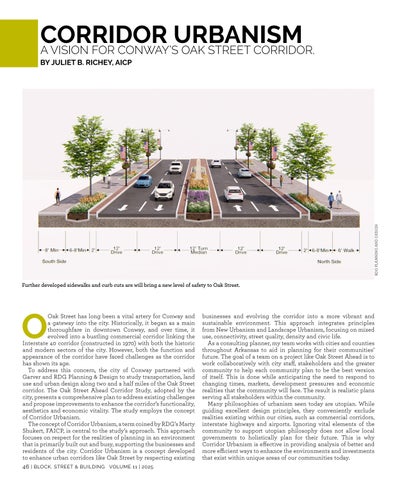
46 CORRIDOR URBANISM
A vision for Conway’s Oak Street corridor.
48 CRAFTING CULTURE THROUGH DESIGN
Industrial roots with a forward-thinking aesthetic.
52 BUILDING OPTION AND OPPORTUNITIES
Federal investment in active transportation
56 PROVOCATIVE EXCELLENCE
Historic tax credits fuel downtown Little Rock’s revival.
34 A VISION FOR ZONING REFORM IN ARKANSAS
How updated planning can address housing challenges
38 PRIVATE DORMS, PUBLIC CONCERNS
The impact of student developments on a university town.
How local ingenuity and collaboration are redefining success in the Delta.
58 BUILDING WITH PURPOSE
First Security’s Technology Center further invests in Searcy.
ON THE COVER: ‘Big Emma’ aims to add more affordable housing for an ever-growing population in Northwest Arkansas. Read more on page 18.





A Special Publication of Arkansas Times Produced in partnership with the Arkansas Municipal League
bsbnewurbanism.com
BROOKE WALLACE Publisher brooke@arktimes.com
JAMES WALDEN Editor
CALEB PATTON Managing Editor caleb@arktimes.com
MANDY KEENER Creative Director mandy@arktimes.com
LUIS GARCIAROSSI
TERRELL JACOB
KAITLYN LOONEY
LESA THOMAS Account Executives
WELDON WILSON Controller
ROLAND R. GLADDEN Advertising Traffic Manager
KATIE HASSEL Digital Content Manager
MIKE SPAIN Advertising Art Director
ROBERT CURFMAN IT Director
CHAROLETTE KEY Billing/Collections
ANITRA LOVELACE Circulation Director
ALAN LEVERITT President


was told this issue of Block, Street & Building was “loosely” about change. I’m never one to overthink things, so lemme charge full steam ahead with change. I love music and movies. I often find solace and joy in both art forms, along with motivation and the ever-so-difficult self-evaluation. Storytelling by lyric or script helps me see or feel something different and react accordingly. In my personal world that may involve family, a good friend or myself. In my professional world those art forms keep me energized to deal with whatever may be around the next bend. I’m not a Swiftie although I do like some of Taylor Swift’s music. The lyrics to her song “Change” make clear that we can overcome obstacles and come out much better off than we were when we started. “We’re getting stronger now. Find things they never found. They might be bigger but we’re faster and never scared.” That’s a stout anthem. I like the nevergive-up attitude. Sometimes in life, you just gotta get through the bad stuff to get to the good stuff.
On the movie side of things, Unbroken tells the true story of Louis Zamperini, a true American patriot and hero. Zamperini competed in the 1936 Olympics and became a bombardier in World War II. His aircraft crashed in the Pacific and after 47 days adrift his raft reached the Marshall Islands. He was taken prisoner by the Japanese Navy, where he remained until the war’s end. The abuse he suffered was horrific, but through it all he remained very strong in part because of his faith and in part from the advice his older brother Pete gave him: “If you can take it, you can make it.” And my personal favorite: “A moment of pain is worth a lifetime of glory.” Adaptation it seems comes in multiple forms. Yet another lesson on change that we can all apply to our personal and professional lives.
I routinely witness the necessity of change, or adaptation as it may be, in municipalities—often with very little notice. My good friend and past Arkansas Municipal League president, Cave City Mayor Jonas Anderson, found that out in the most grueling of ways. Cave City, his hometown, was absolutely pummeled by an F3 tornado in March of this year. His is but one of many such stories over the past several years. Just ask your Google machine about Arkansas cities and towns that have been struck by tornadoes in the past five years. If this tells you anything, there’s a tornado database for Arkansas exclusively. That site says 237 in five years, and we’re not halfway through 2025. Cave City, like dozens of other communities, has been thrust into change with absolutely no choice in the matter. Dramatic? Yes. Reality? Also, yes.
Some municipal changes are more mundane, although every bit as important. Replacing and modernizing equipment at the city wastewater plant isn’t going to go viral unless something really bad happens. I’ll leave that sort of incident to your
imagination! Yet that change is paramount to a healthy and vibrant community. Let’s explore some others that are more readily evident. Downtowns are being reinvigorated around the state. Arkansas has some wonderful downtowns that are unique, historic and just plain fun! Here are a few, with the caveat that I LOVE all the downtowns in Arkansas:
• Fort Smith has the U.S. Marshals Museum, Judge Isaac Parker’s court room and a statue of famed Deputy U.S. Marshal Bass Reeves…and his dog!
• Batesville brought daily life to the forefront with a fully remodeled and operational theater from yesteryear, dining experiences of all kinds and the Batesville Music Bash!
• El Dorado reinvented itself by supporting the creation of the Murphy Arts District that spawned shops of all varieties, music festivals and a grand farmers market!
• Bentonville went from sleepy to the place to be, where you can walk from one of many hotels to a world-class art museum and the Walmart Museum, dine to your heart and tummy’s desire, and bike ride like no other place in the country!
• Paragould in Greene County blends history with modern convenience where visitors work, eat and play!
• Mammoth Spring—both a city and an actual spring that is the headwater of the Spring River—has a beautiful park where trout are plentiful, along with incredible historic buildings and the added bonus of being home to actress Tess Harper!
• Magnolia has a quaint courthouse square complete with dining and shopping opportunities and is also home to Southern Arkansas University and the World Championship Steak Cook-Off!
The theme for the League’s 91st Annual Convention is “Rooted. Resilient. Rising.” And when we think about change, it’s easy to connect the dots: The ability to embrace change is rooted in resilience. And when Arkansas’ cities and towns embrace the changes that come their way, they will RISE. It’s evident in these downtowns and in hundreds more around the state.
The strength to change is embedded in municipal leaders who deeply care for their communities. Sam Cooke wrote and sang “A Change is Gonna Come.” Avoiding it is not an option, because it will come. “Oh yes, it will,” as Cooke sang. Each of us can invite change to our hometowns. By doing so we make them better places to live, work and gather. After all, Great Cities embrace change and that makes a Great State.

Mark R. Hayes Executive Director


Change. It seems to be everywhere these days. We see it in technology, politics, culture, the environment, institutions, etc. Love it, hate it, fight it or foster it — IT happens, no matter what. As such, the biggest question is: How we deal with it? Do we attempt to foster change and embrace the possibility of what it could represent? Do we ignore that it is happening and let its forces work on us more than we work on it? Do we work with it and protect what we value while allowing creative destruction to make use of the rest?
Change brings uncertainty. It brings both the possibility of making things much better and the possibility that things may worsen. This unknown is both exciting and terrifying. It’s often challenging to understand how change might turn out until you’re in the throes of it.
Cities are a prime example of change in action. In 1950, it would have been unthinkable to consider a future where more than half of the 10 largest U.S. cities of the time wouldn’t even rank in the top 20, with a few even slipping out of the top 50. Likewise, one could not imagine how a mixture of federal policy, lending guidelines, infrastructure investment, zoning, and other factors could nearly irrevocably change the collective urban landscape. Still yet, it happened.
That is the focus of this edition of Block, Street & Building: Change. It’s about the people working toward change, the projects that are changing places, efforts to protect and preserve valuable assets from unnecessary change, and the work to effect change, building by building and community by community across Arkansas. You’ll read stories about people who are and have been change agents and stories of projects working to impact communities, as well as stories of plans and policies that stand to transform and transfigure the future of our Arkansas cities. I hope these stories inform and inspire you toward being an advocate for better planning and places for our state.
I’d like to express sincere thanks for again being given the opportunity to serve as editor for this edition of Block, Street & Building. It’s an honor to play a role in such a unique publication with an important mission, celebrating the best of urbanism in Arkansas.
James Walden, AICP, is an urban planning leader with Garver.


BY JAMES P. WALDEN

Planners are seldom heralded. Though their work is felt by all in a community, attribution of that work is often hidden behind layers of steering committees, planning commissioners and elected officials whose opinions and approvals shape and bring a planner’s work to life. But if planners had a pantheon of pillars within the profession, Jim von Tungeln would be first among those listed.
With a career spanning over 50 years and countless night meetings on the road, he’s accumulated a long list of accomplishments, an impeccable reputation and a full catalog of great stories stolen and retold by others. Von Tungeln’s work has impacted communities in every corner of the state, played a deciding factor in a land-use case before the Arkansas Supreme Court, resulted in an immeasurable amount of sage advice to many vexed planners and mayors, and leaves a legacy of public service with organizations like the Arkansas Municipal League and Little Rock Planning Commission. He’s an equally fascinating person with a life story fit for the printed word and screen.
A native son of Pine Bluff, he grew up on the outskirts of the city’s southside where the von Tungelns lived and operated a country grocery store. Like so many his age, the novelty of television spurred his imagination and opened a new world to him. He recalls watching “I Love Lucy” and being mesmerized by the idea of city life where a young man like Little Ricky could live in a fancy apartment building and walk down the street to get ice cream. This early fascination with the city laid the foundation for his future career in urban planning.
Like many who grew up with parents who endured the Great Depression, his family saw education as a worthy pursuit. This nudge brought him to the University of Arkansas, where he majored in architecture. This decision was a compromise between his own interests and his father’s wishes for him to become an engineer. He took every course he could related to urban planning and fondly remembers a seminar by Ian McHarg that laid out the theoretical foundation for “Design With Nature,” one of the planning field’s most highly celebrated texts.
Following graduation in 1966 and seeking adventure and opportunity, he landed in San Francisco. Opportunity came in the form of a job as a draftsman with Babcock and Wilcox. Adventure came in immersing himself in a city of remarkable beauty and vibrancy, one 15-cent bus or trolley trip at a time. It was amplified by living near HaightAshbury while the hippie movement was fomenting a countercultural revolution. This adventure was short-lived due to his 1-A draft classification. By 1967, he’d joined the Navy just in time for the Tet Offensive and found himself stationed on mainland Vietnam in the Naval Security Force protecting naval bases. A tour of duty and a year and a half aboard the USS Hunley later, he was honorably discharged to return to San Francisco.
As Von Tugeln says, his “sainted mother” begged him to stay a while in Pine Bluff before returning to San Francisco. Searching for jobs, he experienced the discrimination commonly felt by Vietnam veterans. Through a circuitous route of connections, he ended up interviewing in downtown Little Rock with the upstart Urban Planning and Development Corporation run by Tommy Hodges and Jim Vines. Flush with upcoming planning projects funded through the 701-planning program, a part of urban renewal, the company hired him on the spot. Always being the first to arrive and last to leave, Von Tungeln was soon asked to tackle production for the firm, and his career took off. He became a junior partner within a few years. It was a significant time for his personal life as well.
A move to a new apartment and a chance encounter with a pretty young farmer’s daughter and Lonoke school teacher left him smitten. His charm over his looks eventually won her over. Jim and Brenda later married, forging a lifelong love and litany of enumerable stories that Von Tungeln lovingly enjoys telling.
The late 1970s into the 1980s were a turbulent time in the planning profession in Arkansas. The establishment of planning and development districts decimated private firms in the state. The Reagan administration ended the 701-planning program, and federal revenue sharing with local governments nearly finished them off and ended many cities’ efforts at planning due to financial distress. This period led to professional shifts for Von Tungeln, handling grants and business development for a regional engineering company. For a time, he took up real estate appraising. Things changed with a monumental pivot in state policy.
During his career, certain work has stood out. Von Tungeln served as an expert witness in the Utley v. Dover case, a matter over an annexation conducted by the city of Dover, heard by the Arkansas Supreme Court. His testimony proved pivotal in the favorable decision for Dover, with the court stating, “… the testimony of Mr. von Tungeln on this criterion clearly supports the trial court’s decision; therefore, we cannot say that the trial court’s finding on this point was clearly erroneous.”
Other projects were comprehensive plans for the cities of Paragould, Batesville and Arkadelphia. A mark of a good plan and an even better planning effort is implementation. Each of these plans saw significant portions of the plan directly implemented. Von Tungeln notes these efforts stand in contrast to some of the planning he saw earlier in his career during the 701-planning program. In those days, some efforts by cities were treated as perfunctory work to unlock access to more grant funding.

In 1981, U.S. Rep. John Paul Hammerschmidt and Don Zimmerman of the Arkansas Municipal League teamed up to get the local option sales tax enabling statutes passed. Broad adoption of the local option sales tax by cities took a while, with Forrest City being one of the first to put the issue before voters. By the late 1980s and early 1990s, use of the local option sales tax became common … and Von Tungeln’s phone started ringing.
After old clients began reaching out, he decided to start his own planning firm. The decision proved fruitful, and his phone hasn’t stopped ringing since. And while other work might have proved very lucrative, his desire to advance the public interest by applying his planning knowledge left him diving back into the practice he loved.
In the late 1990s, he was brought on staff with the Arkansas Municipal League to help deal with the influx of planning issues that began perplexing mayors and city attorneys. Over his career, he has built a lengthy client list from places like Little Rock all the way to small towns like Keo. Von Tungeln estimates that he’s directed projects in over 75 Arkansas cities and provided assistance to the majority of Arkansas’s nearly 500 cities and towns.
Those efforts over 50-plus years have led him to other lessons learned as well. Von Tungeln says, “Planning is public administration,” a point he says many who dabble in planning fail to grasp. Von Tungeln sees the error of many who view urban design as a sole solution and who casually ignore issues of politics, property rights and decades of precedence established through case law and planning statutes. “Planning is about moving vision into policy,” he states. He views the stunning graphics produced by many urban designers as inspiring, but says, “Pretty pictures must have substance,” a view that conveys the necessity that design can’t just inspire, it needs real policy to implement it.
When projecting a future course for planning in our state, Von Tungeln identifies education and selling of the value of planning. He sees a critical need for more in the profession and allied professions to operate from a strong understanding of the legal and practical foundations of planning to address real and critical issues like aligning utility capacity with land-use patterns, as well as addressing the fundamental needs of communities like safety and affordable housing. Succinctly, he says, “There is more to planning than roundabouts and trails.”
Moreover, Von Tungeln sees a need for the profession to demonstrate its value. We live in a time where trust in government and respect for professional opinions are rapidly eroding. Planners must demonstrate that their abilities to see possibilities and understand the connectedness of systems matter. He believes planners must show why planning helps create better places.
Planners need look no further than Jim von Tungeln’s legacy to demonstrate their value. His work has bettered cities and the lives of so many across our state. His advice and knowledge have shaped law and countless decisions toward fairness and the interest of the common good. It’s a legacy that serves as a measuring stick and high bar for all that follow him.
BY JAMES SULLIVAN

A modern rendering of what the new arena will look like upon completion.

Little Rock has always been a city of remarkable diversity and resilience — a place where different cultures, backgrounds and perspectives converge to create a vibrant urban tapestry. Yet within this dynamic city, some communities have historically received less attention and investment than others. The Lightning Arena project represents an extraordinary opportunity to channel new energy, resources and excitement into Southwest Little Rock, celebrating its unique character while creating transformative opportunities for its residents.
I’m excited to share our vision for what we believe will become a landmark that embodies the spirit and potential of this community. When the Little Rock Lightning basketball team approached us at AMR Architects about designing their new arena, we immediately recognized the chance to create something far more significant than a typical sports venue. This project represents what we at AMR have always strived for: architecture that catalyzes community development and social change.
Southwest Little Rock has long been overlooked when it comes to major development initiatives. When selecting this location, we worked closely with the Lightning organization to ensure our design would address the unique needs of this community. Our team approached this project with a deep commitment to creating not just a building, but a resource that could help revitalize an underserved area.
The Lightning leadership shares our belief that meaningful architecture must respond to community needs. Together, we’ve developed a vision that goes beyond athletics to embrace education, economic opportunity and community pride.
One of our primary challenges was creating a cohesive design that would seamlessly blend the arena’s dual functions: a professional basketball venue and an educational facility. Rather than treating these as separate components, we’ve designed spaces that flow naturally between athletic and educational activities.
will be a

AS ARCHITECTS, WE SEE THIS PROJECT AS AN OPPORTUNITY TO DEMONSTRATE HOW THOUGHTFUL DESIGN CAN ADDRESS MULTIPLE COMMUNITY NEEDS SIMULTANEOUSLY.

The basketball court and training facilities connect visually and physically with classroom spaces, creating opportunities for inspiration and mentorship. We’ve incorporated observation areas where students can watch professional athletes train, along with flexible learning spaces that feature design elements celebrating the energy and dynamism of basketball.
This integration reflects our philosophy that form should follow function and create unexpected connections between different activities. The spatial relationships reinforce the Lightning’s holistic approach to youth development, where athletics and academics are complementary paths to success.
Providing spaces that could serve multiple purposes and provide added benefits was very important. Among its many features, the proposed 2,500-seat arena includes event spaces and luxury skyboxes that we’ve carefully designed to not only provide a premium viewing experience, but these spaces are also crucial revenue-generating components that will help sustain the arena’s educational programs. In our experience, the most successful community-focused facilities are those with built-in financial sustainability.
This balance of commercial viability and community impact is something we’ve refined through years of working on mixed-use civic projects. By creating spaces that can generate ongoing revenue while serving community needs, we help ensure the long-term success of projects like the Lightning Arena.
Throughout our design process, we’ve focused on creating gathering spaces that foster connection and community pride. The facility includes areas for after-school programs offering free basketball training, academic support and financial literacy education in partnership with People Trust.
The architecture is intended to be welcoming and accessible, with clear sightlines, intuitive wayfinding and spaces that accommodate a diverse range of community activities. We believe that thoughtful design can break down barriers and create environments where everyone feels they belong.
When designing the Lightning Arena, we envisioned a project that could serve as a blueprint for similar community-centered developments. The arena will host up to 15 home games per season, bringing economic activity and entertainment to Southwest Little Rock, but its impact will extend far beyond game days.
As architects, we see this project as an opportunity to demonstrate how thoughtful design can address multiple community needs simultaneously. By creating a facility that supports athletics, education and economic development, we hope to inspire similar integrated approaches to urban revitalization.
Our design process has been deeply collaborative, incorporating input from community members, the Lightning organization and local stakeholders. We believe that the most successful architecture responds to the authentic needs and aspirations of the people it serves.
By listening carefully to the community’s vision, we’ve created a design that reflects Southwest Little Rock’s spirit and potential. The arena isn’t just our’s or the Lightning’s vision — it’s a collective expression of what this community can become.
As we continue refining our design for the Lightning Arena, we invite community members and potential supporters to join this transformative project. Those interested in learning more or contributing to this initiative can scan the QR code on this page.
At AMR Architects, we measure our success not just by the buildings we create, but by the positive impact they have on communities. The Lightning Arena represents an opportunity to create lasting change in Southwest Little Rock — to build not just a sports venue, but a better, more equitable future for one of our city’s most resilient communities.
BY DUKE MCLARTY


Nestled in the Ozark Mountains, Northwest Arkansas has long been considered one of the nation’s top places to live. With its rolling hills, vibrant communities and a perfect blend of urban and rural living, the region offers something for everyone. A polycentric region with four major cities and many smaller towns in between — each with their own unique character and charm — Northwest Arkansas is home to three Fortune 500 corporations, a renowned trail system, and world-class dining, arts and entertainment.
Up until about five years ago, Northwest Arkansas was often referred to as a hidden gem. It offered an unbeatable combination of good jobs, excellent amenities and affordable housing — a rare trio that attracted families, young professionals and retirees alike. For many years, affordability was one of the region’s strongest selling points.
But over the past five years, the region has undergone a dramatic transformation. Housing costs have skyrocketed by more than 70%, reshaping how people live, work and interact across the region. As the population swelled, driven by economic growth and national migration trends, the supply of housing failed to keep pace. Today, Northwest Arkansas finds itself grappling with a full-fledged housing crisis with real consequences for its future prosperity.
The rapid increase in housing prices has had a profound impact on the region’s quality of life. What was once an affordable place to set down roots has now become increasingly out of reach for many. The lack of attainable housing options has not only strained household budgets, but also forced many essential workers that we rely on every day for that high quality of life — teachers, nurses, firefighters and service employees — to commute long distances or leave the region altogether. Empty nesters can’t find a place to downsize to, and college graduates are being faced with the realization that they might have to leave the place where they grew up, for no other reason than they cannot afford housing.
This housing shortfall stems from a combination of factors: years of underproduction, a booming population, traditional zoning that favors large-lot single-family homes and infrastructure bottlenecks that slow down new development. These barriers have significantly constrained the production of homes and pushed new home development further and further away from our central business core, threatening many of the attributes that made Northwest Arkansas so desirable in the first place.
To solve this, we must grow differently. We need a comprehensive, forward-looking strategy that reimagines what we build, where we build it and how our communities evolve.
That’s where Groundwork comes in.
Groundwork is a nonprofit committed to advancing modern, evidence-based housing policies and practices that support a growing and diverse population. Groundwork’s work focuses on expanding access to a full range of housing types — including missing middle housing, accessory dwelling units (ADUs), duplexes and townhomes — in neighborhoods close to jobs, schools, parks and transit, often where housing affordability is no longer present.
One of the first steps Groundwork has taken toward solving our housing crisis is addressing outdated land-use policies. Through


technical assistance to cities, regional partnerships and public education, Groundwork helps communities modernize zoning codes, simplify permitting and support smarter patterns of GROWth.
Inspired by best practices from around the country, Groundwork has provided model ordinances, coalition-building support and education to help leaders and residents see how relatively simple policy changes can unlock broader housing opportunity while preserving neighborhood character.
This past fall, Groundwork introduced the GROW Policy Agenda, developed in coordination with housing advocates, practitioners and housing policy experts. The GROW Policy Agenda is a call to action and a shared set of values to help communities across Northwest Arkansas make smarter, more informed and inclusive decisions as municipal leaders try to solve their cities’ housing challenges.
• Guide Zoning: Update municipal codes to support a variety of higher-density housing.
• Remove Barriers: Implement incentives and reduce regulations to expedite housing production.
• Organize Partnerships: Become an engaged partner in the development of housing.
• Welcome Advocacy: Promote and advocate for housing solutions.
These principles aren’t just policy recommendations — they’re a mindset shift. One that recognizes that housing affordability, climate resilience and community vitality are deeply intertwined.
One recent significant success of Groundwork’s policy work was elevating and advocating for state zoning reform around the use of accessory dwelling units. As a result, Arkansas now has one of the most comprehensive ADU laws in the country, primarily through legalizing ADUs, by-right, on all properties zoned for single-family housing.
Policy change is essential, but it’s not the whole story. Groundwork is also investing in real-world demonstration projects that attempt to serve as examples of ways affordability can be infused into a developer’s existing pipeline.
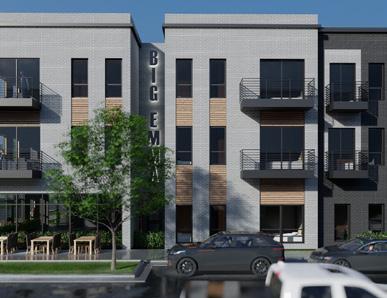
In Springdale, Groundwork directly invested with Community Development Northwest Arkansas and Buffalo Builders to bring to life Big Emma — a 77-unit mixed-income apartment community in downtown Springdale along Emma Avenue. Thirty of the units will be permanently reserved for households earning below the median income. Big Emma is more than a development — it’s a model of public-private partnerships and how they can bring affordable units to the market.
In addition, Groundwork is exploring new technologies, including 3D-printed concrete construction — to lower costs, expedite development timelines and add another arrow to the quiver for our Northwest Arkansas development community to consider when attempting to build attainable homes to market.
But growth isn’t just physical — it’s cultural, too.

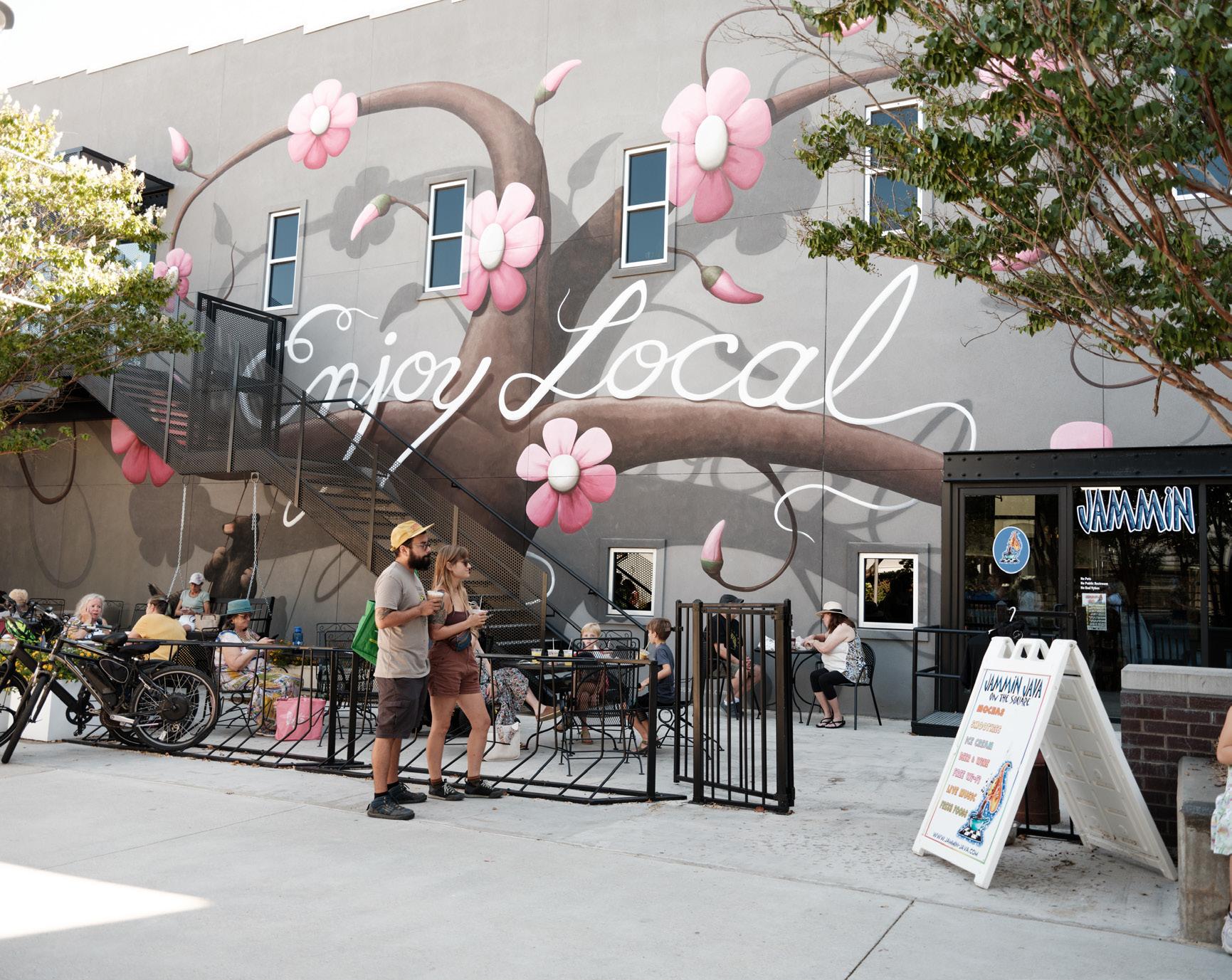
CULTURAL, TOO.
That’s why storytelling is central to Groundwork’s approach. We’re shifting narratives away from fear and toward possibility, highlighting what’s working, who’s being impacted and how communities can evolve together. Through targeted marketing and data-informed campaigns, we’re building a wider base of support for housing solutions.
And to truly grow support, we have to talk.
That’s the goal of Groundwork’s most recent endeavor, “CHATS” — short for Connecting Housing and Transformative Solutions. These small-group conversations/games are designed to take the housing conversation out of city hall and deliver it directly into living rooms, libraries and cafés. Each host receives a boxed toolkit from Groundwork designed to spark meaningful discussion with friends and neighbors. Whether over coffee or dinner, CHATS is about making the housing conversation personal and empowering more people to speak up and lend their voice to shape their community’s growth.
Groundwork’s mission is simple but powerful: to build a Northwest Arkansas where opportunity isn’t dictated by zip code, and where every person has access to a safe, affordable home in a neighborhood they love.
Tackling the housing crisis requires collaboration, innovation and a commitment to growing well, not just growing fast.
Through the GROW principles, regional partnerships, new construction methods, policy reform and meaningful engagement with residents, we’re charting a hopeful path forward — one where Northwest Arkansas remains one of the best places to live for generations to come.
As the Executive Director of Groundwork, Duke McLarty collaborates across the region to develop innovative housing solutions that catalyze the development and promote well-designed, mixed-use neighborhoods for the region’s workers and their families.
BY PHILLIP POWELL


Capitol Avenue has long been a central artery moving people through the heart of downtown Little Rock, but the iconic street, anchoring downtown with the Arkansas State Capitol to the west, has seen some serious development challenges.
City leaders developed the first Downtown Little Rock Master Plan in 2024 to reimagine downtown and address some of those challenges, including a lack of residents, a lack of economic development and a lack of community. And, one year in, public officials and business leaders are looking at Capitol Avenue as central to their plan to make downtown the place to be, even though they recognize their ambitious plans may take several years of sustained work and cooperation.
“Part of the focus on Capitol Avenue is that it’s clearly a street that does not have the level of traffic to necessitate all the lanes, it’s ripe for what we call a road diet,” Gabe Holmstrom, executive director of the Downtown Little Rock Partnership, said. “We need to reduce lanes, add greenery and make it more walkable.”
The Downtown Little Rock Partnership is at the center of downtown redevelopment plans as the nonprofit works to coordinate strategy between the city, business leaders and funding sources.
Holmstrom noted that past the skyscrapers closer to the River Market and east Capitol Avenue, any person driving toward the state capitol would agree that the street is covered in underutilized surface parking lots and that the area is “boring.”
The Downtown Little Rock Master Plan estimates there are 46,000 parking spaces downtown, which is more than one space for every resident and worker combined.
Holmstrom also said that data shows that people want to live downtown, but the challenge for developers has been making downtown living profitable. A big part of the problem the Downtown Little Rock Partnership is trying to solve is figuring out incentives that can encourage real estate companies to build. He pointed to the success of the Little Rock Food Truck Festival and the development of the “South on Main” neighborhood as evidence that leaders can make downtown successful again.
“There were no restaurants on Main Street when the food truck festival first started in that area,” Holmstrom said. “Last year was the first year the food truck festival happened on Capitol Avenue, and the festival proves people will go downtown. They just need something to do.”
He sees opportunity in developing some of those surface lots closer to the state capitol into housing, green spaces and businesses to draw in visitors and give locals more to do. But that will take a partnership.
The Downtown Little Rock Master Plan calls for making Capitol Avenue a two-lane street with ample greenery and sidewalks by using grants primarily from Metroplan (the Central Arkansas Metropolitan Planning Organization). The city’s Public Works Department would be leading the project, and they want to get the ambitious project done within the next three years.
Now that Moses Tucker has completed its $35 million renovation of the 12-story Boyle Building (now called the Brooks Building), which sits along Capitol Avenue at 103 W. Capitol Avenue and was designed by famous Arkansas architect George R. Mann, leaders think they can start moving on positive change for Capitol Avenue. The attorney general’s office started moving into the Boyle Building in April, and Moses Tucker was looking to get a restaurant to rent the bottom floor as well.
Attorney General Tim Griffin told the Arkansas Democrat-Gazette the state would look to buy the building from Moses Tucker after five years. And other private developers are getting in on the redevelopment action.
Kelley Commercial Partners is also pushing redevelopment forward as part of the Downtown Little Rock Partnership, with an emphasis on West Capitol Avenue between the Brooks Building and Simmons Tower, which is partly owned by the company.
Hank Kelley, the CEO of Kelley Commercial, said the company is experimenting with new models to lure tenants into Simmons Tower by instituting “flexible leasing,” which allows smaller companies to occupy some of the traditional office space and allows them room to grow. The goal, according to Kelley, is to try to draw in smaller businesses and startups to downtown.
“We are offering spaces where tenants can occupy some of it, not all of it, and that allows them to make the office space fit any of their needs,” Kelley said.
But beyond the tower, Kelley said, it would be a long road to get downtown back on track. His ideal vision of Capitol Avenue would see more housing built closer to the capitol, as the Downtown Master Plan calls for. But in order for developers to finance new construction or renovation of some of the

“WE NEED TO REDUCE LANES, ADD GREENERY AND MAKE CAPITOL AVENUE MORE WALKABLE.”
— GABE HOLMSTROM

older buildings, they have to be able to prove a solid return on investment to banks.
“The numbers have to work between net incomes from rent and the costs because most developers don’t want to put up the capital; they want to finance apartments or condos. Buildings won’t renovate themselves. People have to risk capital, and the only way they’ll do that is if they can get a return on investment,” Kelley said. “But just imagine several apartment buildings between Capitol Avenue and Broadway. Imagine if we can bring that energy near the state capitol, instead of people living in surrounding communities and driving 30 minutes to work every day and back.”
Kelley said one incentive the city could pursue with developers would be the establishment of an economic development district, which would use a method similar to tax increment financing to divert future property tax increases in the area toward financing development and infrastructure. The Downtown Master Plan calls for one of these districts to be established in the Capitol Avenue area, and now the Legislature has put a constitutional amendment on the ballot in 2026 that would allow Little Rock and other cities to set up the districts if the amendment is passed by voters.
Some critics of the economic development district amendment, like Rep. Robin Lundstrum (R-Elm Springs) and former Little Rock School Superintendent Baker Kurrus, are concerned that public money could be put up front to fund failed private developments, and that the development strategy could take away from future school funding.
But even if Little Rock can set up an economic development district to encourage developers to invest in downtown within the next few years, housing may still take a while to develop. In the meantime, Kelley said he would like to see operations and agencies of the state government move to Capitol Avenue, bringing young professionals into the area to help reestablish the community. He praised the attorney general’s office’s move to Capitol Avenue, and he said that the future redevelopment of the old AT&T building in Little Rock, at 1111 W. Capitol Avenue, into market-rate housing would be the first test in bringing more people into downtown living.
“Beyond that, we shouldn’t have one-way streets because commuters don’t build communities,” Kelley said. “The heart of downtown should be walkable, bikeable and friendly. The one-way street system needs to go away.”
To both increase green spaces and walkability downtown, Metroplan is investing in the Central Arkansas Regional Greenways project, which aims to connect Central Arkansas communities through an extensive planned trail system.
Daniel Holland, a transportation planner at Metroplan, spoke about how the development of the Southwest Trail aims to connect the state capitol area with greenery upon its completion. The trail will run from the Arkansas River Trail all the way to Hot Springs, and according to Holland, the trail will either run along the Union Pacific Railway or will cut through Rose Creek Park.
“Either one of these areas the trail could run into will increase visibility for pedestrians and cyclists and create opportunities and incentives for surface lots that are begging to be developed,” Holland said. “The trail can be a jump-start for the community and it will allow people to access downtown without a car.”
But trail building is slow. Metroplan only has so much funding from the U.S. Department of Transportation to provide to the city or county government to engineer and construct the trail. And the city will also be applying for those funds to redesign Capitol Avenue. Holland projected that even with additional funds allocated to trail building from Metroplan’s huge climate pollution reduction grant, it could take the city several more years to have its section of the Southwest Trail built out.
...and you can help us bring more to the heart of downtown Little Rock! Every beer you drink at the Downtown Food Truck Festival helps the Downtown Little Rock Partnership install new works of public art. Join us September 21, 2025 on Capitol Avenue and drink up!


BY CALEB PATTON

Chatting with Brent Salter about Conway, you quickly realize real estate development isn’t just a profession for him; it’s deeply intertwined with his family’s history and his genuine connection to the town. As a key figure at Salter Properties, a name practically synonymous with Conway’s growth, Salter exudes a sense that he’s not just erecting buildings but laying down enduring roots.
His story began with his father, who established the construction company back in 1976. His older brother, Nathan, now leads that side of the business, and it was Nathan who envisioned Brent’s return from college to spearhead their development efforts. As Brent explains it, “Nathan felt we had the capacity to build not just for others, but to cultivate our own lasting assets — he just needed someone dedicated to the development.”
So, in 2007, Brent came back to Conway. At the time, Salter Properties managed around 100 residential units and a few commercial spaces. From the outset, their philosophy was rooted in long-term ownership, with the conception that each project would become a permanent part of the Conway landscape. As their portfolio expanded and diversified, the need for specialized management became clear.
Eight years ago, Engage Management was established to professionally oversee its growing real estate assets. What began with just Brent and one other person has since grown to a team of about 55 individuals, with his younger brother, Jay, serving as the principal broker, handling the licensing for each new venture. Having witnessed Conway’s transformation firsthand, growing up in a town of around 50,000, Salter offers a unique perspective on its evolution. He views the steady growth as a positive trend, noting Conway’s increasing appeal to investors from outside the region and crediting the Conway Chamber of Commerce for its proactive long-term planning. However, Salter also
FOR SALTER, THESE PROJECTS ARE INTEGRAL TO SHAPING CONWAY’S FUTURE, FOSTERING WALKABLE, COMMUNITYCENTRIC ENVIRONMENTS THAT ARE INCREASINGLY SOUGHT AFTER.
acknowledges the inherent challenges in executing these plans, particularly regarding zoning. He advocates for prioritizing the overall design and feel (“the form”) over mere usage (“the use”) in zoning regulations. “Conway could better facilitate its own progress by more readily implementing its established long-term plans,” he said, “even when faced with localized opposition — a common challenge in many municipalities.”
Despite these hurdles, he sees immense potential in Conway. The presence of three colleges infuses a vibrant energy, highlighting Conway’s consistent recognition as a desirable place to live. He also emphasized Conway’s increasing success in retaining college graduates beyond their time in education. “It’s about providing job opportunities and a compelling lifestyle that encourages them to stay — a sense of place,” he said.
Venues like Reynolds Performance Hall, Red Curtain Theatre and Lantern Theatre, as well as the recurring Shakespeare festival, have given Salter a belief in nurturing the arts community. When recalling a time when the city had limited evening entertainment, he’s encouraged by the current efforts to enhance Conway’s vibrancy and its ability to draw in the community.
One project close to his heart is Kings Live Music downtown. Now celebrating a decade in operation, it’s become a popular spot with a unique “Little Rock vibe,” while attracting those in Conway seeking live music and a lively atmosphere. For Salter, such venues are crucial for keeping people engaged and invested in Conway. He also highlighted the growing success of the Conway Art Walk and the establishment of downtown as an entertainment district, allowing for events that enhance the city’s social scene, mirroring the success of areas like Argenta in North Little Rock and SoMa in Little Rock.
Regarding significant developments, Salter emphasizes the overall vitality of downtown. Despite the natural ebb and flow of businesses, empty storefronts are rare, a strong indicator of the city’s economic health. He praises the city’s infrastructure investments downtown, enhancing walkability and appeal. The park on Markham and the street improvements are seen as pivotal opportunities for downtown’s continued growth and its connection with Hendrix College.
When it comes to urban sprawl, Brent underscored the importance of dense, mixed-use developments. He noted that Conway’s traditional zoning hadn’t fully accommodated this
concept. However, Salter Properties has been proactive, completing two mixed-use buildings at its Centerstone development, with two more underway, navigating complex zoning approvals to integrate residential, retail and hospitality spaces. For Salter, these projects are integral to shaping Conway’s future, fostering walkable, community-centric environments that are increasingly sought after.
Salter has also proven to be a strong advocate for Conway’s expanding trail and bike system. He’s had numerous stories of families and their children using the trails to commute to school daily, illustrating their practical and recreational value. The city’s recent grant to extend these paths further, connecting various parts of Conway, demonstrates a continued commitment to active transportation and has earned Conway recognition as a top bikefriendly city in the state, further underscoring this achievement.
Salter’s advice for young professionals entering real estate development is direct: “Start small.” He emphasized the capitalintensive and risky nature of the business while acknowledging its potential rewards. He advised undertaking smaller, incremental projects and adopting a long-term ownership perspective from the outset. Understanding infrastructure, like fire flow capacity, is crucial and often overlooked, so learning from smaller-scale mistakes is far preferable to facing significant issues early on. He used the example of large apartment complexes, where a single error can have widespread consequences. “You’d rather solve a problem for a single unit than 100, wouldn’t you?” he said.
But when the hours have been put in and the shop is locked up for the day, what does life outside of work look like? Salter’s answer is simple and heartfelt: “It’s family.” He’s deeply involved in his three daughters’ activities — soccer, tennis, dance, basketball — with a schedule packed every night and most weekends. It’s clear that his family provides a vital balance and a cherished escape from the demands of the property business.
In essence, Brent Salter embodies a leader deeply committed to Conway’s growth and well-being. Fueled by a family legacy in construction and a personal dedication to enduring development, he plays a significant role in shaping the city’s physical and cultural fabric. His insights into Conway’s past, present and future, combined with his pragmatic advice, portray a thoughtful and influential figure dedicated to building a sustainable and vibrant community, one brick and one family connection at a time.
BY CALEB PATTON

Culinary adventurers are quick to seek out those elusive gems, where the confluence of delectable flavors, an inviting ambiance and genuine hospitality create an experience that transcends mere dining. Such establishments become cornerstones of their communities, drawing both locals and wanderers alike into their unique embrace. Becca’s SoCal Kitchen in Keo, as well as El Sur and Say MacIntosh in Little Rock have all made the remarkable transition from beloved food trucks to thriving brick-and-mortar restaurants, weaving themselves into the vibrant tapestry of the state’s culinary landscape.
Becca’s SoCal Kitchen, a taste of Southern California nestled in Keo (Lonoke County), began as a food truck, a “rolling oasis of sunshine and flavor,” as one local described it. Rebecca “Becca” Sylvester and Clay Sylvester, the heart and soul of this venture, have brought a zest for fresh, vibrant cuisine to the small town, offering a refreshing departure from traditional Southern fare. Her fish tacos, alive with citrus and spice, and her avocado toast, a simple yet elegant celebration of ingredients, quickly garnered a dedicated following within the Keo community and beyond.
The move to a brick-and-mortar location in Keo is more than just an expansion; it’s a homecoming and a deepening of their connection with the town that embraced them. While the couple knows that opening day still stands behind hours of cleaning, rebuilding and relying on the support of their community, their dreams and aspirations for the new space sound as exciting as the food they bring to the area.
As they reflected on the community’s impact, Becca shared, “Mayor

Stephanie White just really embraced us from the beginning. We were one of the only food trucks at the first Arkansas Pecan Festival, and it’s just blown up. They’re just a really welcoming community ... You know how you’re kind of drawn to people? Yeah, that’s what happened.”
The local support from the Keo community was instrumental in their decision to establish a permanent presence. “We just keep getting busier,” Becca said, highlighting the community’s demand that necessitated the larger space. The brick-and-mortar not only provides that crucial space, but also offers employment opportunities for residents, further weaving the business into the fabric of Keo. Becca and Clay envision the restaurant as a place where they can continue to evolve their menu, blending their SoCal roots with exciting new creations inspired by their Arkansas home and the community’s evolving palate. “We’re still gonna have our California-type-style things, but we’re also bringing in a lot of our cool fusion dishes that people have been loving,” she said, emphasizing the dynamic relationship between their culinary vision and the community’s enthusiastic reception.
Over in the South Main district of Little Rock, El Sur, an ambassador of Honduran cuisine in Little Rock, began its journey as a humble food truck, a vibrant splash of color and flavor amidst the city’s bustling food scene. Driven by Luis Vasquez, a profound passion for authentic Honduran flavors and a desire to share that cultural heritage, the founders poured their energy into crafting dishes that resonated deeply with the local community. Their pupusas, each one a handmade tribute to tradition, and their flavorful street tacos,


brimming with fresh, high-quality ingredients, quickly cultivated a loyal following that spanned the diverse neighborhoods of Little Rock.
The transition to a brick-and-mortar location on South Main Street was a natural progression, fueled by the community’s enthusiastic embrace of their food truck. This permanent space, designed with a warm and inviting aesthetic that echoes the vibrant spirit of Latin America, became a hub for connection and cultural exchange. Colorful murals depicting scenes from their heritage adorn the walls, and the rich aroma of spices creates an immersive experience, transporting diners to the heart of Latin America.
Reflecting on his journey, Vasquez said, “I worked in the restaurant industry and I was ready to break out on my own; the most affordable way to start it was with a food truck. That’s it.” The food truck served as an invaluable testing ground, allowing him to understand where their cuisine resonated most within the city. “But where was the best area for the restaurant? This neighborhood, SoMa, was always the best,” he said, highlighting the South Main Street area’s pivotal role in their decision to establish their restaurant there.
The supportive community of neighboring businesses has also played a significant role in their success. “Everyone is always sending people here and there, it’s just great! People will visit Little Rock, come in and ask us, ‘So what do we do next?’ And we’re like, well, have you been to the distillery?” This interconnectedness fosters a sense of mutual support and contributes to the neighborhood’s vibrancy. The restaurant’s presence, in turn, has enriched the local community, offering a unique culinary destination and contributing to the revitalization of the South Main district. “It’s great to be in the neighborhood like this,” Vasquez said, “the people, the options. It makes the destination feel like it’s a part of something bigger.”
Becca’s SoCal Kitchen in Keo, El Sur in SoMa and Say McIntosh off South University have made their food truck journey into satisfying success stories.
Off South University Avenue, Say McIntosh, a name synonymous with soul-satisfying Southern cuisine in Little Rock, carries a rich legacy that began long before its food truck days. It honors the late Robert “Say” McIntosh, a community pillar, renowned for his activism and, famously, his sweet potato pies. Within his bustling restaurant, his grandsons, Robby Say McIntosh III and Chris McIntosh, the current owners, first learned the ropes. By the age of 11, they were immersed in the family business, working their way up from the register to the grill, developing a shared passion for the restaurant world.
This passion led them to recognize the burgeoning popularity of food trucks, and during the COVID-19 pandemic, they launched their own mobile kitchen. This proved to be a hit, allowing them to serve their beloved dishes while adhering to social distancing. After several successful years on wheels, they returned to a brick-and-mortar presence, opening their current location in July 2024.
Their connection to the community runs deep, a legacy passed down from their grandfather. “We get a lot of support from the community, and we earned that engagement through a lot of things we do,” Robert said. This engagement includes consistently feeding children for free and organizing events like a Christmas bike and toy giveaway for underprivileged kids, mirroring their grandfather’s tradition of giving back. “He was also known as the Little Rock black Santa,” they shared, highlighting his longstanding commitment to the community. This dedication has fostered a strong reciprocal relationship.
Looking to the future, Say McIntosh is poised to expand its reach. “We actually just signed a lease for a building in North Little Rock,” Robert announced, with a grand opening targeted for August. This expansion is in direct response to the community’s demand. With the impact Say McIntosh has had on the broader Central Arkansas community, they are eager to bring their family’s culinary legacy and community-focused ethos to a new neighborhood. “We’ve had customers who drove up from Pine Bluff, drove down from Conway. So, there’s a demand for our food.” Their commitment to creating a welcoming space, evident in their current location’s intentional design and focus on customer connection, will undoubtedly extend to their new North Little Rock venture, further solidifying Say McIntosh as a cherished community institution.
Food has always been a nexus for people, and these are just a few of the successful businesses throughout Arkansas that have made their mark in the culinary world and their communities. As more continue to grow and find their permanent location, growth within the area will flourish and the developments we each crave will continue.
BY RACHEL PATTON


In 2025, Arkansas’s capital city is fortunate to be celebrating two transformative historic rehabilitation projects at either end of its Main Street corridor. Prominently situated at the southwest corner of Capitol Avenue and Main Street, the 1909 Boyle Building, now known as the Bob R. Brooks Jr. Justice Building, will house the Office of the Arkansas Attorney General as well as a ground-floor restaurant. Farther south at 231 E. 25th St., The Flats at SoMa project is converting the 1950 Veterans Administration Hospital into market-rate housing close to the popular SoMa and Pettaway neighborhoods. With the help of federal and state Historic Rehabilitation Tax Credit incentives, both projects will activate long-vacant and underutilized spaces in downtown Little Rock and attract additional investment.
In 2009, the Arkansas General Assembly created the Arkansas Historic Rehabilitation Tax Credit program to encourage economic development and community revitalization by way of an income tax credit on expenditures incurred to complete a certified historic building rehabilitation. Advocates and lawmakers have since worked to improve the program by increasing the per-project and annual spending caps, lowering the required investment threshold and implementing a tiered credit percentage based on the population of the project locale to encourage development in rural communities.
Because the Arkansas credit has a per-project cap of less than $1 million for income-producing properties, lawmakers saw the need for additional incentives in 2019 when they created the Major Historic Rehabilitation Tax Credit program. This separate program is for rehabilitation projects with qualified expenses of $1.5 million or more that will create or expand businesses, attract tourists or revitalize commercial districts and neighborhoods. Although the mechanism for the program was created in 2019, it was not funded until 2023, when Act 561 transferred $40 million in state surplus funds to the Arkansas Major Historic Rehabilitation Trust Fund for administration of the program.
The first round of funding is benefiting multiple transformative projects, including the Bob R. Brooks Jr. Justice Building and The Flats at SoMa. Thanks to the leadership of Sen. Jonathan Dismang (R - Beebe) and Rep. Lane Jean (R - Magnolia), the 95th General Assembly overwhelmingly approved legislation
transferring an additional $20 million to the Major Historic Rehabilitation Trust Fund to bridge the funding gap on complex projects with game-changing potential in cities and towns throughout Arkansas.
Moses Tucker Partners and Equity Partnership Holdings completed in April the $35 million rehabilitation of the historic Boyle Building, now called the Bob R. Brooks Jr. Justice Building in honor of the late chief deputy attorney general of Arkansas. This public-private partnership will house the Office of the Arkansas Attorney General on floors two through 12 and a restaurant on the ground level, with the state planning to purchase the building in the future. The Sullivanesque-style Boyle Building was designed by well-known Arkansas architect George R. Mann. When it was completed in 1909, it stood as the tallest building in Arkansas and the second skyscraper in Little Rock. The building initially housed the State National Bank, for which it was briefly named, before being purchased in 1916 by the Boyle Realty Company. Home to numerous different businesses during the 20th century, the Boyle Building had been vacant for more than 20 years when this rehabilitation project began in 2023.
Arkansas Attorney General Tim Griffin’s vision for a collaborative workspace and his belief that government agencies should save money by owning property instead of renting guided his decision to relocate. In a recent interview, he added, “There is the fact that we are not building something new; we’re repurposing, which we ought to be doing more of. I believe in the core of a city, so that’s a big part of it. Getting the core back. I think Americans made a big mistake by moving out of downtown. How many times do people visit a city or a place and say, ‘They’ve really got some great strip malls.’ No one says that. They say, ‘It was great to be at the River Walk or the River Market.’ Then there’s the economic part of it. With all of these different things coming together, there was really no reason not to do it. It was a big win all the way around.”
Griffin announced on May 5 that the building’s first floor would be finished out by Arkansas native and “MasterChef” runner-up Jennifer Maune for Restaurant Fleur, a French-American restaurant, along with a coffee bar and pastry shop. The basement, which originally housed a café, will be reactivated as part of the restaurant. Floors two through 11 feature exposed brick interior walls and offices delineated by clear and frosted glass panels. Each floor has a break room and a


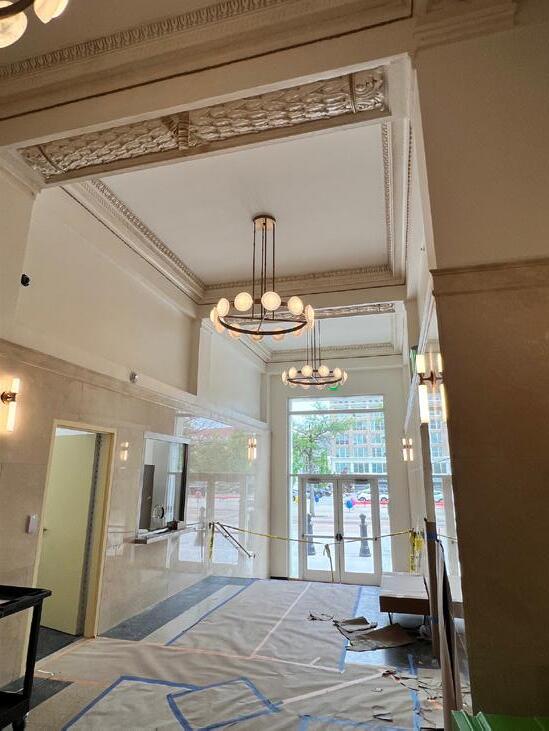
“THERE IS THE FACT THAT WE ARE NOT BUILDING SOMETHING NEW; WE’RE REPURPOSING, WHICH WE OUGHT TO BE DOING MORE OF. I BELIEVE IN THE CORE OF A CITY, SO THAT’S A BIG PART OF IT. GETTING THE CORE BACK.”
conference room. The 12th floor, which was added to the building in 1949, will be used as a common floor and will include a large room for press conferences and meetings, a vending and seating area, a library and a moot courtroom.
According to Griffin, federal and state Historic Tax Credits were critically important to project financing, saying, “All of what you see here would not have happened without the tax credits. So, you can debate what you wish the world were like — I don’t live in the land of unicorns and glitter; I live in the land of reality. And the reality is, this project would not have happened without the historic tax credits. And Sen. Dismang played a critical role in that. It’s so important.” Griffin also hopes to see additional downtown development as a result of this project’s completion, all moving toward the goal of reenergizing Little Rock’s urban core. “You have to start with a fundamental understanding of what the core of a city means, not only to the city and to the region, but to the whole state. To safety, to commerce, to culture, to history. If you don’t get that key piece, almost everything we’ve talked about, you won’t respond to any of it. That’s the key.”
Spearheaded by Georgia-based developers Pace Burt and Rick Goddard, The Flats at SoMa will contain 208 residential units with 56 different floor plans and luxury amenities in the former VA Hospital. Completed in 1950, Little Rock’s historic Veterans Administration Hospital was part of a nationwide campaign to expand health care facilities for veterans after World War II. The International-style building was designed in a collaborative effort by two Little Rock architectural firms: Brueggeman, Swaim & Allen and Erhart, Eichenbaum & Rauch. It served as a hospital until 1984, when operations moved to the new John L. McClellan Memorial Hospital at 4300 W. Seventh Street. The old VA Hospital has since sat largely vacant until the current rehabilitation project began about two-and-a-half years ago.
“When we came out to Little Rock, we were fascinated by SoMa and Pettaway. Both have done a fantastic job revitalizing neighborhoods and opening housing units. You can look out the window of the VA and see the transformation — homes are being renovated and things are happening in this part of Little Rock that had been forgotten for so long, and we continue to see it up and down Main Street,” Burt said during a recent conversation about the project.
The Flats at SoMa project is a massive undertaking with about 450,000 square feet of space. Former hospital rooms and support spaces were sensitively combined to create just over 200 apartments. Resident amenities include a Roman pool, indoor and outdoor pickleball courts, fitness center, polar plunge spa and sauna, and conference center. The Flats at SoMa is already leasing units and opening floor by floor, with a full completion date of July 2025.
According to Burt, “The project would never have existed without historic tax credits. If Arkansas had not passed the Major State Historic Tax Credit Act, it would have been impossible. I am glad to see Arkansas get behind these projects. These projects cost 20-30% more than your typical new construction project. The credits fill in that void so these projects can happen. If not for the credits, the VA would sit vacant and eventually be torn down.”
When asked why he favored historic rehabilitation over new construction, Burt quickly answered, “You’re saving part of history, and it’s a really unique building. You can’t recreate these buildings. They are beautiful and iconic and should be preserved.”
Rachel Patton is executive director of Preserve Arkansas, the only statewide nonprofit advocate for the preservation of Arkansas’s historic places. Contact her at rpatton@preservearkansas.org.



BY JAMES P. WALDEN


Zoning reform has never been a sexy topic. Until now. It shows up everywhere you turn with its evil offspring — the housing crisis. Books like M. Nolan Gray’s provocative “Arbitrary Lines” discuss it. National organizations like the American Planning Association and National League of Cities have developed campaigns to simultaneously construct locally driven housing supply solutions and national-level policy responses. And, here at home, it’s even been a focus of the Arkansas Legislature with a bevy of bills hotly debated in this year’s legislative session.
The attention is a result of numerous converging, interconnected issues. While these are well documented elsewhere, they include rising land, labor and materials costs, as well as factors like arcane mortgage lending guidelines and simple market inertia that prefers the predictability of safe bets on single-family tract housing by vertically integrated home builders. Each of these underscores the largely unintended, though sometimes deliberate, effect zoning has had nationwide of segregating cities across lines of use, income and race. This doesn’t even speak to the main issue of zoning, creating artificial barriers to housing production by limiting the type and number of homes that can be built. Basically, it’s a problem, and we all know it.
So, what do we do? First, we must acknowledge there is no silver bullet, no magic solution. As much as we wish they did, complex problems do not have simple solutions. We need to come loaded with silver buckshot. Meaning, everyone who touches the process of delivering development and housing must examine the problem for how their role and profession can make it less expensive and easier for everyone to obtain good housing in great communities. For planners, this most directly means zoning reform at the local and state levels.
The planning statutes in Arkansas apply in the same way to cities of 200 as they do to cities of 200,000. This means Leola must plan in much the same way that Little Rock does. It also means cities like Little Rock or Fayetteville only have to plan in the same way that Leola does. The types of issues these vastly different cities face are also drastically different. Why should all cities be required to meet the same minimum standards to enact plans and zoning regulations? Our state needs a two-tier system for its planning statutes that has different standards for our small towns as compared to our larger and fast-growing cities.

Every two years in January, the Super Bowl of policy nerds in Arkansas kicks off. The legislative session can be an electric and exciting time. But, by April, everyone, including the legislators themselves, are ready for it all to end. Like the rising sun, every session seems to bring a new preemption bill on a new land userelated issue. This often results in predictable battles waged in the committee rooms of the capitol, and the rallying cry of local control is made yet again. What if there was another way?
Big issues require big responses, but outside of the state’s largest metro areas, zoning seems to be working for the most part. Not so much in our largest cities and high-growth areas. Sometimes a nudge from the state can help overcome local opposition to needed reforms. Other states have required but given cities options for zoning reform actions that fit local problems. Arkansas should
explore these types of targeted, right-sized solutions to address very real problems. It would prevent many of the state’s small towns, which have neither the money nor the local expertise, from having to respond to yet another mandate from the capitol addressing an issue they don’t face.
Sadly, for most cities in our state, planning is seldom a real function of planning commissions and planning staff. What they do face is an endless tedium of rezonings, development review and the like. This is not to demean or dismiss the necessity or importance of those functions. However, somewhere along the way, the whole point of the exercise has been lost.
The point of planning and planning commissions is to develop a vision for their community and work toward making it a

reality. Zoning is meant to be a tool to achieve that vision. All too often, planning has become an appetizer before the main entrée of regulation and zoning. Zoning regulations themselves frequently become dragons that are too complicated to slay in order to change them to align with a city’s plan. This presents an opportunity for changes in the planning statutes to make it easier and more imperative to achieve this goal and deliver on a vision that its residents, business leaders, civic organizations and elected officials all want to see realized.
Planners, community residents and just about everyone love public engagement. They all also seemingly hate public hearings. Where public engagement brings consensus, public hearings bring division. Where public engagement brings people together around a common interest and vision, public hearings allow narrow interests to overpower and overrule. Where public engagement provides an opportunity for diverse voices across a variety of means of communication, public hearings are viewed as opportunities for one to conduct their own personal filibuster. Public hearings have even spawned fun acronyms like NIMBYs (Not in My Backyard) and BANANAs (Build Absolutely Nothing Anywhere Near Anything).
That isn’t to say public hearings don’t serve an important function and allow concerned stakeholders an opportunity to voice legitimate concerns. Yet, with increasing frequency, they seem to be used as a means to stymie and stop much-needed development. A hard truth we all don’t want to accept is that places change. We should neither expect nor demand it to be any different. But we should strive to ensure this growth doesn’t change the essence of a place. A community that has best achieved this in our state is Fayetteville, which is still funky even as it is eclipsing the 100,000-population mark.
An option to address legitimate stakeholder concerns while acknowledging the need for community change is conducting more significant, deep public engagement during the planning processes when a city sets its vision and creates regulations. That means more community surveys, neighborhood workshops, public education campaigns and fewer high-stakes public hearings that can make or break development: deep engagement during the planning process and crafting of regulations, but letting the zoning regulations have more clarity up front on the objective standards and requirements that development must meet.

A bill from the last legislative session provides planners a starting point. SB505, sponsored by Sen. Joshua Bryant (RRogers) and Rep. Brit McKenzie (R - Rogers), allows cities to create an administrative procedure for zoning changes of properties. It creates a new option for cities without preempting existing zoning regulations. Arkansas is a leader in this area, as it’s the first state to allow this type of zoning reform. It will put the ball in the court of planners and cities to develop creative solutions for one of the most significant challenges in addressing the housing crisis seen in the state’s fast-growing cities.
A starting point is just that — a place to start — but it requires continuing work. We need dialogue among diverse interests moving forward. That means planners joining with local elected officials, homebuilders, lenders, developers and legislators to find common ground — a path forward that gives cities the tools via planning statutes that achieve better planning, zoning and, most importantly, more housing in the places where it’s needed. That’s not to say zoning will ever be perfect; it won’t. But, as one of the state’s wisest planners is fond of saying, “It’s not going to take us to heaven, but it’ll prevent us from going to hell.”
BY BRIAN HURLEY

Renderings of the potential development happening in Fayetteville.
Marcus had moved into his four-bedroom apartment weeks ago but had yet to lay eyes on any of his three roommates. He wasn’t even sure if he had three roommates. He heard doors open for deliveries and the occasional beeping of the microwave, but usually everyone stayed in their rooms. People were rarely at the hog-shaped pool or the fitness center. He mostly saw his neighbors — all other college students — when a fire alarm went off in the night, or when circling looking for a parking spot.
Some slight details might vary, but these conditions are common among all new off-campus developments for university students in Fayetteville, and are at the heart of the reasons why long-term residents are fighting against the construction of more.
The recent debate has centered around the new student
development by Trinitas Ventures of Indiana, which was proposed to go in at the corner of Block Avenue and Dickson Street, in the heart of the campus/downtown/entertainment district. The proposal called for a seven-story building with a rooftop pool, around 600 bedrooms, 400 underground parking spaces and a small retail space at street level. On paper, this project seems to meet the building codes for the city and the mission to boost the housing supply and increase density. The reality suggests otherwise.
This type of off-campus student housing — which is, in essence, private dorms — poses unique problems in a college town like Fayetteville. They are constructed quickly and cheaply by outside developers with little regard for the long-term effect of the structure. While marketed as apartments, these units typically consist of four
bedrooms (each with its own bathroom), a small living space and a small kitchen. Rooms are leased out to individuals, with each occupant signing their own contract that is good only through the academic year. Even if the official language does not restrict these developments to students, the setup makes it nearly impossible for anyone who is not one to live there.
Parking also creates problems. The developers often take advantage of reductions to parking minimums that were intended to promote density and walkability. They get parking reductions by installing bike racks and building near bus stops. The bike racks, while ample, often remain entirely empty. Students use the buses, but only to get to campus. The vast majority of them still own, drive and park personal cars. Near campus, they purchase spots in university parking lots. Downtown, the excess parking needs would fall to the city and surrounding spaces.
Other large projects have been proposed, contested and halted on this site in the past. In 2006, the Barber Group submitted a plan for a 15-story building, the “Divinity Hotel.” Months of debate in Fayetteville winnowed this down to eight stories with 137 hotel rooms, 30 condos, two restaurants and bars, a parking garage and commercial/retail space facing Dickson Street. Even with that scaling back, opposition remained, with the most common complaint being a lack of compatibility between this building and its surroundings.
Support for the Divinity Hotel was also widespread. Many residents expressed concerns that Fayetteville was beginning to fall behind Bentonville and Rogers. They argued against holding on to a rose-colored memory of what Dickson used to be like and warned that a focus on “compatibility” would mean the city would just construct buildings that matched with the existing parking lots and nondescript one-story buildings. During public comment to the city council, every Dickson Street business owner present spoke in favor of the project.
The city council approved the plans for the Divinity project, but shortly thereafter, Peter Tooker and Mike Shirkey, who operated a music venue and lived in the historic home next door, filed a lawsuit claiming the city council had made a decision counter to the recommendations of the planning commission. This appeal was upheld, and the project was stopped for good.
In 2013, Mike Shirkey’s daughter, Nina Shirkey, spoke out against a proposed massive student housing project that included the site. The Specialized Group planned to purchase and build on essentially the entire block. Nina was the only resident there at that time and her home would have been bound on three sides by the structure. Community pushback again kept the project from happening. She also introduced and helped pass an ordinance that would require 15-foot setbacks for three-story buildings next to single-family residences in the downtown area.
Shirkey no longer lives in the home but rents it out as office space, so those setbacks did not apply to the new project planning. She successfully forced changes to the initial plans, arguing that it would violate ordinances protecting tree canopy and restricting the blocking of sunlight. Others in the community offered familiar opposition on grounds of traffic and safety concerns, aesthetics and compatibility, and potential loss of
economic and cultural diversity. One difference in the opposition to this project compared to that against the Divinity Hotel was that small business owners downtown and on Dickson were very much against this.
The most involved and outspoken of these business owners is Bo Counts, who owns Pinpoint, a vibrant basement bar two blocks away, and rents an apartment downtown. Counts has argued that many of the students who would live in there would not be old enough to patronize the bars, which make up a large percentage of nearby businesses. He is also concerned that this type of construction is bad for the long-term growth of the city. Not only do the apartment layouts and leasing structures exclude nonstudents, but the required retail/commercial space is inadequate and would likely be used for purposes such as a management office for the development.
Despite the opposition, this seemed on track for approval at the final planning commission meeting about it in April. However, in a surprise 4-3 decision, they rejected the plan. Trinitas, claiming that it has met the requirements, will appeal.
It is possible that when Trinitas does appeal, the planning commission will have some new tools to work with that will allow it to take a more nuanced approach to this project. Counts has been working with city council members to revise the parking reductions in a way that would allow for larger percentage reductions for smaller developments while limiting projects over 251 bedrooms to a 10% reduction. Stricter parking minimums often lead to sprawl, but in this situation, Counts, who is very much a proponent of density, argues that reductions for student housing just create parking problems elsewhere. Changes would put the cost of this back on the developer and give the commission more leverage in shaping projects.
Another problem that the development dispute has highlighted and that the city is trying to address is the lack of a separate category for private dorms, where other university towns make distinctions in the ordinances. Fayetteville defines dorms as buildings that are run by “educational or religious institutions,” which provides a loophole for private developers. The planning commission could close this loophole with a more accurate definition.
This plot of land has been the subject of heated local controversy for decades. The arguments about what happens here are proxies for broader concerns in the city and region. Will Fayetteville keep up with growth elsewhere? Will it lose what made it appealing in the first place? How do we balance progress with preservation? Who can live here? Who do we want to be?
As goes the corner of Block Avenue and Dickson Street, so, it seems, goes Fayetteville. That both tempts developers and makes locals dig in their heels. With each round of proposal and debate, the town argues and learns and tweaks the codes, hopefully circling in on rules and regulations that, it is hoped, will lead to the right kind of development. But for now, it will remain a parking lot.
Brian Hurley lives on Block Avenue in downtown Fayetteville with his wife and two sons. He has spent decades commuting down Dickson by foot and bicycle. He enjoys thinking and writing about the changes he sees.
BY GREG NABHOLZ

Dennis Quaid drives through a Northwest Arkansas neighborhood while filming “Sovereign”.
Arkansas is uniquely positioned to become one of the nation’s premier destinations for outdoor recreation. From the rugged trails of the Ozark and Ouachita mountains to the serene waters of the Buffalo River and the Arkansas Delta, The Natural State offers an unparalleled mix of biking, boating, hiking, hunting, canoeing and fishing. But building a sustainable and inclusive outdoor recreation economy requires more than scenic landscapes — it demands a strategic investment in placemaking, the creative economy and the infrastructure that connects communities to this thriving sector.
According to the U.S. Bureau of Economic Analysis, outdoor recreation contributed $862 billion to the national economy in 2022 and supports over 4.5 million jobs. In Arkansas, this translates to a growing sector responsible for more than $3.5 billion in economic impact, employing almost 40,000, according to the Arkansas Department of Outdoor Recreation.
Much of this growth is driven by mountain biking in Northwest
Arkansas, where investments by the Walton Family Foundation and public-private partnerships have turned Bentonville into a world-class biking destination. But opportunities exist far beyond the northwest corner of the state. With the right investments and policies, Arkansas can expand its reach to every region, transforming small towns and urban centers alike into outdoor hubs, each serving as a “base camp” for exploration.
The concept of a base camp isn’t just about lodging — it’s about creating a sense of place. A base camp community offers gear shops, local eateries, breweries, distilleries, wineries, repair services, guides, shuttle services, cultural venues including film and music production studios, and comfortable accommodations that together enhance the outdoor experience. These places provide the “stickiness” that turns a day trip into a weekend stay, and a weekend stay into an annual tradition.
Effective placemaking begins with infrastructure — bike-friendly
streets, riverfront trails, marinas and transient docks along navigable rivers, camping facilities, signage and broadband — but it is sustained by authenticity and creativity. Art installations, local food and music and locally produced film and media content help reinforce a town’s character while inviting others to explore and invest.
According to the BEA, the creative economy sector had an economic impact of $2.01 billion, employing almost 33,000 jobs in Arkansas in 2023. This represents a 7.5% growth in jobs from the previous year, which ranks second in the nation. Jobs in this sector include museums, theaters, music venues, filmmaking, design, publishing, broadcasting, musical manufacturing, etc.
Placemaking and the outdoor economy intersect with the creative economy in powerful ways. For example, Arkansas has made strides in supporting digital product development, music production and motion picture incentives, but these programs remain underfunded and thus underutilized. If we want to make our communities true base camps, we must tell their stories effectively and support the creators who bring those stories to life.
Motion pictures, outdoor media and digital storytelling are essential tools for economic development. They market towns and landscapes to global audiences, showcasing the state’s natural beauty and community charm. Films like “Mud,” shot along the Arkansas River, or a digital series about the Arkansas Highlands Trail are more than entertainment — they are long-tail economic engines, influencing tourism and relocation decisions long after their release.
With adequate funding, Arkansas can provide incentives to filmmakers, animators, VR/AR developers and digital content creators who work in tandem with the tourism and outdoor industries. Coordinating this with regional economic development strategies will help elevate not just one area, but the entire state.
To maximize the impact of this approach, Arkansas must ensure that rural and underserved areas are not left behind. That means extending trail systems, enhancing state park access and expanding incentive eligibility beyond traditional urban centers. Programs should be structured to reward regional collaboration — for example, projects that link mountain biking routes in the River Valley to canoeing trails in the Ouachitas, or that pair cultural festivals in the Delta with outdoor adventure itineraries such as biking on the Delta Heritage Trail and Big River Trails.
Another critical piece of the puzzle is talent. Arkansas should invest in workforce training programs that prepare residents for jobs in outdoor recreation, hospitality, film production, design and digital content creation.
Moreover, local internships and apprenticeship programs can be aligned with tourism departments, production companies and retailers. This not only builds skills, but it also keeps young people connected to their hometowns and creates pathways to fulfilling careers without having to leave the state.
To realize this vision, a few strategic policy shifts are needed on the state and local level: Increase Funding for Incentives by Significantly Increasing or Eliminating Altogether the Annual Caps — The state looks at any annual allocation for a tax incentive as an expense to the state budget;
however, the estimated tax revenue created from these incentives is not counted. Because of this approach to budgeting, Arkansas does not adequately fund digital product and motion picture rebates, historic and Central Business Improvement District tax credits, among others. Arkansas is woefully behind every neighboring state, but it can generate significantly more tax revenue than the incentives pay out, which can be used to fund future income tax cuts and/or other priorities for the state.
Establish a Base Camp Grant Program — Provide grants to communities and regions that are developing outdoor recreation and placemaking infrastructure. The “Arkansas Great Places Act” may be an option to fund this.
Strengthen Regional Partnerships — Encourage cross-county partnerships through collaborative trail development, for example. Utilize the “Regional Mobility Authority Act” to give these partnerships more taxing authority to build and maintain this infrastructure.
Integrate Outdoor Recreation, Placemaking and Creative Economy Strategies — Coordinate efforts across state agencies, including Parks, Heritage and Tourism, Economic Development and Workforce Development to support initiatives that bridge outdoor recreation, historic preservation, downtown revitalization and cultural initiatives.
Small Business Loan and Grant Programs — Designed to support local entrepreneurs: bike outfitters, shuttle operators, eco-lodges, artists and chefs. These small businesses are the heart of base camp communities and often need only modest investment or technical assistance to thrive.
Young talent and remote workers are drawn to places that offer lifestyle amenities — trails, lakes and downtown vibrancy, thereby growing Arkansas’s population.
In short, investing in the outdoor recreation and creative economies through placemaking should be Arkansas’s primary focus on an overall economic development strategy. It’s also a workforce retention and a health and wellness strategy that will ultimately generate revenue and reduce expenses needed to fund the state’s needs.
Arkansas has what it takes to lead the country in outdoor-based economic development. Our terrain is unmatched. Our communities are resilient. And our tourism brand — The Natural State — already tells the story.
But capitalizing on these assets requires more than branding. It demands intentional policy, coordinated investment and support for local implementation. By making placemaking a pillar of state economic strategy, Arkansas can ensure that every community has the tools to succeed.
Imagine a future where every Arkansan lives within 10 minutes of a trailhead, a boat launch or a walkable downtown. A state where small towns become magnets for visitors, businesses and new residents. A state where “Base Camp Arkansas” is more than a slogan — it’s a statewide blueprint for economic growth.
Arkansas is no longer a hidden gem. The secret is out: Our state offers world-class outdoor adventure, breathtaking beauty and a growing culture of creativity and innovation. But to truly capitalize on this momentum, we must think holistically, combining recreation, arts, entrepreneurship and place-based policy into a shared vision.
Greg Nabholz is CEO of Nabholz Properties in Conway and a Placemaking economic development consultant.
BY CALEB PATTON

In the Arkansas Delta, Ryan Biles of Kudzu Collective is cultivating something special. For Biles, architecture transcends blueprints; it serves as a potent tool for community revitalization, breathing new life into “forgotten places” with a distinctly “outward-focused, defiantly optimistic” approach. His journey has blossomed into a mission-driven practice that perceives potential where others see only decay. “I realized that I wanted to be an architect in 10th grade, and I never looked back,” Biles said.
That initial spark was nurtured through nearly two decades at a Little Rock firm, an experience Biles credits with shaping the vision behind Kudzu Collective. “In 2020, I had the opportunity to add a nonprofit role to my work, which prompted the establishment of a sole practitioner architecture firm that became Kudzu Collective,” he said. The firm’s foundation rests upon “client-focused service with a concentration on adaptive reuse and historic projects,” reflecting Biles’ dedication to honoring the past while constructing a brighter future.
The name Kudzu Collective itself hints at the firm’s philosophy. Akin to the tenacious vine that discovers life in unexpected locales, Kudzu Collective seeks opportunities for growth and renewal in overlooked communities. Their perspective proves particularly crucial in the Arkansas and Mississippi Delta, where Kudzu Collective dedicates much of its time. “For many reasons related to economics and historic patterns of disinvestment, the Delta is a challenging place to work, which is precisely why we are here — these are the forgotten and abandoned places others have written off.” For Biles and his team, these challenges are not deterrents but rather invitations to collaborate with local champions who are
“BY BEING DEFIANTLY OPTIMISTIC, WE CAN TACKLE THE REALITIES OF OUR PLACE AND CONTEXT WITH PERSEVERANCE AND EXCELLENCE.” —RYAN BILES
fighting for vibrancy. Their optimism becomes a vital instrument, enabling them to persevere through the often long and winding process of project development. As Biles said, “By being defiantly optimistic, we can tackle the realities of our place and context with perseverance and excellence.”
To realize these visions, Kudzu Collective operates with a uniquely flexible structure. While Biles spearheads the efforts, the “collective” aspect materializes through carefully assembled teams of consultants tailored to each project’s specific needs. This nimble approach enables the firm to offer a broad spectrum of services, from planning and architecture to landscape and interior design, even branding. A prime example of this collaborative ethos is the Grumpy Rabbit American Eatery in downtown Lonoke.
“As architect, I curated a team of consultants tailored to Gina Wiertelak, the owner’s, vision, including Shine Interior Design Studios, Thrive Inc. of Helena-West Helena, Arkansas, for brand design and strategy, and landscape architect Brantley Snipes of Greenwood, Mississippi,” Biles said. The result is a thriving local institution, a testament to the power of interdisciplinary collaboration where, as Biles puts it, “everything you see was thoughtfully designed to reflect Gina’s love for her community and her personality as a gracious host.” This model of assembling specialized teams is key to Kudzu Collective’s ability to serve small and rural communities effectively.
“One of the most enjoyable things we get to do is guide our clients on a journey of discovery, where we can really explore questions of purpose and sustainability before we ever touch the bricks-andmortar,” Biles said. This process often unearths a core narrative that becomes central to the project’s identity. Drawing on author and inspirational speaker Simon Sinek’s wisdom, Biles emphasizes that people connect with the “why” behind a project, not just the “what.” He believes the design process can be instrumental in discovering and articulating this purpose, creating both a physical and metaphorical framework for a community’s story. His work with Thrive, Inc., particularly in place branding, exemplifies this synergy. The revitalization efforts in Hamburg, where Kudzu Collective serves as a “Community Coach,” further illustrate their approach, fostering a collaborative environment for vision development.
Biles describes Kudzu Collective’s structure as a “micropractice,” where a small core team leverages a network of talented consultants to scale its capacity. This model allows for specialized skills to be brought in as needed, ensuring clients receive tailored expertise.
While Biles often serves as the “creative director,” he emphasizes the importance of empowering each team member to contribute their unique brilliance. “Our work will not reach its full potential if this is ‘The Ryan Show.’ Our collaborating designers, strategists and clients are all team members with a crucial role in our achievements,” he said.
For Biles, “placemaking” in the Arkansas context, especially in smaller towns and the Delta, begins with identifying and creatively leveraging existing assets. “First and foremost, it is identifying existing assets and creatively considering how they may be leveraged or incrementally improved to offer something a little more to catalyze economic activity in a community,” he said. He emphasizes the importance of building community pride through public spaces and shared experiences, often starting with overlooked natural assets. Biles acknowledges the common challenges faced by overlooked communities, with “capacity, capacity, capacity” being a primary hurdle. He stresses the need for resources, both financial and personnel, to support small-town leaders who are often stretched thin.
Living in the “front porch of the Delta” and working with a Delta-based nonprofit provide Biles with a unique perspective on the region’s revitalization. He sees significant potential in “boutique hospitality and authentic, local, chef-driven food and beverage” as catalysts for economic growth. Biles’ architectural training provides a valuable foundation for his broader community development work. “Several years ago, I began to recognize that an architect’s training to see the big picture, while simultaneously being responsible for executing details, can translate to community organizing and grassroots work,” he said.
Ultimately, Biles’ work with Kudzu Collective is about more than just designing buildings; it’s about cultivating hope and fostering a sense of place in communities that deserve to thrive. By embracing collaboration, celebrating unique stories and maintaining a “defiant optimism,” Biles and his team are proving that even in the most overlooked corners, new life can take root and flourish. As he aptly puts it, “I’ve long believed that Lonoke possesses a unique advantage in size, access and pace of life. I’m also positive that there are other ‘Lonokes’ out there that are similarly positioned, and I look for those places everywhere that I am blessed to go.”
His journey is a testament to the transformative power of architecture when guided by a deep commitment to community and a belief in the potential of every place.
BY WES CRAIGLOW, AICP
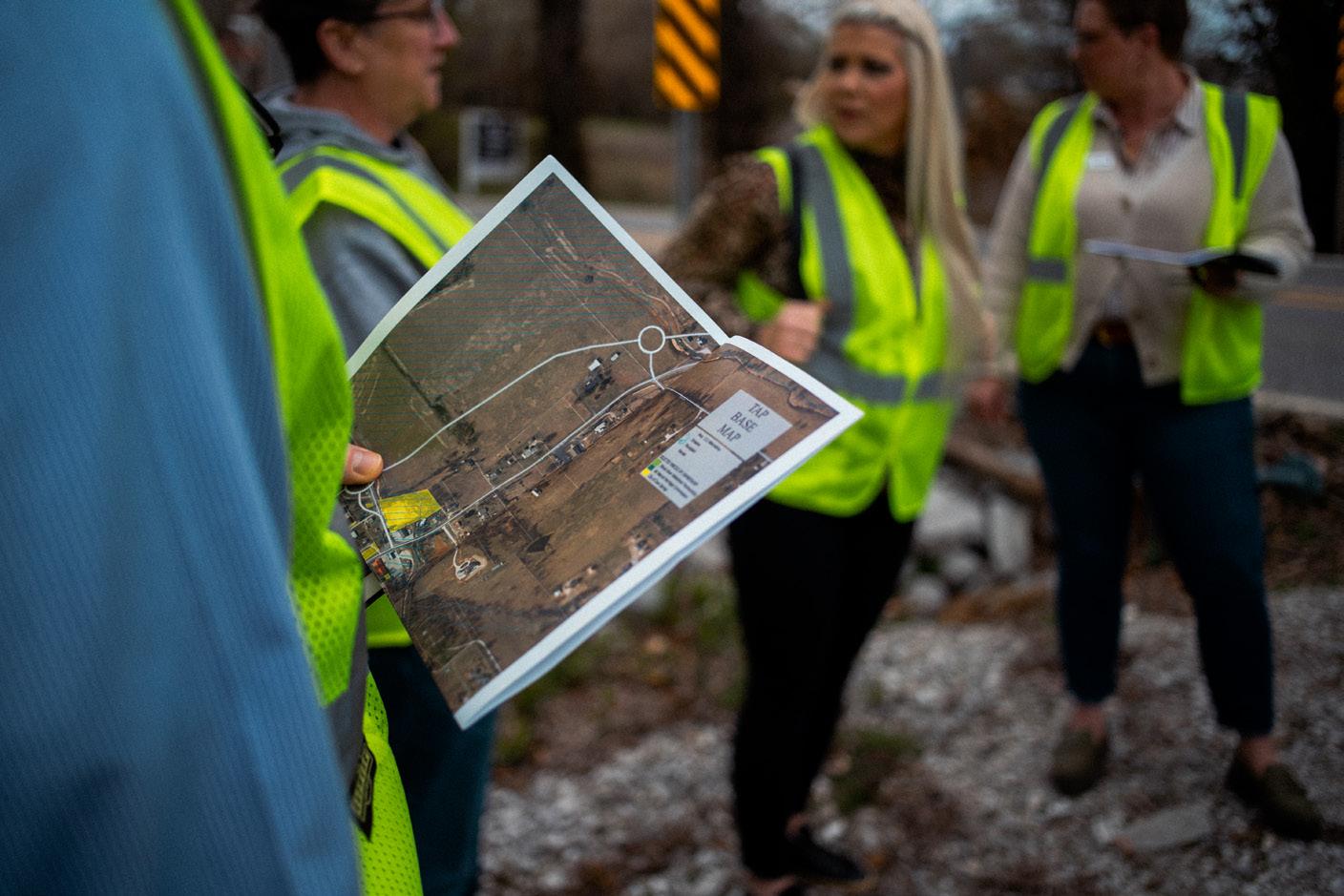

Northwest Arkansas planners know all too well that the challenge of rapid growth isn’t limited to our region’s largest cities. Nearly two-thirds of Northwest Arkansas’s unprecedented growth is now happening in communities of fewer than 10,000 residents — places with character, charm and enormous potential but often limited planning capacity.
Recognizing this critical need, the Urban Land Institute Northwest Arkansas, with generous support from the Walton Family Foundation, launched the Small Cities Initiative in early 2023. The SCI was crafted with a clear vision: to help smaller cities build capacity, achieve high-quality built environments and


(Clockwise from top left) Boots on the ground as ULI evaluate Cave Spring’s plans, the Pea Ridge community gathers to discuss plans with experts, the Pea Ridge plans take into account an exsisting park, and ULI and the Cave Springs community gather to hear from one another.
implement sustainable growth management practices for future generations.
SCI operates through structured yet adaptable planning processes, spearheaded by ULI NWA staff and powered by our dedicated members who volunteer their expertise through Technical Assistance Panels. Each participating city benefits from customized support across four phases:
Team Building: aligning city leadership and key stakeholders around a unified vision.
Project Refinement: leveraging the collective insight of TAP members to define actionable strategies, issue precise RFQs and attract qualified firms.
Technical Services: selecting the right planning consultants and managing project execution to ensure impactful outcomes. Backing and Broadcasting: supporting the long-term implementation of plans and policies, and fostering broader regional dialogue.
The program has generated tremendous momentum and delivered incredible outcomes, illustrated vividly by projects in Cave Springs, Pea Ridge and Centerton.
When Cave Springs faced the classic planning dilemma of an impending highway bypass, ULI NWA convened a TAP that reframed the challenge as an opportunity. Our panel provided expert recommendations that enabled the city to redefine its downtown core as a walkable, economically vibrant district. Thanks to the thoughtful execution of Walker Collaborative — selected from a competitive RFP process — Cave Springs now holds a strategic master plan that secures a prosperous, pedestrian-friendly future for its historic downtown, integrating carefully managed growth alongside infrastructure improvements.
In Pea Ridge, growth meant increased pressure on its parks and open space assets. The TAP recommended a “systems-level” planning approach, emphasizing active transportation, trail connectivity and targeted economic development. With a clear strategic framework, Pea Ridge secured the expertise of EDSA, a planning and landscape architecture firm that delivered a compelling open space master plan designed to preserve the city’s natural beauty, connect community spaces and elevate quality of life. This plan ensures Pea Ridge remains attractive to new residents while honoring its agricultural heritage and communityoriented values.
Pea Ridge Mayor Nathan See emphasized the value of the initiative, saying, “This program brought our community together, encouraging deeper engagement around the open space master plan and reinforced that we’re here to listen. ULI’s experienced and knowledgeable team made the process seamless. We’re thankful for the partnership that made this master plan a reality for our city.”
Centerton presented a unique opportunity with distinct challenges: revitalizing a historic downtown constrained
by floodplain challenges and thoughtfully planning for an ambitious new town center on nearby greenfield acreage. The TAP’s comprehensive recommendations included strategies for floodplain management, regulatory toolkits for mixed-use zoning and robust placemaking guidelines. The resulting RFQ — soon to select a talented planning team — positions Centerton to become a best-practice model for thoughtfully integrating historic preservation with vibrant new development, setting a high standard for strategic planning across Northwest Arkansas.
The Small Cities Initiative exists thanks to the visionary leadership and financial support from the Walton Family Foundation, which saw the urgency and transformative potential in helping our region’s small cities plan responsibly. Its continued investment amplifies best practices, creating ripple effects across Northwest Arkansas’s built-environment landscape.
Just as crucial, however, are the dedicated city leaders — from mayors to planning directors — whose proactive pursuit of partnership has been foundational to the SCI’s success. These local officials are not just managing growth, they are leading it. By applying for this initiative and actively engaging their communities in the process, they set a precedent of thoughtful stewardship that our rapidly growing region deeply needs.
The strength of ULI NWA lies not only in our dedicated staff, but equally in our members and partners. The built-environment professionals who volunteer their time on TAP committees provide the real magic. Their expertise, generosity and commitment turn aspirations into actionable strategies that these small cities can realistically implement and sustain.
In just its pilot year, SCI has demonstrated the power of collaborative planning. Looking forward, ULI NWA is committed to scaling this program to serve even more cities throughout the region. As our communities grow, so will our efforts to equip them with the resources, plans and best practices necessary for enduring success.
Whether you represent a small city looking to harness growth effectively, a built-environment professional eager to give back through service on a TAP or a consulting firm ready to respond to future RFQs, there’s a place for you within the Small Cities Initiative.
Our region’s small cities aren’t just the front lines of growth; they are the future of Northwest Arkansas. Together, we have an opportunity — and an obligation — to guide their success.
To learn more about the SCI, explore participation opportunities or simply join the conversation, visit arkansas.uli.org/small-citiesinitiative or reach out directly to our ULI Northwest Arkansas team.
Let’s build the future we envision together.
Wes Craiglow, AICP, is executive director of ULI Northwest Arkansas. With over 20 years in community and economic development and city planning, he is committed to advancing sustainable land-use practices across the region. He invites colleagues to join ULI NWA in shaping better-built environments for everyone.
BY JULIET B. RICHEY, AICP

Further developed sidewalks and curb cuts are will bring a new level of safety to Oak Street.
OOak Street has long been a vital artery for Conway and a gateway into the city. Historically, it began as a main thoroughfare in downtown Conway, and over time, it evolved into a bustling commercial corridor linking the Interstate 40 corridor (constructed in 1970) with both the historic and modern sectors of the city. However, both the function and appearance of the corridor have faced challenges as the corridor has shown its age.
To address this concern, the city of Conway partnered with Garver and RDG Planning & Design to study transportation, land use and urban design along two and a half miles of the Oak Street corridor. The Oak Street Ahead Corridor Study, adopted by the city, presents a comprehensive plan to address existing challenges and propose improvements to enhance the corridor’s functionality, aesthetics and economic vitality. The study employs the concept of Corridor Urbanism.
The concept of Corridor Urbanism, a term coined by RDG’s Marty Shukert, FAICP, is central to the study’s approach. This approach focuses on respect for the realities of planning in an environment that is primarily built out and busy, supporting the businesses and residents of the city. Corridor Urbanism is a concept developed to enhance urban corridors like Oak Street by respecting existing
businesses and evolving the corridor into a more vibrant and sustainable environment. This approach integrates principles from New Urbanism and Landscape Urbanism, focusing on mixed use, connectivity, street quality, density and civic life.
As a consulting planner, my team works with cities and counties throughout Arkansas to aid in planning for their communities’ future. The goal of a team on a project like Oak Street Ahead is to work collaboratively with city staff, stakeholders and the greater community to help each community plan to be the best version of itself. This is done while anticipating the need to respond to changing times, markets, development pressures and economic realities that the community will face. The result is realistic plans serving all stakeholders within the community.
Many philosophies of urbanism seen today are utopian. While guiding excellent design principles, they conveniently exclude realities existing within our cities, such as commercial corridors, interstate highways and airports. Ignoring vital elements of the community to support utopian philosophy does not allow local governments to holistically plan for their future. This is why Corridor Urbanism is effective in providing analysis of better and more efficient ways to enhance the environments and investments that exist within unique areas of our communities today.
Principles of Corridor Urbanism:
Reality and Respect
Resident Population Opportunities
Transportation Function and Choice
Urban Environment
Shukert’s principles of Corridor Urbanism emphasize a balanced and thoughtful approach to urban development along major corridors. They begin with a foundation of Reality and Respect, advocating for preserving existing businesses while encouraging creative improvements that evolve naturally through market forces. The Resident Population principle focuses on increasing the number of people living near corridors by promoting housing that supports walking and biking. Opportunities are identified in underutilized spaces, like vacant lots and outdated buildings, which can be transformed into vibrant, connected developments. The Transportation Function and Choice principle addresses current mobility issues by enhancing capacity, access and parking, while also promoting a network of streets and continuous pedestrian and bike paths to reduce traffic conflicts. The Urban Environment principle calls for creating a high-quality, inclusive space that serves both residents and businesses, fostering a sense of place through thoughtful design and placemaking.
Oak Street Ahead involved extensive public input, individual stakeholder conversations and technical analysis. The process included interactive public surveys, focus groups and collaborative planning workshops to gather community feedback and develop a realistic vision for the corridor’s future. The corridor’s function was extensively examined at a fine-grain level with an understanding of the function and character of each property along the corridor, including the analysis of the operation of each driveway, to understand impacts on the corridor as a whole.
The study of Oak Street revealed several key issues affecting its functionality, safety and overall appeal. Land use within the corridor features a mix of commercial, office, dining, automotive and residential areas. West of I-40, the area transitions from a downtown character with smaller lots to more auto-oriented developments with larger commercial buildings. East of I-40, the landscape is shaped by post-1980 commercial and hospitality developments, automotive and industrial uses, along with a semi-rural setting with scattered businesses, offering significant opportunities for redevelopment.
From a transportation perspective, Oak Street experiences higher-than-average crash rates, particularly rear-end and angle collisions. Traffic volumes are especially high east of I-40, and poor access management, such as misaligned driveways and excessive curb cuts, contributes to safety concerns. Community and stakeholder feedback emphasized enhancing the corridor’s visual appeal and functionality. Suggestions included adding roundabouts, improving drainage and signage, upgrading sidewalks, incorporating landscape buffers and outdoor dining, and installing thematic lighting. There was also strong support for better traffic signal timing and efforts to reduce congestion.
To address these issues, the plan proposed recommendations on transportation, land use, growth and development, visual and placemaking enhancements, and implementation strategies. These focal areas, beginning with transportation enhancements, are aimed at improving safety and reducing congestion. These
include intersection upgrades such as extended turn lanes and new traffic signals, better access management through aligned curb cuts and expanded infrastructure for pedestrians and cyclists, including continuous sidewalks and shared-use paths that are safely set back from the roadway.
In terms of land use, the plan emphasizes a balanced approach that supports existing businesses while encouraging new residential and mixed-use developments. Attention to the details of transition zones in strategic areas is proposed to separate incompatible land uses and create functional open spaces. Additionally, updates to zoning and development regulations are recommended to promote desirable outcomes like improved signage and the integration of mixed-use projects that enhance the corridor’s vibrancy.
The corridor is divided into two main growth and development focus areas. West of I-40, which serves as a gateway to downtown, the plan envisions infill development that includes commercial spaces, affordable housing and medium-density residential areas. East of I-40, the focus shifts to trail-oriented development along the planned Little Creek Greenway, with opportunities for mixeduse projects and residential redevelopment along with the creation of a regional destination near the Conway Expo and Event Center featuring hotels, restaurants and office spaces in a walkable setting.
To elevate the urban quality of Oak Street, the study proposes a series of visual and placemaking enhancements. These include additional green spaces and landscaping in parking areas, streetscape improvements — such as widened sidewalks and decorative lighting — and placemaking elements like public art and gateway features. Utility management is also addressed, with plans to relocate overhead wires to reduce visual clutter. A notable recommendation is the removal of the U.S. Highway 64 designation between I-40 and Harkrider Street, which would allow for more flexible and context-sensitive street improvements with the corridor being fully under local control.
The plan also outlines implementation strategies to ensure the successful execution of these initiatives. A regulating plan guides development principles and zoning changes, while strategic public investments will target infrastructure improvements that stimulate private development. Creative funding mechanisms and collaborative district-level planning are encouraged to support long-term implementation.
The study includes a detailed list of proposed improvement projects, specifying their locations, anticipated benefits and priority timelines. These projects range from intersection and sidewalk upgrades to major redevelopment efforts, all designed to enhance Oak Street’s functionality, safety and appeal as a key corridor in Conway’s urban fabric.
The application of Corridor Urbanism and the Oak Street Ahead Corridor Study provides a realistic and detailed plan for transforming Oak Street into a vibrant, functional and aesthetically pleasing corridor that supports the community’s needs and economic growth. By addressing existing challenges and leveraging development opportunities, the plan aims to create a sustainable urban environment that enhances the quality of life for all who visit, live, work or invest in Conway.
For additional information, please visit the city of Conway’s website: conwayarkansas.gov/planning/oak-street-ahead.
Juliet B. Richey, AICP, is an urban planning leader with Garver and passionate about working with cities and counties throughout Arkansas and the South and Midwest.
BY MATT
MCNAIR


“Numbers are easy,” says Jeff Weatherly, chief financial officer of Lexicon Inc., after being interrupted in the middle of an energetic, impromptu and somehow completely accessible lecture on the utterly complex and terrifyingly huge structures used to purify air contaminated during the steel-making process, with the authorial observation that Weatherly commands a remarkable understanding of the nuts and bolts of steel-making for an accountant, “but this …”
Here, Weatherly runs a hand lightly across a picture, one of many showing this or that gargantuan construction project and comprising a hallway-traversing mural in Lexicon’s Little Rock headquarters, his voice trailing off slightly. While his concluding words are not entirely discernible, their meaning is clear: The intricacies and challenges of steel are such that anyone involved with them will be moved to wonder, even if their primary role in that world is in building spreadsheets rather than skyscrapers.
This is entirely understandable, as the business of steel — at least a little about which even the layest of laypersons will surely come to know after spending a couple of hours with the company’s CFO — is the rise of Little Rock’s own Lexicon Inc., an outfit that has gone from the proverbial (and, in Lexicon’s case, literal) garage to the pinnacle of one of the world’s most consequential and valuable industries in just shy of six decades. Founded by the late Tom Schueck in 1968 with the help of his sole employee and colleague (his wife, Marge, naturally) as a small industrial construction company, Lexicon is now one of the preeminent builders of large-scale industrial facilities in the country, as well as a major fabricator of the steel infrastructure used in that construction.
Interestingly enough, one Lexicon’s specialties is the erection of steel mills. Specializing in constructing modern-style mills that use electric arc furnaces, Lexicon has erected many of the steel mills operating in the U.S. today, and all but one of the mills currently powering the Northeast Arkansas steel boom.
“We don’t make steel,” a bemused Weatherly notes, “but we make the places that make the steel.”
That full-circle mentality is on full display at Lexicon’s headquarters near the Port of Little Rock off Fourche Dam Pike Road (the term “full-circle” was heard frequently at Lexicon HQ, and never once seemed inapt), where Weatherly is overseeing the numbers (an observer might reasonably conclude they are anything but “easy,” though it is only polite to allow Weatherly his modesty) on a significant renovation of the Lexicon corporate offices being undertaken in parallel with a large-scale expansion of Lexicon’s steel-fabrication capacity.
The current corporate headquarters, which has remained substantially unchanged since the 1980s, is not a detached corporate campus, but an integrated frontispiece of Lexicon’s expansive and expanding fabrication facility. A tour of the halls will yield friendly interactions with employees, both white-collar and blue, and many of the white-collar suites are lined with windows providing an expansive view of the fabrication complex where Lexicon makes its bones. And, while the headquarters itself is not circular, most of the building flows round and round, with hallways that lead to others and eventually back up the front, a layout fairly apt for a company that fabricates steel to, among other things, erect steel mills that will produce steel that might well end up one day in the Lexicon fabrication facility.
Much as Weatherly seemed eager to talk about the intricacies of steel fabrication and large-scale facility construction exclusively, this publication is about blocks and buildings of a significantly smaller scale. So, an effort had to be made to see that this particular full circle eventually came around to the HQ remodel. True to form, Weatherly found a way to get a little Lexicon with his Lexicon when it was time to talk design: the end tables in his office, which just so
BY JONATHAN LUPTON, HANS HAUSTEIN, AND BERNADETTE RHODES, METROPLAN STAFF

Since the beginning of the 21st century, U.S. regions have been taking a fresh look at how active modes of transportation like biking and walking can benefit the cities and counties they serve.
Metroplan, the Central Arkansas regional planning organization, has a long history of promoting active transportation. The Big Dam Bridge opened in 2006, linking the north and south segments of the Arkansas River Trail, a 22-mile loop of pedestrian/bike trails. Both the trail and the bridge were partially funded through Metroplan’s federal allocations. Metroplan also played a significant role in constructing several other pedestrian bridges:
• The F.G. “Buddy” Villines Bridge (formerly Two Rivers Park Bridge)
• The Dave Ward Overpass in Conway that links sections of the Stone Dam Creek Trail
• Old River Bridge rehabilitation in Saline County
• Enhanced pedestrian and bicycle access on Highway 31 across I-40 in Lonoke
• 13 railroad overpasses, which include modern sidewalks wide enough to accommodate pedestrian and biking needs
During the 2010–2020 decade, Metroplan worked with the U.S. Department of Housing and Urban Development on seven “Jump Start” projects in Conway, Mayflower, North Little Rock (2), Little Rock, Vilonia and Bryant. These have enhanced the pedestrian/ street infrastructure and boosted local economic vitality. The 12th Street Jump Start in Little Rock has seen substantial housing growth and climbing property values in a neighborhood that once seemed stagnant.
Metroplan continues working to exponentially expand pedestrian and biking opportunities in this region, aiming to become a national leader in bike/ped amenities. Metroplan’s primary annual federal infrastructure funding allocations — the Surface Transportation
Central Arkansas Regional Greenways Plan.

WHETHER YOU LIVE IN WARD, BRYANT, CONWAY OR LITTLE ROCK, YOU ARE PART OF SOMETHING BIGGER THAN YOUR OWN TOWN, AND YOU HAVE A RIGHT TO FEEL GOOD ABOUT IT.

Metroplan identified the most dangerous roadway segments in Central Arkansas, shown above.
Block Grant and Transportation Alternatives Programs — are helping fill regional bike/ped infrastructure needs.
In February 2020, the Metroplan Board approved the Central Arkansas Regional Greenways project (www.centralarkgreenways.com). This initiative targets $55 million of Metroplan’s federal funding allocation over the 2020–2030 decade to build a comprehensive, methodically planned regional trail system. Parts of this system already exist, such as the Arkansas River Trail. The goal is to extend trail connections in five directions between communities and overcome obstacles like busy intersections and high traffic streets, which hinder bike/ped crossings.
Two new federal initiatives have added oomph to Metroplan’s push for regionwide active transportation. In August 2024, $99.9 million in federal EPA Climate Pollution Reduction Grant implementation funding was awarded to a coalition between Metroplan, the Northwest Arkansas Regional Planning Commission and the city of Fort Smith. CPRG provides a unique funding opportunity to expand active transportation across the three regions while preserving the natural areas Arkansans enjoy.
Active transportation must also be safe transportation, and Metroplan continues working with its member cities and counties to identify safety problem areas and propose solutions. This is done through walk audits as well as detailed engineering analysis. In 2023, Metroplan received an $875,000 planning grant for Safe Streets and Roads for All (SS4A), a program aimed at identifying safety concerns across the region.
While the SS4A grant covers all forms of transportation, a quick look at basic statistics compelled Metroplan to focus on pedestrian safety. For example, in Little Rock, pedestrian crashes are just 1% of all crashes, but 31% of all fatalities. Metroplan, therefore, identified a “High Injury Network,” a database and map identifying the regional transportation system’s most dangerous segments. This study was a catalyst for the city of Little Rock to apply for and receive a $25 million SS4A grant to make key improvements to five areas: Geyer Springs Road, University Avenue, John Barrow Road, Chicot Road and the intersection of South Woodrow and West 12th streets.
Many organizations have put federal transportation money to work in their communities. Federal Transit Administration dollars help Rock Region METRO provide public transit to Central Arkansas, constituting the agency’s second-largest revenue source and funding significant items like major capital projects, preventive maintenance and planning work. Since transit riders need sidewalks to safely get to the bus stop, Rock Region METRO also partners with the cities it serves to identify priority locations for new and improved sidewalks.
Rock Region METRO and the city of Conway were both recently awarded Rebuilding American Infrastructure with Sustainability and Equity (RAISE) funding. Rock Region METRO is planning a transitoriented development with possible commercial and residential space on the site of its current River Cities Travel Center. The city of Conway was awarded $24.6 million in RAISE implementation funding for the design and construction of its 15-mile “Connect Conway” greenway trail, which will tie into Metroplan’s Regional Greenway system.
On April 15, 2025, Pulaski County Judge Barry Hyde cut the ribbon on the first 4-mile-plus segment of the Southwest Trail, a 65-mile paved recreational trail to link Little Rock with Hot Springs. On May 14, Saline County broke ground on its first segment of the same trail, which will cross the county from east to west through Shannon Hills, Bryant and Benton.
Active transportation projects raise the profile of Central Arkansas as a region, with its enviable quality of life and growing spirit of regionalism. Whether you live in Ward, Bryant, Conway or Little Rock, you are part of something bigger than your own town, and you have a right to feel good about it.
All these projects have delivered measurable results. The Little Rock metro has climbed from a mere 1.3% of its commuters using bikes or walking to work in 2013 to 1.7% in 2023. Of course, walking or biking to work is only a small portion of total bike/ped activity, but it’s a useful


(Clockwise from top left) Metroplan staff conducts an audit walk in Conway, a family rides Conway’s Dam Creek Trail, an aerial shot of the 12th Street Jump Start in Little Rock and a woman and her dogs walk part of the Southwest Trail.


statistic. This defies the national trend, which has declined.
The job and population statistics show shifting trends for Central Arkansas. For example, in February 2025, total jobs in Central Arkansas jumped 1.3% over February 2024. By comparison, U.S. jobs gained 0.8%. In a world where people are increasingly selective about where they live, an accessible, active transportation network is vital to a growing 21st century economy.
Metroplan is adjusting to a shift in federal transportation
investment priorities while still striving for accessible and active transportation. For example, Metroplan is targeting Surface Transportation Block Grant funding along Markham Street in Little Rock, which will be modified to make it more attractive and safer for walkers and bikers. This will almost certainly leverage business investment in its wake.
You may already live close to a trail. If not, whether you live in Benton, Sherwood, Ward, Vilonia, North Little Rock or anywhere else in Central Arkansas, Metroplan is working to get a trail connection near you soon.
BY RYAN BILES

Ioften say it is a privilege to live and work in the Delta. My wife and I have known this privilege for the last 21 years, and our three kids have known it since birth. Notably, this comes with a responsibility and some particular obligations. One joy of this privilege is spending significant “windshield time” behind the wheel, traveling our region. This provides time to reflect on our place, consider its condition, study its layered and complex history and explore the factors that have shaped what we see today.
Popular perception depicts the Delta as a land of rich soil that provides food, fiber and fuel, and as the birthplace of our nation’s greatest music, art and literature. In Arkansas, we also tend to reflexively associate the Delta with economic decline. Statistically, rural areas of the Delta, excluding a few like the Jonesboro Micropolitan Statistical Area and counties near urban centers like Memphis and Little Rock, have suffered the most severe effects of population loss over the past 60 years.
We’ve been this version of the Delta longer than the romanticized one of the past. As always, the numbers tell a story — but it’s only
part of the story. For generations, production agriculture has been our economic driver. This can tempt us to view the Delta through a lens of commodification, removing individuality from the places and people who call it home. Rows of crops blur into monolithic oceans of exports, no longer requiring the local populations that once supported them, whether in the fields themselves or in the towns and communities built to provide banking, essential services and housing. However, if we resist that temptation and approach our region with courageous curiosity, we discover that these communities still exist, their stories are still compelling and the people still matter. As architects and designers, we have an obligation to leverage our creative skills to reawaken this latent potential. Sometimes, that potential is embodied in what my friend and colleague Adam Fogleman calls “patient capital” — locals thoughtfully considering how to reinvest in their once-proud towns. The highways crisscrossing these fields, along with distant memories and family stories, are often the strongest threads connecting people to the Delta. These roads intersect at places
founded with a purpose many years ago. The built fabric of these towns remains. From an urbanist perspective, they function as pockets of density within a rural landscape. Walkability, accessible housing stock, essential infrastructure, mature trees and downtown public spaces are still intact in many of these communities, though robust activity outside of fast-food highway corridors may have faded. The potential of these places is often concealed beneath outward signs of abandonment.
Fortunately, our rural towns now have a unique opportunity to reverse cycles of disinvestment. This process begins with an asset-based approach — rediscovering resources that may have been forgotten. My colleague, architect Amoz Eckerson, calls this “counting our blessings.” It’s an approach that calls attention to what remains, leverages our connections and activates those assets to catalyze investment. To undertake this work, we need only to look to ourselves for the pattern and the pathway to vibrancy. Several of our communities are leading the way through their provocative excellence.
Tiny Keo, population 207, is in the midst of a momentum cycle, with the latest boost in the form of a $114,192 grant from the Arkansas Office of Outdoor Recreation for the City Park Trail project. A unique collaboration of persistent local champions, including the Keo Collective (a nonprofit born of grassroots efforts) and stellar Mayor Stephanie White, has earned Keo statewide recognition. Keo now proudly claims the title “The Pecan Capital of Arkansas,” a designation proposed by a local resident and elevated through branding strategy developed by Helena-West Helena-based Thrive Inc. and my friends, designers Will Staley and Jarod Wilson Hamm. The identity launched on National Pecan Day in 2023, when the town introduced its new brand and tagline. Along with a rebranded Arkansas Pecan Festival, the town has seen its downtown population swell to 3,500 on the first weekend of December, celebrating the end of the pecan harvest. The enduring appeal of destination restaurant Charlotte’s (where dessert is served first!) and the historic buildings lining its main street are the backdrop for inclusive outdoor amenities. The upcoming public space enhancements designed by Landscape Architect Brantley Snipes of Greenwood, Mississippi, will further elevate the experience of spending an afternoon or evening in the “coolest town in SoLoCo (South Lonoke County).”
Keo’s path shouldn’t be unique. Listening leaders and engaged elected public servants, marked by curiosity and awareness, should be the norm in our small and rural communities. Mayor White’s practice of self-leadership and servant leadership is an example for those of us in towns where there is a clear understanding of the gravity and potential of our current moment.
Hamburg is also on the rise. As the county seat of Ashley County, it occupies a special place on the map where the Piney Woods, the Mississippi Alluvial Plain and the West Gulf Coastal Plain meet. Its historic downtown is situated around a traditional town square where dynamic women are leading the nonprofit Hamburg Economic Development, spearheading revitalization. With investments in planning for the Mulberry Building’s rehabilitation and advocacy for preserving other historically significant structures on the square, the Hamburg Economic Development team is now positioned to pursue strategies for outdoor recreation, cycling infrastructure, business recruitment and retention, and housing. As a Main Street Arkansas affiliate, Hamburg has activated numerous funding streams to raise community expectations and reimagine what is possible when dollars are invested in the heart of the community.
Further east, the narrative around Helena-West Helena, Arkansas, is rapidly changing. Since 2006, more than 20 downtown property owners have invested over $9 million in historic Cherry Street. The community is actively shaping its story through a coordinated
KEO’S PATH SHOULDN’T BE UNIQUE. LISTENING LEADERS AND ENGAGED ELECTED PUBLIC SERVANTS, MARKED BY CURIOSITY AND AWARENESS, SHOULD BE THE NORM IN OUR SMALL AND RURAL COMMUNITIES.
approach to neighborhood repair. Known as “The Joint Commission,” multiple agencies have collaborated for over eight months to develop a unified strategy. Led by the Cherry Street Historic District Commission and Chair Amoz Eckerson, and joined by stakeholders such as Helena Advertising & Promotions Commissioners and Director Helen Halbert, the Phillips County Chamber of Commerce led by Joseph Whitfield, City Code Enforcement Director Cal Woodridge and the nonprofit Delta Magic co-founded by Drew Smith, the local coalition is focused on policy, empathy and agency. Eckerson delightfully calls it a transformation “from ‘blight’ to ‘bling’.”
The results in Helena have come steadily. The city has taken action to clean up conditions in the public right-of-way, property owners are taking responsibility for the condition of their buildings, and six new construction jobs have been created in the effort. A major investment in placemaking came with the opening of the Phillips County Splash Park, the vision of Judge Clark Hall, designed by Delta-based EDG Landscape Architects and facilitated by Thrive Inc. That success has brought new attention to the nearby derelict Cleburne Hotel, recently donated to Delta Magic by Southern Bancorp Community Partners. The hotel is slated for redevelopment into student housing for Phillips Community College. An initial feasibility study by the Helena Architecture Team (a collaboration between Eckerson and my practice, Kudzu Collective) will be expanded to advance planning and stabilization efforts. Meanwhile, plans to transform the first floor of the historic First Presbyterian Church into Big River Grocery, a modern marketplace in downtown Helena built on a coop model, are underway, thanks to a $150,000 USDA Healthy Food Financing Initiative Planning Grant.
Our Delta is a treasure. Its cultural diversity, natural beauty and breathtaking sunsets are why many of us stay. The brickand-mortar assets in towns like Keo, Hamburg and Helena-West Helena are irreplaceable. Local citizens are determined to revitalize these cultural hubs and usher in a new era of pride and purpose. With a fresh perspective, thoughtful policy and persistent local champions, our return to vibrancy and vitality may be unstoppable.
Ryan Biles is a practicing architect registered in five southeastern states, including Arkansas and Mississippi, and is the founder of Kudzu Collective, a Delta-based design practice specializing in the adaptive reuse of historic properties in rural communities throughout the region.
BY JONATHAN NICHOLS
KRISTI THURMON
First Security Bank has been a cornerstone of Searcy since it opened downtown at the corner of Spring and Arch streets in 1932. When the idea of a new technology center for the regional banking instutution emerged, the team easily chose Searcy as its location.
The previous technology building exceeded its capacity, dispersing essential staff across multiple downtown buildings. While this setup worked, it was inefficient. Bringing people and departments closer together, sharing resources and updating technology became essential.
In early 2014, a team from First Security began gathering information and consulting with architects. Initially, uncertainty surrounded the building’s occupants and space requirements. They needed a comprehensive building program. Extensive data collection ensued: Which departments need proximity? How many people are in those departments? What growth has occurred, and what should be anticipated? What equipment is necessary, and what can be shared?
The design team regularly received this information and created potential layouts. First Security sought to build a lasting structure, dedicating time upfront to make well-informed decisions. Technological advancements, departmental transformations and service additions necessitated adjustments. Flexibility and additional space for future growth were essential.
First Security’s project plans to build upon Searcy’s downtown quarter.

DOWNTOWN SEARCY WAS CRUCIAL TO FIRST SECURITY, AND WITH THE MAIN BANK NEARBY, THE CONCEPT OF A SMALL CAMPUS EMERGED.
Initial building layouts evolved from simple diagrams to complex floor plans. Although the team chose Searcy for the facility’s location, determining the exact site proved challenging. Downtown Searcy was crucial to First Security, and with the main bank nearby, the concept of a small campus emerged. The original technology building was across the street, with a parking lot on the north and east sides. This prime location served as an inviting
entrance to downtown.
The building footprint required additional land to accommodate current employee parking and future growth. First Security considered residential neighbors, making landscaping and lighting important project elements. The bank aimed to create a safe, park-like atmosphere for employees while contributing to the downtown and residential areas.
The building’s exterior underwent numerous iterations, starting with two-story options, expanding to five stories, and ultimately settling on a threestory design. Some versions were contemporary, while others were reminiscent of the namesake branches throughout the state. The final design honored the downtown area with traditional brick and cast stone facades.
With the building concept solidified, a trusted contractor prepared for the construction phase. While the design team finalized the drawings, a new parking lot was built to accommodate displaced employee parking. Additional land was purchased, and utility work began. Construction of the new technology center commenced in the summer of 2021, bringing new excitement to the project.
Throughout this process, various ideas and concepts enhanced the project. An open stairway connects all three stories, encouraging walking over elevator use. Multiple break rooms and gathering areas foster team building, and flexible meeting spaces accommodate in-house training and community events. The equipment has been upgraded, meeting rooms and work areas have been added, and overall efficiency has improved.
Most importantly, departments previously isolated and spread throughout downtown are now under one roof. As First Security’s story continues, the Technology Center appears to be a success.


a vibrant downtown is good for business and good for Arkansas.

economic development incentives, regulatory compliance, financial transactions, contract review and negotiation, tax opportunities and professional liability defense. Our team offers sound guidance to private business owners, entrepreneurs, venture capitalists, public entities and municipalities, construction companies, architects and engineers, and real estate professionals through all phases of development.
We're proud to live, work, play and invest in our downtown neighborhoods - just like you.