48
ДĀRAT AL-ΚAQR (Bāhla): DOCUMENTATION AND HERITAGE MANAGEMENT PLAN essentials aspects of the settlements social life • The grand architecture of many of Bāhla’s houses, in particular those located within zones B, C,D, G and E are an expression of the once-great past of the quarter and require attention. • The proximity of the palm groves to the dwellings, especially in zones D and K are a relatively unusual feature for a settlement in such an advanced state of decay. The form an essential buffer zone between the old Ήārat and the unchecked modern developments which have destroyed much of the oasis’ original lush appearance.
5.2 Historical Values
• Bāhla incorporates a series of defensive features such as large gates and powerful walls which, in addition to the proximity of the Bāhla Fort and the Sur, provided the settlement with an additional defensive perimeter.
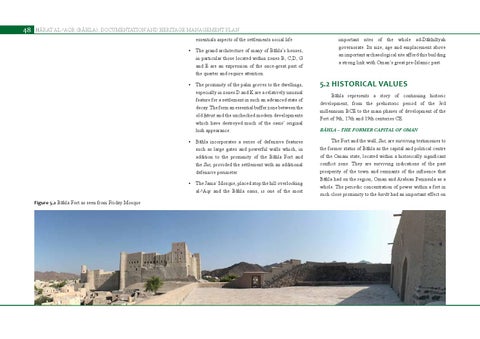
The Fort and the wall, Sur, are surviving testimonies to the former status of Bāhla as the capital and political centre of the Omani state, located within a historically significant conflict zone. They are surviving indications of the past prosperity of the town and remnants of the influence that Bāhla had on the region, Oman and Arabian Peninsula as a whole. The periodic concentration of power within a fort in such close proximity to the harāt had an important effect on
• The Jama` Mosque, placed atop the hill overlooking al-ΚAqr and the Bāhla oasis, is one of the most Figure 5.2 Bāhla Fort as seen from Friday Mosque
important sites of the whole ad-Dākhilīyah governorate. Its size, age and emplacement above an important archaeological site afford this building a strong link with Oman’s great pre-Islamic past.
Bāhla represents a story of continuing historic development, from the prehistoric period of the 3rd millennium BCE to the main phases of development of the Fort of 9th, 17th and 19th centuries CE. Bāhla – the former capital of Oman