


ONE-PIECE & FIBREGLASS POOLS
Quality, convenience and a stress-free pool build experience
AUTOMATIC POOL COVERS
Domestic pool cover-ups
offering safety, style and more
POOL LINERS & SYSTEMS
Superb lining solutions for projects both big and small

Celebrating the industry’s finest at the 2024 British Pool & Hot Tub Awards
OFFICIAL MAGAZINE FOR THE UK INDUSTRY APRIL 2024 POOLS SPAS HOT TUBS SAUNAS CHEMICALS ACCESSORIES & MORE STA Pool Plant – Water Testing | Wet Leisure Industry Survey | SPATEX Review Opinion | High-end Swim Spas | Company Visit – Ocea UK | 12 Pages Of Industry News
PLUS AWARD WINNERS
We’ve Had You Covered Since 2010
Distributed exclusively by us across the UK for over a decade, Covrex® slats offer absolute protection whatever the weather!


WARRANTY INCLUDED 5YEAR
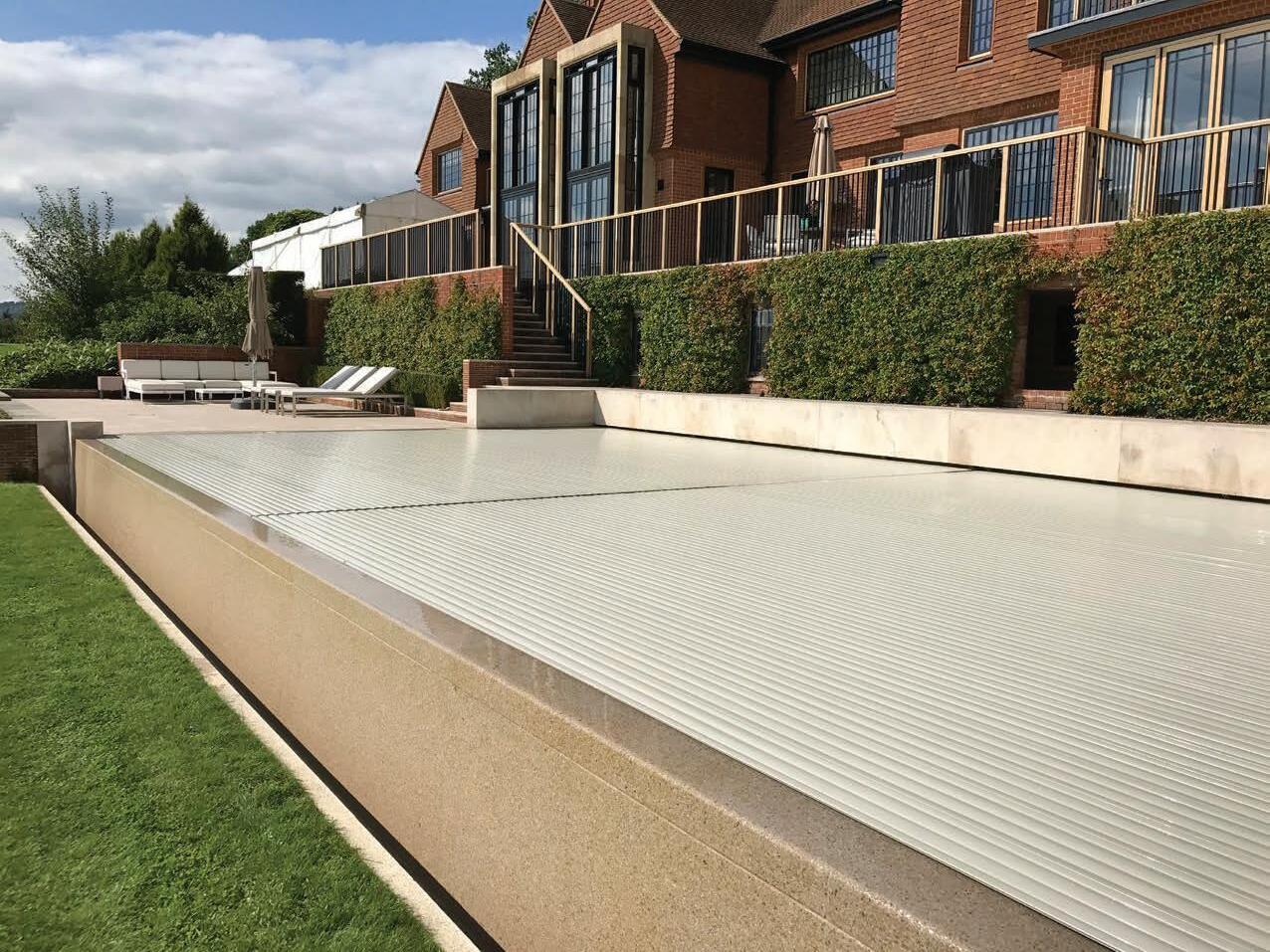

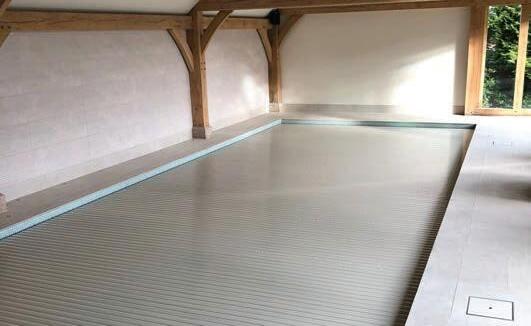
This is no ordinary pool cover, it has huge advantages over traditional PVC slatted covers in terms of insulation properties with average thermal conductivity of= 0.0821 W/(mK) or a u value of 4.85.
The profile structures are made from expanded PVC-foam, coextruded with polyurethane. The profile exterior is high density PVC, which gives a perfectly smooth surface to prevent any algae formation either above or below the water level.


Available in five colours, Covrex® covers comply with the French safety standard NF P 90308 Version 2006, probably the strictest standard in the market.
They provide excellent resistance to weather and UV which makes them suitable for use all year round and come with an amazing standard 5 year warranty.
Covrex® is the future; so get ahead of your competitors before it’s too late!
EXCEPTIONAL SERVICE, QUALITY PRODUCTS

3 Landscape Close, Weston on the Green, Bicester, Oxfordshire, OX25 3SX, UK T: 01869 934333 | E: info@fairlocks.co.uk | W: www.fairlocks.co.uk





For advertising enquiries contact Tony on: T: +44 (0)1474 813433
E: tony@aqua-publishing.co.uk
For accounts enquiries please email accounts@aqua-publishing.co.uk
For production enquiries please email production@aqua-publishing.co.uk
For general enquiries please email info@aqua-publishing.co.uk

Since the last issue, the UK’s been a very mild but very wet place to inhabit. In fact for many –myself included – it’s felt like it hasn’t stopped raining, which will at least hopefully mean zero chance of any potential Temporary Use Bans later in the season. Despite the rather grim weather, the industry seems to have enjoyed a decent start to the year, and there are some signs that the pressure experienced in the hot tub and spa sector is easing too. A reduction in the price cap for energy bills is also welcome news industrywide although even with this fall, prices will still be well above pre-‘energy crisis’ levels. There’s also been good news for the commercial sector with over 300 English pools receiving support to ensure their long-term financial sustainability thanks to ‘The Swimming Pool Support Fund’ and its latest round of funding. This initiative allows local authorities to apply for funding for leisure centres with pools that face immediate pressures caused by rising energy and maintenance costs.
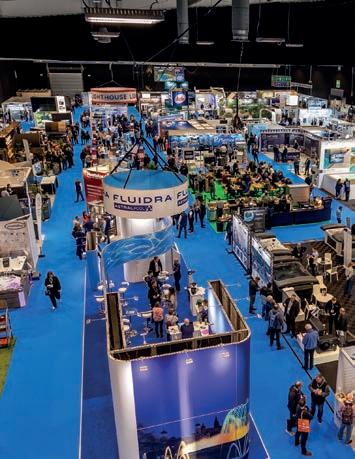
Minimising or better still, reducing running costs and ensuring sustainability is going to play a big part in our industry for the foreseeable future with both owners and operators in the commercial sector plus domestic owners needing to plan more than ever on how to keep costs down whilst maintaining safe and useable facilities. Unsurprising, energy costs and making savings were once again hot topics at this year’s SPATEX exhibition which took place at the start of February at the Coventry Building Society Arena. As sponsors of the new products on show, SPN were once again pleased to be at the event and chat with both exhibitors and visitors about new products, services, initiatives and of course any industry challenges. The event once again saw a superb effort from in excess of a hundred exhibitors that provided some very professional
stands. They, and the exhibition’s organisers, were greatly rewarded for their combined efforts with a much busier than normal attendance, and we’ve more on the show in our review of SPATEX later in this issue.
Held during SPATEX, the annual British Pool & Hot Tub Awards hosted by SPATA and BISHTA returned with their evening event which celebrated some of the best wet leisure projects from across the industry. Inside, we’ve coverage on all the Gold Award winners from this year’s event along with a write-up on the Industry Gala Evening itself. As ever, I would just like to say congratulations to all who entered and the companies who picked up an Award during the evening.
Elsewhere in this latest issue, we also explore what’s new in the one-piece and fibreglass swimming pools, a sector that’s enjoyed continued success due to providing a relatively stress-free installation experience and one that has new entrants to it again this year. We’ve an in depth look at the latest automatic pool cover systems for the domestic sector too. Offering owners convenience and much more at the touch of a button, it’s no surprise these products have become ‘must have’ options for many pool owners. Providing a dual-purpose solution for many, highend swim spas are also featured in this issue, plus we’ve the latest in pool liners and systems for new build and refurbishment projects, both big and small.
If that wasn’t enough, and revisiting some of the points raised earlier in this piece, we highlight some of the results from the latest Wet Leisure Industry Survey, whilst in a separate Opinion piece, Kevin Burns of Myrtha Pools busts some of the myths surrounding pool renovation and replacement. We’ve a look at Ocea UK as they expand their footprint and product range, plus there’s further valuable content as Luke Griffiths emphasises the importance of regular water testing and shares some insights into best practice.
There’s also useful information from the BSPF, SPATA and BISHTA plus we’ve also got our round up of all the latest industry, product, eco, people and wellness news from both here in the UK and abroad too.
So that’s this latest issue broken down for you –I hope you find the time to enjoy reading it.
Jon Wadeson - Editor
PS – If you are involved within the industry and have some relevant news that you would like to appear within SPN, please do get in touch.


www.swimmingpoolnews.co.uk SPN April 2024 1
Editor and Co Publisher: Jon Wadeson Features: Karen Witney Features
Subeditor:
Weston Accounts: Sam Bartholomew Design: Colin Halliday
&
Andrea Hartshorne Co Publisher and Sales Director: Tony
For editorial enquiries contact Jon on: T: +44 (0)20 8306 8150 E: jon@aqua-publishing.co.uk
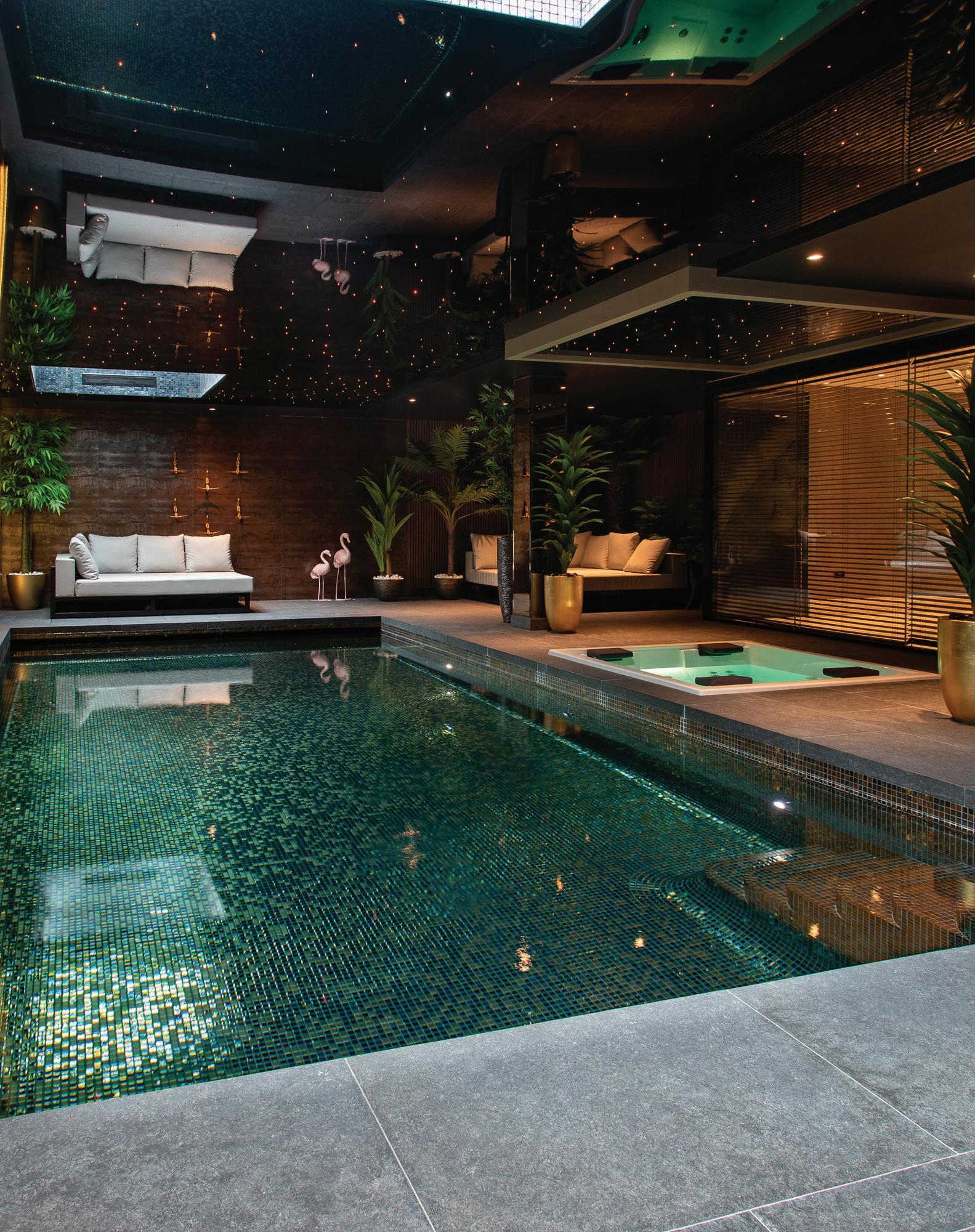
To subscribe or amend / cancel an existing subscription, please visit our website. Annual subscription rates (6 issues): UK £30, Europe £50 and ROW £60 SPN is published by W: www.aqua-publishing.co.uk Printed in the UK by The Manson Group Ltd Aqua Publishing Ltd accepts no liability for any insert, display or classified advertisement included in Swimming Pool News. While every reasonable care is taken to ensure that all advertisers are reliable and reputable, Swimming Pool News can give no assurance they will fulfil their obligations under all circumstances. The views expressed in the articles in Swimming Pool News are the contributors’ own. All rights reserved. Copyright for all materials published in SPN remains with the publishers. Material contained in this publication is not to be reproduced in whole or in part without the prior permission of Aqua Publishing Ltd. Aqua Publishing also publishes: What Pool & Hot Tub magazine – our sister publication – is the only consumer magazine in the UK that provides the complete and crucial information that potential buyers are looking for! For more information visit the What Pool & Hot Tub website at www.whatpoolandhottubmag.co.uk Editor’s letter SPN incorporating Pool & Spa Industry is the official trade magazine for the UK wet leisure markets and is the only trade publication that invests in the industry it serves. P U B L I S H I N G You can now follow SPN on: MAGAZINE THE UK INDUSTRY APRIL 2024 POOLS SPAS HOT TUBS SAUNAS CHEMICALS ACCESSORIES & MORE STA Pool Plant – Water Testing Wet Leisure Industry Survey SPATEX Review Opinion High-end Swim Spas Company Visit – Ocea UK 12 Pages Of Industry News PLUS AWARD WINNERS Celebrating the industry’s finest at the 2024 British Pool & Hot Tub Awards ONE-PIECE & FIBREGLASS POOLS Quality, convenience and a stress-free pool build experience AUTOMATIC POOL COVERS Domestic pool cover-ups offering safety, style and more POOL LINERS & SYSTEMS Superb lining solutions for projects both big and small SPN_April_2024_Cover.indd 3 08/04/2024 EDITOR’S LETTER Cover image courtesy of Buckingham Pools –.buckinghampools.com



CONTENTS 2 April 2024 SPN www.swimmingpoolnews.co.uk
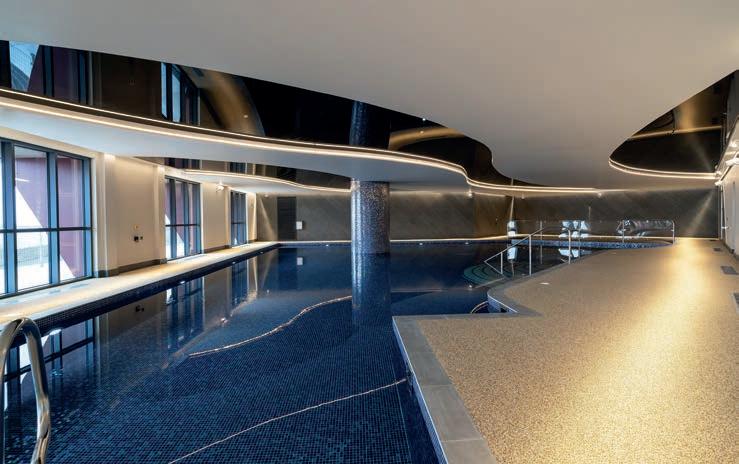
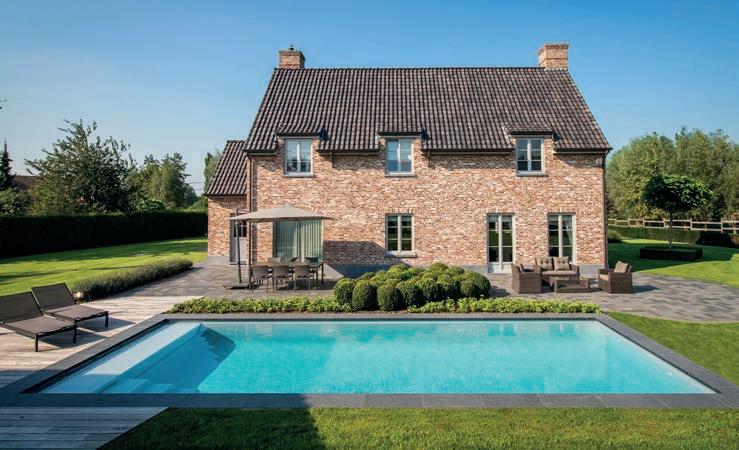
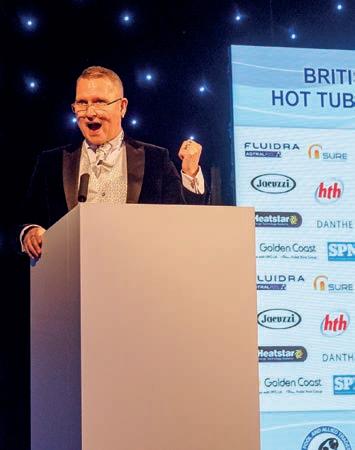
COVER AWARD WINNERS 33 All the Gold Award winners from the British Pool & Hot Tub Awards 2024 POOL LINERS & SYSTEMS 57 The latest in pool liners and systems for projects of all shapes and sizes ONE-PIECE & 63 FIBREGLASS POOLS Stress-free and stunning pool solutions –we discover what’s available AUTOMATIC DOMESTIC 71 POOL COVERS Safe, stylish and labour saving solutions for home-based swimming pools
POOL & SPA INDUSTRY 29 The industry’s associations dedicated pages STA POOL PLANT 43 Luke Gri ths emphasises the importance of regular water testing SPATEX REVIEW 48 A look at the annual three-day industry exhibition held in Coventry SWIM SPAS, MID 53 & HIGH-END O ering the complete swim and relax package to families and athletes alike OPINION 84 Kevin Burns busts some of the myths surrounding pool renovation NEWS INDUSTRY 04 The latest industry news, info, projects and gossip PEOPLE 12 New appointments, personnel updates and training PRODUCT / ECO 15 Innovations and new products on the market HOT TUB, SWIM SPA 20 & WELLNESS Dedicated news for this important sector WORLD 25 All the latest news from around the world 33 63 30 53 65
Inside This
FEATURES
Issue Of SPN

READER SERVICES
DIGITAL EDITION
Read this and previous editions online at www.swimmingpoolnews.co.uk
BUYERS GUIDE
For suppliers of products and services in the pool, spa and sauna market turn to page 80
SUBSCRIPTIONS
Ensure you receive a regular copy of SPN (Swimming Pool News).
Subscribe online today at www.aqua-publishing.co.uk
FORWARD FEATURES
For our forward features, please visit our website at www.swimmingpoolnews.co.uk



Next Issue
• Above-ground and wooden pools
• Hot tub covers, enclosures and buildings
• Tiling and mosaics
• Lighting
• Cold therapy
• Water play equipment
• Events round up – what’s on in the next 12 months
Plus much, much more!
CONTENTS www.swimmingpoolnews.co.uk SPN April 2024 3
71 25 48 57
Leisure Works Underway At Trailblazing Project
Set for late spring 2024 opening, work is well underway at the innovative Jesse’s House project in West London, with the leisure offering of the new family club venture being delivered by international modular pool provider Myrtha Pools.
Partnering with distributor Barr + Wray, the firm is set to deliver its signature outdoor and indoor pools for the Jesse’s House concept – a combined offering for remote working parents and their young children that promotes education, relaxation and wellbeing under one roof.
The stainless steel pools, which are manufactured off site to minimise installation time and boost project efficiency, will be the first under the Jesse’s House banner in Parsons Green.
Kate McKnight, Country Manager UK & Ireland at Myrtha Pools, said: “This project is all about grassroots development, giving parents and children the opportunity to learn, relax and unwind all within one central space. It is a fairly unique concept and an exciting venture to partner on, especially with this being the first pool to be used under the Jesse’s House banner.
“We’re looking forward to working together closely to bring this brand new offering to the public in West London, which provides something for absolutely everybody.”
Craig Steele, Sales & Estimating Manager at Barr + Wray, said: “What Jesse’s House is getting is really modern pool technology. Myrtha Pools offer unrivalled benefits in energy efficiency, as well as corrosion and leak prevention that futureproofs pools for decades to come.




“We’re excited to begin this new chapter for Jesse’s House, combining all the off site benefits that come with modern methods of construction (MMC), with sustainable and integrated pool solutions that allow families to enjoy water and swimming from an early age.”
Myrtha Pools UK
07860 852339
www.myrthapools.com
UV Company Celebrates 100 Years In Business
Nuvonic, a global UV technology solutions provider, commemorates its 100th year of unwavering commitment to excellence. Formerly known as Hanovia, the company has been a stalwart in UV science since its inception in the 1920s, and its century-long journey is a testament to innovation and adaptability.
Founded in 1924 in Slough, Berkshire, Hanovia started manufacturing UV lamps for medical applications. Since then, the company has consistently been at the forefront of UV science. Over the years, Hanovia evolved into one of the world’s leading UV lamps and systems manufacturers, contributing to a wide range of industries, including the treatment of water in the leisure sector.
Over the decades, Nuvonic has undergone a transformative journey marked by
strategic milestones and industry leadership. In 1981, Nuvonic became part of Halma plc, laying the foundation for future growth. The subsequent years witnessed important developments, such as Berson’s integration into the Halma family in 1986 and Berson’s groundbreaking introduction of the InLine model of UV systems in 1995. In 2017, Hanovia, Berson and Aquionics united under a single management team, fortifying their position in the UV technology landscape. The year 2021 saw Orca joining



Halma, further strengthening the collective expertise. In 2022, these four entities converged under the innovative banner of Nuvonic, reflecting a unified commitment to excellence.
“Reaching our hundredth year is proof that Nuvonic has stayed strong, adapted and kept delivering for our customers,” said Alex Langston, Managing Director of Nuvonic.
“Our legacy, strong brand and trust show we’ve been consistent. Thriving for a century means we’re always innovating and changing with the times. As industry leaders, we’ve shared our progress worldwide, weathered changes and made a positive impact on our team, customers and the business world.”
Nuvonic
01753 515300
01753 515300
www.nuvonicuv.com
NEWS All the Latest News, Info, Products and Gossip From the UK Pool and Spa Industry and Beyond NEWS 4 April 2024 SPN www.swimmingpoolnews.co.uk
IN BRIEF
ROBERTS LIMBRICK REPLACE FAULKNERBROWNS ON SOUTHWEST LONDON PROJECT
Architectural practice Roberts Limbrick has replaced FaulknerBrowns on a London leisure centre project after a huge rise in expected build costs.
Last year, Kingston Borough Council revealed that anticipated costs on the project, to replace the now demolished Kingfisher Leisure Centre which closed in 2019, had hit £79.5m – double the original budget.
The London borough brought in Alliance Leisure through the UK Leisure Framework to tackle the costs, with Roberts Limbrick appointed to revise designs as part of the process.
Revised plans will drastically reduce the building’s size, from five to two storeys, which the council says will keep it within an affordable delivery budget of £44.5m. Should committee approval be granted to move forward, the revised designs for the building will be showcased in May 2024.
The new centre is still set to incorporate more facilities than its predecessor though, with the highlight being an eight-lane 25m swimming pool.
LIKELY LOCATION OF NEW SHROPSHIRE SWIMMING POOL REVEALED
Telford & Wrekin Council in Shropshire have announced that talks are underway with The Telford Langley School around a new Council owned swimming pool being built at the school site to complement and expand the Council run sport and leisure facilities already located there.
Council Leader Councillor Shaun Davies said: “This is an exciting opportunity to work with Telford Langley School to explore options on this site for the Captain Mathew Webb Swimming Pool. This is our preferred location for the site with options to share leisure facilities here and provide access to swimming for pupils as well as members of the public.”
Iconic Leisure Complex Set For £14.4m Refurbishment
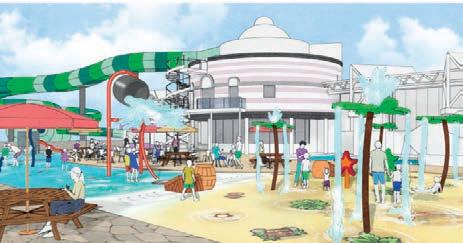
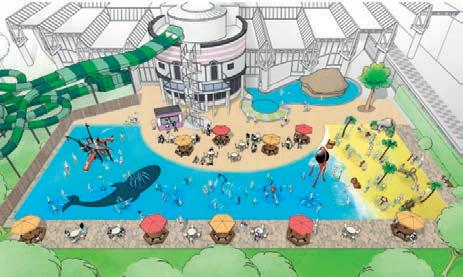
A multi-million-pound investment to fund significant refurbishment at The Dome in Doncaster, South Yorkshire has taken a step forward, having been approved by the City of Doncaster Council’s Cabinet at the start of February.
The £14.4m will enable a revamp of the much-loved lagoons and entrance area, as well as adding to the features of the popular building. This follows the announcement of The Dome as a Grade II Listed Building last year.
The facility has been well visited by families from across the region since it opened in 1989. Over the years, investment has continued to keep it fit for purpose, but the building still needs more, so this is about modernising the venue to service future generations to come.
Councillor Nigel Ball, Cabinet Member for Public Health, said: “Our culture and leisure centres are key to supporting the health and wellbeing of residents in Doncaster.
“I am delighted with the refurbishment plans and our dedication as a council to continue to champion tourist attractions, and community hubs like the Dome. This investment in leisure is vital and is a testament to our dedication to health and leisure at a time where other councils are closing venues.”
Chief Executive of Doncaster Culture & Leisure Trust, Michael Hart, said: “We are thrilled that the City of Doncaster Council’s cabinet approved
the funding for the refurbishment of the Lagoons at Doncaster Dome.”
This much needed investment in the venue will see the Lagoons area closed for up to a year. During the closure of the lagoons the ice rink, gym and other services provided at the Dome will be open while leisure swimming will be available through other pool venues across the city, Doncaster Culture Leisure Trust will be programming sessions to minimise disruption.
Recotherm Announces Industry Association Membership
Ventilation technology specialist
Recotherm is thrilled to announce its recent membership to SPATA, the Swimming Pool and Allied Trades Association. This milestone represents a significant step forward for Recotherm, further solidifying its commitment to the swimming pool industry and its dedication to upholding the highest standards of professionalism and excellence.
As a member of SPATA, Recotherm will gain access to a wealth of resources, expertise and networking opportunities within the swimming pool and allied trades community. This membership not only validates
the company’s position as a trusted provider of innovative fresh air ventilation solutions, but also provides a platform for collaboration and knowledgesharing with industry peers.
By joining SPATA, Recotherm is reaffirming its commitment to delivering exceptional products and services that meet the needs of swimming pool professionals and enthusiasts alike. Through active participation in SPATA initiatives and events, Recotherm aims to contribute to the advancement of best practices and standards within the industry, ultimately benefiting customers and stakeholders


across the board.
Recotherm is honoured to be welcomed into the SPATA family and looks forward to a fruitful partnership built on mutual respect, integrity and a shared passion for excellence in the swimming pool industry.
The update coincided with Recotherm enjoying its best ever year at the SPATEX trade show in February. With the company reaching a significant milestone in 2025 – its 40th anniversary – staff are already holding discussions regarding making exciting additions to the stand for next year’s event to celebrate the achievement and look forward to seeing attendees in Coventry to mark the occasion.
Recotherm
NEWS www.swimmingpoolnews.co.uk SPN April 2024 7
01527 894533 www.recotherm.co.uk
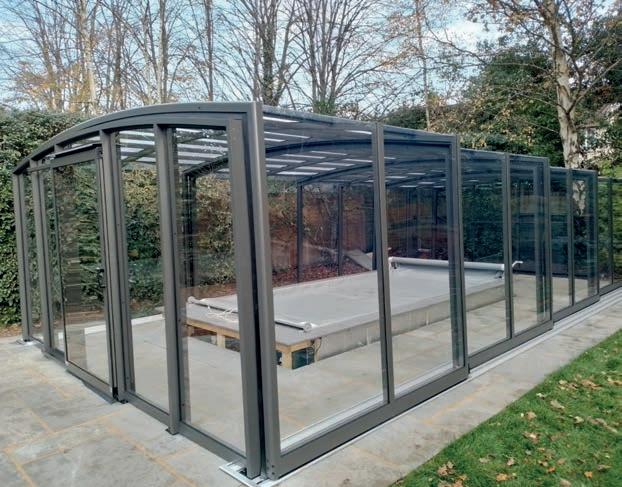
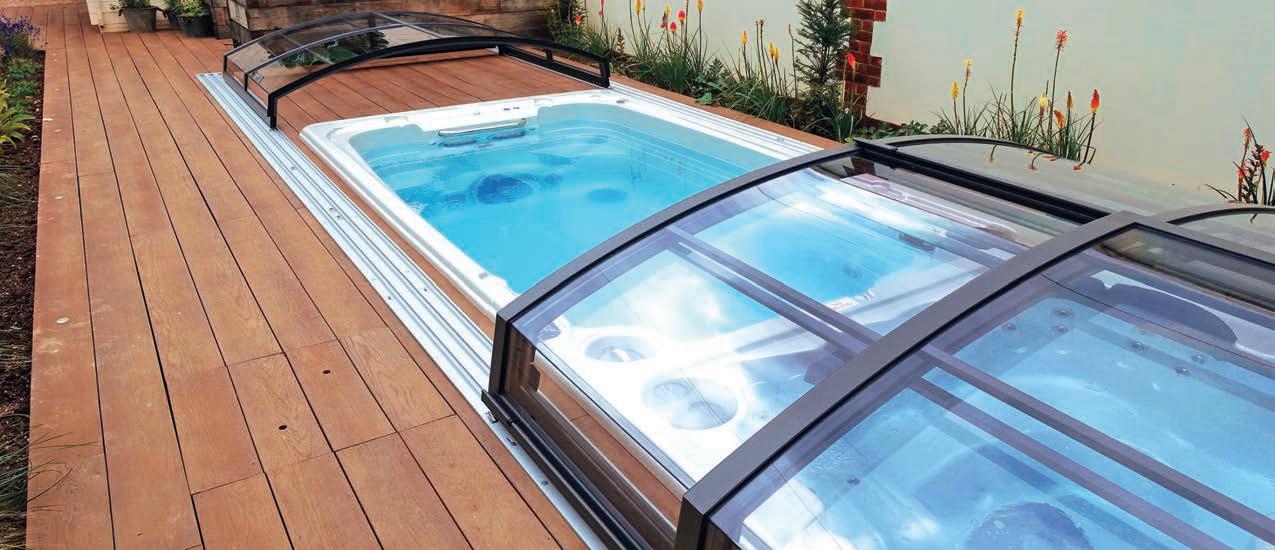

ENJOY YOUR SWIM-SPA LONGER WITH ALUKOV ENCLOSURES WITH FULL SERVICE FROM ALUKOV IMPERIA VISION SPA SUNHOUSE SERVICE ENVIROMENTAL QUALITY LONG WARRANTY TECHNOLOGY WORLDWIDE ALUKOV UK Ltd, Suite 5, 21 Farncombe Street, Godalming, GU7 3AY E-mail: info@alukov.co.uk Office: 0118 909 98 44, Mobile: 0795 55 22 502 www.alukov.co.uk
PWTAG ANNOUNCE CONFERENCE DATE
PWTAG (the Pool Water Treatment Advisory Group) have announced Thursday 14 November 2024 as the date for this year’s conference with planning underway and the theme as ‘Future Proofing Pools’.
Full details of the conference agenda, speakers and booking process will be released in due course but potential attendees are advised to save the date in calendars now.
The PWTAG 2024 Conference will take place at Holywell Park, Loughborough in Leicestershire.
OVER 300 POOLS TO BENEFIT FROM LATEST SUPPORT FUND
Three hundred and twenty five swimming pools and leisure centres across England will receive a share of £60.5m to ensure their long-term financial sustainability, by improving their energy efficiency in order to keep running costs down. Measures being supported by the latest Swimming Pool Support Fund investment include funding for new heating systems, solar panels, better insulation and other energy saving interventions.
With the recent increase in energy costs, the Government has recognised the importance of these facilities and stepped in to make sure the doors of local pools and leisure centres are kept open.
The latest round of funding is intended to help the longer term energy and financial resilience of the sector, with 96% of applicants for the latest round being successful in their applications.
In total, this means that 442 swimming pools in 367 local authorities will have benefited from a share of £80m funding since the fund was announced in last year’s budget. The first £20m of funding from Phase I of the Swimming Pool Support Fund went to facilities most at risk of closure or significant service reduction in November.
Dame Kelly Holmes Opens Supercharged Sports Centre
Team GB legend and wellbeing campaigner Dame Kelly Holmes opened Caterham School’s new supercharged sports centre on Tuesday 27 February.
investment anything is possible
Before cutting the ribbon on the new Sports Centre Dame Kelly met with teachers, parents, trustees and members of the local community. Remarking on the school’s sports facilities and the drive to support community sport, Dame Kelly said: “With investment anything is possible but the school is brilliant at opening them (sports facilities) to the local community, everyone benefits. The enthusiasm of the head, the teachers, support staff and, my favourite, the PE teachers is amazing.”
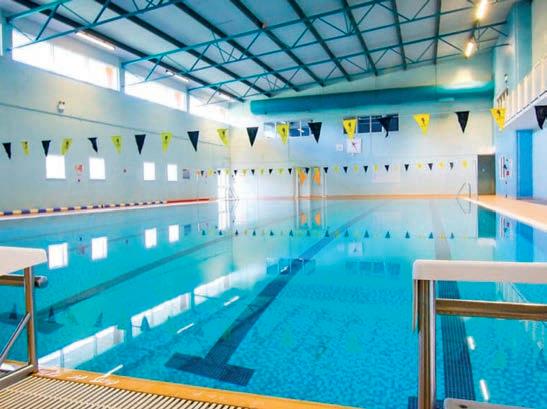
First and Second Year pupils made sure the count down to opening was heard across the Harestone Valley before confetti cannons fired and the building was officially declared open. Amongst many other facilities, Caterham’s supercharged Sports Centre contains a six-lane, 25-metre



coaching sessions.
indoor swimming pool.
In addition to enhancing the school’s facilities for pupils the centre is open to the local community for individual use, for use by local state-maintained school partners and community sports groups for training and
The wider importance of sport was a key theme of the official opening day. Soon after her double gold medal win, Kelly set up the Dame Kelly Holmes Trust. The charity helps guide disadvantaged young people, getting their lives back on track by using world class athletes to engage, enable and empower, attitudes they need to fulfil a positive life. She encourages the same philosophy that she lives by – nothing is impossible.
Council Approves Plans For New £10m Leisure And Swimming Facility
Staffordshire’s Lichfield District Council have approved plans for a new leisure centre in the city. The planning committee voted in favour of a new £10m facility at Stychbrook Park which will provide a brand-new replacement for the city’s ageing Friary Grange Leisure Centre.
The leisure centre will feature a new 25 metre, 6 lane variable depth swimming pool to include poolside seating and changing, plus numerous other sports facilities.
The leisure centre is being designed by

ReCreation, a company founded by British Olympians, which uses a unique above-ground swimming pool design which is more affordable than traditional construction methods which require excavation.
Following consultation on the design, the latest lighting technology will be considered to minimise light pollution, highways experts will resolve traffic challenges and biodiversity experts will ensure that the environment around the new facility is enhanced.


Councillor Andy Smith, Lichfield District Council’s Deputy Leader and Cabinet Member for Leisure, Parks and Major Projects, said: “I am delighted that the planning committee has approved plans for this new facility. With Friary Grange Leisure Centre nearing the end of its life it is vital that a replacement is built as soon as possible.
“We know how important good leisure facilities are to residents across the district and with the approval tonight, we are a major step closer to providing it.”
NEWS www.swimmingpoolnews.co.uk SPN April 2024 9
IN BRIEF the
Introducing Swimple – The ‘Airbnb Of Swimming Pools’
At the current rate of pool closures, reports have revealed that by 2030 there could be a 40% decrease in public pools available, threatening the future of aquatic sports and leaving millions across the UK shut out of the activities they love.
In the last 12 months, 14 million adults in the UK have been swimming. Providing a solution to meet the demand of UK swimmers amidst the decrease of pools is Swimple –the ‘Airbnb of swimming pools’.
Nic and Dave Crum are brothers and co-founders of the familyrun business Swimple. They had the idea to rent out their father’s pool which had sat empty for years, to the members of the local community – and from opening, it has been fully booked ever since. Offering a stress-free private swim to everyone from families with neurodiverse children, people who couldn’t fit ‘family hour’ at the
local leisure centre into their diaries, or couples wanting a bit of peace and quiet, it turned out that the need for local private swimming was huge.
The brothers believe, there’s a huge untapped market of unused private pools in the UK and Swimple offers an opportunity for extra income. With sky-high energy bills, pool owners can be paying up to £9,000 a year just to keep it warm! The option of renting out a private pool to locals is a great way to generate income to offset this cost while also supporting the community.
Swimple 01292 836015
www.swimple.co.uk
Redevelopment Restarts At Warwickshire Pool Project
In February, Warwick District Council agreed that the redevelopment of the swimming pools at Abbey Fields in Kenilworth could recommence, following the signing of a revised contract with main developer Kier Construction.
Last summer the discovery of extensive medieval remains on the development site brought the programme to a halt. Following this, the Council’s project team analysed the options available to allow them to continue with the build whilst protecting the historical structures, and the implications this would have on the timeline and investment needed.
A project ceiling cost was agreed in November 2023 and the revised plans for the building were submitted to the main contractor Kier. There then followed a period of intense negotiation, with both parties having to consider the effects of high inflation on the construction industry and the detailed new specifications and redesigns required.


The Council has now approved a price of £22m with Kier Construction, which remains under the overall cost ceiling and will allow for the addition of other fees and agreed contingencies. Last month, the redevelopment of the swimming pools at Abbey Fields in Kenilworth restarted with Kier on site and beginning preparation work for the two-year build which will see the new facility comprising two swimming pools with adjoining sun deck and café.
Councillor Jim Sinnott, Portfolio Holder for Communities and Leisure at Warwick District Council said: “This is a landmark moment on a long and difficult journey. I am therefore delighted to see our contractors on site and work progressing to provide Kenilworth and the wider district with the additional swimming facilities required to meet the needs of a growing population, with the benefits of being accessible to all including those with profound disabilities.”
Surrey’s Groundbreaking Wet And Dry Passivhaus Leisure Project Has Hit A Significant Milestone
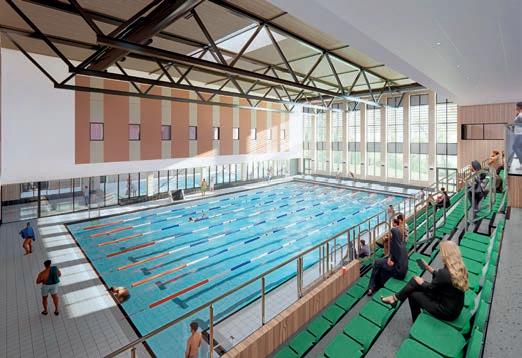
The UK’s first and largest wet and dry Passivhaus leisure centre has undergone its next milestone moment, with installation having commenced on two new modular pools that will help drive cost and energy efficiency savings.
International pool provider
Myrtha Pools is behind the installation at Spelthorne Leisure Centre in Staines, which will include the UK’s first screwjack moveable floor – utilised in the 25m pool for a variety of exercise, class and relaxation purposes, dependent on programme needs.
Leading independent construction and property services company Wilmott Dixon is driving the main £43.5m project construction, working in collaboration with GT3 Architects and Spelthorne Borough Council. Once complete, the leisure centre is aiming to consume up to 60%
less energy compared with a standard new leisure build.
A learner pool, splash pad and spa will also be part of the project mix delivered under the Myrtha Pools’ banner.
Kevin Burns, UK Business Development Manager at Myrtha Pools, said: “This is a truly landmark leisure centre, which will give the leisure industry a greater understanding of how working to Passivhaus standards could work on a wider scale.
“We want our pools to be central in creating passive and healthy buildings within the sector, as well as actively supporting local authority net zero targets.
“From a consumer perspective, it is meeting a variety of modern wellbeing needs, with improved filtration and access to spa and relaxation offerings. We’re delighted to be working collaboratively with the
wider project team to provide the local community of Staines with a truly impressive modern leisure experience.”
On track for summer 2024 completion, Spelthorne Leisure Centre follows the UK’s first wetonly Passivhaus leisure centre at St Sidwell’s Point, which opened in spring 2022.
Myrtha Pools UK 07860 852339
www.myrthapools.com






NEWS 10 April 2024 SPN www.swimmingpoolnews.co.uk




Davey Brand Gets A New General Manager For Europe
In late January, Waterco Europe CEO Tony Fisher was delighted to announce the promotion of Sandra Belle to General Manager of Davey Europe. Sandra joined Davey seven years ago and has been instrumental in the growth and development of the Davey brand throughout Europe.
With a wealth of industry experience and a background in business and management, Sandra has a strong overall understanding of the Davey business which Waterco purchased late last year.

Pool Industry And SPATA Loses Two Prominent Figures
The SPATA office and in turn SPN were saddened to hear that Alan Stokes died last year.
Alan’s company was AquaRio Swimming Pools. He was SPATA President from 2001 –2002, and during his time on SPATA’s National Council, he was responsible for some significant contributions to the industry, including arranging a specialised underwater diving course for use in the swimming pool sector.
Alan had a passion for helping SPATA to raise standards and he also took a keen interest in the educational work undertaken by the ISPE (being a long-standing member). Although Alan closed down his company before retiring, his son, Ian Stokes, is carrying on the family association with the pool industry, providing servicing and maintenance, utilising the Aqua-Rio Swimming Pool name in honour of his father. Alan is survived by his wife, Sylviane, whom he shared more than 30
years of marriage with.
It is with profound sorrow that we also announce the passing of Barry McCabe, the esteemed founder of Oyster Pools & Leisure, a loyal and long-standing member of SPATA and BISHTA. Barry leaves behind his beloved wife and dedicated business partner, Paula, as he peacefully departed after a valiant four-year struggle with illness.
Barry’s legacy continues today through the renamed company Oyster Pools & Hot Tubs, members of BISHTA for 21 years (this year), and SPATA for 38 years (since 1986). Barry’s legacy extends far beyond the confines of his business. He was a vastly experienced industry member renowned for his unwavering dedication, innovative spirit and warm camaraderie. Throughout his journey, Barry forged deep bonds with countless peers and colleagues across the industry, all of whom will be deeply grieved by his loss.
Speaking about her new role, Sandra said: “I believe that the acquisition of Davey by Waterco represents a significant opportunity for both companies. The collaboration between the Davey Europe and Waterco UK teams has been extremely positive, paving the way for exciting possibilities in terms of product synergies and innovation.
“The merger enables us to leverage the strengths of both organisations, combining Davey’s expertise in water treatment and pool equipment with Waterco’s proven track record in filtration systems and pool technology. This union allows us to offer customers a comprehensive range of high-quality, eco-friendly solutions for their pool and water treatment needs.
“One of the key advantages of this acquisition is the potential for synergy on product development. By pooling our resources and knowledge, we can accelerate the creation of innovative products that address the evolving needs of the market. Additionally, our combined distribution networks and market presence will enhance our ability to reach and serve customers effectively.
“Overall, I am optimistic about the future prospects of Davey under the ownership of Waterco. Together, we are well-positioned to capitalise on opportunities for growth and expansion in the pool and water treatment industry. Our collaborative spirit and shared commitment to excellence will undoubtedly drive success in the years to come.” Waterco

SPATA Appoints Dash Ganeson As Honorary Association Treasurer
The Swimming Pool and Allied Trades Association (SPATA) is delighted to announce the appointment of Dash Ganeson as its new Honorary Treasurer. With an illustrious background in finance and a commitment to the industry, Dash brings a wealth of experience and expertise to the role.
As Honorary Treasurer, Dash will be a key part of the SPATA National Council, playing an advisory role for SPATA and being involved in the Council’s decisions collectively involving the Association’s fiscal health and sustainability, budgets, investments, new membership applications and financial planning initiatives to ensure SPATA’s continued growth and success.
As Managing Director of SCP UK Ltd, and with a background in Chartered Accountancy, Dash has a career which has
demonstrated an unwavering dedication to fostering financial integrity, transparency and innovation and brings 35 years of experience in financial management to SPATA. His proven track record of strategic financial planning and implementation will be instrumental for the Council in guiding SPATA towards achieving its future growth.
“We are thrilled to welcome Dash to our leadership team,” said SPATA’s Managing Director Chris Hayes. “His extensive experience and dedication to financial stewardship will be invaluable as we work to advance the mission and goals of SPATA.”
“I am honoured to take on the role of Treasurer for SPATA,”
said Dash. “I am excited to collaborate with the talented team of professionals and contribute to the continued success and prosperity of SPATA.”
SPATA welcomes Dash to his new position and looks forward to his guidance and expertise in further developing the trade association’s work.


SPATA also thanks Patrick Thorpe for his support and dedication. He held the position of SPATA Treasurer for over 40 years and continues his role as BSPF Company Secretary. SPATA
PEOPLE NEWS 12 April 2024 SPN www.swimmingpoolnews.co.uk
01264 356210 www.spata.co.uk
Europe
521733
01795
www.waterco.eu
Alan Stokes
Barry McCabe


Weighing



Certikin Add New Dolphin Cleaners To Their 2024 Line Up


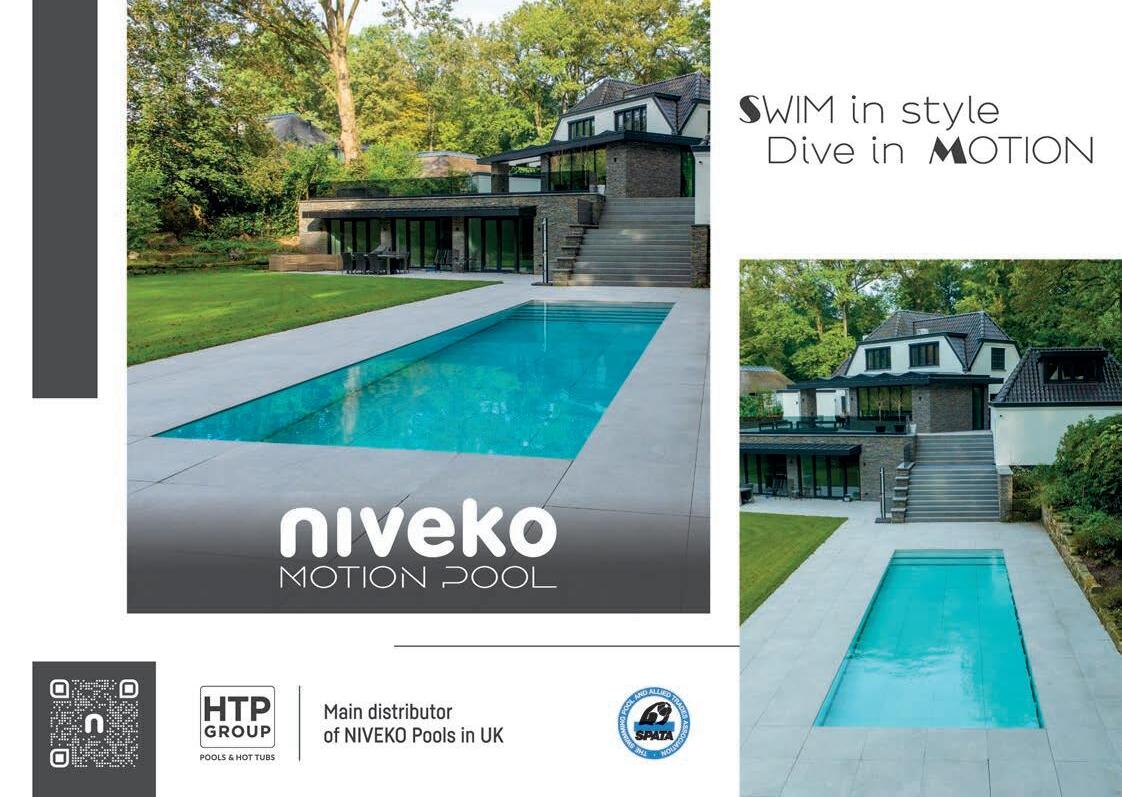
Welcome To The Pool Of The Future – The NIVEKO Motion Pool
With technological progress affecting every sphere of our lives, it is not surprising that even traditional swimming pools are seeing some revolutionary changes. NIVEKO has now launched a multifunctional pool that is flexible enough to suit every member of the family yet is also an exceptional product with a timeless design – a pool with a movable bottom!
The Wave 90i from Dolphin is the first Wi-Fi ‘Always Connected’ commercial pool cleaner, specially designed for hotel, holiday cottage and campsite swimming pools.
This ingenious robotic cleaner delivers maximum pool cleaning performance for midsize commercial pools (up to 20m) of every shape and type, including floors and walls. It has multi pattern scanning with Maze cleaning process.
Always connected via the MyDolphin Plus app, the Wave 90i allows users to control pool cleaning from anywhere, at any time. Dual direction active brushes rotate 1.5 faster than the robot and side brushes.
The cleaner offers a cleaning cycle time of two, three and four hours and there are two filtration systems to choose from – a filter bag for particles of dirt and dust or a large capacity cartridge filter.
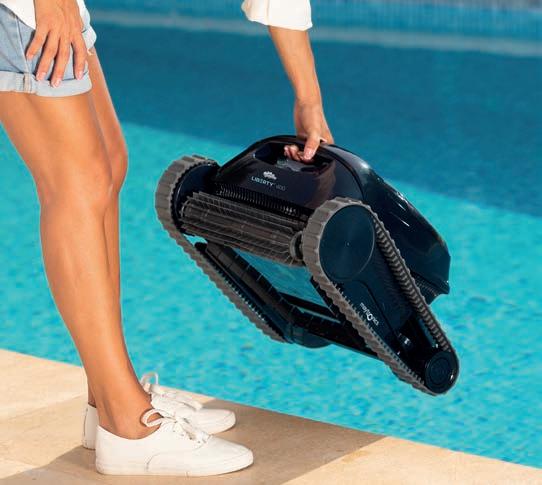
Dolphin’s Liberty 400 is a new cordless cleaner for mid-size in- and above-ground residential pools. It has magnetic connect for super easy snap-in-place and walk-away charging.
The Eco Mode will keep a pool clean all week with short and efficient cleaning cycles, whilst the Cycle Selector lets users choose between floor-only or floor and walls cleaning. Using the Click-Up rattle sensor, the Dolphin will climb up to the user for easy removal from the pool.
Weighing 8.1kg, the Liberty 400 includes the MyDolphin Plus app for easy control. It has a powerful active scrubbing action and interchangeable filter options to tackle every level of dirt and comes with a 36-month warranty.
Certikin
ww.certikin.co.uk
01993 777200
The NIVEKO Motion pool combines state-of-the-art technology with NIVEKO’s quality pools and years of experience. For convenience, the product is supplied ‘All-In-One’ without the need for additional installation. This approach underlines the company’s efforts to provide not only an outstanding product, but also a seamless and fast installation process.
The movable floor allows the depth of the pool to be easily adjusted to suit each user’s specific needs. The wide range of options for setting any depth from 0 to 150 cm allows the pool to be used as a safe paddling pool for children or as a full swimming pool for adults. This flexibility means the pool can also be used by people with limited physical mobility or for physiotherapy.
Raising the bottom to ground level prevents anyone from entering the pool when it is unattended or not in use, making it safe for every member of the family, including pets.
In addition, the movable bottom effectively prevents overheating, heat loss and minimises evaporation. It prevents dirt from getting into the pool too, significantly reducing the need for maintenance plus serves as an effective covering of water surface during the winter months. What’s more, with a single click or turn of the key, owners can easily transform their pool into a full-fledged terrace, making the most of garden space.
NIVEKO s.r.o.
+42 057 269 3246
www.niveko-pools.com
Reliable Dosing Of Chemicals – MEMDOS SMART From Lutz-Jesco
For demanding and complex metering tasks, the new generation of MEMDOS SMART stepper motor diaphragm metering pumps from Lutz-Jesco provides a variety of attractive solutions. With the new stepper motor technology, even the smallest quantities can be metered with a high degree of accuracy. Homogeneous and pulsationreduced metering is made possible by asynchronous running with different speeds during the suction and pressure strokes. Thanks to the further developed slow mode, higher viscosity media can be conveyed even more reliably and reproducibly. The newgeneration MEMDOS SMART is available in seven variants with different functional scopes.
Available in two sizes, the possible capacities range from 2.6 l/h at 20 bar to 30.7 l/h at 6 bar in the first size, and 58.5 l/h at 10 bar to 182 l/h at 4 bar in the second size.
MEMDOS SMART metering pumps feature a removable display for wall mounting when pump installation is difficult to access. A clear user interface with structured menu navigation ensures simple and understandable operation plus
password protection is freely adjustable for different menu areas, thus allowing different user levels / releases.
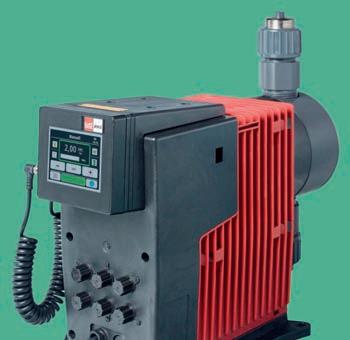
Depending on the application, different materials and connections on the pressure and suction side can be used in the metering area.
Accessory sets consisting of hose, injection point and suction line are available for optimum results and quick installation.
Lutz-Jesco GB
02477 103306
www.memdos-smart.de/en

PRODUCT / ECO NEWS www.swimmingpoolnews.co.uk SPN April 2024 15
in at 8.1kg, Dolphin’s new cordless Liberty 400 cleaner
AN INNOVATION IN SWIMMING POOL FILTRATION


Introducing The Zodiac Freerider™ –Performance With Total Freedom
Freed from its cable, without compromising performance, the new Freerider™ cordless robotic cleaner from Zodiac is a technological powerhouse, is easy to use on a daily basis and takes up little space. Powerful, autonomous and highly agile, with its dual drive motors and integrated smart sensors, it provides optimal cleaning quality (floor, walls, water line) for in-ground and above-ground pools with rigid walls, regardless of their shape or surface. This cordless robotic cleaner is equipped with a highefficiency Lithium-ion battery with a long battery life. This guarantees a full cleaning cycle (2.5 hours) and takes less than five hours to charge.
Freerider™ offers uncompromising cleaning performance thanks to its powerful and long-lasting patented cyclonic suction. Its helix shaped brushes allow it to collect even the finest debris more efficiently.
The robotic cleaner stands out for its ergonomics too, with its charging base doubling as storage and its user comfort with built-in Wi-Fi connectivity.
The Freerider™ cleaner, alongside the full range of Zodiac products, is available in the UK exclusively from AstralPool UK.
AstralPool UK
01329 514000 www.zodiac.com
Experience The Ultimate Seamless Pool Finish
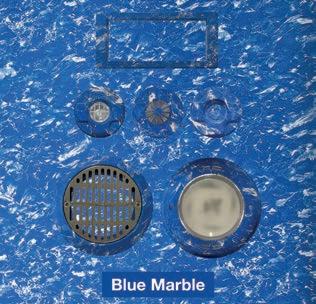
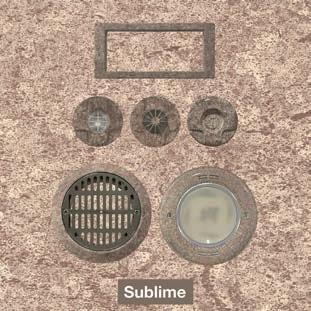
Pool fittings play a vital role in ensuring that a swimming pool functions seamlessly. Traditionally these fittings have been white in colour which does not always complement the overall design of the pool, particularly when it has been finished with a liner. However, with Certikin’s new range of innovative patterned fittings, both pool installers and owners can now get the perfect match.
Specifically tested and developed for swimming pool conditions, and launched to the trade at February’s SPATEX exhibition, the new ingenious range of fittings are available to visually complement three of the best-selling pool liner patterns – Riverstone, Blue Marble and Sublime. With each pattern, the full range of fittings is available including inlets, main drain and light fascia – ensuring the ultimate seamless pool finish for a liner pool project!
In addition to these three clever aesthetic options, new mid blue and dark blue fittings have also been carefully selected to blend in with a variety of existing pool liners including Persia Blue, Blue Marble, Mosaic and Gemstone Light Blue.
Certikin
01993 777200
www.certikin.co.uk




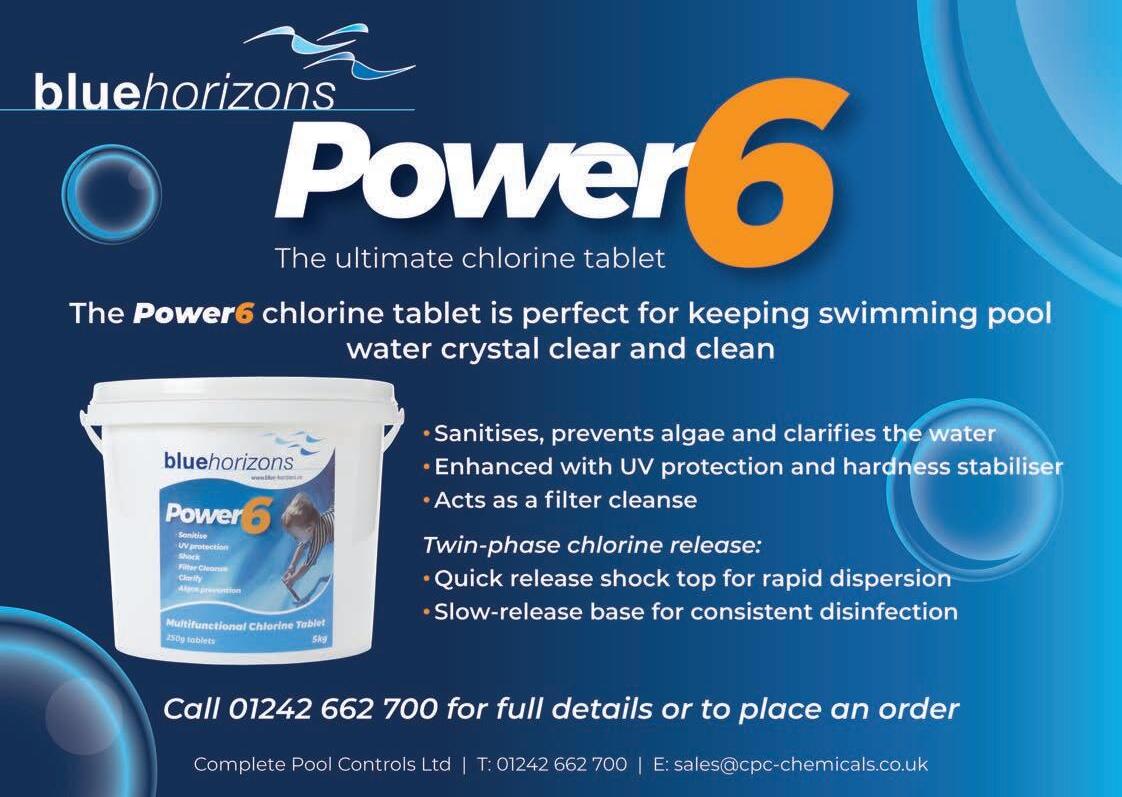
Reintroduced To The Blue Horizons Range – Calc-Chlor PODS
Calcium hypochlorite tablets are a popular choice for those who want to keep their swimming pool clean and clear. With this in mind, for the 2024 season, Complete Pool Controls (CPC) have reintroduced their Blue Horizons Calc-Chlor PODS. With a high chlorine content, these tablets are extremely economical which reduces the need for frequent dosing. The tablets are sleeved, which means that the chlorine is released slowly and consistently, giving users and swimming pool owners up to five days of chlorine protection with just one tablet. The
presence of the sleeve also means that the PODS are safer to handle.
One of the key benefits of calcium hypochlorite tablets is that they are stabiliser-free. This means that they don’t contain any cyanuric acid, which can build up in the water and reduce the effectiveness of chlorine. By using stabiliser-free tablets, pool owners and
operators can ensure that their chlorine remains at the optimal level, helping to keep the water clean and clear.
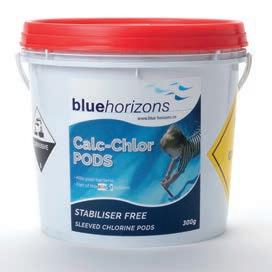
The 300g Calc-Chlor PODS are available in 4.8kg buckets and should always be added to a clean, empty skimmer basket (do not mix with any other type of chlorine tablets).
Complete Pool Controls Ltd
01242 662700
www.cpc-chemicals.co.uk
PRODUCT / ECO NEWS www.swimmingpoolnews.co.uk SPN April 2024 17
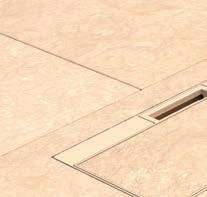


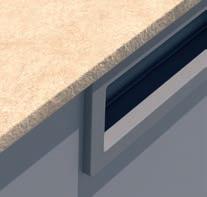



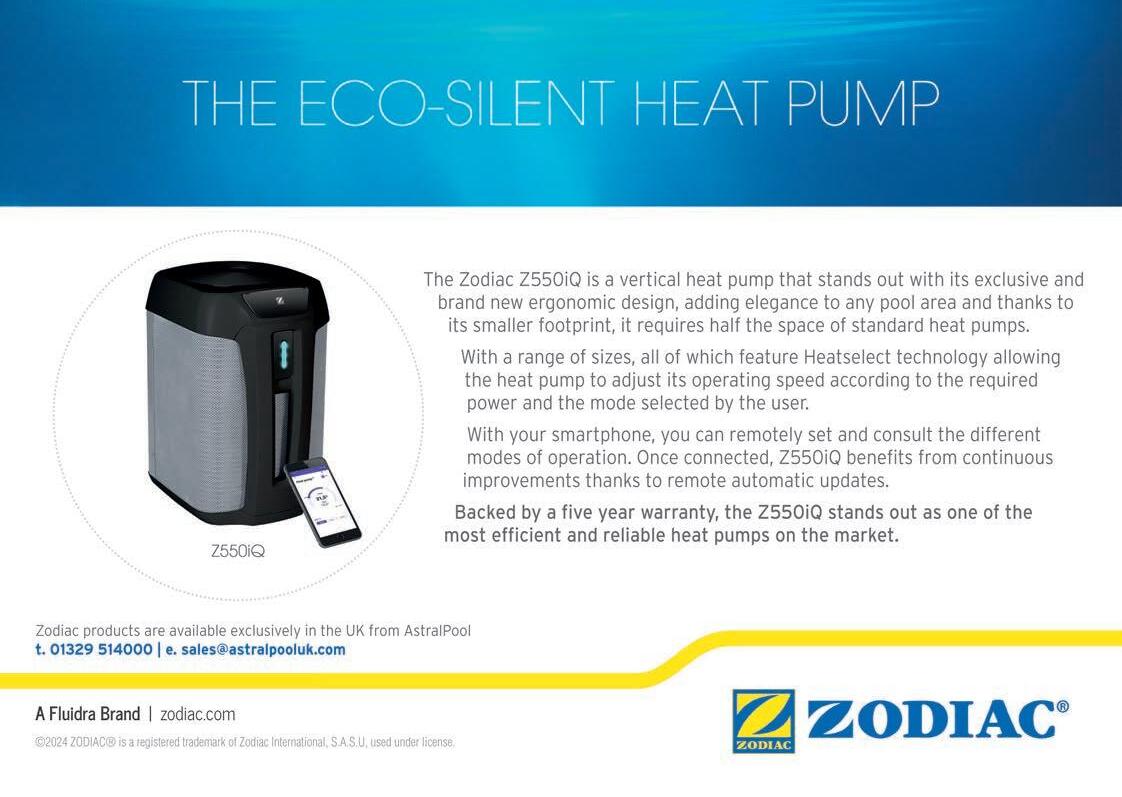
AstralPool UK has launched the new Skimmer Unik, an innovative skimmer designed to integrate harmoniously into the pool and a solution that’s so quiet, you’ll almost forget it’s there.
Coming complete with a five year warranty, this new skimmer fits seamlessly into any type of swimming pool. The top cover comes in five colours and there’s also a choice of five colours plus a stainlesssteel finish for the skimmer mouth to provide maximum flexibility. Sound is reduced thanks to the unique curved shape of the weir and maintenance is easy due to the large basket capacity (3.5 litre) which can easily be retrieved.
If the idea is for the skimmer to blend even more seamlessly into its surroundings, to the point where the skimmers and top covers are completely unnoticeable from the outside, this new skimmer is the perfect solution. The design makes it possible to remove the top part of the cover and insert a tile or slab of the same material as the pool surround equipment. This creates a more unified and elegant aesthetic for the entire pool.
AstralPool UK
01329 514000
www.astralpool.com/en
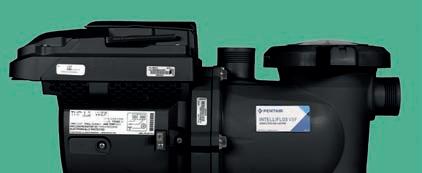
New for 2024 and available through SCP UK, the Pentair IntelliFlo3 VSF pool pump leverages built-in and patented sensorless flow control technology for optimum water flow. With Variable Speed and Flow – like dynamic cruise control – IntelliFlo3 auto-regulates / adjusts speed based on a pool’s changing conditions to keep flow constant. It’s the ‘set-it-forget-it’ way to clean healthy water. The resulting slower speeds and regulated flow save energy and have a noticeable impact on those monthly utility bills by providing up to 90% in energy savings. The Pentair Home App gives seamless
RPRO-70 Launch Makes Waves For Plastica!



Plastica launched its new water treatment product at this year’s SPATEX and during the exhibition and in the weeks since, it’s attracted significant attention from industry professionals. Available in granules or as easy-scoop pellets, RPRO-70 Calcium Hypochlorite, or RPRO-70 as it’s now registered as, is tailored specifically for the commercial sector. With its release, Plastica’s unwavering dedication is evident in the meticulous efforts invested to ensure not just the exceptional quality but also the full compliance of this product with UK BPR legislation.











Plastica can also proudly announce its listing on the UK Health and Safety Executive (HSE) website under GB Article 95, a testament to its steadfast commitment to providing a reliable and compliant solution for commercial swimming pool maintenance needs.
RPRO-70 is produced at one of the world’s leading manufacturing plants of calcium hypochlorite. Pool owners and operators who are considering swapping brands and saving money can ask for a trial – the company are sure it will not disappoint!







Plastica remains at the forefront of innovation and compliance, setting new standards in the water treatment industry. For those seeking more information about RPRO-70 or any other Plastica products, comprehensive details are available online.
Plastica
01424 857857
www.plasticapools.net
Wi-Fi or Bluetooth® wireless technology control of the IntelliFlo3 via smartphone, meaning owners and service professionals can monitor the pump or change the flow rate from anywhere plus receive alerts and notifications.
Featuring new synchronous permanent
magnet motor and optimised pump design, the pump’s unique motor technology provides silence like no other – when running at a low speed, it sounds like nothing more than a whisper.
The IntelliFlo3 VSF is available in 3hp and 1.5hp versions, comes complete with a three-year warranty as standard plus as a ‘Trade Grade’ product, it can also qualify for an additional year’s warranty too.

SCP UK
01293 546126
PRODUCT / ECO NEWS 18 April 2024 SPN www.swimmingpoolnews.co.uk
www.scpeurope.com Enjoy Pump Peace Of Mind With Pentair’s IntelliFlo3 VSF Skimmer Unik –AstralPool’s Most Discreet, Customisable And Silent Skimmer

The UK’s First Public Floating Sauna Due To Launch In Liverpool


Waterside regeneration specialist, Peel Waters, is working in partnership with WYLD Sauna to bring the traditional Nordic sauna experience to Liverpool Waters this summer, in what will be the UK’s first public floating sauna. Moored on the banks of Princes Dock, it will provide a space to relax and escape in the heart of the city.
WYLD Sauna was established in late 2023 by outdoor swimming and sauna addicts, and having seen first-hand the explosion of floating saunas across Scandinavia, they are bringing the experience to sites across the UK, starting with Liverpool.
A planning application has now been submitted to Liverpool City Council and the team behind the project hope to be in operation by early summer 2024.
The WYLD Sauna experience at Princes Dock will consist of a
new floating pontoon containing a 30-person sauna complete with ice baths, waterfall showers, outdoors seating, changing rooms and direct access to the water for the ultimate swimsauna experience.
Traditional dry saunas are restorative, comforting spaces that promote a deep sense of calm and offer numerous mental and physical health benefitsmany of which are amplified by moving from the heat and plunging into cold water.
Jon Miller, Co-Founder of WYLD Sauna, commented: “We are thrilled to be launching this UK-first in such a perfect location. There really is nothing better than being able to dip into cold, fresh water after a sauna. Princes Dock is the ideal site for us, where we can contribute to the thriving community of local swimmers, runners and scuba divers.
Hot Tub Barn Becomes BETA Wellness
Since its establishment in 1996, Hot Tub Barn has become a household name in the UK as a top supplier of hot tubs and swim spas. The brand’s secret to success has always been an unwavering dedication to quality and customer service. However, even market leaders must evolve to offer their clientele the very best and with this in mind, the company are pleased to announce the transformation of Hot Tub Barn into BETA Wellness.


This change is part of an exciting journey as the UK operation integrates itself into the global strategy of its parent company –Crystal Island – in the lead-up to an IPO.
Already successful in Austria, Australia, and other global locations, BETA Wellness is bringing its expertise and knowledge into the company. The unique aspect of joining the global corporate structure of Crystal Island is the complete control over the production chain – from suppliers to manufacturing, all the way to sales. This complete linkage enables UK operations not only to offer optimised trade routes, but also ensure the highest standards in quality and customer service.
With the transition to BETA Wellness, there’s a renewed focus on sustainability. A new eco-friendly factory is a marvel of modern technology and sustainable production and with the integration of AI technology, production processes are optimised whilst the environmental footprint is greatly reduced.
As BETA Wellness, customers will benefit from an expanded range of high-quality products, innovative designs, and a level of customer service that’s second to none.
BETA Wellness are proud to build on the strong foundations laid by Hot Tub Barn and look forward to a shared future defined by quality, innovation, and sustainability.
BETA Wellness
01245 265036
www.beta-wellness.co.uk
New Models Introduced To SCP’s WeekEnd Spas Range
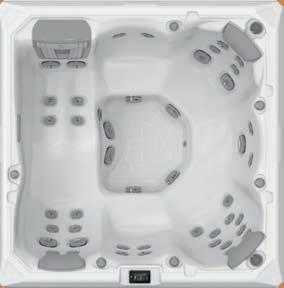
SCP UK’s WeekEnd range has seen a number of upgrades for the 2024 season and its hot tub line up has been extended with a number of new models too. Two options which are sure to catch the eye are the WeekEnd 643/L Deluxe and WeekEnd 551/2L Deluxe models – both of which share the same dimensions of 215 x 215 x 86cm.
Featuring 43 jets and billed as the ultimate family massage therapy spa, the new 643L has luxury written all over it. With a full body massage lounger plus five seats that are all equipped with bearing free jets that twist and pulse water to provide targeted massage in every seat, it is sure to appeal to a wide
range of owners.
Featuring all the luxury of the 643L but with the added bonus of two lounger seats, the new 551/2L’s dual form loungers are shaped differently to accommodate different heights of bather. This model features 51 jets in total and each seat gives users a different massage experience, working different muscle groups, providing the ultimate in relaxation.
The latest touchscreen controls on both of these models allows effortless operation and each can be controlled simply
through any smartphone to make life even easier. Multicoloured mood lighting finishes off both of these truly luxurious hot tubs.
A 3kW heater and Ozonator take care of the water in each of the tubs whilst outside, both
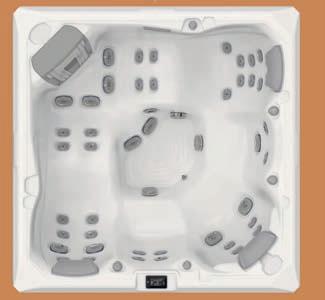
models are available in a choice of three maintenance-free cabinet colours: grey, ice white and black.
SCP UK
01293 546126
www.scpeurope.com
HOT TUB, SWIM SPA & WELLNESS NEWS 20 April 2024 SPN www.swimmingpoolnews.co.uk





















Certikin Extends Its Wellness Range For 2024
Certikin is delighted to announce the addition of three new Harvia sauna cabins to its extensive wellness range. Easily installed, they’re high performance, energy efficient and stunning too.
The Harvia Ventura (2000 x 1600 x 2100mm) is a streamlined cabin with glass front. Its size and layout can easily be modified to suit a customer’s requirements. It features high performance insulation for maximum energy efficiency, plus external and internal panels and benches with ash veneer tops.
The Harvia Fenix (2058 x 1606 x 2016mm) comes with the Virta heater with Xenio controller, stones and an accessory pack. The Element cabin is made of black treated spruce with aspen wood benches and backrests. Highly flexible, it can be configured in right or left orientation. It features glass fibre insulation, a single pane safety glass door and optional RGBW LED lights.
The Harvia Block Sauna (1600 x 2000 x 2100mm) offers a spacious cabin with high quality black framed tempered glass with a glazed corner on either front corner. Like the Fenix, it includes a Virta heater, Xeno controller, stones and accessory pack. There are bespoke options allowing the customer to choose the panel of their choice (alder, aspen or heat-treated aspen or alder).
Certikin 01993 777200 www.certikin.co.uk





Chill Tubs Team Up With Leeds Rhinos
Premium ice bath brand ‘Chill Tubs’ has officially joined forces with Leeds Rhinos Rugby League team to help support recovery and performance.
The partnership has so far seen two Chill Tubs being installed at the Leeds Rhinos Bartercard Training Complex, which will be used by all players to help support their recovery.
Chill Tubs, launched by Superior Wellness in 2023, has proved to be hugely popular attracting elite athletes, sports people and teams globally, as well as individuals looking to focus on their health and wellbeing.
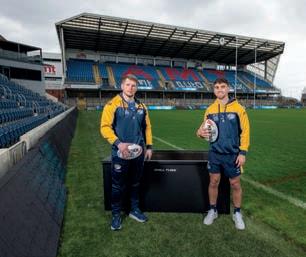

Made from stainless steel, featuring a black aluminium surround and a composite top, the ‘Original’ Chill Tub is designed to deliver unmatched performance, durability and style. With its impressive features and luxurious aesthetics, it redefines the concept of postworkout rejuvenation.
The Chill Tub temperature can be set as low as 3 degrees and no ice is required.
Sarah Watkins, Head of Marketing said: “We are delighted to team up with Leeds Rhinos and help support their recovery. The benefits of using a Chill Tub includes reducing muscle soreness, improving recovery time, decreasing inflammation and improving circulation – all of which will help the team.”
Leeds Rhinos Business Development Manager Ben Turnbull commented: “We are thrilled to welcome Chill Tubs into our family of partners here at Leeds Rhinos. We recognise the importance of recovery to support player wellness and performance, and the addition of Chill Tubs will help massively in this area. The players already love them, and we’re excited to see how this partnership grows.”
Chill Tubs will also be proudly donating 5% to the Leeds Hospitals Charity Appeal for the Rob Burrow Centre for MND from every Chill Tubs sale directly from the Leeds Rhinos.
Superior Wellness
01246 559071
www.superiorwellness.co.uk
SpaFlo Launch ContraSpa – The First UK Made Contrast Therapy Spa
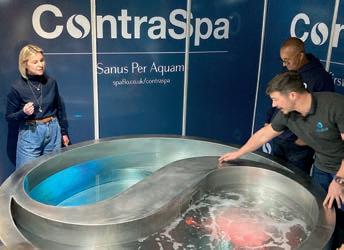
Created by SpaFlo’s founder Richard Gowland, ContraSpa was unveiled at SPATEX in February after indentifying a gap in the market for a dual use single shell spa that provides hot and cold water therapy. Many of SpaFlo’s clients have relied on just hot water spas, and some have used them as a cold water plunge and then jogged to their sauna. This new concept creates a unique opportunity for people to enjoy an immediate and contrasting cold and hot water therapy.
The luxury spa design is based on the company’s logo and ethos, with a unique Ying / Yang separating the water whilst allowing easy access through cleverly integrated steps. The spa is made of UK sourced sustainable commercial grade steel, and clever lighting highlights the hot and cold areas, ensuring
it looks beautiful. Controls are Wi-Fi and touchscreen enabled.
Colin Jackson joined the SpaFlo team as an ambassador for the launch of ContraSpa and commented: “I used cold water therapy throughout my years as a professional athlete and am now working with the next generation of elite athletes. It is exciting to be working with the team pioneering the at home cold and hot water therapy spa. The benefits of cold water
and hot water therapy have been documented for many years, and it is exciting that SpaFlo has launched this UK first to help people harness the power of contrast water therapy.”
Richard Gowland said: “Health through water is at the heart of what we do. Spas, pools and water features all have their unique wellbeing properties. In contrast, water wellbeing has been around for many years. I am delighted to launch the first ever single shell and dual use UK contrast therapy water spa to market to help people benefit from the wide-ranging advantages of cold and hot water therapy from their homes.”
SpaFlo
0151 424 9742
www.spaflo.co.uk
HOT TUB, SWIM SPA & WELLNESS NEWS www.swimmingpoolnews.co.uk SPN April 2024 23

PHTA ANNOUNCES BIOLAB AS NEWEST STRATEGIC PARTNER
The Pool & Hot Tub Alliance (PHTA), the trade association representing the swimming pool, hot tub and spa industry in the US, has announced BioLab as its newest Strategic Partner. The PHTA Strategic Partnership Program creates special opportunities for companies that promote the association’s initiatives, including education, advocacy, and market outreach.
“The team at BioLab is proud to enter into a strategic partnership with PHTA, furthering our commitment to help elevate the industry as a whole,” said Ted Lawrence, Vice President of Pro Sales for BioLab. “By aligning our core values of Educate, Advocate, and Elevate with PHTA’s ongoing initiatives, we believe our shared passion will lead to a longstanding and successful partnership.”
FLUIDRA RANKED AMONG THE TOP SUSTAINABLE COMPANIES
Fluidra has boosted its CDP score from a B rating in 2022 to A- in 2023. The company has also been included in S&P’s Sustainability Yearbook 2024 for the second year running.
This rating puts Fluidra above the European and industry average. CDP noted Fluidra’s climate governance model, as well as its emissions reduction initiatives, low-carbon products and its Scope 1, 2 and 3 emissions, where it earned an A rating.
Fluidra scored 66 in S&P’s CSA evaluation, a score that aligns with the company’s goal of earning a rating of 80 by 2030. S&P scores Fluidra above the average in its sector in all three categories (Environmental, Social and Governance).
To appear in S&P’s yearbook, companies must be in the top 15% with the best rating in their industry and their score must be within 30% of the highest one in their sector.
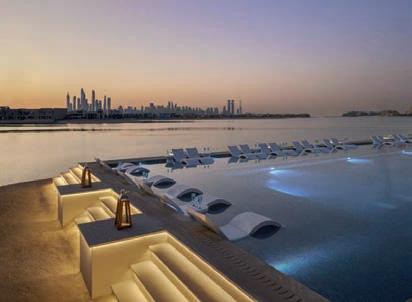
Ezari’s Glass Mosaics Feature At Prestigious Dubai Pool
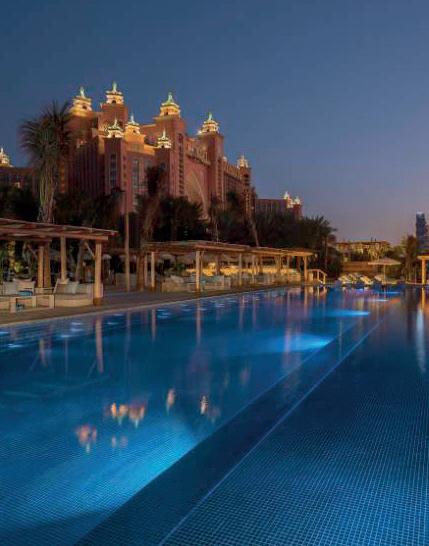
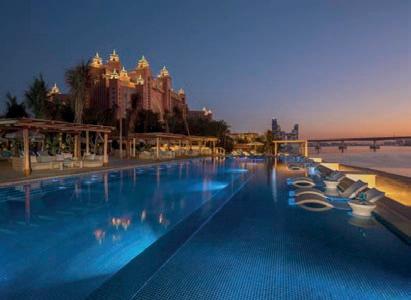
Imagine the elegance of an oasis amidst the luxury of Dubai – that’s where Ezarri’s dazzling Jade 25 glass mosaics have made their mark at the White Beach Club of the Atlantics Hotel. Located on the iconic palm tree-shaped peninsula, The Palm, this exclusive club redefines the pool experience.
Ezarri’s pool mosaic has been the preferred choice in this prestigious project, offering not only stunning aesthetics but also durability and resilience.
The White Beach Club is a testament to how quality and innovation merge to create exceptional spaces. Pool builders discover that the company’s pool mosaics options go beyond the conventional, setting the standard for extraordinary projects.
Every detail matters, and the use of Ezarri’s products in this emblematic enclave is no exception. The Jade reference adds a touch of serenity to Dubai’s vibrant scene, complementing
the luxurious architecture and exclusive ambiance of the place.
From the relaxing pool to the most intimate corners of the club, the pool mosaic takes centre stage, turning every corner into a visual masterpiece. The durability of Ezarri’s products ensures that this elegance endures over time, resisting the most demanding conditions.
In summary, the White Beach Club in Dubai is a living testimony to how excellence in design and the quality of the pool mosaic can transform a water space into a unique experience. Ezarri’s glass mosaics, specially designed for pools, raise the bar, and set a new horizon for aesthetics in
high-end projects.
Ezarri Mosaico
+34 943 164 140
www.ezarri.com
Fluidra Launches €20m Venture Capital Fund – The First To Specialise In Pool And Wellness Startups
Fluidra, a global leader in connected equipment and solutions for the pool and wellness sector, is launching Fluidra Ventures, a €20m corporate venture capital fund (CVC) investment to lead innovation in the sector.
The CVC will invest in each startup with the potential to revolutionise the industry on a global scale through their solutions, with a special focus on the United States and Europe. The goal of this first three-year phase is to build a solid portfolio of startups through investing in innovative companies.
The CVC will target startup initiatives that enhance efficiency, connectivity, sustainability and safety in the swimming pool and wellness business, leveraging IoT, computer vision and robotic solutions. It is looking for startups that add value to the pool and wellness sector with innovative business models, fostering direct customer interaction through sales, subscriptions and other channels. The CVC has already invested in Coral Smart Pool, a technology company aiming to transform the pool experience through Artificial Intelligence (AI) with an initial focus on pool safety.
Fluidra Ventures will also invest in companies that innovate in engineering and science to advance materials and products that deal with swimming pool manufacturing, efficiency and maintenance.
The fund is focused on four different segments – Commercial, Residential, Wellness and Mass Market – and has an investment thesis that covers eight strategic guidelines, from connected pools, resource optimisation, digital platforms, innovative materials, security systems, personalised experiences, robotics and innovative consumable products.

Fluidra Ventures is fuelled by Fluidra Lab, Fluidra’s open innovation division, and any startups that want to submit their proposals can send their investment pitch decks to fluidralab@ fluidra.com. Offering more than just investments, Fluidra aims to leverage this initiative to become the top strategic collaborator for the most innovative startups with the tremendous benefits that being an industry leader brings, such as: resources, scale successful business models, expertise, experience and sales options.
IN BRIEF www.swimmingpoolnews.co.uk SPN April 2024 25 WORLD NEWS

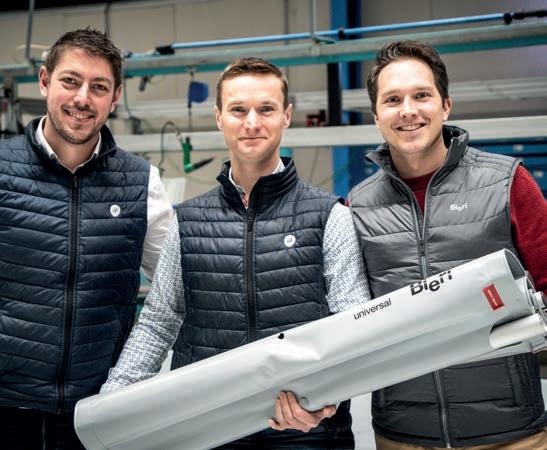
Bieri Tenta AG Hands Over Cover Division To Walter Pool
Swiss textile manufacturer Bieri Tenta AG completed the handover of its swimming pool cover division to the French company Walter Pool at the beginning of March.
Walter Pool is part of the T&A Group and brings with it a wealth of experience and expertise in the field of swimming pool covers.
“We are delighted to have found a competent manufacturer in Walter Pool who will continue to develop and produce our established products. Our customers will continue to receive the familiar products and also benefit from the broad product range of the entire T&A Group,” said Florian Sommerhalder, Managing Director Bieri Tenta AG.
Over the next few months, teams from both companies will work in partnership to ensure a
smooth transition.
“We would like to thank our partners for the many years of loyalty and cooperation. Their trust in our products and services has always motivated and shaped us. We are convinced that Walter Pool will provide you with the same excellent service that you have come to expect from us,” added Mr Sommerhalder.
This latest development follows a number of acquisitions made within the pool cover sector by the T&A Group over recent years. These have have included Walter Pool, Covrex and AquaCover, plus moving pool floor company Morgana Floor.
Walter Pool +33 39 029 5100 www.walter-pool.com
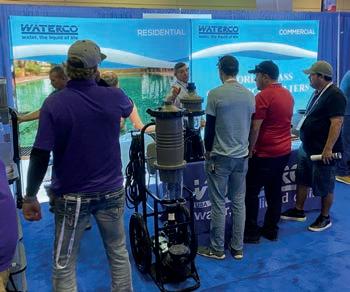
Waterco Exhibit At ‘Everything Under the Sun’
Waterco USA recently showcased its latest line up of state-of-the-art pool products at the Everything Under the Sun Pool Show in Florida. The annual event, held in Orlando, serves as a premier platform for industry professionals to explore the latest trends, technologies and products in the pool and spa sector.
At the Waterco USA booth, attendees were treated to a first hand look at the company’s newest offerings designed to enhance the efficiency, sustainability and performance of residential and commercial pool systems. From advanced filtration systems to energy-efficient pumps, Waterco’s products are engineered to deliver superior results while minimising environmental impact.
One of the highlights of Waterco’s exhibit was its range of cutting-edge filtration solutions. With growing concerns about water quality and sustainability, the company’s innovative filters utilise advanced technologies to remove impurities and contaminants, ensuring crystal-clear water for pool owners. From sand and cartridge filters to the revolutionary MultiCyclone range of award winning centrifugal filtration systems, Waterco showcased a diverse selection to meet the unique needs of any pool.
Furthermore, Waterco emphasised its commitment to energy efficiency with the Lacronite Variable Speed Pump. Engineered to minimise energy consumption while maximising performance, this innovative pump allows pool owners to reduce their carbon footprint and operating costs without compromising on functionality. With customisable speed settings and advanced motor technology, the Lacronite pump represents the future of sustainable pool equipment.
Throughout the event, Waterco USA’s team were on hand to provide insights, demonstrations and personalised recommendations to the many attendees who visited the show.
Waterco USA’s participation reaffirmed the company’s position as a leading provider of quality pool products and solutions.
Waterco Europe 01795 521733
www.waterco.eu

interbad 2024: More Than 75% Of The Exhibition Space Already Occupied
interbad will again become the meeting point for the swimming pool, sauna and spa industry from 22 to 24 October 2024. This traditional event is being staged this year for the 30th time and will provide an ideal platform for the entire industry with its combination of a trade fair, a Congress and an attractive accompanying programme. Thanks to the move to the L-Bank Forum (Hall 1), the largest hall at Messe Stuttgart with an area of more than 26,000 square metres, visitors will have the opportunity to obtain an extensive overview of product innovations, designs and technologies from the areas of swimming pools, wellness, saunas and spas under one roof. interbad, international trade fair for swimming pools, saunas and spas, which is staged jointly by Messe Stuttgart and the
German Association for the Recreational and Medicinal Bath Industry (DGfdB), will also again feature every market leader in 2024. Advising at the end of February, a good nine months before the start of the trade fair, over 75% of the exhibition space is already occupied.
“This very high occupancy rate indicates the industry’s great confidence in interbad,” said Claudia Döttinger, Vice President of



Messe Stuttgart. “We reacted to the industry’s requests by changing the hall for interbad and adjusting the length of interbad to three days, and are looking forward to welcoming our visitors in Stuttgart from 22 to 24 October 2024!”
Christian Mankel, Managing Director of the DGfdB, emphasised: “interbad will be the networking event for the industry this year. We are therefore delighted that the anniversary trade fair will be held under one roof in Hall 1. This will give everyone the opportunity to network and hold discussions directly with one another.”
interbad
+49 71 118 5600
www.interbad.de
WORLD NEWS 26 April 2024 SPN www.swimmingpoolnews.co.uk
LEFT TO RIGHT: Vincent Dechamps, Managing Director at Walter Piscine SAS, Joeri Dils, Managing Director T&A Group and Florian Sommerhalder, Managing Director Bieri Tenta AG







A big thank you to our fantastic exhibitors and visitors for making the 2024 exhibition the biggest and busiest show to date. We look forward to seeing you all again in 2025 –from Tuesday 4 to Thursday 6 February.






FOR MORE
YOUR
OR
358558 IMAGE COURTESY OF XL POOLS –WWW.XLPOOLS.COM
INFORMATIONOR TO BOOK
STAND VISIT: WWW.SPATEX.CO.UK
CALL +44 (0)1264


It’s past Easter already, and the start of the year was given a real boost with an excellent SPATEX show. The annual event’s importance in enhancing networking between exhibitors and their trade customers cannot be underestimated. This show remains vital to facilitate existing business relationships and to foster new ones. SPATEX also provides an excellent education platform too, and with both Arenas reporting healthy numbers of attendees, this should ensure the industry has the correct information on many topics. The entertainment was also very positive, with record numbers of attendees at the Gala Evening to see who won awards, and there was also a very well-attended curry evening at the local brewery. Speaking to Michele Bridle, Helen Mulingani and Penny Farmer, they were delighted with the feedback they received about the show’s positive impact.
Huge congratulations to the SPATA and BISHTA winners announced during the 2024 British Pool & Hot Tub Awards and to the 2023 ISPE Awards’ winners who had their trophies re-presented. Social media reported on the successes, and for a full list of the winners this year, please see the following pages in this issue.
Thank you to all of the sponsors for supporting the event too; their logos appear below.
Celebrating Successes And Sharing The Knowledge
BSPF Managing Director Chris Hayes reflects on the benefits of industry events, plus highlights the importance of educational and networking activities that assist both association members and the wider industry
The PR for the industry from all of the Awards’ winners has been boosted, and this will ensure that Sallie Leslie-Golding, on behalf of PIP, can promote the excellent work undertaken by members to persuade domestic and trade customers to invest their money into leisure projects with the members.
The PR does not stop there, as for some of the winners from this year’s British Pool & Hot Tub Awards, there is a chance to be shortlisted for the 2024 EUSA Awards. The winners will be announced at Piscine Global in Lyon in November (full details will be provided in the June issue of SPN), so good luck to anyone lucky enough to be nominated.
Regarding other news, the first of this year’s webinars saw Surrey and Buckinghamshire Trading Standards provide members with insight into warranties and company obligations. Other webinars are being planned, and members can get updates from BISHTA or SPATA News.
BISHTA and SPATA are in the final planning stages for the annual get-together. Since the pandemic, the Information and Networking Day (combined with the AGM) has been organised online. However, this year, the plan is for BISHTA and SPATA to join forces and arrange a joint conference, so there will be a variety of guest speakers to help members in their businesses.
The work on European standards continues, with a revision likely for EN 17125 covering domestic spas and hot tubs. Some discussions will likely be held about possible necessary amendments to tighten the safety requirements to minimise
SPATEX also provides an excellent education platform too, and with both Arenas reporting healthy numbers of attendees, this should ensure the industry has the correct information on many topics”
suction entrapment further.
While the European standards are being amended, BISHTA and SPATA will also update their respective standards (and potentially other guidance) during the rest of this year.
BISHTA is in discussions with Coventry University about the research they have already undertaken on the benefits of warm water immersion, which they shared at SPATEX. It is hoped that other research will be conducted that can benefit the industry.
With thanks to everyone involved in its drafting, the industry now has a 7-point code for ‘Selling Chemicals Responsibly’. The key messages are about some legal requirements and suggested good practices to ensure that everyone in the supply chain knows of their responsibilities for being aware of which chemicals are covered by which legislation. Training is part of the Code to raise awareness of the various pieces of legislation, such as the Offensive Weapons Act and the Explosives Precursors and Poisons Regulation, to name but two. The need to report suspicious transactions and thefts of ‘Regulated’ and ‘Reportable’ chemicals is also very important. The Code also encourages confidential reporting of other companies undertaking illegal chemical sales activity. The Code will be distributed to both BISHTA and SPATA members and other companies, as everyone in the industry selling chemicals will be encouraged to sign up for it.
Enjoy the rest of the year.
5
www.swimmingpoolnews.co.uk SPN April 2024 29 POOL & SPA INDUSTRY
DATES 2024
Apr EUSA Meeting, Zoom
May SPATA National Council, WebEx
May SPATA Technical Committee, WebEx
May BISHTA Committee, Andover 30 May BISHTA Technical Committee, Andover
DIARY
26
9
21
30
Jun PIP Committee, WebEx
Jul BSPF Board, Andover
4
The Hottest Event Of The Year – The 2024 Industry Gala Evening & Awards
As the Industry’s biggest social event, the annual Industry Gala Evening held during SPATEX in Coventry brought together the UK’s most skilled wet leisure companies for a celebration of excellence and a night to remember for many!
Organised by the BSPF (British Swimming Pool Federation), the annual Industry Gala Evening for 2024 took place on Tuesday 6 February at the Coventry Building Society Arena in the West Midlands during SPATEX, the UK’s only dedicated international pool, spa and wellness show. The event is held to celebrate the achievements of BISHTA and SPATA members and it is also an opportunity to re-present the ISPE awards. Attendees were greeted with a networking champagne drinks reception, followed by dinner, live entertainment, photo opportunities and dancing.
The ‘One & Only’ British Pool & Hot Tub Awards for BISHTA and SPATA members, are integral to the event, uniting the UK’s most proficient wet leisure companies for a collective celebration. The ISPE President,
Jimmy Lamb, opened the celebrations by re-presenting the 2023 ISPE Awards.
The evening was expertly hosted by Phil Oldershaw, along with Pete Grinnall (BSPF President) Jon Herbert (SPATA Chair) and Dorian Davies (BISHTA Chair), with thanks to representatives from the 2024 sponsors to present the awards to the winners onstage.
This year’s VIP guest was Joe Litchfield, a World Champion swimmer, who fuelled by his lifelong love for swimming, is set to participate in the Paris Olympics later this year. His outstanding achievements led to his recognition as the Guest of Honour at the 2024 wet leisure Industry Gala Evening, presenting the night’s top awards onstage.
The presentations were closed by BSPF President Pete Grinnall, who reflected on his time in office from 2022 to 2023. He handed over the chain of office to Dyfed
The ‘One & Only’ British Pool & Hot Tub Awards for BISHTA and SPATA members, are integral to the event, uniting the UK’s most proficient wet leisure companies for a collective celebration”

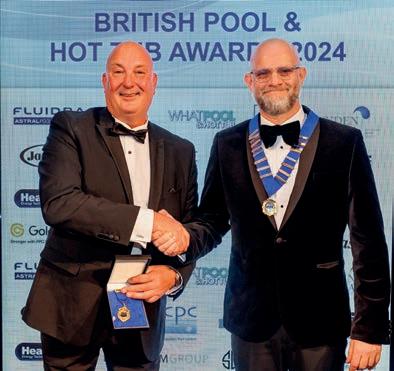
Thompson-Smith for his 2024 to 2025 term as President, signifying continuity and dedication to the UK swimming pool and hot tub community.
Many of the winners from the 2024 British Pool & Hot Tub Awards are now eligible to be shortlisted for this year’s European Pool and Spa Awards, hosted by EUSA. For 2024, the Awards will be announced during the Piscine Global Expo at Lyon in November, and all of the details will be available in the June issue of SPN.
2025 GALA EVENING & AWARDS
Companies are invited to make it a team event and invite their staff and business colleagues with full table bookings available. Booking for next year’s event will open at the end of this year, so watch out for the advert in the October issue of SPN revealing what’s in store!
BISHTA 01264 356211
www.bishta.co.uk
SPATA 01264 356210
www.spata.co.uk
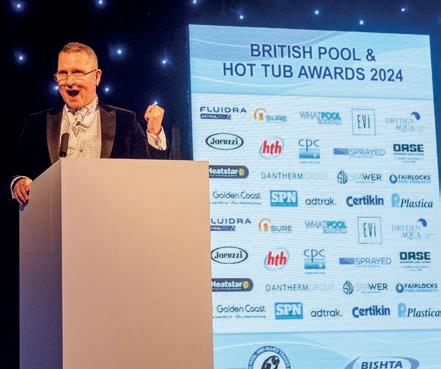
POOL & SPA INDUSTRY 30 April 2024 SPN www.swimmingpoolnews.co.uk
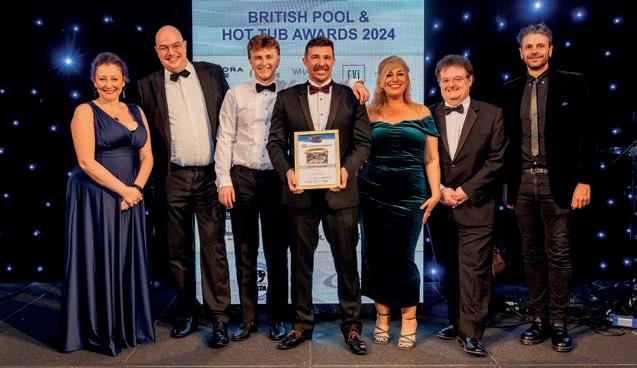


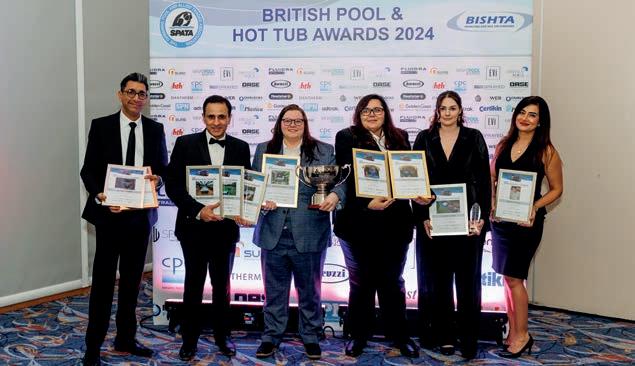





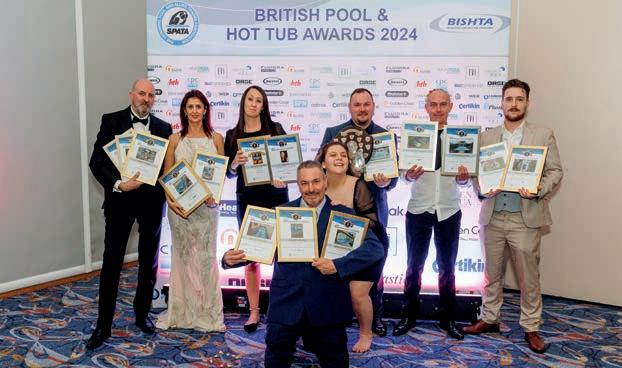
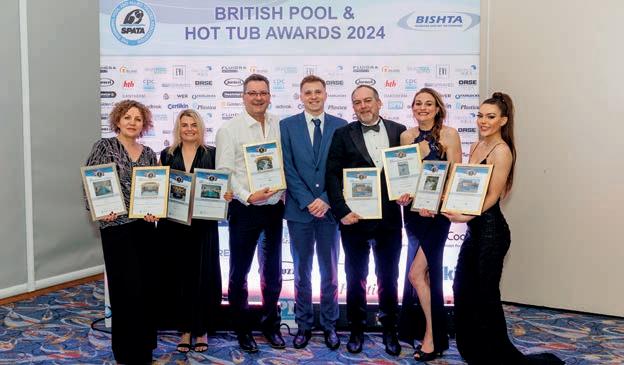




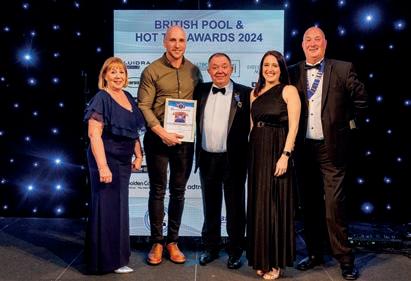
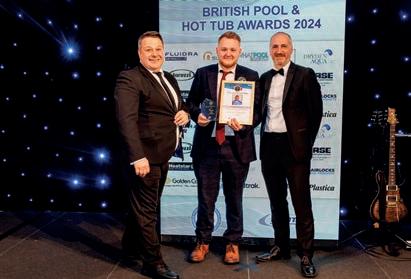






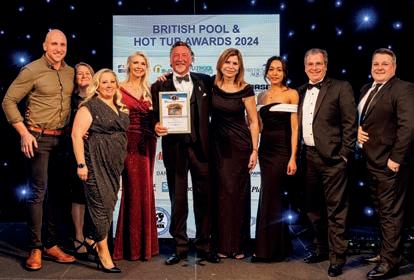







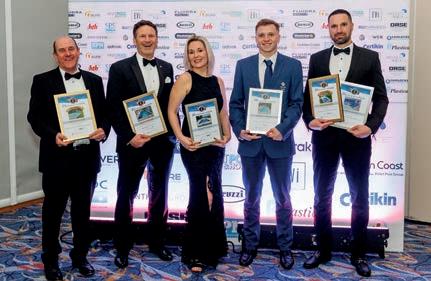





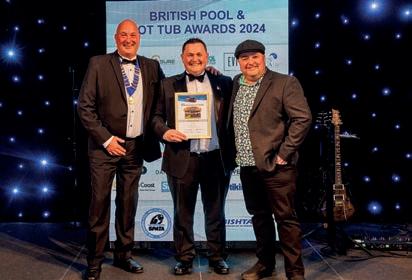



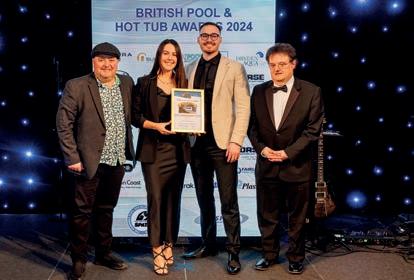


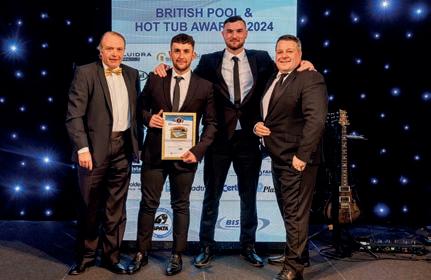

POOL & SPA INDUSTRY www.swimmingpoolnews.co.uk SPN April 2024 31 Buckingham
SPATA categories and also won the Outstanding Commercial Pool Of The Year Award A19 Pools & Spas collected a number of SPATA Awards and were overall winners in the Residential Outdoor Liner Pools £75,000 And Over category Concept Spa
of BISHTA Awards
overall winners in the Best Use Of Digital category With a single entry, Aqualia won the Residential Indoor Freeboard Pools £150,000 And Over plus the Outstanding Residential Pool Of The Year Awards With six Awards across multiple categories, Albatross Pools & Spas collected their first of two overall winners Awards in the very first SPATA category of the night Big
were Centurion Leisure who won numerous Awards including the Dick Milward Trophy for Pool Contractor of the Year
Pools were overall winners in three
collected a number
and were
winners on the evening
The SpaFlo team were overall winners in two BISHTA categories – Swim / Exercise Spas plus Residential Hot Tubs £14,000 And Over Hydropool
up a number of BISHTA Awards and were overall winners in the Hot Tubs Change Lives and Hot Tubs In A Holiday Setting categories
VIP guest Joe Litchfield with the team from XL Pools who picked up nine SPATA Awards during the evening, including three overall
category wins
Devon picked
The Tanby team enjoyed multiple successes throughout the night and won the overall Residential Indoor Overflow Pools £200,000 And Over Award
The team from Hot Tub Suppliers enjoyed plenty of success and celebrated with a wide range of Awards including The Peter Newbery Award For UK Innovation
1 Stop Spas
Tom Busby of Rockingham Swimming Pools won the Paul Kite Award for ‘Pool Star Of The Year’
were the BISHTA overall winner in the Showroom Of The Year category

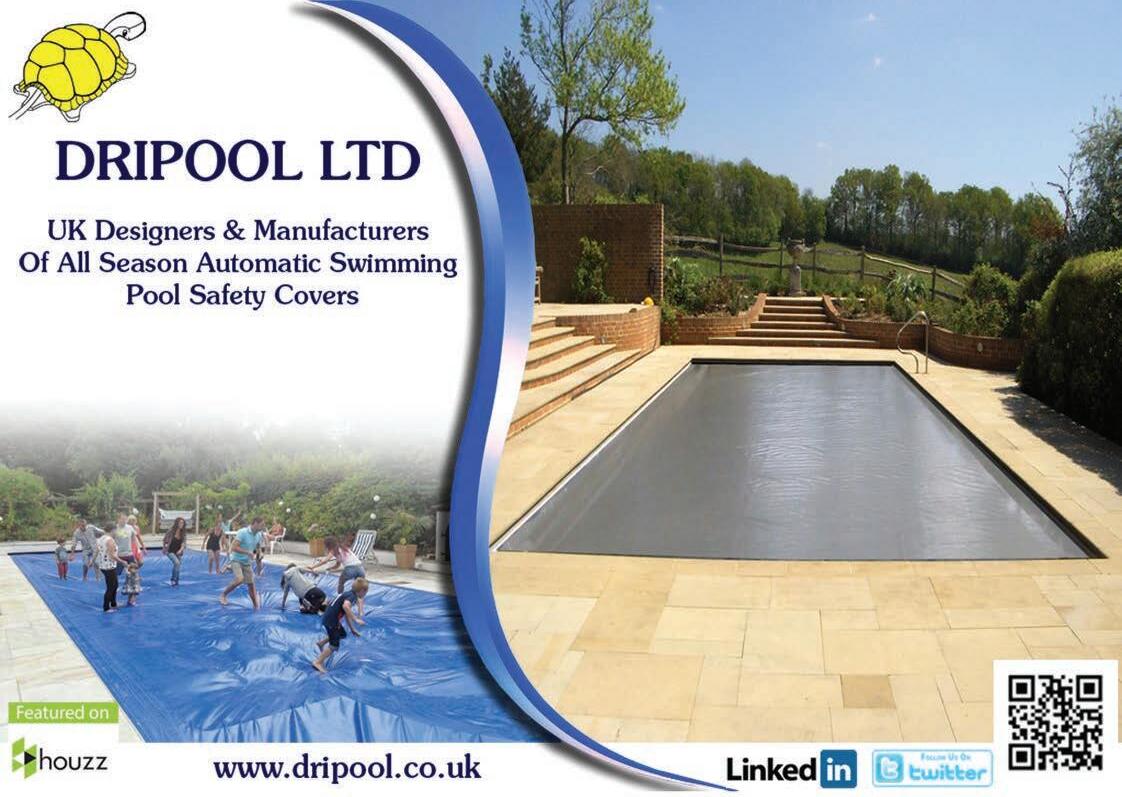

Celebrating The Ultimate Projects From The UK’s Pool And Hot Tub Industry

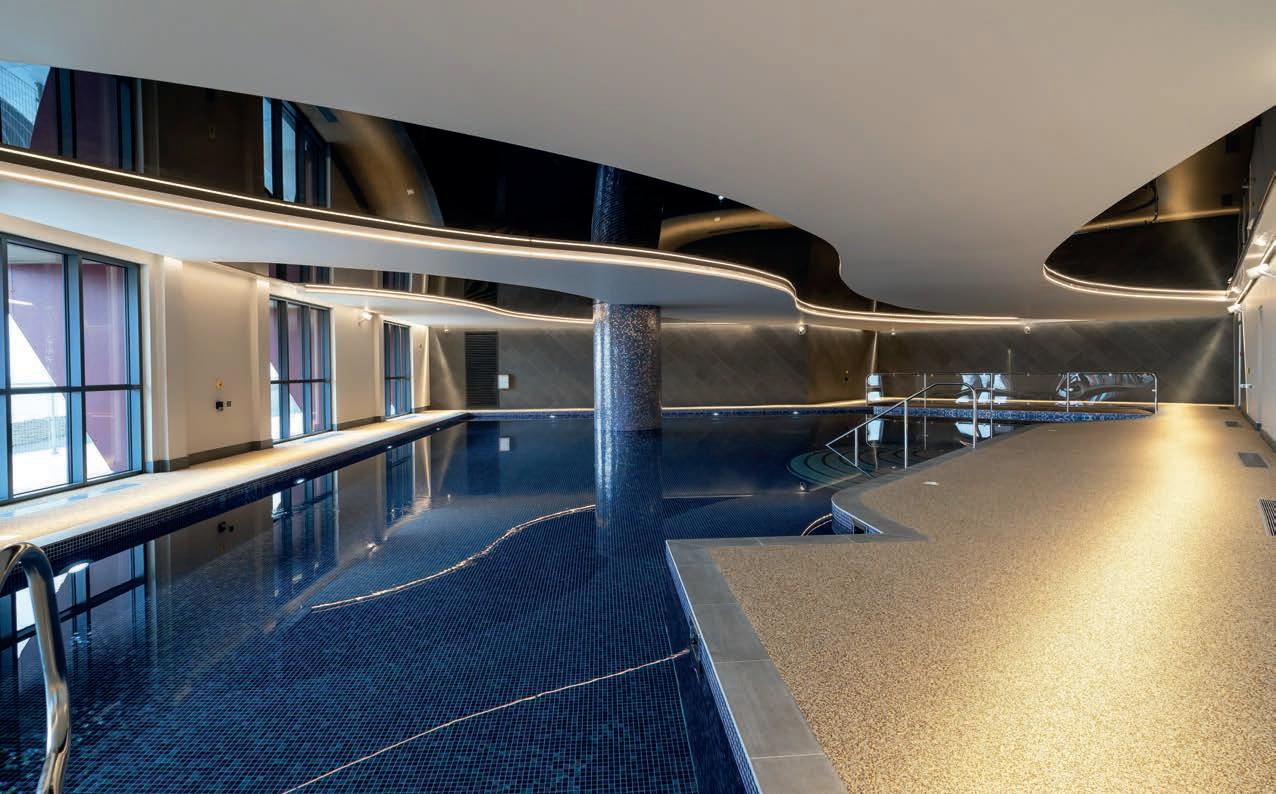
We highlight the winners from the 2024 British Pool & Hot Tub Awards held by SPATA and BISHTA at the Industry Gala Evening during the SPATEX trade show
Showcasing the best in the business, the annual British Pool & Hot Tub Awards, organised by SPATA (Swimming Pool and Allied Trade Association) and BISHTA (British and Irish Spa and Hot Tub Association), highlights companies committed to setting themselves apart as leading professionals in their field, contributing to elevating industry standards
through their unwavering dedication.
These awards acknowledge companies for their exceptional work, honouring the technical and aesthetic aspects and
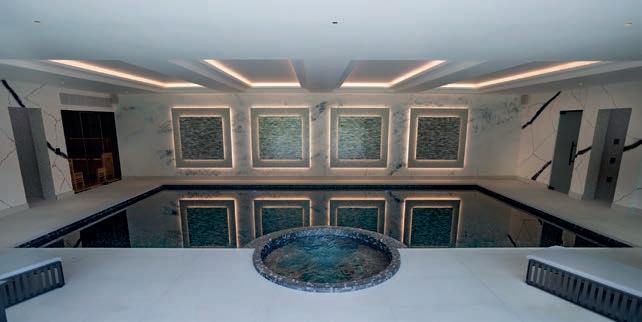

establishing an inspiring showcase of awardwinning projects for consumers to view. The winners provide excellent inspiration for consumers to create their dream installations. It is important to note that as trade association members, each company must adhere to British and European standards and conduct business ethically. This ensures consumers can confidently view the
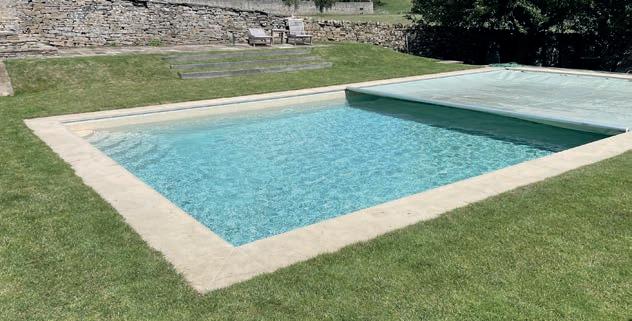

Residential Indoor Freeboard Pools £150,000 And Over XL Pools 01233 840336 www.xlpools.com Residential Outdoor Liner Pools £75,000 And Over A19 Pools & Spas 0191 586 5002 www.wearsidecivilengineering.co.uk BRITISH POOL & HOT TUB AWARD WINNERS 2024 www.swimmingpoolnews.co.uk SPN April 2024 33
Overall Winner of the Commercial Pools Category Plus Outstanding Commercial Pool Of The Year Buckingham Pools 01926 852351 www.buckinghampools.com

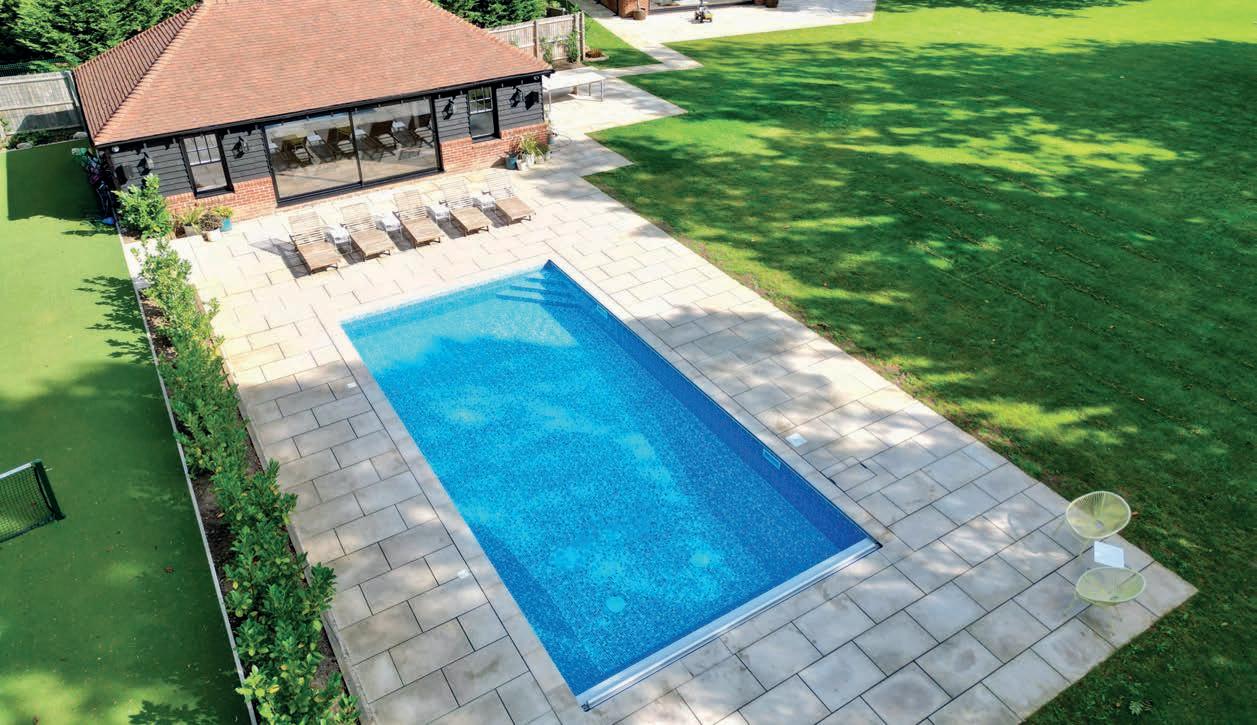
showcased projects, knowing they align with industry requirements and ethical practices.
Each year, SPATA and BISHTA invite their members to participate in the Awards which encompass categories within the swimming pool, spa, hot tub, and wellness industry, drawing entries from companies throughout the British Isles. Notably, some categories recognise the work of SPATA’s overseas members. The Awards celebrate excellence in construction, design, installation, retail, hire, service, and innovation, showcasing the finest contributions in these wide-ranging aspects of the industry.
Before being presented to the expert panel of industry judges, all SPATA entries undergo a thorough review for their technical merit.
Each year, SPATA and BISHTA invite their members to participate in the Awards which encompass categories within the swimming pool, spa, hot tub, and wellness industry, drawing entries from companies throughout the British Isles”
This evaluation ensures that the submissions meet the established industry standards, serving as a fundamental requirement for consideration in the Awards.
Chris Hayes, Managing Director of SPATA and BISHTA, remarked: “This year’s entries superbly showcase the projects undertaken
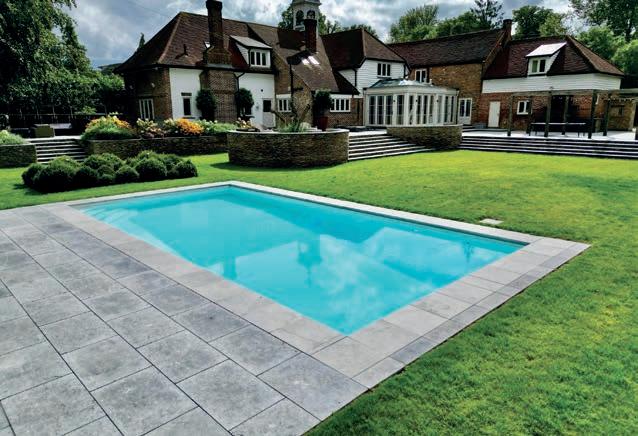

by SPATA and BISHTA members. The outstanding quality of work from this year’s winning companies highlights the UK wet leisure industry’s talent, skill, and overall excellence. Congratulations to all the winners; we extend our best wishes for their continued success in 2024 and beyond.”

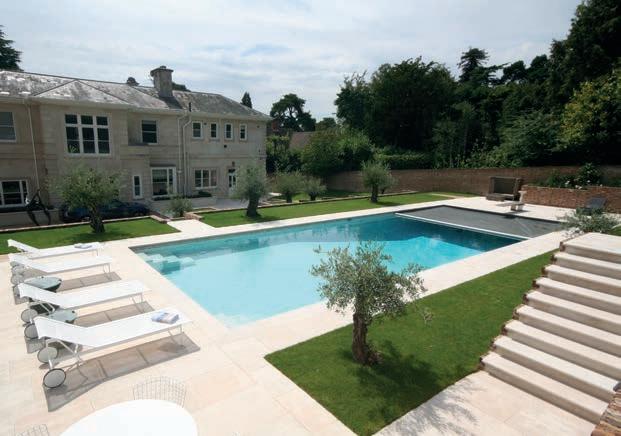
Residential Outdoor Concrete Pools £125,000 And Over Tanby Pools 01883 622335 www.tanbypools.co.uk BRITISH POOL & HOT TUB AWARD WINNERS 2024 34 April 2024 SPN www.swimmingpoolnews.co.uk Residential Outdoor Liner Pools Under £75,000 Albatross Pools & Spas 01277 624653 www.albatrosspools.co.uk Residential Outdoor Concrete Pools Under £125,000 Albatross Pools & Spas 01277 624653 www.albatrosspools.co.uk

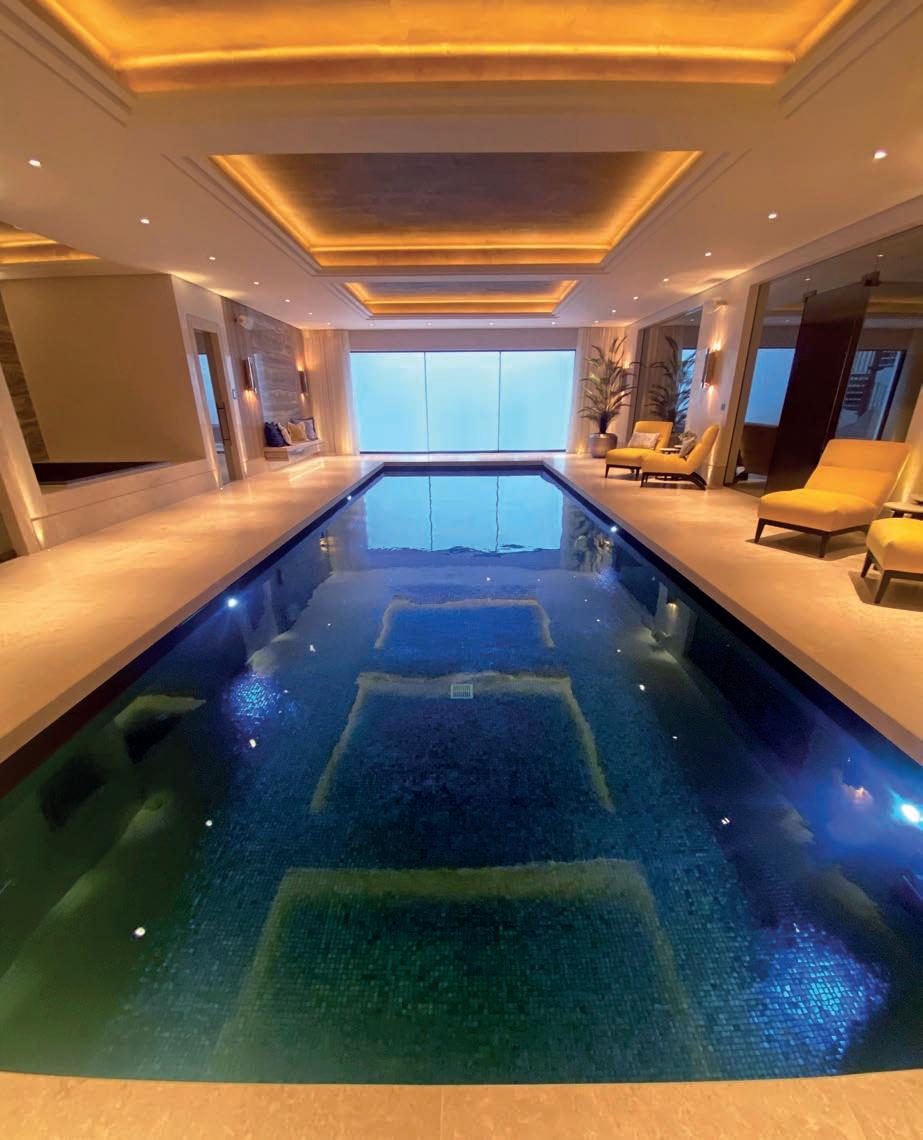

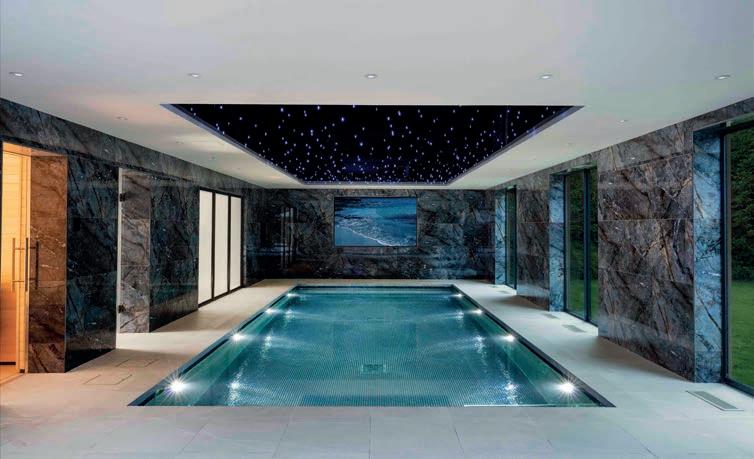
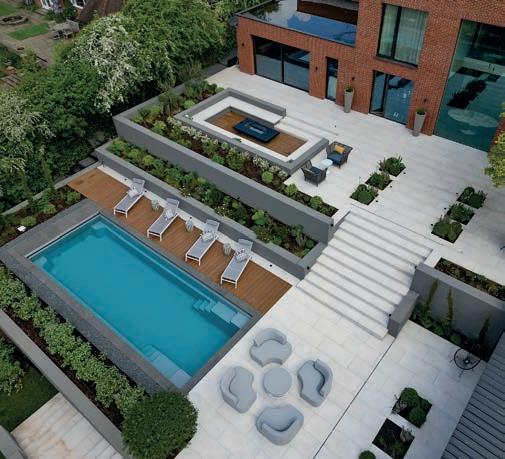

SPATA WINNERS: RESIDENTIAL OUTDOOR LINER POOLS UNDER £75,000 Overall: Albatross Pools & Spas Silver: Albatross Pools & Spas Silver: Blue Cube Pools Silver: Centurion Leisure RESIDENTIAL OUTDOOR LINER POOLS £75,000 AND OVER Overall: A19 Pools & Spas Silver: Asher Swimpool Centre (2) RESIDENTIAL OUTDOOR ONE-PIECE POOLS Overall: XL Pools Gold: Centurion Leisure Gold: Mermaid Pools Gold: XL Pools Silver: Aqua-Blue Designs Silver: Centurion Leisure RESIDENTIAL OUTDOOR CONCRETE POOLS UNDER £125,000 Overall: Albatross Pools & Spas Gold: Falcon Pools (2) Gold: Mermaid Pools Silver: A19 Pools & Spas Silver: Albatross Pools & Spas Silver: Centurion Leisure (2) Silver: Tanby Pools (2) Silver: XL Pools RESIDENTIAL OUTDOOR CONCRETE POOLS £125,000 AND OVER Overall: Tanby Pools Gold: A19 Pools & Spas Gold: Centurion Leisure Gold: Tanby Pools Silver: Asher Swimpool Centre Silver: Falcon Pools Silver: Letts Swimming Pools BRITISH POOL & HOT TUB AWARD WINNERS 2024 www.swimmingpoolnews.co.uk SPN April 2024 35 Residential Outdoor One Piece Pools XL Pools 01233 840336 www.xlpools.com Residential Indoor Freeboard Pools Under £150,000 Whitewaters 0191 551 2048 www.whitewaters.co.uk Residential Indoor Freeboard Pools £150,000 And Over Plus Outstanding Residential Pool Of The Year Aqualia 01621 838225 www.aqualiapools.com
RESIDENTIAL INDOOR
FREEBOARD POOLS
UNDER £150,000
Overall: Whitewaters
Gold: Centurion Leisure
Gold: Origin Leisure (2)
Silver: A19 Pools & Spas
Silver: Albatross Pools & Spas
Silver: XL Pools (2)
RESIDENTIAL INDOOR
FREEBOARD POOLS
£150,000 AND OVER
Overall: Aqualia
Overall: XL Pools
Gold: Buckingham Pools
Gold: Centurion Leisure (2)
Gold: Origin Leisure (2)
Silver: Tanby Pools
RESIDENTIAL INDOOR
OVERFLOW POOLS
£200,000 AND OVER
Overall: Tanby Pools
SPECIAL REQUIREMENT
POOL OF THE YEAR
Overall: A19 Pools & Spas
Silver: Centurion Leisure
COMMERCIAL POOLS
Overall: Buckingham Pools
Gold: Centurion Leisure
Gold: Whitewaters
Silver: A19 Pools & Spas
Silver: Letts Swimming Pools

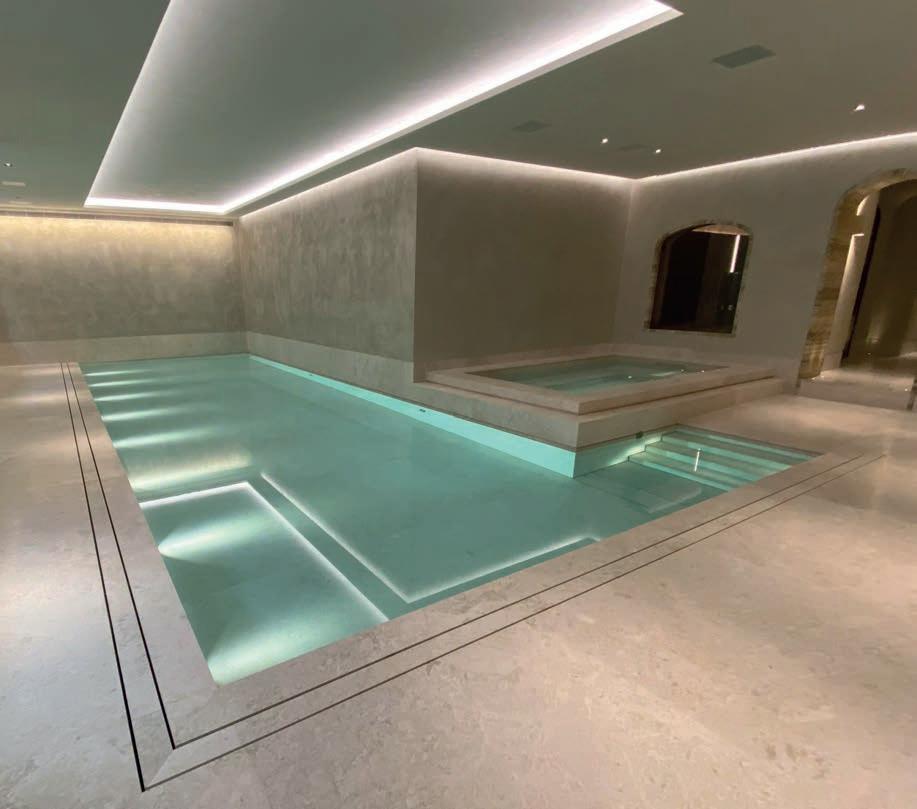
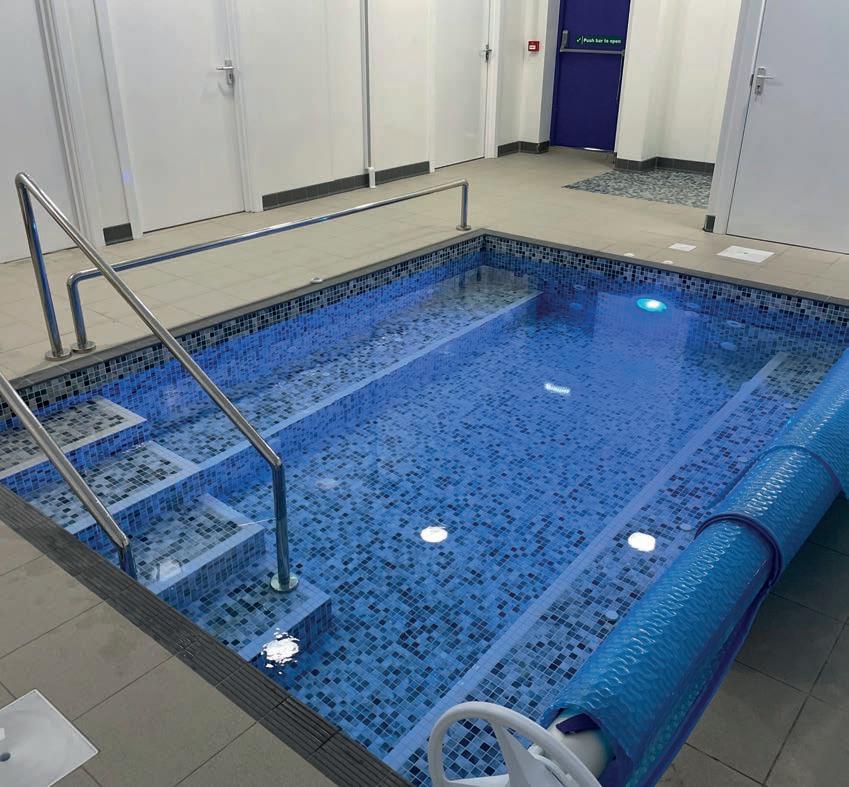


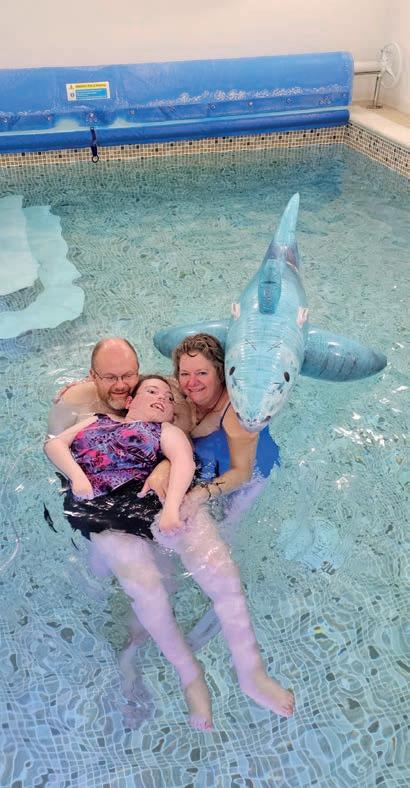
36 April 2024 SPN www.swimmingpoolnews.co.uk
BRITISH POOL & HOT TUB AWARD WINNERS 2024
Lifestyle Image Of The Year XL Pools 01233 840336 www.xlpools.com Special Requirement Pool of the Year A19 Pools & Spas 0191 586 5002 www.wearsidecivilengineering.co.uk Residential Indoor Overflow Pools £200,000 And Over Tanby Pools 01883 622335 www.tanbypools.co.uk

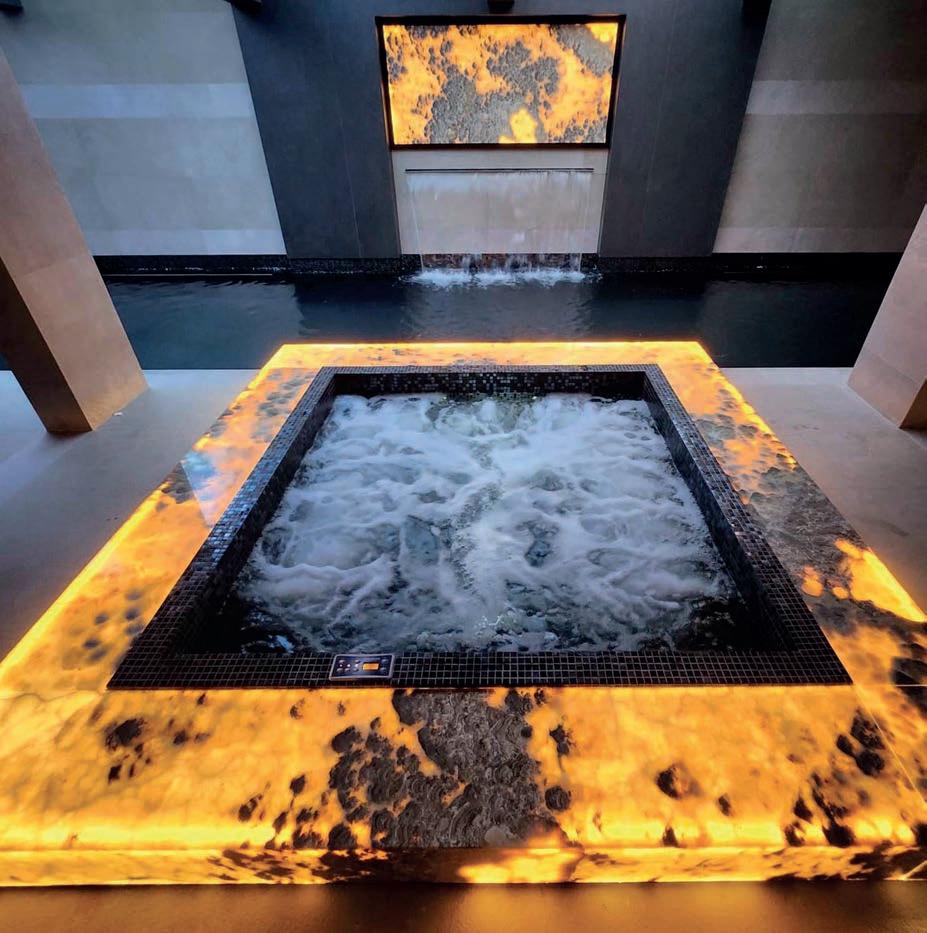
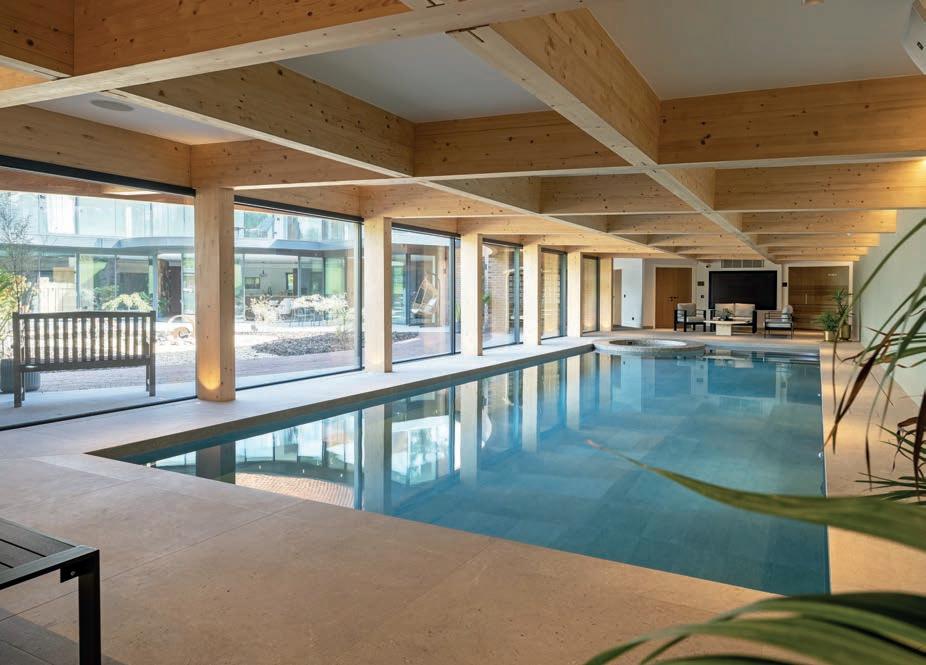

OVERSEAS RESIDENTIAL POOL OF THE YEAR
Overall: Exterior Experience
Landscaping LLC
Gold: Exterior Experience
Landscaping LLC
Silver: Niveko (2)
REFURBISHMENT POOL OF THE YEAR
Overall: Falcon Pools
Gold: Albatross Pools & Spas
Gold: Tanby Pools
Silver: Asher Swimpool
Centre
Silver: Buckingham Pools
IN-GROUND SPAS
Overall: Centurion Leisure
Gold: Centurion Leisure
Gold: XL Pools
Silver: Tanby Pools
Silver: XL Pools
WELLNESS
Overall: Buckingham Pools
Gold: Blue Cube Pools
SUSTAINABILITY AWARD
Overall: Buckingham Pools
Silver: Aqua-Blue Designs
LIFESTYLE IMAGE OF THE YEAR
Winner: XL Pools
Finalist: Blue Cube Pools
PETER GEEKIE AWARD FOR RETAIL EXCELLENCE
Winner: Portrait Pools
PAUL KITE AWARD FOR ‘POOL STAR OF THE YEAR’
Winner: Tom Busby of Rockingham Swimming Pools
Finalist: Kerry Blunden of Centurion Leisure
Finalist: Ryan Green of Tanby Pools


POOL & HOT TUB AWARD WINNERS 2024 www.swimmingpoolnews.co.uk SPN April 2024 37
BRITISH
Sustainability Award Buckingham Pools 01926 852351 www.buckinghampools.com In-ground Spas Plus Dick Milward Trophy for Pool Contractor of the Year Centurion Leisure 01708 463090 www.centurionleisure.co.uk
Paul Kite Award for ‘Pool Star Of The Year’
Winner: Tom Busby of Rockingham Pools

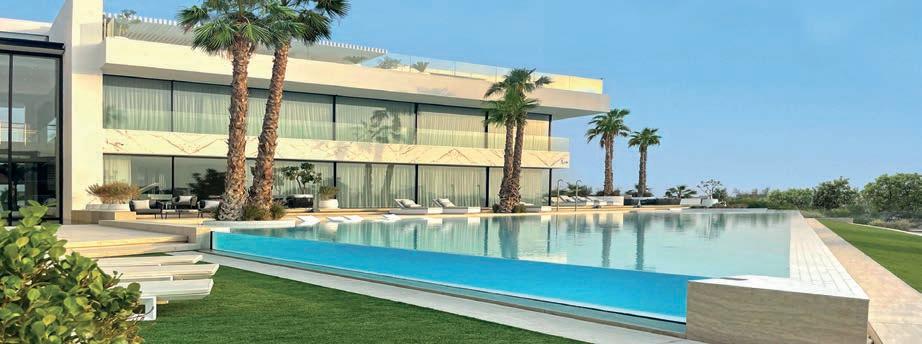
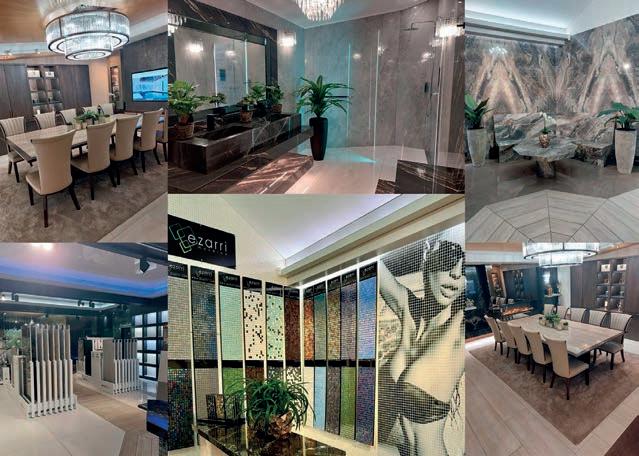

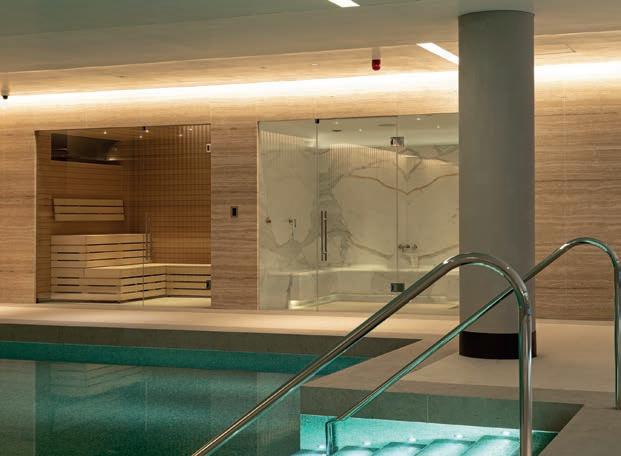

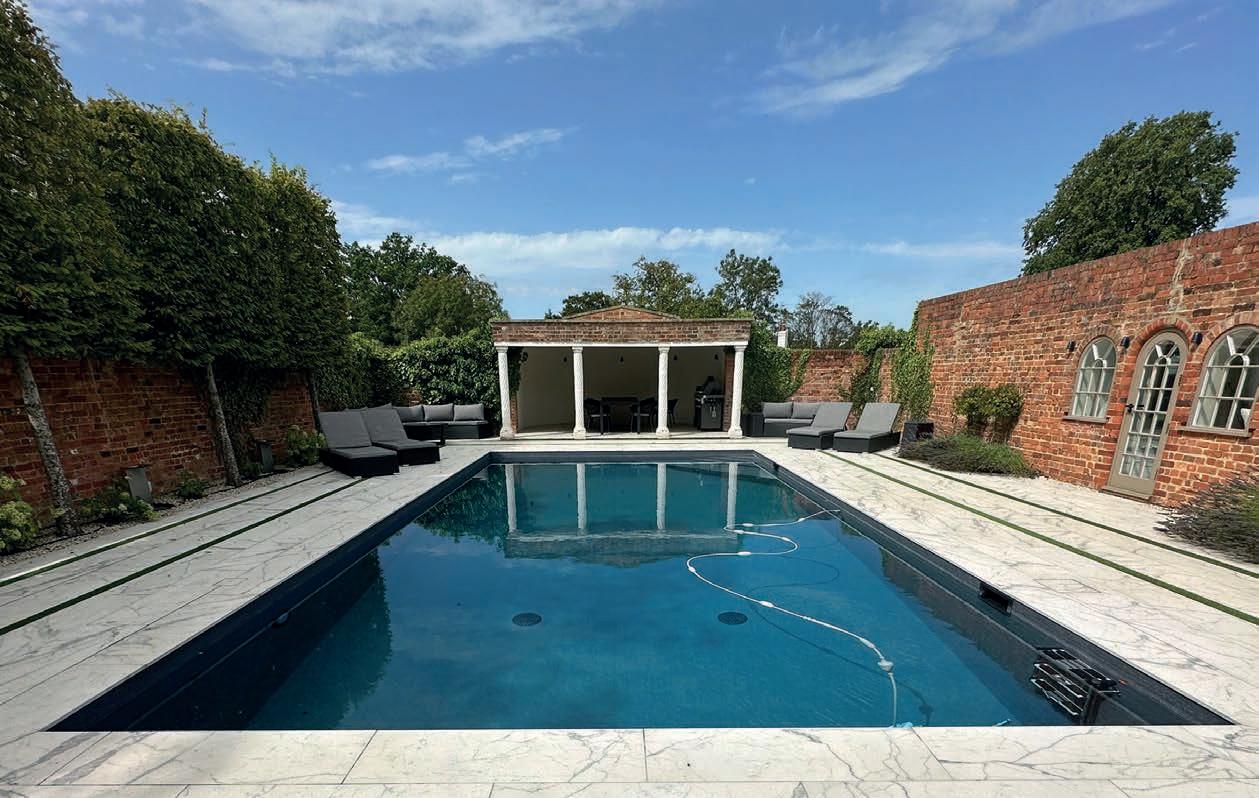

BRITISH POOL & HOT TUB AWARD WINNERS 2024 38 April 2024 SPN www.swimmingpoolnews.co.uk OUTSTANDING RESIDENTIAL POOL OF THE YEAR
Aqualia OUTSTANDING COMMERCIAL POOL OF THE YEAR
Buckingham Pools DICK MILWARD TROPHY FOR POOL CONTRACTOR OF THE YEAR
Centurion Leisure Refurbishment Pool Of The Year Falcon Pools 01932 353040 www.falconpools.co.uk Wellness Buckingham Pools 01926 852351 www.buckinghampools.com Peter Geekie Award for Retail Excellence Portrait Pools 01625 466200 www.portraitpools.com Overseas Residential Pool of the Year Exterior Experience Landscaping LLC +971 525 526 090 www.xterior.ae
Winner:
Winner:
Winner:

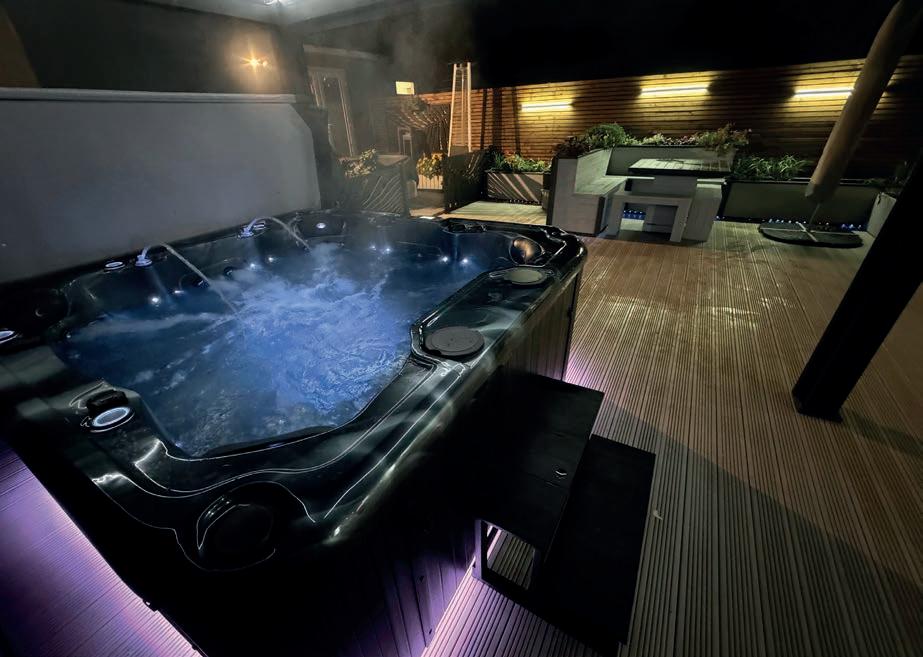

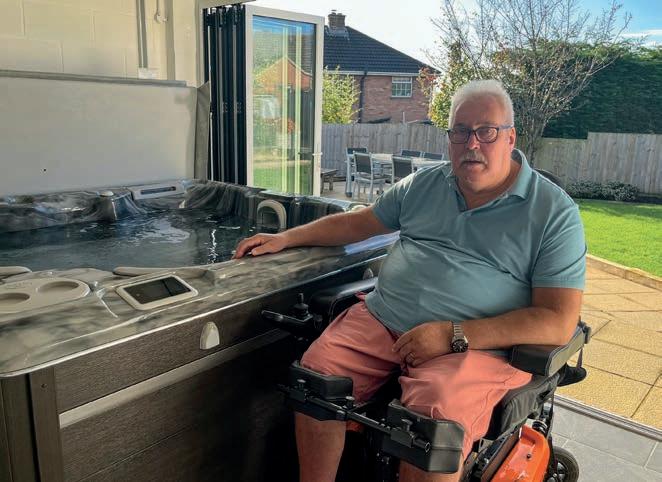

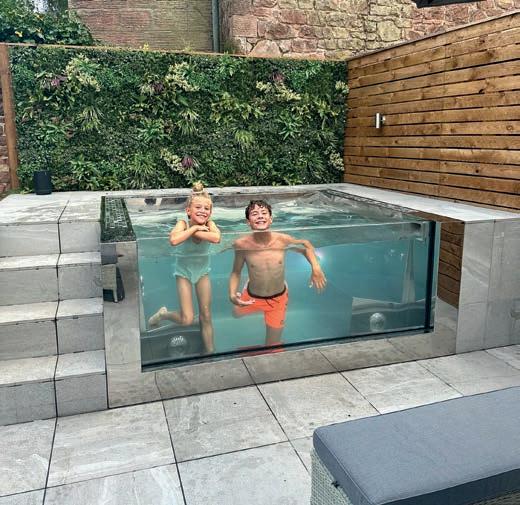
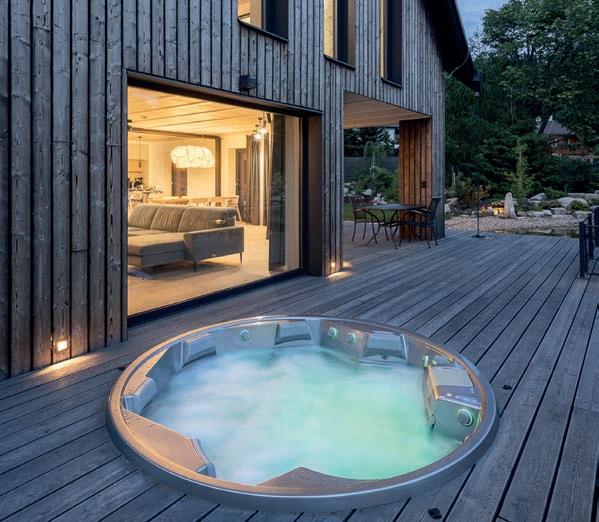
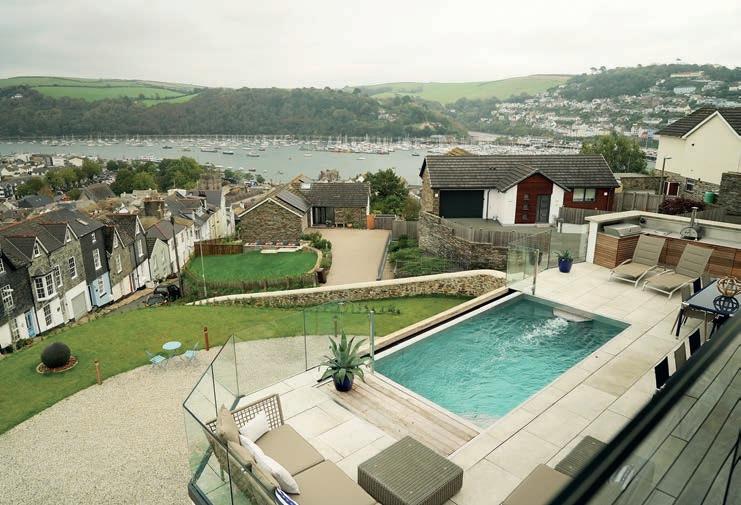
BRITISH POOL & HOT TUB AWARD WINNERS 2024 www.swimmingpoolnews.co.uk SPN April 2024 39 BISHTA WINNERS: RESIDENTIAL HOT TUBS BELOW £7,000 Overall: Hot Tub Suppliers Silver: All Weather Leisure Silver: Concept Spa Silver: Hot Tub Suppliers RESIDENTIAL HOT TUBS £7,000 TO £14,000 Overall: USSPA Gold: 1 Stop Spas Gold: Concept Spa Silver: A6 Hot Tubs Silver: All Weather Leisure (2) Silver: Concept Spa Silver: Hot Tub Suppliers (2) Silver: Hydropool Devon (2) RESIDENTIAL HOT TUBS £14,000 AND OVER Overall: SpaFlo Gold: USSPA Silver: Hydropool Devon (2) Silver: Tanby Pools Residential Hot Tubs £14,000 And Over SpaFlo 0151 424 9742 www.spaflo.co.uk Hot Tubs Change Lives Hydropool Devon 01803 872666 www.hydropooldevon.co.uk Residential Hot Tubs £7,000 To £14,000 USSPA (Aqua Warehouse) 01245 477400 www.aquawarehouse.co.uk Swim / Exercise Spas SpaFlo 0151 424 9742 www.spaflo.co.uk Residential Hot Tubs Below £7,000 Hot Tub Suppliers 0116 251 3378 www.hottubsuppliers.com
SWIM / EXERCISE SPAS
Overall: SpaFlo
Gold: USSPA (2)
Silver: All Weather Leisure
Silver: Hydropool Devon
HOT TUBS CHANGE LIVES
Overall: Hydropool Devon
Silver: Hot Tub Suppliers
Bronze: 1 Stop Spas
HOT TUBS IN A HOLIDAY SETTING
Overall: Hydropool Devon
Silver: All Weather Leisure
Silver: Hot Tub Suppliers
Bronze: 1 Stop Spas
Bronze: Concept Spa
Bronze: Hot Tub Suppliers
HOT TUB HAPPINESS
Overall: Hot Tub Suppliers
SHOWROOM OF THE YEAR
Overall: 1 Stop Spas
Silver: Aqua Warehouse
Silver: Concept Spa
Bronze: All Weather Leisure
BEST USE OF DIGITAL MEDIA
Overall: Concept Spa
Silver: Hot Tub Suppliers
THE PETER NEWBERY AWARD FOR UK INNOVATION
Winner: Hot Tub Suppliers
Finalist: 1 Stop Spas

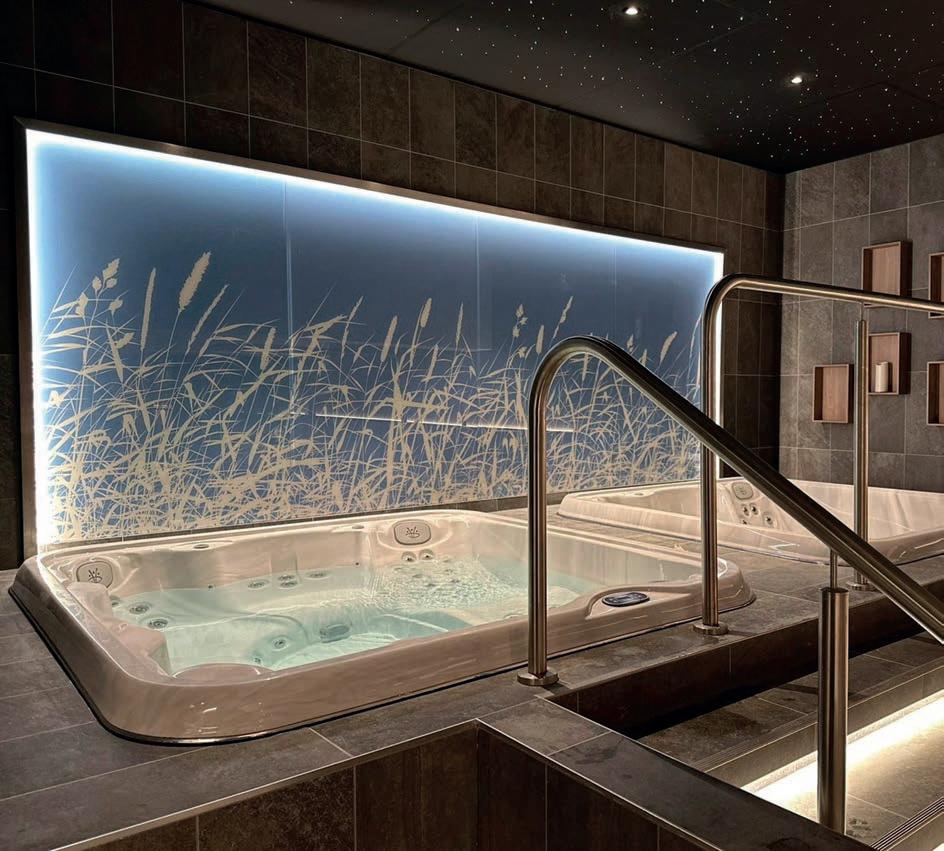
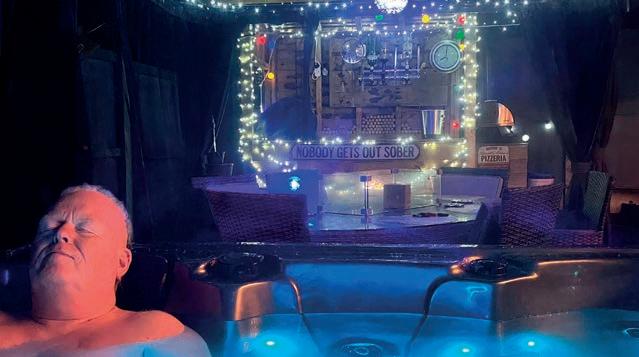

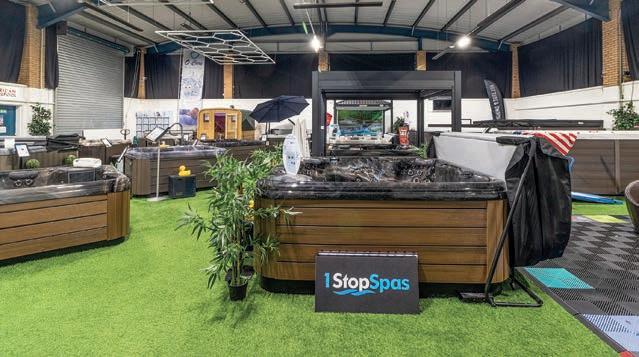



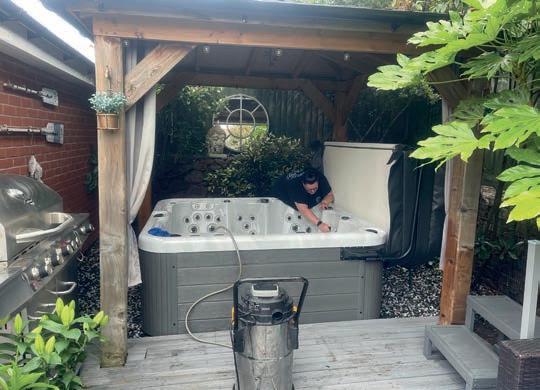

40 April 2024 SPN www.swimmingpoolnews.co.uk
BRITISH POOL & HOT TUB AWARD WINNERS 2024
Best Use Of Digital Media Concept Spa 01248 723207 www.conceptspa.co.uk Hot Tubs In A Holiday Setting Hydropool Devon 01803 872666 www.hydropooldevon.co.uk Showroom Of The Year 1 Stop Spas 01522 300737 www.1stopspas.com The Peter Newbery Award For UK Innovation Hot Tub Suppliers 0116 251 3378 www.hottubsuppliers.com Hot Tub Happiness Hot Tub Suppliers 0116 251 3378 www.hottubsuppliers.com
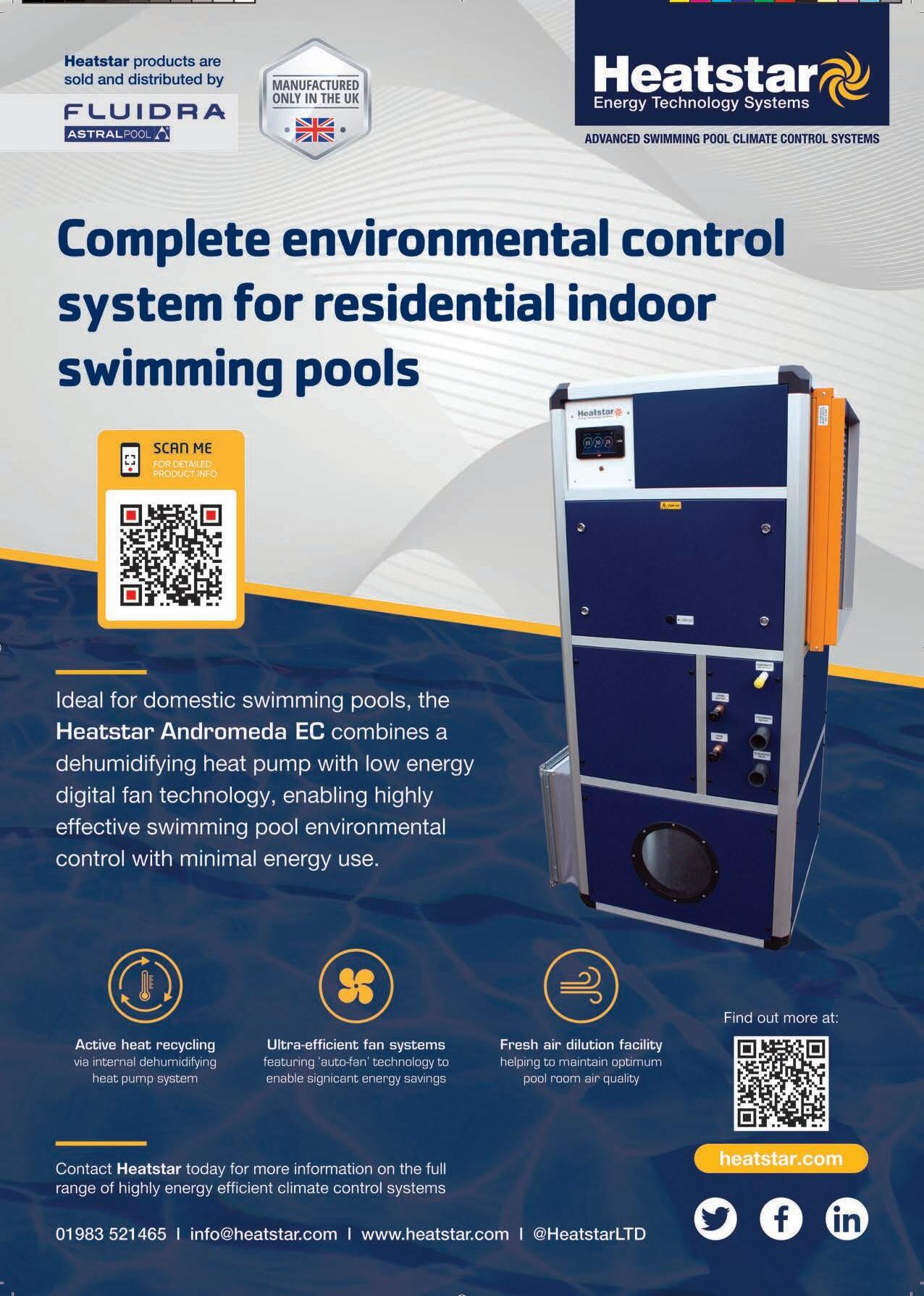


Why Test Pool Water?
In this article Luke Griffiths, STA’s Technical Qualifications and Business Development Manager, emphasises the importance of regular water testing
and shares some insights into best practice
Water testing is a fundamental aspect of maintaining safe and comfortable swimming pool conditions, ensuring the health and wellbeing of bathers while safeguarding pools, equipment and adhering to regulatory standards and industry guidance.
At the heart of water testing lies the necessity to assess water quality accurately. Treated water requires regular monitoring to ensure adequate treatment levels, guaranteeing safety and comfort for bathers, protecting equipment, and meeting regulatory requirements and guidelines. This underscores the critical role of water testing in maintaining the integrity of pool environments.
The choice of testing equipment plays a pivotal role in obtaining accurate results. So let’s look at the suitability of two primary testing methods: comparators and photometers. While both methods are acceptable, their selection depends on user preference. Photometers offer precise readings, down to 0.1mg/l for chlorine, but require regular calibration checks. On the other hand, comparators provide fixed colour readings, ensuring simplicity but may not be suitable for all users, especially as the colours on plasticbased discs fade over time and users with colour blindness may have difficulty matching
the colours accurately, in fact even for users with perfect eyesight, there is a degree of ambiguity in the method due to the matching of shades being open to interpretation. This highlights the importance of selecting the appropriate testing equipment tailored to the specific needs and preferences of the user and the type of pool they are testing for.



Ensuring the accuracy of testing equipment is paramount. The importance of maintaining scrupulously clean equipment and using the correct reagents to achieve reliable readings cannot be stressed enough. Additionally, operators must adhere to manufacturer instructions meticulously and keep photometers calibrated to ensure accuracy. This emphasises the importance of meticulous attention to detail in water testing procedures to obtain dependable results consistently.
Key parameters requiring regular monitoring include free and total chlorine (working out combined chlorine from these two), pH levels, total alkalinity, calcium hardness, and Total Dissolved Solids (TDS). Outdoor pools using stabilised chlorine or cyanuric acid will also need to check cyanuric acid levels. These parameters play crucial roles in maintaining water quality and ensuring optimal pool conditions. For instance, monitoring free
POOL WATER TESTING –WATCH THE VIDEO
STA and Lovibond® Tintometer teamed up to develop and produce a pool water testing video available to watch now on YouTube and via the QR code. The video summarises the basic requirements of testing swimming pool water in line with the latest manufacturer recommendations, and in accordance with industry best practice and guidance.



The importance of training personnel to conduct water testing competently should not be underestimated, underscoring the role of education and training in maintaining water quality standards”
chlorine and pH levels together is essential, as pH levels influence chlorine efficiency. Deviations from recommended levels can compromise water quality and pose risks to bathers and equipment, highlighting the importance of routine testing.
TDS, representing the sum of soluble compounds in water, serves as a vital indicator of water quality. Elevated TDS levels can impair disinfectant performance and necessitate corrective measures such as additional dilution. Proper control of TDS levels is imperative to maintain water quality within acceptable limits, emphasising the significance of comprehensive water testing protocols.
In addition to chemical parameters, turbidity, measured in Nephelometric Turbidity Units (NTU), serves as a critical indicator of water clarity. High turbidity levels can impede visibility and efficiency of UV systems, posing safety hazards and indicating potential issues with water chemistry, circulation, or filtration systems. By adhering to recommended turbidity levels, pool operators can ensure optimal water
clarity and safety for bathers, highlighting the importance of holistic water quality management.
To facilitate proper water testing practices and ensure accuracy and consistency the following should be observed; follow manufacturer instructions meticulously, using the correct testing materials, maintaining clean equipment and conducting regular calibration checks.
The importance of training personnel to conduct water testing competently should not be underestimated, underscoring the role of education and training in maintaining water quality standards. STA highly recommends that employers ensure any employee responsible for water testing gains a suitable qualification. STA have three professional qualifications available, which suit the needs of those involved in varying degrees of pool plant work –from routine water testing to the full management and operation of a pool plant facility.

www.swimmingpoolnews.co.uk SPN April 2024 43
STA 01922 645097 www.sta.co.uk STA POOL PLANT – WATER TESTING
Ocea UK are proud to announce we are
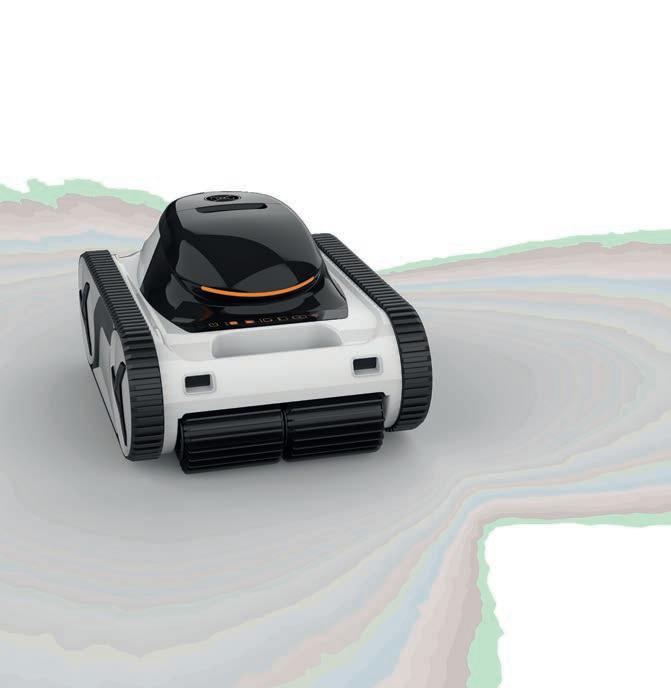

Introducing our newly extended product range and brand new 2024 Catalogue
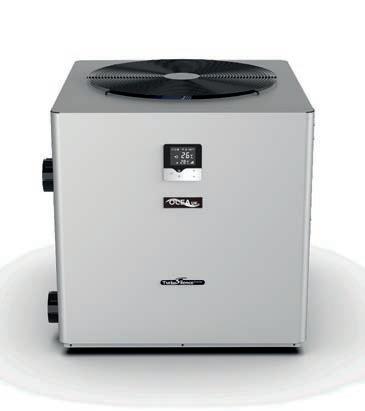
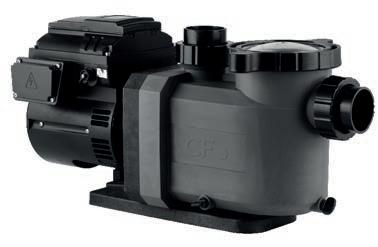
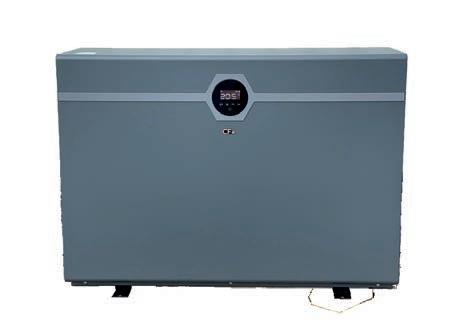
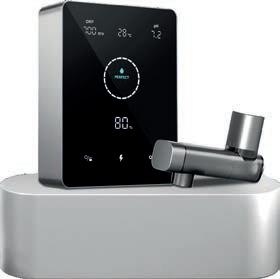
Our new 2024 Catalogue includes a handpicked selection of Premium Products from the CF Group and Ocea UK
Visit our new Trade, Learning and Distribution Centre in Oxfordshire, featuring our new Trade Counter facility for same day collection.
Ocea UK Ltd, Unit 6 Gateway, Windrush Park, Burford Road, Witney OX29 7DX
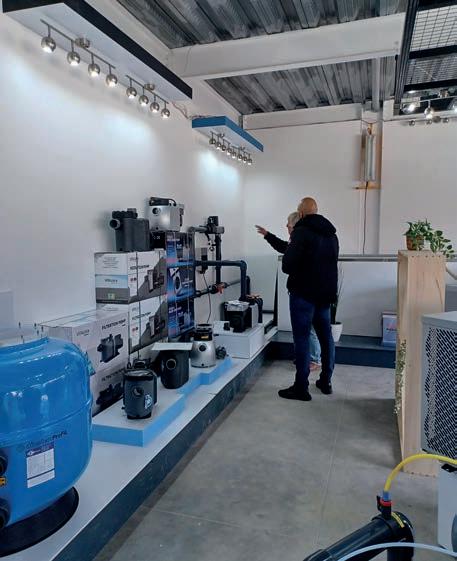
Sales: 01993 707910 |
sales@oceacovers.com
CORE PRODUCTS CATALOGUE 2024 FILTRATION, POOL & WATER CARE
Email:
| www.oceauk.com
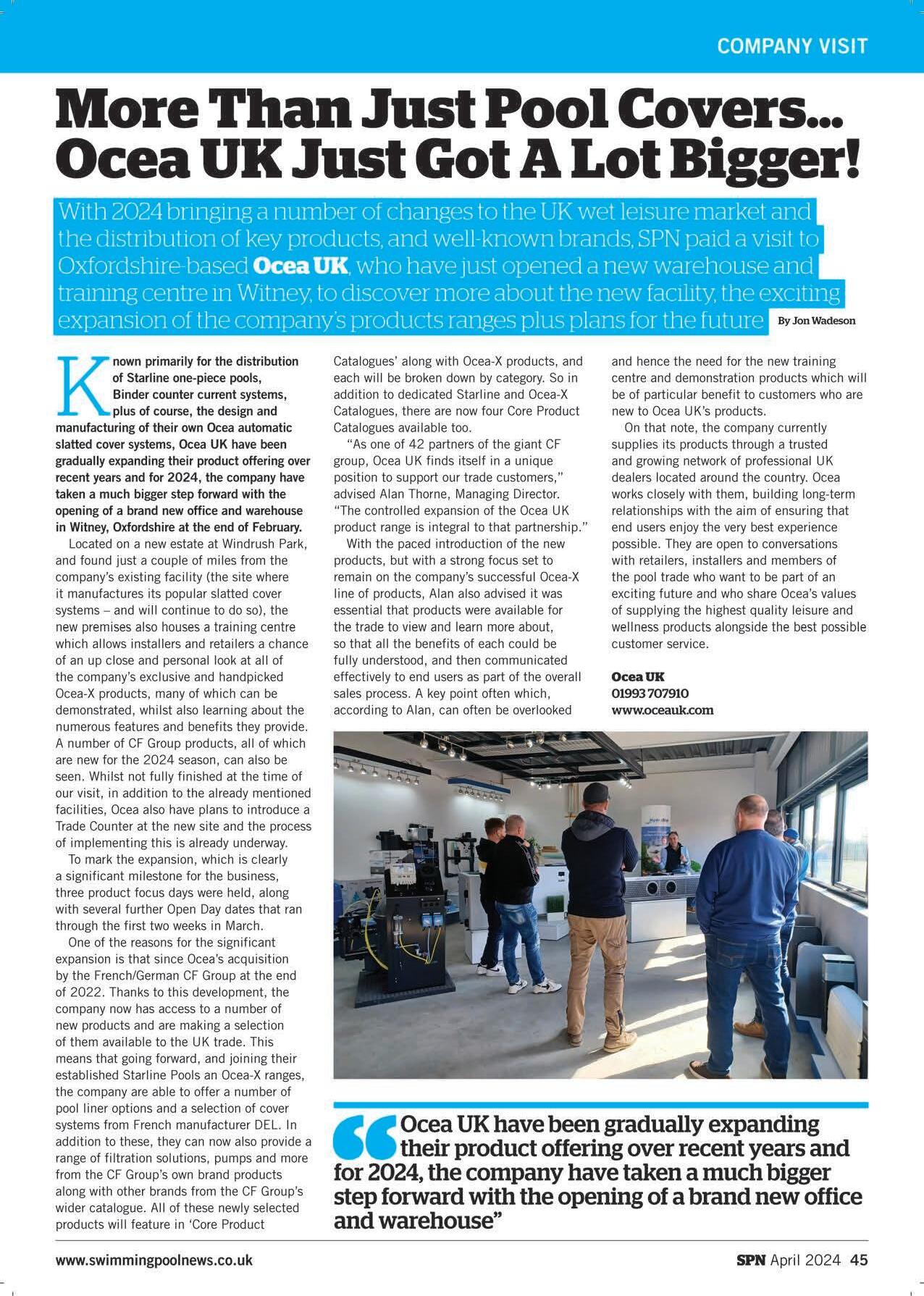

Wet Leisure Industry Survey Results 2023
In this issue, we look closer at some of the details from the recently published Wet Leisure Industry Survey produced by Golden Coast, and have included the key questions and the resulting data produced from this annual piece of industry research
Released to coincide with SPATEX, this was the thirteenth year of the Wet Leisure Industry Survey which was collated at the end of 2023. The original concept of an industry wide survey came from Golden Coast and was simply this – other industries and markets have facts, figures and statistics that are available to help people make better decisions and grow better businesses. We should be the same.
Golden Coast undertook to conduct the survey and to arrange for the results to be analysed and presented back to the industry by an outside consultancy.
Within the year, the Wet Leisure Industry Survey had received the full support of the BSPF and this year, were pleased to say that the Survey also had the support of SPATA, BISHTA, ISPE, plus members of the trade press.
Responses as a whole were universally positive with the Wet Leisure Survey which has become established as an important part of our industry.
HOW DOES IT WORK?
Towards the end of October every business in the wet leisure industry is invited to take part in the survey.
The invitation comes in the form of an email, social media or in industry magazines and publications.
People who choose to take the survey can do so by filling in an online questionnaire or returning a paper response. Every response, either digital or paper, is anonymous. We ask for information about your business but it is treated with confidentiality.
The survey generally stays open until mid January at which point all the responses are collated and the data is put into an online program that allows survey data to be analysed.
The final report is generated by an independent consultancy that has been filling this role since the survey began.
In previous years the report has been available for anyone to collect at SPATEX as well as being available to download for free from goldenc.com or wetleisure.com, a site dedicated to the Wet Leisure Survey, which hosts the results from all previous years.
WHICH SECTORS OF THE WET LEISURE INDUSTRY DO YOU SERVE?
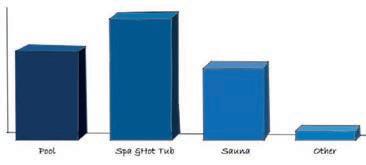
For three consecutive years pools came out at the top of this list but this year we see spas and hot tubs move ahead. Saunas had been languishing in third place but almost 50% of respondents this year said that they were doing sauna business. For a number of reasons, this could turn out to be the year of the sauna, but more on that later.
ARE YOUR CUSTOMERS AND CLIENTS DOMESTIC, COMMERCIAL OR A MIXTURE OF BOTH?
The other big differentiator is the difference between domestic and commercial work. Or at least there used to be a difference. The majority of businesses will now do a mixture of both types of work.
One reason for this is that domestic and commercial installations have become more similar with hotel and spas looking for a high aesthetic and standard of finish while domestic installations are increasingly using water treatment technology, heat pumps and automated dosing systems that were more usually found in a commercial setting.
WHAT ARE THE SERVICES THAT YOU OFFER YOUR CUSTOMERS?





Service and repairs has climbed steadily over the past 12 years and now stands at 95%. Service contracts are the lifeblood of the
industry. (As such, we should use the survey to dig more deeply into that sector of our industry.)
The other services, with the exception of ecommerce, are levelling up. Soon virtually every business will offer their customers every service. And that makes sense. It’s much easier to cross sell to an existing customer than to go out and find a new one.
HOW DID YOU FIND BUSINESS CONDITIONS THIS YEAR?

Responses to this question will always cover the scale from Extremely Difficult to Extremely Good but in previous years it has always been clear that there is a trend one way or another. Our industry is either thriving or struggling.
The graph this year is much flatter than normal. Thirty five per cent of respondents reported a year that was worse than average while 38% reported having a year that was better than the middle range of ‘OK’.
There will always be differences in how individual businesses cope with particular economic conditions but the suggestion here is that the economy was even more volatile than usual and companies could move
Conducted by Golden Coast in association with Results 46 April 2024 SPN www.swimmingpoolnews.co.uk INDUSTRY FOCUS
Showroom Sales Consumables Installation Service / Repairs Online / Ecommerce Importer / Trade Distributor Extremely Difficult DifficultOKGood Extremely Good Pool Spa & Hot TubSauna Other
quickly from doing well to being in crisis and, of course, vice versa.
The cost of living crisis, rising energy prices and the fluctuations in the housing market have certainly resulted in an unstable economy in which to do business.
WHAT HAD THE BIGGEST INFLUENCE ON YOUR BUSINESS THIS YEAR?

Over the last few years we have added Brexit, COVID, the cost of living crisis and energy costs to the list of possible influences. That says a lot about the world we have been living in.
The weather continues to be hugely influential and our industry continues to be one that is ‘solar powered’ with a hot, dry summer driving business in a way that nothing else does.
What comes as no surprise is that the cost of living and energy costs are clearly seen to be having the biggest effect this year. Over 72% see spiralling energy costs as influencing how their business performs.
Undeniably, what this means is that energy saving technology and sustainable installations will become the industry norm with saving on running costs coming at the top of all our customers’ wish lists, from retrofit to new build.
THEN WE ASK, ‘HOW DO YOU EXPECT BUSINESS CONDITIONS TO BE NEXT YEAR?’


Over the course of all of the surveys we have seen one trend that remains true each and every year.
Respondents expect next year to be pretty much like this year. But as we have already seen, it’s not easy to say what this year was actually like. With business conditions so unpredictable and choppy this year, our expectations for next year aren’t clear. The overall picture that the responses paint is that next year will be “OK.” There will be good and bad.
And that is probably true, particularly if we look at the reasons that have been given for that outlook.
Some people are finding that they are too busy and their challenge is “Finding time to carry out the work requested by loyal customers”.
Some see broader issues. “The energy crisis still and cost of living”.
How those broader issues impact on our industry. “People thinking tubs cost loads to
run and then are simply put off”.
Some of the insights the survey data has shown can be seen clearly in the real world. The cost of living and energy prices will affect customer spending in the lower and middle markets.
Respondents point out that a general election during 2024 will only add to economic uncertainty.
These external business pressures are added to with internal challenges such as staff retention, which has been a recurring problem for the last three or four years now, and finding new staff with the appropriate skills and qualifications.
HOW HAS THE POOL SECTOR BEHAVED THIS YEAR?
Fifty one per cent of respondents have seen growth in pool business over the year. For 45% of respondents things have remained broadly the same leaving only 4% of businesses doing less pool business than before.
A healthy 30% of that pool business was mostly building new pools with the other 70% doing both new builds and refurbishment.
HOW HAS THE SPA AND HOT TUB SECTOR PERFORMED THIS YEAR?
The hot dry summer of 2020 combined with the travel restrictions brought about by COVID and the unspent cash from furloughed workers and untaken overseas holidays brought spa and hot tub sales to their absolute peak.
It was never likely that these conditions would repeat themselves and, indeed, they haven’t. Spa sales have been in decline ever since.
Almost 66% of respondents saw falling sales in spas this year.
What is causing that? There is a theory that 2020 sales were so high that anyone who wants a spa now has one. Of course the other factor is the energy cost with hot tubs being seen as expensive to run.
HOW HAS THE SAUNA SECTOR PERFORMED THIS YEAR?
Over 40% of respondents have seen growth in sales of sauna and steam products over the last year.
Sauna sales were barely influenced by the pandemic and neither are saunas seen to be expensive to run.
Sauna offers both physical and mental benefits and estate agents say that a sauna is almost always seen as an asset to a property
whereas a pool or a spa can sometimes actually detract from a property value.
These three things appear to be in harmony with what the public are looking for today and it seems safe to say that growth in sauna sales will continue.
IN CONCLUSION
It has been a difficult and complicated year with different regions (download the full results to see these) and different industry sectors responding differently to the challenges and opportunities that the year has given us.
The rising cost of energy has, however, hit everybody everywhere.
Sauna appears to continue to grow in popularity. It has a relatively low energy use and yet delivers the mental and physical benefits that customers are looking for. Customers want to save money but not at any cost. They are looking for the best value for money rather than simply the cheapest product or installation.
The wet leisure industry is becoming a storehouse of knowledge regarding energy saving and sustainability. If a customer will buy a heat exchanger from you for his pool or hot tub, then why not for his house?
We have built a strong and resilient industry that has withstood the challenges of the last year far better than it stood up to the dreadful weather and recession of 2011/2012 – we should celebrate ourselves for that achievement and many others.
Hopefully, even in these challenging times, the information in this report has been of interest and we hope that you can use it to help improve your business.
We would like to thank everyone who took part in this survey and encourage every member of our industry to take part in the future so that an even more detailed and accurate picture of our industry may be drawn.
This year’s complete report – as well as all from previous years – can be viewed at, and downloaded from, the Wet Leisure Industry Survey website.
Please remember to take part in the next survey when it comes out in October.
Golden Coast 01271 378100
www.goldenc.com
Wet Leisure Industry Survey 01271 378 100
www.wetleisure.com
We have built a strong and resilient industry that has withstood the challenges of the last year far better than it stood up to the dreadful weather and recession of 2011/2012 – we should celebrate ourselves for that achievement and many others”
www.swimmingpoolnews.co.uk SPN April 2024 47 INDUSTRY FOCUS
The Weather The economy The internet BrexitCOVID Energy costs Cost of living crisis Extremely Difficult DifficultOKGood Extremely Good
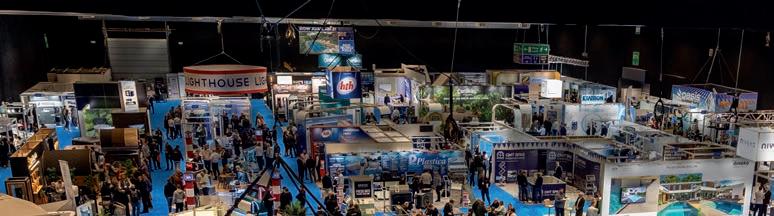
2024 – The Year That SPATEX Went Big!
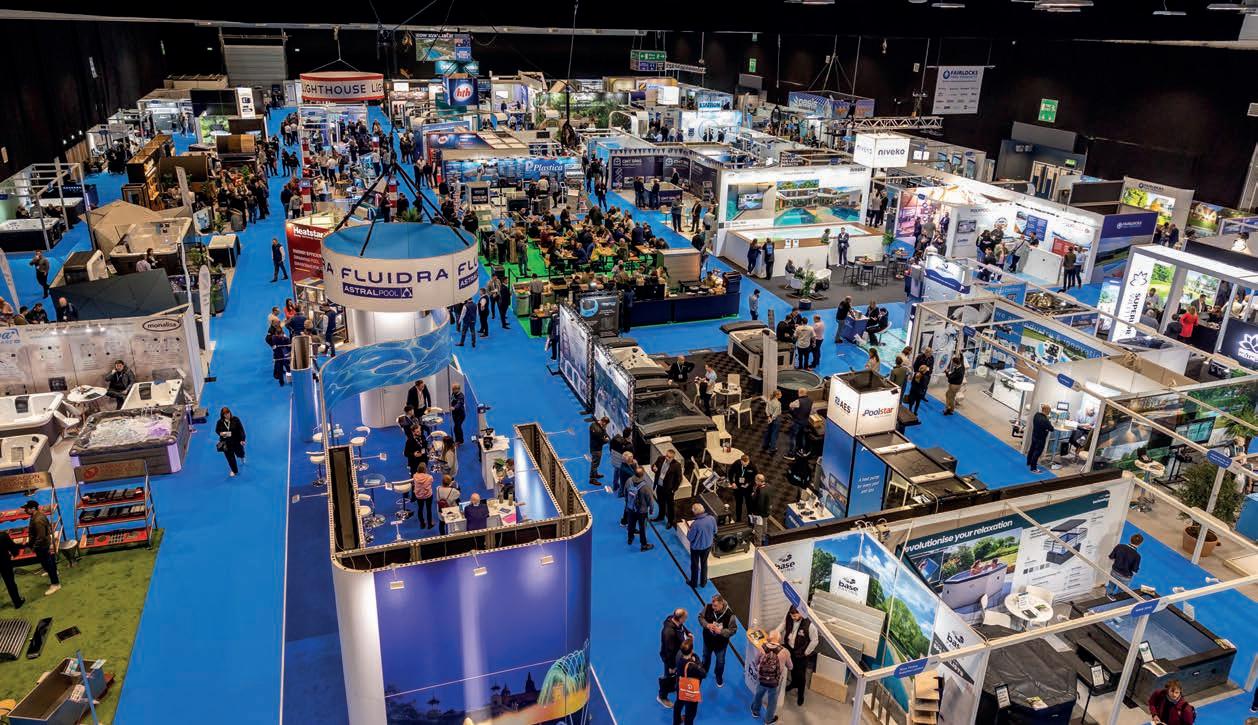


The wet leisure industry from the UK and further afield arrived at the Coventry Building Society Arena at the start of February for the annual threeday SPATEX exhibition. Celebrating its 28th edition, and with more than just products and stands on offer, there was plenty for visitors to see and do once again at the Midlands venue which drew a record number of visitors
Having firmly established itself as the must-attend for anyone involved in the wet leisure sector in the UK, the three-day SPATEX exhibition held annually at the Coventry Building Society Arena attracts a wide range of visitors involved in the provision and operation of swimming pools, spas, hot tubs, saunas and wellness facilities that involves water. Installers, retailers, leisure operators, local authorities, hoteliers, architects… it’s a lengthy list but all those arriving at the Midlands venue know the value that the event offers.
This year was no exception either. More exhibitors, more innovations, more new products and more industry support – all added up to many more visitors to SPATEX 2024. In fact 1,707 made their way into the Arena across three busy days. With SPATEX celebrating its tenth anniversary at the venue since its move from Brighton, it is fitting that this milestone year drew a record number of visitors, with attendance figures up almost 20% on the previous year. On that metric alone, it’s no wonder that the 28th edition of SPATEX was declared a resounding success.


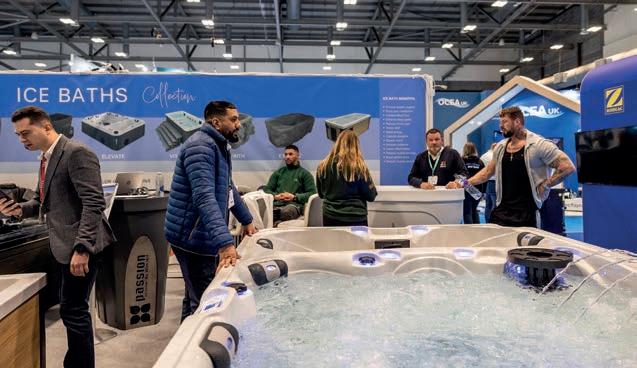 By Jon Wadeson
Never have the aisles been so obviously busy, and it was gratifying for the SPATEX organisers that many exhibitors remarked on the steady flow of visitors throughout the duration of the three-day Show.
There was so much to see, with the 115 exhibiting companies filling their impressive looking stands with new products and plenty of innovation.
As SPATEX’s main provider of education and training, the ISPE workshop programme always dovetails well with the exhibition’s showcase, and this year was no exception. A diverse number of topics made up the informative ISPE workshop programme in Arena 1 and, likewise, that of the seminar programme in Arena 2. The two seminar arenas recorded a total of 597 attendees.
With these two aspects alone, its easy to see why the show has gone from strength to strength. However, add in the BSPF hosted Gala Evening and it’s Awards (both of which are covered earlier on in this issue), plus the social and overall networking opportunity which the event provides, and you get the more complete picture of what is truly an all encompassing event making SPATEX and the Coventry venue,

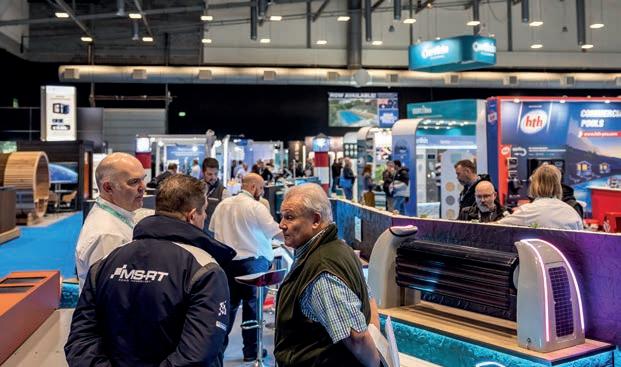 The Passion Spas stand featured hot tubs, ice baths and one of BBC TV’s Gladiators too!
The team from Lighthouse had plenty of new brands and products on their stand and enjoyed a busy event
The Passion Spas stand featured hot tubs, ice baths and one of BBC TV’s Gladiators too!
The team from Lighthouse had plenty of new brands and products on their stand and enjoyed a busy event
SHOW REVIEW SPATEX, COVENTRY BUILDING SOCIETY ARENA, COVENTRY 48 April 2024 SPN www.swimmingpoolnews.co.uk
There was so much to see, with the 115 exhibiting companies filling their impressive looking stands with new products and plenty of innovations
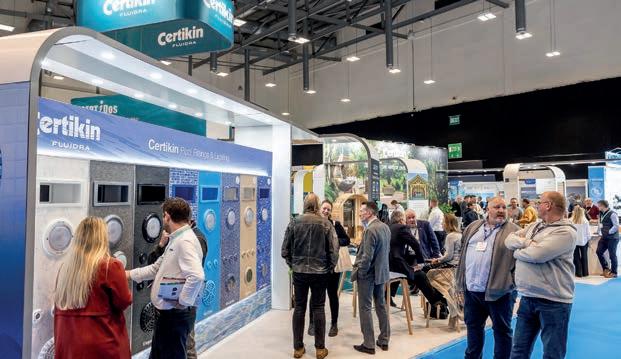





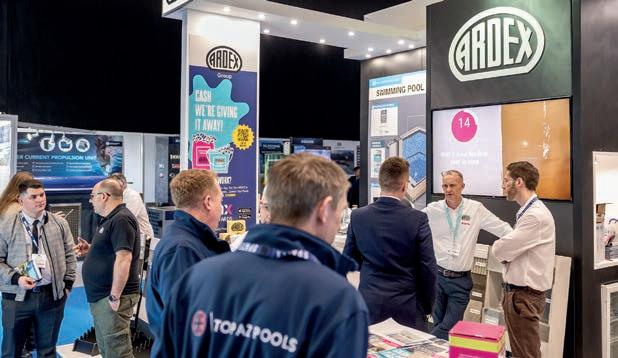

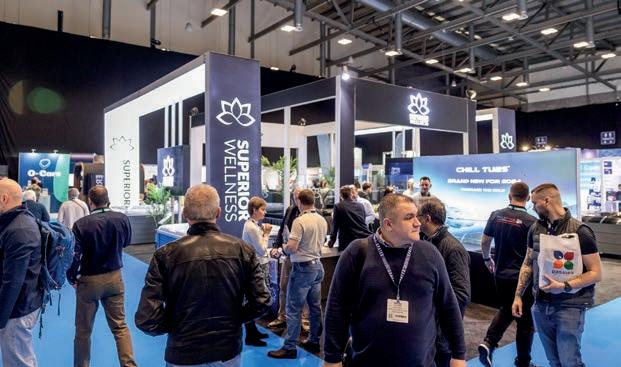
an annual one-stop shop for everything wet leisure in the UK, and one which should be a permanent feature within the diaries of anyone involved in the sector.
This year, you could even spot the odd celebrity around the venue, with Olympian, Colin Jackson, on the SpaFlo stand, and the towering presence of Giant (Jamie Christian Johal) from BBC TV’s Gladiators show gracing the Passion Spas stand.
For the second year running, the STA (Swimming Teachers’ Association) chose SPATEX to kick off its ‘Swim to the Beat’ campaign. Raising valuable funds for the British Heart Foundation,
Once again, SPATEX delivered for us, with the 2024 show being bigger and better than ever before. A huge thank you to Michele and the team, we’re already looking forward to 2025!”


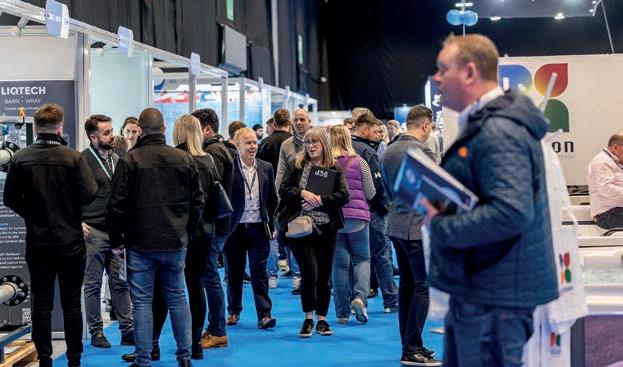


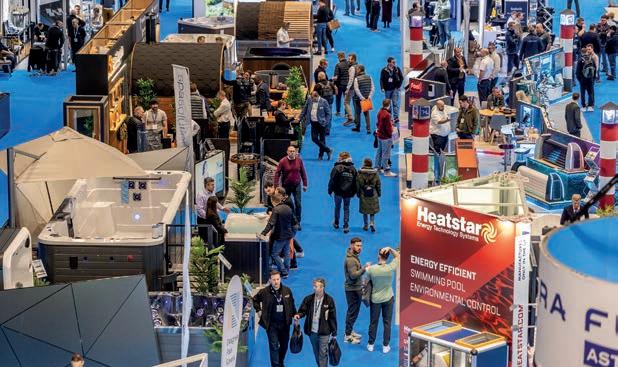
swimmers were put through a series of aquatic exercises in a magnificent swim spa provided by Sunbeach Spas.
The traditional SPATEX networking party on the Wednesday evening of the show was well attended, with the free ‘very useful’ SPATEX baseball caps handed out to all party attendees, proving highly popular. Winners of the funniest hat-wearing competition, which I’m told includes some great prizes, will be drawn in the summer. Pictures should be sent to Helen in the SPATEX office (helen@spatex.co.uk) –and the funnier, the better!
Joe Morgan of Hot Tubs Rock sums up the views of many visitors: “I drove up the night before and stayed in my camper van, so I’d be fresh for the long day ahead. There was so much to see and do, I am glad I did! I loved seeing all the new products and meeting new suppliers, and SPATEX is the only place to see them all in one place in the UK. It’s a fantastic networking opportunity too.”
As is always the case, it’s impossible to provide more details for the workshops or even the products that stood out in Coventry – but as new product sponsor for SPATEX, some of the innovations on show and topics discussed have once again been included throughout this issue either as news or within our features. More of them will follow

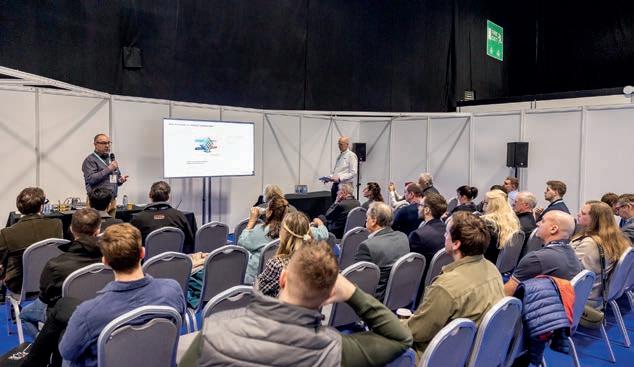 The Superior Wellness team returned to SPATEX with a range of hot tubs, chill tubs and saunas
With existing and new products showcased, Certikin enjoyed another busy show in Coventry
Swimming pools, spas, hot tubs, saunas and wellness – all the wet leisure sectors are covered at SPATEX
With an extensive range, tiling and flooring specialists Ardex are a regular exhibitor at SPATEX
Both seminar Arenas were busy with 597 attendees enjoying sessions over the three days
It was gratifying for the SPATEX organisers that many exhibitors remarked on the steady flow of visitors
The Superior Wellness team returned to SPATEX with a range of hot tubs, chill tubs and saunas
With existing and new products showcased, Certikin enjoyed another busy show in Coventry
Swimming pools, spas, hot tubs, saunas and wellness – all the wet leisure sectors are covered at SPATEX
With an extensive range, tiling and flooring specialists Ardex are a regular exhibitor at SPATEX
Both seminar Arenas were busy with 597 attendees enjoying sessions over the three days
It was gratifying for the SPATEX organisers that many exhibitors remarked on the steady flow of visitors
REVIEW www.swimmingpoolnews.co.uk SPN April 2024 49
SPATEX, COVENTRY BUILDING SOCIETY ARENA, COVENTRY SHOW
SHOW REVIEW SPATEX, COVENTRY BUILDING SOCIETY ARENA, COVENTRY

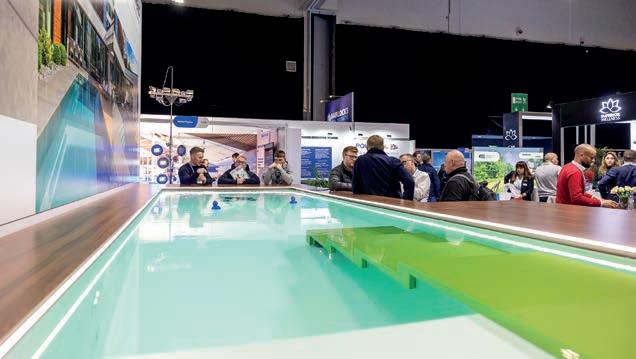


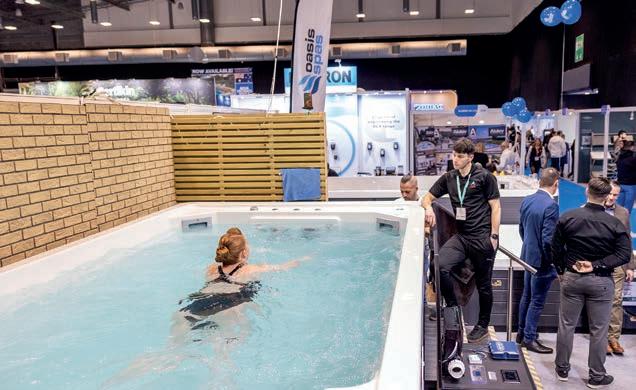
either in subsequent issues throughout the year and of course, some we have already featured in previous issues in the run up to the event.
It should go without saying that for exhibitors, first and foremost, SPATEX is an exhibition and the chance to showcase products and/or services to the trade. So feedback from them, whether good or bad, is always key and an important measure of the event’s success too. But given the numbers of visitors through the doors, it’s no real surprise that the overwhelming majority of views have been positive.
Commenting on SPATEX 2024, exhibitor, Paul Webb of Fairlocks Pool Products said: “Quite simply – the best SPATEX ever! Well done Michele and your SPATEX team!”
Another exhibitor, Chris Green, Marketing Manager at Certikin stated: “Certikin is a great believer in face-to-face business; no telephone call or email can replace the opportunity to see a new product in person and discuss its merits with a member of our technical team. For that reason alone, we regard SPATEX as one of the most important dates in the calendar. Once again, SPATEX delivered for us, with the 2024 show being bigger and better than ever before. A huge thank you to Michele and the team, we’re already
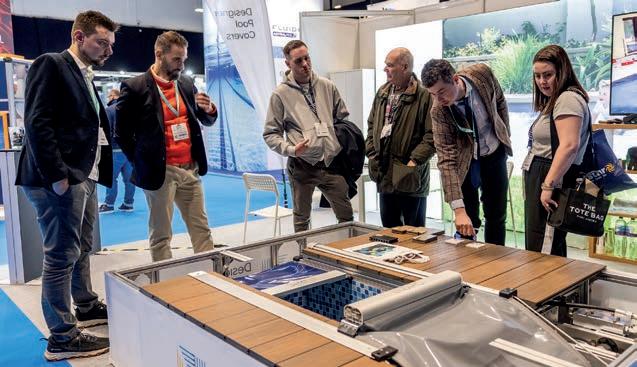




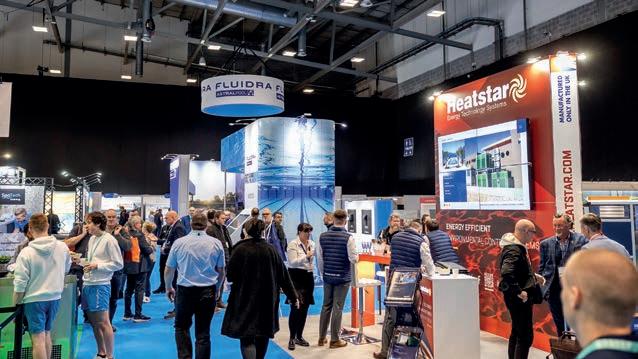

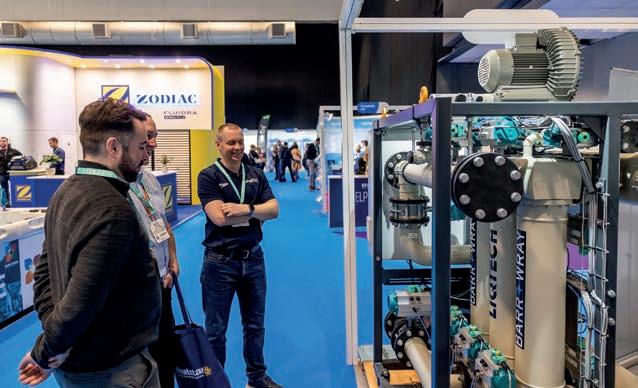
looking forward to 2025!”
After what was undoubtedly a successful event, and one to remember for all that attended, Organiser, Michele Bridle said: “I’d like to extend a big thank you to all our wonderful exhibitors and visitors in rewarding us with the best show to date. I am proud that those three SPATEX days in Coventry each year unite the industry and prepares it for the pool season ahead. This 28th edition really did have it all and has spurred the team into creating something even more special in 2025. Onwards and upwards!”
If you’ve never visited SPATEX or perhaps haven’t been for several years, it’s an event that should be on your radar and in your diary – so save the date!
Next year, SPATEX returns to the Coventry Building Society Arena from Tuesday 4 to Thursday 6 February – SPN will hopefully see you there!
SPATEX 01264 358558 www.spatex.co.uk

 Across the three days, SPATEX also provides networking opportunities away from the show hall
SPATEX draws both regular and new exhibitors showcasing the latest in pool and spa technology
SPATEX is the place to see brands both big and small all under one roof
For the second year running, the STA chose SPATEX to kick off its ‘Swim to the Beat’ campaign
SPATEX has global appeal and attracts many overseas brands as here with Czech Monopools producer NIVEKO
For visitors, there’s plenty of product demonstrations to be found around the show hall
Across the three days, SPATEX also provides networking opportunities away from the show hall
SPATEX draws both regular and new exhibitors showcasing the latest in pool and spa technology
SPATEX is the place to see brands both big and small all under one roof
For the second year running, the STA chose SPATEX to kick off its ‘Swim to the Beat’ campaign
SPATEX has global appeal and attracts many overseas brands as here with Czech Monopools producer NIVEKO
For visitors, there’s plenty of product demonstrations to be found around the show hall
50 April 2024 SPN www.swimmingpoolnews.co.uk


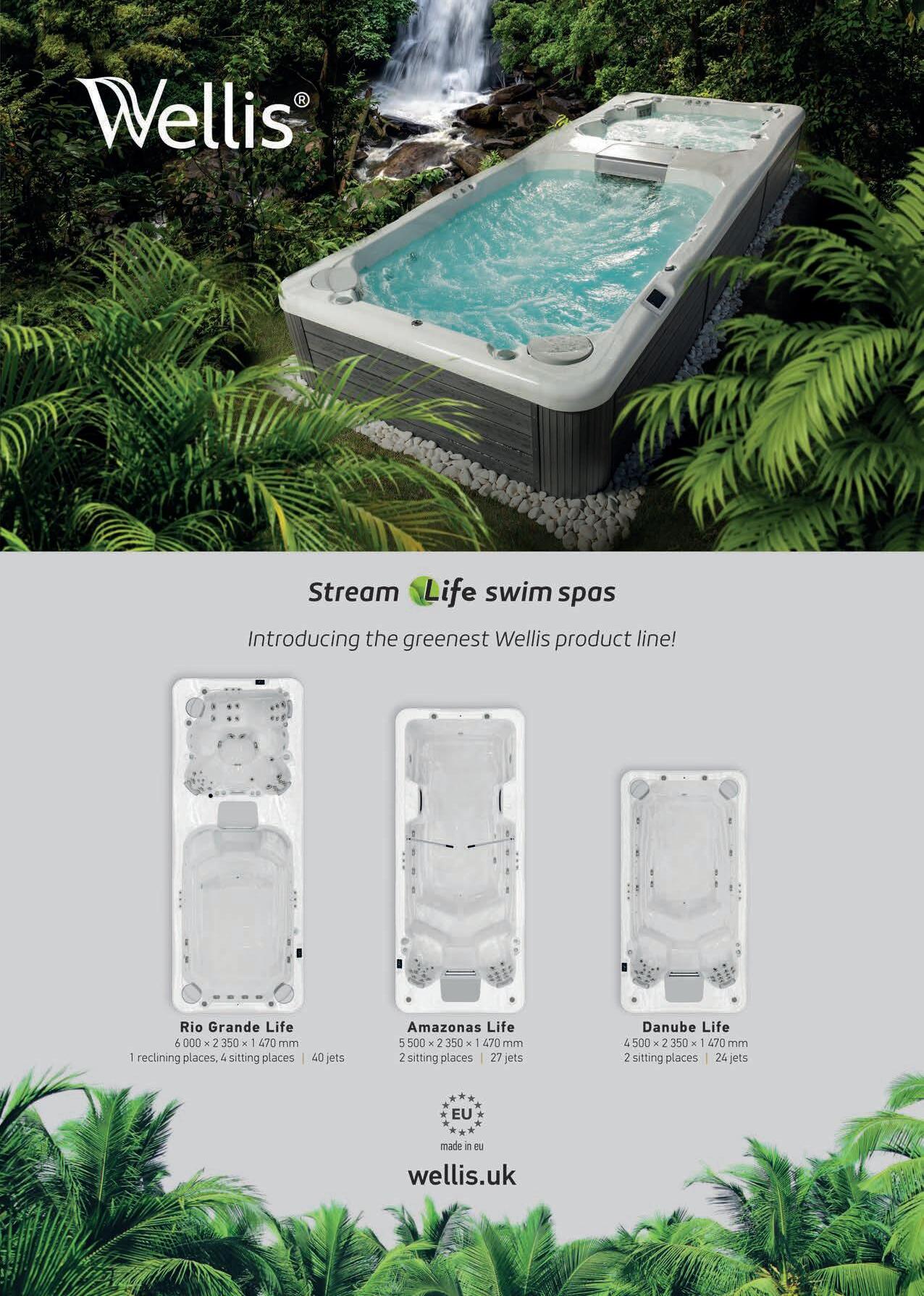
Superior Swim Spas Offering The Complete Package For All

A popular choice for many in the UK over recent years, both as a training aid, and for families, mid and high-end swim spas have become a widely accepted alternative to more traditional pool choices, and with spa options incorporated, they provide a complete swim and relax package. Offering the very latest in counter-current technology plus much more, we take a look at some of the more premium choices available in the buoyant swim spa sector
By Jon Wadeson
As a single product that offers the benefits of an counter-current enabled swimming area combined with the relaxation aspects of a hot tub, swim spas have enjoyed a level of relative popularity since the pandemic boom and the appeal for mid and high-end options has remained steady and is seemingly rising again, despite the challenges faced by the wider spa sector.
Whilst still somewhat of a niche sector when compared to the overall pool and hot tub markets, manufacturers and retailers alike clearly see the potential in the swim spas with both ensuring plenty of choice for these high value, multi-use and often flagship products.
Competitive pricing, ownership convenience and of course, that certain wow factor has resulted in an appeal that appears to be much greater than that for dedicated swimming or relaxation solutions. Of course,
keep fit fanatics, athletes and even people recovering from various injuries and ailments can all benefit from access to, or ownership of, a swim spa, and these are often the intended target market for mid and high-end models. However, there’s a strong argument to be made for families opting for a premium, multi-use swim spa product too.
So it seems many boxes can be ticked when opting for a quality swim spa, especially one that incorporates all the latest bells, whistles and energy-saving technologies. As a statement piece, they’re also a tough product to resist for those with larger budgets but who are short on space.
So what’s on offer this year for those who are looking past entry-levels models? In this issue, we examine just some of the swim spa brands and models that are competing for business in 2024.
FOR A UNIQUE LAYOUT, TAKE A LOOK AT TIDALFIT FROM ARTESIAN SPAS
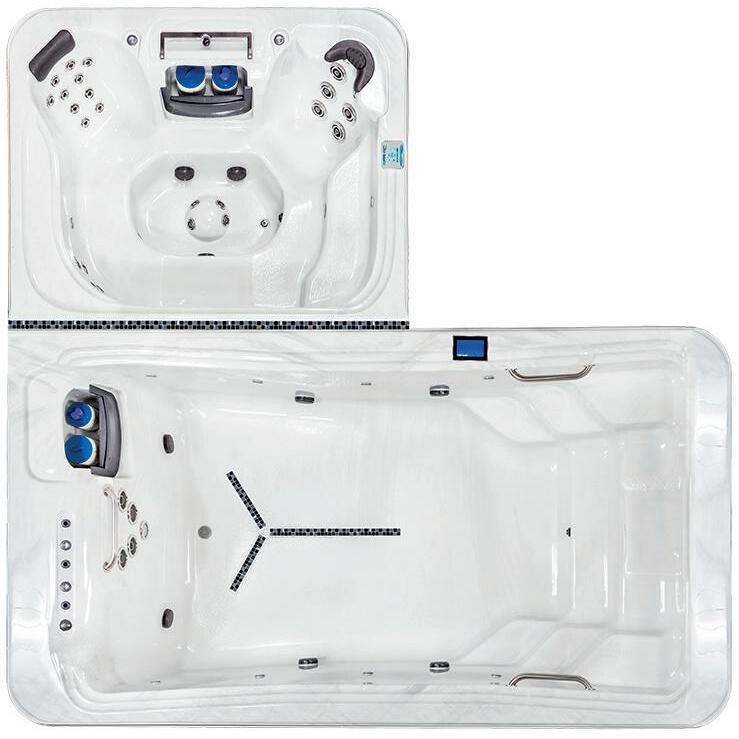
TidalFit is the swim spa brand of Artesian Spas and the company produce a variety of models to suit a range of budgets and needs.
At the top end of their range, you’ll find the DT (dual temperature) models and then something a little different in the DTL.
The DTL range consists of two models –the DTL-6 and DTL-8. Unsurprisingly, the DT also stands for dual temperature, but these two swim spas are arranged in an ‘L’ shape.
Choose from either a 6ft hydrotherapy spa (featuring 35 Stainless Steel Patented Helix Jets) or 8 ft model (with 61 or 45 Jets), and the company seamlessly integrate both into one amazing unit.
Each combine Tidalfit’s world-class 14ft exercise pool with Tidalfit’s Quad Adjustable Swim Jet System as standard. Also standard is a super high efficiency 24hr Whisperpure™ circulation system, plus a smart energy insulation package consisting of highly insulating Icynene™ brand foam located in the space between the maintenance-free cabinet and the structure which combined with a heavy-duty thermal spa cover, works to ensure the best rate of heat retention available.
There’s also plenty of other options that can be added to enhance each swim spa. These include water purification options for both the pool and spa sections, DynaBrite LED lighting and an Aquatic Training System for the pool area, plus a BBA™ fully integrated Bluetooth sound system, cabinet speakers, and worldwide Wi-Fi spa control app module for the spa side.
NEW SWIM SPA MODELS HERALD A NEW ERA FOR CATALINA SPAS
As the original swim spa manufacturer, Catalina Spas is the longest established swim spa brand in the world.
With well over 30 years of experience in the sector, the company is well known for producing some of the most efficient, powerful, beautiful and value for money models in the sector.
For some time, the Salisbury-based operation had been in extensive discussions about manufacturing their own range of spas and swim spas.
Having partnered with like-minded professionals with extensive experience in the design, production and manufacturing of vacuum formed acrylic spas and swim spas, Catalina adapted their range of swim spas to remain at the cutting edge of innovation, and last year heralded the start of a new era for the brand in the UK as they started to release all new swim spa options.
The company currently has five models
www.swimmingpoolnews.co.uk SPN April 2024 53 Available from Artesian Spas, the TidalFit DTL-6 dual temperature is one of two swim spa models SWIM SPAS – MID & HIGH-END
SWIM SPAS – MID & HIGH-END
in its range with the Marathon, the Marathon Dual Temperature and the very latest model, the Atlantic, being the options that occupy the higher-end.
All three models feature three river jets for exercise and for relaxation, 27 stainless steel hydrotherapy jets on the Marathon, 24 on the Marathon Dual Temperature and 20 found on the Atlantic.
Manufacturing their own range has given the company the ability to take control of their supply chain and the ability to prioritise their customers. Over time it is the company’s intention to add more models to the range and these will be developed based on customer feedback and demand.
Through the new facility, the company are also able to provide contract moulding services to clients who desire their own unique spa or swim spa models or ranges.
In addition, the company now also have a partnership with Coast Spas for the UK which provides access to the Canadian brand’s Performance Collection of swim spas.
NEW FIBREGLASS SWIM SPAS OPTIONS WITH COMPASS POOLS
Compass Pools, a leading manufacturer of high-quality swimming pools in the UK, is excited to announce the launch of their new line of fibreglass swim spas. These innovative units offer homeowners a versatile and space-saving solution for year-round aquatic enjoyment.
“Our swim spas are built with the same commitment to quality as our regular pools,” explained Alex Kemsley, Director at Compass Pools.
The fibreglass swim spas are constructed using premium materials and cutting-edge technology. The strong, non-porous fibreglass shell ensures long-lasting durability and a smooth, easy-to-clean surface.
Compass Pools’ fibreglass pools are built with resilience and comfort in mind. The swim spa will resist cracks, leaks and weathering over time. The self-contained construction with built-in filtration and thermostatically controlled heating makes them simple to install too – either partially or fully in-ground – and ensures quality water which is kept at a desired temperature all year-round.
The compact size of the swim spas makes them ideal for a variety of outdoor spaces. Customers can choose from different sizes, jet configurations and accessories like waterfalls
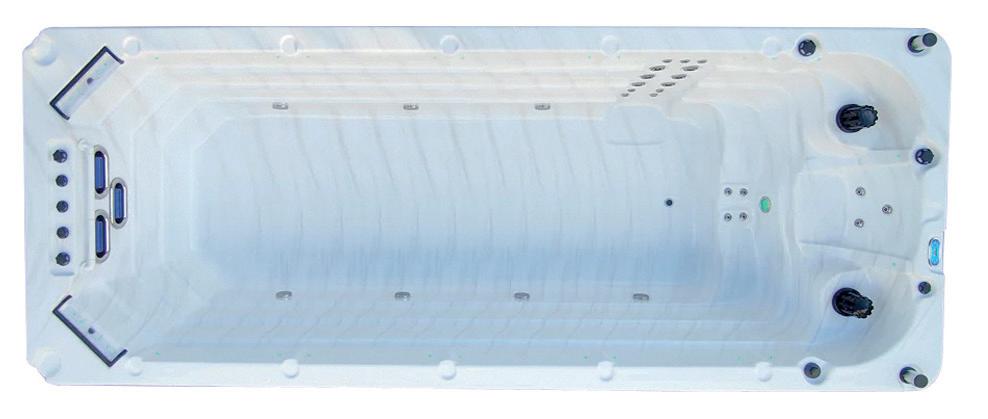
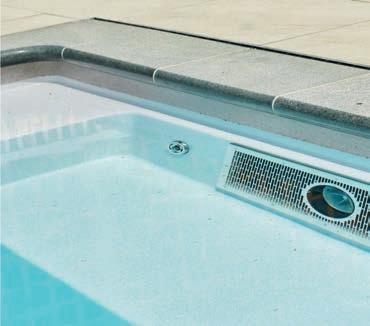
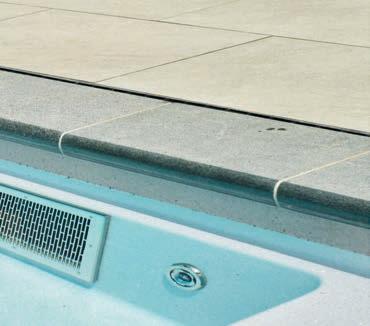
and lighting packages to design the ideal outdoor retreat. The knowledgeable Compass team will guide clients through selecting the perfect swim spa – so whether for a large patio space or a more modest garden, there’s a swim spa that’s perfect for all. Plus, the construction offers a clean and sleek aesthetic that complements any outdoor setting.
Compass Pools, a member of The Waterstream Group, is a leading UK importer and distributor of high-quality swimming pools, offering a wide variety of styles and sizes to suit any home and budget. The company is committed to exceptional products and service, with manufacturing facilities in Europe, Australia and the US.
INNOVATIVE HIGH-END SWIM SPA OPTIONS ARE ALL PART OF THE PASSION SPAS’ EXPERIENCE
The swim spa designs from Passion Spas combine the company’s exclusive CurrentLift Technology, which allows the swimmer
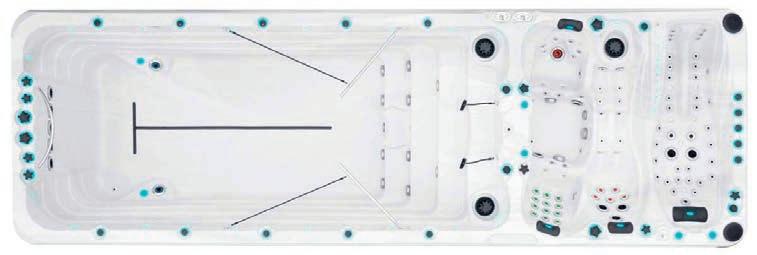
to remain on the surface of the water at any level of intensity of the current, with some of the most innovative spa massage techniques ever developed to provide an all round swim spa experience.
At the top end of the brand’s swim spas range, Spirit, Vitality and Energy models can be found along with their ‘deep’ variants.
It’s in these premium models that Passion Spas have combined all of their unique massage therapy innovations into a single swim spa package.
Aqua Rolling Massage™, Intense Therapy Zone™ and Therapy Wave Zone™ are all included in these three models, giving users a full menu of therapy choices. In addition, because the swim and spa sections are separate, users can vary the temperatures between the two units, experiencing a lower temperature workout in the swim lane before soothing tired muscles in the hot water of the spa. The Dual Zone heating systems in the Spirit, Vitality and Energy swim spas allows the best of both worlds – swimming and relaxing in a single spa product.
The Energy is the largest model that Passion Spas produce and it’s closely followed by the Vitality. Both of these models measure in excess of seven metres in length, so if space isn’t an issue but creating an impression is, with so many innovative features included, they’re sure to receive a lot of attention in showrooms and beyond.
A range of new models for later this year are also rumoured, so watch this space for any updates.
Measuring in excess of seven metres in length, the Energy is the largest model that Passion Spas currently produce 54 April 2024 SPN www.swimmingpoolnews.co.uk
Above: The Atlantic is the very latest if a number on all new swim spa options from Catalina Spas
Compass Pools is excited to announce the launch of their new line of fibreglass swim spas for the UK market
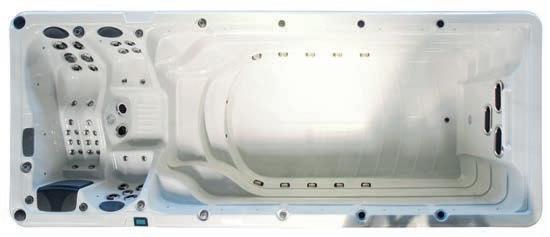
WITH FOUR BRANDS, SUPERIOR WELLNESS HAVE THE SECTOR COVERED
Superior Wellness currently offers swim spas from four different brands, including their flagship Platinum Spas and Thermal Spas brands, plus an online range along with their white-label range OEM. Popular mid and high-end models include the Platinum Spas Zelus and Helios models.
With the latest innovations and technology, the 5700 × 2250 × 1500mm Zelus is designed to a very high specification and is crammed full of features to create a stunning swim spa. Cutting-edge pump and heating technology ensures that the Zelus is also economical to run. It includes powerful jets, water features and LED lights. It has three 3hp pumps in the swim section, meaning the jet pressure is powerful, and therefore the hydrotherapy is exceptional.
Furthermore, it is the best value swim spa in the Platinum Spas range, and includes a Superior Aristech Acrylic finish and the Ozone water clarifying system.
The 5900 × 2250 × 1500mm Helios includes four seats and one lounger. The spa is split into two sections – a spa end for relaxation and a swimming end for training and workouts. Both ends can be used at the same time too, so you can share the experience with friends and family.
The spa end is the perfect space for up to three adults, and has powerful hydrotherapy jets, a waterfall and a LED lighting system. Using three 3hp pumps in the swim section, the jet pressure is powerful, and the hydrotherapy is exceptional. The jets are also adjustable, so each user can adjust relating to their preferred requirements.
It also features the Superior Aristech Acrylic finish and the Ozone system, as
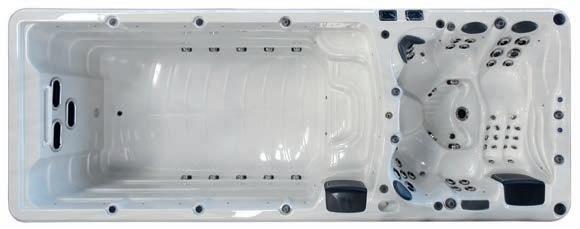
Whilst still somewhat of a niche sector when compared to the overall pool and hot tub markets, manufacturers and retailers alike clearly see the potential in the swim spas with both ensuring plenty of choice”
well as cutting-edge pump and heating technology. This ensures that the Helios swim spa is not only high-tech, but also economical to run.
ENHANCED ‘LIFE’ TURBINE MODELS FROM WELLIS OFFER PREMIUM PERFORMANCE
Wellis offer three swim spa models with each having both W-Flow and Turbine variants, but for serious swimmers, it’s the Turbine models that will appeal most.
Whilst outwardly looking the same to previous models, the new ‘Life’ models within the range benefit from a number of enhancements this year. These include the implementation of a new ‘Scandinavian’ method of insulation, preparation for a heat exchanger to augment functionality, plus the adoption of an Ozmix™ System in lieu of previous UV-C lamps.
Sitting at the top of their range is the Rio Grande. This large swim spa measures 6m x 2.35m and as with all models in the Wellis range, it has a generous depth of 1.47m.
Thanks to the unique solutions of the counter-current system, it serves as a swimming pool, and after an exhausting swim, users can relax in the separate spa massage section which has the same ergonomic design taken from the brand’s popular Malaga model meaning the Rio
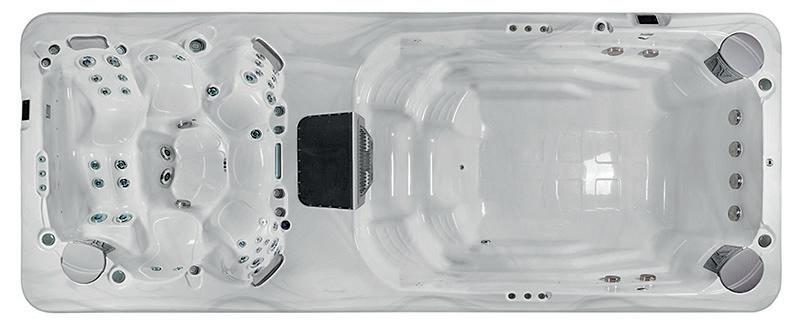
Grande truly provides a combined experience for its users.
The Turbine is capable of propelling 50-160m3 water per hour. In contrast to standard swim spa pumps, the Rio Grande’s turbine consumes 75% less power while delivering twice the amount of water – that’s incredible performance combined with energy savings.
As a relatively new model, the Rio Grande still benefits from the latest in good looks too. Its 5mm fibreglass reinforced acrylic shell is available in Sterling Silver, is complemented by a choice of black, brown or grey brushed cabinet and comes as standard with a hardcover.
There’s a total of 41 jets on offer in the Rio Grande’s spa section and exclusive LED lighting, AquaSoul™ Pro 4.1 sound system, aromatic therapy and a swim tether all come as standard too.
Artesian Spas
01302 730295
www.artesianspas.co.uk
Catalina Spas
01980 611555
www.catalinaspas.co.uk
Compass Pools
0333 456 7111
www.compass-pools.co.uk
Passion Spas
+31 57 745 6040
www.passionspas.com
Superior Wellness
01246 559071
www.superiorwellness.co.uk
Wellis
+36 29 564 380
www.wellis.com
www.swimmingpoolnews.co.uk SPN April 2024 55 FOR FURTHER DETAILS: SWIM SPAS – MID & HIGH-END
Popular mid and high-end models from Superior Wellness include the Platinum Spas Zelus (left) and Helios models
enhancements this year
New ‘Life’ models within the Wellis range, including the Rio Grande, benefit from a number
of

Sensational Lining Solutions For Projects Big And Small

With liner pools still being a very popular type of pool in the UK, there will always be a demand for a variety of pool liners and systems for both new build or refurbishment projects. The good news is that the days of limited choice are well and truly in the past thanks to an ever-expanding offering of high quality and durable manufactured and on site options. So, what’s available for the 2024 season? In this issue, we examine the available options
By Jon Wadeson
There are variety of ways to transform a dated looking swimming pool, but when it comes to indoor or outdoor liner pools, one of the simplest, most effective and visually impressive ways is a complete refresh of the pool interior – and that means some form of new lining.
With manufacturers keeping a close eye on both owner needs and the latest trends, the quality and depth of ranges has increased with new designs, colours, patterns and textures all being made available. As a result pool owners who wish to transform pools and bring them up to date, can do so fairly quickly and at a relatively low cost too.
“Whether it’s a factory made ‘bag’ liner, or a heavy-duty site applied liner, the range and quality of swimming pool vinyl linings has come on in leaps and bounds in recent years,” said Certikin Product Manager, Mark Adams. “The strength and durability of pool vinyl has increased enormously, thanks to the application of improved protective lacquers which, when combined with high quality inks and colourings, improves stain and abrasion resistance, reduces plasticiser migration and helps combat UV degradation.”
With the latest liners now being at the cutting edge in the trend stakes, many of which often imitating their tiled counterparts, numerous pool owners are jumping at the chance to modernise their pools, and in doing so, bring them in line with the latest contemporary styles. Of course, that’s not to say that traditional options and colours don’t still have a place, but the variety of choice on offer today has become quite impressive when compared to just a decade ago, and has led to companies in the sector remaining as busy as ever as owners realise the value of a liner revamp.
Of course, it goes without saying that these products are suitable for new projects, but they really come into their own when refurbishing existing pools, as the visual contrasts from old to new are so much more apparent and rewarding.
Whether designed and produced in a factory or applied on site, a new liner for a pool of any size or shape has the ability to
give a tired, often unwelcoming installation a new lease of life and the chance to once again impress owners and guests alike.
Regardless of pool size, style or the aesthetic requirement, there’s sure to be a liner or lining solution that ticks all the necessary boxes and we take a look at just some of the available lining options and companies that are providing them for 2024.
CERTIKIN DRAW ON THE EXTENSIVE PORTFOLIOS OF MAIN LINER SUPPLIERS
As one of the UK’s leading liner suppliers and installers, Certikin offers a comprehensive portfolio of stylish, high quality, durable options and the line up continues to expand. Drawing from the extensive portfolios of three main suppliers: Renolit, CGT and Elbe, Certikin offers customers an extensive range of colours and patterns.
2024 sees the introduction of new materials with the launch of Elbtal Pure Pool. It’s a high quality, membrane with a printed, embossed and refined 3D surface. With colours, shapes and textures of
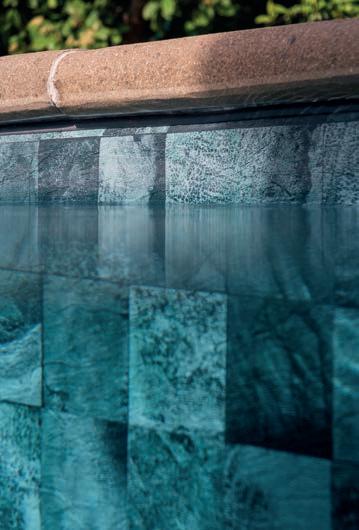
Certikin offers customers a range choices from the extensive portfolios of three main suppliers, including CGT and their Aquasense Fidji range
natural stone and vibrant exposed concrete structures, they harmonise perfectly with a natural environment. Last year, six stunning new colours were also added to the popular Aquasense Granit range too.
Certikin’s site applied lining option is increasingly popular with domestic owners due to its durability. Their Infinite On-site Lining range uses a 1.5mm – 2mm three ply product compared to the traditional single ply 0.75mm vinyl used for factory made liners. The service is quick and efficient – taking around four working days for an average sized domestic hopper pool with steps and there is no curing or standing period. It’s suitable for both new and old pools of domestic and commercial size and can accommodate complex shapes, steps, ledges and pits. The longevity of the product, when compared to thinner linings or paints, is a major advantage, particularly for commercial pools. It comes with a 15-year pro rata warranty, but the life expectancy can be double this in a well-maintained pool.
Speaking about the option, Product Manager, Mark Adams said: “On-site lining is generally quick, and it means that the pool trader can still earn on other projects whilst we are working on his behalf.”
EXPERIENCE STUNNING AND UNIQUE LINING OPTIONS FROM AQUAFLEX
Aquaflex is proud to provide the swimming pool industry with site lining teams to cover the ever growing commercial and domestic swimming pool market, and currently has 15 teams covering the UK and into Europe.
Site lining is the perfect solution for non-uniform shaped pools and offers a cost effective solution compared to other finishes such as ceramic tiles.
With an expanding range of 1.5 and 2.0mm site lining patterns, customers have a variety of choices ranging from natural and ceramic embossed designs to conventional standard patterns used widely in the commercial market.
Added to their range last year was Alkorplan’s latest creation TILE – a product
POOL LINERS & SYSTEMS www.swimmingpoolnews.co.uk SPN April 2024 57
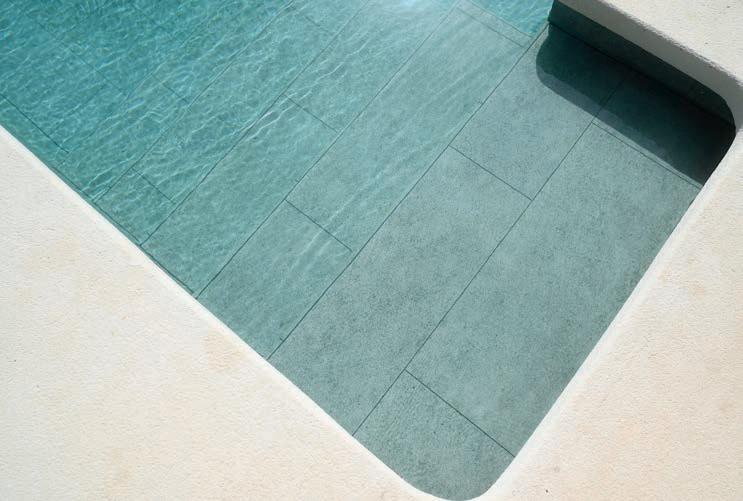
that simulates large format tiles. Perfectly combining elegance and functionality, the two colours in the range, Quartz (grey) and Jade (green), give the pool a sober and elegant look and both are very versatile in any environment. Featuring an embossed structure and optimum anti-slip resistance, with a thickness of 2mm, TILE is a very resistant and robust option.
This year, the Alkorplan range has been further extended with the introduction of the three stylish textured options in the 1.65mm ALIVE collection, Prana (green), Dhyana (blue) and Chandra (grey).
Also introduced in 2023 were two CGT Aquasense options. Brown Basalt creates an enduring look and feel of natural stone creating warm teal blue waters, whilst Fidji Green is a beautiful stone design inspired directly from Indonesia – a design that brings a peaceful and quiet atmosphere to a swimming pool.
Both feature an exclusive Aquasense finish for full embossed texture and have been engineered with added chemical resistance and industry leading UV protection.
Lastly, far from just proving on-site lining options, Aquaflex also produces .750mm pretailored liners in their factory in Salisbury, where they have a strong reputation for complex designs and non-conventional steps and features.
NEW FOR 2024, A RANGE OF PREMIUM DEL LINERS FROM OCEA UK
Having recently become part of the French / German CF Group, Ocea UK are now proud partners and are able to supply a premium choice selection of DEL liner options for the UK market.
This fully customisable range allows the mixing and matching of liner choices for floor, walls and stairs thanks to the IDLiner facility, plus there’s a selection of tile bands available to finish off and add an extra detail.
Three options are offered within the range: Protect 33, Evolution and Tradition. Available in six plain colours and a further five printed patterns, the Protect 33 is a high-tech liner that defies time and environmental aggression. Offering high quality custom-made manufacture and a high temperature resistance up to 33°C, the Protect 33’s specific formulation requires a selection of pigments which guarantees a high resistance to discolouration. The PVC resin has been selected to limit the liner’s absorption of water and the formation of creases whilst its chemical composition protects the liner from stains and algae.
Next there’s the Evolution – a responsible liner range that incorporates 100% phthalate-free plasticisers. Available in four plain colours, Evolution also offers high resistance to ageing and stains and is suitable for pools with water up to a maximum temperature up to 32°C.

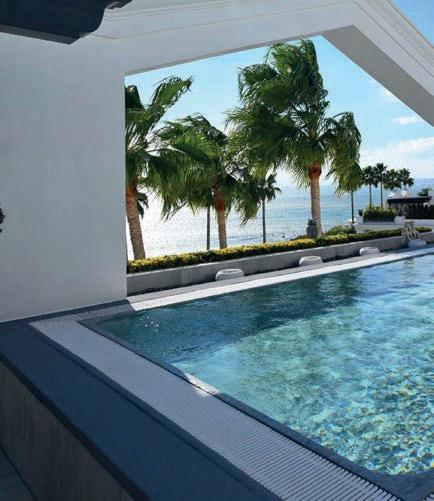
Lastly, there’s the Tradition liner. This value-for-money choice is available in eight plain colours and six printed options. Featuring a price-controlled formulation, liners in this range are suitable for pool waters with maximum temperatures up to 28°C.
All these DEL liners are designed to defy time and be resilient to environmental aggression, and are a great solution for new build pools or a makeover for an existing pool.
With easy to calculate pricing, pool builders and designers can work out the costs for customers quickly and easily, with the Ocea UK team on hand to provide guidance through the ordering process.
ENJOY ACCESS TO ALL THE LEADING BRANDS WITH ON-SITE POOL LININGS
According to South Yorkshire-based specialists
On-site Pool Linings, it’s an exciting time for the pool industry with all the leading
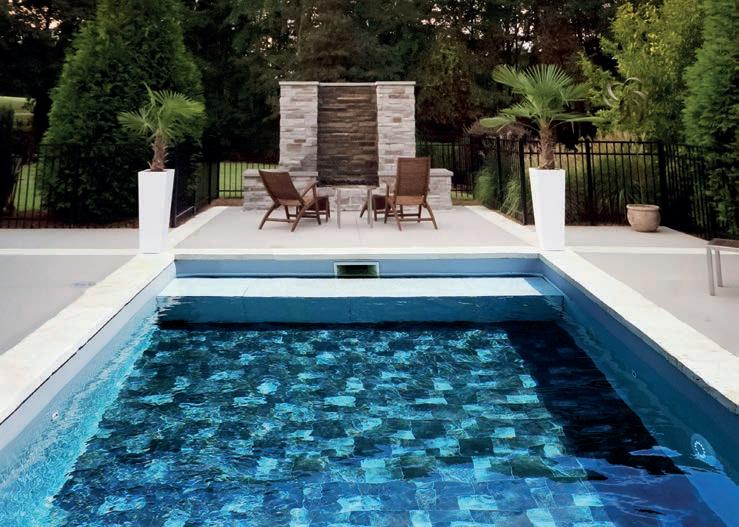
POOL LINERS & SYSTEMS 58 April 2024 SPN www.swimmingpoolnews.co.uk
This year, Aquaflex’s Alkorplan range has been further extended with the introduction of the three stylish textured options in the ALIVE collection
Giving the pool a sober and elegant look, Alkorplan’s TILE option is a product that simulates large format tiles and is shown here in Jade
For 2024, Ocea UK are able to supply a premium choice selection of DEL liner options for the UK market including this Protect 33 Basalt option
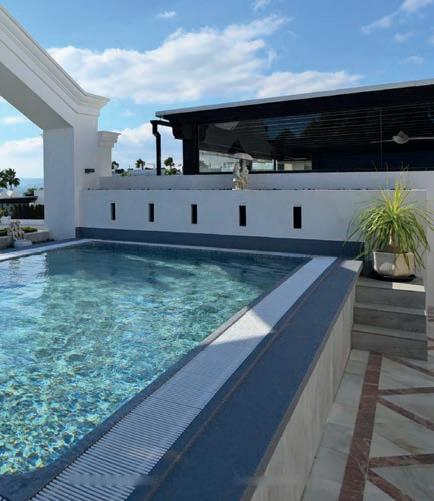
manufacturers producing fantastic new options for customers to choose from. There are designs and colours to suit all tastes, from the traditional swimming pool linings to more modern, contemporary looking ranges which often have some unique finishes.
The experienced team at On-site Pool Linings are able to install the full range of materials – from all leading manufacturers – giving their customers the widest possible choice in swimming pool liners. They are the only company that offers this benefit to their customers and they are able to install liners into domestic pools, commercial pools, schools, hydrotherapy pools, holiday parks, health clubs, ponds and natural swimming pools.
As a specialist company, their business focuses solely on on-site lining, so they are able to concentrate on this specific area, giving their customers excellent service before, during and after any installation. On-site liners are suitable for both new and
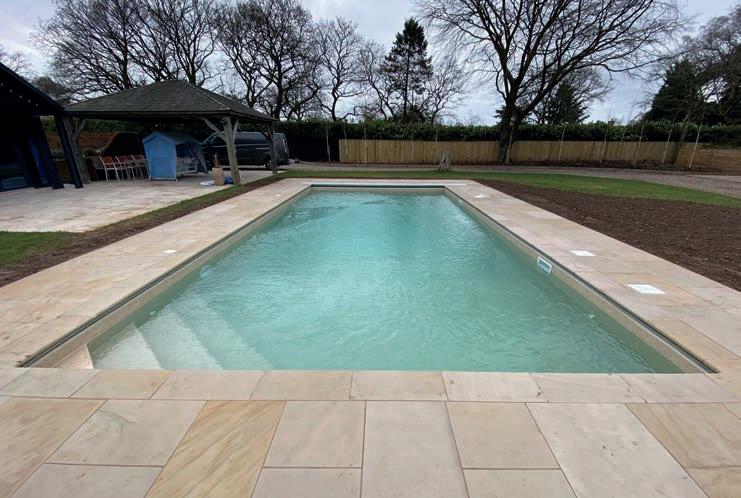
existing pools, allowing the ability to design, build or change the pool into something any customer has always dreamed of. They have a quick installation time, low maintenance and are tailored for an exact fit to any size, shape or design of the pool.
With a team of professional installers who have in excess of 60 years of experience between them, they offer a free quotation service with advice at each stage of the process – from quote to installation through to after care – their friendly and professional staff are always happy to help!
SCP’S 3D OFFERING EXPANDS FURTHER IN 2024
Available from SCP UK, the Latham UltraSeam 30 Gauge Vinyl Liner offering was greatly refreshed last year with nine new design options added to the patterned liner range which now consists of 23 designs. In addition to these, there are a further five
options in their pearlscape offering. With seven installation teams available, SCP’s on-site lining options have been boosted further with the introduction of new Haogenplast options. The Stonetile 3D premium pool lining range is now available in four designs: Stonetile Golden, Stonetile Elegance, Stonetile Grey plus the latest addition, Stonetile Emerald. With a genuine stone appearance and feel, this lining option provides the following benefits:
• Ultimate long term waterproofing solution
• Intense chlorine and other stains resistance
• Strong resistance to UV damage
• Slip resistance
• The asymmetric configuration makes the 1.70mm products easier to cut and adjust during installation.
Suitable for both domestic and public pools, Stonetile options come with a 15-year waterproofing warranty and are NF EN
CERTIKIN ON-SITE LINING TRANSFORMS WARWICKSHIRE POOL CASE STUDY
This stunning, refurbished pool in rural Warwickshire bears no resemblance to the dilapidated pool that greeted Gareth Lancaster of Simplex Pools when he was first given the task of transforming it into “a luxury family pool for use all year round”.
The original pool was a Buster Crabbe –a very old panel pool from the early 1990s which had a 20-year old liner that had degraded but the foundations were still structurally sound. In order to accommodate the complexity of new steps and the installation of a safety cover, a bag liner was ruled out. A team from Certikin set about on-site lining the 38ft by 20ft pool using Touch Elegance textured vinyl. Longlasting, with a tailor-made finish, Infinite on-site lining uses a 1.5mm – 2mm three ply product compared to the traditional single ply 0.75mm vinyl used for factory

made liners. The application is quick and efficient – taking around four working days for an average sized pool with steps and there is no curing or standing period. It comes with a 15-year pro rata warranty but the life expectancy can be double in a wellmaintained pool.
The delighted owner commented: “The
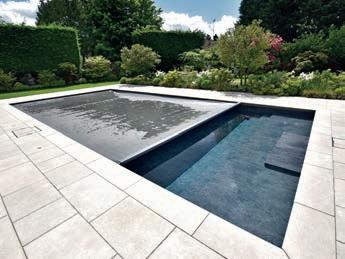
liner looks superb and the quality is far better than we had imagined. I would highly recommend it to anyone considering this option.”
Simplex Pools
02392 467455
www.simplexpools.co.uk
POOL LINERS & SYSTEMS www.swimmingpoolnews.co.uk SPN April 2024 59
The experienced team at On-site Pool Linings are able to install the full range of materials – from all leading manufacturers

15836-2 compliant.
There are four new options in the Premium 3D non-slip range too with White, Sand, Light Grey and Dark Grey options joining the existing Light Blue and Mid Blue variants. Suitable for domestic pools, these also come with a 15-year waterproofing warranty and NF EN 15836-2 compliance.
These new colours expand on what was already an extensive range of 3D products offered by SCP UK and with their addition, along with plain and full pattern lacquered options available too, thankfully there is an app that allows all the options within the Haogenplast collection to be seen in stunning images and breathtaking video clips, plus there’s even a virtual reality mode to see what a specific pool will look like too!
REVITALISE A CLIENT’S POOL WITH A FRESH POOL LINER FROM
PLASTICA
Plastica provides a solution to rejuvenate pools through the installation of new liners. Drawing from extensive industry experience, the company excels in the meticulous surveying and crafting of custom pool liners,



With the latest liners now being at the cutting edge in the trend stakes, many of which often imitating their tiled counterparts, numerous pool owners are jumping at the chance to modernise their pools”
utilising their new state-of-the-art plotter cutter and bespoke software, combined with the skills of experienced draughtsmen to ensure precise customisation of each liner. These liners are meticulously assembled from a range of plain or patterned materials. The available liner materials come in two thickness options: 0.50mm or 0.75mm, enriched with algaecide and antioxidants. For patterned materials, protective layers of a lacquer coating are applied, extending the product’s lifespan, and preserving its vibrant colours. To prevent waterline staining, co-ordinating tile bands undergo a triplecoating process with lacquer. Plastica offers a full range of beading colours designed to complement clients’ chosen liners.
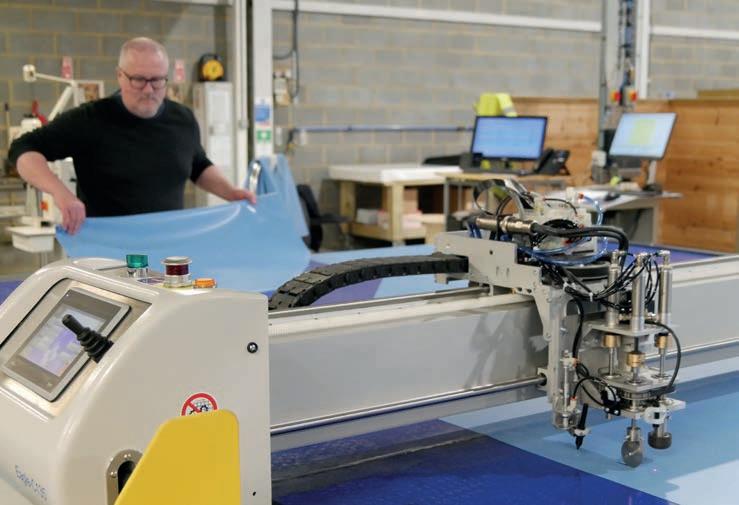

Manufactured at the United Kingdom’s largest and most renowned swimming pool production facility, Plastica liners stand as a testament to top-notch quality. The company’s capabilities extend to welding bespoke designs, showcasing its commitment to tailored solutions. With an impressive five-year guarantee, Plastica’s liners not only promise enduring beauty but also long-lasting durability. Each liner is embossed with a unique serial number linked to its order, streamlining future replacement procedures, and ensuring effortless re-fitting.
FOR FURTHER DETAILS: Available from SCP UK, there are four new options in the Premium 3D non-slip range with White, Sand, Light Grey and Dark Grey options POOL LINERS & SYSTEMS 60 April 2024 SPN www.swimmingpoolnews.co.uk Aquaflex 01722 328873 www.aquaflex.co.uk Certikin (Liners & Covers) 01993 777200 www.certikin.co.uk Ocea UK 01993 707910 www.oceauk.com On-Site Pool Linings 01709 542128 www.on-sitepoollinings.com Plastica Pools 01424 857802 www.plasticapools.net SCP UK 01293 546126 www.scpeurope.com
Manufactured at the UK’s largest and most renowned swimming pool production facility, Plastica liners stand as a testament to top-notch quality
Stonetile Emerald is the latest addition to the Proflex Stonetile 3D premium pool lining range which is available in four designs from SCP UK


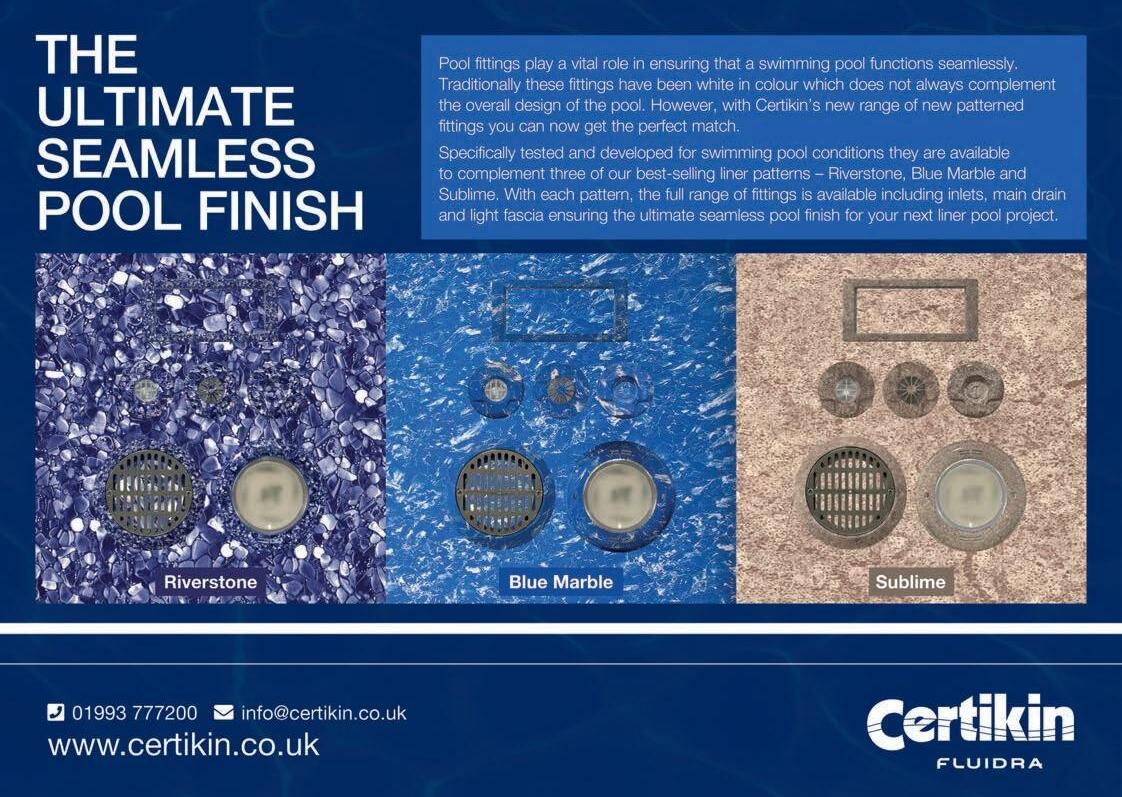
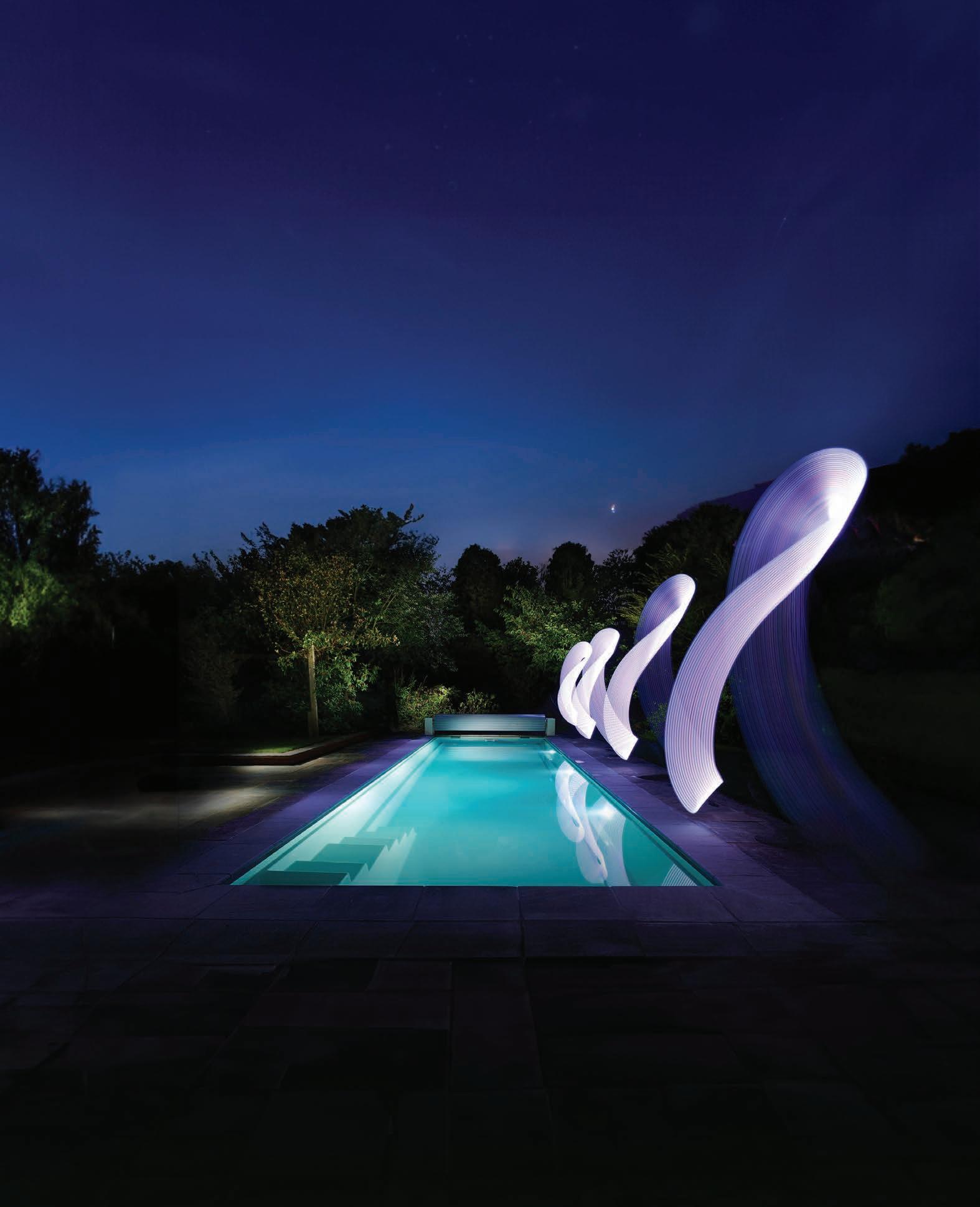
One-piece Pools Offer A Stress-free Solution

With high quality finishes combined with installation times that can be measured in days and weeks rather than weeks and months, one-piece pools are the perfect solution for a hassle-free pool build experience. Add in impressive warranties and more options than ever before and it’s easy to see why they’ve proven to be such a success. In this issue, we discover some of what’s available for 2024
With demand in the UK for swimming pools proving to be resilient, one-piece and fibreglass pools have remained as some of the leading options for pool projects due to their ticking of many of the boxes for both consumers and the trade.
The promise of convenience across many fronts is their biggest draw. Whether it is the initial choosing of one, the delivery times (at least under normal circumstances), their relatively straightforward and speedy installation or the fact that a lot of the fittings and equipment are in place and ready to go direct from the factory – pools of this type definitely provide a quick, fairly simple and stress-free solution which also results in minimal disruption too.
Add in a wide range of options, low ongoing maintenance costs, stunning modern looks, competitive pricing, peace of mind warranties… the list goes on and for the vast majority of swimming pool needs, there’s a suitable option on offer.
So, as a complete package, for most aspiring owners and for pool installers too, it’s no great surprise that they are being increasingly embraced.
There’s now such a wide range of models, colours, access options and finishing choices that pools can be customised to meet the needs of even
the most demanding of customers.
Putting aside requirements for a really specific, unusual design or unique shape, it’s difficult to identify any real downsides to the proposition of a one-piece pool, a swimming solution suitable for a wide range of environments.
Even installation sites with access challenges are rarely an issue thanks to an array of creative delivery methods plus further options to split some pools and join them together once on site.
In short, one-piece pools provide an impressive and hard to ignore list of benefits versus other more traditional pool options and for many, they are a tempting option that are just too hard to ignore and in this issue we examine some of what’s on offer in the UK for the 2024 season and beyond.
AUSTRALIA’S AQUA TECHNICS BRAND LAUNCHED TO THE UK MARKET
Kent-based Aqua Technics Pools UK used this year’s SPATEX exhibition to officially launch the Aqua Technics Pools range of one-piece composite swimming pools to the UK trade. Manufactured in Australia by Aquatic Leisure Technologies, their pools are renowned for their unparalleled quality, hightech construction materials, unique selling features and exceptional design. These all
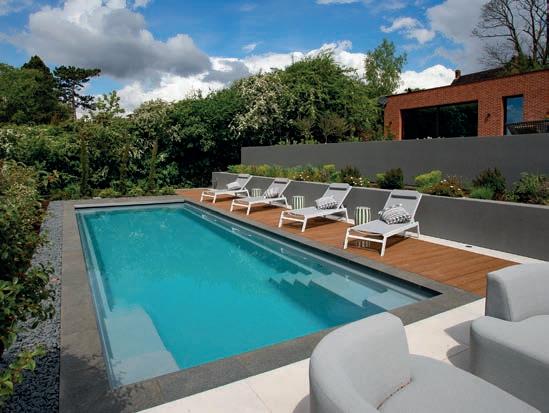 By Jon Wadeson
ensure Aqua Technics one-piece pools are engineered as some of best in the world.
Australia is the home of the swimming pool, boasting more domestic pools per-capita than any other country in the world, and Aqua Technics Pools have been at the forefront of the market for more than 48 years, with the founding family still at the helm today.
Plentiful stocks of the most popular models in the most requested colours are held in stock at the Aqua Technics Ashford distribution centre, meaning very rapid delivery and installation times for UK and Irish dealers can be achieved.
Their commitment to customer satisfaction doesn’t stop at stocking these exceptional pools in the UK. Pools are fitted out in customer options in Kent and tested before being shipped out. Similarly, prefabricated plant rooms are manufactured and comprehensively tested and shipped out on the same truck as the pool, meaning a dealer’s engineers merely have to run an electricity supply to the plant room and connect pipe runs between the pool and plant room when it’s installed.
Applications from prospective ambitious dealers across the UK and Ireland are welcomed and for new dealers, product training and a comprehensive programme of sales and marketing support is available, as well as a consumer PR campaign –
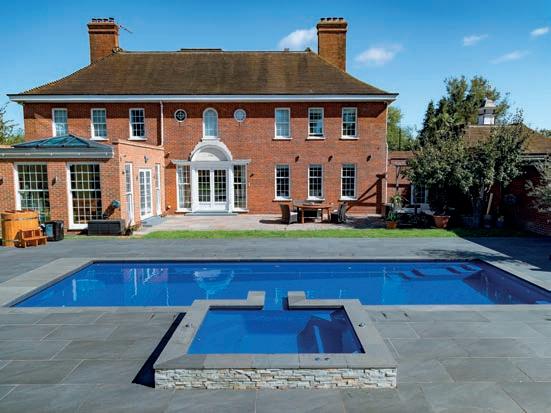
www.swimmingpoolnews.co.uk SPN April 2024 63 ONE-PIECE & FIBREGLASS POOLS
THIS AND RIGHT: Kent-based Aqua Technics Pools UK used this year’s SPATEX exhibition to officially launch the Aqua Technics Pools range to the UK trade
ONE-PIECE & FIBREGLASS POOLS
all of which was incredibly well-received by interested attendees at SPATEX, with a number of exclusive territories being assigned before the end of the exhibition.
ASTRALPOOL UK INTRODUCE THE HAMPSHIRE ONE-PIECE POOL
AstralPool are already well known for their modular pools, with them being one of the world leaders in those made from galvanised and stainless steel. However, their offering has been extended further this year with the addition of a range of one-piece pools manufactured from high quality polymer. Known as ‘The Hampshire’, the range is available is three sizes; 6m x 3m, 7m x 3m and 8m x 3m (all with a constant depth of 1.5m).
The design of The Hampshire creates a minimalist transition between the pool wall and the water run off whilst maintaining the maximum water level. This is achieved thanks to the uniquely designed skimmer which sits at the rear of the pool.
With the pool fully prefabricated, a onepiece pool is one of the quickest and easiest ways to construct and complete a swimming pool project. The Hampshire range comes complete with all the required AstralPool fittings, as well as LED lighting and built in steps for easy access to and from the pool. To complete the package, the seat bench houses an automatic slatted cover which is available with a choice of slats and colours (slats are an additional cost to the pool package).
Choosing ‘The Hampshire’ one-piece pool option comes with peace of mind, as AstralPool UK can also provide dedicated project management services to ensure seamless supply, transport and positioning of the pool.
EVI POOLS OFFER THE COMPLETE PACKAGE TO THE UK TRADE
Last year, one-piece pool pioneers

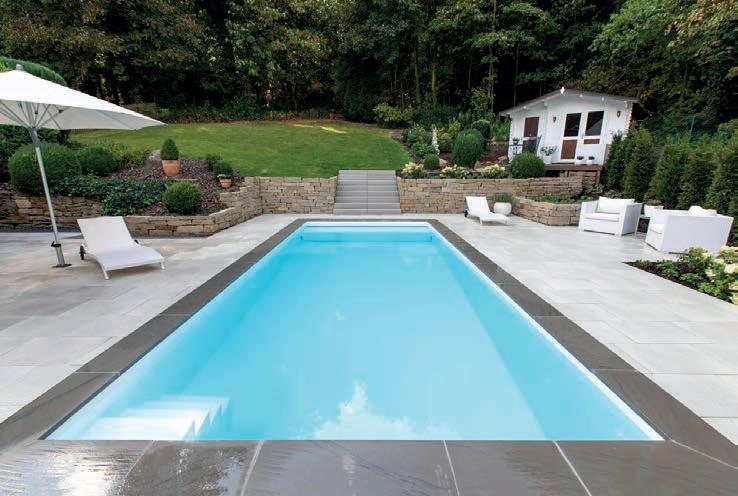
Waterstream, the home of Compass Pools in the UK, launched EVi Pools, an exclusive range of complete pool packages for the trade.
The move followed the company receiving numerous enquiries from trade professionals who were keen to gain access to the wet leisure industry and offer their clients a highend installation experience.
Waterstream understand that the installation of a one-piece pool should be a swift and straightforward process, requiring no retaining walls enabling quick installation with minimal disruption and long lasting results.
To simplify this process further, the company are able to provide guidance and support throughout the installation process, ensuring that the groundworks team has all the technical information required to prepare for delivery day, when they also provide assistance with the movement and placement of the pool, connecting the pool plumbing to

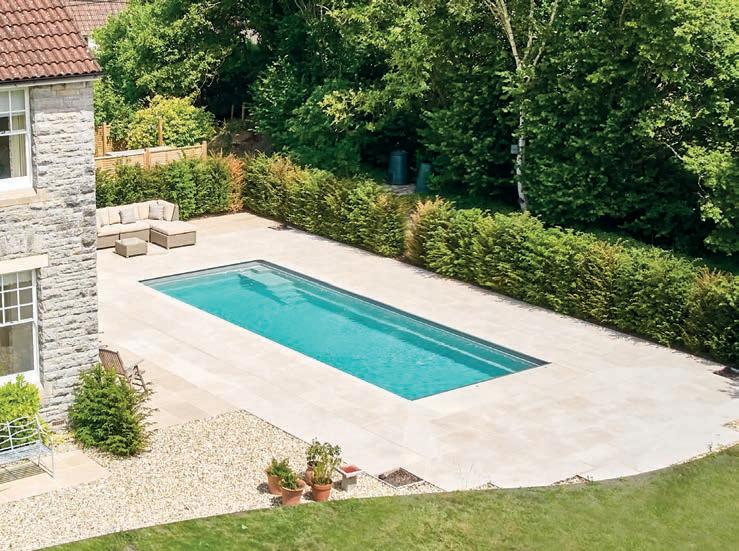
the Pool Pod cabinet (plant room), ensuring a safe, high-quality result every time.
All of the EVi Pools base packages include a pre-fitted shell with lights, a pre-plumbed and wired Pool Pod complete with air source heat pump, pump and filtration equipment, and any additional equipment required by the client such as counter-current turbine or safety cover.
By offering a complete pool package, EVi Pools can help trade professionals gain access to the one-piece market quickly and easily, providing a simple installation solution that will give their clients premium results every time. This new range offers trade professionals a simple, stress free process, that includes everything the trade professional needs to create a stunning, high quality pool for their client regardless of their requirements or budget.
LPW’S ONE-PIECE POOLS – MAKING MEMORIES FOR LIFE
With over 60 years of experience and innovating design of one-piece solutions, the LPW pool brand is a popular choice on the continent and is making its mark via Fairlocks Pool Products within the UK too.
The pools are manufactured as a single, complete pool shell that can be lowered into a pre-prepared hole in the ground. A strictly controlled construction process ensures the pools are built to the highest quality. With an insulating honeycomb structure forming the core on which there are six layers of vinyl ester resin with further glass fibre support, the reinforced structure provides strength and rigidity as well a high degree of insulation.
Uncompromising quality control throughout the process enables LPW to ensure every customer gets the best out of Belgian knowhow and experience too. This gives LPW the confidence to offer the only lifetime guarantee available in the market today – how is that for peace of mind!
The unique design enables the added
64 April 2024 SPN www.swimmingpoolnews.co.uk
By offering a complete pool package, EVi Pools can help trade professionals gain access to the onepiece market quickly and easily
AstralPool UK’s offering has been extended this year with the addition of a range of onepiece pools known as ‘The Hampshire’

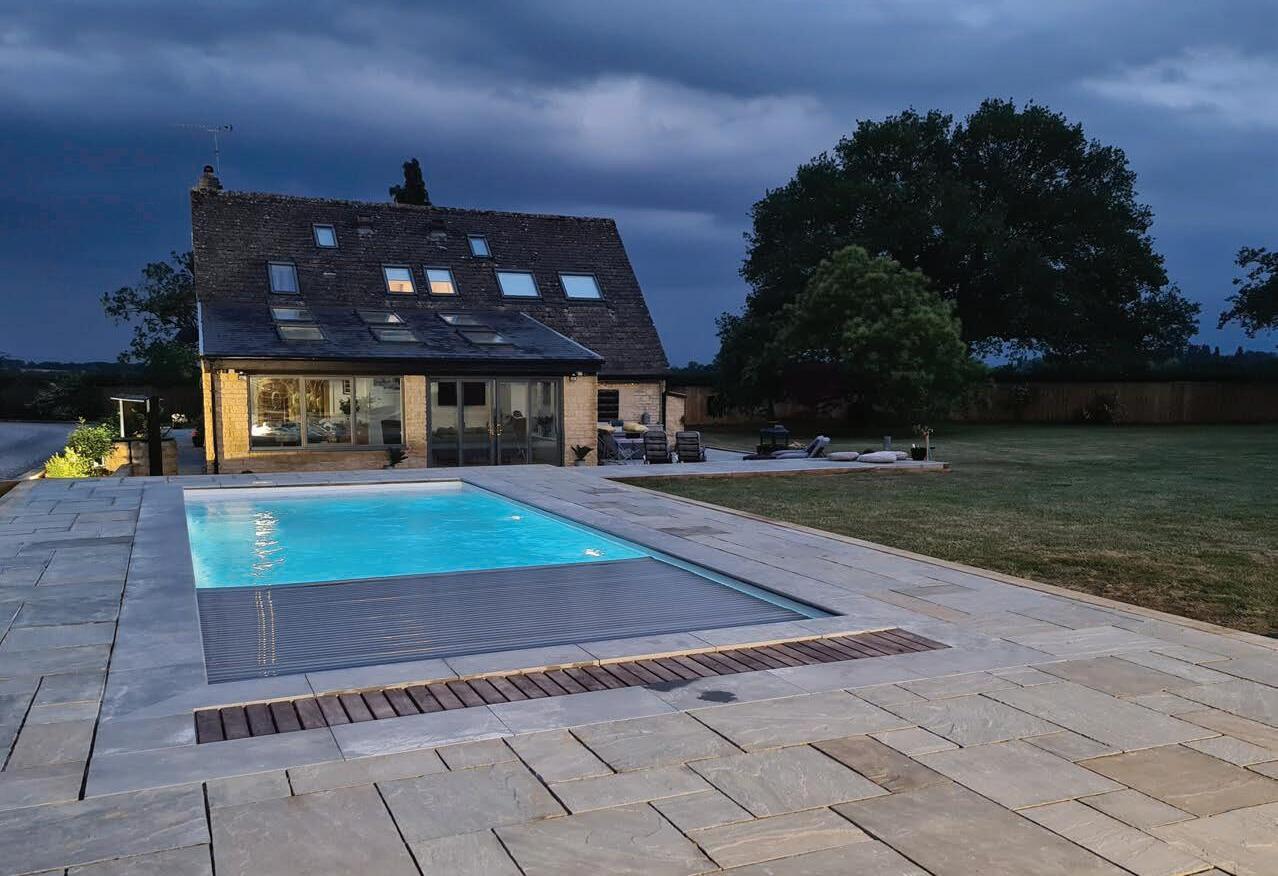


See our full range ofVinyl Ester one-piece pools at www.lpwpools.co.uk Contact us today to join the dream team! Fairlocks in partnership with LPW Pools are proud to offer this stunning range of one-piece pools in the UK 4 Integrated Covrex® safety cover 4 Lifetime warranty on the shell 4 A range of 13models to choose from 4 Honeycomb insulation for reduced heating cost 3 Landscape Close, Weston on the Green, Bicester, Oxfordshire, OX25 3SX, UK T: 01869 934333 | E: info@fairlocks.co.uk | W: www.fairlocks.co.uk EXCEPTIONAL SERVICE, QUALITY PRODUCTS SINCE S WIMMINGPOOL S


advantage for the pools to be fitted with the Covrex Automatic Slatted Cover system –one of the best options on the market. This combination minimises energy consumption and improves pool safety as well as security.
LPW offer various pool models – there’s 13 different styles, shapes and models to choose from – and each has been created and designed to satisfy a wide range of needs and budgets.
All models from LPW Pools can be supplied with an electrical control panel to control the pool pump, lights and the heater.
There is also an option to provide variable speed control of the circulation pump to minimise running costs further.
Built in the factory and installed in a matter of weeks with far less disruption than more conventional builds… it’s easy to see why they are a popular choice. Combine that with a lifetime warranty and LPW’s one-piece pools could well be the future!
NIVEKO – POOLS THAT ARE BEST DESCRIBED BY ONE WORD –QUALITY!
With over 30 years of experience in the sector, the NIVEKO brand is best described by one word – quality – and the High-Tech Polymer material from which their pools are made is a key part of this. Manufactured in Germany, the specially modified material brings several advantages including guaranteed resistance to UV rays and the negative effects of chlorine, both on the colour and on the material itself.
The wide range of pool configurations NIVEKO offer allows every customer to turn their vision into reality. Whether it is the pool types, the colour options, the different types of stones, entrances to the pool or premium stainless steel parts.
The current main NIVEKO line up contains four types of pools: Skimmer Invisible, Overflow Advance, Overflow Evolution and Overflow Infinity. Skimmer Invisible
is a unique type created on the basis of many years of experience and technical innovations. The Skimmer Invisible model allows for maximum water surface height while maintaining the advantages typical of skimmer pools. Exceptional, eye-catching, distinctive – this is the Overflow Advance. The strong lines of dark natural granite leave a strong impression and perfectly complement architecturally distinctive buildings. The Overlow Evolution, on the other hand, is the definition of minimalism – the thin overflow edge is a timeless choice that brings out the beauty of the clear water surface. NIVEKO’s portfolio also includes the well-known Overflow Infinity pool type, which transforms an ordinary pool view into an enchanting spectacle in the distance.
In addition to the above, the company also offer the NIVEKO Pool Plus fully customisable pools with unlimited possibilities to choose

It’s difficult to identify any real downsides to the proposition of a one-piece pool, a swimming solution suitable for a wide range of environments”
the type of pool, size, shape, built-ins and more, meaning customers can choose the pool according to their own expectations down to the last detail.
Lastly, and new for 2024, there’s the NIVEKO Motion option which is featured in more detail earlier in this issue.
In the UK, NIVEKO Pools offers its pools through exclusive distributor HTP Group.
OCEA’S STARLINE MONOBLOCK POOLS GO FROM STRENGTH TO STRENGTH
Available through Ocea UK, Starline Monoblock luxury, one-piece pools have gone from strength to strength over the last few years.
Starline have been manufacturing for over 50 years and the swimming pools are 100% ‘Dutch’ design and have a minimalist look.
With a range of nine pool types spanning from 4.5m to 12m in length, there’s an option on offer to suit the requirements of the vast majority of customers and various budgets too.
The brand’s one-piece pools are manufactured using only the very best materials, with high quality composite and a very sustainable, double-walled insulated structure.
Each pool can be completely personalised with entrance steps, various options and
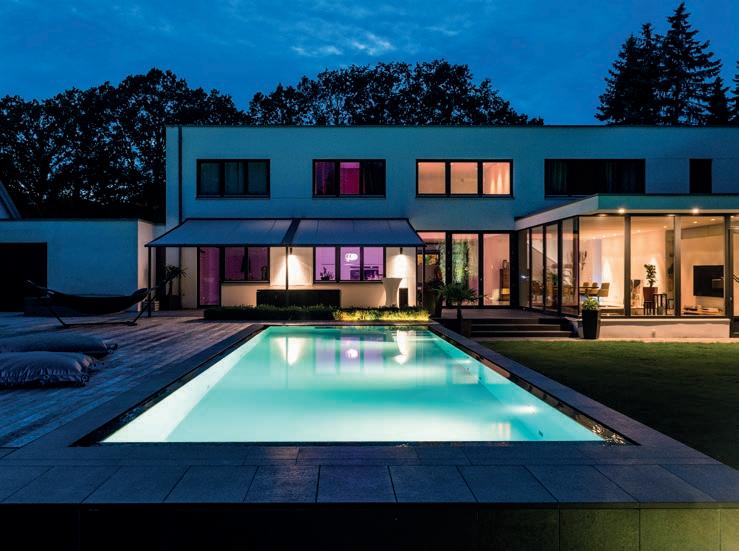
www.swimmingpoolnews.co.uk SPN April 2024 67
With over 60 years of experience and innovating design of one-piece solutions, the LPW pool brand is a popular choice
ONE-PIECE & FIBREGLASS POOLS
The NIVEKO brand is best described by one word – quality – and the High-Tech Polymer material from which their pools are made is a key part of this
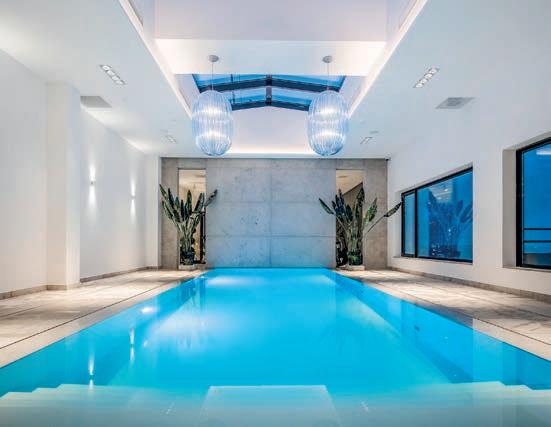
chic accessories plus all are available in a range of different colours – choose from a palette of seven across the majority of the range.
A Starline swimming pool is a clean swimming pool, with the top layer of the walls being UV-resistant, scratch-proof and indestructible. The material is extremely hard and very smooth, making it both antibacterial and soft to the touch too.
When it comes to safety, the company have given this a lot of thought. Various pools come with a standing ledge and a safety rim for the Roldeck cover, meaning children can safely play around the swimming pool.
Starline offer guarantees for all their products. This includes a 100% satisfaction guarantee on their swimming pools, as well as lifetime guarantees on the water tightness of the vinyl ester top layer and the tub. As the company’s swimming pools are completely fitted in the factory, any pool will be ready to use in a home or garden within one week.
OFFERING A UNIQUE AND COMPLETE ONE-PIECE SERVICE
Starlight Pools stand at the forefront of
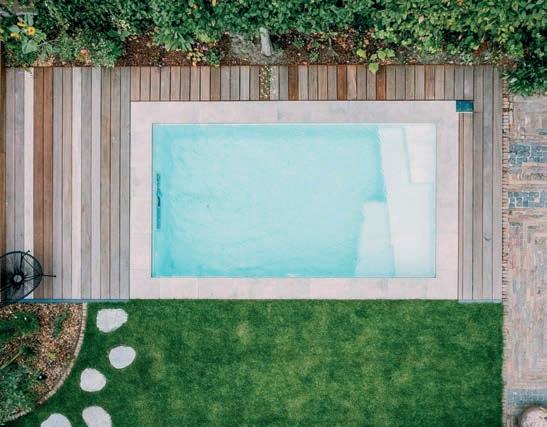
innovation when it comes to one-piece pool selection and installation, with the Nottingham-based company offering a unique focus on the installation aspect of luxury fibreglass swimming pools. They complete them in days or weeks, rather than months, eliminating the prolonged wait that comes with traditional methods, such as vinyl or concrete pool options. Their pools allow them to work towards a one-week installation, a display of their commitment to efficiency.
With a range of in excess of 20 pool models ranging from the compact 4.2m x 2.7m x 1.3m Mini Victoria to the impressive Jamaika, with its dimensions measuring 11.25m x 3.75m x 1.5m, there’s a variety of sizes and styles to select from and each is available in Blue, Light Blue, Sand, White and Grey options. Starlight’s in-ground fibreglass pools are perfect for both indoor and outdoor environments, enhancing any setting with minimal fuss.
What’s more, from initial design to installation, Starlight’s expert team guide customers through every step. With a
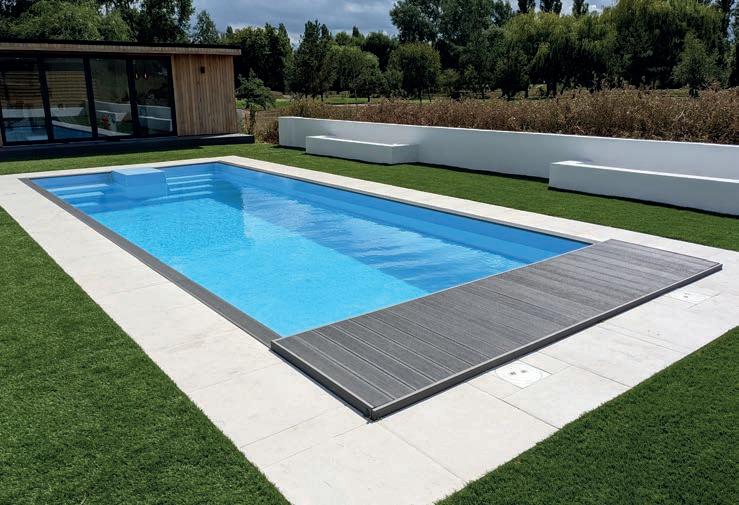


commitment to customer service, the team promises to work hard to install all pools without any disruption caused to the property or surrounding areas. Their comprehensive service, supported by topof-the-range materials and equipment, guarantees a luxury pool installed in days, without compromising safety or longevity.
Starlight’s commitment doesn’t end with installation; they also offer ongoing maintenance, covering everything from regular cleaning to equipment repairs, so owners can focus on enjoying their pool hassle-free.
From design to maintenance, the Starlight Pools team of experts ensures that a customer’s pool remains beautiful, safe and functional for years to come.
FOR FURTHER DETAILS:
Aqua Technics Pools UK 0330 043 7061
www.aquatechnicsuk.com
AstralPool UK 01329 514000
www.astralpool.com/en
EVi Pools 01403 577674
www.trade.evi.co.uk
Fairlocks Pool Products 01869 934333
www.lpwpools.co.uk
HTP Group 01174 037839
www.htpgroup.co.uk
Ocea UK 01993 707910
www.oceauk.com
Starlight Pools 0330 133 0036
www.starlightpools.co.uk
68 April 2024 SPN www.swimmingpoolnews.co.uk
ONE-PIECE & FIBREGLASS POOLS
Creating a mirror effect, Starline Infinity Line swimming pools allow the water to melt subtly into their surroundings
The compact Urban Active is the smallest Starline option in a range of nine pool types spanning from 4.5m to 12m in length
Starlight’s in-ground fibreglass pools are perfect for both indoor and outdoor environments, enhancing any setting with minimal fuss
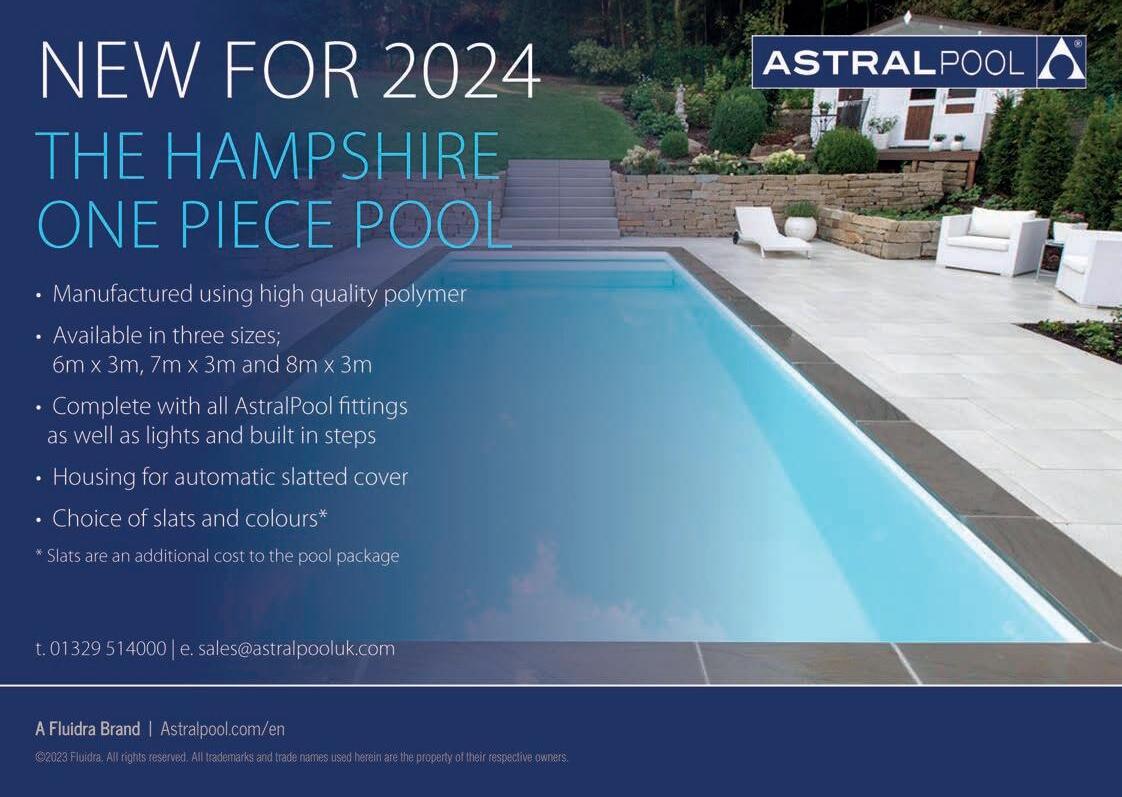

With Aquadeck or DEL slatted covers a pool looks as good when it’s shut.

Phone: +44 (0) 1271 378 100 | Web: www.goldenc.com
Automatic Pool Covers –Safety, Style And More!

The introduction of a pool cover is an obvious and logical step to help domestic owners save both time and money plus make pool ownership ‘greener’. Automatic pool covers go a step further by providing a stylish, labour saving solution with the additional benefits of enhanced safety. With new innovations and brands in the sector, there’s now more choice than ever and we take a closer look
By Jon Wadeson
With so many companies now operating within the sector, when it comes to automatic pool covers, there’s a wide choice of brands, styles, materials and colours to choose from, meaning even the most discerning of clients are bound to find their perfect pool coverup solution.
When it comes to domestic settings, and pools located both indoors and outside, automatic cover options are a great solution for enhancing safety, whilst reducing the maintenance of a pool, meaning they’ll save owners energy in both physical and monetary ways! In fact these powered cover options are so straightforward to operate, they make opening and closing pools as simple as turning a key, pushing a button or tapping on an app found on a smartphone.
In short, these covers are simple to operate and a pleasure to own. They’re a dependable and popular choice so manufacturers are constantly seeking ways to improve their offerings both in terms of quality, variety of finishes and their operation.
With plenty of options on offer, this issue, we take a look at some of the stylish coverups that are available for the domestic pool market this season.
COLLABORATIVE EFFORT SEES A NEW PLAYER ENTER THE UK POOL COVER MARKET
(Re)Cover, a leading provider of slats for swimming pool covers for ten years, and Blue Professional Poolware, renowned experts in in-roll motor systems, cave panels and pool equipment, are pleased to announce the launch of their collaborative effort: automatic slatted covers which are now available in the UK. This cutting-edge product offers unparalleled durability, functionality, design and convenience.
Crafted with precision engineering and premium materials, these automatic slatted cover systems guarantee durability and efficiency. The covers seamlessly integrate into new build and existing pool infrastructures, enhancing aesthetic appeal while providing a myriad of other benefits including the highest certified hail resistance
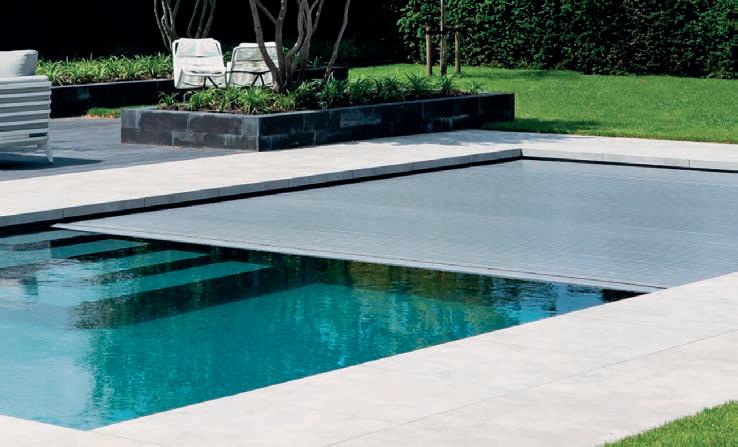
on the market. Delivery times are fast at just two weeks for standard pool shapes and lines of communication are short too, with customers receiving quick response times. UK-based Victoria Plompen-Philip is available for all questions, technical queries, quotes, orders, logistics and more so customers will always know who to speak to.
The beautiful colours of the (Re)Cover slats match well with contemporary gardens and traditional ones too: the green looking particularly nice against Cotswold or York stone.
The market for replacement slats is bigger than the new pool market in Europe and this is why the company have chosen to specialise in making the most perfect profiles and cover systems. Each one hand finished and checked to ensure quality.
The easy-to-install systems have a YouTube channel showing how to install and programme the in-roll motor systems as well as the cave panels and more.
“We are thrilled to introduce our covers properly into the UK,” said Janneke De Louw and Patricia Verhoven at (Re)Cover. “Our collaboration with Blue Professional Poolware signifies our commitment to innovation and excellence, providing customers with unparalleled products that prioritise beauty, functionality, efficiency and convenience.”
EXPLORE A RANGE OF SOLUTIONS FROM ASTRALPOOL UK
AstralPool UK offer a number of automatic pool cover choices with both slatted and fabric options available.
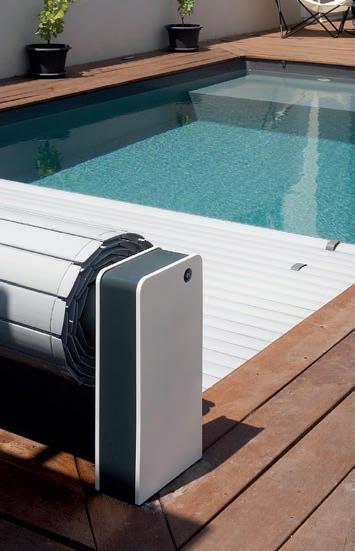
www.swimmingpoolnews.co.uk SPN April 2024 71 AUTOMATIC DOMESTIC POOL COVERS
Crafted with precision engineering and premium materials, systems from (Re)Cover and Blue Professional Poolware guarantee durability and efficiency
AstralPool UK offer a number of above-ground models such as the Sveltea which features a fastened winding shaft that integrates with the pool decking
AUTOMATIC DOMESTIC POOL COVERS
With a commitment to safety, the company consistently integrates cutting-edge innovations into its products. Their slatted automatic pool covers adhere to the rigorous French standard NF P90 308, ensuring utmost user safety.
These options cover the whole pool and are easily rolled up or spread thanks to their built-in motorised roller. Activation requires nothing more than turning a key.
Manufactured with rigid slats, which are available in various colours, the design and composition produce a floating cover that fits over the entire pool and makes for very effective heat insulation. AstralPool UK have seven models to cover the equipment needs of new and existing pools, with submerged, above-ground and above-ground with a bench all available.
The Roussillon submerged automatic models allow for seamless integration with the pool. The roller mechanism is located in a separate sunken compartment sectioned off from the pool by a brick or PVC panel.
For existing pools, above-ground models such as Carlit, Octea, Sveltea and Ballesun feature a fastened winding shaft that integrates with the pool decking, offering convenience and practicality.
Also suitable for above-ground on existing pools, Narbonne and Zenit both provide a bench that covers the mechanical installation, giving it a high-quality finish.
For those seeking fabric covers, CoverPools’ multitasking option serves as a safety and winter cover, reducing operational costs for pool owners. The Cover-Pool, T4 system, known for its durability and compact design, is the only automatic pool cover system designed for stainless steel cable, a more durable cable that doesn’t stretch or shrink, like traditional rope, ensuring superior performance and longevity compared to traditional rope systems.
AstralPool UK hold stock of required installation parts to ensure speedy supply and response times to pool builders looking for a safety cover solution.
The AutoSafe is the most recent addition to Dripool’s range of automatic pool cover products and is an under coping system
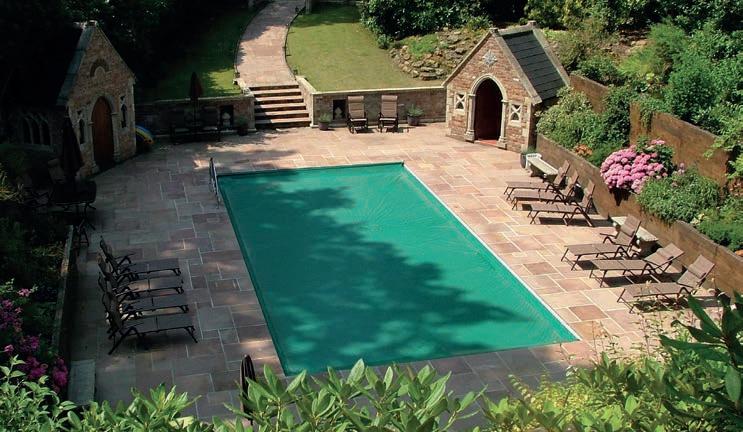
THE ROLLDECK FROM CERTIKIN –AS STYLISH AS IT IS FUNCTIONAL
For the ultimate in energy saving, evaporation control and durability, Certikin have the Roldeck. It offers a wide variety of installation options, plus of course creates an attractive finish to any pool.
Each Roldeck is made to measure for new or existing pools with the coiling mechanism installed above or below ground or in the pool itself. In an above-ground installation, the protective roller cover can be reinforced to create a bench. Touch pad type switch and remote control for easy calibration and operation, a safety lock available for new builds and the ability to interlock with the air handling system (indoor pools), are just some of its outstanding features.
The Roldeck’s standard PVC slats are supported by a five year pro-rata warranty and come in white, blue, cream, grey, solar and transparent (with a blue tint). The solar option, with a black base, collects heat from the sun and transfers it directly into the water, greatly reducing heating costs.
In addition to the PVC range, there is a choice of six Eclipse® polycarbonate slats to choose from – three with solar gain, plus the
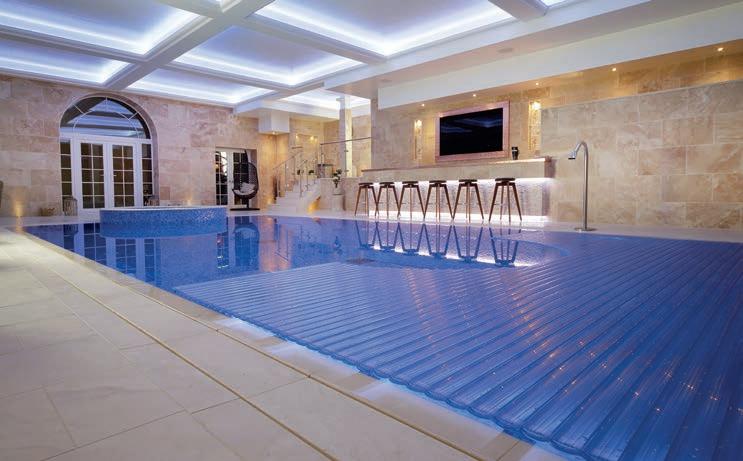
For the ultimate in energy saving, evaporation control and durability, Certikin have the Roldeck automatic cover option
crystal-clear version and all with a sevenyear pro-rata warranty. The Eclipse® range includes a special layer of UV protection, plus a new chamber design to help prevent algae formation.
The Roldeck is powered by a 24volt In-roller motor system (negating the need for a separate motor pit) which features Formula 1 shock absorber seal technology and builtin pressure sensor and a concealed stainless steel motor driven spindle.
The Roldeck Easy Cover is an affordable electronic automatic cover, suitable for pools up to a maximum of 12m x 6m, available as a solar powered or full electronic system, and is ideal if space around the pool is limited.
DRIPOOL – PROVIDING PEACE OF MIND SOLUTIONS FOR OVER FOUR DECADES
Cover manufacturer Dripool have been at the forefront of pool safety since the 1980s and remain the UK’s only designers and manufacturers of automatic swimming pool safety covers.
Dripool operate predominantly through the trade and offer a collaborative approach from inception to completion. They choose to be involved, if possible, at planning stage, to ensure the proposed civils work in preparation for the cover installation are correct.
They offer site visits to check works and to collate measurements to ensure every pool cover is effectively bespoke, to the pool it will be operating on.
On completion, Dripool removes all responsibility from the pool builder by liaising directly with the end user with regard servicing and maintaining their new cover system and provide a full manufacturers’ warranty.
All engineers are trained in-house to manufacture, install, service and maintain every system they provide.
The two leading systems currently at the forefront of most new build installations are the Driglide and AutoSafe under coping options.
The AutoSafe is the most recent addition to Dripool’s range of products and is an under coping system that is predominantly
72 April 2024 SPN www.swimmingpoolnews.co.uk
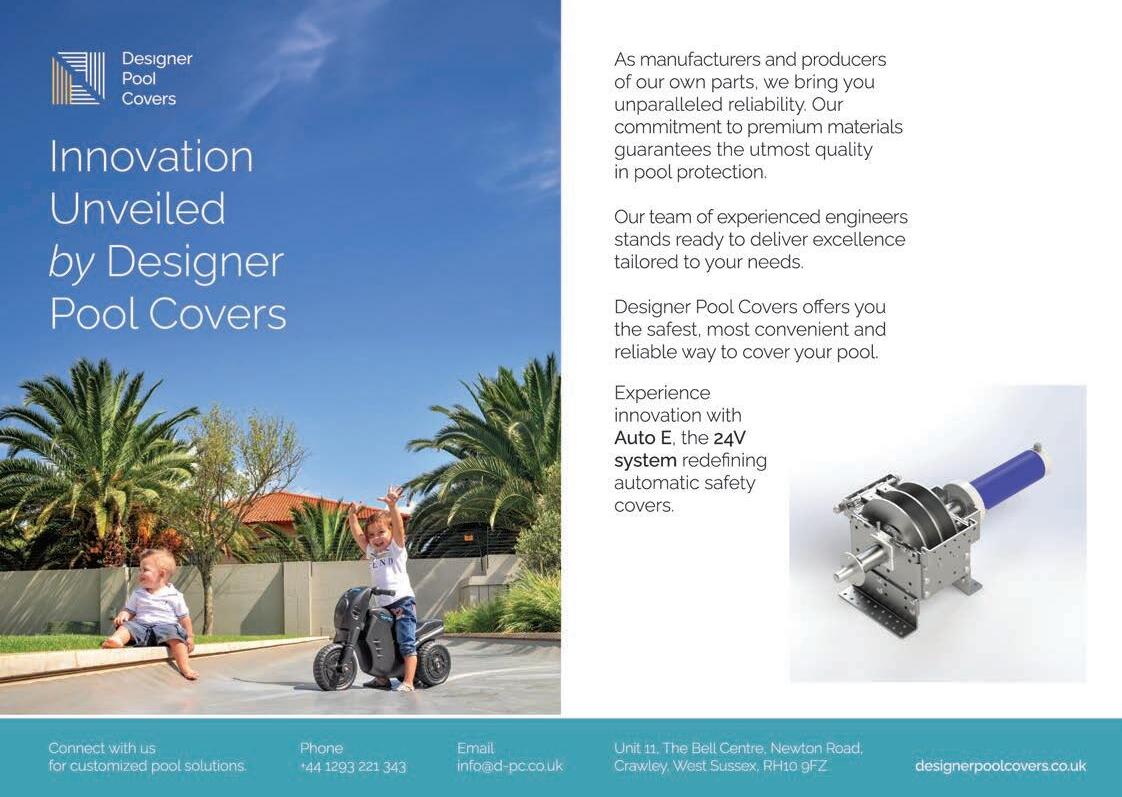
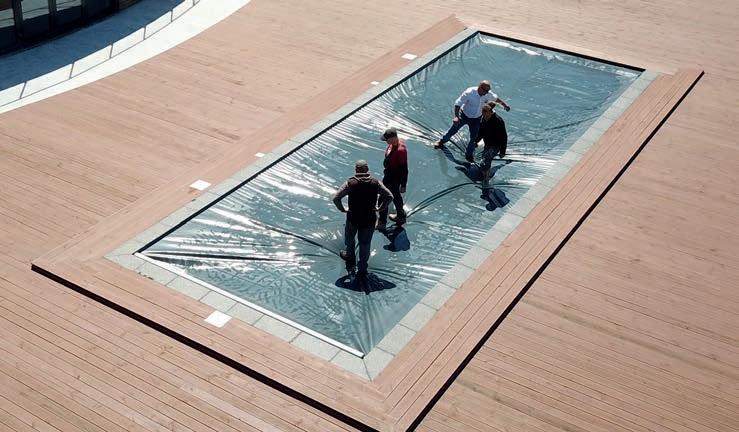
designed to ensure safety, debris control and heat retention on new build, rectangular pools.
Whilst the AutoSafe incorporates the same unique winding technology and exacting standards as the company’s Driglide system, it has been cleverly simplified for the more budget conscious customer.
Whilst Dripool’s in-house engineers are more than happy to install the system anywhere in the UK, if required, the AutoSafe has been designed to allow shipping directly to site for self-installation, throughout the UK and beyond.
Once installed, both of these systems are easily operated via a discreet control panel simply by turning a key and pressing a button.
PROVIDING AN EXCEPTIONAL SERVICE FOR ALL – DESIGNER POOL COVERS
Designer Pool Covers UK is a trusted provider of high-quality swimming pool covers with a commitment to exceptional service for all. With extensive experience in developing, producing, installing, maintaining and repairing automatic safety and slatted cover systems, their team of experts is dedicated to delivering reliable and effective solutions tailored to the unique needs of each customer.
DPC Slatted Covers can be installed in a number of different ways. Underwater installations ensure that the roller and motor remain out of sight and there are several types of underwater installations available depending on the characteristics of the pool. For existing pools, where it is not possible or practical to carry out construction work, DPC Slatted Covers can either be installed at the bottom of the pool or, more easily, on the deck around the pool. This type of installation is extremely simple and requires minimal preparation work. Rollers can be covered by benches to match with your pool surroundings.
DPC Automatic Safety Covers provide a reliable and convenient solution for
protecting a pool when it’s not in use. These covers are made up of several components that work together seamlessly to ensure maximum safety and ease of use.
At the heart of the system is a driving mechanism with two hydraulic motors and a roller that can be installed either inside a specially designed pit or on the deck surrounding the pool. Hydraulic hoses connect the motors to a power pack, which is installed in a dry, well-ventilated area away from the pool. This power pack can be operated by a key or push-button switch, making it simple to open and close the cover as needed.
With its robust construction and easy-touse design, the DPC Automatic Safety Cover system provides an excellent option for pool owners who want to ensure the safety and cleanliness of their pool with minimal effort.
FAIRLOCKS AND COVREX© – KEEPING UK COVERED AUTOMATICALLY SINCE 2010
If an automatic slatted pool cover option is required, Fairlocks offer a unique and innovative product with their Covrex© solution. Conceptual and intelligent, the systems consist of high-quality PVC slats specially
developed for use in both indoor and outdoor pool applications which have been designed to resist UV and all elements, such as hail, frost plus a wide range of temperatures from -20°C to +35°C.
Covrex© slats are foam filled according to the ISO 1183 standard and they have huge advantages over traditional PVC slatted covers in terms of insulation properties with average thermal conductivity of = 0.0821 W/(mK) or a u value of 4.85.
The slats are co-extruded and integrally bonded with hinges made of PUR (polyurethane). The cross-section design permits tight coiling radii making Covrex© systems extremely compact, with their space saving design meaning they are ideal for retrofitting as well as faultless initial installations.
The Covrex© design also means that old fashioned bacteria collecting endcaps are not necessary. This allows the covers to be finetuned and adapted to the finished pool on site, which guarantees precise fitting down to the last millimetre, and provides choice and flexibility in pools where conventional solutions are inadequate or completely unsuitable.
Covrex© automatic pool covers are the result of more than 40 years’ experience and client feedback. They are fully compliant with stringent French safety standard NF P90-308 and come with a five-year warranty on slats –the longest on the market – and are available in five colours: Arctic Blue, Cream/White, Pebble Grey, Silex Grey and Steel Grey.
When it comes to the drive systems used, all are manufactured using 316L stainless steel and the latest in roller motor technology. There is a wide range of pit system options on offer too, including Letterbox, Cave, Pool Bottom and Fibreglass Bench.
GOLDEN COAST HAVE GOT POOL OWNERS COVERED
Golden Coast provides a wide range of pool covers from renowned manufacturers DEL and Aquadeck.
Aquadeck believe that having a swimming pool reflects a luxury lifestyle and the
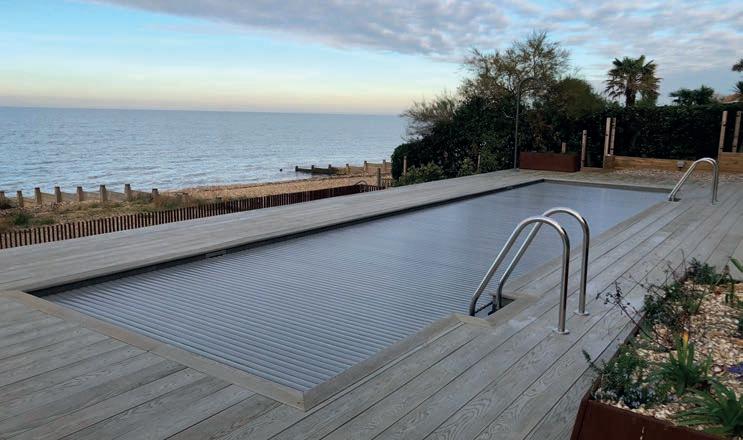
DPC Automatic Safety Covers provide a reliable and convenient solution for protecting a pool when it’s not in use www.swimmingpoolnews.co.uk SPN April 2024 75 AUTOMATIC DOMESTIC POOL COVERS
Covrex© slats are foam filled and they have huge advantages over traditional PVC slatted covers in terms of insulation properties

components used need to contribute to that expectation. Aquadeck pride themselves on achieving such high-end elegance without sacrificing quality build. DEL believes that safety is paramount and produce slatted cover capable of holding up to 100kg in weight and complying with the strict NF P 90-308 safety law.
Installation of an Aquadeck cover as an underwater in-cave system is easy to do. This innovative design keeps the cover out of sight and eliminates the need for unsightly above-ground tracks or rollers. When it comes to material options, Aquadeck slats are available in both PVC and polycarbonate. The slats are designed with a sleek, understated look that adds a touch of sophistication to the pool area. In addition, some models are equipped with integrated solar chambers that convert solar energy into heat, making it an environmentally friendly and energy-efficient solution for a pool.
The well-loved DEL pool cover range includes the Tixit above-ground automatic slatted cover. It is available in both solar and electric versions, providing options for all pool owners looking to boost their energy efficiency. With built-in Bluetooth speakers, the Tixit allows pool owners to enjoy their favourite music while swimming or relaxing poolside.
In addition to this, the electric models of the Tixit feature LED lighting that creates a relaxing and inviting atmosphere at night, allowing the pool to be used at all hours. Owners can choose between solar polycarbonate slats in six different colours, or opaque PVC slats available in grey, white, blue or beige. With end-stands available in matt grey, white or black, the DEL Tixit can be customised to suit the pool aesthetic.
LIGHTHOUSE – NOW A ONE-STOP SHOP FOR AUTOMATIC POOL COVERS
As UK distributor for the patented CoverSeal

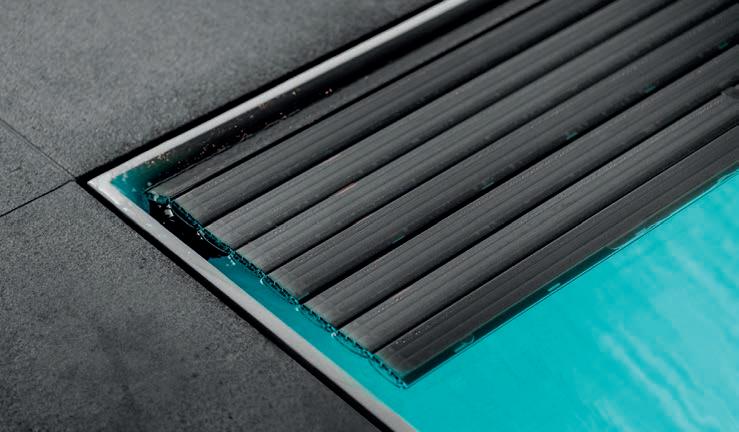
When it comes to domestic settings, and pools located both indoors and outside, automatic cover options are a great solution for enhancing safety, whilst reducing the maintenance of a pool”
covers, Lighthouse’s dedicated and knowledgeable team are able to offer training days at their Oxford facility, which factory aside, is the only CoverSeal approved installer training facility in Europe.
The CoverSeal cover comprises a unique mechanism that allows the fabric to be cleanly unrolled onto the pool whilst locking it in place in an extra-flat, extremely discreet, parallel guide rail system.
In a change from the norm, the cover housing is driven down the length of the area to be covered, unrolling the high-quality fabric as it goes. This means freeform pools and pools with large surround areas incorporating spas can easily be catered for. With a maximum width of 11m and length of
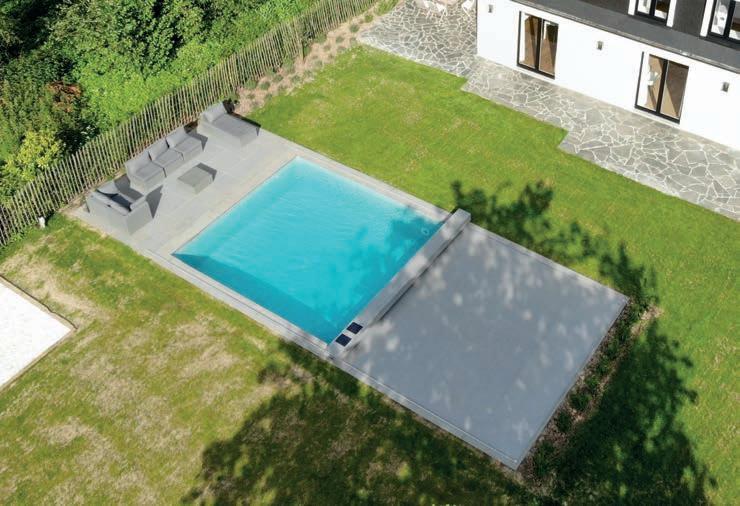
26m, even the most difficult of open spaces can now be covered and secured.
The fabric on the CoverSeal offers high UV resistance, extreme climatic conditions performance and exacting standards, including AFNOR NF P90-308.
If a slatted solution is required, Lighthouse offer their HeatForm ‘Tidal’ and ‘Wave’ options. Designed and built in the UK, these high-end, slatted pool cover systems have been engineered to the most exacting standards and feature the highest quality components.
The Tidal in-pool system is available in four installation configurations: a shallow water beach entry system with steps, a deep water bench, a simple submerged roller option
FOR FURTHER DETAILS:
(Re)Cover Blue 07710 016843
www.blue-recover.com
AstralPool UK 01329 514000
www.astralpool.co.uk
Certikin 01993 777200
www.certikin.co.uk
Dripool Ltd
02380 663131
www.dripool.co.uk
Designer Pool Covers UK 01293 221343
www.designerpoolcovers.co.uk
www.swimmingpoolnews.co.uk SPN April 2024 77
In a change from the norm, CoverSeal’s cover housing is driven down the length of the area to be covered, unrolling the high-quality fabric as it goes
DOMESTIC POOL COVERS
Available from Golden Coast, Aquadeck slats are designed with a sleek, understated look that adds a touch of sophistication to the pool area
AUTOMATIC
AUTOMATIC DOMESTIC POOL COVERS
and the discreet letterbox pit system hidden behind the pool walls.
Available in Solar and Electric options, the above-ground Wave cover has an integrated LED lighting strip. There are also four choices when it comes to the colours of the end stands – Anthracite, Light Grey, Sand and White, plus there’s a wide range of colours for the slats themselves.
As a one-stop shop, Lighthouse are also able to provide competitively priced HeatForm replacement cover slats from a UK held supply of raw slats. With a four-week lead time, most options are held in stock.
AN EXPANDED RANGE AS OCEA UK ADD DEL OPTIONS TO THEIR OFFERING
Ocea UK are now part of the giant FrenchGerman CF Group, and as proud partners, they are now able to supply the UK Market with the DEL brand of automatic pool covers. This collection will sit alongside their own longstanding and successful range of Ocea automatic pool covers and greatly increases their offering of slatted cover options. Ocea UK have handpicked DEL ranges to add to their existing range and these new options offer professional, budget friendly and practical solutions for above-ground and in-ground systems.
DEL covers are available in a wide range of colours, are easy to price up and come with added options such as the new patented design Pushlock system, which is designed to attach the leading edge safety strap at the waterline. This means no more trip hazards on the edge of the pool or tricky clips to contend with and gives added peace of mind to the pool owner in the event of a child, pet or animal stepping on to the cover.
Moving on to Ocea’s own automatic covers, these will continue to be manufactured in the UK facility in Oxfordshire, where the covers are handmade in a temperature controlled environment. This setting ensures the perfect
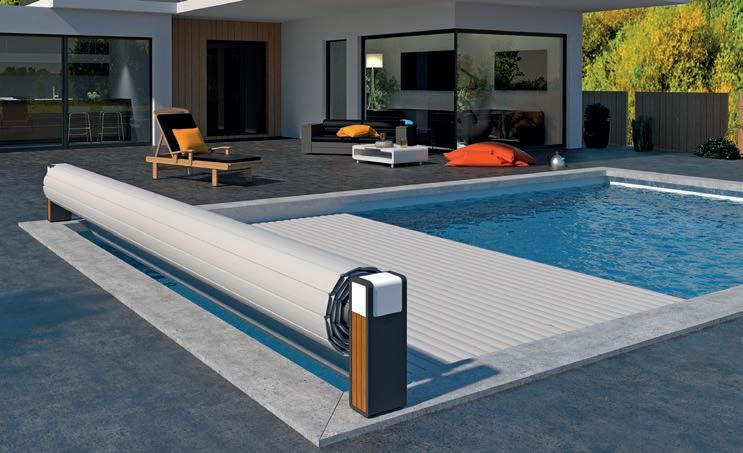
preparation and drying conditions, leading to less condensation issues within the slats. Available in a wide range of colours in both PVC and Polycarbonate options, Ocea automatic covers offer premium, quality made to measure covers in as little as four weeks.
ENJOY EUROPEAN STYLE AND SAFETY WITH ABRIBLUE’S COVER RANGE AND SCP
Available in the UK through SCP, Abriblue offer a wide range of automatic cover options. With in-pool, above-ground, in-ground, solar and bench versions all available, there is an efficient, sustainable and safe cover solution available that will provide owners with peace of mind as each is made to comply with the French Norm NF P 90-308 standard.
Recent additions to the range include the Banc D.Sign model which was introduced last year. An automatic slatted cover that blends into its environment and offers built-in relaxation areas, it has a number of combinations to help it blend perfectly into its environment and fulfill an owner’s desire for
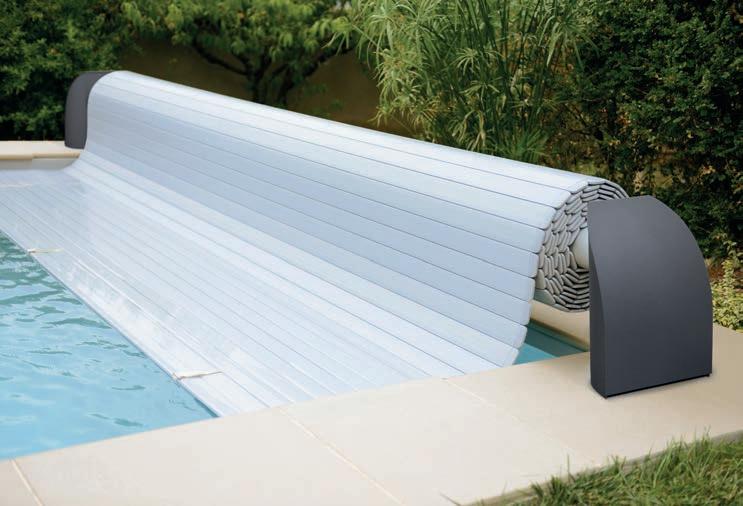
swimming, sunshine and safety! Deckchairs, planters, shelves, LED lights and storage can all be incorporated into this model which is controlled as standard using a smartphone.
New for the 2024 season, there’s also Abriblue’s new Open D. Sign automatic slatted cover option which offers five possible versions of the stand casing thanks to the choice of side plates: anthracite aluminium (by default), brushed aluminium, imitation marbled stone, imitation wood or natural wood. Fitted with a mood lighting function users can set to their personal taste in colours and intensity.
For maximum flexibility, five colours of PVC and six colours of Polycarbonate slats are available for both these options, along with the other Abriblue slatted solutions.
Having manufactured and installed more than 120,000 slatted covers, Abriblue has acquired unrivalled experience and expertise. From the simplest to the most complicated of projects, technical and sales teams are available to assist with any project.
FOR FURTHER DETAILS:
Fairlocks Pool Products 01869 934333
www.fairlocks.co.uk
Golden Coast 01271 378100
www.goldenc.com
Lighthouse 01752 253525
www.lighthousepools.co.uk
Ocea UK 01993 707910
www.oceacovers.co.uk
SCP UK 01293 546126
www.scpeurope.com
78 April 2024 SPN www.swimmingpoolnews.co.uk
As part of the CF Group, Ocea UK are now able to supply the UK Market with the DEL brand of automatic pool covers, including this Contura option
New for the 2024 season, Abriblue’s new Open D. Sign automatic slatted cover option is available from SCP UK
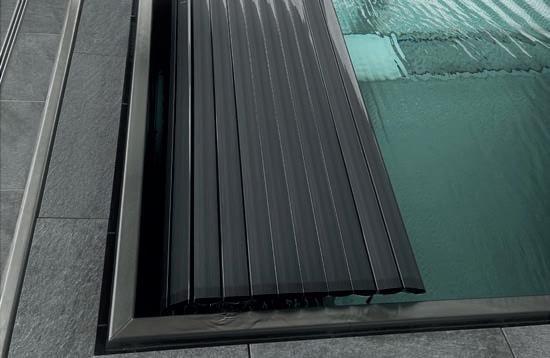
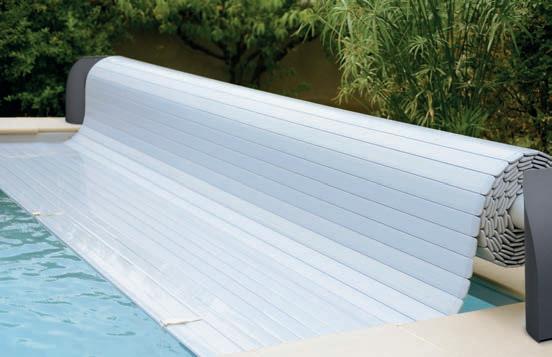

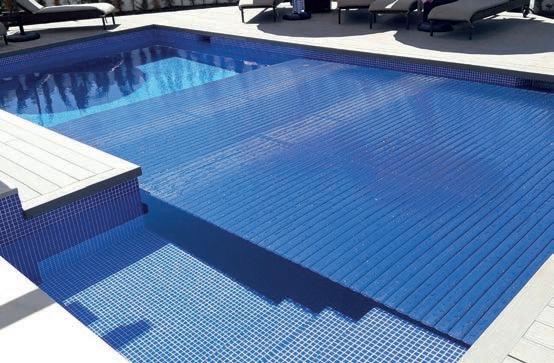
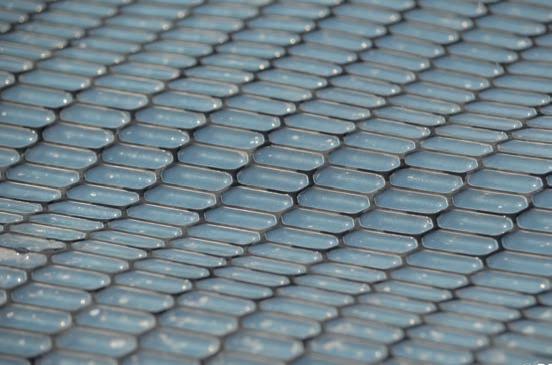



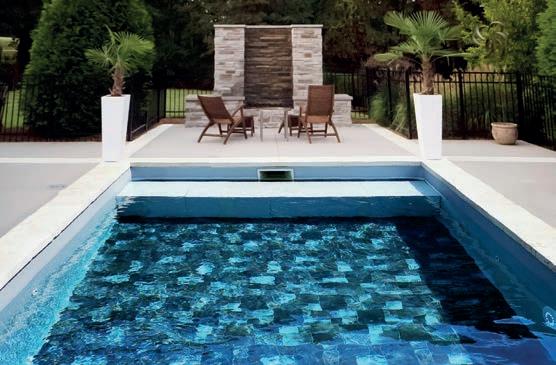
Ocea UK Ltd, Unit 6 Gateway, Windrush Park, Burford Road, Witney OX29 7DX Sales: 01993 707910 | Email: sales@oceacovers.com | www.oceauk.com Ocea UK are proud to work in partnership with DEL Covers and Liners Also offering DEL bag liners in a stunning choice of patterns and colours PREMIUM | DESIGN | ENGINEERED PROFESSIONAL | VALUE | PRACTICAL CORE PRODUCTS CATALOGUE 2024 AUTOMATIC SLATTED COVERS DEL
covers
Debris
Handmade in the UK
The DEL range sits alongside our longstanding successful Ocea Automatic Covers range. Contact the team now for your copy of the new for 2024 Catalogue showcasing the ranges available.
• Above ground and immersed automatic slatted
• Bubble covers • Bar covers • Winter covers •
covers • Above ground and immersed automatic slatted covers •

AN ADVERT THIS SIZE IN THIS BUYERS GUIDE IS JUST £345!
THAT’S 6 ISSUES OR 12 MONTHS COVERAGE FORJUST UNDER £1 PER DAY!
TO ADVERTISE
CALL TONY WESTON ON 01474 813433
E. TONY@AQUAPUBLISHING.CO.UK




AN ADVERT THIS SIZE IN THIS BUYERS GUIDE IS JUST £345!
THAT’S 6 ISSUES OR 12 MONTHS COVERAGE FOR JUST UNDER £1 PER DAY!
TO ADVERTISE
CALL TONY WESTON ON 01474 813433
E. TONY@AQUA-PUBLISHING.CO.UK

BUYERS GUIDE 80 April 2024 SPN www.swimmingpoolnews.co.uk
CONTROL PANELS
HEAT EXCHANGERS ON-SITE LINING
ON-SITE LINING HEAT EXCHANGERS
EQUIPMENT
PLAY
ONE-PIECE POOLS
COUNTER-CURRENT SYSTEMS
PLAY EQUIPMENT

POOL BUILDERS

POOL COVERS

POOL COVERS

POOL ENCLOSURES

POOL ENCLOSURES

POOL ENCLOSURES

POOL ENGINEERS

BUYERS GUIDE www.swimmingpoolnews.co.uk SPN April 2024 81







BUYERS GUIDE 82 April 2024 SPN www.swimmingpoolnews.co.uk PRESSURE TESTING & LEAK DETECTION EQUIP POOL LIFTS & SPA HOISTS SPRAYED CONCRETE POOL EQUIPMENT AN ADVERT THIS SIZE IN THIS BUYERS GUIDE IS JUST £345! THAT’S 6 ISSUES OR 12 MONTHS COVERAGE FORJUST UNDER £1 PER DAY! TO ADVERTISE CALL TONY WESTON ON 01474 813433 E. TONY@AQUAPUBLISHING.CO.UK POOL ENGINEERS AN ADVERT THIS SIZE IN THIS BUYERS GUIDE IS JUST £345! THAT’S 6 ISSUES OR 12 MONTHS COVERAGE FOR JUST UNDER £1 PER DAY! TO ADVERTISE CALL TONY WESTON ON 01474 813433 E. TONY@AQUA-PUBLISHING.CO.UK POOL REELS & COVERS POOL REELS & COVERS POOL ENGINEERS






BUYERS GUIDE www.swimmingpoolnews.co.uk SPN April 2024 83 (Re)Cover 13 Alukov UK 08 Aqua Technics Pools 66 Aquaflex 56 AstralPool UK 19, 42, 69 & 76 Bowman 27 Certikin 61 & 74 Complete Pool Controls 27 Davey 06 Designer Pool Covers 74 Dripool 32 EVi Pools 62 Fairlocks Pool Products IFC & 65 GMT Spas 22 Golden Coast 14 & 70 Heatstar Europe 41 ISPE 61 Lighthouse 24, 73 & OBC Lovibond 05 Mikel Tube WDB 11 NIVEKO (HTP Group) 14 Ocea UK 19, 44 & 79 On-site Pool Linings 61 Passion Spas 21 Plastica 56 Recotherm 51 SCP UK 11, 24, 32 & 51 SPATEX 28 STA 42 T&A 76 Total Pool 16 Waterco/Certikin IBC Wellis 52 ADVERTISERS INDEX TILED SPAS WATER MONITORING & CONTROL UNDERWATER DIVING REPAIRS SPRAYED CONCRETE WATER TREATMENT WATER TREATMENT
Renovation Over Replacement – Busting Some Of The Myths
The Swimming Pool Support Fund has provided much needed relief for local authorities. However, common misconceptions around updating facilities are costing leisure operators time, money and efficiency. Here, Kevin Burns of Myrtha Pools discusses how modern methods of construction (MMC) are allowing renovation to come to the fore, without expensive new build costs
Existing pools in the UK rarely meet today’s health code regulations and therefore need to adapt to become compliant. This was one of the key outcomes of Swim England’s ‘Decade of Decline’ report two years ago, which revealed that almost 2,000 pools will be lost by the end of the decade, without the intervention of vital funding in the sector. Now, leisure operators, relieved somewhat by the second round of government funding, are fighting hard to meet modern standards, particularly with net zero at the core of sector-wide ambitions.
Replacing traditional concrete, gunite and shotcrete pools however, is not the only answer. It has long been the modus operandi of local councils facing outdated pools, yet it’s a frustrating sticking point that we see too often, as pool designers in this space, and doesn’t have to be undertaken via a complete pool replacement.
Instead, renovation is breathing new life into creating affordable and sustainable pools for leisure operators, that are designed with the end goal of getting more people swimming. Here, we run through the most popular myths held by the leisure sector and the indecision that prevents it from delivering a profitable future for all.
MYTH 1: I’LL LOSE VITAL PROFITS BY SHUTTING DOWN MY POOL FOR AN EXTENDED PERIOD
Many leisure operators simply fear the cost implications of shutting down their facilities and the losses that will incur until a new one is opened.
However, pioneering MMC techniques are allowing renovation practices to be undertaken in tightly controlled production environments, with installation and delivery taking place at the very last moment –minimising disruption to site and allowing public pools to stay open longer than would be possible with a complete new build.
Through this methodology, an existing pool can be completely ‘reskinned’ to deliver several sustainable improvements, taking a pool out of operation for mere weeks, rather than months on end.
MYTH 2: I’LL JUST BE MAKING ‘APPEARANCE-LED’ IMPROVEMENTS WITH NO LONG-TERM GAIN
The streamlined process of renovating a pool structure, along with the adaptability of the reskinning process, is beneficial not only to the cost and manpower associated with the project, but also the carbon footprint. By taking the time to fix an old leaking pool, with a watertight, insulated skin, pool authorities make incremental sustainable gains, that will ultimately have a long-lasting impact on the daily running cost of operating a pool.
MYTH 3: I’LL HAVE TO COMPLETELY CHANGE EVERYTHING ABOUT MY POOL, I CAN’T JUST RENOVATE INDIVIDUAL AREAS
Far from just a simple reskin, the accessibility created by off-site construction allows for more than just a surface level change. Improvements in both guttering and filtration can be achieved through renovation, delivering additional benefits to hygiene and water quality. While decisions here may increase installation periods, many of the materials required for these processes can be pre-formed off site, or in some cases, adapted to existing concrete guttering.
We’ve worked with many operators that walk that difficult tightrope of budget, delivery and timeline estimations; balancing community need with planning for the future. It is really a case of working closely with all stakeholders in a project, determining their requirements and having early engagement as a core mantra.
MYTH 4: I WON’T ATTRACT ANY NEW SWIMMERS UNLESS I MAKE SUBSTANTIAL NEW BUILD IMPROVEMENTS
It is important to highlight the depth and scale of just what can be achieved through renovation. While aspects such as floor depths and lengths of pools require longer term adjustment, zero entry or sloped entry options for example, can still be achieved with any pool renovation – increasing swimmer accessibility in an age where inclusivity is so important.

MYTH 5: SAFETY IMPROVEMENTS IN THE MODERN AGE WILL REQUIRE COMPLETE OVERHAUL
The inclusion of soft walk safety floors and added ‘bubble systems’ to create an air safety cushion for divers, are both practical and easy ways local councils can adapt their current pool stock to meet modern safety standards. The COVID-19 pandemic completely refocused efforts industry wide around safety, and not just in terms of hygiene and infection control. Operators must ensure that their pools can adapt to different market needs, age requirements and ensure safety systems tie in with this, if they are to survive and increase their profits at a time of rising inflation rates and spiralling operational costs.
There are lots of innovative technology features offered on today’s market, that can be integrated into current stock, from ‘AngelEye’ safety systems that can help lifeguards, to recessed steps and movable bulkheads, that can assist swimmers and cater for different swimming programmes.
PLANNING THE ROAD AHEAD
It is important that pool operators, councils and all stakeholders combine their respective focuses as one – to look at adjustable, incremental improvements that contribute positively to swimming within our local communities. It is up to experts such as us, to continue to work closely with our customer base, to ensure the UK maintains and updates its leisure stock on the road to a sustainable future.
Myrtha Pools UK
07860 852339
www.myrthapools.com
It is important that pool operators, councils and all stakeholders combine their respective focuses as one”
84 April 2024 SPN www.swimmingpoolnews.co.uk OPINION