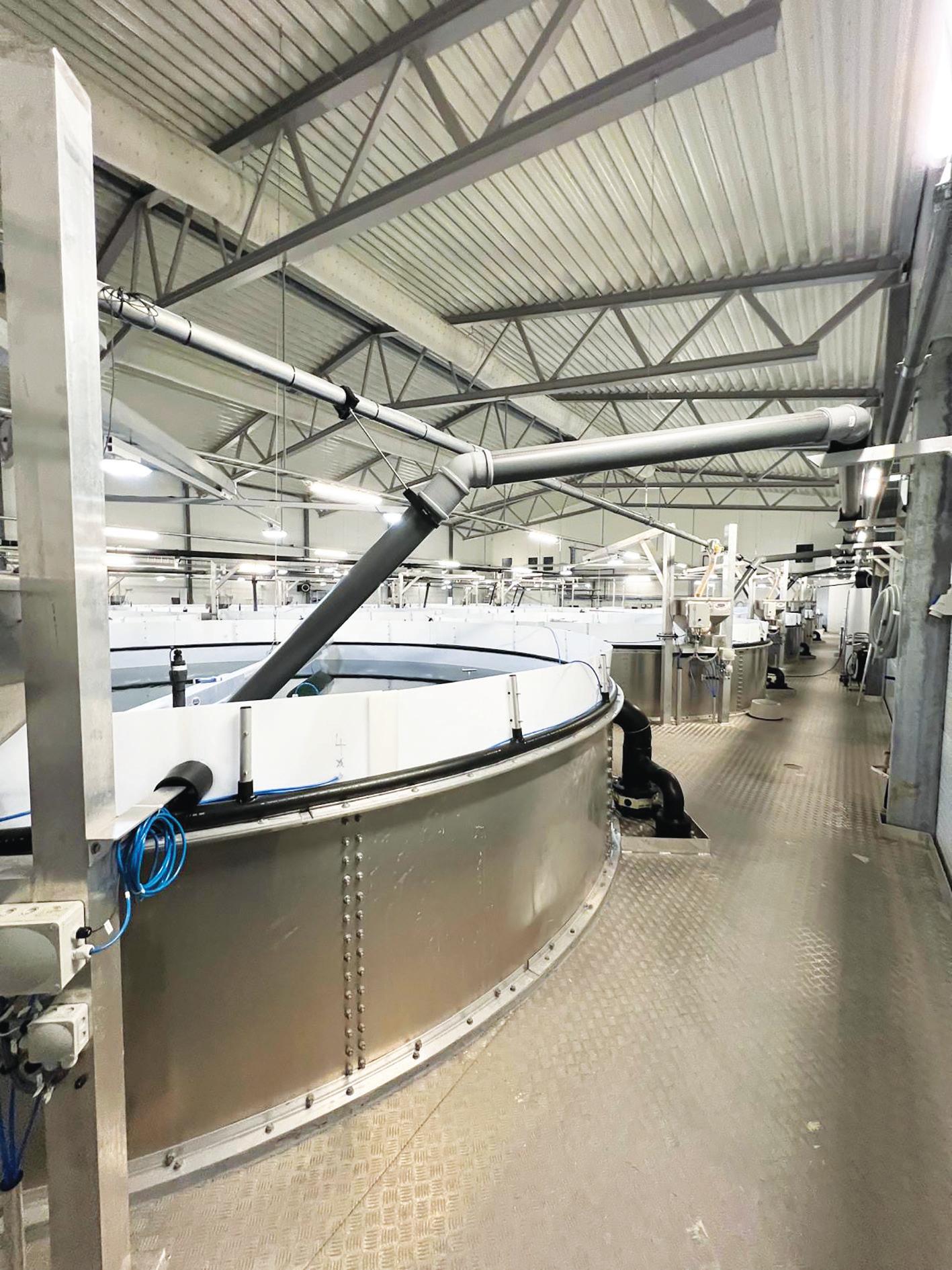
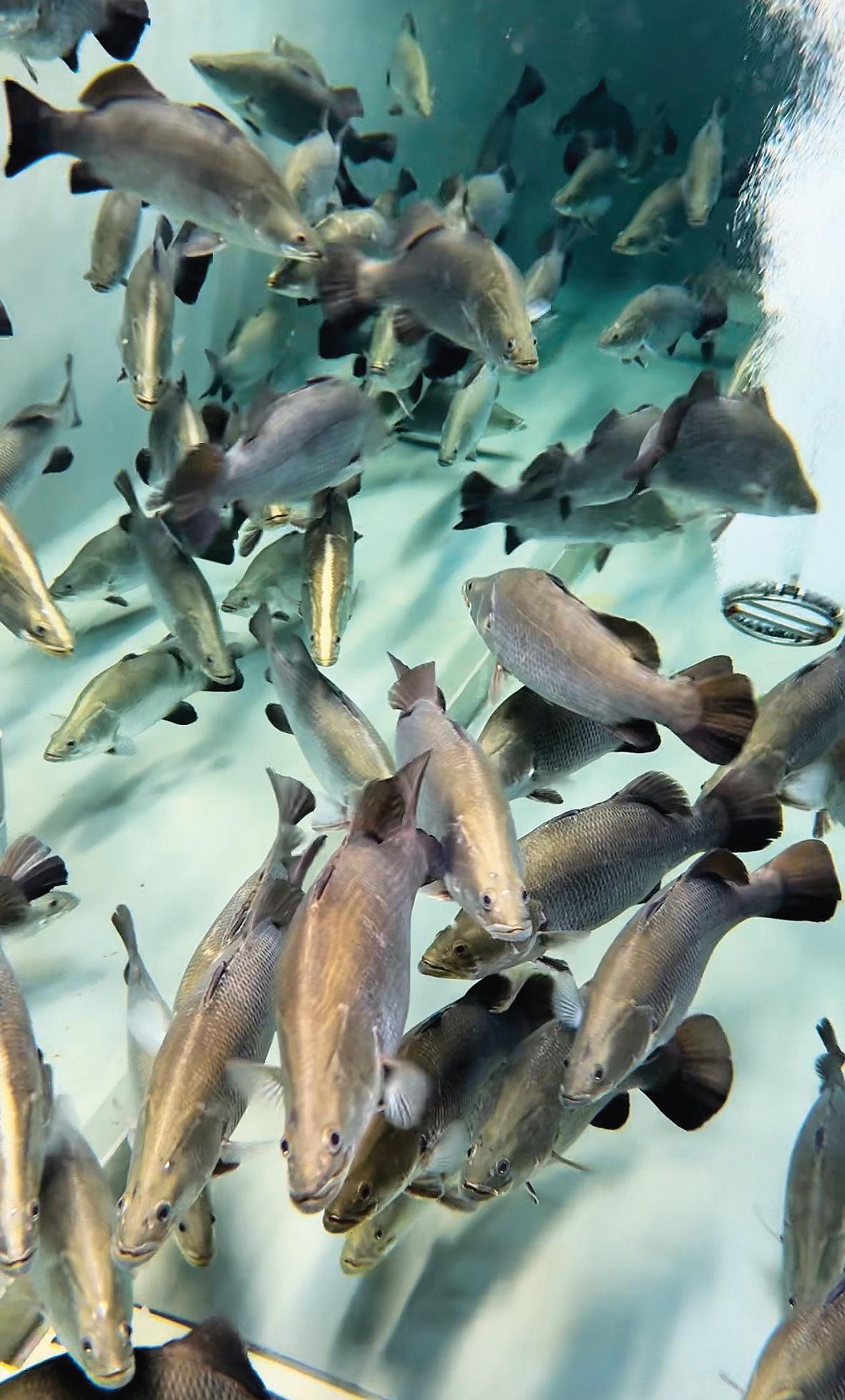
Water quality Innovations in Asian seabass and red snapper
CONTACT US
Editorial:
editor@hatcheryFM.com
Editor/Publisher: Lucía Barreiro
Consulting Editor: Suzi Dominy
Assistant Editor: Marissa Yanaga
Conferences and webinars: info@hatcheryFM.com
Advertising enquiries/request media pack: sales@hatcheryFM.com
Accounts & all other enquiries: info@hatcheryfm.com
SUBSCRIBE
Digital editions are free to industry subscribers. You may also purchase print copies. Subscribe at HatcheryFM.com to receive your own digital copy of our publications.
HATCHERY FEED & MANAGEMENT
How the adoption of effective feeds and feeding protocols can boost hatchery success.
ECONOMIC
BENEFITS OF LIVE FEED IN SEABASS 26
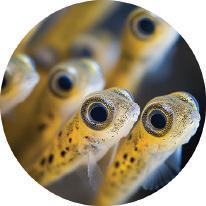
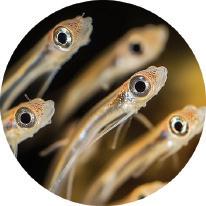
A one-year trial comparing CryoPlankton to traditional live feeds in seabass aquaculture showed improved cost-efficiency, reduced production costs, and enhanced profitability.
AUTOMATION IDENTIFICATION
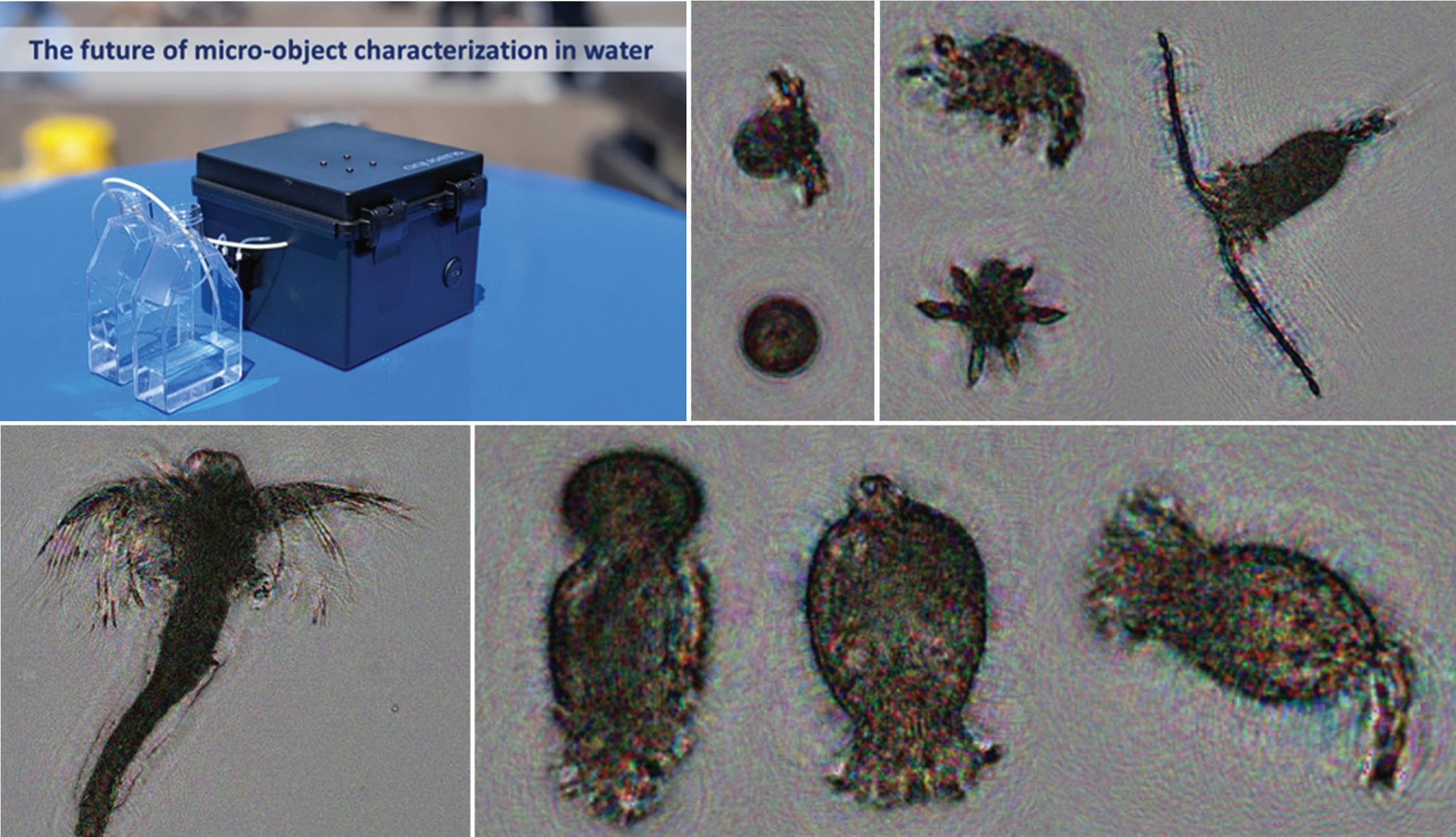
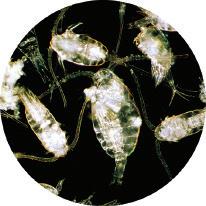
A new platform enables automatic imaging and characterization of a diverse set of organisms from microalgae to adult copepods and Artemia.
INTERVIEW with Freddy Lapentti and Biviana Paz
Freddy Lapentti is Fish Division Manager at Santomar Global and Biviana Paz is R&D Technician at Santomar Global
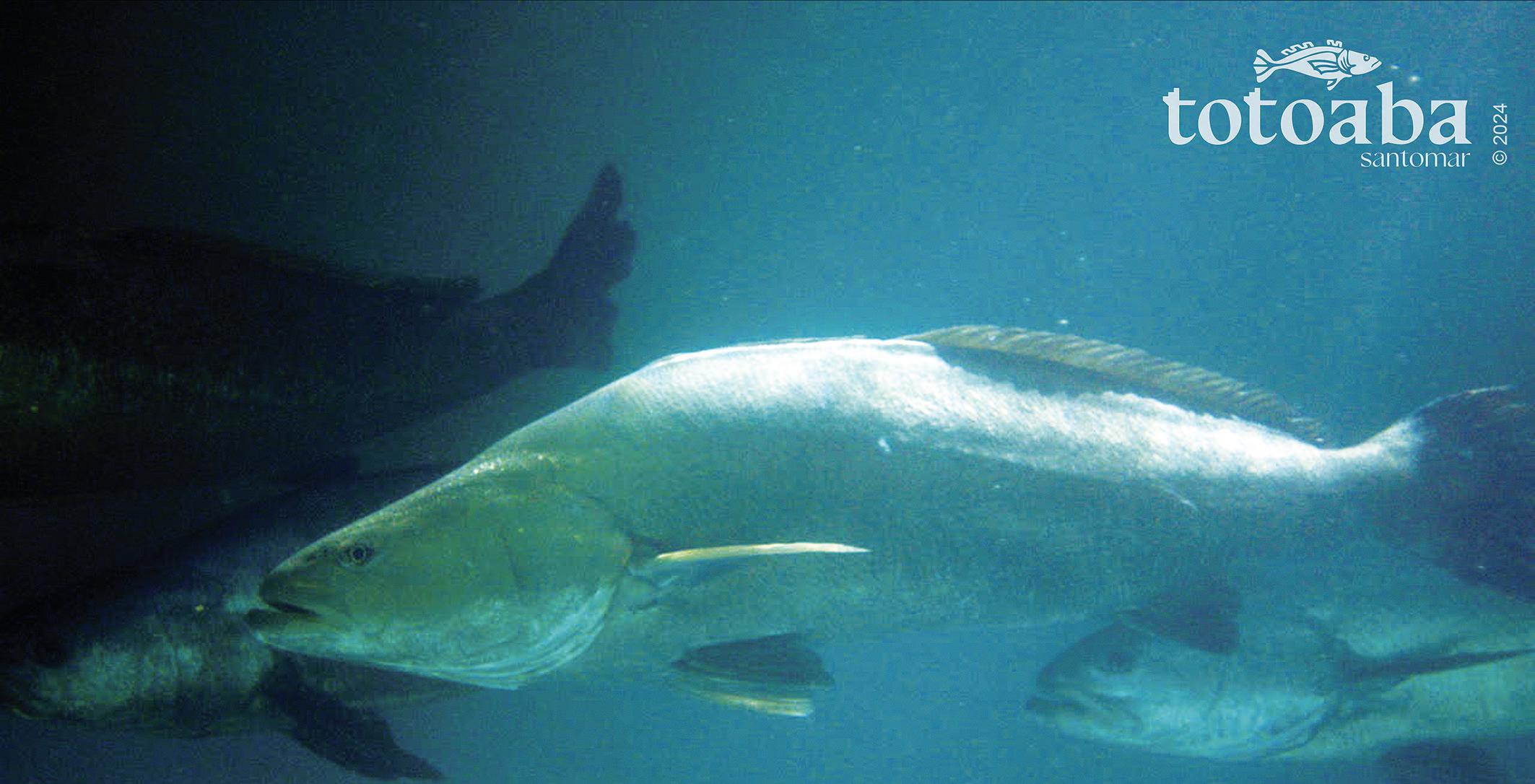
HFM: Santomar is one of the leading companies in totoaba production, an endemic species in the Gulf of California. How did the farming of this species begin?
SG: Over 10 years ago, as marine fish farming started gaining recognition as a high-potential activity in Mexico, thanks to its extensive coastline of clean seas, Santomar laid the foundation for aquaculture in the Sea of Cortez. Drawing inspiration from the first scientific studies conducted in Mexico on marine fish farming, we chose totoaba because it is an endemic species with high value and significant growth potential. Totoaba tells a story not just of a fishing resource but of a nation, its culture, and those who contribute to it. At Santomar, we work daily to practice aquaculture not only sustainably but also regeneratively.
HFM: Why did Santomar choose to farm this species? What makes it suitable for commercial aquaculture?
SG: As an endemic species, totoaba thrives in the conditions of the Sea of Cortez, making it highly suitable
for farming. Its adaptability to laboratory conditions and strong reproductive management in captivity are critical factors.
Totoaba is a white, firm-fleshed fish with exquisite flavor, already featured in some of the best cuisines. One of Santomar’s goals is to position totoaba as the quintessential Mexican fish and a healthy protein source for the population – a 100% Mexican product of excellent quality. Our farmed totoaba has a clear traceability record, and consuming it poses no risk to wild populations.
HFM: What have been the main challenges in managing broodstock? Are you implementing a genetic program?
SG: Initially, our first broodstock was sourced from the wild. Most were not sexually mature, so we had to create the necessary conditions for them to reach maturity. Currently, through a selective breeding program, our broodstock consists of F1 generations
and beyond, which is a key requirement for marketing our product. Since totoaba is a “total spawner” species, our greatest challenge has been maintaining various broodstock groups under cycles that allow yearround production.
HFM: What are the key factors for a successful larval-rearing process for totoaba?
SG: Farming totoaba requires a certain level of expertise. Fortunately, we have highly skilled personnel dedicated to ensuring that each larval batch successfully transitions into juveniles. These are transported to our open-water nursery in the Sea of Cortez, where we have grow-out farms achieving survival rates of 80-90% by the end of the grow-out cycle.
Another important factor is the tailored nutrition program we’ve developed for the species, incorporating microdiets and other essential components. Additionally, our facilities were specifically designed for farming totoaba, and while we’ve made improvements over the years, there is still room for further progress.
HFM: What are the hatchery facilities like? Do you use a recirculating aquaculture system (RAS)?
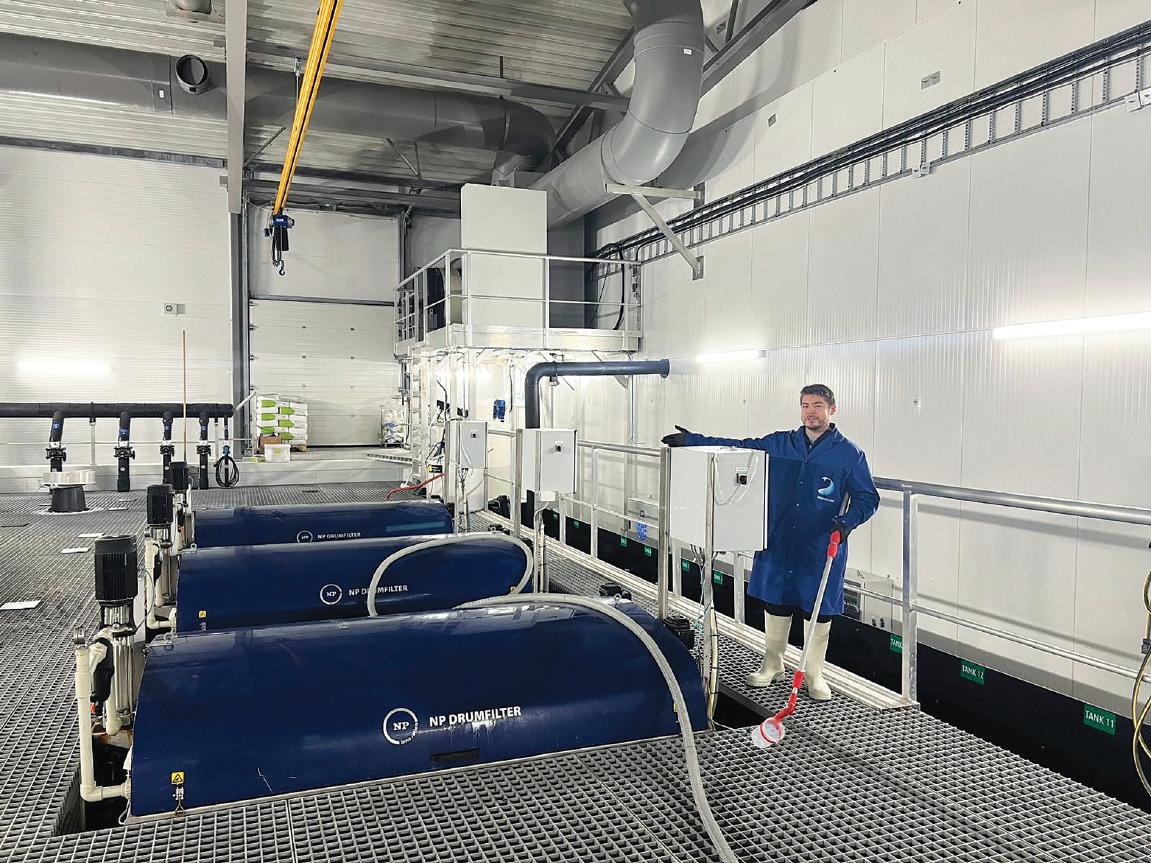
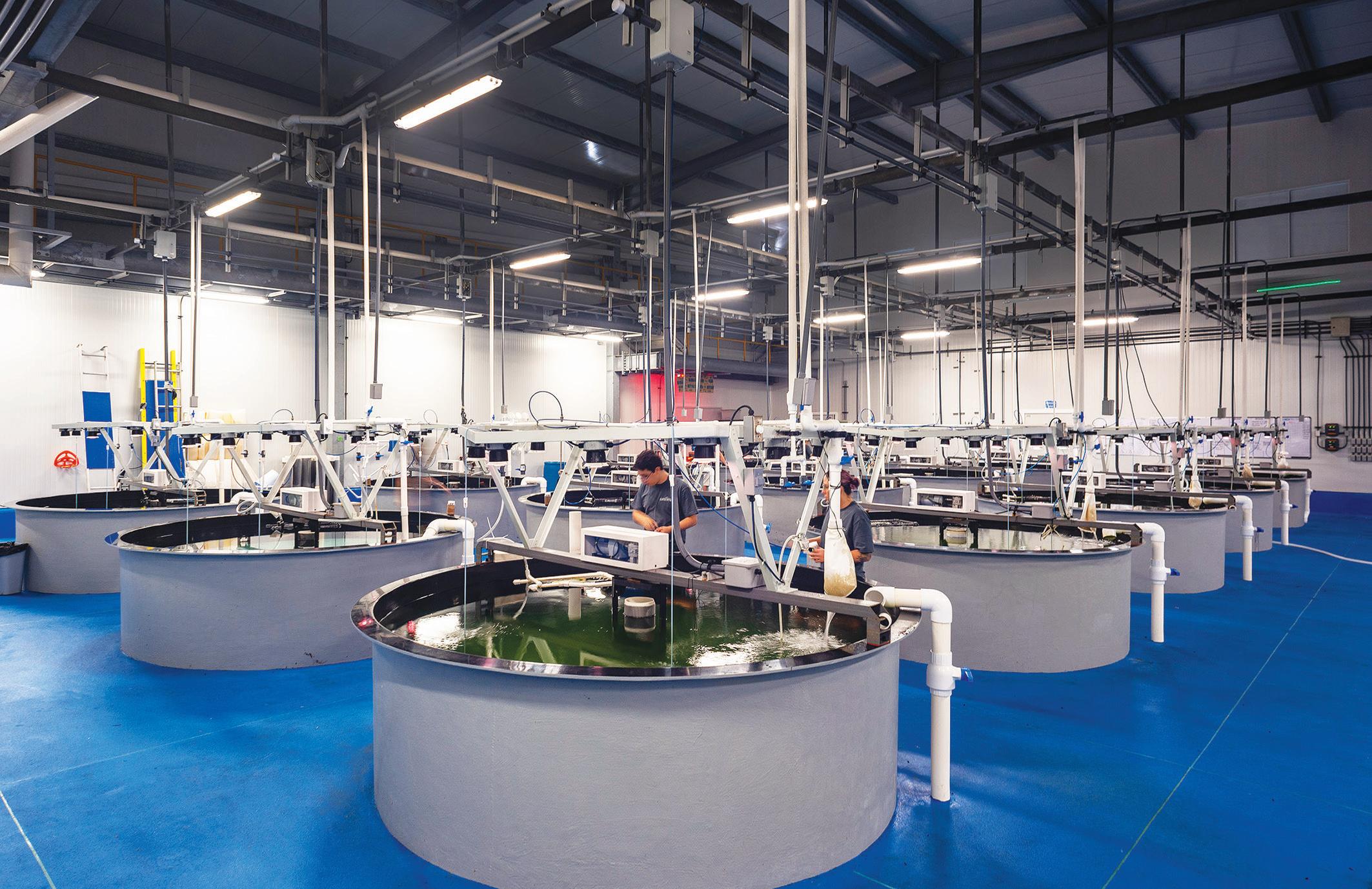
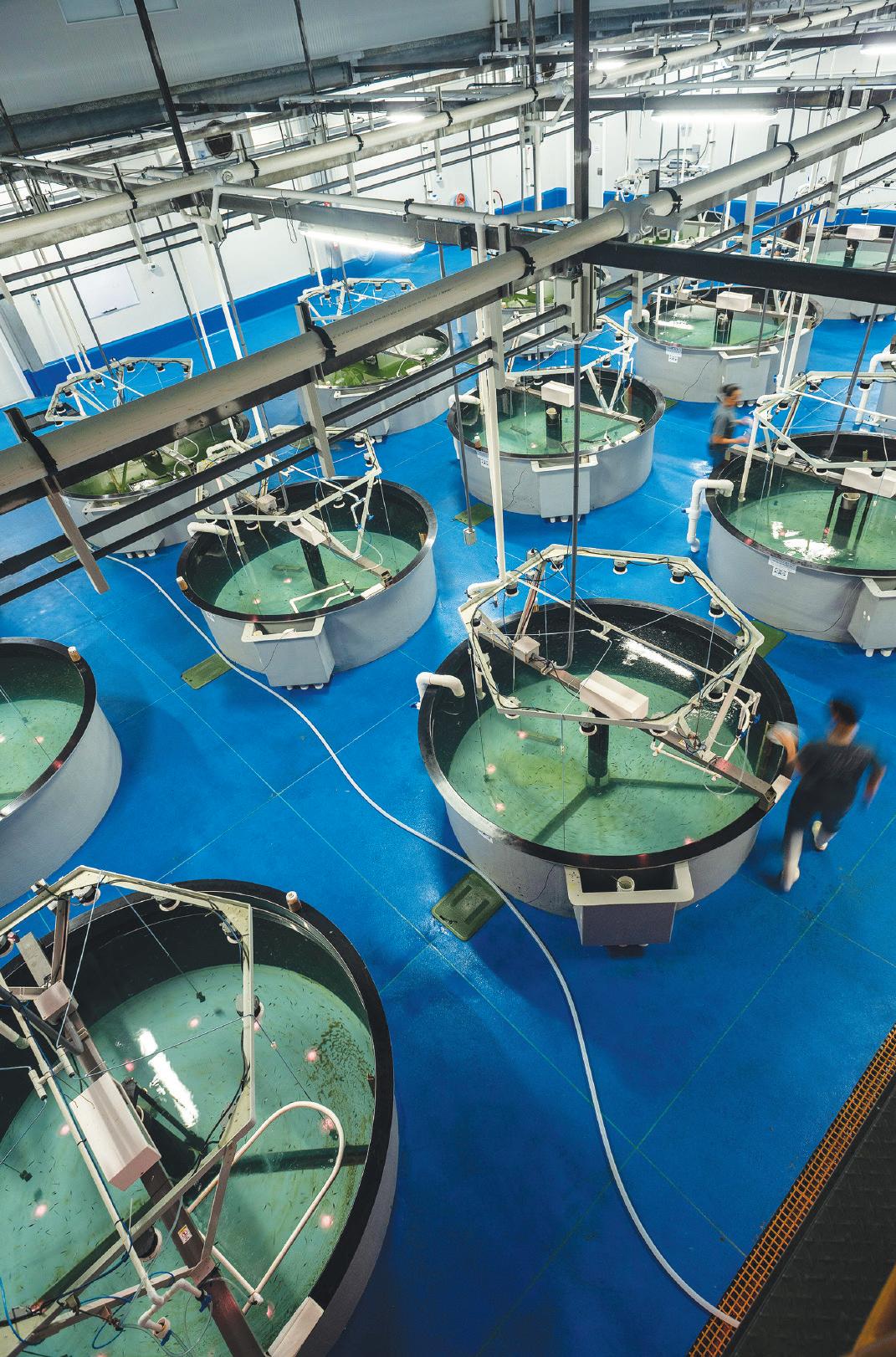
SG: At the hatchery, depending on the production stage, we use both RAS and flow-through systems. For the larval stage, we have an installed capacity of 120 m³ of water across 15 tanks. For the nursery stage, we have 500 m³ of water across 25 tanks.
As an endemic species, totoaba thrives in the conditions of the Sea of Cortez, making it highly suitable for farming. Its adaptability to laboratory conditions and strong reproductive management in captivity are critical factors.
HFM: The grow-out phase is conducted in marine cages. What is the transfer size, and how long does it take to reach market size?
SG: The grow-out phase is conducted in state-of-theart submersible marine cages. Fish are transferred at a minimum size of 15 grams and take 14 to 18 months to reach a market size of 4 to 6 kilograms.
HFM: Does this species have any special nutritional requirements?
SG: At Santomar, we have developed custom feeding protocols for totoaba at all production stages. The broodstock has presented the greatest nutritional challenges. We have created a specific, tailored diet for the species across all its life stages.
HFM: Totoaba is an endangered species due to overfishing. Could you describe why it is in this situation and the repopulation programs Santomar has implemented to support its recovery?
The issue dates back to the early 1900s, when overexploitation was rampant. By 1975, totoaba fishing was illegal by decree. This, combined with ecological issues in the Colorado River region, made recovery seem impossible.
Santomar has run an annual repopulation program for over nine years, releasing wild-origin juveniles with the participation of the community and authorities. Over this time, we’ve released more than 250,000 totoaba juveniles into the Sea of Cortez. This effort has garnered international recognition. The IUCN reclassified totoaba on its Red List from “critically endangered” to “vulnerable,” and CITES has authorized the sale of totoaba meat from aquaculture facilities.
HFM: What are the current primary markets for totoaba?
Currently, the market is limited to domestic sales, with a presence in major cities such as Mexico City, Monterrey, Guadalajara, Cancún, Los Cabos, Ensenada, and others.
HFM: What are the company’s growth projections?
Santomar plans to increase totoaba production by 300% over the next five years.
NEWS REVIEW
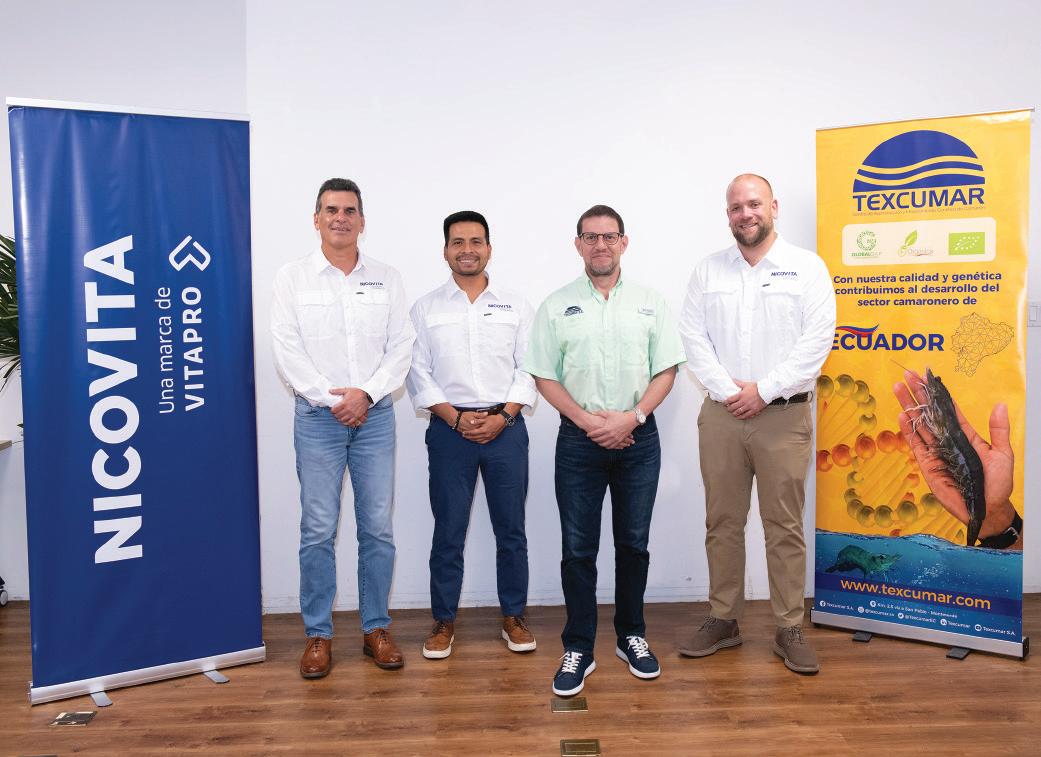
Nicovita and Texcumar partner to optimize shrimp larval stages in Ecuador
The partnership strengthens both companies’ strategies to optimize the early stages of shrimp farming in Ecuador. The agreement focuses on developing specialized feeding protocols in the lab that will later improve the survival and growth of larvae during pre-nursery and post-transfer stages. As part of this alliance, Nicovita also plans to distribute larvae, integrated into its early feeding
Benchmark to sell genetics business to Novo Holdings
Benchmark Holdings plc has entered into a binding agreement to sell its genetics business, Benchmark Genetics, to Starfish Bidco, a wholly owned subsidiary of Novo Holdings, valuing the enterprise at up to £260 million.The sale will allow the company to focus on its Advanced Nutrition (INVE Aquaculture) and Health business areas.
Zeigler appoints director of global aquaculture sales
Aedrian Ortiz Johnson was appointed as director of aquaculture sales. Aedrian brings extensive expertise in shrimp hatchery operations and feed sales, with a proven track record in key shrimpproducing countries. His appointment aligns with Zeigler’s strategic expansion plans to enhance its presence in the global aquaculture market. Aedrian will spearhead the company’s efforts to grow and maintain its market share, driving sales and delivering nutritional innovation and value creation to customers worldwide.
New aquafeed mills recognized with ASC Feed Certification
Several aquafeed mills worldwide have achieved ASC Feed Certification, signaling their commitment to sustainable practices. Recent certifications include three BioMar production facilities in Chile, BioMar’s feed mill in the UK – the first in the country – and another in Ecuador. Additionally, Salmofood earned certification for its Castro facility in Chile. These facilities join a growing list of 12 feed mills that have successfully met ASC Feed standards.
Ocean 14 Capital invests in aquaManager to drive sustainability in aquaculture
Bluefront Equity becomes majority shareholder of Cryogenetics
Impact investor Bluefront Equity made its biggest investment ever becoming the majority shareholder of Cryogenetics, a supplier of services and technologies for reproduction of fish. Cryogenetics and Bluefront’s growth strategy includes increased investments in Norway and internationally, both within salmon farming and other species such as halibut, trout, wolffish and cod.
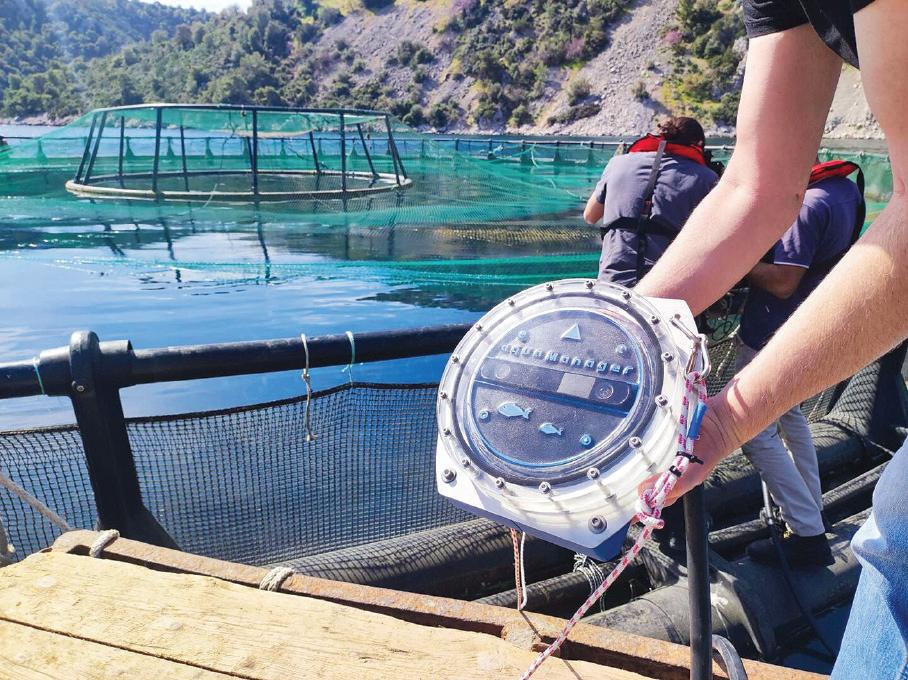
Private equity impact investment fund Ocean 14 Capital Fund has entered into a minority investment agreement with aquaManager to build a software, data and automation platform that will turbocharge the sustainability agenda in the aquaculture industry. “Together, we are building an innovative ecosystem that will turbocharge sustainability, efficiency, and predictability, setting a new standard for the future of aquaculture,” said Kostas Seferis, founder of aquaManager.
Billund Aquaculture founder launches new RAS technology firm
Christian Sørensen, founder of the now-bankrupt Billund Aquaculture, has announced plans to launch a new company called Billund Aquatech. Sørensen stated that he has partnered with a select group of former experts from the Billund Aquaculture Group to form a collaborative alliance. Billund Aquatech aims to leverage decades of expertise in designing, engineering, and executing recirculating aquaculture system (RAS) projects.
New insights on genetic resistance to disease in shrimp
A new study by Benchmark Genetics revealed breakthrough research on the genetic basis of resistance to co-infection of Enterocytozoon hepatopenaei (EHP) and White Feces Syndrome (WFS) in whiteleg shrimp.
Benchmark Genetics’ research, conducted through a challenge test experiment on a population from its breeding program in Colombia, demonstrates the feasibility of using genetic selection to enhance disease resistance in shrimp. Notably, the study identifies moderate heritability for resistance to co-infection, underscoring the potential for selective breeding to bolster shrimp health and resilience against these diseases.
Key findings from the study include:
• Moderate heritability for disease resistance: Results indicate that resistance to co-infection of EHP and WFS is moderately heritable, supporting selective breeding as a viable strategy.
• Compatibility with shrimp growth: Disease resistance and shrimp growth showed no significant negative genetic correlation, allowing for simultaneous improvements in both traits.
• Genomic selection advantage: Genomic selection, as opposed to traditional pedigree-based selection, proved more accurate and effective in predicting shrimp resistance.
• Complex genetic influence: The study reveals that resistance is influenced by multiple genes with small effects, validating the use of genomic selection.
A new era in liquid feed technology
Leandro Castro, Peter Van Wyk, Jennifer Doherty, Brittany Ploof and Morgan Prescott, Zeigler Bros.
Shrimp larval nutrition has undergone significant advancements over the years, reflecting continuous improvements in management practices, knowledge of nutritional requirements, and sustainability considerations. From natural feeds to the introduction of formulated diets and the development of functional feeds, the journey has been marked by innovation and adaptation to meet the changing demands of the industry. However, challenges persist, particularly in the use of microalgae as an important nutritional source for the early stages of shrimp.
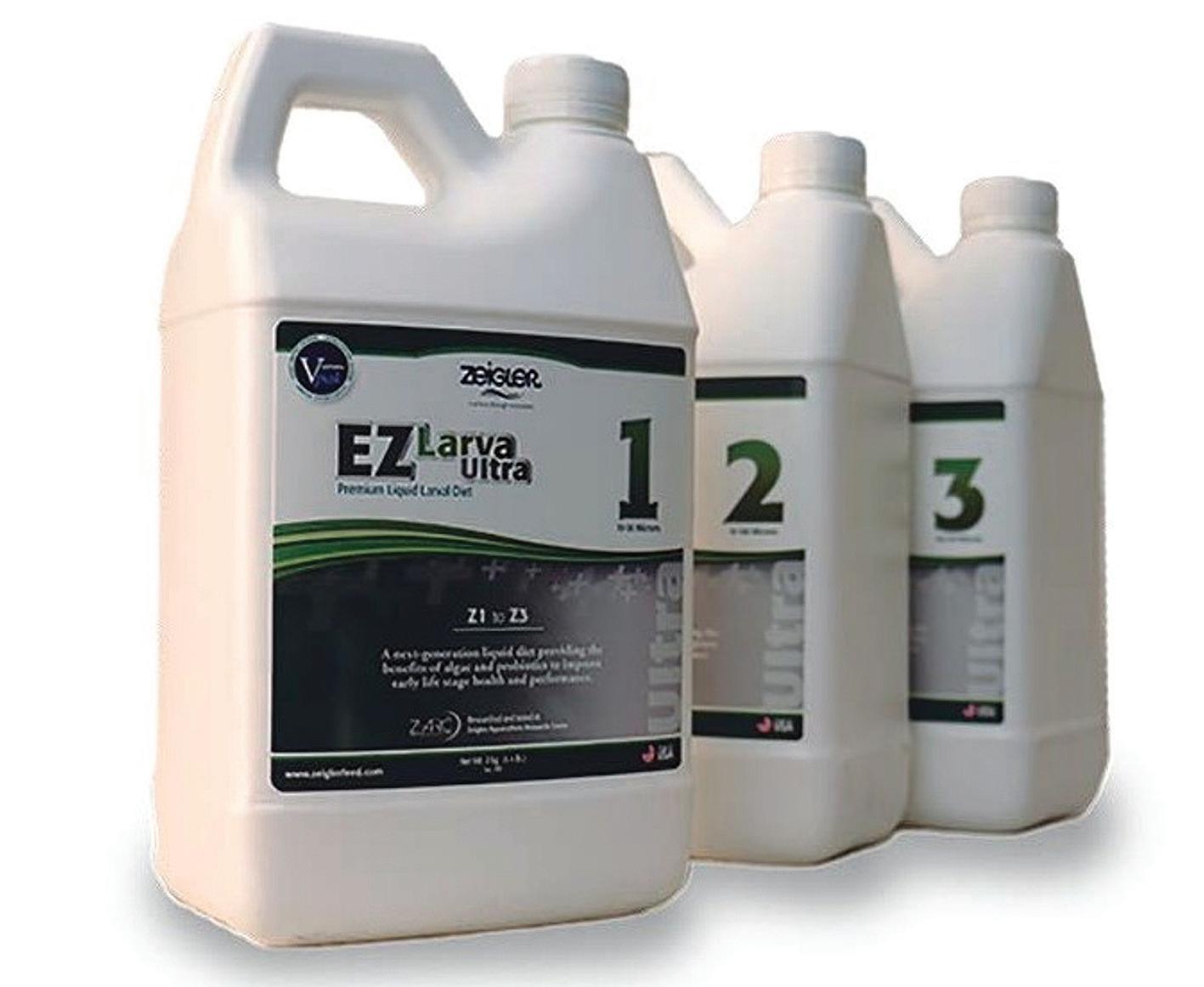
Despite their nutritional benefits, microalgae present significant disadvantages, including high costs, nutritional variability, unpredictable production, and contamination risks. Addressing these challenges requires an innovative solution that can provide the nutritional benefits of microalgae in a more efficient, cost-effective way, with enhanced biosecurity. After extensive research and testing to tackle these challenges, Zeigler has created EZ Larva Ultra, a significant advancement in shrimp larval nutrition. It offers a liquid microencapsulated diet that combines the benefits of microalgae with improved stability, digestibility, and biosecurity.
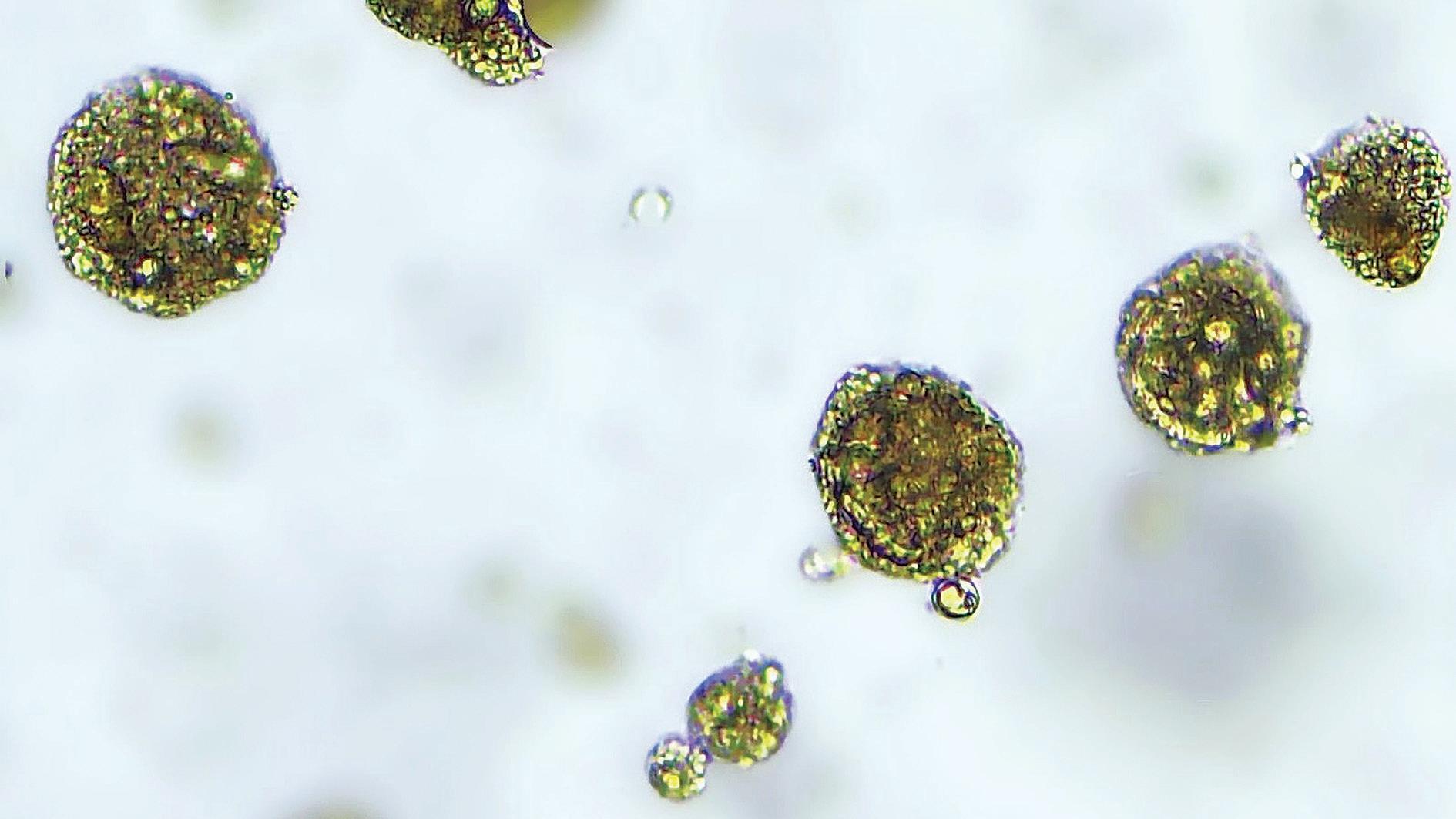
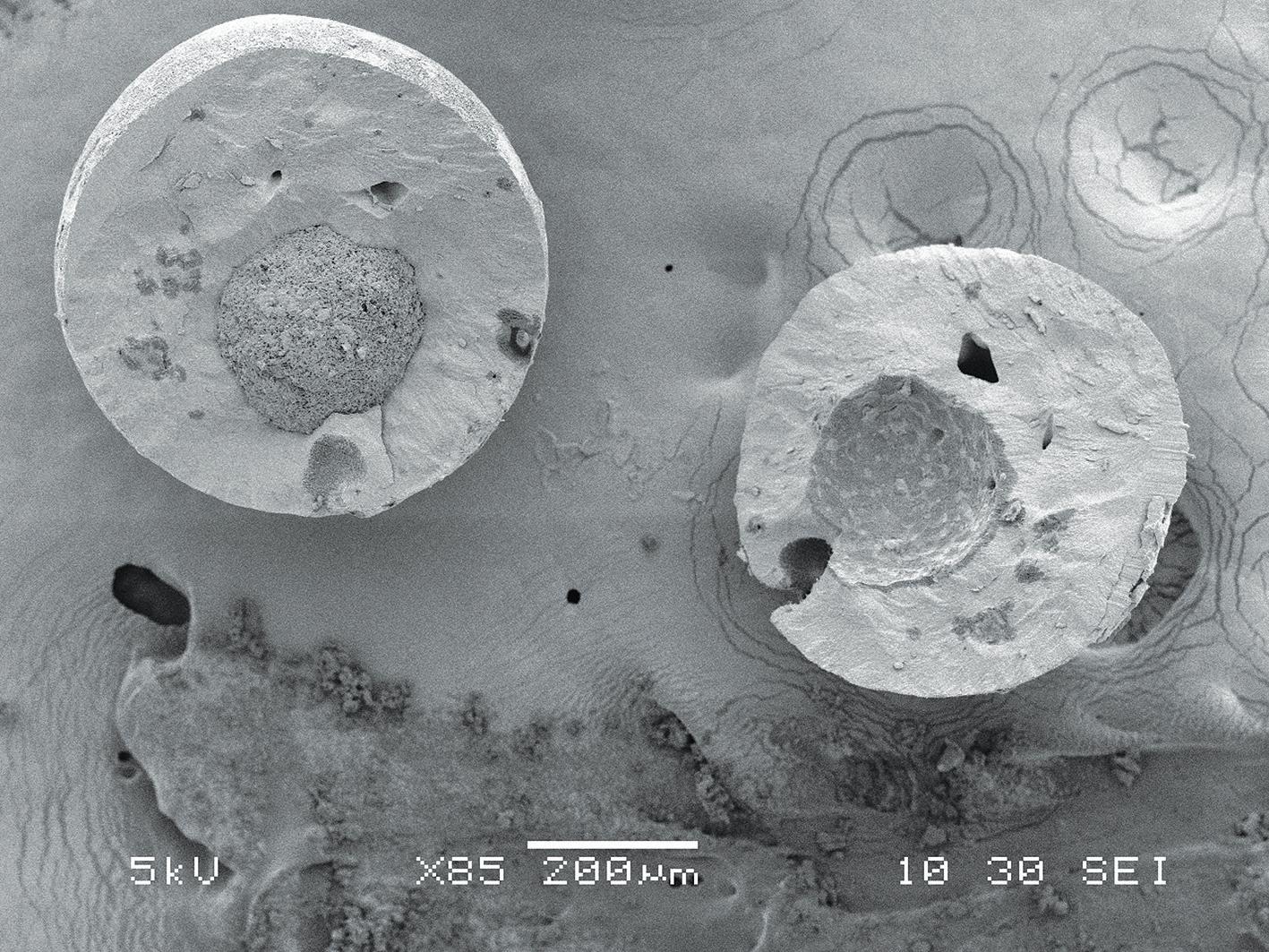
The science behind EZ Larva Ultra EZ Larva Ultra utilizes advanced microencapsulation processes that are the result of years of research to improve upon pre-existing methods. The latest technology has led to an 8% increase in protein and a 25% increase in lipids, based on dry weight. This advanced microencapsulation technology provides a superior nutrient delivery system, offering several significant advantages. Microencapsulation protects the active ingredients, preserving essential nutrients and ensuring their stability and bioavailability, while also reducing nutrient waste and promoting greater feeding efficiency.
It also allows controlled nutrient release during digestion, optimizing absorption in different segments of the larval digestive tract, thus improving the overall health and growth of the organisms. Additionally, this enhanced microencapsulation increases nutritional stability during storage and transport, ensuring a long shelf life.
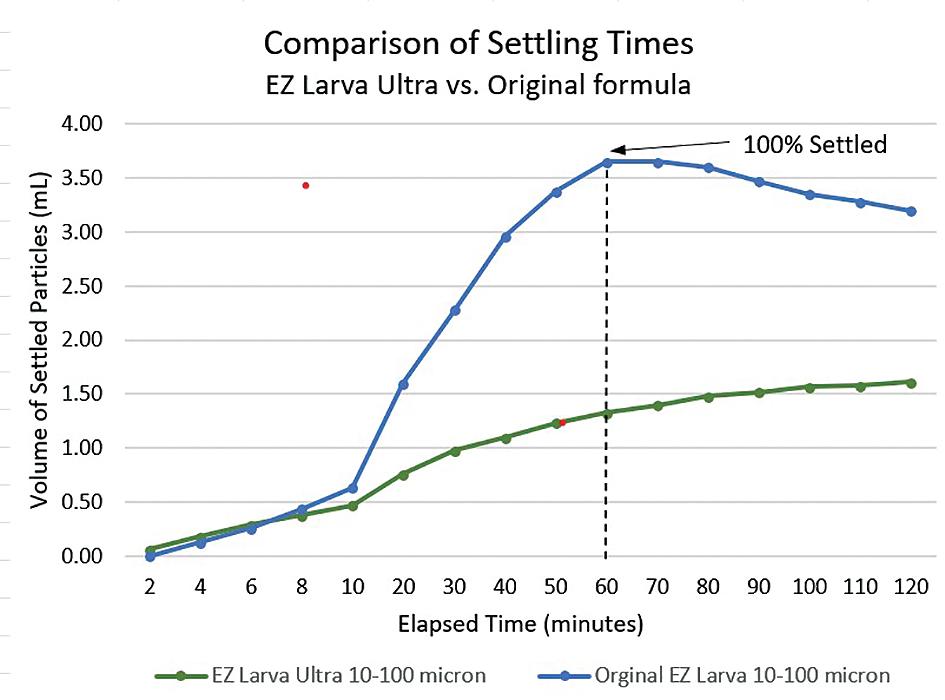
The buoyancy of larval diets plays a central role in the performance of these products and was an important aspect of the development process for the new product. The previous generation of EZ Larva had a 100% sedimentation rate after 60 minutes, whereas the improved EZ Larva Ultra demonstrated excellent particle suspension even after 120 minutes (Fig. 1).
Better buoyancy ensures a more even distribution of feed in the water column, reducing waste and competition for food, while also improving water quality and reducing stress on the organisms. This positively contributes to their overall health and harvest performance.
EZ Larva Ultra is the most advanced functional feed available today. A range of functional compounds is incorporated into the EZ Larva Ultra formulation, specifically developed for the unique properties of
Figure 1. Comparison of the particle settling rate of EZ Larva Ultra and the Original EZ Larva.
liquid diets. One of the components consists of organic acids, which offer several significant benefits. Their antimicrobial properties play a crucial role in controlling pathogens, thereby reducing the incidence of diseases and maintaining shrimp health at optimal levels.
Organic acids can also reduce stress in organisms, which is particularly important during periods of environmental fluctuations or frequent handling of the shrimp. By modulating stress hormones and strengthening the immune system of the shrimp, organic acids help minimize the negative effects of stress, increase disease resistance, and improve resilience to changing environmental conditions.
Another component of the health package is Vitality Pack (Vpak), a compound added to all Zeigler larval diets. Vpak is a blend of ingredients that enhances the natural immune response capabilities of shrimp in any system and at any stage of culture.
One of the most significant advancements of EZ Larva Ultra is the inclusion of probiotics incorporated into different components of the diet’s unique structure. Using advanced techniques, Zeigler’s R&D team developed methods to deliver specific probiotic strains to targeted areas of activity. One set of probiotic bacteria (Rescue) is included in EZ Larva Ultra to improve gut health, while another set (Remediate) is included to improve water quality.
Rescue contains 1.5 x 10⁷ CFU/g of four unique Bacillus spp. strains, selected for their efficacy in controlling six common strains of Vibrio spp., including Vibrio parahaemolyticus. Rescue is incorporated into the microcapsule for delivery to the intestine via ingestion. Meanwhile, Remediate, is composed of another unique set of probiotic Bacillus species selected for their ability to digest organic material and reduce ammonia levels. Remediate is incorporated into the liquid fraction of EZ Larva Ultra, enabling it to be delivered into the water column when the product is added to the tank. By offering EZ Larva Ultra to larvae, hatchery managers proactively address multiple threats to the health and well-being of the crop.
Rescue and Remediate are proven commercial probiotics from Zeigler that have undergone significant testing in both laboratory and commercial settings and are increasingly popular in several key markets across Asia.
A challenge trial of Rescue was conducted to evaluate the probiotic’s ability to prevent the growth of V. harveyi and V. parahaemolyticus colonies in the intestines of shrimp. Over 27 days, the shrimp were exposed to these pathogens while using Rescue as a prevention strategy. The treatment with Rescue against V. harveyi showed a 50% increase in survival compared to the control treatment (Rescue: 67%; Control: 44%).
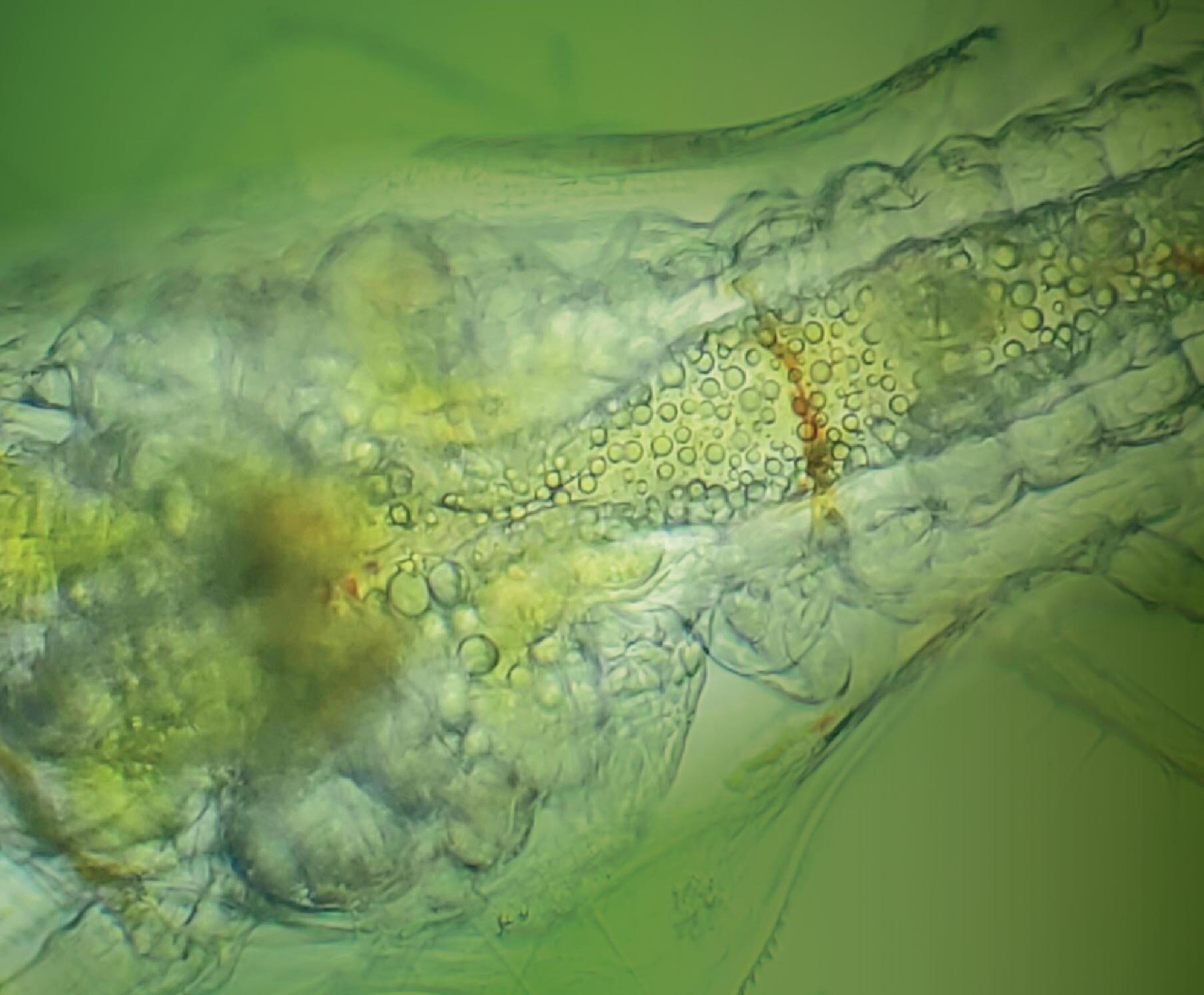
Figure 2. Microscope photo of EZ Larva Ultra microcapsules
When challenged with V. parahaemolyticus, the treatment demonstrated a 42% higher survival rate than the control (Rescue: 66%; Control: 47%). These results demonstrate the significant benefits that EZ Larva Ultra offers by delivering highly effective probiotics like Rescue, precisely when they are most needed.
The science behind our innovation
With nearly 90 years of history as an innovator and pioneer in the production of feeds for aquatic organisms, Zeigler has developed extensive knowledge in nutrition, formulation, and the manufacturing of shrimp diets, especially during the early stages. Nearly a decade ago, Zeigler opened the Zeigler Aquaculture Research Center (ZARC), where many innovative products, such as EZ Larva Ultra, were developed. The laboratory features testing systems for each stage of shrimp development. Organism evaluation techniques were designed to eliminate human influence on the results of the comparative treatments.
Advanced algorithms prevent even the slightest differences in formulation strategies, as well as manufacturing process choices and adjustments, from affecting the performance of the diets during trials. This knowledge provides precise analysis of performance in critical phases, such as the shrimp larval stages.
ZARC studies comparing EZ Larva Ultra with the previous generation of EZ Larva demonstrated a higher harvested biomass (1,264.25 mg vs. 876.63 mg), providing shrimp with a greater final average weight (0.60 mg vs. 0.50 mg) and improved feed efficiency (0.44 mg of weight gained/mg offered vs. 0.31 mg of weight gained/mg offered).
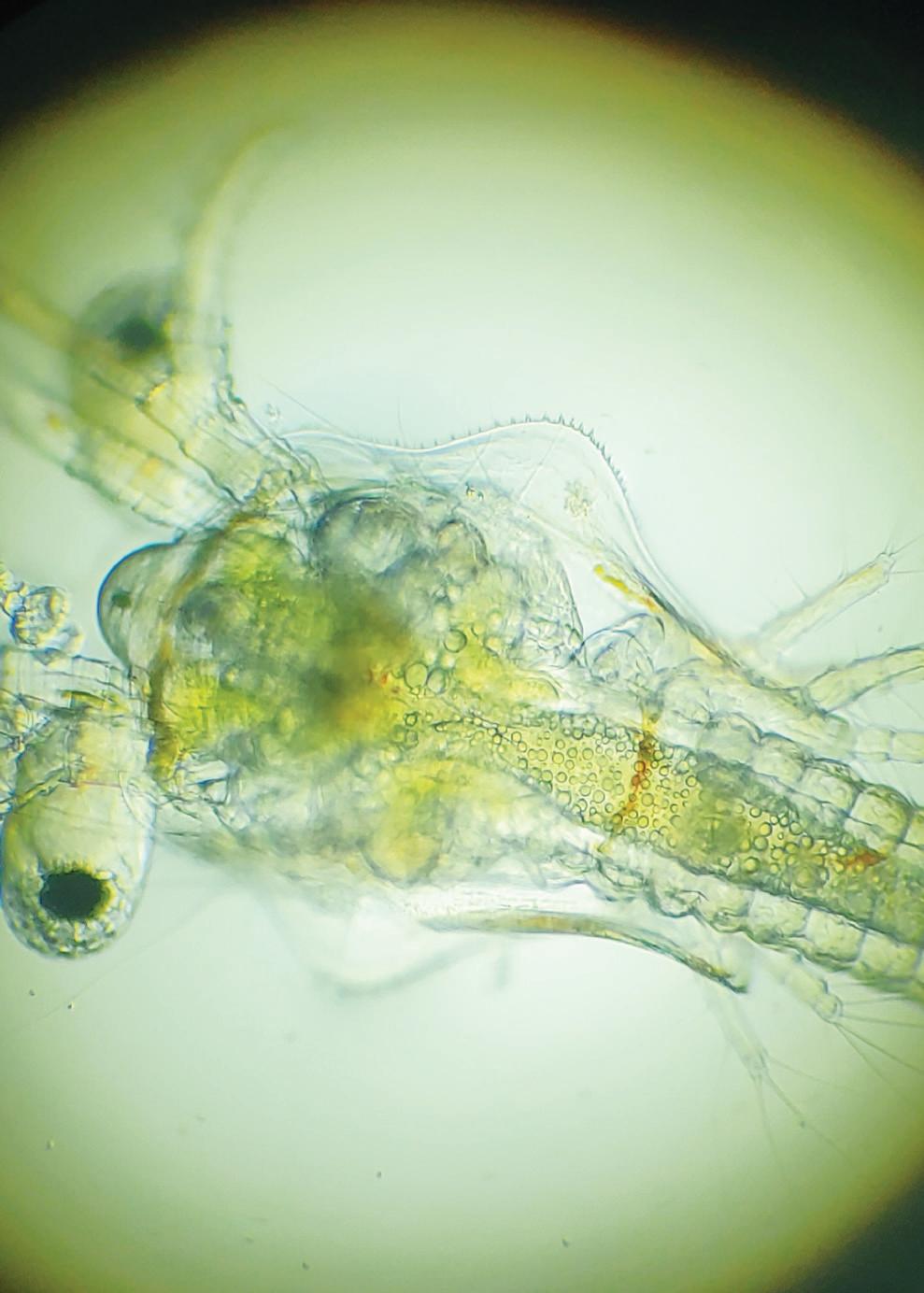
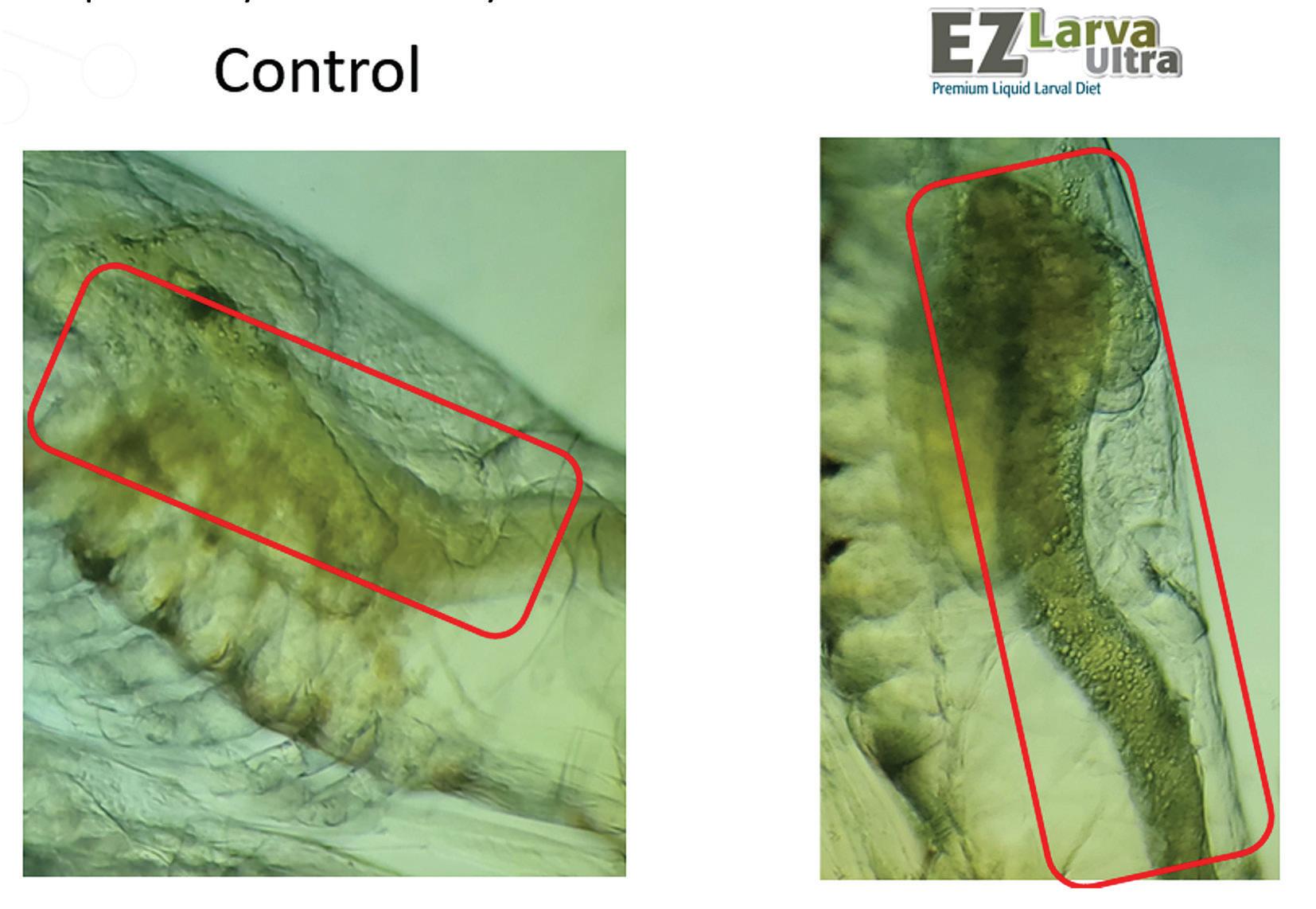
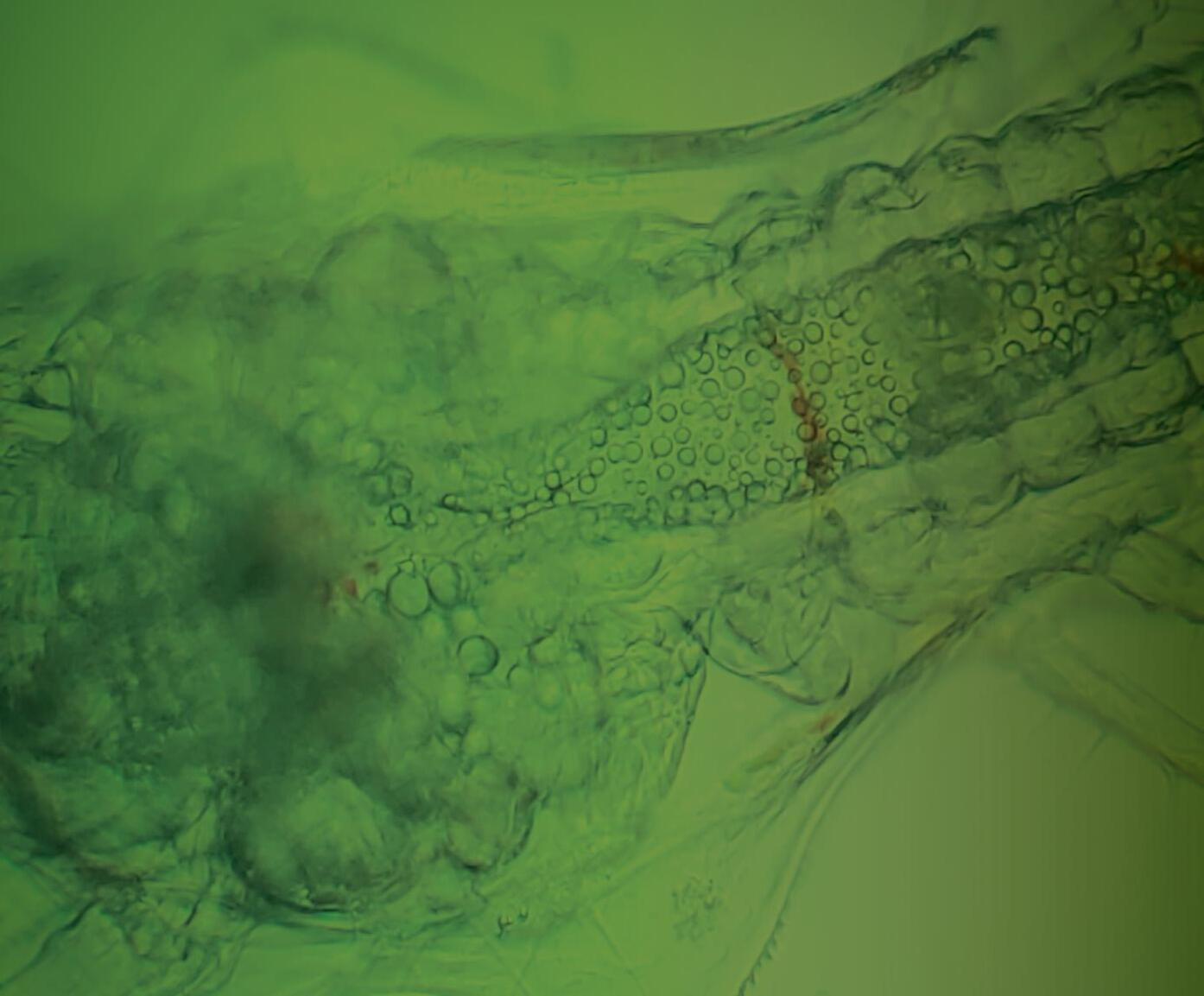
Figure 3. Zoea larva fed with EZ Larva Ultra showing lipids
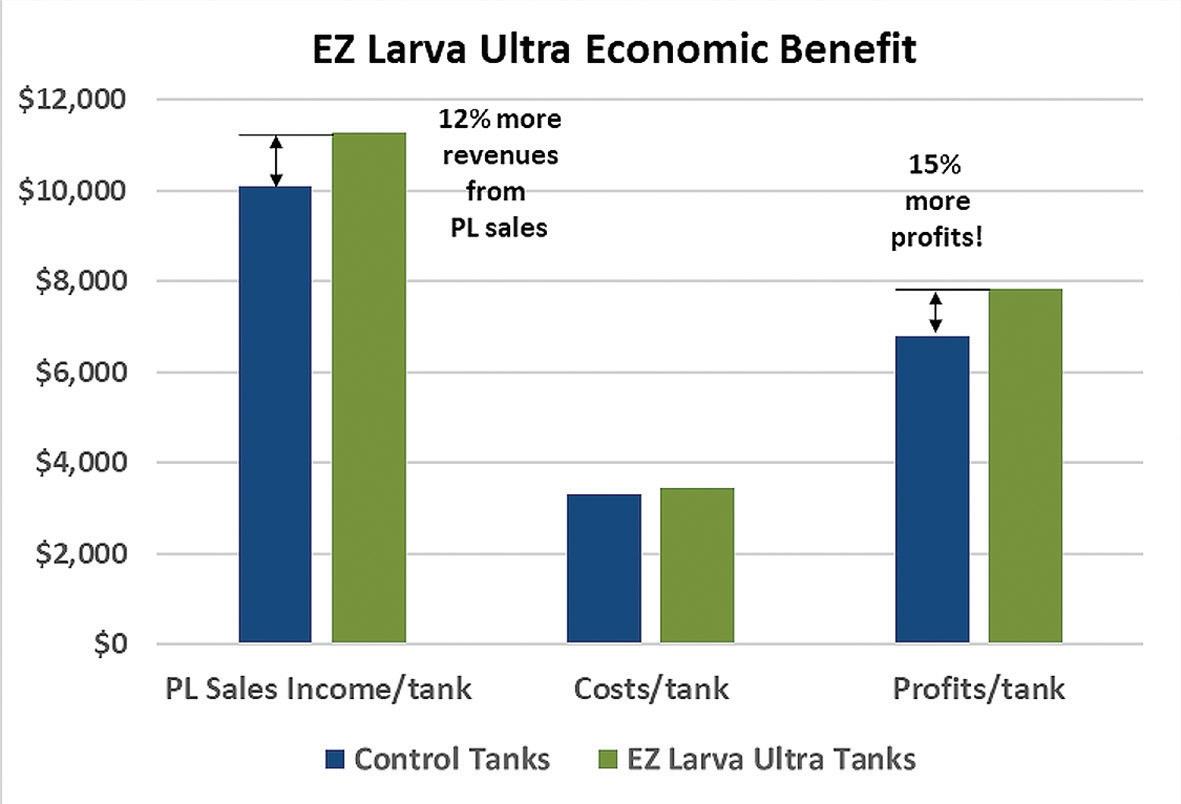
Figure 4. Economic comparison between tanks fed with EZ Larva Ultra and tanks fed a control diet
Additionally, organisms fed this new product showed higher survival rates (70% vs. 58%) and a superior larval development index (6.86 vs. 6.69). After confirming the efficacy of EZ Larva Ultra at ZARC, it was tested in a commercial larviculture environment in Brazil. Nine 26-L tanks were filled at a density of 145 nauplii/L each.
The control treatment used a combination of dry larval feeds and competitor liquid diets. In the test treatment, EZ Larva Ultra replaced 25% of the dry diets. Organisms fed with EZ Larva Ultra showed a 7% higher survival rate and generated 12% more revenue than the control treatment. Applying these results in an economic analysis model, the EZ Larva Ultra treatment generated 15% more profitability, a very positive outcome when
incorporating this new product into the diet protocol (Fig. 4).
Microscopic comparisons of the organisms were also an important feature of the trial. Under magnification, shrimp in the EZ Larva Ultra treatment showed a greater accumulation of lipids compared to those in the control treatment (Fig. 5). These fat droplets in shrimp larvae serve as essential energy reserves, supporting metabolic functions and aiding in the development of vital organs. They provide concentrated energy, crucial for growth, survival, and overall health during the larval stages, contributing to the development of robust and resilient shrimp. This may have been a key factor in the survival differences observed between the treatments.
the
algaereplacement&functionalfeedinone
Premium Liquid Larval Diet
FEEDS
To further challenge EZ Larva Ultra, another study was conducted to provide a comparison with microalgae. In this trial at ZARC, EZ Larva Ultra replaced 50% of the microalgae in Z1 and 100% in Z2 and subsequent stages. Although no statistical difference was identified in the average weight, statistical differences were observed in organisms fed with EZ Larva Ultra, showing better survival and final biomass.
Conclusion
These results demonstrate the potential of including high-quality liquid diets to replace a large portion of algae use in the early stages of shrimp larviculture. EZ Larva Ultra represents a paradigm shift in shrimp larval nutrition by combining the benefits of microalgae, advanced microencapsulation technology, and the latest innovations in functional feeds. With its superior performance, enhanced stability, and targeted delivery of nutrients and functional compounds, EZ Larva Ultra sets a new standard for shrimp larviculture worldwide. By combining EZ Larva Ultra with EZ Artemia Ultra, shrimp postlarvae hatcheries can maximize the nutritional innovation that Zeigler offers, ensuring highquality nutrition and achieving optimal growth results with healthier shrimp, increasing production outcomes and generating greater profitability. With Zeigler’s commitment to innovation and sustainability, the future of shrimp aquaculture looks more promising than ever.
More information:
Dr. Leandro Castro
Senior Research Manager Zeigler Bros. E: leandro.castro@zeiglerfeed.com
Peter Van Wyk
Global Technical Sales Manager Zeigler Bros. E: peter.vanwyk@zeiglerfeed.com
Senior Research Biologist Zeigler Bros. E: morgan.prescott@zeiglerfeed.com
Boosting hatchery success: Effective live feed and microdiet protocols for larval rearing efficiency
Antonio Villanueva González, Keshuai Li, BioMar Group
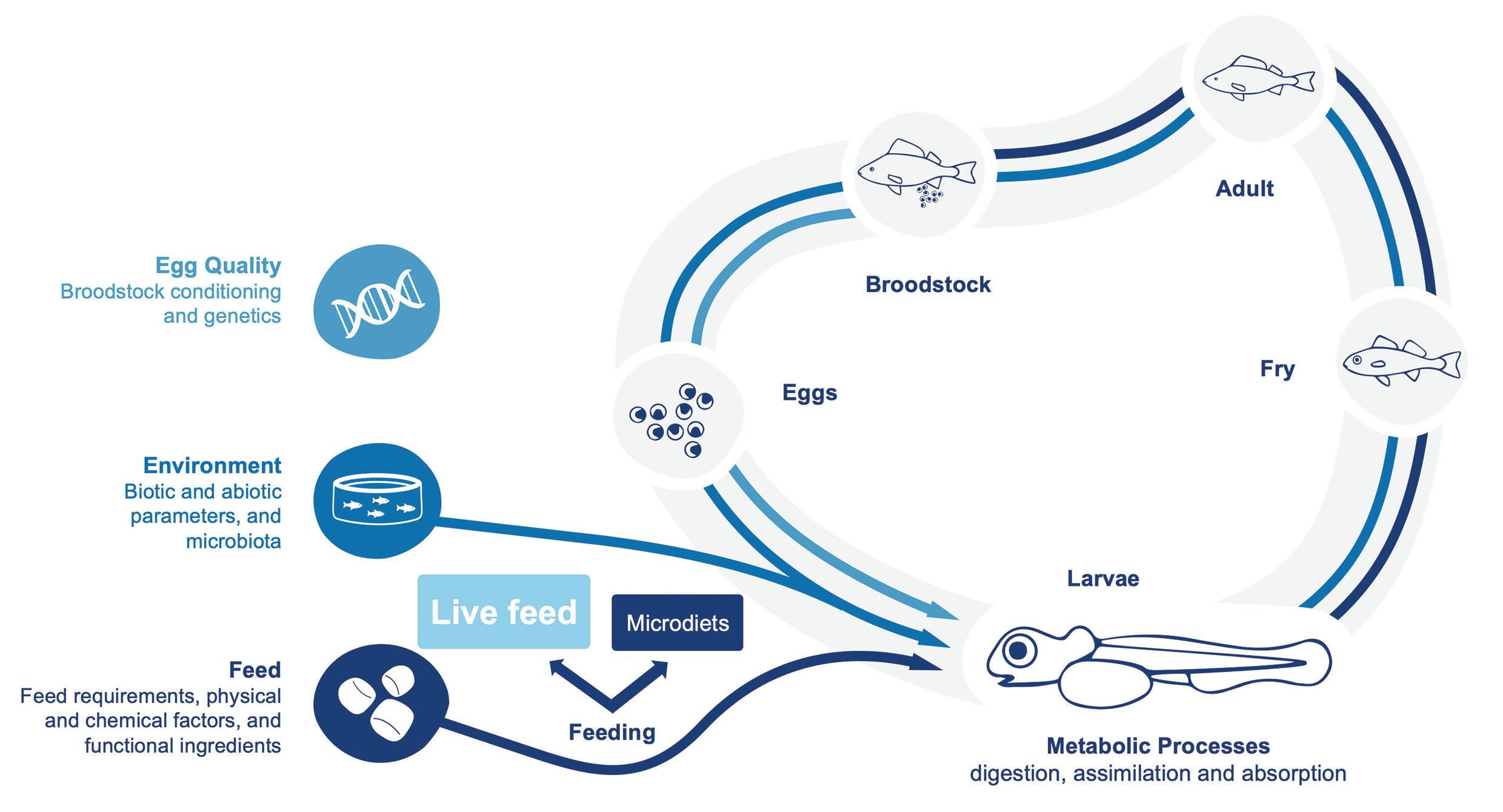
In marine fish larval rearing, the early stages are crucial for determining juvenile health, quality, robustness and performance during ongrowing. This initial period is influenced by an extremely complex interplay of factors, that, among others, includes egg quality, environmental conditions and of course, feeding and nutrition. A holistic farming approach, that considers and integrates all these elements, is essential for hatchery success. This involves providing well-balanced nutrients, optimizing feeding strategies, and maintaining the best possible rearing conditions. Only by addressing these, can hatcheries significantly improve their operation and produce the best possible juveniles. This article focuses on proven feed and feeding strategies to help hatcheries achieve better results and reduce production costs.
For starters, focusing on live feeds
Rotifers and Artemia have been the predominant live feeds in the aquaculture industry since the 1970s. Their consistent use has facilitated the development of the industry, ensuring a steady supply of fry to meet increasing demands. However, it is important to note that both rotifers and Artemia inherently lack sufficient levels of omega-3 highly unsaturated fatty acids (HUFAs), specifically docosahexaenoic acid (DHA) and eicosapentaenoic acid (EPA). These organisms do not have the capacity to synthesize these fatty acids de novo, thus there is a need for enrichment to enhance their nutritional profile and meet the requirements of the newly hatched larvae.
Figure 1. Main factors influencing fish larval development
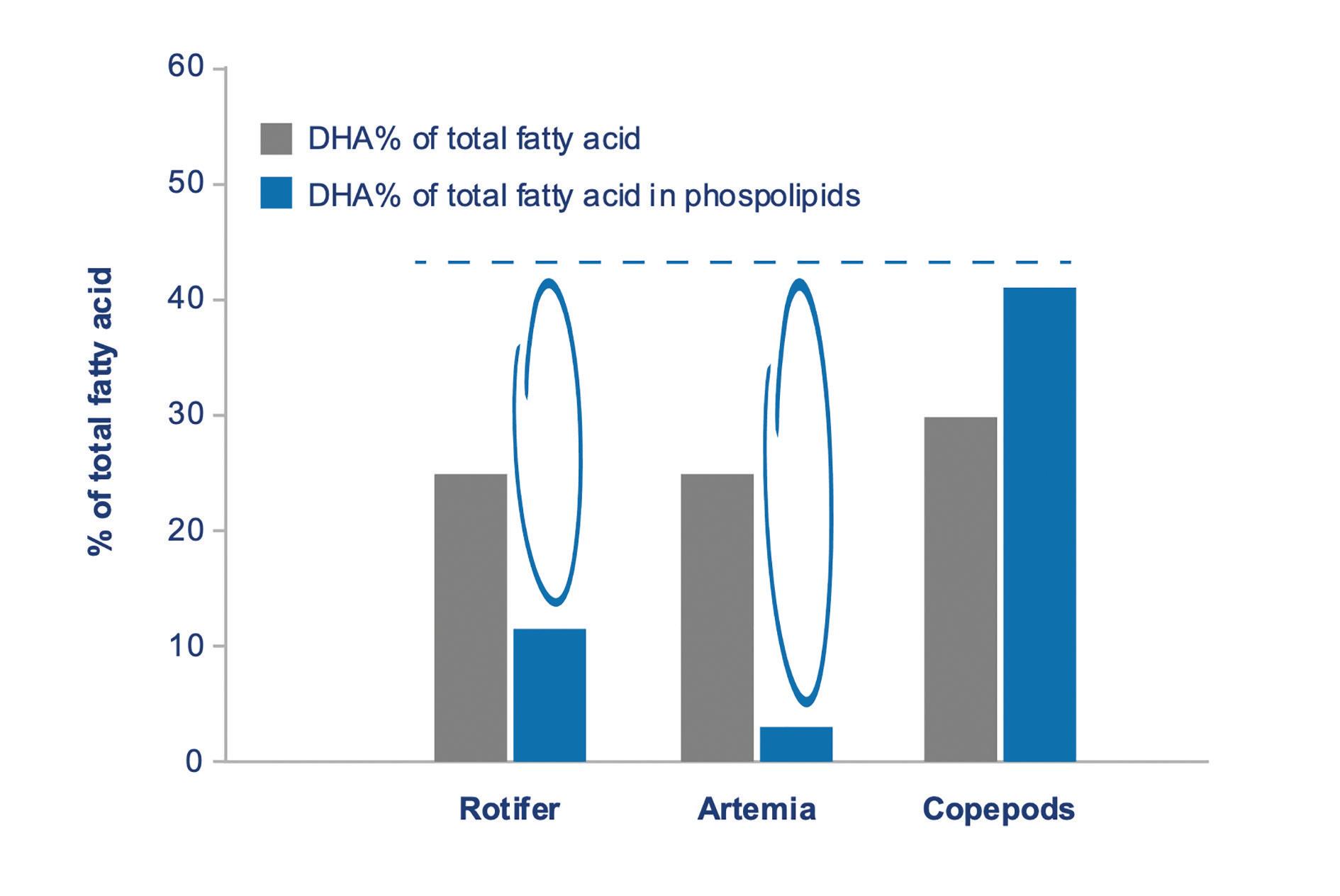
Several studies underscore the importance of incorporating DHA and EPA into the phospholipid fraction of the feed, as this form is significantly more bioavailable for larval growth and development compared to neutral lipids (triacylglycerols). High DHA and EPA in the phospholipid fraction are naturally present in the copepods that many fish larvae prey upon. Rotifers and Artemia contain similar amounts of phospholipids as copepods, but the proportion of those phospholipids represented by DHA and EPA is much higher in copepods than in rotifers and Artemia. While it is possible to elevate DHA levels in total lipids through enrichment with many of the available commercial products, the phospholipid content often remains inadequate for the nutritional needs of developing larvae.
LARVIVA Multigain, BioMar’s complete live feed enrichment formula, has been designed and optimized over the years to enrich rotifers and Artemia with all the essential nutrients required by marine fish larvae. It contains optimal levels and ratios of omega-3 and omega-6 fatty acids to ensure balanced nutrition, enhanced with adequate levels of vitamins, key minerals, immunostimulants, and phospholipids, to support robust health and growth. Additionally, it features Bactocell®, the only probiotic authorized for use in aquaculture feeds within the EU, promoting a
healthy gut microbiome with documented effect on deformity reduction.
Live feed enrichment trials
In order to extract the full potential from LARVIVA Multigain, BioMar has performed a series of trials with both rotifers and Artemia to develop live feed enrichment protocols that optimize the levels of omega3-HUFAs in both total lipids and – more importantly – on phospholipids, ensuring the best possible nutrition for fish larvae.
In the trials, the effects of different variables (temperature, enrichment dose, enrichment duration and live prey density) on fatty acid enrichment in rotifers and Artemia were assessed.
Enrichment trial results
Both in rotifers and Artemia, the results indicated that the duration of enrichment and the dose of LARVIVA Multigain used were critical for optimal fatty acid incorporation into phospholipids.
Based on the findings, when using LARVIVA Multigain, a long (18-20h) enrichment protocol is recommended to allow sufficient time for DHA to incorporate into phospholipids, with higher doses leading to greater enrichment effects, while density and temperature can be adjusted as needed. Once enriched, storing the
Figure 2. DHA% in the total lipids fraction (grey) and in the phospholipid fraction (blue) of enriched rotifer and Artemia compared to natural copepods.
live prey at 4-8°C for up to 24 hours has proven to be a viable option with no major impact on the live prey nutritional value.
Additionally, making practical use of the extensive data collected, BioMar has developed a computer model that allows hatcheries using LARVIVA Multigain to adjust parameters to predict enrichment outcomes or set desired phospholipid DHA levels and receive recommendations for optimizing the enrichment process to meet specific needs and environmental conditions.
Moving onto microdiets
As the perfect complement for optimally enriched live prey, the transition to a high-quality microdiet will have a profound effect on the outcome. But as with the enrichment, for the best potential results in any hatchery, using the best microdiet in the market will not be enough. Feed and feeding need to be welladapted to the technical characteristics of the facility, as well as to the physical behavior of the feed that is being used.
LARVIVA ProStart is BioMar’s premium larval feed, with a manufacturing process that ensures nutrient preservation and maximizes physical quality. It is designed to support early larval development up to the post-weaning phase, it is nutritionally formulated and balanced to comprehensively fulfill all nutritional requirements of marine fish larvae and, as LARVIVA Multigain, it includes the probiotic Bactocell with a proven positive effect on nutrient assimilation in fish. For the best potential results, as was done for the enrichment, BioMar conducted a large-scale trial
with seabream larvae to optimize LARVIVA ProStart feeding protocols. The trial tested various feeding strategies with LARVIVA ProStart and standard diets to determine their effectiveness in promoting larval growth and health.
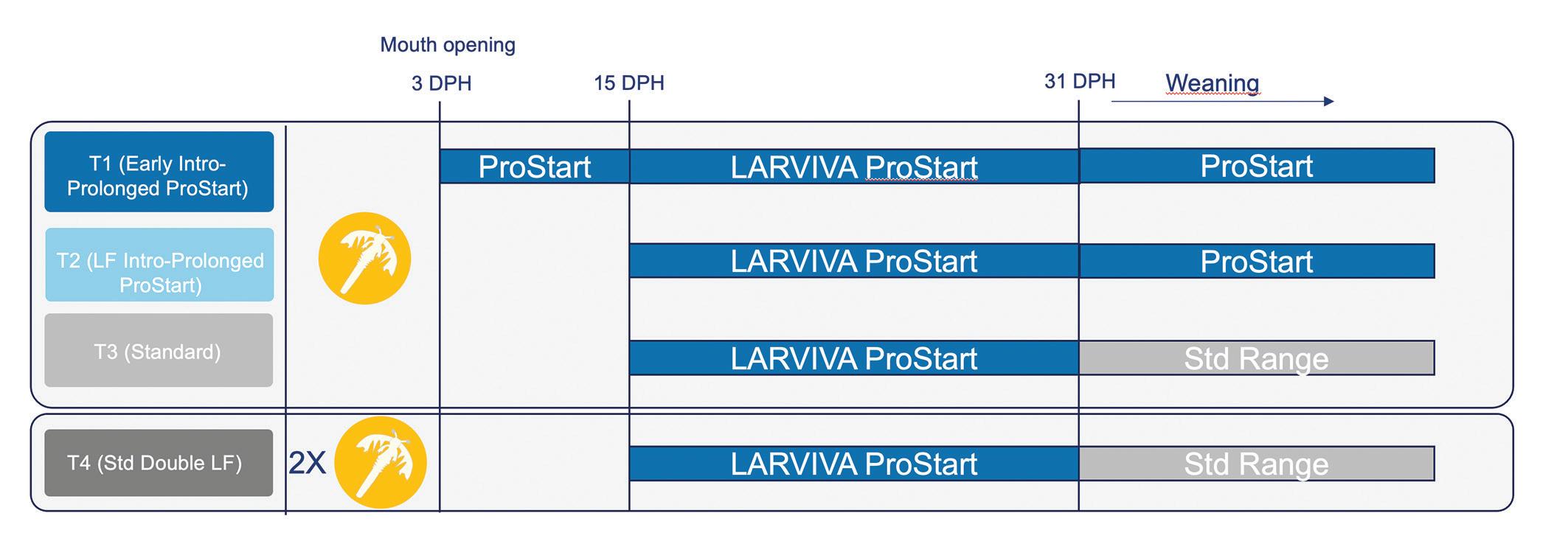
Four different feeding strategies were evaluated:
1. Treatment 1 (Early Intro-Prolonged ProStart): LARVIVA ProStart was introduced at first feeding (3 DPH, Days-Post-Hatching) and continued all the way down to Post Weaning (45 DPH), ensuring the availability of the best possible diet from mouth opening until the pre-juvenile phase.
2. Treatment 2 (LF Intro-Prolonged ProStart): LARVIVA ProStart was introduced right after swimbladder inflation (15 DPH) and continued all the way down to Post Weaning (45 DPH), relying on live feeds for the initial stages (3DPH-15DPH) and ensuring the availability of the best possible diet until the prejuvenile phase.
3. Treatment 3 (Standard): LARVIVA ProStart was introduced after swimbladder inflation (15 DPH) and continued down to 31 DPH, relying on live feeds for the initial stages (3DPH-15DPH), providing a strong microdiet for the critical weaning phase (16DPH-30DPH) and transitioning to a standard and less costly diet for the post-weaning phase (31DPH45DPH).
4. Treatment 4 (Std Double LF): Like Treatment 3, but with double the amount of Artemia, under the assumption that more Artemia could serve as a complement to the use of a lower quality diet during the critical weaning phase.
Figure 3. Diagram of the different treatments included in the LARVIVA ProStart trial
The trials were conducted on seabream larvae, from 3 to 45 dph at the larval facilities of ECIMAT (Estación de Ciencias Mariñas de Toralla, Vigo, Spain), using standard industrial densities and conditions at pilot-scale 400liter triplicate tanks.
Throughout the trial, the parameters used to evaluate the performance of the different groups were survival rate, deformity rate, growth, and the evolution of digestive enzyme activity, which is a crucial indicator of the digestive system’s development in fish larvae. Higher enzyme activity suggests better digestion and nutrient absorption, which are essential for growth and overall health. With all the data generated in the trial, and with the costs of the different feeds and live
feeds, a direct-cost-efficiency analysis was conducted to identify the most effective feeding strategy.
Microdiet trial results
No significant differences in survival rate were observed among the different groups.
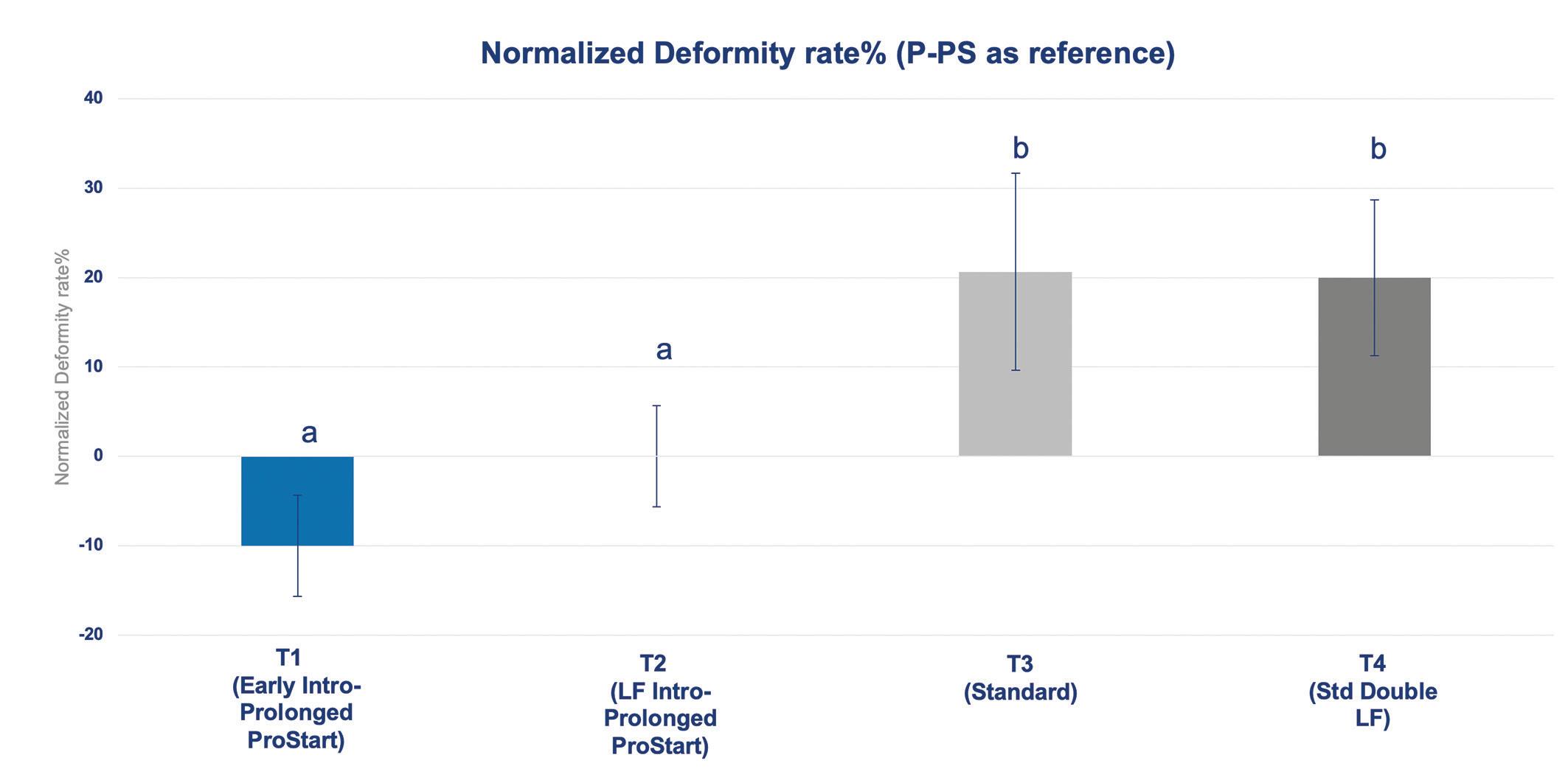
In terms of deformity, the groups with an extended use of LARVIVA ProStart (Treatments 1 & 2) showed significantly lower deformity levels than the groups that move early to a standard diet (Treatments 3 & 4).
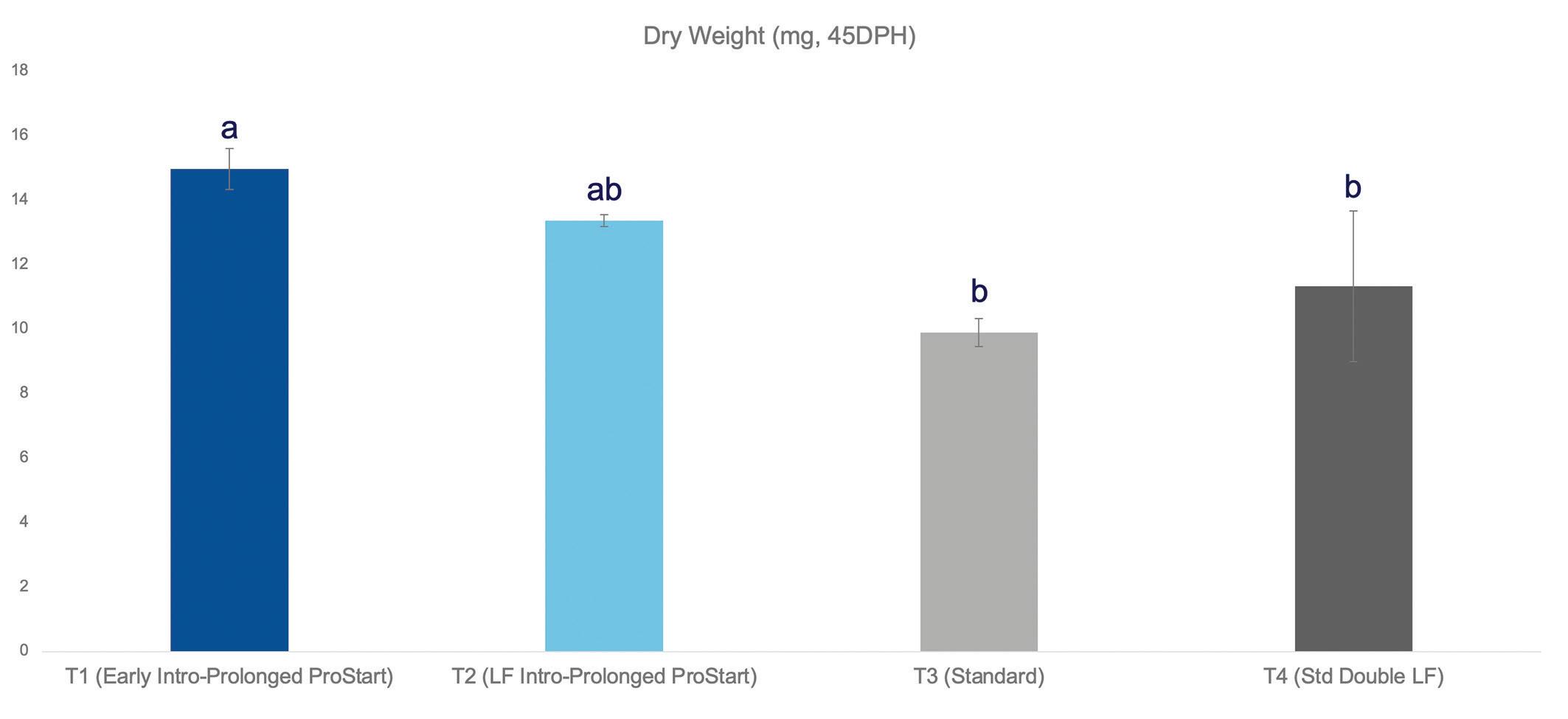
Similarly, for growth, data indicates that larvae fed with LARVIVA ProStart through weaning (Treatments 1 & 2) had significantly higher dry weights at 45 dph compared to those fed the standard range (Treatments 3 & 4).
Figure 4. Normalized deformity rate, using “LF Intro-Prolonged ProStart” (Treatment 2) as a reference
Figure 5. Larval average dry weight at 45 DPH
When monitoring the activity of digestive enzymes (phosphatase, aminopeptidase, trypsin, chymotrypsin and lipase) as indicators of digestive system maturity.
• Larvae fed with LARVIVA ProStart from 3 dph (Treatment 1) exhibited significantly higher aminopeptidase and chymotrypsin activity compared to those fed the standard range (Treatment 3), suggesting a higher ability to break down proteins into amino acids, which are vital for growth and development.
• Additionally, a higher activity of trypsin, amylase and lipase was observed in the larvae fed with LARVIVA ProStart from 3 dph (Treatment 1), suggesting a higher ability of this group to utilize carbohydrates from the diet and to break down fat into fatty acids like DHA and EPA.
The higher digestive enzyme activity in larvae fed with LARVIVA ProStart from 3 dph suggests a more advanced and efficient digestive system. This likely contributed to the improved growth performance and lower deformity rates observed in this group.
Results summary
The findings from this trial unequivocally indicate that the prolonged use of LARVIVA ProStart until the end of weaning enhances larval performance over the use of standard diets at the late weaning phase. Furthermore, indications from this trial and previous experience point towards the early introduction of microdiet as a beneficial strategy to accelerate digestive system maturation translating into improved performance.
Direct-cost-efficiency-analysis
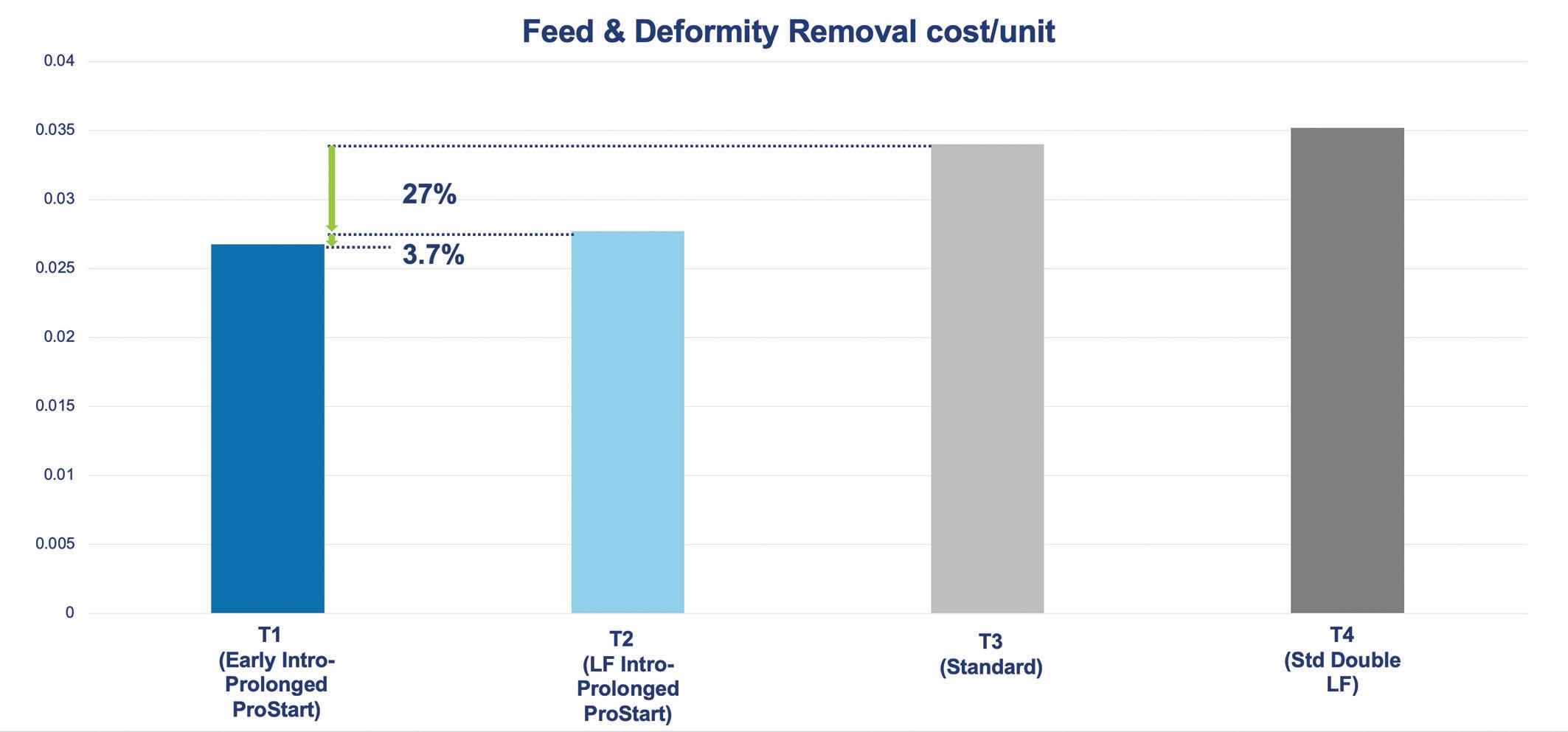
Just as in any other economic activity, achieving cost efficiency is key in the production of marine fish larvae and juveniles. In order to address this aspect, a costdetermination exercise was done for each treatment. The cost of feeding consumables (Artemia cysts, enrichment products, dry feeds) plus the costs of hiring extra staff to remove excess deformities, were combined with the final amount of good quality larvae to obtain a direct-cost analysis.
The results (Fig. 6) indicate that extending the use of LARVIVA ProStart throughout the entire larval and weaning cycle results in very significant reductions in costs. Despite being more expensive than standard diets, adopting prolonged LARVIVA ProStart strategies remains cheaper overall than strategies that rely on standard diets for weaning.
Conclusion
Producing good quality marine larvae is among the greatest challenges that can be found in animal rearing. The complex interplay of factors affecting culture units forces producers to pay enormous attention to detail and to control every aspect of hatchery operation.
Feed and feeding are paramount to achieving this success, starting by enriching rotifers and Artemia with the required fatty acids, particularly in phospholipids, which are crucial for meeting the nutritional needs of fish larvae. LARVIVA Multigain has been designed with this in mind, and the results here presented have
Figure 6. Direct-cost-efficiency-analysis results
served as the base to develop the optimal enrichment protocols for each hatchery to achieve optimal fatty acid levels in their live feed.
Along with the live feed, the introduction, transition and weaning onto dry diets will be instrumental drivers of juvenile quality, the use of LARVIVA ProStart, a topquality microdiet, during larval rearing and weaning has proven to not only enhance culture performance but to do it while significantly reducing production cost when compared to weaning with feeds at a reduced price. Additionally, the early introduction of LARVIVA ProStart at mouth opening contributes to further improving results by promoting an early maturation of the digestive system.
In conclusion, the use of LARVIVA Multigain and LARVIVA ProStart, and the adoption of effective live feed and microdiet feeding protocols are powerful tools for boosting hatchery success. By providing wellbalanced nutrients, optimizing feeding strategies, and maintaining the best possible hatchery conditions, hatcheries can significantly improve the survival rates and overall health and robustness of fish larvae. A strong start is indeed the key to sustained success in aquaculture.
Acknowledgments
BioMar would like to acknowledge the excellent technical support provided by Alberto García and Damián Costas and the rest of the technical staff in ECIMAT for the realization of this work.
More information: Antonio Villanueva González Senior technical advisor for marine fish hatcheries BioMar Group E: antgo@biomar.com
Keshuai Li Scientist Nutrition Formulation BioMar Group E: kesli@biomar.com
START STRONG. STAY STRONG.
LARVIVA is a complete range of hatchery feeds. It is specially developed to maximize the success of the hatchery operations by giving your larvae a strong start ensuring high quality, robust and performing fry ready for the grow out stages.
www.larviva.com
Optimizing microdiets and feeding levels for improved growth and feed conversion in Atlantic halibut post-larvae
João Henriques and Filipe Soares, SPAROS Lda, Eduardo Jiménez-Fernández, Otter Ferry Seafish
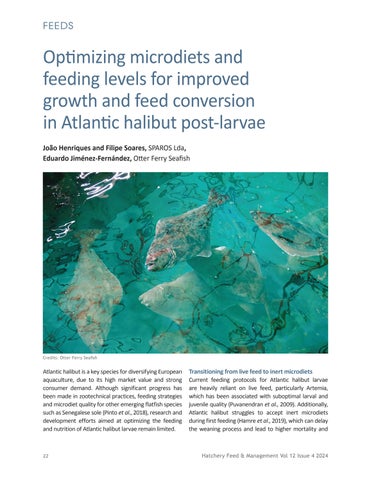
Atlantic halibut is a key species for diversifying European aquaculture, due to its high market value and strong consumer demand. Although significant progress has been made in zootechnical practices, feeding strategies and microdiet quality for other emerging flatfish species such as Senegalese sole (Pinto et al., 2018), research and development efforts aimed at optimizing the feeding and nutrition of Atlantic halibut larvae remain limited.
Transitioning from live feed to inert microdiets
Current feeding protocols for Atlantic halibut larvae are heavily reliant on live feed, particularly Artemia, which has been associated with suboptimal larval and juvenile quality (Puvanendran et al., 2009). Additionally, Atlantic halibut struggles to accept inert microdiets during first feeding (Hamre et al., 2019), which can delay the weaning process and lead to higher mortality and
Credits: Otter Ferry Seafish
reduced growth rates. To address these challenges, it is essential to develop customized microdiets with enhanced attractiveness, suitable nutritional content and optimized physical properties. Furthermore, investigating the impact of varying feeding levels on halibut performance is crucial to improve feeding efficiency. The ultimate goal is to achieve optimal growth and feed conversion while minimizing any negative impact on water quality.
Testing microdiets and feeding levels on Atlantic halibut post-larvae
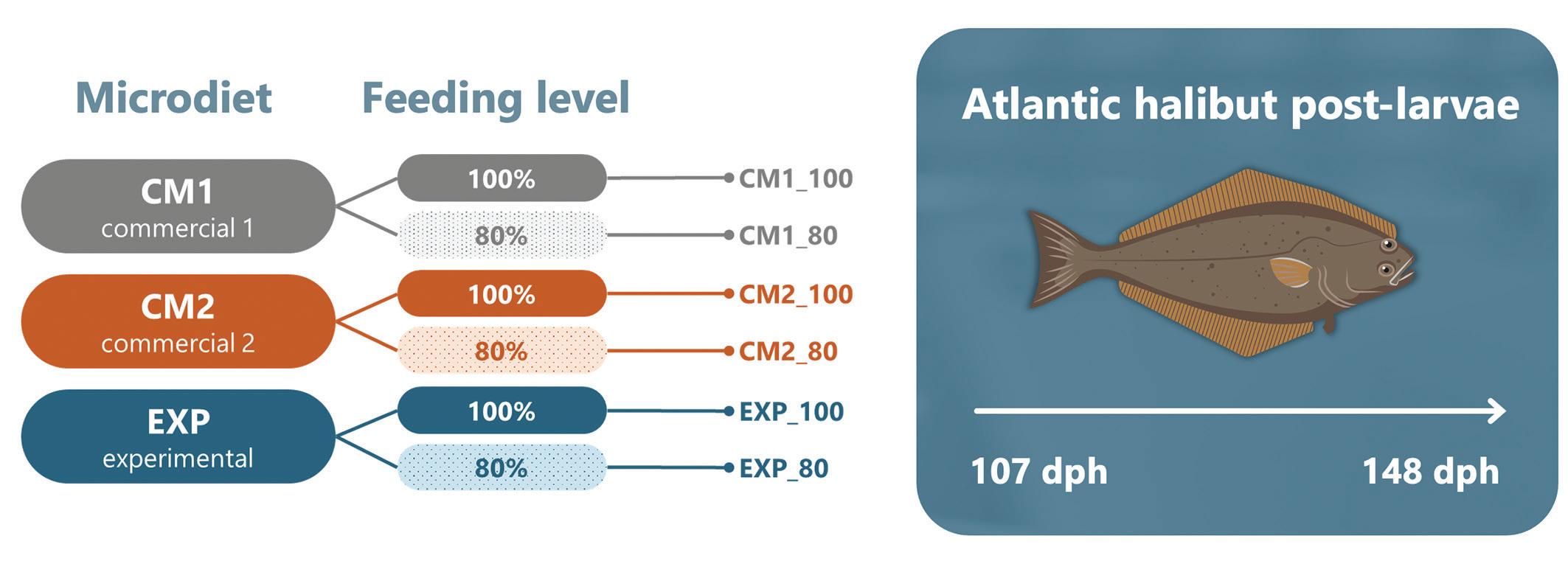
SPAROS and Otter Ferry Seafish partnered up to conduct a study (Trial A) evaluating the effects of three different microdiets, fed at two feeding levels, on the growth performance and feed conversion of Atlantic halibut post-larvae (Fig. 1). Two commercial microdiets (CM1 and CM2) and one experimental microdiet (EXP) formulated by SPAROS were tested at two feeding levels (100% and 80%). The study comprised a total of six treatments, combining each microdiet with each feeding level (CM1_100, CM1_80, CM2_100, CM2_80, EXP_100, EXP_80). Atlantic halibut post-larvae were randomly distributed into 18 tanks at 107 days posthatch (dph) and monitored until 148 dph. Microdiet size ranged from 500 to 1,200 µm and water temperature ranged from 12.2°C to 14.6°C throughout the trial. Feeding levels were adjusted daily based on visual inspection of the tanks and feeders. The total feed ration and leftovers were also recorded at the tank level. Fish were sampled at the beginning (107 dph) and at the end (148 dph) of the trial in order to measure
Wet Weight (WW), Total Length (TL), Relative Growth Rate (RGR, %.day-1), Feed Conversion Ratio (FCR), and survival rate. Additionally, the whole-body composition of halibut post-larvae was analyzed to estimate nutrient retention. All statistical analyses were conducted using R software, considering a p-value <0.05 as significant.
Enhanced performance with a customized microdiet
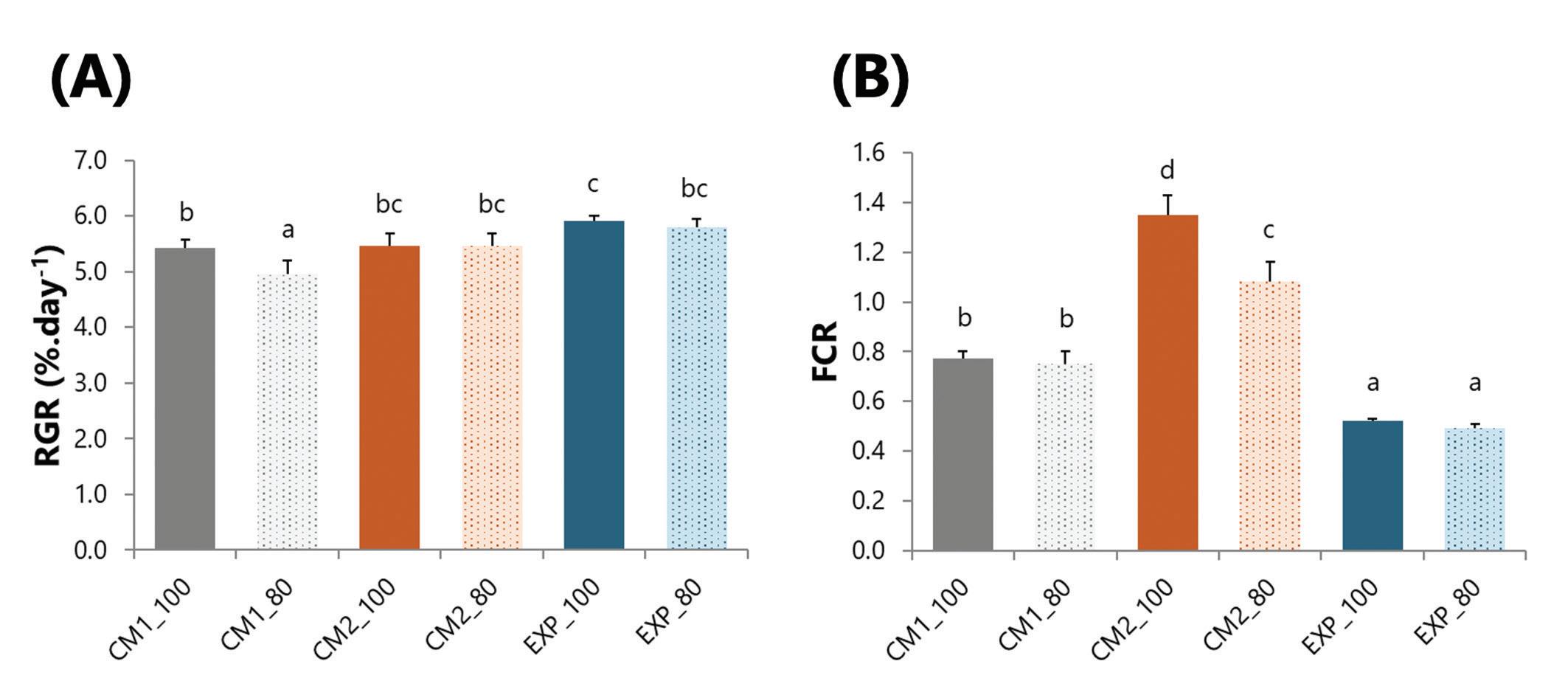
Both CM2 and EXP groups demonstrated increased Relative Growth Rate (RGR) regardless the feeding level. By the end of the trial, only CM1 group exhibited a significant reduction in RGR between the 100% and 80% feeding levels. In contrast, the EXP group had the lowest Feed Conversion Ratio (FCR) at both feeding levels (p<0.05, Fig. 2). Furthermore, Atlantic halibut post-larvae fed on the EXP microdiet tended to have a higher final body weight when compared with fish fed CM1 or CM2 microdiets.
The improved growth performance and excellent feed conversion may be attributed to the higher protein content in the EXP microdiet (66% compared to 56% and 55% for CM1 and CM2, respectively). EXP microdiet also contains a blend of highly digestible ingredients, including a moderate level of pre-digested protein, which has been previously linked to promoting growth and survival in Atlantic halibut larvae (Tonheim et al., 2005). In addition, EXP microdiet’s high phospholipid and low neutral lipid content may further reduce the likelihood of excessive lipid accumulation in the liver (Morais et al., 2007), thus allowing good liver health and normal lipid metabolism during early development stages.
Figure 1. Diagram illustrating the experimental design of Trial A.
2. Relative Growth Rate (A) and Feed Conversion Ratio (B) of Atlantic halibut post-larvae at 148 dph, after being fed three different microdiets (CM1, CM2 and EXP) at two feeding levels (100% and 80%). Results are expressed as means ± standard deviation. Different lowercase letters indicate significant differences between dietary treatments (ANOVA, Tukey-HSD, p<0.05).
Overall, the results of this trial show that improved feed conversion can be achieved during early developmental stages through customized nutrition, and that higher feeding levels may not result in extra growth for halibut post-larvae.
Customized microdiets can help reduce production costs, starting at weaning
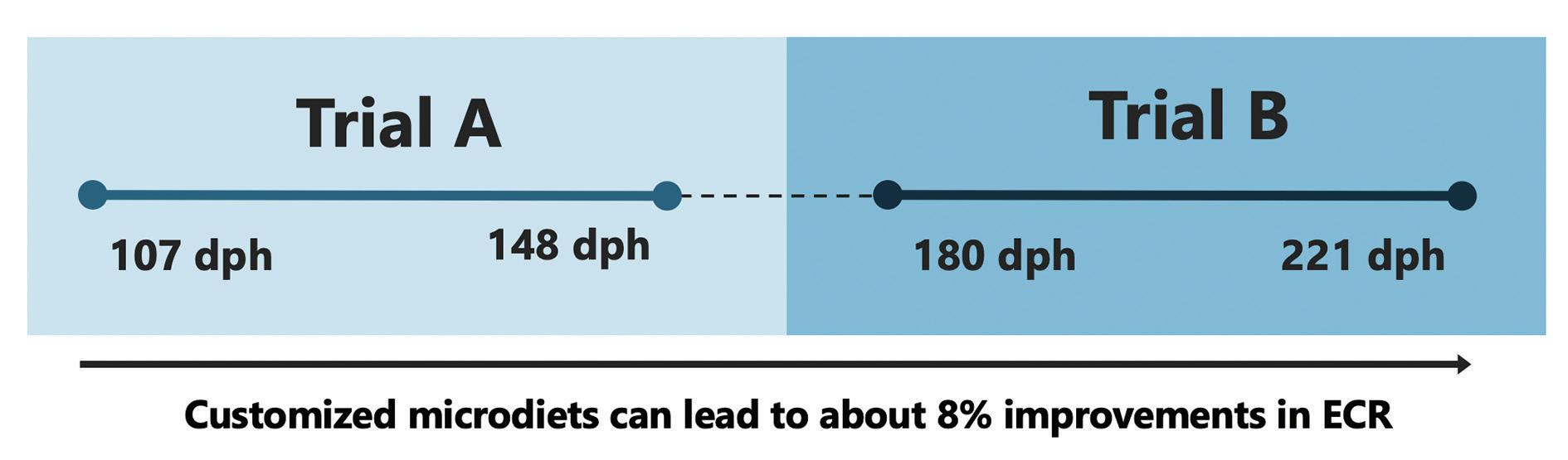
In a subsequent study (Trial B), SPAROS formulated and produced 3 additional customized microdiets (D1, D2 and D3), which were tested with older Atlantic halibut larvae (180-221 dph) and benchmarked against the most widely used commercial diet. Results on growth performance were similar across all fish groups. The main highlight goes to the FCR, with fish fed on experimental diets D2 and D3 tending to have lower feed conversion, similar to what was observed with
the EXP diet in the first trial. Such differences in FCR translate into a substantial reduction in feed used to achieve the same growth performance during the early life stages of Atlantic halibut. Overall, the customized microdiets tested in both trials can contribute to a reduction of up to 8% in Economical Conversion Ratio (ECR; Eur spent on feed per kg of fish produced; Fig. 3), ultimately helping halibut hatcheries to maximize profitability, while keeping good water quality and fish welfare standards.
Leveraging data science for future innovations
These studies were carried out as part of the HATCHTOOLS project, a collaborative R&D initiative between SPAROS (Portugal), Otter Ferry Seafish (Scotland), and FLATLANTIC (Portugal). The project’s goal is to enhance flatfish larvae nutrition and feeding
Figure 3. Diagram illustrating the stages of Atlantic halibut post-larvae evaluated in both trials, highlighting potential improvements in economic conversion when using customized microdiets.
Figure
management through the development of data science tools in the form of a software system tailored for fish hatcheries. The project includes: (i) research into mathematical models to describe larval growth and feeding, combining historical research data with new data generated through nutrient flow studies and respirometry measurements; (ii) the development of data analytics and predictive tools presented as a user-friendly web application; (iii) industrial-scale demonstration of these tools to validate their potential in improving larval nutrition, feeding strategies, and overall hatchery management practices.
The HATCHTOOLS system will enable the automation of research and production data analysis, streamlining processes and improving decision-making in flatfish larvae nutrition and hatchery management. By utilizing an integrated data science approach, future innovations can be achieved more efficiently and rapidly.
References
Hamre, Kristin; Erstad, Børre; Harboe, Torstein, 2019. Early weaning of Atlantic halibut (Hippoglossus hippoglossus) larvae. Aquaculture, 502, 268–271.
Morais, S., Conceição, L. E. C., Rønnestad, I., Koven, W., Cahu, C., Zambonino Infante, J. L., & Dinis, M. T. (2007). Dietary neutral lipid level and source in marine fish larvae: Effects on digestive physiology and food intake. Aquaculture, 268(1-4), 106–122.
Pinto, W., Engrola, S., Conceição, L.E.C., 2018. Towards an early weaning in Senegalese sole: A historical review. Aquaculture 496, 1-9.
Puvanendran, V., & Mortensen, A. (2009). Farming cod and halibut: biological and technological advances in two emerging cold-water marine finfish aquaculture species. New Technologies in Aquaculture, 771–803.
Tonheim, S. K., Espe, M., Hamre, K., & Rønnestad, I. (2005). Pre-hydrolysis improves utilisation of dietary protein in the larval teleost Atlantic halibut (Hippoglossus hippoglossus L.). Journal of Experimental Marine Biology and Ecology, 321(1), 19–34.
Acknowledgements
This work is part of project E!1575 HATCHTOOLS_3539, supported by EUROSTARS-3 programme, and by Portugal and the European Union through ERDF, Algarve 2030, and COMPETE 2030, in the framework of Portugal 2030.
More information: João Henriques Product Manager & Researcher SPAROS Lda E: joaohenriques@sparos.pt
Unlocking economic potential in seabass aquaculture: The long-term benefits of CryoPlankton
Konstantinos Tzakris, Antonio Coli, Nils Tokle, Planktonic
The global aquaculture industry has rapidly expanded, fueled by the demand for sustainable seafood. European seabass (Dicentrarchus labrax) is extensively farmed across the Mediterranean, but today, production profitability is subject to a number of different biological, operational and market challenges. Production companies, need to improve efficiencies in all these areas to be sustainable. The early stages of seabass are crucial, requiring optimal nutrition to ensure survival and healthy growth.
Traditionally, live feeds such as rotifers and Artemia nauplii have been standard for feeding seabass larvae due to their appropriate size and availability. However, these feeds come with challenges, including inconsistent nutritional profiles, labor-intensive production, contamination risks, and rising direct and indirect, obvious and hidden costs. In response, innovative alternatives like barnacle nauplii have emerged, offering improved nutritional value, consistency, and ease of use.
This article presents the findings from a oneyear trial comparing CryoPlankton to traditional live feeds in seabass aquaculture. By focusing on the economic benefits, we highlight how CryoPlankton can improve cost-efficiency, reduce production costs, and enhance profitability – ultimately contributing to more sustainable seabass farming.
The results from the trial have been exceptionally positive, indicating that Planktonic’s live feed could represent a significant step forward in seabass aquaculture. Enhanced growth rates and survival percentages, both in the hatchery and in the ongrowing period, not only have the potential to improve operational efficiency but also to reduce production costs and environmental impact.
Methodology
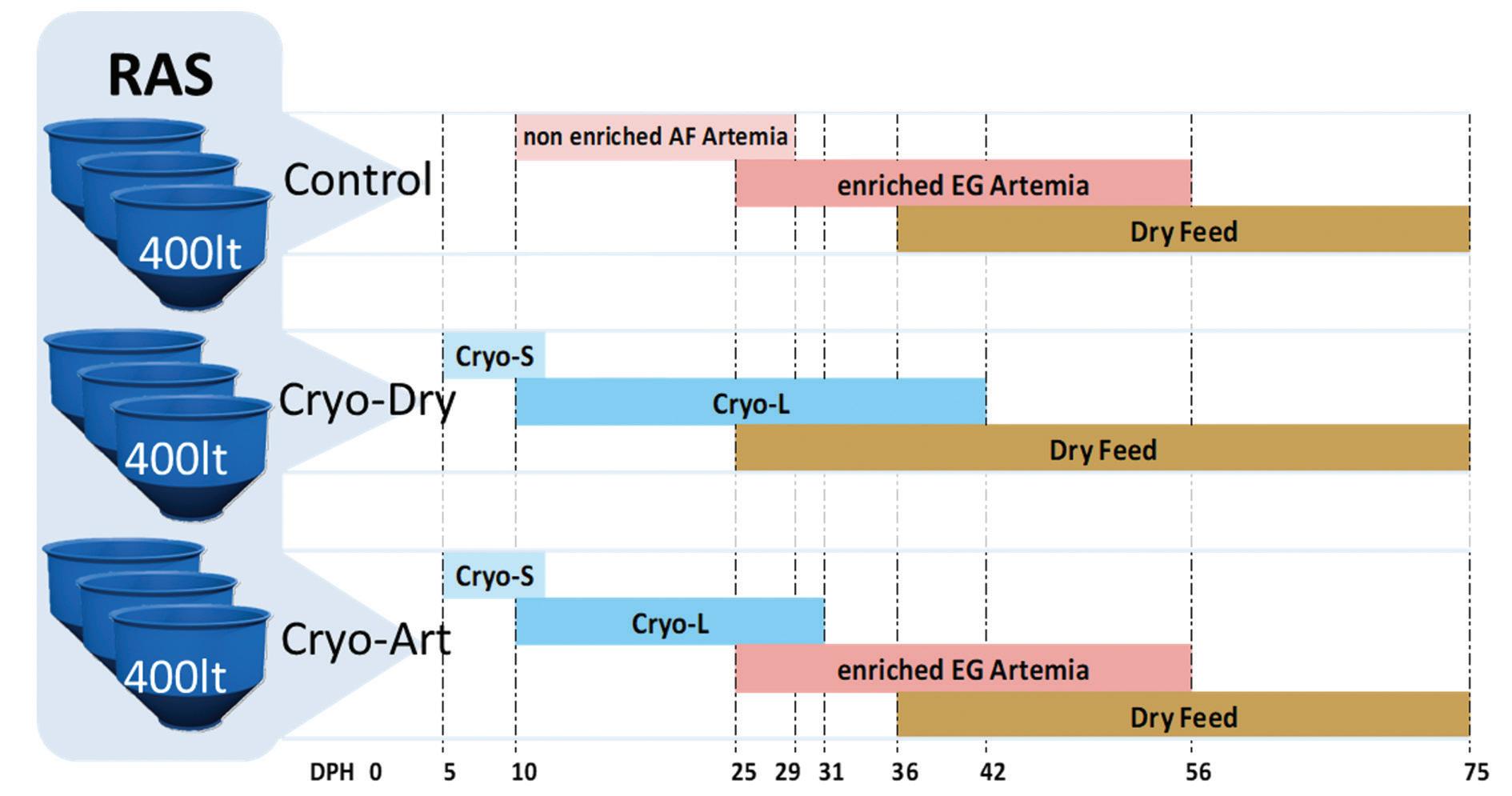
The trial was conducted at the IFREMER facility in Palavas-les-Flots, France, using seabass larvae from the IFREMER broodstock. The larvae were divided into three groups, each receiving different feeding protocols: a traditional control diet, a diet exclusively featuring CryoPlankton (Cryo-Dry Protocol), and a mixed CryoPlankton-Artemia diet (Cryo-Artemia Protocol). All treatments were tested in triplicates (Fig. 1).
For the trial, larvae were stocked at a density of 60 larvae per liter in 400-liter tanks. Over the first 75 days in the hatchery phase, larvae growth, survival, and biomass production were monitored and calculated. Fish were tagged and transferred to a “common garden” for the rest of the trial. As the fish transitioned to the ongrowing period, key metrics such as average weight, survival rate, deformities and size uniformity were recorded, providing insights into the long-term impacts of early CryoPlankton feeding.
Hatchery phase results: Economic advantages of enhanced growth and survival
At the end of the hatchery phase at 75dph, encouraging results were revealed, with CryoPlankton-fed larvae showing notable improvements in growth in terms of weight, length and biomass production and deformities – key factors that directly influence economic efficiency in the hatchery.
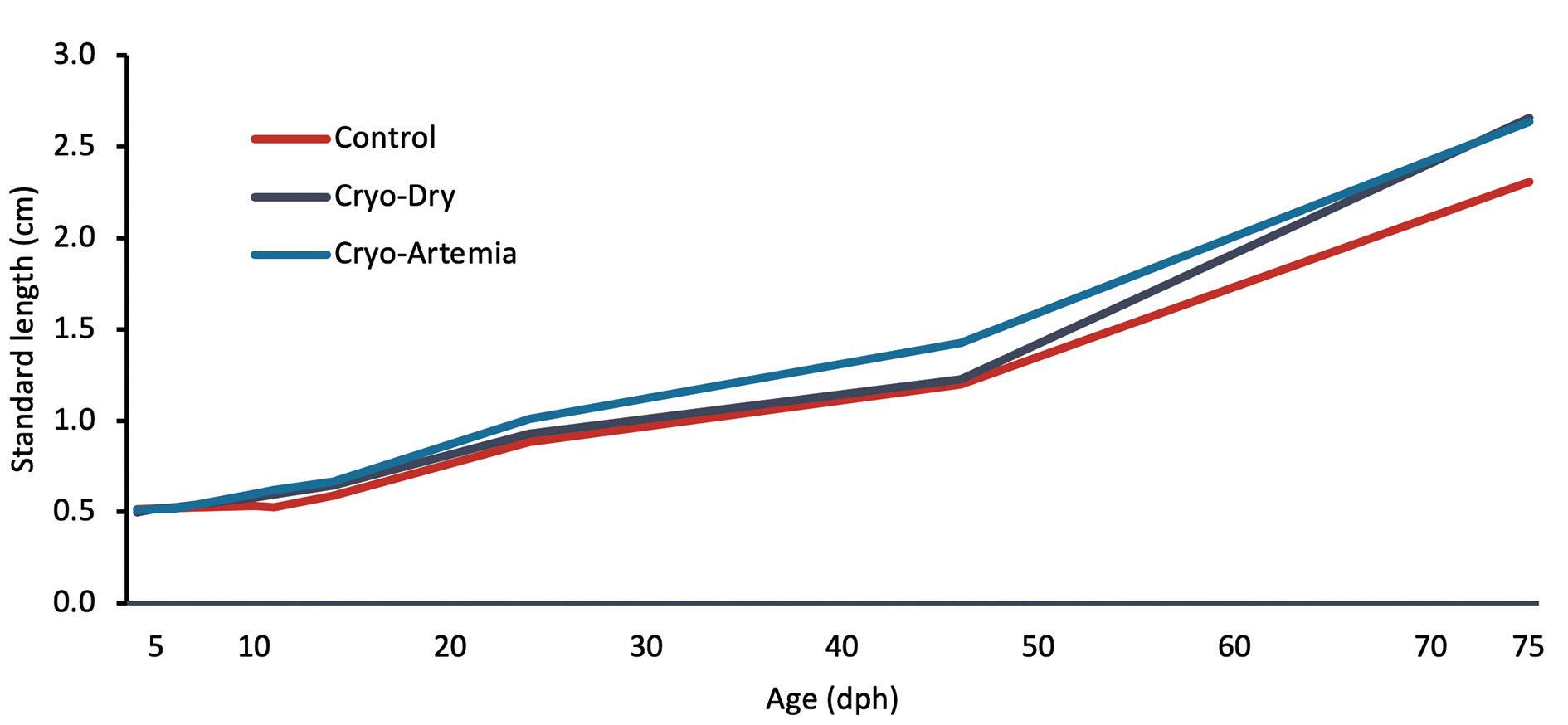
• Increased length: The Cryo-Dry and Cryo-Artemia groups showed a 15% and 14% increase in standard length compared to the control group at the end of the hatchery phase (Fig. 2).
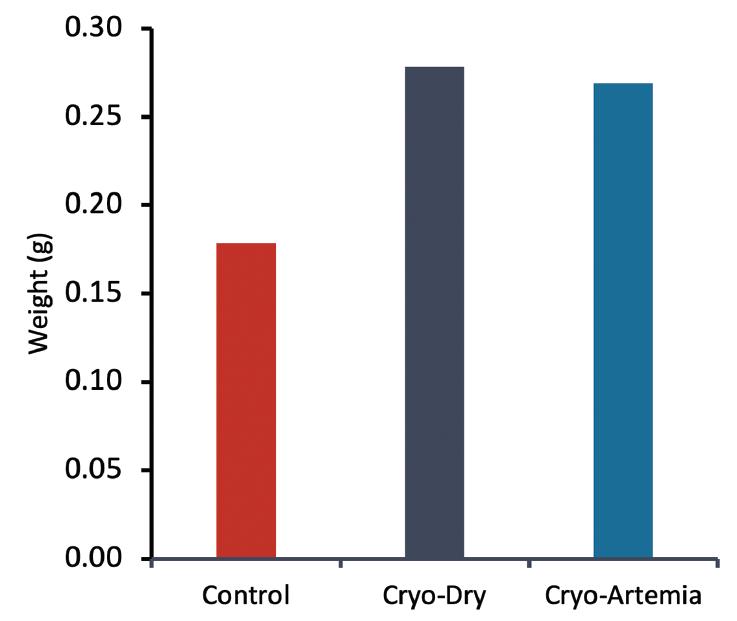
• Higher weight gain: Larvae in the Cryo-Dry group exhibited an average weight 56% higher than the control, while larvae in the Cryo-Artemia treatment achieved a 51% increase (Fig. 3).
Figure 1. Schematic representation of the protocols tested in IFREMER. The control included Artemia nauplii and dry feed, the Cryo-Dry included Cryo-S and Cryo-L as live feeds and dry feed, and finally, the Cryo-Artemia included a co-feeding of CryoPlankton and Artemia and dry feed thereafter.
Figure 2. Larvae average length (cm) for the three treatments.There is a significant difference at the end of the hatchery period. Cryo-Dry performed better than the other two groups.
LIVE FEEDS
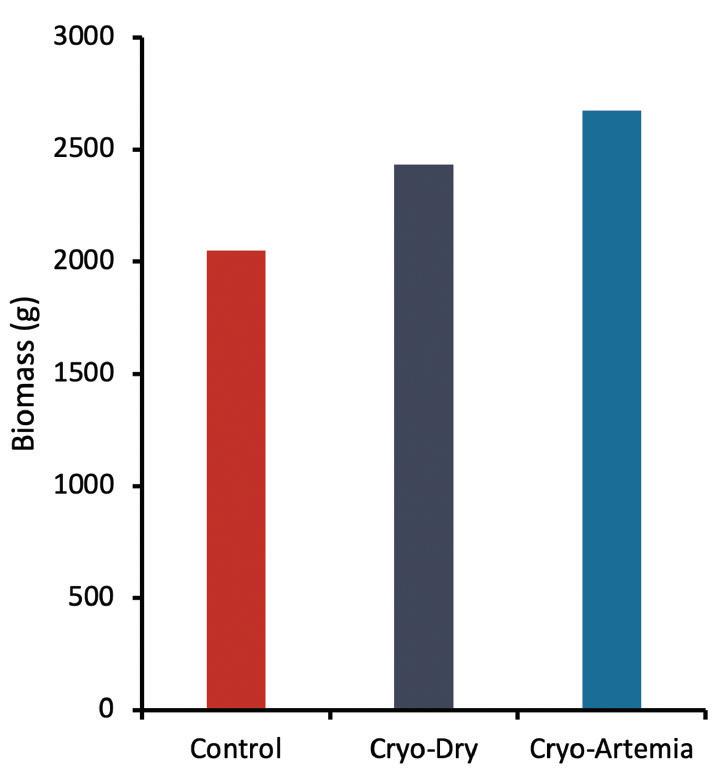
• Biomass production: Despite the differences in survival, the biomass production for the CryoPlankton treatments was higher by 19% and 11% compared to the control for the Cryo-Artemia and the Cryo-Dry respectively (Fig. 4).
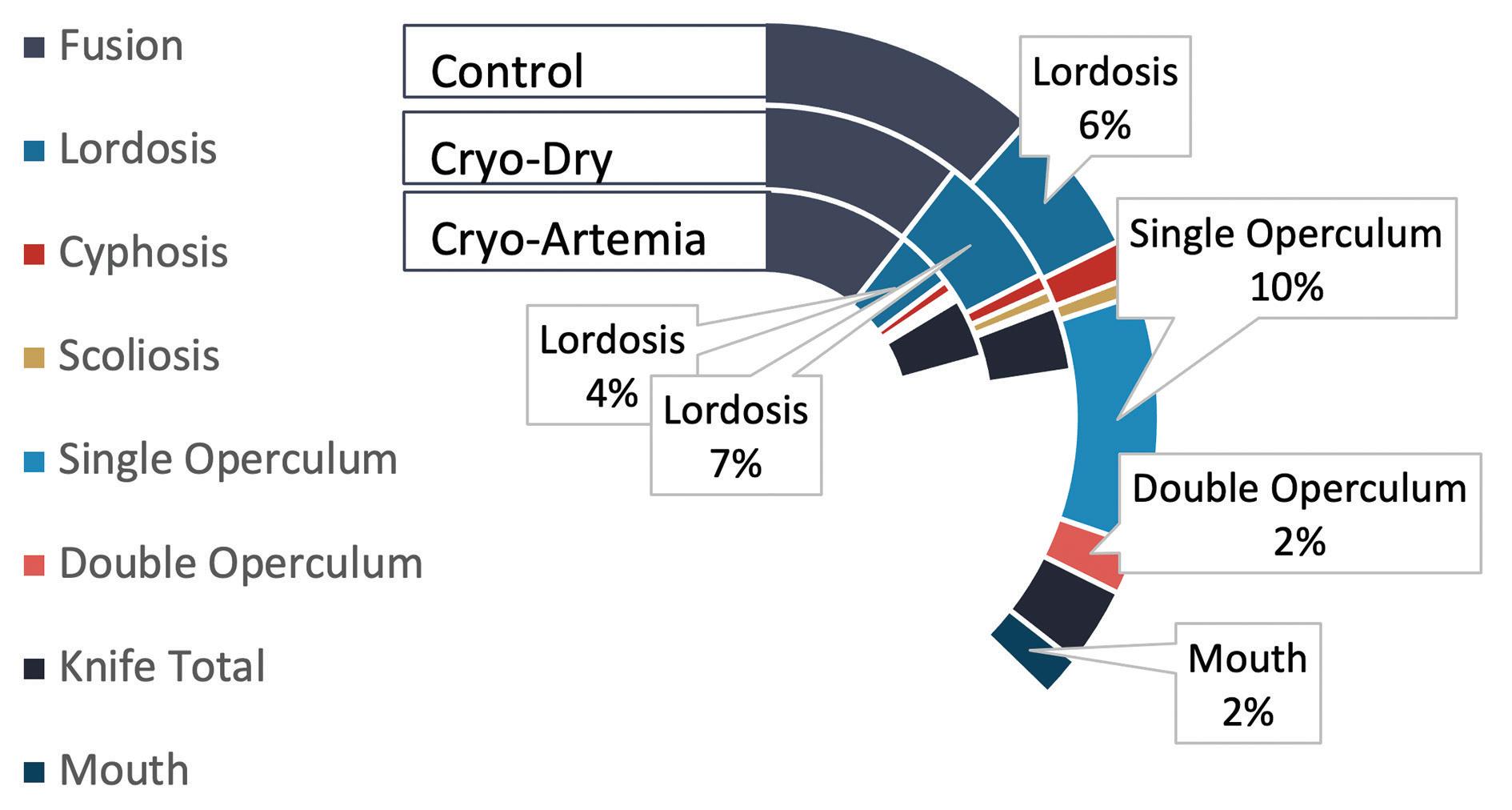
• Lower incidence of deformities: Fish in the CryoPlankton-fed groups had fewer deformities, particularly in the mouth and operculum structures (Fig. 5). Reduced deformity rates decrease waste, improve fry quality, and reduce the costs associated with deformity removal.
All of the above metrics presented statistically significant differences between the CryoPlankton treatments and the control (p<0.05). These advantages allow hatcheries to operate more efficiently, with higher-quality fry entering the next rearing stages, translating to cost savings and increased revenue potential.
Ongrowing phase outcomes:
Lasting biological and economic benefits
The benefits of early CryoPlankton feeding persisted into the ongrowing period, reinforcing CryoPlankton’s potential to improve overall production efficiency.
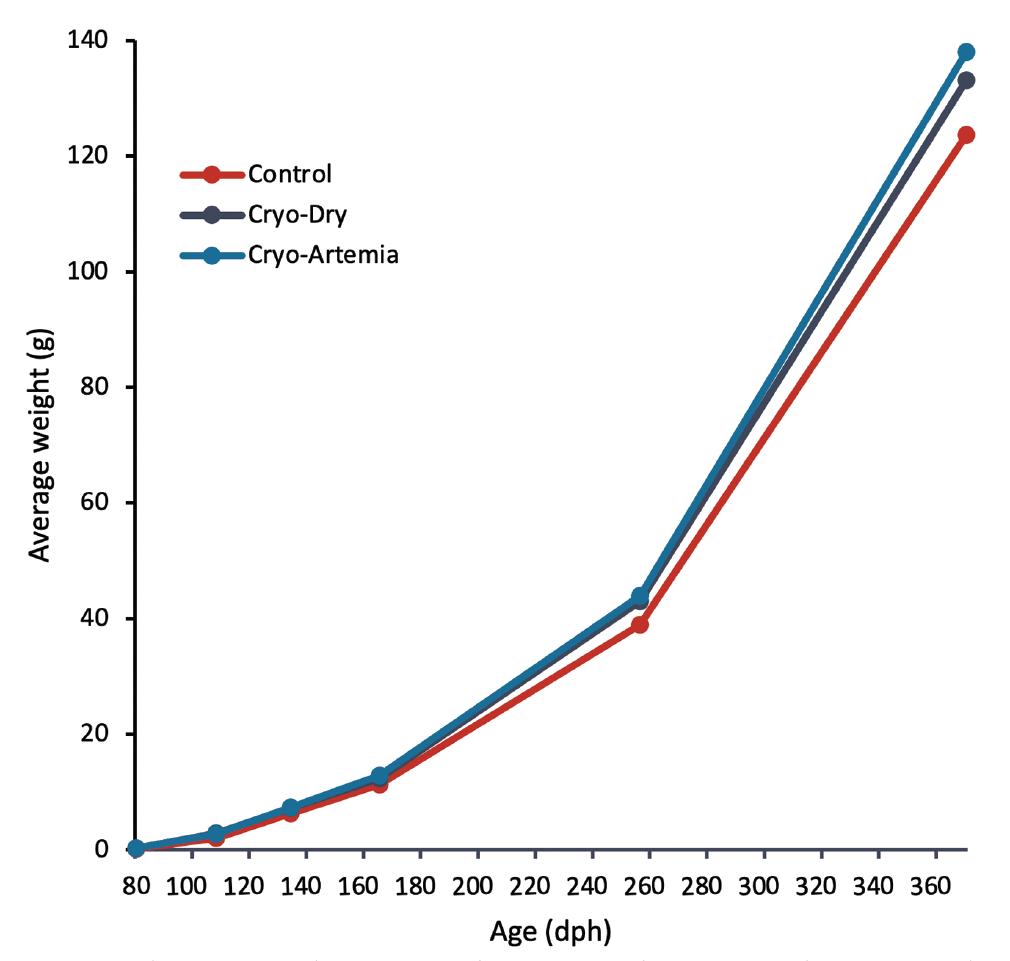
• Increased growth rates: CryoPlankton-fed fish maintained an 8-12% higher average weight than the control group throughout the ongrowing period (Fig. 6). This accelerated growth reduces the time required to reach market size, offering savings on feed, labor, and fixed farm expenses.
Figure 5. Deformity occurrence (% per treatment). Deformities were macroscopically and x-ray-scored. Control treatment presented significantly higher deformities in the operculum and mouth.
Figure 3. Average weight of the three treatments at the end of the hatchery period (75 dph). Cryo-Dry outperformed the other two groups.
Figure 4. Average produced biomass per tank for the three treatments at 75 dph. Cryo-Artemia presented higher biomass than the other two. The difference with the control was statistically significant, while the difference with the Cryo-Dry was not.
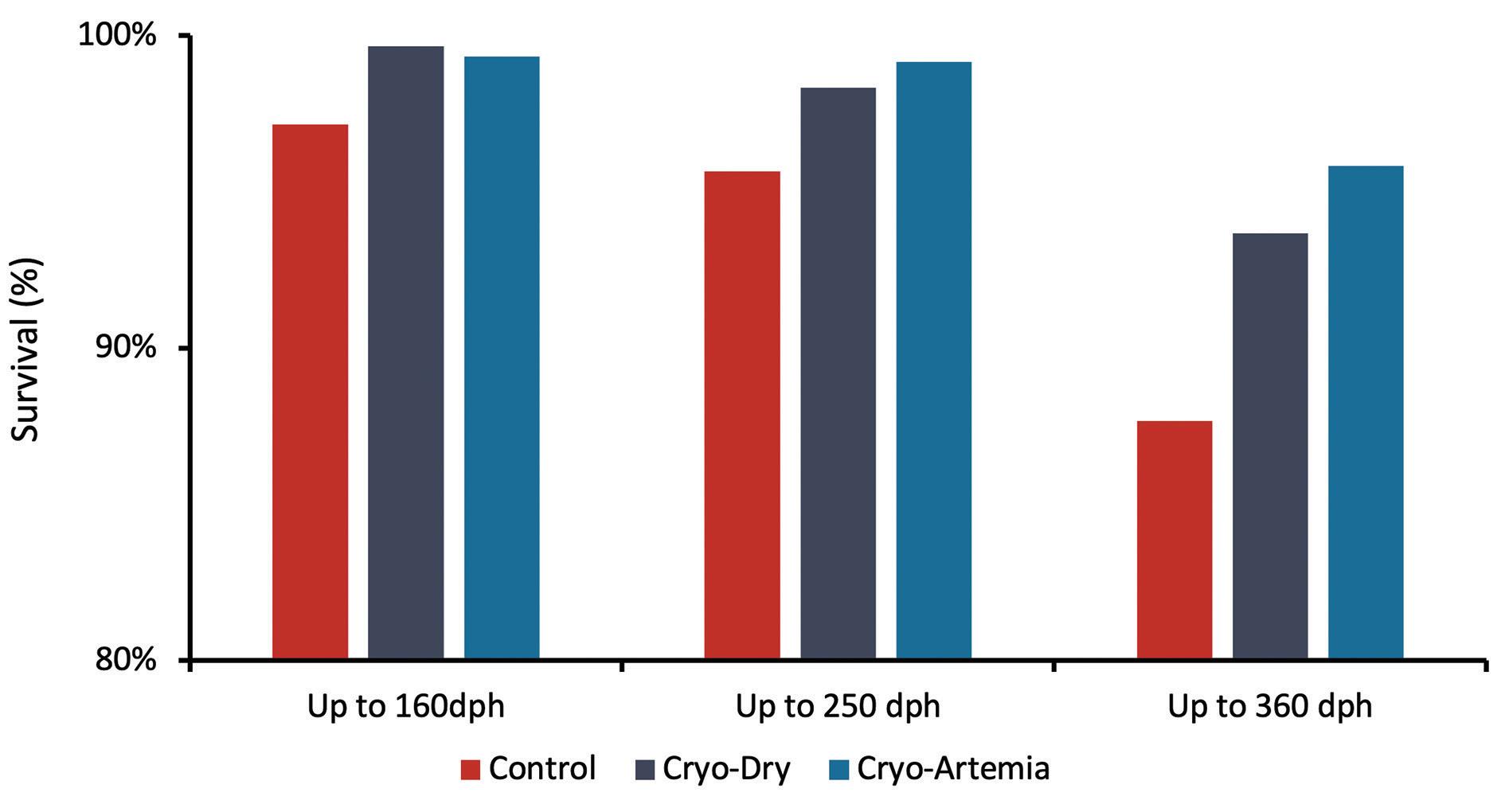
• Increased robustness in the on-growing: Fish presented increased robustness in the long term. The mortality rate of the control was higher compared to the treatments received CryoPlankton in the hatchery (Fig. 7). The mortalities in the on-growing phase are economically significant because fish accrued a major part of the final cost.
• Enhanced size uniformity: Consistency in fish size, observed as a 4-5% reduction in the coefficient
of variance (CV) in CryoPlankton-fed groups. A uniform-size population restrains aggression in the cohort, improving the KPIs. Furthermore, streamlines sales operations and could potentially achieve higher income by having more fish in the desired size category.
The results from the on-growing show the long-term impact of the live feed supplied during the early life stages of the fish. These ongrowing phase advantages underscore CryoPlankton’s capacity to promote both biological health and economic value throughout the production cycle.
Economic analysis: Calculating the economic benefits from hatchery operation
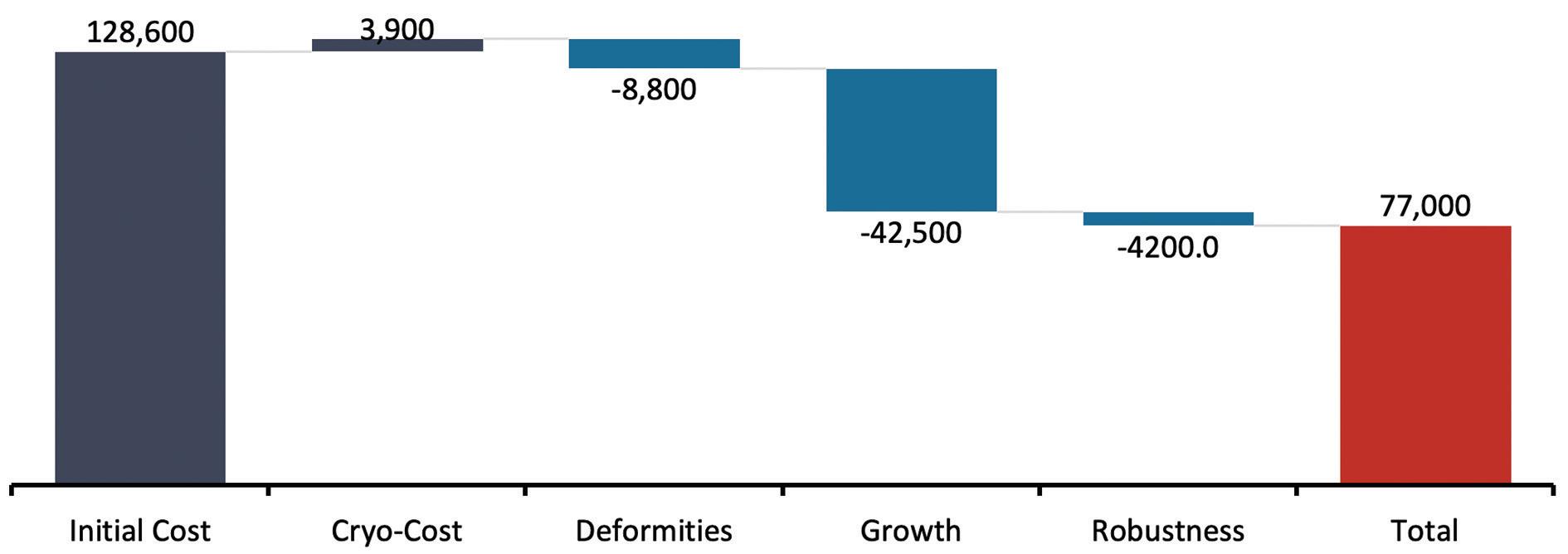
Using CryoPlankton in the hatchery yields significant benefits in terms of monetary value. The initial investment for producing and stocking one million fry to the cages is calculated at €3,900 and is covered multiple times by the benefits in the production process.
• The growth of the seabass fry in the current study reached 54% in terms of weight, reducing the time needed for the seabass larvae to remain in on-land facilities. The benefit of the reduced accommodation on land reaches €42.500 for one million fry transferred to the cages.
• The reduction in deformities in the current study was measured -12% mainly because of single and
Figure 6. Average weight of the fish during the on-growing period at certain age intervals. The Cryo-Artemia exhibited a higher AW difference with the control by 12% and the Cryo-Dry by 8%.
Figure 7. Ongrowing survival (%) of each treatment in the “common garden” in certain time intervals.
double operculum and mouth deformity, which both types, gave a statistically significant difference to the control. Calculating the cost reduction based on the cost of removal processes and the cost of the fish culled, the benefit is at least €8.800 per one million fry produced in the hatchery and transferred to the cages.
• The increased robustness during the nursery period can yield an additional benefit of €4.200 based on the cost of the fish at the average size of mortalities –in the current case 1g.
Economic analysis: Quantifying the cost savings in the grow-out
The economic analysis of CryoPlankton integration
into seabass farming highlights significant potential for profitability improvement. Here’s a breakdown of how CryoPlankton delivers cost savings at each stage of the production process:
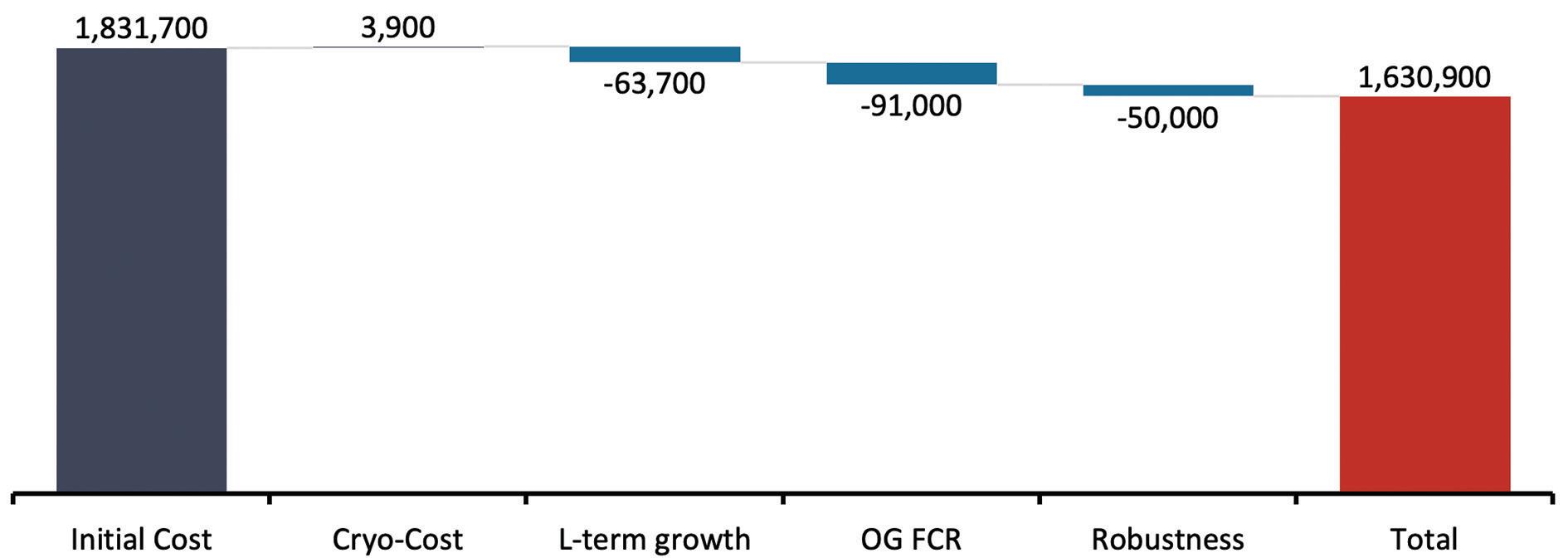
• Reduced fixed costs due to faster growth: With CryoPlankton-fed fish growing faster, the production cycle is shortened. The shortening of the production cycle is equivalent to the growth increase and, based on the current results, the farmer can save up to €63.700 because of reduced fixed costs in the on-growing.
• Improved feed conversion ratio (FCR): The current trial provided indications of more efficient FCRs, resulting in feed cost savings. These indications are consistent with on-the-field observations in
Figure 9. Savings (EUR) at the scenario of stocking one million fry in sea cages. The benefits are calculated based on the study findings. The Initial Cost is the cost to rear one million seabass fry to harvest size.
Figure 8. Savings (EUR) when producing seabass fry at the hatchery with CryoPlankton protocols. Initial Cost is the cost of producing one million fry in the hatchery.
commercial hatcheries and on-land on-growing facilities. Feed expenses represent a substantial portion of production costs, reaching or exceeding 60%, and the optimization of FCR with CryoPlankton consist a valuable opportunity to enhance profitability. The FCR improvement could approximately follow the increased AW of the fish at the end of the trial (8%-12%), resulting in a dry feed saving of up to €91.000 per million fry stocked in the cages.
• Reduced mortality and enhanced fry robustness: Early CryoPlankton feeding supports more robust fish, which are more tolerant to stress and health implications. This robustness contributes to savings of €50,000 by reducing mortality of the larger fish in the on-growing.
Return on investment:
The economic payoff of CryoPlankton
The cumulative savings achieved by integrating CryoPlankton into the seabass diet, according to the results we acquired from the present study, can easily exceed €55.000 for the production of one million fish in the hatchery and an additional €204,700 per million fry stocked in the cages. The savings for one million fry produced in hatchery using CryoPlankton is presented in Figure 8, by saving categories. The overall saving by the benefits documented in the present study reaches 60% of the total production cost. Additionally, for the on-growing benefits a reduction of 11% of the total cost is documented (Fig. 9). This benefit could cover almost the entire fry cost, while it covers multi-fold the €3,900 investment in CryoPlankton to produce the same number of fry. This high return on investment (ROI) highlights CryoPlankton’s potential to positively impact financial outcomes in seabass production based only on the long-term biological benefits.
In summary, for every Euro invested in CryoPlankton feed, producers can anticipate returns that extend well beyond the initial outlay, offsetting a large portion of production costs and enhancing the overall economic viability of seabass aquaculture operations.
Practical advantages in hatchery operations
Beyond economic and biosecurity benefits, CryoPlankton offers practical advantages that simplify hatchery management and enhance production efficiency:
• Ease of storage and use: CryoPlankton’s cryopreserved format allows for easy storage and quick preparation, unlike the time-consuming cultivation of rotifers and Artemia. The live feed is readily available and the risk of running out or live feed culture collapsing is eliminated.
• Consistency and predictability: As a cryopreserved feed, CryoPlankton provides a consistent, highquality diet that is not subject to fluctuations in nutritional profile, which is common with live feeds. Consistency translates to predictable growth outcomes, supporting stable production.
• Reduced operational overheads: By eliminating the need for live feed systems and reducing labor requirements, CryoPlankton helps decrease overheads. That way hatchery personnel can focus on optimizing production rather than managing live feed systems, improving bottom-line outcomes for hatcheries and producers alike.
Conclusion
The findings from this trial show CryoPlankton’s capacity to deliver substantial economic benefits across multiple stages of seabass production. With improved growth rates, enhanced survival, reduced deformities, and robust biosecurity measures, CryoPlankton represents an innovative step forward in sustainable aquaculture.
More information: Antonio Coli Global Sales Director Planktonic AS E: antonio.coli@planktonic.no
This work was financed by the CRYOBASS Transnational Access project (PID22312) from AQUAEXCEL3.0 which received funding from the European Union’s Horizon 2020 research and innovation programme under grant agreement No. 871108
LIVE FEEDS
Unlock the full potential of your hatchery with boosted live microalgae
Larissa Gimenes, Freddy Guiheneuf, Fabrice de Panthou, INALVE
A highly concentrated live microalgae solution offers hatcheries a simplified and more efficient way of feeding larvae, enhancing overall aquaculture performance. This biofilm-based biomass, proposed by INALVE, is considered a game-changing product for hatcheries with proven results for aquaculture producers.
INALVE breakthrough technology allows the commercialization of concentrated live-enriched
microalgae, and the development of a range of “TETRA” products boosted in health-promoting ingredients, perfectly meeting the needs of the hatcheries.
Not just fresh microalgae, live microalgae
Live algae cells play a crucial role in maintaining water quality by reducing some elements such as nitrate and phosphate, as well as toxic nitrite and ammonia, which, if accumulated, can degrade water quality
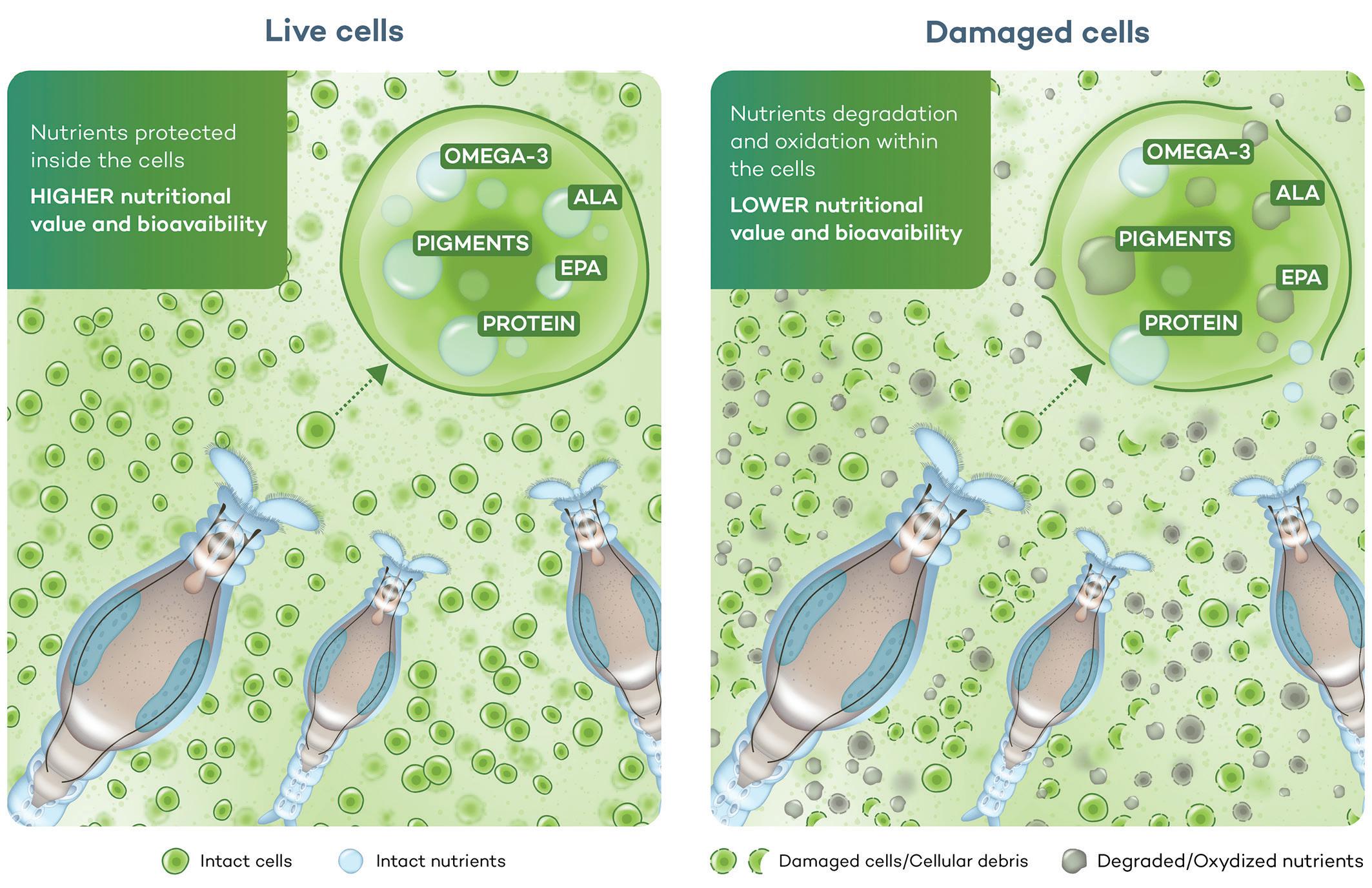
1. Illustrative diagram showing rotifers inside a production tank. On the left: Intact microalgae cells with nutrients protected inside the cells, ensuring higher nutrient bioavailability for the rotifers. On the right: Damaged cells, where the nutrients are degraded and oxidized by the surrounding environment, resulting in lower nutritional value and bioavailability for the rotifers. The images are for illustrative purposes and do not represent the proportional size of each element.
Figure
in rearing larval tanks. Moreover, live microalgae contribute to stabilizing pH and O2 levels, creating a healthier and safer environment for aquatic animals. This results in cleaner, healthier tanks for the larvae and, thus, an increased survival rate, contributing to higher productivity.
Keeping the cells alive and intact also avoids degradation and oxidation of nutrients within the cells (Fig. 1). As a result, the nutrients are protected inside the cells and remain of high quality, rather than being oxidized by the surrounding environment, as is often the case with damaged cells. This ensures greater nutrient bioavailability for aquatic organisms.
Thanks to INALVE’s biofilm technology, the microalgae harvest process consists of a gentle scraping of the biomass, ensuring a final product composed of 100% live cells while being naturally highly concentrated. Other microalgae production techniques involve harvesting methods such as centrifugation to concentrate the highly diluted microalgae cells before transportation. The centrifugation process damages the cells, resulting in a fresh but dead microalgae paste.
Unleash hatcheries’ performance
From a single microalga to a range of products designed for hatcheries seeking a simple, nutritional and effective solution to maximize their performance (Table 1), INALVE has developed a comprehensive offering. Rather than proposing a mix of different strains to cover the whole range of nutritional and health needs, INALVE has
crafted a comprehensive offer to improve the survival rates, productivity, and immunity in aquatic animals. While Tetraselmis suecica was once a neglected strain among fish producers, a new generation of Tetraselmis is now proposed to hatcheries. Thanks to INALVE’s expertise, Tetraselmis is naturally boosted in sulfated exopolysaccharides (EPS), an immunostimulant molecule that significantly contributes to the immune health of larvae.
In addition, INALVE enriches microalgae with essential nutrients fully available for aquatic animals. For example, Tetraselmis suecica naturally contains only EPA, and now INALVE is proposing a microalgae that also contains DHA, a vital omega-3 fatty acid, essential for the optimal development of larvae in aquaculture due to its pivotal role in supporting cognitive function, sensory systems, and overall metabolic health.
As a result, each specific TETRA product, composed of a single microalga, Tetraselmis suecica, fully addresses the nutritional needs of larvae, thus reducing the need to mix various algal strains. Mixing algae strains is a common practice in hatcheries to optimize the health and growth of aquatic animals. Different algae strains provide a wider range of nutrients, including essential fatty acids, vitamins, and minerals. However, mixing algae strains in hatcheries can lead to complexity in management, increased costs, logistical challenges and a higher risk of contamination. INALVE’s strategy is to simplify hatchery production with one nutritional complete algae strain.
TETRA IMMUNO for shrimp (Zoe 1 to PL) for rotifer culture to for rotifer culture to for fish and shrimp for fish (green water tech) increase productivity contribute to the to boost immunity
LIVE FEEDS
Table 2. Applications and key benefits of INALVE’s products
APPLICATION
Live prey production and enrichment
Rotifers, Artemia and copepods in fish hatcheries
Green water technique
Shrimp larvae production
INALVE’S PRODUCT BENEFITS
• Enhance the nutritional value of live prey
• Enhance egg production, thereby boosting live prey production
• Maintain water quality by absorbing residual nitrogen compounds and by stabilizing pH and O2 levels
• Tetraselmis suecica’s bacteriostatic activity helps limit bacterial growth in larval tanks, ensuring a healthier environment for aquatic species
• Promote good survival rate of larvae
• Faster metamorphosis of larvae
• Higher final size of shrimp post larvae
• Increased stress tolerance and pathogen resistance
Tetraselmis suecica is a versatile and nutrientrich resource for aquatic organisms often referred to as “green gold” by aquaculture producers. Thanks to INALVE’s know-how, its properties are boosted for hatcheries.
Live feed for aquaculture and aquariums
Table 2 highlights the various applications of INALVE’s microalgal solutions in aquaculture and the corresponding benefits, demonstrating its significant impact on enhancing productivity, improving animal health, and supporting sustainable practices across diverse aquatic environments.
Moreover, in the realm of shellfish and oyster refinement, INALVE’s solution supports better growth and health in shellfish larvae and supports the refinement process of oysters.
Meanwhile, the solution has shown positive effects on a wide range of marine invertebrates, including polychaetes, tunicates, sponges, gastropods, sea urchins, sea cucumbers, and seahorses, contributing to their growth and overall health.
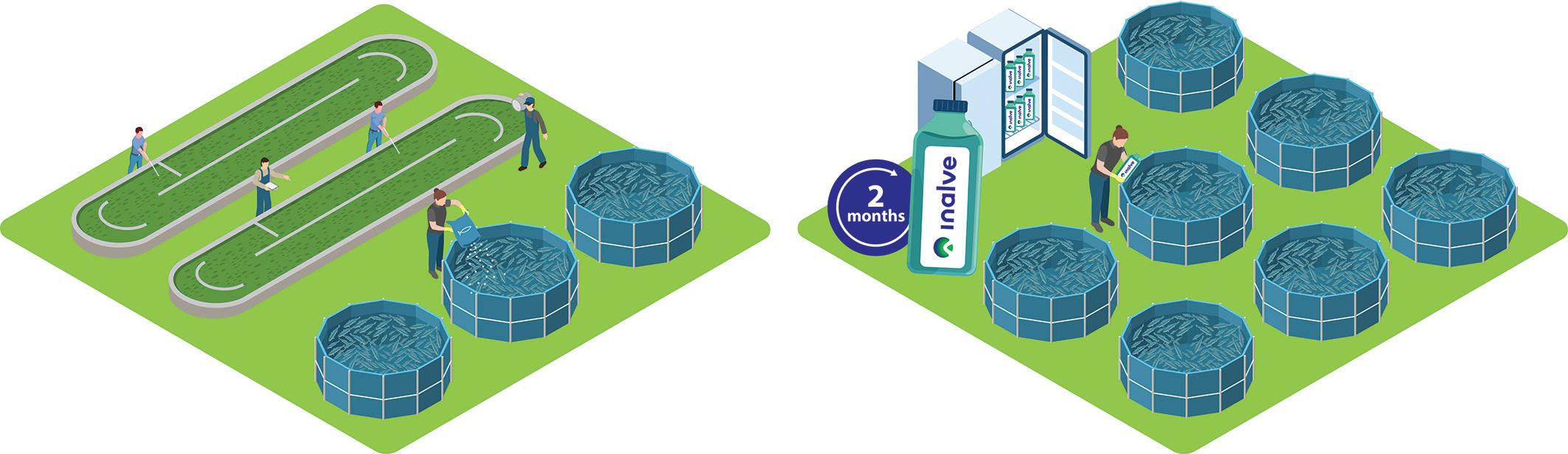
Swap your algae room for a bottle of live algae
This ready-to-use, biosecure, and standardized solution composed of 100% live cells allows hatcheries to
Figure 2. Comparison of human resources and space utilization in microalgae production: The left diagram illustrates internal microalgae production within hatcheries, while the right image showcases a hatchery using INALVE’s solution for larval nutrition.
Land resources
Equipment resources
Human resources
Biosecurity risks
Availability of the biomass
Concentration
Shelf life
MICROALGAE PRODUCTION BY HATCHERIES INALVE’S OFFER
Microalgae cultivation represents a
Compact bottles significant part of hatchery’s land
Specialized equipment for cultivation,
1 basic refrigerator monitoring, and environmental control
Trained teams
High, due to extensive microalgae
1 basic refrigerator
Guaranteed biosecure product cultivation and open systems
Several weeks to achieve large
Ready-to-use product volumes of microalgae culture
Highly diluted culture, usually
Highly concentrated product, < 0.5 g/L of dry matter up to 100 g/L of dry matter
Must be used soon after production
focus entirely on their core business, raising aquatic animals, instead of having a dedicated space for cultivating microalgae.
High production costs, low productivity, and contamination risks are some of the few challenges in cultivating live algae in hatcheries (Fig. 2). Not only do they consume time, space, and human resources, but they also divert producers from focusing on raising aquatic animals.
To address these challenges, INALVE has developed ready-to-use live microalgae products for the larval stage. They can be stored in the fridge for up to two months while preserving the majority of live cells (>50%), making them more effective for larvae compared to dead, frozen, or centrifuged microalgae. The many benefits provided by these products allow hatcheries to reduce their production costs.
Case study: INALVE’S benefits in shrimp larvae production
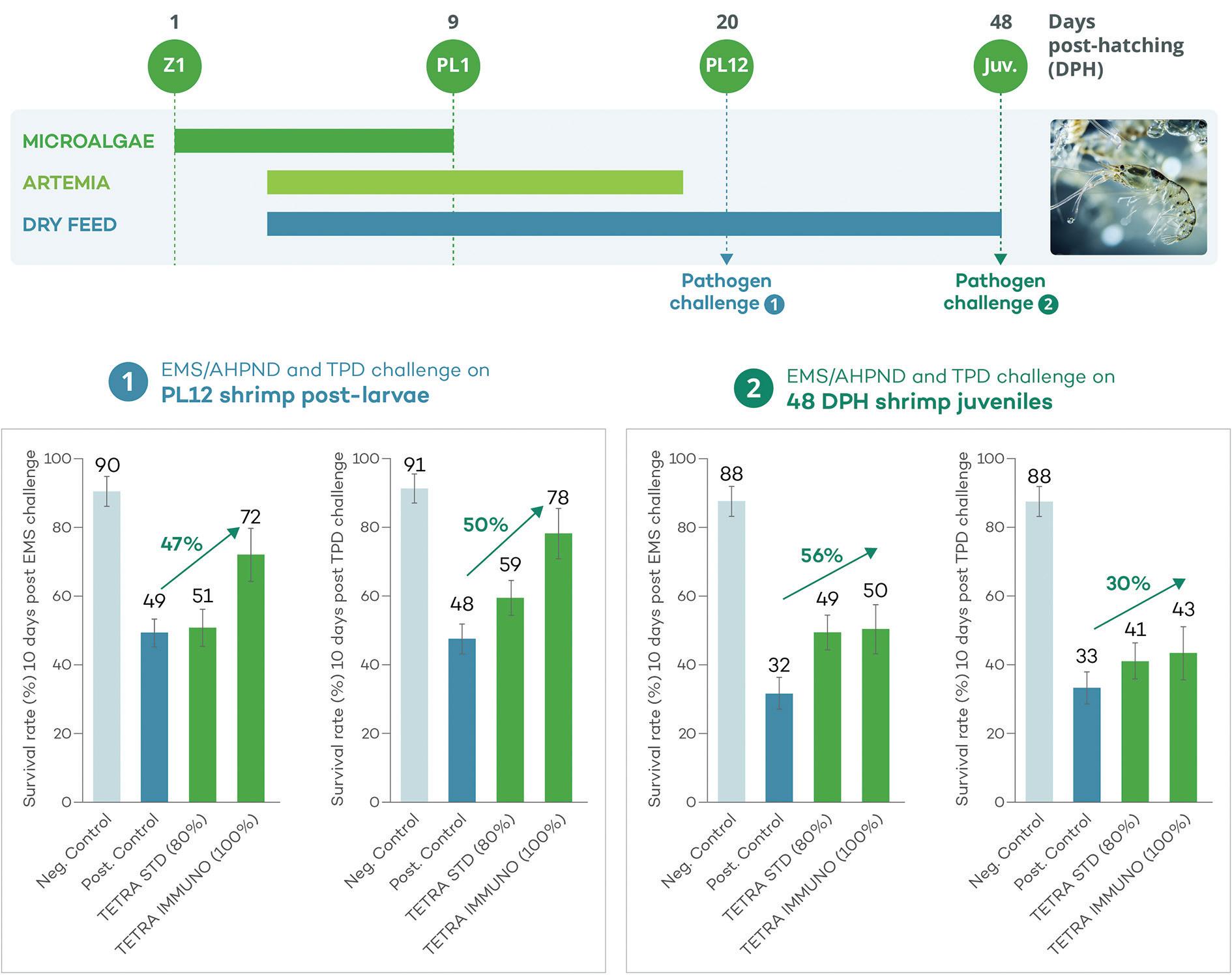
INALVE tested Tetraselmis suecica in shrimp larvae and compared it with live Thalassiosira weissflogii finding a boost in immunity and pathogen resistance with its microalgae (Fig. 3). The benefits found were: higher or similar survival rate of shrimp larvae production, faster metamorphosis resulting in the higher final size of post-larvae, and increased stress tolerance and
Storable 2 months in the fridge, keeping a majority of live cells
pathogen resistance, resulting in better survival at PL10-12 and juveniles following a salinity stress test or when challenged with Vibrio parahaemolyticus inducing EMS/AHPND (Early mortality syndrome/ Acute hepatopancreatic necrosis disease) and TPD (Transparent post-larval disease). This pathogen resistance is particularly noteworthy at the farm stage, as it could result in approximately 50% higher shrimp survival rates in the event of disease outbreaks.
Why not try it yourself?
As a hatchery manager, you provide the foundation for producing high-quality, disease-free juveniles, ensuring continuous and reliable production cycles. Even if you have an algae room and you excel at producing phytoplankton internally, the challenges of maintaining that production are significant, as previously mentioned. Ensuring efficient hatchery production by choosing high-quality microalgae is extremely important for the overall production process. Having access to a highly concentrated and live microalgae solution is therefore extremely valuable.
If you’re looking to enhance the nutrition and growth of your aquatic animals, it’s time to explore what INALVE’s TETRA solutions can do for your operation. The company offers you the opportunity to try its products for free and assess all their benefits.
Table 3. Comparison of key parameters between microalgae production by hatcheries and INALVE’s offer.
Figure 3. Higher resistance of shrimp post-larvae (PL10-12) and juveniles (48 DAH) produced using TETRA STD or TETRA IMMUNO compared with live Thalassiosira weissflogii when challenged with Vibrio parahaemolyticus inducing EMS/AHPND (Early mortality syndrome/Acute hepatopancreatic necrosis disease) and TPD (Transparent post-larval disease).
In 2016, Inalve was born with a bold mission:
Create a disruptive technology for microalgae production that contributes to ensuring global food security with minimal environmental impact.
Aquaculture provides a sustainable solution to meet this challenge, reducing dependency on traditional livestock and crops and enhancing food security.
Microalgae play a crucial role in the aquaculture industry, serving as a fundamental component in the diet of various aquatic species, particularly in their early life stages. It is precisely at this initial stage of production that INALVE has chosen to concentrate its efforts by creating a range of products specifically designed for hatcheries.
More information: Larissa Gimenes Technical Sales Engineer E: larissa.gimenes@inalve.com
Fabrice de Panthou Business Manager E: fabrice.depanthou@inalve.com
Freddy Guiheneuf Scientific Director E: freddy.guiheneuf@inalve.com
Bacillus consortium combats Vibrio population and improves larval shrimp survival in hatcheries
Edward Gnana Jothi George, Harikumar S, Rajalekshmi M, Kemin AquaScienceTM
In recent years, tremendous progress has been made in the shrimp hatchery sector, especially in the application of probiotics to improve shrimp productivity and health. Given the long list of new pathogens, using an efficient probiotic consortium is thought to be the safest, most sustainable, and most successful way to fight infections. The application of probiotics, beneficial microorganisms that promote the host’s health in shrimp hatcheries has demonstrated encouraging outcomes in terms of raising high-quality post larvae, reducing infections, and increasing survival rates.
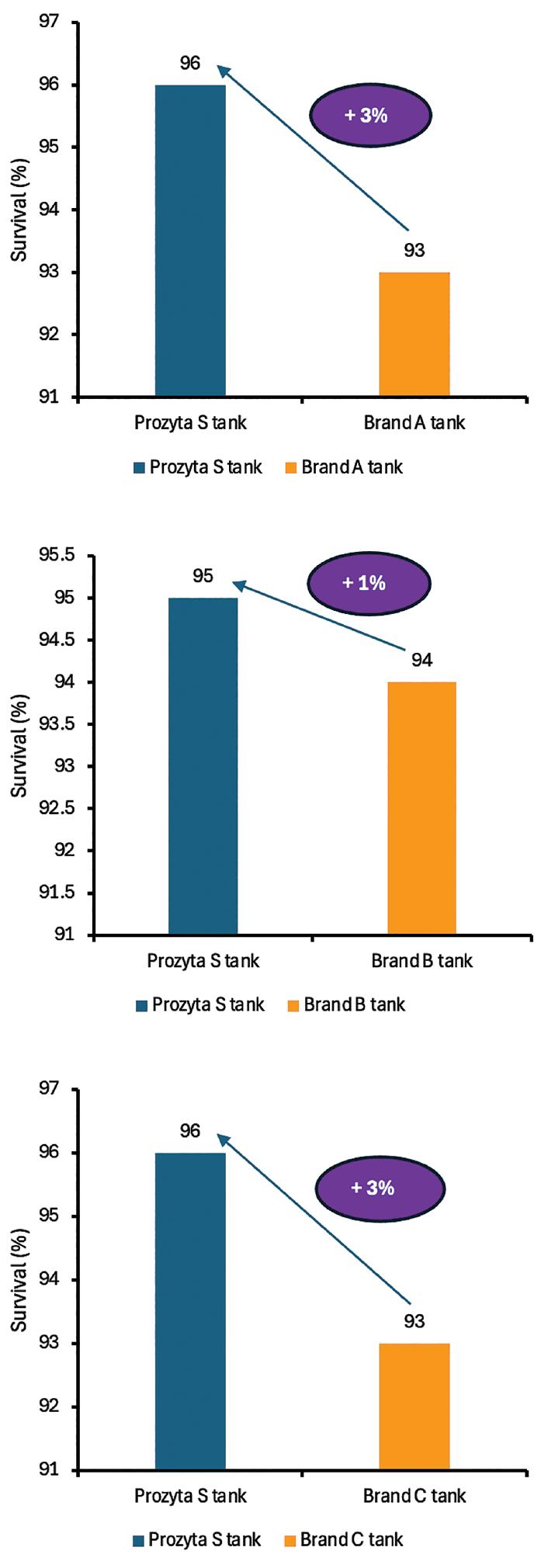
A unique Bacillus consortium named Prozyta™ S has been developed specifically for shrimp hatchery applications. This article aims to shed light on the vital role probiotics play in ensuring the success of shrimp hatchery operations while demonstrating Prozyta S’s supremacy over competing brands in terms of improving larval shrimp survival as well as mitigating Vibrio in larval rearing tanks.
A study spanning 18 days was conducted in three commercial shrimp hatcheries located in India. According to hatchery protocols, 2 million nauplii (stage 5) of were stocked in the larval rearing tanks, each of which had a culture water capacity of 10MT and an initial water volume of 3.5 MT. The nauplii were fed with microalgae (Chaetoceros spp.) and Artemia salina, and then commercial larval feed started at the Zoea II stage. To maintain water quality, the culture water volume was gradually increased by 0.5 MT daily from Nauplius 5 to PL1 stage. After that, a 10% water exchange was implemented and maintained until harvest. Two groups were used in the experiment: one was treated with Prozyta™ S at a daily dosage of 1 ppm in culture water from Nauplius 5 to PL9 stage (till packing), and an adjacent tank was kept as a control tank that used probiotic brands in accordance with the hatchery standard procedure. Before being
MICROBIAL MANAGEMENT
equally dispersed throughout the larval rearing tanks, the required quantity of the probiotic product was measured, mixed with sufficient tank water for three minutes manually, and subsequently filtered through a 100µm nylon mesh.
At the experiment’s outset and conclusion, the Vibrio concentration in the cultivation water was quantified
using the spread plate method on TCBS agar plates in the hatchery’s in-house laboratory. The survival rate of post-larvae was assessed at the end of larval rearing (PL stage 8) using the scoop technique followed by confirmation using formula: Final harvest/initial stocking × 100 for each respective tank. A subset of PLs was dispatched to the laboratory for seed quality evaluation.
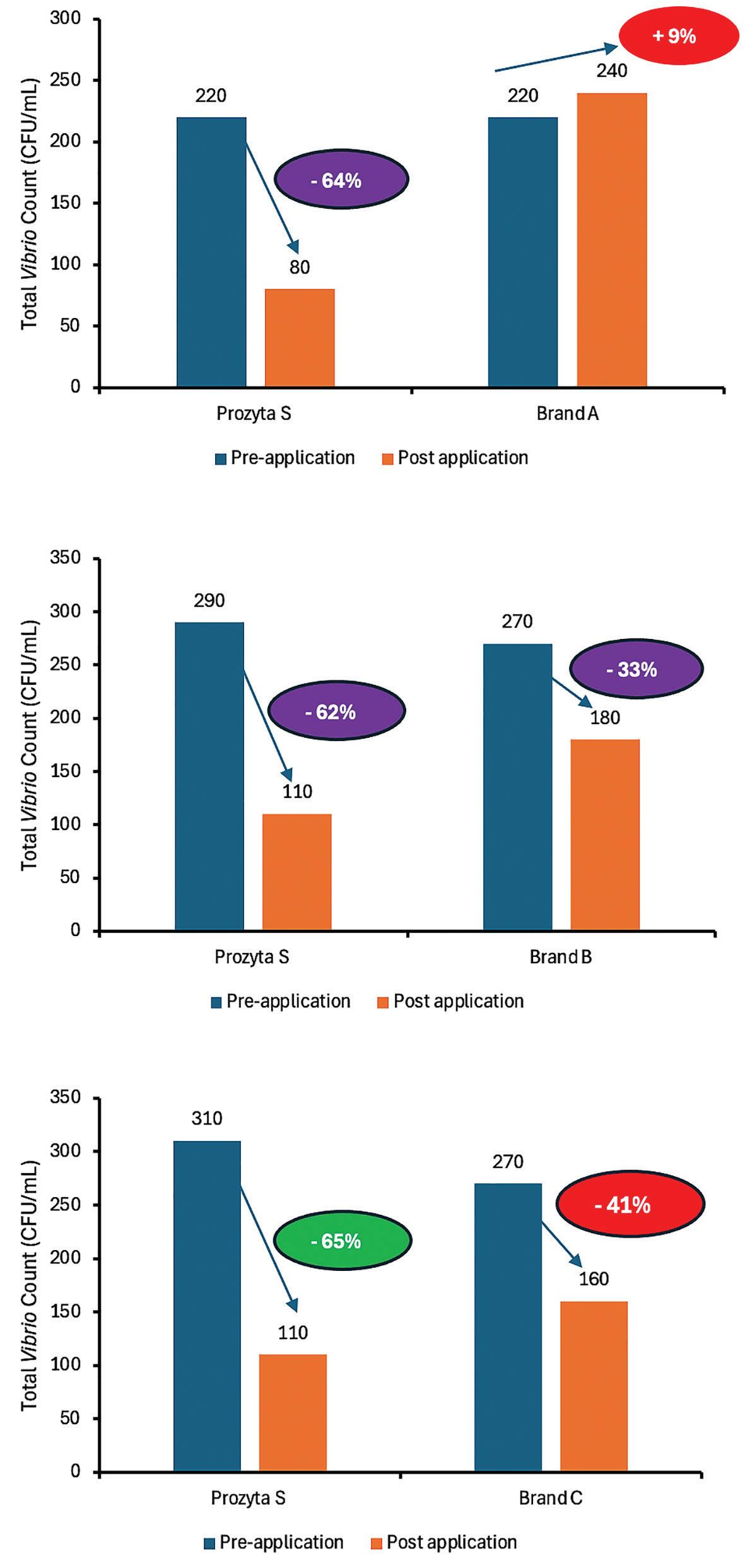
Figure 1. Total Vibrio count in larval rearing tanks treated with Prozyta™ S and competitor brands. All the data represented as a mean of duplicates.
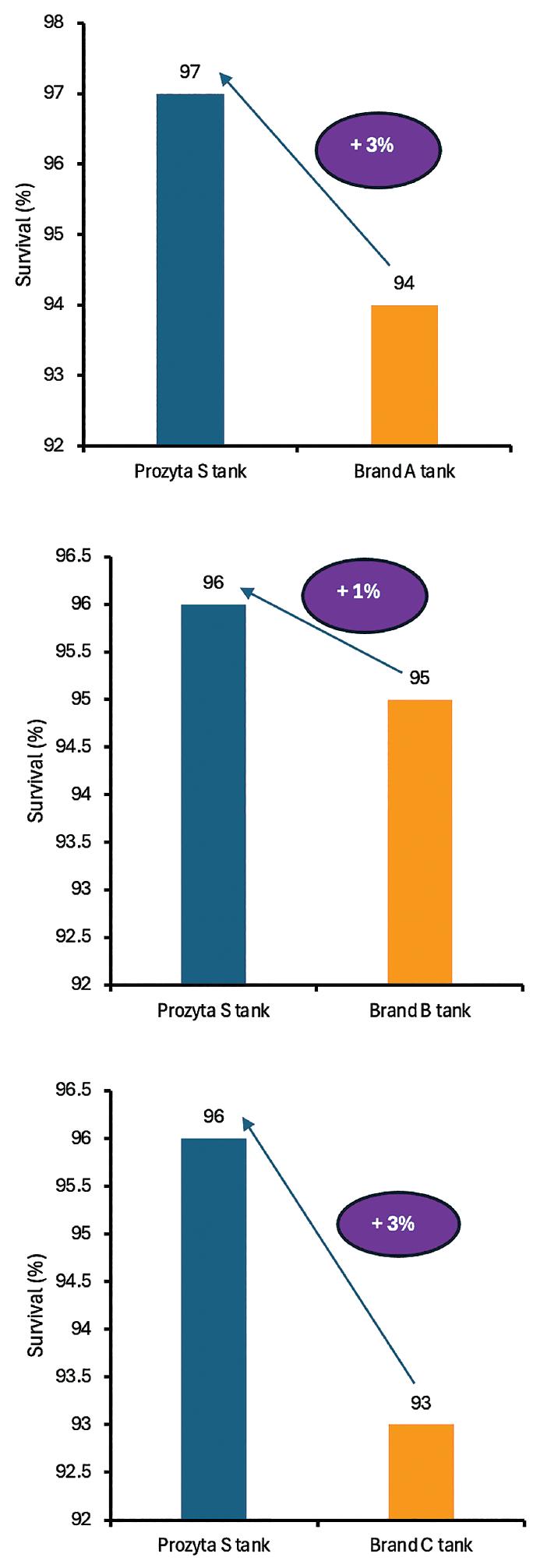
Figure 2. Final survival rate (%) of post larvae shrimp
To assess seed quality parameters, the average total length (mm) and size variation (CV%) were calculated based on physical measurements of 20 post-larvae. A minimum of 6 post-larvae from each group at each hatchery underwent microscopic analysis to detect fouling organisms and endoparasites, identify swollen hindgut, and evaluate rostral spines and post-larvae age.
MICROBIAL MANAGEMENT
The muscle tissue and gut were extracted from 20 postlarvae samples per group, and the content was weighed to determine the muscle-to-gut ratio. To evaluate salinity tolerance (stress test), 20 post-larvae from each group were exposed to water with different salinity levels (from 35 PSU to 15 PSU, 10 PSU, and 5 PSU) and observed for survival rates, swimming behavior, and
Figure 3. Survival rate (%) upon salinity stress test. All the data represented as mean of duplicate experiments.
Figure 4. Survival rate (%) upon formalin stress test. All the data represented as the mean of duplicate experiments.
MICROBIAL MANAGEMENT
overall health over 48 hours. Additionally, post-larvae were introduced into a container with 200 ppm of formalin in culture water to assess their stress tolerance and robustness.
Results and discussion
Prozyta™ S has shown promising results in reducing Vibrio population and improving larval shrimp survival in hatcheries. The Vibrio genus is notorious for causing significant mortality in shrimp hatcheries, particularly during the early larval stages of shrimp. According to studies, probiotic administration can dramatically lower Vibrio parahaemolyticus levels, a common pathogen linked to serious outbreaks in shrimp farms (Amiin et al., 2023).
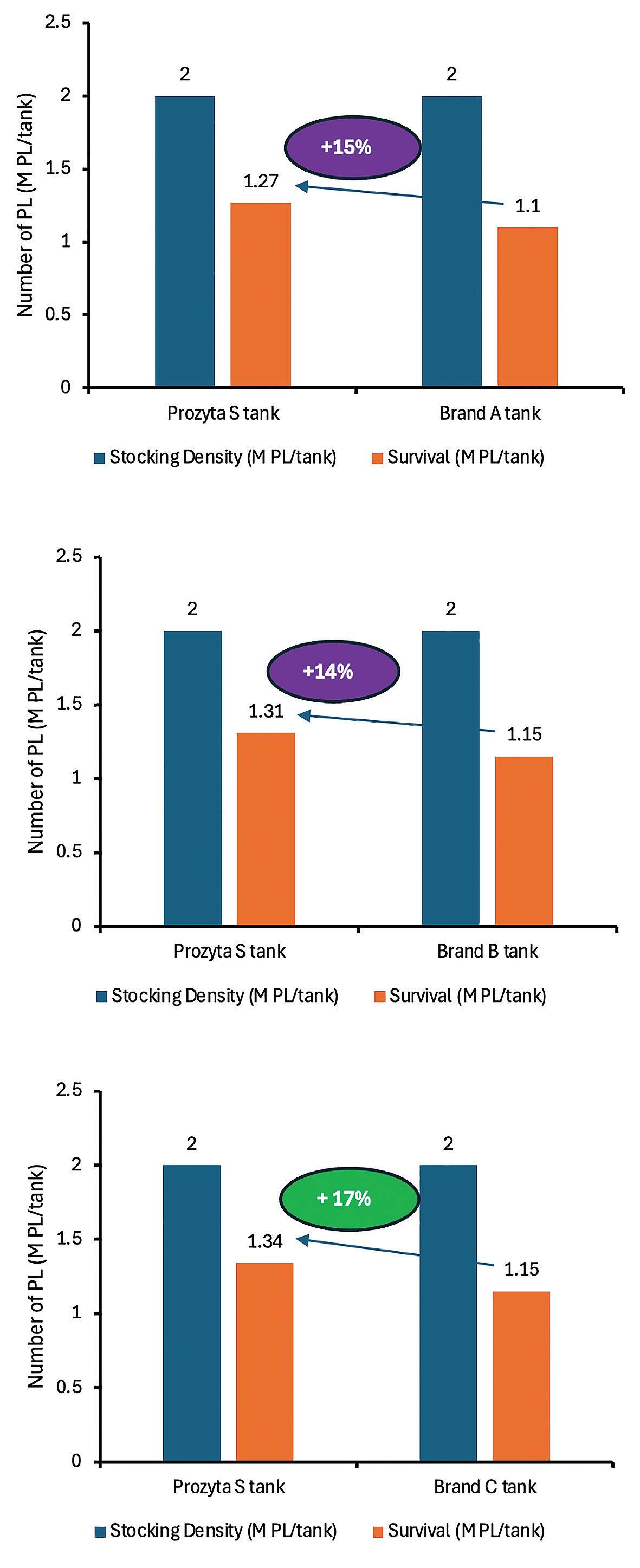
In the present study, larval tanks treated with Prozyta™ S recorded an average 60% reduction of the Vibrio population (Fig. 1) and an average improvement of survival by 15% (Fig. 2) when compared to the control tanks. In addition, the survival rate percentage recorded an improvement of 1-3% upon the salinity stress test (Fig. 3) and the formalin stress test (Fig. 4) conducted before packing the post larvae. Interestingly, the average total length of the post larvae also recorded an increase of 0.15 mm over the other brands.
This increase in post-larval survival and overall productivity may be related to the potential mechanism of action that involves gut colonization, competitive exclusion, breakdown of complex organic matter in the tanks, production of inhibitory metabolites, competition for nutrients, interference with quorum sensing, and the reduction of pathogenic Vibrio count (Jamal et al., 2019). The selected Bacillus consortium of Prozyta™ S thus outcompetes other brands used in the current study.
Return on Investment (ROI)
Prozyta™ S application increased PL survival by 15% on average, or around 150,000 PL per tank, and generated an additional USD 578 in revenue per PL tank. As a result, 1:8.3 ROI per tank was recorded (Table 1).
Conclusion
The application of Prozyta™ S in hatcheries presents a viable strategy for managing Vibrio-induced diseases, enhancing larval shrimp survival and the maturation process during larval development. By leveraging the
Table 1.
Parameters
Average increase in number of PL per tank treated with Prozyta S (Million)
Average cost per PL (USD)
Prozyta S application
benefits of probiotics, shrimp hatchery operations can improve their sustainability and productivity while addressing the pressing challenges posed by bacterial infections in hatchery environments.
References
Awalludin et al. (2024). Shrimp Larvae Counting Based on Improved YOLOv5 Model. Sensors, 24(19), 6328. Amiin et al. (2023). The role of probiotics in vannamei shrimp aquaculture performance. Veterinary World Jamal MT et al. (2019). Probiotics as alternative control measures in shrimp aquaculture: A review. J App Biol Biotech. 7(03):69-77.
More information:
Dr. Edward Gnana Jothi George Global Product Manager Kemin AquaScience E: edward.george@kemin.com
Mr. Harikumar Sampath
Associate Scientist II Kemin AquaScience
Dr. Rajalekshmi Mukkalil Global R&D Director Kemin AquaScience
Automation of live feed identification and counting
Maxim Batalin, Zoltan Gorocs, Jessica Keszey, Dhruvin Naik, Maria Arredondo, Lin Li, Andrew Jones, Lucendi
Fish hatcheries, as well as the aquaculture sector, will be able to support growing dynamics and cater to the product demand through increased levels of sustainability and automation. Many fish hatcheries rely on live feeds (i.e., microorganisms, such as copepods, rotifers, and Artemia). Even though many elements required for hatchery automation exist, one of the critical capabilities missing today is automated live feed counting and characterization (Minkoff, 2022). Furthermore, introducing automation will also result in the elimination of manual processes, improve accuracy, promote standardization, and reduce errors and culture crashes (Minkoff, 2022).
Existing solutions to live feed quantification and characterization are based predominantly on manual counts performed by trained experts on conventional
microscopes. Scaling existing operations can only be achieved by adequately increasing personnel, which is difficult because of costs and a lack of workforce willing to perform these menial tasks. Furthermore, re-purposing existing lens-based imaging flow cytometers for automated live feed characterization is not practical due to the high cost of such equipment and performance limitations of these solutions, including low-throughput processing, significant maintenance requirements, issues with adapting to a large size range of organisms that is the case with live feed species.
An automated solution Lucendi, Inc. has developed the Aqusens platform which is capable of rapid and label-free evaluation of the live feed samples with throughputs of anywhere
Figure 1. Aqusens platform combines AI and unique holographic imaging flow cytometry to provide automated accurate high-throughput counting of live feed organisms. Left: photo of the Aqusens platform. Right: sample image generated by Aqusens showing copepods (eggs and nauplii), rotifer and Artemia all on the same image with measurement bars.
from 100 mL/hr – 5 L/hr, controlled by a built-in pump, with sufficient resolution to characterize organisms in a size range from 3 micron to several millimeters. This enables imaging and characterization of a diverse set of organisms from microalgae to adult copepods and Artemia.
Unlike conventional microscopes, instead of using lenses to find objects in the sample, Aqusens illuminates the flowing water sample with pulses of light. As the light passes through the sample, some of the light diffracts around the objects and interferes with non-diffracted light. These interference patterns are captured by the image sensor and then reconstructed into color intensity and phase images for every object in the sample.
Not relying on lenses and other complex components in its construction allows Aqusens to be built as a robust and portable platform in the form of a box, measuring under 20cm on a side and weighing under 1.5 kg. The system does not suffer from the limited field of view and depth of field. Furthermore, the hardware setup does not require calibration or significant maintenance which allows the system to be deployed for automated operation equally effectively in-lab, in-field or as a sensor integrated into a larger system (i.e. hatchery automation infrastructure).
Leveraging its built-in pump, Aqusens can monitor samples from discrete containers provided by the operator, drawing the sample directly from the source (i.e. cultivation tank) or supplied by the larger automation infrastructure.
AI for organism identification
The intensity and phase images captured by Aqusens are stored in a database. The organisms represented by the images in this database can then be analyzed by size, shape, color and other metrics. Furthermore, Aqusens incorporates AI that can be customized and trained to identify specific types of organisms, i.e. copepods vs. rotifers, or to determine the stage of the development of a particular organism, i.e. egg, nauplii, adult, etc. Aqusens AI can also be trained to identify and count complex images, i.e. cases when objects of interest are clumped together or with other debris, or when the samples include other types of organisms and contaminants.
Figure 2. Example of a complex image where Aqusens AI analyzes a group of objects within the blue mask and correctly counts them as 6 Eggs despite debris and clumping.
Figure 3. System performing automated evaluation and reporting of a sample containing Acartia tonsa organisms and performing specific counting of Eggs, N1/N2 and N3/N6 nauplii, as well as other objects.
For example, for a specific use case, the system was trained to identify and separately count eggs and N1/N2 nauplii of Parvocalanus crassirostris. To train the system, an image library of objects representing eggs and N1/N2 nauplii was created and manually labeled. This labeled dataset was then used to train Aqusens AI. The validation experiments showed that such a custom solution was able to identify and count eggs and N1/N2s with 98% and 99% accuracy respectively. The system was capable of separating and ignoring from counts organisms in later development stages, as well as other types of objects in the sample, including rotifers, algae and other debris.
In this experiment, the automated counts were also compared to counts performed manually by a trained technician on a conventional microscope with a counting chamber. The results of this comparison showed that automated counts on average were within 10% of the manual counts. However, the manual counts had a very significant variation depending on the sampling technique, technician counting bias, and the density of the sample. This experiment has further accentuated the advantages of the automated systems that eliminate counting bias, enhance statistics by imaging sample volumes with a larger number of objects and can continually improve their accuracy by
incorporating additional images into the knowledge base.
Other capabilities
Aqusens platform also incorporates other capabilities that make it suitable for in-field automated operation, including customized reporting, flexible operating regime programming and a selfmaintenance option that supports automated cleaning of the internal tubing and sample chamber with a cleaning solution. The Aqusens platform is applied to automated quantification of various types of organisms including micro-algae, copepods, rotifers, Artemia, as well as inorganic objects, such as microplastics.
Conclusion
No matter what solution is ultimately selected, it is undeniable that automation is the key to support the scalability of hatchery operation, drive the reduction of the operating costs, and, ultimately, improve the bottom line. Furthermore, technicians and experts who are engaged with manual counting and data analysis can then be assigned to creative and process management tasks resulting in more productive and cost-effective outcomes.
References: Gidon Minkoff, “Marine fish hatchery automation,” In Hatchery Fish & Management, Vol 10, Issue 4, Pp. 21-23, 2022. Web access: https://hatcheryfm. com/magazine/hatchery-feed-management-vol-10issue-4-2022/ More information: Maxim Batalin
Co-founder & CEO Lucendi
E: mbatalin@lucendi.ai
Figure 4. Aqusens can be used for automated monitoring directly from the source. This photo shows an Aqusens deployed to perform monitoring of plankton directly from Lake Tahoe, CA.
Nanobubbles: A breakthrough in RAS efficiency and water quality at Lødingen Fisk
Warren Russell, Moleaer
As the global demand for sustainably farmed seafood grows, Recirculating Aquaculture Systems (RAS) have become a pivotal solution for sustainable fish farming. RAS offers the ability to grow fish in closed, controlled environments, but maintaining water quality and oxygen levels has always been a challenge. This is where one of the most exciting breakthroughs in water treatment technology comes in – nanobubbles. These nanoscopic bubbles offer transformative potential for improving water quality and overall operational efficiency. For Lødingen Fisk, an aquaculture facility in Norway, Moleaer’s nanobubble technology was able to
unlock new levels of performance, offering a glimpse into the future of aquaculture by addressing the very challenges that RAS systems have faced for years.
Leading the way in aquaculture innovation
Lødingen Fisk, located in Norway’s picturesque Lødingen municipality, is home to more than 1.7 million Atlantic salmon. The facility’s RAS system was designed by AquaBioTech Group, who integrated Moleaer’s Trinity Nanobubble Generator (NBG) after seeing the potential of nanobubble technology to enhance water quality, improve fish welfare, and reduce operational costs.
Lodingen Fisk
Through this collaboration, Moleaer conducted a comprehensive study at Lødingen Fisk to measure the impact of nanobubbles on their RAS facility operations. The results were striking. Oxygen transfer was optimized, suspended solids were reduced, biofilter efficiency was enhanced, and the need for ozone was minimized – all contributing to a healthier, more efficient system.
“Nanobubble technology is an exciting opportunity for the aquaculture industry,” said Jan Eric Haagensen, senior director of Scandinavia at Moleaer. “The unique properties of nanobubbles make them an incredibly effective tool for improving water quality and enhancing biological processes in aquaculture. Our project with AquaBioTech and Lødingen Fisk is a prime example of how the precision application of this technology can lead to meaningful improvements.”
The science behind nanobubbles
To understand the impact of Moleaer’s nanobubble technology at Lødingen Fisk, it’s important to first look at the unique properties of nanobubbles themselves. Unlike fine bubbles and microbubbles, which are much larger and short-lived, nanobubbles are
extremely small, ranging from 80 to 200 nanometers in diameter. These bubbles remain suspended in water for extended periods, owing to their neutral buoyancy and strong negative surface charge. This gives nanobubbles unique characteristics that make them ideal for a range of applications, from oxygenation to cleaning and biofilm removal.
In aquaculture, where water quality is a critical factor in the health and growth of fish, nanobubbles offer a valuable advantage by improving oxygen transfer efficiency. Nanobubbles can dissolve oxygen at much higher rates than traditional methods like aeration systems or oxygen diffusers. This leads to cleaner water, healthier fish, and more efficient production processes.
Nanobubbles also enhance biofilter performance, which is crucial in RAS systems for converting ammonia into nitrite and then nitrate. They’ve been shown to help break up biofilm that can build up on pipes and surfaces, which can harm biosecurity. Due to their negative charge, nanobubbles are attracted to surfaces, helping to scrub biofilm from pipe walls and then prevent it from reforming.
WATER QUALITY
In addition to breaking up biofilm, nanobubbles play a key role in particle coagulation, which improves the efficiency of mechanical filtration systems in removing waste more effectively. By improving filtration efficiency, nanobubbles ensure that the system operates smoothly, leading to better overall performance in aquaculture systems, higher water quality and healthier fish.
Lødingen Fisk’s results with nanobubbles
The study of Moleaer’s technology at Lødingen Fisk took place in two phases: measurements were taken 48 hours after nanobubble start up, followed by a second round of assessments after 50 days of continuous nanobubble use.
This real-world data provides valuable insights into how nanobubbles can positively impact aquaculture systems, with results that have the potential to inform and inspire broader industry applications.
Oxygen transfer efficiency
A key takeaway from the study was the dramatic increase in oxygen transfer efficiency. Within the first 48 hours of integrating nanobubbles, the facility saw oxygen transfer efficiency reach an impressive 94%. This improvement means that more oxygen is getting dissolved into the water, creating a healthier and more stable environment for the fish.
Water turbidity
They also observed a 30% reduction in water turbidity, a key indicator of water clarity. Improved clarity leads to a healthier, more stable environment for fish. Nanobubbles contribute to this by not only enhancing water quality but also by scrubbing surfaces with their
Figure 1. DO levels at Lødingen Fisk
Fish tank at Lødingen Fisk. Good water quality is key for healthy fish development.
WATER QUALITY
negative charge, which helps keep the system cleaner and contributes to the reduction of turbidity. These improvements had a direct impact on the facility’s bottom line by reducing their reliance on ozone. Ozone usage dropped by 67%, leading to lower operational costs and a cleaner system.
Enhanced biofilter performance
Biofilter efficiency was another area of major improvement. By reducing nitrite accumulation by 70% and improving ammonia nitrification rates by over 60%, nanobubbles helped optimize waste processing within the RAS. The biofilters’ ability to process waste more efficiently means that the system can operate at a higher capacity without the buildup of harmful toxins.
Biofilm scrubbing effect
Nanobubbles also had a profound effect on biofilm removal. Biofilm is a sticky layer of microorganisms that can build up on surfaces in aquaculture systems, including pipes, tanks, and filters. Over time, biofilm can have a negative impact on biosecurity and be a root cause of disease. Nanobubbles help by loosening and removing biofilm from these surfaces. And, due to their negative charge, nanobubbles coat
Figure 2. NO2 effluent from biofilter (mg/L) per g of feed/day
Nanobubbles improved the efficiency of the filters at Lødingen Fisk.
WATER QUALITY
the cleaned surfaces inside the pipes which prevents biofilm from reforming.
Haagensen noted, “With the correct application of our nanobubble technology, we were able to create a synergistic environment in RAS systems. The combined effects of the scouring and coagulation enhance the efficiency of mechanical filtration, helping remove more particles and improve overall water quality. This trailblazing technology not only boosts biofilter performance but also reduces the need for ozone, leading to more stable water conditions and a healthier, more efficient treatment process.”
The economic and environmental benefits
Beyond the improvements in water quality and fish welfare, the precise and optimized integration of nanobubble technology at Lødingen Fisk also brought about significant economic and environmental benefits. With better oxygen transfer, the system creates a more stable and healthier environment for the fish, which contributes to their overall welfare.
On the environmental side, reducing ozone use had a positive impact as well. Ozone is an effective disinfectant but can be harmful to the environment if overused. By cutting ozone reliance by 67%, Lødingen Fisk not only lowered operational costs but also reduced its chemical footprint.
Nanobubble technology isn’t just good for the water quality and fish welfare – it’s also helping make aquaculture operations more efficient and sustainable.
The future of nanobubble technology in aquaculture
The study at Lødingen Fisk demonstrates the powerful potential of nanobubble technology to boost productivity in aquaculture. As the demand for more sustainable practices grows, technologies that improve efficiency, reduce environmental impact, and enhance fish welfare will become essential.
But it’s not just about adding nanobubbles to a system. The success of this study lies in Moleaer’s careful integration of nanobubbles into the RAS system. By fine-tuning concentration levels, Moleaer was able to optimize conditions to enhance biological reactions, driving improvements in water quality, biofilter efficiency, and overall system health.
“We’re excited about the future of nanobubbles in aquaculture,” said Haagensen. “The results at
Lødingen Fisk are just the beginning. As we refine our technology and expand its use, the potential to improve efficiency, sustainability, and fish welfare will only grow. Nanobubbles are changing the game in aquaculture, and we’re just getting started.”
Looking ahead
The success at Lødingen Fisk is part of a broader trend showing how advanced water treatment technologies can transform aquaculture facilities worldwide. Moleaer’s nanobubble technology is highly adaptable to a wide range of systems and, as it continues to evolve, it’s poised to play a pivotal role in the future of sustainable aquaculture.
For fish farms looking to optimize operations, improve water quality, and reduce costs, nanobubbles offer a promising innovation that could help shape the next generation of aquaculture.
More information:
Warren Russell Co-Founder & Chief Commercial Officer Moleaer E: warren@moleaer.com
Shaping the future of aquaculture: Key innovations in Asian seabass and red snapper hatchery techniques
Qunying Xu, Wei Li Quek, Chee Boon Koh, Woei Chang Liew, Rudy Hidajat, Yong He, Manish Mahotra, Joachim Loo, Jun Hui Jiang, Rui A. Gonçalves, Singapore Food Agency, Urban Food Solutions, Marine Aquaculture Centre
Fish supply accounts for approximately 20% of the global animal protein intake, and its role as a key contributor to food and nutrition security is poised to grow significantly in the future. The rising global demand for seafood is driven by factors such as population growth, increased incomes, urbanization, expanding international fish trade, and a growing preference for
seafood as a primary protein source. According to World Bank data (2021), global per capita fish consumption reached a record high of 20 kg annually, marking a significant milestone in the global dietary shift. However, average figures can be misleading. A closer look at the Asia-Pacific (APAC) region (Fig. 1) reveals that several countries in this area exhibit the highest per
Figure 1. Fish and seafood consumption vs. GDP per capita in 2021 in the selected countries/regions.
capita consumption of fish and seafood. Notably, many of these countries are developing economies, where fish is often a primary source of protein.
Focusing further on the ASEAN region, it becomes clear that fish play an essential role in the dietary habits of its population. In general, seafood contributes to about 38% of the total animal protein consumed in the region, with other sources such as meat (33%), milk (20%), eggs (6%), and animal fats and offal (3%) following in importance. Table 1 summarizes fish consumption and its contribution to total animal protein intake in selected ASEAN countries, with global averages provided for context (2024).
The ASEAN region demonstrates exceptionally high per capita fish consumption, ranging from 29 to 56 kg per person annually, significantly surpassing the global average of 20 kg. Over the past four decades, fish consumption in the region has more than doubled, with the 2023 per capita average reaching 47 kg/year, which is over twice the global average of 20.7 kg/year. While daily animal protein intake in the ASEAN region is lower than the global average (24.2 g vs. 31.8 g), fish constitutes a larger proportion of the total animal protein consumed, accounting for 27% to 50% across the region, compared to just 15% worldwide. Countries such as Cambodia, Myanmar, and Vietnam are particularly notable, where fish provide approximately 45-50% of daily animal protein intake.
Decreasing wild fisheries: Aquaculture as a solution
The Asia-Pacific (APAC) region faces significant challenges in sustaining its seafood supply. Once reliant
on captured fisheries, which have historically formed the backbone of regional seafood production, these resources are now in decline due to overfishing, habitat degradation, and unsustainable practices. According to FAO data, many wild fish stocks in the region are overexploited, with some species at risk of collapse. This depletion threatens both food security for millions of people and the livelihoods of coastal communities that depend on fishing for sustenance and income. As wild fish stocks continue to dwindle, there is increasing pressure to find sustainable alternatives to meet the region’s growing seafood demand.
Aquaculture is emerging as a critical solution. The sector has expanded rapidly in recent decades, now supplying over 50% of global seafood. The Asia-Pacific region, with its established aquaculture infrastructure, is uniquely positioned to bridge the gap left by declining fisheries. However, to fully realize its potential, aquaculture must address significant challenges, particularly those related to climate change and its potential impact on production.
Climate
change: A shared challenge for fisheries and aquaculture
Both fisheries and aquaculture are increasingly impacted by climate change, which affects the availability, distribution, and health of marine resources. Challenges from rising sea levels, fluctuating water temperatures, and an increased frequency of harmful algal blooms and disease outbreaks are meaningful in the region. Freshwater aquaculture systems, which currently represent the main contributor to the region’s
Table 1. Population, fish consumption, and fish-derived animal protein intake in selected ASEAN countries and global averages (2024)
aquaculture production, are particularly vulnerable to water shortages and changes in salinity. While aquaculture is stepping in to fill the gap left by declining wild fisheries, it is crucial that the industry develops climate-resilient production systems.
Marine aquaculture potential in APAC region
Marine aquaculture in the APAC region remains relatively underdeveloped compared to other regions, despite its immense potential. Currently, marine aquaculture is largely limited to extensive pond systems, particularly in the Southeast Asia region. Such extensive pond systems can be vulnerable to disease outbreaks, environmental changes, and climate-related challenges. While marine aquaculture offers significant promise in the APAC region – especially with the growing scarcity of freshwater resources and increasing demand for seafood – the sector is still in its infancy.
Advancements in broodstock management for Asian seabass and larviculture for red snapper
At Singapore Food Agency’s Marine Aquaculture Centre, scientists are tackling key challenges to enhance the production of Asian seabass (Lates calcarifer) and red snapper (Lutjanus malabaricus). Asian seabass, broodstock management in the APAC region traditionally relies on hormone therapy to induce spawning. However, repeated hormonal manipulation can cause stress and negatively impact gamete quality and quantity.
For red snapper, larviculture is typically conducted in mesocosm-like pond systems, which are highly susceptible to environmental fluctuations and biosecurity risks. Pond systems currently hinder the consistent production of high-quality fingerlings. Shifting to indoor, controlled aquaculture systems is essential to intensify and improve production protocols it comes with significant challenges.
Broodstock management for Asian seabass
The use of LHRHa (Luteinizing Hormone-Releasing Hormone analog) to regulate reproduction in Asian seabass is well-established at the Marine Aquaculture Centre (MAC). However, challenges persist in minimizing stress from intramuscular (IM) injections and the labor-intensive nature of the process. To address these issues, Mr. Qunying Xu, the leading scientist on the
TRENDS
project, explored the possibility of administering the hormone orally, which offers a less invasive and more efficient approach.
One of the primary challenges of oral hormone administration is its degradation in the gastrointestinal tract. To overcome this, MAC collaborated with Nanyang Technological University, Singapore, to develop a microencapsulation system (Fig. 2) designed to protect the hormone from enzymatic degradation and enhance its absorption. The delivery system technology, currently patent pending, was tested in preliminary
TRENDS
trials using a 20 µg/kg dose of LHRHa. Results (Fig. 3) demonstrated that 11-ketotestosterone (11KT), used as a bioindicator for reproductive readiness, showed significantly higher levels in the plasma of fish receiving the encapsulated hormone (red line) compared to the control (grey line) and direct oral administration without encapsulation (yellow line). Despite the differing patterns of 11KT increase between encapsulated and IM-injected groups, no statistically significant differences were found between the two methods. This suggests that the encapsulated oral hormone can successfully mimic the effectiveness of the IM route in terms of hormonal response.
In vivo reproductive performance indicators, such as total eggs produced, fertilization rate, hatching rate, first-day larval survival, and total viable eggs, showed no significant differences between the oral and IM hormone delivery methods, further confirming the potential of the encapsulation system. Ongoing in vivo trials aim to further validate these findings and strengthen the dataset collected thus far. This advancement offers promising implications for reducing stress and improving efficiency in broodstock management for Asian seabass.
Development of a hatchery protocol for red snapper Shifting from outdoor mesocosm-like pond systems to indoor tank systems has resulted in extremely low survival rates of 1-2%. Several key challenges and critical stages have been identified (Fig. 4), which need to be addressed for adapting protocols to indoor conditions. Regarding culturing conditions, the use of the green water technique with Nannochloropsis sp.
Figure 2. Encapsulation particles under electron microscope
Figure 3. 11-ketotestosterone (11KT) behavior used as a bioindicator for reproductive readiness for the different experimental treatments
at a concentration of 0.3 mL/L provided the necessary opacity to reduce stress and maintain stable water quality and live food integrity. Additionally, manipulating the photoperiod from a 15:5 D to a 24:0 D cycle after 10 days post-hatch (DPH) successfully reduced shock syndrome, further supported by adjusting the rearing temperature to 32°C.
A critical aspect of culture conditions was the optimization of the upwelling effect, which significantly influenced larval deformities. Initial protocols with nine homogeneous aeration points were associated with an average deformity rate of 18-30%. Spreading the aeration points across the tank or reducing them from nine to five resulted in a significant reduction in deformities to 2-3%. Furthermore, enriching both rotifers and Artemia with commercially available products to enhance DHA/EPA content notably improved survival rates and may have contributed to a reduction in deformities.
Another consideration was the need to grade larvae from 25 DPH due to their aggressive and cannibalistic behavior. These findings suggest that improving tank configurations, adjusting environmental parameters, and enriching live food can significantly enhance survival and reduce deformity rates in indoor systems.
Conclusion
In summary, the Marine Aquaculture Centre (MAC) has developed innovative solutions to enhance Asian seabass and red snapper production. By introducing an oral hormone delivery system for seabass, MAC expects to reduce broodstock stress while maintaining reproductive success. For red snapper, transitioning from outdoor to indoor hatcheries has improved survival rates to 15% and reduced deformities from 18-30% to less than 3%. These advancements highlight the potential of controlled, indoor aquaculture systems to improve both species’ production and sustainability in the APAC region.
More information:
Rui Alexandre Deputy Director | Aquaculture Department\ MAC | Urban Food Solutions Singapore Food Agency E: rui_alexandre@sfa.gov.sg
Figure 4. Key challenges and critical stages have been identified during adapting protocols to indoor conditions in red snapper
Industry Events
2025
JANUARY
9 - 11: AQUAEX India Tech 2025 www.aquaexindia.com
FEBRUARY
3 - 5: Simec Expo, Saudi Arabia simec-expo.com
MARCH
4 - 6: North Atlantic Seafood Forum, Norway www.nor-seafood.com
6 - 10: Aquaculture 2025 New Orleans, USA was.org
12 - 13: Aqua Expo Santa Elena, Ecuador www.aquaexpo.com.ec
26 - 28: VietShrimp, Vietnam vietshrimp.net
APRIL
24 - 27: World Aquaculture 2025, China was.org
28 - 30: International Conference & Exhibition europeaquacultureconference.com on Aquaculture & Fisheries, Portugal
MAY
20 - 22: Aquafuture Spain aquafuturespain.com
JUNE
24 - 27: World Aquaculture Safari 2025, Uganda was.org
SEPTEMBER
2 - 4: Global Shrimp Forum, The Netherlands www.shrimp-forum.com
22 - 25: Aquaculture Europe 2025, Spain www.aquaeas.org
OCTOBER
6 - 8: LACQUA, Chile www.was.org
20 - 23: AQUA EXPO, Ecuador www.aquaexpo.com.ec
12-13
FEBRUARY 20 25
PORDENONE EXHIBITION CENTRE
International conference & trade show on aquaculture, shellfish farming, algaculture and fishing industry