SHRIMP PL MANAGEMENT

Hatchery Equipment and Design
Live Feeds

Vol 9 Issue 1 2021 Vol 10 9 Issue 1 2021 Published by Aquafeed Media S.L.U. www.hatcheryFM.com info@hatcheryFM.com
11
CONTACT US
Editorial:
editor@hatcheryFM.com
Editor/Publisher: Lucía Barreiro
Consulting Editor: Suzi Dominy
Assistant Editor: Marissa Yanaga
Conferences and webinars: info@hatcheryFM.com

Advertising enquiries/request media pack: sales@hatcheryFM.com
Accounts & all other enquiries: info@hatcheryfm.com
SUBSCRIBE
Digital editions are free to industry subscribers. You may also purchase print copies. Subscribe at HatcheryFM.com to receive your own digital copy of our publications.

https://bit.ly/HATCHERYSUBSCRIBE Aquafeed Media, S.L.U., Ames, 15220 A Coruña, Spain. Copyright© Aquafeed Media, S.L.U., 1998-2023 All rights reserved. Privacy Policy & Terms of use

We are grateful to the following companies for sponsoring this issue of the magazine. Their support allows us to make our publications available without charge.

Hatchery Feed & Management Vol 11 Issue 2 2023 EQUIPMENT HATCHERY FEED & MANAGEMENT VOL 11 ISSUE 2 2023 Contents 4 Interview with Jaime Garcia 7 News Review 11 Improved genetics and low PL prices create a hidden danger for shrimp producers 15 Post-larvae and a successful crop: The point of view from an aquafeed supplier *Cover photo 20 Biosecurity and its role in the mitigation of disease impacts in shrimp hatcheries 28 Pondering on microbiomes: Microbiome sequencing as a precursor to adaptive production management in ponds 31 �Revolutionizing a shellfish hatchery’s live algae production: Nova Harvest’s success story 33 Great Salt Lake: A model of sustainable resource management 37 �Optimizing mechanical filtration within an aquaculture system 41 A new vision for propeller pumps 43 �How much ammonia can biofilters really remove? 46 Responsible recirculating aquaculture systems gain interest among farmers around the world 49 �There’s no “Sitting On Your Hands” in hatchery design 52 Professional hatchery design: How to think (and not worry) about it 54 Measuring welfare in carp farming 59 Calendar of Events Columns 24 Philip Buike - Shrimp post-larvae supply for Europe: What are the options? To read previous issues in digital format or to order print copies, visit www.hatcheryfm.com
HATCHERY FEED & MANAGEMENT
Zeigler 14 Reed Mariculture 23 The Centre for Aquaculture Technologies ........29 Veolia .......................................................................39 FishFarmFeeder 40 Fresh-flo ....................................................................45 Socorex ....................................................................51 World Aquaculture Society 60 FOLLOW US
The Marine Stewardship Council recently gave the Great Salt Lake Brine Shrimp Cooperative, Inc. its sustainable wild fishery certification, a testament to the unprecedented cooperation between the Artemia Industry, state agencies, academia, and NGOs to maintain a healthy and sustainable Great Salt Lake.


SHRIMP PL SUPPLY IN EUROPE 24
By global standards, European production is almost insignificant, so why does Europe need shrimp post-larvae?
MICROBIOME MANAGEMENT 28
Microbiome sequencing as a precursor to adaptive production management in ponds.

MECHANICAL FILTRATION 37
Key considerations for the removal of suspended solids from a water column through mechanical filtration.

Hatchery Feed & Management Vol 11 Issue 2 2023 VOL 11 ISSUE 2 2023 HATCHERY FEED & MANAGEMENT
Contents
INTERVIEW with Jaime Garcia
HFM: How many hatcheries are currently operating in Ecuador?

JG: According to the data that we have in the National Chamber of Aquaculture, there are 287 authorized laboratories, 61 in the process of obtaining the ministerial agreement. Almost all of them produce standard shrimp with very few laboratories cultivating organic shrimp.
HFM: What has been your approach in your genetics programs and how have they adapted to the development and growth of the industry in the country in recent years?
JG: The genetic programs have helped improve the growth and survival of shrimp in ongrowing ponds
contributing to the national production. We believe that it is one of the main reasons why Ecuador has been as successful as it is. In the case of Aquagen, mass selection began just after the white spot crisis in 1999, which after a few years was improved with DNA analysis to avoid inbreeding, and then with family selection programs using microsatellites. For the selection of broodstock, emphasis has been placed on growth, survival, tolerance to diseases and absence of diseases.
HFM: What is expected to be the focus in the near future?
JG: In the future, we hope to continue on the same path, having individuals that are resistant and/or tolerant to all the pathogens that we have in the environment
Hatchery Feed & Management Vol 11 Issue 2 2023 4
Jaime Garcia is Manager at Aquagen.
and with excellent growth performance. The shrimp business is very competitive and we believe that a shrimp that grows very quickly and families that have high tolerance and resistance to viruses and pathogens is the the future strategy to be able to compete globally.
At Aquagen, we have been working with microsatellites to analyze all the individuals of each family of the genetic program. Currently, we have made the transition to SNPs to have more precise data on the results. We believe that this is the trend in the industry worldwide and in Ecuador.
HFM: How are diseases being managed right now at the hatcheries?
JG: Ecuador does not use SPF animals. However, together with the health authority, we are in a monitoring program for WSSV, IHHNV and other viruses and pathogens in all maturations in order to be able to monitor their behavior and find a solution in the medium term.

Disease management also comes hand in hand with good production management both in hatcheries and shrimp farms. At Aquagen, we have our microbiology laboratory, which we believe is the best tool we can use to find out how the environment in which the shrimp lives is. We also have experimental tanks to test different products on the market. Aquagen has an organic certification, we do not use antibiotics so the
best way to control the environment is by controlling the bacteria, the temperature and a proper diet.
HFM: Is ablation still a common practice among shrimp farmers?
JG: At Aquagen, we stopped this practice in 2019. Nonablation is an animal-friendly process, in addition to the fact that each female produces more eggs and a greater number of nauplii which are stronger and more tolerant to diseases and the environment. In addition, all breedings take place naturally within the production tanks. We believe that the industry will move towards this practice in the future.
HFM: There is a wide variety of feeding protocols in hatcheries. What are the predominant ones in the country? Is it possible to reach a standardization of food in these phases?
JG: Broodstock facilities use fresh feeds, such as squid, Artemia biomass, polychaetes, etc., and dry feeds such as balanced feeds. Choosing the type of feed and in which amount is important for optimal nutrition, which in turn is reflected in the production of nauplii. It also depends on the technicians of each facility. Standardizing the diet is difficult since these feeds will always be used in different proportions or diets. Prices and their abundance or scarcity also have an influence. The same happens in larval facilities where there is a lot of variation. We continue to believe that the use of Artemia is very important as well as a fair amount of algae. We produce our algae and guarantee their quality. Since the industry is going through a moment of low larvae sales prices, we see pressure from many laboratories to be more inventive in the use of feed. That is why we find it difficult for the industry to be able to standardize feed protocols. Many actors are looking to improve the larvae production process and I think it has been achieved. Ecuador continues to produce good quality larvae at a very competitive price. We believe we have the larvae at the best cost in the world.
HFM: Regarding the type of facilities, what are the most common systems in hatcheries?
JG: Recirculating Aquaculture Systems (RAS) are being used more and more, especially for broodstock. The idea is to filter all organic matter from the water used and have a microbial balance, so it is important not
Hatchery Feed & Management Vol 11 Issue 2 2023 5
to overfeed and use optimal feed to minimize organic waste. RAS water should be of optimum quality to avoid affecting production. Parameters such as oxygen, pH, alkalinity, nitrite, nitrate, temperature, and ammonium, among others, are key as well as the bacterial load. This system is applied to broodstock and I don’t know of a larvae facility that is using it, but I do not doubt that it will happen in a few years. However, it is always necessary to have a smaller percentage of new water entering the system. In larviculture, we work with the open system where, due to the analysis of water quality, we can make the corrective measures regarding ammonium, temperature, feed, bacteria and other parameters such as oxygen and pH.
HFM: How is the adoption of new technologies applicable to hatcheries, such as artificial intelligence systems?
JG: Some laboratories have implemented artificial intelligence. For example, frequency regulators can be used in the blowers for more or less aeration according to the stage for culture oxygenation. Furthermore, the use of new technologies for counting PLs/gram helps adjust diets and determines the sizes allowing to obtain healthy larvae produced in less time.
There is also equipment that monitors the water quality of the tanks and reports to the technician when there is a parameter outside the established ranges for its immediate correction, although it is still an expensive technology. Automatic feeders in larviculture are being implemented but it is in the testing phases.
HFM: A few months ago, the Association of Larvae Production Laboratories (ASOLAP) warned of the proliferation of illegal hatcheries in the country. To what extent does this situation affect the industry as a whole and how can it be solved?

JG: It is important that the government put some pressure on illegal hatcheries to be regularized. Illegal hatcheries sell their larvae at a lower price affecting the legal ones and generally do not control their impact on the environment. In other words, they do not comply with the regulations.
HFM: 2022 has been a challenging year for the shrimp industry in Ecuador due to inflation and variations in external markets. How has it affected hatcheries? What are the main costs at the moment?
JG: Due to price problems in foreign markets, and due to the sufficient supply of larvae that exists, the sale price of larvae cannot be improved. On the contrary, there is pressure for them to go down. This has affected the profitability of the hatcheries since we have higher costs. One of the biggest challenges is the increase in the cost of production. For example, the increase in the price of fuel (diesel) and the increase in feed costs are the current strongest costs that affect the production of the hatcheries.
HFM: How is 2023 going and what is expected in the short term?
JG: The year 2023 is perhaps one of the most challenging years for the Ecuadorian shrimp industry. Margins are declining for both shrimp and larviculture. You need to have very efficient production to be profitable. In the short term, El Niño is forecast to return in 2023 that can impact the entire industry, which is why we have to be prepared for any eventuality. Hatcheries must have reinforced water quality protocols to ensure good quality larvae.
Hatchery Feed & Management Vol 11 Issue 2 2023 6
NEWS REVIEW
Highlights of recent news from Hatcheryfm.com
Hendrix Genetics on a path to growth worldwide
The company opened a new business unit in China at the end of 2022 to serve the Chinese market with high-quality genetic solutions in shrimp, among others. “The China business unit was established to operate fully within its own region, focused on all Hendrix Genetics’ species and products and specifically adapted to the Chinese market,” said David Danson, director of operations and shrimp. “One of these species is shrimp. We are working on our existing Chinese market share and are building on that, similar to what we did in Indonesia and India. With the establishment of the business unit in China, we now have a legal entity in China that allows us to build long-term relationships with customers and partners, and most importantly, support a team of experts based in China.”

Benchmark Genetics unveils breakthrough in diseaseresistant tilapia strains
Recent research demonstrates a significant quantitative trait locus (QTL) affecting resistance to Streptococcus iniae in Benchmark Genetics’ highperforming strain of Nile tilapia. This discovery is the result of an awarded collaboration between the USDA’s Aquatic Animal Health Research Unit (AAHRU) and Benchmark’s geneticist Sergio VelaAvitúa and colleagues.
The QTL found by the team explained up to 26% of the genetic variation in resistance. Benchmark Genetics has already implemented these results into their breeding and production of genetically improved Spring Tilapia® breeders and fingerlings.

Sparos launches a novel microdiet for turbot
The company launched WIN Max, a novel microdiet to optimize the performance of turbot at marine hatcheries through customized nutrition. The product is tailor-made for turbot larvae and early juveniles offering a wide range of benefits and features that meet the evolving needs of hatcheries managers.

Hatchery Feed & Management Vol 11 Issue 2 2023 7 NEWS REVIEW
Aller Aqua unveils premium RAS shrimp feed

CAT invests in the future of genetics and genome editing
The Center for Aquaculture Technologies (CAT) expanded its San Diego facility by opening the Finfish Genetics Innovation Center. The new research space is fully dedicated to the delivery of foundational advances in genome editing technologies for commercial aquaculture applications.

The facility includes a state-of-the-art genome editing and germ cell transfer laboratory for commercialscale research applications, as well as a wet lab for data collection. Also included are new, world-class RAS systems, custom-built to support research and animal welfare and help streamline maintenance and husbandry activities. This modern facility will be dedicated to Michael Horne.
The company, in partnership with premix specialist VDS, developed a range of aquafeed products that are specifically designed for use in shrimp RAS systems. These systems are becoming increasingly popular in Europe as they allow the production of high-quality, fresh shrimp products within short distances to the market. The range of products is designed to provide rapid feed availability and high feed performance, addressing key concerns of shrimp producers.
Fresh-flo Corp. upgrades transport aerators
The hub inside the support tube on Fresh-flo’s model TT and DT transport aerators has been upgraded to now be made of acetyl homopolymer. The features of acetyl homopolymer are high impact strength and stiffness, little to no expansion nor contraction, creep and temperature resistance, good performance under heavy wear, and very low moisture absorption which makes it perfect for an aerator designed for constant use in a fish tank during over-the-road conditions
or in a raceway. The hub’s role is to keep the shaft within the tube spinning straight which ensures a consistent influx of oxygen.
This upgrade supports the company’s ongoing efforts to engineer for long-term performance. The enhancement builds on the change to a stainless-steel bearing support tube that allows the transport aerators to be used in both fresh and salt water. Fresh-flo’s model TT transport aerator is designed for tanks with 100 to 400 gallons capacity and can be placed between two compartments to aerate both. It has a standard pump capacity of 75 gallons per minute, a 45 GPM capacity can be specified for smaller fish. The model DT is designed for small tanks and raceways with a pump capacity of 115 gallons per minute.

Hatchery Feed & Management Vol 11 Issue 2 2023 8 NEWS REVIEW
ADM offers new premium feed for early-stage fish development
Developed by ADM’s hatchery and nursery feed company, BernAqua, NURSea® is a premium micro-extruded feed specifically designed for early-stage marine fish development. NURSea® combines high-quality raw materials and unique technology to create an optimal feed solution to maximize the potential for fish during their most challenging life stages.
Skretting develops new shrimp feed for hatcheries and nurseries
The company introduced a new, innovative feed, Elevia, engineered to offer superior nutrition and water quality in shrimp hatcheries and nurseries. The precisely produced, stable micro diet improves larval performance while simplifying feed management and ensuring a cleaner system.

Formulated to mimic the natural feeding approach of shrimp larvae, Elevia is a next-generation solution that surpasses conventional feeding methods and traditional aquafeed ingredients, setting a new standard for hatchery performance. Elevia is produced in Skretting’s state-of-the-art LifeStart facility in France, and is currently available in Ecuador, with other markets to follow.
Aquatrade develops automated water surface cleaning system

The company unveiled WASH, an automated water surface cleaning system that ensures standardized hygiene levels in hatcheries, RAS systems, or any other system that requires automation and surface cleaning efficiency. WASH autonomously removes oils, foam, and debris from the water surface in rearing and filters service tanks.
WASH has been designed with topquality, patented and long-lasting components, acid/disinfectant-proof to make it robust in any working condition and easily cleaned and disinfected. Specially developed for the marine environment, WASH supports farmers in minimizing risk whenever water surface tanks need to be automatically and gently cleaned without disturbing larvae or juveniles. On average, WASH saves two hours of labor per day (data from WASH’s users) compared to manual cleaning methods, offering a general reduction in operational costs. With a low hovering depth of 1 mm, WASH is safe for larvae, and one unit can perfectly clean up to 20m2 (or one tank of 5 meters in diameter). The adjustable speed allows WASH to remove up to 32 L/h of oil from the tank automatically drained out.
Innovasea acquires aquaculture software firm, opens new office in Greece
Innovasea has purchased Aquanetix, a UK-based aquaculture software company, and moved its operations to a new office in Greece. Founded in 2015, Aquanetix’s cloud-based aquaculture management software provides customers with deep insights into farm operations.
Hatchery Feed & Management Vol 11 Issue 2 2023 9 NEWS REVIEW
Peracetic-based biocide receives US EPA registration for use in RAS
Evonik has received registration from the U.S. Environmental Protection Agency (EPA) for its VIGOROX® Trident peracetic acid for use in recirculating aquaculture systems (RAS) and ponds. Produced by Evonik’s Active Oxygens business line, the biocide can reduce fish pathogens (bacteria and viruses) in the water. VIGOROX® Trident can be applied while fish are present, as it breaks down into only water, oxygen, and acetic acid. The biocide can be dosed directly in the tank - without the need for time-consuming fish or water removal. VIGOROX® Trident has a no-observable effect on salmon and similar finfish in concentrations below 3.5 mg/L. Since peracetic acid breaks down into nothing more than water, oxygen, and acetic acid, there are no additional steps to clean up chemical residues.

FishFarmFeeder unveils immersion fish vaccinator

The company has developed an industrial alternative for fingerling vaccination. The vaccinator reduces the vaccination time by a factor 4 to 5. Only one farmer is required to run the process and the dip time can be adapted to any farm’s particularities, dose time and oxygen concentrations are best controlled and fish stress is reduced.
Fish are delivered to the machine preferably by a fish pump. A dewatering compartment working on a standard draining time allows for fish to fall into the following compartment where 50 liters of vaccine solution stands. Fish are then dipped during the required time according to the vaccine specifications and are automatically scooped out with an efficient draining stage leaving the vaccine solution in place.
Green Aqua, Algikey partner to provide high-quality algae products to hatcheries
Maharashtra Feeds opens fish feed mill in India

The company inaugurated a new stateof-the-art floating fish feed plant in Lucknow, Uttar Pradesh, India. With a production capacity of 35,000 metric tons per year, the company aims to serve the North, Central, East and parts of Western India with premium hatchery feeds and grow-out floating feeds.
This partnership aims to introduce large and reliable production capacity to the markets based on a wide portfolio of high-quality products. Produced in Portugal at the largest microalgae production platform in Europe in capacity and area, the partnership hopes to help hatcheries find a reliable and large-scale partner to source high-quality algae solutions.
Hatchery Feed & Management Vol 11 Issue 2 2023 10 NEWS REVIEW
Improved genetics and low PL prices create a hidden danger for shrimp producers
Mark Rowel Napulan, Peter Van Wyk, Ramir Lee, Chris Stock, Craig L. Browdy, Zeigler Bros.
Shrimp farming has grown in an unprecedented manner over the past three decades driven by growing populations and increasing demand for healthier protein sources. When growth in the supply of shrimp from capture fisheries stalled, shrimp farming presented a sustainable new supply to fulfill market demand. Today, more than half of the shrimp consumed globally is farmed, contributing to the economies of many countries. The industry has evolved from simple stocking of wild-caught post-larvae (PL) to a more organized and fully enclosed culture cycle. Over the years, the industry has benefited from improvements in genetics, advances in feed formulation, disease detection techniques and technological advancements in farming practices. All these improvements are interconnected and collectively help support a more stable global shrimp production. Improved genetics has been one of the most impactful advances for shrimp farming, and faster growth has long been a priority for genetic programs. Genetic selection programs can yield an 8-10% improvement in shrimp growth rates per generation. These improvements in shrimp growth rates are manifested not only in the grow-out phase but also in larval shrimp. In many hatcheries, typical PL harvest weights have increased from 2.5-3.5 mg 15-20 years ago, to 4-5 mg today. As growth rates increase, the total demand for feed also expands to fulfill the higher nutritional requirements of the animals. Our experience suggests that the total feed input per PL produced has increased by 30-50% compared to 15-20 years ago. This increased nutritional demand of faster-growing larvae requires not only more feed but also higher quality feeds. Against this backdrop, PL prices have remained
relatively flat while other production costs, such as labor and energy costs, have risen. As a result, many hatchery managers view feed as a cost to be minimized.
Effects of ammonia on growth
Trying to support the faster growth of the shrimp with cheap, low-quality feeds is not a sustainable strategy. Low-quality feeds are less efficiently converted into shrimp biomass, resulting in the buildup of organic wastes and ammonia in the culture system. Ammonia is toxic to shrimp larvae and adversely affects larval health, survival and growth. Research at the Zeigler Aquaculture Research Center (Z-ARC) has demonstrated that ammonia levels as low as 1 mg/L negatively impact PL harvest weight (Fig. 1).
Research at Z-ARC has focused on developing highquality larval diets that can maximize the growth potential of shrimp larvae while minimizing negative impacts on water quality. Our approach is to closely match the nutritional profile of the feed to the nutritional requirements of the shrimp and to utilize high-quality ingredients with high digestibility. Building on 40 years of experience in larval shrimp nutrition, researchers at Z-ARC spent three years testing ingredients and formulations in a highly replicated larval-rearing research system to identify the most digestible ingredients and optimize the nutritional profile of a new diet for mysis and postlarval shrimp stages. The result of this effort was Z-Pro.
Z Pro – A Paradigm Shift in Larval Feed Design
An important concept learned during the development of Z-Pro is that higher protein levels don’t always translate into better shrimp performance. Protein
Hatchery Feed & Management Vol 11 Issue 2 2023 11 SHRIMP
efficiency is also critical to feed performance. Protein efficiency is the grams of larvae produced per gram of protein fed. If the amino acid requirements of the larvae are met, a feed with a lower protein content but a higher protein efficiency will often outperform diets with higher protein levels. Many hatchery managers, while trying to provide the best diet for their shrimp at the lowest cost, select low-cost, highprotein diets on the assumption that higher protein levels will support higher growth. This is not necessarily the case. Higher protein diets typically generate more ammonia than lower protein diets. Because of this, growth rates for diets with higher protein levels are often less than those with lower protein levels, especially diets formulated with optimal amino acid levels and made with highly digestible ingredients. This concept is clearly illustrated in Figure 2. The benefits of feeding high-quality larval diets are not limited to the hatchery. Larger, robust postlarvae reared on quality feeds perform much better in subsequent production phases than smaller, weaker post-larvae reared on cheap feeds. In a study conducted at a commercial hatchery in Mexico, one group of larvae was fed Z Pro as the primary dry feed while a control group was fed the hatchery’s standard cocktail of competitor dry feeds. The two groups of PLs were then stocked in raceways at similar densities. Both sets of raceways were fed and managed

the same, however, survivals in the raceways stocked with PLs that had been fed with Z Pro in the larval tanks were significantly higher than survivals in the raceways stocked with the PLs that had been fed the cocktail of dry diets in the larval rearing tanks (Table 1). Hatcheries that look at feed as an investment and focus on evaluating feed based on its conversion efficiency will realize the most benefits. It is important to recognize that cocktail protocols that mix highquality diets with low-quality feeds are diluting the full

Hatchery Feed & Management Vol 11 Issue 2 2023 12
SHRIMP
Figure 1. Negative relationship between ammonia levels and PL harvest weight
potential of top-performing products. Therefore, Zeigler recommends finding the best balance combination with Z Pro.
In commercial hatchery trials, Zeigler technical staff have demonstrated that feeding Z Pro as a significant portion of a protocol can support a reduction in total feeding rates by as much as 43% compared to the control protocol with competitor diets. The reduction in feeding rates allowed by feeding a more digestible diet resulted in lower levels of ammonia and less water exchange, resulting in higher profits.
Impacts of survival on profit
Feeds that support higher survivals can improve the profitability of the hatchery even if these feeds are more expensive. A hatchery economic calculator developed by Zeigler, based on globally collected data, suggests that a 5% improvement in survival generates as much as a 17% increase in hatchery profits due to the increased revenues from PL sales. In the commercial hatchery trial mentioned above, the cost of the Zeigler diet was more than 50% higher than the cost of the cocktail feeds, yet the profit per tank was 9% higher.

Hatchery Feed & Management Vol 11 Issue 2 2023 13 SHRIMP
No. days Avg. Daily Overall Treatment Survival (%) in Mortality Survival Phase 2 (% /day) (Ph. 1 & 2) Z Pro 2,679,060 58.2% 2.57 2,349,973 87.7% 18 1.54% 51.1% Z Pro 3,499,722 76.1% 1.59 2,298,564 65.7% 26 2.15% 50.0% Z Pro 3,735,536 81.2% 2.26 2,628,417 70.4% 28 1.65% 57.1% Average per tank 3,304,773 71.8% 2.14 2,425,651 74.6% 24 1.78% 52.73% Control 3,037,265 66.0% 2.36 1,988,158 65.5% 25 2.30% 43.2% Control 2,613,510 56.8% 1.52 2,042,546 78.2% 19 2.43% 44.4% Control 3,409,915 74.1% 1.53 2,000,000 58.7% 25 2.76% 43.5% Average per tank 3,020,230 65.7% 1.80 2,010,235 67.4% 23 2.50% 43.70%
Figure 2. Results from Z-ARC study show the relationship between diet protein levels and ammonia and diet protein levels and growth.
Phase 2 Survival No of PL Transferred Average Wt. (mg) No. Harvested Phase 2
Table 1. Effect of diet quality during larval rearing phase on subsequent performance shrimp in raceways.
SHRIMP
Moving forward
The use of faster growing genetic lines of shrimp is critical to the success of the shrimp industry. For the industry to take full advantage of the genetic potential of the shrimp it is essential that hatcheries invest in quality feeds that support maximal growth while minimizing the negative effects of high ammonia levels. Quality hatchery feeds are a worthy investment whose gain is realized at both PL harvest and again on the farm. The more hatcheries that prioritize investment in high-quality hatchery feeds for the wellbeing of their crop, the greater the benefit will be for the whole industry. As shrimp price pressures increase production efficiencies must improve. Moreover, the most successful producers are those that focus on shrimp performance to achieve profitability, never sacrificing that performance while controlling costs. Only with this type of mindset can the industry continue to grow sustainably. This change will not occur overnight, but it must gather more momentum now in order to mitigate the risk of greater disease and to fully realize the potential of this industry.
More information:
Mark Rowel Napulan


Asia Sales Manager Zeigler Bros., Inc.


E: mark.napulan@zeiglerfeed.com


the best just got better
+ Higher particle nutrient density & digestibility.
+ Enhanced microencapsulation.
+ Improved buoyancy.

+ Demonstrated improved larval performance in trials.
+ Upgraded probiotics for better water quality & gut health. Researched and tested at Zeigler Aquaculture Research Center
Hatchery Feed & Management Vol 11 Issue 2 2023 14
The world's #1 selling Artemia replacement product. Through extensive research and development and improved manufacturing methods, we've identified innovative ways to enhance product performance and bring even better results while continuing to deliver a biosecure substitute for live Artemia.
Liquid Artemia Replacement Diet
Peter Van Wyk R&D Technical Manager Zeigler Bros.
Ramir Lee Regional Technical Manager Zeigler Bros.
Chris Stock Global DirectorAquaculture Sales Zeigler Bros.
Craig L. Browdy Director R&D Zeigler Bros.
Post-larvae and a successful crop: The point of view from an aquafeed supplier
Olivier Decamp, Txomin Azpeitia, Grobest Holding
A successful crop depends upon a range of factors, some of which are fully controlled by the farmers and others are partially controlled or out of their control. The challenge is to identify a farming protocol that reduces the impact of factors that cannot be controlled, i.e. weather or farmgate price.
As an aquafeed manufacturer, Grobest works closely with the farmers to deliver the most cost-efficient feeding protocol, based on information provided by the farmers and others collected by our technical support teams (Picture 1).

the farm owner and managers together with Grobest technical experts. Following the assessment, a plan is drawn listing the key recommendations to increase the profitability by lowering the failure risk and increasing the yield, with a focus on biosecurity, improved efficiency, and traceability.
The quality and specifications of the post-larvae being stocked are a very important factor in the success of a crop. The selection of the genetic line and the hatchery and the acceptance of the larval batches are decided by farmers. Below, we will review several key points to consider when reviewing pond performances.
Genetic line
Farmers used to ask for fast growth lines, looking for a shorter period of time in the grow-out pond, and thus a shorter period for potential infection by pathogens. However, with weather fluctuations, limited access to quality water in some areas and the prevalence of pathogens, farmers have increasingly looked for balanced lines that have a higher robustness than the usual fast growth lines. In regions with limited access to quality water, farmers tend to request hardy or robust lines. It should be noted that the farm setup and management can be improved in a way that growth lines have a higher probability of success.
Grobest has developed an open platform, named GROFARM, to bring together key stakeholders –from farmers to hatcheries, processors, suppliers of equipment and services. The GROFARM process starts with a review of the current infrastructure, farm issues and rearing protocol, which is done by
An issue remains to be resolved: What evidence do farmers have that they purchased PLs from the claimed broodstock supplier or those with specific traits? This is especially challenging considering the number of stakeholders involved in the process, from the importation of the broodstock to the production of nauplii, larval rearing, and dispatch to
Hatchery Feed & Management Vol 11 Issue 2 2023 15 SHRIMP
Picture 1. Grobest technical team
the farm. Having third party validation of the PL genetic profile would help optimize the rearing protocol and analysis of the pond performance.
Nursery trials run by our team in Vietnam, under standardized conditions, showed the effect of the source of PLs on the performance of a nursery diet, with the FCR and growth rate clearly affected (Table 1).
This indicates that the PL source must be considered when evaluating the feed performance. Additionally, based on the expected growth rate and robustness of the stoked PLs, feeding protocols should be revised. For example, the immune status of fast growth lines can be enhanced using functional feed that will help reared animals during the stressful period of the crop.

Specific pathogen free (SPF) status
Farmers rely on certificates provided by hatcheries and/or government agencies confirming that their PLs are free of listed pathogens. In addition, some of them may send PL samples to external labs for confirmation of the SPF status. But practical and financial constraints will restrict this practice. Aquafeed manufacturers can support farmers with their requests. The focus is currently on the absence of WSSV, AHPND and EHP.
Hatchery
The selection of a hatchery is based on personal relationships, the performance of their PLs in the
Hatchery Feed & Management Vol 11 Issue 2 2023 16 SHRIMP
Average PL stage Density Culture days Final body weight FCR SGR (% body weight/day) Hatchery 1 A PL 15 2,362/m3 21 0.44 g/ind 1.09 14.09 Hatchery 1 B PL 15 2,362/m3 21 0.35 g/ind 1.22 12.98 Hatchery 2 A PL 12 2,761/m3 26 0.27 g/ind 1.07 9.5 Hatchery 2 B PL 12 2,761/m3 25 0.30 g/ind 1.18 10.31
Table 1. Rearing trial at a Vietnamese commercial site between late December 2020 and early January 2021
Figure 1. Average crop performance (average daily growth rate, ADG; and Feed Conversion ratio, FCR) from farms stocked with PLs from two PL suppliers, between May 2022 and April 2023. Number of crops included in the analysis 153.
last crop (at the farm or according to rumors in the market), and the price. Crop data can be evaluated according to the hatchery supplying the post-larvae. The performance of PLs from a hatchery may vary over time, depending upon the genetic material being used and the suitability of the PLs to the conditions at the time, hatchery management changes, etc. Looking at recent data from Thailand (Fig. 1), crop performance, defined as shrimp daily growth
rate (ADG) and feed conversion (FCR), using PLs from two major hatcheries evolved between May 2022 and April 2023.

An accurate analysis requires an understanding of all factors: genetics adapted to farming conditions, PL quality, suitable rearing protocol, etc. The average yield obtained from PLs of different sources may vary with the stocking density. Figure 2 shows the yield of ponds stocked with four different PL sources,

Hatchery Feed & Management Vol 11 Issue 2 2023 17 SHRIMP
Figure 2. Yield achieved at Vietnamese farms operating under a range of stocking densities (extensive: <50/m; semi-intensive: 50-100/m2; intensive: 100-200 m 2; super-intensive: >200/m2) and stocked with PLs from four different sources. Number of crops included in the analysis >4,000.
Figure 3. Yield (MT/ha) and average body weight at harvest, from ponds located in different areas of the farm, but stocked with PLs from the same supplier weeks apart. Blue bar is for pond receiving feed A and orange bars for ponds receiving feed B. Number of crops included in the analysis 28.
according to the stocking density, from extensive (<50/m (100-200 m2) and super-intensive (>200/m2).
Batch quality
Farmers will purchase millions of PLs to stock a few ponds at a time and may repeat the purchase within 1-2 weeks to stock the remaining ponds. All these PLs will have been produced in different tanks and will have experienced different challenges (vibrio, physico-chemical parameters) and potentially different levels of nutrition. This may lead to differences in PL quality between batches from the same hatchery. Farmers or brokers may visit the hatchery to confirm the purchase of the PLs but limited evaluation is done on the shipping day or on the reception of the PL at the farm, with the exception of visual observation of fouling or activity or hepatopancreas appearance and osmotic stress test. The lack of detailed information of the PLs stocked at each ponds prevents accurate analysis of the crop performance. PLs sources from the same hatchery but stocked weeks apart, in different areas of the farm, managed by a different team, will show a different pattern (Fig. 3).

Obviously, other factors will play a very important role: pond status (some ponds have a history of poorer performance), management of the pond and the farm section (different technician or different manager), range of water treatment products being used (typically left to the decision of the farm technician), quality and quantity of data on water parameters and shrimp health being collected (due to time and financial constraints, data may be collected on some ponds only). All these unknowns will impact the pond performance. We recommend that data on the PL size (average and range) be collected along with information on shrimp health. By removing this unknown, farmers can focus on optimizing their rearing protocol together with the Grobest technical support team (Picture 1).
Numbers
We recommend stocking the right number of PLs according to the carrying capacity of the pond and the farming protocol (multi-phase, intermediate harvests, etc.). A common practice is for hatcheries to provide a higher number of PLs than purchased, i.e. a bonus. The consequence is that the number of PLs stocked is not accurately recorded, leading to the
Hatchery Feed & Management Vol 11 Issue 2 2023 18 SHRIMP
Picture 2. Grobest staff during the acclimation and stocking process
unfortunately common phenomenon of more than 100% survival rate. Based on over 1,500 crops for which accurate stocking numbers were validated, we estimate that between 14% and 23% extra PLs are provided to farmers, but this varies with production capacities, demand, reputation, etc.
Transportation and acclimation
Another step is transportation from the hatchery to the farm and the acclimation of PL to the environmental conditions present in grow-out systems. Strengthening PLs and minimizing stress during the harvest and journey from the hatchery to the farm are important because stressed animals will die or weaken when released in the pond. This will affect the overall pond performance (Picture 2).
Successful production relies on the implementation of well-documented biosecurity measures, stocking of clean and performing postlarvae adapted to the farm infrastructure and conditions, close follow-up of shrimp performance and health and adapted feed and feeding management, and maintenance of optimal rearing conditions. The profitability of the rearing protocol, combining the sourced PLs, and the management of the feeding and rearing condition are affected by
the PLs being stocked and the feeding protocol being implemented at the farm (Fig. 4).
The highest crop profitability, with a reduced impact on the environment, requires transparency on the animals being stocked. This allows the farmers and feed manufacturers to optimize the rearing protocol, i.e. the right amount of the right feed at the right time, maintaining healthy shrimp than can fully express their potential.

More information:
Olivier Decamp Group
 Technical Director Grobest Holding

E: olivier_decamp@grobest.com
Txomin Azpeitia Group Technical Manager Grobest Holding
Hatchery Feed & Management Vol 11 Issue 2 2023 19 SHRIMP
Figure 4. Average crop profitability (THB per kg of shrimp harvested) in relation to investment in feed (THB per Kg of shrimp), for Thai ponds stocked with PLs from 3 sources and with 3 feeding protocols.
Biosecurity and its role in the mitigation of disease impacts in shrimp hatcheries
Stephen G. Newman, Ph.D., AquaInTech Inc.
Global production of farmed shrimp in 2023 is predicted to be greater than 5 million MTs with more than 20% coming from Ecuador. Lost productivity, from largely preventable diseases, is the number one impediment to the sustainable production of farmed shrimp, costing the industry billions of dollars annually. Many, if not most, companies have no clue as to why their shrimp are dying. This is often a result of not devoting sufficient resources to understanding what is going on with their animals and failing to take proactive steps to mitigate the impacts. They may run a few PCR tests and conclude

when they are positive that this is the source of the problem. Often it is just a component of what is going on. Many viral diseases weaken animals to the extent that they are easy prey for the many opportunistic bacteria and fungi that are present.
Proactive and reactive strategies
Preventing problems is always preferable to treating them. Proactive disease management strategies are those that are aimed at preventing infection with known pathogens. They also focus on reducing the
Hatchery Feed & Management Vol 11 Issue 2 2023 20 SHRIMP
overall stress that animals are under that makes them susceptible to opportunistic pathogens as well as other factors that may contribute to susceptibility. One should start with the use of specific pathogen-free broodstock (SPF) and high-level monitoring systems that validate that this population status is real and not solely based on claims for marketing purposes. The design of the hatchery must be such that there are substantial barriers that eliminate the potential for pathogens to enter the system. These barriers are both engineering and biological.
Reactive disease management strategies are those that are aimed at stopping, treating, and limiting the impact of preventable disease challenges once they are present. Unfortunately, this is the norm and one reason for the less-than-effective widespread use of antibiotics and issues with antibiotic resistance. Reactive strategies are rarely successful.
Broodstock
Proactive strategies, essential for minimizing the impact of disease, start with the broodstock. Truly biosecure maturation facilities never use pond-reared animals. Performance in ponds should be used as an indicator of the fitness of animals, regardless of their source, but one should always assume that animals in these ponds are carrying potentially, at the very least, some as-of-yet uncharacterized pathogens. Biosecurity considerations are such that unless one is prepared to test each animal for all known pathogens, cold temperature stress them to see if they are WSSV carriers (if this is not done you will miss carriers causing problems later) and hold them in true quarantine for enough time to validate their status, it is very risky to use animals from production ponds as the source of future seed stocks.
The concept of closed nucleus breeding centers (NBCs) is well documented. NBCs, when operated properly, will ensure that broodstock are not only SPF but free of known and many opportunistic pathogens. No animals from outside should be allowed into these facilities. Broodstock should not be fed with live feeds (most frozen) that may be carriers of known pathogens without taking appropriate precautions. Where there are known risks, these feeds should be gamma irradiated and tested repeatedly by PCR and bioassay before being used. It is better to avoid the use of these feeds when possible although most maturation facilities
cannot rear broodstock without live (frozen) and fresh feeds being used. If one must use live feeds, avoid the use of local live feeds, and focus on sources that are inherently biosecure such as krill or cold-water squid or cold water polychaetes, which come from areas where the typical potential pathogens that can impact warm-water shrimp do not exist. Ideally moving away from the use of warm water sources of squid, mussels, polychaetes, etc. is the only way to be sure that no pathogens are present. This can be done although many believe that they have to include these in broodstock diets. Some are concerned about the higher cost of using some of these although a careful cost-benefit analysis will show that this is false economy.
When the females spawn, in most facilities, this is done en masse. Males are stocked in tanks with females that are ready to spawn. This practice readily results in pathogen transmission. When females spawn in these tanks, there is little to no control over what might be problematic. Ovarian fluid, fecal material, molts, etc., readily contaminate eggs. Eggs are typically not collected and after they hatch, nauplii are collected phototactically. Collecting eggs allows for surface disinfection which can lower loads of potential pathogens that are present in the spawning females (and males present in the tanks). At best, they can be washed with large amounts of clean water. Systems that let females mate and either remove them before they spawn or ensure that the mating takes place in a more readily controlled environment offer more biosecurity. Most workers will tell you that this is not possible. This is usually based on their experience. Fertilized females (P. vannamei) can be held individually in 55-gallon containers free of spawning detritus.
Larval stages
Not all hatcheries believe that one should collect all of the nauplii that hatch. Some focus on those that hatch early and are strongly phototactic. Nauplii are collected and need to be carefully washed with clean water and surface disinfected with iodophors or similar compounds that can kill surface-borne bacteria, fungi, and viruses. They are then stocked into hatchery tanks and allowed to molt into zoea. Recent studies on the microbiome suggest that the use of disinfectants may contribute to subsequent problems although this may be partly related to the practice of
Hatchery Feed & Management Vol 11 Issue 2 2023 21 SHRIMP
mass spawning. Surface disinfection protocols cannot eliminate everything that could be problematic and, in some instances, where rapidly reproducing bacteria survive, even at low levels, they will outgrow slowergrowing bacteria. The vibrio strains that cause AHPND are among these rapidly-growing bacteria.

Feeding live algae is usually the first step in the production of zoea. In many hatcheries, this carries a significant biosecurity risk with it. Bacteria thrive in the systems that are used to culture algae and many attach to algae. Zoea ingests these and the end result is known as the zoea syndrome. All of a given batch can be infected with 100% of the animals succumbing within hours of the first feeding. Even when they do not die, they can be impacted in a manner that makes them unsuitable for PL production.
Algae should be produced using biosecure techniques. These range from using standard techniques for isolating and propagating the algae under axenic conditions in sealed containers, such as plastic bags, to the use of bioreactors to purchasing pure clean cultures. Conventional approaches using open-air tanks, the use of non-filtered air for aeration, etc. can introduce potential pathogens into the cultures. Zoea at first feeding are quite sensitive to these.
There are several philosophies about how long to keep the zoea in this original tank although there is little harm, in general, in keeping them in the same tank until they are ready to be stocked into nursery or production ponds. Live Artemia is prepared and added to the tanks along with live algae and formulated feeds and the occasional homemade concoctions such as custards, etc. Each of these carries some risk. Artemia can be produced in a manner such that they are largely free of bacteria when they are used without negatively impacting its usefulness. Most formulated feeds are safe from this standpoint.
Management
When tanks are outdoors near bodies of water, they may be prone to contamination with whatever air currents bring in. Hatcheries should be designed to use positive airflow to push air out and prevent contaminating air currents from entering high-risk areas. Consistent quality control of the production system is essential for long-term success. This entails measuring critical water quality parameters, the frequency, and
types of which will vary with the production system (examples would be a static tank system versus a highwater exchange system), animal health, etc.
Monitoring the health of animals must be a part of the standard operating protocols. Many times a hatchery has found at the end of a production run that the number of animals that they thought were present was wishful thinking. Sampling animals frequently (daily from hatchery tanks and weekly or biweekly from production ponds), observing their behavior and sampling for bacterial loads and running RT-PCRs are all wise practices. Hatchery tanks with poor survival should be discarded. Mixing tanks is a poor practice. While from a strictly economic standpoint, it would appear to be foolish to throw revenue away, the risks are not worth it to the person who is stocking them in their ponds. These animals at the very least have been seriously stressed.
There are some who will tell you that this is good. The animals are strong because they survived the stresses. They are strong despite the stresses. Many of them were probably impacted in some way. Some will even argue that these animals are genetically superior. Evolution does not work this way. You want your animals to survive and grow to their greatest genetic potential. Avoid stress wherever you can. It should not be a part of the production process.
As the PLs grow, some losses in tanks are normal. Unfortunately, the widespread practice of including 30-50% extra nauplii at no charge leads to some tanks
Hatchery Feed & Management Vol 11 Issue 2 2023 22 SHRIMP
appearing to have 100% plus survivals and skews the perception of what is actually going on with the animals. Wherever possible avoid this approach. Knowing what is going on accurately offers the opportunity to address the issue(s). There are tools available that can count animals accurately. This is the only way to be sure of what one is stocking. Other methods are prone to error and very few companies bother to take enough samples to be able to determine the statistical strength of their calculations. Unfortunately, this gifting of free animals is part of a game that hatcheries play to make their animals appear better than others. Don’t be fooled by this. Strong, healthy, pathogen and stress-free animals will survive at high levels.
Several pathogens may be present in production systems that are very difficult to get rid of. A combination of proactive and reactive strategies may be needed to lessen the potential impact. We know that shrimp can develop limited immunity against many pathogens although much of the work demonstrating this is lab based and stress issues in the field ensure that animals can easily be overwhelmed. There are no quick fixes; only companies and individuals who want shrimp producers to think otherwise. If there were, they would be in common use. The only path towards the reproducible production of high-quality animals is through ensuring that biosecurity takes the forefront. Keep pathogens out and minimize preventable stressors.
With a properly engineered facility and a good in-house laboratory that is in routine use, the shrimp hatchery can be a source of high-quality animals. These have a better chance of performing in a consistent manner on the farm. However, it is not a guarantee. Evidence continues to accumulate that starting with clean strong animals can have a positive impact on the bottom line. Continuing to ignore these truths is not consistent with sustainable profitable shrimp farming.

More information:
Stephen G. Newman, Ph.D.
 CEO AquaInTech Inc.
E: sgnewm@aqua-in-tech.com
Hatchery Feed & Management Vol 11 Issue 2 2023 23
SHRIMP
Shrimp post-larvae supply for Europe: What are the options?
 Philip Buike Shrimp hatchery consultant
E: philipbuike64@gmail.com
The first question for a number of readers might be: Why does Europe need shrimp post-larvae? Europe is the world’s third-largest importer of shrimp, however, it occupies the premier position in terms of consumption per capita/yr (2,2 kg). To cover this demand, almost all the shrimp is imported from traditional producing nations located on the tropical belt, currently India and Ecuador being the major players. This situation has not gone unnoticed and over the past five years or so, there have been important steps taken to produce shrimp in Europe. Though it should
be recognized that by global standards, European production is almost insignificant, it is however growing quickly and recently, one leading Spanish producer made a press release suggesting a 25-fold increase in production (25,000 tonnes/yr; Noray Seafoods, Spain) is a realistic goal.
Judging from the scale and number of shrimp farming projects based in Europe that have been announced over the past 12 months, it appears that finally, sufficient capital has become available to allow the development of operations with production goals

Hatchery Feed & Management Vol 11 Issue 2 2023 24 COLUMN
significantly higher than those levels currently attained. In response to this increased interest, at least one major feed producer (Skretting) has publicly announced that they will make shrimp feeds, specially formulated for the super-intensive systems being currently employed, available throughout Europe. Now that there appears to be a clear interest in domestically produced shrimp (need), a suitable diet for growth (feed), all that remains to complete this triad of basic requirements is the guaranteed provision of post-larvae (PLs).
The remainder of this article will be dedicated to the consideration of current and future potential sources of PLs to ensure stable, continuous production. I will also address what I feel are or will be priority issues with respect to PLs provision, if the final goal of an economically viable domestic shrimp production industry is to be achieved over the coming years.
Current options for seed supply
At present, the sources of PLs available to European producers are limited to the following.
Importation
At present, to the best of my knowledge, the only country that is permitted to export live crustaceans (including shrimp PLs) is the mainland USA and Hawaii. This can be found in the EU Commission regulation (EC) number 125/2008 and also provides a list of countries permitted to export livestock to the EU, and specifies the species of fish, crustaceans and mollusks destined for commercial aquaculture production. The list is found in Annex 3 of the code and states that the USA (whole country) – live crustaceans – is permitted. No other countries are mentioned currently on this list. Although this is essentially the only import option available, it is not ideal for a number of reasons:
• Long transport times can negatively impact growth and survival during the grow-out phase and in the case of customs delays, extended health checks, etc., a complete loss can and has occurred.
• Limited opportunity for the buyer to inspect the stock before being received at the farm – normally health assessment is a critical part of the larvae selection process as larvae health and vitality directly impact on grow-out performance.
• There have been at least two documented cases of larvae arriving from the USA, infected with a notifiable
disease. In both cases, this led to the permanent closure of the receiving operation.
• The availability of PLs from the USA has a seasonal component. Hurricanes in the Gulf of Mexico have a major impact on both PL availability and quality.
• The significant resource cost of transporting PLs thousands of kilometers when not strictly necessary.
• Lack of incentive for local producers to develop a domestic larvae supply, which could eventually be selectively bred to meet the specific requirements of local producers in terms of environmental tolerance range, growth rate and other factors associated with the culture methods that are being popularised in Europe.
• Erosion of the argument that domestic shrimp production is justified on the basis of its contribution to the reduction of the current trade deficit faced across the European community.
• If and when the larger projects (more than 1,000 tonnes/yr) come online, the volumes of larvae required will make long-distance air transport an unfeasible option due to both cost and logistical considerations.
Though undoubtedly the importation of PLs from the USA is a convenient arrangement that has allowed many small-scale operations to obtain the live material needed to start production, this does not represent a long-term solution to the seed supply issue. Importation from the USA (or any country that may be added to annex 3 of the EU livestock importation code) has some serious limitations. The most important of which is that despite current rules, regulations and border checks, PLs have arrived into the EU with a notifiable disease. It is irrelevant to argue that the virus (IHHN in this case) is no longer a lethal threat to production. The issue is that the importation of PLs has been demonstrated to be an effective means of transnational disease propagation. As diseases are by far the greatest cause of economic loss in all aquaculture activities, then disease risk clearly should be prioritized above all else, including the possibility of obtaining cheaper PLs from a thirdparty producer.
Domestic larvae production
At present, there is a very small number of hatcheries producing post-larvae for sale to third parties, the largest of which is the White Panther operation based
Hatchery Feed & Management Vol 11 Issue 2 2023 25 COLUMN
in the Austrian Alps. This hatchery has been consistently producing since late 2019 and currently provides around 500,000 PLs per week to ongrowing operations across Europe. Given a fairly standard production efficiency of 100 PLs per kg of harvested shrimp, we can see that this hatchery can supply sufficient larvae for about half of Europe´s current production capacity (around 250 tonnes). Quite clearly, if production capacity is to increase, there will have to be a parallel development in hatchery construction.
Possible scenarios
There are three possible scenarios for how this might take place, each mimicking what has already occurred in other established shrimp-producing nations.
Early Southeast Asia model
This approach is characterized by a high number of very small hatcheries, each hatchery serving a small local group of farms. Unfortunately, history has demonstrated its limitations. Small hatcheries running on small operational budgets are extremely vulnerable to local market fluctuations, it is very difficult to organize coordinated research and development for overall improvement in seed quality and if a regular nauplii source is not available, it is very difficult for a small operation to justify the extra cost of broodstock selection, holding and conditioning, all of which are essential for the maintenance of high-quality larvae stream. Because of this, the second model became more popular, particularly in South America where it is still seen today.
The Ecuadorian model
In this case, the maturation, or more critically, the nauplii production operation is nearly always considered a separate activity from post-larvae production. This has had important consequences, because over time it has allowed hatcheries to proliferate (actually around 250 hatcheries along the Ecuadorian coastline) and maturation units to specialize, both benefiting from the presence of the other. Hatcheries can obtain sufficient nauplii to stock entirely in one day which is critical if disease is to be avoided, and the maturation units have an outlet for their production every day of the month. This model continues to be successful due to the symbiotic relationship between the two production
areas, but to what extent it can be transferred to Europe is highly questionable. For there to be a market for nauplii, there needs to be at least 30 or so hatcheries operating in a 40-hour radius (maximum safe transport time for nauplii but 24 hrs is better) and Europe is still a long way from that position.
The US model
The US is not a significant producer of farmed shrimp, but despite this, it is the current world leader in the production of broodstock and SPF larvae for export. It has successfully identified a niche and specialized in this to the extent that the sale of broodstock mainly to India and Southeast Asia is now a major source of income for Hawaii.
In Europe, there is no lack of technical expertise when it comes to genetic selection, in fact, countries such as the Netherlands and Norway are already considered world leaders in this area, Germany (amongst others) has demonstrated the feasibility of the kind of clear water RAS systems needed for the maintenance of Specific Pathogen Free (SPF) broodstock, specialist diets are readily available in Europe and as stated previously, Europe uniquely enjoys disease-free status; what is currently lacking is market demand.
If shrimp farming is to really take off in Europe, then a possible scenario for the provision of seed could be via a small number of large breeding centers that either provide broodstock and/or nauplii to satellite hatcheries. Due to biosecurity issues, I would doubt that both broodstock maintenance and larvae production will take place at the same site. Rather, as in the case of Ecuador, the two operations would be operated independently, usually as completely separate businesses. These hatcheries in turn would be responsible for the steady flow of larvae to ongrowing operations across Europe.
Another factor that could provide an impetus for this large-scale investment would be the possibility of export of both SPF broodstock and PLs, just as the US has demonstrated the economic viability of this highly specialized branch of the global shrimp industry. In this case, I see no reason why European-based breeding centers could not compete successfully on the world stage while, at the same time, significantly contributing to the stability of the domestic industry.
Hatchery Feed & Management Vol 11 Issue 2 2023 26 COLUMN
The following areas should receive priority attention if we are to see major increases in installed ongrowing capacity:
• Independence from the need to continually import broodstock from the US through the establishment of one or more breeding centers, housing sufficiently large and diverse populations of potential broodstock as to ensure freedom from problems associated with inbreeding depression and allow meaningful selection programs.
• Formation of specialists that will be needed to operate the satellite hatcheries required to match shrimp production forecasts.


• Optimization of hatchery production technology appropriate to EU environmental regulations.
• Standardized quality control criteria for all larvae “made in Europe” and EU support to allow the export of these larvae (and broodstock?) to both EU countries and non-EU countries alike.
Conclusion
Domestic larvae production is and has been taking place in Europe for at least five years if not more and as such, there is no justifiable reason to import PLs from third parties, other than cost. However, the real risk of disease introduction (that has already occurred with imported larvae), should be sufficient for this practice to be phased out and replaced completely by domestic production as soon as possible.
The main reason hatchery construction is lagging is quite simply, the current difficulty in establishing future demand, without which a hatchery cannot operate.

We can see from the historical development of shrimp farming in Ecuador for example, that there is a symbiotic relationship between maturation units and hatcheries, although in general, they are treated as separate entities, both in physical and economic terms. Also it is no surprise that Ecuador currently has about 250 hatcheries. It also operates around 220,000 hectares or around one hatchery per 1,000 hectares of ponds. This ratio hatchery/farm ratio has remained constant over time and demonstrates the close relationship between the size and rate of development of the two production phases. Put simply, if production capacity increases then so will hatchery capacity, but preparation and planning are always preferable to reactive measures and shrimp post-larvae production is no exception.
Hatchery Feed & Management Vol 11 Issue 2 2023 27 COLUMN
Pondering on microbiomes: Microbiome sequencing as a precursor to adaptive production management in ponds
 Adriana Artiles, Jordan Poley, Ben Normand, The Center for Aquaculture Technologies
Pond culture is a proven production model. By rearing organisms in a more controlled section of what amounts to their natural habitat, one can harness the ability of nature to meet many of their environmental needs. While this openness to nature is the strongest asset of pond production, it is, ironically, also the greatest weakness. By being open to environmental inputs such as rain, sun, and bacterial introduction, key water quality and biological conditions that directly impact the health and yields of one’s stock are only partially within the control of aquaculture producers. This lack of control can create situations where stocks are stressed, which affects feed utilization and organism well-being, and opens the door for opportunistic pathogens to
flourish, causing disease and further impacting organism health and efficiency.
One effective defense against these opportunistic pathogens is an adaptive production management strategy. To be effective, the strategy must rely on actionable insights derived from best practices and tailored to one’s situation, enabling efficient and targeted efforts. When considering opportunistic pathogens, conducting a comprehensive analysis of the microbiological composition of the pond through microbiome analysis provides valuable insights, enabling pond producers to better understand and address the benefits and risks posed by these microbes in an actionable way.
Hatchery Feed & Management Vol 11 Issue 2 2023 28 MICROBIAL MANAGEMENT

Shrimp's DNA Unleashed: Making waves with AQUAarray HD vannamei 50K Empowering breeders to drive transformative advancements through genetic improvement. www.aquatechcenter.com T E C H NO LO G I E S AQ UACU LTUR E T H E C E N TE R FO R ALL vannamei populations Fast turnaround Quality control Expert advice Genomic Selection and more Harness the power of a single tool for all your shrimp breeding needs! More tools and more species in our AQUAarray catalogue
MICROBIAL MANAGEMENT
In the realm of microbiome analysis, high-throughput sequencing stands as the gold standard, offering a timely and cost-effective method to explore the microbial composition of the pond. Dr. Adriana Artiles, business development manager for genetics at the Center for Aquaculture Technologies (CAT), says, “through the evolution of high-throughput sequencing, we can gather information more quickly and at a lower cost than traditional microbiological sampling. The regular use of this technology enhances our knowledge of pond microbiomes and allows us to become proactive, rather than reactive.”
The microbiome of a pond ideally consists of a full suite of beneficial microorganisms in balance with their environment. A healthy microbiome is one in equilibrium, with microbes growing alongside one another, and populations of unwanted bacteria are kept in check by balanced populations of beneficial bacteria and environmental factors. Such a microbiome is a key driver of stock health. A shift in environmental conditions can disrupt the balance of a pond’s microbial community, leading to stress in organisms, compromised immune capacity, the proliferation of unwanted bacteria, and an increased risk of disease.
Microbiome management
Controlling the growth of unwanted bacteria is essential but challenging. While antibiotics have commonly been used for disease control, their use comes with financial costs, and there is increasing public concern about their use in animal protein production. However, adaptive management tools such as probiotics, symbiotics, bacteriophages, and immune-boosting feed additives are garnering great attention from the aquaculture industry. Although these tools show promise as effective solutions for balancing the pond microbiome, they are still in the early stages of implementation. In such cases, the use of microbiome sequencing can assess the suitability and effectiveness of these approaches in specific pond applications, facilitating their optimized utilization.
“Microbiome analysis can be used to detect unwanted bacteria threatening production through time, quantify the diversity, and describe the function of microbes
in your animal’s environment, and custom design a monitoring program for species of interest,” adds Jordan Poley, manager of Laboratory Services at CAT. He further emphasizes the information generation capabilities of microbiome sequencing, stating, “Microbiome data can also be applied as bioindicators for the effects of manipulating feeds (e.g., probiotics), altering stocking density, responses and recovery in shifting environments, disease challenge monitoring, among other important events in the production cycle.” Once the information has been produced, the manner in which it is presented becomes crucial in determining whether it is actionable or not. This does not mean documentation should be colorful or presentations should be flashy. A good microbiome report encompasses clear and comprehensive data analysis and interpretation. It presents the findings in an understandable manner, including information on microbial composition, diversity, and abundance. The report offers context through comparisons to reference datasets, allowing for contextual understanding and benchmarking. Importantly, the report provides practical recommendations based on the results, supporting informed decision-making and potential interventions. Customization options ensure the report addresses specific needs and objectives, enabling a deeper understanding of the microbial ecosystem. This comprehensive reporting becomes especially valuable for aquaculture producers who have the need to address the unpredictable nature of the environment, ensuring stability and productivity in aquaculture operations. By leveraging actionable microbiome insights, producers can effectively safeguard their stock, promote microbial balance, and optimize pond performance.

Hatchery Feed & Management Vol 11 Issue 2 2023 30
More information: aquatechcenter.com
Revolutionizing a shellfish hatchery’s live algae production: Nova Harvest’s success story

simpler to use than growing live algae, these substitutes come with their own set of challenges. One prominent issue is the non-viability of these substitutes. Non-viable feed can settle in tanks and clog screens used to retain oyster larvae. This settled organic biomass creates an ideal medium for bacterial proliferation, which can in turn lead to higher bacterial loads and even potential outbreaks of pathogenic vibrio bacteria, resulting in increased mortality rates among the oyster larvae. Ultimately, larvae are picky. In the early days, Nova Harvest used algae paste to augment live algae, but these never yielded the survival and growth rates that live algae offered.
Drawbacks of traditional algae production methods
Traditional algae production methods, such as continuous disposable bag systems and fiberglass batch tanks, have long been employed in hatcheries. However, these methods pose significant challenges and limitations.
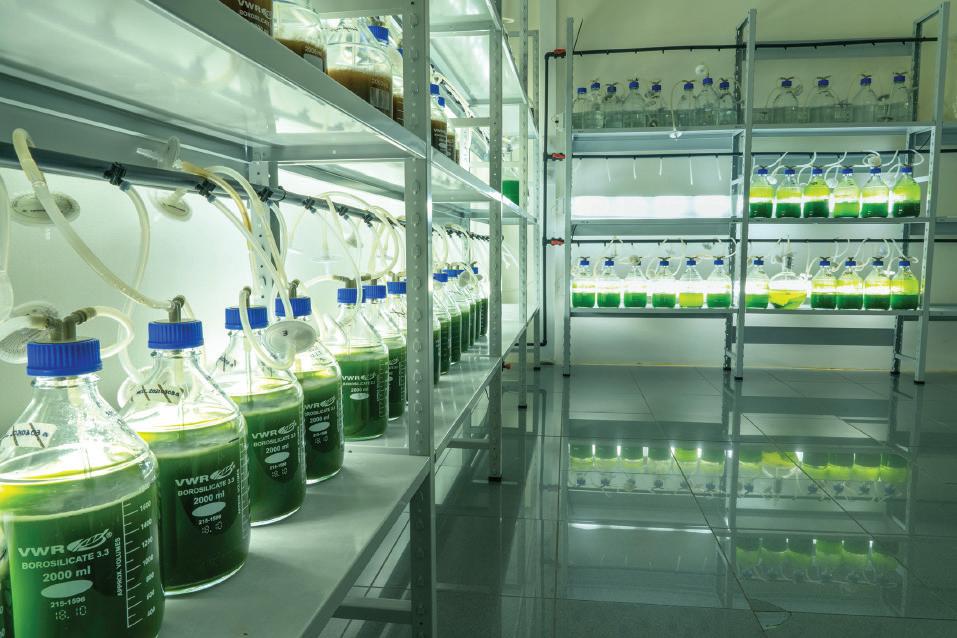
In the world of shellfish hatcheries, microalgae play a fundamental role. Pacific oyster (Crassostrea gigas) hatcheries rely on live algae as a critical feed, providing essential nutrients and fostering the growth and survival of their larvae and spat. Traditional methods of live-algae production and their associated challenges have led hatcheries to explore innovative solutions. The correlation between larval food quality, growth rate, and survival is central to the inspiring success of Nova Harvest.
Substitutes for live algae and their challenges
In the pursuit of alternatives to growing live algae on site, substitutes such as algal paste and powdered (dry) algae emerged. Though they are more convenient and
Continuous bag systems rely on skilled operators to have any consistency, and even when operated well, their production densities are low, requiring significant floor space for algae cultivation and large volumes of water to be treated. These bag systems require meticulous management, including weekly steam or ozone sterilization of incoming media lines to keep the continuous flow of pasteurized seawater media from growing contaminants. The bags lack individual pH or temperature control, forcing these bags to be set up in arrays ranging from dozens to hundreds of bags. As the arrays are fed the same air/CO2 mix and seawater media regardless of species grown, the density of production is ultimately lower than ideal, and they require better management to achieve consistency.
Hatchery Feed & Management Vol 11 Issue 2 2023 31 LIVE FEEDS
Batch production systems aim to keep algae outgrowing the contaminants, which is how Nova Harvest initially produced much of its algae. Batch algae production involves rapid scale-up followed by heavy harvesting of low-density cultures. This style of production requires constant cleaning involving large volumes of bleach and thiosulphate, followed by re-inoculation to keep ahead of bacterial growth. These systems are labor-intensive and lack the necessary controls, biosecurity measures, and adequate light levels to maintain uncontaminated, high-density algae cultures.
Industrial Plankton photobioreactors
Nova Harvest, a renowned player in the Canadian Shellfish Industry, showcases the transformative potential of Industrial Plankton’s innovative photobioreactors (PBRs). Nova Harvest started in 2011 as a geoduck hatchery. Owner and operator, J.P. Hastey, visited Victoria BC to see Industrial Plankton’s 800 L prototype PBR that was successfully cultivating Tisochrysis at a modest density of 8 million cells/mL. Impressed by the prototype’s capabilities, in 2012 Nova Harvest became the first client to purchase Industrial
Plankton’s PBRs acquiring the first two PBR 1000Ls ever built. The following years saw Nova Harvest transition to producing Pacific Oysters due to the growing market and they brought on a dedicated hatchery manager, Angela Fortune, to focus on larval and spat production. This allowed J.P. Hastey to focus on vertical integration, incorporating grow-out operations and fostering collaborative relationships with other farmers and local First Nations.
As Nova Harvest expanded, so did its fleet of photobioreactors. In 2017, they acquired the last PBR 1000L ever built by Industrial Plankton and by 2018, Industrial Plankton developed the PBR 1250L, which Nova Harvest promptly added to their algae production arsenal. After seeing the improved operating efficiencies and labor savings allowed by the PBR 1250L, Nova Harvest acquired two additional PBR 1250Ls in 2019, and bid farewell to the last of their fiberglass tanks, and exclusively produce larval feeds with Industrial Plankton’s PBRs. The year 2022 marked another significant milestone for Nova Harvest as they acquired three new PBR 1250Ls.

Nova Harvest attributes much of its success to the reliable high-density algae production offered by Industrial Plankton’s PBRs, and the initial gamble Hastey took betting on innovation and technology in an industry resistant to change. With the support of Industrial Plankton’s novel algae production equipment, Nova Harvest has grown from the ground up to be the leading British Columbia oyster seed supplier.
Nova Harvest’s remarkable journey, coupled with Industrial Plankton’s cutting-edge photobioreactors, exemplifies the critical role innovative technologies play in revolutionizing the aquaculture industry. With a commitment to quality and sustainability, Nova Harvest and Industrial Plankton continue to shape the future of shellfish aquaculture, ensuring a consistent supply of high-quality oyster seed for the British Columbia market.
More information:
Olivia Walker
Lead Microalgae

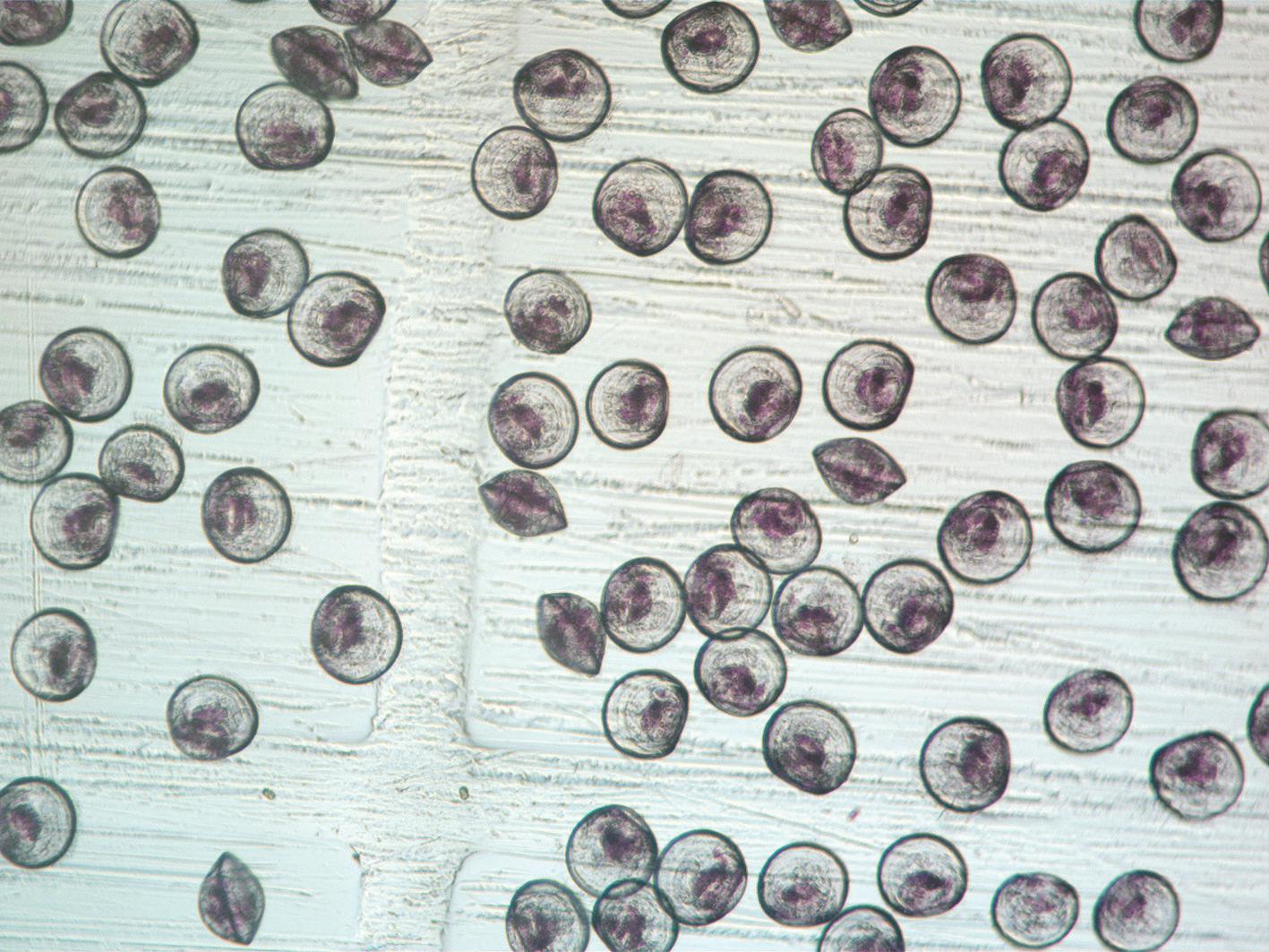
Hatchery Technician
Nova Harvest
E: info@novaharvest.com novaharvest.com
Hatchery Feed & Management Vol 11 Issue 2 2023 32 LIVE FEEDS
Great Salt Lake: A model of sustainable resource management
 Thomas
The Great Salt Lake (GSL) offers a model of sustainable resource management across three dimensions: (1) proactive management of the brine shrimp (Artemia) harvest that enhances year-to-year stability and the overall productivity of the population; (2) active management of salinity to protect the critically important ecology of Gilbert Bay; and (3) significant state-level policy changes and public investments designed to protect the Lake’s water supply and the health of its ecosystem. When viewed individually, each effort has shown measurable, and often dramatic, improvement in the resource directly or its future. Combined, these efforts put the lake on a more sound and sustainable footing moving forward. They also offer lessons that could be applied to other terminal lakes and ecosystems under threat.
The largest terminal lake in the Western Hemisphere, GSL, is a hypersaline endorheic lake currently measuring approximately 2,500 km2 . The lake is a remnant of Lake Bonneville, a late Pleistocene Lake that, at its largest extent, covered most of western Utah. In recent decades, the lake’s surface area has varied widely from 2,285 to 8,500 km2 as a result of wet and dry cycles, increasing atmospheric heat, and increased water demands upstream (Great Salt Lake Policy Assessment, 2023). GSL supports roughly $1.6 billion in direct economic activity each year as well as other values like dust suppression, temperature moderation, and more (ECONorthwest et al., 2019). Artemia cysts provide an essential live feed used primarily in marine fish and
Hatchery Feed & Management Vol 11 Issue 2 2023 33 LIVE FEEDS
Bosteels, Timothy Hawkes, Phil Brown, Great Salt Lake Artemia
shrimp hatcheries globally (Lavens & Sorgeloos, 1996) and support more than 10 million metric tons of marine shrimp and fish aquaculture worldwide (Naylor et al., 2021). Artemia cyst production from GSL, estimated at up to 49% of worldwide Artemia production (Litvinenko et al., 2015), is therefore key to supporting sustainable global marine aquaculture. The Artemia population also provides essential food for millions of migratory birds that fly through Utah on their way to far-flung destinations from Siberia to Patagonia.
Sustainable harvest management
Sustainable harvest management began in the mid1990s as a result of a partnership between the Utah Division of Wildlife Resources (UDWR) and the Artemia industry (Marden, Brown & Bosteels, 2020). Artemia harvesters, familiar with the overfishing of marine fish stocks, became concerned about the over-exploitation of the Artemia resource and approached UDWR to request action. Subsequently, with financial support from the industry, UDWR formed the Great Salt Lake Ecosystem Program (GSLEP), tasked with managing the avian and aquatic resources of GSL. The UDWR also created a Technical Advisory Group (TAG) to advise and provide direction on related ecosystem research. Today, the TAG is made up of experts and researchers from state and federal agencies, academia, and the Artemia industry.
Initially, GSLEP focused on sustainable management of the Artemia resource as well as studying how the resident and migratory avian populations of GSL rely on that resource. In 1997, GSLEP first introduced an adaptable harvest model based on leaving an optimal escapement stock of 21 cysts per liter to overwinter and repopulate the lake each spring. This model, which has now been in place for more than two decades, is described in detail in published studies (Belovsky et al., 2011; Belovsky & Perschon, 2019), and is based on a modified stock-recruitment curve (Fig. 1). Over time, the use of this model has resulted in a more stable harvest, evidenced by the five-year trailing standard deviation (Fig. 2) and a larger average Artemia harvest.

GSLEP subsequently expanded its ecosystem research to focus on phytoplankton studies, nutrient inputs, and nutrient cycling research as well as, more recently, the ecology of the lake’s benthic environment. The benthic ecosystem of GSL contains vast microbialite fields (unique biologically-mediated sedimentary structures with highly productive biofilms) which provide a habitat for brine flies, and which play an important role in the health of the Artemia population and the GSL ecosystem as a whole.
Active salinity management
Over the past few years, the state of Utah, through the Division of Forestry Fire and State Lands (FFSL) and
Hatchery Feed & Management Vol 11 Issue 2 2023 34 LIVE FEEDS
Figure 1. Modified stock-recruitment curve showing the relationship between the post-harvest escapement stock in cyst per liter and the subsequent fall cysts count. The relationship indicates an optimal escapement stock of around 21 cysts per liter.
the Division of Water Quality (DWQ), focused efforts on salinity management in support of the resident Artemia, microbialite, and brine fly population of Gilbert Bay. In 2017, FFSL supervised the construction of a breach with an adaptive management berm connecting the more saline North Arm of GSL to the highly productive South Arm (Gilbert Bay) of GSL (Fig. 3, 4). Less saline South Arm brine flows to the North because of a head difference created by freshwater riverine inflows into the South. Conversely, density-dependent flow in the deeper portion of the breach brings back saturated brine from the North Arm. The adaptive management berm situated in the breach allows for active salinity management by controlling this bi-directional flow (Fig. 5).

FFSL and DWQ created the Salinity Advisory Committee (SAC) to advise the divisions on how best to manage the berm. The SAC is made up of experts from state and federal agencies, academia, and industries that rely on the lake. The breach and adaptive management berm allows for the export of salt to the North during drought conditions and import of salt to the South during wet cycles, thus maintaining a suitable salinity range in the South Arm (90-160 ppt) for Artemia, brine flies, and microbialites even as lake levels fluctuate.
Analysis of a decade of salinity and salt mass presented at the SAC (Brown, Bosteels & Marden, 2023), CFM
modeling of the bi-directional flow (Rasmussen et al., 2021), and more recent unpublished studies have informed the state of Utah on how best to manage the berm. During the past nine months, the berm was raised twice: first, in July of 2022, to block the return of saturated brine from the North Arm; and second, in February of 2023, to capture spring run-off in the southern portion of the lake to better dilute the South Arm and, potentially, set conditions for future modifications, including export of salt to the North Arm. These modifications in conjunction with high run-off from unusually heavy winter precipitation have already brought the salinity of the South Arm back to levels that better support the health of the Artemia resource,

Hatchery Feed & Management Vol 11 Issue 2 2023 35 LIVE FEEDS
Figure 2. Great Salt Lake Artemia cyst harvest in kilograms dry since 1995 with the five-year trailing standard deviation (red line) and regression of harvest with time (dotted line).
Figure 3. The breach in the causeway connecting Gilbert Bay (South Arm) to Gunnison Bay (North Arm) of Great Salt Lake
the microbialites and brine flies, and the millions of migratory birds that rely on them.
Legislation and funding
Since 2020, unprecedented legislative action, including dozens of bills encouraging water conservation generally and benefiting GSL in particular, have driven structural changes to a system of water law historically stacked against conservation in general and particularly GSL. With these changes, Utah’s State Engineer and water managers are better able to move blocks of conserved water downstream to GSL. Additional changes earmark future mineral royalties derived from the lake to protect and enhance water flows to the lake. Lastly, the legislature over the past two years has allocated more than $60 million to help secure water supplies for the lake as well as more than $560 million to promote water


conservation in homes, businesses, and farms within the GSL watershed.
These measures will take time to come to fruition, nevertheless, the combination of structural legal changes, long-term funding, and water conservation have laid the foundation to significantly improve the amount of water that flows annually into GSL.
Conclusion
The trifecta of adaptive and sustainable harvest management, active salinity management, and unprecedented policy innovations and new funding all reflect a robust model of sustainable management for GSL. Reflecting this, the Marine Stewardship Council (MSC) recently gave the Great Salt Lake Brine Shrimp Cooperative, Inc. (DBA Great Salt Lake Artemia) its sustainable wild fishery certification, making it the first inland fishery in the United States to earn this prestigious recognition. MSC certification is a testament to the unprecedented cooperation between the brine shrimp industry, state agencies, academia, and NGOs for their dedicated efforts to maintain a healthy and sustainable Great Salt Lake.
References available on request.
More information:
Thomas Bosteels
CEO
Great Salt Lake Brine Shrimp Cooperative, Inc.
E: thomas@gsla.us
Hatchery Feed & Management Vol 11 Issue 2 2023 36 LIVE FEEDS
Figure 4. The breach showing the raised adaptive management berm blocking the return flow of saturated brine from the North Arm (pink color)
Figure 5. Schematic diagram of a cross-section of the breach with the adaptive management berm. Raising the berm prevents the return flow of saturated brine from the North Arm, thus allowing a reduction of South Arm Salinity through dilution from freshwater inflow and salt export to the North. Conversely, lowering the adaptive berm allows for saturated brine to enter the South Arm and thereby increase salinity in times of excess precipitation.
Optimizing mechanical filtration within an aquaculture system
Wil Conn, Carles Pellicer-Nàcher and Johan Jibert, Veolia Water Technologies AB - Hydrotech
Mechanical filtration, where suspended solids are removed from the water column through water passing through a filter media, is an important process within many aquaculture production systems (Bregnballe, 2022). These systems can include recirculating aquaculture systems (RAS), flow-through systems, as well as those systems that are hybrid in design – where system water is both recirculated and a proportion discharged (and new water brought in) on a regular basis.
Hydrotech has played a leading role in innovating and inventing mechanical filtration options for use within the aquaculture industry. Our innovations include the drum filter (introduced in 1990), the disc filter (introduced in 1995) and the belt filter (introduced in 1999). Our commitment to innovation is supported by the depth of knowledge held within our human capital and our dedication to providing the best aftermarket service and support we can. At Hydrotech, we understand that a fit-for-purpose mechanical filtration solution is key to supporting the overall success of the facility it is located within.
No matter the mechanical filtration option selected, whether it be drum, disc or belt in nature (Fig. 1), or how you measure the “success” of a filter install, there are two recommendations that, if addressed,
will support a successful installation and operation of your selected solution. These two recommendations have been filtered through more than 12,000 Hydrotech units delivered worldwide for a range of aquaculture applications.


Acknowledging that the majority of mechanical filters currently deployed within aquaculture today are drum filters in nature, the following points are targeted toward drum filters.
Recommendation #1: Know your hydraulic profile
Understanding the hydraulic profile that your filter will operate within is a fundamental pillar for success. At the simplest level, it is the relationship between the water level and flow of influent to the filter, the water level within the filter drum and the water level external to the filter drum, and how these levels are impacted during the operation of both the filter and the plant as a whole. It is important that the hydraulic profile is determined at both normal operating levels and during periods of peak flow/loads (e.g. dropping water volume from production tanks to support harvesting) so that the filter can be sized correctly, installed correctly and operate as expected within the range of flows and total suspended solids loads the filter will experience within day-to-day operations.

Hatchery Feed & Management Vol 11 Issue 2 2023 37 EQUIPMENT
Drum filter Disc filter Belt filter
Figure 1. Graphical representation of three types of mechanical filters that are commonly deployed within aquaculture.
Possible consequences to the expected operation of an installed filter arising from a poorly understood hydraulic profile can include:
Too low an influent level (water flow) to the filter
This scenario will reduce the hydraulic capacity of the filter, increase water velocity (and potential shearing of suspended solids to smaller particles) to the filter and decrease the filter media submergence. Such a scenario could render the installed filter incorrectly sized, with insufficient submerged filter media to deliver the surface area required to handle the filtration demands expected. The potential of increased water velocity to create turbulence and subsequently break down large particles into smaller particles should not be overlooked. If not effectively accounted for, there is a significant risk of increased accumulation and concentration of smaller particles throughout the farming system, which by their nature are more difficult to remove, and whose presence increases the likelihood of deterioration in water quality, animal health and system performance.
Too high an influent level to the filter
A common cause of this scenario is the incorrect sizing or absence of a by-pass arrangement, whereby excess water is removed to prevent “flooding” within the filter drum. If too high a water level is experienced, outcomes can include the solids trough being flooded with unfiltered water and overloading the sludge treatment of the farm system. Equipment not suitable to be used beneath the water surface will be flooded, and where filters are located within channels and sumps, the water height could rise above the flooring elevation causing inundation.
Incorrect operating differential pressure
The differential pressure (measured in mm) can be
simply visualized as the difference in the water level within the drum filter and the level of (filtered) water external to the filter media/drum. Too low a differential pressure and filter capacity will be lowered. This will increase energy consumption, the frequency and amount of backwash water used and subsequently increase flow to the sludge/waste line of the filter. Too high a differential pressure over the filter media and the life expectancy of key mechanical parts can be reduced. Examples include filter media, support wheels, center bearing and the filter drum itself. Too high a differential pressure can also result from an incorrectly sized or absent water bypass function.
Recommendation #2: Understand the particle size distribution within your suspended solids
As the degree of recirculation required within the system increases, so does the importance of mechanical filtration to the water treatment process. As Timmons (2022) states, “the lower the solids, the healthier the fish,” a statement based on the impact solids can have on gill health, pathogen prevalence and bioreactor and disinfection efficacy. Therefore, it is key that a full understanding be developed of the suspended solids able to be removed from the system so that filter sizing and importantly, filter media selection can be correct. Determining your particle size distribution (PSD) is a key step in delivering correct selection and sizing.
Factors that can influence PSD include system design and associated hydraulics, the presence of shearing forces within the water column – for example, due to pumping or tank shape, and the velocity of water flow to the filter. The species being farmed, feed type used and associated feeding regimes can also impact the PSD. When the PSD is known along with a confirmed hydraulic profile, and applied within the filter selection process, Table 1 shows typical drum filter removal efficiencies that can reasonably be expected at various
Hatchery Feed & Management Vol 11 Issue 2 2023 38 EQUIPMENT
20μm 40μm 60μm 90μm Total suspended solids 65 - 95 60 - 90 55 - 85 50 - 80 Biological oxygen demand* 60 - 85 55 - 80 50 - 75 35 - 70 Total phospherous* 70 - 90 65 - 85 50 - 80 45 - 75 Total nitrogen* 30 - 35 25 - 30 20 - 25 15 -20
Table 1. Typical drum filter removal efficiencies of key environmental parameters (%).
*Removal efficiency for these parameters will depend on the fraction that is in particulate form.
Hydrotech filter media sizes, using Hydrotech woven filter media (Desa, 2020).
An example of a risk to optimal filter operation, arising from not knowing the PSD for your aquaculture system, is that a filter will be installed with a filter media sizing that does not support the required solids removal efficiency. If a filter is fitted with a media mesh of 80 microns, yet PSD determination of the total suspended solids indicates that 60% of all solids are smaller than 80 microns, you will have 60% of all solids passing through the filter and into downstream water treatment processes.
Additional factors to be considered
There are of course more factors that will influence the optimization and successful operation of mechanical filtration within an aquaculture system. Despite these additional factors, many of which will be project specific, the reader should be aware that knowing your hydraulic profile and determining your particle size distribution within the total suspended solids to be filtered will underpin success in managing these additional factors.
Smarter, stronger, more economical drum filters
Examples of additional factors include understanding the integration and use of the filters, incorporating risk management strategies within the design and ensuring the ease of operation and maintenance of units installed. After all, a correctly sized and installed filter is only as good as the operator’s ability to safely manage, operate and maintain the plant and equipment.
For those readers that are more technically minded, factors could include the filter media type used, the lifting efficiency of the panels the filter media is attached to, and the interplay between head loss, backwash pressure and rotation speed and their role in determining the characteristics of the solid cake forming in the inner part of the drum.
For what at first presents as a relatively straightforward challenge – removal of suspended solids from a water column through mechanical filtration – there are undoubtedly key considerations that need to be accounted for to deliver a fit-for-purpose solution that meets the demands of aquaculture. For those readers wishing to explore further the optimization of mechanical filtration, please reach out to Hydrotech and the author.
The way to become a market leader in any industry is to give customers a quality product that fits their exact requirements at the best possible price. That’s why we have developed the Hydrotech Value series of drum filters.
The Hydrotech Value drum filter series focuses on reduced maintenance, increased component quality and simplified operation – all to give your plant maximum filtration performance at a minimum operational cost. There are more than 50 technological improvements in the new Value series, compared to the previous series, that make these filters excellent value for money.

Hatchery Feed & Management Vol 11 Issue 2 2023 39 EQUIPMENT
Let us help you! Call +46 (0)40 42 95 30 or visit www.hydrotech.se
EQUIPMENT


References
Bregnballe, J. (2022) A guide to recirculation aquaculture – An introduction to the new environmentally friendly and highly productive closed fish farming systems. Rome. FAO and Eurofish International Organisation. https://doi.org/10.4060/cc2390en.


Desa, L. (2020) Hydrotech & Aquaculture - What can we do to upgrade your fish farm? Veolia Water Technologies - AB Hydrotech.
Timmons, M.B and Vinci, B.J. (2022) The Yellow Book of Recirculating Aquaculture 5th Edition, Ithaca Publishing Company, NY, USA.
Contributing authors
Luca Desa, Per Larsson, Gizem Mutlu, Roger Thomasson, Filip Thysell, and Mads Winkler.
More information:
Wil Conn
Aquaculture Sales Manager


Veolia Water Technologies
AB – Hydrotech


E: william.conn@veolia.com


Hatchery Feed & Management Vol 11 Issue 2 2023 40
LAND • SEA • RAS Aquaculture Feeding Systems
fin fish and shrimp
Feed
Feed Aquaculture Europe 2023 - Booths 16-17 18 - 21 Sept 2023 • Vienna (AUSTRIA) For Medium and Big-Scale Hatcheries For Medium and Big-Scale Hatcheries For Labs and Small-Scale Hatcheries For Labs and Small-Scale Hatcheries Automatic Feeding
Vaccinator
The only manufacturer worldwide that covers all feeding stages of
for land or sea based systems Live
Dry
System of Artemia, Rofiter and Microalgae.
Dosing of Micro Diets from 200 up to 800 microns
A new vision for propeller pumps
Didier Leclercq, FishFarmFeeder
Propeller pumps are well-known and widely used in circumstances where high flow and low elevation are required in aquaculture farms. However, they require excellent machining to avoid energy losses, noise and early wear. Furthermore, when good tools are available for freshwater use, their resistance under seawater constraints has proved to be poor. FishFarmFeeder (FFF) developed a propeller pump with a new approach, aiming to be used for most aquaculture modern facilities.
In order to ease maintenance and handling, and improve the efficiency of existing propeller pumps, the pump stand, made of HDPE, is used to conduct the pumped water up to its new elevation level. The shaft line and propeller can be extracted as one piece out of the stand.
The HDPE stand is easy to install, offers optimal hydraulic conditions including low submergences possibilities and is virtually indestructible. The shaft line and its frame are made of stainless steel. The separation between the water conduction pipe and the shaft line makes the latter much lighter than in traditional propeller pumps. Therefore, handling and maintenance are much easier.

Applications
This technology has been applied at three different aquaculture facilities under severe constraints.
Shellfish nurseries on-land
Propeler pumps were applied in a semi-closed oyster nursery system for some weeks to gain size and
Hatchery Feed & Management Vol 11 Issue 2 2023 41 EQUIPMENT
Trout and salmon RAS farms
The pumps have been successfully applied on trout farms run under a “water reuse” regime and land-based salmon RAS. Elevations of 1 to 1.3m are the usual case and flow is provided accordingly at a level of 200-225L/ sec per pump unit.
Shrimp farms
When shrimp farmers want to move to intensive farming conditions for water use have to improve their water inlet quality with fine filtration and ozone disinfection. In order to run their water treatment unit at constant flow and 24/24, this technology has been implemented with low elevation (around 1.05m) and stable high flow (250L/sec/unit).
Farmers have maintained some of the first sold units over ten years. The manufacturer masters the machining of the mechanical parts at best, including synthetic propellers. The traditional permanent greasing of the bearings has disappeared thanks to better
technologies. Motors are adapted to circumstances but remain of the low rotation speed type, again in search of optimal efficiency and return. The maintenance has been successfully organized at the customer’s premises with the ultimate version requiring no transport back to the factory.
The key advantages of the propeller pumps offered by FFF are low noise, low maintenance and light weight; indestructible stand under severe conditions; disconnected shaft line from water conduction pipe; competitive cost of use over time; and standard units within the ranges 0.6-1.5m elevation and 100 to 250L sec.
FFF maintains its focus on offering custom-made feeding systems but will support widely this new technical offer which is clearly in line with its usual qualitative and innovative portfolio.

More information:
Didier Leclercq

Aquaculture Expert and Partner
FishFarmFeeder
E: didier.leclercq@fishfarmfeeder.com
Hatchery Feed & Management Vol 11 Issue 2 2023 42
How much ammonia can biofilters really remove?
Caspar Yan Hansen, David Owen, Blue Unit AS
An ammonia analyzer teamed up with advanced centralized water quality monitoring.
Fish farming is becoming an increasingly important method of food production as the world’s population grows and the demand for sustainable sources of protein increases. Recirculating Aquaculture Systems (RAS) have emerged as a sustainable and efficient method of fish farming.
RAS farms are closed-loop systems that allow for the recycling of water, reducing the need for water exchange and conserving water resources. In RAS farms, fish are raised in tanks that are connected to a water treatment system which removes the waste produced by the fish. One of the major concerns in RAS farms is the management of Ammonia (NH3) waste accumulating in the production water.
Ammonia in RAS systems
Ammonia is produced by fish waste, uneaten food, and other organic matter in the RAS farm. High levels of ammonia in the water can have adverse effects on fish health, growth, and survival. Therefore, managing ammonia levels is crucial in RAS systems.
There are several ways to manage ammonia levels. One of the most effective methods is via a biofilter. A biofilter is a tank filled with a media, typically plastic beads, that provide a surface area for beneficial bacteria to grow. These bacteria convert ammonia into less toxic compounds, such as nitrate (NO3

).
In addition to biofilters, water exchange and pH modification can also be used to manage ammonia toxicity in RAS farms. Water exchange involves removing a portion of the water from the RAS farm and replacing it with fresh water. This helps dilute the ammonia concentration from the water. pH modification simply refers to allowing pH to decrease, converting more of the unionized form of ammonia (NH3) to become the less toxic ionized form (NH4 + ).
However, the key to effective ammonia management is monitoring the levels regularly. Regular monitoring of ammonia levels helps in understanding the dynamics of the RAS farm and how much ammonia is being produced and removed, and when an action should be taken.
Hatchery Feed & Management Vol 11 Issue 2 2023 43 RAS
Measuring ammonia
Ammonia swings in concentration throughout a RAS farm and across the production day. Ammonia can be manually measured in a laboratory. But as this is laborand time-intensive, ammonia is traditionally measured only in a single location inside the fish farm, and in the best case, only once per day.
A more optimized solution is for automatic water delivery to an ammonia analyzer. An ammonia analyzer processes incoming water samples automatically. Where water samples can be collected from many locations across a RAS farm, one is able to identify where ammonia is being produced and where it’s being removed.
A snapshot of ammonia measurements on a RAS farm is illustrated in Figure 1. This is from the Blue Unit test facility during February 2023. The test facility was operating with auto-collection of water samples from five locations in the RAS system. This centralized water monitoring system could combine a range of important water quality measures together with ammonia measurement. Fish were starved for restocking to nature after February 24, with ammonia concentrations falling to very low levels thereafter.


The ammonia analyzer was validated to run reliably with low maintenance and using little reagent. It automatically raises the pH of each water sample, converting all ammonia (NH4 + and NH3 forms) to the unionized, gaseous form (NH3). The NH3 gas passes across a membrane, and an electrode detects the NH3. Results are given as mg per liter of nitrogen caused by NH3
Following each measurement, a second measurement is conducted, but with a known ammonia concentration injected into the sample. In this way, software can determine the real ammonia concentration in the water and ignore external interfering ions that could be present in, for example seawater.
Hatchery Feed & Management Vol 11 Issue 2 2023 44 RAS
Figure 1. Daily profile of ammonia across a RAS system
With automatic measuring of ammonia across the fish farm, a daily cycle of ammonia change could be detected on the test farm with ammonia rising from less than 0.2 mg/L in the morning to above 0.6 mg/L in the evening (Fig. 1).
By focusing only on the days of feeding, a typical ammonia drop of 0.15 mg/L was detected across the biofilter. This represented more than 30% of the incoming ammonia concentration disappearing across the biofilter.
This fascinating work continues to collect more ammonia results and combine these with all the other data being automatically collected by the centralized monitoring system. The final goal is to better determine the most ideal operating conditions for this biofilter and to create tools for better biofilter management.


Conclusion
Ammonia management is crucial in RAS systems to maintain healthy ammonia levels for the fish. Automatic sampling and measuring systems can be a valuable tool in managing ammonia levels by providing realtime monitoring, increased accuracy, reduced labour, and improved decision-making. Centralized measuring systems can help in understanding the dynamics of the RAS system better, which can lead to more efficient and effective ammonia management.
As the demand for sustainable sources of protein continues to grow, RAS systems will become an increasingly important method of fish farming. Effective ammonia management will be crucial in ensuring the success and sustainability of these systems. By utilizing automatic sampling and measuring systems, RAS operators can optimize ammonia management and ensure the health and well-being of their fish.


More information:
Caspar Yan Hansen

Data & Analytics consultant

E: cyh@blue-unit.com


Technical Manager
Blue Unit AS E: dowen@blue-unit.com

STUN, DROP FEED
Hatchery Feed & Management Vol 11 Issue 2 2023
RAS
www.freshflo.com
minimal 110-volt electricity. barb@freshflo.com
BUG LITE FISH FEEDER
Responsible recirculating aquaculture systems gain interest among farmers around the world
Kathrin Steinberg, Aquaculture Stewardship Council
Aquaculture is a highly dynamic and innovative industry – it doesn’t stand still for long. While many would often refer to the aquaculture sector as a young sector, historically, the practice of farming fish has been around much longer. Fish farming has traditionally been done in either ponds or sea cages – in fact this practice goes back several millennia, from ancient Roma to Egypt, and China.
What is RAS farming?
Certification of aquatic products from open and semi-closed systems like sea-cages, ponds or flowthrough systems has been the focus of the Aquaculture Stewardship Council (ASC) standards in the first rounds of standard development. In recent years, the

number of recirculating aquaculture systems (RAS) has significantly increased and thus also facilitated the need to adapt the ASC standards to incorporate fully closed, highly technical systems. RAS farms allow for close management of many parameters within the production system, while reducing the impact on the surrounding environment.
Another benefit of RAS is that there is more flexibility regarding where a farm can be sited. In RAS, fish and crustaceans can not only be produced closer to the market, lowering the economic and environmental costs of transportation, but also in areas with limited access to both land and water. As water is treated and reused, the overall amount of water needed is lower than for other land-based aquaculture systems, while at the same time
Hatchery Feed & Management Vol 11 Issue 2 2023 46 RAS
Credits: ASC Foundation
allowing for much closer control of conditions inside the tanks. Another potential advantage is that RAS farms greatly reduce the risk of (shell)fish escapes or disease transmission to wild fish population by taking the farmed fish out of the natural habitat entirely. However, there can also be flip sides to that, as taking a farm out of the water and onto dry land can have a different set of impacts and drawbacks. This is why constant monitoring and assessment are important in RAS farms. This is also why the ASC developed the ASC RAS Module: a set of requirements farms need to meet when applying for any species-specific ASC certification in RAS systems.
There are certain areas where closed systems are likely to be more impactful; one example is energy use. Constantly recirculating and filtering water, and ensuring conditions remain right for the fish (in terms of temperature regulation, oxygen provision, etc.) require much more energy than open systems that make use of natural services.
This high reliance on energy in RAS makes the source of that energy all the more important and prompt a specific set of questions: ‘Does electricity come from low emissions sources like hydroelectric, wind, or solar, or does it come from high emissions fossil fuels?’ At a time when we are conscious of the carbon footprints in every aspect of our lives, including the food we eat, these are important considerations. It’s worth noting
carbon footprint compared to many animal protein sources such as beef and lamb. Nevertheless, energy use is still an impact that RAS farmers need to think about more than other fish farmers.
Increased interest in ASC certified products from RAS farms
There are currently more than 2,000 ASC certified farms all around the world producing 1.8 million tonnes of certified product from bivalves to crustaceans and several finfish species. Over half of these farms are landbased farms, mainly ponds (e.g. shrimp in Southeast Asia and Latin America). And about a quarter of ASC certified farms are marine cages (e.g. salmon in Norway, Chile or Canada) while the rest are other sea-based systems for mollusks and seaweed.
Currently, less than 5% of ASC certified farms define themselves as RAS, but interest in ASC certified products from RAS farms is increasing from both producers, retailers and consumers.
ASC is currently working on an alignment of all 11 species specific standards into one ASC Farm Standard. While the current standards have been developed for the main production systems at that time, the ASC Farm Standard will focus less on the species itself and more on the actual system and their potential respective impacts. There will, of course, still be species specific metrics like feed use and others. But before the ASC Farm Standard becomes effective in 2025, ASC wanted to find a solution for RAS farms in order for them to become ASC certified according to the current standards, while still addressing the RAS specific impacts.
Like other aquaculture practices, RAS can have an effect on receiving waters, general land use and land conversion as well as water use and discharge. Furthermore, other factors, such as stocking density, feed

Hatchery Feed & Management Vol 11 Issue 2 2023 47 RAS
Credits: ASC Foundation
efficiency, the origin of feed ingredients and chemical inputs, are also of interest in closed systems. To develop an interim solution, through the RAS Module, ASC assessed the main potential environmental impacts that RAS farms can have and how these are addressed in the various species-specific ASC Standards. The ASC RAS Module thus takes all these differences between RAS and the more conventional systems into account and combines relevant indicators for certification into one document. RAS farms have to comply with the speciesspecific standard (e.g. the ASC Salmon Standard) plus the ASC RAS Module.
Example of RAS certified by ASC
The first farm to achieve certification through the ASC RAS Module (with the ASC Shrimp Standard) was Blue Aqua in Singapore. The farm uses raceway systems both outside and in greenhouses to grow Penaeus monodon as well as Penaeus vannamei

The ESG Officer at Blue Aqua International, Hamoon Shishechian states on their website that “obtaining an ASC certificate not only demonstrates our
commitment to sustainable and responsible practices but also sets us apart in the marketplace as a leader in ethical aquaculture.”
Both the development of RAS as well as the demand for responsibly farmed seafood is growing. ASC is proud to be on the forefront of this development by defining responsible production techniques, acknowledging novel farming methods, by supporting those who cannot yet reach the high ASC standards through improver programs, workshops and direct communication; and by not standing still, continuously working on revisions and by being involved in the latest research.
More information:
Kathrin Steinberg
Head of Research
Aquaculture Stewardship Council
E: kathrin.steinberg@asc-aqua.org

Hatchery Feed & Management Vol 11 Issue 2 2023 48 RAS
Dr. Farshad Shishehchian inspecting shrimp health in his R&D center in Singapore. Source: Blue Aqua Group.
There’s no “Sitting On Your Hands” in hatchery design
Stephen Allen, Ocean on Land Technology Ltd.
How Ocean on Land Technology (OOLT) has grown from the success of a single product, their state-of-the-art Aquahive® system.


programs around the world. The system became so successful that OOLT now commonly sees survival rates of up to 58% in rearing runs; equating to around 12,000 juvenile lobster being put back into the ocean at stage 05 from a single buried hen producing circa 20,000 larvae – which are truly groundbreaking figures for the industry.
Each stage of the process has been carefully designed, from broodstock holding units down to the way animals are released to the ocean floor, the goal is maximizing survival rates and giving juveniles the best possible start in life. Release methods traditionally consisted of shallows release to simply pouring animals into the ocean, or pumping systems that push the animals down to the seabed. Through extensive research, the OOLT team realized that shallows release systems severely limited geographic placement ability and that the further deepwater release methods led to greatly increased mortality from fish as these tiny juveniles passed down through the water column. Their new and effective release method was finally finessed with a little help from a Canadian hatchery program, with skeleton trays and ‘tissue’ now being employed before being carefully lowered to the seabed, resulting in much lower rates of predation.
Ocean on Land’s Aquahive® system is truly unique. Specifically designed to allow the rearing of cannibalistic and predatory species, such as clawed lobsters, in large quantities, the state-of-the-art juvenile rearing system can be adapted efficiently and safely to meet customer requirements. From this Aquahive system, the animals can then be transferred to the sea bed for restocking

Hatchery Feed & Management Vol 11 Issue 2 2023 49 DESIGN
DESIGN
Effective adaptation
As the popularity of Aquahive® grew, OOLT soon realized that there was huge potential to offer more closely associated products to help protect wild lobster stocks around the Northern Hemisphere, and their Hatchery in a Box (HIB) system was born.

seen by aquaculturists (and their budget teams) as a risk and potentially not always cost-effective. The Aquahive® Trial System was created to offer the academic sector a fully bio-secure trial unit to help them gain a speciesby-species proof of concepts (POC). By using a small broodstock unit, with separate larval and grow-on units, each with its own RAS unit, hatchery teams can explore new production processes and requirements prior to gaining the full investment needed for a large-scale, hatchery production system.
Being able to supply a personalized hatchery system, prebuilt and delivered on a ‘plug and play’ basis anywhere in the world, proved very successful. Their modular design quickly became recognized as a sustainable option within the aquaculture sector, and the industry quickly caught on to how this system could be used for more than just lobsters.

With some simple adaptations, OOLT found they could offer a complete hatchery system for many more shellfish species. With the technological advances of 3D printing, OOLT could design and print trays to any client’s specifications. By changing simple variables like the cell layout or increasing the cell sizes, the team found they could hold multiple species, that did not necessarily have predatory tendencies.
The commercial sector was equally keen to gain POC before scale-up, giving the OOLT team an unexpected opportunity. Trial systems have a minimal impact on long-term investment plans, as once POC is gathered each piece of apparatus within the trial unit can be re-deployed within the hatchery system at full scale.

Purpose led design
Following the popularity of Hatchery In A Box, the OOLT R&D team looked for potential new ways of improving the modular approach as well as into other aspects of hatchery life. All shellfish hatcheries require a food source to provide their animals with the necessary nutrients to grow. Traditionally, carnivorous options were used for Artemia, copepod and Daphnia production, with algae production systems being used for the vegetarian option.
Smart investment initiatives
Key connections with academic institutions across the world opened new routes to the market. The purchase of a full-scale hatchery system for a new species was
With the Hatchery In A Box system becoming increasingly popular for bivalve species like oysters and clams, the team understood a new industry-wide need for portable algal production units. Created to
Hatchery Feed & Management Vol 11 Issue 2 2023 50
fill the needs of growing demand, Algae In A Box is a cost-effective production method capable of producing multiple species strains for different age groups at the necessary densities required by hatcheries.
The future’s green Ocean on Land’s adaptability and willingness to work collaboratively with clients means that to date, the team has created custom solutions for 16 different species, with no signs of slowing down.
The launch of Algae In A Box marked their entrance into the micro-algae sector, a rapidly growing product segment. In 2023, OOLT joined forces with a specialist seafood food company based in the UK, that grows seaweed species in the ocean. This new and exciting project sees the team exploring R&D of a new kelp culture unit which will be built into their signature modular shipping containers before being shipped for installation within the coming weeks.
Do you have a potential project for the Ocean on Land Team? Get in touch to see what their unique, modular designs could do to enhance your hatchery business.

Socorex® ultra 1810

More information:
Stephen Allen Business Development Director
Ocean on Land Technology Ltd.

E: Stephen.allen@oceanonland.com
• Extra light
• Volumes down to 0.02 mL
• High performance
• Long durability
www.socorex.com
Product information:

Hatchery Feed & Management Vol 11 Issue 2 2023 DESIGN
FISH
SYRINGES
Professional hatchery design: How to think (and not worry) about it
David Märkl-Bilger, WATER - proved GmbH
For the time being, rainbow trout and other trout or char species are mostly grown in semi-intensive through systems with earthen or concrete ponds and raceways. Especially small- and medium-sized farms, with an annual production capacity of a few hundred tons, are used to purchase their fingerlings from other producers. As biosecurity, as well as a reliable and constant supply of fingerlings, have become more crucial topics over the past few years, more and more farms are starting their own hatchery operations.
Starting from scratch gives the rare opportunity to focus on each detail of a best and state-of-the-art
design. Strong biosecurity procedures, the reduced availability of human resources and compromised water quantities are strongly demanding sophisticated hatchery designs. This is of course also valid for smallerscale operations. Efforts for the professional layout and therewith into operation security and effectiveness will be worth it for sure.
Step by step: The crucial aspects
Starting with the basics, the first thing to consider is the capacity of the facility: the number of different fish species, as well as the frequency of annual batches,

Hatchery Feed & Management Vol 11 Issue 2 2023 52 DESIGN
target weight and the number of fish, calculated losses, growth rate and planned gradings. All these aspects must be taken into account. The most important is using reliable data for the calculation. Several different management models should be considered and computed during stock and capacity planning.
The next step is to select the rearing units (number, shape and size) based on the livestock data. This is followed by the placement of the tanks within an existing building or a new building to be constructed. In the first case, the aim is to make the best possible use of the existing structures. In the second case, the focus needs to be on the best possible arrangement with a simultaneous saving of building space and still unrestricted manageability. Already in this step, sensible biosecurity plans must be included in the planning. The spatial separation of individual production areas (e.g. hatching and rearing) as well as possible hygiene sluices must be taken into account. In addition, sufficient storage and working areas have to be considered.
The next task during the design needs to focus on the distribution of water (inflow and outflow), furthermore, on the specific layout of the piping network. Due to head losses, different water levels and the necessity of avoiding dead zones in any tank, this is a crucial point when it comes to the professional planning of a hatchery. Pipelines (not only for water but also for oxygen or compressed air) need to be as short as possible, therewith as cost-effective as possible, their diameters need to match the flows and they have to be placed thoughtfully. Of course, nobody wants to step over pipes every day.
As a water source, ground or springwater is usually used, but cannot always be channeled into the system by gravity. If so, a suitable pumping station including level and flow monitoring, as well as redundant pumps with automatic pump change in case of failure, needs to be part of the overall design. Furthermore, energyefficient, reliable and affordable equipment needs to be chosen and its tailor-made integration must be planned properly. This is much more than just selecting a pump.
Each fish farmer, farm manager and CEO of an aquaculture business knows that the avoidance of mass mortality incidents is one of the keys to animal welfare as well as financial profitability. Therefore, backups, such as emergency oxygen supply (including suitable diffusers and matching solenoid valves), the
immediate availability of tactical spare parts and the reliable alert from a tailor-made monitoring system, are the main aspects to be considered during system planning and design. Often quite small decisions make the final difference. Going for a second dialing unit with a fall-back function or investing in an oxygen loop pipe instead of a single stub line may save your efforts, fish and money in the long run instead of losing it all within a blink. Better to be safe than sorry should be the guiding line in planning and building your hatchery.
Last but not least, choosing, designing and integrating feeders, oxygenation and grading equipment into the facility makes the whole system more elaborated and its management as time-saving as possible. Calculation of final pricing (not only for equipment but also for installation and commissioning) as well as definition and planning of interfaces finalizes the complete and professional design.
At WATER – proved, we often say “concrete create facts“. Therefore, let’s keep as a rule of thumb: Design first, construction second. This will help you avoid losses, equipment failures, hassles and expensive modernizations. Let’s design your future hatchery together and make the most of it.
Tailor-made aquaculture
WATER - proved GmbH designs and constructs fish farms. It does not matter whether a flow through or recirculation system is to be created or expanded. Of course, we are also available for the exciting field of aquaponics. We do not work with modular standard systems but develop the optimal solution depending on the location and the individual needs of you and your livestock. In addition to complete sites and systems, we also plan, integrate and build parts of your fish farm: oxygen input systems, biofilters, drum filters, oxygen monitoring, feeding systems, pumping systems and much more.
More information:
David Märkl-Bilger Managing Partner

WATER - proved GmbH
E: maerkl@water-proved.de
Hatchery Feed & Management Vol 11 Issue 2 2023 53 DESIGN
RESPONSIBLE FARMING
Measuring welfare in carp farming
Marius Nicolini, FAI Farms
Carp farming has evolved significantly around the world, with specific approaches tailored to various carp species. From selective breeding to improved farming systems, farmers have continuously adapted their practices to optimize productivity, ecological sustainability, and fish welfare. According to FAO (2020), carp is the most produced food fish in the world and accounts for 54.8% of finfish production. The top species are grass carp (Ctenopharyngodon idella), silver carp (Hypophthalmichthys molitrix ), common carp ( Cyprinus carpio ) and catla (Catla catla), with an annual production of 5.8, 4.9, 4.2 and 3.5 million tonnes, respectively.
Despite being the most produced fish around the world, carp farming faces many challenges common to all aquaculture species. Water quality management is a critical challenge and maintaining optimal water quality requires continuous monitoring and appropriate
management practices. Disease also has a great impact on carp farming as many farms have intensified their production in order to be commercially viable in a market where carp have a lower price compared to other aquatic species.
The intensification of aquaculture production often has a direct impact on the animal welfare. It is more difficult to maintain adequate water quality for the animal and the overcrowding of fish leads to socially aggressive encounters and food competition, among other stressful conditions. It is important to measure fish welfare as it directly reflects production performance. A fish that lives in an optimal environment and is fed properly is less likely to be infected by disease, it will have optimal growth and show natural behavior. It is important to understand that fish are sentient, and can feel pain, anxiety and fear, similar to other vertebrates. Treating them with care directly improves farm production performance.

Hatchery Feed & Management Vol 11 Issue 2 2023 54
How to measure fish welfare?
A new set of indices to assess and monitor the welfare of farmed fish was recently developed using grass carp, Ctenopharyngodon idella, in an earthen pond as a model. The work of Pedrazzani et al. (2022) was centered around the five domains model which recognizes that animals can experience feelings, ranging from negative to positive. The first four domains (Nutrition, Environment, Health and Behavior) all help inform us about the animal’s various experiences, which make up the fifth domain, the Mental Domain. Since we cannot ask a fish how it feels, we assume that its well-being depends on having its basic needs met such as living in a clean environment or having enough quality food. Any measure or observation that tells us how well the fish’s needs are being met is seen as a way to understand its well-being. These indicators, which describe the fish’s overall quality of life, were grouped according to four of the five domains defined by the Farm Animal Welfare Council (FAWC, 1979): environment, health, nutrition, behavior (Table 1, 2, 3, 4).

Environmental indicators
Fish depend on water to perform all their vital functions such as respiration, feeding, reproduction, osmoregulation and excretion. Although most carp species are known for their great tolerance and adaptability to different environmental conditions, their welfare is inextricably linked to relatively wellestablished water quality conditions. For example, temperature is one of the most critical indicators for carp – as well as for most farmed fish species. Its fluctuations have significant effects on feeding, respiration and growth rate. Welfare is also directly influenced by other water quality parameters, such as dissolved oxygen concentration and the proportion of nonionized (NH3) and ionized ammonia (NH4+) in water.
Health indicators
Inadequate environmental or management conditions are often the trigger of stress, the most important agent of disease in farmed fish. When grass carp show various signs that indicate health problems, the main organs affected are the eyes, lips, operculum, skin, fins, gills, abdomen and anus. Ocular disease is common and can be a clinical sign of major bacterial diseases affecting
Swelling in the abdominal cavity is usually the result of fluid accumulation (dropsy), usually associated with bacterial infections caused by Aeromonas or opportunistic Pseudomonas
Nutritional indicators
Regarding nutritional aspects, we also emphasize the use of quantitative indicators to assess fish welfare. The ratio between length and weight (expressed by the body condition factor K) of animals of the same species and age can vary according to feeding and reproductive activities and provides important information on the health status of the animals. The optimal feeding strategy needs to take into account the quality and quantity of feed (protein content), the feeding frequency and feed dispersion in the pond. Limited pond areas may increase competition, resulting in less homogeneous group performance and more aggression and injury between animals.
Behavioral indicators
These indicators should be analyzed at specific points in the management to which fish are subjected in an aquaculture facility (e.g. biometrics, acclimation, classification, transfer, vaccination, feeding or harvest). The feeding behavior of individuals may describe changes in the general state of grass carp welfare that can be caused by stress or disease. When stunning or anesthetizing fish, the outcomes should be observed
Hatchery Feed & Management Vol 11 Issue 2 2023 55
RESPONSIBLE FARMING
.
RESPONSIBLE FARMING
to understand the level of stress or pain the animal is subject to. Ideal anesthesia includes rapid initiation of the surgical procedure and gradual recovery of the animal.
Scoring welfare indicators
Each of the indicators is a measurement or an observation of the fish, its environment or the farming practices. The answer to an indicator results in a score from 1 to 3 (Table 1-4). A score of 1 means it is within the ideal range. A score of 2 indicates that there is some variation outside of the ideal range that the carp can tolerate, even if they have some minor negative effects. A score of 3 means the
level is unacceptable. The ideal, tolerable and unacceptable qualitative and quantitative thresholds for each indicator of grass carp welfare were determined using a systematic literature review. Thousands of scientific publications were used to determine the thresholds that give a score to an indicator.
We invite all carp farmers to perform a welfare assessment using the following tables.
1. Fill in the score tables.
2. Report your score in the form (QR code below).
3. Receive a welfare report to see where you can improve your production.
Hatchery Feed & Management Vol 11 Issue 2 2023 56
Indicators Reference values Score (s) 20–33 1 Temperature (°C) 16–19 or 34–37 2 ≤15 or ≥38 3 7.0–8.5 1 pH 6.0–6.9 or 8.6–9.0 2 ≤5.9 or ≥9.1 3 30–60 1 Transparency (cm) 20–29 or 61–70 2 ≤19 or ≥71 3 0.000–0.025 1 Nonionized ammonia (mg/L NH3) 0.026–0.059 2 ≥0.060 3 0–0.9 1 Nitrite (mg/L NO2) 1.0–1.5 2 ≥1.6 3 25–100 1 Alkalinity (mg/L as CaCO3) ≥101 2 ≤24 3 ≥49 1 Dissolved oxygen (% of saturation) 43–48 2 ≤42 3 0–0.7 1 Salinity (psu) 0.8–8.0 2 ≥8.01 3 Absence 1 Terrestrial predators Controlled presence 2 Uncontrolled presence 3 Absence 1 Predators and other aquatic interspecific inhabitants Controlled presence 2 Uncontrolled presence 3
Table 1. ENVIRONMENTAL ASSESSMENT
RESPONSIBLE FARMING
Table 2. NUTRITIONAL ASSESSMENT
Hatchery Feed & Management Vol 11 Issue 2 2023 57
Indicators Reference values Juvenile 2.1-150g Reference values Adults >150g Score (s) 33–44 28–35 1 Crude protein (%) 29–32 25–27 2 ≤28 or ≥45 ≤24 or ≥36 3 3.0–6.0 2.0–3.0 1 Dry feed amount (% biomass) 1.0–2.9 1.0–1.9 2 ≤0.9 or ≥6.1 ≤0.9 or ≥3.1 3 and/or 30–44 100–200 1 Natural food amount (% biomass) 10–29 50–99 2 ≤9 or ≥45 ≤49 or ≥201 3 ≥3 ≥2 1 Feeding frequency (times/day) 2 1 2 ≤1 <1 3 >75% of surface area 1 Food distribution (% of surface area reach) 50%–75% of surface area 2 <50% of area surface 3 ≥1.20 1 Fish condition factor (K) 1.00–1.19 2 ≤0.99 3
Procedure Indicators Reference values Score (s) 40–70 1 Acclimatization classification transfers Respiratory frequency (opercular rate/min) 20–39 or 71–90 2 ≤19 or ≥91 3 Anesthesia - surgical stage Induction or recovery in 2–4 min 1 Invasive procedure (vaccination) (reduction in opercular rate, Induction or recovery ≤1 or ≥5 min 2 absence of swimming) No induction or no recovery; death 3 Regular swimming, 1 no or few body parts on the surface Restless swimming behavior, swimming 2 Massive capture (partial or total) Swimming behavior in different directions and or jumping Decreasing activity; fish trapped against 3 the net or swimming sideways; exposure of the body to air; exhaustion 3–5 1 Food intake Feed intake (minutes) 2–3 or 5–7 2 ≤1 or ≥8 3
Table 3. BEHAVIOUR ASSESSMENT
RESPONSIBLE FARMING
Table 4. HEALTH ASSESSMENT
References
FAO. (2020). Global Capture and Aquaculture Production (FishStat). Rome, Italy.
Mellor, David J., Ngaio J. Beausoleil, Katherine E. Littlewood, Andrew N. McLean, Paul D. McGreevy, Bidda Jones, and Cristina Wilkins. 2020. The 2020 Five Domains Model: Including Human–Animal Interactions in Assessments of Animal Welfare. Animals 10, no. 10: 1870.
Pedrazzani, A. S., Tavares, C. P. d., Quintiliano, M., Cozer, N., & Ostrensky, A. (2022). New indices for the diagnosis of fish welfare and their application to the grass carp (Ctenopharyngodon idella) reared in earthen ponds. Aquaculture Research, 00, 1–21.
More information:
SCAN to score a batch of fish and receive a free welfare report.

Marius Nicolini
Aquaculture Project Manager

FAI Farms
E: marius.nicolini@faifarms.com
Hatchery Feed & Management Vol 11 Issue 2 2023 58
Indicators Reference values Score (s) Normal and healthy appearance 1 Eyes Bleeding, unilateral exophthalmos or traumatic injury 2 Bleeding, bilateral exophthalmos or traumatic injury; chronic condition, impaired vision 3 Normal and healthy appearance 1 Jaws/lips Bleeding, redness or mild injury or deformity (without affecting eating) 2 Bleeding, redness or severe injury or deformity (affecting eating) 3 Normal and healthy appearance 1 Operculum Absence of tissue (<25%) 2 Bleeding, redness, absence of tissue (≥25%) 3 Normal and healthy appearance 1 Skin Scar tissue, punctual loss of scales, ulcers or superficial lesions <1 cm2 2 Rising or general loss of scales, ulcers or superficial lesions >1 cm2, redness, 3 necrosis, darkening or lightening, bleeding, swelling, parasites Normal and healthy appearance 1 Fins Light lesion or splitting 2 Severe bleeding, ray exposure, necrosis, foreign body or parasite 3 Normal and healthy appearance 1 Gills Injury, mild necrosis, splitting or thickening 2 Bleeding, redness, pallor, severe necrosis, excess mucus, spots, swelling, 3 deformation, adhered foreign body, parasite Normal and healthy appearance 1 Abdomen Discreet distension, redness 2 Bleeding, severe distension with or without the presence of fluid, weight loss 3 Normal and healthy appearance 1 Anus Fecal residue, swelling and redness 2 Necrosis, bleeding, severe injury 3 ≤10 1 Mortality (%) 11–24 2 ≥25
Industry Events
2023
JUNE
21 - 22: Oceanovation Festival, The Netherlands www.oceanovation.live
JULY
10 - 12: Aqua Farm 2023, Australia aquacultureconference.com.au
11 - 13: Aqua Expo El Oro, Ecuador aquaexpo.com.ec
24 - 26: Shrimp Summit, Vietnam responsibleseafood.org
AUGUST
22 - 24: Aqua Nor 2023, Norway www.aquanor.no
SEPTEMBER
5 - 7: Global Shrimp Forum, The Netherlands www-shrimp-forum.com
11 - 14: 21st International Conference on www.delegate-reg.co.uk
Diseases of Fish and Shellfish, UK
18 - 21: Aquaculture Europe, Austria www.aquaeas.org
OCTOBER
2 - 5: The Responsible Seafood Summit, Canada events.globalseafood.org
23 - 26: Aqua Expo Guayaquil aquaexpo.com.ec
NOVEMBER
13 - 16: Aquaculture Africa 2023, Zambia was.org
14 - 17: XIX FENACAM, Brazil www.fenacam.com
2024
FEBRUARY 18 - 21: Aquaculture America 2024, USA was.org
MAY 14 - 15: Aquaculture UK aquacultureuk.com
AUGUST 25 - 29: AQUA 2024, Denmark was.org
Hatchery Feed & Management Vol 11 Issue 2 2023 59