
Vol 9 Issue 1 2021 Published by Aquafeed Media S.L.U. www.hatcheryFM.com info@hatcheryFM.com TILAPIA DEVELOPMENTSHATCHERY Vol 10 BallanCryoplanktonWrasse Larval Feeds Prevention of EHP in Shrimp
CONTACT US
Editorial: editor@hatcheryFM.com
Editor/Publisher: Lucía Barreiro
Consulting Editor: Suzi Dominy
Assistant Editor: Marissa Yanaga Conferences and webinars: info@hatcheryFM.com

Advertising enquiries/request media pack: sales@hatcheryFM.com
Accounts & all other enquiries: info@hatcheryfm.com
Digital editions are free to industry subscribers. You may also purchase print copies. Subscribe at HatcheryFM.com to receive your own digital copy of our publications.
https://bit.ly/HATCHERYSUBSCRIBE


Contents
4 Interview with Rafael Verduga News Review New generation of nursery feeds: The case of tilapia story Genetically Improved Farmed Tilapia: Benefiting aquatic food producers in the past, present and future
17 Tilapia microbiome and technologies: Past, present and future The digital revolution Improvements in ballan wrasse larvae nutrition: Enhancing biological performance with bespoke microdiets Cryoplankton effects on the production of different species of fish and crustaceans: Research and industrial applications Has Artemia emerged as a key contributor to enhancing larval Macrobrachium rosenbergii survival? Prevention and control measures for EHP: A holistic approach Development of multiple lines of domesticated SPF Penaeus vannamei or “designer” Penaeus vannamei Assessment of ionic adjustment in low-salinity water on Penaeus vannamei farming in synbiotic nursery system Calendar of events Tony Broadhurst - Kinda’ hot! read previous issues in digital format or to order print copies,
Hatchery Feed & Management Vol 10 Issue 3 2022 HATCHERY FEED & MANAGEMENT VOL 10 ISSUE 3 2022
6
10
*Cover
14
21
25
28
33
40
44
49
51
Columns37
To
www.hatcheryfm.comvisit
SUBSCRIBE
Aquafeed Media, S.L.U., Ames, 15220 A Coruña, Spain. Copyright© Aquafeed Media, S.L.U., 1998-2022 All rights reserved. Privacy Policy & Terms of use HATCHERY FEED & MANAGEMENT We are grateful to the following companies for sponsoring this issue of the magazine. Their support allows us to make our publications available without charge. Megasupply ..............................................................5 Fresh-Flo 7 Skretting 8 Reed Mariculture 9 ADM/Bernaqua ......................................................13 The Center for Aquaculture Technologies ........16 Merck Animal Health ........................................... 23 Sparos 27 Benchmark Genetics 32 I&V Bio 39 Zeigler 43 INVE Aquaculture...................................................48 World Aquaculture Society ..................................52 FOLLOW US
BALLAN WRASSE LARVAL NUTRITION

How
GENETICALLY IMPROVED FARMED TILAPIA

The GIFT strain is a result of 28 years of selective breeding across 23
CRYOPLANKTON FOR FISH AND CRUSTACEAN LARVAE 22
Results from trials testing nauplii from the barnacles as first feeds in several fish and crustacean species.

LINES OF SPF PENAEUS VANNAMEI 40
The development of domesticated and improved shrimp from fast growth to a number of commercial lines for specific uses.

Hatchery Feed & Management Vol 10 Issue 3 2022 VOL 10 ISSUE 3 2022HATCHERY FEED & MANAGEMENT
14
Contentsgenerations.
tailor-made microfeeds can enhance biological performance and simplify feeding protocols in this species.
Rafael Verduga is General Manager at Texcumar.

INTERVIEW with Rafael Verduga
HFM: Please tell us about yourself. What has been your journey in aquaculture?
RV: I entered the aquaculture business at the invitation of some friends to join a small laboratory to produce shrimp larvae. It was just before the arrival of the white spot in Ecuador. During that period, we had to close and I started as a consultant in Texcumar given my experience in administrative and financial areas. Then, I became general manager of Texcumar and when the shareholders decided to sell the company, I decided to acquire it through a long-term credit operation. A few years later, we made another important acquisition, Acuatecsa hatchery, which also stopped its operations due to the white spot crisis.
HFM: Since the acquisition in 2003, Texcumar has been expanding its production capacity alongside the increase in shrimp production in the country. Would you tell us more about this journey, especially after the white spot crisis?
RV: Times were very difficult during the white spot crisis. There was no liquidity in the sector and a lot of bartering. In that scenario, we aimed to have quality and make the best shrimp nauplii, which increased our acceptance in the market. In 2010, we started a genetic program together with other important shrimp groups in Ecuador as a strategic alliance and that has allowed us today to be the main producer of nauplii in Ecuador. One out of every two shrimp exported in Ecuador was born in Texcumar.
Hatchery Feed & Management Vol 10 Issue 3 2022
HFM: Hatcheries in Ecuador are becoming bigger and Texcumar is currently one of the largest. What do you think have been the main advances that have allowed this intensification?
RV: Two fundamental pillars have allowed it. One is the infrastructure. We surely have the best infrastructure in Ecuador. We have not skimped on continuous improvement, recirculation system, drying areas, quarantine areas – in some cases duplicating areas to allow improvements without having to stop production – innovation in processes and technology and desalination system. We are also working on moving towards the use of clean energy. All this has allowed us to be at the forefront. The other important factor is our genetic program, which has been successful, and today, we are complementing it with a genomic selection program.
HFM: What is the focus of your genetic program and what have been its main achievements?
RV: The focus of the program has been mainly on growth. In 12 years, we went from an average growth of 0.9 g per week in 2013 to 2.2 g per week in 2022 and with our genomic selection program, we expect to keep improving the growth rates while assuring stable survivals through genomic selection.
HFM: Ecuadorean shrimp farmers are requesting bigger PLs that grow faster. How is Texcumar facing this demand for high-quality PLs?
RV: Apart from the increase in growth, we have also increased our PL production, but mainly through the animals that our clients produce with our
nauplii. Ecuador has a large installed capacity of shrimp hatcheries and most of them stock with our brand.
HFM: There’s a wide variety of feed protocols applied by shrimp hatcheries from fresh to formulated feeds. What is Texcumar’s strategy for broodstock and PLs?
RV: For broodstock, our feeding protocols include frozen food in high percentages of animal biomass. For larviculture, we use dry diets that exist in the market complemented with Artemia.
HFM: What are the main strategies the company has implemented to ensure biosecurity at the hatcheries?
RV: Basically, we maintain quarantine areas in each laboratory where the broodstock that comes from shrimp farms enters. There, we do the analysis before they enter into production.
HFM: The COVID-19 pandemic and the consequences of the Russia-Ukraine conflict have brought new issues to the industry. What do you think are the next challenges and solutions Ecuador will face in terms of technology, prices and markets?
RV: We have to be more efficient. The markets demand to be productive and profitable, in addition to demanding traceability and certifications. We must work on all aspects that allow us to improve and meet all requirements, and also prepare our human resources so that they are up to date with what the consumer demands, and anticipate growth and infrastructure improvements.
Hatchery Feed & Management Vol 10 Issue 3 2022 5
Highlights of recent news from Hatcheryfm.com the Hatcheryfm.com
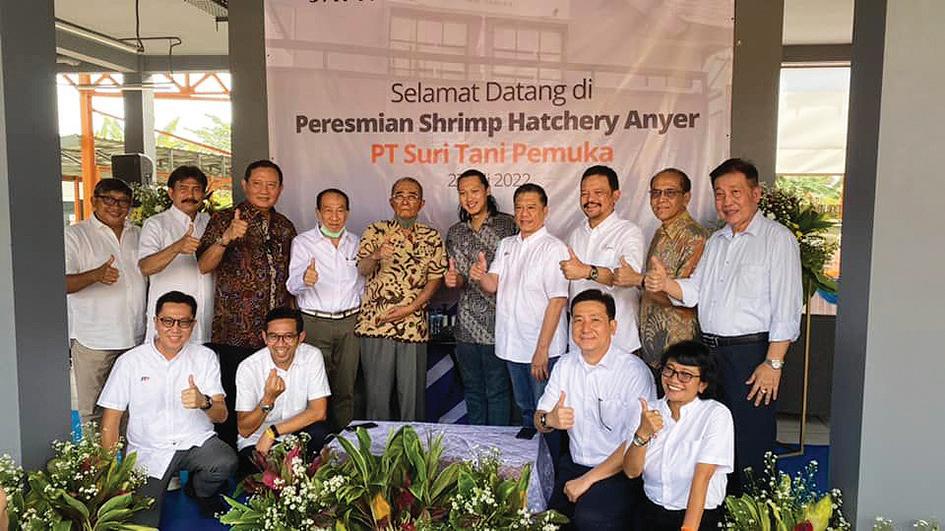
STP opens shrimp hatchery in Indonesia

PT Suri Tani Pemuka (STP), a subsidiary of PT Japfa Comfeed Indonesia Tbk, inaugurated a 1.3-hectare shrimp hatchery located in the Anyer area, Serang Regency, Banten, Indonesia. The production capacity of the hatchery is 125 million fry per month. The hatchery hopes to meet the needs of STP customers in a number of areas, such as Riau, Southern Sumatra, West Java to Central Java.
Victory Farms build Africa’s first fully autonomous tilapia hatchery
Kenya-based farm has built Africa’s first fully autonomous tilapia egg production site, named Moon since it is detached from the company’s core. It has its own power, water source, security systems, and site location.
Salmon genetics companies open new centers
Benchmark Genetics opened a new incubation facility in Vogar, Iceland. The new 2,300-m2 facility has an annual production capacity of 300-400 million ova and holds 10,000 5-liter incubators.
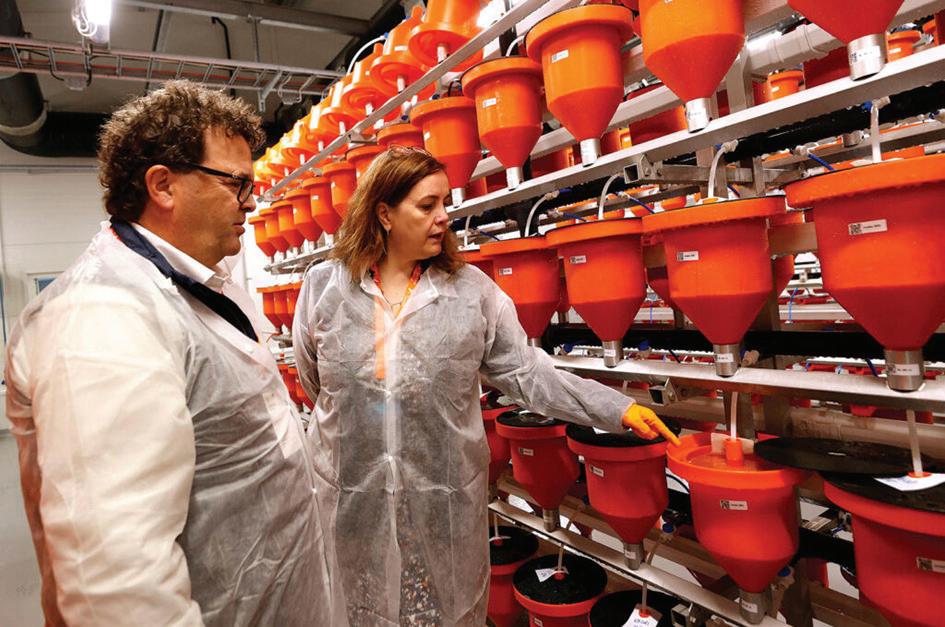
AquaGen completed its world-class full-cycle salmon facility, Profunda, in Barstadvik in Ørsta municipality, Norway. The plant will have a production capacity of up to 80-100 million eggs per year and will be an important contribution to AquaGen’s total production in Norway.
Inverkerry’s hatchery and Smolt unit at Gairloch in Wester Ross, Scotland, operated by Hendrix Genetics, has been upgraded to organically produce around 1.2 million young salmon each year. The upgrade secures
the hatchery a long-term future by supplying its partner Organic Sea Harvest with quality smolts.
Hatchery Feed & Management Vol 10 Issue 3 2022 6 HATCHERY FEED & MANAGEMENTNEWS REVIEW
News as it happens in
Newsroom at
- SIGN UP FOR OUR FREE WEEKLY NEWSLETTER for updates
GenoMar receives SPF certification
Joint venture to develop sustainable land-based shrimp farming


Billund Aquaculture and Germany’s Aquapurna have joined forces to create more sustainable and animal-friendly shrimp farming using a cutting-edge automated and tech-driven production model. Aquapurna plans to scale up its existing hatchery “Lakshmi”, where it is raising broodstock and producing shrimp nauplii, as well as build a largescale Lighthouse Project and develop a state-ofthe-art RAS grow-out unit.

The Bureau of Fisheries and Aquatic Resources (BFAR) of the Republic of Philippines has granted the world´s first Specific Pathogen Free (SPF) certification to a tilapia producer. The facility subject to certification is GenoMar’s nucleus and grandparent site located at the Central Luzon State University in the Philippines where GenoMar has been operating a tilapia breeding program since 1999. The genetically improved fish populations reared in this facility represent the hub for further multiplication and distribution to other tilapia farms in Asia and Latin America.
$45 million loan to improve shrimp sector’s resilience in Ecuador
Shrimp farms in Ecuador will have better productivity with a new investment by the International Finance Corporation (IFC), part of the World Bank Group, to help replace diesel with electricity for farm operations while addressing the environmental risks in shrimp production. The goal is to help improve the sector’s sustainability and support the nation’s climate targets. IFC’s loan of up to $45 million to Industrial Pesquera Santa Priscila S.A., the leading shrimp exporter in Ecuador, will help the company expand its number of farms and improve its automation and productivity.
ON THE GO OR WHERE YOU GROW
Aerators ensure your fish stock gets valuable oxygen.


Install our patented aerators in transport tanks, ponds, lakes, raceways, and rearing habitats. Reduce fish loss and improve growth for increased production. Get one, or more, now.


Hatchery Feed & Management Vol 10 Issue 3 2022 7
800-493-3040 barb@freshflo.com www.freshflo.com
Check out our fish grader and feeder too!
World Feeds testing feed blocks in cleaner fish hatchery stages inOtterMattersOceanincludingoperations,SeveralandFerryScotland, has been testing World Feeds’ VAF Feed notingBlockthat

this early-stage exposure helped acclimate the juvenile fish to grazing on blocks, leading them to habitually gather at depth in selected locations for feeding. This behavioral practice becoming ingrained at the hatchery stage enables even greater effectiveness of VAF feeding strategies once the adult cleaner fish reach the sea pen.

Auburn mapresearchersUniversityfirsttobluecatfishgenomeAnAuburn
oftheMedicineoffromresearchUniversityteamtheCollegeVeterinaryandCollegeAgriculture recently became the first to map a high-quality genome assembly of the blue catfish. The genome will aid in the genetic enhancement of better catfish breeds for the multimillion-dollar catfish farming industry.

GEMMA Neo
GEMMA Neo is an innovative diet that replicates the natural feeding diversity of marine sh larvae in nature, offering superior nutrition and water quality in sh hatcheries and post weaning. GEMMA Neo is produced using a low temperature process which focuses on optimal freshness, uniform size distribution and water stability.
For more information, please contact your local feed consultant.
www.skretting.com
Perfection in micro nutrition
Hatchery Feed & Management Vol 10 Issue 3 2022 8
GEMMANe
Private equity firm invests in shrimp genetics and nutrition group and EU clam breeder

Ocean 14 Capital Fund, a private equity impact investment, signed a deal to purchase a controlling stake in SyAqua from Golden Springs Group (GSG). SyAqua is a leader in genetics and early nutrition for the shrimp hatchery market, with a historical focus in Asia. The fund plans to invest $12 million to build the company into a platform for sustainable shrimp technologies. The fund also invested in MITO, resulting from the merger of clam hatchery and nurseries in Italy and the Netherlands. MITO integrates bio-secure hatchery operations in the Netherlands with local nursery centers in the Italian market and, supported by Ocean 14 Capital Fund, has an ambitious growth plan to increase its operational capacity to 2 billion seeds annually over the next few
Aquacultureyears.
alliance to develop precision dosing solutions for shrimp farmers


Aquaculture disease management and dynamic dosing expert Aqua Pharma are joining forces with microbial fingerprinting experts KYTOS to develop SEATRU™, a unique new service platform offering shrimp farmers worldwide effective microbial control through precise dosing recommendations. The initiative was set to start in July 2022 with a two-year research project based in Indonesia with local partner eFishery.


Hatchery Feed & Management Vol 10 Issue 3 2022 9
TO LEARN MORE ReedMariculture.com/most: Our expanding line of Instant microalgaeAlgae®includes 6 single species of algae and 9 blends. Intact, whole-cell algae retains full nutritional value, no need to hydrate. Biosecure, pathogen-free and Concentrated,clean. easy to use, and always available. © 2022 Reed Mariculture, Inc. All rights reserved. Instant Algae Ensuring Hatchery Success are trademarks or registered trademarks of Reed Mariculture Inc ∙ 1 ∙ 2 ∙ 3 SELECTIONCOMPLETEMOSTOFMICROALGAE
New generation of nursery feeds: The case of tilapia
 Thomas Raynaud, ADM Animal Nutrition
A necessity arising from sector demand
The larger volume of cultured fish worldwide concerns freshwater species with omnivorous diets and not carnivorous diets, such as carp, tilapia, milkfish and others. There is not always complete scientific knowledge available on the nutritional requirements of these species, particularly at the larvae and juvenile stages. The general tendency is to overfeed the fish with a high protein level feed without understanding the real needs of the animal.
At ADM, our R&D team works to better understand the requirements of each species, particularly at the early life stage. To reach this goal we need to optimize the quality and digestibility of the protein to reduce, in
the end, the total quantity of protein in the food while keeping the best performance. For example, we know the digestibility of protein can be improved thanks to the technological process that is applied. This is the case with an industrial process we apply for ADM’s BernAqua range of hatchery and nursery feed, a cold extrusion process that allows us to avoid denaturation of the protein, which will preserve at maximum its nutritional qualities and digestibility.
Fundamental needs of tilapias
Larval fish require special food ingredients and nutrients, rich in minerals, vitamins, and proteins to allow the larvae to develop well and as efficiently
Hatchery Feed & Management Vol 10 Issue 3 2022
TILAPIA
as possible. ADM’s BernAqua team decided to focus its first research on the early life stage in tilapia to optimize at the maximum its feed profile with the lowest protein content possible while obtaining the best performance. In its natural environment, adult tilapia is omnivorous, and at the early life stage, it feeds on phytoplankton but mainly zooplankton, which means tilapia larvae need a diet with more animal protein than we may expect. BernAqua developed a special feed formula composed of highly digestible ingredients, adapted to the natural metabolism of the tilapia with a perfect balance between animal and plant components.
To prove the efficiency of this new feed BernAqua formula, called WeaN Prime, ADM has conducted several R&D tests in Brazil and Vietnam.
A revolution in tilapia nursery feeding
Our first trials, at an ADM research farm in Brazil, had the objective to compare our new formula feed produced under a specific process technology and two classic extruded crumbled tilapia feeds, one standard level and one premium level.
Mashed feed (or crumble) is commonly used in tilapia juveniles at the initial stage; however, those feeds may not always meet the nutritional requirements of the species, since formulas with a high level of protein might not include high-quality protein. Moreover, due to the process technology they apply and the physical characteristics of the feed they can affect water quality. Crumble feeds have a quick dispersion in the water and a high nutrient leaching.
This trial showed the impact of technology on the growth with a weight gain of 36% compared to crumble premium and the length has tripled compared to crumble standard (Fig. 1). The Feeding Conversion Rate (FCR) was improved with this feed.


One of the advantages of the BernAqua technology is the very small sizes of feed that are perfectly suited to the small mouths of animals at a critical point for the larvae stage. An inaccurate size of feed particle or a high heterogeneity of particle size, as found with crumble feed, can increase the heterogeneity of body size of individuals and then accelerates mortality. Thanks to its advanced technology, BernAqua can reach a 200 µm minimum size for a perfect spheric micropellet with a very homogeneous feed size range that can go until a maximum size of 1.5 mm.
Cold extrusion vs. micro extrusion
Our second test took place in Vietnam during 40 days of feeding, comparing BernAqua’s cold extruded pellet to mash and micro extruded pellets.
We confirmed that the major benefit the precise technology provides WeaN Prime is the high water
Figure 1. Higher biomass gain (A), standard legth (B) and FCR (C) in tilapia juveniles after 34 days of feeding. B
C
Hatchery Feed & Management Vol 10 Issue 3 2022 11
A
stability of nutrients in the feed while avoiding the use of chemical binders. Moreover, it allows significant time savings for the technician thanks to less handling in cleaning procedures and a reduced quantity of water volume for renewal.
Quality protein for better performance
Once again, the results showed that WeaN Prime can be more efficient than a feed with higher protein content (Fig.


We2).achieve
a nursery feed that contains only 44.8% of protein and which is more performant than 55% of protein feed. What really matters is not the quantity of protein but its quality and digestibility. With BernAqua technology, we obtain a premium quality protein with better absorption which has an impact on overall performance like growth or feed intake.
Internal data obtained in ADM Aqua R&D centers showed that the WeaN Prime new generation of feed also saves considerable time by accelerating tilapia growth. The cycle of production is reduced due to the performance of the feed, which requires less time for infrastructure immobilization. Grading operation is also facilitating an increase in the number of production cycles in one season.
BernAqua’s new generation of nursery feed allows ADM to provide a premium feed with excellent results for many species. WeaN Prime feed for tilapia is the first available in the range, and formulations for other fish and shrimp are planned throughout 2022.
Disclaimer: The uses and claims for ADM’s products should be adapted to the current local/regional regulatory environment. This information does not imply any express recommendations for the cure, mitigation, treatment, or prevention of disease.
More Thomasinformation:Raynaud of Product Management -
 Figure 2. Higher final live weight (A), feed intake (B) and FCR (C) obtained on tilapia juveniles.
Figure 3. Results after two hours in water.
Figure 2. Higher final live weight (A), feed intake (B) and FCR (C) obtained on tilapia juveniles.
Figure 3. Results after two hours in water.
Hatchery Feed & Management Vol 10 Issue 3 2022 12
Head
Aquaculture, ADM Animal Nutrition E: thomas.raynaud@adm.com A B C

Genetically Improved Farmed Tilapia: Benefiting aquatic food producers in the past, present and future
Nile tilapia is one of the major aquaculture species in the world, eclipsed only by grass carp and silver carp. According to the latest FAO estimates, a total of 4.4 million tons of Nile tilapia is produced globally, accounting for 9% of the total production of major aquaculture species.
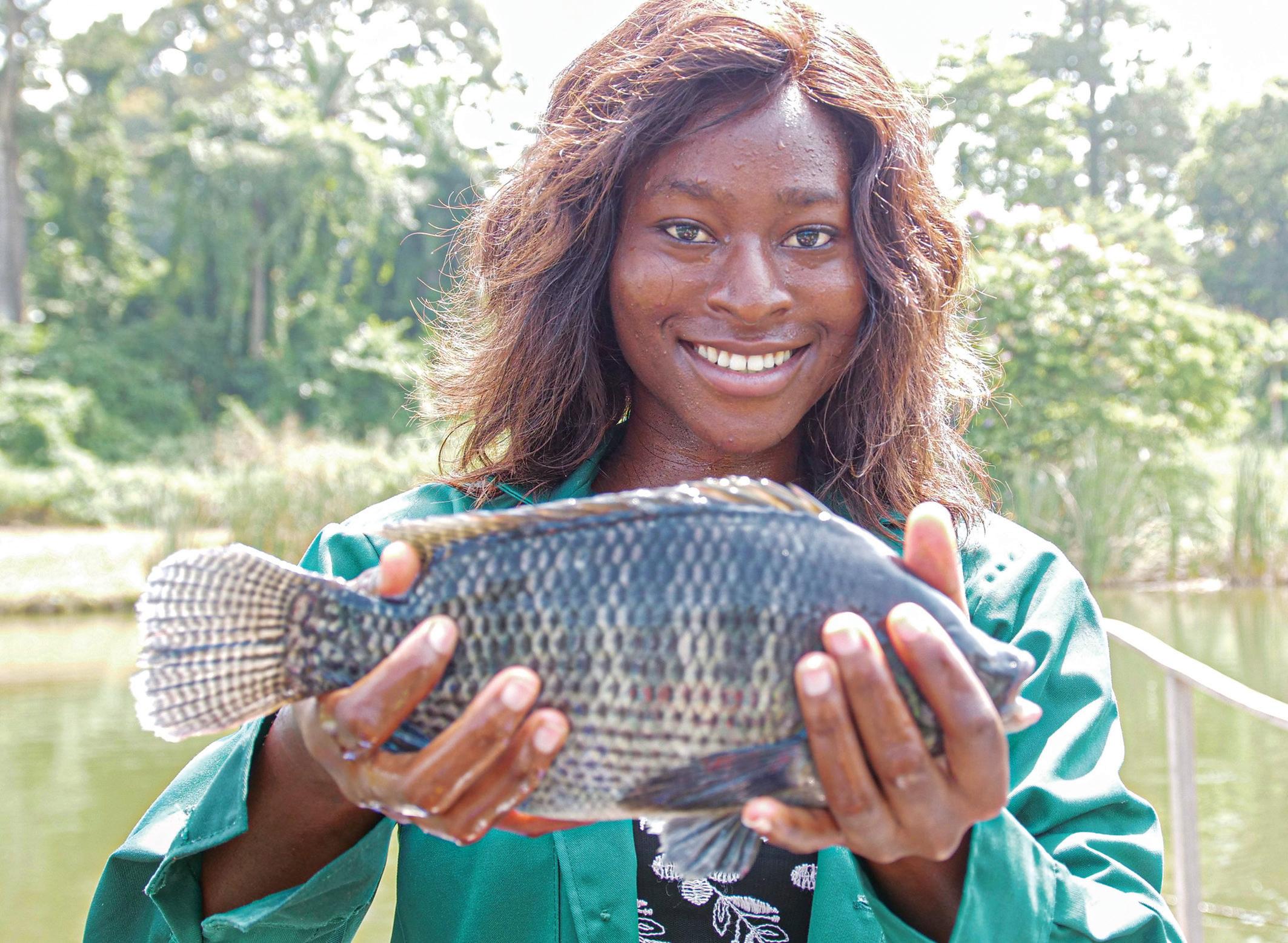
One of the contributors to the success of this species today is the development of the Genetically Improved Farmed Tilapia (GIFT) strain back in 1988. At the time, tilapia farming was plagued with numerous issues including poor productivity, deteriorating performance and inadequate supply of seed.
To address these issues, WorldFish, then known as the International Center for Living Aquatic Resources Management or ICLARM, worked with partners from the Philippines and Norway to produce a faster-growing strain of Nile tilapia that is suitable for aquaculture, both small-scale and commercial.
Pioneering a systemic breeding method
In collaboration with partners, WorldFish pioneered a systematic breeding method based on selective breeding programs for salmon and trout established in Norway in the 1970s.
Photo by Adesanya Omotomiwa IITA and Olaniyi Ajibola, WorldFish.
TILAPIA
the same parents – are bred and then grown in separate cloth net cages until they are big enough to be individually tagged with Passive Integrated Transponders (PIT tags). They will then be transferred to a communal pond to be grown with seeds from other parents. The performance of all fish within the communal pond is monitored individually and fish from the best-performing families were then selected as parents of the next GIFT generation.
WorldFish has demonstrated that selective breeding is a feasible, cost-effective and sustainable approach to the genetic improvement of tilapia. The GIFT strain is a result of 28 years of selective breeding across 23 generations. It is being used in 17 countries around the globe.

An Asian Development Bank study found that GIFT and GIFT-derived strains accounted for 68%, 46% and 17% of tilapia production in the Philippines, Thailand and Vietnam, respectively. A survey conducted in Bangladesh found that 75% of hatcheries producing mono-sex tilapia were using GIFT broodstock.
Improving the livelihoods of aquatic food producers
The faster growth of the GIFT strain allows for a shorter production cycle and increased yield for the same plot of land, leading to reduced costs and increased profit. A more resilient strain will allow GIFT to be farmed in more environments, including those that are currently not feasible and reduces the risks of diseases.
In a recent on-farm performance assessment study with a stratified random sample of 213 GIFT and 256 non-GIFT producers in Bangladesh, it was found that
the GIFT strain grew 27% and 29% faster than nonGIFT tilapia in monoculture and polyculture settings, respectively. GIFT yields were significantly higher than non-GIFT yields and GIFT species were more profitable and cost-effective than non-GIFT species.
As it has done for over three decades, GIFT continues to benefit aquatic food producers worldwide with its faster growth and continues to be in higher demand than ever. Accessibility to adequate quantities of faster-growing Nile tilapia during opportune seasons is imperative to ensure that the sector continues toEarliergrow. this year, WorldFish partnered with Premium Aquaculture Limited for the transfer of GIFT fingerlings to and the establishment of GIFT-based aquaculture industry in Nigeria with the aim of having GIFT tilapia in Nigerian fish markets by late 2023.
Harnessing the potential of GIFT in a changing climate
Higher growth rates and shorter production cycles also allow GIFT to be grown in seasonal ponds located in drought-prone and fish-deficit areas. This means that GIFT has a prominent role in how aquatic food producers adapt to a changing climate as it can increase animal protein yield per drop of water used.
Traits, such as resilience to unfavorable farming environments and disease resistance, have become increasingly important with global warming disrupting global food systems. GIFT can withstand these challenges in itself, but not without reliable hatcheries acting as broodstock dissemination centers and mass seed producers for aquatic food producers.
Fin tissue sampling of a Nile tilapia ( Oreochromis niloticus ) of the GIFT strain. Photo by Trong Trinh and Mahirah Mahmuddin, WorldFish.
Hatchery Feed & Management Vol 10 Issue 3 2022 15
Meeting the needs of hatchery operators
High seed production per female, vigor of seed produced and fast growth rate of the seed until they reach marketable fingerling size are among the important traits hatcheries look for in broodstock, depending on the location and type of production systems.TheGIFT females have demonstrated the same fertility – number of eggs per female – compared to non-selected Nile tilapia females. GIFT’s superior growth also means broodstock consumes less feed. Improved feed efficiency helps reduce feed cost, the largest cost component in tilapia farming.
Coupled with GIFT’s ability to produce more vigorous fry, this will translate to better revenue and a shorter turnaround time. Faster-growing fry shortens the nursing period up to marketable sizes, reducing the risk of mortality in this highly vulnerable stage in which survival rate is of major concern to hatchery operators.
WorldFish continues to identify new challenges to provide holistic and innovative solutions in making aquatic food systems more resilient and sustainable for a food-secure future, particularly in a changing climate.
Pivoting to face new challenges
For many years, the main trait for selection has been faster growth using traditional breeding approaches through quantitative genetics theory. Emerging threats and challenges to the sustainability of Nile tilapia production have prompted WorldFish to go back to the drawing board to find innovative solutions to these problems.
The tilapia lake virus (TiLV) is not only causing fish losses but has necessitated the whole tilapia industry rethink how fish are to be transported and the biosecurity of hatcheries including the breeding nucleus. Resilience in low oxygen conditions is also increasingly important as most small-scale farms do not employ mechanical aeration.
Future generations of GIFT will be enhanced in light of these findings to make them faster growing and TiLV-resistant. Using DNA-based methods and genomic tools, WorldFish is also developing protocols for the selection of seed that has greater feed conversion efficiency as well as better growth under low oxygen conditions that will help supply chain actors produce sufficient and nutritious aquatic foods for healthier people and the planet.

Hatchery Feed & Management Vol 10 Issue 3 2022 16
AQUAARRAY VANNAMEI - ONE UNIVERSALLY APPLICABLE CHIP FOR ALL WHITELEG SHRIMP TECH SPECS • 6,500 SNPs proven for GWAS and Genomic Selection • 43,474 veri ed SNPs from varied geographic regions • SNPs strategically spaced across the genome • 60 functional SNPs for growth, disease resistance and ammonia tolerance APPLICATIONS > Genomic Selection > Parentage Assignment > Genetic Diversity Assessment > Broodstock Population Structure > Inbreeding Monitoring > Traceability management > Marker Discovery & GWAS > Marker - Assisted Selection We deliver custom solutions for all your shrimp breeding needs. Scan to see this and other genomic tools in our AQUAarray catalogue >
Tilapia microbiome and technologies: Past, present and future
Microorganisms may be minute creatures but their presence and activities can cause huge impacts across all environments – including tilapia aquaculture. With the rapid growth of tilapia aquaculture and the development of technologies, it is clear that the role of microorganisms in aquaculture is not limited to disease and health management; rather the presence of microorganisms influences a myriad of fish farming parameters, such as water quality, food waste degradation, fish nutrition, metabolism, growth, health andForimmunity.decades,
WorldFish has championed the potential of tilapia aquaculture in meeting the global demand for a quality source of protein and catalyzing socioeconomic impacts in developing countries. WorldFish continues to secure the future of tilapia farming by finding ways to improve present production systems. These endeavors have led WorldFish to broaden the focus from tilapia to the microorganisms associated with the fish and its rearing environment – a more holistic approach to studying and improving tilapia culture systems.
Microbial communities occupying a well-defined habitat (e.g., tilapia gut) are termed as microbiome (Berg et al., 2020). The intimate relationship between the microbial communities present in the fish and its rearing environment has been widely studied to investigate the roles of the microbiome on the physiological functions and fitness of the host, disease proliferation, and aquaculture performance and productivity (Butt & Volkoff, 2019; Legrand et al., 2020; Llewellyn et al., 2014; Perry et al., 2020). Despite the increasing number of technologies developed and studies done on tilapia microbiome, it’s only the tip of the iceberg. In this article, we not only looked into the technologies and the generated knowledge from using these techniques
that have led us to a deeper understanding of the tilapia microbiome, but also to the future perspectives of integrating these technologies for better tilapia farming.

Culture-dependent techniques:
What the culture plates showed us
Culture-dependent techniques paved the way in identifying and characterizing the microbiomes in tilapia culture systems (Al-Harbi & Uddin, 2005; Pakingking et al., 2015; Pedrotti et al., 2015). Results showed the variations of total cultured bacterial counts observed from the gills and gut samples of tilapia grown in freshwater and brackishwater ponds. First insights into the microorganisms of the tilapia water and pond sediment samples were also made possible by culture plating methods. The studies highlighted the predominant bacterial species such as Vibrio spp., Streptococcus sp., and Bacillus spp. isolated from tilapia tissues (Al-Harbi & Uddin, 2005; Pakingking et al., 2015). These early tilapia microbiome studies identified some of the members of the resident
Jonabel Huavas, Colin Shelley, Jérôme Delamare-Deboutteville , WorldFish Jasmine Heyse, Ruben Props, KYTOS
Figure 1. Small-scale aquaculture, water quality testing training.
Hatchery Feed & Management Vol 10 Issue 3 2022
TILAPIA
microbiota in tilapia culture systems – with potentially pathogenic bacteria dominating the microbiota. However, due to several disadvantages such as timeconsuming and inability to detect unculturable and unknown microorganisms, studies shifted from plate culturing to using molecular tools.
FISH for fish studies
FISH (Fluorescence In Situ Hybridization) is a molecular technique that can label specific nucleic acid sequences with fluorescent probes, with a high degree of sensitivity, which allows the detection of specific bacterial taxa regardless of their cultivability (Zwirglmaier, 2005). This technology was used to monitor and quantify the abundance of probiotic and pathogenic bacteria in tilapia gut (Del’Duca et al., 2015). Characterization was limited to selected potential probiotic bacteria, so, the analysis did not provide a complete view of the microbiomes in the studied samples.
Polymerase Chain Reaction-Denaturing Gradient Gel Electrophoresis (PCR-DGGE)

Genetic fingerprinting techniques, such as PCR-DGGE, characterize the microbial community profile based on the separation of nucleic acid fragments in a gradient gel. Identification of OTUs (operational taxonomic units) can also be done by submitting nucleotide sequences to a database (Muyzer, 1999). PCR-DGGE-based studies on tilapia microbiome have focused on evaluating the effects of different factors, such as antibiotics (He et al., 2010, 2012), diet (Pedrotti et al., 2015; Zhang et al., 2014), probiotics (Standen et al., 2015), and culture system type (Giatsis et al., 2014) on the gut microbiome of tilapia. Using this technology, the predominant
bacterial phyla of the gut microbiome were identified: Proteobacteria, Actinobacteria, Cyanobacteria, Fusobacteria and Firmicutes (He et al., 2010). As more tilapia microbiome studies are being done and more technologies are being utilized, we are generating more information and knowledge of tilapia microbiomes.
Next-generation sequencing (NGS): The catalyst NGS technology has catalyzed the exploration and characterization of the tilapia microbiome. The general NGS workflow includes DNA extraction, amplification of targeted specific region of the 16S rRNA, sequencing and identification of the generated sequences based on the available databases (Gupta et al., 2019). Different sequencing platforms use complex chemistry and mechanisms to perform amplification and sequencing functions (Mardis, 2008).
Tilapia microbiome studies have used 454 pyrosequencing to characterize and identify dominant phyla of the microbiomes of the gut and rearing environment of tilapia (Fan et al., 2017). Investigations of the impacts of different factors, such as seasonal changes (Fan et al., 2017) and culture systems (Giatsis et al., 2014), on the tilapia microbiome were made possible through the use of pyrosequencing.
The Illumina MiSeq system was used to characterize the core members of tilapia microbiome in the gut (Bereded et al., 2020, 2021; Z. Wu et al., 2021), gill (Wu et al., 2021; Zhou et al., 2018), mouth (Abdelhafiz et al., 2021a; 2021b) and the tilapia rearing environment (Fan et al., 2017, 2018; Fan et al., 2016; Li et al., 2017; Zhou et al., 2021). The influence of different farming practices, such as following different feeding regimes (Kohl et al., 2014; Sakyi et al., 2021; Salger et al., 2020) and using different feed compositions (Li et al., 2018; Li et al., 2021; Parata et al., 2020; Zeng et al., 2021; Zheng et al., 2018) were also investigated using Illumina sequencing. The same technology also revealed that antibiotic use on tilapia significantly reduces intestinal microbial count and community richness (Fang et al., 2021; Ming et al., 2020; Payne et al., 2021). With the growing awareness and concern on the improper use of antibiotics, potential alternatives, such as probiotics, prebiotics, and synbiotics, are being explored to improve tilapia health and mitigate disease. Furthermore, the impact of these alternatives on the microbial communities in tilapia – particularly
Figure 2. Biological tissues collected from humanely euthanized tilapia and placed in 100% molecular grade ethanol for molecular diagnostic and microbiome analysis. Photo by Jerome DelamareDeboutteville, WorldFish.
Hatchery Feed & Management Vol 10 Issue 3 2022 18
Table 1. Summary of advantages, disadvantages and applications of techniques commonly used in microbiome studies and aquaculture management.
Techniques/Tool Advantages Disadvantages Applications in aquaculture Sources
Common part of the routinary farm
Time-consuming; Unable monitoring practices but longer turn-over Culture Plating to detect and identify time of results and low identification Hiergeist et al., 2015 unculturable microorganisms accuracy impedes fast mitigation and management actions
Standard technology used for monitoring practices
Unable to separate relatively small DNA fragments, Used in research, especially in studies on PCR-DGGE co-migration of DNA isolation and characterization of potential Muyzer, 1999 fragments, limited sensitivity, probiotic strains isolated from the host high gel-to-gel variation
Can compare multiple samples; Allows study of microbiome changes under different conditions
Used in research and monitoring of
Identify unculturable pathogens especially from environmental Amann et al., FISH microorganisms; Allows in situ samples but the need of specialized 1995; Hiergeist analysis of microbial communities equipment and high operating cost limits et al., 2015 its application in routinary monitoring
NGS
Provides larger number of reads per run; Rapid and cost-effective sequence data generation; Allows detection of even rare microbial community members
Need for specialized equipment to visualize samples; High cost; Needs information for a specific strain
Sequencing provides accurate and in-depth analysis oif the microbial communities Delamare-
Low coverage of DNA regions present which is very helpful in research Deboutteville enriched with GC contents; but its operating costs limit its application et al., 2021 amplification bias; longer reads in routinary monitoring and management Ghanbari et al., are prone to error practice; Portability of nanopore sequencing 2015; Hui et al., platforms such as MinIONTM provides rapid 2014 sequencing and diagnosis in the field
the gut microbiome – has also been investigated through the Illumina sequencing platform (de Souza et al., 2020; Liu et al., 2016; Souza et al., 2020; Suphoronski et al., 2019; Xu et et al., 2020a, 2020b; Xia et al., 2020; Yu et al., 2019).
Another promising platform is the nanopore-based technology which uses electrical voltage gradient or motor proteins that can drive nucleic acids to pass through nano-size pores which are capable of uncoiling the nucleic acids and translocating them in single-file and sequential order. Identification and discrimination of polynucleotides are based on the detection of temporary modulation of the ionic current by the nucleobases passing through the nanopore (Branton et al., 2008; Maitra et al., 2012; Meller et al., 2000; Nakane et al., 2003). In aquaculture, nanopore sequencing combined with existing molecular-based assays is a cost-effective and rapid pathogen diagnosis tool for fish viruses, such as salmonid RNA viruses (Gallagher et al., 2018) and tilapia lake virus (TiLV) (DelamareDeboutteville et al., 2021). The ability of nanopore sequencing platforms to generate longer reads has also allowed whole genome sequencing of fish viruses. In tilapia health management, Delamare-Deboutteville et al. (2021) demonstrated that nanopore sequencing combined with semi-nested RT-PCR can provide rapid and accurate confirmation and genotyping of TiLV.
Other NGS platforms such as Novaseq-PE250 have helped determine the effects of heavy metal and microplastic contamination on the gut microbiome of tilapia (Zhang et al., 2022) while PacBio sequencing aided the investigation of the effects of Bacillus safensis NPUST1 on tilapia gut microbiome (Wu et al., 2021).
Advantages and challenges
The development of several technologies has significantly helped in gaining more insights and understanding of the microbiomes of tilapia. However, alongside the advantages and significant contributions of the mentioned technologies, limitations of their applications also exist. The advantages and disadvantages are summarized in Table 1 to help determine the gaps among these technologies and also analyze the best technique to use in answering specific questions in tilapia microbiome studies.
In molecular-based techniques, the sampling method and sample type can influence the generated results (Pollock et al., 2018). Studies have demonstrated the variations in microbial communities across fish tissues and organs (Clinton et al., 2021; Stephens et al., 2016; Yukgehnaish et al., 2020). For example, significant variations were observed between the microbial communities of gill mucus and gill biopsy from the same fish, using the same sequencing platform (Clinton et
Hatchery Feed & Management Vol 10 Issue 3 2022 19
Future perspectives
Existing technologies, especially the NGS technologies, have elucidated the structure and diversity of the microbiomes of fish and its rearing systems (Ghanbari et al., 2015; Llewellyn et al., 2014; Perry et al., 2020). Although we have come a long way towards the identification and characterization of the members of the tilapia microbiomes, we are just scratching the surface. Determining the functions of these microbial taxa and how their activities affect tilapia is another significant research area to explore.
Combining NGS sequencing and metabolomics technology can facilitate a taxonomic and functional approach to tilapia microbiome research. Metabolomics is the comprehensive analysis of metabolites present in a biological sample (Chen et al., 2019; Johnson & Gonzalez, 2012). The use of non-targeted gas chromatography/ mass spectrometry metabolomics revealed a positive correlation between the abundance of potentially beneficial bacteria and intestinal metabolites in farmed GIFT (Wu et al., 2021). However, metabolomics-based studies on the tilapia microbiome are still limited.
In addition to functional profiling of tilapia microbiome, capturing and understanding the spatio-temporal distribution of microbial communities is also a potential avenue for research, especially for predicting and manipulating microbiomes (Berg et al., 2020; Stegen et al., 2018). In the study of Heyse et al. (2021), flow cytometric fingerprinting, which is the integration of 16S rRNA gene amplicon sequencing and flow cytometry data, was found to be able to predict the temporal dynamics and abundance of bacterial taxa in shrimp hatcheries. This single-cell analysis technology provides characterization and spatio-temporal insights on the microbiome from each pond/tank, giving a more holistic view and bespoke management for each tank.
The progress of tilapia microbiome studies is tightly coupled with developments in tools and technologies. Through these technologies, our knowledge of the tilapia microbiome has advanced and deepened –providing more research opportunities for developing better tilapia farming practices and more tailored fish health management. However, despite the recent developments in fish microbiome technologies, there is still a gap between laboratory-generated results and applications from the study to actual tilapia farm practices. Most tilapia farmers use traditional culture plating methods as part of their routine water quality monitoring. We have interviewed tilapia farmers from Asia and Africa and came up with the same response: they know about specific bacterial and fungal pathogens but the concept of tilapia microbiome is still vague.
Despite the accumulating knowledge on the significant impacts of tilapia microbiome on fish health and productivity, aside from the use of probiotics and prebiotics, microbiome management has not yet been included in the farm management roadmap of commercial tilapia farms. Integrating microbiomefocused technologies with existing tilapia farming practices for more data-driven management may be the key to more productive and sustainable fish farming. However, before we start to integrate these technologies to improve tilapia farming practices, the interface between the microbiome technologies research and the farmers’ understanding, access, and adoption of these technologies. This would be a challenge for WorldFish: to establish the link between farmers and microbiome-based technology providers. To determine the gap and establish the base level of the current understanding of tilapia microbiomes and find opportunities to apply state-of-the-art technology to tilapia culture systems, the collaboration of WorldFish with KYTOS, a microbiome technology company, is a significant stepping stone towards bridging technologies and fish farmers.
More Jonabelinformation:Huavas

Hatchery Feed & Management Vol 10 Issue 3 2022 20 al., 2021). Another challenge of NGS-based studies is the selection of which hypervariable region(s) of the 16S rRNA to amplify and sequence. According to Gupta et al. (2019), sequencing of only one variable region is not sufficient for accurately identifying and separating bacterial species to species level. In addition, it was found that the selection of the hypervariable regions, and consequently, PCR primer designs, can influence the generated results (Kuczynski et al., 2012; Yang et al., 2016).
WorldFishIntern E: j.huavas@worldfishcenter.org
The digital revolution
Chris Wallard, Xelect Ltd
When most people imagine a genetics laboratory they probably think of white coats, complicated pipettes and expensive-looking machines. That’s partly true – for example at Xelect, we have a custom-built laboratory that certainly looks the part – but our geneticists are just as likely to be sitting behind a computer as they are donning a pair of blue gloves.
In the past 70 years, computing power has increased 1 trillion-fold, and that speed of growth is accelerating. While the link between terabytes and tilapia may not be immediately apparent, these advances are excellent news for aquaculture.
The goal of genetic service providers is to work with customers to find the best possible breeding combinations to develop the traits that matter to them, whilst avoiding the age-old trap of inbreeding. From tissue samples (e.g. fin clips) hundreds to thousands of genetic variations across the genome can be analyzed, allowing the reconstruction of family relationships and, in some cases, the identification of ‘functional markers’ (sections of the genetic code that are known to influence particular traits). That information is then used to estimate the genetic merit of each potential candidate for a broodstock (Estimated
To handle these huge quantities of data and perform complex analysis is far from trivial. While the phrase “there’s an app for that” is often the case, sadly this is not quite true if you’re a genetics company looking to advance the boundaries of aquaculture!
Most genetics services companies will use powerful software to achieve those goals. At Xelect, that’s where our custom-built software, OptiMate, comes in. It’s a suite of software and data management tools specifically designed to handle the complexities and nuances of fish and shellfish breeding programs.
This intersection of technology and genetics is an extremely fast-changing aspect of aquaculture, and in this article, we’ll explore the link between the rapid advances in computing technology and the breakthroughs they have allowed in genetic breeding programs.

Digital Darwinism:
The rise of evolutionary algorithms Advances in computing have allowed the use of increasingly sophisticated calculations. For example, OptiMate explores millions of potential mating
Breeding Value) along with its relatedness to the other
How increases in computing power have changed the game when it comes to genetics.
Hatchery Feed & Management Vol 10 Issue 3 2022
GENETICS
combinations and assesses each one to see how likely it is to give progress on key traits, while protecting against inbreeding. It’s a task that would be impossible to conduct manually and would have been painfully slow even just a decade ago with older, slower computing technologies.
For many species, the best approach for a breeding program is to use “directed crosses”. This is where fish are stripped to obtain the milt and eggs. In this case, our software needs to find the best possible mate combinations. However, in some species, such as snappers and amberjack, the fish require complex social interactions to breed. For these group-based breeding programs, our software needs to perform an even more sophisticated task, optimizing each tank at the hatchery level, to avoid mating close relatives while getting the maximum possible genetic gain in the offspring.
To perform these complicated selections, OptiMate uses evolutionary algorithms. An evolutionary algorithm is a piece of computer code that’s designed to find the best possible solution to a given problem by recreating Darwinian-like selection –different selection scenarios are created and tested against defined breeding objectives. The worstperforming solutions are eliminated, and the more viable options are kept, mutated, then challenged and selected again.
Even with modern computing power, this is no small task – for us to run OptiMate on some of our larger breeding programs would have taken days to run and requires tens of gigabytes of data to be analyzed. However, we’re learning how to create more efficient software all the time. For example, a recent update we made to OptiMate’s code allowed us to
select direct crosses 60x faster, and group selections 475x faster.
Breeding program optimization on the fly: Dynamic selections
These improvements in speed of analysis don’t just mean we can do our job quicker. They also allow us to introduce improved ways of working, which mean major improvements in the performance of a breeding program, as the mating plan can be effectively re-optimized on the fly, producing significant additional genetic gains.
We all know that life on a fish farm is anything but predictable and that situations can change rapidly. That’s why our breeding program managers typically visit our customers at key times, such as during the stripping season. Previously, if some of the animals identified as suitable for breeding purposes were no longer available (for example, the individuals failed to mature or were lost) our options were limited to selecting from a predefined set of backups. However, due to the improvements in software performance, our program managers can run dynamic analysis in realtime, using a laptop on-site, immediately identifying the next best candidate for breeding while taking into account crosses that have already been performed. What would once have taken many hours, or even days, can now be achieved in just a couple of hours or less. From this relatively small improvement, we’re seeing dramatically improved results, while still keeping inbreeding extremely low at less than 0.5%. For example, in our recent real-world experience of running updates, we’re seeing average improvements across the stripping season of around 15% in the predicted weight of the contributing parents simply by being able to make these improved selections on the day itself.
A window into the future
While the use of software to analyze historical trends has always been a core part of aquaculture genetics, we’re also now able to look into the future too. With increasingly sophisticated software it is now possible to run complex simulations of numerous scenarios, to understand exactly how small adaptations in a breeding program can result in big commercial changes. By working closely with customers and using real performance and sales figures from their

Hatchery Feed & Management Vol 10 Issue 3 2022 22
farm the overall return on investment from genetics can beThecalculated.introduction of a genetic breeding program can quickly transform the profitability of a farm. For example, an improvement of 12% in growth over


number of broodstock candidates with more costeffective low-density panels. Powerful algorithms are then used to accurately “impute” (make an extremely accurate prediction) the higher density data, meaning that almost all the benefits of a traditional genomic selection program can be delivered at a fraction of the cost. It’s a ground-breaking approach and a clear example of the way that technological advances can be

Hatchery Feed & Management Vol 10 Issue 3 2022 23
MONITOR, OPTIMIZE, MONITOR, OPTIMIZE, AND BENCHMARK WITH INDUSTRY-LEADING AQUACULTURE SOLUTIONS Copyright © 2022 Merck & Co., Inc., Kenilworth, NJ, USA and its a liates. All rights reserved. US-AQP-220300003
Looking to the future: The Internet of Things
Of course, genetics isn’t the only part of aquaculture that’s seeing major changes due to advances in digital capabilities. Visit any trade show and you are immediately struck by the rapid rise in smart, internetenabled farm technologies – apps allowing farm managers to see integrated data from across their farm 24/7 from anywhere in the world. The challenge for genetics providers is to anticipate our customers’ requirements in the future and be well positioned to integrate with this growing Internet of Things.
The future is custom-built apps that allow customers to explore the performance of their programs for themselves. However, we predict that this is just the start and that in just a few years aquaculture companies will expect all of their service providers to offer full digital integration.

Aquaculture is an extremely fast-moving and developing industry, and there is little doubt that the rapid advances in technology have helped to fuel our sector’s growth. The good news is that – in our view at least – these latest technologies look increasingly accessible to producers of all sizes, and that even smaller companies can, now, access the genetic services they need to be competitive.
More information: Chris Wallard Chief Communications Officer Xelect Ltd
 E: chris.wallard@xelect.co.uk
Figure 1. Example simulation showing the consequences of a 12% increase in tilapia growth every generation.
E: chris.wallard@xelect.co.uk
Figure 1. Example simulation showing the consequences of a 12% increase in tilapia growth every generation.
Hatchery Feed & Management Vol 10 Issue 3 2022 24
Improvements in ballan wrasse larvae nutrition: Enhancing biological performance with bespoke microdiets
João Henriques, Maria Morais, Jorge Dias, Luís Conceição, Sparos Eduardo Jiménez-Fernández, Alastair Barge, Otter Ferry Seafish
Atlantic salmon (Salmo salar) is an aquaculture species with high commercial value, representing around 4% of the coastal marine production and over 90% of the global salmon production. Only in 2016, 2,248 million tonnes of Atlantic salmon were produced, worth approximately $14.5 billion (FAO, 2018b). The increasing demand for this species is driving the expansion of the aquaculture industry, although some production challenges still need to be addressed.
One of the main bottlenecks is the control of sea lice. These parasites pose serious risks to fish growth, health and welfare, which can bring economical losses of over $500 million/year. As such, cleaner fish with delousing capabilities, namely ballan wrasse (Labrus bergylta), have been used as an eco-friendly tool to control lice infestations. Despite the recent improvements in ballan wrasse aquaculture, this species has very peculiar biology and feeding behavior which pose some production difficulties to the farmers. Ballan wrasse lack stomachs, pyloric caeca and have very short intestine, which impacts nutrient absorption efficiency. The transition from live to inert feeds is particularly challenging given the picky feeding behavior of the larvae and can trigger high mortalities, low growth rates and incidence of deformities. Therefore, it is paramount to formulate alternative inert diets tailor-made for ballan wrasse, especially for the critical weaning stage.
SPAROS, in collaboration with Otter Ferry Seafish, evaluated the effect of microfeeds with varying protein sources on the biological performance of ballan wrasse

larvae. In addition, a second benchmark trial was also performed in order to evaluate an alternative feeding protocol and gauge ballan wrasse biological response.
Microfeeds with alternative protein sources improve growth The first trial was carried out at Otter Ferry Seafish facilities (Tighnabruaich, Scotland) and comprised quadruplicate testing of 3 different microdiets: a commercial diet (COMM) and two SPAROS experimental diets (EXP1 and EXP2) with different inclusion levels of several protein sources, namely krill meal, squid meal, shrimp meal and fishmeal. Ballan wrasse larvae (30 dph), with an initial average dry weight of 0.18mg, were reared in 65L tanks for 45 days (photoperiod: 24L/0D, water temperature: 12.0 ± 0.8˚C, salinity: 34 ppt).
Hatchery Feed & Management Vol 10 Issue 3 2022
FEEDS
the experiment, Ballan wrasse larvae were fed live feeds according to the following plan: 1. Rotifers (30-36 dph); 2. Barnacle nauplii (30-64 dph); 3. Artemia (37-64 dph). In addition, inert diets (75-400µm) were given from 30-75 dph. One fish group fed exclusively on the commercial diet (COMM) from 30-75 dph while the 2 other fish groups fed on a diet mix (commercial diet plus experimental diet, ratio 1:1) from 30-49 dph and 61-65 dph. Fish were hand-fed close to satiation with 4 meals a day, from 8 am to 4 pm. Sampling procedures involved individual fish weighing at 30, 50 and 75 dph, in order to assess growth parameters. In addition, fish were also sampled for histological analyses at 75 dph.
At 50 dph, ballan wrasse larvae fed on the EXP2 diet showed significantly higher Dry Weight (DW) than the group fed on the COMM diet (Fig. 1). In addition, EXP1 and EXP2 groups had comparable performances,

without significant differences. At 75 dph, ballan wrasse larvae fed on the EXP2 diet presented significantly higher Total Length (TL) than the other groups. Furthermore, liver histological analyses revealed that larvae from EXP1 and EXP2 groups tended to have less variation in hepatocyte size as well as lower vacuolation or lipid accumulation (Fig. 2). On the other hand, larvae from COMM treatment tended to have some variation in hepatocyte size and increased vacuolation.

Overall, ballan wrasse larvae fed on the SPAROS experimental diets (EXP1 and EXP2) showed good performance indicators and tended to have improved liver health, when compared to the larvae fed on the commercial diet (COMM). These results suggest that different combinations and inclusion levels of the several protein sources are quite appealing to ballan wrasse larvae and can contribute to improving the biological performance at early development stages.
Figure 1. Dry weight (A) and total length (B) of Ballan wrasse larvae fed three different diets (COMM, EXP1 and EXP2) at three sampling points (30, 50 and 75 dph).
Figure 2. Liver histology of ballan wrasse larvae at 75 dph. Even hepatocyte cells showed normal vacuolation (A, typical from EXP1 and EXP2 groups). Uneven hepatocyte cells, with vacuolation progressing to large areas of swollen pale cells and ballooning cells with condensed nuclei (B, observed in larvae from the COMM group).
Hatchery Feed & Management Vol 10 Issue 3 2022 26During
A B
Moreover, both experimental diets EXP1 and EXP2 had highly digestible lipid sources which can minimize lipid accumulation in the liver. These diets were also rich in phospholipids which, in turn, have been correlated with increased weaning success of ballan wrasse larvae (Kousoulaki et al., 2015).
Benchmark trial with feeding protocol adjustment
Ballan wrasse larvae can be very fussy when feeding on dry diets. Several hatcheries implemented a combined feeding approach which involves feeding the larvae a mix of commercial diets, in order to maximize feed uptake. The first trial mimicked this approach. In this second trial (benchmark) the feeding protocol was adjusted to provide only one inert microdiet per treatment: commercial diet only (COMM) and experimental diet only (EXP1). The trial was performed in the same trial facilities and had the same setup.
Ballan wrasse larvae fed on the EXP1 diet had significantly higher DW at 79 dph, when compared to


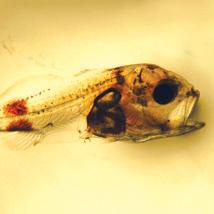


the group fed on the COMM diet (Fig. 3). It represents a considerable weight gain (≈ 23%) in the EXP1 fed group. These results corroborate the findings of the first trial in which different combinations of diverse protein sources promoted the growth of ballan wrasse larvae, and also show that it is possible to achieve satisfactory growth performances when using EXP1 diet only during the early development stages and weaning. Furthermore, using only one diet that assures simultaneously high uptake and good performance may potentially help farmers to simplify feeding protocols and feedrelatedOverall,logistics.thework
carried out shows that there is scope to continue improving ballan wrasse larval culture through optimized feeding and nutrition, which will ultimately contribute to the sustainable development of the salmon industry in particular and the aquaculture sector at large.


Acknowledgements

This work is part of project E!113689 WrasseFEED_47261, supported by EUROSTARS-2 program, and by Portugal and the European Union through FEDER/ERDF and CRESC Algarve 2020, in the framework of Portugal 2020.
 More information: João Henriques Product Manager Sparos Lda E: joaohenriques@sparos.pt
 Figure 3. Dry weight of Ballan wrasse larvae fed two different diets (COMM and EXP1) at three sampling points (42, 63 and 79 dph).
Premium
Bespoke weaning microdiet for Ballan wrasse larvae
Premium
Figure 3. Dry weight of Ballan wrasse larvae fed two different diets (COMM and EXP1) at three sampling points (42, 63 and 79 dph).
Premium
Bespoke weaning microdiet for Ballan wrasse larvae
Premium
Hatchery Feed & Management Vol 10 Issue 3 2022 27
weaning microdiet for flatfish
weaning microdiet for fast growing marine fish larvae
Cryoplankton effects on the production of different species of fish and crustaceans: Research and industrial applications
Antonio Coli, Nils Egil Tokle, Planktonic
The concept
Globally, seafood consumption has increased over the years, and this trend is going to continue. Aquaculture is a priority area in the FAO’s new strategic framework for sustainable development in food and agriculture. The production of established aquaculture species is increasing, and new species are introduced into aquaculture with significant production potential for the coming years. These developments demand new production systems and methodologies that provide improved efficiencies in an increasingly competitive environment. The industrialization of operations with new technologies and concepts is replacing more traditional approaches. Inefficiencies and compromised choices of the past are being gradually replaced by sustainable new solutions aiming to increase predictability and reliability of the supply chain and eventually satisfaction of a continuously larger and more demandingPlanktonicmarket.wasfounded more than a decade ago following this foreseeable trend. Focusing on the first steps of the value chain, the first feeding of fish/ crustacean juveniles is expected to have the largest impact on the whole value chain. Built on a concept of simplicity, efficiency and consistency, Planktonic has invested heavily in R&D and new technologies targeted at making a top-quality live feed available to all stakeholders in a very competitive economic landscape that will create a significant final benefit for the business.
The fundamental idea is to offer a live feed that fish or crustacean juveniles are evolutionarily adapted to prey upon, instead of using a diet that mimics the qualities of natural live feeds, still suboptimal for the marine juvenile. The concept is to offer the hatcheries the possibility to outsource their efforts of producing live feed, attaining instead a perfect product off-the-shelf, easy to use and with consistent quality every day for their operations.
Trials and evidence
There is a range of products and versions Planktonic has been and continues to develop and test on different species of fish and crustaceans. The cornerstone is the nauplii from the barnacles ( Semibalanus balanoides and Balanus crenatus). The company has developed a technology of culturing barnacles in extensive production systems in Norway, in farms that continuously get developed and expanded to meet the drastically increased demand. Even more unique technology has been developed to carefully extract the eggs of those barnacles, treat them and cryopreserve or freeze them and store them in specific conditions until they are delivered to the doorstep of the aquaculture producers.
The sizes of these nauplii are either 200µm length and 100µm width for the smaller species (Cryo-S) and 320µm length and 150µm (Cryo-L) width for the larger species. Smaller and larger species and organisms are being developed covering the whole range of live feed needed during early feeding.
Hatchery Feed & Management Vol 10 Issue 3 2022
FEEDS
This live food is the natural diet for larvae of marine fish and crustaceans like shrimp and lobster. They have phospholipids rich in highly unsaturated fatty acids (HUFAs), such as DHA and EPA, in opposite to enriched rotifers and Artemia which store the HUFAs in their triglycerides. Other components in natural live feed important for the marine larvae are bio-available taurine, carotenoids and essential micro-nutrients. The optimal nutritional composition in the new live food, including high protein content, results in an increased growth rate during the earlier but also later stages of the fish/crustacean.
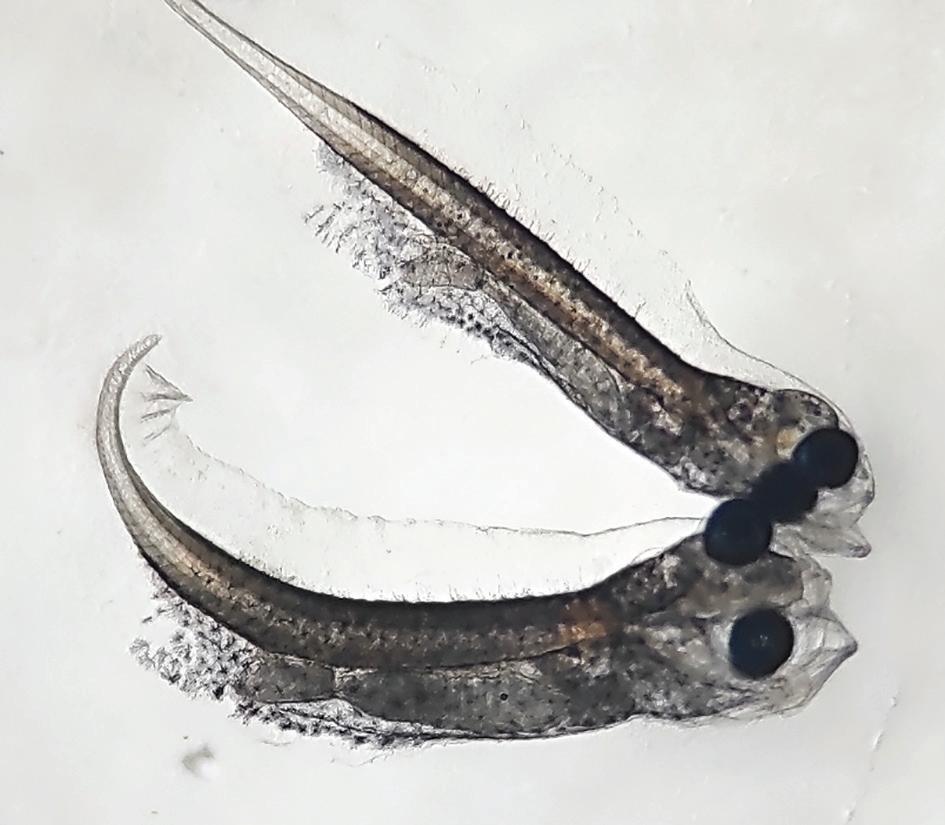
Ballan wrasse
All ballan wrasse (Labrus bergylta) producers today use CryoPlankton (both Cryo-S and Cryo-L). Survival rates have increased dramatically compared to the former protocols. Previous issues with bacterial infections have now been avoided. Stress tests document that fish fed with CryoPlankton are more robust than fish fed with rotifers and Artemia (Fig. 1).
Final weaning is easier and earlier and this is probably based on the fact that the gut has been better developed when larvae are fed with CryoPlankton (Sintef report: STARTRENS 2021:01411). This is the reason why long-term improved growth rate is

observed. Finally, producers claim that fish have improved their vitality and swimming activity, something that is of concern to this species in order to be more efficient in the sea cages.
Lumpfish
Lumpfish (Cyclopterus lumpus) is another cleaner fish used in the salmon industry that is possible to start feeding directly with dry food from the beginning. Still many producers prefer to use CryoPlankton as the first food with proven results of a more robust, faster growing and better-developed fish. Gut health is proven
Figure 1. Stress test results on ballan wrasse.
Figure 2. Ballan wrasse larvae fed with Planktonic eggs and Cryo-S.
Hatchery Feed & Management Vol 10 Issue 3 2022 29
to be far better as shown by histological analysis with an increased surface of villi, microvilli and epithelium (Fig. 3).
Yellowtail kingfish
The benefit of using CryoPlankton for the production of yellowtail kingfish (Seriola lalandi) is well documented in the industry, with very important volumes of this species having been produced very efficiently already. The improved environment of the cultures in the tanks, the ease of use, the facilitated daily management, and most importantly, the improved development of the fish, have all together led to impressively increased productivity. Survival has been impressive after replacing rotifers, improving the microflora of the environment at the same time. The behavior and robustness of the produced fry confirm what is documented by the figures.


Seabass and seabream CryoPlankton has been tried in the production of sea bream and sea bass. All trials have been done on commercial scale, well organized and highly efficient operations. The first, most obvious and always replicable observation is the increased stress resistance of the produced fry (Fig. 5).
Figure 3. Development of epithelium cells, villi and microvilli of larvae fed with CryoPlankton comparatively to larvae fed with other live feeds. Sintef report: STARTRENS 2021:01411.
Figure 5. Stress test on 44 dph European seabass larvae showed up to 60% lower mortality on the larvae fed on CryoPlankton.
Figure 4. Kingfish larvae fed with CryoPlankton.
Hatchery Feed & Management Vol 10 Issue 3 2022 30
During production, several stressor factors negatively affect the KPIs and the respective costs. When the effect of increased stress resistance is extended, even during the on-growing in the sea cages, a very sensitive period of the whole production cycle, the economic impact can be impressive. Increased survival during the first feeding is observed because of the microbiological profile of the CryoPlankton with the complete absence of all kinds of Vibrio and other malicious bacteria. The benefit is greater in operations with systemic pathology issues. Additional positive effects on growth rates throughout the production period until final harvesting, deformity rates and digestibility are currently, being documented in trials both on a commercial scale and in research institutes.
Flatfish
Flatfish sole ( Solea Senegalensis ) and turbot (Scophthalmus maximus) have also been cultured with CryoPlankton having documented that rotifers can be replaced leading to improved growth and survival rates. Fish behavior was improved, while malpigmentation disappeared (Fig. 7,8). All these results designate the potential of changing the overall dynamics of flatfish production.
Other fish species
Several other species of fish have been trialed with CryoPlankton in different forms and sizes. Specific interest is being devoted to species with smaller initial size larvae like grouper, red snapper and others. A new product of very small size (65µm) is being developed aiming to support the fast development of this part of the industry.


Crustaceans
Planktonic’s series of products have been tested on shrimp (Litopenaeus vannamei ) production, both on research and commercial scale. All results prove significantly improved growth (20-25% until the first PL stages). This could eventually lead to producers being able to fit one more production cycle within the same production year. Survival proved to be higher and
Figure 6. 8, 9 and 12 dph European seabass larvae fed with Cryo-L.
Figure 7. Sole fed on CryoPlankton (left). Sole fed on enriched rotifers and Artemia (right).
Figure 8. First days post-hatching gut of turbot larvae fed exclusively with CryoPlankton.
Hatchery Feed & Management Vol 10 Issue 3 2022 31
occasionally significantly higher than in the control tanks depending on the specific conditions in each case. The robustness of the produced PLs is improved but more studies are scheduled to investigate in greater depth. Similarly, these starting feeds have been used for the culture of European lobster (Homarus gammarus). Today, small producers are trying or regularly using especially the frozen, inert version of Cryoplankton. Better food uptake, increased growth and improved behavior are some of the reasons that make these products preferable.
Conclusions
After many years of developments on larvae culture, more and better options are available. In this new era, highly demanding new species will be more easily produced. Fully domesticated species will be produced at a lower cost, in a highly competitive environment. Planktonic has already documented a list of the most important benefits for a range of species. The company rapidly continues its developing strategy entering more markets after proving the superiority of its products. At the same time, continues to develop new products to fully cover the whole spectrum of the early feeding. The target is to be present soon all around the world providing solutions to the production bottlenecks, ultimately contributing to the development of aquaculture.


References available on request. information: Coli

Hatchery Feed & Management Vol 10 Issue 3 2022 32
Nils Egil Tokle, PhD PlanktonicCTO E: nils.tokle@planktonic.no More
Antonio
Global Sales Director Planktonic E: antonio.coli@planktonic.no
Has Artemia emerged as a key contributor to enhancing larval Macrobrachium rosenbergii survival?
Yathish Ramena, Great Salt Lake Brine Shrimp Cooperative, Inc.

Artemia is widely accepted as one of the best live food sources for many marine and freshwater microcrustacean species (Yamasaki-Granados et al. 2013), and it has now progressed to the level of being a key contributor to the freshwater prawn industry too (Barros & Valenti, 2003).
For the past three decades, the freshwater aquaculture prawn hatchery, Aquaculture of Texas, near Dallas, Texas, has been consistently producing sustainably healthy post larvae at higher survival rates by using Artemia nauplii as a supplement. This prawn hatchery serves local, state, and national prawn farmers and is supported and encouraged by a number of universities, including Mississippi State University, Kentucky State University, the University of Tennessee, Louisiana State University, the MSU Coastal Research, and Extension Center, the University of Georgia, the University of Kentucky, the University of Virginia, Virginia Tech, and Gadsden Community College.
Macrobrachium rosenbergii is a freshwater farmed species in Vietnam, India, Mexico, Thailand, and the United States. It is known as scampi or giant freshwater prawn that thrives in tropical and subtropical climatic conditions (FAO, 2011; New, 2012). The yearly global production of giant freshwater prawns was 2,861 tons by the end of 1980. Since then, freshwater prawn aquaculture has increased and has spread throughout the globe, mainly in Asia and the Americas. By 2002, global production has increased more than 80 times since 1980 (from 2,861 tons to 273,736 tons) as of 2019 (FAO, 2021).
M. rosenbergii is a versatile species because of its ability to adapt to a wide range of salinities and temperature conditions, feeds omnivorously and is
fed artificial pelleted feed. M. rosenbergii breeds in estuaries water, which is also required for larval and post-larval development following incubation. Though the seed is obtainable in natural sources to a limited extent, a consistent supply of seed is required for largescale production.
The most challenging aspect of shrimp larval rearing is the early larval stages, as they rely on live feeds due to their underdeveloped digestive systems (Agh & Sorgeloos, 2005). Early stages of zoea are fed with
Hatchery Feed & Management Vol 10 Issue 3 2022
FEEDS
phytoplankton and later stages with live feeds such as rotifers and Artemia. Artemia is widely accepted as larval feed in commercial hatcheries due to its nutritional value, palatability, digestibility, versatility, perennial availability, salinity tolerance, dormant cysts availability, and less incubation time.
Materials and methods
An observational field study without any replications was conducted at the Aquaculture of Texas hatchery to assess the performance of Macrobrachium rosenbergii prawn post larvae fed with or without Artemia nauplii as a co-feed during their ontogenetic developmental stages from post larvae stage one to stage 36, which
is typically the age to stock in nurseries or ponds. The term nauplii in this trial refer to newly formed microscopic free-swimming Instar I larvae.
For this study, 40,000 M. rosenbergii post larvae-I were distributed into two 1500-gallon (5678.118 L) fiber-reinforced plastic tanks in a recirculating aquaculture rearing system. In two random tanks, one tank received a commercial diet without Artemia (Diet), while the other obtained Artemia at a rate of 25 Artemia nauplii per post larvae. The temperature was recorded daily, and water quality measures, such as ammonia, pH, nitrite, nitrate, alkalinity, and hardness, were examined weekly. At the end of the study, the shrimp were counted and weighted to evaluate survival,
Table 1. Mean body weight, total tank biomass, final survival and final feed conversion ratio (FCR) of M. rosenbergii PL26 fed commercial diet (Diet) and commercial diet with Artemia at 25 nauplii/PL as a co-feed (Diet + Artemia).
Mean body weight (g) Total tank biomass (g) Survival (%) FCR
Diet 0.046 1595 83.2 0.94 Diet + Artemia 0.054 2021 95.4 0.74
Figure 1. Proximate composition of diets used in M. rosenbergii PL26 fed commercial diet and commercial diet with Artemia at 25 nauplii/PL as a co-feed.

Figure 2. Proximate composition (as is basis) of whole-body M. rosenbergii PL26 fed commercial diet and commercial diet with Artemia at 25 nauplii/PL as a co-feed.

Hatchery Feed & Management Vol 10 Issue 3 2022 34
Figure 3. Amino acid composition of diets used in M. rosenbergii PL26 fed commercial diet and commercial diet with Artemia at 25 nauplii/PL as a co-feed.

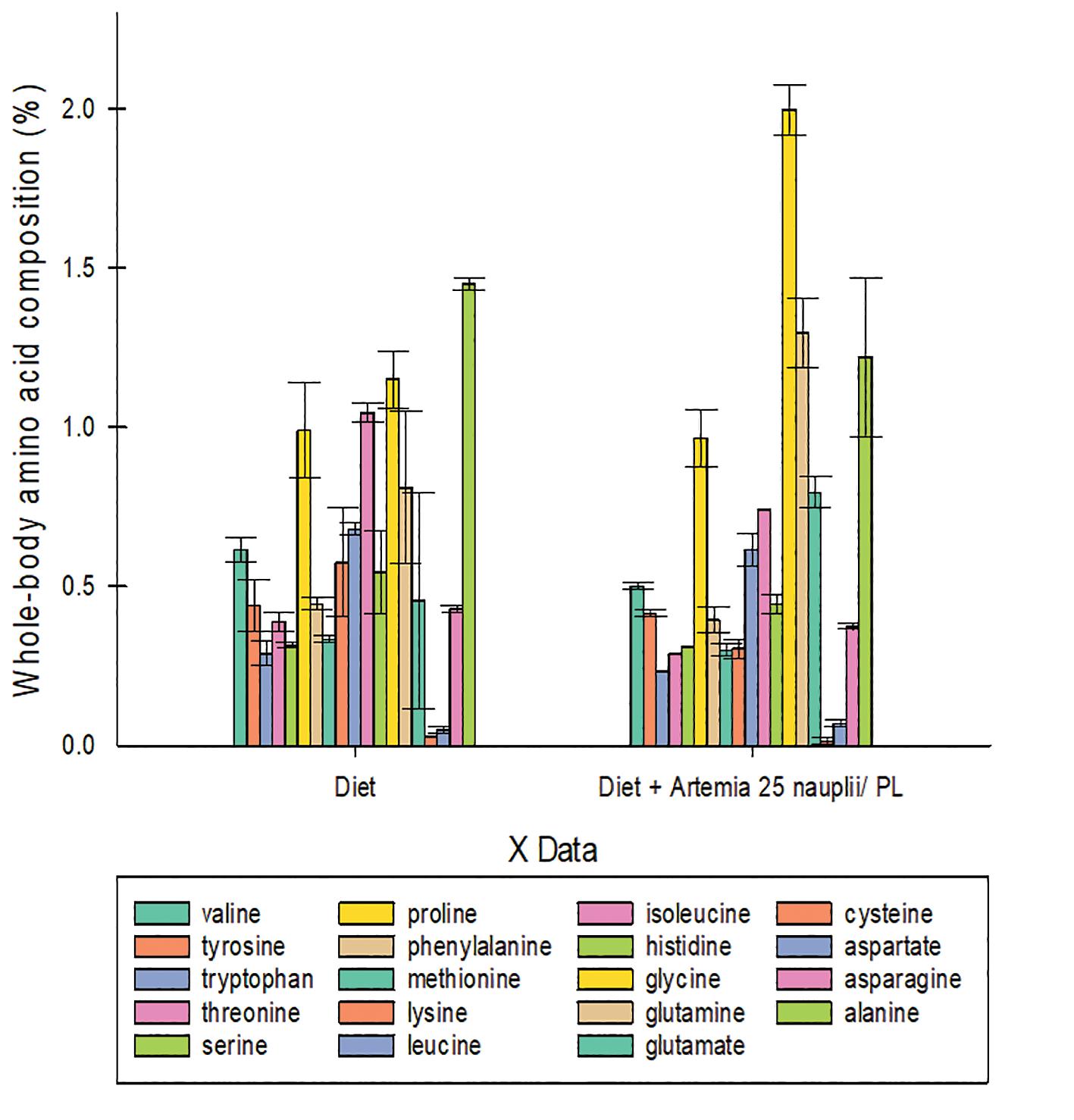
Figure 4. Amino acid composition (as is basis) of whole-body M. rosenbergii PL26 fed commercial diet and commercial diet with Artemia at 25 nauplii/PL as a co-feed.
Figure 5. Fatty acid composition of diets used in M. rosenbergii PL26 fed commercial diet and commercial diet with Artemia at 25 nauplii/PL as a co-feed.

Figure 6. Fatty acid composition (as is basis) of whole-body M. rosenbergii Pl26 fed commercial diet and commercial diet with Artemia at 25 nauplii/PL as a co-feed.

Hatchery Feed & Management Vol 10 Issue 3 2022 35
growth36
rate, and food conversion rates (FCR) for each treatment. Samples were collected for proximate, amino acid, and fatty acid analysis.
Results
Even though this was an observational study, an increased survival, biomass, mean body weight, and lower feed conversion ratio (FCR) was observed in the tank fed with Artemia, whereas all tanks had similar whole-body proximate, amino acid, and fatty acid composition (Table 1, Fig. 1-6).
Discussion
Several alternative feeds, both living and inert, have been evaluated in fish and crustacean hatcheries as a supplement or replacement for Artemia nauplii (Kurmaly et al., 1989). Wan (1999) developed a number of semi-purified spray-dried meals and tested them on larval striped bass, Morone saxatilis, and freshwater prawn, Macrobrachium rosenbergii. Both species’ larvae accepted the meals, but the overall growth and survival rates were much lower than those of Artemia-fed larvae. Other studies on Penaeid shrimp and M. rosenbergii larvae indicated that Artemia nauplii replacement diets did not work effectively for those species (Lovett & Felder, 1988; Samocha et al., 1989; Lavens et al., 2000).
The poor efficiency of micro diets is due to a misconception of larva nutritional needs (Sorgeloos & Léger 1992). However, the success of prepared diets for larvae is based on factors other than nutritional content. It is crucial to understand the behavioral, mechanical, and physiological processes that occur during consumption before critical nutrients may be
adequately assessed (Jones et al., 1997). Feed must be recognized, collected, accepted, and consumed successfully by the larvae. Thus, inert food particle size, consistency, texture, and density may influence the larval selection and, as a result, ingestion (Barros & Valenti, 2003).
A few studies suggested that Artemia biomass could be used as a protein source in post-larval Macrobrachium rosenbergii diets. Anh et al. (2009) conducted a 30-day feeding experiment. Prawn larvae fed a diet containing about 40% crude protein from Peruvian fishmeal had a lower survival rate (46%) than other Artemia diets.

Conclusion
Co-feeding Artemia during the PL stages of Macrobrachium rosenbergii at 25 nauplii/PL showed to be beneficial by improving growth, survival, and FCR, according to this field trial.

Acknowledgements
This project was funded by Great Salt Lake Brine Shrimp Cooperative, Inc.
References available on request.
More Yathishinformation:Ramena
Senior Principal Scientist


Great Salt Lake Brine Shrimp Cooperative, Inc.
E: yramena@gsla.us
Frank Martorana
Global Business Development & Technical Support Manager
Great Salt Lake Brine Shrimp Cooperative, Inc.
E: fmartorana@gsla.us
Craig Upstrom
AquaculturePresident of Texas, Inc.
E: upstrom5@airmail.net
Hatchery Feed & Management Vol 10 Issue 3 2022
Kinda’ hot!*
Tony Broadhurst Technical Director for Aquaculture at Martec.

After these recent few months, more than a few of us working in mariculture in the temperate zone of the northern hemisphere will be a little tired of the subject of heat. Many years ago, with very limited worldly experience, I recall being criticized at school for referring to fish as “cold-blooded”. Now, with summer water temperatures in the Mediterranean approaching mammalian body temperatures, I think “poikilothermic” is truly the more appropriate term, so using it is no longer merely being pedantic.
Historically, from a fish culturist’s point of view, the “good” thing about summer was that growth tended to be faster – that was in the halcyon days before seasonal warmth started to get out of hand. The downside was that all the bad things happened a lot faster, too, from dissolved oxygen depletion and acidification to biofouling. These stress-creating problems are more commonly associated with floating cage systems, of course, but the seasonal and climate-related issue of temperature can still have critical effects in hatcheries. Where naturally occurring water sources at the “right” temperatures are not permanently available locally, we usually invest in machinery to achieve what we believe are optimal for our hatchery processes. However, heating – and more particularly, cooling – water artificially requires powerful machines and consumes a lot of energy, so there is often pressure on hatchery managers to “compromise” on their technical specifications in order to save money. Giving in to this pressure is always a mistake
I still remember (many years ago, working on a site in Spain) “living on tenterhooks”, hoping that our watercooling capacity was sufficient to keep our turbot broodstocks within their annual conditioning programs so they would spawn when we wanted them to. Due

to my own under-specification and also to witnessing depressingly frequent mechanical failures at the worst possible moments, it often wasn’t. I’m sure you don’t need me to tell you what the result was.
During this time, I also learned that not even chilling machines like to work at maximum output for months on end, so I now wonder – rhetorically – why so many of us still believe that the much more complex machines that we call “hatcheries” do?
Thankfully, as an industry, we have all made huge progress since those days, so I’m confident that none of
A large female turbot.
Hatchery Feed & Management Vol 10 Issue 3 2022 COLUMN
you reading this still have to worry about this particular issue. However, there are many other ways rising temperatures can affect our operations. I’d like to draw your attention to just two of them.
Heat and transport
First, let’s look at live fish transport since there’s no point in us producing our fish in the hatchery if we can’t deliver them in good condition to our customers at sea.
Having previously relied successfully on long-distance surface transport at fairly high biomass densities (e.g. 50 kg/m³) to get fish to European customers, more recently I was surprised that we couldn’t achieve similar results over much shorter distances/transit times in the tropics. After a lot of head-scratching and some valuable help from regional experts, we finally managed to solve the problem by chilling the transport medium by just a few degrees, but I still didn’t understand why such a simple fix was so effective.
Of course, we all know that higher temperature = faster respiratory rate = faster waste production, but I didn’t think that just a few degrees within the species’ range of tolerance would make such a difference. Then I came across a table on the internet which showed the dissociation proportions for TAN (total ammonia nitrogen) under different pH/temperature combinations and realized that for any dissolved TAN concentration there are almost 5 times as much toxic molecular ammonia (NH3) present at 28°C/pH 8.2 than as at 24°C/ pH 7.6. I’m sure that many of you already knew this, but I must confess it was a “light-bulb moment” for me.
Heat is not always bad Second, just so we don’t become entrenched in the idea that “more heat is always bad”, let’s go back in time to the start of this century and look at turbot again. This species (Scophthalmus maximus) is unusual because it can grow up to 10 times faster than most other temperate-water marine fish during early life.
When I last worked with them, they were reaching 10 g in average individual weight by 100 dph, while Sparus aurata and Dicentrarchus labrax would struggle to get to 1 g over the same period.
I am suspicious that this is also why turbot acquired a reputation as being difficult to rear (as I will explain below) despite having been under commercial development in Europe for longer than almost any other marine fish species.
The published research from before the turn of the century was pretty categoric that 18°C was the optimum temperature to achieve maximum survival during larval rearing of turbot, and I’m sure the authors of the time were right. However, live feed technology was also progressing rapidly around that period and –within the commercial sector – we found that we could improve survival 10-fold (from 5% to 50%) by using some of the newer products which were becoming available (together with a couple of the old tricks) in combination with a higher rearing temperature – 22°C.
I speculate that one of the root causes of our earlier difficulties with turbot was the species’ need to maintain exceptionally high assimilation rates to sustain its early growth. In rearing them at lower temperatures we were compensating for a relatively indigestible diet and/or poor gut microflora by slowing physiological demand for nutrients. However, once better live feed culture media and enrichments became available, we were able to capitalize on the species’ survival and growth potentials by raising the temperature.
Here’s a word of caution though: Before we all start congratulating each other on our collective achievement, let’s remind ourselves that turbot larvae reared “extensively” (i.e. preying on copepod larvae) at 15°C until 16 dph can almost match growth rates of rotifer-fed larvae during the same development stages which have been reared at 22°C. It’s obvious there’s still a lot for us to learn about the live feeds which we use in intensive systems and their interactions with temperature.
 Stripping turbot eggs.
Hatchery Feed & Management Vol 10 Issue 3 2022 38
The second cardinal sin Before I close, I’d like to step back from these technical issues to take a more holistic look at what we’re trying to achieve in our hatcheries, and what sometimes gets in the way: here I’m talking about arrogance, basically.

A marine fish hatchery is a very complex biotechnical system, with usually a minimum of 6 fundamental parts which are directly involved in the process, each of which can move independently – i.e. egg production, rotifer production, Artemia processing, fish rearing, fish transport and personnel issues. Some operations add further variables to their system, such as microalgal production, alternate live prey systems and – perhaps –multi-species output targets.

The more we try to “make the foot fit the shoe” –in other words, expect that whatever genus we are working with, be it Isochrysis, Brachionus, Scophthalmus, Sparus or Homo, will adapt to the conditions that we are willing to provide for it – the greater the risk that our production chains will break. Evolution simply doesn’t happen fast enough to cope. Taking risks with biological systems is bound to end badly, sooner or later.
For me, arrogance is the second cardinal sin of aquaculture – I should know because I have found myself guilty of it many times. In the next column, I shall tell you what I believe is the first.
*Saint Jack; P. Theroux, 1973
Separating viable eggs.
Hatchery Feed & Management Vol 10 Issue 3 2022 39
Prevention and control measures for EHP: A holistic approach
Mark Rowel Napulan, Ramir Lee, Craig Browdy,
In July, Zeigler team toured three major shrimpproducing countries in Asia to support its customers with practical solutions and technical approaches to controlling Enterocytozoon hepatopenai (EHP). EHP is an established microsporidian disease that causes slow growth in shrimp which continues to devastate Asian shrimp industries with US$ billion losses annually.
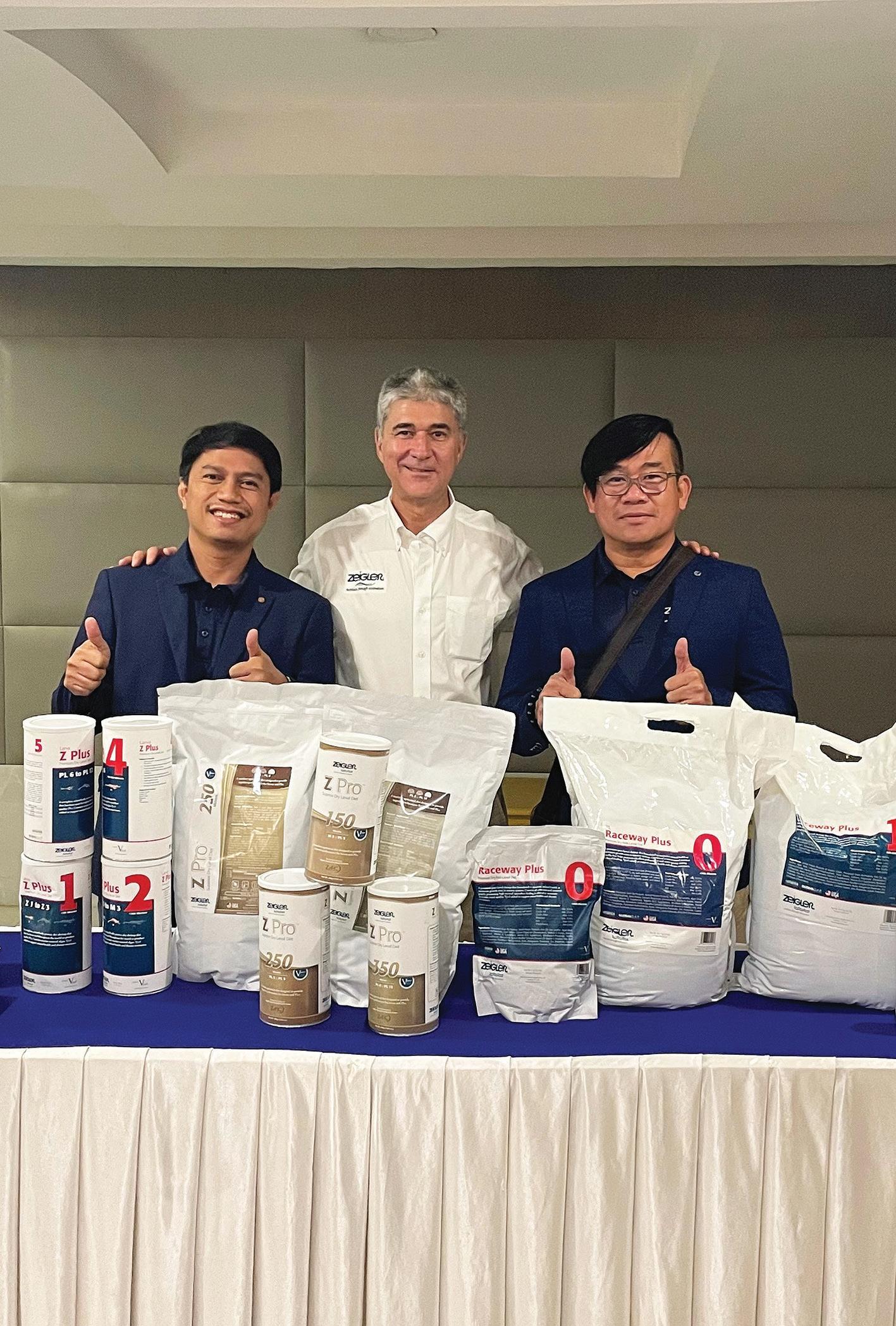
As a component of Zeigler’s customer support program, a series of technical seminars were hosted and presented in Phan Rang (Vietnam) and Kakinada and Nellore (India). The seminars were attended by a combined total of 229 shrimp hatchery owners, managers, technicians, consultants, and nursery farmers. In Thailand, the team visited nursery farmers to identify areas for improvement, and share techniques and experiences in shrimp nurseries. The team shared insights into its Precision Feeding Program (PFP) software. Zeigler developed the program to support PL Raceway 40-9 and PL Raceway Plus customers, providing an accurate feeding guide based on the carrying capacity of the system and the particular genetics of the animals. The most important feature of the program is its flexibility, enabling the manager to adjust and control feeding rates throughout the cycle. Properly managed, biosecure nursery systems have been successfully deployed as one part of the solution to prevent EHP.
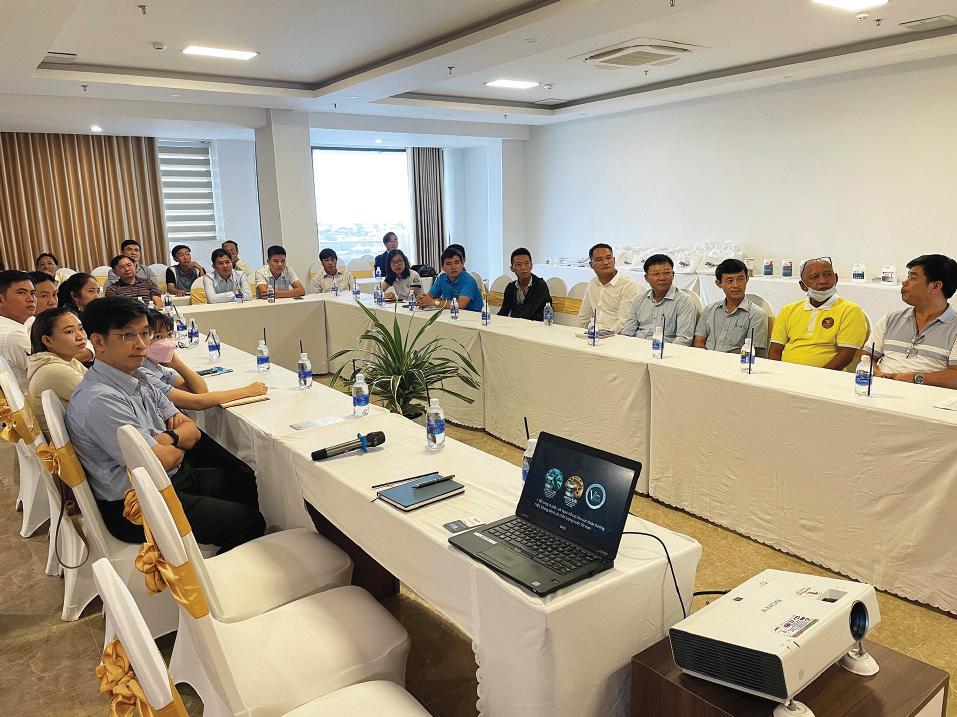
Effective control of EHP depends on understanding and adapting management protocols based on scientific data on the biological characteristics of the pathogen, its modes of infection and the effectiveness of methods of control. EHP is a microsporidian pathogen that produces spores that can remain dormant for up to two years. Once the environmental conditions become favorable, the spores start to activate and infect shrimp through polar tube extrusion. It is very important to note that EHP spores are described as being clusters of
elliptical to somewhat ovoid spores (1.1 ± 0.2 by 0.6-0.7 ± 0.1 microns) through H&E stained hepatopancreas samples. Because of their small size, spores are difficult to observe under the microscope, requiring skilled, experienced microbiologists to find at 100x objective using oil immersion. The small size can bypass some commonly used filtration systems in the hatchery.
Zeigler Team in Nellore, India during a technical seminar.
Seminar in Phan Rang, Vietnam attended by major PL suppliers.
Hatchery Feed & Management Vol 10 Issue 3 2022
SHRIMP
Due to the complexities of the diagnosis of EHP through microscopy, properly applied PCR techniques must be used throughout the production process to identify and eliminate the pathogen. When correctly applied, PCR testing is very sensitive. Nevertheless, efficiently identifying sources of infection depends upon the effectiveness of sampling. The number of samples needed to detect infection increases depending on the prevalence of the pathogen. Thus, the effectiveness of PCR diagnostic strategies for screening potential sources of infection must be carefully evaluated.
Recent studies on cohabitation suggest that spores can be transferred orally through ingestion of feces and cannibalism. Spore densities are concentrated in filterfeeding animals like mussels, oysters and polychaetes
and can be ingested through sediments suspended in the water column. Hence, the approach to prevention of EHP must be holistic, starting from the maturation systems in the hatchery to the harvest and post-harvest pond treatments in the farm.

Management of EHP in the hatchery EHP can enter maturation systems with infected broodstock, through the water, or in live or fresh feeds carrying viable EHP spores. Beginning with certified SPF broodstock is the first step in prevention. Being filter feeders, live polychaetes in particular have been shown to be significant potential carriers of EHP. It is highly recommended to use only SPF live polychaetes in maturation systems. If using alternative diets, such as squid and other fresh feeds like mussels, these must be subjected to -20°C, freezing for more than 48 hours to inactivate the spores prior to feeding. In this regard, we highly recommend the use of our Redi-Mate maturation feed to start the conditioning stage and through active spawning. Redi-Mate is an inert, manufactured biosecure maturation diet that has been shown to adequately replace up to 50% of live polychaetes in commercial trials and up to 60% of fresh feeds (without liveReducingpolychaetes).reliance
on expensive and often limited supplies of live polychaetes past certain limits can result in decreases in spawn size and nauplii production rates. In the Western Hemisphere, live polychaetes are not used, maturation systems are larger, and broodstock costs are controlled by the use of local breeding programs and multiplication systems. Applying this model in Asia will require more investment in biosecure broodstock multiplication centers stocking PPL (parent post larvae) to reduce logistical costs and bottlenecks, and assure adequate supplies of genetically improved SPF breeders.
We also recommend incorporating ultra-filtration systems for water in the hatchery with 0.1 micron lower filtration to exclude spores. Research has shown that EHP spores can be inhibited with various treatment methods. Thus, treatment of all incoming water in the hatchery with either 40ppm of 65% active chlorine or 15ppm KMnO4 inactivates spores. Filling tanks with steam water and rinsing equipment with water at a temperature of 75°C for up to 1 minute could also help to inactivate spores.
 Dr. Craig Browdy interacting with many customers in Kakinada, India.
PL Raceway 40-9 supporting high growth and survival rates in a nursery system in Thailand.
Dr. Craig Browdy interacting with many customers in Kakinada, India.
PL Raceway 40-9 supporting high growth and survival rates in a nursery system in Thailand.
Hatchery Feed & Management Vol 10 Issue 3 2022 41
42Additionally,
hatchery technicians should select high-quality hatchery feeds formulated to optimize nutrition incorporating highly digestible ingredients. Zeigler recently launched its Z Pro diet in Asia, specially designed for shrimp post larvae (PL). This novel and advanced product was developed over the course of three years of continuous R&D at the Zeigler Aquaculture Research Center in Florida. It is gaining popularity and market share in many regions, and has been proven to reduce the usage of flake and dry feeds in some current commercial protocols by up to 40%. Improving feed utilization efficiencies in the hatchery tank reduces waste and improves water quality, lowering ammonia and Vibrio levels. The resulting more robust, stronger PL with improved survival are better able to resist pathogens like EHP in hatcheries, nurseries, and grow-out systems.
Management scenarios in ponds
Managing EHP in ponds is very challenging due to the much larger water volumes and culture areas that need to be treated. In areas with active EHP infections, water must be filtered or treated with the correct dose of the appropriate, approved product to inactivate spores. Also, consider that EHP spores are typically embedded in the pond bottom sediments, which can reduce the
efficacy of chemical treatments. The use of well points and lined ponds that can be appropriately disinfected can improve the outlook for successful crops in areas with ongoing EHP outbreaks. Moreover, stressors can trigger EHP infections in shrimp ponds. Nursed PL can produce more robust and faster-growing animals due to compensatory growth. A properly designed and managed nursery phase reduces the overall culture period and the exposure of the shrimp to pathogens and stressors. As in the hatchery, similar water treatment procedures and physical exclusion with the use of ultra-filtration (0.1 microns) should be adopted. Efficiently feeding high-quality nursery feeds will help improve feed conversion and thereby reduce organic waste in the system. Controlling the feed conversion ratio (FCR) in the nursery is critical to reducing stress resulting from overfeeding and the subsequent deterioration of nursery and pond water quality.
Performance data from 17 separate trials conducted in Asia for Zeigler’s PL Raceway 40-9 product demonstrate survival rates averaging 92.4 ± 6.1% achieved, with FCR values of 0.87 ± 0.0. These trials clearly demonstrate that this nursery diet is cost-effective and improves animal health while reducing ammonia and nitrite inputs into the system.

Ponds with sandy loam soil and high sedimentation should be lined with high-density polyethylene plastic (HDPE).
For ponds known to be previously infected with EHP, farmers should treat them with the proper lime product. It is very important to know your lime and pay attention to its solubility in water. Burnt lime (calcium and magnesium oxides, CaO and MgO) and hydrated lime [Ca(OH)2] can increase pH to levels up to 12 or higher and eliminate EHP spores at a dose of 6 mt/ha. A simple way to test a liming product is to put it in water and observe whether it will raise the temperature to 50°C. The product must be sieved through a 100mesh net. It should be noted that for this hot lime to react, the soil must be moistened. The liming should cover the entire pond bottom to optimize its treatment impact.
Recently, researchers found that EHP-infected shrimp exhibit white feces when co-infection with Vibrios occurs. In this case, farmers should pay attention to controlling Vibrios throughout the entire shrimp culture
The adoption of ultra-filtration systems is becoming a trend in Vietnam.
Hatchery Feed & Management Vol 10 Issue 3 2022
cycle. We strongly recommend selecting probiotics proven effective in the hatchery and in pond grow-out, properly demonstrated to colonize the shrimp gut and inhibit growth of Vibrios in the water.
In an effort to control EHP, farmers must demand healthy, EHP-negative PL from their hatcheries. These test results must be from a robust ongoing sampling program carried out by a properly accredited and independent laboratory certified by the government. Zeigler is committed to helping hatcheries maintain and enhance PL survival, growth and health to meet the increased scrutiny and higher PL quality necessary to maintain profitability in EHP-affected areas.
Perspectives
While the shrimp farming industry continues to face hurdles and challenges to increase production due to the impact of EHP, Zeigler will continue to improve its products and technical support by strengthening R&D efforts, improving manufacturing processes, and reaching out to its clients. Finally, we recognize the role of various research institutions and the importance of collaborative work efforts to find real-world solutions to support the needs of our customers worldwide.
More information: Mark Rowel Napulan Asia Sales Manager Zeigler Bros., Inc. E: mark.napulan@zeiglerfeed.com

Ramir Lee Regional Technical Manager, Asia Zeigler Bros., Inc.


Dr Craig Browdy Director of Research and ZeiglerDevelopmentBros.,Inc.

Hatchery Feed & Management Vol 10 Issue 3 2022 43
Development of multiple lines of domesticated SPF Penaeus vannamei or “designer” Penaeus vannamei
Robins McIntosh, Charoen Pokphand Foods Public Company
of diversity would be minimized while, at the same time, being able to select multiple shrimp with economically beneficial characteristics. In addition, having three nucleus breeding sites that were totally independent allows the program to hybridize between populations when it became necessary to decrease the inbreeding coefficient.
Multiple facilities also provided safeguards in the event of a breeding or biosecurity accident in any one population. Another group of biosecure sites was designated as backup sites, where duplicates of all families in the nucleus sites are maintained; adding another layer of protection for the long-term viability of the breeding investment.
Early years of CPF program
The CPF Penaeus vannamei domesticated SPF program was started in 2003 after initial pond trials with introduced SPF P. vannamei proved very successful when cultured in Thai culture ponds with an exclusion biosecurity strategy. With an increasing demand for SPF P. vannamei broodstock to fuel this expanding adoption, CPF initiated a breeding program with two objectives: to maintain the SPF health of the broodstock and improve the productivity of these stocks through selective breeding.
Multiple introductions of P. vannamei founder stocks with a varied genetic backgrounds were collected from the Americas. Three individual breeding sites were established, each using different founders but unified by the implementation of the same selection protocols. The program was designed to be large enough to create sufficient families that inbreeding and loss
The CPF genetic selection program is based on phenotype selection between and within families. The selection of multiple characteristics is based on a weighted index which is evaluated twice a year. The index is modified when there are perceived needs and changes within the industry. The top priority has always been shrimp survival. A shrimp that does not survive cannot grow, cannot be harvested, and cannot contribute to the economic success of a farm.
In the early years of the program, the index was most weighted for Taura Syndrome Virus (TSV) tolerance (Fig. 1). As TSV tolerance increased and the prevalence of the virus decreased within Asia, the index weight for TSV tolerance was shifted in favor of selecting faster growth rates and larger harvest shrimp sizes. Much of the growth improvement was achieved by increasing the early first 30-day growth rates, a time which was characterized by a lag in growth rate acceleration.
Hatchery Feed & Management Vol 10 Issue 3 2022
SHRIMP
Wild P. vannamei might take 30 days to reach 1 gram while with the newer CP Turbo stocks, 3-4 gram size can be achieved in the first 30 days, with growth rates going linear to 3-6 grams per week. Greater shrimp sizes at harvest were achieved by increasing the size the males reached before slowing the growth rate due to sexual maturation. In the original P. vannamei, males growth slowdown happened around 20-gram size and, therefore, it was difficult to efficiently achieve harvest.
AHPND tolerant families
When Acute Hepatopancreatic Necrosis Disease (AHPND) hit Southeast Asia, survival in Thailand declined from over 90% in 2010 to under 30% in 2013. At that time, growth rate became of little importance. Selection genetics were applied to increase the tolerance or survival of the shrimp in the presence of the pathogen. Then two questions were answered: is this tolerance heritable and what is the heritability sufficient to make breeding practical? Before these questions could be answered, the team had to develop challenge tests that could reliably identify tolerant families and individuals. Developing such tests is not easy as they need to be reproducible and repeatable and that meant understanding the pathogenesis of the disease. First, the identity of the pathogen needed to be discovered, and then a challenge test developed. This would include answers to the best way to apply the pathogen and at which doses to apply, and finally what was an appropriate period for evaluating the challenge test. For disease challenge tests to be used in a genetic selection process, they must result in replicates challenge survival results that consistency and low variance. In 2013, the pathogen was identified as Vibrio parahaemolyticus with

two toxin genes on plasmids carried by the bacteria. As the challenge test was developed, the program learned that survival in our families ranged from 5% to greater than 80%. This suggested that there were AHPND-tolerant families. Breeding of known families and parents allowed for the determination of heritability of the AHPND tolerance characteristic in families of higher tolerance. After the development of the challenge and defining tolerant families, crosses and subsequent calculations for heritability of AHPND tolerance were calculated, and a breeding value H2 was estimated to be greater than 0.30. Breeding for AHPND tolerance carried the largest weight in the index and over the next four years, the survival rate from an AHPND challenge increased from 40% to over 80% (Fig. 2).

WSSV-tolerant shrimp
CPF has developed a number of commercial shrimp lines for specific uses: the Turbo, the Kong, the Bolt, the CP low salinity and the CP vegetarian shrimp.
The Turbo line was developed over the years from 2004-2018 and is recognized for fast growth, largesized shrimp, and tolerance to TSV and APHNS (Fig. 3). However, the Turbo line did not do well in environments and ponds that are not controlled with pond pathogen exclusion biosecurity as was typical in larger ponds of South America or northern China. Today, shrimp are farmed in environments that expose shrimp to higher pathogen loads and greater physiological stresses. Robustness is the characteristic that defines how well a shrimp can tolerate these environments without becoming diseased.
For this reason, CPF initiated an effort in 2016 to develop a WSSV-tolerant shrimp with greater pond
Figure 1. Family selection for tolerance to the Taura virus. From imports in 2003 to 2013.
Figure 2. Selection of AHPND tolerance in shrimp from 2014 (gen 13) to 2018 (gen 17).
Hatchery Feed & Management Vol 10 Issue 3 2022 45
robustness. WSSV tolerance had been difficult to achieve in SPF shrimp and most successes were reported from Latin American breeding using what is referred to as APE (all pathogen exposed) populations. It was a strongly held belief that only by exposing the shrimp to a pathogen such as WSSV could tolerance be developed but resulted in infected animals (non-SPF). However, there is a documented SPF population of shrimp at NAQUA Company in the Kingdom of Saudi Arabia that was developed for WSSV tolerance using the “reverse SPF” approach – selection from endemic areas where the shrimp population had naturally developed WSSV tolerance (Alday-Sanz et al., 2018). NAQUA had that WSSV tolerance could be developed within the SPF framework by doing the correct selection for tolerance and with this knowledge, the CPF program worked to develop such an SPF, WSSV tolerant shrimp in collaboration with NAQUA.
This WSSV/robustness project matured over the next five years with the launch of a line of shrimp that was marketed under the name CP Kong. This line would remain SPF but would be genetically improved for increased survival in a WSSV environment. After 4 years of breeding for improved survival in the presence of the WSSV virus, survival in the standardized WSSV challenge test improved from 35% of the Turbo line to greater than 70% in the newly established CP Kong line (Fig. 4). The challenge test that was developed provides a standard titer of WSSV in the feed, which is applied during the first two days of the challenge period. The challenge is scored over 14 days at a constant temperature of 27°C and 28 ppt salinity. At the end of the challenge, survival is calculated and a real-time PCR virus load of WSSV is determined in the survivors.

We have learned that if the shrimp can control the virus level to be less than 108, the shrimp would
Figure17).4.
survive; but if virus replication in the shrimp exceeded 108, the shrimp die, but genuine WSSV tolerance was characterized by shrimp limiting the titer number to less

 Figure 3. Selection of AHPND tolerance in shrimp from 2014 (gen 13) to 2018 (gen
Improvement in WSSV challenge survival in CP Kong compared with CP Turbo lines.
Figure 5. Comparative shrimp mean body weight (growth) of three lines of shrimp at increasing days of culture.
Figure 3. Selection of AHPND tolerance in shrimp from 2014 (gen 13) to 2018 (gen
Improvement in WSSV challenge survival in CP Kong compared with CP Turbo lines.
Figure 5. Comparative shrimp mean body weight (growth) of three lines of shrimp at increasing days of culture.
Hatchery Feed & Management Vol 10 Issue 3 2022 46
than 103. The program established this threshold of 103 for the selection of tolerant families
The growth rates of CP Kong shrimp are lower than CP Turbo but faster than any South American P. vannamei shrimp. In optimized grow-out, the Turbo line can now reach 30 grams in 55 days; whereas the CP Kong line would require 80 days under the same optimized conditions. Initial introductions of CP Kong into Northern China and into Iran have resulted in very good pond results. This year, Iranian farmers stocking the CP Kong shrimp achieved a record year of 65,000 tons of shrimp, with an estimated 45,000 tons of shrimp produced from the CP Kong broodstock with no culture pond failure from WSSV. This is a demonstration of the successful biosecurity strategy combining disease tolerance, greater robustness and good growth when pathogen exclusion is not possible.
Low salinity shrimp line
Low salinity is an extreme environmental condition that can reach lower than 2 ppt and can be close to drinking water if sufficient hardness is present. Shrimp culture has developed in low salinity areas of China, India, Vietnam, and Thailand. CPF has developed a special shrimp line adapted to low salinity that has resulted in
significant pond performance improvements, both yield and survival. CPF has introduced this low salinity line to both, Vietnam and Thailand. The low salinity line results in 20% higher survival when cultured in low salinity areas when compared to the commercial Turbo line of shrimp. Growth rates were similar (Table 1).
Indoor shrimp farming
Indoor shrimp farming values growth over disease tolerance. For such systems, CPF developed the Bolt line of shrimp. The selection process for this indoor line emphasized only growth and survival without disease challenges for primary pathogens under simulated highdensity culture conditions. High selection pressure for growth without consideration for disease tolerance has resulted in a line of shrimp that can reach 30 grams in 45 days in our genetic selection centers.
A two-phase culture system is used: a nursery phase stocked at 350/m2 and a final raceway phase stocked at 150/m2. During the nursery phase, Bolt shrimp can reach 15 grams (30 days nurse from PL12) and upon transfer require an additional 15 days to achieve the 30-gram size. This performance with the Bolt line of genetics is achieved with high quality, higher protein feeds, and a management system that allows very high
 Figure 6. Growth curve of the Bolt line culture in an intensive indoor RAS system.
Hatchery Feed & Management Vol 10 Issue 3 2022 47
Survival ADG MBW Yield (ton/ha) Density (shrimp/m2) Turbo 2019 79 0.34 29 24 106 Fresh 2020 94 0.34 33 30 93 Difference +20% Table 1. Pond performance data from Vietnam in a freshwater area comparing CP Fresh and CP Turbo lines.
feed rates. The water temperature must also remain in the range of 31-32°C (Fig. 6).
Plant-based feeds

Another line of breeding has been to establish stocks of P. vannamei that will convert vegetable proteins and oils more efficiently. Work on this line of shrimp started in 2015. A base vegetable-only diet was developed with the use of ingredients such as soy meal, corn gluten meal, linseed oil and wheat glutens. Families are grown with vegetable protein diets and individuals within families that survived and were the fastest growing were selected. After seven generations of selection growth rates on the all-vegetable diet have improved growth rates from 50% of a commercial diet to less than 90% performance when feeding diets of equivalent all vegetable protein and oils. This specialty line of shrimp would be for farms that wished to market a shrimp that had consumed no animal products; what could be called a vegetarian shrimp.

Conclusions
The future of shrimp genetics will move away from family-based phenotypic selection to individual selection using molecular markers. What will not change is the requirement for expert shrimp breeders and the maintenance of disease-free status in the shrimp lines. In addition to the use of molecular markers, a greater understanding of epigenetic effects and now applying them more effectively to shrimp breeding programs will broaden the possibilities of using genetics to improve overall shrimp production efficiency in a myriad of environments and for specific marketing requirements.
References
Alday-Sanz, V., Brock, J., Flegel, T.W., McIntosh, R., Bondad-Reantaso, M., Salazar, M. and Subasinghe. 2018. Facts, truths and myths about SPF shrimp in Aquaculture. Reviews in Aquaculture 1-9.
More Robinsinformation:McIntosh
Executive Vice President Charoen Pokphand Foods Public Company

E: robmc101@yahoo.com


Hatchery Feed & Management Vol 10 Issue 3 2022 48
Assessment of ionic adjustment in low-salinity water on Penaeus vannamei farming in synbiotic nursery system
Macrominerals imbalance in low-salinity shrimp culture is a challenge in many parts of the world. Calcium and magnesium are responsible for the water’s total hardness and are important in shrimp growth. Potassium can influence shrimp growth and survival, as it is important in activating Na⁺/K⁺-ATPase enzyme. In addition, the control of nitrogen compounds is another factor that must be considered for shrimp farming in low salinity. Therefore, this study aimed to understand the effect of Ca:Mg:K ratio adjustment in oligohaline water on Penaeus vannamei growth and water quality in intensive nurseries using synbiotic system.
Study setup
Two P. vannamei nurseries were carried out in the Shrimp Culture Laboratory of the Federal Rural University of Pernambuco for 35 days (nursery 1) and 40 days (nursery 2), using units of 60 L in a completely randomized experimental design. The following treatments were established in the two nurseries, all in triplicate: T1 – water salinity ~2.5 g/L and T2 – water salinity ~2.5 g/L with Ca:Mg:K ratio adjustment.
The post larvae (PL10) were obtained from a commercial hatchery at a salinity of 35 g/L, and were acclimated to a salinity of ~2.5 g/L. Both nurseries were stocked with PL24 (~ 10 mg) at a density of 2,000 shrimp/m³. During the experiments, animals were fed a commercial feed with 40% (nursery 1) and 45% (nursery 2) crude protein, 4 times per day.

The water used in the experiments was obtained by diluting seawater in freshwater to a salinity of ~2.5 g/L. The Ca:Mg:K ratio in T2 was close to 1:3:1 (potassium chloride; calcium carbonate; magnesium sulfate heptahydrate; magnesium chloride hexahydrate).
In the nurseries, the system’s fertilization was carried out with the application of rice bran (< 200 µm) processed by fermentation (24 h) and respiration by probiotic microorganisms (24 h). The fertilizer had the following composition: 20 g/m³ of rice bran, 2 g/m³ of molasses/sugar, 0.50 g/m³ of commercial bacterial mix (6.5×10⁷ Colony Forming Units/g), 4 g/m³ of sodium bicarbonate, 0.25 g/m³ of dry biological yeast and water in a proportion of 10× the amount of rice bran. In nursery 1, the fertilizer was applied for 24 days. A biological activator (Seachem, USA) was also added at the beginning of water fertilization (7.5 mL/ m3) and another six daily applications of 3.75 mL/ m3. In nursery 2, an inoculum of 15% of water from the previous cycle was used and added to synbiotic applications 3 times a week. In both nurseries, fertilization was suspended when settleable solids exceeded 5.0 mL/L.
Luis Otavio Brito da Silva, Otávio Augusto Lacerda Ferreira Pimentel, Valdemir Queiroz de Oliveira, Caio Rubens do Rêgo Oliveira, Alfredo Olivera Gálvez,
Shrimp juveniles (1.1 g) produced in nurseries using low-salinity water.
Hatchery Feed & Management Vol 10 Issue 3 2022
SHRIMP
Table 1. low-salinity water.
Final weight (g) ± 0.12 0.08 1.16 ± 0.04 1.15 ± 0.04 0.78 ± 0.41 0.77 ± 0.42
Survival (%) 87.22 ± 6.25 86.39 ± 3.94 91.67 ± 1.66 92.22 ± 2.92 89.44 ± 4.76 89.31 ± 4.45
SGR (%/day) 10.82 ± 0.83 10.74 ± 0.58 11.81 ± 0.09 11.80 ± 0.10 11.31 ± 0.76 11.26 ± 0.69
FCR 1.89 ± 0.60 1.93 ± 0.41 0.97 ± 0.02 0.97 ± 0.07 1.43 ± 0.62 1.45 ± 0.58
Yield (Kg/m³) 0.73 ± 0.25 0.69 ± 0.18 2.13 ± 0.04 2.13 ± 0.15 1.43 ± 0.78 1.41 ± 0.80
Table 2. Major ions (mg/L) in the water during shrimp nurseries using low-salinity.
Nursery 1 Nursery 2 T1 T2 T1 T2
Cl⁻ 1,360.90 ± 75.60 1,315.60 ± 126.82 1,201.76 ± 66.05 1,346.59 ± 100.52
Na⁺ 752.03 ± 41.78 726.99 ± 70.08 664.09 ± 36.49 731.35 ± 61.46
Ca²⁺ 34.13 ± 9.92 46.35 ± 10.29 37.97 ± 6.72 53.18 ± 11.68
Mg²⁺ 102.06 ± 18.17 145.28 ± 38.15 96.03 ± 6.24 164.19 ± 41.00
K⁺ 38.46 ± 4.18 42.01 ± 7.04 48.34 ± 10.48 59.29 ± 11.71
SO₄²⁻ 281.77 ± 27.50 369.11 ± 154.82 231.95 ± 23.60 258.91 ± 52.67
Ca:K 0.94 ± 0.23 1.12 ± 0.23 0.84 ± 0.29 0.91 ± 0.18
Mg:Ca 3.22 ± 1.11 3.12 ± 0.39 2.60 ± 0.46 3.09 ± 0.45
Mg:K 2.78 ± 0.55 3.49 ± 0.81 2.07 ± 0.46 2.80 ± 0.55
Na:K 19.80 ± 2.37 17.66 ± 2.65 14.47 ± 3.85 12.78 ± 2.60
Substrates composed of mollusk shells were placed in polyethylene mesh bags, with an area corresponding to ~ 28.12% of the bottom area. Water quality variables, dissolved oxygen (DO), pH, salinity and temperature were measured daily. TAN, NO₂⁻-N, total alkalinity, total hardness, Ca²⁺, Mg²⁺, SO₄²⁻, Cl⁻, Na⁺ and K⁺ were also
Regardinganalyzed.
zootechnical performance, weekly biometrics were performed to determine the final weight (g), specific growth rate (SGR; %/day), feed conversion ratio (FCR), yield (Kg/m³) and survival (%).
Results and discussion
The Ca:Mg:K ratio adjustment to 1:3:1 performed in diluted seawater to salinity ~ 2.5 g/L did not produce a significant effect on shrimp growth (Table 1). The mean final weight found was higher than that observed by Esparza-Leal et al. (2016) who cultivated P. vannamei in the nursery system with different salinities and found a final weight of 0.28 g in the treatment with a salinity of 8 g/L.
The major ions’ mean concentration and cations ratios during the nurseries are shown in Table 2. In the T2 treatment, Ca:Mg:K ratios were kept close to 1:3:1 during the trials.
In nurseries, mean TAN was kept below 0.70 mg/L and mean N-NO₂⁻ was kept below 0.60 mg/L, therefore, within or close to the recommended limit for the P. vannamei farming using low-salinity water.
Conclusions
We conclude that it is possible to carry out marine shrimp culture in the nursery system in low-salinity water with minimal water exchange, in concentrations of Ca²⁺: 25.6 mg/L, Mg²⁺: 89.75 mg/L, K⁺: 30.60 mg/L, alkalinity ~ 100 mg/L and total hardness ~ 400 mg/L, artificial substrates, biological activator, inoculum, and using a synbiotic system.
This article is a summary of Pimentel et al., 2022 and Oliveira et al., 2022.

More information:
Luis Otavio Brito da Silva Professor Departamento de Pesca e Aquicultura, Universidade Federal Rural de Pernambuco, Recife, Brazil E: engpescalo@hotmail.com
Hatchery Feed & Management Vol 10 Issue 3 2022 50
Shrimp performance in nurseries with
Nursery 1 Nursery 2 Nurseries (mean) T1 T2 T1 T2 T1 T2
0.41
0.40 ±
Industry Events
SEPTEMBER2022
Send your meeting details to: editor@hatcheryfm.com
27 - 30: Aquaculture Europe 2022, Italy www.aquaeas.org
OCTOBER
3 - 6: 2nd International Symposium Mucosal Health www.mha2022.com in Aquaculture, Spain
3 - 6: GOAL, USA www.globalseafood.org
12 - 13: Training course on FEEDNETICS software, Portugal www.aquafeed.com
17 - 20: AQUA EXPO Guayaquil, Ecuador aquaexpo.com.ec
17 - 20: Fish Nutrition Workshop, The Netherlands www.wur.nl
NOVEMBER
9 - 11: ILDEX Indonesia & Aquatica Asia www.ildex-indonesia.com
27 - Dec 2: International Symposium on Genetics in Aquaculture, Chile isga.uchile.cl 29 - Dec 2: World Aquaculture Singapore 2022 www.was.org
DECEMBER
12 - 15: International Conference of Fish and Shellfish Immunology, atlanticmice.eventsair.com Norway
13 - 15: Algaeurope, Italy algaeurope.org
FEBRUARY2023
15 - 16: AquaFarm, Italy www.aquafarm.show 23 - 26: Aquaculture America 2023, USA www.was.org
APRIL
18 - 21: LACQUA 2023, Panama www.was.org
MAY 29 - June 1: World Aquaculture 2023, Australia www.was.org
Hatchery Feed & Management Vol 10 Issue 3 2022 51