33
1-Monoglycerides of short and medium chain fatty acids can reduce antibiotic treatments to control Yersinia ruckeri and Flavobacterium psychrophilum in trout By Manuela Parini, R&D, SILO International, Matteo Calligaris - Aquaculture Technical Consultant
mortality, unfavorable FCR and growth rate. The strategies to counteract these problems involve, in many cases, antibiotic treatments which may create resistance in the fish or delay the sale of the fish on the market because of the suspension periods observation. The consequences for the trout producers are economic losses and, in some cases, even the inability to offer the fish to the antibiotic-free supply chains.
MIC of 1-Monoglycerides at pH 6-7
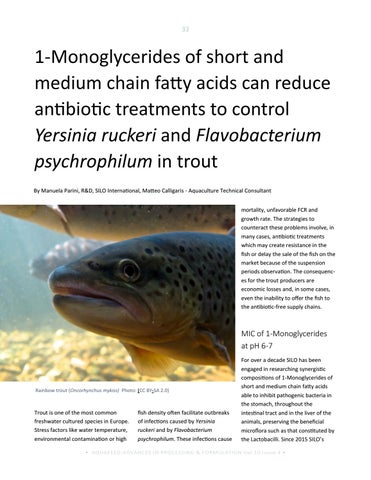
Rainbow trout (Oncorhynchus mykiss) Photo: (CC BY-SA 2.0)
Trout is one of the most common freshwater cultured species in Europe. Stress factors like water temperature, environmental contamination or high
fish density often facilitate outbreaks of infections caused by Yersinia ruckeri and by Flavobacterium psychrophilum. These infections cause
For over a decade SILO has been engaged in researching synergistic compositions of 1-Monoglycerides of short and medium chain fatty acids able to inhibit pathogenic bacteria in the stomach, throughout the intestinal tract and in the liver of the animals, preserving the beneficial microflora such as that constituted by the Lactobacilli. Since 2015 SILO’s