FACILITIES MANAGER
Winter 2026





Trevor
Winter 2026
Trevor
BY TED WEIDNER
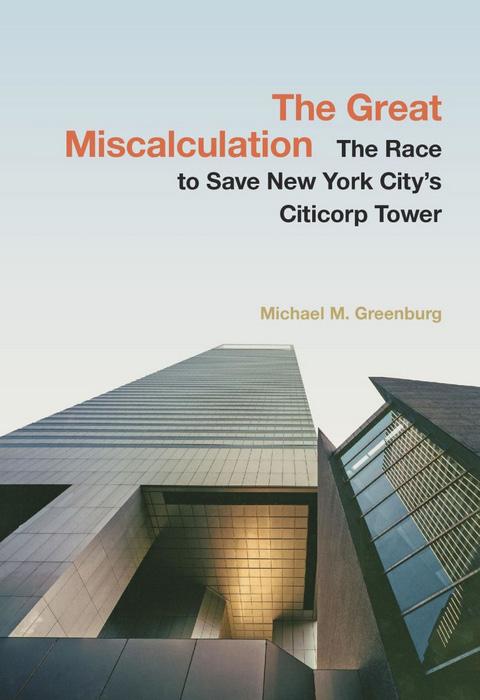
AUTHOR: MICHAEL M. GREENBURG; PUBLISHED BY WASHINGTON MEWS BOOKS/NYU PRESS, 2025; 264 PAGES, $22.
Whetheryou participate in a faith or not, Ancient Secrets is an excellent book to help develop and hone your project management skills.
The old-timers reading this column likely lived through the 1970s and remember several significant construction projects. Campuses were growing, continuing to deal with the baby boom and demands for a college education. Businesses continued to grow as well, and designers challenged engineering technology to make unique structures. Skylines in New York, Chicago, Houston, and San Francisco were among cities that saw unique buildings. One of those buildings was the Citicorp Center. Michael Greenburg addresses some interesting factors about the Citicorp Center in The Great Miscalculation.
Using a foundational article from The New Yorker magazine, The Fifty-Nine Story Crisis, by Joe Morgenstern, 1995, Greenburg weaves planning, design, management, and political factors that affected the construction of the building and challenges to correct design flaws. The case is a noted engineering ethics problem. After the construction was completed, the design engineer, William LeMessuier, encountered a problem with the structure that could result in a catastrophic collapse of the building. He took responsibility for the problem and arranged for a solution. Much of the process behind the ethical response is missing in most presentations. Greenburg fully describes the response, bringing the internal and external factors together to provide a compelling and exciting story about the project.
Ignoring the technical issues to solve the weakness of the bolted connections which necessitated installation of welded plates, most stories talk about workers doing the work at night to avoid detection. That’s an oversimplification. The solution involved corresponding with the building owner,
Campus project managers and facility officers will enjoy reading about the implementation of the solution, the issues of coordination and communication will both learn and laugh at everything involved. Those of us old-timers can also enjoy the added complications of no Internet, no computer software, and no cell phones. Just regular land lines, paper documents, personal connections. Project management skills haven’t changed much but the tools have. The Great Miscalculation is a great read. ■
ABOUT THE AUTHOR
Ted was an FM professional at several universities over a 30year career. Now he is a faculty member at Purdue University teaching students about facilities and construction.
ANCIENT SECRETS TO PROJECT MANAGEMENT
HOW TO LEAD AND THRIVE IN YOUR PROFESSIONAL AND PERSONAL LIFE
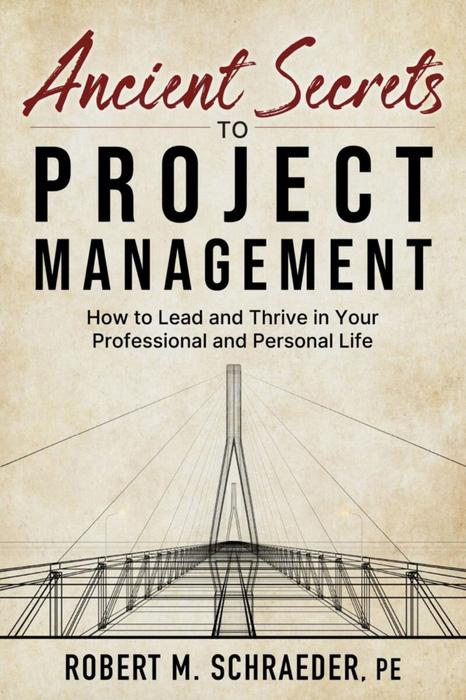
AUTHOR: ROBERT M. SCHRAEDER; PUBLISHED BY EASTWARD HILL, 2025; 208 PAGES, $19
Project management is a challenge requiring a balance of project goals, contractual and technical requirements, good business, and ethical behavior. The two books addressed here cover those topics and more. While both books are available in print and electronic formats, the reviews are based on the e-book edition.
Capital construction projects are complex and require thousands of decisions throughout the life of the project and sometimes hundreds of decisions in a day. Project management can be very stressful, requiring the ability to avoid panic and rely on philosophical thoughts. In Ancient Secrets to Project Management, Robert Schraeder writes about the value he found in his career by considering the words from the book of Proverbs.
Schraeder relates examples from several projects that put him or others in a tight spot. The examples may be like projects or situations the reader has or may encounter while managing a project. At the same time, they may be unique to Schraeder’s experiences and aren’t encountered at a college or university project. The specific examples don’t particularly matter, the important point is that considering the philosophy of leading a good an honorable life, using whatever source of wisdom one espouses, helps deal with the modern, technical complexities of a construction project even if the philosophy was not focused on project management.
Some might wish to ignore the source of the philosophy espoused by the author because it’s rooted in a specific religion. That’s OK. There are other religions and philosophers who likely provide similar guidance. Essentially, be technically informed, be a leader, maintain your limits, be peaceful about your response to difficult situations, be self-critical and seek to do better. A lot of these are like Covey’s 7 Habits. ■
BY DURGA PRASAD SARILLA
Facilities departments are entering a new era; they stand at the crossroads of technology and humanity. Artificial intelligence and data analytics are no longer optional upgrades; they are fast becoming the backbone of campus operations. Predictive maintenance, automated scheduling, chatbot work orders, and real-time energy analytics are quietly reshaping how campus facilities operate. Yet with every algorithm we adopt, the most vital asset remains the same: people. A new generation of tools is reshaping how universities manage comfort, energy, and capital projects. But success depends not on how smart the systems are, but on how thoughtfully leaders can use them.
Why AI Matters in Facilities Management
AI is transforming maintenance, energy, and planning. Predictive analytics can now anticipate HVAC faults before they happen. Machine-learning models can balance loads,
Desired Outcomes: Projects that connect operational efficiency with learning, research, and well-being.
Practical Examples: Using predictive analytics to reduce energy waste in classrooms, lowering carbon impact while improving comfort for students. Does this AI initiative directly advance the institutionʼs educational and sustainability mission?
analyze occupancy, and inform capital renewal schedules. Still, the real value lies beyond data streams in how those insights help people make better decisions.
Facilities professionals have long managed complexities like aging infrastructure, budget constraints, and growing sustainability expectations. AI simply adds a new dimension that amplifies both opportunity and responsibility. It is embedded inmaintenance apps, work order systems, and building automation dashboards. These systems do not just fix things faster; they redefine what it means to care for a campus.
A human-centered approach ensures that every algorithm still serves people — the students seeking comfort, the technician ensuring safety, the community relying on resilient infrastructure.
Can stakeholders understand why AI made a decision?
Who validates fairness, accessibility, and data privacy in automation?
Desired Outcomes: Trust in AI systems; explainable dashboards and workflows.
Practical Examples: Dashboards that show clear logic behind automated maintenance priorities or comfort scores.
Desired Outcomes:
Accountability, equity, and compliance with ADA, Title and campus governance standards.
Practical Examples: Accessibility checks embedded in all digital dashboards; AI review committees for bias auditing.
and Title II, governance auditing. Integrity fairness, data automation?
Building Trust and Digital Literacy
Smart systems succeed only when staff trust them. That means shifting culture before technology. Institutions need to start embedding digital literacy into their maintenance and energy teams.
• Teaching technicians to question algorithms instead of following them blindly
• Encouraging supervisors to interpret data patterns rather than depend on dashboards
with operations, IT, academic programs, research labs, and students. This model transforms campuses into living laboratories where students and staff co-analyze building data. It lets students train algorithms on real building data, while maintenance staff test AI-driven insights on the ground. This shared ecosystem multiplies value, students learn applied analytics, technicians gain insights, and the institution accelerates both sustainability and learning outcomes.
“AI won’t replace facilities leaders, but leaders who use AI responsibly will redefine the profession.”
• Reframing “automation” as an augmentation tool that enhances human judgment, not replaces it
When people understand how AI draws its conclusions, they collaborate with it more effectively. When technicians question outliers or managers pause to interpret a comfort index from the occupant’s point of view, data transforms from a metric into a mission.
Collaboration Across Campus
Smart campuses thrive on partnerships, creating cross-functional AI collaboration
Does AI make systems more adaptable under stress?
Desired Outcomes: Predictive maintenance linked to emergency readiness and long-term asset resilience.
Practical Examples: AI-driven fault detection that feeds contingency planning and lifecycle forecasting.
One university’s environmental science major, for example, now studies HVAC energy signatures alongside plant operators, blending academic learning with operational outcomes. The result is that every project advances both education and efficiency.
From Predictive to Purpose-Driven Algorithms can optimize a system’s operation schedules, but people are what define purpose. Universities can treat predictive analytics as a strategic lens for resilience, modeling aging infrastructure, staffing shifts, and carbon pathways decades ahead.
Does AI amplify human capability rather than replace it?
Is data shared responsibly across departments and disciplines?
Desired Outcomes: Skilled, engaged staff who interpret and act on insights.
Practical Examples: Training programs teaching technicians how to validate and refine machine-learning recommendations.
Desired Outcomes: Unified data ecosystems that support both facilities and academics.
Practical Examples: Student/technician partnerships analyzing HVAC and energy data as part of “living-lab” coursework.
Driving Operational Efficiency
Beyond analytics, AI creates new visibility across maintenance and energy workflows.
Dashboards and digital twins let leaders:
• Track technician workload balance and equipment health
• Identify resource gaps early
• Quantify progress in sustainability and deferred maintenance reduction
In one case, data-driven insights revealed hidden scheduling bottlenecks, helping a facilities group reassign staff and cutting average work order response time by 25% without adding headcount.
Data as a Leadership Tool
AI is not just about automation; it is a storytelling device. When data visualizations reveal the impact of facilities work hours saved, carbon reduced, and comfort improved, leaders gain new credibility with students, administrators, and boards.
Facilities teams using AI to communicate outcomes also have easier access to funding, stronger partnerships, and a renewed sense of purpose among frontline staff.
The Human Algorithm
AI will continue to reshape how universities plan, maintain, and measure success. But the true transformation is cultural shifting from reactive to insight-driven, from siloed to collaborative, from data-heavy to missionfocused. When facilities embrace AI with empathy and ethics, the result is not a loss of humanity but its amplification.
The campus of the future may run on algorithms, yet it should still feel unmistakably human.■
“The best dashboards don’t just show numbers; they show impact.”
BY JACK RUBINGER
Institutional knowledge losses due to retirement have been wreaking havoc on higher education facilities teams for years.
While timing varies based on health, finances, passion for the work, burnout, or physical strain, most retirements still occur between ages 62-65. Some stay longer because they love it. Some leave sooner because the role simply becomes too much. And even with phased retirement programs increasing, the transfer of what people know remains the biggest risk.
Greg Perkinson, Associate Vice President of Facilities Management at Pacific Lutheran University, has watched this unfold firsthand. When a long-time employee retires, the immediate problem isn’t just backlog — it’s the transition of authority and responsibility. If the hand-off isn’t clean, work slows down overnight. Sometimes entire workflows stall. Greg referenced the classic “only one person knows how to do this” scenario — like their plumber who spent 42 years as a one-man shop before moving into management while still doing technical work. Even with cross training, that level of depth can’t be rebuilt in a quarter or two.
Dean Stanberry, former IFMA Chair, experienced similar impacts inside highrise environments. When a veteran maintenance tech retired, major mechanical issues surfaced because work orders were routinely closed as “complete” — but without meaningful notes. Teams had to reconstruct system history just to stay compliant. Dean also noted it’s not just internal staff retirements — vendor transitions can create similar operational cliffs when the knowledge transfer back to the owner doesn’t actually happen.
So what knowledge is most urgent to protect? Greg believes it’s knowing who to
go to; the informal networks and unspoken collaboration pathways that actually get things done. Dean framed it as a foundational trio: a trustworthy asset inventory as the single source of truth, documented processes that are consistently followed, and disciplined data governance to protect that truth. Without those three, drift is guaranteed.
Former private school FM leader Kitty Firth added one more dimension: physical plant history itself.
“As-built drawings, surveys, and construction photographs are irreplaceable. You can always
rebuild schedules and inventories with time and money
—
but hidden conditions behind walls and underground cannot.”
This is precisely where knowledge capture is shifting from “nice-to-have” to strategic risk control.
Institutional knowledge isn’t just files — it’s relationships, buried history, undocumented decisions, and practical logic that never made it into a binder. ARC Facilities gives teams the ability to capture that intelligence in the moment — while those who hold it are still here — and make it instantly accessible to the next person, the next generation, or the next emergency response.
For the C-suite, this isn’t just about operational efficiency — it’s risk mitigation, continuity planning, and budgetary forecasting. When leaders know what exists, where it is, and what condition it’s in, capital planning becomes grounded in evidence instead of
assumption. The exposure cost of “only one person knows this” drops dramatically — and organizations stop losing millions from rework, rediscovery, or preventable emergency repairs tied back to knowledge gaps.
Institutional knowledge isn’t just files. It’s muscle memory. It is decisions made 14 years ago during a renovation no one documented. It’s what someone learned the hard way after a 2 AM shutdown.
Technology platforms like ARC Facilities are enabling facilities teams to retain that intelligence in real time — not after the fact, not in a binder no one opens — but in the field, while the people who actually know it are still working. This isn’t about replacing the people who are retiring — it’s about making sure what they learned over decades doesn’t disappear with them.
When this information becomes findable, searchable, and instantly accessible, whether on the phone, in the mechanical room,
during capital planning conversations — it gives leadership the confidence to make more accurate decisions. It reduces exposure when that “one person” goes out unexpectedly. It keeps history visible instead of buried. And it creates alignment between facilities operations and C-level risk discussions — because the evidence is now digital, centralized, and durable. Technology isn’t the hero — it’s the continuity bridge.
As retirements accelerate, higher education facilities teams have a closing window to capture the informal networks, the undocumented building history, and the human logic that has quietly held campuses together for decades. ARC Facilities supports that shift — helping ensure knowledge becomes an institutional asset instead of an individual liability — and protects tomorrow’s budgets long before crisis forces the conversation.■

BY NICOLA EMBLETON-LAKE

TheCOVID-19 pandemic was a seismic event for space management. Virtually overnight, bustling offices, classrooms, and meeting rooms fell silent. For many organizations, this disruption exposed vulnerabilities in how we plan and use space.
Pre-COVID planning assumed predictable occupancy patterns—offices designed for full-time presence, classrooms for fixed schedules, and meeting rooms for in-person collaboration. The pandemic shattered these assumptions but also unlocked opportunities for innovation and efficiency that were
previously unimaginable.
Challenges during COVID
Social distancing, ventilation upgrades, and touchless technologies required rapid redesigns—often at significant expense. Entire buildings sat empty while operational costs continued. Hybrid work and learning models introduced unpredictability: How much space do we need? Where should it be located? These questions became harder to answer.
Organizations learned to pivot quickly, adopting flexible scheduling, shared spaces, and remote collaboration tools. Virtual platforms reduced dependency on physical meeting rooms, classrooms, and offices— potentially freeing up space for other uses.
Before COVID, utilization metrics were considered “nice to have.” After COVID, they became highly inaccurate. Tools that helped keep everyone connected during the pandemic now distort our understanding of space usage. The ability to pivot to online classes, work remotely, and meet virtually whether due to weather, illness, or convenience means traditional utilization calculations no longer reflect reality. Yet utilization tracking remains mission-critical for smarter, evidence-based planning. To adapt, we leveraged alternative data collection methods. For example, students who regularly attended in-person classes reported headcounts, revealing significant disparities between old utilization models and new realities. Technology installed for lecture recording continued to support hybrid learning, giving students flexibility to attend in person or online. Reasons varied: increased work hours to afford rising costs, poor weather, inconvenient class times, or personal preference.
Similar trends emerged in offices and meeting spaces. Faculty now teach, meet, and work remotely, leaving offices underused. Walkthroughs and occupancy reports exposed spaces rarely accessed or misaligned with current needs. Engaging units about evolving requirements often revealed opportunities to repurpose space that no longer fit its original purpose.
Space management is not just about square footage; it’s about strategic planning, allocation, and optimization to ensure spaces are used efficiently and effectively. Institutional space is one of the largest investments an organization makes, and now more than ever, space managers must challenge traditional thinking.
As institutions move toward digital storage and online workflows, remote work is easier than ever. This raises tough questions:
• If faculty can work remotely, should offices sit empty?
• If a large class occupies a high-demand space but only 25% of students attend, is that an appropriate allocation?
These questions seem simple but are intertwined with university policy, union agreements, and student expectations.
Prior to COVID, shared lab spaces were already trending to minimize costly renovations. Today, CORE facilities—where equipment is shared and scheduled for a fee— illustrate the benefits of shared resourc–––es. Could similar models apply to offices and classrooms? Imagine shared offices for designated office-hour days, collaboration labs, or quiet workspaces booked as needed. Could students choose between in-person and remote attendance? Creating integrated physical and virtual spaces could improve utilization and inform decisions about renovations and class modalities.
The pandemic didn’t just disrupt our spaces— it is redefining them. Those who embrace this shift will not only optimize real estate but also unlock new ways to foster collaboration, innovation, and resilience.
How is your institution adapting its spaces post-COVID?
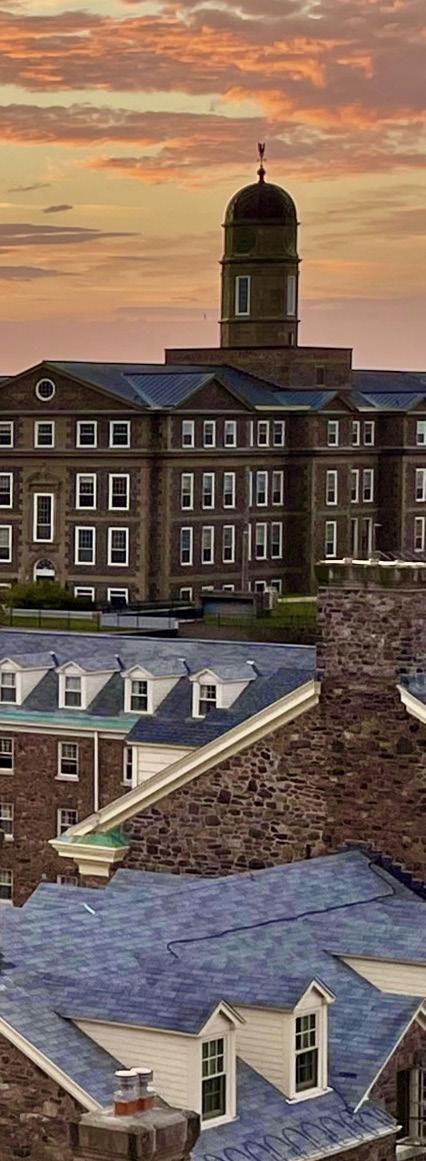
At Dalhousie University, the Space Management Team is collaborating with our ITS colleagues to leverage existing WiFi data—ideally enhanced by AI-driven analytics—to provide Facilities Management with real-time population counts by building, floor and room. Using AI, our goal is to identify movement patterns and occupancy trends more accurately, enabling our operations and space management teams to make smarter, data-driven decisions. These insights will help optimize staff routing, improve equipment utilization, and determine space needs and allocation. ■
BY KEVEN WARD
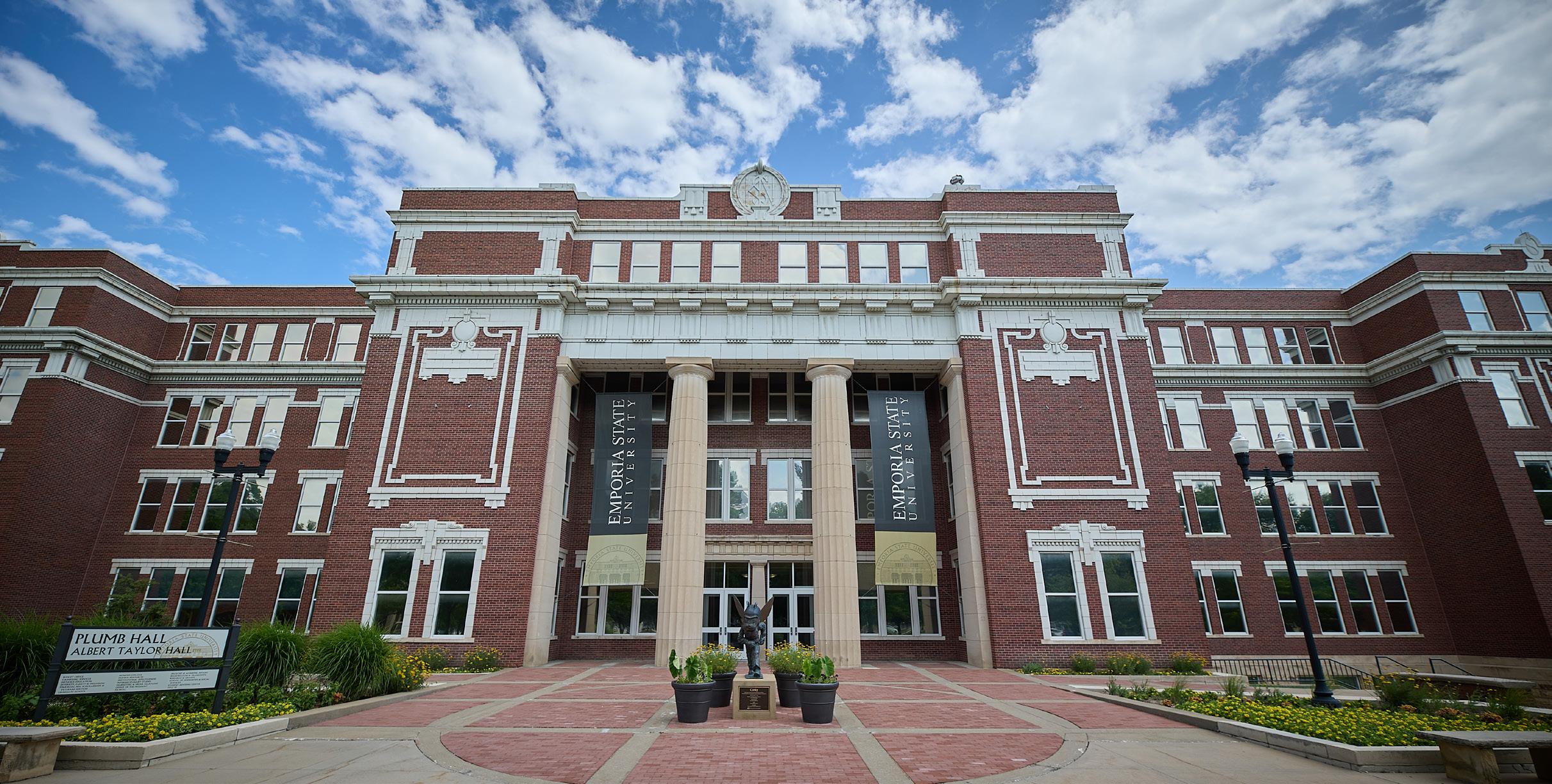
In2019, Emporia State University faced a pivotal moment that challenged its mission of “preparing students for lifelong learning, rewarding careers, and adaptive leadership.”
The university’s campus, with buildings averaging 50 years old, was showing its age. An expanding footprint stretched maintenance resources thin, while declining enrollment reduced available funding, creating a perfect storm of challenges.
Critical systems were operating well beyond their intended service life, with signs of imminent failure becoming increasingly apparent. These deteriorating facilities were not just a maintenance issue; they were a barrier to student engagement and faculty effectiveness.
University leadership understood that without substantial investment in infrastructure, Emporia State would struggle to compete with peer institutions offering modern, state-ofthe-art learning environments. Addressing these conditions became a strategic
imperative to support Emporia State’s goals of “pursuing distinctive initiatives” and “developing capacity for adaptive leadership.” The situation demanded a comprehensive, forward-thinking approach to align facility improvements with the university’s overarching mission and ensure a thriving future for its students and faculty.
How to tackle a campus-wide problem where no single issue quite qualifies as an emergency, but everything needs to be done right away? For that, Emporia State would first need a strategic plan—one that would help address the needs of the campus in a fiscally responsible, data-driven way.
The collaboration began with an Intelligent Services pilot program centered on data analysis and optimization. No equipment was replaced, but even so the pilot realized $36,000 in electricity savings in just six months, which was enough to prove the concept. After a competitive selection process, Emporia State
“This project was more than upgrading equipment; it was about reimagining what campus facilities can do to enhance the university’s mission,” said Bill McKernan, Emporia State’s Assistant VP of Infrastructure. “It was a true rethink of the relationship between facilities and higher education.”
selected Trane to conduct a campus-wide audit to identify opportunities for a broader program.
The 2022 audit led to a list of 20 recommended energy conservation measures for implementation between the spring of 2024 and the summer of 2025. These included addressing deferred maintenance and equipment failure risks, and upgrading many of Emporia State’s iconic facilities.
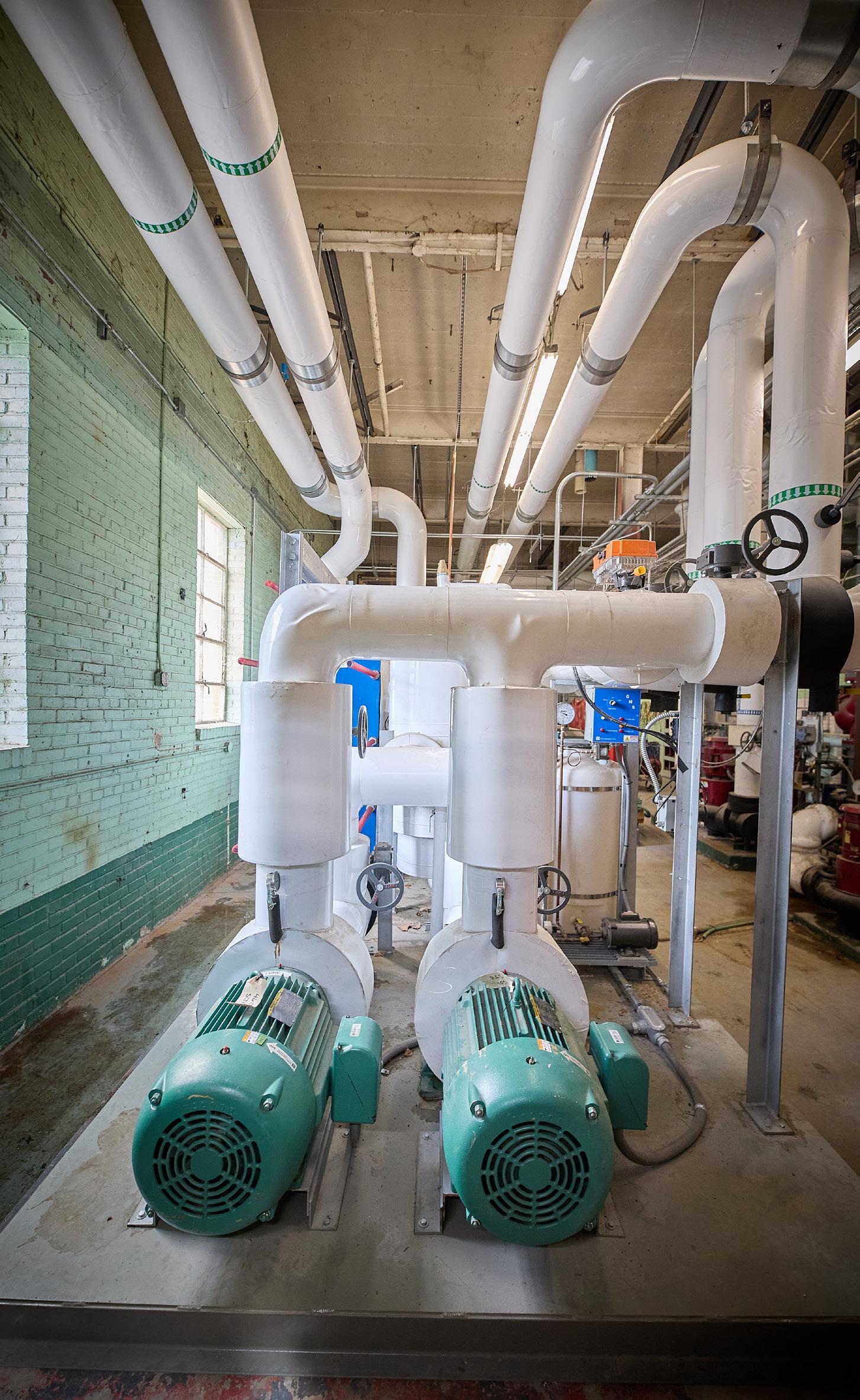
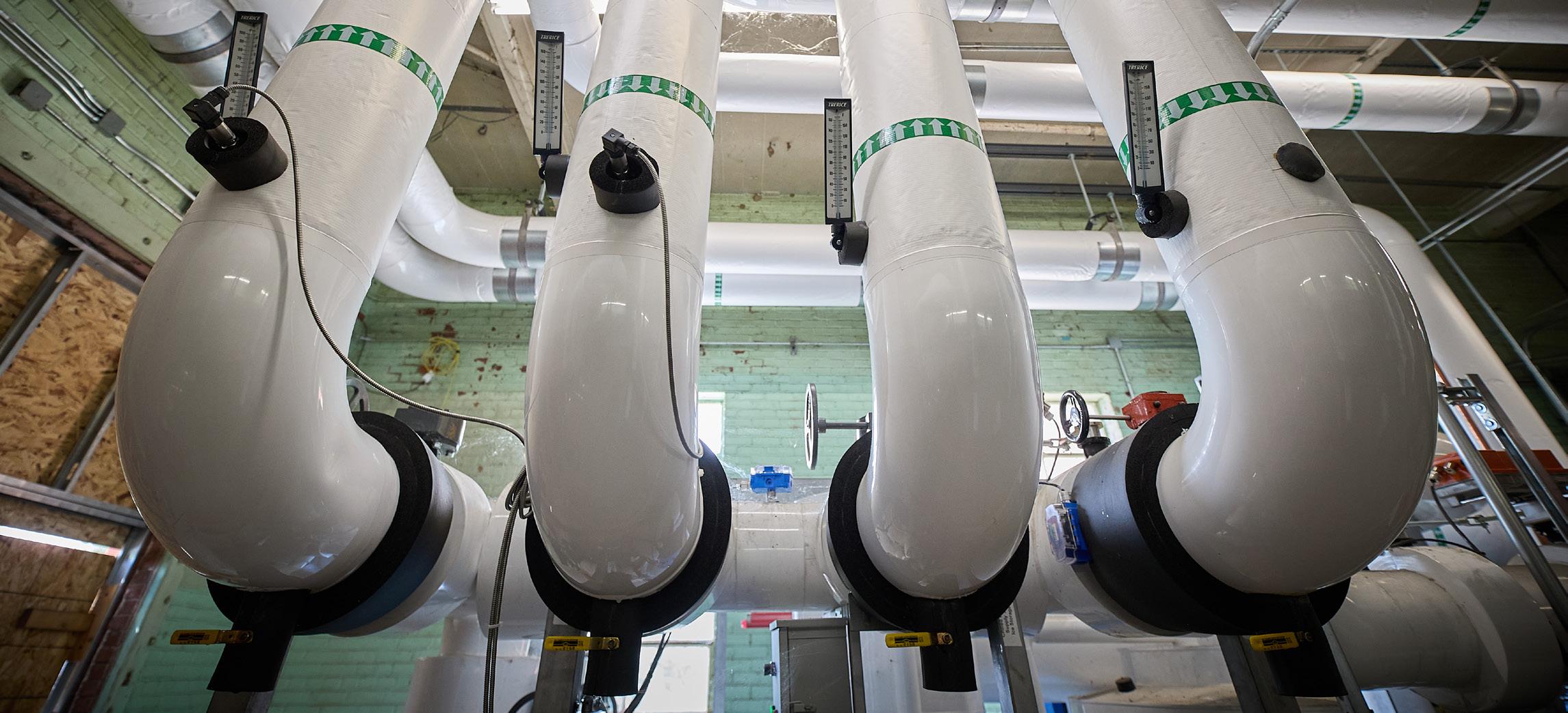
New building automation systems were installed across campus, and those that existed previously were upgraded to enhance their data gathering and delivery capabilities. The largest of the project’s infrastructure upgrades, a 410-ton chilled water plant, was installed in a central location on campus to provide service to multiple buildings at once. Containing 12 thermal energy storage tanks, the plant generates cooling capacity during off-peak hours for use during periods of peak demand, thus reducing energy costs.
The entire $13.36 million project was initially planned to be funded through the Kansas Energy Performance Contracting program (KSA 75-37,125) which allows Emporia State to use future energy savings to pay for current improvements. However, as time passed between contract acceptance and the payment due date, Emporia State was able to fully fund the project without bonding, thereby avoiding additional debt service expenses. Additional funding was secured through Inflation Reduction Act incentives (~$802,000), utility rebates ($194,200), and Trane’s prepayment discount (~$190,000).
Overall, the program delivered a wide range of both tangible and intangible benefits to the university. Among them, significant improvements to operational efficiency,
energy conservation, and a greatly enhanced ability to monitor and optimize systems and perform predictive maintenance.
The program is projected to generate $10.2 million in energy cost savings, an additional $3.2 million in operational and maintenance savings, and a net positive return of approximately $7 million (after accounting for all incentives). Other improvements included a significant reduction in Emporia State’s deferred maintenance project backlog, which eliminated $10 million in expenditures and greatly reduced the risk of disruptive failures.
Most importantly, the project significantly helped enhance experiences for students and faculty, who today enjoy an improved indoor environment including better lighting
and more consistent temperature control. It all adds up to more comfortable spaces and modernized classrooms that help facilitate Emporia State University’s educational mission.
“This program is an example of the ways in which efficient infrastructure can not only improve a university’s operations, but the university itself,” McKernan said. “It not only made Emporia State a lower cost, smoother running university, it made it a better university, both for now and for future generations. As a member of the implementation team who also happens to be an alum, I feel very good about that.” ■
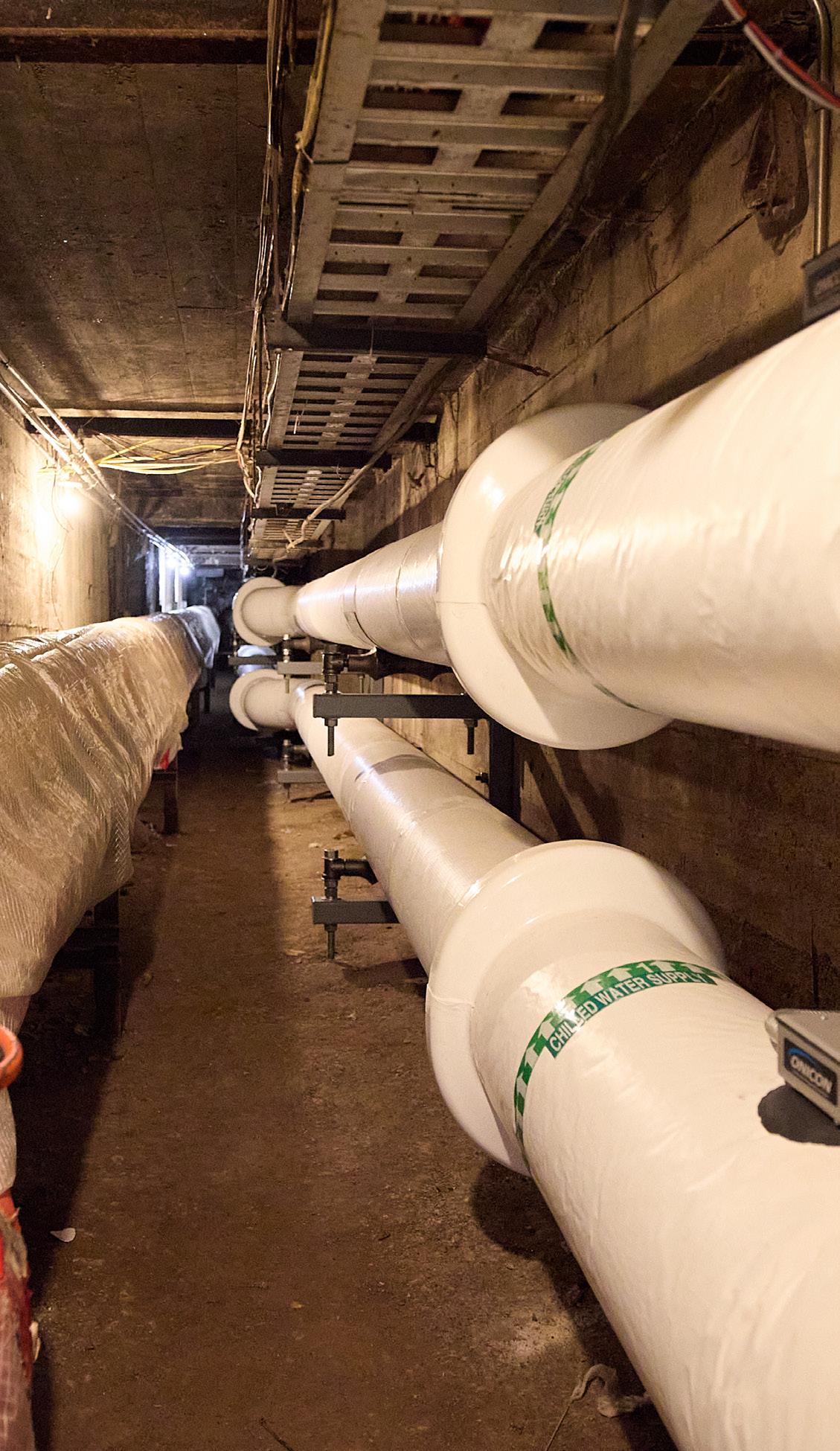
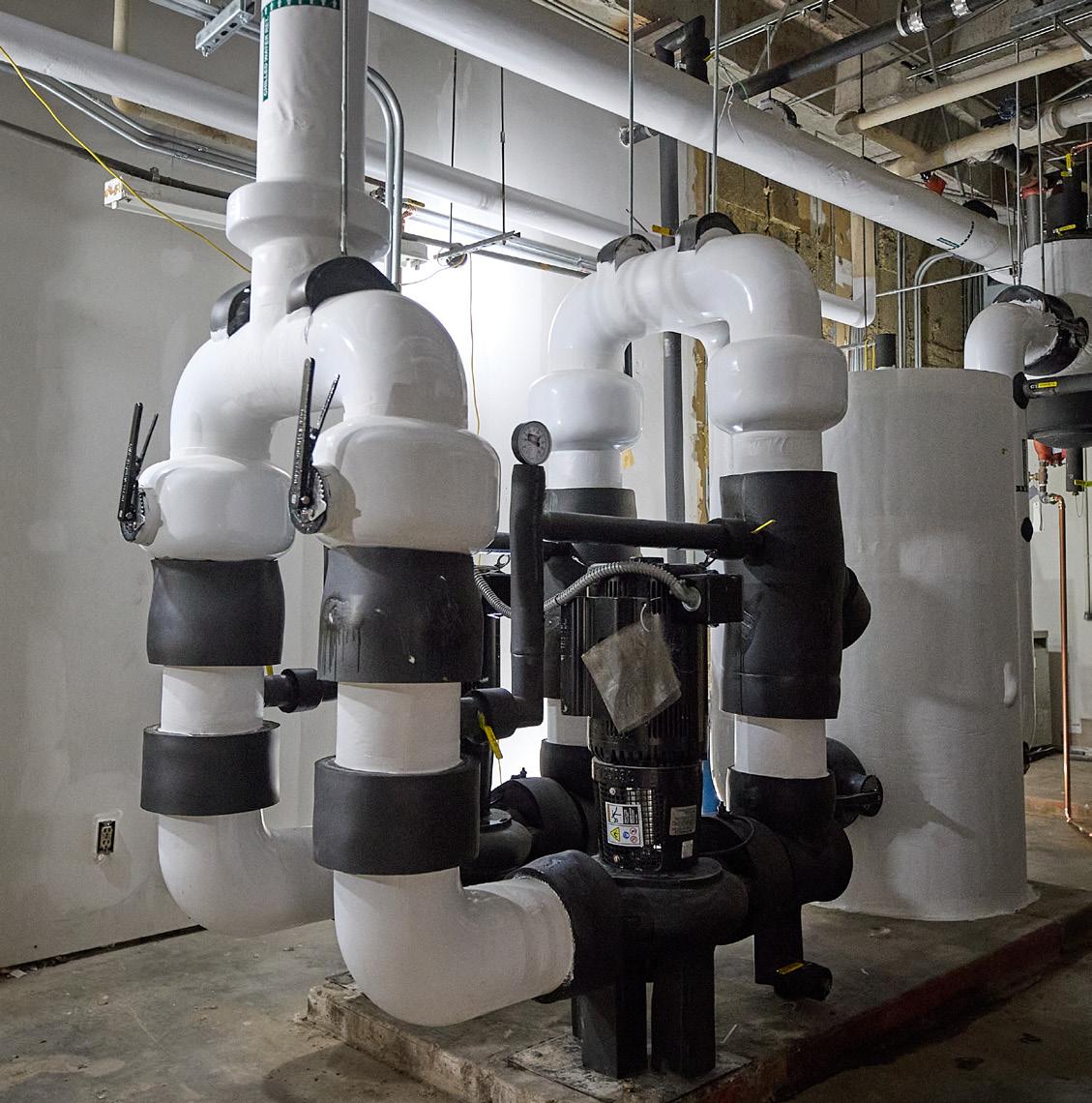
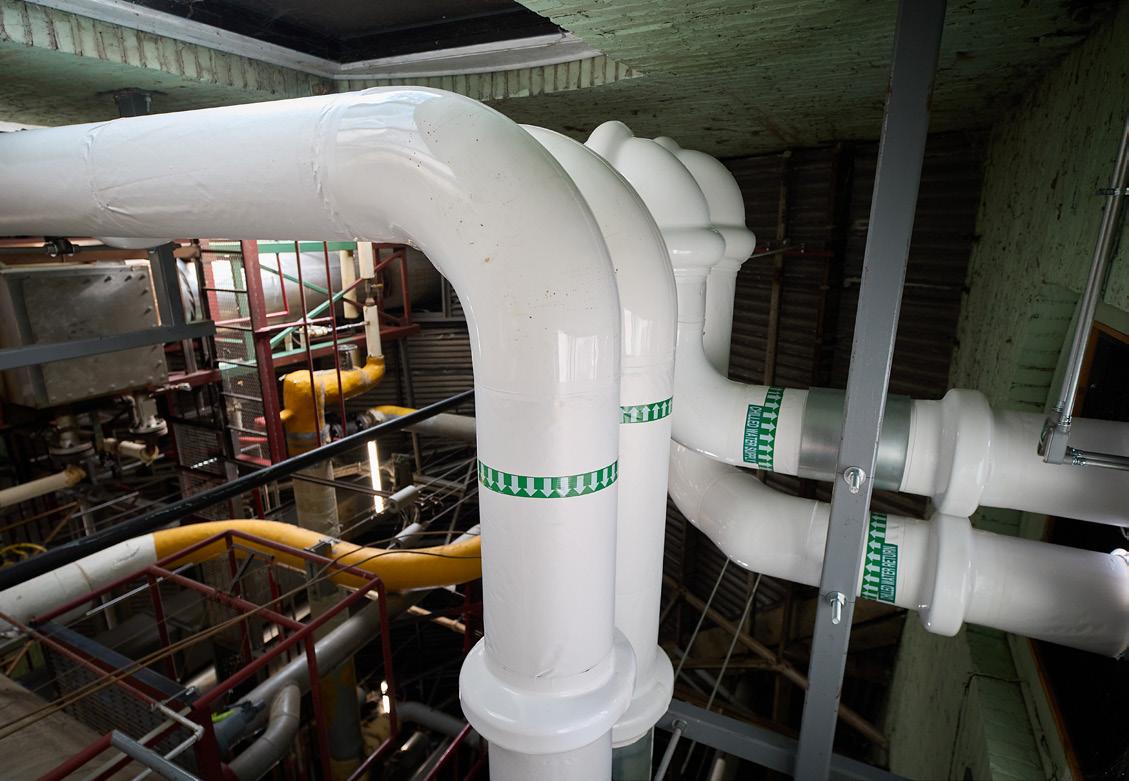
OPPOSITE TOP Power House Water Pipes
OPPOSITE BOTTOM LEFT Underground Pipes
OPPOSITE BOTTOM RIGHT Interior Piping
OPPOSITE BOTTOMMOST RIGHT
Emporia State Water System
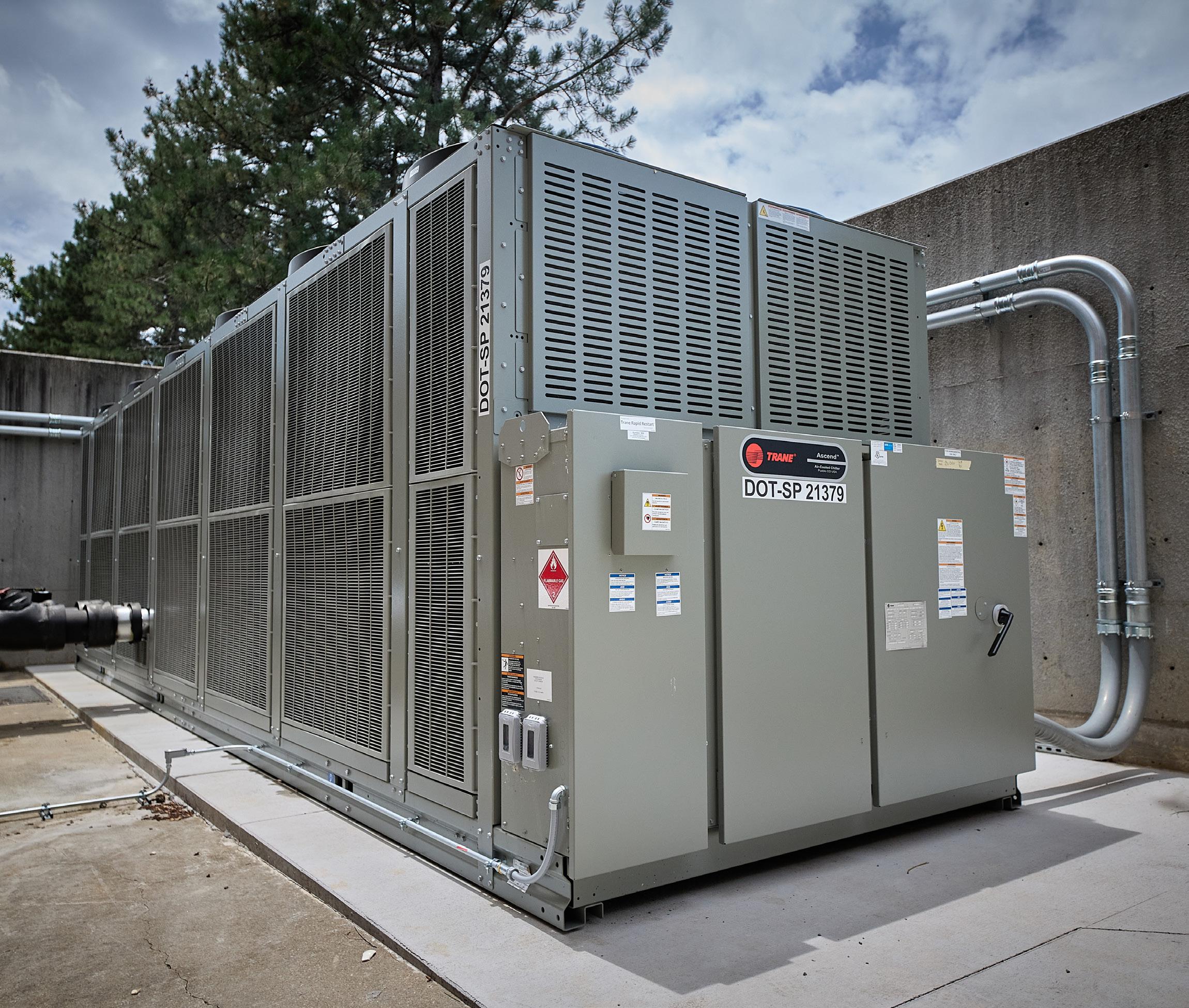
BELOW
Emporia State Ascend Air-Cooled Chiller
BY CHELSEY FALB
State University’s main campus comprises more than 400 buildings, housing facilities for academics, administration, and student affairs. A dedicated Building Services team manages the custodial needs of each building as well as the cleaning equipment and supplies tailored to its use and traffic patterns.
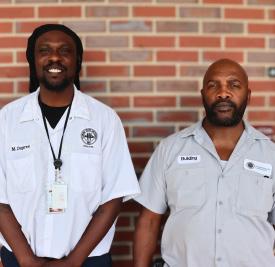
Supply Delivery Associate Marcus Dupree ensures teams have the right tools to maintain clean and sanitary conditions on campus. Upon stepping into his new role in June 2024 and under the guidance of Associate Director for Building Services Lashea Alexander, Dupree was tasked with assessing supply closets in campus buildings and janitorial closets on individual floors to better support teams’ supply needs. He saw an opportunity to create a more efficient inventory and ordering system to improve back stock reallocation and item sharing.
The first step was to begin organizing and housing the overstock that the Supply team identified in their walk-throughs. In early 2025, the team collaborated with Waste & Property Management to utilize space at the Facilities supply warehouse to inventory the primary overstock of trash bags, hand soap, paper towels, toilet tissue, cleaning supplies, dusters, and trash barrels.
After the supply team collected and staged the backstock, it was time to gain support from the entire Building Services department. With the support of Building Services leadership and superintendents, in April 2025 Dupree trained
supervisors on the 5 AM, 12 PM, 4 PM, and 11 PM shifts how to categorize their inventory and record daily quantities on inventory forms per building. The information is collected weekly for each building and imported to a shared spreadsheet, allowing Dupree to track trends and identify inconsistencies.
As part of the new inventory program, Dupree and Supply Delivery Assistant Charles Tucker conduct monthly audits of each building before approving supply orders. These audits, combined with on-site inspections of the building inventory, enhance accountability and consistency within the Building Services department.
“The new system is a tool to identify and reduce inefficiencies,” Alexander said. “Our staff takes great pride in its buildings, as many have worked with the same departments and colleges for many years. The inventory system is a culture shift that enhances accountability, allowing us to serve those spaces better.”
In the spring and summer of 2025, the Supply team prioritized using the warehouse’s backstock before placing any new orders for supplies and equipment. As a result of the supply team’s backstock process, items such as hand soap, toilet paper, paper towels, and cleaning chemicals were in ample supply, so no additional orders were needed throughout the summer.
Based on data from supplier RHG Products, the team noticed a 32.5% decrease in expenditures on tissues and towels from the first six months of 2025 compared to the same period in 2024, a 73.4% decrease in cleaning chemicals, and a 52.75% decrease in janitorial supplies over the same time period, among other notable cost savings. The total spend by month for January - June from 2024 to 2025 decreased by more than 47%, representing $226,444 in supplies savings.
As the warehouse reduces overstocked items for the fall semester, Dupree and his team are focusing on reallocating supplies and equipment between buildings.
“Supervisors are encouraged to engage with their teams and collaborate with others in their area to share supplies,” he explained. When completing their inventory forms, they are prompted to note when supplies or equipment are transferred between buildings.”

Overall, the inventory program has enabled Building Services to adjust orders in response to events and periods of increased campus traffic. As existing stock is depleted and orders become necessary, the new responsibilities and safeguards implemented in the program will help maintain cost savings.
The inventory effort led by Dupree and his team has become an integral part of Building Services’ role in Facilities, as well as for future planning.
“I check the inventory as soon as I get in to the office each morning to monitor changes and new trends,” Dupree said. “In the long term, this program will enable Facilities to assess the costs and workforce needed as new and renovated buildings are added to Building Services’ responsibilities.”
The ability to understand trends can broadly impact the department’s ability to purchase new equipment and materials, providing a higher level of service to the campus. This process can inform inventory processes in other departments within Facilities as FSU continues to pursue efficient and sustainable campus operations for students, faculty, staff, and visitors. ■
BY JIM LARKIN
In many ways, academia is at the forefront of artificial intelligence (AI). With higher education institutions facing unprecedented cost pressures, heightened competition for students and donors, and ever-rising expectations for campus experiences, college leaders have been actively exploring AI’s transformative impact.
While much of the discussion to date focuses on challenges and opportunities related to teaching, research, and administration, another area poised for significant change is facilities management. The FM operational efficiencies, cost savings, and campus enhancements possible through AI are promising, to say the least. But what does AI mean for facilities managers and leaders themselves? How will it affect them and their roles?
AI as a Strategic Partner, Not a Replacement Facility managers bring a wealth of experience, institutional knowledge, and interpersonal skills that cannot simply be replicated by algorithms. The complex challenges they handle require judgment, empathy, and creativity. Whether responding to emergencies, negotiating with vendors, dealing with students and faculty, or guiding teams through unexpected issues, their human insight is irreplaceable. FMs and their staff are needed to evaluate and verify many AI-powered actions and decisions. Rather than fearing AI, campus facility managers should view it as an amplifier. The next decade will not be about replacement, but about elevation. Those who integrate AI into daily operations will expand their influence from reactive problem-solvers to strategic leaders driving institutional performance.
AI adoption will accelerate a shift toward outcome-based service models, where success is measured not by labor hours or work orders, but by more quantifiable results. A focus shift is already occurring toward system uptime, indoor air quality, and student, faculty, and researcher experiences. The ability to prove value with data will redefine the FM function as a core strategic partner to campus leadership.
AI will serve as that force multiplier: automating routine work, surfacing insights from complex datasets, and providing predictive capabilities that inform critical decisions. It will transform the FM role from one focused primarily on day-to-day problemsolving into one with much broader strategic influence.
Modern campuses generate vast amounts of data—from energy usage and environmental sensors to foot traffic and occupancy patterns— and more and more data will continue to come online as institutions implement the latest technologies. To date, much of this data has been untapped or not acted upon because of a lack of time, skills, or resources. AI enables facility managers not only to leverage all that data, but also to consume it via actionable insights that are presented in intuitive dashboards that highlight trends, anomalies, and opportunities for improvement.
For example, AI might reveal that a particular dormitory consistently consumes more energy than other comparable buildings, prompting further investigation into insulation, HVAC performance, or occupancy behaviors. Foot traffic analysis can identify underutilized classrooms or common areas, informing decisions about space allocation, renovations, or resource prioritization. Insights like these will empower facility managers to make evidence-based decisions, justify expenditures, and communicate measurable outcomes to administrators and stakeholders.
Over the next five years, universities will increasingly deploy virtual models of campus infrastructure that update in real time. These systems will allow FMs to simulate operational changes, forecast energy outcomes, and optimize maintenance schedules before acting. AI-driven twins will become the foundation of predictive campus management.
AI technology is starting to be integrated into FM equipment such as HVAC systems, sensors, and computer maintenance management systems, with the promise of
both simplifying and improving how facility managers monitor, maintain, and optimize campus infrastructure. With AI, predictive maintenance tools will continue to advance, analyzing historical data and real-time sensor readings to anticipate equipment failures before they occur. For instance, an HVAC system approaching operational thresholds can trigger an alert, enabling facility managers to schedule repairs proactively and reduce the time and money they spend responding to emergencies. Elevators, plumbing systems, and lighting infrastructure can also benefit from predictive monitoring and maintenance, reducing downtime and extending asset lifespan.
Over the next decade, leading universities will move from planner/scheduler and work request desks toward operating centralized facilities command centers that are connected to the web and capable not only of monitoring HVAC, energy, custodial, and safety performance across multiple buildings, but also able to compare them to peer institutions and make real-time changes. Human operators will oversee AI-driven orchestration systems, shifting the FM function from manual scheduling to strategic performance management.
Beyond equipment management, AI will do wonders in helping leaders optimize staff scheduling and resource allocation. By analyzing building occupancy, foot traffic, product usage, and event schedules, AI can recommend or even automate staffing adjustments for cleaning crews, security personnel, and maintenance teams. A busy student center or high-traffic lecture hall can receive extra attention during peak periods, while quieter areas are managed more efficiently. This proactive allocation of labor not only improves efficiency but also ensures that campus resources are deployed intelligently, maximizing both service quality and cost-effectiveness.
In addition, AI can help automate routine procedural tasks, such as tracking supply levels or logging maintenance activities. Automating repetitive processes like these

“The next decade won’t be about replacing facility managers with AI, but elevating them into strategic leaders who shape institutional performance.”

will free facility managers and their teams to focus more on strategic priorities, complex problem-solving, and proactive interventions, rather than being consumed by manual data entry or monitoring.
Campus budgets are understandably under constant scrutiny. Administrators are continually looking for measurable returns on investment and ways to reduce costs. AI will enhance facility managers’ ability to manage finances and save money, while enabling more accurate, longer-range budgeting.
AI-enabled budgeting tools support shared savings and predictive funding models. As maintenance and energy costs become more predictable, universities are allocating capital based on modeled ROI, enabling FMs to make a direct financial case for sustainability and modernization investments. For instance, FMs can now incorporate weather forecasts and building traffic patterns into HVAC analyses, enabling systems to dynamically adjust HVAC settings and ultimately lower utility bills.
Supply chain and vendor management are also high-impact FM responsibilities that will
benefit from AI. Imagine using AI to track purchasing patterns, identify cost-effective suppliers, and predict shortages or future price fluctuations. An AI system might recommend sourcing cleaning supplies from a vendor that consistently delivers faster and at a lower cost than others or analyze subcontractor response times, callbacks, and overtime charges. This kind of data will help facility managers negotiate better contracts, reduce waste, and optimize spending while ensuring they always have the right supplies on hand and—importantly—without sacrificing service quality.
AI’s impact will extend beyond efficiency and cost savings. It will help facility managers directly improve the campus experience. Students, faculty, staff, and visitors expect campuses to be clean, functional, and safe at all times. AI will make it easier for facility managers to deliver on this expectation.
AI can scan incoming work orders from FM staff and other stakeholders—via email, app submissions, or smart sensors—and categorize them automatically. For example, a report that a bathroom is stopped up can be immediately flagged as urgent plumbing,

while a broken dorm kitchen appliance can be routed to a maintenance team specialized in appliances.
AI can monitor and analyze air quality to dynamically adjust HVAC ventilation, ensuring a healthier indoor environment. Intelligent climate and lighting controls could also adjust automatically for comfort, energy efficiency, and peak occupancy, while safety monitoring tools identify hazards—such as wet floors or malfunctioning equipment—alerting facility managers to intervene promptly and prevent accidents.
By automating triage, prioritization, dispatch, and communication, AI allows facility managers to respond faster, reduce downtime, and focus their human expertise and interpersonal skills where they matter most.
Higher education institutions are already experimenting with AI, and in many cases are leading the way in its adoption, from pilot projects to formal task forces evaluating technology adoption. Facility managers who engage with these initiatives early can shape AI implementation to best support operational
needs, improve financial management, enhance the campus experience, and even influence institutional priorities.
In the next 20 years, facilities professionals will evolve from caretakers of the built environment to orchestrators of intelligent ecosystems. Those who begin to embrace this amplifier now—by investing in data, training, and innovation partnerships—will define the future of campus operations. ■
ABOUT THE AUTHOR
Jim Larkin, UG2, AVP of Operations, Tri-State Region
THE
BY HEATHER CALLAWAY
In an era where digital transformation defines every facet of institutional growth, technology is no longer a supporting player; it is an essential layer of campus infrastructure and operations. Unfortunately, many higher education institutions still make technology decisions in isolation, often reacting to immediate project needs without coordination across departments or long-term foresight. This siloed and reactive approach leads to inefficiencies, fragmented systems, and retroactive fixes that strain both budgets and operations.
A Technology Master Plan (TMP) offers a clear pathway from fragmentation to integration. Instead of treating technology as a last-minute addition, the TMP embeds digital systems into the core of planning and design, strategically aligning them with the institution’s mission, operational goals, and evolving needs. This forwardlooking framework ensures that technology
is considered from the earliest planning stages and throughout a facility’s lifecycle. The result is enhanced performance, greater adaptability, and a blueprint for sustainable investments.
Crucially, the TMP provides a structured means to identify what technologies are already in place, what systems are underutilized or obsolete, and what future investments are necessary. It begins with a comprehensive assessment of the current technology landscape, including performance metrics and alignment with internal standards. From there, stakeholders from across the institution are engaged through interviews, surveys, and focus groups to ensure that a wide range of perspectives inform the planning. These insights are then benchmarked against emerging best practices throughout the sector.
Collaboration, Cost, and Implementation
Stakeholder engagement sits at the heart of

the TMP process. By involving leadership, IT teams, facilities managers, and end users early and continuously, institutions reduce friction, address misaligned expectations, and create a shared understanding of technology’s role in achieving operational and academic goals. This foundation enables more effective decision making, better resource allocation, and faster buy-in across the organization.
Financial planning is another critical component. The TMP helps institutions project the total cost of ownership for proposed systems, identify viable funding sources, and embed technology within larger capital planning efforts. By approaching budgeting strategically instead of tactically, institutions can implement systems in a phased and coordinated manner, reducing the need for expensive retrofits over time. Just as important, the plan outlines timelines, phasing strategies, and change management considerations, making implementation
manageable across departments and across time.
The final deliverable for a TMP is more than just another document; it is a tangible, actionable roadmap that guides institutional technology decisions for years to come. It provides technical direction, captures institutional vision, and clarifies integration priorities. For leadership, designers, engineers, and IT professionals, this becomes the shared compass that eliminates costly scope gaps and promotes lasting enterprise value.
A well-executed TMP helps institutions avoid some of the most common technology risks such as outdated systems, user resistance, redundant infrastructure, and missed integration opportunities. These risks are mitigated by basing the entire planning process on transparency, iterative dialogue, and a shared commitment to long-term adaptability. In doing so, a TMP transforms technology from a reactive cost center into a strategic asset for operational efficiency and institutional resilience.
As higher education facilities become increasingly complex and digitally integrated, the need for strategic technology planning becomes unavoidable. A Technology Master Plan addresses this challenge head on, linking institutional needs with coordinated innovation. By embedding technology into the fabric of campus planning and operations, the TMP not only prevents costly mistakes but also enables forward-thinking decision making that positions institutions for long-term success. ■
ABOUT THE AUTHOR
BY TAYLOR MALE
Withthe daily challenges facility managers face—work tickets, shutdowns, coffee spills—it’s easy to get swept up in the storm. Yet now, more than ever, it’s essential to investigate, understand, and highlight the critical role facilities play in driving student success across our institutions.
Previous efforts have raised awareness, but truly embedding facilities into the student success narrative is a daily, ongoing task that demands consistent attention.
This fall, a partnership between the Michigan Community College Association (MCCA) and several Michigan community colleges took a bold step forward. These colleges convened at the West Michigan Center for Arts and Technology for a design thinking workshop focused on the impact of facilities on student success.
MCCA’s emphasis on student success is inspired by a framework developed by the Aspen Institute’s College Excellence Program. Initially launched as Community College 1.0, which focused on access, it evolved into 2.0 with a focus on completion, and now 3.0— emphasizing access, completion, and postcollege success. MCCA has been essential in fostering collaboration between facilities and student success efforts across Michigan’s community colleges.
“At MCCA, we try to create the kind of spaces—both physical and collaborative— where colleges can explore what is possible together,” said Precious Miller, MCCA program director. “Whether it’s sharing promising ideas, highlighting colleges leading the way, or simply getting folks in the same room to think about the future, our goal is to make this work easier to imagine and easier to act on.”
The session aimed to:
• Explore the challenges facility managers face in fostering a culture of student success
• Identify future needs to strengthen this connection
• Create space for industry professionals to share ideas and develop strategies
Facilitated by Side Strategies, the workshop paired institutions for creative brainstorming, tabletop exercises, situational prompts, and even a touch of improv to foster a dynamic, collaborative atmosphere.
“As former community college and education professionals, it’s really exciting for members of the Side Strategies team to facilitate enriching conversations that explore new ideas and strategies for leveraging campus facilities and facilities teams to contribute to student success and completion,” said Raynard Ross of Side Strategies. “During the convening, we collectively identified some novel ideas that we’re hoping to help bring to fruition for all interested MCCA member colleges.”
Two powerful themes emerged: caring for people and shared purpose.
Caring for people is the backbone of our value in facilities. Even among the gruff personalities who may not always show it outwardly, you simply cannot spend a career in this field without caring deeply for others. Recognizing and rewarding this human care is vital.
Shared purpose also resonated strongly. One team member shared a story that captured
this beautifully: when John F. Kennedy visited NASA, he asked a janitor, “What do you do for NASA?” The janitor replied, “I’m helping put a man on the moon.” This anecdote, often cited to illustrate organizational purpose, translates seamlessly to our institutions.
in his office—the very project he had helped her think through. In the corner was a note: “Thank you for making time out of your busy life to visit with me. Our conversations and hum-drum ideas serve as a greater inspiration to me than you know. I hope this print finds you
“Whether it’s sharing promising ideas, highlighting colleges leading the way, or simply getting folks in the same room to think about the future, our goal is to make this work easier to imagine and easier to act on.”
Embedding shared purpose into daily facilities culture is essential. Reaffirm it consistently through department communications to build a culture that connects the facilities team to major campus events. Commencement is a day to celebrate student success—and the people who were foundational to each individual crossing the stage.
Celebrate all success!
Facilities staff see what others don’t: blemishes, litter, cobwebs, mismatched lighting—and our students. Let’s ensure they’re trained to handle it all. Develop open channels of communication for facilities service professionals to triage students in crisis and provide outlets for areas of concern.
This session underscored the need to adequately resource facilities teams—not just to maintain buildings, but to care for the people within them. Without attention to human care and basic needs like safety and security (think Maslow’s hierarchy), our impact can be negative.
We also need to be cognizant of our own facilities teams. If we cannot take care of ourselves, it is very difficult to care for others. A department-wide culture of caring and shared purpose is the foundation for departmental success—and student success is rooted in it.
Among the many stories shared, one stood out. A young man who rose from custodian to director recounted meeting a student while pulling trash in classrooms. She was studying illustration and struggling with a project. He offered a quick opinion and some small talk. Over time, she began seeking him out for brief chats.
Though their connection faded after his promotion, one day he found a large drawing
and your family well—after all, we do live in a pretty pleasant peninsula. Cheers to another year in the mitten. We are all so fortunate to call this place home. Happy travels.”
The Bigger Picture
It’s easy to lose sight of why we come to work each day. But our efforts help students not just complete projects—they help them get through the day, the week, and sometimes a difficult year.
Our work lays the foundation for lifelong success—not only for students, but for their families, children, grandchildren, neighborhoods, and communities. ■
ABOUT THE AUTHOR
Taylor Male is Director of Operations Montcalm Community College


THE HIDDEN CODE THAT BUILDS COMMITTED TEAMS: WHY TRADITIONAL LEADERSHIP DEVELOPMENT MISSES THE MARK
ADAPTED FROM THE FORTHCOMING BOOK, THE ALLIANCE CODE: EXCAVATING AUTHENTIC INFLUENCE BY SEAN O’CONNOR
Ina $366 billion industry dedicated to developing leaders, 77% of organizations report leadership gaps that contribute to a $1 trillion global productivity loss due to disengagement (Association for Talent Development, 2022; Deloitte, 2023). Why?
We’ve trained people to perform leadership through emotional intelligence workshops and inclusive drills—but overlooked how to help them become leaders who inspire devotion.
Sarah Martinez, a Harvard-trained senior director at a Fortune 500 firm, excelled at assessments yet watched her team struggle without direction. Gallup’s data underscores this: Global employee engagement stalls at 23%, with 75% of turnover linked to supervisors (Gallup, 2023). We’re breeding compliance, not commitment.
The $366 billion irony? We’ve analyzed visible traits (humility, EQ) while overlooking the real driver: three unconscious elements that trigger instinctive alignment. After 20+ years coaching leaders and dissecting cases, I’ve decoded this as the Alliance Code—criteria people use to choose who deserves their allout effort.
This isn’t about new skills; it’s excavating the authentic you. Below, I break down the elements with examples and steps to activate them.
The Alliance Code: Three Elements of Authentic Alignment
People assess leaders subconsciously, weighing trust (not manipulation), competence (delivery in chaos), and meaning (transcendence beyond ego). When leaders
reveal these, teams shift from obligatory to voluntary—innovating and enduring.
Element 1: Witnessed Obsession – Proving Unfaked Authenticity
Forget performative “passion.” Witnessed obsession reveals raw fixation on a mission, overriding self-gain. Markers include involuntary attention (unbidden thoughts), discretionary investment (unpaid time), detail sensitivity (hidden nuances), learning hunger (endless curiosity), and sacrifice (traded comforts) (Isaacson, 2011). This narrow drive signals: “They live this—not for show.”
Example: Oprah Winfrey. From rural poverty, Winfrey fixated on human vulnerability, interviewing over 30,000 guests and baring her own traumas on air. Colleagues saw her energy ignite during story dives, even postmarathons. This authenticity powered The Oprah Winfrey Show to 40 million weekly viewers, rallying talent around truth over titles (Lowe, 1998).
Element 2: Demonstrated Mastery – Building Confidence in Uncertainty
Competence checks boxes; demonstrated mastery proves adaptive navigation of unknowns—one domain deeply enough to generalize trust. Look for consistent results (pressure-tested excellence), peer recognition (natural deference), problem-solving (novel fixes), teaching (knowledge transfer), and innovation (unseen paths) (Quinn, 1996). Obsession alone sparks intrigue, but mastery seals the deal.
Example: Jacinda Ardern. New Zealand’s Prime Minister (2017-2023) lacked crisis credentials yet excelled in empathetic policy. After the 2019 Christchurch attacks, she banned assault weapons in days, blending expert input with unifying intuition. Her “go early, go hard” COVID-19 response—yielding a 0.02% death rate—drew global deference; policymakers emulated her approach to chaos handling (BBC News, 2020).
Corporate visions ring hollow; connection to something bigger forges a personal bridge from obsession/mastery to transcendent purpose. It spans values (life’s essence), impact beyond self (community legacies), and enduring significance (future stakes) (King, 1963). This amplifies: Work feels vital.
Example: Indra Nooyi. PepsiCo’s CEO (2006-
2018), Nooyi obsessed over nutrition sustainability, mastering supply chains to boost revenue 80% while slashing water use 25%. She tied it to “Performance with Purpose”—healthier generations, rooted in her immigrant ethos of equity. Employees poured in extra effort, viewing shifts as planetary contributions (Nooyi, 2021).
These women leaders—often thriving against biases—prove the Code’s universality. It transcends gender, demanding authentic revelation.
The elements don’t operate in silos; they compound exponentially, creating a flywheel of alignment that turns individual authenticity into collective power. Obsession lays the foundation for trust, signaling genuine care without ulterior motives. Layer in mastery, and it transforms intrigue into confidence— people think, “Not only do they care, but they can deliver through storms.” Crown it with purpose, and meaning emerges, answering the subconscious plea:
“Following them won’t just succeed; it’ll matter—for me, our team, and beyond.” Together, they resolve the core query: “Can I bet my energy on this person?”
This synergy drives outsized results. Authentic leaders embodying the full Code foster 21% higher team performance in volatile environments, where traditional traits like charisma alone falter (Korn Ferry, 2022). Imagine a mid-level manager obsessed with user-centered design but lacking mastery: Her passion inspires initial buy-in, yet without proven execution, the team hesitates on risks. Add her supply-chain expertise from past wins, and deference grows. Weave in a purpose link to ethical innovation (“Building tools that empower underserved communities”), and suddenly, late nights become voluntary missions—engagement surges, silos crumble.
Consider Steve Jobs: His iPhone fixation (endless prototypes) fused with tech mastery and creative democratization, compelling engineers to 80-hour workweeks by choice (Isaacson, 2011). No EQ seminar needed—just the Code.
The $366 billion irony deepens here: Most leaders already harbor these elements—in hobbies, past triumphs, or quiet values—

but corporate “shoulds” (be polished, avoid vulnerability) bury them, fueling imposter syndrome and shallow mimicry. This stems from an attribution error: We chase external traits of success (e.g., Jobs’ intensity as “charisma”), ignoring the internal code fueling them (Ross, 1977). Excavating reveals the leader within, shifting from performative exhaustion to effortless alliances. No wonder purpose-driven cultures retain talent 2.5x longer (Gallup, 2023)—the Code unlocks that alchemy.
At TechFlow, a 500-person software firm, leaders excavated their Code in workshops— only to find suppressed obsessions “unleadership-like.” Engagement soared from 6.2 to 7.8/10, with 28% more collaboration, proving the shift from competencies to authenticity yields ROI (author’s observations, 2020-2023).
Activate yours in four weeks—no programs required.
• Week 1: Discovery
Audit elements: Obsession (What claims unpaid hours?); Mastery (Where do others seek you?); Purpose (What impact beyond self fires you?).
• Week 2: Integration
Map synergies: “My [obsession] leverages [mastery] for [purpose].” Test: Does it energize or drain?
• Weeks 3-4: Revelation
Integrate naturally: Share obsession in meetings (“This echoes patterns I’ve studied...”); Offer mastery (“I’d tackle that challenge.”); Frame with purpose (“This advances our shared legacy.”). Track: Rising input requests? Extra effort?
Edmondson (2018) shows such practices boost resilience by 40%.

Why This Matters Now—and What Comes Next
Hybrid/AI disruptions expose performative leaders. The Alliance Code counters with sustainable, authentic influence that weathers change.
Reader Challenge: This week, journal one “unbidden” obsession thought. Share it in a huddle—watch alignment emerge.
The question isn’t “How to train better?” It’s “Who am I already?” Excavate your Code. Your team awaits the invitation. ■
References
Association for Talent Development. (2022). State of the industry report. ATD.
BBC News. (2020, June 8). Jacinda Ardern: How New Zealand’s leader won global acclaim.
https://www.bbc.com/news/world-asia-52960976
Deloitte. (2023). Global human capital trends. Deloitte Insights.
Edmondson, A. C. (2018). The fearless organization. Wiley. Gallup. (2023). State of the global workplace report. Gallup Press.
Isaacson, W. (2011). Steve Jobs. Simon & Schuster
King, M. L., Jr. (1963). I have a dream [Speech transcript]. March on Washington for Jobs and Freedom.
Korn Ferry. (2022). Leadership for the age of disruption. Korn Ferry Institute.
Lowe, J. (1998). Oprah Winfrey speaks: Insights from the world’s most influential voice. Wiley.
McKinsey & Company. (2023). The state of organizations 2023: Ten shifts transforming organizations. McKinsey Global Institute.
Nooyi, I. (2021). My life in full: Work, family, and our future. Portfolio.
Quinn, S. (1996). Marie Curie: A life. Da Capo Press. Ross, L. (1977). The Intuitive Psychologist and His Shortcomings: Distortions in the Attribution Process. Advances in Experimental Social Psychology, 10, 173-220.
(Author’s observations based on proprietary coaching data; anonymized for client privacy.)
ABOUT THE AUTHOR
MAINTENANCE BUDGETS
AMID DECREASING ENROLLMENT
BY G. CHAD THOMAS
Across the United States, educational institutions are facing a challenging trend: declining student enrollment. This shift has significant financial implications, forcing administrators to make difficult decisions about budget allocations.
One common response is to reduce spending on facilities maintenance. In an October 2025 msn.com online article, ‘A perfect storm’ — more colleges at risk as enrollment falls and financial pressures mount, author Jessica Dickler quotes Laura Trombley, writing, “for colleges under financial stress, the first cuts would likely be to the facilities budget, followed by under-enrolled academic programs — often in the humanities — and then reducing the number of faculty and staff.” Trombley is the President of Southwestern University in Georgetown, Texas. While cutting the dollars
spent to upkeep facilities may appear as a logical step in managing limited resources, it carries both short-term and long-term consequences for campus operations, student experience, and institutional reputation.
As enrollment declines, many institutions face a difficult balancing act between maintaining essential operations and prioritizing core academic functions. Decision-makers must carefully consider which areas to reduce spending, weighing immediate needs against long-term sustainability. Facilities maintenance, though often behind the scenes, plays a vital role in supporting the educational mission and ensuring a safe, welcoming campus environment.
Declining enrollment directly impacts tuition revenues, which are a primary source of funding for many schools, colleges, and universities. When fewer students enroll, institutions often experience budget shortfalls, prompting administrators to reassess all areas of spending. Facilities maintenance, often considered a non-academic or “back-office” function, can become an early target for budget cuts. The rationale is that postponing maintenance or scaling back services can yield immediate cost savings without directly affecting classroom instruction.
In the short term, reducing facilities maintenance budgets can free up funds for more visible or mission-critical areas, such as academic programs or student support services. By delaying non-essential repairs, consolidating maintenance staff, or deferring upgrades, institutions can balance their budgets more quickly. These measures can help schools weather temporary fluctuations in enrollment and avoid drastic actions like layoffs or program closures.
One of the often-overlooked effects of facilities management budget cuts is the impact on staff morale. Maintenance teams may experience increased workloads, reduced resources, and a general sense of uncertainty regarding job security. These challenges can lead to diminished job satisfaction, higher stress levels, and a feeling of being undervalued or unsupported by the institution. When staff morale suffers, productivity and the quality of maintenance work may decline, potentially exacerbating the very issues the budget cuts aimed to address. Fostering open communication and providing professional development opportunities, even in times of fiscal constraint, can help sustain morale and ensure that staff continue to feel engaged and respected.
However, the long-term effects of
underfunding facilities maintenance are substantial. Deferred maintenance often leads to the deterioration of buildings and infrastructure, resulting in more costly repairs in the future. Small issues such as minor leaks, HVAC malfunctions, or electrical problems can escalate into significant hazards that disrupt campus operations and compromise safety. Moreover, poorly maintained facilities can negatively affect student recruitment and retention, as prospective students and their families may perceive the campus as uninviting or unsafe.
In addition, neglected maintenance can impact the learning environment. Classrooms, laboratories, and common areas that are uncomfortable or in disrepair may hinder academic performance and diminish overall student satisfaction. Faculty and staff morale can also suffer if they must work in substandard conditions that are often created due to lack of funding and cuts in staffing.
A decline in campus upkeep can damage an institution’s reputation within the community and among peer organizations. News of failing infrastructure or safety incidents can spread quickly, deterring future applicants and potentially affecting alumni giving and donor support. Furthermore, educational institutions have a responsibility to comply with health, safety, and accessibility regulations. Failing to maintain facilities may lead to violations, fines, or even legal action, compounding financial challenges.
To mitigate the risks associated with maintenance budget cuts, institutions should develop strategies for prioritizing critical repairs and preventive maintenance. Investing in regular inspections and using data-driven tools to track facility conditions can help administrators make informed choices about where to allocate limited resources. Seeking alternative funding sources, such as grants, partnerships, or energy efficiency incentives, can also offset some costs.
Transparent communication with stakeholders is essential. By involving faculty, staff, students, and the broader community in budget discussions, administrators can foster understanding of the challenges and work collaboratively to find solutions. Directors and supervisors of facilities departments need to be supported and listened to, as the ideas they have can bring true savings and help to better allocate limited dollars to what matters most. Input from tradespersons must be intentionally sought, as they see what is happening on campus and may have ideas to help save dollars and make processes more efficient.
Conclusion
Cutting facilities maintenance budgets in response to declining enrollment is a complex decision with far-reaching implications. While it may provide short-term budget relief, the long-term risks to campus safety, student experience, and institutional reputation are significant. Thoughtful planning and initiativetaking management are crucial to balancing fiscal responsibility with the ongoing mission of providing a safe, supportive, and inspiring environment for learning and growth. ■
BY JACK RUBINGER
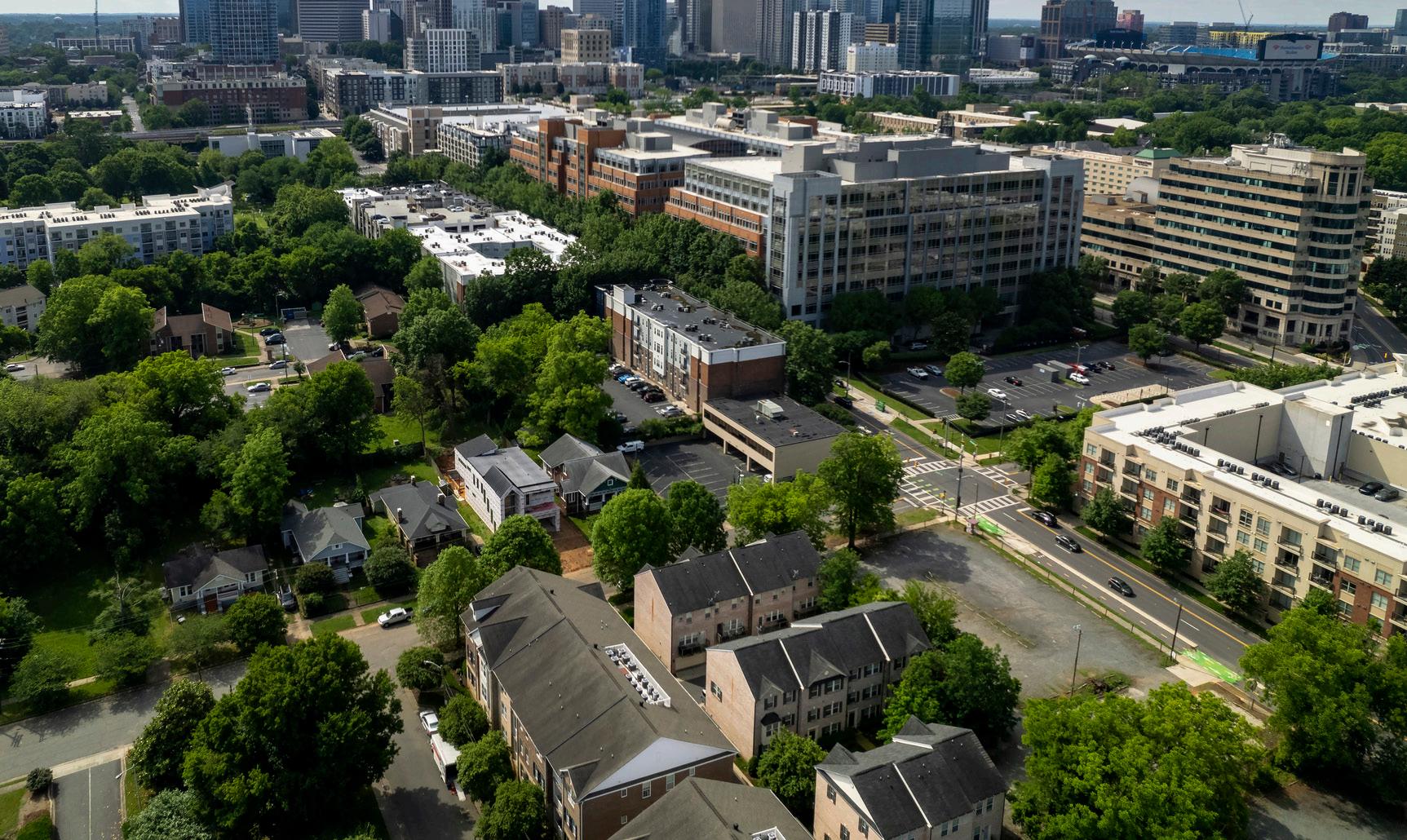
At Central Piedmont Community College (CPCC) in Charlotte, North Carolina, facility management has entered a new era. With more than 4 million square feet of space spread across six campuses and (60) buildings, ranging from a century-old landmark to brand-new facilities, the college faces the ongoing challenge of maintaining uninterrupted student learning while managing a complex and aging infrastructure.
For decades, CPCC relied on paper-based building records, scattered manuals, and staff
institutional knowledge to address issues ranging from plumbing leaks to preventive maintenance. But as the campus expanded and underwent multiple renovations, this fragmented system became a liability. Locating shut-off valves, as-built drawings, or maintenance records often meant digging through binders or tracking down a staff member with historical knowledge. Valuable time was lost, response times slowed, and the risk of disruptions to classrooms and student services increased.
“When you’re constantly on the move between multiple campuses, accessing critical building and equipment information can become a major headache,” said Lance Ollivierre, CPCC’s Director of Facilities Operations. “Now, we’re all speaking the same language. It’s all about getting problems fixed, saving time, being more accurate, improving the occupant experience, and sharing information in a multitude of ways.”
Since 2012, CPCC has partnered with ABM Services through a Comprehensive Facilities Maintenance Contract (CFMC) to manage day-to-day operations. This outsourced model allowed the college to tap into specialized expertise while focusing on its core mission: student success. But it also underscored the need for a system that gave every technician— whether new to campus or with years of experience—immediate access to building changes, emergency assets, shutoff locations and mechanical equipment information. Without centralized, easily retrievable information, even seasoned technicians could struggle to keep pace with the demands of growing and evolving campuses.
The Facilities Services department also implemented a Reliability-Centered Maintenance (RCM) strategy to prioritize preventive maintenance, inspections, and analytics. Despite these efforts, the sheer size and age of the campus meant that gaps in documentation access continued to affect performance.
To solve this challenge, CPCC partnered with ARC Facilities, a mobile-first platform designed to streamline building documentation and asset management. Through close collaboration during onboarding, ARC Facilities worked with CPCC’s team to digitize decades of paper documents, map asset locations, configure workflows, and train ABM technicians. Today, CPCC’s facilities team can instantly
retrieve as-built drawings, shut-off locations, floor plans, and maintenance histories from a mobile device—whether they are on campus responding to a water leak or conducting preventive maintenance.
“When you’re constantly on the move between multiple campuses, accessing critical building and equipment information can become a major headache,” said Lance Ollivierre, CPCC’s Director of Facilities Operations. “Now, we’re all speaking the same language. It’s all about getting problems fixed, saving time, being more accurate, improving the occupant experience, and sharing information in a multitude of ways.”
The shift from paper to mobile documentation has eliminated guesswork and reduced downtime. Problems that once took hours to troubleshoot can now be addressed in minutes, ensuring classrooms, labs, and student services remain operational.
Like many higher education institutions, CPCC continues to grapple with aging infrastructure and equipment. To mitigate these issues, the college has invested in performance contracts and sustainability initiatives. A partnership with Trane, for example, produced more than $380,000 in energy savings in its first year through efficiency upgrades. Phase II focused on improving IT infrastructure, including data center modernization.
These efforts are complemented by CPCC’s long-range facilities strategy. In 2023, the college adopted its most comprehensive master plan in history—the Long-Range Facilities Plan 2023–2038—providing a roadmap for site improvements, renovations, and new construction. Recent projects include:
Parr Center (2023): A new 185,000 SF student hub with library, a 400-seat theater, dining, study spaces, and student support services.
Merancas Campus Bldg. 4 (2021): A 65,000 SF classroom building with library and student support services.
Leon Levine Health Sciences (2020): A 76,000 SF health and wellness education facility through voter-approved bond funding.
Shaw Advanced Technology Center (2018): An 80,000-square-foot facility dedicated to advanced manufacturing and STEM programs.
Ongoing projects include the Old ATC Building renovation and campus upgrades planned for 2025-2026, which will add commons space, work-based learning areas, an eSports arena, and enhanced infrastructure.
The Human Side of Digital Transformation
While technology plays a critical role, CPCC’s modernization story is as much about people as it is about software. The transition to mobile-first facilities management has helped preserve institutional knowledge that might otherwise be lost as staff retire, or contractors rotate. By centralizing documentation and making it universally accessible, the college ensures continuity in operations, even as facilities and teams evolve.
For students and faculty, the benefits are tangible. Faster response times mean fewer disruptions in classrooms and labs. Proactive maintenance reduces equipment failures and downtime. And improved communication between technicians fosters greater efficiency and accountability.
The partnership with ARC Facilities has positioned CPCC to handle today’s challenges and future growth. As the college expands programs, adds new facilities, and upgrades existing ones, mobile technology will remain a cornerstone of its facilities strategy.
Central Piedmont Community College’s approach demonstrates how higher education institutions can modernize facilities management without losing sight of their mission. By embracing mobile technology, outsourcing maintenance
operations strategically, and planning longterm investments in infrastructure, CPCC has created a model for resilience and efficiency. In the words of Ollivierre, it all comes down to one thing: “Getting issues addressed proactively so business operations aren’t interrupted.” For CPCC, that means ensuring students have uninterrupted access to classrooms, labs, and digital learning resources—no matter how complex the facilities challenges may be.” ■
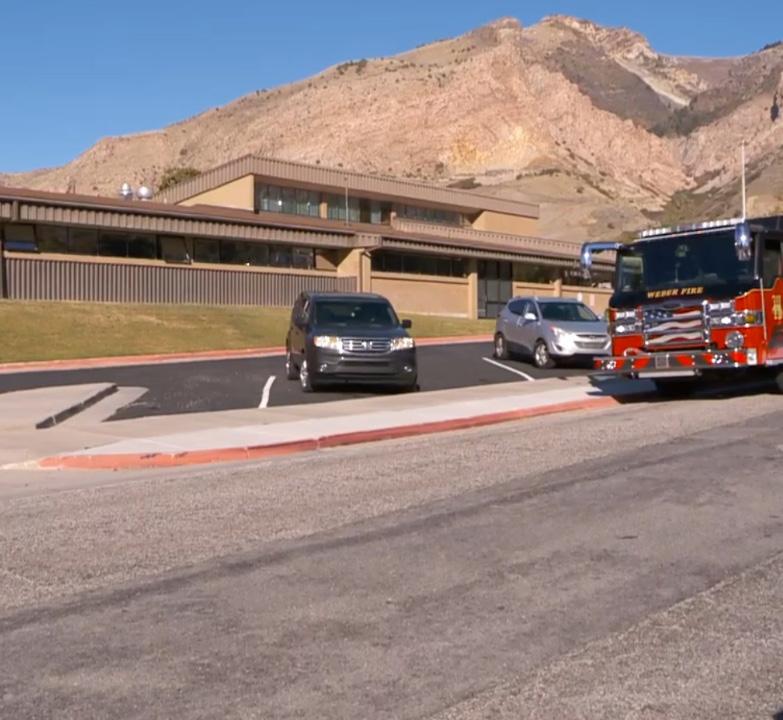
BELOW
Engine 61 of the Weber Fire District sits at Willard Elementary School’s main entrance during the unknown powder hazmat call this October. (Photo Source: Fox 13 News)

BY SCOTT R. SWAYZE
Anxious parents gathered outside the school, students were evacuated, and a full-scale hazardous materials team descended on Willard Elementary School in Utah this past October. News crews broadcasted live footage of first responders in protective gear entering the building.
The cause? A mysterious white powder found inside a package delivered to the school library. For hours, the community held its breath until the substance was finally identified: a dietary supplement crushed during transport.
While the “all clear” brought immense relief, the incident at Willard Elementary highlights a significant challenge for educational facilities professionals. In an era of heightened security, how can facilities managers prevent benign materials from triggering disruptive, costly, and frightening false alarms? The answer lies in proactive management, robust training, and clear response protocols.
The Anatomy of the Powder False Alarm
The reality is that school environments are filled with powders and substances that can be mistaken for a threat. Facilities managers oversee buildings where a wide array of materials are used daily. A false alarm can be triggered by many common items, including:
Custodial Supplies: Powdered cleansers, scouring agents, or carpet fresheners.
Educational Materials: Powdered tempera paint, plaster of Paris for art projects, or baking soda and flour for science
experiments.
Maintenance & Groundskeeping: Drywall dust from repairs, chalk line powder for athletic fields, or specialized absorbents for spills.
Food Service: Common kitchen ingredients like flour, cornstarch, sugar, or salt.
When discovered out of context, any of these substances can spark a legitimate fear that leads to a full emergency response. While the “better safe than sorry” approach is always prudent, facilities managers can implement measures to provide the missing context and mitigate unnecessary panic.
A Framework for Prevention and Preparedness
Shifting from a purely reactive to a proactive stance is key to safeguarding against these false initiations of hazmat emergencies. This involves a multi-faceted approach focused on material management, staff education, and strategic planning.
Know Your Materials: Inventory and Labeling
The foundation of prevention is knowing what you have and where it is. Facilities departments should maintain a meticulous inventory of all chemical products and potentially suspicious materials on campus, complete with updated safety data sheets (SDS). This goes beyond the catch-all maintenance closet.
Establish a campus-wide protocol: Work with academic and administrative departments
to ensure all materials, from art supplies to cleaning agents, are part of a central inventory everyone knows about.
Enforce strict labeling: Ensure all containers, including secondary or smaller containers used by staff for daily tasks, are clearly and accurately labeled. An unlabeled bag of powdered floor cleaner or a container of plaster of Paris can easily be misidentified.
Train Your Team: They are the First Line of Defense
Your staff—custodial, maintenance, and even teachers—are the first to encounter these situations. Proper training can empower them to provide crucial information during a potential incident.
Material familiarization: Train staff to recognize common materials used in their daily work and in the spaces they manage. A custodian who knows when the art teacher is working with plaster will be less likely to mistake leftover dust for a threat.
Communication protocols: Establish a clear internal reporting procedure. Instead of an immediate 911 call, staff should be directed
to notify the facilities manager or, better yet, a designated and properly trained safety officer who can begin an initial, safe assessment. This internal step can often resolve the issue before it escalates.
When a suspicious substance is found, a well-defined plan can mean the difference between a minor cleanup and a full-scale evacuation.
Develop a tiered response plan: Create a response matrix that guides action based on context. A powder found in an art room after a known project warrants a different initial response than a substance found in an envelope in the main office.
Forge partnerships with first responders: Invite local fire and hazmat teams for a walkthrough of your facilities. Show them your storage areas, art rooms, and science labs. When they understand the baseline environment and the materials normally present, they can make more informed decisions during a real call, potentially deescalating the response more quickly.
The recent incident at Willard Elementary was a textbook example of a false alarm that, despite being harmless, consumed significant resources and created widespread anxiety. By implementing proactive controls, enhancing staff training, and developing smarter response plans, facilities managers can play a crucial role in preventing the next science project or cleaning supply from turning into powder panic! ■
Scott R. Swayze is the Emergency Manager for the State University of New York at Oswego (SUNY) responsible for safety of the 100 buildings on the 1,300-acre campus in upstate New York. Swayze is a licensed attorney who holds a Juris Doctorate from Albany Law School and earned his Master’s in Environmental Science from SUNY-ESF. He brings more than 25 years of HazMat experience as a nationally, board-certified Hazardous Materials Technician, including previous counsel work with the New York State Attorney General’s Environmental Protection Bureau. Swayze currently serves as a member of Oswego County’s Hazardous Materials Response Team responsible for more than 1,000 square miles of residential, industrial, and nuclear properties.
In todayʼs fast-evolving higher education landscape, facilities organizations are facing unprecedented pressures—from budget constraints and shifting public perceptions to workforce turnover, technological advancement, and the long-term impacts of the pandemic.
APPA Advisors offers peer-driven, scalable consulting services tailored exclusively for educational institutions. Our team of seasoned facilities leaders helps you adapt, align, and thrive in this complex environment.
Our Advisors are current or retired senior FM executives with proven success in higher education.
Higher Ed Expertise
We understand your environment—its structure, culture, and pace—unlike generalist firms.
Custom-Tailored Support
Focused advice on a single issue to full organizational assessments, our services are scaled to your needs.
Faster Engagements
As a nonprofit professional association, APPA helps most institutions bypass lengthy RFQ/RFP processes.
Comprehensive reviews of operations, structure, and service delivery models based on the Evaluation Program criteria.
Executive Coaching
Personalized mentoring for senior leaders navigating complex challenges.
Quick, high-impact evaluations of key areas with actionable recommendations.
Process
Custom sessions for frontline staff to executive leadership.
Talent Management Assessments and plans for workforce development, succession, and team readiness.
BY T.J. GRIM
When a pipe bursts in an academic building or a sprinkler is accidentally set off in a dorm, the first hours of response determine whether it’s a quick cleanup or an extended disruption and costly repairs. On college and university campuses, where every minute of downtime impacts learning and operations, water damage poses a crucial risk.
According to the University Risk Management and Insurance Association (URMIA), water intrusion accounts for one in five property insurance claims in educational settings, representing about $13 billion annually in the U.S. Aging infrastructure and mechanical or plumbing failures account for nearly half of these incidents.
Today, higher education institutions are rethinking how they handle water events. Instead of relying solely on outside contractors, they’re developing in-house response capabilities that empower teams to act immediately, limit losses, and minimize disruptions.
At Mt. San Antonio College, Texas Tech University Housing, and the University of Tennessee, Knoxville, facilities leaders have adopted this proactive strategy. Their experiences show how a shift in training, culture, and readiness can turn what used to be reactive emergencies into wellmanaged operational challenges – protecting buildings, budgets, and academic continuity in the process.
Why Are Water Incidents So Prevalent?
Water events occur almost daily – even on the most well-maintained campuses. Mechanical failures, aging pipes, clogged drains, and accidental activations of fire suppression systems are frequent culprits. Weather adds to the equation: more frequent sudden freezes and intense rainfall events have increased risk in many regions.
The scale and complexity of higher education facilities also exacerbate the challenge. Residence halls, dining centers, labs, athletics complexes, libraries, and classroom
buildings are all supported by extensive infrastructure systems. When a leak occurs, it’s typically not just the building itself at risk – it impacts occupants and can damage sensitive materials, personal belongings, and expensive technology.
Traditionally, institutions respond to water events by calling in an outside contractor to handle cleanup from start to finish. Professional restoration partners are essential – especially for large or complex events involving weather-related flooding, hazardous materials, and black or gray
water. But facilities teams are finding that by initiating early containment and drying system setup while waiting for contractors to arrive, they can prevent damage from spreading and save time and money.
Each of these three higher education institutions faced challenges and chose a more proactive preparedness path. By developing these capabilities, they can stabilize emergencies within minutes rather than hours.
Mt. San Antonio College – Walnut, CA
Mt. San Antonio College (Mt. SAC) faced recurring water incidents across its 400-acre campus that routinely disrupted operations, including plumbing leaks and accidental sprinkler activations.
Challenge: In 2022, a burst pipe caused flooding throughout five buildings, which displaced an entire academic program into portable units and generated nearly $3 million in damages. The college relied entirely on external vendors for restoration and recovery.
Approach: Facilities leaders aimed to strengthen in-house capabilities so staff could act quickly to contain while coordinating with restoration partners as needed. They
developed standard operating procedures (SOPs) and provided hands-on instruction for internal facilities and maintenance teams.
Result: Within a week of completing training, the in-house team successfully managed a significant campus water loss on their own, minimizing damage and saving an estimated $70,000 in recovery costs.
Lesson Learned: Team collaboration and training are key. “Training meant a lot to the staff. Now the team has a much more comprehensive idea of what water damage remediation should look like,” said Duetta Wasson, Mt. SAC’s Director of Safety and Risk Management.
Texas Tech University Housing–Lubbock, TX

to a culture where now we’re equipped to take care of things,” Jahr said. “When you’re talking $10,000–15,000 per flood, do the math, and the return on investment is clear.”
University of Tennessee – Knoxville, TN
With 250 buildings and annual water losses ranging from $2 million to $4 million, the University of Tennessee, Knoxville (UTK) needed an effective way to manage incidents and reduce reliance on emergency contractors.
Challenge: Frequent pipe breaks, aging infrastructure, and limited internal capacity caused ongoing problems and disruptions. Rising insurance deductibles of $50,000 per incident underscored the need for a different approach.
Approach: UTK assessed existing response frameworks and identified where to add training, equipment, and better team coordination. They established a structured plan that included formal SOPs, crossdepartmental collaboration, and a dedicated, mobile emergency trailer stocked with drying tools.
Result: Within 18 months, UTK reduced contractor expenses by $400,000 and added two full-time water restoration technicians to maintain readiness. The team now addresses most clean-water incidents internally and is equipped to manage outside contractors more effectively.
Lesson Learned: Readiness brings peace of mind and accountability. “We wanted to have the choice,” said Randy Hamilton, UTK Director of Operations. “Can we choose to
At Texas Tech University (TTU), leaders in University Student Housing recognized that recurring water issues were draining time and resources. A closer examination revealed gaps in planning, equipment, and staff coordination.
Challenge: TTU Housing’s facilities team had no commercial drying equipment on hand and relied on floor cleaners and carpet blowers to manage leaks. Staff were able to respond quickly – but mostly improvised and “making do,” due to a lack of clear guidance and resources.
Approach: The team began with an outside assessment to understand existing practices and identify ways to strengthen readiness. Although the team was wary at first, the
process was collaborative and positive – focused on improving response plans, clarifying staff roles, and introducing hands-on training that included real-world scenarios.
Result: Staff engagement and buy-in were crucial for success. “Our facility staff is used to being out in the field – not behind a desk or in a training room for six hours,” said Drew Jahr, TTU Housing’s Senior Associate Managing Director. “But this was magical to see – they truly bought into it.” Soon after training, the team handled a significant water event independently.
Lesson Learned: The boost in in-house capabilities saved on costs and boosted team efficiency. “This really changed us

handle a water loss completely in-house or to start the drying process and then turn it over to the contractor? Either way, I wanted to have options.”
Key Takeaways: Readiness, Culture, and Structure
The experiences of these three campuses underscore a simple point: preparation matters. Water incidents will happen, but their impact depends on how ready a team is to respond. Structured plans, trained staff, and a culture that views water response as routine, not exceptional, make all the difference. ■
T.J. Grim serves as a Trainer and Assessment Professional for the Ready 2 Respond® Program, bringing nearly 20 years of experience in the restoration, construction, and cleaning industries. His career includes leadership roles at an industry magazine and ISSA’s Cleaning Management Institute and the Restoration Technical Institute, where he focused on advancing industry education and certification. TJ is dedicated to helping facility professionals prepare their teams to respond effectively during disasters.
BY STEVEN LEMAY
The University of Massachusetts Amherst has taken a major step forward in modernizing campus energy management with the creation of its Energy Command Center (ECC), a collaborative effort between the university’s Facilities and Campus Services division and Radix. The project is transforming how the campus monitors, analyzes, and optimizes energy performance across its central systems.
The ECC integrates real-time data, predictive analytics, and secure remote access to provide a unified view of campus energy operations. By connecting multiple generations of systems across the university’s Combined Heat and Power (CHP) plant and distribution networks, the center enables staff to make data-driven decisions that improve efficiency, reliability, and sustainability.
UMass Amherst operates a highly technical energy network that serves approximately 14 million square feet of academic, residential, and research facilities. The CHP plant is central to that network, producing steam and electricity to heat and power the campus yearround. However, the variability of weather, fuel costs, and energy demand presented operational challenges.
“We needed a way to see the whole system in real time,” said Steve Lemay, Director of Building Maintenance & Alterations. “Before this project, critical data lived in silos, and visibility outside the control room was limited.”
The Energy Command Center project was conceived to solve these issues—creating a secure, integrated platform that allows the university’s operations team to monitor
performance, analyze trends, and identify opportunities for optimization.
After issuing a competitive request for proposals, UMass Amherst selected Radix for its technical expertise and collaborative, data-driven approach.
“From the start, Radix demonstrated a clear understanding of our goals,” Lemay said. “They brought the right combination of engineering knowledge and systems integration experience to help us unify our data environment without disrupting ongoing operations.”
Working closely with the university’s energy, IT, and engineering teams, Radix implemented the AVEVA PI System, a powerful time-series data historian that aggregates live information from dozens of plant systems. The solution allows operators to visualize key metrics—such as steam flow, electricity generation, and equipment performance—through custom dashboards built in PI Vision.
The ECC has already yielded significant results. Operators now have secure, remote access to live performance data, enabling faster responses to anomalies and more informed decision-making. Historical data analysis supports predictive maintenance, allowing staff to identify patterns and prevent equipment failures before they occur. Radix engineers took a data-driven approach to plant optimization.
“We used advanced simulation software to model their CHP plant and identify the optimal operating scenarios to achieve peak


efficiency,” said Thiago Bacic, Vice President of Infrastructure & Services at Radix. “These optimal scenarios were then configured within the PI System, where we developed operator screens that provide real-time guidance—helping operators make informed decisions and run the plant as intended to consistently reach those efficiency targets.”
“The ability to see how all of our systems interact in real time has been transformative,” Lemay said. “We’re now operating proactively instead of reactively, and we can make strategic decisions that reduce waste and extend the life of our infrastructure.”
“We’ve standardized the data and reduced operation costs by 3% or approximately $900,000 per year by making real-time decisions on major equipment alignment based on current energy market prices,” added Ray Jackson, Executive Director of Facilities Management.
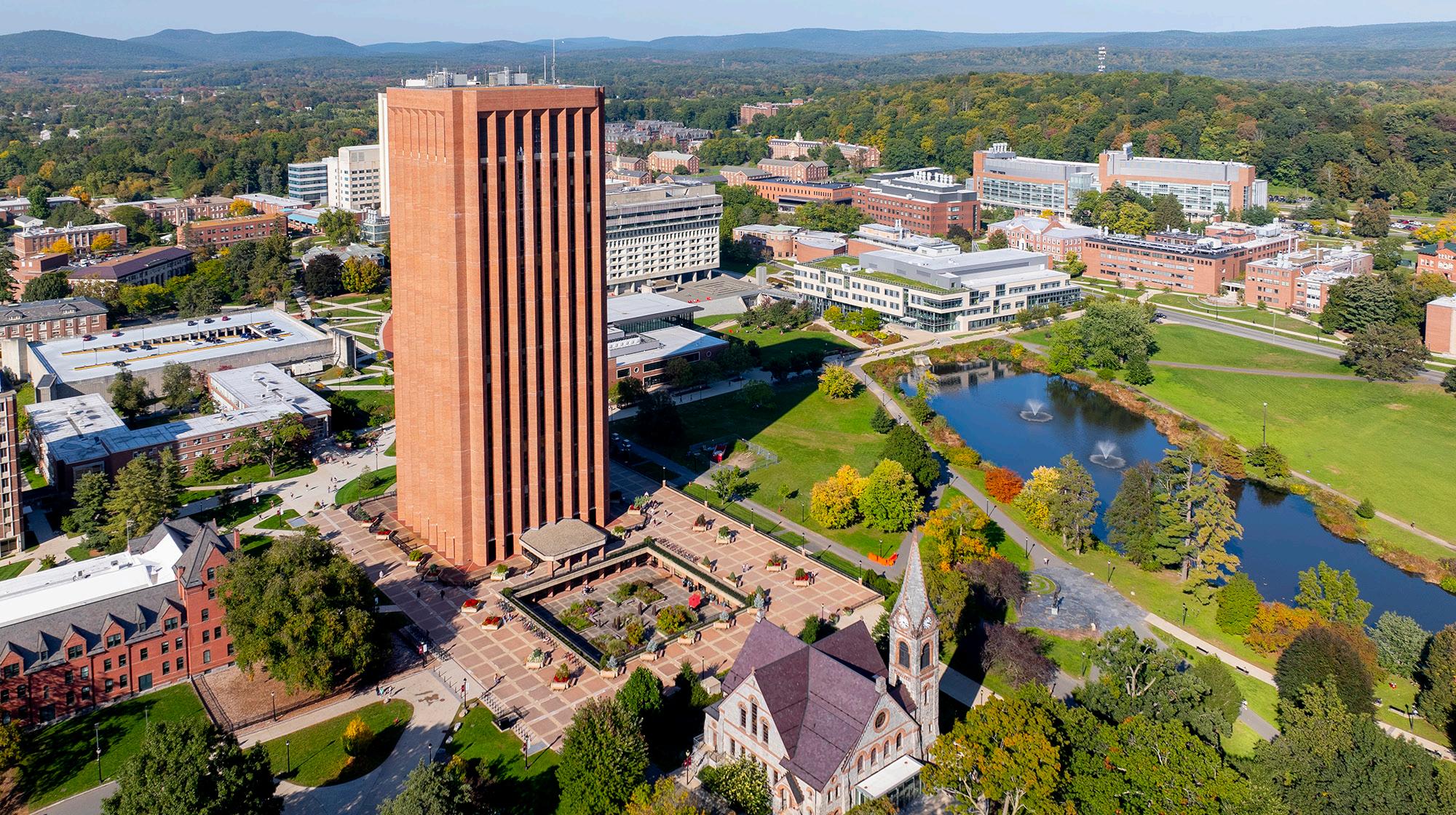
BELOW
Energy Command Center (ECC) Systems. The ECC is a collaborative effort between the university’s Facilities and Campus Services division and Radix. The project is transforming how the campus monitors, analyzes, and optimizes energy performance across its central systems.
Because the ECC connects to critical infrastructure, data security was a key priority from the outset. The project incorporated multi-layered protections designed to safeguard operational integrity while expanding access to information. A dedicated AVEVA PI data historian for the campus separates the data made available through the broader university network from the critical source data generated within plant systems. This architecture allows the university to share meaningful operational insights while maintaining a strict security boundary around the core infrastructure.
The network is further protected through tools such as firewalls, role-based permissions, and continuous monitoring. These measures ensure that operators, engineers, faculty, and students can safely access live system data over VPN without compromising cybersecurity.
Beyond operational benefits, the ECC supports UMass Amherst’s academic mission. The project has created opportunities for student internships and faculty engagement, connecting classroom learning with realworld applications in sustainability and engineering.
Radix engineers have partnered with the university to mentor students in areas such
as data analytics, controls engineering, and energy systems management. Live data streams from the ECC can now be used by faculty in coursework and research, helping students explore how advanced analytics can improve energy performance.
“This project has become a teaching tool as much as an operational one,” Lemay said. “Students can use real plant data to learn about energy systems, data interpretation, and sustainability decision making.”
The ECC also serves as a foundation for nextgeneration technologies. The university plans to integrate AI-driven predictive maintenance tools that automatically detect performance anomalies, anticipate maintenance needs, and optimize system operation.
“These tools will help us move toward condition-based maintenance,” Lemay explained. “Instead of following fixed schedules, we’ll be able to service equipment based on data, extending asset life and improving reliability.”
The success of the ECC project has established a new model for collaboration between UMass Amherst and its technology partners. By combining the university’s operational expertise with Radix’s software and analytics
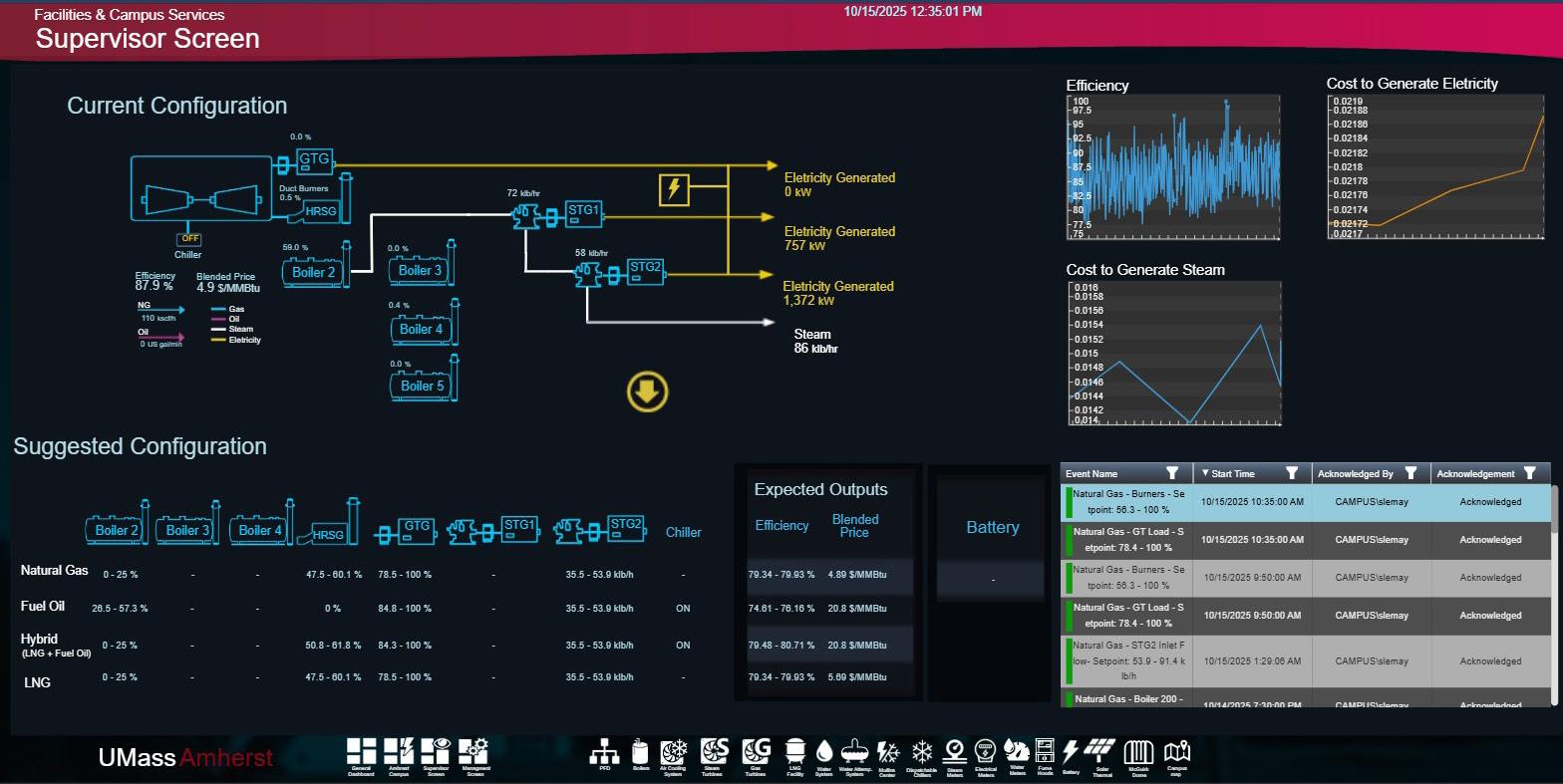
“The ECC has changed how we think about campus energy,” Lemay said. “It’s not just a control room—it’s a command center for innovation. The partnership with Radix has shown what can happen when we align technology, operations, and education around a common goal to operate smarter and teach better. The ECC is a powerful example of what that looks like in action.”
capabilities, the project has created a scalable framework that can be expanded across future initiatives—such as the university’s new North Energy Exchange Center (NEEC) and thermal storage systems. The platform’s flexible design also positions UMass Amherst for future system integrations as the university continues to modernize and expand its energy infrastructure. ■
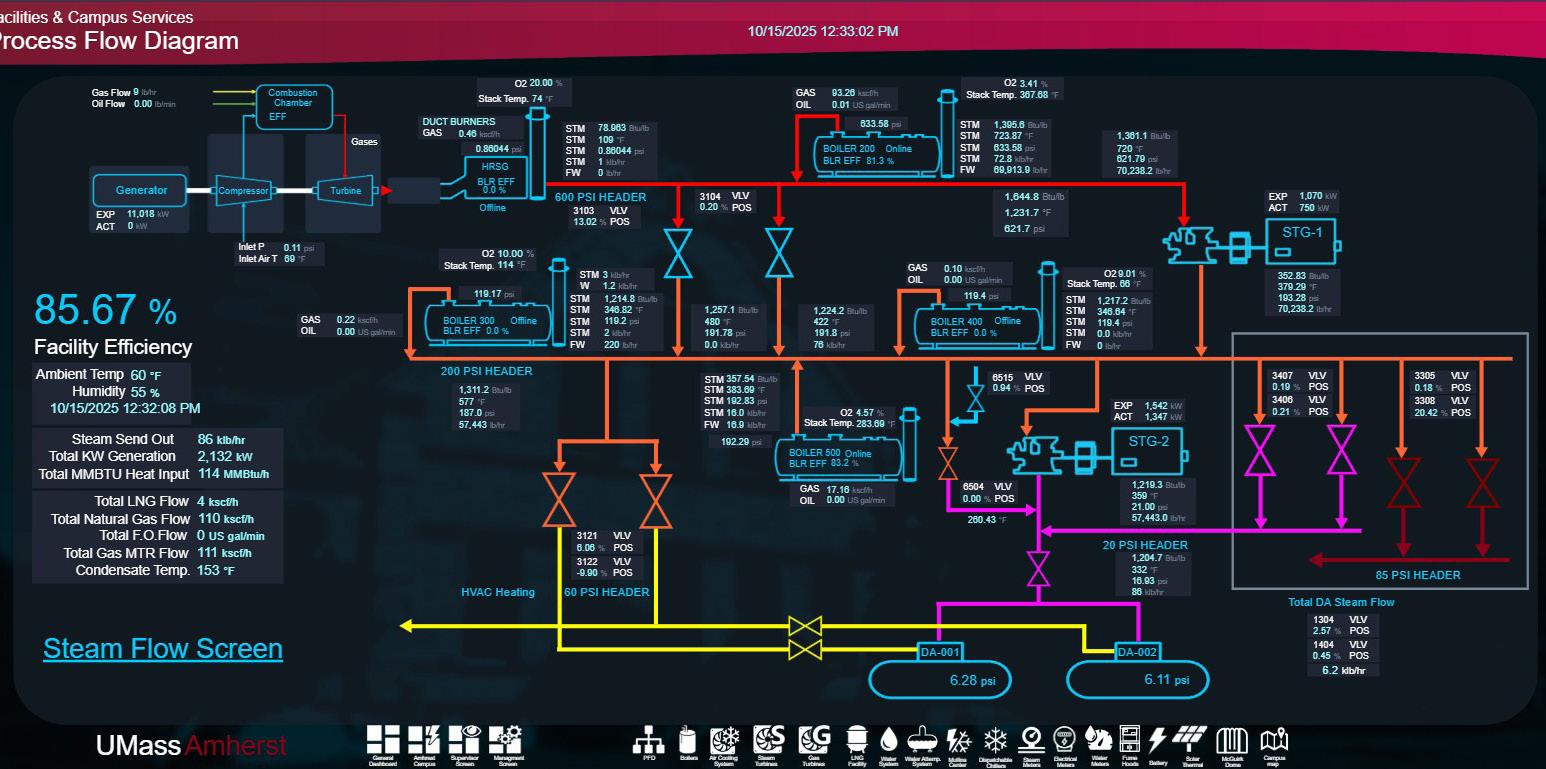
BY ROMIE D. PRINCE
One of the first milestones for Morgan State University’s Facilities Management department was redefining its identity. The Physical Plant became Facilities Management (FM), “Housekeeping” transitioned to FM Environmental Services, and the Work Control Center evolved into the FM Customer Service Center. These changes represented more than new names—they signaled a modernized vision aligning Morgan with national standards in higher education facilities management.
“These changes weren’t just about names,” said Romie Prince, Director of Facilities Management. “They were about redefining who we are and how we serve the University community. Our work touches every person on this campus — faculty, staff, and students — and our brand needed to reflect that.”
To strengthen alignment and accountability, Prince also restructured the department’s organizational chart and reporting framework. This restructuring clarified roles, optimized skill alignment, and improved communication across multiple service lines — ensuring that expertise was placed where it could deliver the most impact.
Establishing the right team structure and alignment within the department is imperative because it ensures that responsibilities are clearly defined and resources are optimally allocated. This clarity not only streamlines communication and workflow but also empowers team members to collaborate effectively, driving collective accountability and supporting the department’s strategic goals. By fostering a unified direction, the department can respond more agilely to challenges and capitalize on opportunities for continuous improvement.
Technology as the Catalyst for Change
Under Prince’s leadership, Morgan’s Facilities
Management team launched several integrated technology platforms that now serve as the backbone of a modernized operations model. The implementation of AssetWorks, a comprehensive computerized maintenance management system (CMMS), a database that could house and direct all facilities work initiatives, prepare the path for the preventive maintenance program, and house all relative asset information for tracking purposes. Alongside it, the addition of Brightly’s Capital Renewal platform, connected capitalrenewal planning to long-term budgeting and deferred maintenance. These systems laid the groundwork for — the Virtual Facility platform — which monitors critical assets and automatically generates realtime work orders, leading to better oversight of mechanical systems and ultimately decreasing mechanical failures and downtime of major systems. By integrating these tools, Morgan built a data-driven ecosystem to assist in transforming Facilities Management from reactive to proactive, and soon to come, integrating Artificial Intelligence in FM that will lead the organization to predictive and prescriptive maintenance operations.
Building a Culture of Excellence
While technology modernized processes, it was the people who powered the transformation. Prince credits his leadership team — Neville
George, Mo’Nica Wharton, Richard Telp, Alphonso Hudley, Lisa Wilkerson, and Carmen Lee — as well as the department’s HR Partner, Monica Waters, and several other managers and supervisors who played key roles in achieving this progress.
Throughout this period of transformation, Prince and his leadership team achieved
several significant milestones that advanced the department’s operational excellence. By leveraging data-driven scheduling, correctivemaintenance completion rates have increased by more than 60 percent, which has heightened customer’s expectations as the campus is experiencing unprecedented responsiveness. The department also prioritized workforce stability, filling over 40 key positions to bolster capacity and maintain high service standards across campus operations. Despite budgetary restrictions, Prince continues to advocate for strengthening departmental teams by increasing staffing in understaffed units and introducing new positions essential to building a high-performing facilities organization.
Within managing the elevator contract for only one year, elevator operations saw marked improvements, with a 70 percent increase in corrective repairs and a noticeable reduction in system downtime, resulting in safer and more reliable service for the university
areas. In addition to standardizing cleaning operations, the department introduced a Vendor Managed Inventory (VMI) process. This approach further demonstrated the team’s commitment to sustainability by supporting ongoing compliance with GS-42 green-cleaning certification requirements. Through these efforts, Facilities Management advanced environmentally responsible practices while strengthening operational quality and accountability.
Prince also led the implementation of online virtual-reality technical training to enhance hands-on learning and engagement and established standardized safety and compliance training for all FM employees. Although these highlighted milestones have been achieved within a short three-year period, Prince has accomplished many other initiatives throughout his tenure at Morgan — each contributing to the department’s steady evolution toward operational excellence,
“APPA’s resources have been instrumental in shaping our leadership knowledge, skills, and abilities. The Supervisor Toolkit has provided our team with practical strategies and a solid foundation for supervisory excellence, elevating our capacity to lead with confidence and purpose.”
community. The elevator program has been rebuilt to improve the accountability of contract maintenance performance, and now Prince’s team is preparing to incorporate enhanced oversight of elevator emergency systems and install AI-driven technology to build a data-driven repair, modernization, and capital renewal program for all elevators. Special credit is due to the FM asset manager, Richard Telp, for managing the service contract and his commitment to advancing these new endeavors.
To improve standards of campus cleanliness, Prince sought out and initiated Core America’s custodial, janitorial, and EVS consulting professionals to conduct a campus-wide cleaning assessment that would help reshape their cleaning programs. This initiative provided a structured framework to reinforce and unify cleaning protocols throughout the university, ensuring consistency and heightened effectiveness across all service
sustainability, and service innovation. Current initiatives are equally ambitious. The team is implementing a new Preventive Maintenance (PM) program, preparing to launch a campuswide Facility Condition Assessment, and beginning the transition to an electric vehicle (EV) fleet to reduce greenhouse gas emissions. Prince is also spearheading the installation of EV charging stations and pursuing infrastructure upgrades across campus — including weatherproofing, electrical system conversions, and LED lighting enhancements.
Leadership Displayed
Prince views leadership not as a position, but as a shared commitment to growth and accountability. His approach empowers staff at every level to think critically, make informed decisions, and lead from their positions. His core leadership values guide every initiative: Improving Service, Increasing Satisfaction, and Promoting Success.
Central to Prince’s philosophy is the belief that strong teams are the foundation of lasting organizational success. He recognizes that empowering teams requires more than delegation—it demands hands-on leadership, where leaders are present, approachable, and actively involved in supporting their team members. By fostering a culture of open communication and trust, Prince ensures that every individual feels valued and motivated to contribute their unique strengths to the department’s mission.
To nurture professional growth within Facilities Management, Prince has placed a strong emphasis on comprehensive training and development programs. His dedication to these initiatives provides staff with valuable, practical skills, boosting engagement and confidence across the team. This focus not only enables individuals to excel in their current roles but also helps them adapt to the continually evolving standards of the facilities management industry.
Professional development is further prioritized through ongoing coaching, mentorship, and a variety of advancement opportunities. By ensuring that team members have access to these resources, Prince makes certain that staff are well-equipped to face both present and future challenges in their field.
Many of these training programs are directly informed by Prince’s longstanding involvement with APPA, the association dedicated to leadership in educational facilities. Through his own commitment to professional growth, Prince brings best practices back to the department, continuously refining his leadership approach. As a core requirement, all supervisory members of the MSU Facilities Management team are mandated to complete the APPA Supervisor Toolkit, ensuring a consistent standard of supervisory excellence throughout the organization.
“APPA’s resources have been instrumental in shaping our leadership knowledge, skills, and abilities,” Prince said. “The Supervisor’s Toolkit has provided our team with practical strategies and a solid foundation for supervisory excellence, elevating our capacity to lead with confidence and purpose.”
Living Morgan’s Core Values
Prince leads by example, consistently
modeling the qualities he expects from his team—integrity, dedication, and a relentless pursuit of excellence. His visible commitment to continuous improvement inspires others to adopt the same mindset, reinforcing a culture where accountability and high performance are the norms. By investing in his people and demonstrating authentic leadership, Prince has cultivated a team that not only achieves operational goals but also embodies the values of collaboration, innovation, and service to the Morgan State University community.
As Morgan State University advances its Transformation Morgan 2030 agenda, the Facilities Management Department exemplifies the institution’s core values — Leadership, Innovation, Integrity, Diversity, Excellence, and Respect. These principles are woven through every process, project, and partnership within FM’s operations. In just three years, the department has evolved from a traditional operations unit to a forwardthinking, mission-driven division that embodies the spirit of Transformation Morgan 2030. Guided by a clear vision and grounded in shared values, Prince and his team continue to build Morgan’s path to operational excellence — one building, one system, and one person at a time.
“Transformation is never finished — it’s a mindset of continuous growth,” Prince concluded. ■
Romie D. Prince is Director of Facilities Management at Morgan State University and has more than 25 years of progressive experience in facilities management, construction, and operational leadership. When Prince stepped into leadership at Morgan State University, the timing aligned with the launch of “Transformation Morgan 2030: Leading the Future.”
Institutional Membership
Includes full-year access for all employees at your institution.
Included Benefits
Professional Development
• Discounted event registration (e.g., APPAU, Annual Conference)
Discounted programming (e.g., Leadership Academy, Institute for Facilities Management)
• Access to Supervisor’s Toolkit and Invest for Success programs
• Discounted CEFP certification
Publications & Resources
• Subscription to Facilities Manager magazine
• InsideAPPA newsletter
• Access to Supervisor’s Toolkit and Invest for Success programs
Access to APPA Whitepapers
• Full access to APPA Body of Knowledge (BOK)
• Free APPA-hosted Webinars and Town Halls
• Discounted Bookstore Purchases
Access to CEFP certification study materials
Career & Networking
• Job Express postings and searches
• Volunteer opportunities and leadership roles
Industry benchmarking data and tools
• Policy resources for regulatory updates
• APPA Community
APPA has adopted a rolling renewal system, meaning your membership renewal date aligns with your institution’s prior renewal cycle. If you would like to change your renewal date, please contact our membership team.
In 2025, the APPA Board of Directors approved a 3% dues increase to adjust for inflation. Some institutions may see adjustments based on updated IPEDS data reflecting enrollment and expenditure changes. Use our Membership Dues Calculator to confirm your institution’s dues.
at www.appa.org/membership/
• Discounted event registration
• Access to APPA’S Membership Directory Discounted advertising rates
• Discounted bookstore purchases
• Access to APPA Body of Knowledge (BOK)
• Discounted whitepaper publishing on the APPA website Discounted CEFP certification
• Discounted APPA professional development programs
• APPA-hosted webinar opportunities
• Social Media Spotlight (ranging from $500 to $150 based on the tier) Sponsorship and exhibitor opportunities with tiered discounts
• Increased visibility with education facilities decision-makers
• Thought leadership through Facilities Manager magazine and
webinars

Educational institutions, from K-12 districts to sprawling university campuses, are the bedrock of our future. Yet, the physical infrastructure supporting them is under unprecedented strain. Facilities and operations managers find themselves in a perfect storm of aging buildings, shrinking budgets, and increasing demands for smarter, safer, and more sustainable learning environments. While Artificial Intelligence (AI) promises a revolutionary path forward, its potential has been largely locked away, trapped behind a
wall of fragmented, incompatible, and siloed data systems. The bridge to cross this chasm is emerging, a universal translator called the Model Context Protocol (MCP).
This open-source standard is poised to become the essential link between the advanced reasoning capabilities of AI and the complex, real-world challenges of managing educational facilities. By providing a universal language for AI to communicate with the disparate systems that run our campuses, MCP is paving the way for
BY CRAIG PARK

applications that are no longer science fiction, but tangible solutions. This article explores why MCP is a critical innovation for education facilities management and categorizes the readiness of these AI-powered applications, identifying what is ready for prime time, what is emerging soon, and what is still in the lab.
The challenges facing facilities managers are not abstract. In K-12 education, the statistics are stark: roughly half of all public-school buildings in the
United States are over 50 years old, contributing to a staggering national backlog of an estimated $112 billion in deferred maintenance and repairs [1, 3]. These are not just cosmetic issues; they are failing HVAC systems in sweltering classrooms, leaky roofs, and outdated electrical systems that pose real safety risks. This is compounded by chronic budget shortfalls that force a reactive, “breakglass-in-case-of-emergency” maintenance cycle, where there is no room for proactive upkeep [1]. Higher education faces its own version of this crisis. While dealing with similar issues of aging
“ROUGHLY HALF OF ALL PUBLIC-SCHOOL STATES ARE OVER 50 YEARS OLD,
infrastructure and tight finances, universities must also manage the complexities of vast, city-like campuses with diverse needs, from research labs to student housing. As EAB, a leading education research firm, noted from its 2025 Roundtable for Senior Facilities Officers, institutions are under immense pressure to optimize space utilization, with the concept of “no net new” construction remaining largely theoretical [2]. Furthermore, while many are cautiously exploring AI pilots, most leaders agree their campuses are not yet “AI-ready” due to fragmented data systems and the lack of infrastructure to support scalable AI implementation [2].
This is the core of the problem: the data that could unlock massive efficiencies is trapped. A university’s Building Management System (BMS) doesn’t talk to its Computerized Maintenance Management System (CMMS). The energy management platform is a world away from the security and access control system. Each is a digital island, requiring costly, brittle, and custom-built integrations to share even the most basic information. This is where MCP changes the game.
MCP: The “USB-C Port” for Facilities Data
Introduced by Anthropic in late 2024, the Model Context Protocol (MCP) is an open standard designed to create a universal, two-way
connection between AI models and external data systems [4]. Think of it as a USB-C port for AI; instead of needing a different, proprietary connector for every device, you have one standard that works for everything. MCP allows an AI assistant, like Anthropic’s Claude Opus or a specialized facilities management bot, to securely and reliably interact with any MCPenabled data source.
This eliminates the need for an army of developers to build and maintain dozens of fragile, one-off integrations. By wrapping existing systems—be it a legacy CMMS, a modern Internet of Things (IoT) sensor network, or a vendor management database—in an MCP server, they can all speak the same language. An AI agent can then seamlessly pull maintenance history from one system, cross-reference it with real-time energy consumption data from another, and check it against the vendor’s service level agreement in a third, all within a single, coherent interaction.
The true power of MCP lies in the applications it unlocks. By providing AI with the context it needs, we can move beyond simple automation to intelligent, predictive, and even autonomous operations. We can categorize these emerging capabilities into three levels of maturity:

PUBLIC-SCHOOL BUILDINGS IN THE UNITED CONTRIBUTING TO A STAGGERING
ESTIMATED $112 BILLION IN DEFERRED

These are AI-powered tools that are already delivering value in enterprise applications and are beginning to see adoption in educational settings. They typically focus on streamlining workflows and augmenting the capabilities of facilities staff. MCP will accelerate their adoption and effectiveness.
AI assistants that can understand natural language maintenance requests (e.g., “The air conditioning in room 304 is too cold”) automatically generate a detailed work order in the CMMS, assign it to the right technician, and track it to completion.
MCP connects the AI assistant directly to the CMMS, eliminating manual data entry and streamlining the entire process.
AI agents can instantly find and retrieve critical information from vast libraries of facility documents, including as-built drawings, equipment manuals, and compliance reports.
MCP provides a unified interface for the AI to search across multiple document repositories such as Google Drive, SharePoint, and local file servers.
AI-powered chatbots can answer common vendor questions, provide access to relevant project documents, and automate the onboarding process.
MCP enables the AI to securely access and share specific information from internal systems with external partners, without granting full access.
These applications are currently in advanced testing or early deployment, with some already

in use at pioneering institutions. They leverage AI’s predictive capabilities and are set to become mainstream within the next 1-3 years. MCP is the critical enabler for scaling these solutions.
AI models analyze data from IoT sensors on HVAC systems, boilers, and other critical equipment to predict failures before they happen. This allows for proactive repairs, reducing downtime and costly emergency fixes.
MCP provides real-time data streams from diverse IoT platforms and Building Management Systems that these AI models need to make accurate predictions.
Dynamic Energy Optimization
AI systems continuously adjust lighting, heating,
“AI, WHEN PROPERLY CONNECTED TO THE REAL WORLD, HAS THE POTENTIAL TO TRANSFORM OUR CAMPUSES INTO MORE EFFICIENT, SUSTAINABLE, AND RESILIENT
and cooling based on real-time occupancy data, weather forecasts, and utility price signals, minimizing energy consumption without sacrificing comfort.
MCP integrates data from occupancy sensors, weather APIs, and energy grids, giving the AI the full context needed to make optimal decisions.
Automated Compliance Monitoring
AI agents can continuously monitor building systems and maintenance logs to ensure compliance with safety regulations (e.g., fire code, ADA), flagging potential issues for review.
MCP connects the AI to the relevant regulatory databases and internal systems, allowing for automated, continuous auditing.
3. Still in the Lab: The Future of Autonomous Buildings
These are the long-term, transformative applications that are currently the subject of research and development. They represent a future where buildings are largely selfmanaging, and facilities staff are elevated to
strategic oversight roles. These will require a mature and robust MCP ecosystem to become a reality.
Autonomous Resource Allocation
AI systems can not only predict maintenance needs but also autonomously schedule technicians, order parts, and manage budgets for an entire portfolio of buildings.
MCP provides comprehensive, real-time data from all facilities systems that an AI would need to make these complex, multi-faceted decisions.
AI-Driven Capital Planning
AI models can simulate the long-term impact of different capital investment scenarios, helping institutions make data-driven decisions about which renovation or new construction projects will deliver the best return on investment.
MCP would feed the AI with a rich dataset of historical project costs, building performance data, and financial models to enable these complex simulations.
“THE CHALLENGES FACING EDUCATION FACILITIES MANAGEMENT ARE IMMENSE, BUT SO IS THE OPPORTUNITY.”
Generative Space Planning
AI agents can generate and evaluate thousands of potential floor plans and space utilization strategies based on changing pedagogical needs, enrollment trends, and student behavior patterns.
MCP would provide the AI with the necessary context on current space usage, academic schedules, and student movement patterns to generate truly optimized designs.
Building the Future, One Connection at a Time
The challenges facing education facilities management are immense, but so is the opportunity. AI, when properly connected to the real world, has the potential to transform our campuses into more efficient, sustainable, and

resilient learning environments. Model Context Protocol is the key that will unlock this potential, providing the universal language needed for AI to finally start solving the problems that matter most.
For facilities leaders, the time to prepare is now. This means beginning the process of identifying and cataloging data sources, advocating for open standards in new technology procurements, and starting to experiment with the “Ready for Prime Time” applications that can deliver immediate value. The road to the autonomous building is a long one, but for the first time, thanks to MCP, the bridge to get there is in sight. ■
Craig Park is an Associate Principal and Director of Digital Experience Design at Clark & Enersen, and is based in Charleston, S.C. He is a regular contributor to APPA’s Facilities Manager magazine and frequently appears in the ‘Technology + Trends’ column.
References
[1] ARC Facilities. (2025, February 17). 10 Crucial Facility Management Challenges in K-12 Schools. https://www. arcfacilities.com/blog/crucial-facility-managementchallenges-in-k12-schools-and-how-to-solve-them
[2] Graham, M. (2025, July 24). 4 trends in higher ed Facilities management—and how leaders should respond. EAB. https://eab.com/resources/blog/strategy-blog/higher-edfacilities-management-roundtable-takeaways/
[3] Ulmer, D. (2025, September 17). AI in Campus Facilities Management: Benefits for Safety, Sustainability, and Operations. Campus Safety Magazine. https://www. campussafetymagazine.com/insights/ai-in-campusfacilities-management-benefits-for-safety-sustainabilityand-operations/173283/
[4] Anthropic. (2024, November 25). Introducing the Model Context Protocol. https://www.anthropic.com/news/modelcontext-protocol
[5] Jones, A. (2025, April 21). MCP in the Enterprise: Real World Adoption at Block. Block. https://block.github.io/ goose/blog/2025/04/21/mcp-in-enterprise/
[6] DaveAI. (2025, July). Top 10 Model Context Protocol Use Cases: Complete Guide for 2025. https://www.iamdave.ai/ blog/top-10-model-context-protocol-use-cases-completeguide-for-2025/
STRATEGIC ROOFING SOLUTIONS, LLC
Located in Angleton, Texas, the new “school village” for the Angleton Independent School District (ISD) brings together an Elementary School and Junior High School into the district’s first-of-its-kind campus. Spanning more than 219,000 square feet across two buildings, the facility is designed to serve students from kindergarten through 8th grade and support decades of growth within the community.
Installed by Strategic Roofing Solutions, recognized as an inaugural 2025 Elevate™ Master Contractor, this multi-layer SBS modified bitumen roofing system was engineered for long-term durability and performance in the Gulf Coast climate. The project also marked the largest in Strategic Roofing’s history; a milestone installation that highlights their ability to deliver a roofing solution for a complex, large-scale project.
The Challenge
Covering more than a quarter-million square feet and encompassing two separate buildings, the project demanded precise sequencing and coordinating with other professional trades over a 14-month construction schedule. Roof elevations and intersecting sections required detailed planning for expansion joints, separation walls, and perimeter transitions.
Midway through construction, Hurricane Beryl made landfall in Texas, bringing high winds and heavy rain. Strategic Roofing quickly secured insulation, protected partially completed
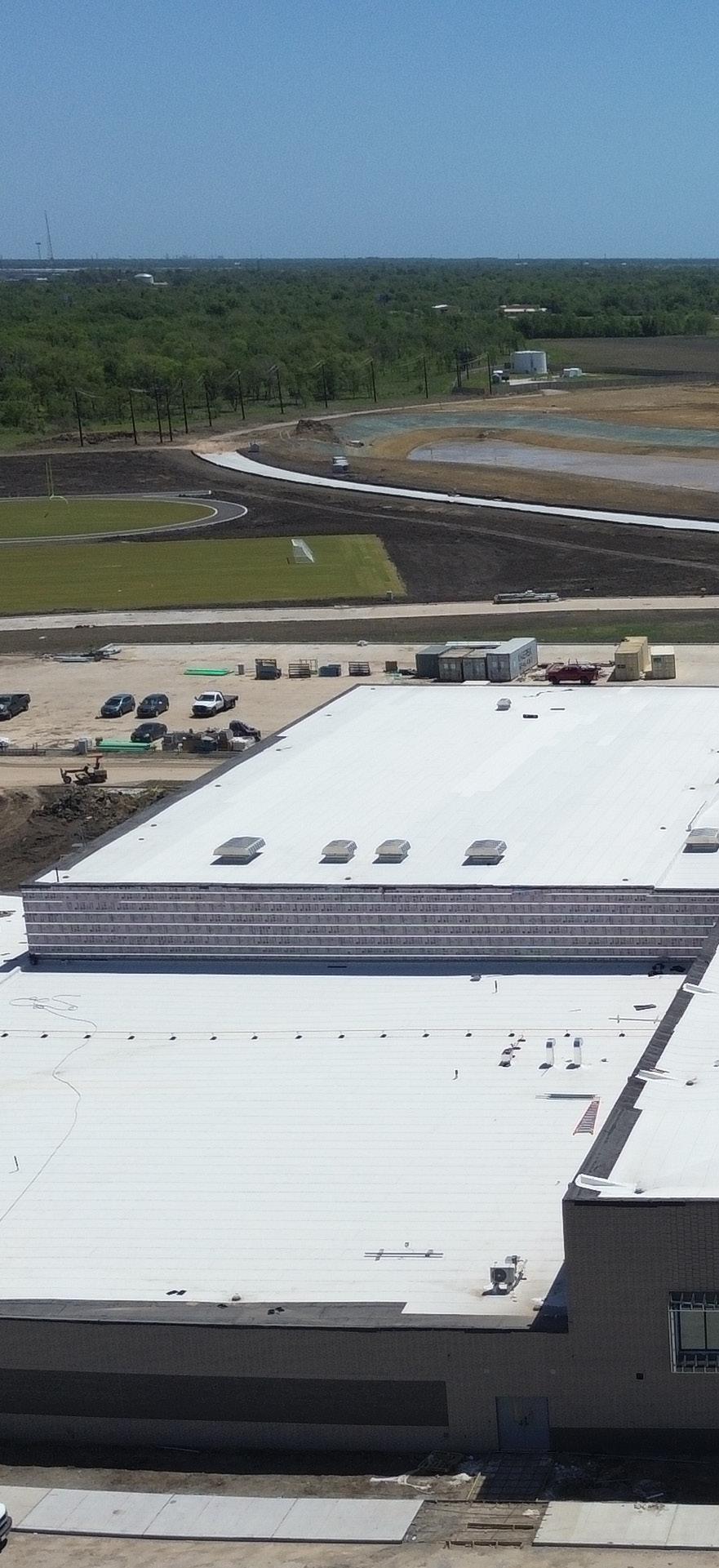
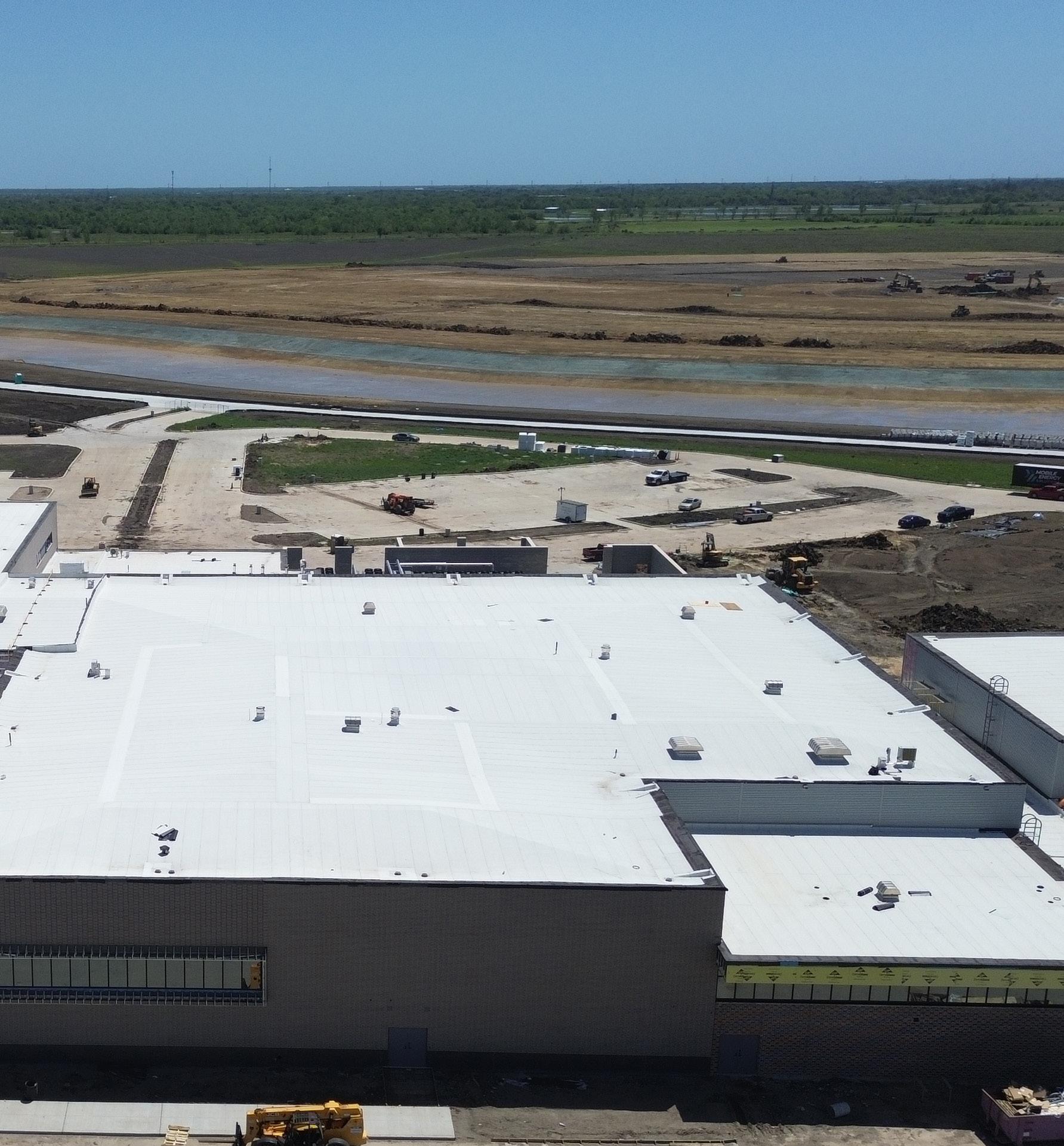
RIGHT
The new 'School Villiage' for Angleton Independent School District (ISD) located in Angleton, Texas.
sections, and prepared the site for potential storm damage. As a result of these precautions, the project was able to resume without delay.
After working closely with Elevate during the design and planning phases, Strategic Roofing installed a system to meet the district’s rigorous requirements for performance and longevity, backed by a 20-Year Elevate Red Shield™ Warranty.
Installation sequence
• Two layers of 2.2” ISOGARD™ CG insulation (4’ x 8’ boards) — mechanically fastened.
• Tapered ISOGARD CG insulation (¼” per foot slope) for crickets and saddles to promote drainage — adhered using ISO Spray™ R lowrise foam adhesive.
• ½” DensDeck® Prime cover board — adhered with ISO Spray™ R low-rise foam adhesive.
• Elevate SBS Glass Torch Base sheet — torchapplied for a secure bond.
• Elevate SBS Glass FR Torch Cap Sheet (UltraWhite) for a reflective finish that helps manage building heat load — torch-applied .
• Elevate edge metal, including Flash-Thru Drip Edge fascia — for enhanced perimeter protection.
Performance Highlights
The roofing system was built for long-term reliability for a campus expected to serve thousands of students each year. The UltraWhite cap sheet contributes to energy efficiency while providing a robust, multi-layer defense against Gulf Coast wind and weather conditions.
“This was the largest project our team has ever taken on, but we approached it with the same focus on quality and detail as any job,” said Michael Martin, President of Strategic Roofing Solutions. “From adapting to weather events to fine-tuning the design for better drainage, we’re proud to have delivered a system that will protect these schools for decades.”
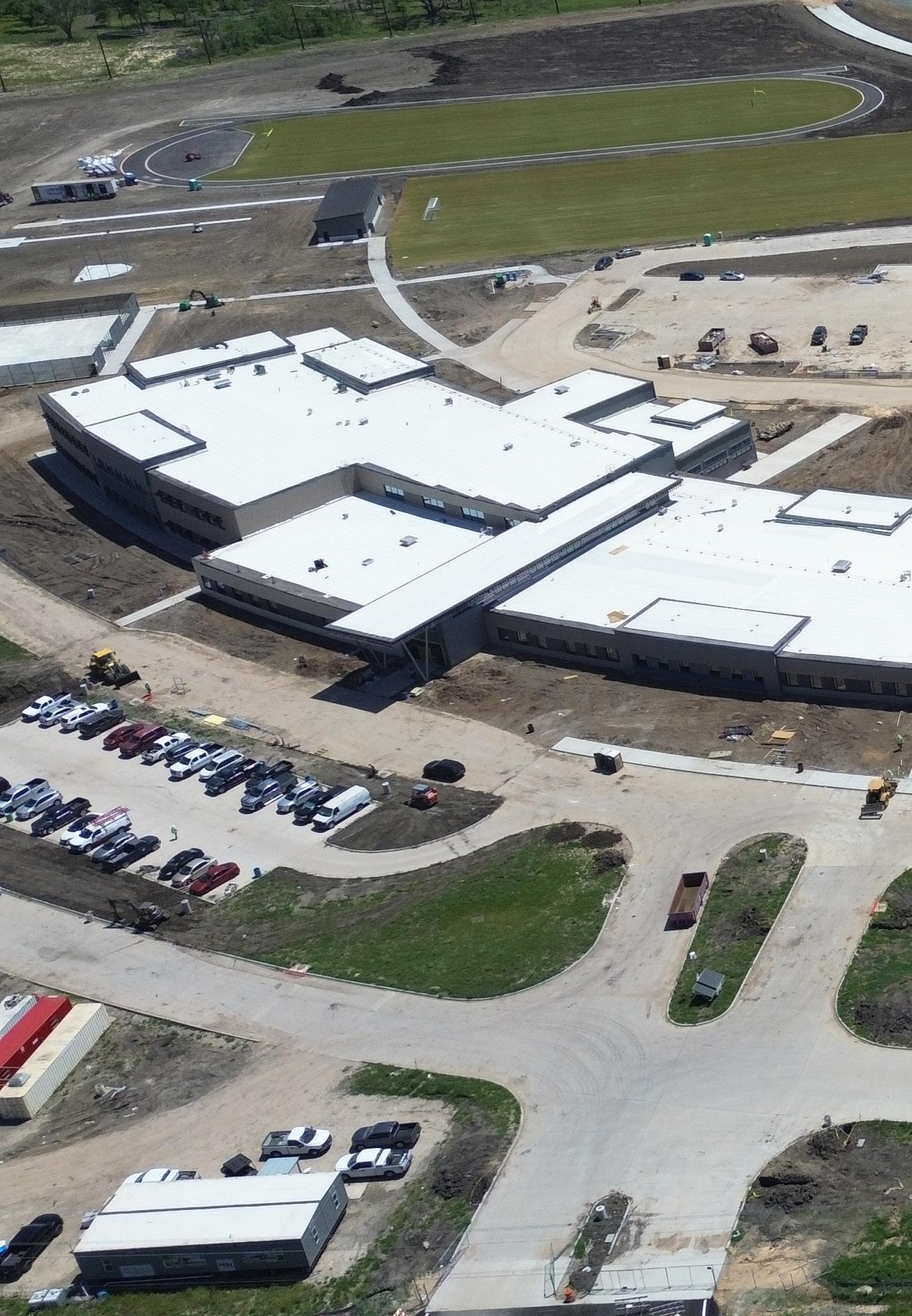
Products Featured
Roof Membrane: Elevate SBS Glass Torch Base; Elevate SBS Glass FR Torch Cap (UltraWhite)
Insulation: Two layers of 2.2” ISOGARD CG insulation; Tapered ISOGARD CG insulation
Cover Board: ½” DensDeck® Prime, adhered with I.S.O. Spray™ R adhesive
Edge Metal: Elevate fascia (Flash-Thru Drip Edge)
Warranty: 20-Year Elevate Red Shield™ Warranty
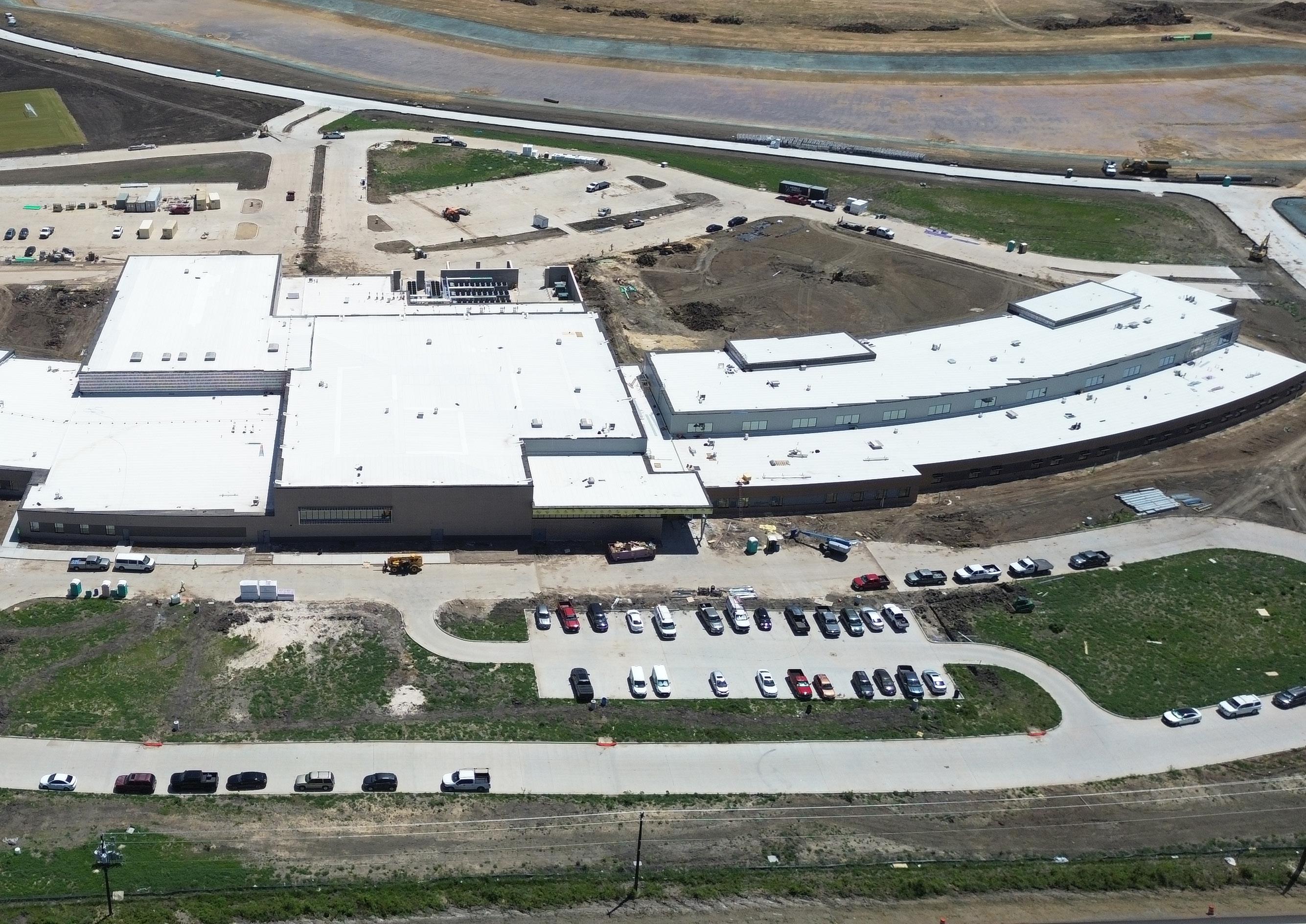
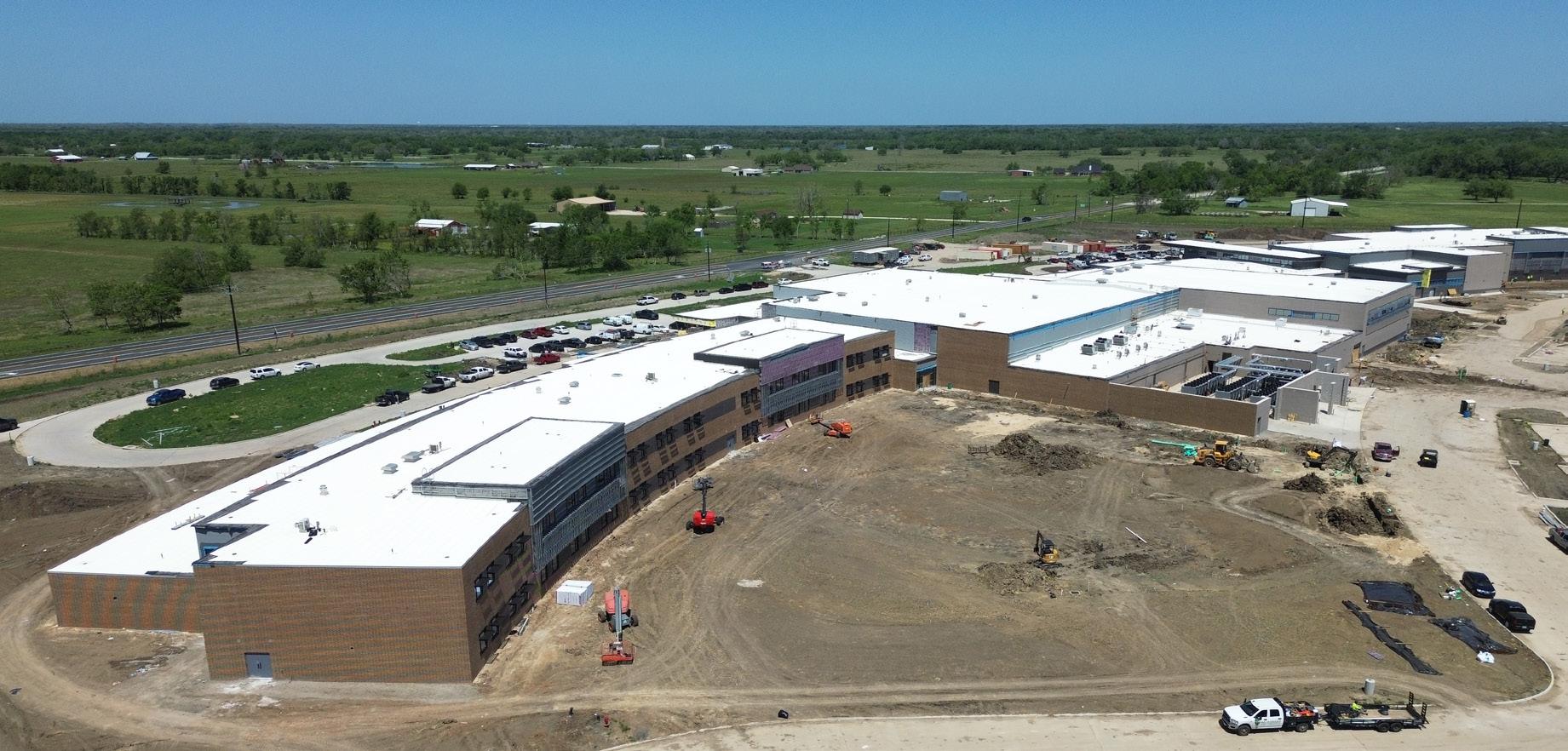
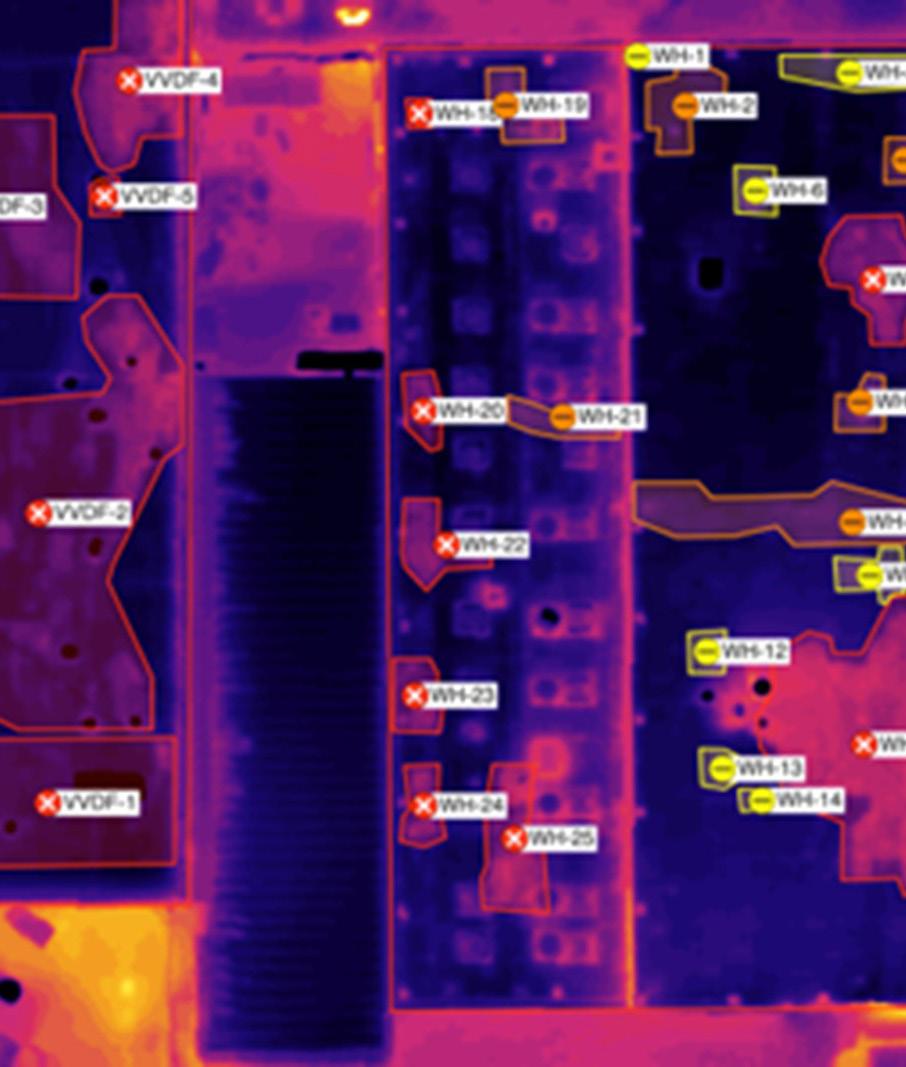
BY ROB ENGLE
In 2022, Auburn University Facilities Management’s Utilities & Energy department began an initiative to identify and reduce losses in the campus hot-water loop. The effort aimed to locate and eliminate inefficiencies while modernizing its leak-detection methods. The hot-water loop was losing a significant volume of water each day, which translated into wasted energy and resources. Three years later, the thermal imaging program developed from that effort is actively reducing losses and has expanded to support several other areas within Facilities Management.
Where We Began – Finding Buried Treasure Auburn’s partnership with EagleHawk started with a simple goal: find hot-water leaks in the
campus distribution system. The university has over 20 miles of underground hydronic piping heating buildings all over campus, and even a small leak can waste significant energy, water, and money because leaks are continuous until repaired.
Traditionally, the Facilities Management team waited for leaks to show themselves above ground before digging. Even then, the leak wasn’t always where the water surfaced. It could follow the sand bedding and appear hundreds of feet away. Most of the problems traced back to improperly insulated joints installed and buried more than 25 years ago that had gradually broken down.
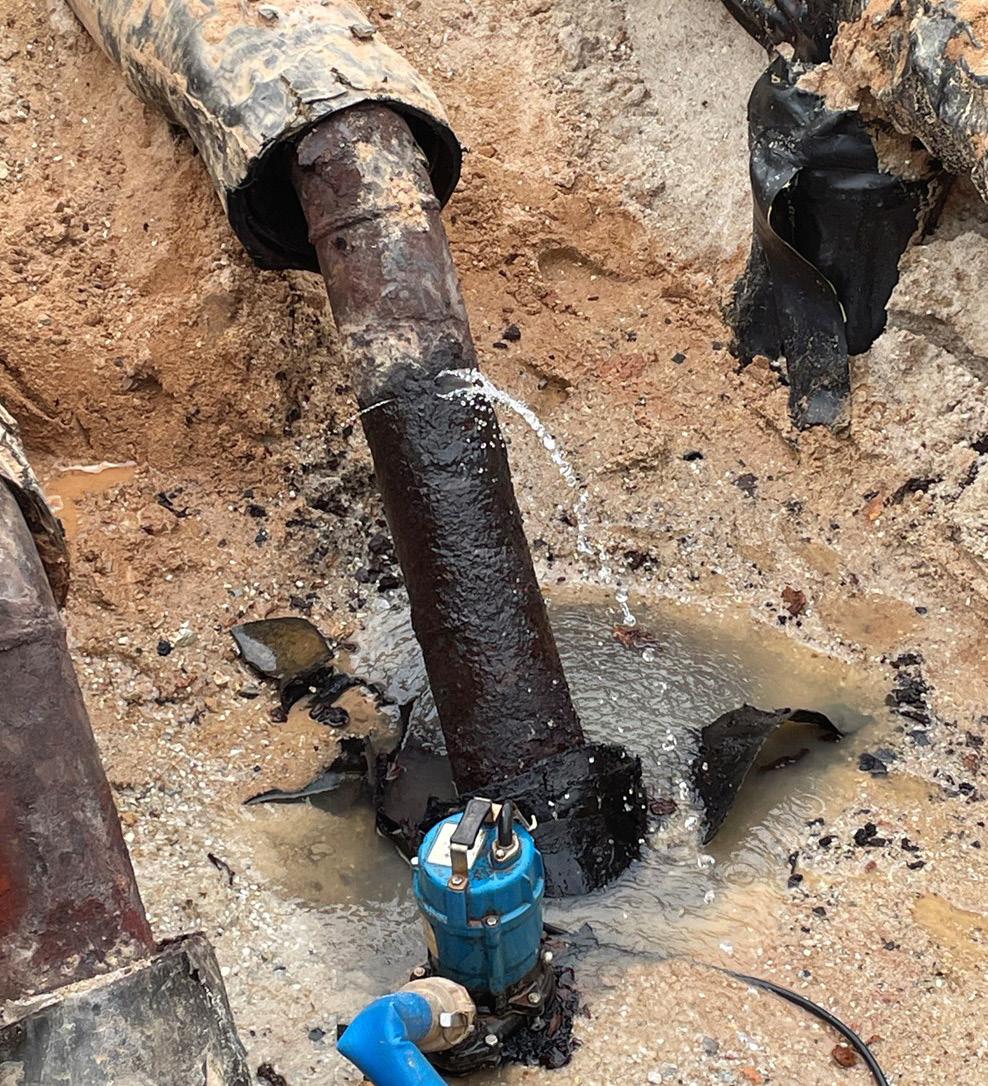
Auburn used to purchase thermal aerial (airplane/helicopter) flyovers every few years, but the resolution was poor and it was difficult to discern a leak. That changed with the implementation of EagleHawk’s aerial thermal imaging program. The difference in clarity was immediate. The ability to adjust the thermal map in their software made the data far more usable, and the EagleHawk engineering team’s ability to analyze the data reduced false alarms significantly. Repairing just one leak more than pays for the entire service.
Auburn’s current leak response uses three steps: a physical observation, a thermal hit from the scan, and a correlator confirmation to pinpoint the leak. What began as a onetime experiment has turned into a reliable, repeatable process that saves money, improves
reliability, and lays the foundation for other uses across Facilities Management.
After the success of the hot-water thermal scan, the Facilities Condition Assessment (FCA) Program Manager asked about using the same technology to help with the FCA. With hundreds of roofs across campus, understanding their condition and being able to prioritize funding has always been a challenge.
In early 2024, EagleHawk completed a roof inspection of 71 buildings using thermal and high-resolution imagery. The results were eye-opening; 55 buildings showed signs of wet insulation, and 449 defects were identified. Each roof received a condition score based on the number, area, and severity of the issues.
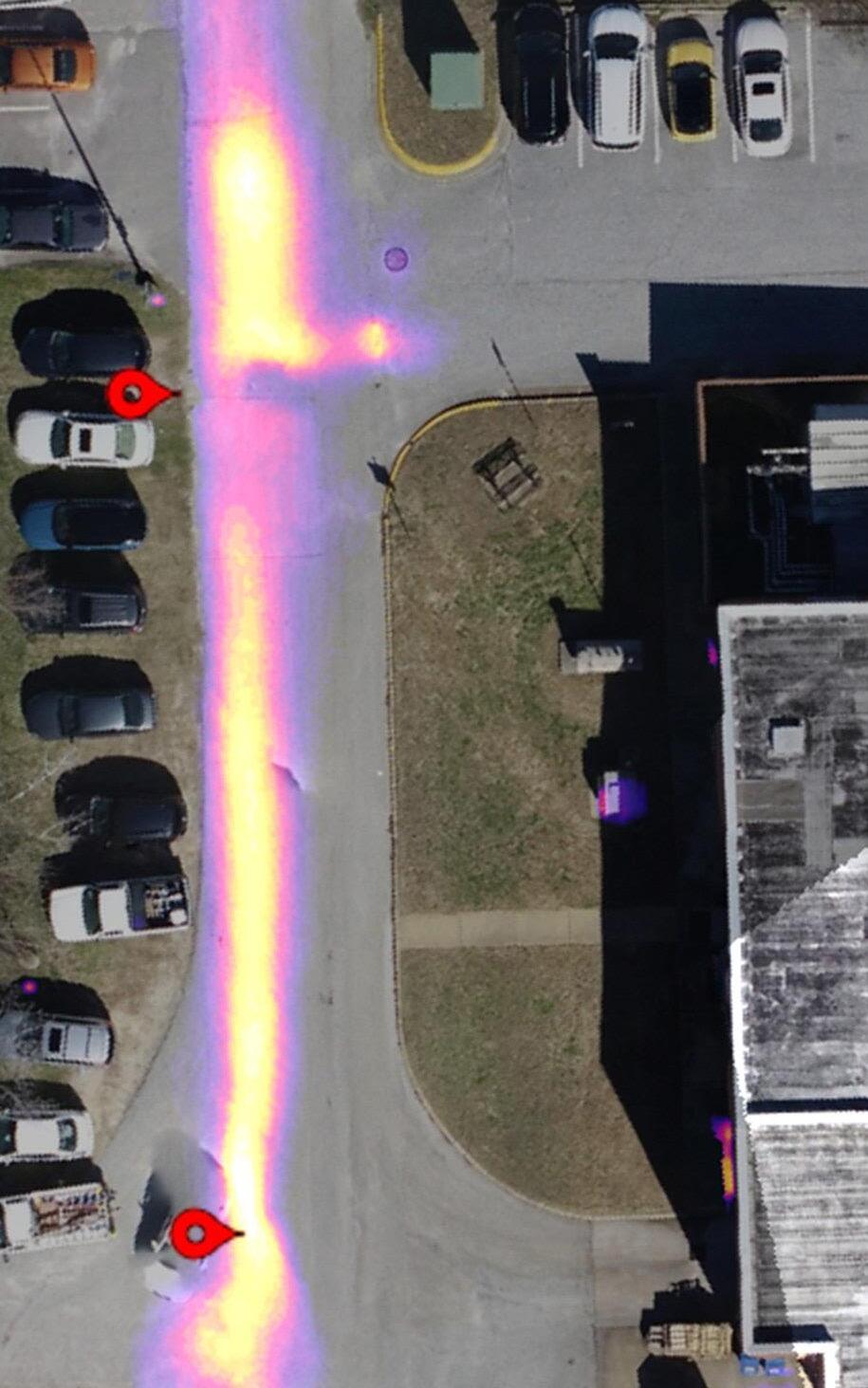
With that data, Auburn Facilities Management could now see the entire campus at once from a single dashboard and understand how each roof compared to the others. The new scoring system made it easy to prioritize maintenance, justify capital funding, and plan replacements more strategically. What once required significant subjective judgment can now be done with more objective, defensible data.
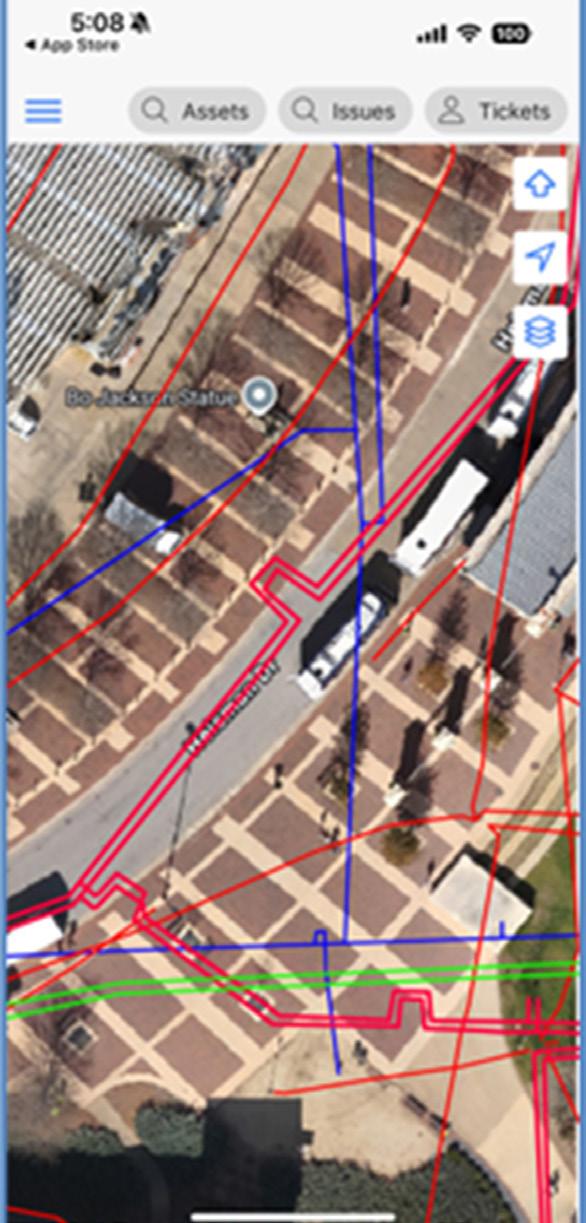
As the team got more familiar with the platform, the realization set in that it could help in other ways too. The U&E team began layering utility maps: chilled water, hot water, steam, electrical, communication, sewer, and water directly onto the aerial imagery with high accuracy. Existing PDF maps were more up-to-date but difficult to access in the field. The EagleHawk mobile app made it fast and simple to view those utility layers on a current,
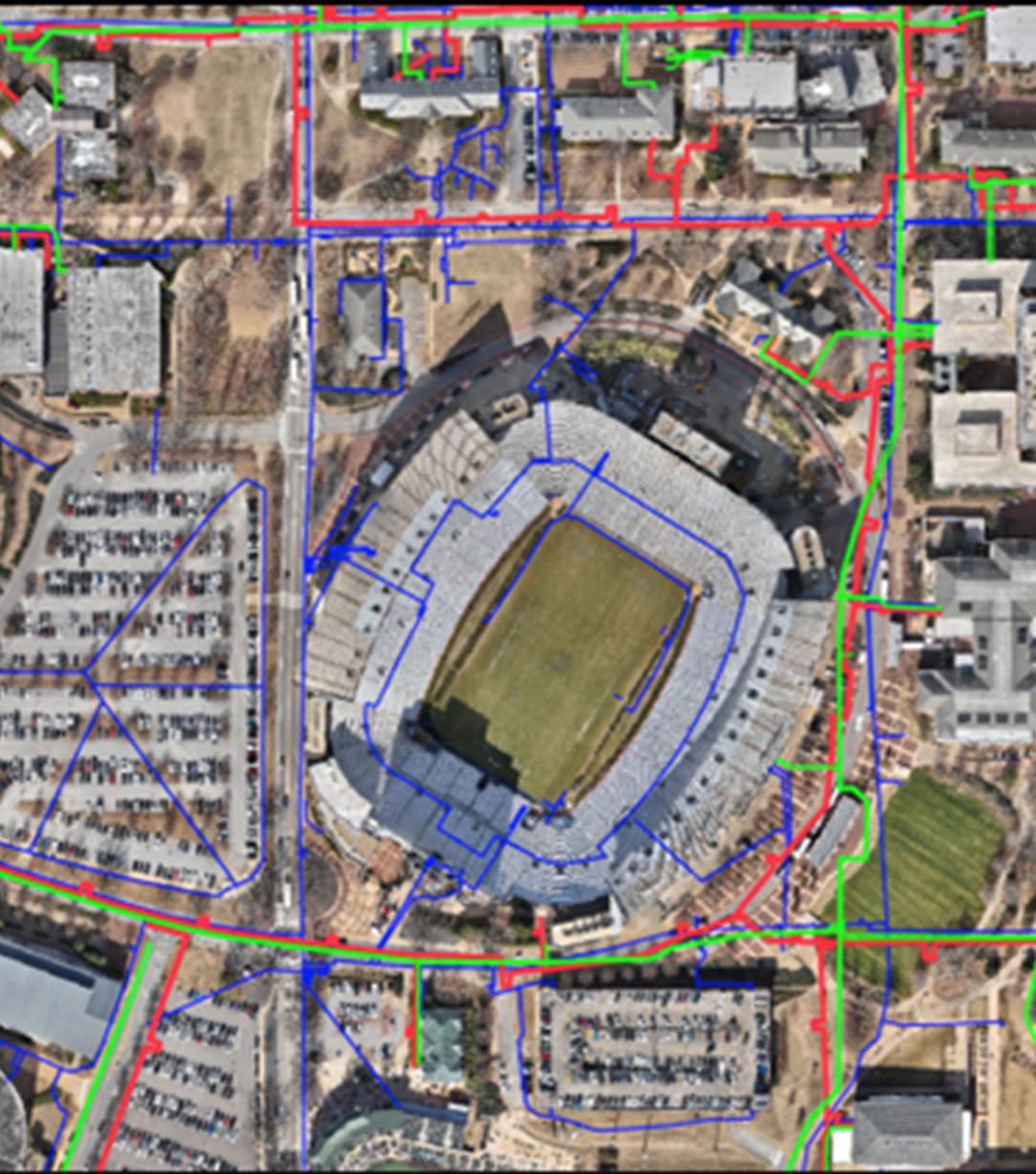
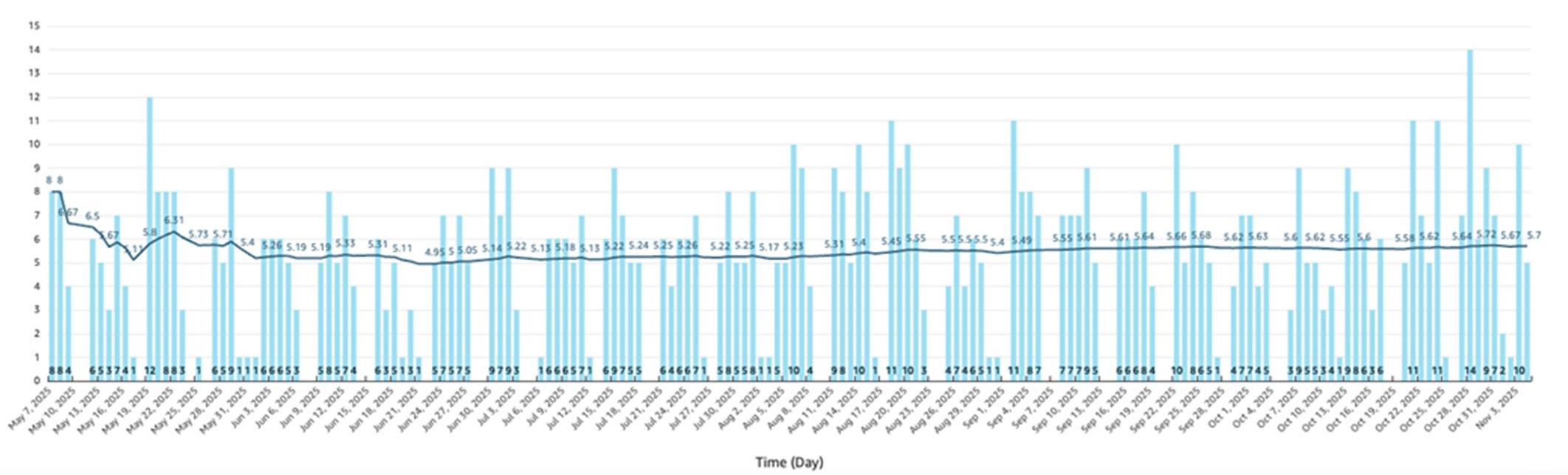
high-resolution background.
Beyond the thermal and high-resolution visual data layers, EagleHawk also provided a night-time layer of the campus. This layer has helped Facilities Management evaluate lighting for safety concerns, street-lighting consistency, and opportunities to upgrade to more energy-efficient lighting solutions.
The platform has made coordination across Facilities Management much easier. Teams from Planning Design & Construction, Maintenance, Landscaping, Campus Services, Energy Management, and even contractors now use it regularly. One recent example: the Heavy Construction department noticed a dip in the road, pulled up the map, and saw that hot-water piping ran directly beneath it. They contacted the Utilities & Energy group to discuss a suspected leak and review the thermal imagery for confirmation.
What started as a single-purpose inspection tool has grown into a shared resource that connects people across Facilities Management, saving time, effort, and money.
Auburn didn’t set out to start a Facilities-wide program; the team just wanted to find leaks. But being open to new technology turned into something much bigger. Today, there are more than 100 Facilities users on the platform, and additional groups continue to request new map layers and imagery access. The platform is now used daily across Facilities, helping teams make faster, better-informed decisions.
The partnership with EagleHawk has helped Auburn save money, improve coordination, and connect people to better information. It’s changed the way the Facilities Management team sees and manages campus infrastructure—literally. ■
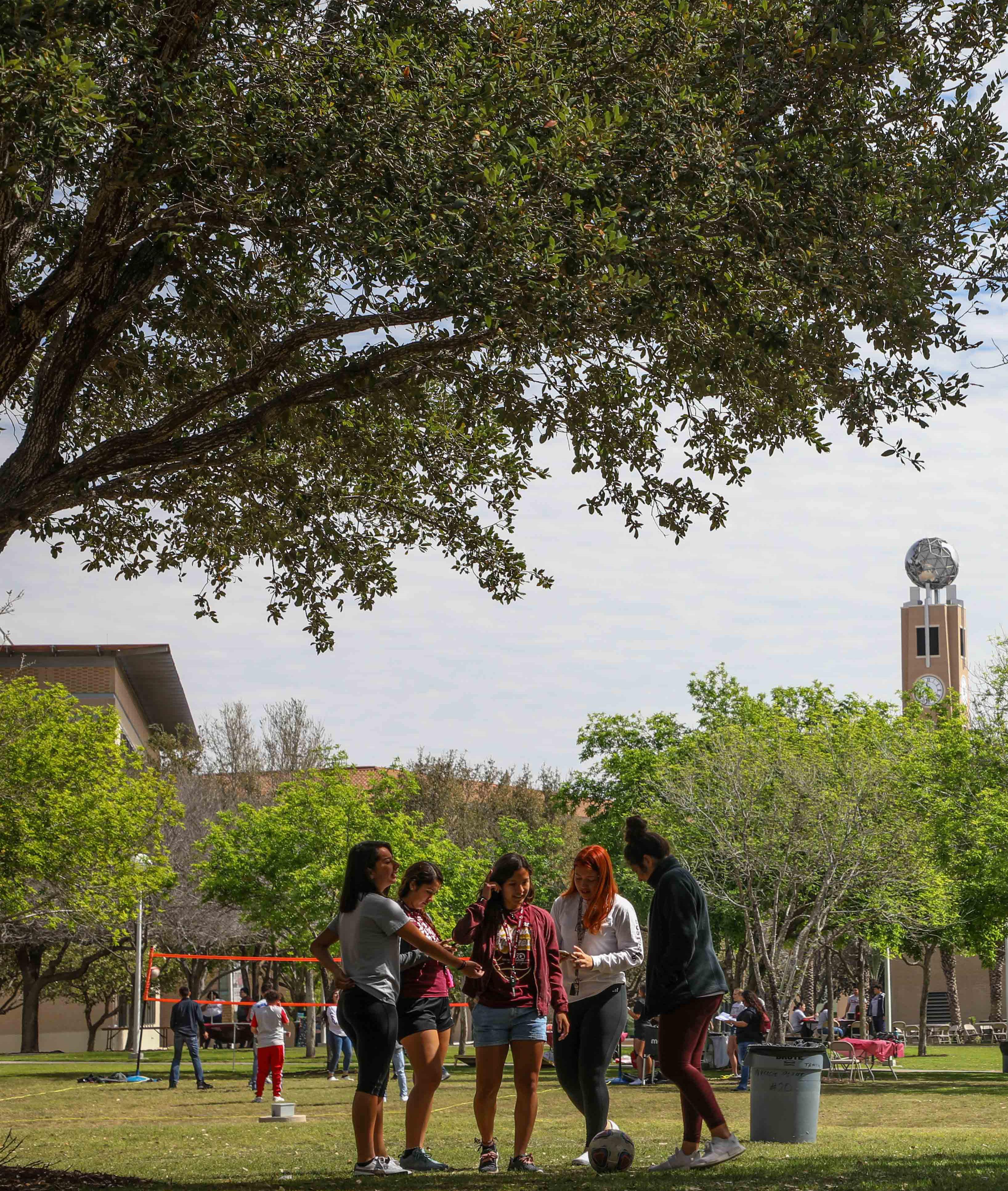
BY TREVOR C. LIDDLE AND CRAIG MESENBRINK
There’s a reason Texas A&M International University (TAMIU)’s motto is “Go Here. Go Beyond.” This public university in Laredo, Texas, has crossed many innovative thresholds, from its long-standing commitment to remain affordable during a time of surging higher-education costs to its recent $250 million cumulative investment in a state-of-the-art built environment.
Since September 2024, “going beyond” has meant turning TAMIU’s visionary future of running more energy-efficient facilities into an operational reality. Now, TAMIU celebrates the first anniversary of launching its Energy and Operations Management Program with Schneider Electric. This forward-thinking strategy-based model is designed to maximize energy conservation throughout the campus.
Taking a leap toward energy progress
As a university poised at the Gateway to Mexico to build a thriving cultural and intellectual community, TAMIU knows a thing or two about bridging legacy and progress, old ways and blazed trails, rich history and new horizons. TAMIU sits on 300 acres and is the largest managed green space in Webb County. So, when Trevor C. Liddle, Associate Vice President, Finance and Administration – Campus Operations, recognized that the campus facilities were to advance the university’s operational, financial, and environmental stewardship, he turned to Schneider Electric to help TAMIU power its roadmap for energy progress.
The TAMIU team wanted to go beyond the historical energy consumption of its central plant and central utilities. However, they lacked the necessary data to monitor and manage the cost of aging infrastructure; struggled with the complexity of reactive—and even deferred—maintenance; and navigated the financial constraints of operating outdated buildings. Although the current built campus is just over 25 years old, its design and systems began in the 1980s using technologies that were commercially introduced through the 1930s and 40s. This blend of modern facilities and legacy systems reflects the university’s deep-rooted history and continued expansion. It also underscores the critical need for TAMIU to invest in advanced energy management
solutions that can effectively support both contemporary operations and longstanding infrastructure challenges.
By partnering with Schneider Electric, TAMIU created a realistic plan to better manage financial and natural resources, including energy and water. A new Central Utility Facility Management plan gave TAMIU a tangible way to jumpstart its desired holistic approach to energy and operational management—with the goal of achieving budget stability and measurable conservation-driven outcomes.
The bold Energy and Operations Management Program matures the innovative seeds TAMIU initially planted in 2017, when it embarked on the largest self-managed energy conservation program and required a behavior modification program. Together, Schneider Electric and TAMIU created the Conserve My Planet IGNITE program, which encourages students, professors, and staff to take an active role in efficient resource usage on campus and at home. A result of TAMIU’s long-term partnership with Schneider Electric, this program represents a far-reaching evolution of the early conservation program and builds on the impressive 33% reduction of campuswide utility consumption over the last eight years.
Fueled by the energy management as a service (EMaaS) model, the program integrates people and technology, employing a range of Schneider Electric services and software for building automation and efficiency monitoring, plus on-site operational support. The digital tools powering TAMIU include:
• Utility Tracking Software: This tool enables TAMIU to consolidate, analyze, and automate data into a single centralized platform, facilitating the management of the University’s energy usage and environmental impact.
• Equipment Analytics Software: This advanced system proactively monitors TAMIU’s building automation and HVAC assets to identify energy inefficiencies, assess and minimize carbon intensity, and diagnose equipment faults effectively.
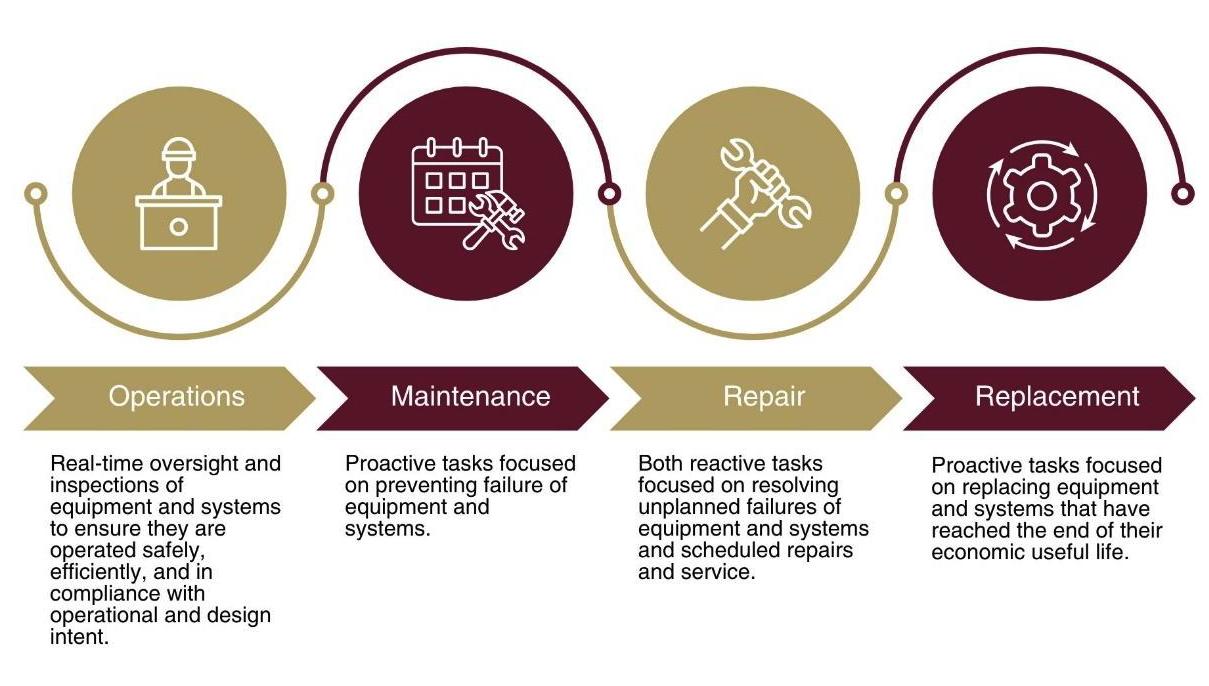
• Asset Management Software: This program provides a holistic view of TAMIU’s facilities, improving master planning and budgeting while ensuring reliability and optimizing maintenance and staffing efficiency.
“Schneider Electric is proud to partner with TAMIU as they continue to set the standard for the higher education space,” said Tammy Tolle, vice president at Schneider Electric. “Their commitment to impacting local and global communities with innovative programs serves as an inspiring blueprint for others.”
Indeed, this comprehensive, all-in-one approach is a compelling prototype for other universities and colleges to accelerate their own initiatives to boost budget stability and conservation impacts.
Schneider Electric’s technological ability to converge digital advancements and energy management enables TAMIU to improve operations and resource use throughout
the facility lifecycle. This Operations, Maintenance, Repair, and Replacement (OMR&R) loop powers a continuous and enhanced facility condition assessment, coupled with a recommissioning effort and ongoing operational management support services.
Crossing the gateway to energy progress
Texas A&M International University’s before and after snapshots capture a striking testimony to the effectiveness of the EMaaS and OMR&R approach to campus-wide conservation and budget stability. In short, the campus facilities team has been able to shift from reactive to preventative mode.
There have been many unintended benefits to adopting a preventative approach, including:
• Reduced the time for staff and personnel to submit work requests
• Enhanced workplace culture, resulting in happier employees
• Increased operational efficiency and reduced costs through improved system performance
ABOVE
The Operations, Maintenance, Repair, and Replacement (OMR&R) loop.
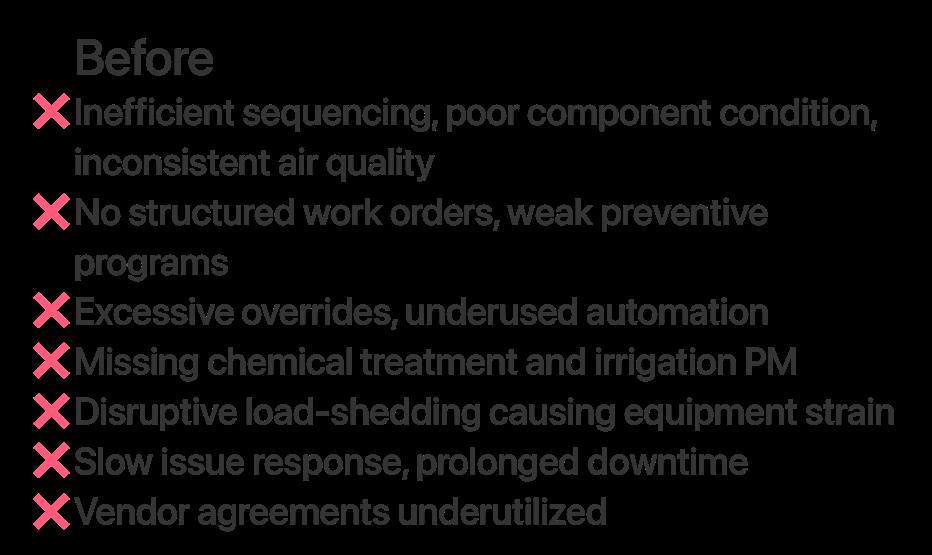
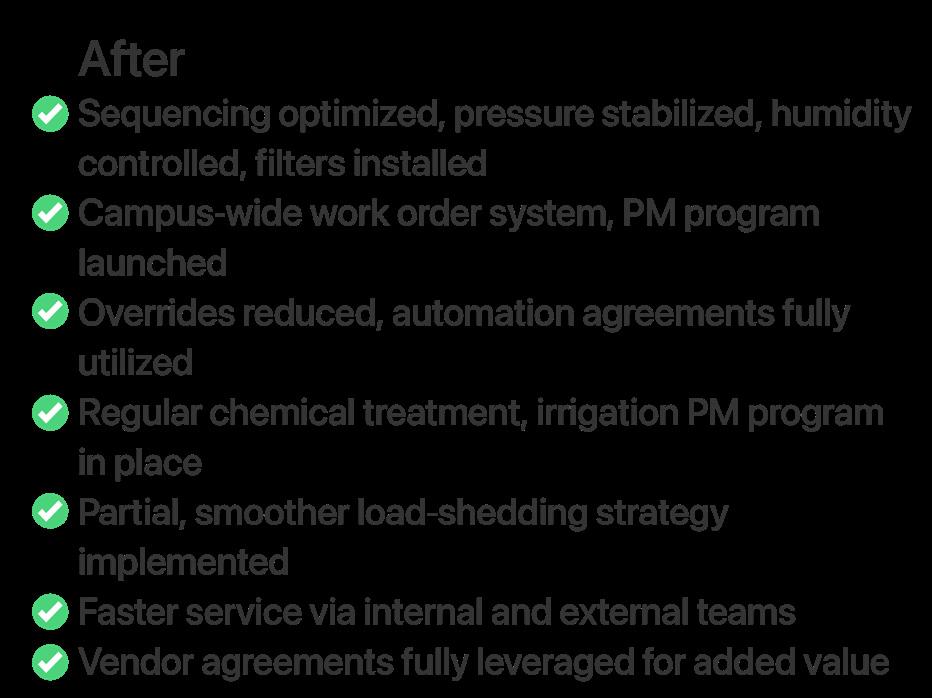
Since the program launched a year ago, TAMIU has saved money, energy, and headaches:
Money saved: Refinements in the demand response program and chemical water treatment processes have enhanced responsiveness and operational effectiveness, ensuring efficient resource use and timely heating of the campus water supply. TAMIU has realized significant energy savings in Year 1.
Energy saved: Extended strategic scheduling and chiller shutdowns during lowtemperature days have reduced TAMIU’s energy consumption by 1,349 MWh in Year 1, which is equivalent to:
• LED bulbs powered for a year: 73,958 bulbs (each bulb uses 18.24 kWh/year)
• Trees planted equivalent: 6,424 trees (1 tree offsets emissions from ~210 kWh)
• Liters of water saved: 3,372,500 liters (hydroelectric generation uses ~2.5 L/ kWh)
Headaches saved: TAMIU facilities have realized a 56% reduction in automation point overrides, resulting in enhanced system reliability, minimized downtime, lower future maintenance needs, and improved data integrity. By reducing the number of overridden points, TAMIU can fully leverage its previous investments in its Building Automation System (BAS), ensuring they function as originally intended.
TAMIU’s Energy and Operations Management Program is essential to the university’s long-term energy and water conservation objectives. Building energy and operational
resilience better prepares the university for mitigating the effects of fickle weather, while also achieving more reliable budget stability for day-to-day operations. Giving the TAMIU team a clear view of resource use empowers them to better manage it.
By taking bold steps to go beyond energy complacency, Texas A&M International University has much to celebrate upon reaching this first-year milestone. TAMIU is set to achieve $21.4 million in total projected savings over 20 years through its ambitious energy and water conservation journey with Schneider Electric.
Implementing innovative technology and processes goes well beyond energy savings, however. The intangible impacts include enhancing the learning environment for students. Comfortable spaces set the stage for productive study and collaboration, and reliable operations translate into fewer campus disruptions for faculty, staff, and students. These results are enabled by TAMIU’s more resilient infrastructure, which can weather droughts and other extreme natural events. TAMIU stands out as a community leader in resource management by taking concrete action on its conservation vision and changing the face of Laredo as a gateway to measurable energy progress. ■
Trevor C. Liddle is Associate Vice President, Finance and Administration -- Campus Operations at Texas A&M International University in Laredo, Tex. Craig Mesenbrink is Program Manager at Schneider Electric in Dallas.

“THE CAMPUS
TEAM HAS BEEN ABLE TO SHIFT FROM REACTIVE TO PREVENTATIVE MODE.”
BY SARAH RAKESTRAW & AVNIKA RIDDLE
Across higher education, facilities leaders are being called upon to rethink underutilized spaces to meet evolving student needs. At Auburn University, one such opportunity arose when Student Affairs merged Health Promotion & Wellness Services with Campus Recreation. The combined department, now known as Recreation and Wellness, required a new home for wellness services and support staff throughout.
With personal training already located in the basement, Auburn selected an adjacent 6,000-squarefoot shell to house its new wellness suite, bringing physical and mental health services together in
one connected setting. The challenge was clear: to create a bright, stigma-free, welcoming environment in a basement space known more for echoes than daylight.
With careful planning and collaboration, Auburn and McMillan Pazdan Smith Architecture, in collaboration with Buch Construction, transformed this shell space into a holistic wellness hub that integrates wellness services like nutrition and AOD prevention and intervention services with personal training and support staff for the programs, personal training, and student support. The fit-out became an opportunity not only to solve a space challenge but
Personal training remains fully operational in its updated space, integrated into Auburn’s comprehensive mind-body wellness ecosystem.
to rethink how Auburn delivers wellness across mind and body.
The project’s goals reflected both programmatic needs and a broader institutional commitment to student well-being:
• Co-locate programs: Merging wellness services with personal training to offer students a continuum of mind-body services
• Increase access: Make wellness support accessible and visible to all students, not just those paying for fitness services
• Maintain operations: Keep the revenue-generating personal training program open throughout construction
• Design for dignity: Ensure wellness services felt private, safe and inviting
• Elevate quality: Align with Auburn’s image and character standards while meeting rising student expectations for sophisticated, “real-world” environments
Basements are rarely the first choice for wellness programs. The Auburn team inherited a shell space tucked beneath active basketball courts, with just a single window for natural light. Yet within these constraints lay the chance to show what thoughtful design can do. The team reframed a difficult assignment into a showcase for student-centered design.
The basement offered just one window, but the design team made it count. Larger collaboration zones were organized around this opening to “democratize daylight” so the greatest number of students could benefit. Wide corridors and generous ceiling heights allowed light to travel deeper into the plan space. Where natural daylight was impossible, luminous fabric LED ceiling systems simulated diffuse skylight conditions, creating a sense of openness and calm. These interventions made the basement feel less like a below-grade box and more like a welcoming extension of the campus.
Noise presented a dual challenge: basketball courts directly above the space and the need for absolute confidentiality in counseling rooms. The solution combined structural isolation, suspended acoustic
baffles, and carefully placed wall panels. Within offices and counseling rooms, additional measures prevented sound transfer, ensuring students felt comfortable speaking openly without fear of being overheard. Additionally FF&E was intentionally selected to be oversized, with rounded, softer edges, movement like rockers, and various fabric hands and textures to help not only quiet the space, but also quiet the mind.
Wellness is as much about perception as performance. Auburn opted for a palette of biophilic-inspired materials, including natural wood tones, calming patterns, and soft colors to evoke a spa-like feel while also meeting the university’s rigorous maintenance standards. Each finish was chosen for its durability as well as its ability to create a sense of calm, resulting in a space that feels both restorative and resilient. University branding appears in muted tones rather than saturated school colors, and subtle nods to school tradition marked a shift toward a more sophisticated design language that supports student dignity.
The shared lobby was perhaps the most complex challenge. On one side, a high-energy personal training program; on the other, a calming wellness counseling environment. The lobby became the fusion zone where these identities meet. Floating ceilings, acoustic treatments, and carefully chosen finishes created continuity without erasing the distinct character of each program. Careful space planning and consideration for the flow at the decision points resulted in the achievement of privacy for each space, allowing people to feel more comfortable as they navigated between the various zones.
With personal training as a revenue-based program, construction phasing was critical. The team sequenced work to keep the program running while renovating the shared lobby and adding new utilities. Complex plumbing solutions required cutting and routing through existing slab and structure, emphasizing the need for early infrastructure planning in any shellspace project.
The new Recreation & Wellness Center fit-out opened in December 2024 and began serving students at the RIGHT
Floating ceilings and acoustic treatments create a welcoming first impression while helping transition between active and quiet zones.

start of the spring 2025 semester. Students now experience a single point of entry to a full spectrum of services, reinforcing Auburn’s commitment to whole-student wellbeing.
The project also reshaped perceptions across Auburn Facilities. By turning a basement shell into a bright, functional hub, the team demonstrated that challenging spaces can become high-performing assets. This success has influenced how other stakeholders view underutilized areas on campus, expanding a sense of what is possible when vision and design align.
The Auburn project is more than a success story—it’s a reminder that the best shell spaces start with future use in mind. For institutions planning new construction or evaluating existing basements and shells, the following considerations can help ensure long-term flexibility and value.
1. Design with a future use in mind: Core and shell design should anticipate the identity of the space it may one day become. When architects understand potential uses early, they can build in infrastructure and flexibility that make future adaptations more efficient and cost-effective. Institutions should challenge their design teams to plan
LEFT
Oversized, soft-edged furnishings help create a calming environment designed to reduce stress and support student dignity.
BELOW
Private counseling and wellness offices feature enhanced acoustic isolation to ensure confidential, comfortable conversations.
with a “crystal ball,” assuming the needs of the end users who will eventually occupy the space.
2. Plan building systems for future growth: Infrastructure is the backbone of future adaptability. Plumbing lines should be sized to accommodate potential additional restrooms; mechanical and electrical systems can be oversized to handle higher future loads or specialized exhaust requirements. Equally important is reserving dedicated pathways and space to route these systems when the time comes.
3. Allow for adequate floor height and daylight: Generous floor-to-ceiling height not only provides adequate plenum
space for building systems but also enhances comfort and perception of openness. In basement shells, additional ceiling height can offset the absence of daylight, helping the space feel less confined.
4. Locate egress and entrances strategically: Properly locating exits and entrances is especially critical in lowerlevel spaces that may serve multiple programs. Thoughtful placement supports code compliance, accessibility and intuitive wayfinding while ensuring each user group has a clear, identifiable point of entry.
5. Build in contingency: Always plan for the unknown. Building in a reasonable contingency protects the long-
term vision of a project and guards against valueengineering decisions that could limit future possibilities.
The Auburn Recreation & Wellness Center project highlights a broader trend in higher education: the need to transform underutilized or “difficult” spaces into meaningful assets that advance student experience.
Flexible shell spaces, when planned with future infrastructure in mind, can serve as long-term resources for institutional transformation. At the same time, students expect environments that feel elevated, modern, and relevant to the real world they are preparing to enter, and also welcoming, inclusive, and safe for their current status as college students.
Auburn’s facilities team, with its structured standards and collaborative approach, provides a model for how universities can deliver these outcomes. By aligning capital planning, operational priorities, and student experience, the team demonstrated that even a basement can become a beacon for wellness.
The new space realizes many of the university’s goals outlined in the current strategic plan, including exceptional student experience, catalytic engagement, and creating a space that is distinctively Auburn. ■

VS.
BY JEFFREY S. LEVINE
When is the right time to replace a roof? Can it be repaired? And, if so, what are the important considerations associated with that approach? These are the types of questions facilities managers deal with every day. Replacing a roof too soon means throwing away years of potential remaining service life and all the energy, waste, and opportunity cost associated with it. Waiting too long risks increased service calls, unhappy occupants, damage to adjacent building systems and finishes, and the potential for increased future design and construction costs. Although an appropriate course of action will depend on the roof’s particular circumstances (e.g., initial selection of materials, level of design detailing, craftsmanship brought to its installation, abuse by other trades, impact of severe weather, maintenance history, etc.), several broad guidelines are applicable to evaluating most roof systems, lowslope and steep-slope. After exploring these, a common roof type on many campuses – a slate roof – will be examined in greater detail to help illustrate the repair versus replace quandary.
Common Guidelines
Whether steep-slope or low-slope, several principles apply to the evaluation of the condition and remaining service life of most roofs.
While it may seem like an extra step, demanding additional time and resources, seeking the opinion of an independent consultant with expertise in the particular type of roof system in question can provide a clearer, more comprehensive, and unbiased assessment of your roof. It is easy to find so-called experts who will tell you what you want to hear or provide recommendations that suit their own interests rather than those of their clients. Contractors are inherently biased toward roof replacement as opposed to repair, primarily because it is more expedient and more profitable. Of course, the above is a generalization and not all roofing contractors act in this manner. But, biased reports of existing conditions and needed replacement happen time and again. A few examples are described below:
Residential Asphalt Shingle Roofs: A leak caused by a single nail-pop was said to be reason enough to replace the entire roof, when, in fact, a simple 15-minute repair was all that was needed to gain another 10 to 15 years of service life. In another
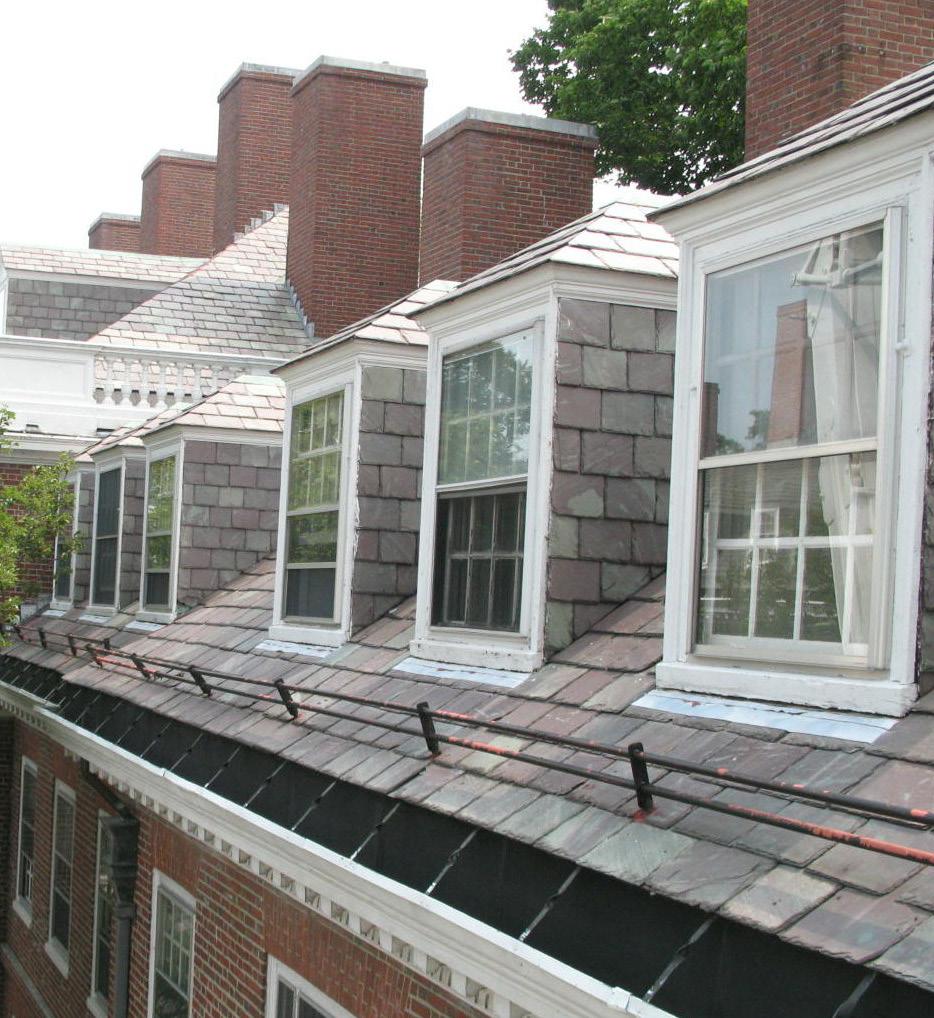

instance, water infiltration at a failed pipe penetration flashing condemned the roof, when replacement of the flashing would have solved the problem (the roof had no other issues).
Slate and Batten Seam Copper Roofs on a Dormitory Building: The well-installed roofs were only 25-years old. Broken slates and cracked soldered seams, punctures, loose fasteners, and fatigue cracks at flashings resulted in the recommendation to replace the roofs in the contractor’s written report; at a cost of roughly $9 million. This fit the institution’s 30-year capital plan nicely. These are, however, 100-year roofs. Replacing them after only 25 years would have been a tremendous waste of natural resources and funds. Fortunately, an independent assessment concluded that localized repairs would restore the roofs to a weathertight condition, without creating a checkerboard effect between new and old shingles in the slate roof, and at far less cost.
Monel Standing Seam and Batten Seam Roofs on a Church: Multiple contractor recommendations to replace the priceless, 80-year old roofs, which leaked every time it rained, proved unnecessary. Thirty years after a dedicated repair project, followed by implementation of a regular maintenance program, the roofs are still in service, leak free, and projected to have a remaining service life of 50 to 75 years.
Even if a contractor is to be trusted, keep in mind that few roofers have expertise in all types of roofs. All too often, the contractor whose business is 90 percent asphalt shingles
LEFT
Figure 1: Granule loss resulting in exposed fiberglass reinforcing (the white colored material glinting in the sunlight) in dimensional asphalt shingles is an indication that the shingles are nearing the end of their service life.
Figure 2: Closeup of multiple holes along the edge of a soldered seam in a 60-year old flat seam copper roof.
Figure 3: Wear marks in a copper valley flashing, along the drip lines of the slate shingles, are at a stage where they are not of immediate concern (top). Closeup of a painted copper valley flashing where the copper has turned a warm orange color, an indication that the copper is very thin and will soon wear through (bottom). Several wear holes are already present (red arrows).
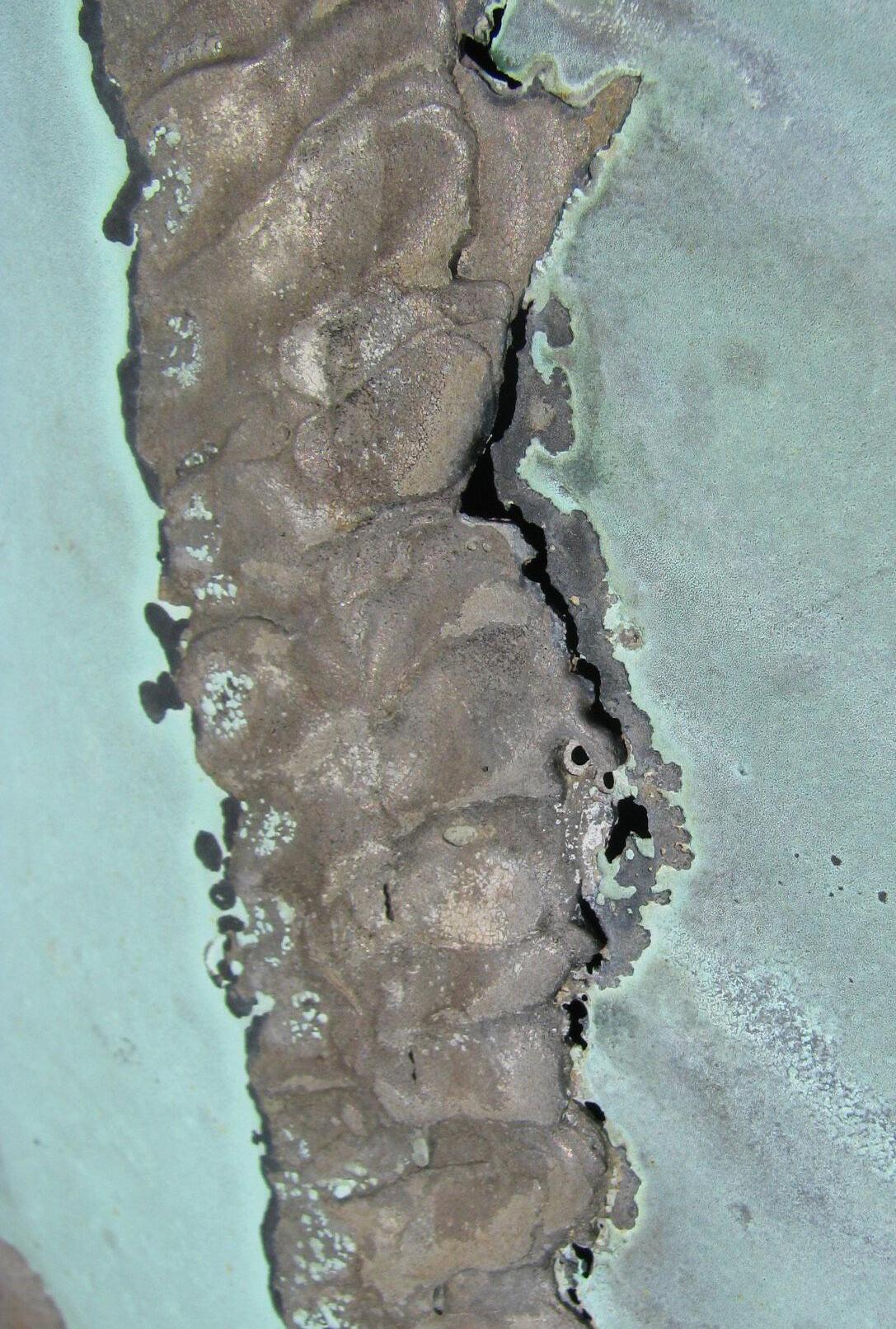
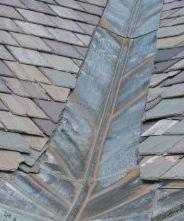

is asked to opine on the condition of a clay tile or slate roof. That’s like asking your dermatologist to check your eyesight. While most dermatologists would refer you to an optometrist or ophthalmologist, most roofing contractors would jump right in.
Seek an independent, unbiased professional opinion from a firm that has little or no stake in the findings of a condition assessment. Ask a colleague or design professional for a referral, or check out the membership list of the International Institute of Building Enclosure Consultants (IIBEC) for an expert near you. IIBEC members, by the way, must affirm their willingness to act in conformance with the organization’s Code of Ethics, attesting that they serve
only the interests of the building owner and integrity of the structure.
Roofing experts can deduce many things based on field observations. The age of a slate roof, for example, can be determined by careful examination of cracking, broken corners, degree of delamination, ring tone emitted when tapped, and the patina exhibited by associated copper flashings. The date of manufacture and plant at which EPDM (ethylene propylene diene terpolymer) roofing membrane was produced can be determined by deciphering the ‘hieroglyphics’ (the alpha numeric code) stamped on each roll. Nevertheless, review of available documentation prior to a site visit can yield important information regarding construction chronology, concealed conditions, past maintenance practices, and a building’s historic appearance, thereby allowing for a more accurate assessment. Such documentation includes warranties, original construction documents, renovation drawings, as-built drawings, shop drawings, specifications, prior reports, maintenance records, and historic images, whether photographs, paintings, prints, or post cards.
If water infiltration has occurred and is ongoing, the more information that can be recorded by facilities personnel about the nature of the leaks, the better: dates on which infiltration occurred, rainfall intensity, wind direction, how long it takes between the onset of precipitation and the presence of water inside the structure, precise locations where dripping or water damage is occurring, etc. If staining is occurring on wall or ceiling finishes, drawing a pencil line and taking photographs upon initial observation of the issue can help determine whether the problem is worsening with time.
Knowing what to look for during the site investigation portion of a roof assessment is important. Working with a knowledgeable professional who can identify the extent of the deficiencies and whether they are localized or portend further decline is paramount. One pin hole, open seam, broken slate, or missing clay tile is repairable. Multiple instances, however, may suggest that the roof is at, or near, the end of its service life. The following examples will help illustrate the concept:
Asphalt shingle roofs can suffer from granule loss, nail pops, curled and missing shingles, and sagging/brittle neoprene gaskets at pipe penetration flashings. Granule loss at a valley can indicate a localized condition stemming from excessive foot traffic during original installation and/ or later maintenance activities. Granule loss in the field of the roof, accompanied by glinting of the shingles’ fiberglass reinforcing in the sunlight (Figure 1), on the other hand, is a sign that the shingles are nearing the end of their service life, especially if widespread. Multiple failed neoprene pipe collars on a 15-year old asphalt shing roof, however, does
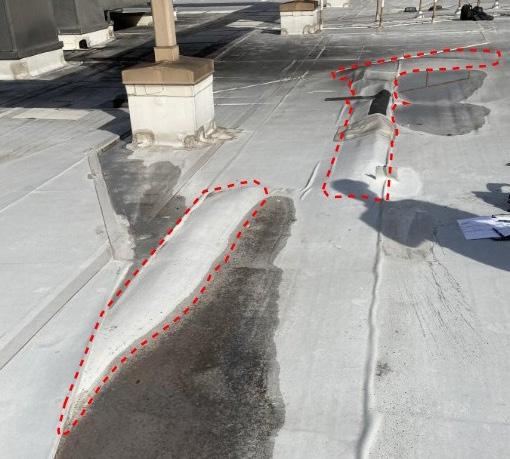
not condemn the roof, despite being widespread. Rather, a simple flashing replacement is all that is needed.
Common deficiencies in metal roofs and flashings include pin holes, erosion, open seams, punctures, and fatigue cracks. Isolated pin holes in soldered seams are relatively benign and easy to repair. Multiple pin holes alongside a soldered seam in an older roof, however, can be a harbinger of the need for roof replacement (Figure 2). Similarly, widespread wear marks in copper flashings along the drip lines of slate shingles might suggest normal weathering, but when the copper turns a warm orange color, that is an indication that the copper had eroded to a paper thin state and will wear through in the near future (Figure 3).
Deleterious conditions in low-slope membrane roofs often manifest themselves in the form of warped insulation (Figure 4), crunchiness/sponginess underfoot, holes/ punctures, open seams, ponding water, slumped/displaced base flashings, and wear that exposes the membrane’s internal reinforcing mat. Any of these conditions if widespread could indicate that it is time for the roof to be replaced. As is the case for steep-slope roof systems, keep in mind, however, that most instances of water infiltration in a five to 10-year old membrane roof assembly typically occur at roof drains, scuppers, soil pipes, curbs, and other penetrations. These are all flashing-related issues for which repair is often possible. One important caveat has to do with the roof system’s insulation. If the insulation has
become saturated with water, it will no longer posses the same R-value it did when it was installed. It may have also become soft or suffered facer damage or loss of adhesion, and, thereby, become unable to resist anticipated wind loads. In such cases, repair areas can grow much larger, and repair work become more expensive as the wet insulation will have to be removed and replaced. An IR (infrared) thermography survey of the roof, or other method of nondestructive moisture detection testing, combined with a small number of probe openings to confirm the findings of the nondestructive testing, can often help determine the extent of water-saturated insultation.
Although they may seem like an unnecessary and invasive step, exploratory openings can expose hidden conditions and are sometimes an integral part of the assessment process. Probe openings in low-slope roofs (typically ranging from 3- or 4-inch diameter cores to 24-inch x 24inch cuts) can reveal the number of extant roof systems (an important consideration since most building codes only allow up to two roof systems before a complete tear-off is required), roof deck type and condition, type and thickness of insulation (again, an important code consideration as more recent editions of International Energy Conservation Code mandate greater R-values, which often translates into the need for greater thickness), and extent of moisture within the system. Openings in slate roofs (typically the removal of one or more slate shingles from roof slopes

LEFT
Figure 5: Insufficient headlap in reinstalled slate shingles above an EPDM roof. In this case, the ghost lines (arrow) indicating the original (correct) exposure are a good indication that the headlap is less than it should be. In other instances, misinformed contractors will install shorter new or salvaged shingles (e.g., 16 inch x 10 inch instead of 18 inch x 10 inch), in which case the only way to identify the issue is via a probe opening.
given the extent of existing deterioration, the condition of associated materials (underlayments, fasteners, flashings, and rainwater conduction systems), and the roof’s context within the broader scope of capital projects and sustainability goals.
have differing orientations to the weather) are absolutely necessary, not only for understanding the condition of the slate itself and gauging its remaining service life (based on the extent of delamination on its concealed face and the tone emitted when tapped with a slate hammer or one’s knuckles), but also the type and condition of the slate’s fasteners, underlayment(s), and decking. Similar openings can be made in other types of steep-slope roofs. Probe openings can also be used to assess the integrity of pointing mortars in parapet walls, chimneys, and counterflashing reglets, the depth to which counterflashings extend into their reglets, the condition of flashings, to verify laps and headlaps, and to confirm construction detailing.
Up-close visual observations are good, and necessary (and, on steep-slope roof assessments may require special means of access or contractor assistance with ladders) but, the fact is, there are often conditions that cannot be known without opening things up a bit. The information revealed can be invaluable. For example, on more than a few occasions inexperienced contractors reinstalled slate shingles above a new gutter or low-slope roof without sufficient headlapi (and, in some cases, zero headlap). Insufficient headlap can result in water infiltration, especially in wind-blown rains. Without the removal of one or two shingles, however, the condition cannot be verified (Figure 5).
When is the right time to replace a roof? The answer, of course, is, it depends. It depends on a whole host of issues, including the type of roof, its expected service life, material selection and detailing during design, how well it was installed, the frequency and quality of maintenance, how “broken-up” the roof is (i.e., the number and spacing of dormers, valleys, gussets, chimneys, changes in roof plane, etc.), local climate, roof slope, future plans for the building, and available funding. Using an amalgamation of case studies, the question will be explored for a dormitory’s slate roof by focusing on the roof’s geometry, age, and expected remaining service life, whether repair is practical
Slate roofs are inherently long-lived, but they do not last forever. All other things being equal (e.g., climate, roof slope and orientation, presence of shade trees, runoff from low-slope roof areas located above the slate, foot traffic, design, installation, maintenance), the expected service life of a slate roof depends foremost on the slate’s geology and the region from which it was quarried. Past history suggests the expected service lives of 1/4- to 3/8-inch thick North American slates installed on an 8:12, or steeper, roof slope, on a building located in the mid-Atlantic of northeastern United States are as shown in Table 1. Knowing this and the date the shingles were installed, and making adjustment for some of the factors mentioned earlier (local climate, actual roof slope, etc.), the expected remaining service life of an existing slate roof can be approximated. Thus, an 80-year old, unfading green slate from the New York/ Vermont district, well installed and well maintained, on a dormitory with a 12:12 slope, that rings true when tapped (i.e., emits a sonorous, china-like ring tone) might have an expected remaining service life of 40 to 50 years. If the roof slope was found to be only 7:12, and the slate not very well maintained, the roof’s expected remaining service life would be less, perhaps in the 25 to 35 year range.
With a 25- to 50-year expected remaining service life, repair might seem practical. The general rule of thumb for repairing a slate roof is the 20-percent rule: if fewer than 20-percent of the slates on the roof are cracked, broken, missing, delaminating, reversed (i.e., nail holes showing), or otherwise compromised, then it is more practical and cost effective to repair the roof than replace it.
Here, is where the condition of the slating nails, flashings, and underlayments come into consideration as well. Copper and stainless steel slating nails have services lives commensurate with that of the slate shingles themselves. Galvanized steel nails, on the other hand, will typically corrode long before the slates deteriorate, with the result that individual slate shingles will be left inadequately secured and slide out of place (Figure 6). The impact on the repair-replace decision is obvious. Even with less than 20-percent of the slates on our 80-year old dormitory roof in need of repair, the presence of corroding galvanized slating nails will likely result in a recommendation to replace the roof, or at the very least, remove, salvage and reinstall the shingles. Actual conditions could, however, allow for some delay in carrying out roof replacement. For example, if only 5- to 10-percent of the slates are in need of repair and the galvanized nails just beginning to corrode, with only a small number of slates sliding out of position, it may be possible to effect temporary repairs to allow as much as several years’ time for budgeting and design work for roof replacement.
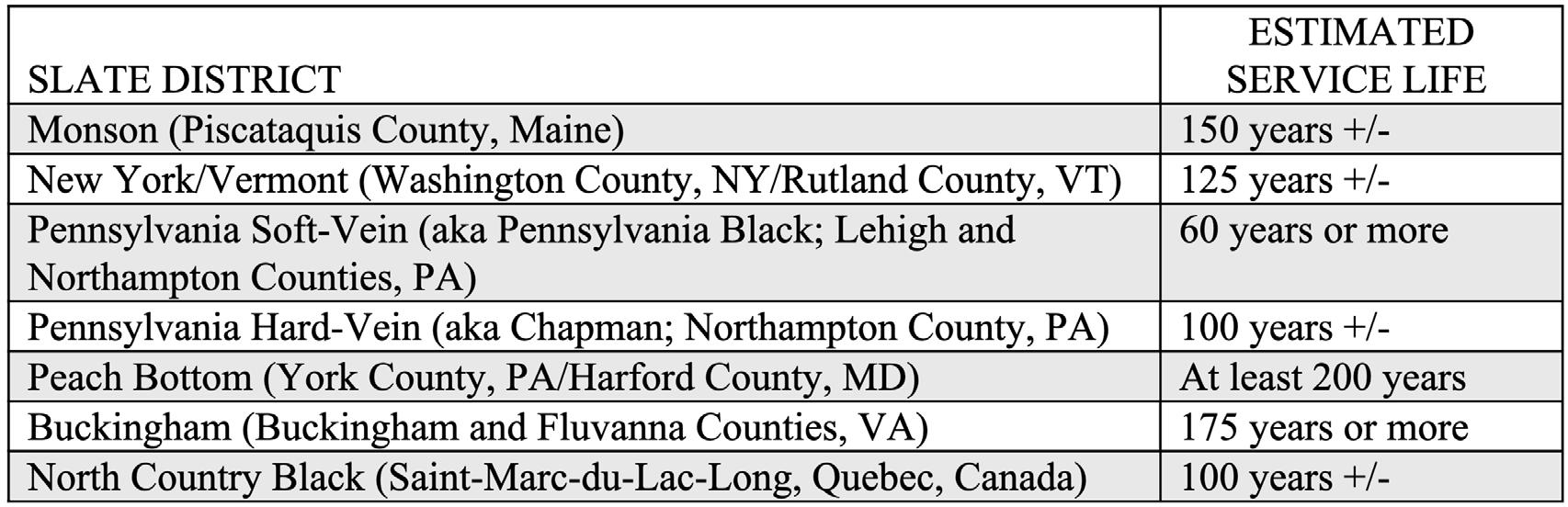
It is rare for flashings and rainwater conduction systems to last as long as a roof’s slate shingles, even when constructed of a high quality material, such as copper. This is especially true of roof elements subject to concentrated water flows, such as valleys and gutters. If there are few such deteriorated flashings on our 80-year old dormitory roof, perhaps because it is a simple gable or hipped roof with few penetrations, then repair of the fewer than 20-percent of deteriorated slates might be the happy result. If, on the other hand, the dormitory is a prototypical, late nineteenth century Collegiate Gothic pile with a complex roof massing consisting of numerous towers, chimneys, parapets, and roof levels, or an early twentieth century neocolonial building with closely spaced gable-roofed dormers and cross gables (Figure 7), then the calculus changes dramatically. In such cases, so many slates will have to be
LEFT: TABLE 1
RIGHT
Figure 6: Slate shingles sliding downslope due to the corrosion of the their ferrous metal slating nails.
BELOW
Figure 7: In addition to the condition of the slate and slating nails, the condition of flashings and gutters must be taken into account on roofs with complex massing, such as on this neoclassical dormitory building.
removed, salvaged, and reinstalled in order to replace the deficient flashings, in addition to those slates in need of repair, that it often makes better sense to replace the roof rather than repair it. Further, salvage and reinstallation of the slate, although possible, is often not practical in such situations, since a loss due to breakage on the order of 20 to 25 percent is typical. Should salvage and reinstallation be deemed desirable based on sustainability principles, new slate shingles will be needed to supplement those lost during salvage activities. It is important not to mix new slate with old in such cases, thereby mixing expected remaining service lives. Rather, it is best to install all of the new slate on distinct roof slopes, separate from the older, salvaged slate. This practice often results in a more aesthetically pleasing roof as well. Since freshly quarried slate rarely matches the patina of older slates, keeping
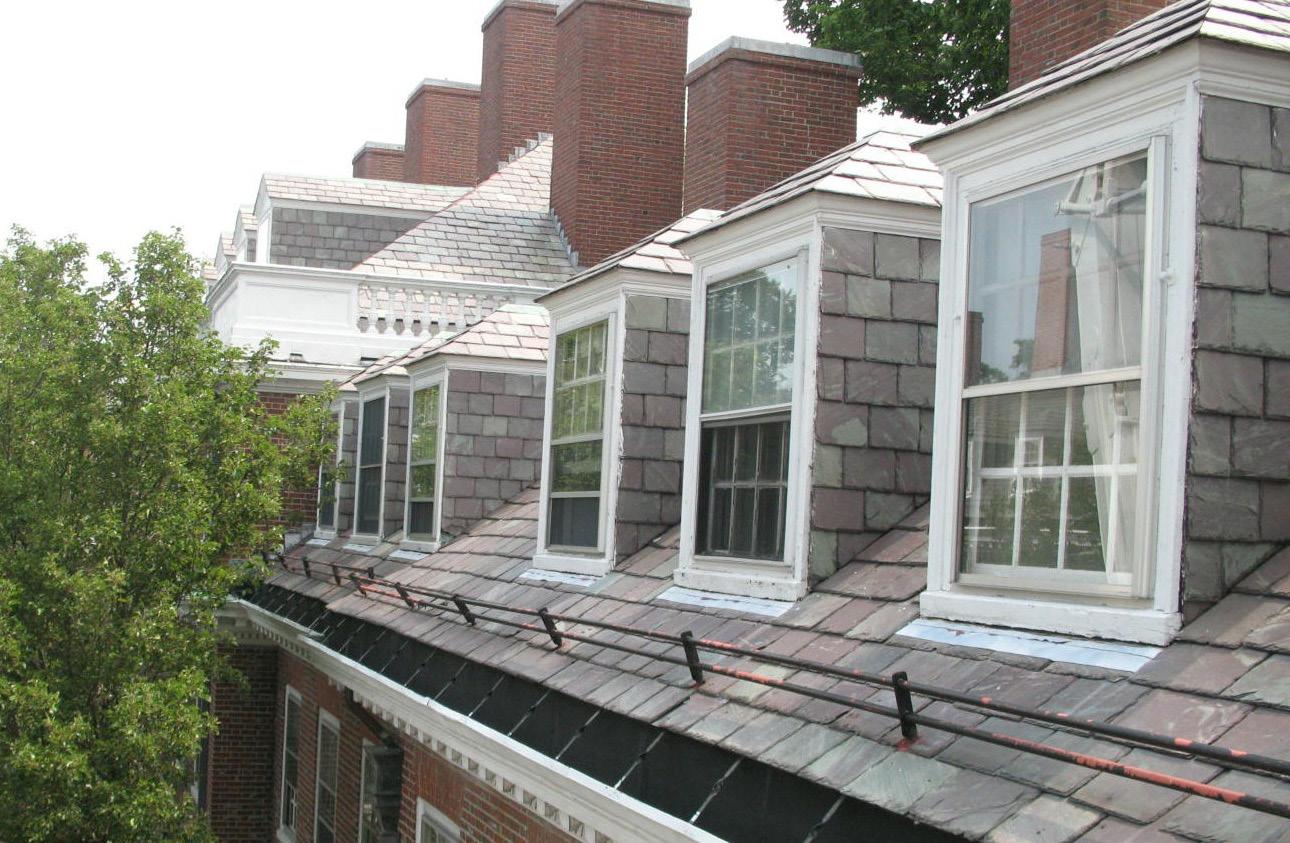
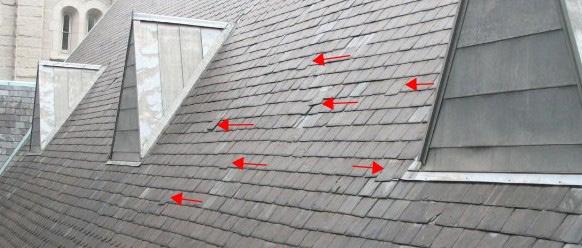
new and old slate on separate roof slopes will avoid the inevitable checkerboard effect that occurs when new and old slates are blended together.
Underlayments are rarely the decisive factor when deciding whether to repair or replace an aged slate roof. The existing condition of the slate itself, the slating nails, and flashings/ gutters typically take precedence. Eighty- to 100-year old asphalt-saturated organic felts are often brittle, crumbling, or nearly turned to dust. Even so, if there are no roof leaks, or leaks are concentrated at flashing locations, then the condition of the underlayment should be of little concern. If water infiltration is occurring in the field of the roof, lack of a functional underlayment could become a factor in the repair/replace decision making process. This is most likely to be the case when the original installer cheated (reduced) the necessary headlap, installed slate shingles that were too narrow for the roof’s slope, or did not maintain sufficient offset,ii thereby allowing rainwater to enter the bond lines between slates, migrate laterally, and find the nail holes in the slate course below.
Another issue that comes up with regard to roof stewardship is prioritizing across different capital project needs and limited budgets. If the roof’s condition is not dire, strategies can be developed to take the pressure off. The slate roof may not have many years left, but it is sometimes possible to effect temporary repairs to address active leaks while priorities elsewhere on campus can be addressed. The amount of time that can be “bought” via temporary repairs depends, of course, on the roof’s condition, but delaying full replacement for a year, or more, is not uncommon. Sometimes, multiple rounds of temporary repairs may be needed, especially if the amount of time before roof replacement can occur is extended. On a recent project, both roof replacement and wood roof truss repairs were needed on an academic building, but the project budget was sufficient for only one of these undertakings. Structural repair of the wood trusses took precedence in this case. Low-cost, temporary repairs were implemented to address
known active roof and gutter leaks, thereby allowing roof replacement to take place the following fiscal year. There is a limit, of course. As a roof continues to age, repairs may become less effective or there may come a point when additional repairs are not feasible.
An alternate strategy that can be implemented to accommodate limited capital funds is to phase the roof replacement work over multiple summers. Two phases are common, but more may be possible, depending on the size of the roof and the location of logical starting and stopping points. It is also possible to combine both strategies, wherein phase one incorporates both replacement of a defined area of the roof and temporary repair work at roof areas designated to be replaced in later phases. The downside of phasing is that the total project cost will be greater than that of a single phase project due primarily to increased soft costs and multiple mobilizations/ demobilizations.
Managing a campus full of roofs can be a challenging endeavor. Calling upon an independent expert to undertake a, not necessarily comprehensive, but sufficiently thorough assessment can provide the information facilities managers need to make rational decisions. The best case scenario is that roof repair is all that is needed to extend the service life of the roof considerably. Even if roof replacement is necessary, at the very least, you may find out that there are options with regard to the timing and sequencing of the work. Roofs are important assets. Their responsible stewardship can keep occupied spaces habitable and help maintain the character of a campus. Treat them well. ■
Jeffrey S. Levine is a principal in the Philadelphia, PA office of Wiss, Janney, Elstner Associates, Inc. (WJE). He has over 36 years of experience in the assessment, rehabilitation, replacement, and maintenance of a wide range of steep-slope and low-slope roofing systems. Jeff is chair of the National Slate Association’s Installation Standards Committee and editor and co-author of its Slate Roofs, Design and Installation Manual.
PURSUING APPA’S CERTIFIED EDUCATIONAL FACILITIES PROFESSIONAL (CEFP)

In 2019, after spending seven years in higher education facilities management with Clayton State University, I found myself at a pivotal point in my career. Working as a Project Manager in the main campus facilities had given me a strong foundation— yet I felt a desire for growth, deeper knowledge, and a broader understanding of the comprehensive facilities management world. I knew I wanted to advance professionally and strengthen the expertise that would allow me to contribute more strategically to my institution.
My journey within APPA had begun years earlier. I became an APPA member as soon as I joined my employer in 2012, immediately immersing myself in the local chapter, attending annual conferences, and building a network with peers across institutions. Over those seven years, I gained experience in a wide spectrum of responsibilities: space management,
space utilization, capital budget planning, Facilities Performance Indicators (FPI), building services standards, landscaping, budget oversight, Major Repair and Renovation (MRR) planning, new construction and renovation capital projects, capital project submissions, accreditation preparation, auxiliary, student services, engineering systems, and sustainable operations. Every project and campus initiative strengthened my skills and broadened my vision of what effective facilities leadership could achieve.
Despite this extensive exposure, I found myself growing increasingly curious. I wanted to understand the deeper principles behind benchmarking, operational efficiencies, resource stewardship, long-term planning, and team development. I wondered how other institutions were addressing aging infrastructure, optimizing budgets, scaling for
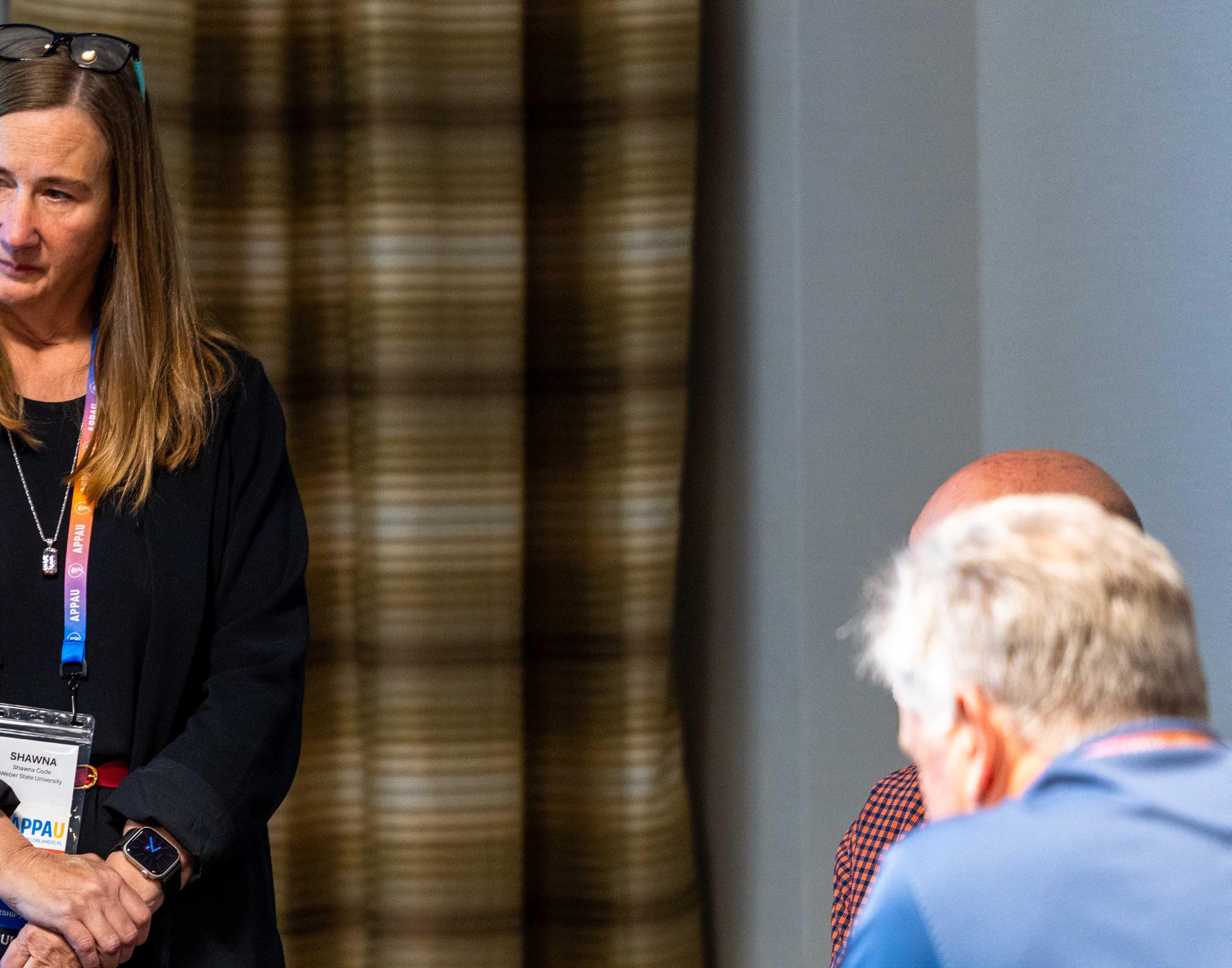
growth, leveraging data insights, and navigating evolving campus needs. I sought a broader, more strategic lens— one that could help me contribute meaningfully to the future of educational facilities.
During a local APPA chapter conference in 2018, a conversation with a peer introduced me to APPA’s Certified Educational Facilities Professional (CEFP) credential. Until then, I hadn’t explored the details of CEFP, but that discussion sparked something. I approached my manager to learn more, and—as has been true throughout my career—I was met with encouragement, guidance, and support. I then took the initiative to study the eligibility requirements, connect with professionals who had completed the certification, and assess whether the CEFP aligned with my goals.
By 2019, the timing felt right. I had accumulated seven years of diverse experience, discovered a deep passion for higher education facilities management, and was motivated to take the next step in my development as a leader. Pursuing the CEFP felt like a natural progression— one that would not only validate my skills but expand my understanding of the strategic, operational, and leadership dimensions of the profession.
I have always approached my work with a growth mindset. I often say that I do not simply manage facilities—I serve and support the built environment where education thrives. Our work allows students, faculty, researchers, and staff to flourish in spaces that are safe, sustainable, functional, and inspiring. My aspiration has always been to contribute as a strategic, innovative, and resilient leader who brings vision, stewardship, and meaningful impact to the institutions I serve.
Individuals pursue CEFP for many different reasons. For me, the reasons were clear: I wanted to deepen my expertise, strengthen my leadership capacity, and play a more strategic role in shaping the future of campus environments. Earning the CEFP became not just a certification goal, but a defining step in my professional journey—a step toward the leader I sought to become. My personal reasons for a professional certification- Find your top 5 reasons!
1. Career Advancement- with enhanced knowledge
2. Enhanced Credibility- mark of distinction and excellence
3. Organizational Impact- by being a strategic, innovative, and resilient leader
4. Professional Growth- continuous learning in the dynamic facilities management field
5. Recognition and Professionalism- stand out, personal pride, and unlock new opportunities
The CEFP journey begins with a straight forward online eligibility form. Candidates provide information regarding their education, professional experience, and relevant training. APPA reviews this submission to confirm that applicants meet the requirements necessary to pursue the credential.
Once eligibility is approved, candidates move into the preparation phase. When I pursued the certification, APPA offered cohort-based sessions—virtual groups guided by instructors who walked participants through each topic. It was a collaborative, supportive approach that helped build both knowledge and community.
Today, APPA has further streamlined this step by offering a self-paced online preparatory course through its Learning Management Platform, accessible for 180 days. Registering for the exam provides full access to:
• Comprehensive learning modules
• Flashcards and study materials
• Practice tests and quizzes
• Online discussion boards and peer support
This modern approach gives candidates flexibility while ensuring they have the tools needed for success.
After completing the preparation requirements, candidates are ready to take the CEFP exam—a computerbased assessment consisting of multiple-choice questions (approximately 120). The exam covers the full spectrum of APPA’s Body of Knowledge and must be completed within a set time limit. Scores are available immediately upon submission, and a passing score results in the awarding of the CEFP credential.
Professional development should never stop! It continues even after certification. CEFP holders must renew their credential by completing approved professional development activities or continuing education credits. Although recertification was previously required every four years, APPA has since adjusted the cycle to every three years. This ensures that certified professionals remain current with evolving standards, practices, and innovations in educational facilities management. APPA, Regional Chapters and Local Chapter offers many activities and opportunities to gather continuing education credits.
Achieving CEFP demands structured study and commitment. Effective preparation strategies include:
• Understand the APPA Body of Knowledge (BOK). The BOK is the core reference for the exam. Focus
on: Operations and maintenance; Leadership and strategy; Planning and design; General management; Environmental and safety regulations
• Use APPA’s Prep Materials
• APPA’s online platform includes: Interactive learning modules; Flashcards; Practice assessments; Videos and BOK summaries These are tailored specifically for the CEFP exam.
• Join Study Groups: If you don’t have a study group, build one with people who are preparing for CEFP. Creating a virtual study group, meeting up regularly for check-ins or discussions, have been beneficial. Group discussions help reinforce difficult topics, share best practices, and improve retention.
• Practice Time Management: Taking timed practice tests helps ensure readiness for the exam format. Take multiple practice tests, use technology to create practice exams, quizzes, and flash cards. Find a way that works for you. Create a 30-60-90-day CEFP study Plan
• Leverage Work Experience: Link your study material with real-world examples from your job—this improves comprehension and confidence.
My personal strategy was – prepare a checklist for CEFP, have a focus time allocated to study, have regular checkins with my accountability partner, complete each section with review, check in with an expert for difficult questions or categories, and understand the reasons behind it. Take advantage of technology to make a quiz or, game for each category.
Conclusion
The APPA CEFP Certification is a powerful credential for professionals dedicated to excellence in educational facilities management. From eligibility and preparation to the exam and long-term benefits, earning the CEFP equips professionals with deep knowledge, operational skills, and recognized credibility in the field.
For individuals seeking to advance their careers and make a strategic impact on their educational institutions, the CEFP is a rewarding and impactful step forward.
Achieving the APPA CEFP Certification in 2019 was a pivotal milestone in my professional journey. The credential strengthened my confidence to step into higher leadership roles within the institution and played a key role in shaping and developing the housing facilities management framework. I was promoted to the Assistant Director of Facilities Management role within the organization and became a people leader. It also opened doors to speaker engagements at facilities management conferences, positioning me as a knowledgeable voice in the field. Most of all, it was the sense of pride and personal accomplishment to establish credibility in the workplace. The CEFP certification not only validated my expertise but also expanded my access to APPA’s extensive resources,
peer network, and community of excellence. Equipped with this enhanced knowledge and professional visibility, I was well-prepared to pursue advanced opportunities in higher education facilities management.
In 2021, I advanced into my next leadership role, becoming the Director of Facilities and Capital Planning for the Ivan Allen College of Liberal Arts at the Georgia Institute of Technology, where I continue to bring strategic vision, operational insight, and a commitment to elevating the built environment in support of academic success.
It doesn’t matter whether you are a student exploring a future in higher education facilities management, an early-, mid-, or senior-career professional already working in the field, or a business partner supporting campus operations—APPA’s CEFP Certification can elevate your understanding, expand your network, and strengthen your impact. The credential opens doors to new opportunities, enhances professional credibility, and equips you with the knowledge needed to navigate the complex challenges facing today’s educational institutions.
If you are looking to grow, lead, and contribute meaningfully to the built environment that supports teaching, learning, research, and campus life, the CEFP is a powerful step forward. Invest in your development, embrace the journey, and unlock the confidence and expertise that come with becoming a Certified Educational Facilities Professional. I encourage you to engage your institution in supporting the certification or working with the APPA regional and local chapter Boards to explore scholarship opportunities to support certification and recertification.
My CEFP recertification experience in 2023 was seamless and reaffirmed the value of continuous learning in our profession. My current certification is valid till 2027, which I proudly display at my workplace, and in my signature. I look forward to maintaining this certification and staying at the forefront of excellence in educational facilities management. ■
ABOUT THE AUTHOR