2
Dynamic Locking Screw (DLS)
Stefan Döbele, Thomas Freude, Röbi Frigg, Dankward Höntzsch, Michael Plecko, Brigitte von Rechenberg, Henning Richter, Ulrich Stöckle
Dynamic Locking Screw (DLS)
a
b
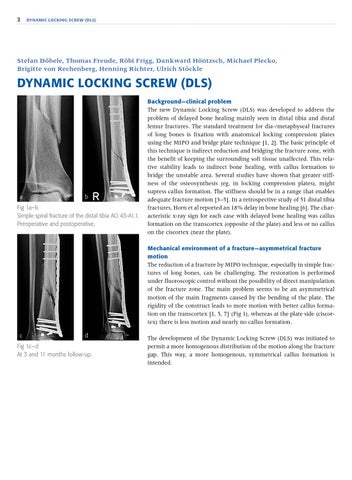
Fig 1a–b Simple spiral fracture of the distal tibia AO 43-A1.1. Preoperative and postoperative.
Background—clinical problem The new Dynamic Locking Screw (DLS) was developed to address the problem of delayed bone healing mainly seen in distal tibia and distal femur fractures. The standard treatment for dia-/metaphyseal fractures of long bones is fixation with anatomical locking compression plates using the MIPO and bridge plate technique [1, 2]. The basic principle of this technique is indirect reduction and bridging the fracture zone, with the benefit of keeping the surrounding soft tissue unaffected. This relative stability leads to indirect bone healing, with callus formation to bridge the unstable area. Several studies have shown that greater stiffness of the osteosynthesis (eg, in locking compression plates), might supress callus formation. The stiffness should be in a range that enables adequate fracture motion [3–5]. In a retrospective study of 51 distal tibia fractures, Horn et al reported an 18% delay in bone healing [6]. The characteristic x-ray sign for each case with delayed bone healing was callus formation on the transcortex (opposite of the plate) and less or no callus on the ciscortex (near the plate). Mechanical environment of a fracture—asymmetrical fracture motion The reduction of a fracture by MIPO technique, especially in simple fractures of long bones, can be challenging. The restoration is performed under fluoroscopic control without the possibility of direct manipulation of the fracture zone. The main problem seems to be an asymmetrical motion of the main fragments caused by the bending of the plate. The rigidity of the construct leads to more motion with better callus formation on the transcortex [1, 5, 7] (Fig 1), whereas at the plate side (ciscortex) there is less motion and nearly no callus formation.
c
d
Fig 1c–d At 3 and 11 months follow-up.
The development of the Dynamic Locking Screw (DLS) was initiated to permit a more homogenous distribution of the motion along the fracture gap. This way, a more homogenous, symmetrical callus formation is intended.