being human
anthroposophical society in america personal & cultural renewal in the 21st century anthroposophy.org rudolfsteiner.org
winter-spring issue 2022
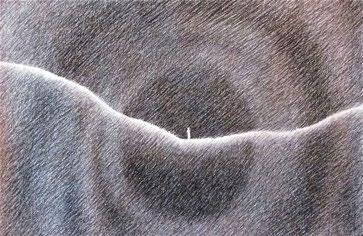
“Soundscape” (detail) Patrick Stolfo
a reflection on gift (p.21) the heart speaks (p.22) kairos institute (p.24) the pandemic & the pedagogical law (p.26) dancing with the zeitgeist (p.29) gallery: Patrick Stolfo (p.30) an alchemical fable (p.35) wisdom goddess traditions (p.36) the heart & the blood (p.38)

S
O U R T E A M :


W e a r e a f i d u c i a r y , e t h i c a l l y b o u n d t o a d v i s e f o r o u r c l i e n t ' s i n t e r e s t s f i r s t a n d f o r e m o s t . O u r t a s k i s t o s u p p o r t o u r c l i e n t s t o f u l f i l l t h e i r i n d i v i d u a l l i f e ' s i n t e n t i o n s t h r o u g h f i n a n c i a l p l a n n i n g a n d a s s e t m a n a g e m e n t t h a t i s c o n g r u e n t w i t h t h e i r p e r s o n a l a n d s p i r i t u a l v a l u e s a n d a s p i r a t i o n s . F i n a n c i a l P l a n n i n g I n v e s t m e n t C o n s u l t i n g

P o r t f o l i o D e s i g n & M a n a g e m e n t I n s u r a n c e P l a n n i n g
E s t a t e P l a n n i n g
P h i l a n t h r o p i c P l a n n i n g
O U R
E R V I C E S I N C L U D E :
W e i n v i t e y o u t o c o n t a c t u s t o d a y !
5 1 8 . 4 6 4 . 0 3 1 9 | A R I S T A A D V . C O M | I N F O @ A R I S T A A D V . C O M
J e r r y M S c h w a r t z , C F P ® B e r n a r d C M u r p h y , C F P ® K i m b e r l y M . M u l l i n , F P Q P ™
M o n e y a t w o r k i n t h e w o r l d i n t h e s e r v i c e o f t h e c o m m o n g o o d .
D igned for working teach s.
‘Teaching as an Art’

JULY 10-15, 2022 | DENVER COLORADO
Grade-Level Preparation (ECE to Grade 8) for the 2022-2023 school year
Experienced Waldorf instructors at each grade level and inspiring guests from the greater community. Classes cover a variety of information designed to ready the teacher with stories, art, academics and pedagogically appropriate content for the next grade level. Recommended for all teachers working in public or independent schools inspired by Waldorf pedagogy.
Nationally Accredited Teacher Training


for Independent and Public Schools Inspired by Waldorf Principles

NEW COHORT BEGINS SUMMER 2022 DENVER, COLORADO | June 24th – July 15th


Gradalis training for Early Childhood and Grades Teachers is taught over 26 months, in seven semesters. Courses provide anthroposophical foundations, rich artistic training in visual & temporal arts, inner development, insights for child observation, and working with special needs. Plus, field mentoring, curriculum, and school culture.


Includes: 3 three-week Summer Intensives; 4 Practicum Weekends; and on-line Interactive Distance Learning (7.9% of program) to support the working teacher with monthly pedagogical and main lesson support through two school years.


MORE: gradalis.edu


EXPLORING Di rsity, Inclusi , and Acc sibility IN NORTH AMERICAN SCHOOLS QUESTIONS 720-464-4557 or info@gradalis.edu
SAVE YOUR SPOT:
Accrediting Council for Continuing Education & Training
ACCREDITED BY LEARN


Inspiring Education Since 1967 Low-Residency Waldorf Early Childhood, Elementary, and now High School Teacher Education Programs Scholarships Available, including Diversity Fund Scholarships Apply Now To Enroll This Summer Or Register For Summer Series 2022: Live From Home! Professional Development and Introductory Courses www.sunbridge.edu anthroposophicpsychology.org Anthroposophic Psychology is enlivening! EXPLORE the interpenetrating mysteries of Body, Soul & Spirit DISCOVER the illusive secrets of your own Psyche ILLUMINATE the journey from lower self to Higher Self In this 3-year transformational process you will be changed. Join us. NEW CERTIFICATE P R OGRAM BEGINS IN 2022 Visit our website for details.
Traumatized children and adolescents require stable and competent teachers schooled in diagnosing and averting disorders brought on by physical and emotional trauma. Symptoms are easily misdiagnosed, and age-appropriate pedagogical intervention can help alleviate the inner paralysis brought on by trauma. Psychological trauma progresses in phases.
Bernd Ruf is the world-renowned founder of the Parzival School and of Emergency Pedagogy, an emergency pedagogical crisis intervention center in Karlsruhe, Germany. He will begin with an overview of the 4 stages of PTSD, from acute shock to more internalized trauma. Then, he will offer pedagogical intervention techniques that activate self healing, starting with emergency intervention and extending to long-term pedagogical approaches. The 5-day course, including daily workshops in the healing artistic therapies, is designed for teachers, therapists, and others in the healing professions.
This course represents the first of Bernd Ruf's internationally-recognized 12-module Emergency Pedagogy program. In addition to his practical seminars, participants receive an introduction to healing approaches through artistic media such as clay, music, painting, creative speech, and movement. Group singing and speech will be part of the daily schedule.
Kairos Institute is planning to offer the 4 modules in this sequence most appropriate for educators. Participants seeking a special International Certificate for professional world -wide trauma intervention will need to take all 12 modules.
Tuition for Module 1 (July 2022): $950 To register for this one-week opening course: bit.ly/EmergencyPedagogy
For participants seeking to complete both Antioch's TSHE program and an artistic therapies training, the Kairos Institute will offer pathways for an International Standards Diploma in artistic therapies certified by the Medical Section at the Goetheanum. In addition to the summer week, continuing students will be invited to take fall virtual courses and a spring face -to-face long weekend. Those interested in earning an accredited M.Ed. or Certificate in Healing Education through Antioch University, as well as those wishing to take further training in artistic therapies, should send their inquiries to Karine Munk Finser, Director of the Transdisciplinary Studies in Healing Education Program (TSHE), at kfinser@antioch.edu
centerforanthroposophy.org, 603.654.2566
 Announcing a new initiative of the Center for Anthroposophy in collaboration with the Transdisciplinary Healing Education Program at Antioch University New England
Kairos will launch July 3-8, 2022 in Wilton, NH, with Bernd Ruf ’ s
Karine Munk Finser
Announcing a new initiative of the Center for Anthroposophy in collaboration with the Transdisciplinary Healing Education Program at Antioch University New England
Kairos will launch July 3-8, 2022 in Wilton, NH, with Bernd Ruf ’ s
Karine Munk Finser
cohort begins summer 2022 Part-time Programs: 5 weeks each year. 3 weeks in July, 1 week in fall and spring


additional mentoring, observation and practicums. July session in Duncan, Vancouver Island; fall & spring in North Vancouver, BC.


doohdlihcylraefrodlaw.ww . o r g i n of gro.doohlihcylraefrodlaw@ Untitled-1 1 6/28/2021 7:16:34 AM
Columbia, Canada www.westcoastinstitute.org | info@westcoastinstitute.org
Our Waldorf Teacher Training in Canada
Childhood Educator Training
Option
Teacher Training
Courses & Workshops Visit our website for details For more information
Visit
Early Childhood, Grades and High School Tracks www.bacwtt.org tiffany@bacwtt.org 415 479 4400 Embark on a journey of self development and discovery Study with us to become a Waldorf Teacher
British
Join
Early
Birth to Seven, with a Birth to Three
Next cohort begins summer 2023 Grades
Next
with
Summer
Birth to Three & EC: Ruth Ker: ece@westcoastinstitute.org, 250-748-7791 Grades: Lisa Masterson: grades@westcoastinstitute.org, 949-220-3193
our website to apply or register
May 2022—April 2023
This professional development program provides training that builds skills, capacities, and understanding of the vital roles administrators and pedagogical leaders serve in Waldorf schools. The program includes workshops, case studies, karmic exercises, and presentations in areas such as group dynamics, role clarity, communication, conflict resolution, navigating change, decision making, community development, and collaborative leadership.
Explorations
Explorations takes up burning current topics along with contemplative studies and the practice of the arts through anthroposophy as a method of inquiry. This online course is offered as a supplementary seminar that meets twice monthly during the school year, beginning in March 2022.

Leadership Development Course
Through a combination of virtual and in-person classes, participants will engage in seminars designed to cultivate the capacities needed for serving in leadership positions.
Beginning in May 2022, participants will attend a program orientation online, followed by a one-week online intensive from June 26-30, 2022. Virtual meetings will continue twice monthly during the 2022-23 school year, with the addition of two in-person, long weekend intensives held in Keene, NH, in October 2022 and April 2023.
Tuition
Option A: $3,200 Explorations plus Leadership Seminars.
Option B: $1,800 Leadership Seminars only. For past Explorations and Waldorf Teacher Ed. program graduates as well as Experienced Waldorf Teachers.
Read More: bit.ly/LeadershipCfA
Program Director: Torin M. Finser
For more information, contact: Karen Atkinson, Program Coordinator, at Karen@centerforanthroposophy.org
For registration assistance, contact: Milan Daler, Administrator, at (603) 654-2566 or milan@centerforanthroposophy.org centerforanthroposophy.org

A low-residency program for independent and public Waldorf school administrators, staff, trustees, pedagogical leaders, and parents who wish to serve their school in present or future leadership roles.
Karine Munk Finser


Week 1
June 26th to July1st (virtual) All courses are live and interactive online!
Curative Education with Robyn Brown
Gender in the Light of Social Understanding and Soul Development in Waldorf Education with Lisa Romero and Meaghan Witri Waldorf Leadership Development with Torin Finser and Special Guests
Preparing for Grade 1: Once Upon A Time with Lori Ann Kran
Preparing for Grade 2: From Form to Solid Foundation with Michael Gannon
Preparing for Grade 3: Becoming a Steward of the Earth: Awakening to Self & Surroundings
Preparing for Grade 4: Celebrating the Earth: Hearing the Voices of our Elders, Reclaiming the Sacred
Welcome to Renewal Courses 2022
For Waldorf teachers and administrators along with parents, trustees, artists, and thinkers seeking to deepen their lives through Anthroposophy


Week 2
July 3rd to July 8th (in person) Return to Community in Wilton, NH!
Starry Inspiration for Earthly Deeds, Diversity and Healing with Elan Leibner Eurythmy with Jenny Foster
Make Up Your Mind: Navigating Color Through Polarity with Charles Andrade
Living Thinking with Michael D'Aleo
What a Character! Learning to Face Encounters “I” to “I” with Chris Burke and Anne DeWild
Making Math Meaningful: The Joy of Learning Math in Grades 1 -5 with Nettie Fabrie and Wim Gottenbos
Social Vibrancy through the Arts of Music and Eurythmy: The Healing Nature of Tone with Jeff Spade and Jenny Foster
Bringing a Living Approach to Teaching Physical Sciences in Grades 6, 7, and 8 with Gary Banks
Preparing for Grade 5: The Golden Age: Feet upon the Ground, Gaze toward the Heavens with Jen Kershaw
Preparing for Grade 6: From Chaos and Coldness to Order and Compassion with Anne Clair Goodman
Preparing for Grade 7: A Year of Awakening & Exploring with Wendy Kelly
Renewal
Wilton, New Hampshire Karen Atkinson, Renewal Coordinator Register online:
centerforanthroposophy.org Phone: 603-654-2566
Cosmic Cycles, Earthly Rhythms with Mary Stewart Adams (Star Lore Historian)
The Art and Craft of Subject Teaching in a Waldorf School with Jason Child
Special Feature in Week 2
• Evening Lecture with Adam Blanning, MD
Special Features in Week 1
• Daily Lectures with Christof Wiechert
• Singing with Meg Chittenden
• Eurythmy with Leonore Russell
• Movement with Jan Lyndes
• DEI Curriculum Innovations with Alison Henry
• Special Evening Lecture with Lisa Romero
Explorations—foundational
Waldorf Leadership Development (new cohort begins May 2022)
Waldorf High School Teacher Education Program (new cohort begins June 2022)
Kairos Institute Emergency Pedagogy Program (inaugural cycle begins July 2022)
Preparing for Grade 8: Awakening to Adolescence in a Rapidly Changing World with Sarah Nelson Courses sponsored by Center for Anthroposophy
Other Programs Offered by Center for Anthroposophy:
studies in the practice of the arts (new cycle begins March 2022)
How do we make the world a better place when the scars of trauma have become collective? How does human spiritual development support healing in action? New cohort begins July 2022
RENEW YOURSELF
• Conduct research in a specialized focus area of your choice
• Develop methodological approaches to questions that may arise from your practice
• Earn a master’s degree from an accredited university

• Enhance your capacity for collaborative inquiry and work in transdisciplinary contexts
• Transform and evolve your practice through applied spiritual scientific inquiry

This advanced track master’s program is designed for people with at least 5 years of professional experience in a relevant field and a practice based on anthroposophical foundations. This program is a collaboration between Antioch University New England and Camphill Academy to support innovation and healing.
EARN A MEd (32 credits) or CERTIFICATE (28 credits)
• Attend three summer residencies in New Hampshire
• Complete online work throughout the year
• Write your thesis in your concluding semester (MEd only)
Introducing KAIROS INSTITUTE, a new initiative of the Center for Anthroposophy, in collaboration with the Transdisciplinary Healing Education Program at Antioch University New England
Kairos will launch its training in artistic therapies July 3-8, 2022 with Bernd Ruf’ s Emergency Pedagogy The program will have in-person residencies in Wilton, NH, in the spring and summer, plus online courses in the fall, including international faculty. The Kairos and TSHE programs may be taken separately or together. For participants seeking to complete an artistic therapies training, the Kairos Institute will offer pathways for an International Standards Diploma in artistic therapies certified by the Medical Section at the Goetheanum. For info. and to join our mailing list, please write to info@centerforanthroposophy.org, or visit: bit.ly/KairosCfA. Those interested in earning an accredited MEd or Certificate in Healing Education through Antioch University, and those wishing to take further training in artistic therapies, should send their inquiries to Karine Munk Finser, Director of the Transdisciplinary Studies in Healing Education Program (TSHE), at kfinser@antioch.edu
Earn a Master of Education (MEd) with a Transdisciplinary Focus on Dana Kedziora • admissions.ane@antioch.edu • 800.552.8380 Karine Munk Finser • 603.491.2294 • kfinser@antioch.edu
Karine Munk Finser
Contents
12 from the editors 15 Book Notes: The Struggle for a Human Future, Jeremy Nadler Making Soft Dolls, Steffi Stern Xavier Sings Stories of His Alphabet Friends, Mary Lynn Channer Honey Bee Haven, Lenore Russell The Pearl & the Hut, Yianna Belkalopolos Art & Theory of Art (CW 271), Rudolf Steiner After Auschwitz, Peter Selg Mistletoe and the Emerging Future of Integrative Oncology, Steven Johnson, Nasha Winters, et al. Anthroposophy & the Natural Sciences (CW 75), Rudolf Steiner Corona and the Human Heart, Michaela Glöckler 21 A Reflection on Gift, by John Bloom 22 The Heart Speaks, by Holly Koteen-Soulé 24 Kairos Institute, by Karine Munk Finser 26 The Pandemic and the “Pedagogical Law”, by Jeff Tunkey 29 Dancing with the Zeitgeist, review by Christopher Schaefer 30 Gallery: Patrick Stolfo 35 An Alchemical Fable, review by Frederick Dennehy 36 Philo-Sophia: Wisdom Goddess Traditions, review by Signe Eklund Schaefer 38 The Heart & the Blood that Moves It, an appreciation by David Gershan 39 The Heart Isn’t a Pump—and Why Teachers Shouldn’t Be Either, by Chris Crouch 40 Treating the Corona Virus in Arlesheim 41 news
for members & friends
Tess Parker Named Director of Programs
New Dornach Youth Section Leader
Christine Burke, New Western Representative
Margaret Runyon Joins the General Council 44 Let’s Go Forth Together, by Deb Abrahams-Dematte 45 “To Be Helpful to Others,” by Judith G. Blatchford 46 Gifts of Southern France, by Helene Burkart 47 Welcoming New Members 48 Paul Jackson, by Michael Ronall 50 Heidi Haffner Finser 56 Nigel J.A. Harrison 57 Amelia Wilhelm 58 Kerry Virginia Lee, by Rev. Nora Minassian 60 Members Who Have Died 61 Herbert Helge Hagens, by Herbert O. Hagens 62 Rudolf Steiner’s Calendar of the Soul, 2022-2023 Dates, by Herbert O. Hagens
winter-spring issue 2022 • 11
“Soundscape” (2011) by Patrick Stolfo, charcoal [detail on the cover]
41
41
42
43
The Anthroposophical Society in America
GENERAL COUNCIL
John Bloom, General Secretary & President
Helen-Ann Ireland, Chair (at large)
David Mansur, Treasurer (at large)
Nathaniel Williams, Secretary (at large)
Hazel Archer Ginsberg (Central Region)
Gino Ver Eecke (Eastern Region)
Christine Burke (Western Region)
Margaret Runyon (at large)
LEADERSHIP TEAM
Deb Abrahams-Dematte, Director of Development
Katherine Thivierge, Director of Operations
Tess Parker, Director of Programs being human is published by the Anthroposophical Society in America 1923 Geddes Avenue Ann Arbor, MI 48104-1797 Tel. 734.662.9355
Editor & Director of Communications: John H. Beck
Associate Editor: Fred Dennehy Proofreader: Cynthia Chelius Headline typefaces by Lutz Baar
Past issues are online at www.issuu.com/anthrousa
Please send submissions, questions, and comments to: editor@anthroposophy.org or to the postal address above, for our next issue by 5/10/2022. being human is sent free to ASA members (visit anthroposophy.org/join). To request a sample copy, write or email editor@anthroposophy.org
©2022 The Anthroposophical Society in America. Responsibility for the content of articles is the authors’.
from the editors
Dear Friends,
The last, tenth-anniversary issue altered our format of sections considerably, and we are not yet finding our way back to it. The somewhat arbitrary sequence of initiatives, arts and ideas, gallery, research and reviews, and news of the ASA will come back reworked next time.
In this issue, after the book notes is a short “reflection on gift” by John Bloom which he has kindly permitted us to lay out artistically as a meditative sequence. Then we have three articles about healing. Holly Koteen-Soulé bring long experience as an early childhood educator to “The Heart Speaks! Qualities needed in our time for social art and social healing.”
Next, Karine Munk Finser presents her new initiative from the Center for Anthroposophy in New Hampshire: “Kairos Institute: Vocational Training Pathway for Artistic Therapies.” (The Center is actually jumping into the hopefully post-Covid era with both feet, and has taken out six pages in this issue to tell about them, when we would usually hear only about their summer Renewal Course.) A third article by Jeff Tunkey links “The Pandemic and the Pedagogical Law” an sheds new light on the great trio of “faith, love, and hope.”
A wealth of experience and indeed wisdom is living in the work of countless individuals in our movement.

Speaking of wisdom, the goddess the Greeks named Sophia, a year ago we offered a special feature, “A Sophia Mosaic” gathered by Signe Eklund Schaefer. An impulse which began in 2019 at our last face-to-face fall conference in Atlanta will blossom this April into a new face-to-face conference in Santa Fe, New Mexico: “Sophia Rising: Unveiling the Wisdom of Being Human” (see the back cover). Should it be sold out already, look for coming emails about ancillary Sophia events including online. And read Signe’s related review on page 36.
Patrick Stolfo is our gallery (and cover) artist this time. This small sample of his work brings to mind the famous Puccini aria where a painter muses on the mysterious harmony of the diverse forms by which beauty can be expressed.
Toward the end of this issue are the remembrances which are such a special part of our Society’s decades of publishing. Life as we say is “precious,” but each lifetime is also an extraordinary work of art, and anthroposophy seems peculiarly aware of that fact. Since our schedule of publication was cut back in 2015 to two issues per year we have not been soliciting these life stories. This time we are catching up a bit, but the reality is that we will need to begin offering many of them in an electronic supplement of being human, along with other fine but too-lengthy articles. This PDF edition has been promised for a while, and will finally show up now in May. It will even be “phone-friendly” in that, iewed with the free Acrobat Reader app, it will reformat the text to fit your phone or tablet, as well as being comfortable on big screens and easily printed out. While others may imagine you are playing Wordle or watching Tik-Tok, you will be filling your imagination with anthroposophy and real lives.
Finally I want to mention a short “appreciation” written by the late Dr. David Gershan for “The Heart and Circulation,” second edition, by Branko Furst, MD.
Dr. Furst has worked for many years to follow Rudolf Steiner’s request that it be made clear to the world that the heart is not a (propulsion) pump that forces the blood out mechanically.

David is full of praise for Dr. Furst’s accomplishment. Alongside this we are, quite exceptionally, including a 2014 blog article from a public education activist who heard about Rudolf Steiner’s assertion that “for human beings to improve and make true progress, they need to understand that the heart is not a pump.” So Chris Crouch took this question into his field of concern, education, and to support Steiner’s rather remarkable claim reached the wonderful insight that a teacher is not a pump either! This is an unusual illustration of how anthroposophy can work into the larger culture.
Following, on page 40, is just a teaser for an inspiring video on YouTube, a lecture on treating Covid at the Arlesheim Clinic. The motto might be, humanity first.
John Beck
In “Dancing with the Zeitgeist” Christopher Schaefer (p.29) reviews Eric Utne’s 2020 memoir Far Out Man: Tales of Life in the Counterculture. The Utne Reader was a real force in the last decades of the 20th century, and that this work led Eric Utne to Waldorf education hints at how large a role anthroposophical initiatives could play in the emerging global culture.
On page 35 I review Bruce Donehower’s The Singing Tree: An Alchemical Fable, a fascinating fairy tale which draws us into two entwined stories, of coming to maturity through mystery, and of realizing destiny. Signe Eklund Schaefer reviews, on page 36, Philo-Sophia: Wisdom Goddess Traditions, edited by edited by Debashish Banerji and Robert McDermott, with essays by thirteen scholars seeking Sophia across many ages and cultures. But Signe reports that “there is a sense of urgency in this book that is clearly articulated in the Afterword by Robert McDermott,” for Sophia may be the power that can assist humanity “to build a more divine civilization.”
Finally, on page 38, there is a posthumously published appreciation by David Gershan, MD, for the second edition of The Heart and Circulation: An Integrative Model , by Branko Furst, MD. The urgency for culture at large of understanding the true role of the heart in the circulation of the blood, the living fluid which according to Steiner is the physiological basis of the human ego, has been waiting for this “masterful study.”
Fred Dennehy
The ASA invites you to join the Michael Support Circle
our major donor circle. THANK YOU to the 45 individual members, and to these organizations for their generous and on-going support:
Anthroposophical Society of Cape Ann Association of Waldorf Schools of North America Bay Area Center for Waldorf Teacher Training Biodynamic Association
Camphill School – Beaver Run Carah Medical Arts Cedarwood Waldorf School Council of Anthroposophical Organizations GRADALIS Waldorf Consulting & Services
Great Lakes Branch House of Peace Rudolf Steiner Fellowship Foundation

Michael Support Circle members pledge gifts of between $500 and $5000 per year for five or more years. They help the Society to grow in capacity and vitality—the basis for increased membership, new learning opportunities, and greater impact in the world.
To learn more about how you can support the strength and sustainability of our movement, contact Deb at deb@anthroposophy.org
winter-spring issue 2022 • 13
Saint George Slays the Dragon, by Laura James

14 • being human
LegacyCircle
Erika V. Asten*
Betty Baldwin
J. Leonard Benson*
Susannah Berlin*
Hiram Anthony Bingham*
Mrs. Hiram A. Bingham
Virginia Blutau*
Iana Questara Boyce*
Marion Bruce*
Robert Cornett
Helen Ann Dinklage*
Irmgard Dodegge*
Raymond Elliot*
Lotte K. Emde*
Hazel Ferguson*
Marie S. Fetzer*
Linda C. Folsom*
Gerda Gaertner*
Susanna Gaertner
Ray German Ruth Geiger
Harriet S. Gilliam*
Chuck Ginsberg
Hazel Archer-Ginsberg
Agnes B. Granberg* Alice Groh
Bruce L. Henry* Ruth Heuscher*
Richard Hicks* Christine Huston Ernst Katz*
Cecilia Leigh
Anna Lord*
Seymour Lubin*
William H. Manning
Gregg Martens*
Barbara Martin
Beverly Martin
Helvi McClelland
Robert & Ellen McDermott
Robert S. Miller*
Ralph Neuman*
Martin Novom Carolyn Oates
Mary Lee Plumb-Mentjes
Norman Pritchard*
Paul Riesen* Mary Rubach*
Margaret Runyon
Ray Schlieben*
Lillian C. Scott*
Fairchild Smith*
Patti Smith*
Doris E. Stitzer*
Gertrude O. Teutsch* Katherine Thivierge
Jeannette Van Wiermeersch*
Catherina Vanden Broek* Randall Wadsworth

Pamela Whitman
Thomas Wilkinson
Anonymous (22)

* indicates past legacy gift
Legacy giving is an excellent way to support the work of the Society far beyond a person’s current giving capacity.
There are a variety of ways to make a legacy or planned gift. If you would like to learn more please contact Deb Abrahams-Dematte at 603-801-6484 or deb@anthroposophy.org


www.anthroposophy.org/legacy

Here are some of the many books we encounter. Except as specified, the notes are from the publishers — Editor
The Struggle for a Human Future: 5G, Augmented Reality, and the Internet of Things , by Jeremy Nadler, 146 pp. (Temple Lodge, 2020)

Jeremy Nadler holds a doctorate in theology and religious studies, and is a philosopher, cultural historian and gardener who lives and works in Oxford, England. He has long been interested in the history of consciousness and sees the study of past cultures—which were more open to the world of spirit than our own, predominantly secular, culture—as relevant both to understanding our situation to-day and to finding pathways into the future. His long-standing concern about the impact of electronic technologies on our inner life and on our relationship to nature has found expression in numerous articles contributed to magazines such as New View, Self and Society and Resurgence.
“As we enter a new era of extreme technology, driven by a momentum that seems beyond the constraint of any spiritual or moral consideration, both human beings and nature face an unprecedented challenge. This is a challenge
winter-spring issue 2022 • 15
L eaving a L egacy of W i LL The Anthroposophical Society in America
THAN K YO U! to these members, who support the Society’s future through a bequest or planned gift
photo by Javier Allegue Barros
that can be met only by reaffirming essential human val ues and recovering a sacred view of the natural world. From this grounding, we can work toward a truly human future that, rather than creating even more pollution and toxicity, will bring blessing to the natural world to which we belong.
CONTENTS: 1. Technology and the Soul; 2. The Quest for the Pearl; 3. The Advent of the Wearable Computer; 4. 5G: The Multiple Assault; 5. Bringing Light to the World.”

“Large and small, knitted and sewn, beautiful handmade dolls with no sewing machine required. Full step-by-step instructions with clear drawings and templates. Detailed directions to make ten character dolls and their accessories. Create a charming dolls’ house size family including baby and pets.”
“Why do Waldorf dolls have such simple facial features? What is it about dolls that captures the imagination of children and adults around the world? This
book answers these questions and highlights the power of dolls when used for therapeutic purposes, recognizing that


present that will be loved for generations. ‘My wish is for everybody to experience that feeling of warmth and satisfaction when sewing a little love into a handmade doll, whatever the reason you are making it.’ Steffi Stern.”
Xavier Sings Stories of His Alphabet Friends,
Publications.org
Here is a delightful story of a little boy, Xavier, who has a song for every letter of the alphabet. After telling a story for each letter a mother or a teacher can then sing a little song. Music has been identified as a wonderful way to help children to remember the sounds and shapes of letters. Mary Lynn Channer tells a story about Adam for the letter “A” to give the reader an idea of how simple and lovely a little story can be for the letters. The end result is a child who feels the letters are her friends, too, and worth remembering as friends to help with reading as the skills for that develop. Beauty and truthful sounding are what make the songs so sweet and memorable. All the illustrations are simple and to the point of remembering the letters!

Links to recordings of the song are included in the book so that the parent or teacher can remember the songs to sing them to their children. In our busy, fast-moving world, this book promises a journey to a very childlike place where a child can understand, remember, and sing into life the letters we use to say good things to each other, to tell good stories to each other!

Mary Lynn Channer, BME, is a graduate of the Dorion School of Music Therapy. As a vocal and strings teacher for over fifty years, she has applied the educational principles of Rudolf Steiner in Waldorf

16 • being human
Making Soft Dolls: Simple Waldorf Designs to Sew & Love, by Steffi Stern, 128 pp., (Hawthorne Press, 2020)
by Mary Lynn Channer, Waldorf
P a c i f i c E u r y t h m y JOI N A P A R T - T IM E E URY T HM Y T R A ININ G IN I T I A T I V E I N P ORTLAN D , OREGO N NEW CLASSES BEGIN SEPTEMBER 2023 For more information visit: PacificEurythmy.com Email: pacificeurythmy@gmail.com
with an online option for Waldorf High School Teachers
(both practicing and prospective)
Explorations takes up burning current topics along with contemplative studies and the practice of the arts through anthroposophy as a method of inquiry. In addition, this online course offers supplementary classes on Saturday afternoons concerning the Waldorf high school program , including a unique chance to sample each of the specialized academic subjects in the sciences and humanities.
Schedule of Classes for Spring Term 2022
Date
Explorations
Theme Date High School Seminar Explorations Themes for Fall & Winter 2022-23 March 12 Meditative Practice & Self Development
Torin Finser, Bev Boyer, Debra Spitulnik March 12
Overview and Waldorf Approach to Math Douglas Gerwin, Jamie York March 26 -27 Meditative Practice & Self Development Bev Boyer, Debra Spitulnik March 26 Waldorf Approach to Physical Sciences Michael D’Aleo April 9-10 Practical Training in Thinking and the Rightful Place of Technology Douglas Gerwin, Leonore Russell April 9 Waldorf Approach to Life Sciences Michael Holdrege April 30 -May 1 Practical Training in Thinking and the Rightful Place of Technology Douglas Gerwin, Leonore Russell April 30 Waldorf Approach to English David Sloan May 14-15 Parents & Community in a Waldorf School Torin Finser, Karine Munk Finser May 14
• The Role of Parents in a Waldorf School
• Social & Emotional Needs of Youth
• Healing the Hurt with Social Justice
• Phenomenology: Seeing with Beginner’ s Eyes
• Temperaments and Learning Styles
• Waldorf School Curriculum Overview

Waldorf Approach to History Wrap Up to Spring Term Paul Gierlach, Douglas Gerwin Contact: centerforanthroposophy.org, info@centerforanthroposophy.org, Ph. (603) 654 -2566

• Innovation through Anthroposophical Initiatives
Each class meets via Zoom for 2 hours of Explorations followed by 1.5 hours on Saturdays of High School Seminar. Completion of this Explorations course (17 weekends in all over the course of 2022 -23) satisfies prerequisite foundational studies for high school teacher training. Participants are eligible to apply to CfA ’s summertime Waldorf High School Teacher Education Program, to be held in a new format partly online during late June and July of 2022. Tuition for the entire Explorations course, inclu ding the Spring Term high school seminars, is payable by credit card in 10 monthly installments of $89.
winter-spring issue 2022 • 17
Karine Munk Finser
Guardians of the Noble Path Oracle~Destiny Cards


Esoterically


5.5
the founder of Understanding and Managing Change consulting and directs the Winkler Center for Adult Learning in Garden City, NY. She is an instructor in the Waldorf High School Teacher Education Program, CfA, Wilton, NH, a former teacher at the Waldorf School of Garden City, and adjunct professor of education at Adelphi and Antioch Universities. Her current efforts focus on programs for children at Crossroads Farm, Malverne, NY.
schools and other settings. As a child growing up in Canada, she loved to draw pictures and make up songs. Now in her later years of life as an anthroposophical music therapist, she considers these creative activities essential for the nourishment of all children – more important than knowing their ABCs! The delicate tones of the lyre have been the background of all this work.
Honey Bee Haven, words and illustrations by Leonore Russell, WaldorfPublications.org, 36 pp.

“A beautifully illustrated science reader for grades 1-5, Honey Bee Haven tells the story of happenings at a small farm in the suburbs. Beekeeper Bruce rescues a swarm of bees and gives them a home on the farm. He introduces them to the children and turns their fear of insects into interest and
The Pearl and the Hut: Soul Wisdom for Growing up and Living Between Divorced Parents, by Yiana Belkalopolos, at books.friesenpress.com, 440 pp.
“The Pearl and the Hut, Volume I, is a comprehensive therapeutic resource for adult children of divorce and for caregivers helping young children who are experiencing parental divorce. Yiana Belkalopolos addresses the trauma many children experience in parent divorce through the lens of the practical and soul-spiritual philosophy of Rudolf Steiner.”


“The beautiful fairy tale at the beginning leads us into the subject, not intellectually nor analytically, but so that it speaks to our hearts. It opens the doors of sympathy, compassion, empathy and takes us into a new dimension of understanding. The Hut, known in esotericism, is given the most thorough, practical, and far-reaching description that I have ever encountered, having initially discovered the concept by
NEW COHORT BEGINS SUMMER 2022 DENVER, COLORADO | June 24th – July 1 Teacher Training concentration in Early Childhood (Pre-K to KG) for schools inspired by Waldorf principles • Anthroposophically based • 8 courses over 26 months, 7 semesters • Accredited by D igned for working teach s. LEARN MORE: gradalis.edu Accrediting Council for Continuing Education & Training BEING HUMAN
inspired interpretations
and
Blue Pearl Arts Eso teric Mentor Counseling Veil Art G al l e ry & B o oks Si d e r i al Des t i ny Cha r ts
offering wisdom
guidance. Revised Second Edition 53 cards 3 x 5 & 3.5 x
booklet: $25FS To order: bluepearlarts@lycos.com mobile usa 360.47.37777 https://bluepearlarts.com
Art and Theory of Art: Foundations of a New Aesthetics (CW 271), by Rudolf Steiner; Introduction by Zvi Szir, translated by Dorit Winter and Clifford Venho (SteinerBooks, 2021)

An Author’s Summary, 1888; Four Essays Written between 1890 and 1898; Eight Lectures between 1909 and 1921. “The challenge of saying something about art was personal for Rudolf Steiner. He experienced it as deeply connected with his biography. It is not for nothing that, in the last lecture of this volume, he points to his repeated attempts to develop a new approach and new forms of expression for speaking about art. We find at least three forms of this attempted approach in this book.” —Zvi Szir (from the introduction).
After Auschwitz: Reflections on the Future of Medicine, by Peter Selg; translated by Jeff Martin (SteinerBooks 2022)

“‘History does not repeat, but it does instruct.’ — Timothy Snyder, On Tyranny. — Since 2009, Peter Selg, along with Polish historians, has led seminars on medical ethics at the Auschwitz-Birkenau memorial for students at Witten / Herdecke University, Germany. This book was created following a public event in 2019 that investigated the “lessons of Auschwitz” for the practice of medicine in society today and in the future. As well as commemorating the individual victims, the Auschwitz event focused on the role of German physicians in the Nazi regime. In this book, Dr. Selg’s discussions go far beyond the historical events of the 1930s and ’40s. Countering
aeBookstore.com


ALWAYS OPEN. FOR NEW IDEAS.
20+Titles
In-depth considerations of Rudolf Steiner’s contribution to economics, business and finance Associative Economics Worldwide
40+Titles
Fifty years research into the prospects for associative economics in the modern world

Collected Works
“Thinking in accordance with reality puts an entirely different complexion on things…” – Rudolf Steiner
Oxford, England, August 1922
ACCESSIBLY PRICED | MULTI-LINGUAL | SEARCHABLE

the legacy of Auschwitz-Birkenau and the inhumane medical practices of that time, he presents us with ways to advance forms of medicine today that encourage the most compassionate treatment of one another as human beings.”
Mistletoe and the Emerging Future of Integrative Oncology, by Steven Johnson, Nasha Winters, & others; (Steinerbooks 2021)
“Mistletoe therapy has long been considered a viable treatment for cancer by the European medical community and

winter-spring issue 2022 • 19
is beginning to gain recognition in North America as well. The mistletoe plant possesses many remarkable properties. As a therapy, it represents a rediscovery of ancient wisdom and shows us how the science of modern medicine might expand its reach and reconnect with a more humancentered medicine. — The book was structured following the syllabus for a three-day practitioner training hosted by the Physicians’ Association for Anthroposophic Medicine (PAAM). The chapters highlight several of our key lectures in a condensed form.
Anthroposophy and the Natural Sciences: Foundations and Methods (CW 75), by Rudolf Steiner; translated by Sabine Seiler; (SteinerBooks 2021)


“Five public lectures and a disputation evening, various cities, June 17, 1920 – May 11, 1922 (CW 75). — This previously untranslated volume in The Collected Works showcases Rudolf Steiner presenting the key concepts and methods of spiritual science to more or less skeptical academic audiences in the early 1920s. Step by step, he presented
to his listeners the fundamentals of the anthroposophic path of knowledge. Steiner was less concerned with presenting results from his spiritual–scientific research than with leading his academic audience to an objective understanding of spiritual science in an introductory, conceptually transparent way.”
Corona and the Human Heart: Illuminating Riddles of Immunity, Conscience, and Common Sense, by Michaela Glöckler, MD, Foreword by Branko Furst, MD (SteinerBooks 2021)

“By exploring the wide fields of the heart’s functions, Dr. Glöckler sheds light on how immunity is integrally connected with the heart and the inner sense of self. If we disempower the individual through anxieties and fears or through dependence on outer authority, we reduce the confidence and strength of self. This leads in turn to a significantly reduced ability of the immune system to fend itself against outer influences, such as viruses and other pathogenetic influences. The author leads us on a path, showing how strengthening our inner spiritual life—our inner sun—will also strengthen our health and immunity and illumine riddles of conscience and common sense.”
Where would we all be without the Rudolf Steiner Library that holds and cares for the books that hold the ideals, ideas, thoughts, and words of Rudolf Steiner? The Rudolf Steiner Library is now open fully after a year of quietly waiting for members to be able “to just touch the books,” as one participant plaintively registered during this last year! Open and busy again—note our all-new logo above!
Interlibrary loans, curbside pick-ups and deliveries, and sorting through the abundant gifts of books, prints, and portfolios we have collected as bequests and personal library downsizings have made the RSLibrary as busy as it ever has been. Our members have been caring and understanding. Consider
joining them as a RSLibrary member. Find the rich considerations of Rudolf Steiner and many other authors here on broad topics of Anthroposophy, spirituality, relationships, meditation, and life on earth and under the stars.

As work continues to develop a more formal fundraising effort (sorting mailing lists and print schedules), contributions can be made via PayPal and the Rudolf Steiner Library homepage: rudolfsteinerlibrary.org

20 • being human
Pencil sketch, from the RSLibrary collection
A Reflection on Gift
by John Bloom
Surplus capital arises as a gift from productive economic activity. A work of art arises as a gift from productive spiritual/cultural activity. The surplus and the work of art are both “products” of will activity, applied intention, and, freed, will lives in the sphere of karma.
Surplus capital and work of art mark a liberation of human consciousness. Something has been freed up from matter to work in the world as spirit.
What we choose to do with that material container of free deed, the art object or the accounted bottom line—how we participate with it and toward what end—is another inquiry altogether.

Surplus capital returned to the cultural economy becomes transformed gift; it frees time and will activity. What we experience of a work of art travels solely with us while the object remains in place. The material value of the object is conventionally a matter of the economic marketplace; the spiritual and cultural value moves outside of space and time.
When I pluck a string on my guitar, a sound-tone is liberated from matter into spirit. So, a sound-tone is perceived up to a point by our senses; our senses rematerialize the sound until it is no longer sense-perceptible.
The sound-tone itself continues past hearing into the music of the spheres. A sound-tone is the bearer of pure freedom which over time and space shapes our evolving selves.
The generative will intention, what passed through my fingers in the pluck of the guitar, infuses the moral or karmic atmosphere from which spirit will return to matter. This transformation from the physical to the sublime, and the return of the sublime into the physical, represents participation in a great cycle of gift.
John Bloom ( john.bloom@anthroposophy.org) is General Secretary of the Anthroposophical Society in America (US).
Van Gogh, “Olive Trees” winter-spring issue 2022 • 21
The Heart Speaks!
Qualities needed in our times for social art and social healing
by Holly Koteen-Soulé
In 1999, Virginia Sease and Manfred Schmidt-Brabant, both at the time members of the Executive Council (Vorstand ) of the General Anthroposophical Society, gave a series of lectures at Chartres Cathedral. Due to a scheduling conflict, the room in which they were to have spoken to the conference participants was unavailable, and they ended up delivering their talks in the crypt within sight of the cathedral’s celebrated Black Madonna.
The lectures were later collected in book entitled The Archetypal Feminine. I bought this book more than twenty years ago, and it sat unopened on my bookshelf until this year, when it literally fell into my hands. Now it has become an important key to my current research on the feminine aspect of divinity.

Towards the end of this book, in a chapter concerning three important female esotericists of the twentieth century, Dr. Sease lists seven qualities she feels modern women can offer to the art of life. Although she describes these qualities as more natural to women, she ends by saying that they are equally important practices for both men and women in our times.
The qualities she describes are, for me, qualities of the heart, especially of the “thinking heart,” or the heart on its way to becoming a sense organ as characterized by Rudolf Steiner. As such, they belong not just to one gender, but to every modern spiritually striving human being.
In various lectures and writings, Steiner described the heart as a mysterious mediator between sensory impressions and the development of will impulses, between head and limb systems, between past and future, between earthly and cosmic impulses. For Steiner, the processes of the heart are not just physical but, in their essence, spiritual processes. Through the circulation of the blood that culminates in the heart, our everyday experiences are united in our spiritual core with our moral conscience, and throughout the course of our life, starting with the onset of puberty, they continuously create the forces for our future karma.
When I relate this picture of the heart as a spiritual instrument finely tuned to the qualities described by Dr. Sease, I see a hopeful path that, despite ever-present dangers of divisiveness in our current social life, may lead us more consciously toward social healing and social justice. The qualities listed below (originating from Dr. Sease’s work) are followed by my own comments.
Being fully present
Attentive parents and educators, professional counselors and mentors, meditants and spiritual teachers cultivate this quality in order to create the space for another being to be able to speak and to be heard. It allows us to learn to listen to nature and to spiritual beings as well as to our fellow human beings.
Immersing ourselves in perspectives other than our own
As students of anthroposophy, we are asked to try out various points of view, practice taking views opposite to our own, appreciate the biographical journeys of our life companions, and follow another person’s thinking. These practices create in us the flexibility of soul that ultimately becomes the source of our own creativity.
Learning to pose the question of the moment
Living with questions is usually more fruitful than acting out of already formulated answers. It requires us to stay awake to changing circumstances and the larger contexts from which answers may come. Being willing to give voice to our questions puts us in relationship with others; being comfortable with not knowing allows us to learn from them.
Asking oneself what is coming out of the future
Intuitions about one’s unfolding destiny can help us recognize our unique contributions and what we are being called to do.
22 • being human
Taking hold of the potential for transformation in all aspects of life
We are all a part of an earthly and spiritual evolutionary process, of taking hold and letting go, of dying and being reborn in every imaginable way. It makes a difference if we participate in these processes more consciously.
Trusting in others
Dr. Sease writes that trust in others is the fruit of the ego, which is to say that trust is the foundation upon which the ego and self-confidence unfold. Those of us who work with young children know that this is true with regard to child development. But how does learning to trust others become the source of our own ego strength?
Willing to collaborate
We need others to know ourselves. We need others to call forth our highest self. We need to work with others to solve social problems and create new social possibilities.
2
In all of these activities we are asking ourselves to mediate––like the heart––between extremes and between outer and inner realities. We are also being asked to listen deeply and be selflessly responsive to constantly changing circumstances, another archetypal capacity of the heart. The heart knows sooner than the head when it hears an answer to a question that it has been carrying. The heart knows when it has struck karmic gold in a relationship (whether it is an easy or a hard one) and how to remake itself anew. The heart pulses tirelessly day and night as long as we have the will to live. Provided it does not harden into joyless ideology, it will find a way in everyday life to be more whole and more filled with love.
There are masculine and feminine archetypes in every aspect of existence, and at this time in many cultures, these archetypes are becoming less and less connected to males or females. Because the most recent millennia have been overshadowed by male archetypes, it is not surprising that today humanity is looking to the forces of the heart and perceptive human feeling, and to processes of conversation, collaboration, and community-building to bring about new evolutionary possibilities. In certain lectures Rudolf Steiner referred to Anthroposophia as a feminine spiritual being who would accompany the development of human beings for the remainder of our era.
In the same way that the heart, as the central harmonizer of our bodily community, knows what is needed
in its every part and keeps us whole and in balance, perhaps these heart-inspired activities can hint at how we can work both individually and as groups towards harmonizing and healing our social organism.

Holly Koteen-Soulé (hollyksgarden@gmail.com) received her BA and MA from Antioch University in Seattle and studied Waldorf education at Emerson College. She was a Waldorf Early Childhood teacher for 25 years, at the Seattle Waldorf School and the Bright Water School where she pioneered Parent and Child classes in the Seattle area. A founding member of Sound Circle Center, she serves as Director of Early Childhood Education. Holly is a member of the WECAN Board and a member of the Pedagogical Section Council of the School for Spiritual Science of the Anthroposophical Society.

References:
Holdrege, Craig, ed., 2002. The Dynamic Heart Association of Waldorf Schools of North America Prokofieff, Sergei, 1996, 2006. The Heavenly Sophia and the Being Anthroposophia. Temple Lodge Press Schmidt-Brabant, Manfred and Sease, Virginia, 1999. The Archetypal Feminine in the Mystery Stream of Humanity. Temple Lodge Press Selg, Peter, 2012. The Mystery of the Heart. SteinerBooks

Emerge with us!
Coming again in fall 2022! Please explore at appliedanthroposophy.org


winter-spring issue 2022 • 23
Artwork: Christopher Scappaticci
Kairos Institute: Healing in a World of Need
by Karine Munk Finser, MEd
The Kairos Institute is a new initiative of the Center for Anthroposophy in collaboration with the Transdisciplinary Healing Education Program at Antioch University New England.
Artistic therapies informed by anthroposophy are mostly invisible in our independent and public Waldorf schools. Yet the need for them is clearer than ever before.
Though there are strong healing forces in the Waldorf curriculum, we are receiving more and more children who need one-on-one help beyond tutoring or another IEP (“individualized education program”).1 The still untapped resource of the artistic therapies can offer great support in helping our children regain their sense of self, their inner resilience, joy, and readiness for learning.
Recently, a Washington Post article detailed how SEL (the educational movement we know as “social-emotional learning,” once so popular) is simply not sufficient to meet the evolving needs of our children.
In the face of rampant racism, digital addiction, a climate change crisis that threatens our entire species, and the greatest economic inequalities in 50 years, positive psychology books that urge us to manage our behavior with calmness, resilience, and grit have been flying off the self-help shelves.2
We need to see every child as an individual mystery
1 “The Individualized Education Program (IEP) is a legal document under United States law that is developed for each public school child in the U.S. who needs special education.” — Wikipedia.
2 “Why social-emotional learning isn’t enough to help students today” by Valerie Strauss, The Washington Post, December 17, 2021 — free access at https://wapo.st/3sAdc30
whose eternal “I being” needs to find a harmonious way into its sheaths (the physical, etheric, and astral bodies). Many children struggle to overcome substantial challenges, sometimes arising from deep-seated collective trauma, emotional or environmental trauma, or cumulative stress. These burdens make it hard for them to inhabit their bodies and unfold their destiny paths.
The sun’s light that shines with warmth is made inner within every human soul. Liane Collot d’Herbois, the painting therapist and painter who worked closely with Ita Wegman, often remarked that we are hardly able to do a thing here on earth if we are not well incarnated. She would also say, at every goodbye, “Keep your heart warm!”
Our work as healing educators or therapists is to help children become receptive to all that streams towards them in terms of goodness and love. These unifying and healing forces can emanate from family, friends, a therapist, the community, a great teacher, or from one trusted individual.
This is the essential gesture of healing that we want to instill and teach our future practitioners of art therapies through the Kairos Institute. The parameters for diagnosis and the development of capacities in artistic therapies take their root from a dedication to relieve the suffering in our children, and to help them on their way.
A vocational training pathway for the artistic therapies
“Kairos” began many years ago as a whisper in my ear. While running the summertime program of Renewal Courses at Center for Anthroposophy (CfA) for 21 years,

24 • being human
“Roses” by Karine Munk Finser
an interest in creating a “Kairos Institute,” a center for the healing artistic therapies, grew quietly yet steadily in conversations with close friends and colleagues, and eventually with my students in teacher training.
The actual catalyst for the formation of Kairos, however, was a visit to the Center for Emergency Pedagogy in the Bavarian city of Karlsruhe, Germany. Its founder Bernd Ruf traced with me the paths trodden by Kaspar Hauser so many centuries ago.
The suffering of Kaspar Hauser
We visited the palace where Kaspar Hauser was born, the house where he was secretly incarcerated, and stood inside the room in neighboring Ansbach where he died after being stabbed by those intent on thwarting his destiny. These sufferings of Kaspar Hauser two centuries ago, juxtaposed with the suffering of children today paralyzed by the consequences of trauma, struck me with a sense of intense urgency.
Karlsruhe is the birthplace of Kaspar Hauser. Bernd’s crisis intervention center trains teams of workers and sends them out across the world. They help children in places of war, the devastation of earthquakes and tsunamis, the ecological disasters of forest fires and floods. These skilled teams provide age-appropriate emergency pedagogical intervention to alleviate children’s suffering and help them regain inner mobility and renewed participation in life.
On the same campus in Karlsruhe is the Parzival School, co-founded by Bernd Ruf, with over 700 children aged infant to 12th grade. I saw many artistic therapies in daily use here: animal therapy, painting and drawing therapy, clay therapy, speech therapy.
Today the whisper of many years ago has become a clarion call. Kairos Institute, sponsored by CfA, will create pathways to train people wishing to become art therapists and work towards a Diploma certified by the Medical Section at the Goetheanum. In conversation with Laura Pifferetti, coordinator of artistic therapies in Dornach, and thanks to a collaboration between CfA and the program at Antioch University New England called “Transdisciplinary Studies in Healing Education” (TSHE), founded in collaboration with Camphill Academy, the core classes for all the therapies are mostly covered. All the therapies will share a common “hub,” but the various “spokes” of the different artistic and therapeutic trainings will be carried by their own coordinators. We hope to offer painting, clay, music, and animal therapy
classes. In addition, Debra Spitulnik will carry the healing art of speech to enhance artistic pedagogical speech in classrooms.

Summer 2022
From Sunday to Friday July 3-8, 2022, Bernd Ruf will help us launch the Kairos Institute by offering the first module of his Emergency Pedagogy training. This and all the Kairos offerings this summer can be taken without commitment to the entire program. Some participants may elect both Antioch’s TSHE and CfA’s Kairos offerings. Others coming from different trainings may be able to join in midstream, since we will be able to translate appropriate courses into “life experience” credits towards completion of the Kairos training.
In any case, the Kairos program will be constructed as a part-time sequence, with online weekly classes during the fall of 2022, and in-person residencies during the spring and summer of 2023. Faculty for the fall sessions include Orland Bishop, Michaela Glöckler, Torin Finser, Gleice da Silva, Karine Munk Finser, Juliane Weeks, Debra Spitulnik, among others.
If you carry the Parzival question “What ails thee?” in your heart, if you are moved by the sorrow of Kaspar Hauser as he realized how in his imprisonment he had missed the arrival of so many springtimes, or if you wonder about lack of treatment of conditions that afflict so many traumatized children and adolescents, the programs offered by Kairos may be for you.
If you have questions on program content, contact kfinser@antioch.edu To register for Bernd Ruf’s first module on Emergency Pedagogy, go to: centerforanthroposophy.org/programs/kairos-institute/
Karine Munk Finser, MEd , inaugurated the Transdisciplinary Studies in Healing Education (TSHE) program at Antioch University New England in 2014. This advanced track Certificate or MEd program serves experienced educators from early childhood through high school, as well as special educators, administrators, artists, Camphill workers, healing practitioners, and community builders who work out of anthroposophy. A new cohort will begin in July 2022. Karine, who directed CfA’s Renewal Courses for 21 years, is now Director for Kairos Institute at CfA, in collaboration with Antioch’s TSHE program, of which she is also Program Director.
Our new PDF edition of being human will feature “Teaching in the Age of Coronavirus,” an essay by Douglas Gerwin, director for the past quarter-century of the Waldorf High School Teacher Education Program at the Center for Anthroposophy (CfA).
winter-spring issue 2022 • 25
The Pandemic and the “Pedagogical Law”
Helping each other in times of stress
by Jeff Tunkey
The below is adapted in part from Educating for Balance and Resilience: Developmental Movement, Drawing, and Painting in Waldorf Education, Bell Pond Press, 2020 (available from SteinerBooks).

Our time on Earth may include a multitude of joys and pleasures, but the facts of life are that all sorts of individual struggles will be frequent, and then death is eventually a universal experience. The COVID pandemic has created a time when all are suffering together (some more, some less, but none unaffected). A global crisis thus unlike any other we’ve experienced is by nature especially disorienting. I guess you could say it’s “normal to think, say or do normally abnormal things under this type of pressure.” How can we help each other re-find our higher selves?
Rudolf Steiner’s “pedagogical law”—together with his description of the fourfold human being—offers a clear lens on the nature and facets of such shared disorientation, and on how we can help each other to better cope with the emotional aspects of this or any other dramatically changed life circumstances.
Feelings of stress and disorientation are the result of disruption of our “finer bodies” as described by Steiner. Our etheric body, also commonly known as our habit body or body of life forces, is under attack, with sleep problems, upsets to daily rhythms or diet, effects of increased screen time, etc. Our astral body, the body of motion and emotion, is pushed and pulled in many ways, including changes in exercise, reduced socialization, and all the pendulum swings of grieving as described by Maslow.1 Our ego body, our “self-image”, may be presented with great changes and challenges every single day.
Faith, Love, and Hope
In various venues near the end of 1911, Steiner delivered a two-lecture presentation entitled “Faith, Love and Hope: The Third Revelation.” In the first of these, 2 he makes a very meaningful and useful declaration about
1 Maslow, Abraham H., Toward a Psychology of Being, Sublime Books, 2014
2 Lecture of December 2, 1911
the anthroposophic terminology most often used to label the finer bodies.
Today we will begin by first saying a few words about man’s inner being. You know that if we start from the actual center of his being, from his ego, we come next to the sheath to which we give the more or less abstract name of astral body. Further out we find the so-called etheric body, and still further outside, the physical body.
Steiner noted that many modern people and those in the scientific community now believe that ...the ages of faith are long past; they were fit for humankind in the stage of childhood, but people have now progressed to knowledge. Today they must have knowledge of everything and should no longer merely believe.
Somewhat later, Steiner rebutted this modern attitude: It is not for a person to decide whether to lay aside faith or not; faith is a question of life-giving forces in the soul. The important point is not whether we believe or not, but that the forces expressed in the word ‘faith’ are necessary to the soul. For the soul incapable of faith [will] become withered, dried-up as the desert.”
He subsequently stated that:
If we do not possess forces such as are expressed in the word ‘faith’, something in us goes to waste; we wither as do the leaves in autumn.... By losing the forces of faith they would be incapacitated for finding their way about in life; their very existence would be undermined by fear, care, and anxiety. To put it briefly, it is through the forces of faith alone that we can receive the life which should well up to invigorate the soul. This is because, imperceptible at first for ordinary consciousness, there lies in the hidden depths of our being something in which our true ego is embedded. This something, which immediately makes itself felt if we fail to bring it fresh life, is the human
26 • being human
sheath where the forces of faith are active. We may term it the faith-soul, or—as I prefer—the faith-body. It has hitherto been given the more abstract name of astral body. The most important forces of the astral body are those of faith, so the term astral body and the term faith-body are equally justified.
A second force that is also to be found in the hidden depths of a man’s being is the force expressed by the word love. Love is not only something linking men together; it is also needed by them as individuals. When a man is incapable of developing the force of love he, too, becomes dried-up and withered in his inner being. We have merely to picture to ourselves someone who is actually so great an egoist that he is unable to love. Even where the case is less extreme, it is sad to see people who find it difficult to love, who pass through an incarnation without the living warmth that love alone can generate—love for, at any rate, something on earth. Such persons are a distressing sight, as in their dull, prosaic way, they go through the world. For love is a living force that stimulates something deep in our being, keeping it awake and alive—an even deeper force than faith. And just as we are cradled in a body of faith, which from another aspect can be called the astral body, so are we cradled also in a body of love, or, as in Spiritual Science we called it, the etheric body, the body of life-forces.
Steiner went on to state that it is impossible for any person to completely empty his being of the force of love; that one who is highly egotistical will still, for example, at least love money.
This shriveling of the forces of love can also be called a shriveling of the forces belonging to the etheric body; for the etheric body is the same as the body of love. Thus at the very centre of a man’s being we have his essential kernel, the ego, surrounded by its sheaths; first the body of faith, and then round it the body of love.
And finally he described a health-giving force for the physical body.
If we go further, we come to another set of forces we all need in life, and if we do not, or cannot, have them at all—well, that is very distinctly to be seen in a man’s external nature. For the forces we need emphatically as life-giving forces are those of hope, of confidence in the future. As far as the physical world is concerned, people cannot take a single step in life without hope. They certainly make strange excuses, sometimes, if they are unwilling to acknowledge that human beings
need to know something of what happens between death and rebirth. They say: “Why do we need to know that, when we don’t know what will happen to us here from one day to another? So why are we supposed to know what takes place between death and a new birth?” But do we actually know nothing about the following day? We may have no knowledge of what is important for the details of our super-sensible life, or, to speak more bluntly, whether or not we shall be physically alive. We do, however, know one thing— that if we are physically alive the next day there will be morning, midday, evening, just as there are today. If to-day as a carpenter I have made a table, it will still be there tomorrow; if I am a shoemaker, someone will be able to put on to-morrow what I have made to-day; and if I have sown seeds I know that next year they will come up. We know about the future just as much as we need to know. Life would be impossible in the physical world were not future events to be preceded by hope in this rhythmical way. Would anyone make a table to-day without being sure it would not be destroyed in the night; would anyone sow seeds if he had no idea what would become of them?
It is precisely in physical life that we need hope, for everything is upheld by hope and without it nothing can be done. The forces of hope are connected with our last sheath as human beings, with our physical body. What the forces of faith are for our astral body, and the love-forces for the etheric, the forces of hope are for the physical body. Thus a man who is unable to hope, a man always despondent about what he supposes the future may bring, will go through the world with this clearly visible in his physical appearance. Nothing makes for deep wrinkles, those deadening forces in the physical body, sooner than lack of hope.
The inmost kernel of our being may be said to be sheathed in our faith-body or astral body, in our body of love or etheric body, and in our hope-body or physical body; and we comprehend the true significance of our physical body only when we bear in mind that, in reality, it is not sustained by external physical forces of attraction and repulsion—that is a materialistic idea—but has in it what, according to our concepts, we know as forces of hope. Our physical body is built up by hope, not by forces of attraction and repulsion.”
He summarized as follows: Faith, love, hope constitute three stages in the essential being of man; they are necessary for health
winter-spring issue 2022 • 27
and for life as a whole, for without them we cannot exist. Just as work cannot be done in a dark room until light is obtained, it is equally impossible for a human being to carry on in his fourfold nature if his three sheaths are not permeated, warmed through, and strengthened by faith, love, and hope. For faith, love, hope are the basic forces in our astral body, our etheric body, and our physical body. Are not these three wonderful words urged upon us in the Gospel revelation, these words of wisdom that ring through the ages — faith, love, hope? But little has been understood of their whole connection with human life, so little that only in certain places has their right sequence been observed.
In The Human Soul,3 Dr. Karl König presents in a very uplifting way that faith, love, and hope each have a “noble companion”—noble, that is, if we use them to awaken to concerns and then put them to use as a guide for what’s needed. Our task, he says, is to transform shame into hope, anger into love, and fear into faith. Without a doubt, the pandemic can make each of these efforts insurmountable if we try to go it alone.
The Pedagogical Law
In his lecture series on curative education, Steiner provides a fundamental precept for all that we do, not only as teachers but really in any human interaction.4 He sets this out as follows: Any one member of the being of man is influenced by the next higher member (from whatever quarter it approaches) and only under such influence can that member develop satisfactorily. Thus, whatever is to be effective for the development of the physical body must be living in the etheric body—in an etheric body. Whatever is to be effective for the development of an etheric body must be living in an astral body. Whatever is to be effective for the development of an astral body must be living in an ego; and an ego can be influenced only by what is living in a spirit-self, but there we should be entering the field of esoteric instruction. The teacher’s etheric body (and this should follow quite naturally as a result of his training) must be able to influence the physical body of the child, and the teacher’s astral body the etheric body of the child. The ego of the teacher must be able to influence the astral body of the child. And I will show you how...the teacher’s spirit-self—of which
3 König, Karl, The Human Soul, Floris Books, 2006
4 Steiner, Rudolf, Education for Special Needs, Rudolf Steiner Press, 2015
he himself is not yet in the least conscious—influences the child’s ego.
Walter Holtzapfel5 paints this helpful picture: The heat from the sun cannot directly change the shape of a stone, but it is able to warm the air, thereby stimulating the circulation of the water, which rises into the air and falls again as rain to feed a brook. The flowing water finally shapes the stone into a pebble.
How We Can Help Each Other (and Ourselves)
Holtzapfel also makes clear that the pedagogical law is meant for our dealings in general with our fellow humans, i.e., with all ages, and not just in teacherstudent realms. Thus, especially in a time when stress is the common denominator, we can offer others at least a homeopathic dose of the needed responses as Holtzapfel describes them:
» To help alleviate shame and hopelessness: humor and humour are etheric forces that nourish the physical aspect. Humor points to a need to keep a light touch and a sense of humor with each other, to remember to cut each other (or ourselves) some slack. Humour refers to what’s “in the air,” i.e., soothing smells, sights and sounds.
» To help alleviate emotionality and anger : empathy, a receptive, accepting and listening attitude; at the personal level, proactively giving oneself permission to take a break when emotions overwhelm.
» To help alleviate fear, loss of faith in a better future: ego forces, maintaining a balanced viewpoint, equanimity where possible, not taking it personally when another is having a rough patch.
» To help alleviate a buffeted ego, diminished selfesteem: prayer, or engaging what may be called The Word. In addition to his delineation of the physical, etheric, astral and ego bodies, Steiner described a fifth body, Spirit Self, that is in the process of becoming in our human evolution. Steiner offered many verses for those in need. (I don’t have a citation but I believe he once advised that in faculty child studies one should attempt to “think away everything physical and look for the striving.”) I would also suggest Phillippians 4:8 for help in contemplating the higher self.
5 Holtzapfel, Walter, Children with a Difference, Lanthorne Press, 2008
28 • being human
Looking at our shared pandemic problems through the above lens can provide both diagnosis and inspiration. That is: stop, consider, give the gift of patience, take time to observe when interacting with another. Physically, is the appearance okay? Emotionally, seems in particular need of a listening ear? Is the Ego anchored in as good a balance as might be expected under the circumstances? From these, what might be done to bring levity or loveliness to the situation, to create space for real conversation, or to meditate at another moment on one’s higher self?
Jeff Tunkey is a teacher and founding board president at Aurora Waldorf School in West Falls, New York. A graduate of the Spacial Dynamics Five-Year Inservice Training, he is one of the lead instructors in the Remedial Teacher development courses for the Association for a Healing Education. He leads intensives for Waldorf teachers from across North America and beyond, including class, movement, and remedial teachers, as well as pedagogical directors.

Dancing with the Zeitgeist
by Christopher Schaefer
In 1984 Eric Utne founded the Utne Reader: The Best of the Alternative Press in order to help the world become a “little greener and a little kinder.” At the height of its popularity it had over 300,000 paid subscribers and was a must read for a generation of social activists, spiritual seekers, environmentalists, and proponents of an emerging culture, a group which Paul Ray would call “the cultural creatives.”1
In this fascinating memoir Eric recounts his biographical journey, touching on themes and personalities many of us, if we are members of the boomer generation, experienced or felt connected to. The journey begins when he, as a confused teenager, recently expelled from college, considers his options and ponders the advice of his step grandmother, the writer Brenda Ueland, to find his true center, to know himself. The search continues through avoiding the draft, getting high on LSD, exploring his Norwegian roots, and drifting until he finds Macrobiotics and Michio Kushi.
Moving to Boston he manages the retail Erewhon store, meets Peggy Taylor, his wife to be, and they move to London to start a health food restaurant. Returning to Boston as a young father, Eric realizes that neither running a restaurant nor practicing Chinese medicine was his
1
The Cultural Creatives: How 50 Million People are Changing the World, by Paul Ray and Sherry Ruth Anderson, Random House, 2000; see pp. 1-30
future. He begins working at the East West Journal and then leaves to start the New Age Journal in 1974. In commenting on this time Eric notes, “I have no idea whether we were aiding in the enlightenment of any sentient beings, most especially our readers but I do know that I had found my vocation, my calling.” (p. 104)
After conversations with Thomas Wolfe about the Third Great Awakening in American life and meeting Steward Brand of the Whole Earth Catalog, Eric links up with Bob Schwartz of the Tarrytown Conference Center and begins wrestling with the dilemmas of what he calls the Gandhi/Gatsby Syndrome, meaning the challenge and temptation of doing good while also trying to make big bucks. New York was alluring but the breakup of his marriage and his own inner questioning led him back to his roots in Minnesota.
While in New York at the Tarrytown Center he had met Nina Rothschild and they had developed a friendship. They stayed in touch and “Betty from Minnesota” as Nina had initially introduced herself actually did join him in Minnesota where they were to start The Utne Reader together.
Eric had always been a slow reader and had enjoyed magazines more than books so he thought why not carry important, culture bending articles from other magazines. His models for what the magazine could be were

winter-spring issue 2022 • 29
Review of Eric Utne’s Far Out Man: Tales of Life in the Counterculture, 330 pp., Random House (2020)
based on Benjamin Franklin’s Poor Richards Almanack, I.F.Stone’s Weekly, and the Reader’s Digest. The magazine flourished beyond his wildest imagination.
Through his friendship with Robert Bly he joined the Mud Lake Men, exploring the newly developing “men’s movement,” and started the Neighborhood Salon Movement by putting his readers in touch with each other. He and Nina also helped to start and support the local Waldorf School which their three boys were to attend.
After twelve years as the pioneer and founder of the Utne Reader Eric resigned from the magazine to spend a year as a stay-at home Dad and have a sabbatical. His walk-about led him to a deep questioning of himself and the challenges of spiritual development, and ultimately to spending three years as a Waldorf class teacher, renewing his interest in Rudolf Steiner and anthroposophy.
His journey continues; the writing is lively and the stories humorous and at times heart-wrenching leading the reader to deeper self-reflection. Embedded in the stories and experiences is an underground current of essential questions which we all face as children of our time:
What is the meaning and purpose of my life?
How can I find my roots and achieve integrity?
How do I connect spirit and matter?
How can I become a better human being while contributing to a better world?
What can be the meaning of hope in times of such human, social and environmental suffering?
What role does friendship play in my process of becoming? And
What is it to be an elder? Read it, enjoy it and ponder your relationship to life’s journey and the issues of our time—to your dance with the spirit of our time.

Christopher Schaefer, PhD (christopherschaefer7@gmail.com) is most recently the author of Re-Imagining America: Finding Hope in Difficult Times (Hawthorn Press, 2019), reviewed in our last issue. He lives with his wife Signe in Great Barrington, MA, and is co-director of the Hawthorne Valley Center for Social Research.

Gallery Patrick Stolfo


Patrick Stolfo is an artist and educator currently located in upstate NY. Born and raised in and around Detroit, MI, he completed his BFA at Wayne State University, a four year independent study and Sculpture internship under A. John Wilkes at Emerson College in England, and an MA in Waldorf Education at Mercy College of Detroit. He calls his home workspace ‘Calyx Studio’ in the spirit of the term calyxtraceable back to the Greek word kylix - meaning a ‘cup’ or ‘chalice’ into which something higher may be received. In an extensive career as a middle, high school, and adult educator, Patrick has taught sculpture in clay, wood, and stone, drawing, the history of art and architecture, aesthetics, philosophy, anthroposophy, and Waldorf pedagogy in numerous schools and teacher training programs across North America, including as adjunct instructor at Antioch University New England. He is a founding codirector and core faculty member of the Alkion Center at Hawthorne Valley, and has been an instructor and mentor for teachers at the Center for Anthroposophy in New Hampshire for some 30 years. The primary media for his own work have been terra-cotta, wood carving, carved and cast stone, concrete, lazure wall painting, and charcoal drawing.
Patrick’s work has been exhibited and/or commissioned in Michigan, New York, Massachusetts, California, Sweden, and England. Go to www.patrickstolfo.smugmug.com to see more and for sales, and for direct contact: patrickstolfo@gmail.com
30 • being human
Patrick Stolfo: Earth, Cloud, and Sun (2021, pastel)


 Patrick Stolfo: Stone Circle, Wales (2020, ink and pencil)
Patrick Stolfo: Adam (2021, Italian alabaster)
Patrick Stolfo: Stone Circle, Wales (2020, ink and pencil)
Patrick Stolfo: Adam (2021, Italian alabaster)
 Patrick Stolfo: Offering 2021 (carved elm)


 Patrick Stolfo: Dark Delta (2013, charcoal and conté)
Patrick Stolfo: Rising Transformation (2021, pastels)
Patrick Stolfo: Relationship (2009, terracotta)
Patrick Stolfo: Dark Delta (2013, charcoal and conté)
Patrick Stolfo: Rising Transformation (2021, pastels)
Patrick Stolfo: Relationship (2009, terracotta)
 Patrick Stolfo: untitled (2021, terracotta)
An Alchemical Fable
Review of The Singing Tree: An Alchemical Fable, by Bruce Donehower (Sage Cabin Publishers, 2021), 332 pp.
 by Frederick Dennehy
This is one of those rare novels that draw you into an imaginative world whose ways you find you already secretly know. It is a story about Hannah, a thirteen year old girl coming of age somewhere in our time, and her counterpart Hanna’el, advancing on a quest in a land out of time. Both girls, seeking a lost father, become destined to find and heal a Tree that holds the hope of restoring not only the remembrances, but the worlds that have been lost to humanity.
The Singing Tree is a work of what Novalis would have called “magical idealism,” a tale that touches us at the deeper roots of our souls and stirs the same sense of recognition evoked by the Märchen of long ago. What emerges —unlike so much of contemporary fantasy literature, where tired caricatures of good and evil get to play dress-up in contemporary settings— is a marvelously unanticipated image of what being human may truly be like.
But The Singing Tree is not a novel of ideas. It is a tale of magical adventure. For such a tale to draw the reader in, the hero has to be appealing, and Bruce Donehower has given us a wonderfully engaging Hannah/Hanna’el to connect with throughout the story.
When Hannah was just a young girl, her father left her to discover the last unknown country in the world. This is how the story begins, and it remains in a delicate balance between the possible and the impossible until its last sentence.
The Singing Tree is subtitled “An Alchemical Fable.” Written in the book of the same name that is given to Hannah for her thirteenth birthday is the inscription (attributed to the Rosicrucian alchemist Nicholas Flamel) “Operis Processio Multum Naturae Placet” (the procession of the work is greatly pleasing to nature). Tellingly, the words in the book given to Hannah never remain the same, and it becomes clear that the book is not only to be read, but to be written by her.
The book tells Hannah that every sickness is a musi-
cal problem whose cure is a musical solution; that practice and attainment are one and the same; and that she must meet a Master of Memory. She will meet such a master, in the figure of a talking fish named Walter, who swims in a pond of memory, and among her medley of adventures she will encounter “the seven Friedrichs,” a wonderfully comic brotherhood who huddle together in an antiquated bookstore, out of the Zone of Night.
And most consequentially, Hannah will begin to come together with the mythic land where her parallel self, Hanna’el, is making an epic journey to the edge of a visionary world to try to heal the Singing Tree.
It is this enchanted world of Hanna’el that carries most of the narrative of the novel.
It is a land of kings and queens, princes and princesses, wars and warriors, thieves, imps, master singers, treachery, magic, and untold possibilities.
Through all its tuneful turning, The Singing Tree visits the mysteries of memory, not some fictional storage center of the brain, but an active intuition that wins its way through deeds and sufferings until it realizes destinies.
The novel searches into the art that Novalis termed “schweben” or “hovering,” the skill of staying spiritually afloat. In Owen Barfield’s terms, this is a form of attention that allows the practitioner to remain in the tension between polarities without either embracing the one and discarding the other, or forcing them both into a counterfeit reconciliation. In The Singing Tree it operates as the key to the recovery of memory and the return of lost worlds. It may also be the locus—in the silent poise of “ inbetweenness” —of the authentic self.
The mark of a good fairy tale, or, for that matter, any story, is its ability to draw you into itself, to make you have to know what comes next. In The Singing Tree we are drawn into two entwined stories—a tale of coming to maturity for Hannah through mystery, and one of realizing destiny for Hanna’el. Each story offers unexpected gifts for the reader, and each, like its central character, remains faithful to its open secret.
Frederick Dennehy is associate editor of being human, a retired lawyer and active thespian, and a class holder of the School for Spiritual Science of the Anthroposophical Society.
winter-spring issue 2022 • 35
Philo-Sophia: Wisdom Goddess Traditions

Philo-Sophia: Wisdom Goddess Traditions , edited by Debashish Banerji and Robert McDermott, Lotus Press (2021), 324 pp.
review by Signe Eklund Schaefer
Can a love for Sophia “reduce the enduring threat of nationalism, militarism, racism, and most importantly and urgently, slow the steady decimation of Earth and humanity?” (p.295)
Rudolf Steiner sought to bring Anthroposophia into the contemporary world, and in the century since he spoke of her and was active developing the Anthroposophical Society, many students of anthroposophy have wondered why he gave the work this name. Sophia can be quickly defined as wisdom, and one can accept anthroposophy as the wisdom of the human being, or even more freely as the human being coming to Divine Wisdom. But who really is this Sophia—the being? Increasingly people are realizing that she cannot be so easily skipped over as an abstract concept.
In recent decades growing numbers of people busy with anthroposophy have been searching to discover more about who Sophia is – and was – and may yet be. Since the fall of 2019 there has been a monthly Sophia study group sponsored by the Anthroposophical Society. Parallel to his participation in this group, Robert McDermott, with his colleague Debashish Banerji, was co-editing Philo-Sophia, Wisdom Goddess Traditions. The book offers an important resource for understanding Sophia through many of her manifestations in different ages and cultures.
The book consists of essays by thirteen scholars, the majority of whom are connected to the California Institute of Integral Studies (CIIS), where both editors are professors. Robert McDermott was president of CIIS during the 1990’s. These writers are practitioners of philosophy – Philo-Sophia – love of wisdom. They present different experiences of a divine feminine spiritual being and collectively raise important questions for our times. A few of the writers are still bound in their academic voices and the language of their particular disciplines which can make it challenging to find one’s way through the many terms, traditions, and myths. But the effort is rewarding. The
first section of the six-part introduction is particularly dense, and I am inclined to suggest readers skip it, or at least do not be put off by it. The book offers much of value for those seeking a deeper appreciation of Sophia. As Christopher Bamford says in the Foreword about the various contributing authors: Absorbing both their individual and collective meanings and intentions, it soon becomes evident that, while each contribution embodies its own unique perspective and has its own task, the collection of the essays, if taken together, presents something greater and in a sense more transformative and revolutionary than the sum of its parts… (p. 3)
The first two essays are by the authors of The Myth of the Goddess – Evolution of an Image (1991), a book that has been for me a most inspiring and comprehensive history of the Divine Feminine throughout time and many cultures. Here in Philo-Sophia Jules Cashford writes of the Egyptian goddess Isis, who was revered for over 3,000 years; and she also addresses the changing images of the goddess as a reflection of evolving consciousness. Anne Baring looks to Kabbalism as a carrier of the ancient stories before the Divine Feminine was banished from the Godhead. She relates that loss to today’s reality:
If we want to understand the deep roots of our present environmental and spiritual crisis, we can find them in the loss of three important elements: the feminine image of spirit, the direct shamanic path of communion with spirit through visionary and mystical experience, and the sacred marriage of the masculine and feminine aspects of the Divine Ground. (p.67)
Further essays look for Holy Lady Wisdom in Anatolia (Turkey), or to the Black Madonna in Monserrat (Spain), or for Our Lady to whom many cathedrals were
36 • being human
dedicated in the Middle Ages. She is sought in Russian Orthodoxy and art, especially through the renaissance of Russian Sophiology in the 20th century. Mary is explored in her roles as Mother of God and prophet in various Christian traditions. In the different essays important questions are raised, but it was particularly in the chapters about Mary where I felt so grateful to the depth of insight that Rudolf Steiner brings to the great mystery of her being and her relationship with Sophia. There were times in the book when I wanted the authors to go deeper, to let their questions expand beyond the limitations of their particular traditions.
There are also essays about the wisdom goddesses in West Africa and Asia. In the discussion of the complex Yoruba cosmology, based on the ever-evolving oral tradition of the sacred text Odu Ifa, there is a search for the wisdom of women “that needs to be centered for healing and transformation at this historical moment” while still retaining basic principles of balance and a sense of the Mothers from the beginning of Creation. (p. 157) The dynamic wisdom of the Sky-Dancers in Tantric Buddhism is explored; and so is the figure of Kali as a wisdom deity. This latter essay is not easy to understand with my western mind, but I take to heart that the “wisdom of Kali is difficult to communicate without the gift of poetry” (p.201) and the author tells of the Bengali poet-singers who have invoked Kali in their songs over the years.
The final section of the book addresses contemporary approaches to Philo-Sophia, first from the perspective of interspirituality, and then in the works of C. G. Jung, Rudolf Steiner, and Sri Aurobindo. William Keepin addresses the many parallels in the religions of East and West, as well as furthering the comparison made by Valentin Tomberg between the traditional Christian Trinity and a Sophianic Trinity. In considering what he refers to as a sacred secret—that the Godhead transcends narrow gender divisions—he relates the larger spiritual question to human experience when he states: “It is a tragic irony that religious institutions East and West have sometimes been among the worst offenders in perpetuating egregious gender-based injustice and sexual exploitation – even unto this day—while harboring this sacred secret within their esoteric traditions?” (p.229)
According to Stephen Julich, Jung identifies Sophia with his descriptions of anima, as a personification of the feminine nature of ‘man’s’ unconscious. I was not happy with Julich’s use throughout the chapter of the word ‘man’ instead of human because it is not always clear
which he means. He goes on to explore how Jung saw Sophia within the process of the evolution of consciousness and then ends with this timely observation: Perhaps the symbolic manifestation of the Antichrist in authoritarian and anti-democratic uprisings is the necessary catalyst for the appearance of Sophia in the human soul and for the reconciliation she represents – she who ‘adds the dark to the light, symbolizes the hierogamy of opposites, and reconciles nature with spirit.’ (p.253)
Robert McDermott recalls how Rudolf Steiner spoke of Sophia in her different manifestations through the ages, right up to Anthroposophia, “a being who is charged with helping contemporary humanity to think freely and thereby prepare for the next advance in the evolution of human consciousness.” (p.257) He speaks honestly and humbly about his own path toward Sophia, even suggesting that his essay could be subtitled “A Progress Report.” He further compares the work of four students of Steiner who have had a particular interest in Sophia: Christopher Bamford (Isis, Mary Sophia), Sergei Prokofieff (The Heavenly Sophia and the Being Anthroposophia), Michael Debus (Mary and Sophia), and Valentin Tomberg (Christ and Sophia).
In the final essay Debashish Banerji looks at the presence of the Supreme Goddess in the work of Sri Aurobindo and at his spiritual partner Mirra Alfassa, known as the Mother of the Sri Aurobindo Ashram in Pondicherry and founder of the allied spiritual community of Auroville.
There is a sense of urgency in this book that is clearly articulated in the Afterword, by Robert McDermott: To the extent that humanity thinks and acts freely and in accord with conscience, Sophia in her various manifestations can (and might) assist humanity both to avoid catastrophe and to build a more divine civilization… How better to understand philo/love than as a force for creativity and evolution? (p.296)
Signe Schaefer was for many years Director of Foundation Studies at Sunbridge College and Co-Director of the Biography and Social Art Program. A founding member of the Center for Life Studies, she is author of I Give You My Word: Women’s Letters as Life Support, 1973–1987 (2020) and Why on Earth? Biography and the Practice of Human Becoming , co-author of Ariadne’s Awakening and co-editor of More Lifeways

winter-spring issue 2022 • 37
The Heart and The Blood That Moves It
An appreciation by David Gershan, MD
The Heart and Circulation: An Integrative Model, by Branko Furst, MD. Second Edition 2020, print and ebook, Springer Nature Switzerland AG
In 2020 Branko Furst published the 376 page second edition of his study The Heart and Circulation: An Integrative Model. In the introduction to the first edition, published in 2013, the author states: It is the premise of this book to trace the development of the basic concepts in cardiovascular physiology in the light of the accumulated experimental and clinical evidence and instead of making the findings fit the standard pressure-propulsion mold, let the phenomena “speak for themselves.”

This premise implies something enormous—a stepping back from the narrative that had led researchers in their attempts at validating the “heart is a pump” theory, to insights that might reveal something profoundly different. In fact, the embryology, morphology, anatomy, flowpressure analyses among species, and even the modern heart models, have provided space and capacity for new ways of understanding the heart and circulation.
Dr. Furst, Professor of Anesthesiology at Albany Medical College in New York, gives a surprisingly readable account: a journey to a new understanding. In the chapter Models of the Heart we find the following story: In 1892 a physician named K. Schmid contributed an article to the Viennese Medical Weekly entitled “Ueber Herzstoss und Pulskurven” (“On heartbeat and the pulse waveforms”). Rudolf Steiner, in his 1920 course of lectures to physicians, Spiritual Science and Medicine, states:
Although this treatise is somewhat short on content, an active medical practitioner has at least noticed that we must deal with the heart as if it were a dammingup apparatus rather than an ordinary pump.
The Schmid article was published at a time when the famous researcher Otto Frank was working on a model of heart activity that contributed to the foundational mechanical explanation of heart activity. It is in this atmosphere that Steiner proclaims a deeper understanding: the sensory function of the heart and its place in the cosmic setting of sun and gold. Furst extends a mechanical expla-
nation of the heart and circulation to a greater field of inquiry—an evolution of consciousness, to be sure.
The second edition moves the evidence of blood flow further away from the classic and prevalent pump-propulsion model. Advances in the study of the microcirculation—the smallest vessels that include the arterioles, venules, and capillaries—give a picture of flow induced by metabolic demands, not by pumping This is added to a careful discussion of non-pumped flow in the embryo, experiments that involve clamped vessels like the aorta, and increased physiologic demand with exercise. This edition also adds newer considerations of rhythm, both extremely subtle and obvious. The heart’s damming up process now gives understandings of rhythm and time and metabolism’s roles in micro- and macro-circulation. Eventually we reach a three-fold picture of the human that appears as “natural” progression from the prior insights.
The final part of this new edition explores the fourfold human and wholeness, not as a synopsis of anthroposophic knowledge, but journeyed to through the evidence of countless experiments and studies. This careful buildup to insight by Furst, chapter by chapter, and the arduous work of his investigation, invites us to look and to follow the thread!
We are looking at a masterful study. Through the lenses of phenomenology, freed thinking about what is observed, a new consciousness, and the place of that most sacred organ, the heart, in the biologic cosmos of the human being, we are invited to witness a rare scientific journey from observation to inspiration, from a mechanical vision to a greater living one.
David Gershan, MD, who died in January 2022, was a physician practicing anthroposophic medicine in San Francisco, where he was also active in building up the life of the Anthroposophical Society especially during the pandemic.

38 • being human
The Heart Is not a Pump— Why Teachers Shouldn’t be Either
by Chris Crouch
The following was posted in the Age of Awareness section of Medium.com in November 2014, and is reprinted with the permission of the author.
According to WebMD,
The heart is a muscular organ about the size of a fist, located just behind and slightly left of the breastbone. The heart pumps blood through the network of arteries and veins called the cardiovascular system. ... The heart has four chambers... The right atrium receives blood... and pumps it... The right ventricle... pumps it to the lungs... The left atrium receives... and pumps it... The left ventricle pumps...
It’s pretty clear that WebMD and probably the rest of us would agree that the “heart is a pump.” I always have. It’s the engine that drives the body. The heart delivers nutrients and oxygen to all parts of our body. The heart is the general. The heart is the mechanism that initiates our survival. Our life. No heart beat, no life. But, that paradigm is all wrong.
I came across this counter-intuitive idea in Dan Barber’s amazing book, The Third Plate. Barber puts forth the thinking of Rudolph Steiner. As a teacher and medical professional, Steiner insists “that in order for human beings to improve and make true progress, they need to understand that the heart is not a pump.” The heart is not a pump? Huh? How is that possible? And what does it have to do with true, human progress?
According to Steiner, science “sees the heart as a pump that pumps blood through the body. Now there is nothing more absurd than believing this, for the heart has nothing to do with pumping the blood.”
Nothing to do with pumping blood? Then what’s it doing if isn’t pumping blood? Of course, the heart pumps blood. I’m still confused. It wasn’t until Barber put forth the following thinking that I began to understand Steiner’s point. Barber says:
For one thing, when blood enters the heart, it is traveling at the same speed as when it exits. It slows down as it heads to the smaller capillaries to transfer nutrients, then moves to the venous system, a highway of larger and larger veins that eventually lead back to
the heart. As it approaches, the blood speeds up again. The heart acts more like a dam at this point, trapping the blood and holding it in its chambers until they’re filled.
So, the heart is a dam? Not a pump? Then why does the heart “pulse”? Where does that all too familiar rhythmic beat come from? According to Steiner, the heart’s primary role is “The circulation of the blood. Through its rhythmic pulsations—its systole and diastole—the heart responds to what takes place in the circulation of the blood. It is the blood that drives the heart and not the other way around.” The heart doesn’t pump the blood. The blood pumps the heart.
What, wait? Blood pumps the heart? That doesn’t make any sense whatsoever. Well Barber clarifies this paradigm shift by clearly articulating what the heart does do:
It listens. It’s the body’s primary sensory organ, and it acts like a conductor, controlling the rhythms of cellular management. A scientist might call this maintaining homeostasis. Either way, the idea is that the heart serves at the pleasure of the cells, not the other way around.
It listens. The heart isn’t the engine. It isn’t in charge. The heart is a sensory organ. All of this thinking takes me back to Steiner’s larger point, “to improve and make true progress.”
That’s when I realized that this paradigm impacts the classroom. What kind of heart do you view yourself as a teacher? Are you the pump? The engine? Pushing blood out to the cells. Delivering nutrients? If students are our “cells,” do we do as Steiner suggests and “listen” and act as a “sensory organ”—or do we behave like the traditional “pump”?
This shift in how we see our work in the classroom is profound. Instead of acting as a mechanism of delivering, what if each of us truly understood our role as a sensory organ. That our function is to listen to the needs of our cells and provide what they need in the moment. Being the response, instead of the driving force. Imagine the potential power of students being heard and having an opportunity to get what each of them needs.
winter-spring issue 2022 • 39
The heart doesn’t make this decision independent of the body’s cells. In fact it only makes these decisions after the cells communicate what they need. It’s why your heart is still beating fast and hard after you’ve gone up a flight of stairs. The increased heart rate is in response to the need of the cells. The cells need oxygen. Waste needs to be removed the blood stream. These stimuli are the mechanisms that force the heart to act.
In order for each of us, our entire society, to “make true progress,” it’s essential that we see our existence as a cell. That our needs are met through the all-listening, all-encompassing societal institutions. How do our human-constructed institutions listen to and respond to the
needs of its constituents? I would postulate that many of the broken institutions and societal ills can be contributed because we know no one is listening. That our institutions act as pumps, forcibly and reliably delivering the same thing, day after day.
Imagine the ripples if our classrooms reflected and modeled this attitude of responsiveness and empathy.
Chris Crouch is an educational consultant who has blogged for “Age of Awareness” on Medium. com and for HuffPost.

Treating the Corona Virus in Arlesheim
John Scott Legg of SteinerBooks brought to our attention a lecture on YouTube [ youtu.be/yJy3BE9eWSI], part of the Wednesday evenings at the Rudolf Steiner Haus Stuttgart. It was held on April 21, 2021 and featured Philipp Busche, a specialist in internal medicine and gastroenterology, Managing Director of the Society for Anthroposophic Medicine and head of the internal medicine and medical training of the Arlesheim Clinic.
The transcript is much too long to offer here, and the language of the video is German, but Jeff Martin’s translation is at anthroposophy.org/covid-lecture-arlesheim Here is the beginning of Dr. Busche’s remarks: A concern for the human being is something that one

can say should actually be the motive for our time, even if it is sometimes so difficult to keep in mind, with all the things that occupy us at the moment and that perhaps also affect us habitually. This is actually about concern for our neighbor, about concern for other human beings. I have been asked to tell you something about my experiences and perhaps about the questions, but also the insights, that motivate us when we care for and accompany patients in Arlesheim with Corona, with COVID-19. That is what I would like to do, and we are already looking back on a period of more than a year. I thought I would take you along a bit on our development path at the Department of Internal Medicine in Arlesheim over the last 12 or 13 months. I will use three patient cases as examples so that you can experience what such a pandemic actually means for the individual, for a team, for a clinic, for a society.
I will start with the first patient who came to us and was diagnosed with Corona. If you think back to the spring of 2020, suddenly Corona was in the media. They hadn't even agreed on a word yet, they hadn't even really agreed on a name yet, but everywhere there were reports of a new viral disease SARS-CoV-2. I have to be honest: Before this first patient came to us, it was just something completely abstract, something intellectual for me...
40 • being human
for members & friends of the Anthroposophical Society in America
Tess Parker Named Director of Programs
by Helen-Ann Ireland, GC Chair
After conducting a national search, The Leadership Team and General Council are delighted to announce the appointment of Tess Parker as the new Director of Programs for the Anthroposophical Society in the US. Tess will serve with Deb Abrahams-Dematte and Katherine Thivierge on the Society’s Leadership Team.

Tess has worked for the past three years with Laura Scappaticci, the former Director of Programs, and has carried that work forward in the six months since Laura’s departure. Of note is Building the Temple of the Heart, the recent hybrid conference, and annual general meeting of the ASA, which Tess led, with the assistance of a dedicated planning committee, colleagues and volunteers. She has also been involved with the planning for the Sophia Conference scheduled for April 2022 and has been active in the Youth Section.
Before coming to the Anthroposophical Society, Tess was the Out-of-School Program Coordinator at the Pasadena Waldorf School and developed a garden and outdoor education program. She also built a biodynamic farm business (Common Hands Farm, NY), developed a membership CSA, founded a local farmers market, and managed an educational apprenticeship program (all of which continues to this day!).
Tess brings a deep connection to anthroposophy and a commitment to bringing growth, inclusivity, and innovation to the Anthroposophical Society’s programs as a means to engage and connect members and friends of the ASA. In her spare time she is a writer and poet, a student and practitioner of star wisdom, and is involved in local farms and gardens. She can be reached at tess@ anthroposophy.org.
New Dornach Youth Section Leader
From an email from the Youth Section at the Goetheanum on February 3, 2022

After ten years as Section leader, Constanza Kaliks is moving on to the Goetheanum’s Pedagogical Section as well as continuing her work as co-leader of the General Anthroposophical Section at the Goetheanum and as a member of the Executive Council of the General Anthroposophical Society. In 2023, Nathaniel Williams will assume his new role as leader of the Youth Section at the Goetheanum – School of Spiritual Science with the support of the current Youth Section’s team who will carry the transition until he assumes his new position.
About Nathaniel Williams
Nathaniel is the co-founder of Free Columbia in the United States, a community-supported and oriented cultural initiative located in Columbia County, NY, and serves the General Council of the Anthroposophical Society in America as an at-large member and Secretary. Alongside his work developing full-time programs for adults in the fields of social theory, nature studies and the arts, he has been an active collaborator and contributor to the Youth Section for many years, both as a member of the Youth Section Worldwide Network and as a contributor to our Research School. Nathaniel holds a PhD in Political Science from the State University of New York at Albany. We cannot wait to welcome him here in Dornach and see what the Youth Section becomes under his vision and guidance! Constanza’s leadership Constanza’s leadership years brought so many new fruits to the Youth Section, now close to its centenary. To

winter-spring issue 2022 • 41
news
begin with, it was essential for her that the Youth Section House could be an open space that welcomed, on a daily basis, young people from around the world who wished to visit the Goetheanum and take initiative at a local level.
During her leadership, the worldwide network expanded to include Youth Sections in 25 countries across four different continents. The Section also developed two research projects on the Spiritual Striving of Youth and on the impact that Living and Working Communities have on individuals and societies. Constanza is also responsible for initiating the International Student Conferences (ISC) in connection with the Waldorf SV in Germany, which has brought thousands of young people to the Goetheanum
under themes such as the Challenges of our Time (2017) Courage (2018) and Trust (2021).
Looking ahead
During the years 2022 and the beginning of 2023, an interim leadership team made up of Andrea de la Cruz, Gaia Termopoli, Ioana Viscrianu and Johannes Kronenberg will oversee and develop the Youth Section’s work in close collaboration with both Constanza Kaliks and Nathaniel Williams.
We are all very much looking forward to sharing this unique and important process with you all and we are ever grateful for all your trust and support. If you have any questions about the transition process or would like to speak to us about how the next years’ projects will run, please do not hesitate in contacting us.
Youth Section at the Goetheanum Rüttiweg 45, 4143 Dornach, Switzerland mail@youthsection.org — www.youthsection.org
Christine Burke, New Western Representative

After six years of devoted service, Micky Leach of New Mexico reached her term limit on the General Council of the Anthroposophical Society in America. She has been succeeded by Christine Burke of California.
Before completing a Waldorf Teacher training through Rudolf Steiner College (San Francisco), I earned a BA in Linguistics from UC Santa Barbara. I taught in Waldorf schools in both California and Sweden before furthering my human wisdom training in Formative Speech (Sprach Gestaltung ) and Drama at Artemis School of Speech and Drama (in England). I later earned an MA in Communication Studies with an emphasis in Rhetoric (read classical studies) and Performance Studies through California State University, Northridge, where I was able to bridge many of my studies and projects to anthroposophical initiatives and concepts. Currently, I teach Communication Studies at Ventura Community College and other local universities and travel to conferences, Waldorf schools and teacher trainings throughout the world to teach speech and drama – or at least I did before the pandemic put a halt to doing that in person. As founder of Caffrodite Community Collective, I am the accidental ‘Healthy Chef’ and as VP of the board I pretty much run this collective for the love of coffee and community.
I spend the remaining hours of my life balancing the
responsibilities of home life with the social and business duties of running Caffrodite, working with the collegium of the School of Spiritual Science in North America, performing in street theater and community theater, leading online practices with anthroposophical exercises, working as President of the Board of Justice For All – a local grassroots organization that works to motivate, educate, connect, and mobilize people to actively engage in their government and future in support of social justice, working also on the board of a local Midtown Community Council to foster the art of community engagement. The above is what I do. The who I am comes, not least, nor finally, but through all of the doing, as I continue the lifeinfused, life-long learning of coming to know myself in the practices of relationships and community.
Burke can be reached at cburke@anthroposophy.org
42 • being human
Ninetta Sombart, Jacob’s Wrestling with the Angel
Christine
Margaret Runyon Joins the General Council

Born to liberal Yankee parents in Atlanta, Georgia in 1959, my childhood was informed by the social foment of the 1960’s and early 70’s, punctuated by my father’s sabbatical years in Germany, where I attended Kindergarten and seventh grade. I married a classmate at Emory University, and we moved to his hometown of New Orleans in 1981. It was in New Orleans in 1985 that anthroposophy came looking for me, through the doors of a children’s clothing store I had opened just weeks before: First one customer, then another who knew about something called “Waldorf” liked my stuff and bought it. One of these customers brought along Mary Lee Plumb-Mentjes (who would sponsor my membership in the Society two years later), who handed me books with titles like Outline of Occult Science and Knowledge of Higher Worlds, in which I had no particular interest and which content was utterly incomprehensible to me …but oddly somehow conveyed Truth.
At Mary Lee’s urging, I began attending Study Group at the home of Inge Elsas [John: ref. bh articles from 2012], whose members included medical students Molly McMullen-Laird and Quentin McMullen. I was further urged to attend a “Social Science Conference” in Spring Valley, NY, in the summer of 1986. When I turned onto Hungry Hollow Rd, I was overwhelmed by a feeling of “homecoming”. Though the content of anthroposophy was still impenetrable, encountering the people at this conference (as the youngest attendee) convinced me that whatever this was, was my Path.
Back in New Orleans, with Rita Amedee and others inspired by a talk by a visiting Joan Almon, we founded the Waldorf Education Association of New Orleans in 1987 - the same year I joined the Anthroposophical Society and shuttered my store. I was 28. And the next years became a quest to discover myself and my place, along the above-mentioned Path.
The end of my marriage and a perceived calling to the Christian Community priesthood (supported by a transfer with Gucci) took me in 1991 to Detroit, where I participated in the life of the local congregation, and was immersed in a comparative ocean of anthroposophical activity. In 1995, I found myself president of the Greater Detroit Branch, and served in that capacity for the rest of my time there. How grateful I am for the many wonderful and important friendships forged during my seven years in Michigan – the angels knew exactly what they were doing when they pulled that seminary bait-and-switch!
Fleeing Michigan winters, but not able to escape retail, I transferred back to New Orleans with Gucci at Michaelmas 1998. I was invited to join the Society’s Central Regional Council and attended my first CRC meeting in January 1999. Beginning in 2000, the CRC’s research into what it actually means to carry the work of anthroposophy in the North American heartland led to several years’ exploring spiritual geography and the mission of America, as well as hosting Regional gatherings on those themes.
We first took up earth-healing work at our meeting in New Orleans in 2002. During our gathering in May 2005, Marianne Fieber’s Songtrail led us, with stories, poetry, and singing, along ancient indigenous trails which are now major thoroughfares of downtown Chicago. That August, my decision to shelter in place, along with my neighbors, for Hurricane Katrina allowed me firsthand experience (from the relative safety of my dry attic) of the aftermath of the levee failures. I was evacuated by canoe on the third day, spent the night on open ground at the Causeway cloverleaf, went to stay with my parents in Atlanta, and had not been able to return to assess damage by the time the CRC held our scheduled meeting in Ames, Iowa in late September 2005. My CRC colleagues Bart Eddy, Lori Barian, and Robert Karp now hatched the inspired plan for an earth-healing Pilgrimage along the Mississippi River to New Orleans and the Gulf Coast. Bart recruited Orland Bishop and Johannes Matthiesen; Marianne was enlisted to create a Songtrail that spanned four states. At Easter 2006, 35 “pilgrims” from as far away as Germany and Alaska took part in this amazing journey.
Another exigent need for healing clearly demonstrated to the CRC was within the Society itself. The story of how Inge Elsas, then age 96, took up the call and joined the Society in early 2012 is told in the above-referenced
winter-spring issue 2022 • 43
articles in being human (and was the inspiration for Marianne Fieber’s pageant “Confluence of Karma”, performed at the 2018 Here and Now conference in New Orleans). When the CAO met in New Orleans in April 2012, we seized the opportunity to cohost with Tulane School of Social Work Transforming Culture, a panel featuring John Bloom, Torin Finser, Patrice Maynard, and Robert Karp. Inge Elsas sat on the front row. Her life had been saved by anthroposophy in 1933, and Tulane School of Social Work had brought her to New Orleans in 1941. Now a member of the Society, she witnessed their coming together. She died unexpectedly ten days later. My planned departure from the CRC turned out to be the weekend after Inge’s funeral.
I served on the board of Waldorf School of New Orleans for nine years after returning from my post-Katrina exile in 2007, and was a founding board member of Raphael Academy (now Raphael Village), a pioneering urban Camphill community under the inspired direction of Jackie Case. I have served on the ASA’s Development Committee since 2015. In 2016, I was finally able
Let’s go forth together
by Deb Abrahams-Dematte
I welcome 2022 with a sense of curiosity and many questions. I perceive and experience uncertainty, rapid change, many opinions, and ways of acting—but no clear path. How can we bring the gifts of anthroposophy to bear on our evolving world? How can we navigate, support, and bring love to our work on significant issues of our time? How do we care for ourselves and one another? These are the questions I ask myself daily.
It is my work, and perhaps yours too, to go forward, and strive to bring light and healing. To acknowledge the challenges but not let them discourage us too much, to build inner and outer resilience. For me, anthroposophy brings a way of being in the world. Inspiration, tools, and hope for the coming year and beyond.
During the Holy Nights, with veils perceptibly thinned, I took the opportunity to dive deep, to remember, and to practice the importance of tuning in to my own deep wisdom. Through the reading of the Epic of Gilgamesh, I connected with others and the archetypal stories that shed light. It brought encouragement across distance and time. In the busyness of everyday life, it’s
to merge vocation with employment when our Waldorf School needed an Enrollment Director, and continue to work in that capacity. Our ongoing Steiner Study Group now meets in my home (online optional).

Over nearly four decades, it has been extraordinary to witness the growth of anthroposophy’s influence in the South and beyond. It was truly a blessing to welcome the ASA to New Orleans for the AGM/annual conference in 2018, and to be part of the 2019 AGM in Atlanta. While crises of the past two years have brought daunting challenges, we’ve all seen how innovative, heart-filled online programming from the ASA, along with others working out of anthroposophy, and from the Goetheanum itself have created warm, productive connections among striving human beings, literally around the globe. What a moment to take on this new role! It is a profoundly humbling honor to serve our Society as a member of the General Council.
Margaret Runyon can be reached at mrunyon@anthroposophy.org
hard to remember to slow down and tune in to ourselves and one another. But it appears to me that the times are calling for this. For me, it feels like an essential path to the future. During the Holy Nights, what came to me so strongly was the call to slow down, listen deeply, and have courage. To practice gratitude consciously, over and over. And to invite in ease. I am trying to incorporate these themes into my life as I go forth into 2022. I’d love to hear what perspectives and tools best support your journey this year.
I want to extend a warm welcome to Tess Parker, the new member of our Leadership Team. Together with Katherine Thivierge, John Bloom, John Beck, and our other colleagues, we are imagining new ways to lead the organization and to work together. I will focus on bringing gratitude and ease to this process as a grounded place to start. I’m excited to see what the future brings and
44 • being human
grateful for the opportunity to serve anthroposophy with this crew of committed and talented individuals.
We face many challenges in the future, and I am grateful for the presence of anthroposophy in my life and for my connection with all of you.
Warm Heart, Focused Will — End of Year Appeal Update
Our 2021 end-of-year appeal, Warm Heart, Focused Will , is wrapping up, and we want to say thank you! Your warmth and care bring vibrancy and strength to the ASA’s work in the US and beyond. We are thrilled and grateful to let you know that we’ve received more than 420 gifts, totaling $65,183 and exceeding our goal of $50,000! Your interest, participation, and support are what shape your Society’s priorities and efforts. Thank you for being a bearer of this healing work in the world.
Michael Support Circle
We honor the members of the Michael Support Circle, our major donor circle, providing generous and on-
going support toward our shared mission and goals. We are happy to welcome eight new members this past year and so grateful to let you know that the group contributed nearly $54,000 in 2021. The Michael Support Circle helps the Anthroposophical Society to grow in capacity and viability, providing the basis for increased membership, new learning opportunities, and greater community interaction and engagement. Members make a pledge of $500 or more for five years or more, in addition to their membership contribution.
Are you the next Michael Support Circle member? Individuals and organizations are welcome to join, and this is an excellent (and tax-deductible) way to support the long-term efforts of the Anthroposophical Society in the US. Please email me at deb@anthroposophy.org or call me at (603) 801-6584 for more information about how you can take part.
Deb Abrahams-Dematte is a member of the ASA Leadership Team and Director of Development
“To Be Helpful to Others”
Dr. Gerald Karnow Retires from the Medical Practice at the Fellowship Community
 by Judith G. Blatchford
Dr. Gerald Karnow, during his medical training in New York City, married Miriam Barkin, in training to become a eurythmist. They came to Spring Valley, NY (now Chestnut Ridge) to live their lives as coworkers in the Fellowship Community. The Fellowship was established in 1967 by the late Dr. Paul Scharff, his wife Ann, and friends. It is a multi-generational work-based community that cares for the elderly. Gerald is now retiring after over 42 years here as a community doctor, including 36 years as a colleague of founder Paul Scharff.
Dr. Karnow describes his preparation for entry into his community medical work in New York City, Chicago, and Spring Valley as being so varied that one could learn to run a village with people of all ages, from the newborn who comes into life in the back of a station wagon, through all of life’s
changes, right up to the transition from this world to the next. At the Fellowship, people were often startled to see the doctor, along with other coworkers, sweeping the floor, slinging manure and milking cows in our dairy, and doing maintenance in the many buildings we need to tend. At other times he would be quaking in his boots when celebrating a funeral service.
There was never a dull moment in the growth of the medical work with Paul and Ann Scharff, Miriam (until her death in 2011), and others. There was always room for other students and doctors to learn and then move on and carry the torch of anthro -
winter-spring issue 2022 • 45
posophic medicine into the world while also tending it here in Chestnut Ridge. Paul Scharff provided the medical guidance, as well as the stimulation for the cultural, spiritual, and study work so necessary for the sustenance of a community based on anthroposophy. The scope was expanded beyond the visible. Gerald could feel the underlying question: Am I doing justice to the deceased and being helped from the other side?
The medical work expanded through cooperation with Green Meadow Waldorf School, Rudolf Steiner School, and the Otto Specht School, where Gerald collaborated with teachers from kindergarten through high school, observing students once a week in the effort to meet challenging situations by providing a medical perspective. He hopes that this work will continue in the future.
Along with the medical work, the role of Mercury Press was especially satisfying and stimulating. Mercury Press put books into the world that were previously unavailable in English, books that serve many endeavors
growing out of anthroposophy, especially medicine. The press provided social and economic activity that served the spiritual life. Dr. Karnow also experienced fulfillment through study and lecturing in different institutions with varied audiences and topics.
We who live in the Fellowship Community are grateful to have known this devoted, generous, tireless human being. Gerald Karnow has lived the motto: I hope and strive to be helpful to others. We are also fortunate that we do not have to say goodbye, because he will continue to live here as a neighbor, helping as always, in very many ways. He will continue to work in the wood shop and wherever he is needed, especially supporting his wife Julia’s work in Eurythmy Therapy. He looks forward to spending time with his 3½-year-old grandchild and others to come.
Judy Blatchford has been a member of the Society since 1983.
Read an interview with Dr. Karnow on the Fellowship site: www.fellowshipcommunity.org/post/an-interview-with-dr-gerald-karnow
Gifts of Southern France
 by Helene Burkart
In 1988 I took an anthroposophical tour through southern France. We started by visiting 13th and 14th century churches. We also visited the sanatorium where Vincent Van Gogh lived the two years before his death and painted many of his pictures. Dinner in a local pub had a peaceful, relaxing, and harmonious atmosphere partly because local artists exhibited their art there. Outside we could enjoy beautiful gardens.
Our schedule took us on to Saintes-Maries-de-laMer. We were there when gypsies from the north traveled in their carriages to venerate the Black Madonna. It was a great joy for me to see one wagon painted in Van Gogh’s style. We gathered around the church and listened to talented musicians play gypsy music.
The most unforgettable experience was meeting Renate Wolfhuegel, daughter of Max Wolfhuegel, one of the first Waldorf teachers in Stuttgart and a talented painter, as was Renate. Experiencing together the variety of this well-guided tour and having long interesting conversations made it possible for us to become close friends.
After that each time I visited my son in Germany, I included a trip to Stuttgart. I admired the great variety
of paintings Renate had created: modern cities, “Noli me tangere,” temperaments, fairy tales, and more. The first time I walked into Renate’s living room I was drawn to a carved Rose Cross, which fascinated by its simplicity and holiness. Taking the cross from the wall, Renate told me about her father’s carving the Cross for her mother’s birthday. I was speechless when she said, “From now on it is yours,” and gave the Cross to me. I asked, “Are you sure?” She remained firm.
Renate remembered very well the occasions when Dr. Steiner visited her parents when she was a little girl. She said, “I was so full of joy, I was so happy” because now she would have a pillow fight with Dr. Steiner. And so it continued when ever her “best friend” visited her parents.
Then she asked, “Helene, have you ever known a lady who had pillow fights with a high initiate when she was a little girl?” “No,” I replied, “I never had, but now I have.”
46 • being human
Helene Burkart (hburkart@att.net), is a member in Auburn, Alabama
Welcoming New Members
of the Anthroposophical Society in America, 7/4/2021 to 3/7/2022

Julie A Adams, Shamokin PA
Bruno Amadio, North Vancouver BC
Matthew Anderson, Lake Havasu City AZ
Nkenna Aniedobe, North Augusta SC
Eren Aparicio, Sebastopol CA
Mary Aring, Empire MI
William Aring, Toledo OH
Riley Arnold, Reno NV
Rachel Astle, Woodbury TN
Karen Atkinson, Hopewell NJ
Kelly M Barham, Silver Spring MD
Sarah N Barnes, San Francisco CA
Charles L Beardsley, Winter Park FL
Martine Benmann, Chicago IL
Ibolya Hajnal Beres, Sadu Romania
Mary Bethune, Hillsborough NC
Bart Bettencourt, Acton MA
Lori Beyer, Cape Canaveral FL
Paul Bloede, Denver CO
Les Bonham, Nanton AB
Alexandra Mills Bortnick, Stuart FL
Boris L Branch, Dallas TX
Cameo Brown, Brooklyn NY
Steven Budden, Chapel Hill NC
Jennifer Marie Cabral, Lawrenceville NJ
Ryan Cafferty, Kyle TX
Antonie Calis, Oshawa ON
Natalie M Campo, Nashville TN
Maria Cardenas, Stone Park IL
Anne C Cavallaro, East Williston NY
John Ceperich, East Chicago IN
Konstantina Christodoulou, Middletown NY
Linda Cook, Orange CA
Perween H Cooper, New Canaan CT
Aida Real Coronel, Pilot VA
Aixa Correa, San Diego CA
Leah Crandall, Belgrade ME
Ian Daelucian, Tustin CA
Jane Danner, Milwaukee WI
Dana K Davis, Sebastopol CA
James I Davis, Chicago IL
Jorge de Varona, Dowagiac MI
Angelo Dimino, New York NY
Ryan I Dorin, Santa Monica CA
Lisa J Doron, Point Reyes CA
Steven Manning Dorresteyn, Ghent NY
Michael Draskovic, Valley Village CA
Carolyn Drewes, Redwood Valley CA
Richard Dube, Chattanooga TN
Kimberly Eames, South Freeport ME
Raymond L Eckenstein, Middleton WI
Roark T Ehlermann, Sacramento CA
Ed C Falenski, Pittsburgh PA
Rami Fattal, Orlando FL
Patricia A Fenkell, Sparks NV
Brian Patrick Fizer, Beverly MA
Kerry Fletcher-Garbisch, Sarasota FL
Nancy Forer, Pittsboro NC
Raimund Freihube, Temple City CA
Gregory Friesen, La Jolla CA
Noelia Galvez-Fernandez, Pleasanton CA
Leif Garbisch, Ghent NY
Joe Glennon, El Cajon CA
Brian J Golden, New Hope PA
Mary Goode, Tipton MI
Jaclynn Grad, West Vancouver BC
Douglas Greene, Moultonborough NH
Gwendolyn Gruesen, El Sobrante CA
Matthew Guercio, Providence RI
Kathryn Hall, San Pedro CA
Christina Halstead, Le Vesinet France
Korbin F. Heiss, Kinderhook NY
Michael Heller, Doylestown PA
Johnathon Henry, Alabama
Markus B Heyder, Washington DC
Karen (Kim) L Hofer, Fair Oaks CA
Sylvia L Hough, Bloomingdale NY
Noah J Howerton, Fairfax VA
Evan Inglis, Newport Beach CA
Richard Jacobs, Bainbridge Island WA
Bradley James, Rancho Mirage CA
Kyle Patrick Jennings, Millersburg MI
Cathy J Jensen, Norwalk IA
Ruth Ann Johnson, Colorado Springs CO
Joan Kahn, Montpelier VT
Emily Kaplan, Valley Village CA
Yonas Ketsela, Alexandria VA
Laura Keys-Moreno, Decatur GA
Gurudhan K Khalsa, Longmont CO
Young Sook Kim, Cincinnati OH
Emily H Klamer, St. Louis MO
Laura Kostick, Monroe WA
Timothy A Kovacs, Princeton NJ
Danielle Kozlowski, Bethesda MD
Shannon Landis, Viroqua WI
Jennifer Lennon, Candor NY
David H Lentz, Princeton Junction NJ
Thomas Lescher, Hidden Valley Lake CA
Julius Lewis, Philadelphia PA
Casey G Lowe, Auburn CA
Owen T Lynch, Portland OR
Mike MacArthur, Ormond Beach FL
Zsuzsanna Madarasz-Mekki, Coopersburg PA
Adrianna Martinez, New Paltz NY
Tanya Mcintyre, Stanstead QC
Ann McKee, Irvine CA
George Mennel, Los Osos CA
Tina Mercer, Columbus OH
Lisa Michel, Southold NY
Vicki B Mills, Champaign IL
Misti J Moberly, Salt Lake City UT
Jeff Moffat, Apple Valley CA
Margaret Moloney, Slater SC
Jennifer L. Moore, Fort Wayne IN
Joyce Frances Moreno, Santa Rosa CA
Becky Moskowitz, Chicago IL
Aaron M Murphy, Ashtabula OH
Jane Murray, Helensburgh Scotland
Kelsie L Murray Godoy, Ft. Wayne IN
Alyssa L Natale, Minersville PA
Gwendolynne Noack, Cocoa Beach FL
Alejandra Nunez, Sacramento CA
Linda O’Neill, Kingston ON
Vinay K Parameswara, Austin TX
Eugene F. Patterson, Springville AL
Betsy Jeanne Petering, Fair Oaks CA
Adam Christian Petersen, Cincinnati OH
Carolyn A Peterson, Applegate CA
Haidy Peterson, Caledonia IL Monique Philippe, Burlington ON
Camille Pipis, Monroe MI
Kerry Powers, Austin TX
Nathan A Price, Mabelvale AR
Philip Reichman, Los Angeles CA
Alexander M Riethmeier, Wyandotte MI
Jessica Schaeffer, Dayton OH
Veronica Schlegel, Scituate MA
Eileen Schweitzer, Bellmore NY
Susanna Seltzer, San Francisco CA
Anca Marissa Sira, Weed CA
Sandra Slater, Beechy SK
Dimitrios Spanos, Beechurst NY
Linda Sroa, Novato CA
Courtney E Steed, Calabash NC
Kathleen Stimson, Woonsocket RI
Jay Storms, Siloam Springs AR
Amy Strickland, Waynesville NC
Suetta Tenney, Stockton Springs ME
Daniela Marianthy Trifan-Garcia, Austin TX
Anne-Eileen Trucksess, East Windsor NJ
Michael E Vincent, Oak Grove MN
Salvatore Joseph Visconti, Wethersfield CT
Cathy Voss, Las Vegas NV
Melissa A Wade, Hubbard OH
Bella Walden, Denver CO
Heather M Walize, Lexington KY
Lynn Welling, Albuquerque NM
William Whipple, Philadelphia PA
Walter Wilmot, Ottawa ON
Leili Younts, Pikesville MD
winter-spring issue 2022 • 47
Paul Jackson
June 26, 1945 – June 20, 2021
Michael Ronall, Hamburg
Oh, for some human soul today Who can be practical!
For someone who Can do
The lowly, holy deeds of life In living consort with the cosmos and the earth […]
Someone who can look, imagine and see through, Design, and then with courage and dexterity can do What life’s events demand […]
For such meek structural material
To build humanity a home Alone is practical And will withstand, In substance and in form, The coming storm.
“Such Alone is Practical”
Arvia Mackaye Ege (1902-1989)
Paul Jackson was in certain ways the first among equals within the set of my treasured neighbors when we both lived at the Threefold community in Chestnut Ridge, NY, a friend on whom I could always count to be helpfully present, honest, and kind. When I learned that he was ill, I wrote to him in North Carolina from Germany, mentioning in passing that I too had been unwell, to which he promptly responded:
Good to hear from you Michael! I also look forward to our next meeting. I hope your sickness will be resolved soon. Dr. Mees wrote a book entitled Blessed by Illness. My current illness has been an immense blessing, among other things, helping me to appreciate the many gifts I have received […]
My stamina for writing is limited — therefore Adieu.
During the time that I knew Paul, I learned to expect that he would continue to introduce me to a wide, refreshing variety of activities, perspectives, and attitudes through which he taught me by example to find occasions for wonder and quiet joy, bearing on the homeliest specifications for practical tasks, on his preternatural sense for cultivating plants, on his sharp but compassionate appraisal of human foibles, and reaching to the loftiest considerations of sin, karma, and forgiveness.
Paul disabused me by degrees of my unfamiliarityborn wariness of firearms through inviting me to join his
weaponized quest to protect his beloved gardens from the siege laid to them by a tenaciously invading groundhog. Throughout this project Paul somehow managed to maintain wry but deep reverence for his quarry, reminiscent of the manner in which Thoreau at Walden Pond 160 years earlier had “found in myself, and still find, an instinct toward a higher, or, as it is named, spiritual life, as do most men, and another toward a primitive rank and savage one, and I reverence them both. I love the wild not less than the good,” and who thus recounted with mixed feelings that “… once I went so far as to slaughter a woodchuck which ravaged my bean-field,—effect his transmigration, as a Tartar would say …”
Paul was always ready to help me with my own less sanguinary physical tasks, such as that perennial Threefold Olympic sport, moving house. At one nearby nonThreefold domicile, I recounted to him how my landlord, visiting to perform a routine repair and perplexed not to have located the off-switch for a standing lamp, turned to me for guidance, which I lent by indicating its foot-pedal on the floor. I related to Paul with bewilderment how passionately the landlord flared up at me over this disclosure of the lamp’s construction some seventy years prior, reproachfully muttering “Pretty sneaky!” Paul resignedly shook his head, having long since discovered and accepted how entirely unpredictable, irrational, and irascible human beings can be, the only resolution for which, he seemed to imply by example, is inwardly, uncondemningly to marvel, after the manner that Rudolf Steiner would sometimes invoke the phrase “So sind die Menschen!” i.e., “That’s how people are!”
By temperament, deliberate discipline, grace, or some combination of these, Paul thus sustained a deep calmness, whether reflectively strolling the fields whose countenance he shaped by hand over time, over the many solitary days he devoted to repairing the Fellowship Community’s graceful wooden bridge, or when contemplating with extended empathy the latest local social disruption, seeking to imagine the next step toward healing whatever had invisibly invited the crisis. On our trips in his faithful blue truck to Hawthorne Valley, Washington DC, and other points, I had opportunities to engage multiple facets of his broad outlook, through which he always surprised me both by his acute psychological assessments and his philosophical acceptance not only of other people’s shadows, but also of his own. He expressed pure gratitude when, risking our friendship, I once privately called him out over an uncharacteristically persistent
48 • being human
streak of rebelliousness that was threatening to derail our study group. With a rare degree of gracious self-insight and humility, he judged it best to withdraw, but leveraged the incident to strengthen our camaraderie, building our work together after a time had passed by meeting regularly and fruitfully over spiritual-scientific texts at an isolated picnic table.
Adding to his facility with inanimate processes, Paul’s extended etheric perceptiveness was always astonishing as it manifested through his intuitive sense of form. Long before we met, Paul had served as foreman for a demolition-construction team in Washington DC, to whose members his first step was distributing vials of the Bach Flower Essence combination Rescue Remedy, instructing the skeptical laborers to administer its drops topically onto any injurious incisions, abrasions, or contusions that they might incur. Braving their scoffing proved rewarding to all as, one by one, they privately reported to him with some chagrin the inexplicable efficacy of his fringe faith in supersensible forces.
Paul paid frequent homage to his masters in mechanical dexterity, to his gardening mentor in England, Alan Chadwick, and to various offbeat public students of anthroposophy, as though he could hear and resonate with the different drummers to which they marched, sometimes under-recognized. He expressed awe at the principles of vitality that he recognized in eurythmy, and particularly eurythmy as shaped by his cherished wife Christina. Whenever he mentioned Christina, fresh appreciation would bubble up in Paul for her comprehensive moral penetration of human gesture by sensitive cognition and for the ways in which her attentive practice translated into concrete interpersonal communion—for example how, barely into the sample lesson that she presented when applying for a teaching position, she had already mastered each of the children’s names and could draw for instruction on their individual personalities.
Form showed up through Paul’s own devotions to temporal as well as spatial dimensions, in animated as well as inorganic constellations, as in his fierce, glowing love for acting and for penetrating to the meaning woven into classic theatrical characters as well as the karmic dynamics portrayed through Rudolf Steiner’s mystery dramas. In their staging over the years, Paul embodied a poignant Retardus, a compelling Earth-Brain, and the grating voice of Ahriman manipulating human beings to derail them from their destiny of freedom. It was with consummate tact during these large productions that, as the first to ar-
rive and the last to depart, he invisibly supervised each episode of installing and striking the stage-sets, constituting through the inevitable crises that such collaborations generate a kind of panacean situational rescue remedy in his own person.
Paul thus demonstrated in many roles his original living answer to the scriptural question “Who is my neighbor?” as both inner and outer architect whose prehensile awareness and thinking hands found room at the inn for those around him. Sensitive though he was to the petty tyrannies that motivate perennial iterations of the troublesome Malvolio of Shakespeare’s Twelfth Night —a figure whose redemption was of long-term concern for Paul—he aimed at recognizing and preserving the prospects for redemption of each member of the fallen human community. This aim led him, when observing misapplied leveraging of social phenomena in the interests of some deluded private ambition, to the complacency that through the greater power homeopathically inaugurated by Christ’s own sacrificial, cosmic leveraging, all our trials, including those gratuitously inflicted, will in time karmically even out.
Paul’s now full entry into the higher worlds, the realm where thoughts become deeds, leads our friend into the calm survey for which his meditative composure had long been a preparatory training, allowing him to extend unimpeded his vastly sympathetic and redemptive interest in all his surroundings, uncorrupted by rust, moth, groundhog, social dissonance, or the cognitive blockages that cause it. Exploring his new territory will afford him rich opportunities to fulfill his incessant appetite for learning, his search for means to serve an ennobled human stature through incessant bearing and forbearing, and fields for his voluntary surrender to the realities of a beloved Creation. As pilgrim through the land of primal archetypes, his sense for form, fully freed, can sustain a cultivation of the fertility latent in conflicts among opposing forces generated by dramatic characters both classically imagined and concretely encountered.
Through his therapeutically inquiring gaze—trained in turn on seemingly insolubly faulty gadgetry, impeded agricultural impulses, interpersonal incompatibilities, and philosophical conundrums—acquaintance with Paul has bestowed upon his many companions the credible assurance that, as formulated by the fourteenth-century mystic Julian of Norwich and popularized by TS Eliot, … all shall be well and all manner of thing shall be well.
winter-spring issue 2022 • 49
Heidi Haffner Finser

October 16, 1951 – April 7, 2021
Heidi crossed the threshold at home surrounded by her family (husband Mark Finser, daughter Yohanna Finser and son Benjamin Finser). These biographical sharings were spoken at a gathering on June 13, 2021, in Mill Valley, California, to celebrate Heidi’s life.
Eulogy by Rev. Michael Latham, priest of The Christian Community of San Francisco
Being a newly ordained priest, I’ve experienced many firsts. Two were with Heidi, the sacrament of the last anointing and her funeral service. And it was more than perfect because Heidi helped me. She was working to support both the sacrament and the funeral service.
When we witness a young child, we see hands reaching out to touch, to explore everything with wonder and enthusiasm. As adults we begin our day by touching the water that runs through our hands when we bathe, the clothes we put on, our thoughts when they touch the air as we speak. In our soul, we can be touched too. When someone acts lovingly a golden ray comes toward us, and we say, I am touched. And when someone touches us in this way, we open like a flower, a warm breath flows into our hearts and a healing balm for our soul.
Heidi was born Heidi Haffner to a father, Wilhelm, and a mother Gerda, on October 16, 1951, in Uslar, Germany, a small town in lower Saxony. The family lived and worked in a micro brewery begun by her great-grandfather. She joined a brother Henrich, four years her senior. One year later she was joined by her sister Ulla.
Heidi’s father Wilhelm had experienced medical problems from internment during World War II, and he suffered an embolism and died. Young Heidi touched death at the tender age of five. When she was six and playing with her five-year-old sister, a motorcyclist in the grip of alcohol ran over her sister and sped away. Heidi was found on the side of the road, holding her dead sister, touching death a second time. She entered school in the fall, but was disconnected to her studies and unable to learn. Yet something golden was trying to touch her.
Her mother Gerda had heard about a school that might help and brought Heidi to a Waldorf school about
100 kilometers north in Hanover. While her brother Henrich went to boarding school, Heidi and Gerda rented a room in Hanover during the week, and developed what was to be a lifelong connection to this new education and to each other. We could perhaps imagine Heidi silently holding these childhood tragedies deep within her breath, yet gently being touched by the healing rays of Waldorf education and eurythmy. At nine years old, a brother Martin joined the family. Heidi adored her new sibling and was like a second mother to him. Over the next few years she moved around Europe with her mother and her younger brother to the UK, Switzerland, and France; she entered many Waldorf schools and graduated in 1969.
Now very talented in languages, Heidi moved at 18 to Oxford to study at a secretarial school, but knew in her heart, this was not truly for her. She went to Stuttgart where during a week-long orientation weaving all the anthroposophical streams, her heart was touched as she realized that eurythmy was her path. At 21, she entered the Vienna Eurythmy School headed by two very strong and profound teachers; this early training left indelible impressions on her soul. An American family, the Sharp family, entered the lives of Heidi and her family. They had met at a Waldorf school, the Ecole Montliea in Chamby, Switzerland, and the families became lifelong friends. Her mother Gerda came to the United States to live in Los Angeles in the early seventies and ran a new-age bookstore with her good friend, Betty Sharp. In 1975, Heidi received her eurythmy diploma and for the next few years she performed, ethereal and sprightly, joyful and harmonious, a quality that moved space itself. Eurythmy spoke in her and through her. In 1977 Heidi traveled all over Europe with a renowned London eurythmy group. She then came to live in the US and Los Angeles. The West Coast was calling her, as well as her mother.
In 1983, living in Los Angeles she found a small cabin in Malibu as her home. There was a raging Santa Ana fire threatening the area. She was to go out early to a rehearsal. Wondering if she should leave, she was told that the winds had changed direction and the fire was heading away from her location. She went out with only her cello. The fires changed direction. When she returned, everything was gone. All her treasures, her books, her notations
50 • being human
from years of study, poems that she loved and worked with, her eurythmy dresses, all was lost. Before her stood a single lone, large crystal that had been on her windowsill, its form completely intact, but cloudy looking. She touched it and immediately it dissolved into ash.
The experience touched Heidi deeply. Deep is a word Heidi treasured and would write about in her future poetry. Deep is the inner realm where life touched Heidi.
In 1984-85, she studied therapeutic eurythmy in Vienna and Dornach. She returned to the United States and taught at many West Coast Waldorf schools. In 1985, at 33 years old, she moved to the San Francisco Bay Area.

Heidi began to be renowned for her ability to adapt the art of eurythmy beyond its usual boundaries. At children’s parties she used eurythmy to create magical worlds for children. Eurythmy lived in her and through her, and the reality of eurythmy as healing power became a stronger impulse in her. She was invited to many workshops and to the founding of new therapeutic centers.
In the mid-eighties, the AIDS pandemic was ravaging the world. This pandemic was highly localized in certain groups of people, and prejudice and fear gripped many at this time. Heidi was invited to participate in a therapeutic center started by Dr. Robert Gorter and others in the Castro, the epicenter of the AIDS epidemic in San Francisco. Heidi swept aside prejudices and stepped in. A community was in pain and distress. Her heart opened and compassion flowed out toward her fellow souls.
In June 1988, she traveled to Fair Oaks, California, where leaders of a workshop were to be paired with a eurythmist. On her arrival she saw, standing at the door, a tall, seemingly blond man bathed in light over his head, as something deep was stirred within her. She asked another eurythmist who was this? Mark Finser, she was told. At an evening forum where they had gathered in a circle, Mark looked opposite him and saw a striking woman, and his soul was deeply stirred. Afterward he approached her and asked a very original question. “Have we met before?” She asked, “Who are you?” And was startled to be told “I’m
Mark Finser.” He was not blond. Love worked deeply within their breath. And both highly serious and very devoted professionals danced on that breath and played hooky from parts of the conference. However, she lived on the West Coast and he on the East.

Mark invited her to a conference in Copake, New York, over St. John’s Tide, on the esoteric work of the Templars. In early August, she joined Mark again on the East Coast and what follows are a lot of yeses: yes to a marriage proposal on August 7th, yes to a civil marriage on December 2nd and the Christian community marriage sacrament on December 4th. Yes, to their first child Yohanna, born June 24, 1989. And yes to their second child Benjamin, born December 11, 1990.
For Heidi, now Heidi Haffner Finser, motherhood weighed heavily on her body. She was highly sensitive during her pregnancies, yet within these pregnancies, the spiritual world was connecting to her with colors flowing toward her, yellows for Yohanna, blues greens for Benjamin, before she knew the sex of either child.
Heidi built a life with Mark, living in Philmont, NY, then building a home in Hawthorne Valley, but the call of the West Coast proved very strong. In December 1997, the family left by train arriving here in Mill Valley, California, on January 3, 1998. In July, the family moved into their current home, the longest home for both Heidi and Mark in their entire lives. Her mother Gerda came to live here in Mill Valley six months before her death and died in September 2000.
In June 2006, Heidi became a U.S. citizen. During this process her memory began to falter. She also began to receive lots of traffic violations, and social boundaries became blurred. What was earlier seen as a free, independent spirit began to push too far beyond boundaries and became worrying. Mark mentioned these behaviors to a dear friend, Dr. Rachel Naomi Remen, who recommended that Heidi be seen by a doctor. In December 2006 at age 55, Heidi was diagnosed with Frontotemporal Lobe Dementia. This was both a blow, as there is no cure, and perhaps a relief. Heidi chose to see this as a spiritual event, not to become
winter-spring issue 2022 • 51
Heidi on stage, circa 1985
Mark and Heidi on their wedding day
a victim; she chose to touch the inside of this disease. Mark resigned from his CEO duties to be more present for Heidi and he started rethinking how he worked and was being compensated. He brought a future-forward vision to his new work, supporting families in their money journey. Financial resources came to him so that he could provide the best care for his wife.
In her disease, as social boundaries fell, Heidi felt and believed that everything belonged to everyone so she could take whatever she wanted from wherever she wanted. This proved worrying and legally challenging in stores. With Whole Foods, Mark created a beautiful system that allowed her to move into this stage in a lovingly held way. The management agreed that when Heidi entered the store, someone would follow and just make a list of everything she was taking. Mark was provided with this list of items, for which he paid. The employees came to know and care for Heidi and for Mark. A new community was formed to help support her. Heidi had helped create, to co-create a new community spirit.
Slowly, however, her body began shutting down. She had increasing difficulty in her movement and her speech, in her eating and her balance. This led her to a life where her needs were met by being touched by others.
In 2010, she lost her speech. Yet touch still remained in her breath. Her breath communicated her understanding of what was being spoken and her consciousness in those around her. In her breath she communicated this in its rising and falling, weaving around the air. Sound was very important to her. She recognized loved ones through the soul forces that came through in their voices. She loved music. She would respond with much joy to music. Nature in its fullest form had always touched Heidi. In nature she was eager with childlike enthusiasm to seek the God within. The love of nature blew through her like a wind. Deep within nature she saw and felt the Gods’ working and weaving on earth.
Perhaps nature was also, for Heidi, the human being on earth, building a society through compassion. She had a childlike enthusiasm about everything in life. She was very happy and grateful to be a eurythmist. She loved performing and was also very dedicated to therapeutic eurythmy, to healing. Yet not everything was easy for her or with her. With an early childhood filled with such loss being touched by death so young, some relationships could be difficult for her. She suffered in her soul when she could become overwhelmed by her feelings, especially with those whom she loved and respected, and with those
whom she brought into this world. Yet, what she was able to bring into this world touched all those around her. On those she taught, helped, and loved, she left indelible impressions. Many flowers she touched have been opened.
Although she has now left the physical earth, she had been residing in the in-between for some time. Heidi came into this world like an eager child, touching everything. She has touched so much here. She has now stepped across a threshold that touched her as a child. Yet, she has left us with a remarkable life, lived openly, authentically, challenging in places, but she chose to step fully into it. And with her crossing, she leaves us some steps also.
To behold a world, that yearns for our touch.
To experience the deep reality of our spiritual origin.
To rise up to the divine within us and touch all creation with our heart.
Mark Finser: I am going to read one of Heidi’s poems that seemed one of her favorites. She wrote twentyone of them shortly after her diagnosis. One could feel at the time that she was trying to get as much down as quickly as possible and many of them can be seen as not just poems, but her views and legacy on life. At the time a dear friend, Henry Dakin, who has since also passed, sat with her for hours and helped put them into a little booklet. The love and the patience that he showed her during that time was amazing.
Heidi’s use of words was quite unique and different, but it conveyed an essence of what she really wanted to leave behind as a teaching. The first one of the sequence, and the only one that I will read today, is for me particularly prophetic because it was written around 2008. So about two years after her diagnosis. If you think of what we’ve all gone through with the world pandemic in this last year, socially and otherwise, it is quite profound. Simultaneously, we had social unrest, as “I can’t breathe” swept this whole country, a mantra for us all to think about what it’s like, not to be able to breathe. At the same time as the coronavirus that affects one’s breathing. We all know how important breathing is in all forms! So here is her poem that she wrote about breathing and all about community and a new form of communication.
I Breathe Deep And find new ways
To Communicate: Rise to Communicate Inside out, opening new ways
52 • being human
To
loving actions turning us around
From heavy weight, hard tired sounds
The flow of nature lifts my heart
The sounds of nature deepen my heart
The forms in nature touch my heart
After breathing deep I now can communicate
The forms in nature touch my heart
The sounds of nature deepen my heart
The flow of nature lifts my heart
From heavy weight, hard tired sounds
To loving actions turning us around Inside out, opening new ways Rise to communicate — Heidi Haffner Finser
I’m so grateful that Orland Bishop is here today. In 2001, RSF Social Finance put on a gathering in this building. About 150 people were present and Heidi in her remarkable way had us all moving in eurythmy in this big room, no chairs, we were just all moving. Orland spoke at that gathering. In his amazing way, in his heart-filled way, Orland had also connected with Heidi. Her mother had just passed the year before and Orland did a ceremony in our little rose garden where Heidi’s mother’s ashes were. And they did a ceremony for the ancestors. This was very, very important for Heidi and really helped her. She was forever grateful to Orland for that time.1
Orland Bishop: What do we bring to such occasion more than our hearts? To join in the sacrament of memory, I ask you to be with us, you beings who help us carry our lives through these worlds, through these times. I like to start with a ceremonial song. [Sacred chanting.]
Beloved family, beloved community, and to the soul spirit we know as Heidi, help us live into your memory, that we might form a more true community to fulfill what we are still here and have time to do. Death renews us. It liberates us from our failures. And puts us again in beginning to be able to witness among ourselves how memory gets truly reconnected, re-membered. And as we heard in the ceremony of Heidi’s life story, the unique forming of destiny, to be able to choose moments when something comes through us and affects others in the world. And through that, the world gets to know us.
Well there’s another kind of memory, one that moves
1 Orland is the founder and director of ShadeTree Multicultural Foundation in Los Angeles, and author of The Seventh Shrine
from who we are to the stars. There’s an old idea that the stars see us and know our names, and guide us through who we are to become in the world on earth. These movements, this amazing movement of eurythmy, is the wisdom of the stars. Heidi chose to utilize in this way of practice, a cognition that is of another reality in order to move memory into the form that we see, into the relational context that this tremendous eurythmy holds for the higher imagination. Without which there will not be a renewing of our world.
We don’t just live from the memory of the past, the ancestral memory. We live from the memory of the stars. Their memory of us. Their memory for us. And it’s not because of belief that this is true. This is true because of the feeling that we have now of a being who is no longer in the form that we had recognized her to be. And this star wisdom that now allows us to remember her, this quality, is giving to this earth in this moment, something of a new ecology that isn’t remembering the dead that we give to the earth, something that is not of nature. But truly of the human experience coming out of what we have experienced while a soul has been affecting our lives.
And what a soul she was to our lives! I remember that garden ceremony. We had a bit of ash that I think was gathered from the fireplace. And the beauty of nature that was part of it, but there was something truly unique about her seeing, Heidi’s seeing. And it was as if she was initiating me to do what she saw I came here to do. It actually was a request for me to honor what she was asking me to do, not just for her, but for those who were inspiring me to do it. She was putting me in touch with my own ancestors.
And she was in a way the kind of teacher that was mentioned, who understood death at a very young age, and those who know that reality will have to take on weight of things that are difficult. And will have to stand even against the unknowings in the world and be who we are here to be. This was the courage with which she dedicated her movement of life guided by the wisdom that replaced the form of cognition we call the intellect. And only allow light and love and life to be truly expressed and see what others will do with that. And all of us have been the others to that story in some way, close and through distant calls and prayers to encourage her loving family, to act into that sacrament coming from the future.
There are some conditions that are not because of what happened before or what happened to some aspect of our bodies, but it’s to prove who we are. And there is such
winter-spring issue 2022 • 53
wisdom in the story of Lazarus, in which the Christ said to his sisters, he didn’t die of anything of this world. He died to prove who I am. What if some people are giving their testimony of life to prove who we are so that we could, when we have these moments of intimacy of remembering deeply, go all the way in and ask what have I done with what was given to me to bring to the world and would choosing it again, now make this world better?
I know from who we know ourselves to be, and the reason of being here now that we are becoming better in this ceremony of life, we are better because of Heidi’s fruitful revelation of spirit. And I want to say to her, as we lift this veil and contemplate the mystery and the wisdom of life, “Thank you for the ceremony in my life, in this garden that was Eden, and that day, in that time where a beginning a friendship that would last for eternity.” I send my love to you, Heidi, and I ask of this vessel of community to feel with each other that love, and may we take it wherever we go and make this earth a garden and a ceremonial space for those who need to be remembered, need to be acknowledged and need to be encouraged to move their spirit into the world. Thank you for the invitation to share this with you. My love is with you.
Yohanna Finser: So when I sat down to try to write something to share today, it felt like an impossible task. How could I possibly paint a picture for you all that would do justice to somebody who was remarkable and paradoxical in so many ways?
She was fierce and stood firmly on the earth. Her laughter, speaking and singing voice, her presence in stillness and in movement filled even the largest of spaces. Yet her gentleness and innocence permeated all that she did. She always knew what to do and acted without hesitation with full confidence in the outcome. But if it didn’t turn out the way that she had planned, she was flexible and accepting and would redirect to find a way to make it work. She was always present in the moment and never dwelled on the past or worried about the future.
She was a professional performer, as you all heard, and an artist, a therapist, and also a present, creative parent who gifted us with a warm and loving childhood filled with adventures one after the next. She viewed the world
as an inherently good, pure, true place. And at the same time, she stood for change, working diligently to bring about greater peace, love, and harmony in the world.
She was on the go from the moment that her feet touched the floor to the moment that she went to sleep. Yet, she was never rushed or too much in a hurry to appreciate the beauty everywhere, her joy for life, art, human connection, and spirit carried her in all that she did.

She is and was a marvel, one of a kind, a light-filled radiant being who teaches us still how to raise ourselves up to be the best we can be in this lifetime and beyond. She will be missed, of course, but she will never be gone. Our relationship has changed as relationships do, but our connection and love continues to grow and mature. I love her more today than the day that she passed. And I feel closer to her as our relationship reaches new heights.
Thank you all for being here with us today, this is a real treat and exactly what she would have wanted.
Rachael Flug: My oldest daughter went to Highland Hall Waldorf School. In 1984, Heidi was the eurythmy teacher. As the teacher released the children into the room, there was chaos everywhere. I looked at Heidi wondering, what would she do? She had this wonderful twinkle in her eye. She began, but she did not say one word. She began to move among the children and they were so fascinated by what she was doing. One by one, they followed her and they came and formed this wonderful circle, as she was able to bring them all together. Two children did not join. One child was in the corner and the other child was hiding under the piano. And all the children looked at her, and looked at them, and looked back at her. And in that moment, she turned and faced the children, extending a hand to each of them. It was a tender gesture, a loving and careful gesture of caring. She stood there and she waited. And the two children came toward her at first, slowly, but then running. They grabbed her hands and came to each side of her. So now the circle was complete. A few days later I asked my daughter, tell me a little bit about those two children. Do they join in other activities at the school? And she said, “Oh no, Mommy. They only join for Teacher Haffner.”
Benjamin Finser: Thank you all for coming to cel-
54 • being human
ebrate my mother’s life. She was diagnosed with dementia when I was fifteen years old, which was fifteen years ago. And so I lived half of my life with her journey with this disease. And I think it’s really easy for people to focus on the negative and to feel sympathy for my father, for myself, for my sister, and also to focus on what my mother lost, her speech, her physical abilities her cognition.
But I actually view her journey through a very different lens, not one of loss, but one of immense abundance. And so I wanted to share this perspective to celebrate her courage and also her determination. And I want it to highlight the beauty of her life, not just before she was diagnosed with dementia, but importantly, after she was diagnosed and during the last fifteen years. Soon after she was diagnosed, she decided that dementia would not be her death sentence, but rather an opportunity to evolve spiritually and contribute to others.
She would use this new gift to shape the world for the better. To many, it may seem like she was in total denial, but I believe her conscious choice was in direct relation to her beautiful experience of life over the subsequent years. And it certainly had a profound impact on my life. She was interviewed after her diagnosis and to the interviewer’s confusion she actually said that dementia altered her experience of life by enabling her to connect with nature. Through her connection with nature, she could learn valuable insights and share these lessons with the world.
She was so inspired by her newfound connection with nature that she began writing poetry about the lessons she learned. During this time, as I’m sure many people here remember, it was impossible to run into her and not hear about her poems. I would sometimes get home from high school and believe I was helping her with a word formatting issue only to find that I was in for a reading of her entire collection of poems (Laughter).
She took every opportunity to share this wisdom with whoever would listen. She taught me about the importance of focus. Throughout our lives we have so many negative issues that we could focus on, but I believe there are just as many beautiful things. Our ability to direct our focus to what is good can be the difference between a life of pure bliss and a miserable existence, or one of suffering.
Meaning is also a powerful tool that she utilized. She was determined not only to focus on the good, she also adopted the most empowering meaning she could from her situation. To her, this diagnosis meant that she could now tap into nature’s teachings and translate these gifts into lessons for others. This is such an empowering con-
cept for me to think about, to know that even during a time when she was stripped of her freedom and many of the abilities that we believe make us human, she actually had immense power in her decision to focus on the good and create an empowering meaning from the situation.
One of my takeaways from Viktor Frankl’s Man’s Search for Meaning is that suffering is not in the facts; it’s in our interpretation of those facts. My mother taught me to become an ultimate master of meaning. I now view it as my responsibility to see the world as it is, not worse than it is, but then adopt the most empowering meaning for my life, regardless of the circumstances around me. As her vocabulary evaporated to just a few words, her facial expressions replaced those words. Then as her face became less expressive, her eyes and hand grip took over at the end, even the twinkle in her eye or her shift of attention communicated her love and her wisdom.
As the years passed, it was so clear to me that she not only shared her wisdom with others through her poems, but importantly, she applied these teachings to transform herself. Through her example she changed my life.
Just in April, before passing on to her next adventure, she taught me another lesson about life. She taught me that life isn’t about what we get, but who we become, and from that evolved state, what we can give to others. Her transformation, and the love she emanated, affected everyone she came in contact with, especially our family. And this gift will live with us forever.
Gratitude has been my antidote to the feeling of loss and I’m incredibly grateful to have been her son. I feel so lucky for the time that I had with her and I miss her like crazy. And I would give anything to sit with her again in the garden or to play her music and watch her expressions. The beauty of the last fifteen years is to have a big bank of memories with her that I can pull out whenever I want. And another blessing of her diagnosis is that it served as a constant reminder, how life is short and to maximize every day that we have. I love the saying, “Life happens for us, not to us.” This is exactly the faith that my mom channeled when she decided to face this challenge. Problems, she taught me, are life’s way of calling us to grow. My mother’s challenge with dementia helped to sculpt her and in turn, shaped me. Our biggest problem is probably the thought that we shouldn’t have any problems, but if we trade our expectations for how things should be for appreciation for how they actually are, and we look for the gifts that are ever present, our whole world can change. My mother exemplified this better than anyone I know.
winter-spring issue 2022 • 55
Karine Munk Finser: Heidi, our hearts are full. And if we’ve cried tears here, they’ve fallen into buckets of gold. So much has been spoken and shared here today. A testament of the transformational space of love. The mysteries of agape we have witnessed in the family of Mark, Heidi, Yohanna, and Benjamin. We, who journeyed with you, beside you, were allowed in. And it touched our lives deeply.
Heidi was my sister-in-law and I cannot remember not loving her. We were kindred spirits; there was nothing conventional about our encounters. When we met a dawn by the shore in Florida, Heidi showed me how to find the unbroken vermilion shells by taking me into the waves, although I was afraid of sharks. Magically, quite magically, the white turret shells, whole and beautiful, would appear between her toes in the waves. She had that touch! We would bike to the next town and sit under the trees in silence, watching the clouds change shapes. And we would marvel together at their many hues, many shapes.
Some years back when Heidi lost her words, but could still gesture, she would stand outside the house to wave goodbye to us as we drove off after the holiday celebration, usually Thanksgiving. She would wave with her whole being, looking to me just like a butterfly. We know that from ancient times, a butterfly has always been seen as a nature angel or as a being that brought extra light, spirit light, into this world. Heidi was a person of the extra.
John Keats said, “I almost wish we were butterflies and lived but three summer days. Three such days with you, I could fill with more delight than fifty common
Nigel J.A. Harrison
December
24, 1967–February 20, 2019
Nigel John Anthony Harrison, a eurythmy teacher and therapeutic eurythmist at the Housatonic Valley Waldorf School in Newtown, Connecticut, died suddenly at the age of 51, while on vacation in Saint Vincent and the Grenadines with his wife Marleen De Grande, also a long-standing teacher at the school.
Nigel’s twinkling eyes, broad smile and hard-to-place foreign accent were a fixture at the Housatonic Valley Waldorf School from its early days; Marleen started there in 1996, Nigel in 2002. Whether showing up between classes to bring you a coffee, giving you a hug he could tell you really needed, or attending board meet-
years could ever contain.” [from Letter to Fanny Brawne] Heidi, like the butterfly, lived in warmth and light. Her inner experience of nature was revealed in her poems, expressions of encounters where she managed to bridge nature and speak her own name in the process, thereby opening a space of new growth. She told me, “The dew drop, it’s an image of our own wholeness. We are that drop. And just as a dew drop attempts to bring softness and wholeness to the suffering earth when it visits us, we also have that wholeness to offer one another. In spite of our fragmentation, we are always in essence whole.”
Later when Heidi no longer wrote or spoke, and then much later, no longer moved, she pulled further into the spirit worlds, as increasingly her essence shone down upon her family as a mystery light, the extra that no one could foresee. The unconventional incredible love we witnessed and stood in awe of. It radiated like living waters into her family, the people she loved so much.
I’d like to close our time together by honoring you, Mark, Yohanna, Benjamin, and your capacities to receive all that Heidi wanted to give you. You were the great compassionate receivers and the empathetic givers in this story. And I have not experienced greater love.

And now to embrace all of you, thank you. Thank you for your coming, for your presence, your open hearts, your love, your care for all that was shared here. Thank you all, all of you for making this time possible. And speaking for Heidi now, are we ready for love?
ings late into the night, he was characterized above all by his big heart and amazing generosity of spirit. Nigel gave the school financial support for many years; he was also a founding member of the college of teachers. He loved teaching eurythmy and working therapeutically with children and adults. In addition to being warm, joyful, and kindhearted, he was a deeply intuitive person who often had wonderful insights into the souls of his fellow human beings. He became a member of the Anthroposophical Society in 1997.
56 • being human
Nigel & Marleen, March 2019
Nigel was born in Killearn, Scotland to Fabienne Harrison and the late Iain Harrison. He spent several years searching for the spark that would give meaning to his life, in Scotland, France, South Africa, and England. He worked at a Camphill community, a salmon farm, and a nature reserve. It was at Camphill at the age of 21 that he observed the healing properties of the gentle yet potent art form of eurythmy, not realizing that he would spend more than two decades of his life as a eurythmy teacher and therapist.
Nigel did his Waldorf training from 1994 to 1995 at Emerson College, East Sussex, England, where he met Marleen; they married in July 1997. Nigel studied at Eurythmy Spring Valley, graduating in 2002, and therapeutic eurythmy in Stroud, England, graduating in 2009. He had a great love for languages. He spoke French and Dutch, actually the local Flemish dialect from Brugge, Marleen’s hometown. Locals were always impressed with his knowledge of the dialect. He also dabbled in German, Italian,
Amelia H. Wilhelm
November 29, 1923–June 13, 2021
Amelia H. Wilhelm, age 97 years and the last of nine siblings, died peacefully on Sunday, June 13, 2021, in West Bloomfield, Michigan. Her life course spanned three continents and almost one century, and the relationships she forged with so many loving friends and family members were a constant source of love and strength for her. She was born November 29, 1923, in Baghdad, Iraq, to Farida and Dawood Hakim. She departed for the New World on a ship leaving Alexandria, Egypt, in April 1946.
She initially lived with her brother Shaw’s family, and soon completed a training program in Occupational Therapy at Wayne State University in Detroit. She married Dr. Rudolf Wilhelm, an immigrant from war-torn Germany, in 1952. After a half-year long honeymoon journey in a two-toned Volkswagen from Germany to Baghdad, they settled in the Detroit area. They raised three children, Chris, Mark, and Cynthia, and subsequently lived in Dearborn, Michigan; New Orleans, LA; Fort Knox, KY; and Dornach, Switzerland. Having been introduced to the teachings of the Austrian philosopher/ clairvoyant Rudolf Steiner, she joined her husband in work that eventually led to the founding of the Detroit

Afrikaans, Zulu and Turkish. And Nigel loved the arts. He served for many years on the board of Walking the dog Theatre in Hudson, NY. He loved to draw and paint and was an avid listener to all kinds of music, classical in particular; he enjoyed attending New York’s Metropolitan Opera. He loved traveling the world, visiting friends and family; he especially enjoyed attending a former student’s wedding in Udaipur, India. Cooking was another passion: he loved to create his own dishes, and Indian curries were among his favorites. He loved to swim, run, and hike. In recent years he took up golf, which was all about having fun with his golf buddy, David Lew. He loved to write poetry, whether humorous or deeply meaningful and spiritual.
A celebration of Nigel’s life at the Newtown Meeting House on March 9, 2019 was attended by hundreds of friends, colleagues, former students and their families, with memorial contributions to Crea Thera International (creathera.org ), a charity created by a former student of Marleen’s in Belgium.
Waldorf School and the Waldorf Teacher Training Institute.
In 1972, the family purchased a farm near Stockbridge, Michigan. A combined urban and rural lifestyle ensued, replete with guests visiting from near and far, providing her with a deeply satisfying connection with her loved ones in a setting rife with new experiences. Her life was further enhanced with extensive travel far and wide.
In 1994, Amelia moved into a renovated home on Wing Lake in Bloomfield Hills, where she enjoyed gardening and visiting with friends and family. She maintained active community involvement as president of the Friends of Wayne State University Medical School, and as a longstanding and guiding member of the Board of the Detroit Waldorf School. She walked in the school walkathon with the children until last year. She was particularly proud of her four grandchildren. Her life was a powerful example of love in action—an oracle of compassionate wisdom and a generous spirit for all those whose lives she enriched. She is survived by her sons, Chris (Susan) and Mark (Romi); daughter Cynthia; and grandchildren Anna, Kurt, Elle, and Mark. A private funeral took place at the Christian Community Church in Ferndale, Michigan.
Published by Detroit Free Press & The Detroit News.
winter-spring issue 2022 • 57
Kerry Virginia Lee
(June 26, 1947 – September 8, 2020)
by Rev. Nora Minassian (abridged for space)
Memories and experiences contributed by family and friends.
Our lives are filled with many experiences of learning, of joys and sorrows, of simple things, of difficult events, of uneventful moments we never remember, of essential moments that connect us to eternity. The essential moments often pass by us quietly. When we take notice of them, however, they become major turning points in our lives.
Kerry’s life on earth started in a simple and beautiful way. Her parents, Curtis Jones and Charmoine Schartel, met through a nature lovers’ hiking group led by Curtis. Both were Quakers; the family was living in a rustic house in the countryside of Birdsboro, PA with their twoyear-old son Laury, when they were blessed by a daughter, Kerry. Kerry grew up surrounded by clean fresh air, green grass, forest, a creek, birds, and wildlife. When Laury and Kerry were born, a tree was planted to signify a new life.
The family home lacked running water or plumbing. Kerry and her brother learned about constellations and planets when they went with their father to the outhouse at night. The family took cowboy showers, and brought water from a nearby spring. Kerry’s bedroom was turned into a bathroom after she moved out. As a child, Kerry often brought home animals, usually another kitten or puppy, with the simple plea of a child, “Can I keep this one, too?”
For their music lessons, Kerry, her brother and mother walked over a mile each week to take the bus to the Reading Zeswitz Music Center, where Laury took guitar and Kerry accordion lessons. The family was not able to afford both lessons, but the teacher, recognizing the potential in Kerry, accepted Charmoine’s homemade meals in return for Kerry’s lessons. After the music lessons, they would visit their grandmother in Reading, from where their father would pick them up at the end of his work day.
During her last years of high school, Kerry, through her Quaker connection with Dr. Hal Williams, was introduced to the Camphill movement, and later to anthroposophy. She became a volunteer co-worker at the local Donegal Springs community. After her first year at Millersville University, Kerry came back to the Camphill community at Beaver Run. Seeing this dreamy young
girl, one founding co-worker, Ursel Pietzner, advised Kerry that one day it would be good for her to go to Germany. Kerry took up this challenge and went to one of the biggest Camphill communities, Föhrenbühl Heimschule near Bodensee. Meanwhile, unbeknownst to Kerry, a young fellow from England, who wanted to volunteer in Africa, was sent to Germany instead. After a year, he went back to England to apply for college, but spent the summer months before college in Föhrenbühl because he loved gardening there. It was in those months that Howard and Kerry met. There, among German friends, this young, respectful, polite, and unimposing Englishman showed up, and he stood out for Kerry as different from all the others.

In Germany, Kerry had sought to find an anthroposophical music school. Not being able to find any, she asked a very important question: Would it be possible to start one? Kerry’s question came “like a bombshell” to the lyre teachers. From fifty lyre players who met regularly in Dornach with Julius Knierim every year, twelve came together including Christof-Andreas Lindenberg, Lothar Reubke, and Julius Knierim, and planned out a two-year training program. With two other students, Kerry traveled to Switzerland, Scotland, Germany, and Holland to learn music theory, music in curative education, lyre playing, elements of music therapy, Werbeck singing, the importance of the mood of the fifth, music pedagogy, and playing for “The Act of Consecration of Man.” The school continues in modified form.

Kerry and Howard stayed in touch and developed a long distance friendship. During a trip to Aberdeen where Kerry met and became a student of Christof-Andreas, she visited Howard who had started his studies in physical therapy at Glasgow. On one occasion, they went hiking together on a difficult trail. Coming to a ledge, Kerry felt unsure about how to continue, and Howard encouraged her to trust in herself. This moment gave Kerry the confidence that she could trust Howard. The two were married on September 15, 1973. The young couple then had to consider where they wanted to raise a

58 • being human
family, ultimately deciding to move back to the United States, because the education of their future children was extremely important to both of them.
They started their family in a little house in Maiden Creek, PA, where they became caretakers of the local Quaker Meeting House. They were blessed with a son, Cameron, in 1975. Their big sheep dog, Helga, took the little boy, Cameron, out for walks around the house. Two years later Kerry gave birth to their first daughter, Heather. Moving to downtown Reading, to Kerry’s grandmother’s house, their second daughter, Jennifer, was born. Subsequently, the family moved to a small cottage in Phoenixville, before moving to Spring City in 1987.
In raising her children as well as in teaching her students, three elements played a very important role in Kerry’s relationship to others: music, patience, and joy. When her children had to do any chore around the house, she encouraged them to be creative, to sing while cooking or while washing dishes, to make it fun. She went out of her way to make learning music and playing an instrument enjoyable to children and adults alike, showing endless patience and encouragement. Kerry worked at Camphill School at Beaver Run for many years, until she shifted her attention to Camphill Village Kimberton Hills and the Kimberton Waldorf School.
In 1990, 33 years after Kerry had asked the question that began the independent music school in Germany, she had the opportunity to give back. Kerry joined ChristofAndreas Lindenberg and six other colleagues as faculty of what became the Concordia Anthroposophic Music Studies program in the US, where students traveled between Camphill Village in Copake, NY and Camphill School at Beaver Run in Pennsylvania in alternate months over a three-year period. Kerry taught lyre and improvisation and supported the southern faculty in other classes that approached music from the perspective of anthroposophy, as she was eminently qualified to do by that point!
In her mid 50’s, went back to college and received an official state Music Therapy Certificate. Christof-Andreas had to vouch for hundreds of hours of tutoring so that she didn’t need to go through the complete training.
At the age of 62, Kerry lost her dear husband, Howard, who was 63. A few years later, Kerry, along with Christiana Acree and Jean Flood, started a Threshold

Group and organized “Conversations with Elders” where many friends shared their life stories, including Erika Asten, Ursel Pietzner, Christl Bender, and Kerry’s own mother Charmoine. With complete devotion and infinite patience, Kerry took on the task of caring for her parents and accompanying them in the most beautiful way as they crossed the threshold. At 68 Kerry lost her father Curtis, who was 100 and a half, and at 71 she lost her mother Charmoine, who was 99 and a half.
In the last years, Kerry traveled to China, to Georgia, and to Armenia where she taught and gave talks on music therapy. Her last trip was a complicated European itinerary that included Germany, where the 100th birthday of Julius Knierim was celebrated. Kerry was honored as the one who put the question, “Could we have a music school?” Christof-Andreas and Norma described how radiant Kerry was when sharing this experience.
Kerry and Howard became members of the Christian Community and raised their children with rich spiritual experiences of the festivals of the year, of the Oberufer plays, of singing, and of music. The Lee family often performed at church services, at Camphill communities, at the Kimberton Waldorf School, and at other events including gatherings at the Lee’s house. Kerry was one of our faithful musicians at the Christian Community in Devon. She loved the Sacraments and played her lyre for services, often improvising, sometimes composing. She played with her family for Christmas and Easter services. She came with bells to our silent walks on Easter Sunday mornings and formed a spontaneous bell choir. She offered the Madonna therapy, resurrected the Shepherd’s Play, directing with Ron Petrou, and brought music for our marionette plays. She also played regularly for the Rose Ceremony at the Kimberton Waldorf School.
Kerry loved her vast garden and with help tried to keep up with it after Howard’s death. She made preserves including grape, apricots, and currants. For Kerry, stones, plants, and animals mattered. Each individual encounter mattered; she valued conversation and her time with others to the point where time, each moment, extended beyond time. This often caused her to be late. Kerry’s relationship to space was similar. She utilized every corner of her house, which was filled with many precious objects. For Kerry, it seemed that each moment and each object in
winter-spring issue 2022 • 59
Four generations
the dimensions of time and space wanted to enter eternity.


Earlier this year, Kerry was diagnosed with stage-four pancreatic cancer, which had metastasized to her liver. She took on this news with tremendous positivity, implementing many different healing therapies, along with both inner-spiritual and outer-physical cleansing. A care group from the Christian Community formed around Kerry with the help of Zoe Scoulos, where friends brought meals and offered rides. Thomasina Webb, who lived up the street from Kerry, and Sean Brennan, who lived at Kerry’s, offered tremendous support to her through the last months as Kerry struggled with, and embraced, her illness.
On Monday, September 7, Kerry had very strong pain and went to Paoli Hospital with her daughter Jennifer. There she was under the care of Dr. Lee—a “cosmic crochet” as Kerry herself put it. On Tuesday morning, after receiving the Sacrament of the Last Anointing, Kerry’s countenance transformed from an expression of pain to a radiantly peaceful smile. About
an hour later, in the presence of her daughter Jennifer, her priest, her nurse Kia, and two physicians’ assistants, Kerry crossed the Threshold, hearing Jennifer’s powerful words to one at the gates of the threshold: “The angels are welcoming you. Grandma and Papa are waiting and welcoming you with open arms. Dad is welcoming you with open arms, and we are here with open arms, lifting you with our love toward this new journey.” Kerry’s grandchildren Amalie, 11, Alena, 8, and Elliot, 9, sent their grandma off into the realm of the angels with most beautiful drawings filled with rainbows, trees, flowers, and birds, which they placed in her casket.
An American troubadour, music lover, lyre player and teacher, singing teacher, devoted daughter, loving and caring wife, mother, grandmother, and faithful friend, Kerry Lee, may you continue your journey across the Threshold, accompanied with the light and love of Christ, and may we continue to hold you in that light and love as we cherish the essential moments of your life with us.
Edward C Baumheier Carbondale CO joined 2005 died 10/10/2021
Elizabeth Benner Rochester NY joined 1998 died 04/28/2020
Margot Church Loveland CO joined 1979 died 07/09/2021
John Stephen DeCater Covelo CA joined 2018 died 11/04/2021
David Gershan San Francisco CA joined 1977 died 01/03/2022

Betsy C. Gimenez Plainsboro NJ joined 1992 died 06/30/2021
Saluting Members Who Have Died
Caroline Gordon Ghent NY joined 1981 died 05/27/2021
Herbert H. Hagens Princeton NJ joined 1949 died 11/26/2021
George Herschkowitz Santa Rosa CA joined 1977 died 11/08/2021
Betty Heyder Washington DC joined 1985 died 04/28/2021
Gertrude Reif Hughes Chester CT joined 1962 died 01/05/2022
Philip Incao Crestone CO joined 1972 died 02/28/2022
Renate Jaerschky Spring Valley NY joined 1990 died 12/19/2021
Margaret M. Kerndt Portland OR joined 1999 died 02/03/2022
Joan L. Kershaw Solvang CA joined 2002 died 10/23/2021
Ute Isabelle Luebeck Davis CA joined 1999 died 12/15/2021
Diane Elizabeth Mamroe Viroqua WI joined 1983 died 09/15/2021
Kent Metcalfe Mobile AL joined 1981 died 10/02/2021
Numael Pulido Hancock NH joined 1996 died 01/07/2022
Helen C. Pyke Enosburg Falls VT joined 1979 died 01/01/2022
Susan Ramey Sheboygan WI joined 2006 died 07/23/2021
Joan Roach Spring Valley NY joined 1996 died 12/28/2021
Wolfgang Rohrs Chatham NY joined 1988 died 07/19/2021
Marianne Schneider Sauk Centre MN joined 1957 died 02/02/2022
Vivian Struve-Hauk Hillsdale NY joined 1990 died 07/09/2021
Amelia Wilhelm Bloomfield Hills MI joined 1970 died 06/13/2021
Dina Soresi Winter Grosse Pointe Shores MI joined 1968 died 09/18/2021
Jean Zay Great Barrington MA joined 1964 died 11/21/2020
60 • being human
Herbert Helge Hagens
July 1, 1922 - November 26, 2021
by Herbert O. Hagens (elder son)
Herbert Hagens was born July 1, 1922 in Princeton, NJ where he lived for his whole life. His father, Henry Hagens, and his mother, Emmy Hagens (née Atzler) emigrated from Germany after World War I. Henry had met Rudolf Steiner and was an early practitioner of biodynamic farming and gardening. Both German and English were spoken at home. Herbert attended the Rudolf Steiner School in New York City, where his mother was a Waldorf Class teacher. They resided weekdays on the top floor of the school and spent weekends back in Princeton. Herbert graduated from the Hun School of Princeton and was a member of the Class of 1945 at Princeton University. His field was electrical engineering and communications. He served as a naval officer at the end of World War II in the Pacific. After the war he married Velva Helms, whom he met while finishing his military training at Cornell University. They had two sons: Herbert O.
In 1957 Herbert became leader of the Princeton Group of the Anthroposophical Society. Members and friends gathered in the main studio hall once a month for lectures and festival celebrations. He served for many years on the Council of the Anthroposophical Society in America, when the national headquarters were located at 211 Madison Avenue in New York.
Velva died in 1997 of lung cancer and Herbert continued operating the studio along with his sons Herbert and Peter. He gradually retired and Peter took over caring for him as dementia became more and more apparent. In 2019 Herbert moved into an assisted living community and a year later was transferred to a fully skilled nursing facility. Hospice care began October 2, 2021 with the diagnosis of ischemic heart disease. Herbert Hagens crossed the threshold on Friday, November 26, 2021, the day after Thanksgiving.
Herbert’s electrical and mathematical background was reflected in his hobbies. Every Christmas he and his sons would set up an elaborate model train layout. He loved tinkering and fixing equipment and cars too. He also had a gift for calculating the odds at horse racing and casino gambling.
Herbert and Velva enjoyed a number of cruises and trips to Europe. Their relationship was personal and very private. They both had shared similar upbringings as single children, enduring strict and demanding parents. As parents themselves they managed to find the right balance between tolerance and setting limits. Their two sons were raised with much love and attention.
Herbert did not readily show emotions or affection, but he had a kind and generous heart. He helped people, especially financially, and faithfully supported a number of anthroposophical causes, such as the Threefold Community in Spring Valley and the Waldorf School of Princeton.

Hagens
He worked for four years
In 1950 the family moved into Herbert’s childhood home in Princeton. In 1952 he established Hagens Recording Studio which he built and operated out of the basement; he specialized in recording music and narration. Later the business expanded into recording, editing, and mixing sound for local movie-making companies. The technology later shifted from film to the new worlds of video and the digital age. Herbert produced a number of videos about Waldorf education and eurythmy.
winter-spring issue 2022 • 61
(born 1946) and Peter R. Hagens (born 1948).
at Bell Labs in New York City.
Rudolf Steiner’s Calendar of the Soul Dates
from Easter 2022 to Easter 2023
April 17, 2022: #1
Easter Mood
April 24: #2
May 1: #3
May 8: #4
May 15: #5 Light from Spirit Depths
May 22: #6
Oct. 2: #27 Oct. 9: #28 Oct. 16: #29 Oct. 23: #30
Light from Spirit Depths Oct. 30: #31 Nov. 6: #32
May 29: #7 Luciferic Temptation
June 5: #8 Whitsun
June 12: #9
June 19: #10
June 26: #11/12 St. John’s Mood
July 3: #13
July 10: #14
July 17: #15
July 24: #16
July 31: #17
Aug. 7: #18
Aug. 14: #19
Overcoming Ahriman Nov. 13: #33 Nov. 20: #34 Nov. 27: #35 Dec: 4: #36 Dec. 11: #37 Dec. 18: #37/38 Christmas Mood Dec. 25: #38 Jan. 1, 2023: #39
Aug. 21: #20 Overcoming Lucifer
Aug. 28: #21
Sept.:4: #22 Light from Cosmic Widths
Sept. 11: #23
Sept. 18: #24
Sept. 25: #25/26 Michaelmas Mood
Jan. 8: #40 Jan. 15: #41 Jan. 22: #42 Jan. 29: #43 Feb. 5: #44 Feb. 12: #45
Ahrimanic Deception Feb. 19: #46 Feb. 26: #47 Mar. 5: #48 Mar. 12: #49 Mar. 19: #50 Mar. 26: #51
Apr. 2: #52
Easter Mood Apr. 9: #1
Note:
Rudolf Steiner first published the 52 mantric verses we know as the “Calendar of the Soul” in 1912, and again in 1918. #1 starts on Easter Sunday. Since the observance of Easter shifts cosmically every year, the timing of the verses must also be adjusted. The dates listed here for 2022-2023 are based on the practice of meditating a new verse each week, from Sunday through Saturday. This formula was also followed in the 1912 edition. In keeping with Rudolf Steiner’s instruction, we open the new meditative year with the first verse on Easter Sunday (April 17, 2022) and continue in harmony with the seven day astral rhythm of the soul to the next Easter (April 9, 2023).

The rule for setting the cosmic date of Easter creates the opportunity to re-chart the yearly course of the Soul Calendar. Rudolf Steiner composed 52 verses, but there are only 50 weeks between Easter 2021 and Easter 2022. The intention here is to keep the festival verses in sync with the actual dates of Easter, Whitsun, St. John’s, Michaelmas and Christmas, including the observance of Advent and Lent. The proposed adjustments occur at the festival times.
The Calendar of the Soul incorporates the life cycles of the plant world, the impact of sense perceptions, the influence of Lucifer and Ahriman, and the consciousness of soul activity. The verses were also meant to be studied in relation to the planets and the zodiac. It is especially fruitful to work with the polarities as well, starting with the dramatic shift from verse 52 to verse 1, and progressing on with 51 and 2, 50 and 3, etc. The result is that we come to treasure the Calendar as a dynamic pathway to self-knowledge and spiritual awakening.
Herbert O. Hagens , Princeton, NJ, USA hohagens@aol.com
62 • being human
Edition
Calendar of the Soul Facsimile
New Books STEINERBOOKS
Anthroposophy and the Natural Sciences Foundations and Methods (CW 75)

Rudolf Steiner isbn 9781621481850, 300 pp, pb, $30
Art and Theory of Art Foundations of a New Aesthetics (CW 271)


Rudolf Steiner isbn 9781621481898, 240 pp, pb, $25

A Road to Sacred Creation
Rudolf Steiner’s Perspectives on Technology Edited by Gary Lamb isbn 9781621482611, 392 pp, pb, $35
After Auschwitz Reflections on the Future of Medicine Peter Selg isbn 9781621482666, 282 pp, pb, $24.95

The Mystery of the Earth Essays in the Time of Coronavirus Peter Selg isbn 9781621482567, 152 pp, pb, $17

The Mysteries of the Future A Study of the Work of Sergei O. Prokofieff Peter Selg isbn 9780946206926, 704 pp, hb, $49.95

Corona and the Human Heart Illuminating Riddles of Immunity, Conscience, and Common Sense Michaela Glöckler isbn 9780952836452, 92 pp, pb, $14.95

Mistletoe and the Emerging Future of Integrative Oncology

Steven Johnson, do; Nasha Winters, nd; et al. isbn 9781938685330, 384 pp, hb, $34.95
The Genius of Home Teaching Your Children at Home Using the Waldorf Curriculum Catherine Read isbn 9781952166099, 240 pp, pb, $30

order p hone : 703-661-1594 www.steiner books.org
Rising
Unveiling the Wisdom of Being Human
With speakers Carrie Schuchardt, Mary Stewart Adams, and more!
Weaving the Arts, Biography, Eurythmy, Singing, Storytelling & Ritual

Santa Fe, New Mexico April 21-24, 2022 Join us
a
A r t w o r k b y E y a h n n a D a l B o
for
deep and healing community exploration of the divine feminine... Sophia
Register Today! www.anthroposophy.org/sophiarising
