Rudolf Steiner’s Calendar of the Soul

anthroposophy.org personal and cultural renewal in the 21st century
One
and Abroad The Anthroposophical Society at 100 Owen Barfield in America a quarterly publication of the Anthroposophical Society in America – fall issue 2012
The
Life Within Us
Written
Follow Your Guiding Sta r
ith the Calendar of the Soul
W ith the Calendar of the Soul
Steiner’s nd Beyond pectives

A 100 Year Celebration of Rudolf Steiner’s Calendar of the Soul for 2012 and Beyond
W ith Deepening Pract ices and Pe rspectives
Seasons of the Soul
To Birth Yo ur Sp irit Self through the Seasons of the Soul
with the Calendar of the Soul invites us to listen to an that can be heard within our attentive awakening in the present moment, between past and future, between our soul and and the Creator I of the World. The freshly Rudolf Steiner’s Calendar of the Soul verses includes 100 year perspectives and practices to support us to wakefully cross the threshold from supersensible experience of the content. We can then light from the inner Sun or Star within our own threshold dialogues can then begin to reveal themselves to us .
Artistic glyphs show the musical unfolding rhythm of the verses.

Follow Your Guiding Star with the Calendar of the Soul invites us to listen to an unfolding Threshold dialogue that can be heard within our attentive awakening hearts - in the present moment, between past and future, between our soul and World Soul, and between our I and the Creator I of the World. The freshly translated version of Rudolf Steiner’s Calendar of the Soul verses includes 100 year perspectives and practices to support us to wakefully cross the threshold from reading the verses to the supersensible experience of the content. We can then begin to see, hear and intuit the light from the inner Sun or Star within our own hearts. New threshold dialogues can then begin to reveal themselves to us Artistic glyphs show the musical unfolding rhythm of the verses.
and compiled by Vivianne Rael and Henry Passafero. Verses and excerpts by Rudolf Steiner .
Written


and compiled by
Vivianne Rael and Henry Passafero. Verses and excerpts by Rudolf Steiner
receive a Bonus Downloadable Yearly Journal Calendar of 1912. Makes a great gift!
Pre-Order now before Jan. 1, 2013 and receive a Bonus Downloadable Yearly Journal with elements of Steiner’s original Calendar of 1912. Makes a great gift!
www.FifthStream.com
For More Info and to Order Visit : www.FifthStream.com
Holy Nights 2012: Birthing Our Threefold Spirit Child
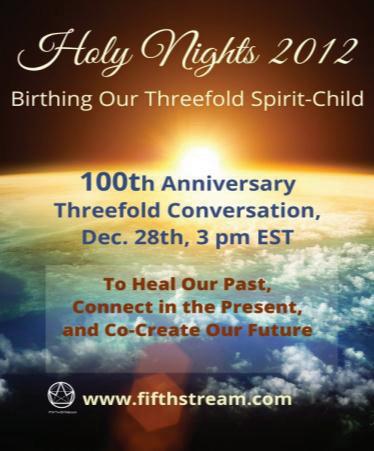
Our Threefold Spirit Child
Dec. 28th, 3-5pm EST
100th Anniversary Conversation, Friday, Dec. 28th, 3-5pm EST
Create Our Future in Light of:
To Heal Our Past, Connect in the Present, and Co-Create Our Future in Light of:
riginal Founding of the Anthrosophical Society ur Past to open Possibility for the Future
The 100th Anniversary of the o riginal Founding of the Anthrosophical Society as we e mbrace the karma of our Past to open Possibility for the Future
nniversay of the Michael Age and Rudolf Steiner’s
The 133 year or 4x33.3 year Anniversay of the Michael Age and Rudolf Steiner’s Breakthrough Thoughts in 1879
Anniversary of Rudolf Steiner’s 1912 Calendar and the Birthing of our fold Spirit Child of Anthroposophia
The 100th Anniversary of Rudolf Steiner’s 1912 Calendar and the Birthing of our indiviudal Spirit Child and the 3-fold Spirit Child of Anthroposophia
the Map to Cross the Gap from now to 2023
The Christmas Conference as the Map to Cross the Gap from now to 2023
(Only $5)
www.FifthStream.com
Sign Up Now to Reserve Your Place ! (Only $5)
www.FifthStream.com
nformation to attend via p hone from any location. A recording will be made available to all registered participants.
You will receive your call information to attend via p hone from any location. A recording will be made available to all registered participants
Support for the Courage to Follow Your Star in Our Emerging Threefold CommonWealth
FIFTH STREAM: Support for the Courage to Follow Your Star in Our Emerging Threefold CommonWealth

ur Guiding Sta r
Sign Up Now to Reserve Your Place !
the New York Branch of the Anthroposophical Society in America
138 West 15th Street, NY, NY 10011 (212) 242-8945
“The word ‘anthroposophy’ should be interpreted as ‘the consciousness of our humanity.’” – Rudolf Steiner
TALKS
spirituality, health, education, social action, esoteric research, human & cosmic evolution
WORKSHOPS
self-development, biography, therapies, rhythms & cycles, threefolding, economics
VISUAL ARTS
exhibits, workshops, talks, museum walks

EURYTHMY
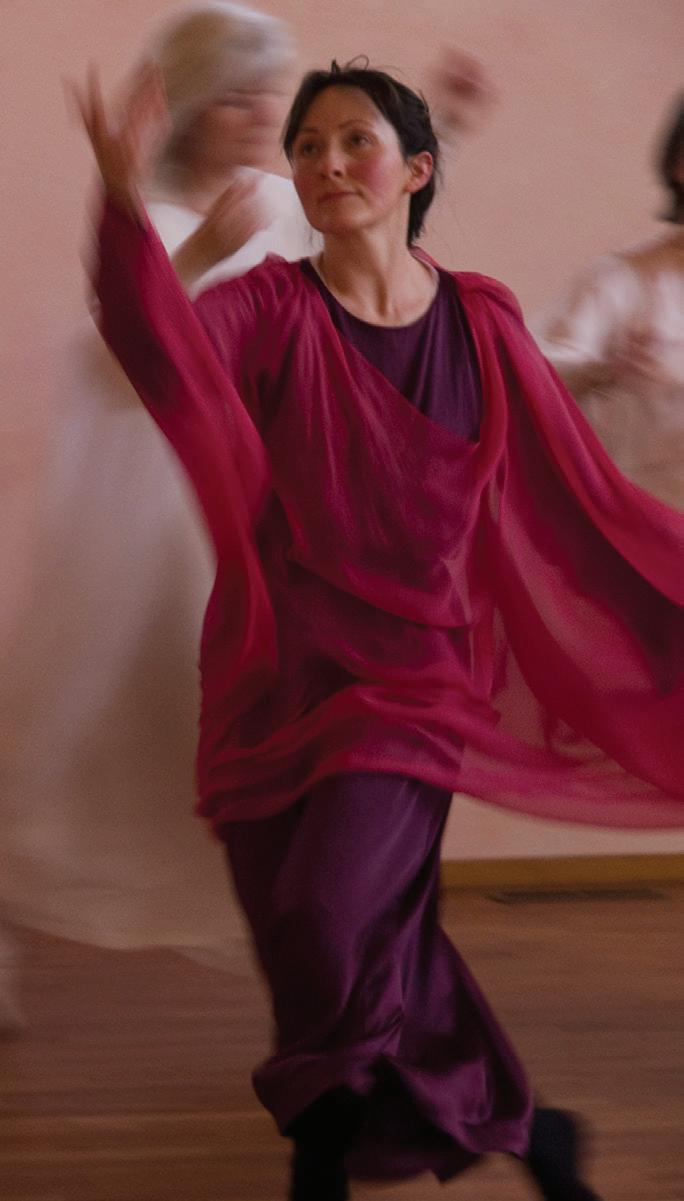
Rudolf Steiner’s therapeutic art of sacred movement
EVENTS

music, theater, festivals, community celebrations
STUDY GROUPS
free, weekly and monthly, exploring transformative insights of Rudolf Steiner, Georg Kühlewind, Owen Barfield and others
SOME UPCOMING PROGRAMS at 7pm except as noted; details at www.asnyc.org
Lloyd/Lorensen: Sacred Geometry – Wed 11/7, 12/5
Light & Darkness in Charcoal Drawing – Thu 11/8, 12/13
Seasonal Craft Workshops – Sun 11/11, 12/9, 2pm

Rhythms & Cycles of the Logos – Wed 11/14, 12/12
Dr. James Dyson: lecture/discussion – Sat 11/17
Glen Williamson: Mystery of the Logos – Fri 11/30
The Holy Nights, free evening events – 12/26-1/5
Eugene Schwartz: Harry Potter & the Secret Brotherhoods – Sat 1/26
RUDOLF STEINER BOOKSTORE
Browse dozens of works by Steiner and many others on education, science, health, art, spirit, biodynamics. Open Tues-Wed & Fri-Sat, 1-5pm.
therapeutic, world, & ‘outsider’ art
fall issue 2012 • 3 Part-Time & Full-Time Training Educational Training Public Courses and More Eurythmy Spring Valley 260 Hungry Hollow Road, Chestnut Ridge, NY 10977 845-352-5020, ext. 13 info@eurythmy.org www.eurythmy.org Consider a Career in Eurythmy
NYC
ANTHROPOSOPHY
www. asnyc .org centerpoint gallery
spiritual,
• Waldorf Early Childhood and Elementary Teacher Education Programs • Summer Series Courses in Waldorf Education and Leadership Inspiring Education www.sunbridge.edu
See Christ Differently
The Christian Community is a world-wide movement for religious renewal that seeks to open the path to the living, healing presence of Christ in the age of the free individual. Learn more at thechristiancommunity.org

Embr o In Motion y

4 DVD Set
This seminar explores how human prenatal development expresses the essence of human spiritual unfoldment. Understanding the stages of embryological development provides a basis for therapeutic recognition of embryological forces in all later stages of life. This seminar is a rare opportunity to hear a world authority on modern embryology through a unique synthesis of scientific and spiritual principles.




Available exclusively at
PortlandBranch.org

C M Y CM MY CY CMY K Being Human Fall Issue.pdf 9/19/2012 10:06:02 AM
4 • being human
with Jaap van der Wal, PhD, MD
Understanding Ourselves as Embryo
Contents FEATURES 19 A Century of Anthroposophy, commentary by John Beck 23 The One Life Within Us and Abroad, by Gertrude Reif Hughes 26 Envisioning the Calendar of the Soul, by Ella Manor Lapointe 28 Michaelmas and the Calendar of the Soul, by Herbert O. Hagens 29 Notes on the Calendar of the Soul The Calendar of the Soul and Eurythmy, Visual Arts, Sounds, Life Thoughts by Mary Stewart Adams 32 Owen Barfield in America, by Jane Hipolito 37 That Good May Become, by Torin Finser 40 Beyond Our Borders, by Jonathan Stedall
7 being human digest 13 Classics from the Journal for Anthroposophy: Meditation & Spiritual Perception; Selected and Introduced by Gertrude Reif Hughes; review by Frederick J. Dennehy 15 Functional Threefoldness in the Human Organism and Human Society by Johannes Rohen; review by Sarah Hearn 17 The Quest for Hermes Trismegistus from Ancient Egypt to the Modern World by Gary Lachman; review by Frederick J. Dennehy53 Poem: “Are We?” by R.Z. Balchowsky NEWS & EVENTS 35 What’s Happening in the Anthroposophical Society? by Marian León “The Grail of the Central Region: Questing from the Heart” by Sonjia Michaels. Leonard Benson’s Bequest. Our Working Together: A Process of Continuity, Change, and Renewal. 37 What’s Happening at the Rudolf Steiner Library? by Judith Soleil THRESHOLDS 47 A Courageous Light: Ursula Brancato, by Bettina Ursula Brancato 48 Geoffrey von Menken, by John H. Beck 49 New Members of the Anthroposophical Society; Members Who Have Died 49 Rudolf Steiner Library Annotations, by Judith Soleil and Thomas O’Keefe
NOTES, REVIEWS
From the Editors
We’re in a season of centennials. We celebrated eurythmy in the Spring issue. This issue we take note of the deeply satisfying Calendar of the Soul which Rudolf Steiner created along with artist Imma von Eckharstein for the year 1912-1913. Half of the original calendar has been relatively unknown, despite a fine facsimile edition in 2003 from SteinerBooks. In this issue we have a treasurable literary essay about the calendar from Gertrude Reif Hughes which first appeared in Orion magazine in Fall 1999. Artist Ella Manor Lapointe (some of whose work you see in the special eurythmy issue) shares her way of working visually with the calendar. Herbert O. Hagens, whose workshops on this subject have been popular for many years, relates the calendar to the autumn Michaelmas festival. And then in “Notes on the Calendar of the Soul ” we have a little banquet-buffet of other approaches and ideas about the calendar, most of which have further substance appearing online.
We have also arrived at the 100th anniversary of the Anthroposophical Society itself. On page 37 “That Good May Become” shares General Secretary Torin Finser’s opening talk at the recent August conference of that name. He works quite esoterically into the special life and character of this society to which most of our readers belong. On page 19 is a very exoteric look at anthroposophy’s place in world history from yours truly. It brings my personal concerns with historical context and suggests why we experience both that “anthroposophy failed” and that it is on the verge of great success.
Also from the conference, “Beyond Our Borders” is filmmaker Jonathan Stedall’s fine talk (very lightly edited for space) on his experience in making the tremendous film, The Challenge of Rudolf Steiner.
•
John Beck
This issue features reviews of three books available from the library: Functional Threefoldness in the Human Organism and Human Society, by Johannes Rohen; Medi-

tation and Spiritual Perception , selected and introduced by Gertrude Reif Hughes; and The Quest for Hermes Trismegistus, by Gary Lachman.
In her review of Mr. Rohen’s book, Sarah Hearn examines the basis of the book’s analogy between functional threefoldness in human life processes and in the spheres of social life, focusing on both its creative insights and its limitations. She also notes that the analogy may fall short when the focus turns to “what can we do?” She suggests, candidly, that at the level of activism, there is simply no workable analogy.
Gertrude Reif Hughes’s selection of essays concerning meditation and spiritual perception is a treasure for anyone even remotely hospitable to anthroposophy. All ten of the “Classics” volumes are superb; they serve to remind us how vibrant anthroposophy has been in the last several decades in the English-speaking world, particularly in the USA. Readers should be aware that the entire “Classics” collection is available as a boxed set from the Society and would serve as a gift for a friend (or for one’s self) that will not lose its luster.
Gary Lachman’s book, The Quest for Hermes Trismegistus: From Ancient Egypt to the Modern World , is representative of any number of eclectic or syncretist books today that, while exploring the very questions most vital to any reader willing to listen to an esoteric viewpoint, may seem to fall short in rigor and depth. Such books are urgent in their questioning. They force us to look twice at our own answers, and to seek new forms of resistance to the taboos against meaning that dominate the intellectual landscape today. Reality, as Georg Kühlewind phrased it, is “the last secret,” and may be attained only through more and relentlessly more “conscious questioning.” Lachman’s finely woven storytelling not only stimulates thinking, but persuades us that the habitual assumptions of what Owen Barfield called “an unimaginative man at about ten o’clock in the morning” need not serve as the starting point for those who ask the fundamental question of why there is something rather than nothing.
Frederick J. Dennehy
How to receive being human, how to contribute, and how to advertise
Sample copies of being human are sent to friends who contact us (address below). It is sent free to members of the Anthroposophical Society in America (visit anthroposophy.org/membership.html or call 734.662.9355).
To contribute articles or art please email editor@anthroposophy.org or write Editor, 1923 Geddes Avenue, Ann Arbor, MI 48104. To advertise contact Marianne Fieber at 734-662-9355 or email mfieber@anthroposophy.org.
6 • being human
being human digest
being human digest covers news and ideas from a range of holistic and human-centered cultural initiatives. Items are brief, suggestions welcome. Write editor@anthroposophy.org or “Editor, being human, 1923 Geddes Avenue, Ann Arbor, MI, 48104.”
Waldorf Education - Environment Present at Bioneers
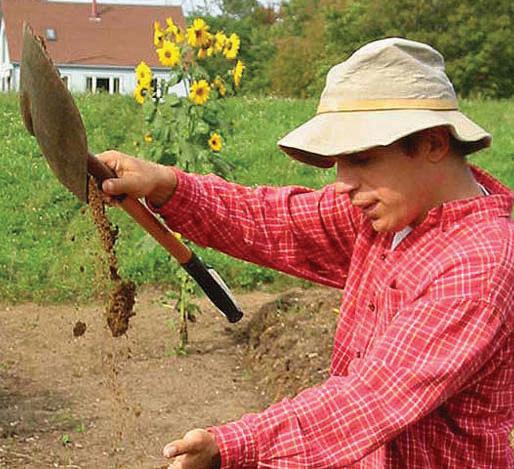
Waldorf schools (teachers, students, parents) especially in northern California and folks from Rudolf Steiner College made a special effort to attend the Bioneers conference in October. It’s a long-running annual event held in Marin County north of San Francisco. Bioneers has a biodynamic presence most years, and RSF Social Finance was a sponsor this year. Why Waldorf Works explained:
“‘Bioneers’ are people, of all diversities, working collectively in crafting solutions to the world’s environmental and bio-cultural challenges. At their 23rd Annual National Bioneers Conference, you’ll join global thoughtleaders, experts and advocates in exploring breakthrough solutions for a sustainable world. Education programs focus on ecological literacy and youth leadership. The
conference will feature well-known leaders such as Paul Hawken, Ai-Jen Poo, and Bill McKibben, as well as ‘the greatest people you’ve never heard of.’”
Remembering An American Waldorf Pioneer
A casual reminder in an email exchange led to a considerable outpouring of reminiscences about John F. Gardner, who would have been 100 on July 3, 1912. He died just after his 86th birthday. The full sharings, a timeline of his life and excerpts from his writings, are at anthroposophy.org under “Articles” along with pictures from his youth to old age.
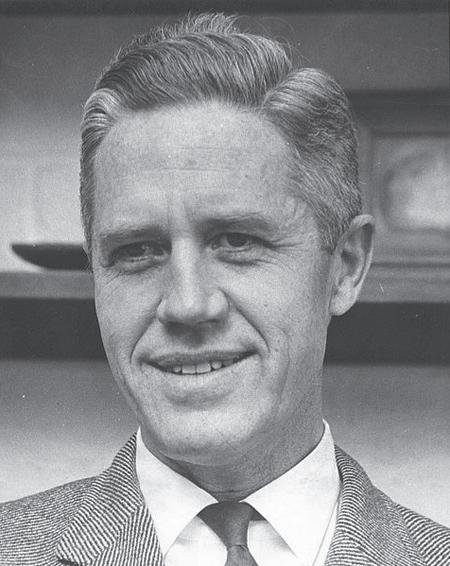
John Gardner is remembered as person of strength of character, insight, and eloquence; a champion of the Transcendentalist stream in American life and thought; a pioneer of Waldorf education in America; a mentor and friend. His daughter Elizabeth Lombardi writes:
We are a Rudolf Steiner inspired residential community for and with adults with developmental challenges. Living in four extended-family households, forty people, some more challenged than others, share their lives, work and recreation within a context of care.
Daily contact with nature and the arts, meaningful and productive work in our homes, gardens and craft studios, and the many cultural and recreational activities provided, create a rich and full life.
For information regarding placement possibilities, staff, apprentice or volunteer positions available, or if you wish to support our work, please contact us at:
PO Box 137 • Temple, NH • 03084 603-878-4796 • e-mail: lukas@monad.net
lukascommunity.org

“Just as my father could place logs for a fire so that they would have just the right relationship and flow of air, he brought many fine people together and lit the spark of enthusiasm for significant and worthy endeavors. As with his compost piles, he prepared the soil in Waldorf Education for future blossoming and fruiting.”
From Jeff Kofsky: “John was a devoted student of Rudolf Steiner and a master teacher of his work, yet he was unlike any other prominent anthroposophist I have known, for John lived by the Direct Approach. When you eat lettuce and carrots you do not become a little lettuce and a little carrot, he said, you digest and transform substance so that it becomes your own. So be it with the wisdom of those who have gone before. Eat freely, let the world of ideas light up in yourself and express that which would be born in you. This is the essence of Intuition that Rudolf Steiner put forth in his Philosophy of Freedom , and John was a master of it.”
From Nancy DeSylva: “One of the greatest gifts [John] was able to give was his ability to see into the very heart, to instill confidence in one’s ability to do, to overcome, and to live from the Christ-Self. I felt he was able to honor each individual for who they truly are. He helped to awaken that in me, and that is perhaps the greatest
fall issue 2012 • 7
A
challenges • COMMUNITY SPIRIT • • THE ARTS •
MEANINGFUL WORK •
RECREATION •
residential community for adults with developmental
•
•
being human digest
Arts
Theater: Kaspar Hauser
blessing I could have ever received.”
From David White: “The whole Waldorf School (of Garden City) was pervaded with a quality hard to put into words, but a place I sensed where I could grow and clarify my goals and ideals… John helped many to enter into a process of becoming their true selves; loving and free in serving.”

From Aggie Mitchkoski: “On one visit I sat at the kitchen table with [John and Carol Gardner]... and proceeded to tell them all the reasons why they shouldn’t think so highly of me. They listened. Then John very seriously said, ‘How can you say anything you’ve done was a mistake when everything you have done has brought you to this point?’ It was a ‘woman at the well’ moment...
From John Bickart: “I think John appreciated the relief from a conviction that he serve almost every person he met as a mirror and a measure of their own inner conviction... Sometimes we could sit back and seriously laugh at life and at ourselves—at how we actually think we know something.”
From Douglas Gerwin (GCWS class of 1968): “Those of us who were his pupils in the classroom experienced facets of his teaching that were largely hidden from the wider public... his biology main lesson in the seventh grade... a Noah’s Ark of the imagination... John’s taste for vaudeville: imagine him in a chorus line of three tall teachers, twirling a cane and raising a straw boater, cracking jokes and singing witty refrains... John Gardner at the blackboard, often well before class began, forming those little gem-like drawings... John remained a personal mentor to many students long after they had graduated. To them he showed... a surprising gentleness and love of nature, a simplicity of lifestyle, a deep interest in the striving of others.”
200 years after his birth on Michaelmas Day 1812, Kaspar Hauser’s story—“The Open Secret of the Foundling Prince”—is coming to life in performance across the USA, in the UK and Canada. Storyteller and acclaimed actor Glen Williamson has created this one-man show to raise to awareness a pivotal figure in European and German history—the abducted infant, heir to a throne, deprived of companionship, movement, language, education. An incredible human story is joined to deeper historical mysteries. The schedule of performances is linked at http://mysite.verizon.net/GlenWilliamson/id3.html
Theater - Mystery Dramas
The Rudolf Steiner Mystery Drama performances and conference get stronger each year at Threefold Educational Center in Chestnut Ridge, NY. Producer/director Barbara Renold is helping people engage these lengthy and unusual plays with a cast including some fine professionals and a full conference to penetrate the significance of what is at the same time the personal challenges of
Evolving a sustainable intentional community Living and working interdependently Serving the wider community Accepting resident volunteer applications for individuals and families Contact: Craig@camphillkimberton.org 610-935-0300 X 18 or 610-935-3963 Based on insights of Rudolf Steiner, including biodynamic agriculture www.camphillkimberton.org Kimberton, PA Kimberton Hills 8 • being human
Camphill Village
being human digest
the individual characters, a revelation of karmic backgrounds, and a battle for humanity’s development.
One of this year’s conference speakers, Els Woutersen, drew the parallel with the story of Siegfried in Wagner’s Ring des Nibelungen. “The brave hero Siegfried has to overcome a fierce and mighty dragon. This dragon however exists within himself. It is the dragon of desires, of the lower passions, of everything of a lower nature within him... Overcoming these lower passions and by further purifying himself through the magic fire, Siegfried is able to meet Brünnhilde, who is none other than his higher self who has awakened within him.”
RC Oelhaf reported that “the production was graced with some excellent eurythmy, used to good effect to represent spiritual beings.” Steve Usher spoke to the question of humanity’s choices, to raise the intelligence we have found in nature back to creative sources, or to surrender it to spiritual impulses toward power over others or personal vanity. — www.threefold.org
Supporting Anthroposophical Arts
Louise Drosse Hadley, MA, has organized The Pioneer Valley Muse Group (www.pvmusegroup.org ) to bring anthroposophically-inspired arts and performances

SCOTTISH ODYSSEY
July 15th –
August 4th, 2013
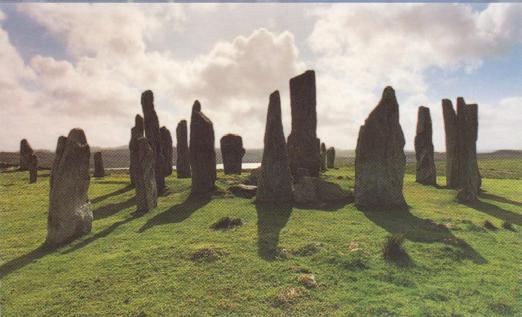
Join native Scots tour leaders as we trace threads of spiritual history in the land- and soul-scape of Scotland. Story, song, eurythmy & informal talks will guide us into the unique cultural climate of this beautiful and infinitely varied country. We will visit Neolithic stone circles of the Outer Hebrides, Highland glens and mountains, the sacred island of Iona, the Findhorn community, Robert Owen’s social initiative at New Lanark, historic and beautiful Edinburgh, and much more.
to her central New England area. “I attribute much of the healing I have experienced in my own life to my encounter with anthroposophical music and arts. It seems to me that these wonderful things are like a hoarded treasure, kept largely in Waldorf schools and anthroposophical circles, and I want to do my part to bring them out into the wider world.” Coming up: A Christmas Carol , with David Anderson of Walking the Dog Theater, “Raphael’s Madonna Images with Lyre Interpretation,” with Channa A. Seidenberg, and “The Incarnation of the Logos: An Epic Tale of Christ’s Coming to Earth,” with Glen Williamson.
Health - Medicine
New Anthroposophic Nurses Association
I believe that miso belongs to the highest class of medicines, those which help prevent disease and strengthen the body through continued usage. . . Some people speak of miso as a condiment, but miso brings out the flavor and nutritional value in all foods and helps the body to digest and assimilate whatever we eat. . .



 —Dr. Shinichiro Akizuki, Director, St Francis Hospital, Nagasaki
Anthroposophic nurses have been working independently for many decades across the United States and Canada. However in recent years there has not been a cohesive association. The Kimberton Nurses Association along with Elizabeth Sustick and Anke Smeele has helped launch the North American Anthroposophic Nurses Association (NAANA). The web site is listed under AAMTA (American Anthroposohic Medical Therapies Association, www.aamta.org ). In May of 2012, at the International Physicians Medical Training, five Nurses received their Anthroposophic Nurse Certification. NAANA is in the process of receiving 501c-3 status. We meet regularly via conference call to study, inspire each other, and meet our agendas. Email brigettefitzgerald@yahoo.com for more information.
Highly diluted remedies: finding the best dosage
Dr. Ross Rentea of True Botanica and its new foundation wrote us some months ago. “We have all heard of homeopathic medicines which are made by a process of serially diluting a particular substance—only then do the
fall issue 2012 • 9
Interested? For details please contact Gillian: 610 469 0864 gillian_schoemaker@yahoo.com
www.southrivermiso.com WOOD-FIRED HAND-CRAFTED MISO Nourishing Life for the Human Spirit since 1979 unpasteurized probiotic certified organic SOUTH RIVER MISO COMPANY C onway , M assa C husetts 01341 • (413) 369-4057
being human digest
ODYSSEY to EGYPT
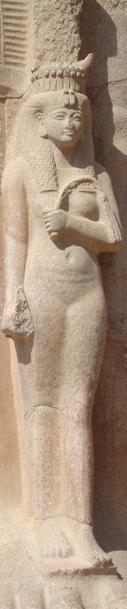
Come with us, March 25th 2013 – April 10th 2013, visit the sacred places of this ancient civilization: the Sphinx and Pyramids, the Valley of the Kings, Luxor, Karnak, Dendera, the community of Sekem... Cruise the Nile in a dahibiya, celebrate Easter Day at Abydos!

Contact Gillian: 610 469 0864 gillian_schoemaker@yahoo.com
desired therapeutic effects come about. Also, most of us realize that the majority of anthroposophical remedies are produced by a principle of serial potentization that is very similar, but not identical to, the homeopathic serial dilutions. The problem that has been around for centuries, literally, is to figure out what the appropriate ‘potency’/ dosage for each remedy in each situation should be. It turns out that Rudolf Steiner was asked this question of dosage in the context of a newly developed potentized medicine and his answer was as revolutionary as practical- which his indications usually are. He advised to subject seeds to the various dilutions of the remedy and that the varying growth of the seeds would then show through a growth curve demonstrating the behavior of the diluted substance, and not just in the plant but also in the animal organism. This would allow the finding of the ‘optimal’ solution.”
To help with the lack of research activity, the new True Botanica Foundation is hoping to reawaken the impulse of one of Steiner’s dedicated young associates, Lily Kolisko. “This year an intensive effort has been launched to duplicate and then go beyond the Kolisko experiments in order to address the dosage question. In the past 10 months we have done the work to compile growth curves for over 20 healing substances that are used in anthroposophical medicine. We already have seen some very promising results and anticipate even better data as we continue to refine and advance the process. The growing complexity of the tasks requires not only more equipment but also steadily increasing co-worker hours dedicated to choosing seeds, watering, measuring, etc.
“Recently the first meeting of the Science Advisory Group of the Foundation took place. During a very intense weekend anthroposophical specialists from various fields (medicine-R. Rentea MD, A. Rentea MD, M. Kamsler MD, R. Bartelme MD, P. Hinderberger MD, P.
Barratt MD, K. Sutton MD; pharmacy- T. Heath PhD; biochemistry and laboratory science-J. Erb; homeopathyR. Shaw JD; administration- P. Rentea MHA) began developing a strategy on how to make possible an expanded laboratory where these ideas could be pursued on an ongoing basis. Should we call it the “L. Kolisko Lab”? We hope to develop a wide circle of supporters. A community effort is clearly needed to build up and advance this important work in the lab. This is a not- to- be- missed opportunity to “make a name” for anthroposophy in the science world. Will the ignoring situation of the 1920’s repeat itself? For more information visit us at www.truebotanicafoundation.org. For the Team, Ross Rentea MD ”
Well-being Retreat in Vermont
Louise Frazier and Wolfgang Rohrs have created a reteat center: “In the beautiful countryside of Vermont, where we offer nourishment for body, soul and spirit in a restorative environment. We provide workshops in food preparation and cookery. In addition, eco-friendly rooms with sweeping views, are available for those living outside the area. Opportunities are given to learn about our delectable vegetarian lifestyle through conversations, observations and participation in our cookery. Our teaching is based on the Cosmic and Earthly nutritional recommendations of Dr. Rudolf Steiner, as applied within the framework formulated by Drs. med. Udo Renzenbrink, Gerhard Schmidt, and Rudolf Hauschka. If you would like to bring a new vibrancy into your days, come for a workshop, a weekend, a few days, or a week where nature and human activity combine for learning, retreat, celebration, and contemplation. Like our notable homemade lactic-acid fermented Garden Splendor vegetables, your perspective will be enhanced!”
The Society’s new database has much improved facilities. Are there listings or networks already of centers

phone: 707-542-1523
email: nurturingarts@sonic net web: www.nurturingarts.org
2012 ~ Art History Training begins from November 6th~
10 • being human
~A source of personal and social renewal in Anthoroposophical Arts~
being human digest
like Louise and Wolfgang’s? If not, should we try to help it get started? Let us know (editor@anthroposophy.org ) and take a look at sunrisehillnutritionretreat.com.

Food - Agriculture
GMO Vote in California
Nancy Poer is one of many friends concerned with GMO foods that are not labeled and so deprive consumers of the choice of using or avoiding them. “At the Western States Teachers Conference in February 2012, three of us, all anthroposophists with decades of experience in different fields, a doctor, a biodynamic farmer and Waldorf educator, stood out on the cold city streets to support basic human food rights and the planet. We were gathering signatures for what has successfully became a ballot initiative (Prop 37) for the 2012 California November elections to require the labeling of GMO products in our food supply. This will be voted on by the people and will be one of the greatest stands this country has ever taken for our right to choose healthy food. It will be brutally opposed by the bio tech industry which has pledged millions to defeat it, for it threatens the foundations of their power over what we eat.
“All three of us felt a surreal quality about our endeavors, which could not take place in the warm lobbies of the Anthroposophical institutions nearby as this would have been considered a political action. How did we get to such a strange world that all across the country taking a stand for the right to know what we are eating and supporting healthy food is considered political! To its credit, Rudolf Steiner College, hosted a Food Rights Film Festival initiated by Nancy Jewel Poer, and supported by Harald Hoven, a bio dynamic farmer and teacher, to raise awareness and honor farmers. As a physician, Kelly Sutton has long experienced and spoken out about the GMO health issues she sees in her practice.”
From Stonehaven Farm in Pennsylvania David Lenker connected current food questions with the traditions of the Knights Templar. These inspired and idealist men were to a significant extent the social bankers for Europe until their cruel suppression 700 years ago. “The threat to Templar freedom... appears to have a modern echo: increasing impediments placed on the ability of everyday Americans to freely obtain whole natural organic foods. Large Bio-tech firms continue to promote legislation favoring genetically engineered foods. To maximize profits, these firms encourage agricultural methods that rely on heavy usage of pesticides, weed killers, and chemical fertilizers. In Central PA and elsewhere we see these environmentally toxic methods used to grow genetically modified corn—key ingredient of high fructose corn syrup... Consumers should be given the free conscious decision to buy genetically modified or natural organic food.”
RSF Social Finance & Food Change
The latest quarterly from RSF Social Finance draws a picture of farms, finance, food, and healthy people and localities. Their topics are “A Poetic of Economics in Agriculture”: rethinking our economic life from the ground up; what lessons can we learn from agriculture and farmers? “Soil, Soul, and Society”: localized agriculture as a foundational activity upon which all humanity depends. Also, “A New American Farmer”: how RSF borrower Viva Farms is helping farm workers become the next farm owner. And “Clients in Conversation”: food justice in Oakland and rural Hawaii. (rsfsocialfinance.org )

Social
American Values: Summer in Concord
From Stuart-Sinclair Weeks, in Concord, MA, came this report back in August about long term efforts to raise
✩ ✩ ✩
at
For information on bulk and group
us
fall issue 2012 • 11
COSMIC CHILD: Inspired Writings from the Threshold of Birth An inspiring new collection of poems and stories about pre-birth awareness and the great journey of birth, from around the world and across the ages
Perfect for new parents • grandparents • eurythmists • Waldorf teachers • holiday gifts Selected and Arranged by Eve Olive, eurythmist Order
www wrightwoodpress org
discounts, email
at sales@wrightwoodpress org
being human digest
consciousness of the work of the circle around Emerson, Thoreau, and the Transcendentalists. “Since our exchange of mid-June, we in Concord have been able to enact a number of deeds that would serve our greater work here in our United States.
“The July 4th presentation of the ‘Concord Resolution: Toward the Redemption of Our Financial System & Restitution of Our Commonwealth’ at Concord’s Old North Bridge, where its celebrated ‘shot’ was fired.
“The launching of The New World Drama: And Crown Thy Good with Sister- and Brotherhood . Citizens in communities across the country, including Chicago, San Francisco, Santa Cruz, Denver, Tucson, St. Louis, Viroqua, and the Twin Cities themselves have begun to come together to envision ‘scenes’ for the drama.
“And finally Concord Convocation 2012. After 35 years of laying the cornerstones, the convocation concluded with the determination, among those anthroposophists and Michaelic kin who gathered, to take the next step toward the renewal of the spirit of the original Concord School of Philosophy & Literature, 1879-1888, with an extended institute in the summer of 2013. Among others, Bob Richardson, a dear friend, colleague, and author of Emerson: The Mind on Fire, has been an inspiration for this aspiring labor, having offered an outline for a course he would present.
“The following 1884 review by an editor of the Boston Herald speaks to the ‘promise’ of the ‘Concord School.’ ‘To barely exist through these years was something; to gain a hearing was more; to adhere steadily to a high and heroic purpose was more; to be spiritual, without being religious in the sectarian sense, was still more; and, through all these years, to do honest work, to steadily uphold the interests of intellectual and spiritual truth, in the larger sense, has been to do what has never before been done in the history of American thought and letters.’”
Prison Outreach
Kathy Serafin reported earlier in the year on recognition and support coming toward the Anthroposophical Prison Outreach project of the Society.
“Over the years, we have received inquiries from anthroposophists interested in founding a similar prison outreach program in their home countries. While we have responded with written information, we realized that a practical how-to meeting would be most beneficial and we were encouraged by a longtime supporter to take action in this regard, and we held a presentation/workshop of our program for interested members of the Anthroposophical Society in The Netherlands.
“The results were three fold. The workshop attendants decided to start a similar initiative in the Netherlands, now in the planning and development stage. In turn, we from APO learned about a Dutch drug addiction treatment initiative called ARTA. This program is based on anthroposophical healing principles and is quite effective based on the rate of staying ‘clean’.
“A third result was a complete and humbling surprise to us at APO. The Dutch Anthroposophical Society annually holds a special Christmas Action fundraiser for three selected ‘worthy projects’ in other countries. APO was selected by the Dutch Society board as one of the nominees. As a result, we received from the Dutch Anthroposophical Society members a donation of just over 17,500 euros for the US APO program!
“The Anthroposophical Society in Canada has also expressed interest in starting a Prison Outreach program and members have visited us in Ann Arbor to learn about our program’s workings first hand. We shared our complete manual detailing all aspects of the prison outreach program that was first assembled for the workshop in the Netherlands and now APO is invited to hold a similar practical, ‘How to Meeting’ near Toronto in the fall.
“We are fortunate to be able to help others start a prison outreach initiative in their country and to continue our first commitment of helping US prisoners who earnestly want to change their lives by holding forth the light of anthroposophy behind prison walls. How grateful we are to experience that this same light of anthroposophy touches all of us—in society or in prison, in the US or abroad—through giving and receiving.”
Kathy Serafin, anthroposophyforprisoners.org
12 • being human
Classics from the Journal for Anthroposophy : Meditation & Spiritual Perception
Selected and Introduced by Gertrude Reif Hughes.
Series Editor: Robert McDermott. Anthroposophical Society in America, 2011, 140 pages. Review by Frederick
J. Dennehy
One of the best-kept secrets in anthroposophical publishing is the remarkably rich series, Classics from the Journal for Anthroposophy, ten volumes of essays and reviews selected from the long-running publication. As series editor Robert McDermott notes in the foreword to this volume, each collection focuses on a particular theme, “including Rudolf Steiner, anthroposophy, imagination, society, science, Waldorf Education, visual arts, Mani, Novalis, and meditation and spiritual perception.” The series will either remind or alert readers to just how valuable a gift we had for so many years. The essays strike one like an unexpected encounter with an old friend. Some are scholarly and some intimate; they all speak to the question of understanding and practicing anthroposophy from the place where most of us find ourselves most of the time—what the Gospel of John calls “this world.”
In her introduction to this tenth and final volume, Gertrude Reif Hughes focuses on the “how” and the “who” of meditation. The “how” is the praxis —the way to go about the activity that is or should be the center of anthroposophy. The “who” is the question that continually arises in the course of meditation— who do we become when we meditate?
There are fourteen articles in this volume. While none is primarily about the “practice” of meditation, each provides a grounding for practice by helping to turn us away from what Owen Barfield (as Frederick Amrine pointed out in the summer 2012 issue of Being Human), refers to as “the besetting sin of literalism.” That “turning” is a potent achievement.
The first six essays endeavor to locate anthroposophy in relation to other traditions and disciplines. Professor Tyson Anderson, in an address to the American Academy of Religion called “Is Science Relevant for Spirituality?” suggests that the answer is “yes,” but that we have to inform our understanding of science to exclude reductionism or else risk dealing with a science of delusion. True spiritual
science views reality as iconic, a higher form of reading; its approach is strongly feminine, and imbued with heart consciousness. He suggests (surprisingly, I suspect, to the Academy) that the exemplar of the new scientific thinking is Mary Magdalene. As Rudolf Steiner recognized, because she was a woman she was naturally—structurally even—better able to understand something exceptional than could a man. Professor Anderson concludes that Mary Magdalene’s scientia —“thinking of the heart”—was the “radiant point around which the scattered Jesus movement began to coalesce into Christianity.”
In his “Traditional and Modern Elements in the Occultism of Rudolf Steiner,” Robert Galbreath, writing from outside the anthroposophical stream, provides a summary of spiritual science within the tradition of initiatory transformation—in the words of Mircea Eliade, the ontological mutation of the existential condition. The article is bracing in its clarity. Particularly impressive is Galbreath’s account of Steiner’s defense of reincarnation and karma through application of strictly Darwinian principles.
Gary Lachman’s essay, “Rudolf Steiner, Jean Gebser, and the Evolution of Consciousness,” is an acute, detailed comparison of the similarity between Gebser’s “structures” and Steiner’s “epochs” of the evolution of consciousness. Lachman acknowledges that Steiner’s and Gebser’s visions are “very different,” but he is a syncretist. When two separate voyagers discover the same country, he points out, it argues very strongly “for the unknown world’s existence.”
“The Christian Path of Edgar Cayce: A Possible Aspect of Michael’s Activity in America,” by Magda Lissau, Kurt Nelson, and Rick Spaulding, is an assessment of the work of Edgar Cayce through the lens of anthroposophy, particularly through Rudolf Steiner’s characterization of second sight, vision, and premonition as unconscious gifts of Imagination, Inspiration, and Intuition. The destiny of individuals with such faculties allows them entrance into the spiritual world, and their karma protects them from most of its dangers, but not from the danger of misunderstanding. The authors also use Sergei Prokofieff’s Occult Significance of Forgiveness as an initiatory model for understanding the affirmations from Cayce’s study group readings of 1932. The authors suggest that “the higher self of Cayce woke up, in his health readings,” and brought “comfort and healing” as a “gift of love.” They conclude that Cayce’s legacy is “of inestimable value to all those in America who have a serious desire to develop their spiritual striving,” and urge that Cayce’s life be stud-
fall issue 2012 • 13
Rudolf Steiner Library Newsletter: Reviews
Rudolf Steiner Library Newsletter: Reviews
ied seriously in the light of anthroposophy.
In “Emergence of Ethical Individualism in Science and Medicine,” Karl Ernst Schaefer details what he sees as the appearance of ethical individualism in the second half of the 20th century in four scientists who have had the courage to choose a middle path between polarized factions—those who believe in unimpeded scientific research without regard for moral concerns, and those who believe that scientists should not do any research where findings are likely to raise significant moral dangers— and have stood up to the hostility of their colleagues. Dr. Schaefer suggests that the foundation of moral neutrality in science, dating from the school of Jundi Shapur, may finally be weakening.
Although “Simplicity’s Contribution to a Threefold Society” by Mark E. Smith was written in 1998, it seems even more pertinent today. The essay is a sequel to the author’s “Anthroposophy and Nonviolence,” written three years earlier, and transfers the theme of non-violence to the economic sphere. Mr. Smith’s goal of “voluntary simplicity” in personal economic life is an exemplar of the “middle way,” and a contemporary practical realization of Rudolf Steiner’s “ethical individualism.” But “voluntary simplicity” is not simply a personal prescription; at the heart of the concept is the hidden understanding that individual initiative not only can, but will, contribute to societal evolution.
Ms. Hughes describes four articles as “autobiographical considerations of how the authors experience their meditative life.” The first is Danilla Rettig’s review of And There Was Light, by Jacques Lusseyran, including an excerpt from the book, which describes the special unfolding of the inner life of a man who lost his sight at the age of eight, together with the story of his courageous participation and leadership in the Resistance movement in France.
Alan Howard in “I Think; Yet Not I…,” explores the philosophical underpinnings of thinking, the spiritual activity that fills the state of emptied consciousness that characterizes meditation as Rudolf Steiner described it; while in “A Meditation on Inner and Outer Peace,” Raphael Grosse Kleinmann conjures the sunlight of peace, which he finds intrinsic to genuine meditative experience. And in “The Path of Initiation for the Present Day,” by Paul Eugen Schiller, the author treats meditation in its relation to the practice of Rosicrucian initiation.
The essay, “Meeting with the Dead,” by Albert Steffen, and the review by Tadea Gottlieb of Our Relationship to Those Who Have Died , by Reverend Hermann Heisler,

speak about the relationship of the living to the dead, a subject that requires, in Ms. Hughes’s words, “anthroposophy’s objectivity and detailed spiritual perception.” The cultivation of a genuine relationship to the dead is itself a form of anthroposophical meditation; when properly directed at the so-called dead, this type of meditation may be the key to our most intimate connection with those who have died.
The collection concludes with two pieces that portray the hard-won optimism that is at the heart of anthroposophy. Hermann Poppelbaum, in an article dating back almost fifty years, portrays the “three humiliations” of the human being, ushered in respectively by Copernicus, Darwin, and Freud, in a “Christmas picture” in which the human being is moved to reimagine her eminent position in the cosmos and sees the faces of all the supersensible beings directed toward her.
The final word is from Rudolf Steiner, who in two very short excerpts urges us to understand that through desperate circumstances and inner soul trials a new vision—seemingly impossible in the utter darkness of these moments—will be born.
Illuminating Anthroposophy
CLASSICS FROM THE
Robert McDermott series editor
Alongside the basic books, these “Classics” collections explore the tremendous cultural and social innovations of anthroposophy and its contemporary development in North America.

14 • being human
Special Boxed Set Edition – receive all 10 volumes for $100. Individual volumes available at $15 each • All pricing includes shipping & handling Order online at www.anthroposophy.org • 734.662.9355 or information@anthroposophy.org
forÊaÊfutureÊworthyÊofÊtheÊhumanÊbeing
Meeting Rudolf Steiner • Anthroposophy & Imagination • Revisioning Society & Culture Mani & Service • Meeting Anthroposophy • Novalis • Science & Anthroposophy Waldorf Education • Art & Anthroposophy • Meditation & Spiritual Perception
Functional Threefoldness in the Human Organism and Human Society
By Johannes Rohen. Adonis Press, 2011, 156 pgs. Review by Sarah Hearn
Johannes Rohen’s reputation as an anatomist is far reaching: his most famous work, Color Atlas of Anatomy, appeared in seventeen languages. A much lesser-known work, a textbook entitled Functional Morphology: The Dynamic Wholeness of the Human Organism , has received high praise in U.S. anthroposophical circles since its publication in 2007 and served as the foundation for his latest book, Functional Threefoldness in the Human Organism and Human Society.
Functional Threefoldness is an ambitious work. In it, the author endeavors to extend his functional methodology, which he has spent decades applying to the human organism, to identify sound functional principles for a different kind of organism that is arguably just as complex, ailing, and enigmatic: human social life. Rohen is humble in his approach; from the outset he assures the reader he is well aware that “playing with analogies is epistemologically unsound and quickly leads to a dead-end.” He goes on to ensure readers’ interest and attention by essentializing the comparison between these organisms to those based on relationships between functional systems and processes, as opposed to stagnant, singular structures (e.g., cells). As such, it is more the how than the what of the human organism that Functional Threefoldness explores as being relevant and illuminating in regard to a healthy social life. With an approachable balance of brilliance and modesty, it’s clear that Rohen’s ideas are born of deep work and close observation of health, function, and relationship in the human organism. His points of departure easily engage the reader, asking the simple yet urgent questions: what can we perceive here, and what can we learn? He first provides an overview of the threefold organization of the life processes (nervous, rhythmic, and metabolic) of the human organism. This short chapter is refreshingly dynamic even for those fully conversant in the study of anatomy and physiology, yet the content is straightforward and palatable enough for the layperson whose memory of high-school science wobbles. In the following chapter, he offers matter-of-fact descriptions of the threefold organi-
zation of the processes of social life, differentiated as the legal-political, cultural, and economic systems. Rohen describes these spheres as autonomous yet interdependent, as articulated by Rudolf Steiner and others. Thereafter, he offers a functional analysis of our current social systems with an eye toward the healthy and distinct roles of the threefold principles of equality/democracy; cooperation (brotherhood); and freedom in the legal-political, cultural, and economic spheres of social life.
To a point, Rohen, while original in his articulation, generally follows the party line regarding the nature of social life from the perspective of social threefolding (to the modest extent that such a consensus exists!). However, he goes on to forge important new ground and specificity in his analysis of the workings of threefold ideas and ideals. His investigations lead him to justify the existence of an “inner threefoldness” within each sphere of social life that is not merely espoused as a vague concept, but is unfurled in subsequent chapters with great precision and care. Rohen’s method of perceiving symmetry between the functional threefoldness in the human life processes (e.g., the central nervous system, the spinal cord and spinal nerves, and the autonomic nervous system) and in the spheres of social life (e.g., production, distribution, and consumption in economic life) provides a well-organized method for understanding the possibilities for balance and holism in the functions of social life. In his words “this dynamic, yet clear understanding of the human organism can therefore be viewed as an invaluable model for the structuring of the social organism” (p. 45).
But perhaps the pinnacle of his analysis is his delineation of how each of the threefold ideals has a rightful and healthy home within each of the three spheres of social life, just as the human organism’s systems are active according to functional principles, which are adapted to respective sub-systems. Accordingly, while the cultural sphere exists under the flag of freedom, Rohen makes sound argument for specific cultural functions and institutions that require freedom to be their guiding principle through and through, and others for which the principle of cooperation or democracy must be active alongside the principle of freedom. A more detailed treatment of these pictures goes beyond the scope of this review. Suffice it to say, however, that anyone seeking more specific imaginations of Steiner’s picture that each sphere should have its “own administration” will be pleased with Rohen’s offerings, at the very least as food for thought, and at most as entirely amenable to Steiner’s indications.
fall issue 2012 • 15
Steiner Library Newsletter: Reviews
Rudolf
Rohen does a commendable job articulating his vision without falling victim to the potential stasis that charts and schematic diagrams can pose to a reader. His descriptions maintain the sense of living complexity inherent in the systems of his analysis. And, in good pedagogical form, he seems to encourage his readers to think through his analysis, providing ample explanation and helpful supplementary examples. At times, Rohen seems naturally to follow Steiner’s pedagogical indications regarding characterization, stating that “the making of many definitions is death to living teaching” (Steiner, R., Study of Man, Rudolf Steiner Press, 2011). Rohen offers many characterizations of the principles and ideals of social life, and multiple contexts in which to examine them at work. In this way he provides his readers with the opportunity to “battle their way to understanding these connections” (p.99), which he believes is the backbone of understanding the basic features of pathology in social life and mustering the necessary courage and initiative to heal society.
Rohen’s method is at once scientifically diligent and artistic, poetic and metaphorical. In one instance he calls the reader’s attention to the oft-promoted coupling of the economic sphere and the metabolic process (given their respective transformation of substances, etc.) But he swiftly points out that the social organism is “fed” by the education, ideas, and innovations of the cultural sphere— without which we would “starve.” Employing further artistry, Rohen presents lively pictures of threefoldness within the legal system, such as characterizing the legislature as the central social networker and “heart of society,” sensitive to the needs of the people in the same way the heart monitors blood supply to a given organ and reacts accordingly; or describing the “social breathing space” provided by the judiciary1 and the reintegration process that the executive, law-enforcement functions can enable for social deviants, just as the immune system carries out reintegration processes (here he also draws an analogy to certain types of white blood cells that “patrol” the organism in search of foreign bodies). Rohen continuously brings fresh analysis and imagination to the nature of social life and to threefold ideas for those with or without prior acquaintance with these fields.
Indeed, in addition to a thorough treatment of the spheres of social life and their functions and relationships,
1 Here, Rohen emphasizes the role of freedom alongside the legal system’s dominant principle of equality—in this way his contention is related to Steiner’s indications that relate the judiciary functions to freedom and the cultural sphere.
Rohen specifically tackles a few hot-button issues that generally elicit conviction and/or confusion from people on both sides of the traditional political spectrum. One such issue is the nature and role of money, which Rohen relates to the circulation of blood, providing an informed diagnosis of the current monetary system’s pathology, most notably of the commodification of money itself and its status as the “unfair competitor” of real goods and services. In response to these realities, he provides clear and eloquent descriptions of the proper role and function of money in a threefold social organism. In his analysis here and throughout, Rohen is diligent in citing both anthroposophical and non-anthroposophical sources, both contemporary and time tested. However, while he points to some successful examples of regional currencies from the 1930s, he makes practically no mention of the more than 2,500 alternative currencies currently in existence, which have varied degrees of success and equally wideranging (usually unconscious) alignment with threefold principles. It is also worth clarifying that in the U.S., from which he draws various examples regarding money, regional governments are forbidden to issue regional currencies, but local or regional cultural entities (e.g., nonprofits) can do so, with some guidelines and restrictions.
Rohen outlines other examples of “social pathology,” including the commodification of land, labor, and capital, and offers a brief treatment of the state of healthcare, education, and other cultural services. In addition, he points to automation, deregulation, and other culprits of our social unhealth. In each of these cases, Rohen paints a bleak picture of the current state of affairs and of the pathological growth in already unhealthy systems, and illustrates how these tendencies are stark aberrations from the robust and healthy functional threefold pictures that he has outlined. Although Rohen offers some important suggestions for the redemption of our ailing systems, he fails to mention what seem to be some of the most hopeful examples of positive change, such as community land trusts and worker-owned co-ops (though he does mention profit sharing with employees).
Generally, this is more an academic treatment of relevant themes than a call to action; a beautiful map of what’s possible, but without a clear navigation tool or vehicle for getting there. To his credit, Rohen clearly qualifies his intentions from the outset, stating that “how such things should be tried out in practice is beyond the scope of this book.” Yet the book’s final inquiry, “What Can We Do?” almost begs the reader to engage in just that ques-
16 • being human
Library Newsletter: Reviews
Rudolf Steiner
tion. Rohen’s strongest advice is, first and foremost, to have a clear understanding of how social processes work.
Perhaps after heeding his recommendation, one could turn to the advice of another author (and activist extraordinaire), whom Rohen references with admiration: Nicanor Perlas. While Rohen offers Perlas much praise, he also states that “so far, unfortunately, civil societies are not sufficiently organized to constitute a third force capable of bringing about healing processes in modern society” as Perlas proposes. However, since the publication of Rohen’s book, we’ve experienced more and more conflict, bloodshed, and the censorship of various freedoms around the world, not to mention a historic economic crisis. In the same time frame, however, Nicanor Perlas ran for the presidency of the Philippines, and more recently initiated a new civil-society organization, MISSION, which is showing signs of becoming just this kind of much-needed third force in society. In addition, millions of people worldwide have come together in solidarity as part of the Occupy movement. If we can marry this emergent cultural force with the wisdom and knowledge of social processes and threefolding that Rohen so vividly describes, perhaps we can take some real steps toward healing. But perhaps here the analogy with the human physical organism falls especially short. Affecting systemic, positive social change requires the free, conscious, inner and outer activity of human beings working together out of insight, and for this—and perhaps just as well— there is no analogy.
Functional Threefoldness brings a new voice and perspective to many of the long called-for reforms and new ideas of threefolders and some of the larger circle of individuals and organizations seeking social renewal. Rohen’s depth of understanding of the human organism is reflected in this intricate and thoughtful contribution to understanding social life, the social illness we live with as a global community, and the path to creating a healthier world.
The Quest for Hermes
Trismegistus from Ancient Egypt to the Modern World
By Gary Lachman. Floris Books, 2011,
247 pages. Review by Frederick
 J. Dennehy
Gary Lachman, founding member, songwriter, and bass player for the rock group “Blondie,” became a fulltime writer in 1996. He focused initially on the history of the 1960s counterculture, but by 2003 had found a different interest. Lindisfarne Press published his Secret History of Consciousness: A Semi-Popular Account of Reductive, NonReductive and Esoteric Understandings of Consciousness, 1 a study of the evolution of consciousness that explores the thinking of Goethe, Bergson, Ouspensky, and Jean Gebser, as well as that of Rudolf Steiner and Owen Barfield.
Not altogether surprisingly for someone who has made his way through The Ever-Present Origin (Jean Gebser’s evolutionary sequence of changes in types of consciousness from the archaic to the magical, the mythical, the mental-rational, and the dawning of the integral), what fascinates Lachman is the notion of consciousness history as a palimpsest in which the old coexists with the new.
Last year, Lachman turned his attention to the enigma of Hermes Trismegistus, the “thrice great one” who may have lived in ancient Egypt; may have been a syncretic union of many Hellenistic esotericists; or may not have existed at all. Readers hoping to find the true identity of Hermes Trismegistus will not find it here. Rather, they will find an account of Lachman’s own notion of the Hermetic way: a melding of what is valuable from the most fundamental esoteric traditions (“as above, so below”) and mainstream thinking. Here, as in A Secret History of Consciousness, he sketches out the wandering history of an idea. He traces the meandering stream of Hermetic thought from its fabled beginnings in Egypt, to the murmur of its underground music in Hellenistic and medieval times, to the roar of its resurgence in the Renaissance.
Then comes the plunge. Lachman is perhaps at his best recounting the near disappearance of Hermeticism following the relentless scrutiny of the scholar Isaac Casaubon, who demonstrated convincingly that the supposedly ancient texts regarded as the core works of Hermeticism were pious forgeries. But whatever it is that animates the central texts of Hermeticism—the multivolume Corpus
1 Available from Rudolf Steiner Library, as is Gebser’s The Ever-Present Origin.
fall issue 2012 • 17 Rudolf Steiner Library Newsletter: Reviews
Rudolf Steiner Library Newsletter: Reviews
Hermeticum and the renowned Emerald Tablet —reappears despite Casaubon. Lachman recounts the resurfacings of Hermeticism in the new forms of Rosicrucianism, Freemasonry, the Cambridge Platonists, German and British Romanticism, Theosophy, anthroposophy, and the best of New Age thinking. Hermes, it seems, may be unidentifiable, but is still immortal.
If Lachman is sometimes short on analysis, he is a wonderful storyteller. The cumulative effect of The Quest for Hermes Trismegistus is to shine a light on the manifestations of Hermeticism through the ages and to make a case for its centrality. It provides the reader with generous starting points for further reading and an impetus for personal research.
Because there is little that can be said with any degree of certainty about Hermes Trismegistus, and because the Corpus Hermeticum is dialogic, obscure, and stubbornly resistant to translation, most of The Quest for Hermes Trismegistus is discursive, exploring associated themes such as Egyptian cosmogony, alchemy, and various accounts of the journey through the planetary spheres (which Lachman compares to the anthroposophical account of the period between death and rebirth). Lachman also looks at subjects more loosely related with his theme, such as experimen-
tation with nitrous oxide and mescaline; Paracelsus; John Dee; Robert Fludd; and a parade of modern philosophers.
Lachman is strongest in his account of the “rediscovery” of Hermes by Marsilio Ficino in the Italian Renaissance and his fate in the aftermath of the Reformation. He is less able to elicit the meaning of Hermeticism, relying upon the sweeping distinction between gnosis, with which he associates Hermeticism, and episteme, with which he associates reductive knowledge. Many readers are likely to find his conclusions wanting. His fascination with the “hypnogogic state,” which he misidentified in his biography of Rudolf Steiner [2007; available from RSL] as the state of consciousness Steiner employed for spiritual research, persists in this book. We remain basically unenlightened not only about Hermes Trismegistus himself and the principal texts attributable to him, but also about Hermeticism, which seems for Lachman, finally, to be a vaguely widened perspective that includes the outside world in both its synthetic and natural manifestations and anything in consciousness that has an undefined “spiritual” character.
Lachman’s urge to connect invariably trumps his urge to commit. We are left intrigued, stimulated, but hungry for something more nourishing—like anthroposophy.
This two part DVD is available on the website: £15 + post & packing or as a download rudolfsteinerfilm.com
c u p o l a p r o d u c t i o n s
The Challenge of Rudolf Steiner was filmed during 2011 – the 150th anniversary year of Steiner’s birth – and tells the story of his remarkable life, interwoven with contemporary examples of how his ideas and insights have influenced pioneering work all over the world in education, agriculture, medicine, finance and the arts.
The Challenge of rudolf steiner
rudolf steiner dvd ad Being Human.indd 5 13/9/12 13:25:14 18 • being human
a documentary film by Jonathan Stedall
A Century of Anthroposophy
commentary by John Beck
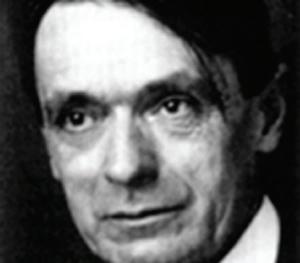
Anthroposophy is a hundred years old. The word is older, but it has found its particular meaning in the work of Rudolf Steiner. To render it from Greek merely as “the wisdom of the human being” is today highly ambiguous; how much wisdom does the human being show? In 1923 Rudolf Steiner said that the word should be interpreted as “the consciousness of our humanity.” And the next year he described it as a path from the mind-and-spirit in the human being to the mind-and-spirit in the cosmos, immediately and crucially adding:
It arises as a need of the heart.
In this short review we will not look at the 1912 action of members of the German section of the Theosophical Society in forming an Anthroposophical Society. Our interest is in drawing a larger picture of anthroposophy, and the society devoted to it, in human history and culture, and today, here in the USA.
Should we expect it to have accomplished more? A rather small group of people has carried a large sense of responsibility for humanity’s future. They have shown many failings, but have persisted and endured. Alongside that crucial fact, two others appear: First, the great foundation for their work was the spirit and idea of Europe, and it failed, catastrophically, in World War I. Second, according to the threefold gesture Rudolf Steiner described as “how one becomes an anthroposophist,” there are millions of anthroposophists alive today, outside and perhaps ignorant of the movement calling itself “anthroposophy.”
In other words, “anthroposophy” seems like a failure—but one which Steiner and others just refused to accept almost a century ago. And yet today it is a present and future success which we are struggling to recognize.
Anthroposophy’s European foundation
Today it’s polite to play down Europe’s role in world history, but it was through Europe that physical, commercial, military, political, scientific, technological, and cultural globalization were set in motion. And until 1914 European powers were the masters of the world. The USA
and imperial Russia became Europe’s huge, awkward wings; but small countries beginning with Portugal took control of vast areas of the planet. European rule unfolded relentlessly, harshly, but the aggressive outward side of it was partnered by an inner cultural triumph, the development of modern science. Out of nature’s sub-basement poured such vast hidden forces that, tamed by machines, we could provide well for every human being alive today, if that were our choice. But to start telling these stories, of the ships and guns and trade, the observations and experiments and hypotheses, would take many, many pages.
What matters is that by 1900 old Charlemagne’s European children had actually reached the threshold of becoming partners with the creative powers of the cosmos. The early adventurers’ stolen or created wealth had fed a culture approaching the sublime.
So at the historical moment when Rudolf Steiner became active, Europe had become capable and worthy of leading the development of a world culture. Slavery had been abolished. Reformers sought to care for the poor and elevate the displaced peasants who were now the urban industrial proletariat. The days of privilege by birth-right were fading fast (and near forgotten over in America). The magical experience of reading was open to all. Art had begun to see and speak to everyone. Romanticism reaffirmed the meaning of the individual. The novel, the canvas, and the opera created overwhelming alternate realities: imagination awakening imagination.
Science had revealed vast invisible fields of forces stretching to the stars. “Matter” was recognized to be not quite what we naively take it for. Evolution now told us we had endured a vast process of development not mentioned in the Bible. Psychology was probing the inner life, finding unknown regions, determined to conquer the soul just like another hemisphere. If Christian theology held back, Mme. Blavatsky’s Theosophy offered ancient Hindu-Buddhist concepts to raise thinking into worlds of consciousness higher than the human. Europe was even beginning to listen to the world. Debussy learned from the Javanese gamelan, Picasso from African masks.
This Europe was an idea and an ideal. Imagined esoterically, it was a chorus of archangels—a chorus of cultures and languages reaching up together to shape planetary destiny. It was a harmony of diverse voices hymning an exalted purpose. And with the failing and falling away of old social forms and traditional understandings, it was demanding a new and higher stage to rise onto.
All that was missing was a way of understanding, ob -
fall issue 2012 • 19
jectively, just what the human signifies in the cosmos, and what our choices signify for our future. It is in this situation that Rudolf Steiner appears, in a modest workingclass family of lower Austria. What he eventually brought would have made no sense, gained no traction, either outside Europe or earlier in its history. It was a consummating step in a thousand years of cultural becoming.
The fall of Europe
But in August 1914 Europe set about to destroy itself in “the Great War.” By Christmas 1916 the last chance to stop the war on the old terms, within the “idea of Europe,” failed. A year later Tolstoy’s Russia fell to an atheist regime enflamed with class hatred. By 1920 imperial Germany was shattered socially and economically, and Austria-Hungary dissolved. The surviving young of all countries were outraged by their elders’ stupidity. Left and right were murderously at each other’s thoats. Americans who helped win the war “over there” for the Western powers took a victory lap and went home again to isolate.
The world into which Rudolf Steiner was bringing his vision and his tools for a higher cultural development—that world just vanished. The possibility of his anthroposophy’s rising with Europe, as its highest and most progressive imagination, no longer existed. Anthroposophy would have to find new possibilities in a world that would continue to destroy itself, and tens of millions of human lives, for many decades to come.
Italy went fascist in 1922. Germany succumbed in 1933, Spain in a hideous civil war from 1936 to 1939. Then German arms swept across most of continental Europe—until Hitler unwisely invaded the USSR.
The aftermath from 1945 forward was a choice of politically benign but culturally corrosive consumerism from the USA—or a long harsh winter under the commissars. In 2012 the once world-conquering Europeans celebrated the simple fact that they are no killing each other with a Peace Prize to the European Union.
America’s responsibility
Individuals from Europe can be as idealistic and influential as individuals anywhere else. But their shared cultural vision has been stunted, and their sense of a world responsibility is largely buried under the shame of colonialism and its cultural brutality. The point for us is that Europe since 1916 was not a platform from which an “anthroposophy” could graciously make its way in modern civilization. The USA may have a vaudeville culture
and brutal means of global force projection, but despite the economic rise of China, India, Brazil, the world is still looking for leadership from America.
Rudolf Steiner was asked about this in 1919 (see CW 194, lectures of 14-15 December). He had already spoken three years before of an Anglo-American “economic world empire.” Now, questioned by the first English visitors since the armistice, he noted that the defeated countries would have no further role to play as nations. Britain and America would build their empire “like a force of nature.” To help balance out the materialism which is their natural and karmic contribution to world culture they would have to bring forth new spiritual impulses.
The Anthroposophical Society in America was formed in 1923, but as late as the 1950s its members were still speaking about a “catacomb period”—when the early Christians met secretly and literally underground in imperial Rome. And despite German being America’s largest single ethnic background, there was now a cultural stigma attached to everything German. The defensive posture required for anthroposophy’s survival in Europe was also emulated in the USA; perhaps we just assumed that “that is how anthroposophy is done.”
So if it had depended on the Anthroposophical Society alone, anthroposophy in America today would be invisible. Two related impulses have succeeded, however. One is the increasingly able translation and publishing of Rudolf Steiner’s work, so that spiritual seekers and openminded cultural activists can discover that he is relevant if not still well ahead of the times. The other factor, helped by the publications and by staunch immigrants from Europe, is applied anthroposophy, the “practical” initiatives especially in education, agriculture, health, and special needs. Today anthroposophy in the USA is actually wellrepresented by a very substantial infrastructure of human services. They are widely recognized as outstanding in their goals and very credible in accomplishment. Most often society members initiated and carried this work, but there has been, so to speak, a hole in the doughnut when the question is asked: “So what is this anthroposophy?”
What is anthroposophy?
With all good will, anthroposophists have often gagged on that simple question, or thrown up a cheerful roadblock like, “Have you got a week?” One purpose in naming this publication being human was to suggest the option of saying right away that “anthroposophy is about being human.” No one is turned away by such a response.
20 • being human
It can flow on easily with words like, “And my connection with it is...” Self-development? My kids’ education? Health? Nutrition? Healing the Earth? Understanding where we’re headed? Try “being human” next time.
But there is a deeper story to “what is anthroposophy” which we need to explore. That story lives in the phrase we use as a synonym, “spiritual science.” This “spiritual science” is a plausible but inadequate translation of the German word Geistes-Wissenschaft (hyphenated here only for clarity). Wissenschaft is a freer term than English “science”; it suggests “creative intelligence” rather than just the cold, hard facts. And Geist is a word which points to mind and intellect and spirit. When Rudolf Steiner said words which we translate as “thinking is already highly spiritual [Geist-lich],” his claim was supported for a German-speaking mind by the broader meaning of Geist.
For English-speakers today, “spiritual science” may be a pleasantly surprising contrast in thoughts. Or it may be a laughable oxymoron that places anthroposophy in the company of religions like Christian Science and Scientology. What anthroposophists are bizarrely unaware of is the fact that this term Geistes-Wissenschaft was coined in 1883 by a prominent German thinker named Dilthey and has become the standard word for what Englishspeakers call “the humanities.”
Dilthey noted that natural science (Natur-Wissenschaft) had been established by Francis Bacon on brilliant foundations which led to its stunning success. But Dilthey’s interests—history and new disciplines like sociology and psychology—were a bad match for Bacon’s science, which sought to exclude human feeling and intentionality from its framework. Dilthey called for a science (Wissenschaft) of mind-and-spirit (Geist); he saw this being founded on an understanding of the individual human spirit. Given the right basic principles and researches, a whole great second pole of “science”—human sciences—could be opened up alongside nature science.
Rudolf Steiner actually did this foundational work. His Philosophy of Free Spiritual Activity justified the individual human mind-and-spirit as foundation for a view of reality. His How to Know Higher Worlds is a preparatory manual for the researcher in this new field. Theosophy gives the “lay of the land.” An Outline of Esoteric Science takes the new science back to the beginning of time.
Academic thinkers did not recognize the significance of his early works, and eventually he found his audience in the Theosophical Society and went public with his esoteric researches. Steiner ended by revealing an “inner”
science of evolving humanity. Though it radically challenged established and conventional modern thought, if Europe had not collapsed, it might have been understood.
So what is anthroposophy? It really is “about being human” and we can speak of it just that simply. And this “science of mind-and-spirit” is a revolutionary cultural paradigm shift. Anthroposophists will have to acknowledge and clarify and defend it in those terms, too.
Where do the simple being-human and the new cultural paradigm meet? In individual human development: in our choice to become more fully and more consciously citizens both of the physical world we have mastered (by Bacon’s shrewd tactics), and of the metaphysical-spiritual world where we can find our enduring being.
The leadership anthroposophy needs
Individuals matter in anthroposophy’s future, and so does geography. Celebrating Rudolf Steiner’s 150th anniversary last year gave many anthroposophists in the USA a strong sense of opportunity around the core mission and ideas of anthroposophy—its whole civilizational perspective on humanity’s future. This is very timely. If Europe was once like a “chorus of archangels” raising the global vision and culture, since 1945 the eyes of the world have been on the USA. In our outer role as world power, the single world power now, we often do not earn the world’s respect, and our past is replete with abuses. But in the inner American impulse to form one nation out of free individuals, wherever they come from, and to afford all persons an opportunity to manifest their potential—in that unique organic principle the world senses an enduring ideal. By accepting the breadth of our differences, Americans reach up to that same high level of the universally human which the idea of Europe once achieved.
Anthroposophy is not needing to be led globally by US-Americans, who could not match all its rich development in Europe. But over here, in the inner America where humanity often sees a real generosity of spirit, Americans must help anthroposophy grow strong and open and credible. This will come both out of Rudolf Steiner’s work and its worldwide development, and out of our work with compatible American roots and branches. Is that possible? For sure. There is nothing inherently strange to Americans in “the consciousness of our humanity.” And a path from the mind-and-spirit in the human being to the mind-and-spirit in nature, the planet, the cosmos—that, too, arises “as a need of the heart” in a great many Americans. Emerson, Bronson Alcott, Mar-
fall issue 2012 • 21
garet Fuller, Whitman, Thoreau, Dickinson and many more have been singing this great anthem which was heard before by the original inhabitants of this continent.
A culmination?
Steven Usher wrote recently about a “culmination” of anthroposophy at the end of the 20th century (posted at anthroposophy.org ). I agree with him that the success of our initiatives in the late 1990s was indeed a culmination. But do we imagine things stopping there? Only if our perspective stays within “the anthroposophical bubble,” where no word is heard unless uttered by Rudolf Steiner and no success counts unless it wears our colors. Perhaps that is what Manfred Schmidt-Brabant, the last president of the General Anthroposophical Society, was seeing when he spoke at Michaelmas 2000 of the “occult imprisonment of the Anthroposophical Society.” A grim phrase. The efforts we make into the world are turned back on us, he said. Why? Because we do not take others’ capacities and intentions seriously enough?
The “consciousness of our humanity” should assist us, not prevent us, in seeing beyond ourselves. In many places but especially in the USA a huge new, non-sectarian, non-traditional, spirituality blossomed from the 1960s forward. What Steiner had called for in 1919 as a counter-balance to our materialism actually appeared. By the end of the 1990s, psychographic researchers (who assess and measure the spread of personal beliefs, values, and ideals) had identified tens of millions of Americans who “care deeply about ecology and saving the planet, about relationships, peace, social justice, and about authenticity, self actualization, spirituality and self-expression.” These are neither cultural traditionalists nor “moderns,” and the research shows them growing: “In 1995, 23.6% of the US adult population, or 44 million adults... In 2008, 34.9% of US adult population, or 80 million adults.” Yes, this is the “values cohort” dubbed the “cultural creatives.”
Creating culture globally is central to the mission of anthroposophy, along with the self-development (or “selfactualization”) required for such a culture to appear and endure. The link to “cultural creatives” is even clearer. Rudolf Steiner described “how one becomes an anthroposophist” (on 2/13/1923, in Awakening to Community). He describes a process essentially identical to “Becoming a Cultural Creative,” the second chapter of The Cultural Creatives, published in 1999. There are three steps:
1. Our heart (perceptive feeling ) tells us that the world we are trying to engage has something (or
many things) seriously wrong in it.
2. We turn inward and look upward in our thinking to find higher insights and values to will allow us to understand the situation.
3. We turn back outward with these insights, with a will to try to heal things in the world.
This threefold gesture in human consciousness, Steiner implies, is the movement-in-consciousness by means of which we can recognize the being he calls Anthroposophia . And researchers who knew nothing of Steiner’s work recognized this gesture, her signature, in the hearts and minds of tens of millions of Americans in the 1990s.
Conclusion
The time span of a hundred years is reinforcing, according to Steiner’s research. So the anniversary of the founding of the original Anthroposophical Society should be wind in our sails. We can also take note of the “cosmic day,” a 72-year span, one degree measured by the movement of the starry heavens. These cosmic days seem to measure out human lives and impulses. The Bolshevik regime in Russia lasted, as Steiner said it would, for a cosmic day: 1917-1989. A cosmic day after Rudolf Steiner said in 1919 that additional spiritual impulses would have to arise in the West, American researchers began finding evidence of a new spirituality among tens of millions of “cultural creatives.” A cosmic day after his great “practical” initiatives (1919-24), Waldorf schools and biodynamic farms and CSAs and Camphill villages were sprouting across the USA. Tens of thousands of “cultural creatives” have been finding and embracing these initiatives.
Emerson, too, observed the Days.1
Daughters of Time, the hypocritic Days, Muffled and dumb like barefoot dervishes, And marching single in an endless file, Bring diadems and fagots in their hands.
To each they offer gifts after his will, Bread, kingdom, stars, and sky that holds them all.
I, in my pleached garden, watched the pomp, Forgot my morning wishes, hastily Took a few herbs and apples, and the Day Turned and departed silent. I, too late, Under her solemn fillet saw the scorn. What a difference a day makes, if we accept her gifts.
22 • being human
1 Hypocritic : perhaps in its oldest meaning, “like a stage actor”; fagots: bundles of sticks; pleached: with interlacing branches; fillet : a headband.
The One Life Within Us and Abroad
Rudolf Steiner’s Calendar of the Soul
by Gertrude Reif
Hughes
First published in Orion magazine, Autumn 1999.
Maybe it’s because I’m an academic, or maybe it’s the famous ability of mortality to concentrate the human mind—or perhaps it’s just a personal idiosyncrasy—but I know that I feel a clearer connection between my own inner life and that of the planet in autumn than at any other time of year. The waning light poses a challenge. Will I be able to compensate for the growing cold and warm to my tasks? Am I ready? Fall asks something of me. Spring, whether because it’s so beautiful or, for a teacher, so impossibly burdensome, overwhelms me every year. But fall, with all its warnings and wanings, stirs me to take initiative, make a contribution, find my own powers and use them. Fall and winter open a space for me to fill.
“The course of the year has its own life,” said Rudolf Steiner in the 1918 preface to his Calendar of the Soul . As human beings we can “unfold a feeling-unison” with it. We can breathe out with the earth, from spring’s sprouting and blossoming to high summer; then we can follow the earth’s in-breathing as it moves through autumn to the depths of winter. The fifty-two verses of the Calendar, one for each week of the year, follow the year’s cycle, and allow us to perceive the changes around us in terms of our own inner activity. The verses alert the soul, says Steiner’s preface, to “the delicate yet vital threads ... between it and the world into which it has been born.” Coleridge called those threads “the one life within us and abroad.” Robert Frost wrote of inner and outer weather.1 The Calendar connects them at a deep level, an esoteric one.
Written in German in 1912, translated since then into numerous languages, the Soul Calendar has supported and inspired hundreds of meditants and others
1 “Tree At My Window” from Frost’s West-Running Brook (1928) concludes: “That day she put our heads together, / Fate had her imagination about her, Your head so much concerned with outer, / Mine with inner, weather.”
interested in connecting themselves to the cycle of the year. I first encountered the Calendar when I was thirtytwo years old, some thirty years ago. I’d been meditating for five or six years and was already earnestly committed to anthroposophy, the name given to Steiner’s varied life work, but I found the verses uncongenial as meditative material and unappealing as poetry. Though I’m a professor of literature, with a specialty in poetry and Romanticism, I didn’t recognize that the Calendar develops Romantic themes concerning how nature and the human life of imagination intertwine. Still, it was the academic life that ultimately brought me back to the Calendar. Academic life, and the death of my mother, who had been a devoted reader of the Calendar as well as a profound lover of nature. In memory of her, I decided to open the Soul Calendar once more.
A colleague of mine observes that for academics, August is a month of Sunday nights. However chaotic and exhausting the start of classes may be each September, anticipating it all in August is worse. In August of 1981 anxiety together with the pain and uplift of mourning had put me in a receptive state, and the verses of the Calendar spoke to my condition.
The verse for the end of August told of girding oneself for new tasks, and described how the waning, outward light now begins to shine within the soul: “I feel strange power, bearing fruit / And gaining strength to give myself to me.” The verse for the following week emphasized the transformation of light even more and continued the theme of ripening powers:
The light from world-wide spaces
Works on within with living power;
Transformed to light of soul
It shines now into spirit depths
To bring to birth the fruits
Whereby out of the Self of worlds
The human self in course of time shall ripen.
That year I became able to “read” the Soul Calendar as Steiner designed it to be read—meditatively. The Calendar began to offer its gifts to me, and for the next seven years I worked with it almost daily. I saw that the verses are more like koans than poems. The descriptions not only represented processes around me but awakened me to processes occurring within my soul. Earlier I hadn’t felt that echoing, which is fundamental to the Calendar. Now I began to confirm it in my own experience. Or else, as you do with a koan, I would work to make it true by
fall issue 2012 • 23
trying to rise meditatively to its level of meaning. The verse for early September was easy. It’s still one of my favorites:
There dims in damp autumnal air The senses’ luring magic; The light’s revealing radiance
Is dulled by hazy veils of mist. In distances around me I can see The autumn’s winter sleep; The summer that is spent Has given itself to me.
Classes had just started that year. Each day I drove to campus early enough to see mist still slung among the corn stalks in the fields, and vapor rising from the Connecticut River like the aftermath of a sacrament just ended. “Season of mists and mellow fruitfulness,” I’d murmur to myself, from Keats’s “Ode to Autumn.” The “luring magic” of the “damp autumnal air” in Steiner’s verse matched the mood and aesthetics of my daily drive. I also felt the truth of the alchemical legacy represented at the end, where the soul recognizes that a physically absent summer is present as an inner season. What once lived outside now lives within.
Transformations between inner and outer occur throughout the Calendar. They are its most characteristic gesture. You can experience this by working sequentially with each verse as its week comes around, and even more so if you work with them in pairs. Take the Keatsean verse about September mists (Verse 23 )—the corresponding verse (30) is the one for late October/early November. (I’ll return to the Calendar’s organization in a moment.) Comparing the two, you find that where the September verse says “Autumn’s winter sleep” approaches, the October one says, “Winter will arouse in me / The summer of the soul.” Winter’s approach figures in both verses, but the later one sees it from the perspective of a consciousness that is now perceiving its own mood, where earlier it had been engrossed in the mood of the landscape. The shift in viewpoint from physical scene to noticing soul invites you to experience your participation in nature’s seasonal cycles, in this case helping to make you aware that summer’s disappearance from the landscape permits a renewed impulse in your own psyche. A sleep in one realm allows a fresh awakening in the other. Throughout the Calendar such counterpoints enrich and clarify its meanings.
If you take one verse each week and let correspond-
ing ones resonate with one another, the course of the year comes alive for you, and so does the pulse of your own selfhood. You learn to notice not just the surface water of your psyche, sometimes ruffled by worries, sometimes by pleasure, but also its underground rivers and springs.You sense now a need for help, now the power to act, now a challenge from the world, now an answering resolve from your own heart.
It’s helpful to use an edition of the Calendar that prints the corresponding verses on facing pages so that you can work with the fifty-two verses as twenty-six pairs. Then the Calendar’s structure starts to dawn on you. You see how the verses reveal not just a continuous cycle but a music of tensions and resolutions as the year modulates through its four seasons and fifty-two weeks.
The Soul Calendar year starts on the first Sunday after the first full moon after the spring equinox. Each spring verse corresponds with the one that’s the same distance before the beginning of the year, as the current verse is after it. Verse 1 pairs with 52, 2 with 51, 3 with 50, and so on. The same goes for each autumn verse, with Verse 26 serving as the pivot. I find it useful to picture the two halves of the year along the two lobes of a lemniscate, or figure 8, as in the drawing [opposite page]. Verses 1 to 26 move in a clockwise direction along the outside of the upper lobe, and Verses 27 through 52 cross downward around the lower lobe in a counterclockwise direction. You can see that paired verses cluster around the spring and autumn equinoxes whereas toward the solstices they diverge. The farther away you get from the equinoxes the farther apart the partners in a pair get, until the point where midsummer verses at the height of the year match midwinter ones at the depth. To me, that’s a meditation in itself.

The call-and-response rhythm of the Soul Calendar brings its readers into a subtle conversation with the universe. Often one verse in a pair points more emphatically to outer weather and the other to inner. Instead of separating what they distinguish, however, the correspondences always show how each member of a pair lives within the other like a current in water. The verses perform, and we along with them, a kind of dance. Partners separate without abandoning and meet without colliding.
Take a verse from the upper lobe of the lemniscate and one from the lower lobe. The first thirteen or so vers-
24 • being human
es of the year tell how “the growing human I” glories in the sensory world’s loveliness, expanding “from narrow selfhood’s inner power” into a more cosmic experience of itself. Now, in Verse 17 at the end of July and the beginning of August, we hear:
Thus speaks the cosmic Word
That I by grace through senses’ portals
Have led into my inmost soul:
Imbue your spirit depths
With my wide world-horizons
To find in future time myself in you.
In the corresponding verse, 36, which comes in midDecember (when, in my case, the semester is careening to a close and holiday preparations start to intensify), we hear the cosmic Word again. This time it says:
Imbue your labor’s aims
With my bright spirit light
To sacrifice yourself through me.
Twice the cosmic Word admonishes—in late summer, to deepen one’s own perhaps superficial awareness so as to make it better able to embrace the wide world’s fullness; in mid-December, when daily life is ready to burst with obligations and festivities, to remember to conduct everyday labors like a lofty offering. A prayer perhaps.
The Calendar opens a meditative path for those who engage it. The dynamic of tensions and balances in the arrangement of the mantric verses awakens me as I work with them. Or rather, awakens in me a slumbering capacity to perceive and appreciate my own human role in the drama of what Owen Barfield called “the year participated.” In his preface Steiner describes what the soul experiences:
If the soul opens itself to the influences that speak so variously to it week by week, it will be led to a right feeling of itself. Thereby the soul will feel forces growing within that will strengthen it. It will observe that such forces within it want to be awakened—awakened by the soul’s ability to partake in the meaningful course of the world as it comes to life in the rhythms of time.
Days lengthen and then shorten, as the air warms and cools with the light’s waxing and waning. Wintry night and summer day change places. As the Calendar’s meditative verses call you to these “rhythms of time,” you become a more conscious and more expert partner in the cosmic dance of light and dark. When the verses chart the year’s outbreath in spring, they reunite you with the cosmos. In spring, say the verses, we leave the familiar-
ity of our relatively narrow everyday self for a trancelike union with godly powers. We lose ourselves so as to find ourselves. A verse for mid-July (15) describes how at the height of summer we submit to “an enchanted weaving” that wraps us in a sensory daze, mysteriously refreshing our capacity for mindfulness.
After the glories and magic of expansion we turn to the very different magic of intensification. The lemniscate drawing shows the transformation, as the outward edge of the upper lobe becomes the inner edge in the lower one. After the autumn equinox, we discover that summer’s rest has given us our own seedlike “germinating force” (27). Then, at the winter solstice, we encounter the antiphonal experience of our enchanted summertime sleep (39):
I feel free of enchantment
The spirit child in my soul’s core
...
Which grows rejoicing into farthest worlds
Out of my being’s godly roots.
A little later, in January, we not only feel the counterpart of summer’s gifts but also the impulse to act, to match them with our own distinctly human activity (41):
The soul’s creative might
Strives outward from the heart’s own core.
The soul thus shapes itself
In human loving and in human working.
Two worlds meet in the human soul. Without us, nature and the cosmos remain separate. But with our human work, nature becomes revelatory, readable, significant. Our souls return what the gods bestow. This is the message of the Soul Calendar. I don’t find it in its words, or even in its composition, but only in the experiences it brings when I work with it over time. The more I do that, the more I see why Coleridge amended his celebration of “the one life within us and abroad.” The famous last lines of a poem he wrote just a few years later recognize the complexity of what the earlier version had announced so ecstatically. Addressing the imagination, Coleridge wrote:
O Lady! We receive but what we give, And in our life alone does nature live.
After you have been reading the Soul Calendar for a while, I think these lines become its true motto.
The Calendar verses are from The Calendar of the Soul, by Rudolf Steiner, translated by Hans and Ruth Pusch, Anthroposophic Press (Hudson, New York), 1982
fall issue 2012 • 25
Fourth Week- 28 April-4 May
I sense a kindred nature to my own: Thus speaks perceptive feeling
As in the sun-illuminated world
It merges with the floods of light; To thinking’s clarity
My feeling would give warmth
And firmly bind as one
The human being and the world.
Envisioning the Calendar of the Soul: a note about my creative process

When I set out to create an illustration for a specific verse, I start by reading it a few times to make sure I understand what is being said. I direct my attention to sounds or verbs that are especially prevalent; these affect the form qualities I work towards. Specific spacial gestures, such as “senses heights”, ”depths of soul” etc., also influence the composition. What follows is a relatively chaotic step in the process in which, working with pencil and eraser, I draw lines that weave together the different movements of the verse. Foundational form principals, such as curvy (willing) and straight (thinking), concave (the world impresses itself upon me) and convex (I express myself), are used to create a choreography of soul activities. Concurrently, an inner process with the verse continues as it unfolds and becomes a mood of soul, an inner resonating. Gradually, like water carving itself a path, specific “trails” start to form as others are erased. Increasingly, I attend to developing the interrelations of the drawn lines: Crossing lines create a wakeful quality of heightened activity. In contrast, lines moving in parallel or as an echoing movement bring about a rest-

Forty-ninth Week (March 9-15)
I feel the force of cosmic life: Thus speaks my clarity of thought, Recalling its own spirit growth
Through nights of cosmic darkness,
And to the new approach of cosmic day
It turns its inward rays of hope.
26 • being human
ful quality. Form progressions (small to large, sharp to round etc.) support an experience of the whole composition as the dynamic activity of one being. Now I need to evaluate the lines as meetings of two surfaces. Every line indicates a tonal variation; I start “thinking in surfaces.” I then begin layering ink washes in a process of orientating myself to the light, activating and intensifying it through the presence of darkness, while not losing it altogether. Tonal gradations create a unified breathing of “gravity” and “levity” to guide my feeling. While every verse has a unique orientation to the light within, and without, I also work with the larger movement of light and dark that progresses through the course of the whole year: When the darkness of winter is outside, we light candles and warm ourselves by the fire; in summer we rest in the shade after playing in the sunlight flooded world. This year-long movement of light and dark has its own smaller movements and dynamic fluctuations within it, so it informs, but does not restrict, the composition of each individual piece.

I have recently completed illustrating all 52 verses, but decided to revisit two of the verses before I finalize and publish the series in a book.
Ella Manor Lapointe
Thirtieth Week (October 27-November 2)
There flourish in the sunlight of my soul
The ripened fruits of thinking;
To conscious self-assurance
The flow of feeling is transformed.
I can perceive now joyfully
The autumn’s spirit-waking:
The winter will arouse in me
The summer of the soul.
Twenty-third Week (September 8-14)
There dims in damp autumnal air
The senses’ luring magic;
The light’s revealing radiance
Is dulled by hazy veils of mist.
In distances around me I can see
The autumn’s winter sleep;
The summer’s life has yielded Itself into my keeping.
fall issue 2012 • 27
Michaelmas and Rudolf Steiner’s Calendar of the Soul
by Herbert O. Hagens
On April 11, 1912, Rudolf Steiner distributed the first copies of the Kalender 1912/13 in Helsinki, Finland, after a lecture to a group of Russians. The 52 verses we know today as the Calendar of the Soul appeared at the end of the original publication. The only statement that Steiner made on that occasion was: “Whoever meditates on these verses will achieve a great deal.”
So, how do we meditate on these weekly verses during the course of the year? The fifty-two verses in the Calendar of the Soul accompany us through the seasons and the festivals, always starting with the first verse on Easter Sunday. With one exception all of the verses given for the years 1912-1913 were dated to begin on Sunday of each week. Even the Michaelmas verse (#26) happened to fall on a Sunday (September 29, 1912).
Rudolf Steiner gave various guidelines for the verses in the two introductions that he wrote for the 1912 and 1918 editions. But for the purpose of this study we will work with another indication that Steiner gave in a lecture on Easter Sunday, April 1, 1923:
“They (human beings) must gain once more the esoteric force out of themselves to ‘speak’ something into Nature that accords with natural events. It must become possible to grasp the Michael thought as the blossom of the Easter thought. While the Easter thought stems from physical blossoming, it will become possible to place the blossom of the Easter thought—the Michael thought— into the course of the year as the outcome of physical withering. People must learn once more to ‘think’ the spiritual ‘together with’ the course of nature.”1
Can we relate the Michaelmas verse in the Calendar of the Soul to the comments that Rudolf Steiner made in 1923? We begin by reminding ourselves that the year1 Rudolf Steiner, The Cycle of the Year as Breathing-Process of the Earth. Anthroposophic Press, 1984.
ly life cycle of the archetypal plant weaves like a thread throughout the course of the 52 verses. One could observe that the blossom stage of the plant just barely begins at Easter with the first opening of the bud. The expansion into a full blossom is achieved after St. John’s Tide in verse 13. Verse 14 ushers in the hint of contraction only to eventually give rise to the expansion of the fruit at the expense of the withering blossom and then of the whole plant. The Michaelmas verse corresponds to the moment of peak ripeness of the fruit, the perfect environment for the seeds within to mature, a process also of expansion and contraction that ends after Christmas with verse 39. We absorb the processes that we observe in nature through our senses into our life of soul. But we also can say that at every stage of the plant cycle something is being born at the expense of a former stage. Each stage must “die” in order for the next stage to happen. This is the essence of metamorphosis and of Rosicrucian meditative practice. The bud must “die” in order for the blossom to form. The fruit must perish in order to nurture the seeds. The seed must stop being a seed in order for the sprout to break forth.
Let us ponder the Michaelmas verse itself:
Michaelmas Mood
O Nature, thy maternal life, Natur, dein müttlerliches Sein I carry it within my will, Ich trage es in meinem Willenswesen; And my fiery power of willing Und meines Willens Feuermacht, Steels my spirit’s promptings, Sie stählet meines Geistes Triebe, Engendering the feel of self Dass sie gebären Selbstgefühl That carries Me in me. Zu tragen mich in mir.
— trans. John Gardner, 1995
The meditant calls out to Nature, addresses Nature in the way one would speak to a close friend. We then acknowledge that we carry Nature’s maternal instinct within the being of our own will. The other element within our will is the fiery power, inherited from the summer, that heats up and forges the “promptings.” The “promptings” are what lie deep within our spirit, like the seeds inside of the fruit, waiting to be hardened (steeled!) in order to survive the winter.
These impulses of the spirit are what we are born with and they become powerful forces within the soul. But the soul also is the clearing house for our life experiences arising from our thoughts, feelings, and deeds. The Michaelmas verse points to a dynamic of soul that gives birth (gebären) to a sheath for the self. It is very much like strengthening the shell of the seed so that it can har-
28 • being human
bor the spark that becomes the shoot of a new plant in the spring. This is achieved through the right balance of growth and decay, birth and death, Lucifer and Ahriman. We let the imagination of Michael with the sword and the scales arise in the background during the course of meditating the Michaelmas verse. Even the devil trying to tip the scales with his claw-like finger begins to appear as we journey on our way through the autumn verses. The fruit falls from the tree and the seeds penetrate into the earth. Thus we learn that the metamorphosis of the plant mirrors the development of our soul. With the strengthened forces of soul the self can then dive deep into the spirit: O human being, know thou thyself!
Rudolf Steiner added one more dimension at the end of his 1923 Easter lecture: “When it is understood how to think with the course of the year, then forces will intermingle with the thoughts that will let men again hold a dialogue with the divine spiritual powers revealing themselves from the stars.” The unique feature of the Michaelmas verse in the Calendar of the Soul lies in the moment when we speak to the goddess “Natura.” The mood of the verse is one of praise and gratitude for the gifts we receive from the earth and from the cosmos for sake of developing our true “I.” The most precious maternal gift of all is selfless love, the “blossom of the Easter thought,” placed at Michaelmas!
Princeton, New Jersey
Notes on the Calendar of the Soul
2012 and 2013 are full of centenary observances in the work of Rudolf Steiner, and on this and the following two pages we will share some short observations about the Calendar of the Soul . — In 2003 SteinerBooks published a facsimile edition of the first, privately issued Calendar for 1912-1913 (still available) and many who have loved and meditated with later editions were surprised to discover that the weekly verses they know and love are only the second half of the original work. The first half was a weekly date-book with dramatic new images of the signs (or beings) of the zodiac. Those were created by Imma von Eckhardstein following Rudolf Steiner’s indications and are reproduced with added colors on the cover of this issue. Margot Rossler created versions in etched glass (on
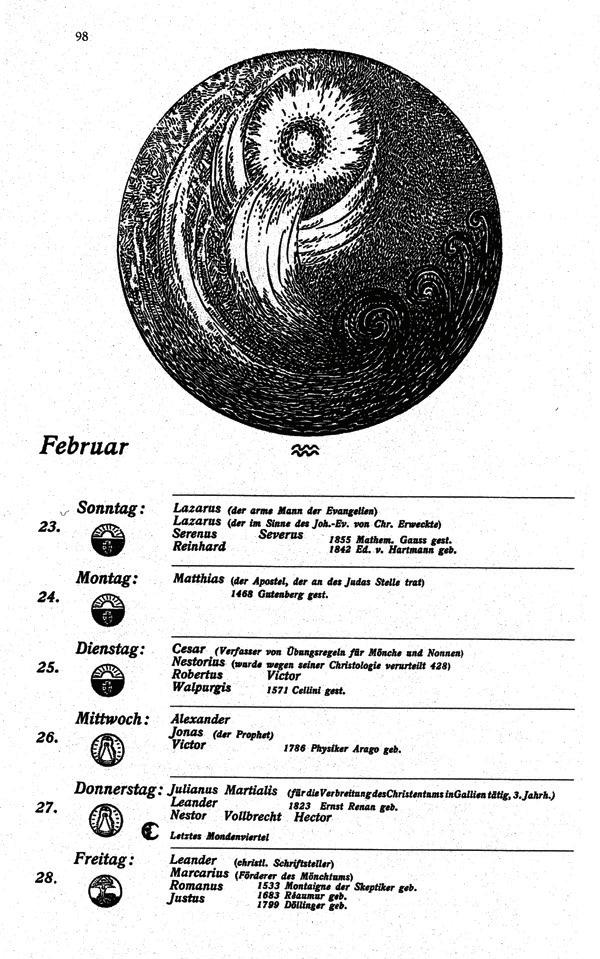
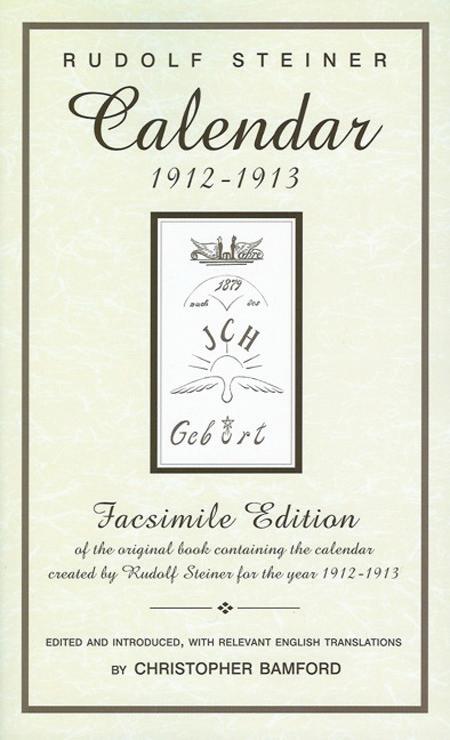
display at Rudolf Steiner House in Ann Arbor, Michigan,) and those are displayed below courtesy of Patricia DeLisa and Mary Adams. Please see Mary’s comments ending these notes.
The Calendar and Eurythmy
Asked about the Calendar in their life, a eurythmist we know exclaimed, “Oh, it’s our bible!” Alice Stamm, president of the Eurythmy Association of North America, sent us some eurythmy movements Rudolf Steiner created for the Calendar verses which we’ll show in a future issue.
The Calendar and Visual Arts
The work with new images for the zodiac was mentioned above. Many artists have been working with the



fall issue 2012 • 29
Aries Taurus Gemini Cancer
verses. Two years ago we reported on Laura Summer’s book on working visually with the Calendar verses. Sophie Takada gave a well-received exhibit of painting last year in Ann Arbor at Rudolf Steiner House. And on previous pages Ella Manor Lapointe shares examples of her work which has been appearing in Chanticleer, and explains some of the process.
The Calendar and Sounds
Cynthia Hoven has just published Eurythmy Movements and Meditations – A Journey to the Heart of Language. In a review just published at anthroposophy.org Patricia Kaminsky writes, “The organizational ‘template’ for Cynthia’s book is true to the root meaning of the word, for it is indeed a kind of ‘temple’ honoring the stars and planets themselves as mighty cosmic forces. Rudolf Steiner’s seminal research gave birth to eurythmy exactly one hundred years ago in 1912. His discoveries are based upon the understanding that each constellation in the zodiac emanates formative shaping forces experienced as consonants in human language, while the vowels express the rich inner landscape of soul feelings. Eurythmy schools us in the Logos Mystery that human speech is a sacred microcosm reflecting and radiating the creative impulses of the stellar macrocosm; thus this book is organized into 24 essays celebrating the consonants of the Zodiac and vowels of the planets.”


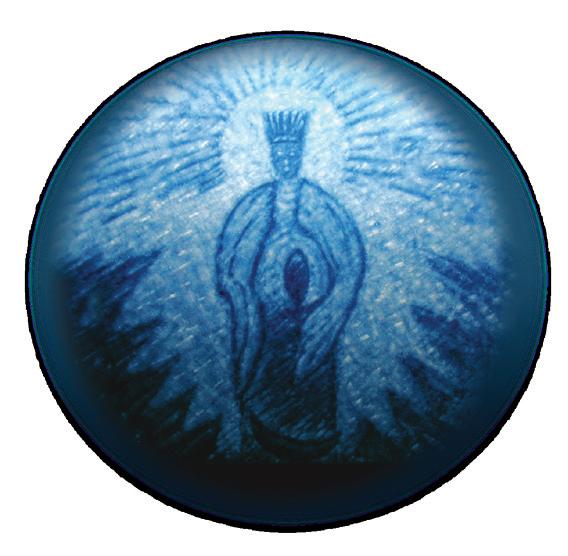

We have also placed online an excerpt from Sounding the Cycle of the Year–a Soundscape translation of Rudolf Steiner’s ‘Calendar of the Soul’ by Brian Alexander Dawes. “I have endeavoured to create a translation which mirrors all these characteristic Cosmic and mantric features (with an exact replication of the number of planetary vowels, and parallel maxima of consonants, from each verse of the German), which otherwise would be hidden from the non-German-speaking reader. A thorough understanding of the relationships between successive images had to
be wrestled with, repeatedly, in each verse, over several decades of work.” His publication includes many extraordinary features: working drawings to illustrate the planetary gestures for each verse by David Newbatt, shaded drawings for zodiac signs and constellations echoing their consonants by Gertraud Goodwin, eurythmy figures for vowels and consonants following Steiner’s indications, and a lemniscate for the year with christian, celtic and mythological festivals thresholds, equinoxes and solstices.
The Calendar and Life
Lynn Jericho began working with the Calendar of the Soul years ago during the “Holy Nights” between Christmas and Epiphany. A Waldorf parent, she’d learned about the calendar in the Princeton Group. “It woke me up to the significance of the year, and also to how consciousness evolves through the year the same way nature evolves through the year. And that’s the basis of my work.
“The big mystery to me was the Holy Nights. It just rang true from the start, but I didn’t find what felt meaningful to me until a day in 2004. I was in NYC in front of the Rockefeller Christmas Tree and all the lights and the tourists. And I said, this is quintessential New York, but there’s something more. So I decided to send an email to everyone on my mailing list, two hundred people. And I explained about the Holy Nights and what the year held, if we could notice it, and how I kept missing it. So I said I would remind everyone, and send out a daily email and some things to think about. Eric Utne asked for something for his almanac. In 2006 I did a little video; 36,000 people saw it. People started asking about other festivals.
“There are 7,000 people on my mailing list now, from Siberia to Nigeria to Brazil to the Philippines. I’ve developed a program called The Inner Year, webinars, based on personal and moral development. There’s a whole curriculum taking shape at ImagineSelf.com
“My favorite verse is my birthday verse.
30 • being human
Leo
Virgo
Libra Scorpio
To carry spirit light into world-winter-night
My heart is ardently impelled
That shining seeds of soul
Take root in grounds of worlds
And Word Divine through senses’ darkness
Resounds, transfiguring all life.”
Another new posting at anthroposophy.org is an article by Vivianne Rael (formerly Rose Passafero) and Henry Passafero. They write: “One way that Steiner strove to support members of the anthroposophical movement to stay awake in light of our evolutionary journey was through the publication of his 1912 Calendar. The calendars we use daily to chart our schedules and view our lives in the context of Time may impact our consciousness far more than we realize. Dr. Steiner observed the hungering modern soul and its lost connection with the creative rhythms of time. Time had become an abstraction for most people—without regard to the cosmic rhythms of sun, moon, stars, and seasons—with an even greater severance with the spiritual beings who actually create time.” Vivianne and Hank have created a book and are holding a year-end conversation, which are described on the inside front cover of this issue.
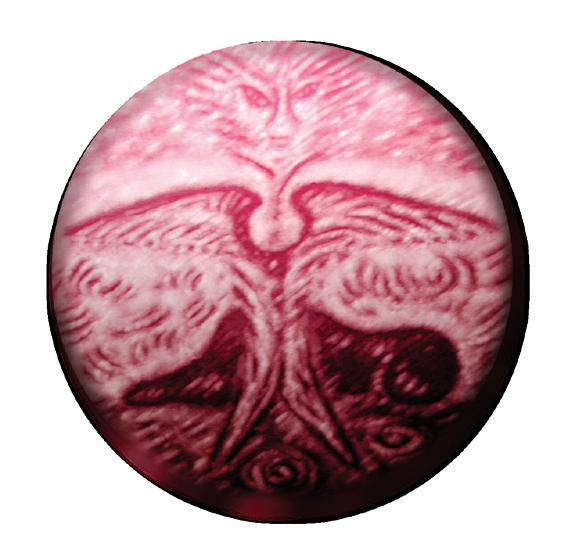
From Mary Stewart Adams, 24 May 2012
At the close of his lecture on the Calendar of the Soul , given at Cologne on 7 May 1912, Rudolf Steiner made the following statement: “Each one of you will be able to use this Calendar of the Soul every year. In it you will find something that might be described as the finding of the path leading from the human soul to the living Spirit weaving through the Universe. I have thus tried to justify the deed that has taken the form of the Calendar. It is not to be regarded as a sudden inspiration but as something organically connected with our whole movement.”
In its original format 1912-1913, the Calendar of
the Soul contained three essential elements which made it both an esoteric astronomy calendar and a meditative guidebook for the cycle of the year. These three elements included:

1. Two sets of New Images of the Zodiac... In describing these images, Rudolf Steiner made the following statement: “In this calendar will be found signs that differ from those handed down by tradition, because the latter are no longer suitable for modern consciousness. These pictures of the Zodiacal constellations are representations of actual experiences connected with the waking and sleeping of particular spiritual beings. We have in these pictures a renewal of certain knowledge that needs to be renewed at this present time...” RS, Cologne, 7 May, 1912
2. Name days for significant individuals throughout history, which Rudolf Steiner described thus: “Days have been provided with names so that those supplied can be useful to those who wish to follow the spiritual path of the evolution of humanity.”
3. The 52 weekly verses, starting at Easter. And since Easter is determined each year by the constellations in an ever-changing rhythm, it must be noted that the verses have to be adjusted and worked with every year, to harmonize with the fact that there are never 52 weeks from one Easter to the next.

Ideally the Society as a whole would be engaged in artistically rendering the new images of sun and moon for each coming year, and an ‘office of the calendar’ could be established through which the art would be aligned with the appropriate verses and dates, and republication would happen each year. In this manner, the artistic efforts of the society would be energized and the sense of community enlivened...This is one way that we awaken Isis from her celestial grave, by re-membering the ‘pieces’ of her body that were expressed through the calendar as image, evolution of humanity through individual incarnations and verses...

fall issue 2012 • 31
Sagittarius
Capricorn
Aquarius Pisces
A Golden Anniversary: Owen Barfield in America
 by Jane Hipolito
A little more than half a century ago, the Saturday Evening Post published “The Rediscovery of Meaning,” an essay by the English anthroposophist Owen Barfield which it had commissioned for its “Adventures of the Mind” series. Barfield was a surprising choice for the series, as unlike most of the other contributors, who were internationally famous artists and thinkers, his work was known only to a very few at the time. This situation changed dramatically in the early 1960s. Barfield’s Saturday Evening Post essay was swiftly followed by numerous other mainstream publications and by lectures, interviews, conference appearances, and visiting professorships at several universities and colleges in the United States and Canada. To this day, Owen Barfield’s life and work continue to enkindle interest worldwide, and particularly in North America.
Two of the most striking aspects of Barfield’s biography are its scope and variety. Owen Barfield’s life encompassed almost all of the twentieth century. When he crossed the threshold in December 1997, he was in his 100th year. Born in November 1898, during the reign of Queen Victoria, he came of age during the First World War and as an adult experienced the tremendous social and cultural changes which came about in the ensuing eight decades – among them, the emancipation of women, the birth of the environmental movement, and the development of numerous innovations that we now take for granted, including the airplane, electronic media, and computer technology. During these same eight decades Barfield had three quite different careers. The first of these was as an independent “man of letters.” He began this career while he was a student at Oxford University, where he earned a “First” in the then new subject area of English language and literature and a Master’s and a B.Litt. degree (equiva-
lent to a Ph.D.) in the same field. During that time and for some years thereafter, he wrote prolifically, publishing lyric poems, short stories, essays and reviews on literature, language, economics, key aspects of contemporary culture, and anthroposophy, to which he was introduced in 1923. He also published three books: The Silver Trumpet (1925), a magical and very witty fairytale for children of all ages; History in English Words (1926), which lovingly explores how the evolution of consciousness can be “read” in the changing meanings of English words; and Poetic Diction (1928), a lucid, insightful study of how poetry expresses meaning. Of these three, Poetic Diction has had the deepest and most lasting effect. As the American poet Howard Nemerov appreciatively wrote in his introduction to Poetic Diction’s 1964 edition.
Mr. Barfield and his book have been very little heard of in the United States during all this while [since Poetic Diction’s first publication in 1928]. But I should add that among the few poets and teachers of my acquaintance who do know Poetic Diction it has been valued not only as a secret book, but nearly as a sacred one; with a certain sense that its teaching was quite properly esoteric, not as the possession of a few snobs but as something that would easily fail of being understood by even the most learned of those jugheads whose mouths continually pour forth but whose ears will serve only for carrying purposes.
Barfield’s second career was as an attorney with a busy London practice. He entered the legal profession in 1931 because he needed to support his family and found that the prevailing cultural and economic situation made it impossible for him to do that as an author. During his years in the family law firm, Barfield and Barfield, he published much less voluminously than he had in the 1920s, but his writings attained new depth. Among them were the essay “Poetic Diction and Legal Fiction” (1947), the verse drama Orpheus, which premiered in 1948, and the autobiographical novel This Ever Diverse Pair (1950), as well as the many essays and poems which Barfield wrote for anthroposophical journals; some of those essays were anthologized in Romanticism Comes of Age (1944, second ed. 1966). In addition to the “very few poets and teachers” in North America who knew and cherished Poetic Diction, the principal audience for Barfield’s work throughout the 1930s and 1940s was the anthroposophical community in Great Britain and, to a lesser extent, students of anthroposophy elsewhere in the English-speaking world and in Europe. This was not a large readership, but it was a staunchly loyal and encouraging one, as Barfield grate-
32 • being human
fully noted in his introductions to the first and second editions of Romanticism Comes of Age.
Barfield’s third public at that time was even tinier –one man, in fact. He wrote a verse about it:
My public, though select and small, Is crammed with taste and knowledge. It’s somewhat stout and rather tall And lives at Magdalen College. This “select and small” public for Barfield’s writings was C. S. Lewis, with whom he had been close friends since they were students at Oxford together. Throughout their friendship, which began in November 1919 and continued until Lewis’s death in November 1963, the two read and critiqued each other’s manuscripts. During the 1920s, they profoundly strengthened each other’s thinking via vigorous debate; Lionel Adey’s book C. S. Lewis’ “Great War” with Owen Barfield (1978, second ed. 2000) describes this turning point in both men’s lives. Beginning in 1931, Barfield served as Lewis’s legal advisor, a relationship which he humorously characterizes in This Ever Diverse Pair. The quality of their friendship also is indicated in the three zestfully comic pieces that they collaboratively wrote in the 1930s and 1940s: “Abecedarium Philosophicum” (1933), A Cretaceous Perambulator (written in 1936, first published in 1983), and Mark vs. Tristram (written in 1947, first published in 1967).
In the 1950s the pressures of Barfield’s legal work abated somewhat, enabling him to write what is widely considered to be his most significant book, Saving the Appearances (1957), whose breadth of scholarship and clear, thoroughly integrative exposition of the meaning of the Scientific Revolution in world history soon attracted respectful interest in academic circles, particularly in North America. The publication of Saving the Appearances marked the beginning of Barfield’s third career: internationally sought-after author, professor, and speaker on subjects ranging from contemporary physics to the nature of language. Two brilliant works of creative nonfiction, Worlds Apart (1963) and Unancestral Voice (1965), belong to this period, as do the masterly What Coleridge Thought (1971), The Rediscovery of Meaning, and Other Essays (1976), and two fascinating fictional works, the science fiction novella Night Operation (written in the

mid-1970s and first published in 1983-84), and Barfield’s ecological novel Eager Spring (written in the mid-1980s and published posthumously in 2008). Important lectures which Barfield gave at North American colleges and universities were published in Speaker’s Meaning (1969) and History, Guilt and Habit (1979), and a great many of his essays and reviews were published in mainstream journals. In addition, Barfield contributed substantially to anthroposophical publications, as author, editor, and translator; one of the most notable of those anthroposophical writings is his rendering of Rudolf Steiner’s Seelenkalender, The Calendar of the Soul: The Year Participated (1985, second ed. 2006). And throughout these four decades he spoke and wrote frequently about C. S. Lewis and the Inklings; Owen Barfield on C. S. Lewis (1989, second ed. 2011) contains several of those pieces.
One of the chief reasons that Barfield’s work continues to have widespread appeal is that it has total authenticity. Barfield consistently spoke and wrote only what he had thought through for himself. In this respect, he exemplified the “independent and critical attitude” and reliance on one’s own “first-hand perception” that he praised in his first published writing about anthroposophy, a March 1924 letter to the editor of the progressive journal The New Age. Another hallmark of Barfield’s work is that he never ever attempts to influence another’s will. Rather, he presents ideas and feelings in a way that enables his readers to develop imaginative, empathetic understanding while remaining completely free to choose their own course of action. His respect for his readers is matched by his respect for his subject-matter; he approaches each topic, no matter how familiar, with contagious wonder and delight. And his work is wonderfully well-reasoned and well-written.
Simply finding out what Barfield’s writings are was the first big challenge for students of his life and work. Now, there is a comprehensive bibliography of his published writings, posted on the website of the Owen Barfield Society (www.barfieldsociety.org ). Another helpful resource is the online listing of the Owen Barfield Papers which are on deposit in Oxford University’s Bodleian Library; this collection contains a great many of Barfield’s unpublished writings. A link to the listing is given on the website of the Owen Barfield Literary Estate (www.owenbarfield.org ).
A second challenge, which is on-going, is bringing Barfield’s writings into print. In 2006 James Wetmore created a new “Barfield Press” imprint of Sophia Peren-
fall issue 2012 • 33
nis in order to publish new, affordable editions of several Barfield books which had long been out of print. Two years later, the Owen Barfield Literary Estate began issuing Barfield’s writings in freshly edited volumes under its own imprint, Barfield Press UK. The twelve books published by Barfield Press UK to date include two previously unpublished writings, Barfield’s 1929 Märchen, The Rose on the Ash-Heap, and his last full-length work, the novel Eager Spring. Each of Barfield Press UK’s editions provides something new and helpful for those who are interested in Barfield’s life and work; for instance, their edition of This Ever Diverse Pair has an illuminating introduction by Frederick Dennehy and notes by Amy Vail on the book’s classical references. All of these books, the Sophia Perennis publications as well as those of Barfield Press UK, are available from online vendors.
The biggest challenge – and opportunity – in Barfield studies continues to be compartmentalization. Each of Barfield’s three publics has its own particular focus and is largely oblivious to the activities and concerns of the other two. The aficionados of C. S. Lewis and the Inklings are interested in Barfield’s reminiscences of Lewis, his friendship with Lewis and other members of the Inklings, and his theology, which they tend to perceive as heretical. Barfield’s anthroposophical readers, on the other hand, see his work as essentially Christian; for them, Barfield’s writings directly evidence his dedicated service to the Logos and his Christ-centric view of world history, and they also value the clarity and depth of his writings on anthroposophical themes. The poets and mainstream academics who read Barfield are generally unaware of his anthroposophical writings and uninterested in anthroposophy. These readers greatly value his insights into the imaginative process and the breadth, integratedness, and sheer brilliance of his scholarship.
The Owen Barfield Society, an international scholarly association which was founded in 2007, has taken up the problem of compartmentalization in Barfield studies. As its website states, “It is hoped that the Society may become a community of scholars in which Owen Barfield’s three publics—students of the Inklings, students of anthroposophy, and mainstream academics –can all participate, communicate with each other, and even collaborate.” To this end, the Owen Barfield Society has established an online forum, and is in process of creating a refereed e-journal. It also holds annual meetings, each of which includes an informal discussion of one of Barfield’s books; the book that will be discussed
in the 2012 meeting is Worlds Apart. In addition, each meeting of the Owen Barfield Society has an artistic element. In 2010, the distinguished poet and essayist William C. Johnson read aloud from his new book, A River Without Banks, which is beautifully written and deeply informed by his study of Owen Barfield’s work. In 2011, Karen Bailey gave a presentation on eurythmy; although Barfield had eurythmy centrally in mind when he wrote most of his poems, this presentation was the first time ever that a mainstream group interested in Barfield experienced this new art form.
Eurythmy will again be an element of the Owen Barfield Society’s 2012 meeting in October in Boulder, Colorado, where research on Owen Barfield’s life and work will be presented in the Owen Barfield session of the Rocky Mountain Modern Language Association, a regional independent branch of the major professional organization for scholars of literature and language, the Modern Language Association. Beginning in 1998, the centenary of Barfield’s birth, an Owen Barfield session has been held in each of the RMMLA’s annual conventions. Initiated by Professor Raymond P. Tripp together with several of his former students at the University of Denver, the annual Owen Barfield sessions were the first, and for many years the only, regular venue for Barfield studies anywhere in the world. The papers presented in the Owen Barfield sessions increasingly transcend compartmentalization. Jamie Hutchinson’s paper on Lewis’s Till We Have Faces from a Barfieldian perspective and Julie Nichols’ groundbreaking research on Barfield’s work in the context of creative nonfiction, cognitive science, and anthroposophy are examples of this encouraging trend.
Jane Hipolito is Professor Emerita of English and Comparative Literature at California State University, Fullerton. She was introduced to the works of Owen Barfield in 1966, when a fellow graduate student at UCLA lent her his copy of Worlds Apart, and she has been learning from Barfield ever since. Jane chairs the Los Angeles Branch of the Anthroposophical Society and is an active member of the Section for the Literary Arts & Humanities of the School for Spiritual Science.
There is a list of selected publications by Owen Barfield on page 54.
34 • being human
What’s Happening in the Anthroposophical Society in America
“The Grail of the Central Region: Questing from the Heart”
pings of two Arkansas mountain ranges. Mary Louise Hershberger led an exercise


The
Anthroposophical Society in America
General Council Members
Torin Finser (General Secretary)
Virginia McWilliam (at large)
Carla Beebe Comey (at large)
John Michael (Treasurer)
Regional Council Representatives
Ann Finucane (Eastern Region)
Dennis Dietzel (Central Region)
Joan Treadaway (Western Region)
Marian León, Director of Administration & Member Services
being human
is published four times a year by the Anthroposophical Society in America
1923 Geddes Avenue
Ann Arbor, MI 48104-1797
Tel. 734.662.9355
Fax 734.662.1727
www.anthroposophy.org

Editor: John H. Beck
Associate Editors:
Judith Soleil, Fred Dennehy
Cover design: Seiko Semones (S2 Design)
Layout: John Beck, Seiko Semones
Please send submissions, questions, and comments to: editor@anthroposophy.org or to the postal address above, for our Winter 2013 issue by 12/1/2012.
©2012 The Anthroposophical Society in America. Responsibility for the content of articles is the authors’.

This was the theme of a memorable 2012 Annual Gathering of the Central Region, held May 4-6 on beautiful Petit Jean Mountain in central Arkansas. The watershed of the Mississippi River forms a grail in the heart of North America (and covers most of the Society’s Central Region), and it includes the Arkansas River which flowed below us. Rudolf Steiner’s lecture, “The Human Heart” was the study materi-
al for the weekend. Dennis Dietzel formed this mental picture of the heart for us: Before birth, man draws into himself the forces of the etheric universe, and in so doing forms his own etheric body. By puberty, these forces gather themselves together and suspend within themselves the physical heart.
Man’s astral body brings to the child experiences he has undergone between his last death and his present birth. Throughout his lifetime, man’s actions are recorded in this “astral body.” These astral forces eventually concentrate in the region of the heart.
A concentration of both etheric and astral forces are thus established in the heart by the time of puberty. Steiner describes this as a “joining together of the cosmos of what man does in this world. This is the point where the cosmos is joined to the karma of man. Then when man passes through the gate of death, this ethereal-astral structure—contains all that man takes with him into his further life of soul and spirit.”
Marianne Fieber led our group in a communion with nature and elemental beings on the Saturday morning “Songtrail” among the colossal rocks and outcrop-
which explored the nature of a question that comes from the heart; a question with the potential to heal. The group formulated questions which Parzival might have asked King Anfortas in his Quest for the Holy Grail; questions meant to heal the wound of Anfortas. The Parzival Pageant, an original script and score written and directed by Marianne Fieber and Dennis Dietzel, was performed with good cheer Saturday evening by all attending. A group stroll through a crystal sun wheel and a meditation before the perigee supermoon ended the evening. Eurythmy was woven throughout the weekend activities by our gifted guest eurythmist, Raven Garland. In the Sunday morning discussion of the “Renewal of the Anthroposophical Society,” Central Region anthroposophists committed to sharing the challenges confronting the Society.
Current regional council members were affirmed for another year, but saying farewell after 14 years to out-going member Margaret Runyon was a mournful task. Thank you, Margaret, for your service! Margaret’s departure from the Council leaves a vacancy to be filled.
We “Little Rockers” are small in number but large in our love for anthroposophy. We steadfastly strive to plant a seed for anthroposophy in Arkansas, and thank the Council for inviting us to host this year’s conference.
Sonjia Michaels, for the Little Rock Group excerpted from the E-Correspondence of the Central Region
fall issue 2012 • 35
Leonard Benson’s Bequest
Remembering the Anthroposophical Society in your will is a wonderful way to support the future of anthroposophy in the U.S. In August 2010, the Society received a bequest from the estate of Leonard Benson, a member since 1952 who had a long and distinguished career as a teacher of art history at Wellesley College, classics at the University of Mississippi, and archeology and art history at the University of Massachusetts in Amherst. His book The Inner Nature of Color: Studies on the Philosophy of the Four Elements is available from SteinerBooks.
In his will, Leonard requested that his gift be used to support eurythmy in the United States. This generous gift has allowed several opportunities to unfold, including the presentation of the Foundation Stone Meditation at the 2011 First Class Conference in Fair Oaks, CA and the 2011 AGM in Portland, OR, and a grant to the Eurythmy Association to help six euryth-
mists attend the International Eurythmy Working Conference in 2010. This was the first time that a eurythmy conference at the Goetheanum encompassed the work of four sections – performing arts, education, social sciences, and medical.
Most recently, this bequest allowed the General Council to respond to a request from the Winkler Center for Adult Education, located in Garden City, NY, to support the Mentoring Seminar for Eurythmy Teachers program. This four-year program is intended to help experienced eurythmy teachers design programs to support young eurythmists entering into the pedagogical world, and also to help mentors learn from each other. Funding for this program was a collaborative effort, with additional support coming from the Pedagogical Section at the Goetheanum, as well as support from each participant’s local Waldorf school. 2012 was the third year of the program, and the generosity of Leonard Benson was critical in sustaining a program whose participants have rated it
Our Working Together: A Process of Continuity, Change, and Renewal

very highly.
“The collaborative effort made on behalf of all teaching eurythmists was evident throughout the session and was greatly supported by the work and presence of Christof Wiechert. Everyone remarked on how valuable his seminar on child study was and his support in our problem-solving sessions brought forth new ideas and solutions.” – Leonore Russell, Garden City, NY
“I believe we have formed a group that will be of great service to eurythmy programs in the United States.” – Carla Comey, Waldorf School of the Roaring Fork, Carbondale, CO
“I am grateful that the Seattle Waldorf School has each year encouraged my development as a mentor, and I know that I can offer continued support for the growing body of pedagogical eurythmy in the Pacific Northwest.” – Bonnie Freundlich, Seattle, WA
“The workshop on mentoring is of invaluable help to me as an adult educator
The process that reached a certain intensity with this summer’s Leadership Colloquium and Members’ Conference has roots going back almost twenty years and is open-ended toward the future. Like a flow form, it will combine necessary forward movement with rhythmic openings-out for evaluations and new insights. (The beautiful flow form below is at Rudolf Steiner College.) Here are some steps to date...
2005– Review by Siegfried Finser sums up a decade of studies of Society challenges
2008– General Council and taskforce invest in new communications directions
2010– Council, Collegium, and CAO (initiatives) meet at Whitsun at Threefold
2011– “Rudolf Steiner’s vision for the future” is forward-looking 150th anniversary theme; newsletter becomes being human
2011– General Council plans leadership colloquium with CAO funding support
2012 Jan– General Council meets with Siegfried Finser on 2005 study, explores “participation” idea; invites member study of Work of the Angel in the Astral Body
2012 Apr– being human spring issue shares questions, invites member reflections; summer issue highlights feedback
2012 Aug– 130+ attend leadership colloquium from across Society and movement and four Goetheanum Executive
Council members; special facilitation promotes all voices being heard; members conference and AGM continue focus on engagement for all members and personto-person process with Executive Council
2012 Sept– Letter to all members details status of the process
2012 late Oct– fall being human brings conference content; General Council and CAO review colloquium/conference materials, hold joint session; Society staff transitions to new “relationship” database to support member interconnections
2012 late Nov– next report to members on initial Council review and actions, plus request for feedback; annual appeal
2012 Dec– special members’ year-end communication for Holy Nights
2013 Jan– beginning of “financial participation” concept in relation to funding the Society’s operations in 2013
36 • being human
and mentor…It was enriching, inspiring and enlivening to see how different eurythmists are able to incorporate the different elements of the eurythmy curriculum into artistic, imaginative and playful pieces…I am profoundly grateful for having been able to participate.” Christina Viebke Wallace-Ockenden, Calgary Waldorf School, Alberta
“One of the strongest messages that came across at this meeting is that eurythmy is born out of the Anthroposophical Society. It is our anthroposophical striving that brings the greatest gifts to our colleagues, students and also gives back to the Society.” – Barbara Richardson, Merriconeague Waldorf School, Freeport, ME
Marian Leòn, Director Administration & Member Services
Send contributions for “What’s Happening” to editor@anthroposophy.org
What’s Happening at the Rudolf Steiner Library
High demand! Books by Peter Selg and Sergei Prokofieff; the new film about Rudolf Steiner by Jonathan Stedall; Keith Critchlow’s beautiful Hidden Geometry of Flowers. Although we have multiple copies of these (and other) particularly popular works, sometimes the wait for them is longer than need be. We urge everyone to return library materials on time; share the goodness!
We’re working to create a new, more user-friendly and convenient home for the library’s digital content: right on the library page of the Anthroposophical Society’s website: http://www.anthroposophy.org/ rudolf-steiner-library.html. There you’ll be able to access searchable PDF files of journal indexes, complete back issues of the Journal for Anthroposophy, the society newsletter, and more.
We’re looking for a volunteer or two to help transfer the contents of several hundred audiocassettes to DVD and/or MP3 format. This can be done at home with your own equipment; let us know if you’d like to help.
Our Books Alive! series at Camphill
Ghent, the new, local intergenerational community, continues. In September, Jon McAlice spoke about his involvement with the design and building process at Ghent; in October, Lisa Damian will present a bookbinding workshop. November will feature “The Angel That Troubled the Waters,” a selection of works by Thornton Wilder read by Ted Pugh and Fern Sloan of the Actors’ Ensemble; in December, we’ll hear from ecologists Claudia and Conrad Vispo. Join us if you’re in the area!
We’re also hosting other local events: “The Future of Waldorf Education,” a conversation with Patrice Maynard of AWSNA, author Steve Sagarin, and professor Douglas Sloan at the Hawthorne Valley School (Ghent, NY) Oct. 17; and the long-awaited return to our area of Professor Herr Dreier (perhaps with his alter ego, Alexander Dreier, in tow) on Nov. 16.
You can read back issues of the library’s monthly electronic newsletter [short URL: http://goo.gl/8wZ6u]. Contact us if you’d like it sent directly to your Inbox!
We are still seeking special gifts to assist with the library’s digitization project. You can help to make the treasures in this collection accessible to a worldwide audience: every donation makes a difference!
Judith Soleil, Librarian
That Good May Become
General Secretary Torin Finser’s Opening Talk of the August Members Conference
Dear Friends and Members of the Anthroposophical Society, Welcome, well-come to the opening of our 2012 conference here in Ann Arbor. For those who have just completed two days of conversation on the future of our work, this evening marks part two of

a remarkable week. For those who have just arrived, we rejoice at our reunion as members. As we begin this anthroposophical conference, That Good May Become, I would like to devote my comments this evening to the unusual significance of 2012—moving beyond the hype of the Mayan calendar to examine some deeper secrets contained in this remarkable year.
We all know about the 100 year anniversaries: 100 years since the creation of eurythmy, 100 years since the publication of the Calendar of the Soul, and of course 100 years since the founding of our Anthroposophical Society. It is thus especially fitting that we will experience later tonight the remarkable new art form of eurythmy, and that we have the pleasure of welcoming the Executive Council from the Goetheanum.
Looking at the meaning of 100 years one is struck by some associations we commonly make with the number 100: water evaporates at 100 degrees Celsius, there is the 100 years sleep in fairy tales, we have 100 US Senators (whether we all feel they belong in Washington or not), and we have 100 cents to the dollar (though they are not worth as much as they used to be). In short, the number 100 has a kind of finality to it.
As I began my research on the significance of 100 years, one of our section leaders, Johannes Kuehl, pointed me in the direction of a book by Christoph Lindenberg which I could only find in German: Vom geistigen Ursprung der Gegenwart 1 Lindenberg has an interesting observation: 100 years “is not an absolute ending, but rather the end of a specific effectiveness.” What does this mean, the end of a specific effectiveness? I sense it as a call to continue on a new basis, thus our leadership colloquium these past two days and this conference in 2012.
A few weeks ago, when opening our summer programs in New Hampshire, I called to the stage three of our students to demonstrate three generations. I won’t do that tonight, but imagine three peo-
1 “From the spiritual source of the present day.”
1984: Verlag Freies Geistesleben, Stuttgart.
fall issue 2012 • 37
Meeting Our Spiritual Destinies in America

ple—one might be 33 years old, another 66 and one the wise grandparent nearing 100 years of age. Within 100 years we often have three generations of 33 years each.
In lectures given in December 1917, Rudolf Steiner said that “This period, thirty-three years, is the period of a human generation; thus a complete generation of humanity must elapse between Christmas festivals and the Easter festivals that are connected to them.” 2 “That which is done in a given year, when, as a thought, it springs forth from man, has so to speak a Christmas character. This, as I have said, refers to the effects of our deeds in the whole nexus of the social life; not to our personal Karma. A seed of thought or of a deed takes a whole human generation, 33 years, to ripen.” 3 He goes on to say that with 66 years the impulse is intensified, and at 100 it reaches a kind of culmination that calls for renewal on a new basis. What we do today, this weekend, in this conference, has the possibility of resonating further in 33 years, and this awakens, according to Rudolf Steiner, not only a better understanding of history, but also a new social consciousness. So when we go beyond the more superficial aspects of 100 years we come to the significant cycle of three times 33 1/3 years.
But let us go further with Rudolf Steiner’s words on this important interval of time: “All the actions of earlier generations, all their impulses with their combined activity, poured into the stream of historic evolution, have a life cycle of 33 years. Then comes its Easter time, the time of resurrection... For, my dear friends, all things in historic evolution arise transfigured after 33 years, as from a grave, by virtue of a power connected with the holiest of all redemptions: the Mystery of Golgotha.”4
We know that through the Mystery of Golgotha, humanity was given a new social archetype. But the completion of the 33 year cycle in that momentous event was only possible because of a deed of great cosmic collaboration that had happened
2 Steiner, Rudolf, Et Incarnatus Est, 1983, Mercury Press, Spring Valley, NY; p. 12.
3 Quoted in Anthroposophical Movement – Weekly News, 17 March 1929, Vol VI, No II.
4 Et Incarnatus Est, p. 13.
earlier. At a members conference one can speak of some of the deeper mysteries given to us in anthropsophy, one of which is the story of the two Jesus children.
Thanks to Rudolf Steiner, we know of the Luke Jesus who “was not endowed with an ego such as especially characterizes a human being, rather, in the Luke Jesus boy lived a part of the human being that had never before entered human evolution on earth...” A sister soul of Adam, instead of the usual ego, incarnated into Luke Jesus: “This soul possessed all the wisdom that could be experienced through the Saturn, Sun, and Moon periods of evolution. It possessed all the love a human soul can attain. It remained innocent of all the guilt that humanity can incur...”5 This boy had no particular gifts for external things, but had divine wisdom and a “supreme capacity for sacrifice” (p88).
In contrast, the Matthew Jesus had a love of the earth developed through repeated earth lives. He could easily absorb knowledge and the fruits of his culture. True to the work of Zarathustra, here we see the earth as an essential sphere of action, finding positive meaning in working with matter. The confrontation with forces of darkness and evil was seen as a necessity for evolutionary progress.
Then we have a remarkable event of cosmic collaboration, something many of us may never fully understand even in a lifetime: the Zarathustra ego left the Matthew child at age 12 and took possession of the body of the Luke boy. This happened, as seen in the teaching of the rabbis in the temple, at age 12, creating the basis for the baptism at 30 and then the Mystery of Golgotha at age 33.
I feel this cosmic event is deeply connected to our work as a society and the Christmas foundation meeting. As I have worked more intensely with our Anthroposophical Society in recent years, I have experienced Luke or Nathan qualities in our Society: something that has never before been on this earth, a rich spiritual heritage (Saturn, Sun and Moon and beyond), and also a kind of innocence, even naiveté
5 Steiner, Rudolf, The Bhagavad Gita and the West (CW 142, 146); 2009, SteinerBooks, Great Barrington, MA; pp 86-87.
in how our Society operates.
In contrast, in working with the initiatives, our Waldorf schools, Camphill communities, biodynamic farms, etc., I often experience qualities of the Matthew child: a desire to make anthropsophy visible through the work, transforming education and agriculture out of love of the task. There are many people drawn to these initiatives who have considerable expertise and knowledge.
As someone who literally stands with one foot in each stream, I can hear from each direction two equally valid questions. From the Matthew stream I hear the question: so what does the Society actually do? And from the Luke direction I hear: why is it that you don’t recognize us within the initiatives, why is the Society so invisible?
Although we all have hindrances, one can also see considerable success in the initiatives: one has only to visit a Camphill community, or observe that even in a recession some of our Waldorf schools have raised money for new buildings, and BD is more widely recognized than ever before. Many initiatives have attracted accomplished professionals, who work full time.
In contrast, the Anthroposophical Society in America has about 3,200 members (after lapsing 300 last winter), there is little in the way of infrastructure, most of those who work for the Society are part time or volunteers. They work out of high ideals with rich spiritual substance but very few physical resources. Putting on a conference under these circumstances is a huge undertaking compared to our centers in New Hampshire, Spring Valley, or Sacramento, with their professional, year round staffing.
I have come to the conclusion that many struggles around our work with the Society are incarnation issues. Even Rudolf Steiner struggled to help the Society incarnate, and the work remains unfinished today.
The times are calling for an enactment of the mystery of age 12: the two streams need to flow together, as occurred with the two Jesus children. And the father of the Luke Jesus married the mother of the Matthew Jesus (after the other two parents had died), and the two families became one and lived on in Nazareth. A picture of collaboration if there ever was one! Today, we need to collaborate for the sake of the renewal of
38 • being human
this earth through anthroposophy.
But I would like take this exploration of 2012 one step further. Rudolf Steiner spoke of the year 1879 as a decisive spiritual revolution, as the dawn of the Age of Michael. I believe that today, in 2012, we are connected to that cosmic event of a world order in a very special way:
1879 + 33 1/3 = 1912 1/3
1912 1/3 + 33 1/3 = 1945 2/3
1945 2/3 + 33 1/3 = 1979
1979 + 33 1/3 = 2012 1/3
Here we are in 2012 at the start of the fifth cycle of 33 1/3 years in the age of Michael. What does this mean for us? The Michael impulse of our time, beginning its fifth cycle, unites with the 33-year resurrection impulse, the Christmasto-Easter transformation. Michael and Christ are here, present with us today. They come together once again, for our sake, in this year 2012.
So who are the Michaelic souls of 2012 who have been given this rare opportunity to be on this earth at this special moment in time? This hall is full of them! Michaelic souls in 2012 are actively working with cosmic intelligence to transform the earth. They are working consciously, in freedom, often overcoming tremendous hindrances. Some have a strong social impulse to reach out to others with similar values, to connect and network. Others want to intensify our study and deepen our understanding, do research, especially through our sections. Both gestures are helpful, as we need the contributions of both outreach and deepening.
But we also have to practice discernment: those working in different ways with anthropsophy need to guard against two extremes, superficiality or fragmentation: on the one side those who have the worthy aim of reaching out to the so-called “green belt”, can in its extreme, practice a kind of anthroposophical relativism: as a result the world might see us as just another spiritual movement, using different terms, but no different in essential character. We have to guard against spiritual monism that says we are all one big bowl of soup. The other extreme could be called anthroposophical fundamentalism: those friends might like to say: we have the Truth with a capital T, and those that ask questions or bring up
different perspectives are clearly “opposed to us.” Fundamentalism thrives on “us vs. them” polarities—just look at the Middle East. I worry that at times we have been pulled in conflicting directions: the fundamentalists and the relativists. To quote a great American, Abraham Lincoln, a house divided against itself cannot stand.
I believe that the path of Michael is actually a third way, a path that includes both social action and research. Those working out of this third way, the Michaelic souls of 2012, often show themselves through initiative. So let me introduce you to one of the many Michaelic souls I have had the pleasure of meeting in my travels: Bernard of Pebble Farm in Auroville, India.
When he and his partner found this land 15 years ago, it was dry, sandy, full of hard rock and pebbles. They decided to reclaim the land without importing topsoil, compost or even BD starter. Using the Acacia plant, they experimented with a system of collecting the leaves, placing them in excavations, and letting the monsoons of summer soak them, thus facilitating the process of decomposition. They then took the spongy leaf soil and layered it with the sandy soil on the property, adding charcoal, which he burned in the kiln he constructed. Twelve layers in all of soil, humus, and charcoal—and year after year adjusting his methods, until today we find a lush garden. They do not sell or eat their vegetables. Instead they harvest and give away the seeds, sending packets all over India, even around the world, for free. For as Bernard says, “These seeds are not my creation”.
Let these two pictures serve as an example for all we do out of Anthroposophy (with two large photos on black board):
Education: No Child Left Behind ------->Waldorf
Agriculture: Monsanto -----------> biodynamic farms
Medicine: Big pharma ---------> Weleda, Hauschka
I could give many, many more examples. None of these transformations would be possible without anthroposophy. And according to our teacher, anthroposophy needs the Anthroposophical Society.
Many, many people around the world have come to accept with gratitude the incredible gifts given us by Rudolf Steiner. So why is it still hard for some to accept his statement that anthroposophy needs the Society—and the Society needs anthropos-
ophy? How can one “use” anthroposophy without seeing the intimate relationship between the two? The Society is us—not the physical bodies in this room tonight, but what lives between us, and between all those who are working out of Michael. The Society is not a “thing” or a mere legal organization, it is us! And whenever we share our mutual striving out of anthroposophy we are “practicing” free association.
But we—members here tonight and those around the world—need to become more active. I am working on a dozen proposals to bring to our leadership groups this fall, building on the colloquium and my perception of needed changes, but let me briefly illustrate with two examples: Mentorship. We could ask each region to identify possible mentors so when someone joins the society and contacts the Ann Arbor office, they could be offered a name, phone number and email address. The new member could decline, or if accepted, the mentor would call to welcome the new member into the Society and offer to have some conversations, in person, on the phone or by email depending on geography—this would emphasize the relational aspect of our work from the very beginning. (We would want to have some clarity on mentor qualifications, of course)
The Society needs eyes and ears, hands and feet in the initiatives. This could be achieved if each Waldorf school, Camphill, BD farm, etc., were to identify one person in their midst to serve as laison with the Society, so when we send materials they really connect with people, and there is communication back and forth. We could have a meeting of all those taking this role every other year or so, say just before an AGM.
These are but two of many future possibilities for working collaboratively, but all the changes we will consider require greater consciousness and member activity. To draw on JFK: ask not what the Society can do for you, but what you can do for the Society. Let all the Michaelic souls in this hall tonight, and those that are not here but live in the north, south, east and west, join together in heightened collaboration in this special year of 2012. May the initiatives and the society find common inspiration in the example of the union of the two Jesus children that made possible
fall issue 2012 • 39
the resurrection, so that our gifts of sacrifice may truly serve the world. May our garden contain both the tree of life and the tree of knowledge. May those on this earth 33 years from now be able to look back and say: this was possible, here in America, because of those, yet few in number, who rededicated themselves to this work back in 2012 so that “good would become.” With this wish in my heart, I welcome you to the start of our conference tonight.
Beyond Our Borders
A presentation by Jonathan Stedall at the anthroposophical conference in Ann Arbor, USA, August 10th 2012

The Irish playwright, George Bernard Shaw, was asked once where he would want to be at the end of the world. His reply was ‘England’. Why England? ‘Because England,’ he said, ‘is always fifty years behind the times!’
I’m going to tell you why I don’t think this is always the case. But firstly, for me, Shaw’s remark prompts the question: What is the true nature of the times we live in? What’s really going on?
On the surface it seems that economics—money— is what increasingly dominates the headlines. We are constantly encouraged to consume more, to be more productive. Yet on the other hand a different set of experts warn us that we are raping the planet in the process, and that this rush to get richer materially—as rich as America—is unsustainable. Like all of you, however, I am interested in what is really trying to happen behind the scenes—to evolve—as we plough on into the 21st century, driven at one level it seems by those two demons ‘fear’ and ‘greed’ that haunt not only the Stock Market but also the minds of ordinary men and women.
Wealth and power, underpinned by a technology that has its own hidden and sinister agenda. Is this the true signature of the times we live in, or is there another scenario at work that points to a saner future?
England—and Great Britain altogether—has long been delegated in the ‘tough guy’ stakes. We are no longer a world power, either economically or militarily—nor therefore politically.
And in all these areas even America is now being ‘threatened,’ as they say, by China and other emerging economies. But is this such a tragedy? Does it have to be a humiliation? Or could it be an opportunity and a challenge to discover new tasks for the future, rather than mourning past glories—tasks related to this other scenario that I mentioned?
You have chosen as a theme for this conference: ‘Meeting our spiritual destinies in America.’ As an Englishman I cannot speak for America, but what I am going to try and convey about England’s tasks and destiny in this respect—and why I think that England is in some respects ‘fifty years ahead of the times’—also applies to aspects of America that I have experienced and admired over the years.
There’s a collection of essays and talks by the German scholar, Walter Johannes Stein, collected together under the title The Psychology of the British. Stein was a teacher at the first Waldorf School in Stuttgart, and made his home in Britain for the last twenty years of his life. Although well aware of our shortcomings, he was very appreciative of what lives in the English folk soul. And he concludes his final essay by suggesting that one of the main tasks of the English in the future —a task that has nothing to do with Empire, or power in the economic or military sense, is to help ‘to make things human.’ And for me, if I had to sum up the greatest danger facing us today, it is the subtle—and sometimes not so subtle—erosion of our humanity.
Already in the 19th century here in America, Emerson foresaw that danger and coined the phrase ‘self reliance’—not the self reliance that encourages and even justifies a culture of ‘every man for himself,’ but rather as a reminder of what is the potential in all of us to become what Steiner—some forty years later—described as ‘a selfless self.’ In this respect I have sometimes thought that we shouldn’t speak of ourselves as ‘human beings,’ but rather as ‘human becomings.’
It is in this spirit of trying to make things
human that I have tried to create my film about Rudolf Steiner’s life and legacy. From the outset I have, of course, been very aware of the difficulty of doing justice to such an enormously important subject; aware, too, of the danger of superficiality, and of conveying misleading and even inaccurate statements, as well as inadequate examples of anthroposophy in action.
In fact I did make one small mistake in the original version of the film that I have since corrected. At the time I was comforted by a friend who told me about a tradition in Persian carpet-making whereby there is always a deliberate mistake woven into each new carpet—because only God can be perfect.
Despite the correction, my film is nevertheless still far from perfect; but it is full of examples of people trying—each in their own way—to make things human, whether in classrooms, on farms—indeed in every area of human activity and culture.
For me humour is an essential ingredient in this task of creating a world in which our true humanity can unfold. And of particular importance, I feel, is our ability and willingness to laugh at what we hold most dear. Here in America you’ve had many such geniuses to help us do just that—Mark Twain being perhaps the greatest. In England in recent years there’s been Monty Python, and now—though not to everyone’s taste—Sacha Baron Cohen, most recently as the Dictator. Mr. Bean, in the person of Rowan Atkinson, made a memorable and hilarious contribution to the Opening Ceremony of the Olympic Games in London. The whole event may not have been as spectacular as the ceremony in Beijing four years ago, but it was full of humanity and eccentricity.
Humour, together with a certain irreverence towards icons, helps us, I believe, to keep a sense of proportion—a sense of our own inadequacies and shortcomings when confronting the great mysteries of life. Fantasy, as well as humour, is a gift that the British seem to have in profusion—enriched, I sense, by the Celtic stream in our make-up. And fantasy is, and will be, a powerful and important weapon in the battle against Ahriman’s dry, logical and clinical bias.
Lewis Carroll’s Alice in Wonderland,
40 • being human
Kenneth Grahame’s Wind in the Willows, A.A. Milne’s Winnie the Pooh, Tolkien’s Lord of the Rings, C.S. Lewis’ tales of Narnia, and more recently J.K. Rowling’s Harry Potter—these are some examples of the genius that helps to make things human; and England, thank heavens, continues to enrich our world with stories that make no ‘sense,’ but in fact say a great deal. Someone once said: ‘Myth is a fiction that gives us the truth.’
I remember years ago hearing a talk in Dornach by the distinguished biologist, Hermann Poppelbaum, on the subject of elemental beings; and in particular I remember his mention of the gift that these beings can give to us in return for our recognition and appreciation of their existence. It was the gift of fantasy.
And certainly there are many people in Britain, as elsewhere, who—despite the materialistic culture that surrounds them—still recognise, albeit unconsciously, the miracle that lives in what we call nature; and who recognise, too, that the extent to which we honour that miracle, so will we be helped not only to understand once again the wisdom that is hidden in fairy tales and in the great legends of the past, but also helped to go on creating them. Fantasy and humour. We need them, I believe, more than ever.
‘A lightness of touch’ is another way of describing how to reach people with profound truths without always bombarding them with too many abstract thoughts and ideas that can easily leave them floundering and quickly out of their depths. One scene in my film—and I’m going to show you several during this talk—is a wonderfully light-hearted introduction to biodynamics by Chris Benziger at his family’s winery in California—cued in by a passionate statement from Dennis Klocek:
Dennis Klocek
For me what is unique about the work of Rudolf Steiner, what’s inspired my life about it, is that it’s not just a tradition; he threw down the glove and said—‘You have to do something with this.’
Commentary
The Benziger family have been doing something with this land for over 30 years. Biodynamic wine is becoming highly prized, not just here in California but across the
world; and like all biodynamic farms this enterprise avoids the modern trend for mono-crops. Alongside the vines there are animals and a great variety of plants and herbs that help regulate the insect population and balance the farm as a totality, avoiding the need for chemicals and artificial fertilizers. They call it the insectary.
Chris Benziger
Basically it propagates with bugs, then they sort it out. We have some good bugs and some bad bugs and they slug it out here, and hopefully what we do is we have a balance. The bugs are in here eating the plants and eating each other instead of going out
be said.
Jonathan What, the style you mean?
Revd Dr. Fraser Watts
Yes, style and content I think; and also something off-putting about the Society, the kind of following that he has sometimes built up around him which can look rather too cult-like from the outside. Not at all what he wanted, I think, but it can look like that.
I spoke on this same theme to a young American, Joseph Papas—the baker at Camphill Copake. I asked him whether he thought that Camphill communities like Copake had tended to isolate themselves from the world at large, and whether Steiner’s legacy had altogether become too inward-looking, too cult-like:
Joseph Papas
there eating the grapevines; because if we were mono-cropping then we’d put a huge bull’s-eye on the back of that grapevine, cos the only thing that’s green is that grapevine, so every bug is going to fly and eat that. Here we have a wide expanse, so there’s a lot of things on the menu, not just the grapevines.
In my discussions with Torin Finser about this presentation, he asked me to bear in mind the theme of ‘collaboration,’ and also to speak about what I learned, in making the film, about the strengths and the weaknesses of the anthroposophical movement, and the challenges it faces. Connected to this is the question of the relationship of the Society to the movement.
Probably the most challenging contribution in the film to this whole debate—the health of anthroposophy in the world at large—came from an Englishman, Fraser Watts—an academic at Cambridge, a Reader in Science and Religion, and a priest in the Church of England. At one point in the interview I asked him why Steiner isn’t better known:
Revd Dr. Fraser Watts
It’s an interesting question why Steiner isn’t better known. I think there are various reasons. There’s something off-putting about his writings, I think that that has to
I guess it can be, though I don’t know that it’s specific to his legacy as such. I think that that isolation tends to happen with any sort of content that comes into the world, and I certainly wouldn’t ever say it was his intention. But yeah, you know I can say it seems in the biography of this community that there was a time in the growth of the community that it seemed really important that it more or less separated off a little bit in order to grow and to become strong—and then maybe that also can be reflected in the individual as an inner process as one comes to terms with oneself—but certainly I feel like in this community, but also in this region, there’s a lot of feeling that we’re now at the point where we need to grow a bit beyond our borders.
‘Beyond our borders.’ What is the nature, the purpose of a border? It’s a question imaginatively addressed by Robert Frost in his poem ‘Mending Wall’. A remark by Frost’s neighbor—‘Good fences make good neighbors’—is the poem’s refrain. But then Frost asks himself—‘What was I walling in or walling out?’ ….
‘Something there is that doesn’t like a wall,’ he writes—‘That wants it down.’
I’ve had a long connection, both as a film-maker and as a friend, with Camphill—particularly in Britain. I made my first films there in 1967—one at the original school in Aberdeen, and one at Botton Village in Yorkshire, the first Camphill
fall issue 2012 • 41
community for adults.
Certainly in those early years the isolation—the wall—seemed justified for the reasons that Joseph Papas said in that clip. And Joseph very perceptively draws a parallel with the journey of the individual—often a period of introspection before going out into the world with gifts and skills to offer, and thereby to be of service to others.
In recent years there’s been quite an upheaval in many of the Camphill communities in Britain. In part this can be seen as caused by increasingly unhelpful pressures and directives from the authorities that finance such places—authorities with a mindset that is often very much at odds with what lives as ideals in anthroposophically-inspired initiatives like Camphill.
But I think that the problem cannot always be blamed on ‘the big bad world.’ If the ideals we live with are not constantly nurtured and renewed, giving us the strength, confidence and credibility to move beyond those borders and out into the world at large, a certain conformity can set in—the downside of what we call tradition—and alongside that conformity a vacuum is created. And if not enough effort for renewal is made, then other forces will rapidly move in to fill that vacuum—forces that have quite another agenda. I’ve seen this happening in several anthroposophical institutions—and indeed, in Britain, in the Society establishment itself.
And this renewal has to come, I believe, not just from simply studying Steiner’s writings more diligently and in greater detail, but having the courage to be more creative, more adventurous ourselves— however small and humble our initiatives may be. And this will often mean taking a far greater interest than is often the case in developments generally—developments that are often extremely positive. People may not always use our language, may not be particularly interested in whether we’ve lived on earth many times before, but they do care passionately about living on the earth now, and in a way that is healthier and wiser than in the recent past.
Nor is it helpful in all this if an orthodoxy is established, either in Dornach or elsewhere, that says what is kosher and what is not. Of course the integrity of Steiner’s legacy has to be protected; but let’s not for-
get his courage to swim against the tide.
In the Postscript to my film this challenge to move on is powerfully addressed by both Fraser Watts, the academic from Cambridge, and by Arthur Zajonc:
Prof. Arthur Zajonc
One often tries to imagine what would Steiner’s life and hopes be like today, or in the near future. Imagine him returning, reincarnating, if you will. Would he acknowledge the Society he created or would he have something very different in mind? You know I think there are a couple of ways of coming at the question. One is to say: To whom was Steiner directing his hopes, his aspirations, his efforts? And it was to humanity, it was not to a small community of anthroposophists. You know when he started the Waldorf Schools he did not start them for a few tens of thousands of students, which is what we have now, he had an idea and a vision of the effects of his interventions in education as affecting every child. So there are 45 million school children in the United States; we’ve got a hundred Waldorf schools, say each of them has 300 students; so you’ve got 30,000 students—and you have 45 million other students. So it was never meant to be an enclosed community of practise or of belief, or anything of that sort; it was meant to be a way of envisioning and understanding the world oneself that was to have the broadest possible impact—an impact that would help human beings generally.
Revd Dr. Fraser Watts
I suppose the challenge with Steiner is to find ways of bringing what I think is his remarkable contribution more into mainstream life. He’s very largely neglected in academic circles and I can understand the reasons for that, but I still think he’s a very interesting and important thinker and I’d like to find ways in which he could be brought more into academic study. I’d also like to see ways in which his practical initiatives can become integrated into the ordinary fabric of society more than they have been. I mean he has been rather too much a kind of specialist, almost cult figure for a small minority; but there’s nothing new about this. I think in many ways that was a problem that he faced in his own lifetime, and he was almost 40 before he found any significant audience for the things he wanted to say. And there were always problems,
I think, in finding an appropriate audience; and the audience he did find, largely growing out of the Theosophical Society, were perhaps looking for slightly different things than he wanted to give. I think there was always something of a tension there.
Jonathan Stedall
What were they looking for?
Revd Dr. Fraser Watts
I think those early members of the theosophical society were looking for a wisdom teacher who would tell them how things were; and Steiner could do that, but he was also someone who developed this philosophy of freedom, philosophy of spiritual activity, and as he so often emphasized didn’t want people to accept things simply because he told them they were so, but wanted them to explore things for themselves, to find their own path. So I think there was quite a disjunction between the kind of great leader that his followers were looking for and the kind of leader that he wanted to be—a very non-authoritarian leader, I think, is what he believed in being. That’s what he thought was appropriate for the modern times in which he was living. I think there may have been sometimes a slightly controlling aspect to his personality that was at variance with what he thought was appropriate and necessary, but on the whole it’s what he thought was necessary that won through rather than his sometimes controlling instincts.
For me another bold contribution to the film, related to this theme of challenge— The Challenge of Rudolf Steiner—came from Dennis Klocek, preceded by a very important, very honest statement by the farmer in Hawthorne Valley, Steffen Schneider.
Steffen Schneider
I think the picture of agriculture that he gives is going to be valid for hundreds and hundreds of years still for us to really grasp it; and then certainly the real challenge for all of us is develop the insight and develop the capacities to really see what he described. You know it’s not good enough
42 • being human
to just be able to recount it, we’ll have to be able to see it.
Commentary
To develop insights and capacities of their own is what these 2 modern-day alchemists are trying to do in this Californian garage. Their task—to make biodynamic preparations based on indications by Steiner that are not only an effective alternative to chemical and potentially harmful substances that are marketed worldwide, but are also more appropriate to the soil and climate of California and the tropics than those used in Western Europe.
I asked Dennis Klocek to what extent Steiner was tapping into something that we knew in the past and have forgotten.
Dennis Klocek
Rudolf Steiner didn’t appear just out of the blue. There’s an old saying ‘genius never escapes its age’; so he was a genius, and he brought the best elements from the ancient traditions together and synthesized them in a scientific context; that’s why his work is called spiritual science. He felt it was really important that the scientific context be recognized by spiritually-minded people, because he grew up at a time in his development when spiritualism and Ouija boards and table tapping and séances, that was the way people got access to spirit, and he inherited the mantle of theosophy and that was part of their lore. And what he said was ‘no,’ it has to be made in the same way that we make science. However on the other side of science is this death rationale force that can’t imagine life forces and beings as spiritual beings— that’s a whole other dimension—and they’re separated now, and so it’s necessary to bring those two together in a way for science to be redeemed and in order for spiritual work to move into the future rather than just be stuck on what we inherited from the past. It has to move into the future; the scientific revolution is not random, it’s not an anomaly, it’s a reality, so it’s not going to go away; the scientific world view is not going to go away; so we can’t just go out and hug trees and talk about fairies and hope that that’s going to go somewhere—even if
that’s the perception that we have, that has to be grounded in reason. So it’s both; it’s an inheritance from the past—and if you read Paracelsus and Basil Valentine and the alchemists you’ll see everywhere in their work that there are threads that Rudolf Steiner was picking on and pulling forward—and yet with his cosmology and his rational training in science he could move it further.
Commentary
Dennis Klocek teaches Consciousness Studies at this college near Sacramento. His colleague, Matias Baker, a fellow researcher, is consultant to a number of biodynamic vineyards in California.
When Dennis referred earlier to his preparations as medicine for the earth, I asked him why the earth needed medicine. If we left it alone and stopped spraying it with chemicals, wouldn’t it be perfectly happy?
Dennis
No, if we left it alone it would be very lonely because it’s our mother and she says to us all the time—‘you haven’t called home in a while, you’re only using my bank account to live. So you need to love me and nurture me and feed me with medicines, because I’m sick from your neglect.’
They say in esoteric circles if you don’t have the organ of perception, if you don’t actually work on yourself to perceive in the proper way, you just see the world as it is, not as it could be. Rudolf Steiner could see the world as it could be, not as it was or as it is even now; he saw the world as it could be, and that’s a lonely path—it’s a very lonely path.
To help us on our own ‘lonely paths’ we have a Society. We call ourselves ‘anthroposophists.’ But are there not dangers in huddling together in cosy gatherings like this one? Of course it’s understandable and natural to seek out like-minded people— I’m enjoying all this as much as everyone else—but not if such camaraderie becomes an escape.
In this respect I’ve always been very aware of Steiner’s description, in his lectures on the Fifth Gospel, of Jesus’s experiences of spending time among the Essenes,
and of his gradual realization that the demons, who are driven out of the community because of its purity, don’t simply disappear; they go out into the world and flourish wherever there is discord and disharmony. This vision, so Steiner suggests, prompts Jesus to recognise—to remember—that his mission is to help the whole of humanity and not just a chosen few.
As anthroposophists we cannot begin to compare ourselves to the Essenes, but there are in my mind certain parallels. In this sense I wonder sometimes if ‘Society’ is still the best word to use. Would ‘Network’ be a more helpful, less exclusivesounding description of what we mean to one another?
These are, I feel, important, if somewhat uncomfortable questions to ask ourselves. And those of you who know me are aware that I’ve been asking them for many years. Now, having made the film, they seem to me more relevant, more urgent than ever. I’m sure you are all familiar with the reaction, the resistance that this label ‘Anthroposophy’ can provoke in many people—in the young in particular. It often creates a barrier, a wall –them and us. There is a real danger, therefore, that anthroposophy could become marginalized instead of being the spearhead it was meant to be.
One can, of course, dismiss these hostilities to all things ‘Steinerized’ as prejudice, coming from people not yet mature or wise enough to relate to what Steiner was trying to bring into the world. But here we are in danger of slipping into some sort of spiritual elitism—a Luciferic trap that awaits anyone who is consciously on a spiritual path.
In making the film I constantly came across this reluctance among thoughtful young people to join something, to be labelled. Could it, I ask myself, be one manifestation of this urge ‘to make things human’—to bring down barriers of every sort, and to transcend not just nationality and race, but also the various ‘isms’ that have so divided people in the past, causing such havoc and suffering—and in many parts of the world still doing so.
‘Something there is that doesn’t like a wall / That wants it down …’
Last year, while filming at an anthroposophical conference in Hyderabad, in South India, I met an Englishman—Ben
fall issue 2012 • 43
Cherry—who summed up very clearly how anthroposophy’s task is deeply connected to ‘making things human.’ He certainly seemed comfortable using the word ‘anthroposophy,’ so perhaps I am mistaken in my misgivings about this particular label. But what Ben did say was also a clear invitation to ‘move beyond our borders’—and that means having the flexibility to cast aside jargon and to experience more deeply what lies behind the words we use. It’s exactly what the farmer, Steffen Schneider said in that clip. Here is part of my interview with Ben Cherry:
Ben Cherry
I’m originally from the UK. I met anthroposophy 34 years ago in a school for handicapped children near Reading. It’s now a Waldorf School; at that time it was a special school—some severely disadvantaged children there, and I worked as the gardener and my wife worked as the cook. And for me, meeting the work of Rudolf Steiner, was like finding water in the desert.
Most of my teaching in Waldorf education has been in Australia. In the last few years of still teaching in Australia, in the 90s I already started to come to Asia during my holidays and made contact with grassroots initiatives beginning the Waldorf Schools; and little by little this grew, and now I work full-time, and particularly now in China and Taiwan.
Jonathan
What is the response to Steiner in that part of the world?
Ben Cherry
It’s exploding! It’s phenomenal what is happening in China at the moment. I would say the people who come to the training courses and seminars and the initiatives that have started in China, those people are hungry, they’re really hungry, to find meaning in their lives; and that they are hungry to connect with the outside world. They’re deeply grateful, that is my experience, and this is what gives me energy.
Kaipeng Hu
The mainstream education in China is very, very tough, very competitive; and you know the children, they are forced to study from very young, from kindergarten back to, 2, 3 years old, and more and more parents realize this is not what they want; and actually, you know—like the Waldorf
Schools and Kindergartens—most initiatives are parents.
Ben Cherry
Ancient China was also very much part of my pathway towards anthroposophy; and I think what they find in the work of Rudolf Steiner is the holistic context within which everything has meaning and everything has an importance; and so it was in their own culture. To be an artist was at the same time an expression of being a human being. Whatever it was that one was doing, one was part of something greater than one’s self, and the ethic was to really put yourself fully into what you were doing. So I think they recognise something of a culture that has been broken in China through many events; there are some people who want to bring back that culture into Waldorf education—make it an entirely Chinese education. But there are others who take in my view a more balanced point of view and recognise the ancient world has gone. We live in the modern world, but we can go forward in this modern world and re-find the ancient world in a modern context. That’s for me what anthroposophy does; and it’s fascinating for me that all the different cultures I’ve been to, and I’ve had the privilege of travelling—cheaply I have to say—but travelling to many parts of the world, and again and again I’ve found that people there can say—like here in India—they can say ‘but anthroposophy is just a repetition of what we already know.’ And so many people have the wrong understanding that Steiner just gathered this and this and this and put it altogether; but the reason that they can find their own culture in anthroposophy is because within anthroposophy there is something intrinsically human; it is universal. And this universality expressed itself in the past in all the different healthy cultures; and today I feel that what we are in the process of doing all around the world, not just people involved in anthroposophy, that we are creating a new culture.
One characteristic of this ‘new culture’
to which Ben Cherry points is, I believe, an attitude of open-mindedness. As an Englishman and a European, this is one of the qualities that I have always admired here in America—‘Let’s give it a go!’ For alongside your energy and enthusiasm, and coupled with the genuine idealism that was present at the founding of America, your country does still encourage one to believe in the possibility of a New World.
But no longer just America. As Ben Cherry says in the film, and as I experienced myself at that Hyderabad conference, in many parts of Asia there is also a growing open-mindedness, as well as a yearning for a more conscious understanding of their own spiritual traditions; and from this will come, I feel sure, fresh initiatives that will help anthroposophy to keep at bay those tendencies to get stuck and to become, in Fraser Watts’ words, ‘cult-like.’
But as with every virtue, this open-mindedness can slip into its extreme and thus become naivety. As Dennis Klocek said, in order to move forward it is essential that we employ the intellectual rigour associated with science in exploring the spiritual dimensions of reality. And as the English philosopher, Jeremy Naydler, says in my film, the human being is uniquely destined to hold these two polarities—reason and imagination— in balance. It was, of course, Goethe’s great gift to Steiner—this insight into the very nature of knowledge in its full potential.
Jeremy Naydler
For Goethe the human being is the most exact instrument. If you can develop that instrument into an organ of deep perception then of course you’ll see more and more in nature; and that’s what Steiner was able to do. He developed himself as a spiritual instrument, I suppose. So he was perceiving much more than most people are able to perceive in the natural world, and he extended that to invisible worlds, of course.
Jonathan Stedall
And was pointing to the fact that we all have this potential.
Jeremy Naydler
Absolutely. It’s not so easy to develop it though! But one just has to keep working at
44 • being human
it really, on a daily basis.
Jonathan Stedall
What is your understanding of the key to working with it?
Jeremy Naydler
Well, when I go into the gardens I am very aware that the first thing I want to do when I see weeds, and I see all sorts of things that need doing, I want to get engaged with practical stuff. But I try to stop myself and just spend at least a few minutes with a plant and just observe it, just be with it; and there’s something immensely centering and healing in doing that; and I feel it actually helps the rest of my day in the garden. You realize that there’s a miracle there, and it’s so easy not to see it.
Jonathan Stedall
Yes. But that would perhaps be true of life altogether; we just simply don’t notice things, do we? We take things for granted, not just plants.
Jeremy Naydler
No, it’s absolutely true of life altogether.
Enno Friedrich
One thing that is very much how people do things today is that people don’t really want to spend time with something unless they already know that it’s right. I think there’s something in the Lord of the Rings where he describes Hobbits, and he says Hobbits only have books that tell you about things they already know. That’s very much true about the way people today relate to truth. Left Punky people, they read the books written by Left Punky people because they know there’s only things in them that they anyway agree on. And I think when you try to read Rudolf Steiner usually what I find: you need to open yourself to something that you do not yet know; or you need to make an effort without knowing for sure; it takes trust. I think that’s the challenge.
Philippa Belcredi
His main message, specially to me, was or is that he wants us to stand up for our own ideas; and that’s specially in our time not that easy. So for people it’s much easier to put him into a box than to focus on his message
and follow that message. And I think he didn’t want us to follow him; he wanted us to follow ourselves.
Laura Nunes
It’s very difficult to actually read a book that’s written by Steiner. Everybody I’ve met struggles with it; and even when you can manage to read the book, to accept his ideas is another challenge; and some of the ideas come across as quite loopy! And I don’t think he wanted anybody to blindly accept what he was saying. I think you’ve got to try things out and just see if it fits, sits well with you, and also adapt it. I think we need to be flexible as well and feel our way through the work, you know. Do it, work with the preparations, spray the fields, but also personalize it, put your own love into it. I don’t think there’s any point in just reading the book and just using it like a manual. He had some inspiring ideas, and it’s quite difficult to understand why we spray the fields with these bizarre combinations of ingredients; but you give it a try, trust it, have some faith that maybe it’s going to help, and then see if it works. I think we’ve got to be open and flexible.
Dr. Peter Selg
Yes, he felt sorry because he wanted to help people, but he wanted more than this; he wanted to leave them free. So that’s the essential point, it’s the freedom; and you can help people and give them your own treasure, but finally they live out from your treasure and they are dependent; and that’s the last thing Steiner wanted to have, dependent people.
To be aware of our tendency to become dependent; to have faith, flexibility, trust— trust in our own inner voice; and to be open to what is unfamiliar. These were some of the thoughts that I felt were important to include in the film.
So many challenges, not only individually but also collectively. And here I return to the Anthroposophical Society itself. My own sense of the challenge facing the Society, and in particular the Society’s relationship to the so-called movement, centers not on the question: ‘How can the movement connect
more closely with the Society?’ but rather: ‘How can the Society connect more closely with the movement?’—and by movement I would include not just people working within anthroposophical institutions, whether members or not, but also people like Fraser Watts at Cambridge University who clearly recognizes the significance of Steiner’s work, but would never call himself an anthroposophist. In other words we come back to this word ‘borders,’ and to Arthur Zajonc’s point about Steiner speaking not just to a small group of anthroposophists.
One potential stumbling block for people who are seriously searching for deeper insights into the nature of existence—and for me it is a very understandable stumbling block—is the impression that Steiner, in using expressions like ‘the spiritual world,’ is essentially a dualist. The language, as well as the words themselves—words that we continue to use—can easily smack of outdated religious teachings about Heaven and Earth that are increasingly alien to the modern mindset.
Yet as Craig Holdrege explains so clearly in my film, as does Dr Michael Evans in relation to the make-up of the human being, Steiner was actually talking about one world—a world in which spirit and matter, the visible and the seemingly invisible, are intimately interwoven. The spiritual world is not somewhere else.
Craig Holdrege
When Steiner came across Goethe’s work when he was still a student at the University in Vienna, what he found in Goethe, what stimulated him in Goethe, was that here was a man who really immersed himself in the phenomenal world, didn’t have lots of abstract concepts, and thereby opened himself to seeing relationships that spoke of more than the mere physical. It is just unfortunate today that we are so much in a dualistic culture—matter and mind, body and spirit, if we even think about the one half right; but if we do think about the spiritual or the soul or whatever, then it’s always in contrast to the body; but to see a unified world—and that was really Steiner in his epistemology based on Goethe was all about—the one world that we live in. It is one world and we are part of one world, and there aren’t 2 or 3 or 50; there might be nu-
fall issue 2012 • 45
ances and different levels, or whatever you want to call them—different aspects that one can gain access to—but it is one manifoldly differentiated world.
Dr. Michael Evans
I think what’s unique about Steiner’s contribution is that on the one hand he fully recognized what conventional medicine was offering, as a detailed knowledge of the physical body, but made it very clear and almost challenged doctors to think beyond the box and to be aware that the human being has life forces, has a soul, has a spiritual identity and that all that is part of being human, and really all that is involved in the process of becoming ill and potentially can be mobilized in the healing process.
Christopher Bamford
The essence of his message —and this is why it’s somewhat difficult to communicate—is essentially that we already, here and now, as we are, live in a spiritual world.
Jonathan Stedall (to Judy Bailey)
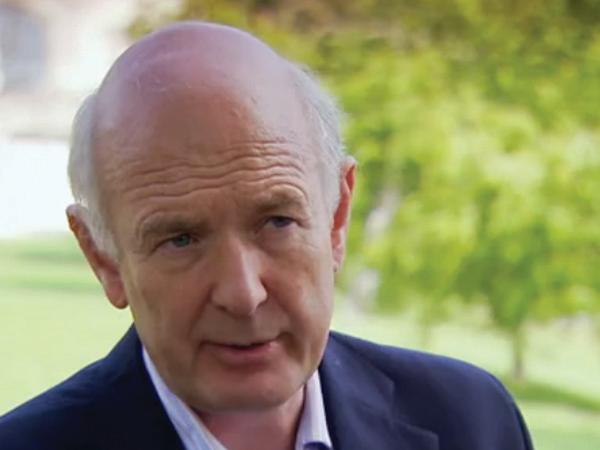
What do you understand by the word spirituality?
Judy Bailey
The part of you that wants everything to be good and beautiful and true, is what I understand. And that all of us have that call, and desperately try to see it in others, and desperately want others to recognise in us. Very simple, it’s very down to earth. It’s not up in the air. And I know that I meet an awful lot of people who are active in that way in the world.
One world—albeit many-layered—and a spirituality that is not, in Judy Bailey’s words, ‘up in the air.’ For one of the dangers of imagining the ‘spiritual’ as elsewhere—a place we go to when we die, and the only place that really matters—and dwelling excessively on that imagination, is that we neglect our day to day tasks and challenges here on earth; and this includes that most important challenge of all: to ask the question that took Parsifal so long to ask; a question that comes not out of curiosity, but out of compassion, as we—like Parsi-
fal—move about the world and witness so much suffering and misery among our fellow human beings. So arises the question: ‘What ails thee?’
In this respect I have been hugely influenced by Gandhi, about whom I made a film many years ago. For Gandhi it became simply impossible to indulge in any sort of luxury while another person was in need. He was, in other words, a forerunner of what Steiner described as the potential future for us all—a world in which we will experience another person’s suffering as our own.
And this is what I understand the archangel Michael is helping us to do. And just because Steiner spoke of this being with such insight, we must be careful not to think of him purely as some mascot for the Anthroposophical Society. Michael is, I am sure, hard at work wherever people are attempting to understand and to work with another in a spirit of tolerance and collaboration; wherever empathy exists.
Thinking is all very well, but not if it eclipses our capacity to feel and to care deeply. In fact, in disillusioned moments—either with myself or with my fellow searchers—I’ve sometimes wondered whether the best people at ‘life’ are the ones who simply get on with it, and don’t spend a lot of time wondering what it’s all about.
These are thoughts—and feelings— that came to me during the making of the film. Yet despite the reservations I have expressed, I was deeply impressed and inspired—as well as helped—by the people I met and by the work they were doing; people often struggling against enormous odds, yet clearly grateful to Steiner for what in the film Martin Ping called ‘his signposts.’
I have therefore to report to you, Torin, and to our friends from the Executive Council in Dornach, a wonderful spirit of collaboration and support surrounding the making of the film, for which I am deeply grateful. And a warmth and friendliness, too, as exemplified in the way that Marian Leon and others have organized this conference. In one email exchange, Marian apologized to me for being such a pest. I replied that it was no problem, as she was such a friendly pest!
My film was financed almost entirely by
gifts from individuals and institutions here in America, in the UK, and in Holland and Switzerland. One substantial loan from the Anthroposophical Society in Great Britain I’m hoping to repay from sales of DVDs (over 2000 sold so far) and to television. With the broadcasters in mind I have just completed a shorter version of the film, in two 60 minute parts: ‘The Life of Rudolf Steiner’ and ‘The Legacy of Rudolf Steiner.’ A British distributor will be offering these to networks worldwide, including PBS.
I am also fund-raising in order to create foreign language versions—China and South America are high on the list—as well as to make available separate DVDs of the interviews at close to their original lengths. I am keen that nothing of value is wasted from the 70 hours of material I shot. Already available as DVDs—as well as the film itself—are conversations with Arthur Zajonc, Jack Petrash from the Washington Waldorf School, and with Peter Blom of the Dutch-based Triodos Bank. Details are at www.rudolfsteinerfilm.com.
And in all this I need your help, not just in buying the DVDs or in supporting us financially, but also in letting people know the film exists, and in showing the DVDs publicly yourselves—to Waldorf School parents, at Colleges, to interested or maybe wavering friends and relatives, and wherever there are groups of people searching to live saner and more meaningful lives.
Collective Eye in Portland, makers of the film Queen of the Sun about bees—will be handling the worldwide educational distribution, and will hopefully reach people not directly connected to the anthroposophical network; for, as I’m sure you are aware, I didn’t make this film to simply ‘preach to the converted.’ Nevertheless I hope it has, and will be of interest, and even of help, to people like you who have already been touched by Steiner’s extraordinary work.
I’d like to end by expressing my appreciation and thanks for the support I’ve received here in America. Right from the beginning of the project—over two years ago now—I met with the same enthusiastic response: ‘At last!’ … ‘Now is just the right time for such a film.’ First stop was John Beck—and later Ralph White and George Russell—in New York. From there I went to see Martin Ping in Hawthorne Valley, and
46 • being human
on to Copake; then to Torin Finser, Douglas Sloan and Arthur Zajonc, before travelling west to San Francisco, Los Angeles and Sacramento. On my way back east to visit the Washington Waldorf School and meet with Joan Almon, I stopped by in Wisconsin to see my old friend Christopher Mann and in Kentucky to meet Janey Newton. These helpful and inspiring conversations, and many other such encounters, enriched my quest enormously and contributed to the film in many different ways.
People also understood from the start that with such a vast canvas it would be impossible to say everything, interview everyone, go everywhere. And those whom I did interview have been very understanding about the cuts I’ve had to make.
In the past few months I’ve also had many letters—over two hundred—some from people quite new to anthroposophy, expressing their interest and gratitude, and wanting to know more. Our website has now been set up to provide this sort of information. However, I am only too aware of the inadequacies, the shortcomings in what I have created. Too long? Too short? What about Germany? Why no mention of the School and of the work in Dornach? My hope, however, has always been that there is sufficient there to prompt people to look further. The film is therefore a bridge— maybe at times a wobbly one—but built with great love by many people, not just me, so that ‘good may become.’
In conclusion I want to return to this thought, as expressed by Walter Johannes Stein, of the urgent need ‘to make things human’—or perhaps, in this increasingly technological age, it is more appropriate to say ‘to keep things human.’
On this note one of the most touching moments in the film is, for me, the response of Ursula Flatters—a doctor from Germany who has worked in Sweden for thirty years—to my question about Rudolf Steiner himself. Her words bring the whole film to a conclusion.
Jonathan
Do you see an element of tragedy in Steiner’s life, the fact that he did die quite early?
Dr. Ursula Flatters
Yes, certainly I think the whole life, from one point of view, is a tragedy. I think he was suffering a very lot.
Jonathan Because?
Dr. Ursula Flatters
Because I think his insights were so farreaching that he didn’t meet enough people to understand quick enough; but from another point of view you can say love is always a tragedy. You come with something really new; it was really an impulse of love, I think, so it must fail in a way—to begin with it looks like that. Because he was not the big star, he connected to people, he wanted to work with people, he took them as they were, he was positive; and all this very big social impulse is great; maybe it’s a little bit more slow for him, but we all are invited to this and that is not a tragedy. I think that’s beautiful. It takes some time, but it’s beautiful that he chose that; he could have gone to the mountains and written a lot of wonderful books, but he chose to work together with people. And it’s very great; I don’t know anything else that is so practical, that really tries to create a culture from spiritual insights—not only having them, but doing something. But things are going much slower than one would wish; even in me. I am too slow. I am too lazy!
Commentary
‘Slowly but surely’ might be one way to describe the progress of Rudolf Steiner’s legacy, not only in medicine, but in all areas of daily life. He died nearly 100 years ago, on March 30th 1925. During his lifetime he frequently spoke about death and in particular about the bond that continues between those of us on earth and those who are no longer physically present. And to the extent that we are open and aware of those we have known and loved, so can they continue to help and inspire us; and we in our turn can communicate to them insights and experiences that can only be learned in the here and now.
The essence of his message, as I understand it—a message that tries to communicate ancient wisdom in a form appropriate for modern consciousness—is that there is only one world, part seemingly hidden, part revealed; and that we human beings are not alone, not just in our daily lives, but in the universe at large.
A Courageous Light: Ursula Brancato
July 1930–June 2011
Ursula Brancato’s life is defined by her never-wavering courage. Born in Cologne, Germany on July 27, 1930 to anthroposophists Erna and Reinold Meuter, Ursula’s early childhood was spent surviving the Allied bombings together with her five siblings.
To avoid compulsory participation in the Hitlerjugend, Ursula was sent from her home in Cologne, to live with relations in the Austrian Alps. There she contracted rheumatic fever which left her bed-ridden for a year and, after twelve-months’ illness, unable to walk. Refusing the recommended wheelchair and with characteristic willpower, she taught herself to walk again.
When the time came to attend university, Ursula’s courage defined her yet again. The political climate of post-war France was to say the least not friendly to Germans. Notwithstanding, she moved to Paris and attended the prestigious La Sorbonne where she studied foreign languages. Fluent in English, French and German, after receiving her degree, she accepted and held for several years the position of translator and interpreter offered her by the consulate in Paris.
Ursula married Oreste Brancato in the early 1960’s. Together with three young children, they moved to southern California in 1969. A life-long member of the Christian Community, she became a member of the North Hollywood Congregation. Not comfortable driving the freeways of Los Angeles, for many years Ursula drove the twenty five miles from her home to North Hollywood on surface streets, making certain she arrived in time for her children to attend the Children’s Service. She joined the Anthroposophical Society of Pasadena in the mid 1970’s.
Over the years, her personal library grew to include all Rudolf Steiner’s works in German and English. A life-long student of anthroposophy, her library was always within arm’s length, the hallmarks of decades-long use evident at a glance. Ursula’s
fall issue 2012 • 47
was the definitive working-library. To leaf through the pages of her books, is to witness what it means to dedicate oneself to the attainment of higher knowledge. Several are marked as far back as 1970, each is duly dated. A testament to her spiritual and scholarly pursuit, her familiar hand can be seen in notes she wrote along the margins. It is the hope of this author, that the reader find renewed purpose and inspiration in their own studies through the example of the courageous light that guided Ursula Brancato in her earthly life and guides her still.
Bettina Ursula Brancato
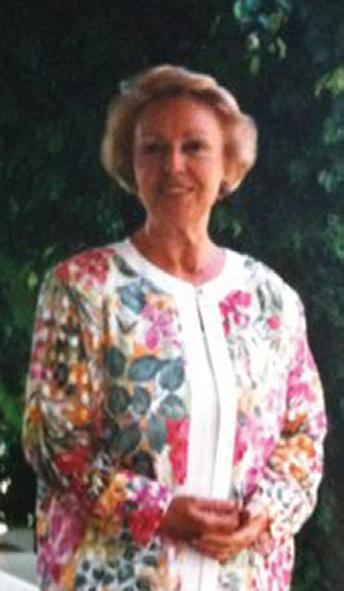
Geoffrey von Menken
Geoffrey von Menken crossed the threshold September 27, 2012, at the Rudolf Steiner Fellowship Community in Chestnut Ridge, NY. A long-time member of the New York City branch of the Anthroposophical Society, Geoffrey will be remembered for his quiet attention and good humor, his patience through years of poor health, and his remarkable knowledge in many fields.
The musician Joseph Rowe shared these recollections of Geoffrey.
“I met Geoffrey von Menken in Austin, Texas in 1971. We were both students of Hamza El Din, a famous Nubian musician who was teaching Middle-Eastern music at the University of Texas. Geoffrey and I soon became good friends, and both of us also became close friends with Hamza himself. I quickly learned that Geoffrey was a gifted and very original luthier: a maker of fine stringed instruments, but also flutes, xylophones, and invented instruments. (Much later, he made the dulcimers and the oud which I still play today.) He knew more about the mathematics of music than anyone I’ve met, before or since. He had a genius-level talent in the scientific domain (I was a math major myself, and recognized a prodigious talent when I saw it), but he told me he had deliberately chosen to major in
the Humanities instead, because he sensed that the path of science and mathematics would be too easy for him. He recognized very early that (largely because of the emotional effect of a very difficult mother) he would have become both too socially isolated, and less developed in his feelings and his soul-life, if he had taken the easy path of following his scientific talent. So he specialized in Classics, and taught Greek and Latin as a graduate student at UT. He had completed everything required for a PhD with flying colors. And then, at the last minute as it were, he refused to write a dissertation, because he disagreed with the dogmas and petty academic politics of the department. I suspect that they were threatened by his originality and eccentric brilliance. I’ve rarely met anyone who had such a profound knowledge of the history and cultures of the Mediterranean world. And he had supplemented his studies by extensive voyages in those countries. His father was a vice-president of a major airline, so he had free tickets, and used them well. Talking to Geoffrey made ancient history and civilization come alive, for not only had he read prodigiously, he had a knack of relating his readings to everyday life, and was able to convey vivid impressions and images of how those people actually lived and thought.
“Some years later I introduced him to the writings of Rudolf Steiner, and he joined our study group in Austin. But Geoffrey went much further than I, and a few years later it was I who was going to him for information on anthroposophy rather than the reverse. I also taught him how to plant an organic garden—and a couple of years later, he was an expert and very successful biodynamic gardener!
“Although of a decidedly melancholic temperament, Geoffrey had a keen sense of humor, and could be quite a wit. As an example, I remember being at a very exceptional and joyous party with him, where we and some Arab, Persian, and Armenian people were having a great time playing music, dancing, and drinking good wine together. I had drunk several glasses, and someone offered me another. I wanted it, but hesitated, muttering the phrase “moderation, after all...” Geoffrey was standing nearby, and quipped: “Oh, come on, have
another, and remember: moderation in all things—including moderation!”
“In the early 1990’s he came to visit me and my wife, singer Catherine Braslavsky, staying with us in Paris. A high point in our relationship—and I believe, in Geoffrey’s life—was when he walked the labyrinth of Chartres with the Rev. Lauren Artress’s group of pilgrims from San Francisco, while Catherine sang, and other musicians including myself accompanied her, playing the oud and dulcimer which Geoffrey had made. For him, as for me, that labyrinth design represents a powerful form of walking meditation and prayer.
“Over many years, Geoffrey worked often on a complex, ambitious, and visionary system which attempts to bring musical harmonics, interval-ratios, and modes of Eastern and Western traditions into relation with color, mathematics, astrology, and cosmic archetypal principles. He was a superb calligrapher and talented painter, and I have seen several charts he made related to this system. They are beautiful to look at even if one doesn’t really understand the principles, which are difficult. I would hope that someone will make these beautiful charts, at least, available to many people. Geoffrey was excessively alone during his later years, and this material deserves to be seen and studied by a wider audience.
“I’ll close this memoir with an anecdote which Geoffrey related to me a few years before he died. He was very ill at the time, and alone in his apartment in New York City. Some sort of repairman came, who happened to be from India. He saw how much pain and physical difficulty Geoffrey was in, and sympathized. They began to talk at some length and depth, and it emerged that Geoffrey believed in reincarnation. This encouraged the repairman to express a classic Hindu sentiment and belief: ‘Oh, this wheel of suffering and illusion! This trap of Samsara—I only want to be free of it. May I be free of this vain cycle of reincarnations, so full of suffering, and never return again after I die!’
“After a moment of silence, Geoffrey replied: ‘As for me, I hope to return over and over again, no matter how much suffering it involves, as long as there is good work for me to do.’”
48 • being human
New Members of the Anthroposophical Society
in America, recorded by the Society 6/15/2012 to 9/28/2012
Kristin Agudelo, Brunswick ME
Catherine Allegretti, Pahoa HI
Michael Allen, Gold River CA
Elizabeth Arth, Madison WI
Windsong Bergman, Shepherdstown WV
Lili Blalock, Monterey CA
Helen Brinkel, Spring TX
Kelley Buhles, San Francisco CA
Steve Buscaino, Encino CA
Anne Marie Carollo, Sacramento CA
Barbara Coughlin, Delmar NY
Genevieve Dagobert, Keene NH
Christina Daub, Garrett Park MD
Jennifer Davis, Portland OR
Claude Dion, Hollywood FL
Lawrence Duncan, Missoula MT
Tracy Edwards, Akron OH
Chelsi Espinosa, Fairbanks AK
Kurtis H. Estep, Chicago IL
Kathleen Finnegan, Peebles OH
Laura Foody, Wellesley MA
Carin Fortin, Santa Cruz CA
Kristine Fox, Santa Fe NM
Theresa Fredericks, Pennington NJ
Vasile Gocan, Roanoke VA
Mary Barr Goral, Nashville IN
Tricia J. Grable, Boulder CO
Andrew Hatch, Hardwick VT
Sara Belle Hatch, Hardwick VT
Ingrid Hayes, New Paltz NY
Diana Haynes, Durham NC
Jessi Herbert, Portland OR
eQuanimiti Joy, Wilton NH
Holly Juch, Carmichael CA
Kristine Kiko-Cozy , Canton OH
Sono Kuwayama, New York NY
Alejandra Lorenzo-Chang , Baltimore MD
Marcus Macauley, Rochester NY
For a 1999 lecture at the New York branch, “The Musical Movements of Moon and Mercury,” Geoffrey provided these observations and a verse by Mesomedes:
“An ancient epithet of Mercury is ‘the Music Giver.’ It was the space probe of 1965 that first revealed the rhythmic-musical motion of the planet Mercury. This lecture will demonstrate that the harmonic ratios (rhythms) of musical tones, which lie at the foundation of most of the world’s musical systems, are identical to the harmonic movements of Moon and Mercury. These movements reveal a similar outer ‘celestial geometry’ to the inner ‘soul geometry’ of
Geoffrey MacMillan , Occidental CA
Donna Marcantonio, Sarasota FL
Daniel J. Masi, Keene NH
Kathryn Myers, Philadelphia PA
Patricia Navarro, Spring TX
Claudia Pfiffner, Tucson AZ
Jay Cee Pigg, Boulder Creek CA
Bert Ponce, Santa Fe NM
Sylvia Qualls, Aptos CA
Patricia Reber, Los Altos CA
Jane Mealey Reed, Whitmore Lake MI
Leigh Rhysling, Lakewood CO
Kevin Richmond, Stone Mountain GA
Gabriel Rollinson, Hadley MA
Laetitia Berrier Saarbach, Spring Valley NY
Barry Schaye, Chicago IL
Dr. Anke Scheinfeld, New York NY
Carolyn Siegel, Mountain View CA
Dawn M. Skoblicki, Nesconset NY
Judie K. Sky, Shannock RI
Lindsay K. Smith, Long Beach CA
Katherina Speer, Tucson AZ
Lynn St Pierre, Boulder CO
Nancy A. St. Vincent , West Greenwich RI
Christie Stephens, Little Rock AR
Sarah Steven, Dexter MI
Margaret Z. Stojak, Grayslake IL
Patrice Streicher, Madison WI
Michael Szul, Shenandoah VA
MaryAnn Timmerman, Fort Loramie OH
Sarah VanderMeulen , Chicago IL
Sea-Anna Vasilas, Spring Valley NY

Elizabeth Webber, Portland OR
Naomi Whiteley, Gainesville FL
Muffet Wilkerson, Sacramento CA
Alexander Workman, Amherst MA
Scott Wright, West Stockholm NY
Tammy Young, Grand Blanc MI
the musical intervals described by Rudolf Steiner.
“For thee the serene chorus of the stars Dances over lordly Olympus
Ever singing their ageless song, Delighting in the Lyre of Phoebus.
In the lead gleaming Moon Conducts the timely dance.”
Geoffrey’s friends at the NY branch are grateful for the devoted attention given him in his last months especially by Sonia Saldarriaga, who helped him organize his affairs and move to the Fellowship Community.
John H. Beck
Members Who Have Died
Janet Alexis, Milton MA died January 3, 2012
Gary Aylesworth, San Francisco CA died 2012
Gilbert Church, Denver CO died September 8, 2012
Charlene Kaatz, Boulder CO died August, 2012
Trudy Marks, Oak Park CA died August 16, 2012
Louise McNamara, Fair Oaks CA died September, 2012
Amy Merrick, San Francisco CA died February 24, 2012
David Mitchell, Boulder CO died June 9, 2012
Rudolf Steiner Library
New Book Annotations
Anthroposophy—Agriculture

Biodynamics for the Home Garden, Peter Proctor, Sumner Burstyn, 2011, 82 pgs. Perfect Compost: A Masterclass with Peter Proctor, Cloud South Films, 2011. DVD, 21 min. — Master biodynamic farmer and composter Peter Proctor of New Zealand, featured in the film One Man, One Cow, One Planet (available from the library) presents detailed instructions on composting in this handbook and companion DVD.
Anthroposophy—Biography
Footprints of an Angel: Episodes from a Joint Autobiography, Siegfried E. Finser, Lindisfarne, 2012, 228 pgs. — “This is the story of a man in search of his angel. His search begins with various events in his life that he finds difficult to explain. The fact that they happened is incontrovertible, but how did they happen? ...Again and again, he discovers that major turning points in his life were not well thought out or carefully planned. Indeed, they seemed to happen largely by accident, the results of coincidence or even a series of miracles.”
The Multifaceted Life of Emil Molt (Father of the Waldorf School): Entre-
fall issue 2012 • 49
preneur, Political Visionary, and Seeker for the Spirit, Sophia Christine Murphy, AWSNA, 2012, 341 pgs. — In 1919 Emil Molt, director of the Waldorf Astoria Cigarette Company in Stuttgart, Germany, founded the first Waldorf School for his workers’ children. He invited Rudolf Steiner to become the school’s pedagogical director, and thus Waldorf education began. The author of this new biography, Molt’s granddaughter, discovered family diaries and documents that shed light on the karmic struggles within the first school and the Anthroposophical Society. The story of Emil Molt’s struggles, successes, and disappointments may perhaps hint at how we can transform the problems that still surface in Waldorf schools today.
Journeys with a Real Jack in the Pulpit , Helen L. Philbrick, XLibris, 2005, 270pgs. — Helen Louise Porter Philbrick, with her husband, John, was an American Biodynamic gardening pioneer. They collaborated on books including The Bug Book and Companion Plants and How to Use Them (both available from the library). Helen’s father was a renowned silversmith, and she assisted him for some years. In “retirement,” she taught gardening, weaving, chair caning, and basket-weaving to people who attended conferences at Faith Homestead, a center she and her husband had founded, and tended ancient apple trees. She published this very engaging memoir in 2005. Helen Philbrick died at the age of 101 in December 2011.
I Am for Going Ahead: Ita Wegman’s Work for the Social Ideals of Anthroposophy, Peter Selg, SteinerBooks, 2012, 160 pgs. — These three lectures detail Ita Wegman’s relationship with Rudolf Steiner in the context of the development of anthroposophic medicine and the formation of the Medical Section of the School for Spiritual Science.
Anthroposophy—Christology
The Creative Power of Anthroposophical Christology, Sergei O. Prokofieff and Peter Selg, SteinerBooks, 2012, 325 pgs. — The lectures here comprise the fruits of conferences held jointly by the authors from 2007 – 2010. They presented the following sequence of themes with a focus on Christology: The Philosophy of Spiritual Activity; Occult Science: An
Outline; the First Goetheanum; and the Christmas Conference of 1923/24. In place of the lectures on The Philosophy of Spiritual Activity (already published elsewhere) are included two recent lectures by the authors on Rudolf Steiner’s Fifth Gospel –Thomas O’Keefe.
Anthroposophy—Eurythmy
Developing the Future: 100 Years of Eurythmy. Professional Conference for Eurythmy April 25-29, 2011. “Rudolf Steiner’s Concept of Art in the Professional Realms of Stage Art Education Social Domain Therapy.” Sektion für Redende und Musierende Künste [am Goetheanum]; Medizinische Sektion [am Goetheanum] 2012. 86 pgs. — This program from an international eurythmy conference features articles about eurythmy in practice: as a stage art; in education; and in the social domain; and interpretive pieces by various authors: “From Sensory to Supersensible Realms; Becoming SelfConnecting with the World,” “The Being of Eurythmy,” and more.
Anthroposophy—General
Seek the Light that Rises in the West, Mieke Mosmuller, Occident Publishers [The Netherlands], 2012, 225 pgs. — Originally published in Dutch and German in 1994, this recently translated work by a Dutch physician and anthroposophist looks at the difficulties in our lives: fear, doubt, insecurity, illness, loneliness, death, and suggests that a particular kind of thinking is the key to coming to a faith that is based on certainty in knowing. “In this book we are summoned to learn to experience this problem of the Westerner (the problem of thinking) ourselves, in order to come from this gained experience to our own insight in the path which leads us away from the darkness of rational intellect.”
The Guardian of the Threshold and the Philosophy of Freedom, Sergei O. Prokofieff, Temple Lodge Publishing, 2011, 114 pgs. — As a postscript to the author’s earlier book, Anthroposophy and the Philosophy of Freedom, this work addresses the role of the greater and lesser Guardians of the Threshold (described in Rudolf Steiner’s book How to Know Higher Worlds) in relation to the path of cognition found in The Philosophy of Freedom.
The Guardian plays a central role in modern initiation—without encountering the Guardian, one cannot maintain full consciousness and thus gain certainty as to the contents of one’s spiritual experiences. Prokofieff also addresses the relation between The Philosophy of Freedom and The Fifth Gospel –Thomas O’Keefe.
The Mystery of the Resurrection in the Light of Anthroposophy, Sergei O. Prokofieff, Temple Lodge Publishing, 2010, 214 pgs. — In this book, the author investigates the nature of the Resurrection body of Christ as the future-oriented archetype of true thinking, feeling, and willing. In a moral-spiritual sense, suggests Prokofieff, one can develop a relation to the Resurrection body through work with the Foundation Stone meditation, which he views as a blueprint for “attaining a cognitive experience of the reality of the Resurrection.” In this sense, Prokofieff advocates a purely spiritual relation with the moral-spiritual ideals articulated in this meditation as a basis for approaching the present Christevent. Additional themes are: the nature of Easter, Ascension, and Whitsun; Christ’s descent into the center of the earth and its future transformation; and an appendix on the topic of stigmatization. –Thomas O’Keefe.
Anthroposophy—Literature
This Ever Diverse Pair, Owen Barfield, Oxford, U.K., Barfield Press, 2010, 120 pgs. — Characterized as “a philosophic comedy,” This Ever Diverse Pair was first published in 1950, when Owen Barfield was practicing law in London. A humorous portrayal of everyday life in a law office, the novel’s true subject is what C.S. Lewis described as “the rift in every life between the human person and his public persona—between, say, the man and the bus conductor or the man and the king....” Our own Frederick J. Dennehy contributed an introduction.
The Rose on the Ash-Heap, Owen Barfield, Oxford, UK, Barfield Press, 2009, 98 pgs. — The Rose on the Ash-Heap is the epilogue from English People, Owen Barfield’s unpublished novel of English life between the First and Second World Wars. “At once fairy tale, societal critique, romance and apocalyptic vision, it discloses the redemptive powers of love and
50 • being human
imagination.... Written in the late 1920s, a time of widespread societal and economic instability, The Rose on the Ash-Heap also addresses the deepest concerns and hopes of the twenty-first century.”
The Red Jester: Andrei Bely’s Petersburg as a Novel of the European Modern, Judith Wermuth-Atkinson, Zurich: LIT Verlag, 2012, 232 pgs. — Novelist, poet, theorist, and literary critic Andrei Bely met Rudolf Steiner in 1912, and subsequently, he and his first wife, Aasya Turgenieff, moved to Dornach, where they lived for several years. Vladimir Nabokov regarded Bely’s novel, Petersburg, as one of the four greatest novels of the 20th century. The author of this book “places Bely’s work at the heart of the European Modern ( die Moderne). It argues that with its concern for the spiritual and its desire to create new aesthetics, the novel helped reshape fundamental views of reality, of the Self, and of consciousness.... The author also presents Rudolf Steiner’s anthroposophy as the prism through which Bely reflects modernist ideas.”
Anthroposophy—Medicine—Therapies
A Guide to Understanding Healing
Plants, volumes 1 & 2, Jochen Bockemühl, Mercury Press, [vol. 1] 2010, 184 pgs.; [vol. 2] 2011, 241 pgs. Originally published in German as: Ein Leitfaden zur Heilpflanzenerkenntnis, Verlag am Goetheanum, Dornach, 1996. Translated by Harold Jurgens; translation revised by David Heaf. — A study of the healing substances within plants and the inner capacities we need to develop in order to perceive them. Chapters include (among others): “Unconscious connections of man and animals with substances,” “Developing the perceptual capacity of thinking,” “Health and disease considered from the viewpoint of a direct meeting with a person,” “Getting to know plant substance through seeing, smelling, tasting, and touching,” and “Chemical elements as principles of action in the context of nature.”
Compresses and Other Therapeutic Applications: A Handbook from the Ita Wegman Clinic, Monika Fingado, Floris Books, 2012, 208 pgs. — Compresses and poultices can be used to treat a wide range of conditions. This practical handbook was written for nurses and practitioners at the
Ita Wegman Clinic in Switzerland, and covers all aspects of compresses and poultices, including descriptions of the substances used and their healing properties.
Rhythmic Einreibung: A Handbook from the Ita Wegman Clinic, Monika Fingado, Floris Books, 2011, 158 pgs. — “Rhythmic Einreibung” is a therapy of rhythmic body oiling. Its techniques were developed by Dr. Margarethe Hauschka on the basis of suggestions from Dr. Ita Wegman. This technique, a development of Swedish massage, emphasizes rhythmic elements and qualities to create lightness rather than pressure. The strokes work with the surface of the skin rather than kneading the body as is done with conventional massage techniques. The book features numerous practical exercises, and is suitable for both beginners and experienced practitioners.
Speech and Memory: The Art of the Spoken Word Therapeutic Aspects, Christa Slezak Schindler, Mercury Press, 2011 33 pgs. — “As modern life changes the way we think and rely more upon outside electronic ‘memory’ devices (i.e., Google) for the storage and recall of information, the author recommends the use of therapeutic speech to ‘heal recall and strengthen the will to consciously remove dogmatic speech patterns that diminish true memory.’” Clear instructions on breathing techniques, movements, and verses from Rudolf Steiner and others are included.
Anthroposophy—Rudolf Steiner
Rudolf Steiner and Christian Rosenkreutz, Peter Selg, trans. Margot M. Saar, SteinerBooks, 2012, 172 pgs. — Rudolf Steiner spoke often of the relationship of anthroposophy to Rosicrucianism. Peter Selg shows that Steiner had essentially two teachers: the Master Jesus (Zoroaster) and Christian Rosenkreutz, and how these teachers, with Rudolf Steiner, “unfolded spiritual science for our time.” Rudolf Steiner and Christian Rosenkreutz concludes with an appendix containing the text of the original (1614) Fama, or “Announcement of the Rosicrucian Brotherhood.”
Anthroposophy—Social
Mesonyms, Michael Howard, Mercury Press 2010, 40 pgs. — Polarization is ubiquitous in our time. “In the realm of lan-
guage, this polarization comes to expression through synonyms and antonyms. But the world is not as black and white as it appears. Fortunately, language is rich in words that bridge and mediate between polar extremes. However, these words are not as prominent in our speaking and thinking as synonyms and antonyms, and for this reason, we do not apply them in our practical affairs as fully as we might.” This booklet proposes “mesonym” as the name for “words in the middle, words that mediate.” “A thesaurus of mesonyms would be a resource for becoming more conscious of this dimension of language, and perhaps open us to less polarized ways of thinking and acting.”
Anthroposophy—Society
Warum wird man Mitglied der Freien Hochschule für Geisteswissenschaft?
Sergei O. Prokofieff, Philosophisch-Anthroposophischer Verlag am Goetheanum, 2010. 86 pgs. — This text originated from lectures given to members of the general anthroposophical society who might have questions about the First Class of the School for Spiritual Science. It discusses the karmic background that may have led individuals to anthroposophy, and intends to provide interested people with a sense for the unique importance of the esoteric school Rudolf Steiner founded as a Michael school on Earth.
Rudolf Steiner and the School for Spiritual Science: The Foundation of the “First Class,” Peter Selg, trans. Margot M. Saar, SteinerBooks, 2012, 160 pgs. — In this book, Peter Selg looks at Rudolf Steiner’s intentions for the School for Spiritual Science and the Class Lessons—intentions that he states have yet to be realized. He also describes Ita Wegman’s role as Rudolf Steiner’s “helper” in the First Class. He seeks to leave behind the conflicts of the 1920s and 1930s, as Ita Wegman herself left them behind her. As Wegman said, “For me the matter is settled. There are so many misunderstandings that I consider it better to leave things well alone. We all thought we were doing the right thing. Looking forward is more important now than looking back.”
Die Lebensbedingungen der Anthroposophie heute: Ziele und Aufgaben der Anthroposophischen Gesellschaft und
fall issue 2012 • 51
der Freien Hochschule für Geisteswissenschaft. Heinz Zimmermann, Verlag am Goetheanum, 2007, 104 pgs. — This booklet provides an overview of anthroposophy, and asks what form is appropriate for the anthroposophical society and the school of spiritual science today. Zimmermann offers new observations on the Foundation Stone, and gives valuable suggestions for meditation.
Anthroposophy—Threefolding

Threefold Now! Crossing over from the Nation-State System to the TriSector Societal Organism. Volume One: Names and Flags, Travis Henry, self-published, unpaginated, n.d. — Artist and social activist Travis Henry introduces this intriguing, full-color gallery of flags with this epigram from Goethe: “A country starts out with a name and a flag, and then it becomes them, just as a man fulfills his destiny.” Henry has created three flags for each of a host of countries worldwide: one for the economic administration, one for the political administration, and one for the cultural administration. He states: “The separation of economy and state, the
separation of culture and state, and the separation of economy and culture will end most societal illnesses, including nationalism, statism, theocratic extremism, militarism, and corporatism.”
Anthroposophy—Waldorf Ed.—Administration
Partnerships of Hope: Building Waldorf School Communities, Christopher Schaefer, AWSNA, 2012, 208 pgs. — Waldorf education has a social mission, not only in the context of general culture, but in Waldorf school communities themselves. Community-building offers both opportunities and challenges: How are Waldorf schools governed? How are decisions made? What sort of leadership is appropriate? This “book provides a variety of insightful answers, placing them into the larger matrix of the political and economic crises facing Western societies.” Christopher Schaefer suggests that the values and principles imbedded in Waldorf education have the potential to heal our world.
Anthroposophy—Waldorf Educ.—Arts & Crafts
LIBRARY APPEAL!
YES!
I would like to make a special gift of $______ to the Society for evolving the Rudolf Steiner Library. Or donate online at www.anthroposophy.org and navigate to Library/Library Donation
Creative Pathways: Activities that Strengthen the Child’s Cognitive Forces, Elizabeth Auer, AWSNA, 2012, 94 pgs. — The fruit of 18 years of Waldorf teaching experience as both a practical-arts teacher and Waldorf class teacher from grades 1–8, this book is a culmination of the author’s work with hands-on activities and projects with children ages 6–14.
over twenty years after touring Italy with Mr. Mann and her classmates, Janet Barker decided to retrace her steps (only this time starting in Sicily) accompanied by a friend. Before setting off she asked Mr. Mann for his guidance, and he made a detailed tape recording of suggestions for this journey of rediscovery. “This book is based on a faithful transcription of that tape.”
Anthroposophy—Waldorf Education—Child Development
Addictive Behaviour in Children and Young Adults: The Struggle for Freedom, Raoul Goldberg, Floris, 2012, 287 pgs. — Addiction affects children as well as adults. We face not only widespread dependency on illicit substances, but also addictions to food and beverages; cigarettes and alcohol; and electronic gadgetry, online social networks, and entertainment media within a culture of violence, along with “excessive and unhealthy sexual practices.” This book, by an anthroposophical doctor, explores the overall health consequences of addictive behavior in children and young people, as well as its underlying causes.
Anthroposophy—Waldorf Education—Music
Music through the Grades: In the Light of the Developing Child. Diane Ingraham Barnes, Adonis Press, 2012, 195 pgs. — Over 200 songs for grades 1–8 in Waldorf schools. Includes 3 CDs with songs for grades 1–3 sung by Diane Ingraham Barnes “for teachers to learn by listening while reading the printed music.”
Anthroposophy—Waldorf Educ.—Pedagogy
Name:
Address: City/ST/ZIP
Phone:
E-mail:
I enclose my gift by:
Check (Payable to: Anthroposophical Society in America, send to 1923 Geddes Ave., Ann Arbor, MI 48104; Memo: Library)
MasterCard/VISA: Expiration ____/____ Card # _________
Thank you!
“The Italy Trip”: Highlights of Mr. Mann’s History of Art Tour. Compiled by Janet Barker, Anastasi, 2011, 83 pgs. — The “Italy Trip” was an eagerly anticipated adventure for 12th-grade students at Michael Hall, a British Waldorf school, in the 1950s, ’60s and ’70s. The tours were organized and guided by their inspirational arthistory teacher, William Mann. In 1980,
Observing the Class, Observing the Children, compiled and edited by David Mitchell. Waldorf Journal Project no. 18, AWSNA, 2012, 91 pgs. — Another in the Waldorf Journal series, which presents translations of pedagogical work originally published in Europe and Scandinavia. Some representative chapters include: “The Art of Observing Children,” by Christof Wiechert; “Love Melts away Fear,” by Henning Köhler; “The Secret of Children’s Drawings,” by Armin Krenz; “Anything but Children’s Play: What Play in School Means for Learning,” by Irene Jung; “Laughing with the Ninth Graders— Humor in the Main Lesson,” by Florian Heinzmann.
Teaching, the Joy of Profession: An
52 • being human
Invitation to Enhance Your (Waldorf) Interest, Christoph Wiechert, trans. Dorit Winter. Verlag am Goetheanum, 2012, 182 pgs. — This book, by longtime Pedagogical Section leader Christof Wiechert, is addressed to teachers. He recognizes the complex demands teachers face: they must maintain a high degree of professionalism; deliver sound results; attend to the individual needs and development of their students; and help parents understand their own children. Teachers are constantly serving others, with little time for themselves. If they lose the balance between inner needs and outer demands, “then [they] grow sour in this delightful profession. This book is a guide to find that balance, which means gaining access to more energy, more creativity, more joyful responsibility for the sake of healthy students and a healthy profession.”
Anthroposophy—Waldorf Educ.—Technology
Technology. Waldorf Journal Project 19. AWSNA, 2012, 90 pgs. — Another in the Waldorf Journal series, which presents translations of pedagogical work originally published in Europe and Scandinavia. Some representative chapters include: “Rudolf Steiner and Technology,” “Technology and the Celebration of Work as Developed in Waldorf Education,” by David Mitchell; “On Freedom,” by Henning Kohler; “An Information and Communication Technology Curriculum for Steiner/Waldorf Schools,” by William Steffen. Christianity—Eastern
The East in the Light of the West: Parts One to Three, Sergei O. Prokofieff, Temple Lodge Publishing, 2009, 544 pgs. — This book presents research into the nature of the Theosophical movement and its later offshoots (Agni Yoga and Alice Bailey). Prokofieff provides both an overview of these Eastern-oriented cosmologies and an acknowledgement of the new Christian element Rudolf Steiner brought into the Theosophical movement. The author provides a comprehensible context for questions regarding the split between eastern and western masters. Published in German in 1997 in three separate volumes, this book includes a revised version of the earlier English edition of Part One: The Teachings of Agni Yoga in the Light of Christian Esotericism. Also included are: Part Two:
The Teachings of Alice Bailey in the Light of Christian Esotericism; and Part Three: The Birth of Christian Esotericism in the Twentieth Century and the Occult Powers that Oppose it. –Thomas O’Keefe.
Christianity—Esoteric
The Mystery of the Heart: The Sacramental Physiology of the Heart in Aristotle, Thomas Aquinas, and Rudolf Steiner, Peter Selg, SteinerBooks, 2012, 227 pgs. — Selg traces the development of the philosophical and scientific understanding of the heart-organ through the perspectives of Aristotle, Thomas Aquinas, and Rudolf Steiner. He finds among these thinkers a remarkable continuity of moral-spiritual awareness as to this organ’s true function in the physical-spiritual human organism. Also included is a study of how the heart is spoken of in the context of the Gospels; and a compilation of verses given by Rudolf Steiner to ailing patients, which focus on the heart as a source of spiritual strength. –Thomas O’Keefe.
Fairy Tales—Commentary
Fairy Tales and Art Mirrored in Modern Consciousness, Monica Gold, AWSNA, 2012, 194 pgs. — Weaving together fairy tales, children’s drawings, and the history of art, artist and author Monica Gold examines how art and fairy tales can mirror each other, and have a profound effect on our modern consciousness. The book is generously illustrated with fullcolor photos of fine art.
Greek Culture
Hellas—Memory, Reflection, Expectation: Ancient Greek Culture in a New Perspective, Willem Frederik Veltman, translated from the Dutch by Philip Mees. AWSNA, 2012, 372 pgs. — The author taught for many years at a Waldorf school in the Netherlands. Here he reviews the principal aspects of ancient Greek culture, highlighting the Greeks’ emphasis on balance. Among other subjects, he discusses the Greek gods; the development of Greek philosophy; and the arts of architecture, sculpture, and painting.This study will be invaluable for 5th- and 10th- grade teachers, and anyone interested in an anthroposophical perspective on the roots of Western culture. Richly illustrated.
Pre-Columbian History
Spiritual Turning Points of South American History, Luigi Morelli, Lindisfarne Books, 2011, 313 pgs. — “This volume follows the blueprint of its North American counterpart, Spiritual Turning Points of North American History [also available from the library]. Whereas that volume follows the foundation of the Popol Vuh, this one retraces Andean myths from the Titicaca region and from later Inca tradition.”
Reincarnation
Thank Goodness, There’s More than One Life to Live!: True Personal Experiences by People Who Have Overcome
All Doubt in Repeated Lives on Earth! J. Michael Surkamp, Anastasi, 2011, 260 pgs. — This collection, presenting the results of scientific investigations as well as personal accounts of life after death, karma, and repeated lives on earth, features 30 authors, including Denys Kelsey, Edgar Cayce, Ian Stevenson, Barbro Karlen, George Ritchie, Raymond Moody, Bob Woodward, T.H. Meyer, Pietro Archiati, and Rudolf Steiner.
Science—General
The Science Delusion: Freeing the Spirit of Enquiry, Rupert Sheldrake, 2012, 392 pgs. — The author, a well-known investigator of etheric phenomena, here argues that “science is being held back by centuries-old assumptions that have hardened into dogmas” and that “the biggest delusion of all is that science knows all the answers.” In this book, he examines each of the “ten core beliefs that most scientists take for granted.”
Science—Movements and Figures
Free Energy Pioneer: John Worrell Keely, Theo Paijmans, Adventures Unlimited Press, 2004, 472 pgs. — Rudolf Steiner spoke of machines in the future that will be “tuned” to human beings, set into motion by human gestures. He mentioned in this regard the work of a 19th century American inventor, John Worrell Keely. Keely has been characterized as the model for the character Strader in Steiner’s mystery dramas. This book looks at Keely’s life and inventions, his experiments with antigravity, and his vision of free energy. Illustrated.
fall issue 2012 • 53
Sociology—General
Grow Small, Think Beautiful: Ideas for a Sustainable World from Schumacher College, Stephen Harding, ed., Floris Books, 2011, 282 pgs. — This book from Schumacher College, an internationally renowned center for the study of sustainable living, offers a collection of essays on sustainable solutions to the current global crisis. Themes include the importance of education, science, Transition thinking, economics, energy sources, business, and design, in the context of philosophy, spirituality, and mythology, by authors including, among others, Satish Kumar, Jules Cashford, Fritjof Capra, Rupert Sheldrake, James Lovelock, and Craig Holdrege.
Selected publications by Owen Barfield
(see article by Jane Hipolito, p32)
A Barfield Sampler: Poetry and Fiction by Owen Barfield*
Eager Spring**
History, Guilt and Habit*
History in English Words*
Night Operation**
Orpheus: A Poetical Drama
Owen Barfield on C. S. Lewis**
Poetic Diction: A Study in Meaning**
The Rediscovery of Meaning, and Other Essays*
Romanticism Comes of Age**
The Rose on the Ash-Heap**
Saving the Appearances: A Study in Idolatry**
The Silver Trumpet
Speaker’s Meaning**
This Ever Diverse Pair**
Unancestral Voice**
What Coleridge Thought*
Worlds Apart: A Dialogue of the 1960s**
Selected translations and works edited by Owen Barfield:
Anthroposophy and the Inner Life: An Esoteric Introduction, by Rudolf Steiner
Calendar of the Soul: The Year Participated, by Rudolf Steiner*
The Case for Anthroposophy, by Rudolf Steiner**
Guidance in Esoteric Training: From the Esoteric School , by Rudolf Steiner (cotransl. with C. Davy)*
Man and Animal: Their Essential Differences, by Hermann Poppelbaum
The Voice of Cecil Harwood
World Economy, by Rudolf Steiner (cotransl. with T. Gordon-Jones)
Documentary film by David Lavery:
Owen Barfield: Man and Meaning ***
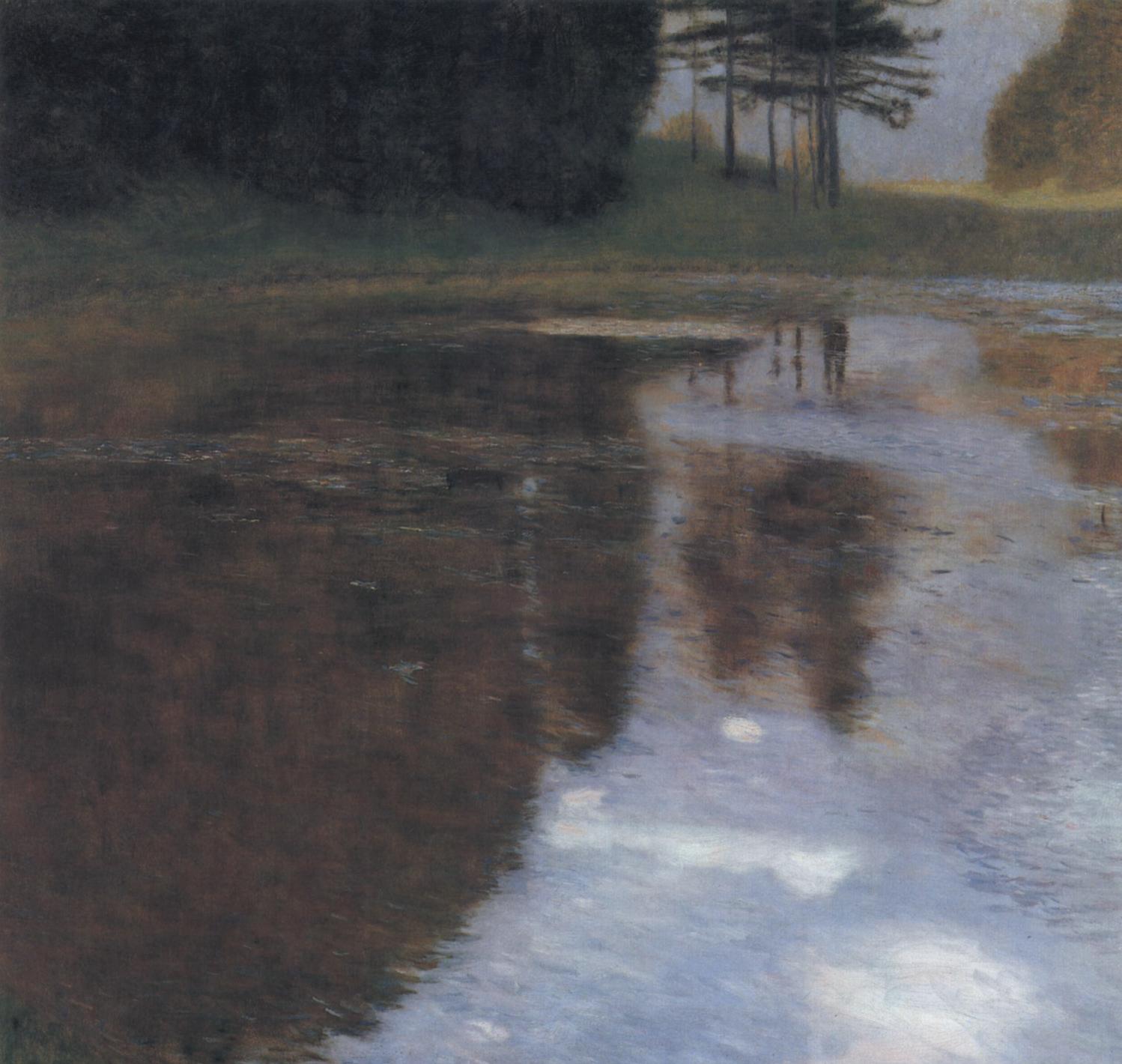
* This work is in print.
** This work is in print as a publication of the Barfield Press UK. For further information, see the website of the Owen Barfield Literary Estate, www.owenbarfield.org
*** Available online: www.vimeo.com/22723020
SAVE THE DATE | MARCH 15–16, 2013 SteinerBooks
2013 Spiritual Research Seminar
March 15–16, 2013
Kimmel Center, New York University
60 Washington Square South, New York City
Complete information about speakers, the schedule, and the topics will be available on our website in November. Send us your address if you would like to receive a flyer in the mail.
SteinerBooks
610 Main Street
Gt. Barrington, MA 01230
www.steinerbooks.org
email | seminar @ steinerbooks.org
phone | 413.528.8233
54 • being human
•
2013 Renewal Courses

Week I: June 23 – 28 • Week II: June 30 – July 5
Renewal Courses for Waldorf teachers—both new and experienced— along with parents, administrators, trustees, and friends of Waldorf education, as well as for artists and thinkers seeking to deepen their lives through anthroposophy.
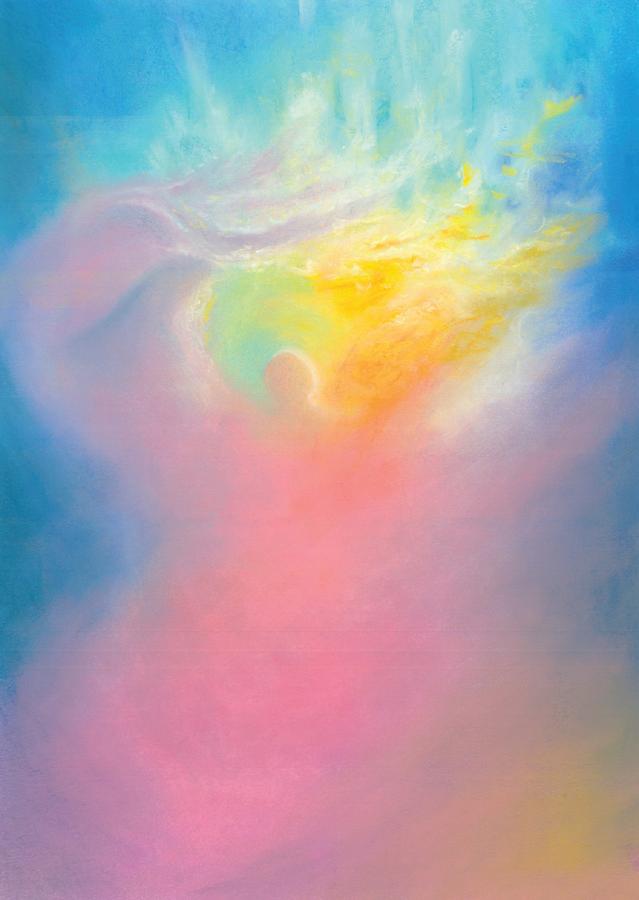
Christof Wiechert • Rudiger Janisch • Margot & Frederick Amrine
Michaela Gloeckler • Eleanor Winship • Laura Summer
Eugene Schwartz • Paul Matthews • Patrice Pinette
Chuck Andrade • Janene Ping • Peter Snow
Aonghus Gordon & Ruskin Mill Craftsmen and many more...
Evenings include lectures, music, a New England Contra Dance, and other surprises
Program sponsored by Center for Anthroposophy, Wilton, New Hampshire Karine Munk Finser, Coordinator of Renewal Courses 603-654-2566 • info@centerforanthroposophy.org
www.centerforanthroposophy.org
June 30 – July 27: Waldorf High School Teacher Education Program
Douglas Gerwin, Director
Three-summers program specializing in Arts/Art History
• Biology
• English
History
• Math
• Physics & Chemistry
• Pedagogical Eurythmy
Waldorf Education
Receives the child in reverence, educates the child in love, sends the child forth in freedom
BDA-ad-being-human-sept-2012:Layout 1 9/27/12 10:18 AM Page 1
The Association of Waldorf Schools of North America (AWSNA) creates one voice for Waldorf Education across North America. Waldorf Education. Redefining success in education and in life. Strength Through Collaboration • Social Renewal • Learning for Life © 2012 Association of Waldorf Schools of North America (AWSNA). Waldorf, AWSNA, WhyWaldorf Works, are registered marks of the Association of Waldorf Schools of North America. Like us on facebook! facebook.com/WaldorfEducation www.whywaldorfworks.org
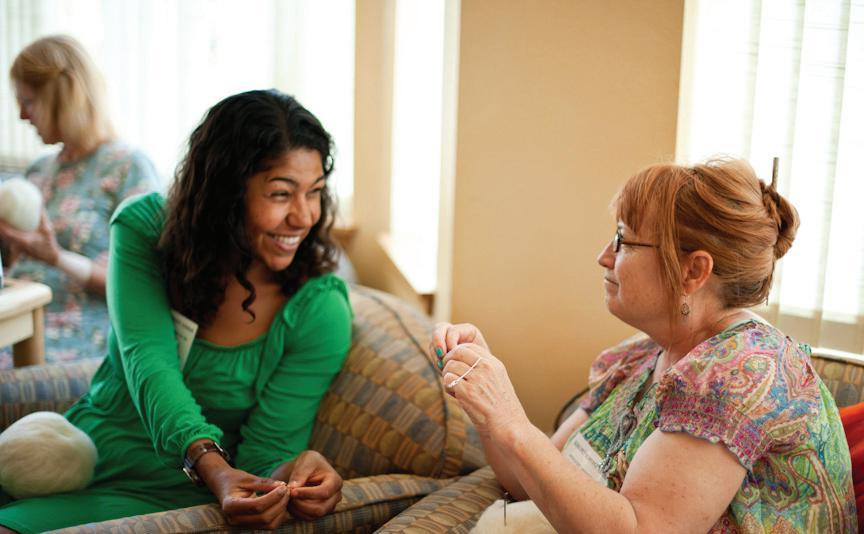
Full-Time Residential Teacher Education Program You Can Become a Waldorf Teacher Join like minded individuals who value the creative potential of children. Learn to awaken the inner faculties necessary to practice Waldorf education. After completing a Foundation program (or its equivalent) you can train to become a Waldorf teacher under the tutelage of Master teachers at Rudolf Steiner College. When you arrive, you will join a community of students and teachers who pursue proven and meaningful ways of guiding young people to learn mathematics, reading, writing, science, music and the arts. To apply visit www.steinercollege.edu/being RUDOLF STEINER COLLEGE A Center for Waldorf Teacher Education, Transformative Learning, and the Arts 9200 Fair Oaks Blvd., Fair Oaks, CA 95628 • 916-INFO-RSC rsc@steinercollege.edu • www.steinercollege.edu/being
