personal and cultural renewal in the 21st century

“Strong Angel” by Laura Summer
Aesthetic Thinking of the Heart
The Sin of Literalism
Preparing the August Conference: “That Good May Become”
anthroposophy.org
a quarterly publication of the Anthroposophical Society in America
summer issue 2012
–
Free Columbia Summer Art Courses

COLUMBIA COUNTY, NY
Color & Music through the Circle of the Year Three courses with Manfred Bleffert
June 16-22 Instrument Building
The breathing process of the earth and of the cosmos as a musical base for the development of new instruments and musical form.
June 25-29 New Music Improvisation
July 2-6 Color & Tone in Relation to Rudolf Steiner’s Soul Calendar

Manfred Bleffert has dedicated his life to developing new music. His work includes a unique approach to graphic notation, composition and instrument building. His research is broad and profound. His compositions are improvisational and unique. He is a musician, a visual artist, and a dynamic and inspiring teacher.
July 14-18 Five Days of Experimental
Work with Color, Light, Music & Puppetry with Laura Summer, Nathaniel Williams, Faye Shapiro & Marisa Michelson
July 23-27 Seeing the Word through Painting A workshop with Laura Summer
Working with poems & stories, watercolor, pastel, charcoal, and collage, we will relax our expectations, playfully manipulate our media, and experience the realm of creation to develop skills for further work.
July 23-27 Orientation Toward an Inner Voice Vocal experimentation with composed and improvised music with Marisa Michelson & Faye Shapiro
ALL COURSES WILL BE HELD in Columbia County, NY, two hours north of New York City. The work of Free Columbia is based on an understanding of the importance of creating a free cultural space. There are no set tuitions, rather we offer suggested donation amounts based on what it costs to run courses. It is also possible to make a monthly pledge to support Free Columbia rather than making a one-time donation. In addition to the suggested donation, a commodity fee of $180 will be charged to participants in the instrument building workshop. This fee enables you to take home the instrument you build.
Five-day course suggested donation: $250 – $450
Instrument building fee: $180 All supplies are included but not housing or food. For information: Laura Summer at 518-672-7302
laurasummer@taconic.net www.freecolumbia.org
ANTHROPOSOPHY NYC
the New York Branch of the Anthroposophical Society in America
138 West 15th Street, NY, NY 10011 (212) 242-8945
“It’s a funny thing that the man with the most impressive holistic legacy of the 20th century remains almost unknown in holistic circles as a spiritual teacher.“
– Ralph White on Rudolf Steiner, in the New York Open Center blog
Anthroposophy NYC closes July 1st to September 7th. Visit asnyc.org for regional summer events and our fall schedule posted August 15th.
TALKS
spirituality, health, education, social action, esoteric research, human and cosmic evolution
WORKSHOPS
self-development, biography, therapies, rhythms & cycles, threefolding, economics
VISUAL ARTS
exhibits, workshops, talks, museum walks
EURYTHMY
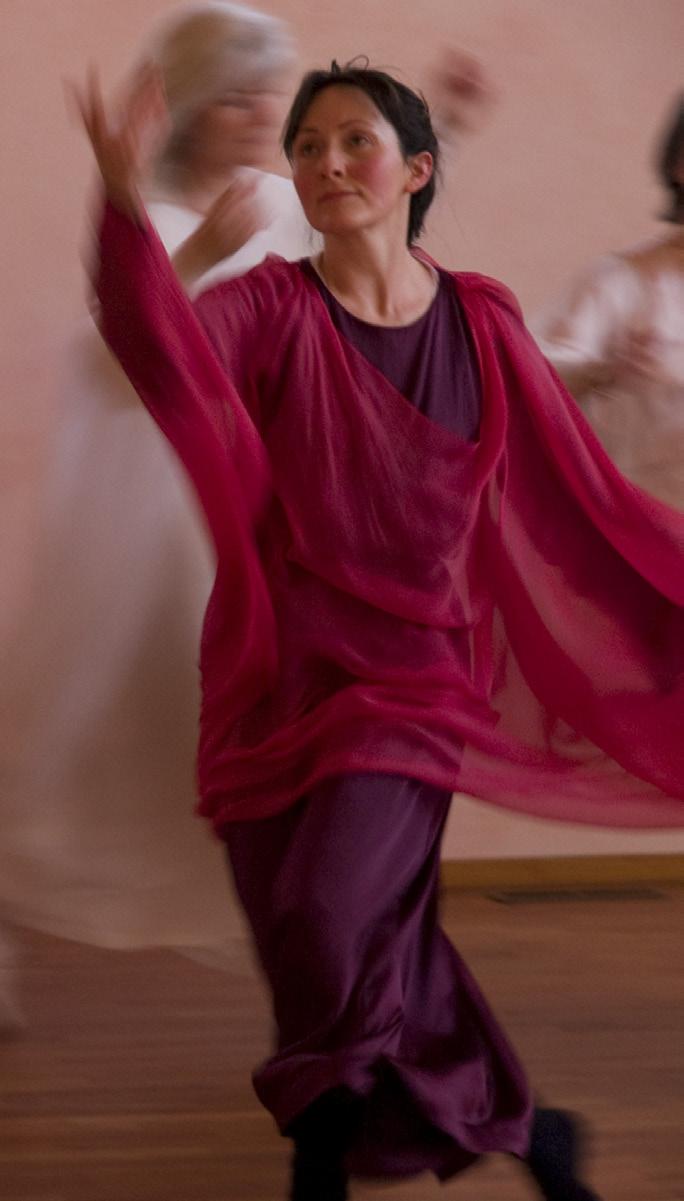
Rudolf Steiner’s therapeutic art of sacred movement
EVENTS
music, theater, festivals, community celebrations
STUDY GROUPS
free, weekly and monthly, exploring transformative insights of Rudolf Steiner, Georg Kühlewind, Owen Barfield and others
RUDOLF STEINER BOOKSTORE
Browse dozens of works by Steiner and many others on education, science, health, art, spirit, biodynamics. Open Tues-Wed & Fri-Sat, 1-5pm.
2 • being human
asnyc .org centerpoint gallery
world,
‘outsider’ art
www.
spiritual, therapeutic,
&
Plant the Seed of Imagination Become
a Waldorf Teacher
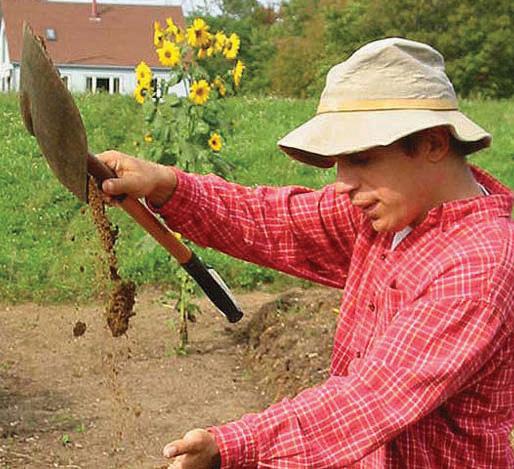
Serve the future by teaching the children of today through Waldorf Education. Become a Waldorf Teacher by completing a Part-Time Program in Waldorf Early Childhood or Elementary Teacher Education at Sunbridge Institute.
Now Accepting Applications for Teacher Education Programs Enrolling Summer 2012
Now Accepting Registration for Summer Series 2012
Courses in Professional Development and Continuing Education


Details at www.Sunbridge.edu
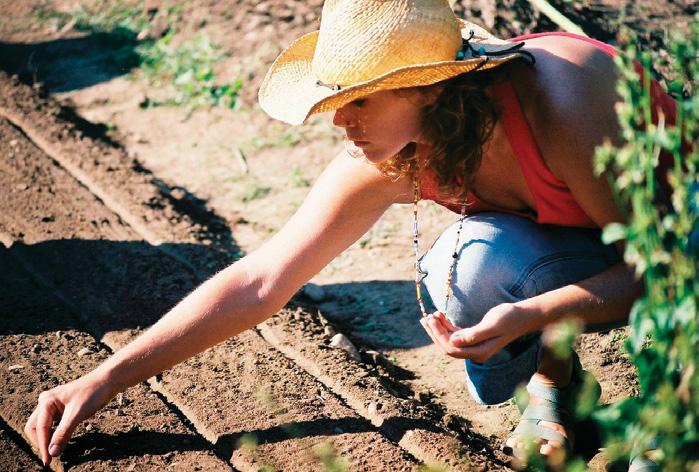
We are a Rudolf Steiner inspired residential community for and with adults with developmental challenges. Living in four extended-family households, forty people, some more challenged than others, share their lives, work and recreation within a context of care.
Daily contact with nature and the arts, meaningful and productive work in our homes, gardens and craft studios, and the many cultural and recreational activities provided, create a rich and full life.
summer issue 2012 • 3 Part-Time & Full-Time Training Educational Training Public Courses and More Eurythmy Spring Valley 260 Hungry Hollow Road, Chestnut Ridge, NY 10977 845-352-5020, ext. 13 info@eurythmy.org www.eurythmy.org Consider a Career in Eurythmy Sunbridge Institute www.sunbridge.edu 285 Hungry Hollow Road Chestnut Ridge, NY 10977 845.425.0055 / info@sunbridge.edu
apprentice or
PO Box 137 • Temple, NH • 03084 603-878-4796 • e-mail: lukas@monad.net lukascommunity.org A residential community for adults with developmental challenges • COMMUNITY SPIRIT • • THE ARTS •
MEANINGFUL WORK • • RECREATION •
For information regarding placement possibilities, staff,
volunteer positions available, or if you wish to support our work, please contact us at:
•
In
collaboration
with
the
University
of
the
West
of
England
we
are
delighted
to
announce
the
first Masters of
Science
in
Practical
Skills
Therapeutic
Education
©
Commencing
28 th August
2012,
the
MSc
programme
will
delivered
by
the
Crossfields Institute
Hiram
Education
and
Research
Department.
It
will
be
based
in the
Field
Centre a
new
bespoke
campus
for
practical
and
academic
education
and
research,
Gloucestershire,
UK (www.thefieldcentre.org.uk)
"The
Field
Centre
represents
an
essential
innovation
in
interdisciplinary,
spiritually based
research,
teaching,
and
learning.
By
intention
and
design,
it
seeks
to
weave
together
an
ethical
relationship
to
the
Earth
with
a
deeply
therapeutic
education
and
an
exploration
of
human
consciousness
as
loc us
for
true
freedom
and
ethical
action
grounded
in
love.

Self knowledge,
stewardship
of
the
Earth
and
care
for
each
other
will,
at
the
Field
Centre,
become
the
three
strands
that,
when
braided
together
renew
higher
and
further
education."
Professor
Arthur
Zajonc,
Amherst
University
Patron
of
the
Field
Centre.
This
Masters
of
Science
programme
is
designed
for
professionals
in
anthroposophic
health
and
social
care,
curative
and
therapeutic
education,
arts,
crafts
and
commerce.
It
offers
specialism
in
the
method
of
Practical
Skills
Therapeutic
Education.
The
programme
offers
70%
experiential,
work based
learning
in
8
different
locations
across
England
and
Wales.
Individual
modular
and
work based
pathways
and
subject
specialisation
are available
for
professionals
who
wish
to
develop
their
practice
in
their
workplace.

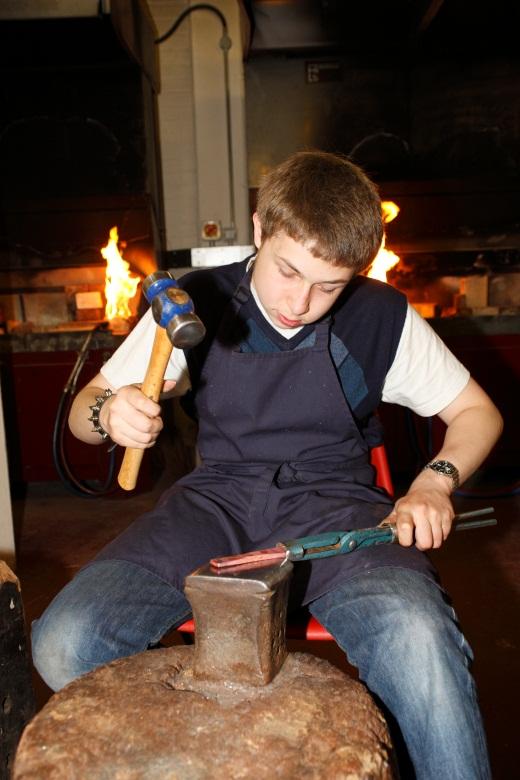
Aims
and
rationale
“There
is
no
more
beautiful
symbol
of
human
freedom
than
the
human
arm
and
hand.”
The
MSc
in
Practical
Skills
Therapeutic
Education
aims
to
equip
learners
with
the
know ledge,
understanding
and
skills
to
set
up,
manage
and/or
teach
in
organisations
wishing
to
implement
or
integrate
this method. The
overall
learning
outcomes
focus
on
the
development
of:
Rudolf
Steiner
quoted
in
Carlgren
Education
Towards Freedom.
1.
A
Practical
Skills
Therapeutic
Education
curriculum
for
people with
special
educational
needs.

2.
A
therapeutic
and
educational
residential
care
component .
3.
Tools
for
leadership
and
management
in
organisations.
The
rationale
for
the
combination
of
these
themes
is
to
develop
expertise
in
integrative
and
holistic
education,
care
and
management
within special
educational
needs provisions.
“Today,
trust,
training
and
practising
sense
perception
is
st ill
a
quite
new
and
challenging
way
of
research. The
Field
Centre
is
dedicated
to
this
path
of
research
and
it
has
the
potential
to
become
one
of
the
centres
of
phenomenon
based
science
in
the
western
English
speaking
world.
Therefore
I
support
this
projec t
with
my
best
thoughts
and
the
warmth
of
my
heart.” Johannes
Kühl,
Director
of
the
Natural
Science
Section
at
the
Goetheanum.
For
further
information
on
the
programme
structure,
entry
requirements,
fees
and
accommodation,
please
contact
Nick
McCordall,
Programme
Coordinator,
Crossfields
Institute
nick@crossfieldsinstitute.com ( ++44
(0)
1453
808118 www.crossfieldsinstitute.com/education_and_training/msc programme/
4 • being human
18 The Aesthetic Logic of the Heart, by Van James
21 The Sin of Literalism, by Frederick Amrine 25
NOTES, REVIEWS
7 being human digest
13 Christopher Houghton Budd’s Finance at the Threshold , review by Christopher Schaefer
14 Anglea Lord’s Easter: Rudolf Steiner’s Watercolor Painting, review by David Taulbee Anderson

15 Georg Kuehlewind’s The Gentle Will , reviewed by Joyce Reilly
NEWS, EVENTS
38 What’s Happening in the Anthroposophical Society? by Marian León
General Secretary on the Road; WRC Visit to Seattle
Introducing Carla Beebe Comey; Manzanita Parzival
40 Celebrating Dorothea Mier at Eighty, by Michael Ronall
44 What’s Happening at the Rudolf Steiner Library? by Judith Soleil
THRESHOLDS
42 Inge Elsas: 1915-2012, by Margaret Runyon
43 Rudolf Binnewies: 1912-2012, by Mark Murray
41 New Members of the Anthroposophical Society; Members Who Have Died
this
Contents FEATURES
the
Group
Local
30 Responding Online
The Challenge of Change
Some E-mailed Thoughts
The Soul of
Plato
Signs of the Times, by the General Council
Leadership Colloquium
General Council Report
Preparing
August Conference 25 Registration Reminders 25
Conference Calls 26
Conversations, from The Sophia Sun, Chanticleer, The Listener
32
33
35
Anthroposophical Initiatives, by Bodo von
35
37
37
“Strong Angel” by Laura Summer
From the Editors
You might have heard that this issue would have a 100th anniversary salute to Rudolf Steiner’s Calendar of the Soul . That’s coming in the Fall 2012 issue, so that we can digest some really wonderful material for you.
The main event of this issue is a dozen pages devoted to further preparation for the annual conference in August. Readers might be surprised at the degree of “letting it all hang out” that we are indulging here. It’s just a conference, right, and it’s just about future directions for this rather small organization, the Anthroposophical Society in America. Some people will come, perhaps quite a number; and then, on August 12th, it will be over. Right?
The conference planners, and the Society’s General Council, and the guests who are joining us from the Executive Council at the Gotheanum, are hoping for much more. What is sought is a real enlivening of the whole anthroposophical movement on this continent, with a permanent increase in the engagement and interaction of members and friends, and perhaps a significant change in the tone and robustness of our participation in current human conversations and social dialogues.
Naturally, we believe that anthroposophy matters: that it is a way of seeing, knowing, experiencing, and participating more consciously in human evolution. It has now reached the century mark, roughly speaking, when cultural movements either take hold or fade. We think that human civilization as a whole needs anthroposophical ideas, experiences, and initiatives if it is not to become terribly sterile and pervasively brutal. They may not come from anthroposophists, but certainly Rudolf Steiner saw to it that anthroposophists are aware of the stakes.
So come to the conference if you can, and join in this preparatory conversation if you won’t be in Ann Arbor physically in August. Serious work is being done to make the whole process open, stimulating, and consequential. And if some of the conversation about the history and be-
havior patterns of the Anthroposophical Society doesn’t resonate with you, let us add just a few words further about the history moment it is facing.
Anthroposophy arose in the late 19th century and was reaching a certain culmination just a hundred years ago. It was responding, like some other, better-known worldviews which have come and gone, to radical changes in human society and in human individuality. Anthroposophy rested, you might say, on the magnificent cultural achievements of the modern age of Europe to that date—but it anticipated the problems of mechanization, commercialization, and destruction of life forces in human health and in nature and even in culture which we have now experienced very fully.
And when Europe as a cultural force came crashing down in the “Great War” of 1914-1918, anthroposophy was left without its supporting platform. For our core questions, the 20th century was about survival. When it became, finally, “the American century,” and the strengths and weakness of US-Americans and our culture became dominant facts in the human future, it began to become clear that American anthroposophists would have to become more engaged. And in a way, this conference may be a real beginning of tht engagement. We hope that intrigues you!
John Beck
•
From the side of the Rudolf Steiner Library Newsletter, this issue features reviews of three very disparate books:
Easter: Rudolf Steiner’s Watercolor Painting, by Angela Lord, reviewed by David Taulbee Anderson, is a contemplation of Rudolf Steiner’s treatment of Christ’s deed of bringing the dead into the light of consciousness
How to receive being human, how to contribute, and how to advertise

Sample copies of being human are sent to friends who contact us (address below). It is sent free to members of the Anthroposophical Society in America (visit anthroposophy.org/membership.html or call 734.662.9355).
To contribute articles or art please email editor@anthroposophy.org or write Editor, 1923 Geddes Avenue, Ann Arbor, MI 48104. To advertise contact Cynthia Chelius at 734-662-9355 or email cynthia@anthroposophy.org.
6 • being human
through His descent into hell on the Saturday after the Crucifixion. The reviewer, an accomplished artist himself, emphasizes the language of color and its function as a bridge between the dark unconscious and the light-filled resurrection forces of cognitive feeling.
Finance at the Threshold: Rethinking the Real and Financial Economies, by Christopher Houghton Budd, reviewed by Christopher Schaefer, PhD. Dr. Schaefer provides a thorough and detailed exposition of this book’s basic argument that “today’s financial crisis is the result of excess liquidity and the global economic system.” In the spirit of anthroposophy, the author sees crisis as opportunity and makes the suggestion—critical for the reviewer—that the economic system’s excess liquidity ought to be spent through gifting to young people and to the cultural sphere in vastly increased amounts. This was a solution first proposed by Rudolf Steiner as a means of restoring the economic and financial system to health. It is critical to recognize the relation between the economic life of the time and its spiritual life. The economic life is invariably “the shell which the spiritual life has thrown out,” and takes its form from the inner spiritual life.
The Gentle Will: Meditative Guidelines for Creative Consciousness: by Georg Kühlewind, reviewed by Joyce Reilly. The Gentle Will is the most recent of Georg Kühlewind’s books to be published in the US. In it, he explores the themes closest to him—meditation and attentiveness—through the prism of ordinary thinking, living thinking, cognitive feeling, and the “gentle will”—separated musically, as the reviewer points out, with four “preludes” mediating the progression. While The Gentle Will will meet the expectations of Kühlewind readers who have grown used to his showers of unexpected insights, the book is primarily practical. Meditation, attentiveness, and healthy consciousness are to be experienced and tested. In addition to 27 contemplations and meditations, the book contains 41 exercises to be performed by the reader. The Gentle Will is not about anthroposophy; it is working with anthroposophy.
Frederick J. Dennehy
being human digest
Our “being human digest” covers news and ideas of interest from the wide range of holistic and humancentered cultural initiatives. Items are brief, suggestions are welcome. Please write editor@anthroposophy.org or “Editor, being human, 1923 Geddes Avenue, Ann Arbor, MI, 48104.”

Waldorf Education Court Battle Perhaps at End?
Since the late 1990s the small California group “People for Legal and Nonsectarian Schools” (PLANS) has waged a losing battle in the courts to prevent the Sacramento City Unified School District from operating a public charter school using methods based in Waldorf education. In May the US Ninth Circuit Court of Appeals ruled against PLANS’ latest appeal. From the beginning, PLANS had asserted that Waldorf education teaches anthroposophy, and that anthroposophy is a religion. Rudolf Steiner clearly stated that anthroposophy is not a religion, and that people of any or no religious affiliation could be anthroposophists. He also helped a group of priests and seminarians found a new religious group, the Christian Community: Movement for Religious Renewal, which would be superfluous if anthroposophy itself were a religion. He also made very clear that while anthroposophy should inform the methods of the teachers, it should not be part of the content of the curriculum. PLANS had agreed, repeatedly, that their case had no merit unless anthroposophy were shown to be a religion. They made no effective case on that basis, and the latest court ruling dismissed their appeal.
Charter schools have become a large part of the US educational landscape, and many educators are seeking through the charter schools to introduce new ideas in contrast to our increasingly standardized national curriculum. Charter schools do not have curriculum independence, nor are their teachers the final authority in the
summer issue 2012 • 7
being human digest
Approach,” and another section takes up “Science Education” with multiple articles by Craig Holdrege and others. And it leads back to “Computers and Education” where the long-time IT researcher Stephen Talbott brings his fine and independent mind to bear.
A Waldorf School Arrives
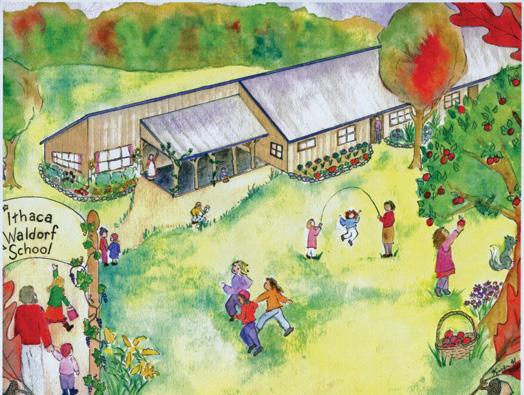

schools; but this ruling removes a lingering cloud so that those aspects of Waldorf education which are possible in a public charter setting can be developed without fears of litigation.
Waldorf, Technology, and Science
With an extended and serious discussion of technology in education unfolding over the last nine months, beginning from the New York Times, a space has been opened for the idea that recent technology can be well mastered late in secondary education, but that its prevalence early on will at the very least crowd out other important experience and learning which will not be gained later.
A May 25 article in the UK’s The Guardian on expansion of state funding for Steiner schools (as they are generally known in the UK) does suggest, however, that another line of criticism may be reawakened: that Waldorf/ Steiner schools don’t teach “good” science. The movement has actually dealt with this question very extensively over the years. The observational and experiential approach to natural science which Waldorf fosters is clearly much closer to the pattern of the great research scientists’ experience than the abstracted hypothesis and simulations approach which relies on computing power and is now so common.
Those interested in anthroposophy’s approach to natural science have a great online resource at The Nature Institute (www.natureinstitute.org – note that there is no “the” in the address). The first of its content areas is devoted to “Seeing Nature Whole – A Goethean
Lisa Turner has posted pictures at Picasa of the birth of the new building for the Ithaca (NY) Waldorf School. It’s a fine opportunity to live into this miraculous process. As Lisa says, “The interior work is coming along, but does not give such a dramatic image. Of course, the placement of the doors has changed since the floor plan was given to me, and the number of skylights, etc. We are very excited about this fairly miraculous project, and now must learn to care for it—a lot of mowing, trees to be planted. And fill it with children, and finance the repayment of the construction loan.”
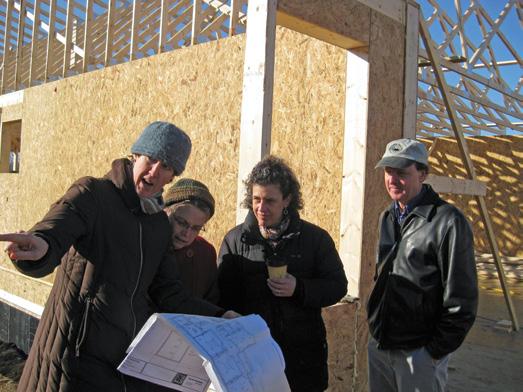
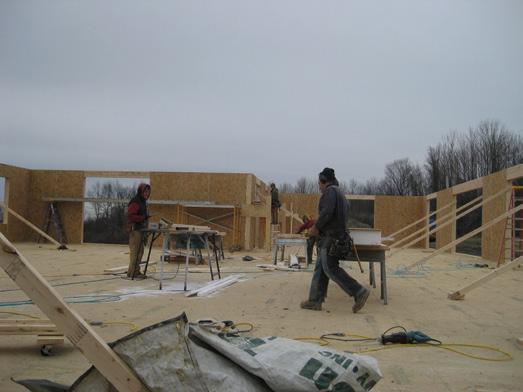
It’s also a chance to illustrate something about anthroposophy’s approach to science (see the preceding item). The images show four different elements that allow this new school to come into being—four different “causes” for its existence. One is the building materials (top picture in group): they provide the substantial cause. Another is the workers and machinery (right): they are the effective cause. Today’s approach to science (with roots going back to Francis Bacon around 1600) likes to focus on these two kinds of causes, as ex-
8 • being human
Kristin Bartholomew, architect, explains the plan to the AWSNA accreditation team, Patrice Maynard, Gina Karp, Cliff Keyes.
being human digest
clusively as possible, while minimizing the other two sorts of causes. One of those others is shown in the blueprints (left picture in group): this is a representation of the form of the school, which will take shape based on this form. The other is the intentional element (the “teleological” cause, from Greek telos which means purpose). It is shown here in the watercolor (bottom). That is what people really want here! Not just a building, but a space for certain kinds of joyful human interactions.
When it comes to human activity, we acknowledge the form and the purpose, even though the “bricks and mortar” and the workers and machinery seem more real, more visible, more tangible, more practical—than blueprints and dreams. When we turn to Nature, however, our philosophy of science has been wishing to leave out purpose entirely and make form a question simply of survival factors.

So consider, how would this incarnating Waldorf school be different without the blueprints and the watercolor-dreams? And then, how is Nature made poorer, and weaker, when we deprive it of half of the causes for its true being?
Nature
Dark Skies: The Lost Sky of the Night
It requires a bit of imagination, but then it has a powerful impact: try to think away all the artificial (mostly electrical) lighting that accompanies modern civilization. Airplane lights, stadium lights, street lights, neon lights, house lights, car lights. Think your way back to gas lamps on the streets, and before that torches. Take it all back 200 years or so. And by the way, not so many of us were living in cities or even large towns then. Think back, and then, a couple of hours after a wonderful sunset, look up at the stars. Can you imagine what it was like to have a thick carpet of stars, dimly precise, texturing the sky—
instead of just a few bright ones standing out from a grayish mist?
If you’ve ever really seen a good dark night sky, you’ll understand the impulse for the Headlands International Dark Sky Park in Michigan’s upper peninsula. Anthroposophist and astrosophist Mary Stewart Adams is the park’s program director, and she recently helped Emmet County win a grant for a Dark Sky Discovery Trail at the park. Stories inspired out of humanity’s thousands of years of intimacy with the night sky will now be part of the park’s offerings. “While human beings have looked up in wonder at the night sky from time immemorial, and have built monuments and temples and created great works of art and literature to celebrate the mystery of our relationship to the planets and stars, in contemporary culture the information about this relationship is dominated by scientists using satellites, telescopes and computers,” Adams said. “Our intent is to tell the story using the humanities, from the perspective of the human beings involved in discovery, the mythological figures that have been associated with the night sky, and more. These stories are the fabric of our cultural life and when shared they enhance the sense of place and belonging in both the cosmic order and the community.”
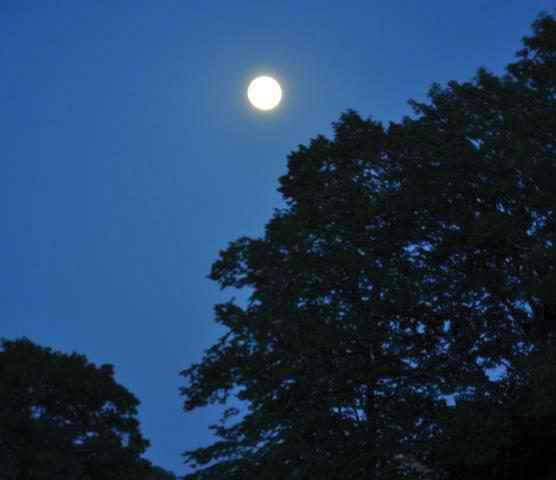
The Headlands Dark Sky Discovery Trail will include 11 interpretive signs and life-size cut-out figures – cultural “docents” – that will allow the visitor to be engaged intellectually and imaginatively in the experience. Each Discovery Station will represent one of the planets, plus the sun and moon, and be accompanied by a sign detailing the person or object’s connection to the dark sky and the culture on Earth; a self-guided cell phone tour stop; and a specialized QR code for smart phone users to instantly scan and connect with the audio.
The Discovery Stations will lead from the Headlands main entrance and to the designated Dark Sky Viewing Area at the Lake Michigan shoreline, about a 1.5 mile walk. They will be spaced relative to the planets’ locations and distances from each other in the solar system.
And what about the Venus transit, you ask? 700 people took part in the park’s programs around this event. Work on the Dark Sky Discovery Trail will begin immediately, with estimated completion by Labor Day. Updates will
summer issue 2012 • 9
be available on the county site [ www.emmetcounty.org/ darkskypark ]. Each month, Emmet County offers free monthly programs at the Headlands, with program details also available on the Web site. Plus, a biweekly video email blasts features Adams providing night-sky viewing tips, celestial highlights, program information and more. To register for the email blasts, contact Piehl [ bpiehl@ emmetcounty.org ]. Reported by The Sophia Sun
Publishing
being human digest Toward an Art and Science of Wholeness
Online Overflow from “being human”
This being human is a small publication (48 pages including covers), issued quarterly, and potentially interested in all things human. To put it kindly, we leave out whole universes from every issue. More and more we will be publishing additional material at anthroposophy.org – where, under the “Articles” heading, we have just added reviews of two books by Reg Down (by none other than Nancy Parsons and Therese Schroeder-Sheker), a reflection by Neill Reilly on “Moral Imagination,” and a lighthearted piece by Michael Ronall called “How to Survive as a Man in Eurythmy School.” New articles will be there by the time you read this, so scroll down the list please!
I believe that miso belongs to the highest class of medicines, those which help prevent disease and strengthen the body through continued usage. . . Some people speak of miso as a condiment, but miso brings out the flavor and nutritional value in all foods and helps the body to digest and assimilate whatever we eat. . .



 —Dr. Shinichiro Akizuki, Director,
Spiritual Research Research at Threefold
September 20–23, 2012
Threefold Educational Center CHESTNUT RIDGE, NEW YORK
www.threefold.org/research
Co-sponsored by the North American Collegium of the School of Spiritual Science

The Threefold Educational Center in Chestnut Ridge, NY, about forty minutes drive north of New York City, was a research center from at least the early 1930s. Threefold’s commitment to research continues today in many ways, highlighted by a yearly “living questions research symposium” close to Michaelmas. This year (September 20-23) brings “Toward an Arts and Science of Wholeness.” Details at www.threefold.org/research.
Learning from Practical Work: The Council of Anthroposophic Organizations
Least known of the national or continental anthroposophical institutions in North America is the Council of Anthroposophic Organizations. It was formed in the mid-1990s to bring to the leadership of the Anthroposophical Society in America a consciousness based in the
10 • being human
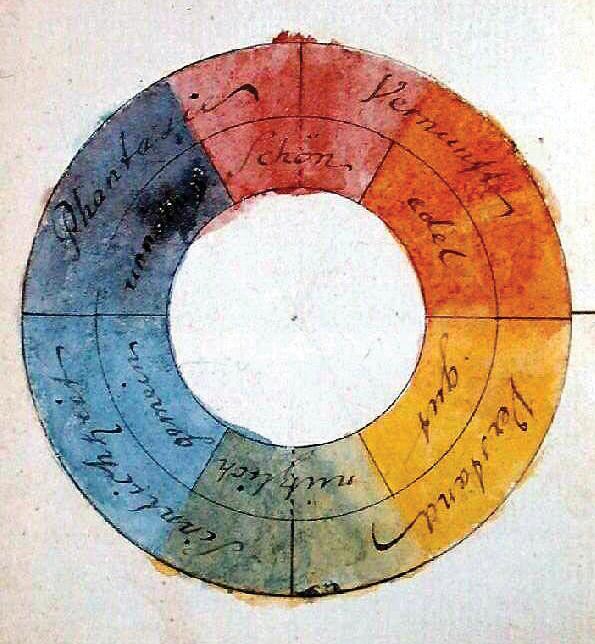
Color wheel Goethe
2012 Living Questions Research Symposium
www.southrivermiso.com WOOD-FIRED HAND-CRAFTED MISO Nourishing Life for the Human Spirit since 1979 unpasteurized probiotic certified organic SOUTH RIVER MISO COMPANY C onway , M assa C husetts 01341 • (413) 369-4057
St Francis Hospital, Nagasaki
practical operations, planning, and strategic thinking of service organizations and functions based in anthroposophy. We will be highlighting the work of the CAO in our next issue and on line, but also want to mention it here in relationship to research: the kind of research that evolves from “hard experience” and the bringing of ideals to earth. This is a special region of research which speaks particularly to the practical orientation of US-Americans. The CAO is looking at some of our hardest questions, including bringing along next generations of workers in adult education and curative work, or training in such specialties as accounting as needed by anthroposophical initiatives. The CAO also is helping to fund the Leadership Colloquium and help support attendance at this year’s annual members conference in August.
The School for Spiritual Science: Tasks of the Collegium
Behind the active anthroposophical initiatives of schools and farms and medical practices and artistic groups there is the original research of Rudolf Steiner, the traditions and accomplishments of culture before him (think Goethe in morphology or Bronson Alcott in education), and the ongoing study, experimentation, and collaborative work that continues up to this day. Steiner launched an ambitious School for Spiritual Science at the Goetheanum in Switzerland to carry this work, and thirty years ago the work began to take on specific shape on this continent with its own leadership group, the North American Collegium. Sherry Wildfeuer brings us up to date:
“The North American Collegium of the School for Spiritual Science arose through the expressed need of some people in America to experience their work with the 19 Lessons of the First Class in the context of the School as a whole. All who have joined the School may consider themselves members of the General Anthroposophical Section of the School, but how can the pupils experience themselves as part of a school community? How do the vocational Sections relate to each other and to the whole? What is the research that is meant in the 9th Statute given by Rudolf Steiner for the Anthroposophical Society? When, with the blessing of the Goetheanum, the Interim Collegium was formed in 1994, these questions began to be explored and elaborated.
“The impulse to form the Collegium can be traced back to 1981 when the Executive Council of the Anthroposophical Society came to a conference in Spring Valley
and called for a “Goetheanum in the West.” The development of Section work on this continent was suggested as preparation and was subsequently taken up. Thus, from its inception the Goetheanum-building impulse belonged to the impulse of the Collegium.
“We studied the lives of the members of the first Vorstand of the Anthroposophical Society, mindful that the profound differences among those brought together in the School and Society need to find resolution if we are to be able to work fruitfully for the spiritualizing of our civilization. We recognize that a sufficiently active culture of research among the members of the School has not yet developed. What are our real questions? What can we offer out of anthroposophy to meet the needs of our time? How can the Collegium augment what the Class Holders do? We recognize the need to communicate directly with the members and are proposing a means of doing so.
“When members of different Sections work together, they enhance each other’s insight and effectiveness. Such multidisciplinary collaboration needs to be practiced and fostered. The Collegium itself is a model for such collaboration but we are limited by only coming together twice a year. Such collaborative work should be encouraged in locales where people can share their research with peers
o In Motion
with
PhD, MD
This seminar explores how human prenatal development expresses the essence of human spiritual unfoldment. Understanding the stages of embryological development provides a basis for therapeutic recognition of embryological forces in all later stages of life. This seminar is a rare opportunity to hear a world authority on modern embryology through a unique synthesis of scientific and spiritual principles.

summer issue 2012 • 11
being
human digest
Jaap van der Wal,
PortlandBranch.org
Understanding Ourselves as Embryo
y 4 DVD Set Available exclusively at
Embr
being human digest
and take up common themes from their diverse vantage points (“Local Collegia”).
“Rudolf Steiner expected members of the School to be ‘active members’ of the Anthroposophical Society. How can this aspect of the School be encouraged and supported? Collegium members are chosen by their Sections (with the exception of those for the General Section, who were chosen by the Class Holders) but they are not Section Leaders. The Collegium as a whole can be seen as carrying responsibility for the General Anthroposophical Section of the School on this continent. We are formed in the image of the Collegium at the Goetheanum. A way of working and mutual understanding has been built up over time through common work with the Class, study, artistic work, sharing of our individual research activity, and collaboration on specific projects and events. (Several conferences and the Henry Barnes Fund for Anthroposophical Research are examples of this.)
“The Councils of the Anthroposophical Societies of the US and Canada are also represented on the Collegium. We see the need for these Councils and a committee of the US Council, the Council of Anthroposophical Organizations, to be clear about their various tasks and work together. Perhaps it is helpful to recall the pre-earthly deed of Christ whereby the organs of the human body, which were each tending towards independence, needed to become sufficiently selfless to harmoniously perform their distinct and necessary functions in service of the organism as a whole. Something of this mood of service needs to prevail in each group as well as in our coming together, which of course is expensive and unwieldy and must be well prepared to be fruitful.
“The Collegium realizes that to serve the School it
needs to have a common picture of the School as a whole and a mutual understanding of roles with the Class Holders. Through Virginia Sease’s participation in our Collegium meetings as often as possible we have built good communication and trust with the Executive Council at the Goetheanum. This is essential, and we are deeply grateful for what she brings.”
More on the work of the School, its Collegium, and the Henry Barnes Fund for Spiritual Research will be appearing online at anthroposophy.org.
Arts
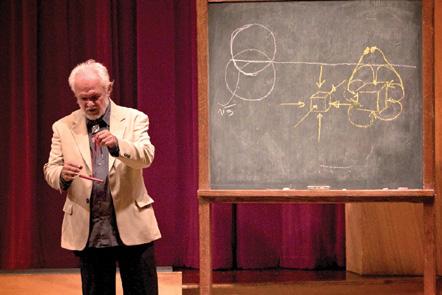
Except for having no funding to speak of, Frank Chester has been having a great time. Last year he spoke with cardiologists about the implications of his discoveries around the geometry of the heart. To the Goetheanum later in 2011 he brought his combined impulses: research, design, sculpting, architecture, geometry; creating a bit of a stir with his process and with a design for a Goetheanum building for North America. To the Rhode Island School of Design in early 2012 he brought a picture of arts-and-design with real depth of consciousness which brought students forward to ask if they could connect up with his institution. (Perhaps he is an institution, but he doesn’t have one you can join.) And a few weeks ago we were able to meet with him in San Francisco where he is based and connect some dots between “anthroposophy and contemporary philosophy” – such as the possible relationship between his unlocking of the condensed forms of geometry’s “ideal solids” and the Deleuzian philosophical notion of de territorialization and re territorialization.
If he doesn’t have big grants, Frank has great support in his online presence (tip of the hat to Seth Miller). Go to www.frankchester.com and, after bookmarking the site, plan to spend an hour a day there for at least a week. There are videos, diagrams, booklets: all as beautifully done as the work itself.
12 • being human
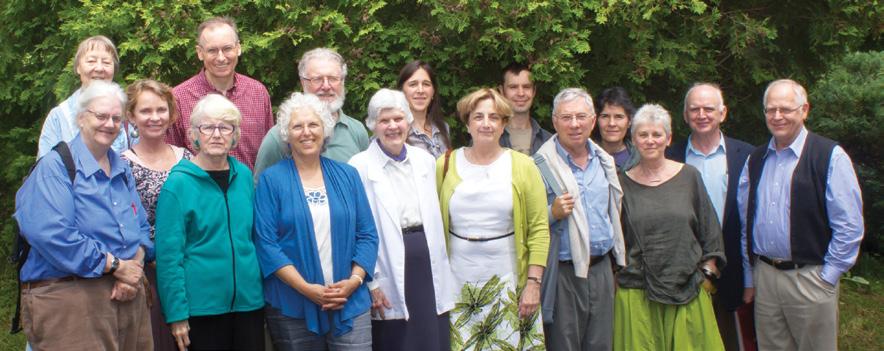
North American Collegium of the School for Spiritual Science: from left, front: Jennifer Green (Science); Prairie Adams (Pedagogy); Ann Finucane (US Council); Sherry Wildfeuer (Agriculture); Virginia Sease (Executive Council/ Dornach); Marguerite Miller (Literary Arts and Humanities); Bert Chase* (Visual Arts); Monique Walsh* (General Anthroposophical Section). Back: Dorothea Meir (Performing Arts - emerita); Rudiger Janisch (General Section); Michael Howard (member at large); Kathleen Morse (Spiritual Striving of Youth ); Peter Buckbee ( Social Sciences); Helen Lubin (Eurythmy, Speech, Music, Puppetry and Drama); Arie von Ameringen (General Secretary/Canada); Gerald Karnow (Medicine). Not pictured: Penelope Baring (General Section). * Canadian Colleagues.
Finance at the Threshold: Rethinking the Real and Financial Economies
 By Christopher Houghton Budd. Gower, 2011, 239 pgs. Review by Christopher Schaefer, Ph.D.
Christopher Budd is well known to students of anthroposophy as a writer and lecturer on associative economics, accounting, and finances. Finance at the Threshold: Rethinking the Real and Financial Economics, published by Gower, is a very stimulating effort to integrate Rudolf Steiner’s economic ideas into the mainstream economic debate about the current financial crisis. The book is meant to give Steiner credibility as an economist among an academic audience not familiar with his ideas. It does this in two main ways: first, by using Steiner’s economic insights as a way to understand the present crisis; and second, by suggesting fundamental solutions to the problems of the financial system based on his work. The book is full of intriguing ideas and challenges to mainstream economics. Its basic argument is that the financial crisis is the result of excess liquidity in the global economic system. Budd suggests that in the same way cathedral building in the Middle Ages siphoned off surplus capital, today, gifting to young people and to cultural life in vastly increased amounts could restore the economic and financial system to health by using excess capital productively, a solution first proposed by Rudolf Steiner in World Economy.
The author sees the financial crisis as global, and as representing a new, defining moment in human history that calls into question both our ways of acting and our understanding of economic life. He relies on an image provided by Rudolf Steiner to make this case: “The economic life of a particular time, and the spiritual life of a particular time, hold the same relation as a nut to its shell; the economic life is invariably the shell which the spiritual life has thrown out. It takes its cast from the spiritual life. Today’s is, therefore, the product of an abstract spiritual life.” (World Economy)
From this basic insight Christopher Houghton Budd suggests:
1. The world economy has been global since the beginning of the 20th century, but our behavior and our
understanding have not until now recognized this.
2. The financial crisis is due to excess capital seeking ever-increased returns at a time when there are no new markets as such, since most areas of the globe, including the Islamic countries, operate under conditions that allow the free movement of capital and goods. The growth of the international financial market is not only due to the mistaken leverage of assets such as housing stock, but also through the vast sums available to capital markets through pension, mutual, and investment funds.
3. People’s consciousness and economists’ understanding of the international economy is too abstract; their sense of what is really happening is inaccurate. The efficient-market hypothesis of the Chicago School claims that the market will always do the best job of determining true price. But this approach, based on abstract mathematics, assumes that people act rationally and that there are clear cause-and-effect relationships in economic life. As Steiner noted long ago: “Economic processes are distinguished by the fact that we ourselves are within them, therefore we must see them from within. We must feel ourselves inside the economic processes, just as a being would do who is inside the chemist’s retort.…” (World Economy) Here Steiner anticipates George Soros, who argues that the economic and financial system is reflexive in nature, and that there are no independent variables for determining either price or behavior. The author cites Soros approvingly, “Let us examine the main assumptions of the theory of perfect competition. Those that are spelled out include perfect knowledge; homogeneous and divisible products; and a large enough number of participants so that no single participant can influence the market price… The assumption of perfect knowledge is suspect because understanding a situation in which one participates cannot qualify as knowledge.…” Furthermore, “The shape of supply and demand curves (which supposedly determine price) cannot be taken as independently given, because both of them incorporate the participants’ expectations about events that are shaped by their own expectations… Nowhere is [this] more clearly visible than in financial markets.…” Steiner also noted that a calculation of true price depends on whether one is a producer, trader, or consumer, suggesting that there are really three different equations for determining price.
summer issue 2012 • 13
Rudolf Steiner Library Newsletter: Reviews
It was from this insight that he suggested the importance of an associative economics that would bring consumers, traders, and producers together in associations in order to arrive at an approximation of true price.
4. The author makes five basic recommendations for renewing and transforming the international financial system. The first is to recognize that the world economy is global and will require an international reserve currency, such as John Maynard Keynes suggested with the creation of the “bancor.” Such a suggestion rests on the understanding that money is an agreement among people about a medium of exchange, and is based on the economic activity of a society made visible through loan and purchase transactions. Secondly, the international economic and financial system will need to be self-administered by associations of consumers, traders, and producers. Thirdly, as one would expect given the author’s previous work, he advocates that the financial system needs to rely much more on accounting, and in particular, double-entry book-keeping, to connect individuals to economic life (micro-economics) and to the broader field of macro-economics. Greater reliance on accounting would create a self-balancing economics, as those who required liquidity would need to be balanced by those offering liquidity, so that all accounts would sum to zero. The fourth recommendation, articulated rather poetically, is a plea to recognize the existence of a “choir of cultures” (free cultural life); a group of states (rights life); and a global world economy, each of which needs to be independently administered according to its own inherent principles. The last proposal, previously mentioned—and to my mind, critical—is to recognize the need to spend the economic system’s inevitable excess liquidity through gifting to youth and to educational and cultural life.
Finance at the Threshold is an intriguing and stimulating book. Its limitation, besides its high price, is the author’s understandable use of academic language and mode of presentation. I do wish that a simpler, shorter, and cheaper version of this book would be published in paperback, because as a trained economist and social scientist also interested in bringing Steiner’s social and economic ideas to a broader audience, I find Christopher Budd’s examples and conceptual discourse compelling. Many chapters deserve special study: for example, chapter 2, “When the Banks Stopped Lending to One Another,” features many interesting quotes from both liberal and conservative economists; and chapter 4, “It’s the Epistemology, Stupid,” raises basic questions about our current
understanding of economics.
For a new edition, I would suggest a deeper look at how the present financial and economic system has created distortions and suffering in the United States and Great Britain, since in these countries economic and financial elites have determined political discourse and government decision-making for the last three decades with devastating consequences for their own citizens and for the world.
I would also recommend that readers look at Martin Large’s book, Common Wealth: For a Free, Equal, Mutual and Sustainable Society (Hawthorn Press, available from the Rudolf Steiner Library), for a complementary presentation on the ways in which threefold perspectives are alive in many efforts at social reform. I can also suggest Gary Lamb’s recent study, Associative Economics: Spiritual Activity for the Common Good , (AWSNA, available from the Rudolf Steiner Library) for its comprehensive presentation of Steiner’s ideas on economics. At a time when the limitations of both socialism and capitalism have been made abundantly clear, all three books should be read and worked with as a way of enlivening a new imagination of society appropriate to our time and our consciousness.
Easter: Rudolf Steiner’s Watercolor Painting
By Angela Lord.
SteinerBooks, 2011, 79 pgs. Review by David Taulbee Anderson
Rudolf Steiner’s painting, Easter, is taken as the subject of meditation for this book. The author, who has worked with the Easter motif as a painter for many years, approaches the picture out of her experience with color and her research into anthroposophical and other sources on the esoteric significance of the Mystery of Golgotha. A history of the crucifixion as a theme in art leads us into our contemplation. Other references are the apocryphal gospels that illuminate the picture’s theme, which is the descent of Christ into hell on the Saturday after the crucifixion. The author explores what took place in the realm of the dead from many angles, and also discusses how the twenty-third psalm is related to the picture, using it as a means of understanding its depths. Other references are Rudolf Steiner’s Soul Calendar, and an account of the ancient Adonis festival.
Part 2 leads us into the most significant means of understanding the picture, color itself. The author dem-
14 • being human
Reviews
Rudolf Steiner Library Newsletter:
onstrates how the powerful polarities of above and below, and light and darkness, are mediated by the rainbow bridge of colors. She explores the activities of the individual colors and their expressions in a way that draws the reader into their being and essence, so that they become a language that can be read by the soul through heightened feelings imbued with meaning. The section concludes with Rudolf Steiner’s rainbow meditation.
Part 3 examines the background of the Mystery of Golgotha and its cosmic aspects, particularly the sun and moon, since Easter as a movable festival is determined by the interplay of these two planets. The author also looks at the other planets and their related colors. Finally, she invites readers to delve more deeply into this important subject by suggesting possible ways to paint the motif oneself as a means of entering into the life of the theme.

Christ’s deed of bringing the dead into the light of consciousness was not only important for the actual deceased individuals—patriarchs and prophets—who had been held captive in the underworld in a dampeneddown condition of consciousness, but for us, too, here in our earthly lives. The underworld part of our consciousness that is submerged in darkness can also be given new forces of life, or resurrection forces. Color is the bridge into these dark realms, and it is our feeling that uses color as a vehicle for going beyond the realm of dead abstractions. The author shows how the third hierarchy, which includes the angels, creates the world of color in which imaginative pictures appear. It is possible to go through these pictures, glowing in color, to the darkness behind them where inspirations sound toward us and living meaning fills us from a world that was previously dark and unconscious.
Our culture today, which is still dominated by dead thinking that lacks imagination, can benefit from cultivation of the type of willing-feeling-thinking that characterizes this study. The book can help readers develop the sensitivity needed to overcome the type of thinking that is bound to physical processes and matter. The Easter event can be a force in our lives that draws us out of the tomb of materialism and allows us to participate in the life forces that mold our world. Through this participation, we learn to experience directly the upbuild-
ing and coming-into-being of existence and truly live in the springtime of the world. Easter takes us on a journey where we must courageously face the underworld of the dead to find new life, eternal, springing up from the resurrection forces that Christ implanted into the depths of hell. This is not a book to be read casually; rather, it can be used as a means of finding the living wells that must be worked for. Just as Virgil served Dante as a guide through the Inferno, so Angela Lord is an excellent guide for modern people to take that necessary preliminary journey before entering the realms of the blessed.
The book features many beautiful color illustrations: Steiner’s original painting and versions of it by the author, Robert Lord, and Gerard Wagner are reproduced along with related material.
The Gentle Will: Meditative Guidelines for Creative Consciousness From What Is Thought to Thinking,
to Willing
By Georg Kühlewind. Lindisfarne Books, 2011, 114 pgs. Review by Joyce Reilly.
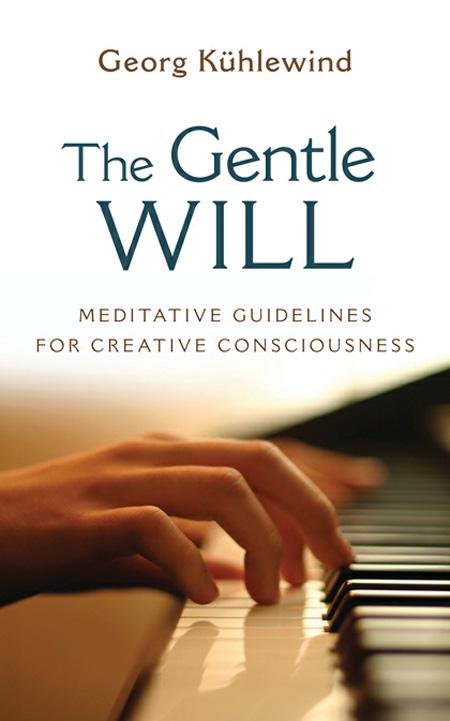
On the cover of the Lindisfarne Press edition of Georg Kühlewind’s The Gentle Will there is a lovely photograph of hands poised at a keyboard. The long slim fingers are touching the keys, but not yet pressing down—the music is all in potential, the keys await the music. The fingers are transferring the pianist’s intention, and are about to become instruments themselves. This expressive moment shows us the essence of what we are to encounter and work through in the one-hundred-plus pages of this slim and powerful book: the essence of the gentle will and its power to create, respond, repair, and express. This photograph becomes even more touching when we learn that the hands at the instrument belong to Georg’s grandson, and that in his own early life Georg had a passion to perform at the piano.
The book is itself organized musically, with four “preludes” framing the content and a progression in subject from thought to thinking; from thinking to feeling; and from feeling to willing; ending with the cosmic background of the will. In each section, Kühlewind as-
summer issue 2012 • 15
from What Is Felt to Feeling, from What Is Willed
sumes that we are there to be engaged not as mere readers or spectators, and he invites us to practice what he illuminates in his preludes in a particular form. There are sections entitled “Contemplation” that are meant to be thought through, pondered, and exhausted on the level of everyday thinking. Then there are parts called “Contemplation/Meditation, “where the reader is invited to use the contemplations as a means to enter into real bodyfree thinking, into the meditative path. This is perhaps a unique feature of Kühlewind’s work, that he repeats ideas from his earlier works and practical advice on how to achieve what he is speaking about, treating his books as a means rather than an end, almost as workbooks rather than pure text.
Michael Lipson’s translation is clear and elegant, and his long association with Kühlewind is such a help here. In his workshops, Georg often compared studying meditative texts in a state of ordinary consciousness, as if they were ends in themselves, to confusing the runway with the flight! To study like that is like grasping a magnifying glass with head down, testing the strength of the surface, and perhaps raising our head to calculate the wind’s velocity, without realizing that the runway is only the preparation for our own earth-free journey, our sense-free flight. This is both an amusing picture and a sad one, and Georg made it his life’s work to help free us of constraints so we could enter the world of spirit.
The first line of the “First Prelude” is: “We live in a world of meanings, though we are convinced that we live in a world of things.” This sentence alone could summarize everything that Kühlewind brings us, in this book and in so many others. It also relates to his endeavor to understand the experience of the small child, and his conviction that the trauma of birth is not the arduous process of emergence from the maternal body (traumatic for the mother, perhaps!) but the realization that we have emerged from the spiritual world of meaning into the material world of things. We knock up against that which has form but is hollow, and must elevate and infuse our experience with meaning ourselves, through our own effort of will. We then begin the work of the book—that is, we start to contemplate and meditate, at first around the theme of how we think. The outcome of these exercis-
es—that we begin to experience the I am, that we know ourselves to be an eternal, spiritual being rather than a complex of outer circumstances and inner reactions—is valuable enough to justify the whole book. The further benefit of this section, when it is worked through—that we begin to experience the objects that we use for concentration exercises as meaningful, sacred things—gives us entrance into the world from which we came.
The “Second Prelude” takes us from thinking to feeling, and, of course, by “feeling” Kühlewind is not referring to emotion, but to the feeling that leads our thinking, that guides our logic, which he calls cognitive feeling Kühlewind elucidates this difference, as well as the difference between the I and the Me, and prepares us for the next “flight.” These exercises lead us quietly yet dramatically away from the ordinary experience of emotion to the world of feeling; to differentiation in feeling; and then to meaning—and along the way we begin to realize our freedom. We begin to experience our inner world as “purified” of forms, and our outer “sight” as clarified and exact. Again, we could stop here and be infinitely enriched, but we are urged to go on.
The “Third Prelude” begins again with the thought that we do not know how we think, but now the emphasis is on the will: we do not know the connection of our thoughts to our will. We are used to exercising our will in action, but are not aware that everything that is formed has will, is formed with will. We can be awestruck by great art or music, by science and architecture, as well as by the majesty and ferocity of nature—and there we can directly experience a forming will, a will that is not mine, a will that is beyond anything I can imagine and therefore alerts me to the world beyond my experience. This momentary lapse in our egotism can lead to a moment of receptiveness, to a feeling of thy will not my will—which can also be experienced as grace. This receptive will is also the basis for our earliest learning, for the possibility to imitate, for the possibility to be imprinted with the first hundred words—with all that surrounds us as infants. In this section, the purification of the will becomes a possibility as we move into exercises for the will, and realize the importance of relaxation! We then confront speaking, remembering, imitating, reading, and the body, and our exercises bring us into touch with the gentle will itself. We are now ready for the “Fourth Prelude.”
The importance of this book lies in the realm of the gentle will. Kühlewind states that whenever we do not know how we do something, we receive a gift. We work
16 • being human
Rudolf
Newsletter: Reviews
Steiner Library
very hard at our exercises and in our everyday life, we increase our attentiveness and our awareness in each moment that we can—and then we are able to reflect, to be attentive, to be in tune with what we are doing, and so on: is this of our own making, or is this a gift? And through this gift, the whole objective world is revealed to us. Why is this not universally recognized? Why do we need to lay claim to our thoughts and ideas, as if we were not being allowed to participate in the spiritual world? Kühlewind points to this misunderstanding as a basis for much of our suffering. At this point, we are eager to go further.
In the fourth section, Kühlewind begins tracing the spiritual or cosmic origins of the will. Far from a flight without a runway, he takes us back to the essence of our humanity—our attentiveness. He states that the profaning of human life began when religions siphoned meaning into their own domain and left everyday life on a different plane. Everyday life began to be all about usefulness, manipulating the world of things, with an inevitable slide into commodification, and human life became simply a part of this useful thing-ness. The exercises in this section begin with silence and progress to meditation itself. The author presents different types of meditation: on a sentence or an image; perceptual meditations; and ends with meditation that poses a question, or meditative research. We are now at the moment when the gentle will can be seen as the fruit of all our efforts, and we are freed to be instruments—of art, of knowledge, and most importantly, of “the peace,” according to St. Francis. One is reminded here of the saints in their purest attitudes, such as St. Catherine: “All the way to God is God, for has he not said, ‘I am the Way?’” and of the words attributed to St. Francis: “Always and everywhere preach the gospel. If necessary, use words.” We have now reached the point where the exercises mean to take us: to freedom of, or gentle, will.
The rest of the book contains further exercises and meditations, and several sections that could be studied on their own but are probably best realized after the work of the earlier chapters has prepared the reader to take them up actively. In the appendix titled “Reversal of the Will and Encountering the Power of the Logos,” Kühlewind speaks about the difference between thinking or thought
and the experience of thinking, and the will and the experience of willing, with direct references to Rudolf Steiner’s Riddle of Humanity and The Philosophy of Freedom. He ends with quotes from Dante and Rilke, two of his most cherished writers. In the appendix, “Art and Knowledge,” he explores what are at first seemingly obvious differences between the two; unpacks these ideas and brings us to a childlike and playful, “gentle-willing” experience of both; and then emerges with us into a field where we are both more aware of the origins of ideas and creative expressions, and know ourselves to be capable in these realms. Indeed, the future health and existence of our world relies on our ability to be in a state of gentle willing.
Kühlewind is, above all, a teacher, guide, and traveler who stops along the road and waits for us to catch up with him. In all his books, as here, one finds not only his own careful journey explained, but also his deep respect for his readers, his conviction that we are all capable of being in a state of non-duality, neither everyday nor spiritual, simply— here. Kühlewind does not hand us anything completed, but opens a door—and sometimes puts out a hand to bring us over the threshold. If you are looking for a definition of will, or of anything else, you will be frustrated by this book—you will be asked to have an experience rather than seek definitions, and you will be invited, but not coerced. If you have the patience—and, indeed, the will—to take this journey, you will be more than pleased. I feel a sense of connectivity, of community, when I think of others across the world reading this book, working through its content, and consulting with each other about the experience—its difficulties, its joys. Indeed, in each of the many languages it may be translated into it will have a slightly different flavor, but no matter. This community of striving human beings, creating itself through individual commitment and mutual trust, may be small and not yet recognized as mighty. Perhaps this is the answer, seed-like as it is, to the question Kühlewind poses at the beginning of this book: In the face of human folly and suffering, what is to be done? We must answer that question with him.

summer issue 2012 • 17
The Aesthetic Logic of the Heart: Forming Heart Thinking
by Van James
“The man who lives his life artistically has his brain in his heart.” — Oscar
Wilde
Consider three different people’s thoughts on the subject of heart thinking. First; Dr. Paul Pearsall, American author of sixteen best selling self-help books says, We’re a brain culture as distinct from a heart culture. We want to quantify everything. If we can’t weigh it and measure it objectively, it simply doesn’t exist for us. The Hawaiians have always believed that it is through the heart that we know the truth. For them, the heart is as sentient as the brain. We find this same belief with the Hopi Indians in New Mexico, and with the Chinese; within many cultures the heart chakra is the key to healing.1
Second; when in 1925, the well known Swiss psychoanalyst Carl Jung went to Taos Pueblo in New Mexico, he met the Native American, Chief Ochwiay Biano. Biano told Jung that according to his people, the Whites were uneasy, restless, and “mad” people, always wanting things. Jung asked him why he thought this was, and the chief replied that it was because they thought with their heads, a sign of mental illness among the pueblo peoples. Jung asked Biano how he thought and the chief pointed to his heart. The response plunged Jung into a deep introspection that enabled him to see himself and his culture from a new perspective.2
Third; In the early twentieth century, Rudolf Steiner spoke of the important step needed in human development as a transition from our present brain-bound, intellectual thinking to a future, heart-felt thinking. This forming of heart thinking he connected directly with the aesthetic or artistic transformation of our spiritual capacity for thought. In 1919, three decades after the publication of his book The Philosophy of Spiritual Activity, he said of this work: “I wanted to show that the realm otherwise dealt with only by the artist in imagination
must now become the serious concern of the human race, for the reason that it represents the stage mankind must reach to lay hold upon the supersensible that the brain is incapable of grasping.” 3
The art of weighing and measuring qualities—colors, tones, forms, words, and gestures—is a process in which the artist is constantly engaged. In fact, we are all doing this, artist or not, all the time. This weighing up of qualities is what Aristotle considered to be a virtuous, moralbuilding faculty: “Virtue is the human capacity, aided by skill and reason, to determine between the too little and the too much.” In Rudolf Steiner’s terms this faculty for virtue is referred to as moral imagination and ethical individualism (The Philosophy of Spiritual Activity). Just as the words art and heart literally intertwine, so too the artistic process and the development of cognitive feeling or heart thinking are interrelated and even synonymous.
In former times and in many cultures, heart wisdom
Figure
was acknowledged in various ways. The primeval Egyptian god, Ptah, is said to have created the world first in his heart before he spoke it into existence. To the ancient Egyptians the heart was the seat of emotions, thoughts, soul and life itself. One of the most important “spells” in the Egyptian Book of the Dead was the Weighing of the Heart (fig. 2). In this threshold trial, the deceased, led by the jackal-headed god of death Anubis, observed by the gods above, watched as his heart was weighed upon the scales of Maat, goddess of truth. If the heart was lighter than Maat’s feather of truth and not weighted down with sins and transgressions from the life just lived, then


18 • being human
2: The Weighing of the Heart, a crucial part of the Egyptian Book of the Dead, from the Papyrus of Anhai
the deceased was able to pass on to join the higher gods. Spells asking the heart not to bear witness against the deceased refer to the heart as though it were a conscious, living being. “Oh my heart…do not be my enemy in the presence of the guardian of the balance…Do not tell lies about me in the presence of the great god...” 4 The heart was the only internal organ allowed to remain in the mummified body of the deceased, while all other organs were removed and preserved separately, or in the case of the brain, discarded as unworthy.
While the weighing of the heart was a crucial step in the Egyptian mortuary cults, the weighing of the soul was emphasized in medieval Christian times and practices (fig. 1). Many depictions show the Archangel Micha-el selecting souls for their further journey by means of the scales (fig. 3). Weighing up the virtues or sins of the soul was pictured in terms of lightness or heaviness on the balance. Micha-el’s seasonal cycle as an archangel occurs each year in autumn, the time of Libra, the balance beam. As a Time Spirit or archai, Micha-el’s reign began at the end of the nineteenth century and is now fully underway in the 21st century. Rudolf Steiner said: “The Age of Michael has dawned. Hearts are beginning to have thoughts.” 5 In Steiner’s words, Micha-el’s threefold task is that, “He…liberates thought from the sphere of the head; he clears the way for it to the heart; [and] he enkindles enthusiasm in the feelings, so that the human mind can be filled with devotion for all that can be experienced in the light of thought.” 6

However, heart thinking does not just come about by itself. It requires a schooling in logical thinking, for in logical thinking we experience the consequential necessity of one thought connecting to another. Although logical
thinking will not serve us in supersensible realms, a kind of logical conscience develops from it and “a general feeling of responsibility in our soul for truth and untruth” 7 begins to take shape. So intellectual, logical thinking leads to a conscience that serves as a foundation for heart thinking. “Spiritual fervor now proceeds not merely from mystical obscurity, but from souls clarified by thought.” 8 In this way one comes to a grounded, spiritual idealism.
A visionary picture of “spiritual fervor,” originating in the “mystical obscurity” of an earlier era can be seen in the image of the sacred flaming heart from the French Order of the Visitation of Our Lady, c. 1673 and 1675 (fig. 4). Celebrated on the first Friday of every month and throughout the month of June according to Roman Catholic tradition, the flaming sacred heart of Jesus is venerated according to the visions of Jesus Christ described by a humble nun, later beatified as St. Margaret Mary Alacoque. “Flames issued from every part of His Sacred Humanity, especially from His Adorable Breast, which resembled an open furnace and disclosed to me His most loving and most amiable Heart, which was the living source of these flames.” 9 Although relegated by critics to the purgatory of Catholic kitsch art, the sacred flaming heart is a real symbol, not only of religious devotion, piety, passion, courage and love, but also of the future development of a true organ of heart thinking. Although sentimentalized in most pictures, it is an imagination of the etheric organ of the heart chakra (wheel), with its turning spokes, flowing lotus petals or radiating flames, depending on the cultural metaphor one chooses. Old Testament recognition of this spiritual organ and center of virtue is noted in Samuel:


“…The Lord seeth not as man seeth; for man looketh on the outward appearance, but the Lord looketh on the heart.” 10
Contrast this view with the late Christopher Fry’s declaration in The Sleep of Prisoners,
summer issue 2012 • 19
Figure 3: Micha-el at the Last Judgment by Memling and van der Weyden (l-r)
Figure 4: The symbol of the Sacred Flaming Heart (here by Pompeo Batoni, 1740), according to Roman Catholic tradition, was inspired by the visions of St. Margaret Mary Alacoque in the seventeenth century.
“The human heart can go the length of God…”
A 20th century visionary picture and artistic embodiment of the living heart forces may be seen in the Representative of Humanity, a thirty-foot tall wood sculpture created by Rudolf Steiner and often referred to as The Group. This monumental carving is a study in convexity and concavity, with a composition of figures in asymmetrical balance (fig. 5). The central figure, described by Steiner as the representative of a “spiritualized, inwardly deepened humanity,” 11 stands as the fulcrum and balance

beam of a dynamic, living scale. It is a contemporary, artistic imagination of the weighing of the heart, as this representative of spiritualized humanity strides between forces of opposition and extremism, expressing a middle position in freedom and love. This representative of the inwardly deepened human being was imagined by Steiner as showing in what streams out from its eyes as “pure compassion,” and what is shown through its mouth, “not designed for eating but for uttering true words that express conscience,” 12 the revelation of the “I am I.”
The weighing and balancing functions of both our heart and our thinking might be considered, in their essence, a form of art. The opposite of the word aesthetic is anaesthetic, which means numb, lacking feeling, and inability to respond. Aesthetic, on the other hand, means enlivened being, heightened experience, and response-ability. This response-ability is at the same time a responsibility in that it calls on us to be more aware of what we respond to and how we react and respond to it. In artistic activity, as in the training of practical thinking, we develop a faculty for conscience and we learn to take responsibility for our actions, our feelings and our thoughts. This builds an aesthetic logic and conscience that leads to the forming of heart thinking—to the aesthetic logic of the heart.
Notes
1. Hal Bennett, “The Thinking Heart: An Interview with Paul Pearsall,” www.mightywords.com.
2. Suma Varughese, Moving from Head to Heart, 9/2005. www.lifepositive.com.
20 • being human
3. Rudolf Steiner, Some Characteristics of Today, June 12, 1919.
4. Rudolf Steiner, Egyptian Book of the Dead, Chapter 30.
5, 6, 7, 8. Rudolf Steiner, The Michael Mystery, GA 26, p. 62.
9. The Revelation of the Sacred Heart of Jesus, the diary of St. Margaret Mary Alacoque.
10. The Bible, I Samuel 16:7.
11. Rudolf Steiner, 21/10/1917.
12. Rudolf Steiner, 8/5/1912.
Figure 5: The Representative of Humanity is a thirty-foot tall carved, wood sculpture created by Rudolf Steiner in the early twentieth century.
The Sin of Literalism
Frederick Amrine for Arthur Zajonc
Based on talks given originally as part of the inauguration of The Barfield School in Spring Valley, NY, on January 7, 2006, and then later that same year in Ann Arbor, MI.
Surely one of the greatest paradoxes of our enlightened age is the irrational tenacity of religious fundamentalism. The case against literalism is so strong and so straightforward that one is tempted to call for a summary judgment. The Bible offers conflicting accounts of the creation of the world, the creation of Adam and Eve, and the genealogy of Jesus, and they are sometimes internally inconsistent as well: for example, Genesis claims that God performed certain actions on three “days” that preceded the creation of the Sun and the Moon – bodies that are clearly integral to any literal sense of the word “day.” In the Gospel of St. John, Christ declares Himself to be among many other things a vine, a road, a door for sheep, and a “beautiful shepherd,” none of which was literally true. Only a psychotic could say such things and mean them literally, and only a militant atheist could countenance such a conclusion. The Bible may be true, but it cannot be literally true. Case closed!
If only it were so easy.
The fundamentalists have powerful allies. Literalism may seem today to be the province of the unsophisticated, but in the past, even the most sophisticated interpreters of the Bible, such as Augustine and Aquinas, insisted that the Bible is literally true. Moreover, literal interpretation is buttressed by the widely held assumption that literal, “lexical” meaning is primary, while figurative meaning in all its forms (metaphor, irony, parable, etc.) is at best secondary, derived ultimately from the literal meaning. Here also the fundamentalists have powerful allies: many modern philosophers and literary theorists have criticized figurative language as mistaken, unstable, unreliable, nonsensical, and even “diseased.” These prominent philosophers and literary theorists may have no use for fundamentalists, but such arguments play right into their hands.
Fortunately, help is available. Readers who are well-
versed in the writings of Owen Barfield will recognize my title as an allusion to a chapter in one of his last works.1 Here as elsewhere, it is Barfield, following Rudolf Steiner, who gives us profound answers to our dilemmas. The first arrives in Ch. XIII of Saving the Appearances, where he argues that, since the Middle Ages, human consciousness itself has changed fundamentally, and with it the meaning of “literal.” Barfield’s star witness is Thomas Aquinas, who begins his Summa Theologica by distinguishing four different levels of biblical interpretation, three of which he terms “spiritual:” the allegorical or typological (e.g., episodes in the Old Testament prefiguring counterparts in the New Testament); the tropological or moral (every passage is a moral lesson for us); and, from Greek words meaning “upward leading,” the anagogical (the text has the power to transform and lift up our souls). But underlying these three spiritual senses is the literal sense or sensus parabolicus. The bare term is already puzzling for us: parables are prime examples not of literal but of figurative language. But then Aquinas’ example is doubly puzzling: The parabolical sense is contained in the literal, for by words things are signified properly [literally] and figuratively. Nor is the figure itself, but that which is figured, the literal sense. When Scripture speaks of God’s arm, the literal sense is not that God has such a member, but only what is signified by this member, namely, operative power. Hence it is plain that nothing false can ever underlie the literal sense of Holy Writ.2
For Aquinas, the “literal” sense is not the lexical meanings of the unmodified tenor and vehicle 3 (here, “God”
1 “The Sin of Literalness,” in Owen Barfield, History, Guilt, and Habit (Wesleyan, 1981). The change from “-ness” to “-ism” was meant to catch some of the reverberations of contemporary political debates, but my strategy worked too well: the otherwise handsome poster advertising my talk in Spring Valley came back from the printer with the title: “The Sin of Liberalism”!
2 Summa Theol., First Part, Q1, Article 10.
3 Editor : Regarding “vehicle” and “tenor”: I.A. Richards introduced new expressions for the parts of a metaphor (The Philosophy of Rhetoric, 1936): The tenor (whose Latin meaning is “holder”) anchors the metaphor, while the vehicle takes our understanding of tenor somewhere new. For “King Richard was a lion on the battlefield,” Richard is the tenor, lion is the vehicle
summer issue 2012 • 21
and “arm”), but rather the new, expanded meaning that results from the interaction between the tenor and the vehicle (God’s “operative power”)—i.e., just what we usually mean by “metaphorical”!
Barfield goes on to argue that Medieval consciousness is fundamentally figurative as such, and he concludes that “Our ‘symbolical’ therefore is an approximation to, or a variant of, their ‘literal’” (87). Which is to say, when Augustine and Aquinas wrote “literal,” they meant what we call “figurative.”4 Our modern literal-minded experience of language and thought is simply unknown to them
Barfield addresses the second dilemma succinctly in his essay “The Meaning of Literal;” a fuller version of the argument is offered in Poetic Diction 5 Language is born poetic. If one traces the history of language backwards in time, it becomes ever more poetic, but one finds no trace of “literalness” in our modern sense. There is no such thing as “born literalness.” Our “literal” (as opposed to Aquinas’ and the Evangelists’) is not primary, but rather derivative, and the derivative cannot be fundamental.
An archetypal example of “born poetry” would be John 3:8, “The wind bloweth where it listeth…So is every one that is born of the Spirit.” “Wind” and “Spirit” are both translations of the same Greek word, pneuma . But over time this innately poetic word lost its tenor and degenerated into the literal English term “pneumatic”; Spirit gave way to air pressure. Its Latin counterpart, spiritus, died as a metaphor by losing its vehicle. The living metaphors pneuma and spiritus have split into separate, literal components, and it turns out that these words are not at all exceptional: it is true of language generally that meaning is born metaphorical, but the metaphors eventually die into prose, which Emerson has aptly termed “fossil poetry.” The literal meaning is not primary, but rather the end-product of a semantic death-process – the antithesis of spirit. But we knew that: St. Paul already warned that “the letter killeth, but the spirit giveth life” (2 Corinthians 3:6). The dead letter is neither fundamental nor spiri-
4 Steiner’s paradoxical claim in his first cycle of lectures on the Gospels (GA 103, the Hamburg cycle on John of 1908) that they are “literally and profoundly true” likewise turns on a different experience of the “literal” as already figurative, for he immediately adds that one must first learn the alphabet – i.e., learn how to read language of Imagination imaginatively. In this key cycle Steiner also asserts that all the events in the Bible are simultaneously historical and symbolic. Only when this statement stops feeling like a paradox have we begun to read the Bible aright.
5 Owen Barfield, “The Meaning of ‘Literal’,” in The Rediscovery of Meaning and Other Essays (Wesleyan, 1977), pp. 32-43; Poetic Diction: A Study in Meaning, 3rd edn. (Wesleyan, 1984).
tual. So much for the authority of the literal.
Alas, further difficulties remain. When one asks how it is that figurative language signifies, the answer is enigmatic. Consider Isaiah 40:6, “All flesh is grass.” “Flesh” and “grass” here cannot refer to empirical flesh and empirical grass. Hence the “is” of this short sentence clearly cannot be the logical copula, as in “Red is a color.” Somehow, flesh both is and is not grass. What this simple sentence is really saying is something like: “Flesh [isn’t really but in some sense that I can’t express in words might be like] grass.” “Is” cannot mean “is” in this sentence, and yet it signifies to us. Isn’t all this just patently illogical?
Indeed, great philosophers have tried for centuries to wrap logic around metaphor, without success. Hence it comes as no surprise when analytic philosophers of the twentieth century (Barfield’s bêtes noires) declare figurative language to be instances of “deviant denomination” or “deviant predication.” For them, metaphor is a tumor that spreads within the healthy body of lexical meaning, a “disease of language” that only their logical surgery can cure. Any sense of meaning we might have is entirely illusory.
Barfield spent his life countering this baleful conclusion, and he was not alone. An equally important contribution was made by the French philosopher Paul Ricoeur, especially in his magnificent essay, “The Metaphorical Process as Cognition, Imagination, and Feeling.”6 Ricoeur describes the metaphorical process as a suspension of ordinary referentiality leading to a semantic collapse, a cognitive ruin out of which a new “semantic pertinence” – a new meaning – is miraculously resurrected. Metaphor brings together two images, but they never coincide, or even touch. (Tellingly, in the Hebrew original of Isaiah 40:6, the word “is” – isn’t. There is no verb, just the juxtaposed images: “All the flesh the grass.”) We step into the mental space between the two icons, close our eyes, and something jumps the gap. We hear an “unspoken word,” which delivers the new meaning via the juxtaposition of the images. New meaning is not created from the bottom up, by rearranging the counters of the lexis ; nobody makes metaphors by randomly juxtaposing images until something interesting happens. Rather, an otherwise ineffable meaning seeks a way of expressing itself, finds, and then brings together appropriate images. The new meaning is always already formed and always already in movement. Metaphors are little threshold experiences.
22 • being human
6 Sheldon Sacks, ed., On Metaphor (Chicago, 1979), pp. 141-157.
The making of meaning, the semantic resurrection, happens on the other side of the threshold, and we pull it back into normal consciousness.
Experienced students of anthroposophy will have begun to notice a striking parallel between this process and the meditative path described by Rudolf Steiner, leading from Imagination to Inspiration: juxtapose images (e.g., the Rose Cross) that do not refer to the sense-world, then meditate on them until they come alive. Once Imagination has been achieved, practice until one can erase these living images at will and enter into that gap. We experience emptiness; the ground is pulled out from under our feet; we hover over a void until Inspiration arrives as the unspoken words, the toneless music, of higher beings.
Steiner repeatedly stresses that this experience of Inspiration requires courage, and the same is true of its little brother, the search for meaning within the semantic void of true metaphor. If not the same degree, figurative language nevertheless requires the same kind of courage at the threshold as higher stages on the path of initiation. We have reached a moment of radical freedom – but at the cost of dangling over an abyss. Metaphor demands a trip through the eye of the needle, and that eye is, from the perspective of everyday referential consciousness, utter meaninglessness. No wonder so many balk.
The ground beneath our feet has given way, and we feel ourselves falling. Do we ever hit bedrock? The uncomfortable truth is: never. It won’t do to say, for example, I am (figuratively) “born again” because Jesus is (literally) the Son of God. And it may be that when the Episcopal Bishop John Shelby Spong calls on us to free the Bible from “the Babylonian Captivity of the fundamentalists,” we cheer.7 (I do.) But, once free, where do we take it? For the Bishop, the only alternative is total relativism.
Spong poses the Gretchenfrage 8 of the liberal theologian: “Is the Bible true?” And his startling answer is: “No.” Spong quotes approvingly Edward Schillebeeckx’ admonition that there are “no ghosts or gods wandering around in our human history” (143), and he insists that “We mortals live with our subjective truth in the constant anxiety of relativity. That is all we can do” (169). He doesn’t come right out and say it, but implicitly, in every line of his book, Spong denies the supernatural as such. If
7 Rescuing the Bible from Fundamentalism (HarperCollins 1992).
8 Editor: “The Gretchen question”; something which cuts to the heart of the matter. In Goethe’s Faust, Gretchen asks Faust, who now has the Devil for his companion, “Do you believe in God?” Faust’s long and evasive reply begins, “My darling, who can say, ‘I believe in God’?”
this is true, then the Bible has no authority whatsoever. The Bible only confirms – or fails to confirm – convictions already formed in other ways. For example, the Bible condones slavery, but we know that slavery is wrong, therefore the Bible is wrong. Spong does this repeatedly –indeed, it is the main argument of his book.
Over and over, Spong seems to be saying: if only Christianity could be freed from Scripture! It speaks volumes about the abyss of literalism into which we have fallen that, of all people, a Protestant bishop could even entertain such a sentiment! In his discussion of the seven “I am”s in John, Spong rightly asserts that “Truth is so much deeper than literal truth” (206), but then he proceeds to argue that the historical Jesus cannot have spoken these “I am”s, because they are not in the synoptic Gospels! He sees in the Bible only the dead letter of a lost spirit. The only way to save Scripture from the fundamentalists is to destroy it.
We seem to be caught between the Scylla of subjectivity and the Charybdis of literalism, but it is a false dichotomy. Both horns of this dilemma result from a failure to understand not only the workings, but also (if you will) the mission of figurative language. Figurative language is unmoored from the sense-world, but that is why it can lead to a higher objectivity ; it can become a path to supersensible reality. Barfield, Ricoeur, and especially Rudolf Steiner were great pioneers, pointing the way, which is to take metaphors, especially the metaphors of the Bible, as meditations. I firmly believe that this is how they were intended.
The Evangelists tell us that Christ intentionally spoke to the people only in parables. Many were puzzled, and it is no accident, I think, that the crude literalism of the audience is foregrounded in the Gospels. When Christ tells the Samaritan woman he would give her “living water,” she answers: “thou hast nothing to draw with, and the well is deep: from whence then hast thou that living water?” (John 4). When Christ tells Nicodemus he must be “born again” to “see the kingdom of God,” Nicodemus responds, “How can a man be born when he is old? Can he enter the second time into his mother’s womb, and be born?” (John 3). Even the Apostles fall prey to literalism: after Christ tells them, “I have meat to eat that ye know not of,” they turn to each other and ask: “Hath any man brought him ought to eat?” (John 4).
All three of the synoptic Gospels recount the Parable of the Sower, but Mark 4 differs in one revealing detail. When the Apostles ask Christ what it means, He re-
summer issue 2012 • 23
sponds impatiently: “Know ye not this parable? And how then will ye know all parables?” Indeed, it is a metaparable, a parable about parables and how they signify. Christ explains it, and then, in Matthew, conducts what can only be described as a graduate seminar on figurative language, telling in quick succession seven additional parables for them to interpret. Surprisingly, the Apostles fail the exam not once but twice: they misunderstand “the blind leaders of the blind” (“Are ye also yet without understanding?”), and then again at Matthew 16:6, after Christ warns them about “the leaven of the Pharisees,” the Apostles argue among themselves over having forgotten to bring food. Christ derides them as “of little faith,” explaining impatiently: “How is it that ye do not understand that I spake it not to you concerning bread … but of the doctrine of the Pharisees and of the Sadducees[?]”
Who does pass the test? The “woman of Canaan” (Matthew 15), who beseeches Christ to heal her daughter. It is a difficult passage, one of the many “hard sayings” that are so troubling if taken literally, and one that should give fundamentalists pause. Christ refuses to answer her at first; the Apostles try to send her away; Christ rejects her a second time. But she persists; she comes again and “worships” Him, and now He responds harshly: “It is not meet to take the children’s bread, and cast it to dogs.” She responds with fifteen words, whereupon Christ immediately proclaims, “O woman, great is thy faith.” If her persistence and her worship were not sufficient signs of faith, what fifteen words could possibly occasion such a total reversal? The woman of Canaan says, “ Truth, Lord: yet the dogs eat of the crumbs which fall from their masters’ table.” Her “great faith” is her ability not only to understand the import of Christ’s metaphor, but to respond in kind. For one moment, she crosses the threshold and becomes a poet, and that is the needful virtue. Her daughter is instantly healed.
Why did Christ speak only in parables? Precisely because figurative language cannot possibly be understood literally. It is another way of saying “Metanoeite ” – not “repent,” but “turn your minds around.” Don’t just consume the bread of the old revelation: become yourself a revealer of Spirit. This will be the new meaning of faith: not belief, but imaginative insight. The key question is not whether the Bible is inspired, but whether we are inspired by the Spirit or cleave to the letter when reading it.

Why is literalism a sin? Because it is a refusal of the path, a refusal to transform our thinking. Upon reaching the threshold, the fundamentalist turns his back on the
spiritual world, shuns the labor of imagination, and looks back instead into the comforting world of sensation and mental habits. Metaphor is a threshold experience, a trial that becomes a door. In the gap between the literally incongruous images of a true metaphor, there is nothing, no thing, not a thing but a living being, speaking.
The first words of Steiner’s last words on the Fifth Gospel are: everything that really exists is a state of consciousness, all else is maya.9 Figurative language is the pearl of great price: sell the world to buy it. Because the Word became flesh, we can understand how all flesh is grass, and how all flesh is the Word. The Word is the undying metaphor.
Illuminating Anthroposophy

CLASSICS FROM THE Robert McDermott
series editor
24 • being human
Special Boxed Set Edition – receive all 10 volumes for $100. Individual volumes available at $15 each • All pricing includes shipping & handling Order online at www.anthroposophy.org • 734.662.9355 or information@anthroposophy.org forÊaÊfutureÊworthyÊofÊtheÊhumanÊbeing
9 GA 148, The Fifth Gospel (RSP, 1995), lecture of 18 December 1913 at Cologne.
books,
“Classics” collections
cultural and social innovations
anthroposophy
America.
Alongside the basic
these
explore the tremendous
of
and its contemporary development in North
Meeting Rudolf Steiner • Anthroposophy & Imagination • Revisioning Society & Culture Mani & Service • Meeting Anthroposophy • Novalis • Science & Anthroposophy Waldorf Education • Art & Anthroposophy • Meditation & Spiritual Perception
Preparing the August Conference
In This Section
The following pages share further perspectives, opportunities, challenges, and questions in preparation for the Society’s leadership colloquium (attendance by invitation), the annual conference, this year for Society members and members of the Youth Section only ( That Good May Become: Meeting Our Spiritual Destinies in America), and the annual general meeting of the Society that follows it. They are intended to help those who will attend to come prepared for a rich engagement with others, but they also reflect our desire that all friends and members should be able to participate in this year’s annual conference to the fullest degree possible, before and after, at the event or wherever else they may be.
Registration Reminders
This year’s conference for members of the Anthroposophical Society takes place from 7pm on Thursday, August 9th, to 10am on Sunday, August 12th. The annual general meeting of the Anthroposophical Society in America follows from 10:30am to 2:30pm on the 12th. The conference is being held in the Michigan League on the campus of the University of Michigan in Ann Arbor, a 10-15 minute walk from the Society’s main office at Rudolf Steiner House. Information and online registration is available at: www.anthroposophy.org/conference-2012.html
If you are seeking financial assistance, please call the Society office in advance, 734-662-9355, or email Cynthia Chelius at cynthia@anthroposophy.org.
THE “AMERICAN” or “THREEFOLD” VERSE sent by Rudolf Steiner to Ralph Courtney for the Threefold Group in New York City, which later established the Threefold Community in Spring Valley (now Chestnut Ridge), NY.
May our feeling penetrate
Into the center of our heart.
And seek, in love, to unite itself
With the human beings seeking the same goal
With the spirit beings who, bearing grace
Strengthening us from the realms of light
And illuminating our love,
Group Conference Calls
In late May and early June three conference calls were held for group and branch representatives. Members of the General Council and of the three Regional Councils were present on each call, and representatives of 30-40 groups took part. John Beck, communications director for the Society, gave a brief historical background; administrative director Marian León described preparations for the conference. Several participants reported working locally with the questions for the conference and the leadership colloquium preceding it.
Marian observed that Torin Finser is concerned to try to bring about a better manifestation of the Christmas Foundation Conference with society and movement really becoming one. Hence the theme “from association to collaboration.” The conference is for members only so that a greater intensity can be developed, similar to the two conferences in 2007 and 2011 for members of the First Class of the School for Spiritual Science. The artistic work, eurythmy and speech, has been brought into the fabric of the conference planning. And there is work with new social forms, including conversation “trios” which will create opportunities for engaging ideas and questions immediately after each presentation of the five speakers. Each day starts with eurythmy or speech groups. Discussion groups will bring ideas into our actual lives. And finally, the August events are a beginning not an end.
Concerns expressed by conference call participants included lack of collaboration; the need to make the society welcoming; the enlivening of group work by considering past, present, and future; the “wounding” in the Spring 2011 conference at the Goetheanum and the opportunity for healing; coming with an open heart; how those working in anthroposophy end up being very sensitized so that we easily end up hurting each other, and groups fall apart. This has happened within the Society many times; we must recognize and attempt to move beyond it. Also, there are many lapsed Society members and School members who are still recognized and invited to participate locally; how should we work with this situation?
Thanks were given for beginning with the American verse. It was noted that a meeting with Vorstand members at Threefold in the 1960s was something healing, in part through this verse. Another persistent concern: how do

summer issue 2012 • 25
Are gazing down on our earnest, heartfelt striving. “Strong Angel” by Laura Summer
Meeting Our Spiritual Destinies in America
we reach out to young people? More than that, how do we deal with all kinds of needs and differences? The consciousness of a mother is something to consider. A mother has a love and concern for all her children though they have different needs and may not get on with each other. Can we be forward-moving as well as nurturing? How?
To welcome and to nurture is essential; if the motherly impulse is central, people will feel welcome. And the Venus transit across the Sun was described and considered as a seed of new, heartfelt understandings.
Local Conversations
Local groups have been discussing the August meetings and the Society’s directions. Here are reports from three branches received so far, with thanks to their editors for the excellent work they are doing.
ago in order to get a sense of what our spiritual intentions were when our group was first founded. The main focus in the beginning (the years 1975-1985) were focused on the founding of a Waldorf School and giving it a firm anthroposophical foundation though a Study Group that eventually became a recognized anthroposophical group in 1986. The next drive was to become a branch and a 501(c)3 non-profit organization. The goal at one time was to be an umbrella group for all the groups in the state, but we now realize that is too ambitious for our ability at this time. While in the beginning the anthroposophical group and the Waldorf School were very closely interconnected, that is no longer the case. The two function as two separate communities, although we have made many overtures to have shared activities and have invited the teachers to send a representative to our board meetings. We at times have gotten the impression that administrators at the school are embarrassed to be associated with us. One member said it feels that our relationship with the school is at an “all-time low.” Another said that it is getting better and gave the example that a few teachers have shown up at our festivals this year and a couple of us have given talks at the Waldorf School in the last couple of years.
From the June 2012 Sophia Sun of the Rudolf Steiner Branch (North Carolina) Branch Meeting Holds Discussion On Leadership Colloquium Questions
On May 19, 2012 nine members of our Rudolf Steiner Branch gathered in the Eurythmy Room at E[merson] W[aldorf] S[chool] to discuss the three questions which the Anthroposophical Society has asked members to contemplate in preparation for the upcoming Leadership Colloquium in August. (What was the original spiritual intention behind your group? What is the reality now?; What are your intentions for the future?) Board President Peg Carmody and Eastern Regional Council Representative Kathleen Wright will be attending the conference in Ann Arbor. In attendance at this Branch meeting were: Peg Carmody, Roger Schultz, Allen Barenholtz, Joanna Carey, Margaret Heath, Nancy Willson, Judy Frey, Margaretta Bornhorst and Kathleen Wright. <...>
Peg opened the discussion by reading the three questions and suggesting that we do a quick review of the history of our Branch. She read excerpts from a branch history that Kathleen Wright had written about 15 years
Other topics discussed were the history of the Christian Community, the First Class, the Southeastern Center for Anthroposophy and parent groups at the Waldorf School. When the question was asked about ”what is the reality of the situation now?” one member spoke at length that she feels that we are a dying branch, as all of the core members are at least 60 years old and there are virtually no young people who attend our events. People all seem to be “cutting back” on their activities; attendance is down; people are experiencing health problems and financial woes; many can no longer drive at night. She worries how much longer the branch will exist if no young people join. She wondered why so many people visit and never return. Are they repelled by us, or do they feel that we are “so closely knit” that they can’t possibly fit in. She recalled how one former member who was quite active in the community said that he felt that our community was a small, karmically-linked group that only did things for itself and that he wanted to be more “out in the world”.
Others added that a number of initiatives have failed and that quite a few of our most active charismatic members have moved away or died; things were really thriving here in the mid-90’s but have now quieted down. We no longer have big conferences with large attendances. An-
26 • being human
other participant countered that we shouldn’t look at our failed initiatives, that what blossoms in each of us is the most important thing, and that he has noted that virtually everyone has grown spiritually over the years and that the karmic relationships we have formed is the most important thing. Another added that we should “focus on the garden we have, rather than the one we can’t grow.” To this another said, “Is the primary purpose of a branch to serve as a vehicle for the individual development of its members or to make anthroposophy shine in the world?” He felt that anthroposophy should work inward and outward.
Another thought was that although our members are old, our community is not. Our Branch was incorporated in 1996; that is the real “birthdate” of the branch, all prior activity was the equivalent of the conception and pregnancy. We are therefore just 16 years old – in the midst of adolescence! We can’t expect that we should have a large established branch with so many initiatives. We are barely approaching our first moon node! Another added that at age 18 we should have a realization of our destiny. Like adolescents we are exploring now: who are we and what is our task? Another added that we still need to do more work on discovering the Being of our branch and looking at the biography of the branch.
One member pointed out that many who are the most active in our branch are former Waldorf teachers, many of whom who left the school under difficult circumstances. She feels that we are more connected to Steiner himself rather than any particular initiative; we are a community of the “General Section” of the Anthropsophical Society rather than one of its specific sections (educational, medical, artistic, etc.). Another member added that many of us have left the community feeling wounded, but somehow keep coming back, healing the wounds and growing spiritually. The theme of “branching out” into the world more then came up. We need to “invite the world to join us in a way that hasn’t been done before,” said one. Another added, “We need to collaborate more with other organizations.” A suggestion was made to contact the young people at ThinkOutword to see if they might want to have a conference here to which we could invite young people. To the question, how can we attract young people, some felt that we have nothing that would attract them. They don’t want our dogma and our Study Groups; they want solutions to world problems. They are a generation of “doers.” One observed, “If we want to reach them, we have to love their culture. Can any of us say that we
love their culture?” And most of us agreed that we do not like their technology and their music.
Other suggestions members proposed were: radiating our feelings so that others can feel it; that we need to be in the stream of what is happening, we need to be seen and heard. Another proposed that we connect more with the people in the Foundation Studies Program here. Perhaps we could ask them what they would like us to present, what are they interested in? One suggested that biography work is a “hot topic” for them. Another said that we need to show young people how anthroposophy has helped us to live in trust, not in fear, as the world does. Showing the new Steiner movie to the general public was also mentioned as a possible outreach activity.
A suggestion was made that Margaret Heath arrange for a gathering between the Foundation Studies Students and the members of the Steiner Branch to discuss their concerns for the future. This she will do in September. One noted how helpful today’s discussion was and how some of the themes in our branch are a reflection of difficulties the national Society is experiencing as well. The meeting closed with the recitation of Steiner’s “Motto of the Social Ethic.”
From the June 2012 Chanticleer of the Berkshire-Taconic Branch (NY-West MA)

Notes from Last Month’s Open Branch Meeting
An Open Branch Meeting in preparation for the Leadership Colloquium and AGM of August 2012 in Ann Arbor, Michigan was held on May 18th. This meeting was called to help representatives John Barnes, Nathaniel Wi!iams, Christina Wi!iams, and Basil Williams to bring to the Society Leadership the concerns of the members of the Anthroposophical Society here in the greater Harlemville area. An invitation went out to all the members of the community through Chanticleer. Ten interested members gathered together and spoke with honesty and thoughtfulness concerning the status of the Anthroposophical Society not only in this community but also how the Society impacts the surrounding communities, our nation, and the world as a whole.
The general mood of those present was: A change in the Anthroposophical Society is needed on many levels.
summer issue 2012 • 27
Meeting Our Spiritual Destinies in America
Points of view were expressed and questions were raised. The following are excerpts from the discussion: How can we be more flexible with encouraging Waldorf education for other communities, which may include charter schools? The point was made that there are many different Waldorf initiatives in our community—and they are all struggling financially. It seems that people with initiative “Do what they can, when they can.” Waldorf Charter Schools are sometimes criticized for compromising. But governments in European countries such as Germany and elsewhere fund 80% of Waldorf education, and Waldorf schools there must make serious compromises. But each country should develop Waldorf education in keeping with its own character. Many Waldorf teachers are not anthroposophists. This can be a problem; but Rudolf Steiner said that it would work as long as they supported anthroposophy. One can only find one’s way to anthroposophy in freedom. It cannot be a requirement of any kind.
The subject of pioneering institutions or communities begun with a core group of seasoned and long time students of anthroposophy was mentioned. Later, many people join the community who are not anthroposophists. This would seem to be a natural occurrence. Each person must come to anthroposophy in freedom. The members of new pioneer communities need encouragement and time to expand and deepen the impulse of the given initiative. They can feel very isolated.
Steiner spoke to the circle of teachers in the first Waldorf School and related that when he is not here the teachers would have to find the spiritual center within their group (not in a single individual). (Steiner was in the center of the circle at that time.) This is a Whitsun challenge to all of us. It goes without saying that wherever an anthroposophist goes, he or she can bring a quality that can shine into whatever task is taken up. We are called upon to take an interest in what others are doing and to encourage and celebrate their success. Recognition and appreciation of who they are with their strivings and their efforts goes a long way to building an invisible community. In this way a spiritual solidarity, a kind of community that is not sustained solely by outer collaboration, but by inner consciousness can, and does, arise. This spiritual community can be more effective than one based on a continuous stream of outer communication.
The question arose: “What is the identity of the society?” The quote was given from Statute I of the General Anthroposophical Society adopted at the Christmas
Foundation Conference. The Society is to be “an association of people whose will is to nurture the life of the soul, both in the individual and in human society, on the basis of a true knowledge of the spiritual world.”
One of the members was especially troubled by an article in the latest [Spring 2012] issue of being human. On page 41 we read “Negative first impressions...with members often turn away those having an interest in anthroposophy... one rarely finds among the members anyone really interested in them...this drives away the very people for whom the Society was established...”
The majority of the members present at the meeting felt the members of the society should also involve themselves in reaching outside our inner community. The question arose as to how we can reach out and be involved in issues that are important in the community at large.
On the other hand, it was mentioned that there are many practical anthroposophical initiatives in our area, but no real center. Rudolf Steiner spoke of anthroposophy as the “mother” of the “daughter movements.” Each daughter movement seems to have its own anthroposophical study. To speak of these separate endeavors as “silos” is not quite accurate, for each serves the world and the other endeavors in its own way. The anthroposophical movement as something that embraces and feeds all these initiatives rarely becomes visible. This can occur in festivals or special artistic events.
There needs to be more deepening of spiritual research and reported methodology in Waldorf education and other fields of anthroposophical work. Without it, these initiatives will stagnate. We need more dialogue with each other and sharing of activities that are occurring in the community.
Two individuals not at the meeting (who are respected members and therapists of the community) expressed the following. “I pay my dues and I am connected to anthroposophy, yet I find the AGM and Society meetings boring and lifeless.”
As a final summing:
We must change our perspective and expectations in order to appreciate what others are doing and must do on our behalf. Our task is not to always seek direction from the center of an institution, but to accept our responsibility and work out of our own spiritual center and ultimately unite with others “seeking the same goal, with the spirit beings...”
— Christina and Basil Williams and John Barnes
28 • being human
Reprinted in The Listener June 2012, from The Life, Nature, and Cultivation of Anthroposophy, 9 March 1924
Note: The Listener devotes a page in each issue to the Spring Valley Branch; usually a part of a lecture or communication from Rudolf Steiner is offered. This letter to members by Rudolf Steiner was published in the June issue.
TO ALL MEMBERS • VIII • The Work in the Society
Members will have observed that in the public lectures which I give on behalf of the Anthroposophical Society I take every opportunity to refer to such points of knowledge or insight as our age has developed on the subject I am speaking of. I do so because anthroposophy must not stand before the world like a sectarian belief, conceived in an arbitrary way. Anthroposophy must always bring to expression what it really is, namely the wider outlook on the world, the fuller conduct of life, for which our age is calling.
In my view an anthroposophist who merely repudiates what the spiritual and intellectual life of the time is bringing forth outside of anthroposophy, completely misses the mark. And if, as sometimes happens, we do this in such a way that an expert will perceive we are insufficiently acquainted with the things we refute, anthroposophy will make no progress.
The active members in the different groups must be mindful of this point in future. It does not mean that we must arrange, alongside of our anthroposophical lectures, others in which the various branches of modern learning are dealt with in the same way as is done outside the anthroposophical movement. By this procedure we should not attain the desired end, but only succeed in establishing a gap—a very painful one for the anthroposophical members in our audience—between the customary type of modern learning and that which should be the real message of anthroposophy.
It is bad to open up a subject and create the impression from the very outset that we are only looking for an opportunity to criticise some particular ideas of the present time. We should always consider most carefully to begin with, whether these ideas may not contain healthy and significant points of departure. In almost every case
we shall find that they do. This does not imply that we must reserve all criticism. But we should only criticise when we have first given an intelligent and appreciative characterisation.
If this were borne in mind, a thing that has given rise to some difficulties in recent years might fall away from the Anthroposophical Society. We can but welcome in the deepest sense the increasing activity of those among us who are scientists or scholars. And yet, many members have come to feel that this scientific work is “not anthroposophical enough.”
In this connection we must mention the attempts which have been made to evolve an anthroposophical conduct and method of life in various undertakings of a practical or external nature. Here again, many members have come to feel that the conduct of these things has been anything but anthroposophical. Undoubtedly the criticism that has been leveled at these efforts is only partly justified. Those who pass judgment often fail to see the immense inherent difficulties in any such attempts at the present juncture, nor do they appreciate that for proper and adequate realization everything requires time.
None the less, there is a sound basis to the feeling of many members on these matters. Our first duty as anthroposophists is to sharpen our soul’s vision by means of anthroposophy, so as to see in its true light what the civilisation of our age brings forth. It is characteristic of our age that it produces an unlimited variety of fruitful and promising results, yet lacks the proper soil in which to plant them. Undoubtedly, in many cases, the very fact that we adopt a positive rather than a negative attitude to them, drives us in the end to criticise the productions of our age most strongly.
As soon as we forget this fundamentally positive attitude to the life of our time, we are bound to fall into the danger of fearing, at the crucial moment, to speak in the truly anthroposophical way. How often do we hear it said, just by the scientists in the Society, “We shall scare the non-anthroposophists away if we start speaking to them of an etheric or astral body.” But our work remains unfruitful if we merely criticise the non-anthroposophists in their own domain, and yet confine ourselves as we do so to lines of thought which can arise equally well in that domain. It is perfectly possible to speak of the etheric and astral bodies if we truly state the reasons.
We must endeavour to speak of all things bearing on anthroposophy in such a way that the anthroposophical quickening of our perceptions is everywhere in evidence.
summer issue 2012 • 29
Meeting Our Spiritual Destinies in America
Then, too, among the members of the Anthroposophical Society there will no longer be the painful feeling that our scientists speak and our practical people act in ways that are not anthroposophical enough, or that ought not to be expected of members of this Society at all.
We shall have to set our minds and hearts in this direction if the aims of our Christmas Meeting are to advance towards fulfillment. Should we fail to do so, they would remain so many pious wishes.
— Rudolf Steiner
Responding Online
A number of questions following the outline of material from the Spring issue of being human have been placed as part of the online conference pages with space for sending responses. Two spaces for open responses are also included. The internet address for this feedback area is: www.anthroposophy.org/2012_feedback.html
You can also mail comments and questions using the submission coupon on the next page. Only a very few online responses have been received at publication time, but here, to stimulate responses, are the questions and some responses received so far. Feedback will be shared in various ways at the August events and afterwards.
Looking Toward August: Are you experiencing a sense that the anthroposophical movement is in a special moment of development? If so, are you feeling that we have the strength to take appropriate action?
Yes, humanity hasn’t done so well grasping the need to replace materialism with spiritual understanding of the human being. We have the beginnings of the dark material arts that Rudolf Steiner warned against. We need a call to action for ourselves and humanity at large.
I wouldn’t call it a special moment of development as much as a crisis. The eight motions against the Vorstand last year are indicative that something is not right in the anthroposophical organism and I think we are being challenged to become conscious of that irregular form and correct it.
Does the name “Anthroposophical Society in America” communicate our mission and serve us in gathering together our friends? Can you imagine alternatives?
We need to lighten up!
It’s okay as a legal name, but needs a translation for those unaware of anthroposophy. Something like: Anthroposophical Society in America: Seeking Understanding of the Human Being.
We are not really America as other countries belong to the
Americas as well. But the “Anthroposophical Society of the United States” is a bit of a mouthful. “US AS” has a nice feel to it, but maybe not.
Are the roles and relationships of the Society, the School for Spiritual Science, and anthroposophical initiatives (and the Council of Anthroposophic Organizations which represents many of them) well and clearly differentiated?
These are murky and confusing, even to those of us who are full time members of the Society.
Differentiated, but not well. The current state reminds me of the Wizard of Oz after the scarecrow’s limbs and innards have been scattered about by the Flying Monkeys. Differentiated but perhaps not related.
Is the Society’s proper work involved with “support[ing] the spirit emerging ever more in all human beings”? Do we create the space of warmth and openness such work requires? If we don’t, how could we?
Sure there is some but not on a scale that is relevant to change. I find a few well placed folks holding on to what they have like there is scarcity...
Yes, good statement of its purpose. No, we don’t create a space of openness and warmth. Ways we could: open conferences in culturally open social spaces that invite all interested to come and parse out together our current understanding of the human being; anthroposophy could be the facilitator but the platform would be open to all to speak.
Confidence in the Human Being: Stating Our Intentions: The Council offered a draft “statement of intention” from its January meeting: “We intend to develop an active, dynamic, vibrant ASA that supports each participant in becoming more fully and consciously human; and by manifesting our humanity, we collectively work toward social transformation. We aim to do this through ASA activities and programs that bring people together.” Please comment.
Too abstract and too fuzzy, not focused enough. Better to use the statement above: supporting the spirit emerging ever more in all human beings. We need to take a stand!
This idea of social transformation seems to leave the angels out in the cold. There is a void in the market for those who would wish to work on social-spiritual change with the support of the Third Hierarchy and Anthroposophia.
Participation & Human Warmth: For the Society, should our traditional focus on membership and membership dues take a secondary place to the goal of participation, and financial participation according to ability, in the Society’s life and work? If yes, what might this look like?
30 • being human
Yes, a sliding scale of dues and benefits, and an open platform for those who want to state they endorse the goals of the society but don’t want to join it.
I suspect our financial world will become increasing crushing for some as world fiat currencies collapse and inflation returns. Many may become impoverished and unable to participate financially except under the most meager of contributions. There should be a principle to send something, even if it is only a dollar. But an amount according to ability seems prudent given the times.
Synergy & Mutual Empowerment:
How could the Society help you?
Create some thousands of jobs that carry anthroposophy into the world and support those who are willing to do this work!
An open blogging/commenting space on the website that lists members geographically and facilitates getting in contact to set up study groups, etc., as individuals without having to go through the local branch.
In our group work the movement from the head (study) to the heart (acceptance of each other’s differences) seems difficult. Any shared insights to this movement would be helpful.
How could the Society help you help others?
Support me in my work to carry anthroposophy into the world. The knowledge is great but where is the wisdom and application...
List other conferences in the US open to spiritual understanding of the human being and facilitate involvement of Society members as speakers, attendees, etc. Form a list of blogs in the area of spirit in human beings and invite members participation.
Putting like-minded individuals in contact with each other might strengthen us across the wide US geographical spaces.
Are there ways you could help in the Society’s work?
I should hope so! But how do I scale the Ivory Tower?
I teach and speak as part of my role in the workplace, I could use these skills to facilitate conversation with seeking human beings who don’t know about anthroposophy but understand they are dissatisfied with the current view of the human being as a higher animal and want something more.
It is difficult to participate beyond one’s own geographic area.
How can we participate in helping genuine interest unfold between human beings?
That is already happening but more is called for, beyond in-
terest and into life!
Open up and start a conversation about the longing for something more in human society than the currently dark place we’ve attained in humanity.
I think it comes from recognizing that the biographies of others are at least as interesting as our own. Sometimes this is a hard step. : )
The Work of the Angel in Our Astral Body: Rudolf

Steiner described three pictures which the angels are creating in the astral bodies of all human beings, and which need to be raised up into full consciousness: - the existence of a higher, spiritual truth; - the hidden divinity in every human being; and - the necessity to feel personally the suffering of others. Do you experience the effect of these pictures in your own life? Are they coming into awareness in our social-cultural life in North America today?
Sure, living in my days and nights. These images are everywhere. These images are alive and flourishing in everyday people. What about Occupy; here is a movement of people living to share higher ideals, from within each person - the 99%, who are reaching out with their minds, hearts, souls and blood to help the world, to share the commonwealth that Dr Steiner could see.
Yes. they are coming into awareness in North America only
Please share your comments and ideas: online at www.anthroposophy.org/2012-feedback.html or by email to marian@anthroposophy.org or by post to: Marian Leon, Anthroposophical Society in America, 1923 Geddes Ave., Ann Arbor, MI 48104. Thank you!
FEEDBACK!
spring issue 2012
Meeting Our Spiritual Destinies in America
vaguely and sporadically among individuals and small groups, but are easily snuffed out or ignored. They need support and clarification of the urges.
All the time but they really do come in the form of pictures, not abstract words. They are more like fairy tales than ideals, or somewhere between the two, like anatomy lessons.
Do you see possible connections between these pictures and the functions and forms of the Anthroposophical Society and movement in North America as we go forward?
These pictures are just the beginning and they are not pictures, they are angels. The ASA can live with these angels if it can find a relevance in the world to uphold.
You can use the framework of “head, heart and feet” to organize the pictures and make them accessible to others: truth = head; divinity = heart; suffering = feet. In my experience people “get” the idea of head, heart and feet as representing the human being’s thinking feeling and willing; let’s use this simple but profound framework to organize and represent ourselves to the external world, so that it is easier for them to connect with the Society and its initiatives.
So, in a more concrete manner, re-ask the question this way: What are our Michaelic angels doing in North America and where are they doing it? Are we helping them? Or do we stand in the way?
LIBRARY APPEAL!
I would like to make a special gift of $______ to the Society for evolving the Rudolf Steiner Library. Or donate online at www.anthroposophy.org and navigate to Library/Library Donation
Name:
Address: City/ST/ZIP
Phone:
E-mail:
I enclose my gift by:
Check (Payable to: Anthroposophical Society in America, send to 1923 Geddes Ave., Ann Arbor, MI 48104; Memo: Library)
MasterCard/VISA: Expiration ____/____ Card #
Thank you!
What other questions should we be taking up, in August and afterwards?
How can the ASA be more accessible to humanity; to the person on the street, the war torn, the hungry, the thirsty? Billions of people are in need and where is the help offered.
We are too sure of what the world needs. We need to be more open to asking and listening...
What other observations would you like to share?
When it comes down to it, the ASA lives very much in the mind and from the mind. Sure there is a heart but it is not available to the common person, nor is the mind. It is all wrapped up in the complexity of organization and selling ideas. The experts with the right ideas hold the stage. Access is very limited. There is not a living relationship with the world. People lose interest in the complexity and bright ideas and walk away back into the living world of real relationships.
The Society is too heavy in its approach. It needs to be lighter, faster, more agile in meeting the crisis of humanity’s current despair. It needs to be more open, less formal, less dogmatic. If we really believe and internalize what Rudolf Steiner brought us, especially the understanding that Christ is here for every human being, then we can stop formalizing rules and beliefs, and instead let Christ work through us to bring what is needed.
I appreciate your desire to have us participate in mail, email, web and phone conferences in forming the conference, especially as we may not be able to participate in person.
The Challenge of Change
A note from the editor:
We are looking for full and frank sharing of observations, questions, concerns. And so, as we review questions and feedback about the situation of our Society and the anthroposophical movement, it seems worth making some general observations about change processes.
Concerns and suggestions that have been held back or experienced as “not heard” for a long time will emerge, finally, with some extra intensity. Likewise, the memory of opportunities that seem to have been missed in the past can strongly color the present conversation.
So it is helpful to our community process that we remember that we must be able to share and hear strong criticisms without assuming that judgments are being passed or that opportunities have been lost.
Perhaps an opportunity’s time has finally been found?
YES!
_________
32 • being human
Some Emailed Thoughts
One recent email exchange brought a number of observations that seem well worth sharing.
Conference Comments: If you would like to achieve the break-through that is heralded, you might consider the following thoughts:
^ In the 3-fold spirit, as I understand it, indigenous to the shores of our “New World” (i.e., the 3 Twin Principles of the Iroquois Confederation, the 4-H Clubs, Eisenhower’s “Middle Way” initiative), do not have any fixed, predetermined conference fee for such a cultural initiative, or you may well cast a very real “spell” over the entire proceedings. Rather, publish your costs and create a process whereby those who are attending, privy to those costs, will be inspired to cover them in community, together, via our common wealth. This is the way, if I may say, that we have been “conducting our business” in Concord for years now with our annual convocations -all to the good.
^ Consider beginning with an American piece of literature as significant (not only for Americans but Europeans) as the great and good Walt’s “Song of the Exposition.” That way the goodly Spirits of this Land will be able to discern the American “dialect”, if these words are clear, and can duly bless the gathering.
^ Don’t highlight the Vorstand (and the Arthur Zs) throughout your publicity, as you are doing. If they must/ are inspired to come from Europe, may they do what, I understand, Rudolf Steiner would have done: LISTEN. Often I think of Marjorie (Spock’s) words to me about how unfortunate it is when Europeans arrive here on the lecture circuit and steadfastly hold forth. May this be a conference (if not con-vocation) in which the hidden “gems,” members of our society, who have been toiling long and faithfully in the vineyards, are invited to bring forth their offerings, to share of their “fruits” . . . . and those who are accustomed to step forth (the inside gang), may they sit down, listen, and rest in peace.
^ Since this is the Anthroposophical Society of America (last I knew?), consider at least one break-out group or offering (conspicuously absent at last year’s AGM) on America. A novel thought . . . ? Otherwise, how can you expect, realistically, your deliberations to have any relevance for our society — never mind the larger American Society?
^ Consider opening the conference to those Michaelic Brethren and Sistern, who have been towing the line, while we Anthroposophists (all too many?) have been . . . . . . . ?
^ Consider including the story of the Peace Maker, our Grail Story, the story of how Evil, such as it is, is not so much overcome but, indeed, elevated, illumined, and en-lightened on our shores. Now, I trust, as then?
Nancy Poer tells wondrously this tale, as does Luigi Morelli. Shawn Sullivan and Gary Lamb have also devoted themselves to it.
Have I offered due comments (as generally requested), too much, not enough . . . ?
And finally consider not allowing yourselves to be miffed by this late note. I write on behalf of Concord’s Minute-men and Minute-women who were able to arise, stop all they were doing, shift their stance, and step forth into the blessed fray at a minute’s/moment’s notice, any time of the day.
As the spirit moves you . . . . Con-corde, Stuart-Sinclair Weeks
I left the Society in the mid-2000’s because there was no way for me to take initiative and have my voice heard. I worked for years in the Science Section, started a foundation studies program in my area, founded an anthroposophically inspired scientific journal and society in the US, organized science conferences around anthroposophic themes, served on the board of a Waldorf School, etc. etc. Still, I was shut out of the conferences. I did not expect or want the “big stage.” I was not looking to enhance my ego through holding forth to the attended gathering. — I did want to be taken seriously as someone who has a unique voice; someone who has something to offer. This is what I wrote to Virgina [Sease] — that the conferences should be open in ways that allow individuals to come forward and express that part of the whole that they uniquely bear. Yes, the individual must bring forward what he or she bears by taking initiative, but the whole must also be open to receive this offering. It is not enough for the individual to take initiative. The Society must also receive the initiative in a way that does it justice.
This is part of what I offer you. A vision of the whole made out of parts; parts that interact in a way that the whole is created. This is art; social art.
The Society lost me because it could not learn this
summer issue 2012 • 33
Meeting Our Spiritual Destinies in America
art. I ask you again to learn it. We came here to DO something, not to be passive participants. If you do not lean to accept what we bring, you will lose us. In losing us you will lose yourselves. I mourn your loss. I mourn my loss. I am deeply saddened and angered by what has happened. Learn from my loss or suffer more of it.
Thanks for sharing your experience and explanation. It is sadly too prevalent and a tragedy for the entire movement. The Movement of course being the millions of Michaelic folk who are here on the wonderful planet for a communal and individual set of tasks. Only 50,000 are Anthroposophical Society members and perhaps 10x that or 500,000 working in related ventures worldwide.
I have stayed in as an active member myself, but with a main aim to reach out to and understand what the other 5 million or so Michaelic colleagues, brothers and sisters are up to in the world! You say in your profile you are interested in networking. So am I.
All you say about connections is good. But the Society has to make its conferences more open. This is very important, and has nothing to do with me. There are forms like “Open Space” (http://www.openspaceworld. com/brief_history.htm) that make this really easy to do (there are other forms). Find someone who knows these forms and get going. This is important! All the on-line stuff will fail unless people have a physical place to meet periodically and bring their whole selves to the meeting (not their participant selves). They have to feel that they are part of the Center. Nothing else will work. Nothing else. Learn this from me, not from experience. They have to feel part of the Center.
Look at all the heart-felt emails you have. You cannot answer them all. You cannot deal with all the issues that are raised. You cannot heal the pain. What you can do is create a space where all of this can happen without your having to do the work. Get on with it! Create the space! The rest will take care of itself.
In response to [a plea for Open Spaces at the conference] I say “Amen.” It is the calling of the Spirit of our Time to create such spaces, spaces of mutual recognition and sacred healing! Creating such space is an art unto itself. It is not a free for all but a potent space permeated with the ideal of what it means to have a deep democracy of freedom for all.
Thank you for these letters. Everyone has a story to tell I am sure. I remember decades past a lecturer came from abroad who wouldn’t allow any questions, only wanted a completely passive audience. But the point now is what do our times call for??
I have lectured nation wide for over forty years and have seen a definite change in the past ten years and while it is more challenging for the presenter, I believe it is a positive change. Namely conferences as they occur need to be a co-creative process. The keynote speaker has to get substance on the table to work with, but all need to be a part of the working. Therefore break-out groups, one-onone conversations, forums, and activities all become more important. Then the whole is really an inclusive creative process and I have found this works very well all around in the conferences I have headed.
As consciousness soul development progresses, people have more initiatives, more self awareness, more desire to be seen and heard, more isolation and more loneliness. All those things come to the conference with the participants. But this is a real opportunity.
The keynote speakers can still provide basic data and there can also be a long session of several presenters with initiatives doing 8 minute TED-like talks. (Would be good if they could do Powerpoints too.) People could have tables in a room like vendors with their portfolios of their projects and art, that they are responsible for. With chairs available so conversations can easily happen with those with common interests. Such presenters could be first class member as would be appropriate for a Society conference, and perhaps referred for their participation by a couple of other first class members. More inclusive conferences could certainly be a reality.
As a teacher of teachers, I tell the students the next generation has even more expectations of acknowledgement. I go so far as to say if the child does not feel you recognize them as a spiritual individuality you will hardly be able to be their teacher. Ego consciousness, seeing the other (while sometimes needing to set appropriate boundaries) is surely a virtue we all need to strive for. For sure, with the world facing the dire situations we are on every front, it is truly time to band together with those you can work with to truly make a difference.
Thanks to all who have shared thoughts and concerns. Others are warmly invited to share as well!
34 • being human
The Soul of Anthroposophical Initiatives
From the General Anthroposophical Society Annual Report in Anthroposophy Worldwide 2012-03:
Dear members, Last year a certain convergence became visible—at least in Europe: it was Rudolf Steiner’s 150th birthday and his powerful ideas and humane anthroposophical work received wide public attention and recognition. At the same time, crises, conflicts, and ecological catastrophes demonstrate how difficult it is to take responsibility for what we human beings create.
Apparently, crisis is needed to rouse an interest in anthroposophy and its founder. We need only imagine what kind of echo this anniversary might have found in generally optimistic and prosperous times. Anyone without questions and satisfied with himself and the world will probably have no serious interest in Rudolf Steiner or anthroposophy. Anthroposophy presupposes disquiet, a seeking or desire for development—socially and personally.
There is a rapidly growing consciousness that a fundamentally different approach is needed in our understanding of humanity and nature; this consciousness appears around the world as yearning, protest, or engagement. Does it meet and find a living and open engagement with Rudolf Steiner’s work—a Society and School for Spiritual Science that fulfills these expectations? One thing is certain: such a Society and such a School are urgently needed.
And a second phenomenon became clear: in how it understands the human being and the world—and despite its popularity—anthroposophy is foreign to everyday thinking and opinion. There are many publications that demonstrate this; it is of little use to characterize these as oppositional. An openness to anthroposophical views will not be established on the level of argumentation.
Matters are different in the applied area. The anthroposophically inspired reality in education, agriculture, medicine is valued—even if the source that makes it possible is not grasped. How can an understanding arise about the relationship between successful practice and a path of knowledge that seeks to unite the spiritual in the human being with the spiritual in the cosmos? This is not just important for the interested public—it is especially significant for the future of anthroposophical institutions and the Anthroposophical Society. A living understanding of anthroposophy becomes existential at this point: our identity is at stake.
It is encouraging that these questions about identity are being asked; the quest for the source and the hope for
a deep and contemporary understanding become apparent. The scientific quality of anthroposophy, or its Christian character, are under discussion; inner culture and meditation have become central themes. The question of how anthroposophy can live powerfully as the soul of anthroposophical initiatives is being urgently asked around the world.
We are grateful that this attempt to seek an ever-renewed understanding of anthroposophy—and it is best understood in activity—will continue to have an important focal point at the Goetheanum. Today, we can see that our painful decision (in 2011) to work with a seriously curtailed budget has had positive results.
I will close with warm thanks for your support of the anthroposophical work done by its groups, your country, and for making our work at the Goetheanum possible. Without your ongoing support we would be unable to do what we have briefly sketched in this annual report and everything developing worldwide as the life of anthroposophy. With warm greetings from the Goetheanum Executive Council: Bodo von Plato
Signs of the Times
Are current events and standard historical facts the last word in reality—or merely symptoms of deeper forces? Rudolf Steiner advocated the symptomatic approach, and at its May 2012 meeting in Massachusetts, the General Council of the Anthroposophical Society in America took part of their meeting time to share what they are seeing as “signs of the times.” Council members are all volunteers and come from diverse professions and walks of life, and a brief note of their observations is offered here as what might arise in any of our groups today.
Virginia McWilliam noted that the times call out for renewal. It’s important to take the opportunity to connect with what is good in the community beyond anthroposophically inclined folks. Anthroposophy offers hope, love through understanding. It also makes sense of what otherwise might be overwhelming in these chaotic times.
Carla Comey : “As a young student at Emerson College, I asked Francis Edumunds how one could face all the darkness in the world, and his answer in that moment was: ‘Focus on the light, build the light.’ I definitely see the trends toward darkness and that it is important to
summer issue 2012 • 35
Meeting Our Spiritual Destinies in America
clearly recognize them; but I also look for the dandelions pushing their way through the pavement and providing a small ray of hope. Many are working toward a future more worthy of the human being because they see a need to take positive action. Blake Mycoskie founded TOMS Shoes and a pair of shoes is given to someone in need for every pair that is purchased. Carlo Petrini founded the Slow Food Movement as a counter to “fast food.” Yvon Chouinard founded Patagonia, known for its environmental focus and responsible business practices. The Fair Trade movement promotes brotherhood in the economic realm between developing countries and developed countries. And the interest in Waldorf education and the number of Waldorf schools worldwide continues to increase.
Dennis Dietzel: “As human beings we find ourselves in unprecedented times where the capability of machines is increasing exponentially, seemingly eclipsing the intelligence of human beings. Electronic computing devices are amazing tools that are allowing us to communicate and work in ways that were unthinkable just a few years ago. They make possible many technologies, such as GMO’s and medical treatments, that many would consider questionable, but none the less are remarkable in their own right. As the capabilities of machines continues to increase and more tasks are relegated to the machine world, how do we as human beings maintain our humanity? How are we able to use machines as tools to allow us to be more fully human, rather than being relegated to the sidelines as the speed, efficiency and predictability of these machines increases? What does it mean to be human? Anthroposophy gives a way to ask these questions, finding glimpses of truth and inspiration in our process of becoming free human beings. So the next time you swipe your finger across your smart phone or iPad and it responds to your touch, compare that to what happens inwardly when you touch another human being or look in their eyes.
Torin Finser: “Today many people feel pulled in different directions. One might say there is a pull downward, compelling us to fixate on finances in a traditional sense, captivating our attention on the mechanical aspects of technology, limiting our gaze to the sense perceptible and causing us to see anything spiritual as flights of fancy, as irrelevant. Then there is the Luciferic ‘lift off’ that can come with all sorts of fantastic dreams of tomorrow, new fads and promises of health through alternative workshops and retreats as one is drawn away from the unpleasantness of life to enjoy, even if fleetingly, a larger,
stress free world of promised self realization. Anthroposophy gives us a pathway that, while cognizant of divergences, nevertheless works out of strengthening powers of thought, renewed feeling, and cooperative willing to bring the whole human being into play. We stand in the center of world drama today, yet we can make conscious choices at every moment as to how we want to live our lives. Rather than being pulled in separate directions, we can stand upright, rooted in the certainty of our own being. Anthroposophy gives us confidence to be human.”
Ann Finucane: “Two thoughts came to mind as ‘signs of our times.’ In the economic sphere, even seniors who are maintaining some semblance of dignity, staying in their homes despite dwindling savings, are affected by greedy financial markets. Cash flow becomes problematic and they are unable to meet basic needs of three meals a day, and care for dental, hearing and visual needs are beyond their reach. What to do? Senior society members could have ‘touch-in partners’ on branch or regional levels to give support if society dues are an issue, or to help them receive email publications and notices. Second, what about chemical pollution including the disputed ‘chem trails’? How are they are affecting our consciousness and health, and the future of ‘being human’? We can support the Nature Institute and Science Section members in investigating the current situation and future prognosis for humanity.”
And from Joan Treadaway : “The rate of children on the autistic spectrum is now 1 in 90, a concerning rise from years past. Are these individualities our ‘canaries in the coal mine,’ the mirror of 21st century life, who somehow are sounding a warning call with their solitude and alienation? Being at home in oneself, feeling ‘comforted through and through,’ is a fundamental life orientation on which all other orientations are built. These children clearly have a significant lack of this orientation, resulting in a damaged sense of well-being, and of the sense of life. The four lower senses of balance, self-movement, touch and life are, each one, disturbed in the child with autism, and the unconscious existential question, ‘Where is the warmth of soul?’ seems to resound in these children who are lost to themselves. How are we, as a society, understanding this profound phenomenon? How can we perceive the true individuality of the child, and so begin to bring a warmth of soul, accompanying the child out of solitude in a world of accelerating change, sensory attack, and increasing uncertainty?”
36 • being human
Leadership Colloquium
For those planning to attend the Leadership Colloquium in Ann Arbor, August 8-9, 2009 and all those who inwardly carry the future of our work together in this country:
“It is Michael’s mission to bring into human etheric bodies the forces through which the thought-shadows may regain life; then the souls and spirits in the supersensible worlds will incline towards the enlivened thoughts, and the liberated human being will be able to live with them....” From Leading Thoughts, page 69.
It seems to me that any accomplishments of the Leadership Colloquium will rest not just on how we interact during those two days before the conference, but on the inner attitude of soul we carry in the weeks and days ahead of time. It is of course up to each participant how to prepare as that is part of our work in freedom. But I would like to share some questions I am working with, so as to stimulate this inner preparation. For brevity, I will characterize them in two ways:
The way of “thought-shadows”: Am I going to the event to simply represent the groups and institutions with which I have connected my ego? Will I have a defensive posture when some of my favorite ideas and long held positions are questioned? Am I working out of positionality, or out of established patterns of friendship with some of the participants? To what extend am I trapped in old ways of thinking? Do I recognize how uncertainty can at times bring moments of fear? Will I simply “appear” to be open minded, or will that in fact be my inner bearing?
The way of a “liberated human being”: What does it mean to have a beginner’s mind? Will a certain amount of “letting go” be needed to create the space for new life?
To what extent can I really take interest in the other human beings so that I can see “what the other person really is” (Work of the Angel in Our Astral Body). To what extent have our old “forms” and even some anthroposophical institutions perhaps unintentionally worked against freedom in the religious and spiritual lives of our members and friends? Will I be able to maintain courage during events for which I am not in control, knowing that the hierarchies want to work through us?
Not a complete list of questions I am working with, but I thought it might be helpful.
Torin Finser
General Council Report
The General Council of the Anthroposophical Society in America gathered in Cape Ann, Massachusetts, May 16–19. The major focus was preparation for three events coming this summer in Ann Arbor: a leadership colloquium August 8–9, the annual conference August 9-12, and the annual general meeting (AGM) August 12. The Council began each day by working with the etheric heart meditation given by Rudolf Steiner and with eurythmy related to the meditation. It has also been studying The Work of the Angel in Our Astral Body since January, continuing throughout this meeting in several sessions including a Goethean conversation.
To better accomplish its business, the Council has formed working committees which report and lead discussion in major areas. The Communications Committee is reviewing strategic directions after three years of a new approach, and a joint communications project is in development with the Council of Anthroposophical Organizations. The Library Committee is focusing on outreach, digitization and fundraising. The Development Committee shared, “What Could Development Look Like in the Anthroposophical Society in America?” And the Council heard a full report of the Central Regional Council retreat in Little Rock, Arkansas, taking up parts of a Parzival pageant enacted at that retreat.
The Council also heard news from the recent General Secretaries’ meeting and AGM in Dornach, including Society membership worldwide and coming special events: a 100th anniversary in Cologne and the Michaelmas First Class Conference in Dornach. An interesting brochure from India showed individuals’ paths to anthroposophy.
Carla Beebe Comey was elected secretary for the Council, and deep gratitude was expressed to Ann Finucane for many years’ service in that office. Finally, we encourage you to join us August 9-12 for the members’ conference, “That Good May Become”: Meeting Our Spiritual Destinies in America . And we invite all members and friends to take up the preparatory material in this and the previous issue of being human. Together, we hope to work toward a future worthy of the human being.
Carla Beebe Comey
summer issue 2012 • 37
The Anthroposophical Society in America
General Council Members
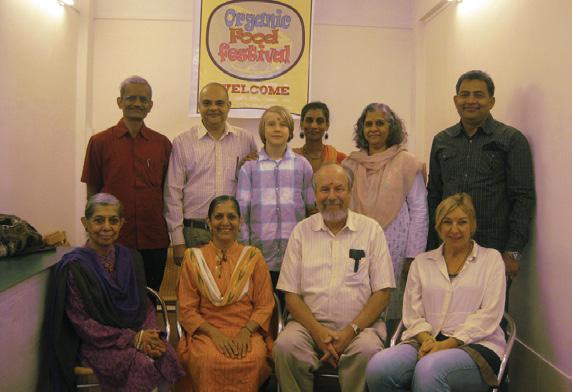
Torin Finser (General Secretary)
Virginia McWilliam (at large)
Carla Beebe Comey (at large)
Regional Council Representatives
Ann Finucane (Eastern Region)
Dennis Dietzel (Central Region)
Joan Treadaway (Western Region)
Marian León, Director of Administration & Member Services
Jerry Kruse, Treasurer being human
is published four times a year by the Anthroposophical Society in America
1923 Geddes Avenue
Ann Arbor, MI 48104-1797
Tel. 734.662.9355
Fax 734.662.1727
www.anthroposophy.org
Editor: John H. Beck
Associate Editors:
Judith Soleil, Fred Dennehy
Cover design: Seiko Semones (S2 Design)
Layout: Seiko Semones, John Beck
Please send submissions, questions, and comments to: editor@anthroposophy.org or to the postal address above. Items for the Fall 2012 issue must arrive by 9/4/2012.
©2012 The Anthroposophical Society in America. Responsibility for the content of articles is the authors’.


What’s
Happening in the Anthroposophical Society in America
General Secretary On the Road
US General Secretary Torin Finser has been on the road a lot this year: San Francisco, Australia, India, Dornach, New Orleans, Vermont, Washington DC. He now has a rhythm for visits to Dornach, meeting with English-speaking colleagues in Virginia Sease’s office before the full General Secretaries circle. Days begin with eurythmy with Margarete Solstadt, a study, larger conversations, meetings until 7pm. The final piece is the Annual General Meeting, this year with a talk by Sergei Prokofieff, who is officially on sabbatical. Sergei looked well, spoke passionately as always, and focused on the end of Rudolf Steiner’s life. Business included a discussion of Weleda’s business challenges. A member’s proposal was made about 1935—isn’t it time to officially express regrets for the schism in the Society and expulsions in that year?
National situations vary tremendously. New Zealand has a full time general secretary in a small country, who can visit almost all the schools and initiatives and groups in the course of two years. In Australia there will now be two general secretaries, with limited resources but a lot of volunteer help. The UK recently received a large bequest, over a million pounds. They’ve added to conferences and members who renew promptly have gotten a free book from the society as a gift.
Torin’s other big trip this Spring was India, because Antioch University gave him a sabbatical. One of Antioch’s founding professors, now eighty years old, has been going to India every year working with the schools. She had urged him for years to come see what she had done in a special spiritual community called Auroville, south of Chennai, on the southeastern coast of India. Now Torin could go with wife Karinne and son Jonas. First they met anthroposophical friends in Mumbai, completely overwhelming, a city of 23 million people, and a brief meeting of members downstairs in an organic food coop ( photo right).
Then to Chennai, arriving at midnight for a two hour cab ride into the countryside. Auroville, a community of 25 square kilometers, was founded in 1960 by Sri Aurobindo and The Mother, spiritual teachers. Those 25 sq. km. were just desert to begin with; they’ve reclaimed the land and brought both physical and spiritual health to that part of India. The government is thrilled and is looking at it as a possible prototype of what can be done.
“Karinne and I did a workshop for Indian teachers for a day. I presented anthroposophy, using the Vedas and the yoga traditions, Shankarachariya and other resources available for those of us willing to inquire. Then Karinne did a painting workshop in the afternoon. What came to me only later was that my time in India was occurring in 2012 and I was reading materials that RS had given about 100 years ago on theosophy and ancient Indian traditions, the Bhagavad Ghita and Rudolf Steiner’s lectures on them, just at the time he had left the Theosophical Society. So the timing was particularly poignant, for instance, listening to the chanting at five in the morning, loud and clear. And the Indian Anthroposophical Society was just formed, or re-formed, last year. Sixty active members. The practical manifestations, BD, are very strong. The schools are growing, and the trainings have been established.
“Next travels are all USA. We just met with the New Orleans group. The panel discussion [at Tulane School of Social Work] is tomorrow night. We’re learning to do more with the little resources we have. There’s so much more that needs to be done, and I’m struggle to find inner
peace with the limitations of what I can do with integrity, and find satisfaction in the moment. Margaret Runyan’s living room the other night had such a sense of fullness. Inge Elsas came up to me afterward and said, I had no idea what this would be like. If this is anything like what Tuesday night will be, I’m more excited than ever before. Our oldest, recently-joined member, so enthusiastic. And yet it was a small group. I have to continually remind myself to appreciate what is possible and not live in the constant expectation of what should be happening.
“What I especially like about this New Orleans event is the intersection of the local university, the Waldorf school, the anthroposophical group, and in this case the CAO. We need to find ways to connect with the community and not just fly in and out for our own little meetings. If there are communities that feel they have not had the attention of a council member or general secretary or someone from the staff, they should say so and ask for a visit. It’s a real concern for me that any group or branch should feel neglected. People should understand, these visits always come about by invitation.”
Western Regional Council Pays Visit to Seattle
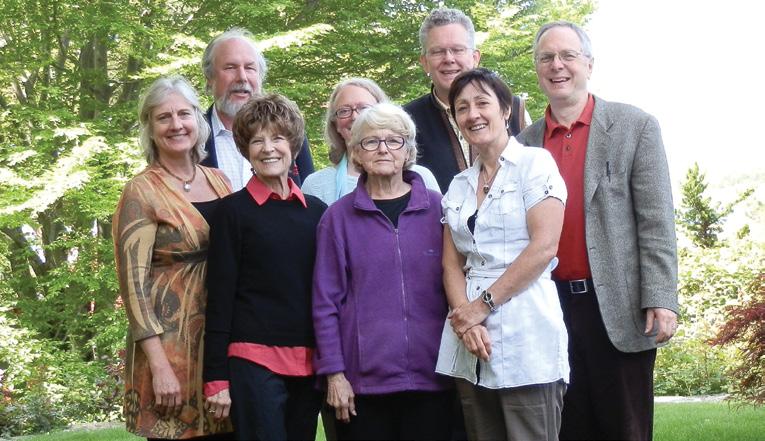
The Western Regional Council came to Seattle in February. Joan Treadaway, Daniel Bittleston, and Linda Connell spent a rainy weekend with much study, meetings, and social gatherings. (Daniel was surprised to encounter three California anthroposophists on his flight to Seattle, on their way to a Camphill conference in Vancouver, Canada. They had the same flight back.) The hosting committee of Margaret Palmquest, Christina Sophia, and Anouk Tompot, joined the WRC for dinner Friday night. The Seattle branch held a potluck at the Seattle Waldorf School which was open to all. We were pleased to have an abundance of delicious food and good company of 40 people. Afterwards Joan Treadaway lead a conversation with par-
ticipants getting to know their neighbors. Linda Connell gave a thought-provoking presentation on “The Mission of Gautama Buddha in Light of Rudolf Steiner’s Spiritual Research.” A question and answer session followed her talk. The next day the WRC joined the First Class lesson and had a discussion afterwards with the members, a stimulating and enriching visit by the WRC. —Reported by Margaret Palmquest.
Introducing Carla Beebe Comey
Carla Beebe Comey joined the Society’s General Council last fall as a member at large and in May assumed responsibilities as Secretary. She is grateful for the wealth of mentoring she has received over the years, and feels passionately that anthroposophy, in the truest sense of a path leading toward the wisdom within each human being, provides an approach to the current times that has the possibility of leading us into a more hopeful future, as long as we maintain our interest in the world and our sense of humor. She was introduced to anthroposophy in 1981 by meeting Roberto Trostli while heading to university in Cambridge, Massachusetts, planning a self-directed program of study in the history of human consciousness through the arts. She was convinced that this would lead her to found a new approach to education worthy of the young pupils she had been tutoring and teaching since she was in sixth grade. Within weeks of this meeting, she began volunteering to teach dancing and singing at the Lexington Waldorf School and set herself on a nine month long program reading Rudolf Steiner’s lectures and books. She quickly felt she had “come home.” Roberto Trostli, Anna Rain-
ville and Alan Howard served as mentors. She decided to attend Emerson College in England, but needed to save the funds and moved to Harlemville, New York, where she served as care giver for Arvia Ege and lived at the home of Henry and Christy Barnes. She was introduced to many initiatives arising from anthroposophy and many individuals leading them. Arvia, Henry, and Christy mentored her for many years. At Emerson College she was fortunate to live at the home of John Davy. She also met Annemarie Erlich and, inspired by her eurythmy in the workplace initiative, Carla decided she would someday become a eurythmist. Following her Foundation Year she set out to India with a group from Emerson College in the summer of 1984 where she assisted with the first conference on Waldorf Education in India. When she returned to the States, she attended Rudolf Steiner College in Fair Oaks, California, where she worked closely with René Querido during her teacher training.
From 1986 to 1990 she studied eurythmy in Spring Valley, New York, finding another significant mentor in Kari Von Ordt. She completed pedagogical eurythmy training with Molly von Heider at Emerson College.
In January 1991, she began her Waldorf career at the Cape Ann Waldorf School in Beverly, Massachusetts, serving as class teacher and eurythmy teacher until June 1997. Carla then moved to Oregon and became eurythmy teacher for two schools: The Eugene Waldorf School and the Corvallis Waldorf School. In 2001, she joined the faculty of the Waldorf School on the Roaring Fork, in Carbondale, Colorado where she has served as eurythmy teacher, class teacher, and math teacher. She is currently the Faculty Administrator. She also serves on the Eurythmy Association Council (EANA) and as a delegate to the Association of Waldorf Schools in North America (AWSNA). She is particularly interested in supporting
summer issue 2012 • 39
Carla Beebe Comey is at left is this photo from the May Council meeting. Also in front from left: Joan Treadaway, Ann Finucane, Virginia McWilliam. In back from left, Torin Finser, administrative director Marian Leon, communications director John Beck, Dennis Dietzel.
the growth in Waldorf schools of healthy, joyful eurythmy programs and of healthy forms of administration.
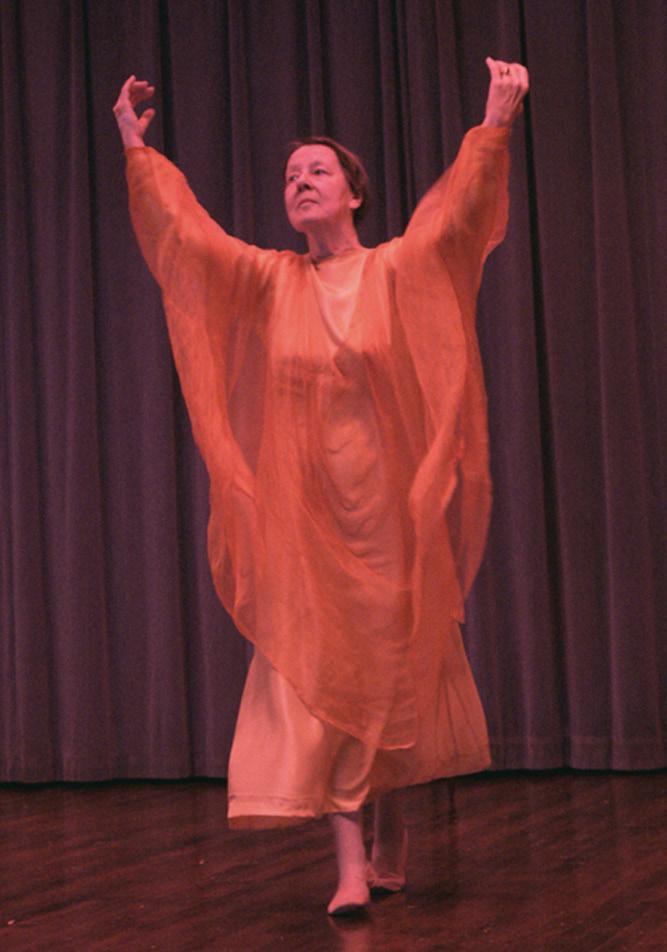
Carla and her husband Robert enjoy cross country skiing, hiking and riding bicycles in the beautiful Colorado mountains. They care for many dogs. their own, foster dogs, and the dogs of their friends. Carla is also a ceramic artist. She is honored to serve on the General Council.
Manzanita Parzival
The Arizona Manzanita Branch of the Anthroposophical Society, and the Arizona First Class members are planning the first of three yearly conferences on the theme of PARZIVAL, on Saturday, November 17 and Sunday, November 18, 2012, in Phoenix , Arizona at Desert Marigold School. MariJo Rogers will be our guest presenter, and Kim Snyder-Vine, will bring Speech Artistry! The planning group meets on a bi-weekly teleconference , studying Wolfram von Eschenbach’s Parzival, in preparation for the conference. Look for further announcements! For more information, contact Joan Treadaway, (928-445-2363) or joanaway@msn.com.
Marian Leòn, Director
Administration & Member Services
Compiled from reports from Regional Councils, members and friends. Send contributions to editor@anthroposophy.org.
Celebrating Dorothea Mier at Eighty: Polarity as a Source of Inspiration
Because self-movement is the essence of life, and because artistry consists in the way in which one moves, the art of living is the art of moving. In the case of an artist and teacher of human movement, whose chosen mission is to portray invisible forces and beings in order to ignite our sense for the dynamic powers weaving through Creation, everyday gestures are emblematic of that individual’s life-goal.
The unique character of each human
destiny is drawn by its possessor’s aims. When someone has long committed all available resources to the pursuit of a concentrated ideal, it becomes impossible to speak about the person apart from that larger purpose. Therefore, the following reflection upon the course of Dorothea’s influence begins with the ideals that she has so assiduously been fulfilling.
Receptive Activity
Anthroposophy is a path of inquiry. It begins with an openness to the possibility that all the impressions meeting our senses and all the ideas that organize them into coherence signal profoundly deeper and more significant causes, which are acces-
this power to transform can arise only if the creator, whether composer or performer, has himself or herself also undergone a productive transformation through fashioning the presentation: productive both in the sense of issuing a product and in the sense of improving one’s own condition, advancing in perfection.
Teaching is in this sense also an art: A teacher unaffected by each lesson he or she prepares stops short of the threshold to meeting students fruitfully. And so, potentially, with all the details of social life; emerging unchanged from any meeting means that one has wasted an opportunity, although the world will ever and again offer us new chances to bring artistry to our encounters.
The Art of Movement
On their surface, composing, performing, and teaching are one-way streets: Audience and students are consumers of communications issued by artist or teacher. But whatever inspiration an artwork might effect in its recipient depends on the assimilation of the expression it conveys. The success of esthetic or pedagogic expression thus relies as much on apprehending at one end as on delivery from the other. Performers and instructors know or soon discover this, so that progressive forms of art and education encourage every audience and student to assume responsibility for the process rather than remaining passive objects of the encounter.
sible to consciousness through disciplined effort.
Phrased in semiotic categories, this means that the surrounding world speaks to us through a pervasive hermetic language. A work of art engages, adapts, and translates this language into idioms that stir our feelings toward wakeful responses to beings and forces that are always at work within and without us, but normally hidden. The artist’s gesture invites us to more vivid and intimate experiences of the reality in which we live, so that we might emerge transformed by our encounter.
Thus, when we speak of art, as distinct from decoration or entertainment, let alone from kitsch or propaganda, we are referring to creations capable of fundamentally modifying the souls of those it meets. But
Eurythmy in particular discloses to our view the deeper meanings beneath the surface-sounds of tone and speech. Eurythmy reaches through our static conceptual categories, to which we cling out of a morbid tendency to rigidify our experience into manipulable units. By retrieving the mobile origins of our being, the primary living activities out of which the human form itself precipitated, eurythmy can penetrate our defenses against self-change. This restoration preconsciously reminds us to become ever more open to the actual novelty that superficially familiar phenomena present.
Speech eurythmy excavates the music permeating language, and tone eurythmy brings out the language woven into music. By reaching to the sidereal sources and aims of our existence, both dramatic mo-
40 • being human
dalities melt the arbitrarily divisive structures that our rigid attachment to personal preferences gratuitously and fatally imposes upon our relationships with living processes. And by melting these obstructions, eurythmy can help restore an organic order to our perceiving and comprehending. Eurythmy delivers our esthetic sense from dullness, so that one emerges from viewing or practicing its fluid, kaleidoscopic panoramas to meet the surrounding world revitalized, enlivened.
The Movement of Art
Considering Dorothea’s accomplishments as performer and teacher of this expressive medium has led me over the years to wonder about the elements that constitute her successes. The normal formula for translating intentions into consequential deeds is to assemble, stir, and serve up the combined requisite ingredients: Apply technical training to a natural gift,
and then exert concerted industriousness to meet opportunities for expression. But in the case of esoteric processes, based as they must be on individual self-development, this recipe is insufficient. A practitioner generating spiritual substance must also continually pursue the transmutation of daily experience into content amenable to formal presentation, must alchemically distill message from phenomenon, meaning from appearance, in order to create new, significant idioms that resonate in others’ souls and bodies. Mystery schooling demands individual penetration of the world; initiation does not suffer hacks.
At a study-group I once attended, I was privileged to glimpse what I eventually recognized to be an indispensible source of Dorothea’s productivity, namely her style of viewing, and listening to, the other participants contributing to our discussion. Within our small community of students, those known to Dorothea, and yet whom
she was repeatedly ready to meet anew, expressed thoughts that she might also already well have known, but which she seemed also patently ready to consider as if for the first time. In one participant, surprised to be met by such focused interest, and perhaps unsure of having earned this scrutiny, but alerted to the significance of the exchange, Dorothea’s attentiveness prompted an awakened response. Through that microcosmic reversal of her professional role, that is, in her capacity as audience, Dorothea drew from her neighbor the power and confidence to articulate a latent idea. I know this first hand.
Active Receptivity
Presented with an alien experience—as, on the surface, each of us is alien to every other self—Dorothea revealed in that exchange what must be a signal resource for her power to attract and retain attention on stage and at lectern. It became clear that
New
Members of the Anthroposophical Society in America, recorded by the Society 2/3/2012 to 6/14/2012
Rinat Abastado, Sebastopol, CA
Roxanne Anthony, Philadelphia, PA
Elizabeth Barber, Soquel, CA
Patricia Barrett, Charlottesville, VA
Pamela Benton, Malvern, PA
Olga Berg, New York, NY
Catherine Borchert, Santa Cruz, CA
Natalie Campo, Nashville, TN
Jacqueline Case, New Orleans, LA
Phaedra Cheydleur, Playa Del Rey, CA

Pollyanna Coons, Austin, TX
Betsy Doyle, Wheat Ridge, CO
Mike Eger, Louisville, KY
Jessica Elliot, San Francisco, CA
Inge Elsas, New Orleans, LA
Carolyn Ferreira, Brooklyn, NY
Lydia Flynn, Point Lookout, NY
Rene Garrity, Ann Arbor, MI
Whitney Gersak, Lakewood, OH
Brian Gleichauf, Chicago, IL
James Gossett, Seattle, WA
Neal Gronlund, Seattle, WA
Cindie Gunther, Phoenixville, PA
Oana Havris, Spring Valley, NY

Kristi Herrington, San Diego, CA
Elena Hirsu, Spring Valley, NY
Christina Hotchkiss, La Crosse, WI
Lynn Jacobson, Ironton, MN
Behroze Jaikaria, Titusville, NJ
Misty Kalama-Archer, Shelton, WA
Sarah Kerr, Oakland, CA
Nancy Larsen, York, PA
Averi Lohss, Spring Valley, NY
Anthony Mecca, Red Hook, NY
Dorothy Moore, Tarrytown, NY
Joaquin Munoz, Tucson, AZ
Lisa Peyser, Waterford, MI
Karen Prince-Weithorn, Glendale, CA
Shaunaq Puri, New York, NY
Mihai Rosu-Nicolescu, Chicago, IL
Gwen Rust, West Fargo, ND
Amy Schick, Encinitas, CA
Margaret Schrems, Millfield, OH
Heidi Schwarzenbach, San Francisco, CA
MaryAnn Skillman, Fountain Run, KY
Elisa Sobo, San Diego, CA
Cecilia Starin, Valley Village, CA
Stuart Stelzer, Clarksville, AR
Irene Stern, Bronx, NY
Ann Ullrich, Chatsworth, CA
A. Catherine Vouvray, Austin, TX
Frank Wall, Ghent, NY
Eva Wang, Los Altos, CA
Lisa Watersnake-Feehery, Check, VA
Magdiale Wolmark, Columbus, OH
Members Who Have Died
Rudolf Binnewies, Loomis CA; died May 8, 2012
Ursula Brancato, Fair Oaks CA; died June 4th, 2011
Carolyn Briglia , Wilton NH; died December 20, 2010
Inge Elsas, New Orleans LA; died April 25, 2012
Charles Killian, Glendale CA; died March 3, 2012
Katherine McHenry, Chestnut Ridge NY; died 2012
David Mitchell , Boulder CO; died June 8, 2012
Phyllis Phelps, San Mateo CA; died 2/17/12
Helen Philbrick, Duxbury MA; died December 2011
D Swain Pratt, Ghent NY; died January 3, 2012
Anne Stockton, Forest Row
E Sussex; died January 31, 2012
Edward Stone, Pottstown PA; died May 4, 2012
summer issue 2012 • 41
the interest this performer and teacher garners is sown in concurrent discipleship to the surrounding world.
Here, I think, is the open secret of artistic assimilation: Beneath the surface of this master’s art and teaching, at their source, lives the practice of that consummate transformative human art, the free directing of one’s own interest, informed by the ever-renewed faculty for being surprised. Here is the reciprocity of inspiration that always begins at the surface, and never halts there. Here, made perceptible, is the silent articulation of engagement, expressed in the visible, inaudible music of devotion to the surrounding world.
For the contemporary student of the spirit, the encounters of daily life cast every individual simultaneously on both sides of proscenium and podium. Those who come into contact with Dorothea offstage as well as on, outside the classroom as well as within it, can find the opportunity to view her method and be transformed by it.
Michael Ronall, March 2012
Inge Elsas: 1915-2012
Having joined the Anthroposophical Society in January at age 96, Inge Elsas crossed the threshold on April 25, 2012. In the last issue of being human, you read the story of her amazing life. These last months were a fitting culmination to that life, and show us the truth of understanding our journey together as a Mystery Drama.
You will recall that I’d been awakened to the realization that Inge, having been a pupil of Ita Wegman in Arlesheim, Switzerland from 1933-37 (Wegman and scores of other members were excluded from the Society in 1935), was in a unique position to perform the earthly deed of joining the Anthroposophical Society on behalf of her teacher. This healing gesture had to be taken up in full consciousness by someone on this side of the threshold.
Something I did not share in that article was that I set the Destiny Question for Inge in rhyming verse (she loved a rhyme!) and
arrived early at study group that evening, keen to make the Official Presentation. One of Inge’s endearing traits was her perpetual eagerness, upon greeting you at the door, to show you the latest award she’d won, article or picture she’d cut out, letter or gift she’d received… We always began with “show and tell”—Inge showing and telling! So here I come, mission in hand; but as I’m trying to hand my paper to her, she’s shoving a yellowed page at me, saying “Look, look at this biography I wrote when I was 17! I just found it in my papers last
lesheim!
At the same time Inge is being asked to undertake an ultimate deed of healing, she is offered proof of how destiny placed her in the position to be able to take up that deed in the first place! We were both overcome, as were our study companions when all this was shared with them later that night.
That is but one elegant closure among many in Inge’s final months. Two more came within ten days of her death:
It was anthroposophy that had saved her from Nazi Germany in 1933 and it was Tulane School of Social Work that had brought her to New Orleans in 1941. On April 17 the Anthroposophical Society and Tulane School of Social Work cosponsored Transforming Culture: Rudolf Steiner’s Vision in Action, and Inge Elsas sat on the front row in the auditorium.
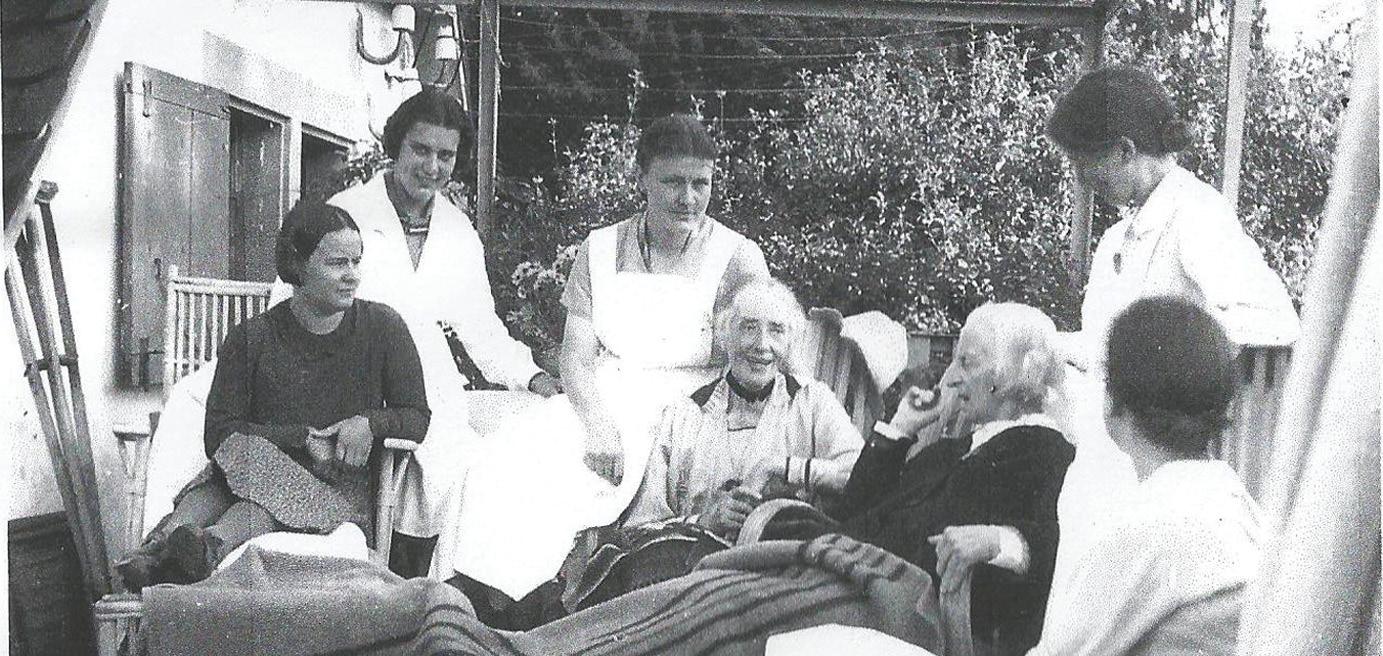
night. I don’t know what it’s from—I didn’t even know I had it!” I glance at the handwritten draft entitled “Lebenslauf”, but insist that Inge look at what I brought for her. Finally, I get her to open up the poem, promising to read her C.V. simultaneously. And then I realize what it is she’s handed me—it’s the biography she submitted with her application to Nursing School in Ar-
On April 15, Torin Finser (in town to participate in the panel at Tulane) met with Society members here. At dinner, Inge stood and read a blessing she had translated from her days at Sonnenhof. Because of her hearing loss, group discussions had become challenging for Inge. Even at study group, it was increasingly difficult for her to keep up with conversation. That night we were “12+1” in my living room, yet Inge was totally engaged. Torin had just returned from the General Secretaries’ meeting and the worldwide AGM at the Goetheanum, so we began with a report from Dornach. Imagine our amazement when Torin told us of Heidrun Scholze’s request at the AGM that “the Anthroposophical Society publically express the wish to deal with and heal the wounds inflicted by the exclusions from the 1930’s.” (Anthroposophy Worldwide
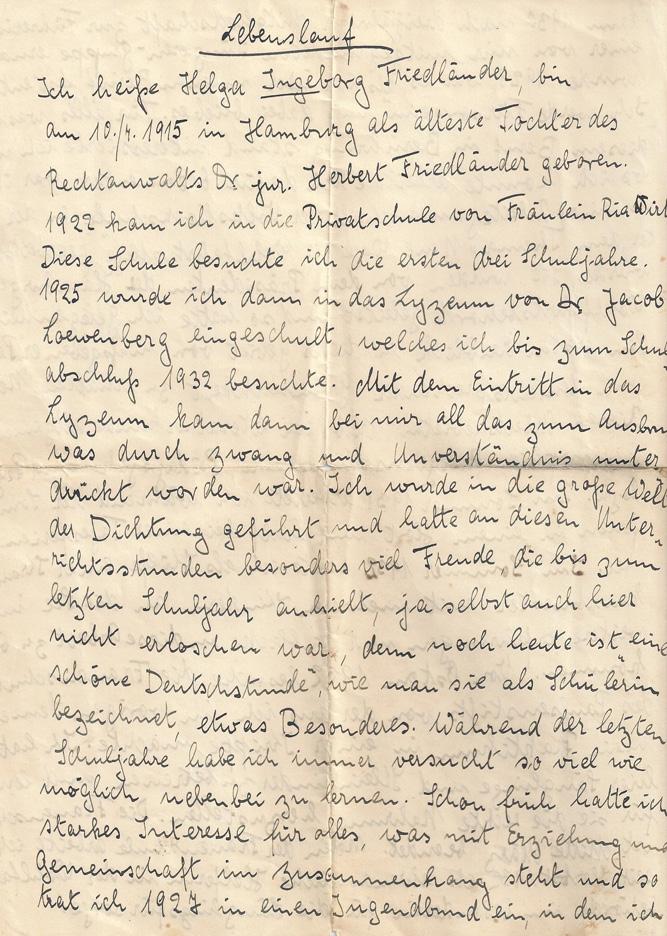
42 • being human
Inge as a nursing student (second from left, standing, in white) at the Wegman Klinik in Arlesheim.
5/12, p.14). I checked in with Inge the next day to make certain that she’d heard and understood the significance of this. She had indeed.
Many other wonderful things filled Inge’s last days on earth, but these were the highlights. The morning of April 25, she completed and crossed off her calendar her usual Wednesday volunteer tasks. Having bathed in preparation to attend an evening program, she exited her body rather than the tub.
Inge was so proud and grateful to be a member of the Anthroposophical Society. She joined with the intention of healing the terrible damage wrought 77 years ago. That intention was echoed 10 weeks later from the floor at the Goetheanum. How do we now take up this call? How do we continue the healing work, which though blessed by the Spirit, must happen among us here on earth?
If she were still alive, Inge Elsas would no doubt be physically among us in Ann Arbor this August. As it is, she will be very much present in spirit, as will many other friends, colleagues and teachers. Let us honor all of them by acknowledging what happened in 1935 and seeking to understand the “wound” that afflicts us to this day. By healing “what ails us,” we can turn our loving compassion, strong and whole, toward healing the world.
Margaret Runyon, New Orleans
Rudolf Binnewies: 1912-2012
The Passing of a Waldorf Pioneer
We celebrate the life of Rudolf Binnewies who passed away quietly in our home in Loomis, CA, on May 8, 2012, after a very eventful life spanning 100 years. Born in the northern German town of Braunschweig in 1912 on March 16, he and his parents lived in a military barracks since his father was a sergeant in the army. Rudolf remembered looking out the window as horse-drawn wagons and soldiers streamed out of the barracks on their way to the train station to be transported to the fronts of the First World War. Rudolf had the normal childhood as a small city boy,
until the birth of his twin brothers, one of whom had such physical problems that Rudolf’s mother, in order to cope with the stressful situation, literally “farmed” him out to his grandparents who lived in the little farming village of Vallstedt. That was a wonderful time in his life fitting in with the locals who spoke not high German but the local Plattdeutsch, the dialect that had been spoken in Lower Saxony for at least a thousand years. He was a good student, had outstanding artistic and musical talents and worked his way into the prestigious Lessing School that was renowned for its blend of music, art and humanism. He continued on to college in Braunschweig where he earned his teaching credential and then began to teach in a small country school. Unfortunately, the war and Hitler’s legions caught up with him and he was drafted into the army. Before having to go off to the front, he fortunately met Katharina Tittus at a friend’s home who happened to be visiting from her hometown in Transylvania, a German part of Rumania, fell terribly in love with her, and married her in 1939. The Second World War separated them for eight years until he was finally able to come home after a stay in a British prisoner of war camp in Northern England.
Terrified at the prospect of there being continued strife in Northern Germany, especially with the Russians being so close to their home town, he sought the aid of Katharine’s uncle, John Titus, a long-time manager of the Del Paso Country Club, to help them out of Germany. They were able to move to Courtland, CA to the old Wooster Mansion on the Sacramento River where “Rudi” again determined to teach, enrolled at Sacramento State College. He excelled in his classes and because of his outstanding artistic abilities caught the attention of the art department, including at that time Tarmo Pasto, Wayne Thiebeau and Paul Beckman. He was offered a teaching position in the art department, but declined in order to pursue at job in elementary education in the Sacramento City Unified District at Elder Creek Elementary School, whose principal was “Muddy” Charles Watters, a revered pioneer Sacramento educator.
At one point in that rewarding career, he became aware of Waldorf Education
through the influence of Rudolf Binsch, an attorney who later became the Public Defender of Yolo County. At about the same time, Rudolf and his wife, Katharina were attending discussions with Betty Buck, Jack Zust, and the Binsches, the first small group of Anthroposophists in Sacramento, the Faust Group. Rudolf realized that what they were reading and discussing should be the very keystones of educating children. Strangely, even though Rudolf had heard of Waldorf education in Germany, it took coming to this country for him to embrace Anthroposophy and Waldorf education. One thing led to another and after a series of lectures attended by several notable Sacramento families including the Teachers, Bea Roberts and the Elliot’s of Elliots’ Health Foods, a fledgling Waldorf School was started in the Elliots’ living room with a small kindergarten. With more interest growing about this “Waldorf Education” , an elementary school began on Marconi Avenue in a church with Rudolf Binnewies being the first teacher. Public lectures were held at the old YMCA by Dr. Hermann von Baravalle, a long-time Waldorf Educator. From those first few families, a tremendous desire for more information about this seemingly strange new form of education developed in the community. A teacher training class was conducted by Dr. von Baravalle, and several local teachers were hired. The rapid growth of the school required that it move to a larger facility fortunately provided by Henry Teichert at 3600 Fair Oaks Blvd. at the corner of Fair Oaks and Watt Avenues. Rudolf is survived by his daughter, Katharina Murray of Loomis, CA, his son, Johannes Binnewies of Rocklin, CA, several grandchildren and great grandchildren. He was preceded in death by his loving wife, Katharina Binnewies, and his son, Rudolf Michael Binnewies of Berkeley, CA.
Any remembrances should be sent to the Sacramento Christian Community, Sacramento Waldorf School, Wilderderness Society, Audobon Society, or the Sierra Club. Thank you, Rudi, for being such an important part of our lives.
Mark Murray, former teacher at the Sacramento Waldorf School
summer issue 2012 • 43
What’s Happening at the Rudolf Steiner Library
We launched a well-received monthly email newsletter in February, and invite all interested members and friends to subscribe. This short monthly communication features news, links, and brief annotations of new books. To subscribe, send us an email: rsteinerlibrary@taconic.net
Our digitization of archival materials continues. See our progress on the New York Heritage Digital Collections website, and check back often! We’ve scanned and posted indexes of historic anthroposophical journals The Forerunner [1940-45], and Proteus Quarterly [1949-1952], and will continue to add other journal indexes and tables of contents. Articles in these journals by such authors as Stewart Easton, Michael Wilson, John Gardner, Marjorie Spock, and Norman Macbeth are of more than historical interest. Have a look at the indexes, then request the articles that interest you. We can mail you a copy of the relevant issue or of individual articles. As time allows, we can also scan and email articles upon request.
The Rudolf Steiner Library is sponsoring a series of events at Camphill Ghent, the award-winning new residential elder community not far from here. “Books Alive!” provides an opportunity for Camphill Ghent residents and the general public to enjoy free presentations by local anthroposophical authors, actors, researchers, farmers, artists, and more. The library will display books from the collection relating to each presentation.
We’ve talked with representatives of several Branch libraries about finding ways to collaborate, and perhaps even link anthroposophical libraries nationwide. Let us know if you’d like to join the conversation.
The library is appealing to members and friends for special gifts that will make it possible to continue developing the Rudolf Steiner Library into the dynamic, 21st-century resource it can become. We appreciate your active interest, your ideas, your enthusiasm, and your participation—we know that all of these are at the heart of each gift.
Judith Soleil, Librarian
Rudolf Steiner Library
New Book Annotations
Anthroposophy: Rudolf Steiner
On Epidemics: Spiritual Perspectives. Compiled by Taja Gut, translated by Johanna Collis, Rudolf Steiner Press, 2011, 72 pgs. “If we can bring nothing up out of ourselves except fear of the illnesses [that] surround us at the seat of an epidemic, and...go to sleep...filled with nothing but thoughts of this fear...this is an excellent method for nurturing bacteria....” These brief extracts from Rudolf Steiner’s collected works introduce the topic. The source references enable readers to pursue concepts and indications further.
On Fear: Spiritual Perspectives. Compiled by Taja Gut, translated by Johanna Collis, Rudolf Steiner Press, 2011, 80 pgs. The laundry list on the cover says it all: “Worry, distress, despondency, fear, pessimism, discouragement, fear of death, lack of confidence, timidity, anxiety, faintheartedness, uneasiness, depression.” Brief extracts from Steiner’s collected works shed compassionate light on these states that are so familiar in our time.
On Meditation: Spiritual Perspectives. Compiled by Taja Gut, translated by Johanna Collis, Rudolf Steiner Press, 2011, 72 pgs. “Meditating is a totally free undertaking; it is the epitome of an autonomous deed.”—Rudolf Steiner. An overview of anthroposophical meditation comprised of extracts from Rudolf Steiner’s lectures. The source references enable readers to engage the concepts further in their original contexts.
Sexuality, Love, and Partnership: From the Perspective of Spiritual Science. Rudolf Steiner, compiled by Margaret Jonas, translation revised by Christian von Arnim, Rudolf Steiner Press, 2011, 256 pgs. In this new anthology, Rudolf Steiner describes the point in evolution when human beings changed from their state as androgynous, single-sexed beings into beings of male and female genders. He traces the changing roles of the sexes in society, from the matriarchal past to patriarchal domi-
nance. The division of the sexes brings suffering, but also the possibility of achieving higher stages of love. In the distant future, humanity can evolve sexuality into a new form, with the possibility that even the process of reproduction will be transformed.
Anthroposophy: Steiner Works: Commentary
The Fundamental Social Law: Rudolf Steiner on the Work of the Individual and the Spirit of Community. Peter Selg, trans.Catherine E. Creeger, SteinerBooks, 2011, 136 pgs. Rudolf Steiner understood that in modern culture, human social, ethical, and moral development lags far behind what has been achieved in knowledge, science, and technology; in fact, human achievement in these fields rests on the egoism and self-interest that cause such problems in social and moral life. He formulated what he called the fundamental social law: The well-being of an entire group of individuals who work together is the greater, the less individuals claim the income resulting from their own accomplishments for themselves; that is, the more they contribute this income to their fellow workers and the more their own needs are met not through their own efforts but through the efforts of others. Steiner insisted that work should be a free deed: work and income should be completely separated. Peter Selg traces how, at the end of the First World War, this insight moved to the center of Rudolf Steiner’s activities as an overriding practical and spiritual concern.
The Challenge of Rudolf Steiner: A Documentary Film. Jonathan Stedall, Cupola Productions, 2012, 2 videodiscs (total 3 hrs. 25 min.). This long-awaited documentary by veteran filmmaker Jonathan Stedall, filmed during the 150th anniversary year of Rudolf Steiner’s birth, tells the story of Steiner’s life and portrays contemporary examples of how his insights have influenced work all over the world in education, agriculture, medicine, finance, and the arts.
Die Geburt des modernen Mysteriendramas aus dem Geiste Weimars: zur Aktualität Goethes und Schillers in der Dramaturgie Rudolf Steiners. Christian Clement, Logos, 2007, 270 pgs. Originally presented as the author’s doctoral thesis in 2005, this book looks at the “birth of the
44 • being human
modern mystery drama out of the spirit of Weimar,” and at how Goethe and Schiller influenced Rudolf Steiner’s dramas.
Anthroposophy: General
Acts of the Heart: Culture-Building, Soul-Researching: Introductions by Robert Sardello. Robert Sardello, Lindisfarne Books, 2011, 398 pgs. Known to our readers for his development of spiritual psychology and his many books, including Facing the World with Soul; Love and the World; Freeing the Soul from Fear; The Power of Soul: Living the Twelve Virtues; and Silence (all available from the library), Robert Sardello has also been a generous contributor of introductions to books by other authors. Many of these have been collected here.
Anthroposophy A-Z: A Glossary of Terms Relating to Rudolf Steiner’s Spiritual Philosophy. Henk van Oort, Rudolf Steiner Press, 2011, 144 pgs. This practical volume provides concise definitions of many of the terms and concepts in Rudolf Steiner’s work, from the most commonplace to the more obscure.
Anthroposophy: Esoteric Christianity
Christ and the Disciples: The Destiny of an Inner Community. Peter Selg, trans. Catherine E. Creeger, SteinerBooks, 2012, 160 pgs. For three years, his disciples were close to Christ. They were present when he performed healings, and even when he prayed. These events and the instructions they received from Christ, often within their own intimate circle, form a significant part not only of the four Gospels but also of the Mystery of Golgotha itself. In this book, Peter Selg presents illuminating details of Rudolf Steiner’s research into the hidden events that took place between Christ and his disciples.
Anthroposophy: Eurythmy
Cultivating Inner Radiance and the Body of Immortality: Awakening the Soul through Modern Etheric Movement. Robert Powell, Lindisfarne Books, 2012, 240 pgs. A celebration of eurythmy’s 100th anniversary in 2012, “[t]his book describes a way, through movement and gesture, to work with the creative, sounding principle that manifests in the Earth’s
enveloping life sphere....”
Anthroposophy: Medicine
Fighting Cancer: A Nontoxic Approach to Treatment. Robert Gorter and Erik Peper, North Atlantic Books, 2011, 368 pgs. Anthroposophical physician Robert Gorter, and Erik Peper, a recognized expert on stress management and workplace health (both of whom have experienced cancer personally), introduce the Gorter Model, an effective, humane, nontoxic, and very successful approach to treating a wide range of cancers by focusing on support and stabilization of the immune system.
Anthroposophy: Memoir
Ezra: A Mother’s Portrait, Stella Elliston, Vantage Press, 2011, 112pgs. Eurythmist Stella Elliston’s second child, Ezra, was born almost two months prematurely, and suffered permanent brain damage at six days old. Ezra’s parents welcomed him wholeheartedly, and learned to care for his many special needs in the midst of a growing family. Elliston’s heartfelt and lyrical memoir portrays a boy who was as gifted as he was challenged; as she says, “For someone who could not walk or talk or see, he made a big splash.”
Anthroposophy: Music
Works for Cello and Piano (CD). Leopold van der Pals, Polyhymnia Gateway, 2010, ca. 69 min. Tobias van der Pals, cello; Cathrine Penderup, piano. Leopold van der Pals (1884-1966) was a Russianborn composer of Dutch origin. He studied composition in Lausanne and Berlin, where he was in the center of the modern music scene. His first symphony was premiered by the Berlin Philharmonic and was well received; subsequently, many of his pieces were performed in Europe and the U.S. A pianist introduced van der Pals to Theosophy, and he became an esoteric pupil of Rudolf Steiner. He composed music for performance at the Berlin Lodge of the Theosophical Society, later wrote most of the music for the Oberufer Christmas plays, and composed extensively for eurythmy, often in direct collaboration with Rudolf and Marie Steiner. Danish cellist Tobias van der Pals’s great grandfather was Leopold van der Pals’s brother, the conduc-
tor Nikolai van der Pals. Tobias van der Pals performed Leopold van der Pals’s cello sonata Op. 48 at his debut concert in 2009, and on this CD, the first official recording of Leopold van der Pals’s music.
Anthroposophy: Waldorf Education: Arts and Crafts
What Color Is the Wind: A Feel Guide to the Out-of-doors for Parents with Young Children. Ed Bieber, 2011, 68 pgs. “The simple activities in this book respect the capacity of children and parents to share in the excitement of what’s happening in the world around them, to wake up and have fun in the moment.” In the author’s 40 years as a naturalist-educator, he has devised very simple activities that “respect the capacity of children and parents to share in the excitement of what’s happening in the world around them,” including their own backyards.
Anthroposophy: Waldorf Education: Early Childhood
Dancing as We Sing. Compact disc, ca. 50 min. Nancy Foster, Lory Widmer, vocalist. Acorn Hill Waldorf Kindergarten and Nursery, 2012. This CD features a vocalist performing 67 unaccompanied songs from the popular book by Nancy Foster, to help teachers and parents learn the melodies. Includes traditional and folk melodies, pentatonic songs, and songs in the mood of the fifth.
Let Us Form a Ring: An Acorn Hill Anthology. Compact disc, ca. 69 min. Nancy Foster, Lory Widmer, vocalist. Acorn Hill Waldorf Kindergarten and Nursery, 2012. This CD features a vocalist performing 87 unaccompanied songs from the popular book by Nancy Foster, to help teachers and parents learn the melodies. Includes traditional and folk melodies, pentatonic songs, and songs in the mood of the fifth.
Meeting the Child in Steiner Kindergartens: An Exploration of Beliefs, Values, and Practices. Rod Parker-Rees, ed., Routledge, 2011, 137 pgs. This book, published by a mainstream academic press, includes contributions from both experienced Waldorf educators and early-childhood experts from other backgrounds. They have worked together to understand
summer issue 2012 • 45
and articulate what is distinctive about Waldorf kindergartens, and present a variety of perspectives on how kindergarten teachers’ practices, values, and beliefs can “help children find and construct their own identities.” Researchers visited about 50 Waldorf early-childhood programs in Great Britain to prepare this work.
Cradle of a Healthy Life: Early Childhood and the Whole of Life. Nine WECAN conference lectures by Dr. Johanna Steegmans, with summaries of lectures by Dr. Gerald Karnow, WECAN, 2012, 162 pgs. The fundamental importance of early childhood for the health of the individual throughout life is presented here with deep and compassionate understanding from the physician’s perspective. Key developmental stages and milestones are described afresh, and a path is indicated that can help caregivers to “read” in the physiology of the child what he or she needs in order to grow into a free adult.
Anthroposophy: Waldorf Education: Pedagogy
Too Much, Too Soon?: Early Learning and the Erosion of Childhood. Richard House, ed., Hawthorn Press, 2011, 355 pgs. This book strongly argues that “the more we push early formal and cognitively based learning, the less effectively will young children really learn in the longer run.” Contributors include Penelope Leach, David Elkind, and Sally Goddard Blythe.
An Exploration into the Destiny of the Waldorf School Movement. Frans Lutters, trans. Philip Mees, AWSNA, 2011, 180 pgs. “This surprising book originated from a reported comment by Rudolf Steiner to the founder of the first Waldorf School, Emil Molt, in which Steiner indicated that Emil Molt had a karmic connection with Emperor Charlemagne, who founded the Holy Roman Empire in the ninth century.” Charlemagne took the remarkable initiative of founding what might be called public schools at a time when it was unheard of to teach the common people—even kings and princes of that time usually could not read or write. The author spent over 25 years researching the biographies of the principal individuals who implemented Charlemagne’s school movement, drawing parallels between their biographies and those of the key individuals
around Rudolf Steiner and Emil Molt. In the process, he evokes intriguing questions about the working of karma in the Waldorf movement.
Anthroposophy: Waldorf Education: Stories
Three Knight Tales. Jakob Streit, trans. Nina Kuettel, AWSNA, 2012, 74 pgs. Here, popular author Jakob Streit retells three tales from the Age of Chivalry, ideal for students in 6th or 7th grades: “Henry the Afflicted,” taken from Hartmann van der Aue; “Gerald the Good,” from Rudolf von Ems; and “Magelone the Beautiful,” first recorded anonymously in the late 15th century.
Agriculture
Gardening as a Sacred Art. Jeremy Naydler, Floris Books, 2012, 128 pgs. “This beautifully illustrated book presents a unique history of how people have worked with nature throughout history. Drawing on garden examples from ancient Egypt to Monet’s Giverny, Jeremy Naydler asserts that gardening can be regarded as a sacred art—a means of connecting human beings with nature and the earth in a truly spiritual way.”
Biography
At the Threshold of the Modern Age: Biographies around the Year 1861. Karl König, trans. Simon Blaxland-de Lange, Floris Books, Karl König Archive, 2012, 400 pgs. Volume 10 in the Karl König Archive series. The late 19th century was an era of contrasts. Philosophical materialism was increasing its influence over science, yet there was a growing social awareness and search for spiritual values. Karl König explores the personal stories of twentynine pioneers whose work and experiences helped shape that era, including artists and writers; social reformers; philosophers and political activists; and scientists, among them Helen Keller, Sigmund Freud, Gustav Mahler, and Charles Darwin. He considers how they responded as individuals to the challenges of the changing world around them.
Christian Esoteric
The Transparent Bride: Engaging Evolution through Consciously Ardent
Conduct. Andrew Franck, Xlibris, 2010, 259 pgs. Andrew Franck is a philosopher whose interests include the history of consciousness, Goethean science, and somatic psychology. “In taking up the ideas of many sacred impulses, some informed by a feminine theology, The Transparent Bride seeks to manufacture a kind of mythos that encompasses how Sophia, the Bride and Mother of God, may herself act as an informant, a guiding principle informing human actions by imaginative means. The imagination of the Bride seeks to accomplish a spirituality that outwits the density of the already-thought thoughts that disable awe. Her imagination wishes to transform attitudes and superficial mindsets encumbering the soul of the world.” (From the preface.)
Goethe
Goethe Yearbook [vol.18]: Publications of the Goethe Society of North America. Daniel Purdy, ed., Camden House, 2011, 339 pgs. The Goethe Yearbook is a publication of the Goethe Society of North America, which publishes original English-language contributions to the understanding of Goethe and other authors of his time. This volume features a special section, “Goethe and Idealism,” and includes an article by society member Frederick Amrine, “Goethean Intuitions.” It also includes a review in English of a new, German study of Rudolf Steiner’s mystery dramas, by Christian Clement that was recently acquired by the library.
Annotations by Judith Soleil, Librarian
46 • being human
Human Nature
There is a path, a beauty way; to walk this path awakens our stay. This is a way to live with Light, with Stars by day, the Sun at night. A threshold shows the way within, and crossing this our lives begin. The archetypes live in all our deeds; where kindness reigns sprout fertile seeds. Amidst the simple seeking sight, the prayer to rise to do the right. There is a sweet scent here of flowers, a feeling of time, though not of hours. And moving on, as Love’s Light grows, in human hearts Divine breath flows.
–R.Z.Balchowsky, 2006
Forgivable Foibles of Being Human

All our daily human dupings Can be caught in common groupings: Lies of boredom; lies of fears; Lies that block or hide our tears; Fibs of flattery; cheats on age; Smiles when we feel real rage. But the largest falseness just might be The forgetting of God in thee or me.
Patrice Maynard
summer issue 2012 • 47
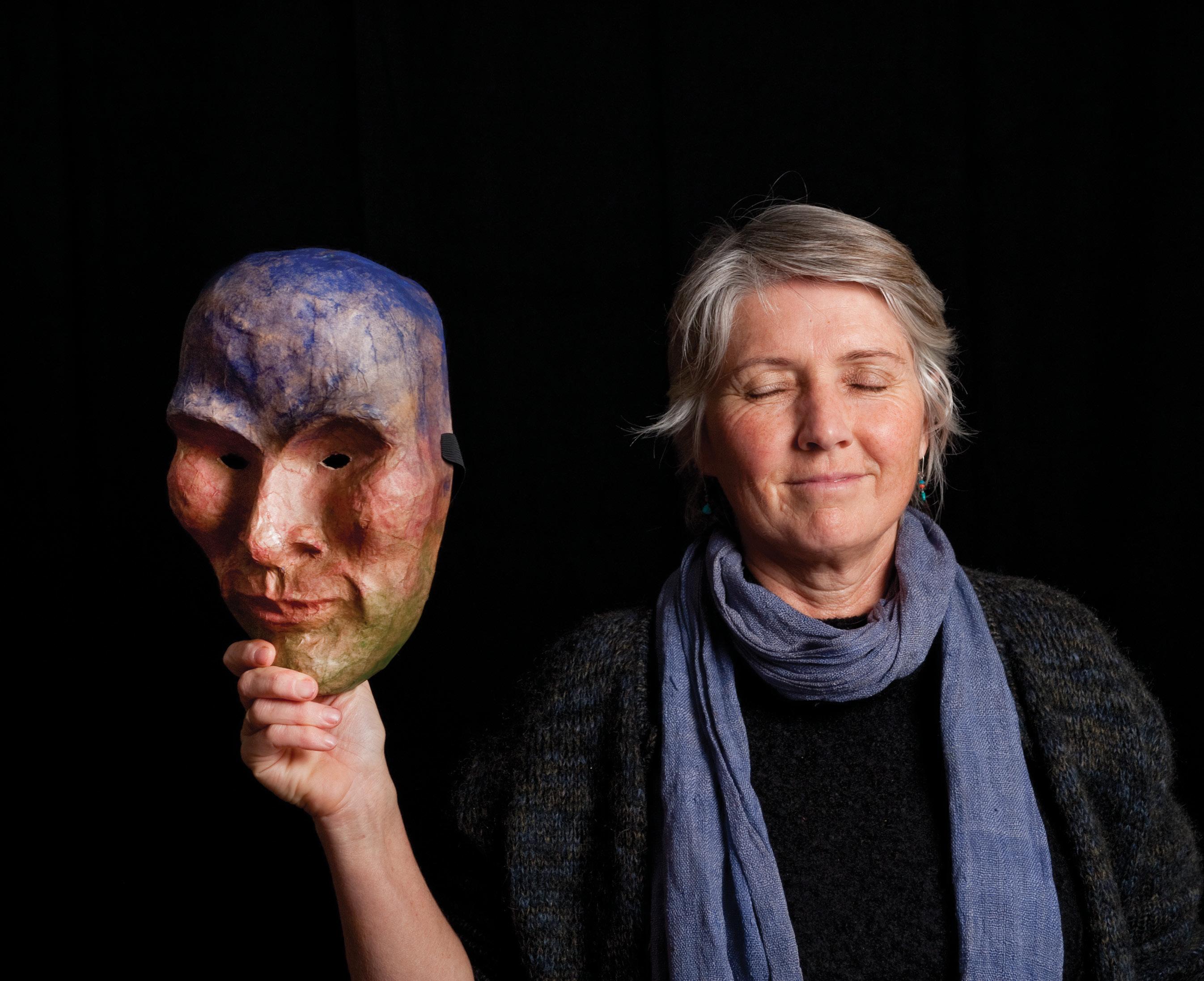
Reconnect… Studies in Anthroposophy, Consciousness, Biodynamics, and Waldorf Education Rudolf Steiner College Where the human spirit meets the needs of the world Fair Oaks and San Francisco | www.steinercollege.edu/being | 916-961-8727
©
photo
daniel macdonald
